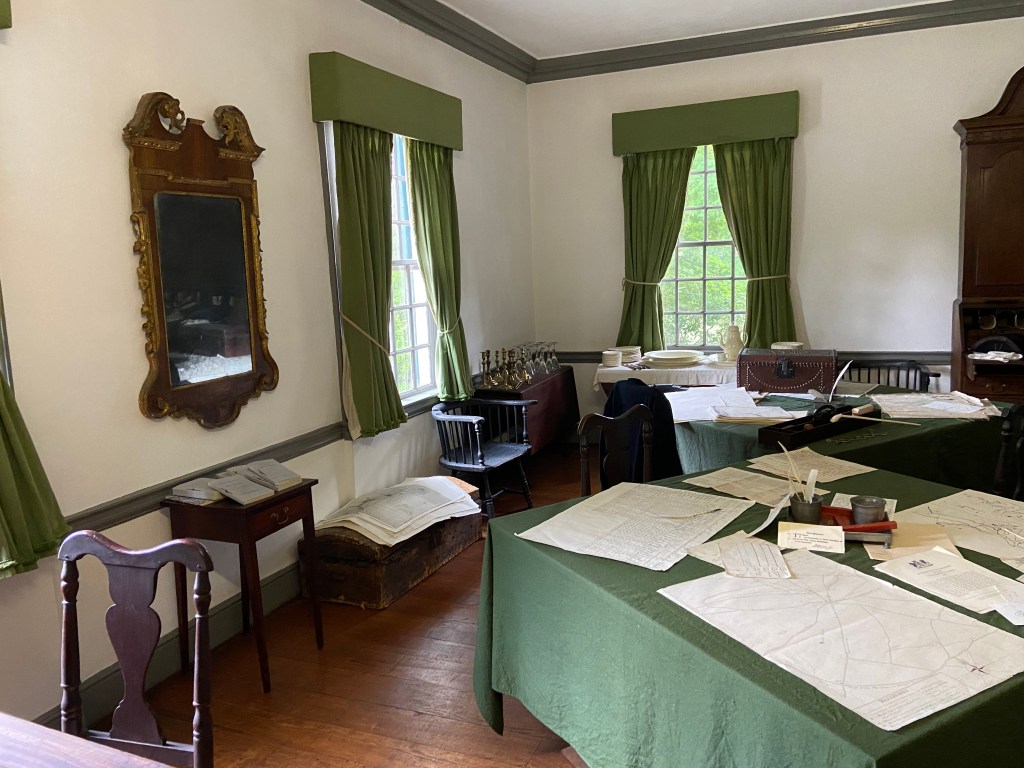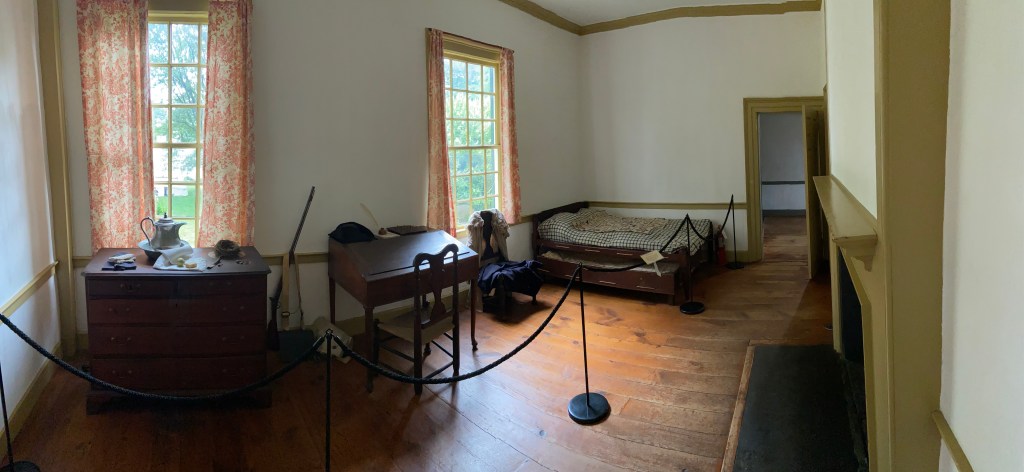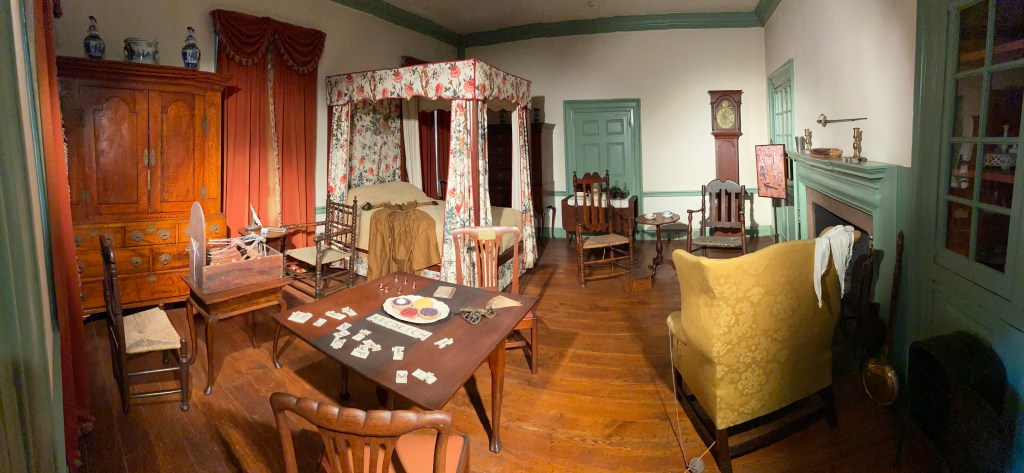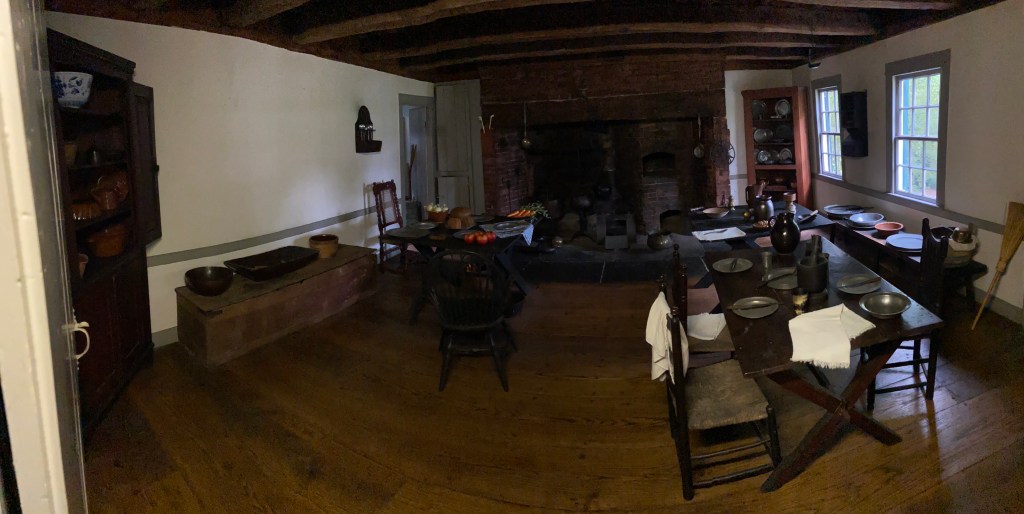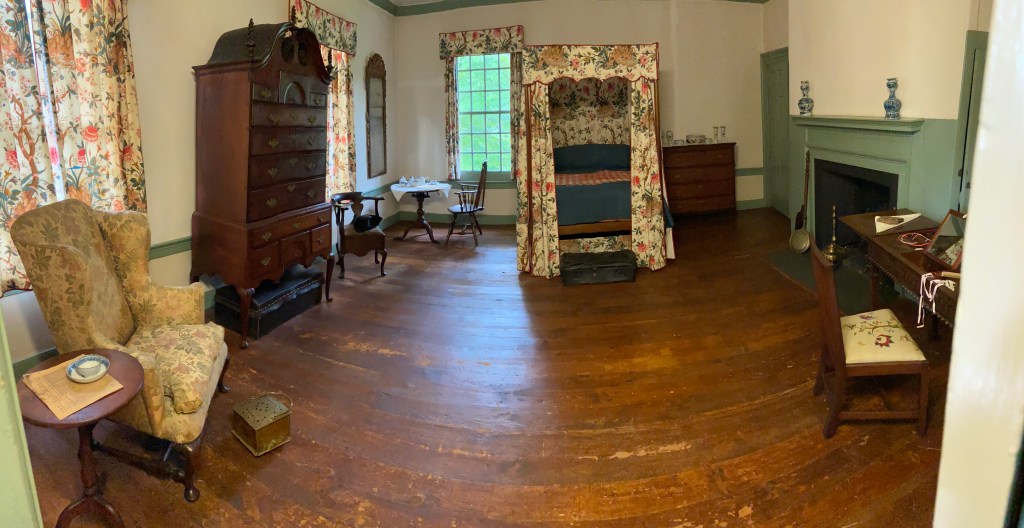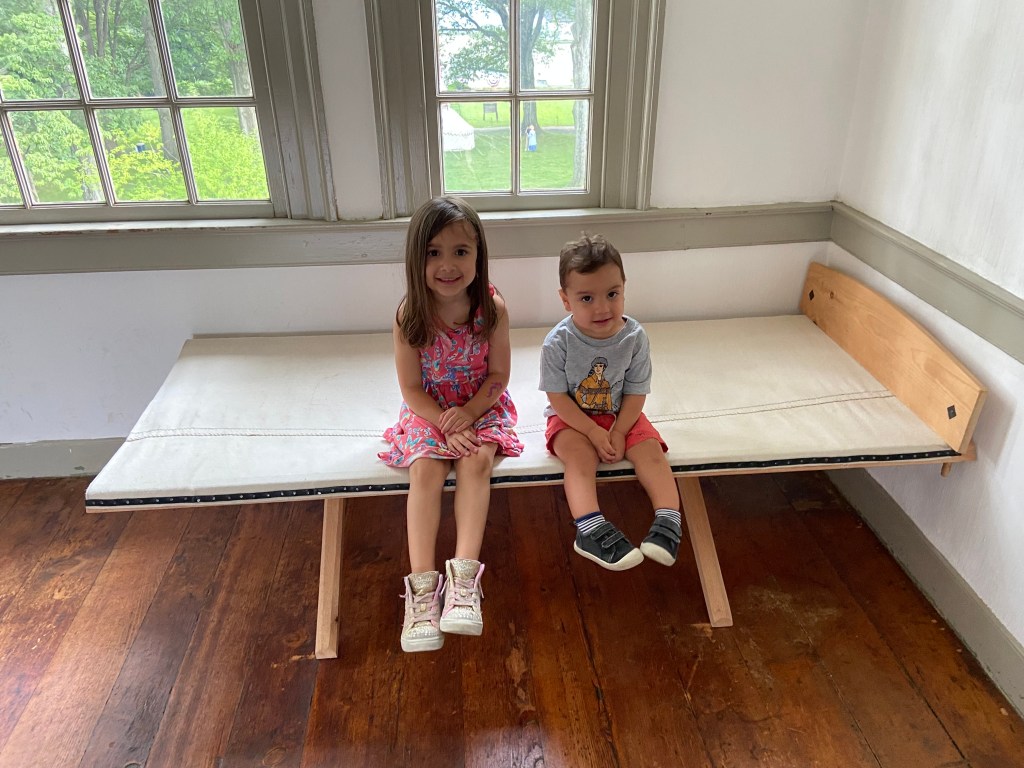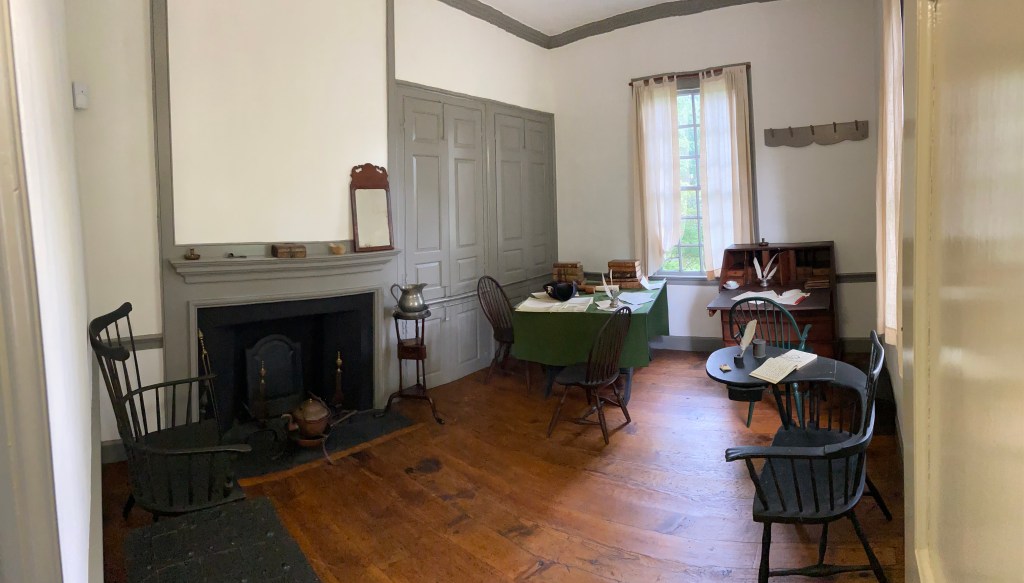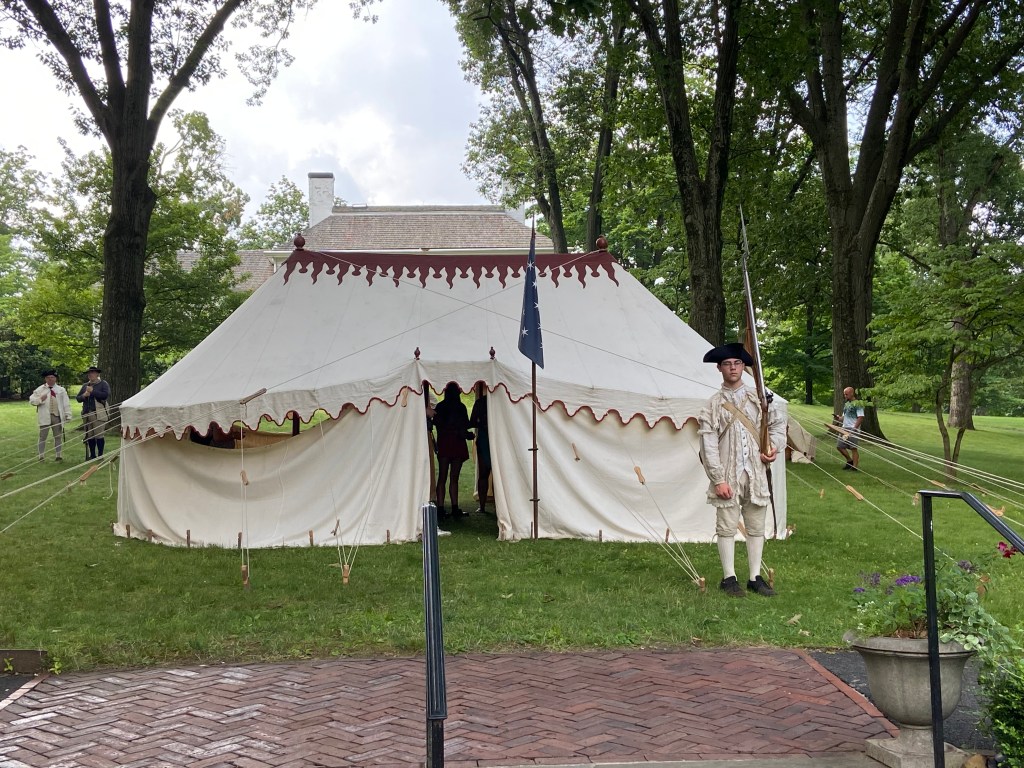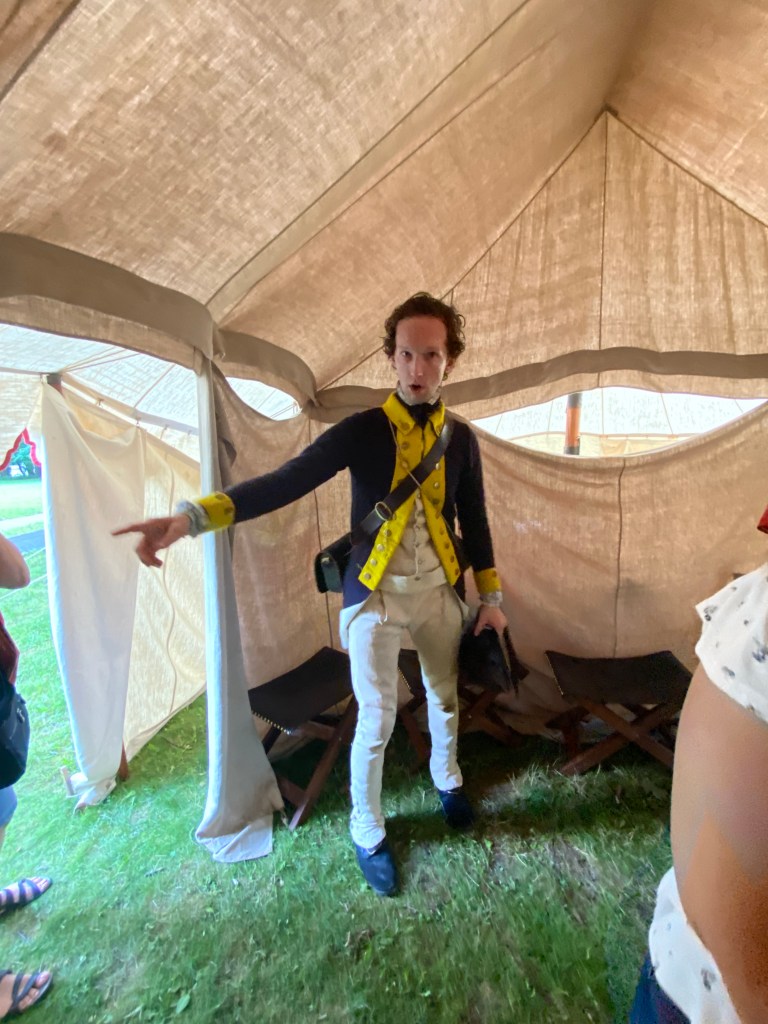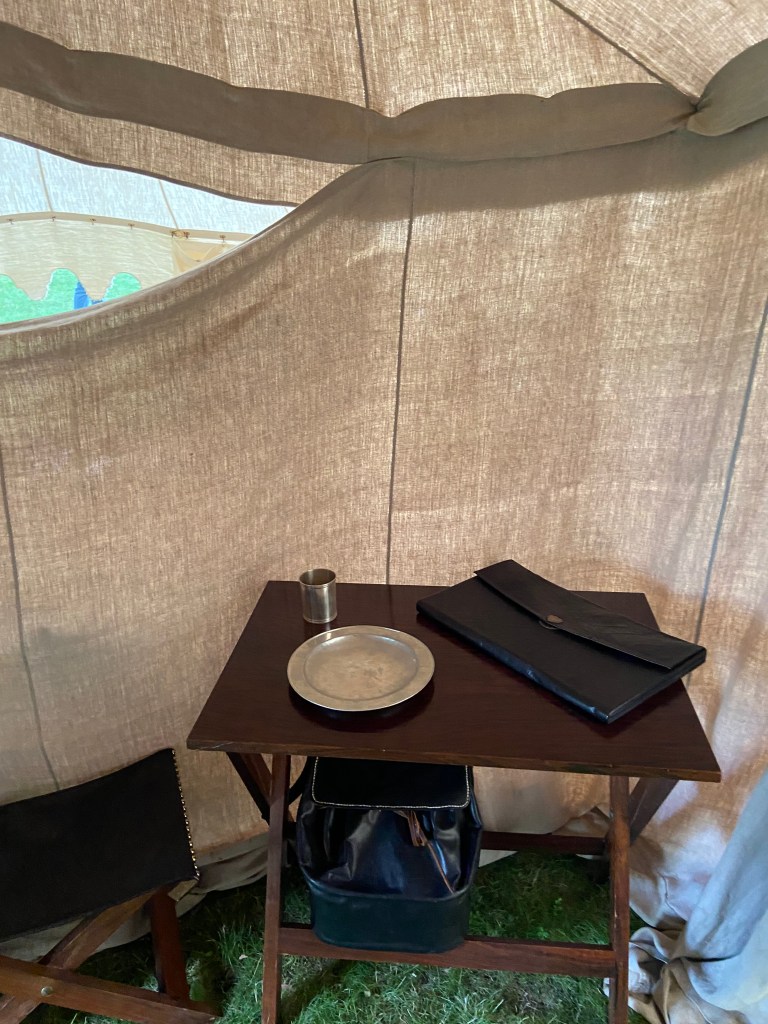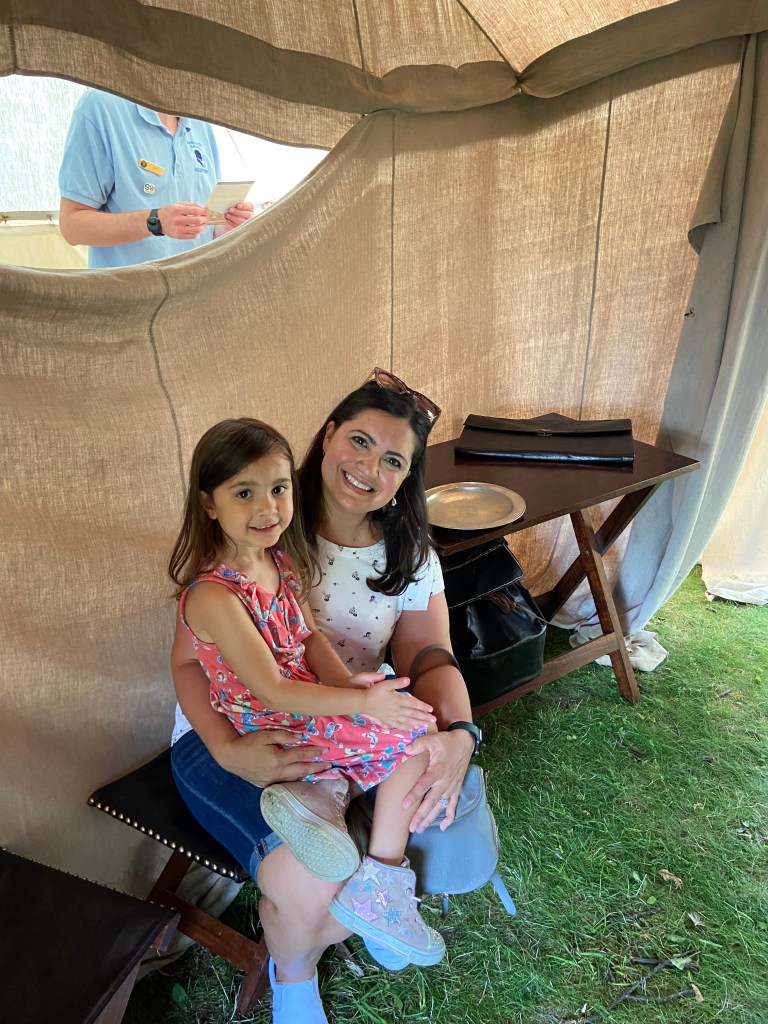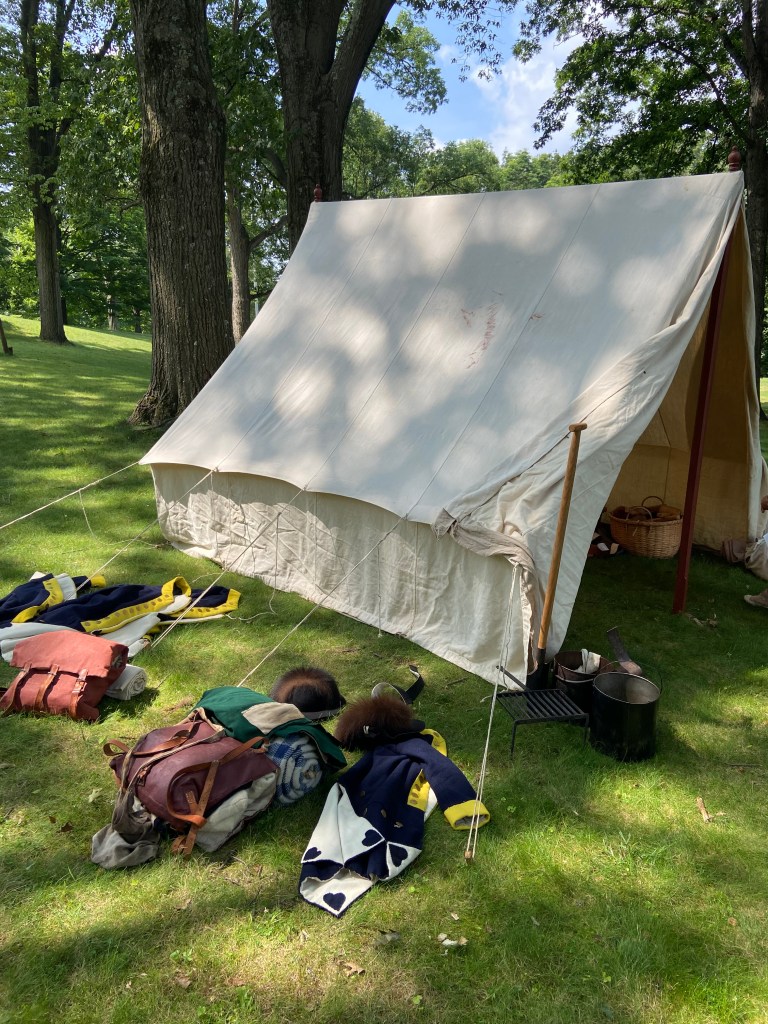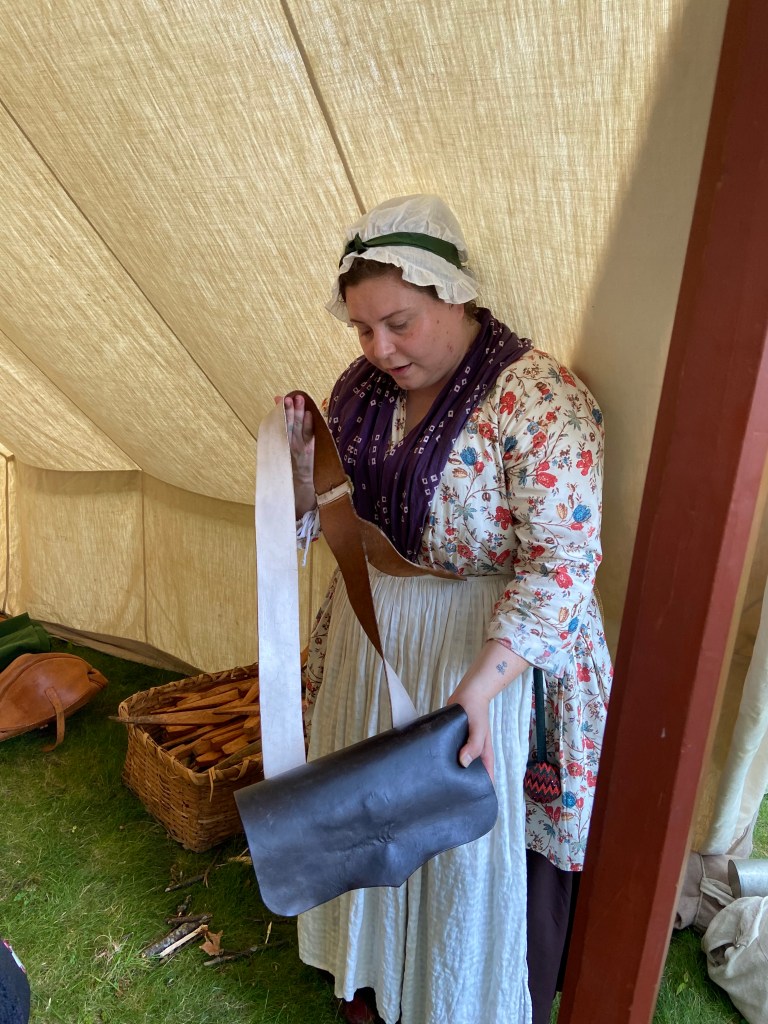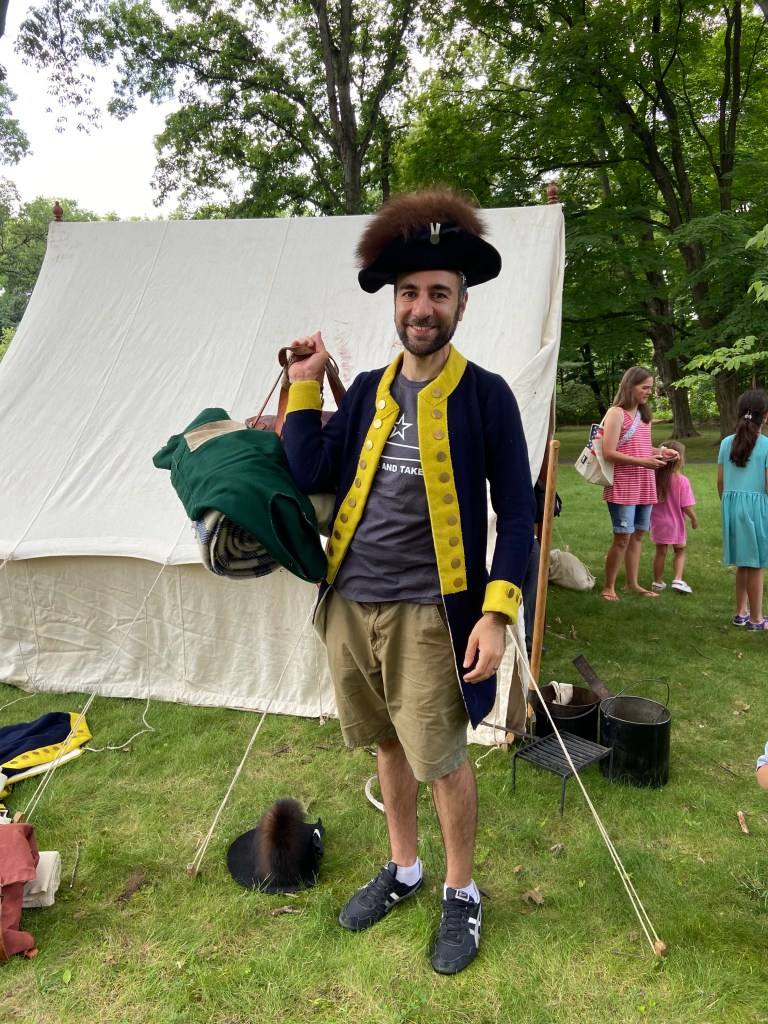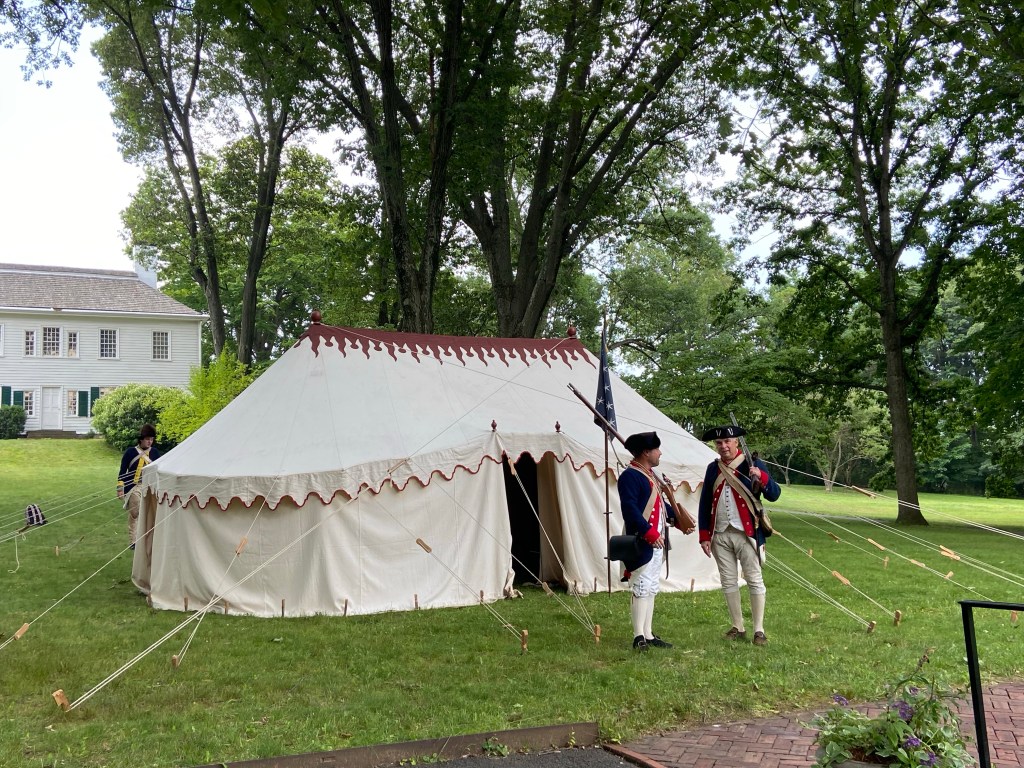
• This past weekend I took the family to Washington’s Headquarters in Morristown, NJ. Throughout the week they hosted an event entitled “Red, White and You: Celebrating Independence Week at Washington’s Headquarters!” During the weekend they hosted the Museum of the American Revolution’s “First Oval Office Project,” which includes a full-scale replica of George Washington’s sleeping and operational tents that served as his mobile command and sleeping quarters while on campaign during the American Revolution. The tent and day’s programming was sponsored by the Washington Association of New Jersey.

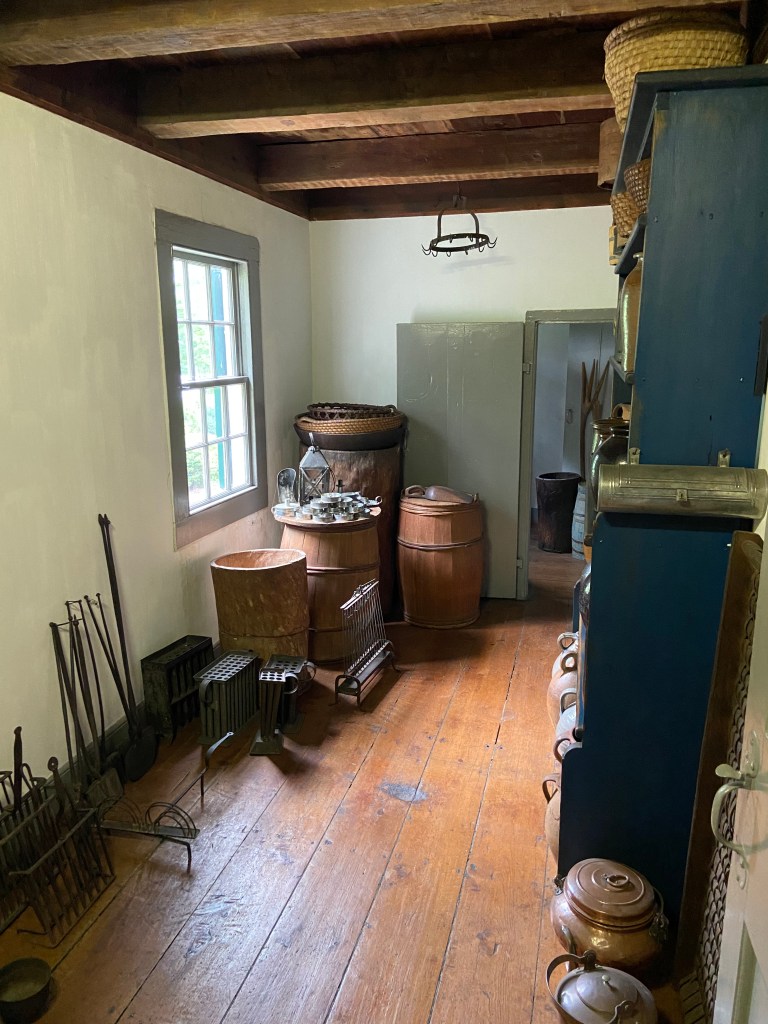
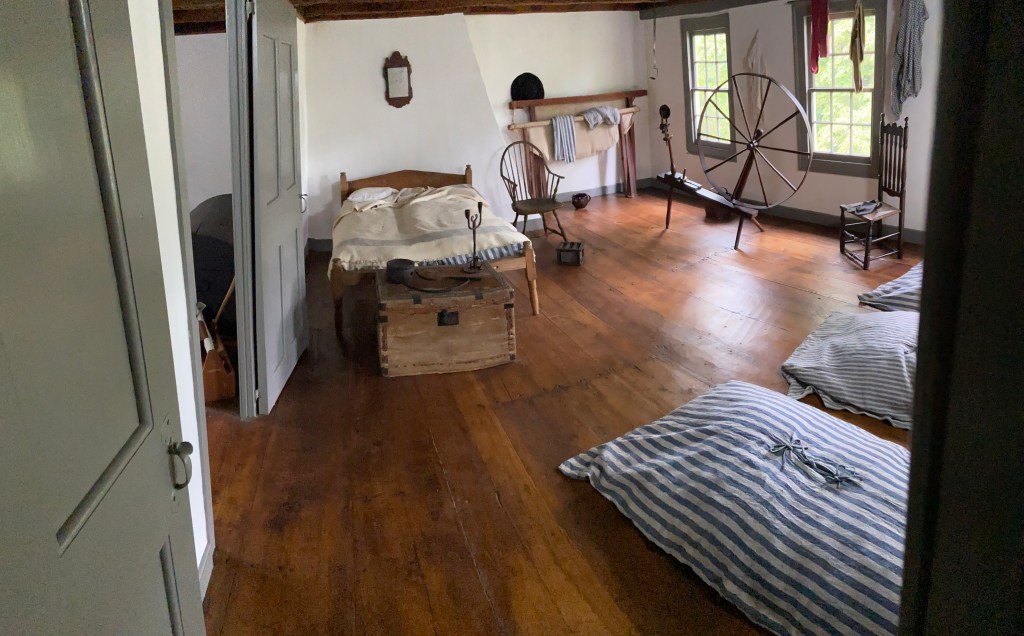
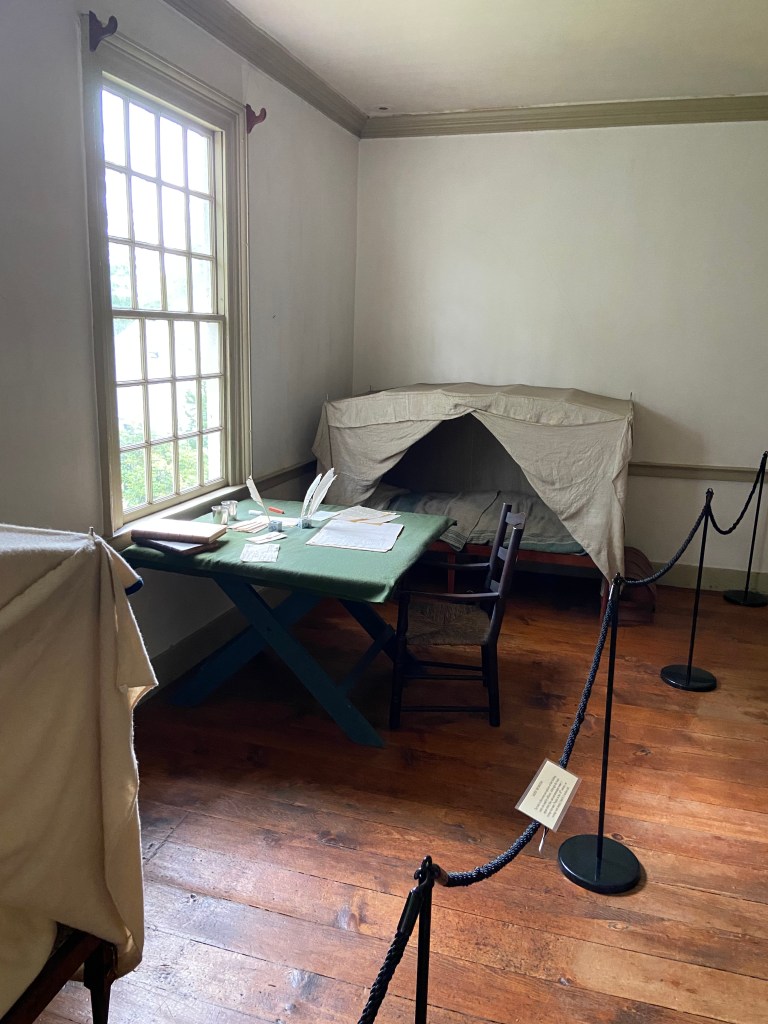
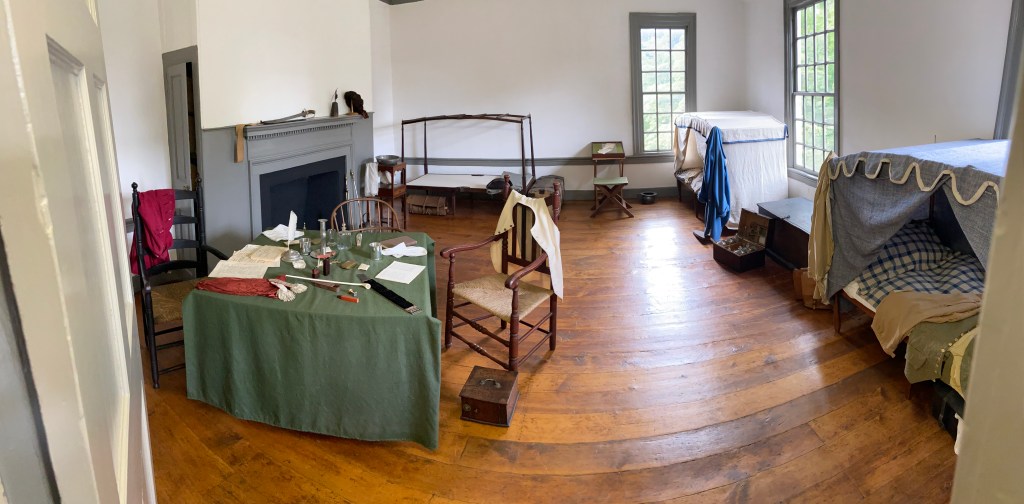
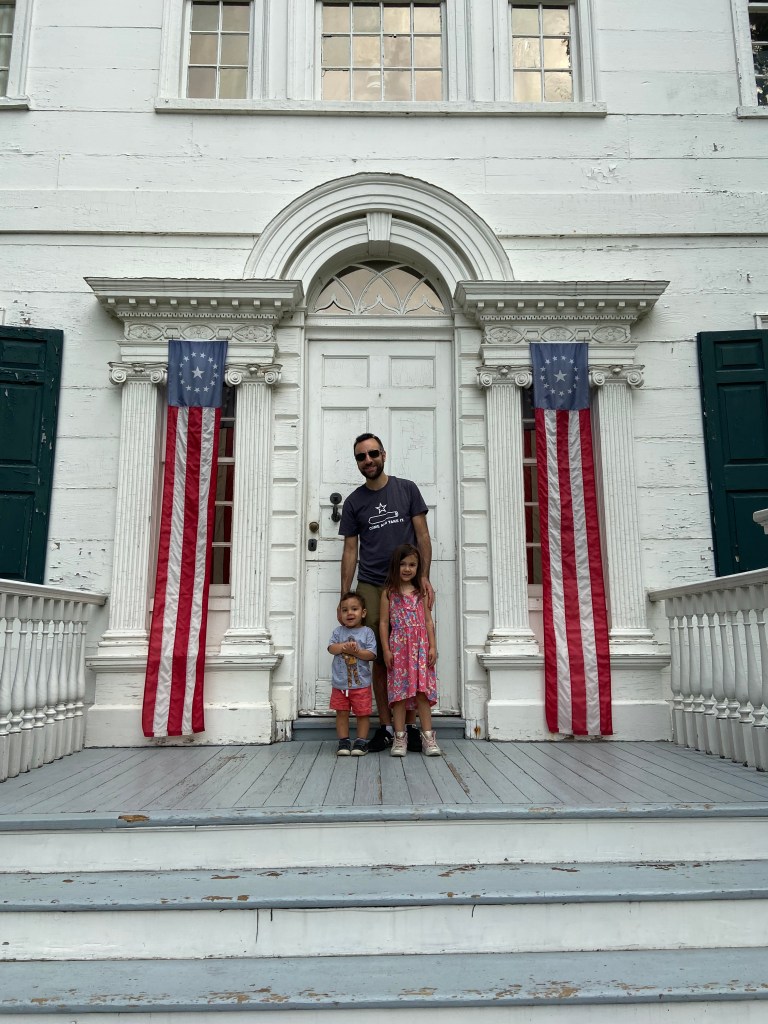
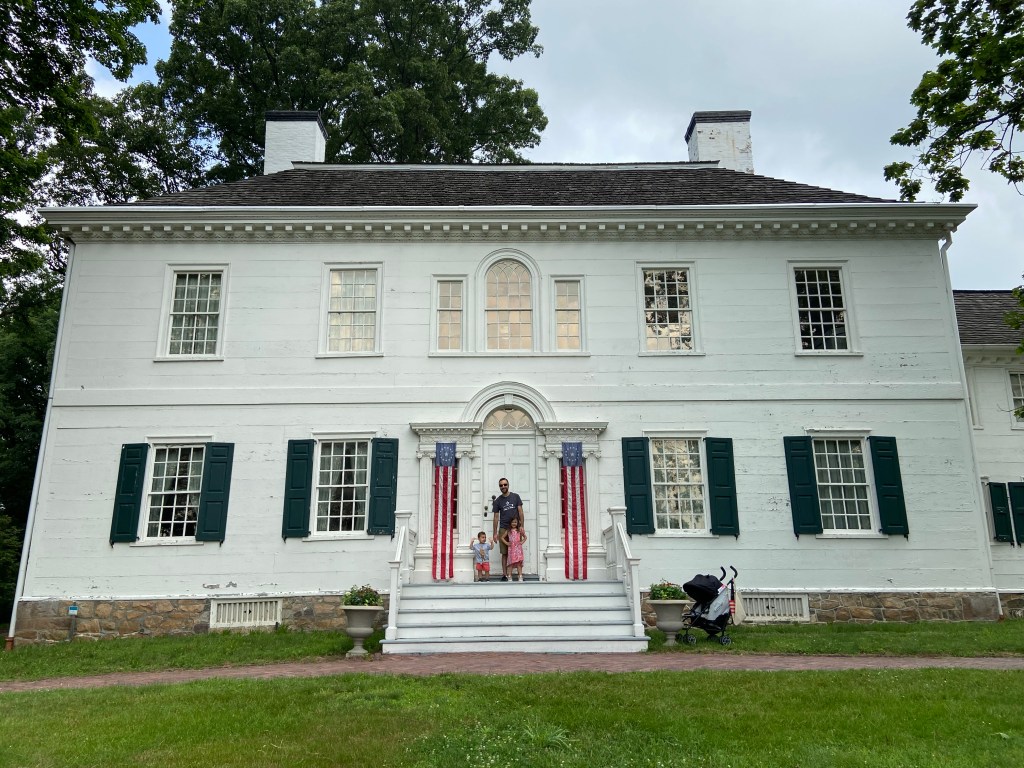
    While I had been to Washington’s Headquarters Museum many times for the galleries and book talks, I had not had an opportunity to tour the Ford Mansion. The mansion was open to the public for the weekend events. Since the family and I arrived to Washington’s Headquarters fairly early, we decided to tour the mansion first, and then visit Washington’s War Tent. The guides stationed throughout the mansion were extremely helpful in answering all of our questions about the mansion and Washington’s stay there.

    Ford Mansion

    The Ford Mansion was the home of Jacob Ford, Jr, an iron manufacturer and his family. Ford served as a colonel in the Morris County Militia during the Revolution. However, Ford died in January 1777 of pneumonia, and his wife Theodosia was left to raise their four children. Theodosia allowed George Washington to use the mansion as his headquarters in the winter of 1779-1780. With the American capital in Philadelphia and the British capital in Manhattan, the location of Morristown allowed Washington to keep a close eye on the British, while sending letters to the Continental Congress. Washington also liked Morristown’s “defensible terrain, important communication routes, and access to critical resources.” He arrived in Dec. 1779 and stayed until June 1780. The winter of ‘79-’80 was exceptionally brutal. While Washington was quartered at the Ford Mansion, the army built a small village of huts at Jockey Hollow about 5 miles away. Along with George came his wife Martha, five aides-de-camp, including Alexander Hamilton, eighteen servants, and a number of visiting dignitaries and guards. Theodosia and the children stayed in rooms on the first floor while Washington and his entourage occupied rooms on the top floor. While staying at the Ford Mansion, the Commander in Chief of the Continental Army was busy running the affairs of the war, including making sure his army was supplied with their necessities, and frequently writing correspondence with his commanders. After Washington’s six month stay, the Ford family continued to live in the house until the 1870s. Today, the house is furnished to reflect how it would have appeared in Washington’s day.
    Washington’s War Tent

    Washington’s War Tent displayed at Morristown this past weekend was a replica of the real one which was preserved after Washington’s life and is now located at the Museum of the American Revolution in Philadelphia. The tent remained with the descendants of Martha Washington’s family until it was sold to the museum collection’s founder, Reverend W. Herbert Burk in 1909. While you can view the original at the museum, you cannot go inside it. The replica was created in order to allow visitors to see what it was like inside Washington’s quarters while he was out on campaign with his army. Washington and his aides used the tent to conduct business, write correspondence and also for sleeping. Personally, going inside the tent was a reminder of the conditions that Washington and his aides had to deal with (it was exceptionally humid this weekend). It showed that Washington, even with his stature, had to brave the elements much like his soldiers did while he was out on campaign. This setting was much different than the comfort he would have had while staying at the Ford Mansion.
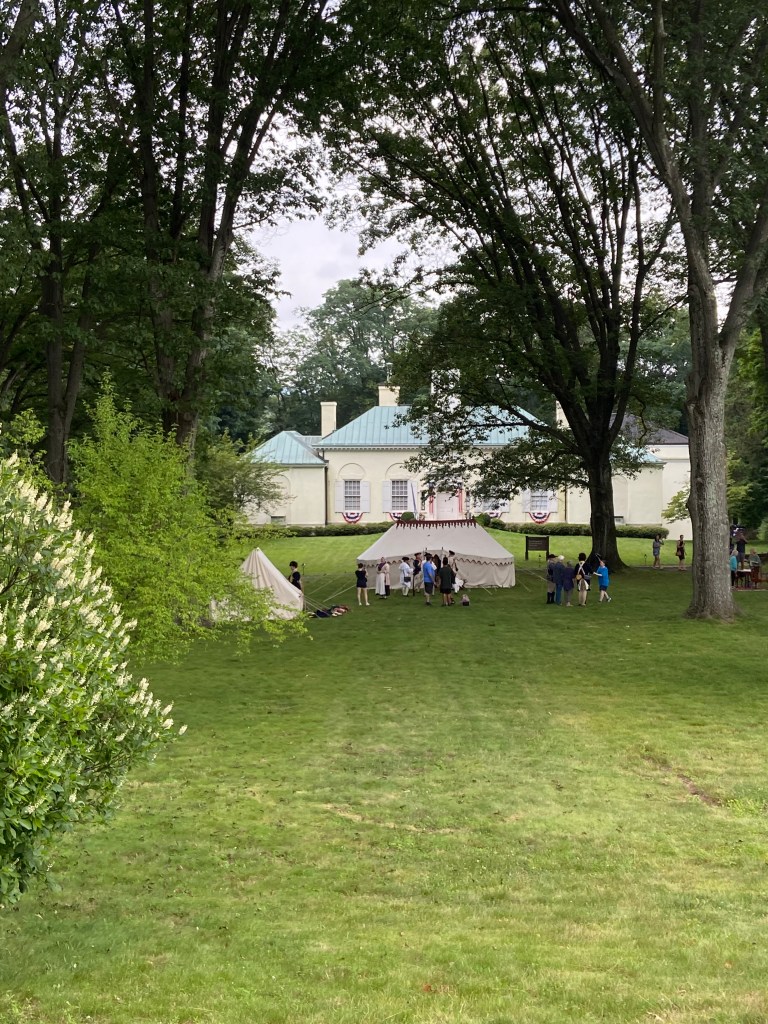
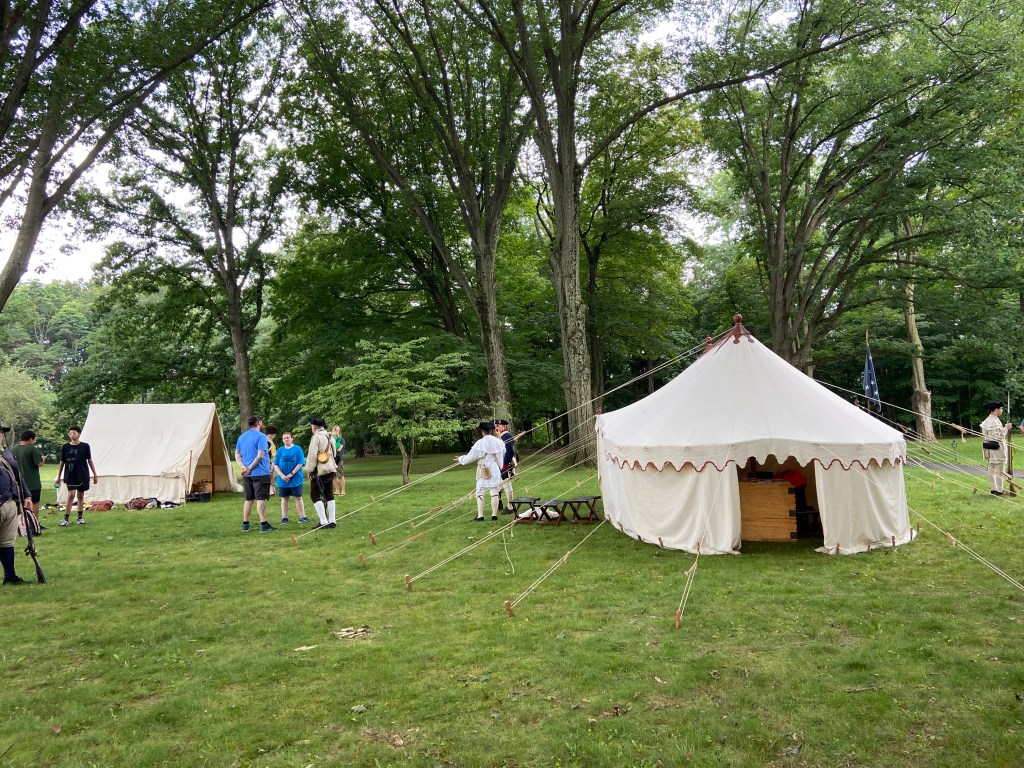
    There were many reenactors (from the Museum of the American Revolution) at the event and they were extremely informative. They were experts on their topic and you could tell that they loved talking about the tent and the Revolution. One demonstrator was an expert on women in the American Revolution and spoke in detail about Deborah Sampson who had dressed up like a man so that she could fight in the war. Another demonstrator discussed how surveyors during Washington’s time would have measured the land using very simple tools such as chains, stakes and a compass. While my family and I had to leave to go eat lunch, there were more speakers and demonstrations happening in the afternoon that we unfortunately missed. The collaboration of the Museum of the American Revolution (https://www.amrevmuseum.org), the Washington Association of New Jersey (https://wanj.org), and the Morristown National Historical Park (https://www.nps.gov/morr/index.htm) all did a fantastic job hosting a fun, informative and engaging experience. The First Oval Office Project has further events coming up in Rhode Island and New York. Check out upcoming events here: https://www.amrevmuseum.org/learn-and-explore/first-oval-office-project/first-oval-office-project-programs-and-events

    Related Posts:

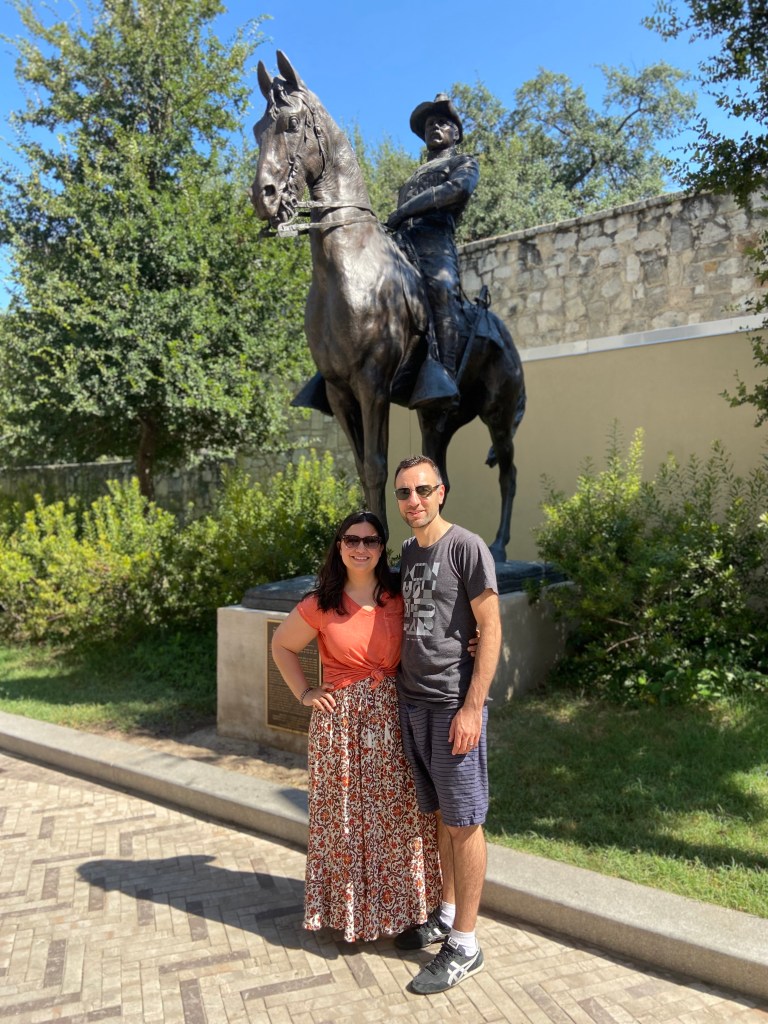
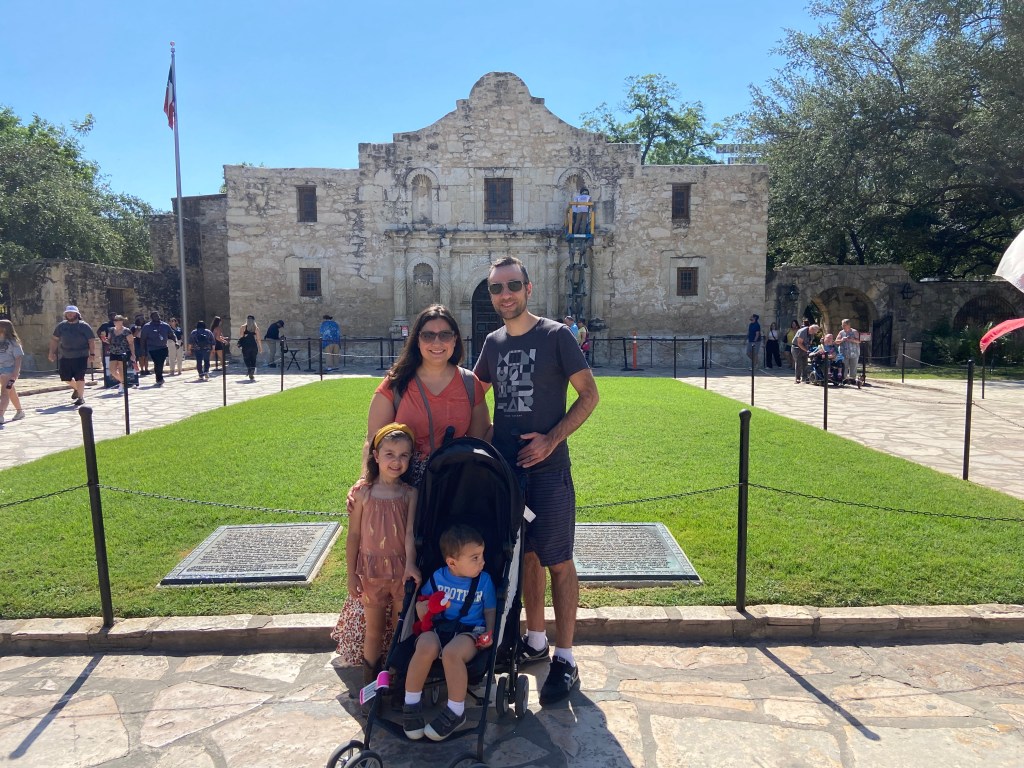
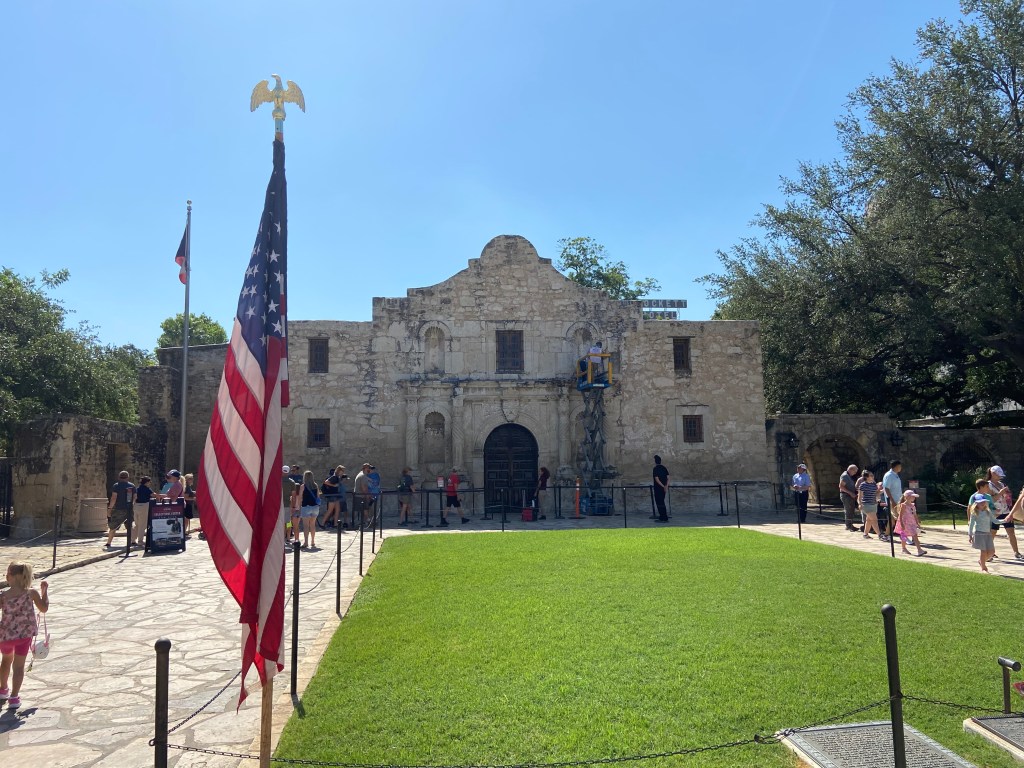
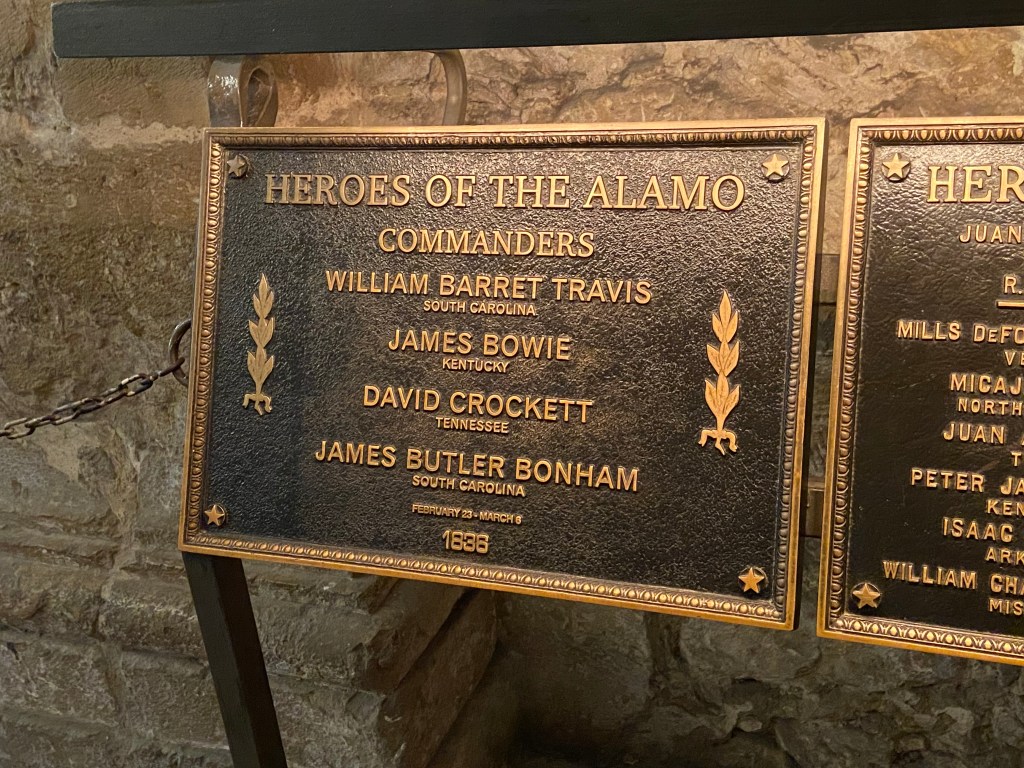
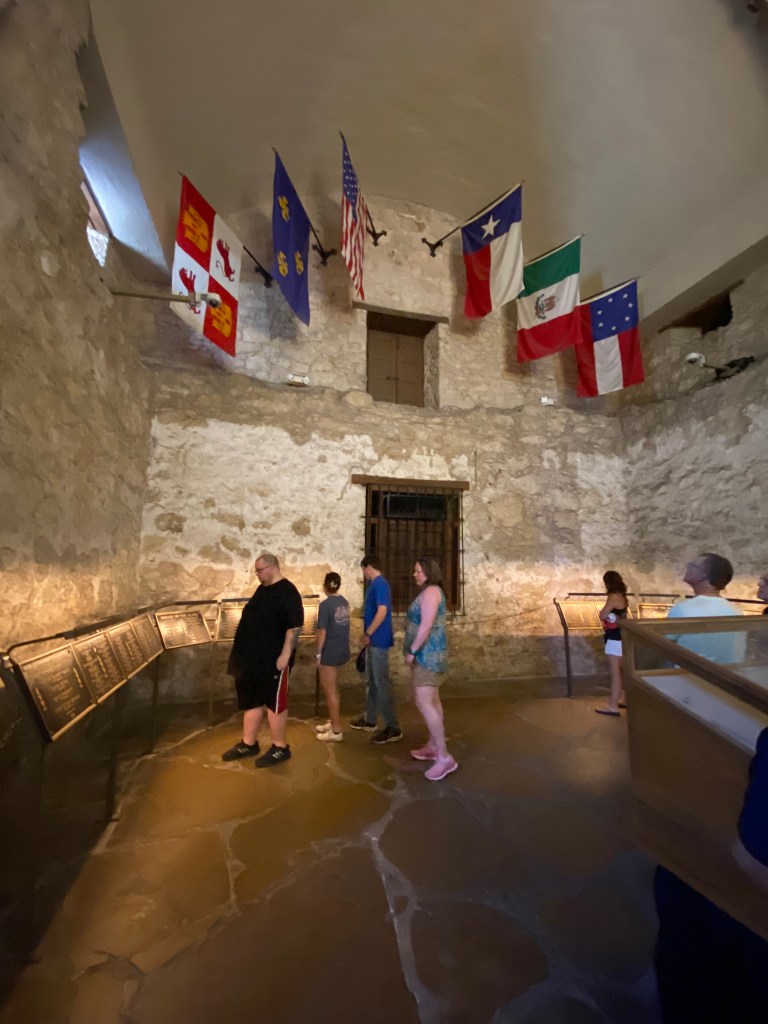
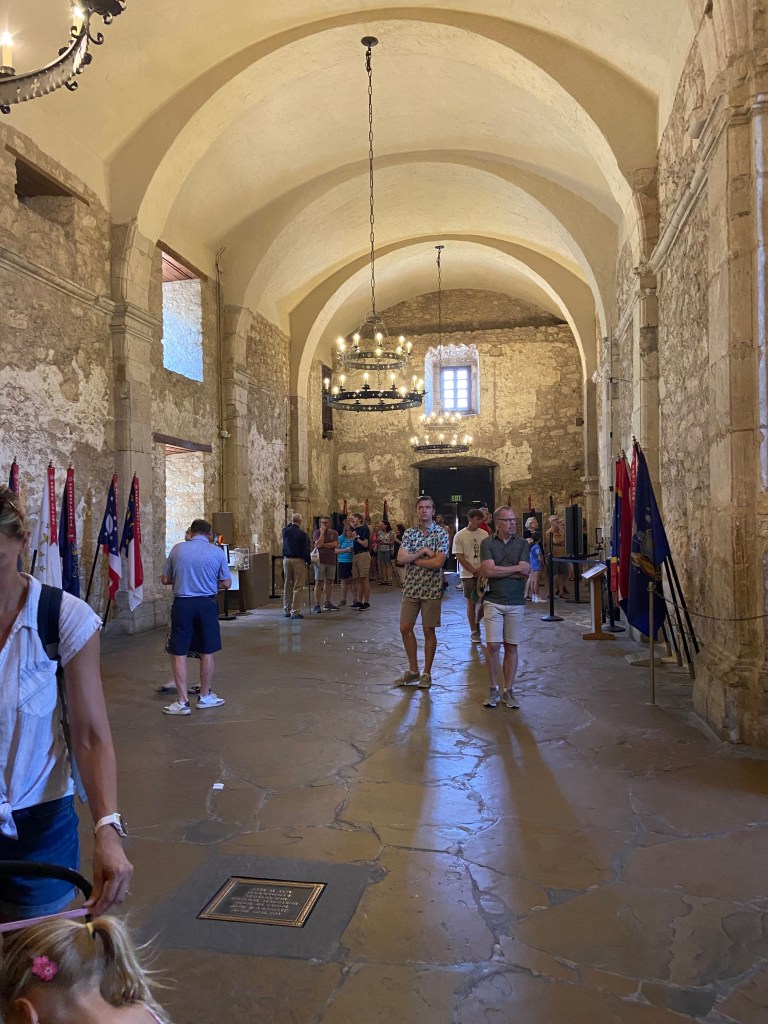
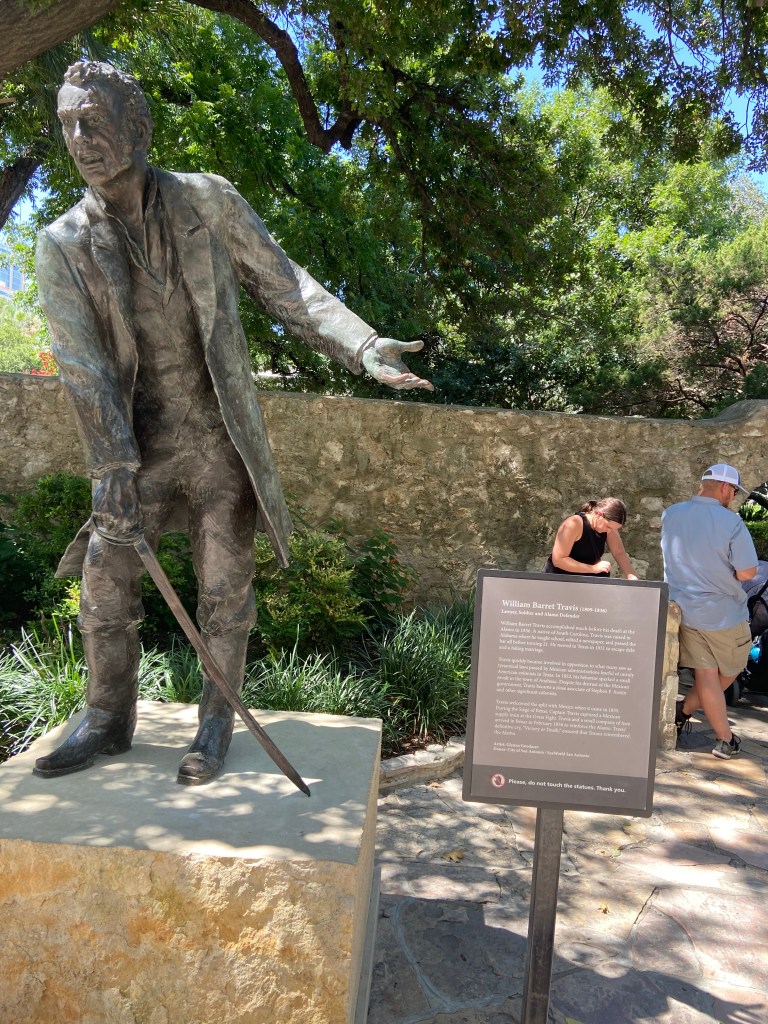
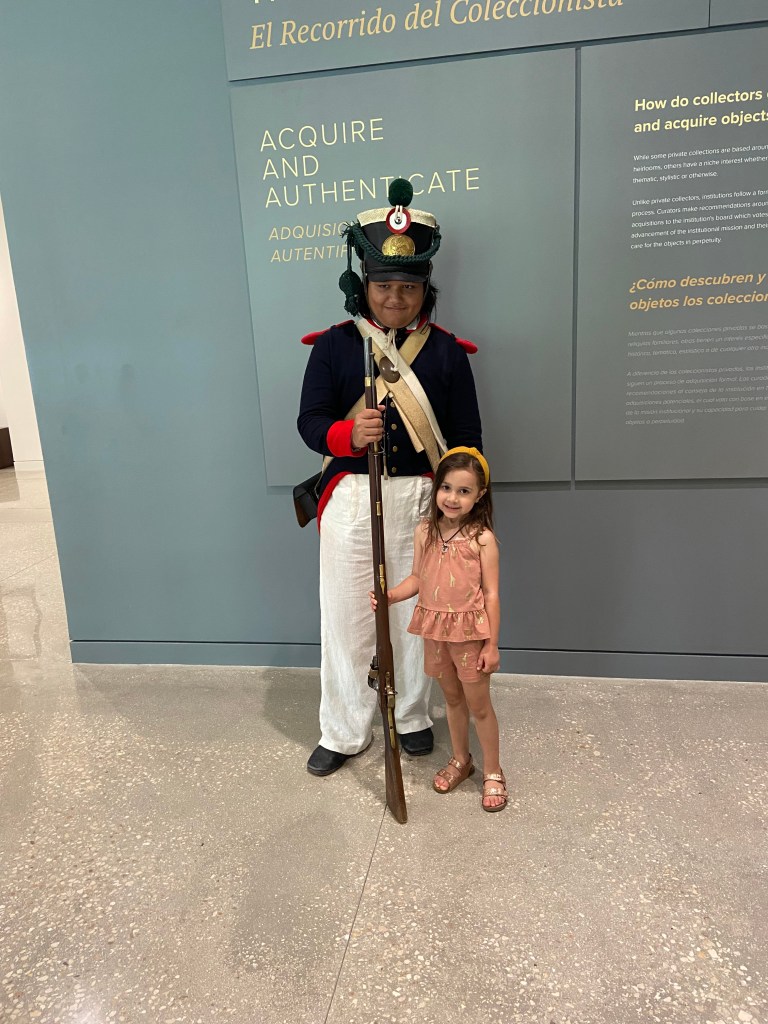
  • Last week, my family and I were able to spend 6 days in San Antonio, Texas. We were visiting family who were kind enough to let us stay at their house. While most of the week was spent making sure the kids were entertained (four kids, ages 9 months to 4 years old), visiting the Alamo was a must for me as I had never been there before. Luckily, they live pretty close to the site. I’ve taught the Texas Revolution and the Battle of the Alamo for many years so seeing the site in person was a real treat. And yes, the kids had a good time as well.

    Background of the Alamo

    The Alamo site complex was much larger than just the Alamo church that we think of today. It was originally built as a Spanish mission in the 18th century while the Spanish Empire controlled the region. Several Roman Catholic missions were established in East Texas in 1716. Originally, the site was called Mision Santonio de Valero, and structures were added to the complex in the years that followed. The mission was a base of operations to convert and educate Native Americans. Throughout the 18th century, the Mision San Antonio de Valero grew in size and importance.

    However, by 1793, the Spanish crown had begun to secularize the site, and it lost its religious importance. The buildings were neglected until 1801, when a Spanish military unit was sent to strengthen forces in San Antonio. The old mission was occupied and repaired by the army.

    Spain faced serious problems abroad and at home in the early 1800s. Napoleon Bonaparte had invaded Spain and placed his brother on the Spanish throne in 1808. This led to growing instability in the Spanish Empire. Tensions also grew in the New World, and Mexicans began to revolt against the Spanish crown in 1810. Soon, the Alamo frequently changed hands between Spanish and Mexican forces. Mexico finally won its independence from Spain in 1821.

    Shortly after, Americans began moving into Texas (part of Mexican territory) and at first they were welcomed. The new Mexican government was looking to boost its economy by selling land to these new Anglo-American settlers. Americans were willing to move into Texas for the opportunity at cheap farmland.

    However, tensions began to emerge between the Texans and the Mexican government. First, there were clear cultural differences. While the Mexicans spoke Spanish and practiced the Roman Catholic religion, the new Texan settlers spoke English and were mostly Protestant. While Mexico had already outlawed slavery, many of the new Texan settlers brought slaves with them.

    There were also tensions in other Mexican provinces. President Antonio Lopez de Santa Anna tried to strengthen the central government that he controlled and weaken local governments. Many throughout Mexico saw this power grab as a step towards dictatorship. Tensions and uprisings emerged throughout the country. Particularly in Texas, there was much anger and resentment against the Mexican government. Violence erupted in Texas in late 1835, beginning the Texas Revolution.

    In December 1835, Texans were able to gain control of San Antonio and the Alamo complex. However, in early 1836, Santa Anna was determined to squash the rebellion and take back San Antonio. He marched to the city at the head of a 4,000-member army, setting the stage for the historic battle that the Alamo is most known for. Santa Anna laid seige to the garrison stationed at the Alamo, a force of just 187 Texans. After a siege of thirteen days, the Mexican forces scaled the walls of the Alamo and attacked the defenders on March 6th, 1836. While few people in the Alamo complex were able to escape the attack, those brave 187 soldiers defended the Alamo with their lives, including the famous, almost mythical names of Davy Crockett, William Travis, and Jim Bowie. They would rather have died for freedom than surrender the Alamo to a tyranical government and leader. Their bravery resulted in one of the most iconic last stands in history. Between 400-600 Mexican soldiers were killed in the battle.

    While the Mexican army was able to regain the Alamo at that time, their success was short lived. By the end of April, the Texans won an overwhelming victory at the Battle of San Jacinto with “Remember the Alamo!” as their rallying cry. Texas was able to win its independence from Mexico and become a republic. Just about ten years later, Texas was annexed by the United States as the 28th state on December 29, 1845.

    Visit to the Alamo

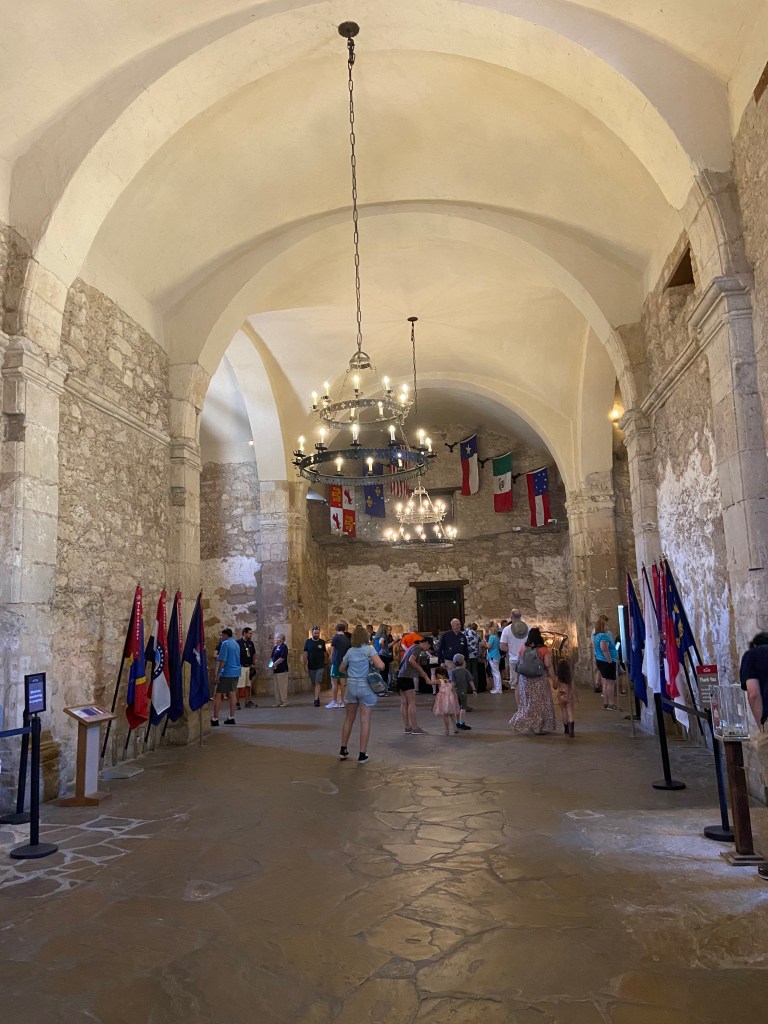
    Before going to the Alamo I had heard very little about what there is to see at the site besides the main structure of the Alamo church. While I am normally someone who enjoys a guided tour, the $45 for adults and $35 for children seemed like a bit much. With small children involved, it didn’t seem worth it. (Children who may or may not be as fascinated in the details of the Alamo as me). If someone reading this has been on the tour, please let me know your experience. Instead of doing the tour, we entered the Alamo church for free, and planned to explore the collections at the Alamo Exhibit in the Ralston Family Collections Center, which was $12 for an adult. When we entered the Alamo church, we found people working in the Alamo who will answer any and all of your questions, and explain the history of the Alamo. I was quite content with this considering that we weren’t going on the tour. The workers are extremely knowledgeable of all of the minute details of the structure and it’s long history. Being inside of the Alamo church was fascinating considering its historic significance and its symbolic importance.

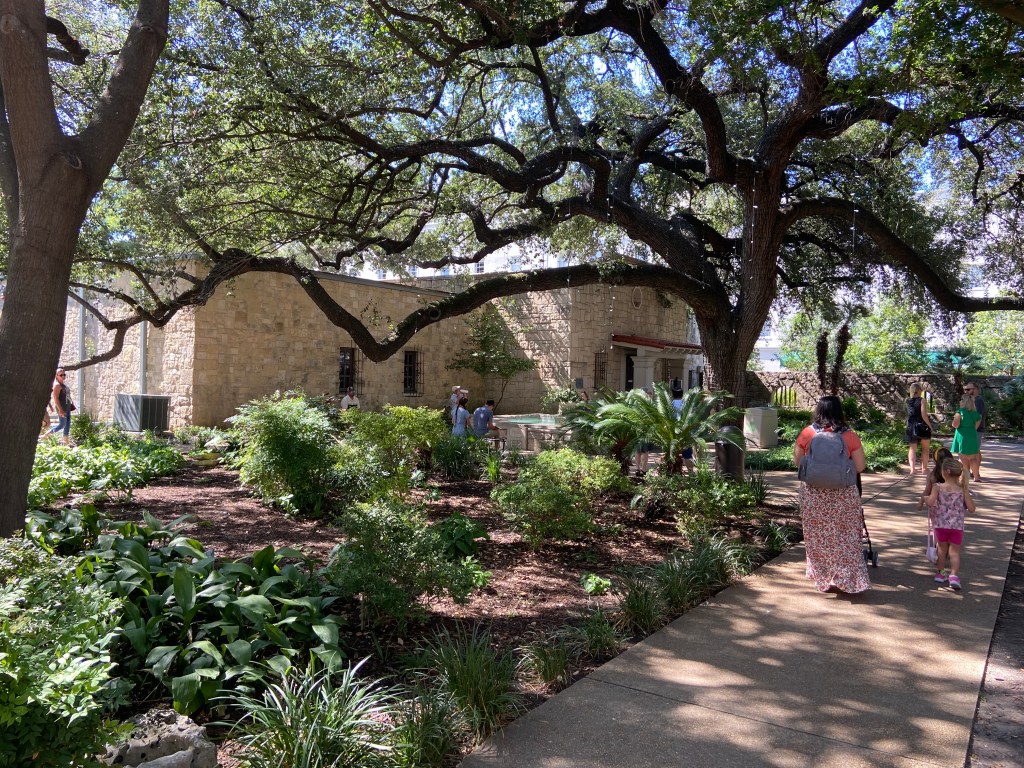
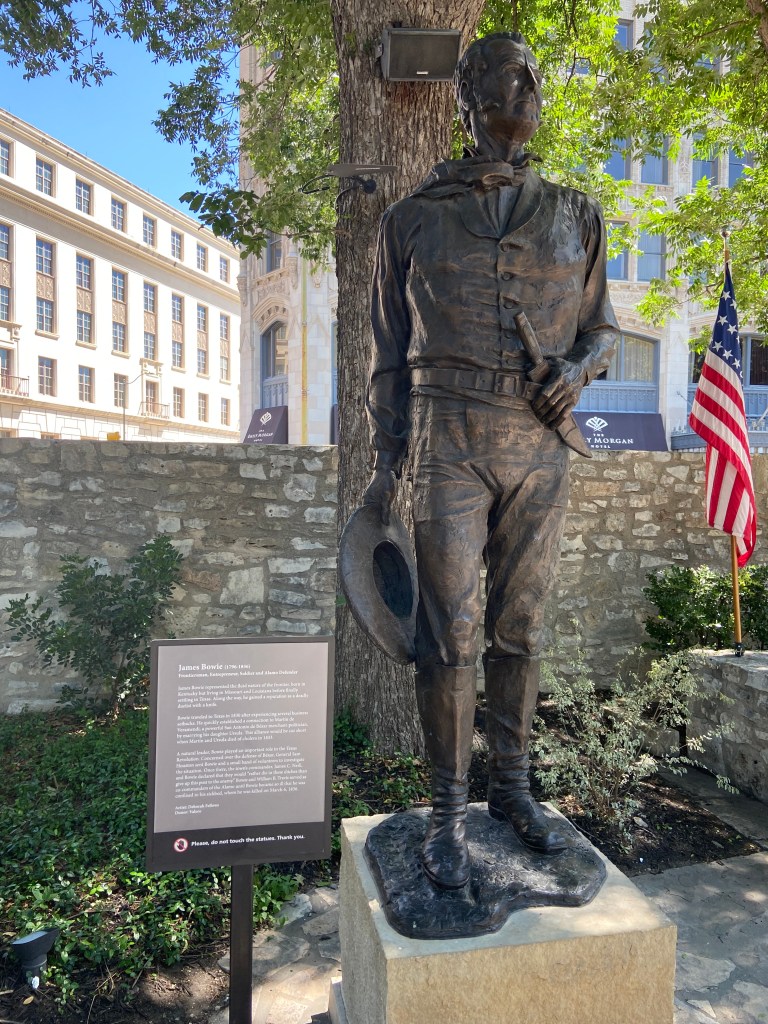
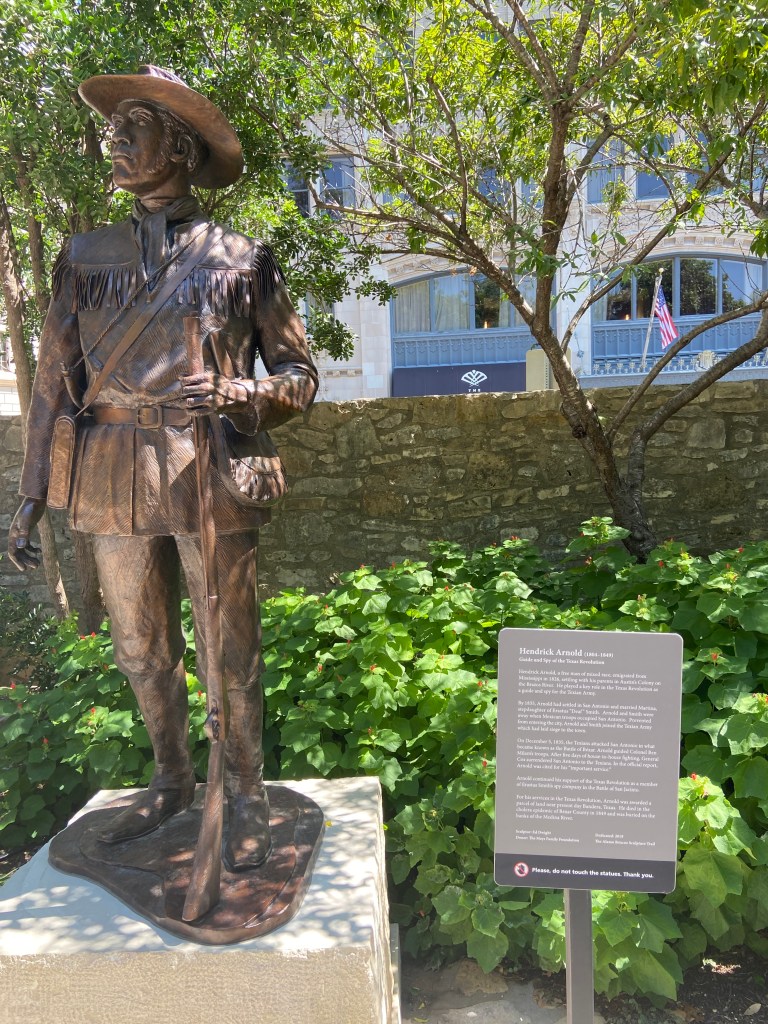
    After we walked through the Alamo church, we took the kids into the Gift Shop and bought a few items. We walked the grounds of the Alamo where there are monuments and statues honoring those who fought and died at the Alamo. Stationed throughout the complex are informational signs/ plaques/ timelines that provide you ample information about the history of the Alamo and its importance.

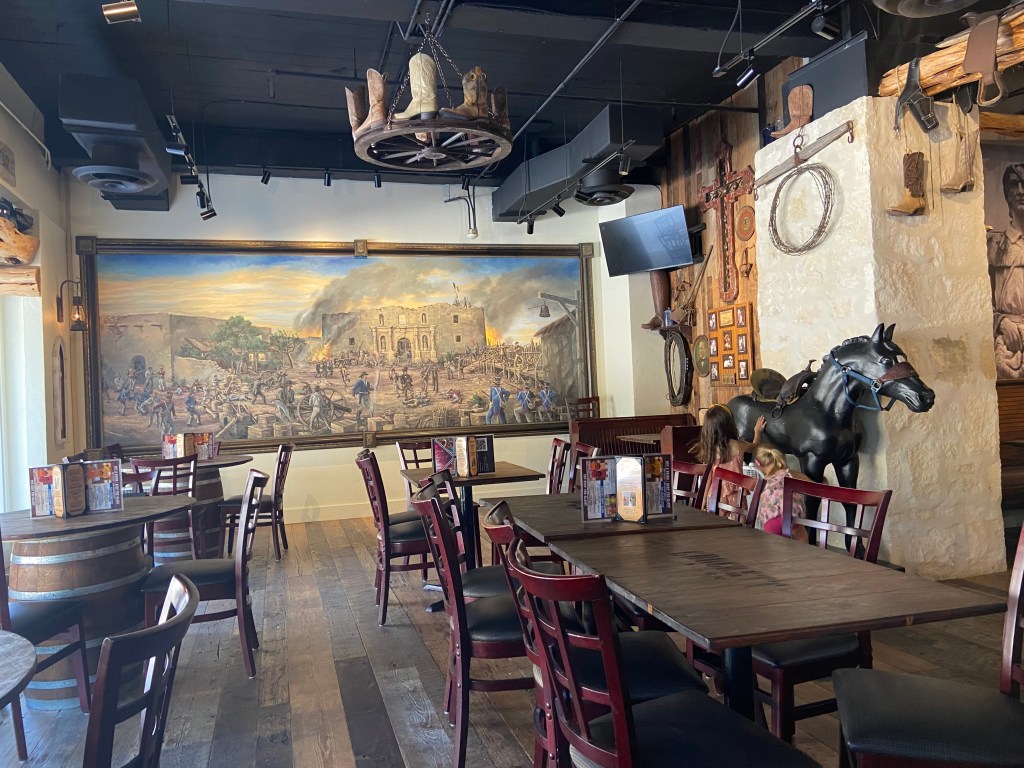
    Before we would visit the collections, it was time for lunch (have to keep the kids happy and fed, and take a break from the Texas heat). Luckily right across the street from the Alamo is Crockett Tavern. Getting there before noon, we beat the lunchtime rush. The food was great, and the atmosphere was the perfect Texas/ Alamo vibe. (Crocket Tavern).

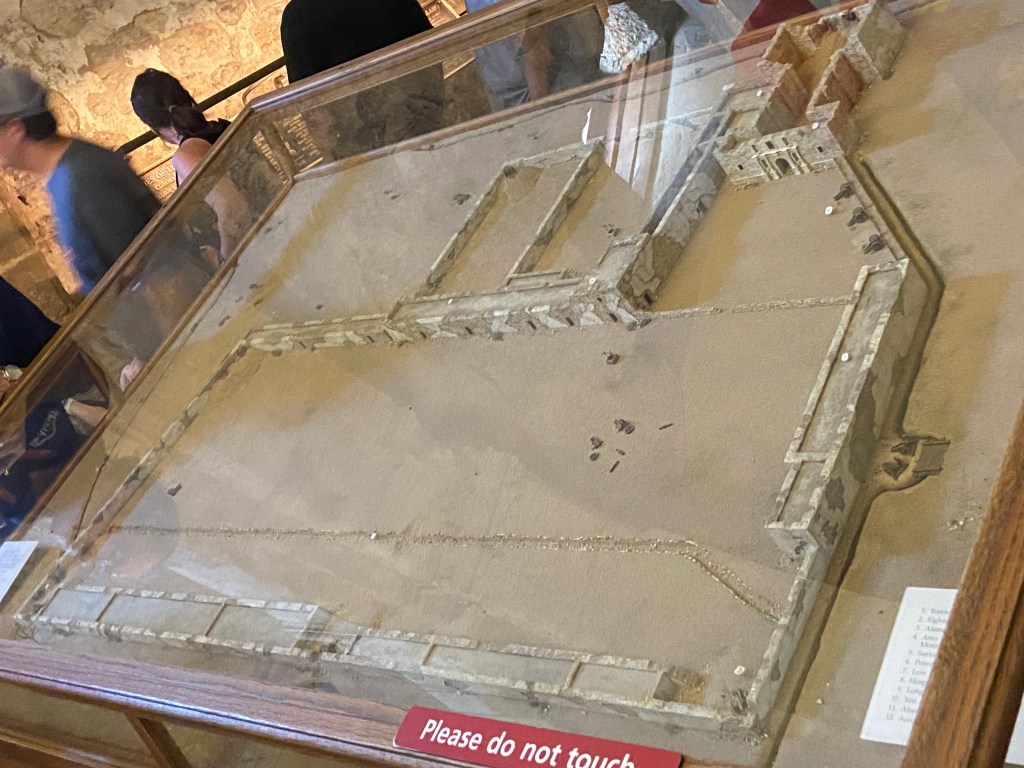
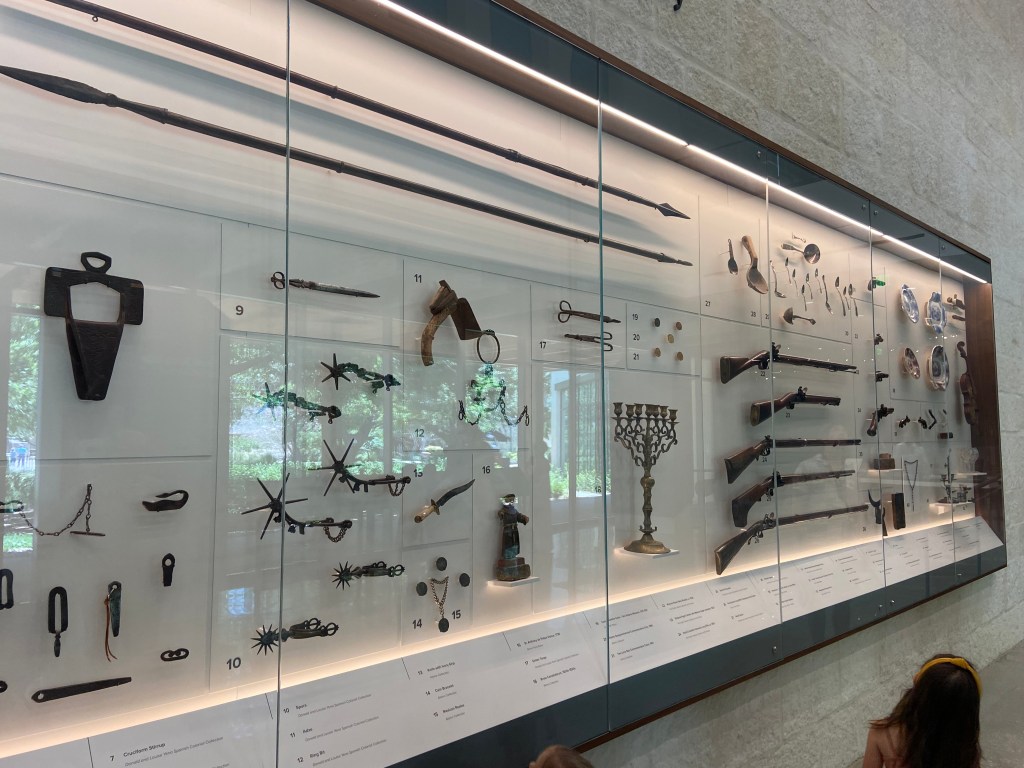
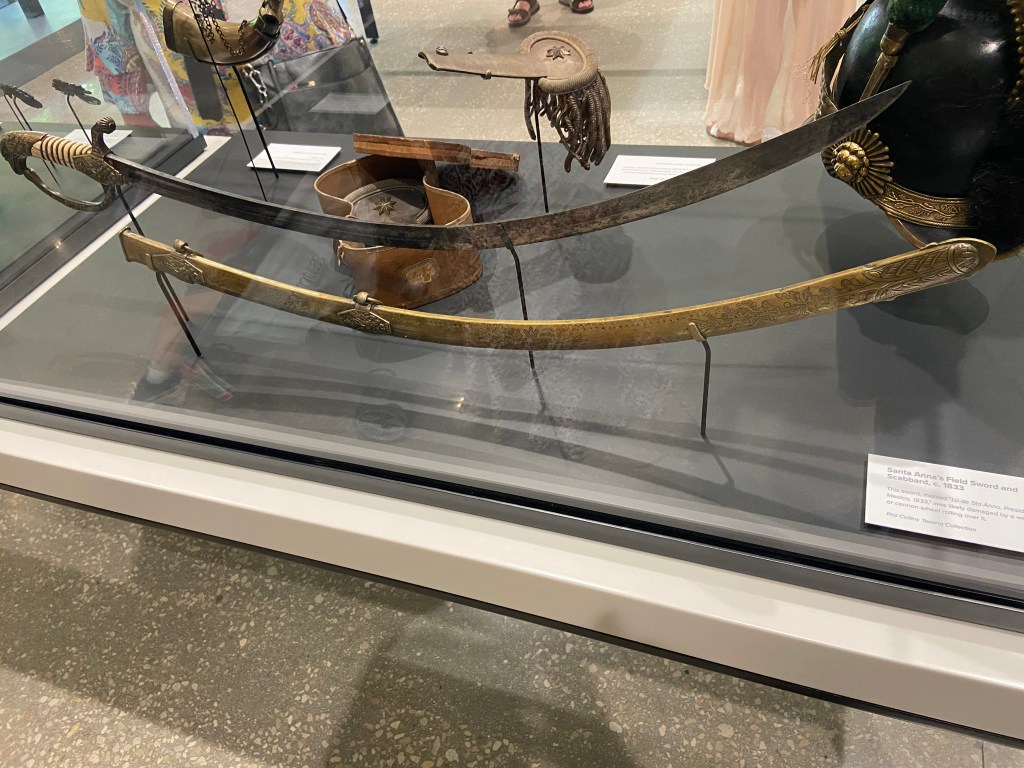
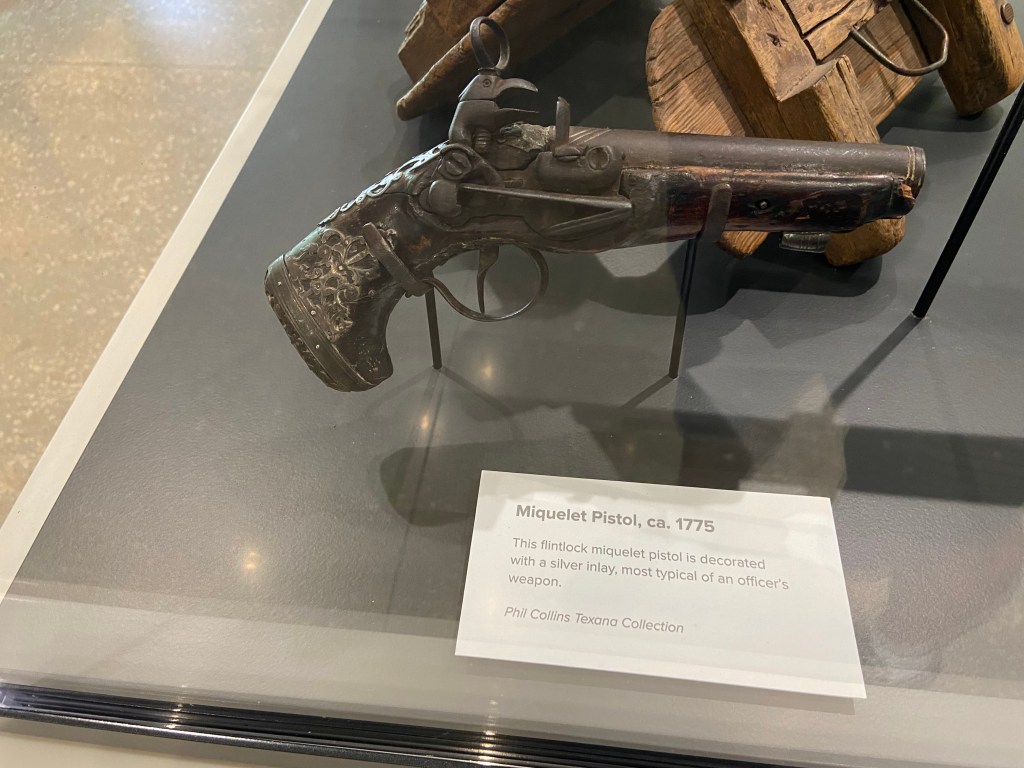
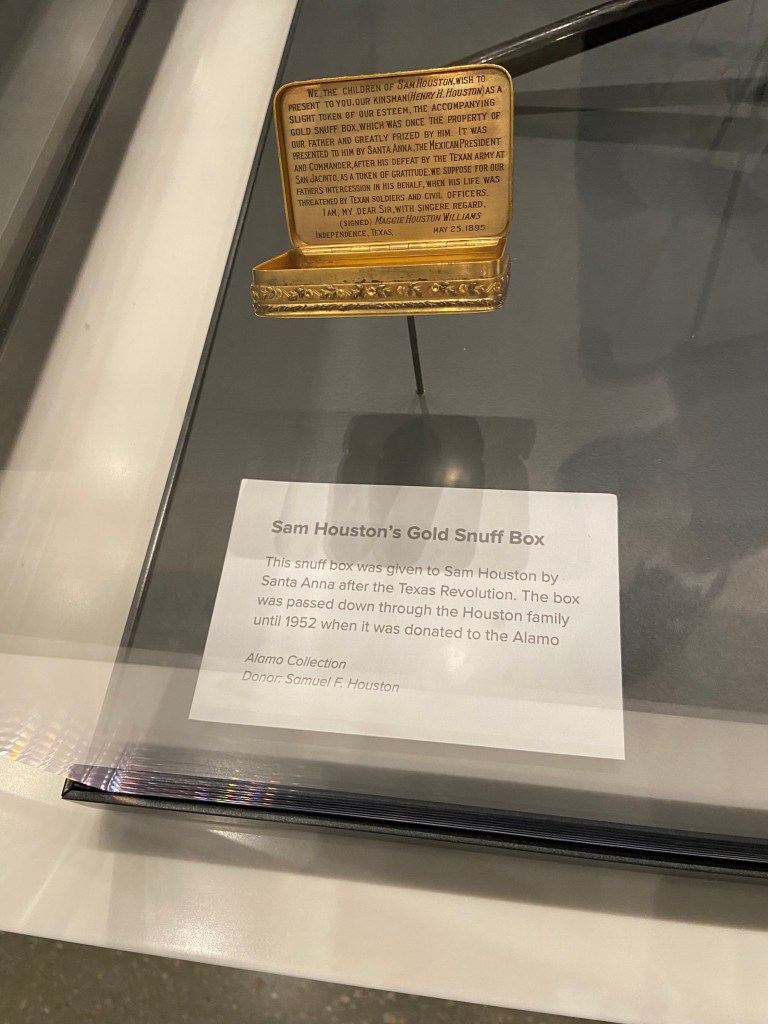
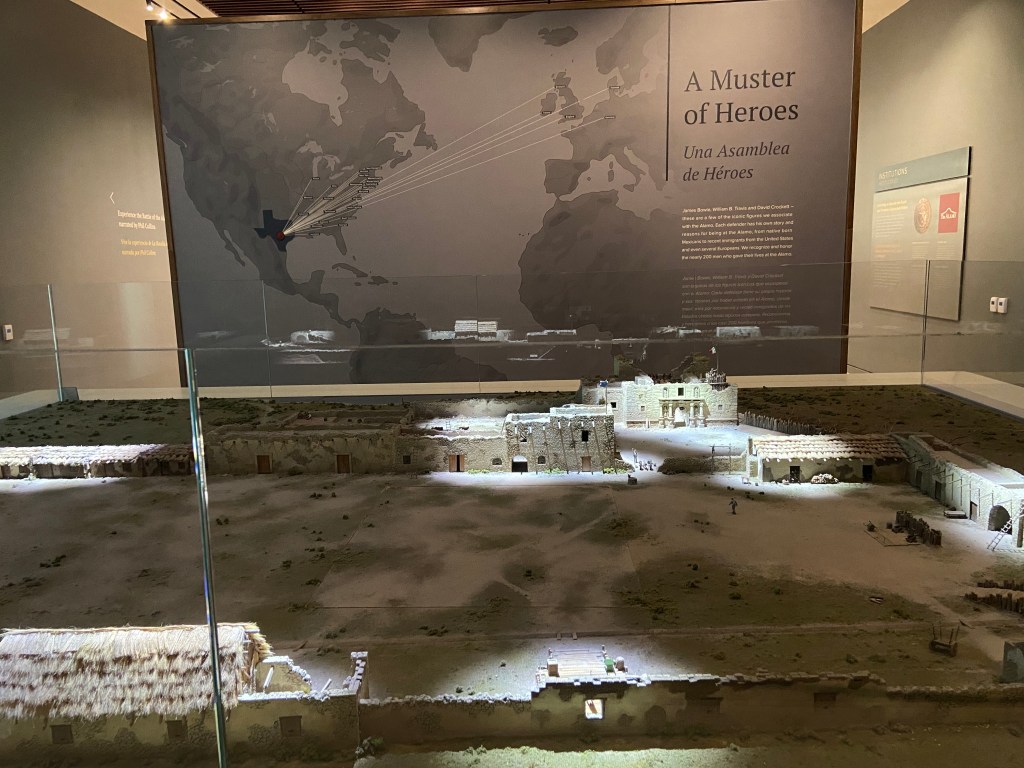
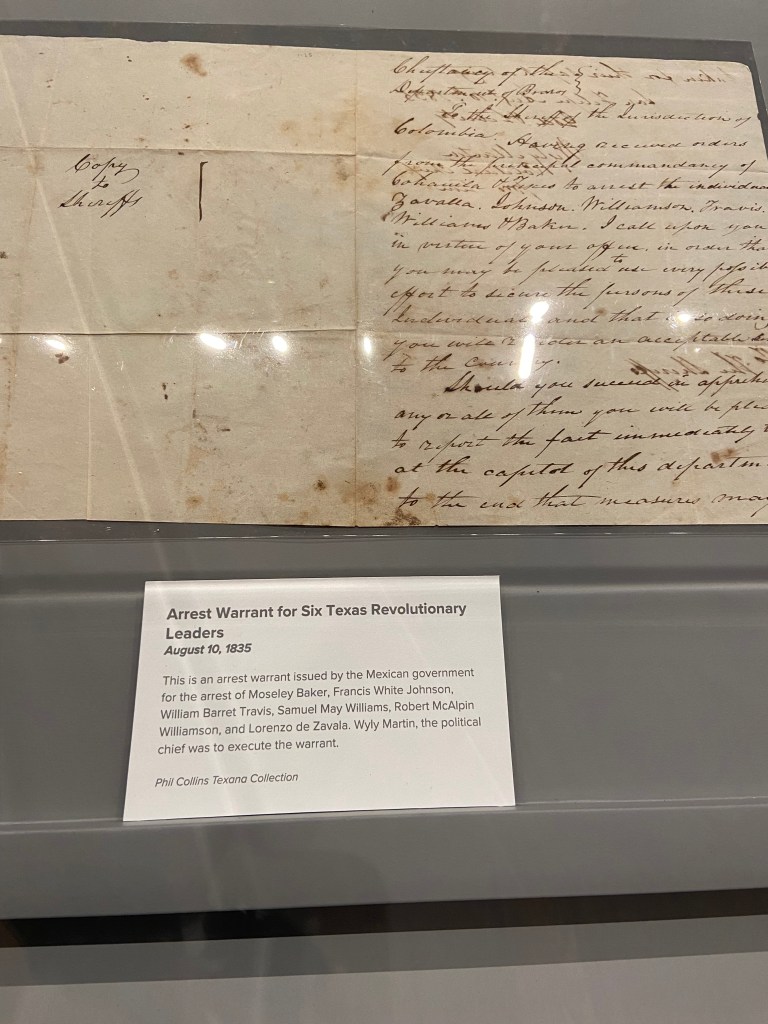
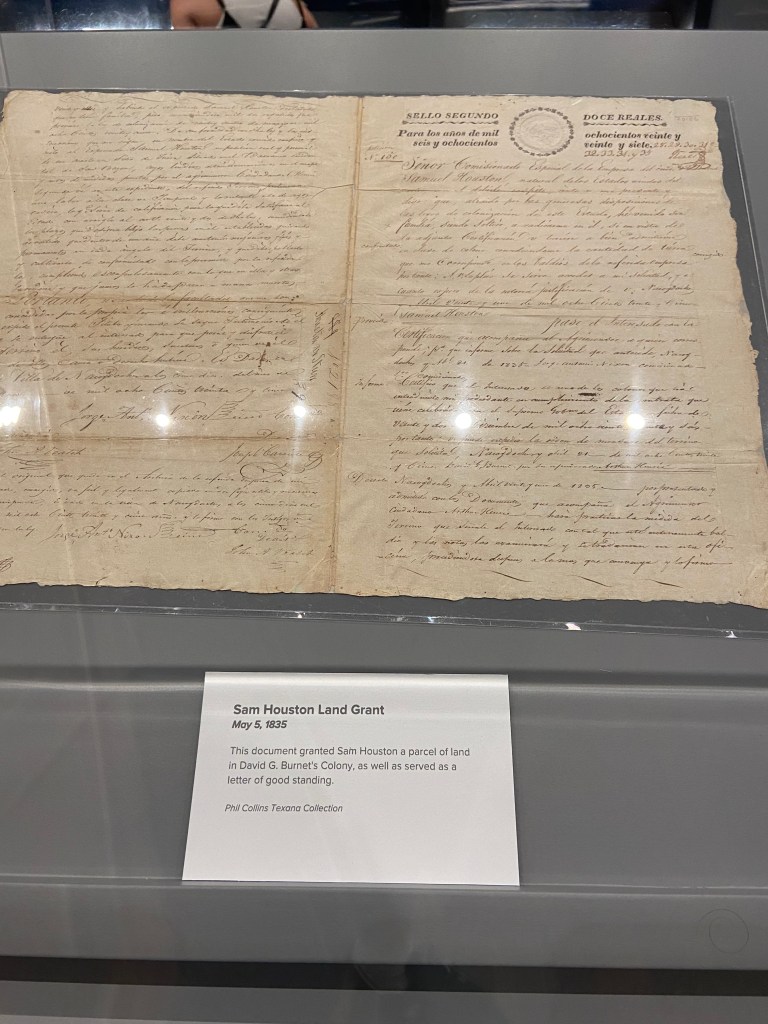
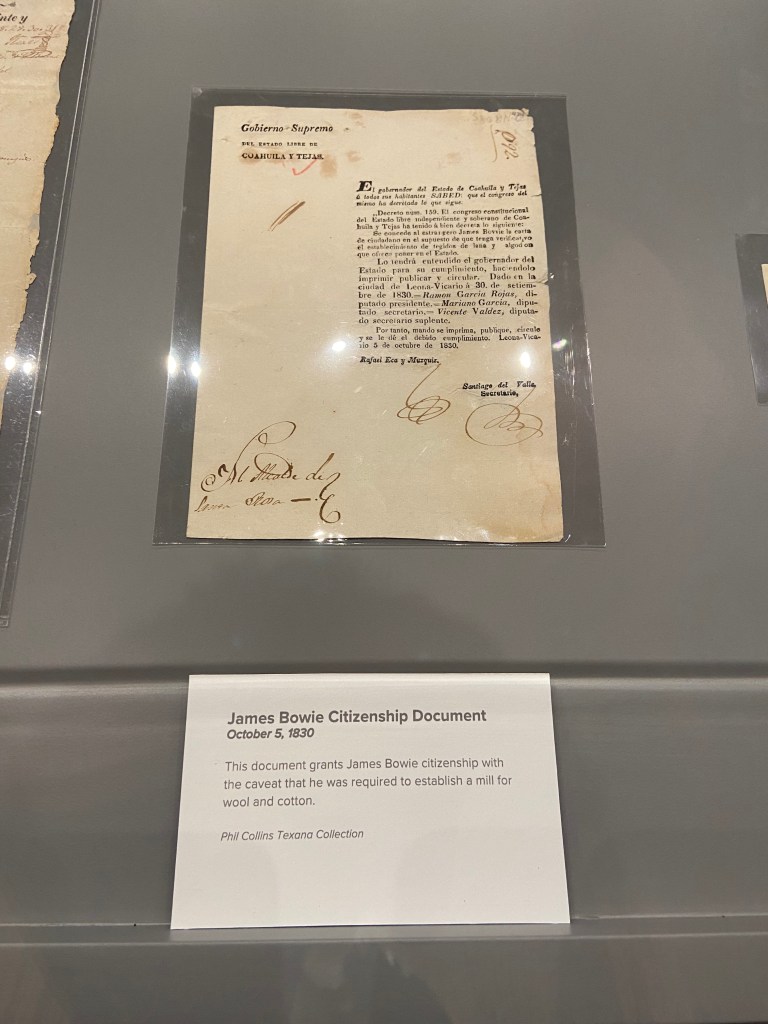
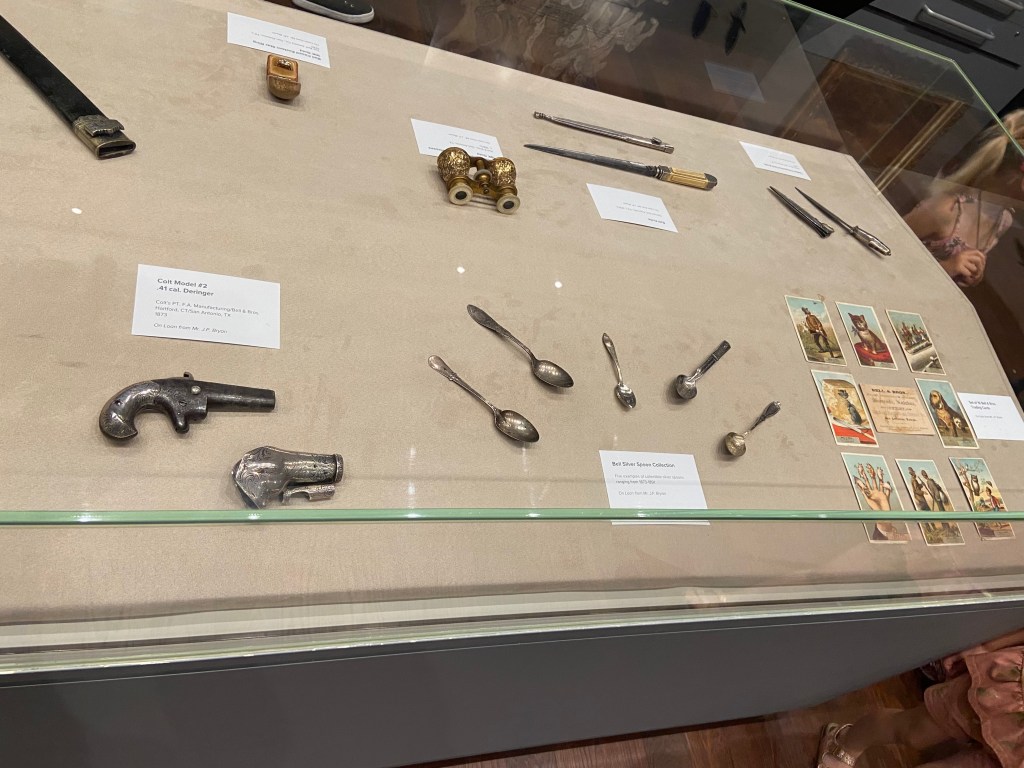
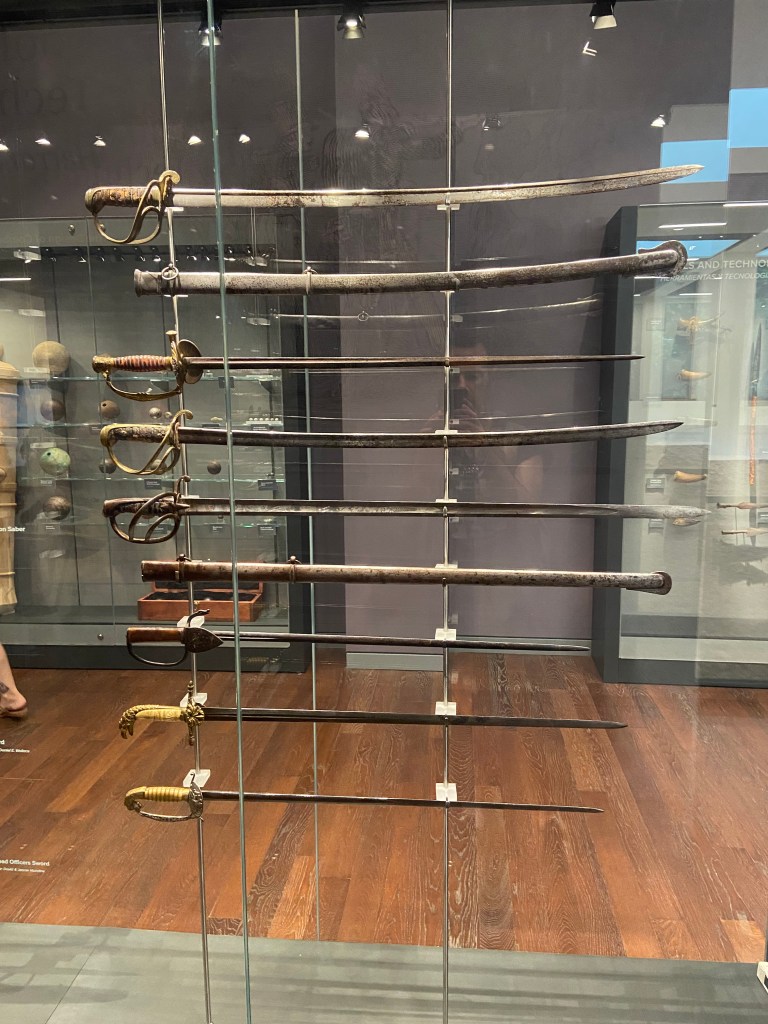
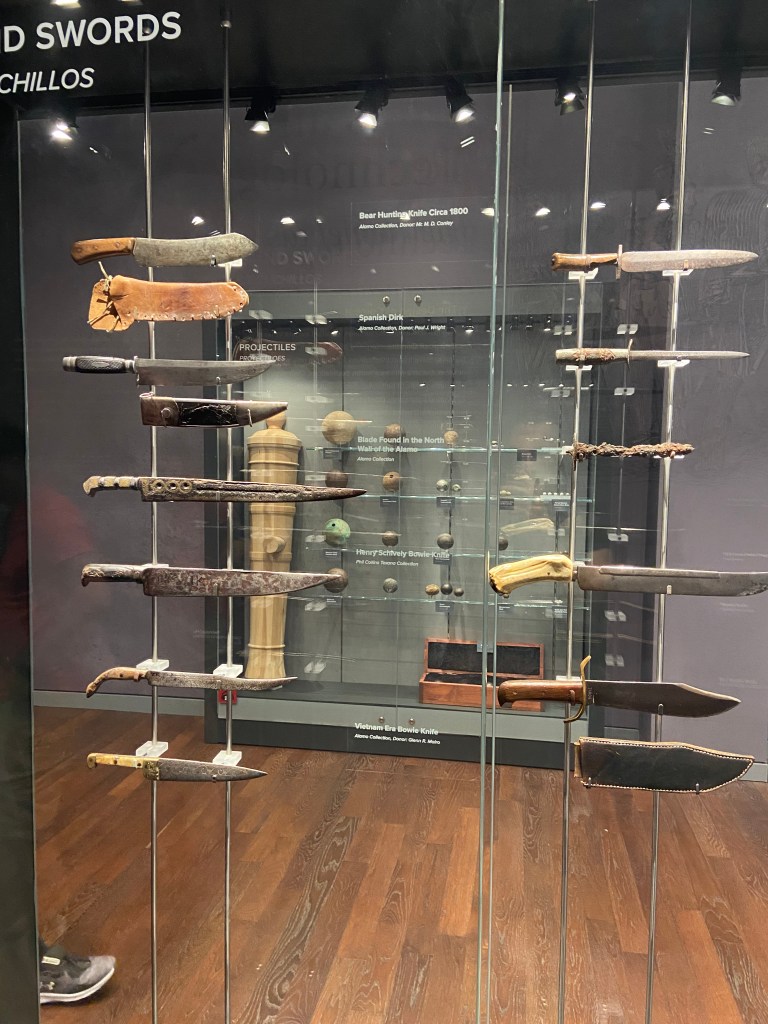
    After the kids were fed we headed back to the Alamo complex to visit the collections at the Alamo Exhibit in the Ralston Family Collections Center. The collections did not disappoint for the $12/ adult tickets. Our kids were young enough to be free. The exhibit displayed weapons and artifacts with strong ties to the Texas Revolution and the Alamo. Before I visited Texas, I never knew the connection between Phil Collins and the Alamo. Long story short, Collins developed a strong liking to the Alamo story and collected many artifacts. Later, he donated these artifacts back to the Alamo. Therefore, many of the artifacts in the collections are part of the Phil Collins collection. There is also an impressive diorama of the Alamo complex as it appeared in 1836, with Phil Collins narrating events of the battle.

    After touring the collections, we were satisfied with our experience at the Alamo. The Alamo is a must see if you are ever in the San Antonio area. It’s wonderful for someone like me who loves history, but it was also kid-friendly as well. There is plenty for them to see in the Alamo Exhibit and they too can be impressed by some of the artifacts on display. The Alamo continues to live on as a symbol of sacrifice, of patriotism, and is truly a shrine that represents Texas liberty. We cannot forget the sacrifice of the men who fought and died there for the sake of freedom. For more information on visiting the Alamo, see thealamo.org

    Related Posts:
  • In my previous two posts, I focused on the influence of Ancient Rome on the United States in the areas of law and government, and culture. In this post I focus on the spread of Christianity within the Roman Empire and the influence of Christianity within the history of the United States. I also conclude my 3-part post on Ancient Rome’s influence on the United States.

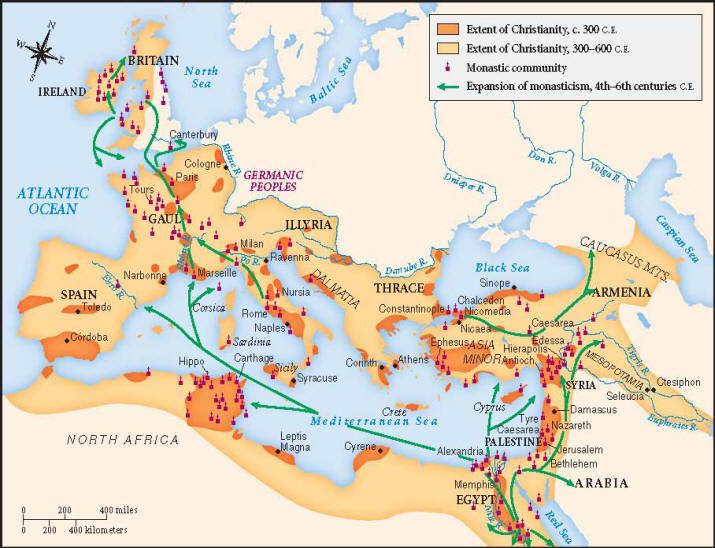
    For centuries, the Romans served many gods and goddesses, inspired by the Greek polytheistic religion. In the beginning of the Common Era, Christianity emerged from the teachings of Jesus of Nazareth, who lived during the height of the Roman Empire. Christianity first spread in the eastern part of the Roman Empire, and then to the west. Up until the 300’s AD, Christians in the empire were persecuted, beaten and killed. They were blamed for any problems emerging within the Empire. Despite this, the new religion continued to spread while Christians worshiped underground. By 313 AD, Emperor Constantine became a Christian and passed the Edict of Milan. He offered to citizens the promise of religious freedom. Constantine was baptized into the Christian faith shortly before his death. (Knox, ancient.eu) In 380 AD, Emperor Theodosius made Christianity the official religion of the Roman Empire and banned the old Pagan religions. After the fall of the empire, Christianity continued to spread throughout the world, and in the Middle Ages, had a stronghold on power and culture in the Western world. Kings allied with popes, and the Catholic Church became one of the only unifying powers in the challenging years of the Dark Ages. “Bishops and church leaders modelled their organization on the administration machinery of the old Empire.” (Tingay and Dadcock, p. 204) Christianity has had an enormous impact on the history and development of the United States. Many early American settlers such as the Pilgrims arrived from Europe for religious freedom. Christianity played a critical part in their daily lives. Many Christian denominations emerged, but with the core beliefs intact. Today, Christianity is the most practiced religion in the world and within the United States. “In Pew Research Center telephone surveys conducted in 2018 and 2019, 65% of American adults describe themselves as Christians when asked about their religion.” (pewforum.org) Christianity, a religion that began and first expanded in the Roman Empire, has shaped our society, culture, beliefs and institutions.

    In almost every aspect of Americans’ lives, traces of the Roman Empire can be seen. Ancient Rome was a fascinating and inspiring civilization. Even with the fall of the Empire, and the emergence into the Dark Ages, Roman influence lived on. It was revived by the Renaissance scholars, brought across the Atlantic Ocean with explorers and pioneers, and continues to be a strong influence on American government and culture. Our basic principles, morals, ethics, interests, and livelihoods, have been shaped by varying degrees by the advancements, achievements and ideas of the Romans. From American infrastructure, laws, founding documents, entertainment, art, religion, and education, it is quite clear; Ancient Rome is all around us.

    Works Cited

    Tingay, Graham, and John Badcock. These Were the Romans. Dufour Editions, 2008.

    Spielvogel, Jackson J. Discovering Our Past: a History of the World. McGraw-Hill Education, 2014.

    Knox, John S. “Christianity.” Ancient History Encyclopedia, Ancient History Encyclopedia, 22 Sept. 2016, http://www.ancient.eu/christianity/.

    “In U.S., Decline of Christianity Continues at Rapid Pace.” Pew Research Center’s Religion & Public Life Project, 9 June 2020, http://www.pewforum.org/2019/10/17/in-u-s-decline-of-christianity-continues-at-rapid-pace/.        

    Related Posts:
  • In my previous post, I focused on Ancient Rome’s influence on the United States in the area of law and government. In this post (Part 2), I focus on the legacy of Ancient Rome’s culture.

    Rome’s legacy can be seen in many aspects of our American culture. Many western countries, including the United States use the Latin alphabet, which has expanded from 22 to 26 letters. Italian, French, Spanish, Portuguese and Romanian- the Romance Languages- are derived from Latin, the language of the Romans. English contains thousands of Latin-based words. (Spielvogel, p. 357) Roman writers like Cicero, Virgil, Ovid, Livy, Seneca and Tacitus wrote effectively in the Greek literary categories of history, lyric poetry, oratory, epic, tragedy, comedy, and biography. (Tingay and Dadcock, p. 204- 205) “Without this classical literature, in both Greek and Latin, preserved by the Church in the West, and by scholars and libraries in the East, the history and civilization of later Europe would have been very different.” (Tingay and Dadcock, p. 205) Great Roman writers are still studied and admired today, and have influenced modern genres in literature, cinema and television.

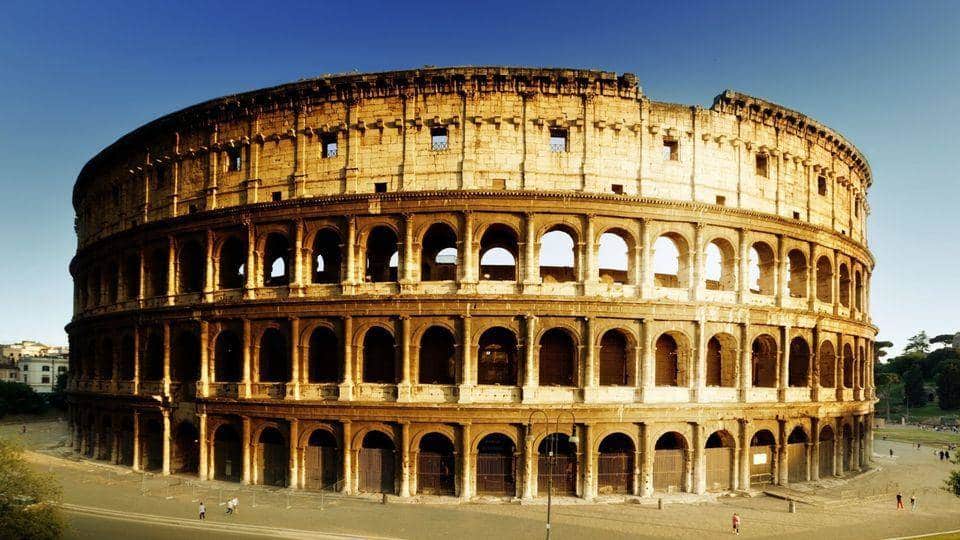
    Modern day American architecture and construction has been highly influenced by the Ancient Romans.  Many public and private buildings use domes and arches inspired by Roman architecture.   A visitor to Washington DC can see the dome of the Capitol building and the columns of the Supreme Court building, inspired by both Roman and Greek ideas.  Concrete, a Roman development, continues to be a major building material today.  (Spielvogel, p. 357)  The Romans built large public buildings, such as the Colosseum and the Pantheon, which still inspire and amaze tourists.   They built private palaces, bridges and aqueducts which displayed their genius and dominance.  Many modern cities, such as New York City, retain the traditional grid pattern in their streets much like a Roman city.   The infrastructure of a Roman city was quite remarkable for the times.  The Romans built extensive roads and plumbing systems.  Their ability to use heating systems in wealthy homes and baths shows the ingenuity of the Romans which has inspired later civilizations.  The Romans were expert surveyors, road builders, and water engineers.  (Tingay and Dadcock, p. 209)  The Colosseum, which sat between 50,000 and 80,000 spectators, is an ancient marvel.  A retractable roof protected the gladiators and spectators from the elements.  The Colosseum floor was likely flooded with water for mock naval battles.  There were also trap doors and elevators which brought beasts and gladiators to the floor of the stadium, from cells below.  Many of these feats of engineering would not be rivaled until recent history.  Americans have been inspired by these architectural feats and have built modern marvels such as stadiums, arenas, suspension bridges and skyscrapers.

     The Romans borrowed many aspects of art from the Greeks.  But Roman artists achieved real distinction and originality in their portrait statues and carvings.  Roman statues looked more realistic and detailed compared to Greek statues.  Triumphal arches and memorial columns were often imitated by later leaders.  (Tingay and Dadcock, p. 212)  Neoclassical paintings and architecture of the modern era drew their inspiration from Greek and Roman ideas.  There are many examples of American art and architecture that take on the neoclassical style such as Thomas Jefferson’s Monticello.

    Roman leisure and entertainment has impacted American culture.  The Colosseum was the model for later arenas that would serve the public as places for sport and entertainment.  While today, Americans don’t watch gladiators fight each other or animals to the death, Americans do get together to watch competition in sports such as baseball, basketball, or football.  The Circus Maximus sat about 100,000 spectators who watched chariot races, and cheered for their favorite racer, much like a current sports fan cheers for a favorite team or athlete.  While Americans go to plays or movies for entertainment, Romans attended dramas that were inspired by Greek tragedies and comedies.    Both Ancient Romans and modern Americans enjoy being entertained in large public settings.

    The Ancient Romans have impacted our education and understanding of the world. They made breakthroughs in Science, Medicine, History, and Literature that still impact our lives. During Roman times, Greek scientists made lasting discoveries. Archimedes discovered the fundamental laws of hydrostatics, mechanics and ratios. Aristarchus concluded that the earth was a sphere, spinning in space as it orbited the sun. Euclid’s textbooks on geometry are still widely used by students. Despite some inaccuracies, Ptolemy’s writings and maps summarized Roman knowledge of the earth’s surface, and remained in use until the Age of Discovery, fourteen centuries later. (Tingay and Dadcock, p. 209) Julius Caesar used the skills and knowledge of Alexandrian astronomers to devise a calendar which remains the basis of the one we use today. (Tingay and Dadcock, p. 209) July and August are named after Julius Caesar and Augustus. Galen, the court physician of Marcus Aurelius, wrote extensively on anatomy, physiology, pathology, and a wide range of medical subjects. His ideas would not be challenged until the sixteenth century. (Tingay and Dadcock, p. 211) Romans built hospitals and recognized the importance of sanitation. Their standard of hygiene went unmatched until the nineteenth century. (Tingay and Dadcock, p. 211) The field of history, while invented by the Greeks, was carried further by Roman historians like Livy and Tacitus. Much of what we know about Roman history, from its founding, to its fall, is because of the extensive writings of historians. Ancient Romans have had an enormous impact on the education that is highly valued in the United States.

    Works Cited

    Tingay, Graham, and John Badcock. These Were the Romans. Dufour Editions, 2008.

    Spielvogel, Jackson J. Discovering Our Past: a History of the World. McGraw-Hill Education, 2014.

    Knox, John S. “Christianity.” Ancient History Encyclopedia, Ancient History Encyclopedia, 22 Sept. 2016, http://www.ancient.eu/christianity/.

    “In U.S., Decline of Christianity Continues at Rapid Pace.” Pew Research Center’s Religion & Public Life Project, 9 June 2020, http://www.pewforum.org/2019/10/17/in-u-s-decline-of-christianity-continues-at-rapid-pace/.        

    Related Posts:
  • My next three blog posts will focus on Ancient Rome’s influence specifically on the present-day United States. Part 1 will focus on Law and Government. Part 2 will focus on Culture, and Part 3 will focus on the spread of Christianity. Ancient Rome’s influence is all around us.

    Ancient Rome has had a tremendous impact on Western Civilization and world history, right to the present day.  American political institutions and American culture owe much to Rome.  While Rome’s legacy can be felt all around the world, the impact that Rome has had on the United States can be found in many aspects of life.  The Romans were a practical people, whose innovations changed the world and allowed their empire to expand from Europe to the Middle East, and into North Africa.  At the peak of its power during the Pax Romana, the Roman Empire was generally peaceful and grew economically and culturally.  Trade routes developed, the empire gained more territory, and the cities in the empire were beautified with temples, government buildings, gardens, fountains and baths.  After the fall of the Western Roman Empire in 476 AD, the Roman legacy lived on.  The new German kingdoms adopted many aspects of Roman culture.  However, throughout the Middle Ages, some aspects of Roman brilliance were lost.   Influential Roman writers were forgotten, and great structures fell into decay.   Christianity, which began and expanded in the empire, continued to spread and gain power throughout the Middle Ages.  During the Renaissance, Roman and Greek manuscripts were rediscovered by Humanist scholars.  There was a new excitement to learn from ancient cultures, and Ancient Rome was again revered.  With the Renaissance, the legacy of Rome continued to spread, including to a new American nation, which would eventually create a Republic, highly influenced by the Roman Republic.   To this day, the United States has been widely impacted by Ancient Rome in government and law, culture, and the spread of Christianity.

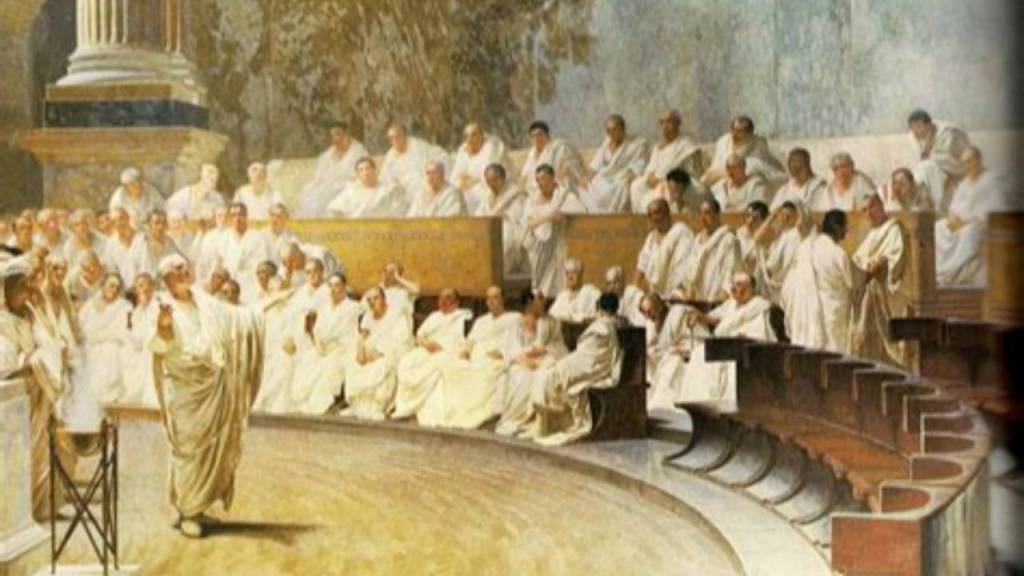
     Many beliefs about law and justice in the American legal system come directly from Roman ideas.  These beliefs that we hold dear include the idea that everyone is equal under the law, a person is innocent until proven guilty, and judges must decide cases fairly.  (Spielvogel, p. 356)  We take these concepts for granted but in ancient times, these were revolutionary ideas.  In other ancient cultures, people were treated differently under the law and faced arbitrary punishments, depending on social status.  While Rome was inspired by Greek democracy, the Romans developed their Republic with new ideas and innovations.  Legislative assemblies, representing the people, discussed and passed laws.  Citizens in the republic elected their leaders.  The most influential legislative body was the Roman Senate, and the United States Senate is considered the more prestigious house of Congress.  Romans expected the citizens to do their civic duty and vote, participate in government, and help to improve their communities, all of which are a part of our American values and beliefs.  (Spielvogel, p. 356)

    Roman law had been codified in the sixth century by Eastern Roman Emperor Justinian.  This code of laws inspired later leaders, including Charlemagne, Napoleon, and America’s founding fathers.  Roman ideas that no man shall be a judge in his own case, and a man should have the right to face his accusers, are the same ideas sketched into our Bill of Rights, written by James Madison in the 18th century.  Many of the most basic ideas and freedoms that are cherished by American citizens, were directly inspired by Roman ideas.  The American government’s symbol of the bald eagle was also passed down, as Roman emperors displayed the imperial eagle as a symbol of their power and authority. (Tingay and Dadcock, p. 206)  The American government’s structure and bureaucracy was inspired and influenced by the Romans.  While the Roman government had many magistrates with varying responsibilities, the American government has different cabinet secretaries running the executive departments.  While Rome had proconsuls who served as governors over the provinces, the United States has fifty states run by governors.  (Spielvogel, p. 329)  From the local to the federal level, the structure of our government closely resembles the Roman government.

    Works Cited

    Tingay, Graham, and John Badcock. These Were the Romans. Dufour Editions, 2008.

    Spielvogel, Jackson J. Discovering Our Past: a History of the World. McGraw-Hill Education, 2014.

    Knox, John S. “Christianity.” Ancient History Encyclopedia, Ancient History Encyclopedia, 22 Sept. 2016, http://www.ancient.eu/christianity/.

    “In U.S., Decline of Christianity Continues at Rapid Pace.” Pew Research Center’s Religion & Public Life Project, 9 June 2020, http://www.pewforum.org/2019/10/17/in-u-s-decline-of-christianity-continues-at-rapid-pace/.        

    Related Posts:
  • One of my favorite thought exercises when reading and teaching history, is the ‘what if’. What if events had gone differently than they actually did? Many people think that history was a series of inevitable events that brought us to the present day. But that simply is not the case. One minor aspect of an event or battle could have gone differently and changed the course of history. The Americans winning the American Revolution or the Union winning the Civil War were not foregone conclusions at the start of the conflicts.

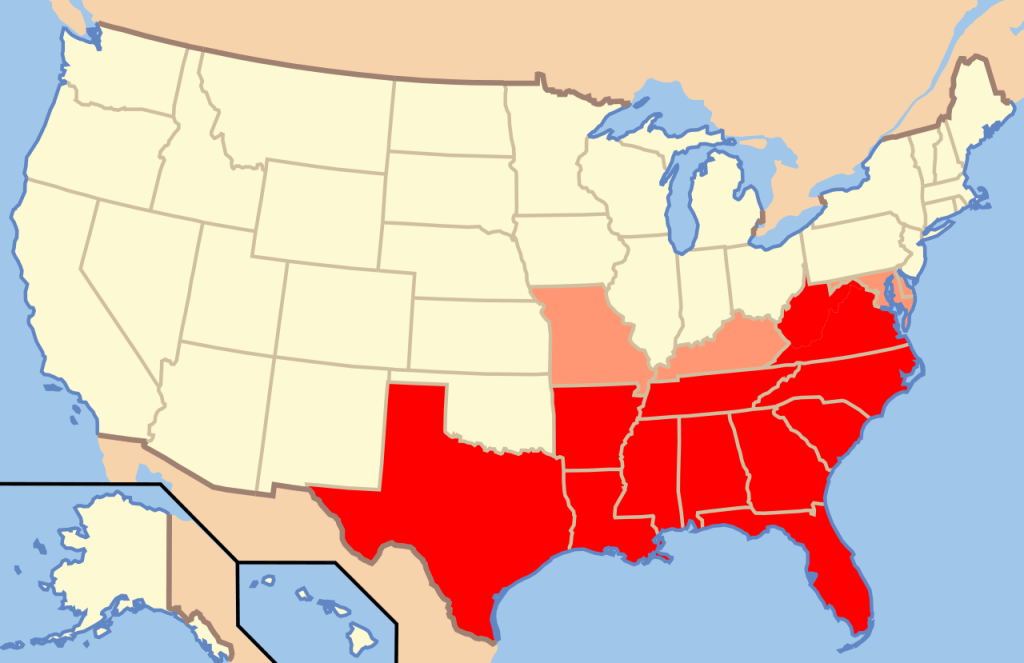
    What if the Confederacy had won the Civil War? They definitely had an opportunity to do so, even though the Union was by far the favorite to win at the start of the conflict. The North had four times as many free citizens, produced 90% of the nation’s manufactured goods, had 70% of the nation’s railroads, and a greater food supply. If this war happened today, Vegas would be betting on the North at the start of the conflict. However, the South had some advantages too. They considered this a fight for their independence, a fight to defend their homeland, and a fight to defend and hold onto the institution of slavery. They had greater motivation to fight. Many of the best generals in the country were from the South.

    There were two major moments in the war in which the Confederacy had an opportunity to strike a blow to the Union. The first instance came in the late summer of 1862. When command of the Confederate army fell to Robert E. Lee, he was able to win a string of impressive victories in the Seven Days Battles, and the Second Battle of Bull Run. Lee was confident enough to attempt to invade Northern soil. His goal was to win a major victory in the North, and turn Northerners against the war. He reasoned that if Northerners voted Peace Democrats into Congress, they would push to end the war, and the Confederacy would be independent.

    The major battle that Lee hoped to win was the Battle of Antietam in Maryland. Though nearly a stalemate in number of casualties, the Confederacy was forced to retreat. Antietam was the deadliest one-day battle in American history with total casualties at 22,720.

    The Confederacy’s second opportunity to strike a blow to the Union was the following summer of 1863. Once again Lee and the Confederates won a series of remarkable victories including at the Battle of Chancellorsville in May 1863. Despite this victory, the Confederates lost one of their best generals in Stonewall Jackson. Had Jackson been a part of the Battle of Gettysburg two months later, the course of the battle may have turned out differently. After Chancellorsville, Lee was feeling invincible and decided to invade the North once again. The ramifications of such a Confederate victory could not be understated. His goal once again was to make Northerners so sick of the war that they would turn against the war effort and push for peace. Lee decided to invade Pennsylvania. But like Antietam, the Battle of Gettysburg was a Union victory because the Confederates were forced to retreat from the battlefield. While both sides had staggering losses, the Confederacy was not able to replace their losses. Gettysburg was the deadliest battle of the war. The Union had 23,049 casualties, and the Confederacy had 28,063 casualties. The twin victories at both Gettyburg and Vicksburg, Mississippi, are considered a turning point in the war. Even though the war continued for almost two more years, the Confederacy could not fully recover and did not again attempt to invade the North.

    But what if the Confederacy had won a decisive victory at Antietam or Gettysburg? While the Union had a larger army in both battles, it is quite possible that the Confederacy could have won either of these battles, especially with the confidence of Lee and his army. Lee had defeated larger Union armies time and time again. If the Confederates had won either battle, they could have continued marching North, possibly winning other battles on Northern soil. And like Lee had hoped, it is reasonable to believe that Northerners could have turned against the war. They might have considered it not worth it to keep fighting to keep the Southern states in the Union. While they probably would have been bitter about a loss, they may have decided that it would be better to let the Southern states become their own independent country.

    Had the confederacy won the war, would other foreign countries have recongized the Confederate States of America as an independent and soverign nation? While some countries would, I think the major countries around the world would not have, at least at first. Countries like Great Britain and France had strongly opposed the institution of slavery by 1861. The Confederacy was hoping to gain recognition from these countries throughout the war, but they refused. I think they would have stuck to their instincts and not recognized a nation that was still relying on slave labor. I also think the United States would have intimidated these countries not to recognize the Confederacy. A major question though, is how long would they not recognize the Confederacy? Would they have continued to not recognize the Confederacy for years or decades? It seems possible that these countries would have had internal debates. Do they recongnize a country that maintains slavery even if the Confederacy itself is friendly and is willing to trade? I think major countries would continue to not recognize the Confederacy as a separate, soverign nation because they didn’t want to be allied with a country that practices slavery.

    Would the United States and the Confederacy have gotten along? Simply, I don’t think so. There probably would be some debate in the U.S. government about how to approach and deal with the Confederate States of America. I suppose there would be some who would see the benefits of friendly trade relations with our neighbor to the South. However, I think the relationship between the U.S. and the C.S.A. would be tense in the long-term. I think most members of the U.S. government would not want to recognize the C.S.A. as an independent, soverign nation for the same reasons as other foreign nations, not wanting to be associated with the institution of slavery. They would feel animosity towards the country that fired the first shots of the Civil War. Because of these tensions, there’s a strong possibility that there would have been border conflicts out west as the two countries continued to expand. I think at some point there would be another armed conflict between the two countries. I’m not sure when that would happen but my guess would be by the end of the 19th century. If armed conflict did break out, the United States would have to decide if it was worth the effort to try to win back the South. This would depend on the size and might of the two opposing countries at that time. If the United States had progressed at a faster rate than the Confederacy (which is quite feasible) they may have taken the opportunity to try win back their former land. This conflict however would be close in size and scale to the first Civil War, which would have everyone second guessing.

    When would slavery have ended? This is probably the most intruging question of them all. If the Confederate States of America remained an independent nation up until the present, when would they have outlawed slavery and what would have been their process? Throughout the nineteenth century, the agitations between pro-slavery Southerners and Northern abolitionists only continued to grow. Pro-slavery southerners began digging in and presenting a growing number of justifications for slavery. Had they won the Civil War, I believe that they would have latched onto these arguments and would have been emboldened by the victory. They may have argued that Divine Providence had been on the side of slavery. Therefore, I think it would have taken decades before they outlawed slavery. I think what would eventually do them in would be the global outcry against the Confederacy and their institutions. There would be an alliance of countries that would refuse to trade with them until they abolished slavery, and the sanctions against them would pile up. At that point the Confederacy’s economy would do so poorly that they would have no other choice than to give into the pressures of the global community. Even if they decided to outlaw slavery, I think they would go about it in a very long, drawn out process of gradual emancipation. This would mean that current slaves would remain slaves, but their children would be freed (Or some other kind of similar method). Southern slave holders would demand payment for their emancipated slaves. The process would take a generation or longer before slavery was fully outlawed. So while I don’t believe slavery would have lasted forever in the Confederacy, the question is how long would it have lasted. I think it would have taken until close to 1900 for them to take any action, and then perhaps another couple decades for slavery to be conpleted eradicated.

    The last question I want to pose is: What would happen to the Northern states after the Civil War if the Confederacy had won? Would there be other states that attempted to secede if they disagreed with the federal government? While I don’t think this would happen, it is worth pondering. Whether or not states had a right to secede was a common debate in the 1800s, starting with founders like Jefferson and Madison. If Northern states witnessed the success of the Confederacy and their quest to leave the union, it is in the realm of possibility that other states would attempt to do the same. Luckily with the Northern victory, the debate on state secession was squashed, and we have not fractured into many small warring countries.

    What do you think? What would have happened if the Confederacy had won the Civil War? Please comment on any of the thoughts above. I’m interested to hear other perspectives.

    Related Posts:
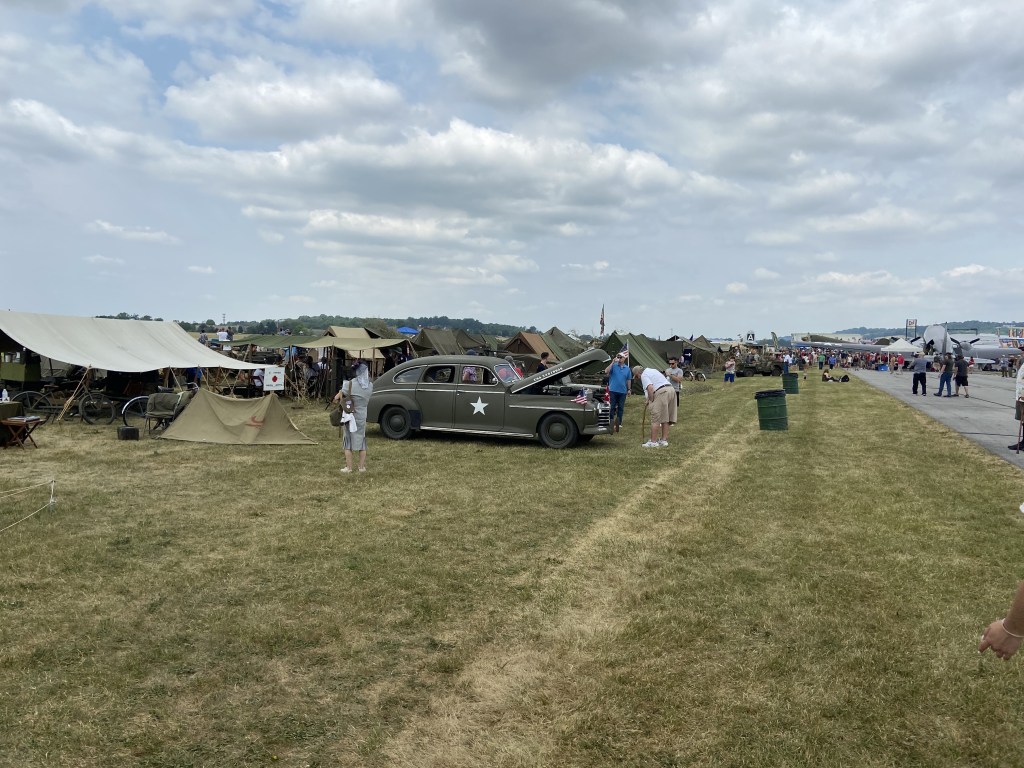
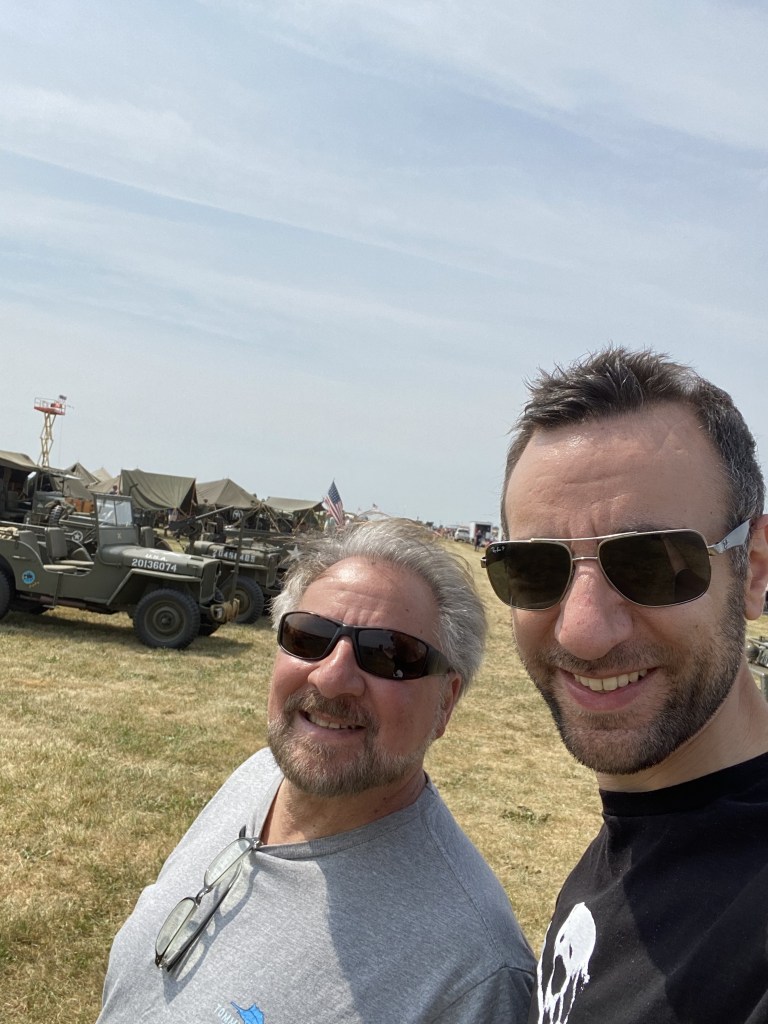
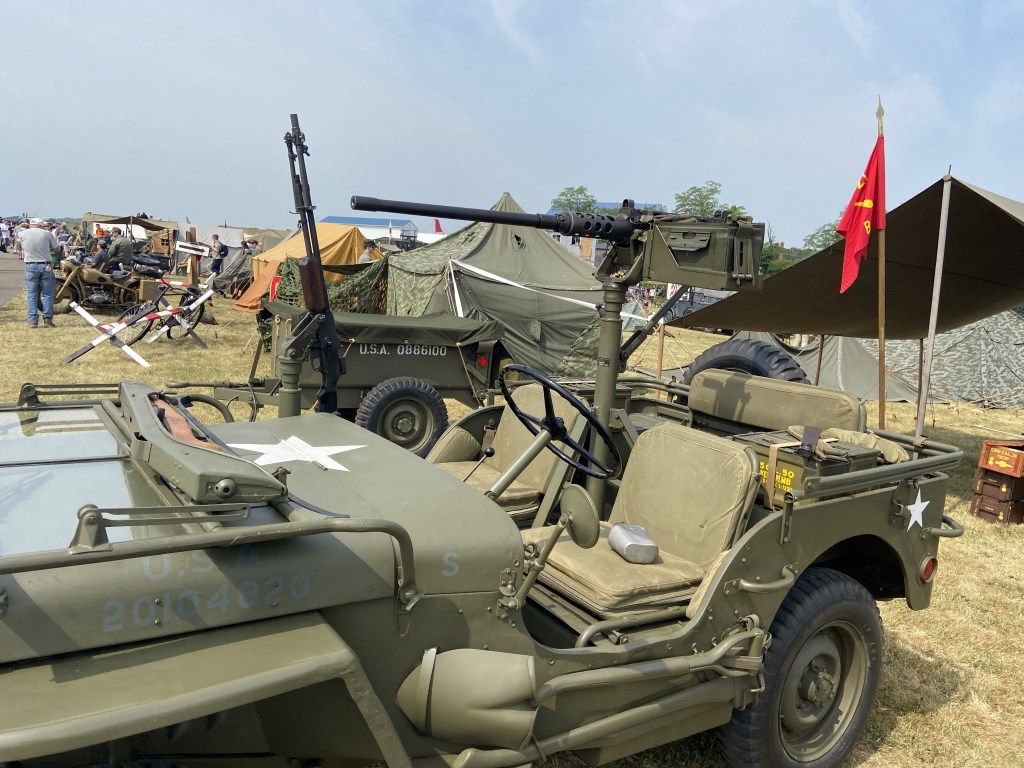
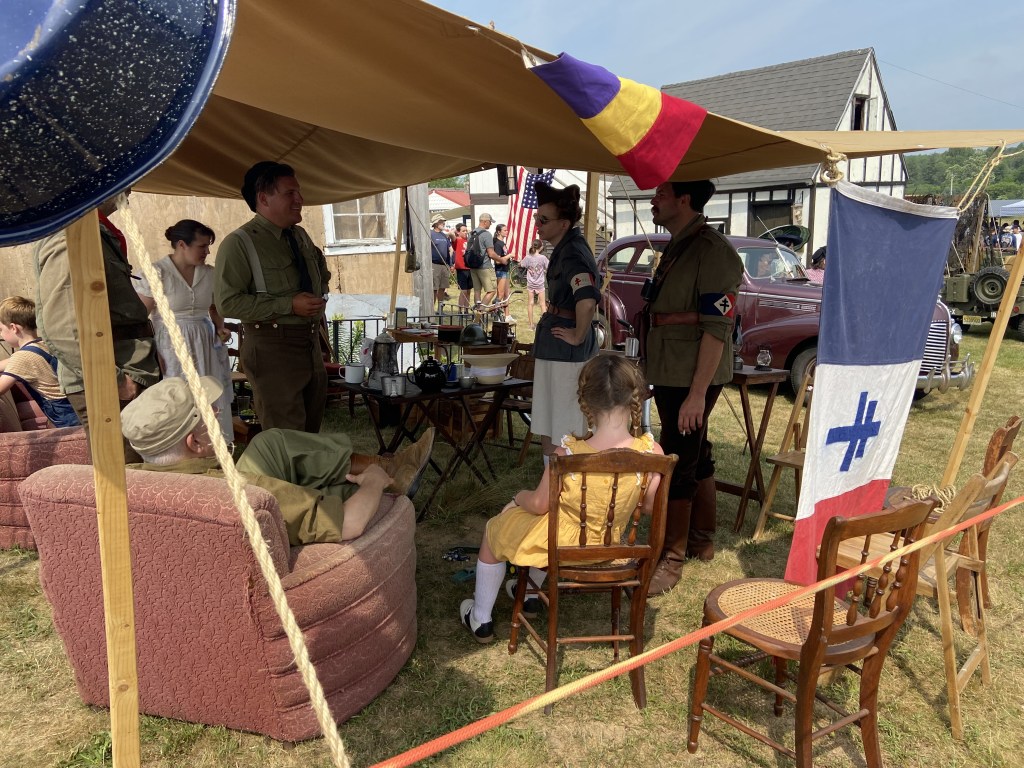
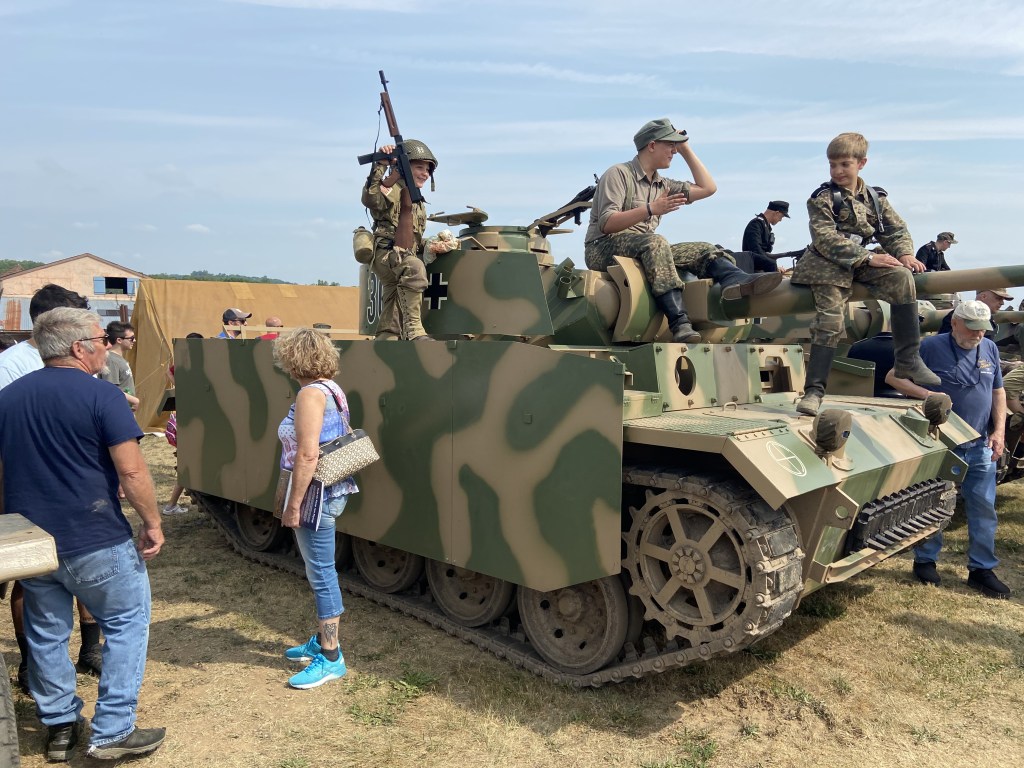
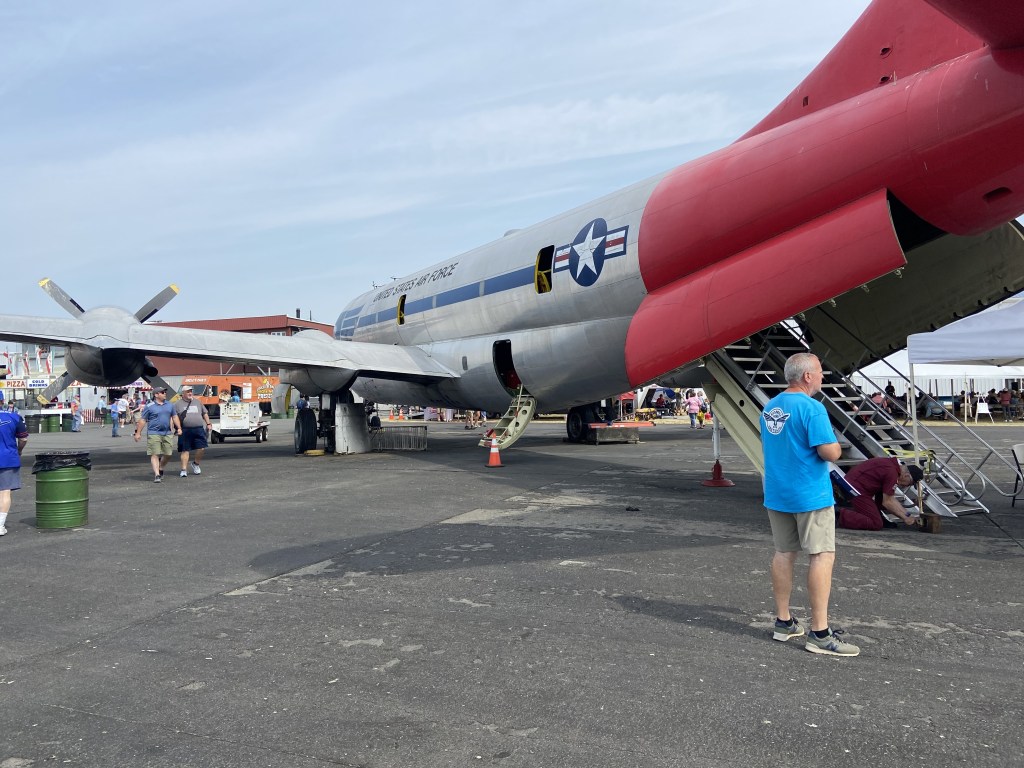
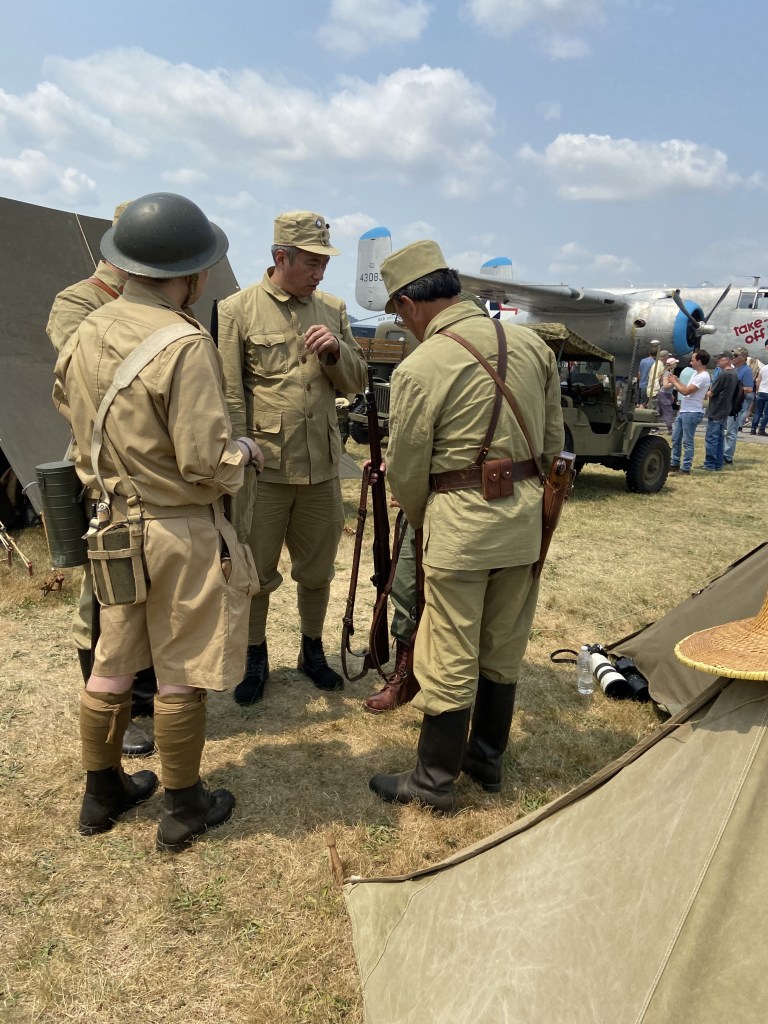
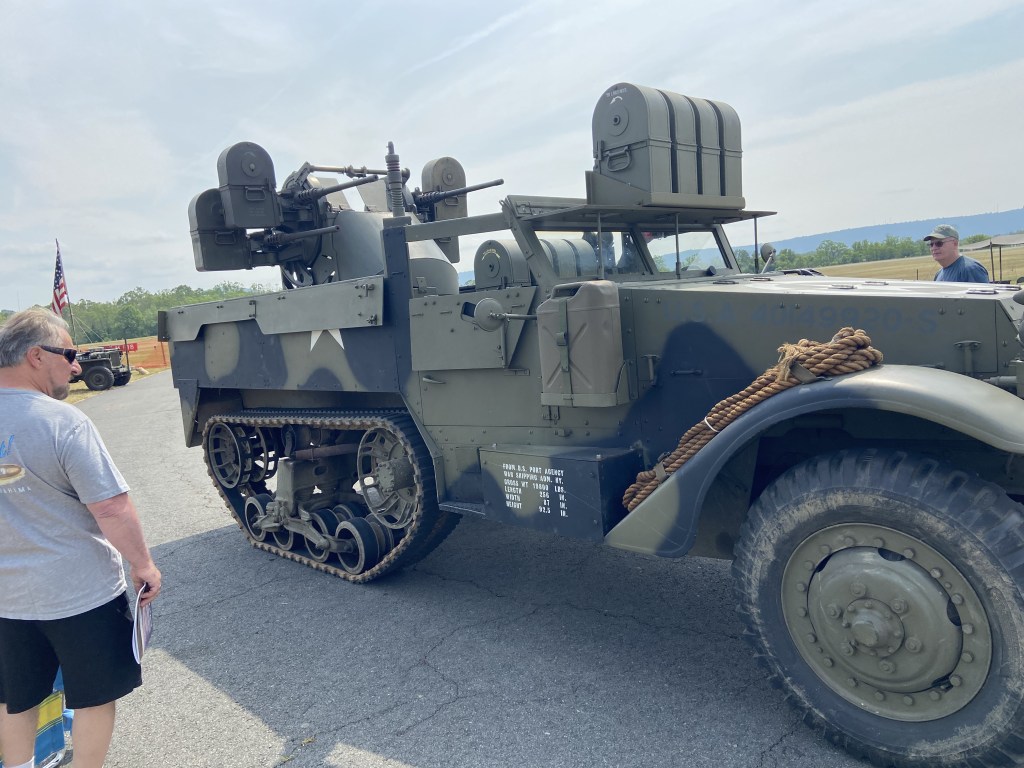
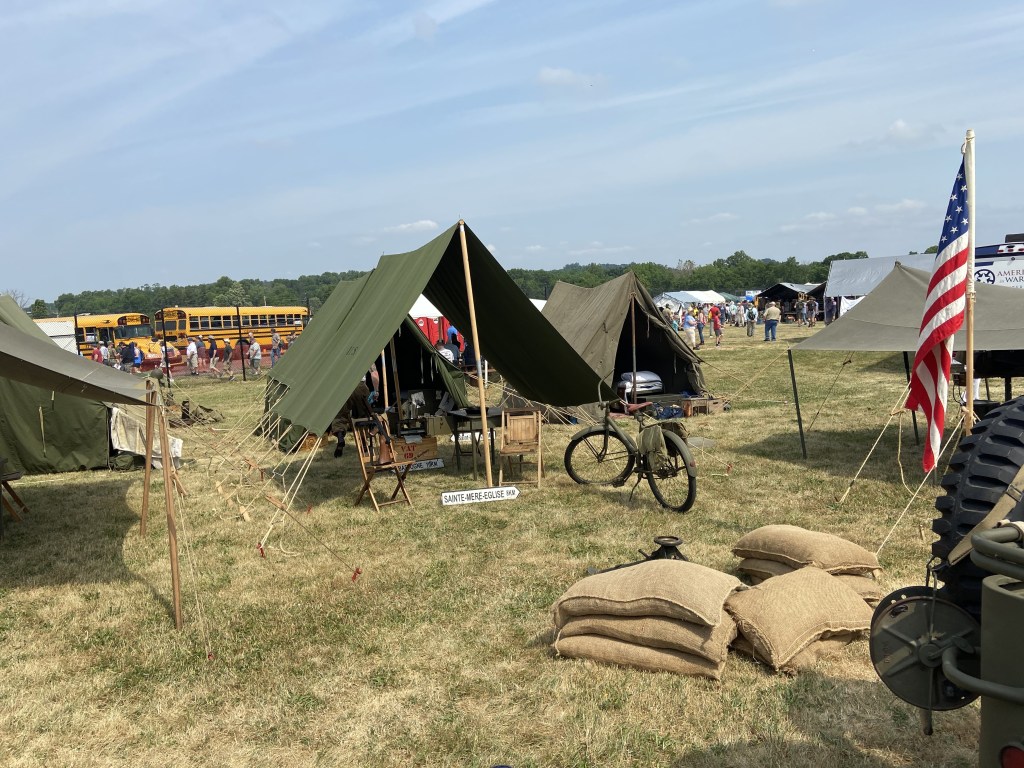
  • My first official History Blog post will be about an amazing event that I went to with my dad on June 3rd. This was my first time attending the Mid-Atlantic Air Museum’s WW2 weekend event. This was the 32nd annual event and it was running Friday, Saturday and Sunday. My dad had gone the previous year and told me that I would really enjoy it. It far exceeded expectations. The event contained all things WWII at the Reading Regional Airport in PA. There were WWII planes, weapons, tanks and other army vehicles.

    One aspect of the event that I really enjoyed were the army encampments. Spread around the grounds were the different army encampments from the different countries. Men and women dressed in full WW2 garb answered questions as if they were in the army themselves. One actor from the British camp explained in detail, their role as paratroopers for the British army. Playing in the background throughout the event were oldies from the 1940’s with all of the belongings and supplies that the soldiers would have carried in their camp. For brief moments, you honsetly felt like you were going back in time as a soldier. The dread they must have felt and experienced, knowing they were going off to battle and wondering if they would ever going to see their families again.

    After touring the camps, and chatting with the actors, my dad and I settled down on lawn chairs for the airshow which went on for a couple of hours. It was amazing to see these WWII planes still in action even though they were 80 year old planes. It was very entertaining watching the stunts and tricks of the pilots. During the airshow, seven jumpers lept from the planes using parachutes from that time period. We were told that steering capabilities were extremely limited. Luckily, they skillfully tumbled to the ground.

    I would recommend this event to people of all ages. I couldn’t believe the size of the crowds. But everything was so spaced out that you didn’t feel cramped at all. It was nice to see that so many people respected the history and had such an appreciation for WW2, that they’d take time out of their busy lives to attend. I saw young and old all enjoying themselves and having a good time. I would compare this event to a large festival but all for WWII, with music, food trucks, and vendors selling souvenirs. I’d give this event a 10/10 because it far exceeded expecations. The event is always the first full weekend in June, so I will definately plan to attend again. For more information check out the website: https://www.maam.org/maamwwii.html

    Related Posts:
  • Welcome to Benevento’s History Blog. I am a History enthusiast who wants to share my thoughts, ideas and experiences with other history nerds. I have been a History and Special Education teacher for 10 years in New Jersey. I received my Masters in Social Studies Education and I’m hoping to someday pursue a Doctorate Degree in History when the time is right.

    Teaching in a small district has given me a unique opportunity to teach all grades between 7th- 11th grade. I have taught early American History (Jackson Era to the Civil War) in 7th grade (2 years), Ancient World History in 8th grade (6 years) , Modern World History in 9th grade (6 Years), U.S. History I in 10th grade (4 years) and U.S. History II in 11th grade (1 year). I have taught both Special Ed. and General Ed. classes. Being exposed to these different subjects has helped grow my interest in a wide range of topics. I plan to share information and thoughts on many different subject matters in this Blog. My favorite subject area of history is early American history, from Colonial America to the Civil War.

    My favorite topics in other subject areas include Ancient Greece, Ancient Rome, Ancient Egypt, the Middle Ages, the Renaissance, the Age of Exploration, the French Revolution and the World Wars. I plan to post about thoughts/questions that peak my interest, historical experiences/ trips, book reviews, and documentary/ movie reviews. I hope you enjoy and I look forward to any comments/ discussions.

Enter your email below to stay updated on new blog posts.

Latest Blog Posts:
Blogs by date:

Search my blog posts by categories:
Follow my Social Media pages below:
Facebook

Instagram

Twitter