

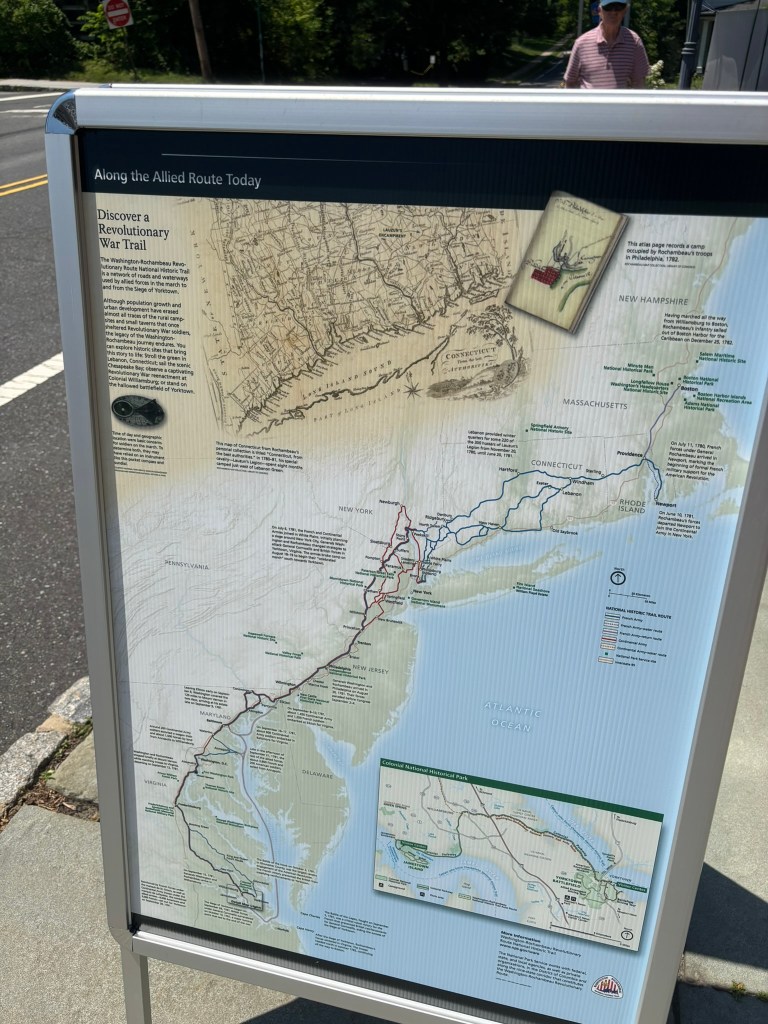
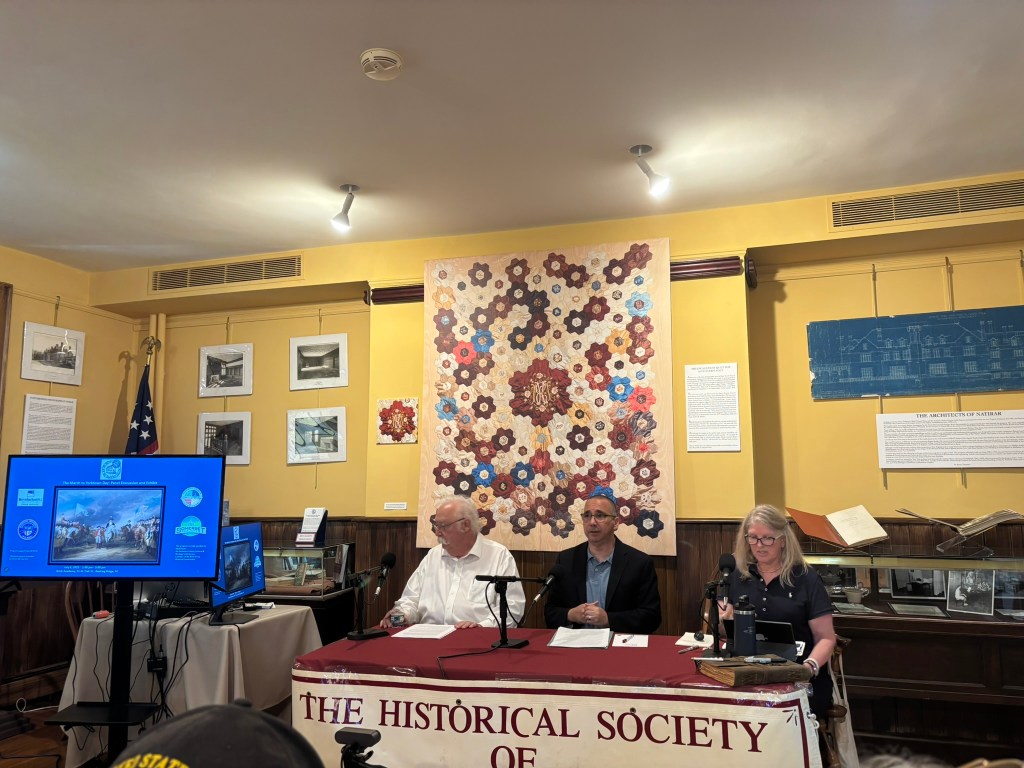
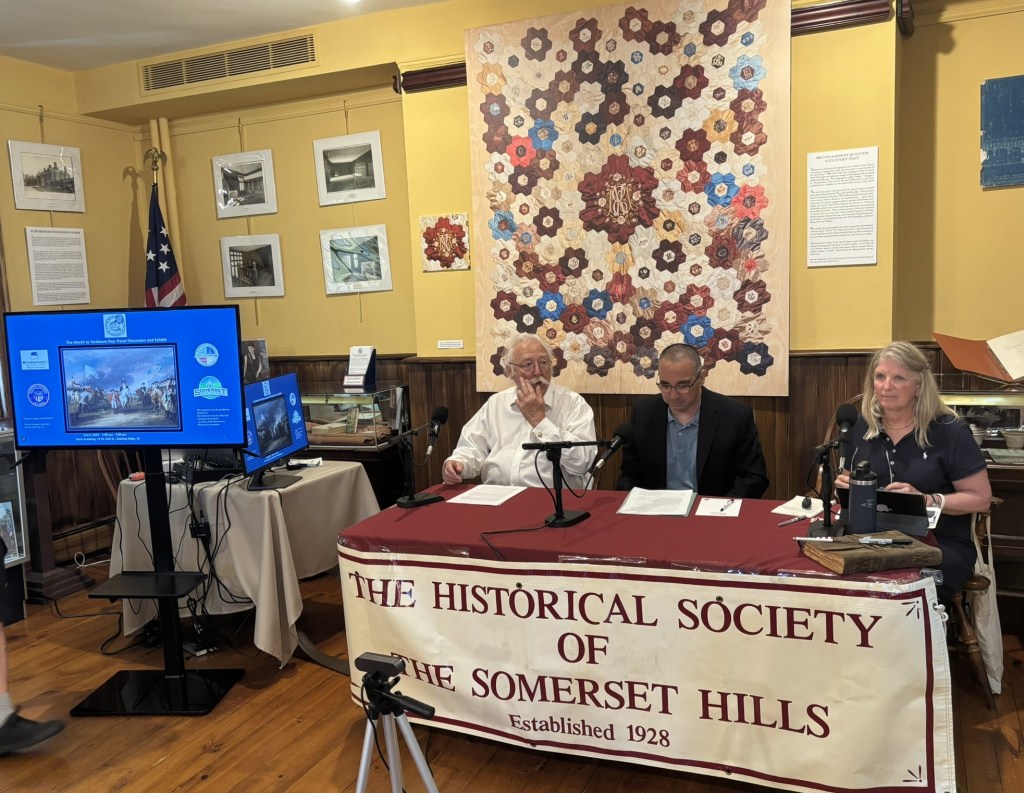
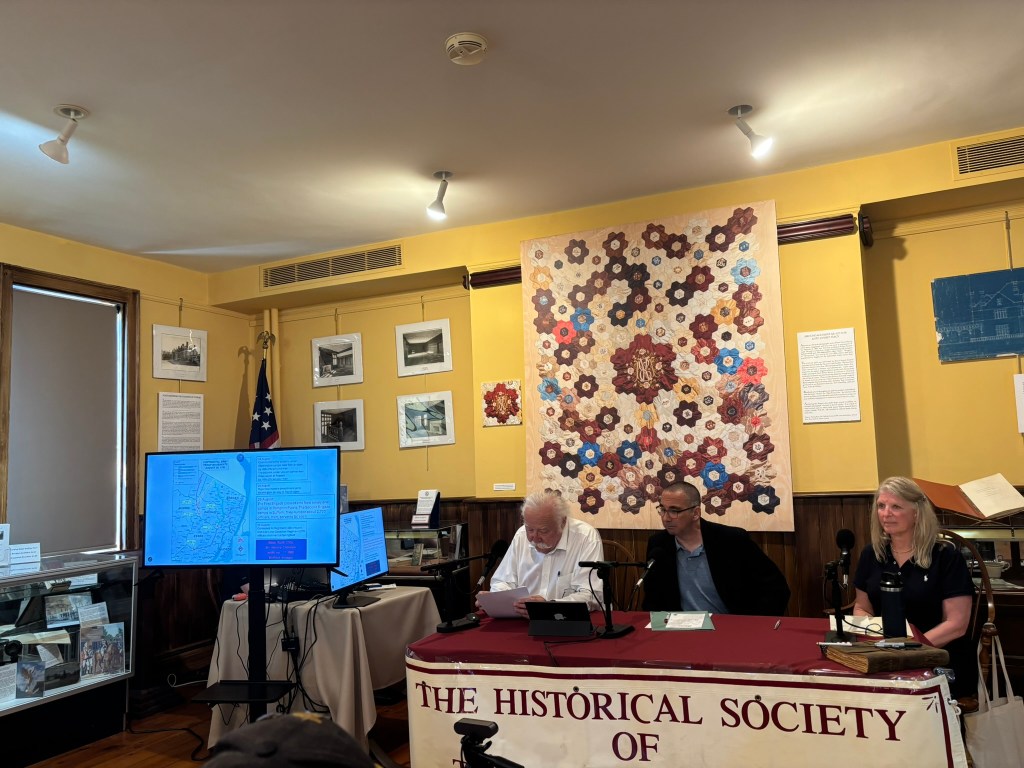
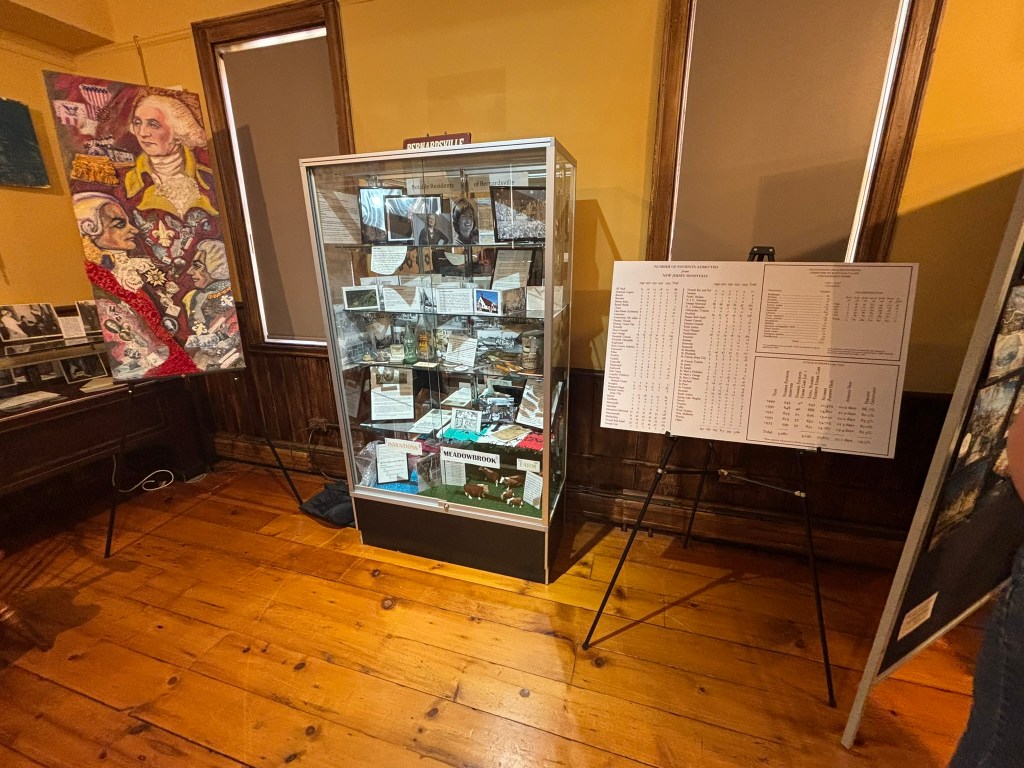
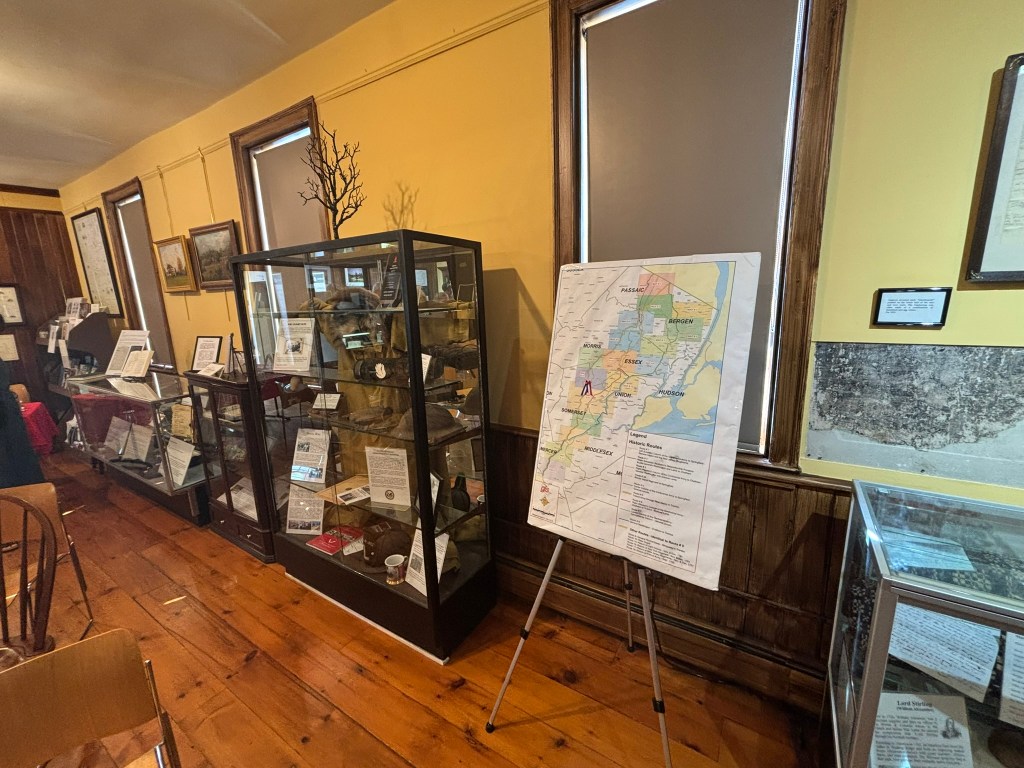
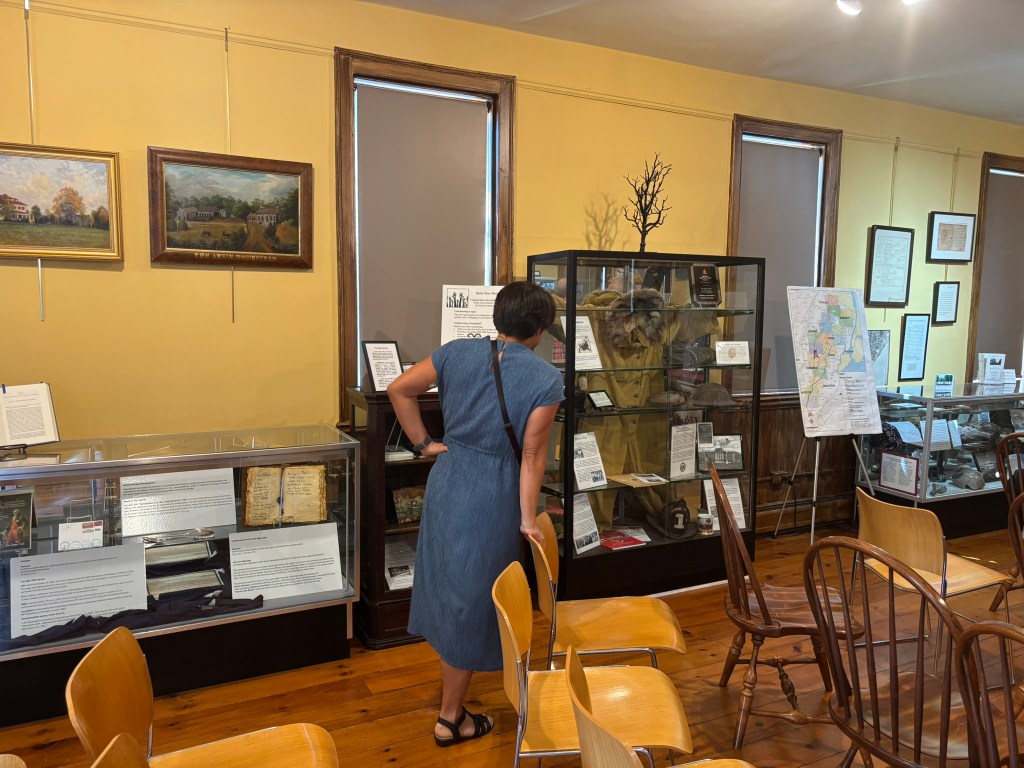
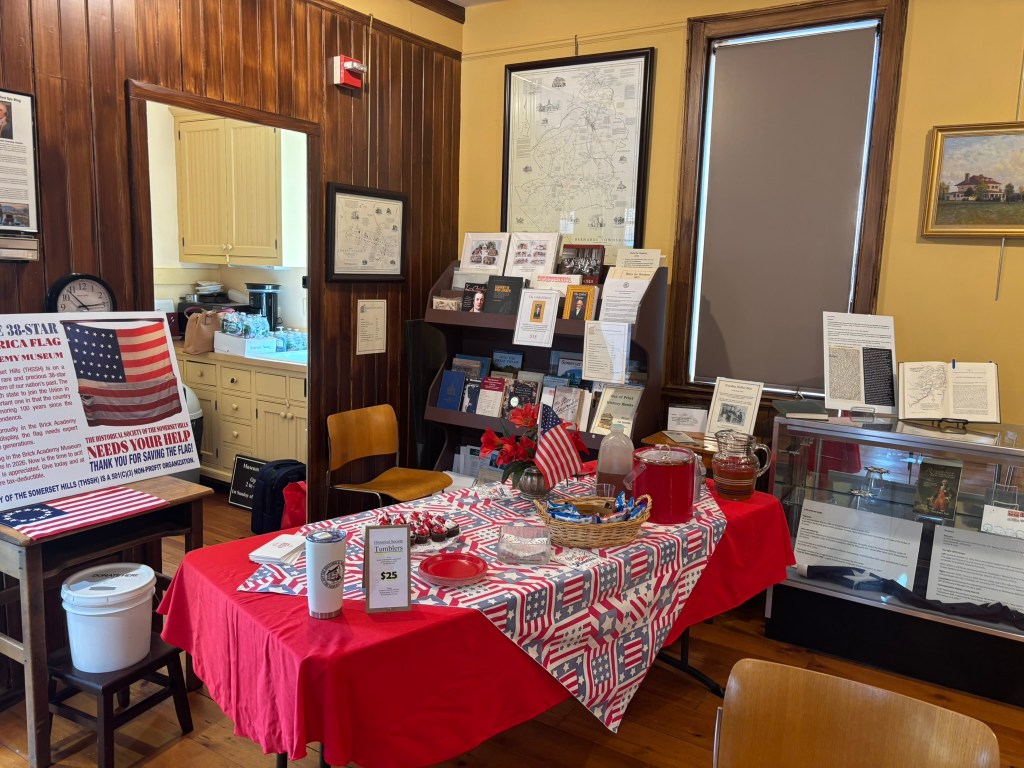
On July 6th, I had the privilege of attending “March to Yorktown: Panel Discussion & Exhibit,” an event hosted by the Historical Society of the Somerset Hills at the Brick Academy in Basking Ridge, NJ. This was my first time attending one of the Society’s events, and it proved to be both informative and engaging. The panel discussion highlighted the Washington-Rochambeau Revolutionary Trail and its lasting impact on the local community. You can read my earlier blog post on the importance of the trail [HERE]. Notably, the French branch of the route passed directly through Basking Ridge, making it a key “route town” on the March To Yorktown. In addition to exploring the Trail, the panel emphasized the broader significance of the 1778 American-French alliance during the Revolutionary War.
The session opened with introductory remarks by Julia Diddell, who serves as the Chair of the Washington-Rochambeau Revolutionary Route – New Jersey. She gave an overview of the trail and reflected on its enduring influence on the surrounding communities. Julia also introduced the panelists: Dr. Robb Haberman and Dr. Robert A. Selig.
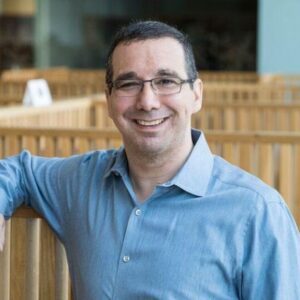

Dr. Robb Haberman
Dr. Robb Haberman is a historian specializing in early American history. He earned his Ph.D. in history from the University of Connecticut and currently teaches as an adjunct assistant professor at Fordham University. Over the years, he has also held visiting lecturer positions at both Trinity College and Colby College. Dr. Haberman’s research focuses on politics, media, and public memory in Revolutionary-era New York, and his work has been featured in both print and digital publications, including New York History, Early American Studies, and American Periodicals. He also spent seven years at Columbia University as an associate editor for the John Jay Papers, where he contributed to volumes four through seven of The Selected Papers of John Jay, published by the University of Virginia Press and now accessible through Founders Online, a public database maintained by the National Archives. In 2023, he was awarded the New York State Society of the Cincinnati Fellowship to research Sgt. James Selkirk, a Revolutionary War figure, and his memoirs. Dr. Haberman is currently writing a book on Selkirk and his wartime experiences.
During his presentation, Dr. Haberman drew on his research into James Selkirk to offer a vivid glimpse of life along the Washington-Rochambeau Trail. Selkirk, a Continental soldier, left behind unpublished memoirs reflecting on his wartime experiences, including his marches along the trail. One particularly compelling part of the talk focused on the dangerous journey taken by Sgt. Selkirk and the Second New York Regiment in September 1781, as they made their way to Yorktown. While sailing from Baltimore to Williamsburg, their transport schooner became separated from the fleet and ran aground. Drawing directly from Selkirk’s personal writings, Dr. Haberman explored this harrowing episode, shedding light on both the hardships and resilience of the Continental Army during the Yorktown campaign.
Dr. Robert A. Selig
In my blog posts about “The Inclusive History of the Washington-Rochambeau Revolutionary Trail: Phase II”, I introduced Dr. Robert A. Selig and the important work he’s been doing as part of that research project. At the panel event in Basking Ridge, Dr. Selig once again demonstrated his deep expertise on the Washington-Rochambeau Revolutionary Trail.
Dr. Selig is a distinguished historian who earned his Ph.D. in history from the University of Würzburg in 1988. Since then, he has devoted his career to historical research, writing, and consulting. He serves as the project historian and consultant to the National Park Service for the Washington-Rochambeau Revolutionary National Historic Trail, playing a key role in preserving and interpreting this critical piece of American history. His contributions have earned him numerous honors, most notably his appointment as a chevalier of the French National Order of Merit—the highest recognition granted to non-citizens by the President of the French Republic for exceptional civil or military service. This award acknowledges Dr. Selig’s leadership as one of the foremost American historians of France’s role in the American War of Independence. His ongoing research spans the United States, France, and Germany.
At the March to Yorktown event in Basking Ridge, Dr. Selig focused on the portion of the trail where the French Army passed through the local area. Drawing from firsthand accounts, he offered the audience a vivid picture of what soldiers would have experienced on their journey to Yorktown. His engaging presentation covered the hardships the troops endured, what they ate, and the unique challenges posed by the language barrier between the French and Americans. Through his storytelling, Dr. Selig brought to life the human side of the historic march and helped the audience imagine what life on the trail would have been like.
Q&A
During the Q&A portion of the discussion, audience members posed several intriguing questions—including how the American and French forces managed to communicate with the French Navy in the Chesapeake Bay in the lead-up to the Siege of Yorktown. Both Dr. Haberman and Dr. Selig spoke to the challenges of coordinating among the allied forces. Dr. Haberman, referencing James Selkirk’s account, noted that even the soldiers themselves were often unaware of their final destination—they simply followed orders without knowing the broader strategy. Dr. Selig emphasized that for the March to Yorktown to succeed, everything had to align perfectly for the American and French forces—and everything had to go wrong for the British. Fortunately for the American cause, that’s exactly what happened. The victory at Yorktown sealed American independence.
Dr. Haberman and Dr. Selig did a remarkable job of bringing history to life. They gave voice to the experiences of Continental soldiers and highlighted just how extraordinary the March to Yorktown truly was.
Check out The Historical Society of the Somerset Hills
Check out the Washington Rochambeau Revolutionary Revolutionary Route- New Jersey (W3R-NJ)

Check out these related posts:
 Benevento's History Blog