
Introduction
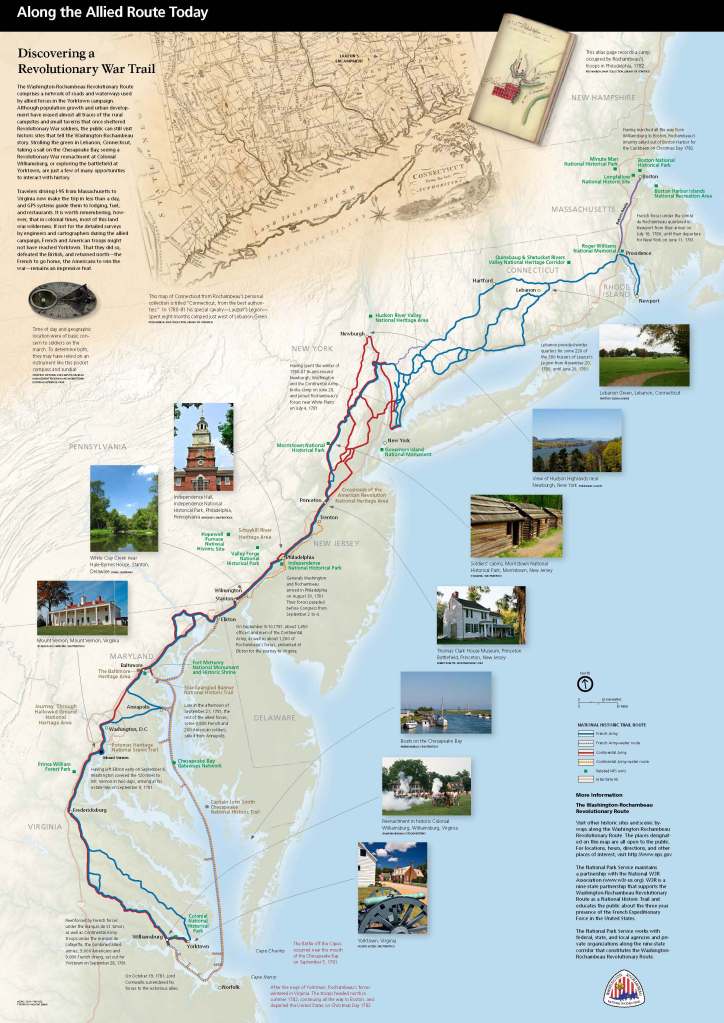
For this blog post, I am highlighting the Washington-Rochambeau Revolutionary Route. Many of the events/ trips that I have posted on this blog from New Jersey have been sites along the trail. It is fitting to post about the trail now because next week my family and I are heading on a trip to Williamsburg, Virginia, which is a site along the trail. We will be visiting the trail’s final destination: Yorktown, Virginia. I am a member of the Washington-Rochambeau Revolutionary Route in New Jersey Association which highlights the routes taken by the American and French forces within New Jersey. Of course, New Jersey was just one of several states that the American and French forces marched through. Other states include Massachusetts, Rhode Island, Connecticut, New York, Pennsylvania, Delaware, Washington DC, Maryland, and Virginia.
The entire trail is highlighted and commemorated by The National Washington-Rochambeau Revolutionary Route Association Inc. (W3R-US). On their website, W3R-US’s explains that their mission “is educating the public both about the Washington Rochambeau National Historic Trail, and the Trail’s context within the American Revolution as well as to collaborate with diverse trail communities and partners in stimulating economic development and a fuller, more inclusive realization of America’s founding ideals. W3R-US’s vision is that through a connected and conserved trail, W3R-US strengthens trail communities and expands the relevance of our shared American story today and for future generations.”
Overview Of The Trail
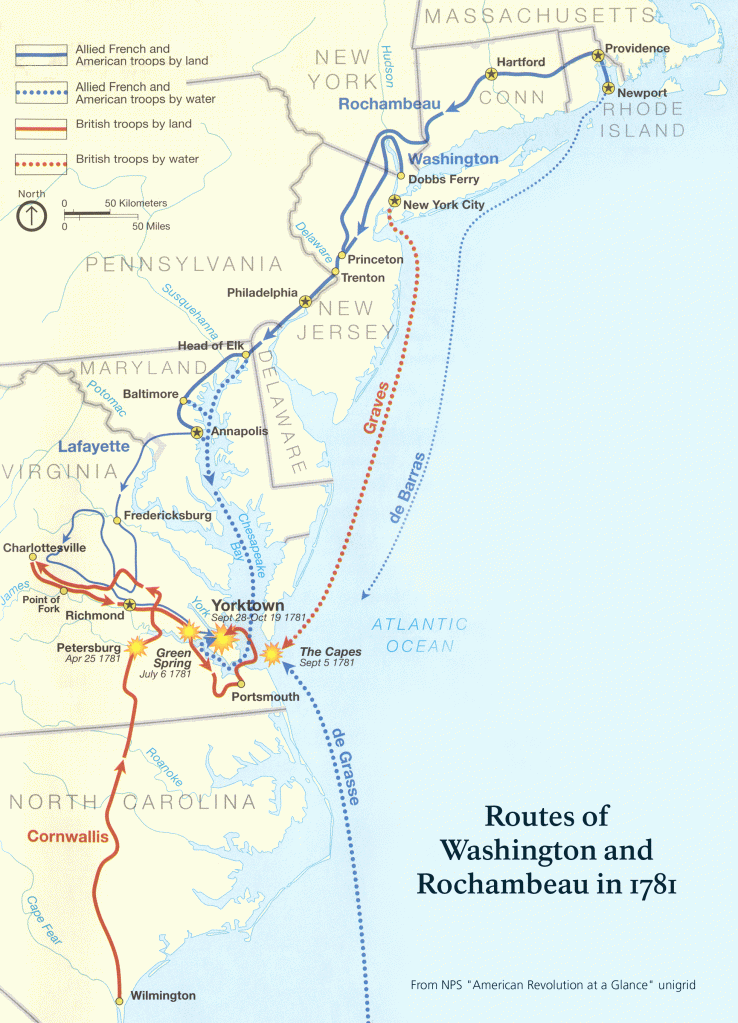
The Washington-Rochambeau Revolutionary Route highlights the 680-mile route that the Continental Army, led by George Washington, and the French forces, commanded by Jean-Baptiste de Rochambeau, took from Newport, Rhode Island, to Yorktown, Virginia. This 14-week journey culminated in the defeat of the British Army in The Siege of Yorktown in October 1781, which was the beginning of the end of the war, and the victory that the United States needed to secure their independence. The Washington-Rochambeau Trail is a unit of the National Park Service.
The march began in June 1781, when French forces departed from Rhode Island and met up with American forces at the Hudson River. The French and American forces marched south in August, through New Jersey, Pennsylvania, Delaware and Maryland. They arrived in Williamsburg, Virginia, in late September, just a few weeks after the French navy defeated the British in the Battle of the Chesapeake, effectively cutting off an escape route for the British encamped at Yorktown.
On September 22nd, 1781, the American and French armies joined forces with the Marquis de Lafayette in Virginia. After a three-week siege at Yorktown, British General, Lord Cornwallis surrendered his British army on October 19, 1781. This was the climactic victory of the war which led to peace talks between the United States and Great Britain. The Washington-Rochambeau Revolutionary Trail features interpretive signs and exhibits that highlight the joint effort of both the American and French forces to secure independence.
New Jersey
Being a New Jersey native, my experiences along the trail have been within my state, which has many historical connections to the American Revolution. Below are two maps; the first is a broader map of the routes within New Jersey, and the second map is zoomed into the region where I live. You’ll notice that there are many other maps that highlight the routes more locally. These extra maps are located HERE. I used the local map to find that the trail runs along a road that I personally drive on almost daily in Fairfield and West Caldwell, and is about 2 mins from my house. This particular trail is highlighted in orange and was the route taken by General Washington and the Continental Army. The more western route that the French took (highlighted in Yellow) is only about 10 mins west of my house as it cuts through towns like Montville and Lake Hiawatha.
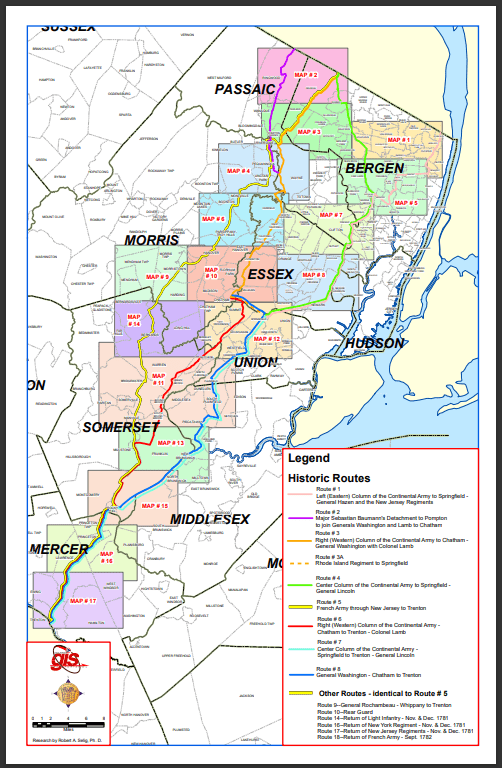
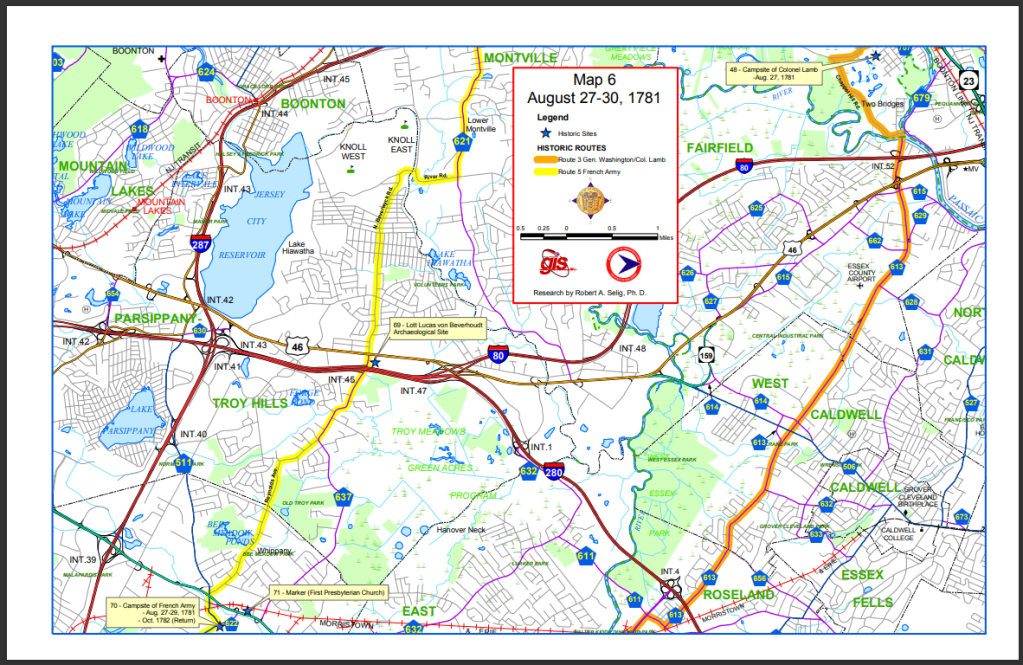
Many New Jersey natives can explore the state map, and realize that this historical trail is quite local to where you live. When you consider the significance of the Siege of Yorktown, and the lengthy march that American and French soldiers had to take, you gain an appreciation for the sacrifices that these soldiers had to make to secure the freedoms that we take for granted today. And to think, they were marching right in your backyard!
Get Involved
For history lovers out there, I highly recommend visiting the websites of both the W3R-US, and the affiliate that is associated with your state. For New Jersey residents, you can visit here. The websites have many interactive features including virtual tours along the trail. Along the virtual New Jersey trail, you will learn much about houses that still stand along the trail and were witnesses to the soldiers who marched in 1781. As we get closer to the 250th anniversary of our independence, I recommend checking back into these sites for events, and ways to get involved. You should also consider becoming a member of the organization. You will not only enjoy the benefits of membership, but you will show your support for a great organization that is bringing the American Revolution alive for the public!
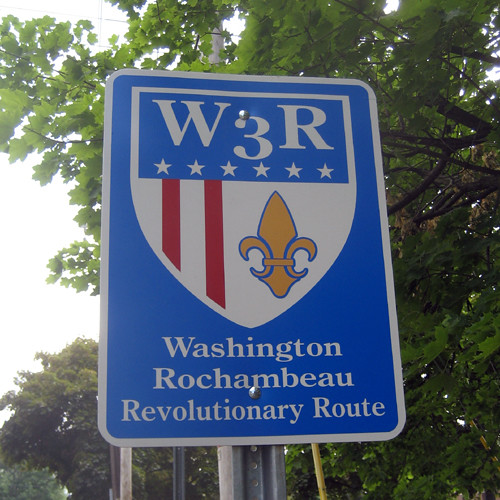
The following blog posts are from experiences and trips that I’ve had along the Washington-Rochambeau Revolutionary Trail thus far:
Stay tuned for my future blog posts highlighting my family’s trip to Williamsburg, Jamestown, and Yorktown, Virginia!
 Benevento's History Blog
2 responses to “The Washington-Rochambeau Revolutionary Route”
[…] impact on the local community. You can read my earlier blog post on the importance of the trail [HERE]. Notably, the French branch of the route passed directly through Basking Ridge, making it a key […]
LikeLike
[…] On August 17th, my family and I attended the Sixth Annual March to Yorktown Day in Westfield, NJ. The last time I went was in 2023 with my daughter, which you can read about HERE. This year’s 2025 event drew an impressive crowd and was well planned and organized by Julie Diddel, chair of the Washington-Rochambeau Revolutionary Route Association of New Jersey (W3R-NJ). The commemoration marks August 29, 1781, when General Benjamin Lincoln’s division of the Continental Army passed through Westfield on their march to Yorktown, Virginia. At the same time, the French Army under the Comte de Rochambeau took a route slightly west of the Continentals before both forces united near Princeton, NJ. The Washington-Rochambeau Revolutionary Route traces the path of the American and French armies from Newport, Rhode Island, to Yorktown, where their combined campaign led to the British surrender at the Siege of Yorktown in October 1781. Today, the route is preserved as part of the National Park Service. You can read more about the trail HERE. […]
LikeLike