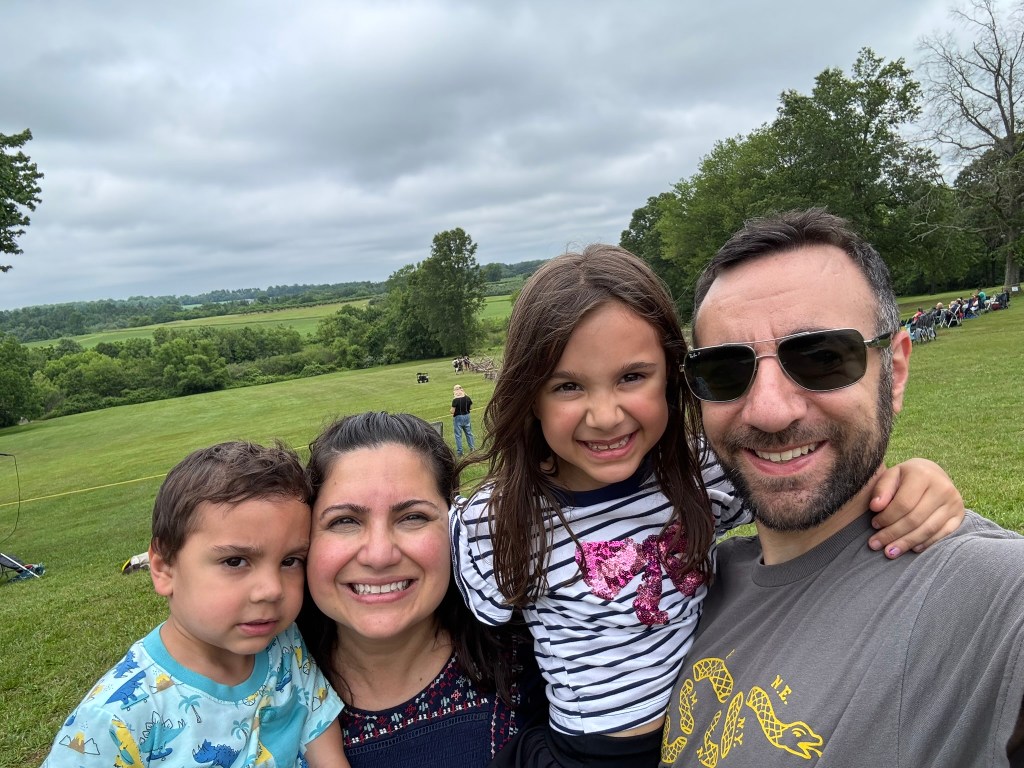
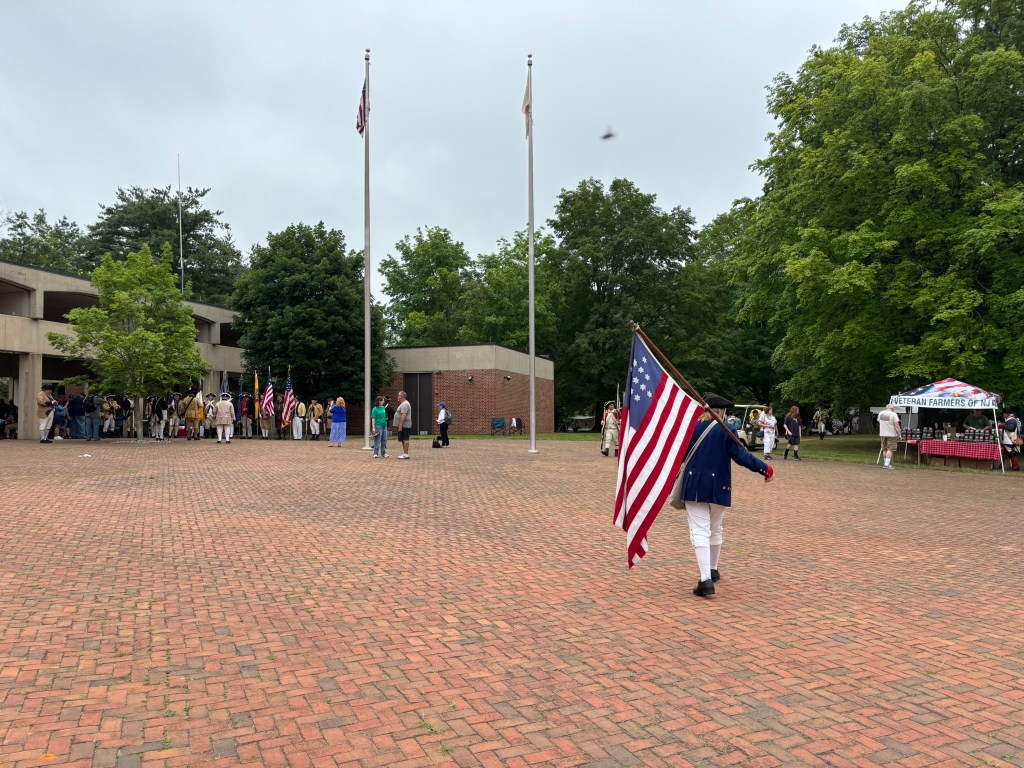
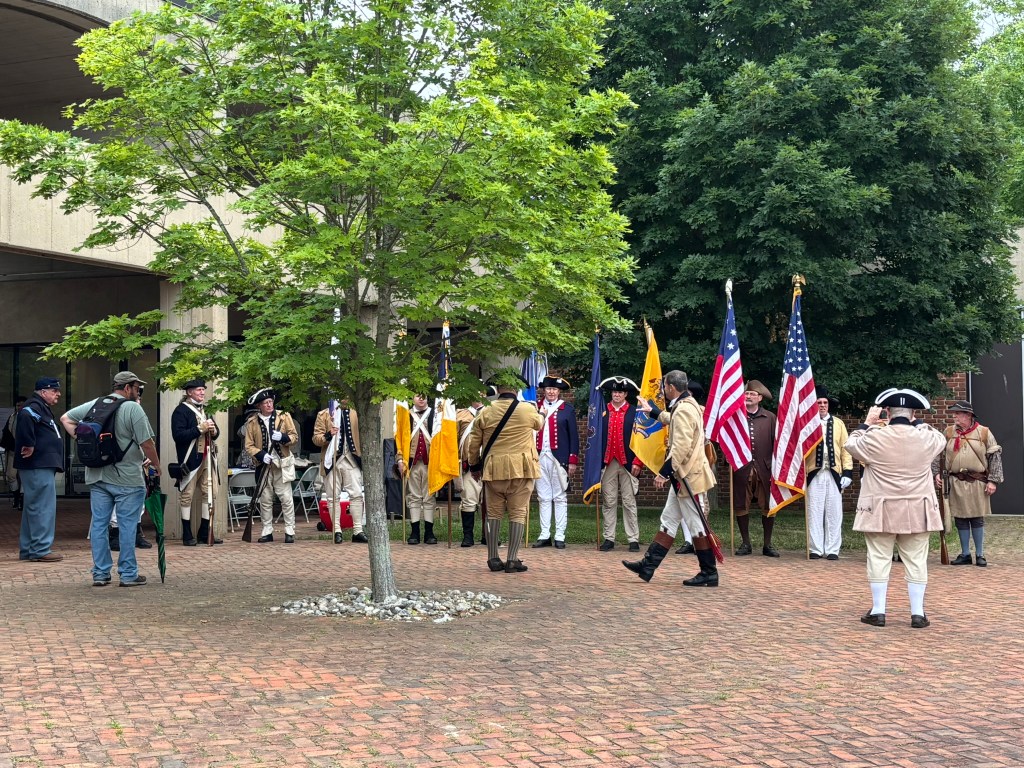
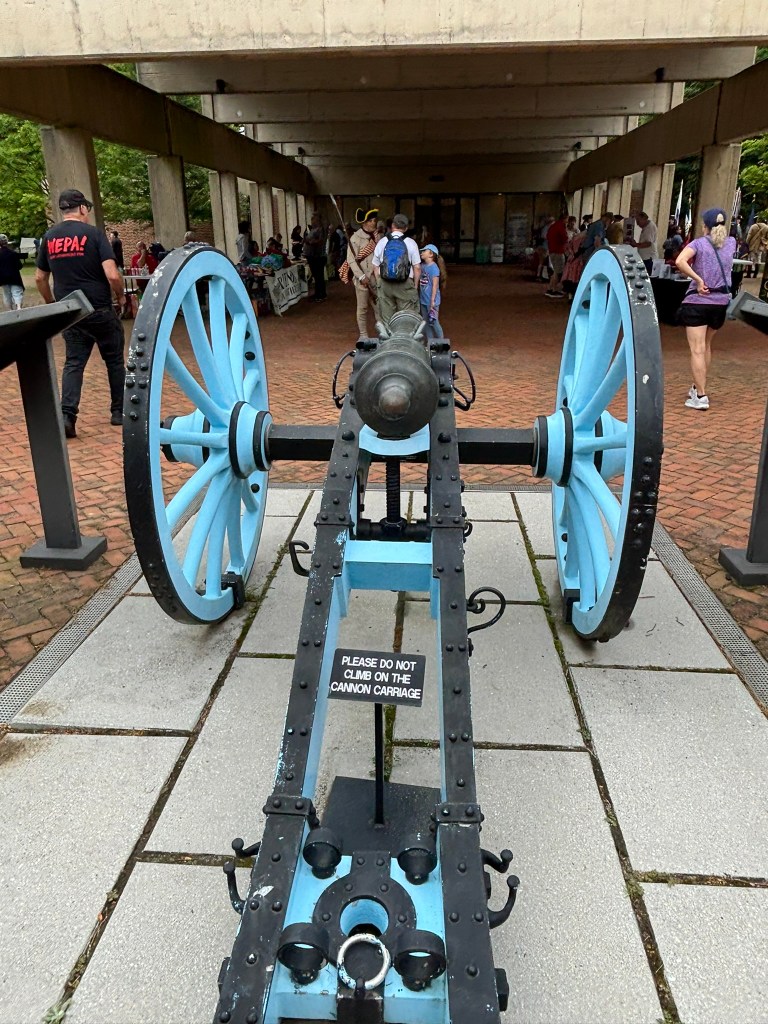
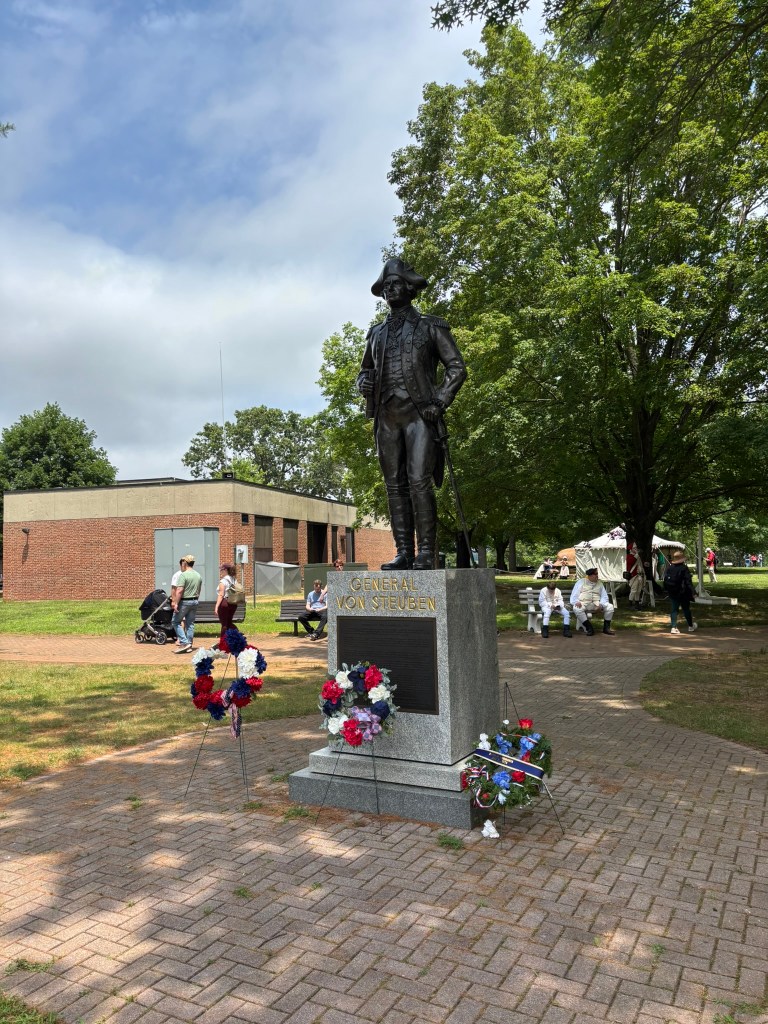
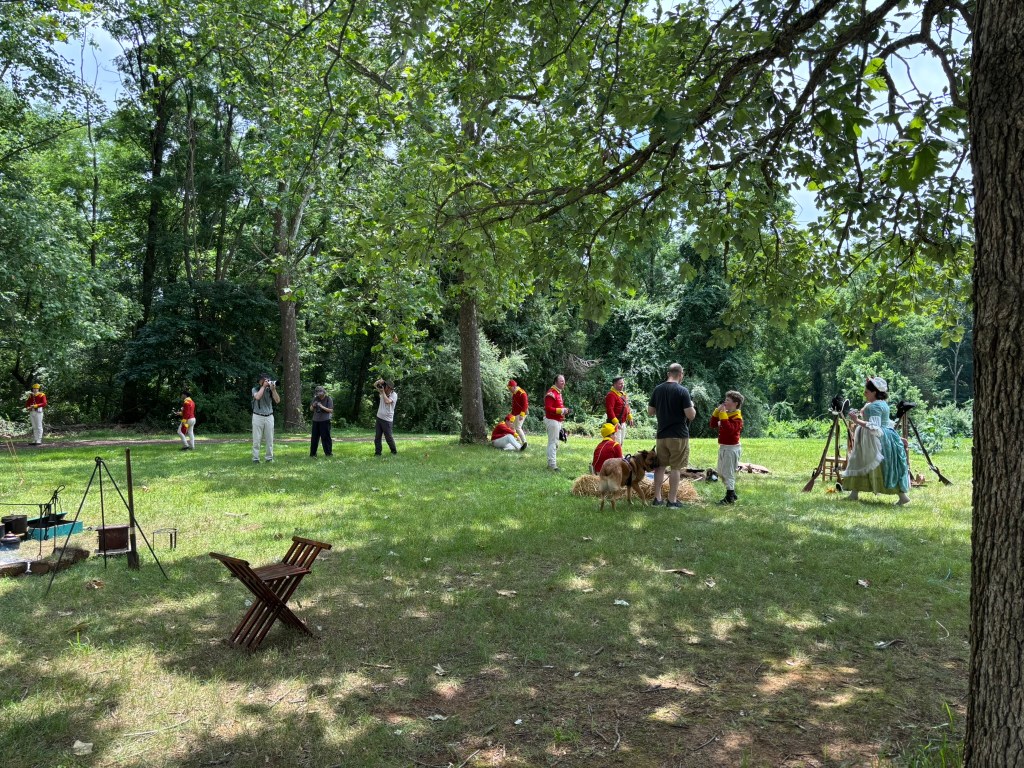
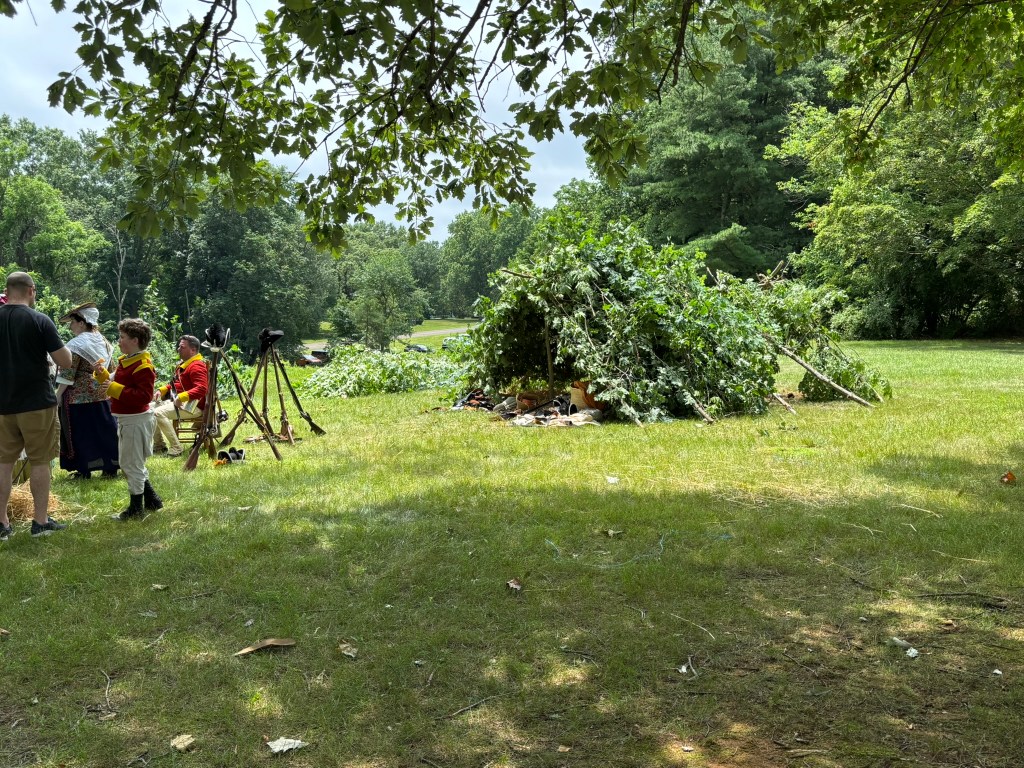
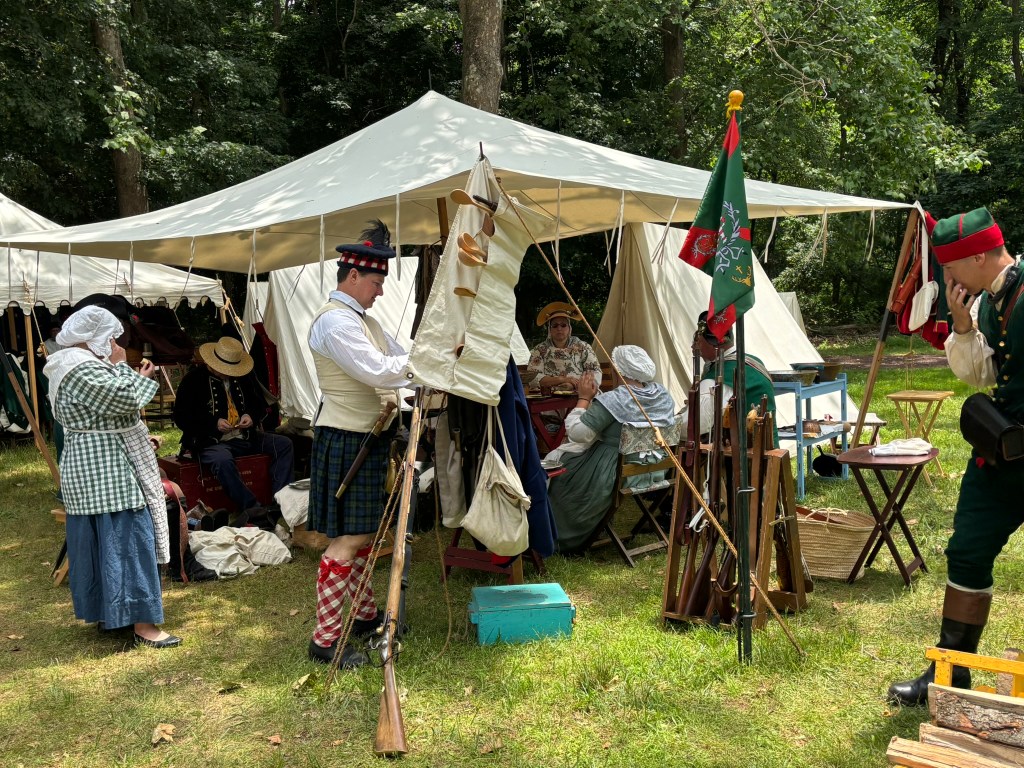
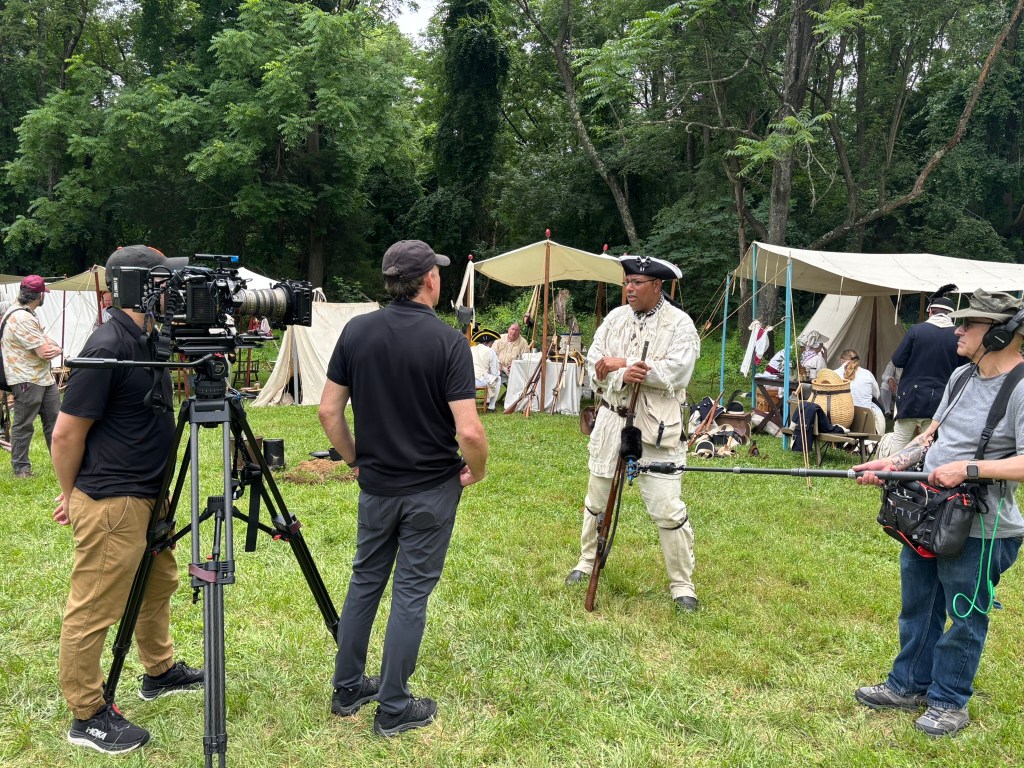
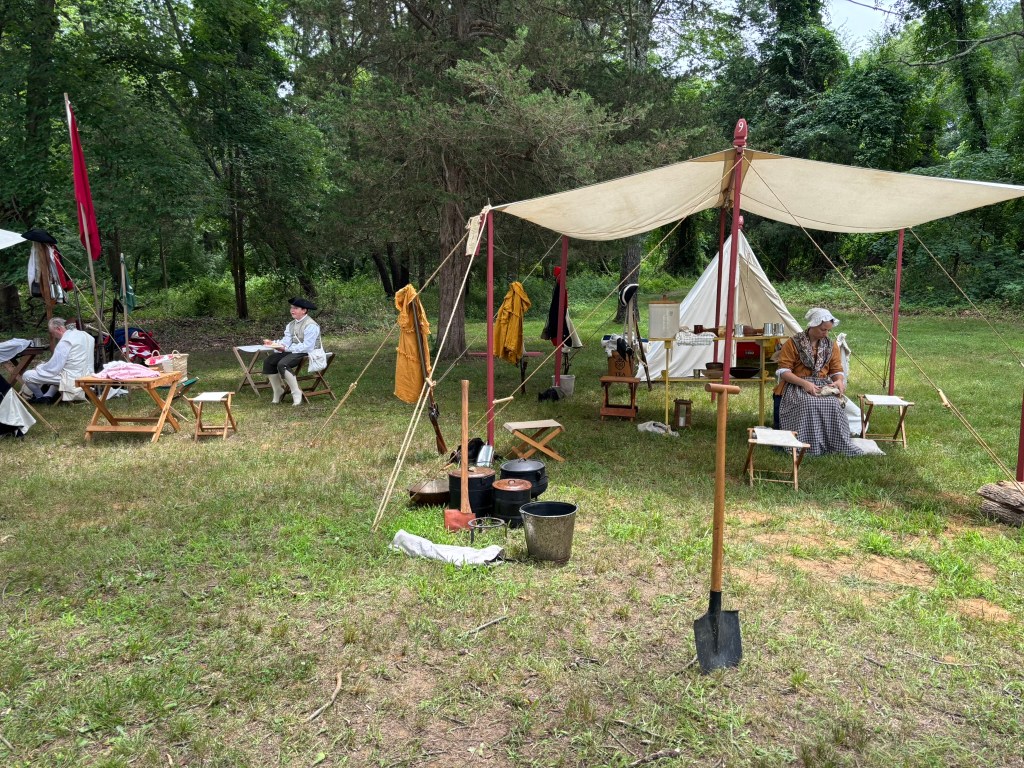
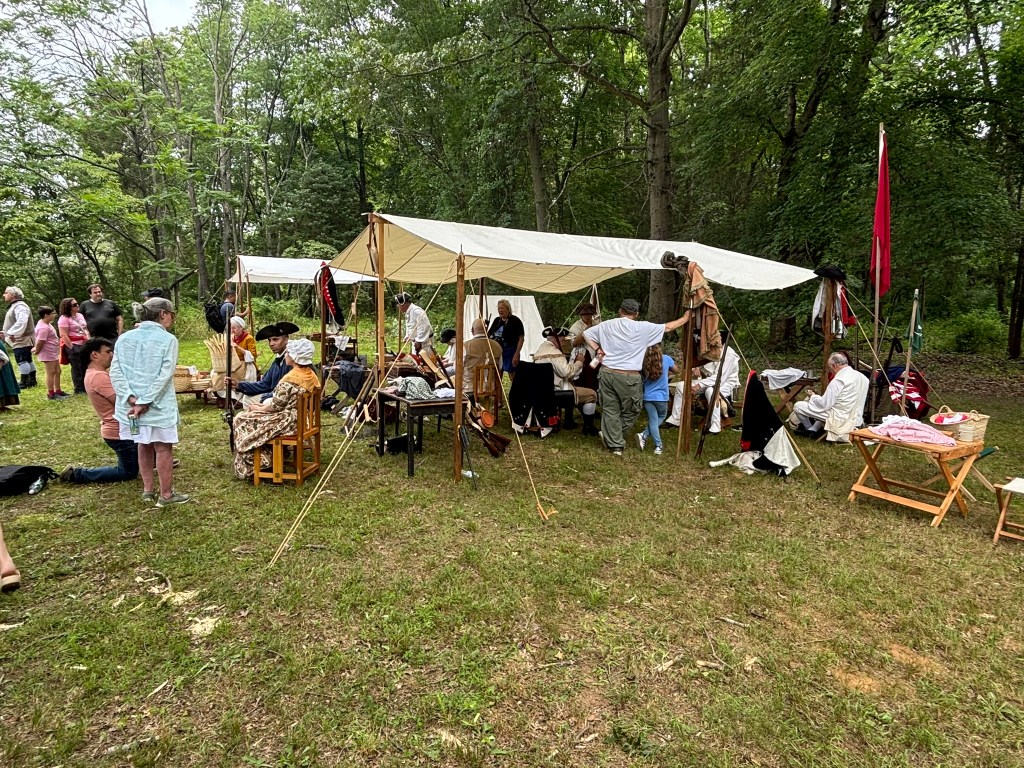
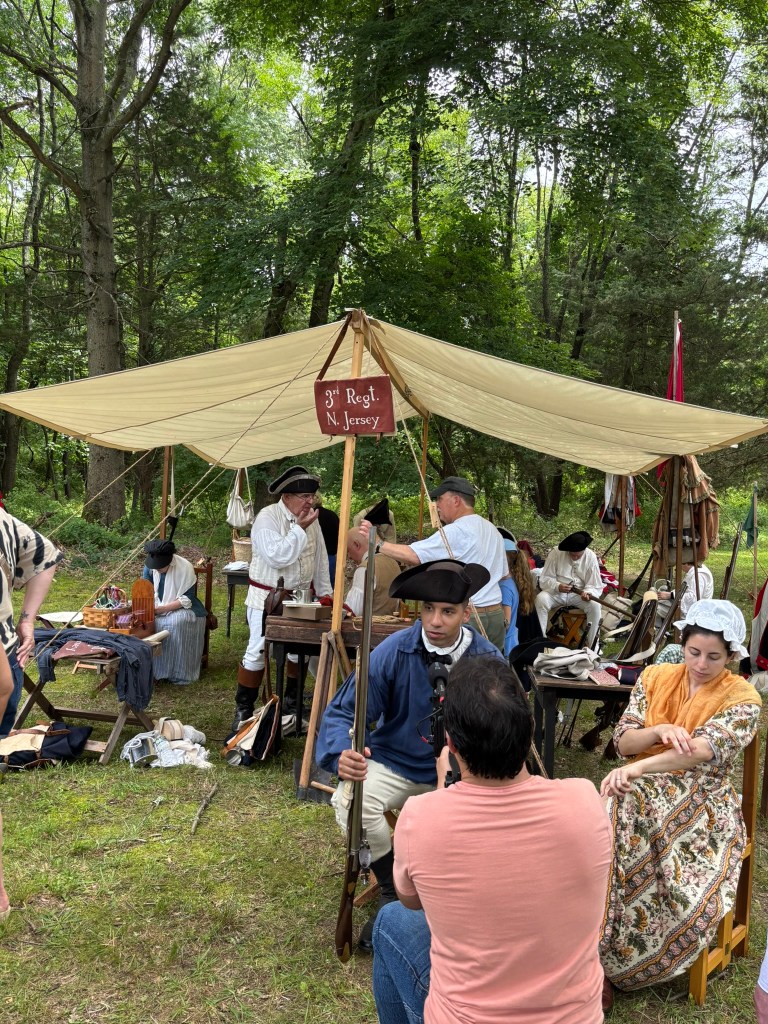
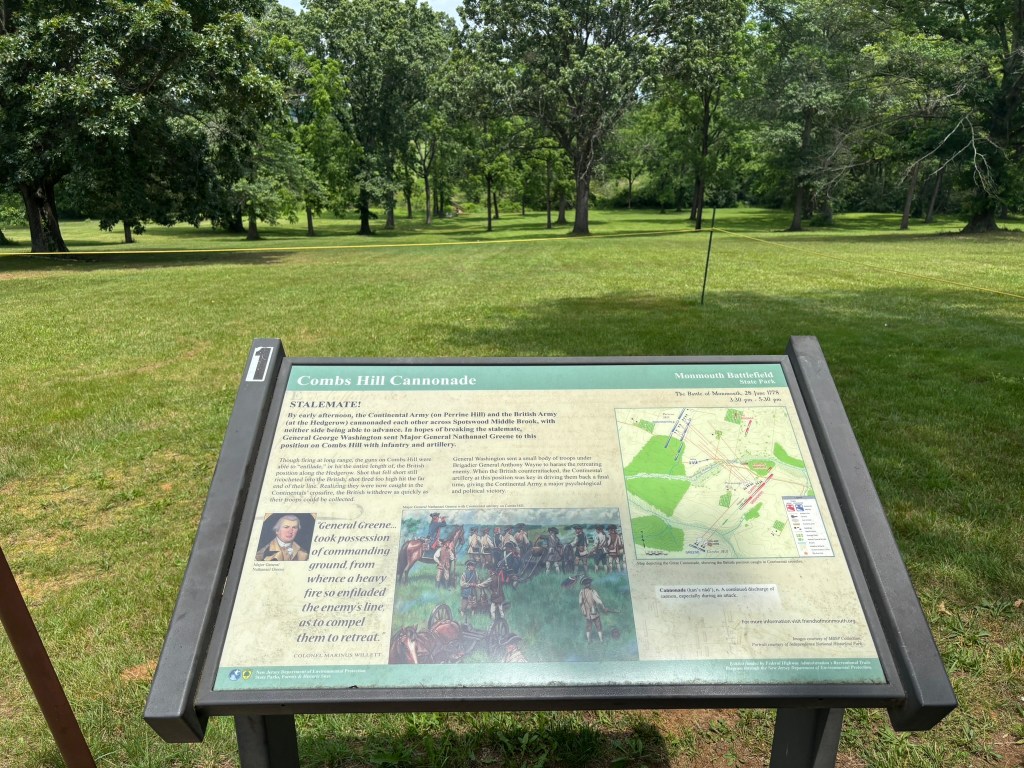
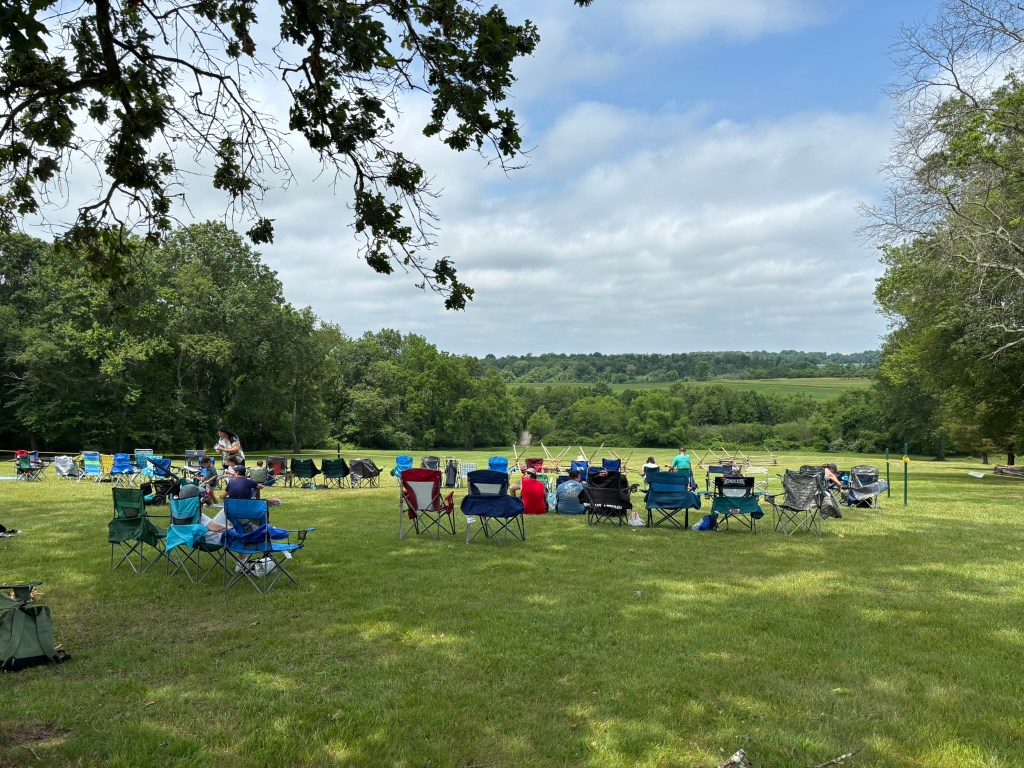
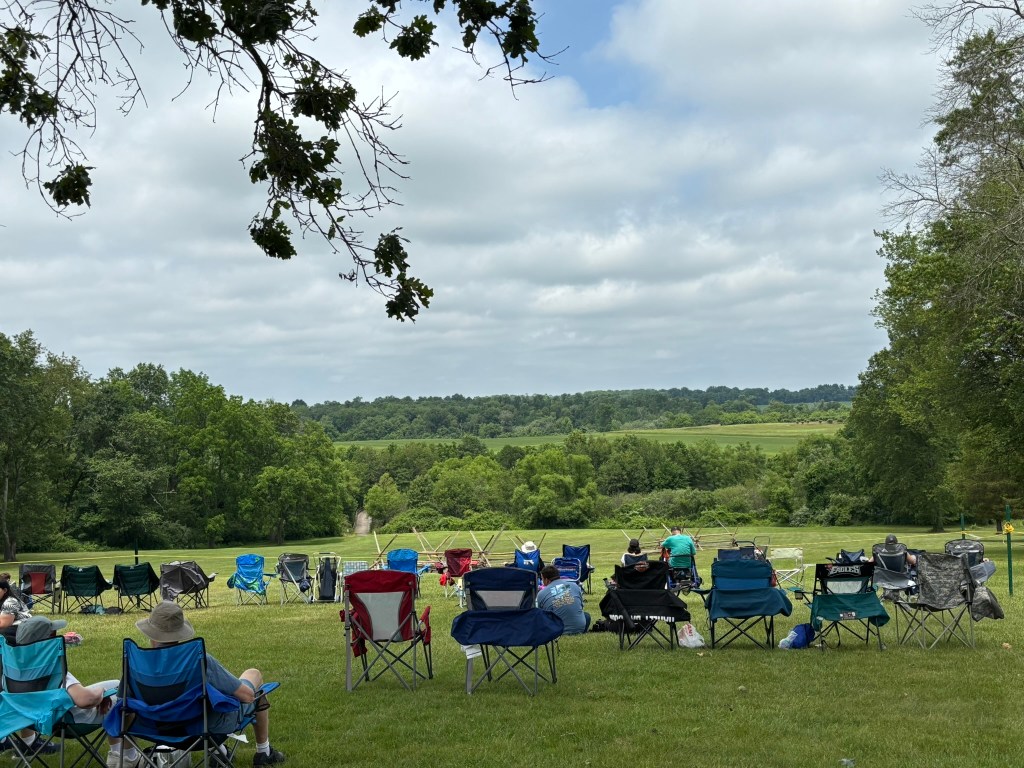
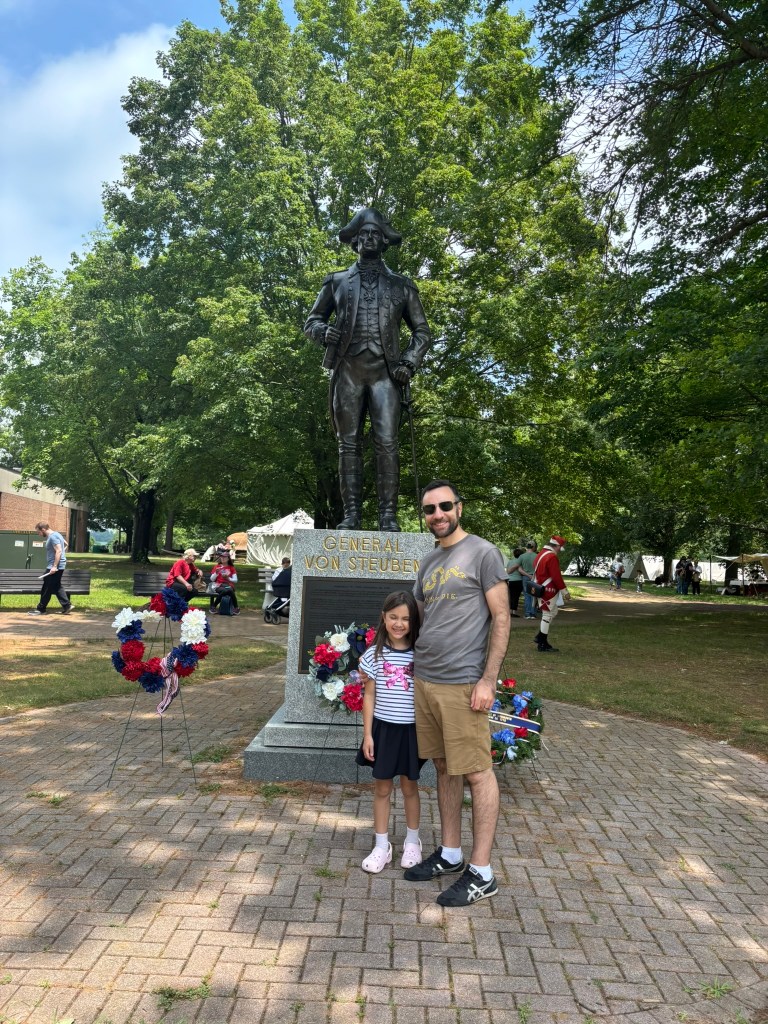
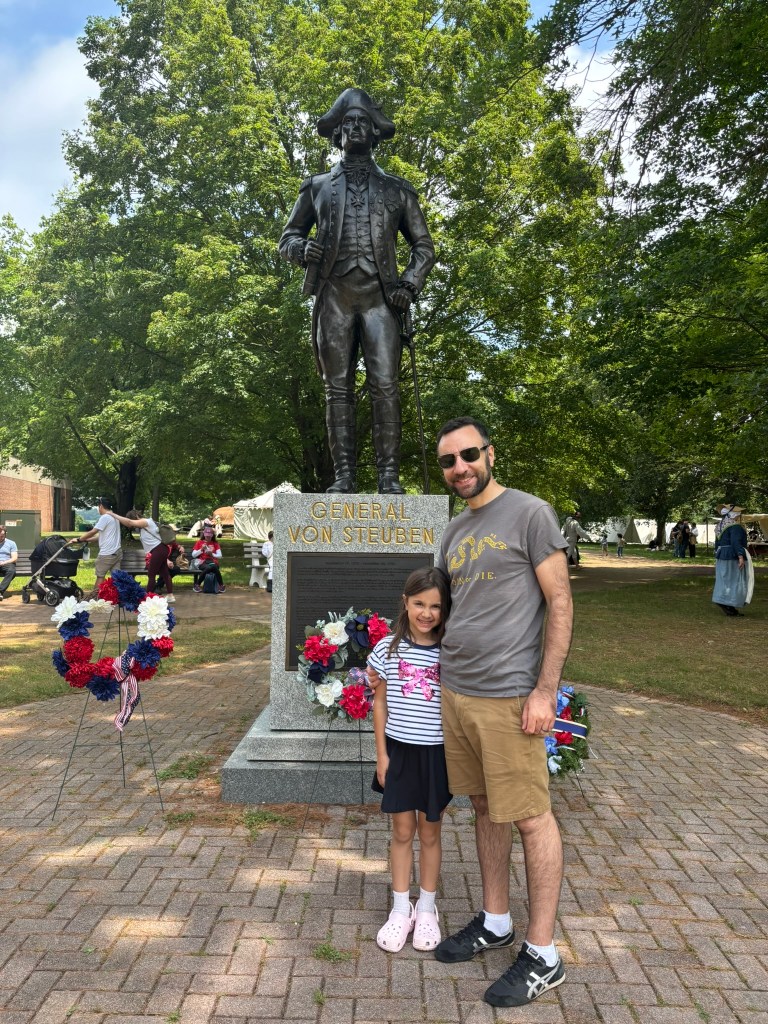
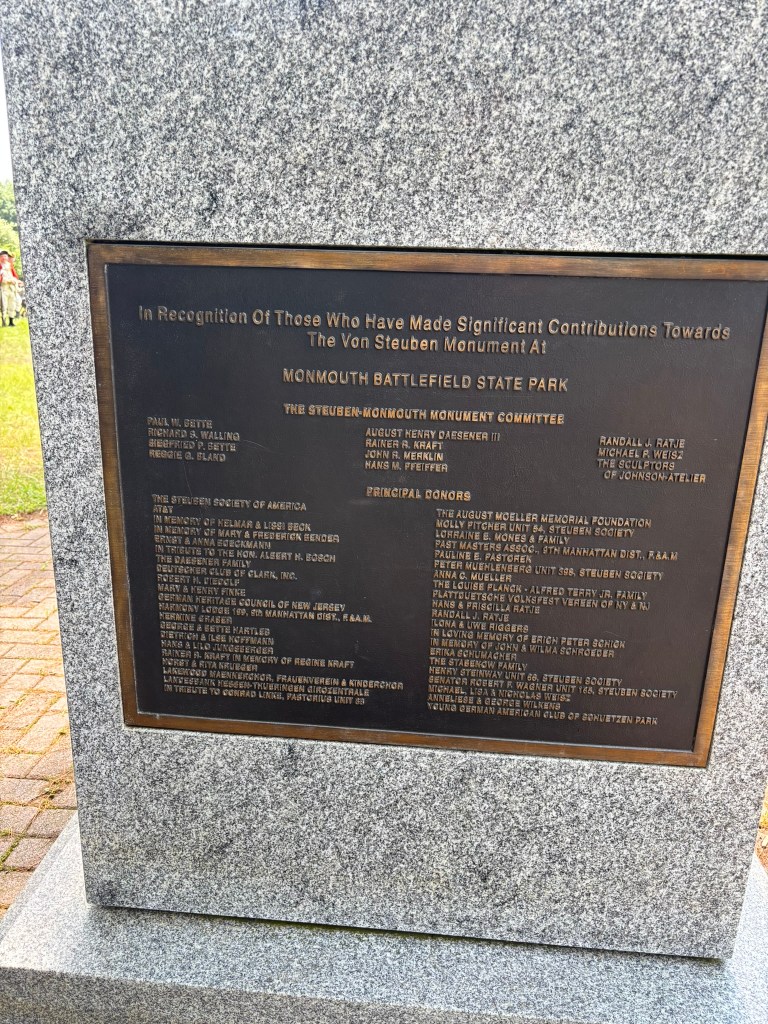
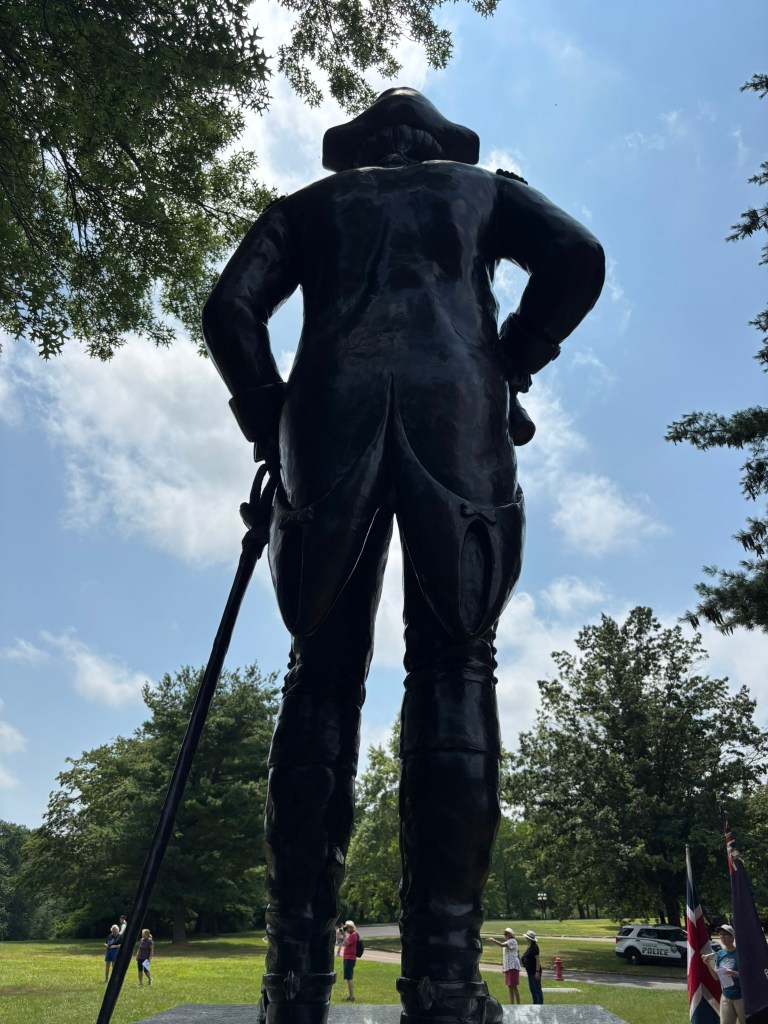
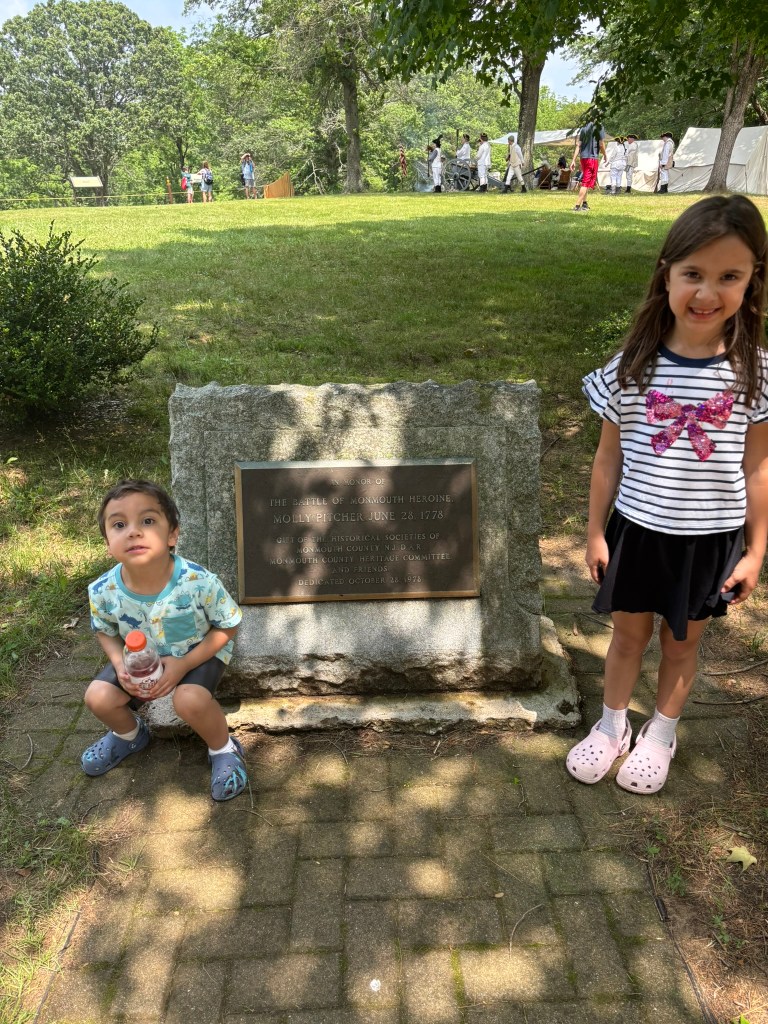
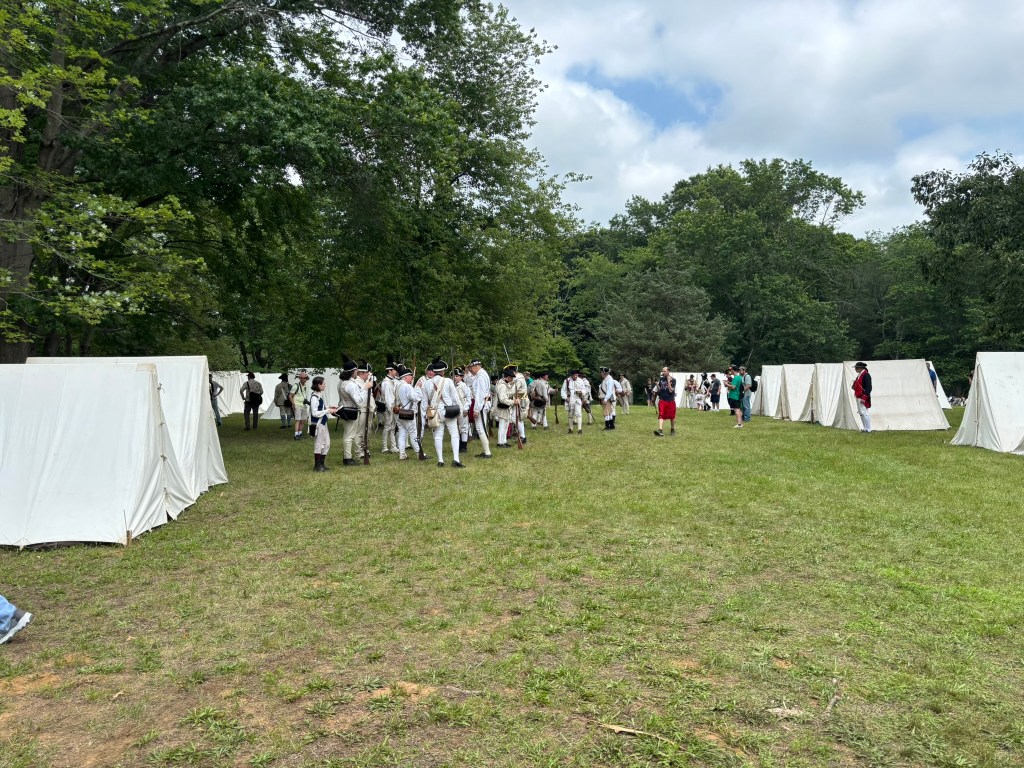
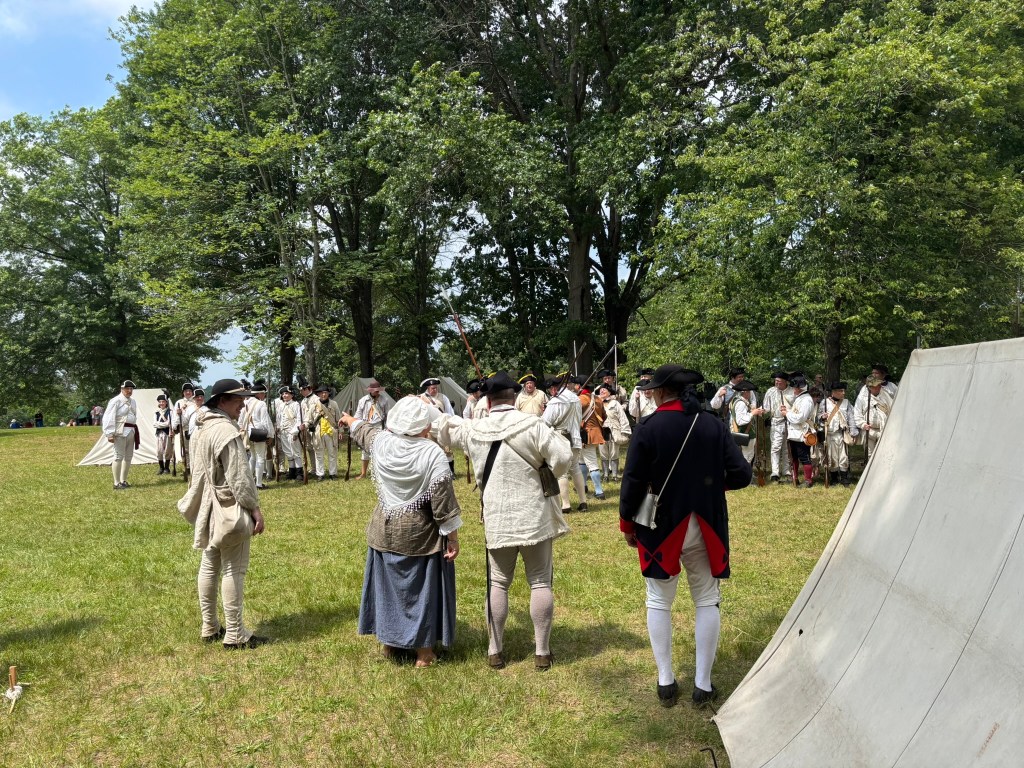
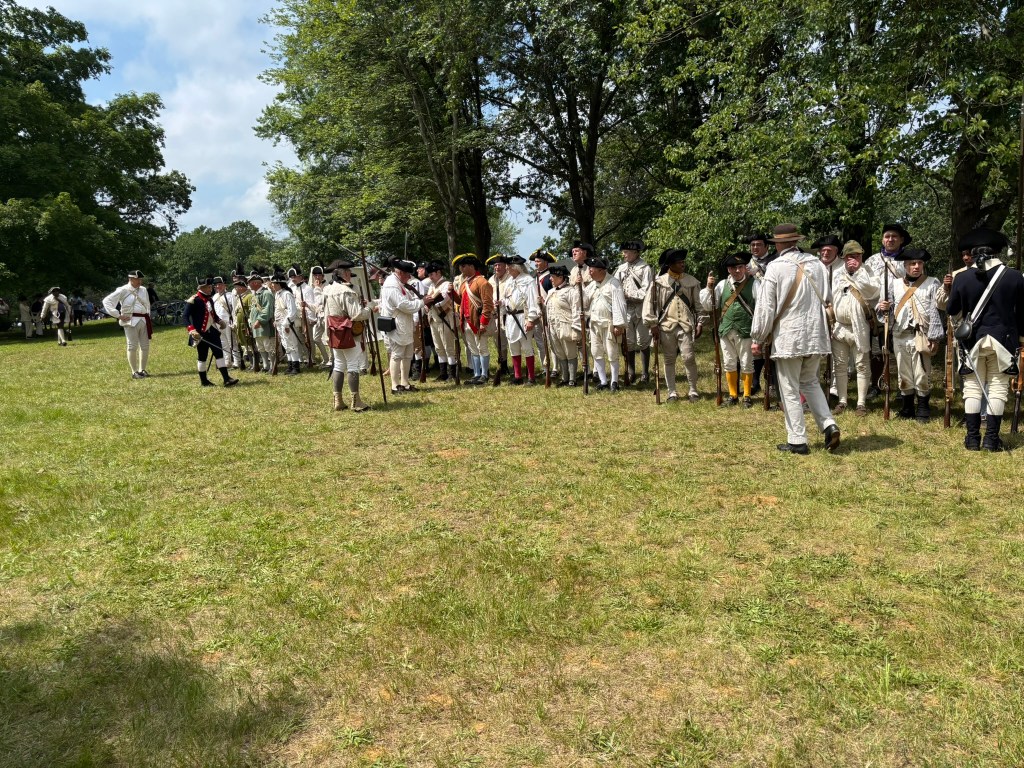
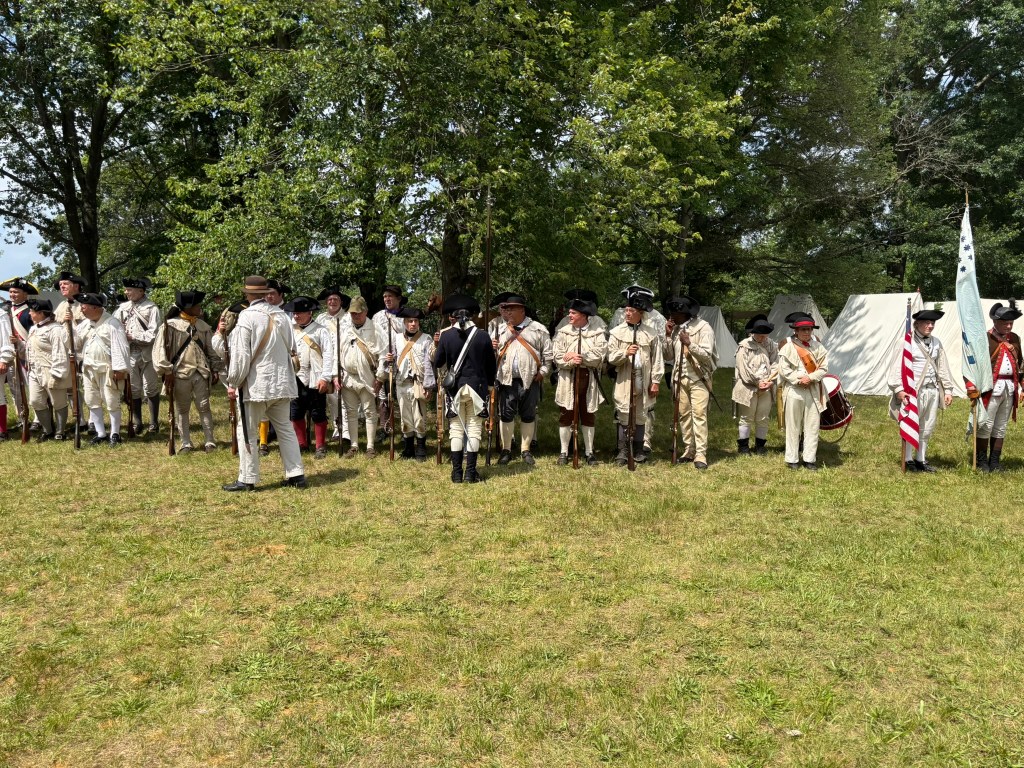
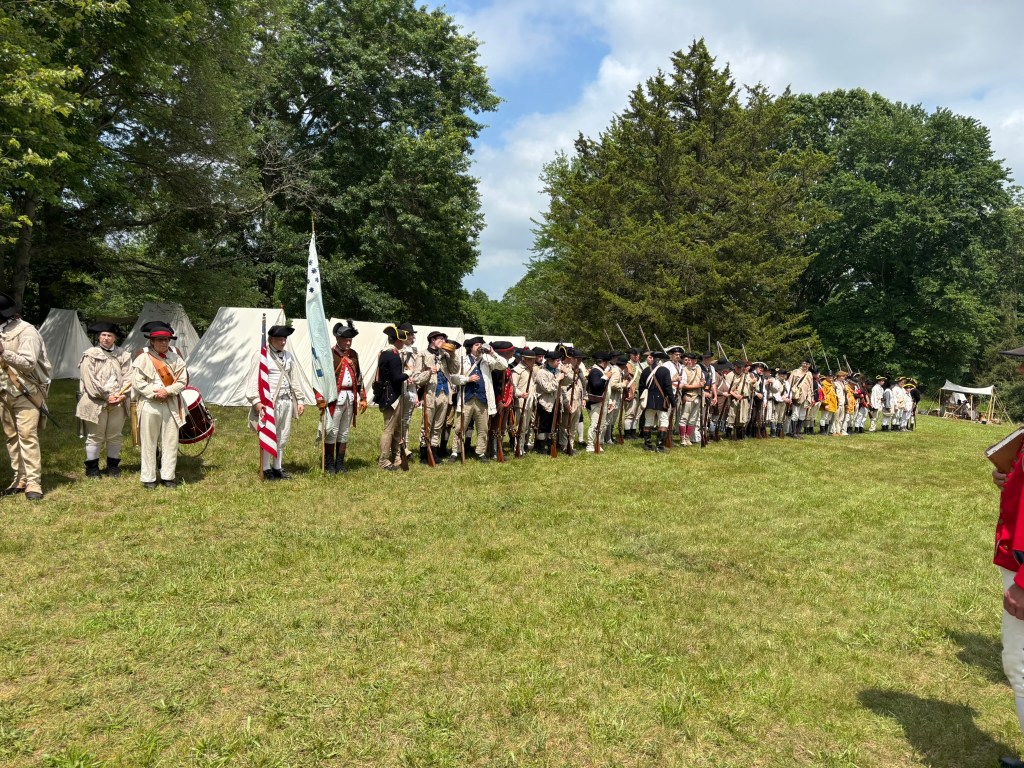
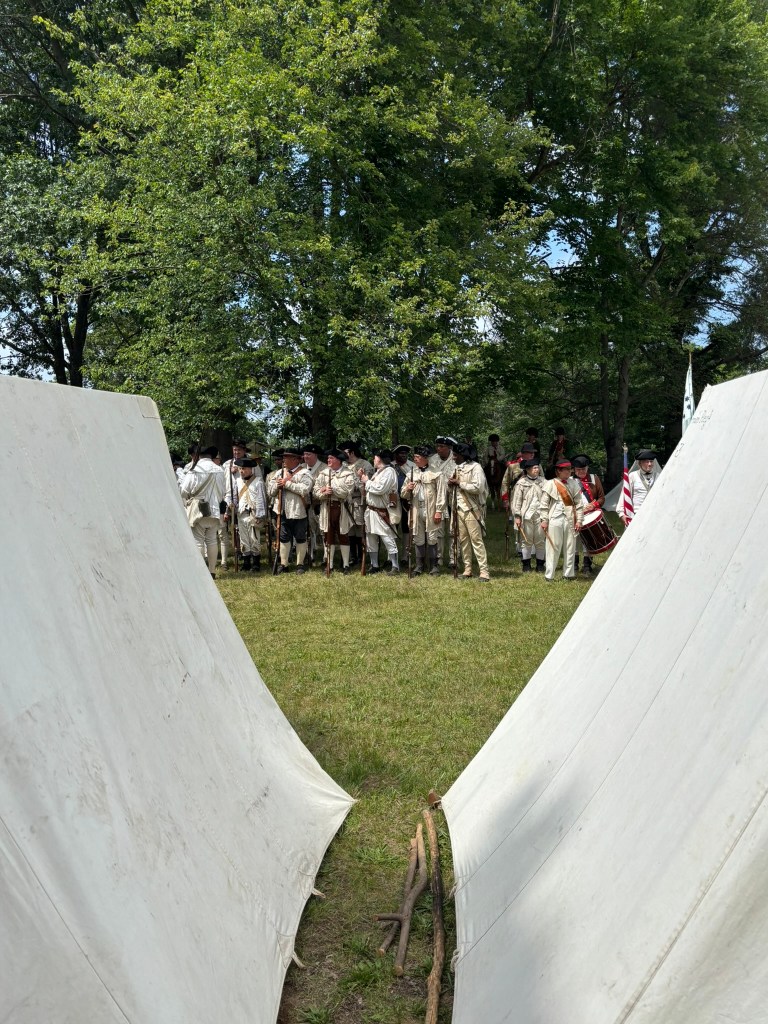
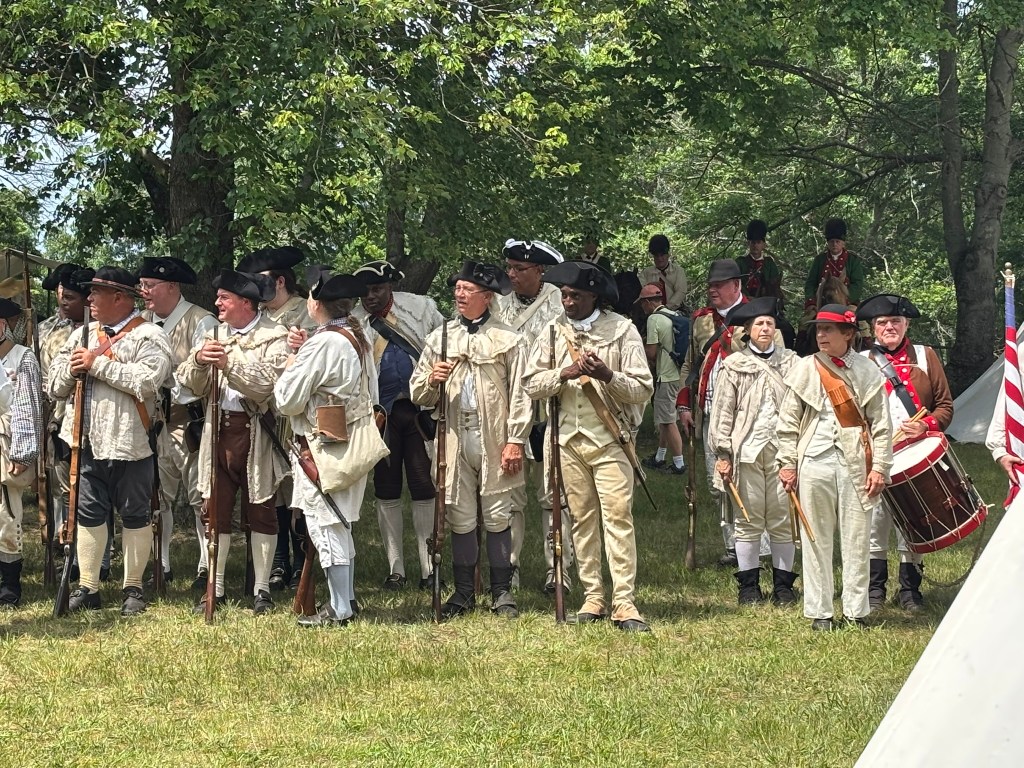
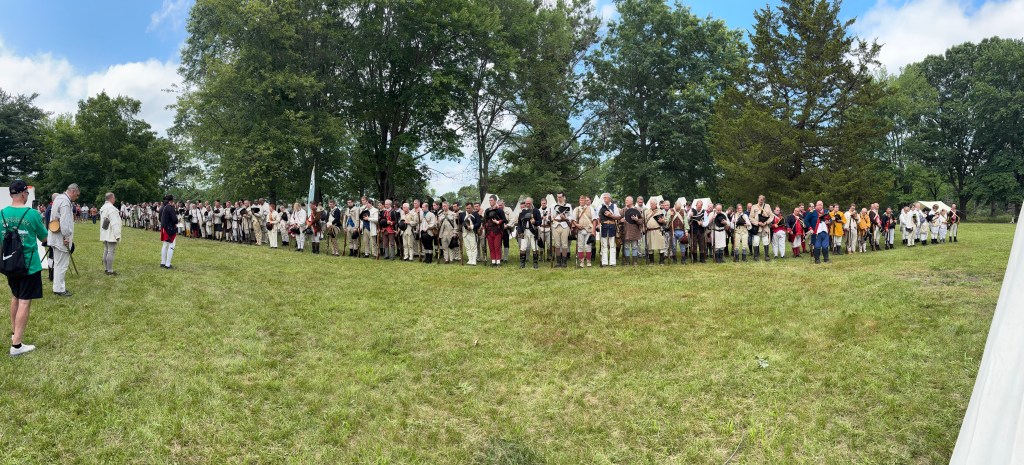
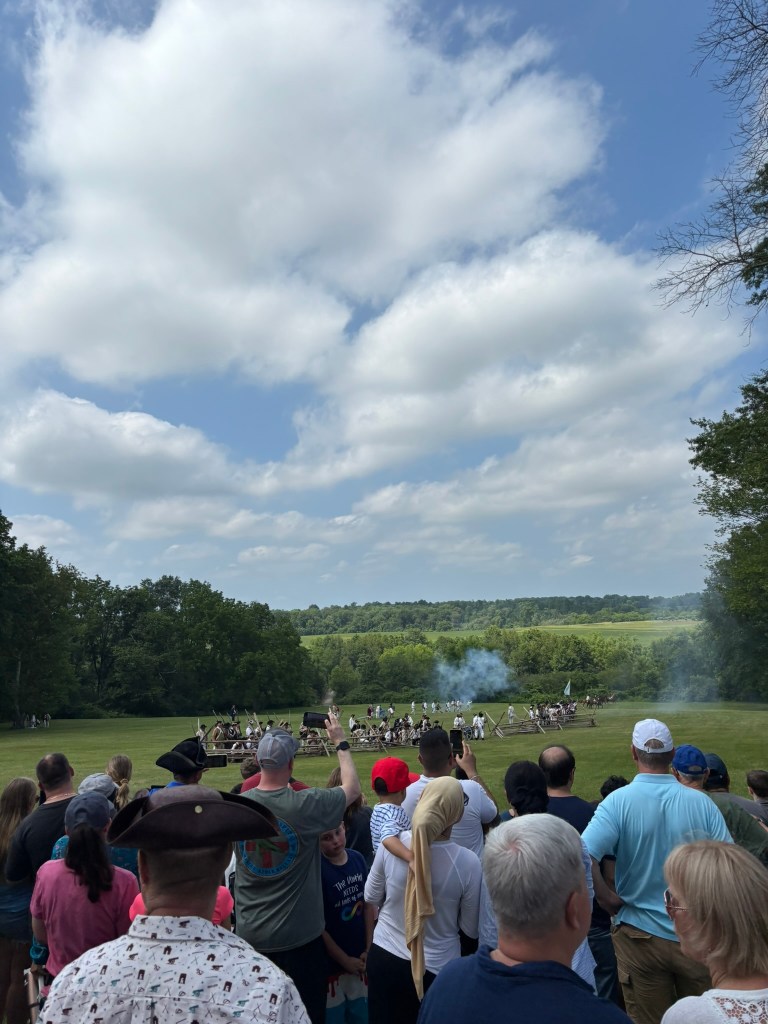
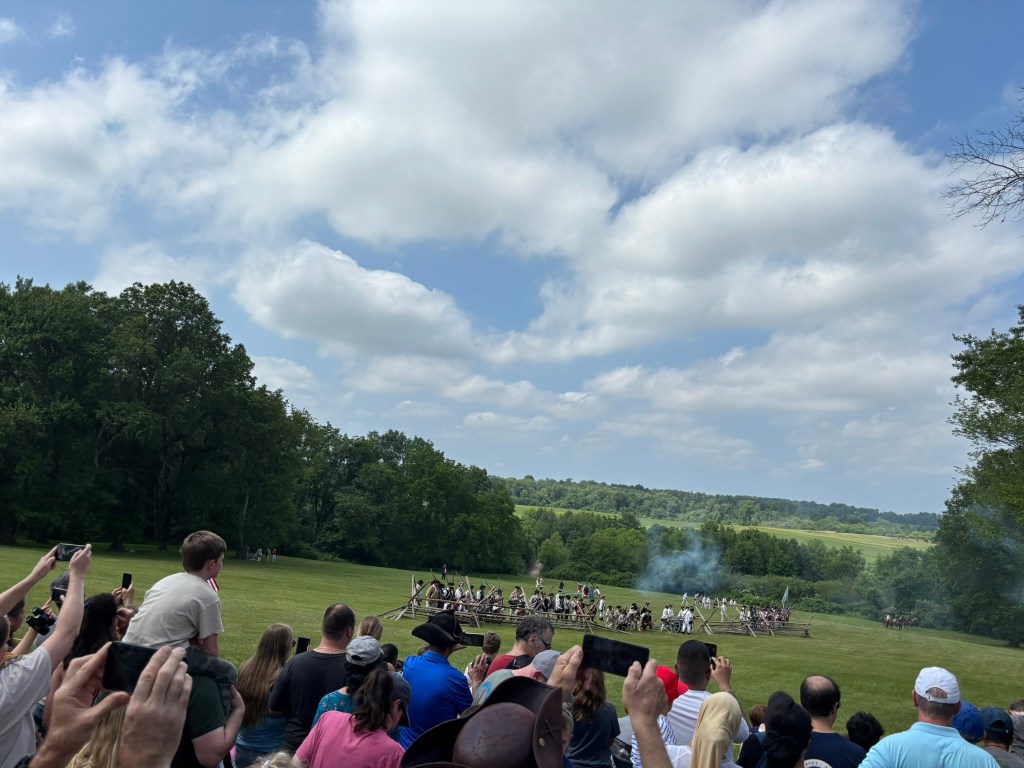
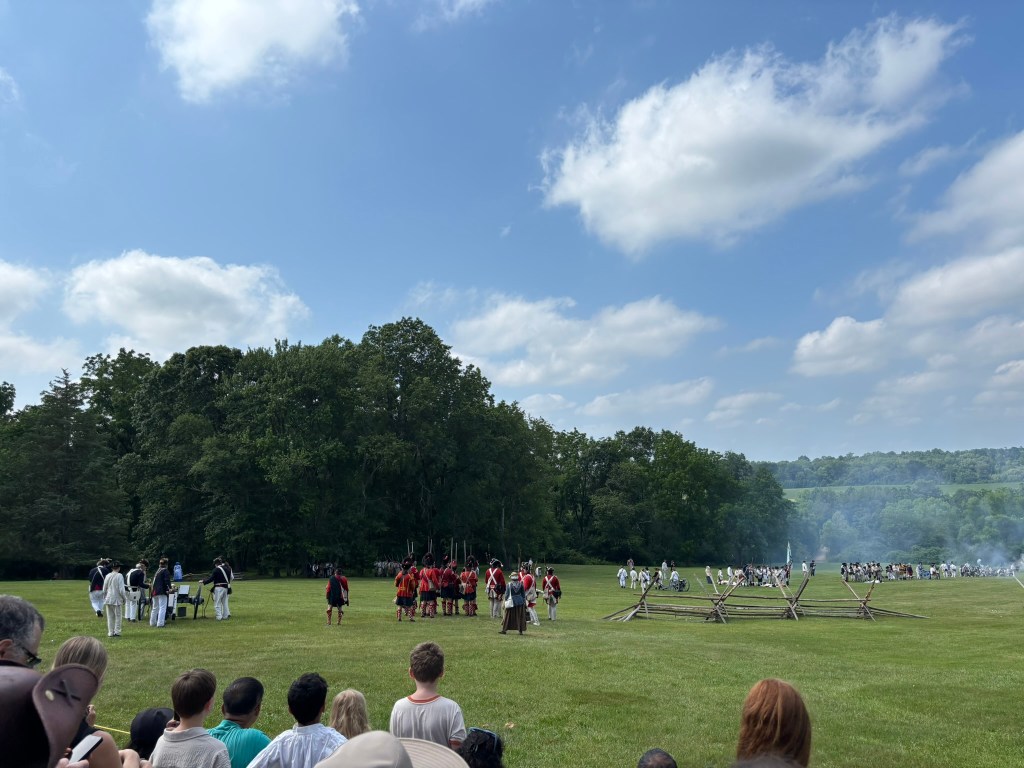
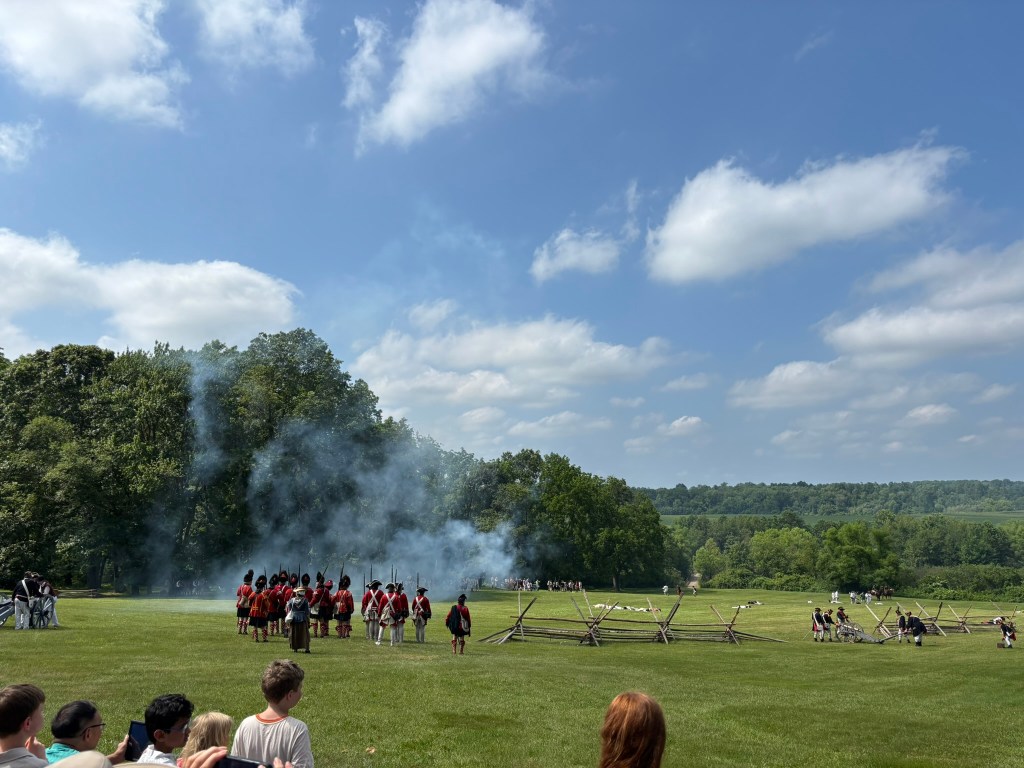
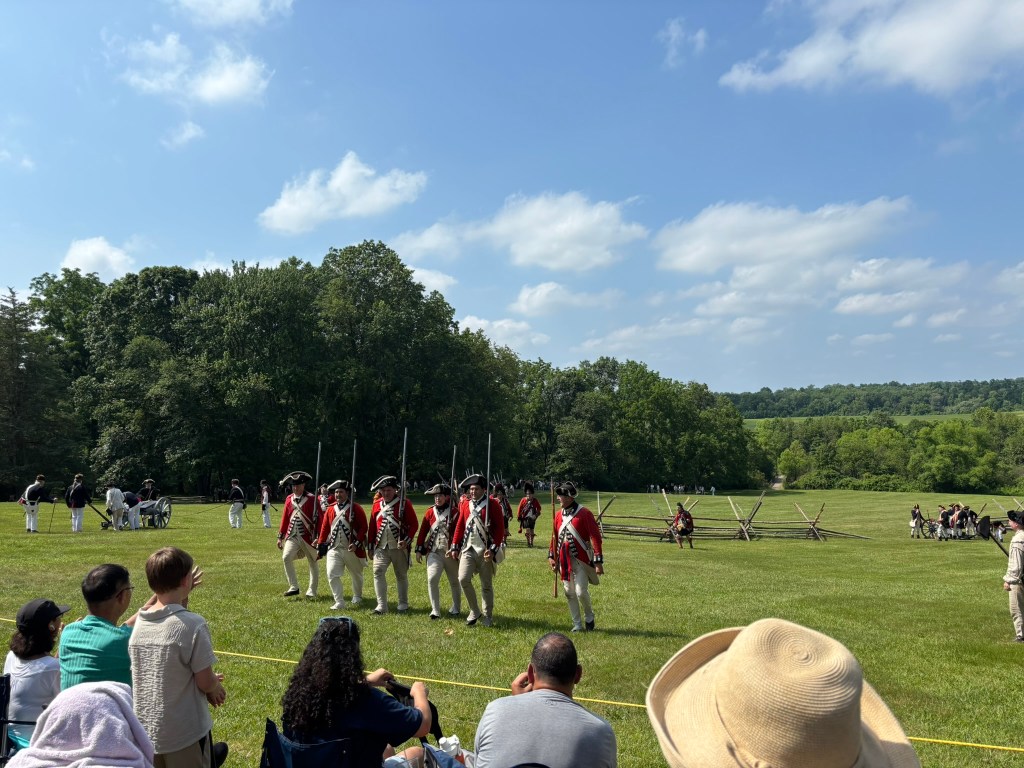
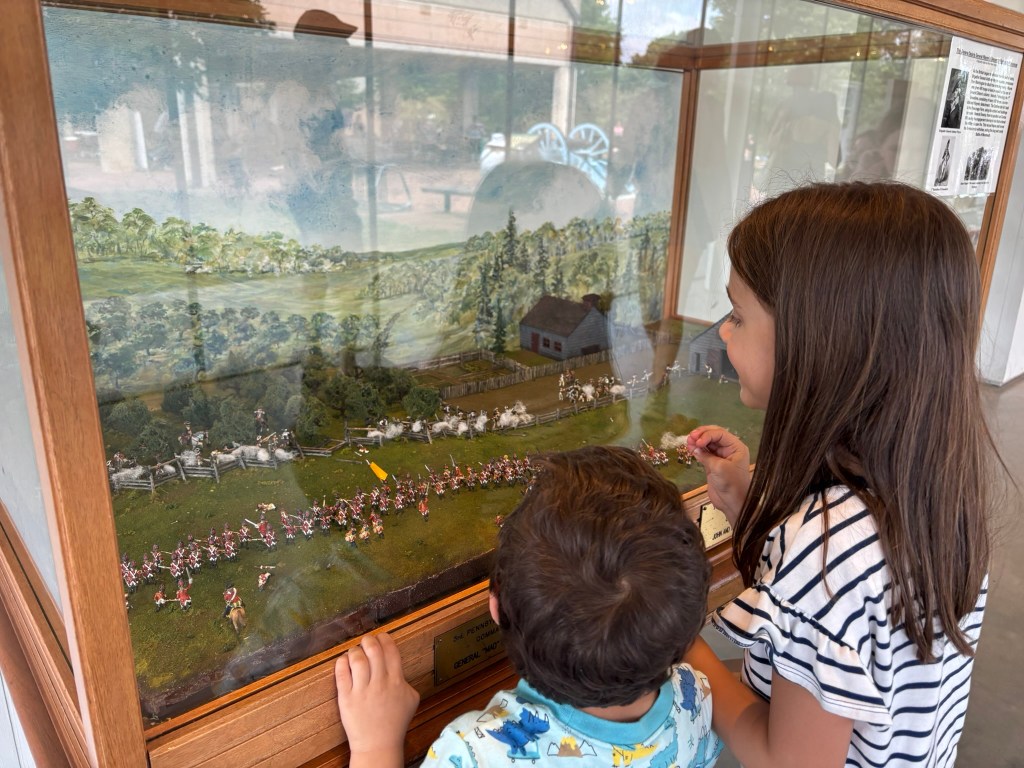
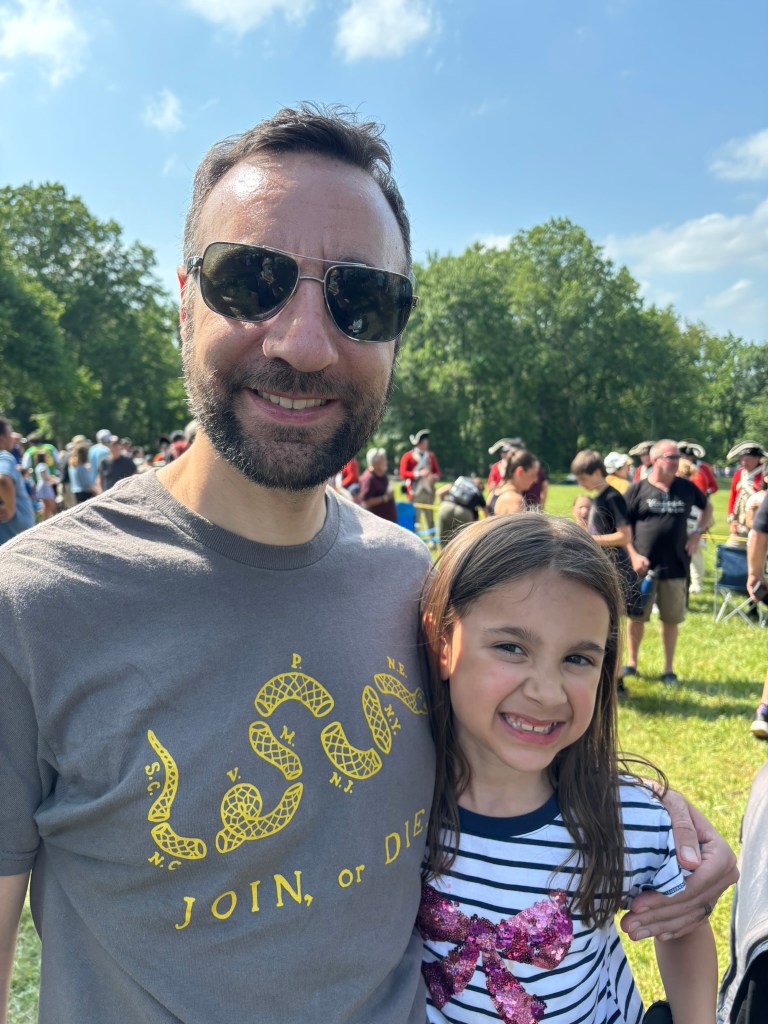
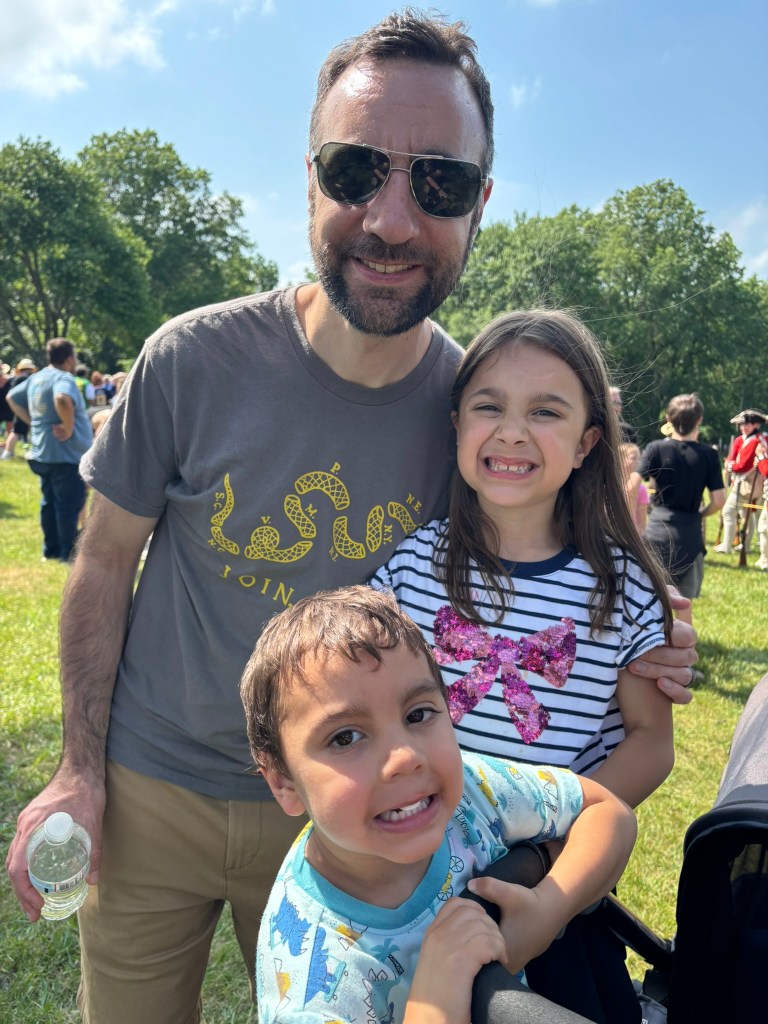
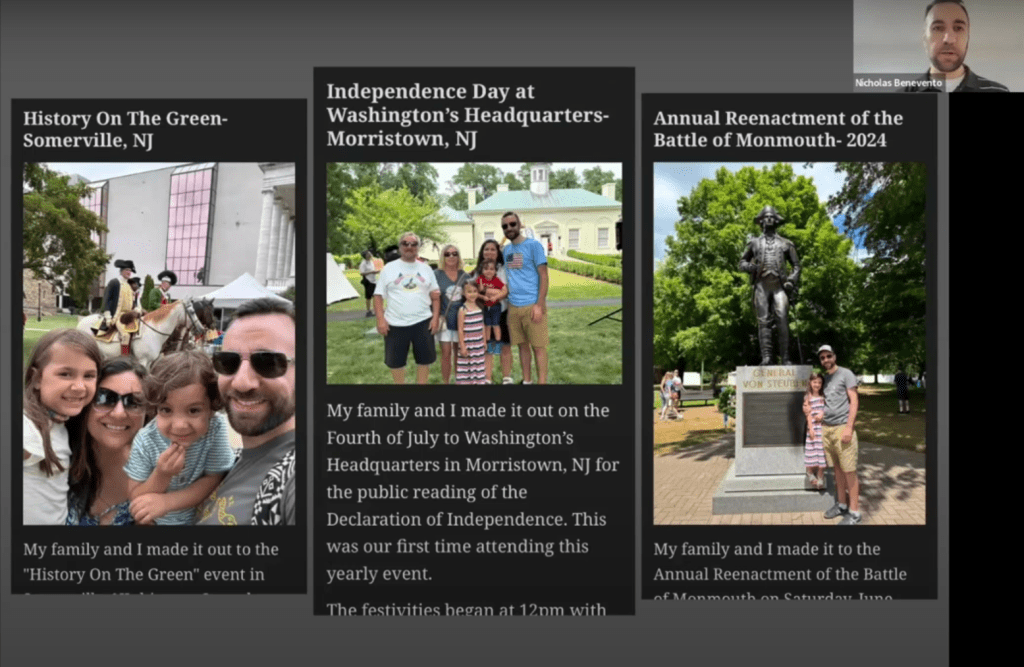
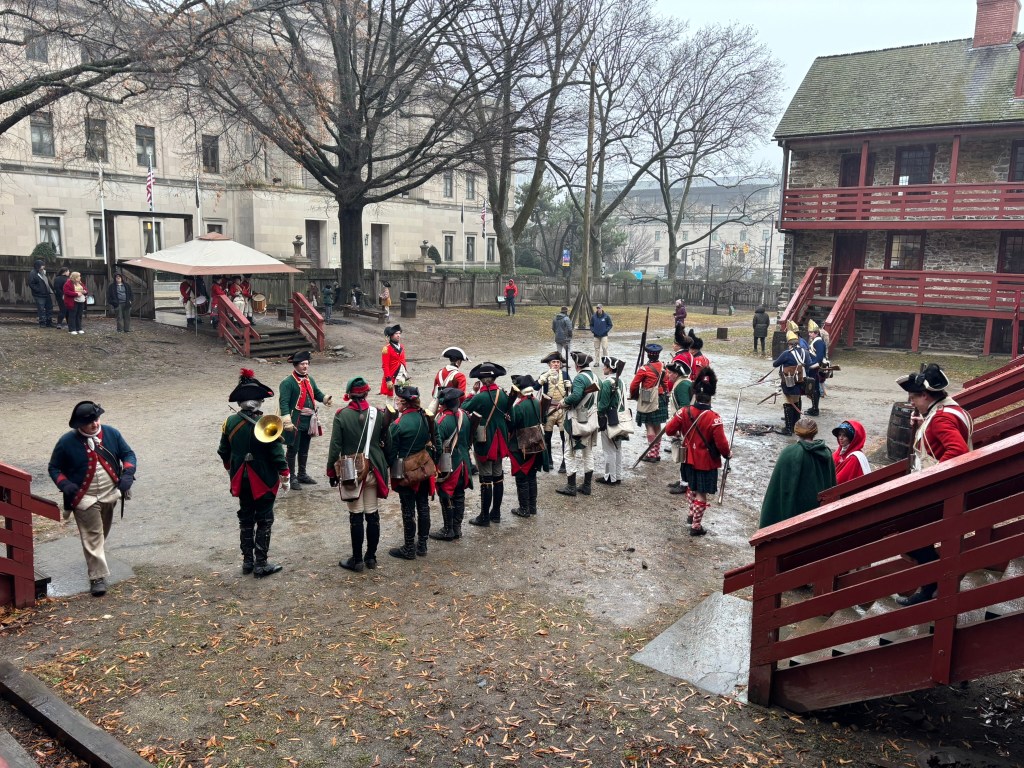
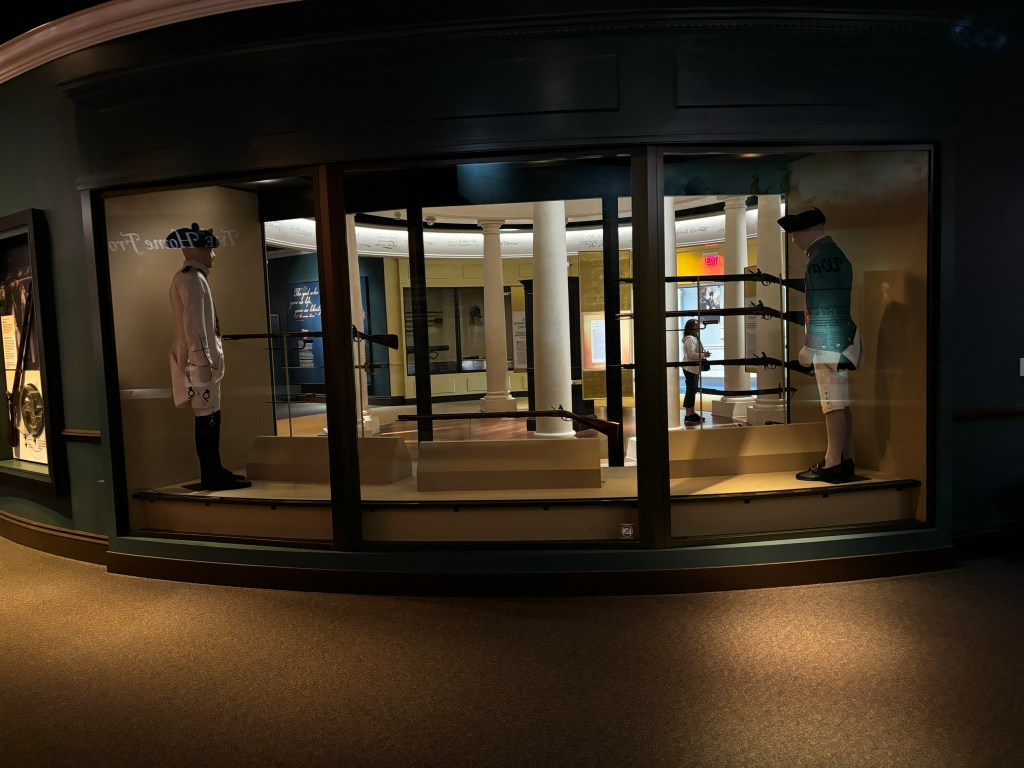
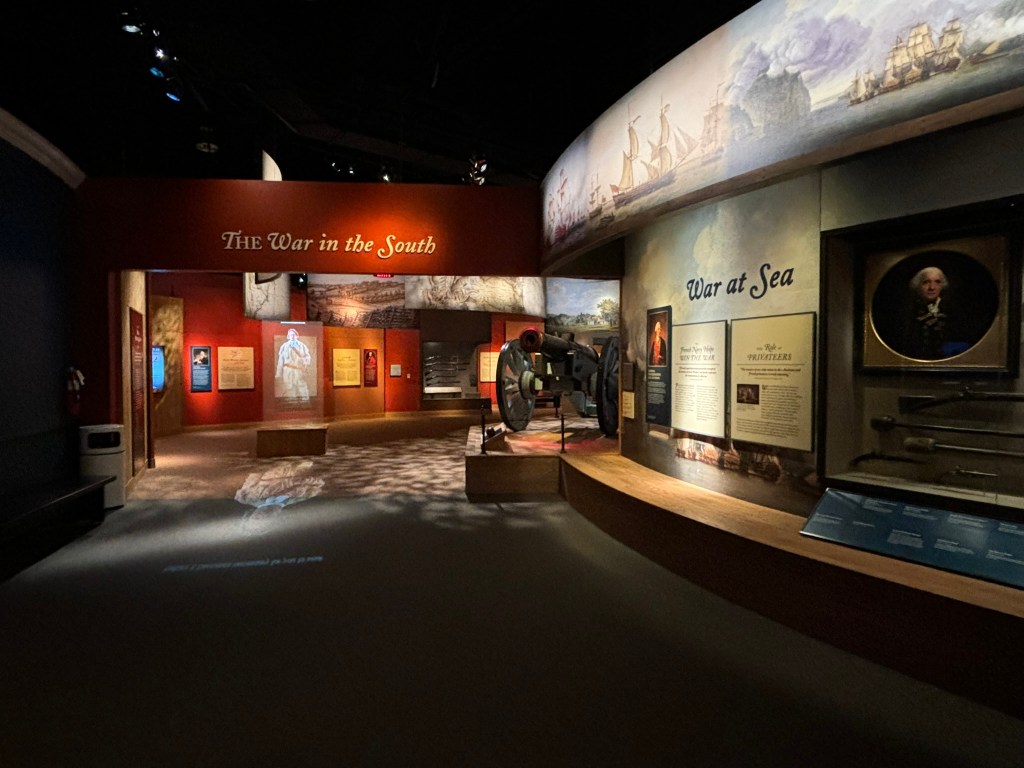
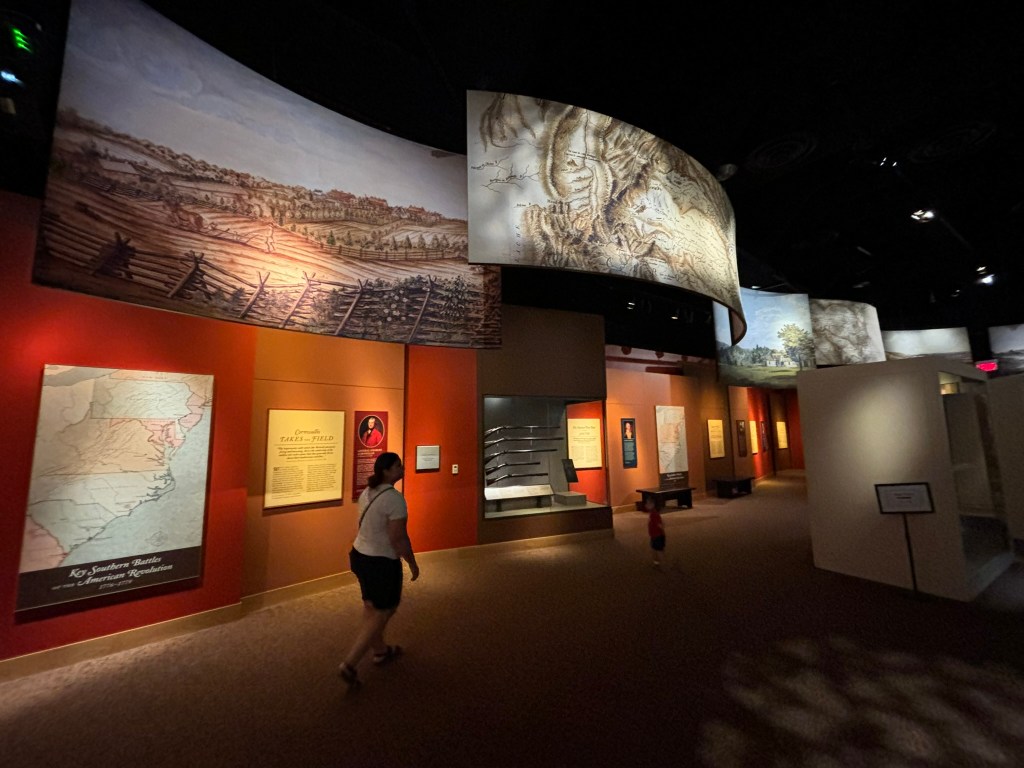
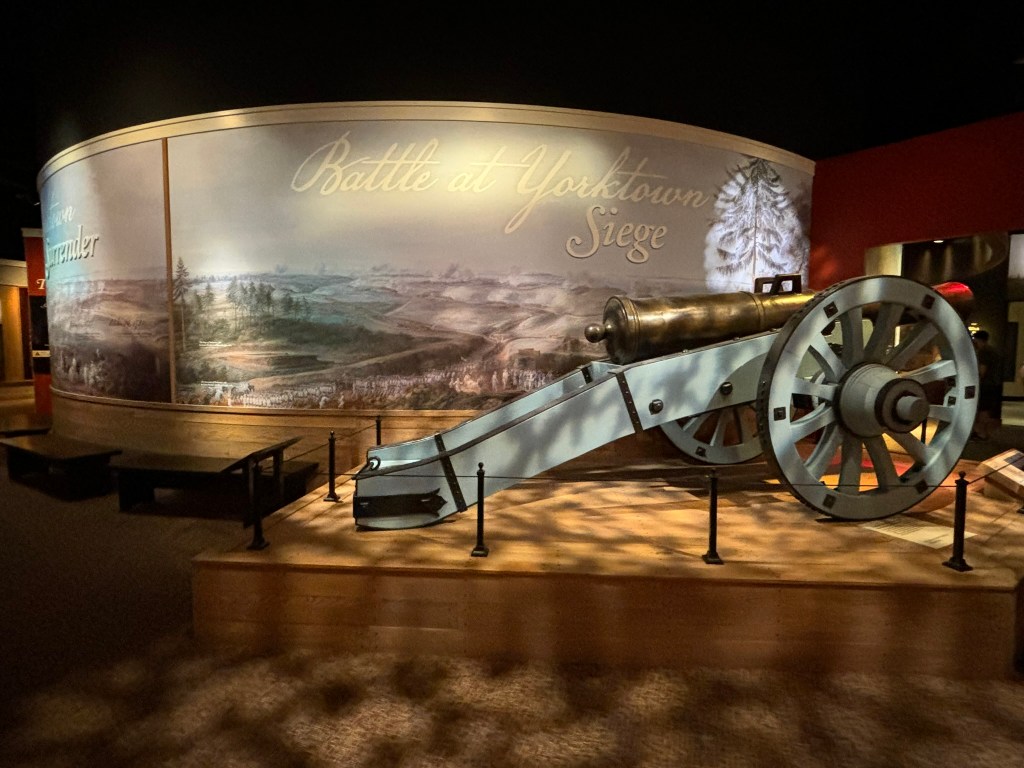
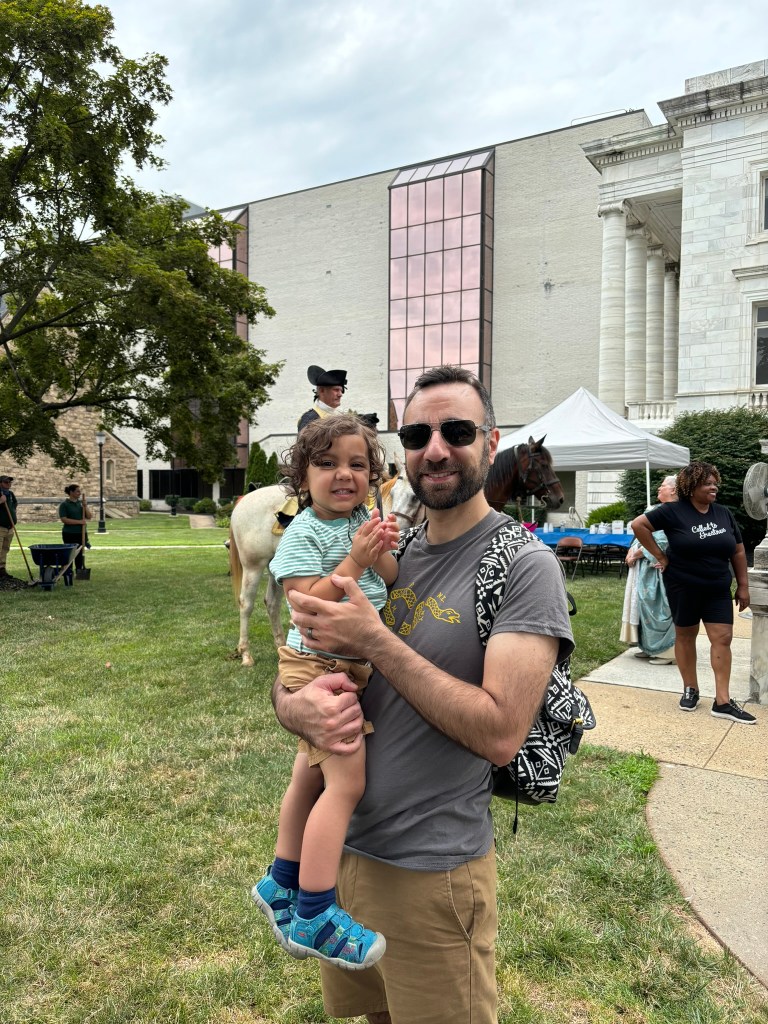
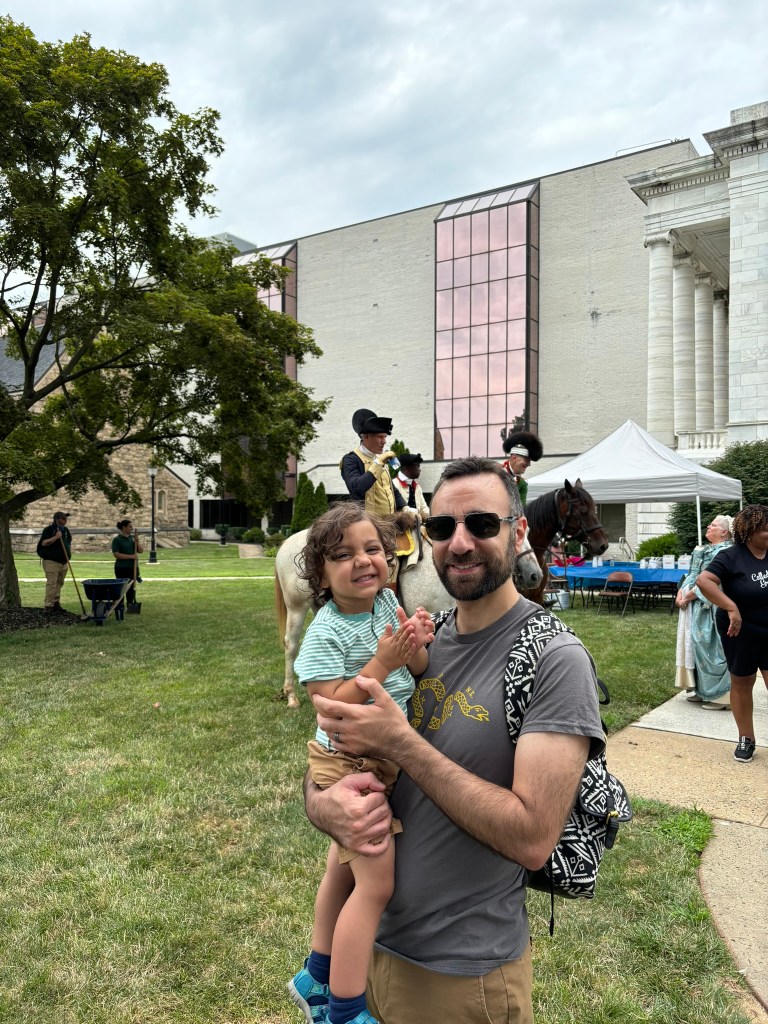
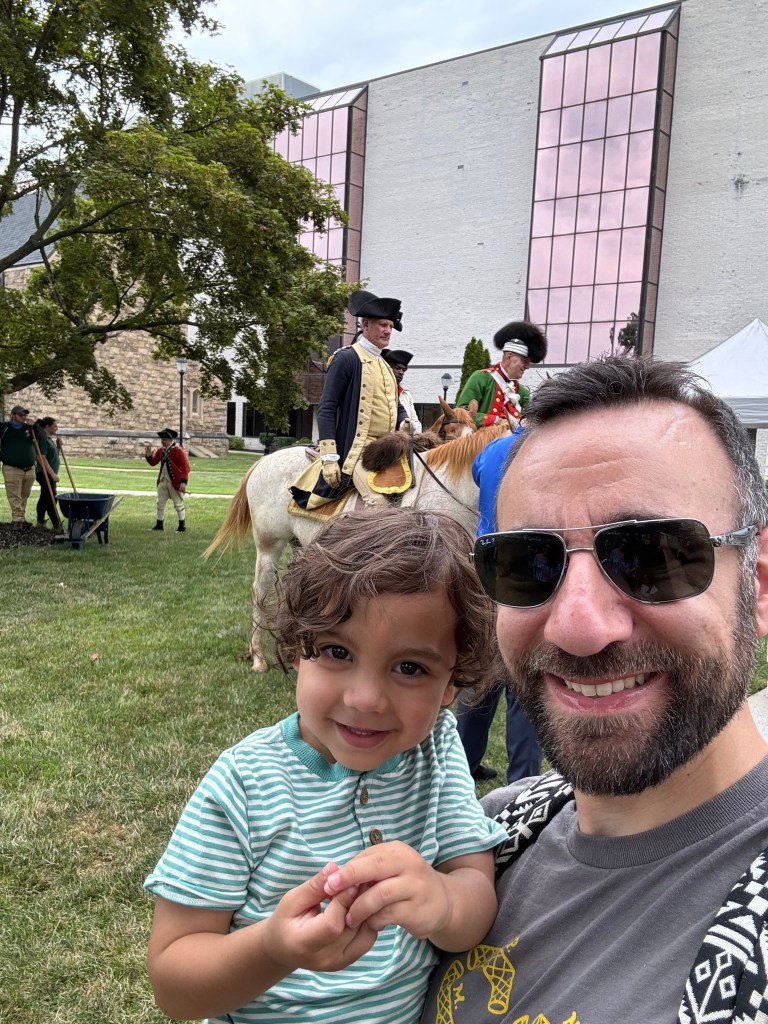
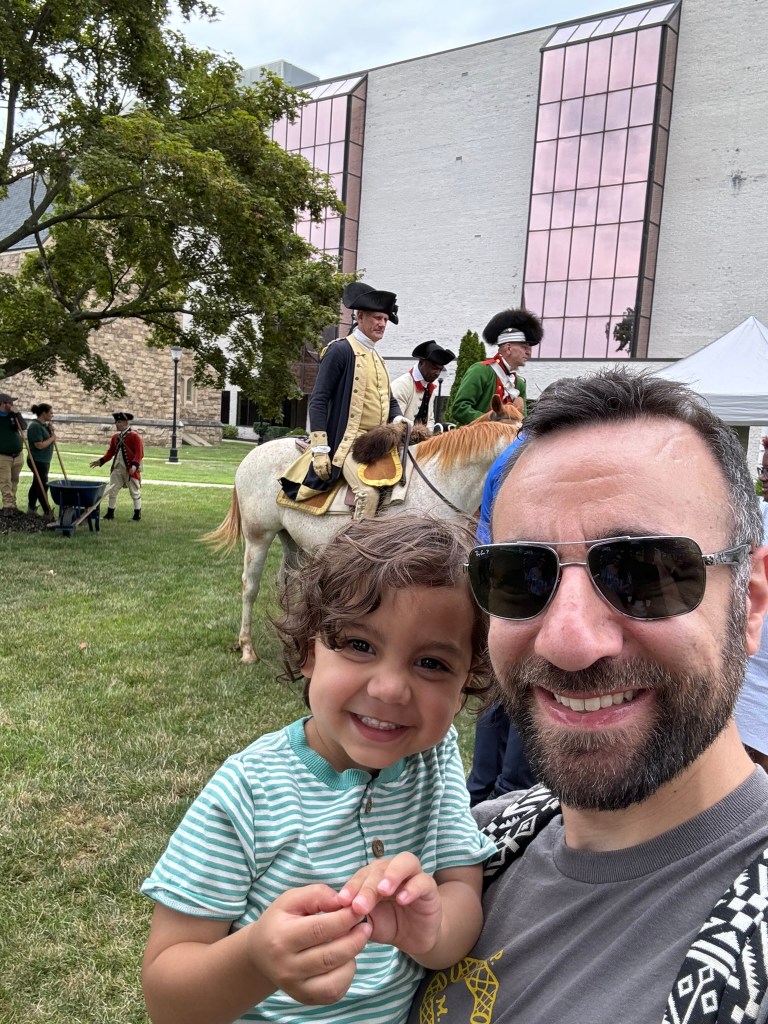
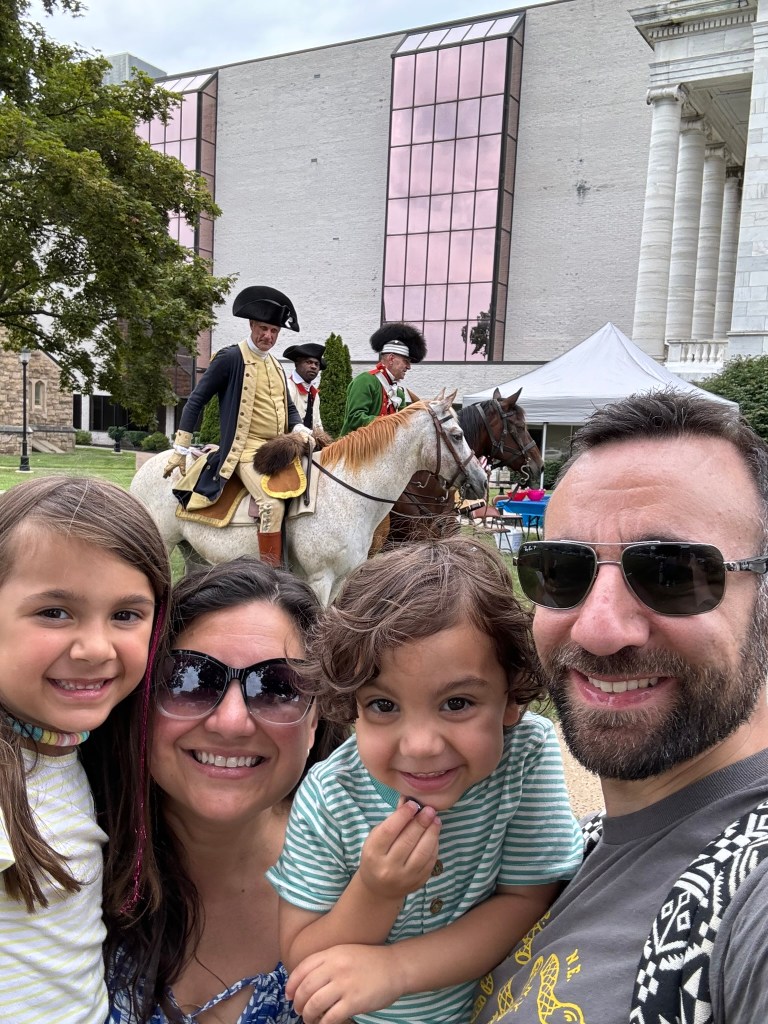
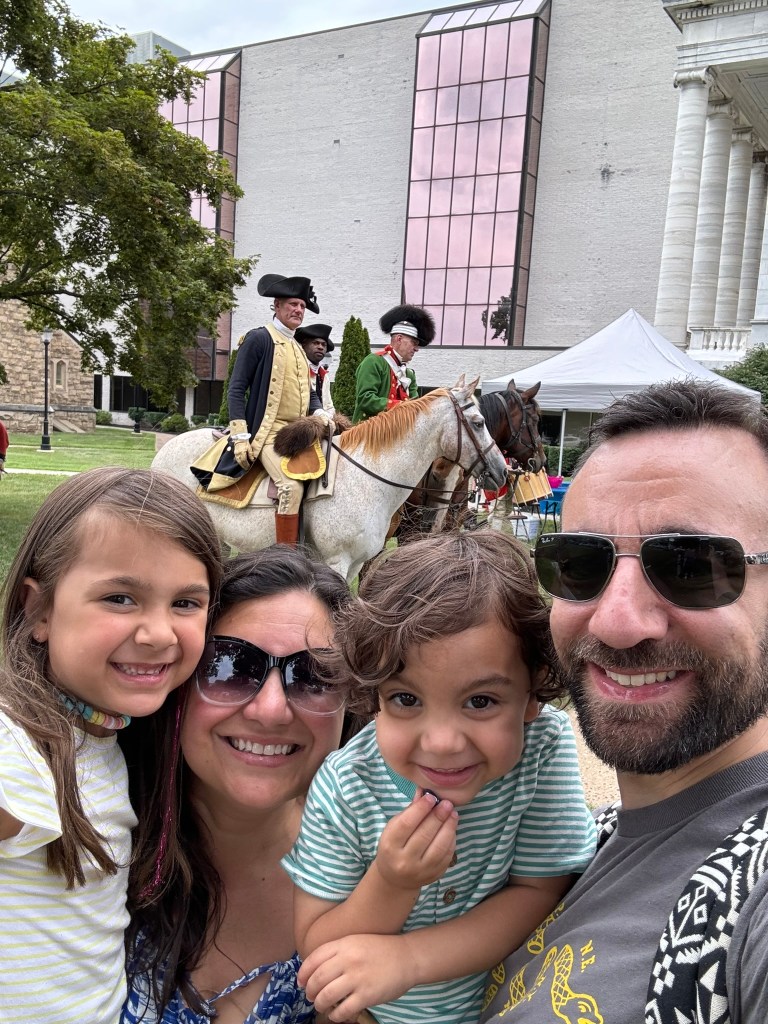
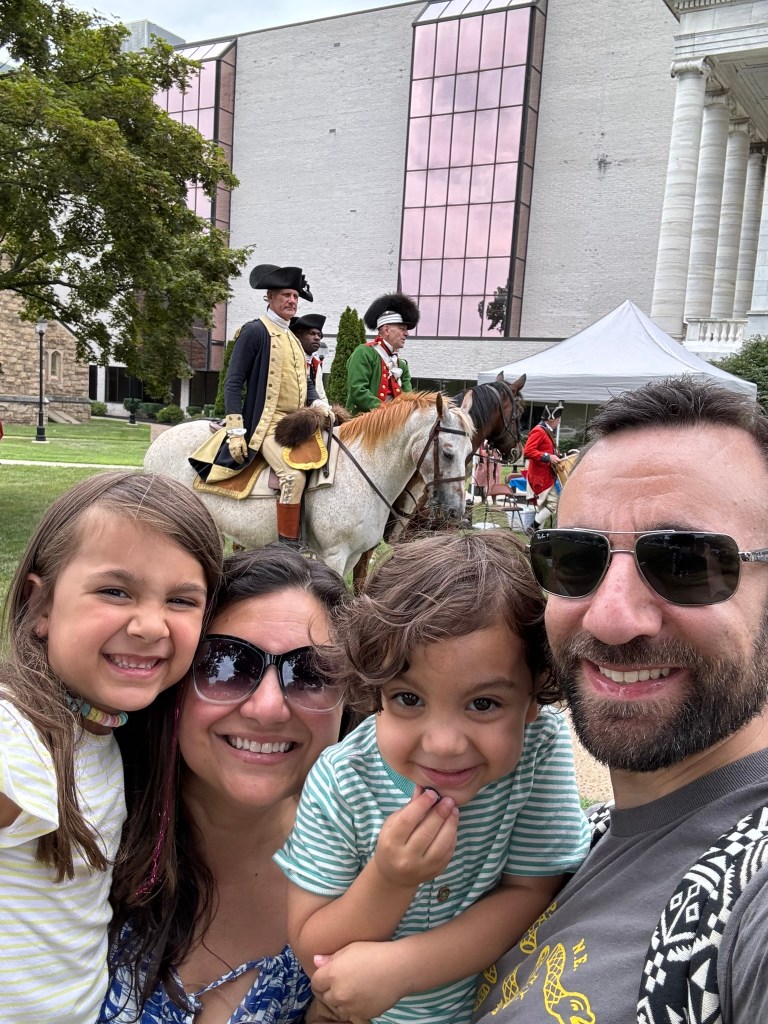
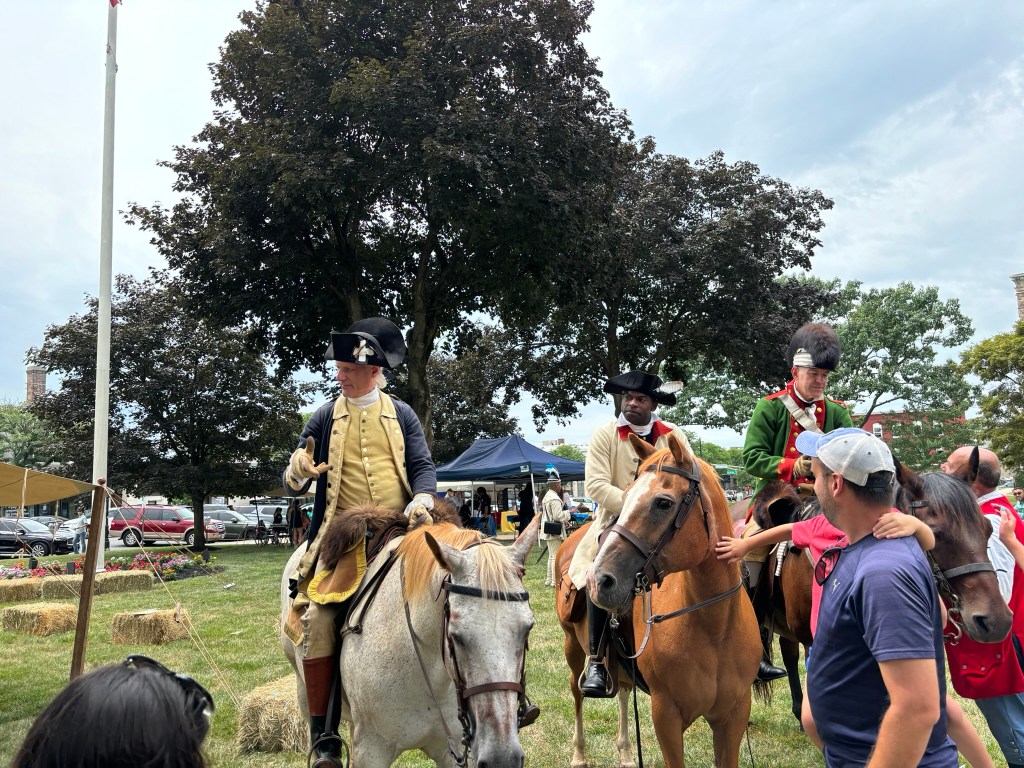
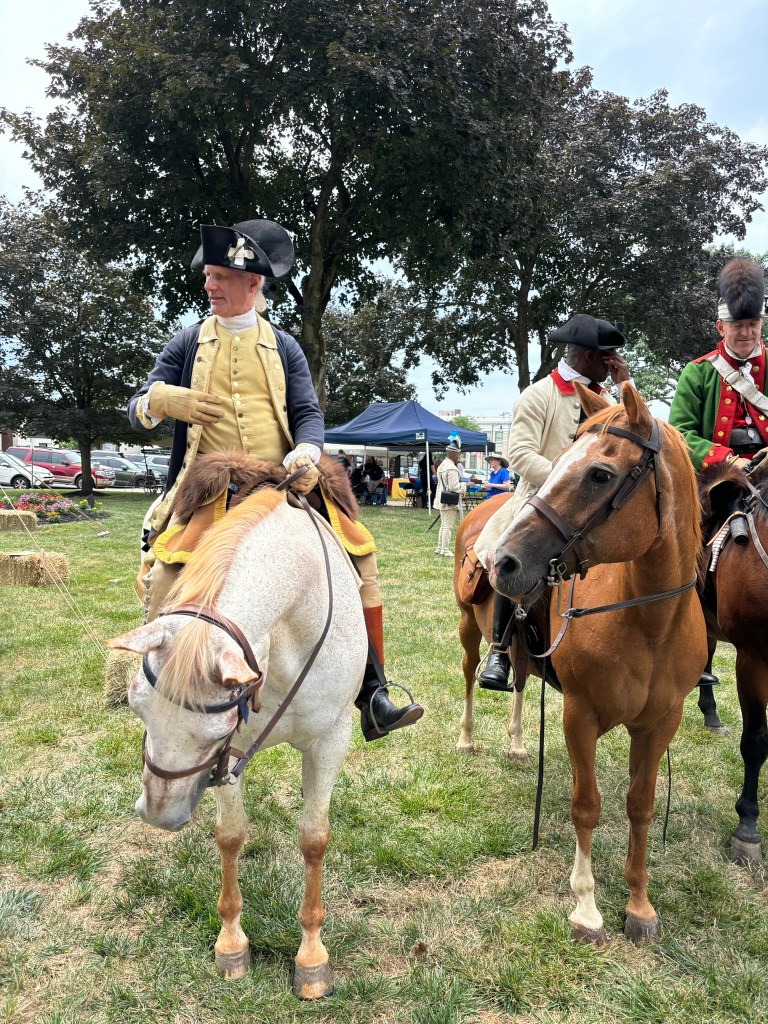
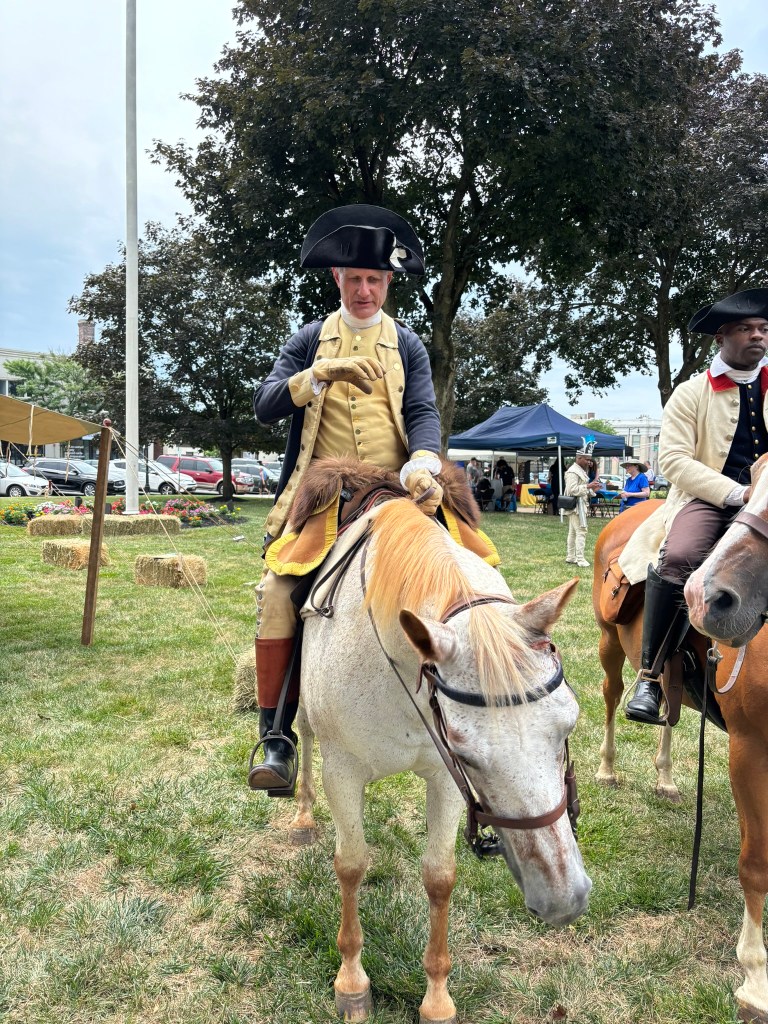
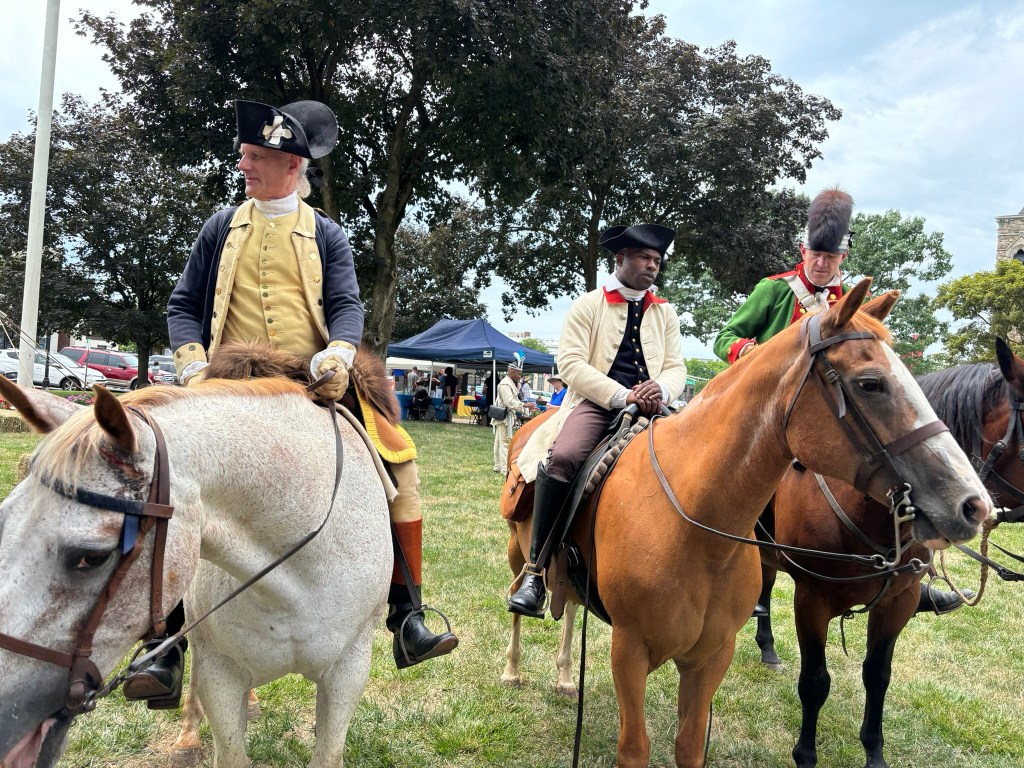
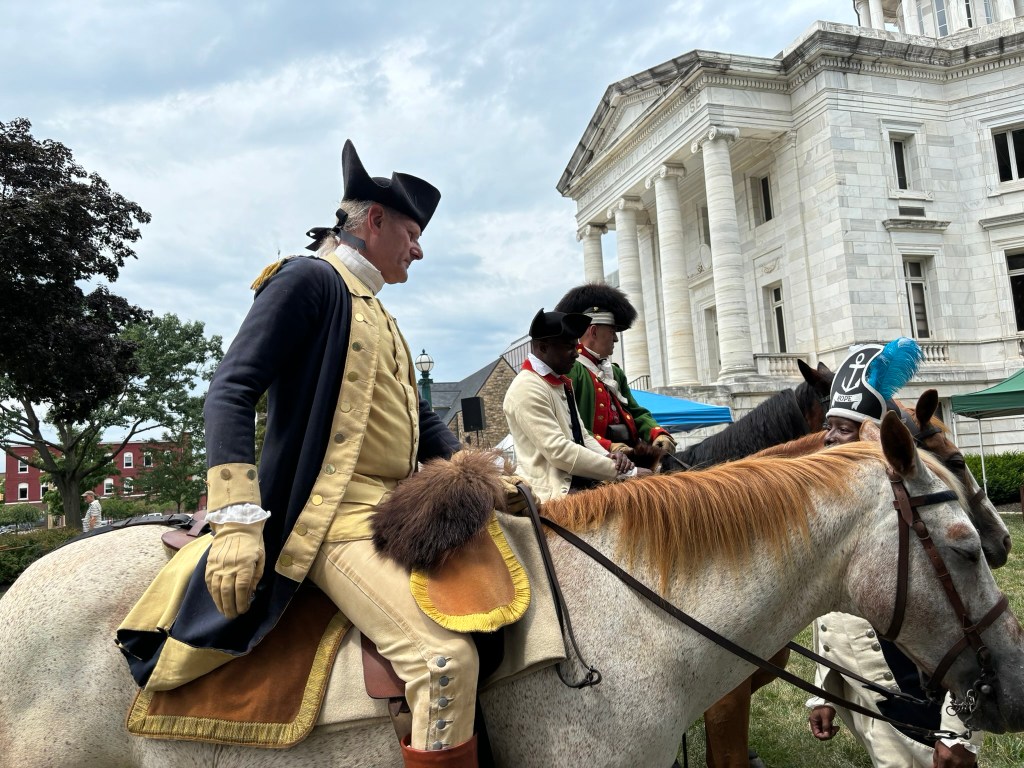
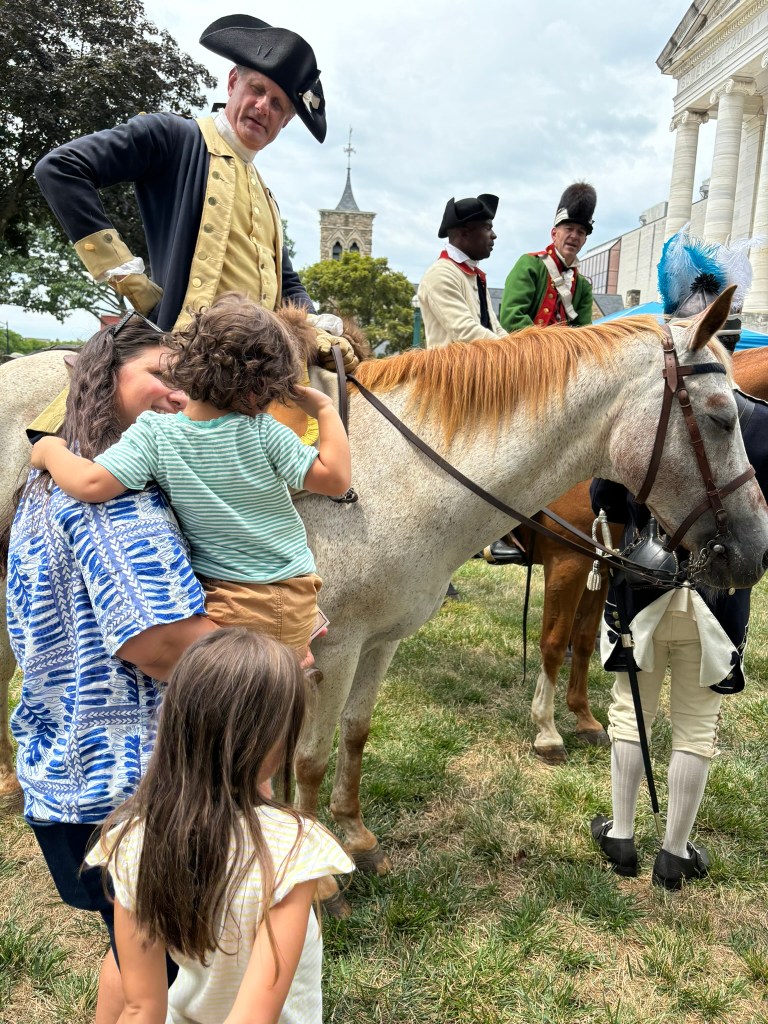
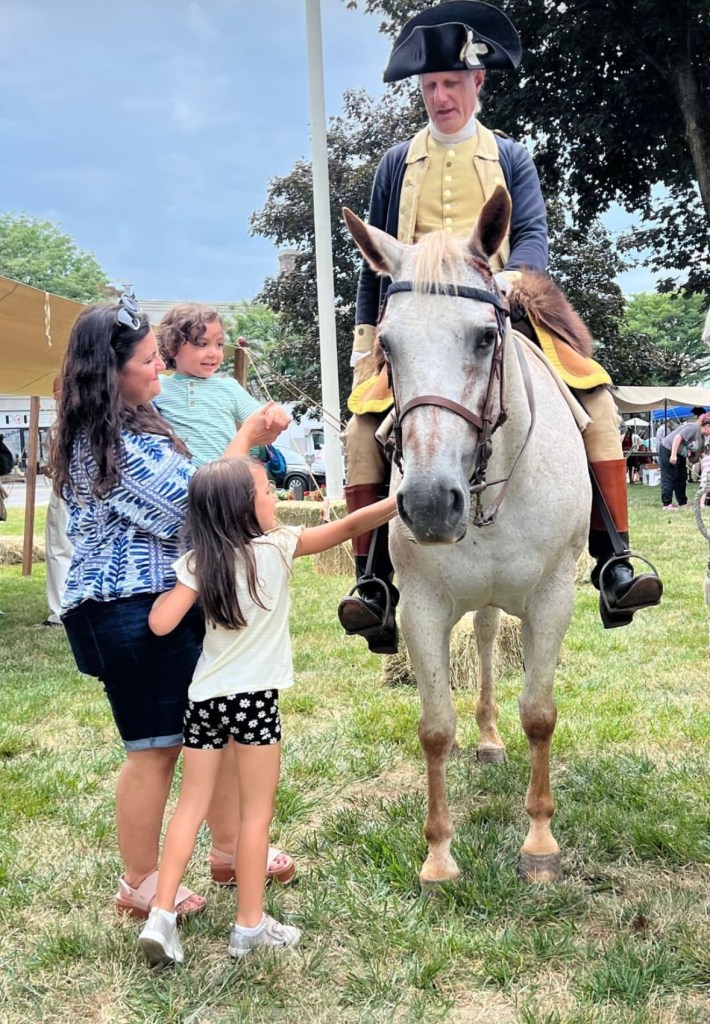
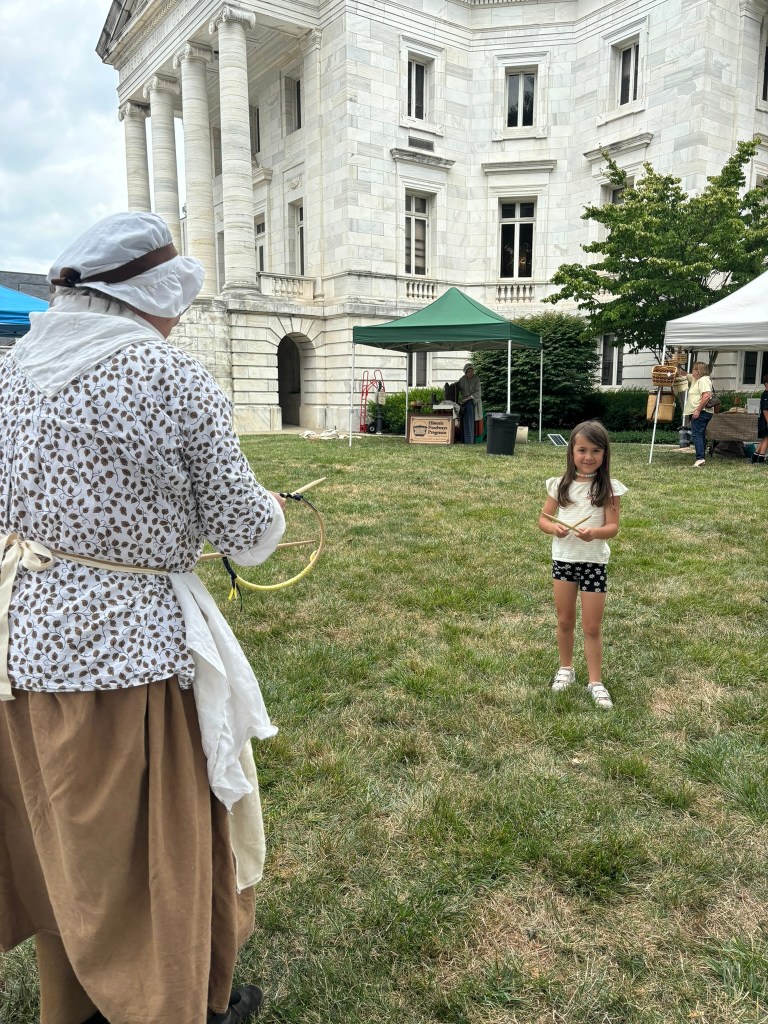
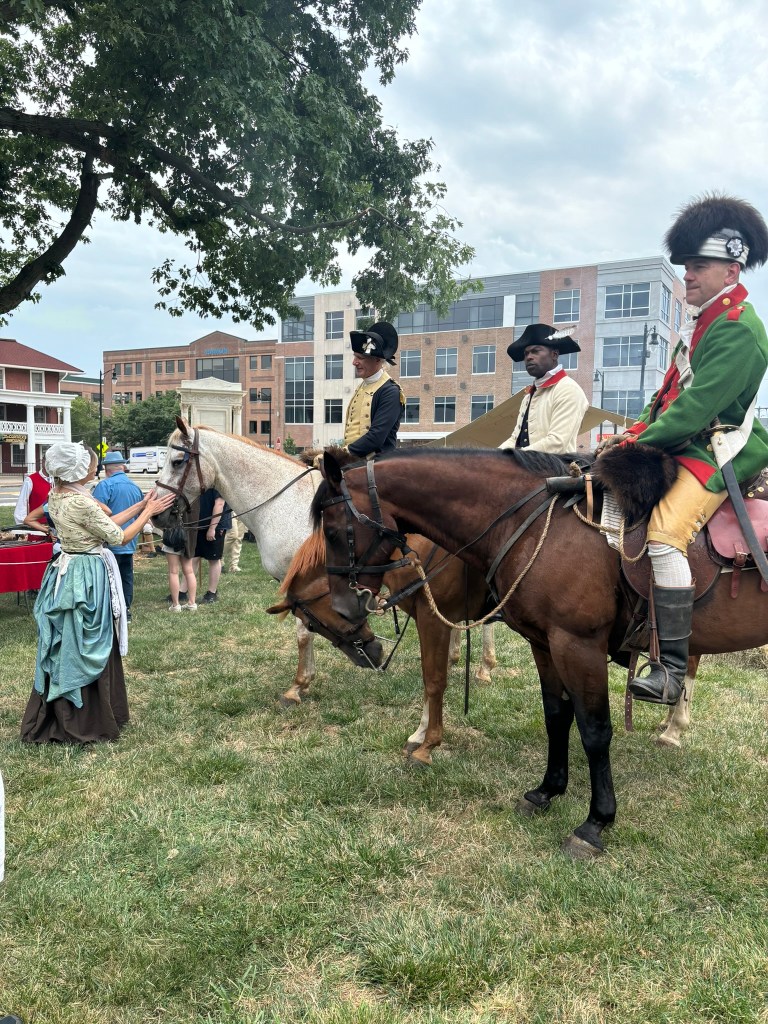
On June 28th, my family and I returned to the annual reenactment of the Battle of Monmouth, held in honor of the historic battle that took place on the same date in 1778. This marked our second year attending, and once again, the event did not disappoint. Among Revolutionary War reenactments, this is the largest I’ve experienced—both in terms of visitor turnout and the impressive number of dedicated reenactors who attend. If you have any interest in the American Revolution, this event is not to be missed. You can read about our experience from last year in 2024 [HERE].
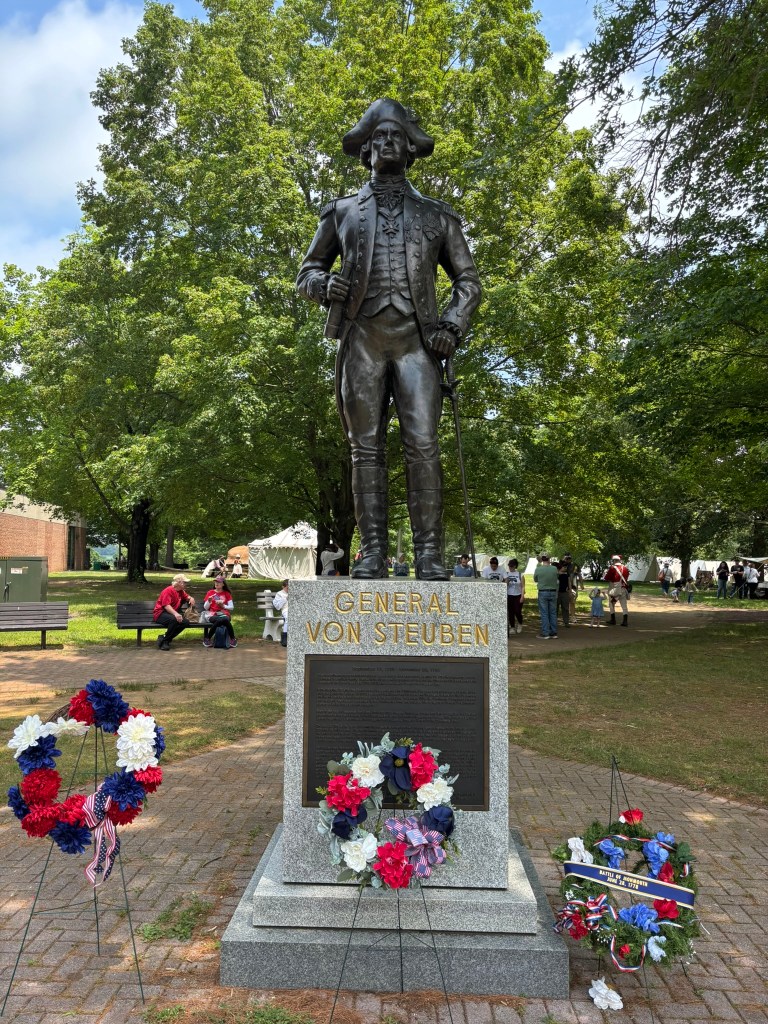
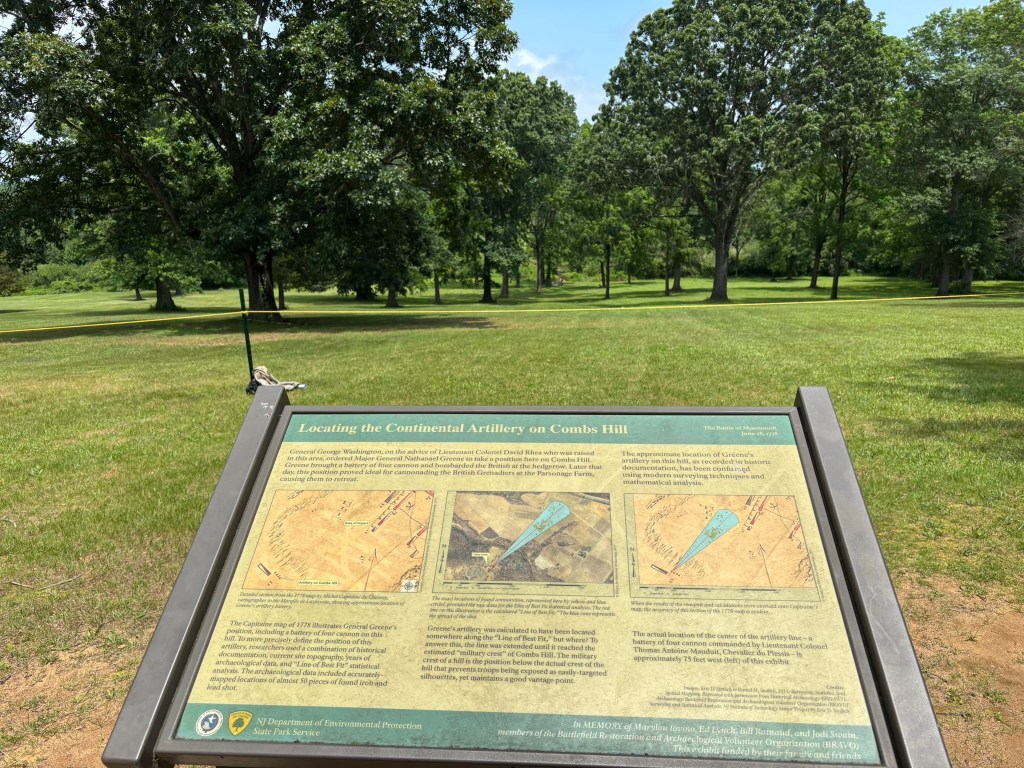
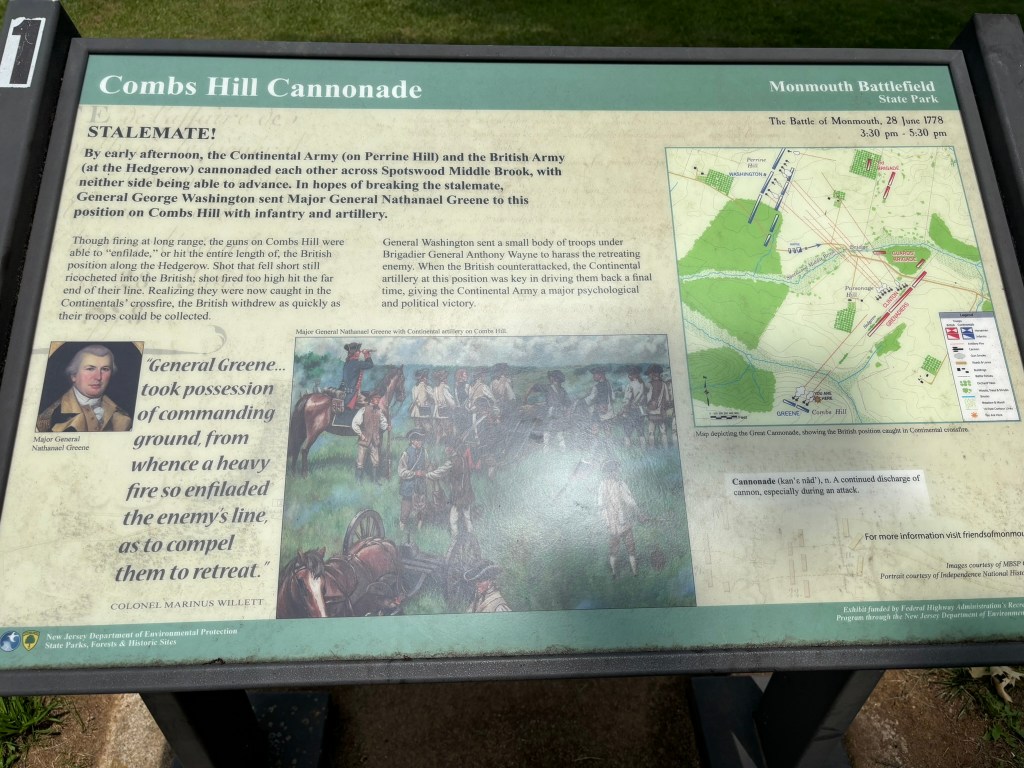
While the Battle of Monmouth did not yield a major strategic advantage for the Continental Army, it was a significant engagement in terms of scale and symbolism. As one of the largest battles of the Revolutionary War in terms of manpower, it demonstrated that the Patriot forces could stand toe-to-toe with the British in open combat. It featured the largest artillery duel of the war and marked a turning point in the professionalism of the Continental Army. After the grueling winter at Valley Forge, where relentless drilling under the Prussian officer Friedrich von Steuben transformed the army into a disciplined fighting force, the Continentals finally had the chance to prove their strength on the battlefield. The results were evident at Monmouth.
The battle is also remembered for its extreme heat, with temperatures reportedly reaching 100 degrees. Despite the intensity of the fighting, the British continued their retreat from Philadelphia to New York the following night as originally planned, allowing General George Washington to claim the battle as a moral victory for the American cause.
Monmouth is also famous for the legendary heroics of Molly Pitcher, who is honored at the battlefield park for her bravery in the thick of combat.
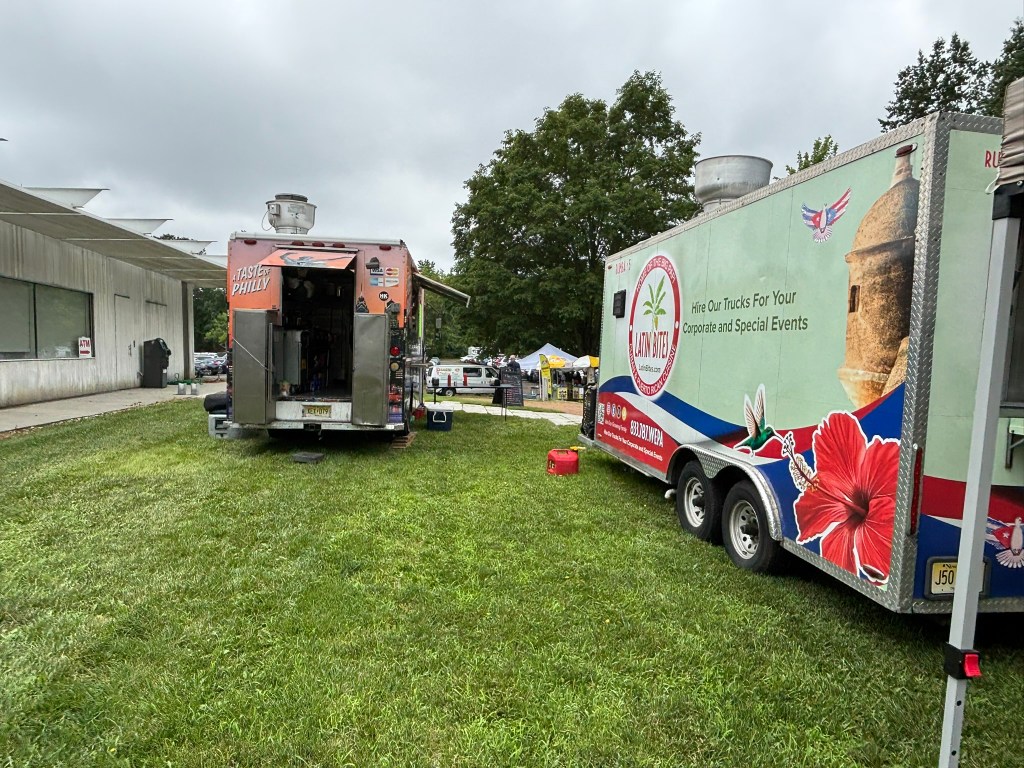
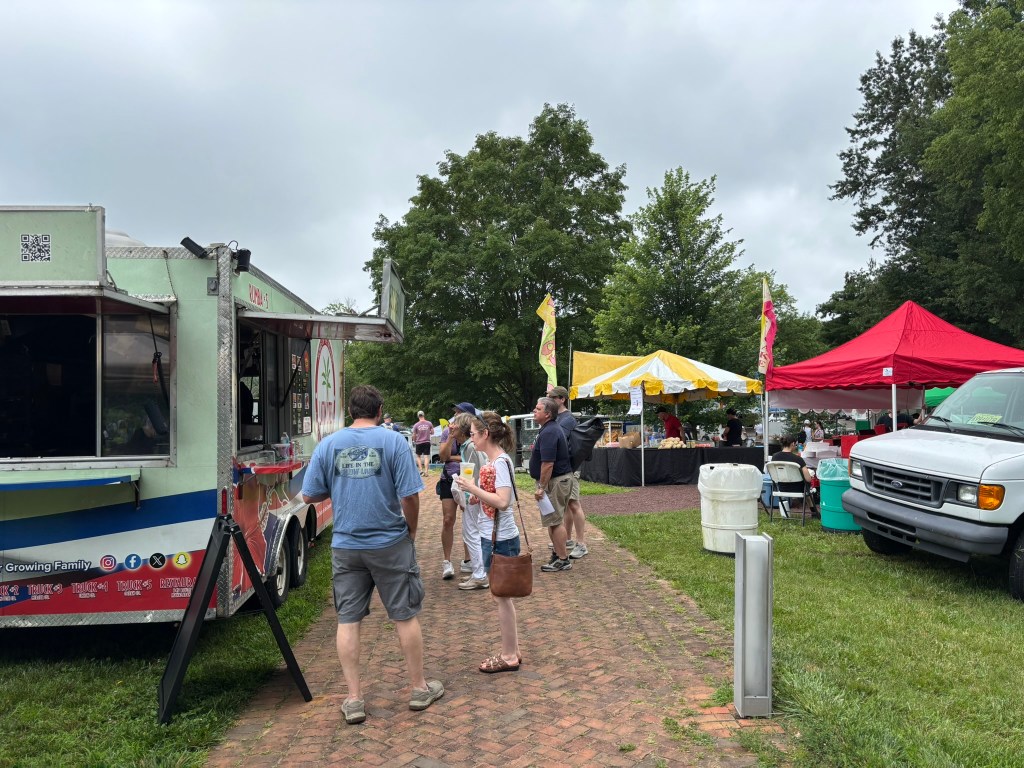
My family and I arrived at the park around 11:30 a.m., planning to have an early lunch before attending a 12:15 p.m. program about Molly Pitcher. One of the great things about this event is the variety of food trucks on site, which makes it easy to feed the kids without needing to stop along the way. There are several different food options available—we opted for empanadas from Latin Bites.
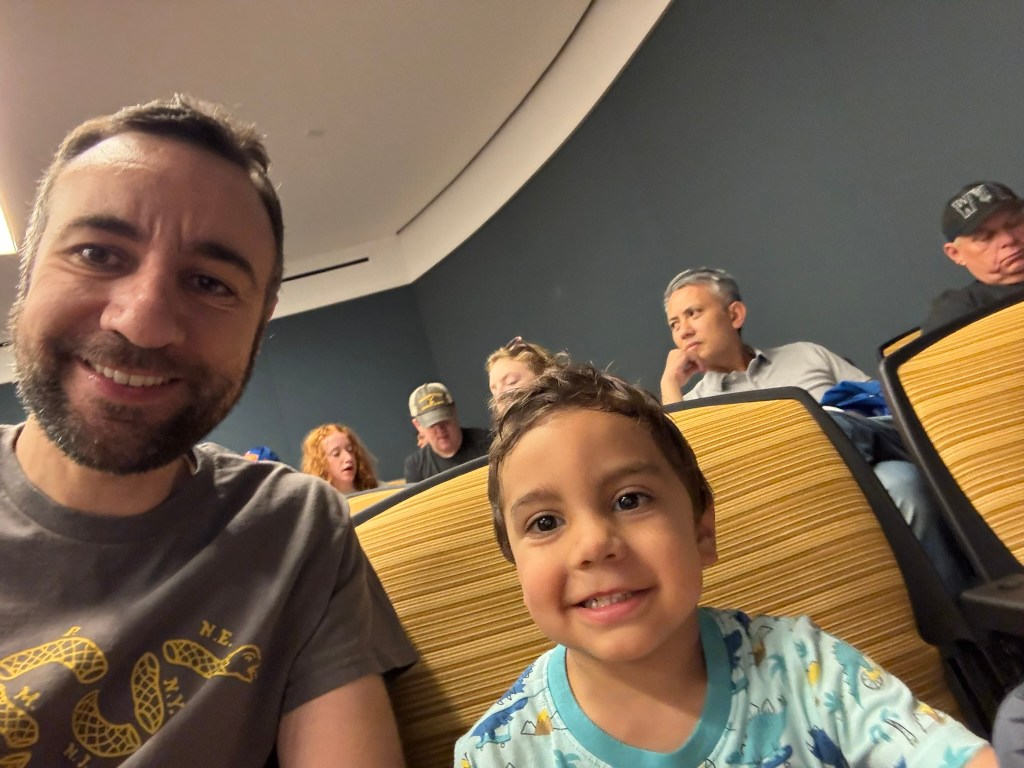
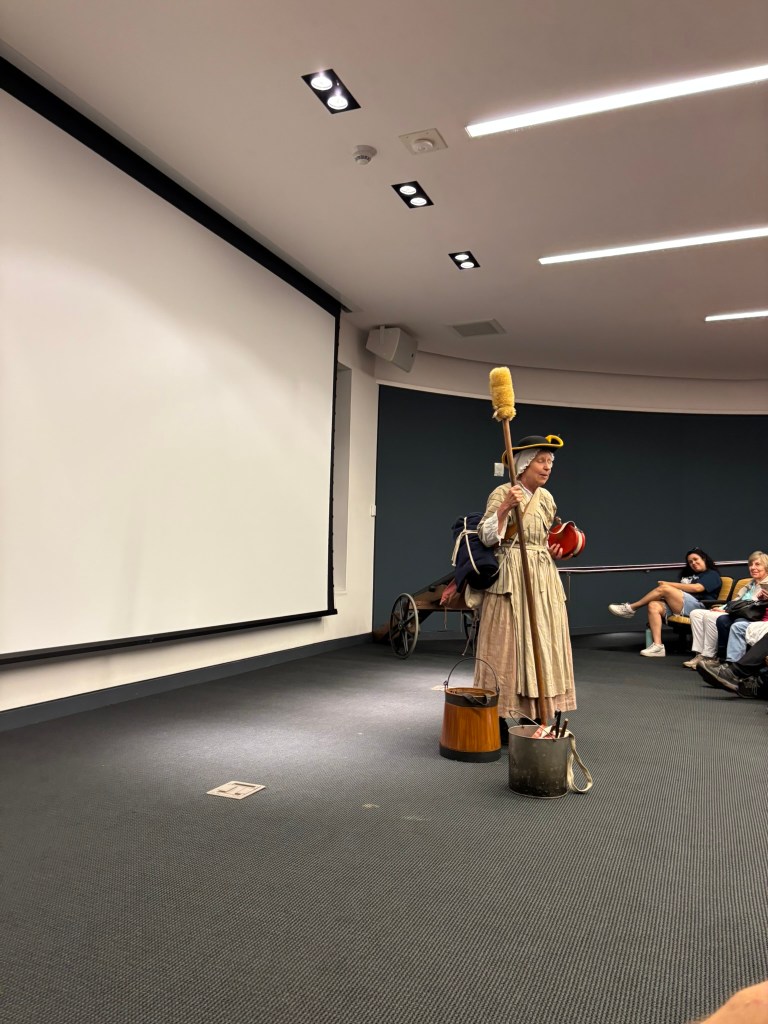
After lunch, we made our way to the auditorium for a program entitled “Over Here, Molly Pitcher.” Historian Stacy Roth portrayed Molly Pitcher, speaking in character as the famed Revolutionary War figure reflecting back on her life in the 1820s. Her performance focused primarily on Molly’s experiences during the war, with special emphasis on the events of the June 1778 Battle of Monmouth. The program lasted about an hour and offered an engaging and informative look into this legendary figure’s story.
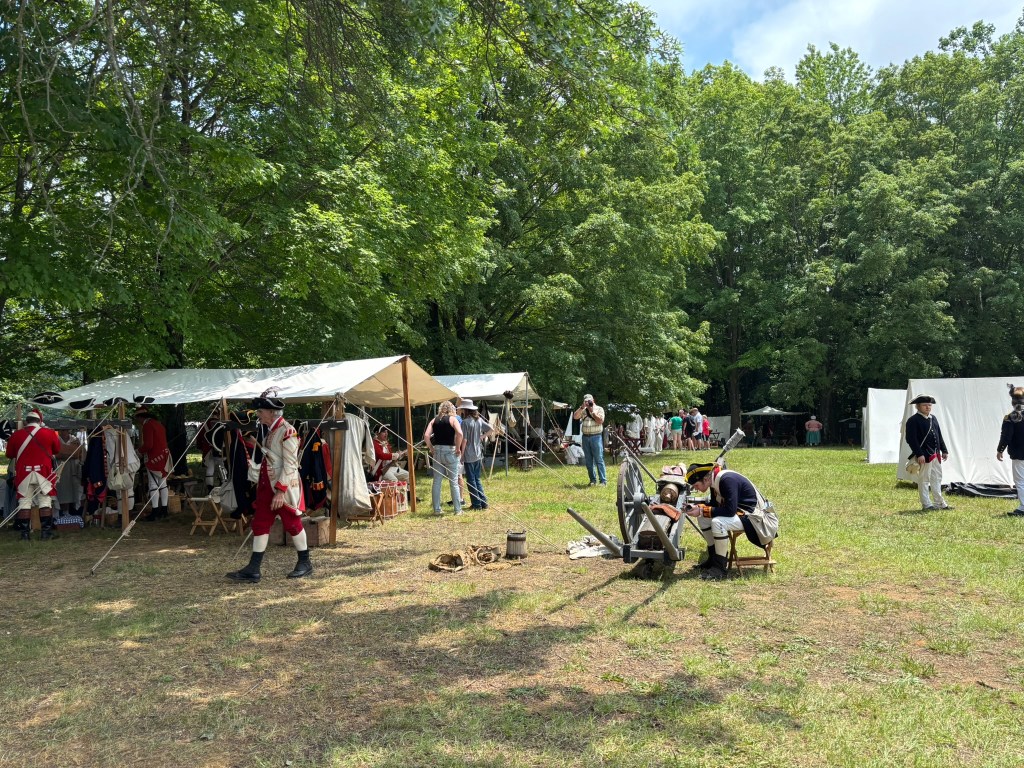
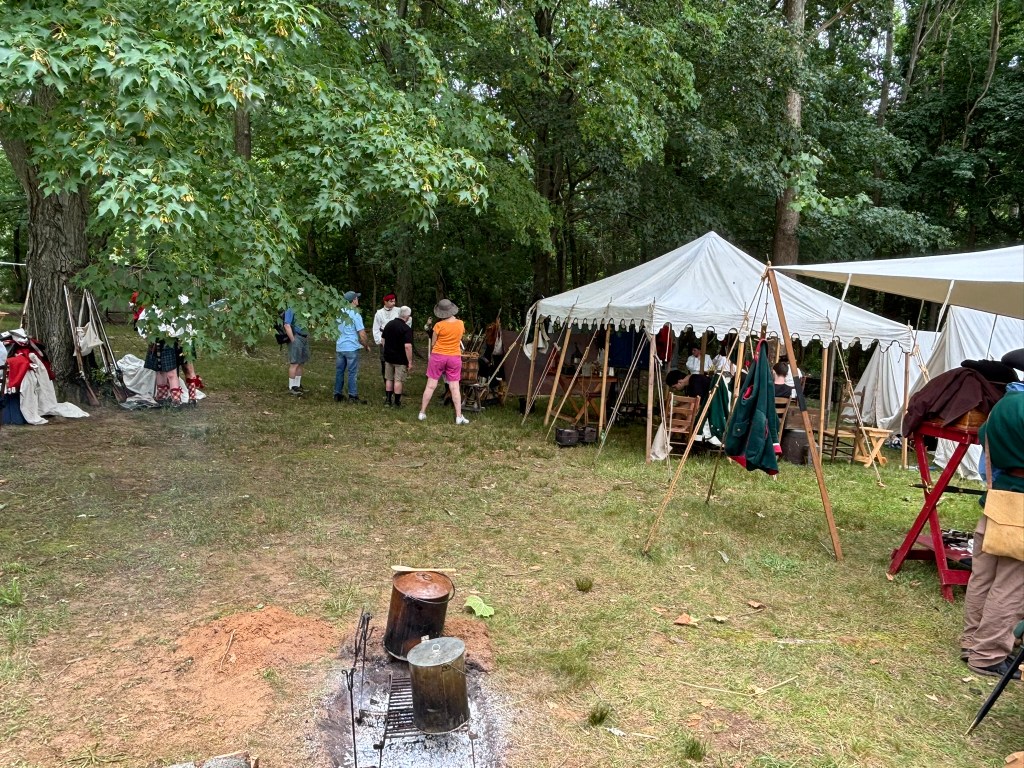
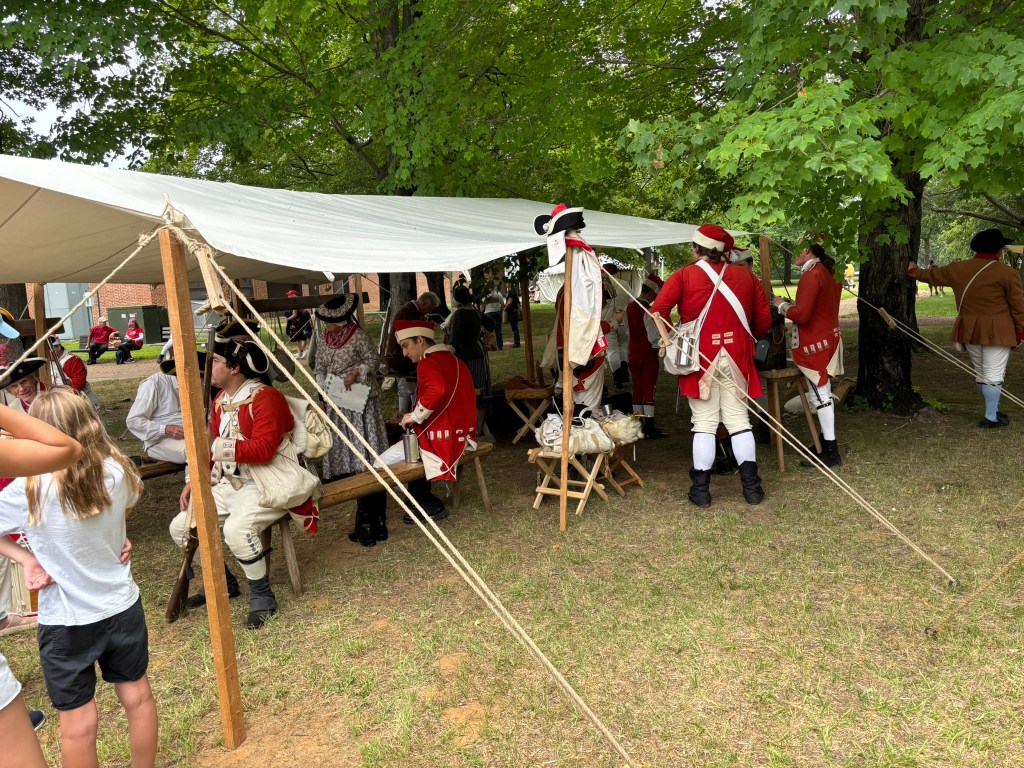
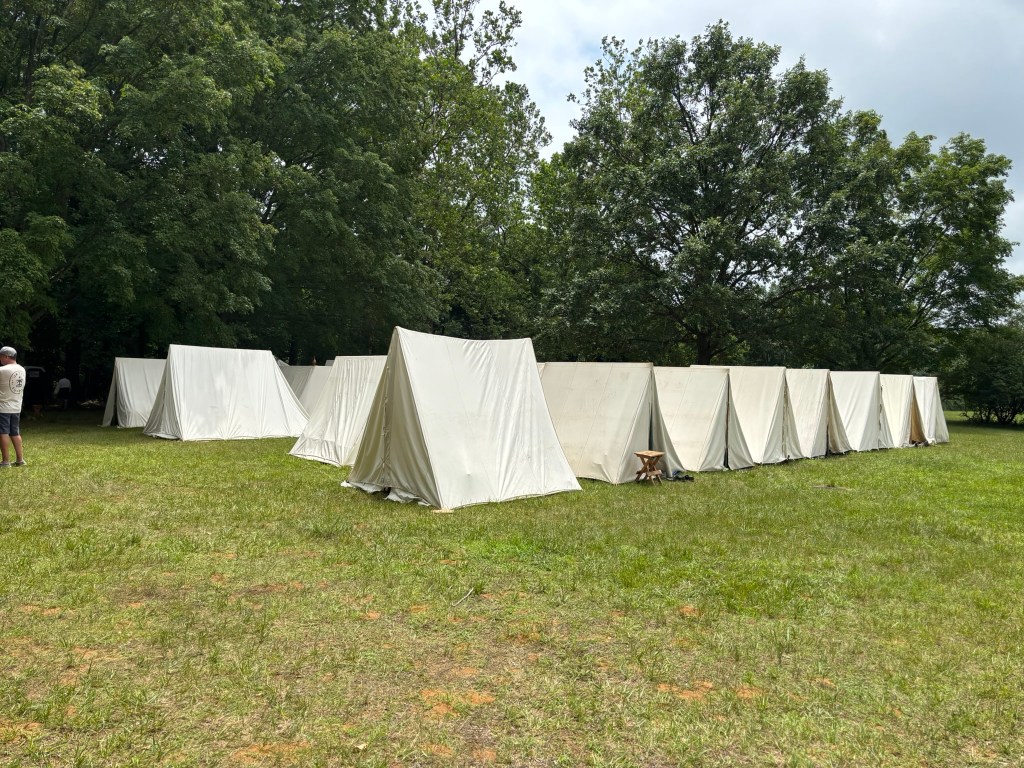
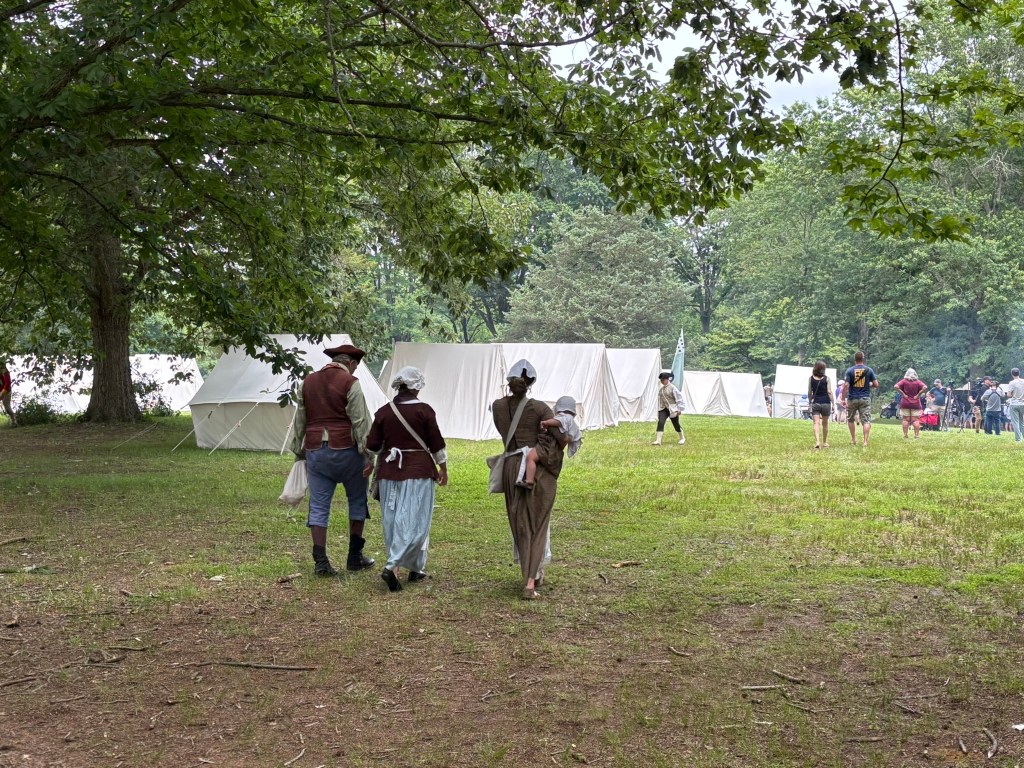
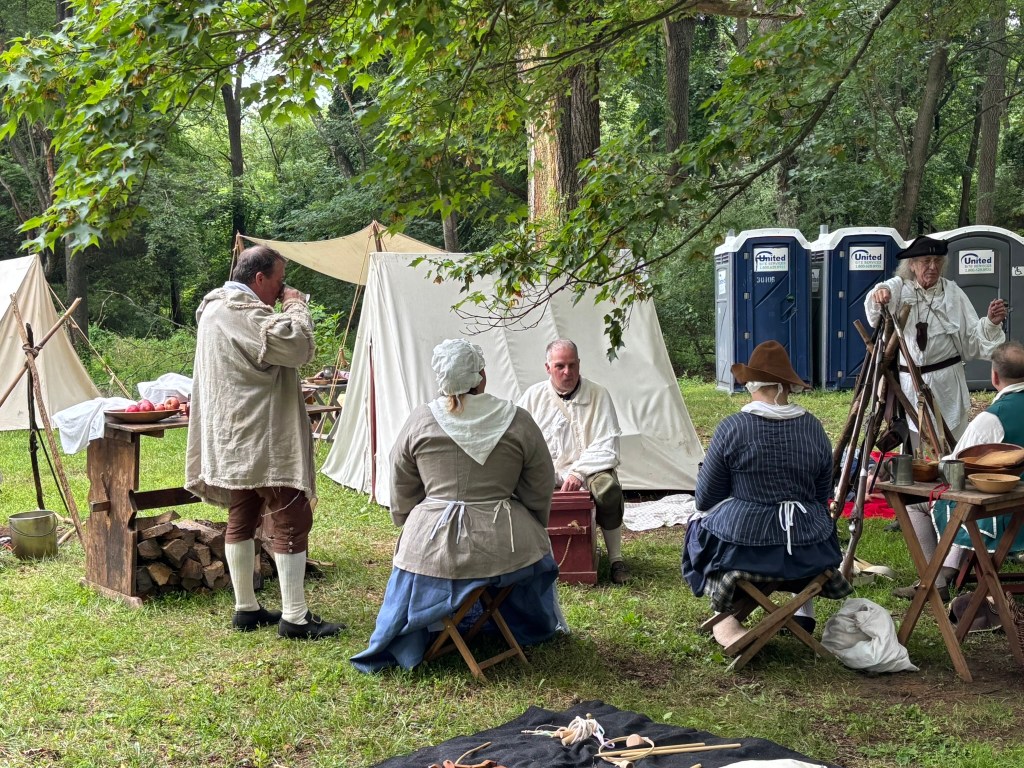
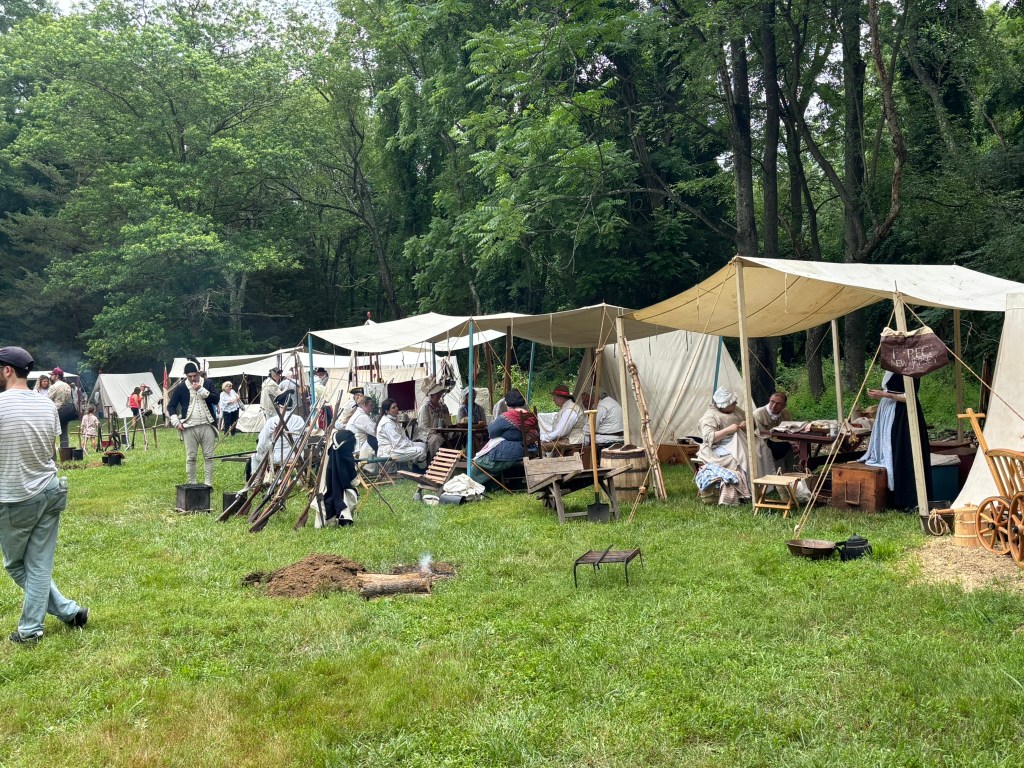
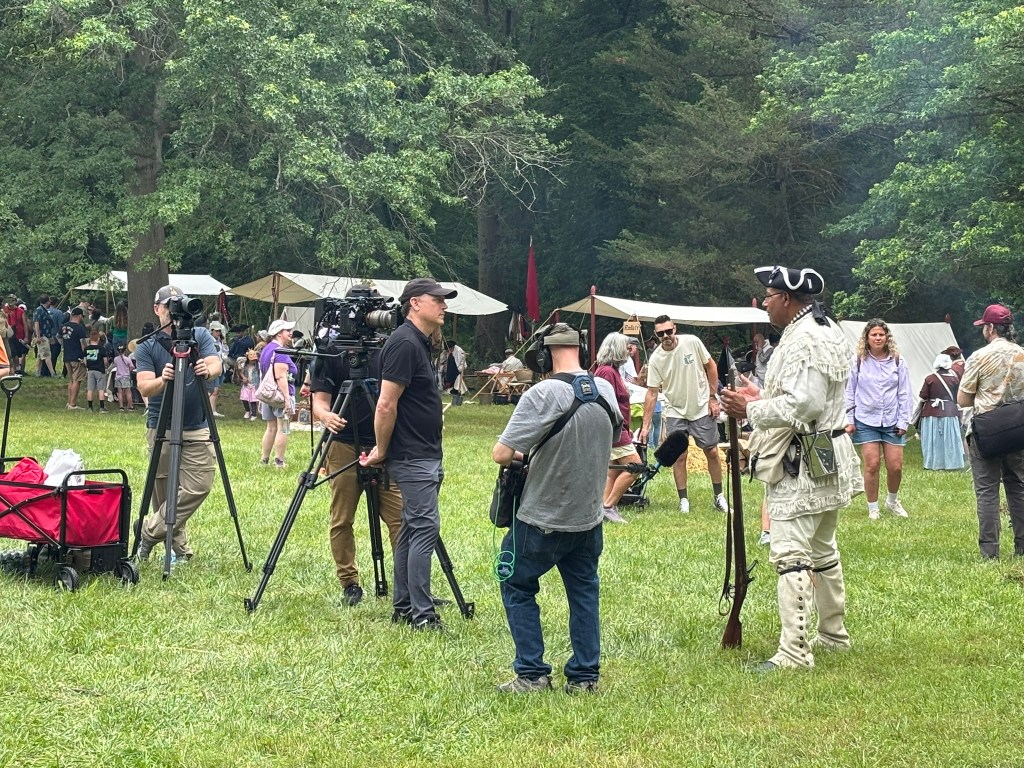
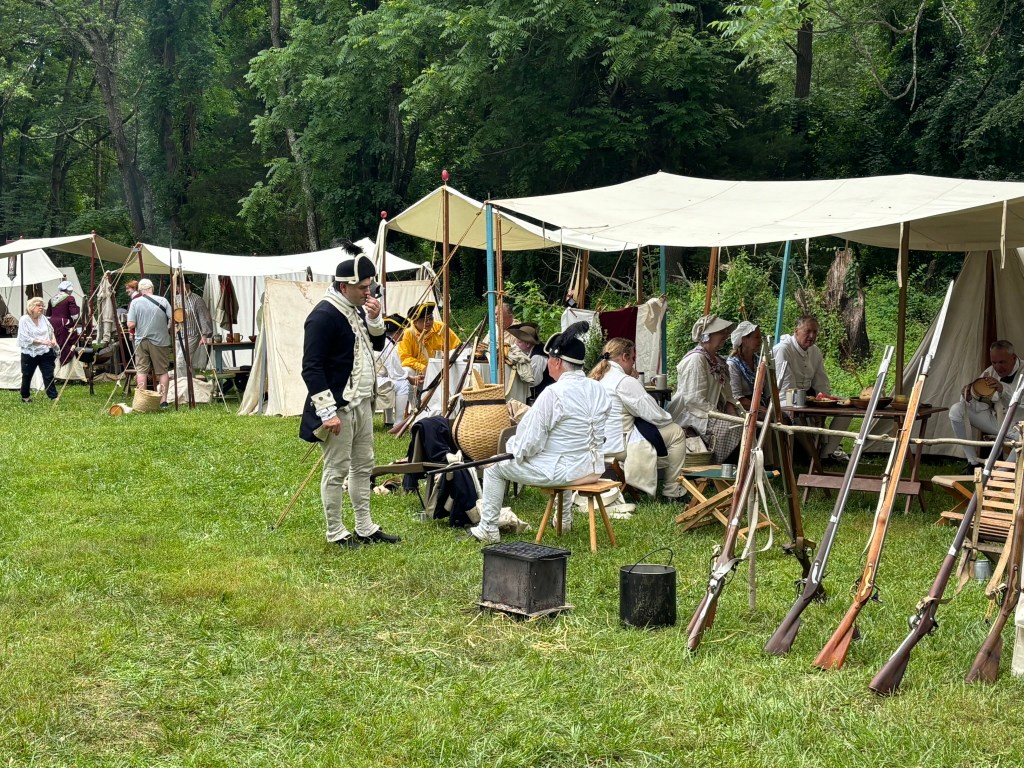
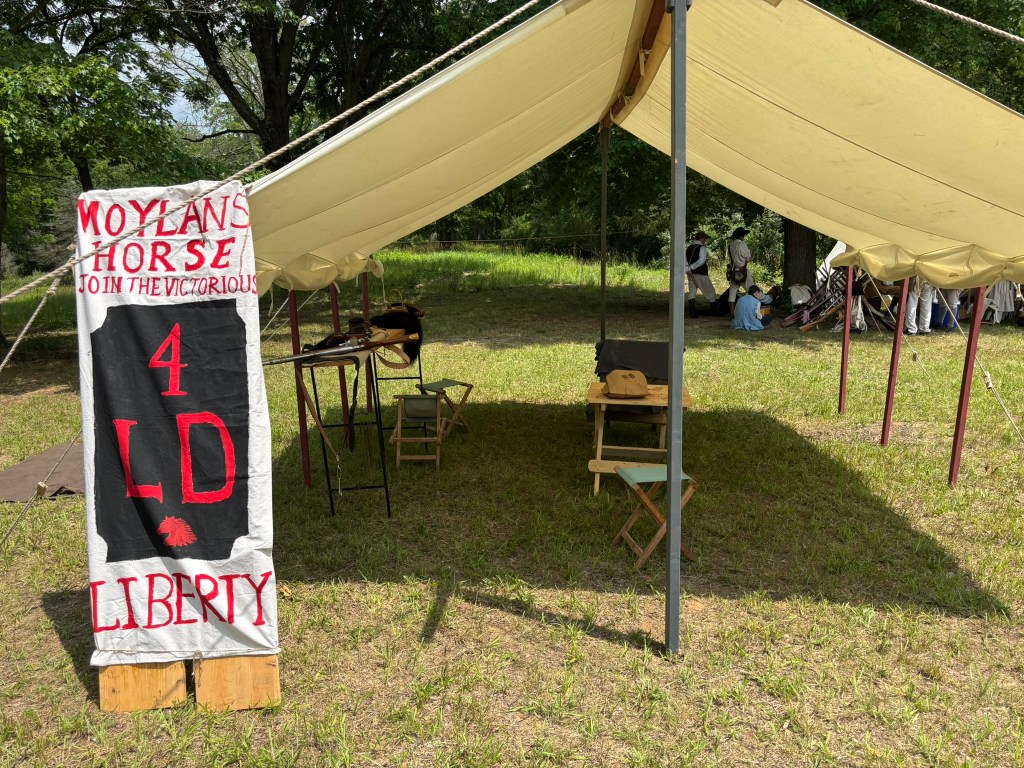
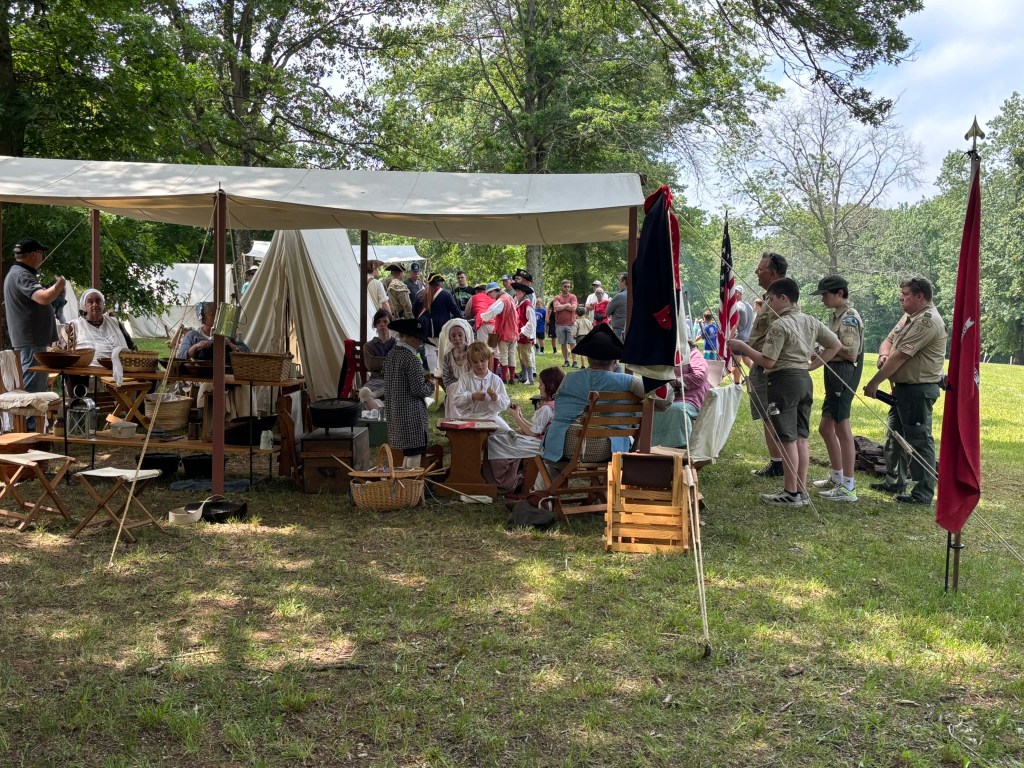
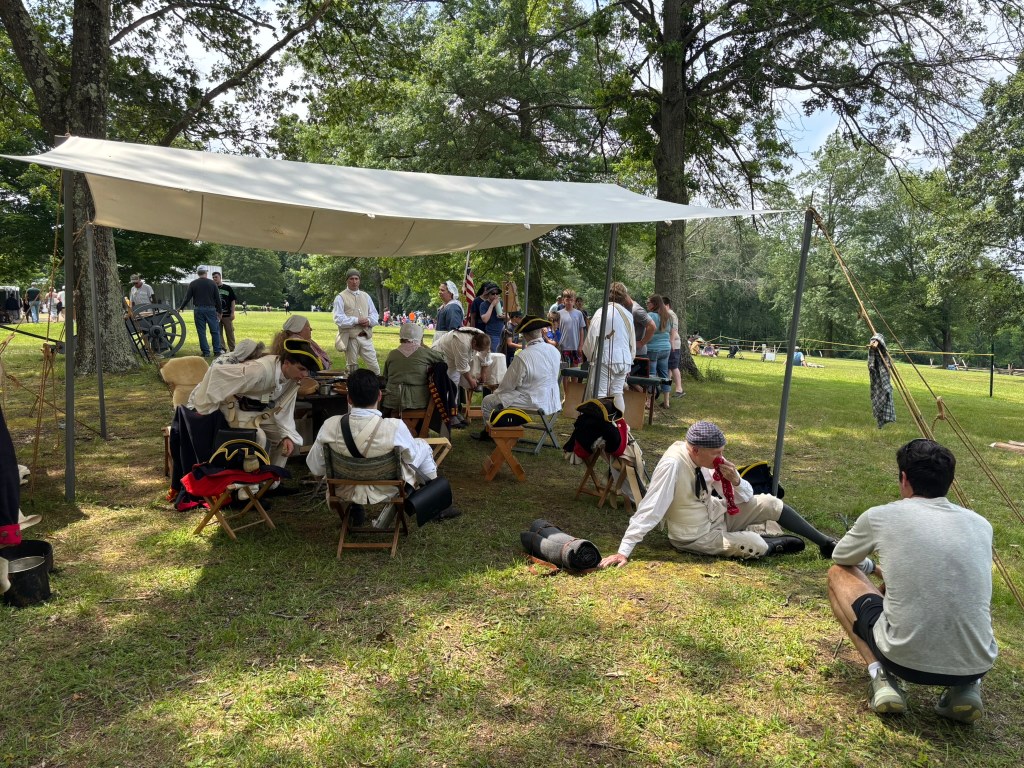
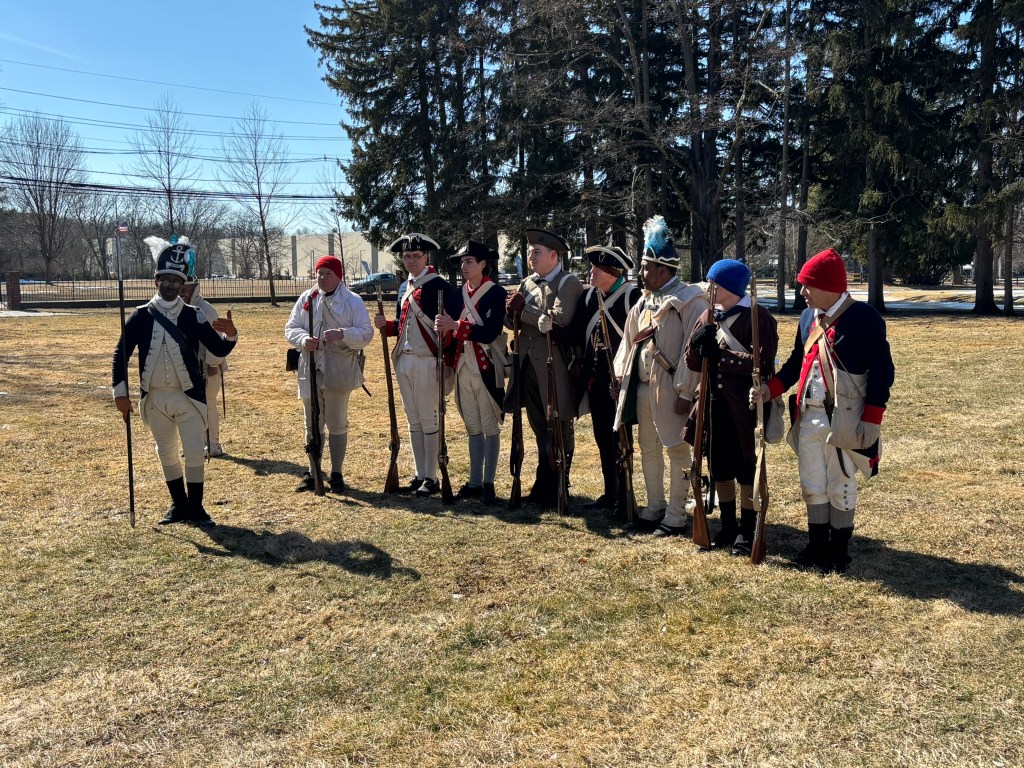
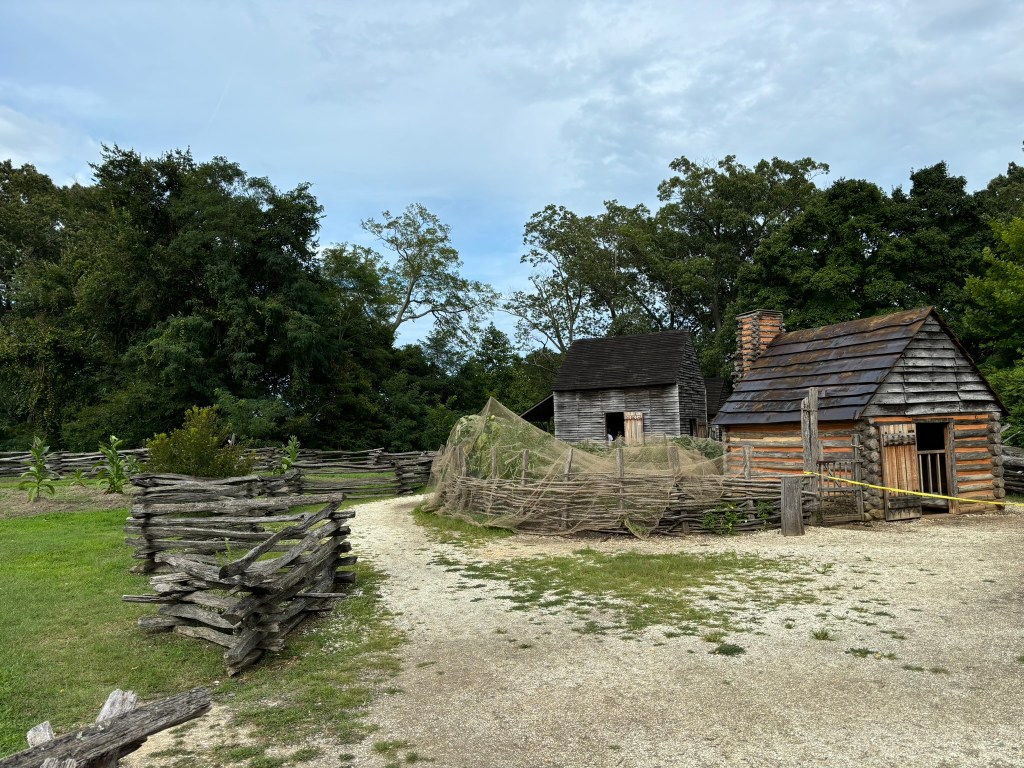
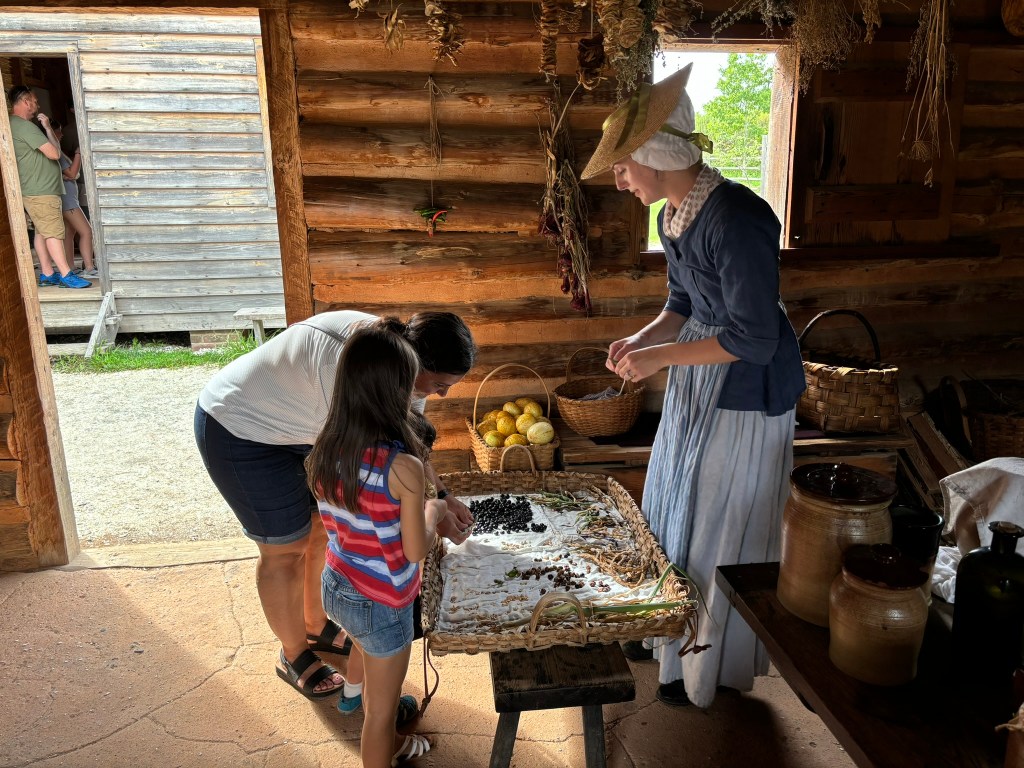
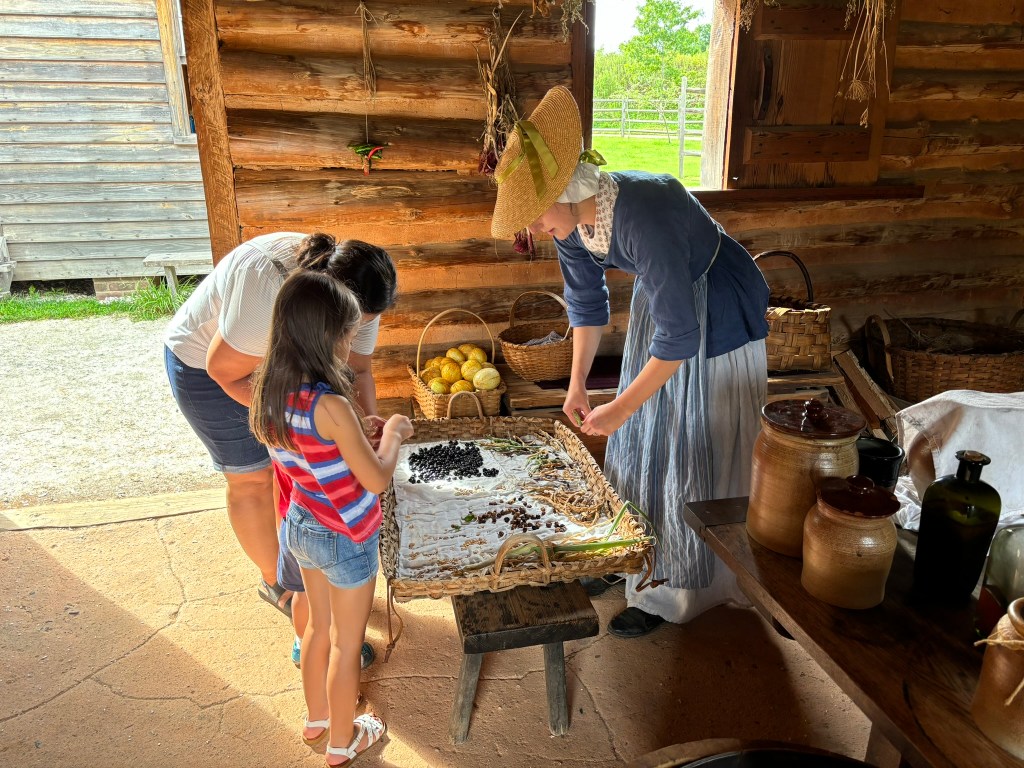
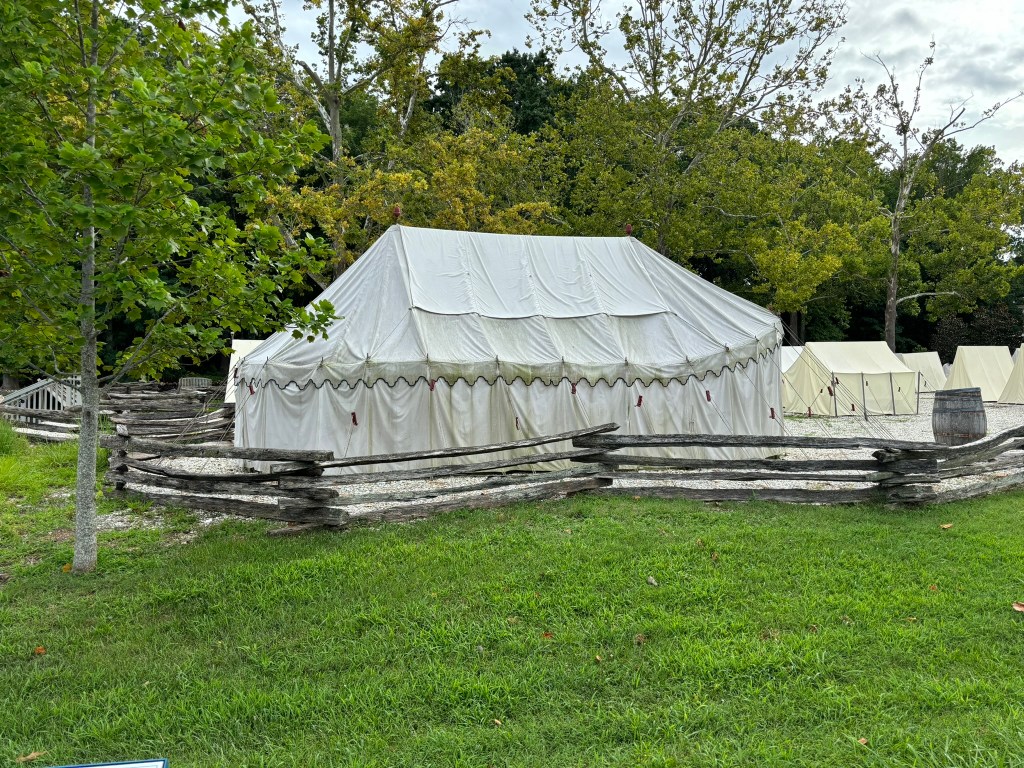
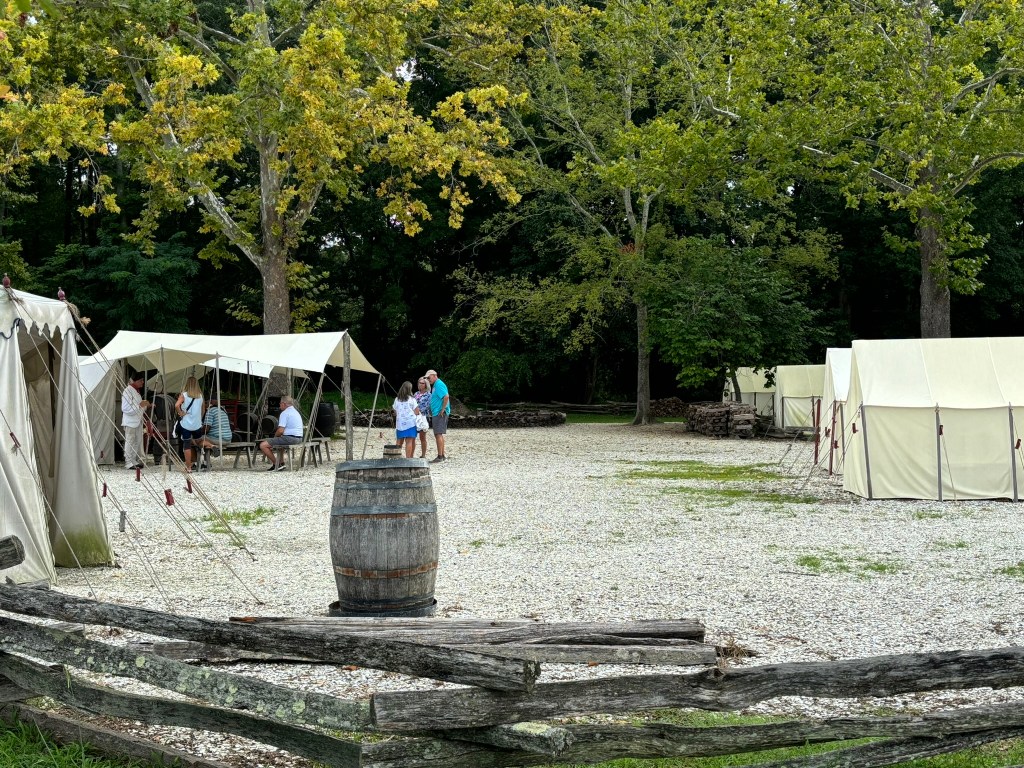
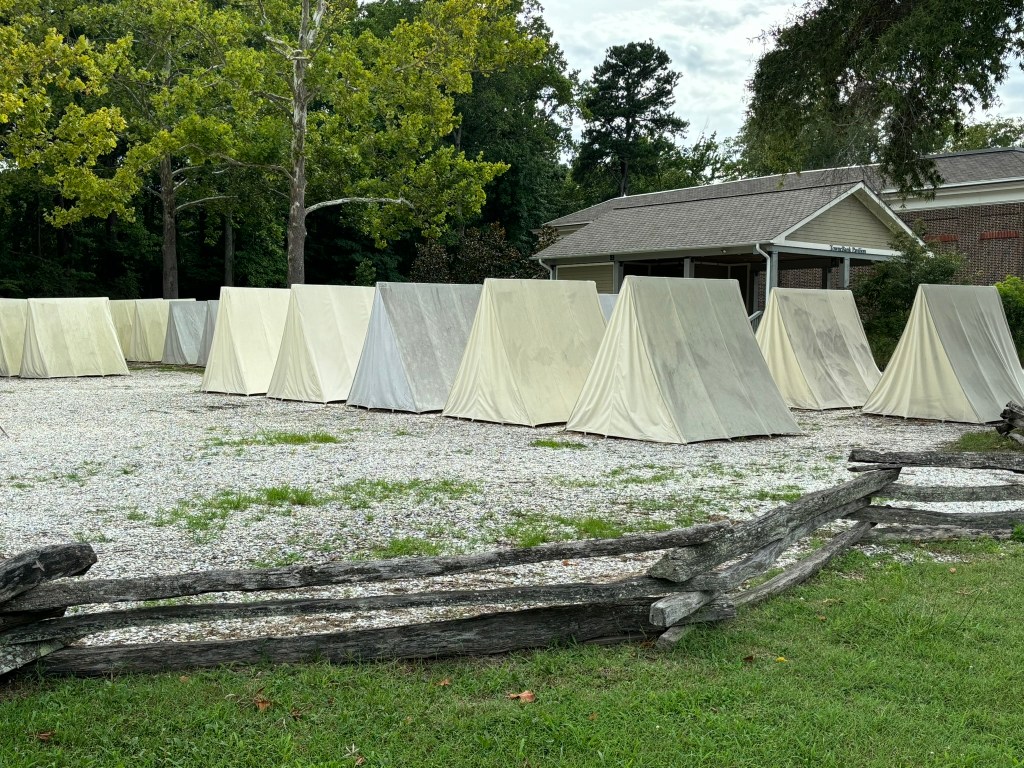
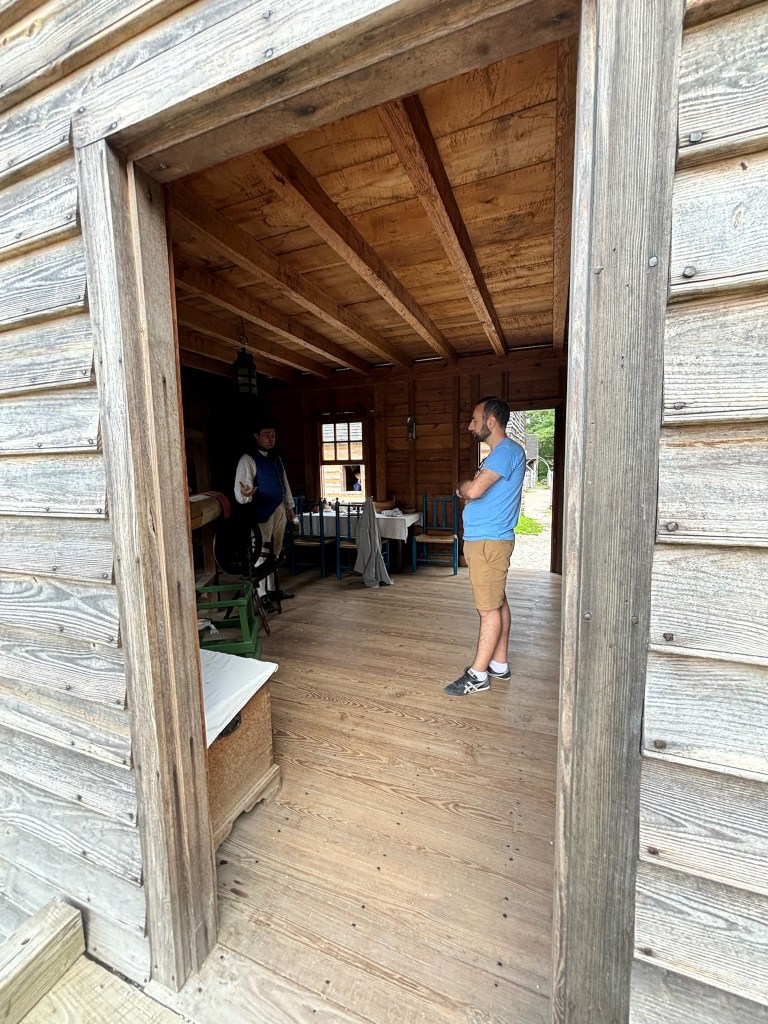
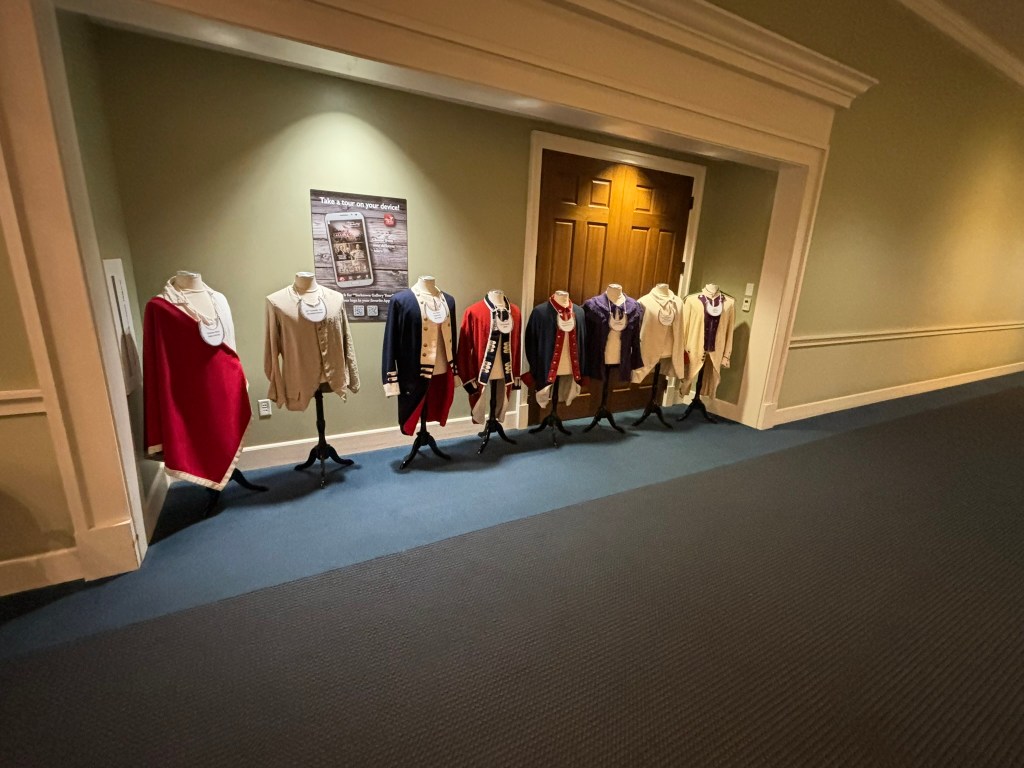
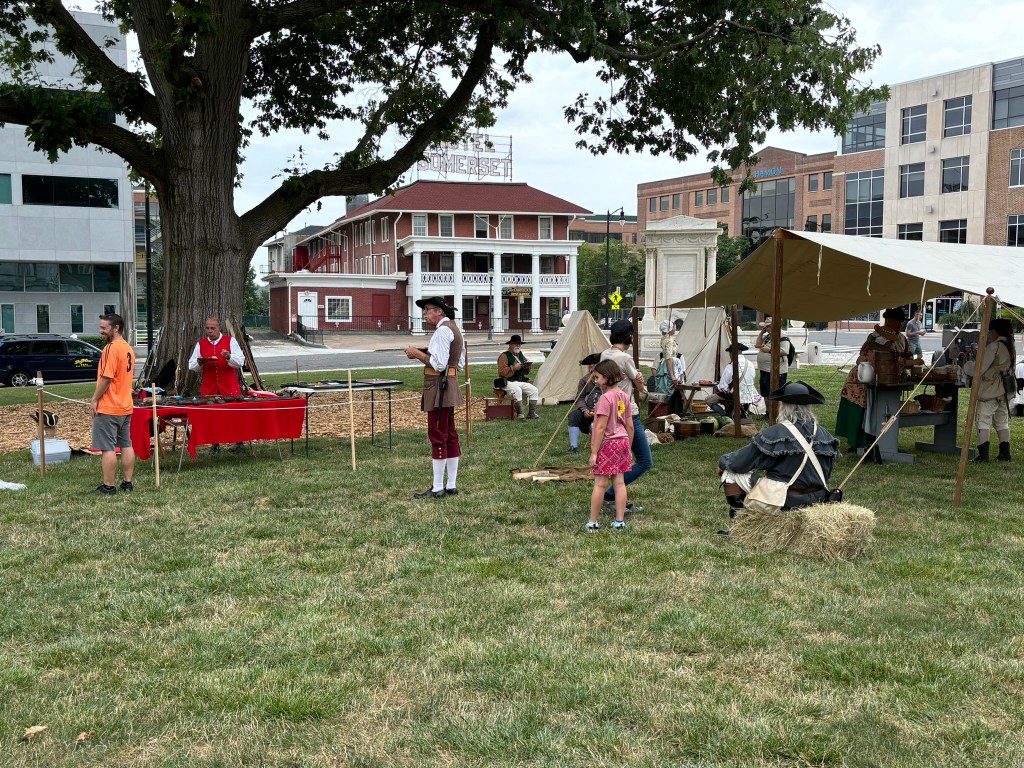
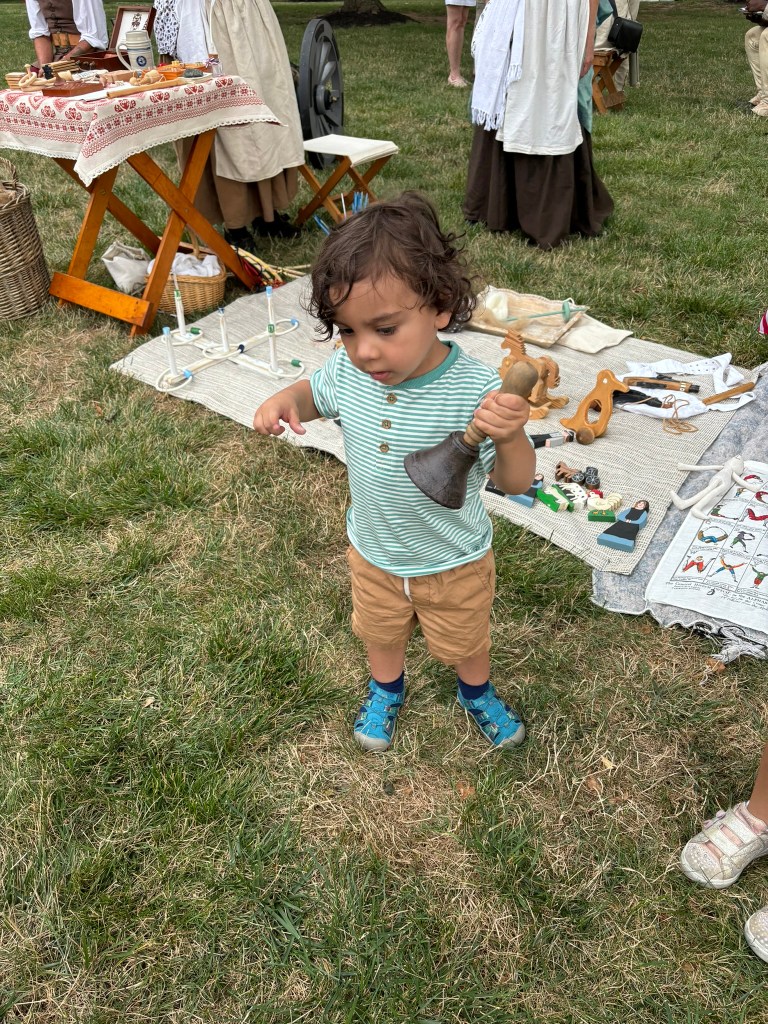
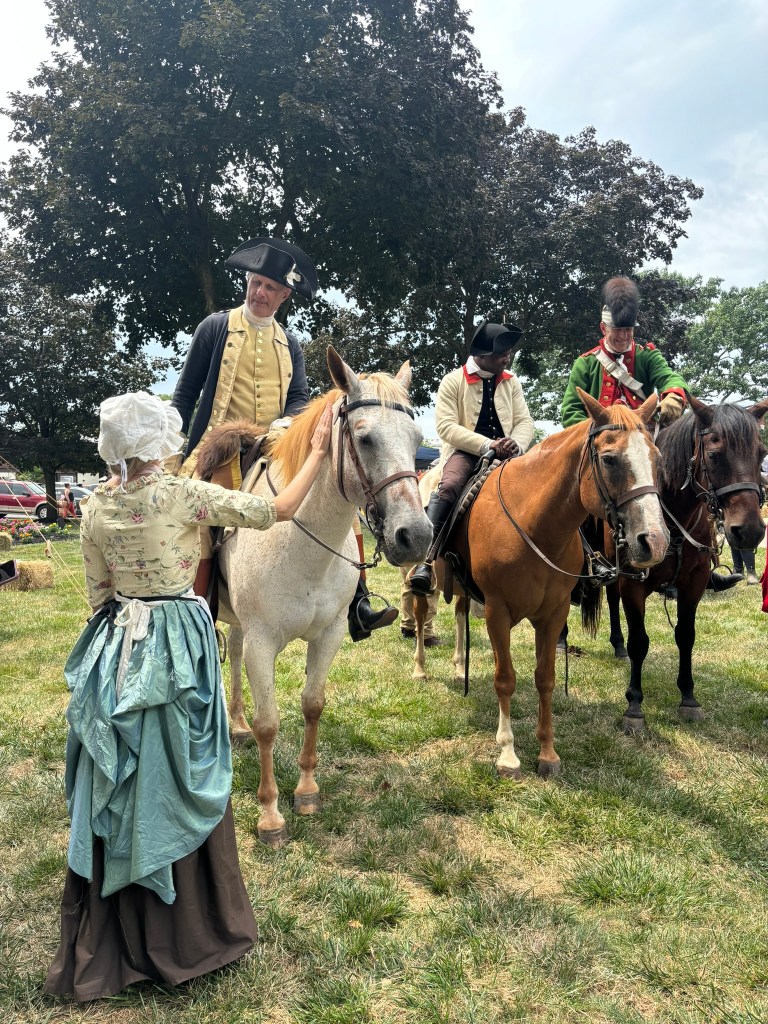
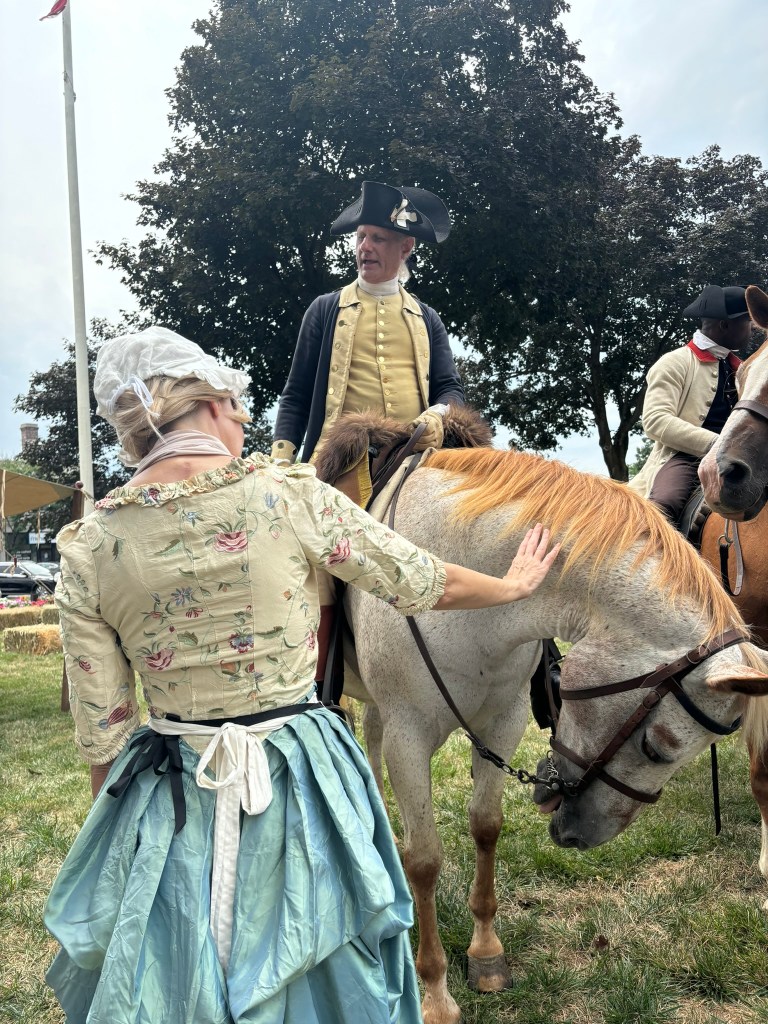
Next, my family and I explored the many encampments set up across the grounds. The experience is truly immersive—designed to make you feel as if you’ve stepped back into a Revolutionary War encampment. Bonfires crackled, soldiers prepared for battle, and women carried out daily chores like cooking. The reenactors did an excellent job bringing the scene to life and were incredibly knowledgeable and friendly when we asked questions.
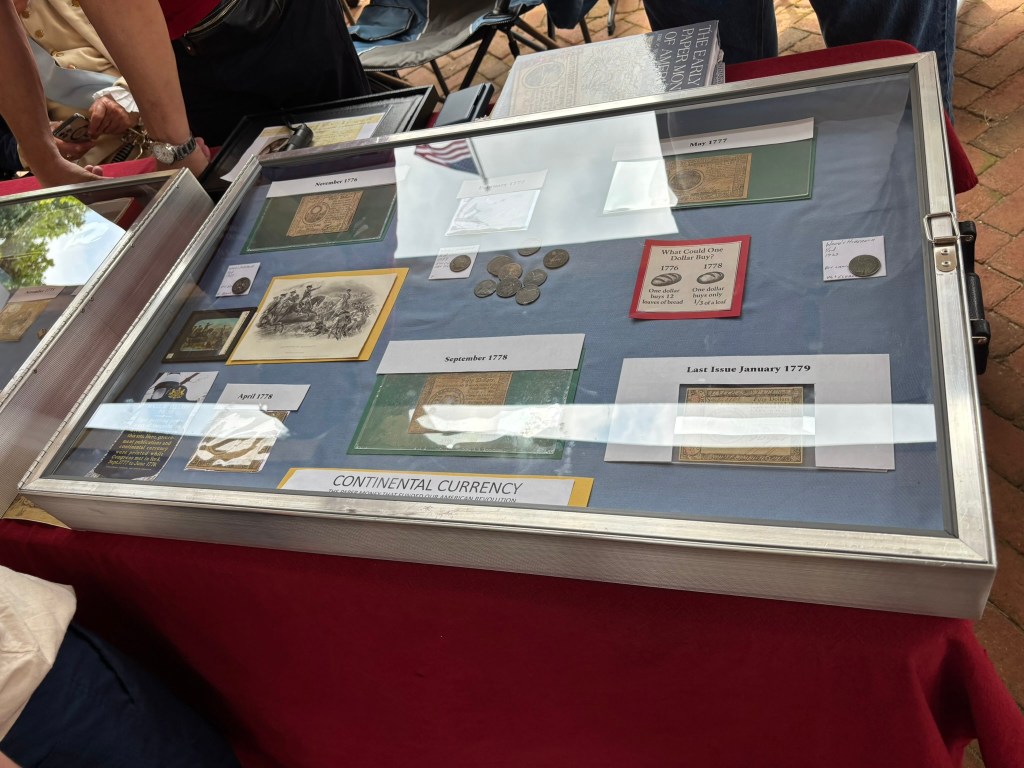
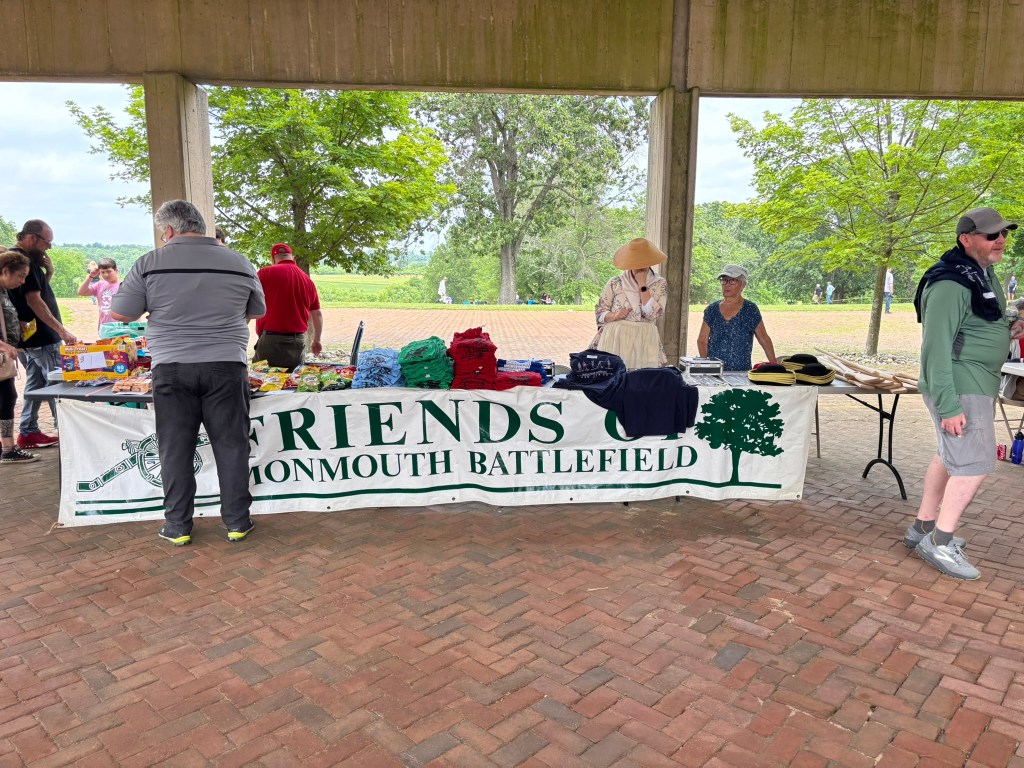
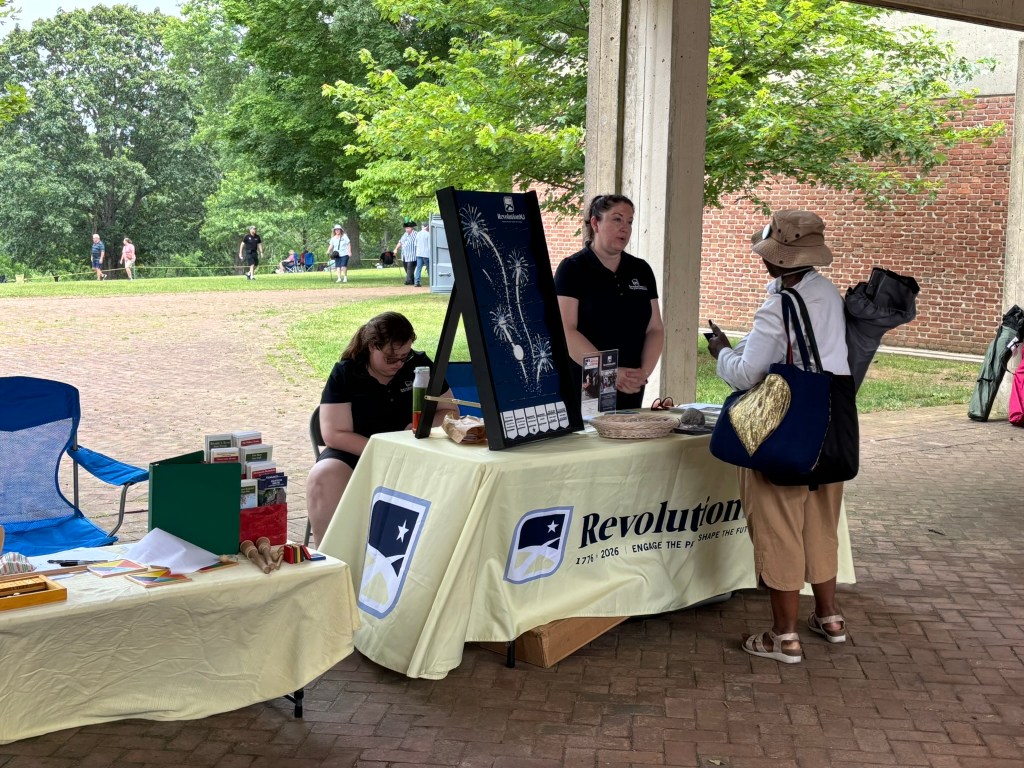
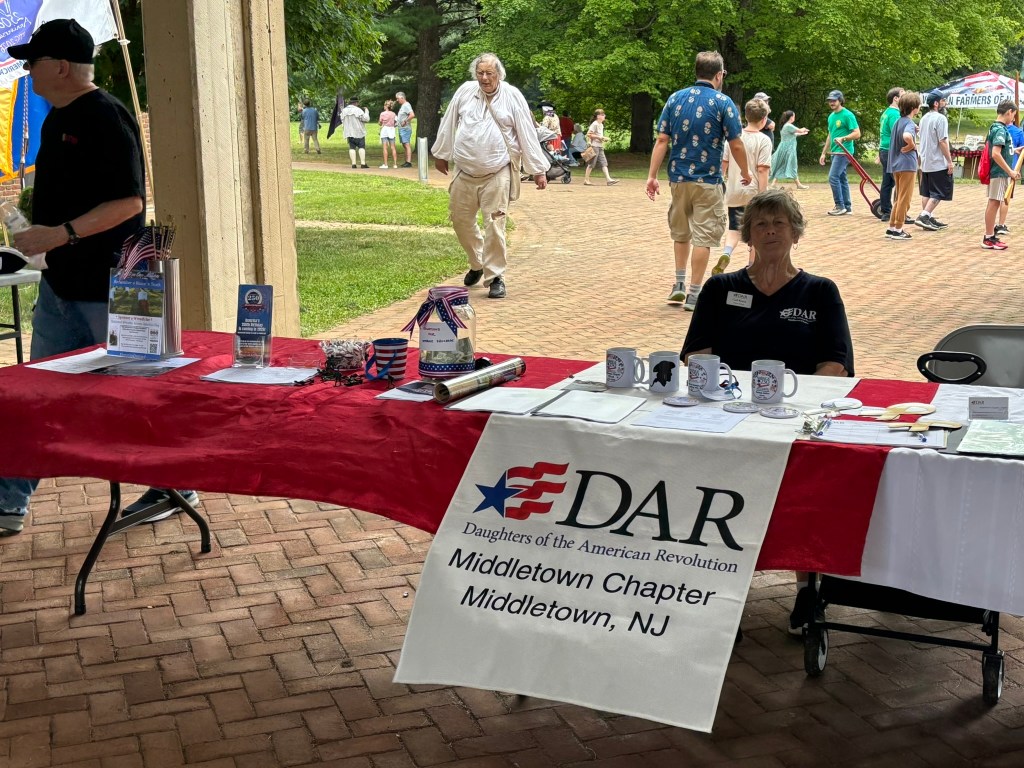
We then made our way over to the tables hosted by various historical groups and organizations. I had the chance to speak with members of RevNJ, a group I’m a Proud Partner with. Among the other participants were representatives from Washington Crossing Historic Park (PA), who brought along fascinating displays—including authentic examples of Continental currency used during the Revolutionary War. Also present were the Friends of Monmouth Battlefield, the Daughters of the American Revolution – Middletown Chapter, and other groups.
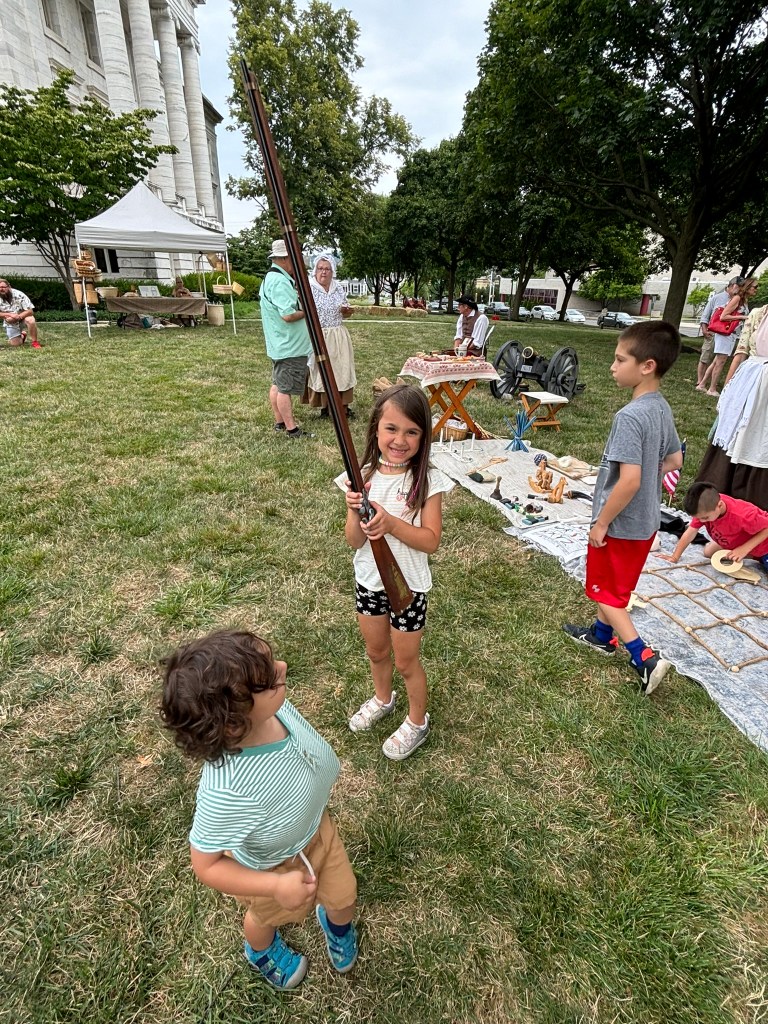
At 1:30, a children’s musket drill drew a large crowd. The reenactor leading the session did an excellent job explaining the process of loading and reloading a musket, presenting the information in a way that was both informative and engaging for the kids.
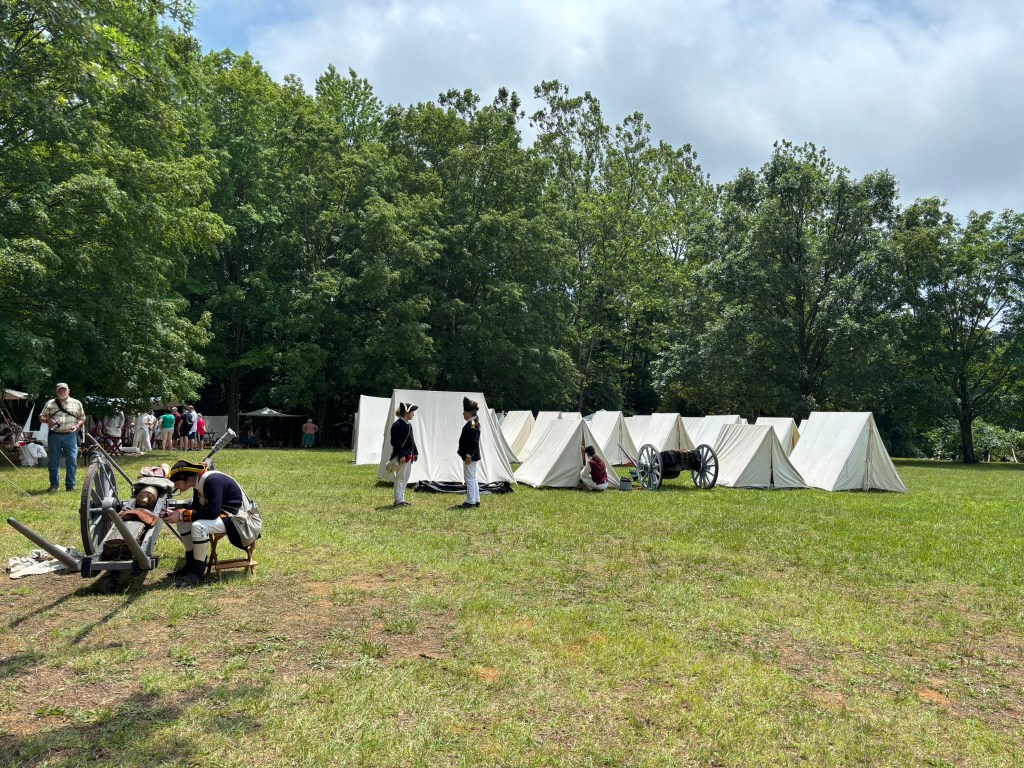
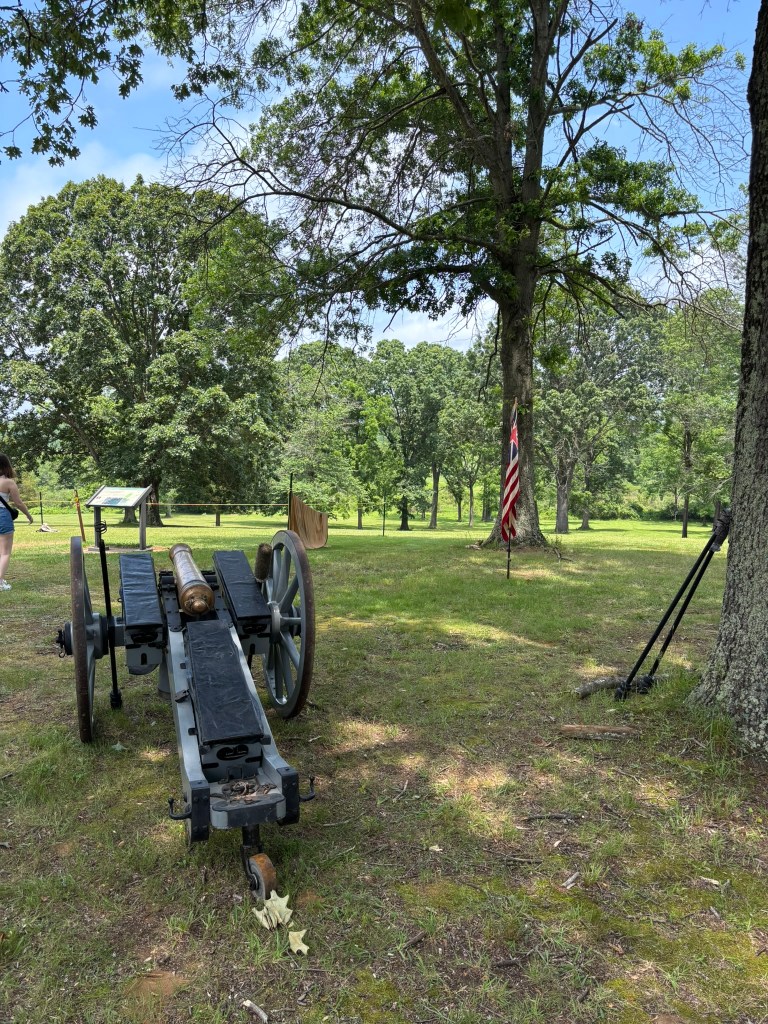
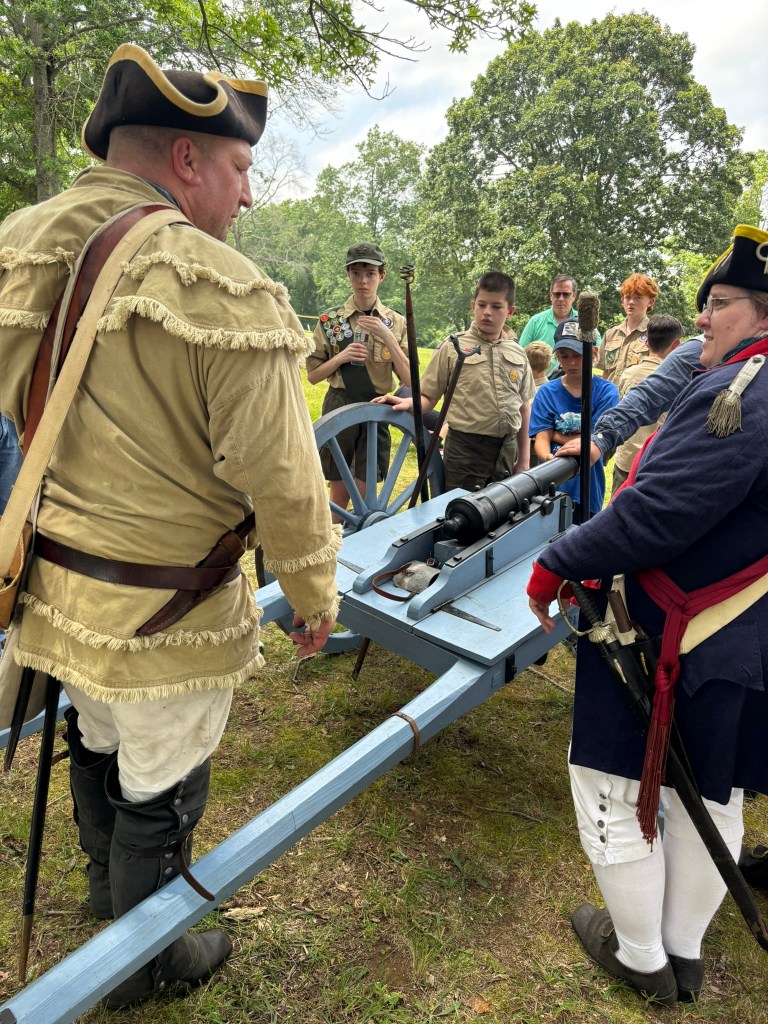
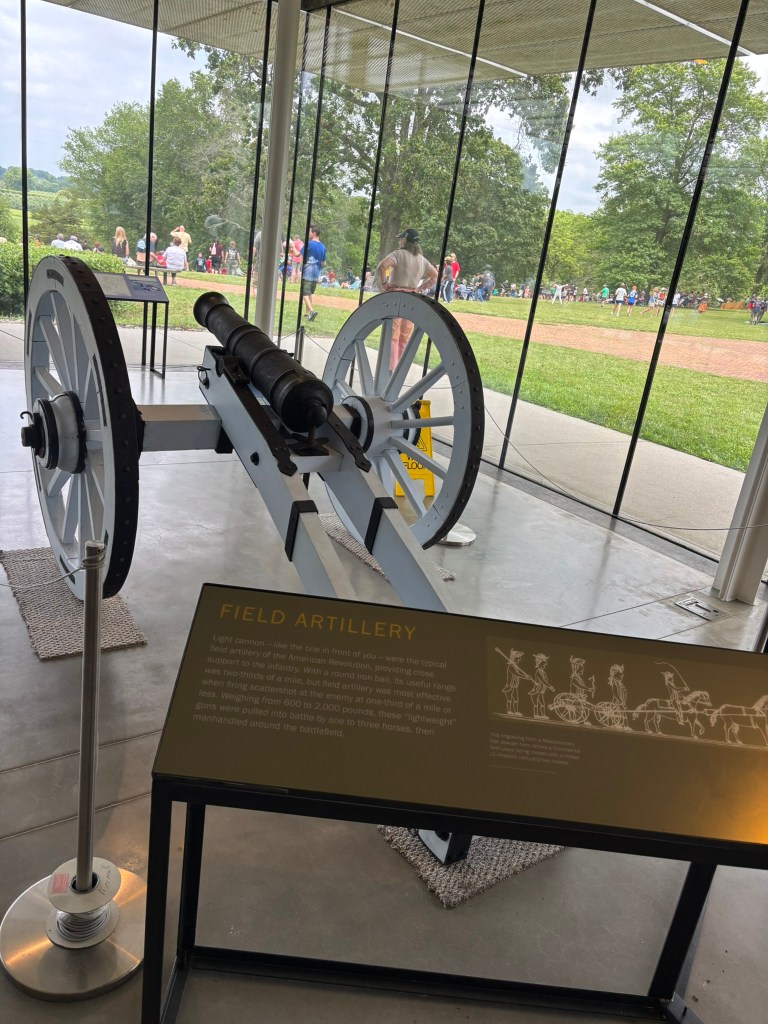
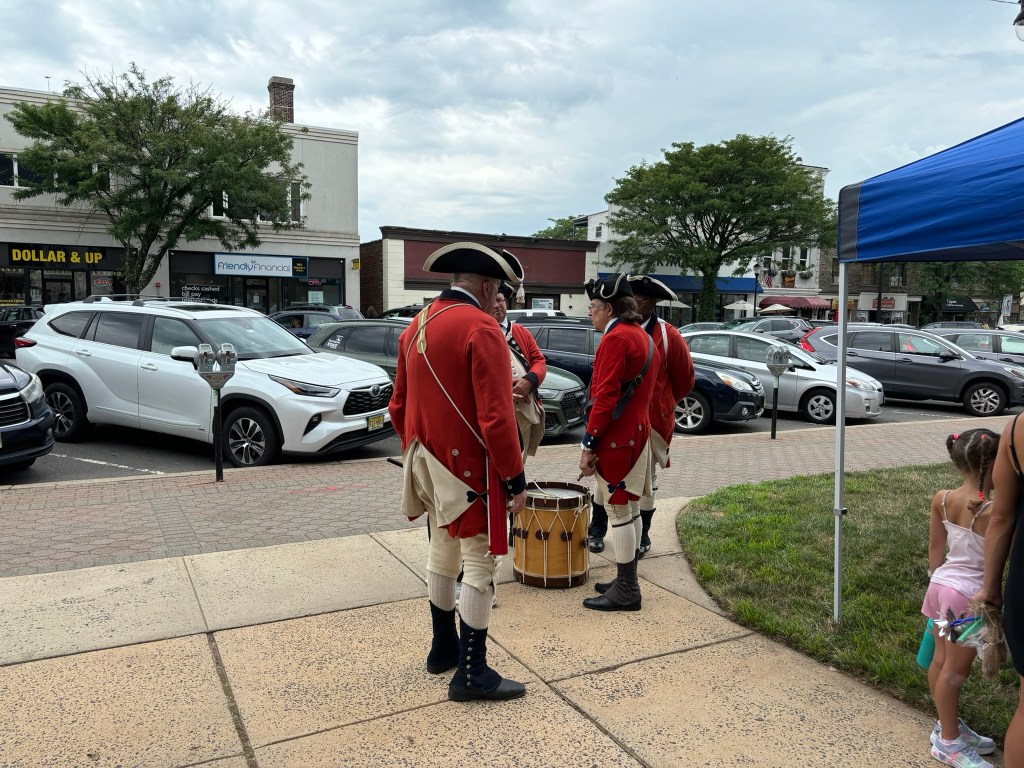
Afterward, I made another round through the encampments, where I watched fife and drum demonstrations and spoke with reenactors who were teaching about the artillery used at the Battle of Monmouth. They gave a thorough explanation of how canister shot was deployed in combat.
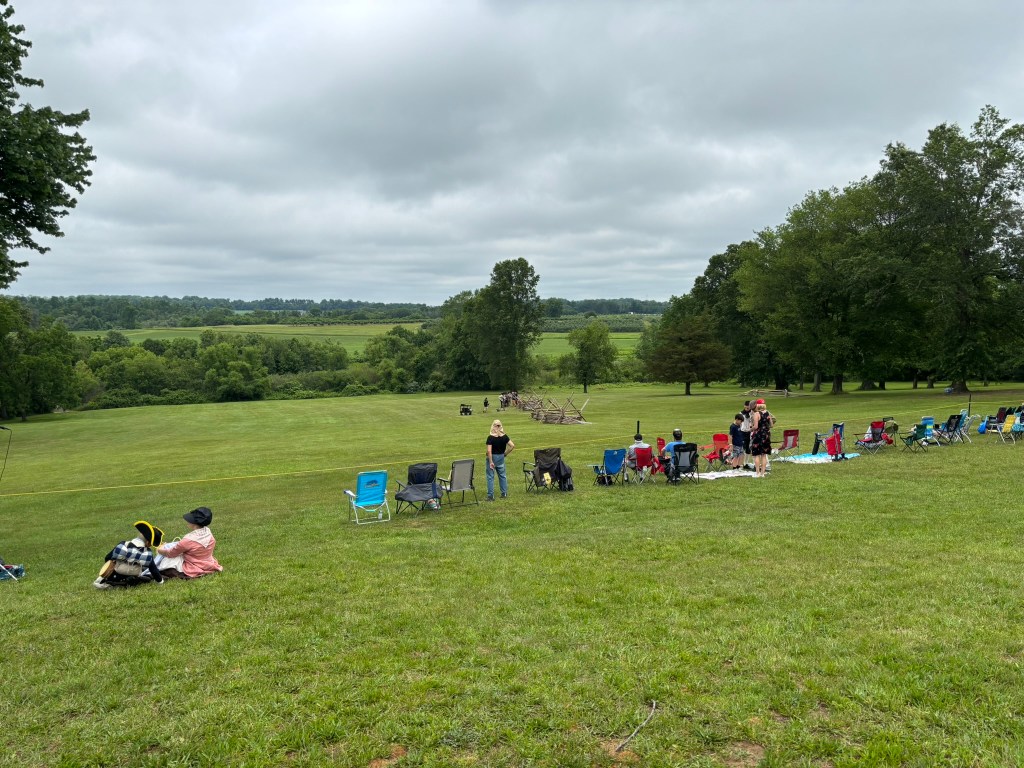
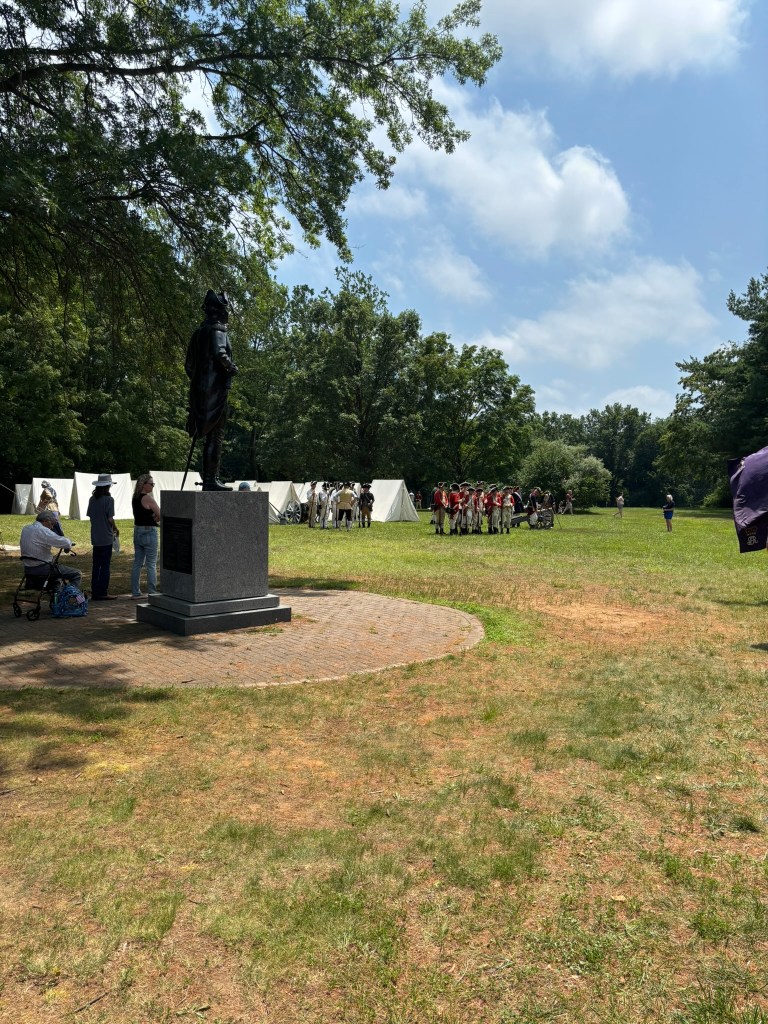
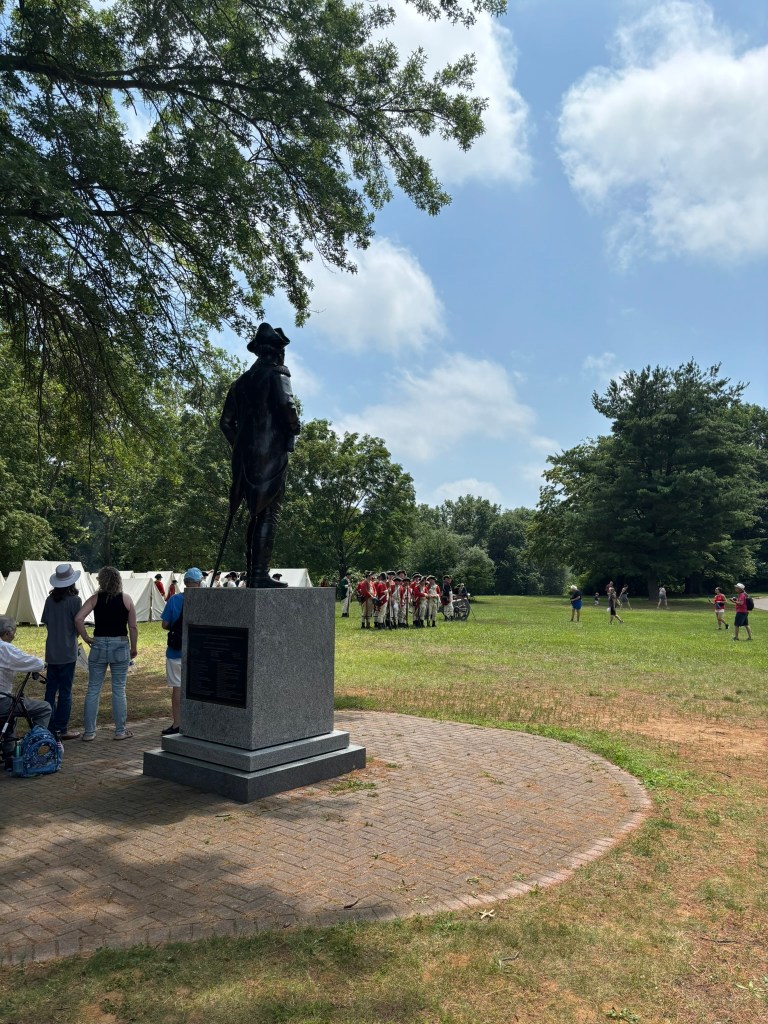
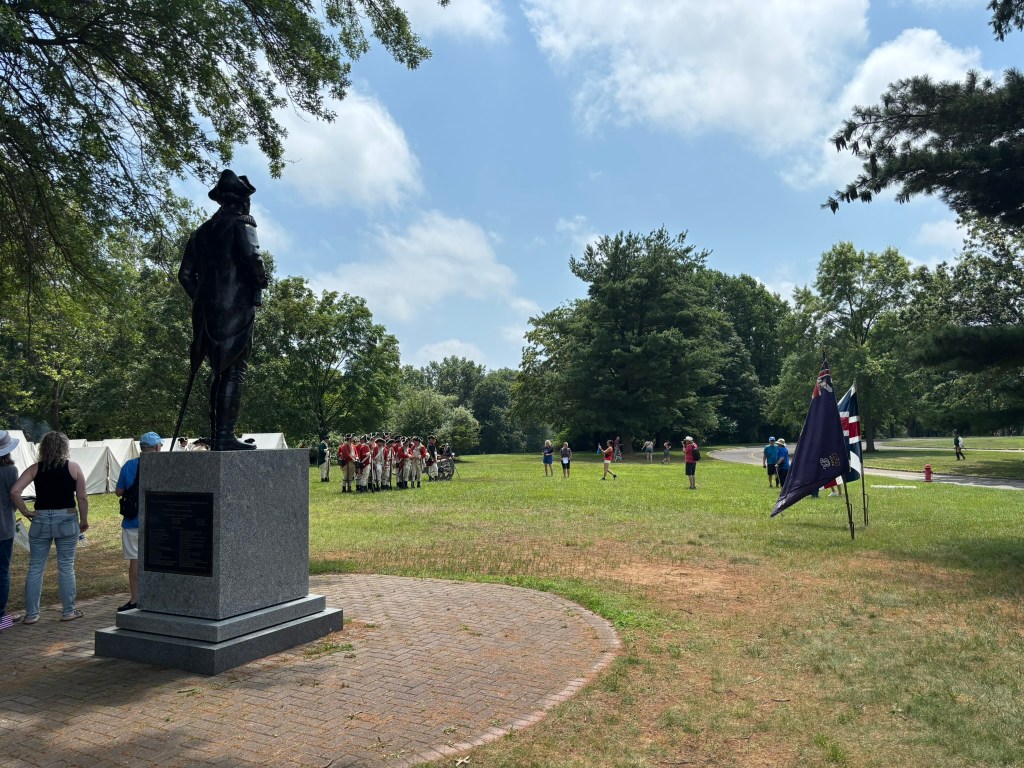
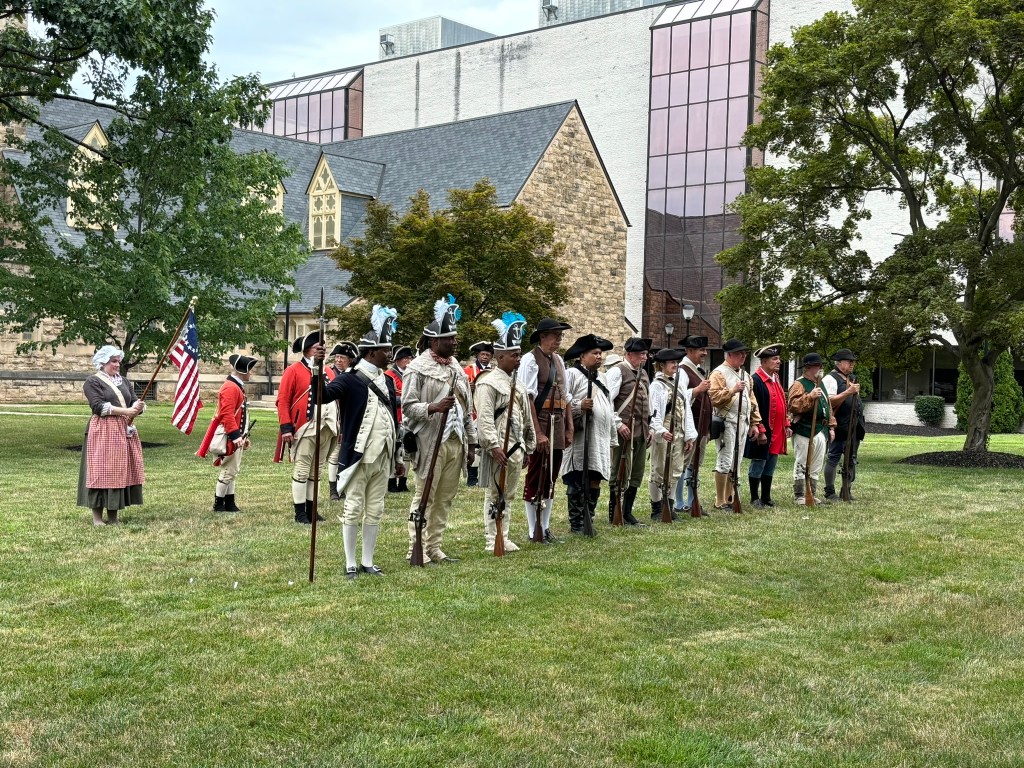
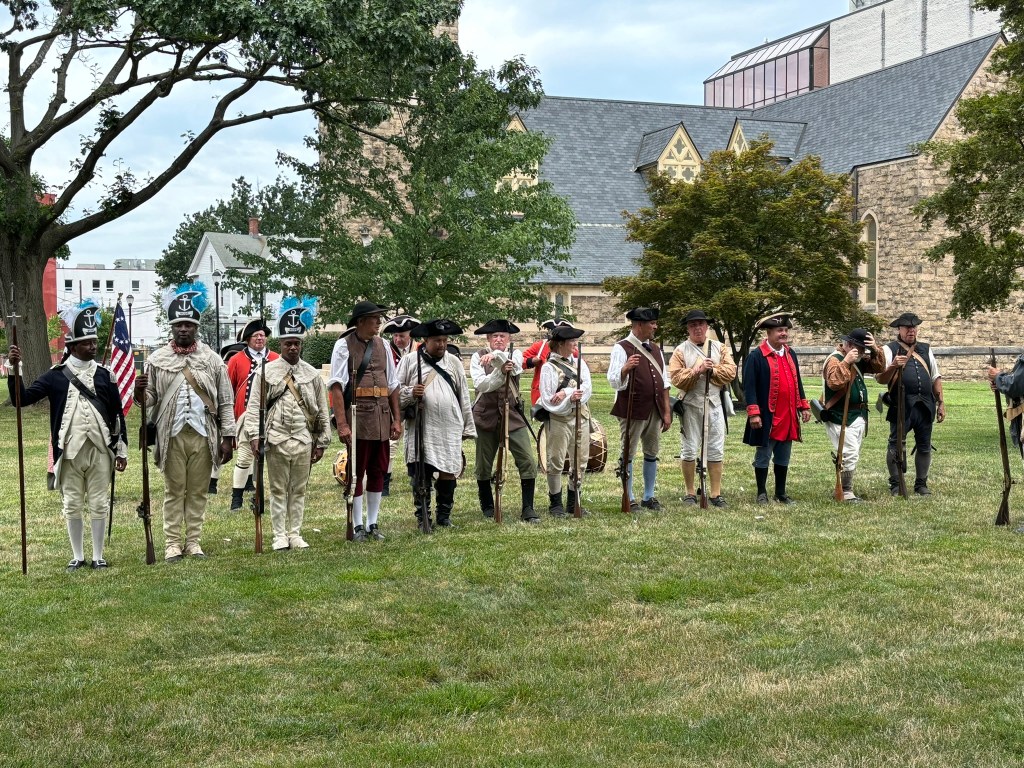
Between 2:30 and 3:00, I observed the soldiers preparing for the reenactment battle—listening to their orders, forming ranks, and taking part in a pre-battle prayer. At 3:00 they marched onto the battlefield.
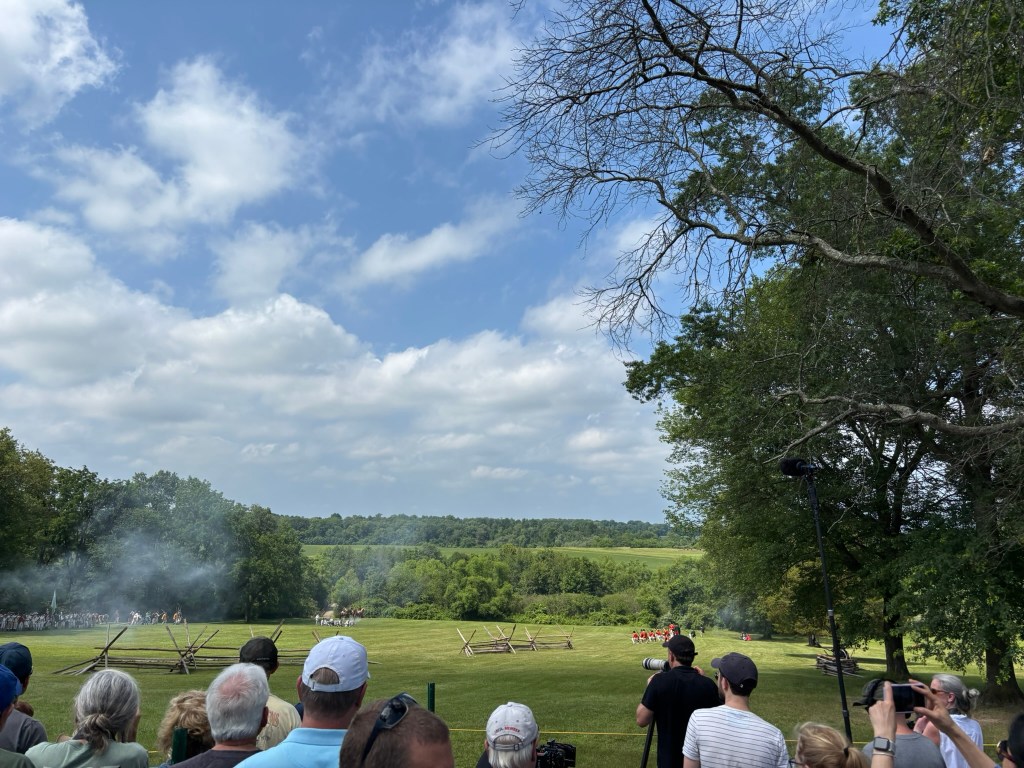
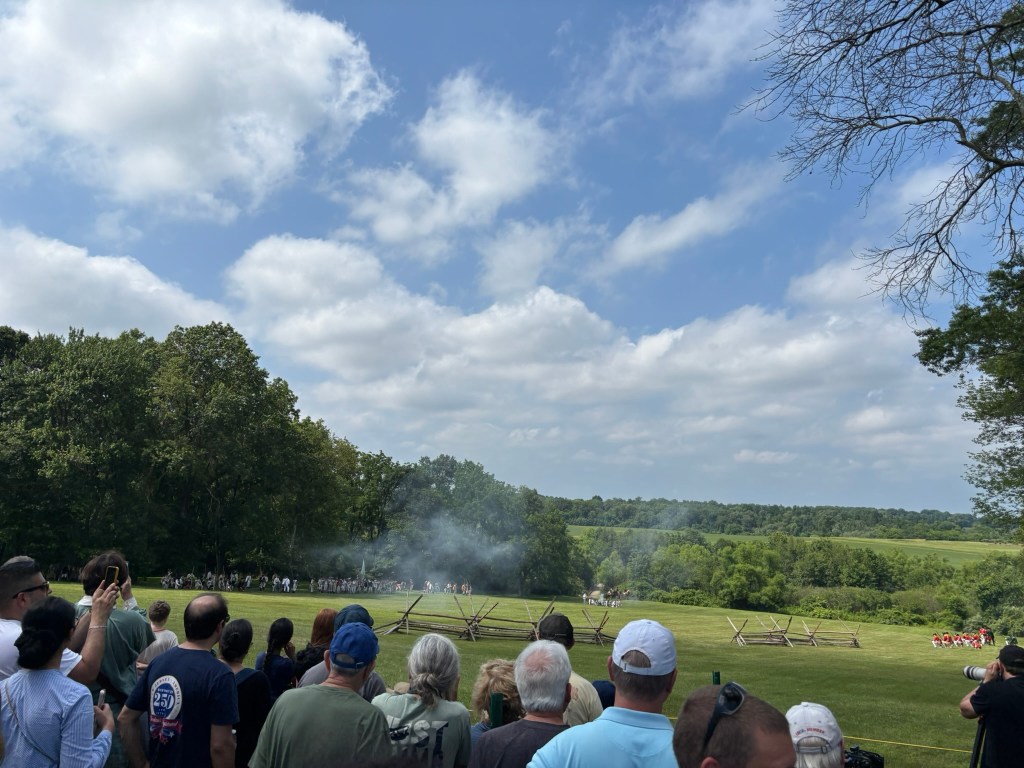
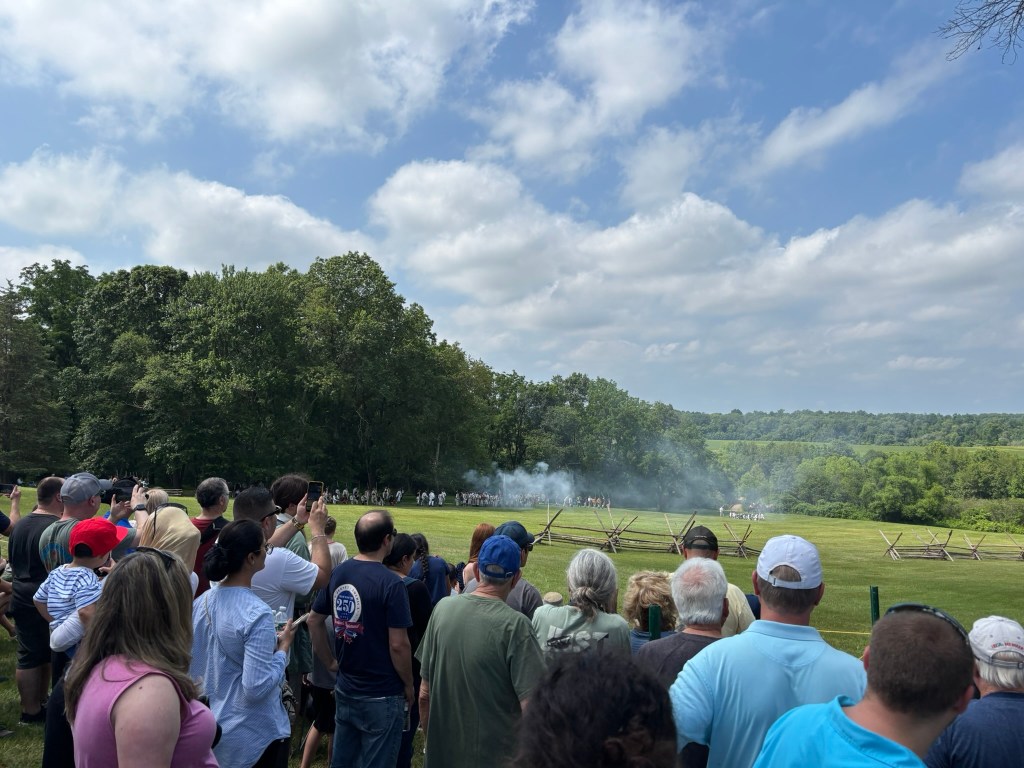
The reenactment of the Battle of Monmouth is truly a sight to see. As far as I know, it’s the only place in New Jersey where you can witness such an accurate recreation of a Revolutionary War battle (someone correct me if I’m wrong). When I’m watching the battle, what always strikes me is the strategy used in 18th-century warfare: lines of soldiers standing shoulder to shoulder, loading and firing in unison. It must have been terrifying to be so vulnerable, and yet this formation was the most practical method of combat at the time. Muskets were so inaccurate, that massed volleys from a line were the most effective way to have any chance of hitting the enemy.
The battle reenactment lasted about 30 minutes. Once it wrapped up around 3:30, my family and I began making our way back to the car. On the way, we stopped by some of the tent shops, browsed around, and made a couple of purchases before heading home.
For anyone interested in the American Revolution, this is a must-attend event. The encampments are immersive, the reenactments are fantastic, and the entire experience offers something for all ages. I highly recommend it.
Be sure to check out my Instagram and Facebook pages, where I’ll be uploading Reels from the event. These short videos give a great glimpse into what the day is like for anyone considering attending in the future.
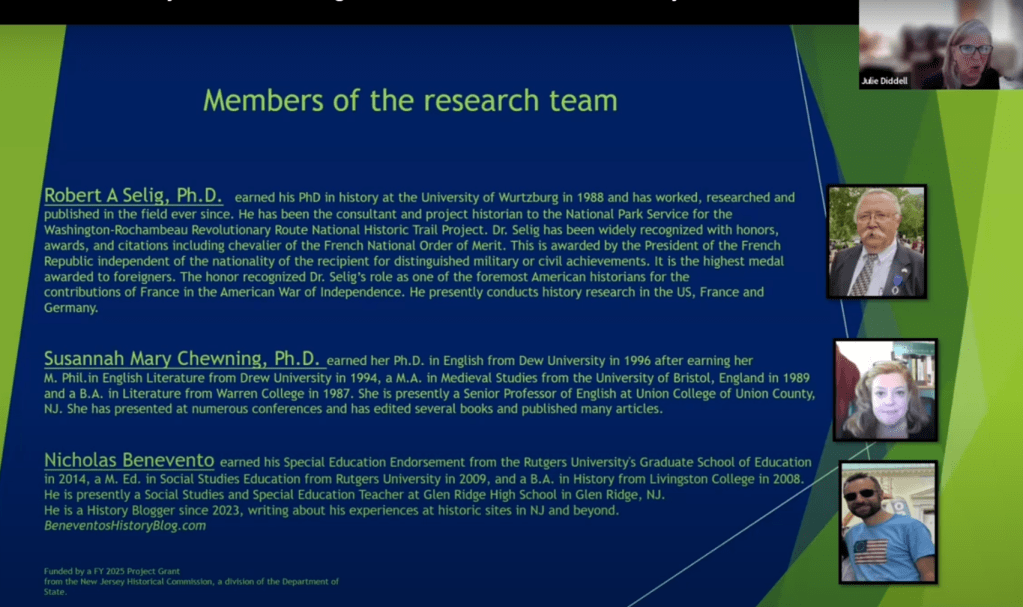
In a previous blog post entitled “The Inclusive History of the Washington-Rochambeau Revolutionary Trail Phase II – Westfield, NJ (Part 1)”, I shared an overview of an ongoing history research project conducted by the Westfield Historical Society, with support from the New Jersey Historical Commission. The research has been conducted by Dr. Susannah Chewning and Dr. Robert Selig, and it aims to uncover untold stories and to shed light on both free and enslaved inhabitants of the greater Westfields of Elizabethtown and their roles during the time of the American Revolution.
If you haven’t had a chance to read the first blog post from February 7th, 2025, I encourage you to check it out [HERE]. It offers valuable context about the project’s background, goals, and initial findings.
This blog post picks up where the previous one left off. Since February, the research has entered a new phase, bringing to light fresh insights and raising new questions that have continued to guide the direction of the work. In this update, I’ll share the latest progress, some of the challenges encountered, key discoveries made, and an overview of the final presentation which took place on June 21st, 2025.
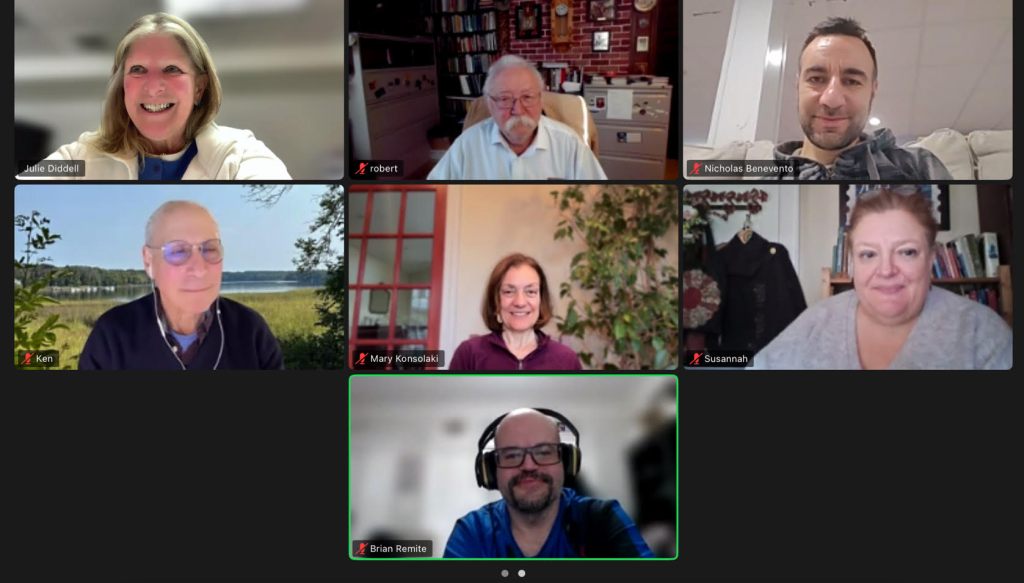
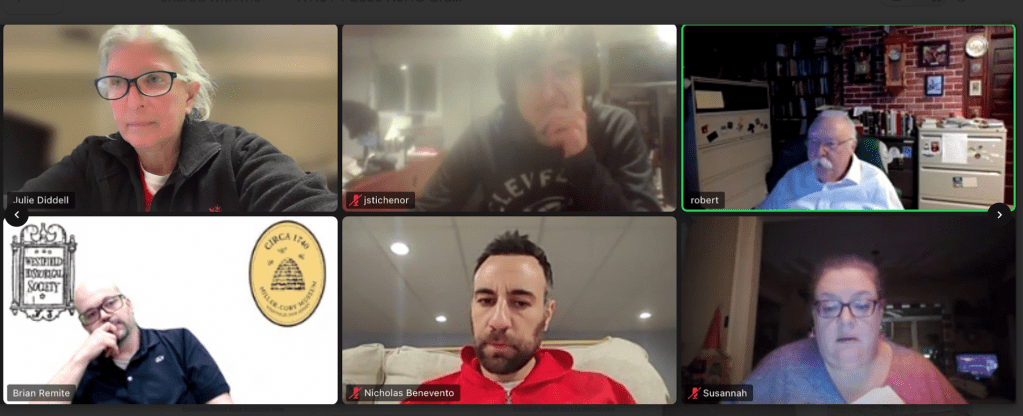
The researchers have been working closely with Julia Diddell, Chair of the Washington-Rochambeau Revolutionary Route- New Jersey, as well as Brian Remite, President of the Westfield Historical Society, to comb through enlightening resources. The team met in late March to discuss new findings, challenges along the way, and future goals. The team was also joined by Dr. Mary Konsolaki and Dr. Ken Mirsky, who both serve on the Grants Committee at the Westfield Historical Society.
The team reconvened in mid-May, with each researcher sharing their latest findings, describing any new obstacles, and discussing plans for the final presentation. During the meeting, Julia shared that the Westfield Historical Society is interested in using the research to develop a long-term outdoor exhibit in Westfield. She also noted that the Society is planning to collaborate with the Rutgers Department of Landscape Architecture to explore potential sites for the exhibit and may even conduct a survey this summer.
The information provided below provides the latest updates on the research and discoveries of Dr. Robert Selig and Dr. Susannah Chewning, covering their progress from April 2025 to the final outcomes of the research project, concluding with the presentation to the public. For an overview of their research topics and goals, please refer to the first blog post.
The Mood of the Local Inhabitants
Dr. Robert Selig, a distinguished historian with a PhD in History and extensive experience consulting with the National Park Service, has been conducting research on early Revolutionary War activities within Westfield and surrounding towns to gain a better understanding of the mood of the local inhabitants, leading up to the Revolution. Having written extensively on the Washington-Rochambeau National Historic Trail, Dr. Selig has brought invaluable expertise to the project, particularly in investigating the local impact of the national movement toward independence.
April 2025 Update
During our late March meeting, Dr. Selig provided updates on his research. He emphasized the importance of identifying individuals on a list from the New Jersey Committee of Correspondence, focusing on their economic status and roles within the community. Dr. Selig has accessed damage claims from the New Jersey State Archives, revealing that seven of the ten Westfield Committee members filed claims—though notably, Abraham Clark, a key regional leader and signer of the Declaration of Independence, did not. These claims provide valuable insights into the local inhabitants. Moving forward, he also intends to study New Jersey citizens who served in the war, particularly through pension applications from soldiers and members of the New Jersey militia, which could offer significant insight.
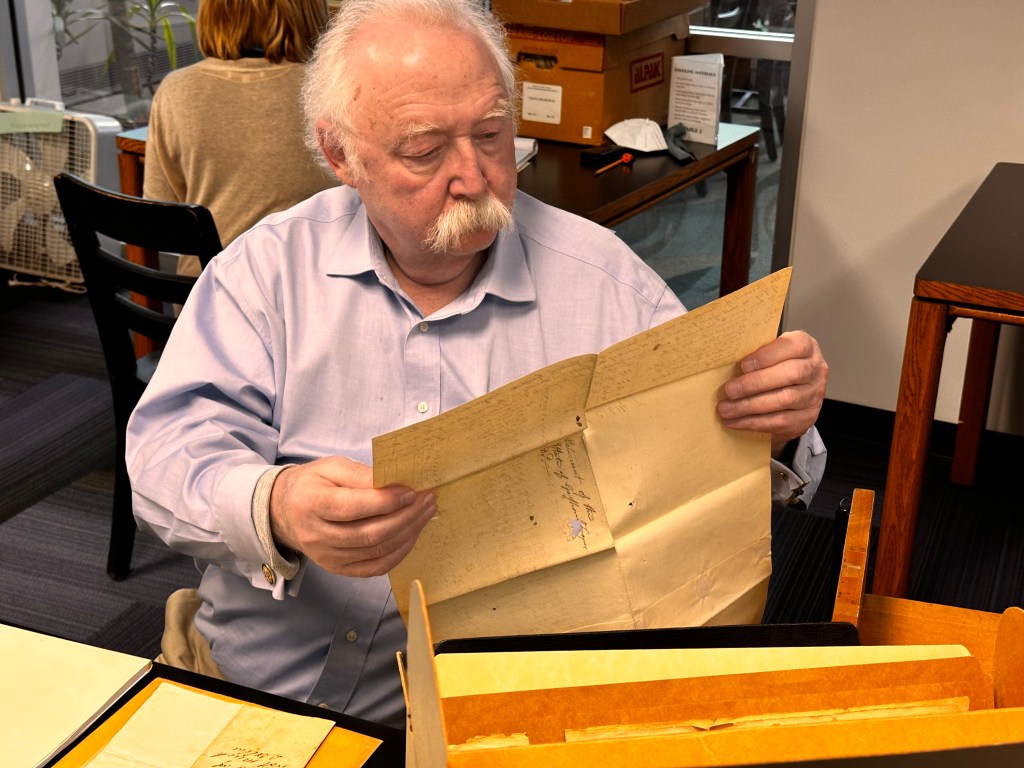
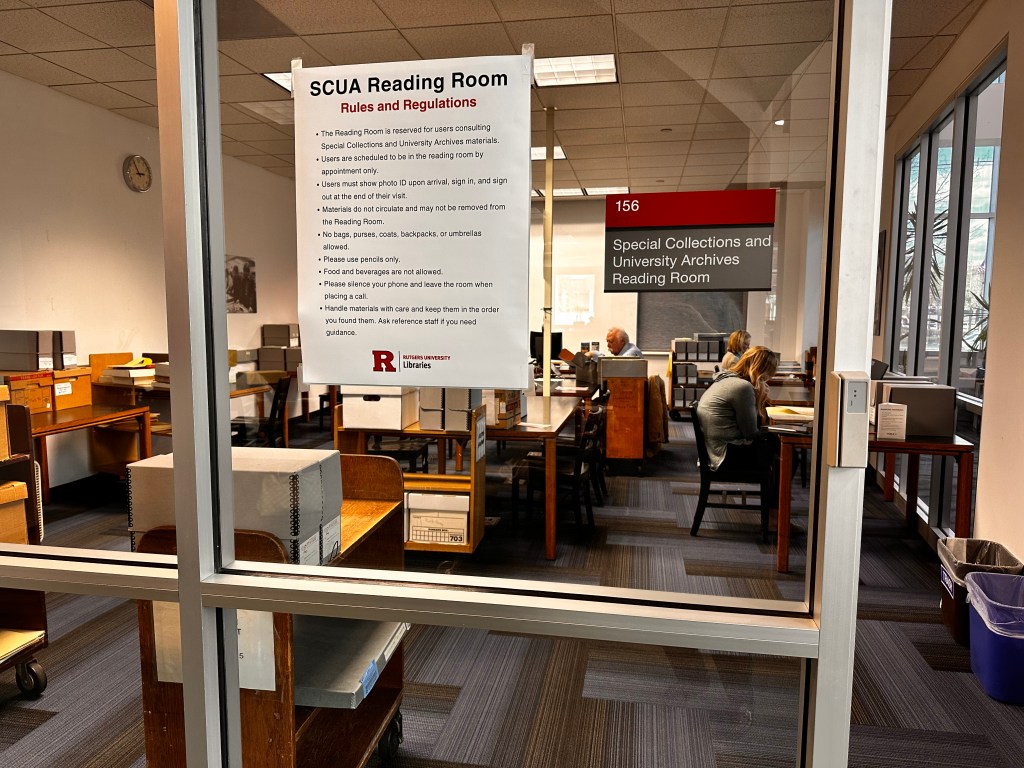
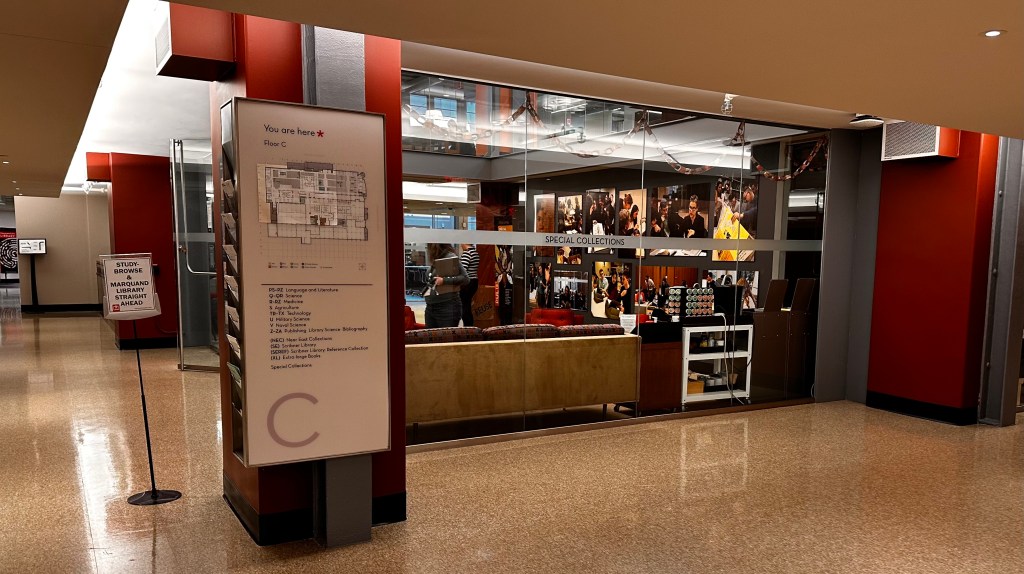
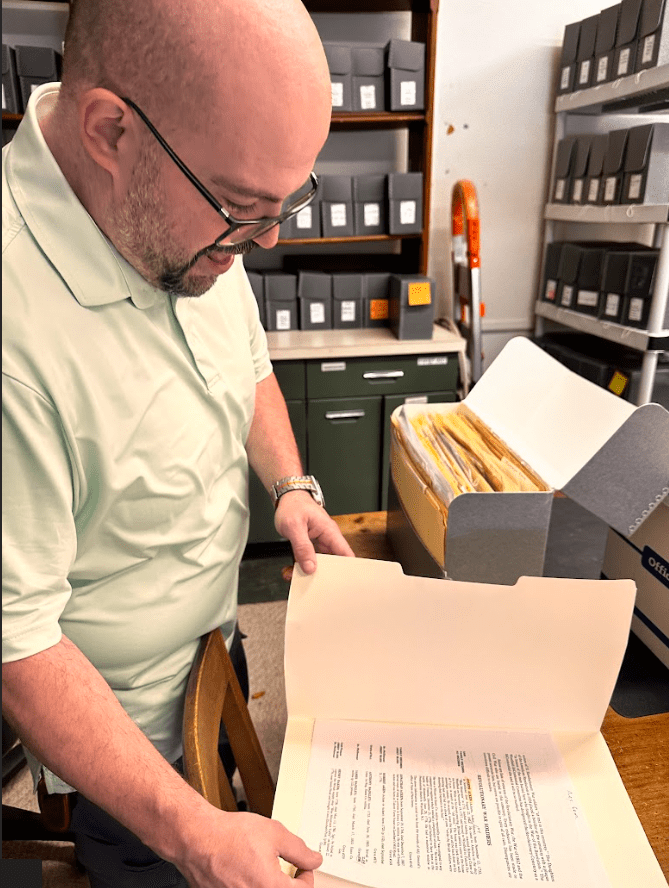
In early April, Dr. Selig had the opportunity to visit Rutgers University’s Special Collections Library to continue his research, and on his second day, he made a significant discovery—the Jedediah Swan Papers. Dr. Selig found some 500 documents, including letters, indentures, and other records, spanning nearly 75 years of Swan family history, from Amos Swan in the 1760s to Jedediah’s death in the 1820s. Many of the papers referenced Westfield as either the origin or destination. Jedediah Swan (1732–1812) is buried in Scotch Plains.
Jedediah Swan was an MD, Justice of the Peace, Overseer of the Poor, Committee of Correspondence member, Captain of the Second Regiment Essex County Militia, and held several other roles. Dr. Selig photographed about a dozen documents that will help the researchers reconstruct Swan’s influence in the community. Among the findings were an enlistment paper for a soldier in his company, a record committing a poor woman to the town’s care, a case involving an unwed mother and the man she accused of fathering her child, a note mentioning his enslaved individual, Dorceas, and a receipt for expensive beaver-fur hay. These findings help paint a picture of a man who was influential in the Revolutionary movement in the Westfields.
May 2025 Update
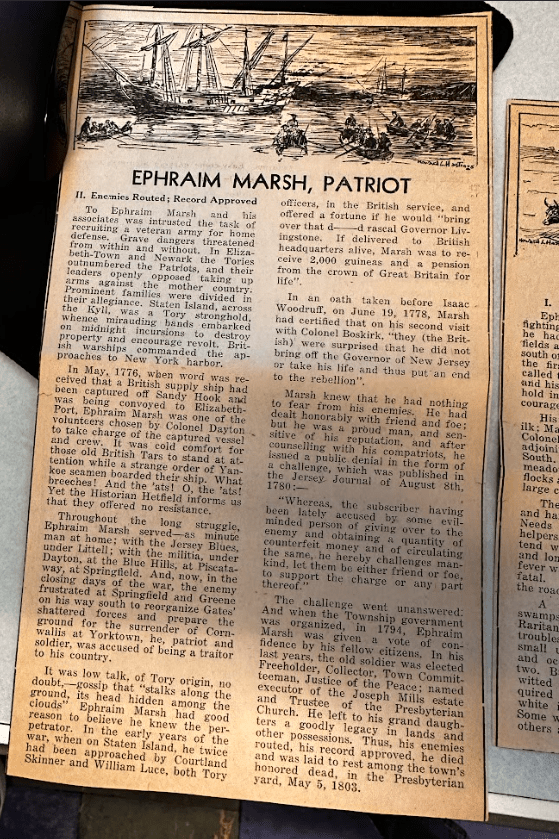
During our May meeting, Dr. Selig discussed the book War in the Countryside: The Battle and Plunder of the Short Hills, New Jersey, June, 1777. Vol. I by Frederic C. Detwiller, which includes references to Jedediah Swan and cites the “Marsh Papers,” housed at the Plainfield Historical Society. The team described their efforts to contact the Society and locate these papers, which may contain valuable information about Swan. This example highlights the researchers’ diligence and the many challenges they navigated—acting as historical detectives, following promising leads. It’s been truly impressive to watch the team support one another and collaborate so effectively.
Presentation Day- June 21st, 2025
On June 21st, the research team presented its findings to the public via a Zoom webinar, now available to watch on YouTube [HERE]. I highly encourage you to view the full presentation to get a comprehensive look at the project and its exciting discoveries.
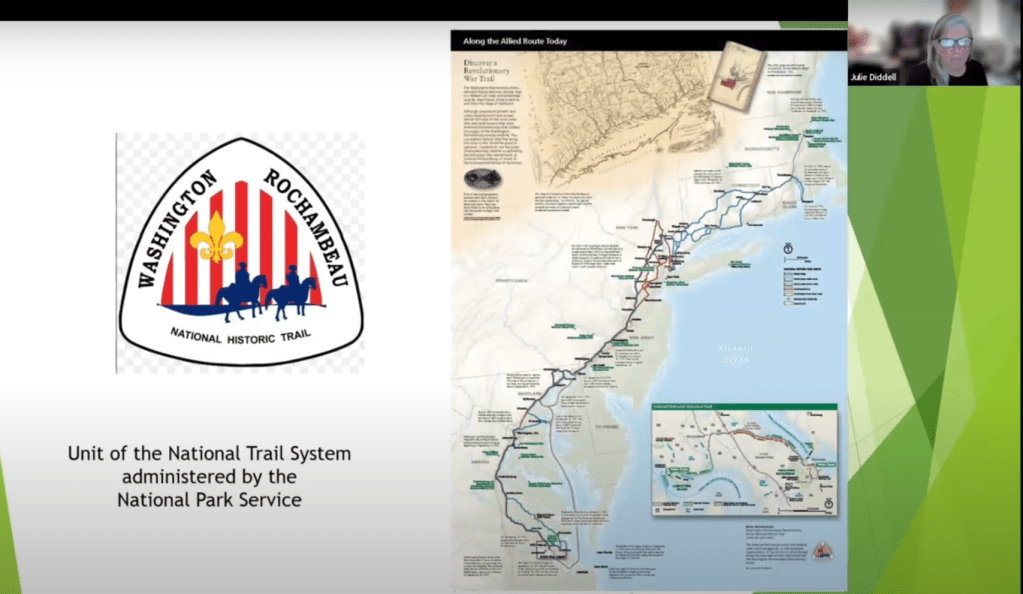
The session began with remarks from Julia, Project Manager and Chair of the Washington-Rochambeau Revolutionary Route – New Jersey. She outlined the project’s goals, provided a historical overview of the Revolutionary War, described the Washington-Rochambeau Revolutionary Route, and discussed its lasting impact on the local community. Julia also introduced each member of the research team before transitioning to a pre-recorded video presentation by Dr. Selig.
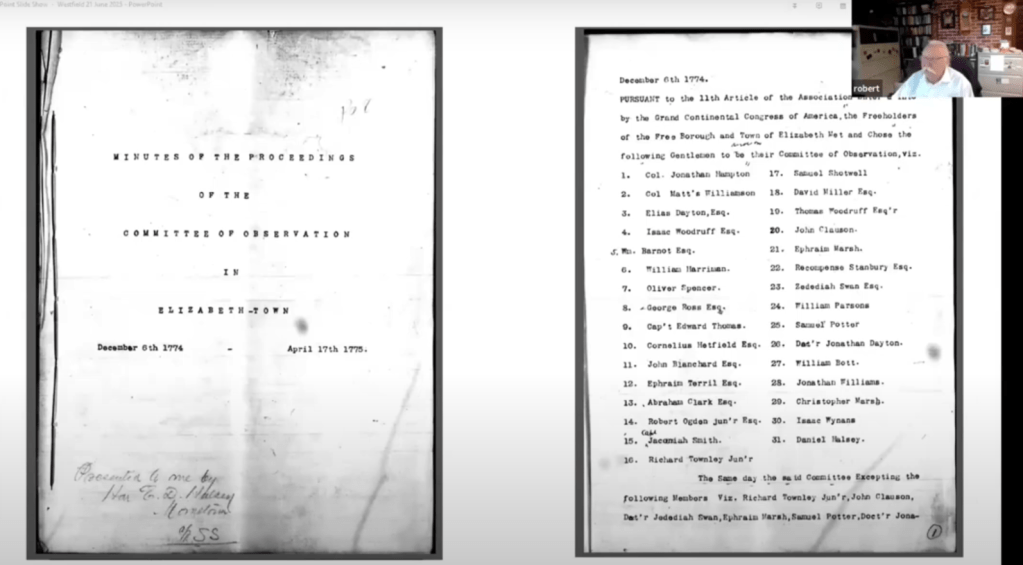
In his presentation, Dr. Selig shared the objectives of his research, which focused specifically on Westfield, New Jersey. His goals included identifying residents who served on the Essex County Committee of Correspondence, documenting the sentiments of local inhabitants in the lead-up to the Revolution—particularly in the area then known as the West Fields of Elizabethtown—and analyzing pension applications and other historical documents from Westfield veterans of the War of Independence.
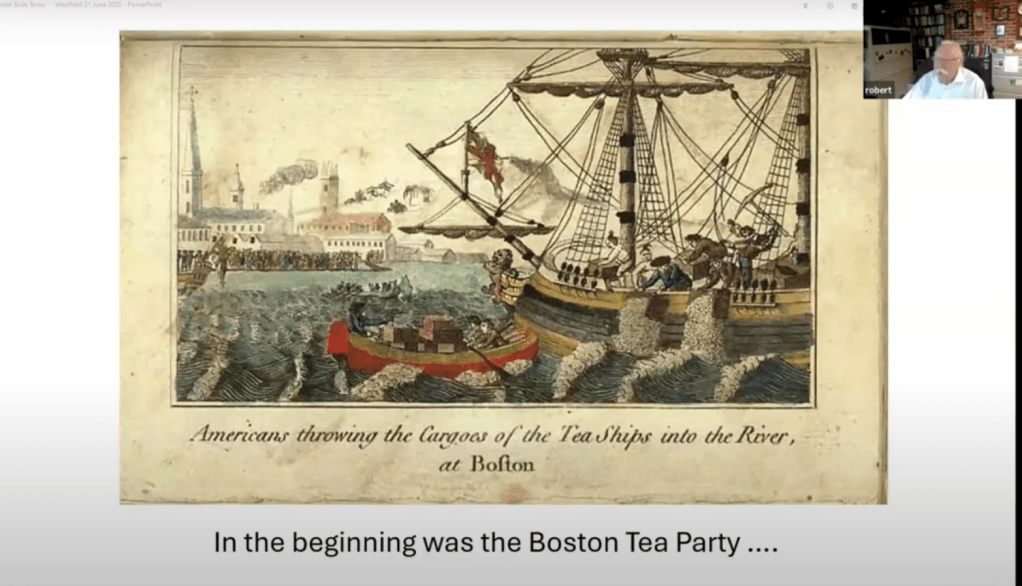
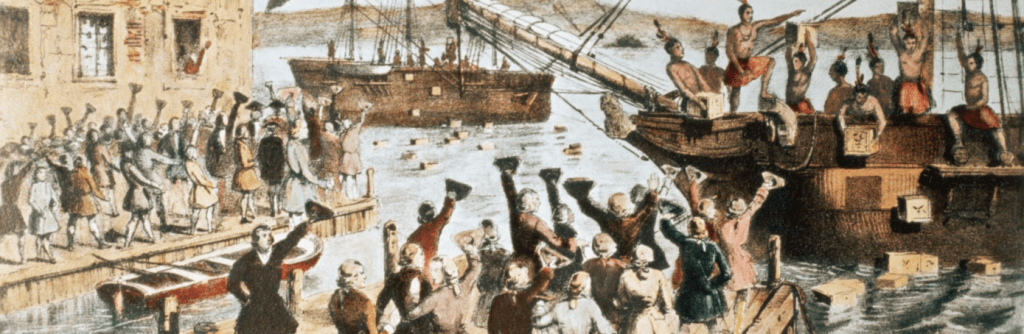
To set the historical context, Dr. Selig began with the Boston Tea Party of December 16, 1773. In response to this act of defiance, the British government passed the Intolerable Acts, aimed at punishing the colonies—especially Massachusetts. This prompted the Massachusetts Committee of Correspondence to call upon other colonies to join a boycott of British goods. For New Jersey, this marked the first major action taken by its own Committee of Correspondence in support of a united colonial resistance.
Dr. Selig described how meetings were held throughout New Jersey to coordinate responses to British policies. Delegates from various counties gathered in towns such as New Brunswick and Elizabeth. He identified several representatives from the Westfield area who attended these meetings—men who were part of the local elite and played influential roles in shaping public sentiment. Through primary source materials, Dr. Selig offered insight into who these leaders were, including damage claims they filed during the war.
A particularly notable figure discussed was Jedediah Swan. As mentioned above, Dr. Selig uncovered significant information about Swan during his research at Rutgers University, including original documents that shed light on his contributions during the Revolutionary era. Swan’s story illustrates the importance of individual actors in the broader historical narrative.
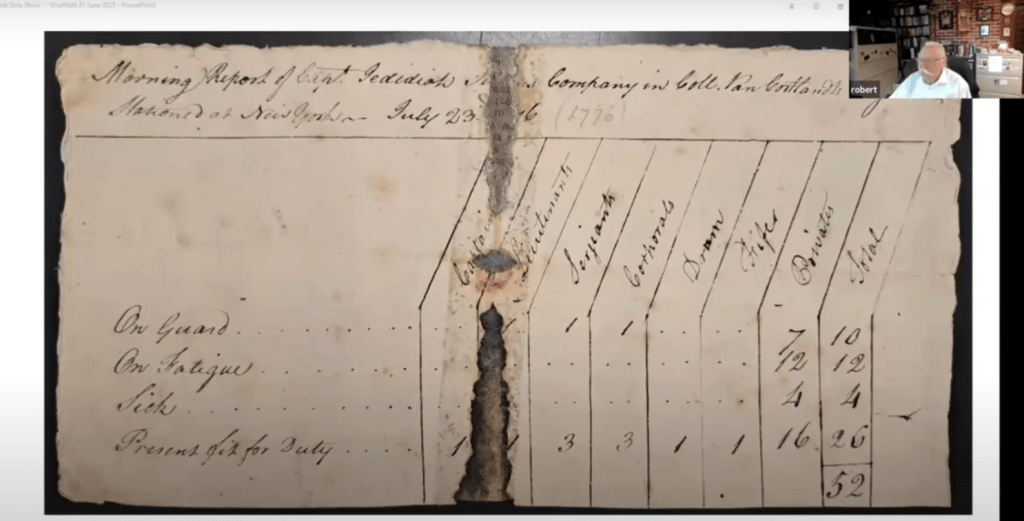
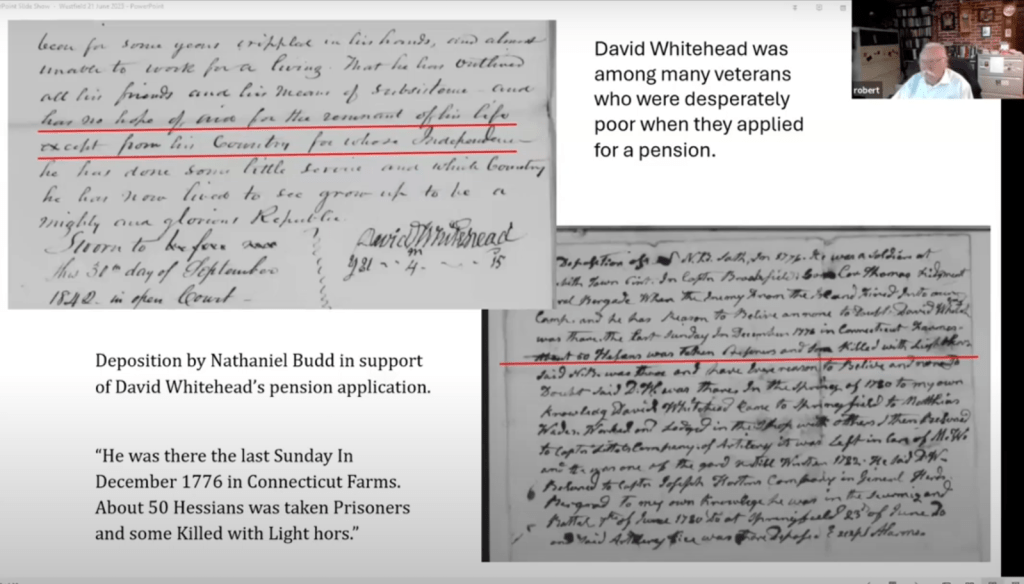
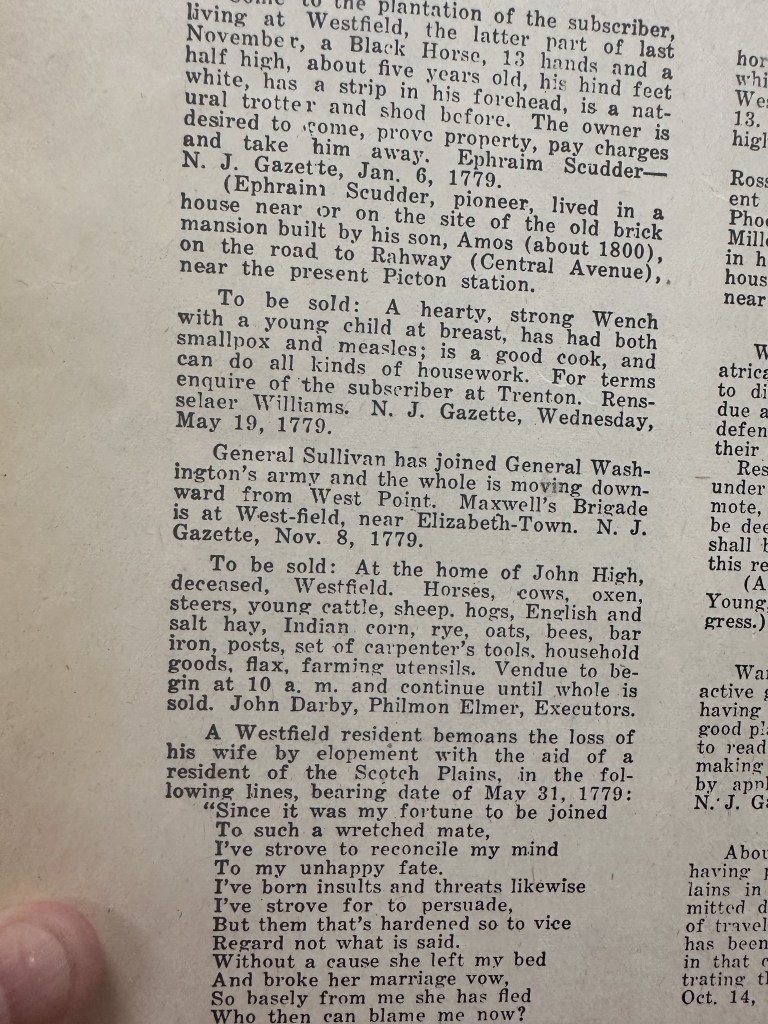
Dr. Selig also explored the wartime experiences of ordinary Westfield citizens through pension applications filed under the Federal Pension Act of 1832. He transcribed approximately 25 applications from Westfield veterans, noting that many more remain. These documents offer a rich look into both the war and its long-term effects on those who served. For example, one application recounted the capture of Hessian soldiers, while another revealed the desperate financial condition of veteran David Whitehead at the time of his filing. Some veterans described fleeing their homes during British raids. These accounts provide a deeply personal view of how the war affected individuals and families, both during and long after the conflict ended.
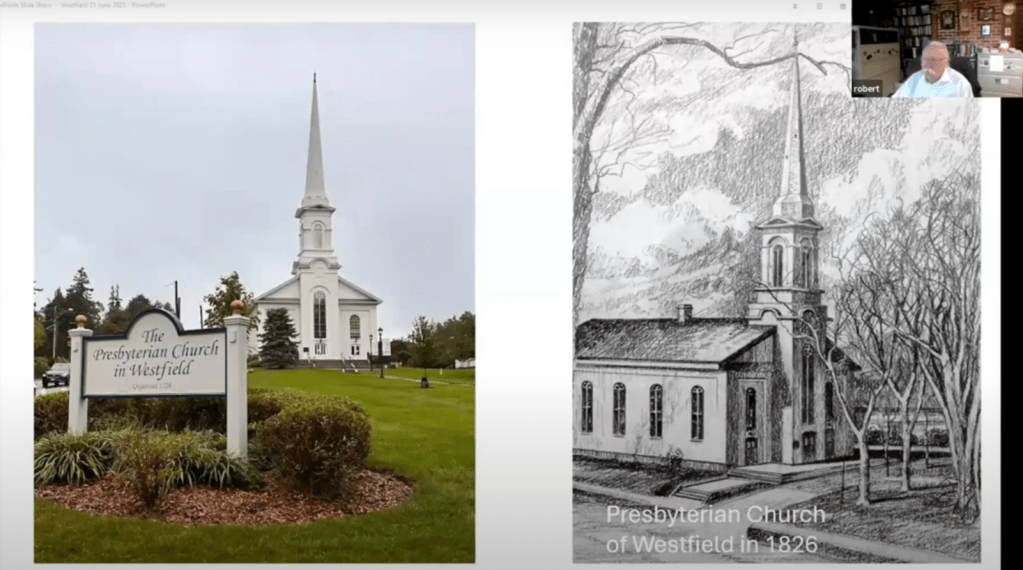
Another important highlight from Dr. Selig’s presentation was the Miller-Cory House, located in Westfield along the Washington-Rochambeau Revolutionary Route. The house was built by Clark Miller, who served in the Continental Army for two years and six months. He is buried in the cemetery of the Westfield Presbyterian Church, connecting a local landmark to national history in a profound way.
Dr. Selig concluded his presentation by summarizing his key themes, including the formation of the Committees of Correspondence and the development of local militias—both essential to understanding early American resistance efforts in the local community.
Dr. Selig’s presentation is a compelling and informative look at Westfield’s pivotal role in the Revolutionary War and a testament to the value of local history in understanding our nation’s past.
A Focus on African American History
Research has been conducted that has focused on the African American community in Westfield and the surrounding towns during the Revolutionary Period. Dr. Susannah Chewning, a Senior Professor of English at the College of Union with a diverse academic background in English Literature and Medieval Studies, has been leading this important aspect of the project. Dr. Chewning has been exploring local records, including manumission documents and birth certificates to trace the lives of African Americans in the region. She is working to compile a comprehensive database from her work.
April 2025 Update
During our late March meeting, Dr. Chewning referenced a pre-Revolutionary-era taxable inventory/ census document shared by Julia. She noted her plans to visit Princeton University to examine the full document, as it includes references to enslaved individuals. This information will help her identify who was living in the area at the time and expand her database of African American residents. She also pointed out that some of the enslaved individuals listed were recorded as tax-exempt.
Dr. Chewning noted that when her research first began, she had identified 25 enslaved individuals who lived in Westfield between 1778 and 1781—most of them by name. That number has since grown to 69. Dr. Chewning also discussed a well-known, formerly enslaved woman named Jude, who is buried at Fairview Cemetery in Westfield. Dr. Chewning believes she has identified Jude’s parents, offering another valuable lead in tracing individuals who were alive during the March to Yorktown in 1781.
Dr. Chewning recently presented her research at her college and at the New Jersey College English Association Annual Conference, where it was well received. While at the conference, she attended a Digital Humanities Workshop sponsored by the New Jersey Humanities Consortium, which provided valuable insights for the development of her website (featured in the first blog post). Inspired by the workshop, Dr. Chewning is now exploring the idea of launching a podcast. She envisions using the platform to interview descendants of formerly enslaved individuals from the Westfields, as well as researchers and historians. Although still in the early planning stages, she is already brainstorming episode ideas. In addition, she connected with members of other New Jersey counties working on similar projects and is considering a long-term initiative to honor the African Americans who lived in the region during the Revolutionary era.
As part of her efforts to locate the burial sites of African Americans, Dr. Chewning noted that when Fairview Cemetery was established in 1868, many bodies were relocated from the Old Presbyterian Church burial ground. She plans to continue her research to determine who was moved and the reasons behind those relocations.
May 2025 Update
During our May meeting, Dr. Chewning shared her latest research efforts in preparation for the upcoming June 21st presentation. She mentioned her ongoing plans to visit Fairview Cemetery to investigate additional burial sites and uncover more information about African Americans buried there. She also spoke with Julia about plans to create a permanent public outdoor display that will showcase the researchers’ work.
Presentation Day- June 21st, 2025.
After Dr. Selig presented his findings, Dr. Chewning had the opportunity to share her own research with the public. She began by introducing herself and explaining how she became involved in the project.
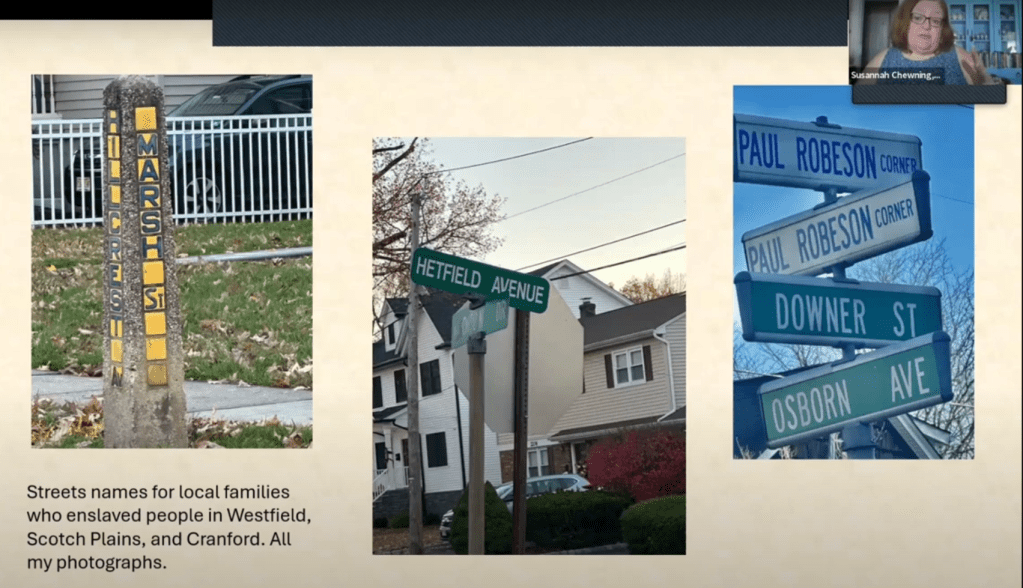
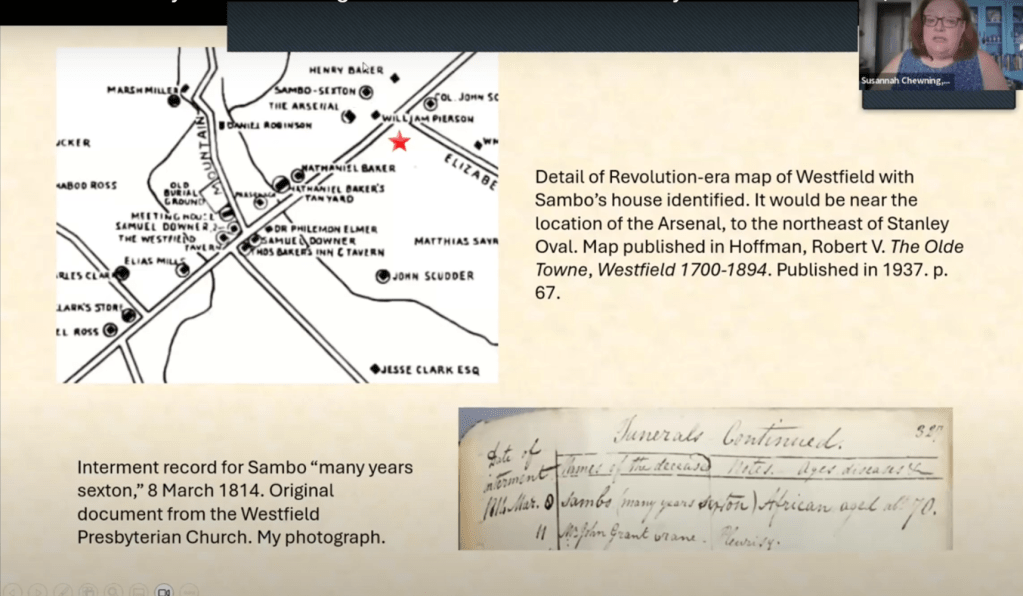
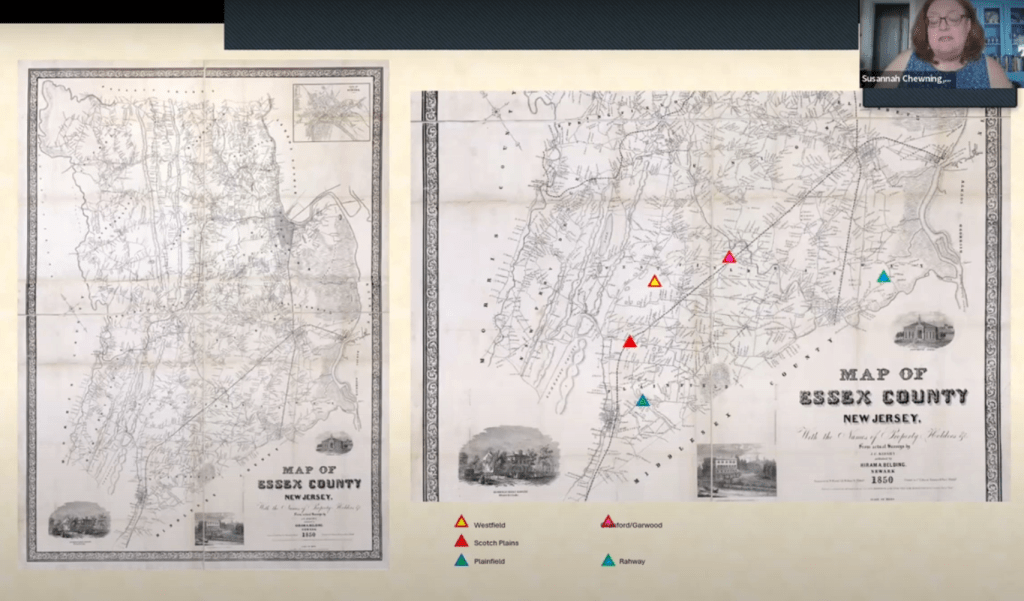
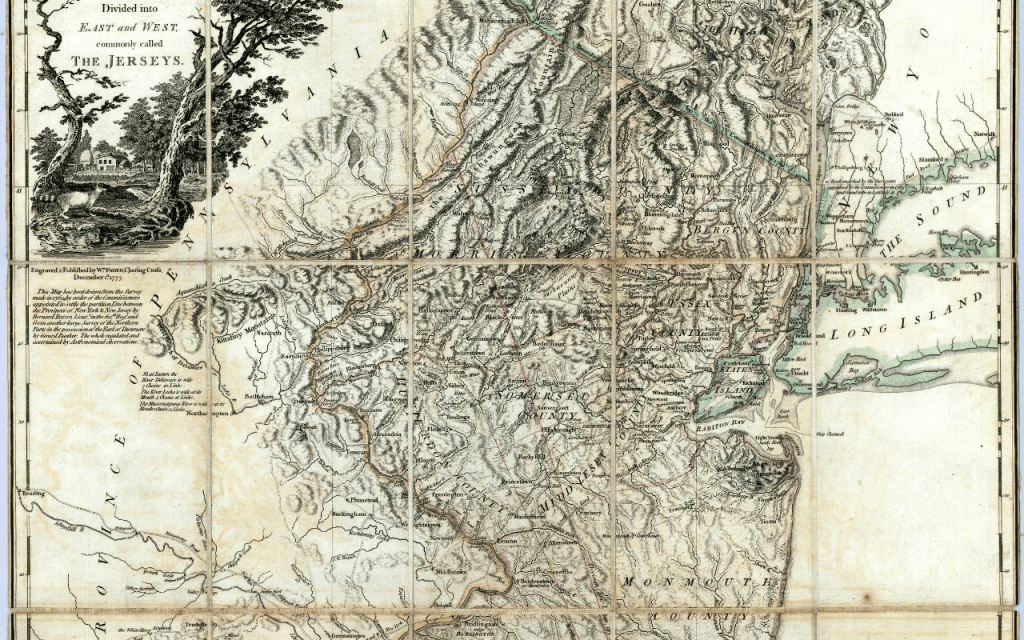
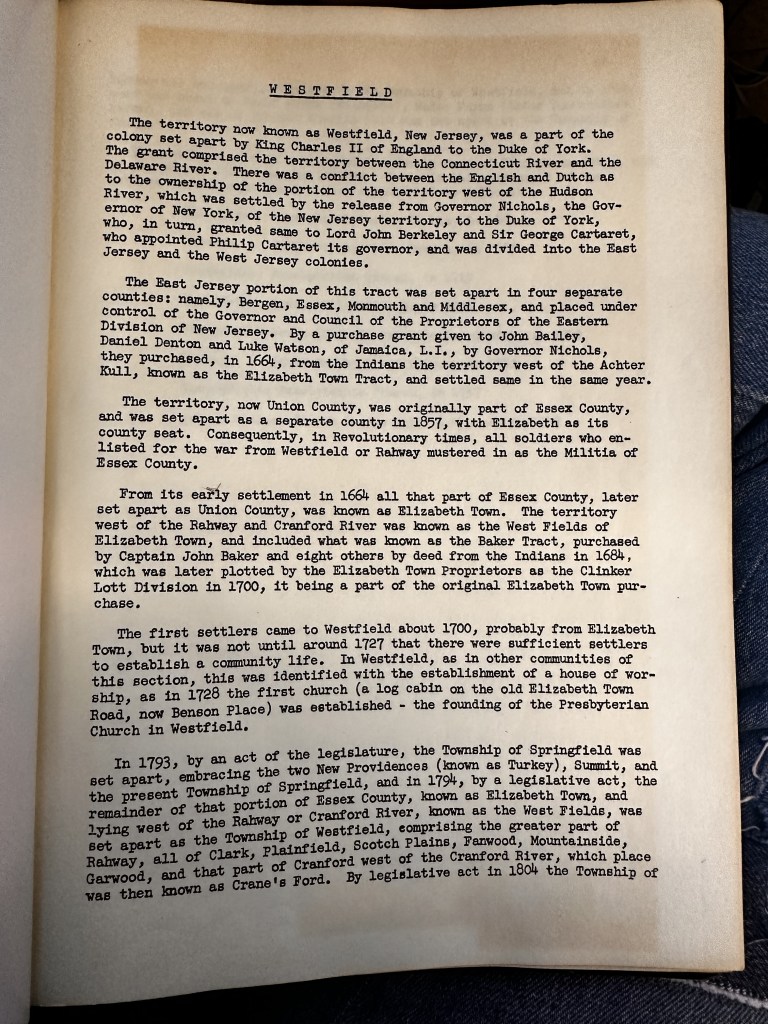
Dr. Chewning shared maps of what were historically known as the Westfields of Elizabethtown. She noted that many of the streets in present-day Westfield are named after influential early figures in the area. However, she also pointed out that many of these individuals were slave owners, a fact often overlooked in the local historical narrative.
Dr. Chewning then discussed the goals of her first grant-funded research project, conducted the previous year, before outlining the aims of the current project. These include building a comprehensive database documenting:
The names of African Americans who lived in the region
Burial locations of African Americans from the Revolutionary War era
Possible descendants of those identified
Her database will also include information such as burial and interment dates, grave locations, personal stories, manumission and birth certificates, original documents, transcriptions, and links to related historical materials.
Dr. Chewning reported that her list of African Americans in the region has continued to grow, currently up to 200 individuals spanning from 1704 to 1866—the year slavery was finally abolished in New Jersey.
During her presentation, Dr. Chewning highlighted several individuals from her research, offering biographical details such as where they lived and what is known about their lives. By doing so, she brings voice and humanity to people who were often silenced by the historical record.
She also emphasized the wide array of sources used to construct these stories, including:
Baptism, marriage, and death records from the Westfield Presbyterian Church
Local tax and census documents
Burial records from Fairview Cemetery
Archives from the New Jersey Historical Society
The New Jersey Slavery Records Database and Northeast Slavery Records Index
Inventories of damages caused by British and American forces in New Jersey
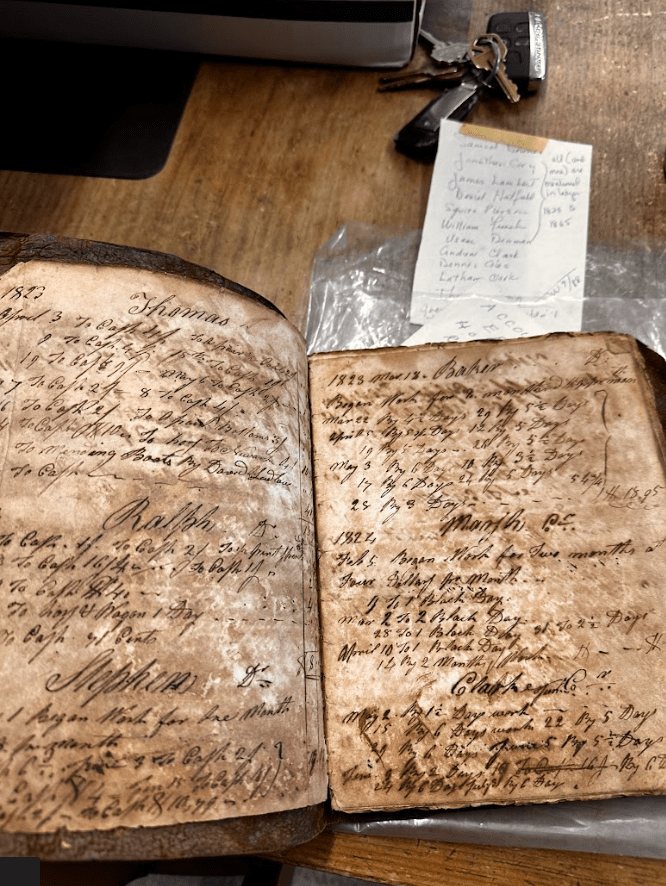
The Winans Collection at Princeton University
Archives of the Westfield Historical Society
Various books and local histories
Dr. Chewning also addressed the history of slavery in Westfield by naming prominent early residents known to have enslaved individuals. She has a list of about seventy enslaved people living in the West Fields at the time of the March to Yorktown in 1781. She presented a range of primary sources that help tell their stories, such as sale records, damage claims, baptismal and burial records, Revolutionary War-era maps, runaway slave advertisements, and manumission documents.
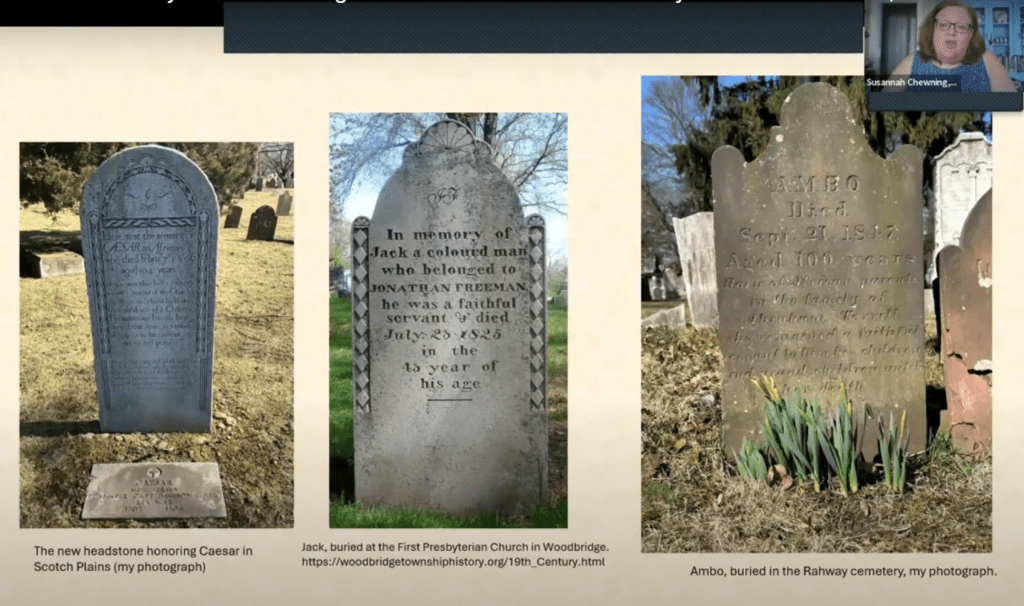
A key part of her ongoing work involves identifying burial sites of African Americans in the community. Dr. Chewning noted that enslaved individuals were known to be buried at the Old Burying Ground of the Westfield Presbyterian Church, the First Presbyterian Churches in Woodbridge and Elizabeth, as well as in family plots and home burials—many of which may have later been moved to Fairview Cemetery. She explained that further research is needed to match unnamed graves to individuals and that she is actively collaborating with Fairview Cemetery staff to advance this work.
Dr. Chewning shared photos of gravestones belonging to known African Americans in local cemeteries. She underscored that, to her knowledge, these are the only marked graves of enslaved individuals currently identified in Union County.
Dr. Chewning concluded her presentation by highlighting Wally Brown, a Westfield resident whose great-grandparents, Jack and Lembe Williams, are believed to be buried in the Old Burying Ground. Brown believes he knows the precise spot where they were laid to rest, though no marker currently exists. Dr. Chewning expressed her commitment to continuing this vital work.
My Presentation
Following Dr. Chewning’s presentation, I had the opportunity to discuss my blog with the audience. I shared how the blog started, the kinds of content it features, and how I became involved in the research project. It was a true honor not only to present my work, but to contribute to such a meaningful and collaborative effort. As mentioned earlier, you can watch the full presentation [HERE].
Building a Lasting Legacy
By shining a light on both prominent leaders and those whose names were nearly lost to history, this project reminds us of the power of local research to reshape our understanding of the past. As I discussed in Part 1, one of the aims of this research project is to create a lasting educational resource for the community. The team has been exploring and discussing the possibility of an enduring outdoor exhibit or monument that would allow the public to engage with this history in a meaningful way. The groundwork has been laid for this educational space that honors the notable figures who played an impactful role in Westfield and surrounding towns at the time of the American Revolution. Stay tuned to the Westfield Historical Society for updates on this future endeavor, and continue to check in with Benevento’s History Blog for future updates. Thanks for reading and supporting this project. Stay connected with the organizations listed below that have been involved with this project:
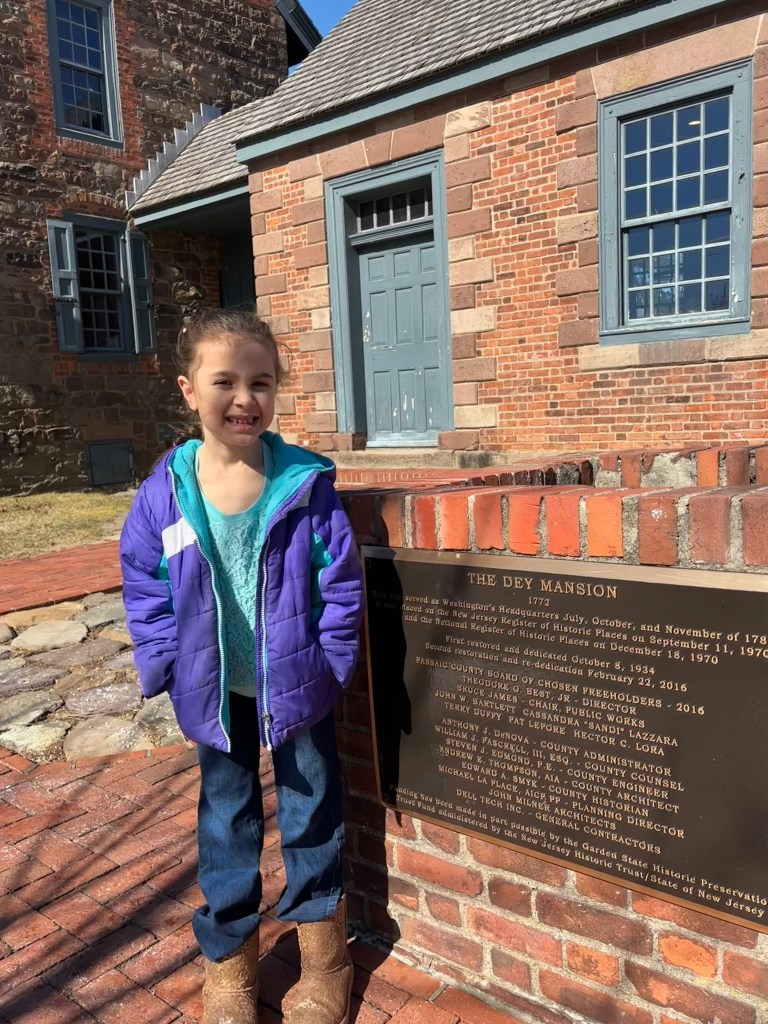
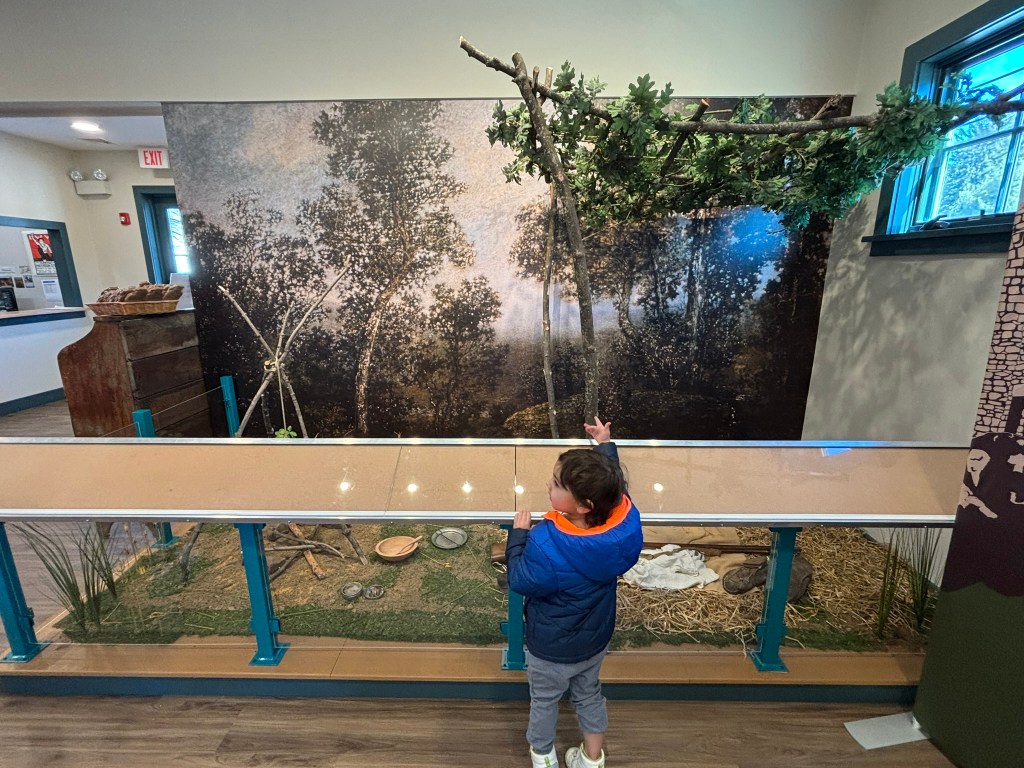
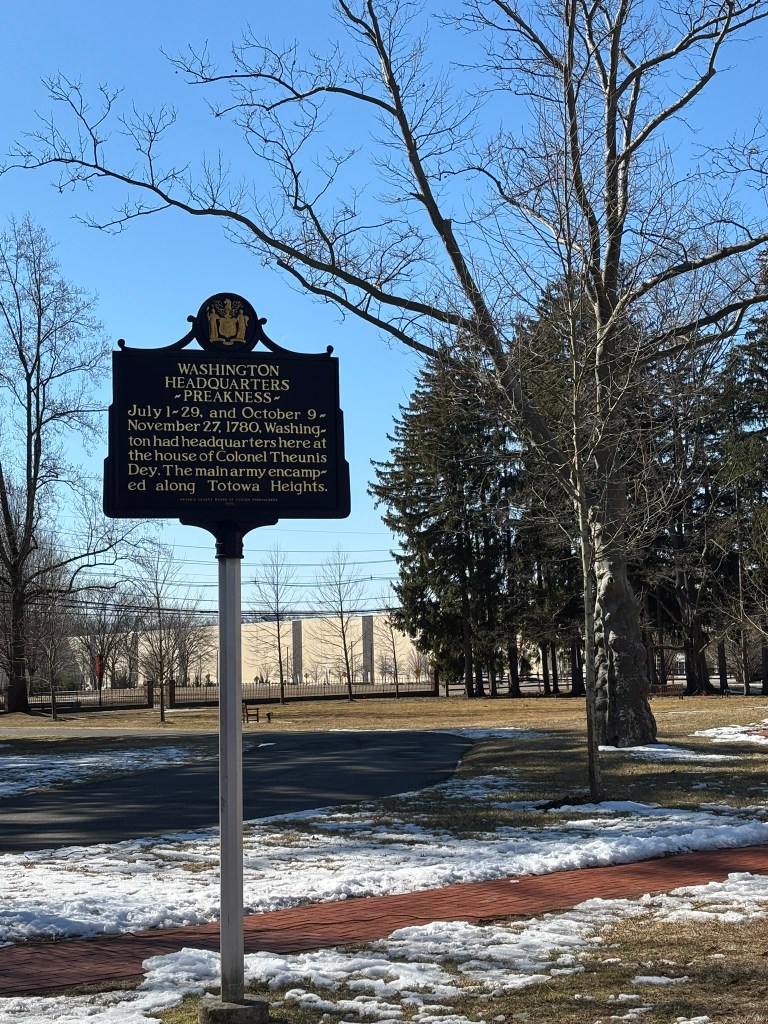
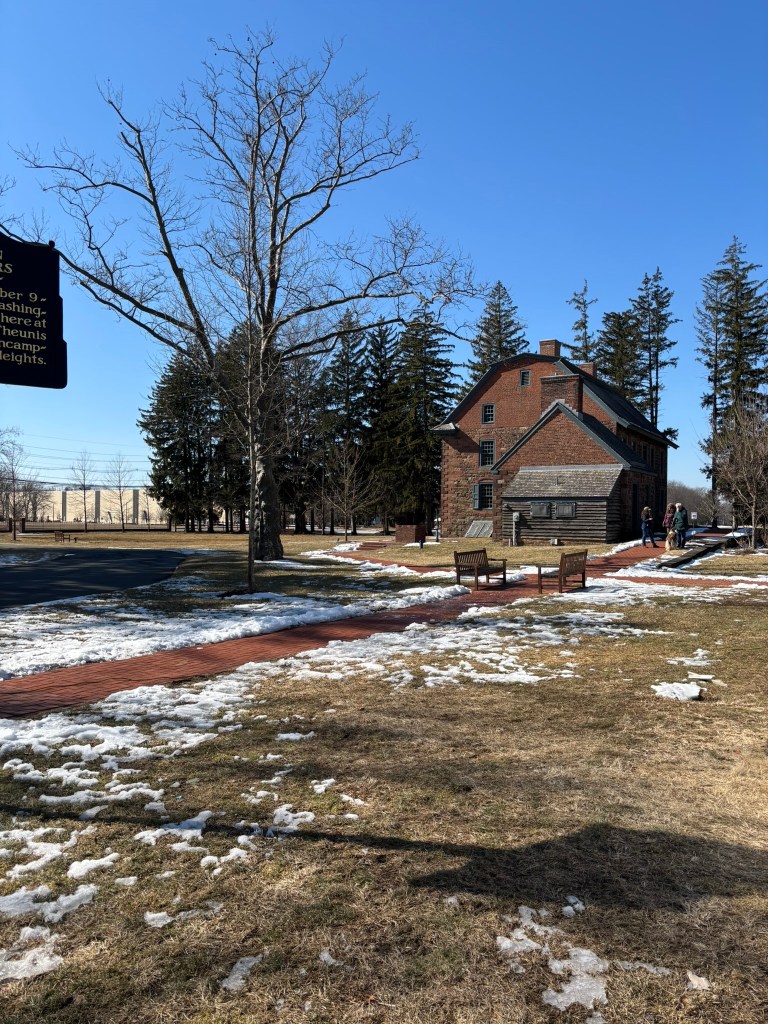
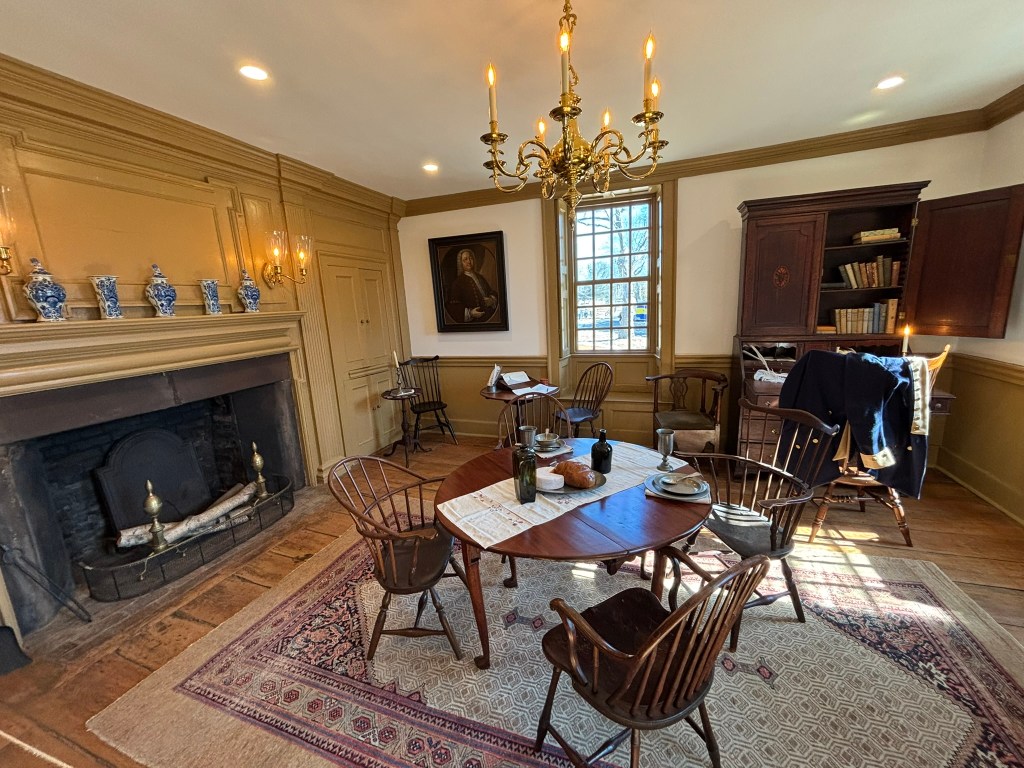
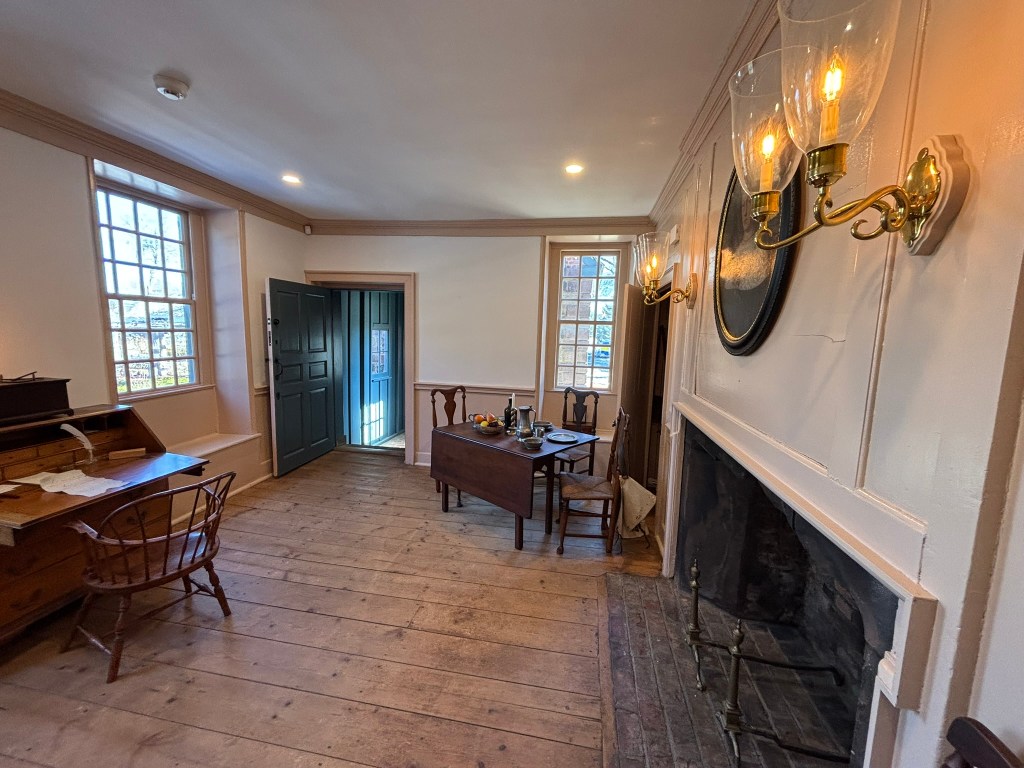
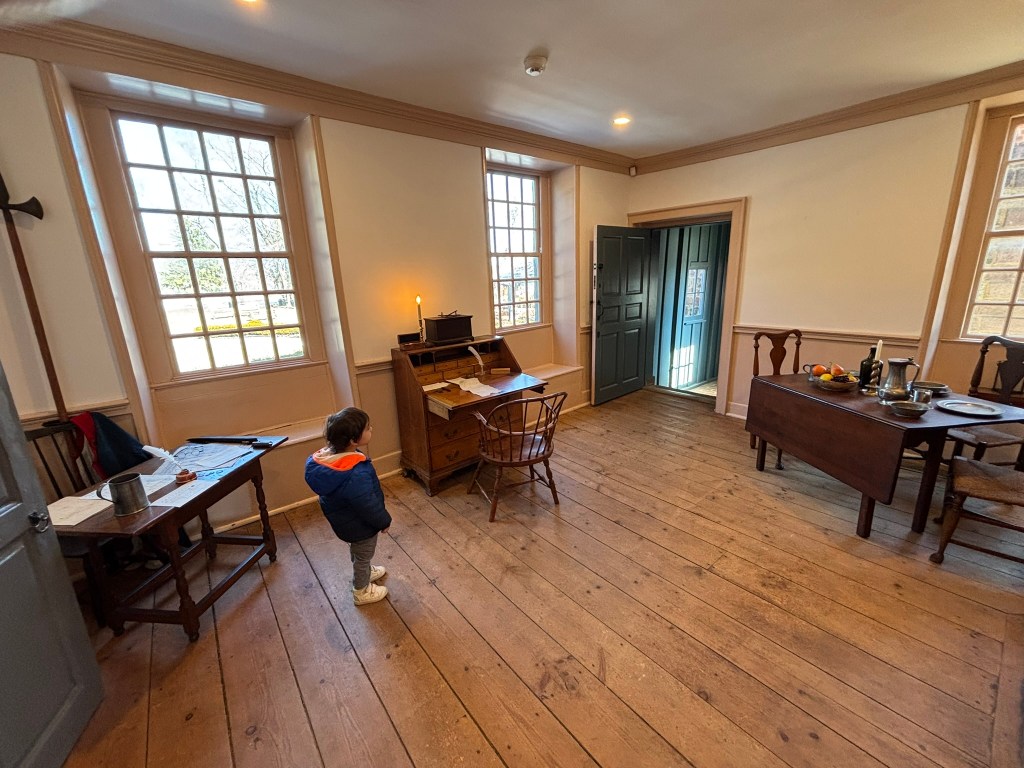
My family and I made it out to Dey Mansion for George Washington’s Encampment weekend which ran on Saturday 2/22 and Sunday 2/23 from 10am to 5pm in honor of George Washington’s birthday. The Dey Mansion in Wayne, NJ served as Washington’s headquarters during the Revolutionary War from July 1st- July 28th, 1780, and again from October 8th to November 27th, 1780.
A Taste of 18th Century Life
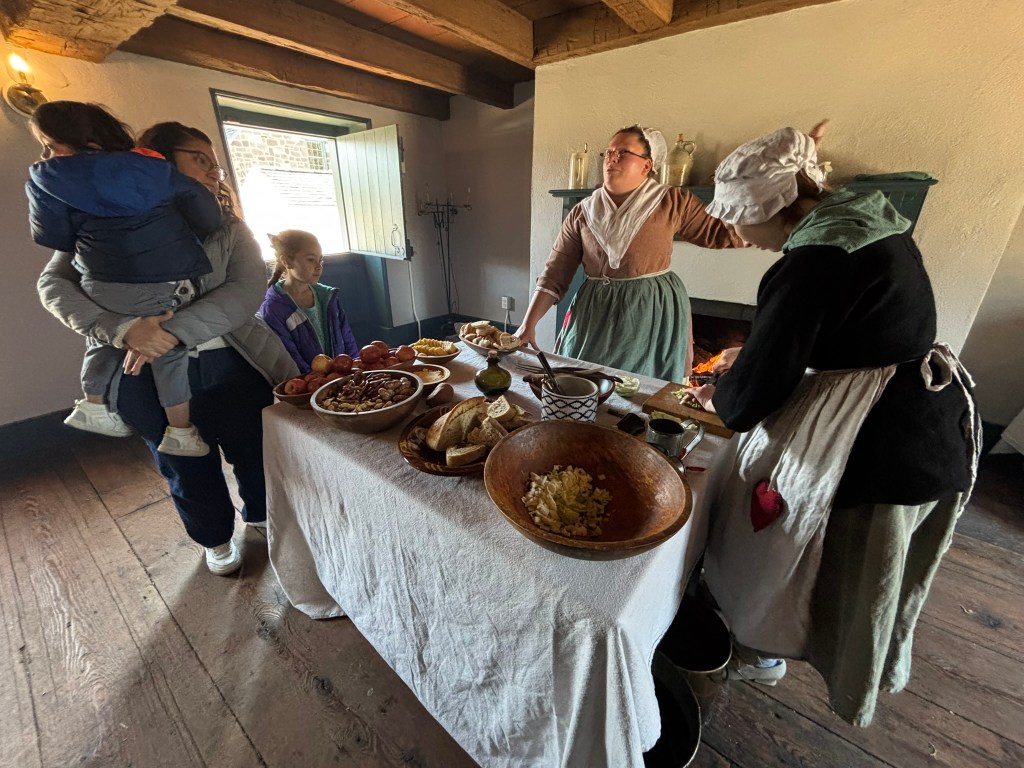
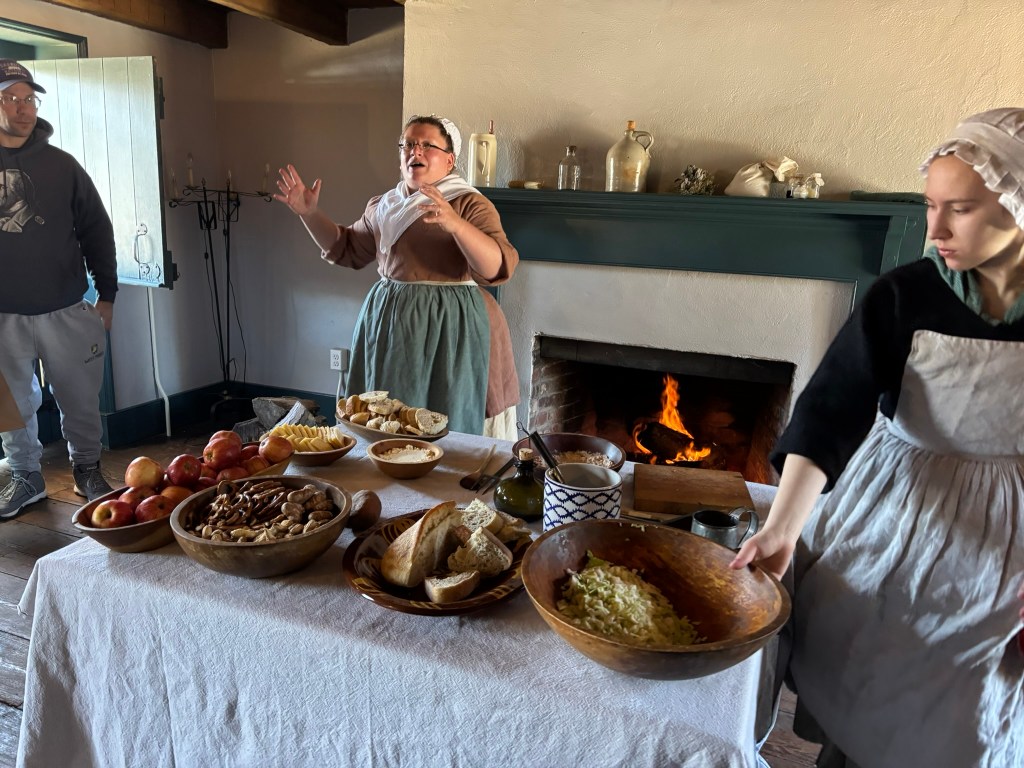
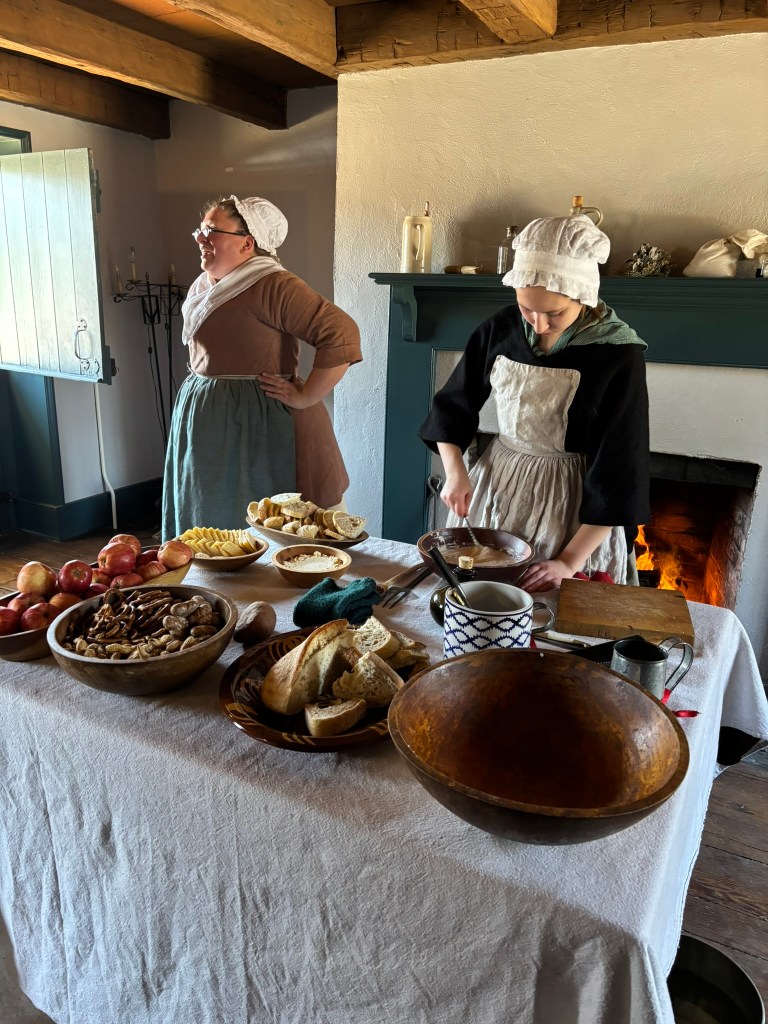
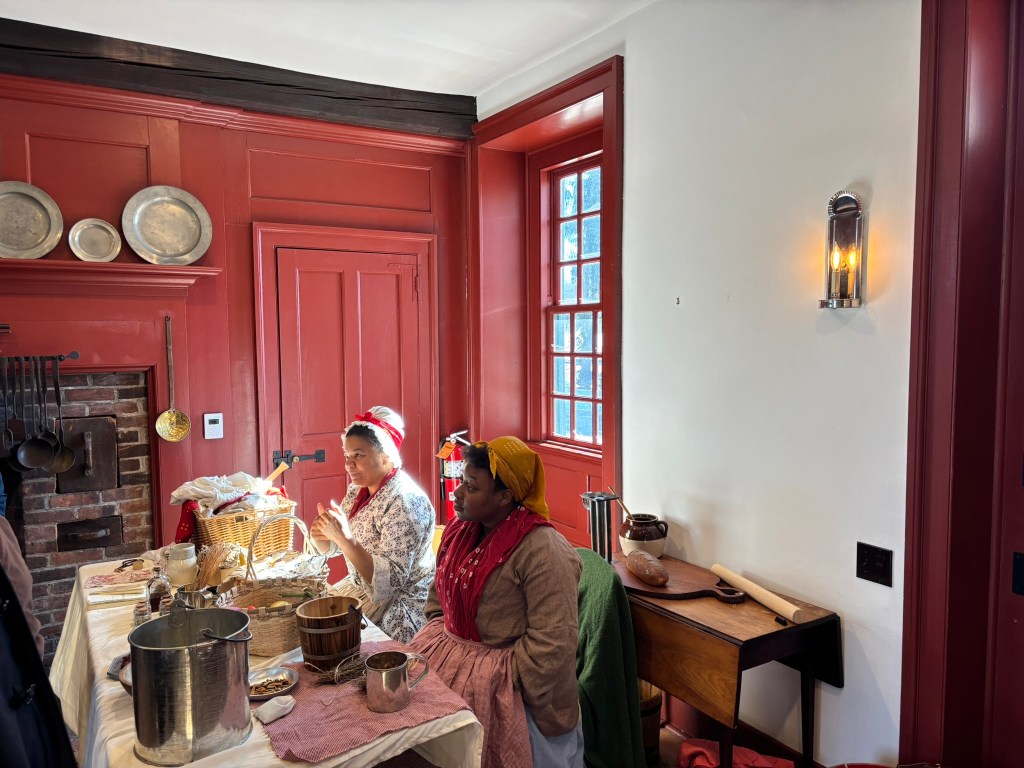
My family arrived on Sunday at about 10:30 am. We really enjoyed the demonstration on 18th century meal preparation and cooking in the Spring Kitchen. We were taught about what the Dey family, who were quite wealthy, would have eaten. We were also taught about the soldiers’ meager daily rations throughout the war. The demonstration was extremely informative and addressed the challenges that the Dey Mansion faced in hosting Washington’s entourage.
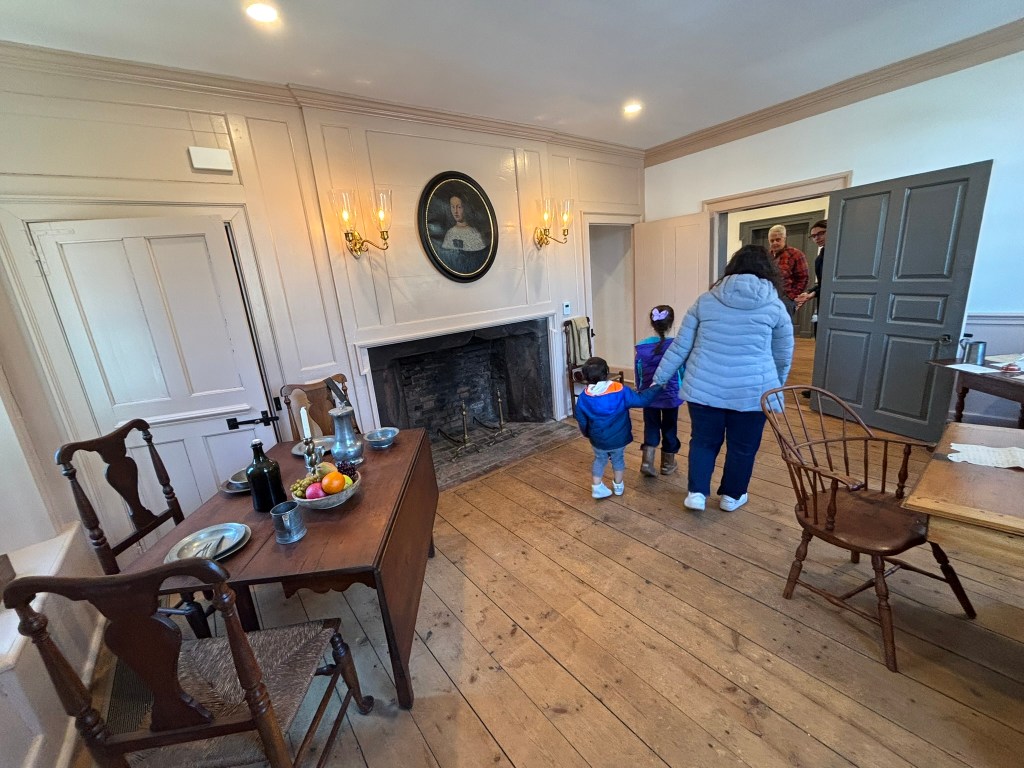
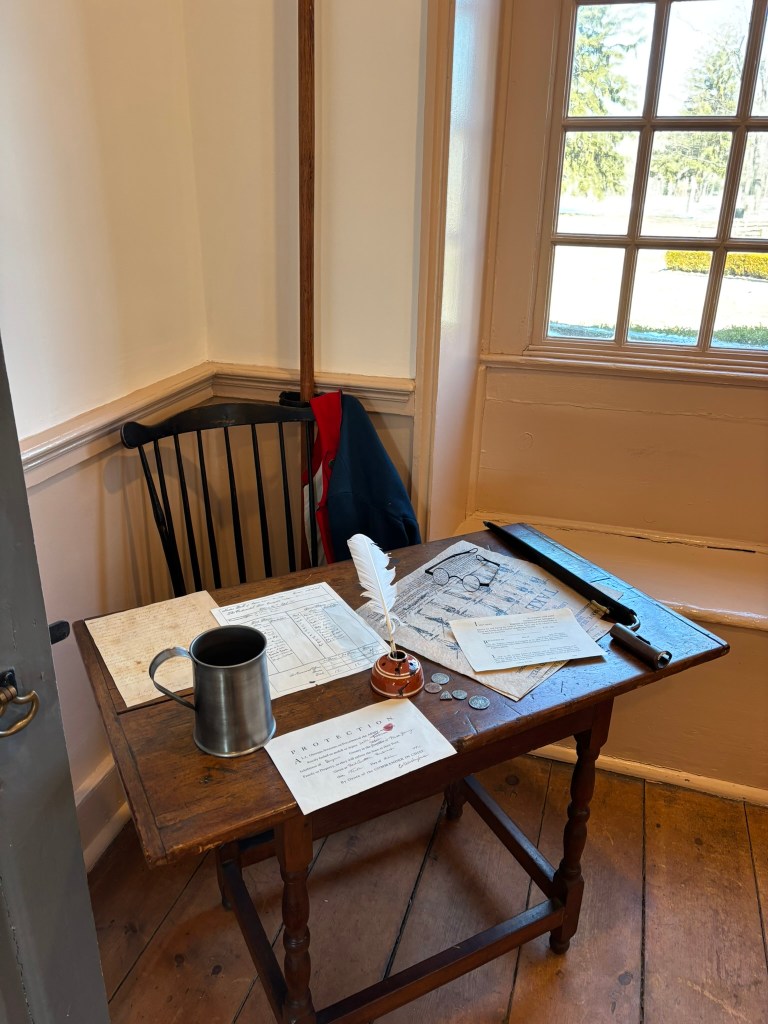
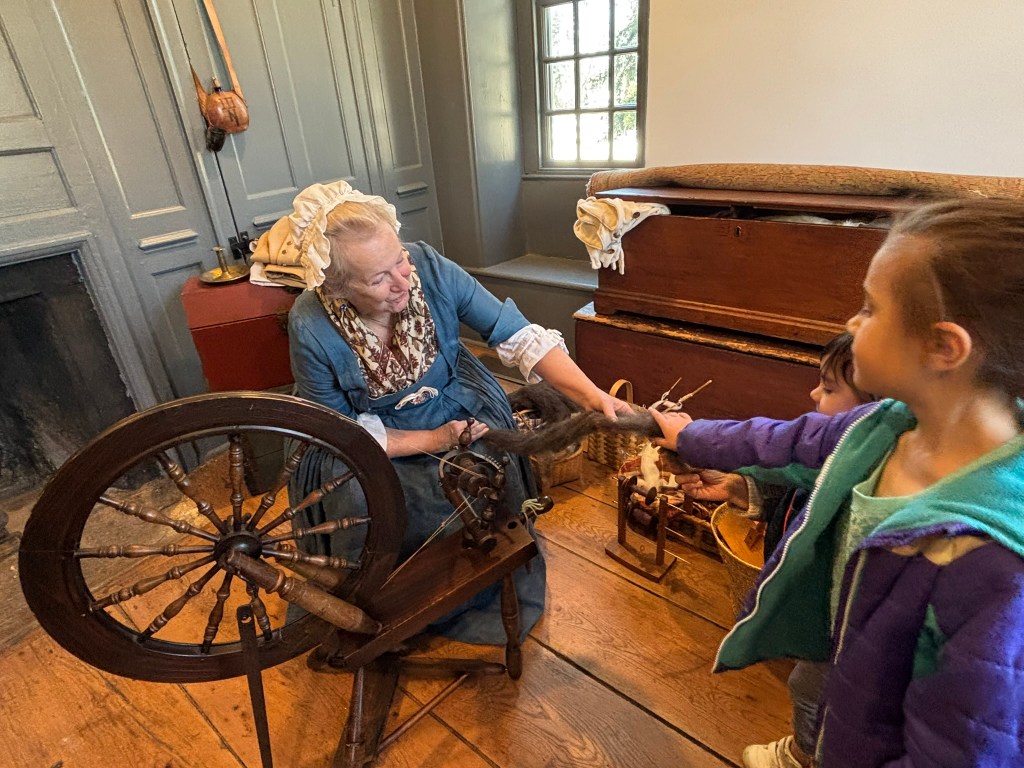
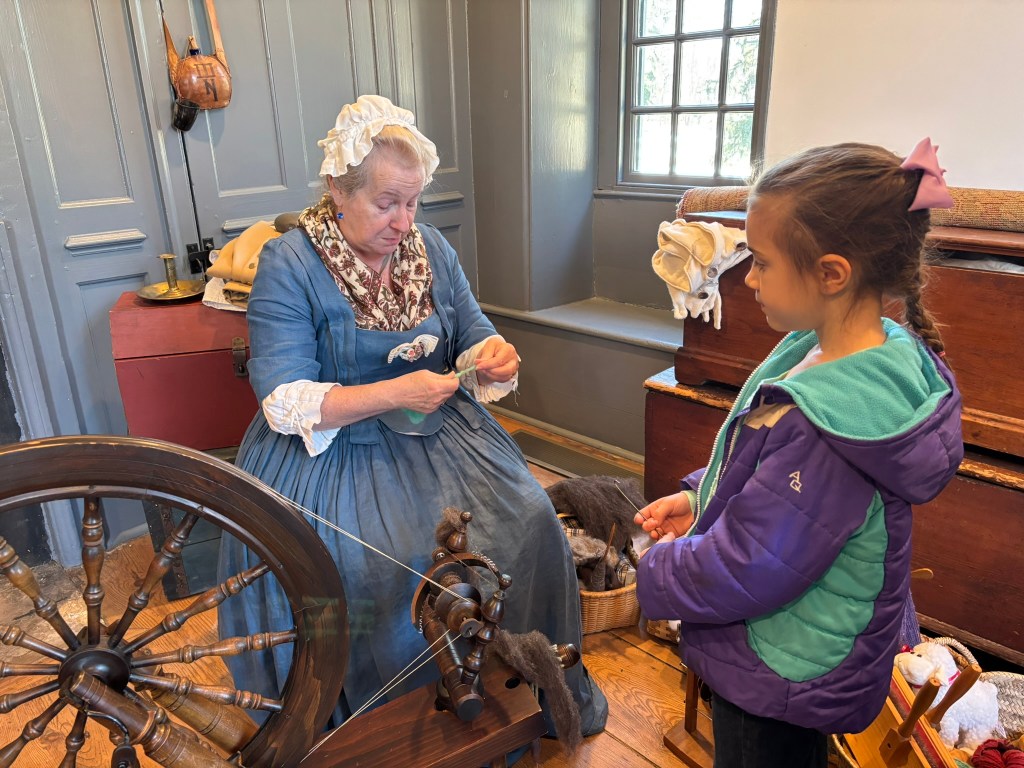
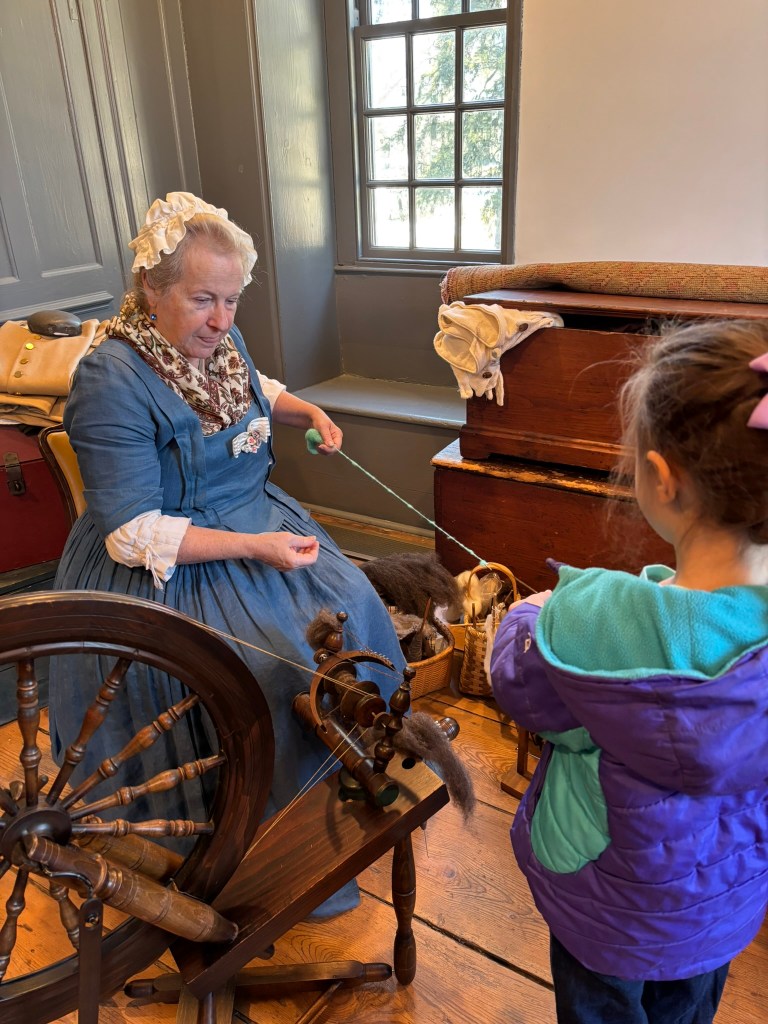
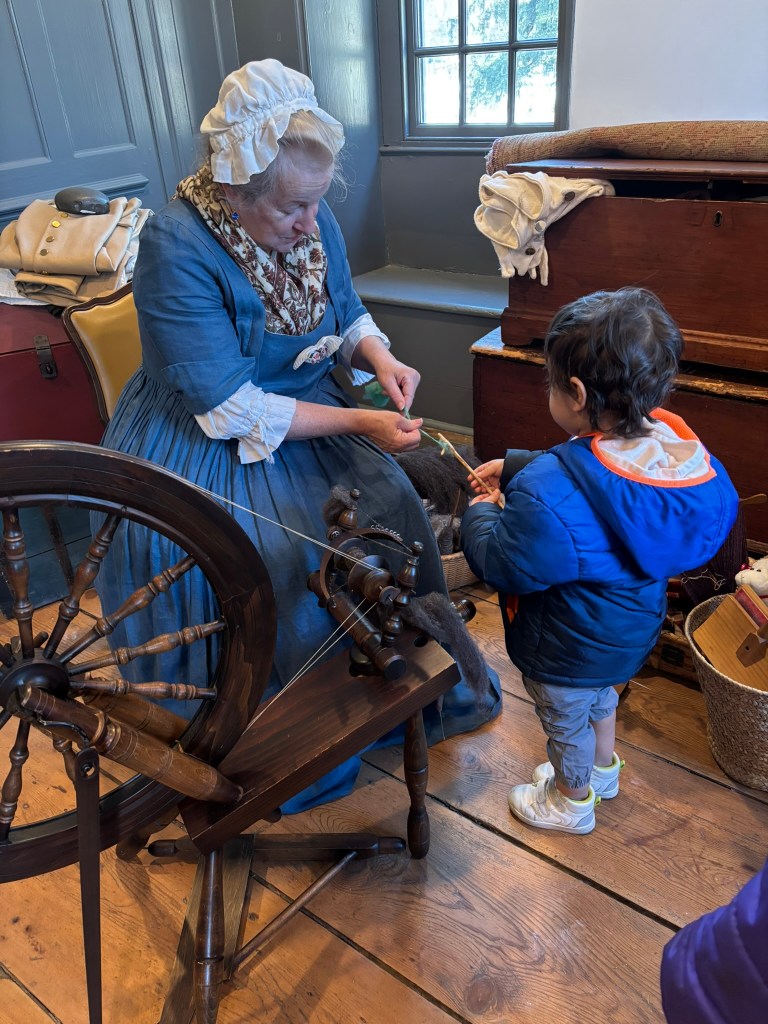
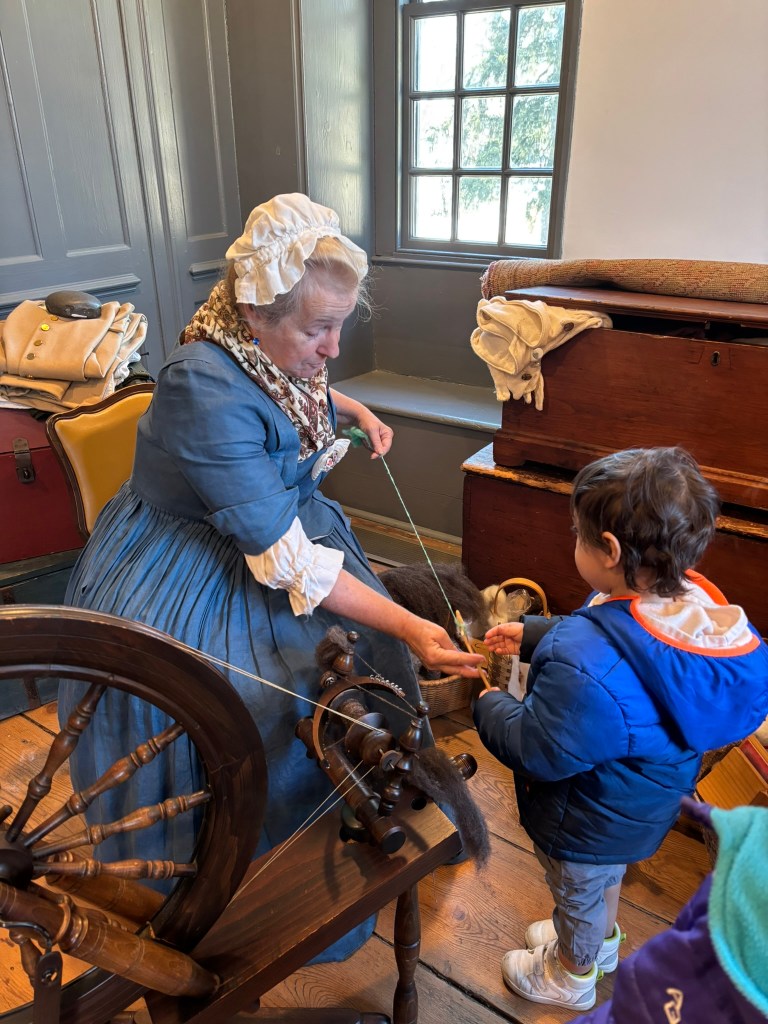
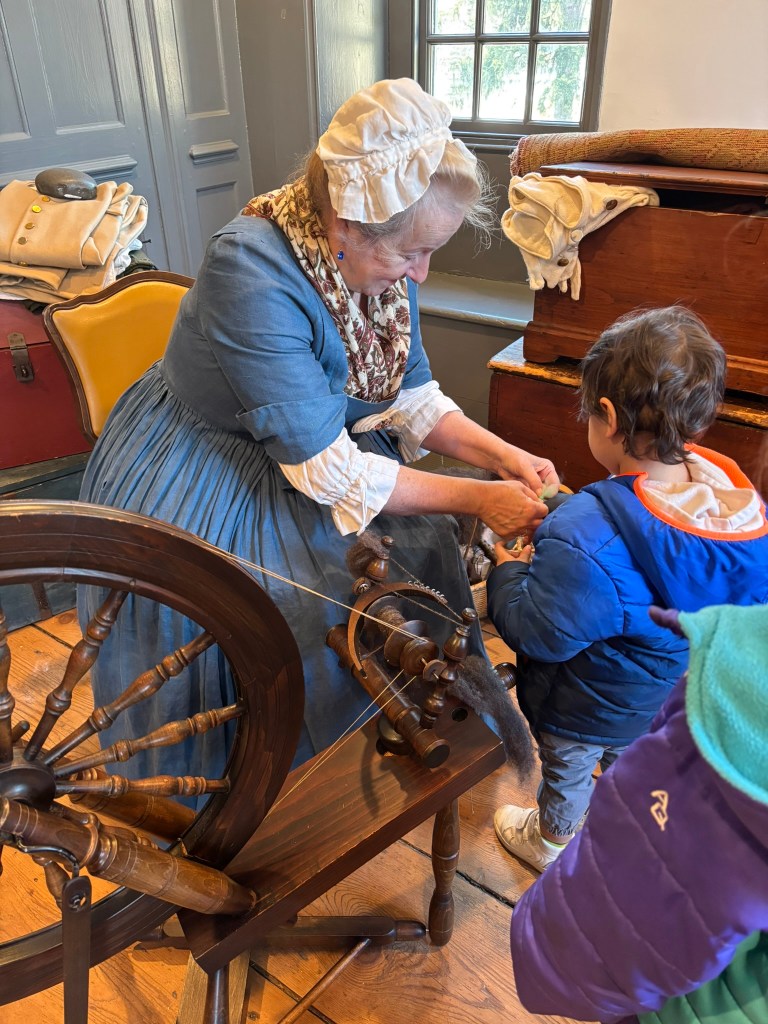
We walked over to the Dey Mansion and explored the house. My children also really enjoyed the demonstration on 18th century spinning. The 18th century reenactor spun sheep’s wool into yarn and the children were able to enjoy a hands-on demonstration as they were able to spin their own yarn, which then became friendship bracelets. The re-enactor taught us that the dyes used to color the yarns were all from natural products. Following the spinning demonstration, we explored the rest of the house and witnessed where Washington and his entourage stayed, including his meeting room, where he and his aides would write and receive hundreds of letters per day.
Military Demonstrations
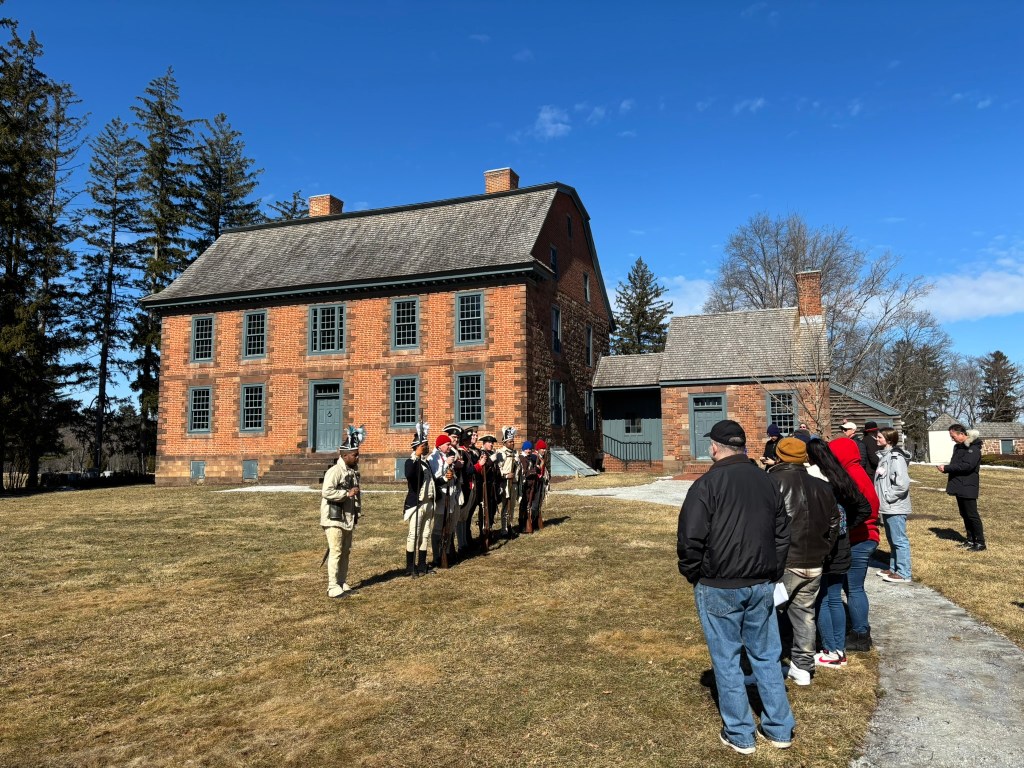
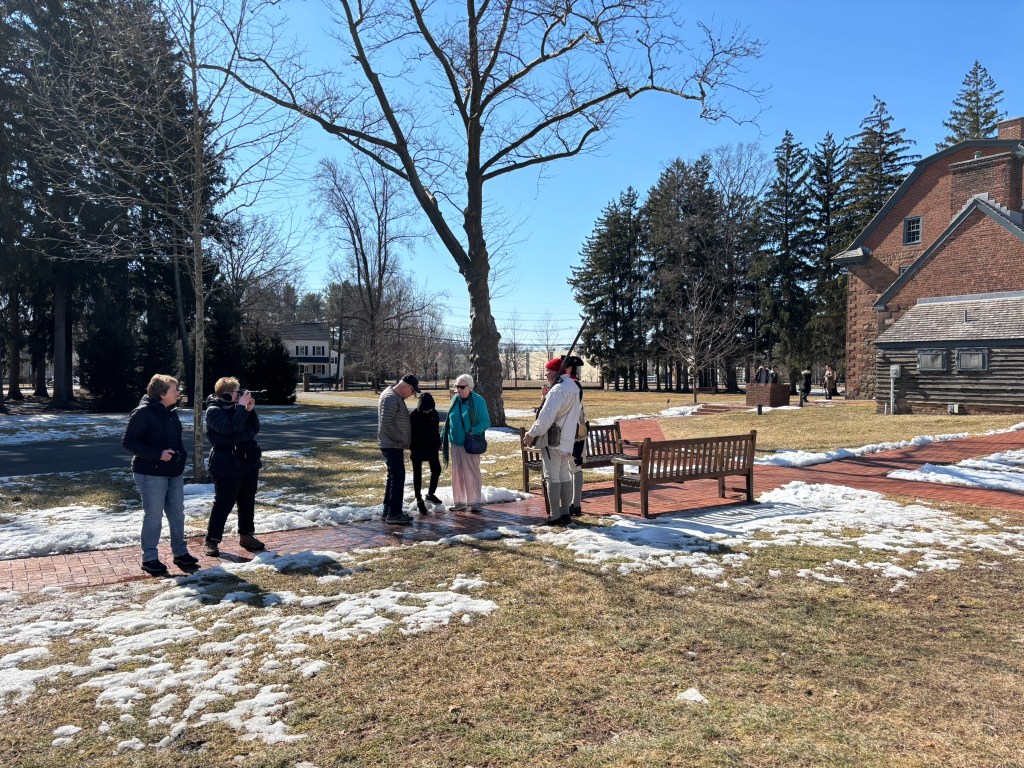
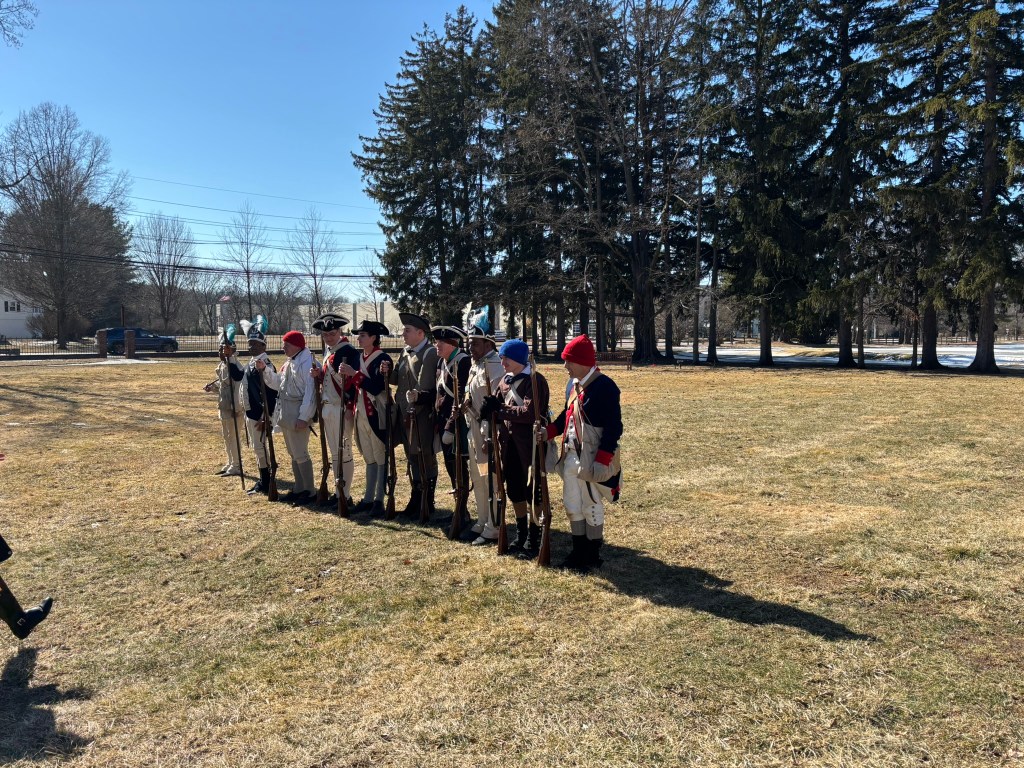
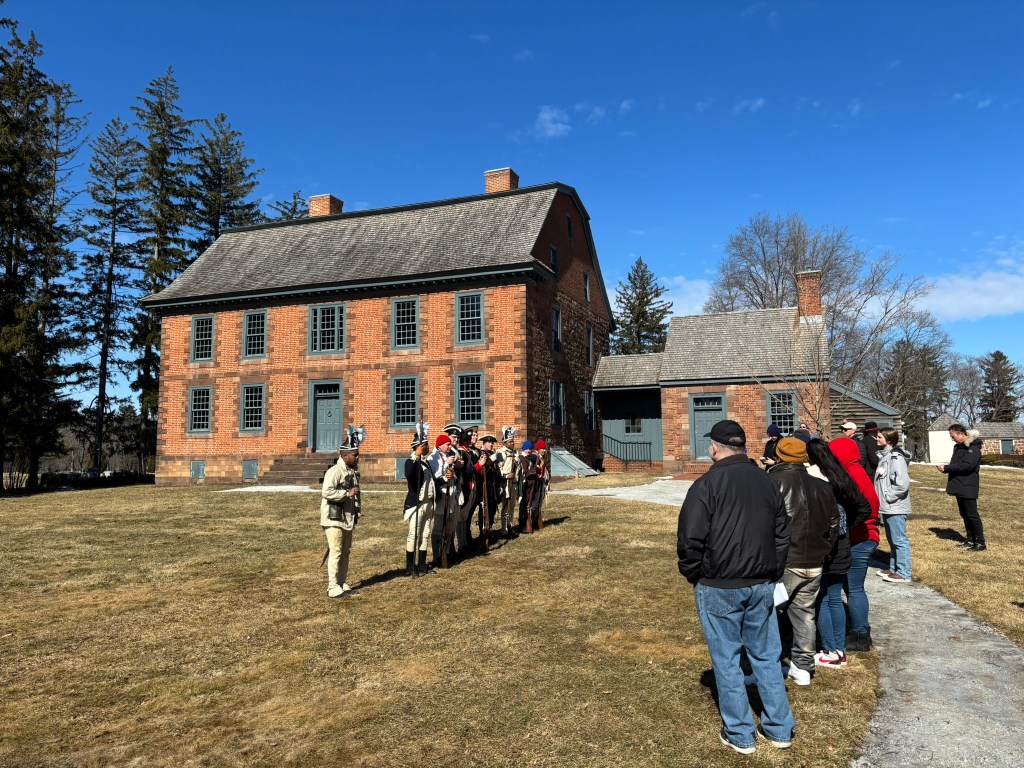
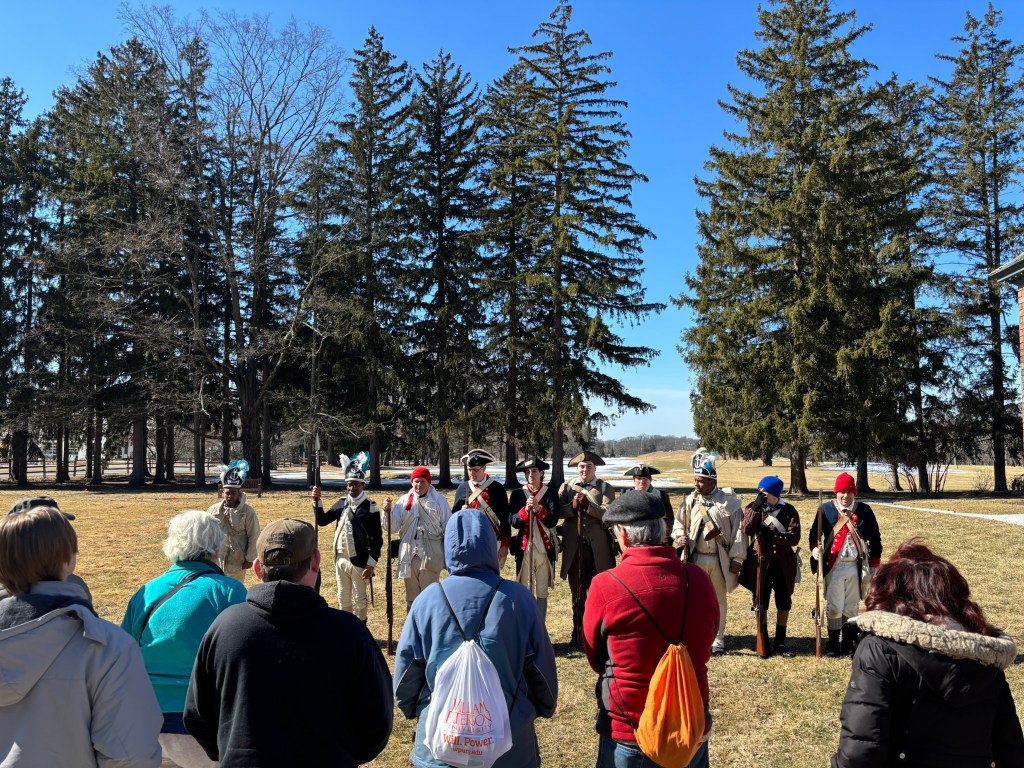
Finally, we made it outside and witnessed the formation of the troops as well as military drills and musket firings. They closed the demonstration with a bayonet charge. Following the demonstrations, the reenactors described their weapons, their clothing, and what the troops carried with them. They also answered questions from the crowd. Following the demonstrations, my family headed out to lunch.
Other Activities
The weekend encampment at Dey Mansion also included 18th century laundry demos, carpentry and blacksmithing in the Blacksmith shop and a medicinal herbs display. There was also a food truck present on site from the Chippery Gourmet Fish & Chips. The Dey Mansion did a fantastic job immersing its visitors into 18th century life during the Revolutionary War.
I am pleased to update readers on an exciting research project currently taking place in New Jersey. The Westfield Historical Society, with the support of the New Jersey Historical Commission, has embarked on a research project aimed at uncovering untold stories of people who lived in Westfield and surrounding towns during the Revolutionary War. The goal is to shed light on both free and enslaved inhabitants of the greater Westfields of Elizabethtown and their roles at the time of the Revolution.
The project, an initiative of Fiscal Year 2025, is seeking to dive deep into historical records from multiple sources including the Westfield Presbyterian Church, the New Jersey State Archives, the New Jersey Historical Society, and other repositories of information. An accomplished team of researchers is exploring local archives, birth certificates, manumission records, letters, family trees, and other vital documents to piece together the personal stories of these individuals and share their legacies with the community.
Ongoing research is focusing on the lives of African Americans who lived in the region during the time of the American Revolution. In addition, research is also focusing on the mood of the inhabitants of the region leading up to the Revolution, using evidence from letters exchanged amongst leaders of the area, particularly from committees of correspondence. The researchers, who will be highlighted below, are working closely with Julia Diddell, Chair of the Washington-Rochambeau Revolutionary Route- New Jersey, as well as Brian Remite, President of the Westfield Historical Society, to comb through enlightening resources.
Julia Diddell led the research project team when we first met in mid-November 2024 to discuss the plan for the upcoming research project, highlighting goals and methods to conduct the research, as well as our long-term plan to present the research to the public.
Screenshot
Another meeting of the team members, led by Julia, took place in late January with updates on new discoveries made, challenges along the way, and future goals. The team was also joined by James Tichemor, who has been doing extensive research at the Westfield Historical Society for this project.
The research project will culminate in a hybrid presentation in June 2025, where the researchers will shed light on their discoveries with the public. The information below provides an update on the progress being made.
A Focus On African American History
Research is currently being conducted that focuses on the African American community in Westfield and the surrounding towns during the Revolutionary Period. Dr. Susannah Chewning, a Senior Professor of English at the College of Union with a diverse academic background in English Literature and Medieval Studies, is leading this important aspect of the project. Dr. Chewning has been exploring local records, including manumission documents and birth certificates to trace the lives of African Americans in the region. She is working to compile a comprehensive database from her work.
An important part of the research involves investigating the burial sites of African Americans in Westfield. Many individuals, both free and enslaved, were laid to rest in the Old Presbyterian Church Burial Ground. While Dr. Chewning is confident that there are African Americans buried there, only one such grave is currently marked. Research is underway to uncover the other names of these individuals, some of whom were moved when the Fairview Cemetery was established in Westfield in 1868. Dr. Chewning is hoping to identify an African American named Sambo, who was the sexton of the Old Presbyterian Church Burial Grounds during the time of the Revolution. Dr. Chewning has also tracked down evidence of slave sales in the area and plans to find more evidence.
Findings So Far
With a growing list of 58 names of African Americans living during the March to Yorktown (1781), Dr. Chewning is dedicated to identifying where these individuals are laid to rest. Her broader research includes 180 (and counting) names of African Americans who lived in Westfield and the surrounding towns between 1702- 1866, the year that slavery finally ended in New Jersey. Dr. Chewning has discovered these individuals through records at the Presbyterian Church, slave sales, runaways, censuses, birth certificates, and manumission records. Recently, Dr. Chewning met with the director at Fairview Cemetery, who provided her with a document highlighting early burials which she has used for her research. Her work at Fairview Cemetery will continue throughout the spring.
In addition to Fairview, Dr. Chewning is continuing her efforts at the Old Burial Grounds where unmarked graves have led to continued efforts to identify those buried there with the support of church and town records. Dr. Chewning has interests in exploring other burial grounds as well, including the Scotch Plains Burial Grounds, where Westfield residents are known to be buried.
Dr. Chewning has compiled a list of families from Westfield who were documented as slaveowners during the time of the 1781 March to Yorktown. Through her research, she has identified not only the names of these families but, in many cases, the names of the individuals they enslaved. This list continues to expand as Dr. Chewning continues her research.
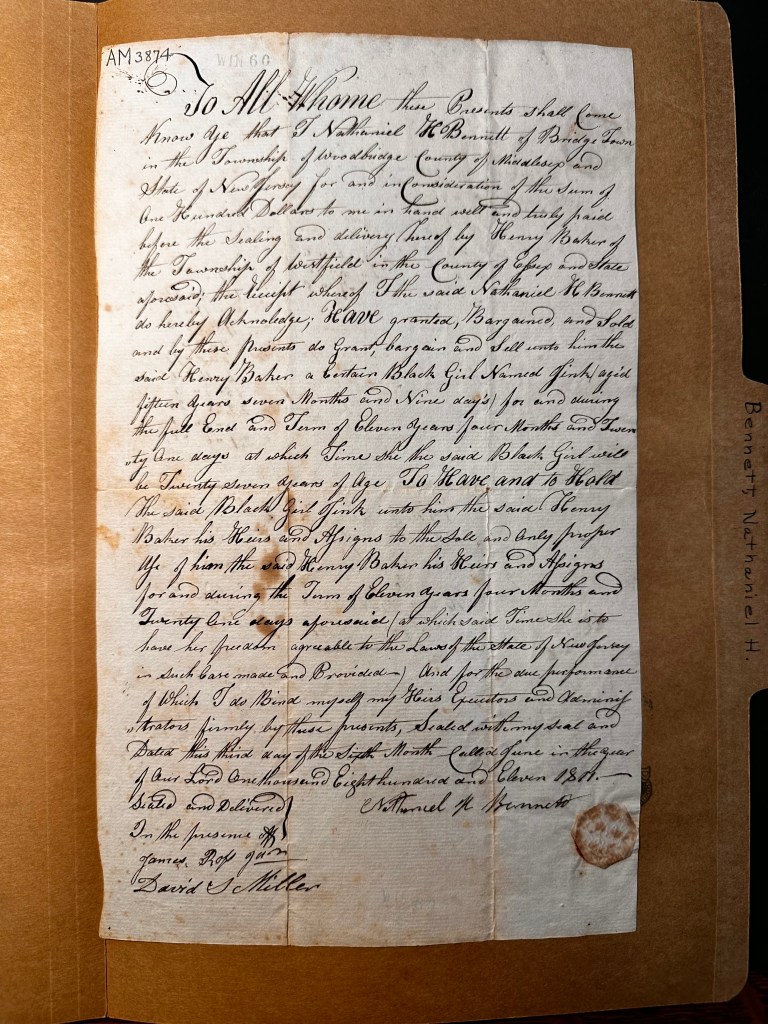
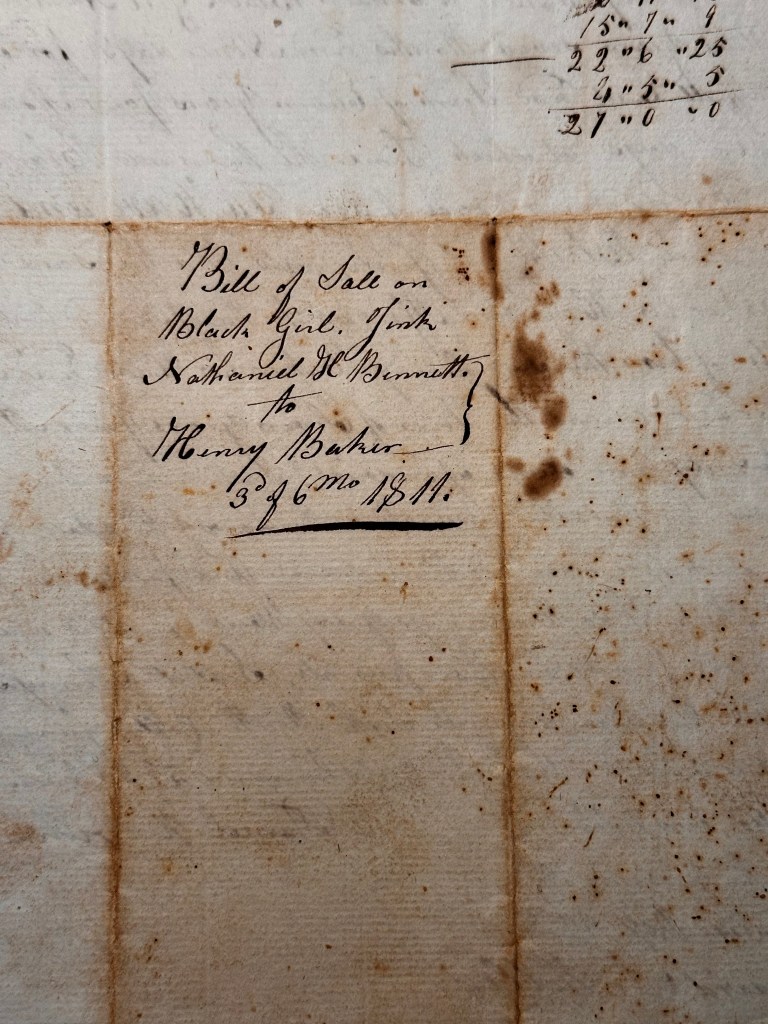
In mid-December, Julia Diddell visited the Special Collections Library at Princeton University to explore the Winans Collection. While sifting through a wealth of primary source materials, she discovered a bill of sale for a young enslaved girl named Jink. This discovery is a valuable addition to Dr. Chewning’s expanding database of enslaved individuals from Westfield, further enriching the ongoing research.
To further her research and make her findings accessible, Dr. Chewning is in the process of creating a website that will feature links to Rutgers and Princeton’s Slavery Projects, offering visitors the chance to explore valuable information and connect with various archives. Stay tuned for updates on the new site!
Brian Remite, President of the Westfield Historical Society
The Mood Of The Local Inhabitants
Dr. Robert Selig, a distinguished historian with a PhD in History and extensive experience consulting with the National Park Service, is conducting research on early Revolutionary War activities within Westfield and surrounding towns to gain a better understanding of the mood of the local inhabitants, leading up to the Revolution. Having written extensively on the Washington-Rochambeau National Historic Trail, Dr. Selig brings invaluable expertise to the project, particularly in investigating the local impact of the national movement toward independence.
Through his research, he is unearthing not only personal histories but also a broader understanding of the social and political climate of Westfield and surrounding towns in the years leading up to the American Revolution. One key area of focus is the activities of local committees of correspondence- groups that played an essential role in rallying support for independence through the colonies. The committees served as communication networks amongst the prominent leaders of the thirteen colonies. By gaining access to these correspondences, Dr. Selig is uncovering the ways that leaders in New Jersey played a pivotal role in the oncoming Revolution.
Findings So Far
Dr. Selig has been combing through a collection of letters exchanged between New Jersey’s local committees, offering a deeper understanding of the colony’s response to the brewing tensions with Britain. Communications to and from these committees involved notable figures such as George Washington and Benjamin Franklin.
In addition to the Committees of Correspondence, local colonists formed Committees of Public Safety and Committees of Observation. These groups played a pivotal role in the early days of the Revolution, serving as temporary governments and rallying support for the cause. They were responsible for monitoring British actions, enforcing boycotts of British goods, and keeping the colonists united in their resistance efforts.
For Dr. Selig’s research, the exchanges between these committees are invaluable primary sources that help highlight the mood in New Jersey leading up to the Revolution. They reveal not only the political dynamics of the time but also the local efforts to coordinate resistance, making these letters vital in understanding how New Jersey navigated the path toward independence.
An interesting observation from Dr. Selig’s research is that New Jersey was somewhat slower to embrace the revolutionary movement compared to other colonies, particularly in comparison to the early radicalization seen in places like Massachusetts. Dr. Selig explains that one key reason for this delay was the lack of a large city in New Jersey that could serve as a central political hub. Unlike cities like Boston, which were hotbeds of revolutionary sentiment, New Jersey’s smaller urban centers didn’t provide the same rallying points for activists and leaders. In addition, New Jersey had a popular royal governor who helped maintain a sense of stability.
Through his study of the Committees of Safety, Dr. Selig concludes that New Jersey’s initial concerns were more focused on economic issues than on spreading revolutionary ideology or politicizing the conflict. The colony’s focus on economic stability meant that it took a more cautious approach to the growing tensions with Britain, with many colonists more concerned about their livelihoods than the broader political shifts happening in other parts of the colonies.
Dr. Selig discovered a significant shift in New Jersey’s stance once the fighting broke out at Lexington and Concord in 1775, as neutrality became increasingly untenable. With battles erupting, colonists found themselves compelled to take sides as remaining on the sidelines was no longer an option.
For many, joining the militia and taking up arms became a clear political statement. By fighting in the militia, New Jersey residents were publicly aligning themselves with the cause of independence and supporting the Declaration of Independence. This shift marked a turning point in the colony’s involvement in the Revolution.
Dr. Selig’s research into New Jersey’s role in the American Revolution is ongoing. He is actively seeking more primary sources to deepen his understanding of the colony’s shift toward supporting the war effort. In particular, Dr. Selig is interested in diaries, letters, and other personal documents from both local leaders and everyday inhabitants of towns like Westfield. These materials, he believes, will provide crucial insights into the changing attitudes and the personal motivations that led people to join the war.
Dr. Selig is also eager to uncover other types of historical documents, such as pension applications, damage claims, and even tavern records. These records can offer a unique perspective on the war’s impact at the local level, shedding light on the economic and social effects of the conflict.
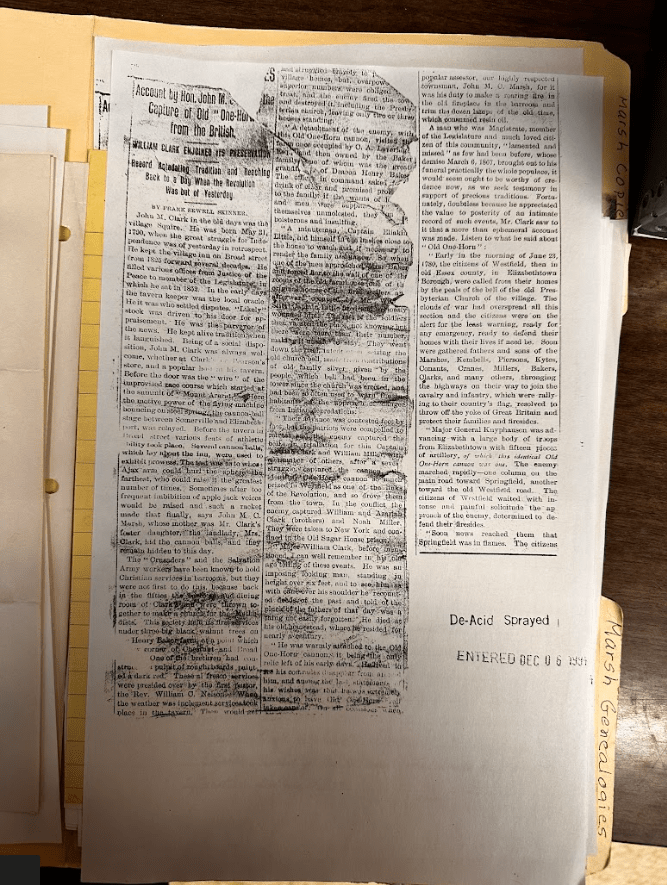
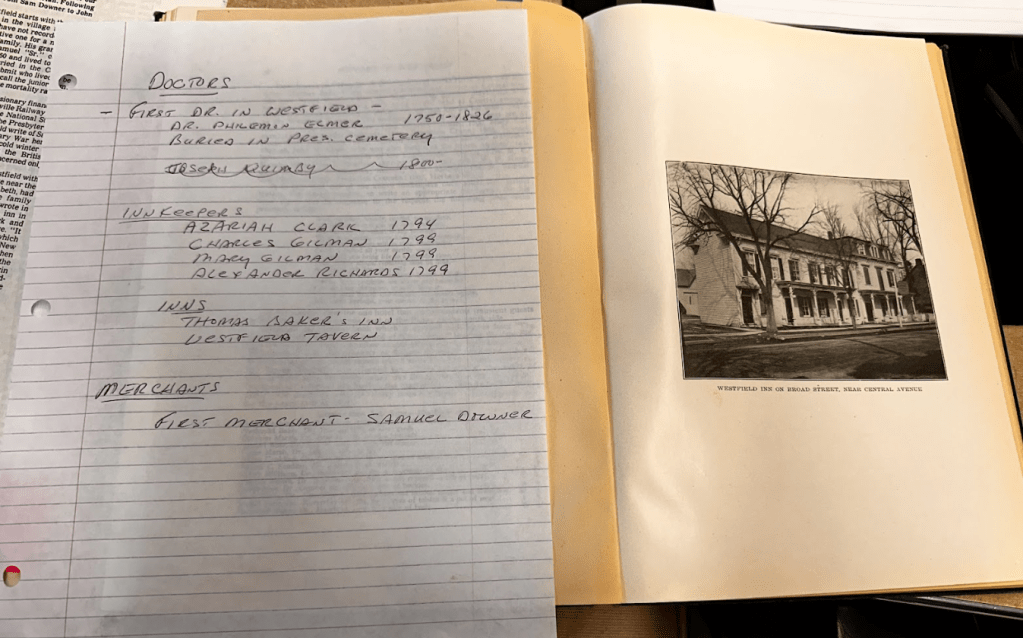
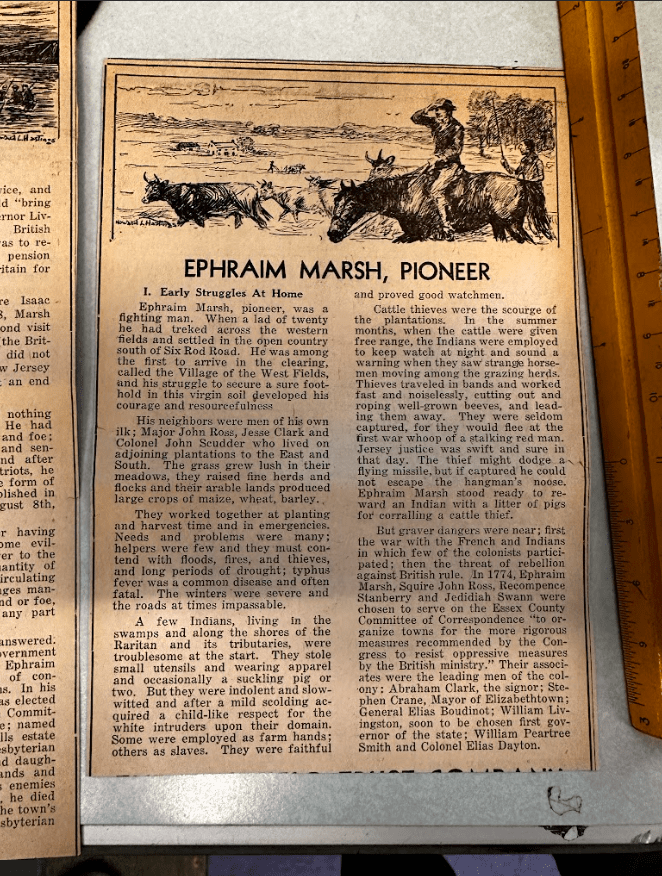
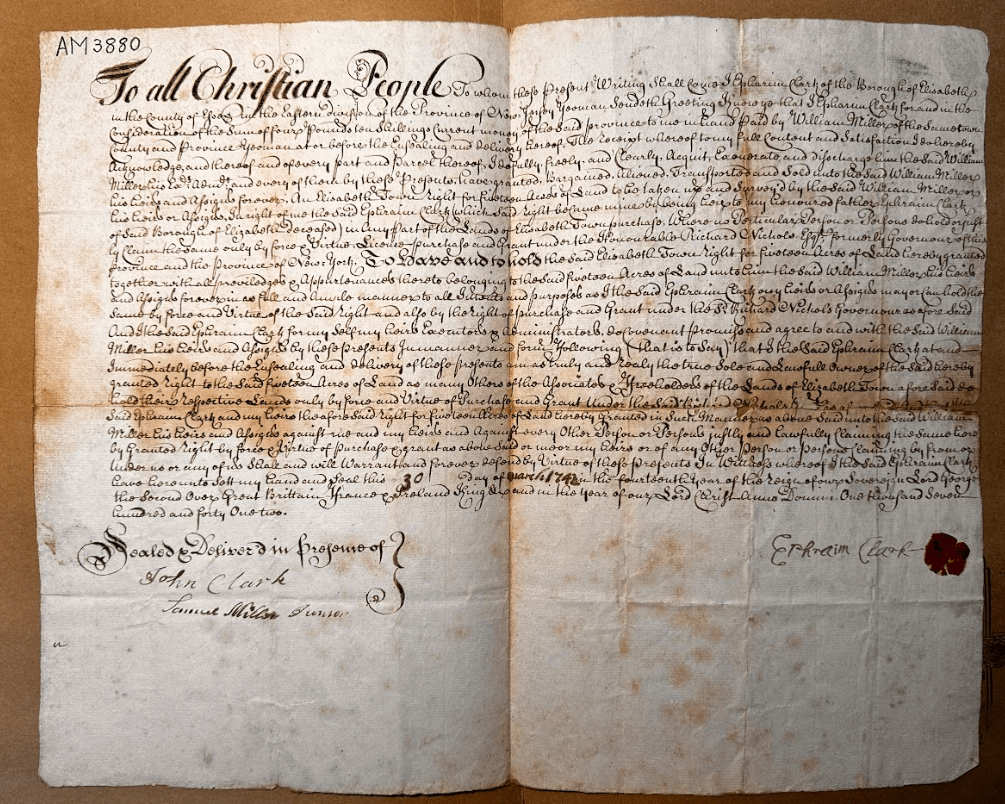
The researchers plan to collaborate in order to link their research efforts together. Beyond the primary documents already mentioned in this article, the research team is drawing from a variety of additional sources, including histories of Westfield, ledgers, lists of local doctors, innkeepers, and merchants, as well as records detailing key regional figures. They’re also studying militia payrolls from Essex County, personal letters, and the names of Revolutionary soldiers buried at the Westfield Presbyterian Church.
James Tichemor, Researcher
Building A Lasting Legacy
One of the aims of this research project is to create a lasting educational resource for the community. The team is exploring the possibility of an enduring outdoor exhibit or monument that would allow the public to engage with this history in a meaningful way. The groundwork is now being laid for this educational space that honors the notable figures who played an impactful role in Westfield and surrounding towns at the time of the American Revolution.
Stay tuned as the Westfield Historical Society continues this important work and opens the door to a richer, more inclusive understanding of our shared past. I will be posting another blog at the conclusion of this research project. As mentioned above, there will be a Hybrid Presentation in June by the research team where further findings will be revealed, providing the public with a deeper understanding of the people and events that have shaped this community for centuries. You will not want to miss this! Stay tuned and stay connected with the organizations listed below that are involved in this research:
My family and I decided to head out to the New Jersey State Museum in Trenton, NJ. We also knew of Patriots Week happening at the Old Barracks Museum, which is just an 8 minute walk away. This trip was an opportunity for us to explore two museums we have never been to.
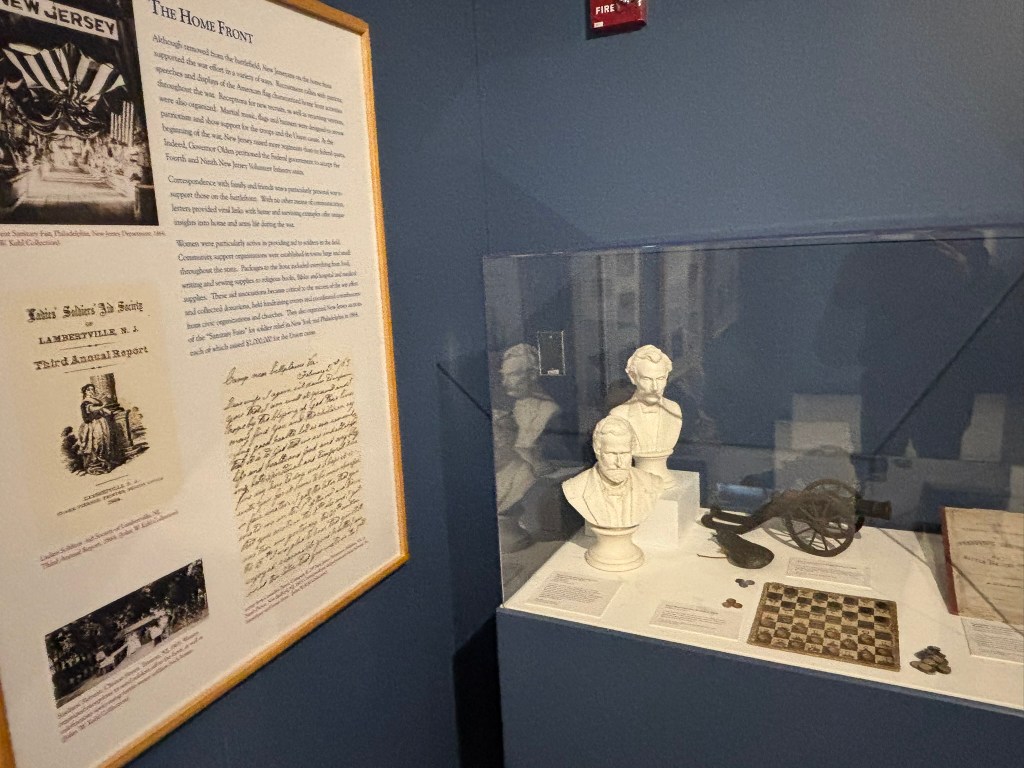
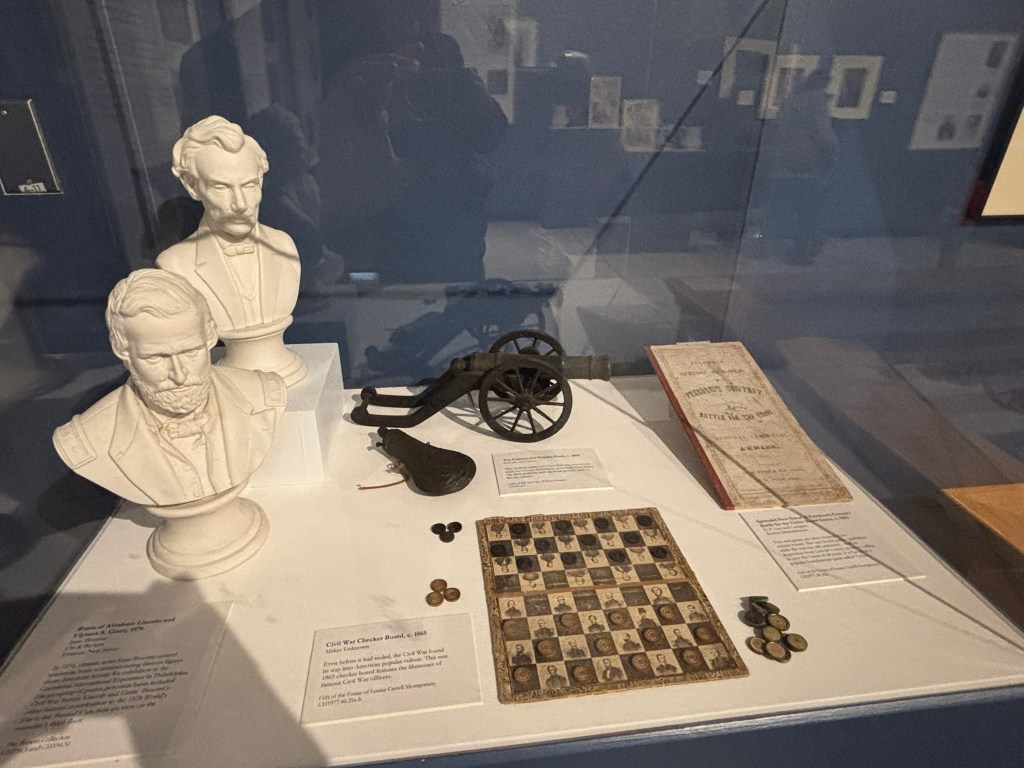
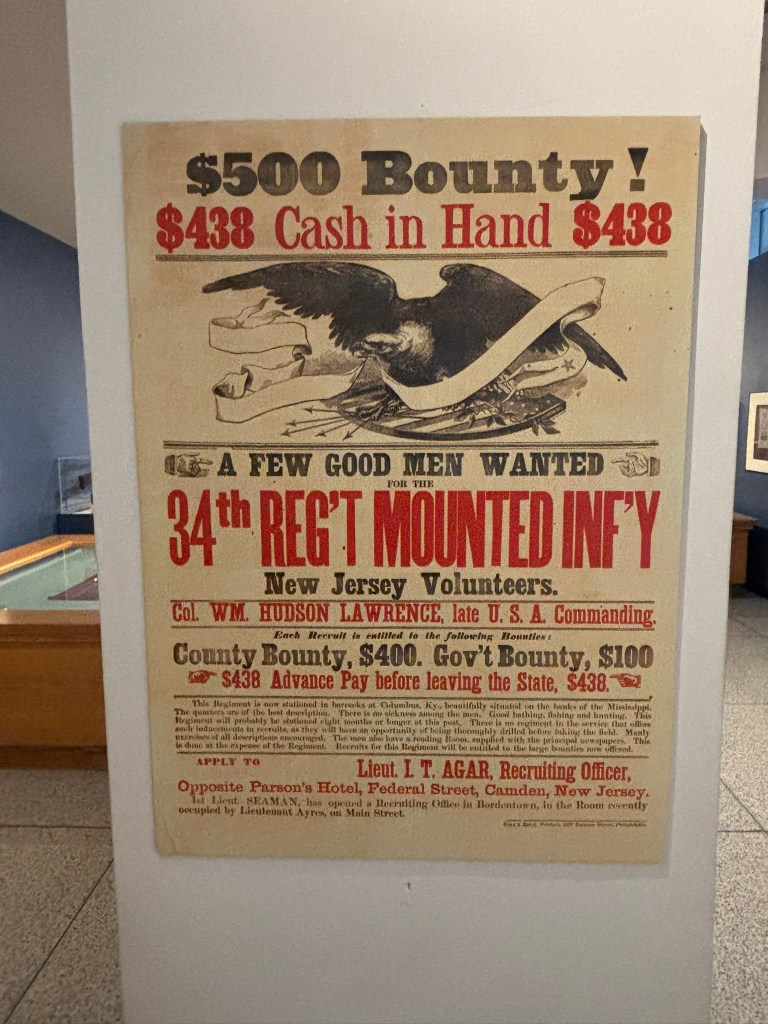
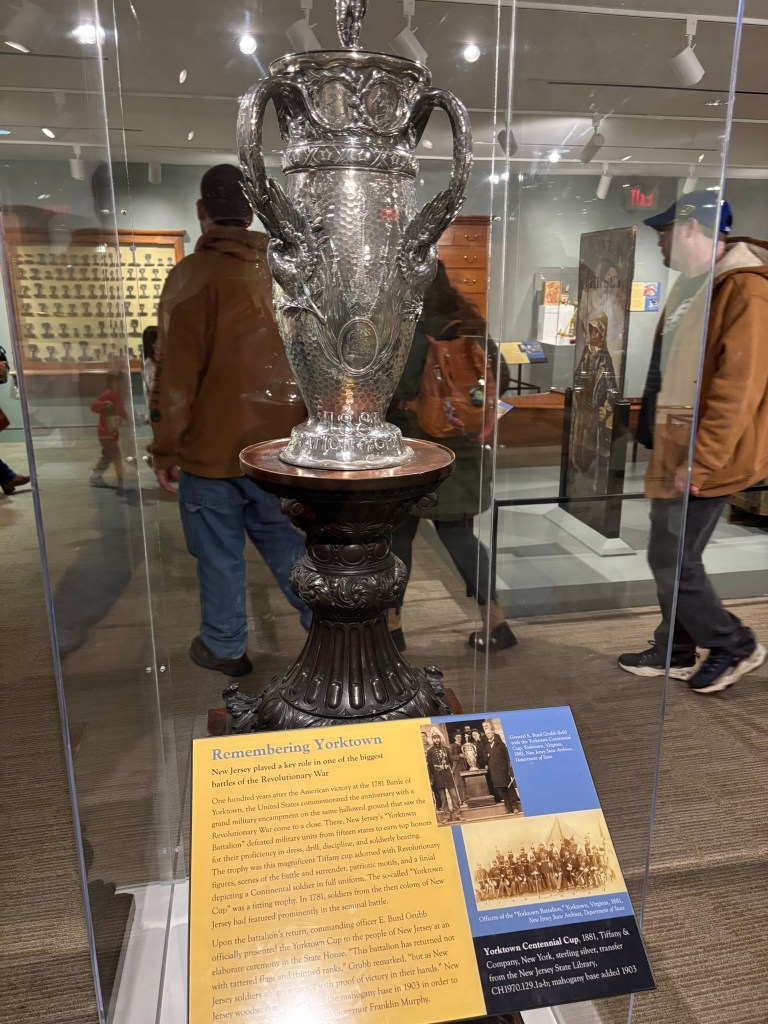
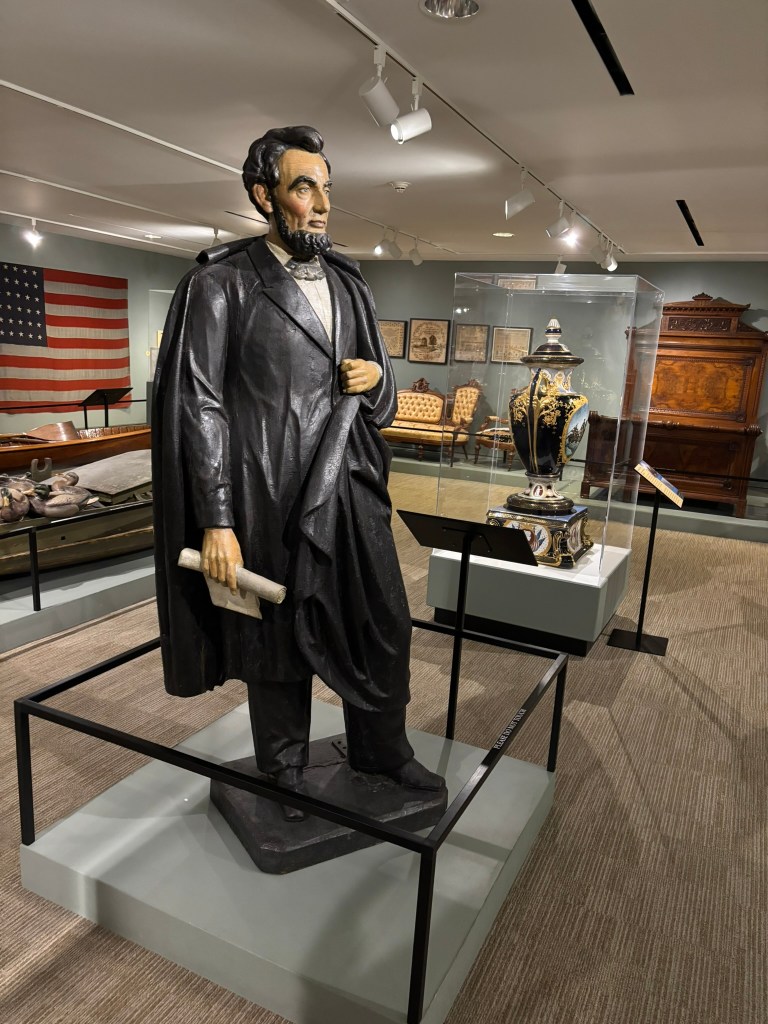
The New Jersey State Museum was a great experience for the whole family and they have a wide variety of exhibits and collections, ranging from Archeology & Ethnography, Cultural History, Fine Art, and Natural History. They also have a Planetarium, and we saw a show called “One World, One Sky: Big Bird’s Adventure” for the kids. Since this is a history blog, the pictures that I display here will be from the Historical aspects of the museum.
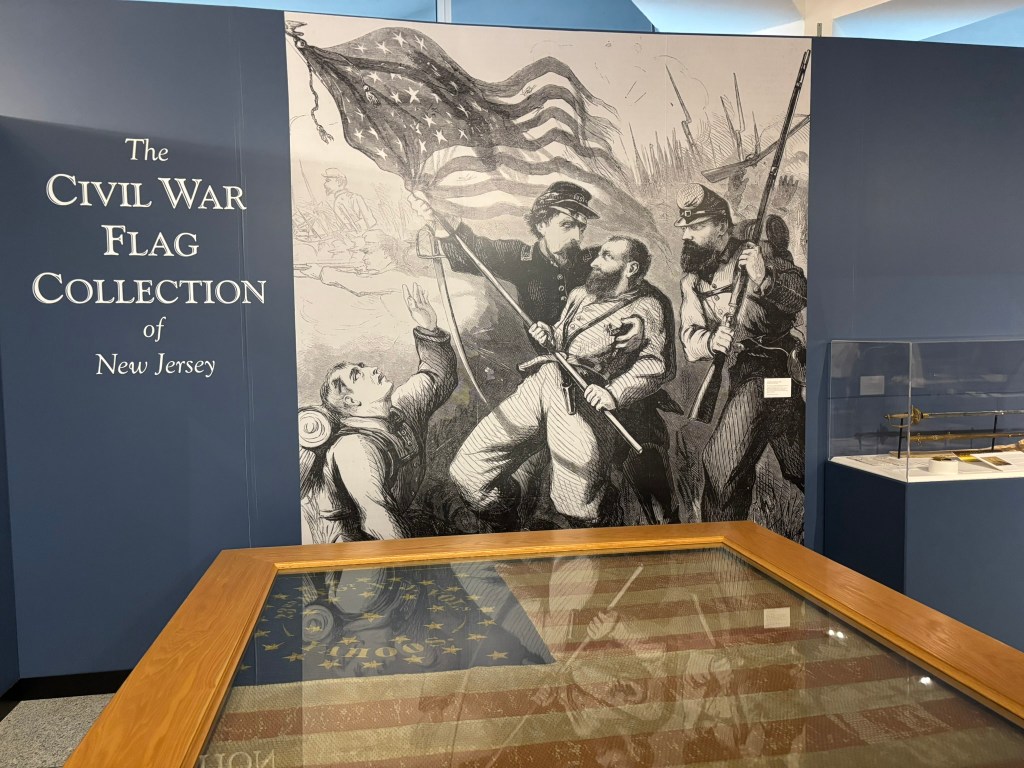
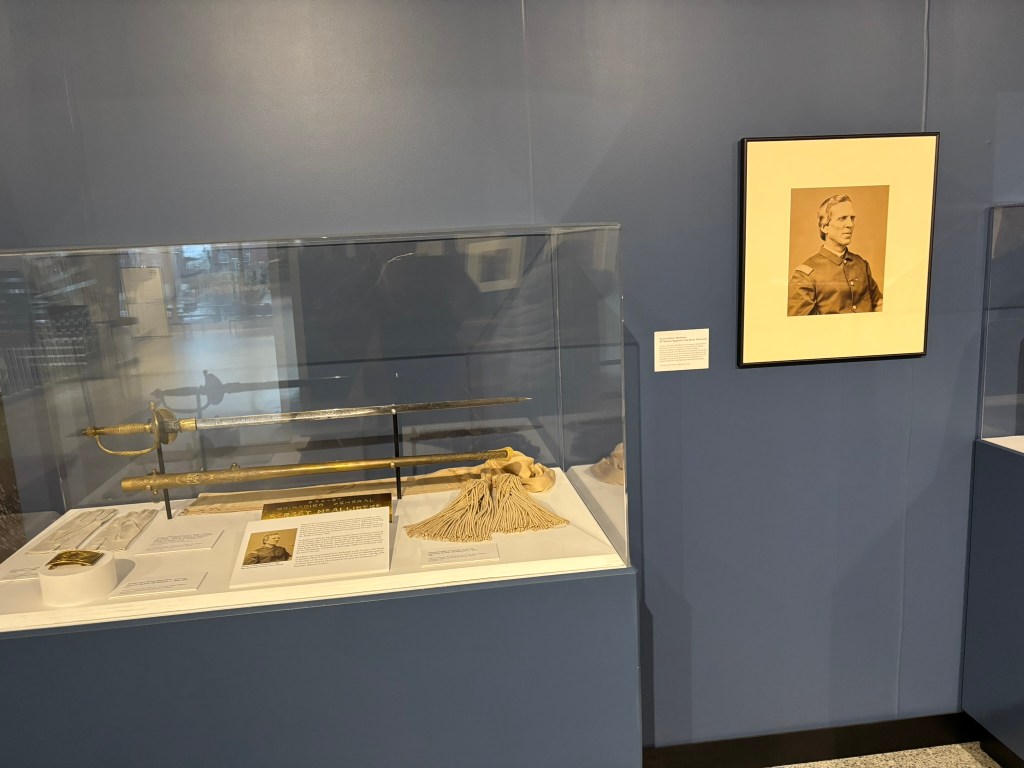
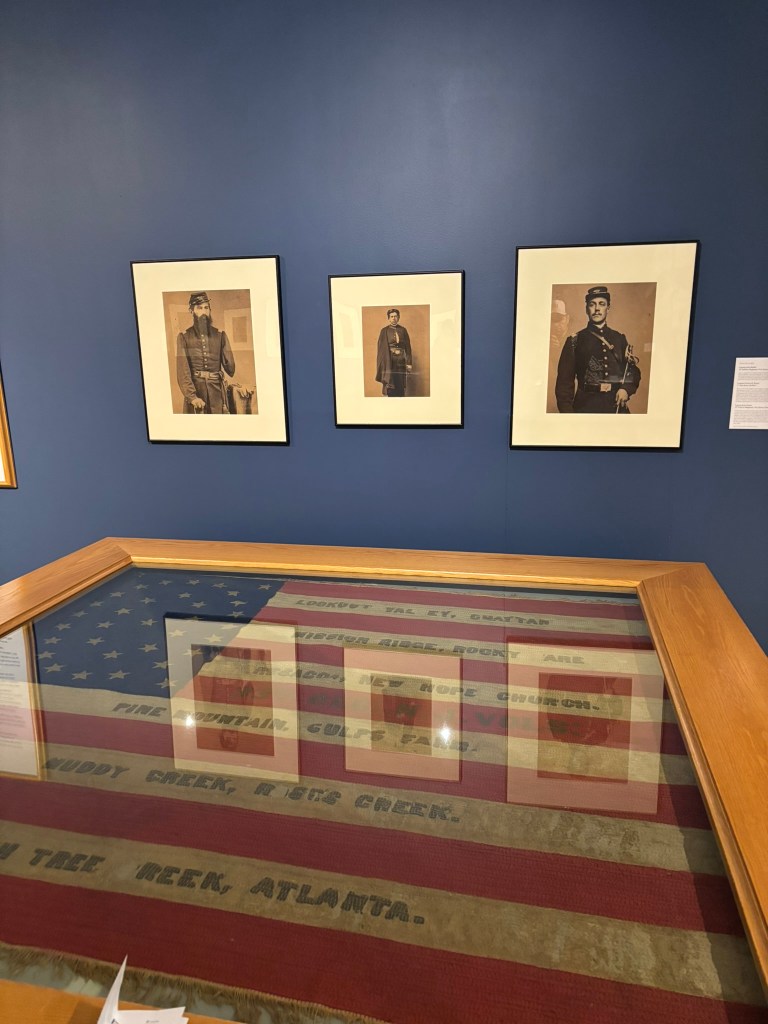
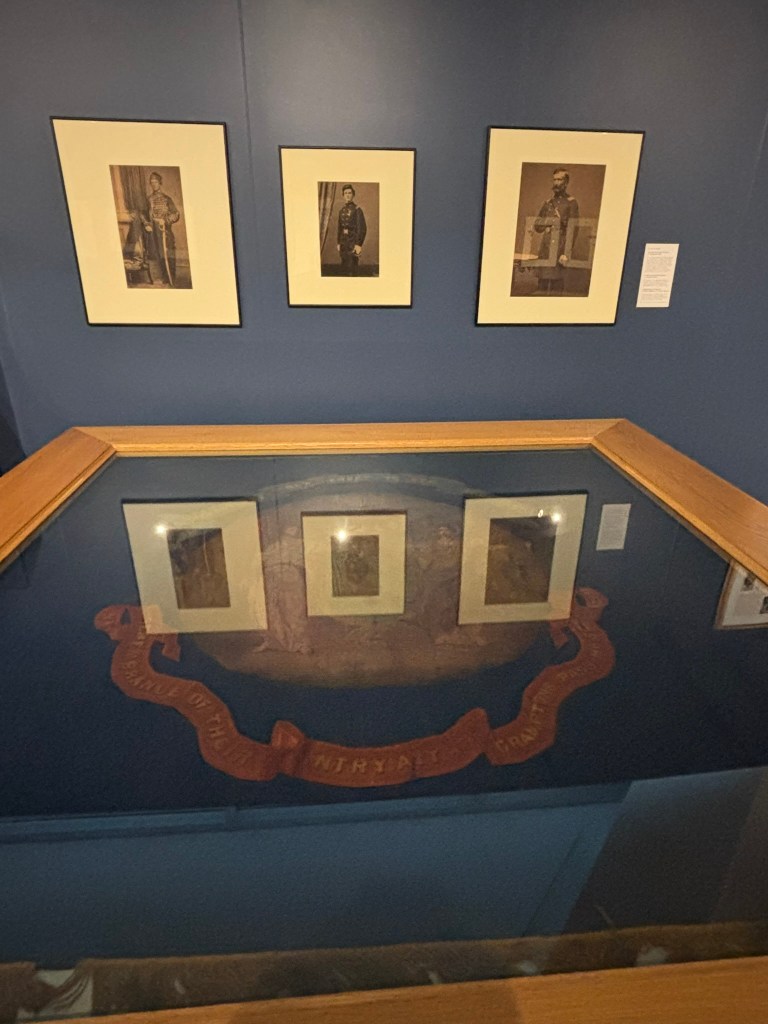
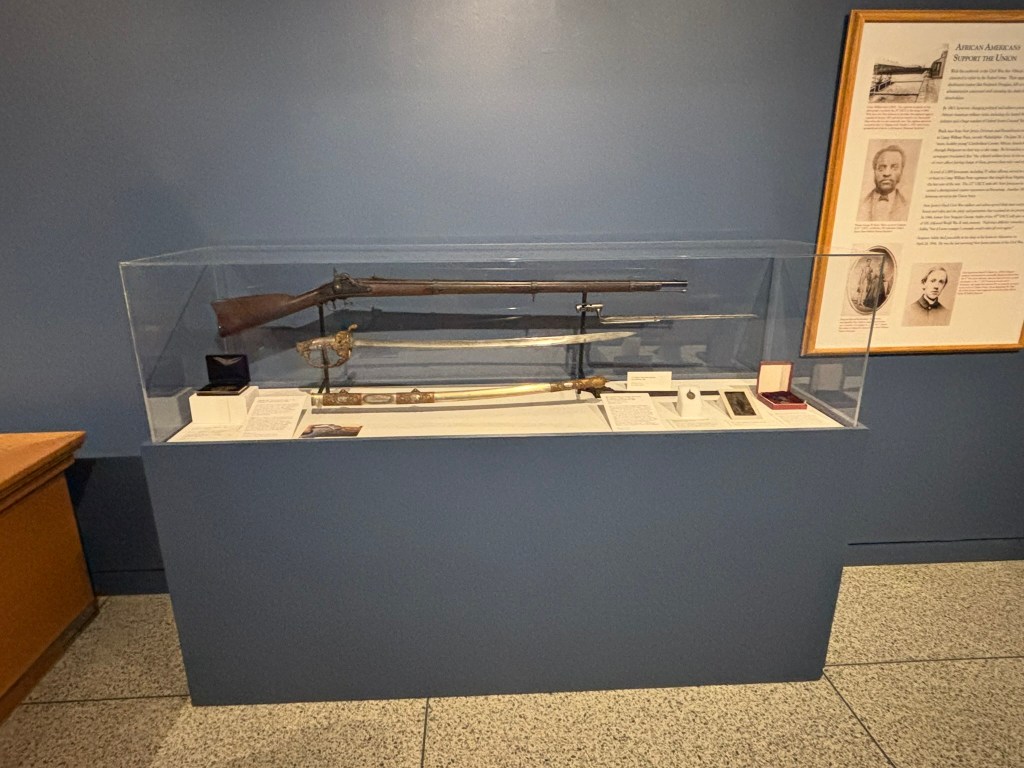
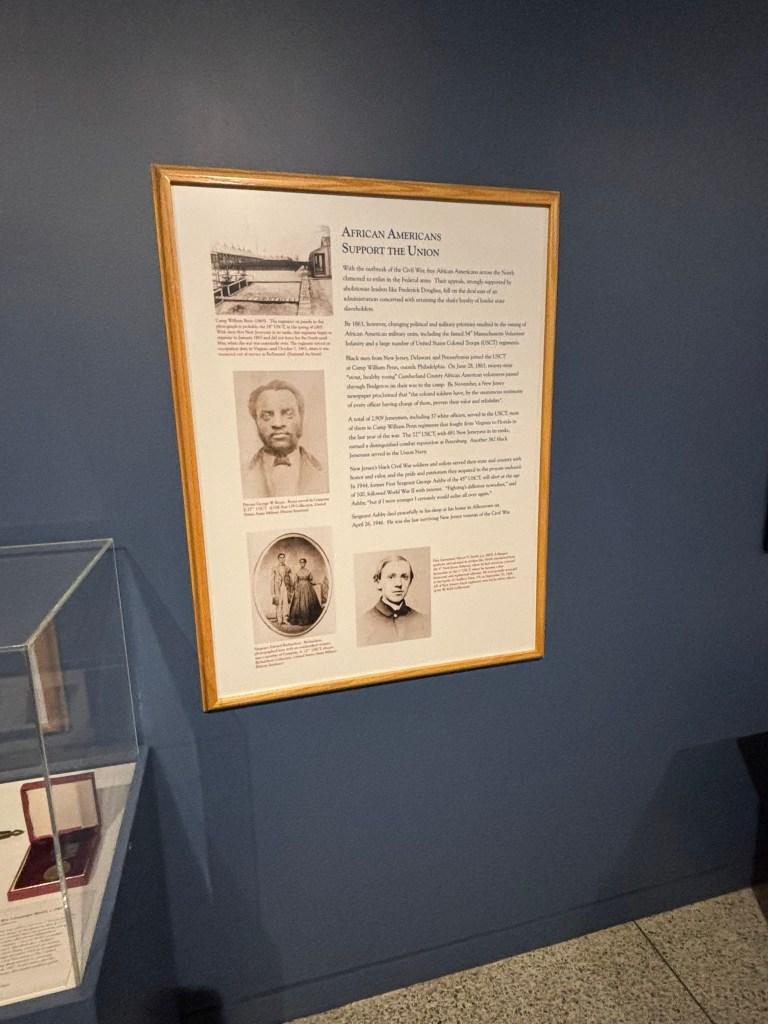
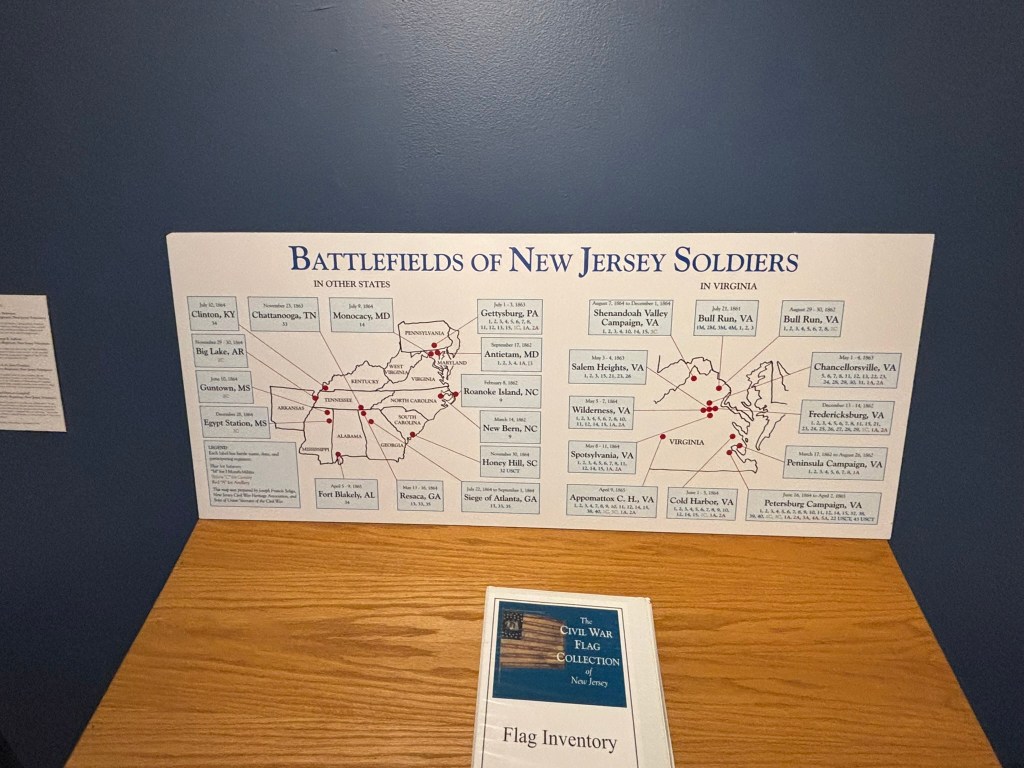
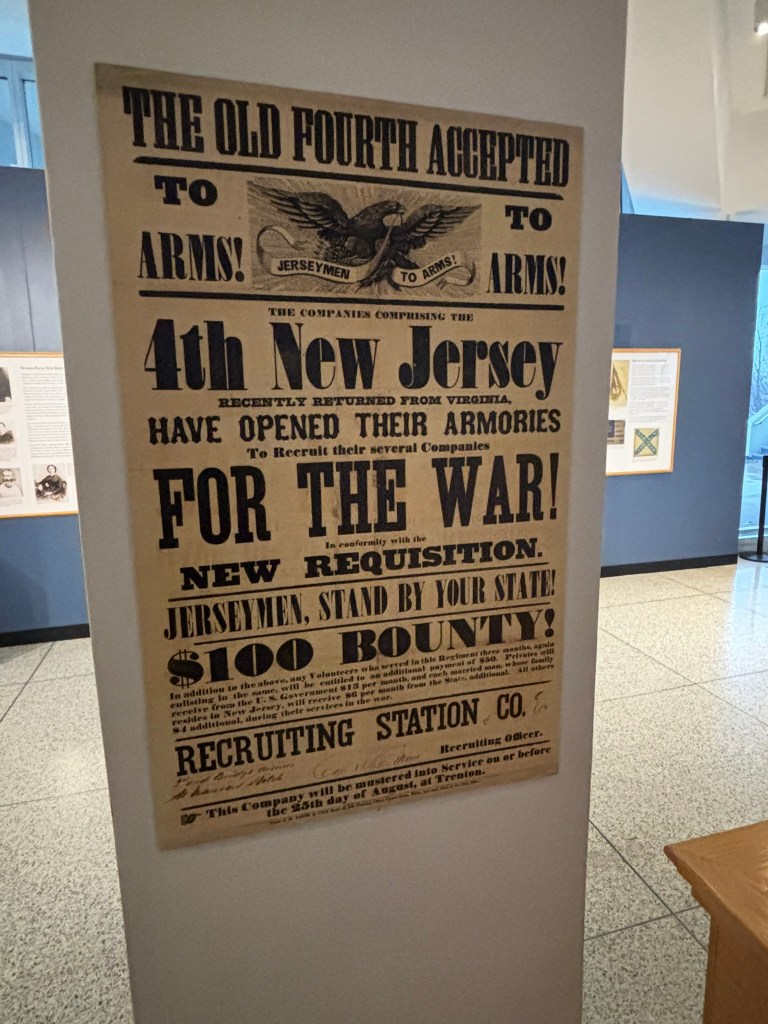
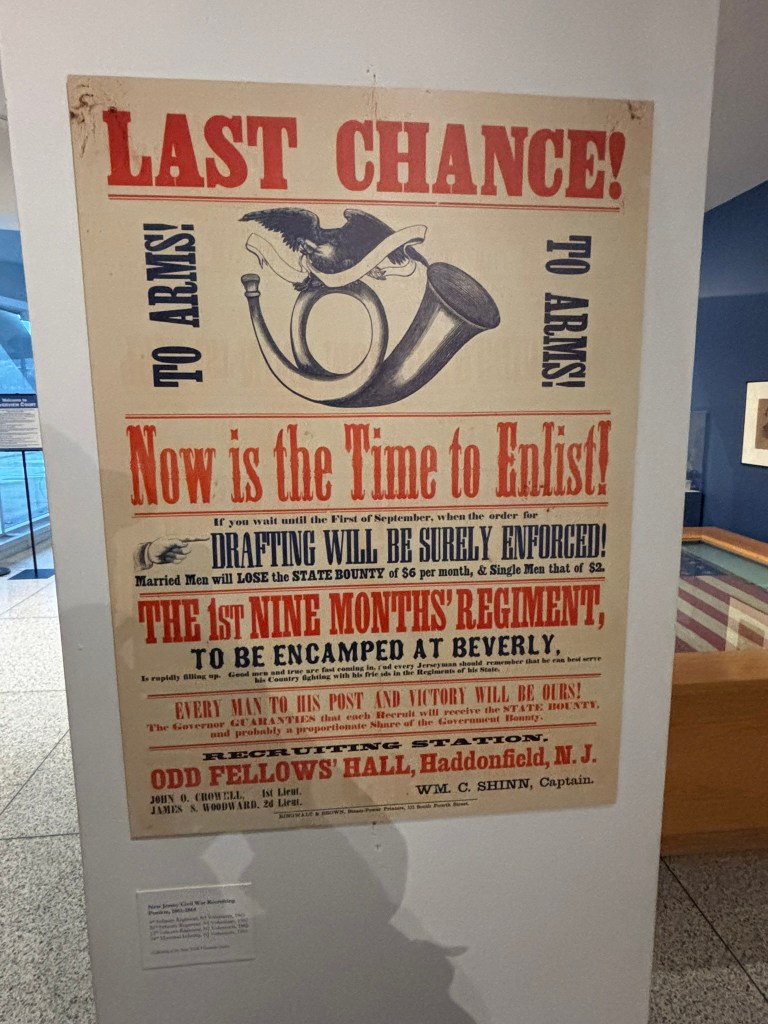
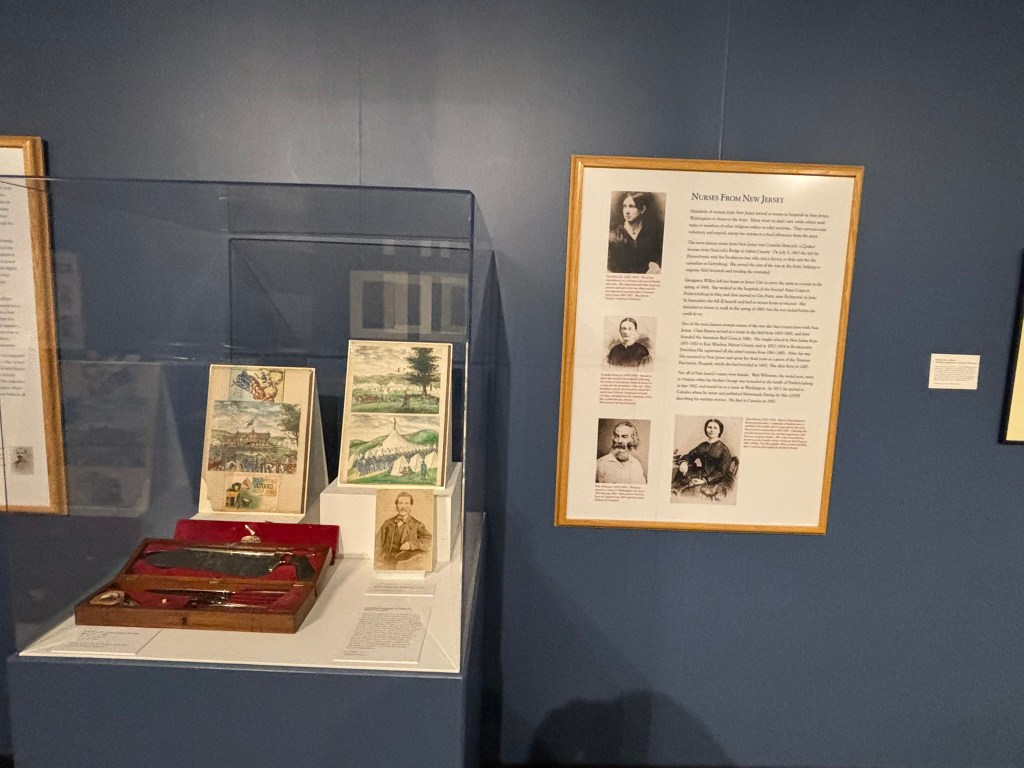
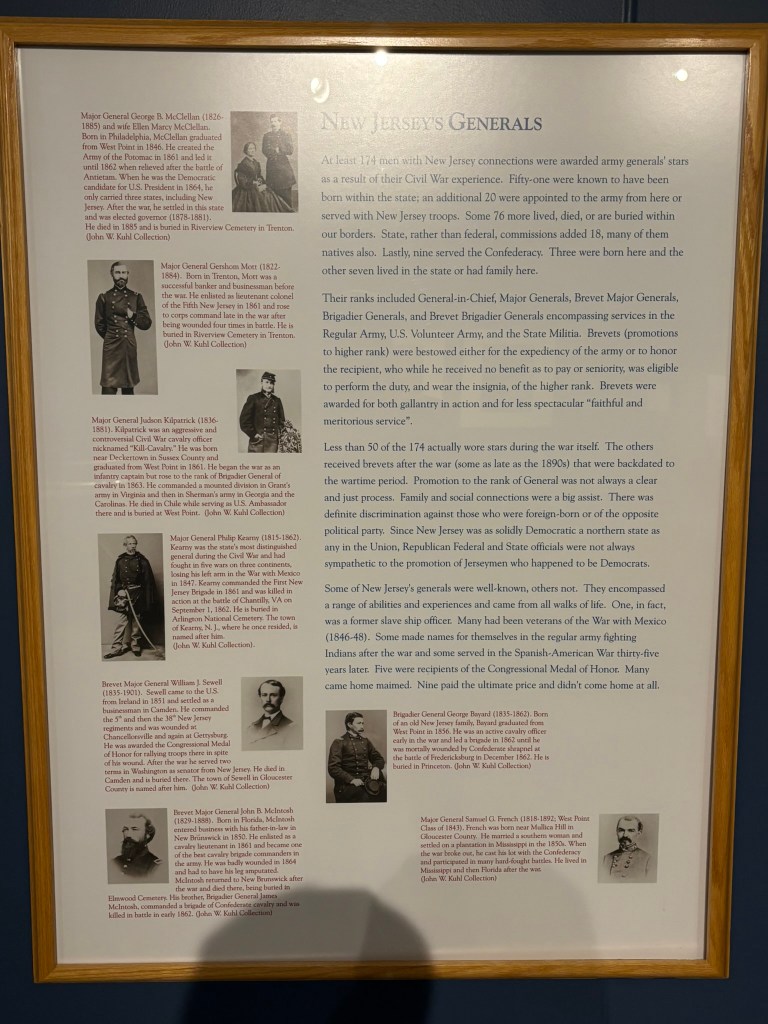
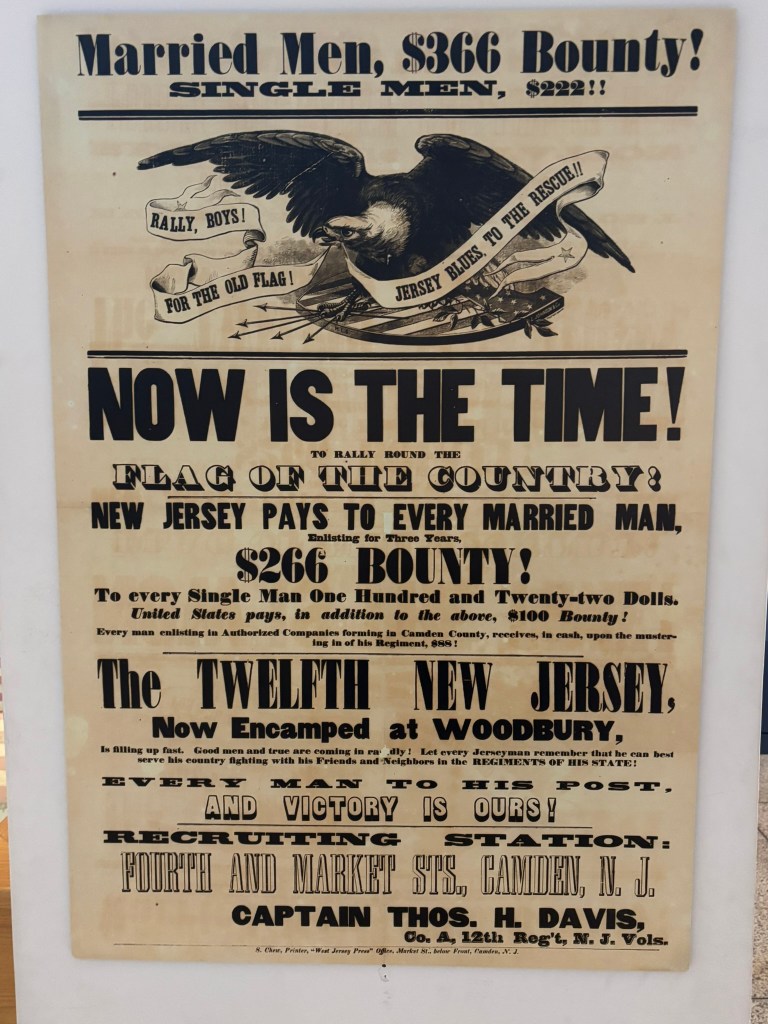
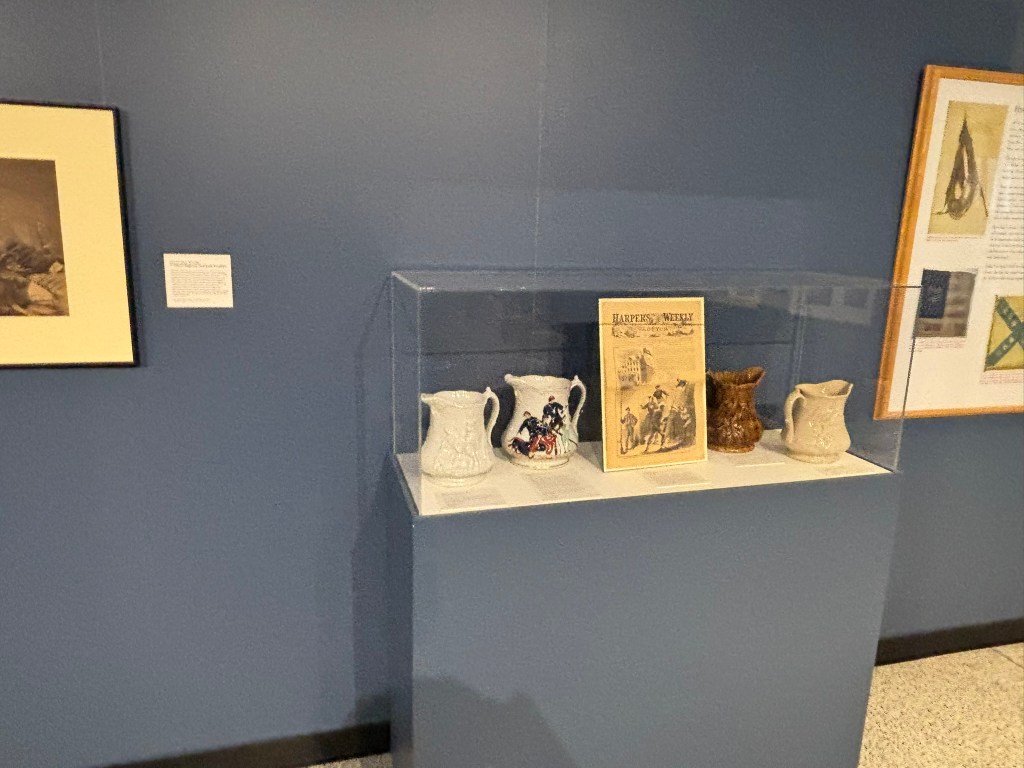
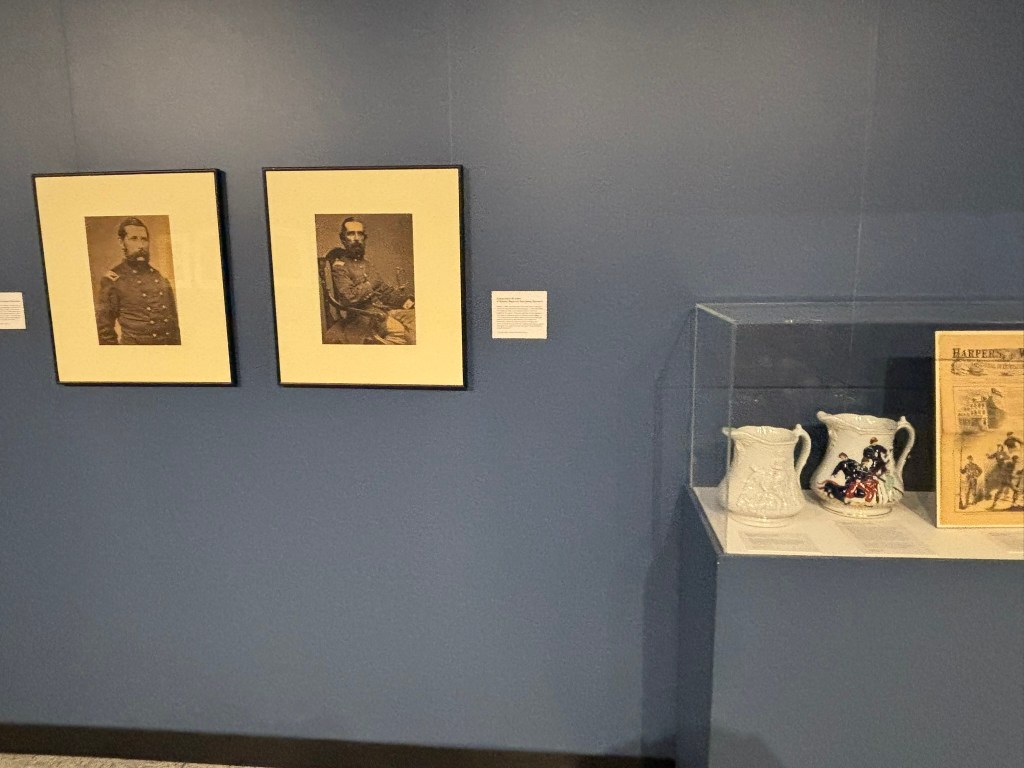
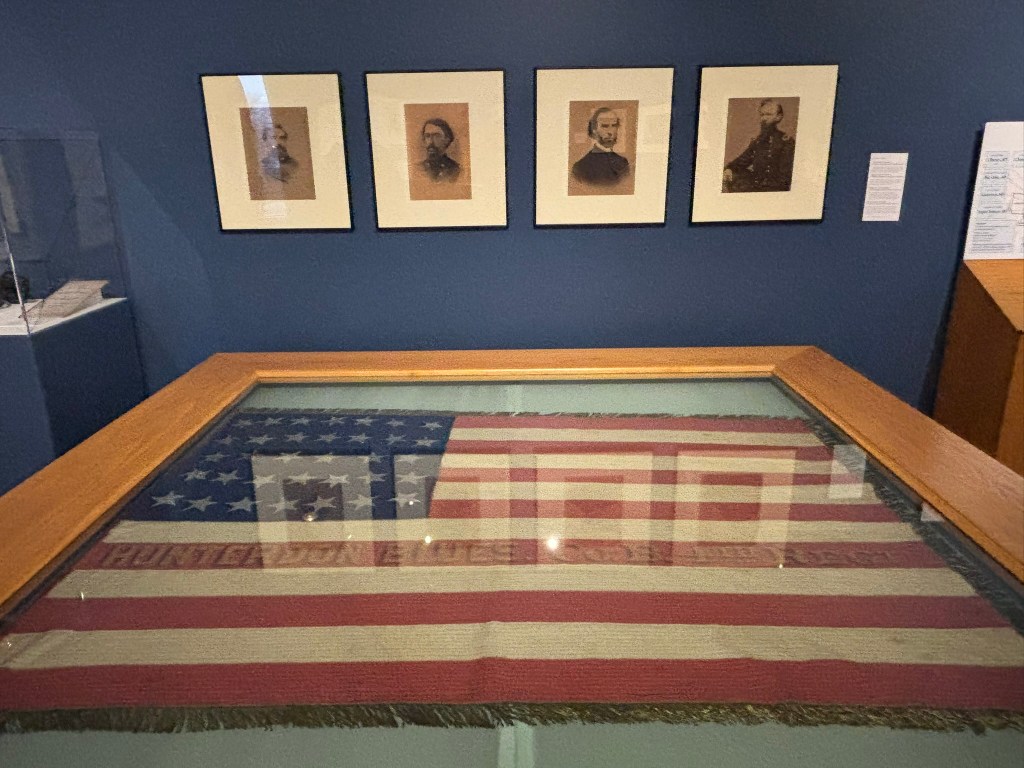
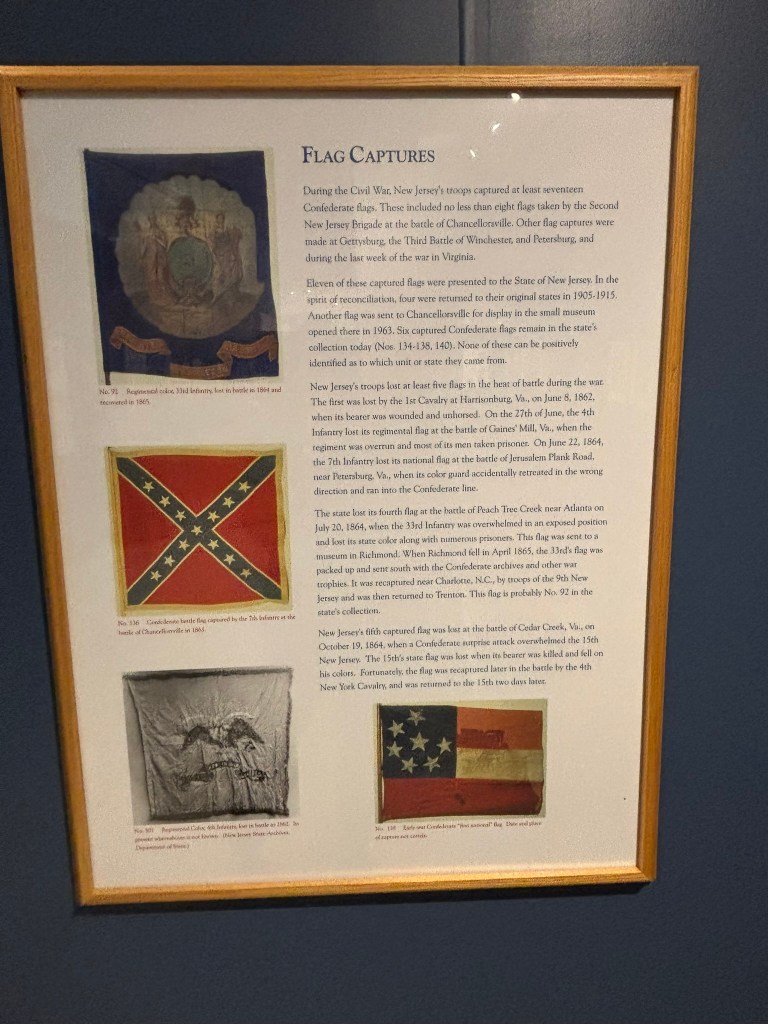
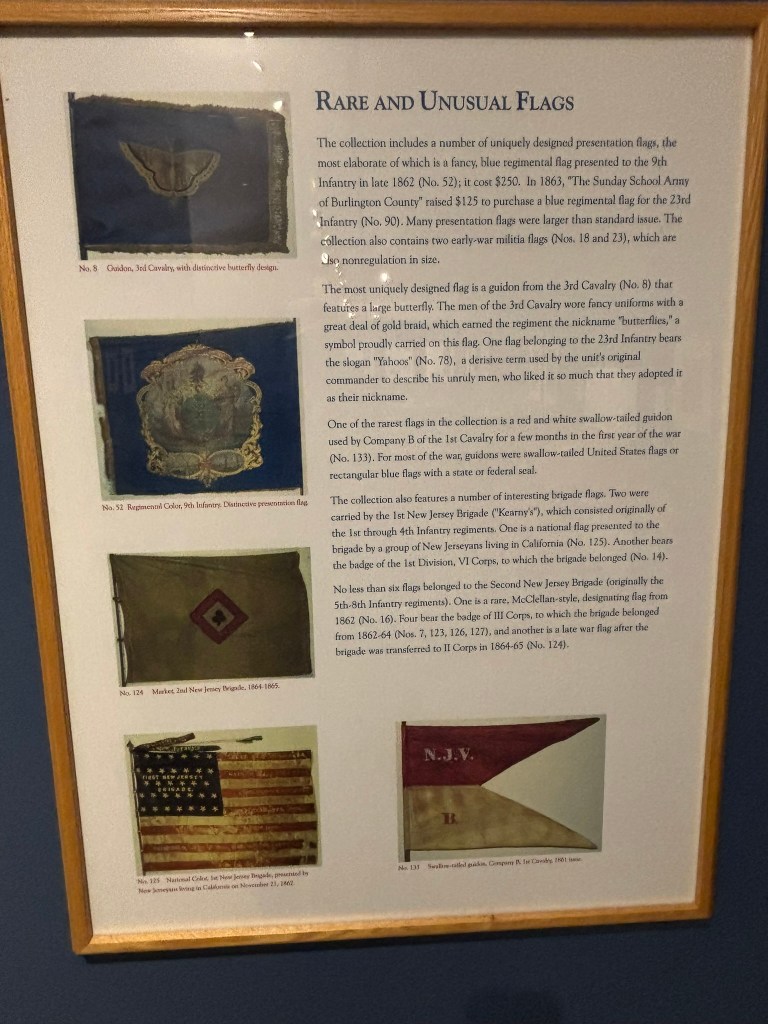
The first exhibit that we saw was the The Civil War Flag Collection of New Jersey. New Jersey soldiers played a significant role in fighting for the Union Army during the Civil War. The flags displayed, as well as the artifacts in the museum remind us of the crucial role that they played.
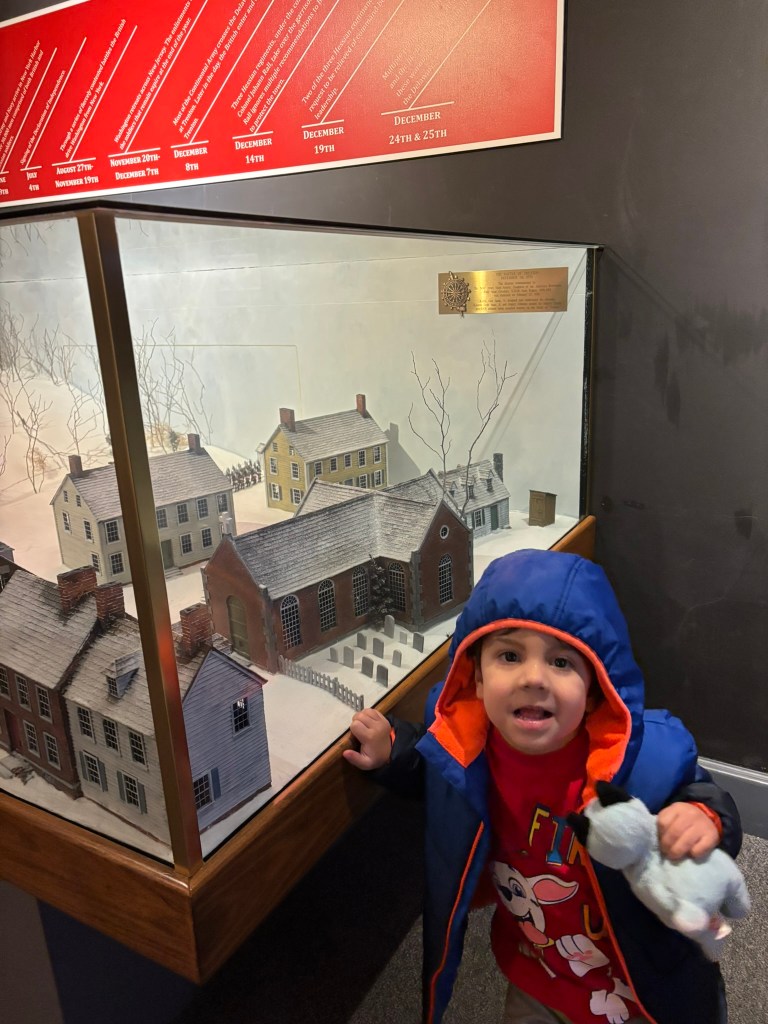
We explored each floor of the museum. There were crafts for the kids and there were other sections devoted to New Jersey History, Native American history, and colonial history.
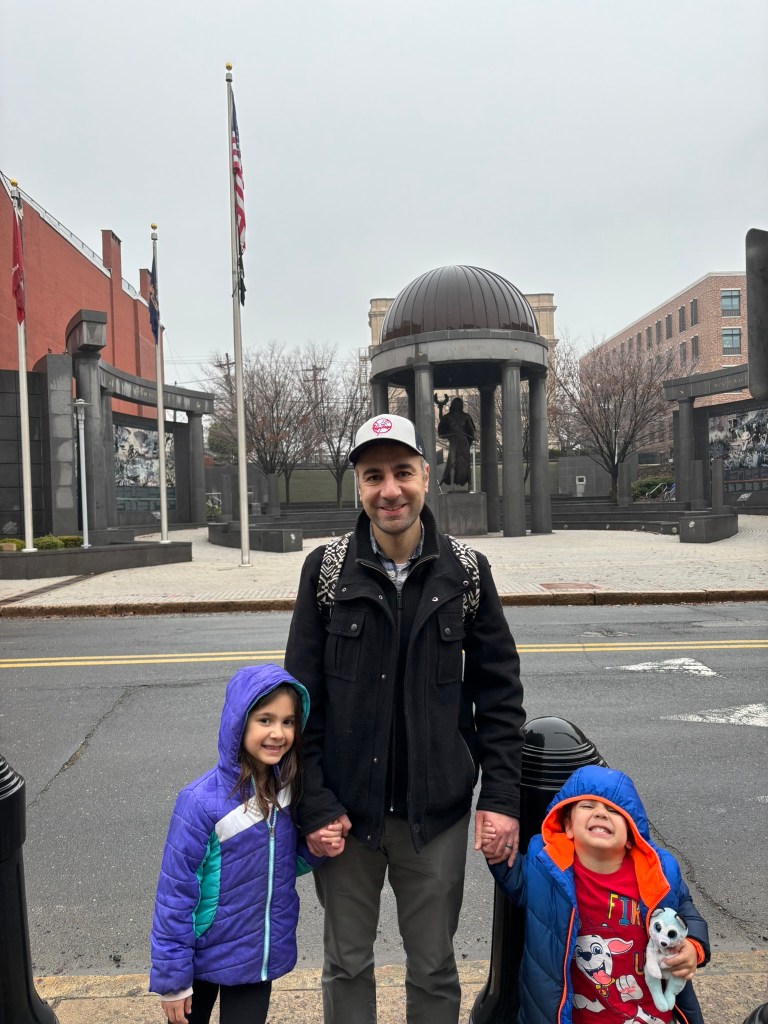
After our time exploring the New Jersey State Museum, we made the 8 minute walk to the Old Barracks Museum for Patriots Week. We stopped to take a picture in front of the WWII Memorial in Veterans Park.
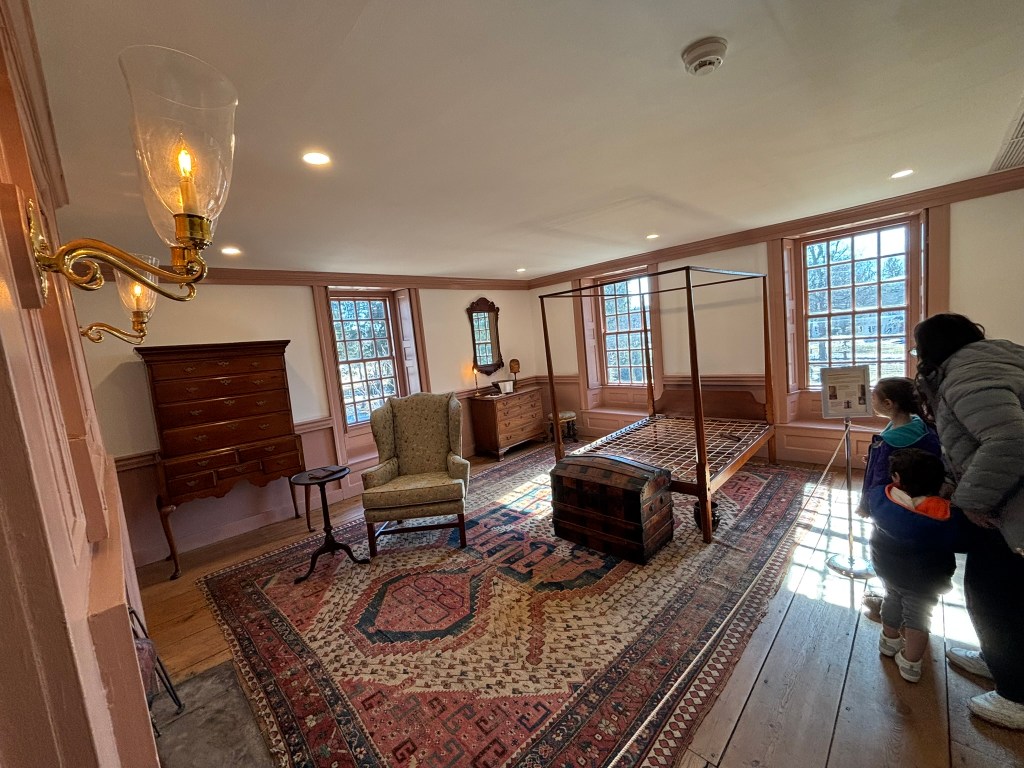
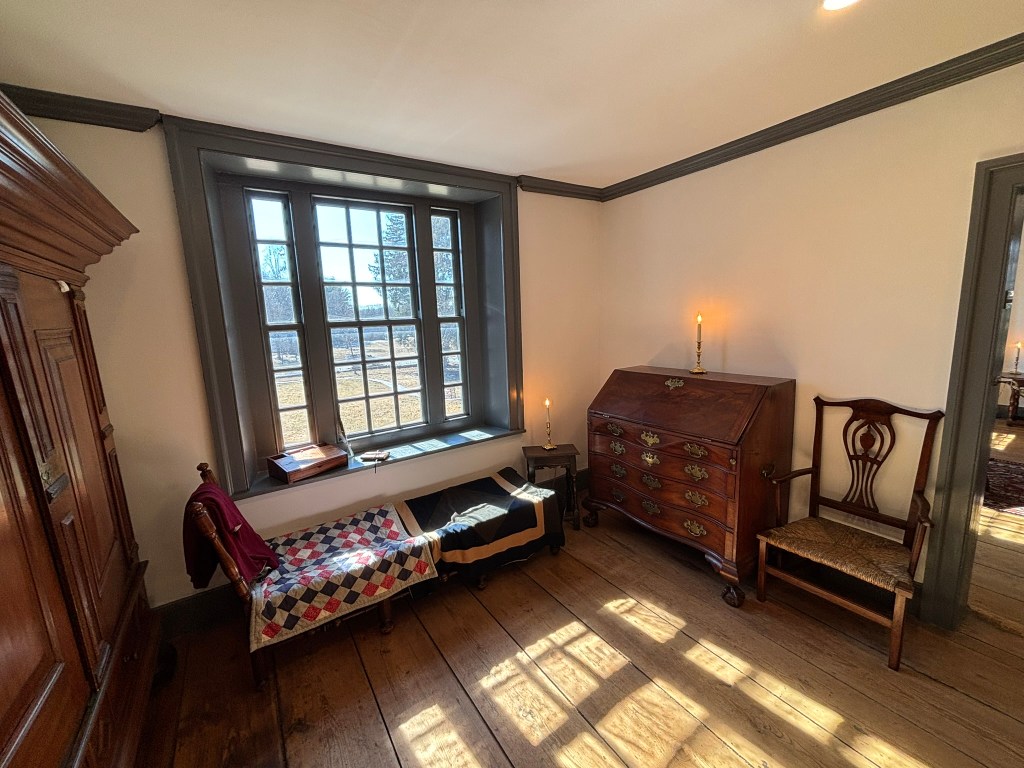
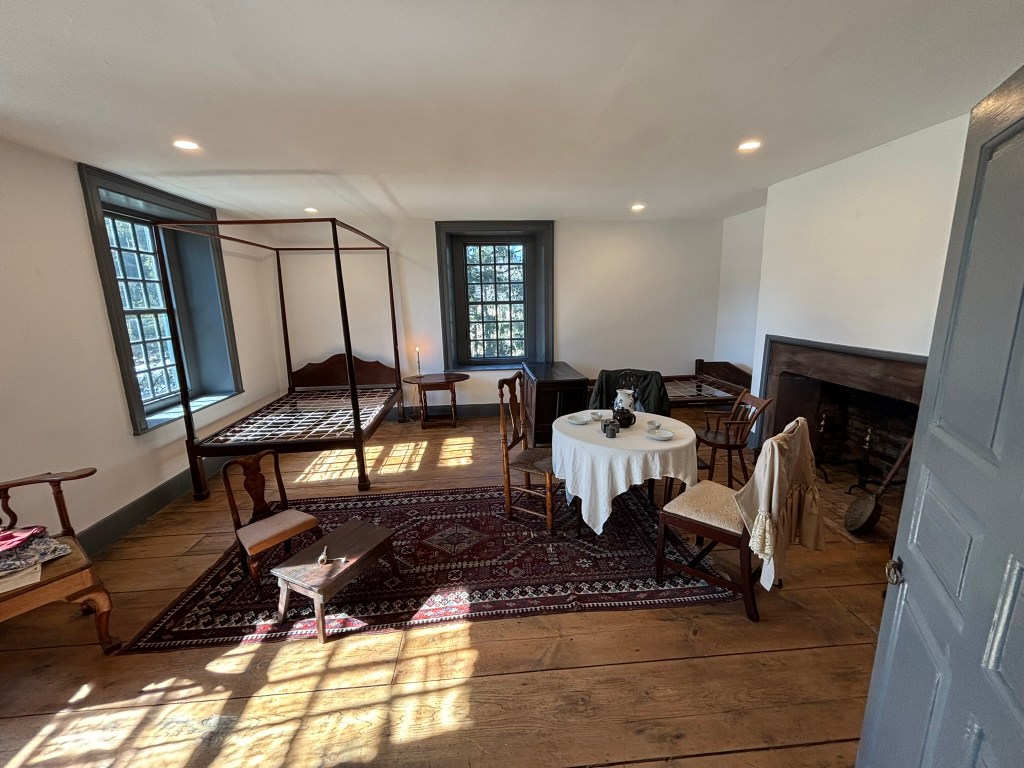
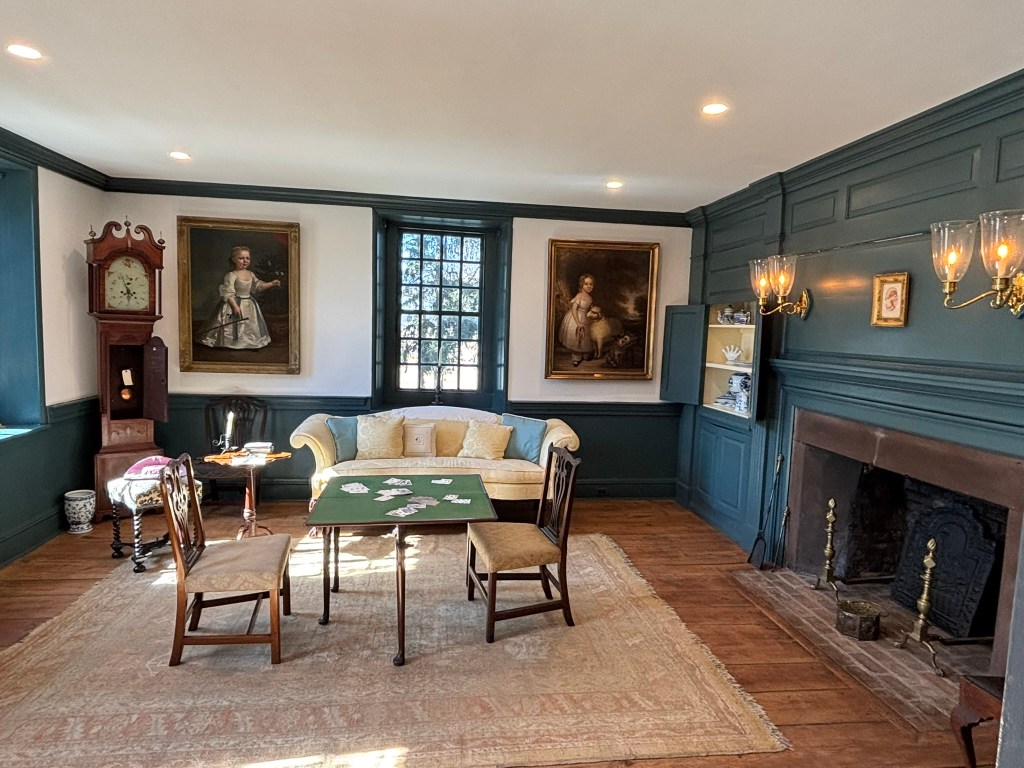
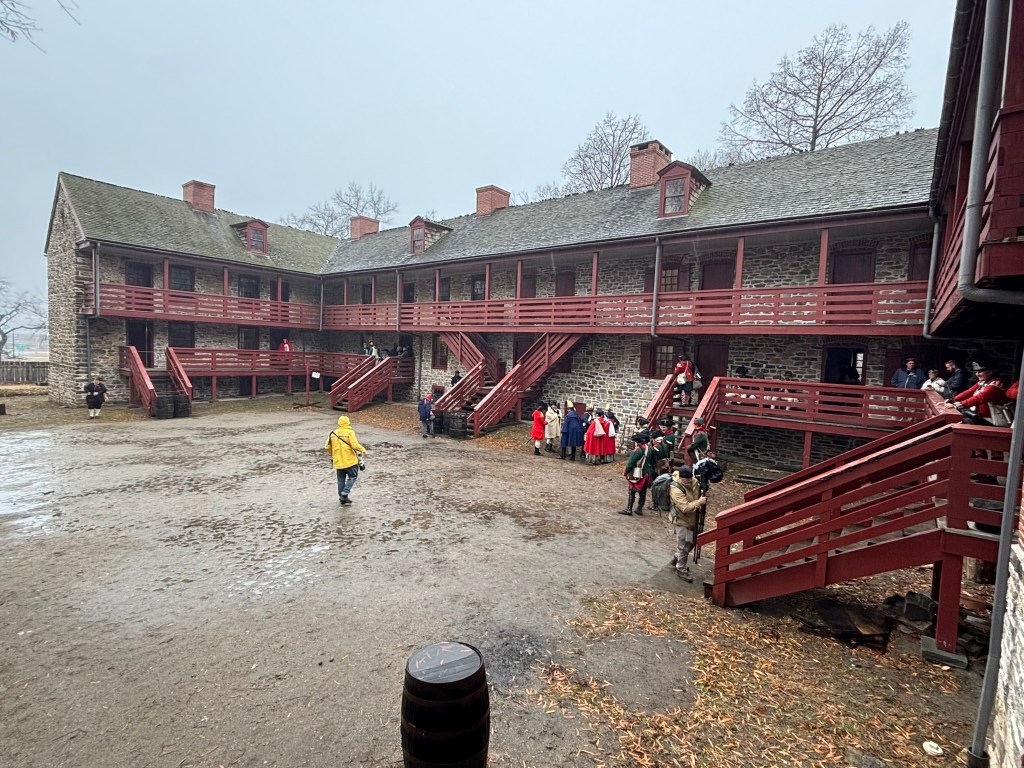
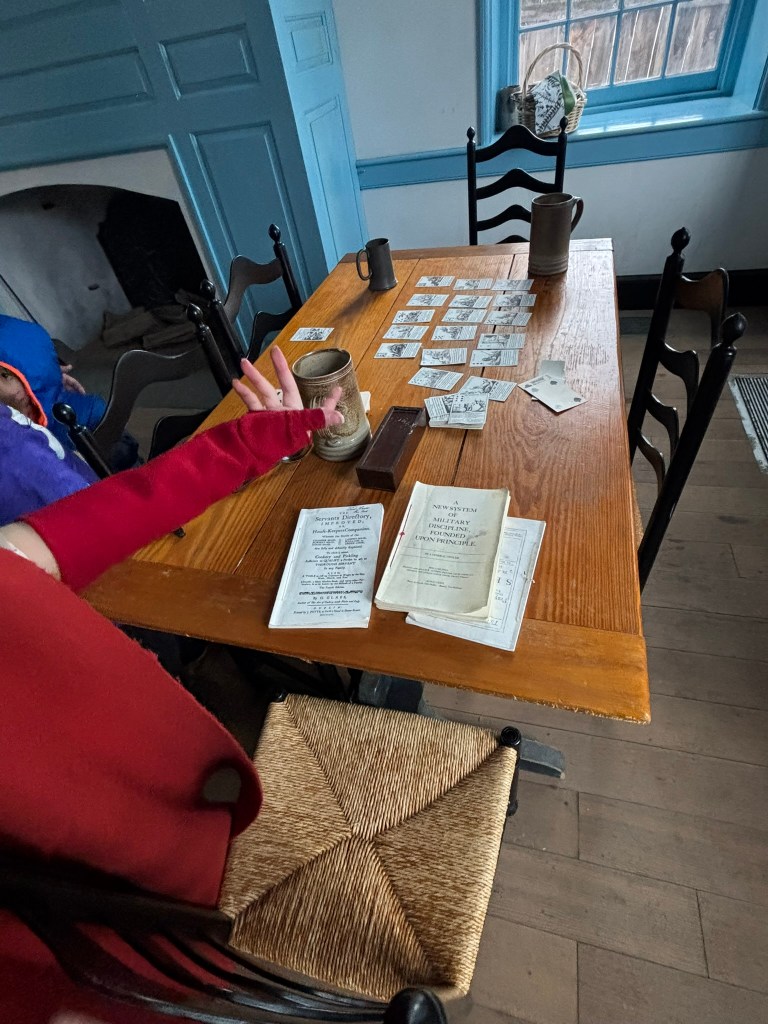
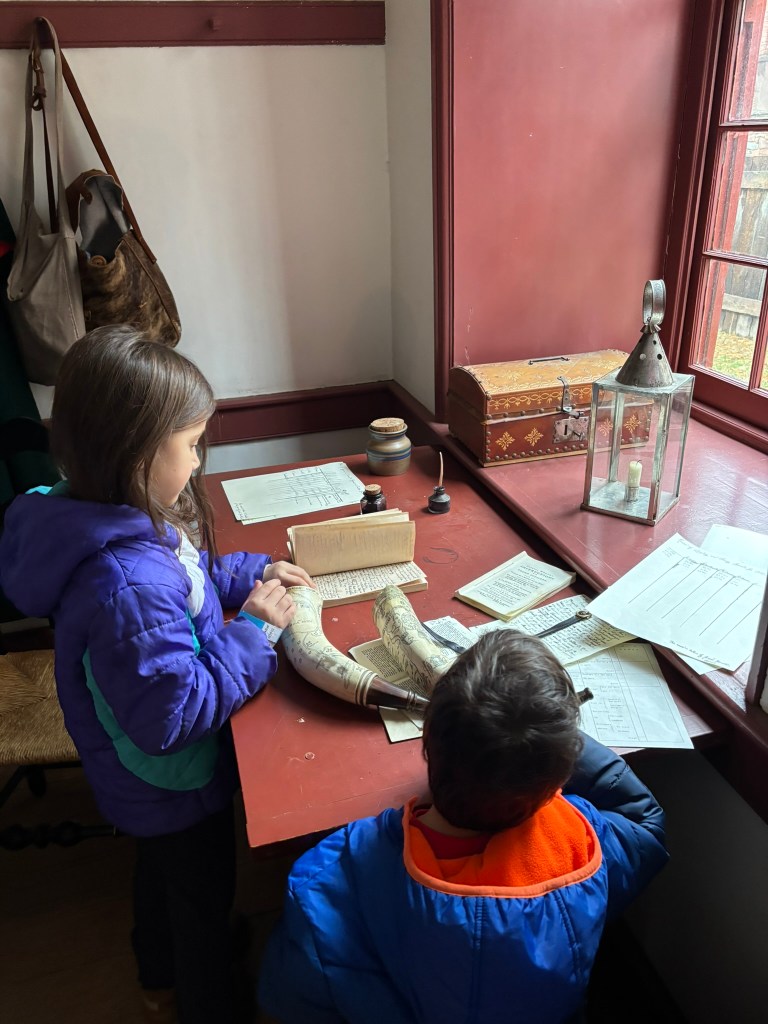
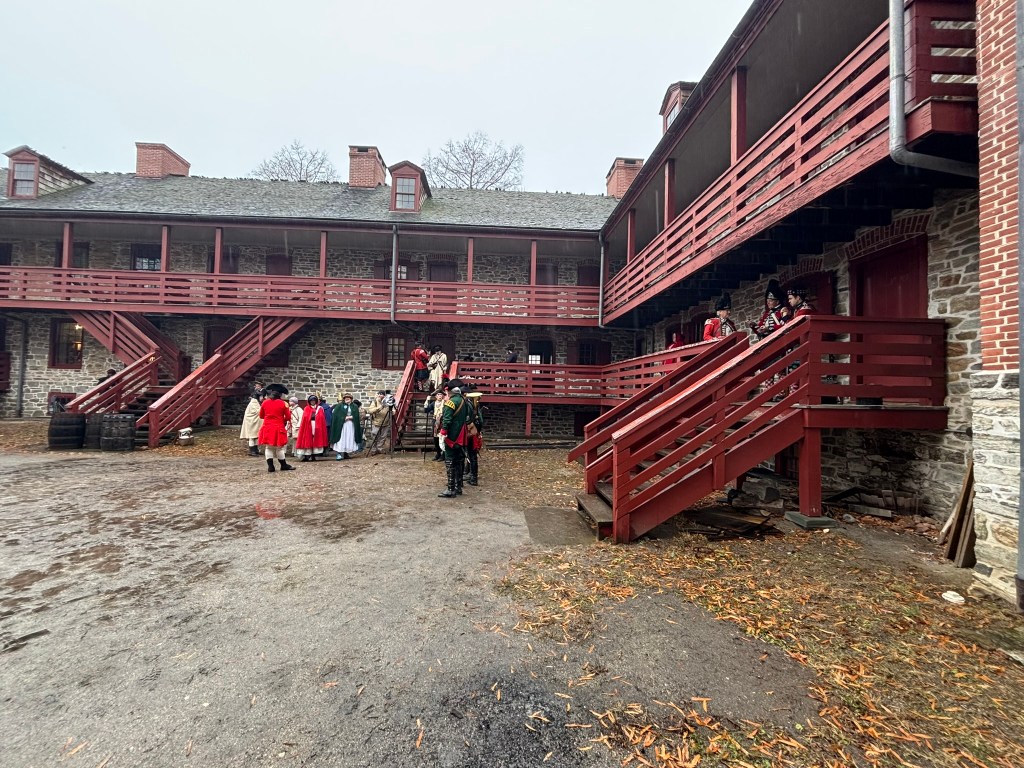
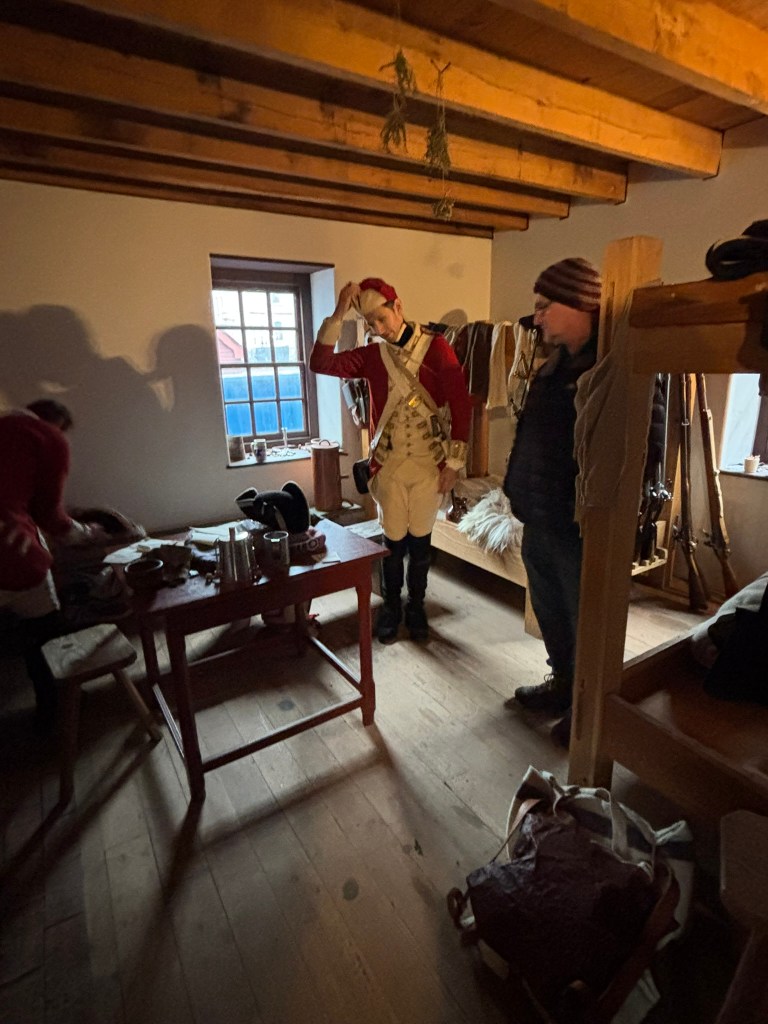
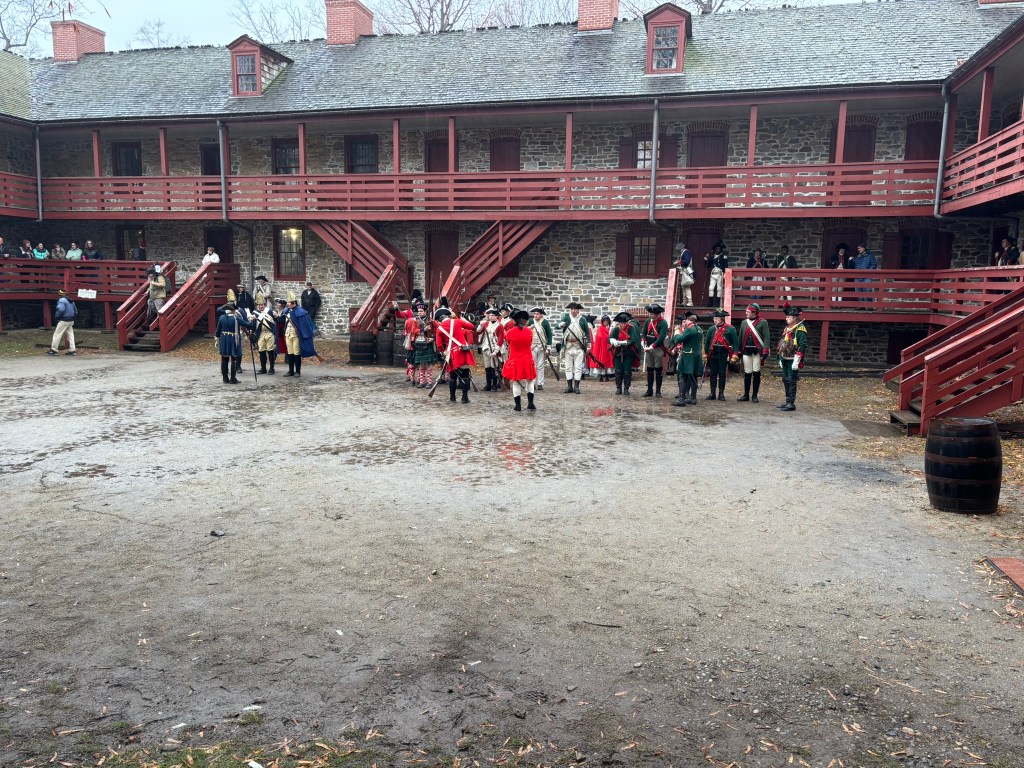
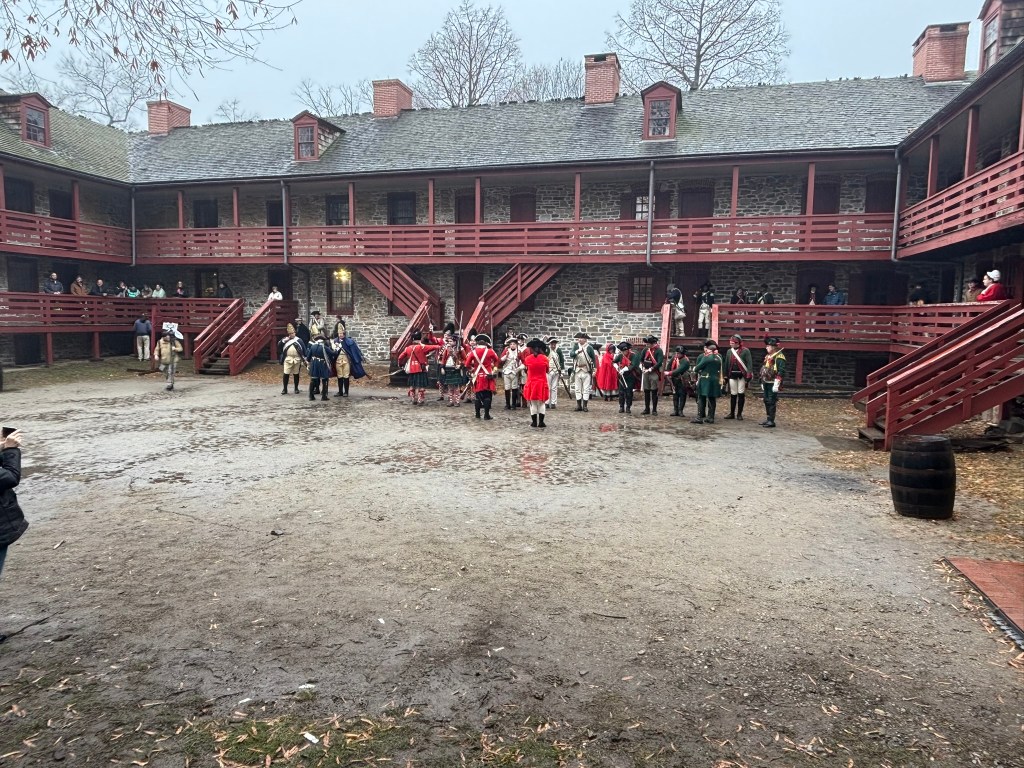
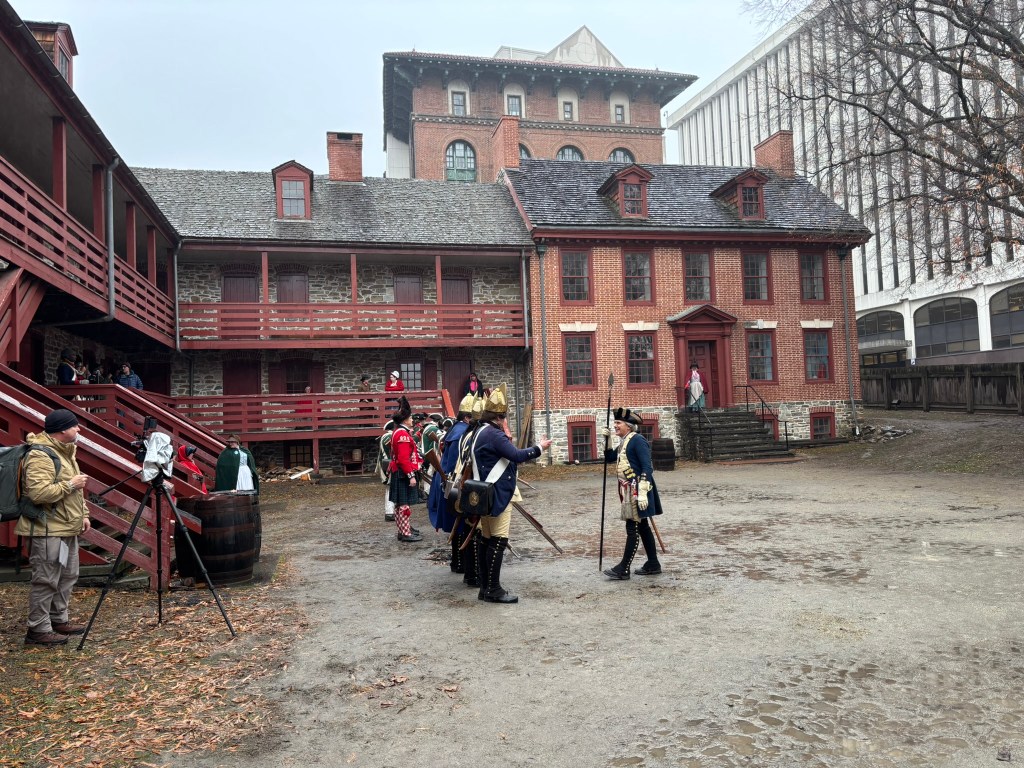
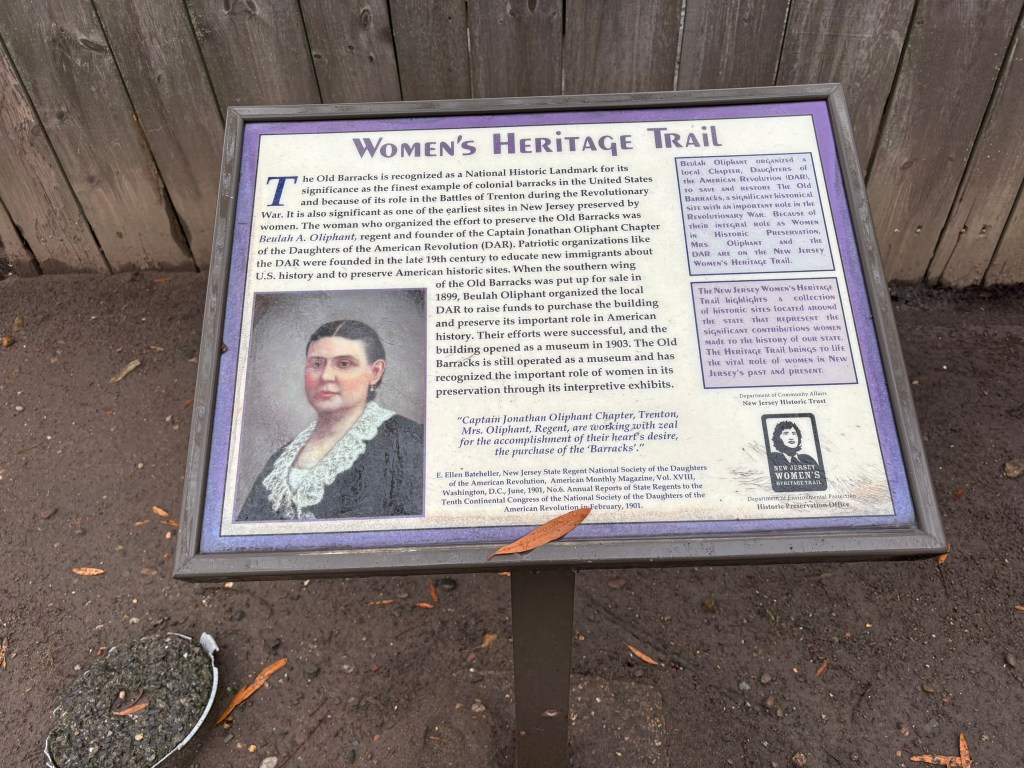
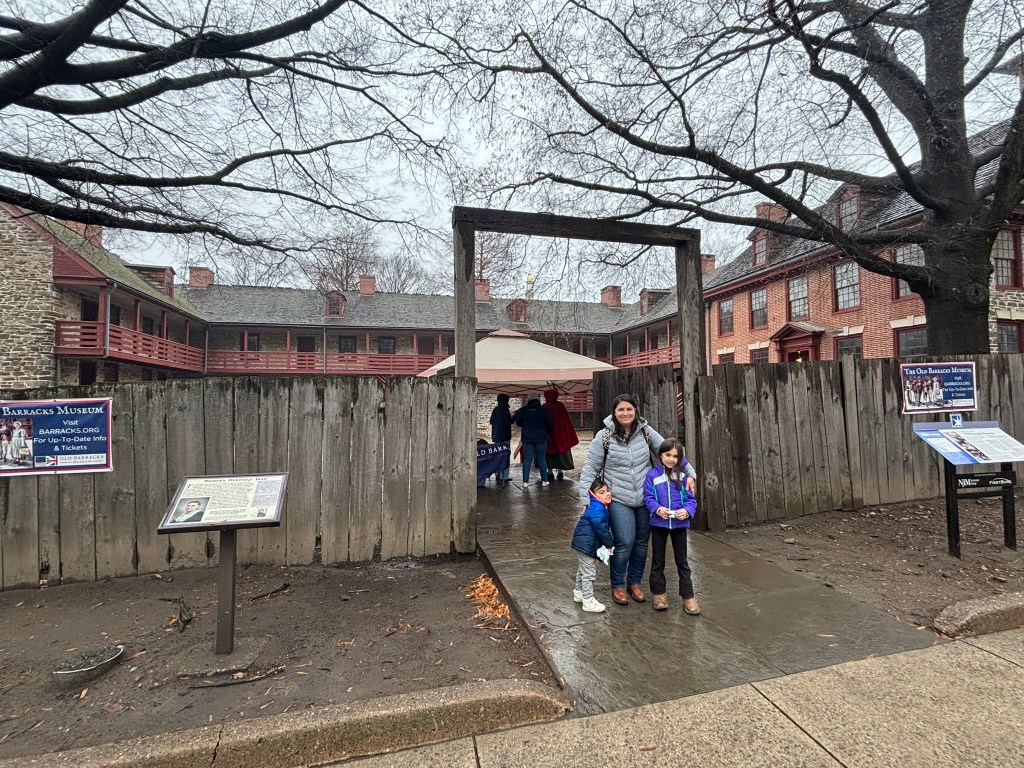
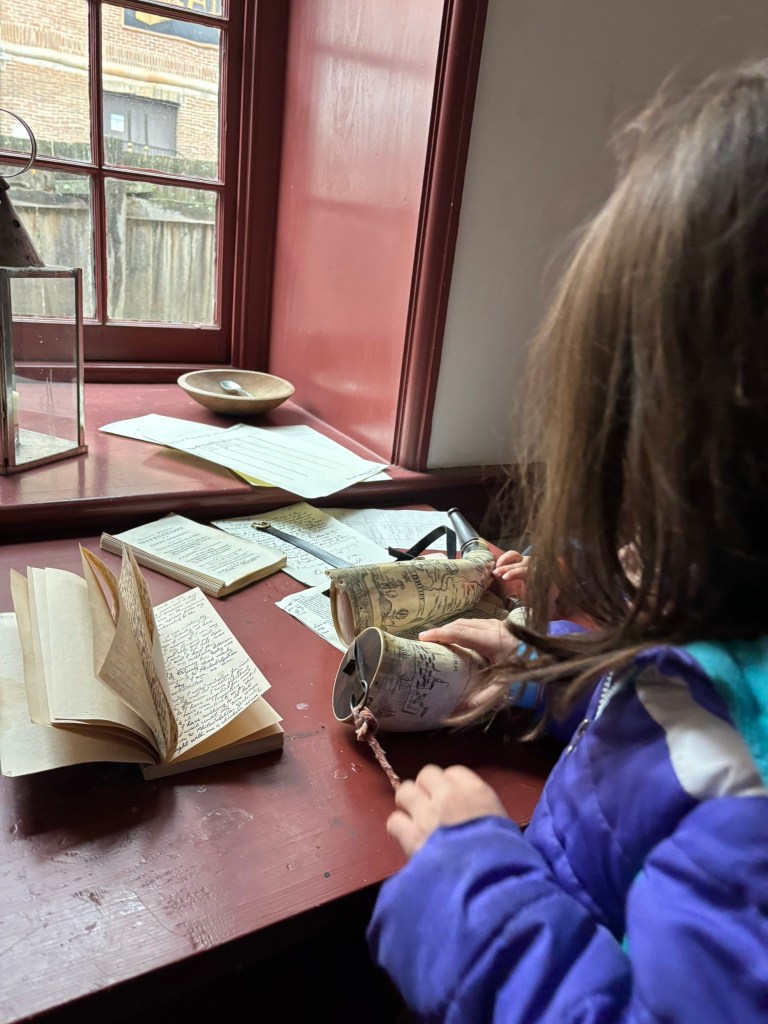
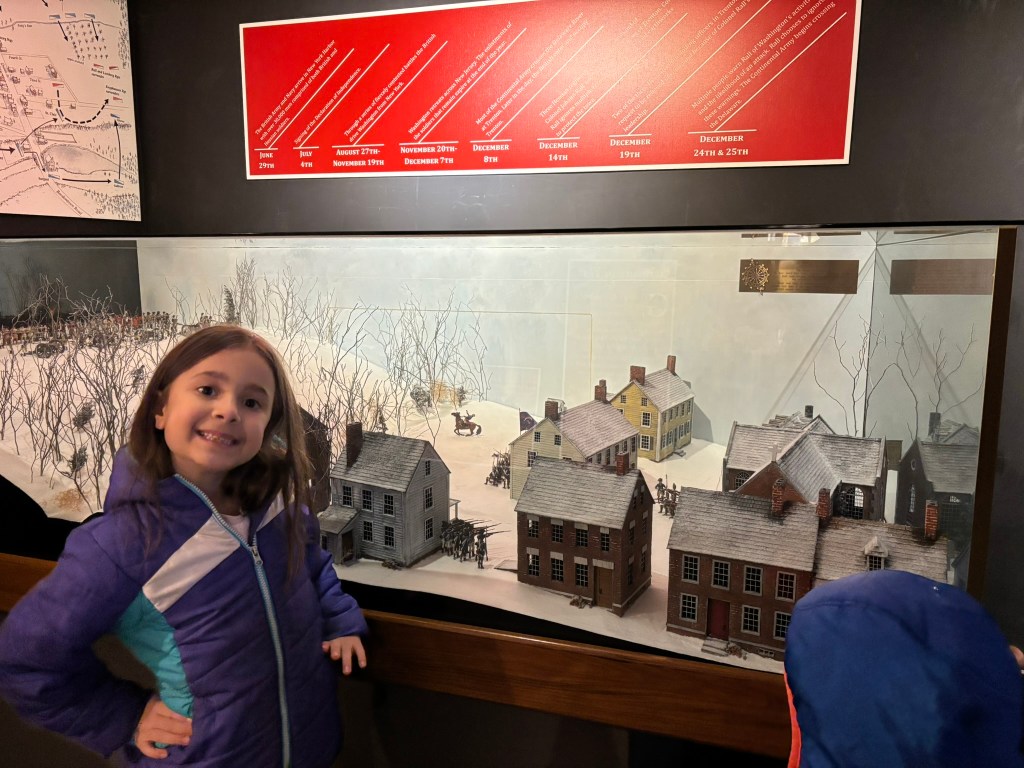
We arrived at and explored the Old Barracks Museum. The Re-enactors at the museum are great. They are very friendly and explain the history of the Barracks which were built in 1758 to house the British Army during the French and Indian War (1754-1763). The re-enactors explained what life would have been like for both the privileged officers, as well as the soldiers. We discovered that officers passed the time by playing cards and other games. We also discovered in the soldiers’ barracks that a room the size of my kids’ bedrooms would have housed between 12-16 men, 3 men per bed! The barracks would serve a variety of purposes during the American Revolution after it was captured by the Americans, including a place to house American troops and British prisoners, as well as a smallpox hospital.
While we were exploring the Barracks, soldiers gathered to line up and march over to the reenactment of the Battle of Trenton, which takes place between State Street and Mill Hill Park. We unfortunately didn’t get an opportunity to see the reenactment. It was taking place farther away from where our car was parked, which would have been a lot for the kids. We are hoping to see it in the future and will plan our day better than we did this time. The reenactment always takes place around this time in December to commemorate the Continental Army’s crucial victory on December 26th, 1776 at the Battle of Trenton, part of the Ten Crucial Days.
This was somewhat of a spur of the moment trip, but overall we had a good day. For next year, I’m hoping we can plan out Patriots Week better so that we can attend more events. The Old Barracks is a place I have wanted to see for a long time. It’s quite fascinating to see a building from 1758 in the middle of Trenton. There is rich history to explore there as it serves as a living history museum. For videos from the the Old Barracks Museum, follow my Social Media Pages. For more information on the two museums that we visited, check out the links below.
Every year that I teach the American Revolution, I often ponder new questions related to the event. One question that I’ve asked myself this year is: Could have cooler heads prevailed in the lead up to the American Revolution? The primary, foundational disagreement between the American colonists and the British government was the simple question: “Did the British Parliament have the right to tax the colonists?” The colonists were so steadfast with an emphatic “NO” that they were willing to protest, boycott, destroy property and risk going to war. The British responded with an empathic “YES”. They were so steadfast that they were willing to tighten control over the colonies, send British troops to enforce its laws, close Boston’s port for trade, enact martial law in Massachusetts, and alter the justice system of the colonies. The British were so committed to their power to tax the colonists that they were willing to go to resort to war.
There is no doubt that the colonists drew a line in the sand against British infringements on their rights as Englishmen. There is also no doubt that the British officials were quite stubborn with their unwillingness to listen and work with the American colonists. The British had a reputation to defend and were unwilling to give in to colonial demands. There was a sense of arrogance in their responses to the colonists throughout the controversies that occured between 1763- 1775. Had the British been more willing to negotiate, was it possible that war could have been avoided? Or was an independence movement in the colonies inevitable? I explore these questions later in the blog post, but first, I’ll highlight the chain of events and laws that continued to build tensions between the two sides.
Tensions Emerge at the Conclusion of the French and Indian War
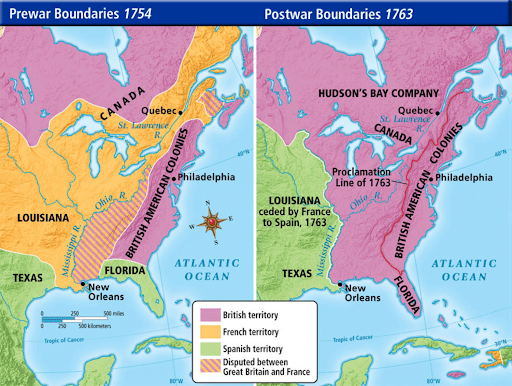
The French and Indian War (The American Theater of the global, Seven Years’ War) started in 1754 and ended with the Treaty of Paris in 1763. It was a conflict that emerged between the growing French Empire (along with Native allies) and the British Empire around the Ohio Country, the Great Lakes, and in Canada. The British emerged victorious and kicked the French out of their North American holdings. At the conclusion of the war, the British Empire in North America stretched from the east coast to the Mississippi River. In its aftermath, the British racked up a debt nearly double what it was before the conflict.
The British passed the Proclamation of 1763 to ban new colonial settlements west of the Appalachian Mountains. This was an effort to limit conflicts between the American colonists and Native Americans. The British sent about 10,000 British troops to the frontier to regulate the ban and limit any future tensions with the French and Natives. The American colonists saw the British stationed in the colonies as a standing army in a time of peace, which was unacceptable according to 18th century norms.. The standing army only added to Britain’s debt.
The British government believed that the American colonists should pay for their own protection and passed a series of laws that would extend the tax burden onto the colonists. Along with the taxes were a number of events that further led to tensions between the British government and the American colonists. Let’s take a walk through the timeline below to highlight the growing friction between the two sides:
1763- The Treaty of Paris (Ends the French and Indian War)
1763- Passage of the Proclamation of 1763- highlighted above.
1764- The Sugar Act
The British passed this law to address illegal smuggling by the colonists. The Navigation Acts, which had been passed throughout the colonial period, allowed the colonists to only trade with England. The colonists freqently smuggled goods into the colonies including tea, molasses, sugar and other items. The Sugar Act sought to do two things- split the tax on foreign sugar/ molasses in half, (with the hopes that the colonists would pay the lower tax) and strengthen the enforcement of the law, allowing prosecutors to try smuggling cases in vice-admiralty courts with only a British judge and not a jury. While the colonists were opposed to the act, there was not widespread anger or oppostion (like we’d see with the Stamp Act). The colonists understood that this act was written to regulate trade, not necessarily to raise revenue for the Empire.
1765- The Stamp Act
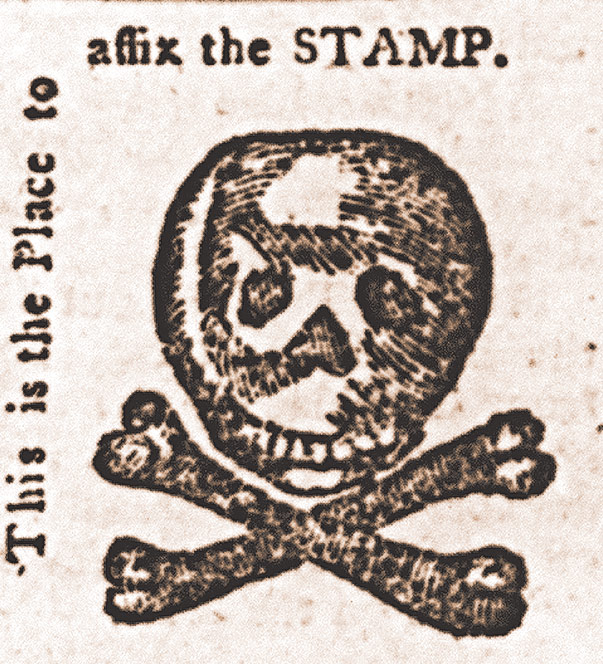
This law led to fierce, widespread anger throughout the colonies. The Stamp Act required all paper products: legal documents, newspapers, licenses, pamphelts, almanacs, playing cards, and even dice to be taxed. This was a direct tax that affected all colonists. Never before in colonial history had the British Parliament taxed the colonies in such a manner. The colonies had only been taxed by their colonial legislatures. The central argument from the colonists was “No Taxation Without Representation.” The colonists argued that because they were not represented in the British Parliament, that body did not have the right to take their property (in the form of a tax). This was an age old belief in England and the colonists wanted to be treated the same as people in the motherland.
The British response was that the English colonists were virtually represented by the British Parliament. Most citizens in the England could not elect their representatives because of property requirements for voting. Just as those individuals were represented by Parliament, so too were the colonists. The American colonists did not buy this argument and continued to state that the taxes were unconstitutional. To them, only the colonial legislatures could tax the colonists because their local government was where they were represented.
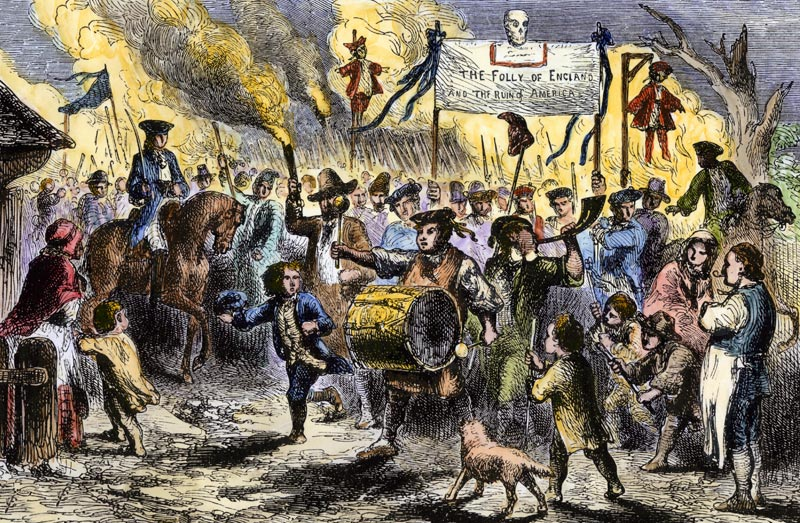
The rage of the colonists led to protests, boycots, riots, the tar and feathering of tax collectors, and the destruction of private property. These actions worked because the following year, the British Parliament repealed the Stamp Act, pressured by British merchants who were feeling the pinch of the colonial boycotts. However, the British also passed the Declaratory Act, stating that the British Parliament had the right to make laws “to bind the colonies and people of America… in all cases whatsoever.”
1765- The Quartering Act
The Colonies had to provide inns, alehouses, barns and other buildings to house British soldiers at the expense of the colonies. This was seen as another tax because the colonial governments had to foot the bill.
1767- The Townshend Acts
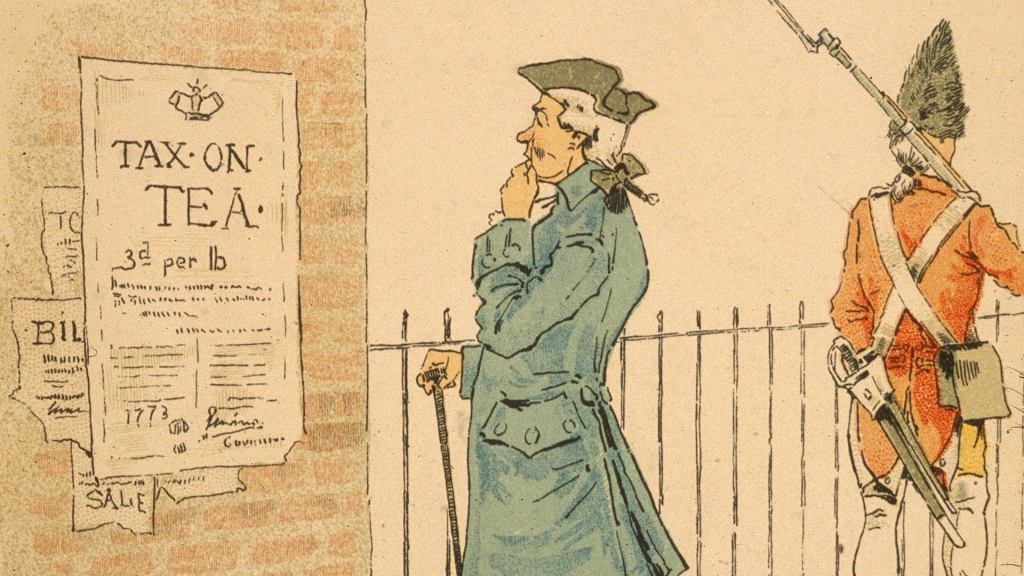
In response to the repeal of the Stamp Act, the British passed a series of acts referred to as the Townshend Acts (after British offical, Thomas Townshend). The acts included indirect taxes on goods arriving into the colonies from Great Britain, including glass, lead, paint, paper, and tea. Widespread protests and boycotts followed with the same argument as the Stamp Act. Even though this was an indirect tax, the colonists argued that it was still a tax to raise revenue for the British crown, and was therefore, unconstitutional. In the next few years, the Townshend Acts were repealed, except the tax on tea. The primary reason that British Prime Minister, Lord North wanted to keep the tax on tea, was to prove to the colonists that the British Parliament had a right to tax the colonists.
1768- The Liberty Affair
The ship called the Liberty belonging to known smuggler and wealthy merchant, John Hancock, was seized by British officials. Hancock was accused of smuggling wine from Madeira without paying customs duties. The incident led to riots in Boston, encouraging the British to send 2,000 troops to the city.
1770- The Boston Massacre
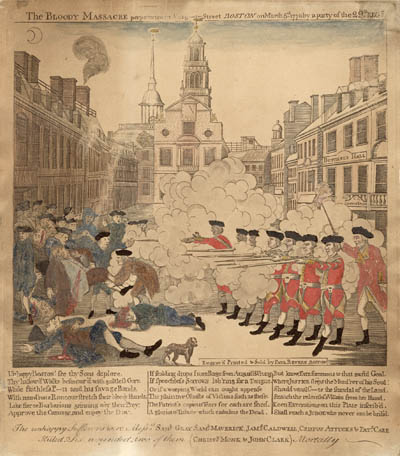
On the evening of March 5th, a crowd gathered outside the Boston Customs House and began threatening a British soldier, who called for backup. After seven more soldiers arrived, the scene continued to escalate as the mob grew larger. Members of the mob even dared the British soldiers to shoot. The crowd threw snow, ice and other projectiles at the soldiers, until one British officer fell to the ground and then fired his gun. Other British officers fired as well, killing 5 and wounding six in what the colonists called “The Bloody Massacre”. An engraving of the event (an early form of propoganda) by Paul Revere published in the newspapers increased the anger that the colonists felt for the British. As a result of the soldiers’ trial, six were cleared of any wrongdoing while two were convicted of manslaughter and punished with a branding on the thumb. The soldiers were defended by John Adams, who wanted to prove to the British that the American colonists believed in the right to a fair trial.
Image from the collections of the Massachusetts Historical Society.
1772- Gaspee Affair
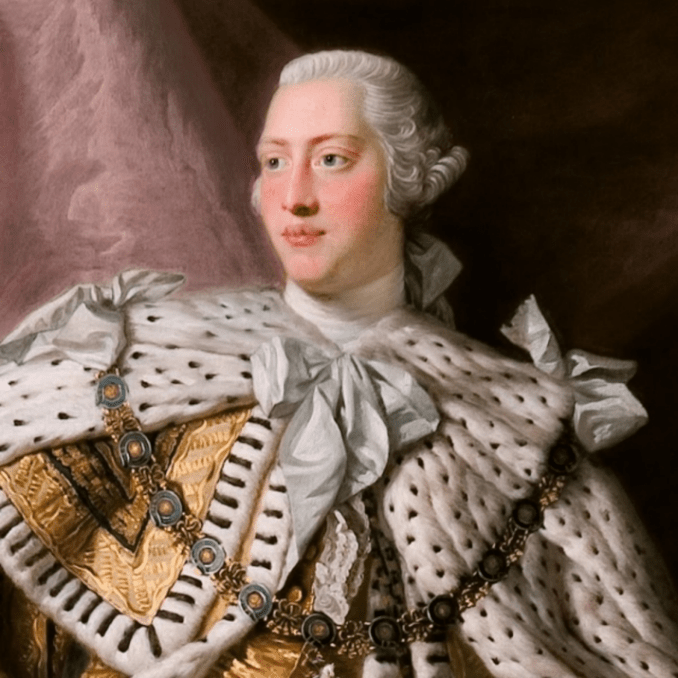
A British ship called the HMS Gaspee ran aground as it was attempting to enforce the Navigation Acts. A group of colonists attacked, boarded, and set the ship aflame leading to anger from the British government. King George III called on the perpetrators to be caught and brought to Great Britain to stand trial. While the perpetrators were never actually caught, the idea of bringing colonists to Britain for trial only added to the anger and fear amongst the colonists.
1773- The Tea Act
Throughout the colonial period, the colonists were frequently smuggling cheap tea into the colonies from the Dutch. This, of course, was in direct violation of the Navigation Acts. In response, the British passed the Tea Act which allowed the British East India Company (which had tons of unsold tea and was nearly bankrupt) to sell their tea directly to the colonists. Prior to the Tea Act, the British East India Co. sold its tea at the London Tea Auction to tea merchants. The tea merchants then sold it to colonial tea merchants, who then sold it to the colonists. This process made British tea more expensive than smuggled Dutch tea.
As a result of the Tea Act, the British East India Co. could now sell their tea directly to the colonists and take out the middlemen, the tea merchants. Even with the the additional tax on tea (which was the holdover from the Townshend Acts), Prime Minister Lord North was hoping that the colonists would simply purchase the cheaper British tea. Instead, the colonists reacted violently. The colonists knew that this was a sneaky way for the British to still force the colonists to pay the tax on tea.
As the tea ships landed throughout the colonies, the colonists refused to allow the tea to be unloaded in the colonies. Through threats of violence by the colonists, the British officials were unable to unload the tea, and brought the tea ships back to England. An example of this is what is referred to as the “Philadelphia Tea Party”. The only British official who refused to give in to the colonists, was Lieutenant Governor of Massachusetts, Thomas Hutchinson. He would not allow for the tea ships to be brought to England, and therefore, three tea ships sat in the Boston Harbor.
1773- The Boston Tea Party
Boston colonists, likely led by the Sons of Liberty and many disguised as Native Americans, boarded the three ships and dumped all of the tea into the Boston Harbor. In today’s U.S. dollars, the British East India Company lost about $1.7 million worth of tea.
1774- The Intolerable Acts
King George III was enraged when he heard of the destruction of the tea. Even members of Parliament who had been sympathetic to the colonists before, had completely turned on them. Lord North wanted to punish Massachusetts, and Parliament passed a series of laws that the colonists called the Intolerable Acts (The Coercive Acts from the British perspective). The British shut down Boston’s port until the tea was paid for. This would stop all exports and imports to and from the port of Boston.
The Massachusetts government was altered. Thomas Gage, the British Commander in Chief of armed forces, was the Masachusetts governor, and voting rights were taken away from the colonists. Town meetings were limited to no more than once a year.
British officials accused of a crime in Massachusetts would have their trial in Great Britain. George Washington referred to this law as the “Murder Act” because now British soldiers could get away with murder by having their trial in a sympathetic British court.
Finally, a stricter Quartering Act was passed, ensuring that the British were housed in vacant private homes and other public buildings.
1774- The First Continental Congress
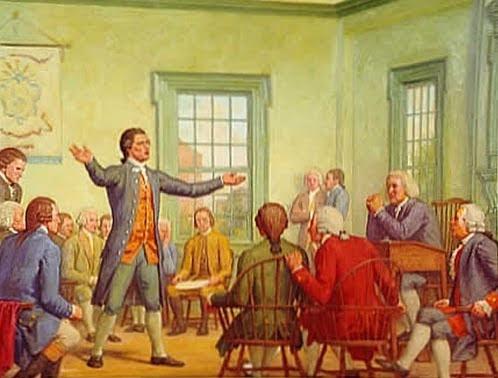
The colonies were united in their outrage over the Intolerable Acts. They met in Philadelphia at the First Continental Congress to decide their next steps. They wrote a petition to the king, asking for a repeal of the Intolerable Acts, and a return to the prior harmony that the colonists and the mother country had previously shared. The petition was ignored. The Congress agreed to boycott British goods until the Intolerable Acts were repealed. The Congress also agreed that each colony should set up and train its own militia.
April 1775- Lexington and Concord
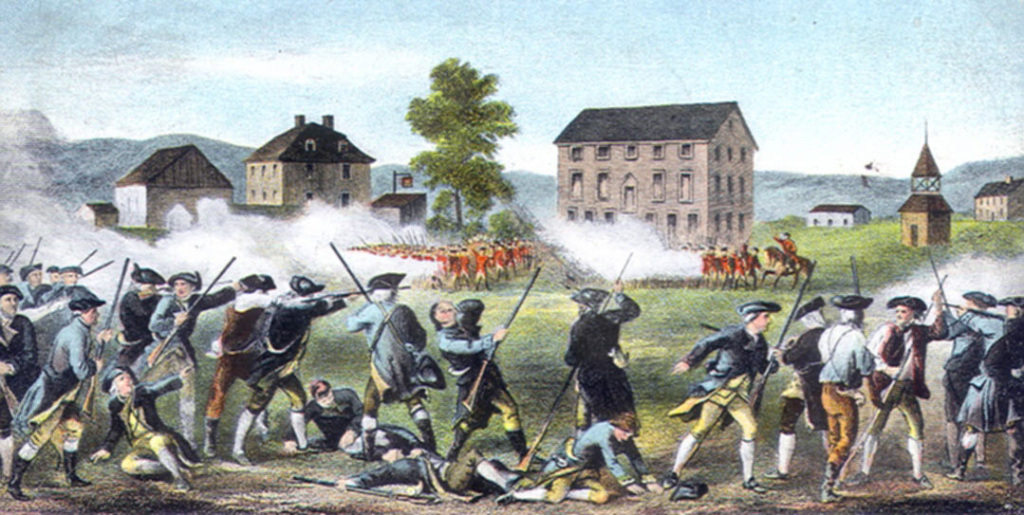
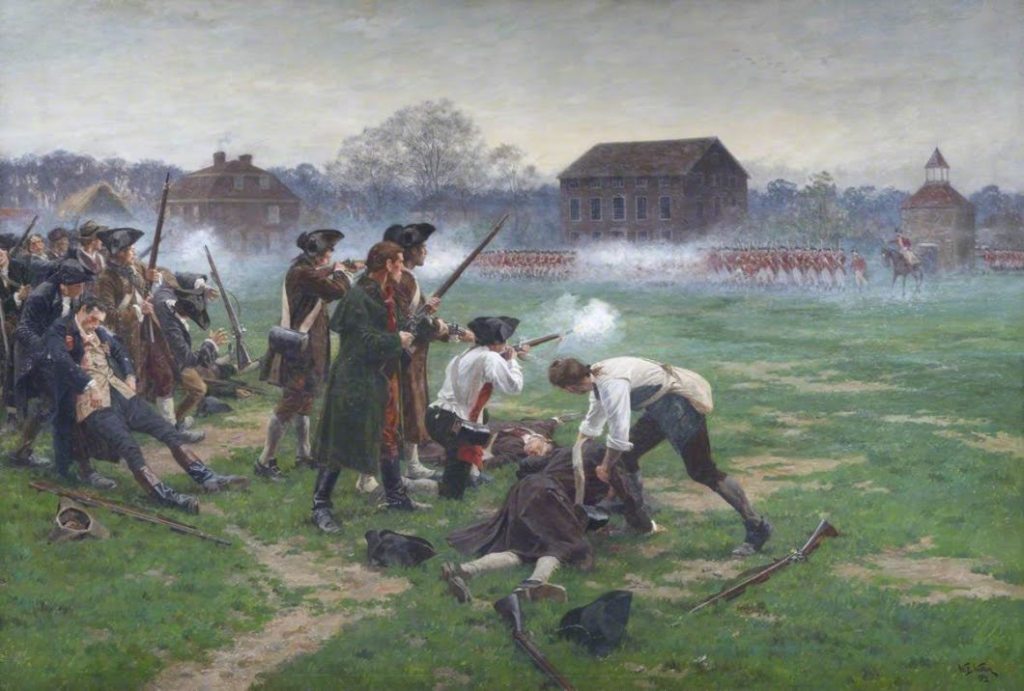
With heigtened tensions, the British learned that the colonists were stockpiling weapons and gunpowder in Concord, MA. The British planned to capture Sam Adams and John Hancock in Lexington and seize the arsenal in Concord. The famous “shot heard round the world” came on the village green in Lexington, and the Revolutionary War began.
As we can see with the timeline, tensions continued to escalate from the end of the French and Indian War. But could they have been avoided? Could perpetual peace have been possible without the shedding of blood and a war that would last 8 years?
Was Independence Inevitable Or Was Reconciliation Possible?
Let’s take a look at the two sides: The colonists and the British government.
The Colonists’ Viewpoints
The colonists, as mentioned above, drew a line in the sand against British taxes. They were not willing to budge on the issue, especially ardent Patriots. But the long-term causes of independence goes back further- well before 1763. In the late 1600s and for most of the 1700s, the British approach to the American colonies can be described with the phrase, “Salutary Neglect”. The British generally left the colonies alone and did not strictly enforce their laws for the continued devotion of the colonies. Throughout this time period, there was relative peace between the two sides. However, the colonists were displeased with the Navigation Acts, which required the colonists to only trade with the British. While the colonies were growing, they were increasingly feeling a sense of independence. They elected leaders to their own colonial governments, and they felt they could fend for themselves and run their own affairs through brilliant and tenacious leaders, who would become the Founding Fathers. They were an ocean away from Mother England, and were capable of governing themselves.
Therefore, when the British began enforcing laws more strictly and passing new direct tax laws, the colonists were understandably outraged. The colonists truly believed that the British government was acting in a way that was unprecendented. It seems that independence was inevitable, and the movement towards independence needed a spark of anger. This outrage came from British taxes.
What about from the British side?
Could the British have made peace with the colonists and avoided independence? To me, they could have done a much better job in their approach to the concerns of the colonists. But if they would have been more benevolent towards the colonies in the 1760s and 1770s, they may have been simply delaying an eventual indpendence movement.
The British government after 1763 was quite headstrong in their belief of taxing the colonies. The British were not willing to negotiate with the colonists during the many controversies between 1765- 1774. The chasm between the colonists and the British grew wider and wider. It’s clear that the British looked down upon their American countrymen. This can be seen in the ways that the British military viewed American military leaders, such as George Washington, during the French and Indian War. An American could not work his way up to become a British general. If you view Mother England and her American colonies as a parent-child relationship, Mother England was in the driver seat as to how the relationship was to develop.
There likely was a belief amongst the British leadership that if they continued to tighten controls over the American colonies, that perhaps the colonists would rebel. If that were to happen, the British would easily crush the rebellion, and maybe tighten controls over the colonists even more. The Americans had no navy. Their only military forces were inexperienced colonial militias. To the British, there would be no way that the Americans could defeat the mighty British army and navy, if they even dared to try.
When the colonists began to protest against the Stamp Act, it may have caught the British by surprise. At the conclusion of the Stamp Act riots, it appears that the British had the idea that they really needed to prove to the colonists who was in charge.
What if the British had more accommodating leaders?
There could have been peace between the colonists and the British: but only for a time. The Englightenment ideals had spread to the American colonies, and led many to question the very idea of a monarchy. It is quite conceivable that even if the Revolution didn’t break out in the 1770s, there could have been later controversies in later decades that would have fueled an independence movement.
If cooler heads prevailed, and if British leaders were more understanding of the American arguments, I believe there could have been peace between the British and the Americans in the 1770s. However, there was a widespread and growing independence movement in the Americas taking place. The very ideals that Americans were developing in this time period were completely incompatable with the British monarchy. These ideals included political freedom, voting rights, right to a fair trial, and protection from unlawful search and seizure. I believe that independence was inevitable because of these ideals. The British Empire had spread itself too thin at the end of the Seven Years’ War and felt that they needed more money to continue to build their empire. They wanted to force the American colonies into submission in the 1760s and 1770s. This was an approach that ended up backfiring on the British. They took a calculated risk while tightening controls over the colonies, and the result would be American independence and the Treaty of Paris ending the Revolutionry War in 1783. With that, the British empire lost its vast American colonies in North America.
Reconciliation between the two sides was possible temporarily, but American independence would come sooner or later.
Please let me know your thoughts in the comments or on social media.
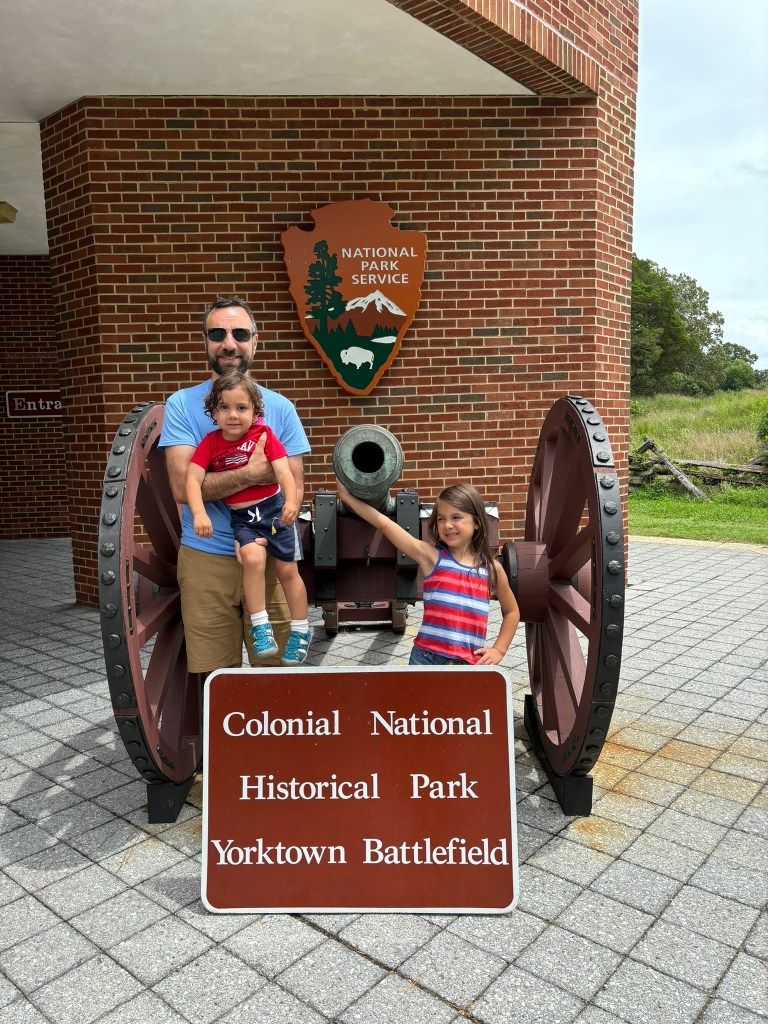
My last two blog posts discussed portions of my family’s summer vacation to Williamsburg, VA. The first blog post discussed our visit to Colonial Williamsburg. My previous blog post discussed a tour of Jamestown Settlement, which was the first half of our second day. This blog post will discuss our afternoon in Yorktown. This Jamestown- Yorktown tour was booked with Viator.
After we ate lunch at the Jamestown Settlement, we got back on the bus and headed to the Yorktown Battlefield. The drive between Jamestown and Yorktown was about 30 mins. Along the route, our tour guide still discussed the impact of the Jamestown settlement, and then transitioned into the 1700s. He explained the lead-up to the American Revolution and the outbreak of the war.
Significance
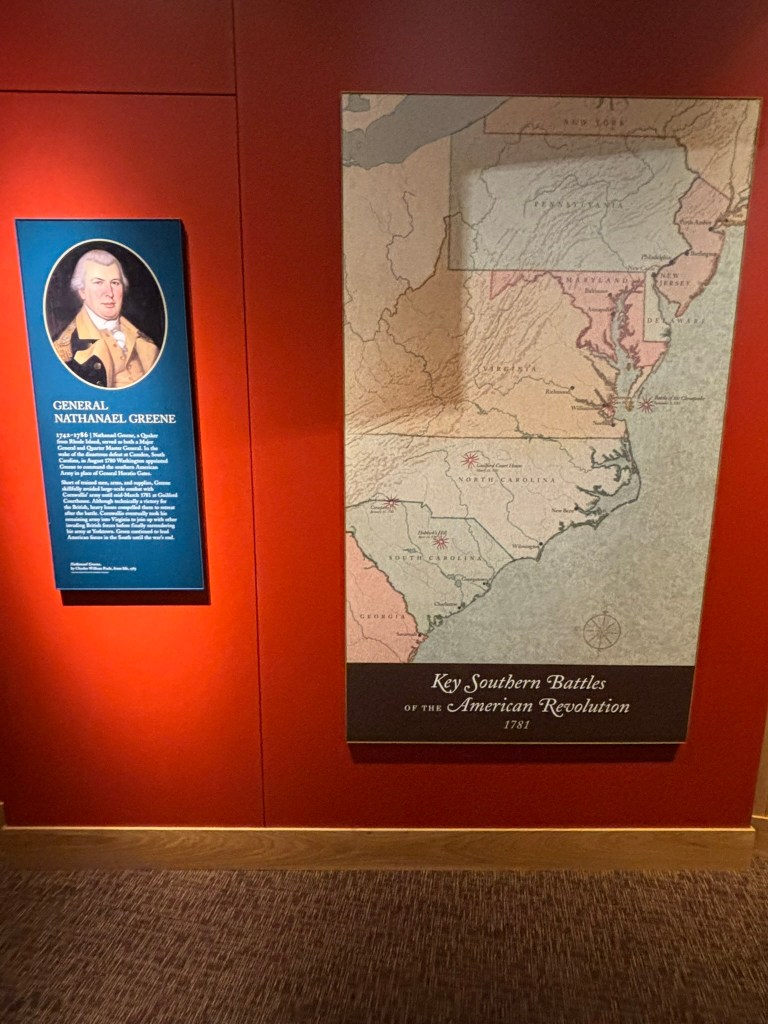
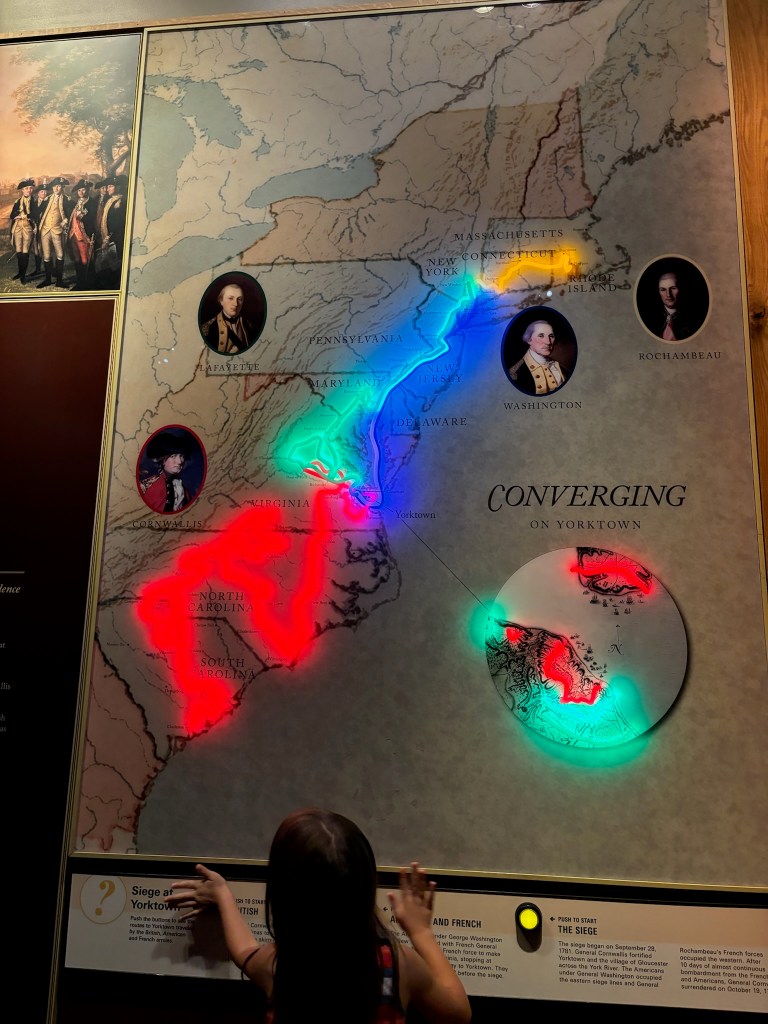
Yorktown was arguably the most important battle of the American Revolution because it was the last, major climactic battle. After six long years of war, and after a couple of grueling years of fighting in the south, British General Lord Cornwallis decided to take the war from the Carolinas to Virginia. He decided to set up camp at Yorktown along the York River. The combined French and American forces planned to surround the British at Yorktown and cut of their supply along the river. As a result of the naval Battle of the Chesapeake on September 5th, 1781, the French were able to successfully gain control of the York River, cutting off a British escape route. The French and American forces made their way from Rhode Island along the Washington-Rochambeau Revolutionary Route. After a siege of about three weeks, Lord Cornwallis’s army was forced to surrender on October 19th, 1781.
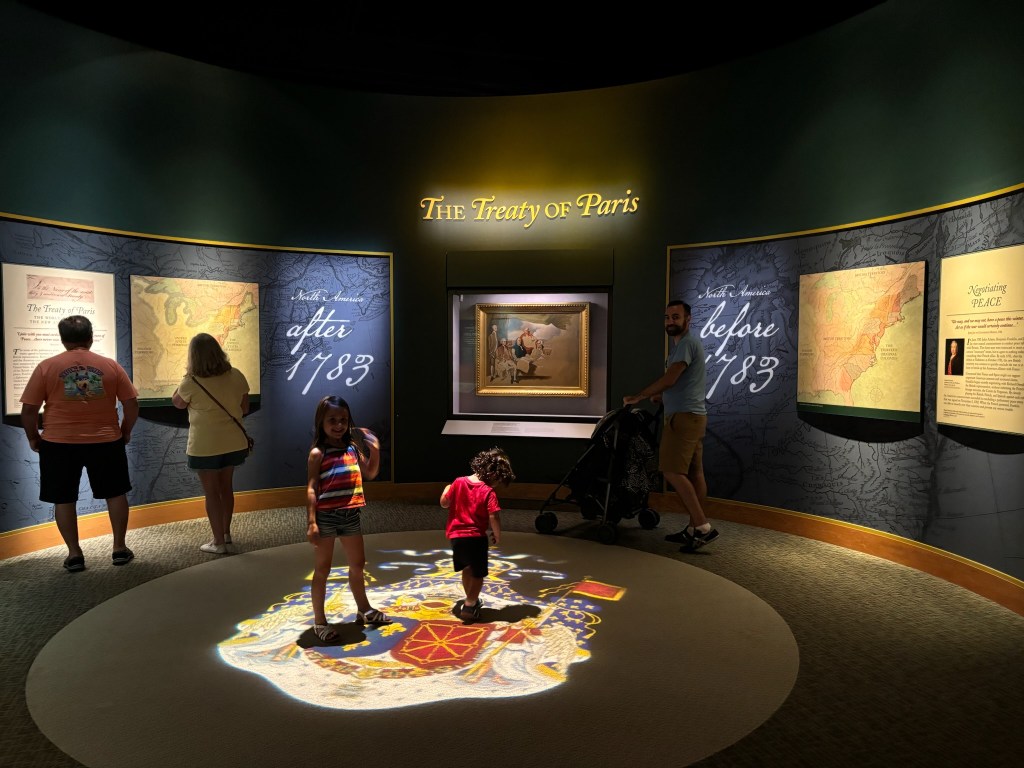
While smaller battles and skirmishes did take place in the war after Yorktown, this surrender led to peace talks and was the last major battle of the war. The Treaty of Paris would come in 1783, bringing about the official end to the war.
Yorktown Battlefield
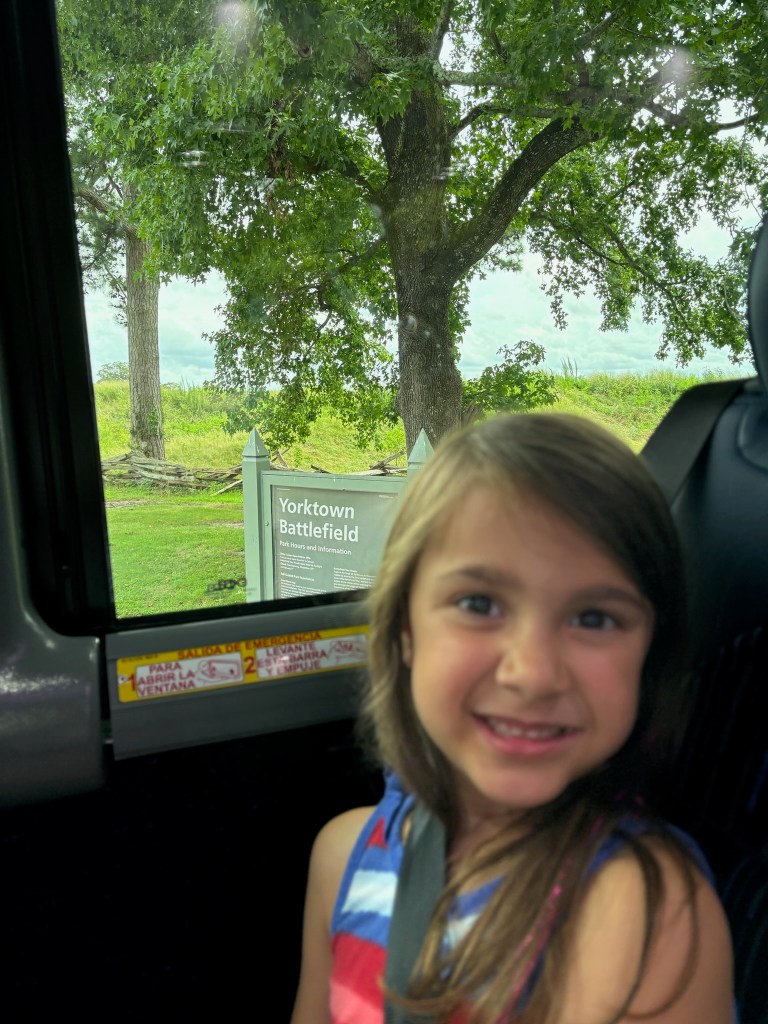
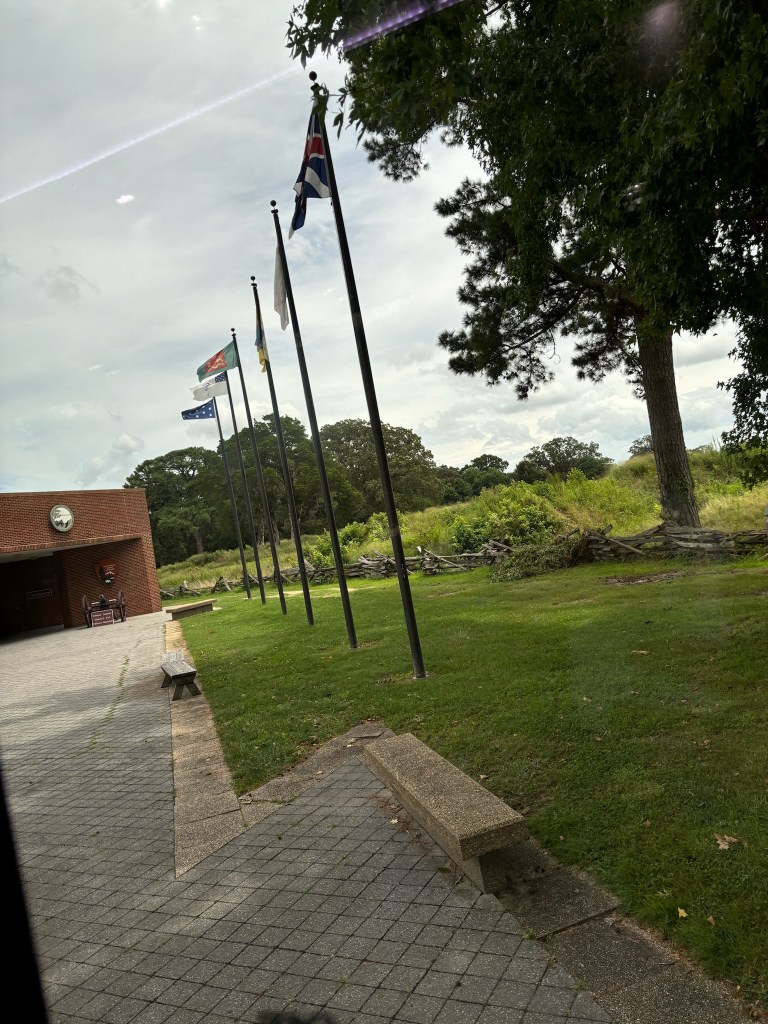
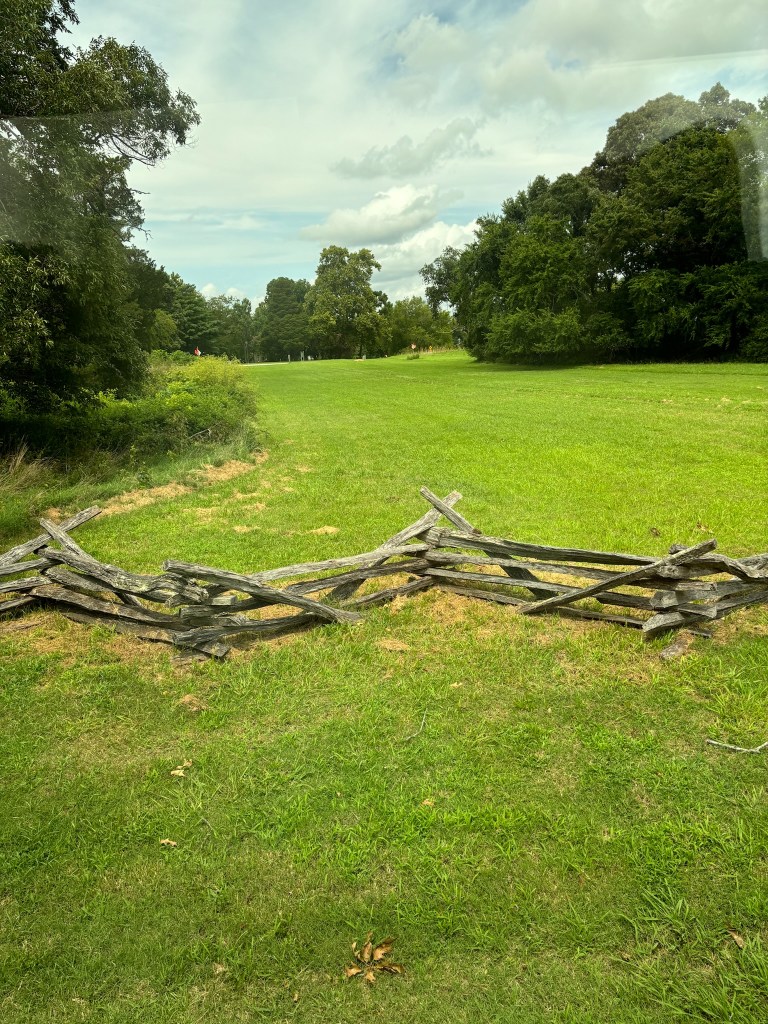
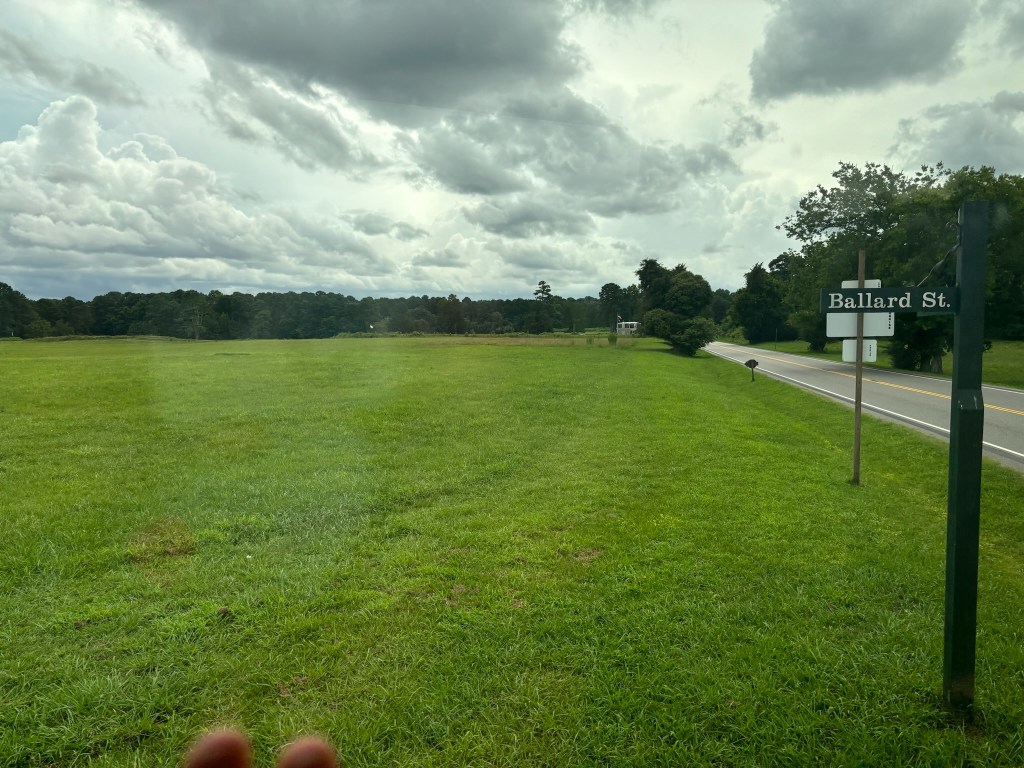
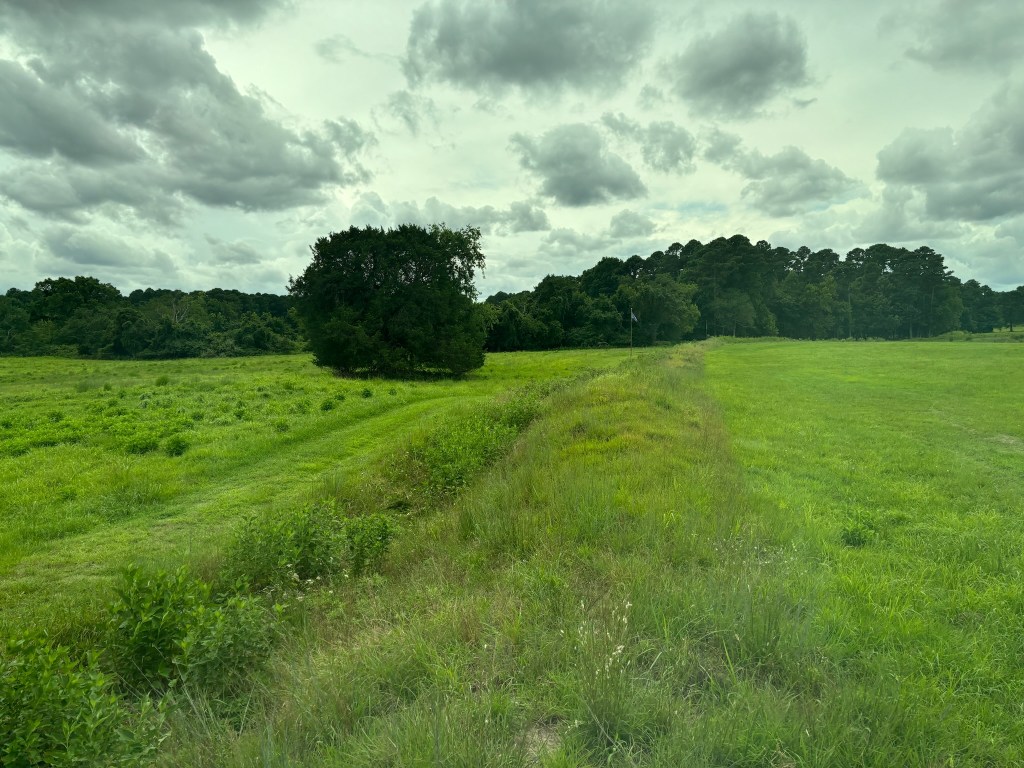
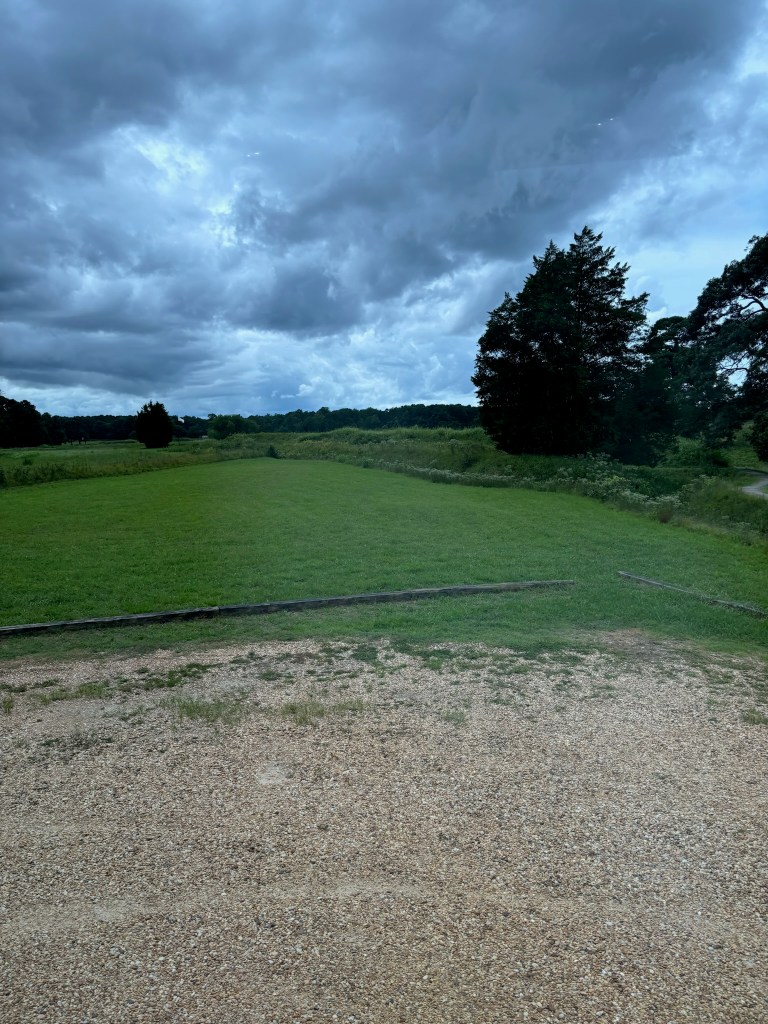
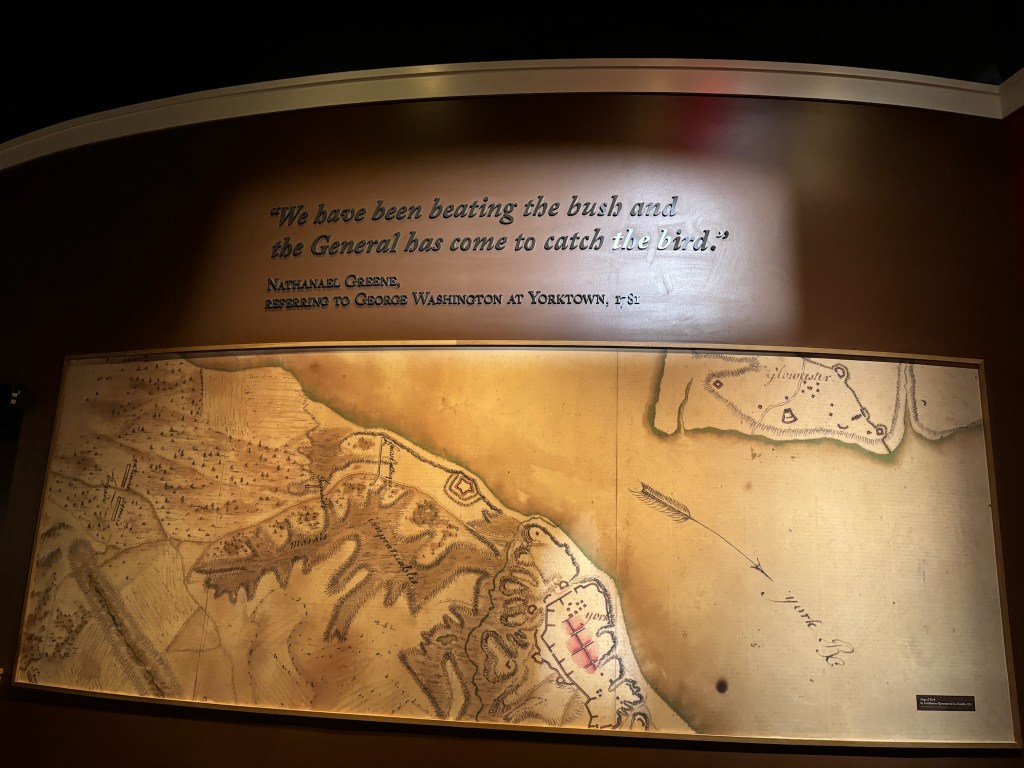
When we arrived at Yorktown, we received a bus tour of the battlefield. You could still see the remnants of the trenches that were built as the American and French forces were digging themselves closer and closer to the British stationed in town. The American and French alliance bombarded the town constantly and cut off food and provisions from getting into town. As we were moving throughout the battlefield, I used my Google Maps app to pinpoint exactly where we were in relation to town to get a sense of the exact locations of where the troops were moving on the battlefield.
Redoubts #9 and #10
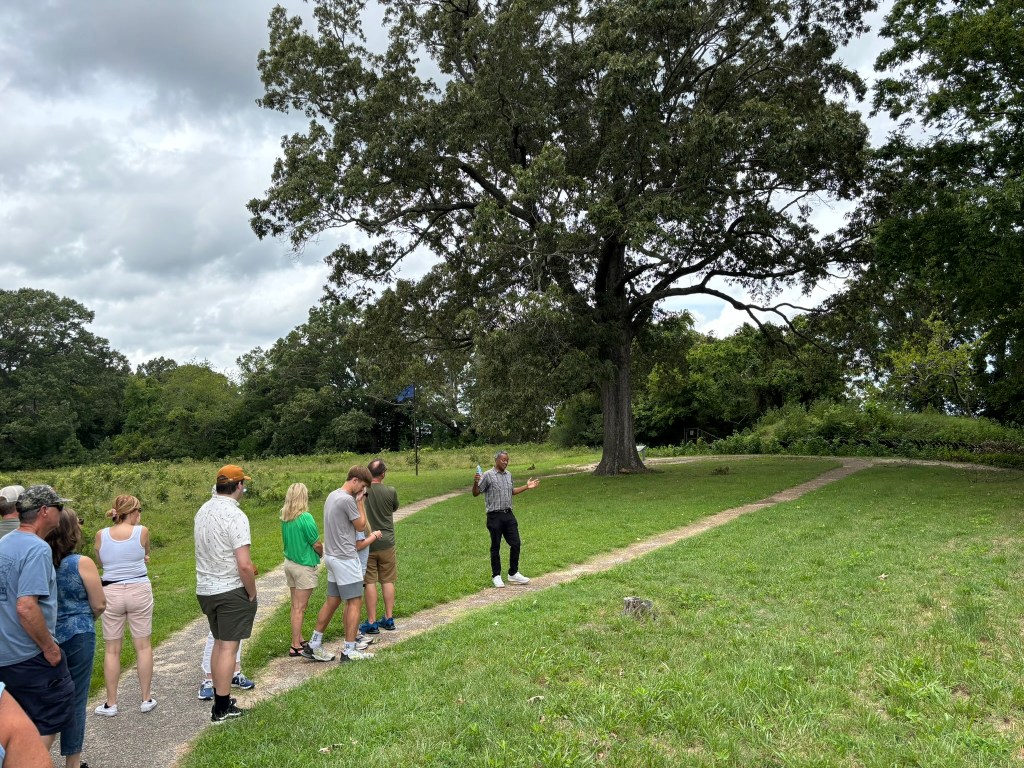
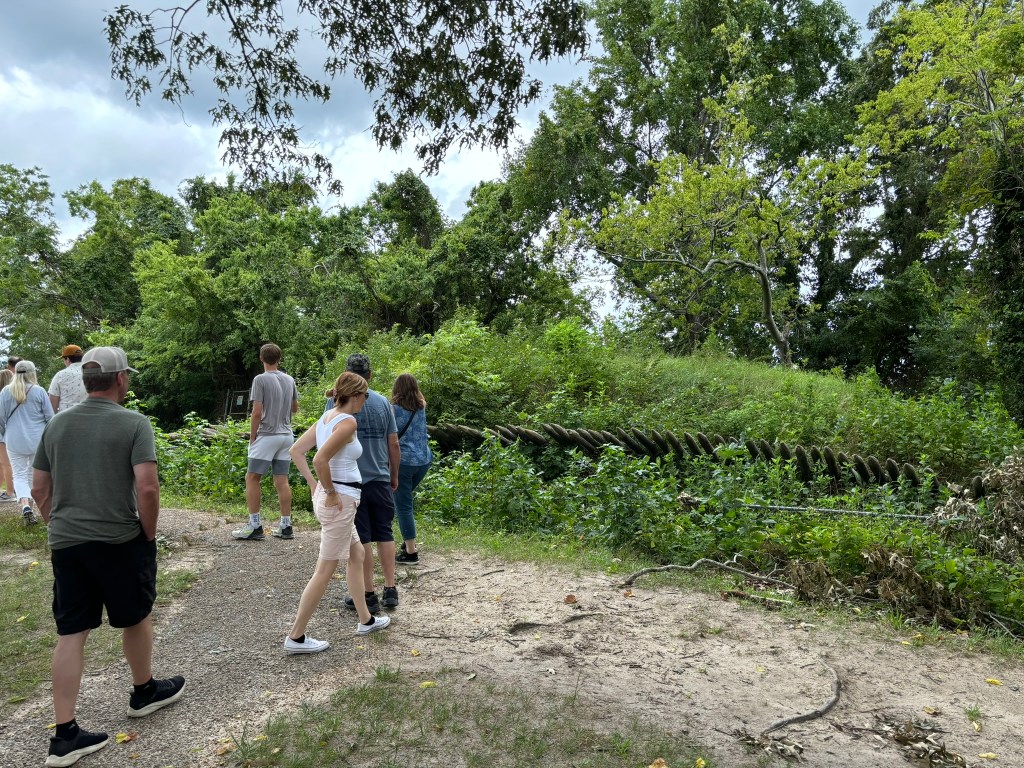
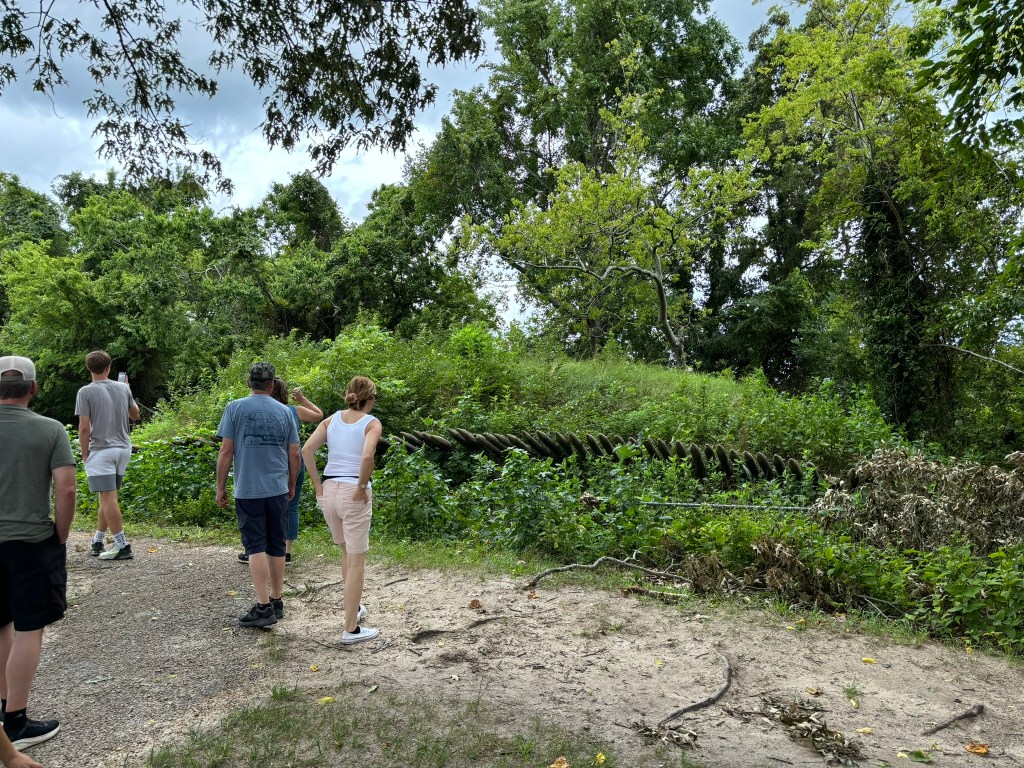
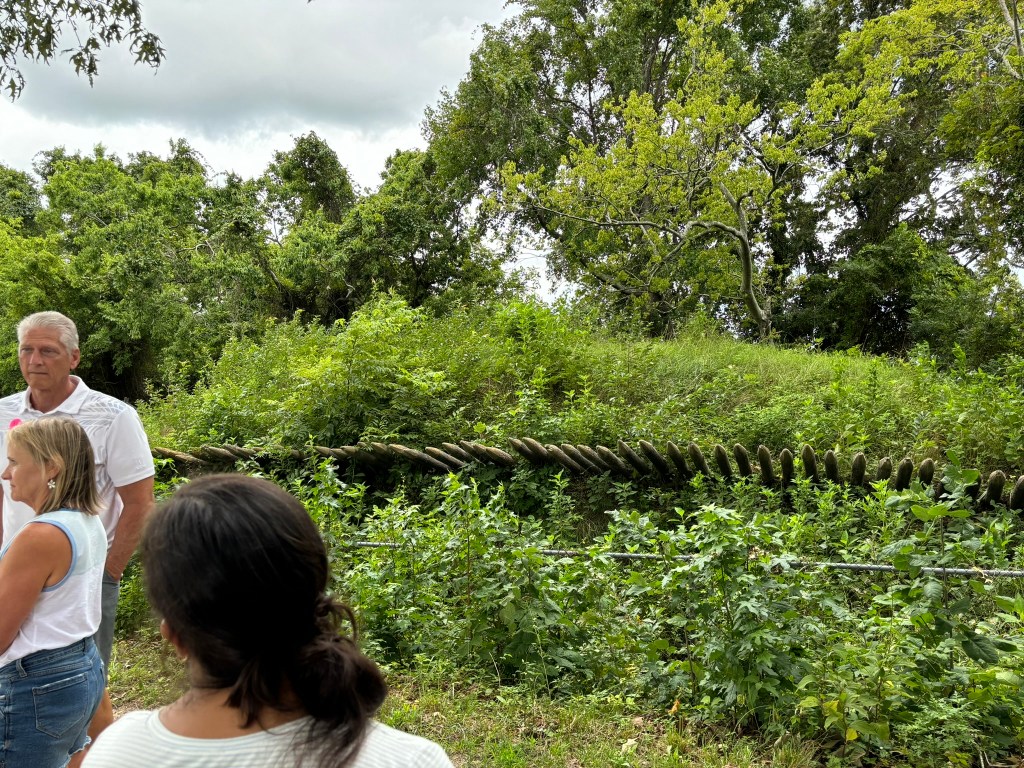
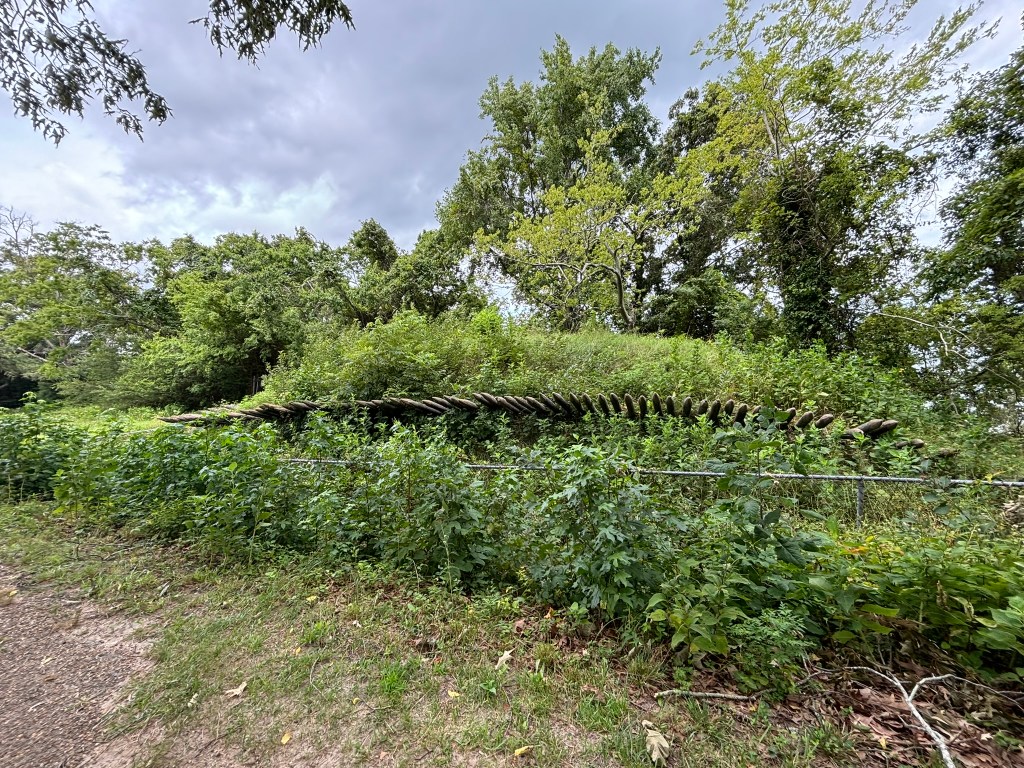
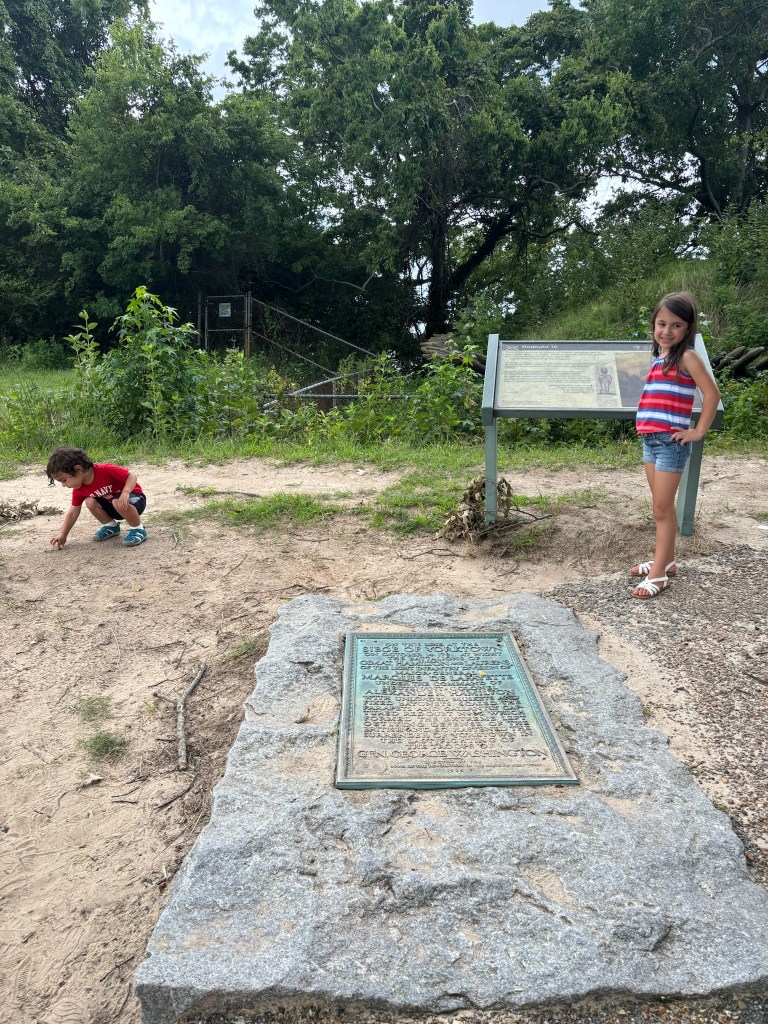
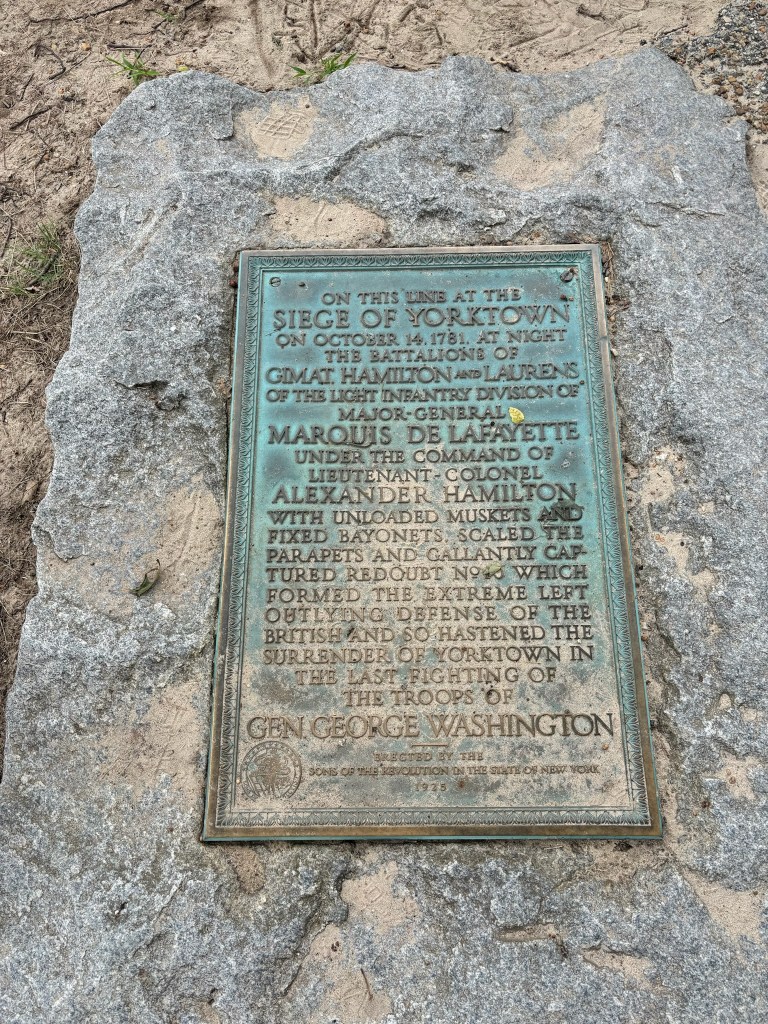
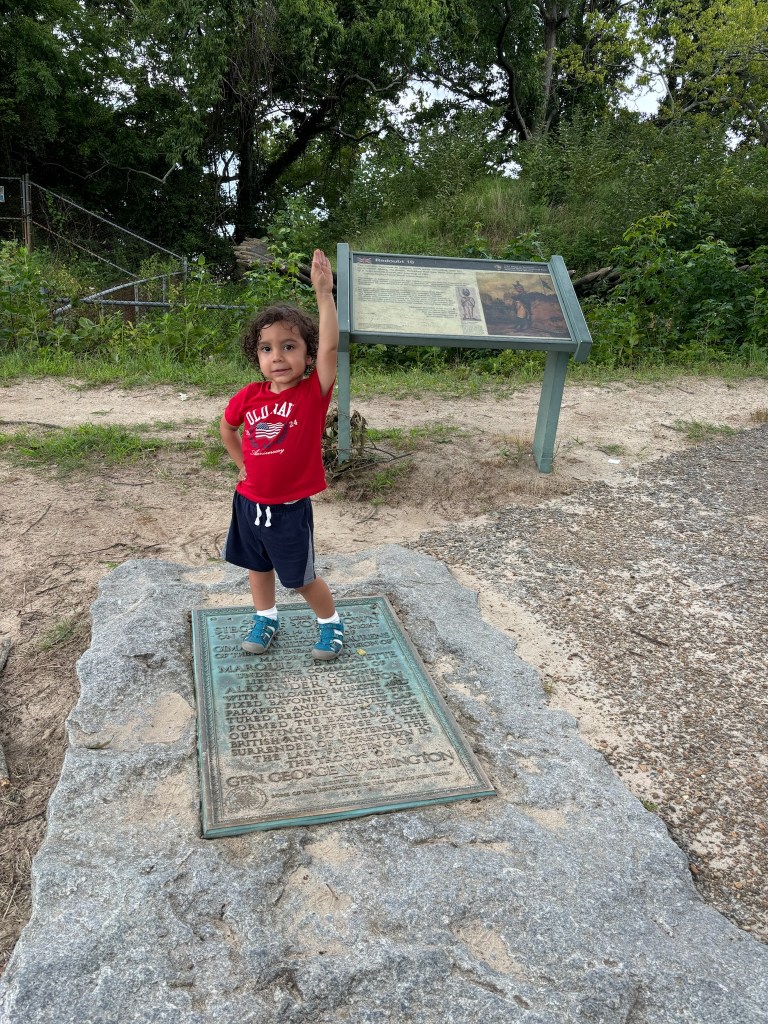
The bus made its way to Redouts # 9 and #10. These were two smaller fortifications just outside the British inner defenses, designed by the British to defend against French and American forces. When we arrived at the redoubts, we got out of the bus to observe Redoubt #10. Our tour guide explained the significance of the Redoubt. By October 14th, the American and French trench lines were within 150 yards of these two Redoubts. Washington devised a plan in which the French would attack Redoubt #9 and the Americans would attack Redoubt #10. Alexander Hamilton was chosen to lead the offensive in the night against Redoubt #10. The soldiers charged the redoubt with no ammo, just bayonets drawn. This was in order to keep the element of surprise. The American soldiers stormed the redoubt, climbed the abatis, and successfully took Redoubt #10 in brutal hand-to-hand combat in just 10 minutes. The French were also successful in taking Redout #9. Truly a climactic moment of the siege, the British surrendered just 5 days later.
The Moore House
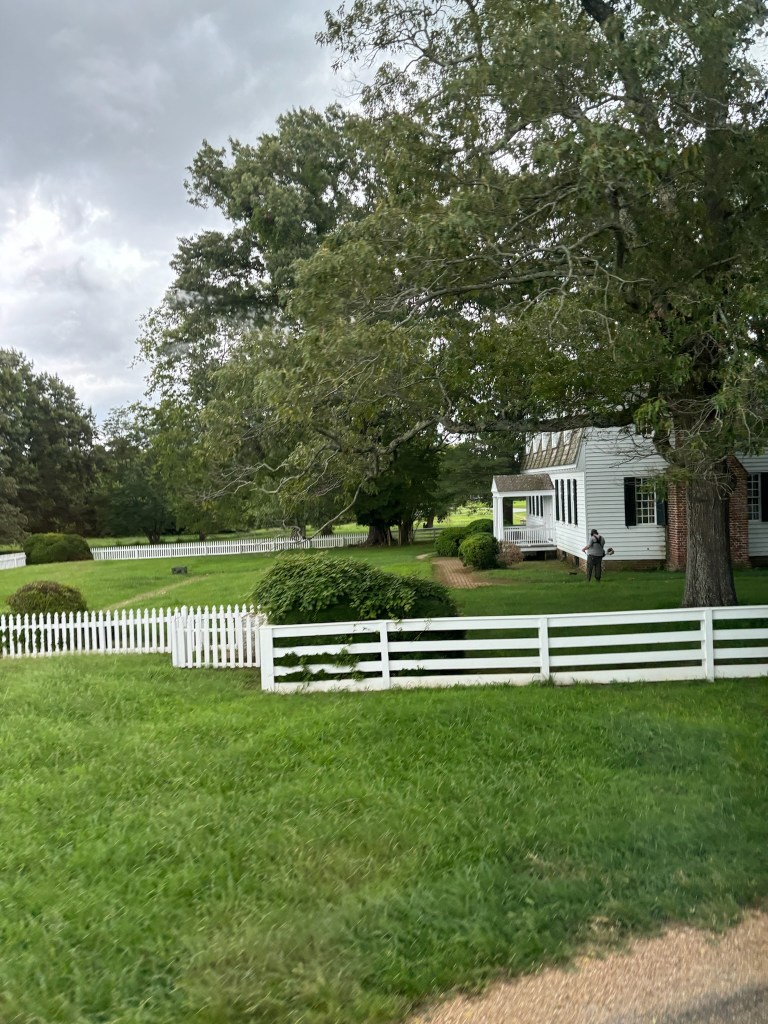
After viewing the redouts, the tour bus then took us to and parked in front of the Moore House, the location where negotiations for surrender took place. The tour guide did a nice job explaining the symbolic significance of the house. It essentially was here, where victory in the American Revolution was secured, confirming American independence.
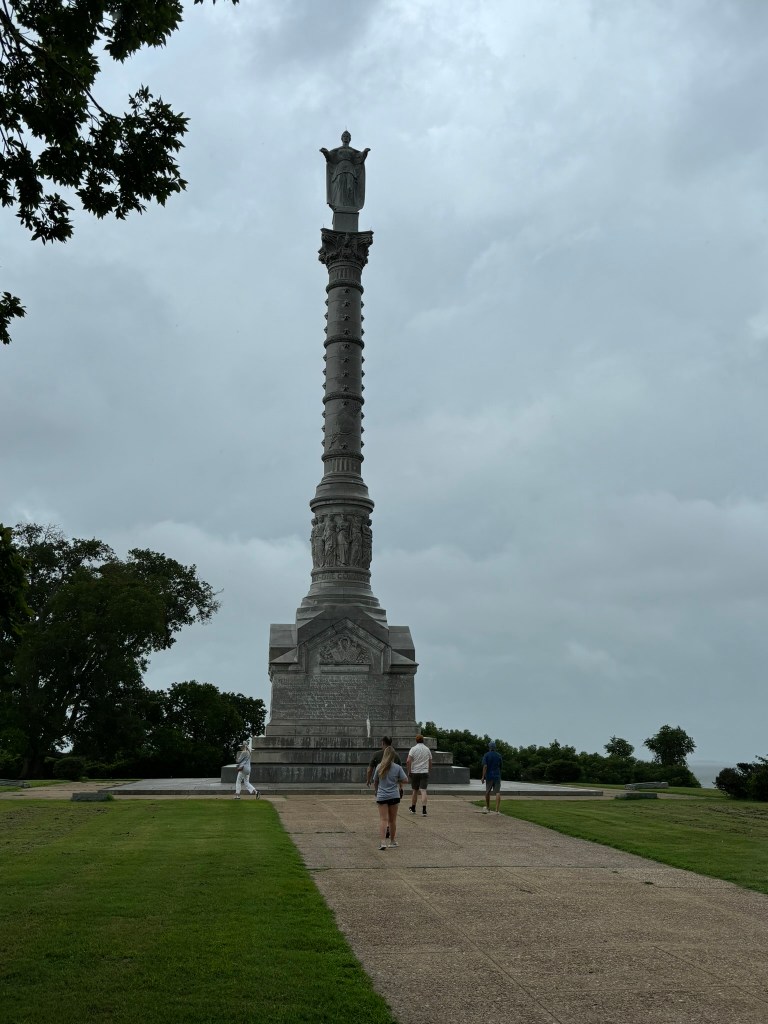
Yorktown Victory Monument
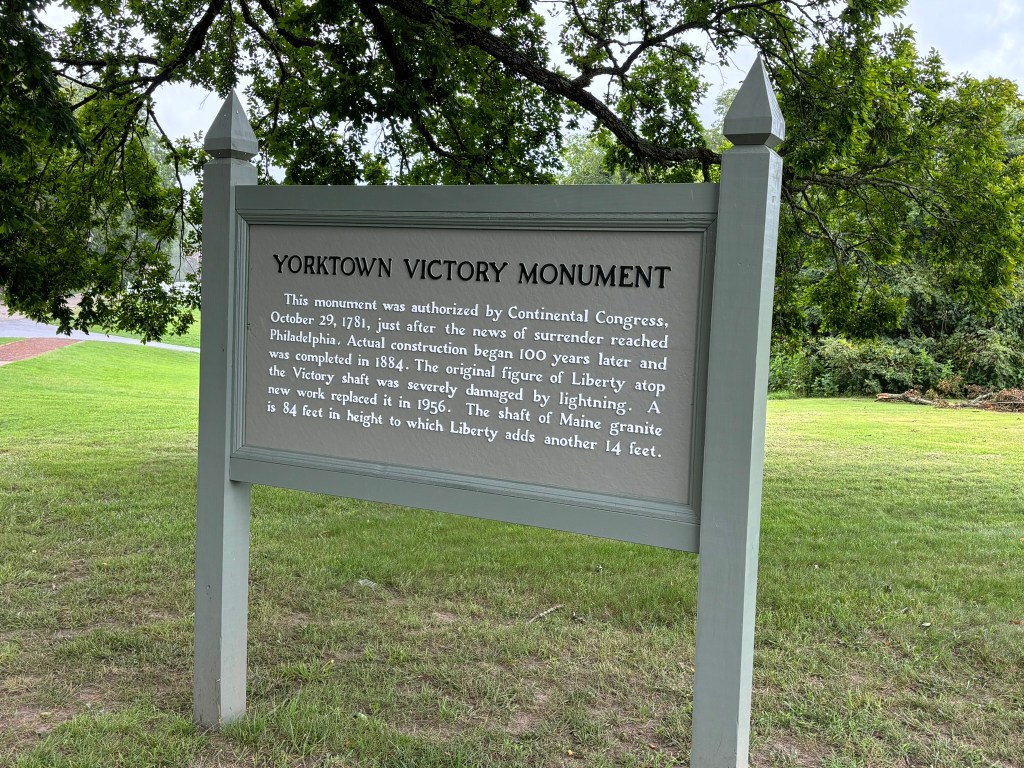
The tour bus began riding towards town and stopped at the Yorktown Victory Monument, built to commemorate this great victory.
American Revolution Museum at Yorktown
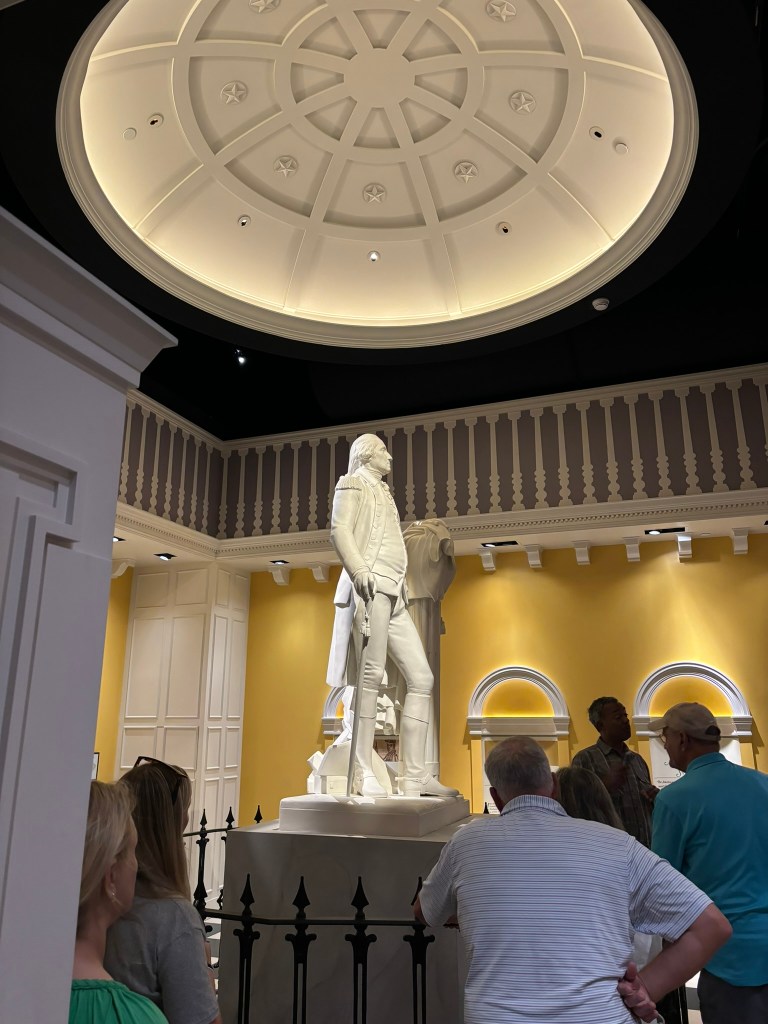
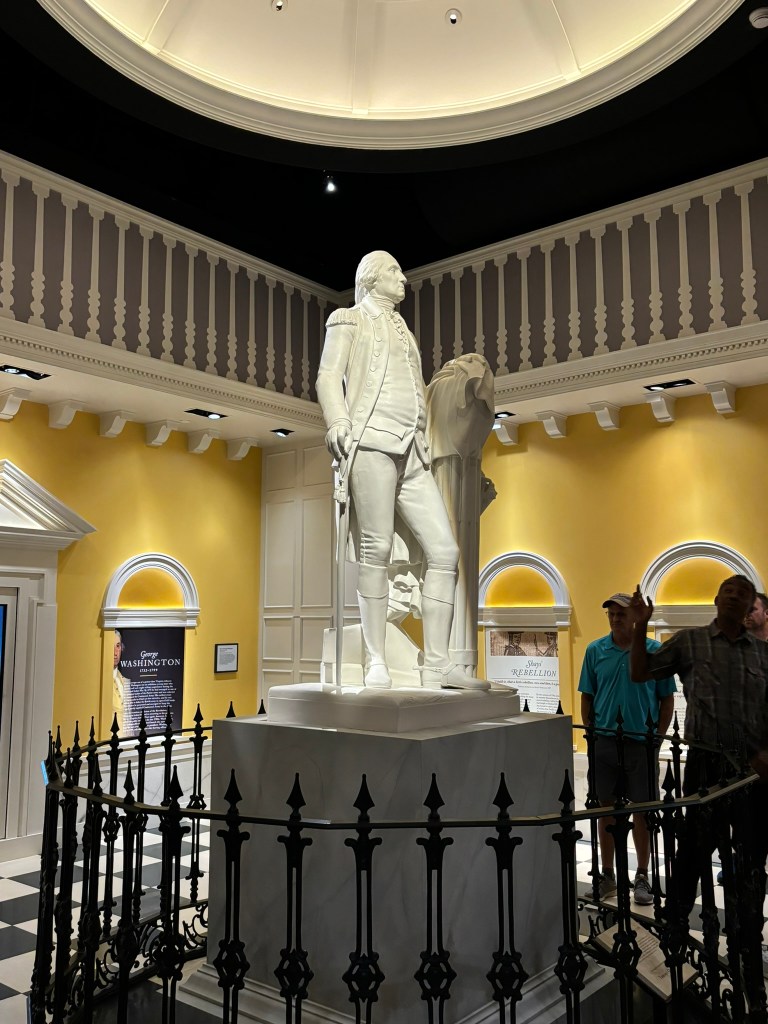
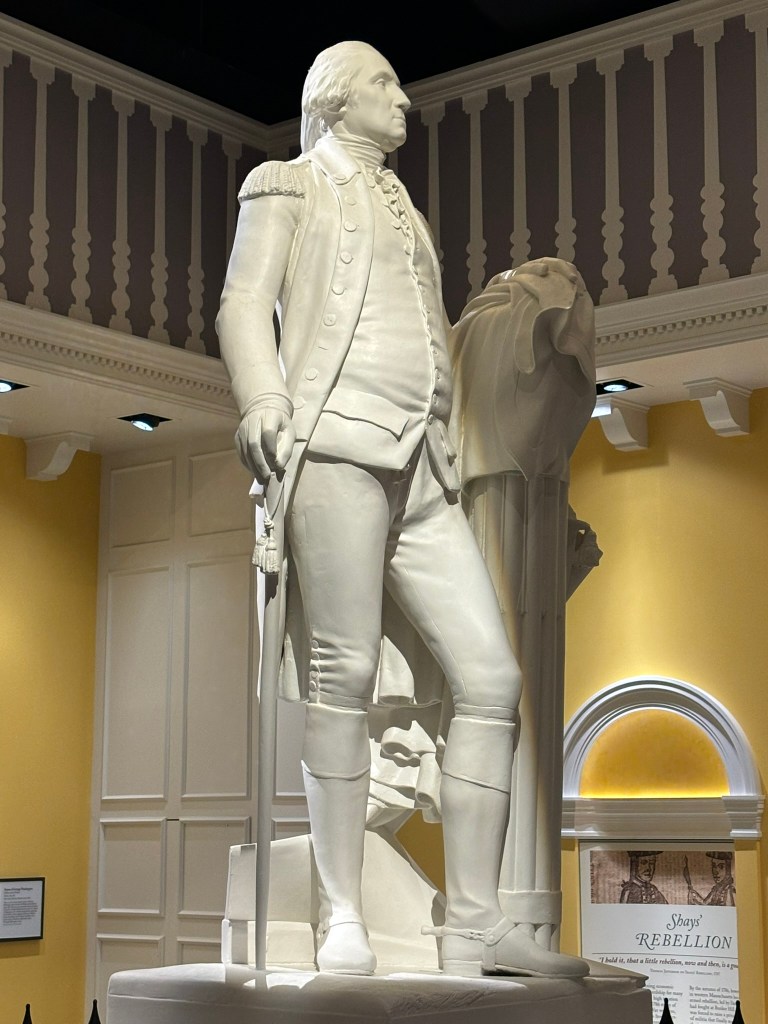
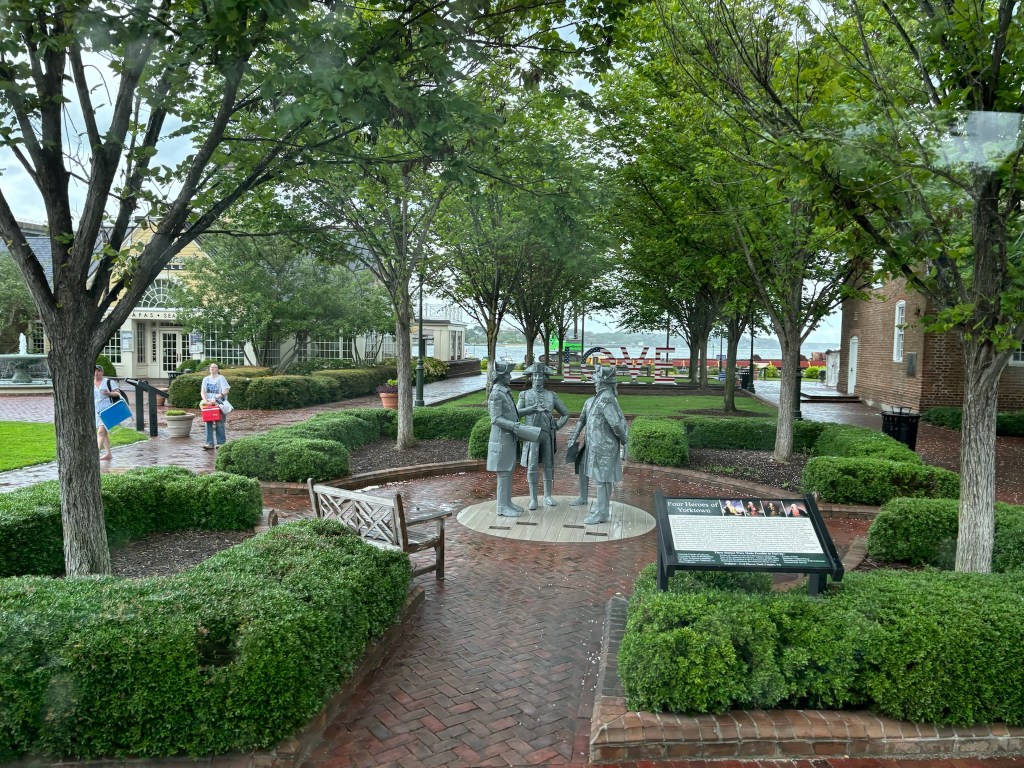
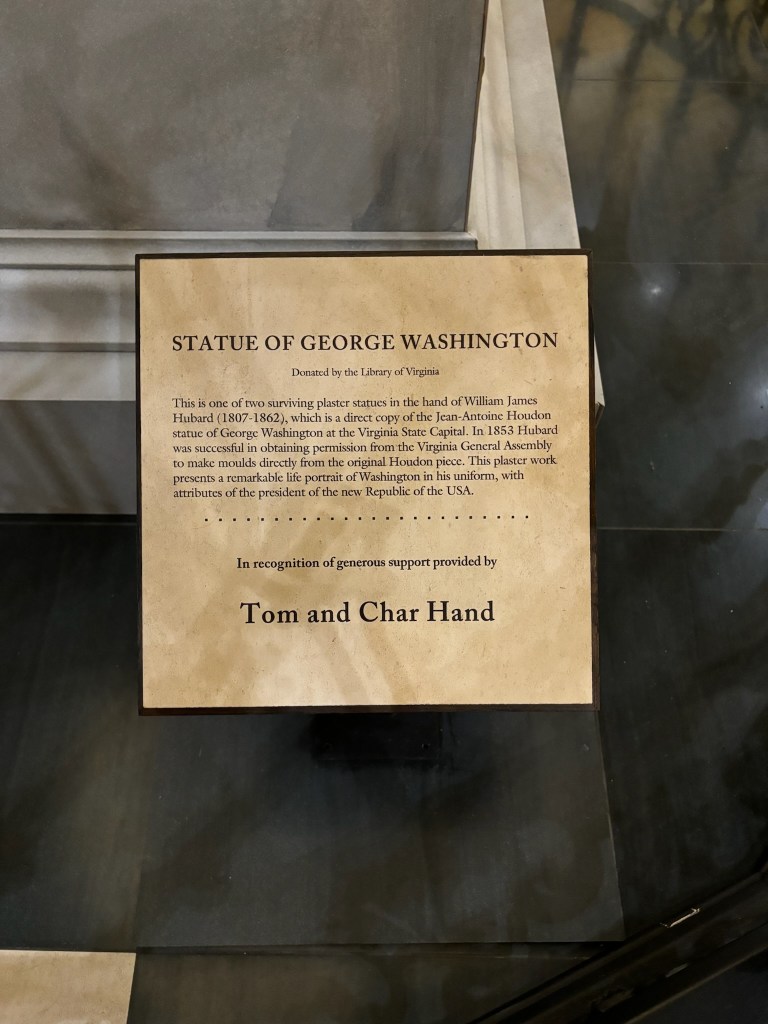
We made our way through town and then over to the American Revolution Museum at Yorktown, which is run by the Jamestown-Yorktown Foundation, as mentioned in my previous blog post about the Jamestown Settlement. Our tour guide first took us to a statue of George Washington, which formally was exhibited in the U.S. Capitol. We discussed different examples of symbolism within the statue.
We then went into a 4-D experiential theater and watched a 9 minute video called the “Siege of Yorktown.” The screen in the theater surrounds the viewer. The video not only depicts the battle, but explains its significance. The theater fills with smoke at certain scenes and you really feel the wind and the thunder of cannon fire. It was a tremendous 9 minute experience.
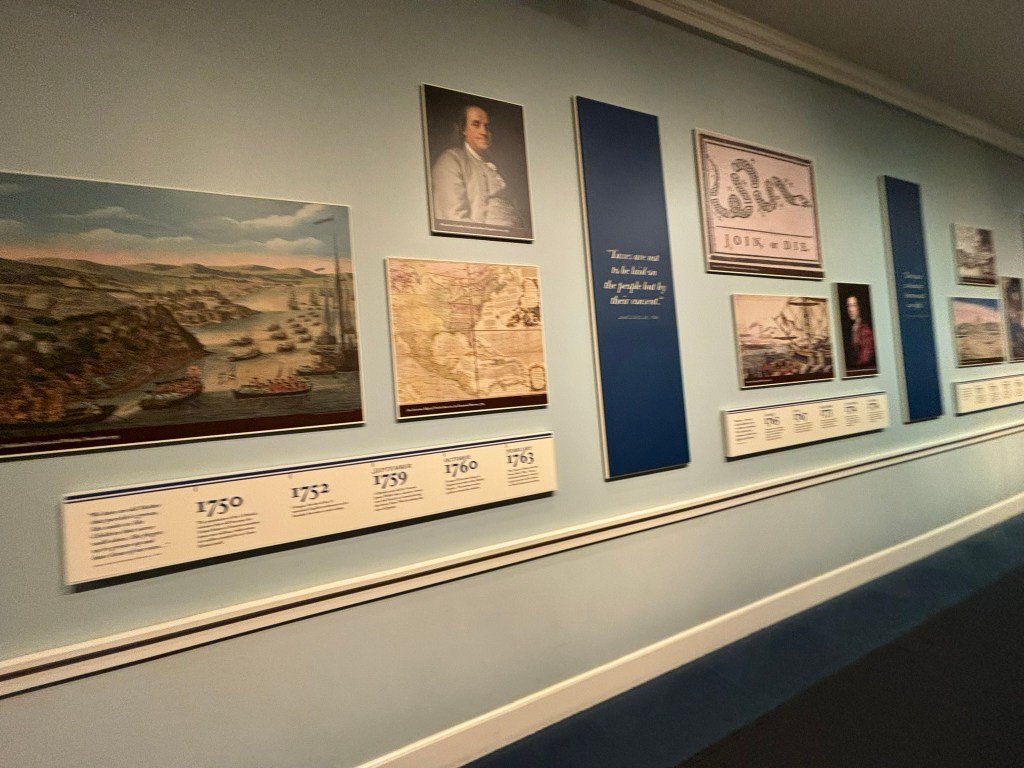
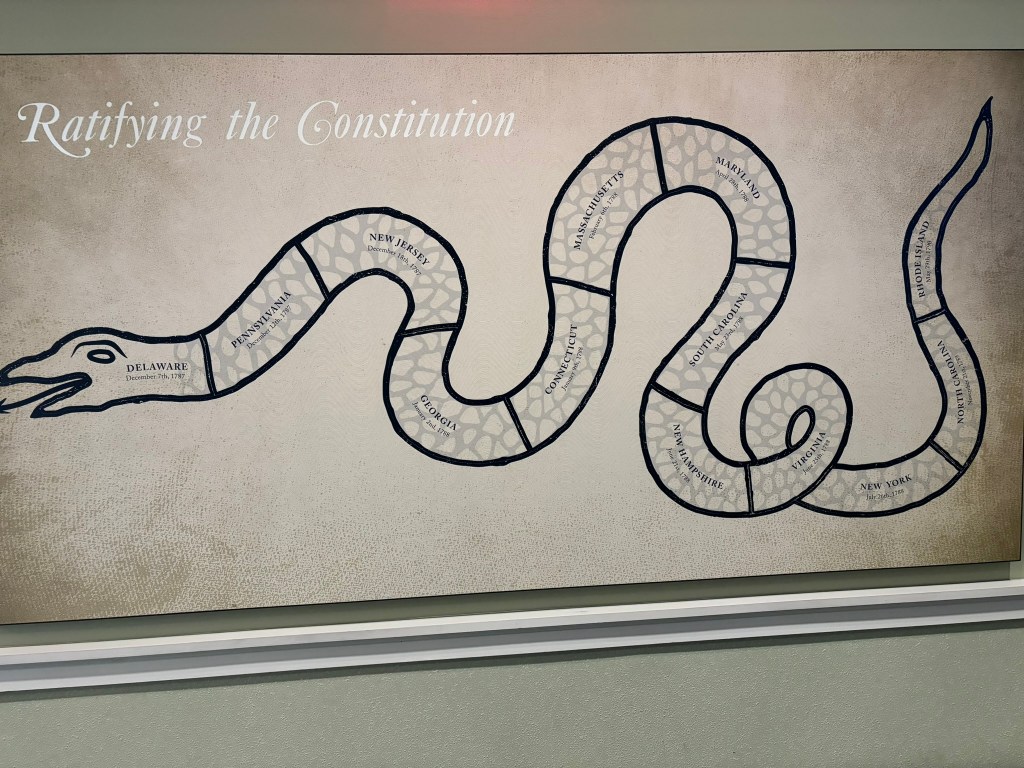
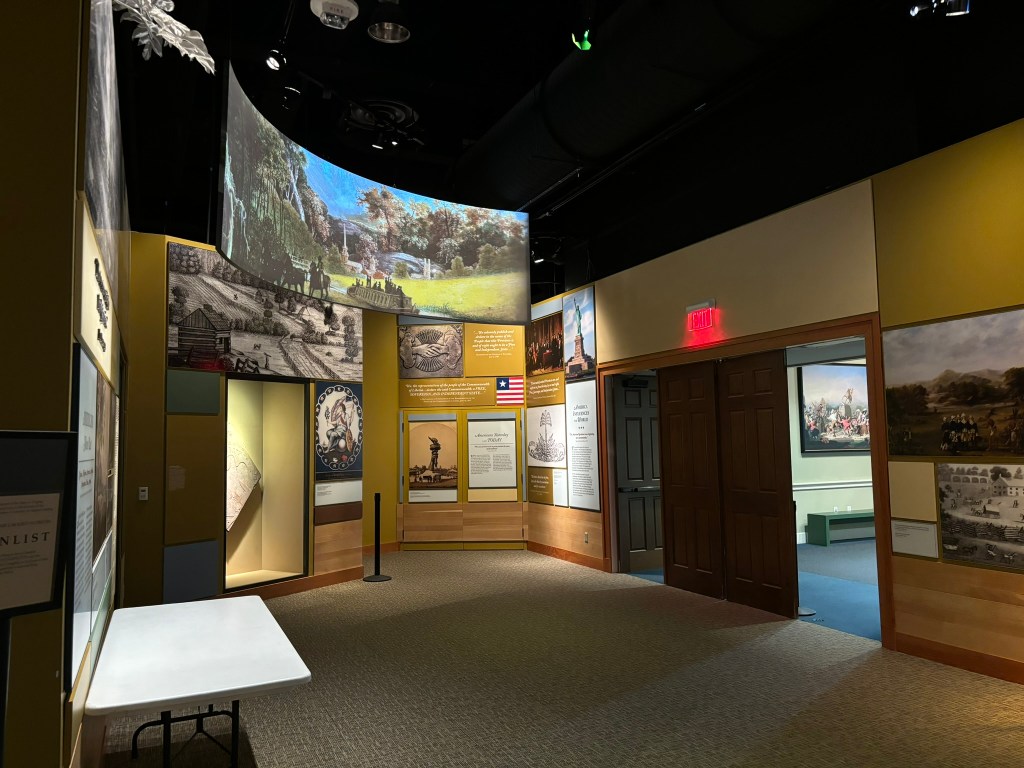
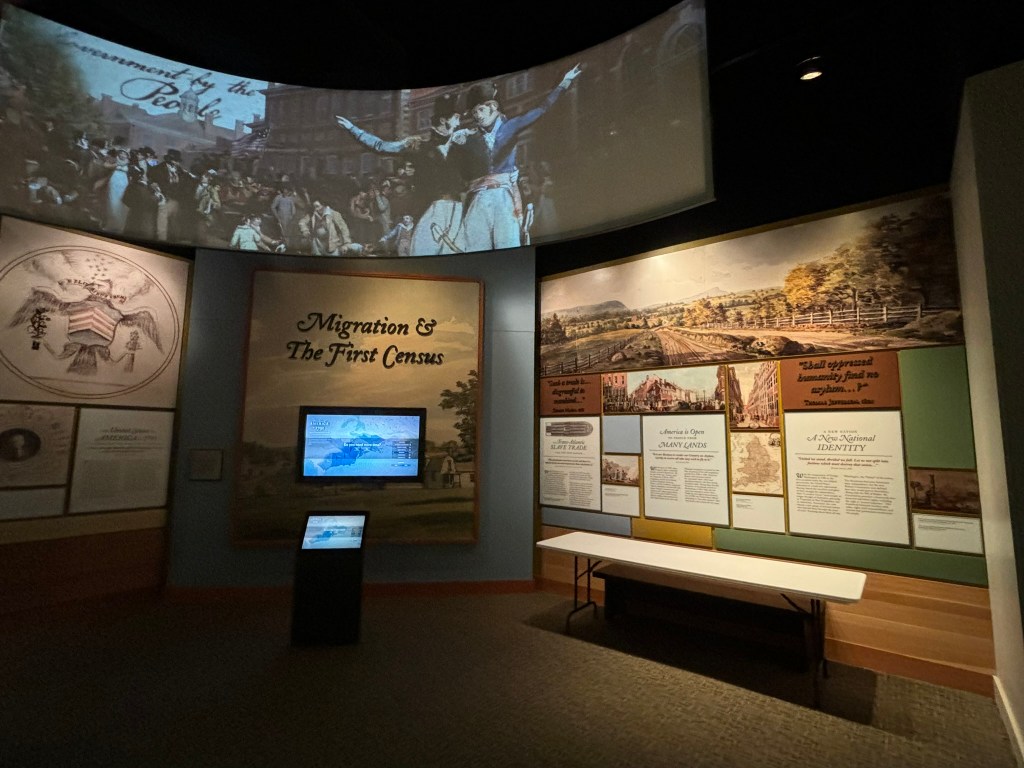
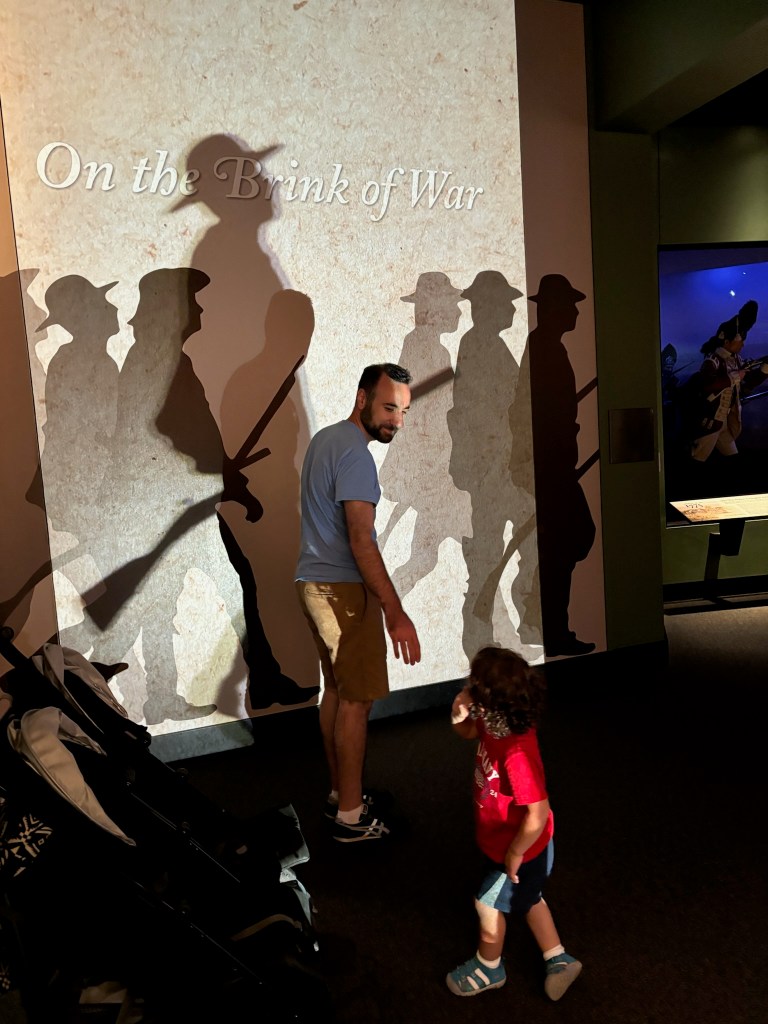
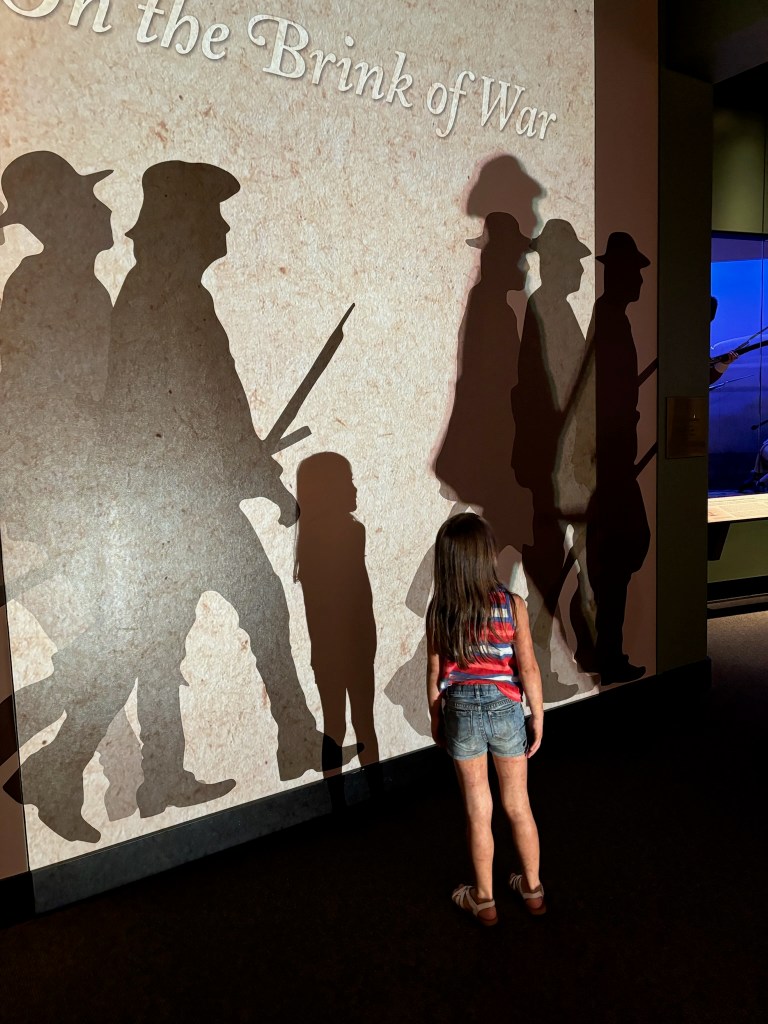
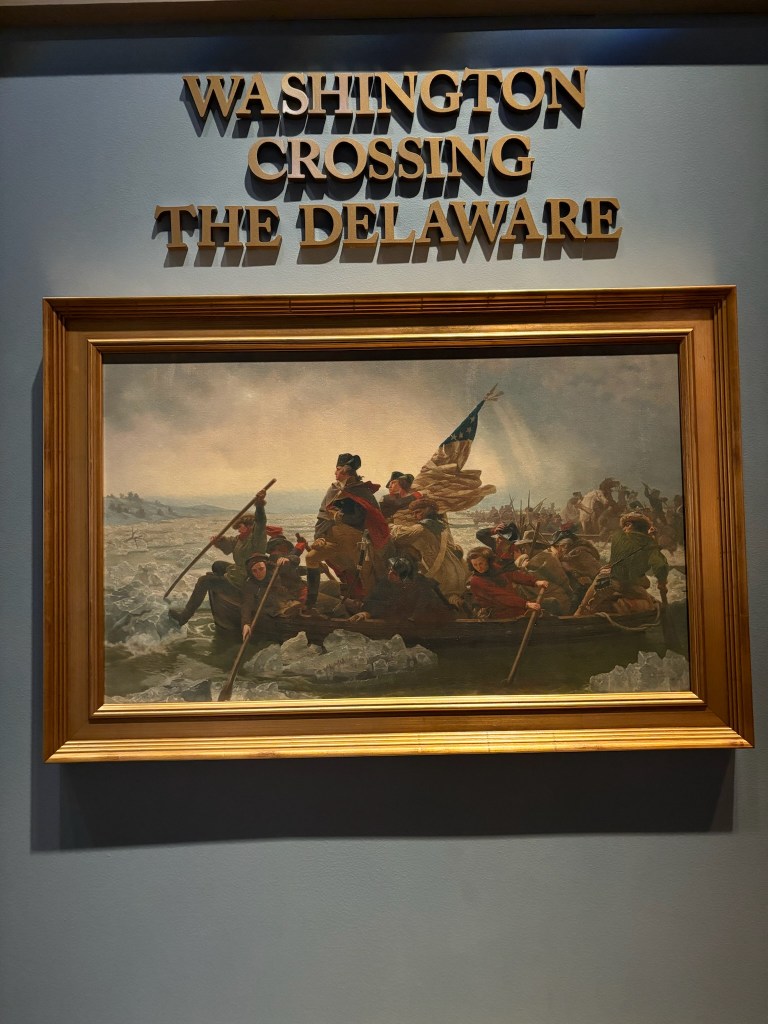
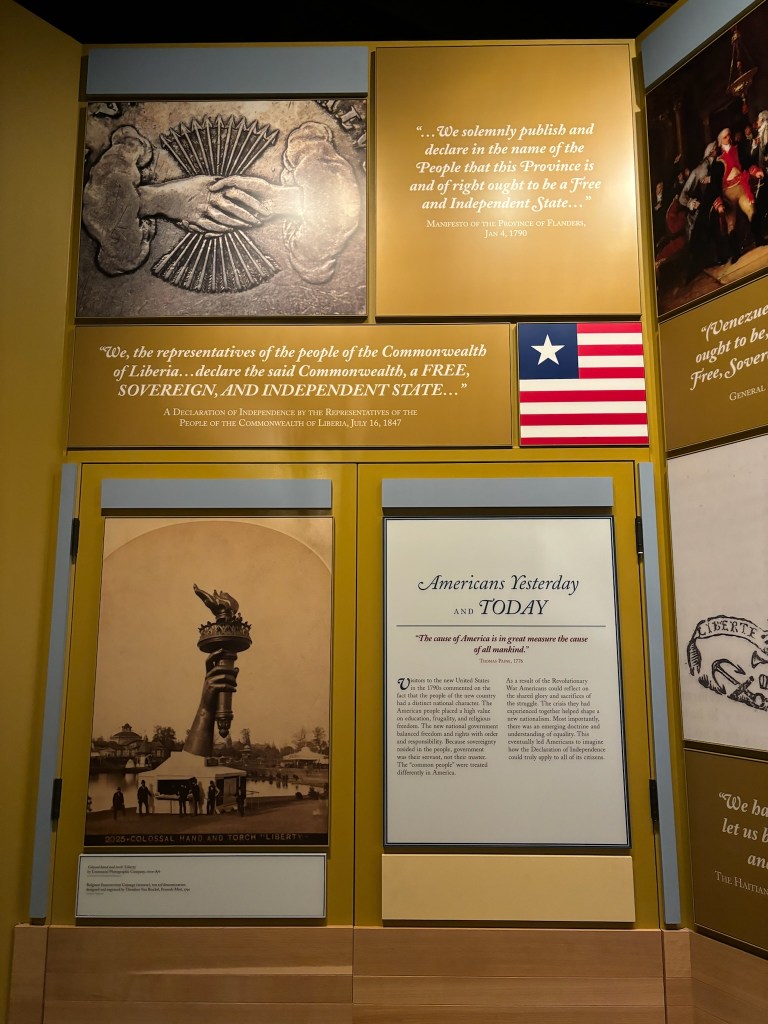
At this point in our tour, we had time to travel through the museum at our own pace. The museum takes you through the American Revolution chronologically, from the causes in the beginning of the museum, to the writing of the Constitution at the end. They had a great array of different types of displays including artifacts, primary sources, videos, and pictures that allowed the viewer to be immersed in the conflict.
Living History
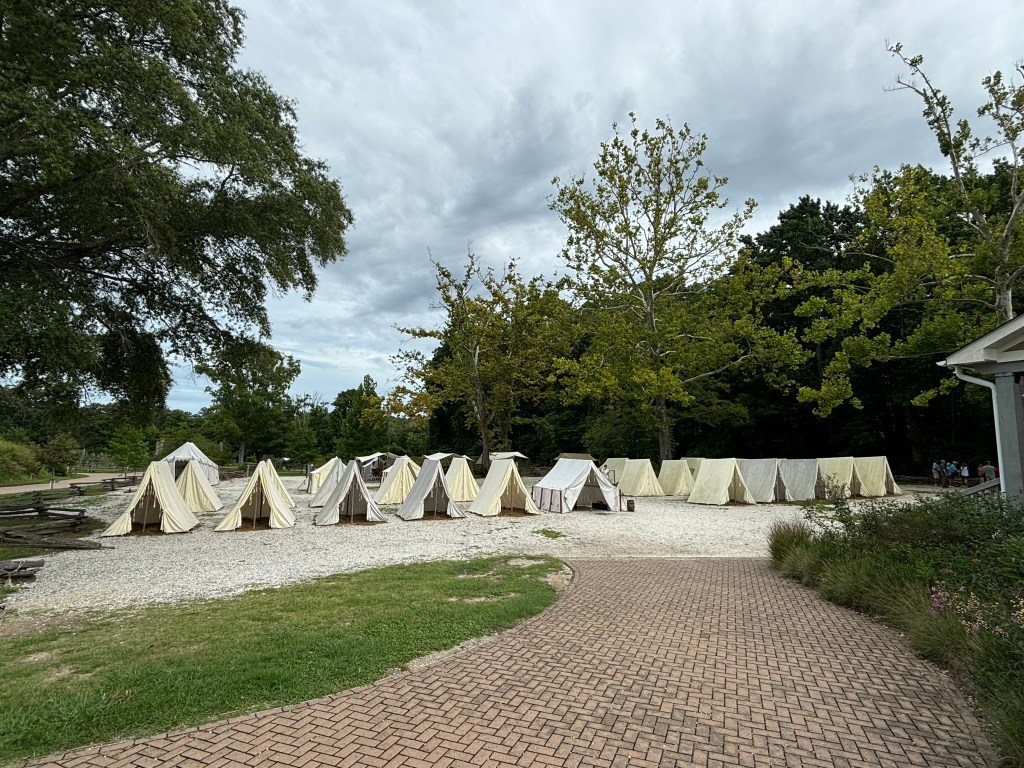
After we made our way through the museum, my family went outside to the living-history portion of the museum. Like we experienced in Colonial Williamsburg and Jamestown, the museum allowed us to go back in time and experience first-hand, what life was like in the late 18th century. First, there was a Continental Army encampment that we walked through.
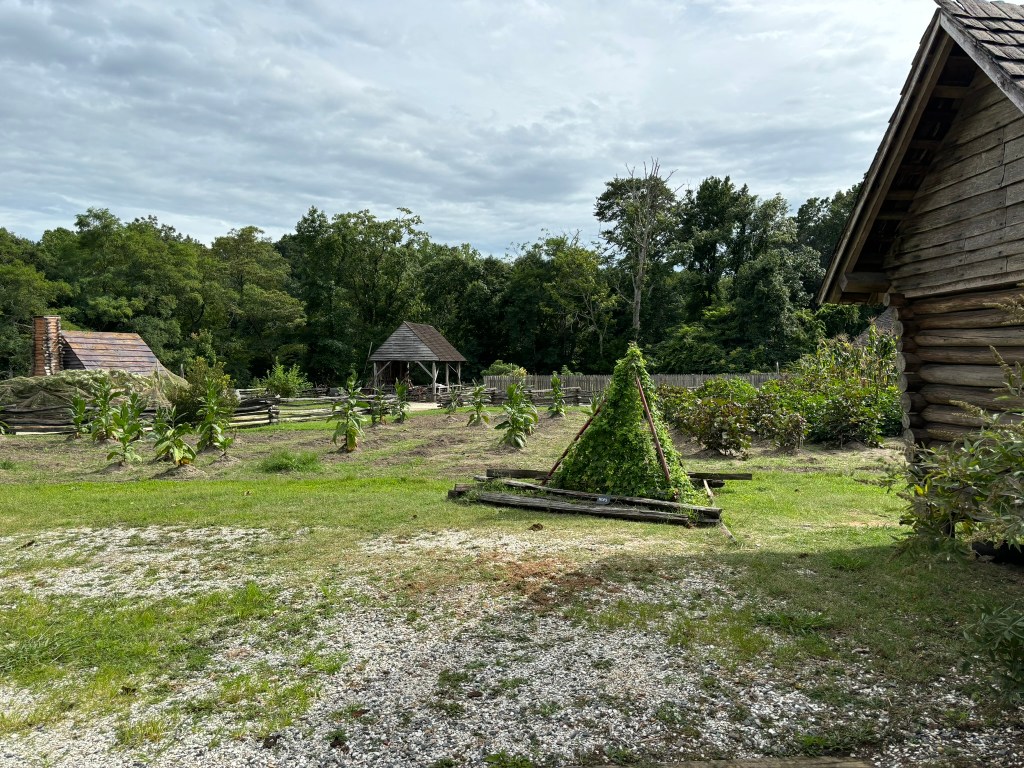
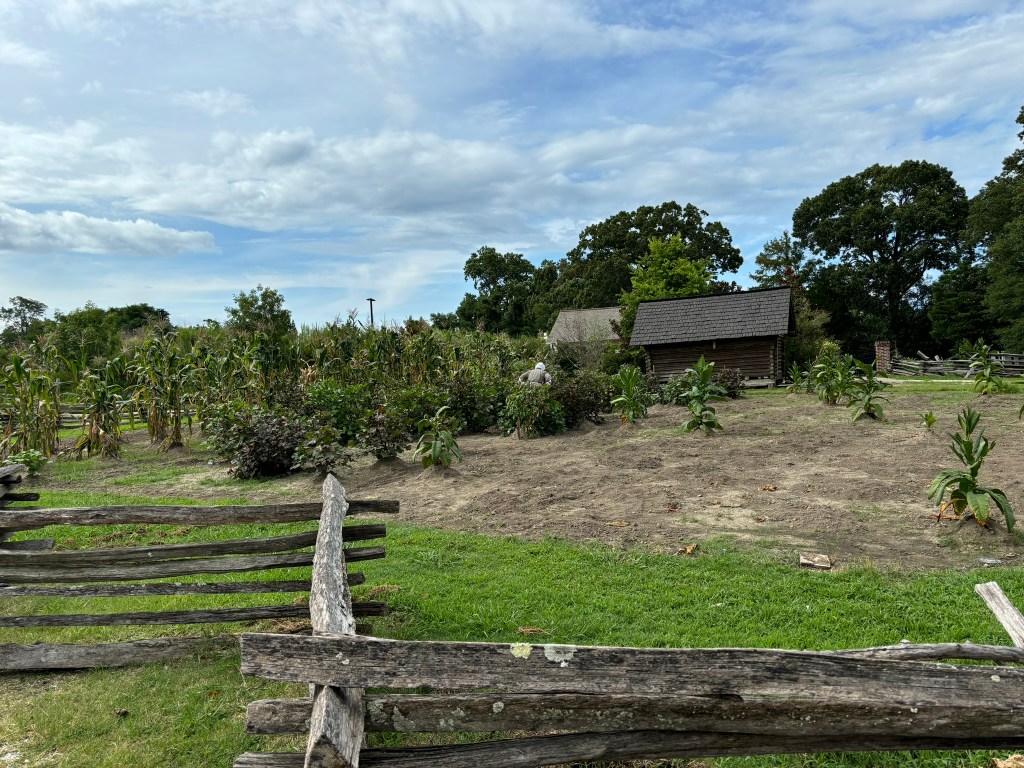
We then moved onto a living-history farm, as well as other structures. We went to a detached kitchen where my daughter separated peas from a pea pod, and we were taught how the colonials preserved food. We also moved onto a structure that would serve as a living quarters for a middle-class family. To supplement the family income, they weaved clothing from yarn using a loom. My family and I then made our way back to the museum to meet our group and catch the bus back to Williamsburg.
Overview
Having described the Washington-Rochambeau Revolutionary Route in previous posts, it was great to see the final destination of that route: Yorktown. I have also loved teaching about the Siege of Yorktown to my classes for so many years. It adds a brand new perspective when you go to the actual location where a great battle took place. I plan to bring my experiences into the classroom when I teach about Colonial America and the American Revolution again this fall. Yorktown was such a significant victory because the war had dragged on for six years up until that point. The Continental Army couldn’t afford to have it drag on much longer. The Declaration of Independence would mean nothing without an American victory in the war, and Yorktown was the victory that secured independence. Seeing the battlefield first-hand was a great experience, and I would highly recommend the museum as well.
As mentioned in my previous post about Jamestown, I would also highly recommend this tour by Viator. You are able to see Jamestown and Yorktown in the span of one day. You could buy tickets to the tour HERE.
Follow my Instagram, Facebook, and X accounts for videos of our time on our trip.
I’d also like to add here that our trip did not stop after Jamestown and Yorktown. On the third full day of our trip, we went to Busch Gardens, which was a really great day for the family. We got a little bit of rain in the middle of the day but it cleared up after that. I think because it was a dreary Wednesday, there were essentially no lines and the kids went right on every ride that they wanted. We also went to a couple of shows and ate both lunch and dinner there. We bought tickets that had food included which I would definitely recommend. My 2 year old loved the Sesame Street Portion, but every section of the park had so many great rides for both kids. It’s a park for all ages because besides the kiddy rides, there were also massive roller coasters that my teenage-self would have loved.
On the fourth day of our trip, we went to Virginia Beach, which was also my wife’s birthday. The ride from Williamsburg was about an hour. The weather was not great, threats of rain throughout the day, but not a washout. We walked down on the beach and the kids played on a playground on the sand. For my wife’s birthday, we ate at a great restaurant called Waterman’s Surfside Grille that I would highly recommend if you’re in the area. Our hotel was right on the beach so it was nice to see the sun rise the next morning. The next day, we ate breakfast and then made the 7 hour drive back to New Jersey. We drove over the Chesapeake Bay Bridge-Tunnel for the first time! Overall, it was a great family vacation! I’d recommend this type of trip to people of all ages! Usually our trips include historical portions and fun for the kids. Williamsburg has something to offer for everyone!
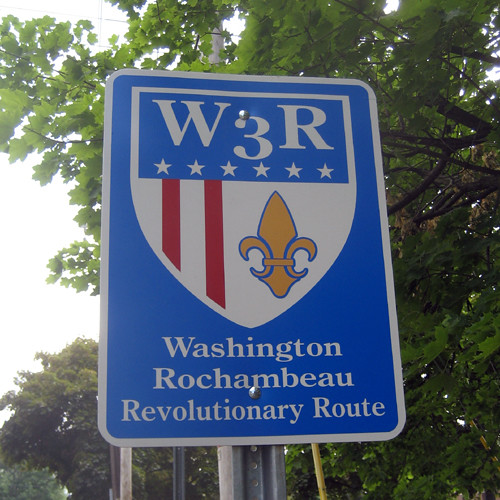
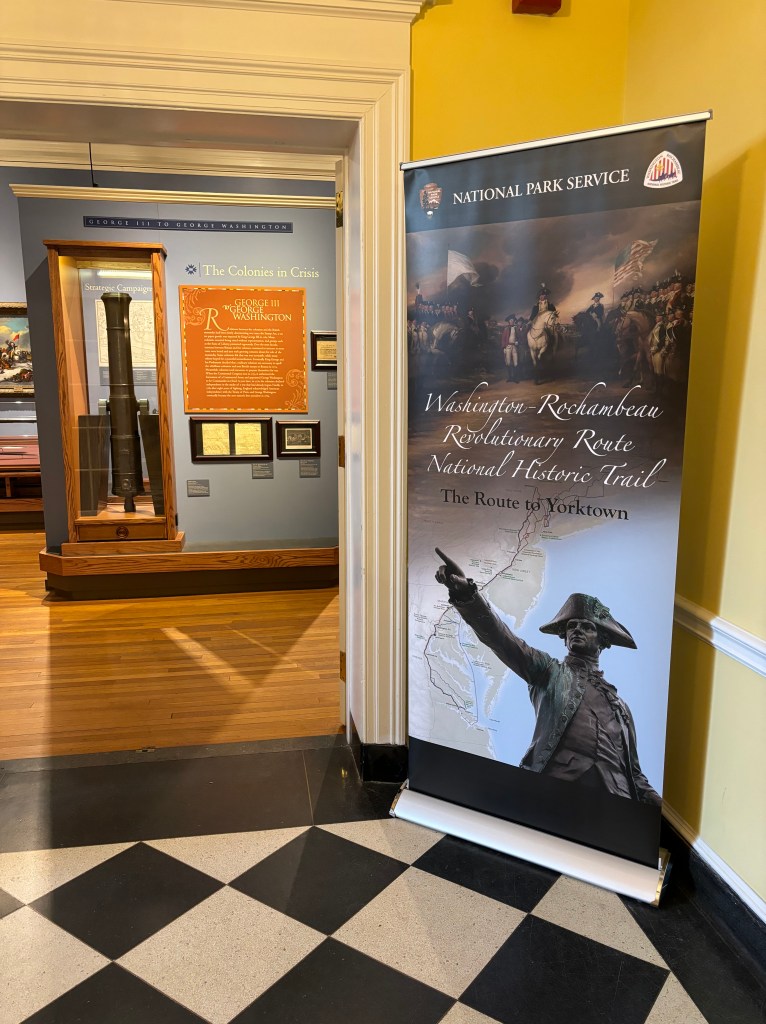
For this blog post, I am highlighting the Washington-Rochambeau Revolutionary Route. Many of the events/ trips that I have posted on this blog from New Jersey have been sites along the trail. It is fitting to post about the trail now because next week my family and I are heading on a trip to Williamsburg, Virginia, which is a site along the trail. We will be visiting the trail’s final destination: Yorktown, Virginia. I am a member of the Washington-Rochambeau Revolutionary Route in New Jersey Association which highlights the routes taken by the American and French forces within New Jersey. Of course, New Jersey was just one of several states that the American and French forces marched through. Other states include Massachusetts, Rhode Island, Connecticut, New York, Pennsylvania, Delaware, Washington DC, Maryland, and Virginia.
The entire trail is highlighted and commemorated by The National Washington-Rochambeau Revolutionary Route Association Inc. (W3R-US). On their website, W3R-US’s explains that their mission “is educating the public both about the Washington Rochambeau National Historic Trail, and the Trail’s context within the American Revolution as well as to collaborate with diverse trail communities and partners in stimulating economic development and a fuller, more inclusive realization of America’s founding ideals. W3R-US’s vision is that through a connected and conserved trail, W3R-US strengthens trail communities and expands the relevance of our shared American story today and for future generations.”
Overview Of The Trail
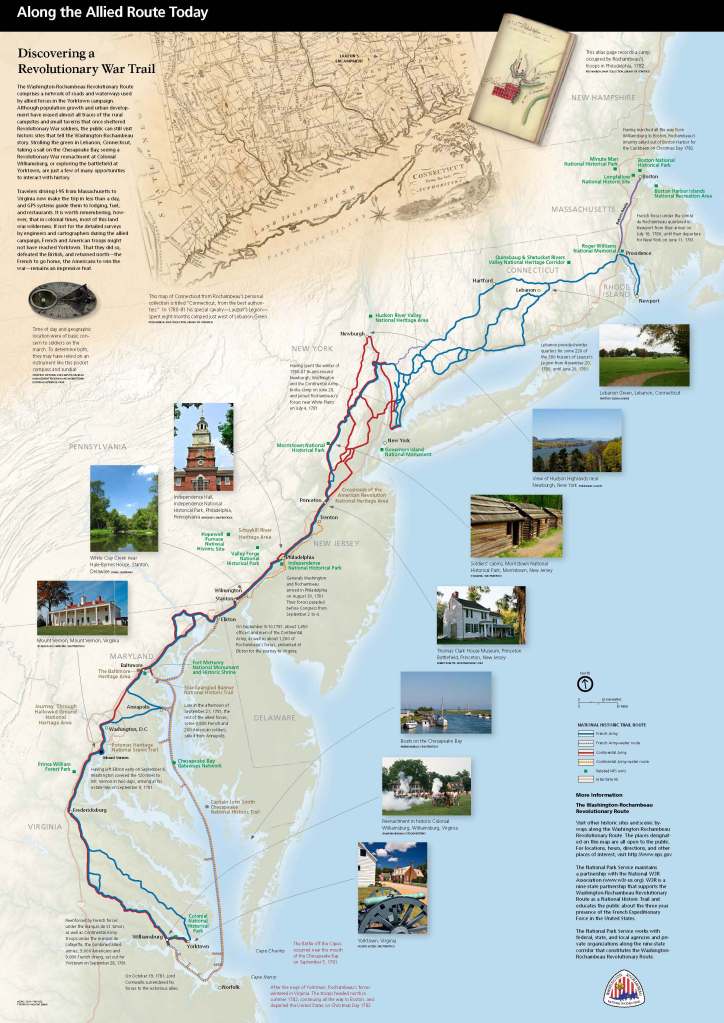
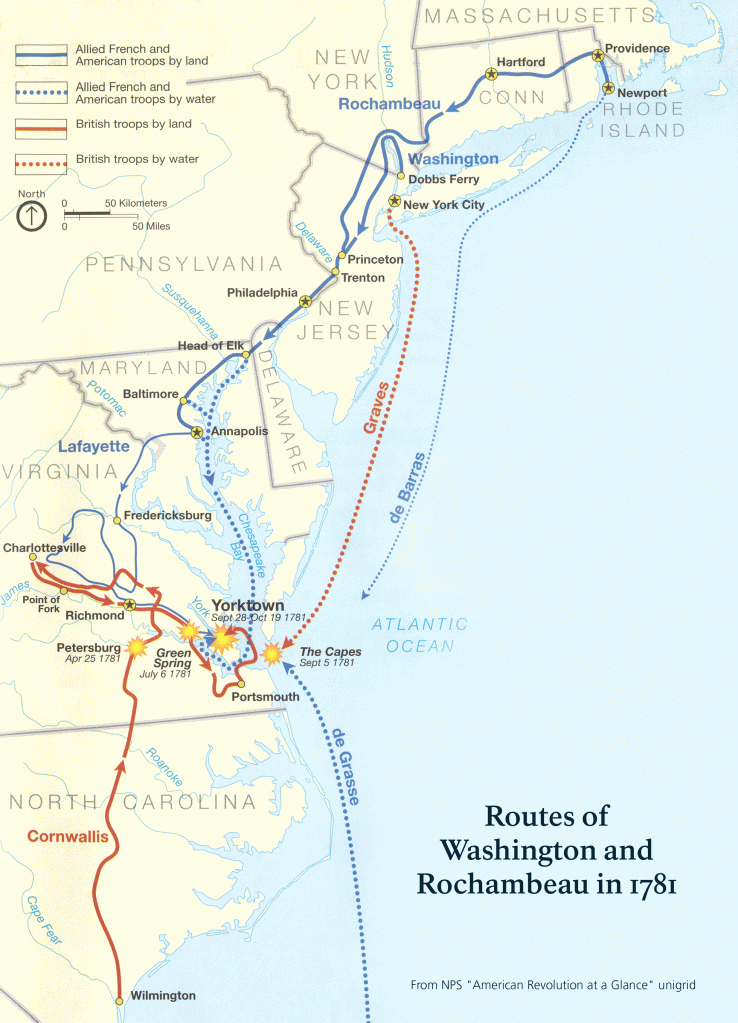
The Washington-Rochambeau Revolutionary Route highlights the 680-mile route that the Continental Army, led by George Washington, and the French forces, commanded by Jean-Baptiste de Rochambeau, took from Newport, Rhode Island, to Yorktown, Virginia. This 14-week journey culminated in the defeat of the British Army in The Siege of Yorktown in October 1781, which was the beginning of the end of the war, and the victory that the United States needed to secure their independence. The Washington-Rochambeau Trail is a unit of the National Park Service.
The march began in June 1781, when French forces departed from Rhode Island and met up with American forces at the Hudson River. The French and American forces marched south in August, through New Jersey, Pennsylvania, Delaware and Maryland. They arrived in Williamsburg, Virginia, in late September, just a few weeks after the French navy defeated the British in the Battle of the Chesapeake, effectively cutting off an escape route for the British encamped at Yorktown.
On September 22nd, 1781, the American and French armies joined forces with the Marquis de Lafayette in Virginia. After a three-week siege at Yorktown, British General, Lord Cornwallis surrendered his British army on October 19, 1781. This was the climactic victory of the war which led to peace talks between the United States and Great Britain. The Washington-Rochambeau Revolutionary Trail features interpretive signs and exhibits that highlight the joint effort of both the American and French forces to secure independence.
New Jersey
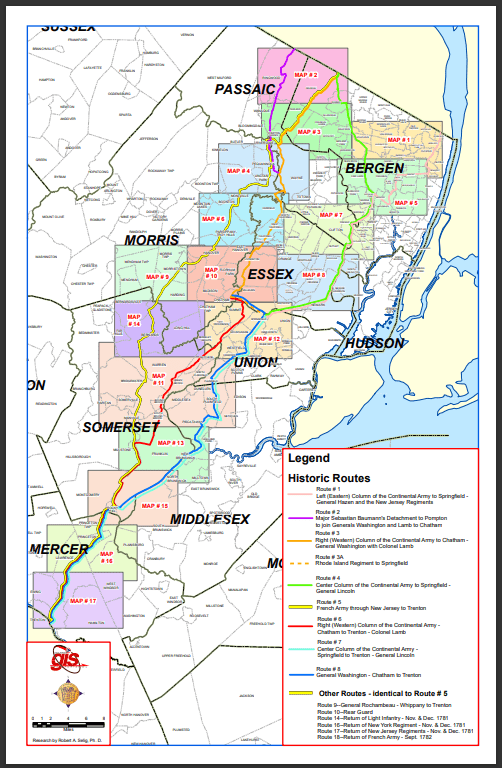
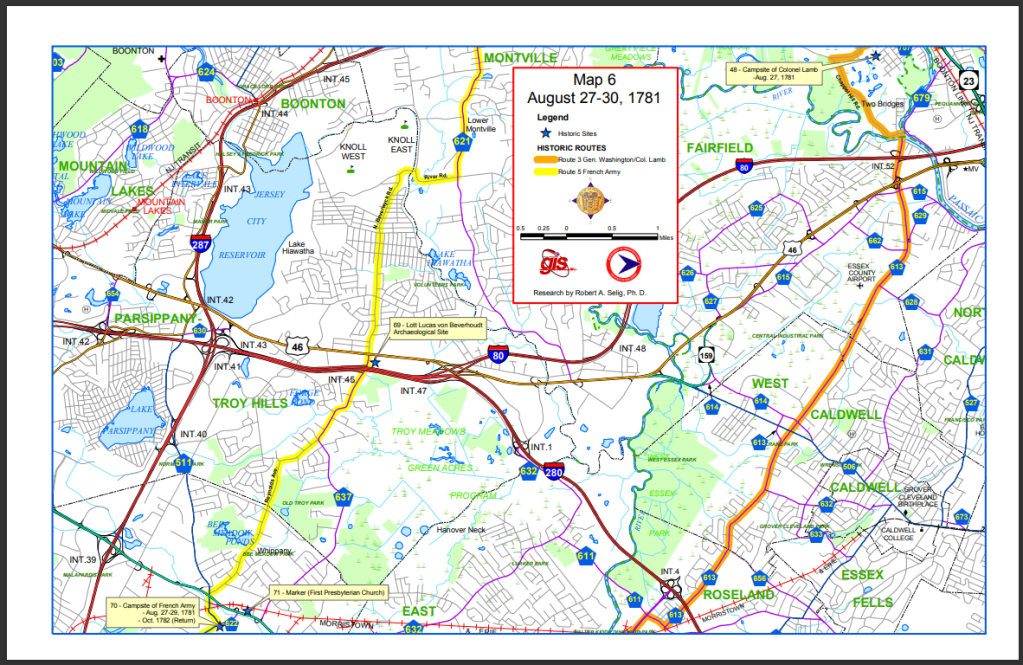
Being a New Jersey native, my experiences along the trail have been within my state, which has many historical connections to the American Revolution. Below are two maps; the first is a broader map of the routes within New Jersey, and the second map is zoomed into the region where I live. You’ll notice that there are many other maps that highlight the routes more locally. These extra maps are located HERE. I used the local map to find that the trail runs along a road that I personally drive on almost daily in Fairfield and West Caldwell, and is about 2 mins from my house. This particular trail is highlighted in orange and was the route taken by General Washington and the Continental Army. The more western route that the French took (highlighted in Yellow) is only about 10 mins west of my house as it cuts through towns like Montville and Lake Hiawatha.
Many New Jersey natives can explore the state map, and realize that this historical trail is quite local to where you live. When you consider the significance of the Siege of Yorktown, and the lengthy march that American and French soldiers had to take, you gain an appreciation for the sacrifices that these soldiers had to make to secure the freedoms that we take for granted today. And to think, they were marching right in your backyard!
Get Involved
For history lovers out there, I highly recommend visiting the websites of both the W3R-US, and the affiliate that is associated with your state. For New Jersey residents, you can visit here. The websites have many interactive features including virtual tours along the trail. Along the virtual New Jersey trail, you will learn much about houses that still stand along the trail and were witnesses to the soldiers who marched in 1781. As we get closer to the 250th anniversary of our independence, I recommend checking back into these sites for events, and ways to get involved. You should also consider becoming a member of the organization. You will not only enjoy the benefits of membership, but you will show your support for a great organization that is bringing the American Revolution alive for the public!
The following blog posts are from experiences and trips that I’ve had along the Washington-Rochambeau Revolutionary Trail thus far:
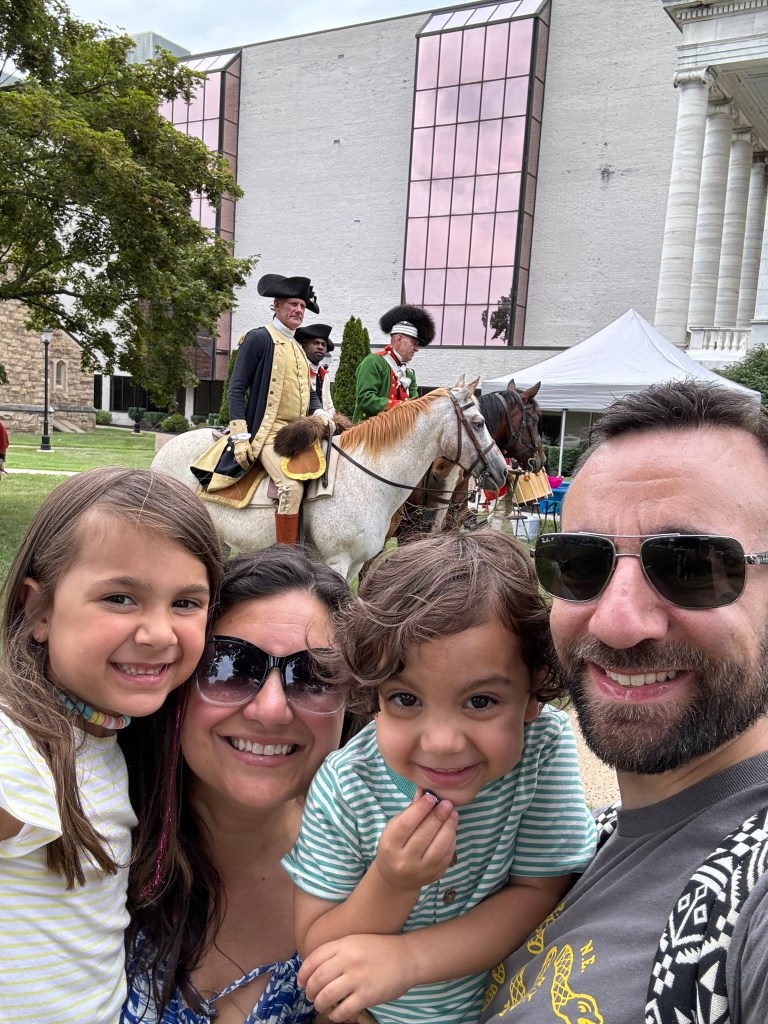
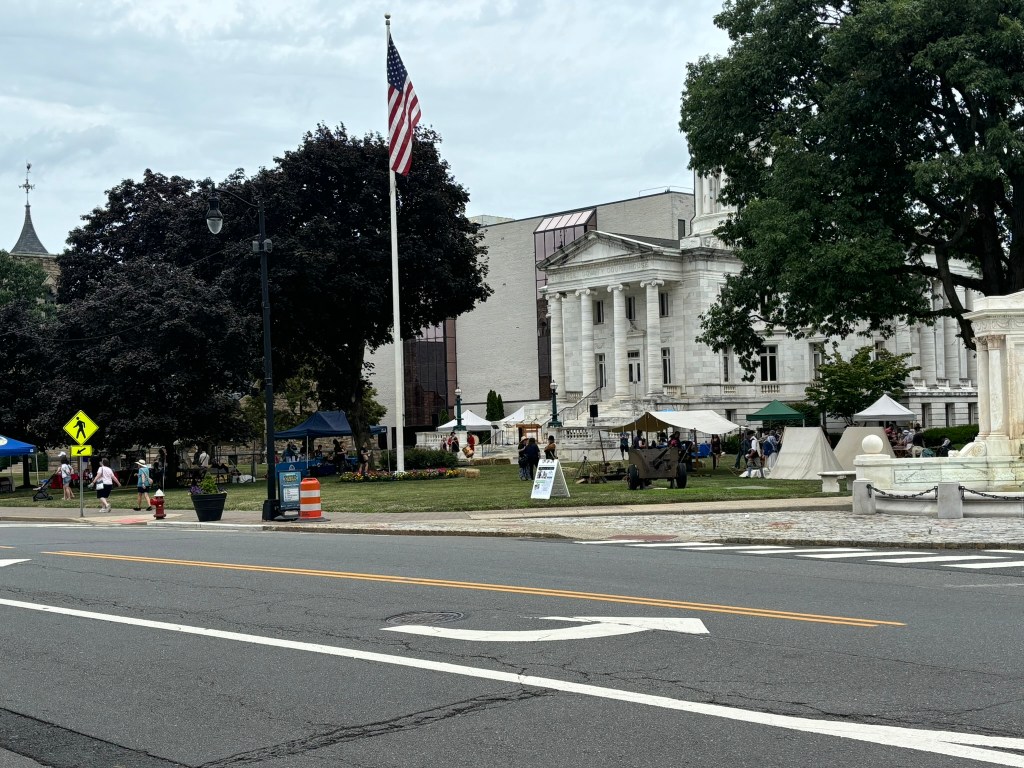
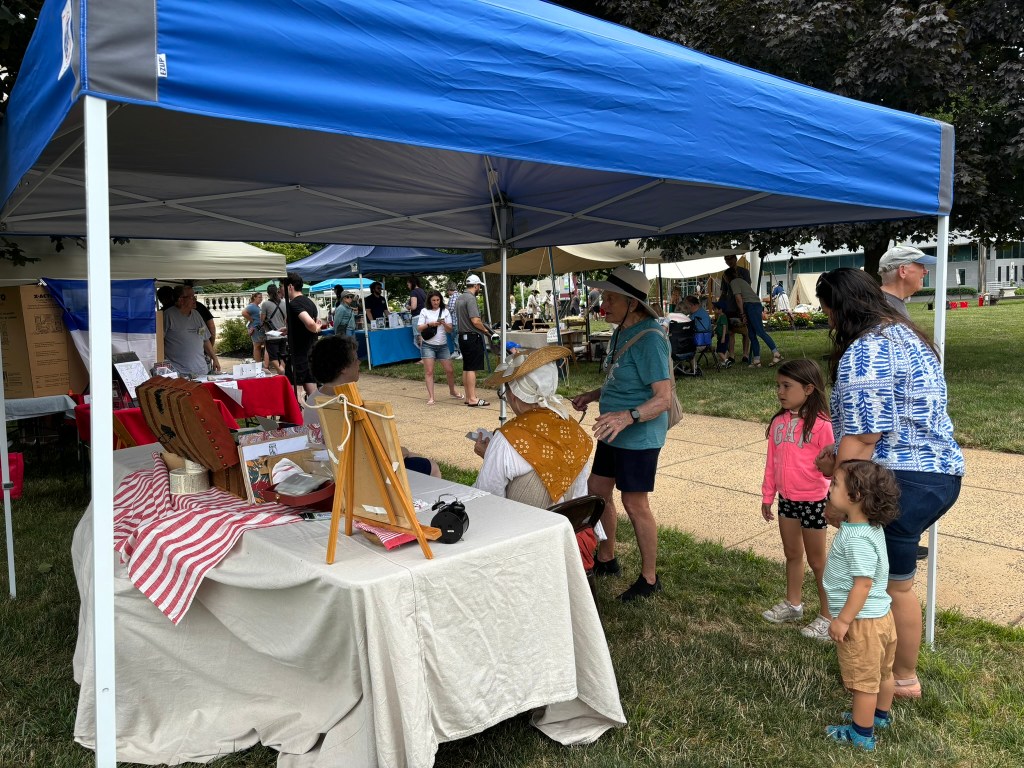
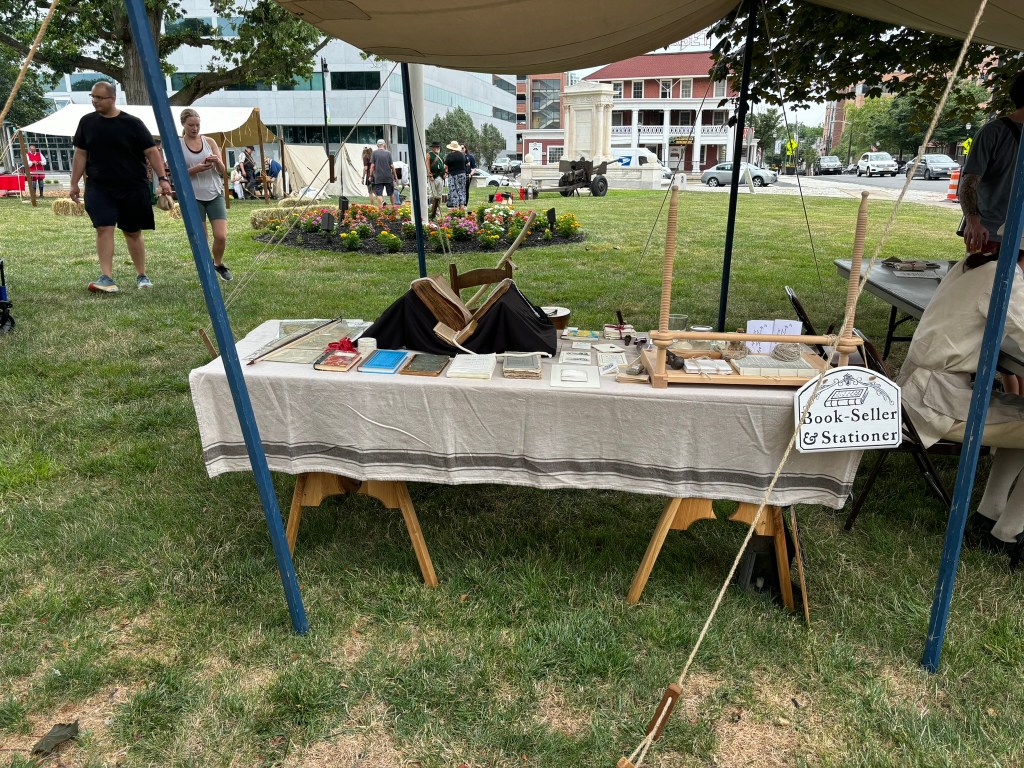
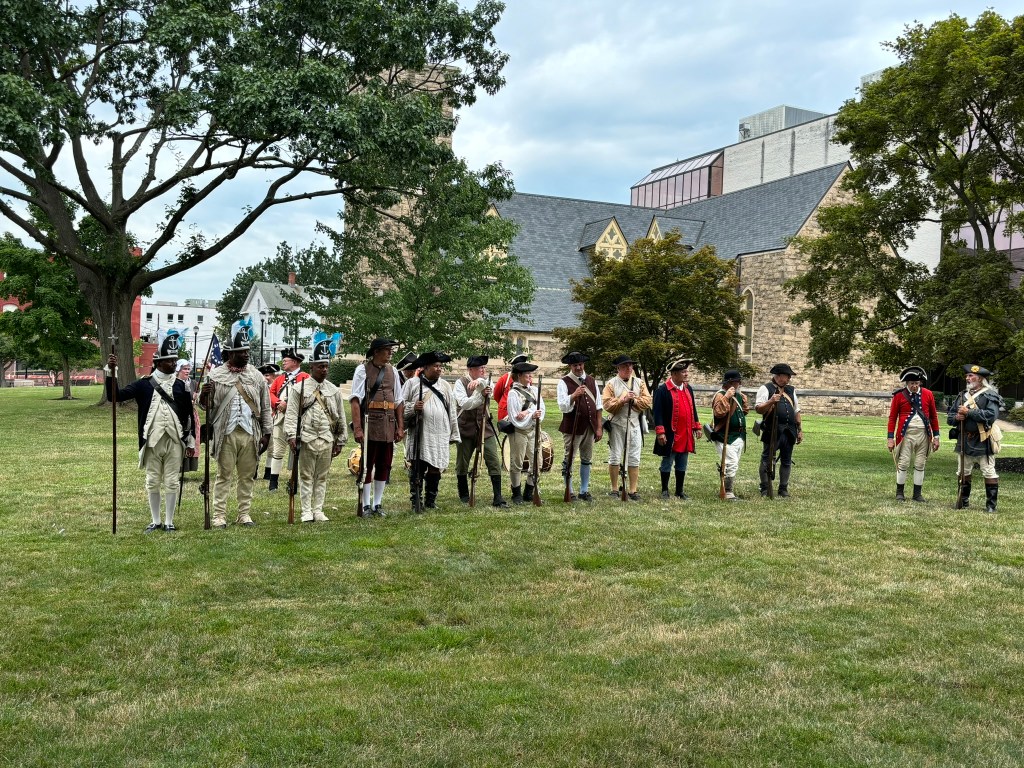
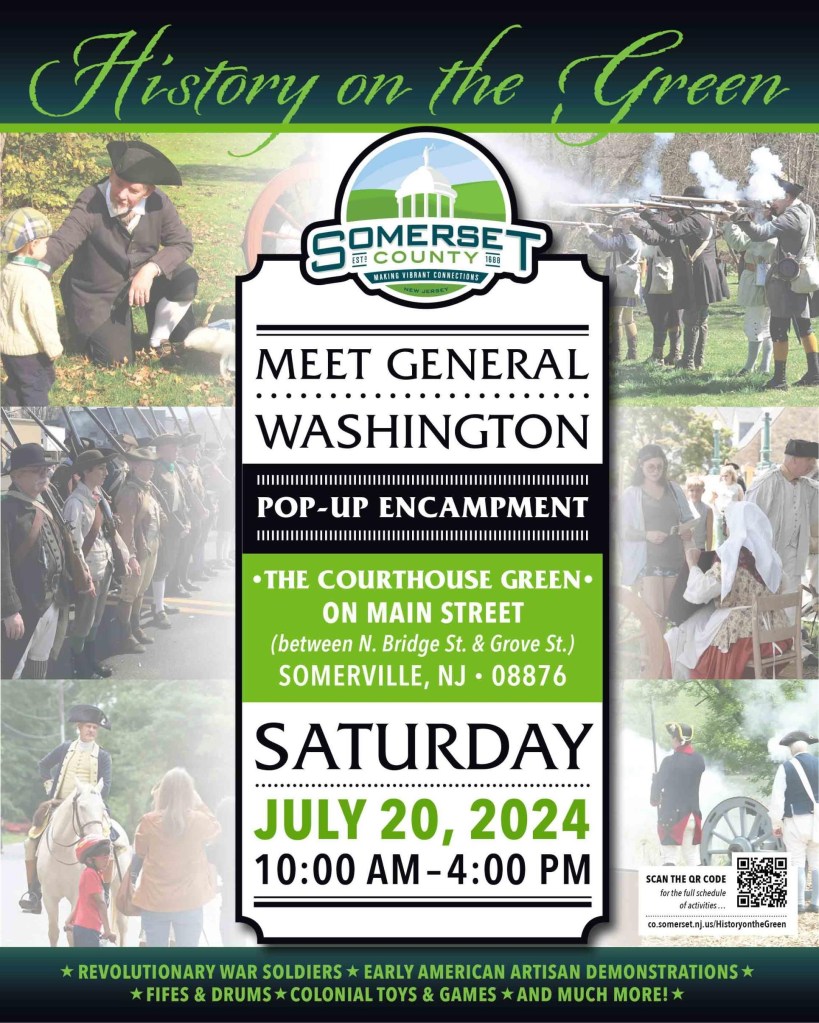
My family and I made it out to the “History On The Green” event in Somerville, NJ this past Saturday. The event featured a pop-up encampment site featuring George Washington and his valet, Billy Lee. The event also featured the New Jersey regiment- Heard’s Brigade, the 1st Rhode Island Regiment, and the NJ Fifes and Drums.
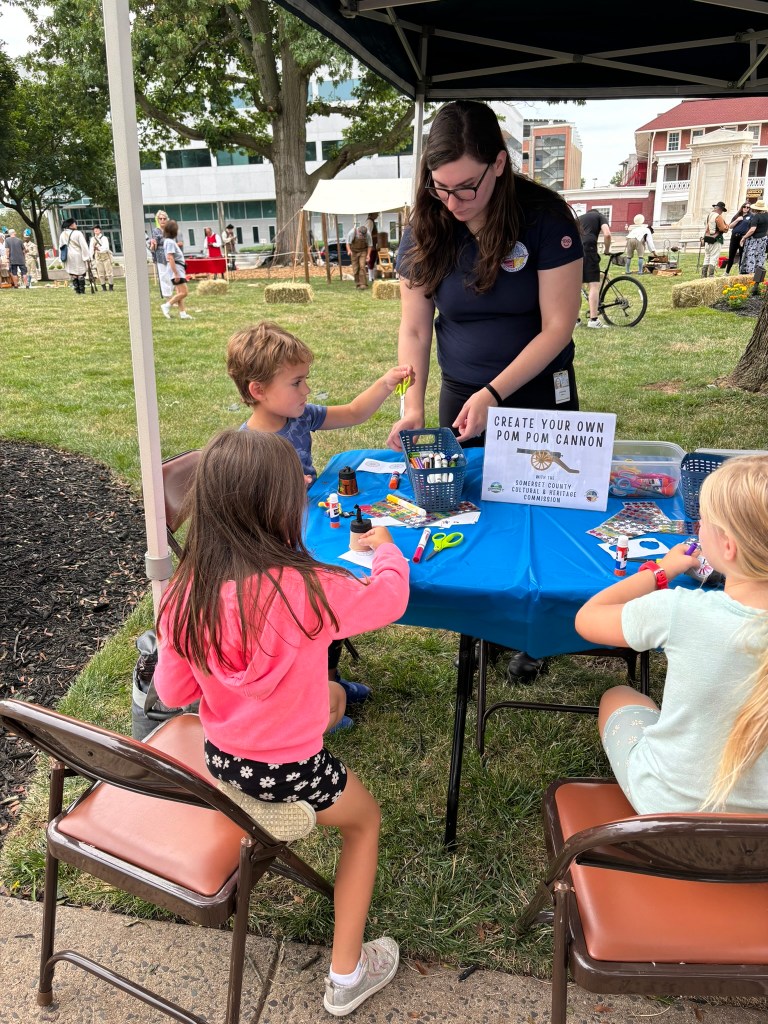
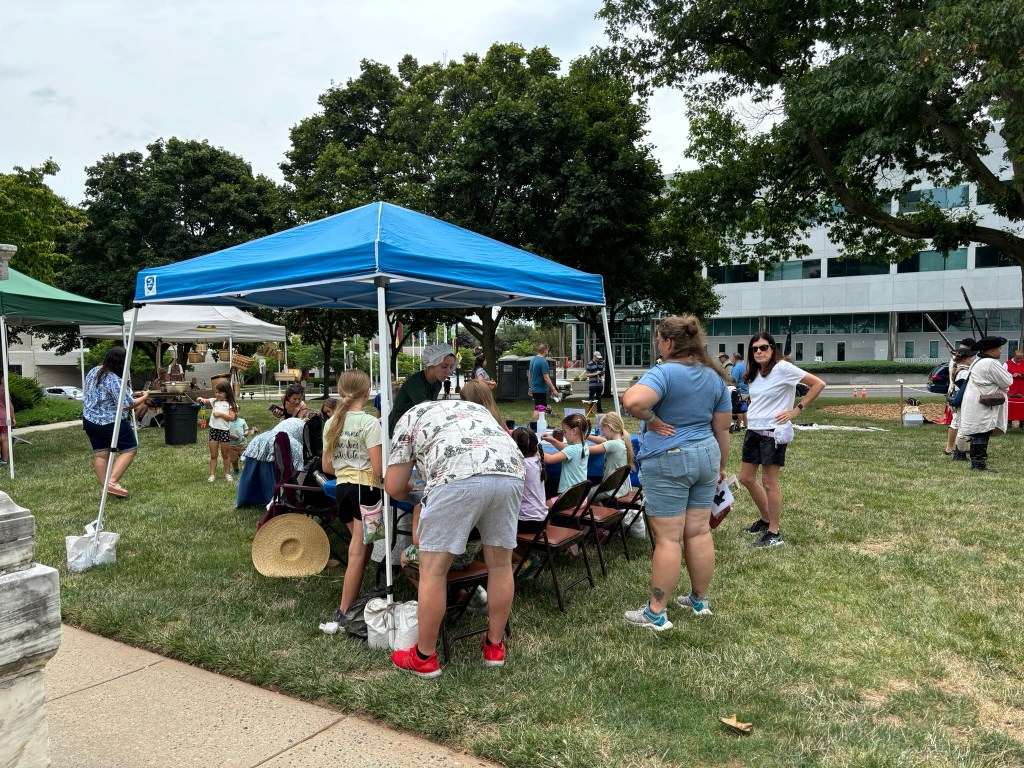
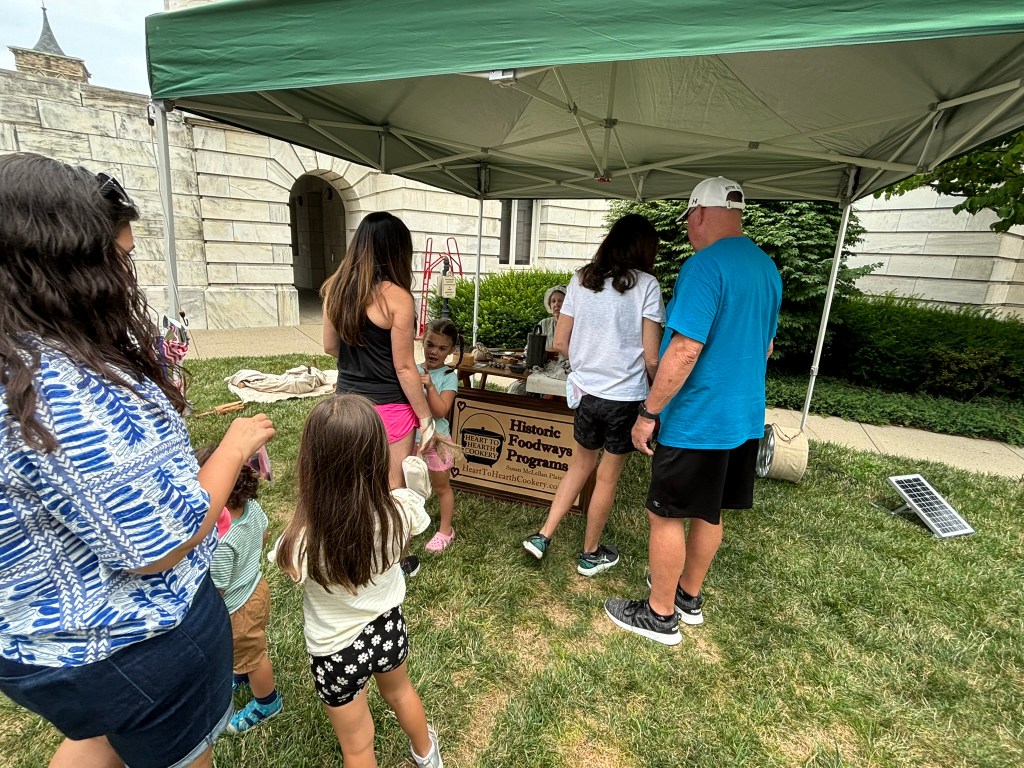
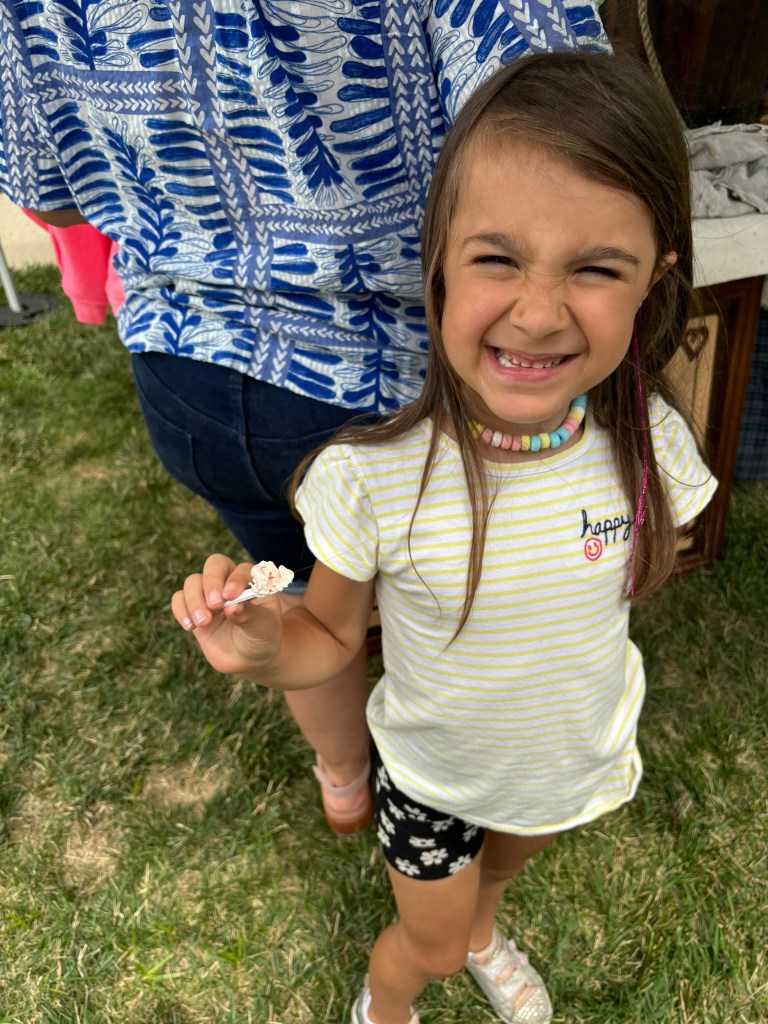
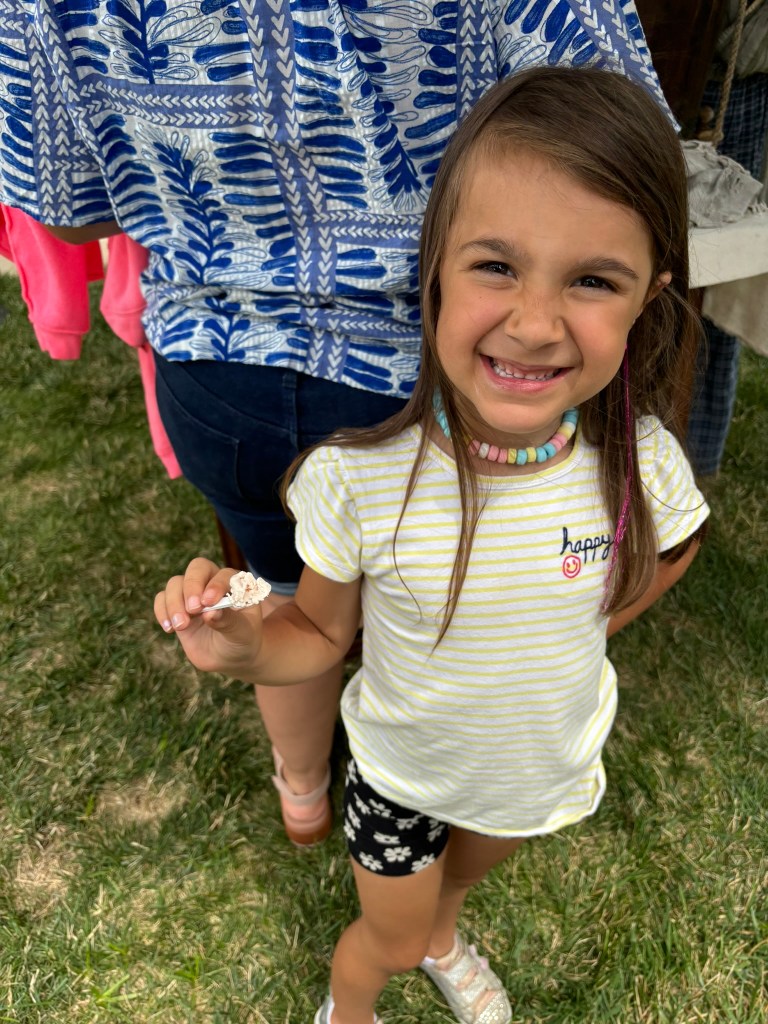
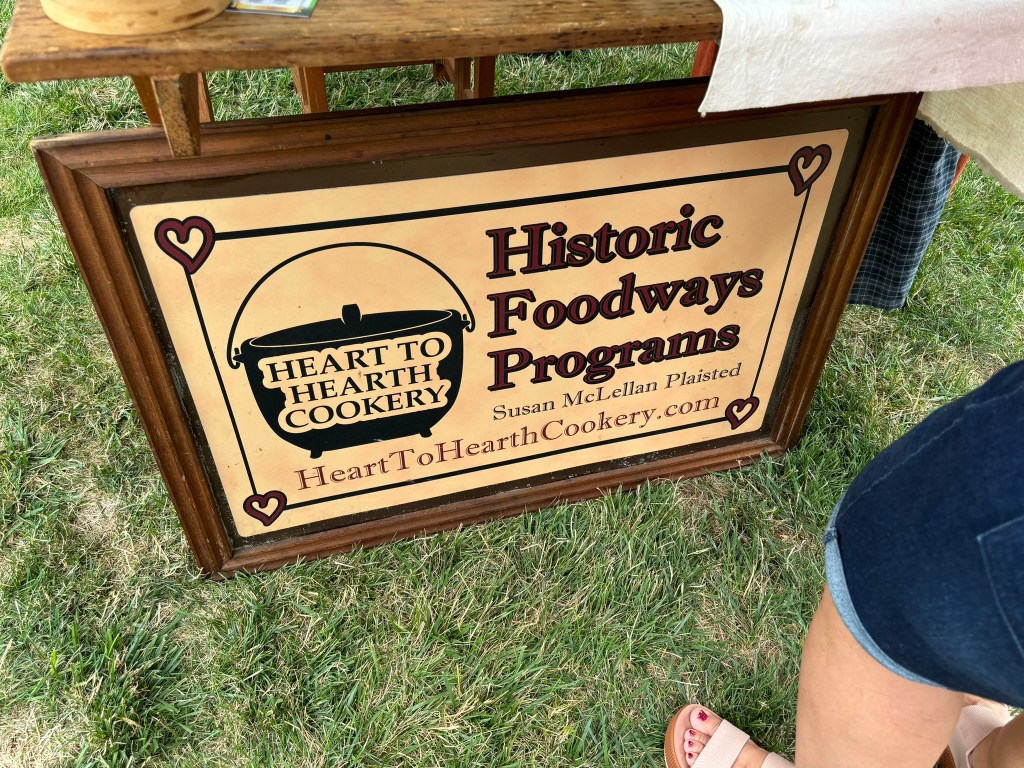
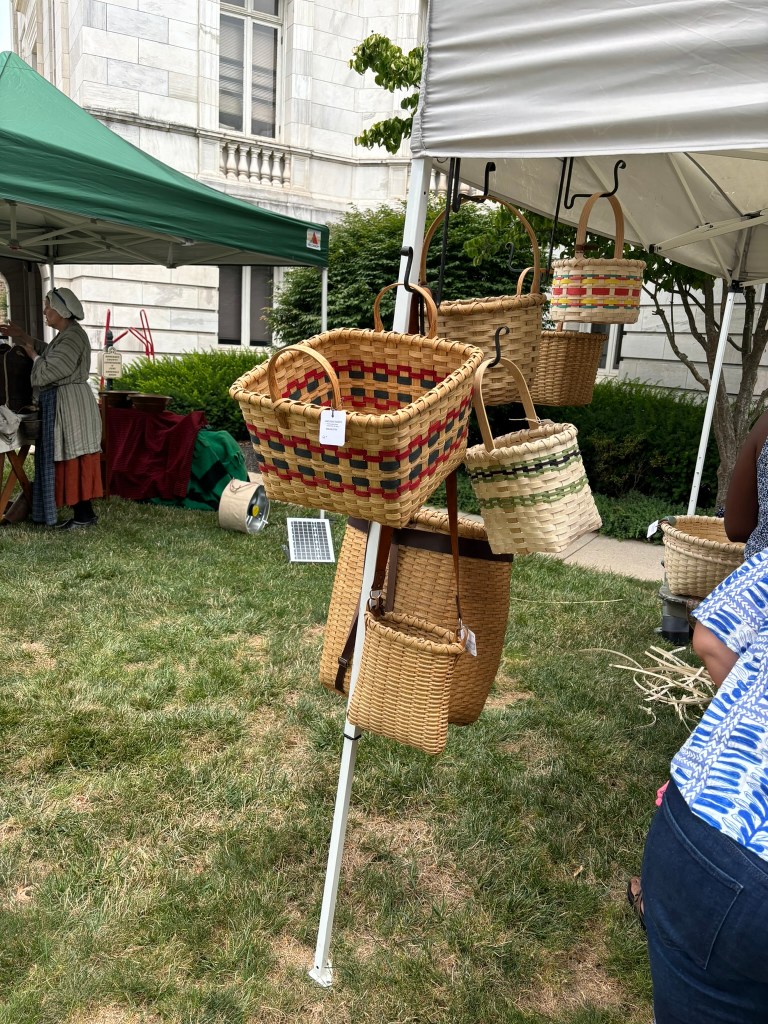
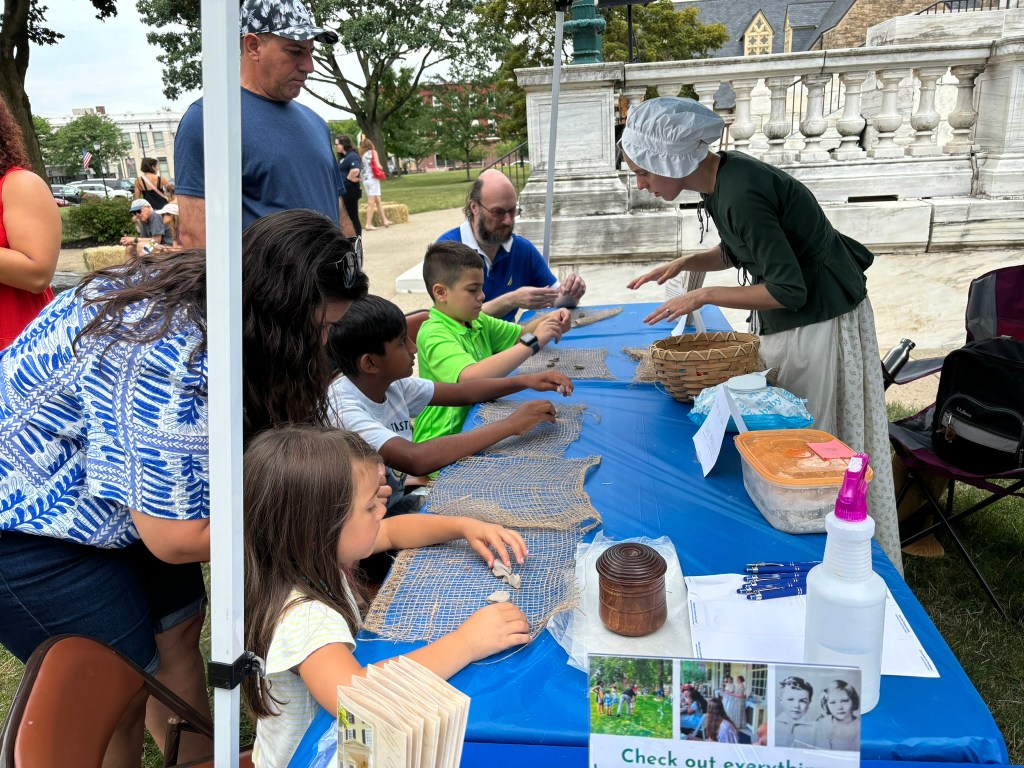
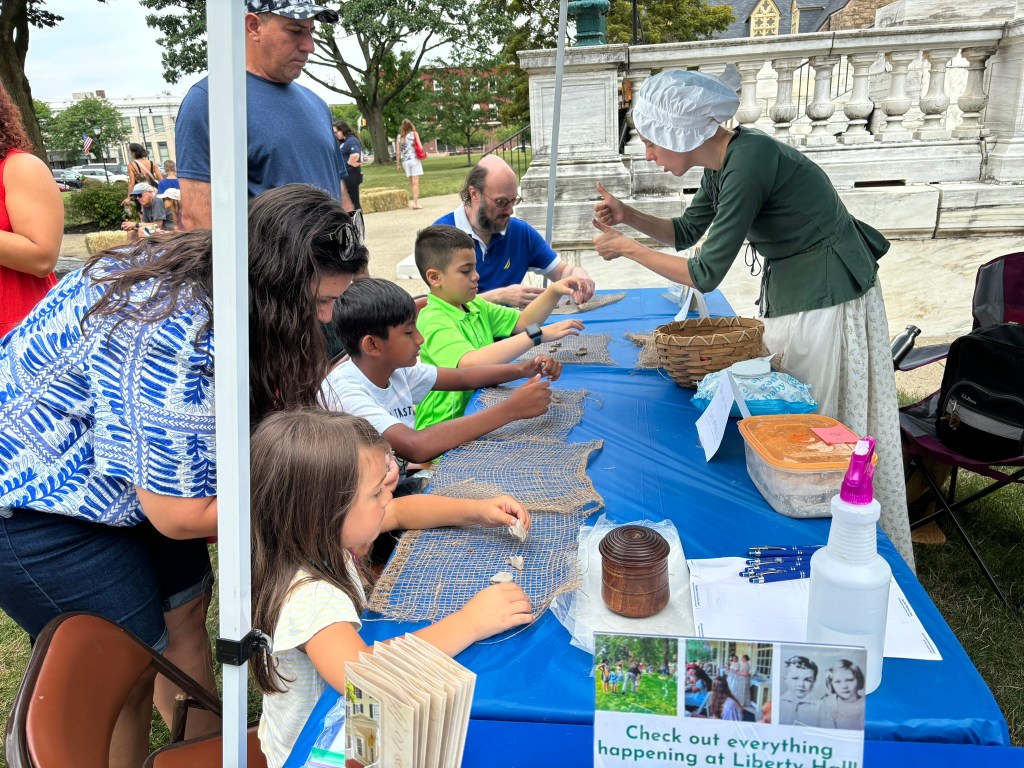
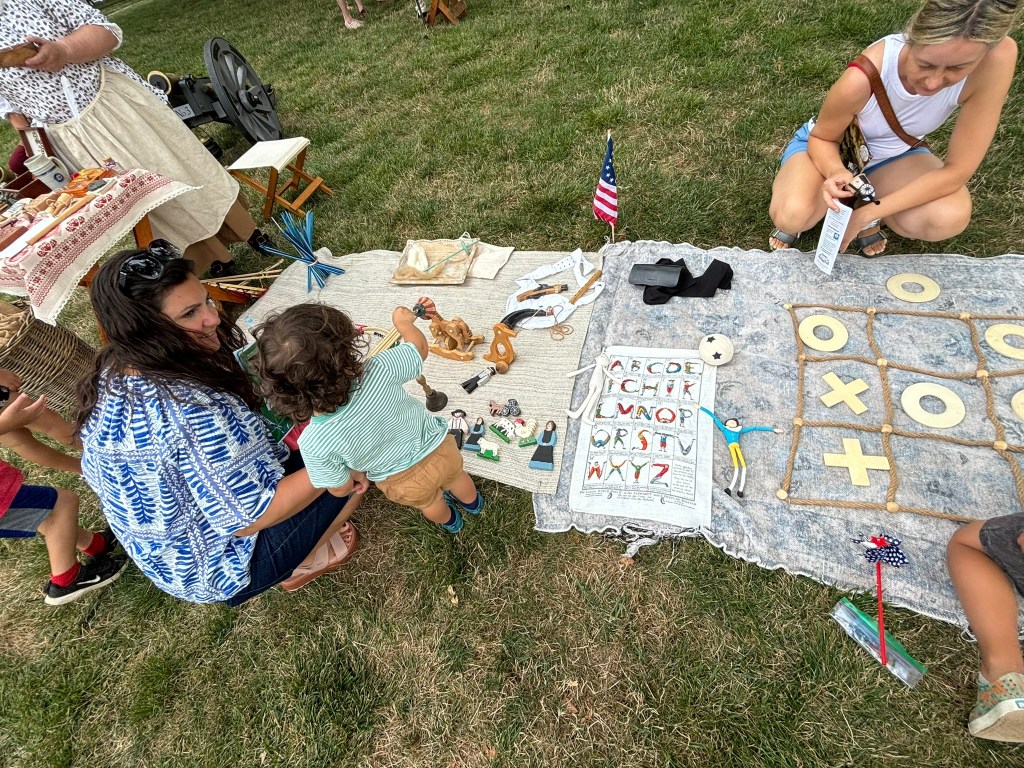
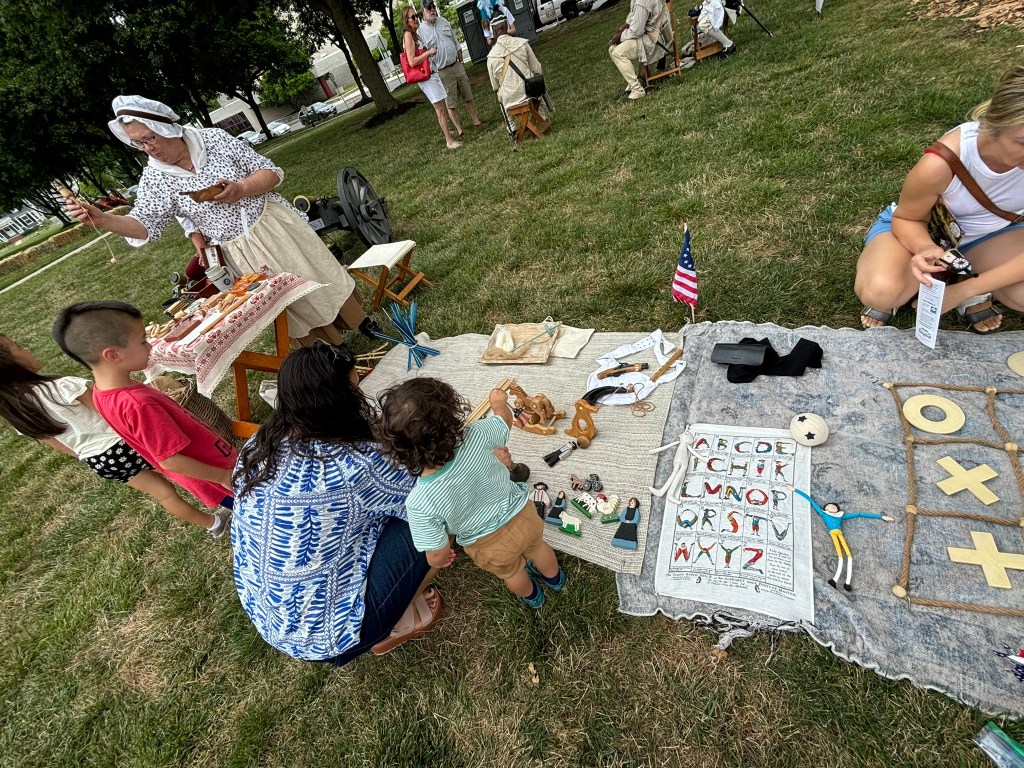
We arrived to Somerville a little early to eat brunch across the street at Turf Surf and Earth which was quite convenient and really delicious. We arrived to the event at about 11:30. There were tables set up from a few historical organizations in the region including the Heritage Trail Association, the Somerset County Historical Society, and the Somerset County Cultural and Heritage Commission. Our kids had a great time as soon as we arrived because there were many activities set up for them. My children did crafts with the Cultural and Heritage Commission, and they played colonial games with Liberty Hall Museum, including cup-and-ball. They also made their own clay marbles. We were instructed on how the colonials such as Washington and Jefferson would have made their own ice cream, which was demonstrated by Heart to Hearth Cookery. The kids also saw a display of colonial basketweaving.
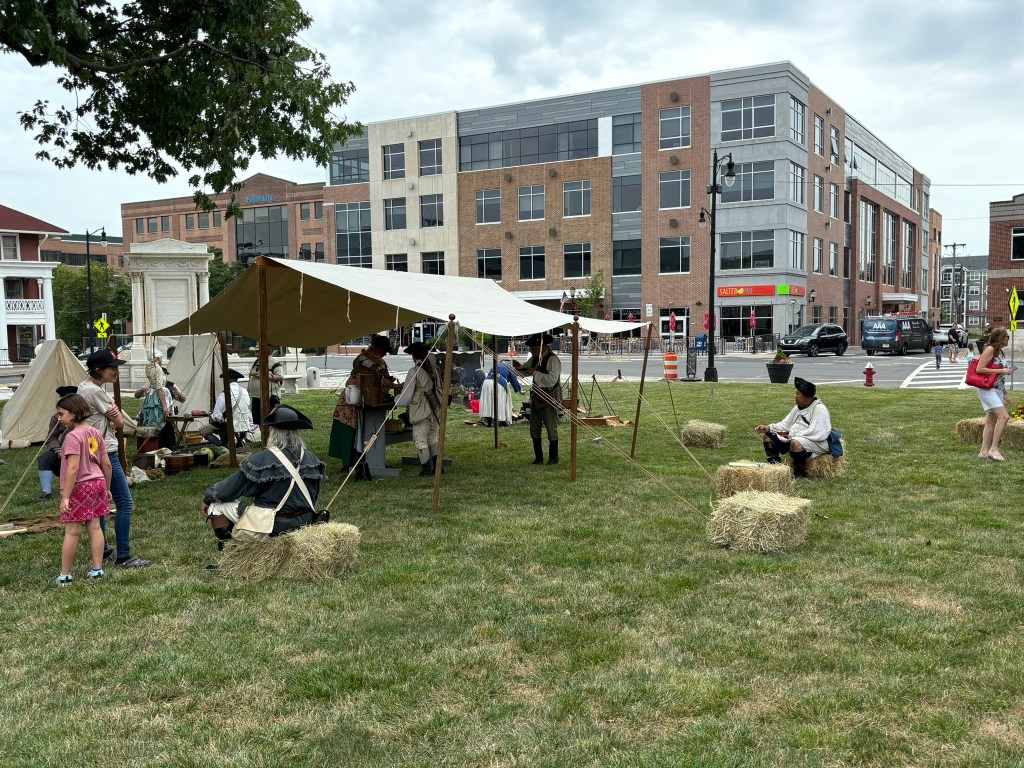
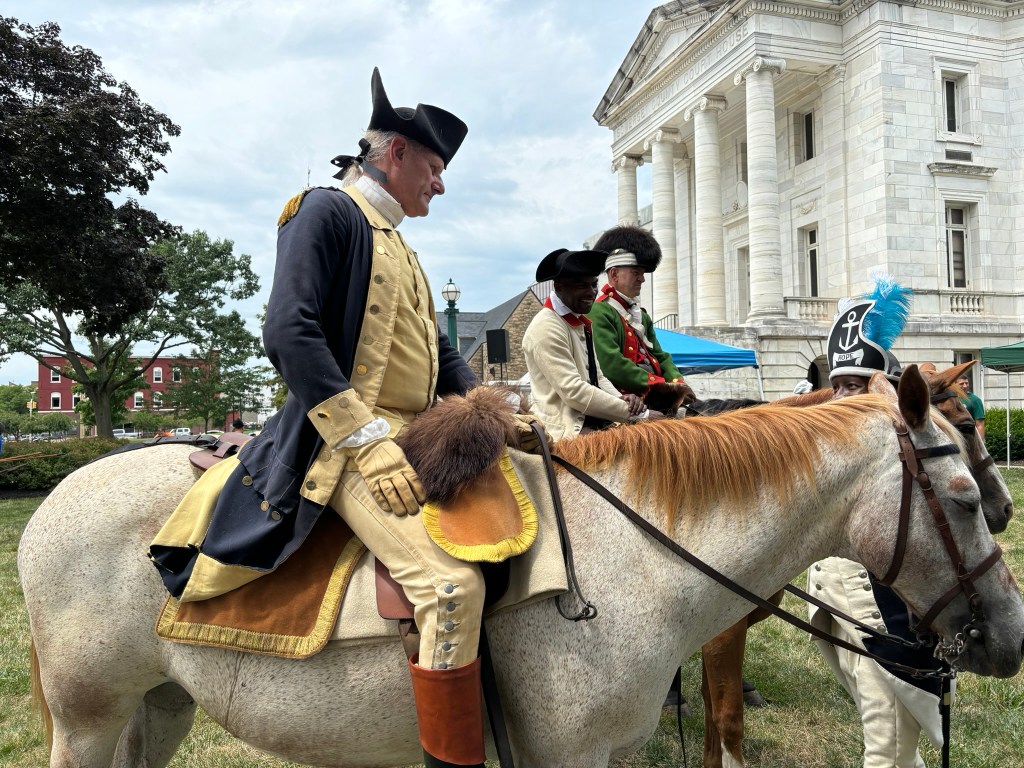
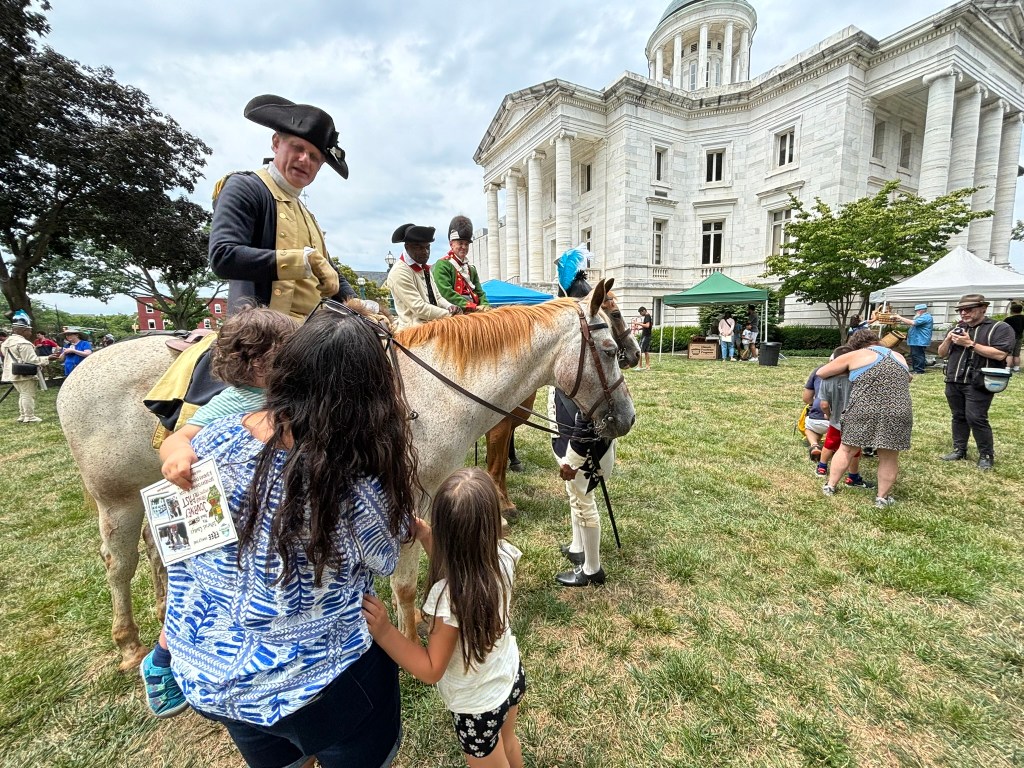
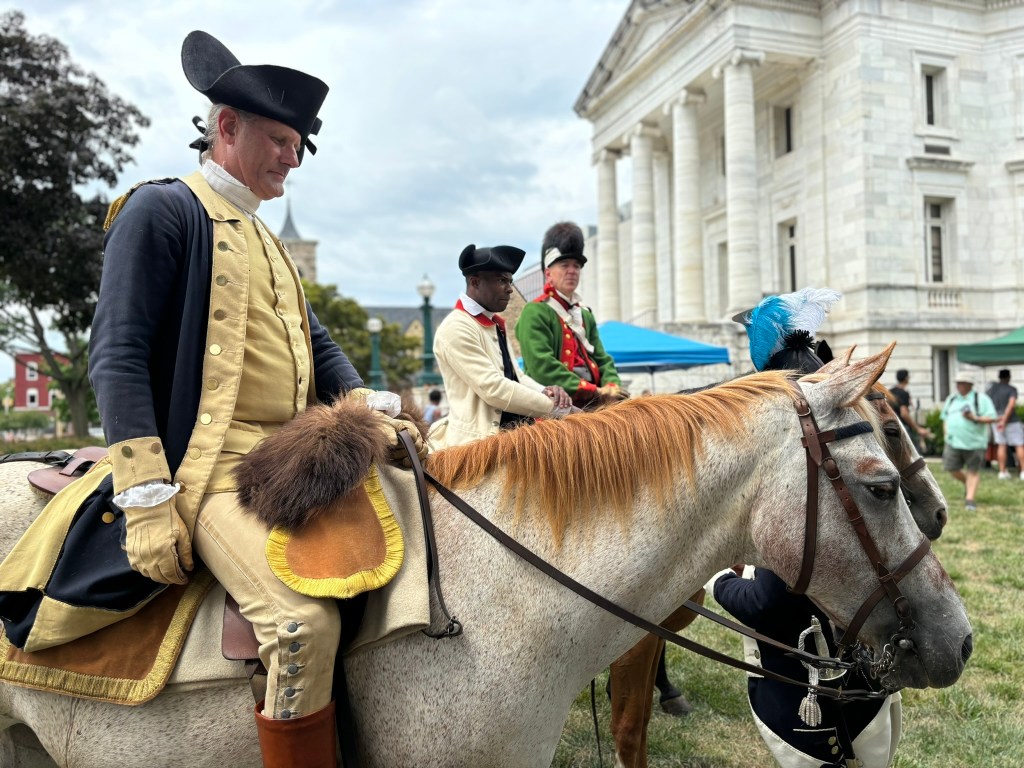
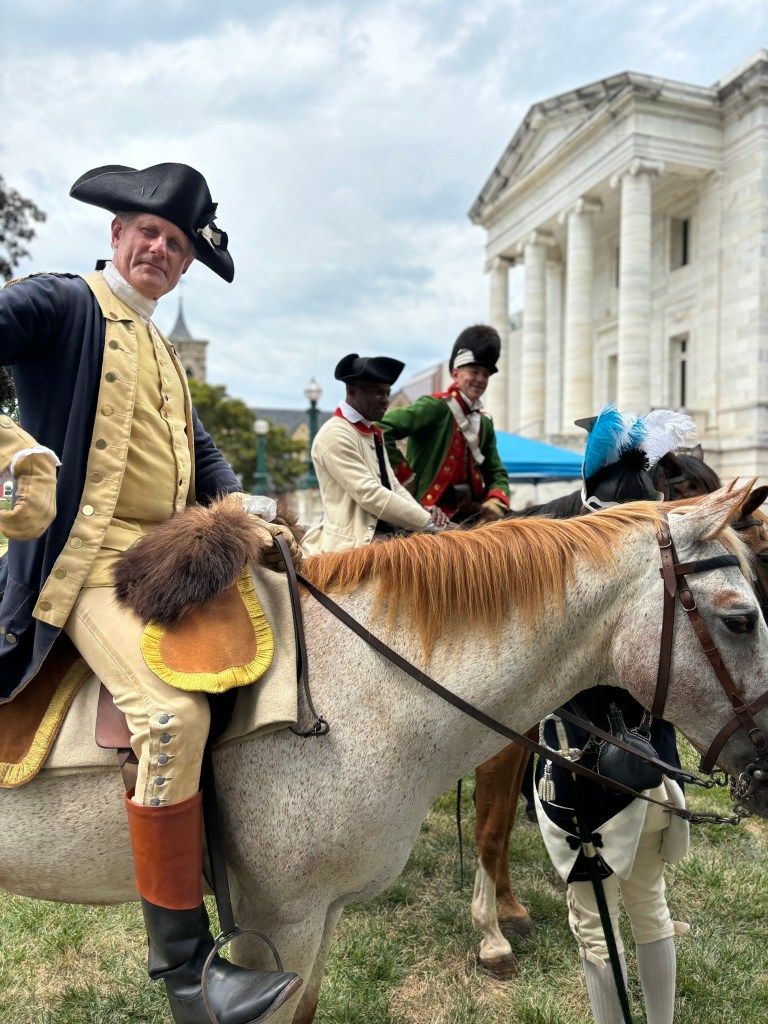
We moved on to the colonial pop-up encampment with displays by reenactors of weaponry/ artifacts, which were from the Revolution era. The reenactors took us back in time: cooking meals, doing chores, and preparing for battle.
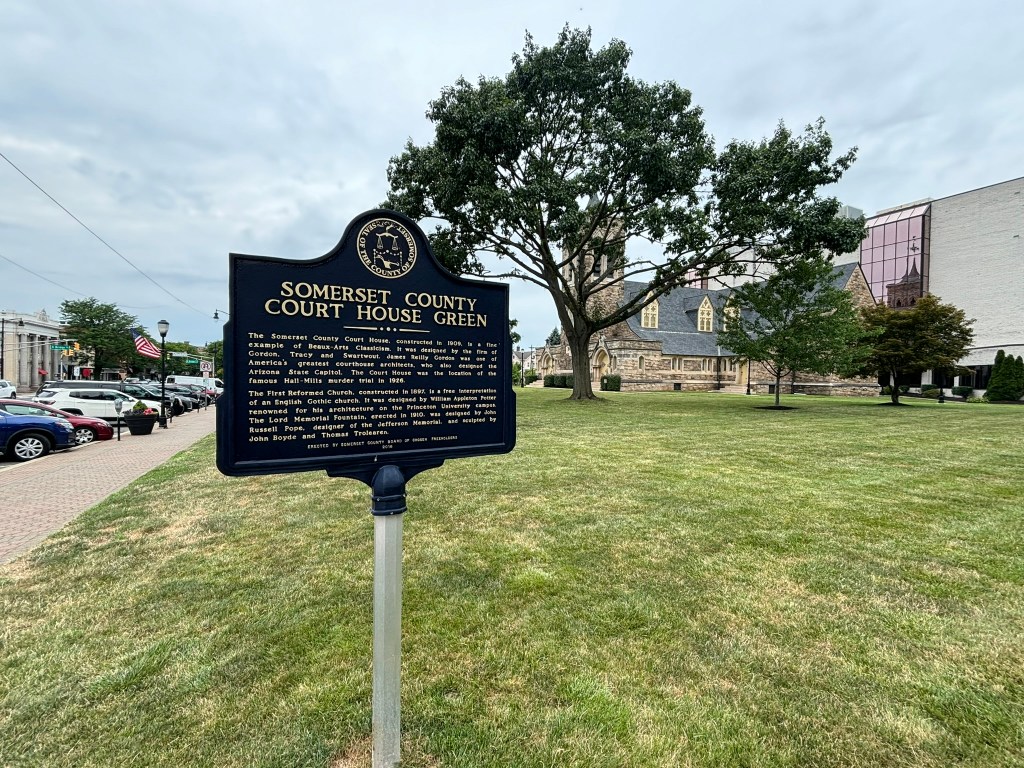
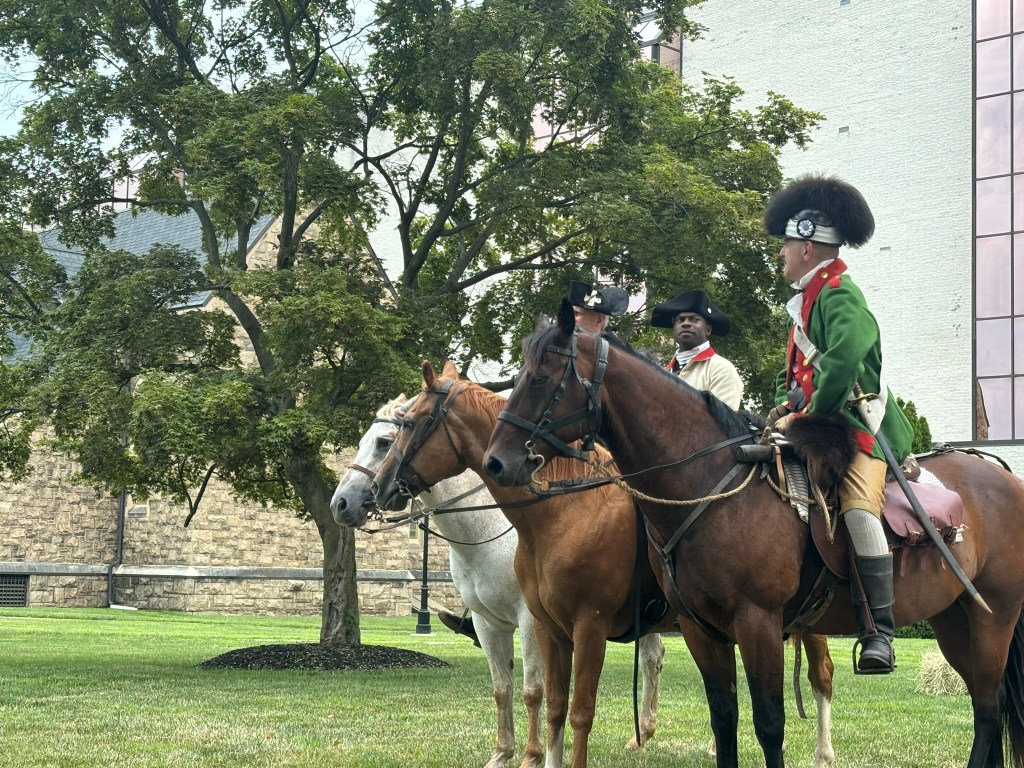
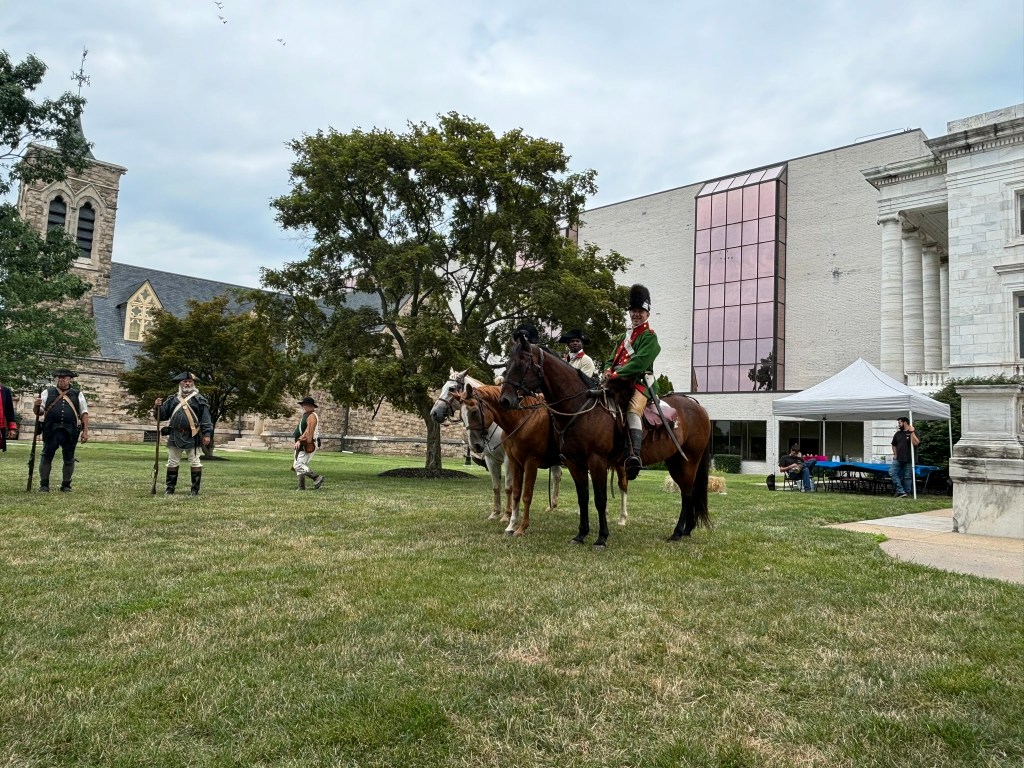
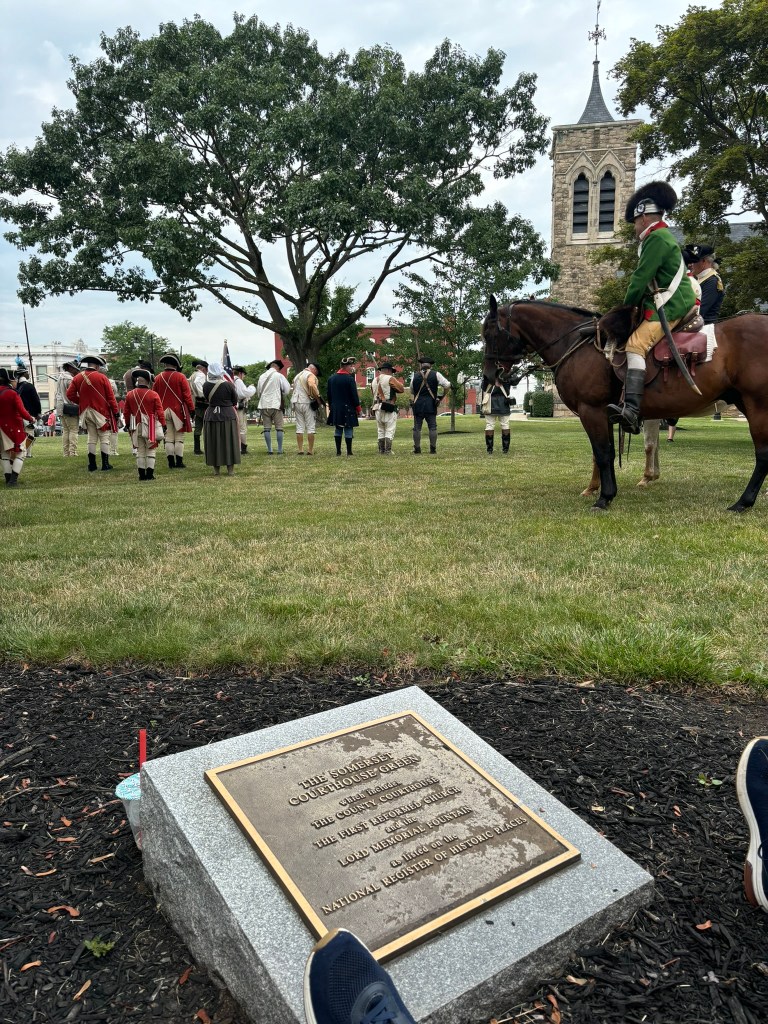
At about 12pm, George Washington and his entourage made their way down Main Street to the Courthouse Green. They were accompanied by members of New Jersey Fifes and Drums. The members of the New Jersey Militia- Heard’s Brigade, as well as the First Rhode Island Regiment stood in line and received orders from their commander. George Washington inspected the troops before they fired their muskets.
At about 12:30, Somerset County Commissioner Director, Shanel Y. Robinson addressed the crowd, and discussed how Somerset County was preparing for the 250th Anniversary of Independence.
My children took another round of the many colonial games. They also took part in 18th century reading and writing, including writing with an 18th century ink and quill. We made our way over to George Washington on top of his horse, Penny, which the kids were able to pet.
Screenshot
We had a great day in Somerville. This event was the most kid-friendly event that we’ve been to lately. History On The Green was another reminder of the tremendous impact that New Jersey had on the American Revolution. This region in Somerset County was home to the Middlebrook encampments throughout the war. Many houses still stand in the area that served as headquarters to Continental generals including Washington, Nathanael Greene, Henry Knox, Lord Stirling, and Friedrich von Steuben. I’m looking forward to going next year and also excited for what they have planned for 250!
“The Line of Splendor: A Novel of Nathanael Greene and the American Revolution” is a historical novel written by Salina Baker. In her novel, she brings to life a figure who deserves more fame and recognition for his pivotal role in the Revolution. Nathanael Greene was a selfless general and leader who fought valiantly to defend his country and provide for his troops. He was a man who defied the odds and was placed in a position of power and leadership, a favorite of General George Washington. He was a man willing to put everything on the line for the independence and freedom of the United States.
Baker’s book picks up with Nathanael Greene’s life early in the 1770s when Nathanael is about the age of thirty. At this time, there were growing tensions in the American Colonies with Mother England. Shortly before the war broke out, Nathanael married his wife Caty in 1774, and Baker does a masterful job weaving their relationship into the story of his time in the war.
Baker’s work is a fascinating depiction of Nathanael Greene and the American Revolution. Readers of history often read facts and descriptions of events, which Baker provides. But she also takes the reader into the thoughts and conversations of Nathanael Greene, as well as other key figures in his life. Baker’s novel is a reminder to the reader that the generals and soldiers who fought in the Revolutionary War were not mythical figures who fought a war that would inevitably end in an American victory. These were real men with real emotions carrying their insecurities and flaws, while experiencing the highs and many lows of the war. Greene was central to many of the key battles early in the war, from the siege of Boston, to the debacle of New York, to the triumph of Washington’s crossing of the Delaware, to the trying times at Valley Forge. Greene held a tremendous weight on his shoulders throughout the war, especially when he led the Southern Army late in the war during the Southern Campaign.
Historically, the Southern battles often receive less attention than the battles earlier in the war in the North. But Baker paints a clear and detailed picture of the challenges of the Southern Campaign. Nathanael had to lead his men while enduring extremely difficult conditions, including desertions, humid weather, mosquitoes, widespread diseases, and long, nearly constant marches. Baker vividly describes the scenes of the war: camplife, the battlefield, the civil war between Patriots and Loyalists, the chases between the Continental Army and the British Army, the losses and victories, the difficult decisions that Greene had to make as General, the tensions and disagreements with the Continental Congress, and the ultimate triumph of the Revolutionary cause. Greene fought tooth and nail for his troops, and was greatly admired amongst the men that he led.
While conducting the war, Greene ached for his wife and small children, who he was unable to see through long stretches of time. Besides depicting the emotions of Nathanael, the novel also describes the perspectives and feelings of his wife Caty, who had to constantly struggle with the reality of her husband being away at war, while trying to raise small children without a father. Throughout her novel, Baker brings the reader through a plethora of emotions from joy and triumph, to tragedy and despair. She takes you into Nathanael’s stressors such as his financial woes, and his doubts about his own ability to lead.
From reading the novel, it is quite clear that Baker has conducted substantial research on Nathanael Greene and the American Revolution. She gives extensive detail on Nathanael’s life at home, within army camps, commanding battles, and his travels throughout the states. She provides us with dialogue that fills in the gaps of historical records. Baker used primary and secondary sources for her research, and she seamlessly incorporates many letters that Nathanel wrote and received, both from his family and from his leading generals. Baker uses her first hand experiences and studies at landmarks of Greene’s life, including the battlefields that he fought on.
The novel was difficult to put down, written in a style that is easy to read. The reader becomes emotionally attached to the main character as the novel progresses, and feels all of the human emotions that Nathanael felt throughout the war and its aftermath. When the reader encounters the challenges that Nathanael had to deal with, they are left with an even greater respect for those who served in the military and fought for freedom. Nathanael Greene and his troops made overwhelming sacrifices to fight for the United States. Nathanael sacrificed his personal life, his financial life, and his family life to gain victory for a new nation. The reader encounters his inner struggles with the decisions that he made.
I highly recommend this novel for any type of reader, especially those who have a love for historical figures or events. It is a story that entertains, leaves you on the edge of your seat, and provides you with a new and broader perspective on an important historical leader. Nathanael Greene was a central figure in one of the most important events in human history. Salina Baker, in this tremendous novel, is shining a light on the legacy of this great man. Purchase a copy of the book here—> Amazon