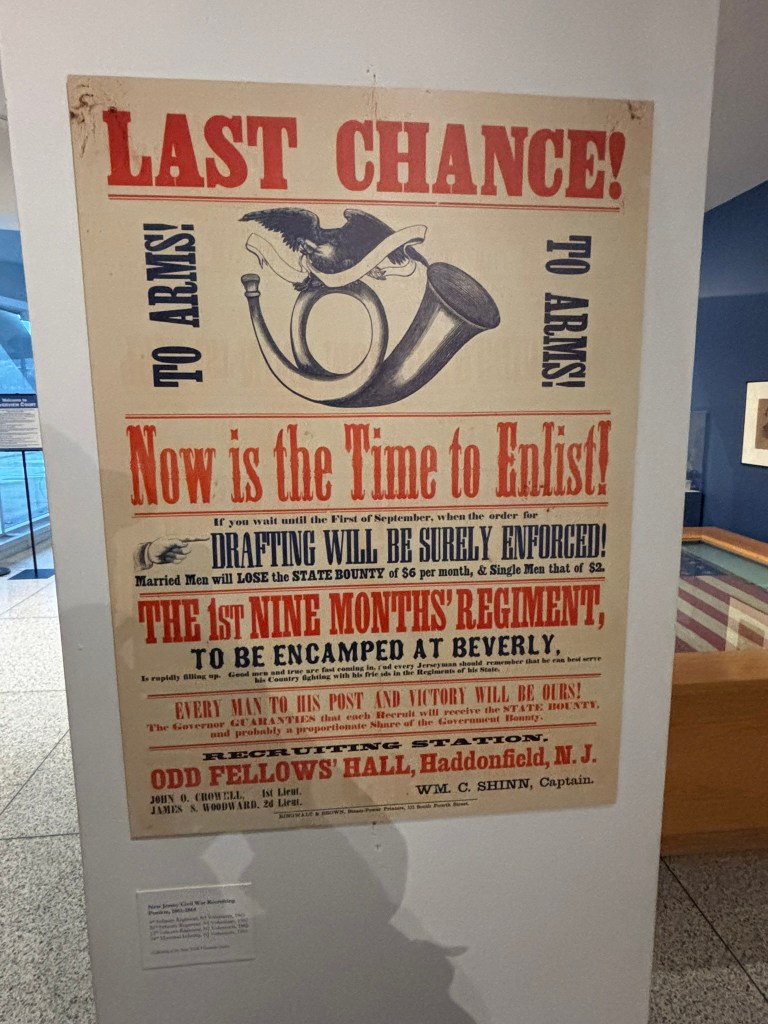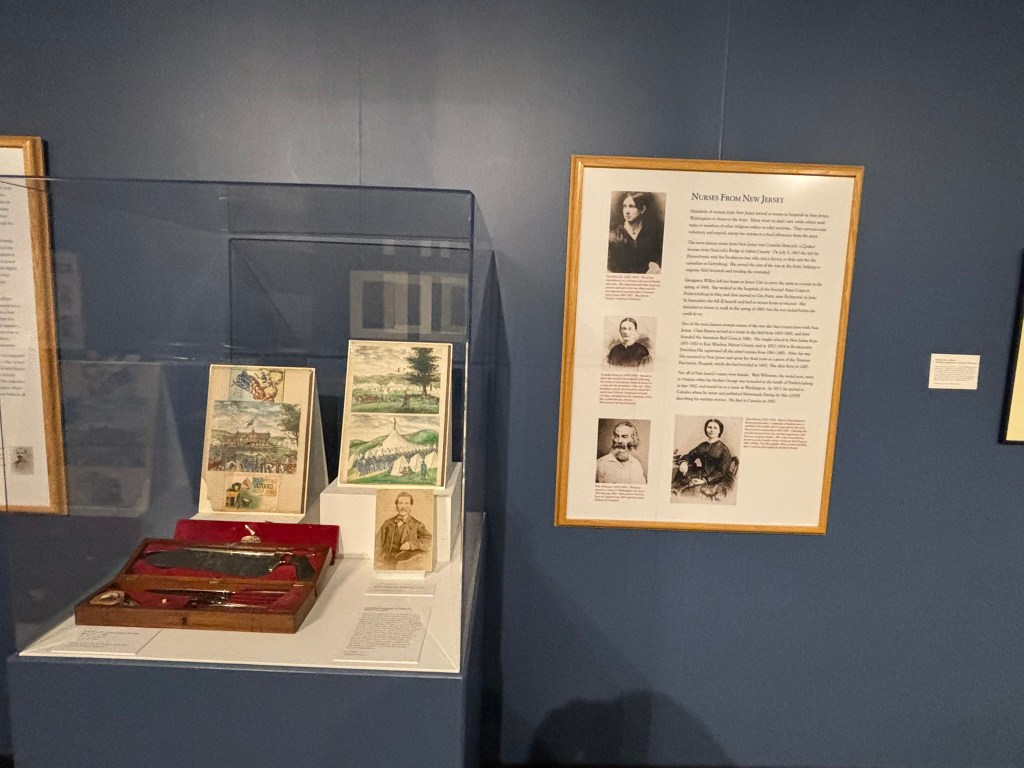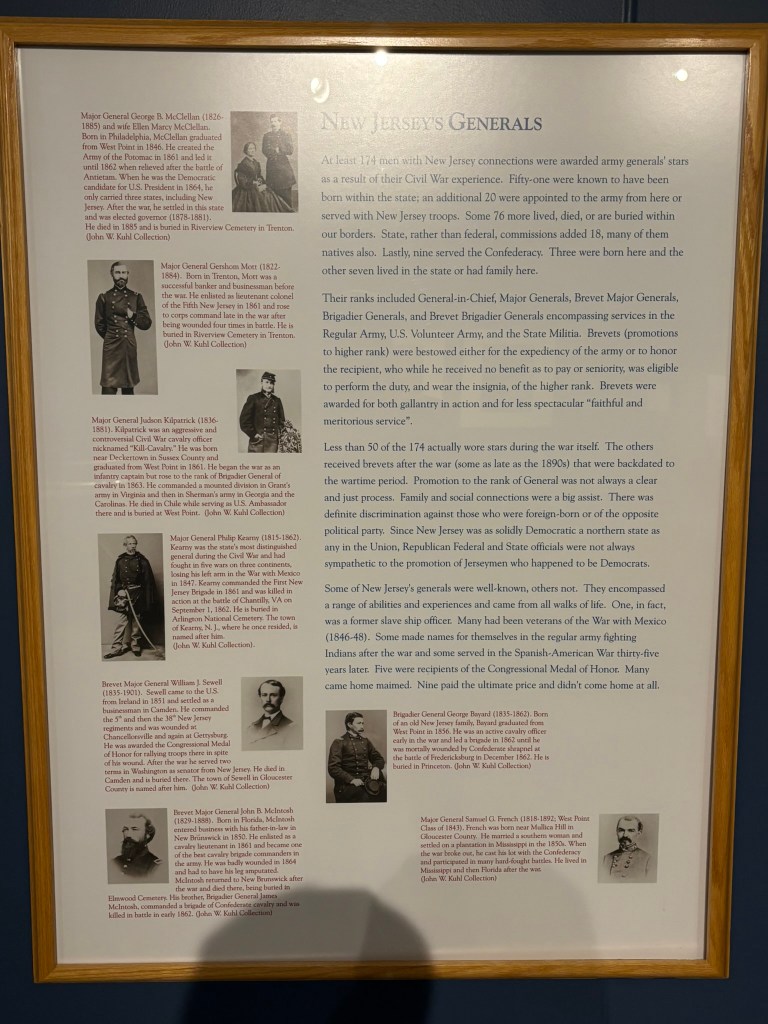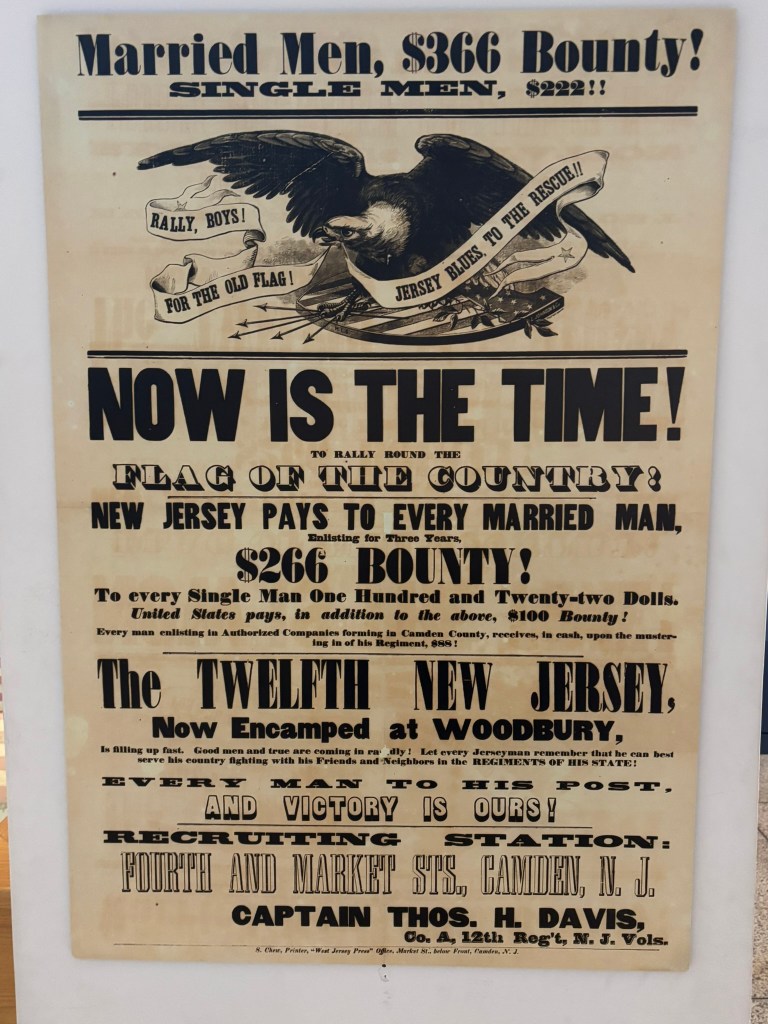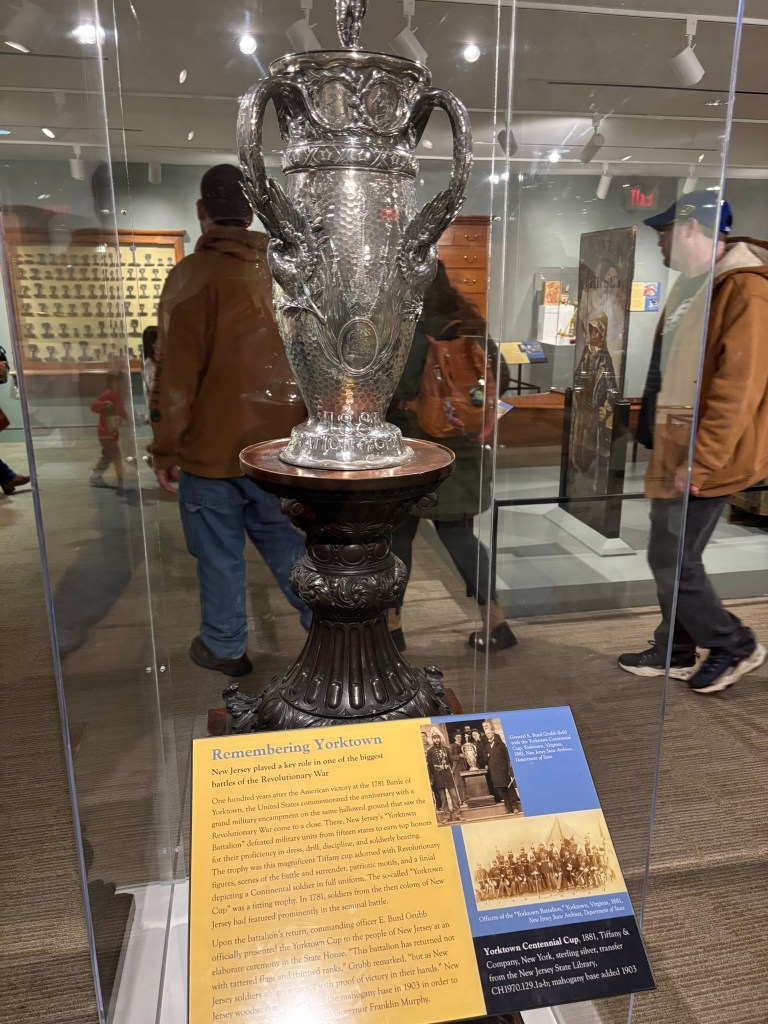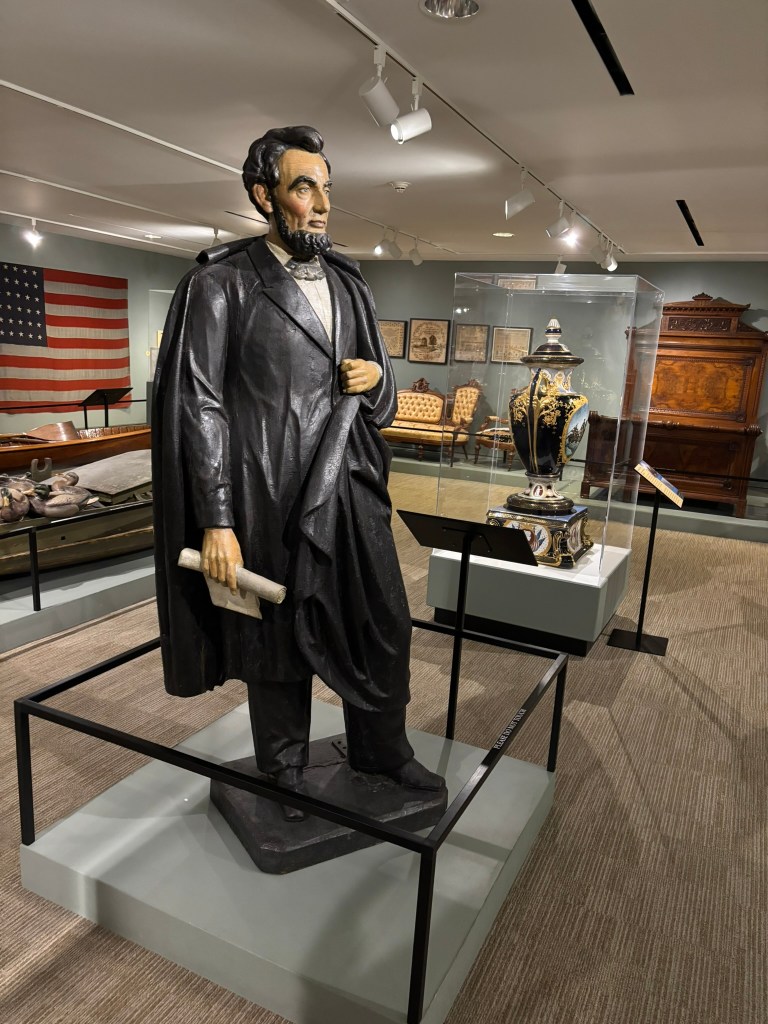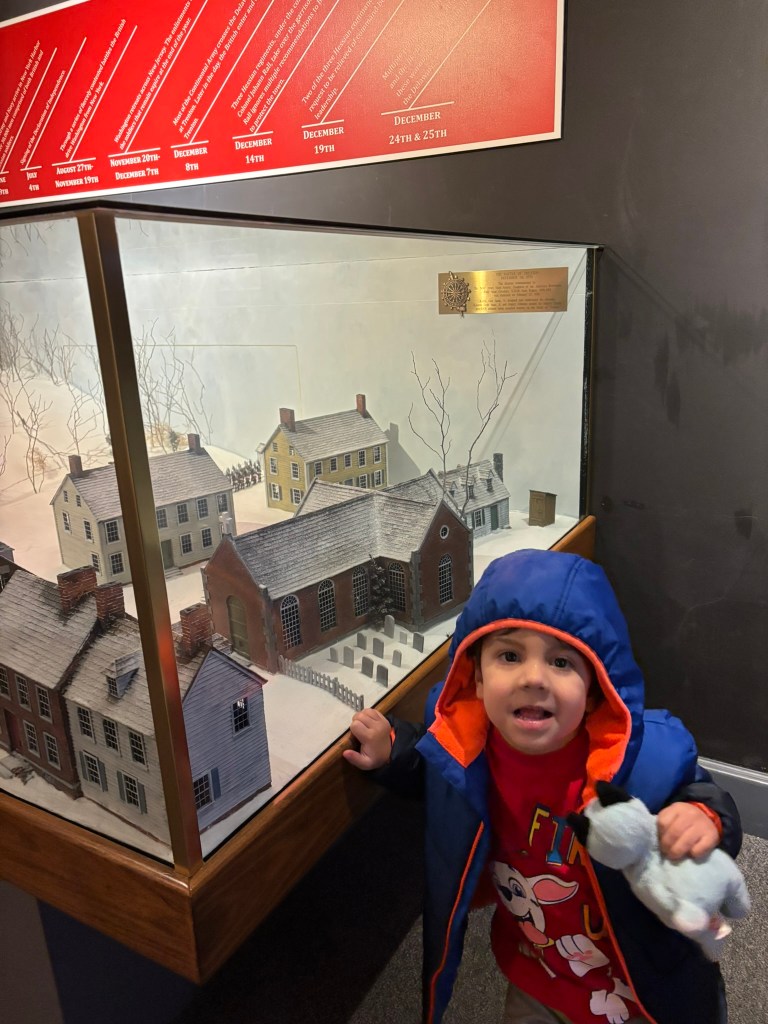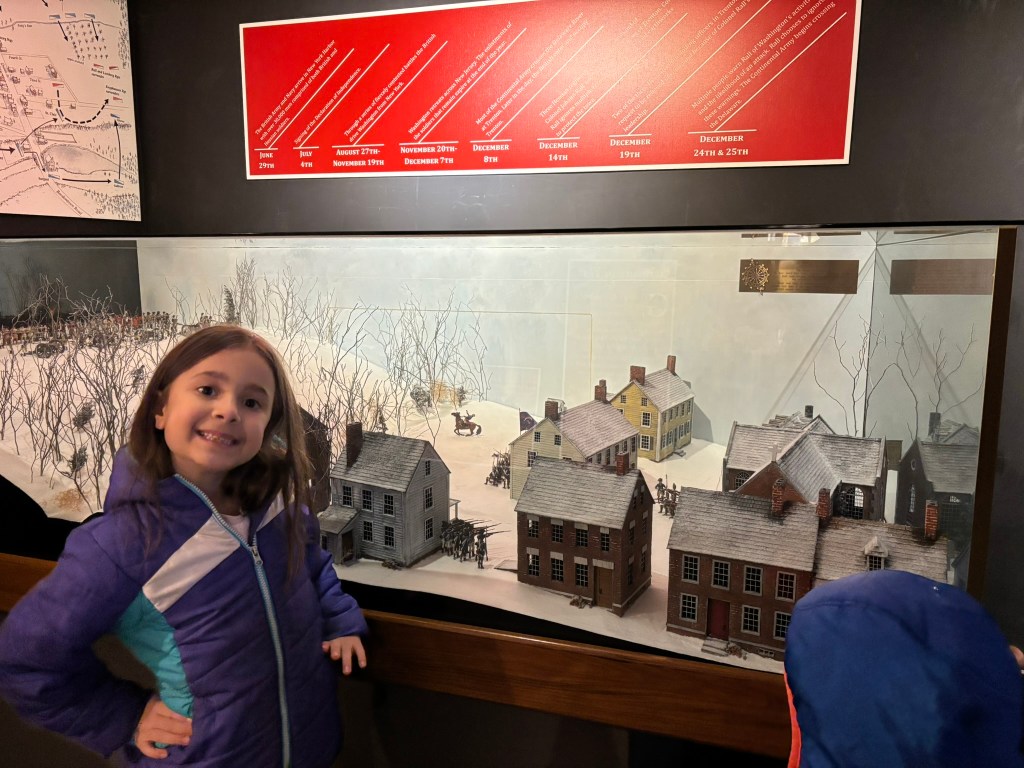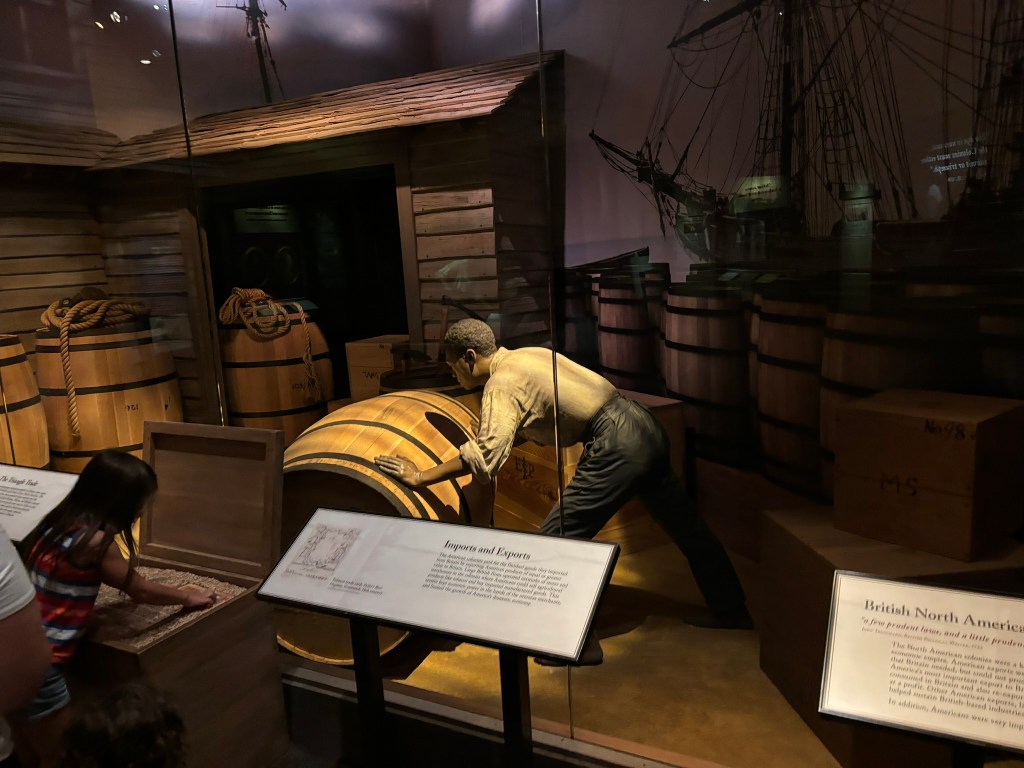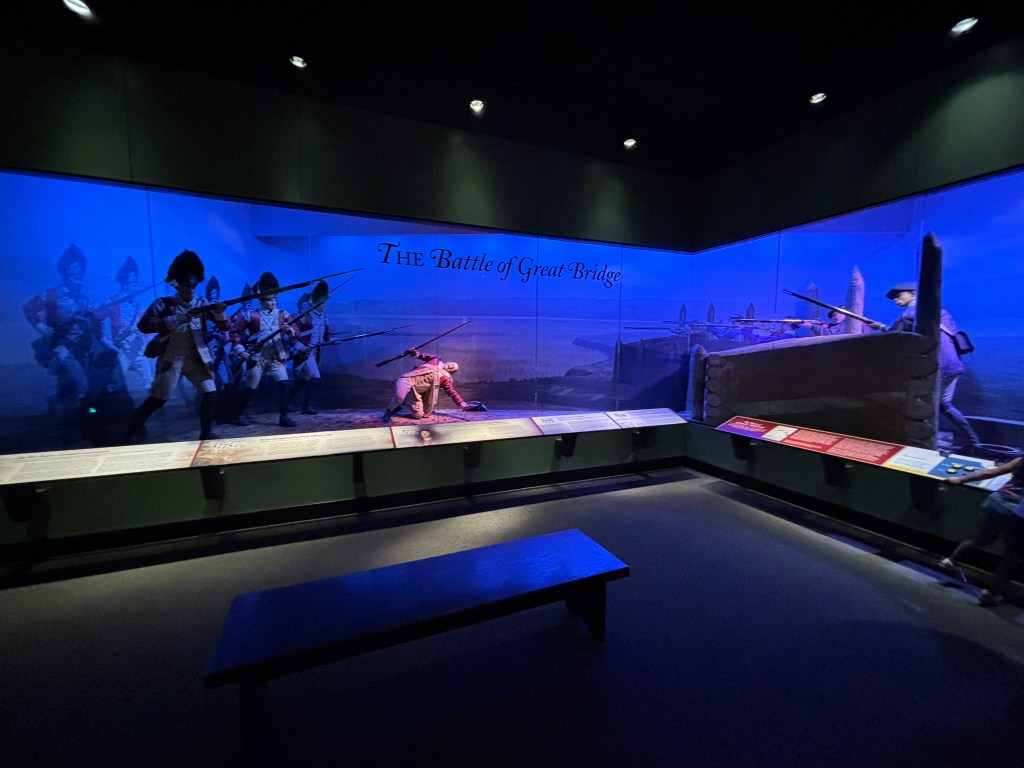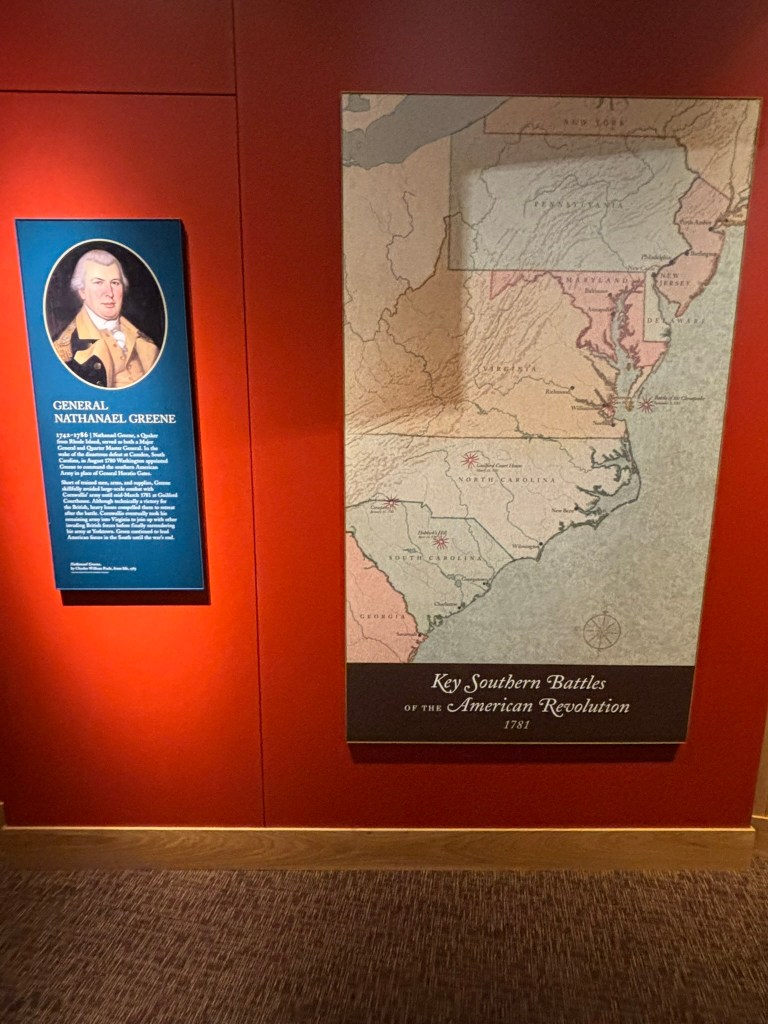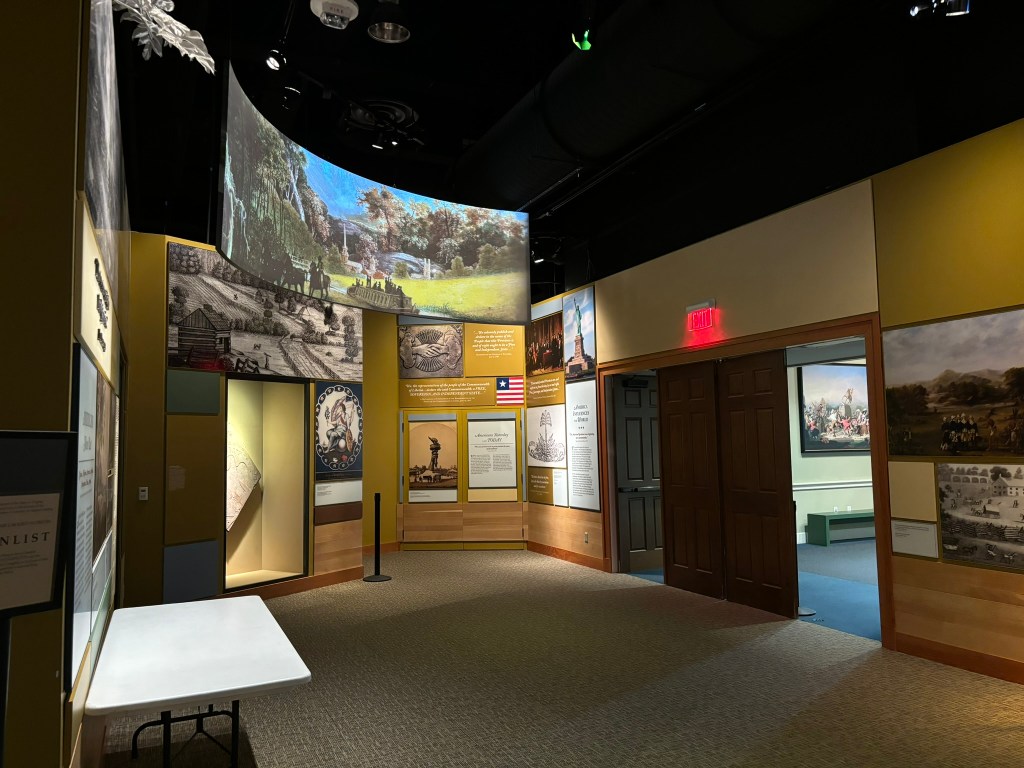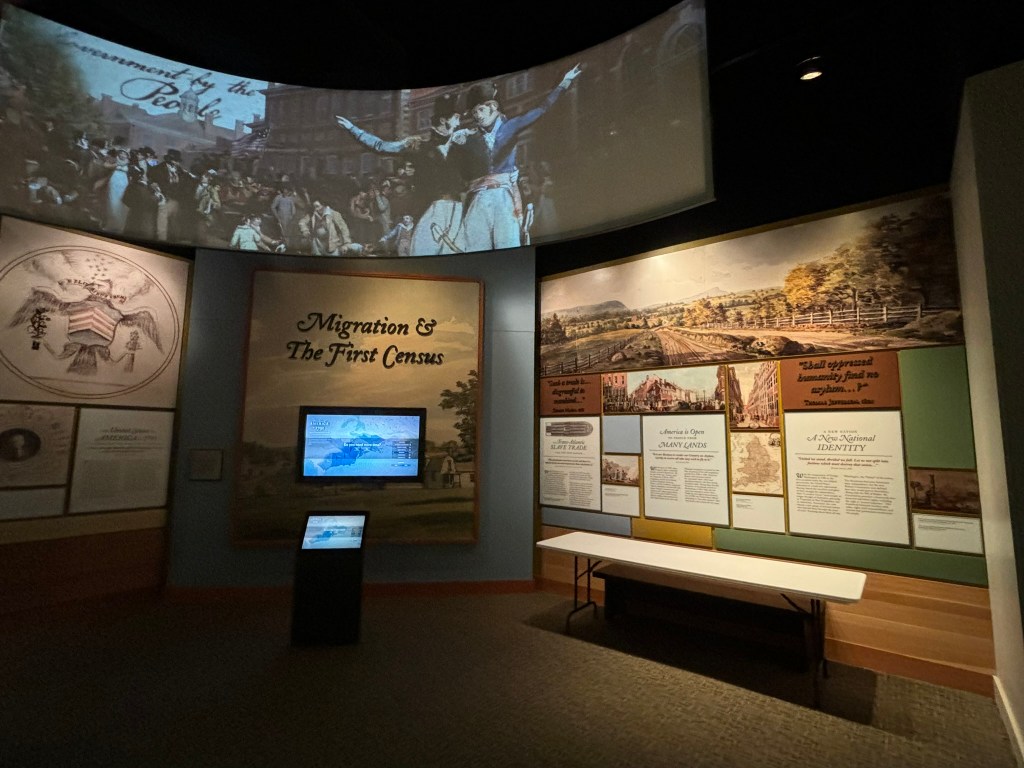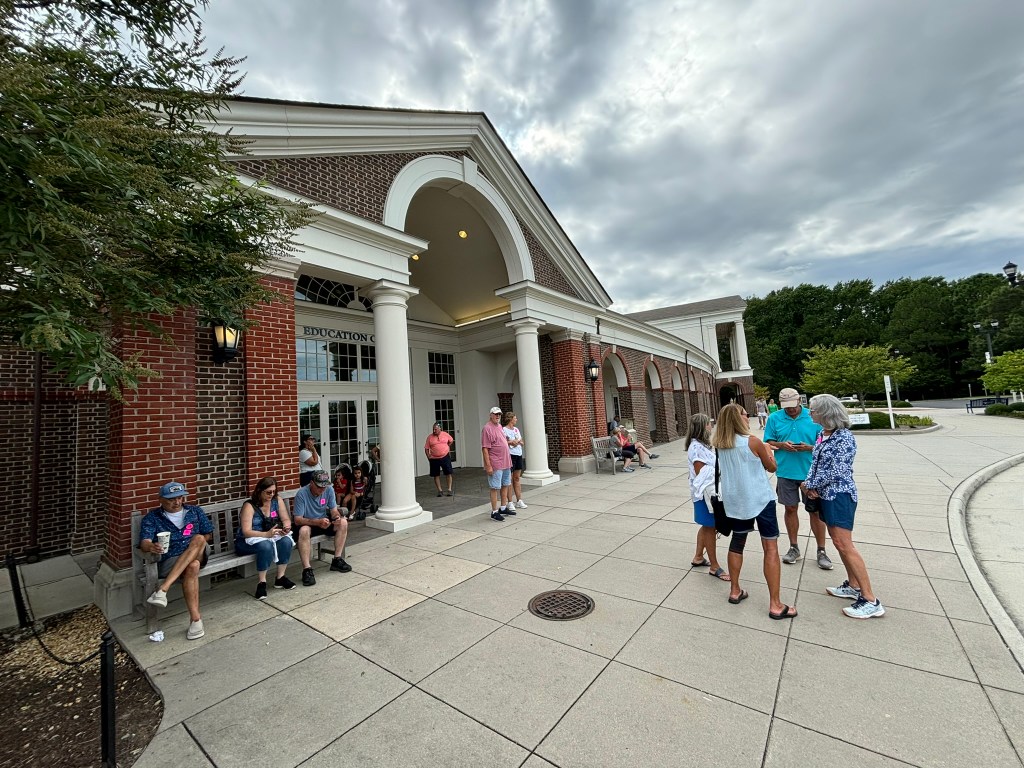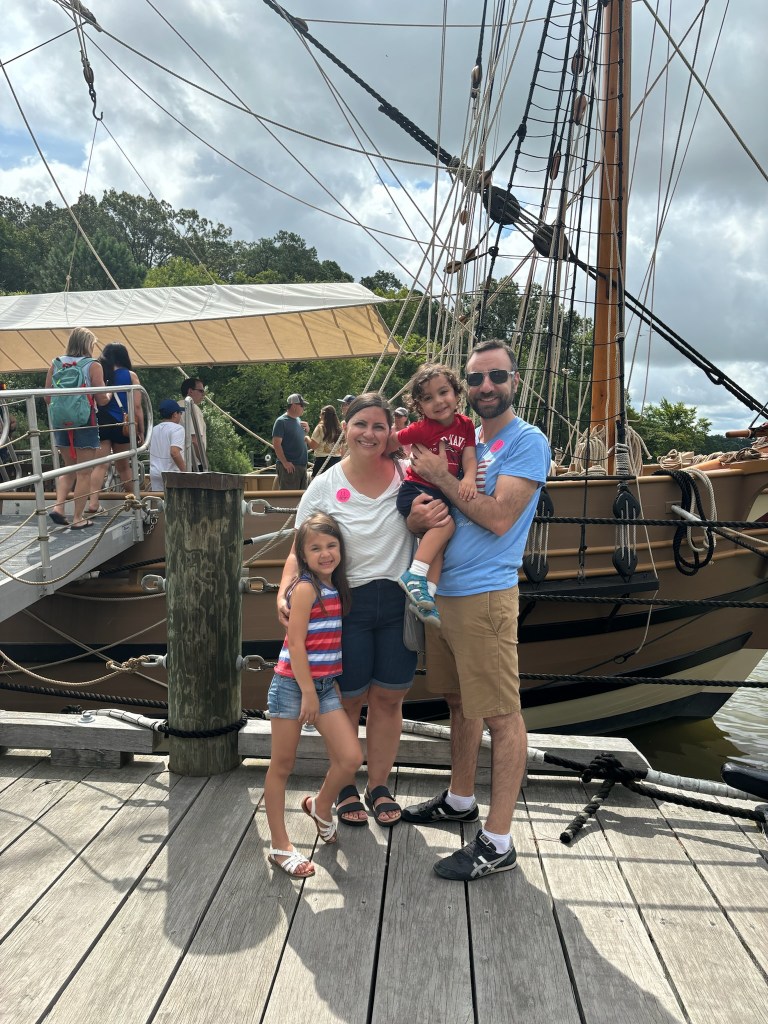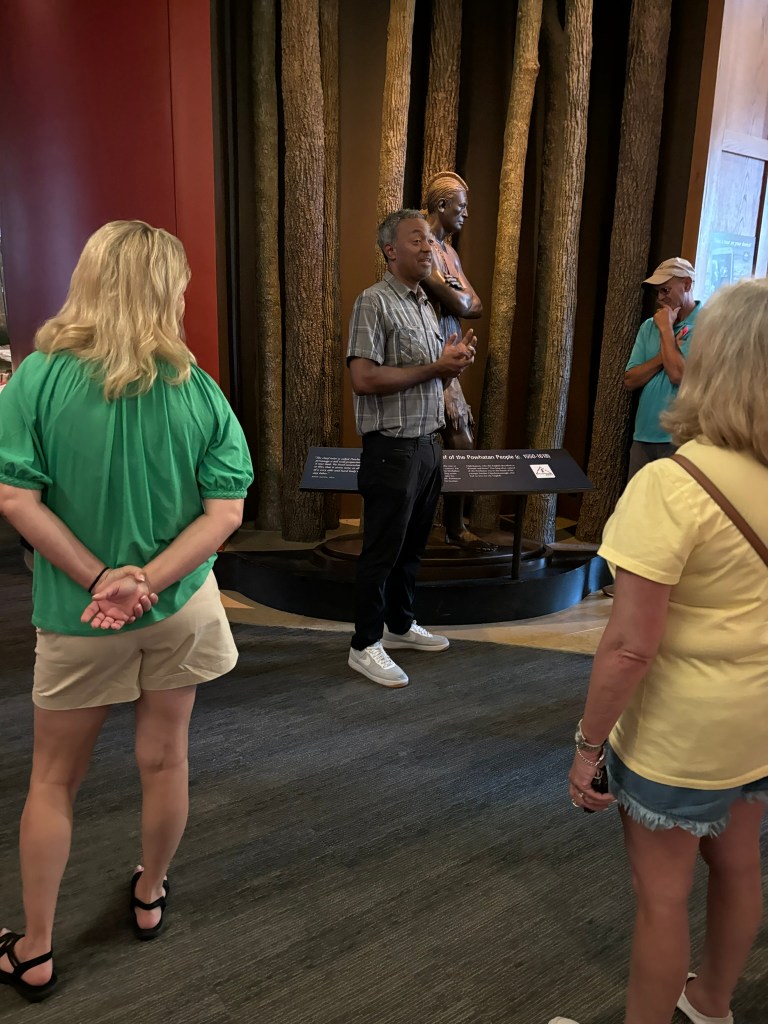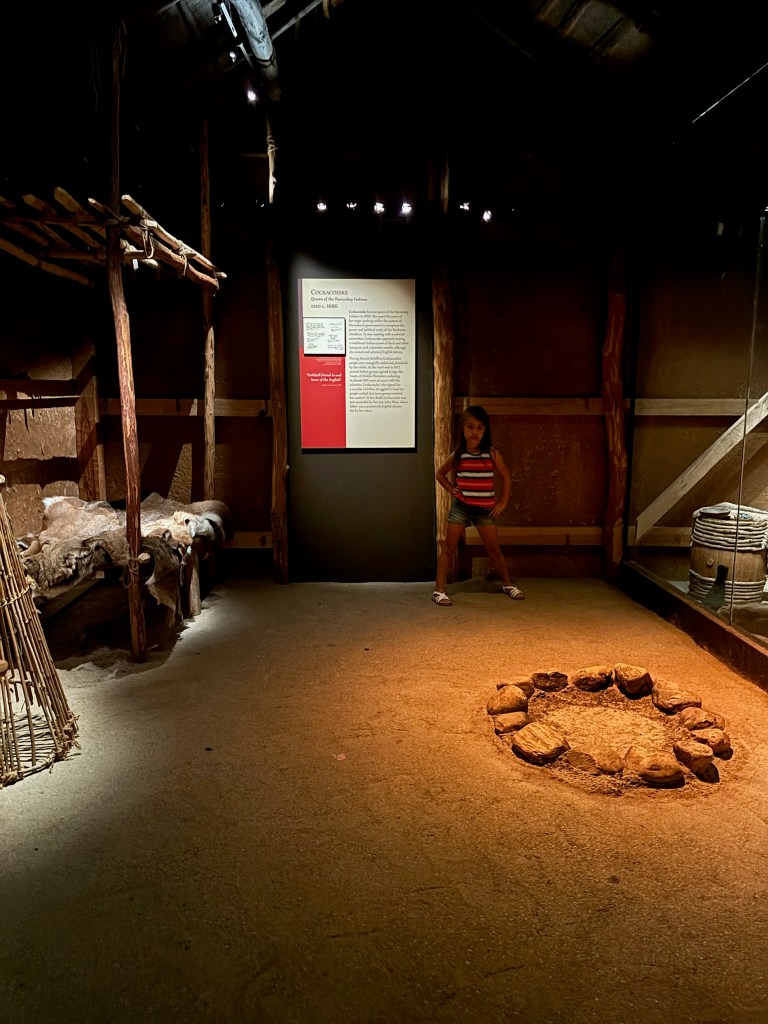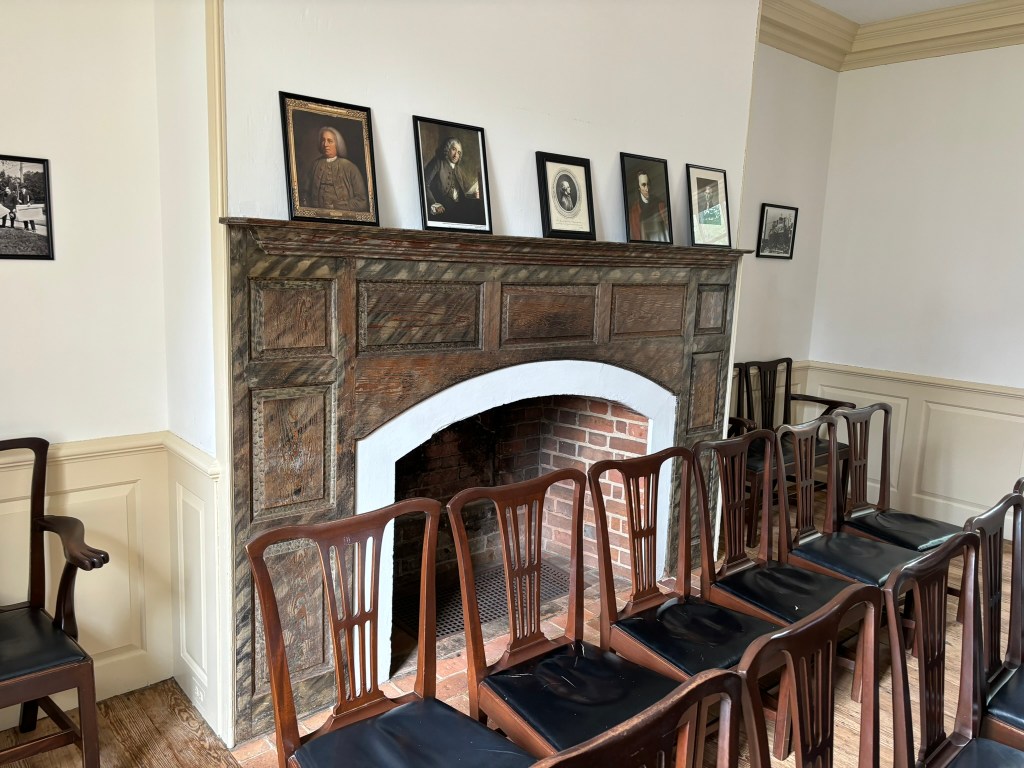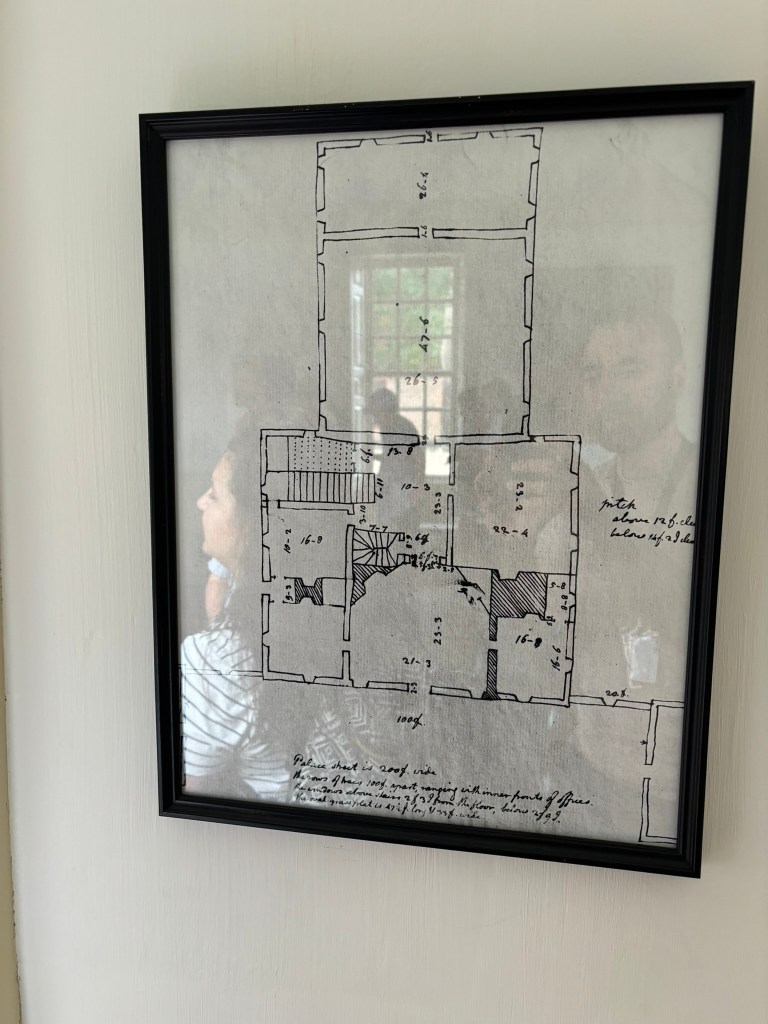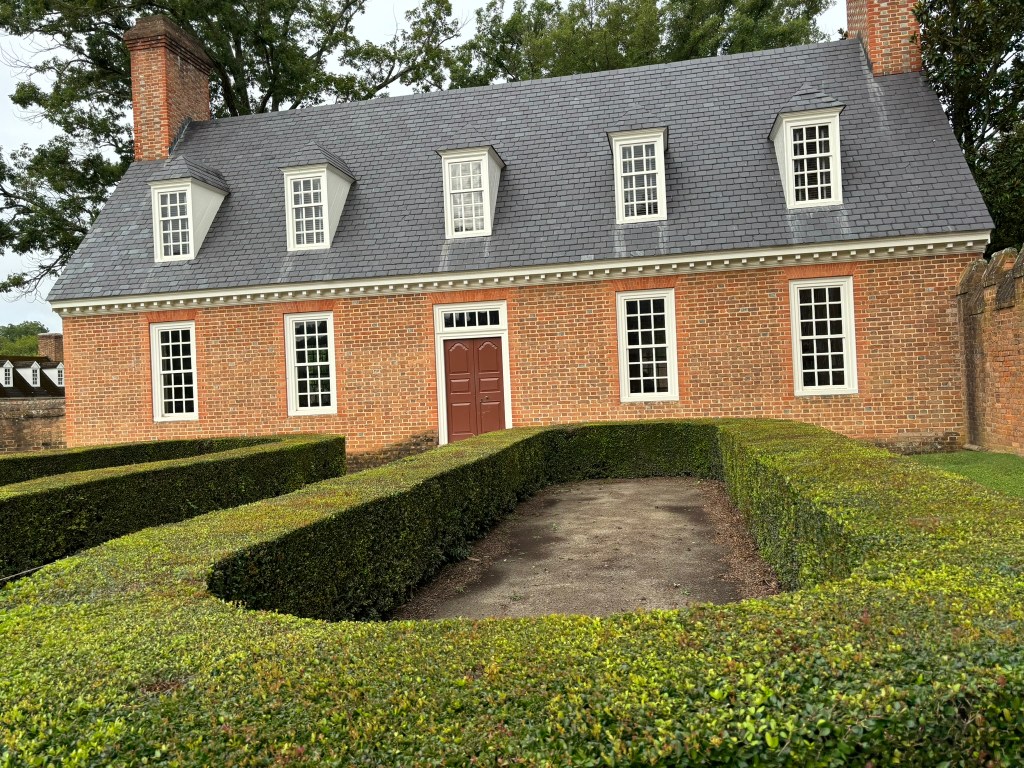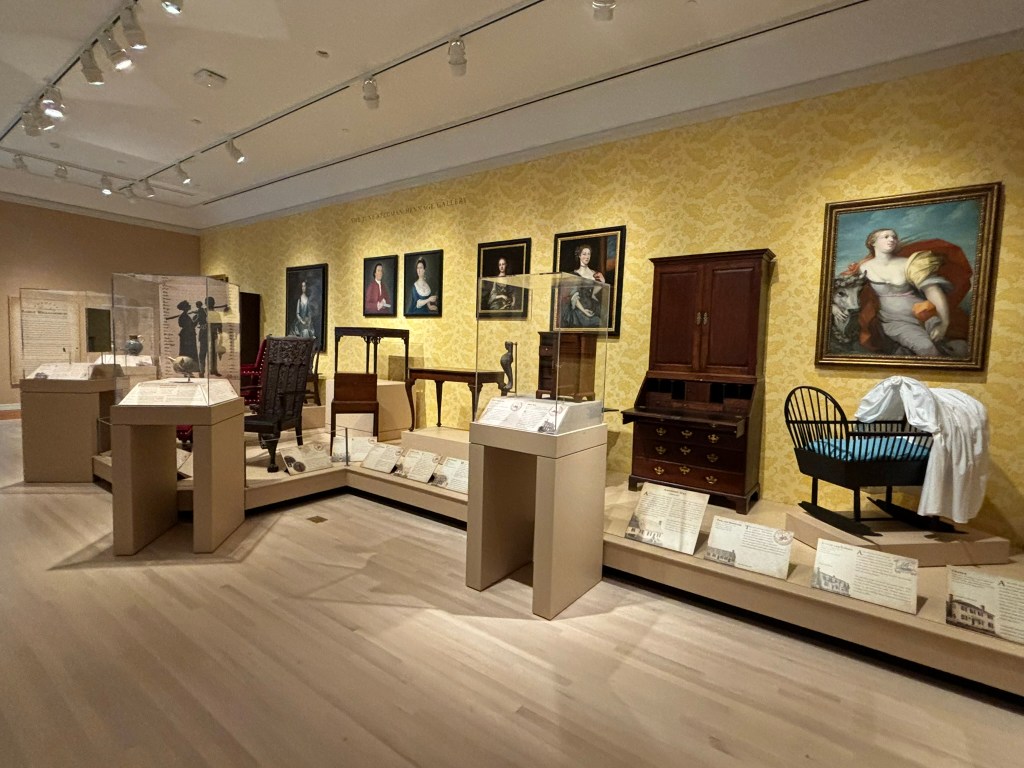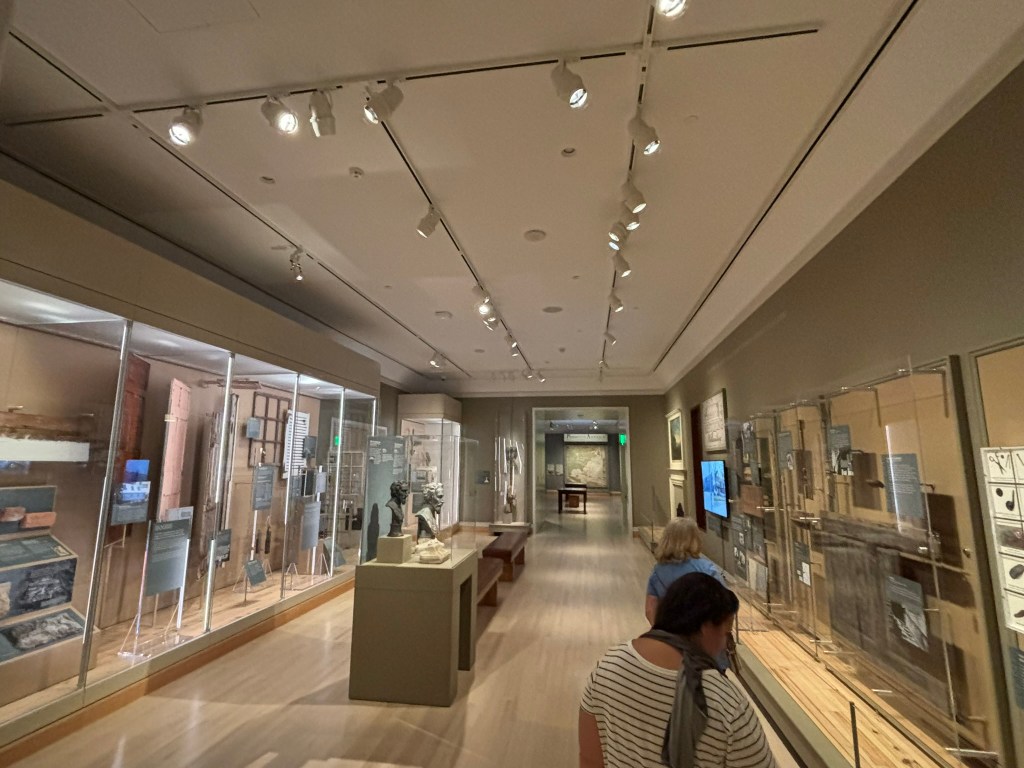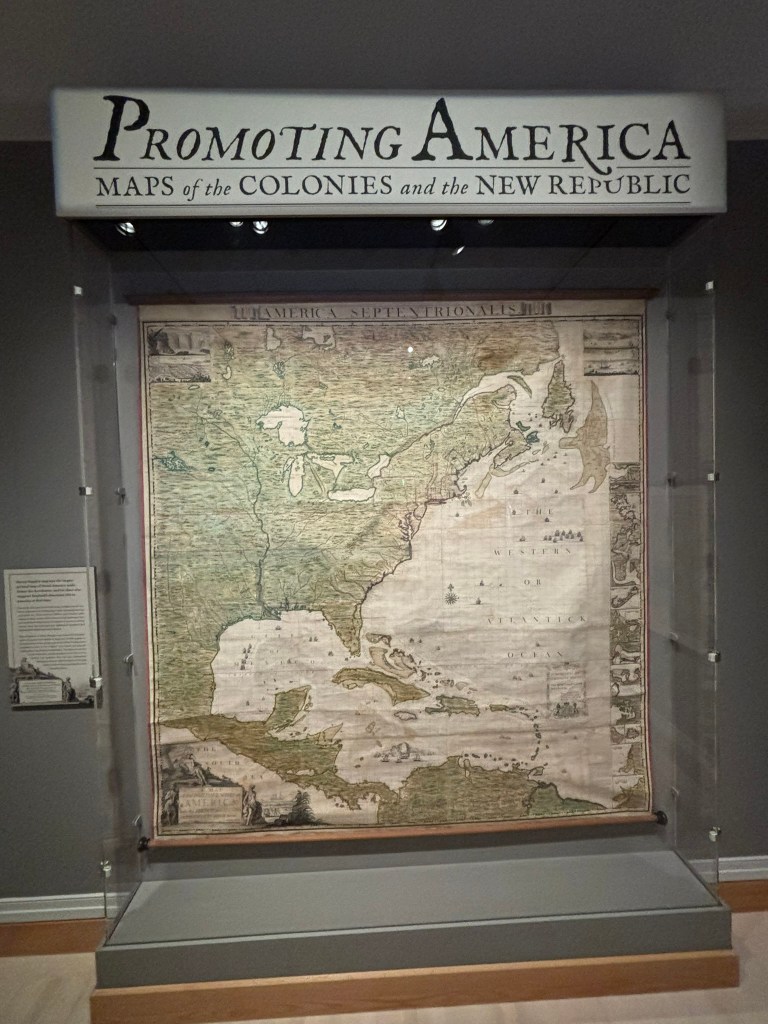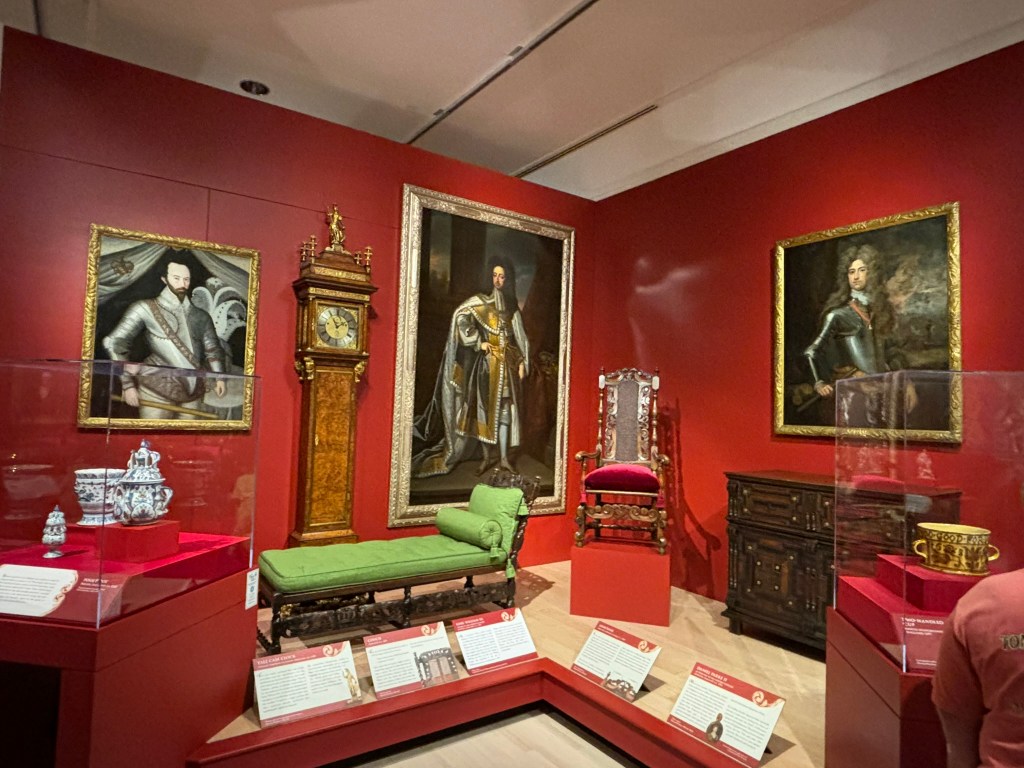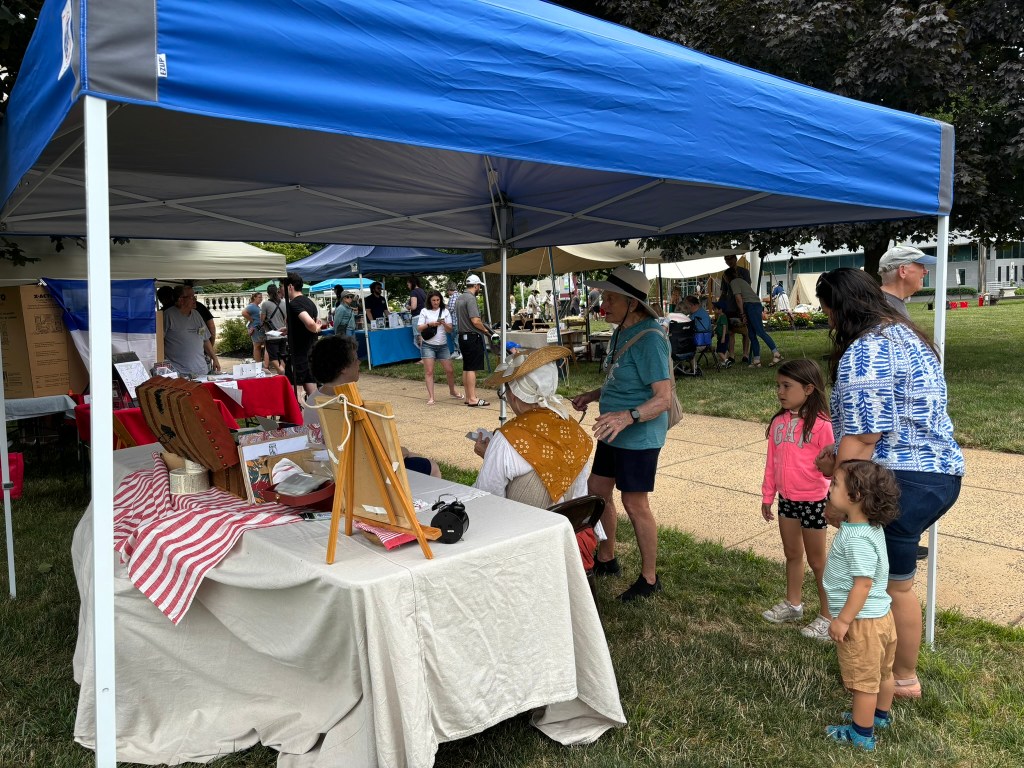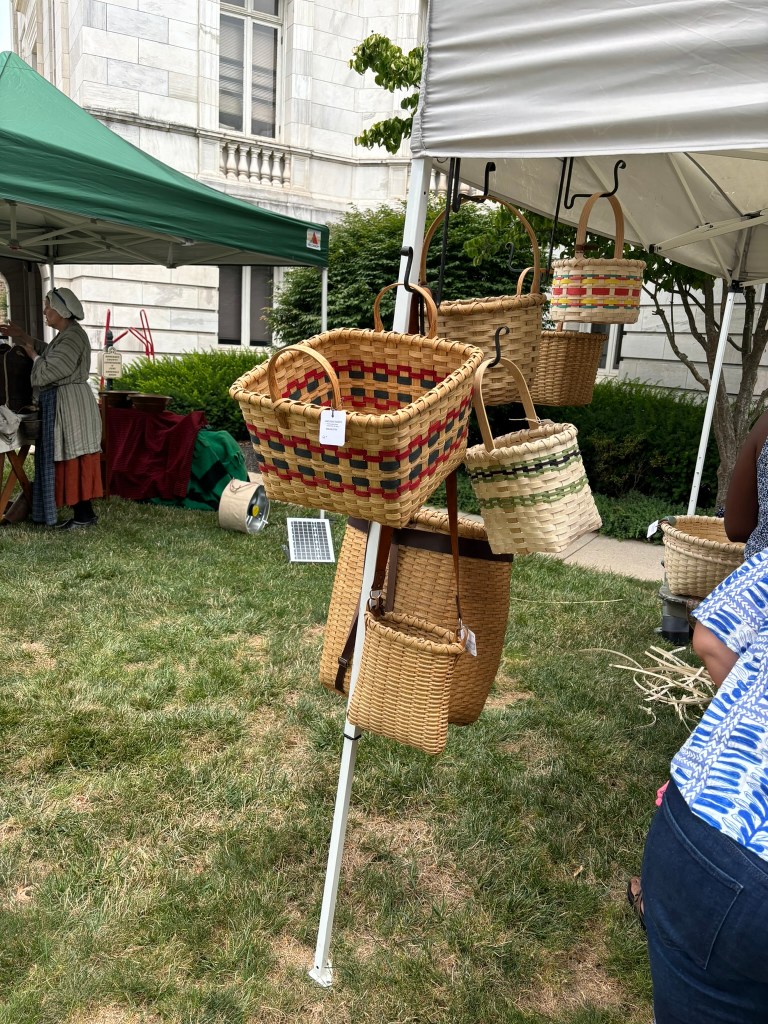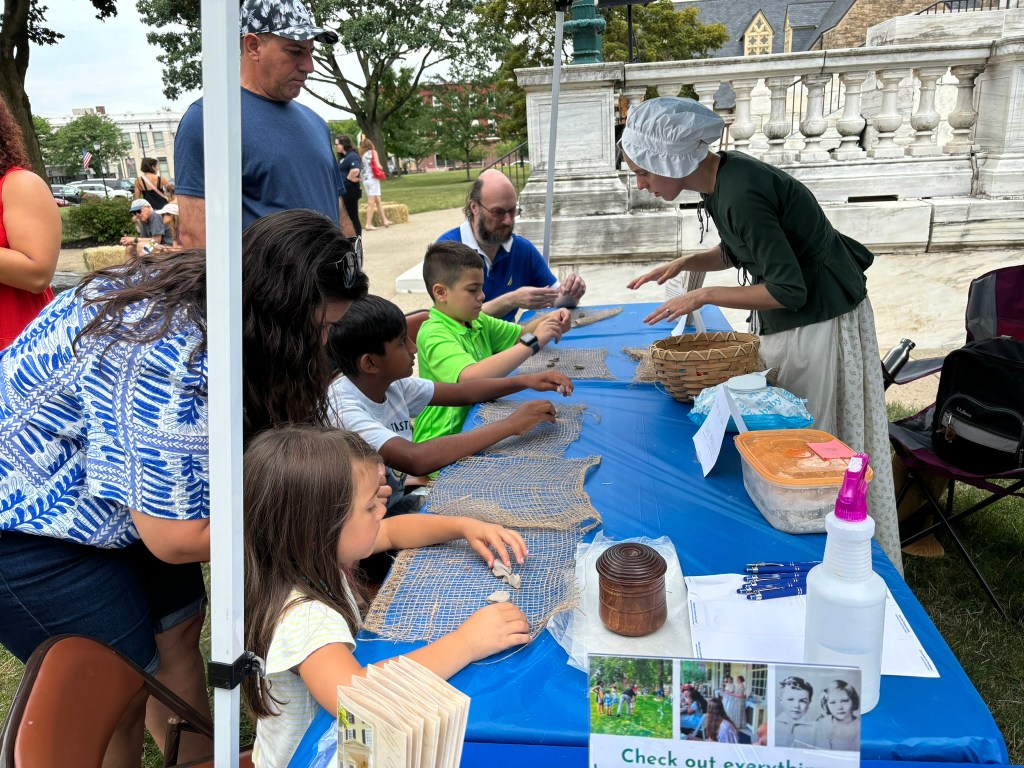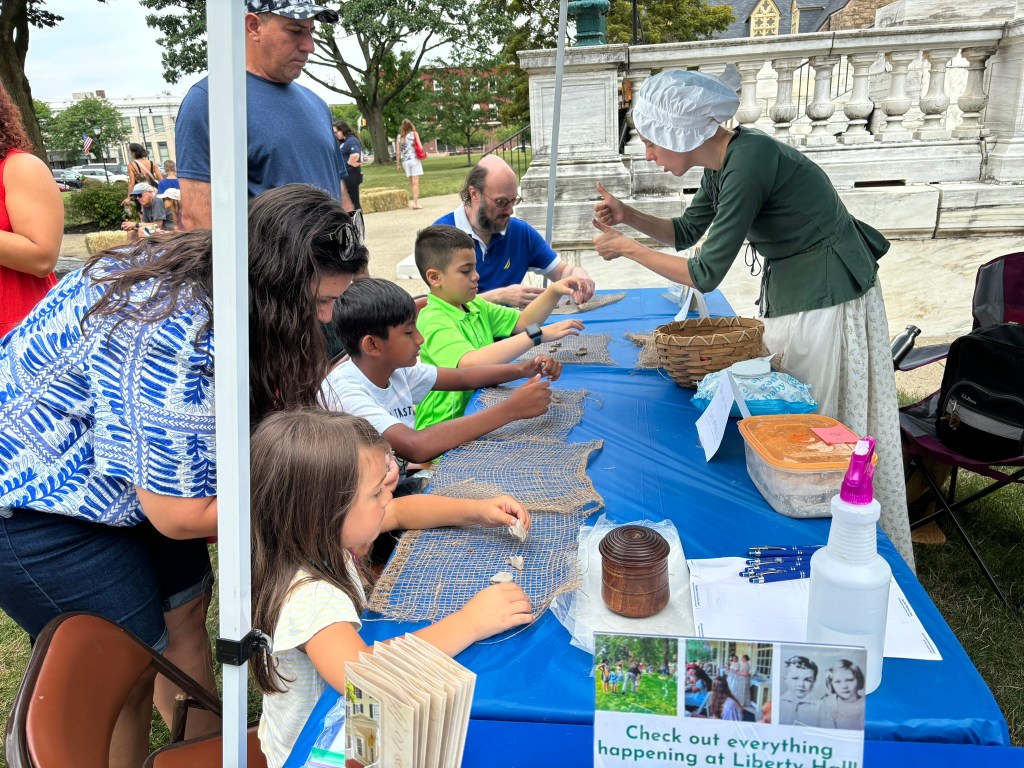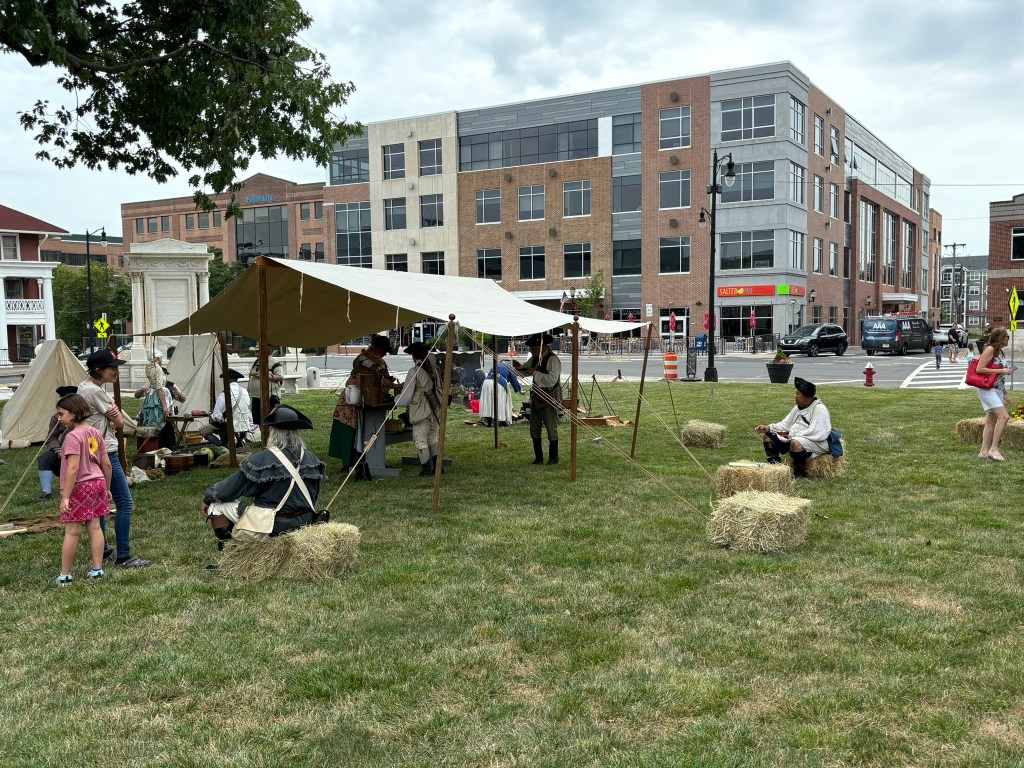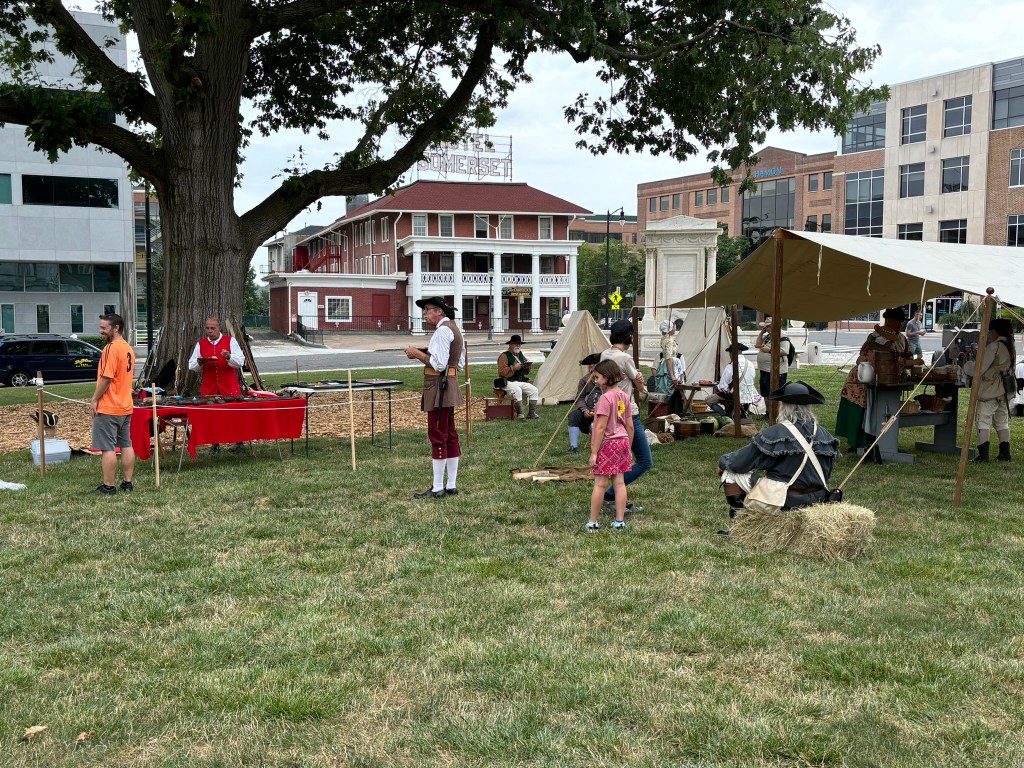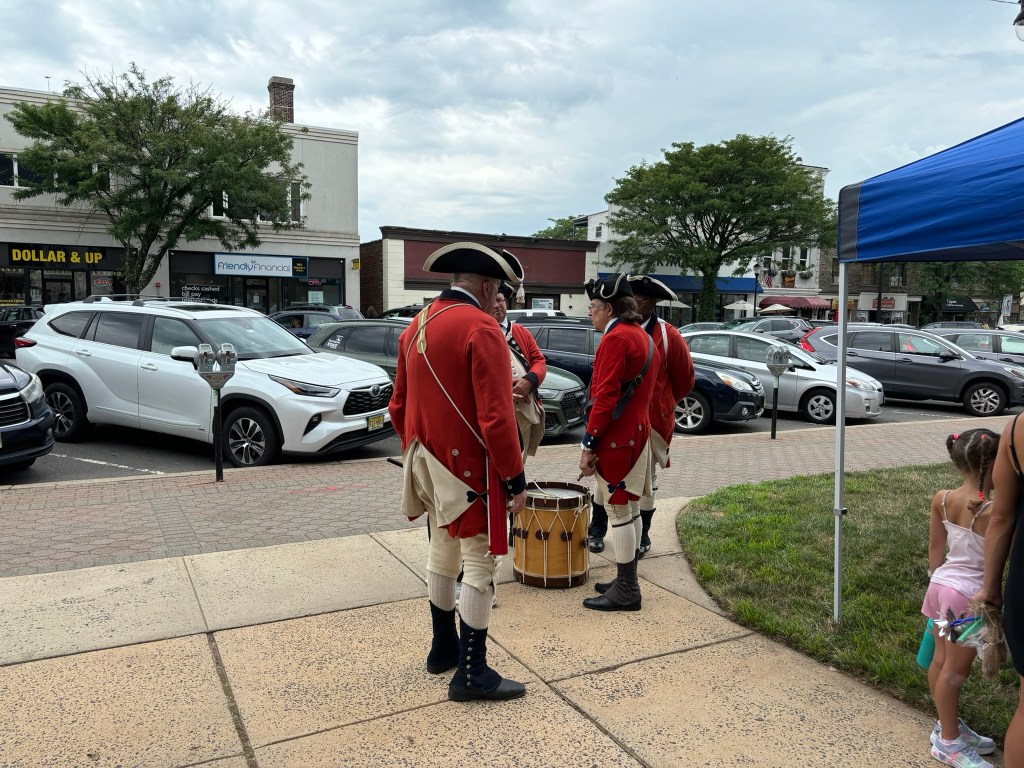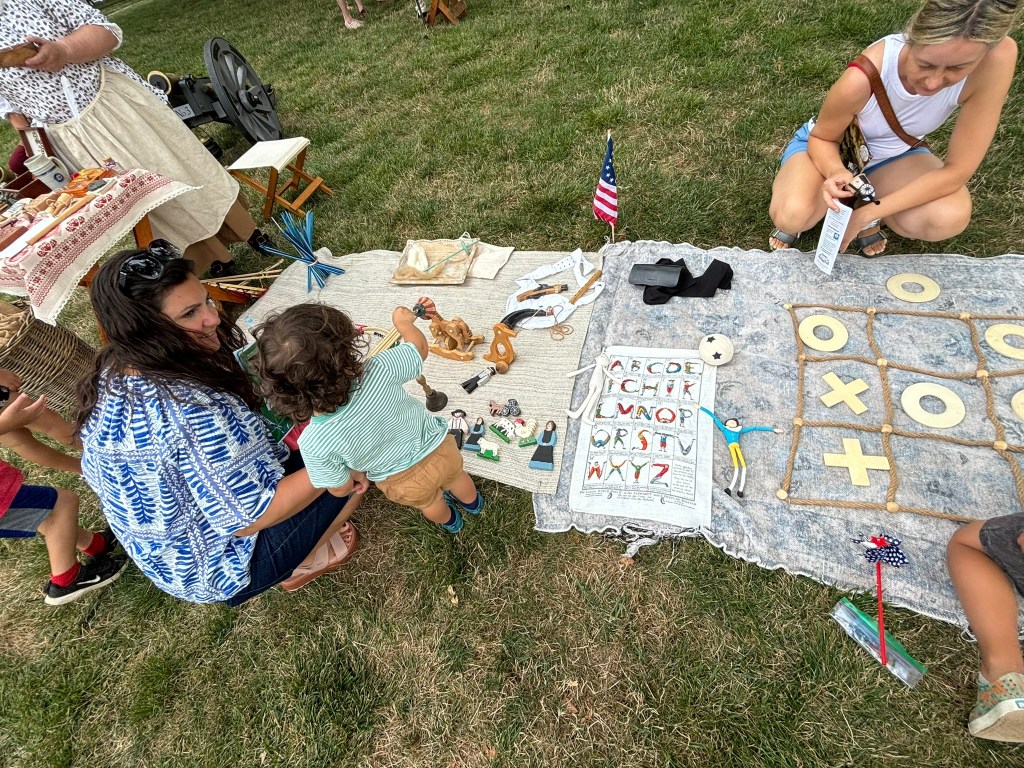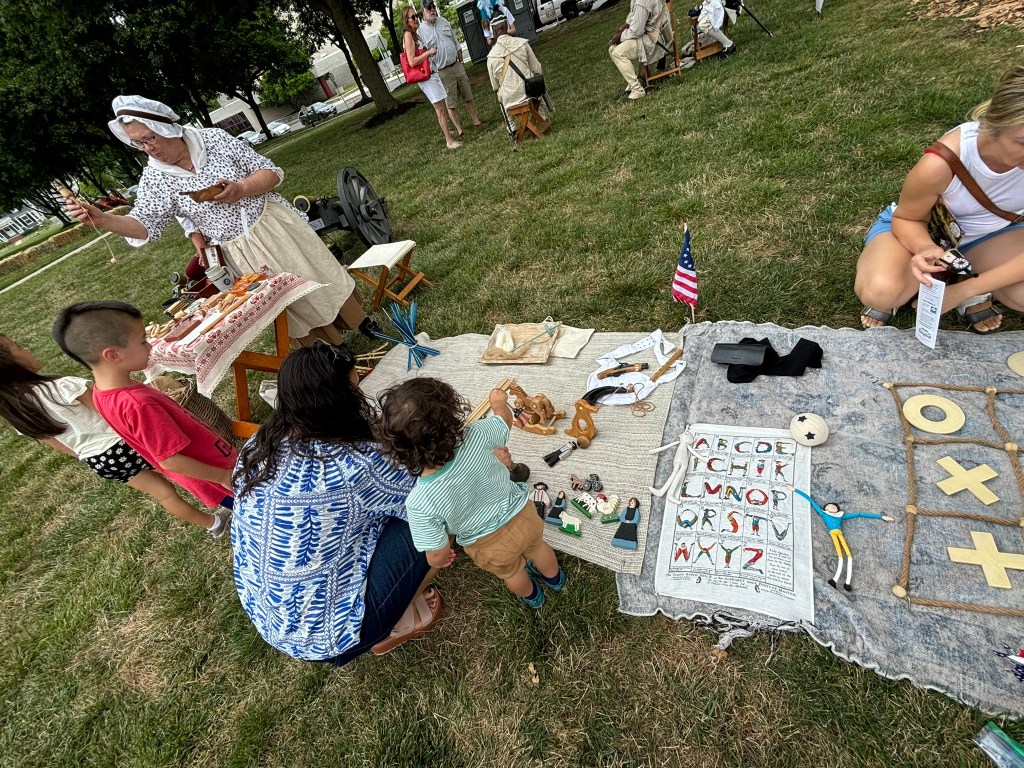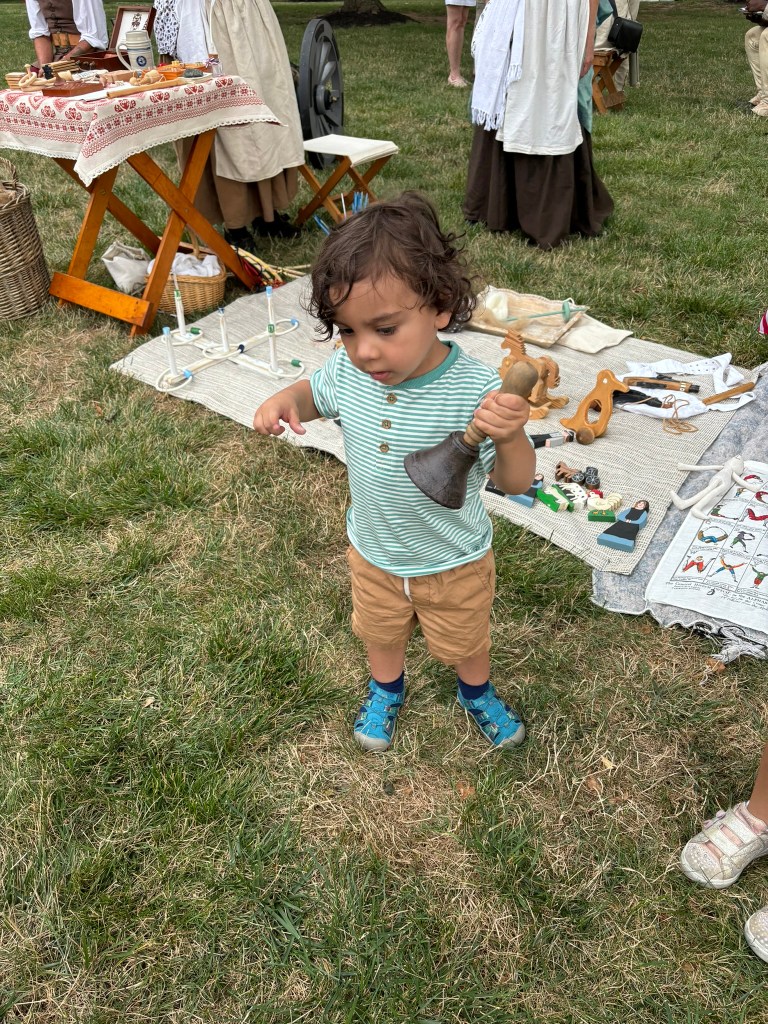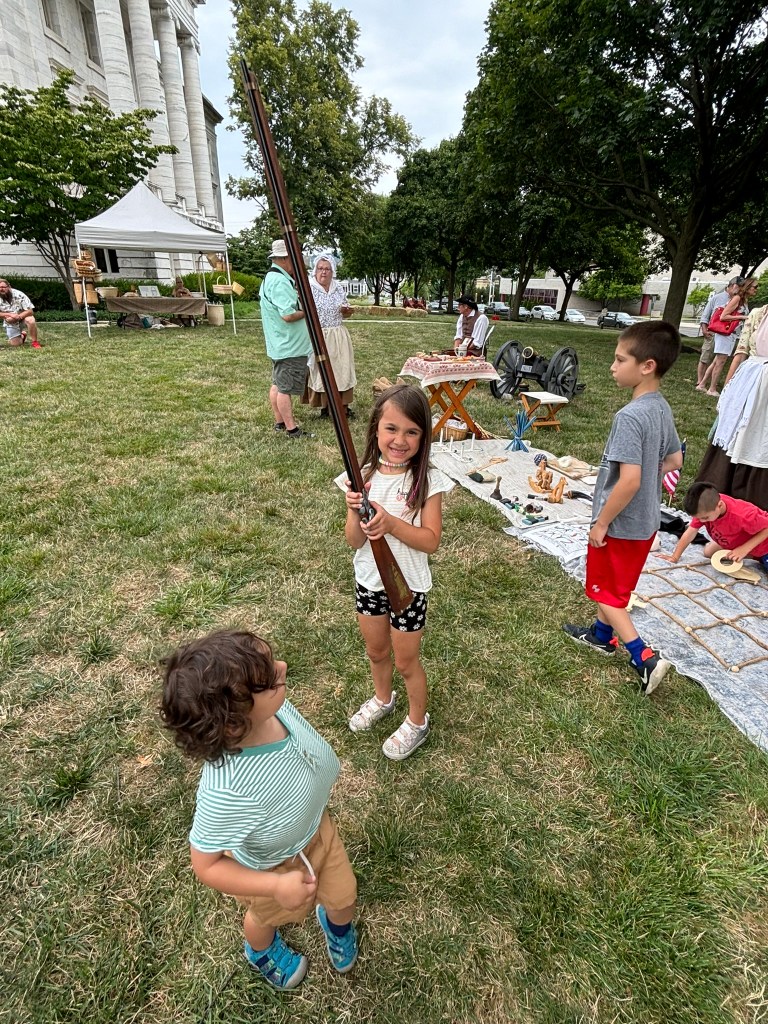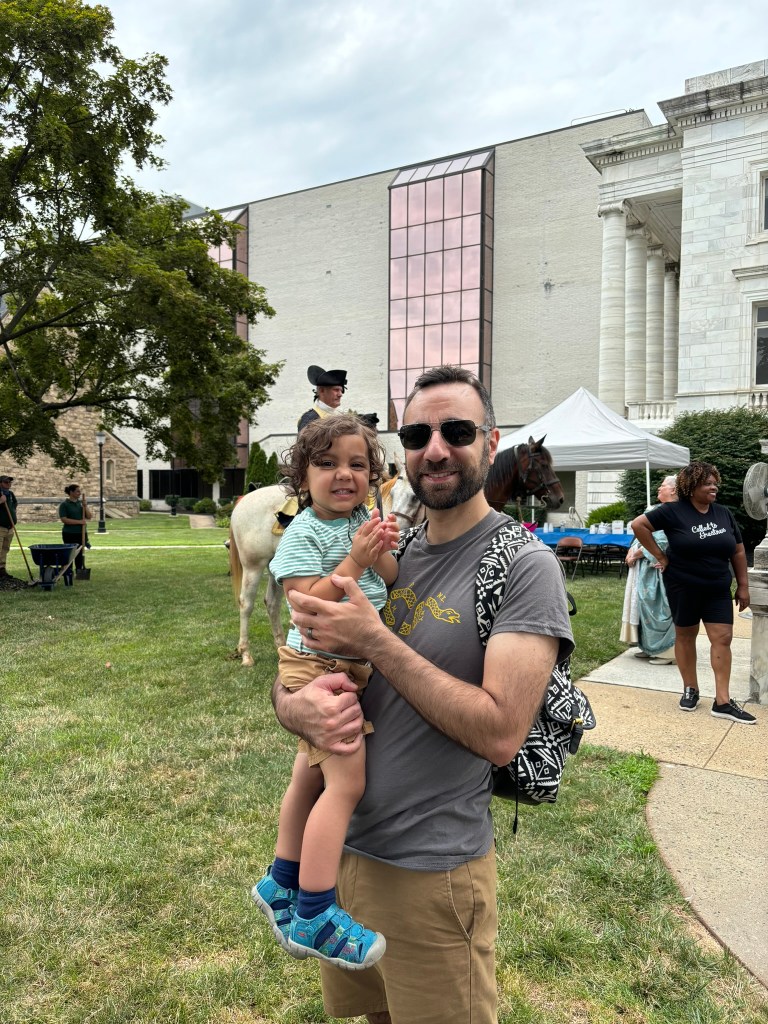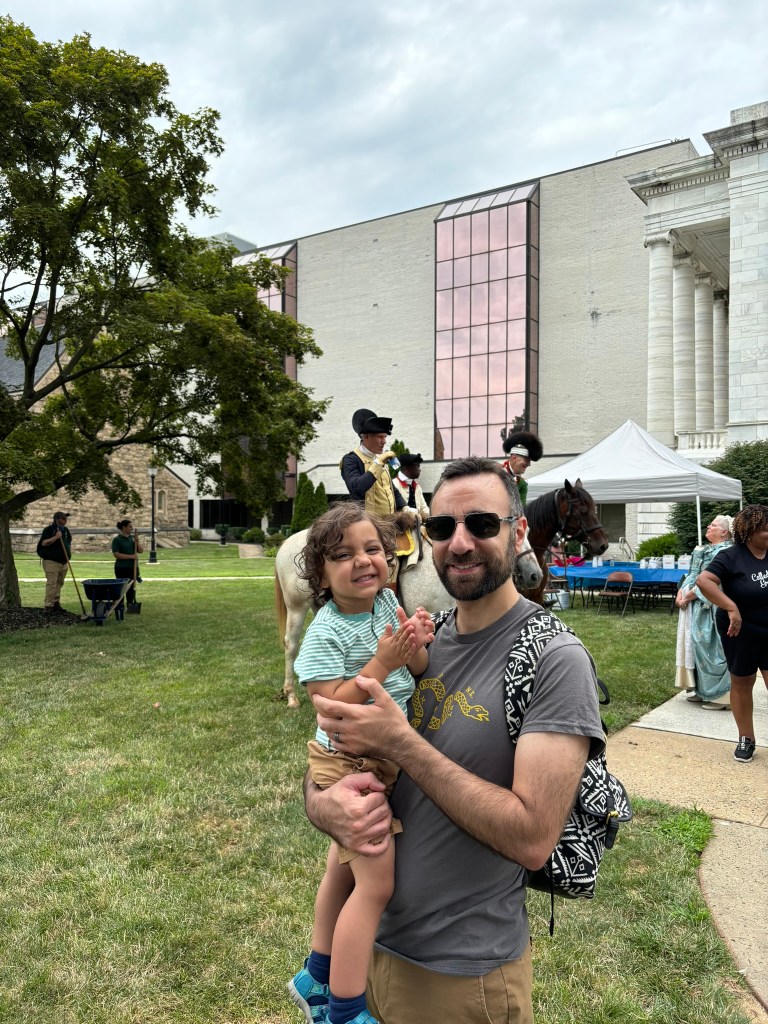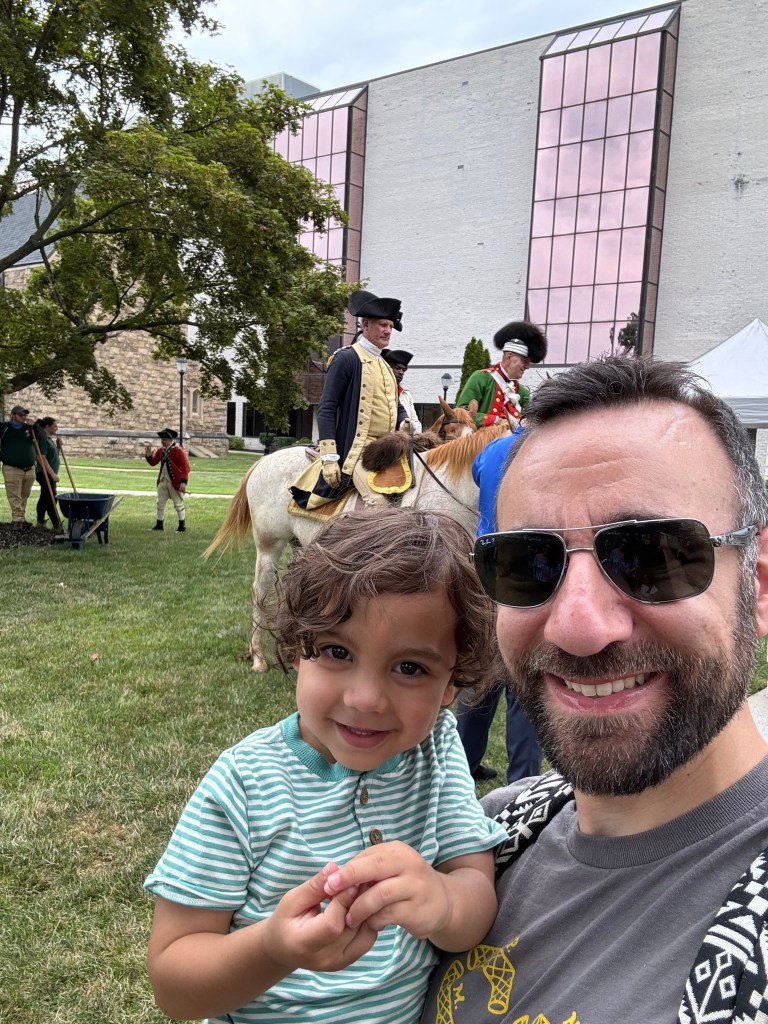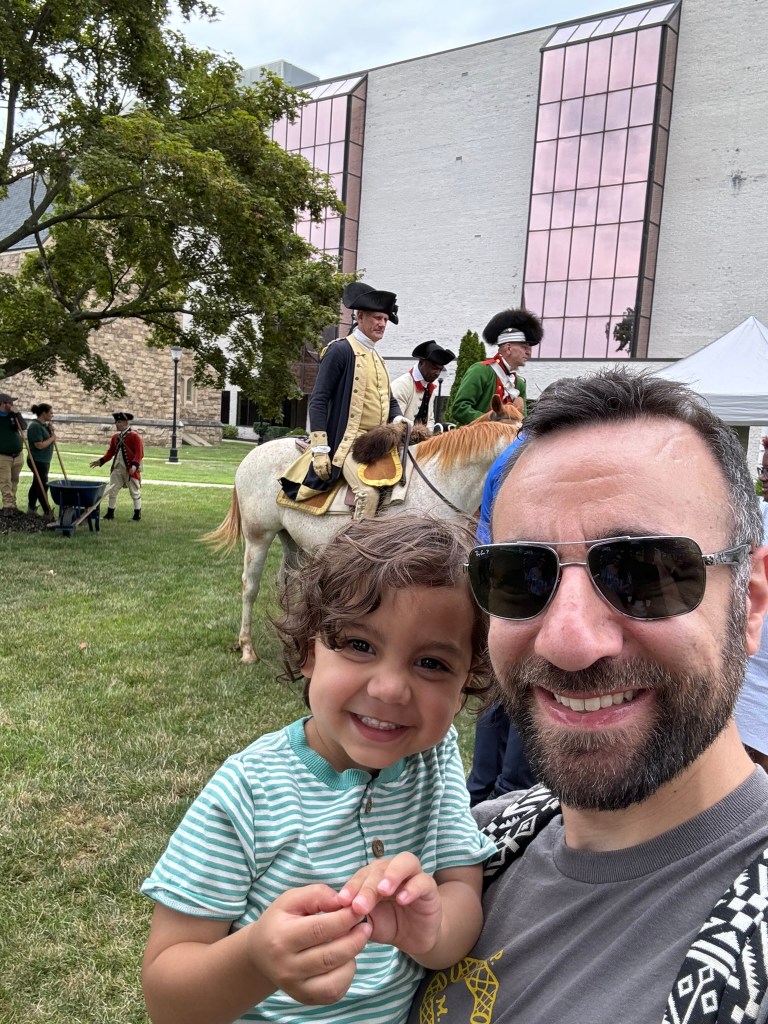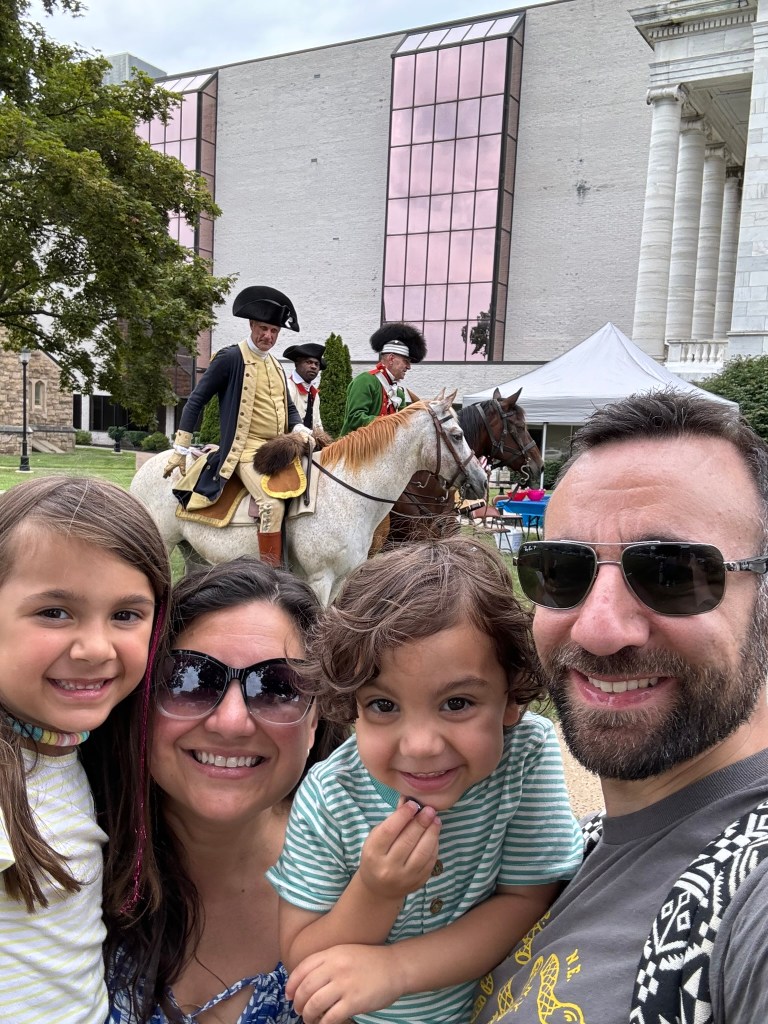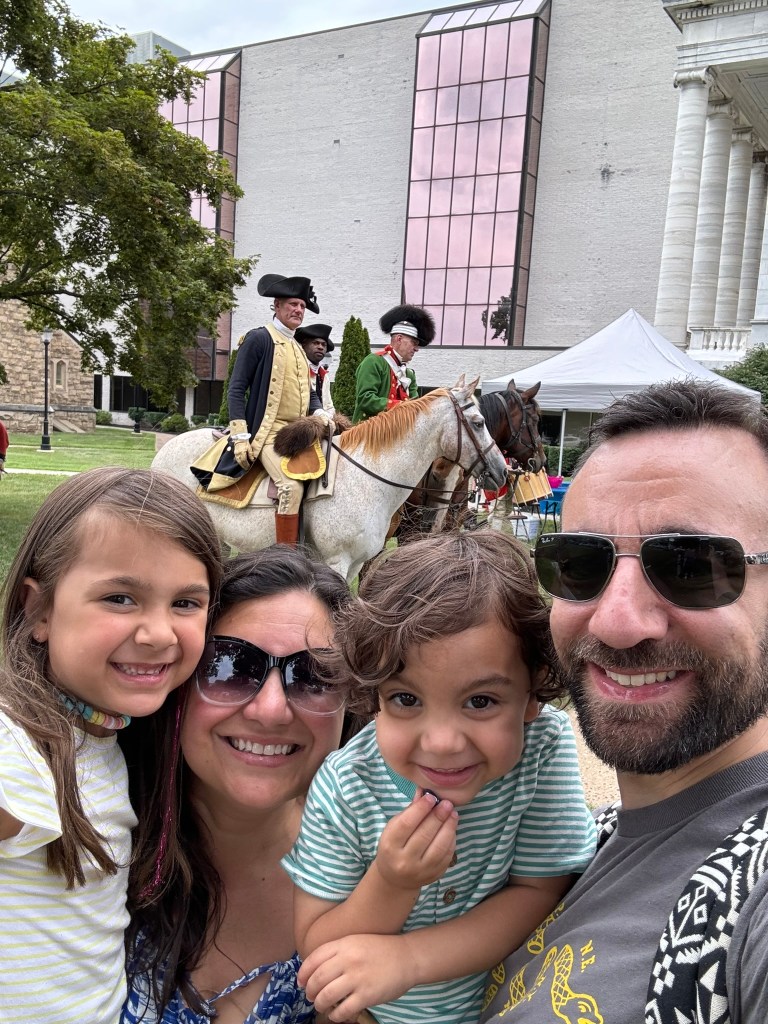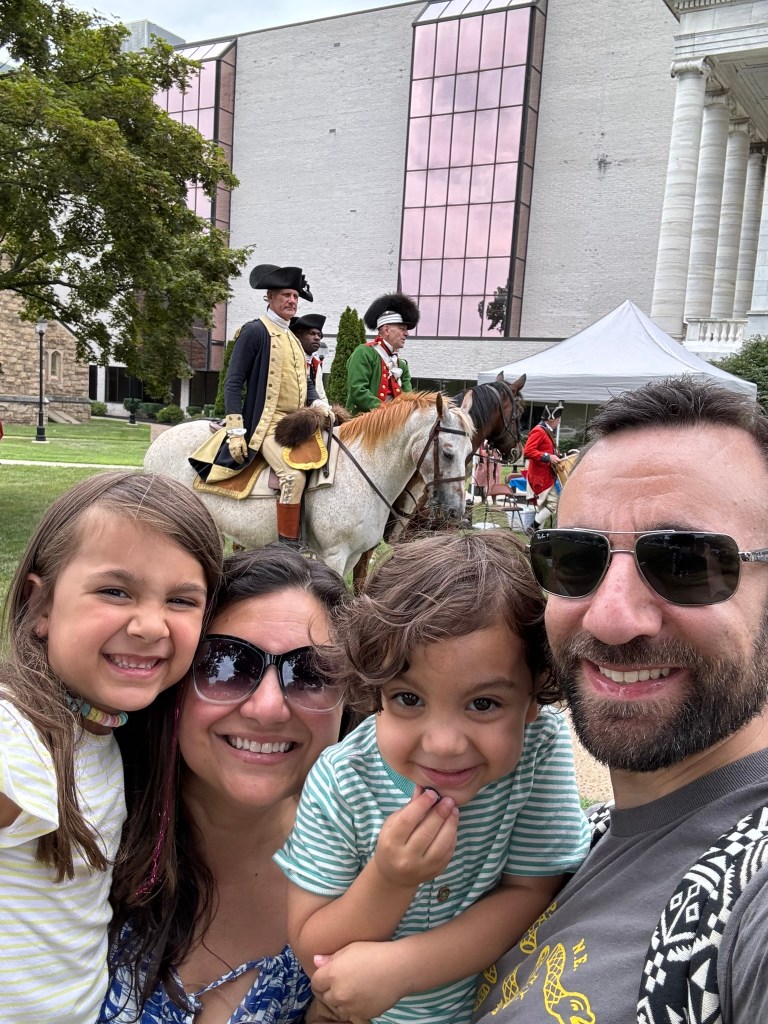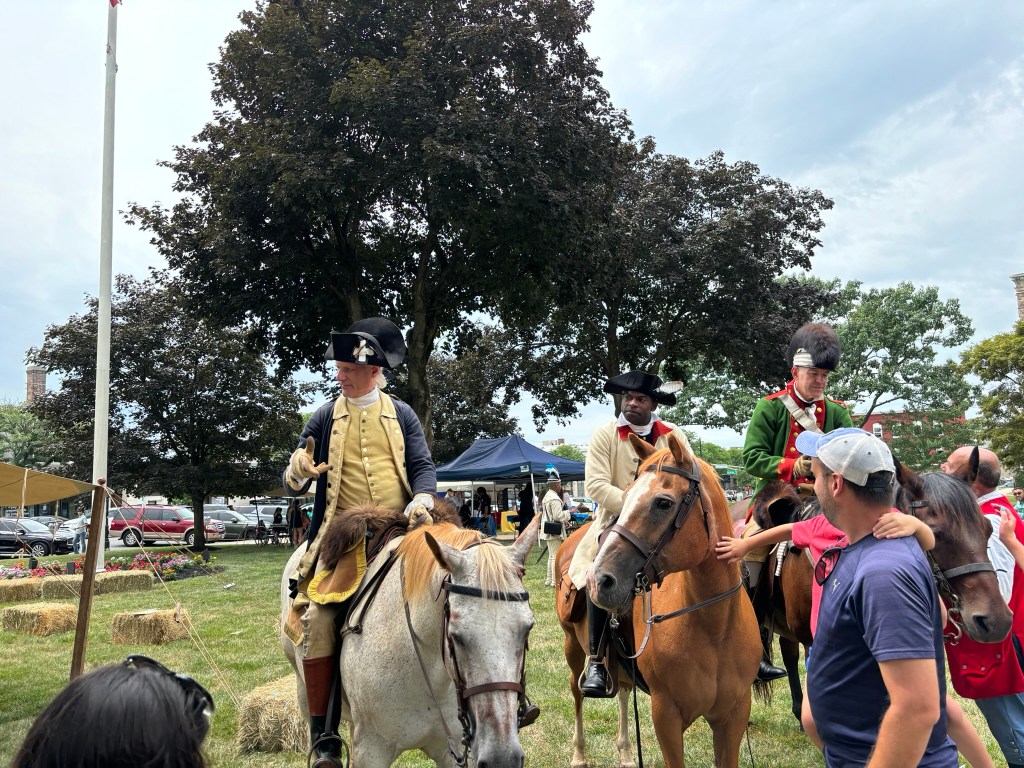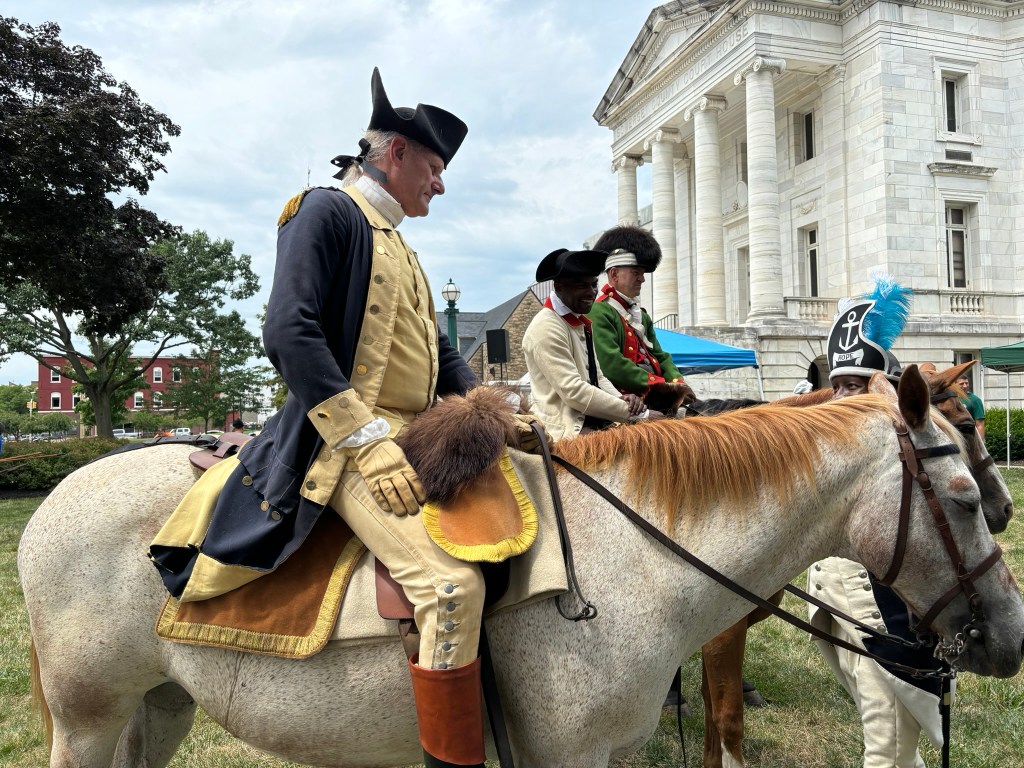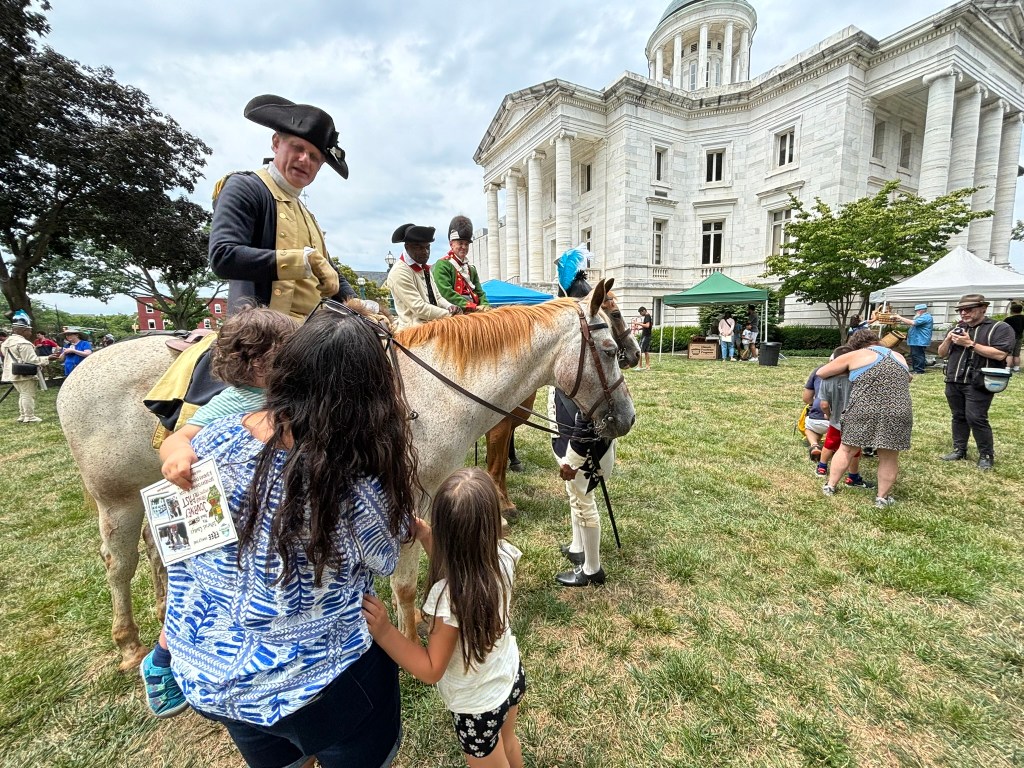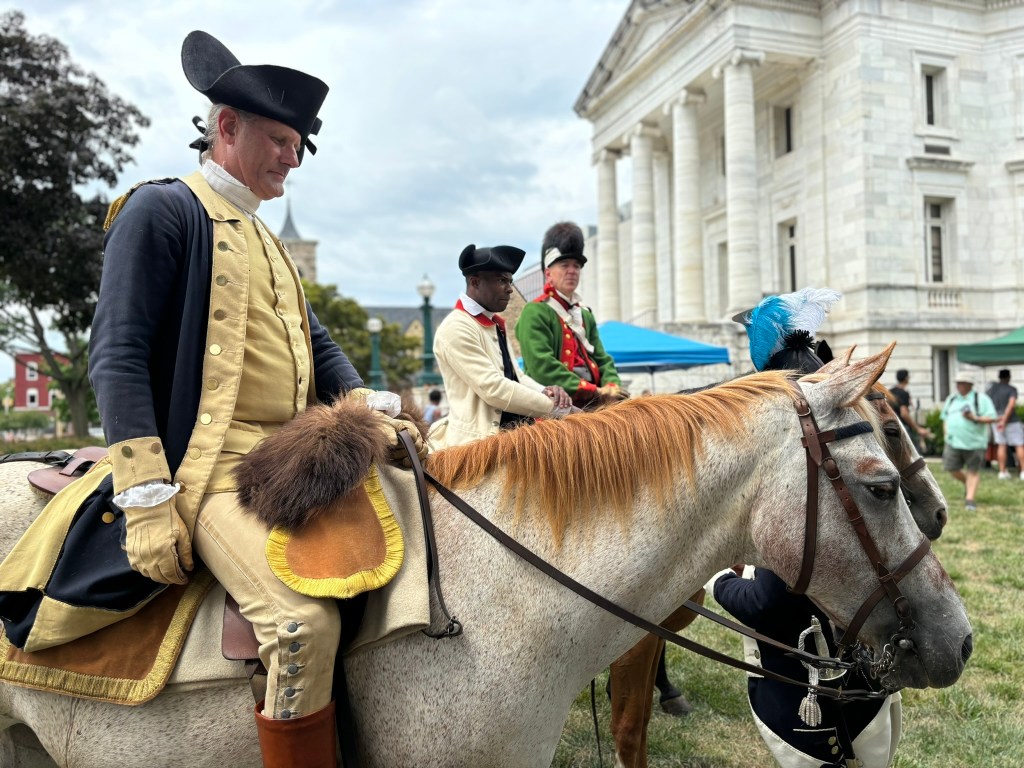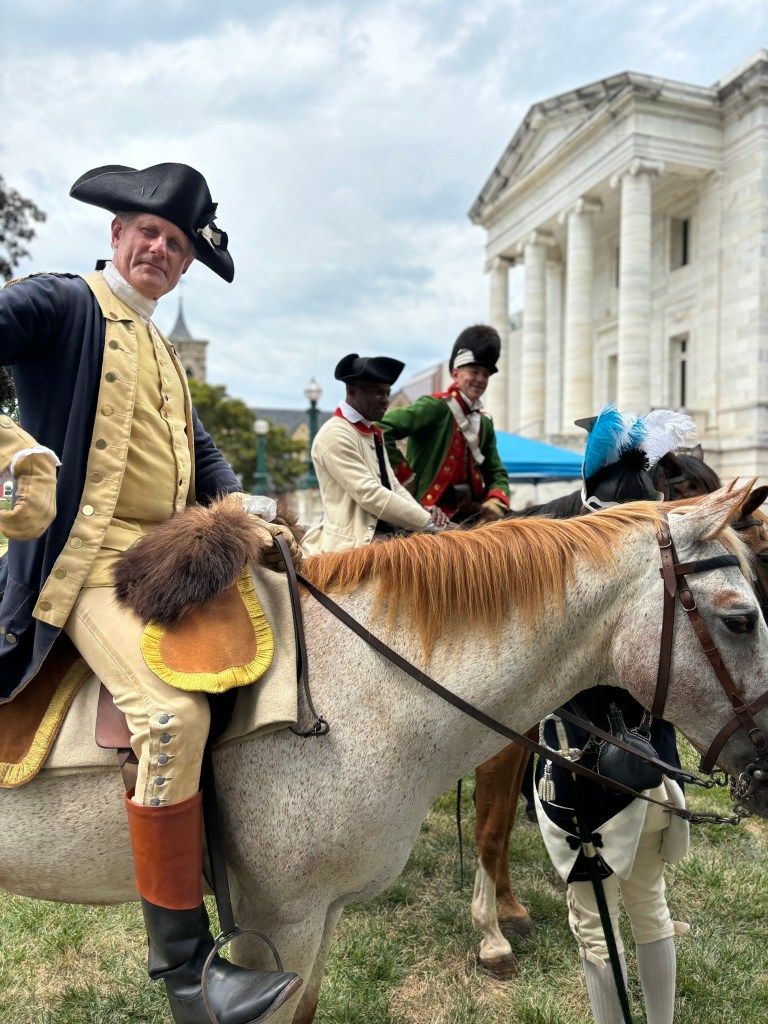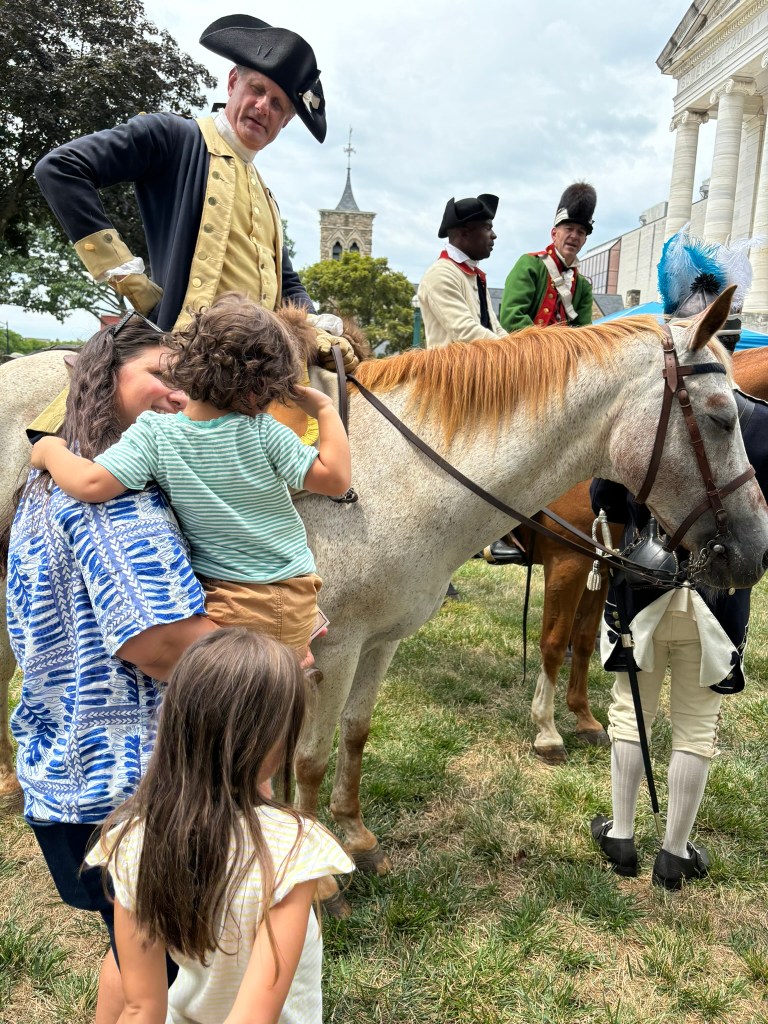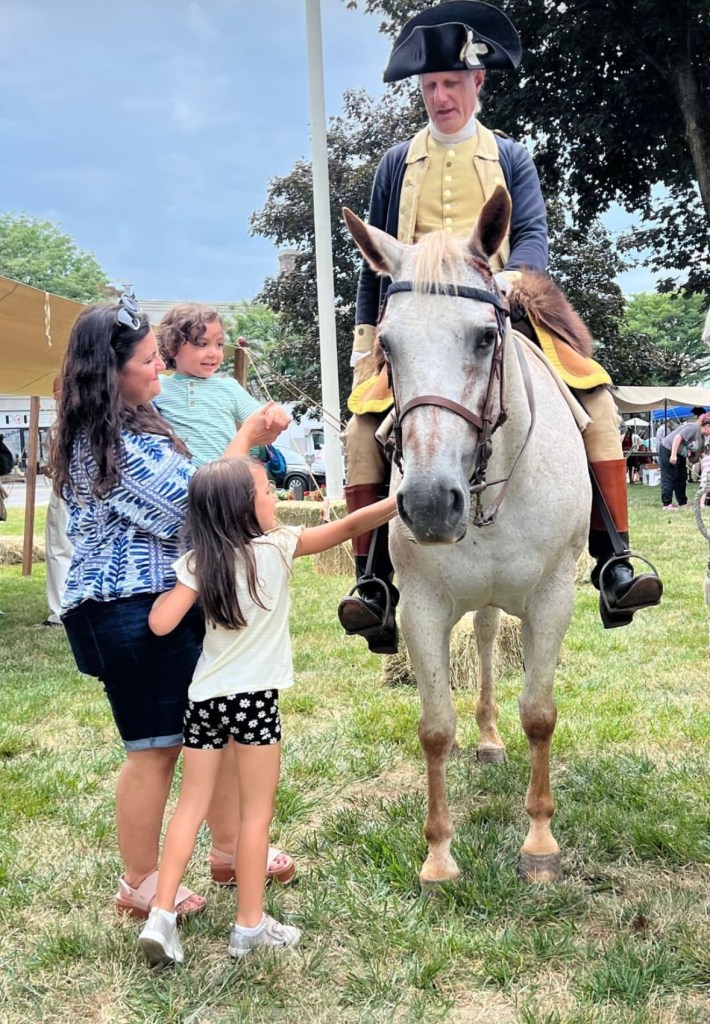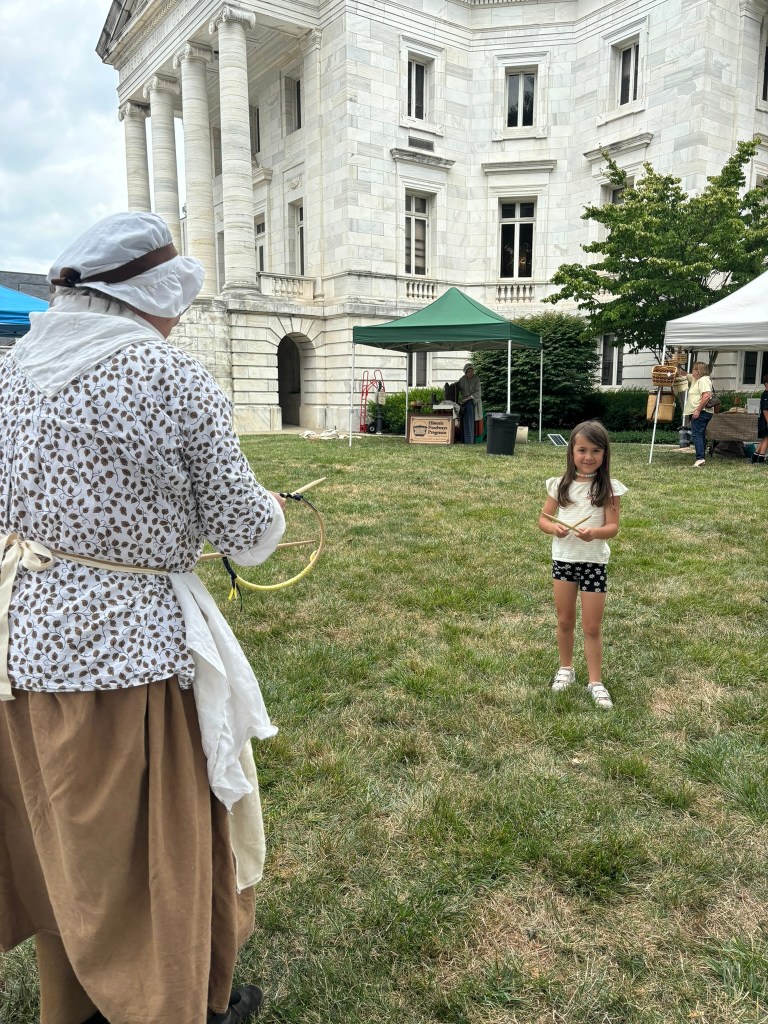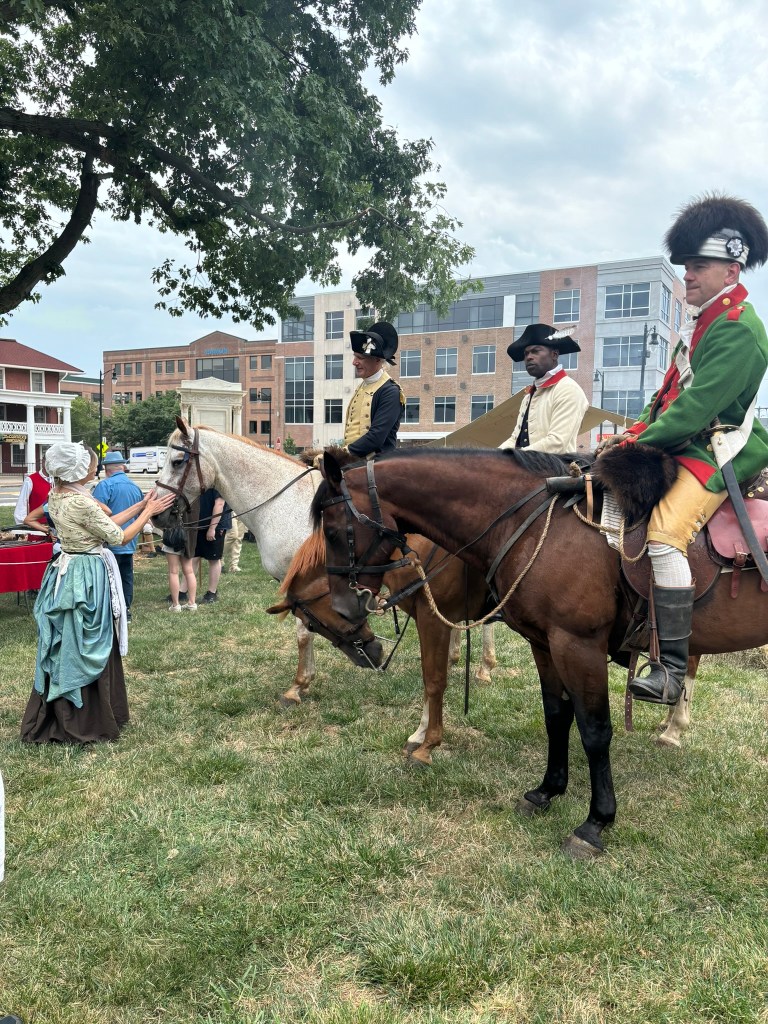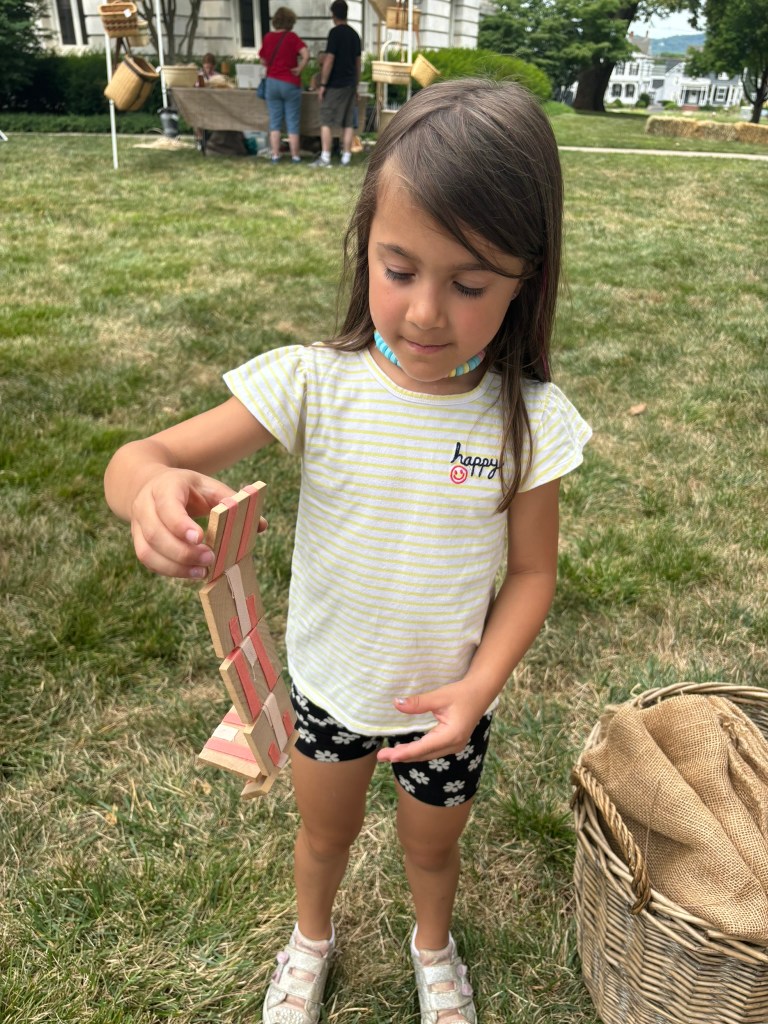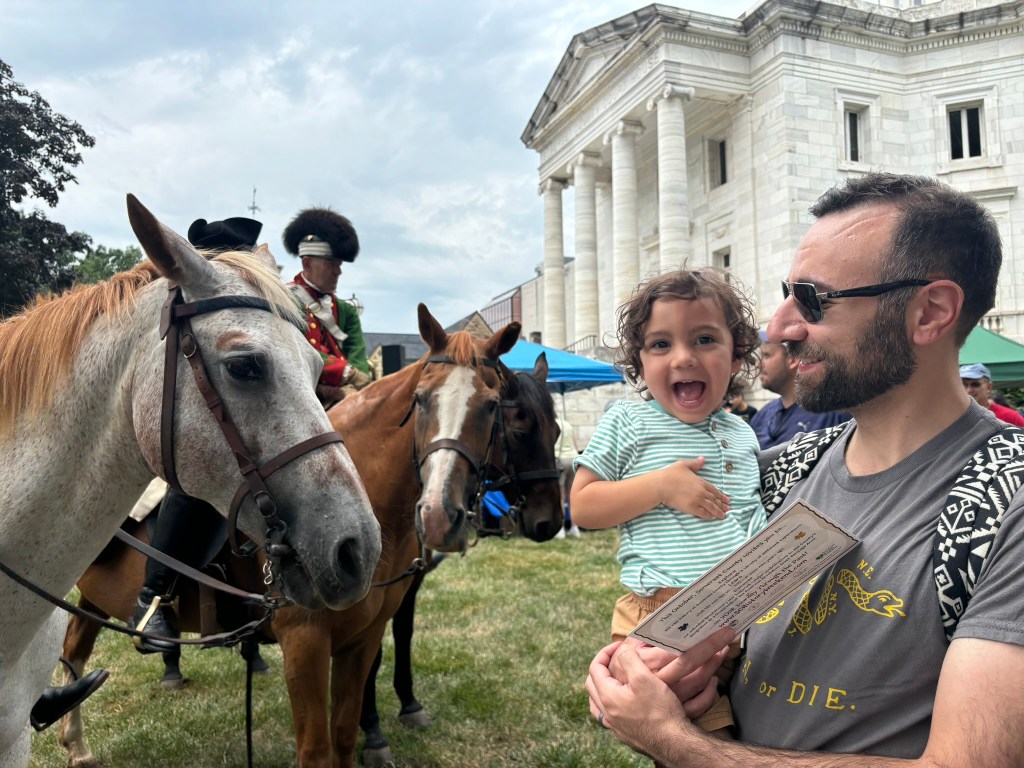
My family and I decided to head out to the New Jersey State Museum in Trenton, NJ. We also knew of Patriots Week happening at the Old Barracks Museum, which is just an 8 minute walk away. This trip was an opportunity for us to explore two museums we have never been to.
The New Jersey State Museum was a great experience for the whole family and they have a wide variety of exhibits and collections, ranging from Archeology & Ethnography, Cultural History, Fine Art, and Natural History. They also have a Planetarium, and we saw a show called “One World, One Sky: Big Bird’s Adventure” for the kids. Since this is a history blog, the pictures that I display here will be from the Historical aspects of the museum.
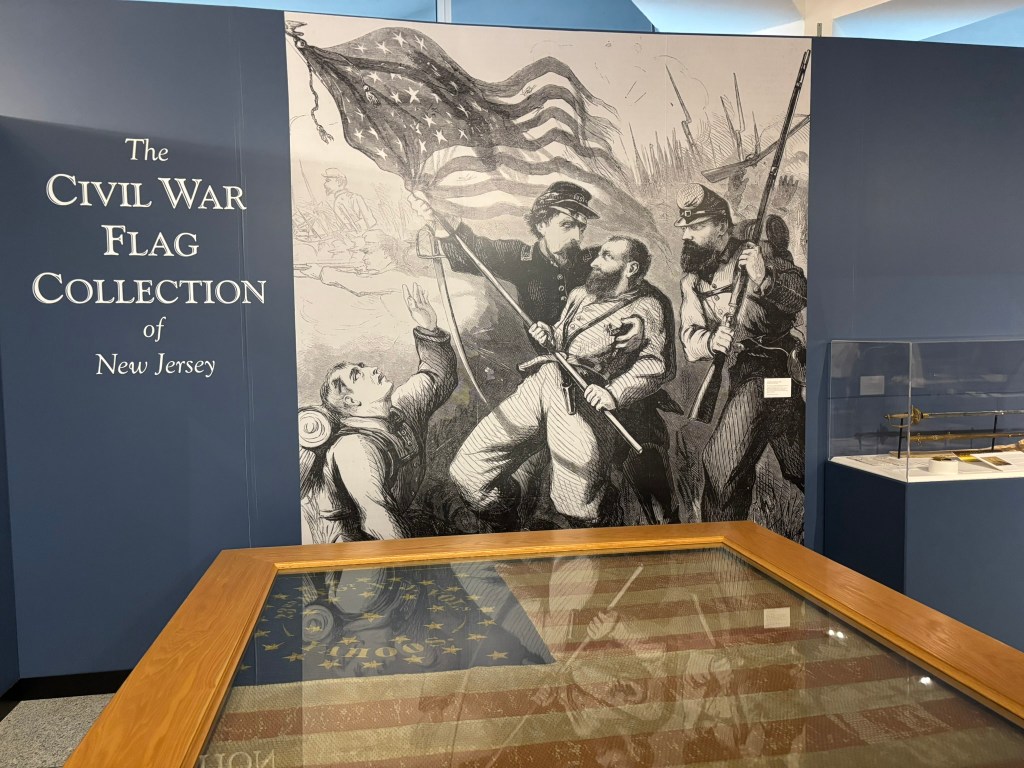
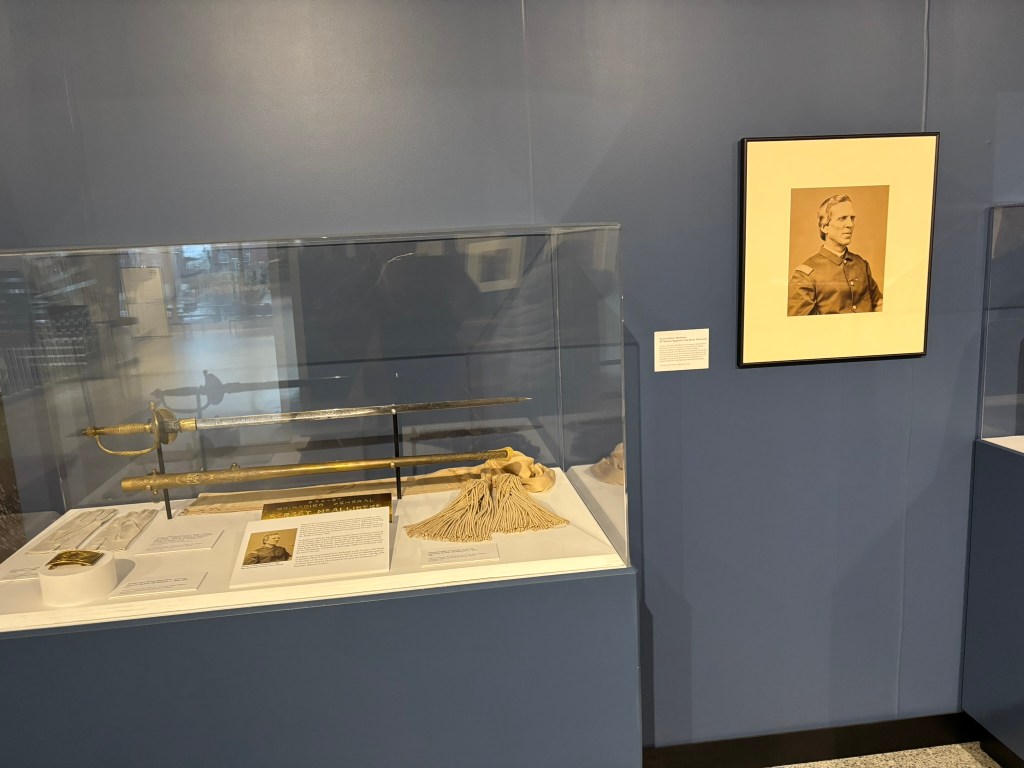
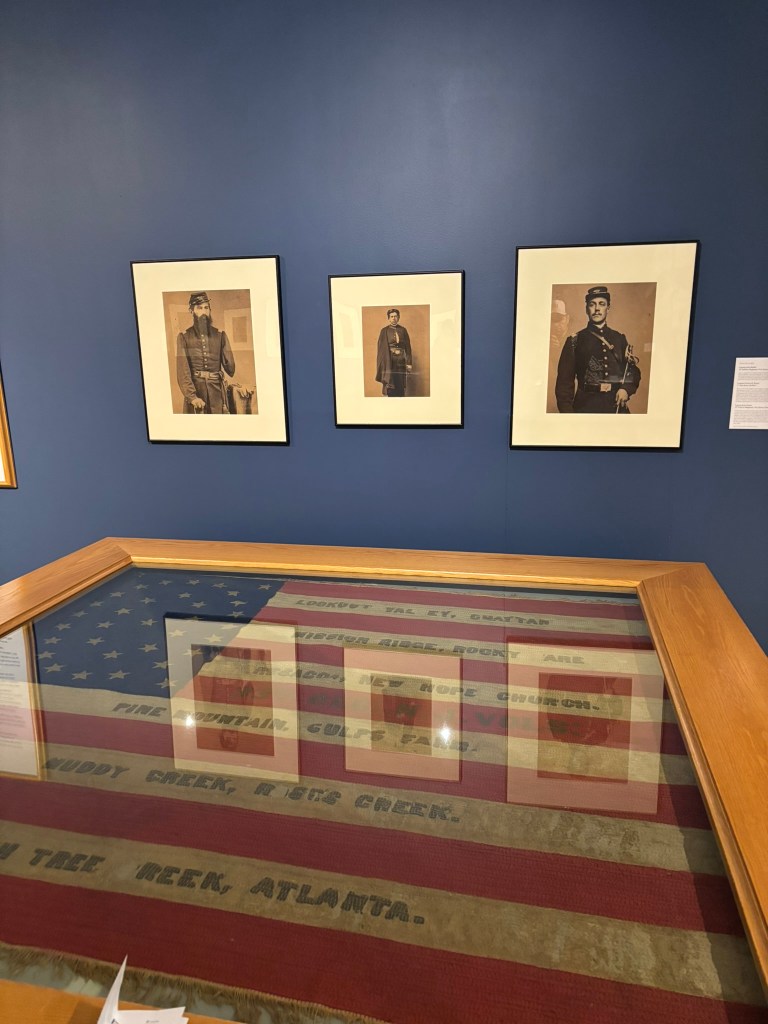
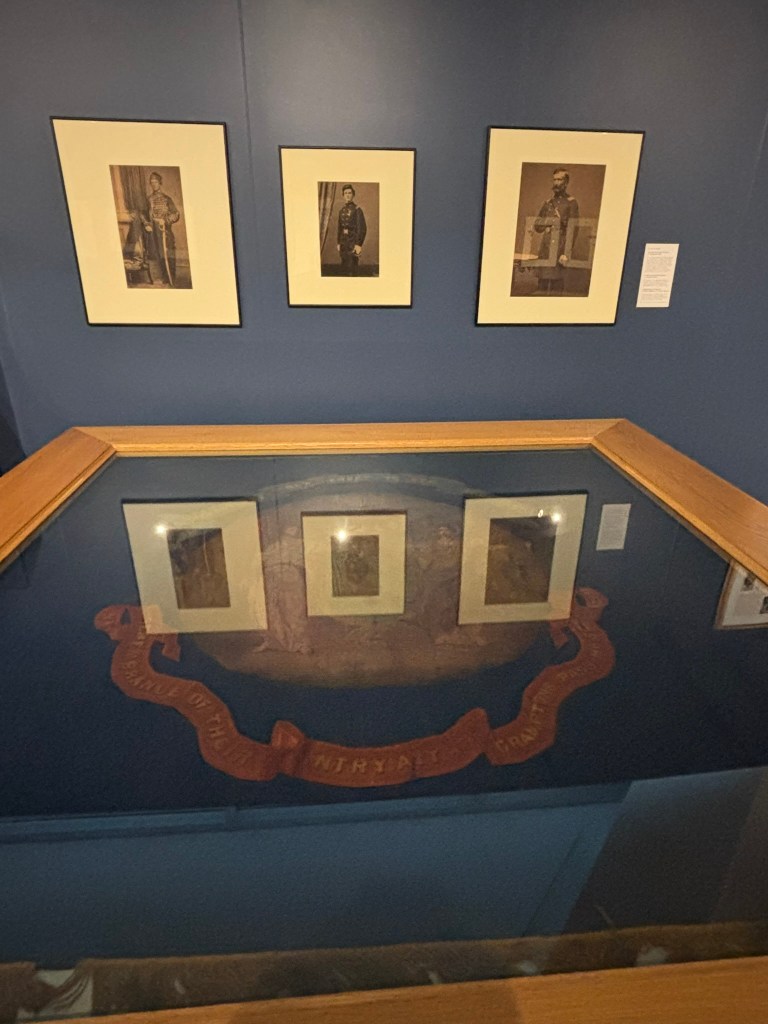
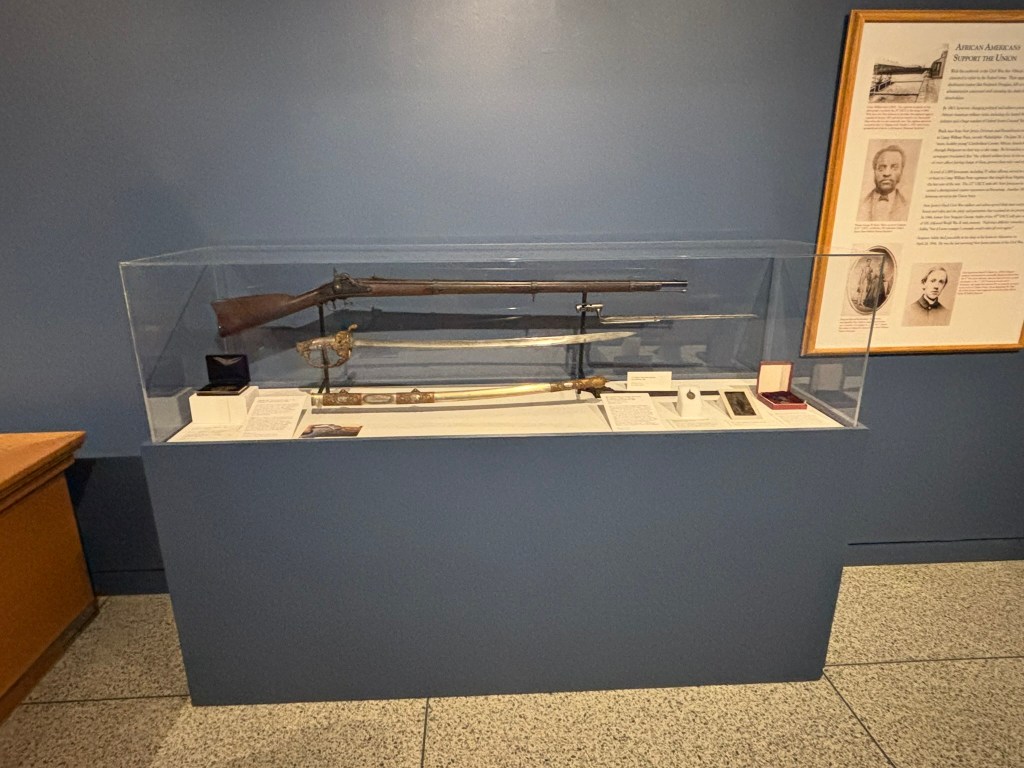
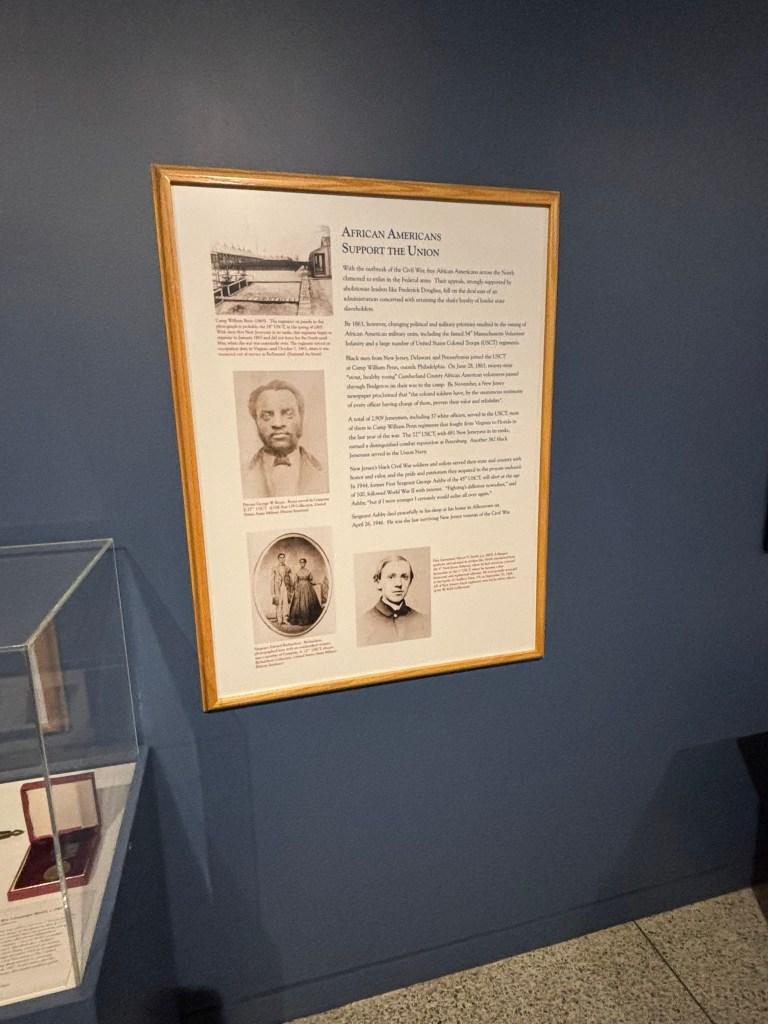
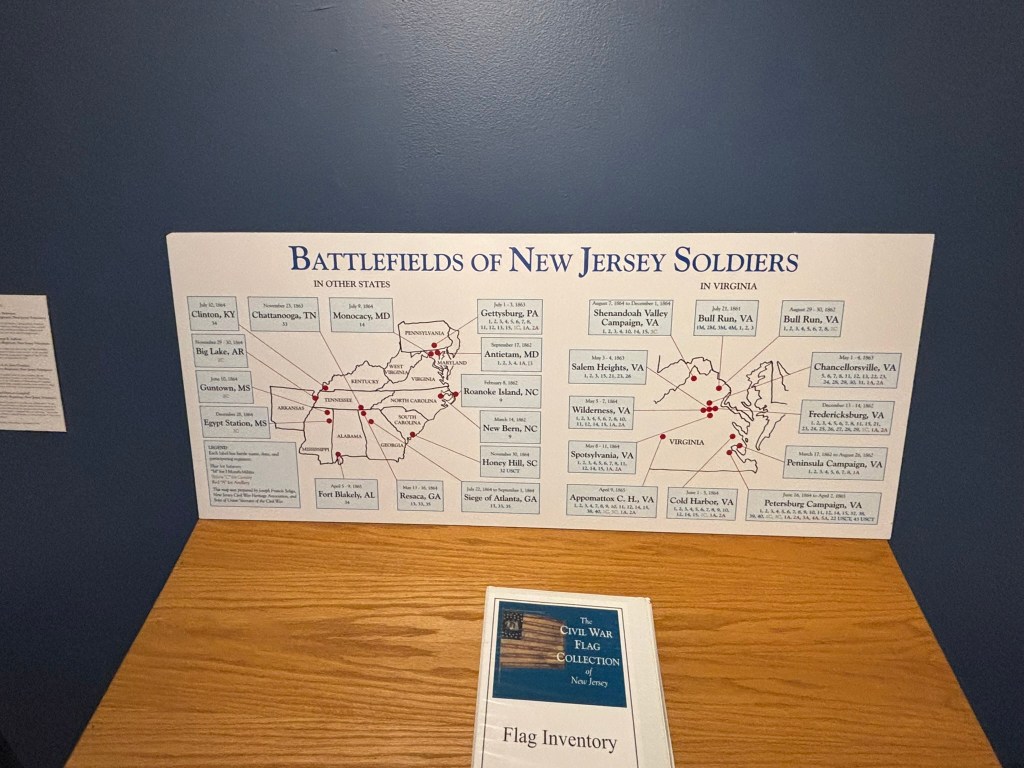
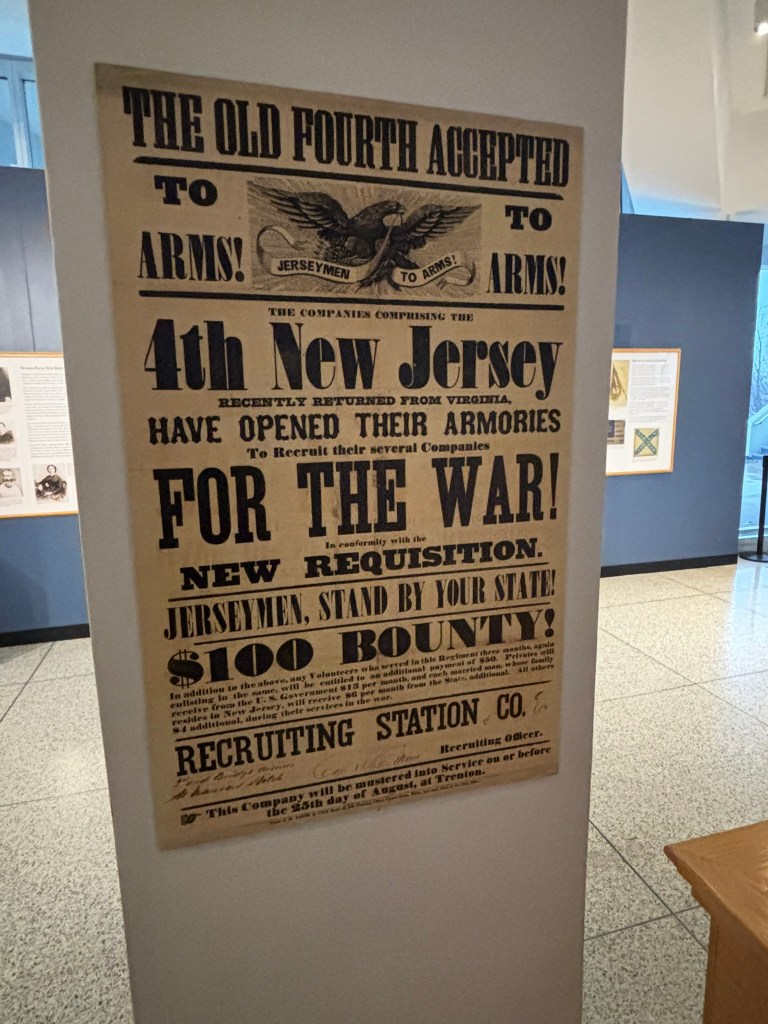
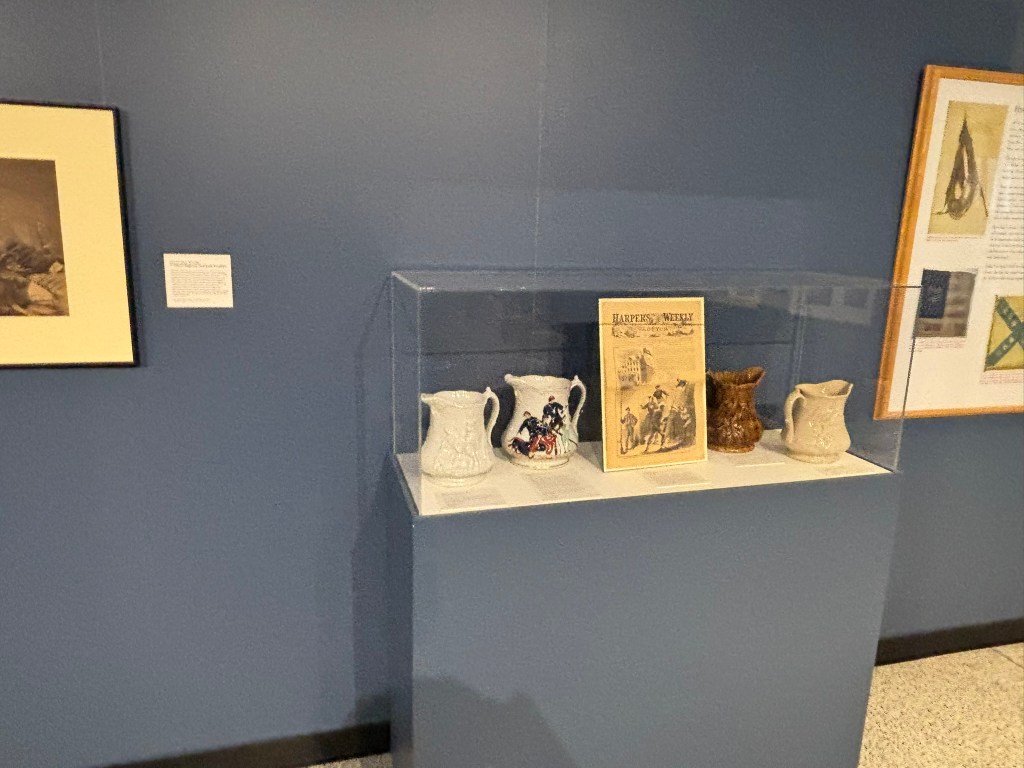
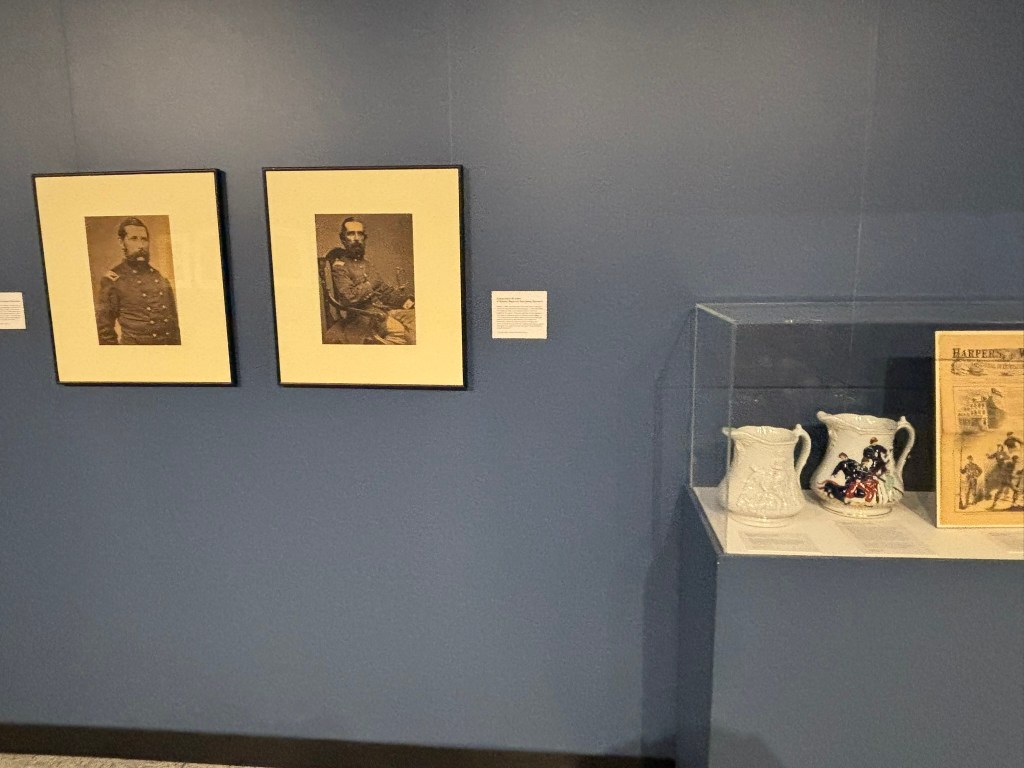
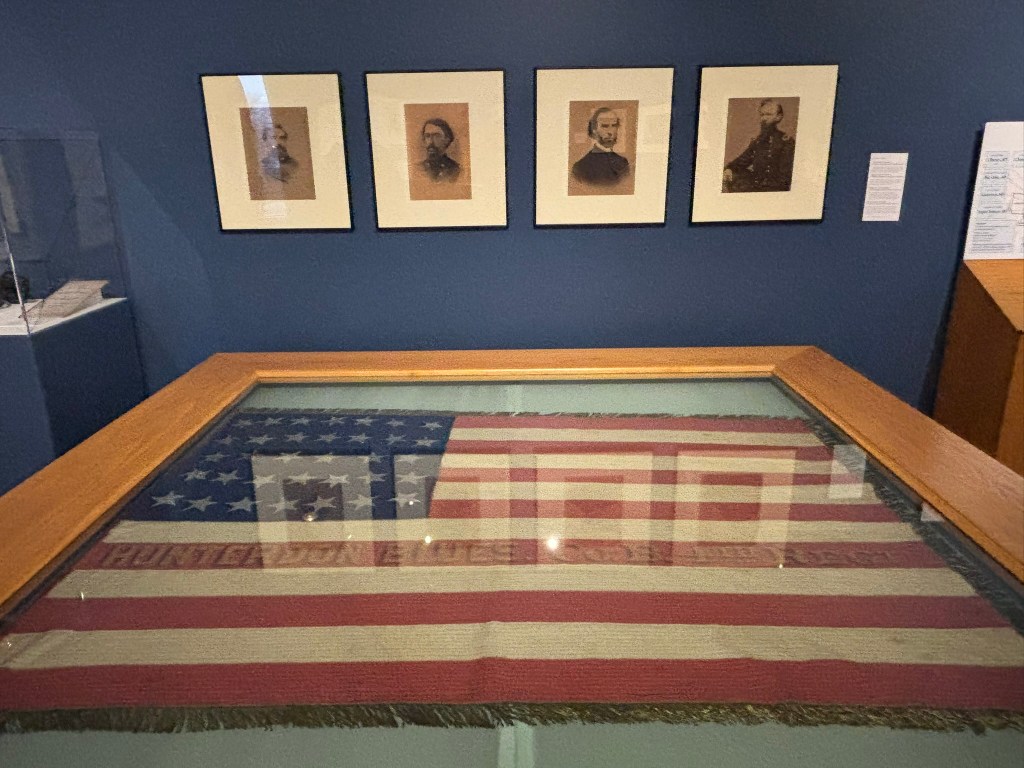
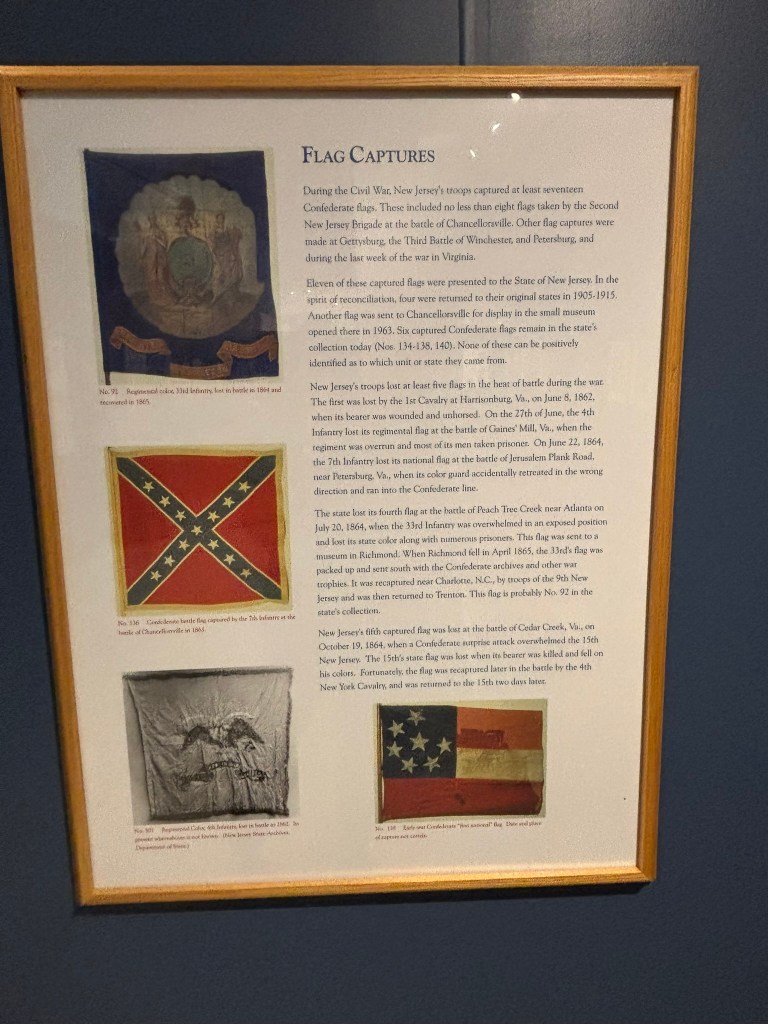
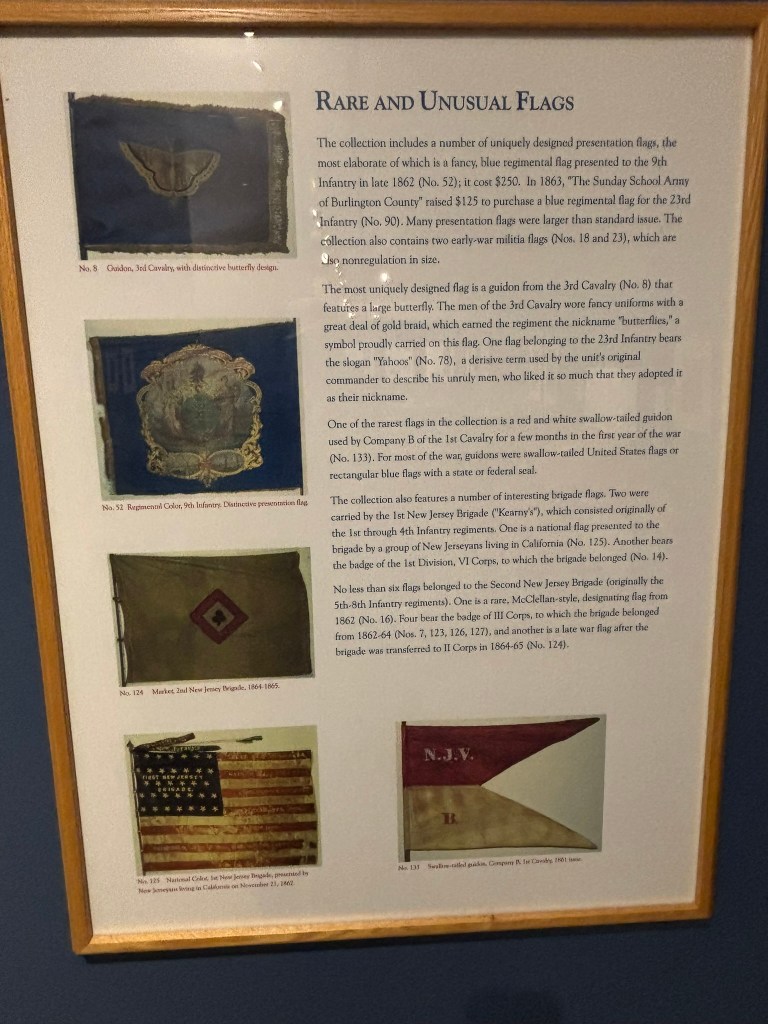
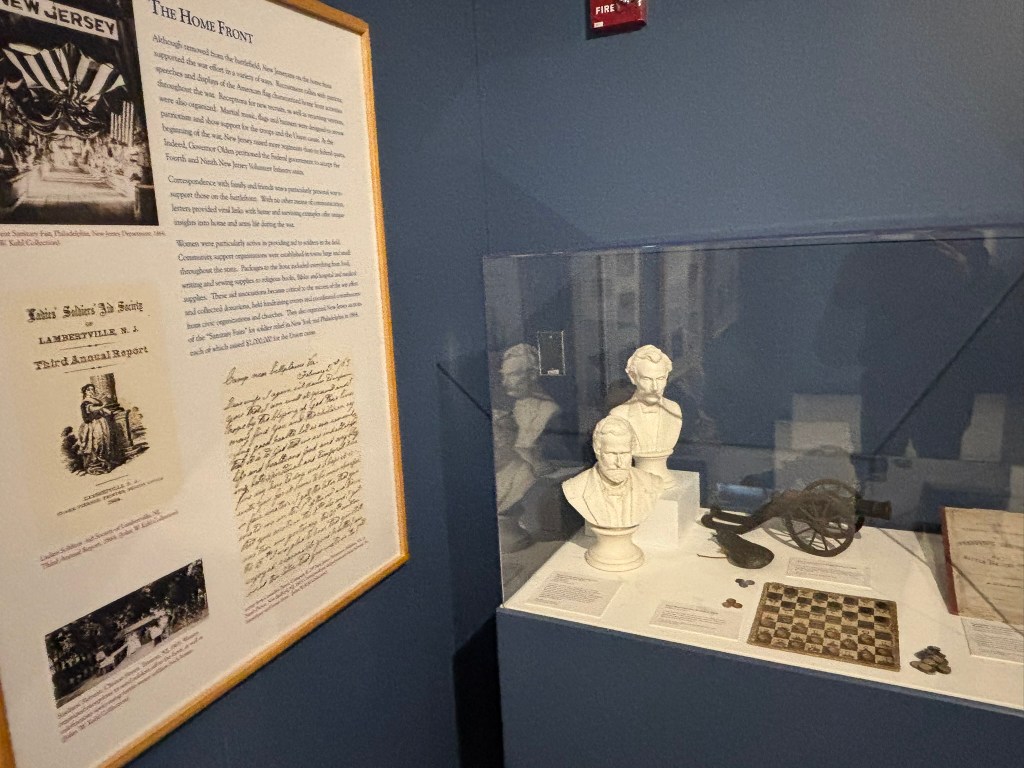
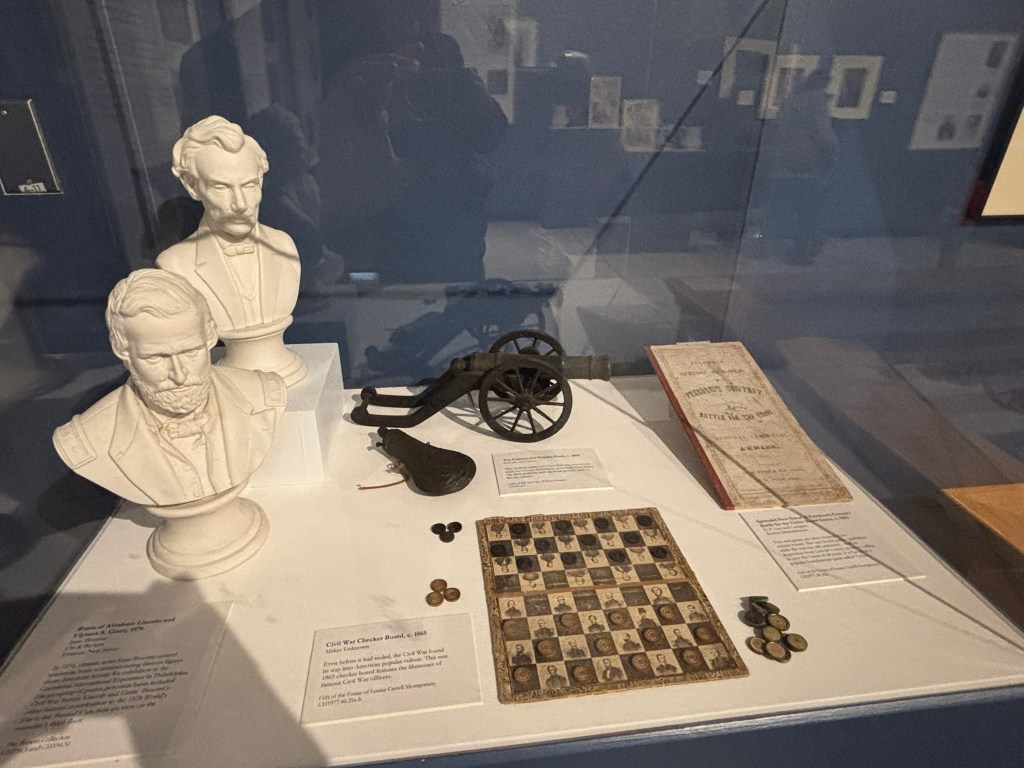
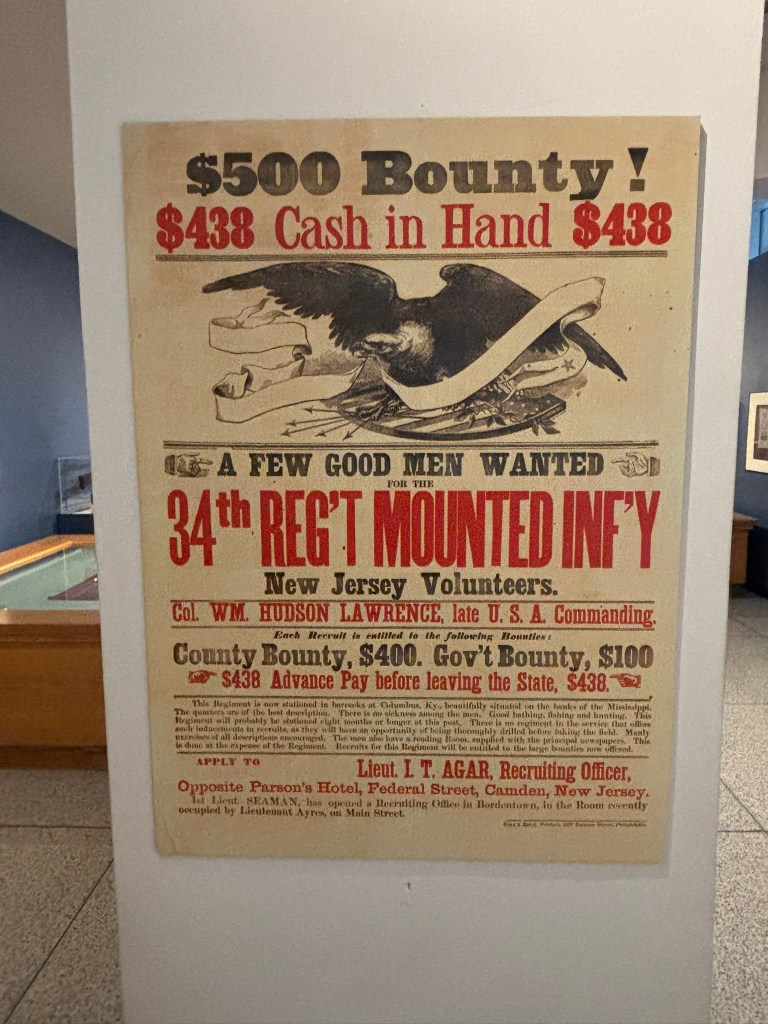
The first exhibit that we saw was the The Civil War Flag Collection of New Jersey. New Jersey soldiers played a significant role in fighting for the Union Army during the Civil War. The flags displayed, as well as the artifacts in the museum remind us of the crucial role that they played.
We explored each floor of the museum. There were crafts for the kids and there were other sections devoted to New Jersey History, Native American history, and colonial history.
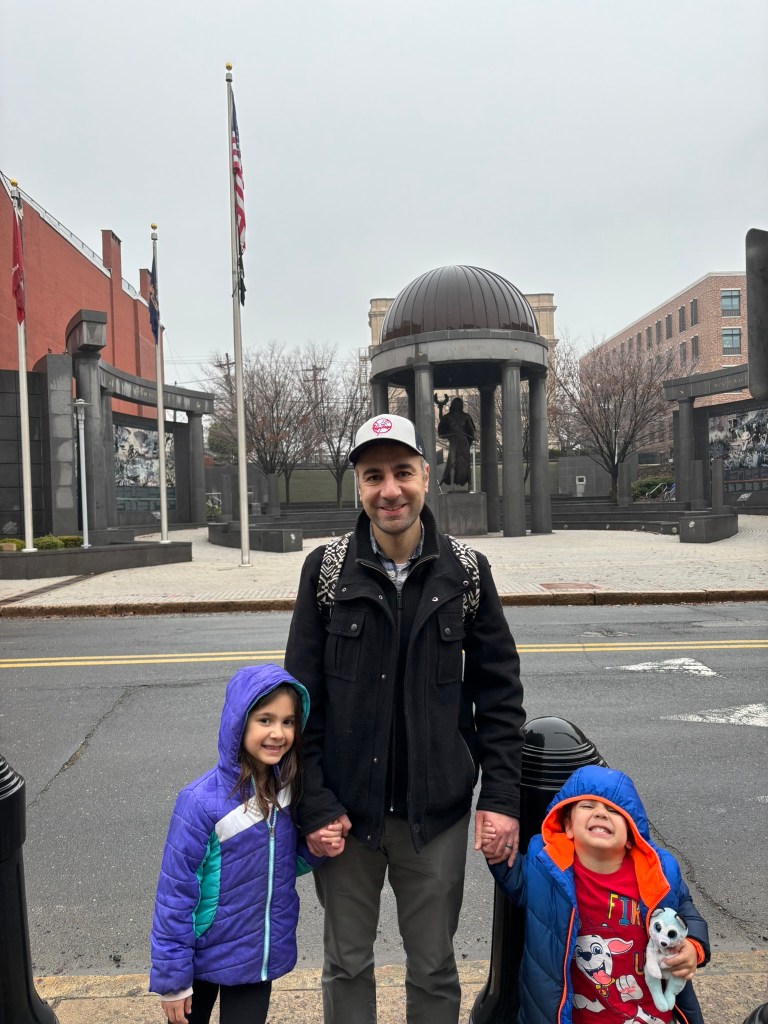
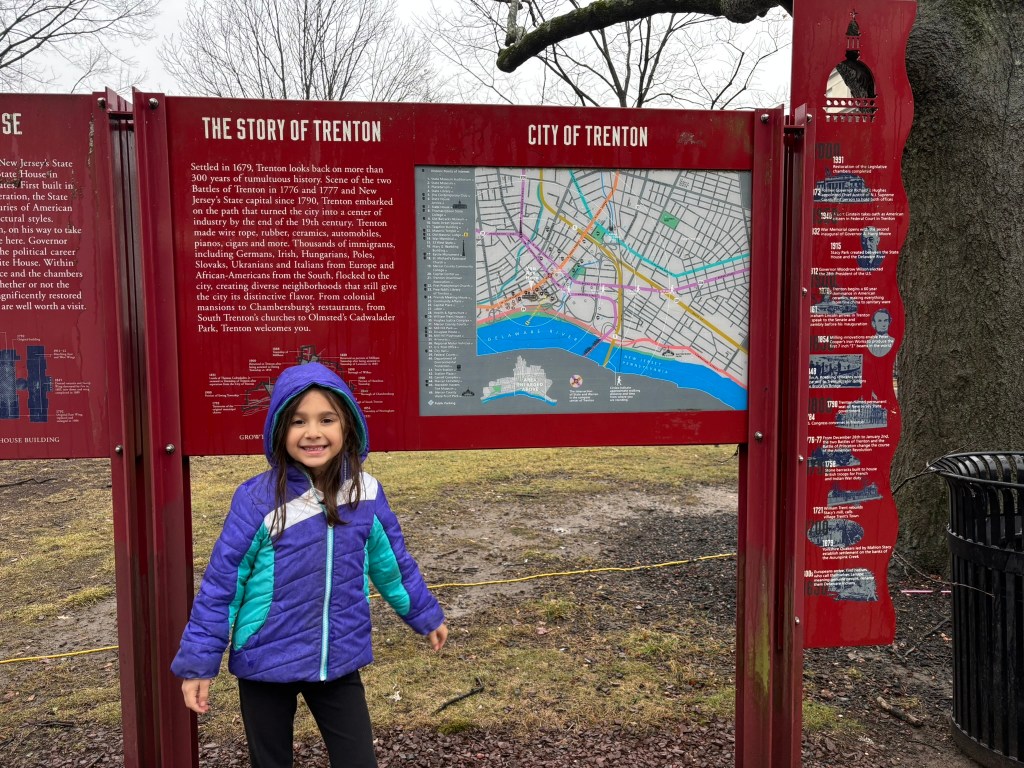
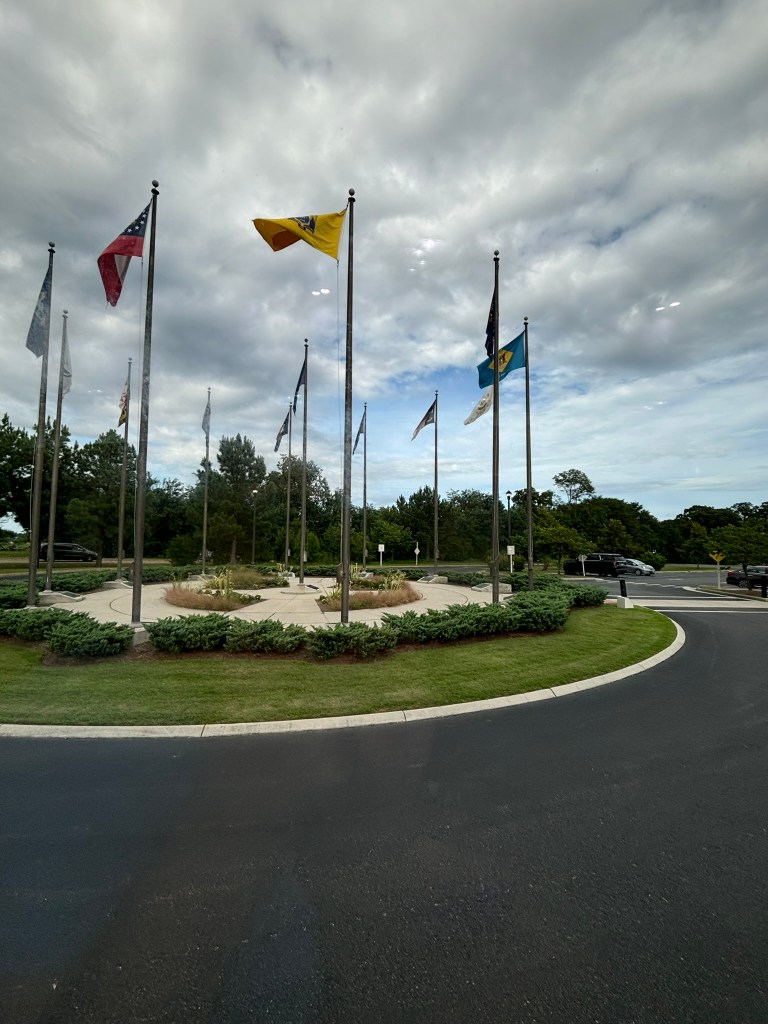
After our time exploring the New Jersey State Museum, we made the 8 minute walk to the Old Barracks Museum for Patriots Week. We stopped to take a picture in front of the WWII Memorial in Veterans Park.
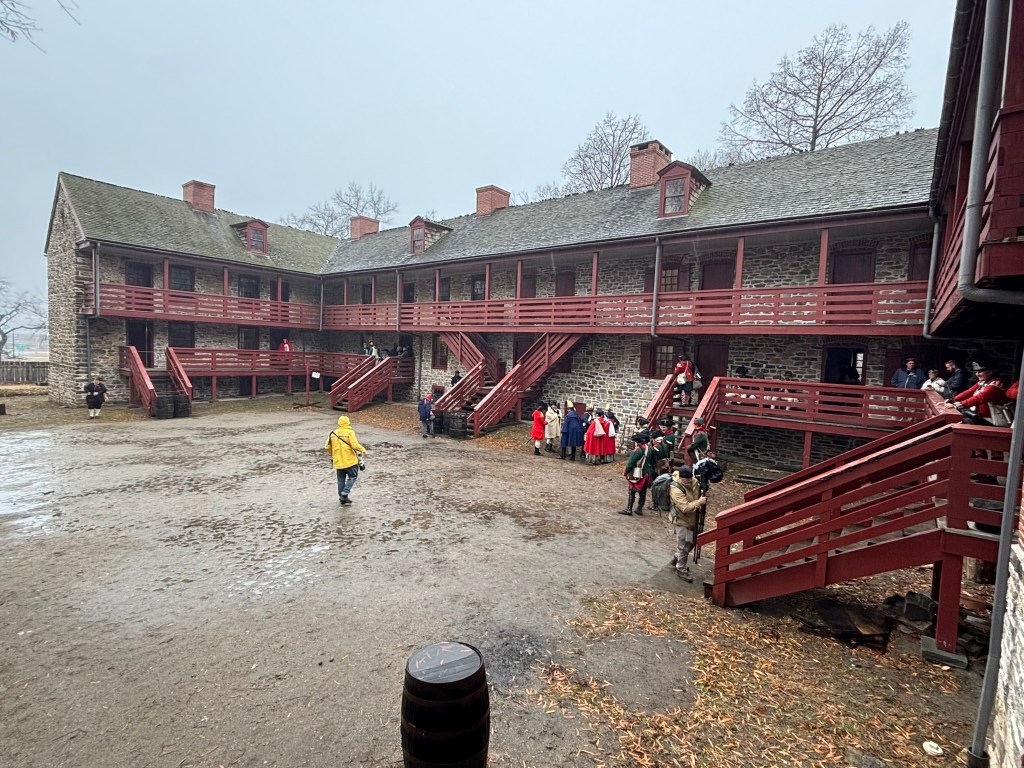
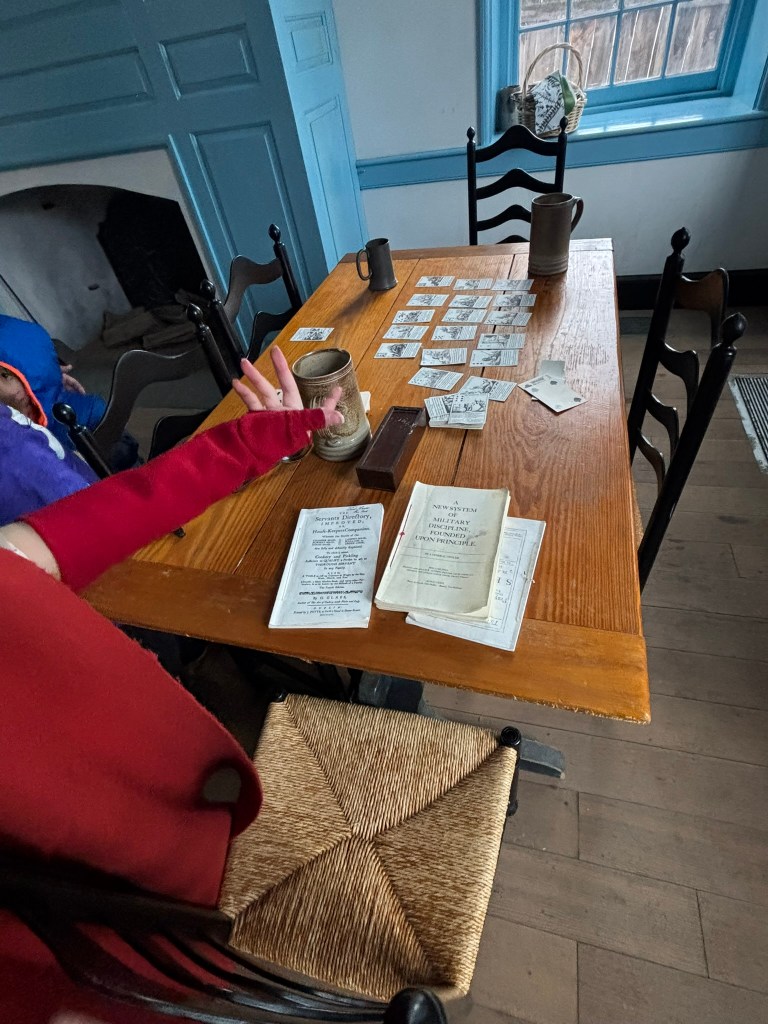
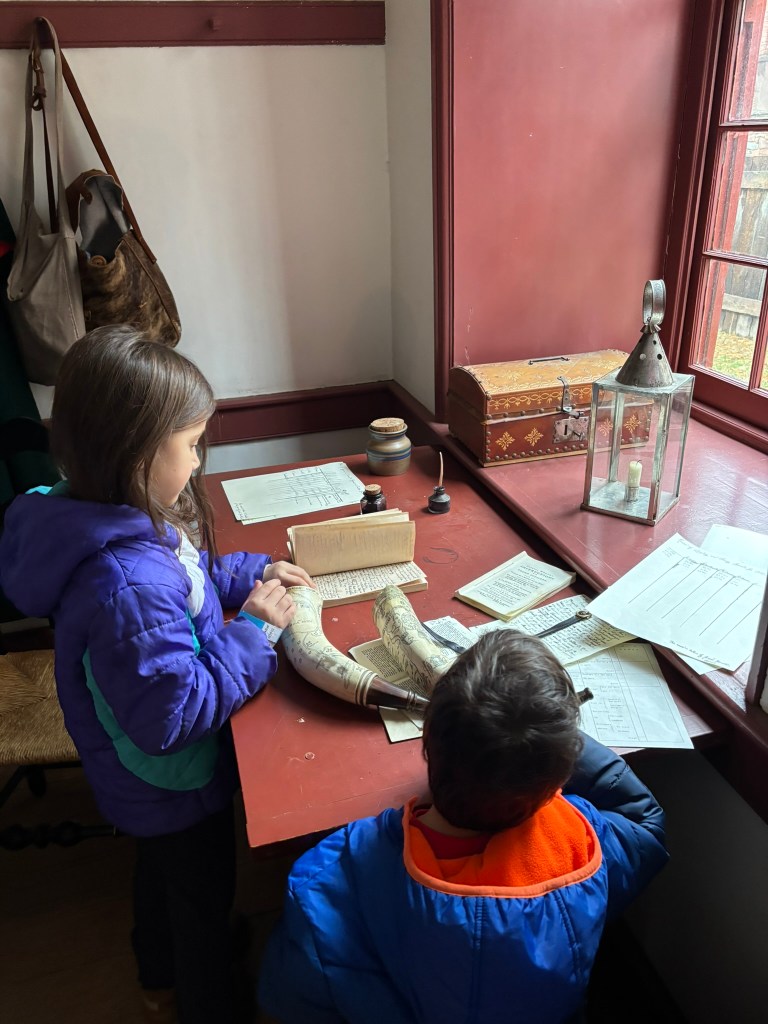
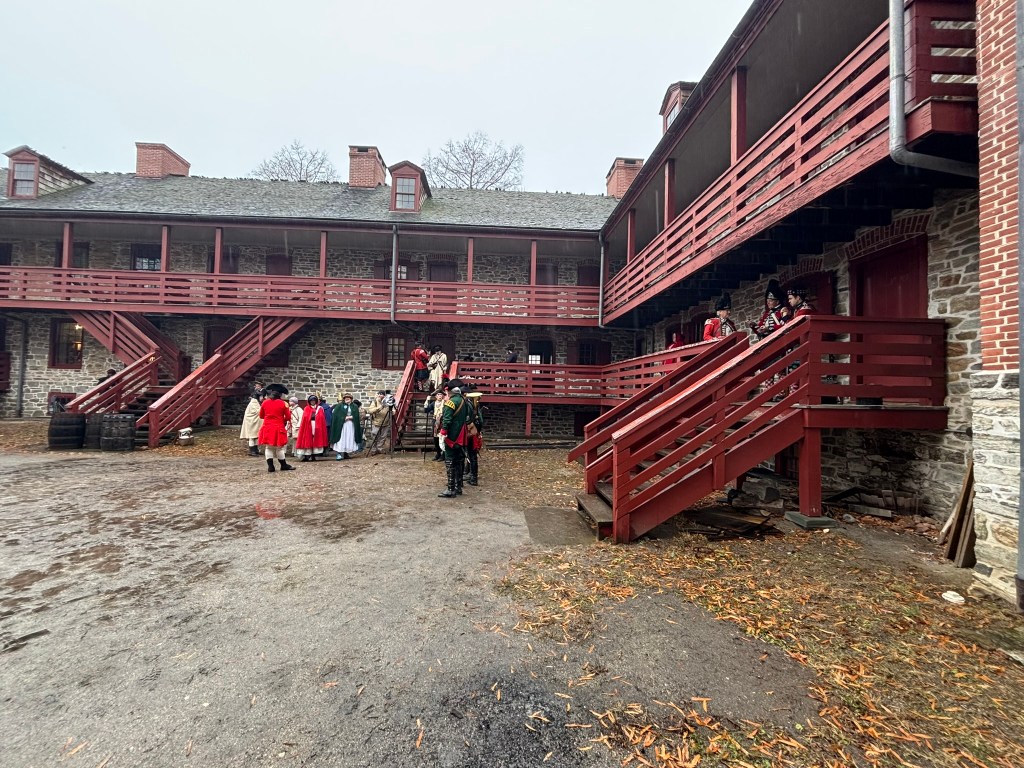
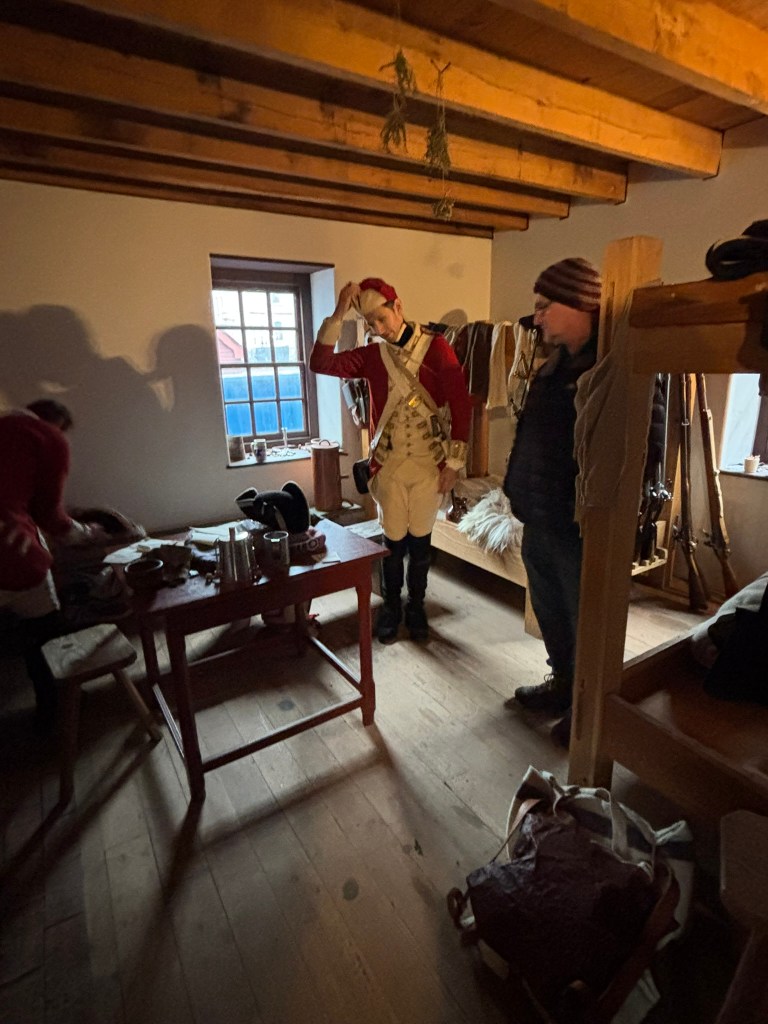
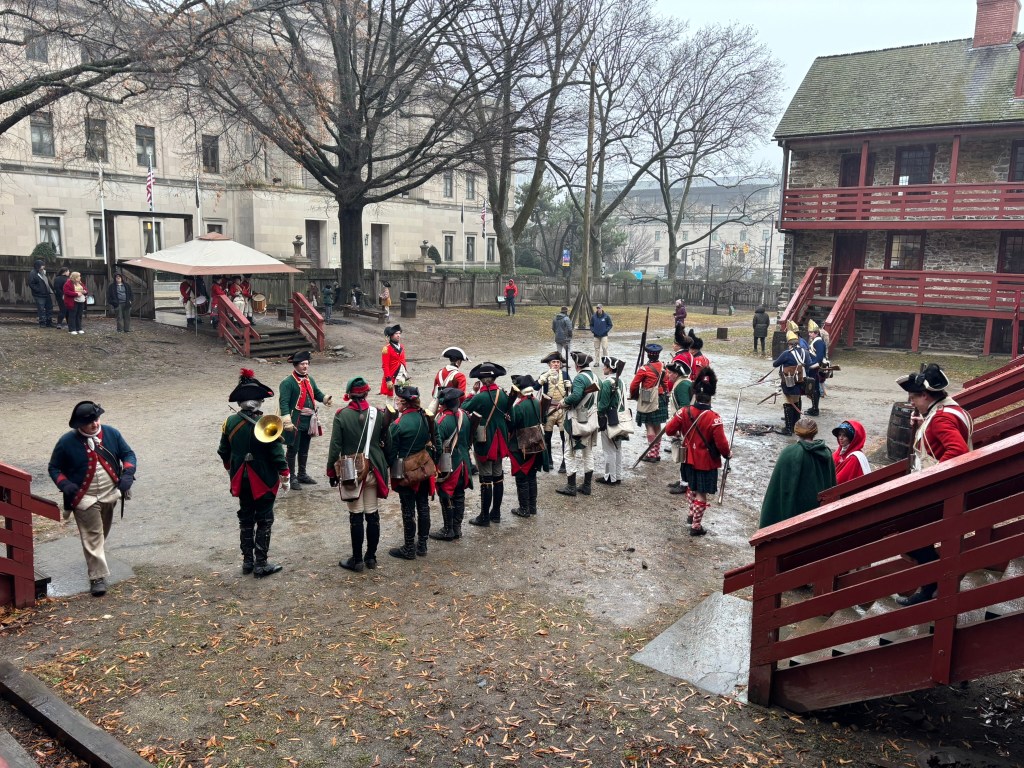
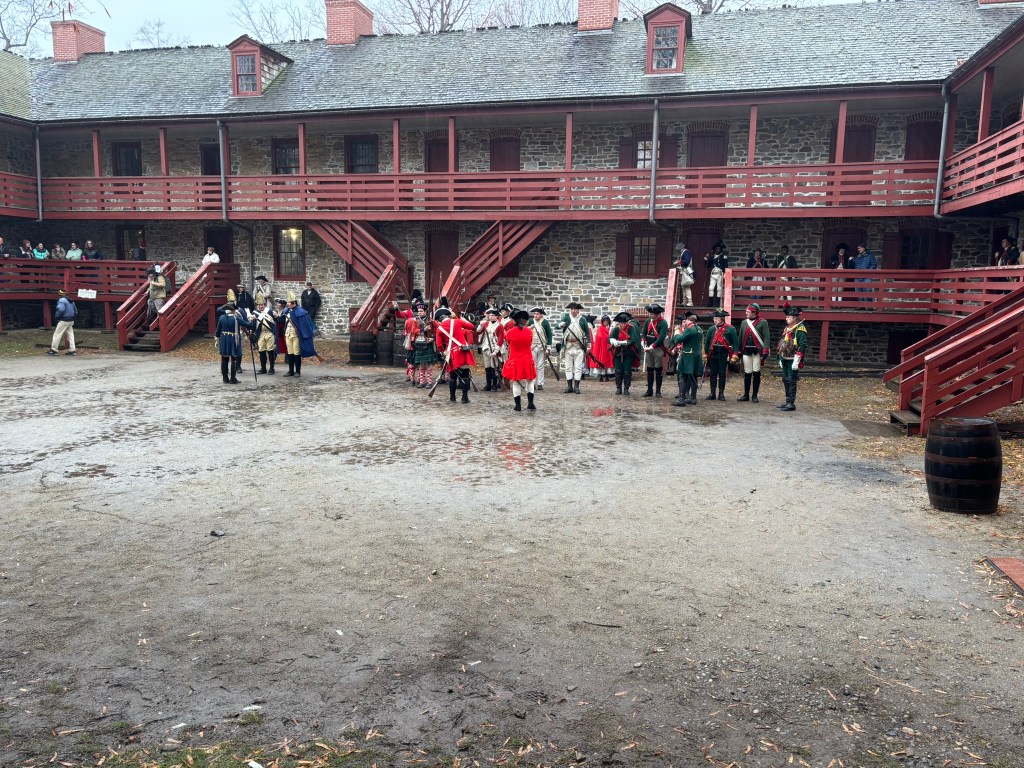
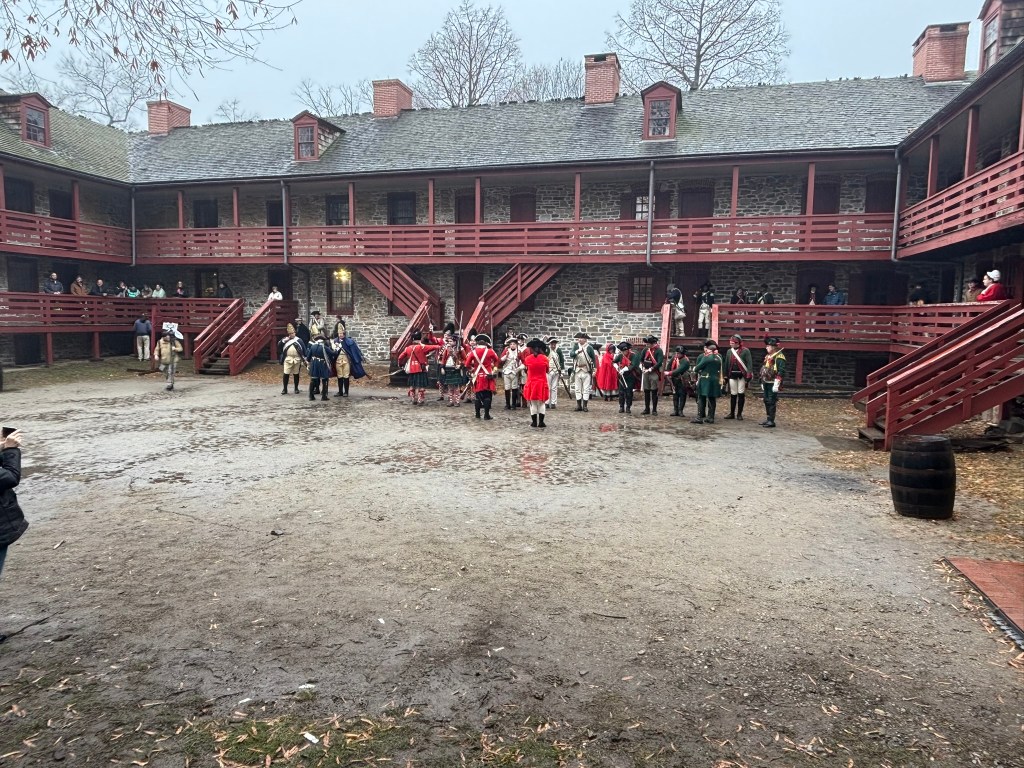
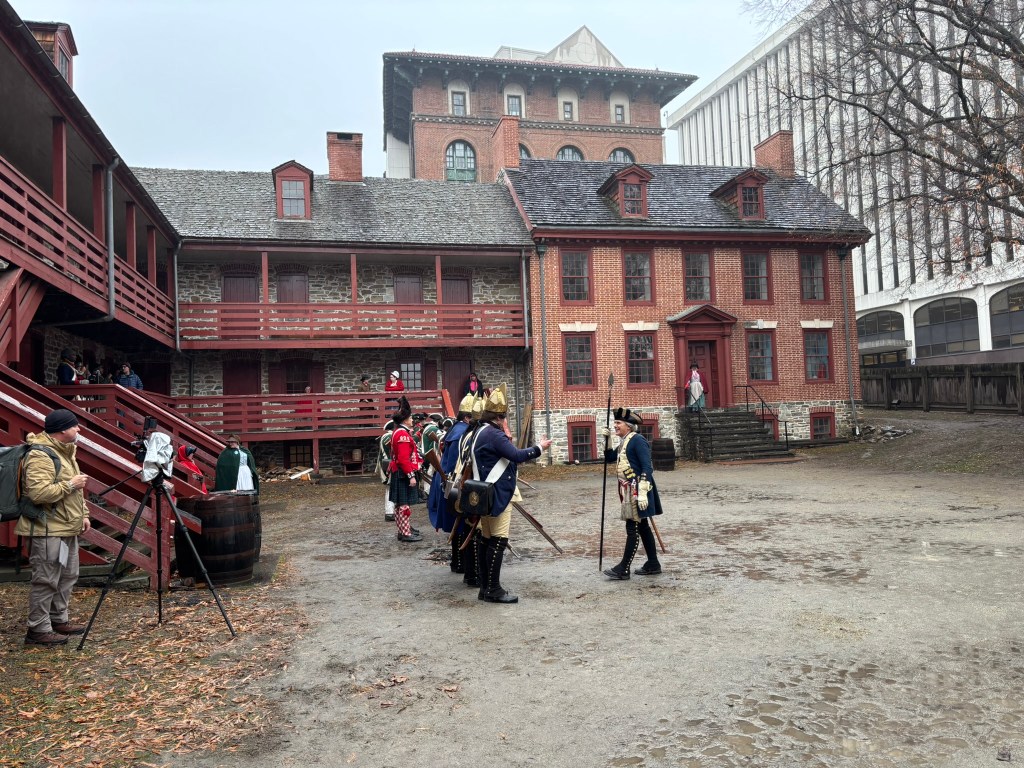
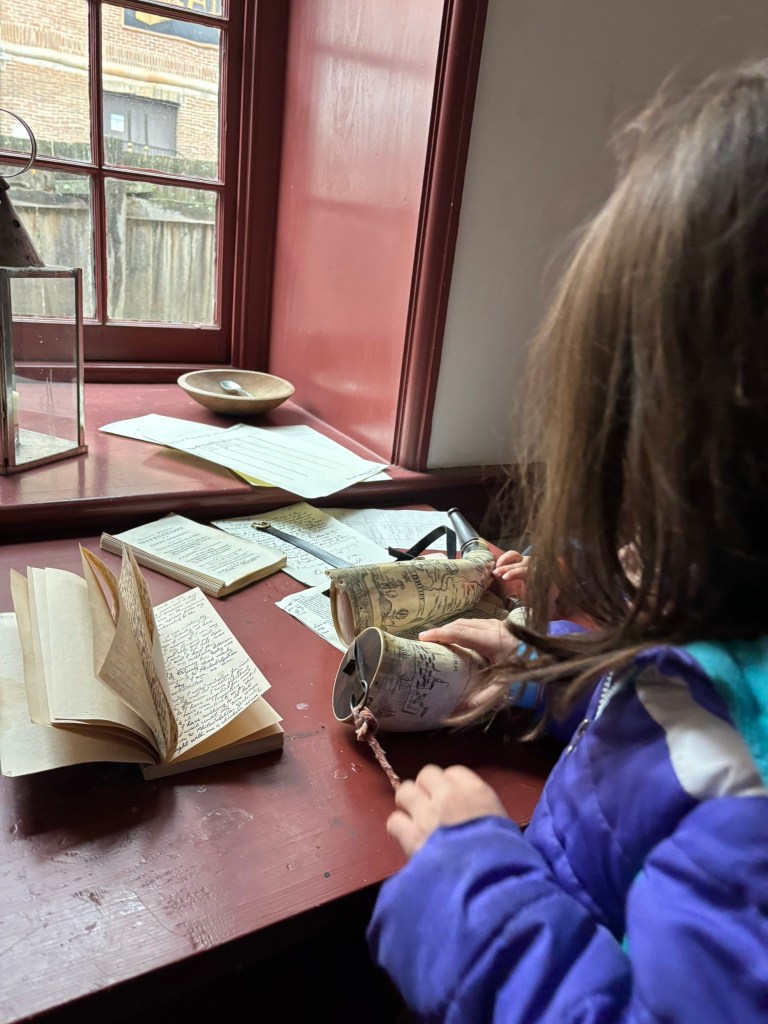
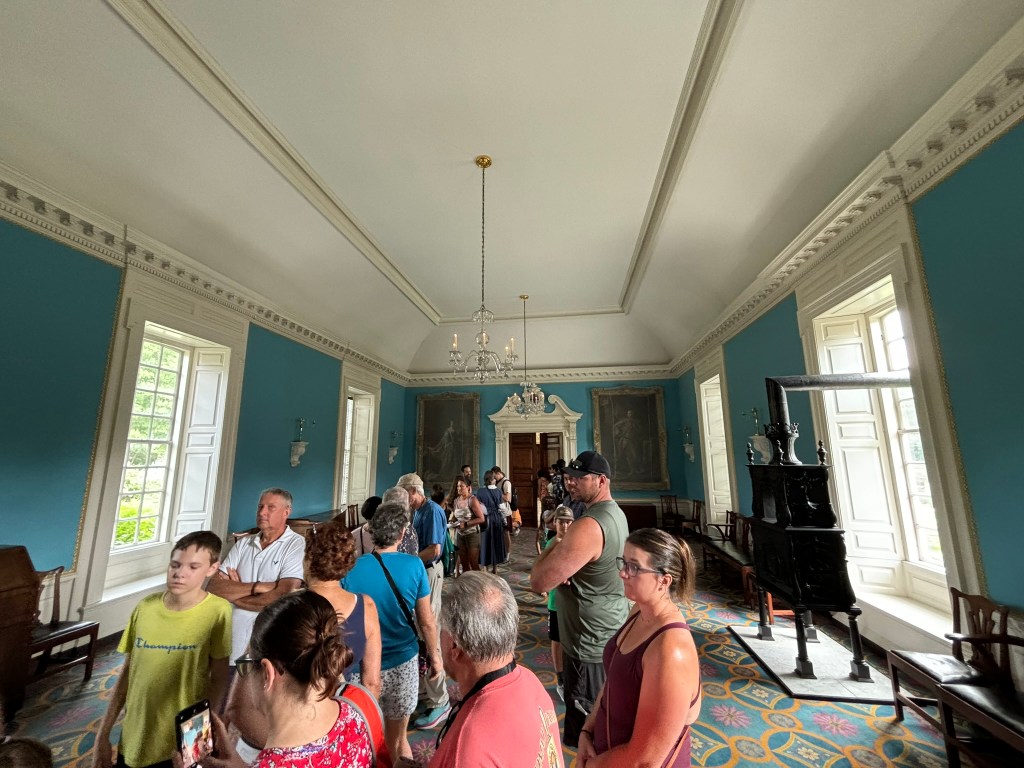
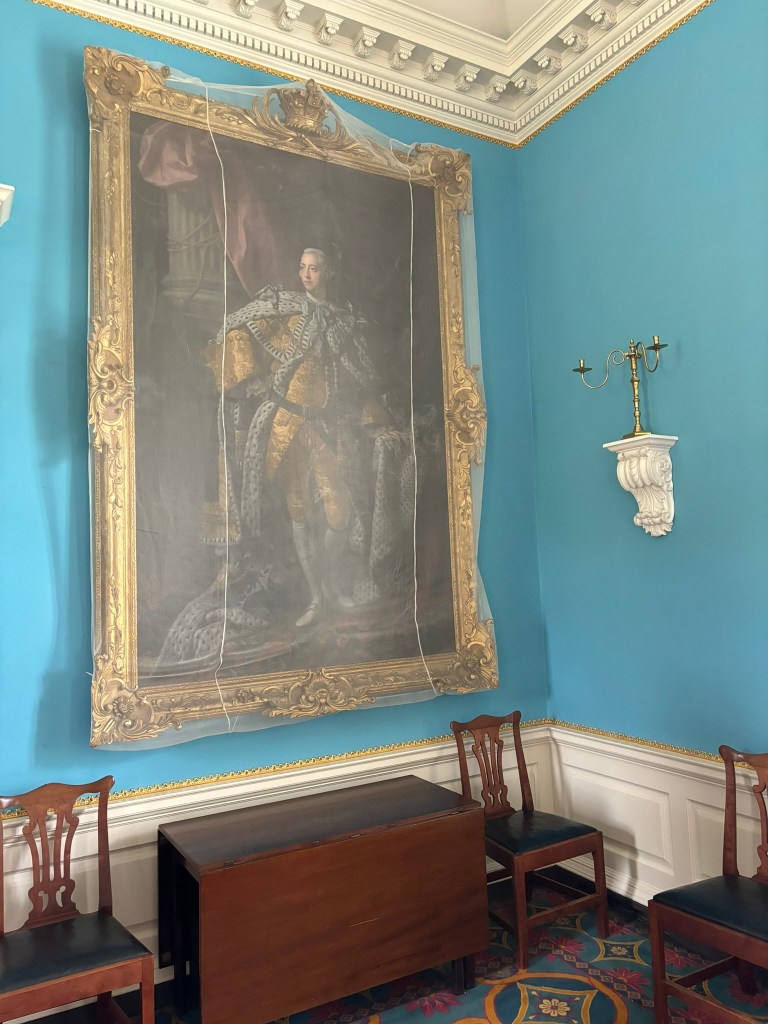
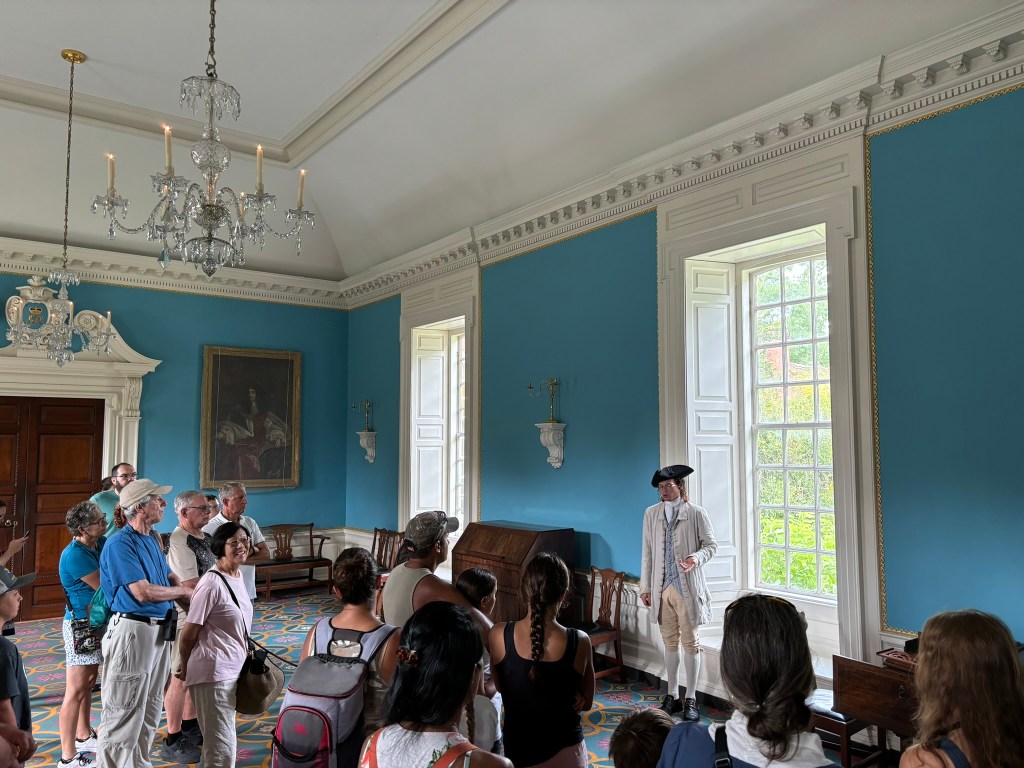
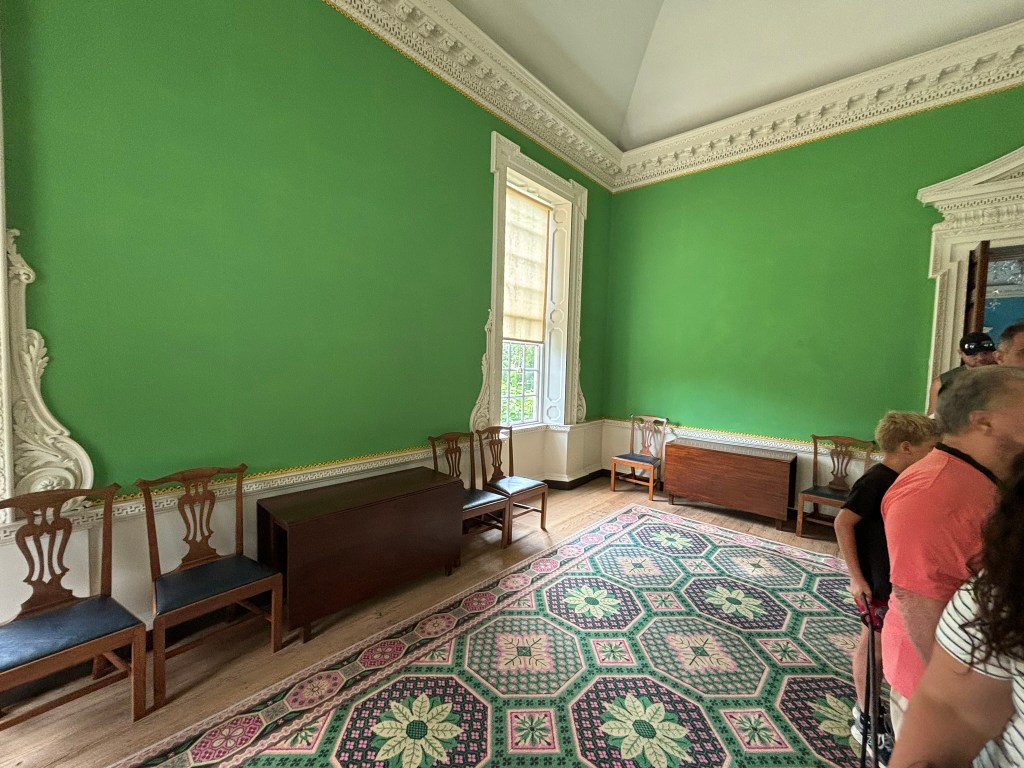
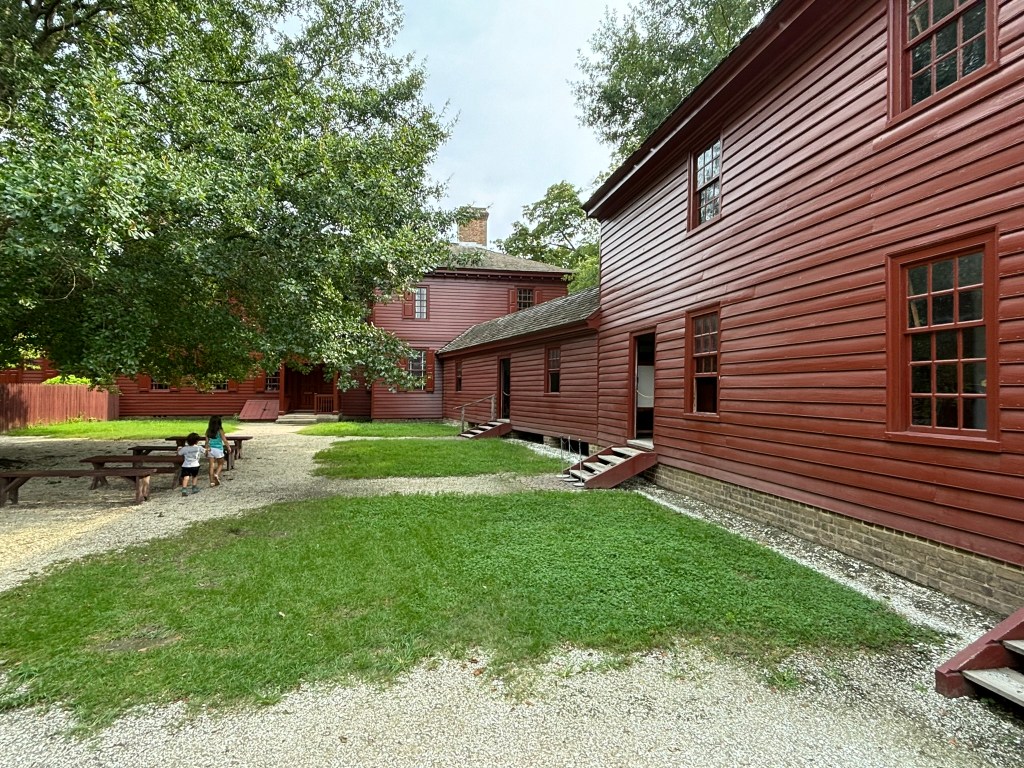
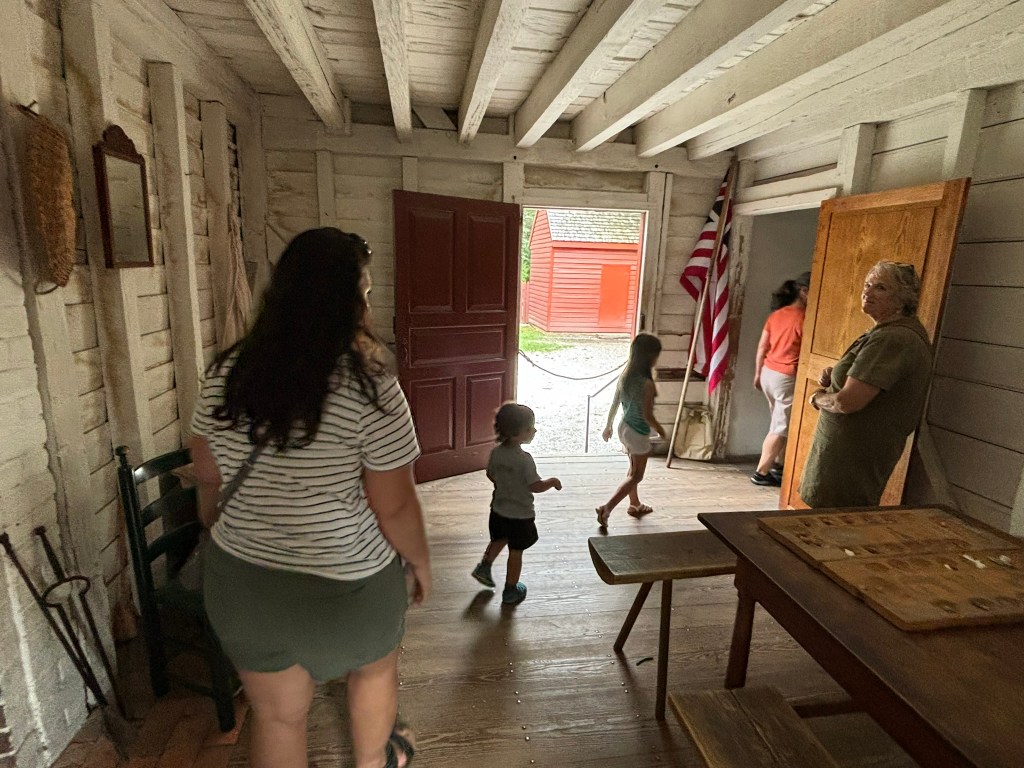
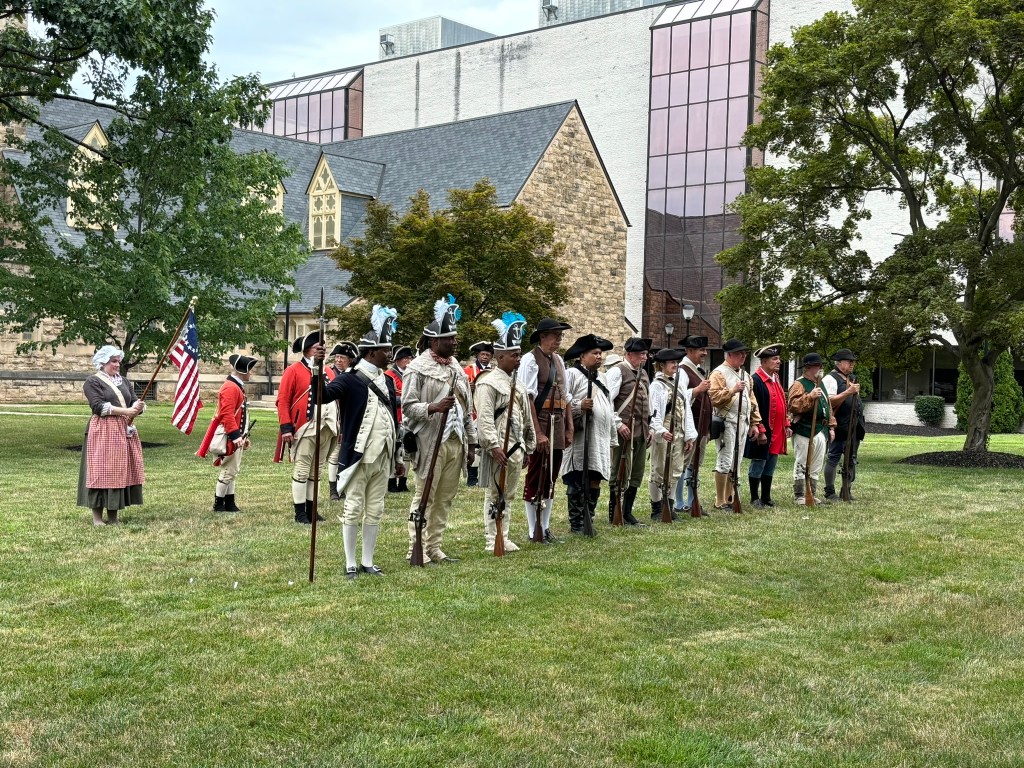
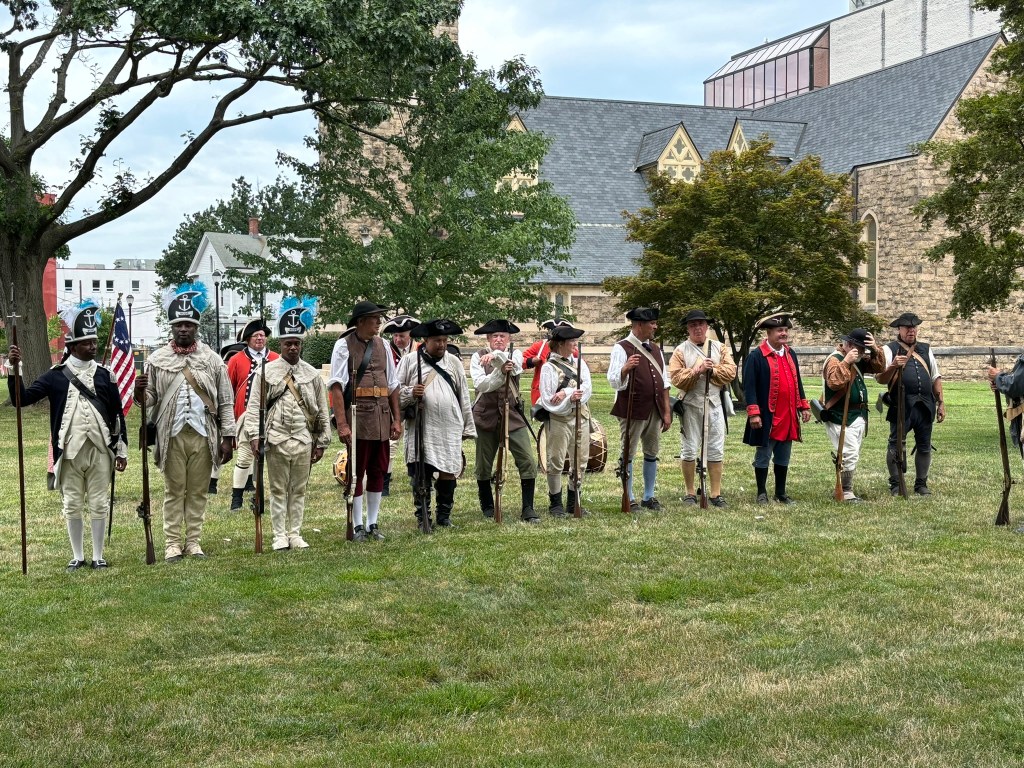
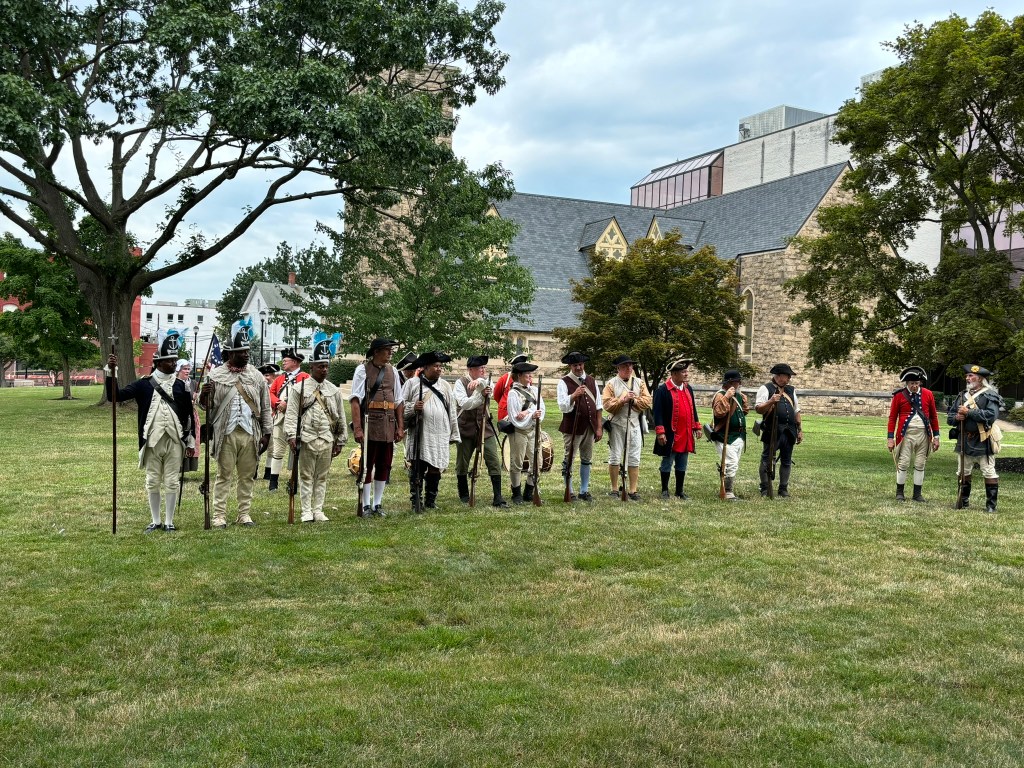
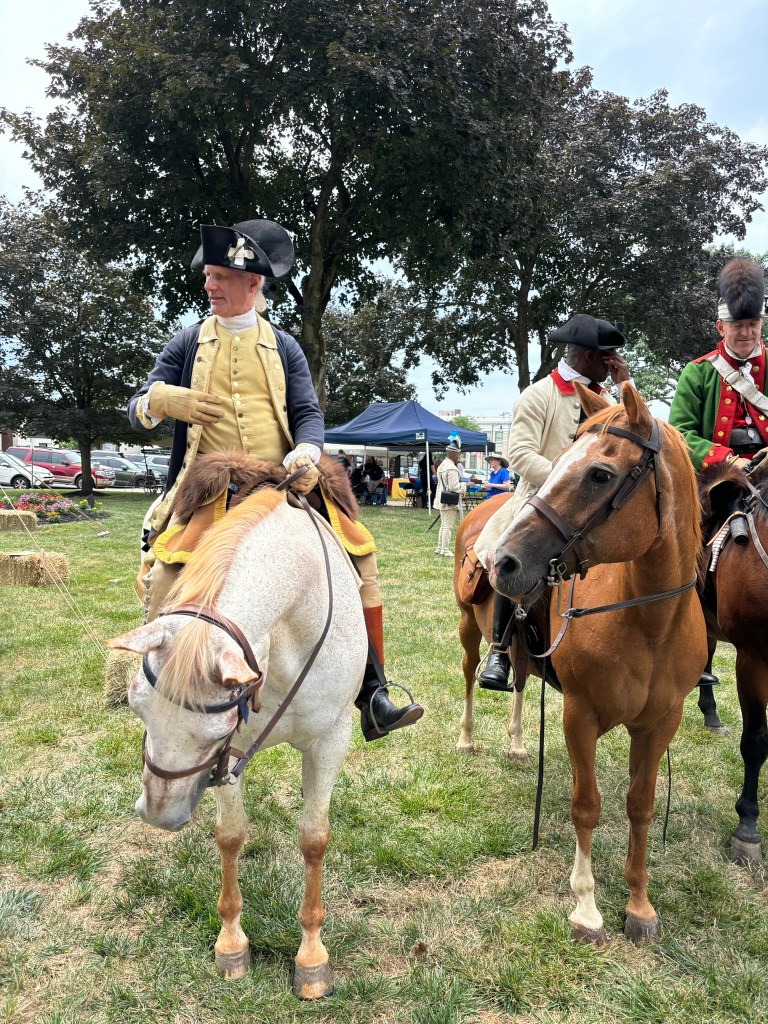
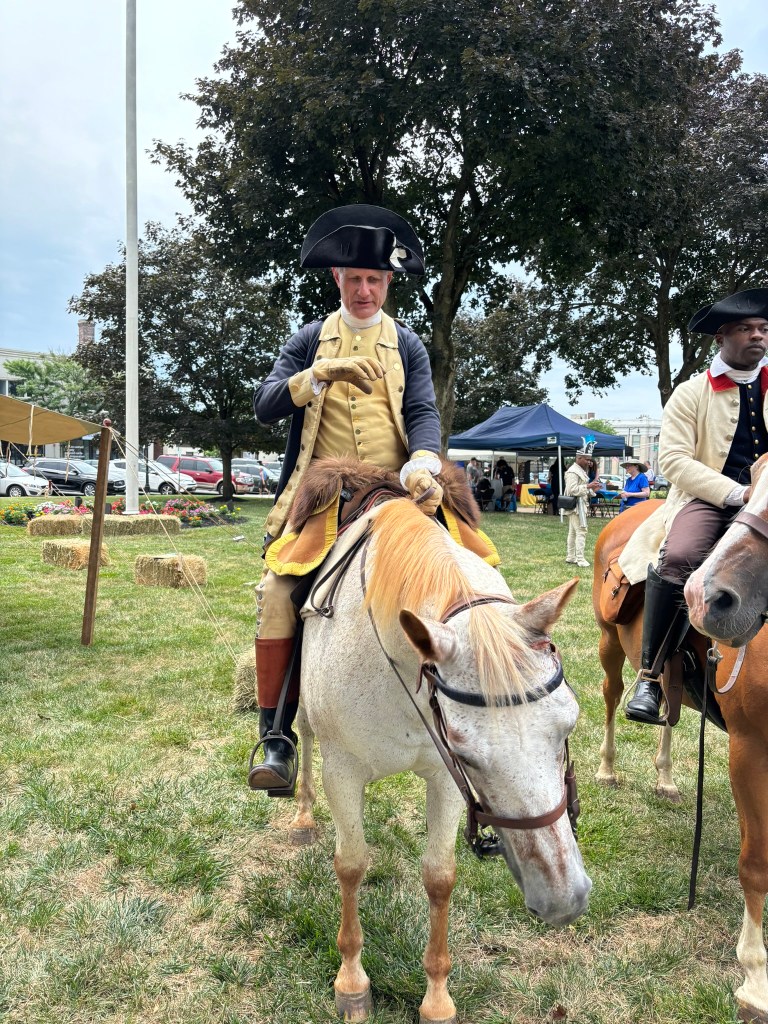
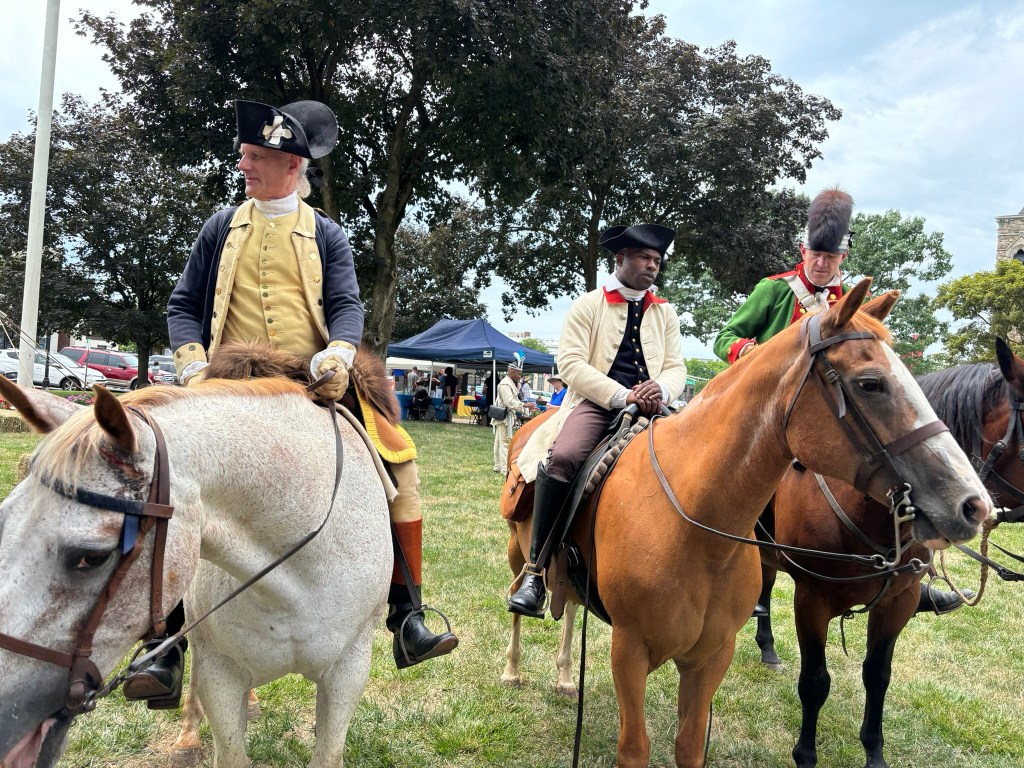
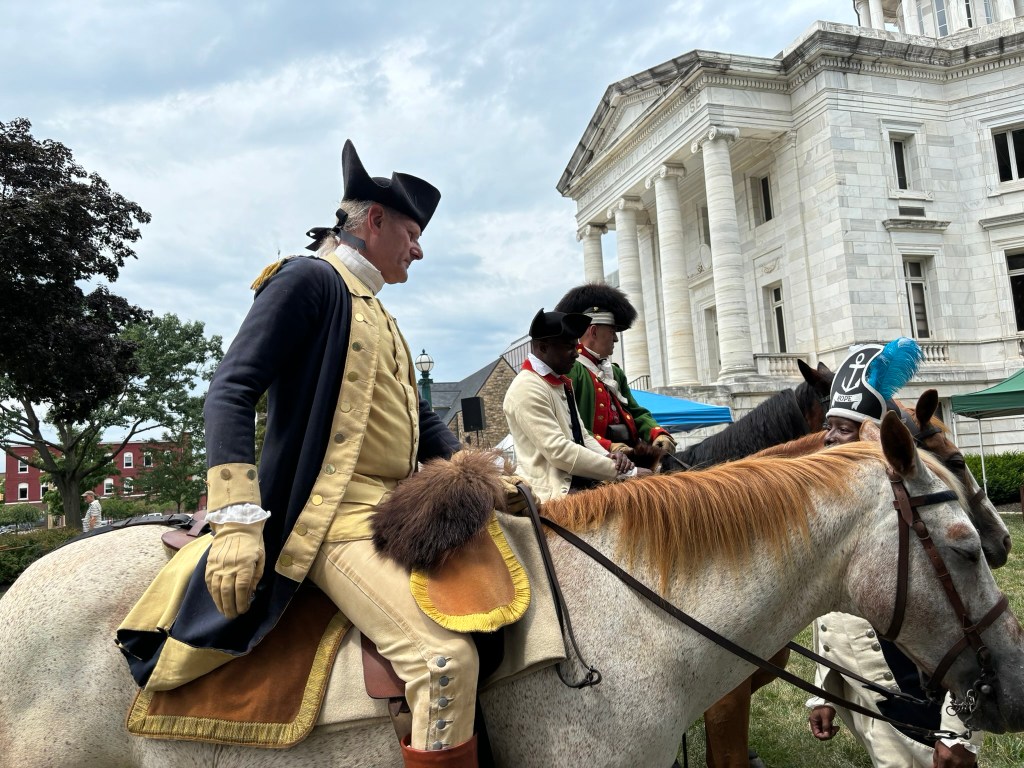
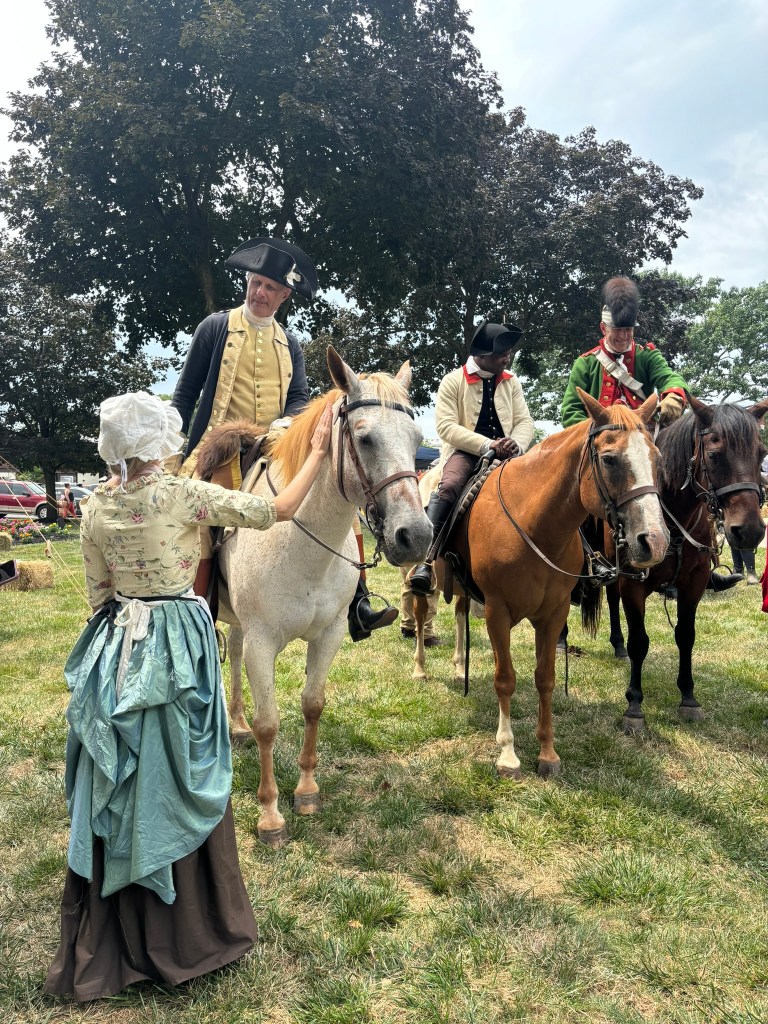
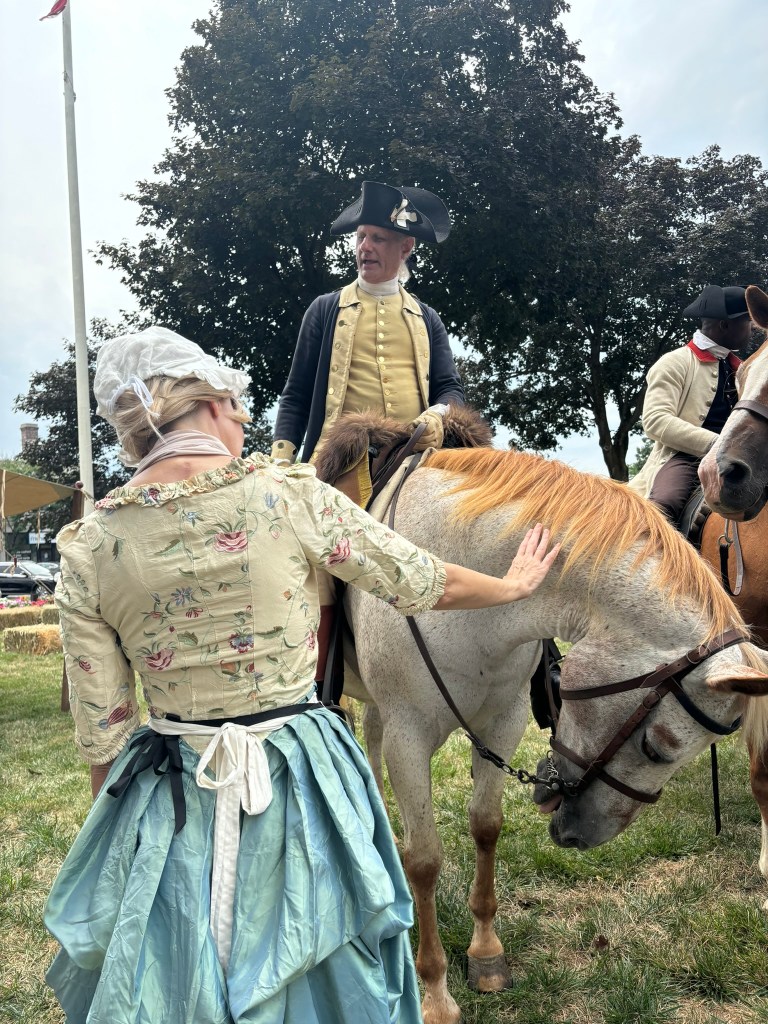
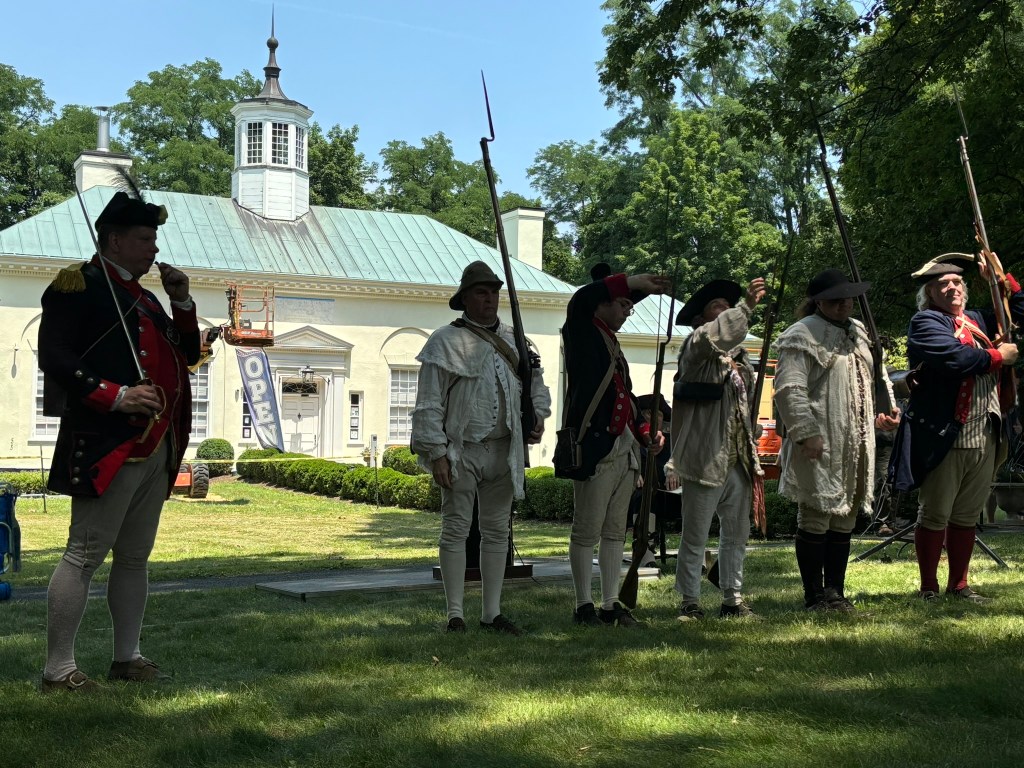
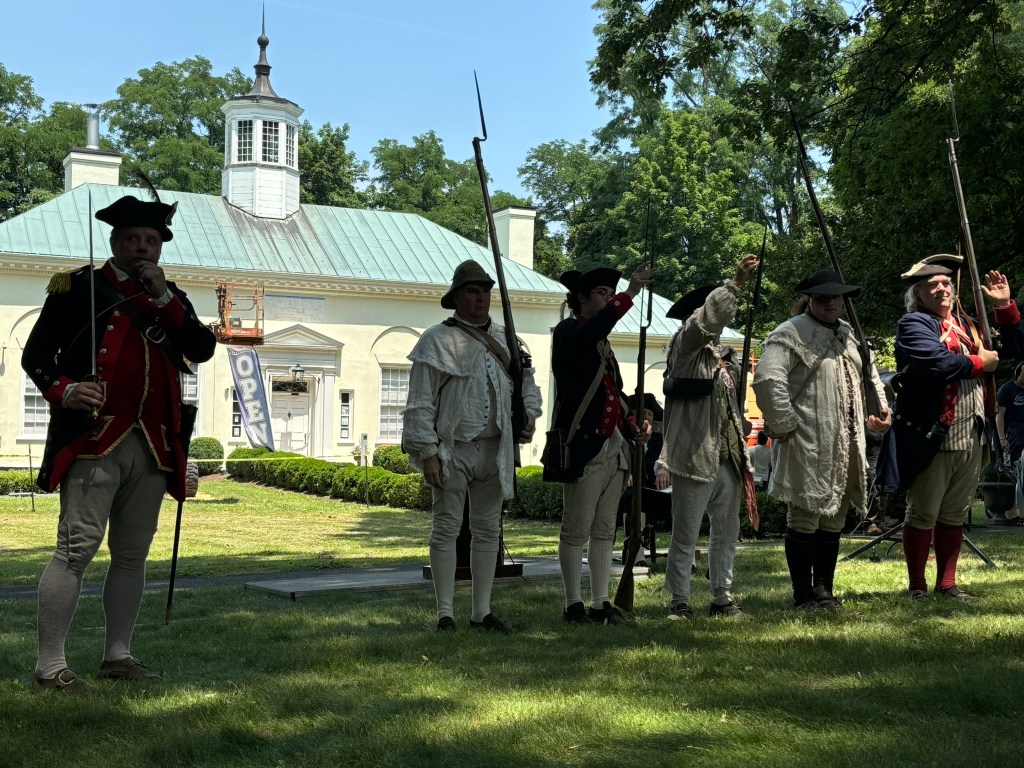
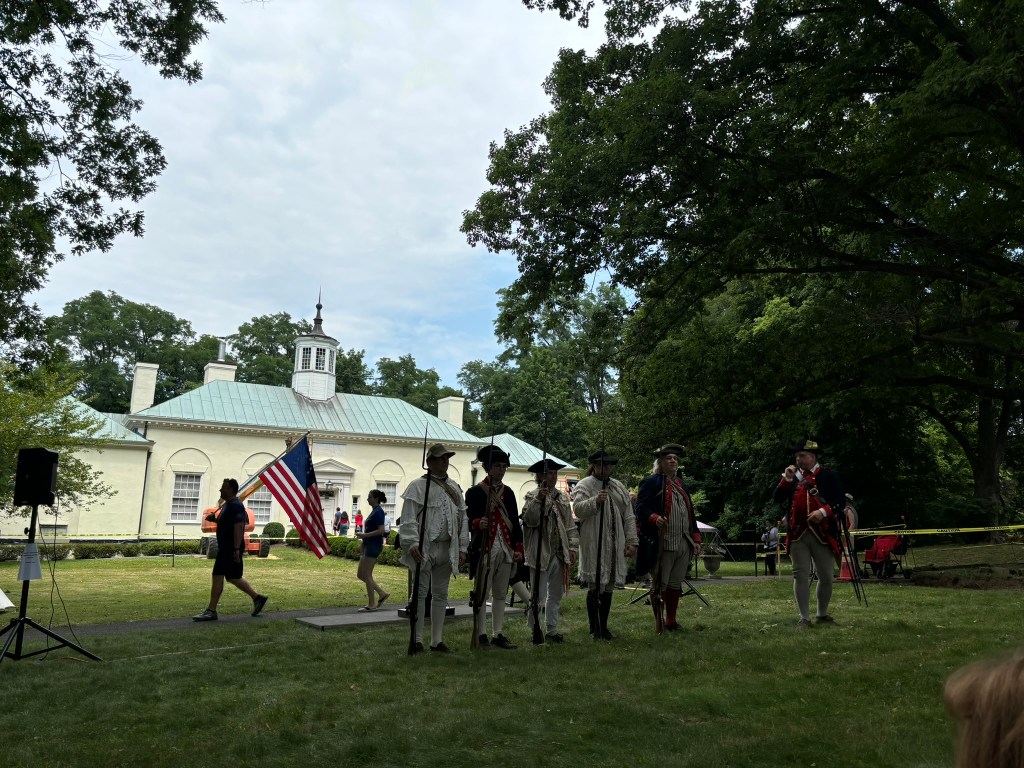
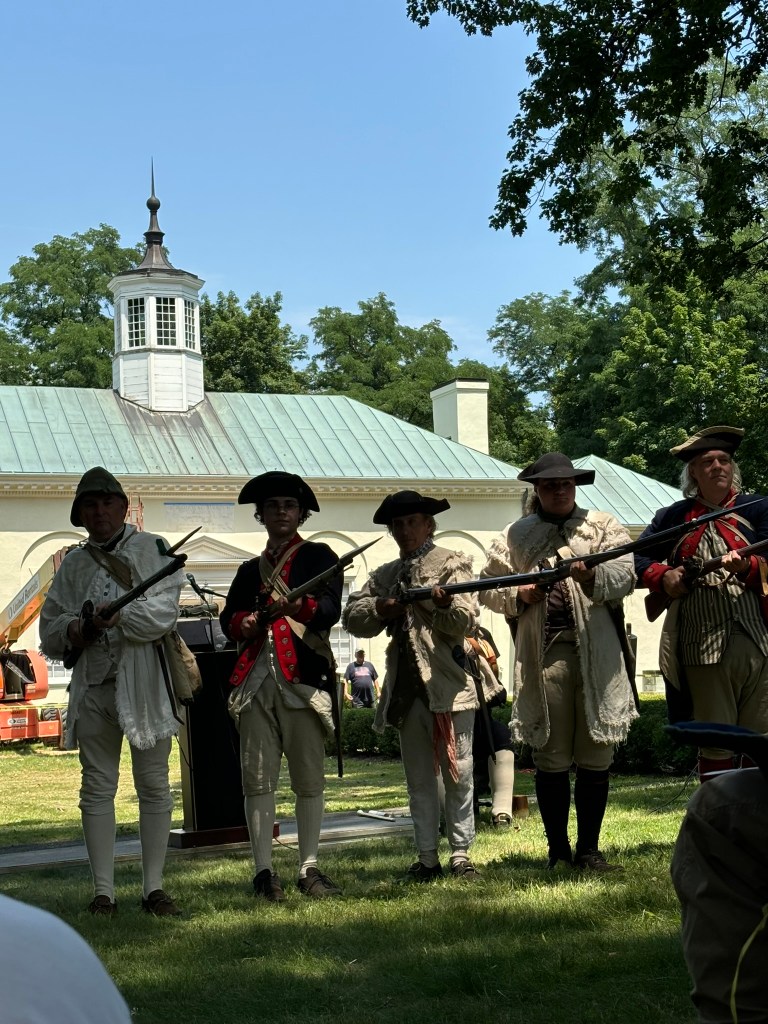
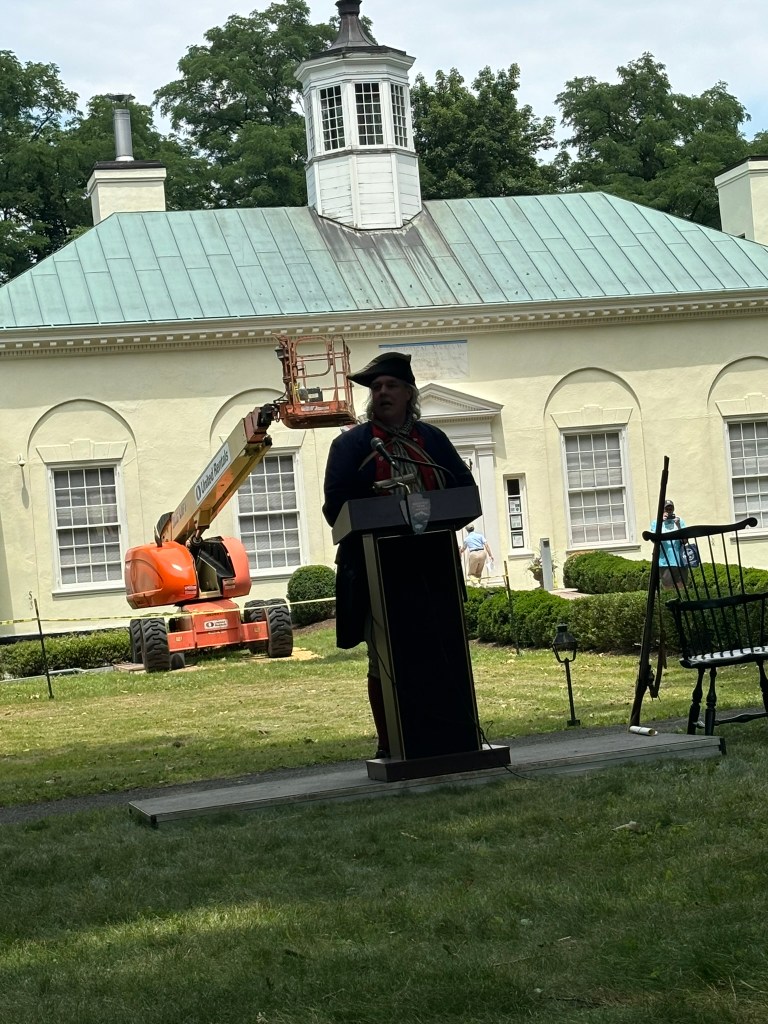
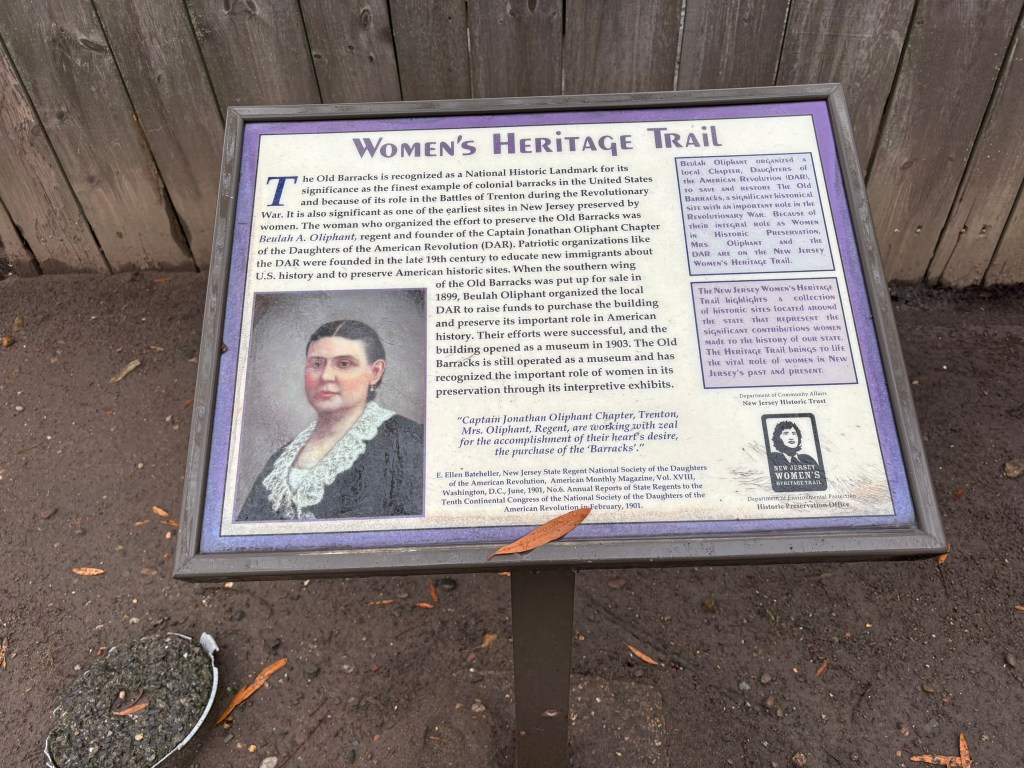
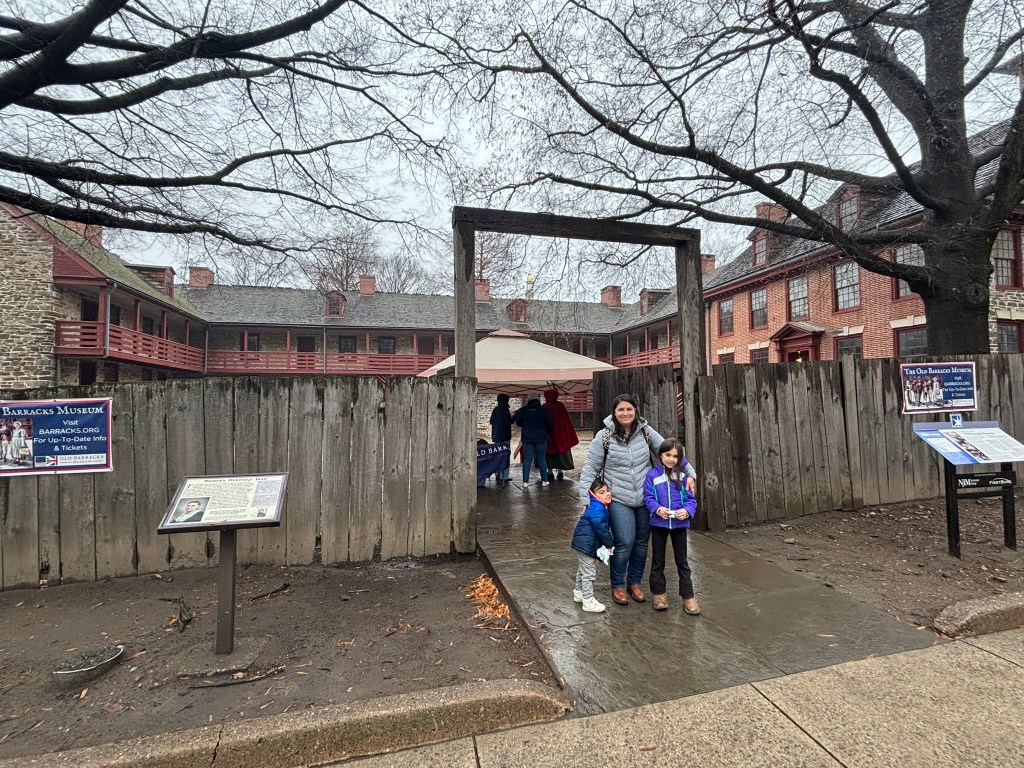
We arrived at and explored the Old Barracks Museum. The Re-enactors at the museum are great. They are very friendly and explain the history of the Barracks which were built in 1758 to house the British Army during the French and Indian War (1754-1763). The re-enactors explained what life would have been like for both the privileged officers, as well as the soldiers. We discovered that officers passed the time by playing cards and other games. We also discovered in the soldiers’ barracks that a room the size of my kids’ bedrooms would have housed between 12-16 men, 3 men per bed! The barracks would serve a variety of purposes during the American Revolution after it was captured by the Americans, including a place to house American troops and British prisoners, as well as a smallpox hospital.
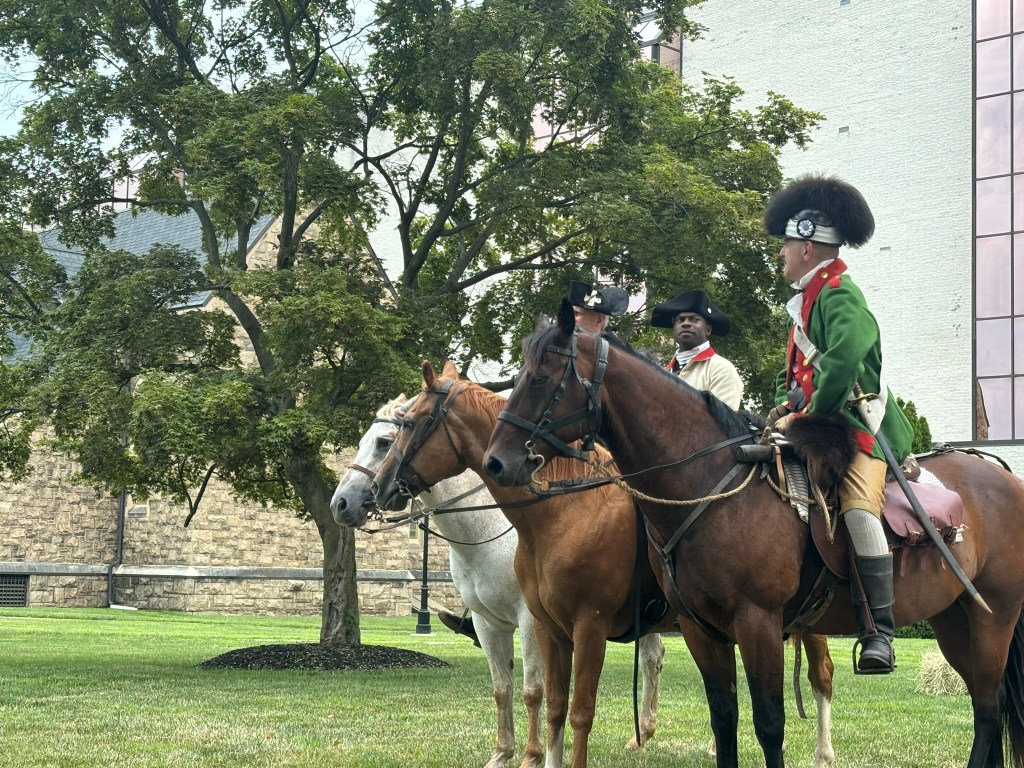
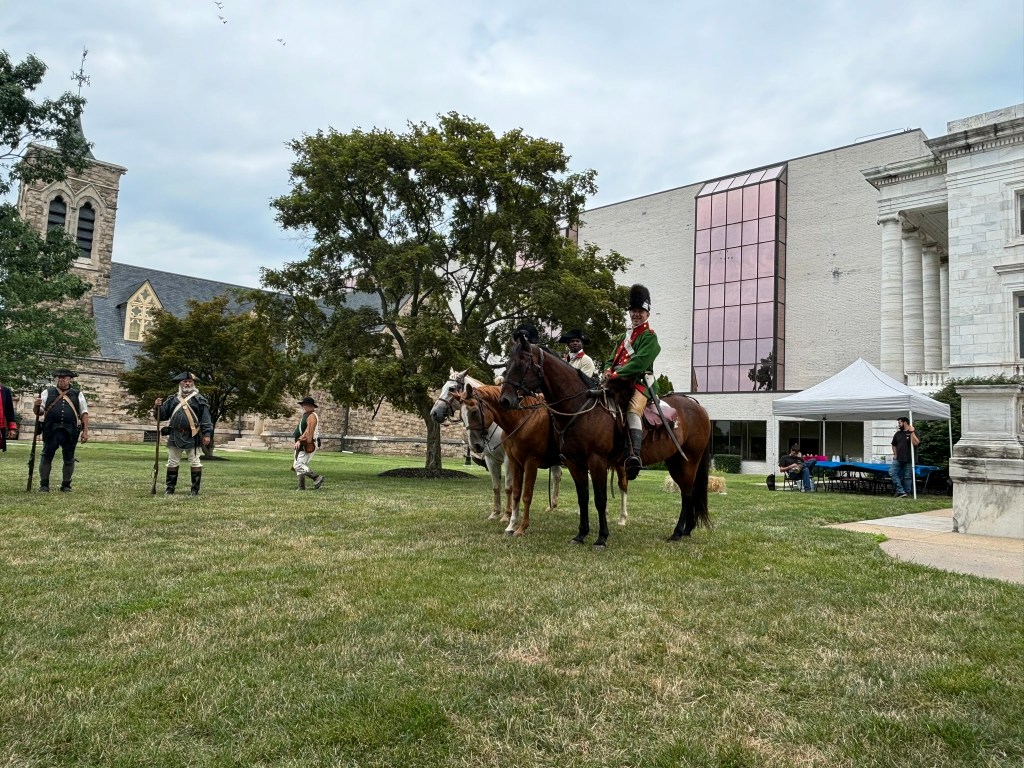
While we were exploring the Barracks, soldiers gathered to line up and march over to the reenactment of the Battle of Trenton, which takes place between State Street and Mill Hill Park. We unfortunately didn’t get an opportunity to see the reenactment. It was taking place farther away from where our car was parked, which would have been a lot for the kids. We are hoping to see it in the future and will plan our day better than we did this time. The reenactment always takes place around this time in December to commemorate the Continental Army’s crucial victory on December 26th, 1776 at the Battle of Trenton, part of the Ten Crucial Days.
This was somewhat of a spur of the moment trip, but overall we had a good day. For next year, I’m hoping we can plan out Patriots Week better so that we can attend more events. The Old Barracks is a place I have wanted to see for a long time. It’s quite fascinating to see a building from 1758 in the middle of Trenton. There is rich history to explore there as it serves as a living history museum. For videos from the the Old Barracks Museum, follow my Social Media Pages. For more information on the two museums that we visited, check out the links below.
Every year that I teach the American Revolution, I often ponder new questions related to the event. One question that I’ve asked myself this year is: Could have cooler heads prevailed in the lead up to the American Revolution? The primary, foundational disagreement between the American colonists and the British government was the simple question: “Did the British Parliament have the right to tax the colonists?” The colonists were so steadfast with an emphatic “NO” that they were willing to protest, boycott, destroy property and risk going to war. The British responded with an empathic “YES”. They were so steadfast that they were willing to tighten control over the colonies, send British troops to enforce its laws, close Boston’s port for trade, enact martial law in Massachusetts, and alter the justice system of the colonies. The British were so committed to their power to tax the colonists that they were willing to go to resort to war.
There is no doubt that the colonists drew a line in the sand against British infringements on their rights as Englishmen. There is also no doubt that the British officials were quite stubborn with their unwillingness to listen and work with the American colonists. The British had a reputation to defend and were unwilling to give in to colonial demands. There was a sense of arrogance in their responses to the colonists throughout the controversies that occured between 1763- 1775. Had the British been more willing to negotiate, was it possible that war could have been avoided? Or was an independence movement in the colonies inevitable? I explore these questions later in the blog post, but first, I’ll highlight the chain of events and laws that continued to build tensions between the two sides.
Tensions Emerge at the Conclusion of the French and Indian War
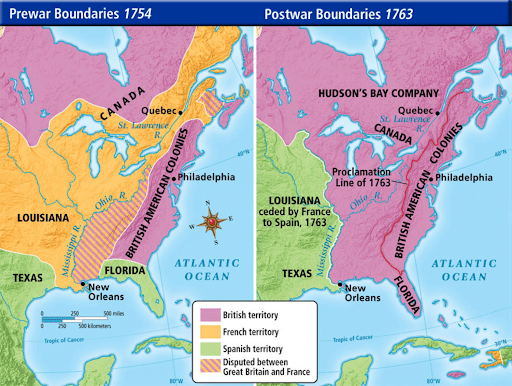
The French and Indian War (The American Theater of the global, Seven Years’ War) started in 1754 and ended with the Treaty of Paris in 1763. It was a conflict that emerged between the growing French Empire (along with Native allies) and the British Empire around the Ohio Country, the Great Lakes, and in Canada. The British emerged victorious and kicked the French out of their North American holdings. At the conclusion of the war, the British Empire in North America stretched from the east coast to the Mississippi River. In its aftermath, the British racked up a debt nearly double what it was before the conflict.
The British passed the Proclamation of 1763 to ban new colonial settlements west of the Appalachian Mountains. This was an effort to limit conflicts between the American colonists and Native Americans. The British sent about 10,000 British troops to the frontier to regulate the ban and limit any future tensions with the French and Natives. The American colonists saw the British stationed in the colonies as a standing army in a time of peace, which was unacceptable according to 18th century norms.. The standing army only added to Britain’s debt.
The British government believed that the American colonists should pay for their own protection and passed a series of laws that would extend the tax burden onto the colonists. Along with the taxes were a number of events that further led to tensions between the British government and the American colonists. Let’s take a walk through the timeline below to highlight the growing friction between the two sides:
1763- The Treaty of Paris (Ends the French and Indian War)
1763- Passage of the Proclamation of 1763- highlighted above.
1764- The Sugar Act
The British passed this law to address illegal smuggling by the colonists. The Navigation Acts, which had been passed throughout the colonial period, allowed the colonists to only trade with England. The colonists freqently smuggled goods into the colonies including tea, molasses, sugar and other items. The Sugar Act sought to do two things- split the tax on foreign sugar/ molasses in half, (with the hopes that the colonists would pay the lower tax) and strengthen the enforcement of the law, allowing prosecutors to try smuggling cases in vice-admiralty courts with only a British judge and not a jury. While the colonists were opposed to the act, there was not widespread anger or oppostion (like we’d see with the Stamp Act). The colonists understood that this act was written to regulate trade, not necessarily to raise revenue for the Empire.
1765- The Stamp Act
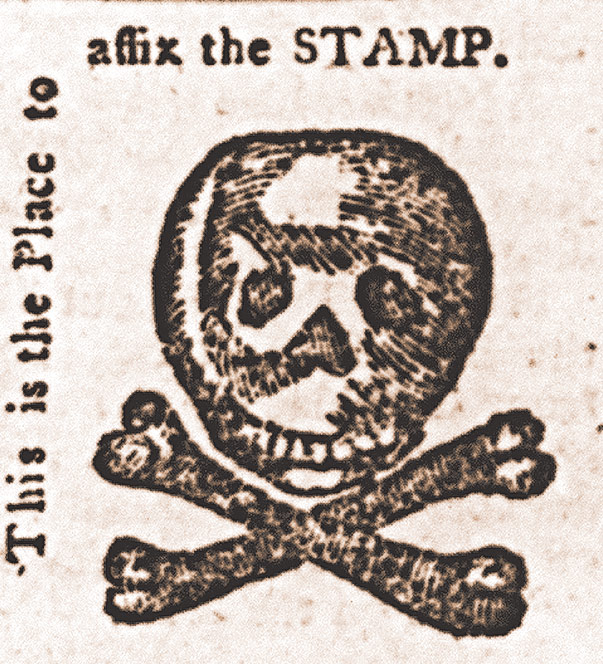
This law led to fierce, widespread anger throughout the colonies. The Stamp Act required all paper products: legal documents, newspapers, licenses, pamphelts, almanacs, playing cards, and even dice to be taxed. This was a direct tax that affected all colonists. Never before in colonial history had the British Parliament taxed the colonies in such a manner. The colonies had only been taxed by their colonial legislatures. The central argument from the colonists was “No Taxation Without Representation.” The colonists argued that because they were not represented in the British Parliament, that body did not have the right to take their property (in the form of a tax). This was an age old belief in England and the colonists wanted to be treated the same as people in the motherland.
The British response was that the English colonists were virtually represented by the British Parliament. Most citizens in the England could not elect their representatives because of property requirements for voting. Just as those individuals were represented by Parliament, so too were the colonists. The American colonists did not buy this argument and continued to state that the taxes were unconstitutional. To them, only the colonial legislatures could tax the colonists because their local government was where they were represented.
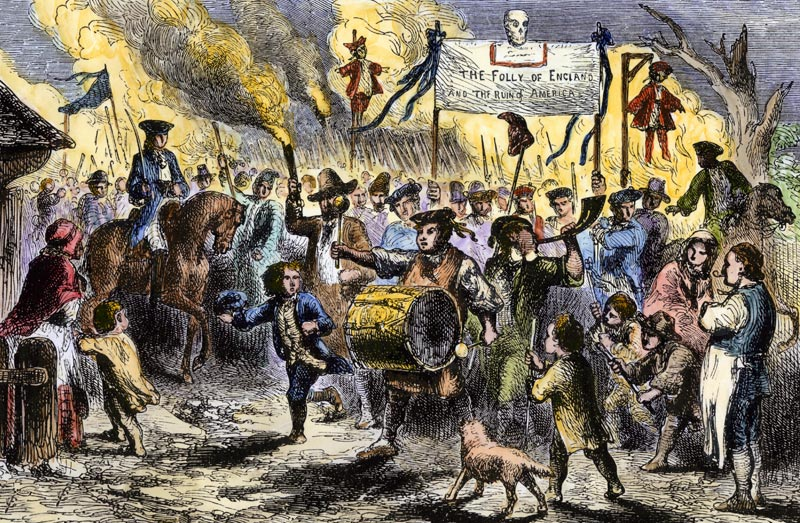
The rage of the colonists led to protests, boycots, riots, the tar and feathering of tax collectors, and the destruction of private property. These actions worked because the following year, the British Parliament repealed the Stamp Act, pressured by British merchants who were feeling the pinch of the colonial boycotts. However, the British also passed the Declaratory Act, stating that the British Parliament had the right to make laws “to bind the colonies and people of America… in all cases whatsoever.”
1765- The Quartering Act
The Colonies had to provide inns, alehouses, barns and other buildings to house British soldiers at the expense of the colonies. This was seen as another tax because the colonial governments had to foot the bill.
1767- The Townshend Acts
In response to the repeal of the Stamp Act, the British passed a series of acts referred to as the Townshend Acts (after British offical, Thomas Townshend). The acts included indirect taxes on goods arriving into the colonies from Great Britain, including glass, lead, paint, paper, and tea. Widespread protests and boycotts followed with the same argument as the Stamp Act. Even though this was an indirect tax, the colonists argued that it was still a tax to raise revenue for the British crown, and was therefore, unconstitutional. In the next few years, the Townshend Acts were repealed, except the tax on tea. The primary reason that British Prime Minister, Lord North wanted to keep the tax on tea, was to prove to the colonists that the British Parliament had a right to tax the colonists.
1768- The Liberty Affair
The ship called the Liberty belonging to known smuggler and wealthy merchant, John Hancock, was seized by British officials. Hancock was accused of smuggling wine from Madeira without paying customs duties. The incident led to riots in Boston, encouraging the British to send 2,000 troops to the city.
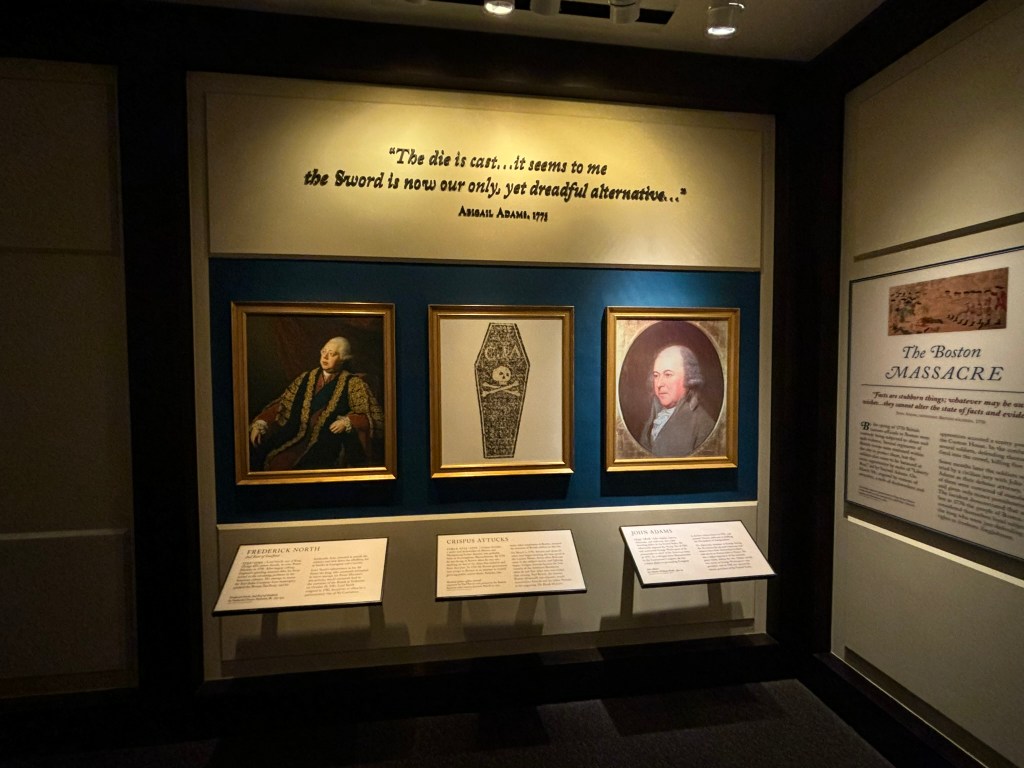
1770- The Boston Massacre
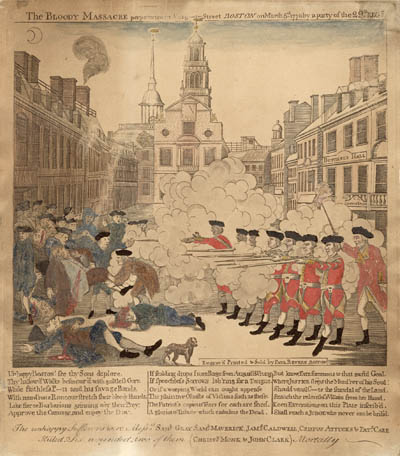
On the evening of March 5th, a crowd gathered outside the Boston Customs House and began threatening a British soldier, who called for backup. After seven more soldiers arrived, the scene continued to escalate as the mob grew larger. Members of the mob even dared the British soldiers to shoot. The crowd threw snow, ice and other projectiles at the soldiers, until one British officer fell to the ground and then fired his gun. Other British officers fired as well, killing 5 and wounding six in what the colonists called “The Bloody Massacre”. An engraving of the event (an early form of propoganda) by Paul Revere published in the newspapers increased the anger that the colonists felt for the British. As a result of the soldiers’ trial, six were cleared of any wrongdoing while two were convicted of manslaughter and punished with a branding on the thumb. The soldiers were defended by John Adams, who wanted to prove to the British that the American colonists believed in the right to a fair trial.
Image from the collections of the Massachusetts Historical Society.
1772- Gaspee Affair
A British ship called the HMS Gaspee ran aground as it was attempting to enforce the Navigation Acts. A group of colonists attacked, boarded, and set the ship aflame leading to anger from the British government. King George III called on the perpetrators to be caught and brought to Great Britain to stand trial. While the perpetrators were never actually caught, the idea of bringing colonists to Britain for trial only added to the anger and fear amongst the colonists.
1773- The Tea Act
Throughout the colonial period, the colonists were frequently smuggling cheap tea into the colonies from the Dutch. This, of course, was in direct violation of the Navigation Acts. In response, the British passed the Tea Act which allowed the British East India Company (which had tons of unsold tea and was nearly bankrupt) to sell their tea directly to the colonists. Prior to the Tea Act, the British East India Co. sold its tea at the London Tea Auction to tea merchants. The tea merchants then sold it to colonial tea merchants, who then sold it to the colonists. This process made British tea more expensive than smuggled Dutch tea.
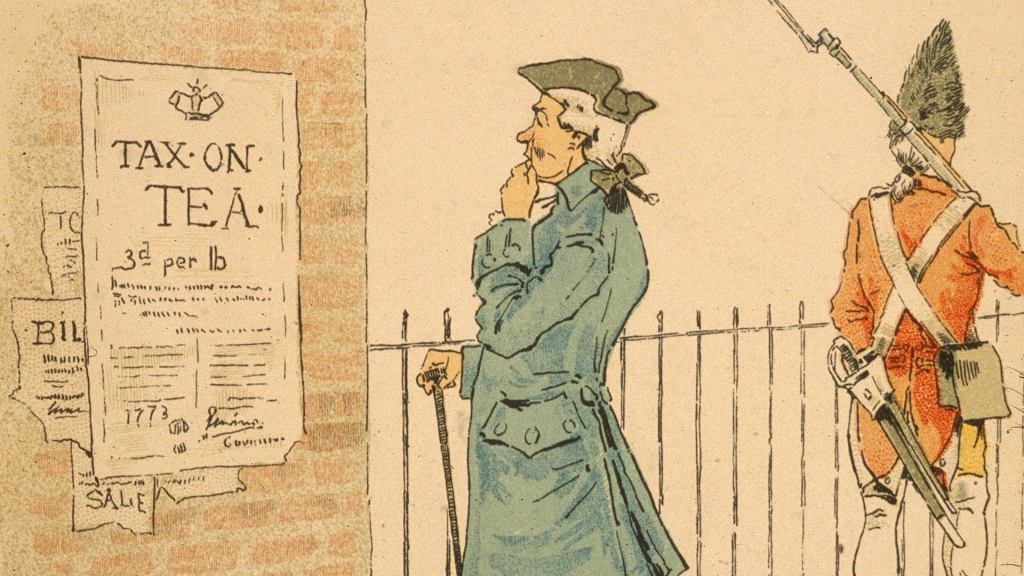
As a result of the Tea Act, the British East India Co. could now sell their tea directly to the colonists and take out the middlemen, the tea merchants. Even with the the additional tax on tea (which was the holdover from the Townshend Acts), Prime Minister Lord North was hoping that the colonists would simply purchase the cheaper British tea. Instead, the colonists reacted violently. The colonists knew that this was a sneaky way for the British to still force the colonists to pay the tax on tea.
As the tea ships landed throughout the colonies, the colonists refused to allow the tea to be unloaded in the colonies. Through threats of violence by the colonists, the British officials were unable to unload the tea, and brought the tea ships back to England. An example of this is what is referred to as the “Philadelphia Tea Party”. The only British official who refused to give in to the colonists, was Lieutenant Governor of Massachusetts, Thomas Hutchinson. He would not allow for the tea ships to be brought to England, and therefore, three tea ships sat in the Boston Harbor.
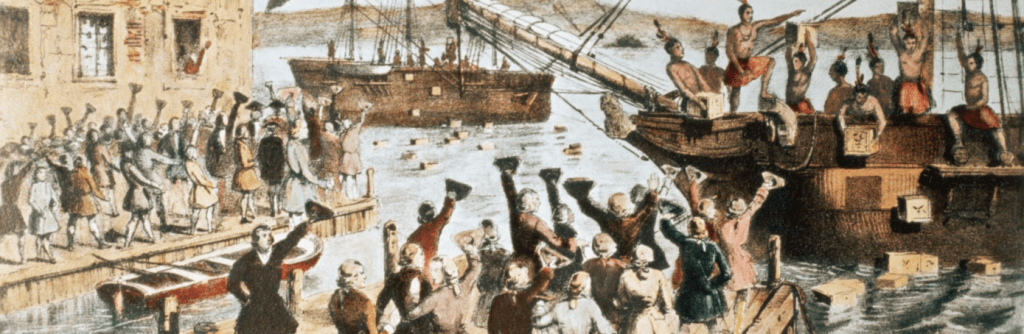
1773- The Boston Tea Party
Boston colonists, likely led by the Sons of Liberty and many disguised as Native Americans, boarded the three ships and dumped all of the tea into the Boston Harbor. In today’s U.S. dollars, the British East India Company lost about $1.7 million worth of tea.
1774- The Intolerable Acts
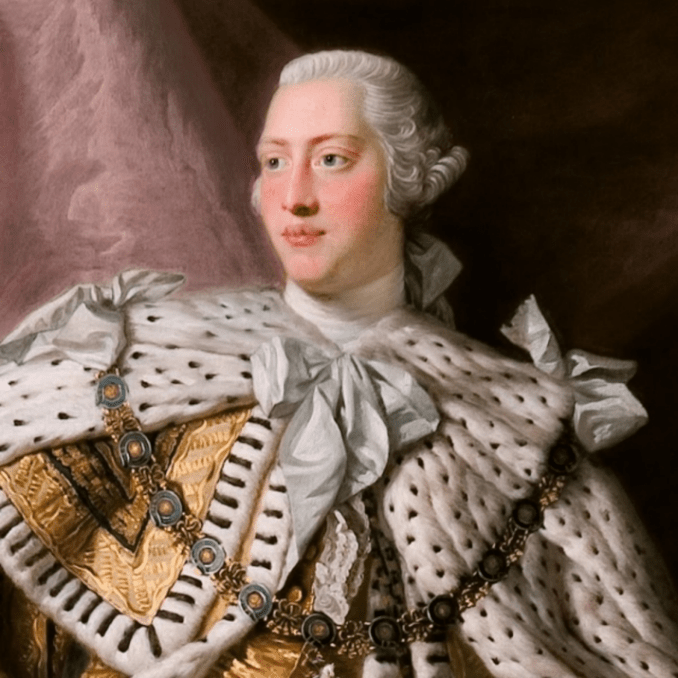
King George III was enraged when he heard of the destruction of the tea. Even members of Parliament who had been sympathetic to the colonists before, had completely turned on them. Lord North wanted to punish Massachusetts, and Parliament passed a series of laws that the colonists called the Intolerable Acts (The Coercive Acts from the British perspective). The British shut down Boston’s port until the tea was paid for. This would stop all exports and imports to and from the port of Boston.
The Massachusetts government was altered. Thomas Gage, the British Commander in Chief of armed forces, was the Masachusetts governor, and voting rights were taken away from the colonists. Town meetings were limited to no more than once a year.
British officials accused of a crime in Massachusetts would have their trial in Great Britain. George Washington referred to this law as the “Murder Act” because now British soldiers could get away with murder by having their trial in a sympathetic British court.
Finally, a stricter Quartering Act was passed, ensuring that the British were housed in vacant private homes and other public buildings.
1774- The First Continental Congress
The colonies were united in their outrage over the Intolerable Acts. They met in Philadelphia at the First Continental Congress to decide their next steps. They wrote a petition to the king, asking for a repeal of the Intolerable Acts, and a return to the prior harmony that the colonists and the mother country had previously shared. The petition was ignored. The Congress agreed to boycott British goods until the Intolerable Acts were repealed. The Congress also agreed that each colony should set up and train its own militia.
April 1775- Lexington and Concord
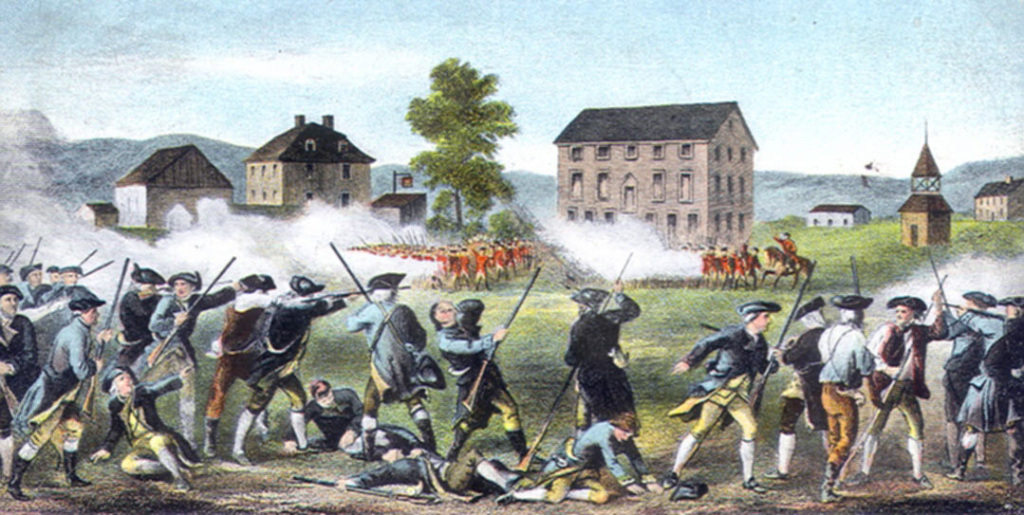
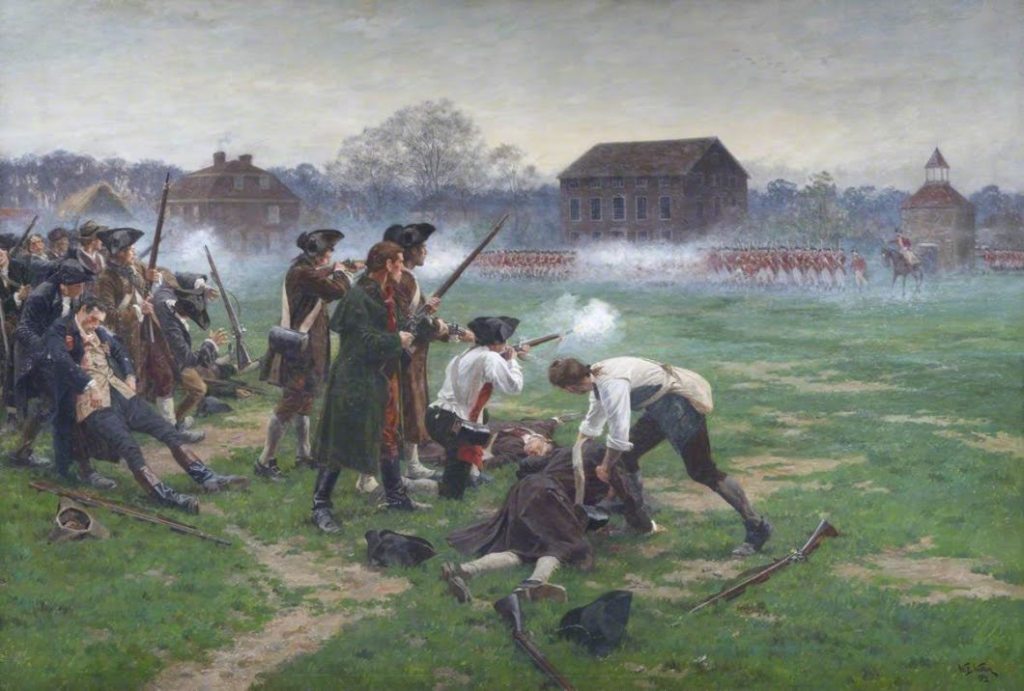
With heigtened tensions, the British learned that the colonists were stockpiling weapons and gunpowder in Concord, MA. The British planned to capture Sam Adams and John Hancock in Lexington and seize the arsenal in Concord. The famous “shot heard round the world” came on the village green in Lexington, and the Revolutionary War began.
As we can see with the timeline, tensions continued to escalate from the end of the French and Indian War. But could they have been avoided? Could perpetual peace have been possible without the shedding of blood and a war that would last 8 years?
Was Independence Inevitable Or Was Reconciliation Possible?
Let’s take a look at the two sides: The colonists and the British government.
The Colonists’ Viewpoints
The colonists, as mentioned above, drew a line in the sand against British taxes. They were not willing to budge on the issue, especially ardent Patriots. But the long-term causes of independence goes back further- well before 1763. In the late 1600s and for most of the 1700s, the British approach to the American colonies can be described with the phrase, “Salutary Neglect”. The British generally left the colonies alone and did not strictly enforce their laws for the continued devotion of the colonies. Throughout this time period, there was relative peace between the two sides. However, the colonists were displeased with the Navigation Acts, which required the colonists to only trade with the British. While the colonies were growing, they were increasingly feeling a sense of independence. They elected leaders to their own colonial governments, and they felt they could fend for themselves and run their own affairs through brilliant and tenacious leaders, who would become the Founding Fathers. They were an ocean away from Mother England, and were capable of governing themselves.
Therefore, when the British began enforcing laws more strictly and passing new direct tax laws, the colonists were understandably outraged. The colonists truly believed that the British government was acting in a way that was unprecendented. It seems that independence was inevitable, and the movement towards independence needed a spark of anger. This outrage came from British taxes.
What about from the British side?
Could the British have made peace with the colonists and avoided independence? To me, they could have done a much better job in their approach to the concerns of the colonists. But if they would have been more benevolent towards the colonies in the 1760s and 1770s, they may have been simply delaying an eventual indpendence movement.
The British government after 1763 was quite headstrong in their belief of taxing the colonies. The British were not willing to negotiate with the colonists during the many controversies between 1765- 1774. The chasm between the colonists and the British grew wider and wider. It’s clear that the British looked down upon their American countrymen. This can be seen in the ways that the British military viewed American military leaders, such as George Washington, during the French and Indian War. An American could not work his way up to become a British general. If you view Mother England and her American colonies as a parent-child relationship, Mother England was in the driver seat as to how the relationship was to develop.
There likely was a belief amongst the British leadership that if they continued to tighten controls over the American colonies, that perhaps the colonists would rebel. If that were to happen, the British would easily crush the rebellion, and maybe tighten controls over the colonists even more. The Americans had no navy. Their only military forces were inexperienced colonial militias. To the British, there would be no way that the Americans could defeat the mighty British army and navy, if they even dared to try.
When the colonists began to protest against the Stamp Act, it may have caught the British by surprise. At the conclusion of the Stamp Act riots, it appears that the British had the idea that they really needed to prove to the colonists who was in charge.
What if the British had more accommodating leaders?
There could have been peace between the colonists and the British: but only for a time. The Englightenment ideals had spread to the American colonies, and led many to question the very idea of a monarchy. It is quite conceivable that even if the Revolution didn’t break out in the 1770s, there could have been later controversies in later decades that would have fueled an independence movement.
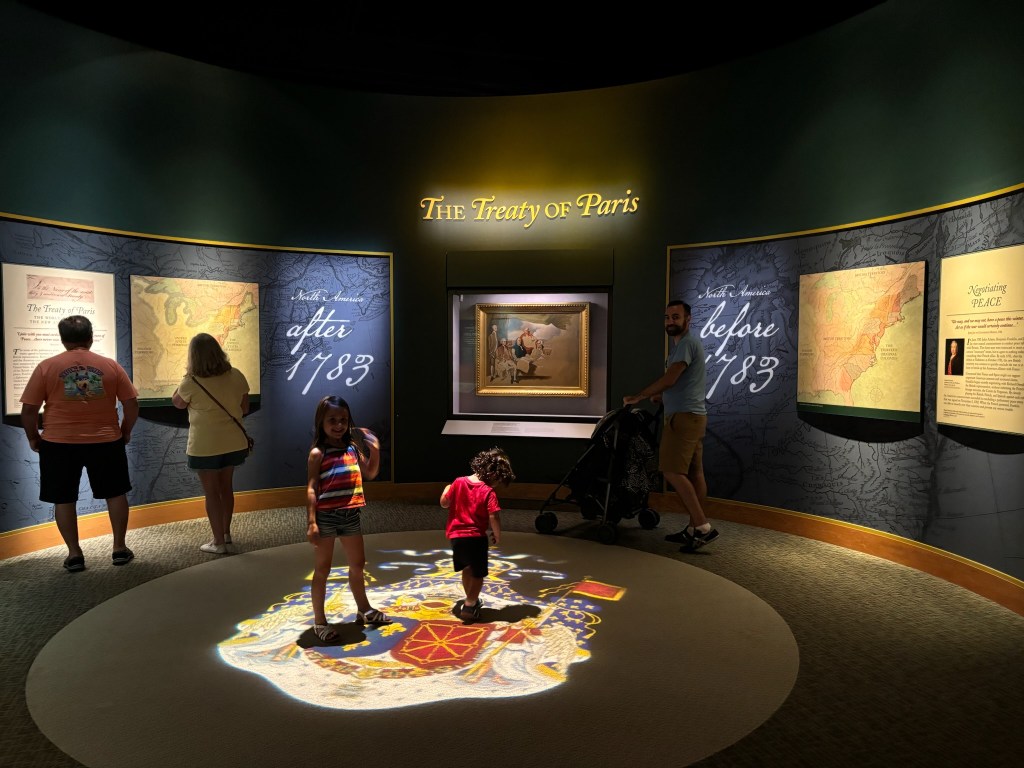
If cooler heads prevailed, and if British leaders were more understanding of the American arguments, I believe there could have been peace between the British and the Americans in the 1770s. However, there was a widespread and growing independence movement in the Americas taking place. The very ideals that Americans were developing in this time period were completely incompatable with the British monarchy. These ideals included political freedom, voting rights, right to a fair trial, and protection from unlawful search and seizure. I believe that independence was inevitable because of these ideals. The British Empire had spread itself too thin at the end of the Seven Years’ War and felt that they needed more money to continue to build their empire. They wanted to force the American colonies into submission in the 1760s and 1770s. This was an approach that ended up backfiring on the British. They took a calculated risk while tightening controls over the colonies, and the result would be American independence and the Treaty of Paris ending the Revolutionry War in 1783. With that, the British empire lost its vast American colonies in North America.
Reconciliation between the two sides was possible temporarily, but American independence would come sooner or later.
Please let me know your thoughts in the comments or on social media.
My last two blog posts discussed portions of my family’s summer vacation to Williamsburg, VA. The first blog post discussed our visit to Colonial Williamsburg. My previous blog post discussed a tour of Jamestown Settlement, which was the first half of our second day. This blog post will discuss our afternoon in Yorktown. This Jamestown- Yorktown tour was booked with Viator.
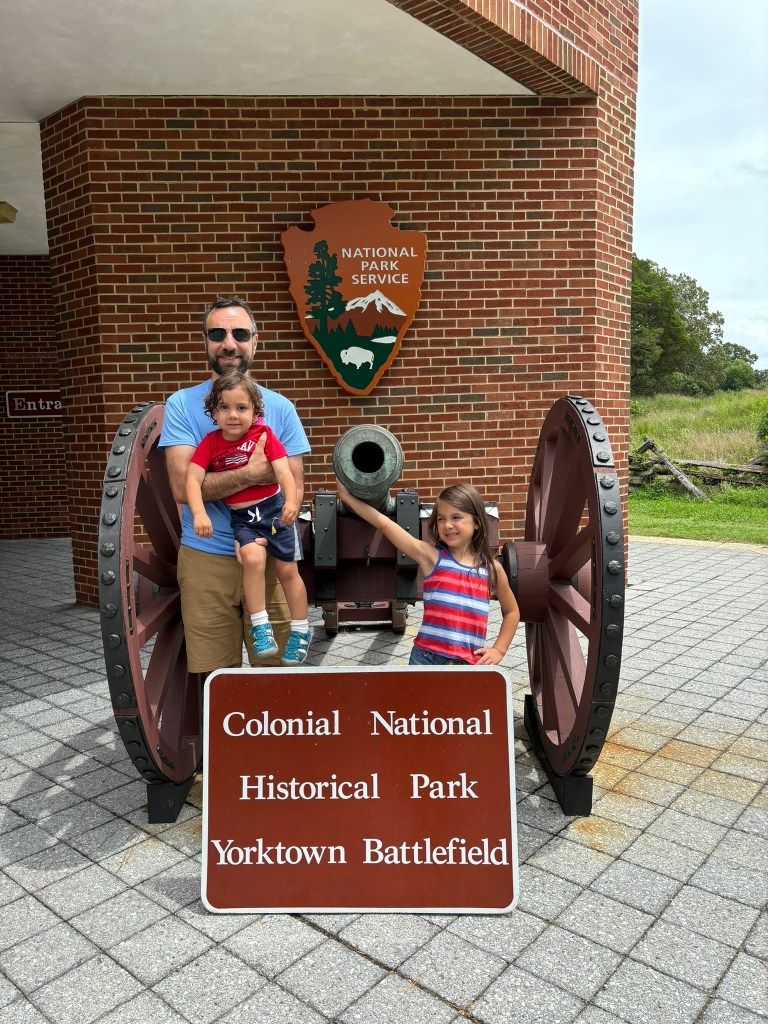
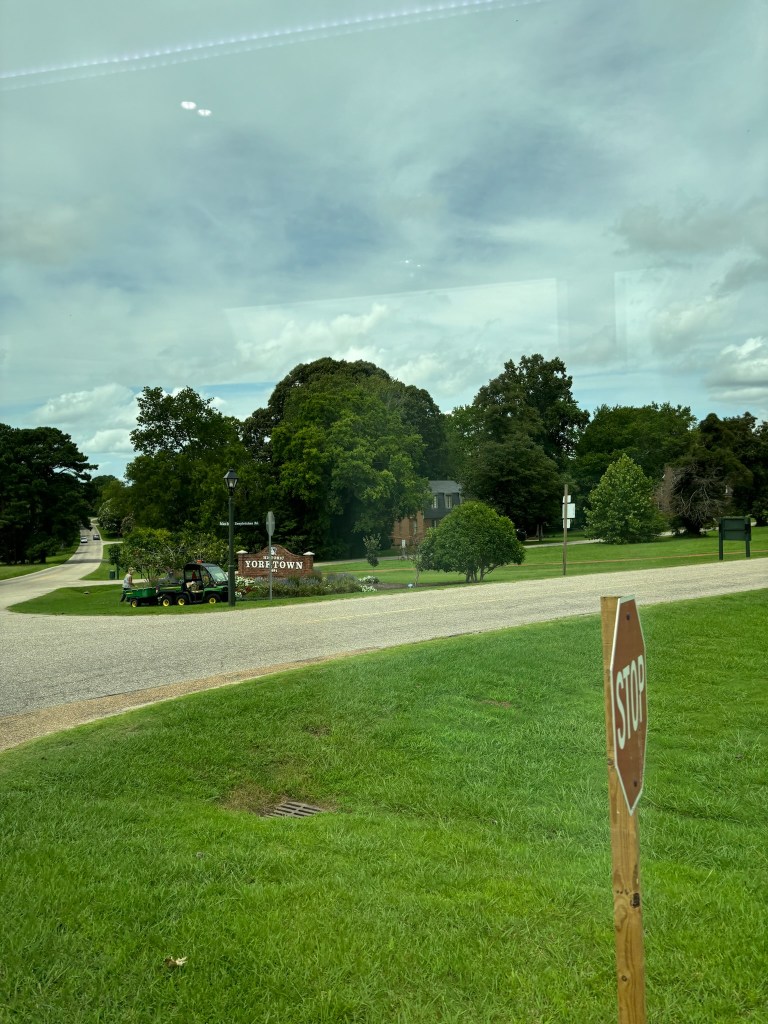
After we ate lunch at the Jamestown Settlement, we got back on the bus and headed to the Yorktown Battlefield. The drive between Jamestown and Yorktown was about 30 mins. Along the route, our tour guide still discussed the impact of the Jamestown settlement, and then transitioned into the 1700s. He explained the lead-up to the American Revolution and the outbreak of the war.
Significance
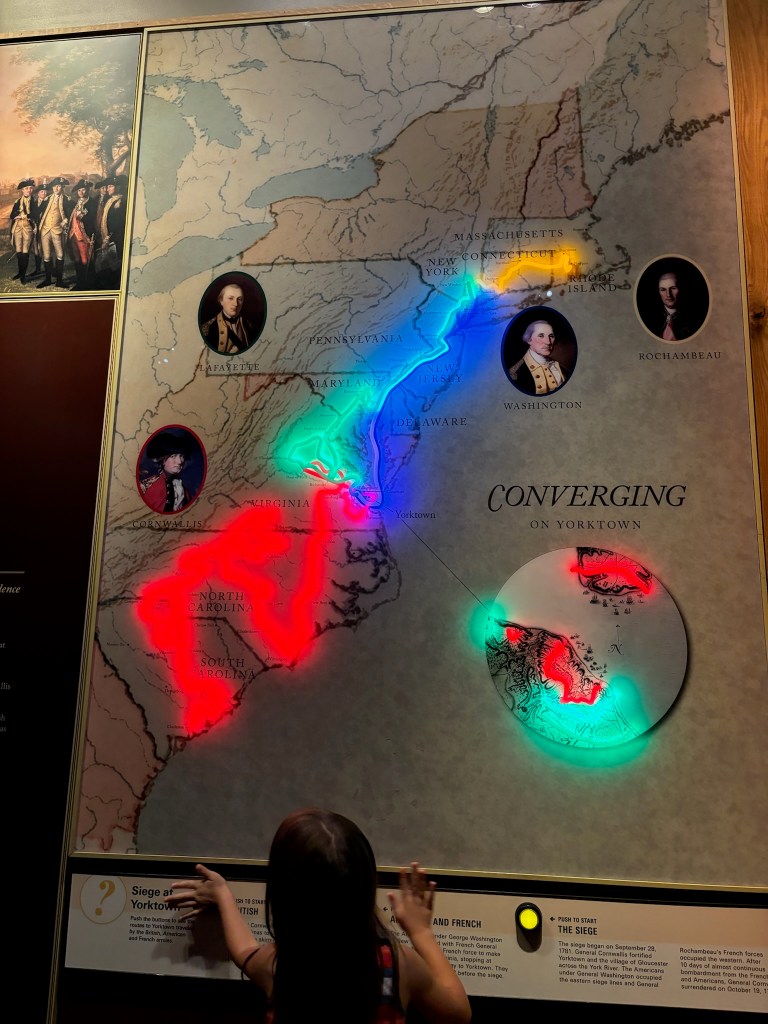
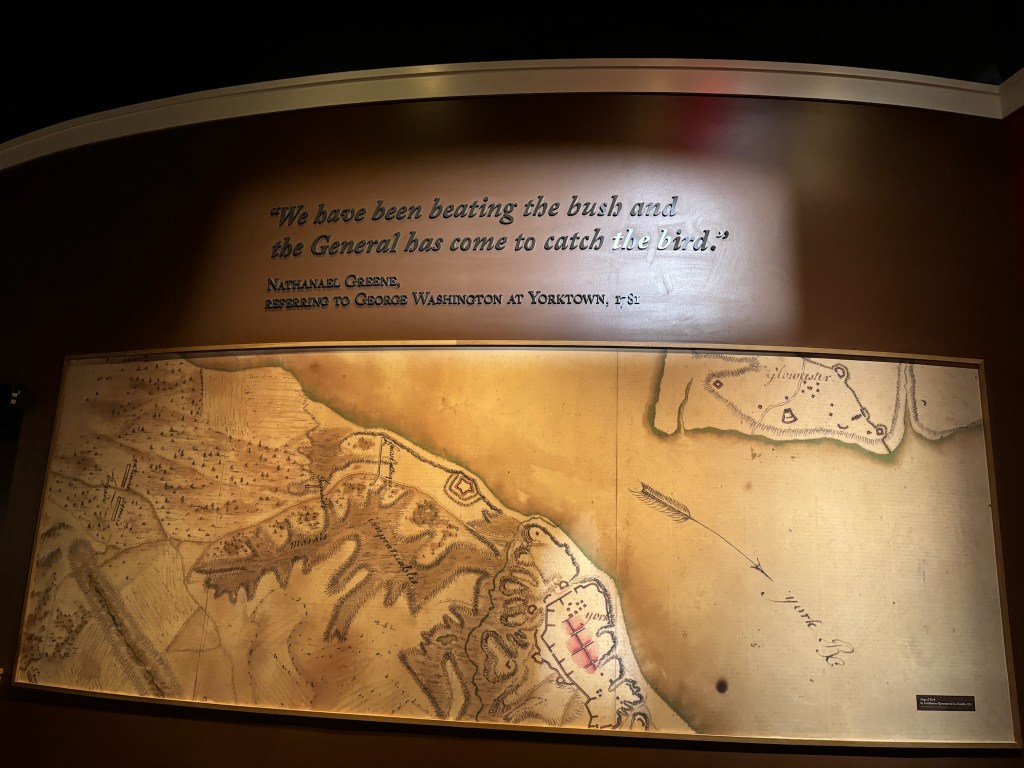
Yorktown was arguably the most important battle of the American Revolution because it was the last, major climactic battle. After six long years of war, and after a couple of grueling years of fighting in the south, British General Lord Cornwallis decided to take the war from the Carolinas to Virginia. He decided to set up camp at Yorktown along the York River. The combined French and American forces planned to surround the British at Yorktown and cut of their supply along the river. As a result of the naval Battle of the Chesapeake on September 5th, 1781, the French were able to successfully gain control of the York River, cutting off a British escape route. The French and American forces made their way from Rhode Island along the Washington-Rochambeau Revolutionary Route. After a siege of about three weeks, Lord Cornwallis’s army was forced to surrender on October 19th, 1781.
While smaller battles and skirmishes did take place in the war after Yorktown, this surrender led to peace talks and was the last major battle of the war. The Treaty of Paris would come in 1783, bringing about the official end to the war.
Yorktown Battlefield
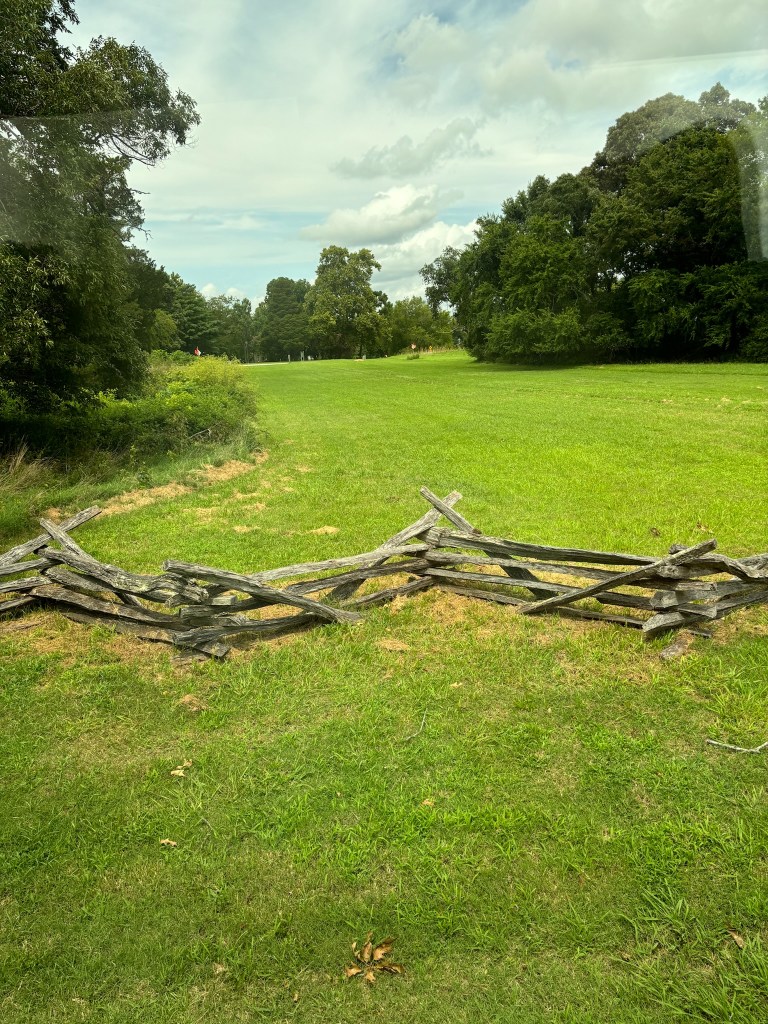
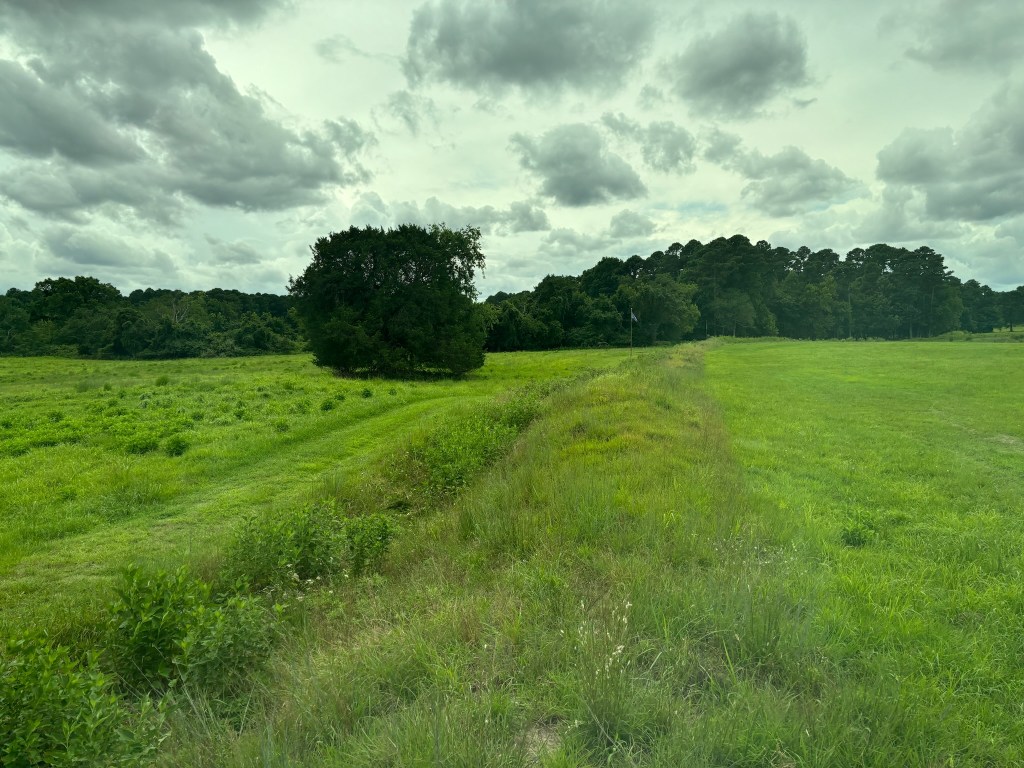
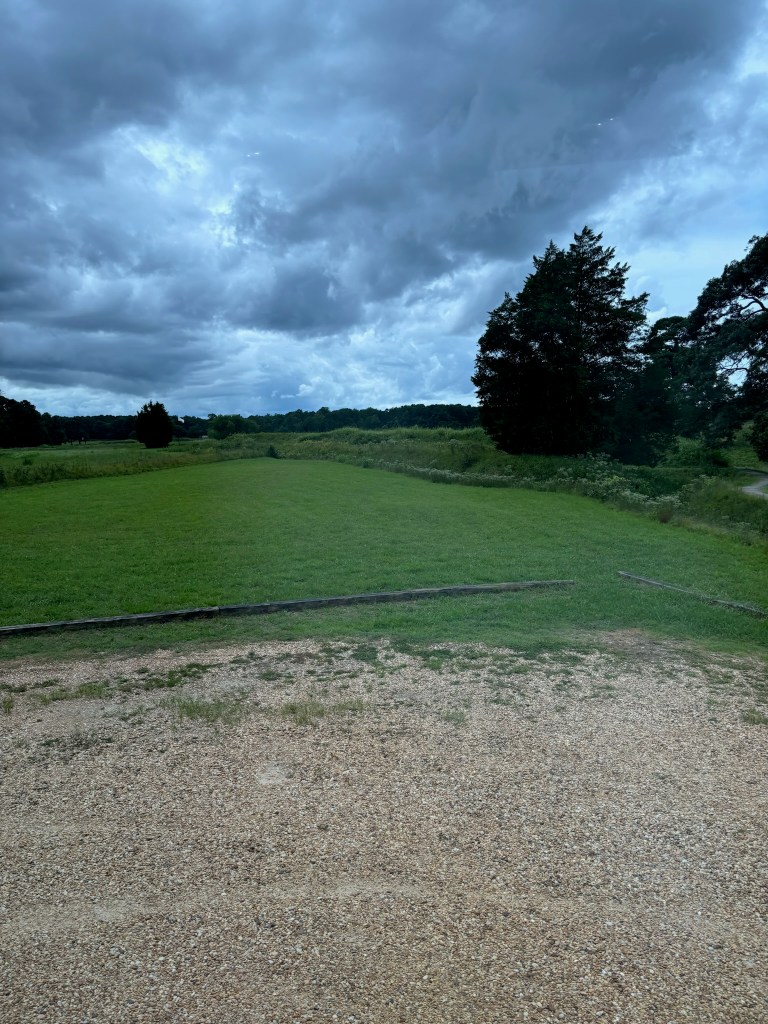
When we arrived at Yorktown, we received a bus tour of the battlefield. You could still see the remnants of the trenches that were built as the American and French forces were digging themselves closer and closer to the British stationed in town. The American and French alliance bombarded the town constantly and cut off food and provisions from getting into town. As we were moving throughout the battlefield, I used my Google Maps app to pinpoint exactly where we were in relation to town to get a sense of the exact locations of where the troops were moving on the battlefield.
Redoubts #9 and #10
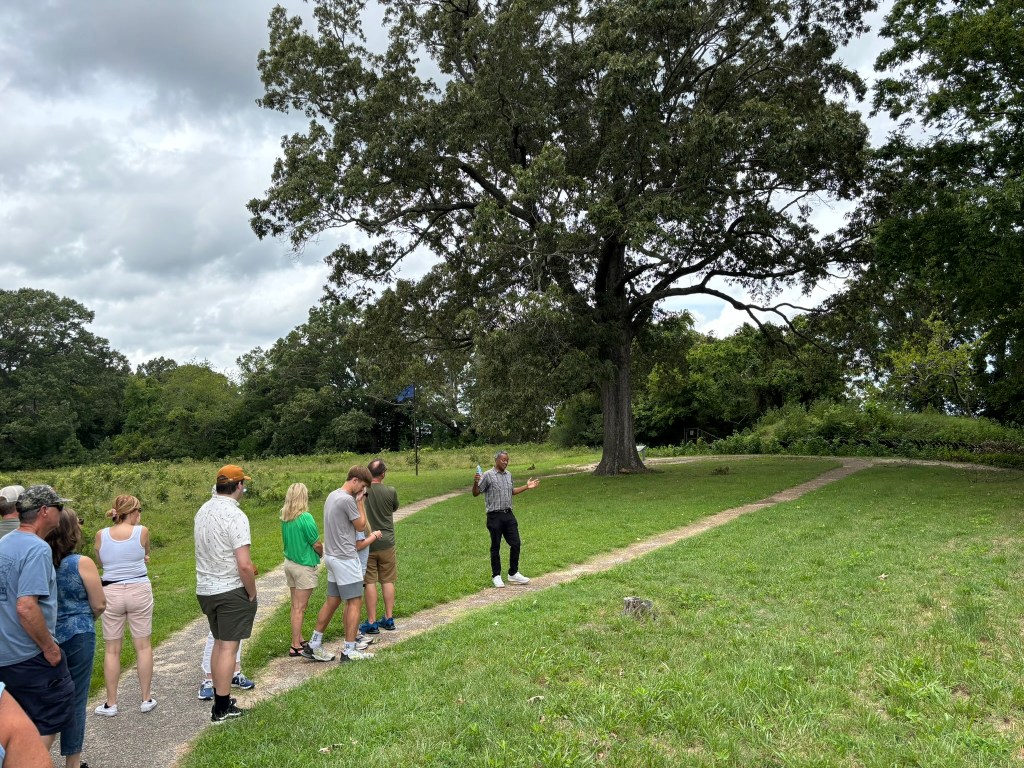
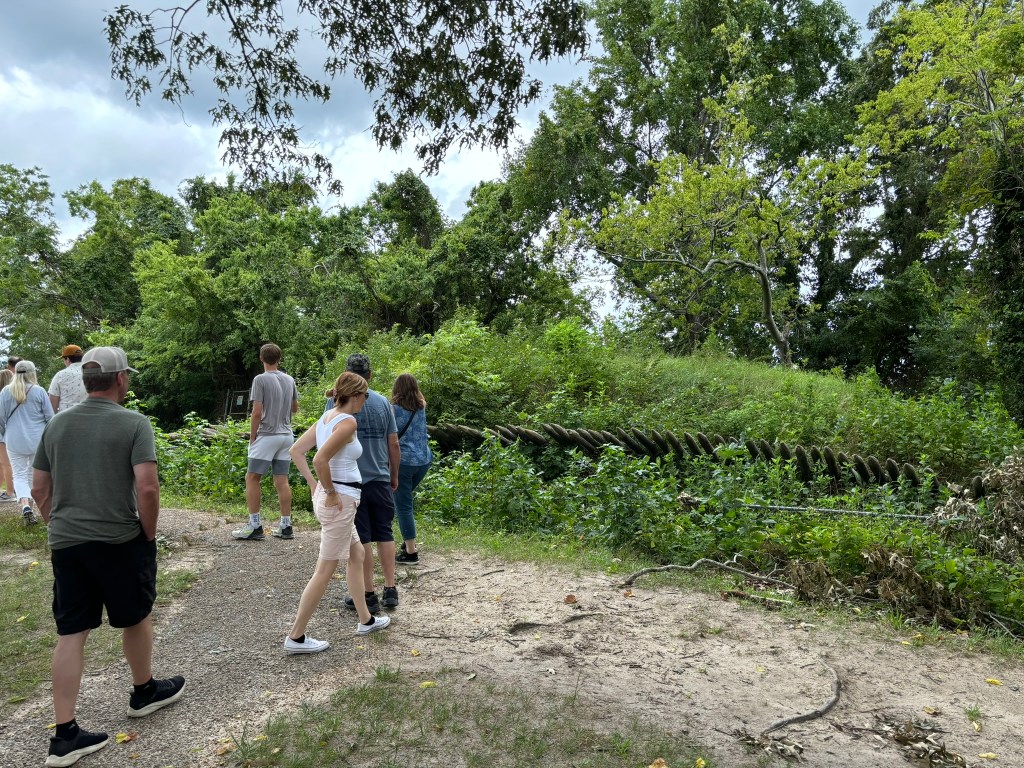
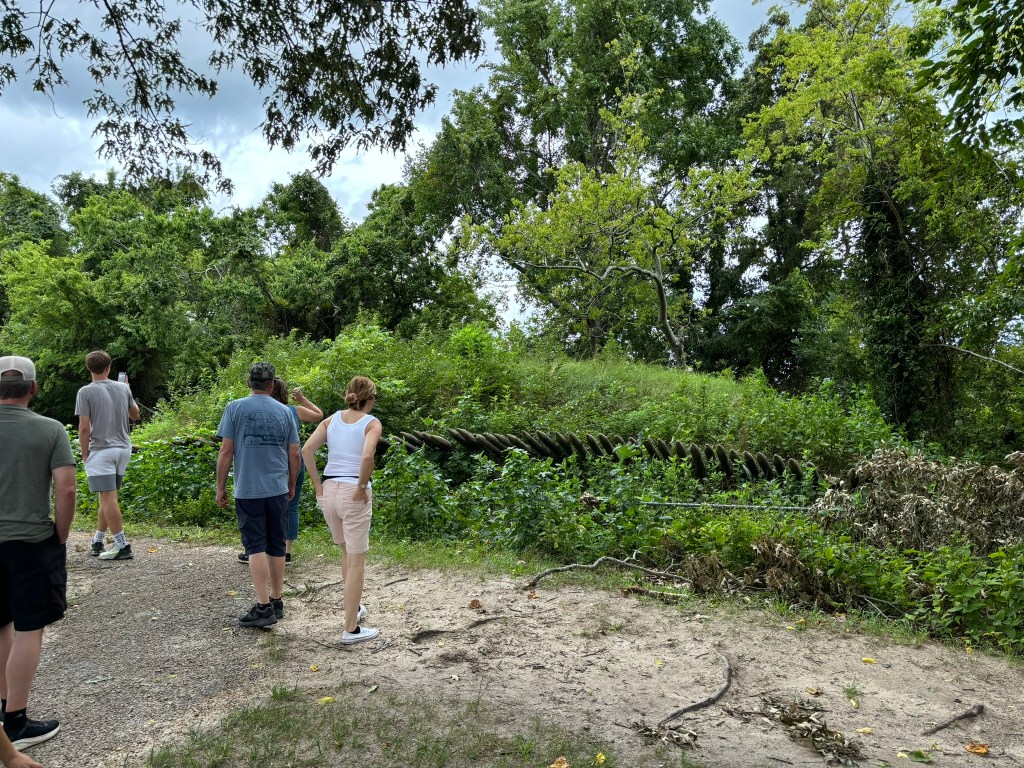
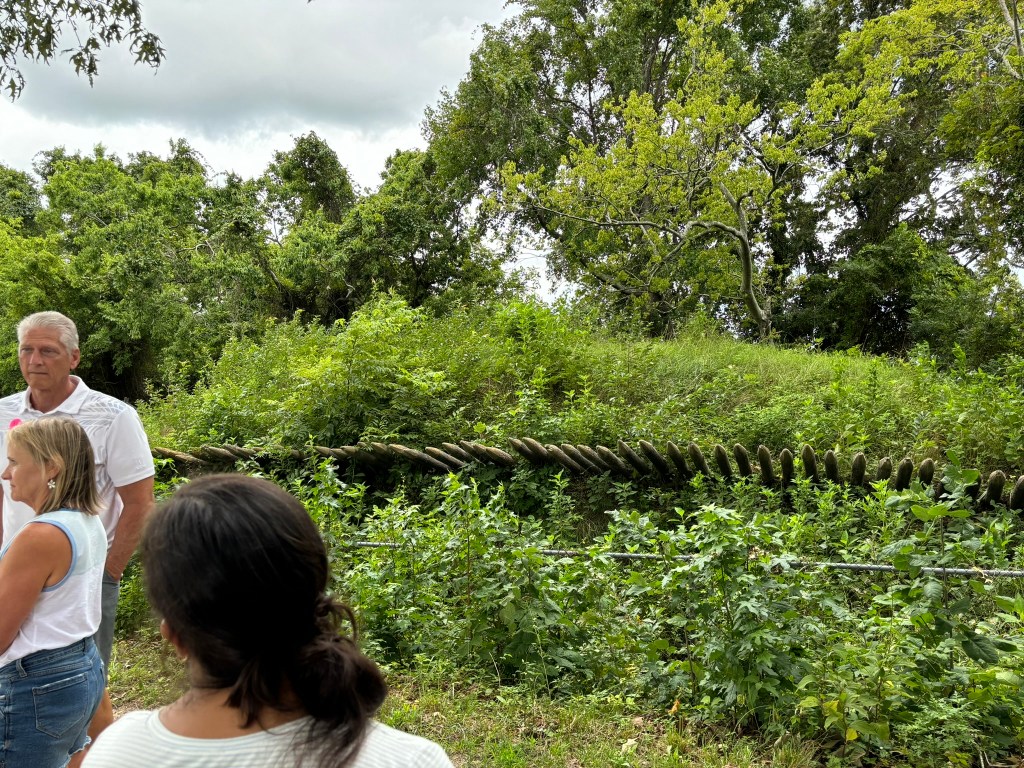
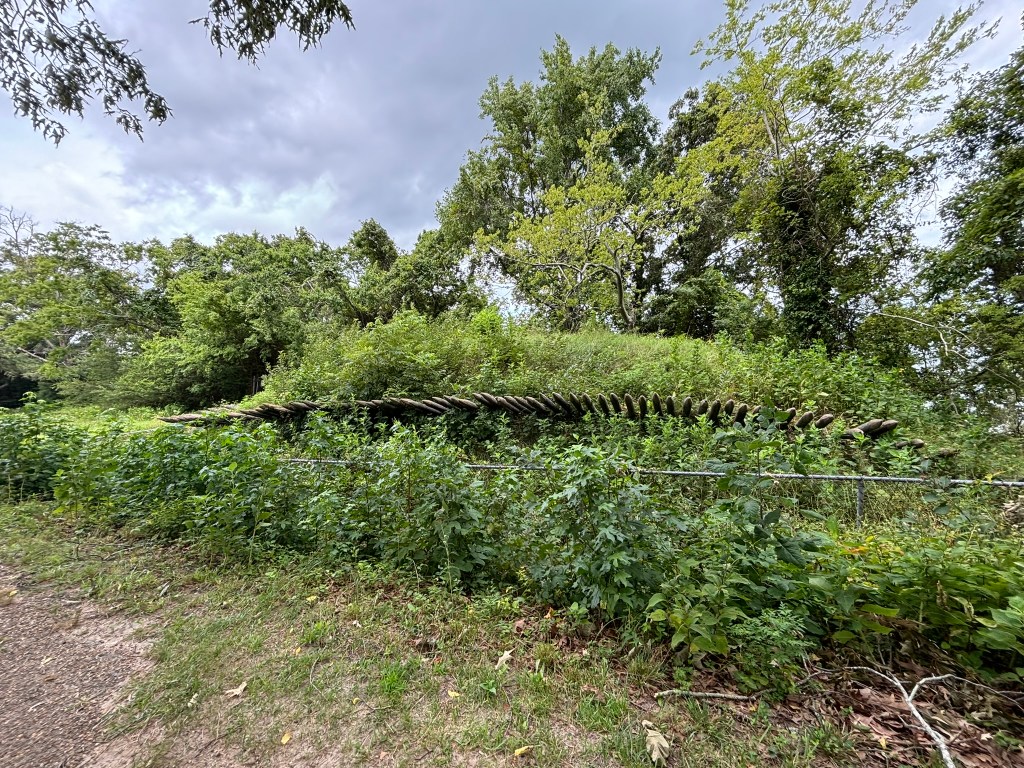
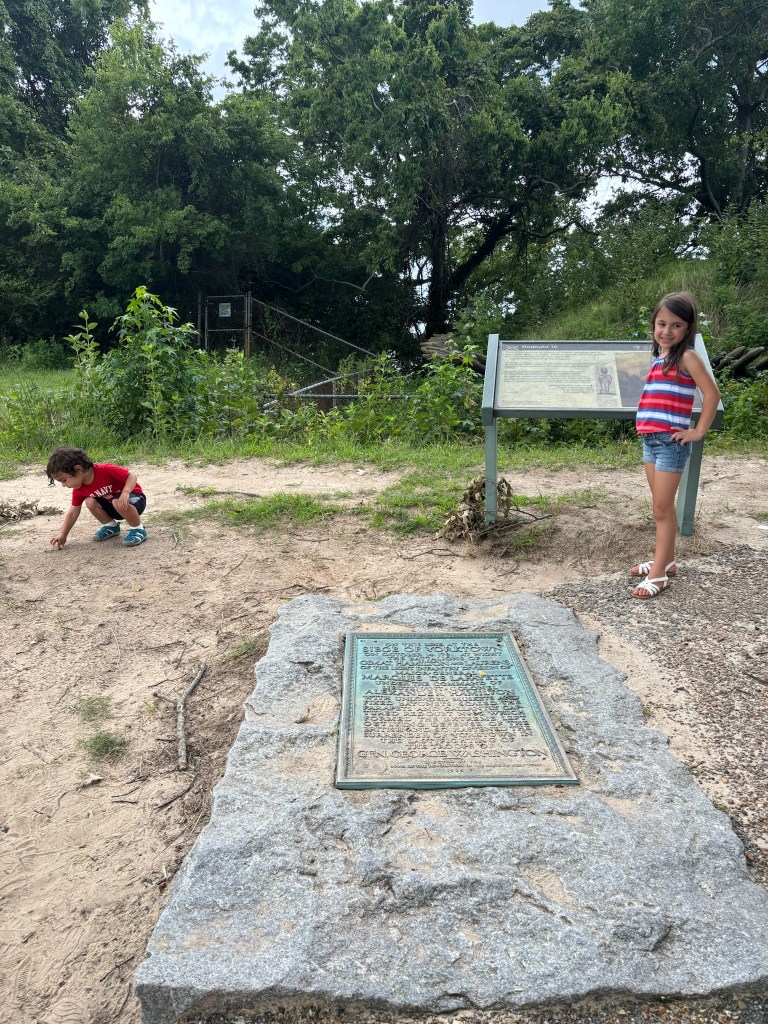
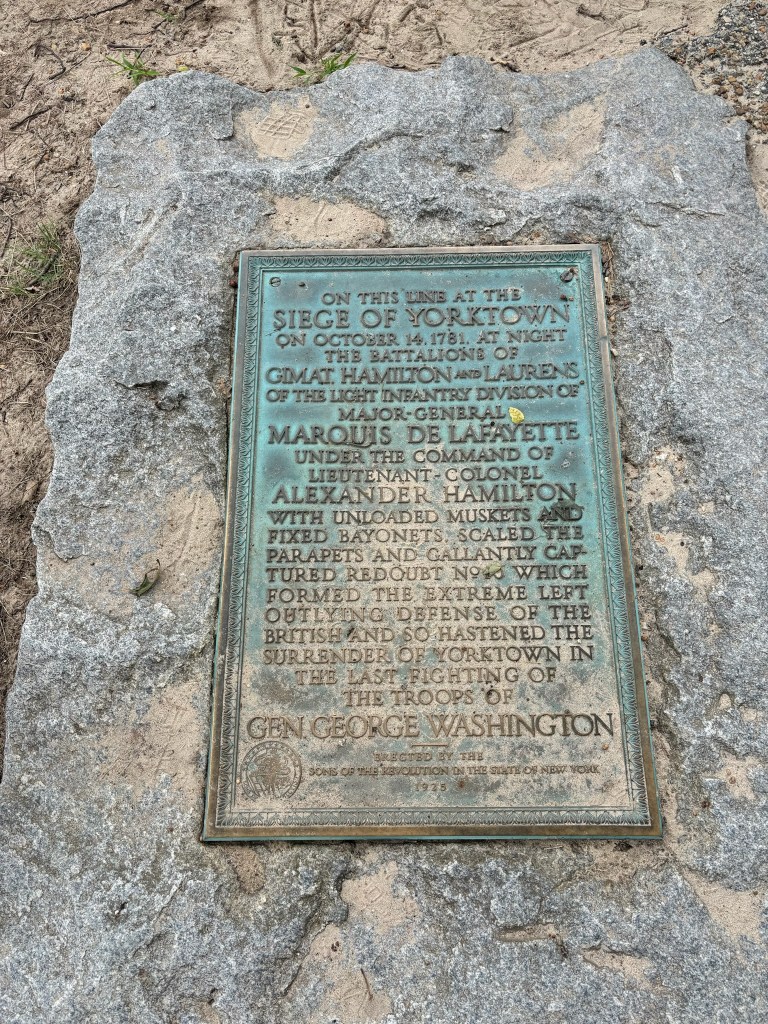
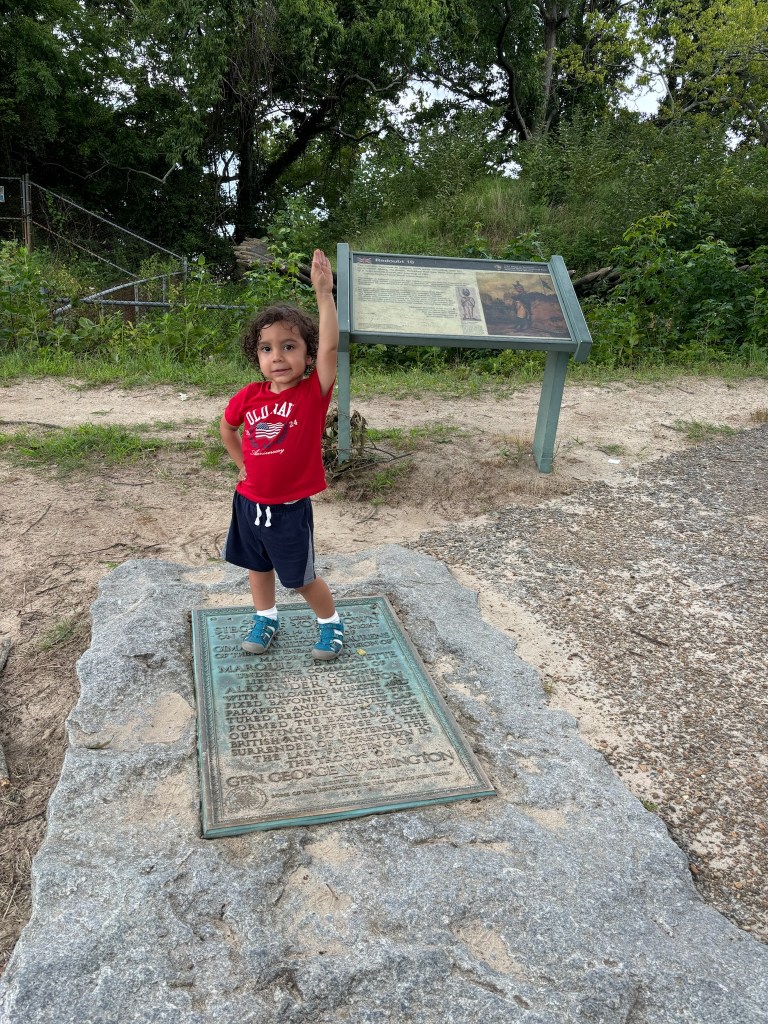
The bus made its way to Redouts # 9 and #10. These were two smaller fortifications just outside the British inner defenses, designed by the British to defend against French and American forces. When we arrived at the redoubts, we got out of the bus to observe Redoubt #10. Our tour guide explained the significance of the Redoubt. By October 14th, the American and French trench lines were within 150 yards of these two Redoubts. Washington devised a plan in which the French would attack Redoubt #9 and the Americans would attack Redoubt #10. Alexander Hamilton was chosen to lead the offensive in the night against Redoubt #10. The soldiers charged the redoubt with no ammo, just bayonets drawn. This was in order to keep the element of surprise. The American soldiers stormed the redoubt, climbed the abatis, and successfully took Redoubt #10 in brutal hand-to-hand combat in just 10 minutes. The French were also successful in taking Redout #9. Truly a climactic moment of the siege, the British surrendered just 5 days later.
The Moore House
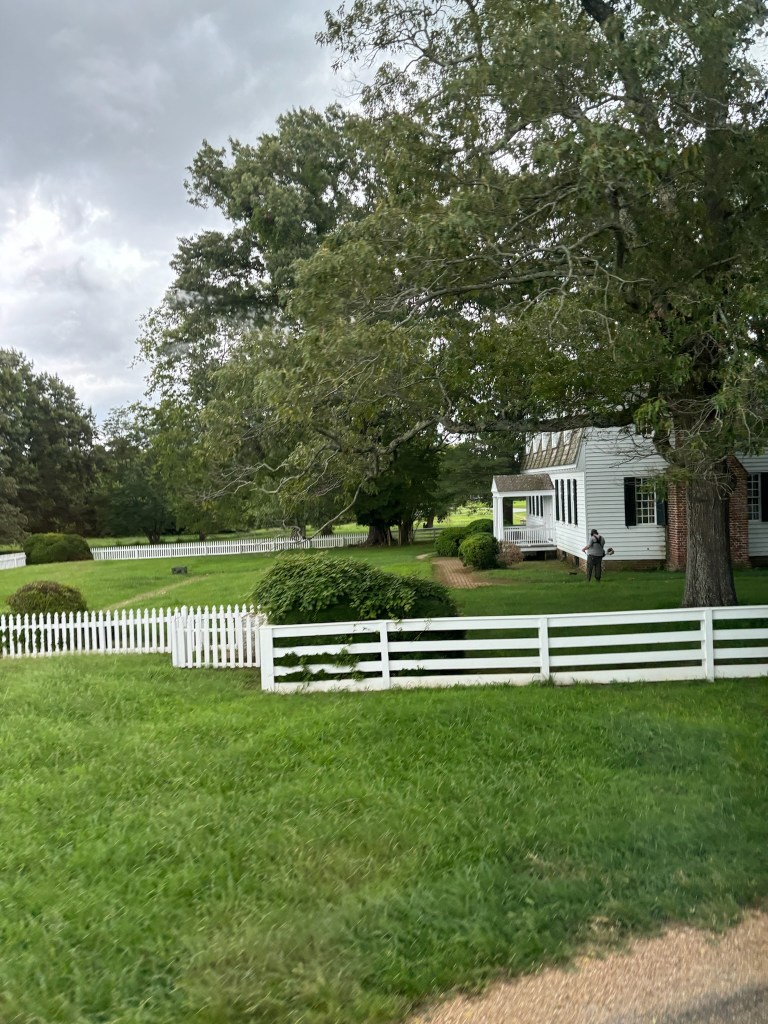
After viewing the redouts, the tour bus then took us to and parked in front of the Moore House, the location where negotiations for surrender took place. The tour guide did a nice job explaining the symbolic significance of the house. It essentially was here, where victory in the American Revolution was secured, confirming American independence.
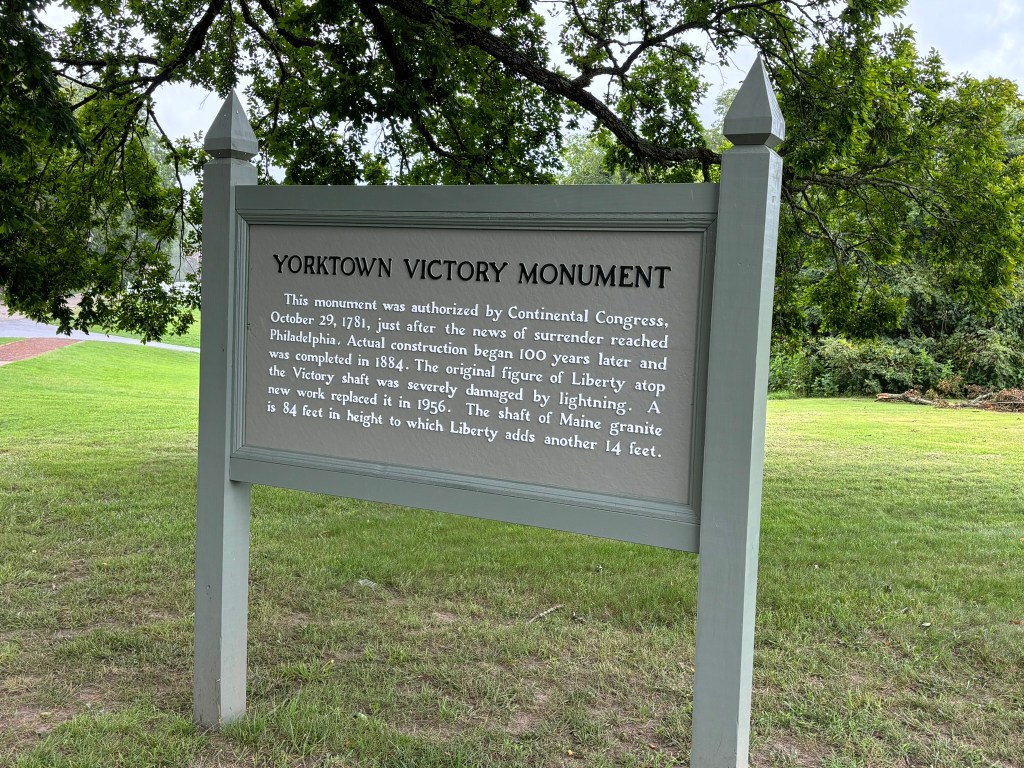
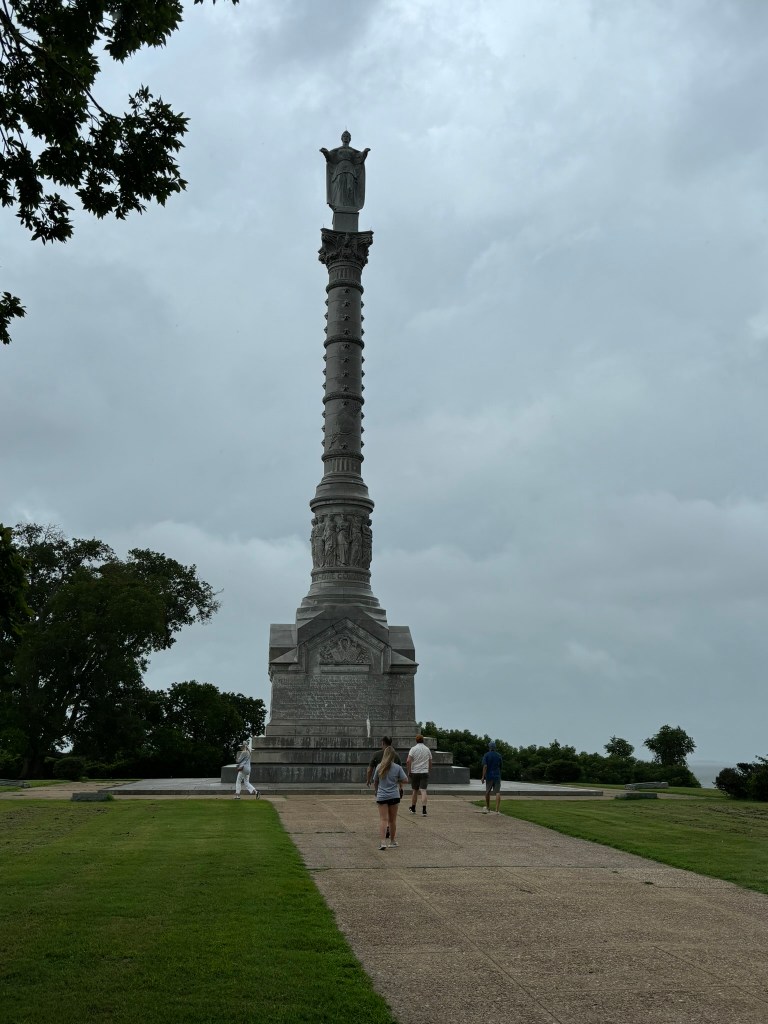
Yorktown Victory Monument
The tour bus began riding towards town and stopped at the Yorktown Victory Monument, built to commemorate this great victory.
American Revolution Museum at Yorktown
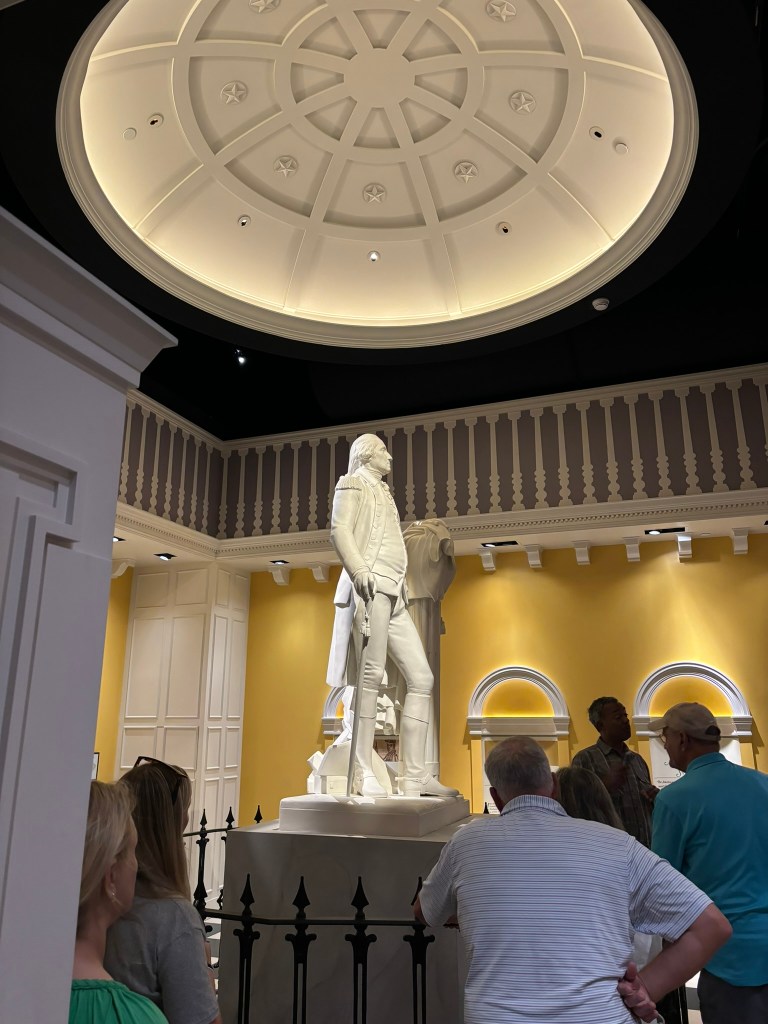
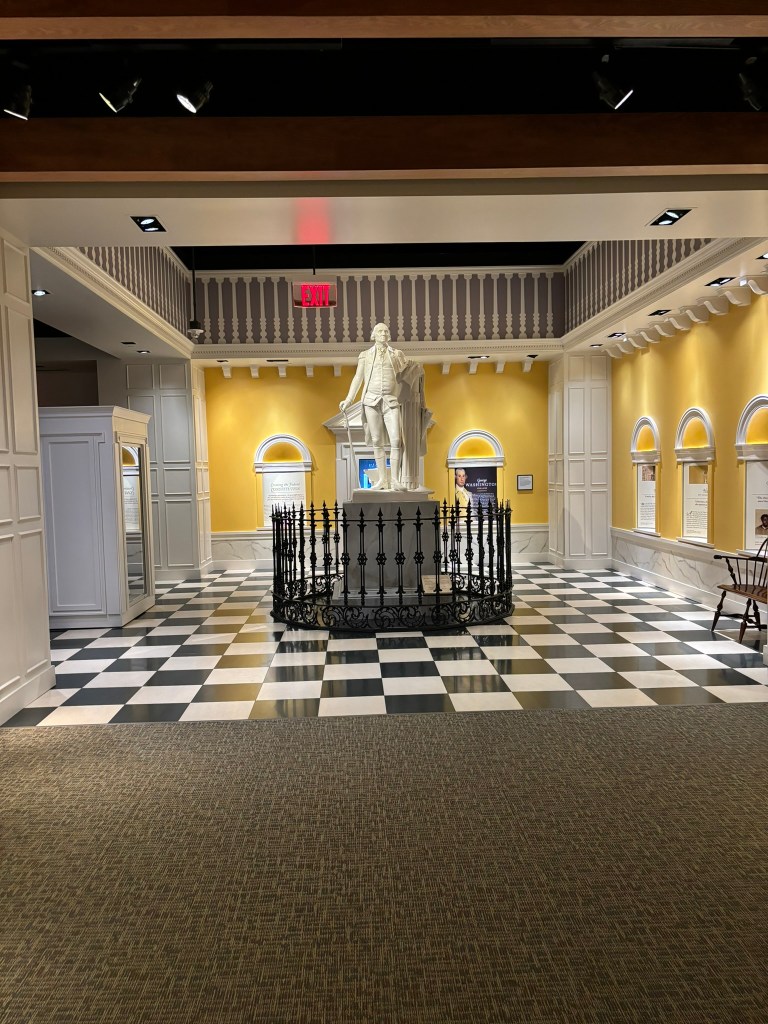
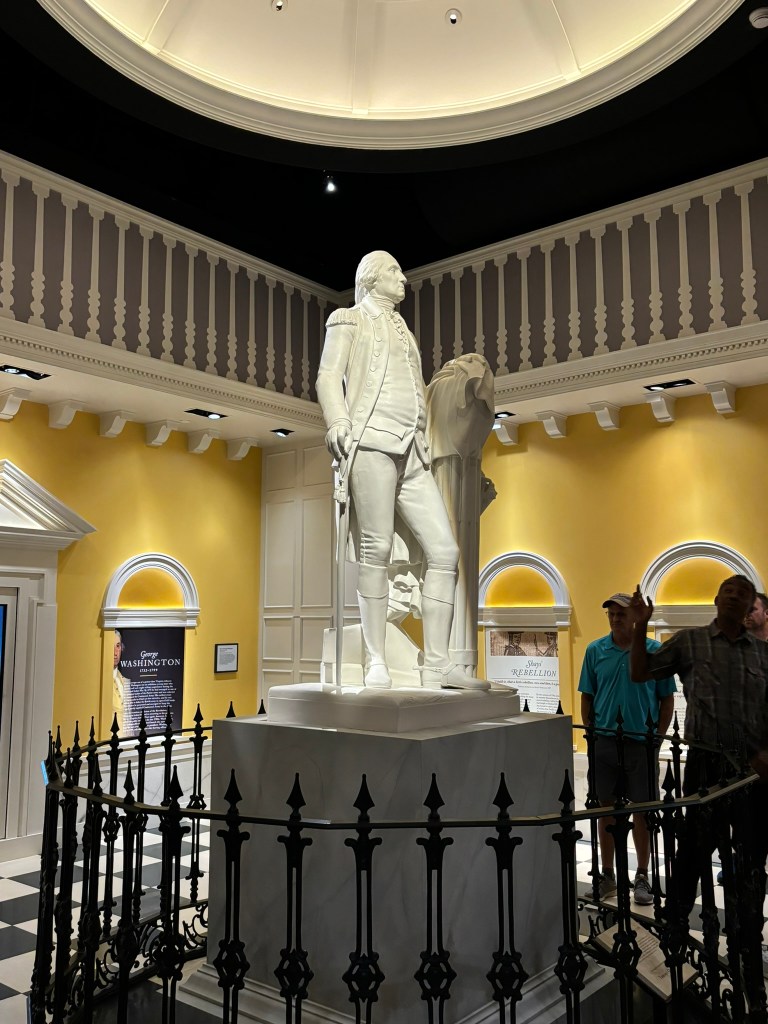
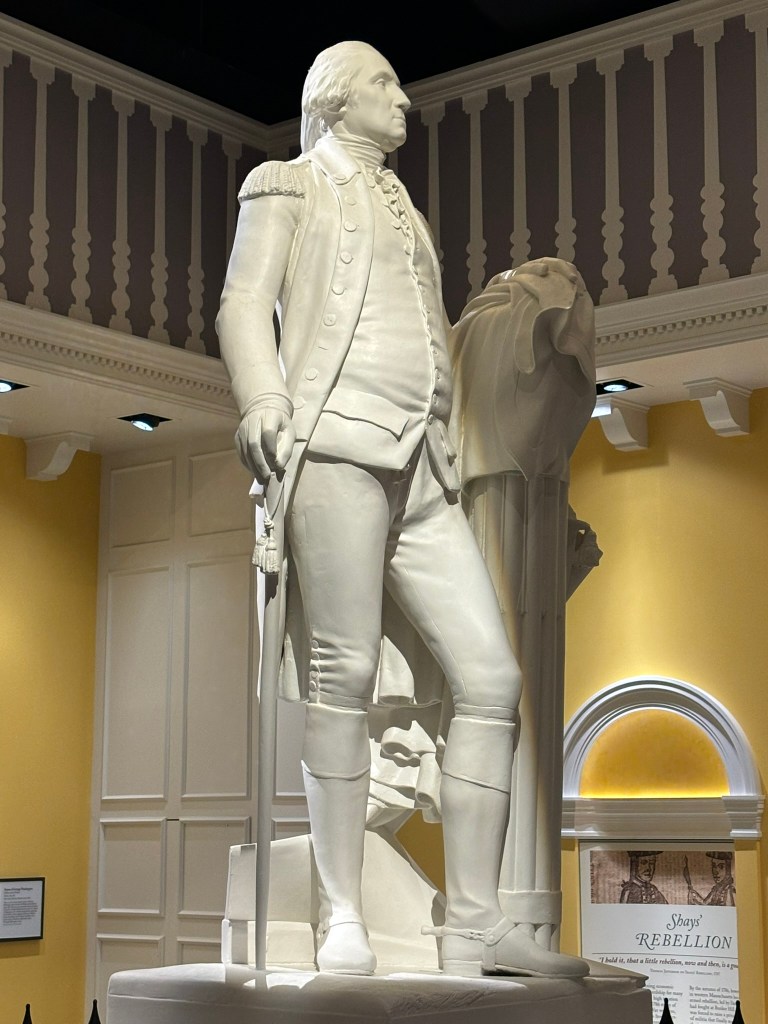
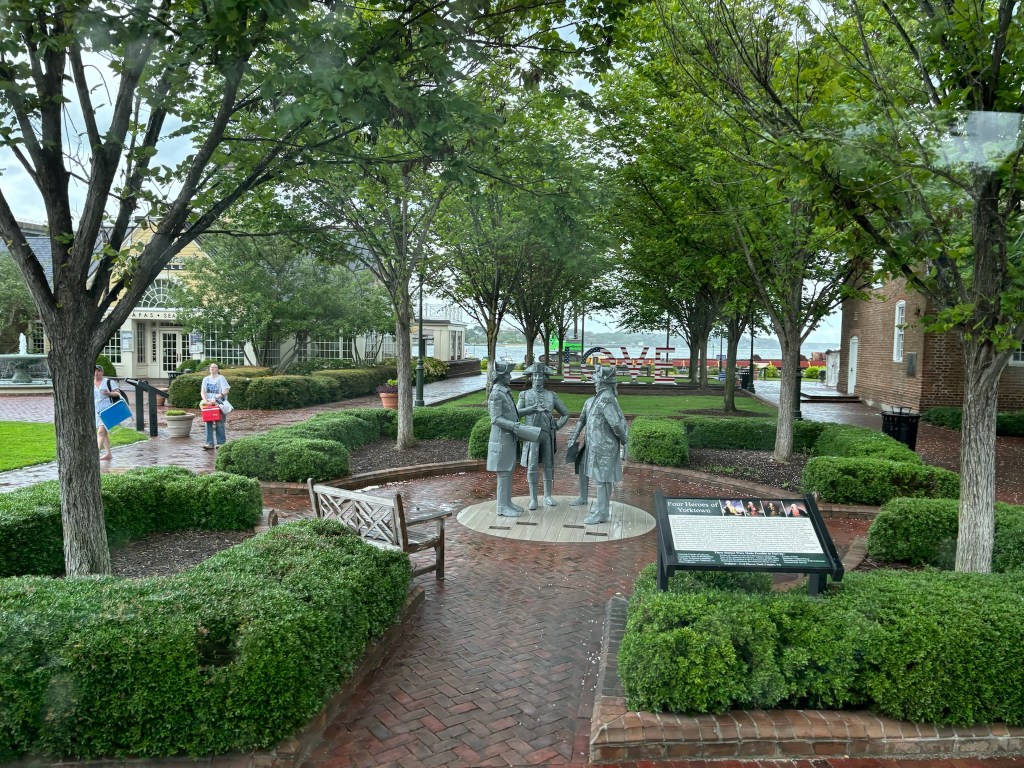
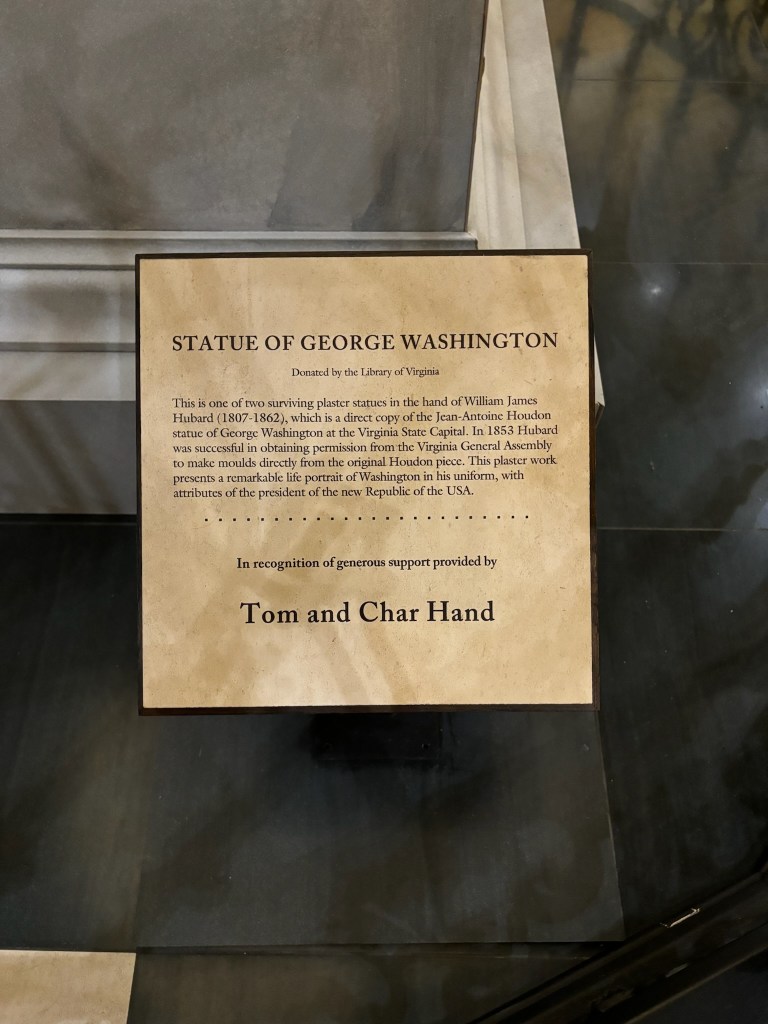
We made our way through town and then over to the American Revolution Museum at Yorktown, which is run by the Jamestown-Yorktown Foundation, as mentioned in my previous blog post about the Jamestown Settlement. Our tour guide first took us to a statue of George Washington, which formally was exhibited in the U.S. Capitol. We discussed different examples of symbolism within the statue.
We then went into a 4-D experiential theater and watched a 9 minute video called the “Siege of Yorktown.” The screen in the theater surrounds the viewer. The video not only depicts the battle, but explains its significance. The theater fills with smoke at certain scenes and you really feel the wind and the thunder of cannon fire. It was a tremendous 9 minute experience.
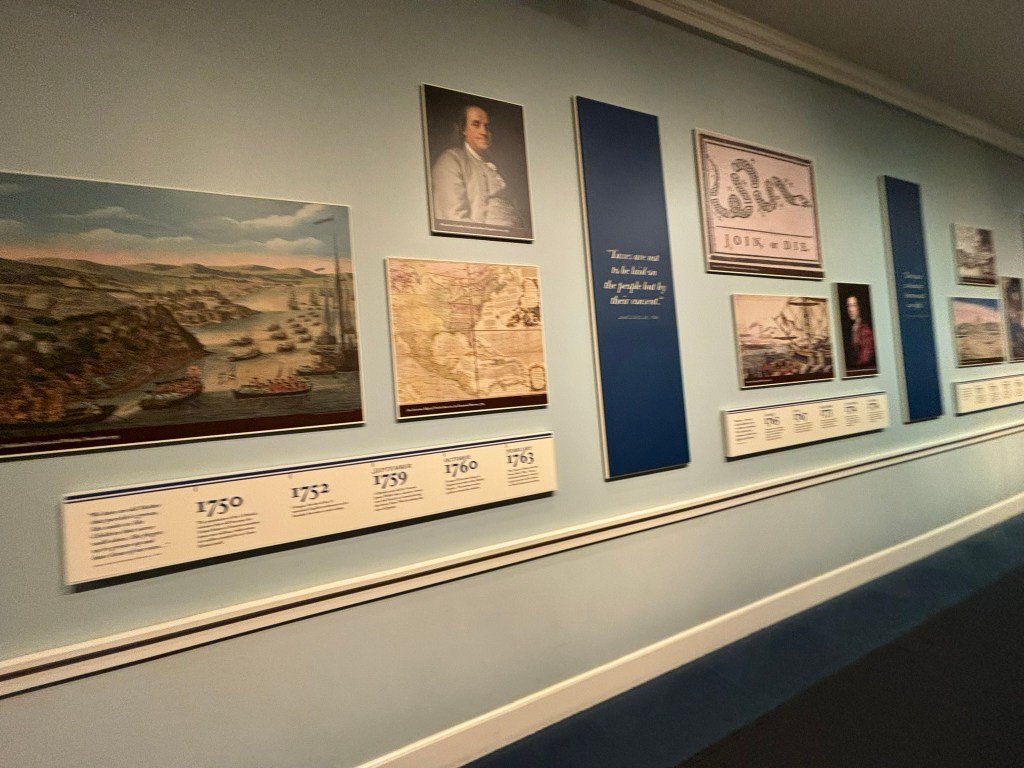
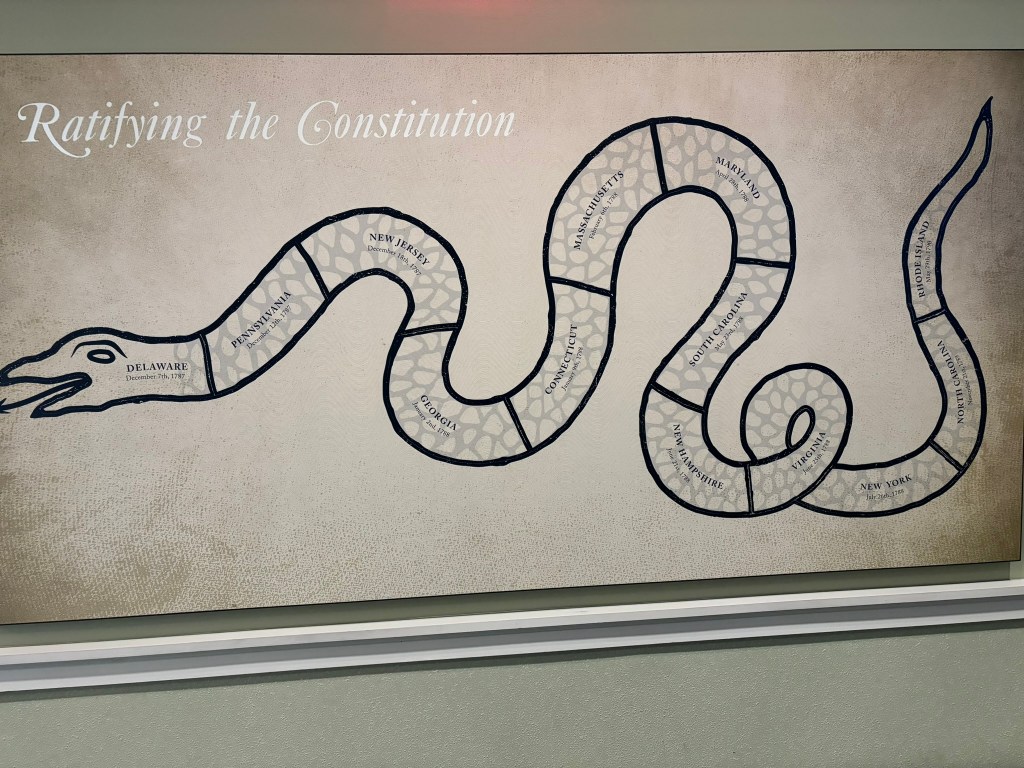
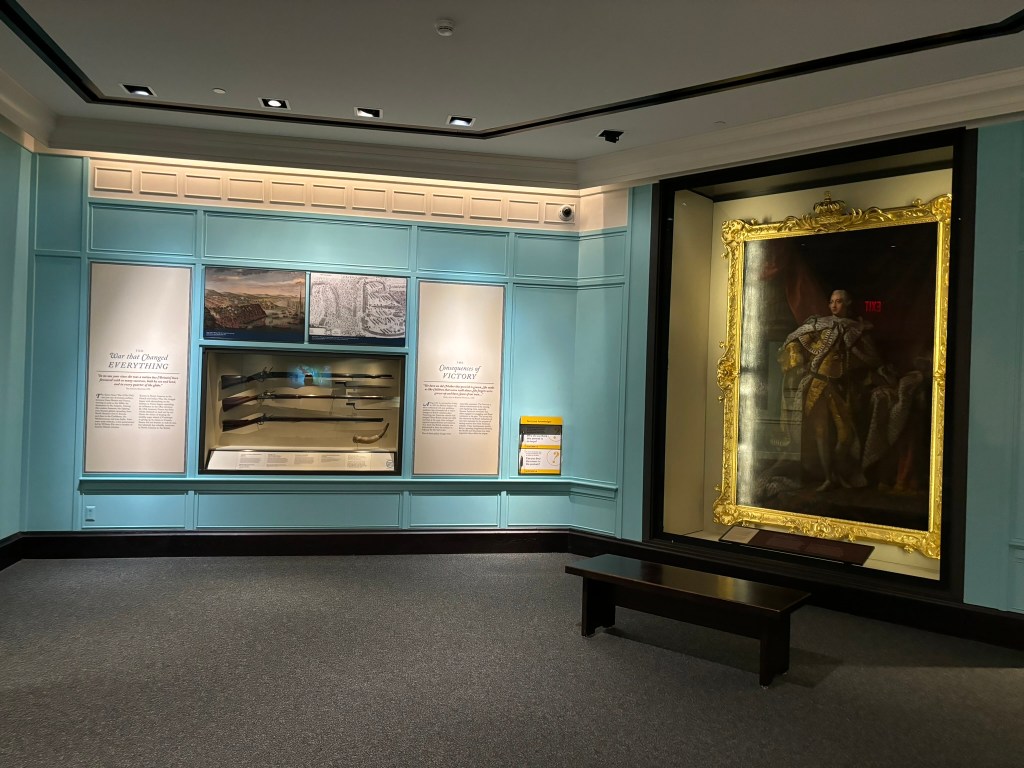
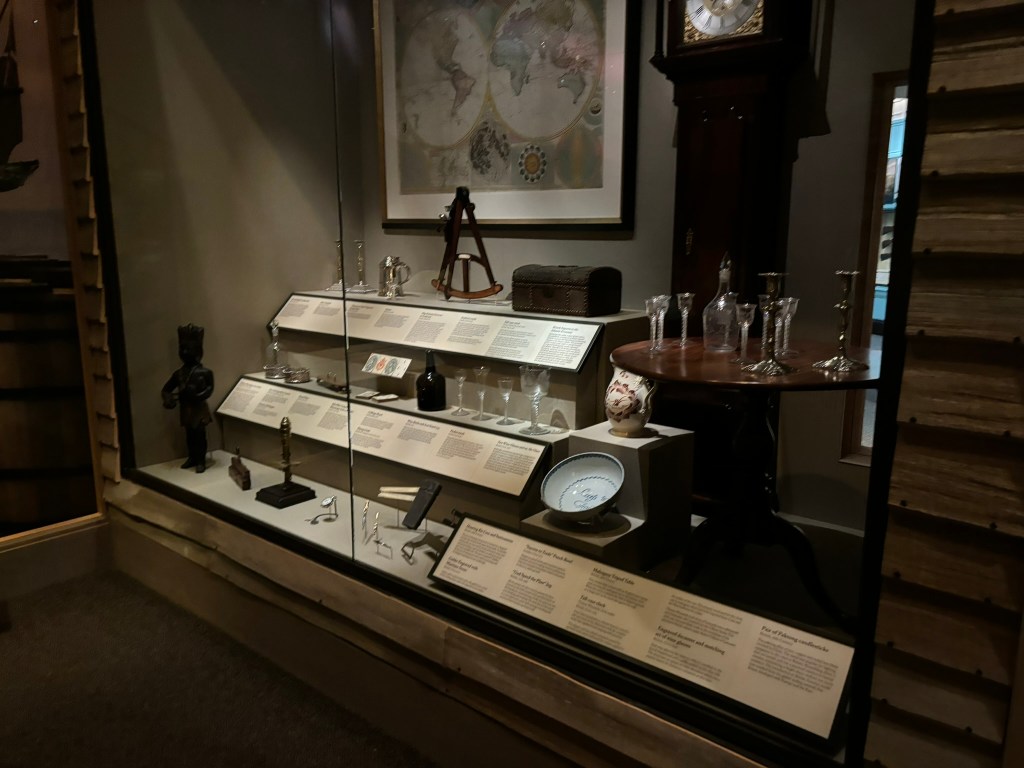
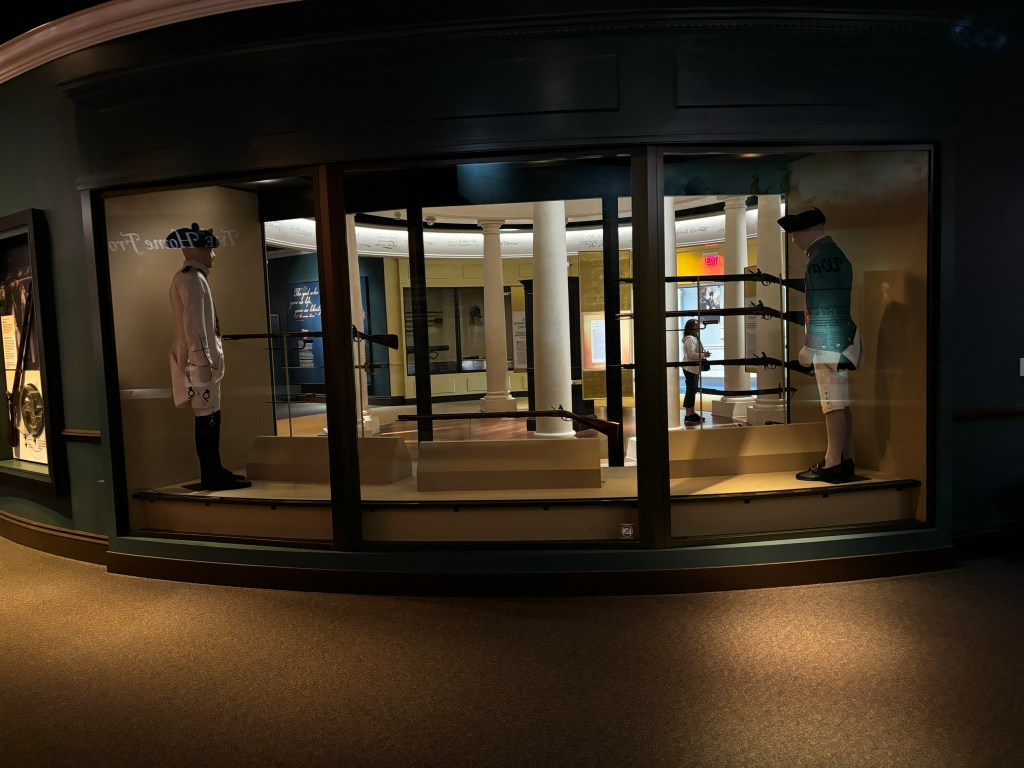
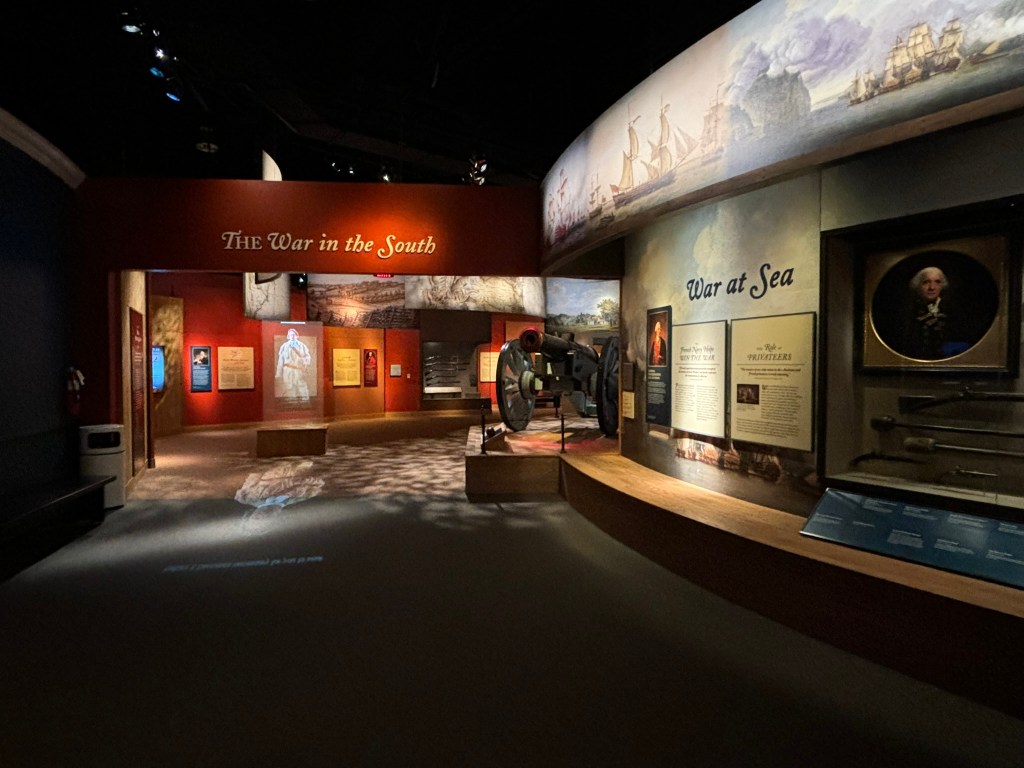
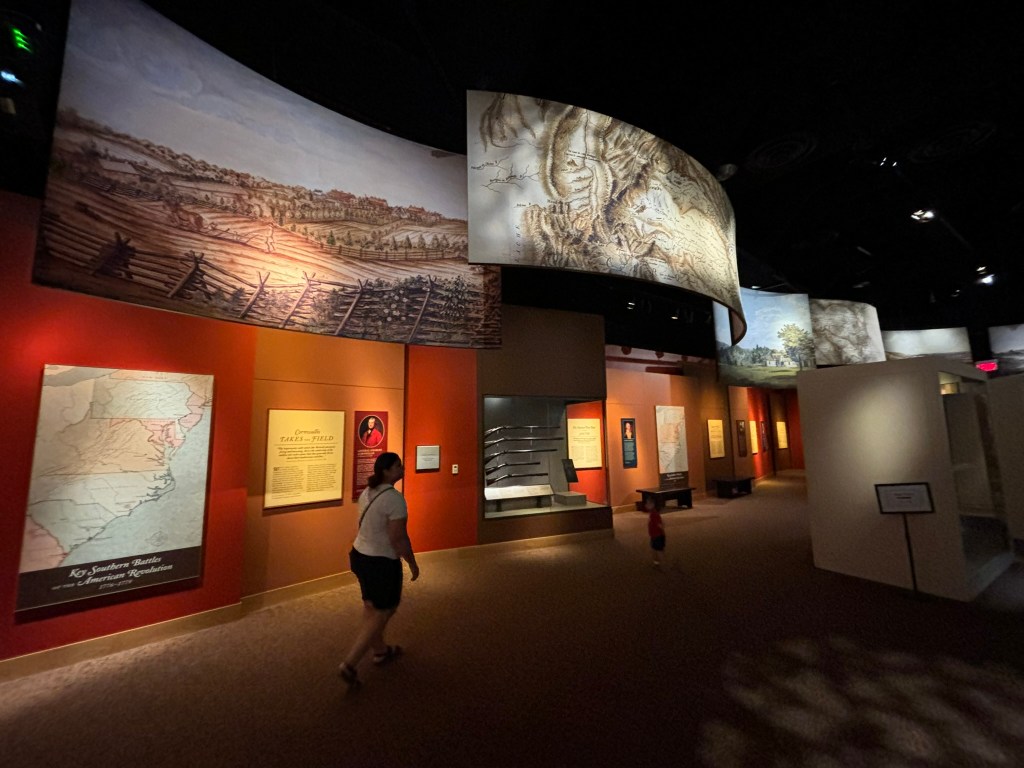
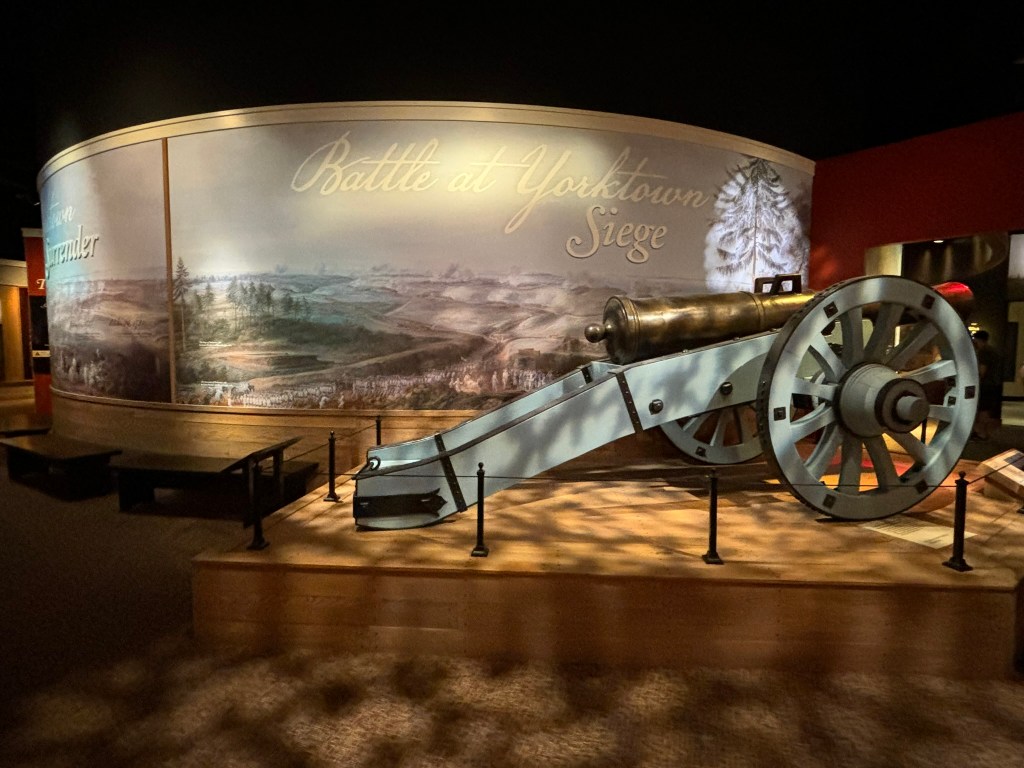
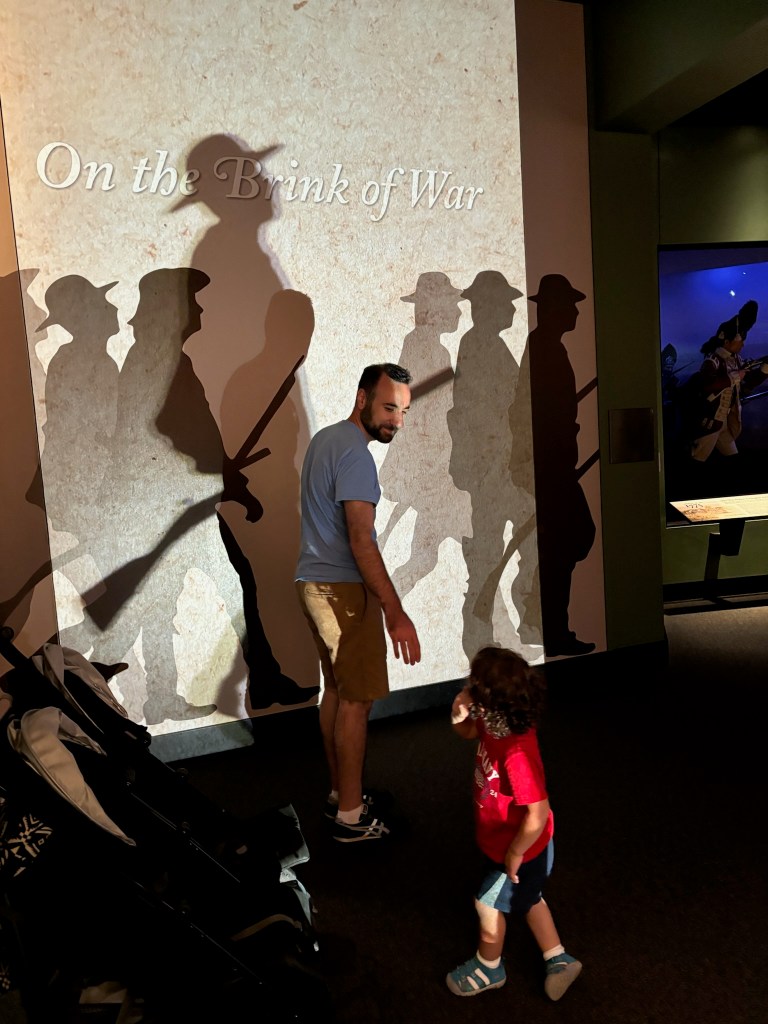
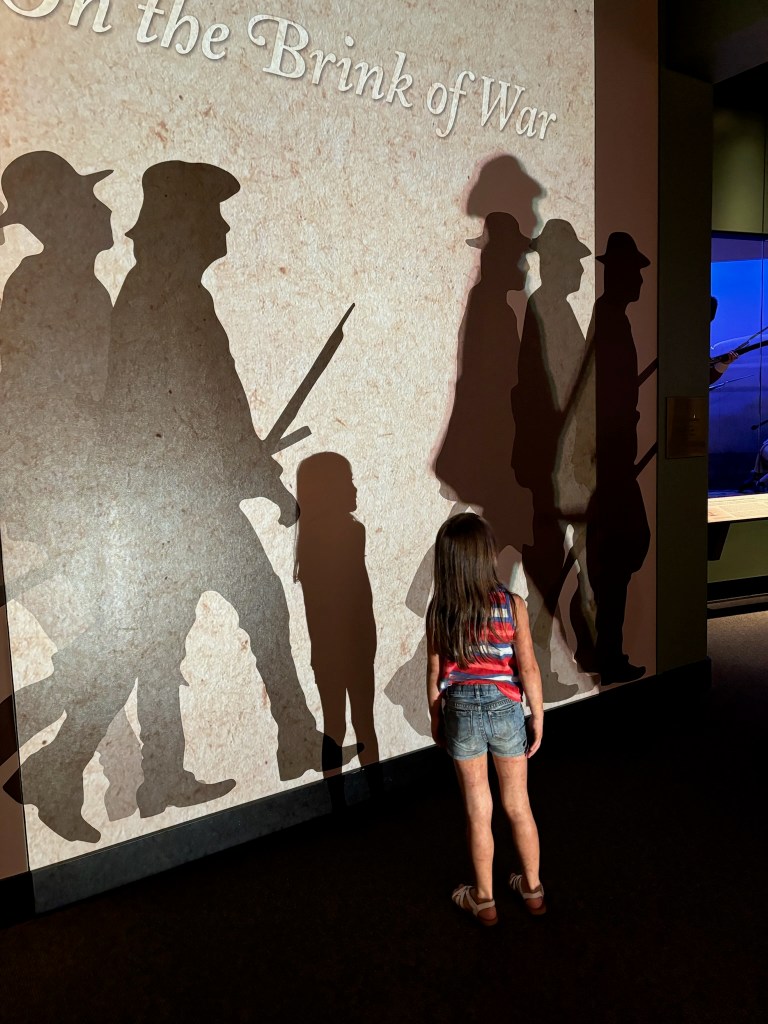
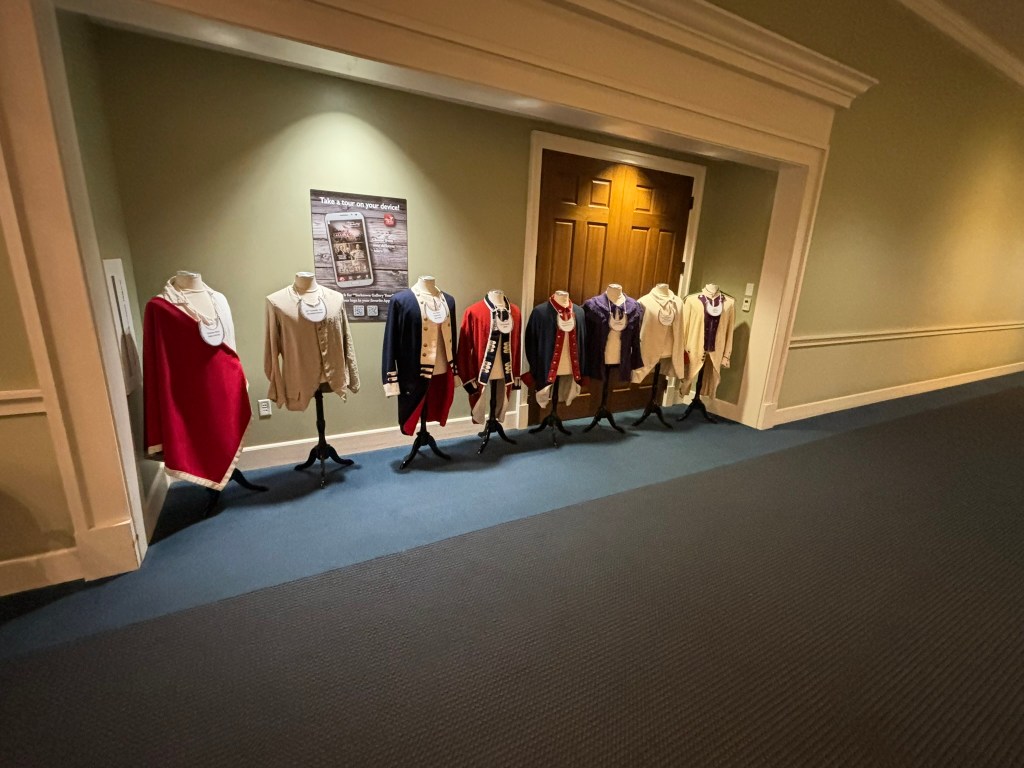
At this point in our tour, we had time to travel through the museum at our own pace. The museum takes you through the American Revolution chronologically, from the causes in the beginning of the museum, to the writing of the Constitution at the end. They had a great array of different types of displays including artifacts, primary sources, videos, and pictures that allowed the viewer to be immersed in the conflict.
Living History
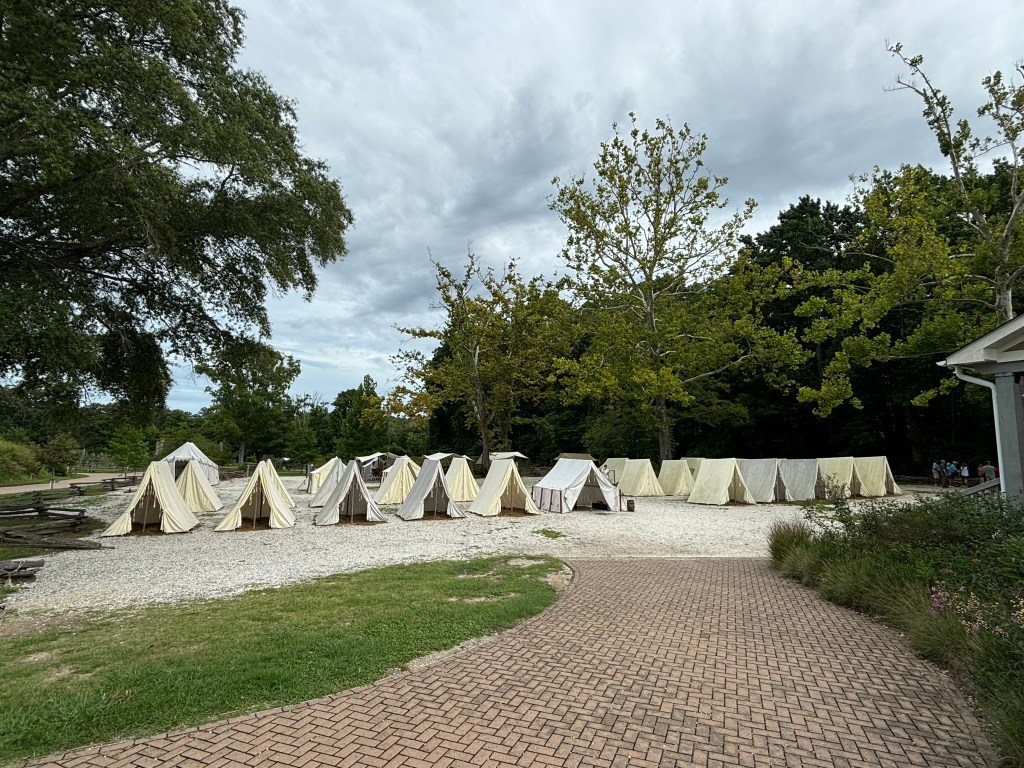
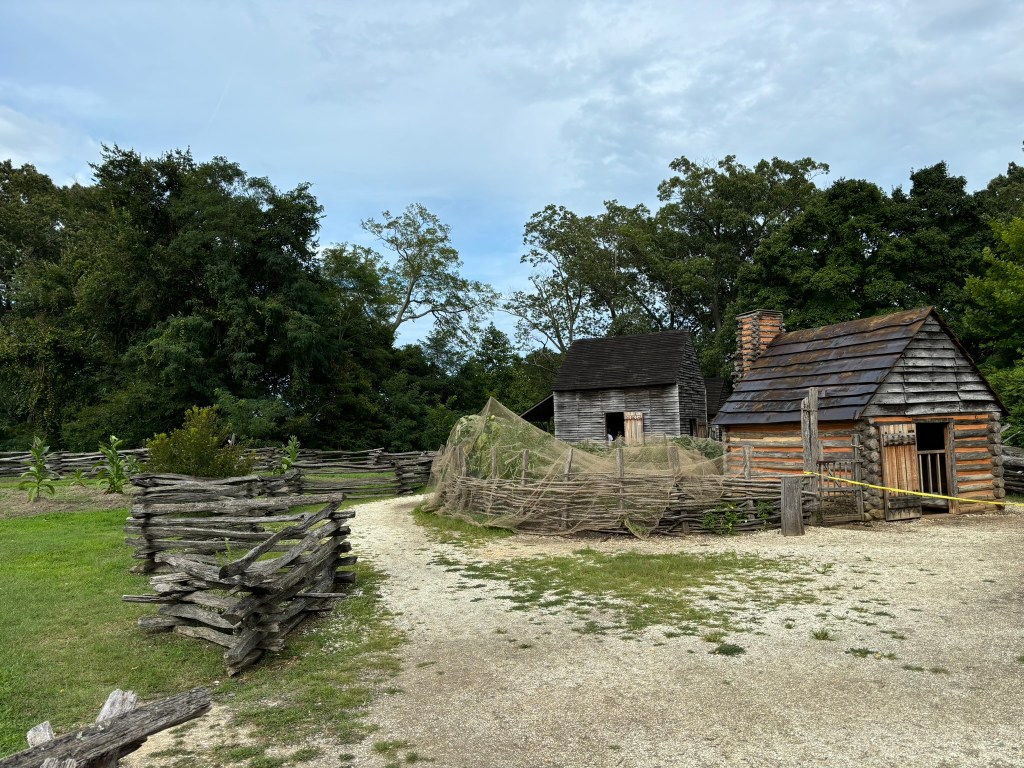
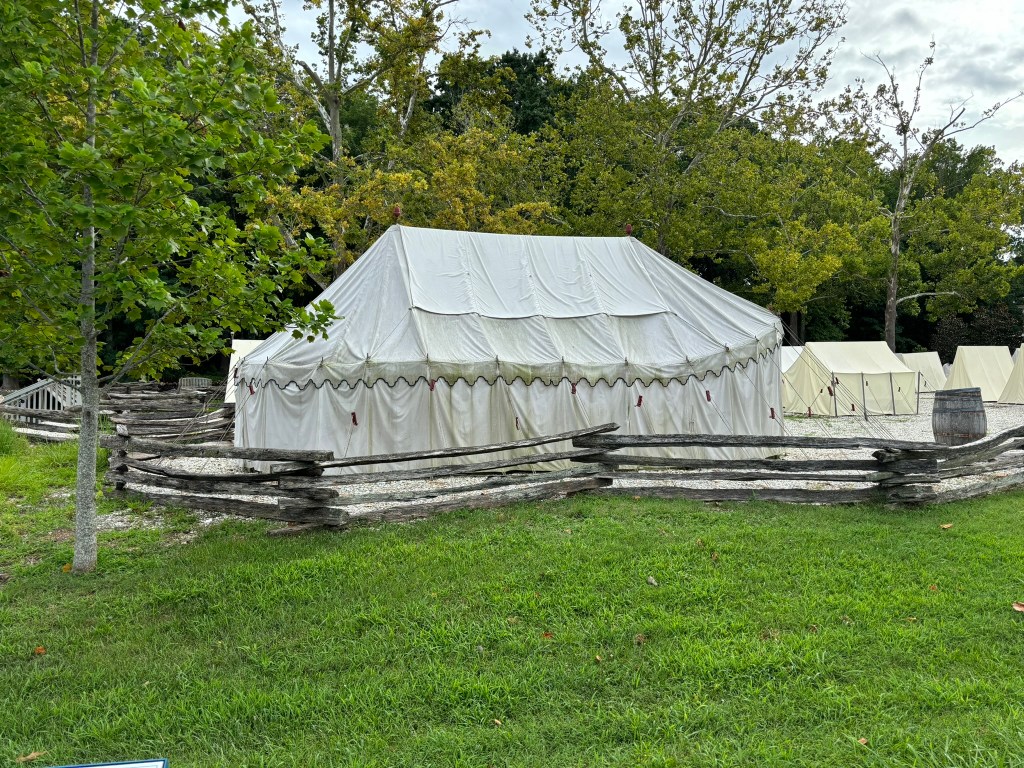
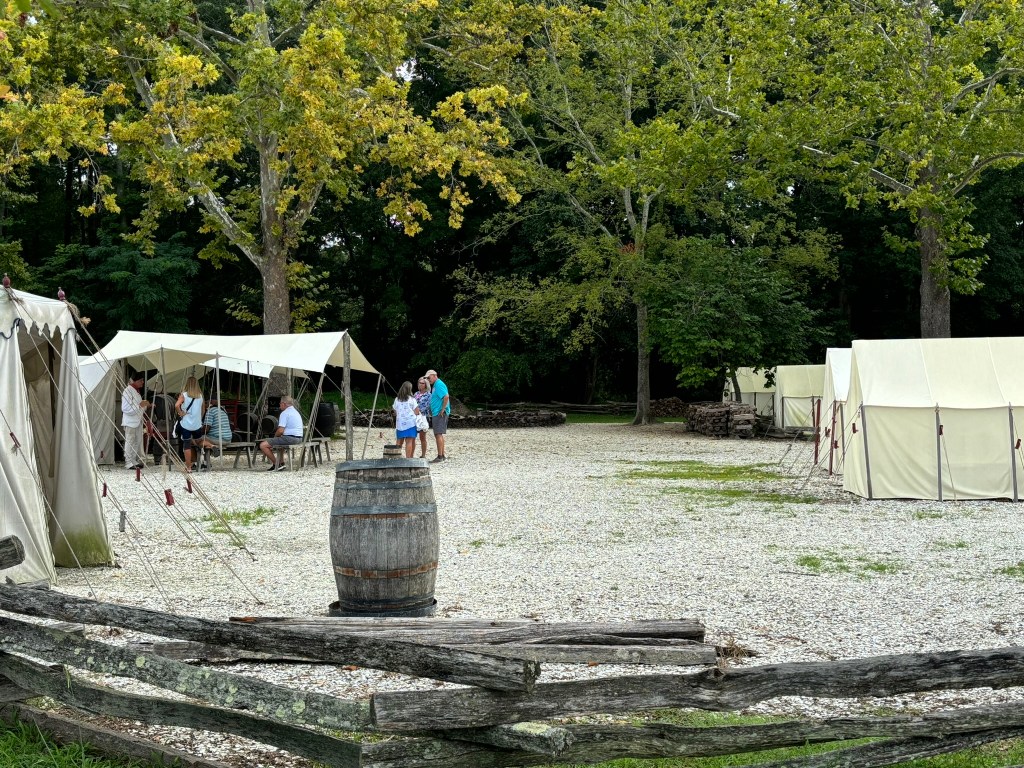
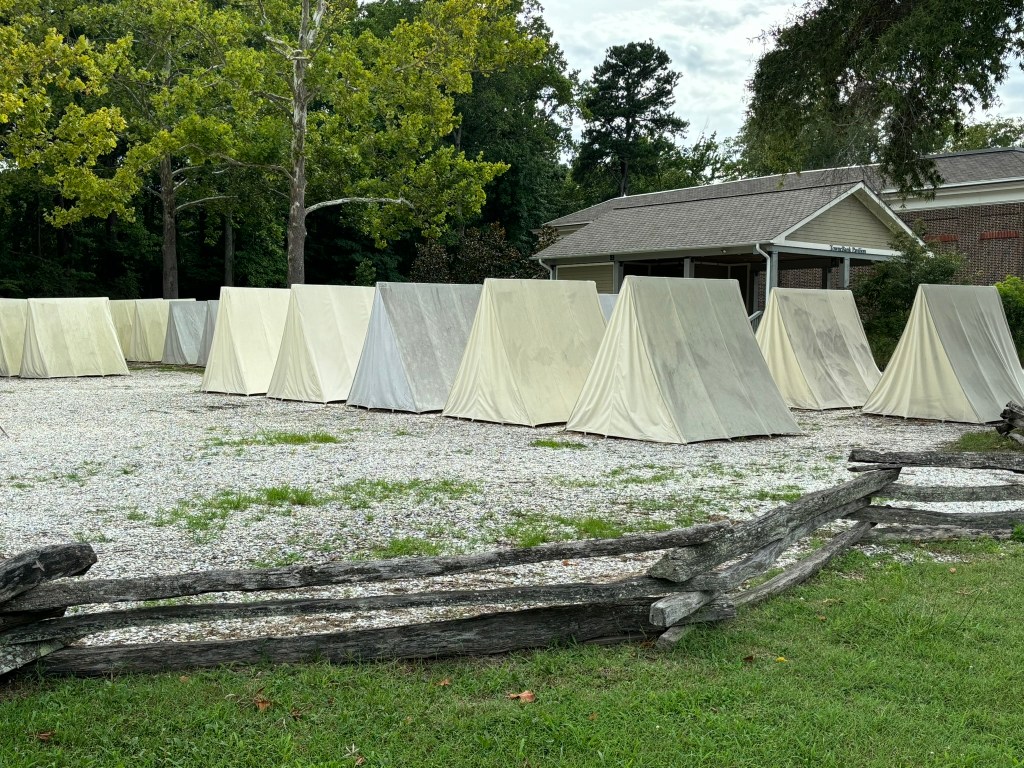
After we made our way through the museum, my family went outside to the living-history portion of the museum. Like we experienced in Colonial Williamsburg and Jamestown, the museum allowed us to go back in time and experience first-hand, what life was like in the late 18th century. First, there was a Continental Army encampment that we walked through.
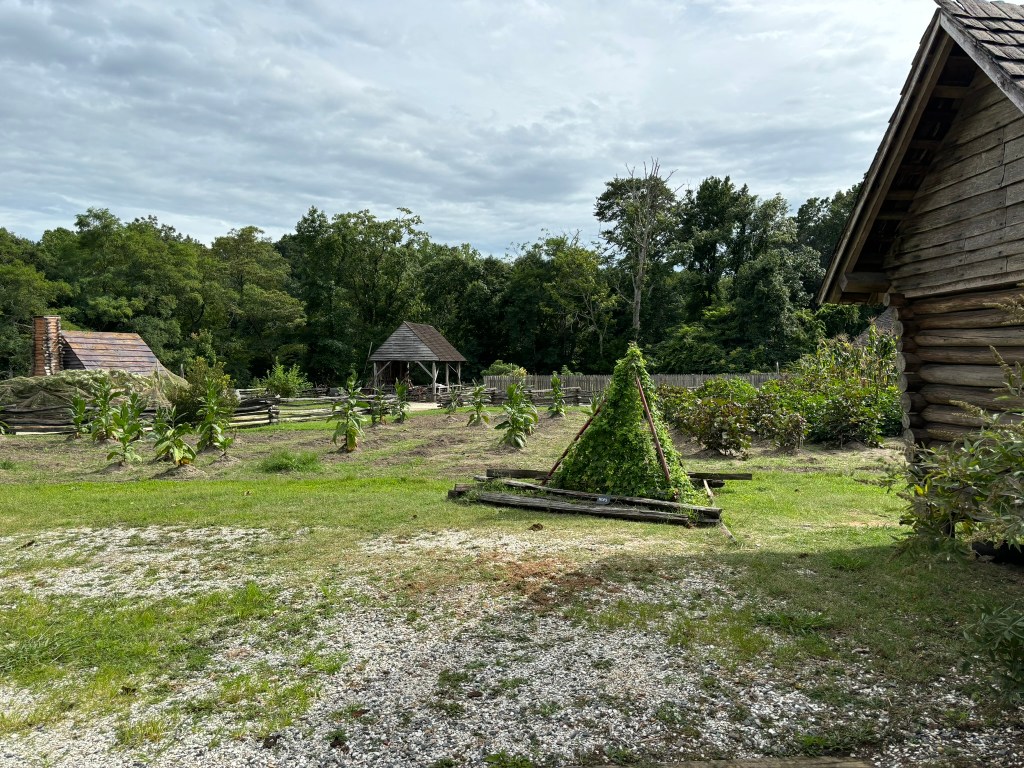
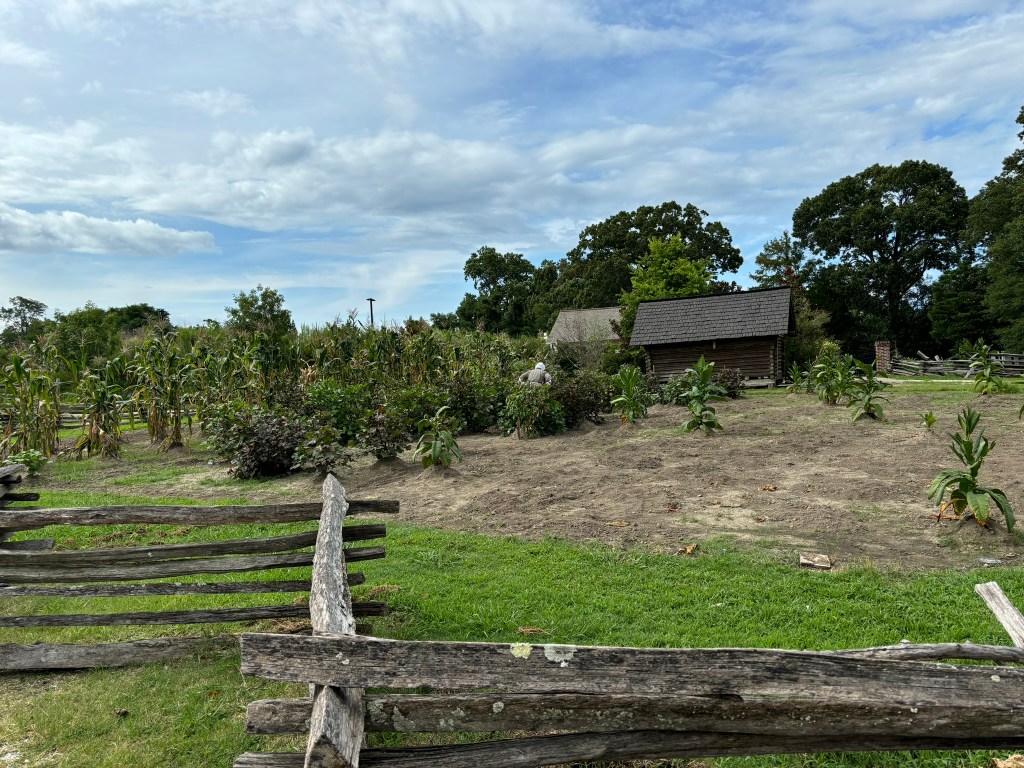
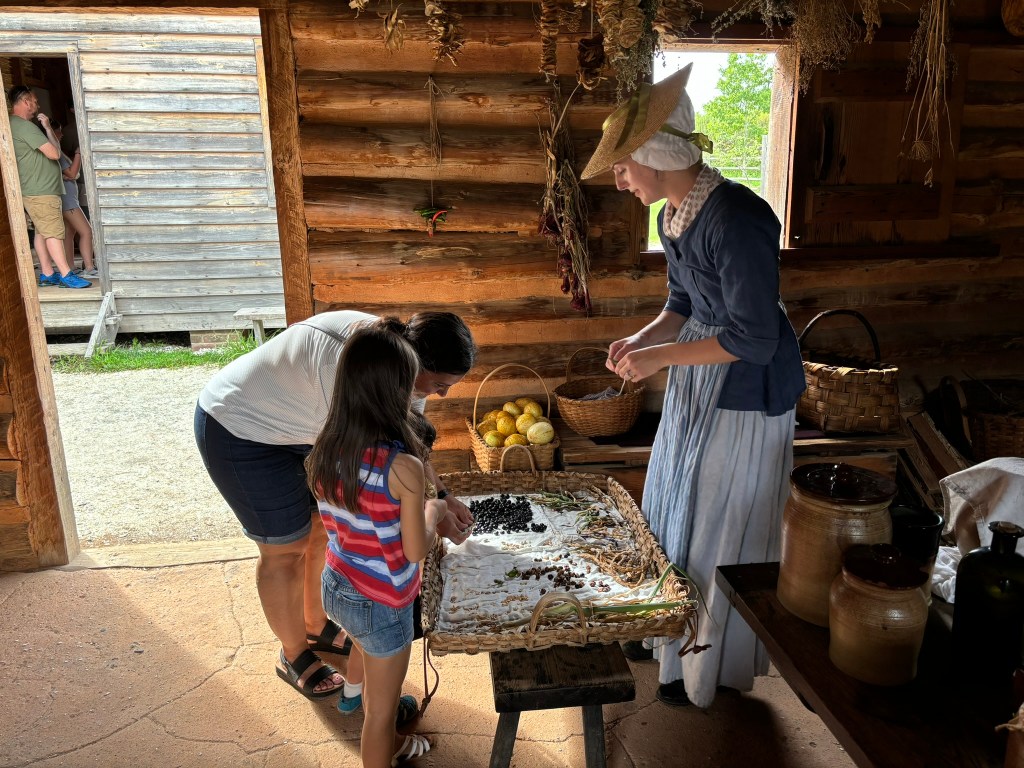
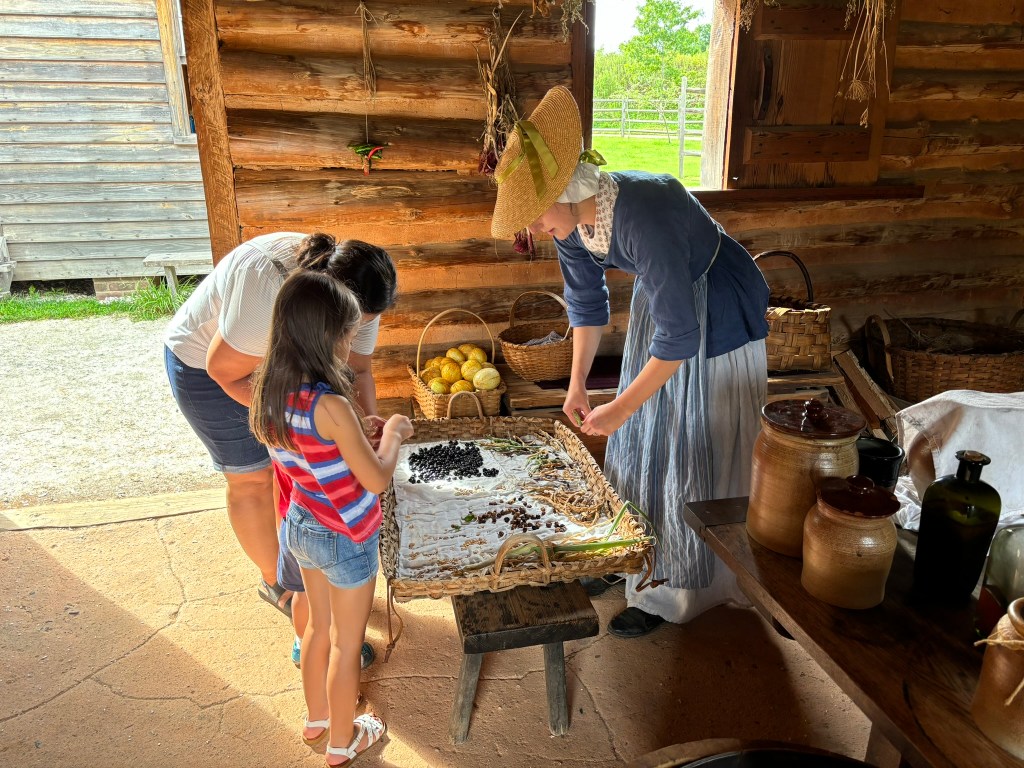
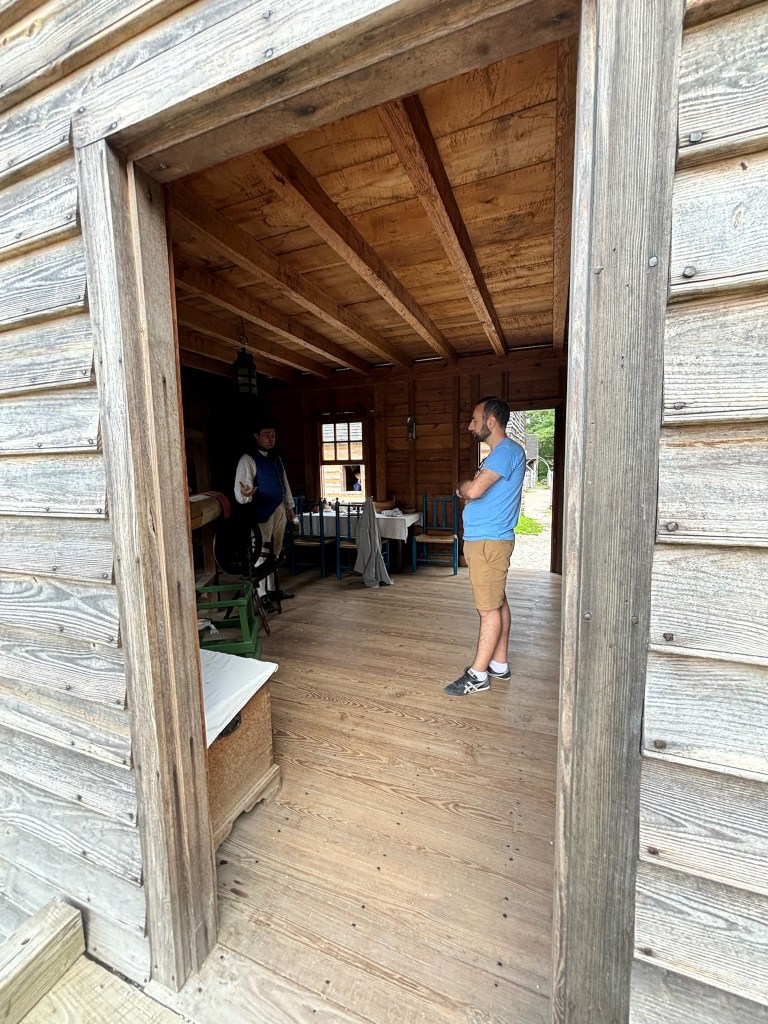
We then moved onto a living-history farm, as well as other structures. We went to a detached kitchen where my daughter separated peas from a pea pod, and we were taught how the colonials preserved food. We also moved onto a structure that would serve as a living quarters for a middle-class family. To supplement the family income, they weaved clothing from yarn using a loom. My family and I then made our way back to the museum to meet our group and catch the bus back to Williamsburg.
Overview
Having described the Washington-Rochambeau Revolutionary Route in previous posts, it was great to see the final destination of that route: Yorktown. I have also loved teaching about the Siege of Yorktown to my classes for so many years. It adds a brand new perspective when you go to the actual location where a great battle took place. I plan to bring my experiences into the classroom when I teach about Colonial America and the American Revolution again this fall. Yorktown was such a significant victory because the war had dragged on for six years up until that point. The Continental Army couldn’t afford to have it drag on much longer. The Declaration of Independence would mean nothing without an American victory in the war, and Yorktown was the victory that secured independence. Seeing the battlefield first-hand was a great experience, and I would highly recommend the museum as well.
As mentioned in my previous post about Jamestown, I would also highly recommend this tour by Viator. You are able to see Jamestown and Yorktown in the span of one day. You could buy tickets to the tour HERE.
Follow my Instagram, Facebook, and X accounts for videos of our time on our trip.
I’d also like to add here that our trip did not stop after Jamestown and Yorktown. On the third full day of our trip, we went to Busch Gardens, which was a really great day for the family. We got a little bit of rain in the middle of the day but it cleared up after that. I think because it was a dreary Wednesday, there were essentially no lines and the kids went right on every ride that they wanted. We also went to a couple of shows and ate both lunch and dinner there. We bought tickets that had food included which I would definitely recommend. My 2 year old loved the Sesame Street Portion, but every section of the park had so many great rides for both kids. It’s a park for all ages because besides the kiddy rides, there were also massive roller coasters that my teenage-self would have loved.
On the fourth day of our trip, we went to Virginia Beach, which was also my wife’s birthday. The ride from Williamsburg was about an hour. The weather was not great, threats of rain throughout the day, but not a washout. We walked down on the beach and the kids played on a playground on the sand. For my wife’s birthday, we ate at a great restaurant called Waterman’s Surfside Grille that I would highly recommend if you’re in the area. Our hotel was right on the beach so it was nice to see the sun rise the next morning. The next day, we ate breakfast and then made the 7 hour drive back to New Jersey. We drove over the Chesapeake Bay Bridge-Tunnel for the first time! Overall, it was a great family vacation! I’d recommend this type of trip to people of all ages! Usually our trips include historical portions and fun for the kids. Williamsburg has something to offer for everyone!
My previous blog post covered my family’s first day on our Williamsburg, VA vacation, which was a visit to Colonial Williamsburg. On our second day, we booked a tour by Viator that took us to Jamestown in the morning, and Yorktown in the afternoon. This blog post will focus on our time in Jamestown, which will be followed by another blog post which will focus on Yorktown.
Viator Trip
I found the Viator trip to Jamestown and Yorktown months in advance of our trip, and thought it a great opportunity to visit two places that I’ve wanted to see for years; two locations so significant to American history. The tour had us meet at 8 AM at the Williamsburg General Store which was about a 7 minute drive from our hotel. We boarded a large bus and made our way to Jamestown. On route to Jamestown, our tour guide gave us some historical background leading up to the settlement of Jamestown 1607. The bus ride to Jamestown was about 20 mins.
I’ve previously written a blog post about the history of the Jamestown settlement, which you could read HERE. Jamestown was the first permanent English colony. The colonists barely survived the settlement in the first couple of years. The settlement that started in Jamestown eventually branched out to become the Virginia colony. To be able to visit Jamestown in person was a real treat.
However, I must include the fact that we visited the Jamestown Settlement, which is a museum about the settlement of Jamestown. This museum is about a mile east of the original Jamestown fort site, which is called Historic Jamestowne. If I had to be perfectly honest, I thought this tour would take us to Historic Jamestowne, but that was not the case. So I was a little disappointed in that. I’ll have to go back another time to see Historic Jamestowne, where archaeological work is taking place. But visiting the Jamestown Settlement was not a disappointment and there was much to see and do there.
Overlook
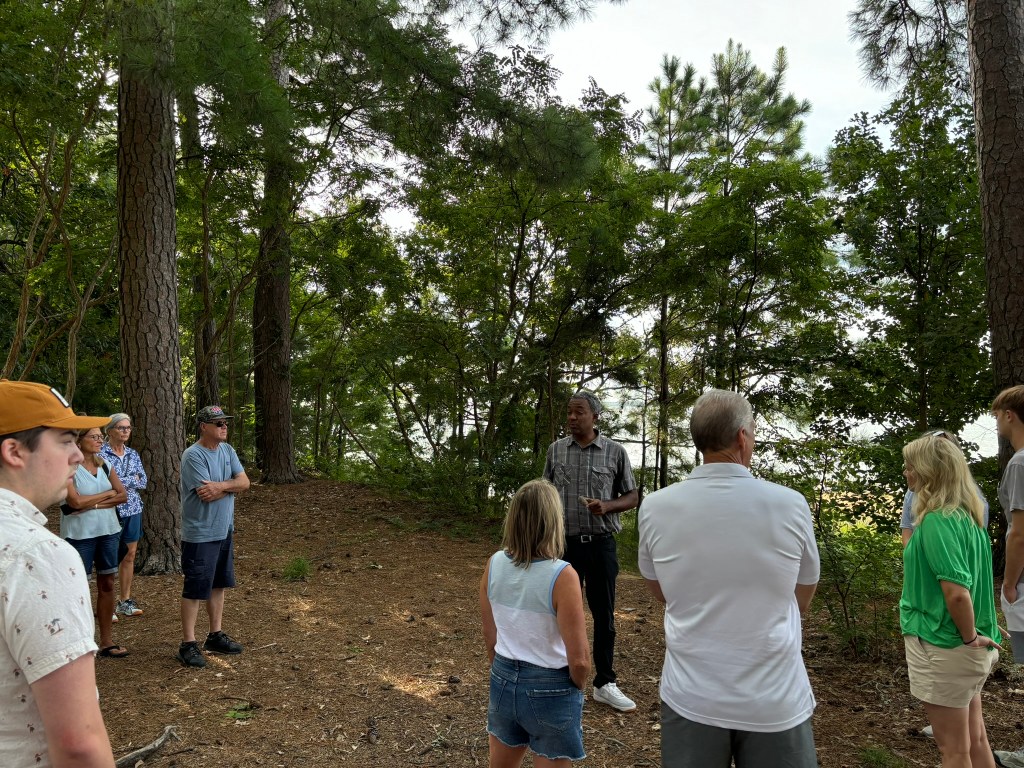
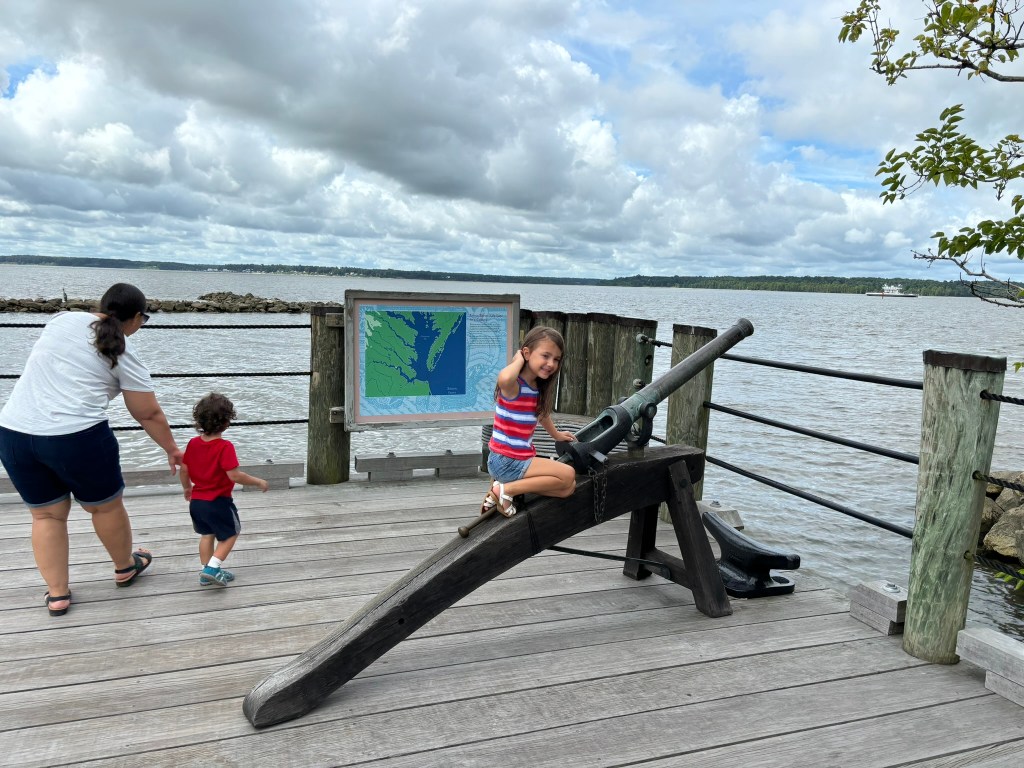
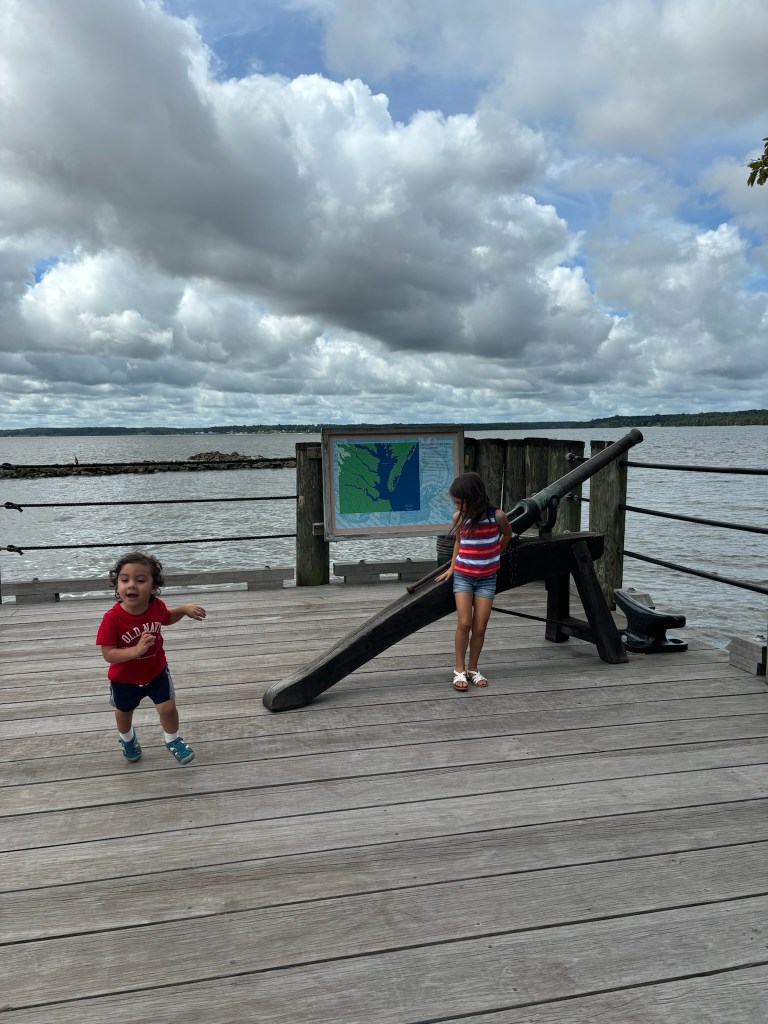
Before arriving to the museum, our tour guide took us out of the bus to a spot along the James River called the “Overlook.” From our vantage point north of the river, we could see the spot that the English colonists orginally landed on their first voyage to Jamestown, which you could see in the photo below.
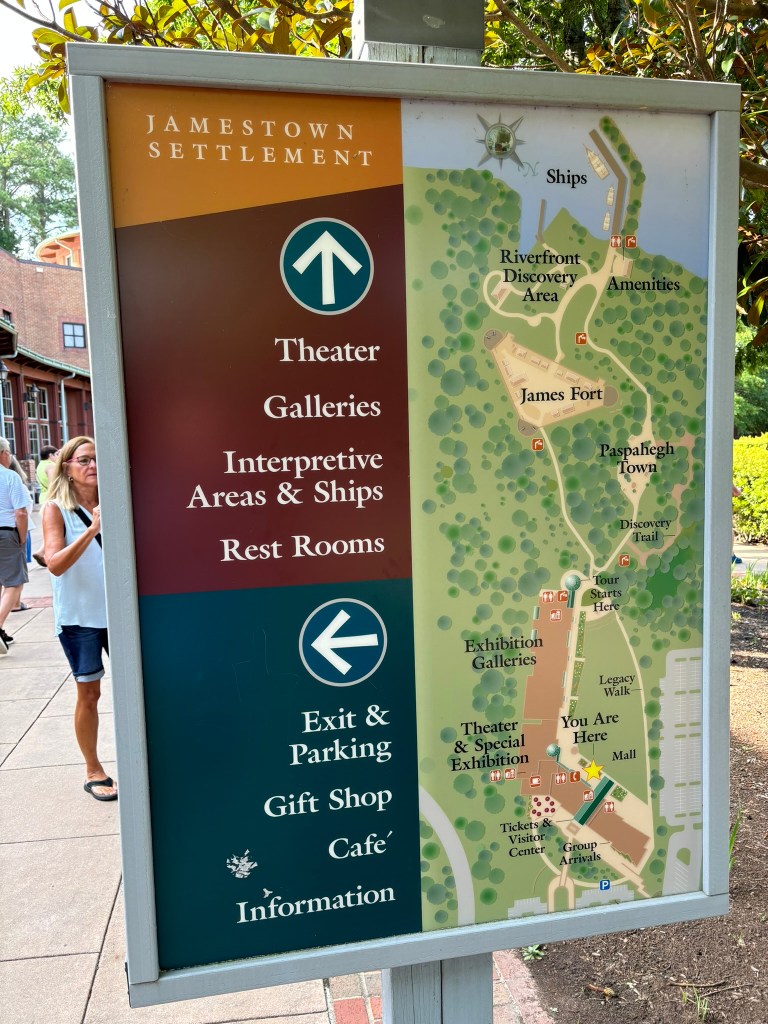
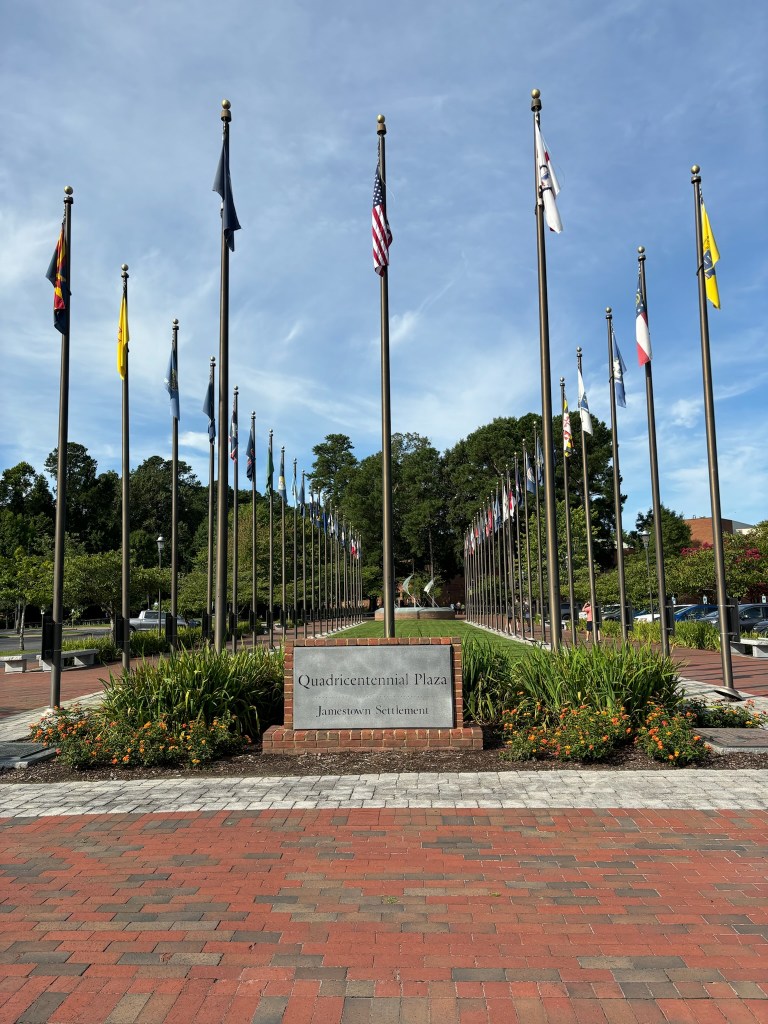
Jamestown Settlement
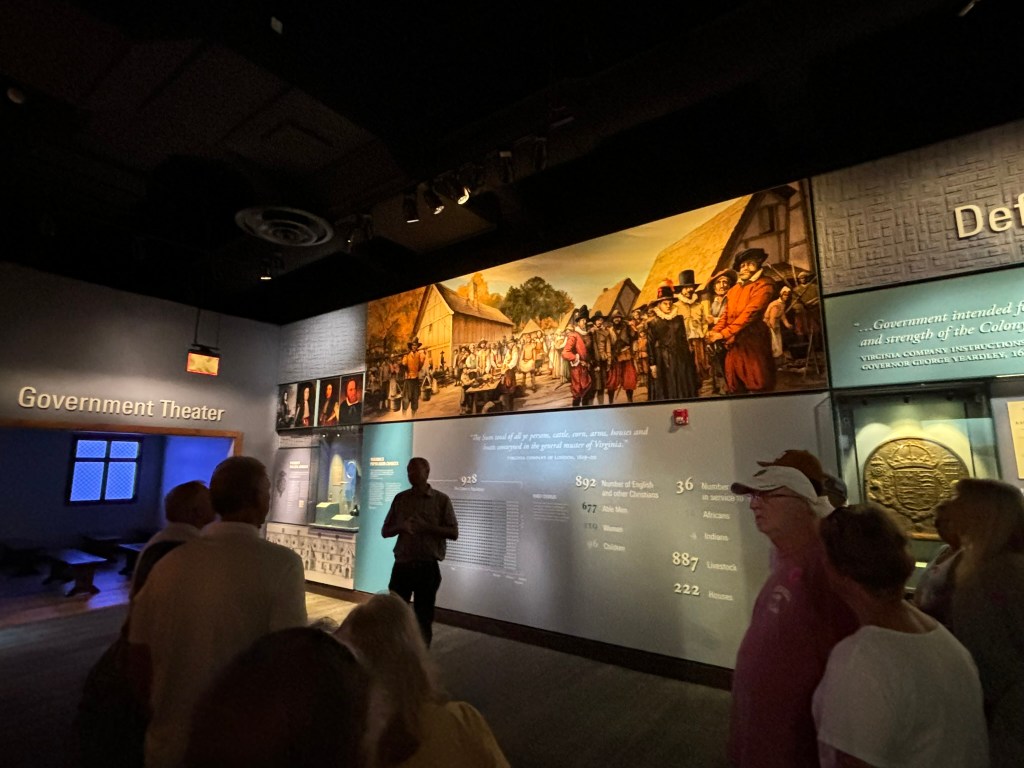
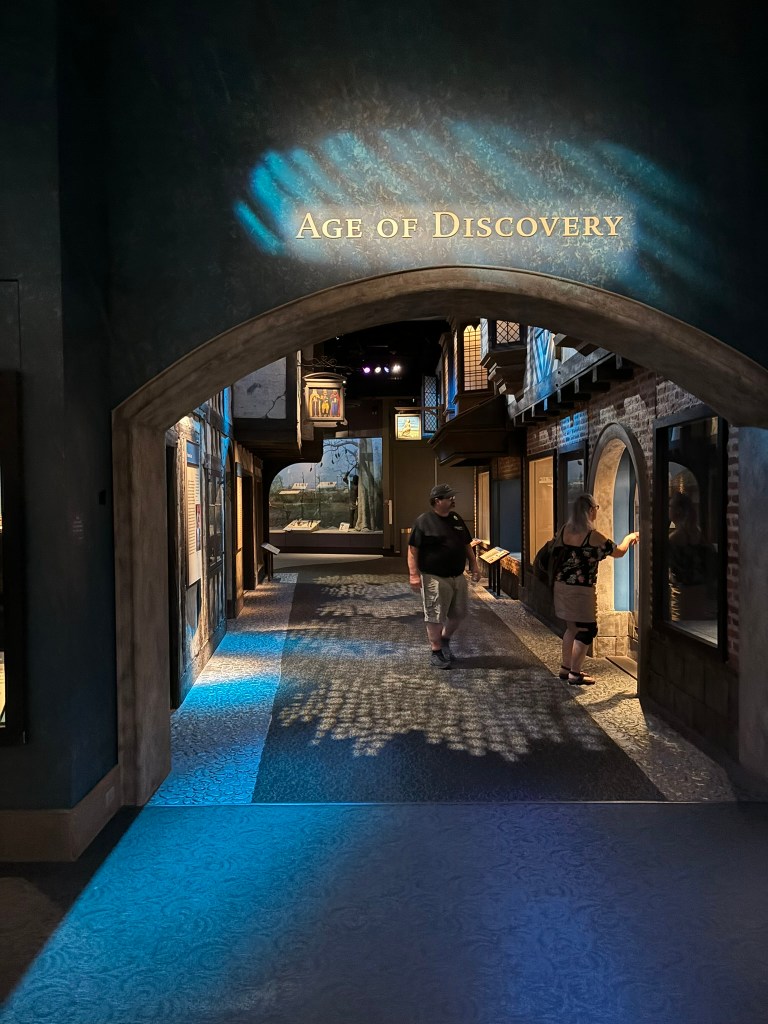
We then made our way to The Jamestown Settlement, which is run by the The Jamestown-Yorktown Foundation. The museum originally opened in 1957. Our tour guide led us through the museum, highlighting and explaining significant figures and events from the colony. The main hallway of the museum appears to be a large timeline dating from 1607, the founding of the settlement, to 1699, the year that the capital of the Virginia Colony was moved to Williamsburg. As you move through the museum, you walk through the history of the Jamestown colony.
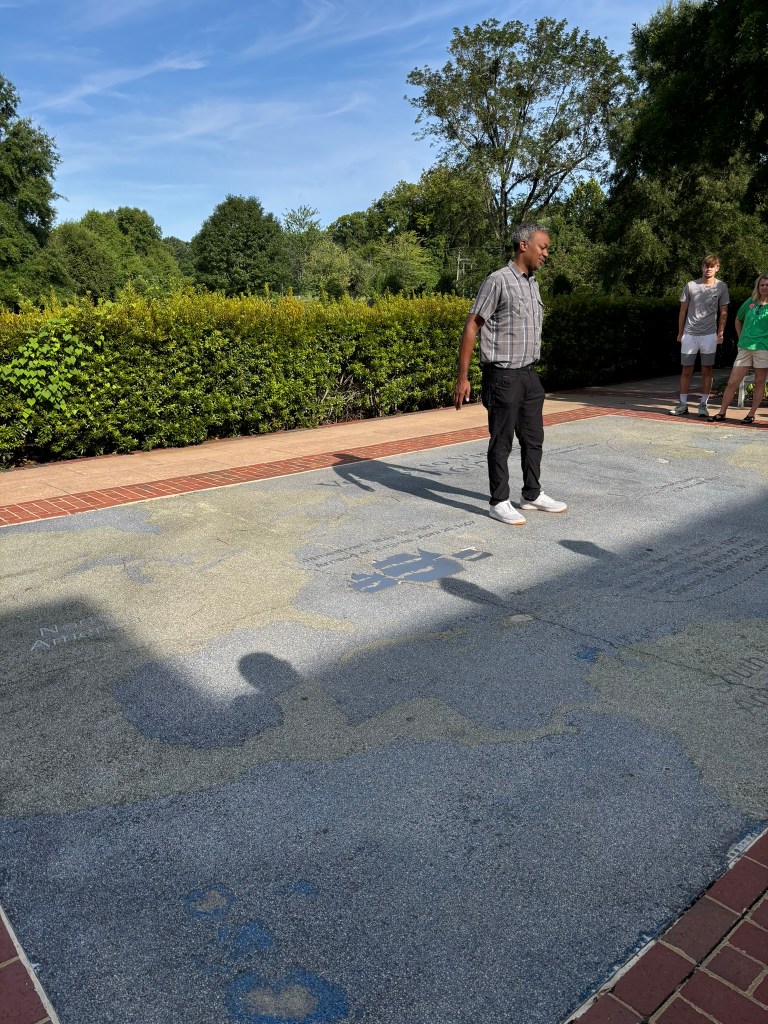
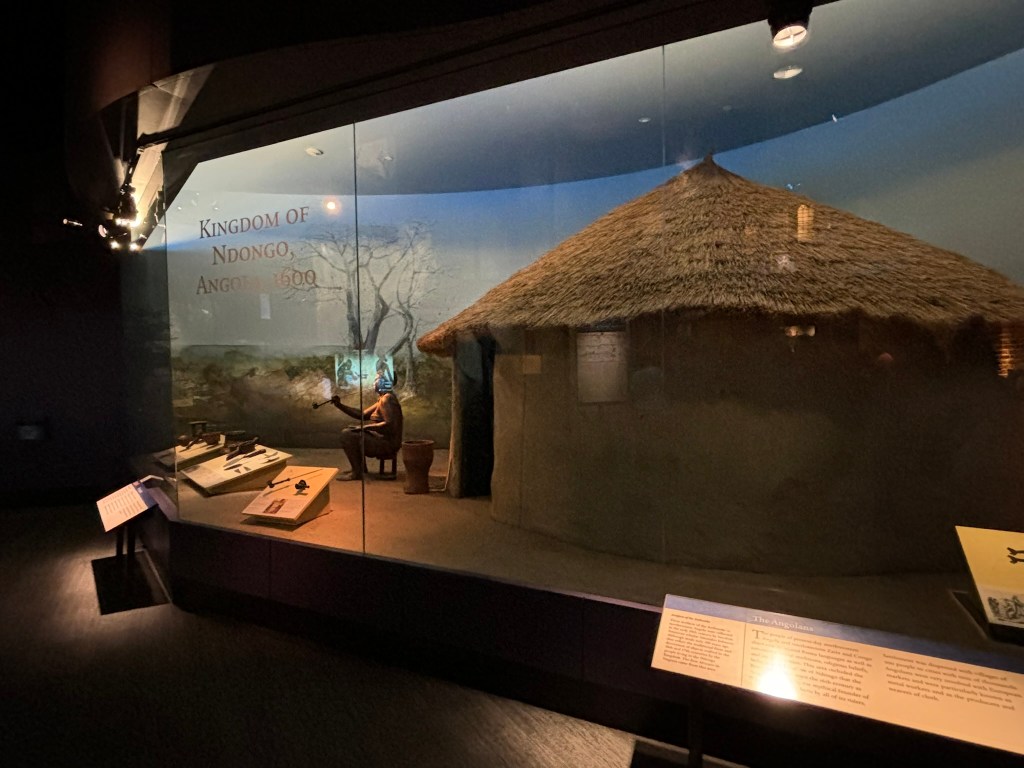
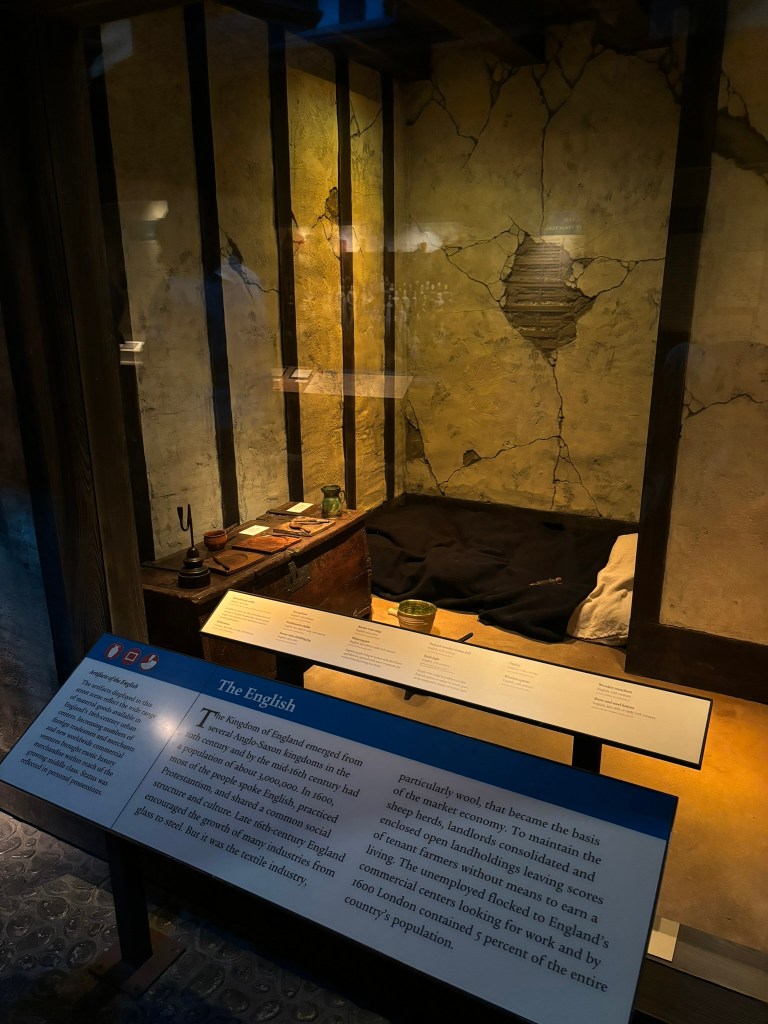
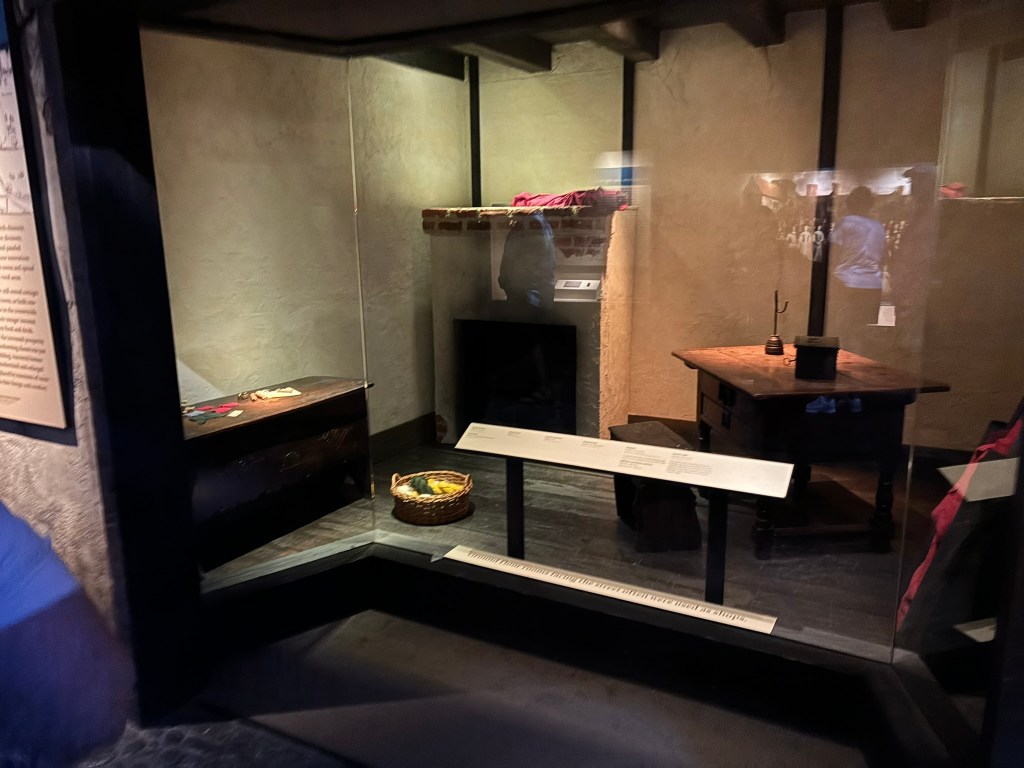
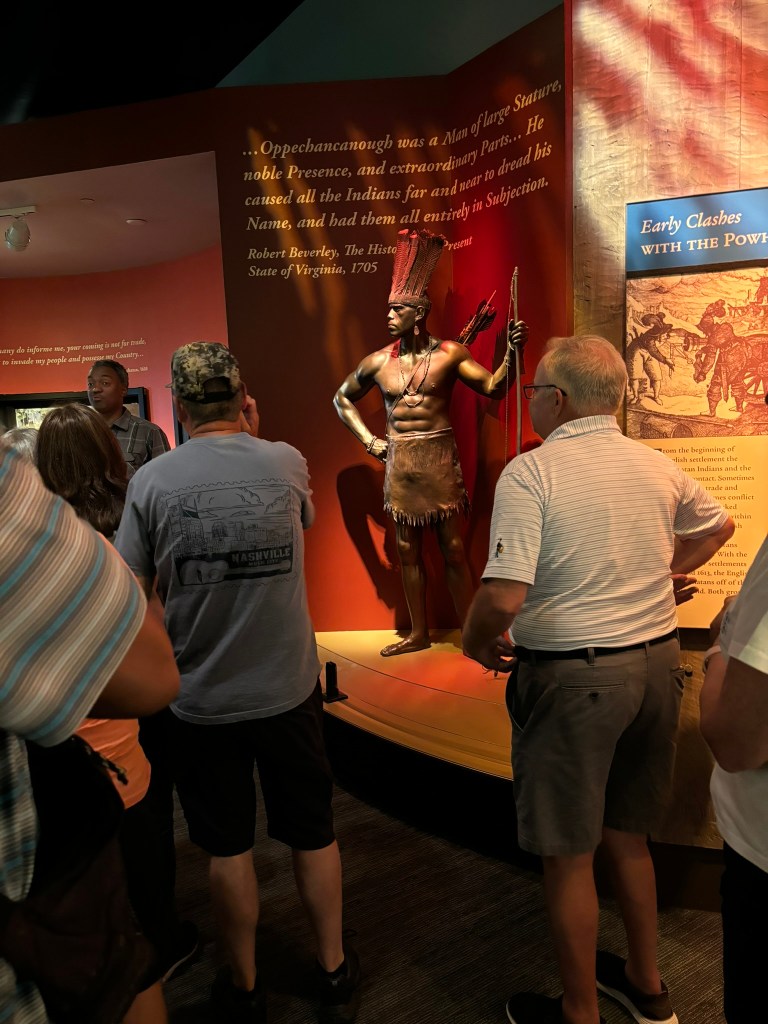
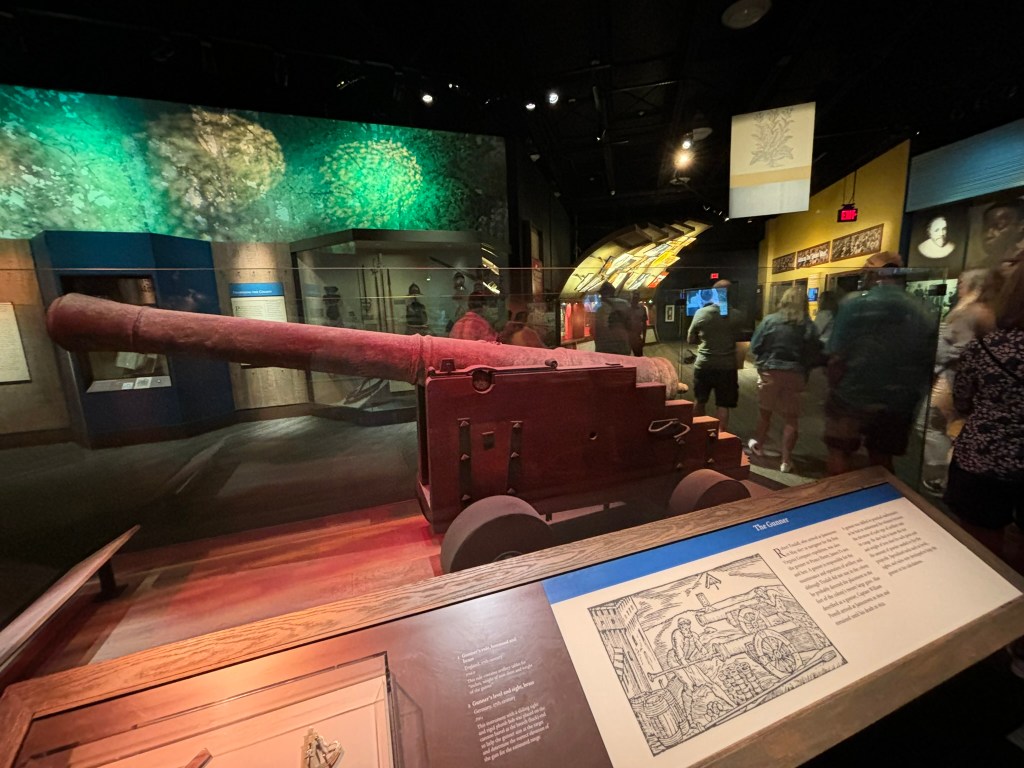
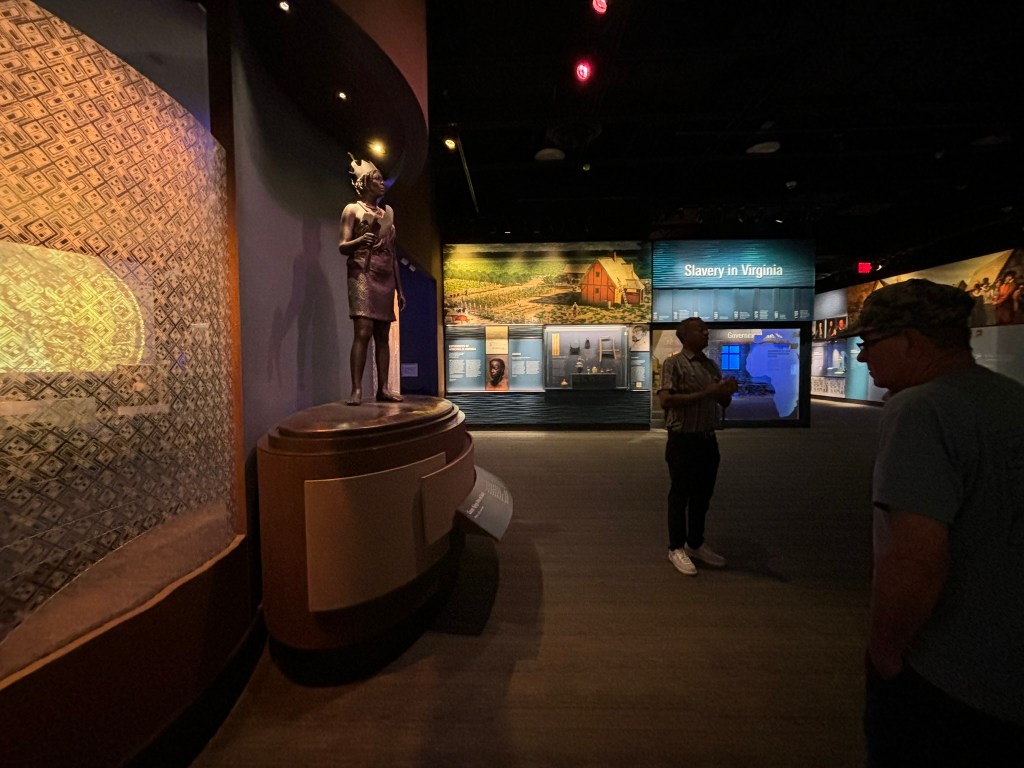
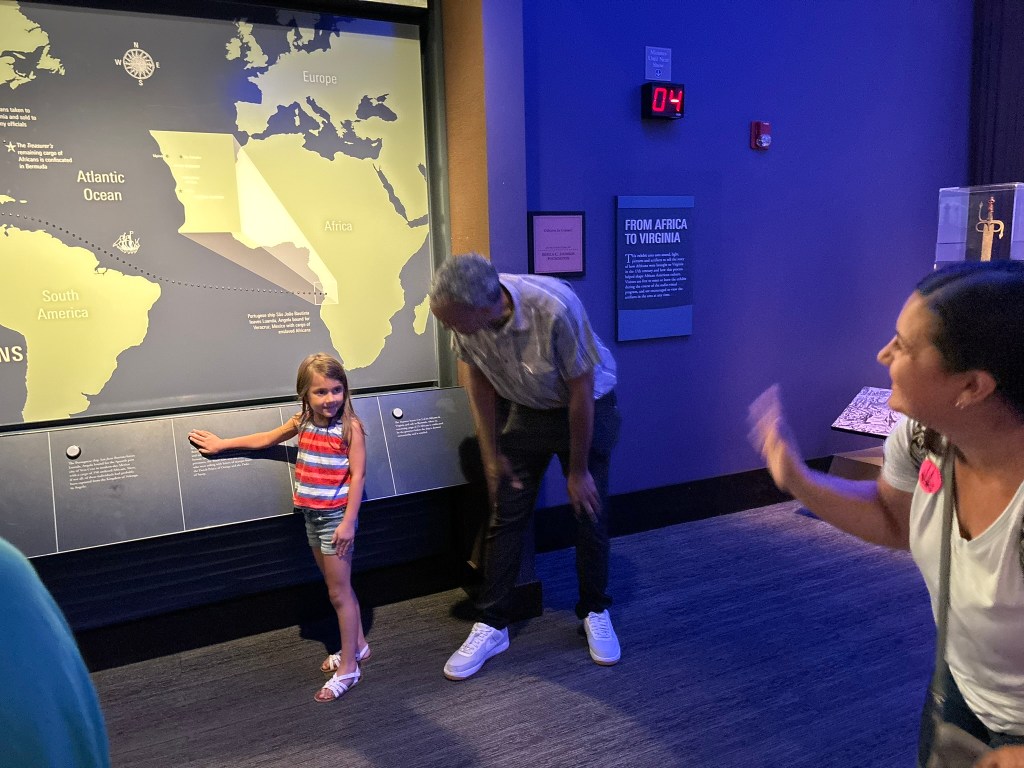
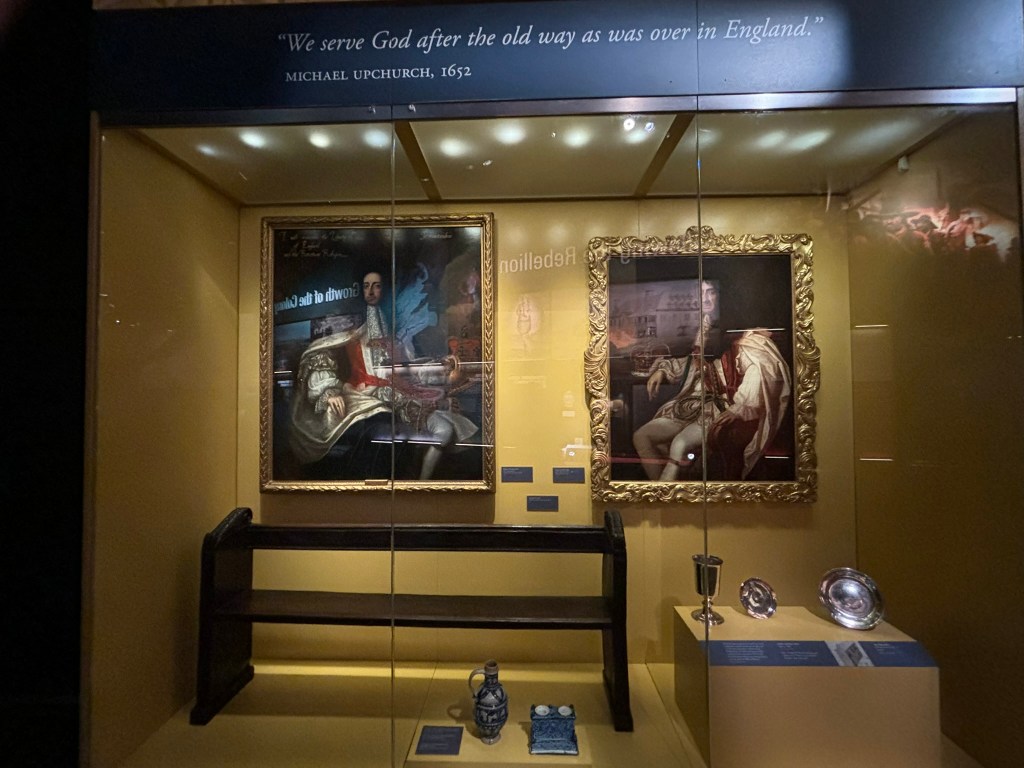
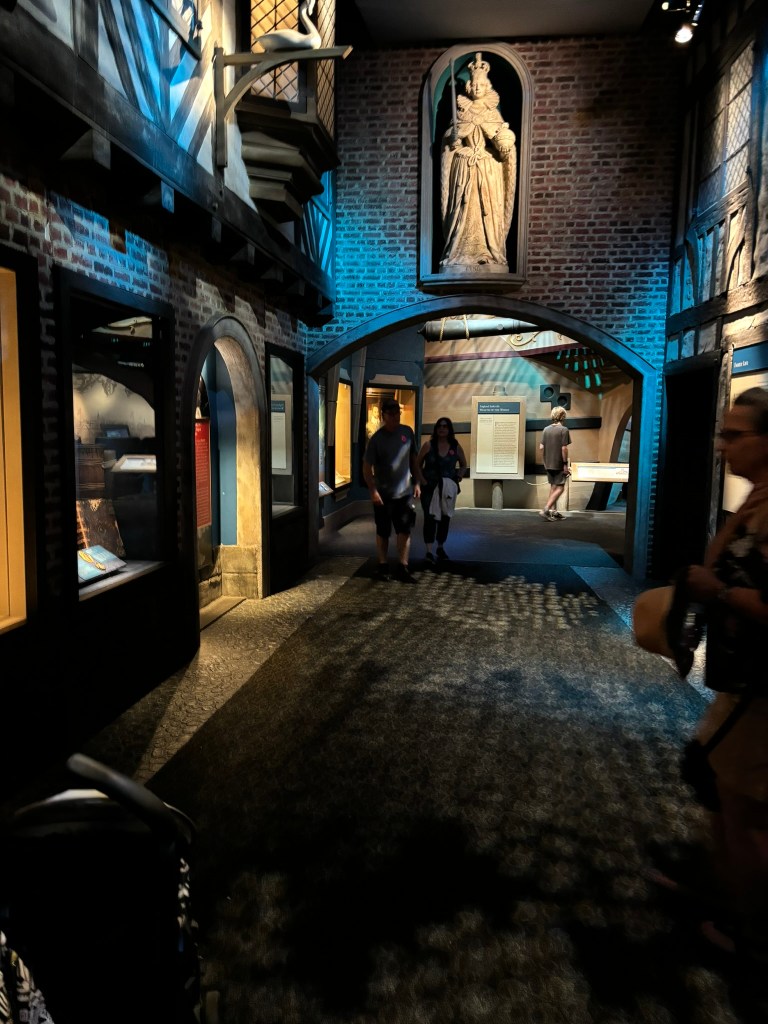
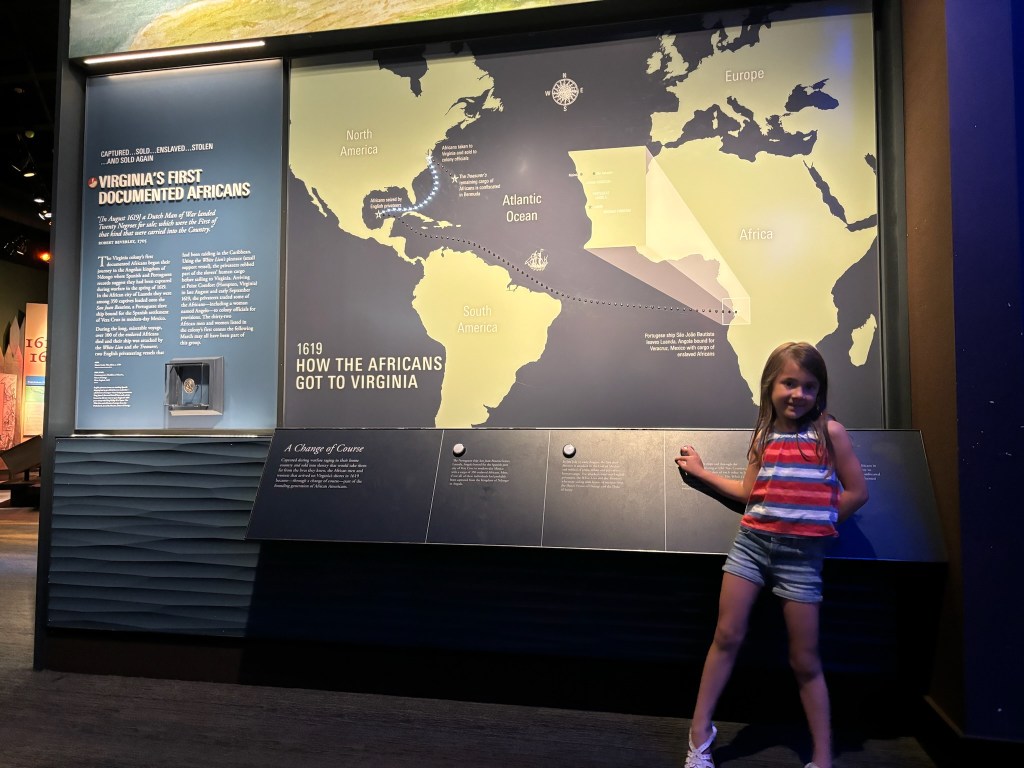
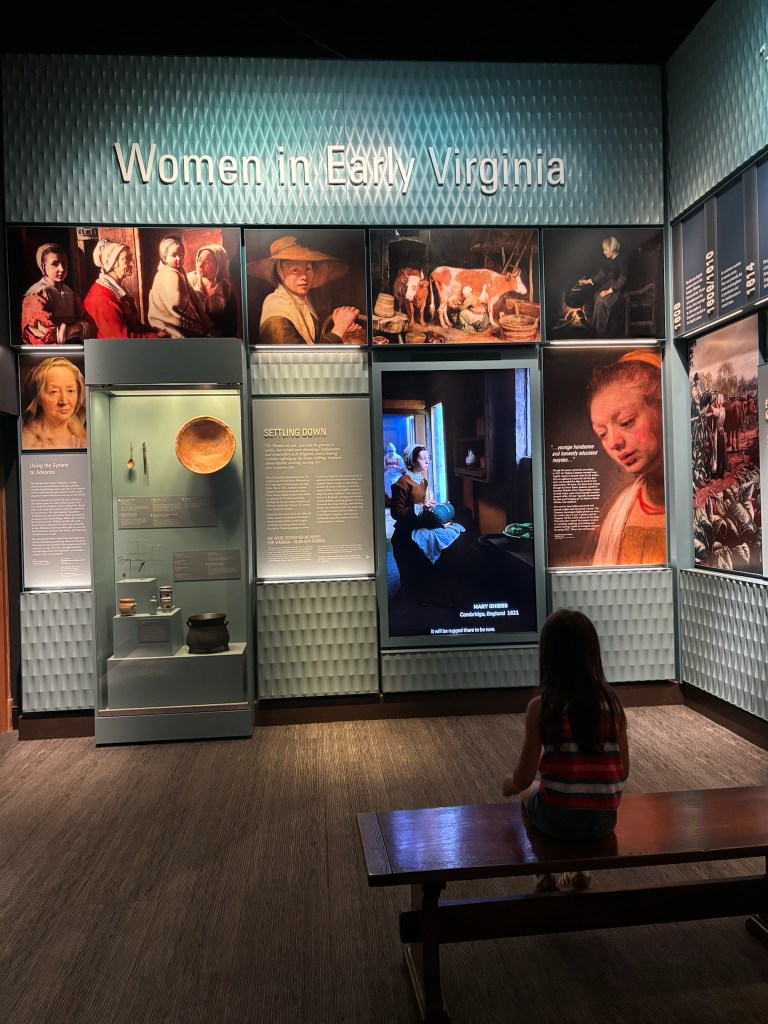
The museum highlights what life was like before 1607 for the Natives living in the region, Africans in Angola, and the English back in Europe. As you move through the museum, you learn about how the settlers barely survived in the first couple of years. You learn about the importance of growing tobacco. You learn about figures like Pocahantas, John Smith and John Rolfe. You learn that in 1619, the first Africans were brought to the colony on a Dutch ship, which completely changed the dynamics and history of the colony. The year 1619 was also significant because this was the first year that the House of Burgesses met. The museum teaches about conflicts between the Natives and English settlers, as well as significant events like Bacon’s Rebellion in 1676. The museum also highlights a map that shows the population changes taking place in Virginia. As the English population was growing and settling along the rivers, the Native population was dwindling, primarily caused by disease and conflict. Finally, the museum takes you to the year 1699, when Jamestown ceased to be the capital of Virginia. Jamestown was susceptible to brackish water, mosquitoes, and the spread of malaria. Williamsburg was on higher ground and easier to defend against invaders such as the French and Spanish.
Paspahegh Village
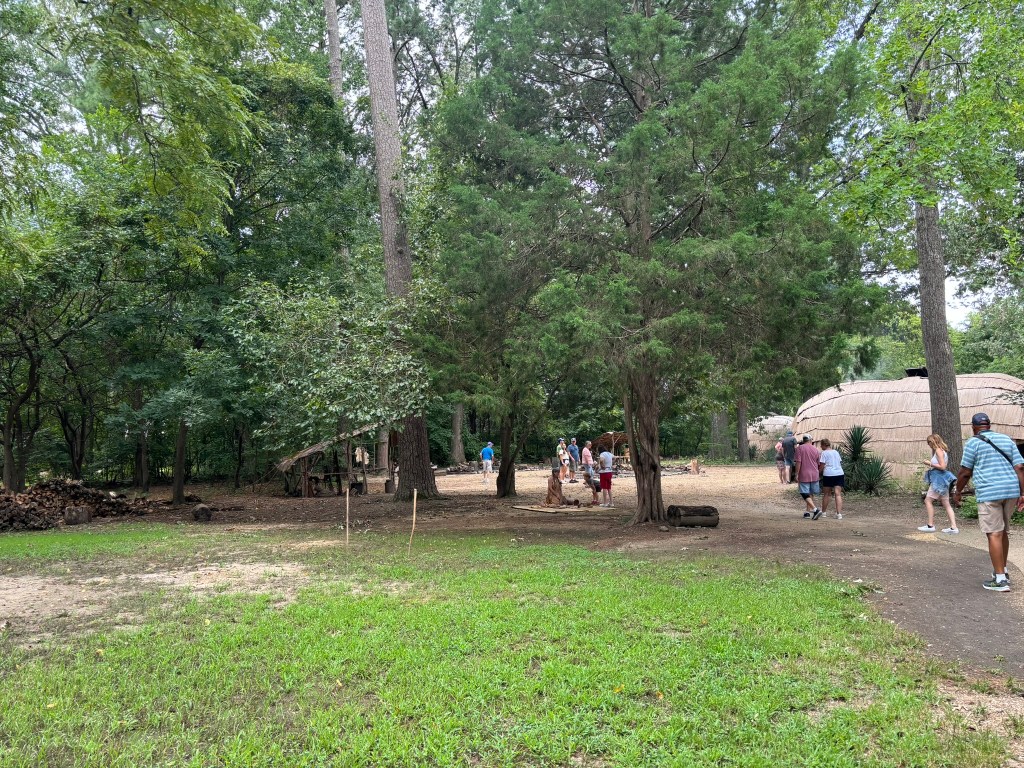
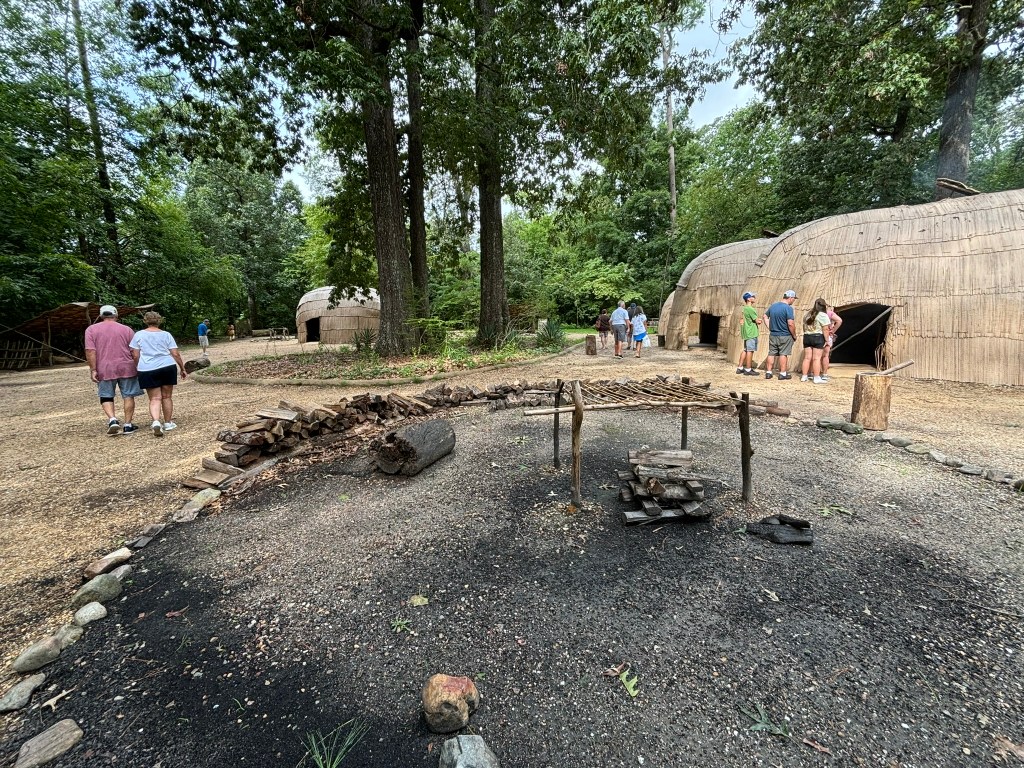
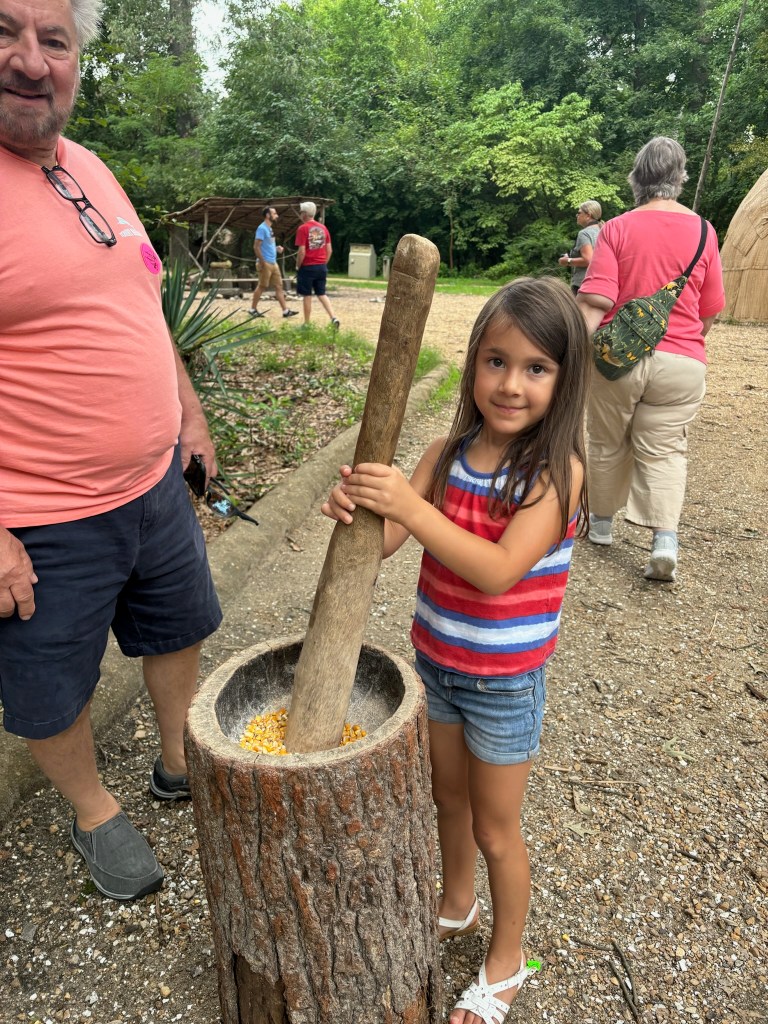
After we were taken through the museum, we were given about an hour to roam around outside in the living history portions of the museum. Our first stop was the Paspahegh village. The Paspahegh tribe was a tributary of the great Powhatan chiefdom. In the village, you could walk through their living quarters, learn how they made canoes from tree trunks, and practice making corn.
Ships
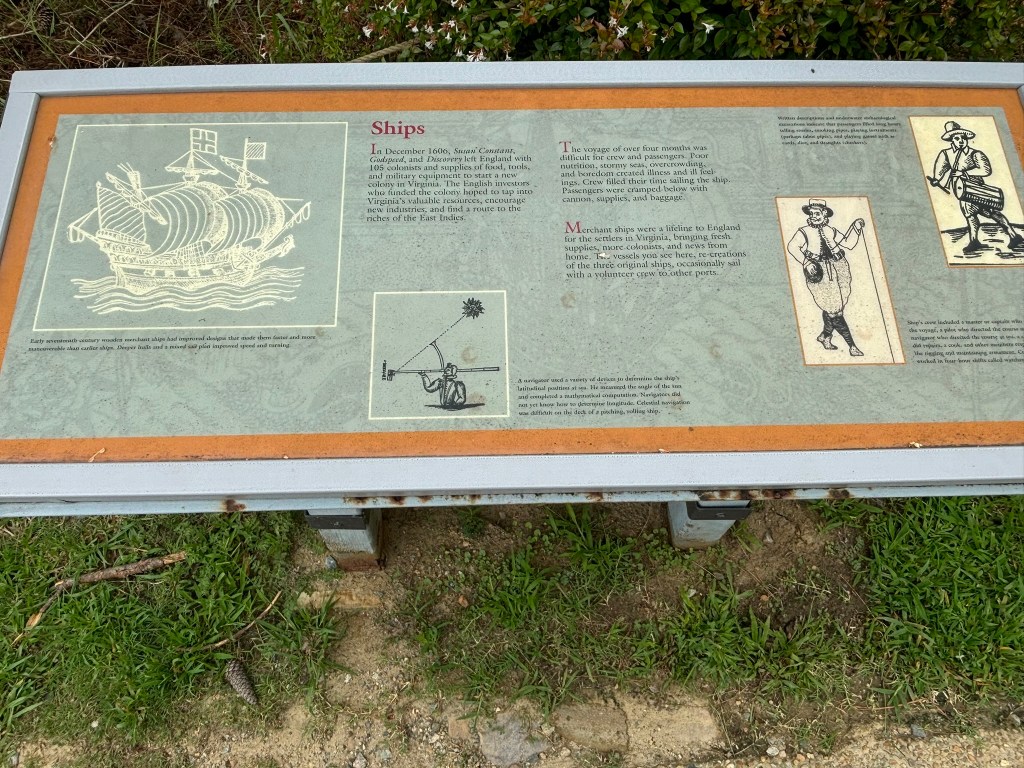
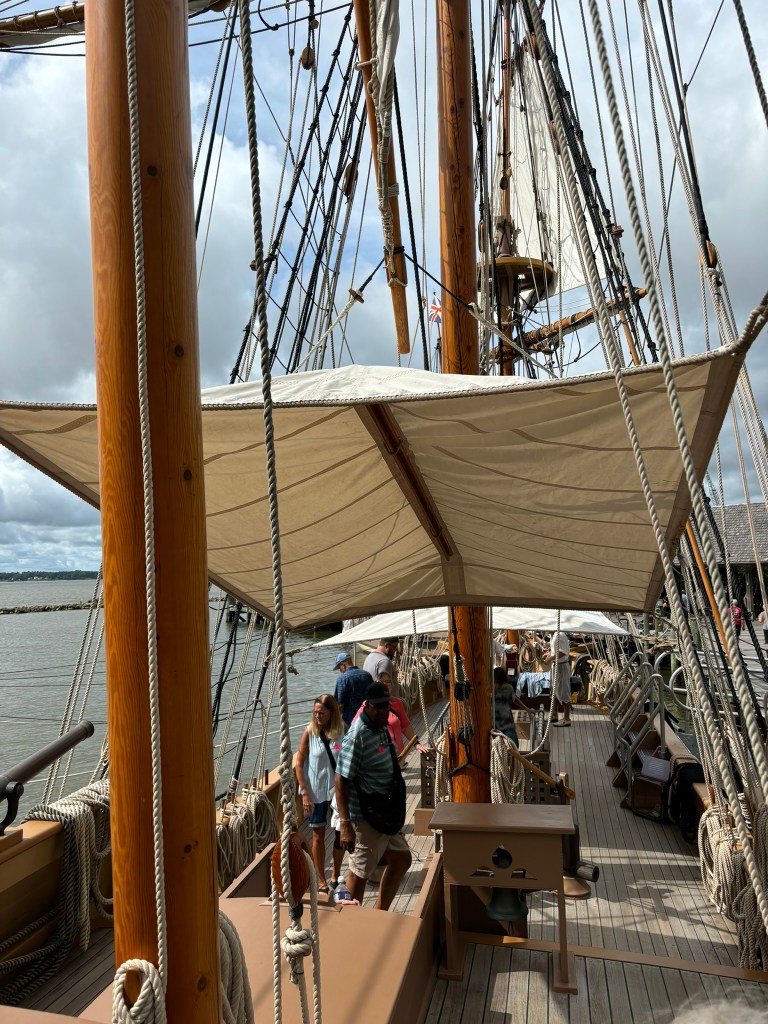
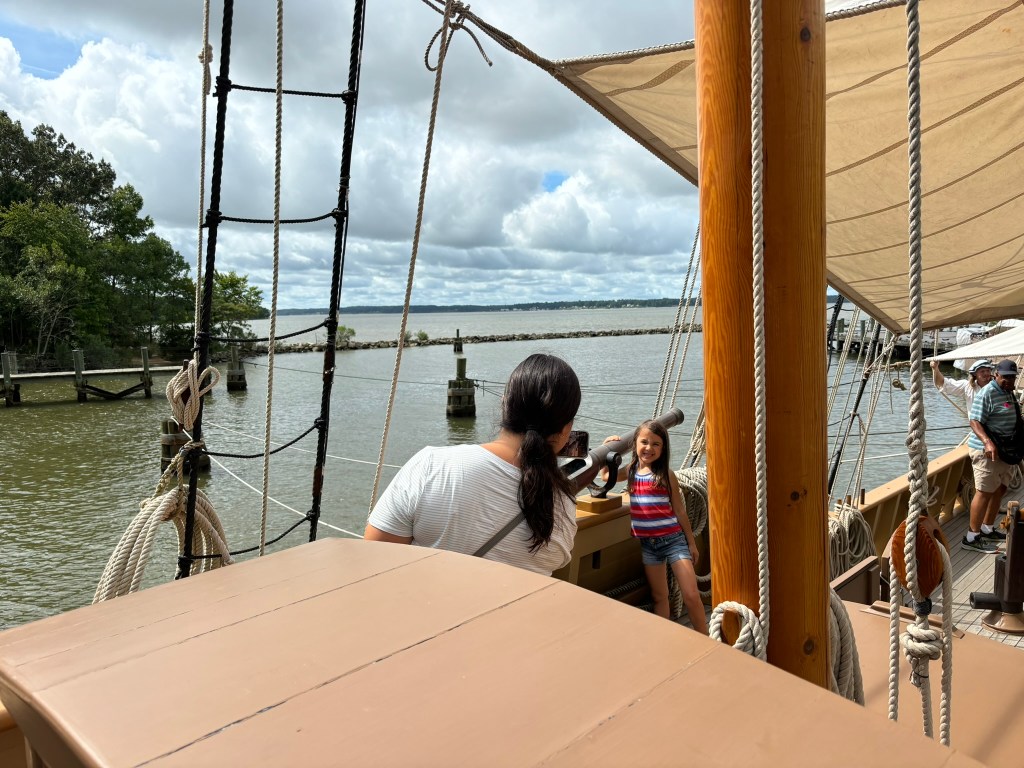
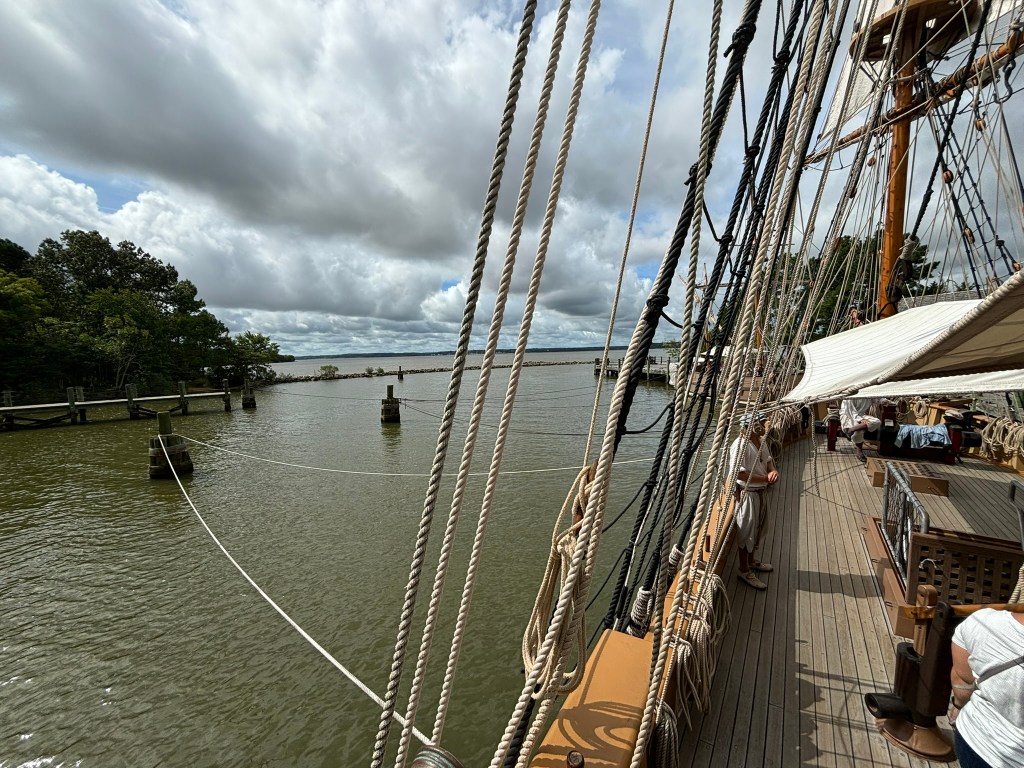
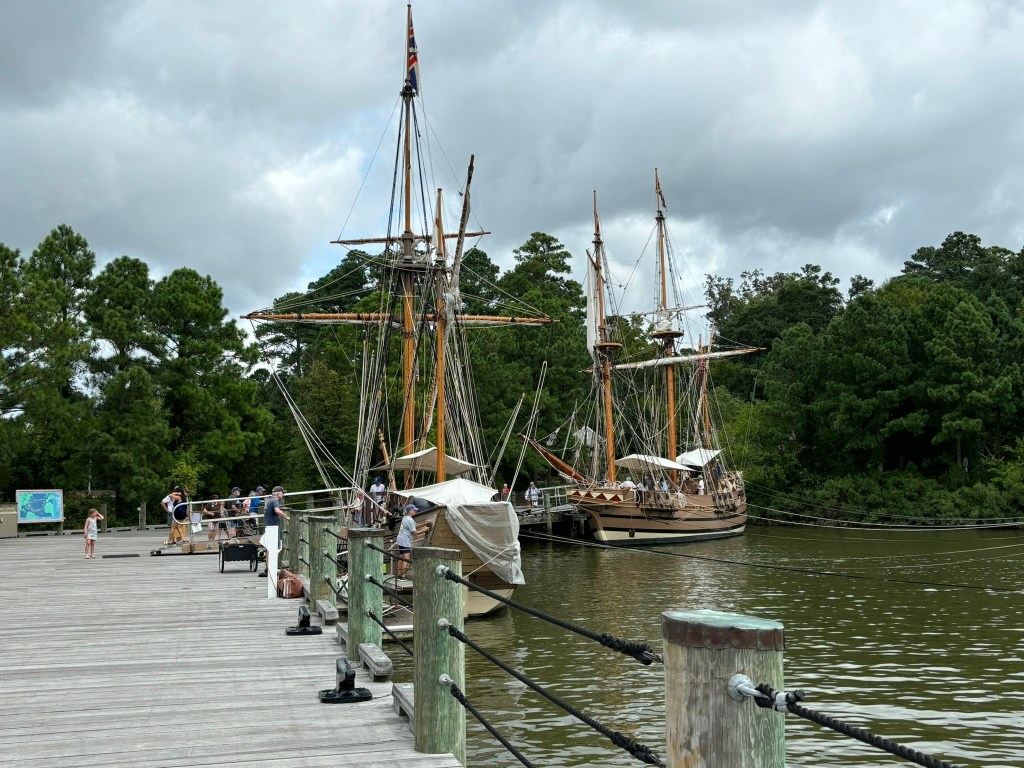
After passing through the Paspahegh village, we made our way to ships docked along the coast. The three ships that took the original voyage to Jamestown were called Susan Constant, Godspeed, and Discovery. Two of the three replica ships were in dock on the day we were there. We were able to go below deck and explore the two ships.
James Fort
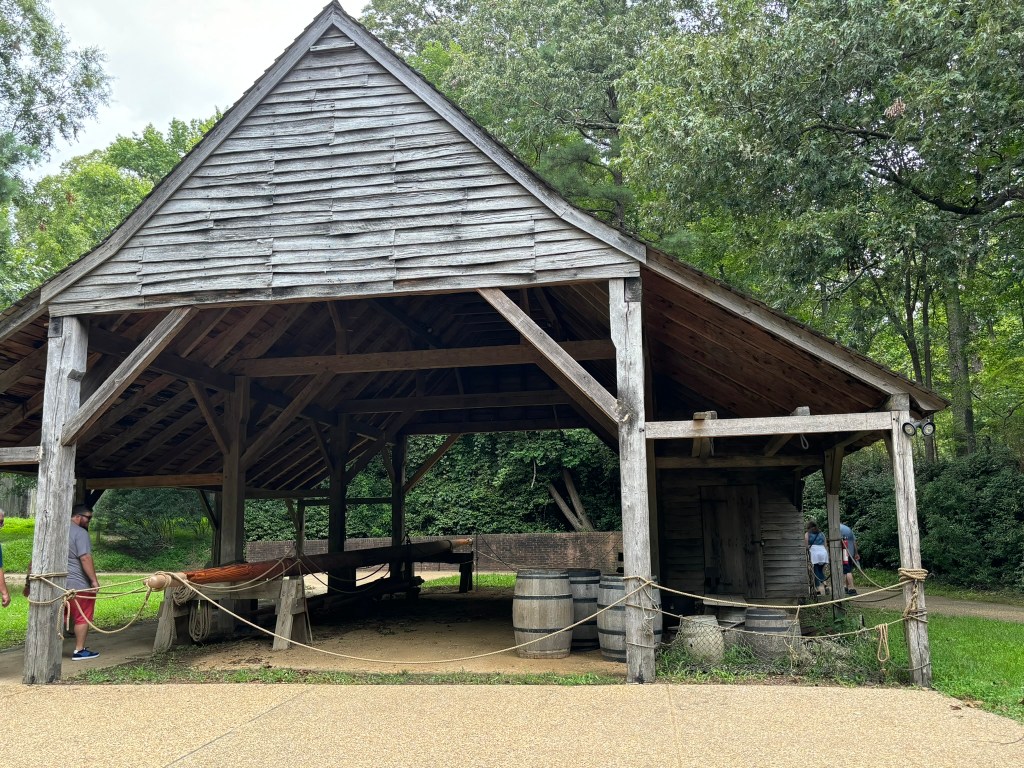
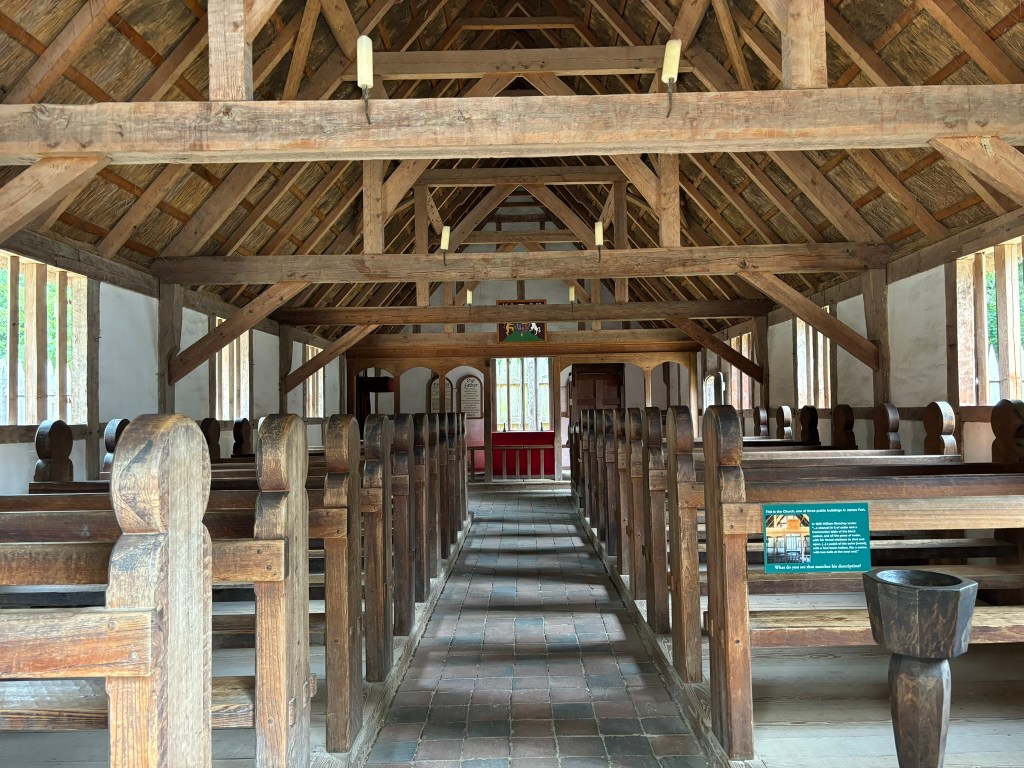
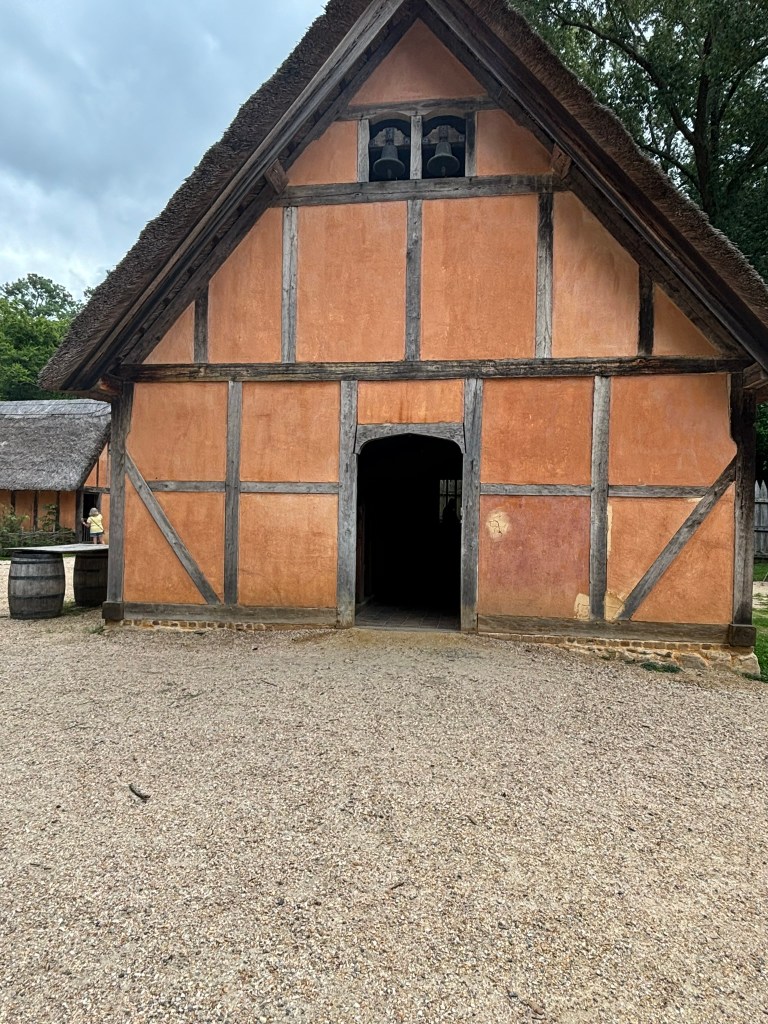
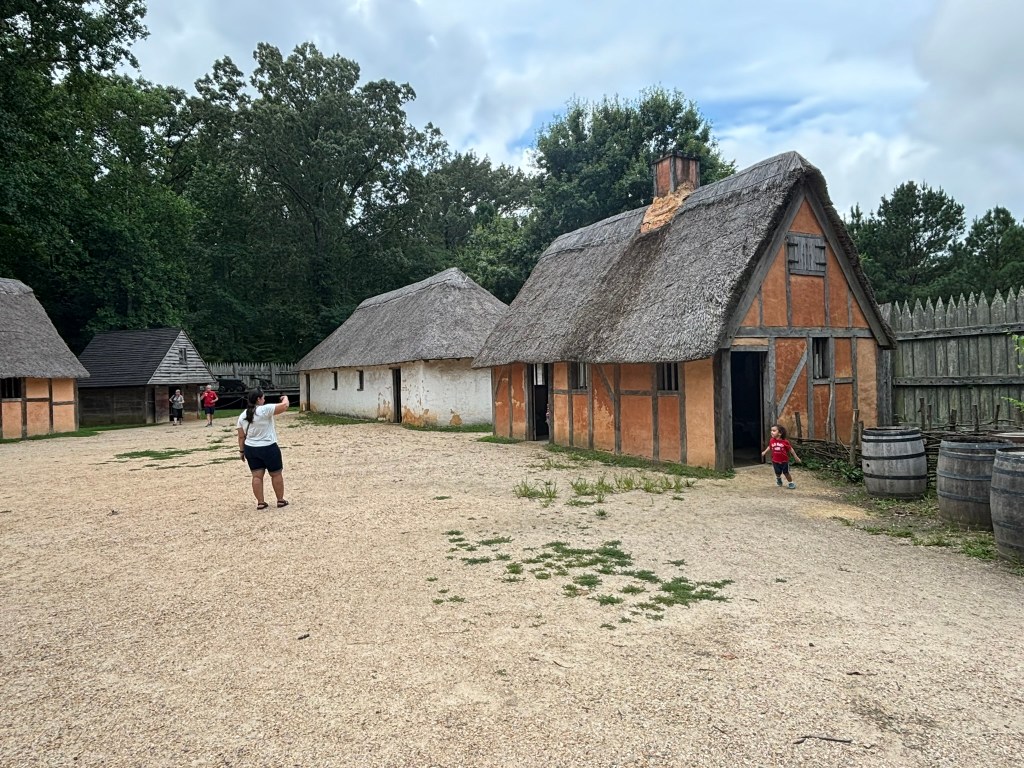
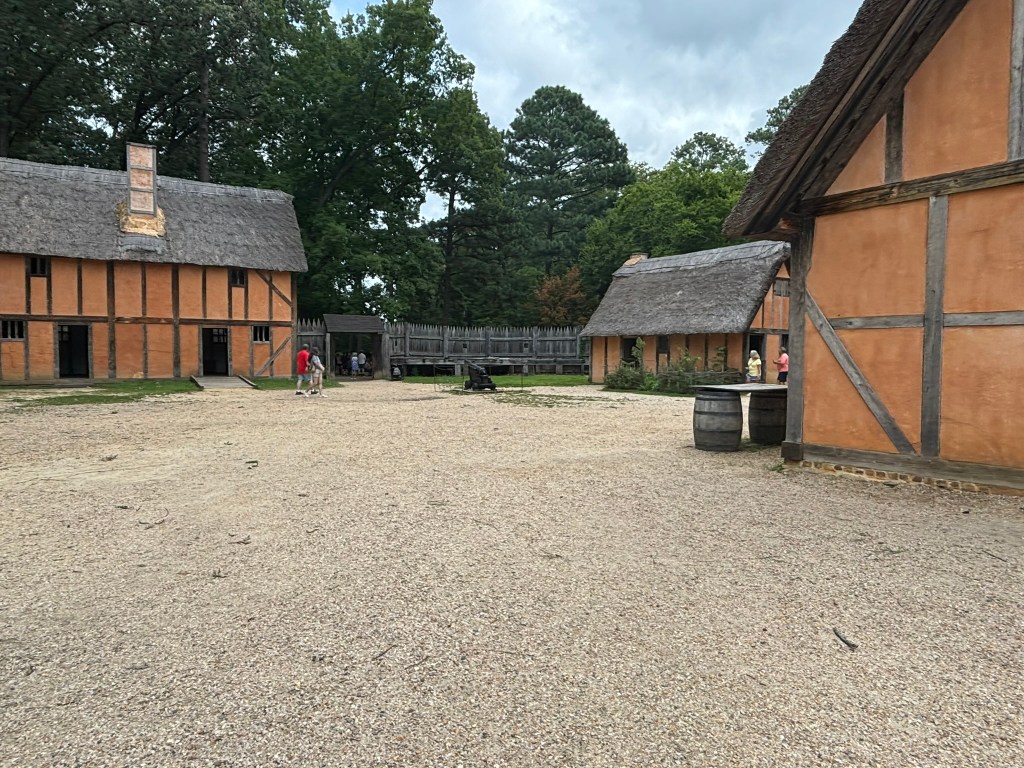
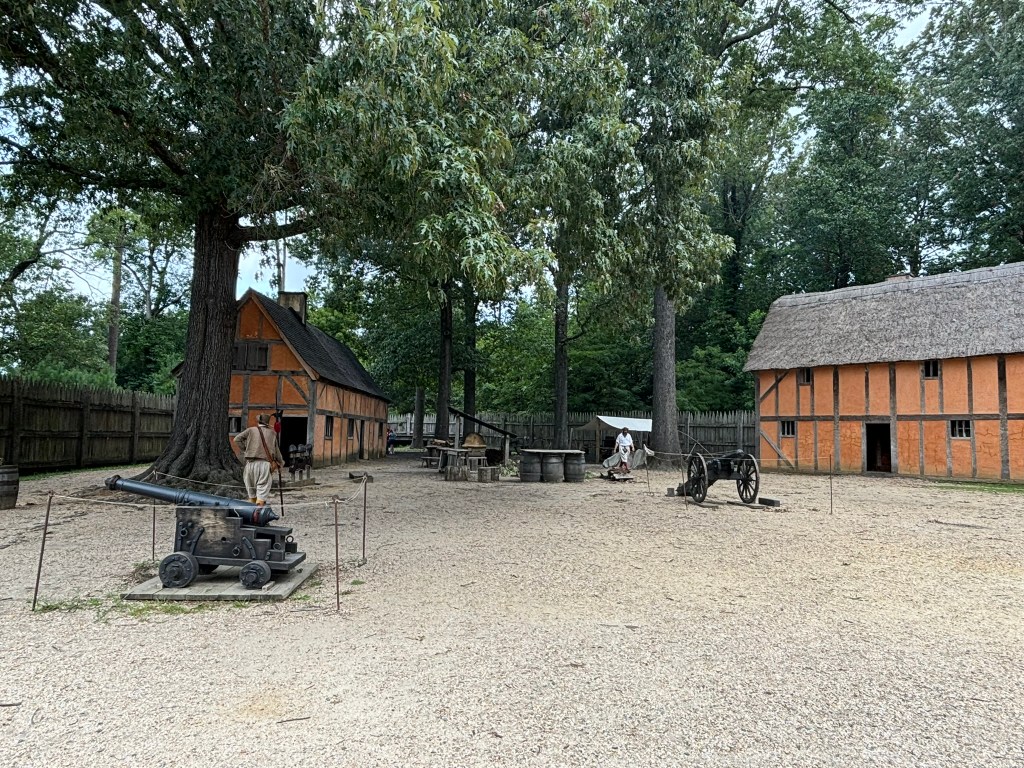
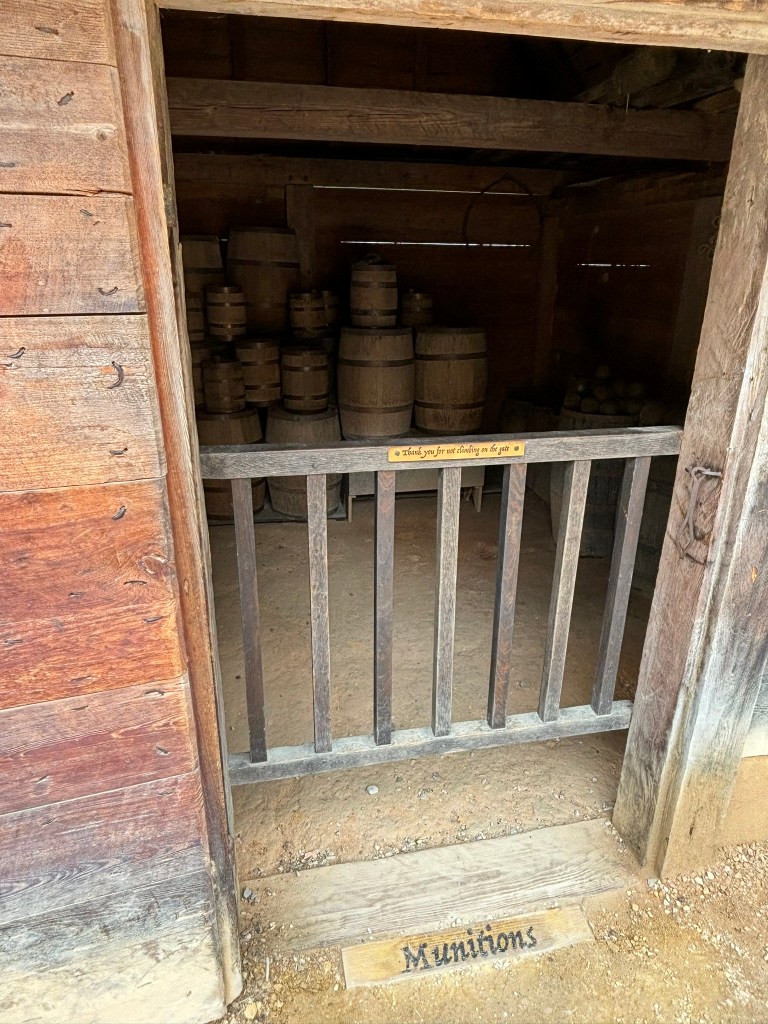
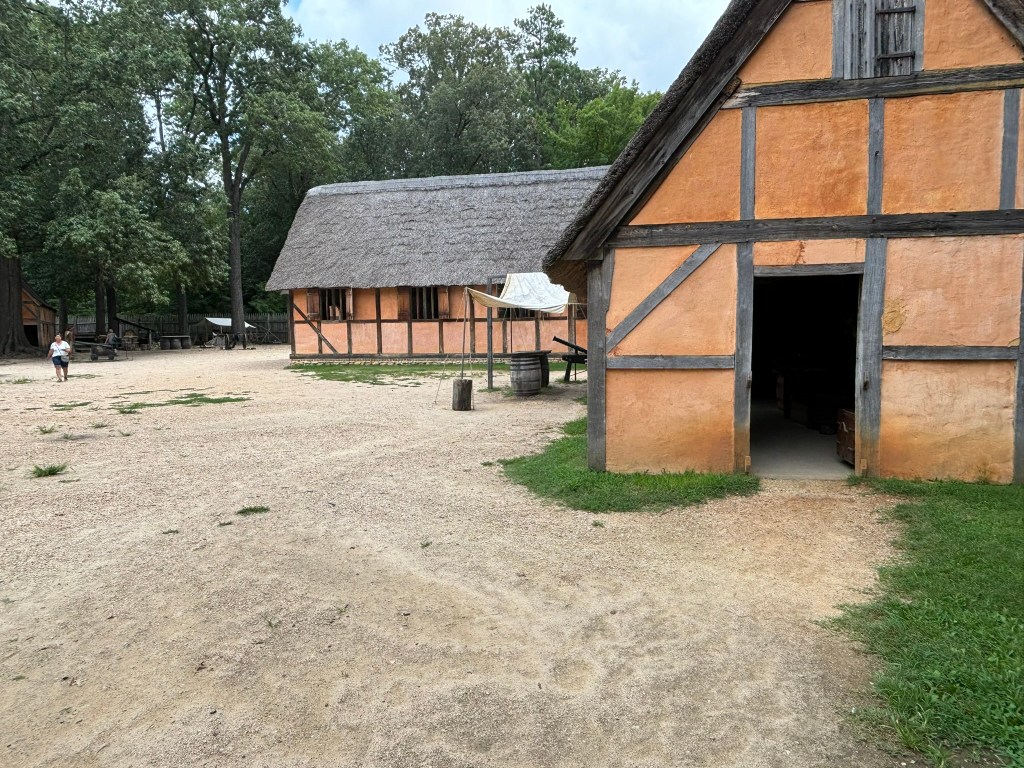
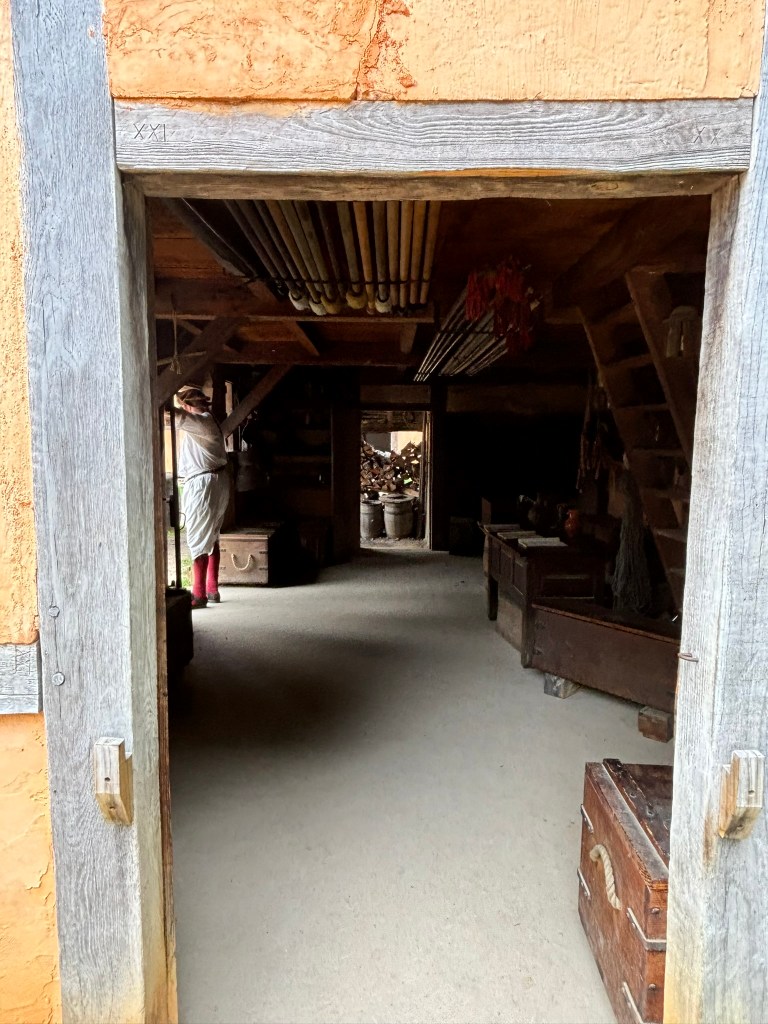
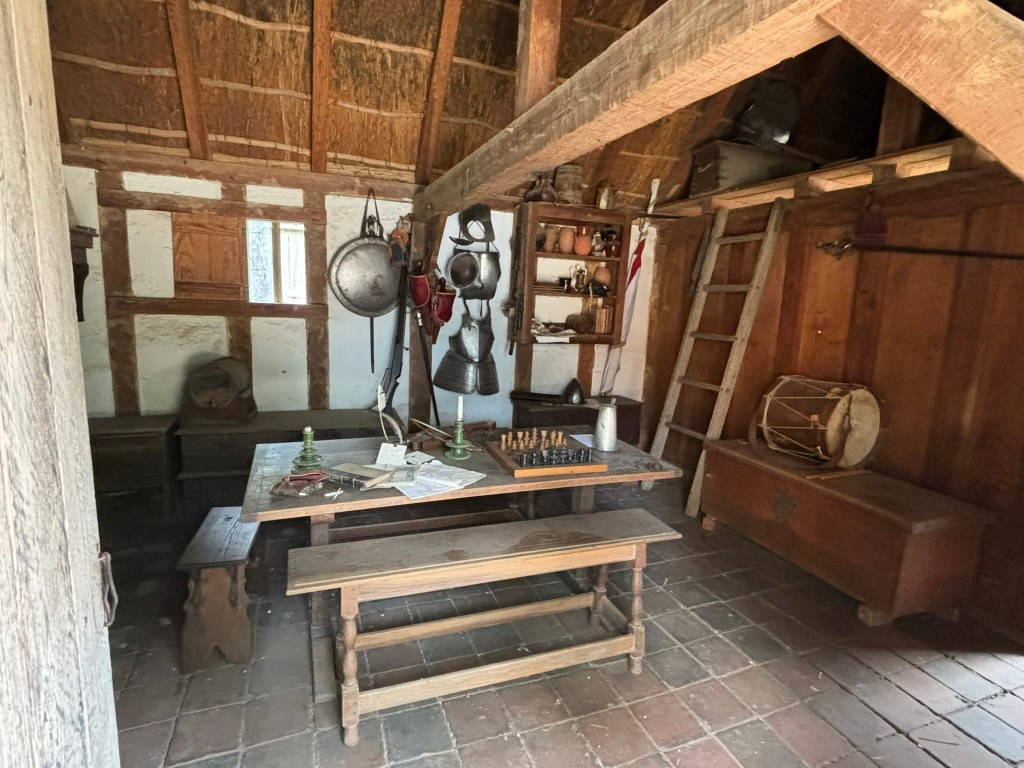
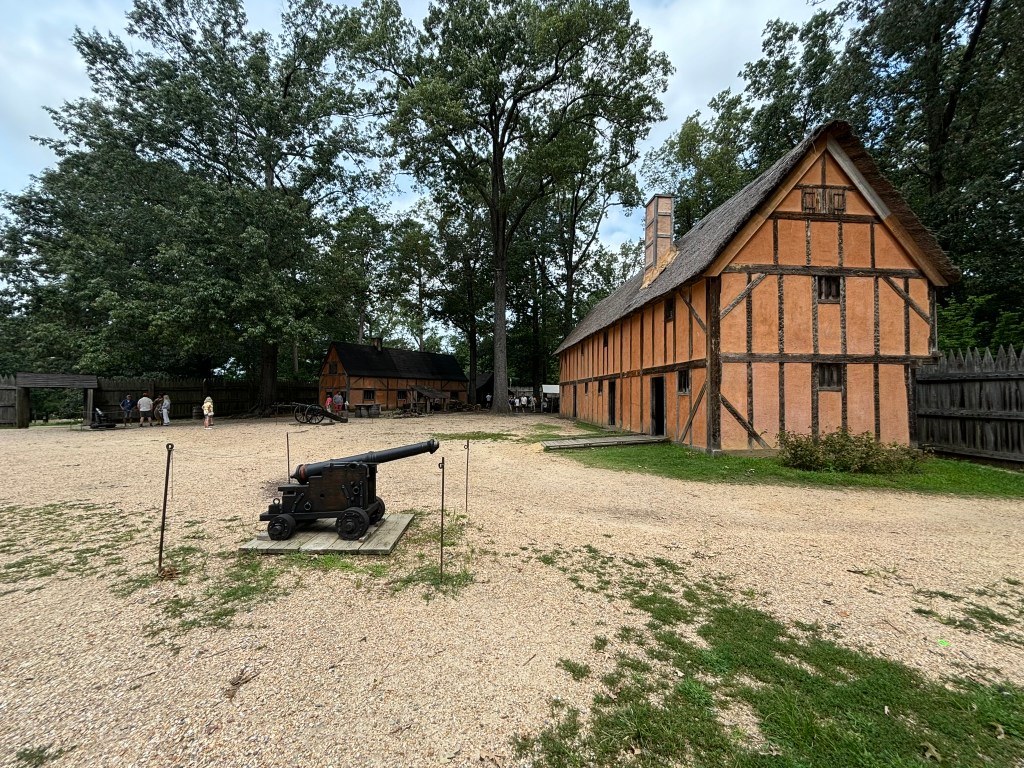
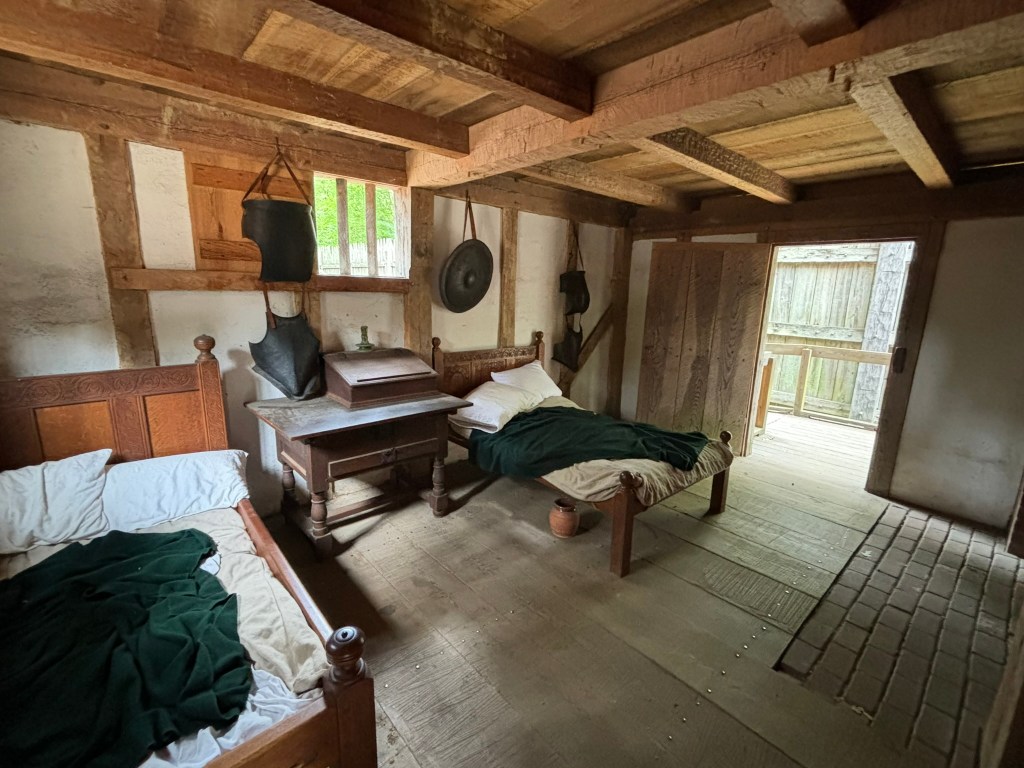
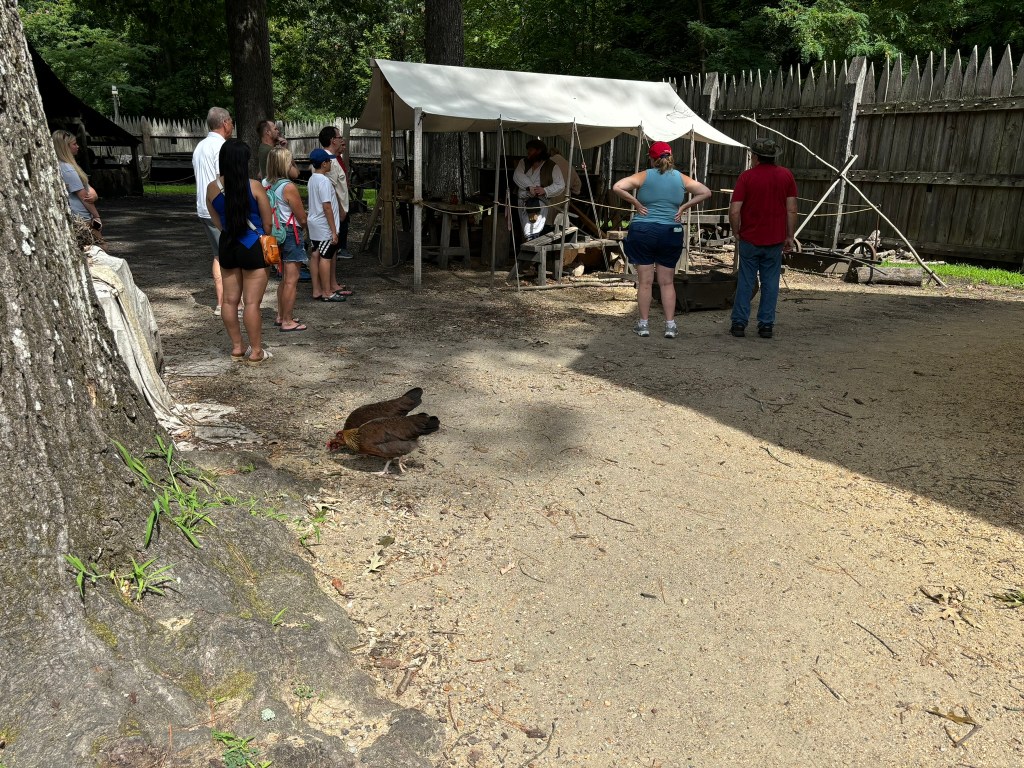
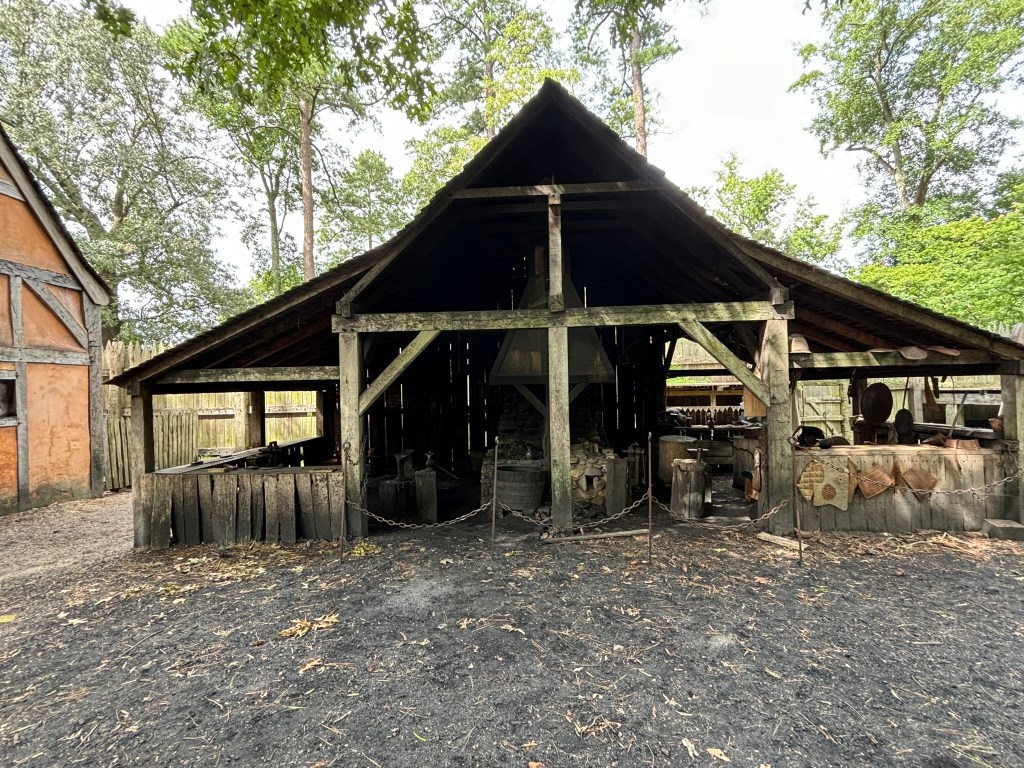
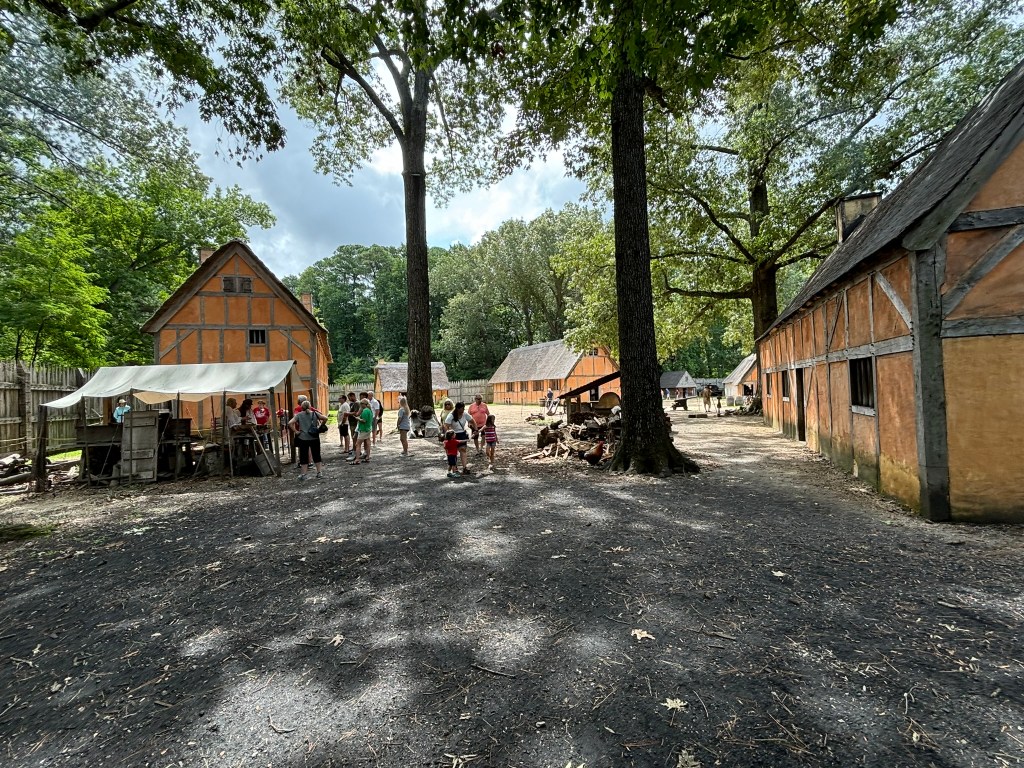
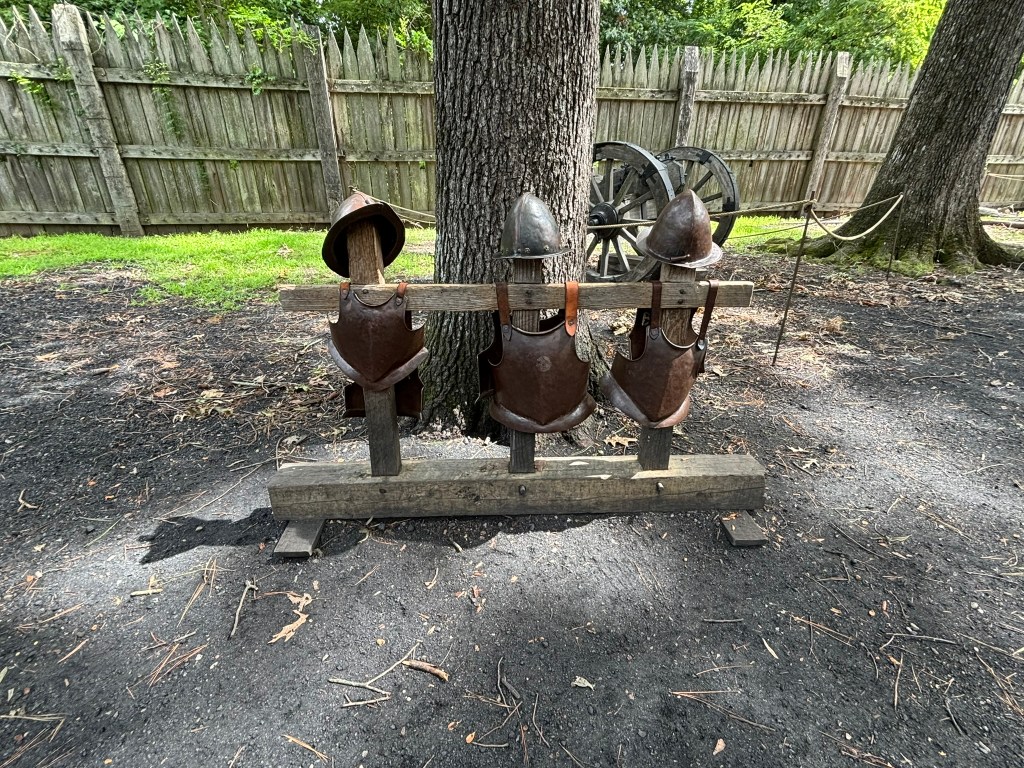
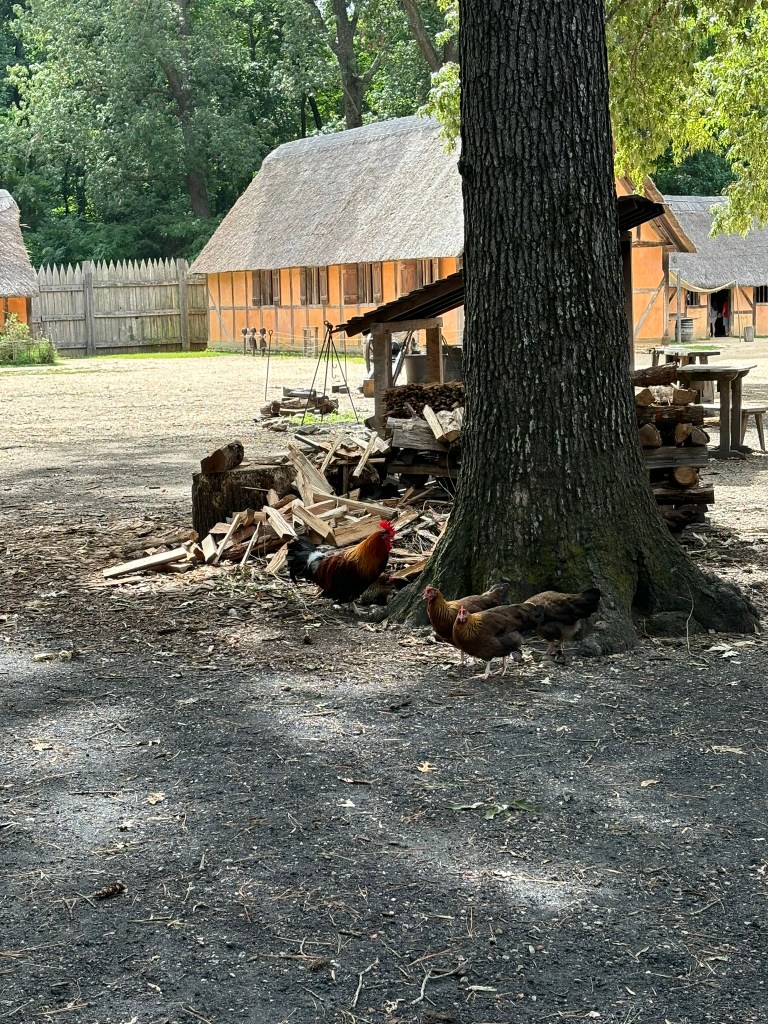
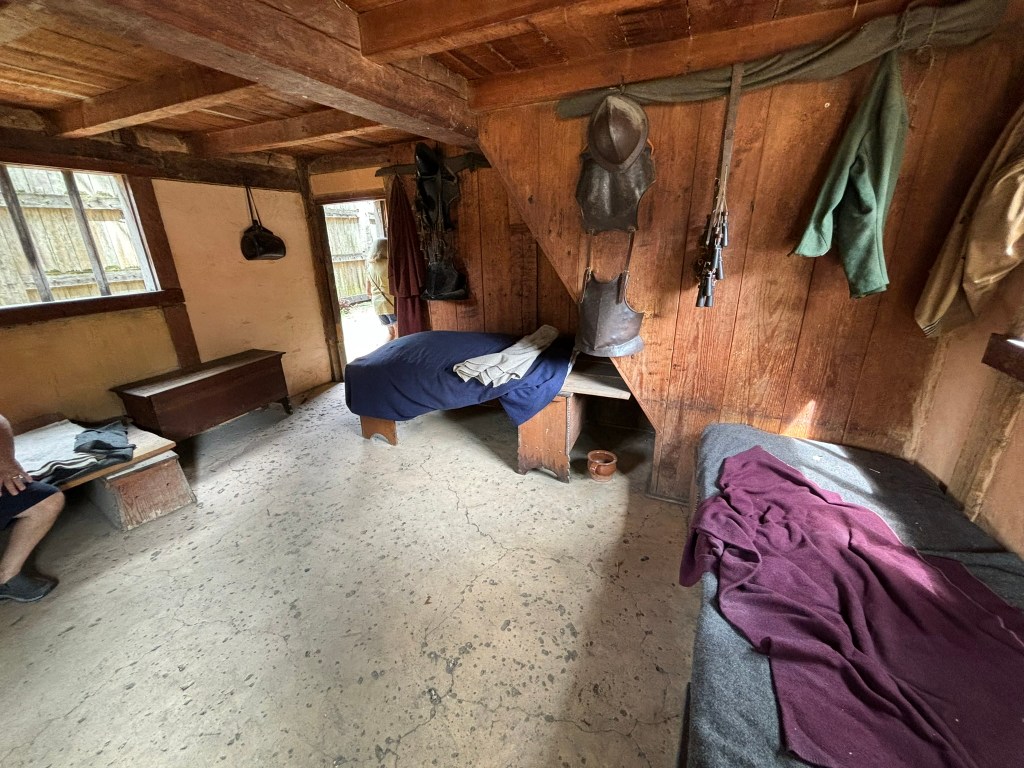
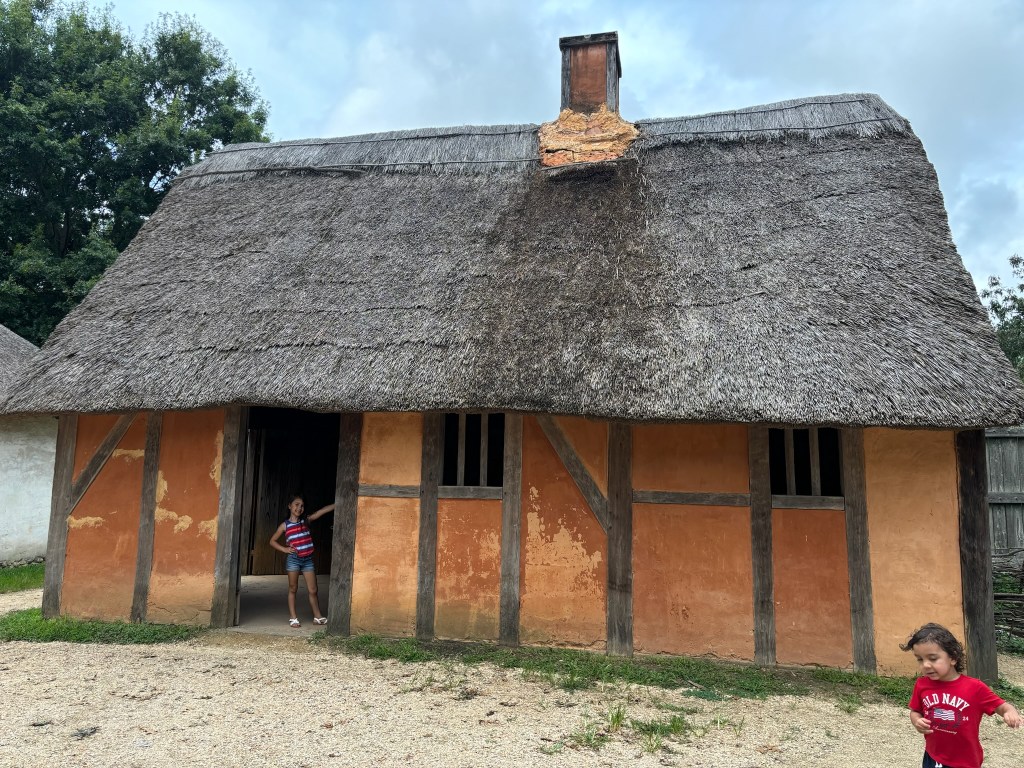
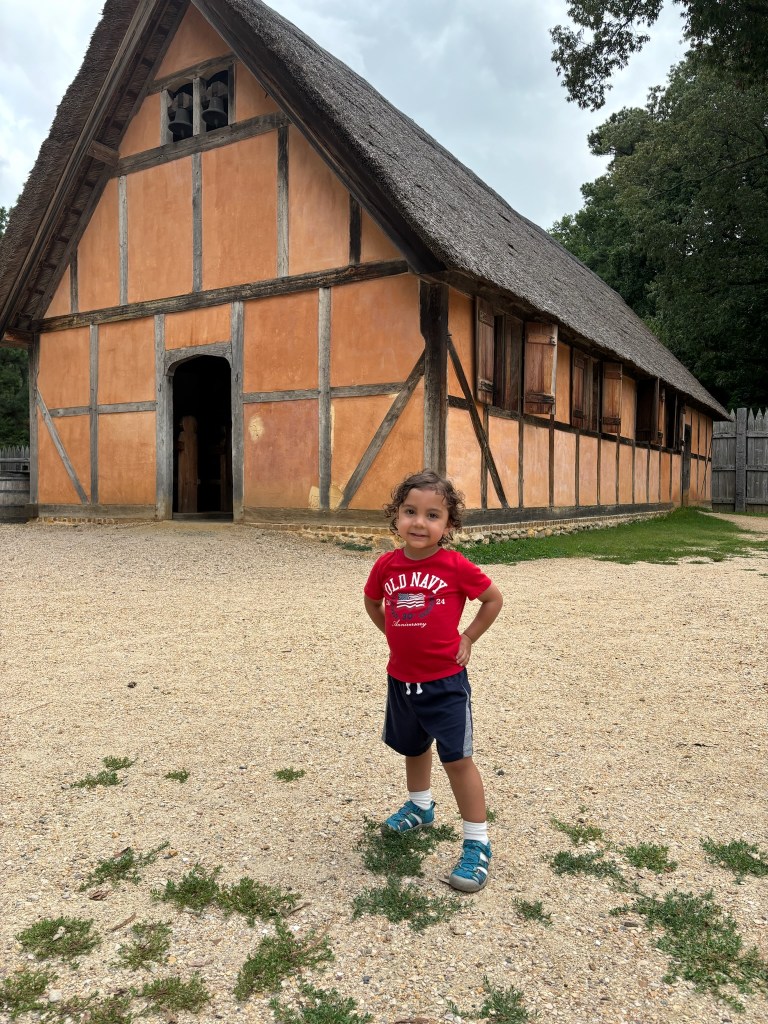
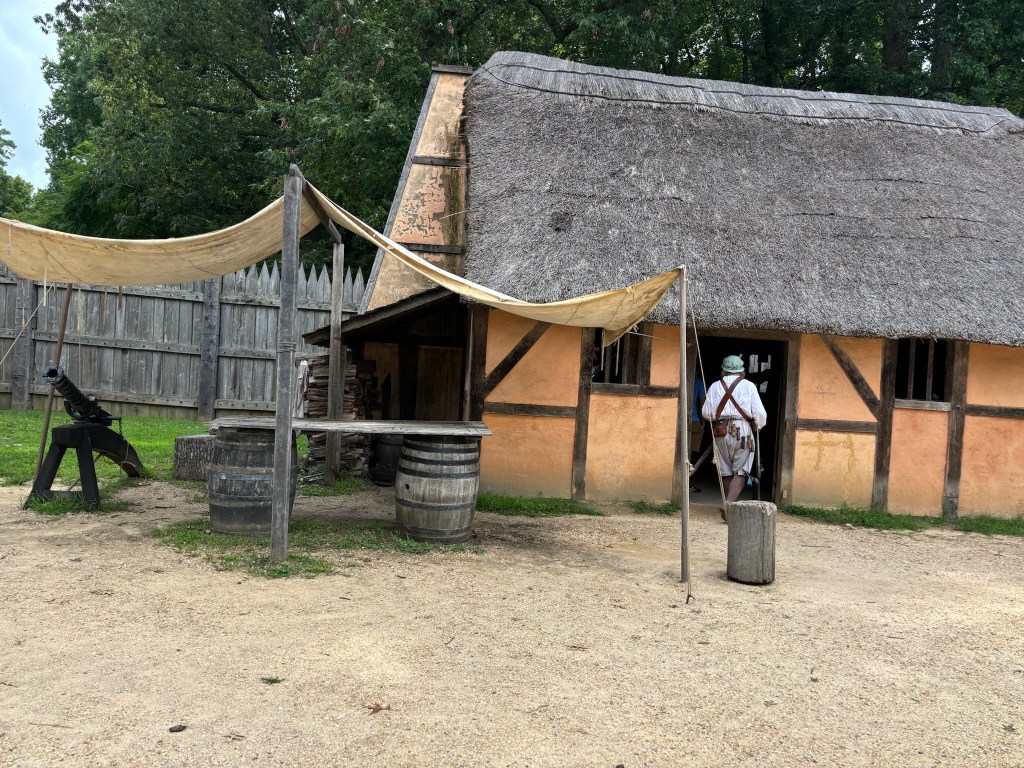
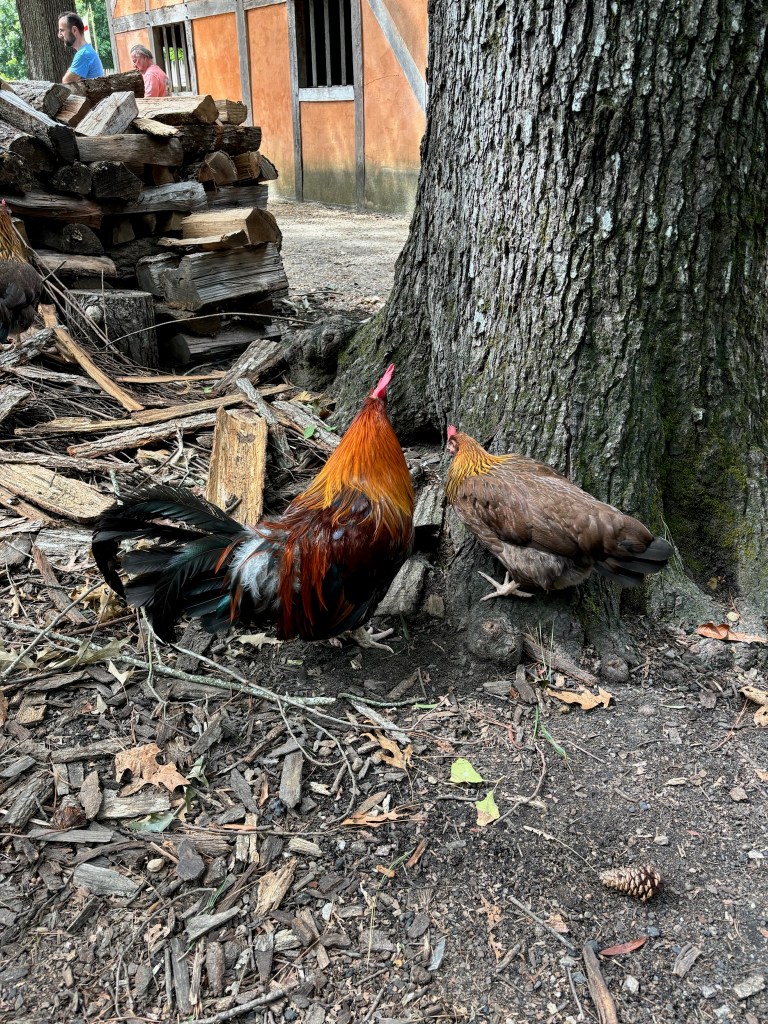
We then made our way to the replica of the original James Fort, shaped in a Triangle. One of the reenactors informed me that the original fort was likely much larger and had more buildings within, but the structures within the replica would have looked very much like the original. We explored the numerous structures within James Fort, including living quarters, a church, an armory, and workstations. There were even live chickens roaming around the fort. Just outside the fort, cannon fire demonstrations are held every 30 mins.
We had some time left before lunch to head back into the museum and take a look at the galleries once again. We ate lunch at the cafe within the museum. Lunch was included with the price of the tour.
After lunch, we headed back onto the bus and headed to Yorktown, which I will discuss in a later blog post.
Overview
The Jamestown Settlement was a great, immersive experience highlighting the importance of the Jamestown settlement. The museum highlighted the fact that three cultures came together in Virginia: English, Native and African. Each culture brought their own unique blend which helped develop colonial culture in the New World. As mentioned before, I thought that this tour would include Historic Jamestowne; the actual location of the original Jamestown Fort. The original fort no longer exists, but the location includes a re-creation of an early church and an Archaearium, which houses over 2,000 artifacts from the Jamestown colony. Perhaps I will have to make another trip on a future date. Despite that, I would highly recommend going to Jamestown Settlement. The museum does a great job taking you through the history of Jamestown and its significance to American history. The living history experience allows you to step into the shoes of those who lived in 1607 and imagine what life would have been like for those in a Native village, those who had to remain on the ships for months at sea, and for those living in the James Fort. The tour was $85 per adult and $45 for my daughter (5) and free for my son (2). It was well worth it considering that this was an all day tour with lunch included. I would highly recommend this tour. You can buy tickets from Viator HERE.
Follow my Instagram, Facebook, and X accounts for videos of our time in Jamestown.
For more information about the Jamestown-Yorktown Foundation, visit HERE.
Stay tuned for my next blog post which will discuss our visit to the Yorktown Battlefield and Museum in the afternoon.
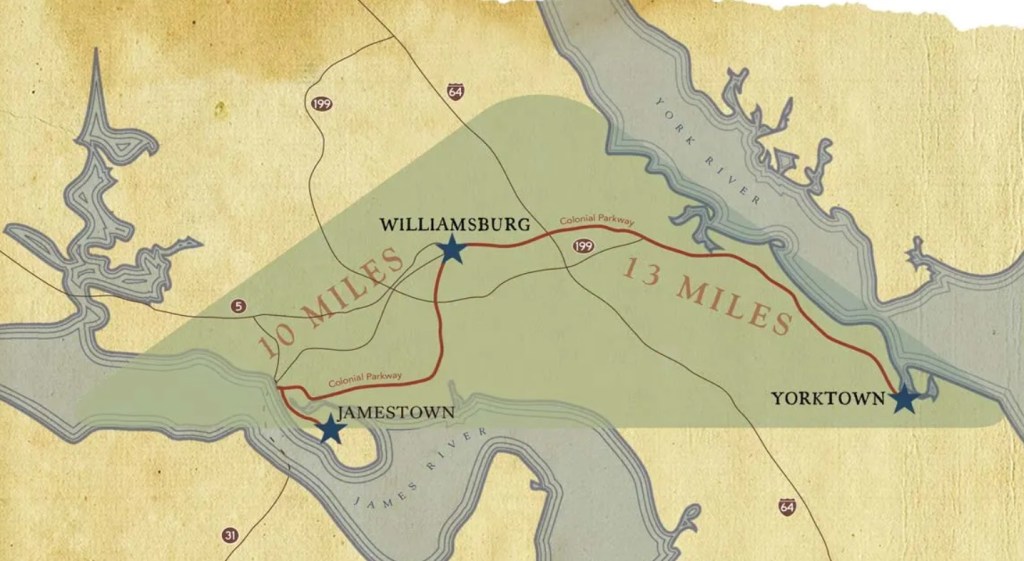
For our summer vacation this year, my family and I went to Williamsburg, Virginia. Our itinerary was as follows: Sunday: Arrive, Monday: Colonial Williamsburg, Tuesday: A Viator guided tour of Jamestown and Yorktown, Wednesday: Busch Gardens, Thursday: Head to Virginia Beach and spend the night, Friday: Spend some more time in Virginia Beach, and then head home. My next three blog posts will focus on the historical aspects of our trip. Part 1 will be about Colonial Williamsburg. Part 2 will be about Jamestown. Part 3 will be about Yorktown. These three locations are referred to as Virginia’s Historic Triangle, and are all just a short distance from one another.
Arrival
We arrived at our hotel, The Williamsburg Woodlands Hotel & Suites on Sunday late afternoon, and didn’t have time to do much other than go to the Visitor Center and eat dinner at Huzzah’s Eatery, which was located at our hotel. We got the kids ready for bed as we would visiting Colonial Williamsburg the following morning.
We woke up and ate the complimentary breakfast in the hotel and headed out to Colonial Williamsburg which is just about a 10-15 minute walk away from the hotel. We purchased one-day passes for each adult to visit the historic sites and recieve tours of particular buildings. The tickets are normally $50 for adults but we recieved 25% off for staying at the Woodlands, and I also recieved a teacher discount. For two adult tickets, I paid about $75 and children are free under 6 years old.
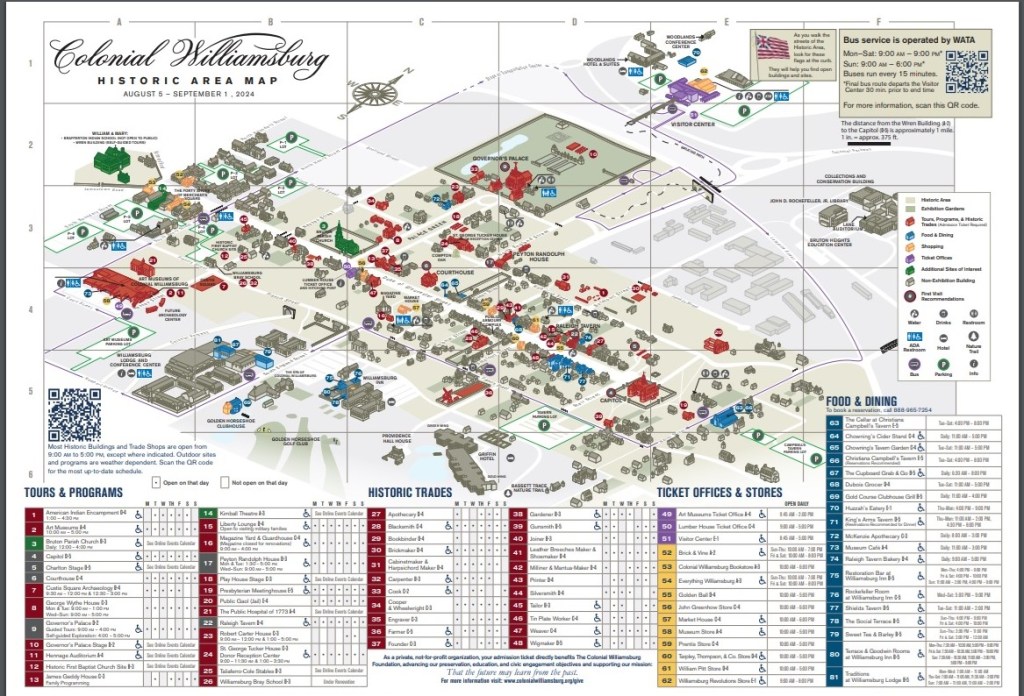
The map below will be your lifeline if you go to Colonial Williamsburg. The map shows you each historical building in town to visit. On the other side of the map is a list of events taking place at their specific times. These events are updated by Colonial Williamsburg every couple of weeks.
Significance
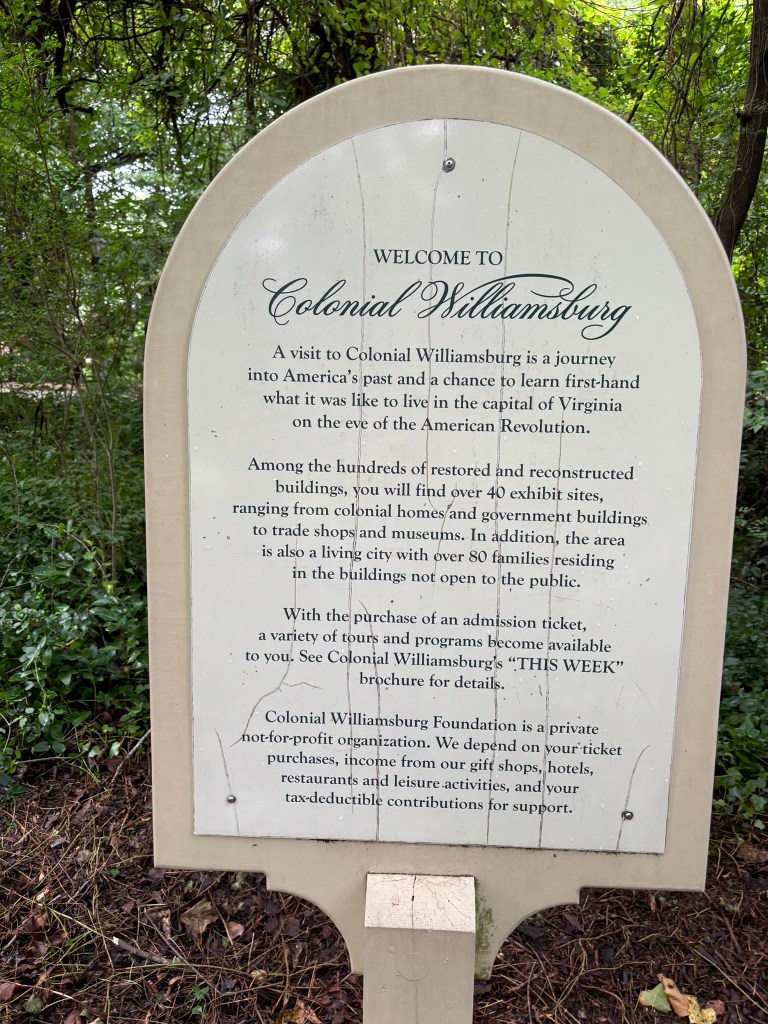
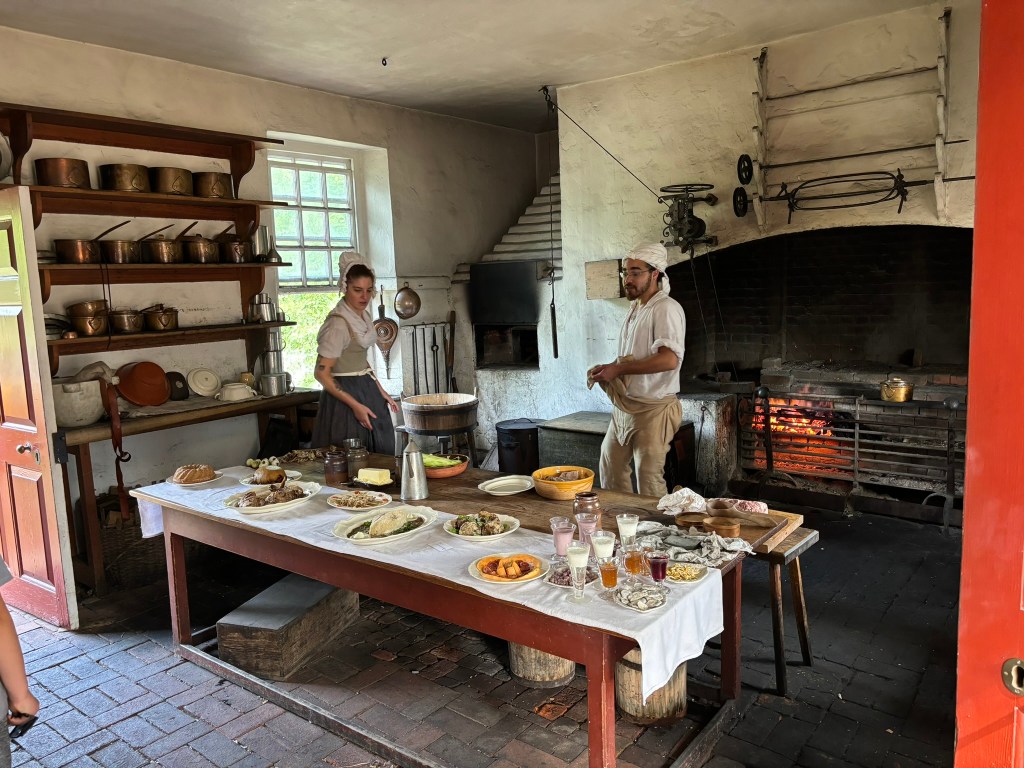
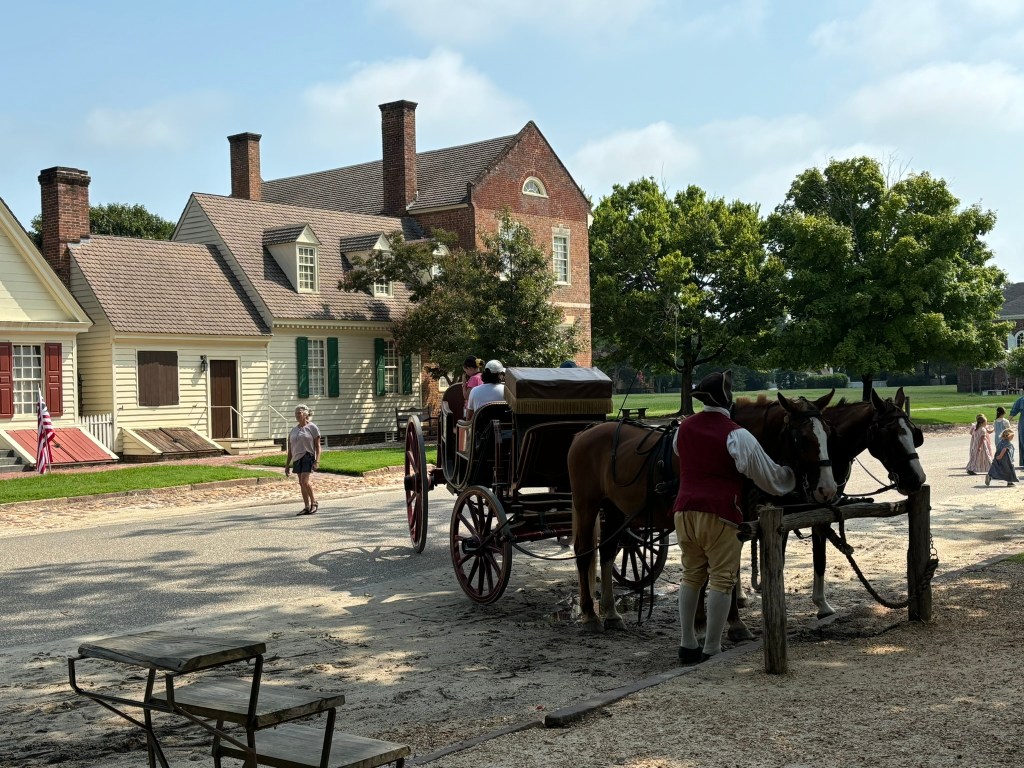
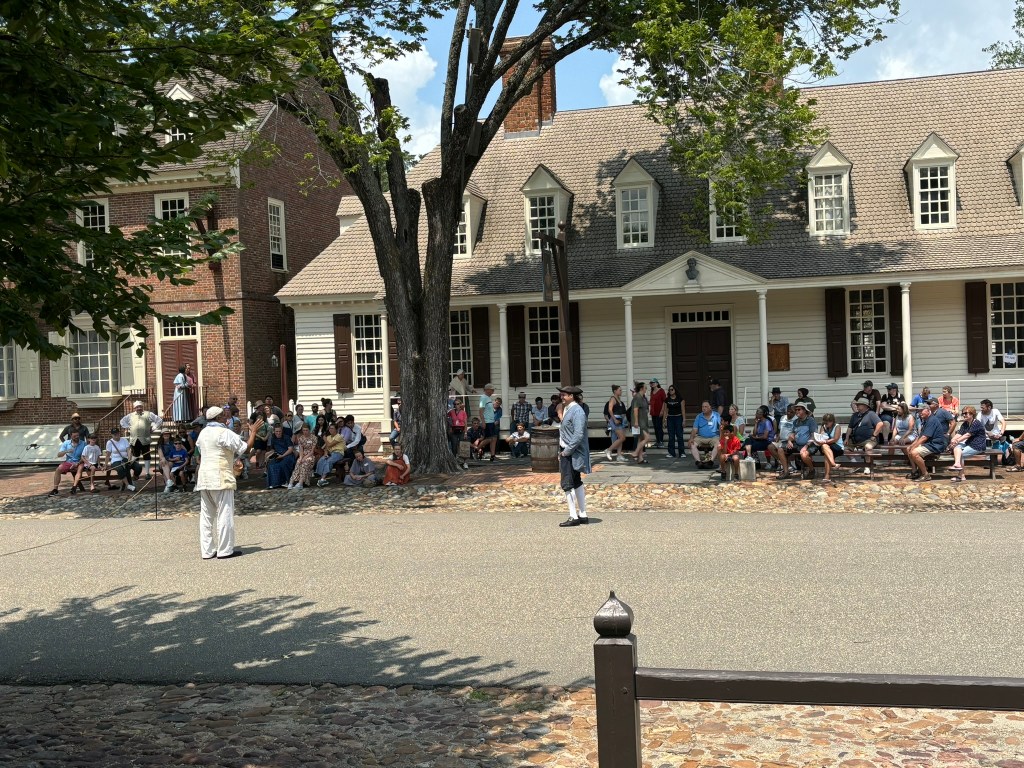
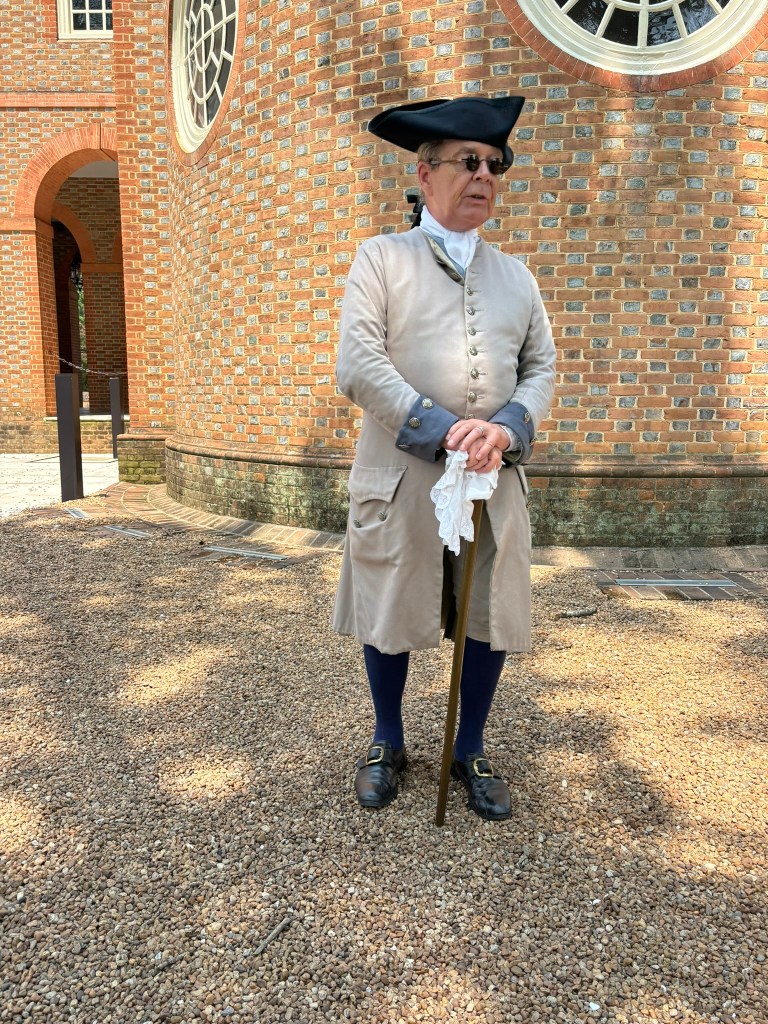
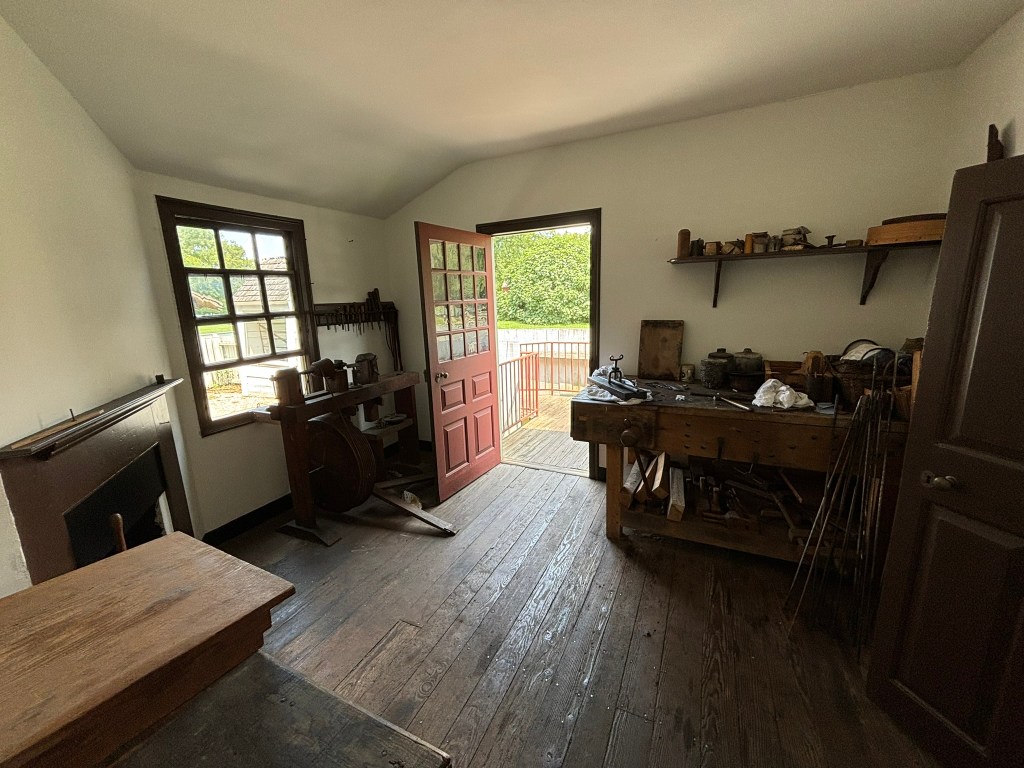
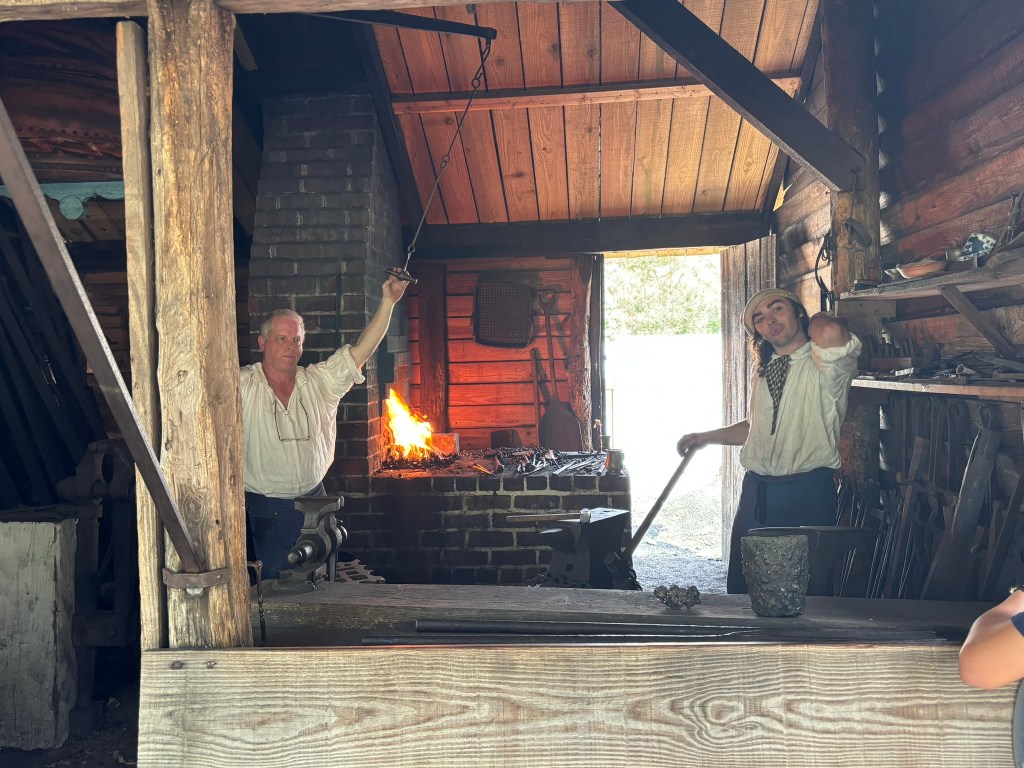
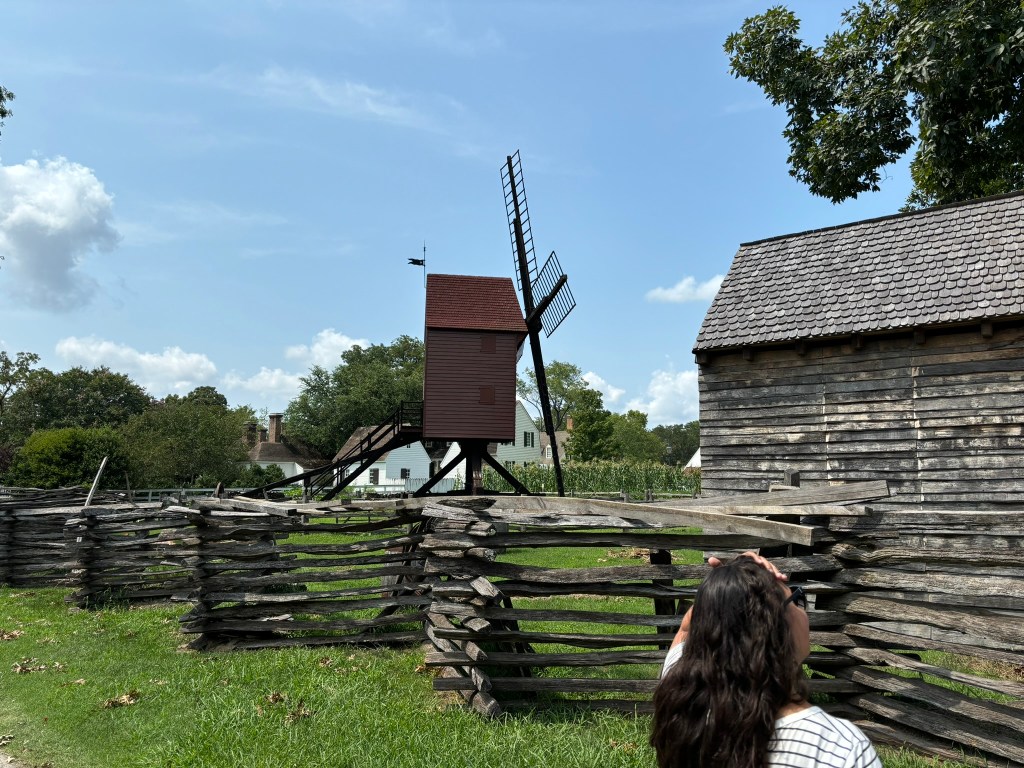
Williamsburg is significant because in 1699, the capital of Virginia was moved from its original location in Jamestown, to Williamsburg. Williamsburg remained the capital until 1779, when it was moved to Richmond. Today, Williamsburg is an open-aire, living-history museum with restored and reconstructed buildings. Reenactors talk, act and dress as if they were living in colonial times. Different buildings have reenactors displaying an array of jobs and positions in colonial times, including an Apothecary, Blacksmith, Bookbinder, Brickmaker, Cabinetmaker, Harpsichord Maker, Carpenter, Cook, Cooper, Wheelright, Engraver, Farmer, Gardner, Gunsmith, Joiner, Leather Breeches Maker, Shoemaker, Milliner, Mantua-Maker, Printer, Silversmith, Tailor, Tin Plate Worker, Weaver and Wigmaker. The reenactors bring you back in time to see what everyday people were doing in the colonies. Besides the reenactors, there are many historic buildings such as the County Court House, as well as houses belonging to historic figures such as lifelong Williamsburg resident and Founding Father, Peyton Randolph.
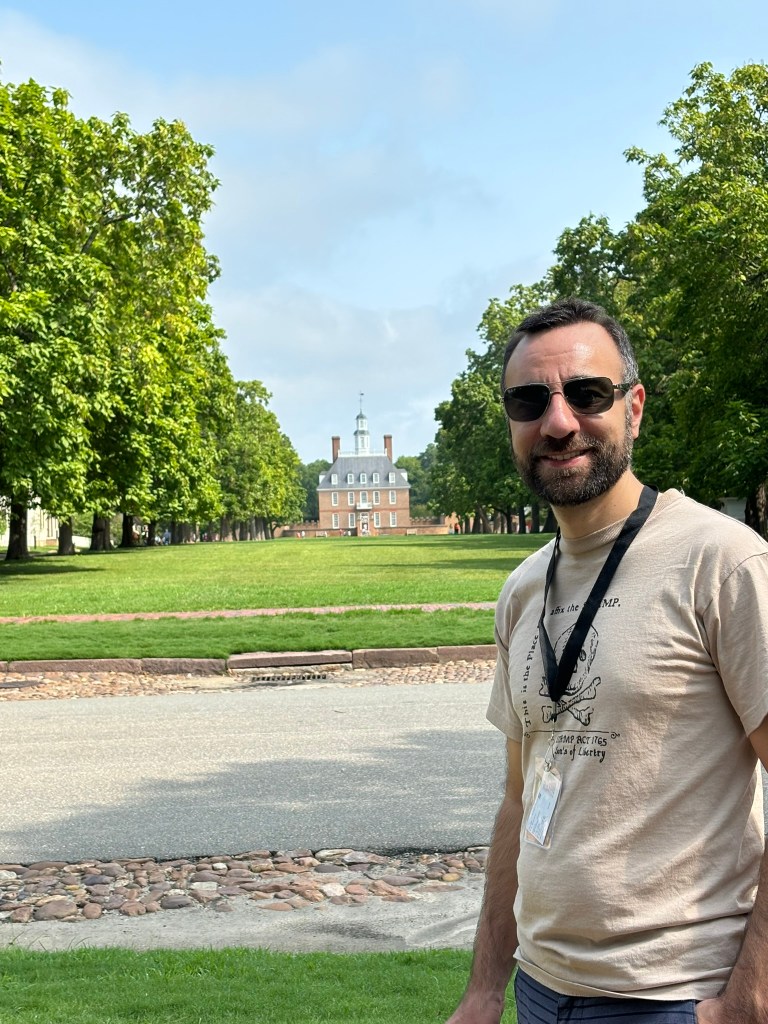
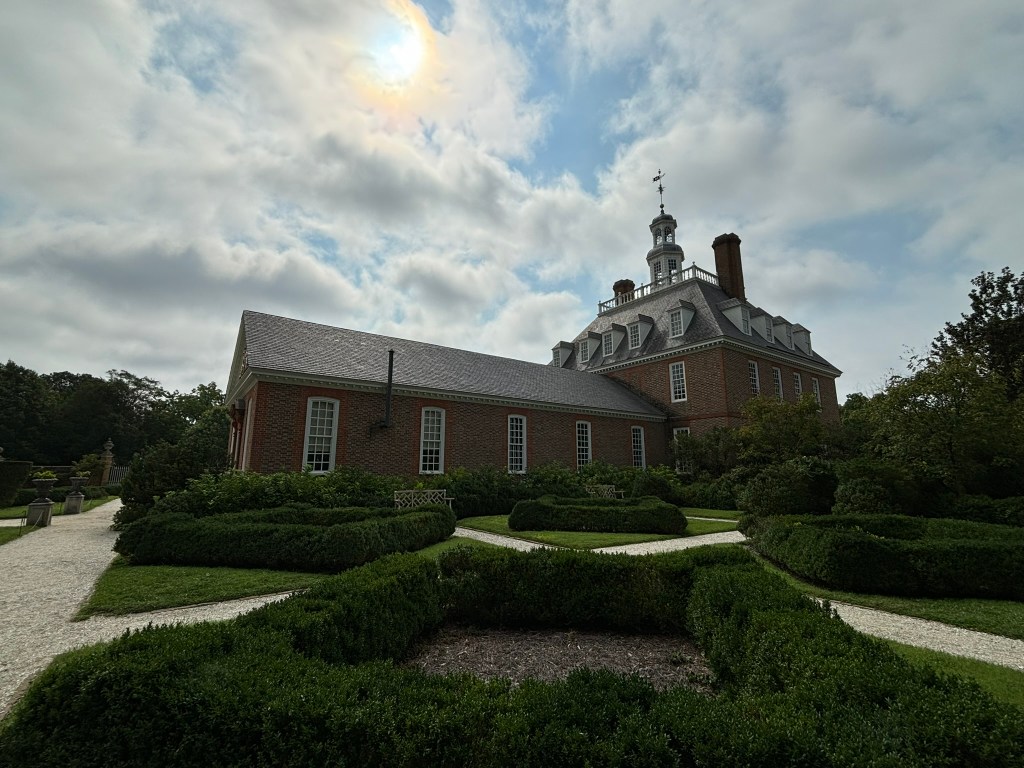
The Governor’s Palace
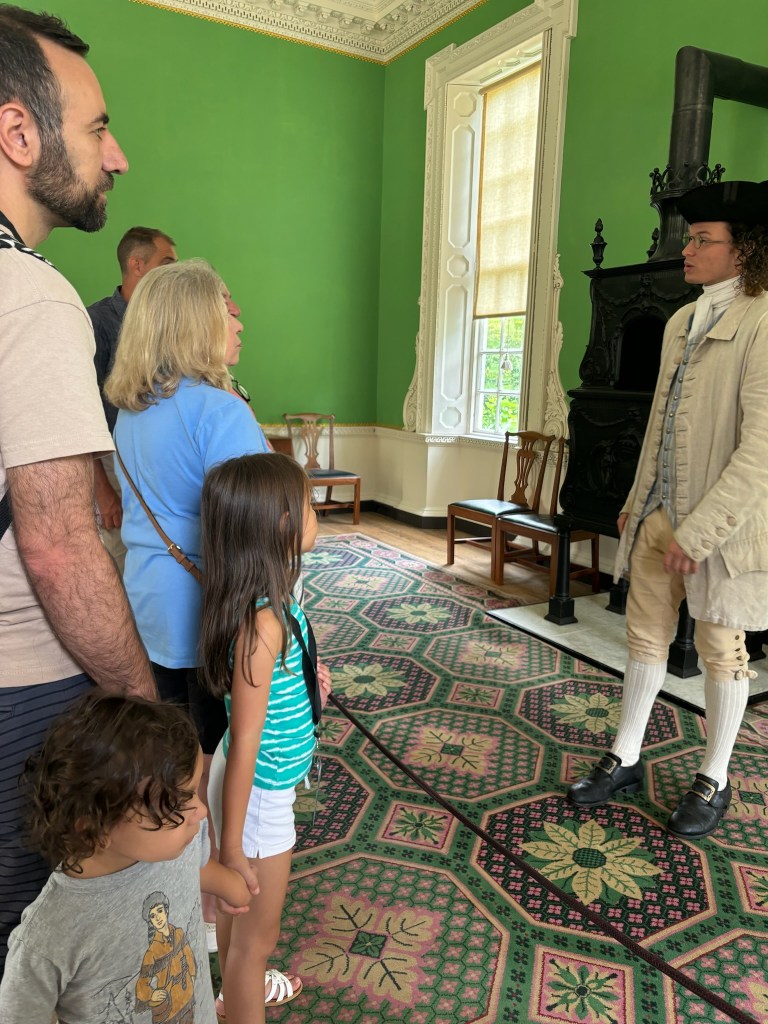
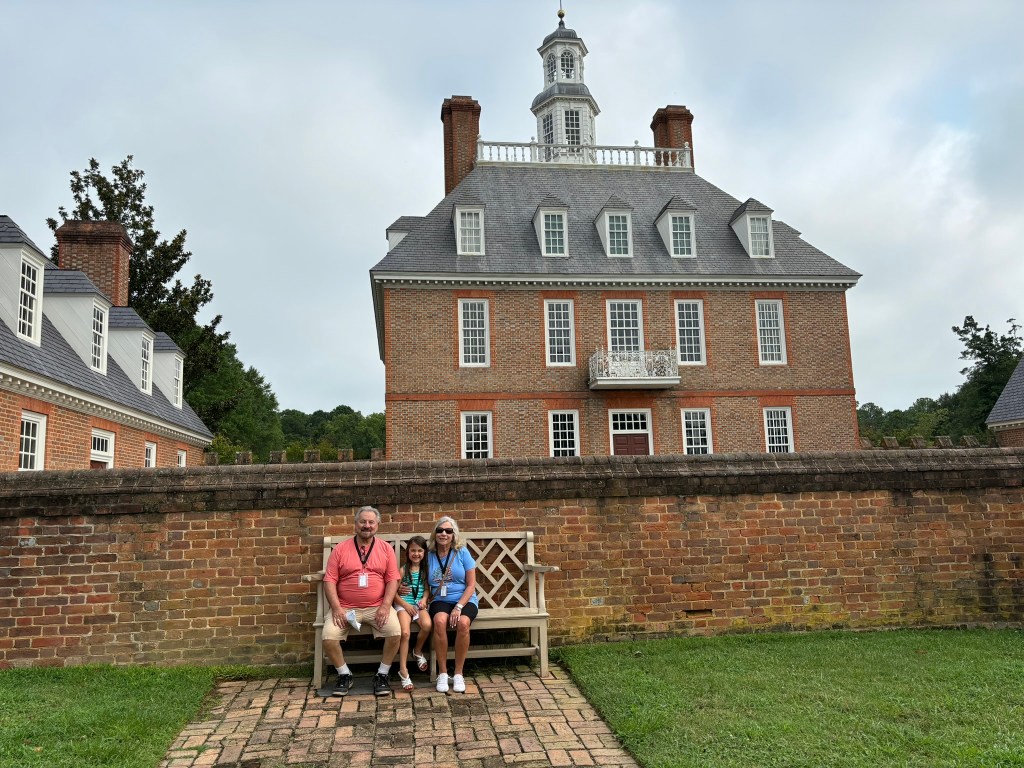
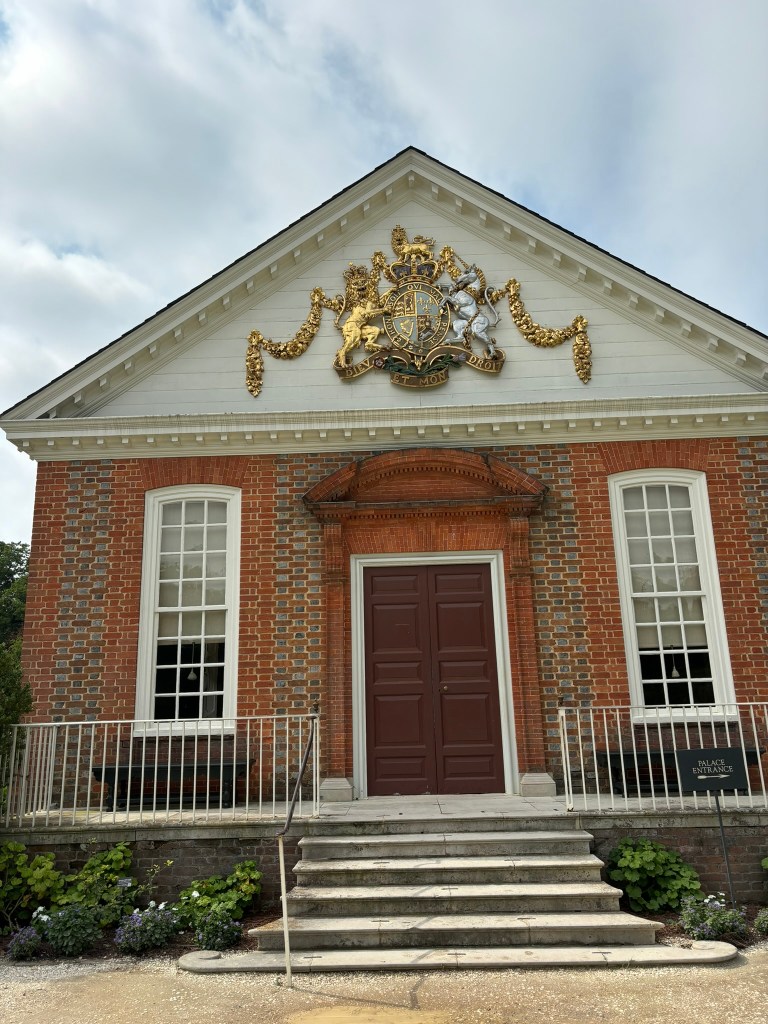
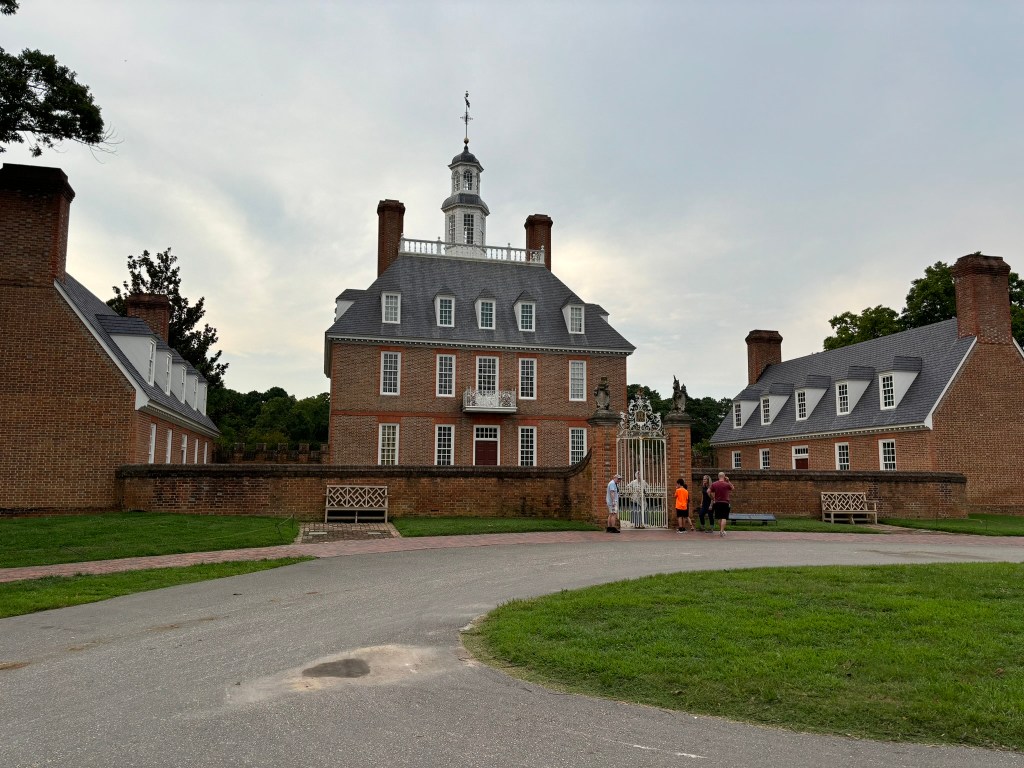
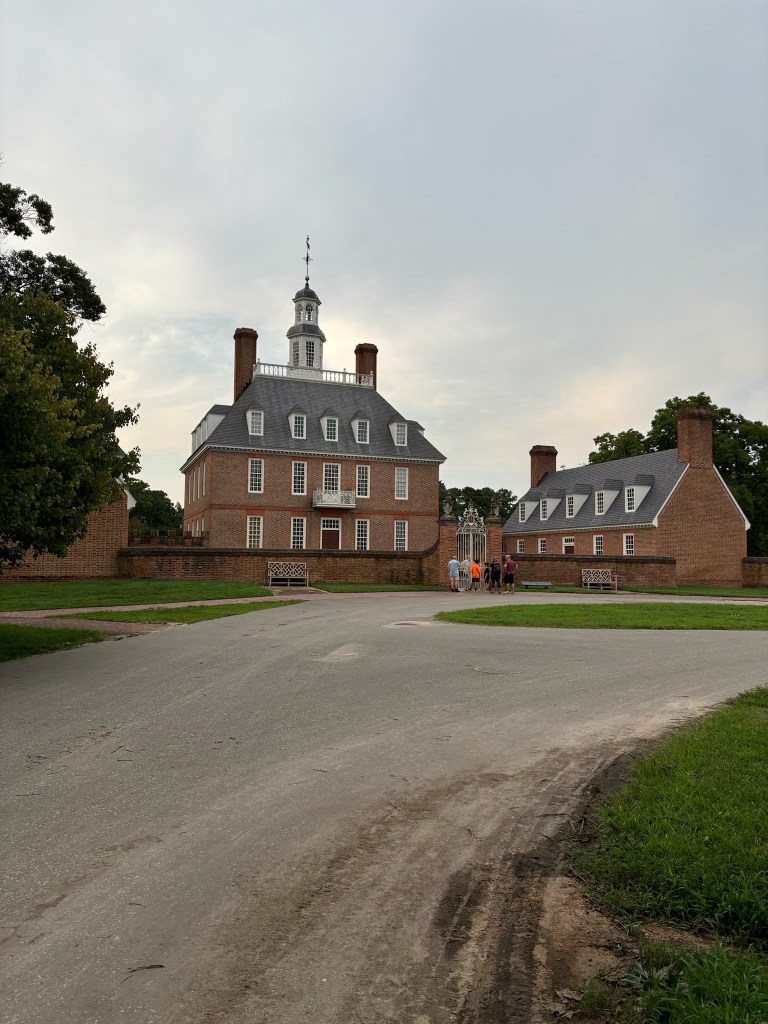
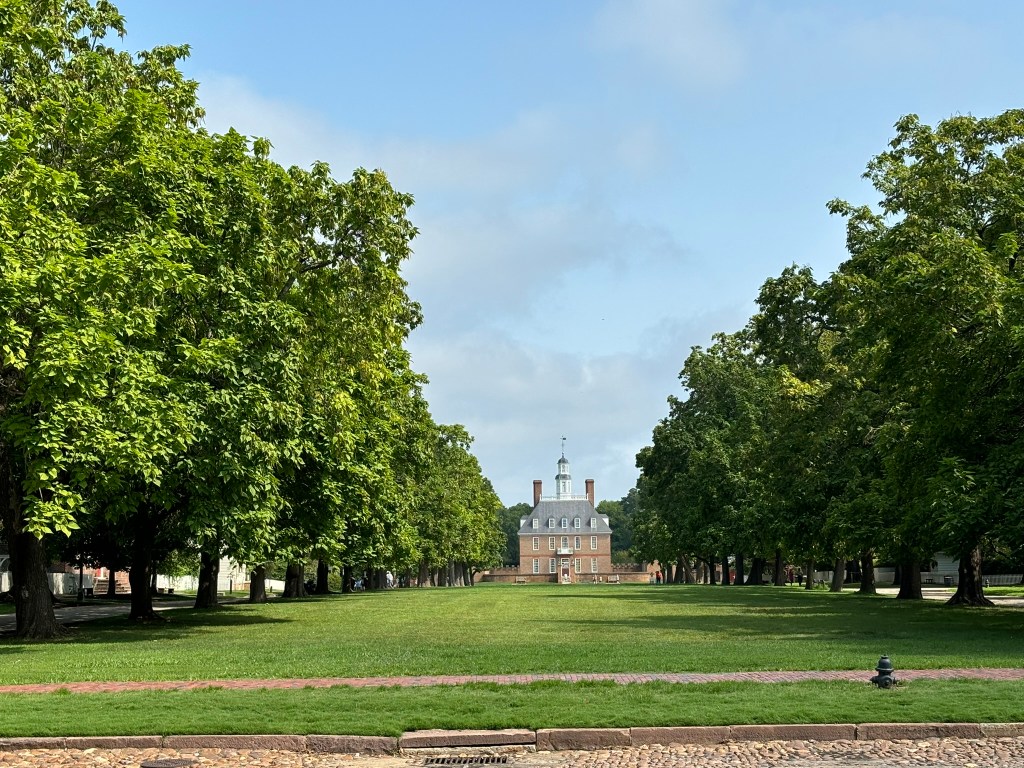
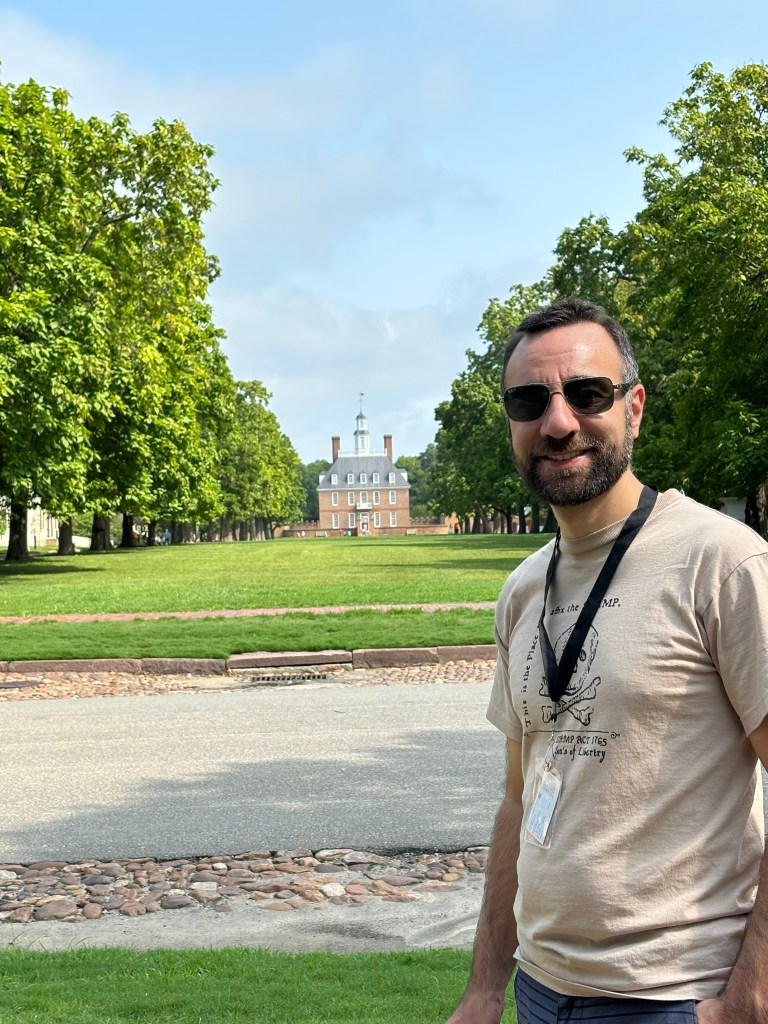
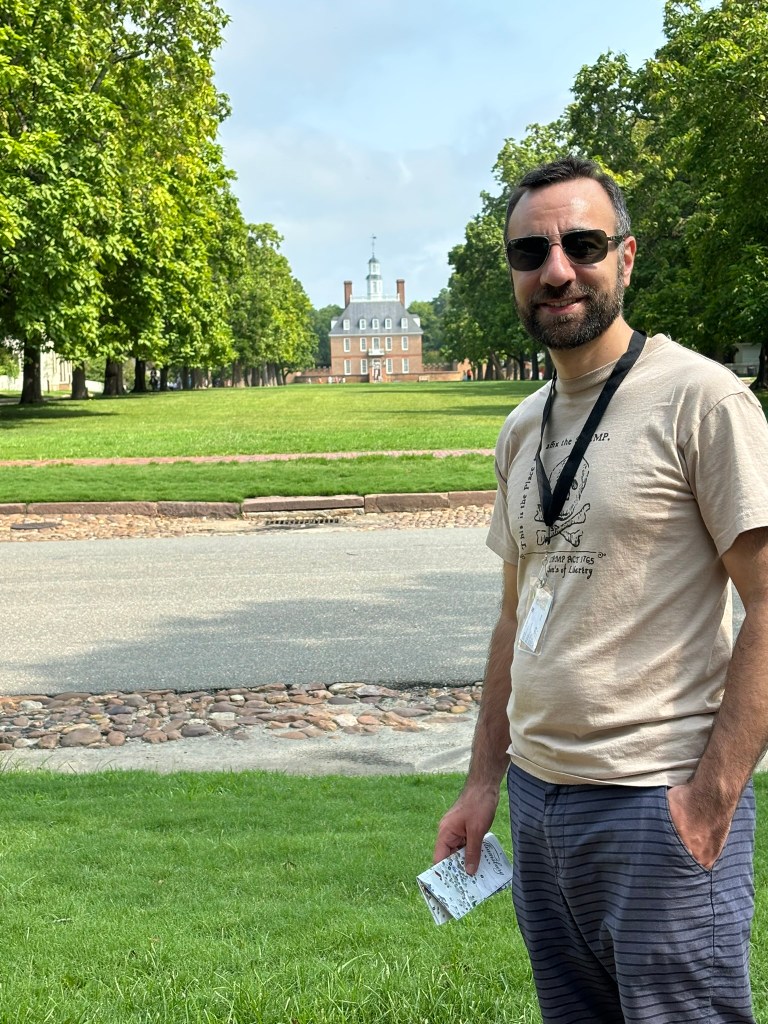
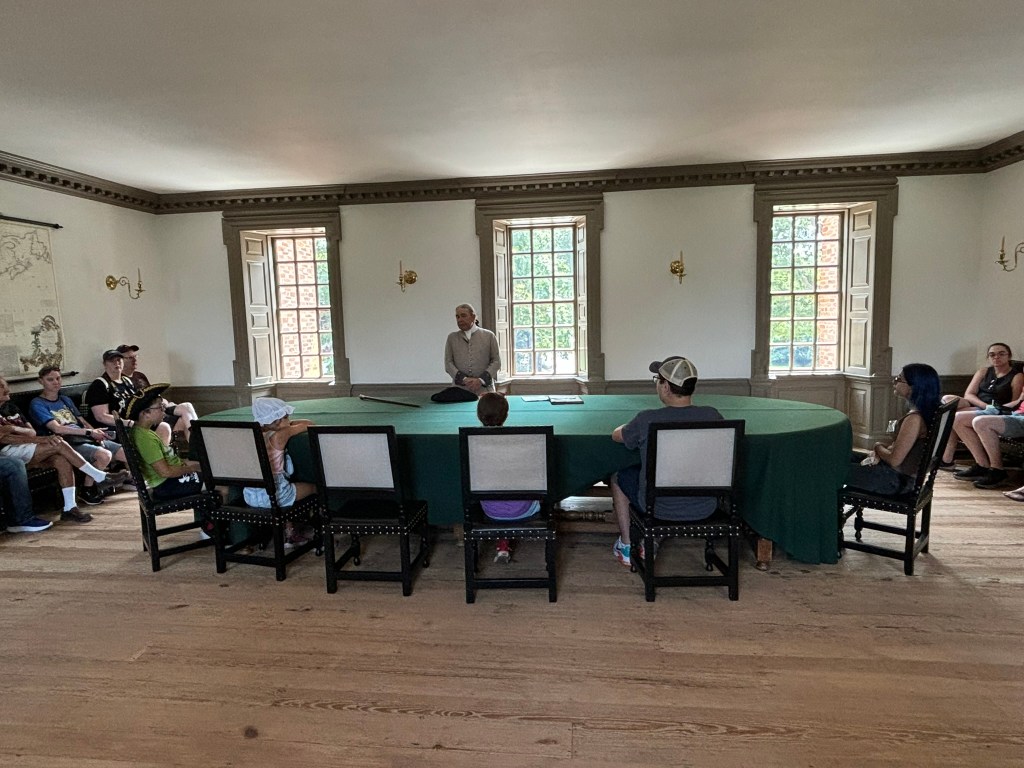
When we arrived in Colonial Williamsburg we got lucky because we caught the very first 9AM tour of the Governor’s Palace which is one of the top attractions. The Governor’s Palace that stands today was built in 1934 and was built as a replica of the building that was constructed in the early 1700s. The building was the official residence of the royal governor of Virginia. In total, seven governors occupied the residence before the capital was moved to Richmond. On December 22, 1781, the main building was destroyed by a fire. The reconstruction in the early 1900s was based on numerous surviving pieces of evidence, including archaeological evidence, architectural remnants that had fallen in during the fire, as well as Thomas Jefferson’s drawings and plans from when he sought to renovate the building.
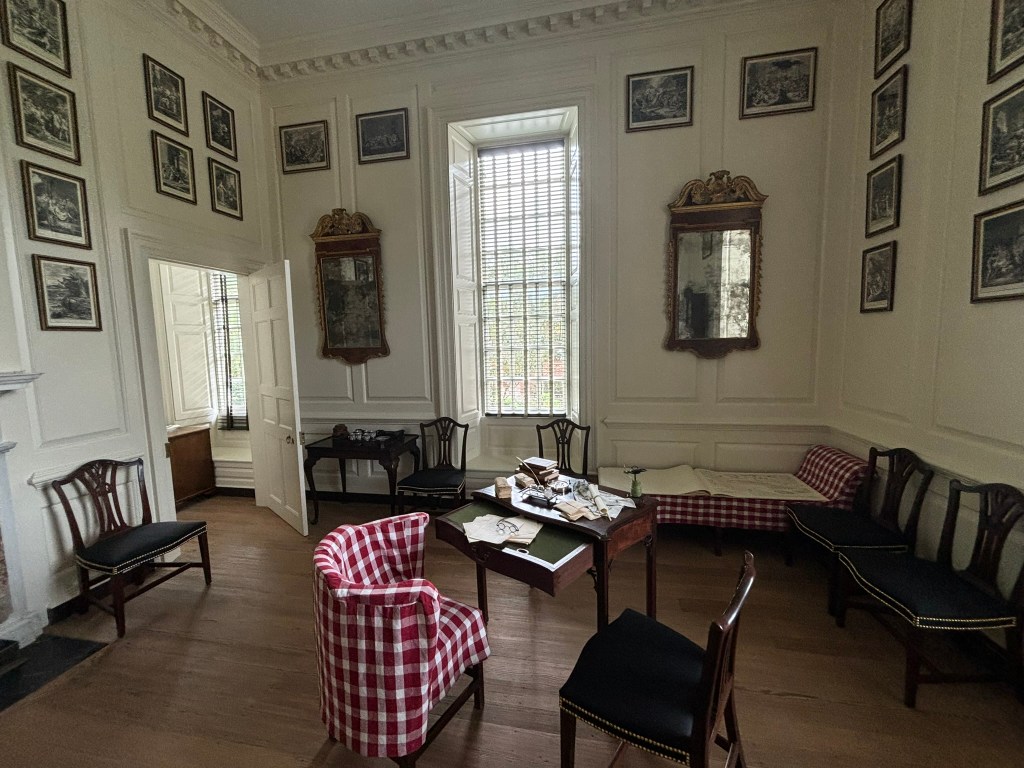
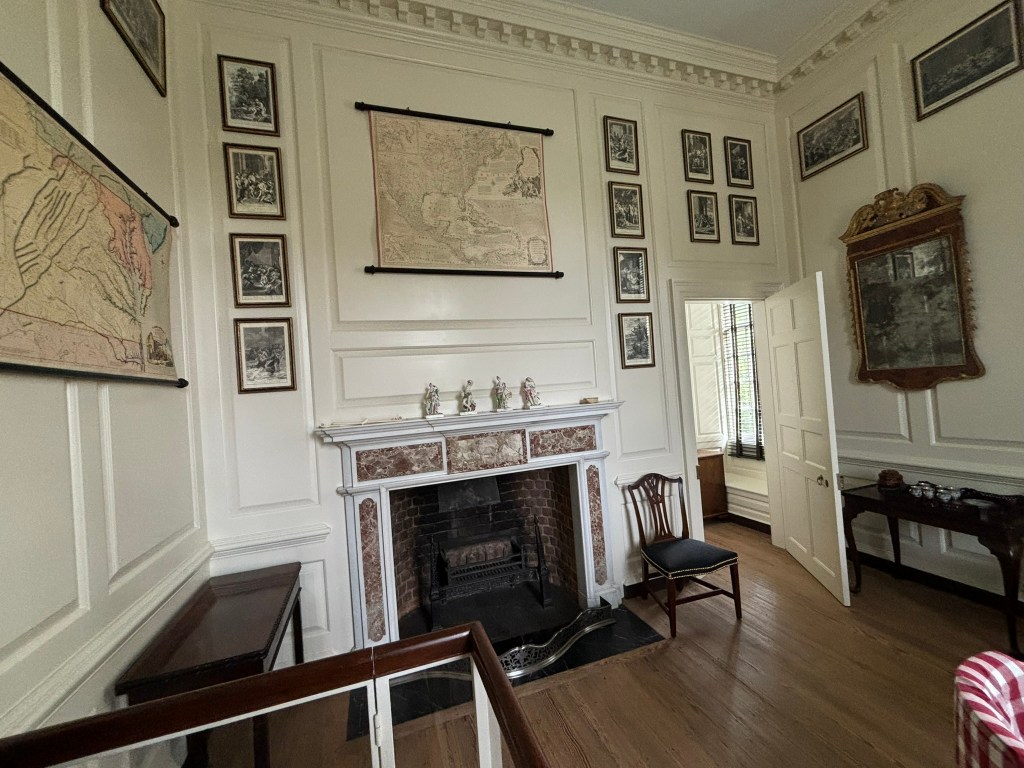
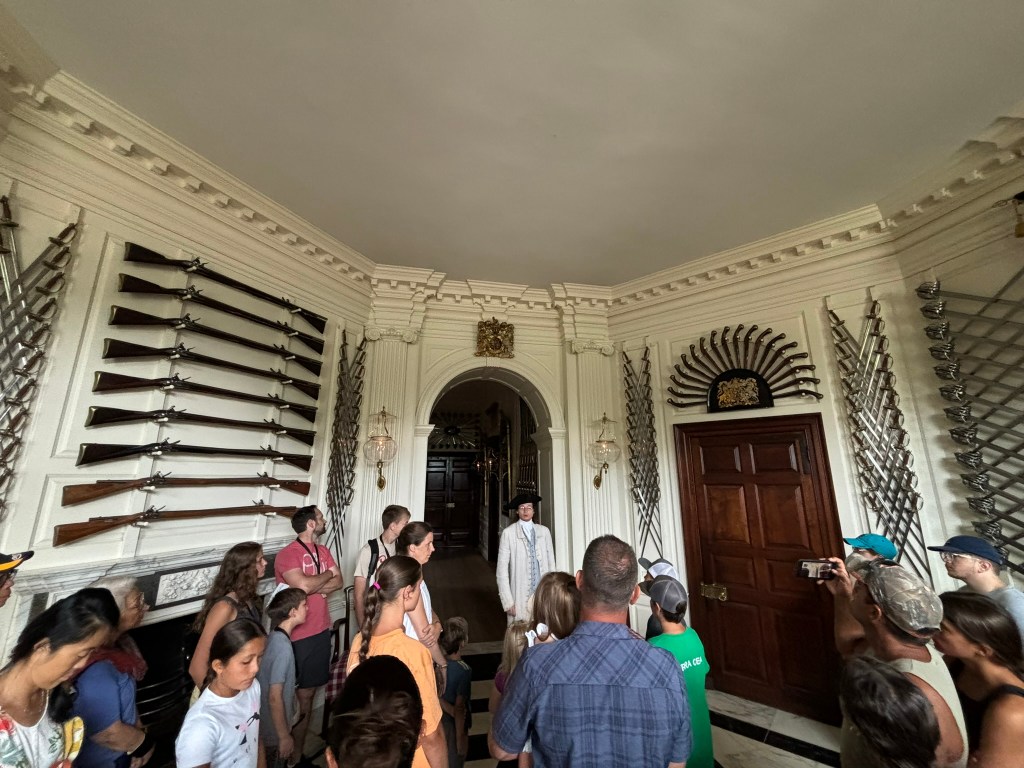
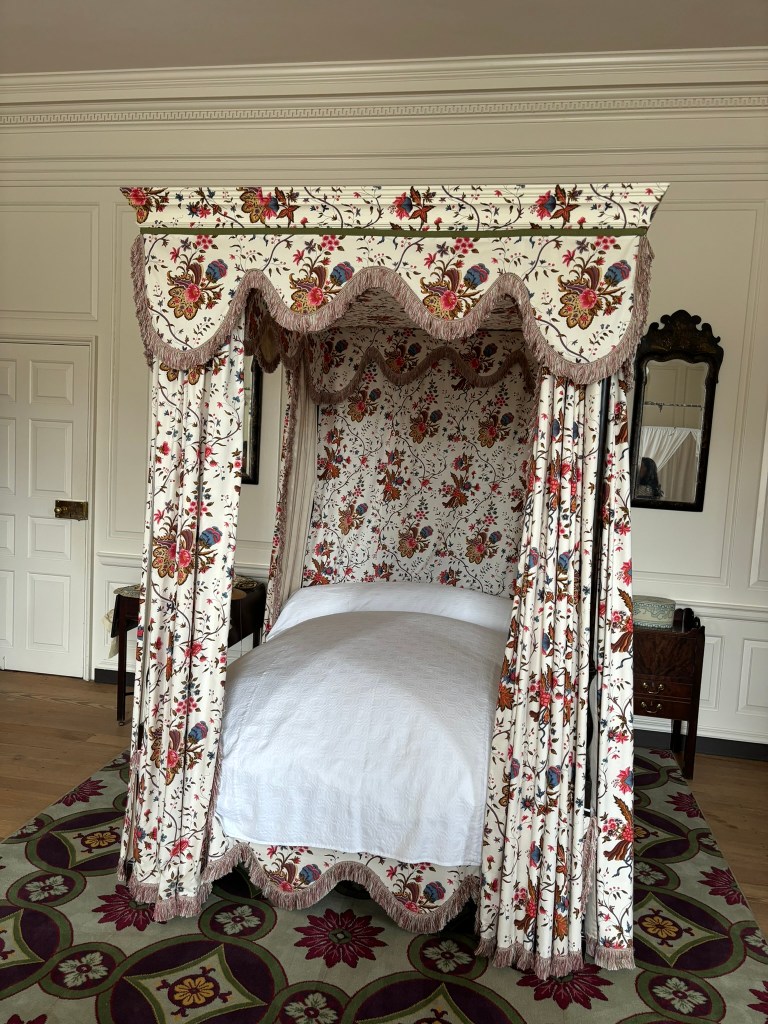
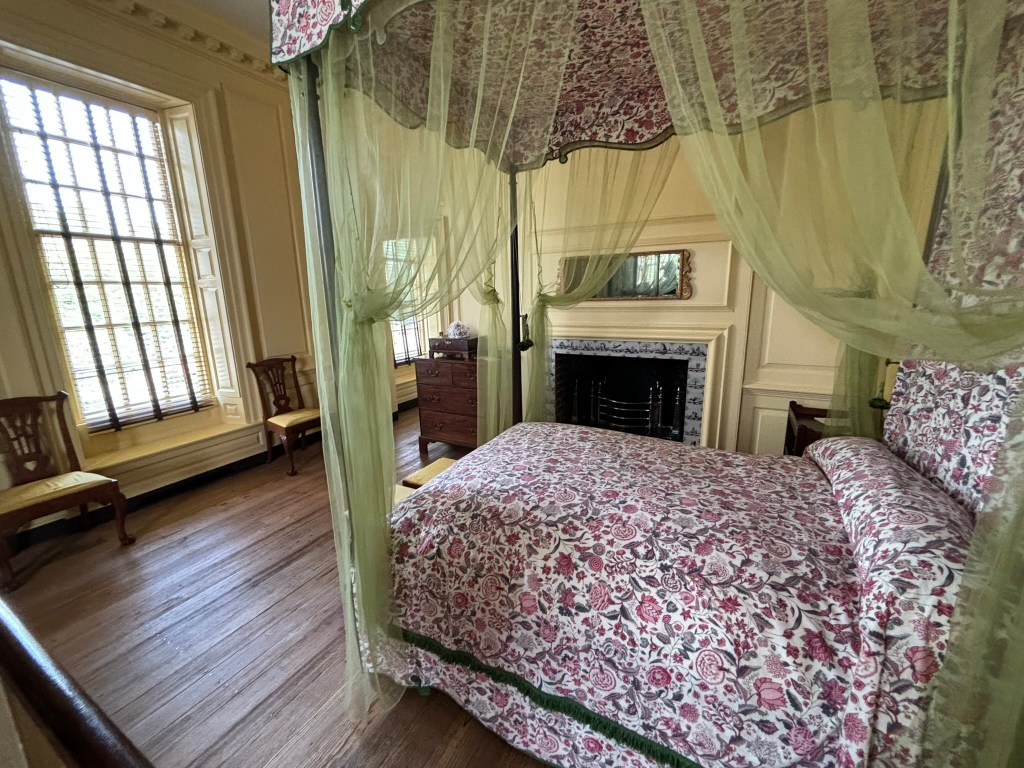
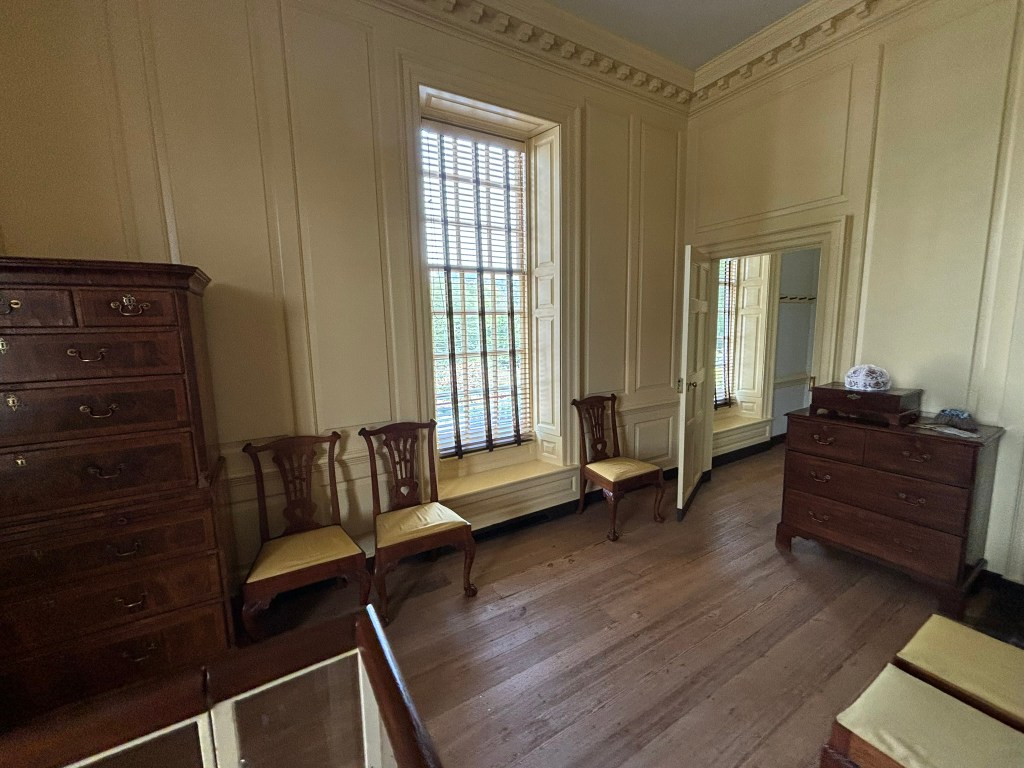
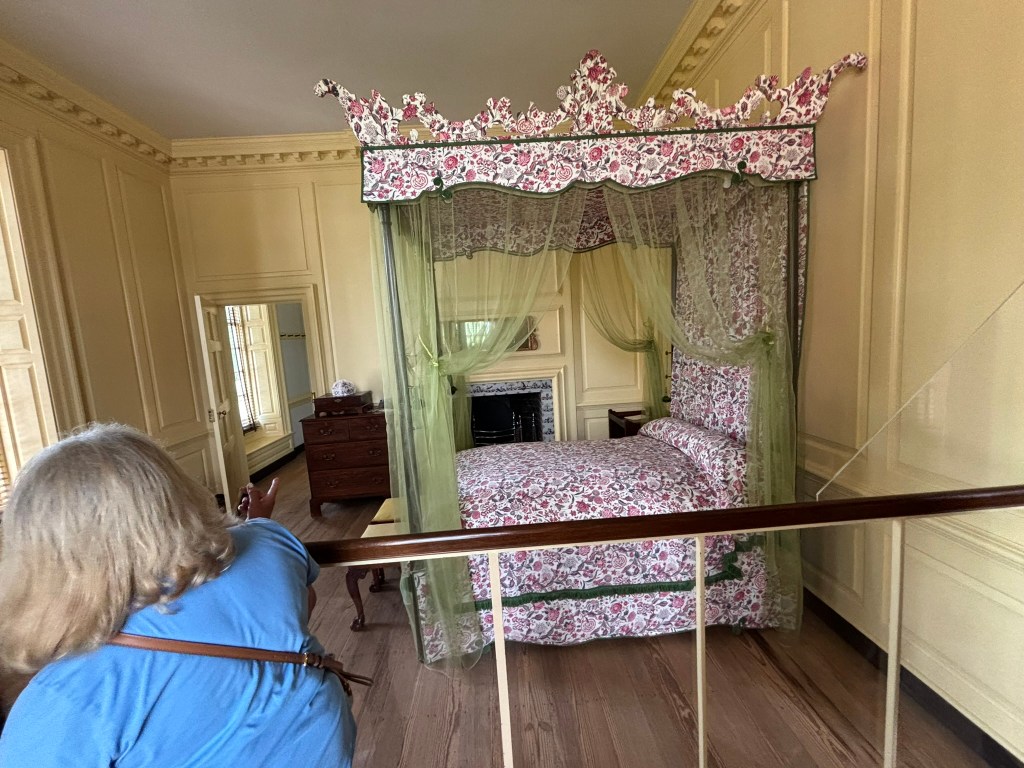
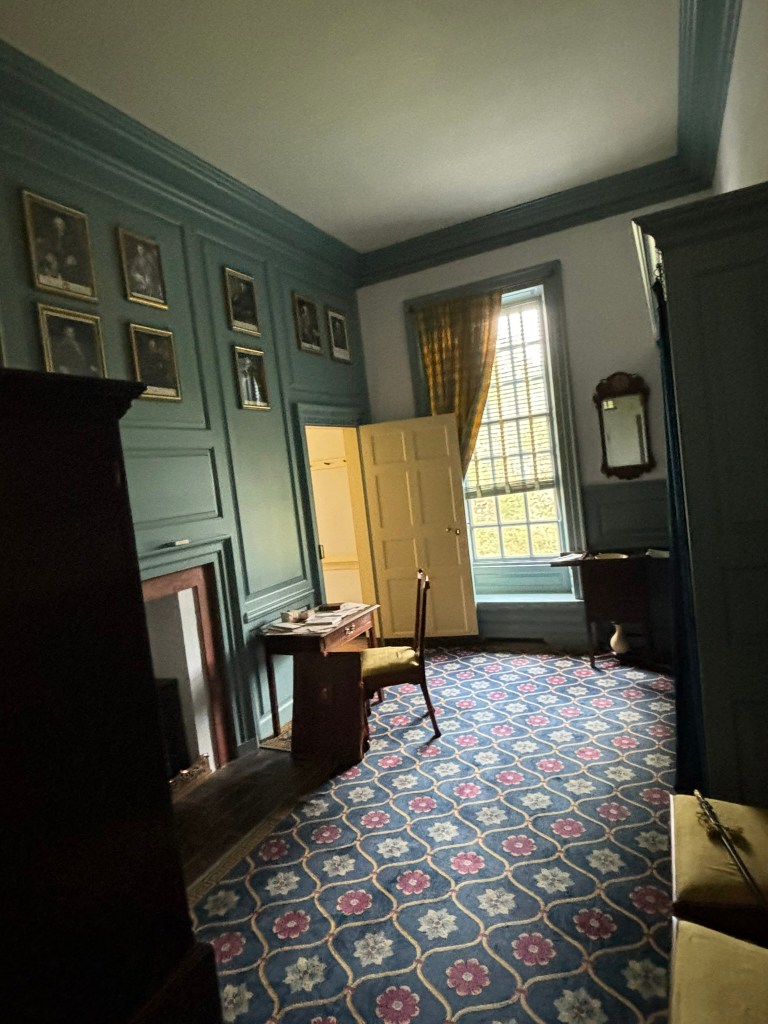
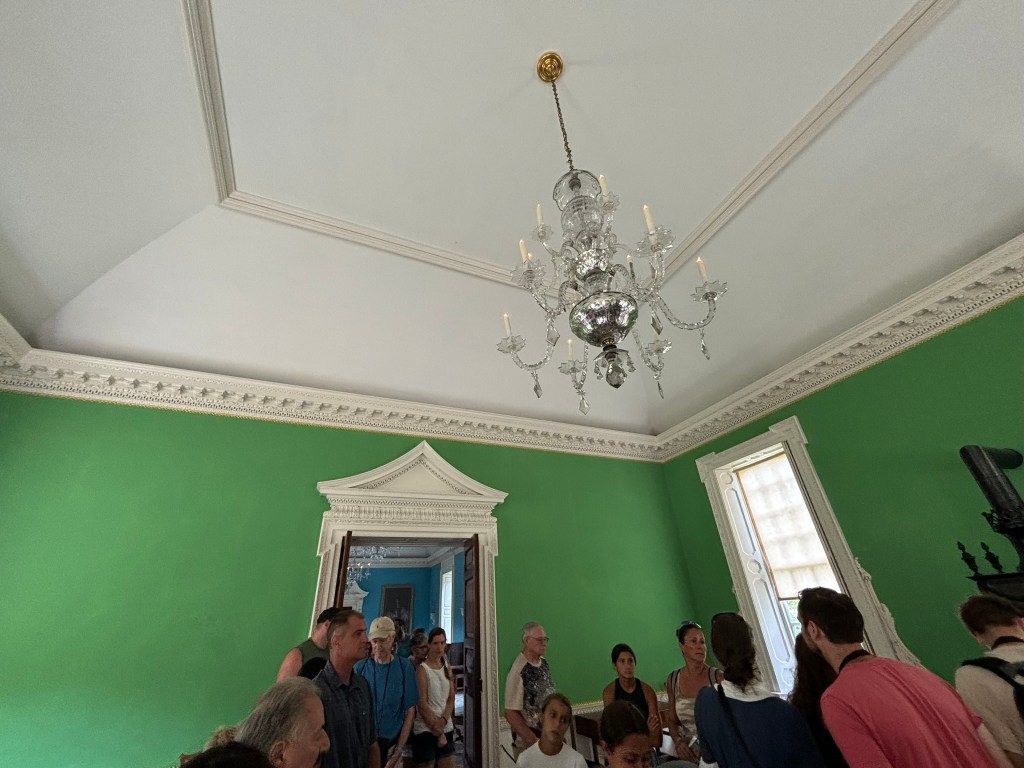
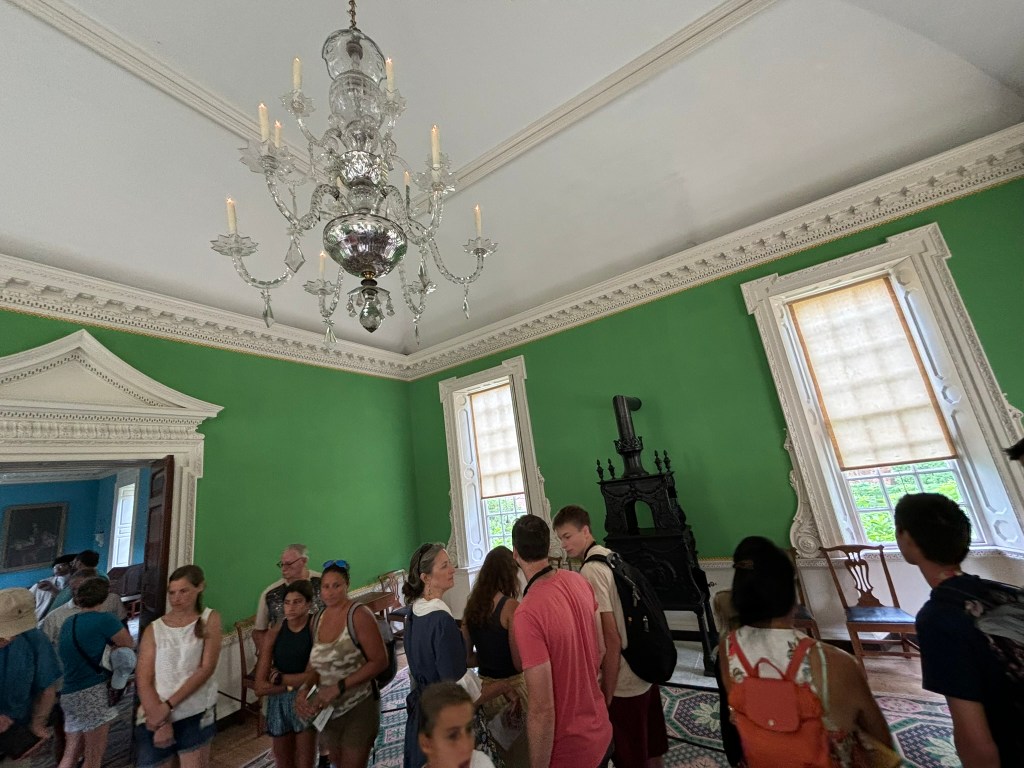
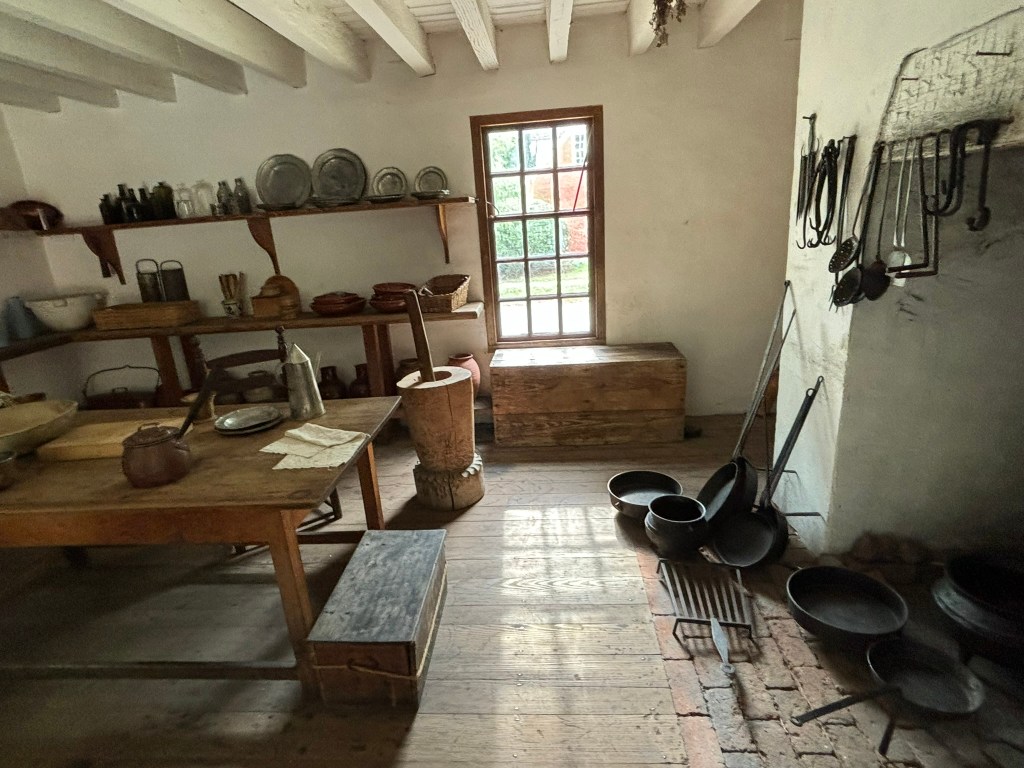
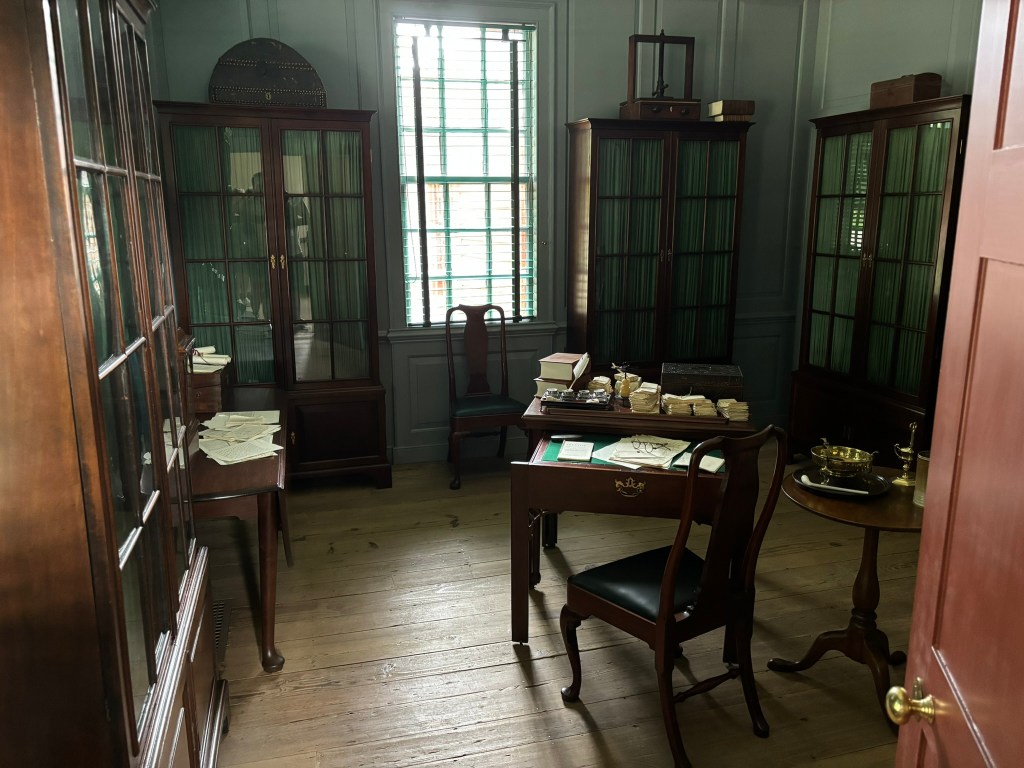
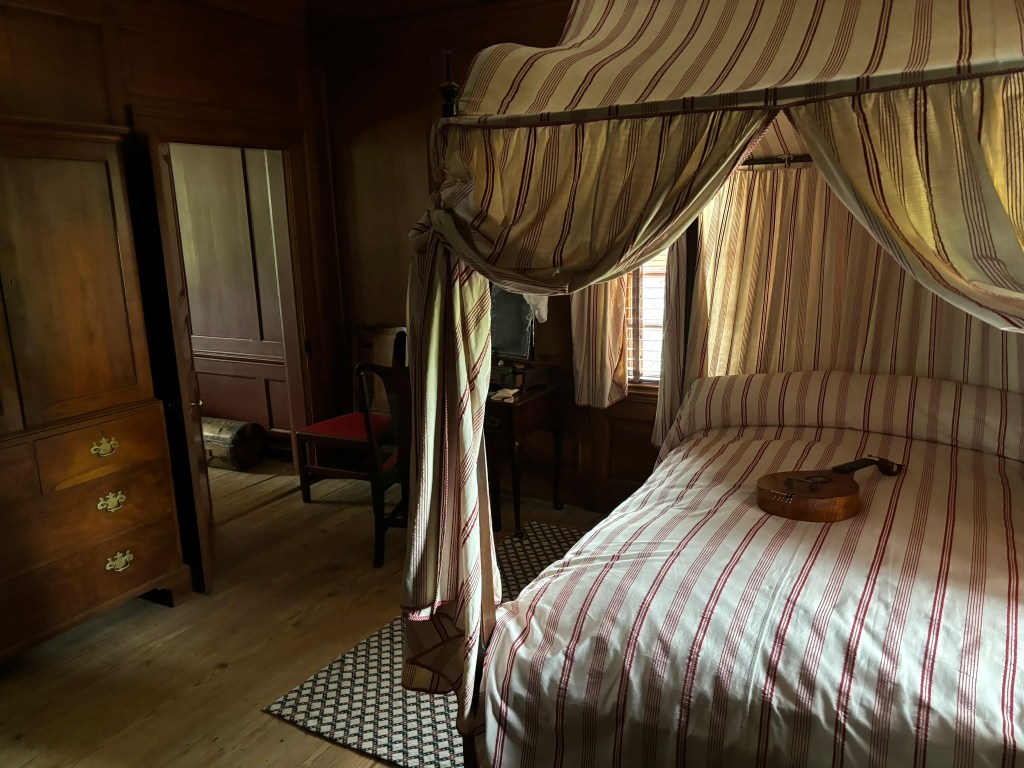
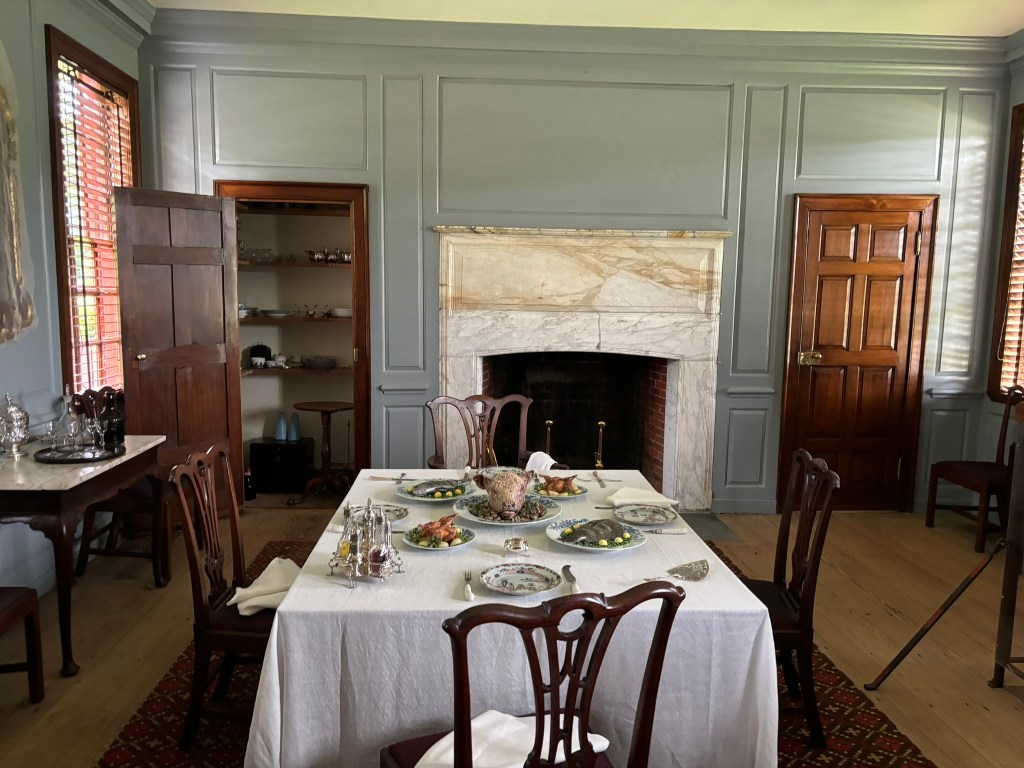
The tour of the palace focused primarily on the last royal governor of Virginia, Lord Dunmore and his final days at the palace. The entrance of the palace is decorated with hundreds of swords and firearms, perhaps to intimidate visitors. The tour guide did an excellent job taking the group into each of the rooms and thoroughly explaining the purpose of the rooms, as well as the history behind the building. We learned that Lord Dunmore, in the days leading up to the American Revolution, was forced to flee the building, never to return. The pictures below give you a sense of the opulence that was felt by the royal governors and any visitors that they allowed into the building.
Strolling Through Colonial Williamsburg
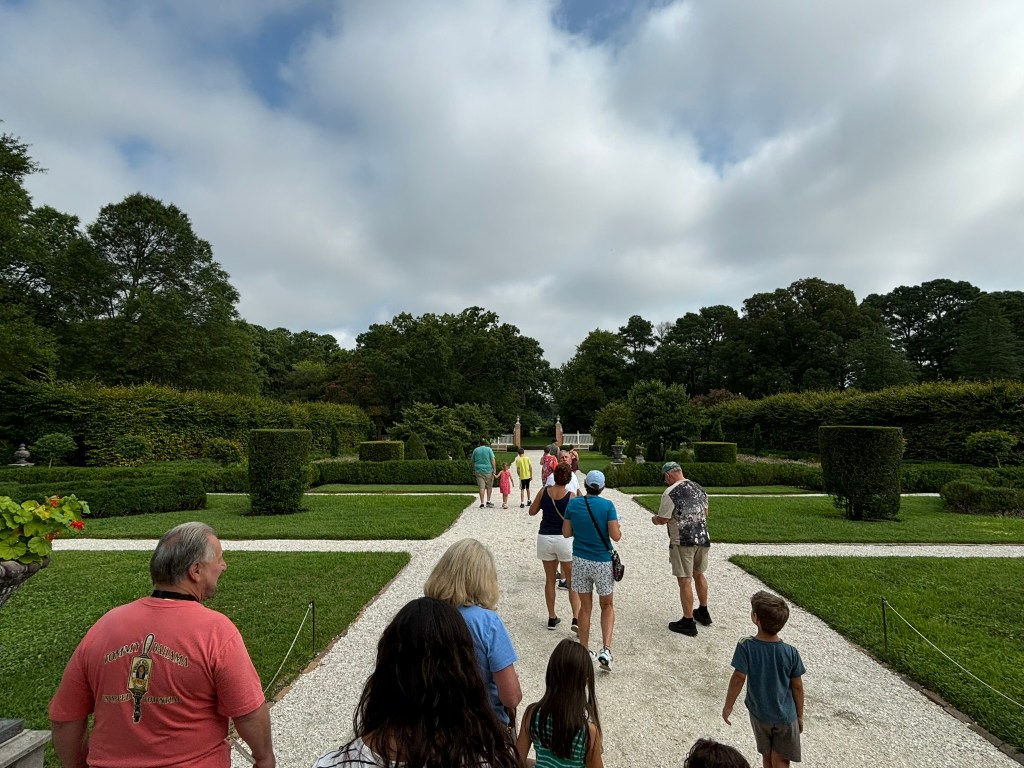
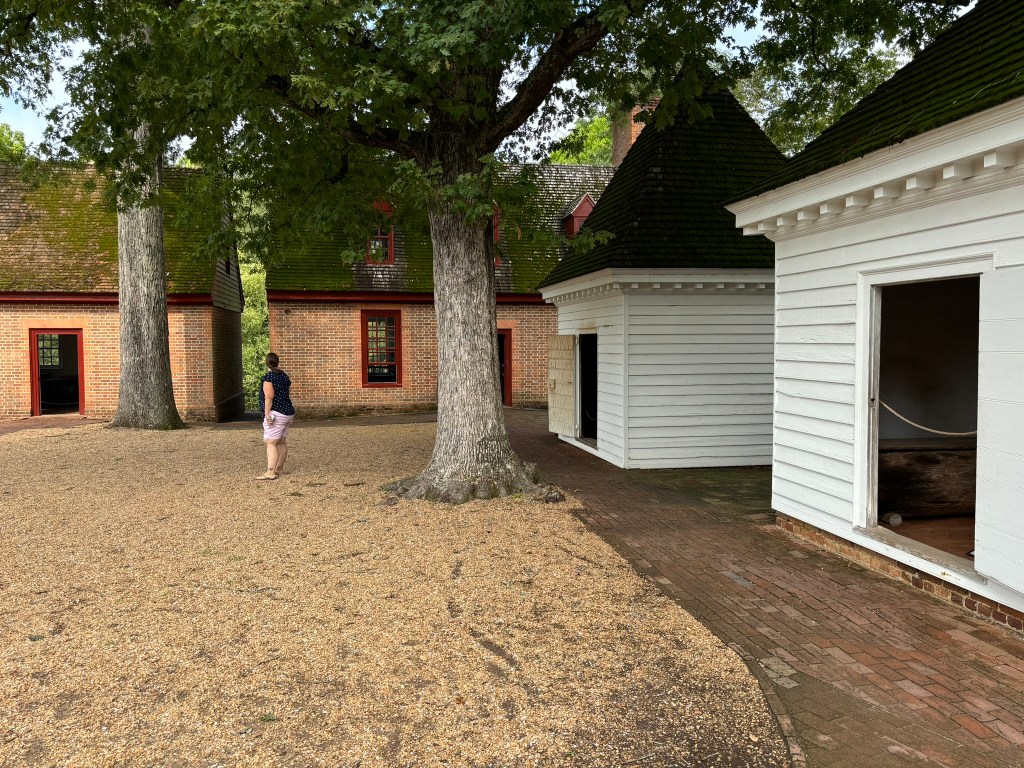
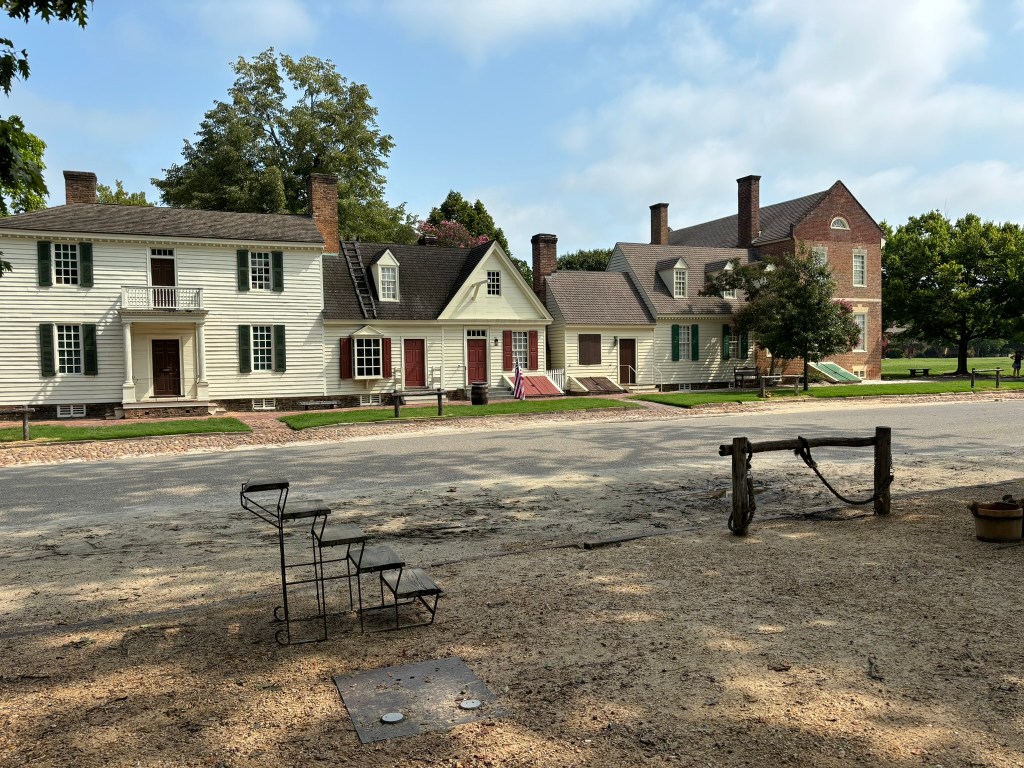
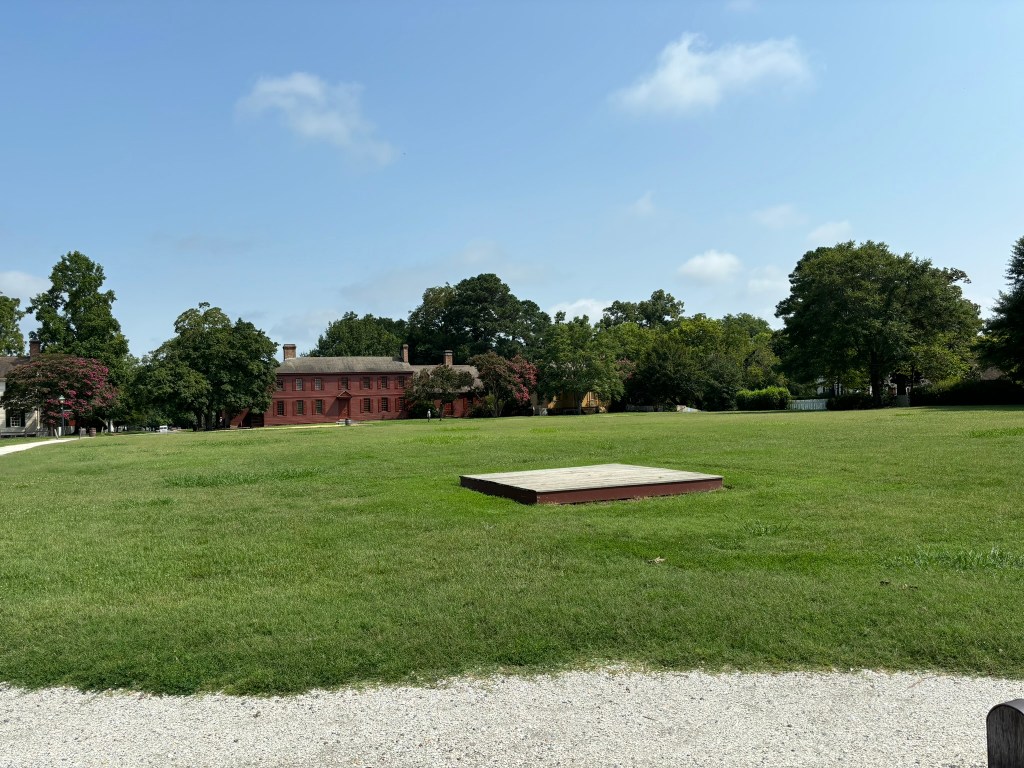
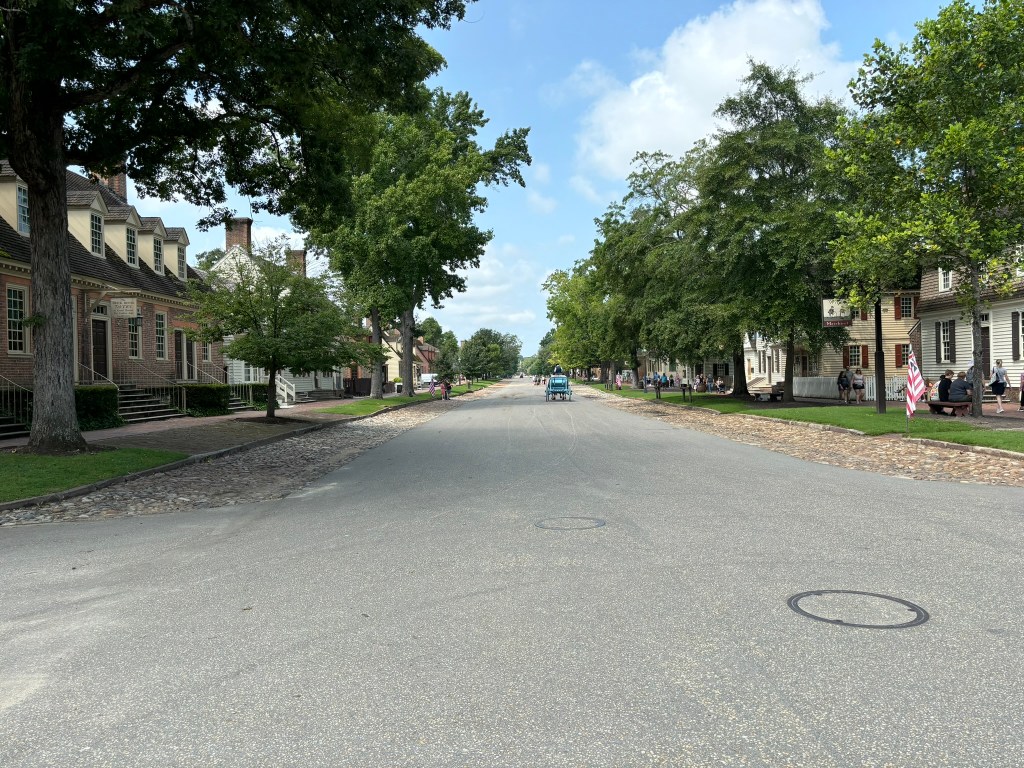
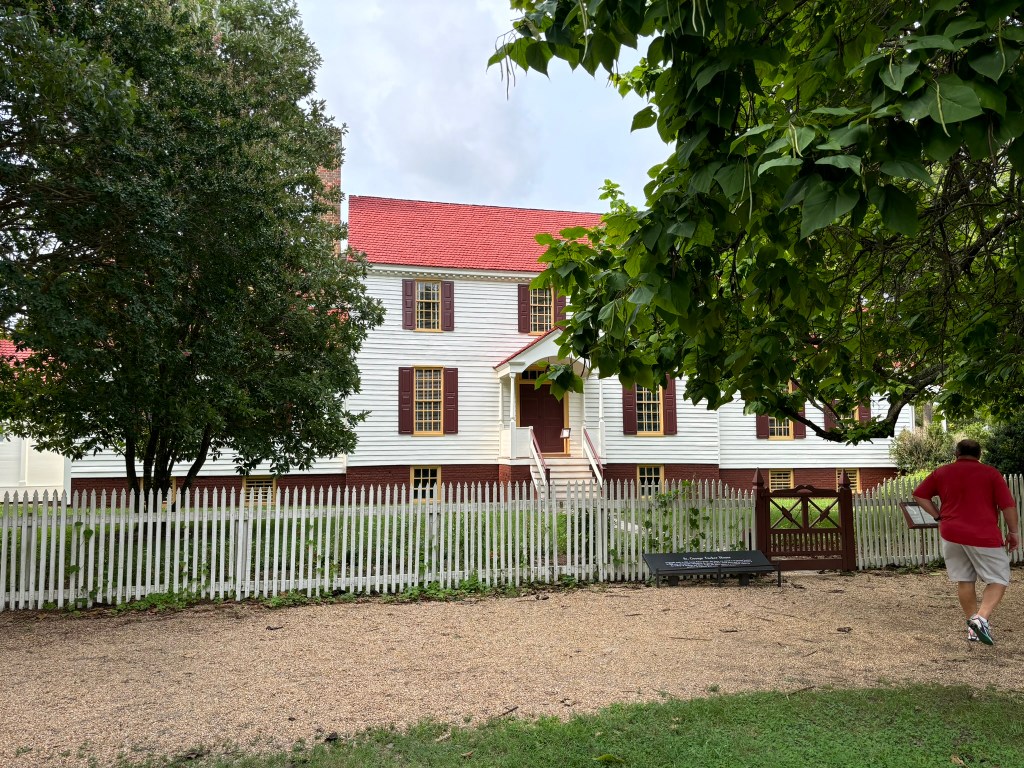
After we left the Governor’s Palace we strolled south along the Palace Green, past the George Wythe House and onto Duke of Gloucester Street. We headed east along the street, stopping in houses and shops along the way.
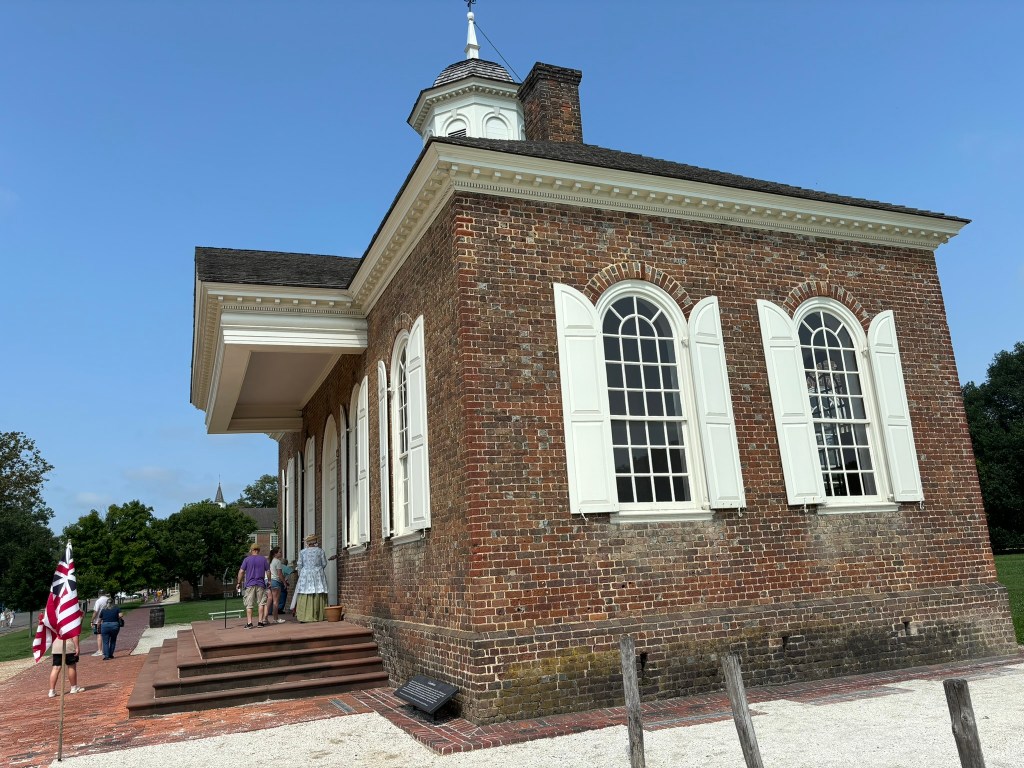
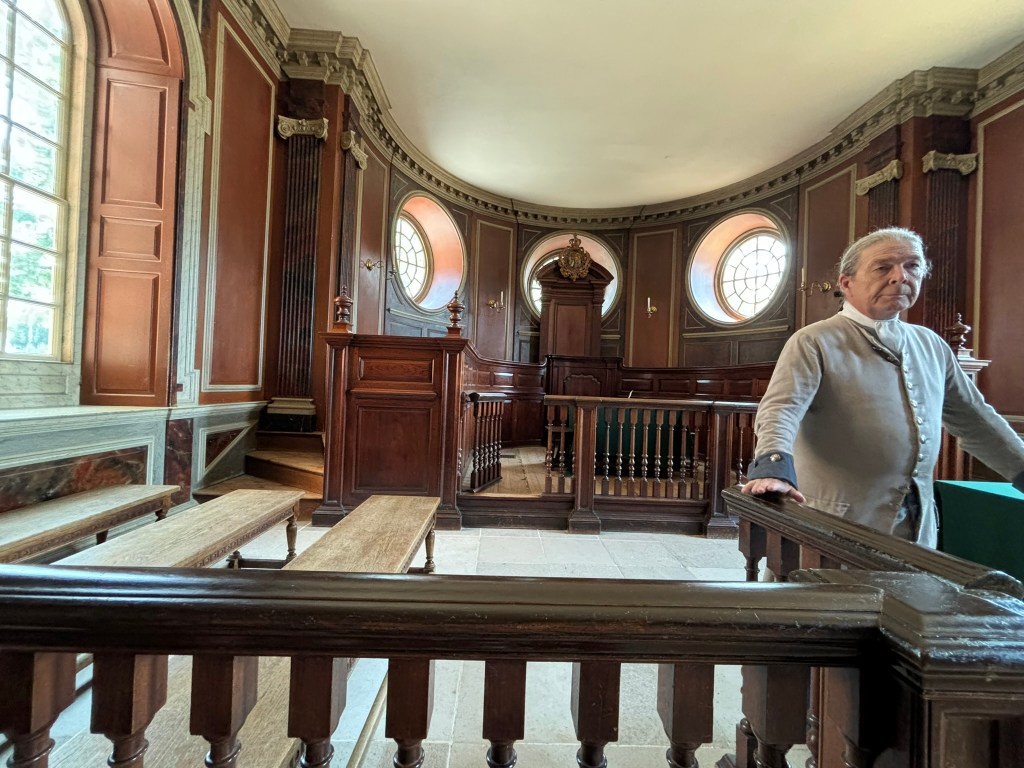
County Courthouse
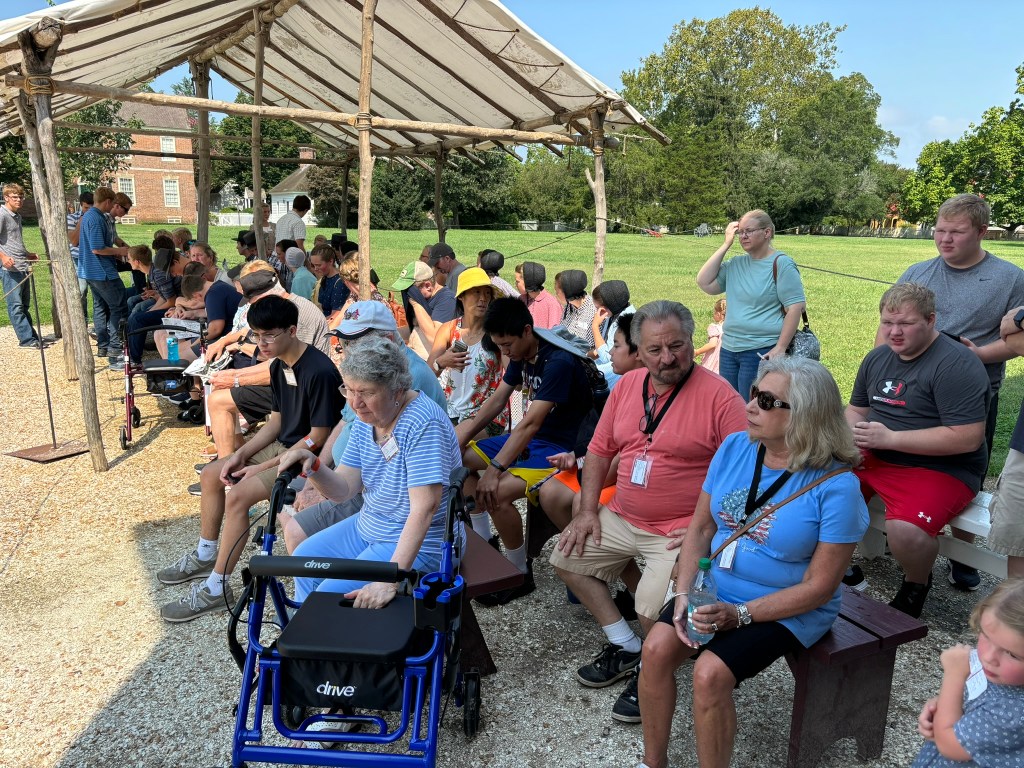
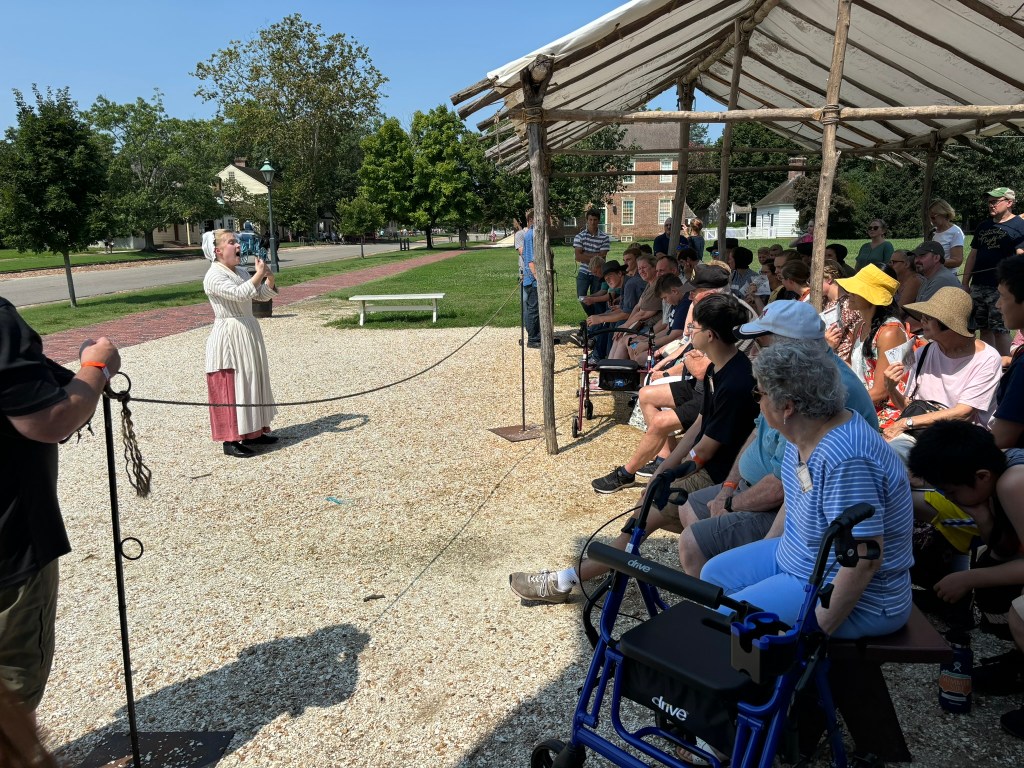
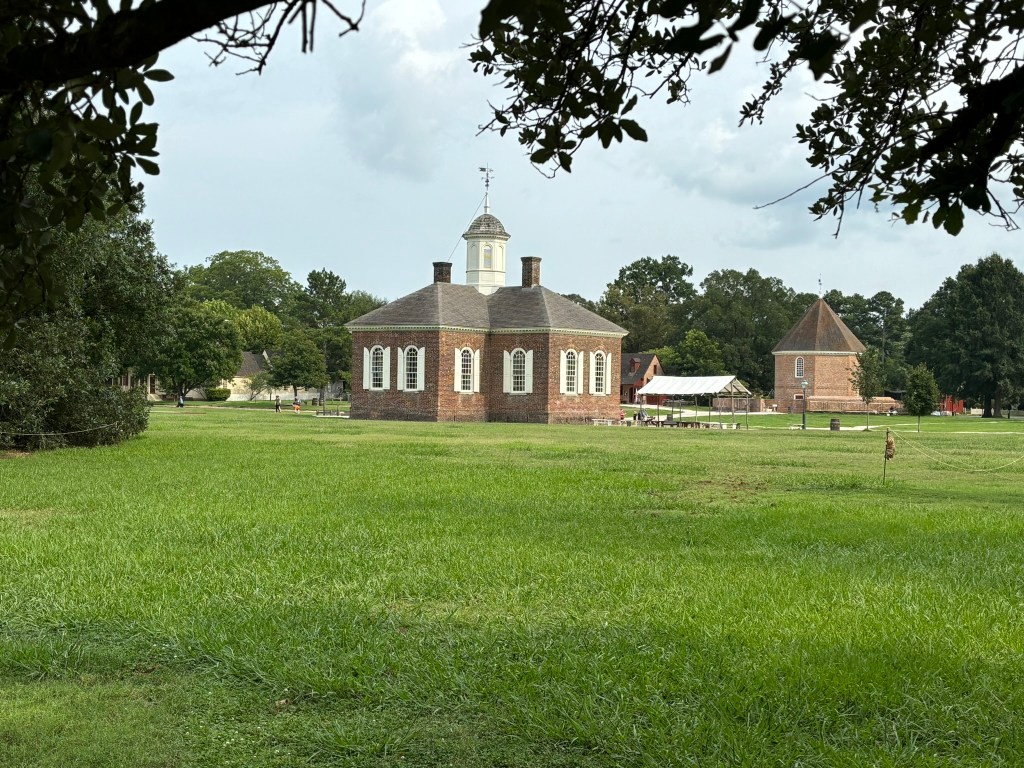
We made a stop at the County Courthouse. A program was scheduled for 11AM which we were interested in viewing. A mock trial was going to take place in the Court House and volunteers would take part in the court drama. However, when we found out that the case would take 40 mins, we decided to move on since we had limited time. We decided to keep moving down Duke of Gloucester Street.
King’s Arms Tavern
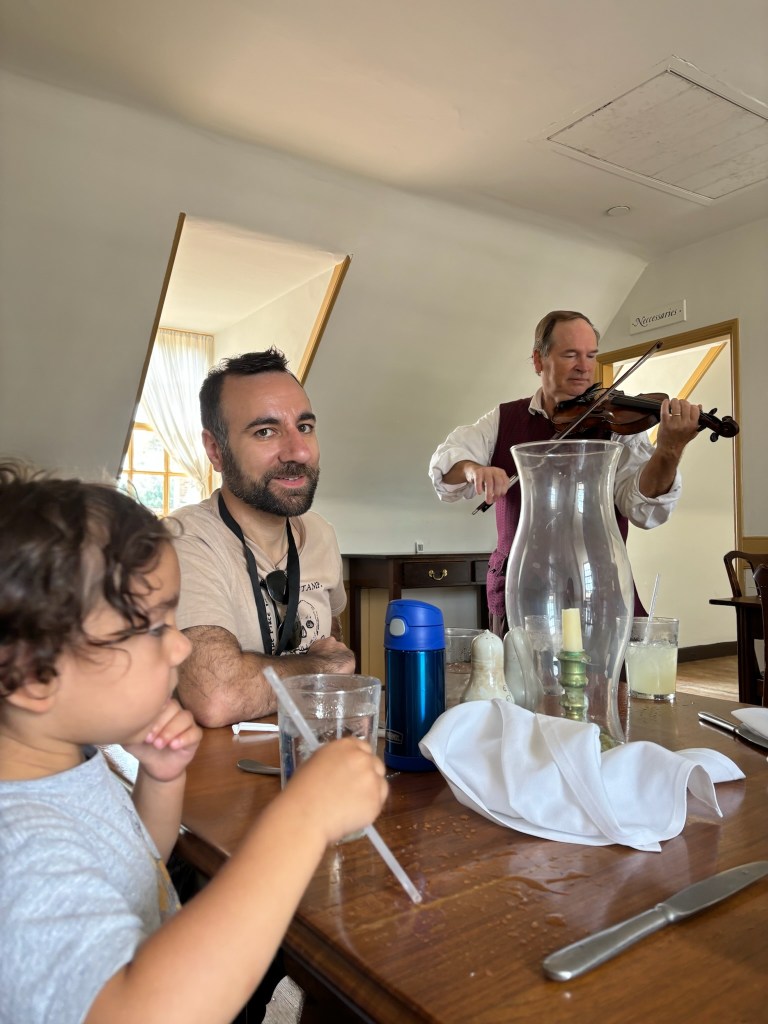
After visiting more houses and shops, we stopped for lunch at King’s Arms Tavern which had really great, colonial style food. We even got serenaded by a violin player!
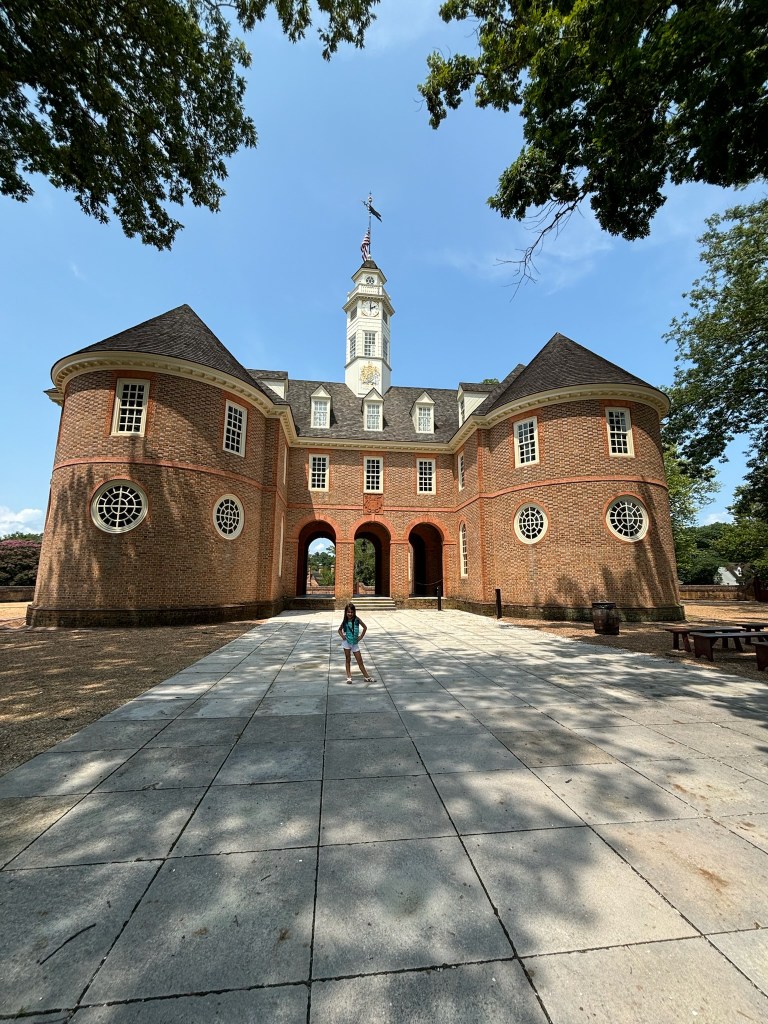
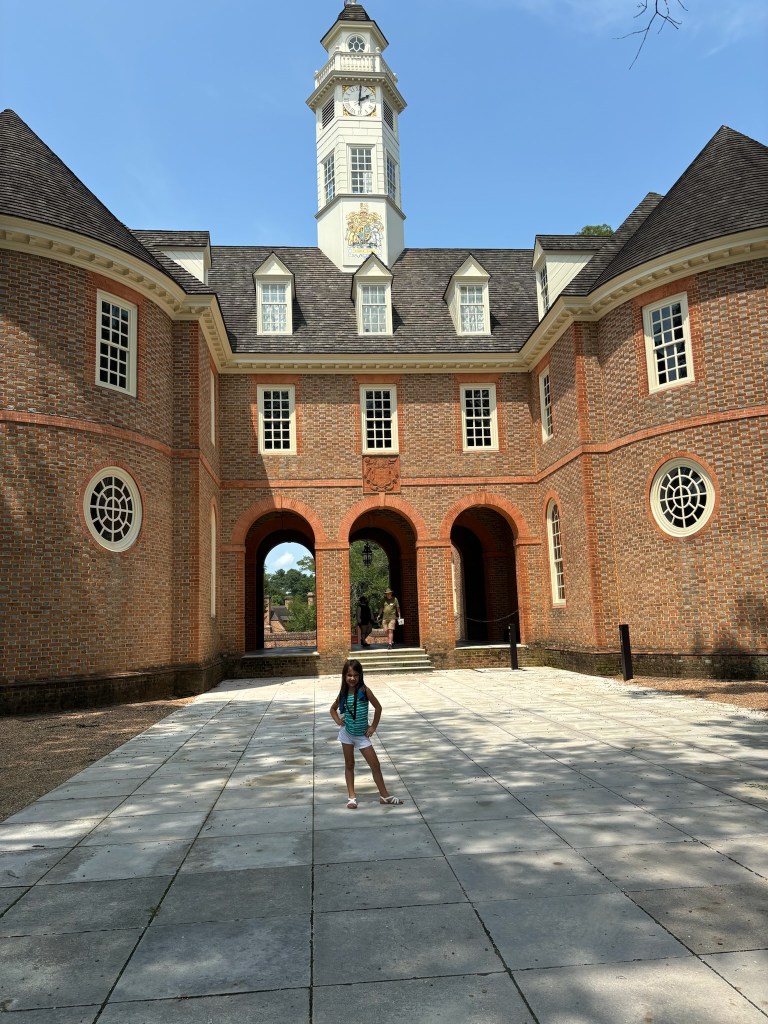
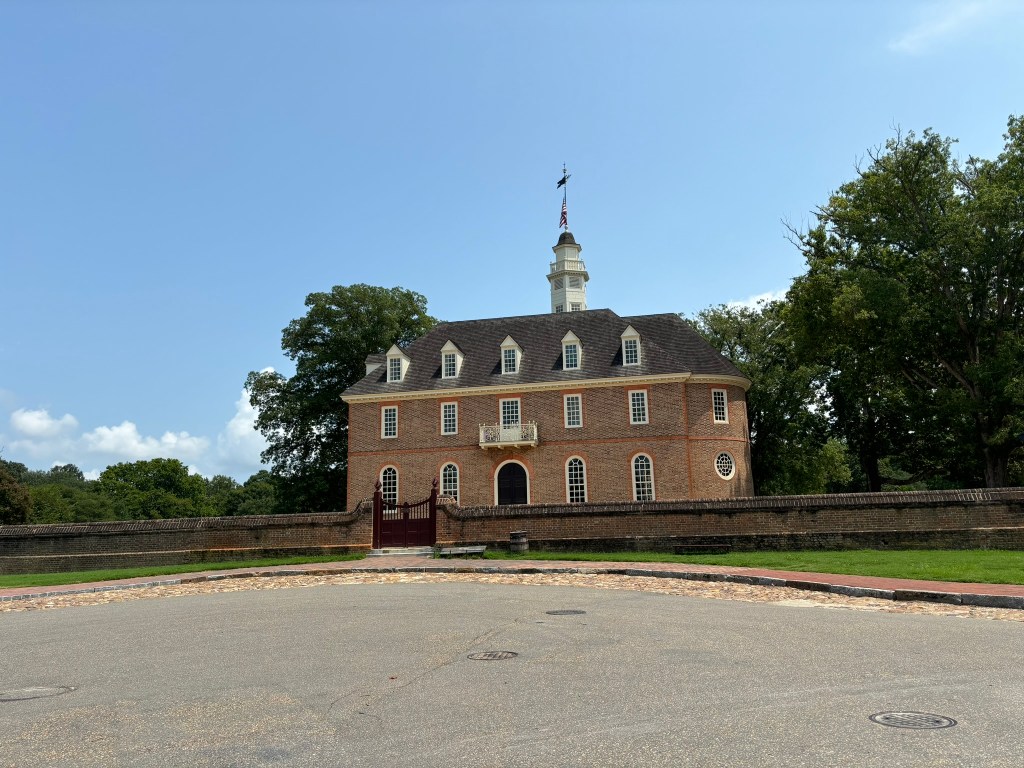
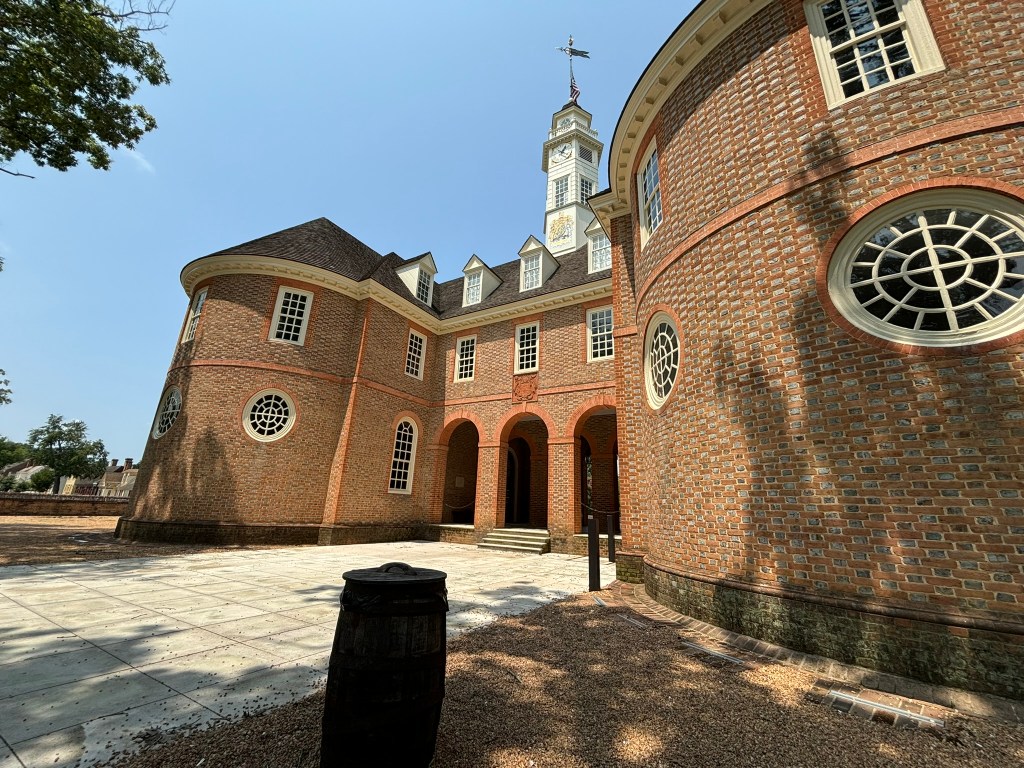
The Capitol Building
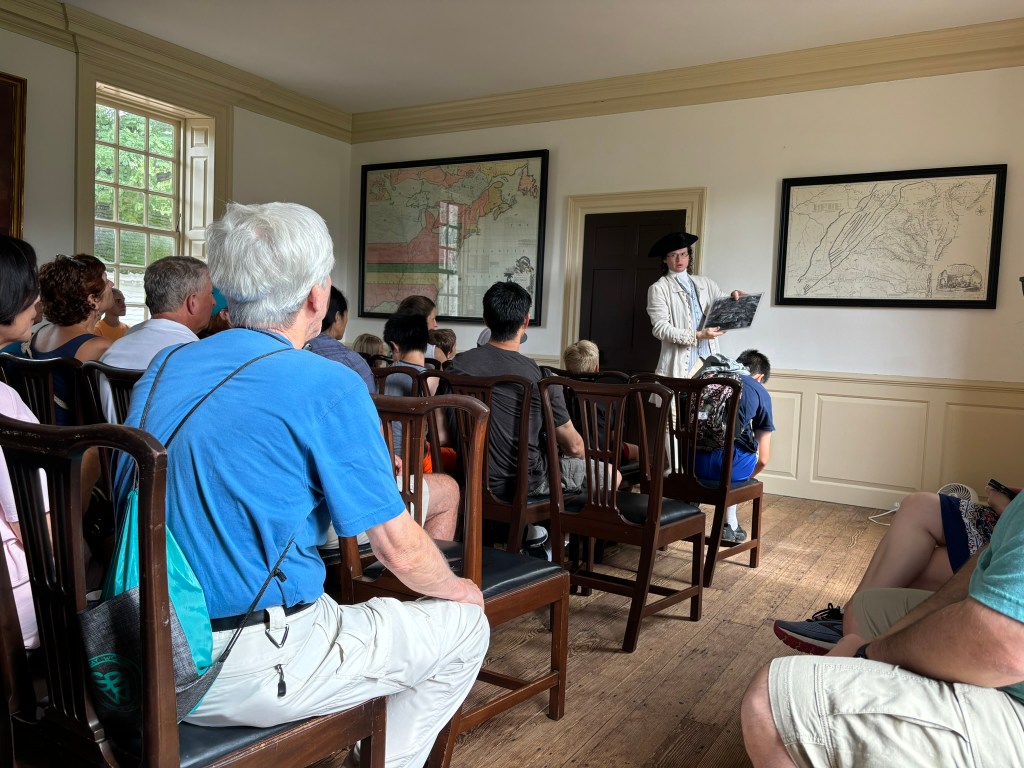
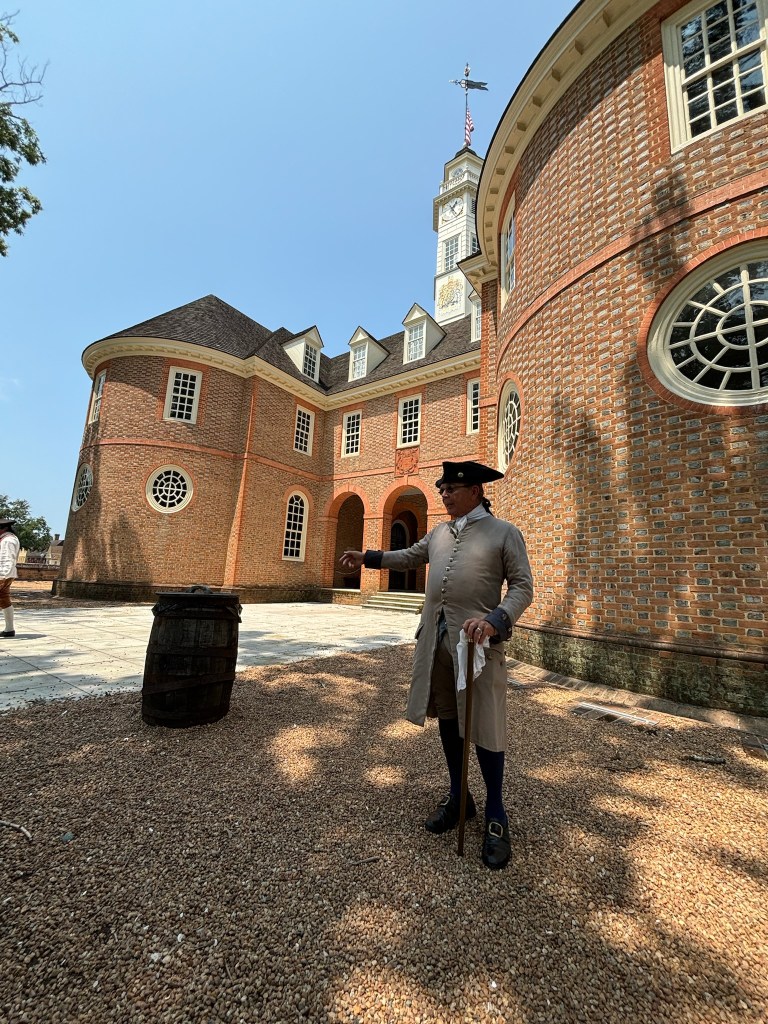
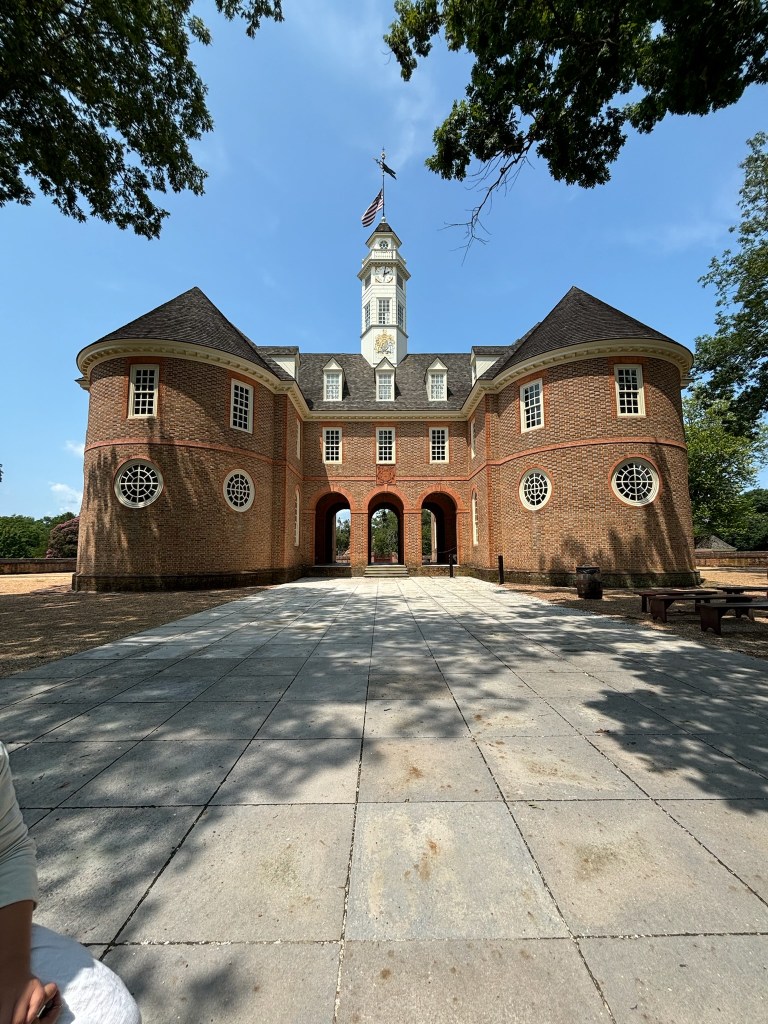
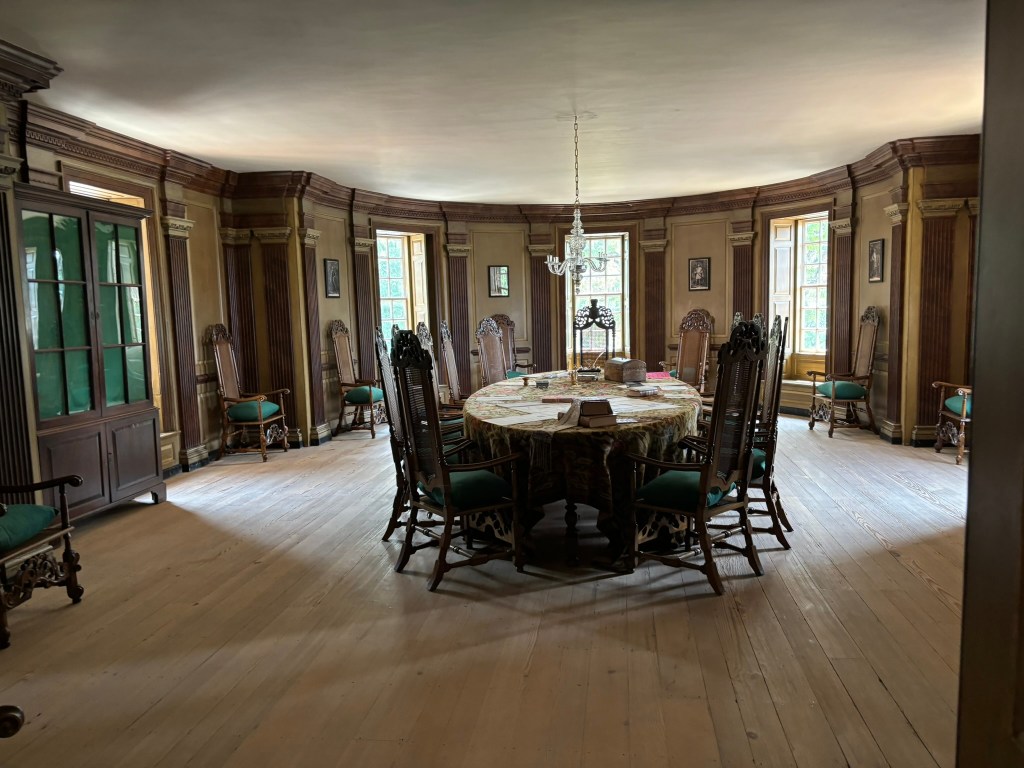
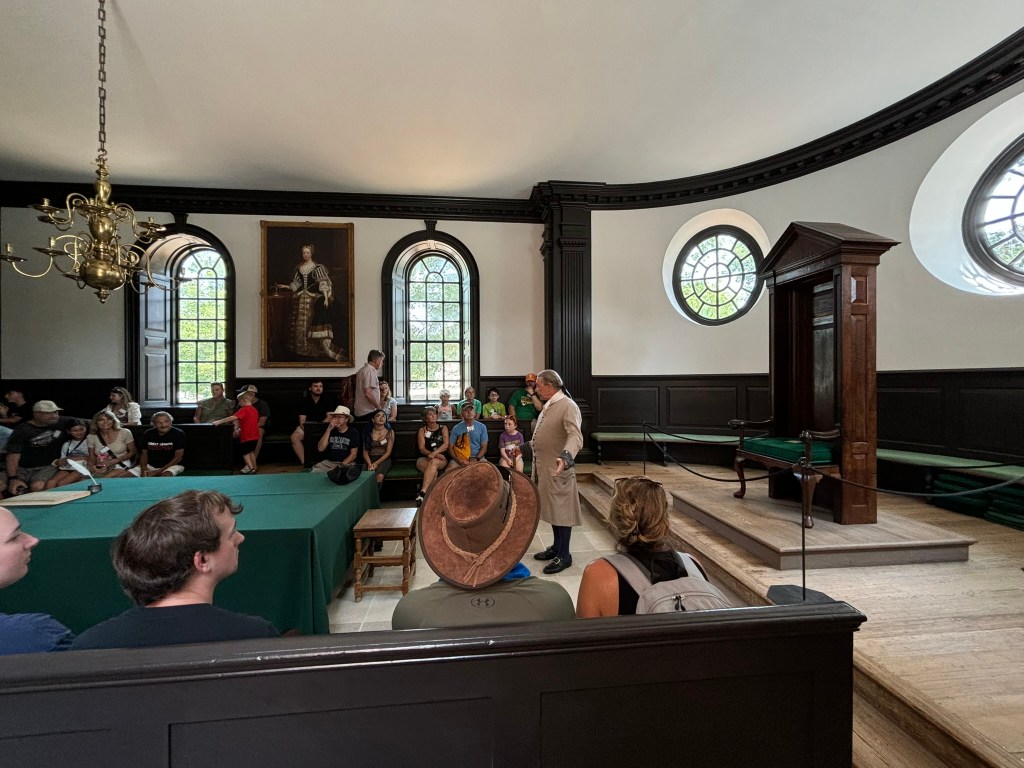
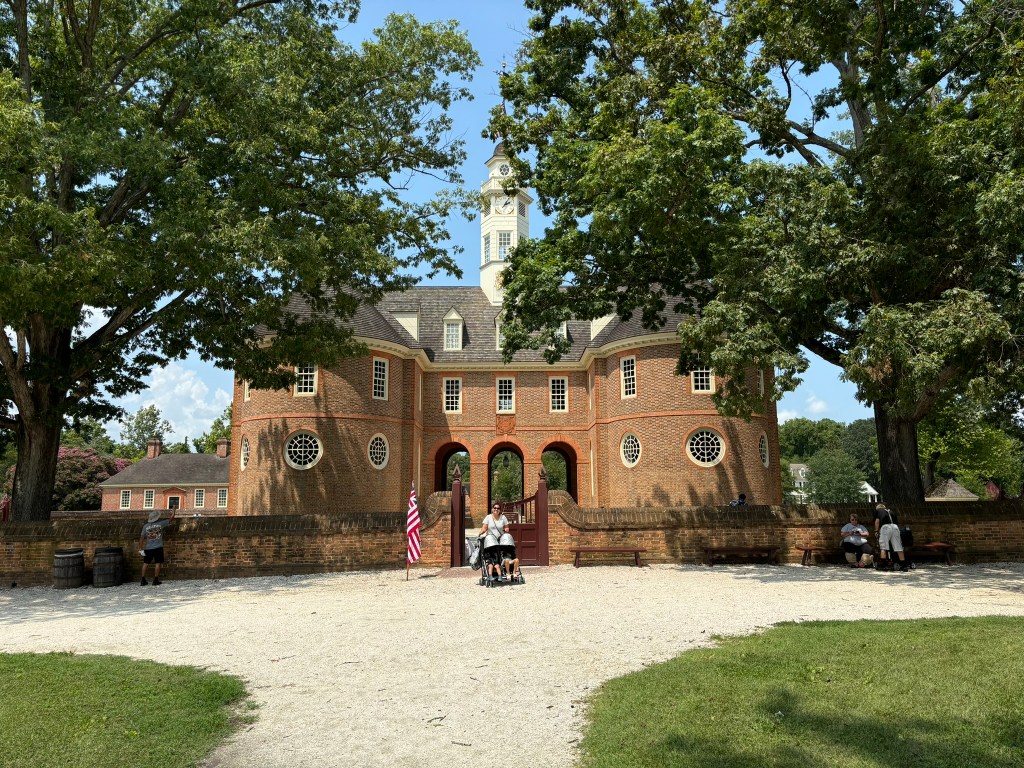
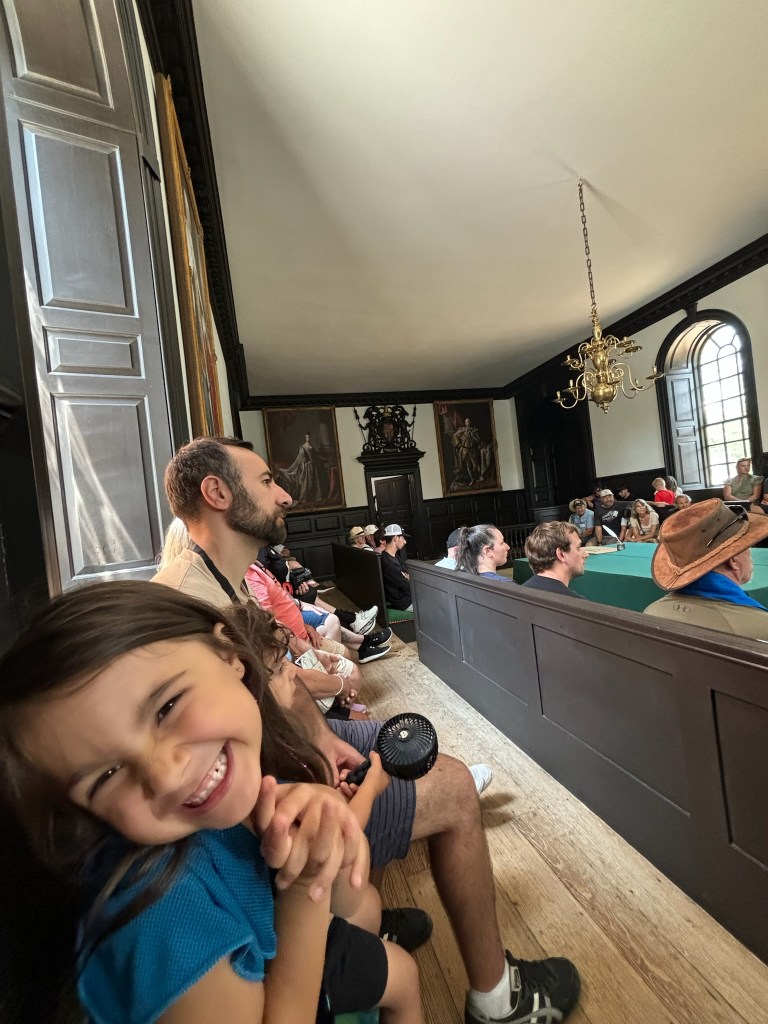
After we ate, we continued heading east until we arrived at the Capitol Building. Our tour guide at the Capitol was great. He explained to us how the building was used by the House of Burgesses. There were also court cases which were tried in the building as well. He thoroughly explained to us how the government operated in the Colonial Virginia, and then the Commonwealth of Virginia after the colonies declared independence in 1776. He explained to us that at the time, only wealthy landowners could vote which consisted of about 15% of the population. He encouraged us, in this election year, to get out and vote.
Gunsmith
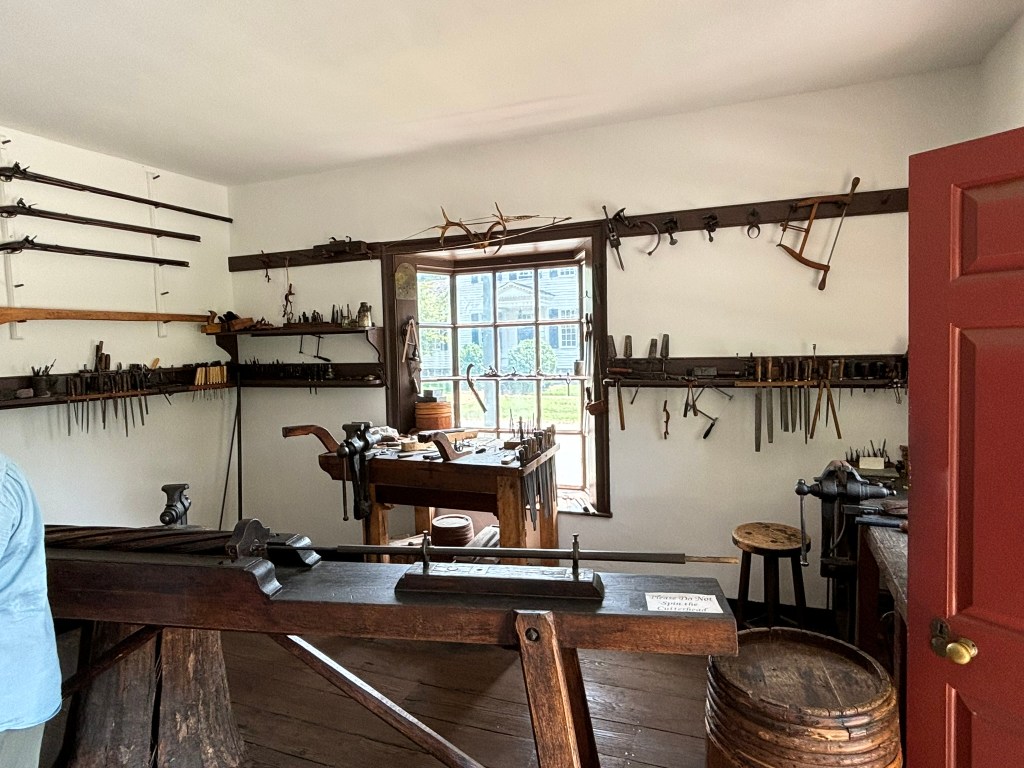
After we left the Capitol Building, we made our way over to the Gunsmith building as reenactors not only explained, but demonstrated how muskets were created in colonial times.
Francis Street
My family and I headed back west on Francis Street, past the small farm and in the direction of the Art Museums of Colonial Williamsburg. Along the way we witnessed a demonstration of reenactors teaching children how to march in a line, Continental Army style. This was taking place at the Magazine House and Guard House.
Art Museums of Colonial Williamsburg
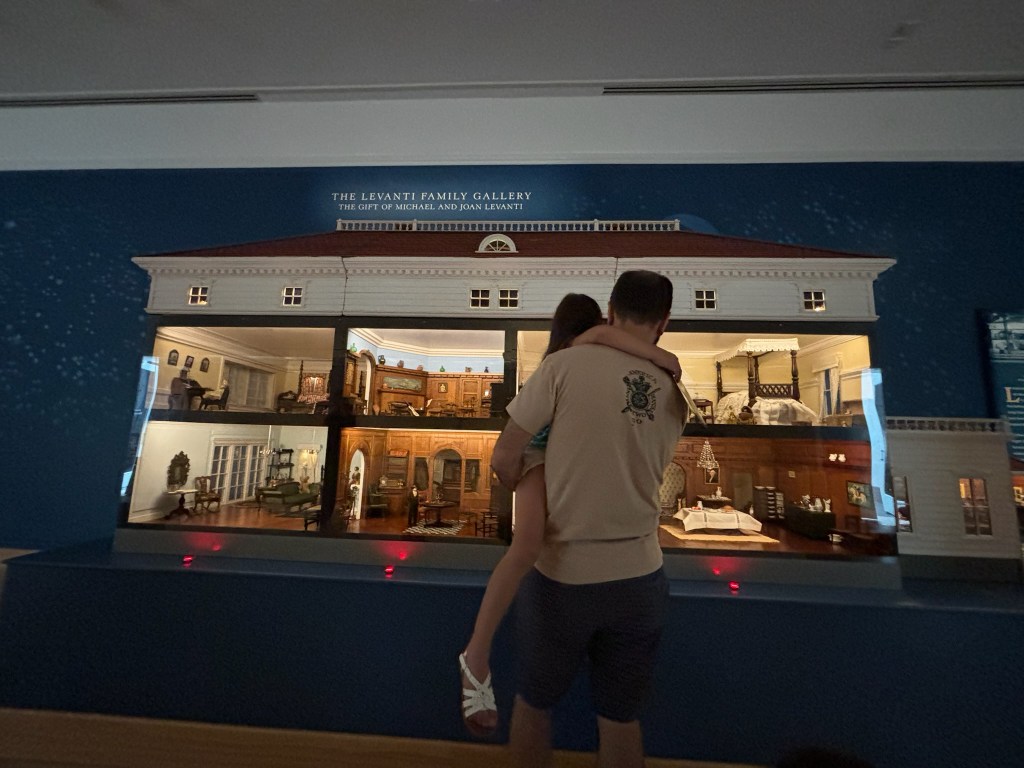
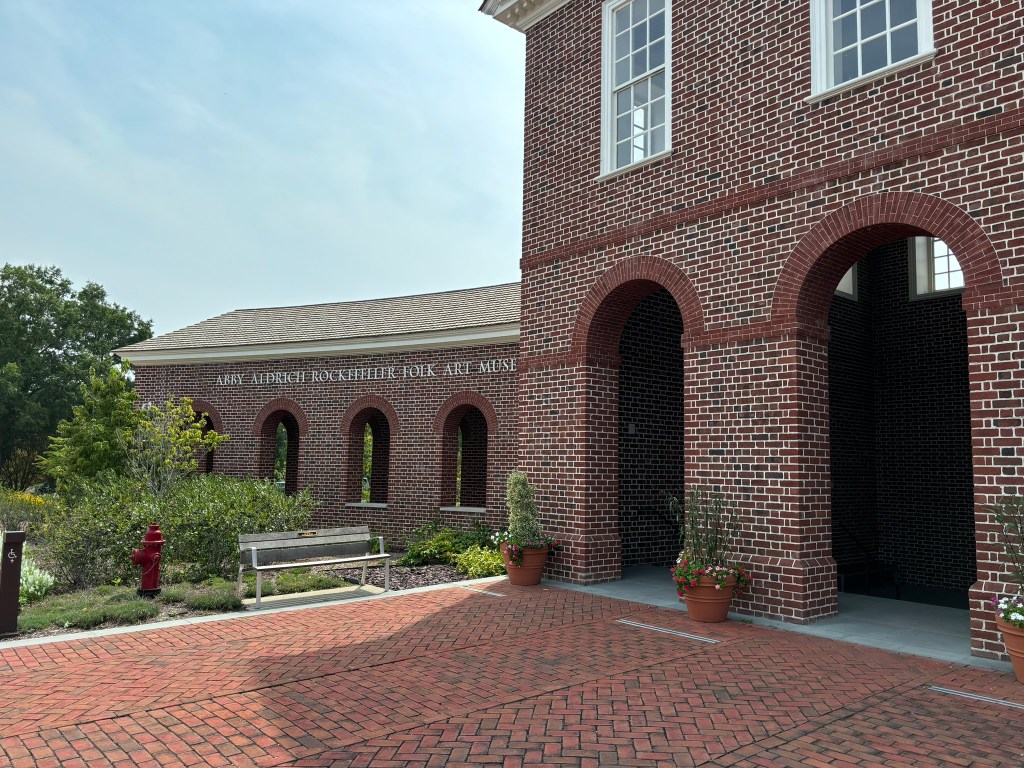
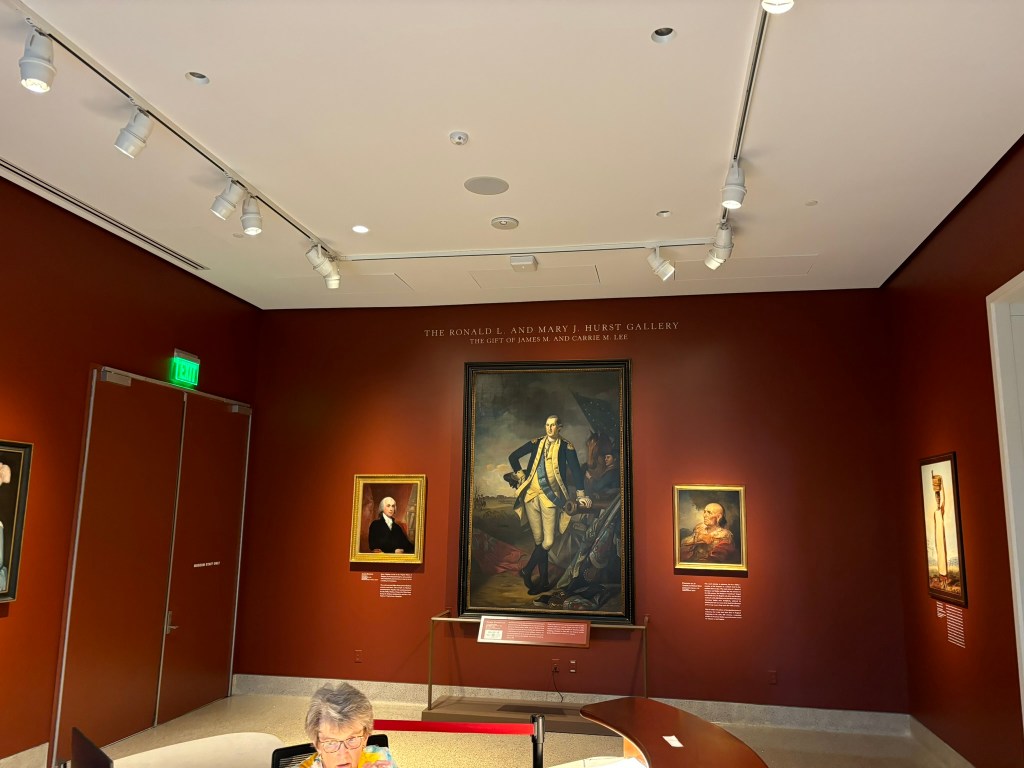
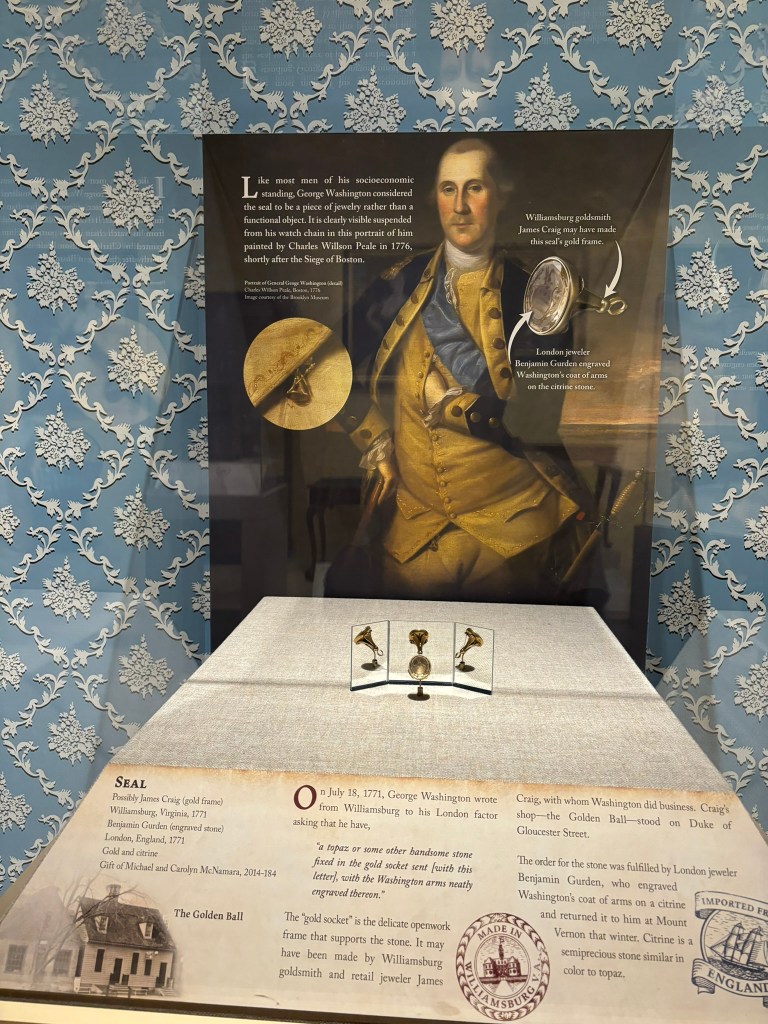
We made the trek to the Art Museums of Colonial Williamsburg. The museums had very diverse collections. The museums consist of the DeWitt Wallace Decorative Arts Museum and the Abby Alrich Rockefeller Folk Art Museum. There were expansive examples of both American and British antiques and decorative arts from the 17th- 19th centuries.
Shops of Merchant Square
After we left the museum, we headed to the Shops of Merchant Square and bought some T-shirts, and a Christmas ornament at the Christmas shop.
Peyton Randolph House
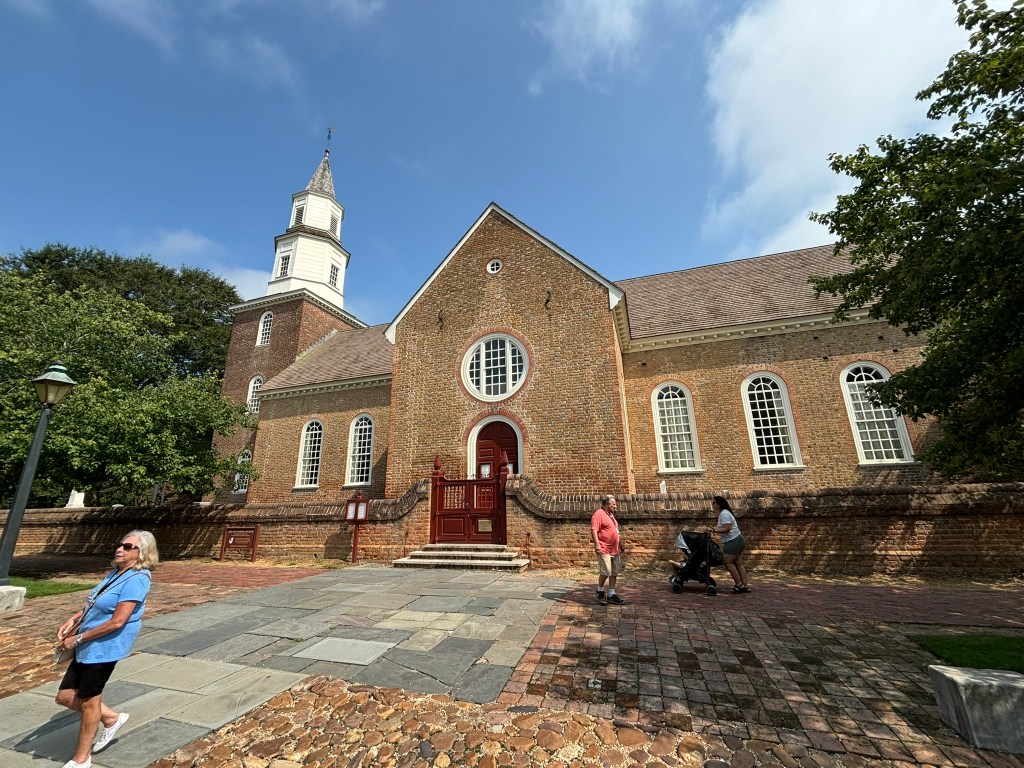
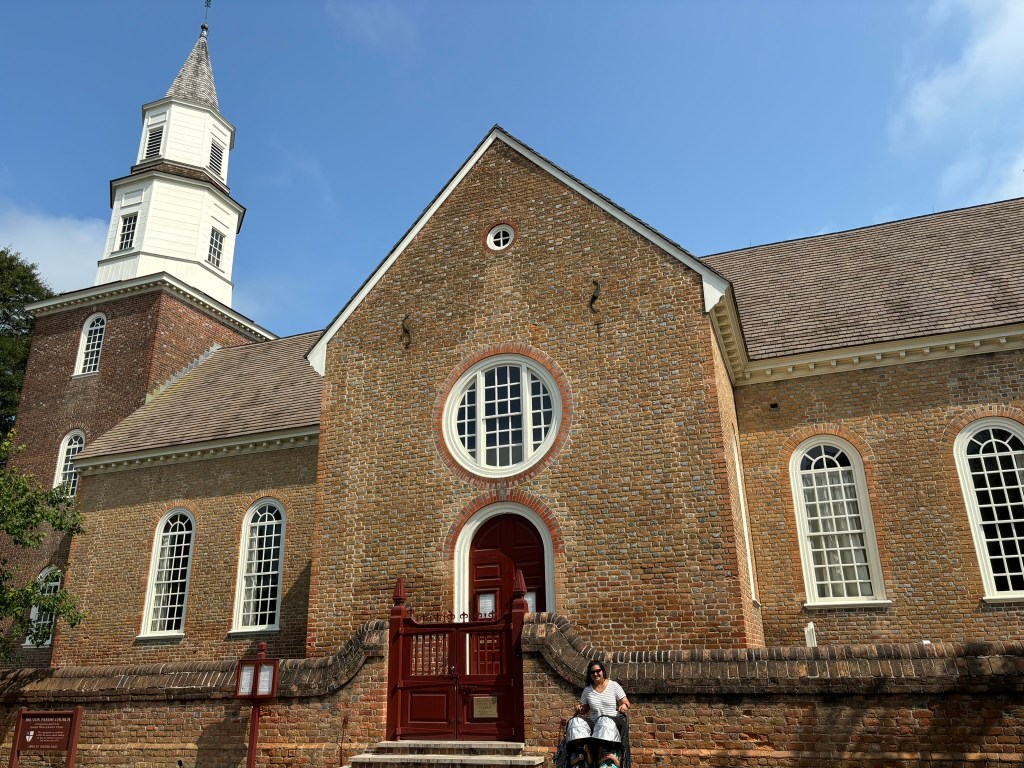
At this point it was late afternoon. We decided to visit one last street that we hadn’t visited just yet, which was Nicholson Street. The main house that we toured at this time was the Peyton Randolph House, which is the dark red house in the photos below. Randolph was a founding father and the first president of the Continental Congress. He was instrumental in leading boycotts against British goods in the leadup to the American Revolution. He was quite wealthy and owned over 100 slaves. We were able to visit his home where he lived for most of his life. Our tour guide was quite knowledgeable and informative about Randolph’s life and his home.
DoG Street Pub
When the tour ended, it was time for dinner. I would have liked to make our way further down Nicholson street, but we just didn’t have the time. We ate dinner at the DoG Street Pub, which had a nice selection of beers on tap, and very good food. When we were done eating, we trekked back to our hotel to rest our tired feet.
Overview
I really enjoyed Colonial Williamsburg. Because of the architecture and the reenactors around town, you really felt like you were living in 1775. The reenactors do a great job re-creating the many jobs and chores that the colonials were responsible for. You got a sense of the hard-work and toil that went along with living in this era. Each person had to be an expert at their craft. But most people would have been small farmers. And when they weren’t out farming they were doing household chores like making candles, making soap, sewing clothes, and creating everything that the household needed. People back then didn’t have much. They weren’t consumers of goods, and just had the basic necessities. That was the case for most people. Seeing the Governor’s Palace, we did witness the large discrepancies between the social classes in Colonial America. While the majority of colonials were barely scraping by, a select few were living lavishly in structures such as the Governor’s Palace.
Follow my Instagram, Facebook, and X accounts in the coming days for videos of my time in Colonial Williamsburg.
For Part 2 of this blog post, I will discuss our tour of the Jamestown Settlement, followed by Part 3, which will focus on our tour of the Yorktown Battlefield and Museum. Stay tuned!
For more information about the Williamburg Woodlands Hotel and Suites, visit HERE.
For more information about Colonial Williamsburg, visit their official website, HERE.
Williamsburg, VA is along the Washington-Rochambeau Revolutionary Route- Check out their site HERE.
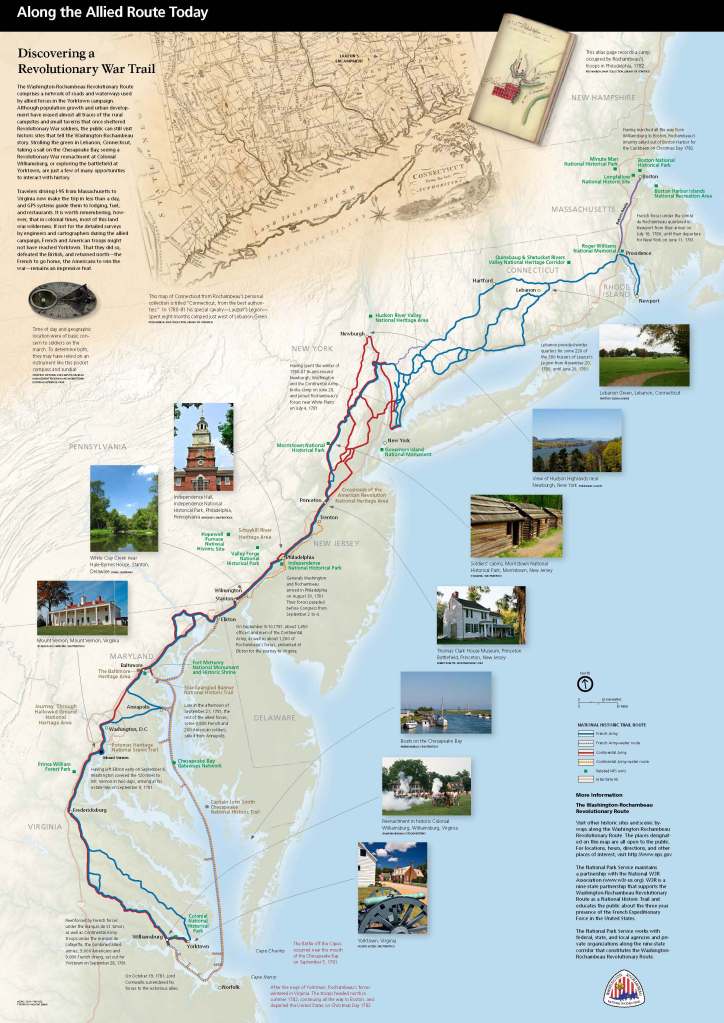
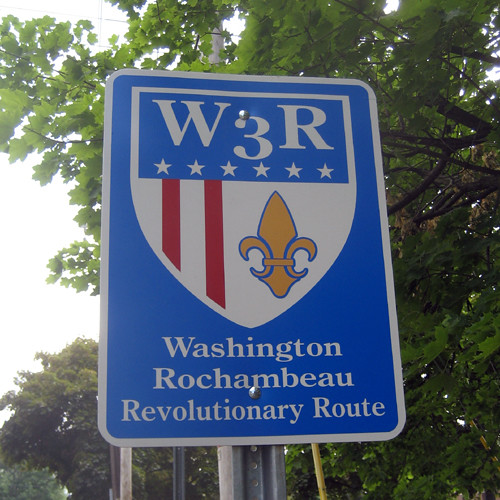
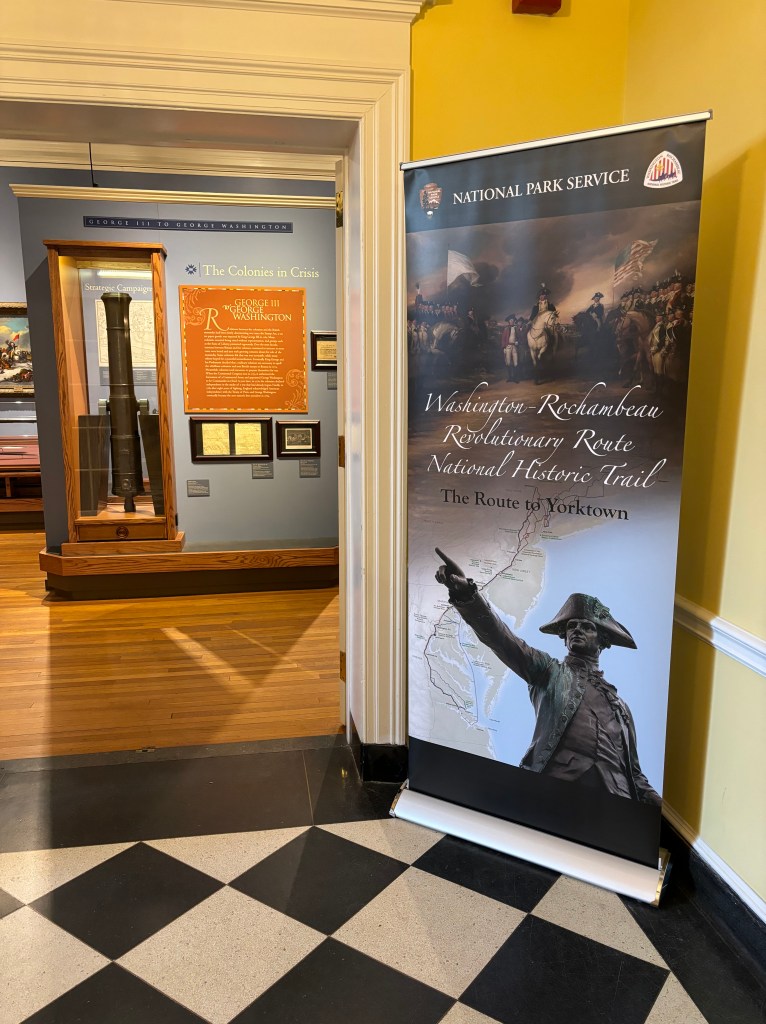
For this blog post, I am highlighting the Washington-Rochambeau Revolutionary Route. Many of the events/ trips that I have posted on this blog from New Jersey have been sites along the trail. It is fitting to post about the trail now because next week my family and I are heading on a trip to Williamsburg, Virginia, which is a site along the trail. We will be visiting the trail’s final destination: Yorktown, Virginia. I am a member of the Washington-Rochambeau Revolutionary Route in New Jersey Association which highlights the routes taken by the American and French forces within New Jersey. Of course, New Jersey was just one of several states that the American and French forces marched through. Other states include Massachusetts, Rhode Island, Connecticut, New York, Pennsylvania, Delaware, Washington DC, Maryland, and Virginia.
The entire trail is highlighted and commemorated by The National Washington-Rochambeau Revolutionary Route Association Inc. (W3R-US). On their website, W3R-US’s explains that their mission “is educating the public both about the Washington Rochambeau National Historic Trail, and the Trail’s context within the American Revolution as well as to collaborate with diverse trail communities and partners in stimulating economic development and a fuller, more inclusive realization of America’s founding ideals. W3R-US’s vision is that through a connected and conserved trail, W3R-US strengthens trail communities and expands the relevance of our shared American story today and for future generations.”
Overview Of The Trail
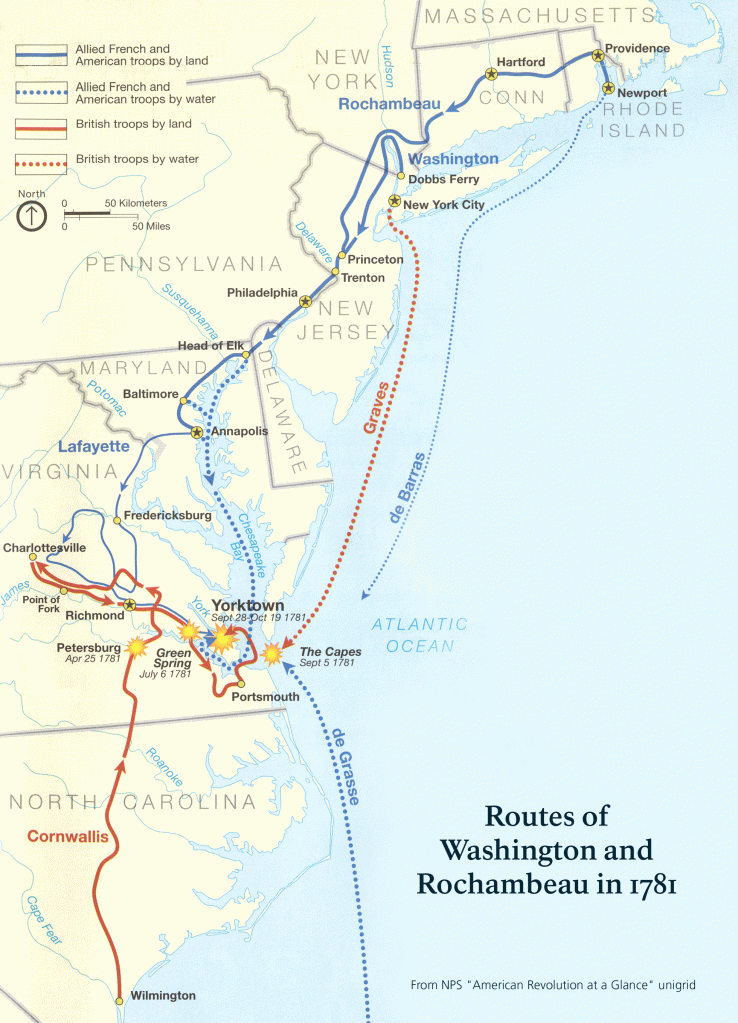
The Washington-Rochambeau Revolutionary Route highlights the 680-mile route that the Continental Army, led by George Washington, and the French forces, commanded by Jean-Baptiste de Rochambeau, took from Newport, Rhode Island, to Yorktown, Virginia. This 14-week journey culminated in the defeat of the British Army in The Siege of Yorktown in October 1781, which was the beginning of the end of the war, and the victory that the United States needed to secure their independence. The Washington-Rochambeau Trail is a unit of the National Park Service.
The march began in June 1781, when French forces departed from Rhode Island and met up with American forces at the Hudson River. The French and American forces marched south in August, through New Jersey, Pennsylvania, Delaware and Maryland. They arrived in Williamsburg, Virginia, in late September, just a few weeks after the French navy defeated the British in the Battle of the Chesapeake, effectively cutting off an escape route for the British encamped at Yorktown.
On September 22nd, 1781, the American and French armies joined forces with the Marquis de Lafayette in Virginia. After a three-week siege at Yorktown, British General, Lord Cornwallis surrendered his British army on October 19, 1781. This was the climactic victory of the war which led to peace talks between the United States and Great Britain. The Washington-Rochambeau Revolutionary Trail features interpretive signs and exhibits that highlight the joint effort of both the American and French forces to secure independence.
New Jersey
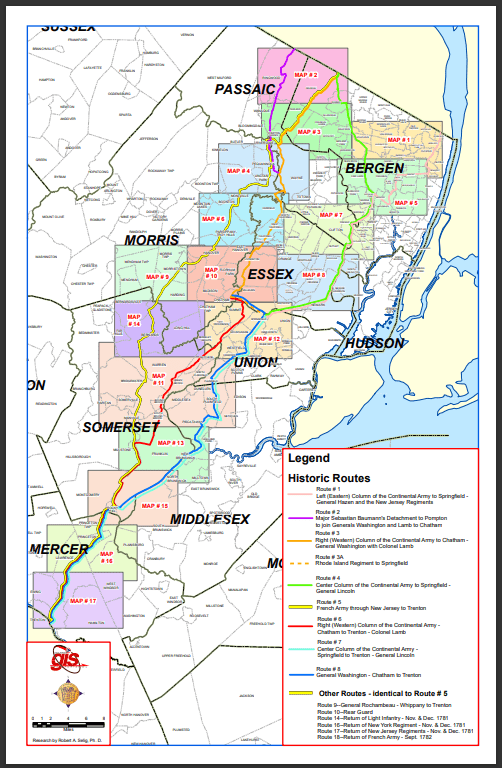
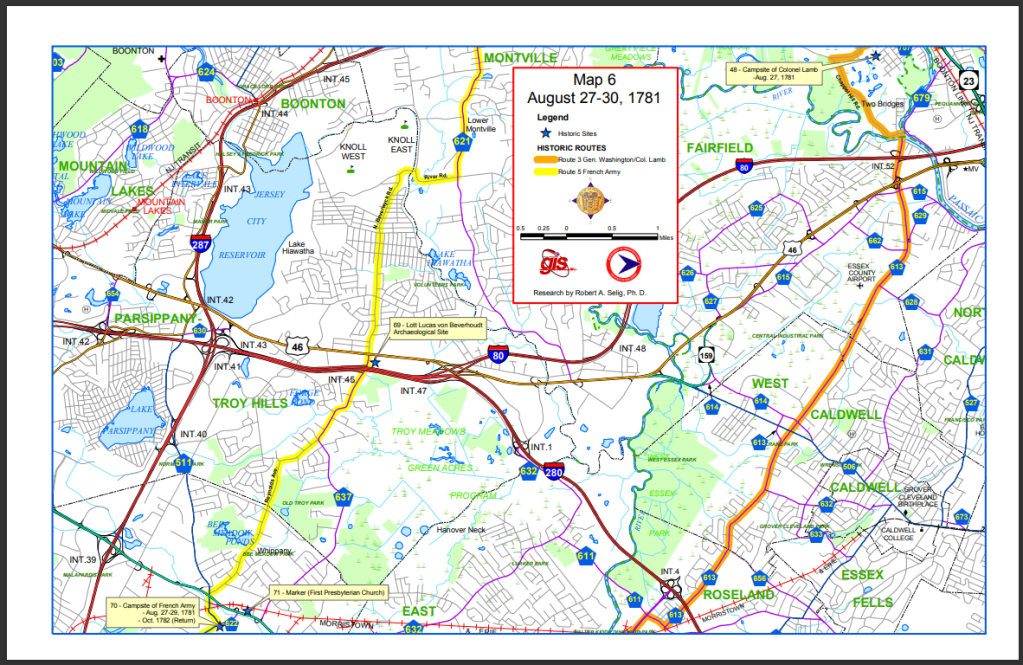
Being a New Jersey native, my experiences along the trail have been within my state, which has many historical connections to the American Revolution. Below are two maps; the first is a broader map of the routes within New Jersey, and the second map is zoomed into the region where I live. You’ll notice that there are many other maps that highlight the routes more locally. These extra maps are located HERE. I used the local map to find that the trail runs along a road that I personally drive on almost daily in Fairfield and West Caldwell, and is about 2 mins from my house. This particular trail is highlighted in orange and was the route taken by General Washington and the Continental Army. The more western route that the French took (highlighted in Yellow) is only about 10 mins west of my house as it cuts through towns like Montville and Lake Hiawatha.
Many New Jersey natives can explore the state map, and realize that this historical trail is quite local to where you live. When you consider the significance of the Siege of Yorktown, and the lengthy march that American and French soldiers had to take, you gain an appreciation for the sacrifices that these soldiers had to make to secure the freedoms that we take for granted today. And to think, they were marching right in your backyard!
Get Involved
For history lovers out there, I highly recommend visiting the websites of both the W3R-US, and the affiliate that is associated with your state. For New Jersey residents, you can visit here. The websites have many interactive features including virtual tours along the trail. Along the virtual New Jersey trail, you will learn much about houses that still stand along the trail and were witnesses to the soldiers who marched in 1781. As we get closer to the 250th anniversary of our independence, I recommend checking back into these sites for events, and ways to get involved. You should also consider becoming a member of the organization. You will not only enjoy the benefits of membership, but you will show your support for a great organization that is bringing the American Revolution alive for the public!
The following blog posts are from experiences and trips that I’ve had along the Washington-Rochambeau Revolutionary Trail thus far:
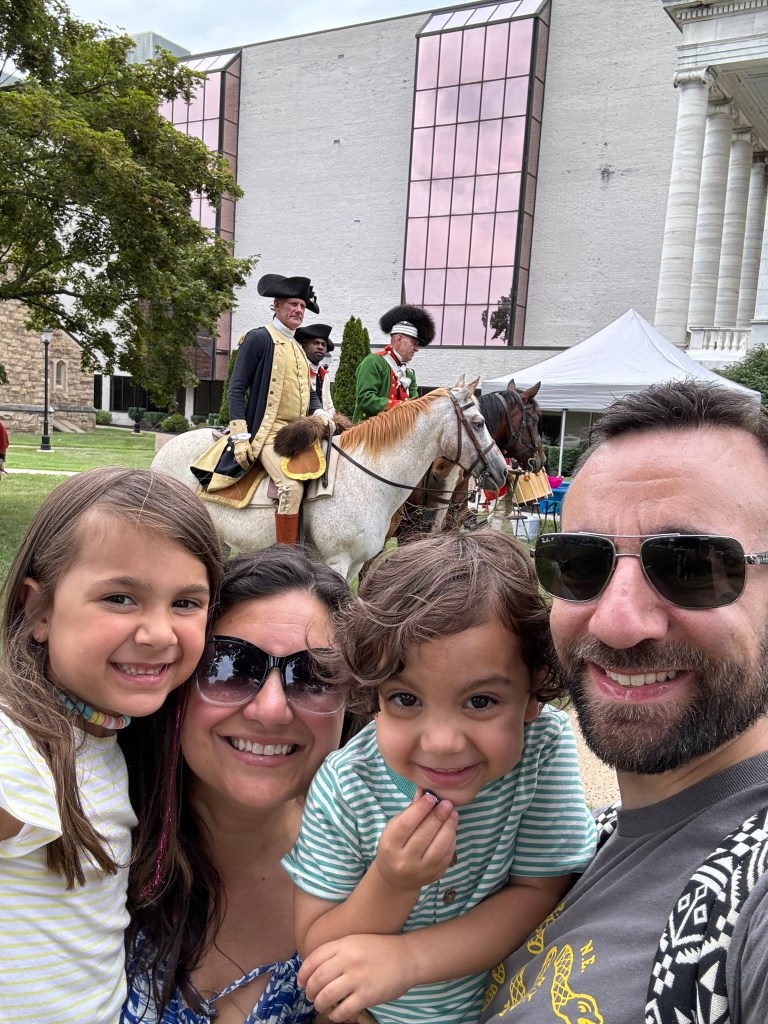
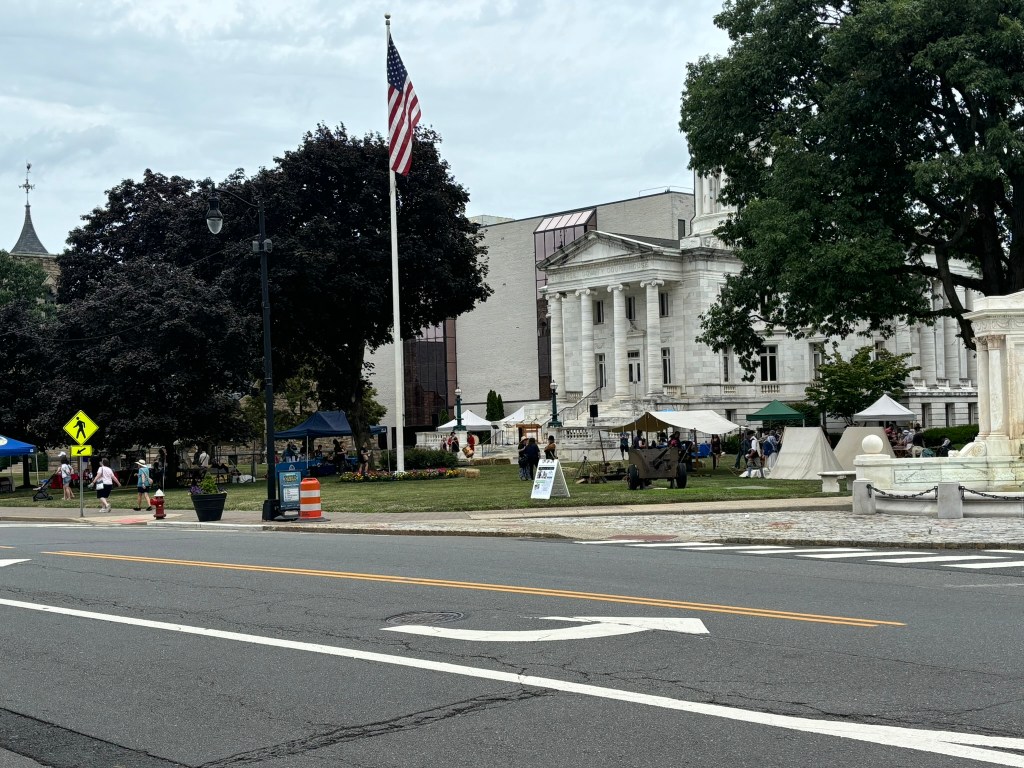
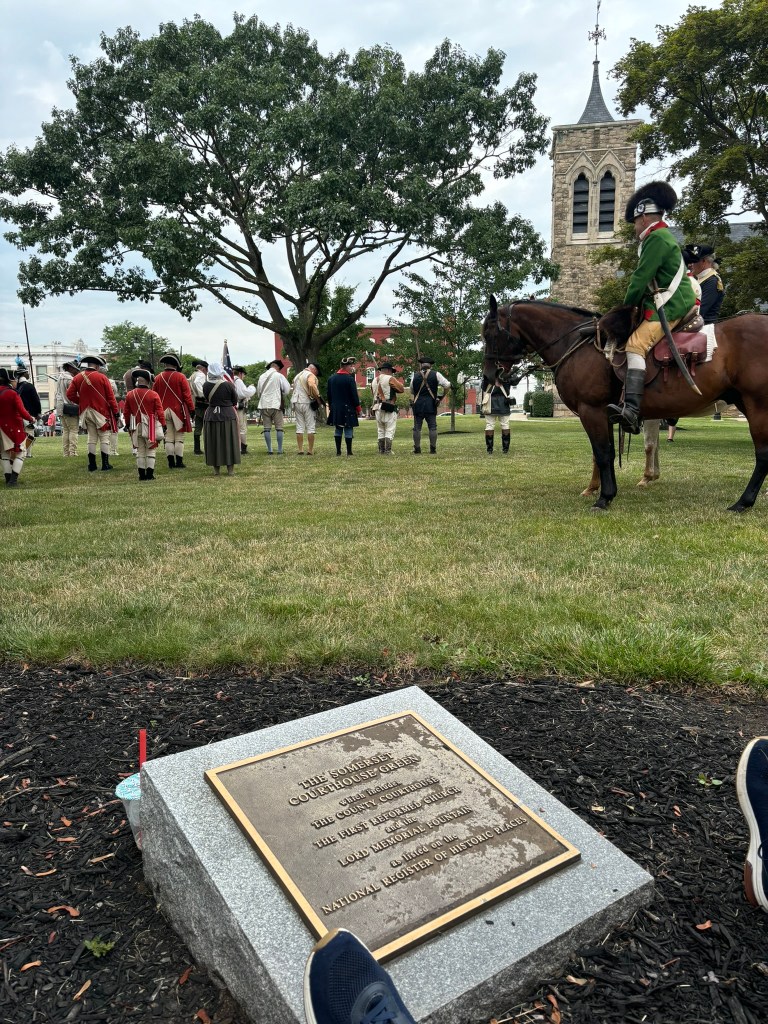
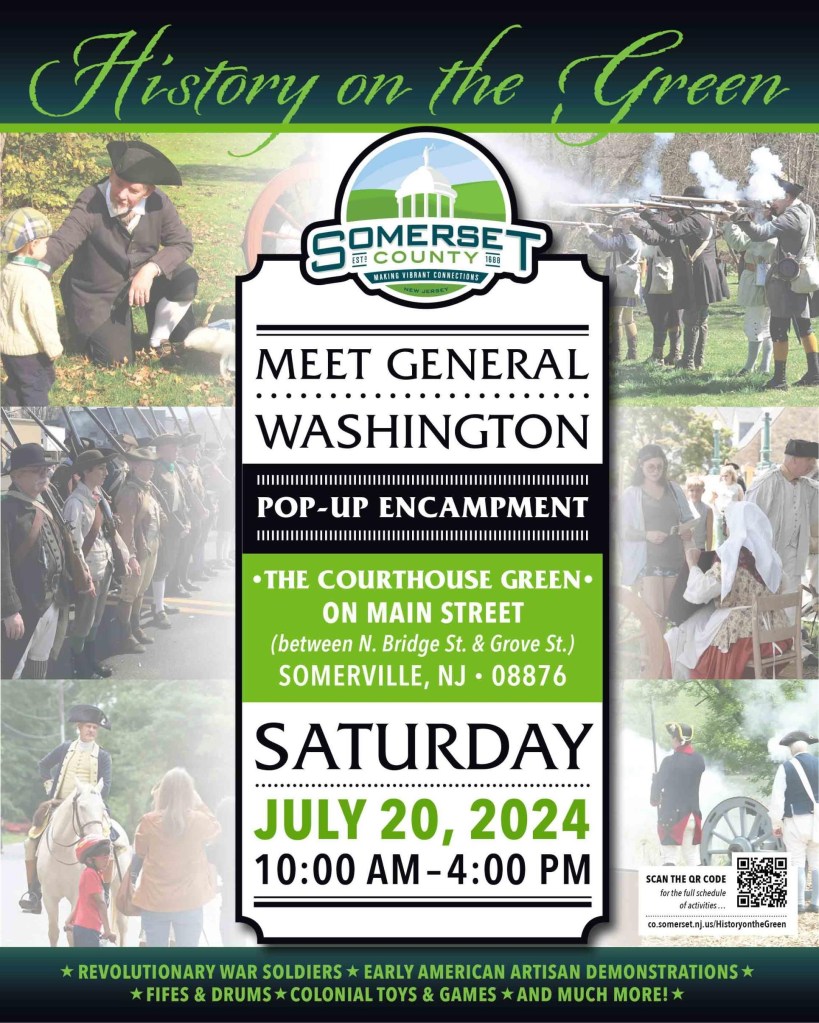
My family and I made it out to the “History On The Green” event in Somerville, NJ this past Saturday. The event featured a pop-up encampment site featuring George Washington and his valet, Billy Lee. The event also featured the New Jersey regiment- Heard’s Brigade, the 1st Rhode Island Regiment, and the NJ Fifes and Drums.
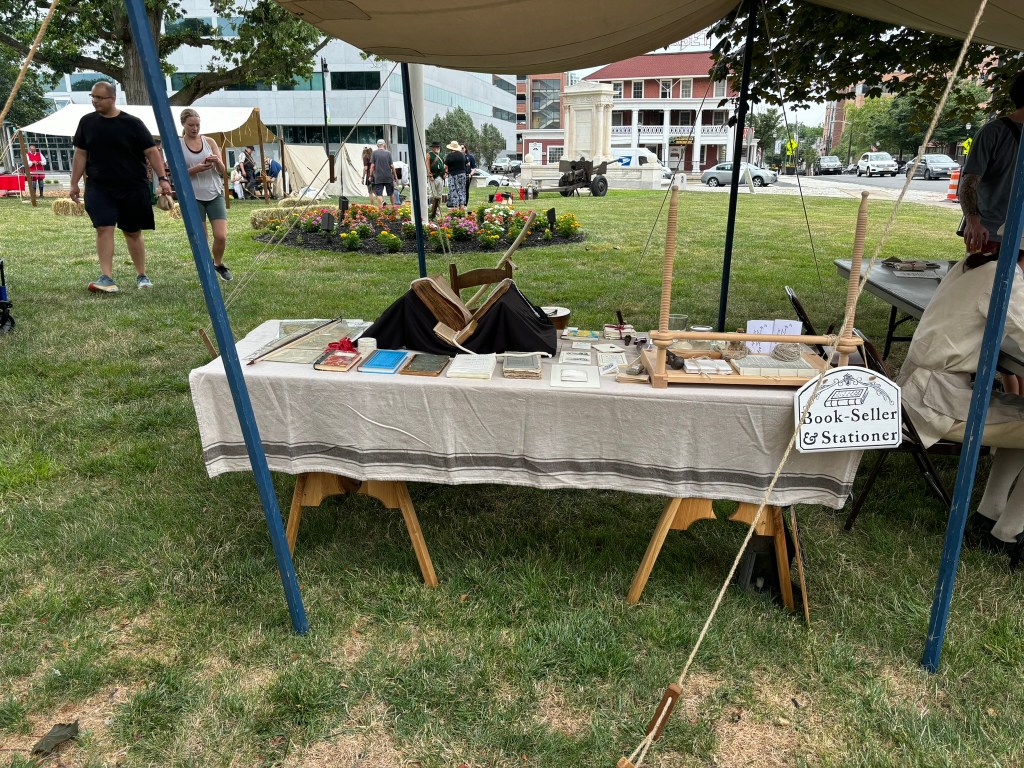
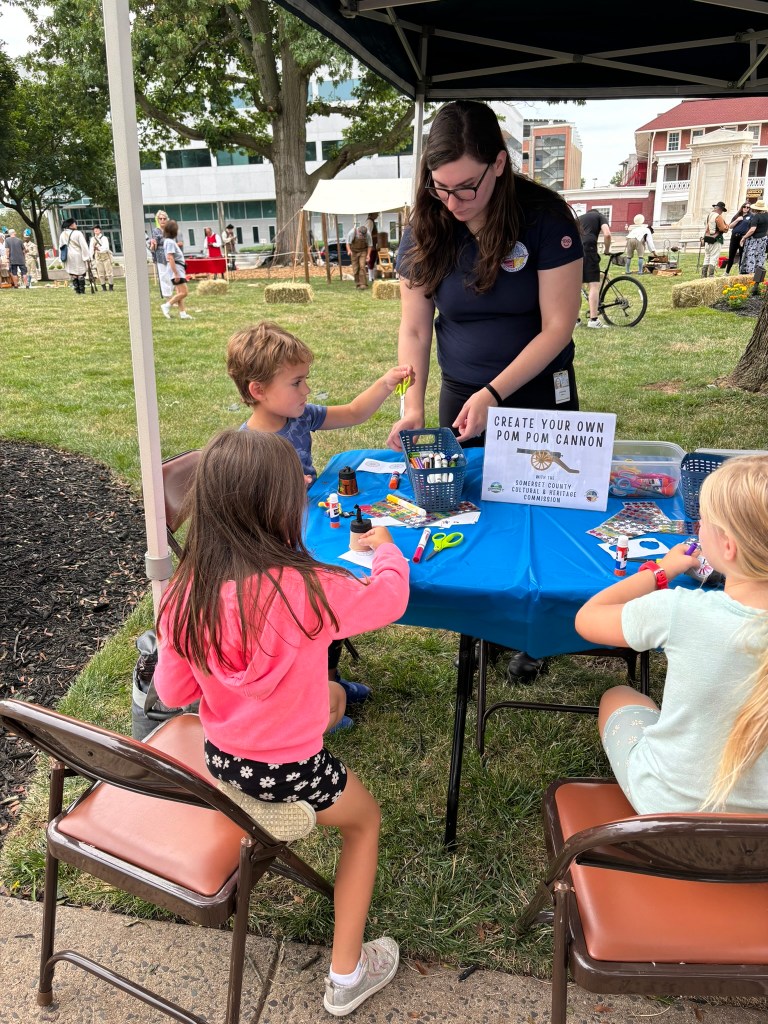
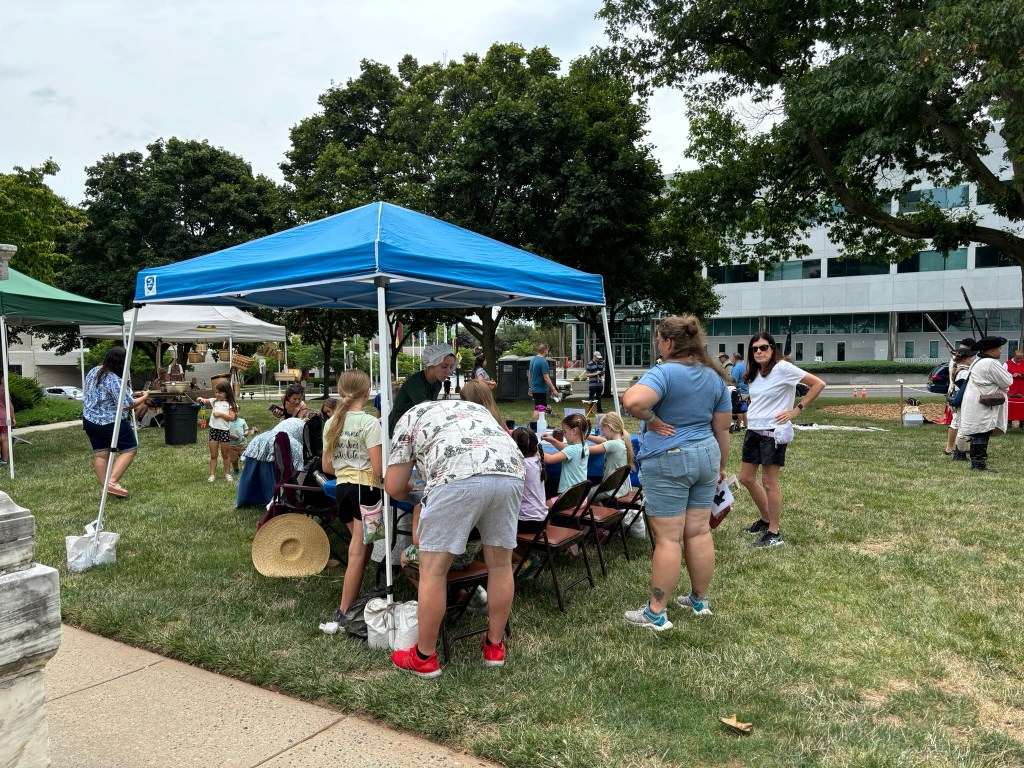
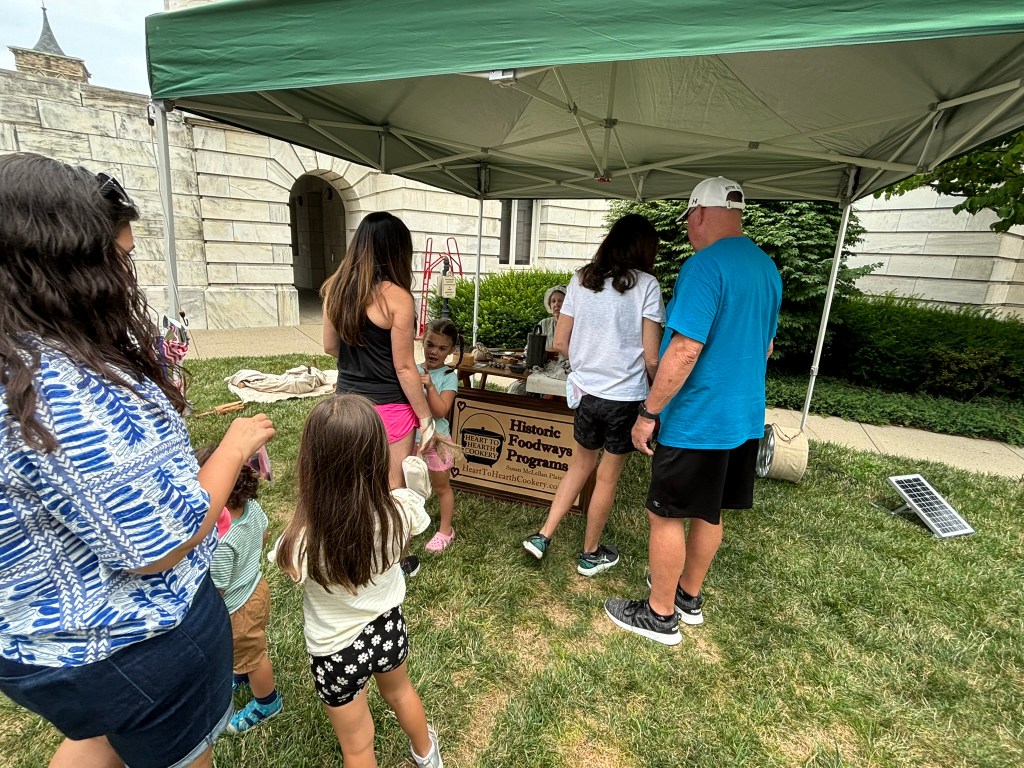
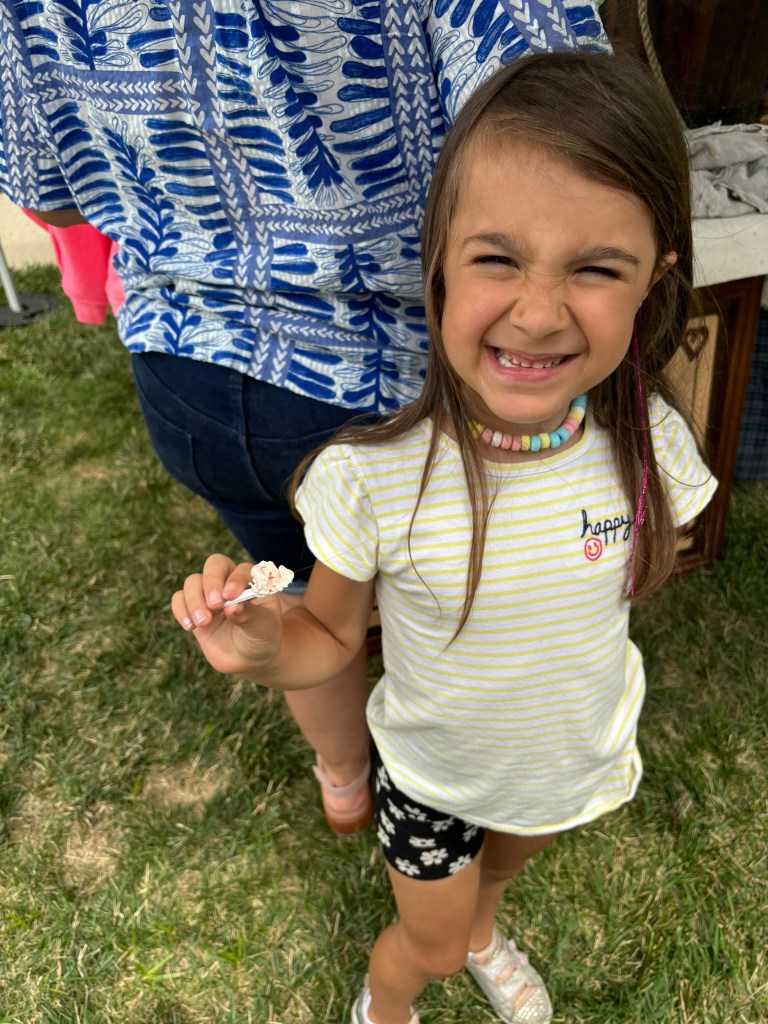
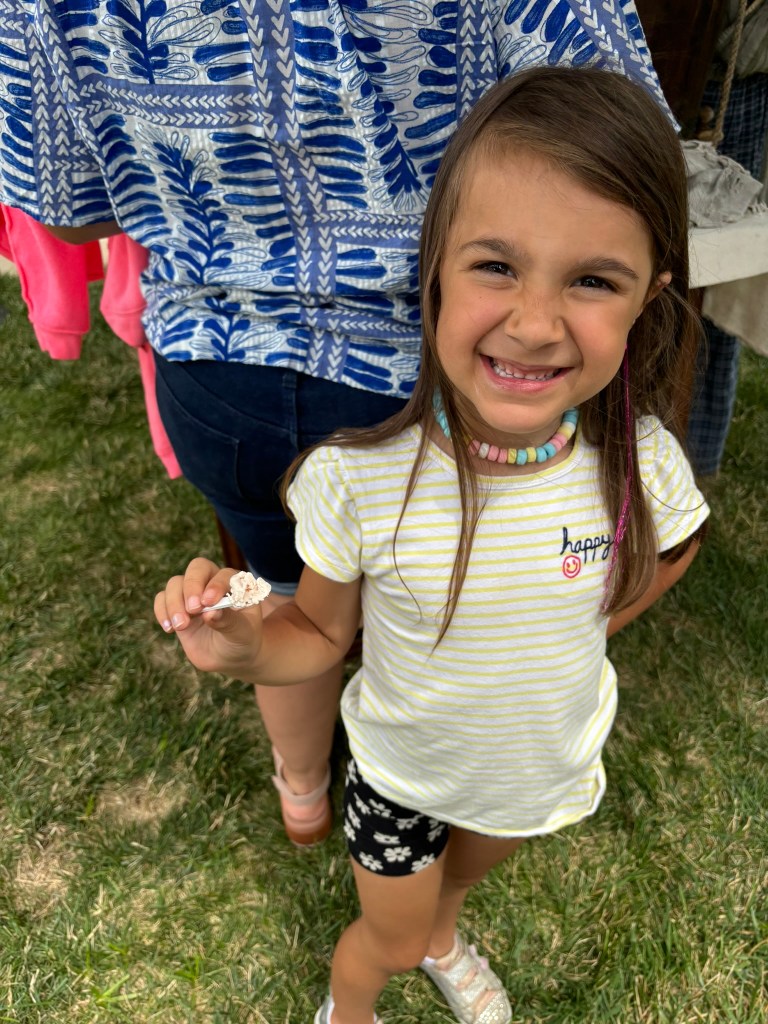
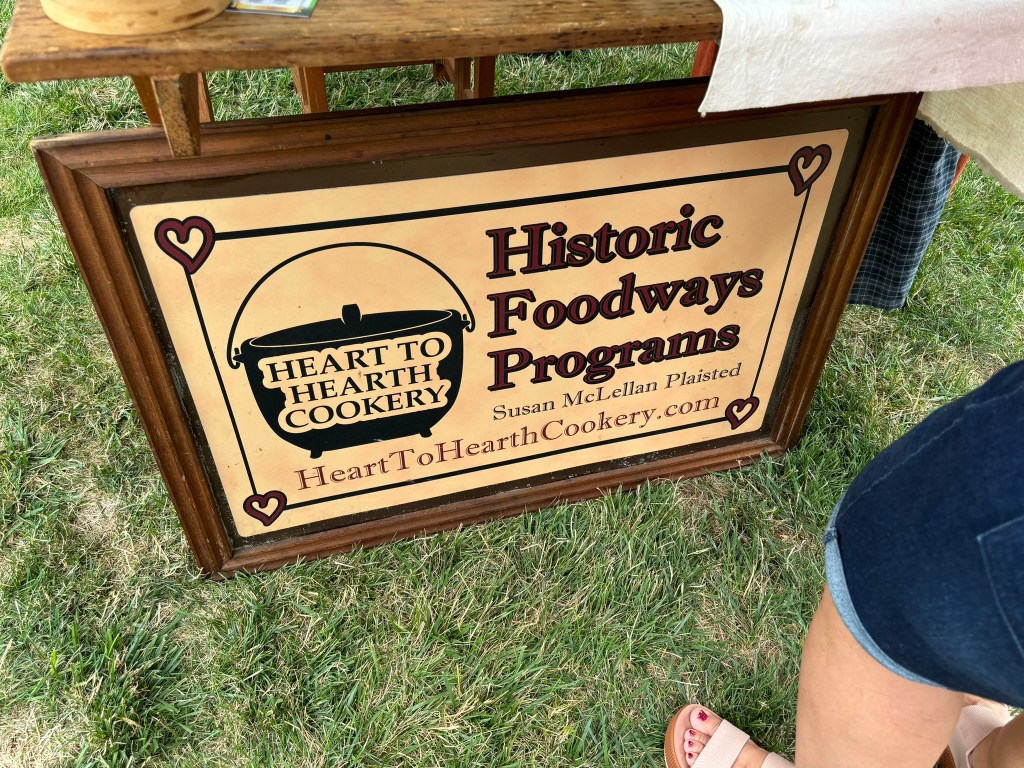
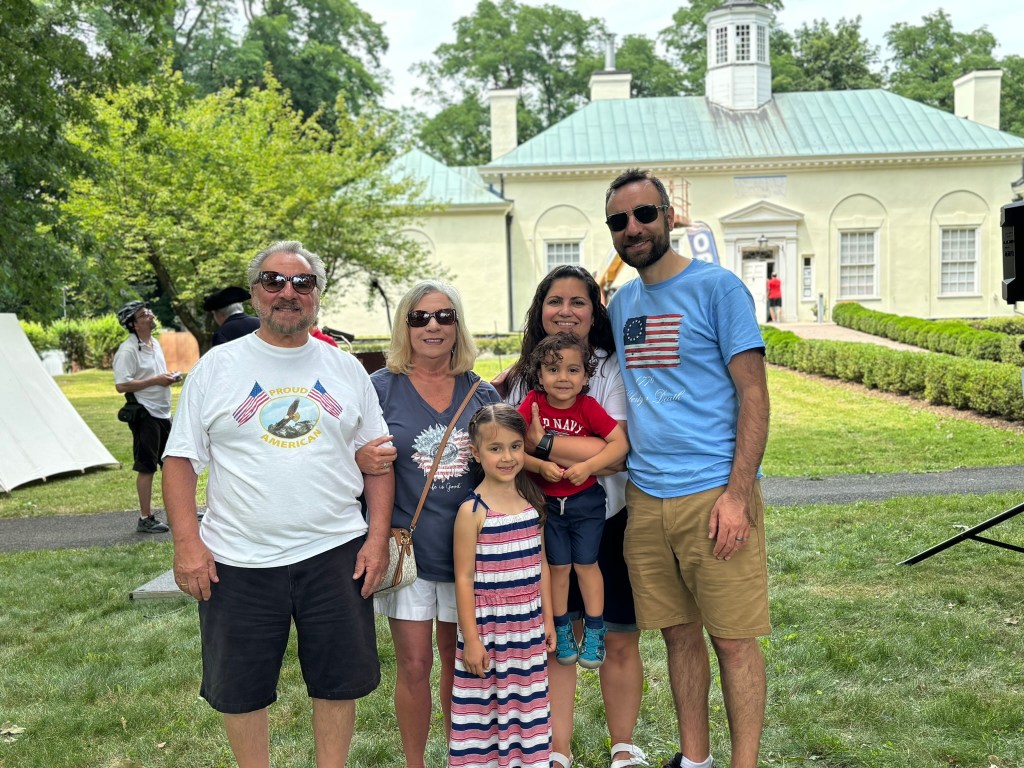
We arrived to Somerville a little early to eat brunch across the street at Turf Surf and Earth which was quite convenient and really delicious. We arrived to the event at about 11:30. There were tables set up from a few historical organizations in the region including the Heritage Trail Association, the Somerset County Historical Society, and the Somerset County Cultural and Heritage Commission. Our kids had a great time as soon as we arrived because there were many activities set up for them. My children did crafts with the Cultural and Heritage Commission, and they played colonial games with Liberty Hall Museum, including cup-and-ball. They also made their own clay marbles. We were instructed on how the colonials such as Washington and Jefferson would have made their own ice cream, which was demonstrated by Heart to Hearth Cookery. The kids also saw a display of colonial basketweaving.
We moved on to the colonial pop-up encampment with displays by reenactors of weaponry/ artifacts, which were from the Revolution era. The reenactors took us back in time: cooking meals, doing chores, and preparing for battle.
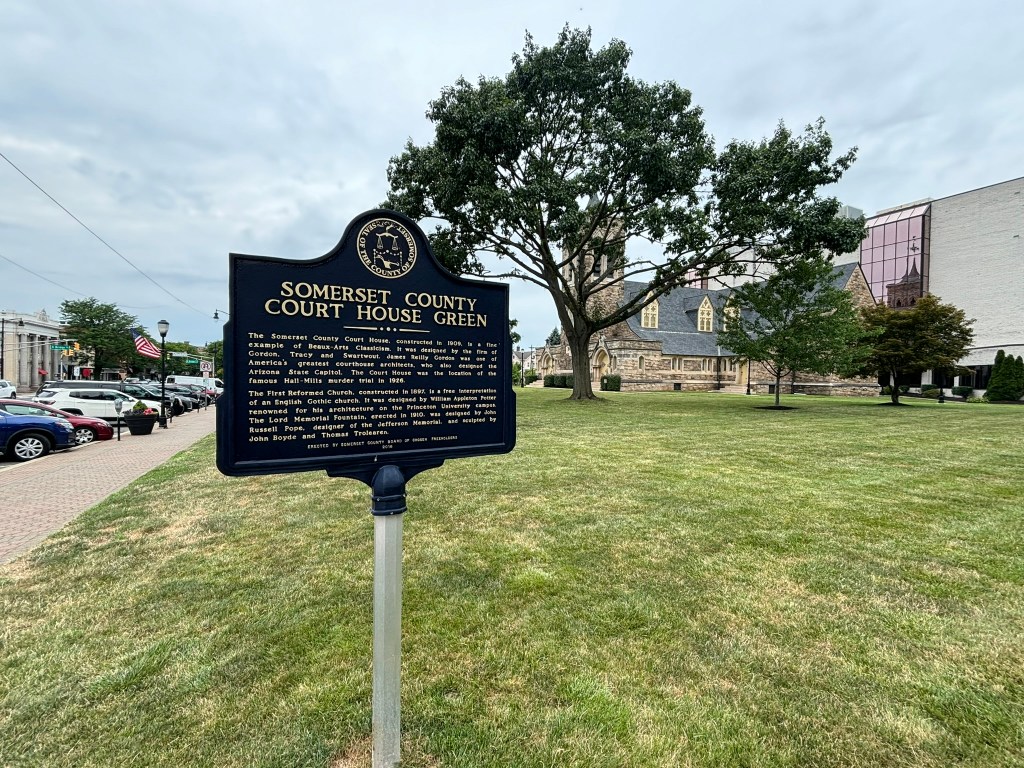
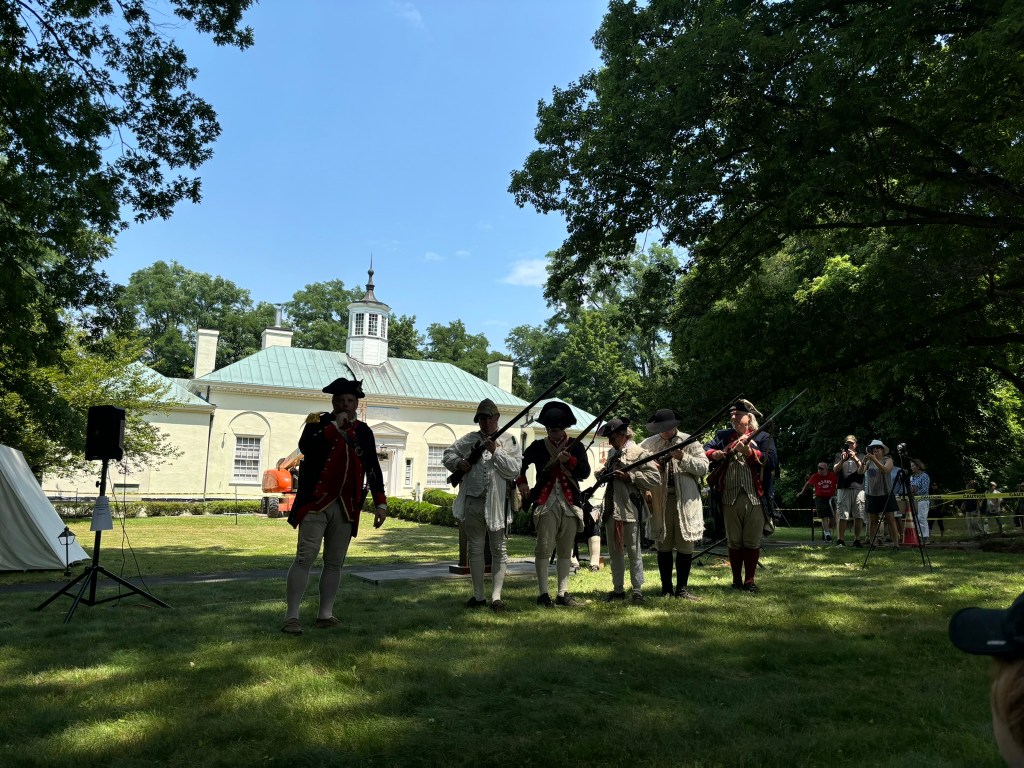
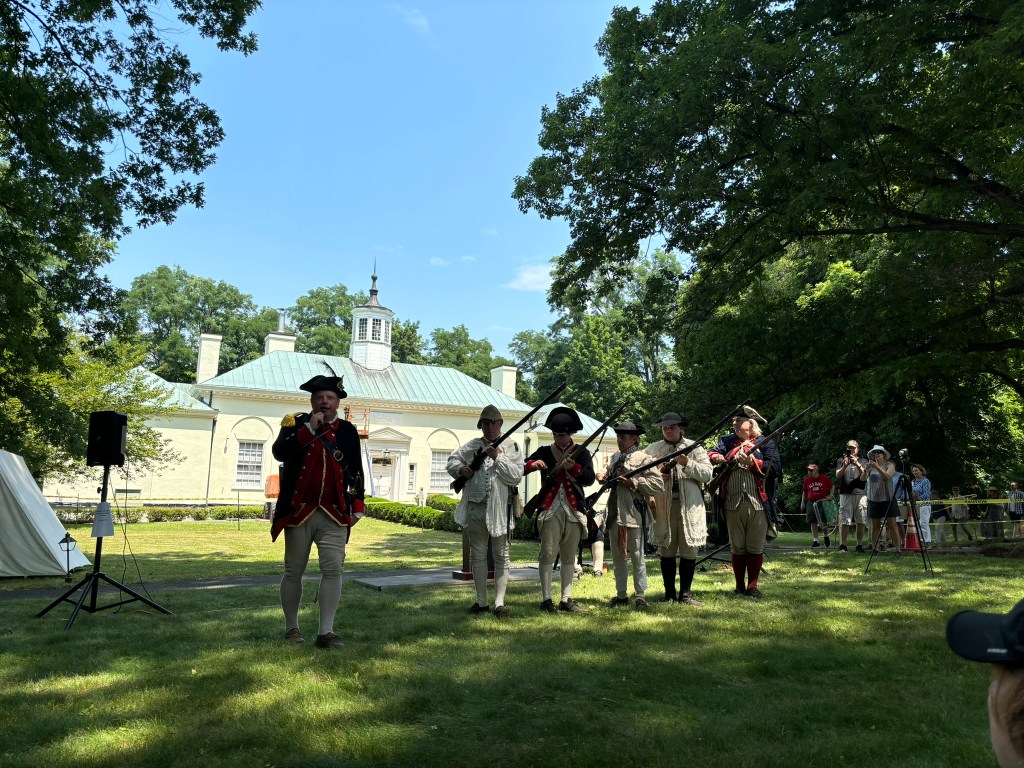
At about 12pm, George Washington and his entourage made their way down Main Street to the Courthouse Green. They were accompanied by members of New Jersey Fifes and Drums. The members of the New Jersey Militia- Heard’s Brigade, as well as the First Rhode Island Regiment stood in line and received orders from their commander. George Washington inspected the troops before they fired their muskets.
At about 12:30, Somerset County Commissioner Director, Shanel Y. Robinson addressed the crowd, and discussed how Somerset County was preparing for the 250th Anniversary of Independence.
My children took another round of the many colonial games. They also took part in 18th century reading and writing, including writing with an 18th century ink and quill. We made our way over to George Washington on top of his horse, Penny, which the kids were able to pet.
Screenshot
We had a great day in Somerville. This event was the most kid-friendly event that we’ve been to lately. History On The Green was another reminder of the tremendous impact that New Jersey had on the American Revolution. This region in Somerset County was home to the Middlebrook encampments throughout the war. Many houses still stand in the area that served as headquarters to Continental generals including Washington, Nathanael Greene, Henry Knox, Lord Stirling, and Friedrich von Steuben. I’m looking forward to going next year and also excited for what they have planned for 250!
“The Line of Splendor: A Novel of Nathanael Greene and the American Revolution” is a historical novel written by Salina Baker. In her novel, she brings to life a figure who deserves more fame and recognition for his pivotal role in the Revolution. Nathanael Greene was a selfless general and leader who fought valiantly to defend his country and provide for his troops. He was a man who defied the odds and was placed in a position of power and leadership, a favorite of General George Washington. He was a man willing to put everything on the line for the independence and freedom of the United States.
Baker’s book picks up with Nathanael Greene’s life early in the 1770s when Nathanael is about the age of thirty. At this time, there were growing tensions in the American Colonies with Mother England. Shortly before the war broke out, Nathanael married his wife Caty in 1774, and Baker does a masterful job weaving their relationship into the story of his time in the war.
Baker’s work is a fascinating depiction of Nathanael Greene and the American Revolution. Readers of history often read facts and descriptions of events, which Baker provides. But she also takes the reader into the thoughts and conversations of Nathanael Greene, as well as other key figures in his life. Baker’s novel is a reminder to the reader that the generals and soldiers who fought in the Revolutionary War were not mythical figures who fought a war that would inevitably end in an American victory. These were real men with real emotions carrying their insecurities and flaws, while experiencing the highs and many lows of the war. Greene was central to many of the key battles early in the war, from the siege of Boston, to the debacle of New York, to the triumph of Washington’s crossing of the Delaware, to the trying times at Valley Forge. Greene held a tremendous weight on his shoulders throughout the war, especially when he led the Southern Army late in the war during the Southern Campaign.
Historically, the Southern battles often receive less attention than the battles earlier in the war in the North. But Baker paints a clear and detailed picture of the challenges of the Southern Campaign. Nathanael had to lead his men while enduring extremely difficult conditions, including desertions, humid weather, mosquitoes, widespread diseases, and long, nearly constant marches. Baker vividly describes the scenes of the war: camplife, the battlefield, the civil war between Patriots and Loyalists, the chases between the Continental Army and the British Army, the losses and victories, the difficult decisions that Greene had to make as General, the tensions and disagreements with the Continental Congress, and the ultimate triumph of the Revolutionary cause. Greene fought tooth and nail for his troops, and was greatly admired amongst the men that he led.
While conducting the war, Greene ached for his wife and small children, who he was unable to see through long stretches of time. Besides depicting the emotions of Nathanael, the novel also describes the perspectives and feelings of his wife Caty, who had to constantly struggle with the reality of her husband being away at war, while trying to raise small children without a father. Throughout her novel, Baker brings the reader through a plethora of emotions from joy and triumph, to tragedy and despair. She takes you into Nathanael’s stressors such as his financial woes, and his doubts about his own ability to lead.
From reading the novel, it is quite clear that Baker has conducted substantial research on Nathanael Greene and the American Revolution. She gives extensive detail on Nathanael’s life at home, within army camps, commanding battles, and his travels throughout the states. She provides us with dialogue that fills in the gaps of historical records. Baker used primary and secondary sources for her research, and she seamlessly incorporates many letters that Nathanel wrote and received, both from his family and from his leading generals. Baker uses her first hand experiences and studies at landmarks of Greene’s life, including the battlefields that he fought on.
The novel was difficult to put down, written in a style that is easy to read. The reader becomes emotionally attached to the main character as the novel progresses, and feels all of the human emotions that Nathanael felt throughout the war and its aftermath. When the reader encounters the challenges that Nathanael had to deal with, they are left with an even greater respect for those who served in the military and fought for freedom. Nathanael Greene and his troops made overwhelming sacrifices to fight for the United States. Nathanael sacrificed his personal life, his financial life, and his family life to gain victory for a new nation. The reader encounters his inner struggles with the decisions that he made.
I highly recommend this novel for any type of reader, especially those who have a love for historical figures or events. It is a story that entertains, leaves you on the edge of your seat, and provides you with a new and broader perspective on an important historical leader. Nathanael Greene was a central figure in one of the most important events in human history. Salina Baker, in this tremendous novel, is shining a light on the legacy of this great man. Purchase a copy of the book here—> Amazon
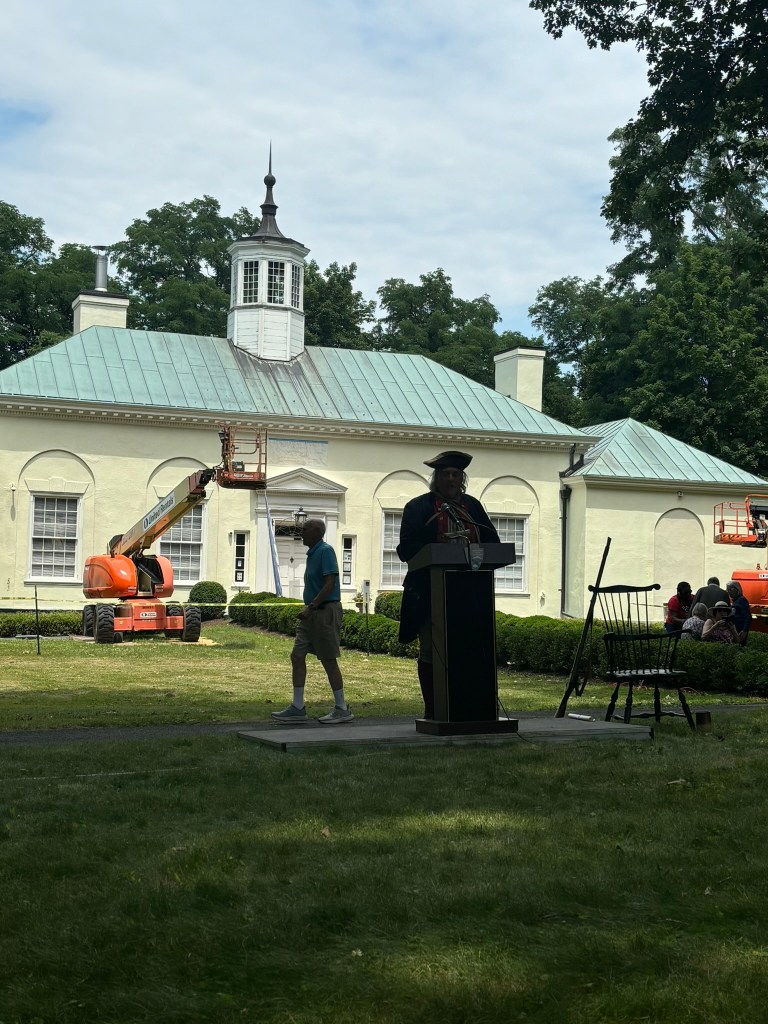
My family and I made it out on the Fourth of July to Washington’s Headquarters in Morristown, NJ for the public reading of the Declaration of Independence. This was our first time attending this yearly event.
The festivities began at 12pm with demonstrations by reenactors of the 2nd New Jersey regiment. The regiment did a fantastic job showing the crowd how to stand in a line, reload their muskets, and how to use the bayonet. They thoroughly explained the use of muskets in the Revolutionary War, as well as the uniforms and limited supplies of Continental soldiers.
The 2nd New Jersey regiment’s demonstrations lasted nearly to 1pm. At that point there were a few speakers including Thomas Ross, the Superintendent of Morristown National Historic Park. He described the rehabilitation projects taking place at the park, including to the Ford Mansion, as well as to the museum. These projects are in preparation of the 250th anniversary of the Revolution.
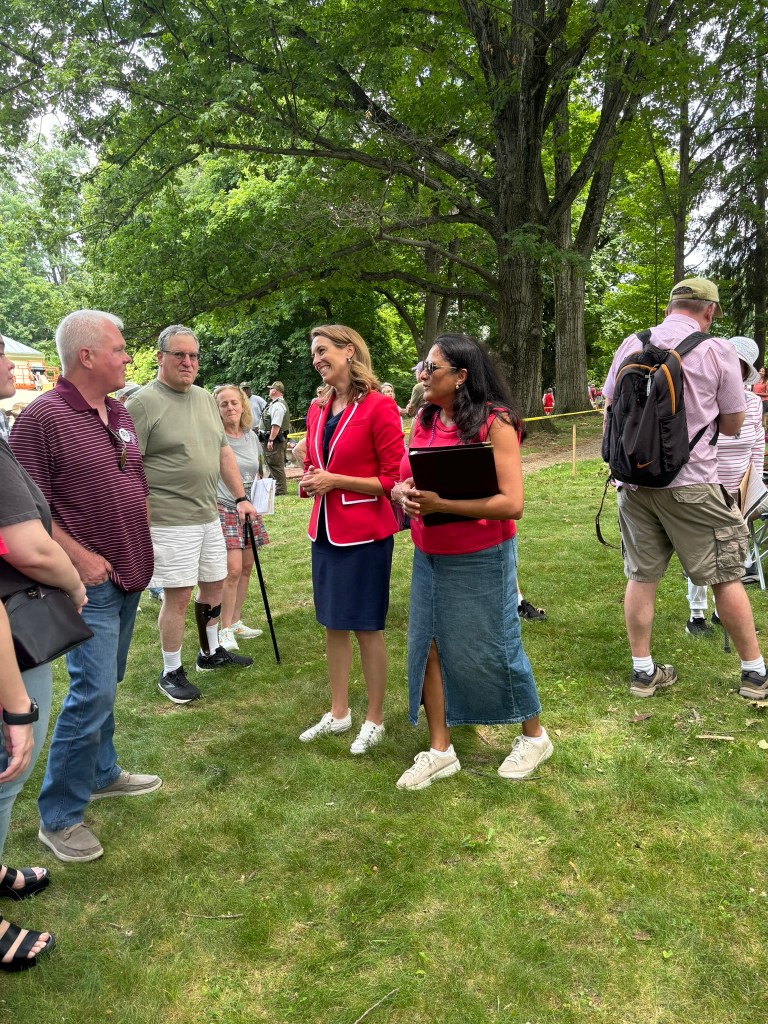
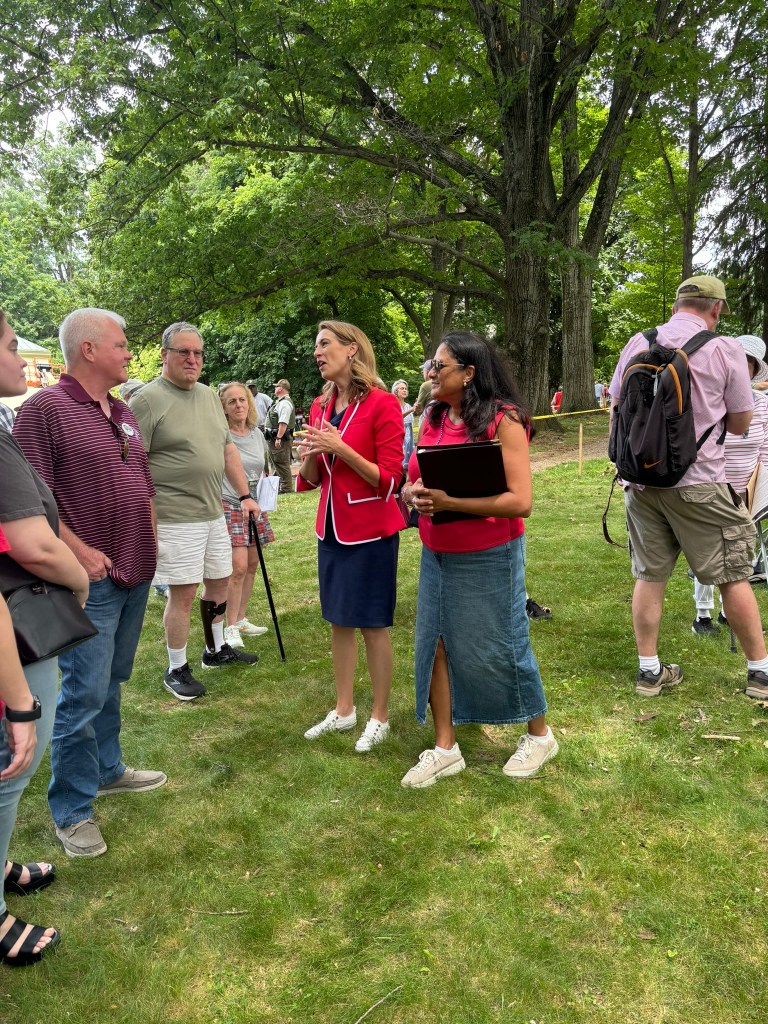
Another speaker who addressed the crowd was Congresswoman Mikie Sherrill who represents New Jersey District 11. She described New Jersey’s importance to the Revolution and praised the efforts to preserve New Jersey’s history.
At 1pm, Ranger Tom Winslow read the Declaration of Independence. The audience was encouraged to give shouts of “Huzzah!” when he read words/ phrases favorable to freedom and independence. The audience was encouraged to shout “Down with King George!” Or “Down with Tyranny!” when he read the many grievances listed against the king.
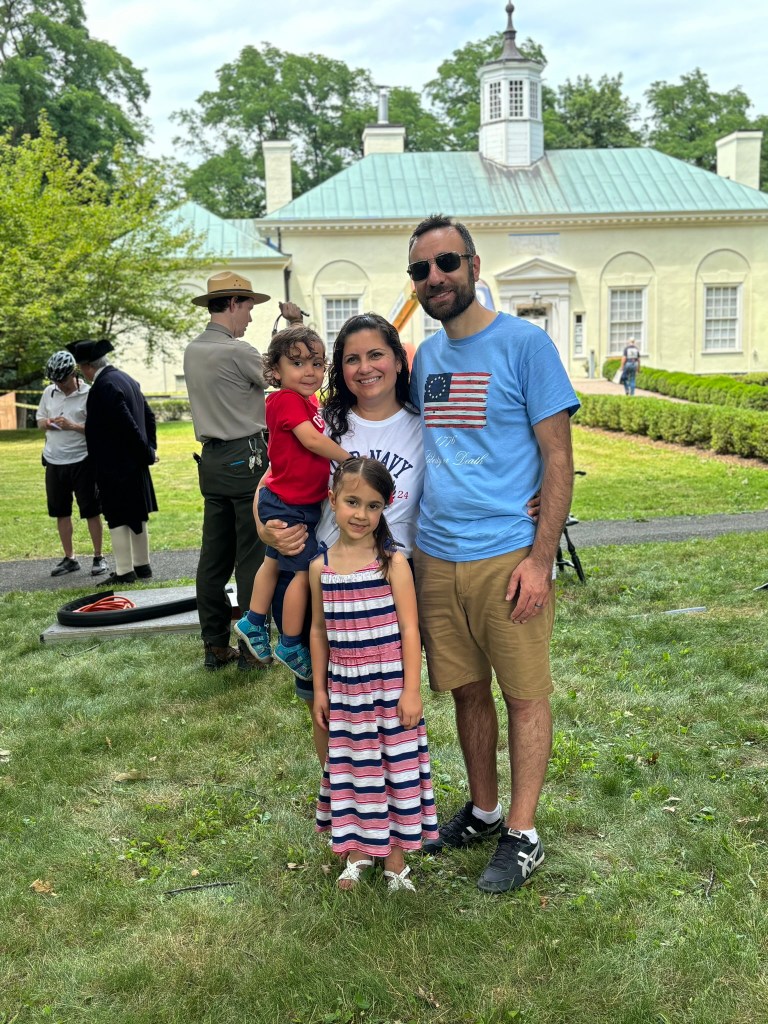
Finally, the program concluded at about 1:30 and my family went in and visited the museum. Representative Mikie Sherrill met and spoke with visitors, while the reenactors also took photos. My family and I really enjoyed our patriotic Fourth of July in Morristown, and would love to come back again! Check out my social media sites in the coming days for videos of the event, including drills, discussions of the revolutionary soldiers, speakers, and the reading of the Declaration of Independence: Facebook, Instagram, Twitter
Below are links to organzations who helped run the event or were in attendance.
My family and I made it to Washington’s Crossing State Park on the New Jersey side of the Delaware River. My wife and I had gotten free tickets for a tour of the park, which was conducted by the Washington Crossing Park Association. We arrived at the park a little before our 1PM tour time, and we had an opportunity to explore the museum within the Visitor’s Center. The museum had a great collection of artifacts, including uniforms, weaponary, ammunition, coins, letters and other items related to the American Revolution. The Visitor Center also had books for sale.
Background of Washington’s Crossing
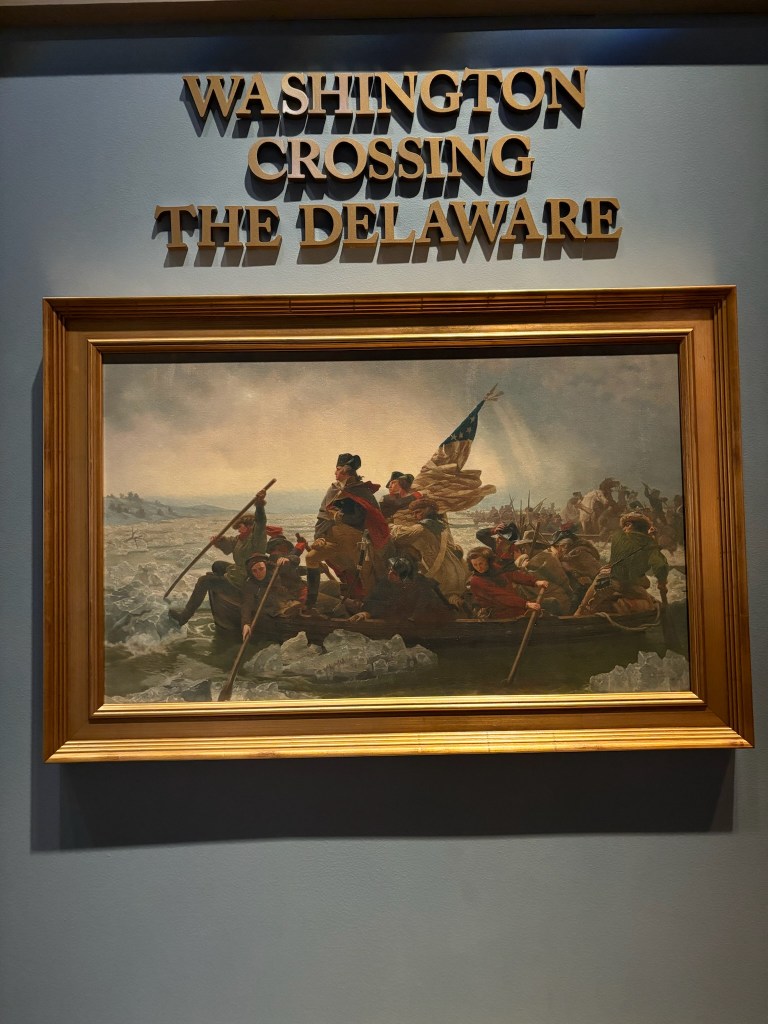
The tour began with a video that was about 30 minutes long called “Ten Crucial Days: The Road to Liberty.” The video’s primary focus was to tell the significance of Washington’s crossing. The video also gave us the background leading up to the event. The British army landed about 32,000 troops in New York harbor starting in August 1776, shortly after the United States declared independence. The British then won a series of battles starting in Long Island, then Manhattan and up to White Plains. The Continental Army retreated across New Jersey while being pursued by the British army. Washington led his hungry, desperate, and dwindling army across the Delaware River and found safety in Pennsylvania by early December.
The revolution seemed lost for the Continentals. To add to Washington’s difficulties, many of his men’s enlistments were up at the end of the year. He needed a major victory to boost the morale of the troops as well as the young nation.
In a quite daring move, Washington planned a surprise attack on the Hessian garrison stationed at Trenton. On Christmas night, he would lead the Continental Army across the Delaware River including horses and artillery, and march nine miles south to Trenton. Washington and the Continentals knew the significance of the element of surprise. He wanted to attack Trenton before sunrise, but the crossing was running hours behind. Washington crossed the Delaware with 2,400 men, not as many as he had hoped because other regiments who were to cross south of Trenton never made it across. After landing on the New Jersey side, Washington and his men finally began their march towards Trenton at 4AM. The weather did not cooperate with the Continentals. Along the march, they first faced light rain, then light snow, then blizzard like conditions. At least two men died during the march.
About halfway to Trenton, the army broke into two groups. General Nathaneal Greene, accompanied with Washington, took one group, and General John Sullivan led a second group. The two groups split off and would take two separate roads to Trenton. This plan would result in the Continentals enveloping the enemy and attacking from two locations. The Continental Army did not reach Trenton until 8AM which was after sunrise, although the morning fog helped conceal the oncoming troops. The battle ensued and lasted just about an hour and half. At its conclusion, the Hessians suffered 22 killed, 83 wounded and nearly 900 captured. It was a resounding victory for the Continentals, and it was the victory that they so desperately needed.
Washington’s crossing was the beginning of what historians call “The Ten Crucial Days.” After the victory at Trenton, the Continental Army went back across the Delaware River to Pennsylvania. Just a couple days later, they again crossed back into New Jersey and encamped at Trenton and held off the British Army at the Second Battle of Trenton. During the night of the second battle, Washington and the Continentals secretly marched around the British army and faced another British army at the Battle of Princeton on January 3rd, 1777. This was another resounding victory for the Continentals who defeated British Regulars. The Ten Crucial Days breathed new life into the revolution. The Continental Army would spend their winter encampment at Morristown, living to fight another day.
Had it not been for Washington’s daring move to attack at Trenton, the Revolution may have been over. Even the British believed that the Continentals had nothing left. Had Washington’s attempt on Trenton failed, the rebels may have lost the war and would become British subjects once again, under the closer scrutiny of the crown. But Washington’s stroke of genius gave the Continentals the hope to continue fighting. The war would continue to drag on for years with victory for the Continentals not becoming official until the Treaty of Paris in 1783. Even though it was early in the war, the Ten Crucial Days are arguably the ten most significant days in American and World history.
The Tour
After the video was over, our tour guide, Tim West, took us on a walk through the park, down Sullivan Lane to the entrance of Continental Lane in the direction towards the Delaware River. He discussed the reasons why Washington chose this particular place to cross the river. The Continental Army wanted to be in the vicinity of Philadelphia which was the new nation’s capital and arguably the most important city in the young country.
We made our way to the Stone Barn, built in the 1780s, where Tim discussed the army’s march to Trenton, as well as the battle itself. Inside the Stone Barn is a large map of Trenton as it looked in 1776. There is also a fascinating diorama of the river crossing.
Next, we ventured off to the Landing Overlook, where we could see the location where Washington and the Continental Army crossed the Delaware River. It was quite amazing to see the exact location where such a significant historical event took place.
I was able to venture over to the Johnson Ferry House which is very close to the crossing site. The house was built in 1740 and was a witness to the crossing. The house was owned by Garrett Ferry, who had a 490 acre colonial farm and ferry service across the Delaware. It is believed that Washington and his officers used the house to plan out their attack on Trenton. We unfortunately did not have an opportunity to go inside the Johnson Ferry House, but if you are visiting, make sure to check their hours of operations and tours.
We were also told throughout the tour that a brand new visitor center and museum will be built starting early July to be completed in time for the 250th Anniversary. I’m looking forward to checking out the new museum which will have amazing new and updated exhibits. I also look forward to visiting the Pennsylvania side of the river crossing. If anyone has any advice on what to see and do in the area, please comment and let me know!