Social Media/ YouTube

Enter your email to stay updated on new blog posts.

Category: Historical Trip

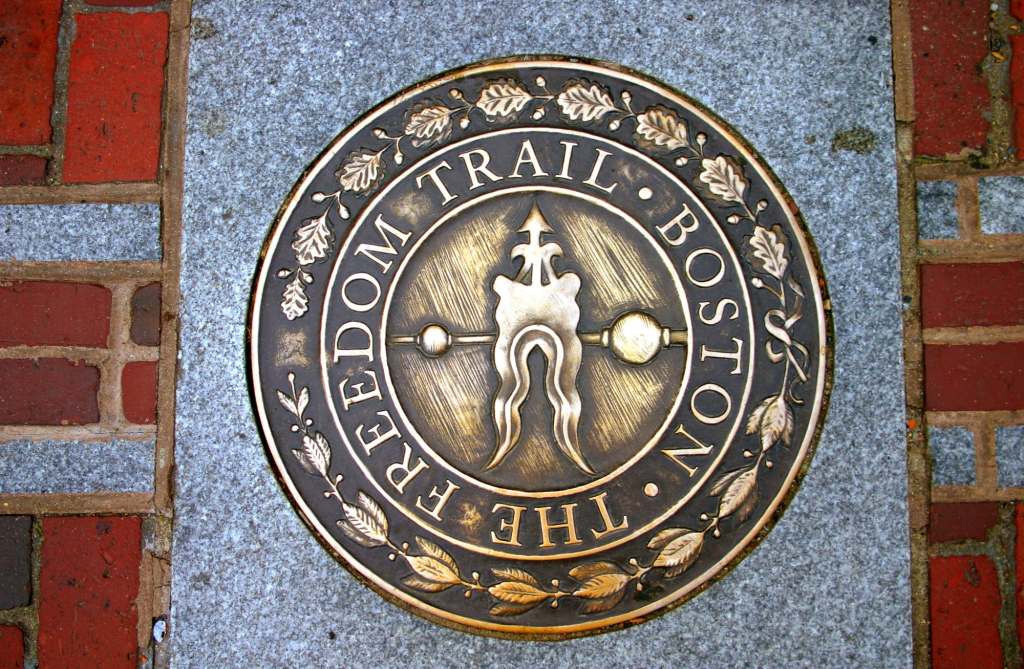
  • As a follow up to my three-part blog on the Massachusetts Bay Colony, this blog will focus on historic sites to visit in Boston, which was settled in 1630 and became the major city of the region. In 2020, I took a History course on Colonial America, and for one of the projects, I had to research colonial sites to visit in Jamestown, VA, Charleston, SC, and Boston, MA. In researching Boston sites, I primarily used the Freedom Trail website (https://www.thefreedomtrail.org). Then in August 2022, my family and I were able to travel to Boston for the first time, and see most of the sites on the Freedom Trail, and those that I had researched two years prior. Boston is the most historic city in the country, and one of the oldest. When considering the lead up to the American Revolution, most of the major events took place in the city of Boston, including the many protests against British acts such as the Stamp Act (1765) , the Townshend Acts (1767) and the Tea Act (1773). Boston witnessed the Boston Massacre (1770) and the Boston Tea Party (1773). It was the epicenter of agitations between the colonists and the British crown between 1765- 1775 leading to Lexington and Concord. Boston was always a city that I felt that I needed to visit and it was wonderful to finally get there last summer. The structures and landmarks that still stand are reminders of those events that led up to the conflict, and the people who fought for freedom.

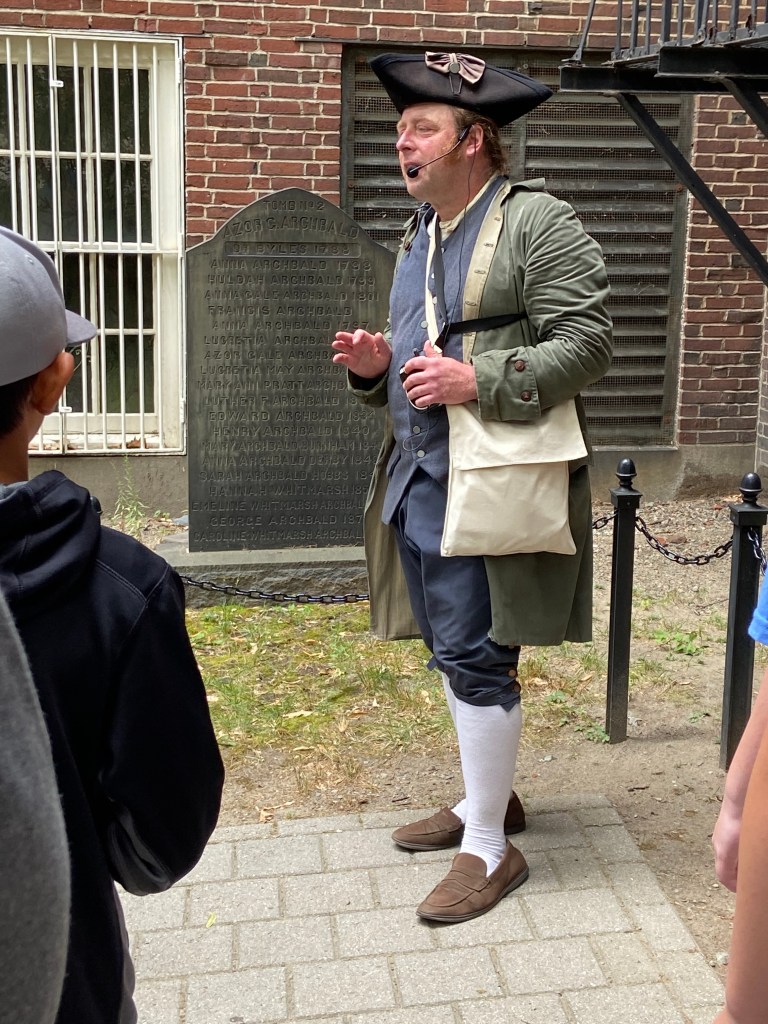
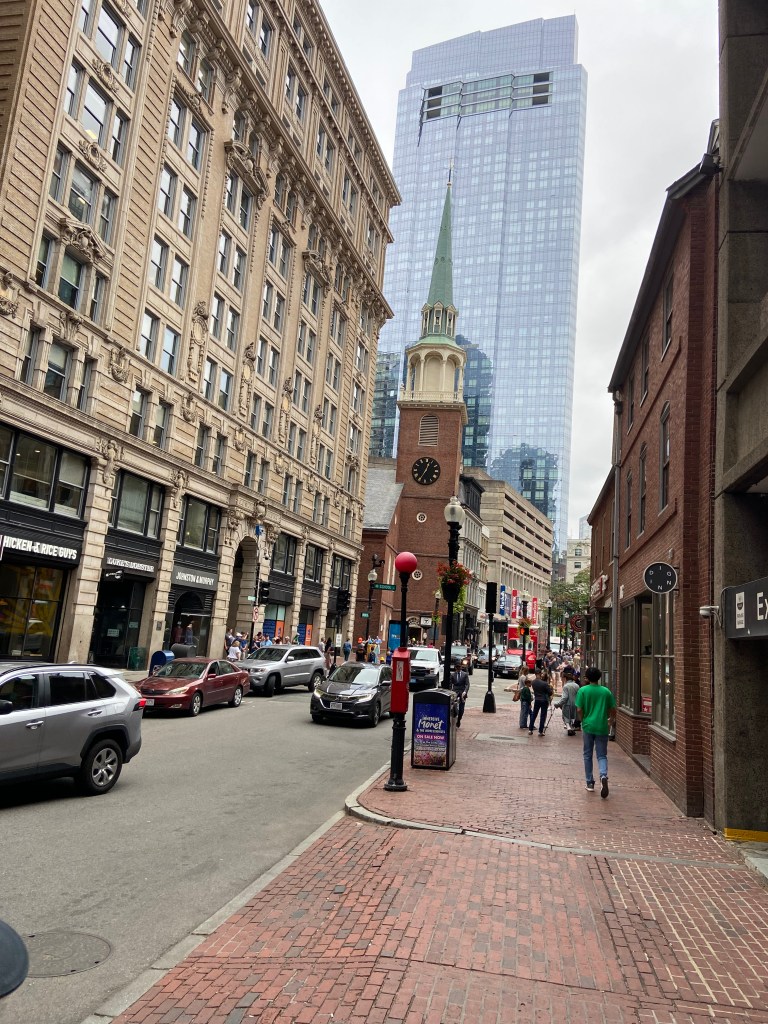
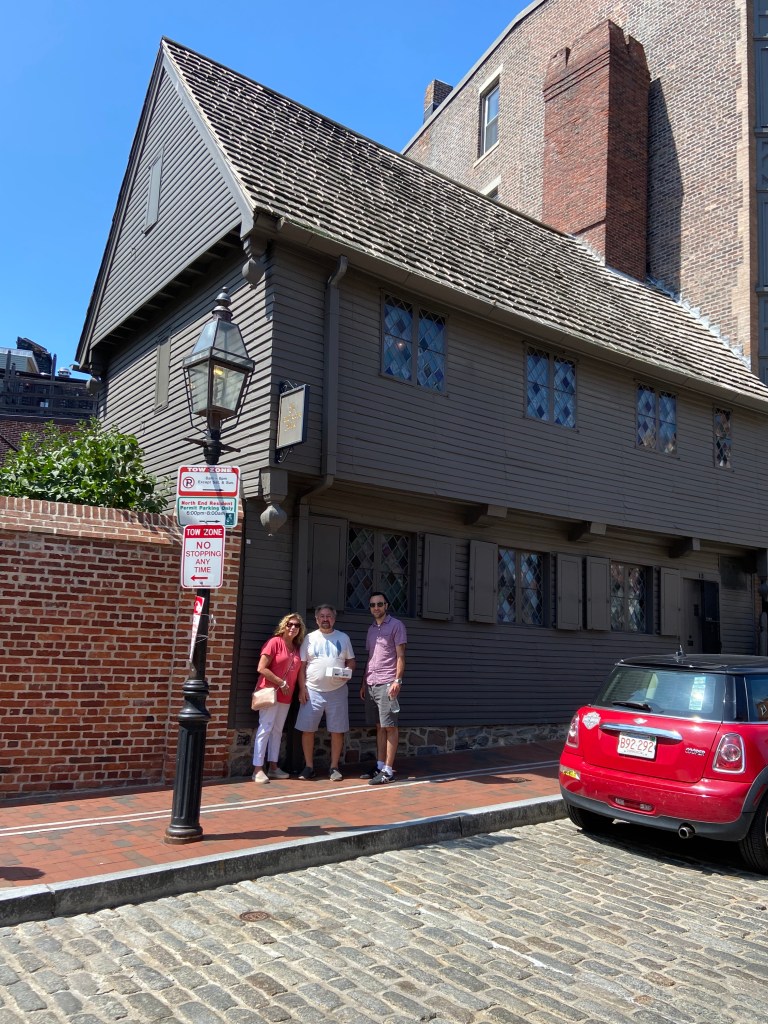
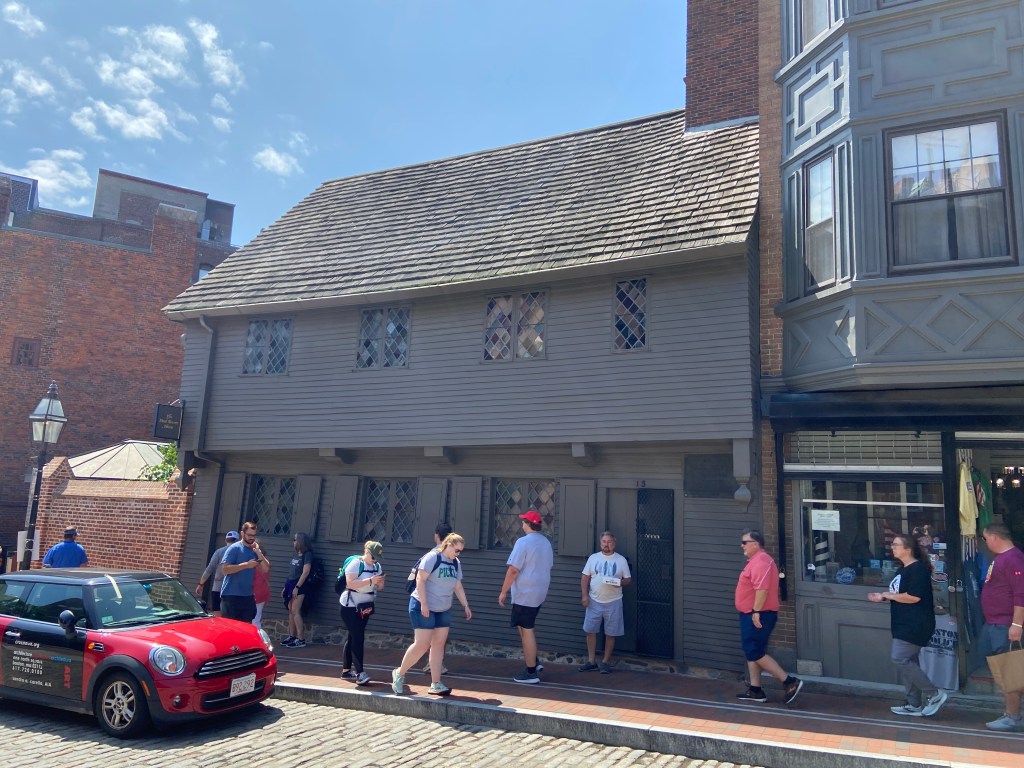
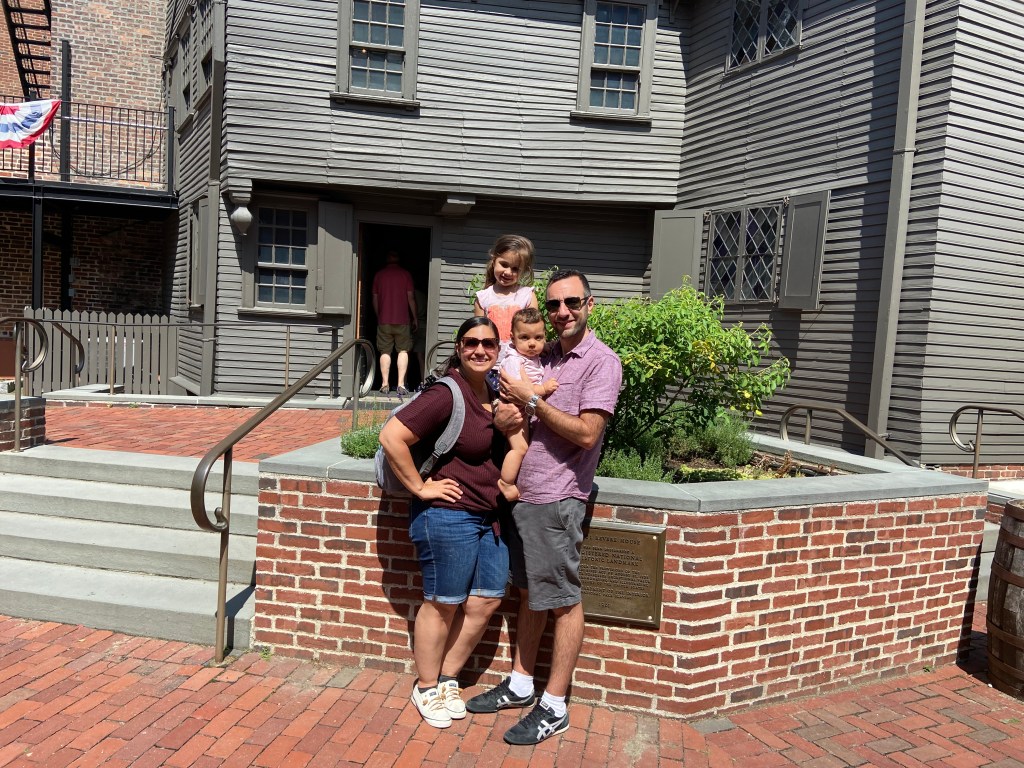
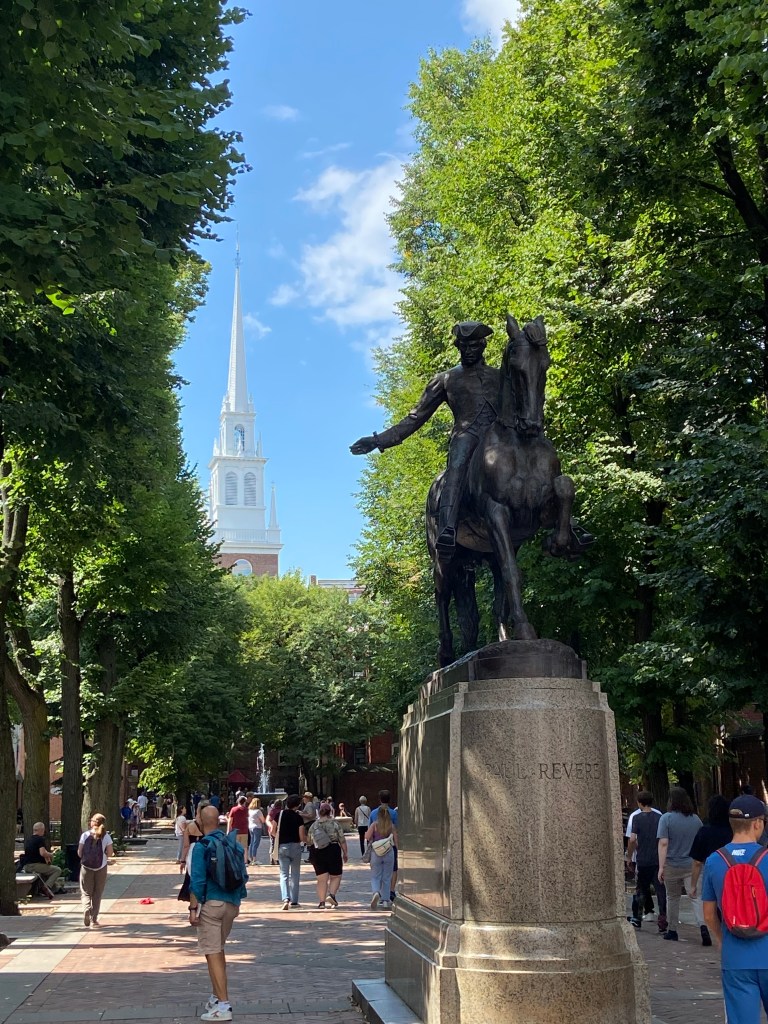
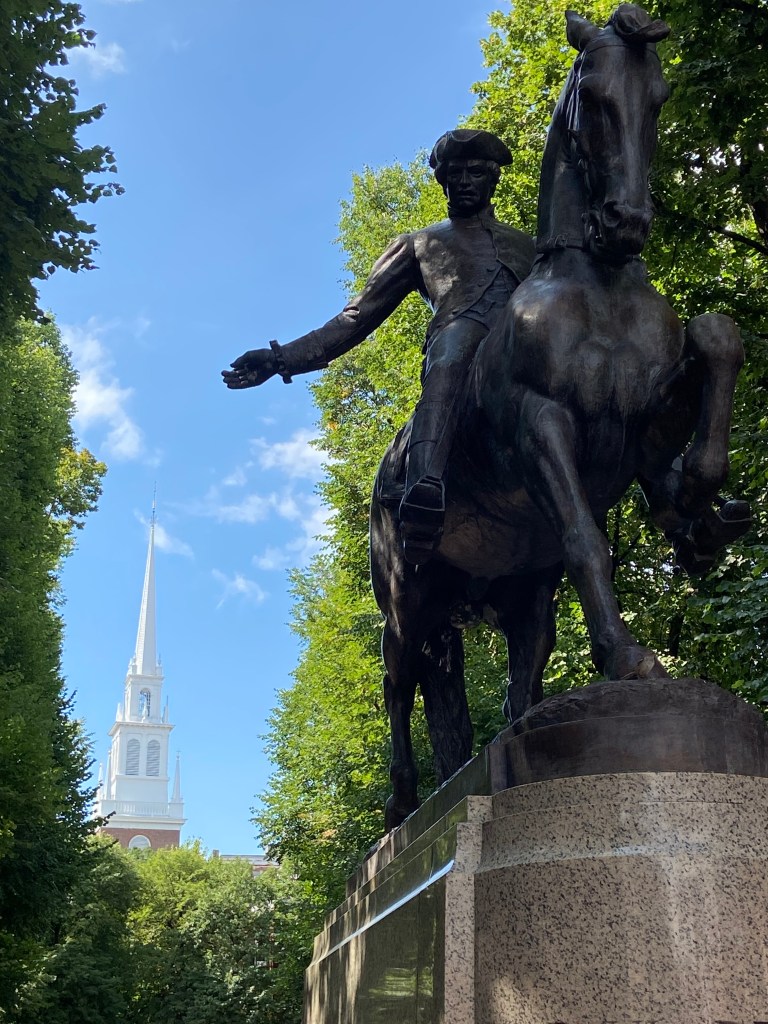
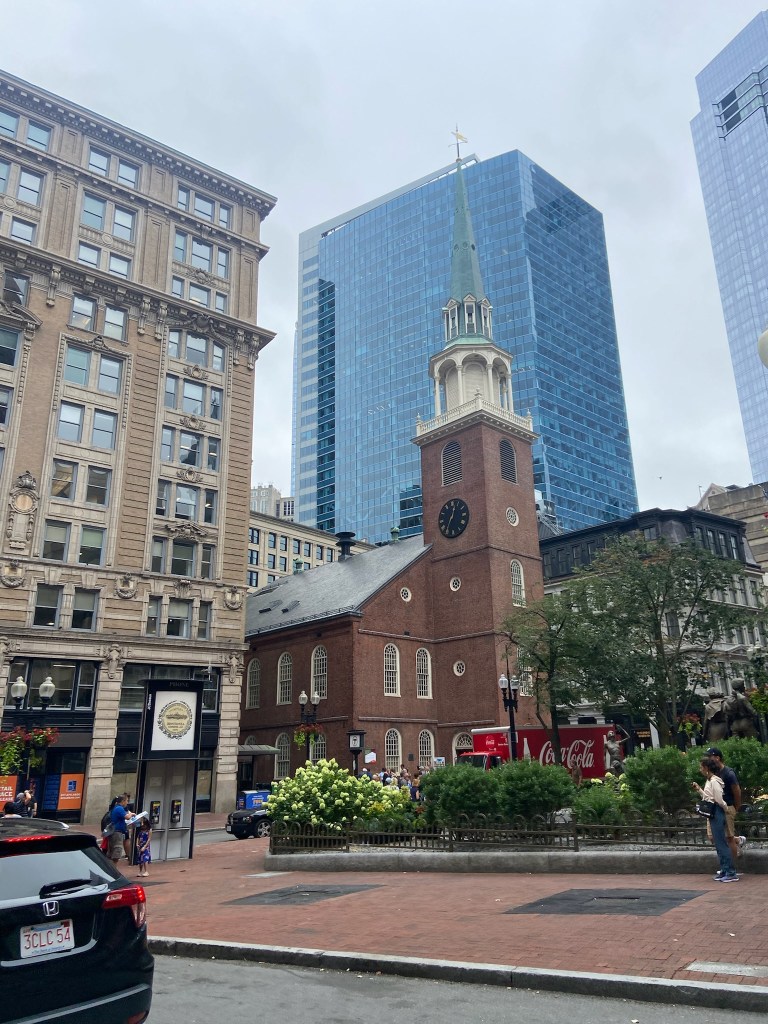
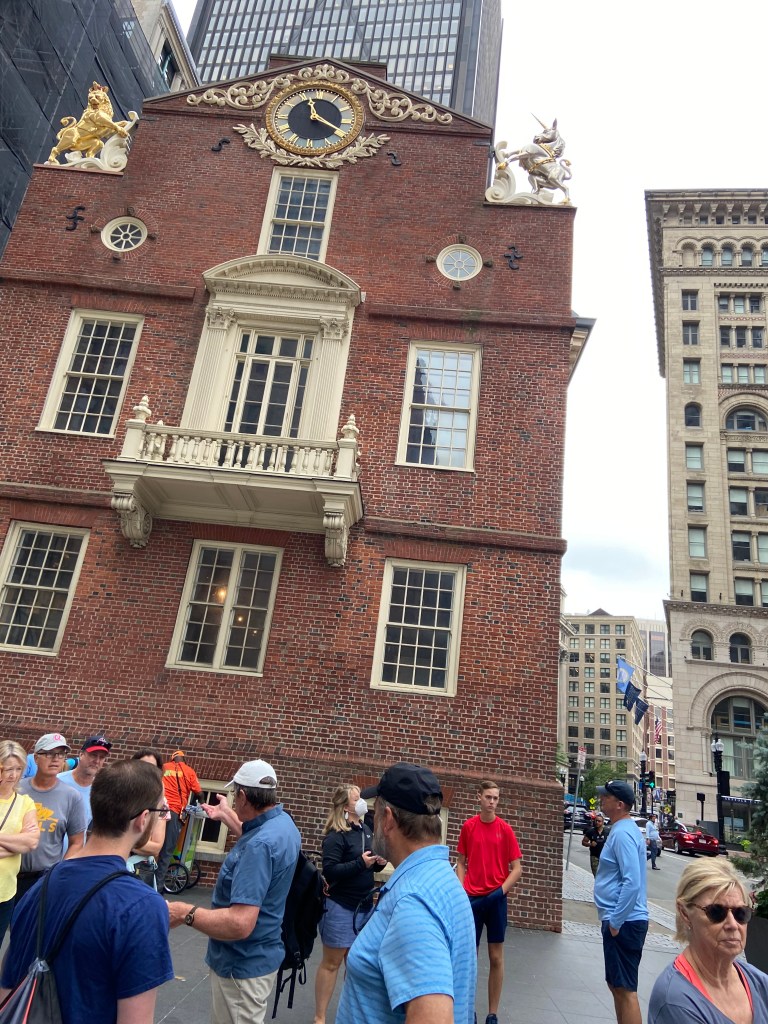
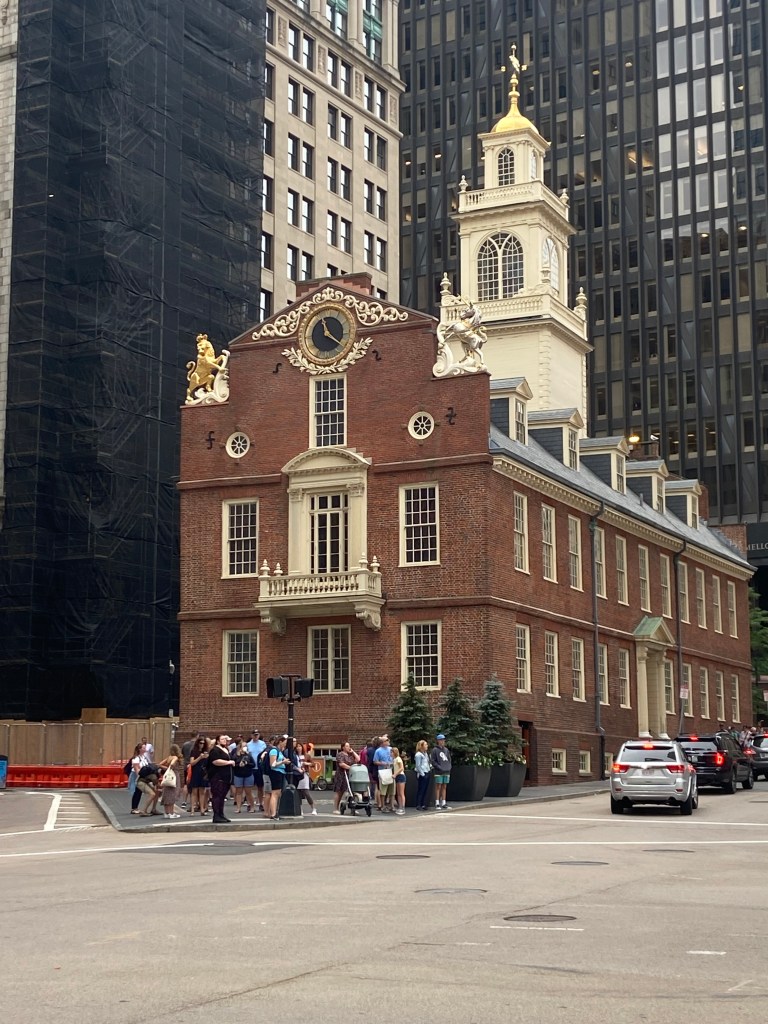
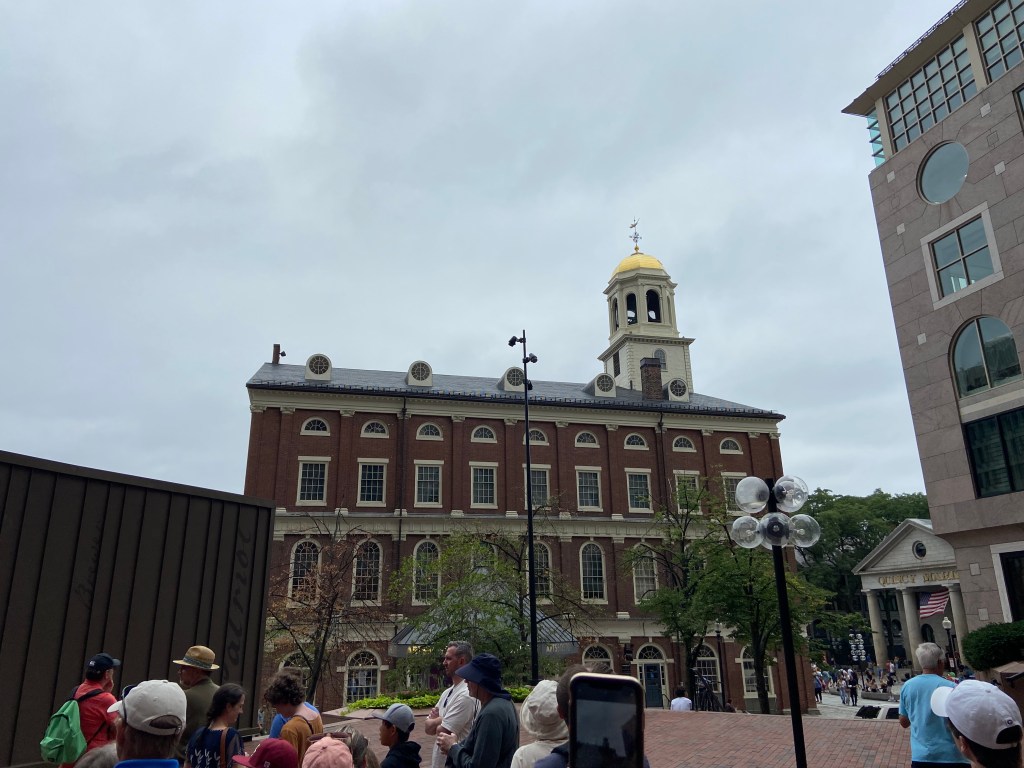
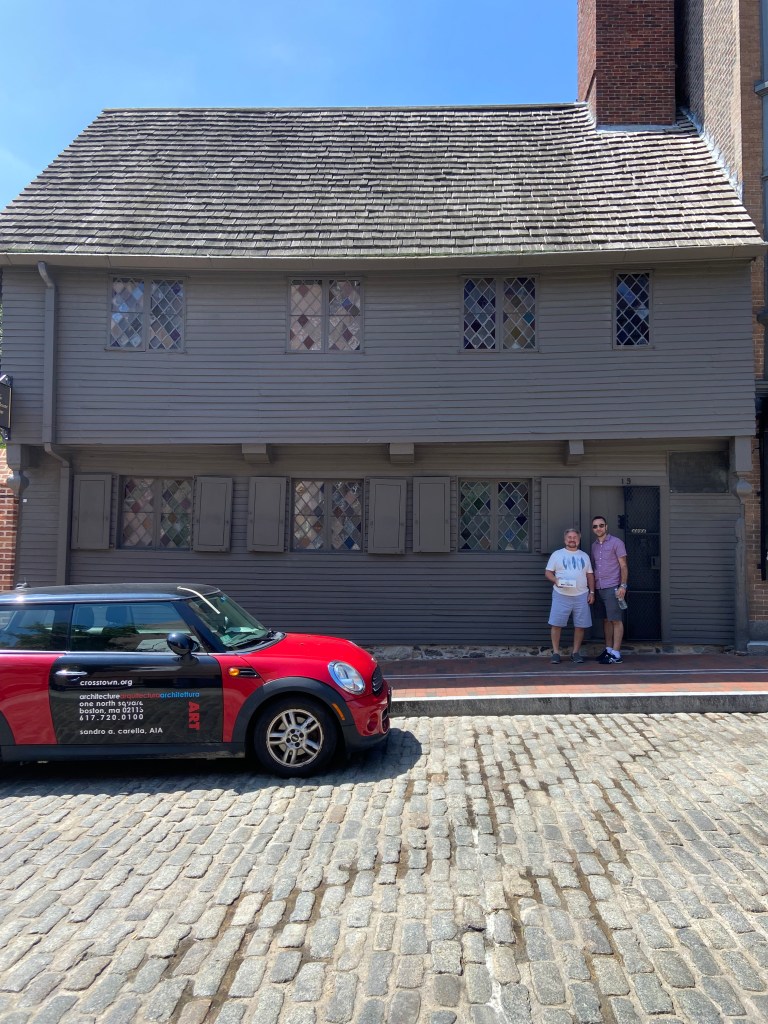
    I highly suggest visiting Boston and going on the Freedom Trail with a tour guide. I particularly recommend you take your tour with Jeremiah Poope. He was extremely knowledgable and entertaining. In all of his anecdotes, he added engaging and sometimes comical tidbits. He truly made it a worthwhile experience for anyone with any level of interest and knowledge in history. We went on the “Walk Into History” Tour but there are other options as well. Below is a list of sites on the “Walk Into History” Tour. The tour ends at #11 Fanueil Hall, but Paul Revere’s House and the Old North Church are just a short walk away. Next to each site is a link to its page on the Freedom Trail website for more information about its history and significance. I’ve also included our personal photos from some of the sites.

    1. The Boston Common- https://www.thefreedomtrail.org/trail-sites/boston-common
    2. Massachusetts State House- https://www.thefreedomtrail.org/trail-sites/massachusetts-state-house
    3. Park Street Church- https://www.thefreedomtrail.org/trail-sites/park-street-church
    4. Granary Burying Ground- https://www.thefreedomtrail.org/trail-sites/granary-burying-ground
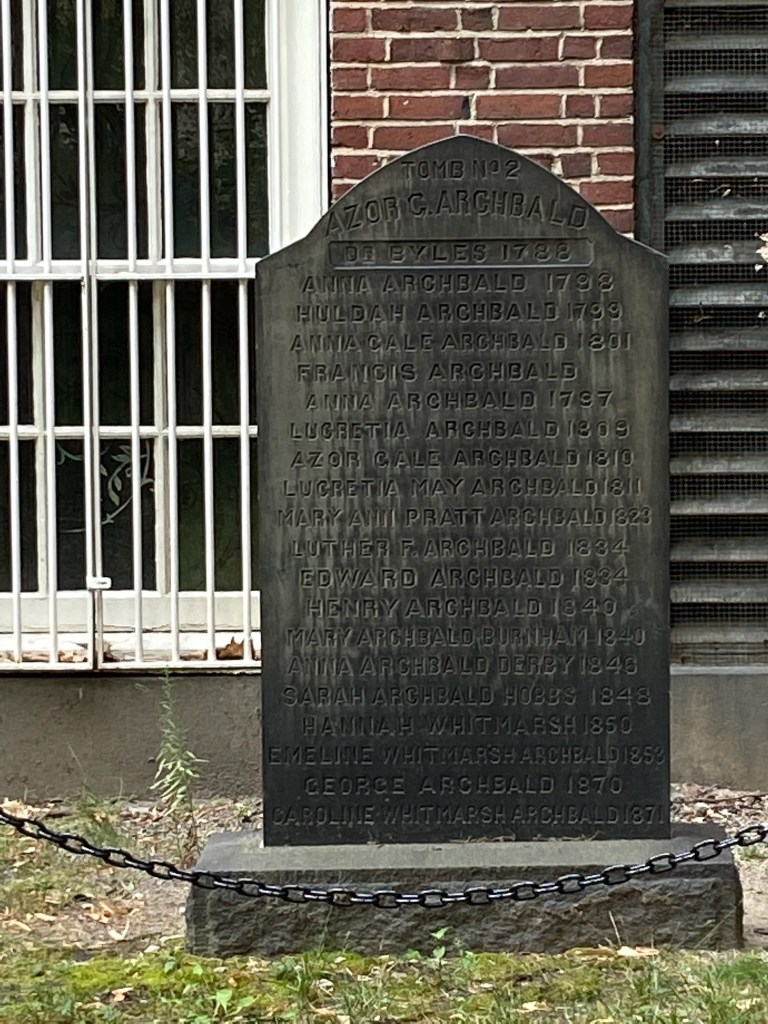
    5. King’s Chapel & King’s Chapel Burying Ground- https://www.thefreedomtrail.org/trail-sites/kings-chapel-kings-chapel-burying-ground
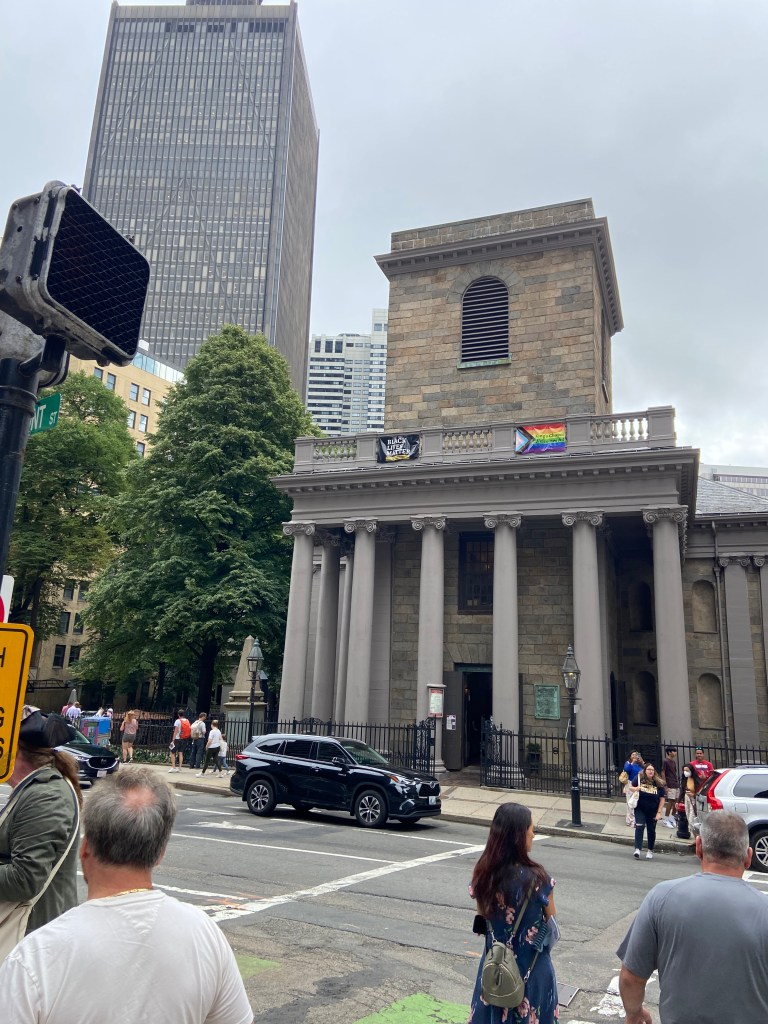
    6. Boston Latin School Site/ Ben Franklin Statue- https://www.thefreedomtrail.org/trail-sites/boston-latin-school-sitebenjamin-franklin-statue
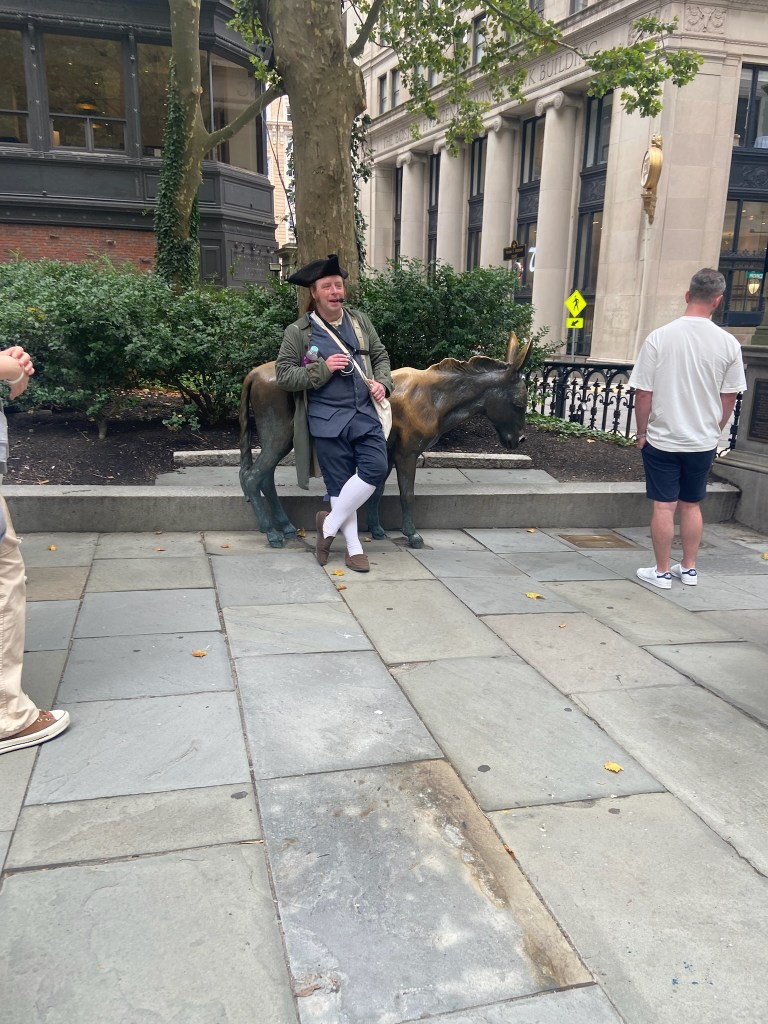
    7. Old Corner Bookstore- https://www.thefreedomtrail.org/trail-sites/old-corner-bookstore

    8. Old South Meeting House- https://www.thefreedomtrail.org/trail-sites/old-south-meeting-house
    9. Old State House- https://www.thefreedomtrail.org/trail-sites/old-state-house
    10. Boston Massacre Site- https://www.thefreedomtrail.org/trail-sites/boston-massacre-site
    11. Faneuil Hall- https://www.thefreedomtrail.org/trail-sites/faneuil-hall
    12. Paul Revere’s House- https://www.thefreedomtrail.org/trail-sites/paul-revere-house
    13. Old North Church- https://www.thefreedomtrail.org/trail-sites/old-north-church

    Other sites to see that we didn’t have a chance to see this time included the USS Constitution and the Bunker Hill Monument. I’d also love to go to Fenway Park some day.

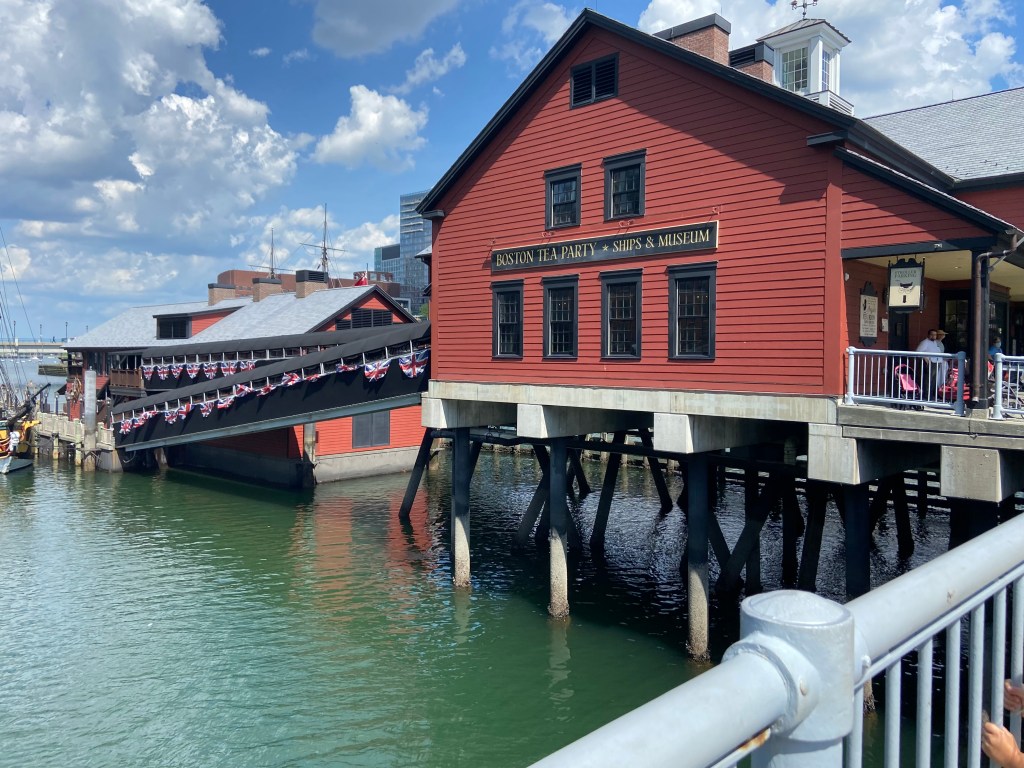
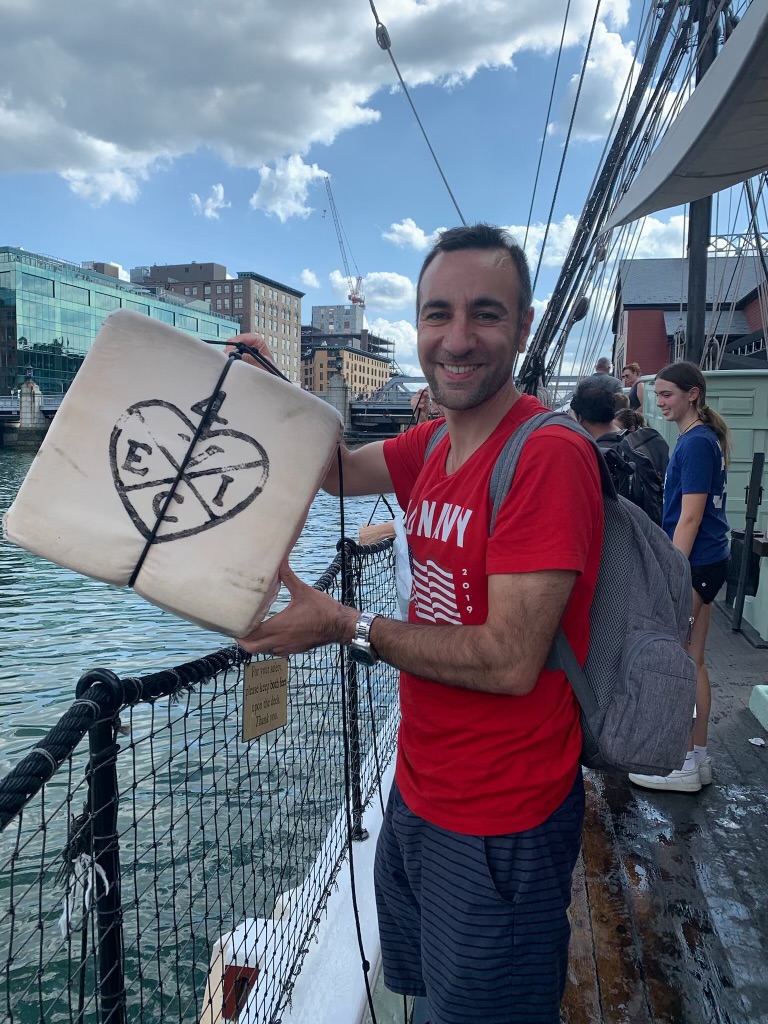
    Besides the Freedom Trail, we also went to the Boston Tea Party Ships & Museum and I would highly recommend getting tickets. You first enter the “Meeting House” where live reenactors plan the Boston Tea Party and rally you and the other visitors as the colonists. You then have an opportunity to go on board and explore an 18th century ship and then throw British Tea into the harbor. You also watch, on a theater screen (Minutemen Theater) the events of Lexington and Concord. They also had a great gift shop and tea room. Overall, we had a wonderful Boston trip considering that this was our first time. For the kids, we also went to the Boston Aquarium and the Children’s Museum which we all really enjoyed. We’re looking forward to going back!
    Related Posts:
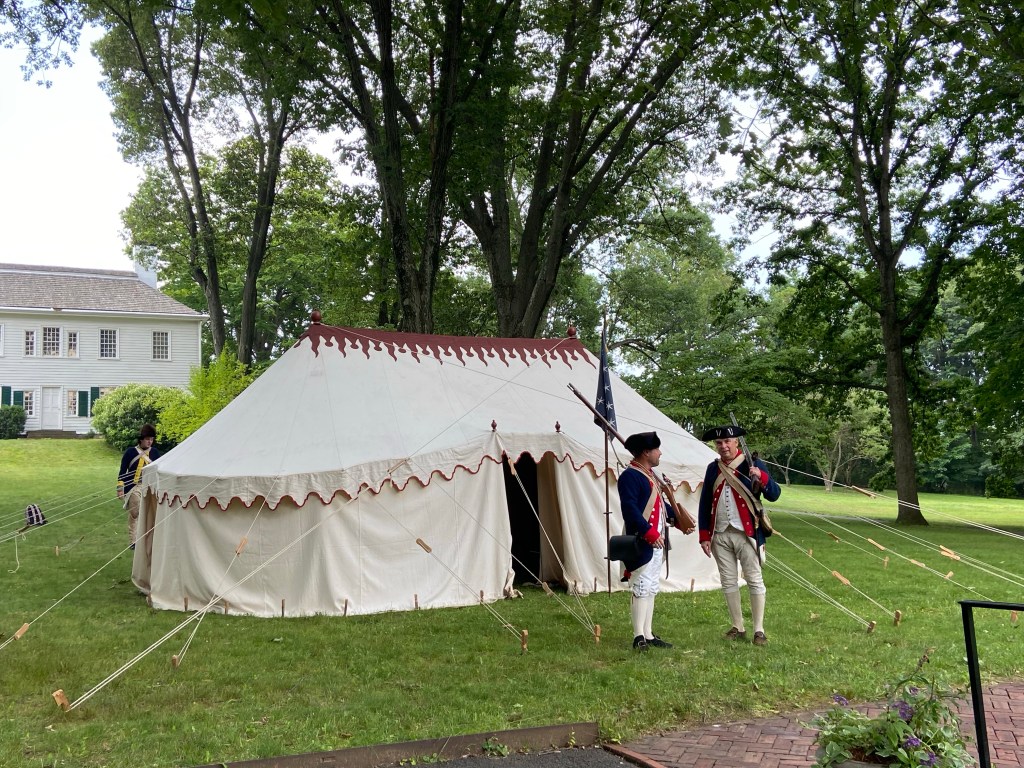
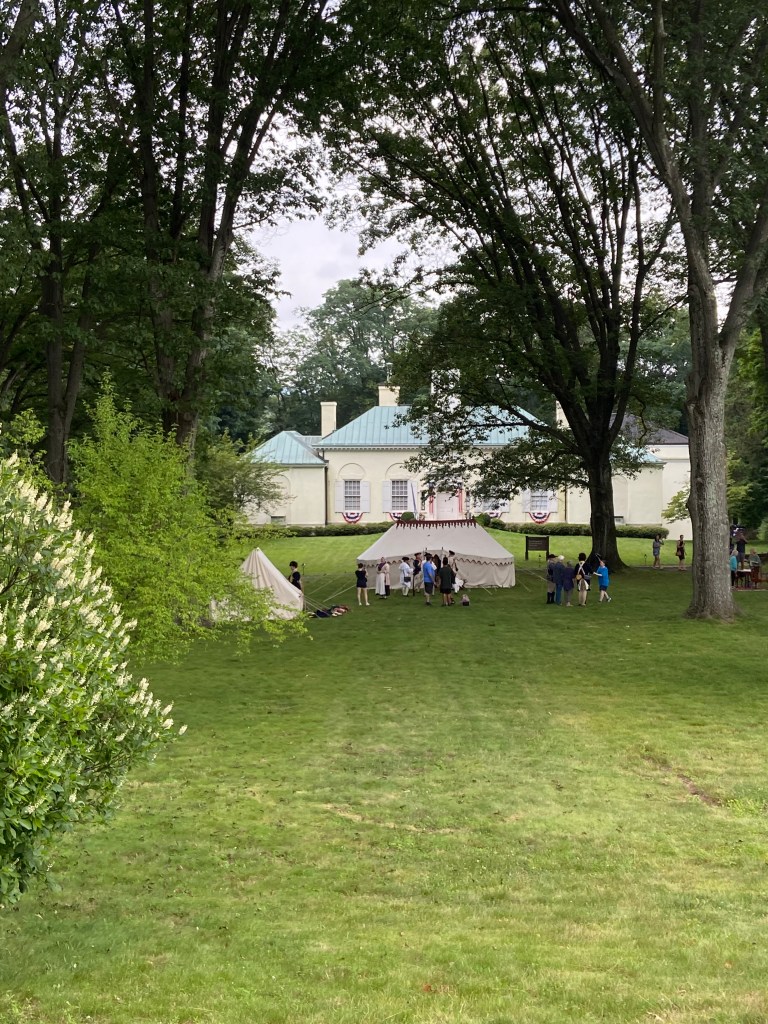
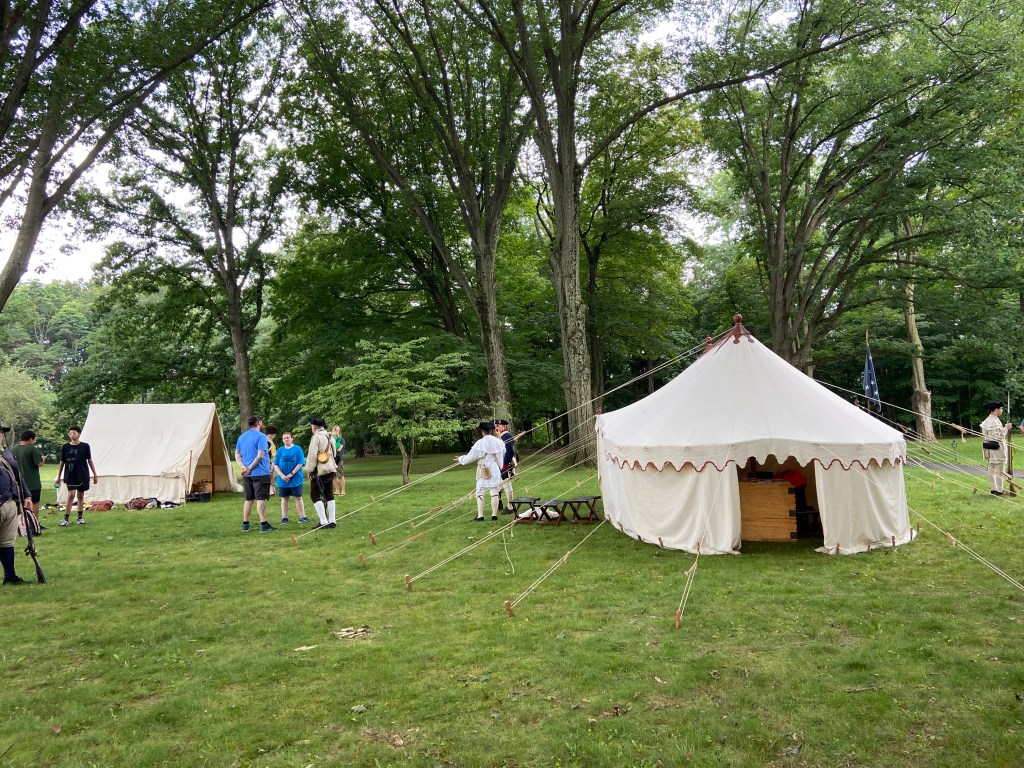
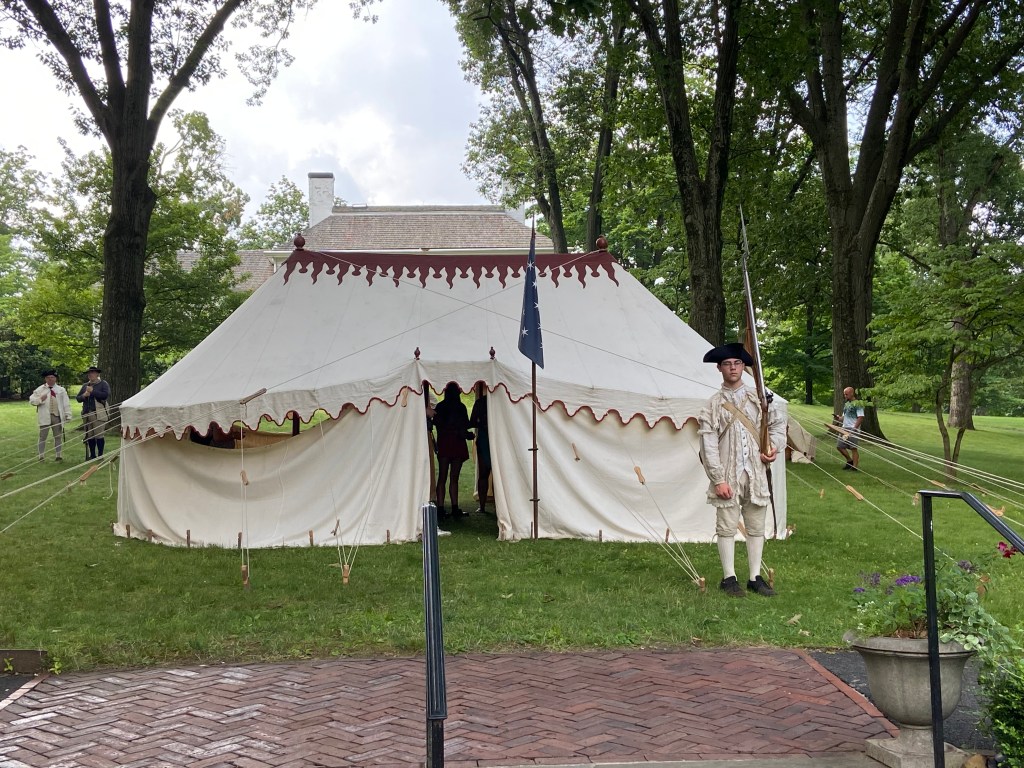
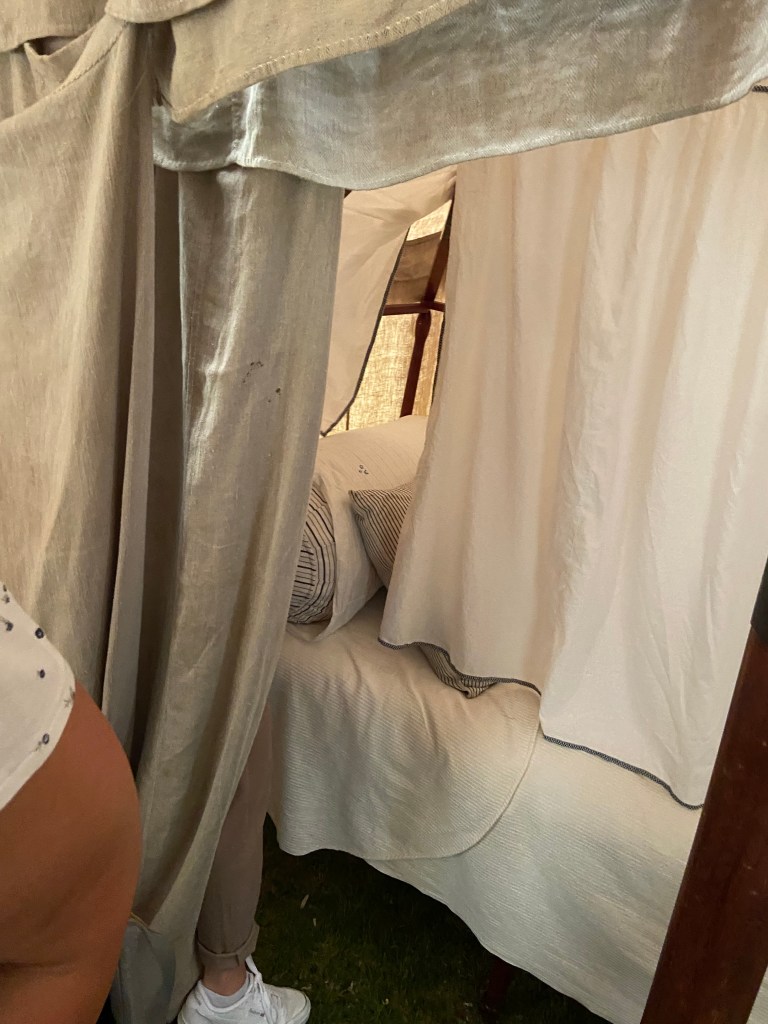
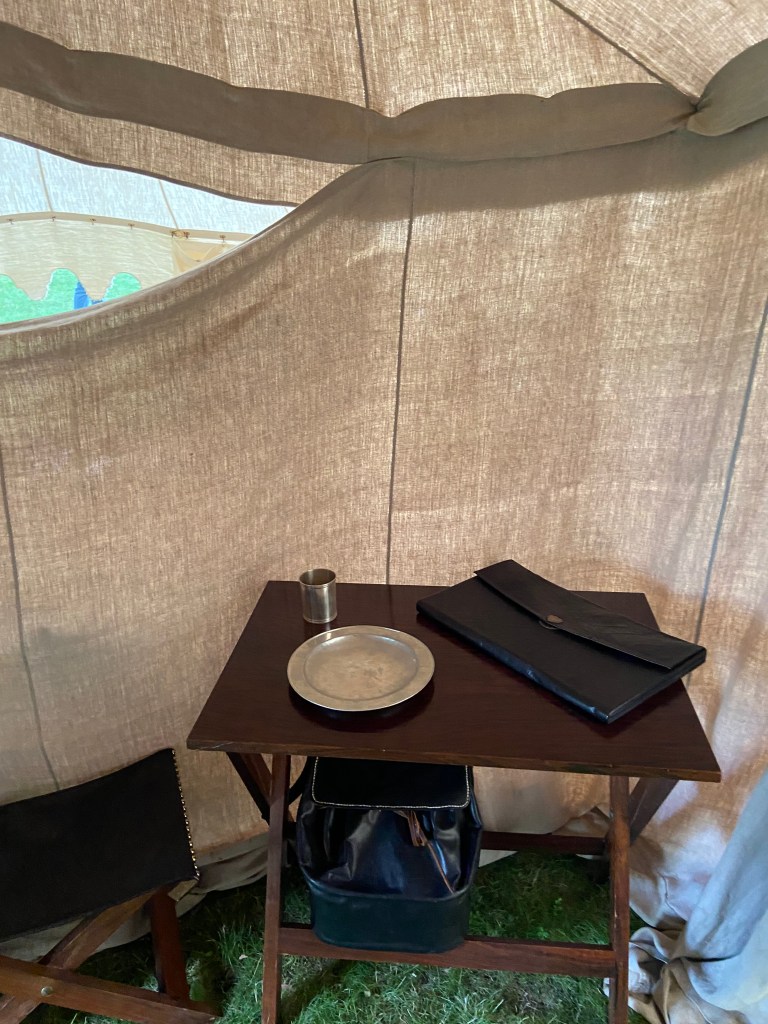
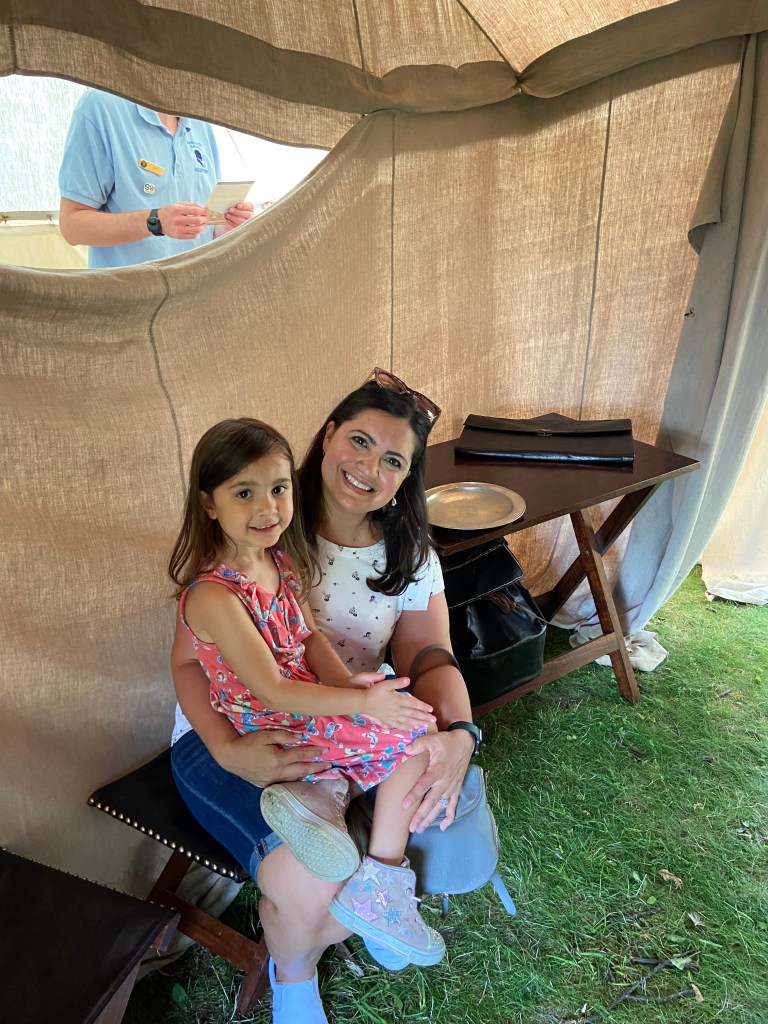
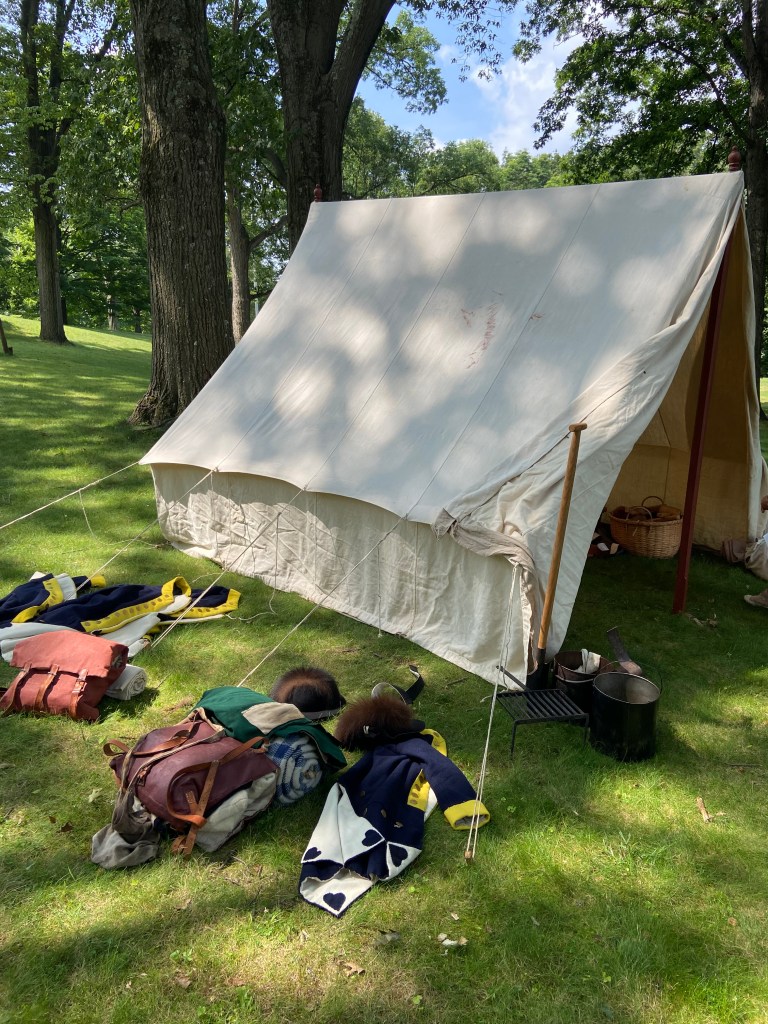
  • This past weekend I took the family to Washington’s Headquarters in Morristown, NJ. Throughout the week they hosted an event entitled “Red, White and You: Celebrating Independence Week at Washington’s Headquarters!” During the weekend they hosted the Museum of the American Revolution’s “First Oval Office Project,” which includes a full-scale replica of George Washington’s sleeping and operational tents that served as his mobile command and sleeping quarters while on campaign during the American Revolution. The tent and day’s programming was sponsored by the Washington Association of New Jersey.

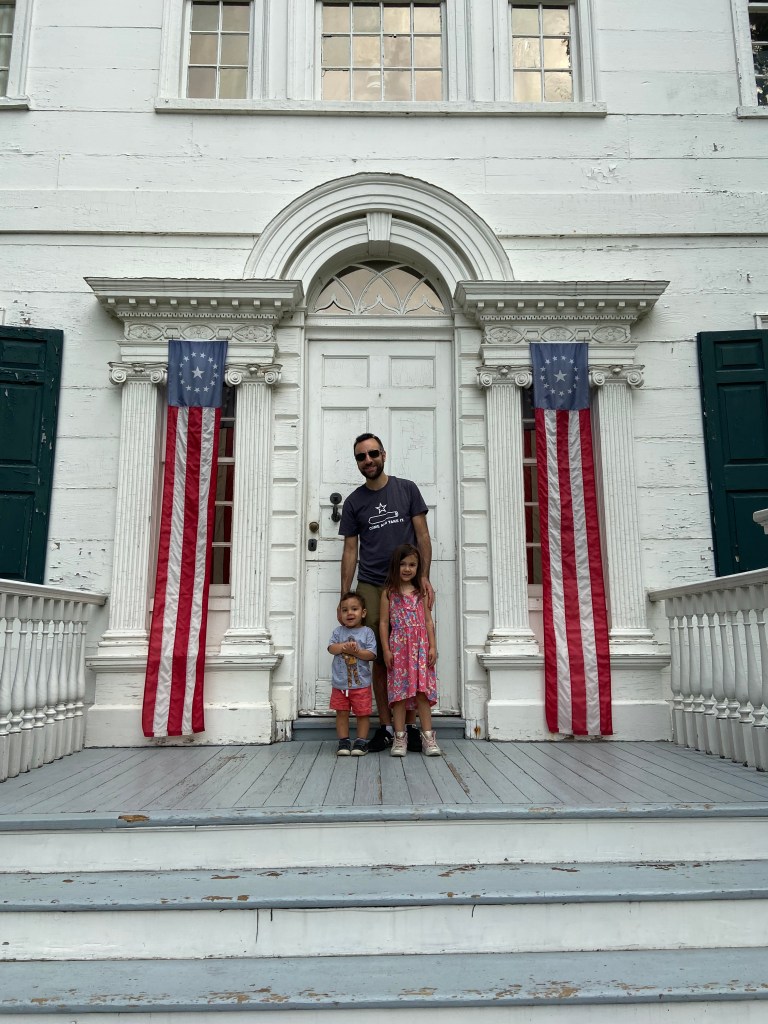
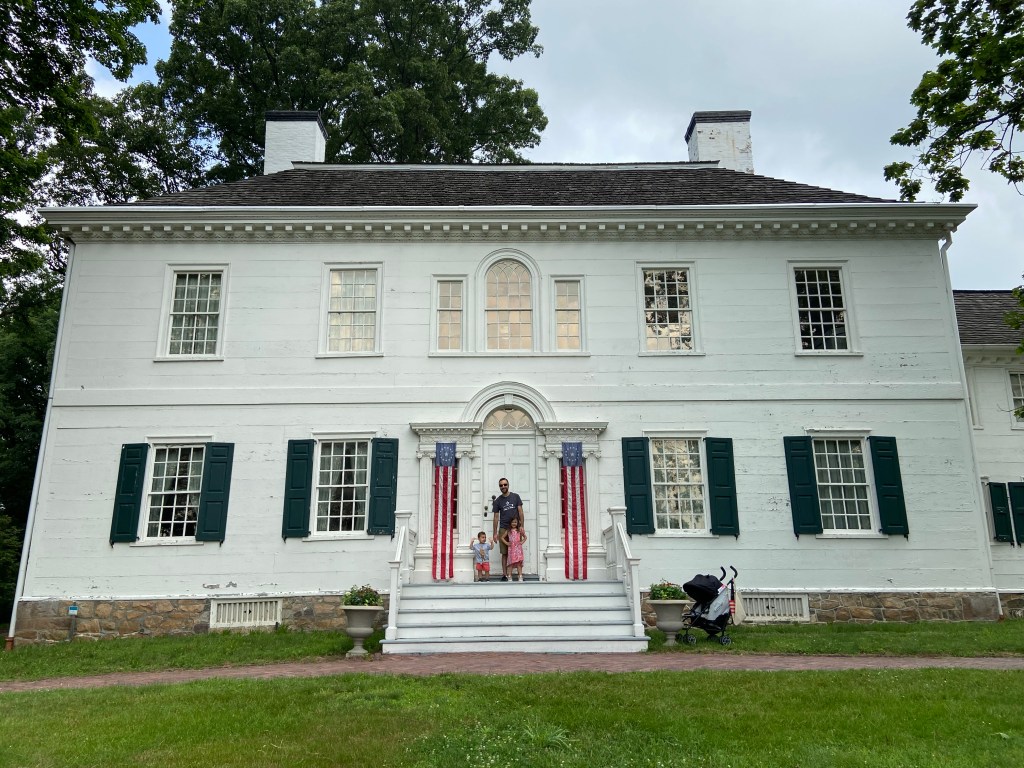
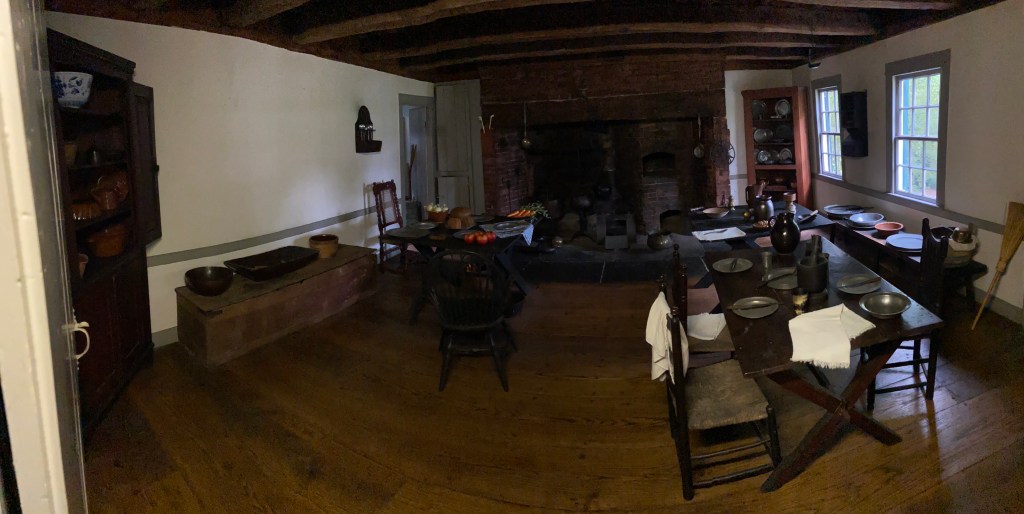
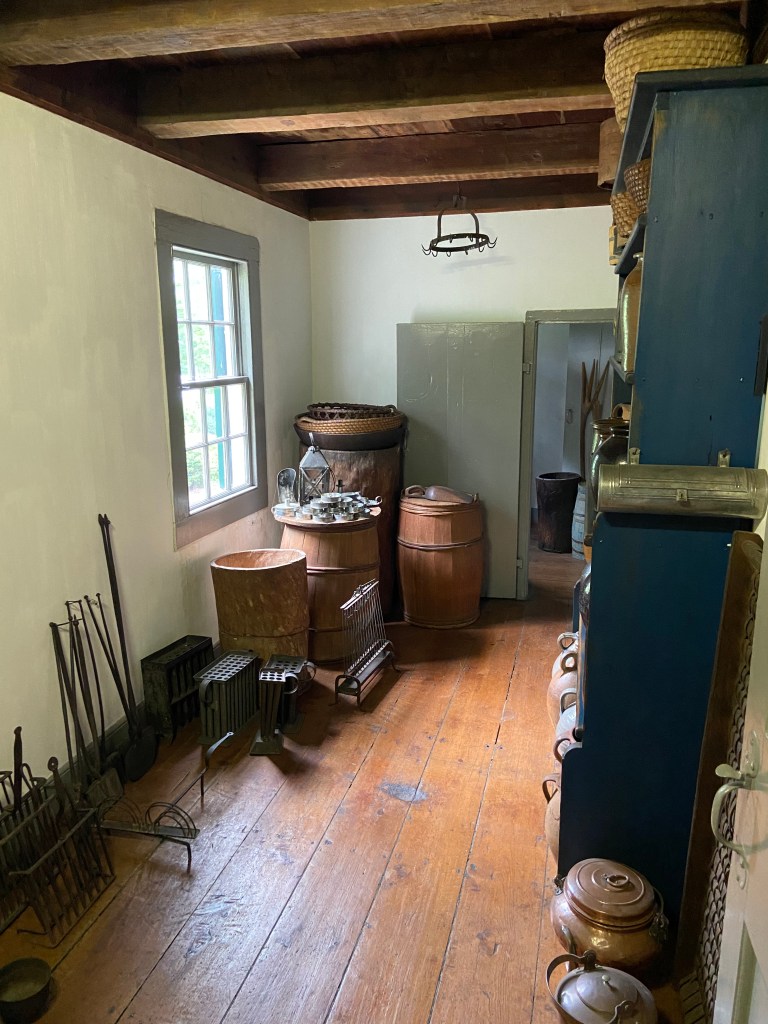
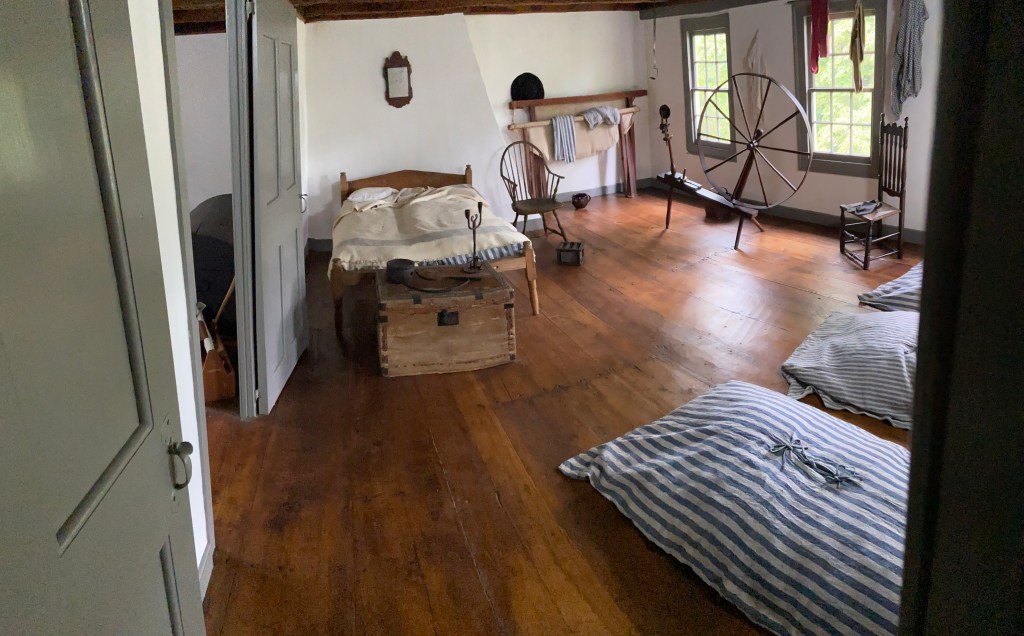
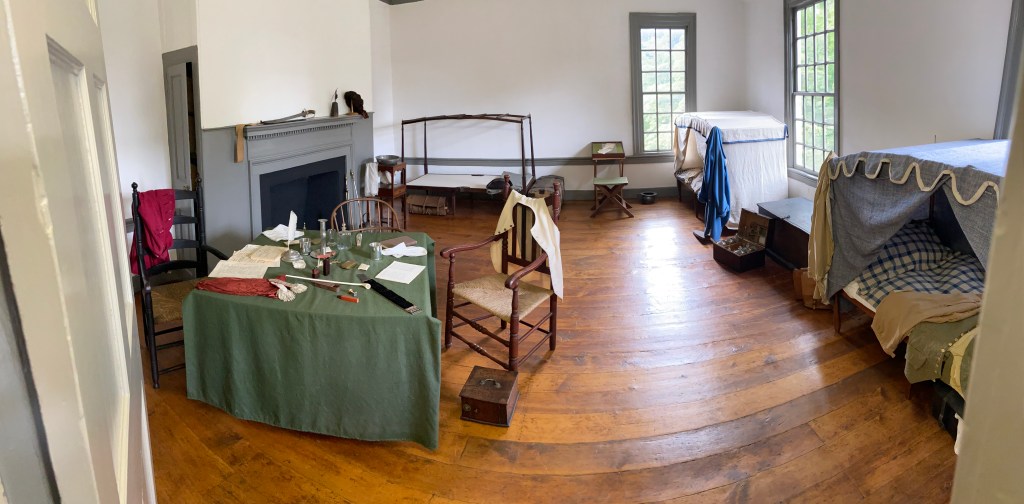
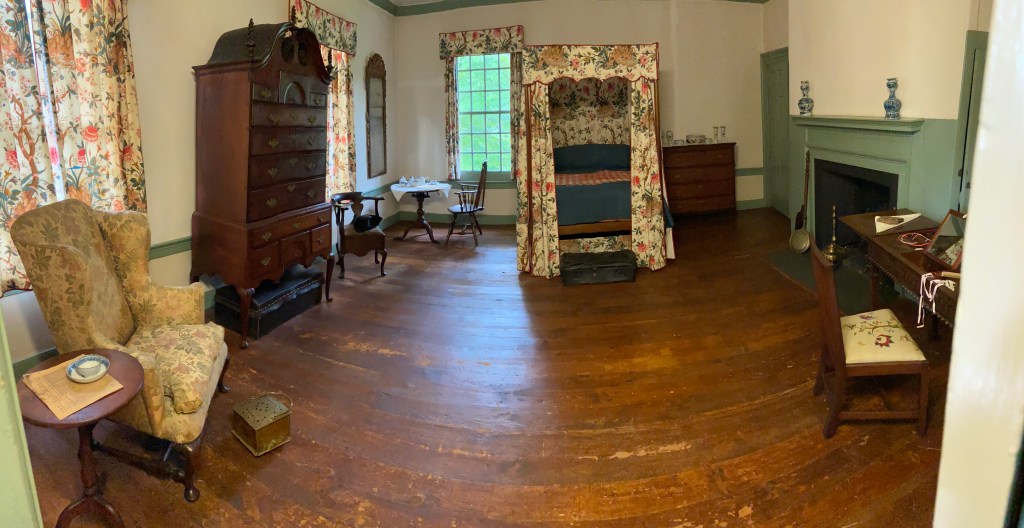
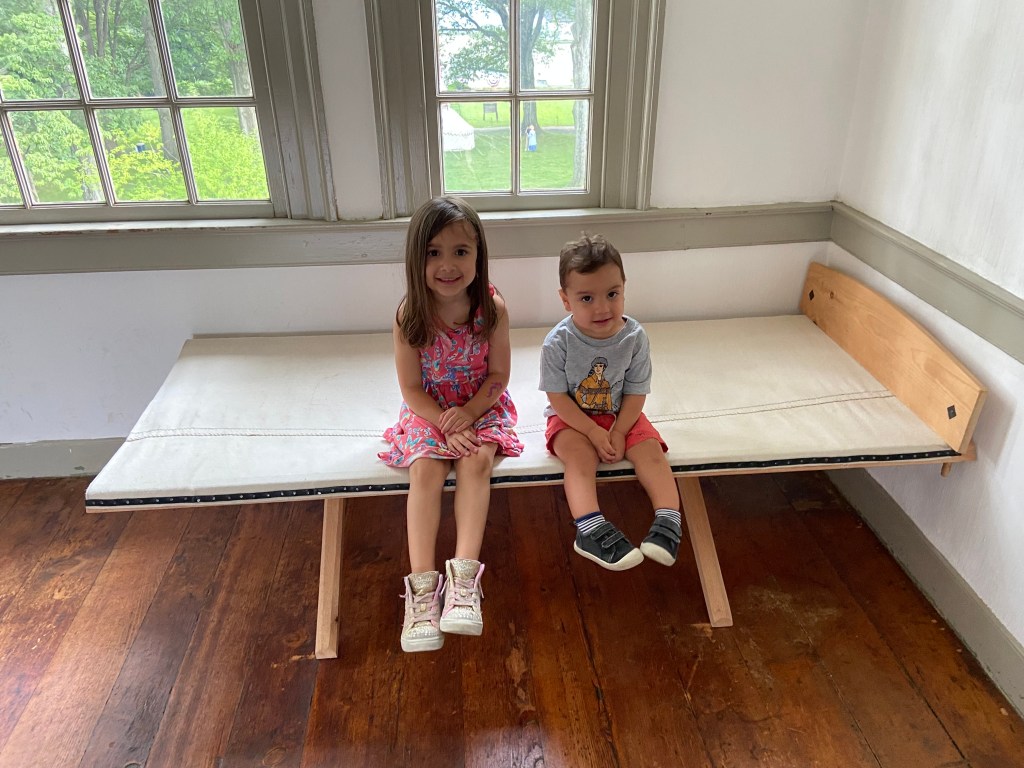
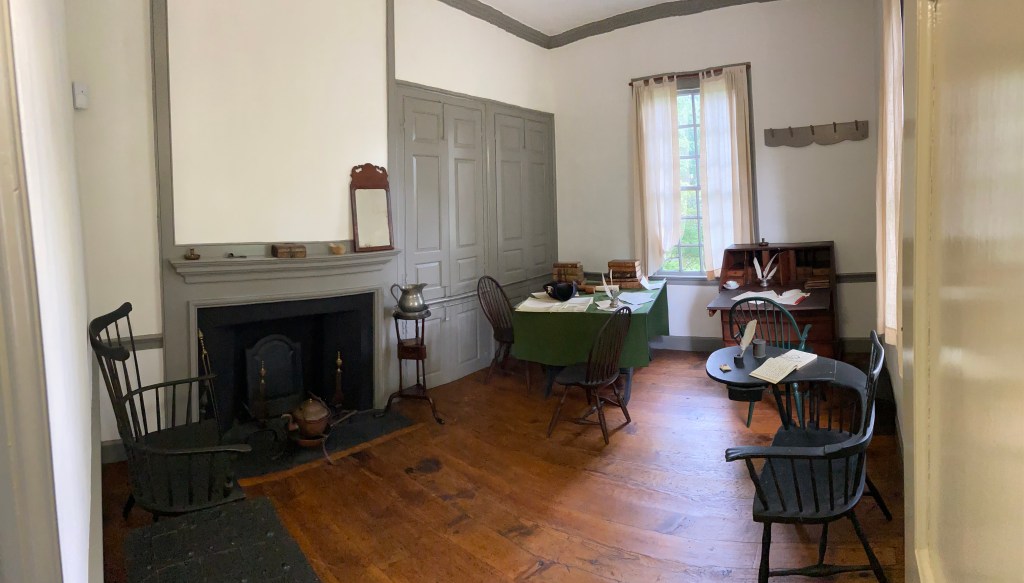
    While I had been to Washington’s Headquarters Museum many times for the galleries and book talks, I had not had an opportunity to tour the Ford Mansion. The mansion was open to the public for the weekend events. Since the family and I arrived to Washington’s Headquarters fairly early, we decided to tour the mansion first, and then visit Washington’s War Tent. The guides stationed throughout the mansion were extremely helpful in answering all of our questions about the mansion and Washington’s stay there.

    Ford Mansion

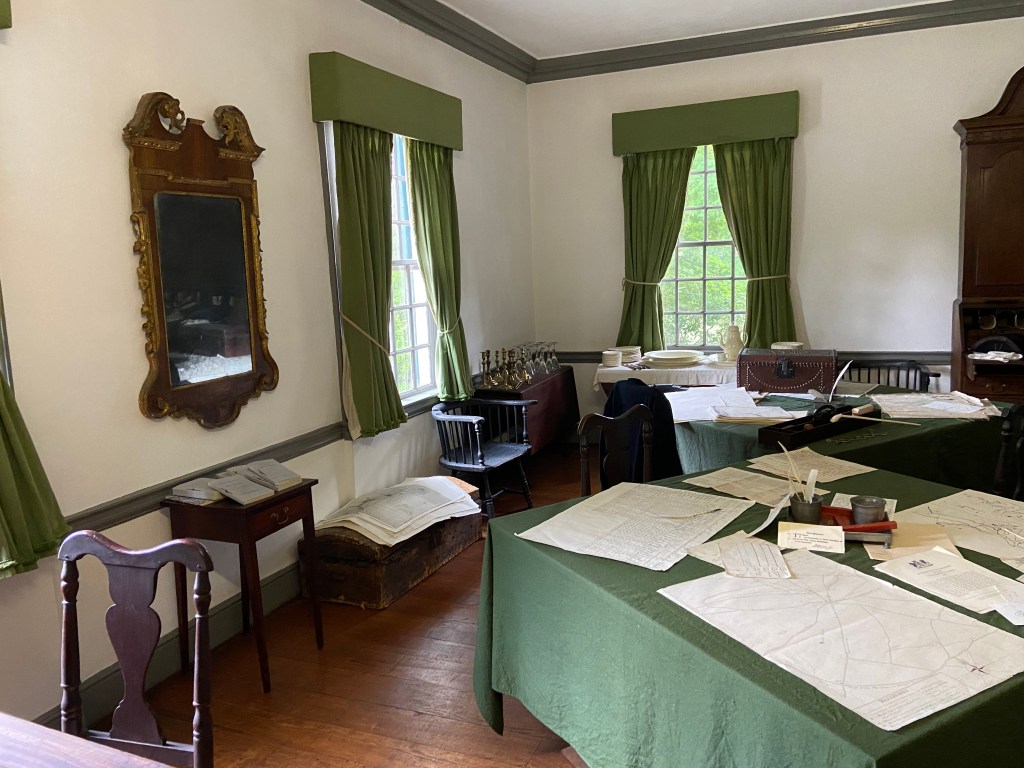
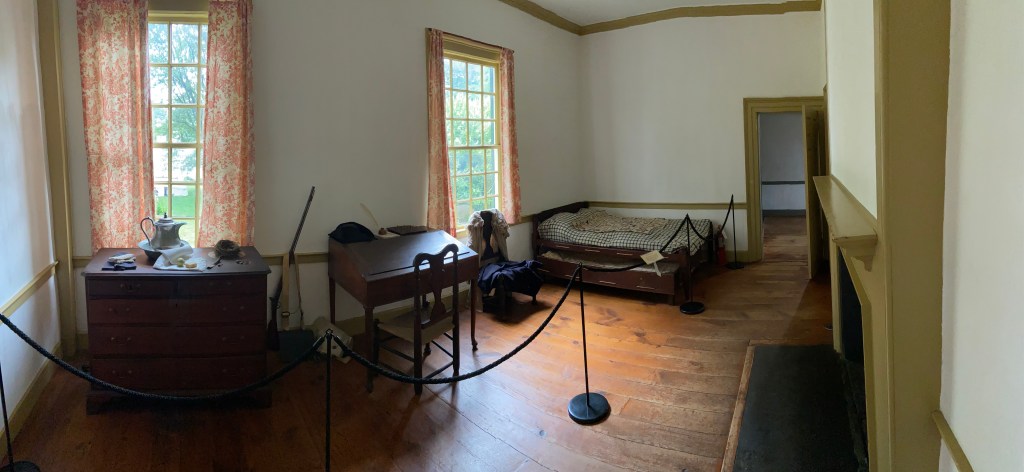
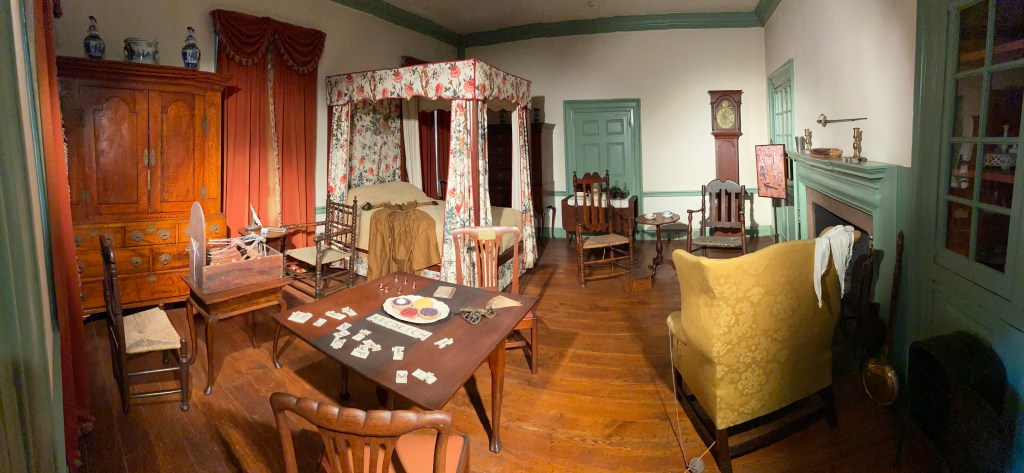
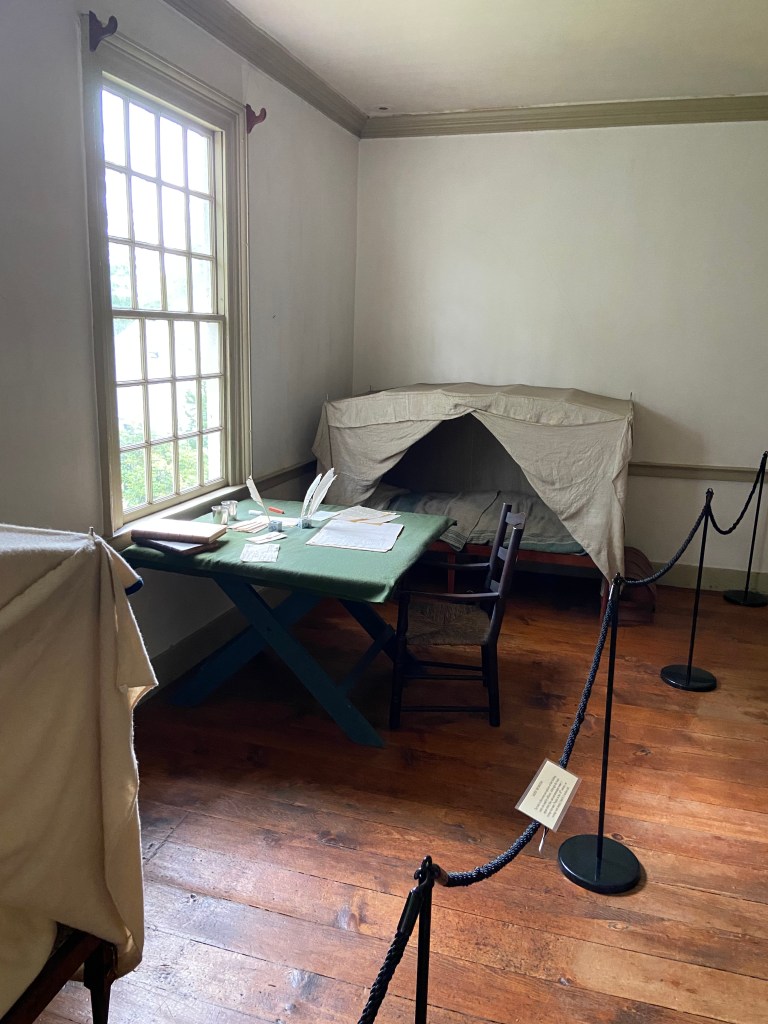
    The Ford Mansion was the home of Jacob Ford, Jr, an iron manufacturer and his family. Ford served as a colonel in the Morris County Militia during the Revolution. However, Ford died in January 1777 of pneumonia, and his wife Theodosia was left to raise their four children. Theodosia allowed George Washington to use the mansion as his headquarters in the winter of 1779-1780. With the American capital in Philadelphia and the British capital in Manhattan, the location of Morristown allowed Washington to keep a close eye on the British, while sending letters to the Continental Congress. Washington also liked Morristown’s “defensible terrain, important communication routes, and access to critical resources.” He arrived in Dec. 1779 and stayed until June 1780. The winter of ‘79-’80 was exceptionally brutal. While Washington was quartered at the Ford Mansion, the army built a small village of huts at Jockey Hollow about 5 miles away. Along with George came his wife Martha, five aides-de-camp, including Alexander Hamilton, eighteen servants, and a number of visiting dignitaries and guards. Theodosia and the children stayed in rooms on the first floor while Washington and his entourage occupied rooms on the top floor. While staying at the Ford Mansion, the Commander in Chief of the Continental Army was busy running the affairs of the war, including making sure his army was supplied with their necessities, and frequently writing correspondence with his commanders. After Washington’s six month stay, the Ford family continued to live in the house until the 1870s. Today, the house is furnished to reflect how it would have appeared in Washington’s day.

    Washington’s War Tent

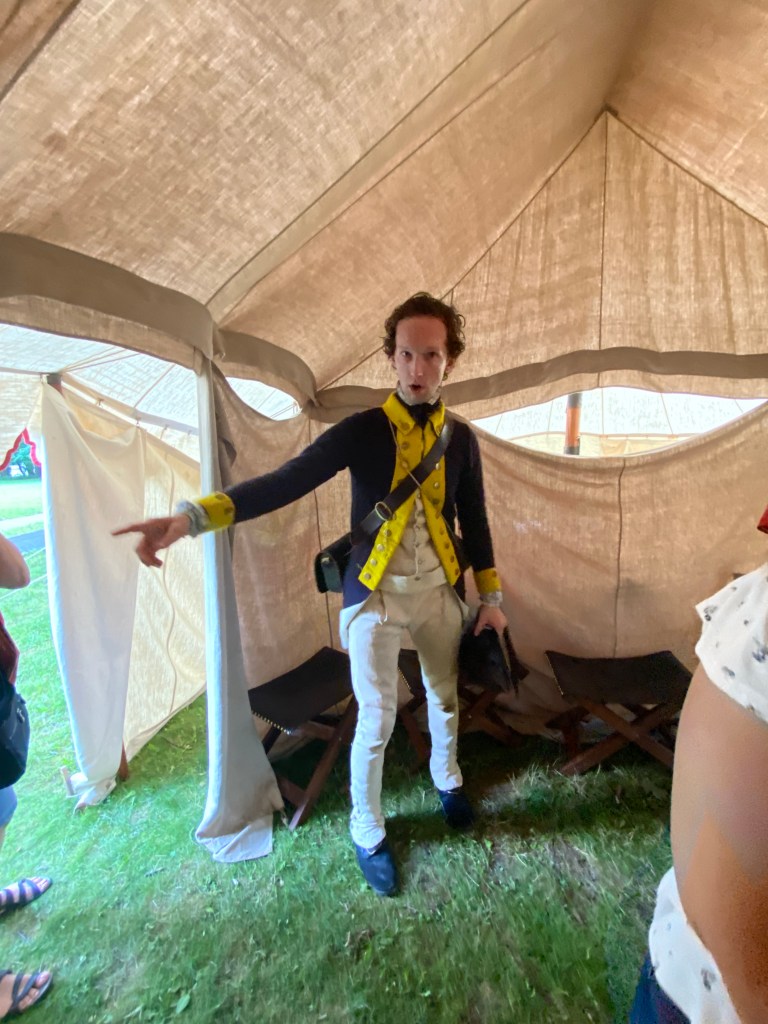
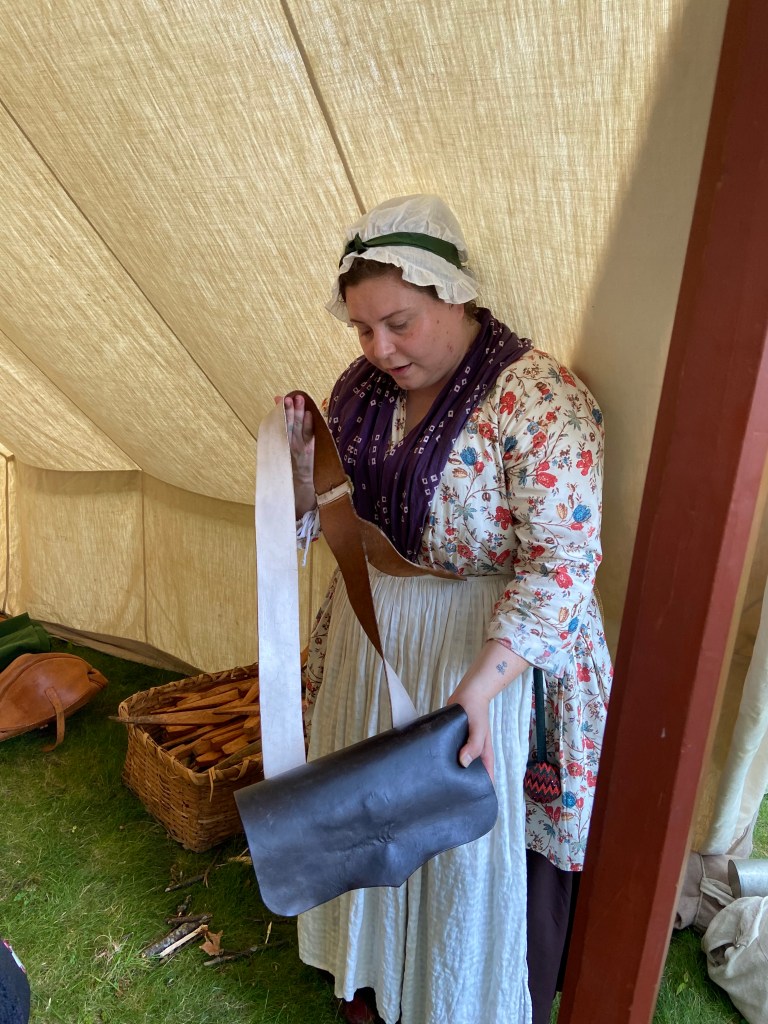
    Washington’s War Tent displayed at Morristown this past weekend was a replica of the real one which was preserved after Washington’s life and is now located at the Museum of the American Revolution in Philadelphia. The tent remained with the descendants of Martha Washington’s family until it was sold to the museum collection’s founder, Reverend W. Herbert Burk in 1909. While you can view the original at the museum, you cannot go inside it. The replica was created in order to allow visitors to see what it was like inside Washington’s quarters while he was out on campaign with his army. Washington and his aides used the tent to conduct business, write correspondence and also for sleeping. Personally, going inside the tent was a reminder of the conditions that Washington and his aides had to deal with (it was exceptionally humid this weekend). It showed that Washington, even with his stature, had to brave the elements much like his soldiers did while he was out on campaign. This setting was much different than the comfort he would have had while staying at the Ford Mansion.

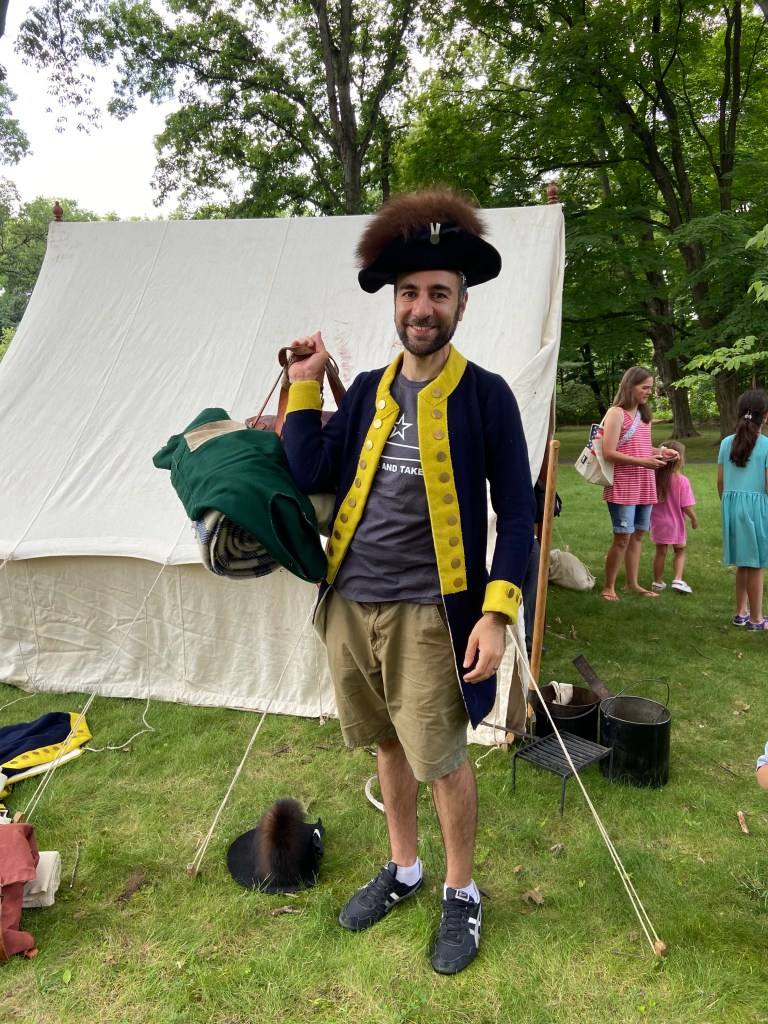
    There were many reenactors (from the Museum of the American Revolution) at the event and they were extremely informative. They were experts on their topic and you could tell that they loved talking about the tent and the Revolution. One demonstrator was an expert on women in the American Revolution and spoke in detail about Deborah Sampson who had dressed up like a man so that she could fight in the war. Another demonstrator discussed how surveyors during Washington’s time would have measured the land using very simple tools such as chains, stakes and a compass. While my family and I had to leave to go eat lunch, there were more speakers and demonstrations happening in the afternoon that we unfortunately missed. The collaboration of the Museum of the American Revolution (https://www.amrevmuseum.org), the Washington Association of New Jersey (https://wanj.org), and the Morristown National Historical Park (https://www.nps.gov/morr/index.htm) all did a fantastic job hosting a fun, informative and engaging experience. The First Oval Office Project has further events coming up in Rhode Island and New York. Check out upcoming events here: https://www.amrevmuseum.org/learn-and-explore/first-oval-office-project/first-oval-office-project-programs-and-events

    Related Posts:
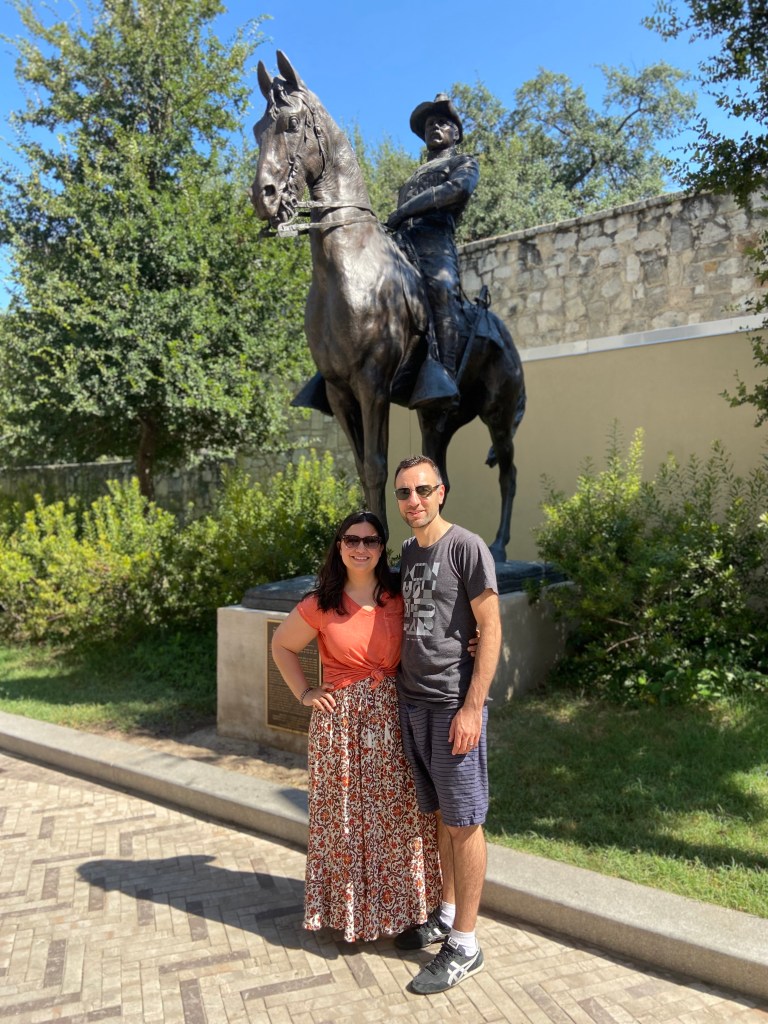
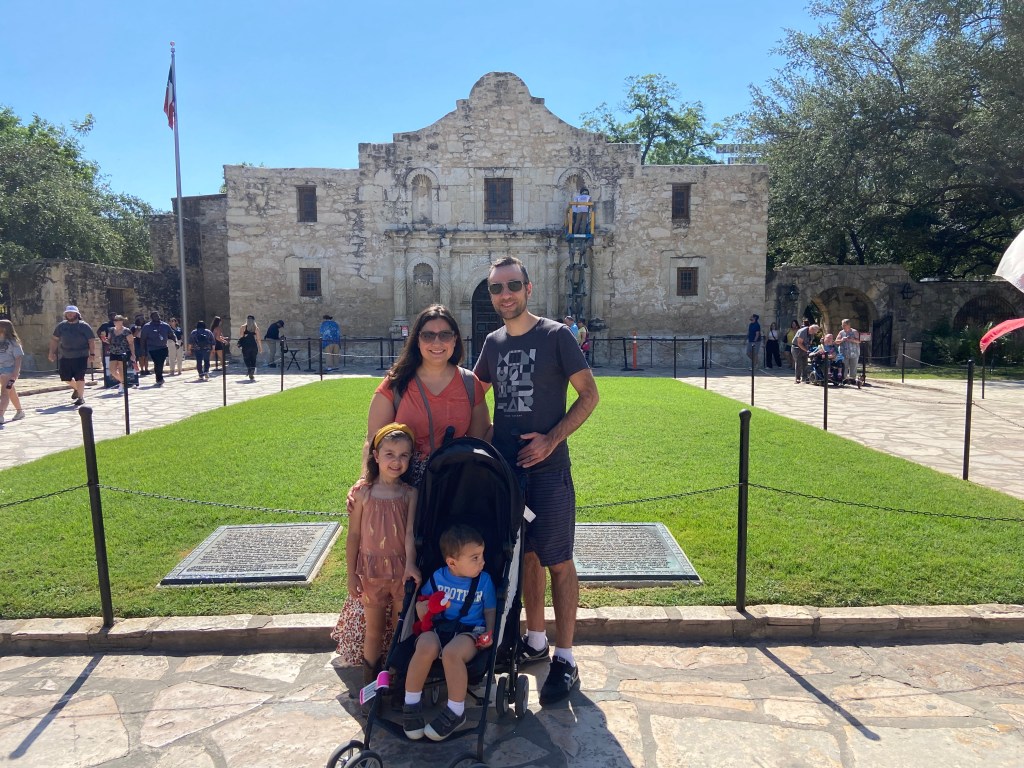
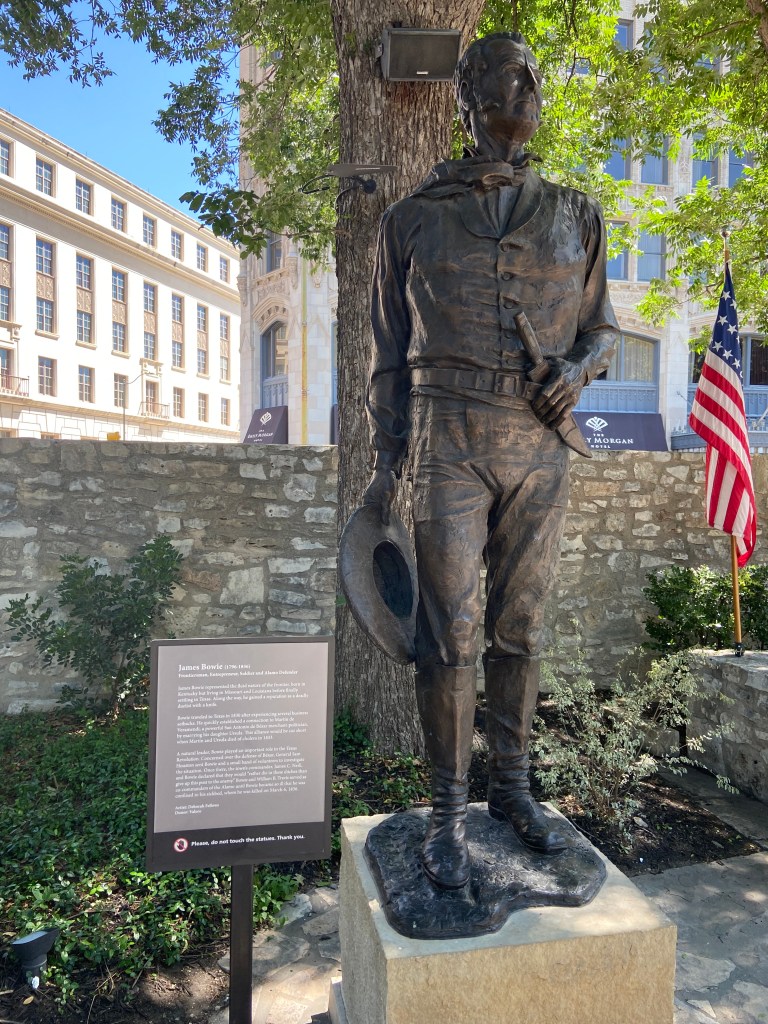
  • Last week, my family and I were able to spend 6 days in San Antonio, Texas. We were visiting family who were kind enough to let us stay at their house. While most of the week was spent making sure the kids were entertained (four kids, ages 9 months to 4 years old), visiting the Alamo was a must for me as I had never been there before. Luckily, they live pretty close to the site. I’ve taught the Texas Revolution and the Battle of the Alamo for many years so seeing the site in person was a real treat. And yes, the kids had a good time as well.

    Background of the Alamo

    The Alamo site complex was much larger than just the Alamo church that we think of today. It was originally built as a Spanish mission in the 18th century while the Spanish Empire controlled the region. Several Roman Catholic missions were established in East Texas in 1716. Originally, the site was called Mision Santonio de Valero, and structures were added to the complex in the years that followed. The mission was a base of operations to convert and educate Native Americans. Throughout the 18th century, the Mision San Antonio de Valero grew in size and importance.

    However, by 1793, the Spanish crown had begun to secularize the site, and it lost its religious importance. The buildings were neglected until 1801, when a Spanish military unit was sent to strengthen forces in San Antonio. The old mission was occupied and repaired by the army.

    Spain faced serious problems abroad and at home in the early 1800s. Napoleon Bonaparte had invaded Spain and placed his brother on the Spanish throne in 1808. This led to growing instability in the Spanish Empire. Tensions also grew in the New World, and Mexicans began to revolt against the Spanish crown in 1810. Soon, the Alamo frequently changed hands between Spanish and Mexican forces. Mexico finally won its independence from Spain in 1821.

    Shortly after, Americans began moving into Texas (part of Mexican territory) and at first they were welcomed. The new Mexican government was looking to boost its economy by selling land to these new Anglo-American settlers. Americans were willing to move into Texas for the opportunity at cheap farmland.

    However, tensions began to emerge between the Texans and the Mexican government. First, there were clear cultural differences. While the Mexicans spoke Spanish and practiced the Roman Catholic religion, the new Texan settlers spoke English and were mostly Protestant. While Mexico had already outlawed slavery, many of the new Texan settlers brought slaves with them.

    There were also tensions in other Mexican provinces. President Antonio Lopez de Santa Anna tried to strengthen the central government that he controlled and weaken local governments. Many throughout Mexico saw this power grab as a step towards dictatorship. Tensions and uprisings emerged throughout the country. Particularly in Texas, there was much anger and resentment against the Mexican government. Violence erupted in Texas in late 1835, beginning the Texas Revolution.

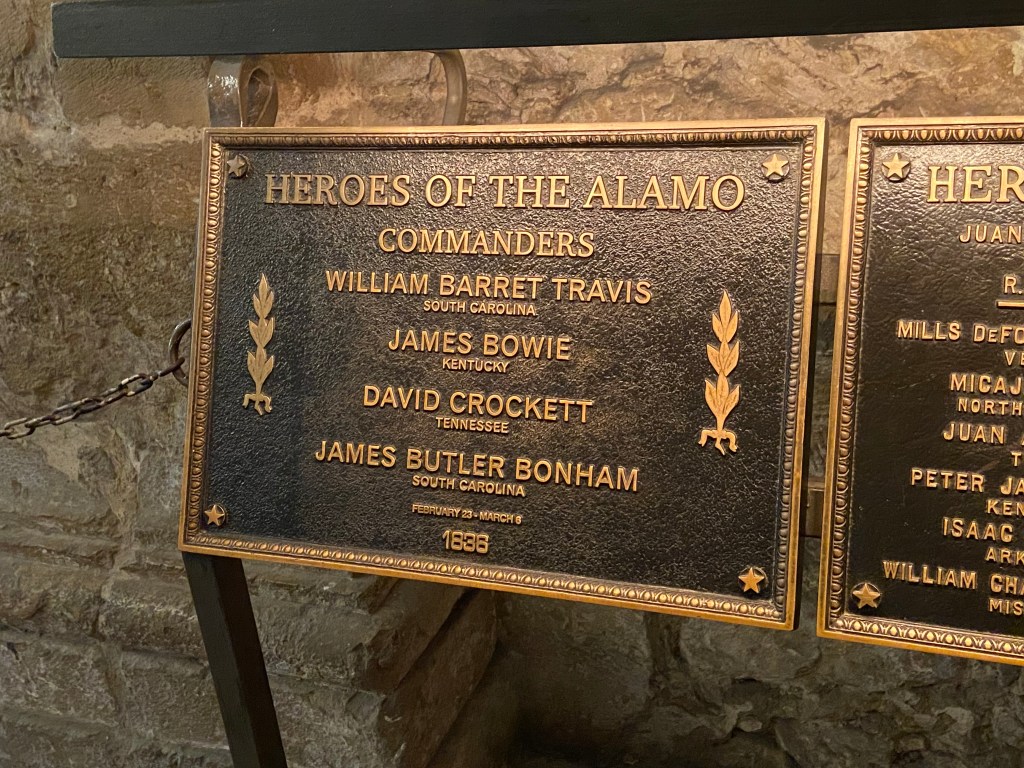
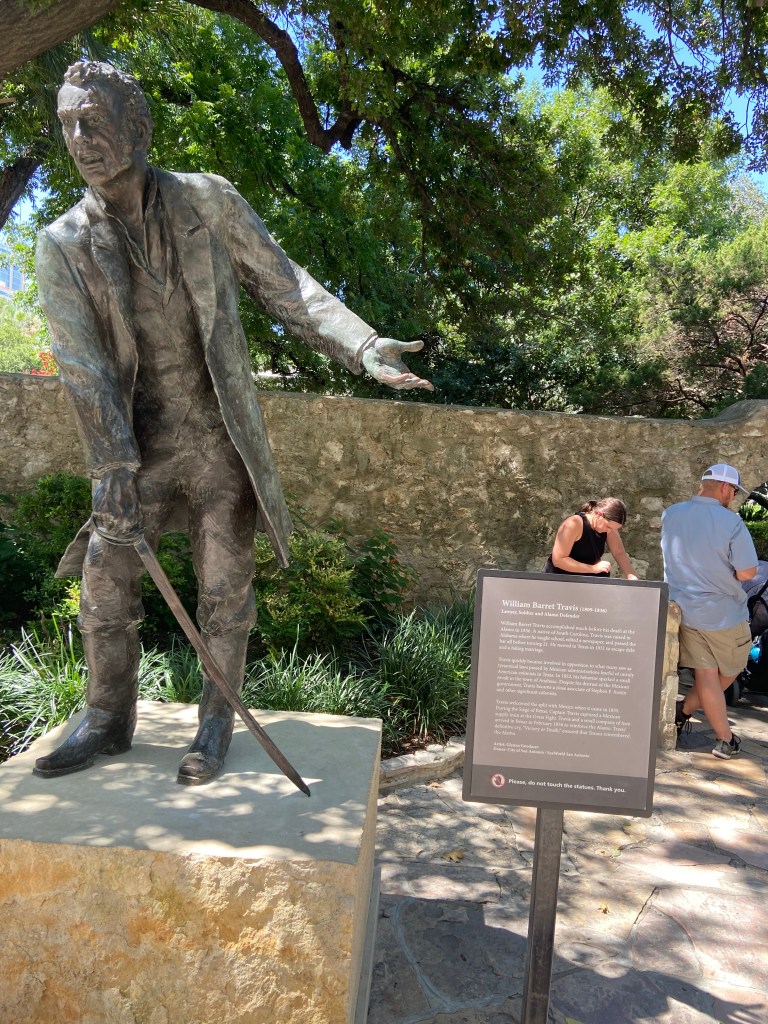
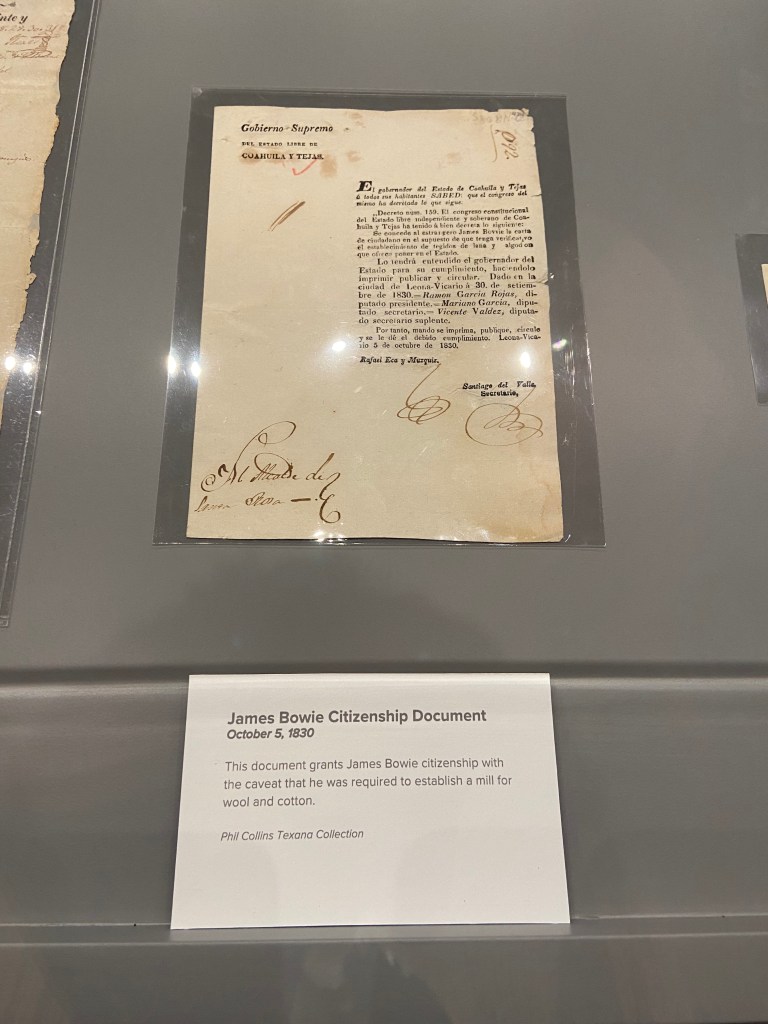
    In December 1835, Texans were able to gain control of San Antonio and the Alamo complex. However, in early 1836, Santa Anna was determined to squash the rebellion and take back San Antonio. He marched to the city at the head of a 4,000-member army, setting the stage for the historic battle that the Alamo is most known for. Santa Anna laid seige to the garrison stationed at the Alamo, a force of just 187 Texans. After a siege of thirteen days, the Mexican forces scaled the walls of the Alamo and attacked the defenders on March 6th, 1836. While few people in the Alamo complex were able to escape the attack, those brave 187 soldiers defended the Alamo with their lives, including the famous, almost mythical names of Davy Crockett, William Travis, and Jim Bowie. They would rather have died for freedom than surrender the Alamo to a tyranical government and leader. Their bravery resulted in one of the most iconic last stands in history. Between 400-600 Mexican soldiers were killed in the battle.

    While the Mexican army was able to regain the Alamo at that time, their success was short lived. By the end of April, the Texans won an overwhelming victory at the Battle of San Jacinto with “Remember the Alamo!” as their rallying cry. Texas was able to win its independence from Mexico and become a republic. Just about ten years later, Texas was annexed by the United States as the 28th state on December 29, 1845.

    Visit to the Alamo

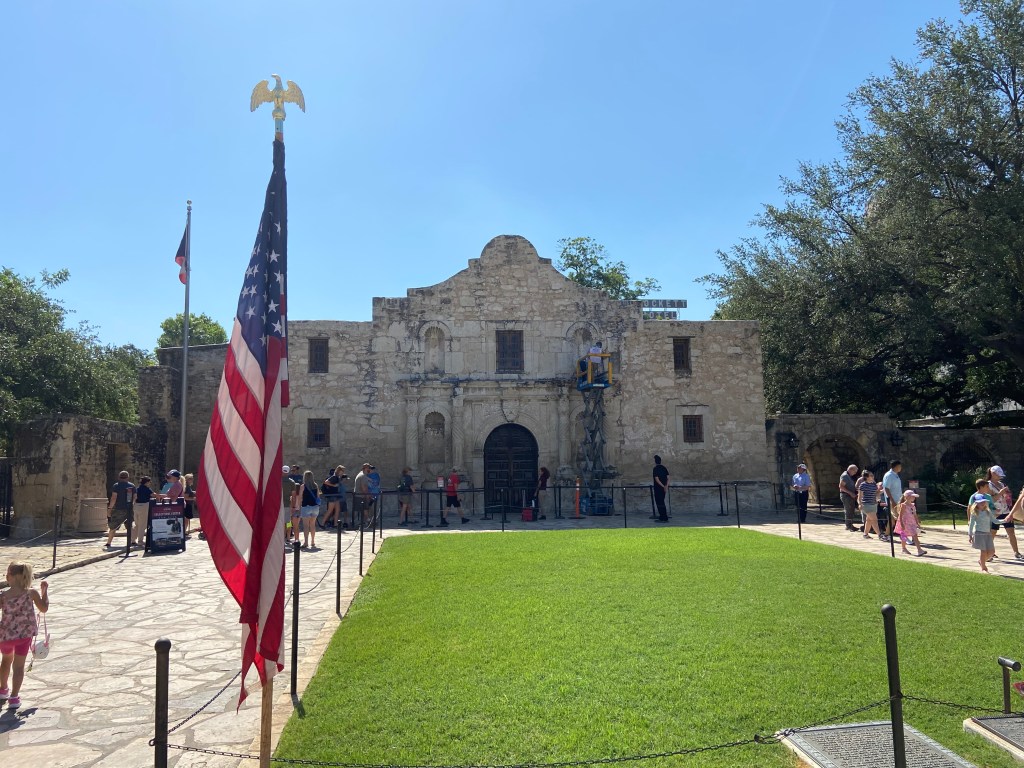
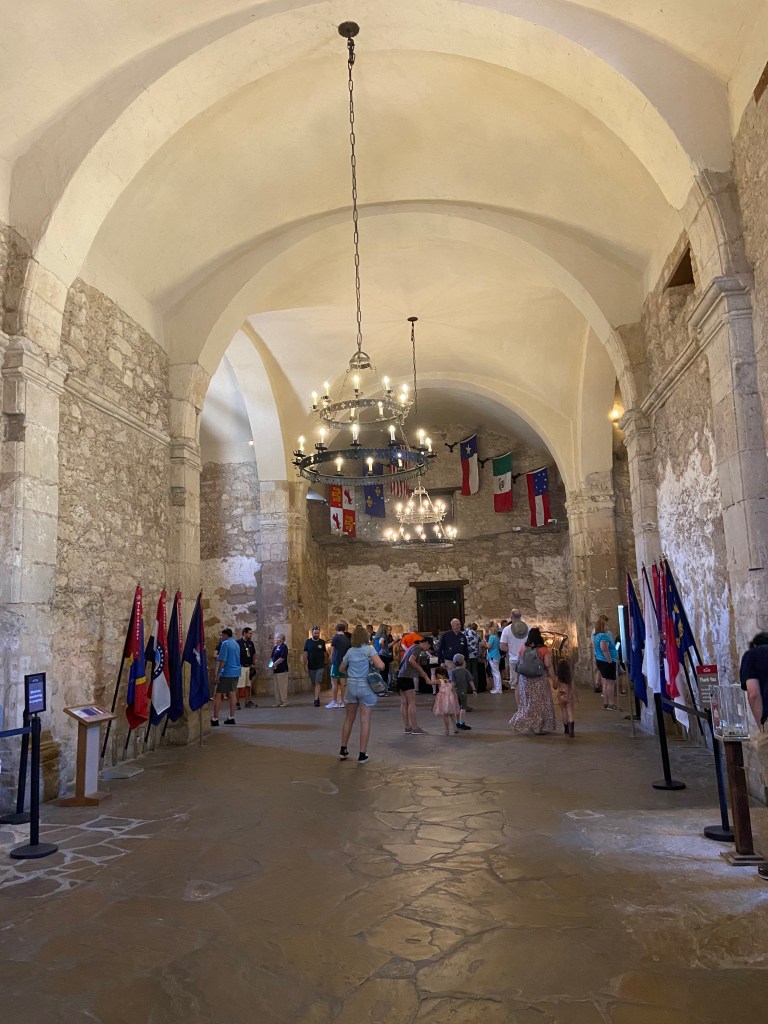
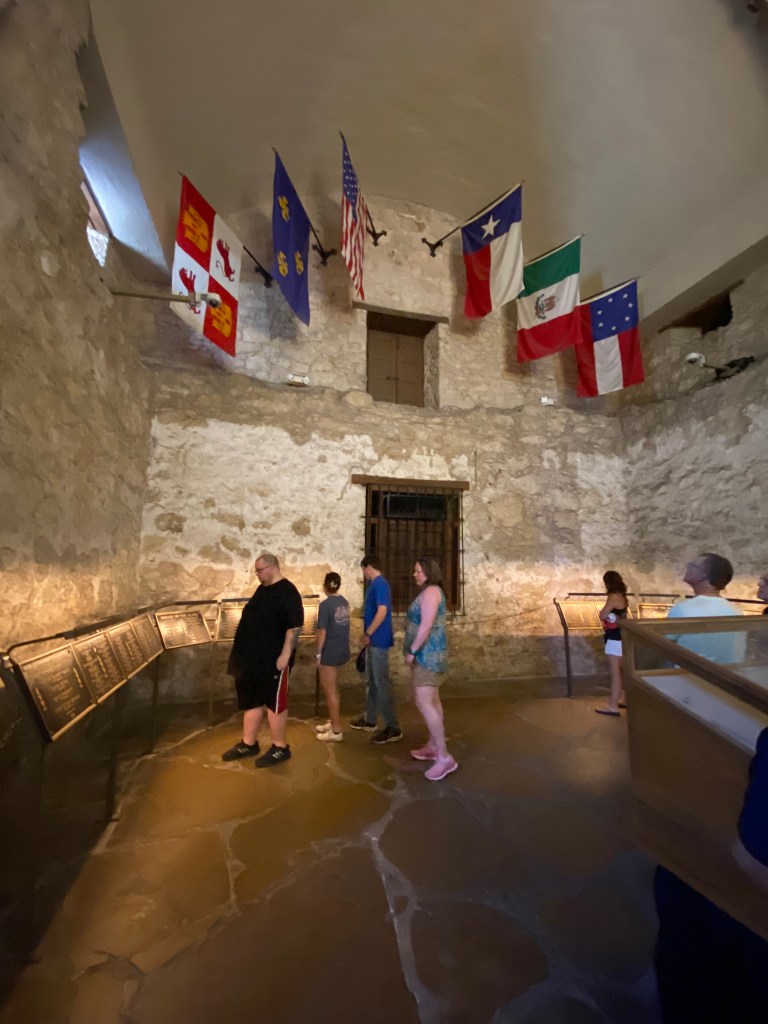
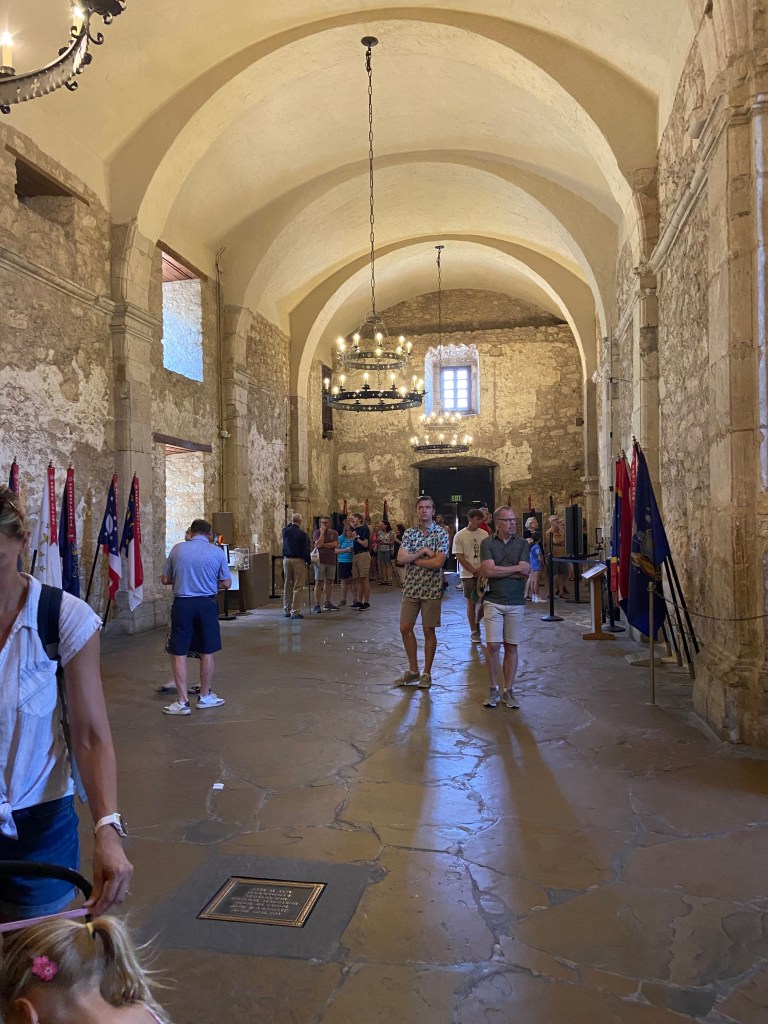
    Before going to the Alamo I had heard very little about what there is to see at the site besides the main structure of the Alamo church. While I am normally someone who enjoys a guided tour, the $45 for adults and $35 for children seemed like a bit much. With small children involved, it didn’t seem worth it. (Children who may or may not be as fascinated in the details of the Alamo as me). If someone reading this has been on the tour, please let me know your experience. Instead of doing the tour, we entered the Alamo church for free, and planned to explore the collections at the Alamo Exhibit in the Ralston Family Collections Center, which was $12 for an adult. When we entered the Alamo church, we found people working in the Alamo who will answer any and all of your questions, and explain the history of the Alamo. I was quite content with this considering that we weren’t going on the tour. The workers are extremely knowledgeable of all of the minute details of the structure and it’s long history. Being inside of the Alamo church was fascinating considering its historic significance and its symbolic importance.

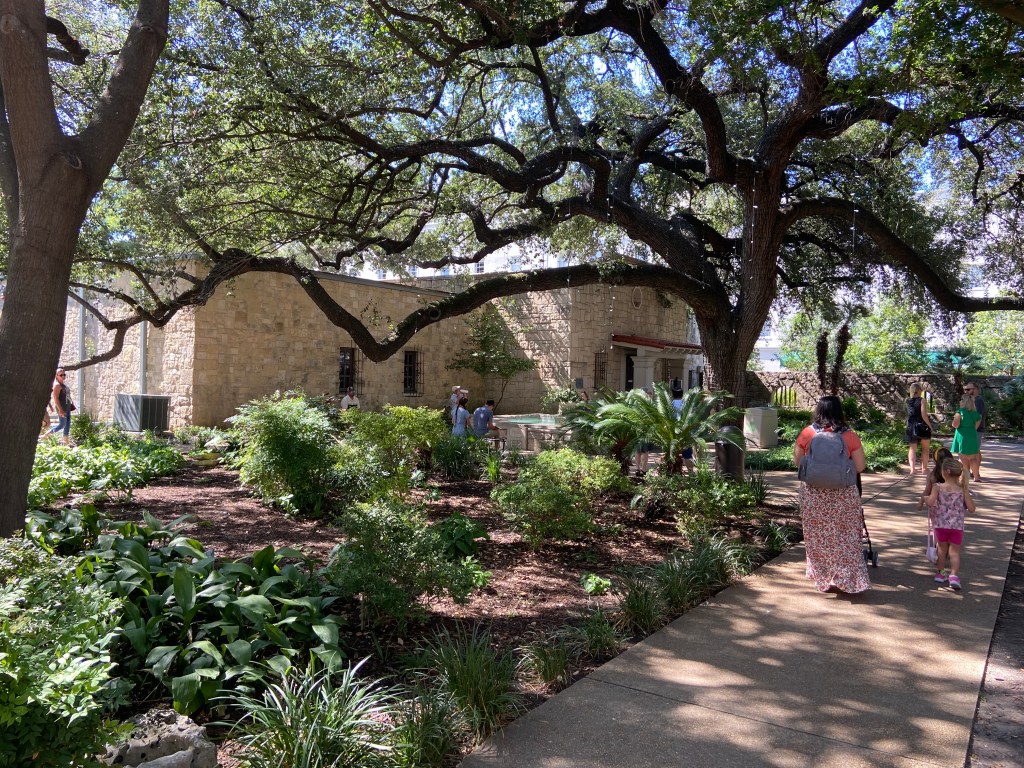
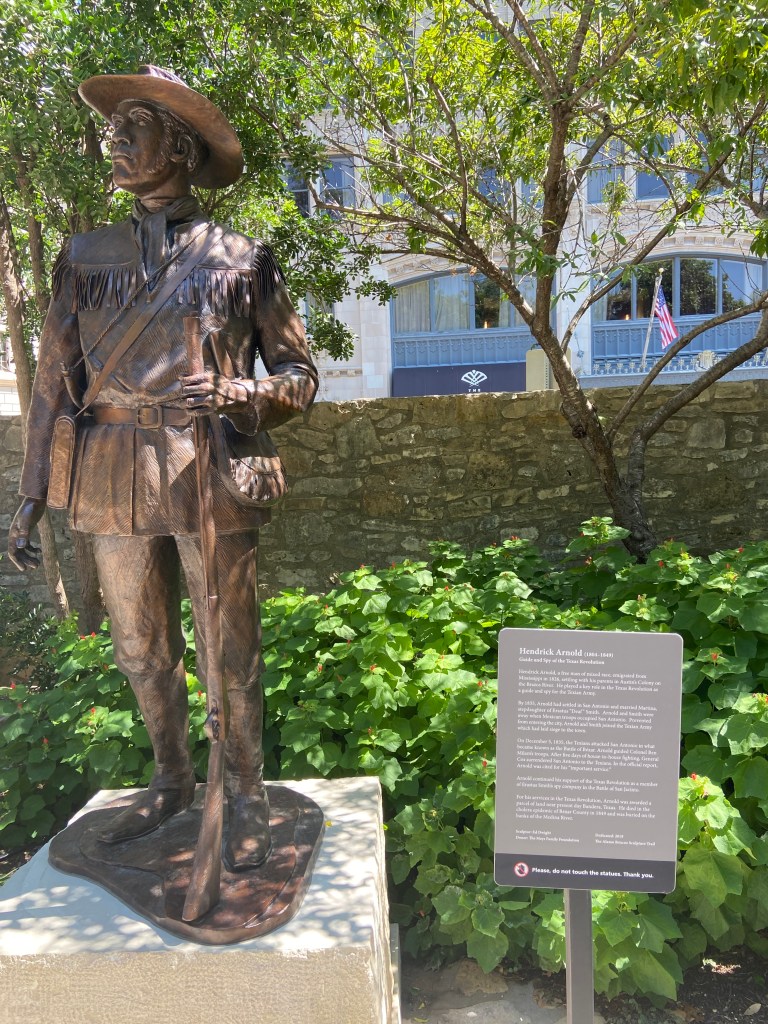
    After we walked through the Alamo church, we took the kids into the Gift Shop and bought a few items. We walked the grounds of the Alamo where there are monuments and statues honoring those who fought and died at the Alamo. Stationed throughout the complex are informational signs/ plaques/ timelines that provide you ample information about the history of the Alamo and its importance.

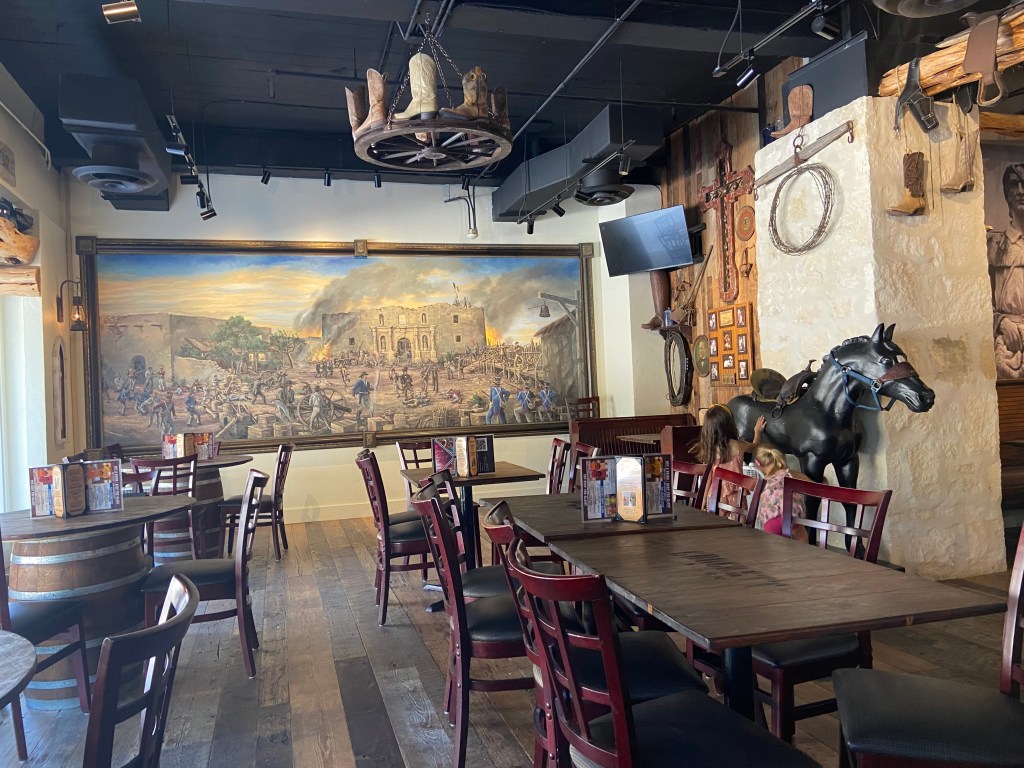
    Before we would visit the collections, it was time for lunch (have to keep the kids happy and fed, and take a break from the Texas heat). Luckily right across the street from the Alamo is Crockett Tavern. Getting there before noon, we beat the lunchtime rush. The food was great, and the atmosphere was the perfect Texas/ Alamo vibe. (Crocket Tavern).

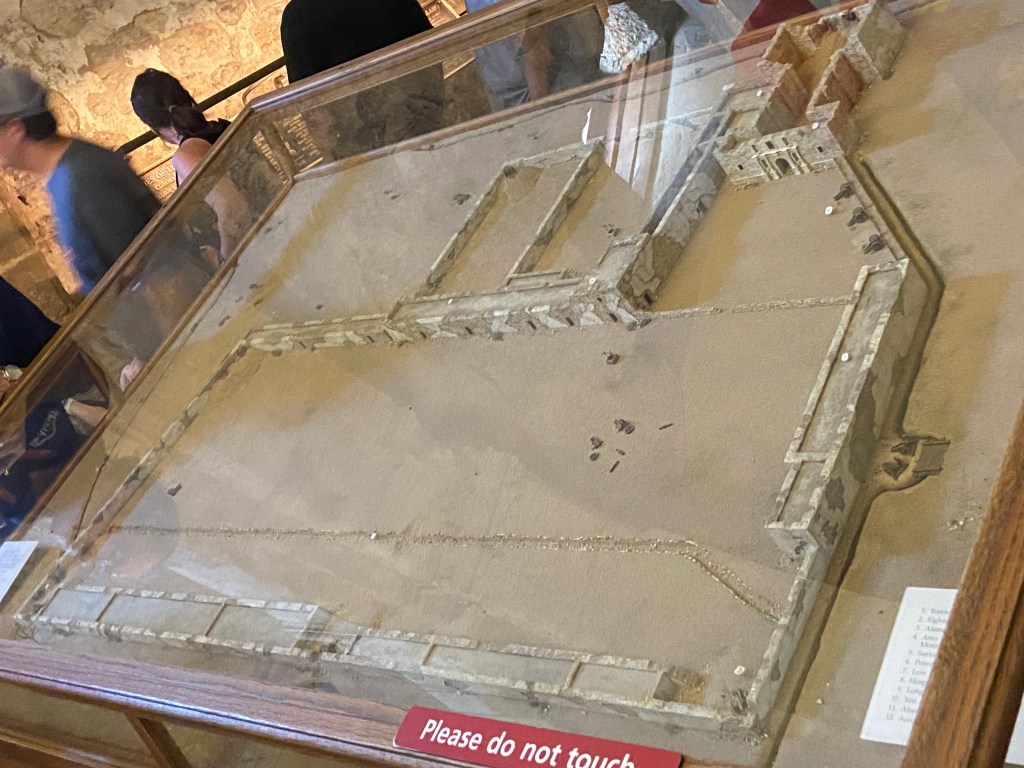
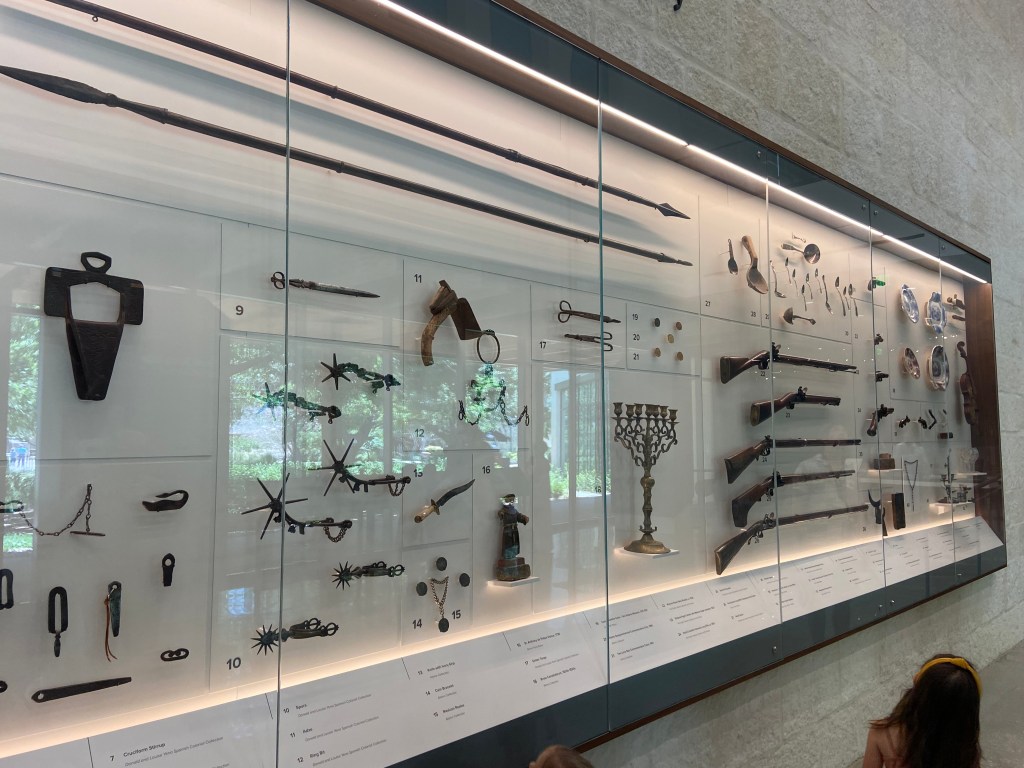
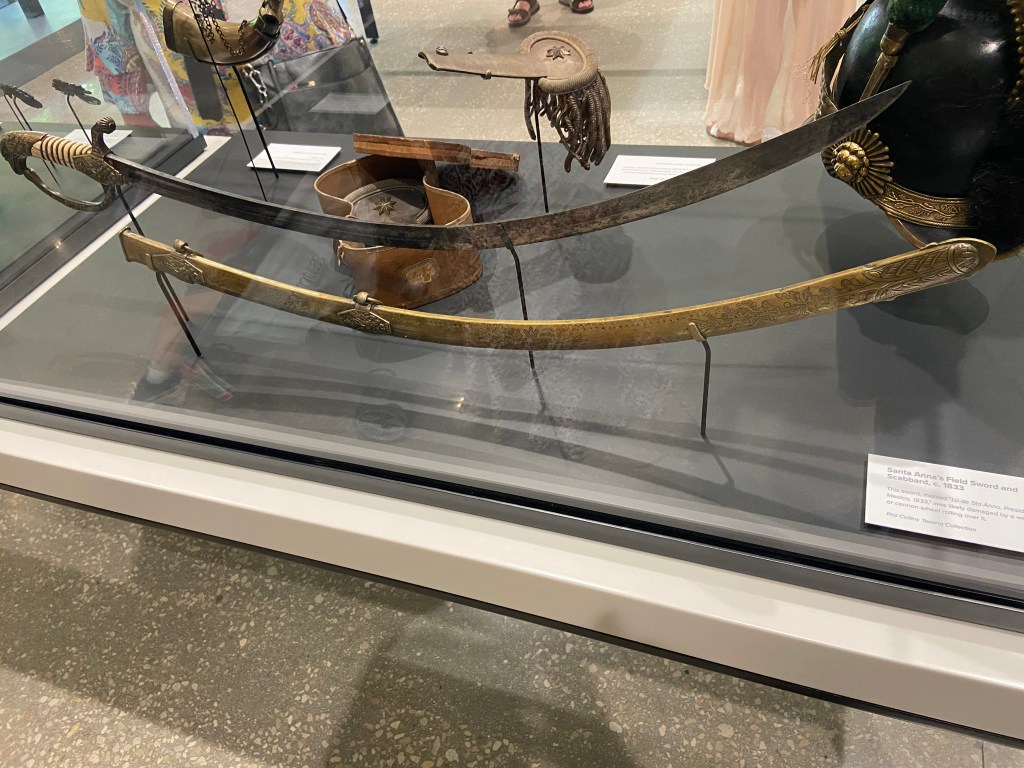
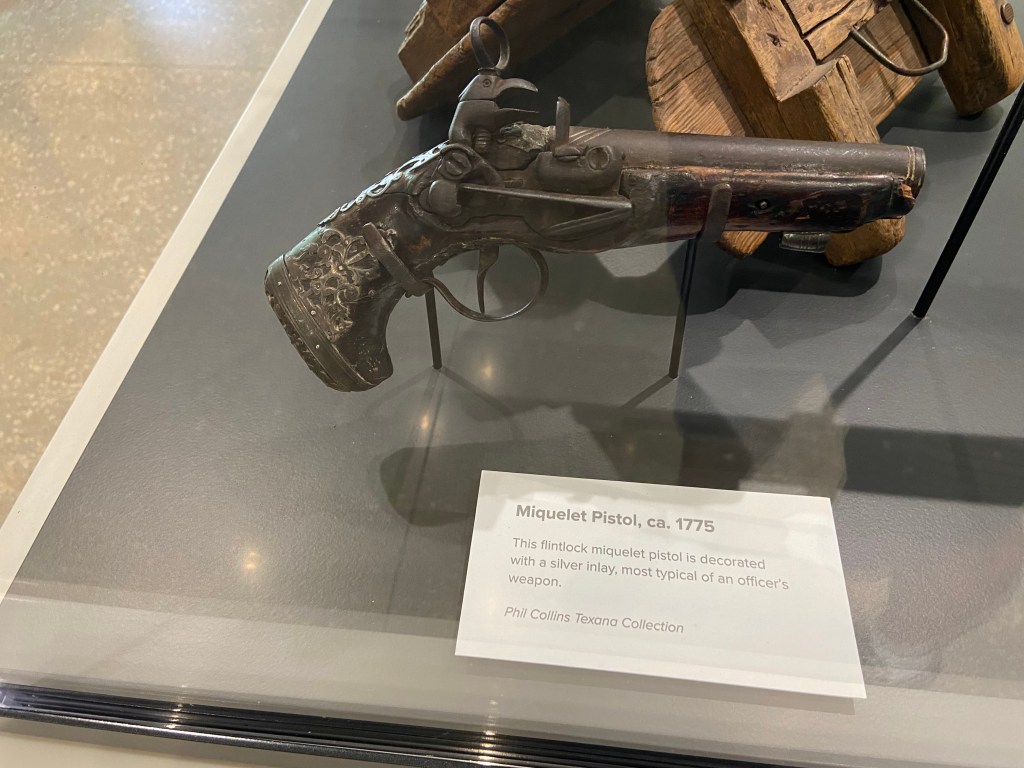
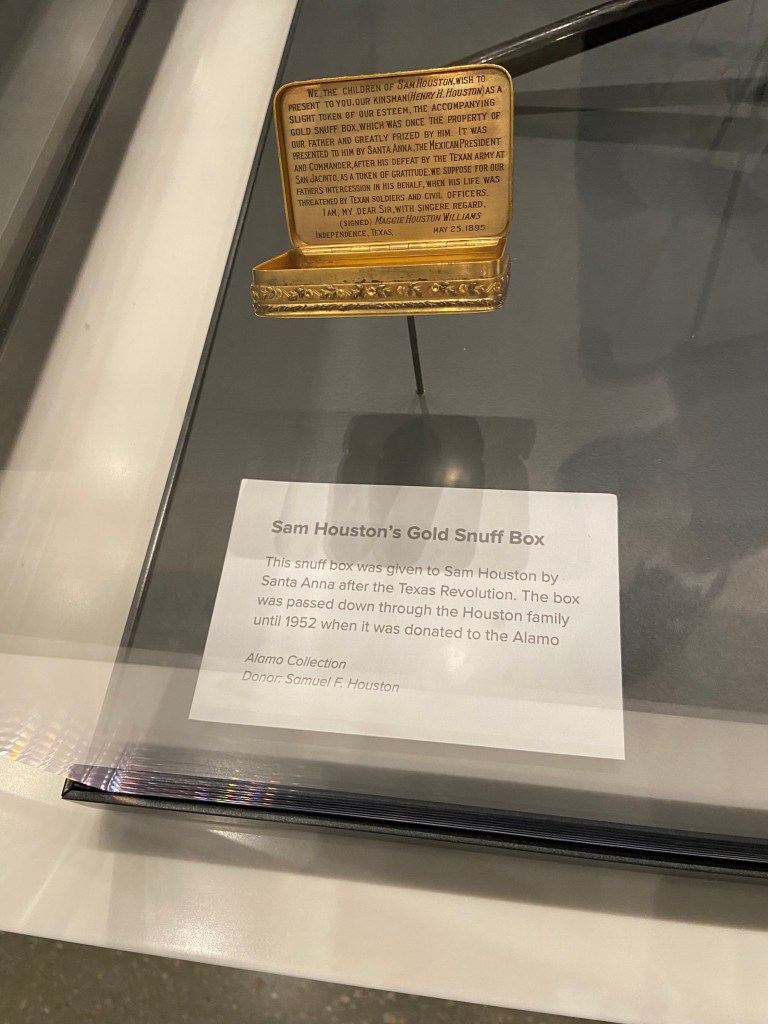
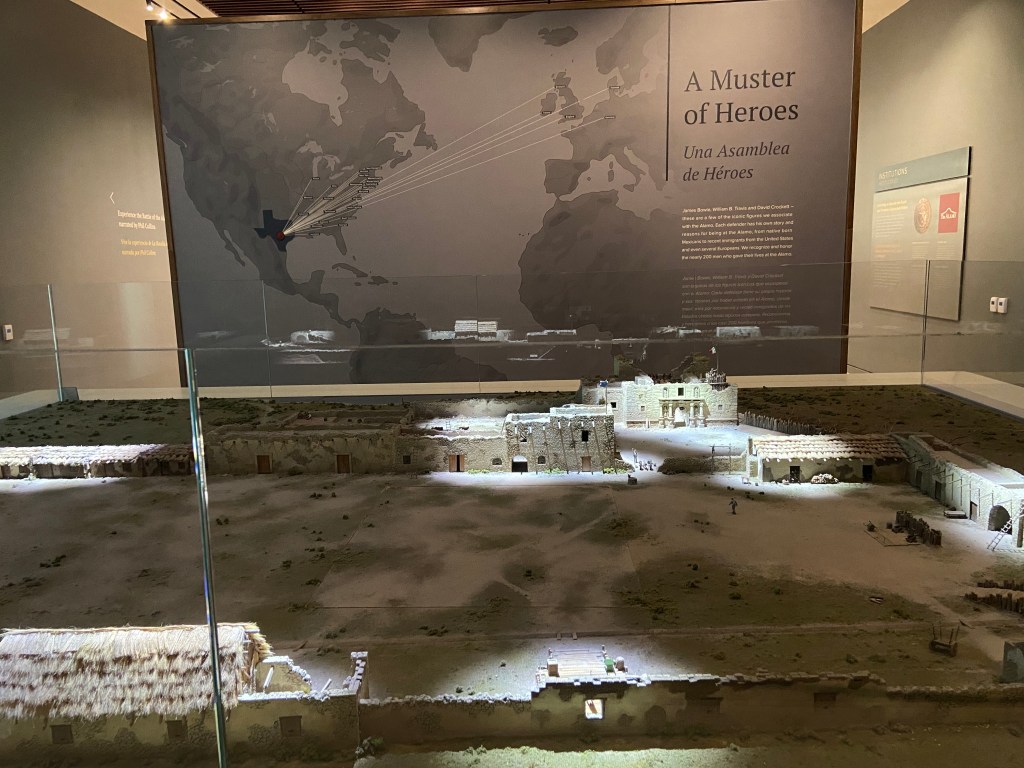
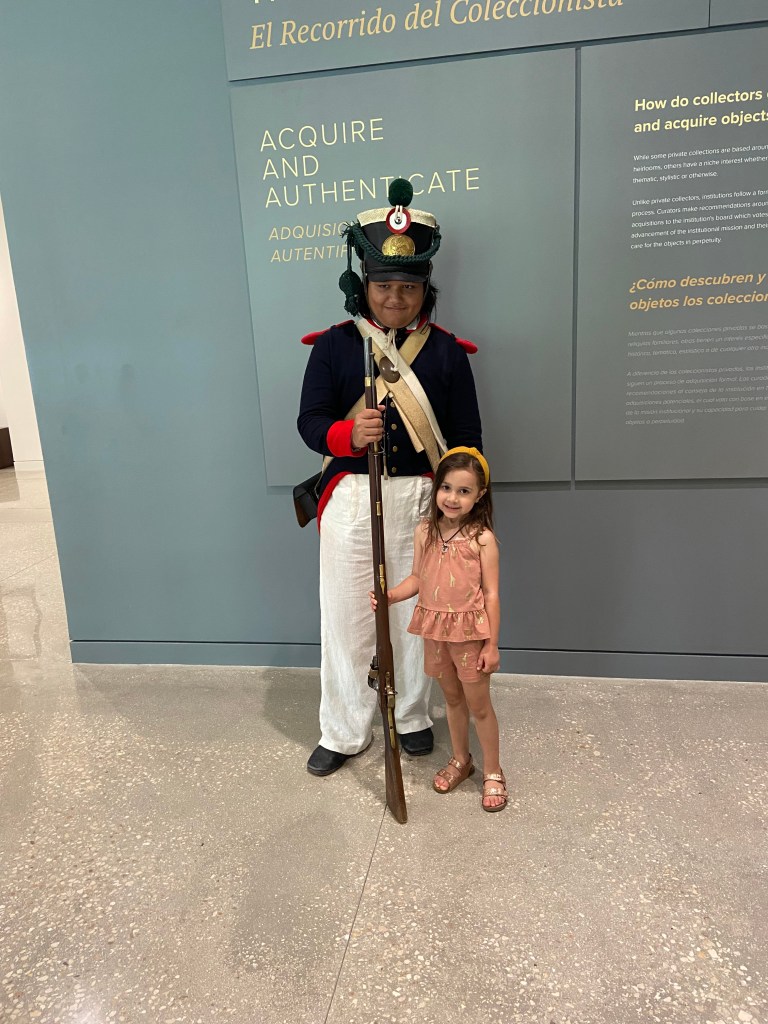
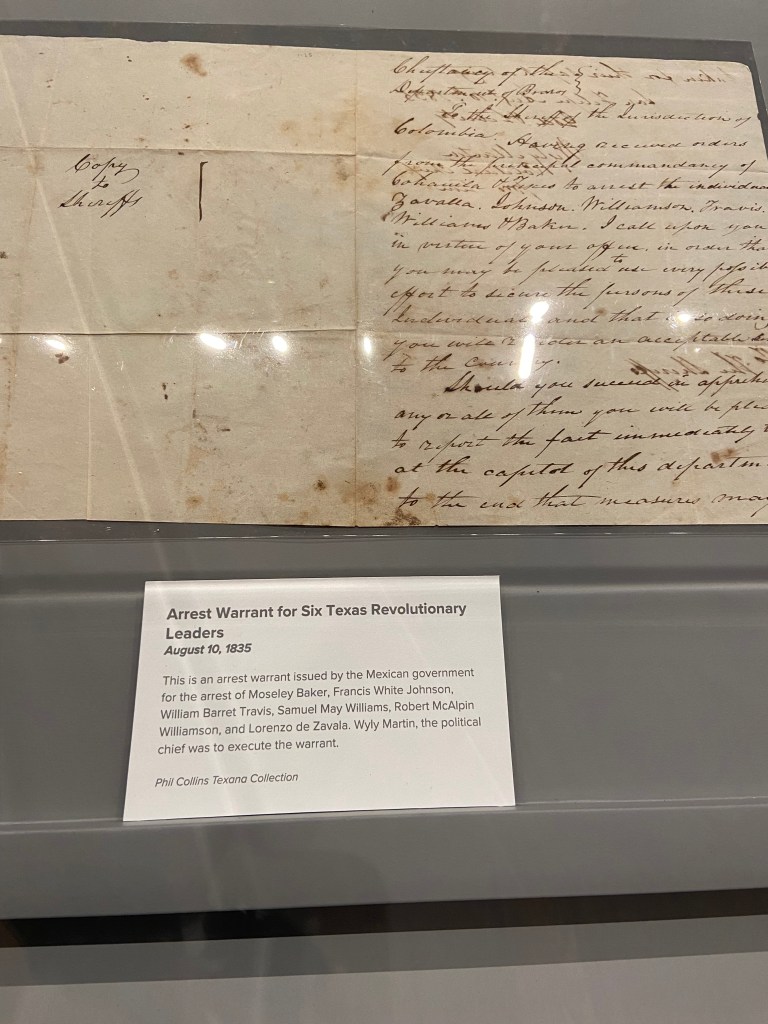
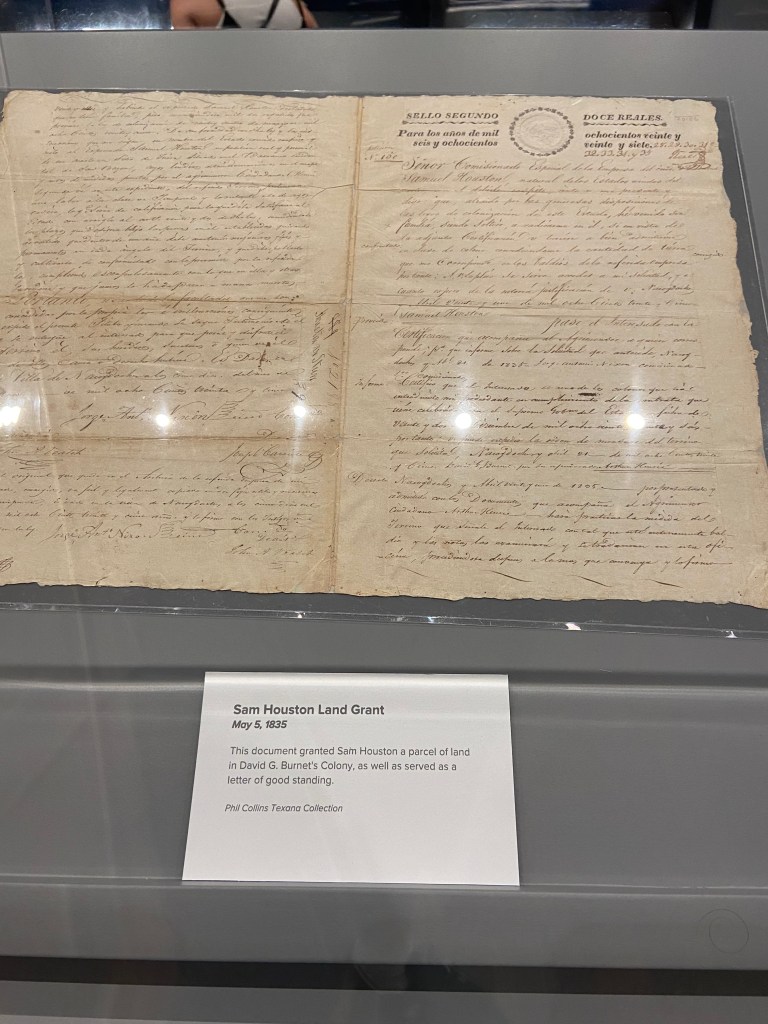
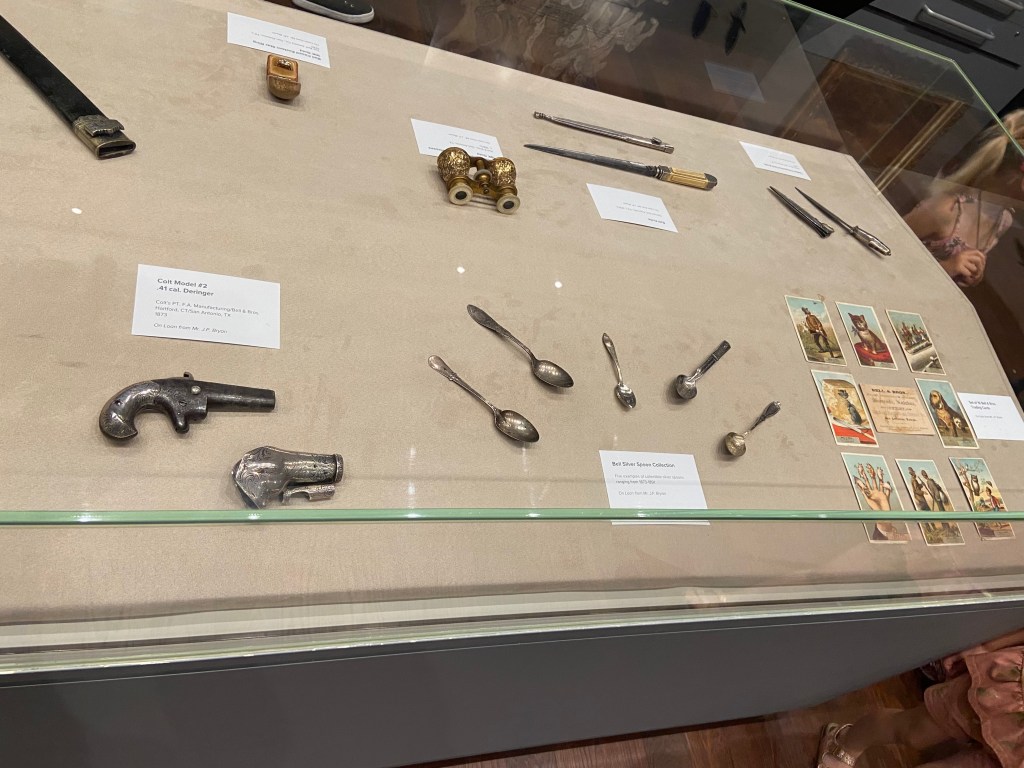
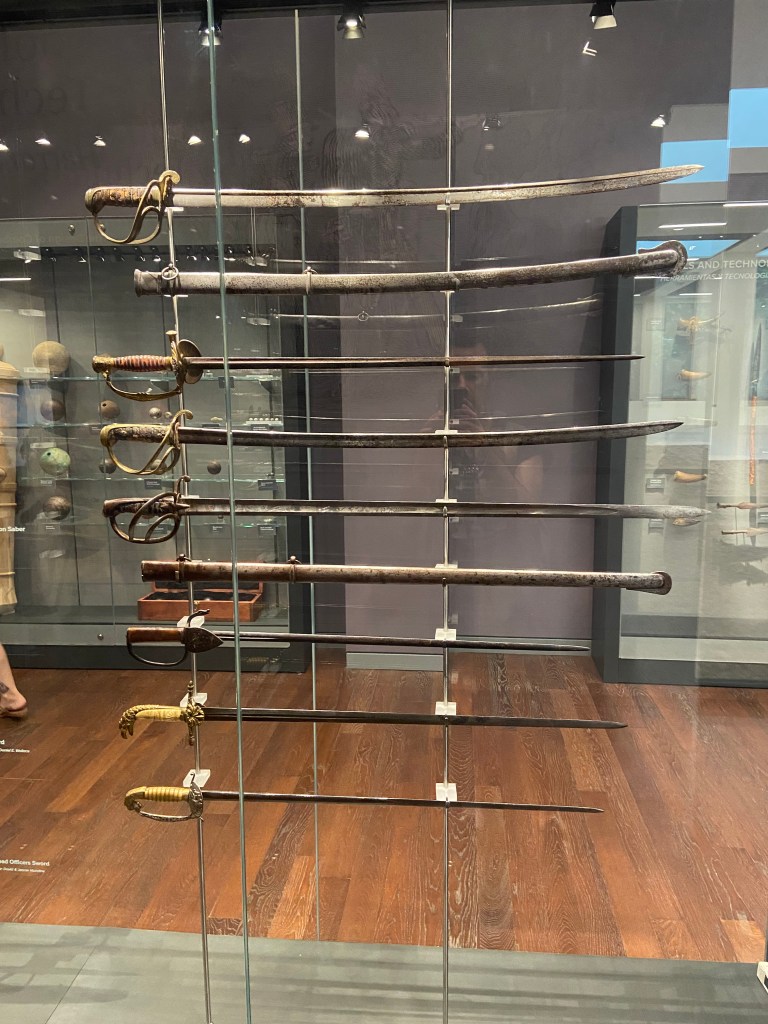
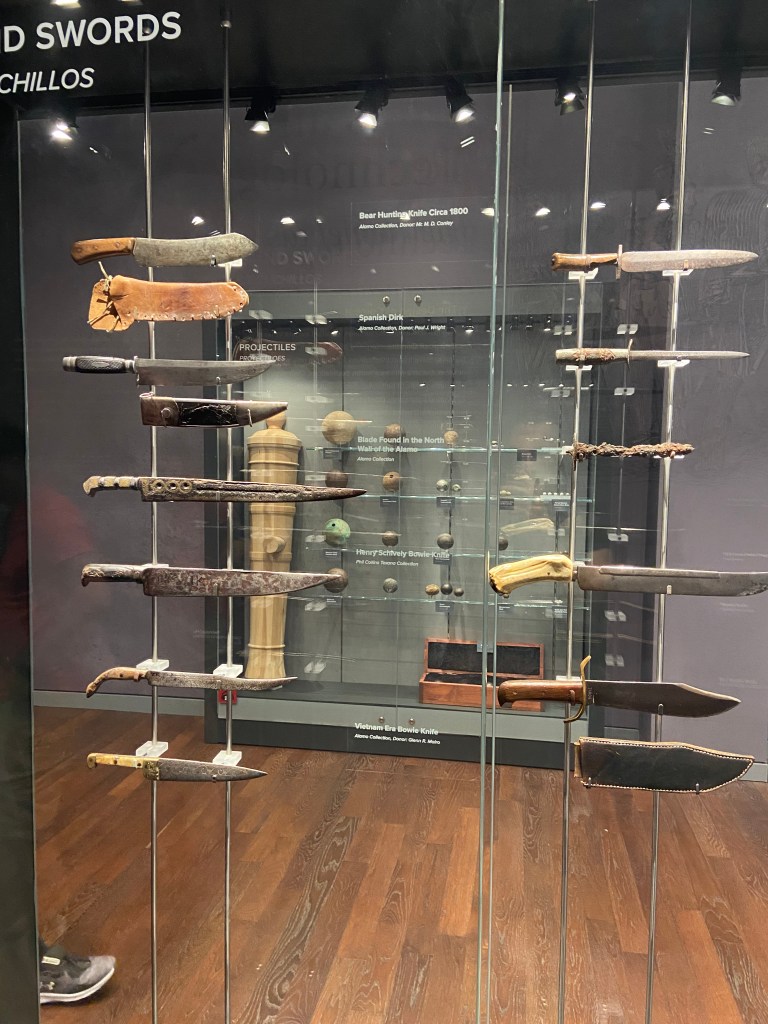
    After the kids were fed we headed back to the Alamo complex to visit the collections at the Alamo Exhibit in the Ralston Family Collections Center. The collections did not disappoint for the $12/ adult tickets. Our kids were young enough to be free. The exhibit displayed weapons and artifacts with strong ties to the Texas Revolution and the Alamo. Before I visited Texas, I never knew the connection between Phil Collins and the Alamo. Long story short, Collins developed a strong liking to the Alamo story and collected many artifacts. Later, he donated these artifacts back to the Alamo. Therefore, many of the artifacts in the collections are part of the Phil Collins collection. There is also an impressive diorama of the Alamo complex as it appeared in 1836, with Phil Collins narrating events of the battle.

    After touring the collections, we were satisfied with our experience at the Alamo. The Alamo is a must see if you are ever in the San Antonio area. It’s wonderful for someone like me who loves history, but it was also kid-friendly as well. There is plenty for them to see in the Alamo Exhibit and they too can be impressed by some of the artifacts on display. The Alamo continues to live on as a symbol of sacrifice, of patriotism, and is truly a shrine that represents Texas liberty. We cannot forget the sacrifice of the men who fought and died there for the sake of freedom. For more information on visiting the Alamo, see thealamo.org

    Related Posts:
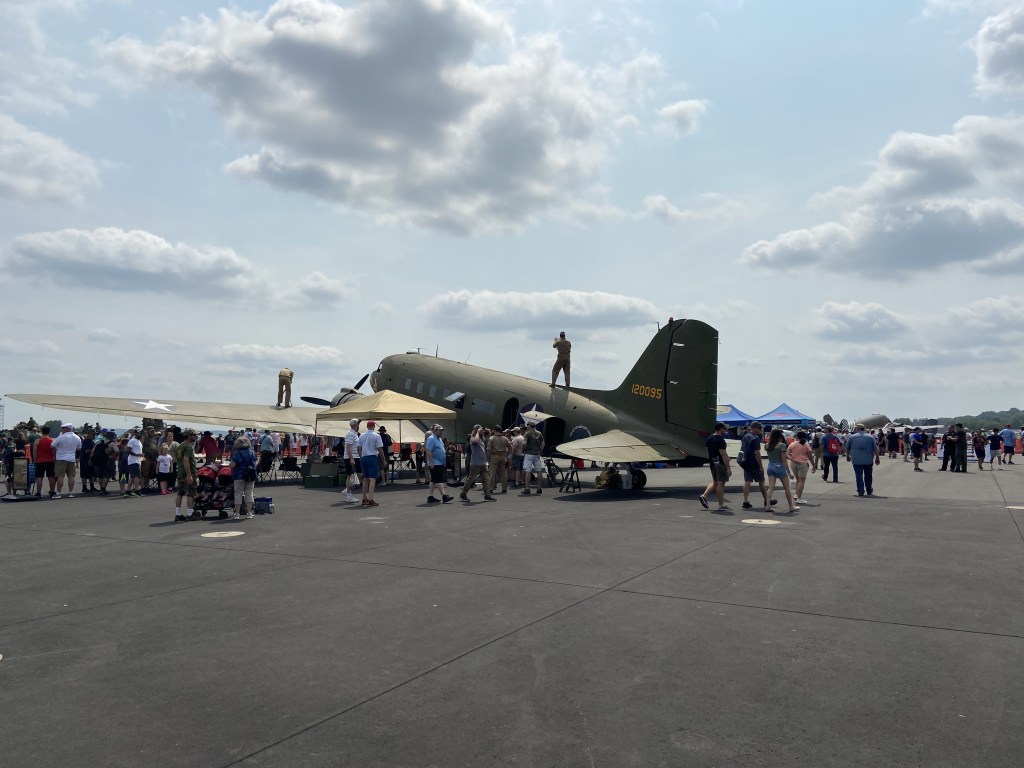
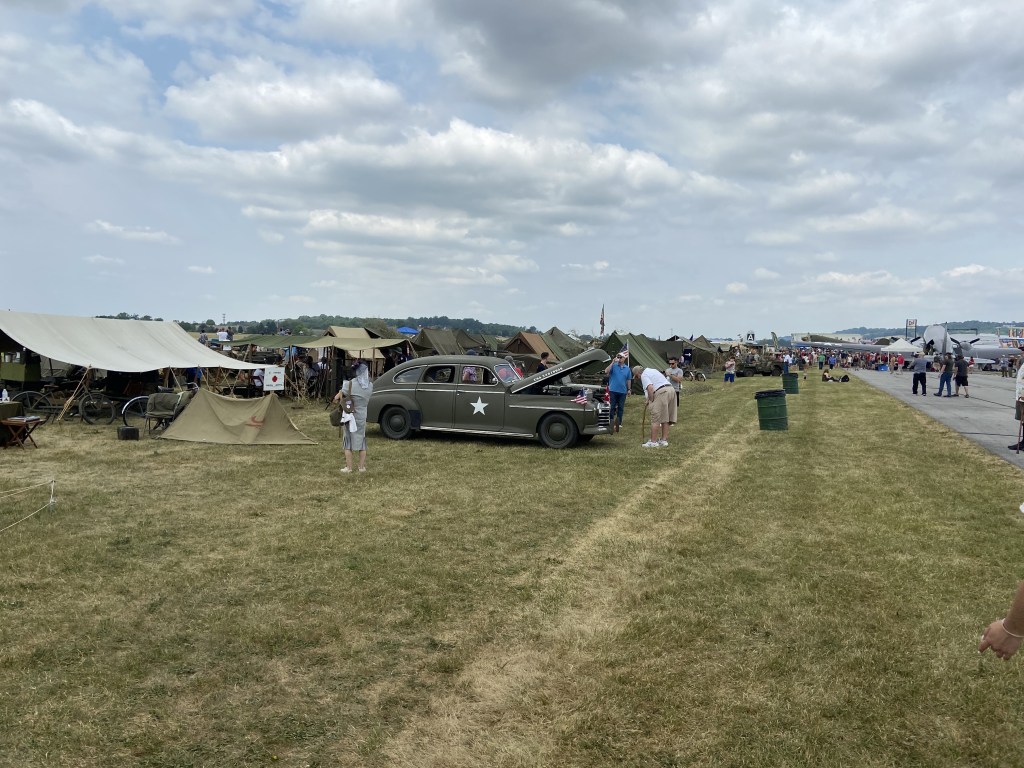
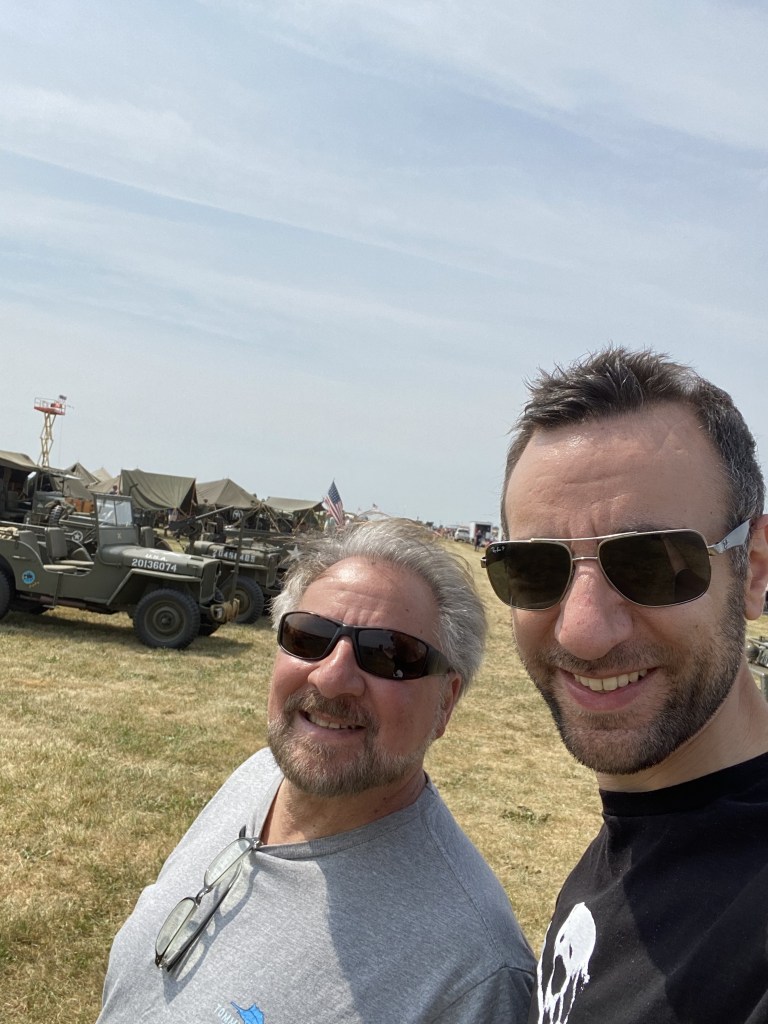
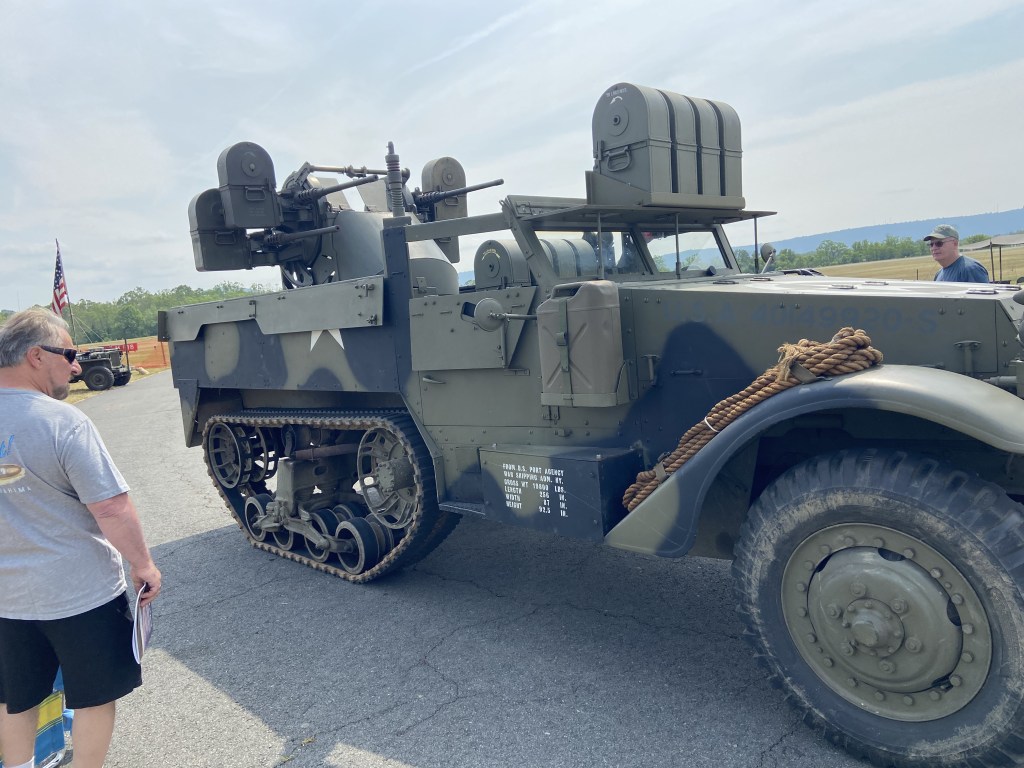
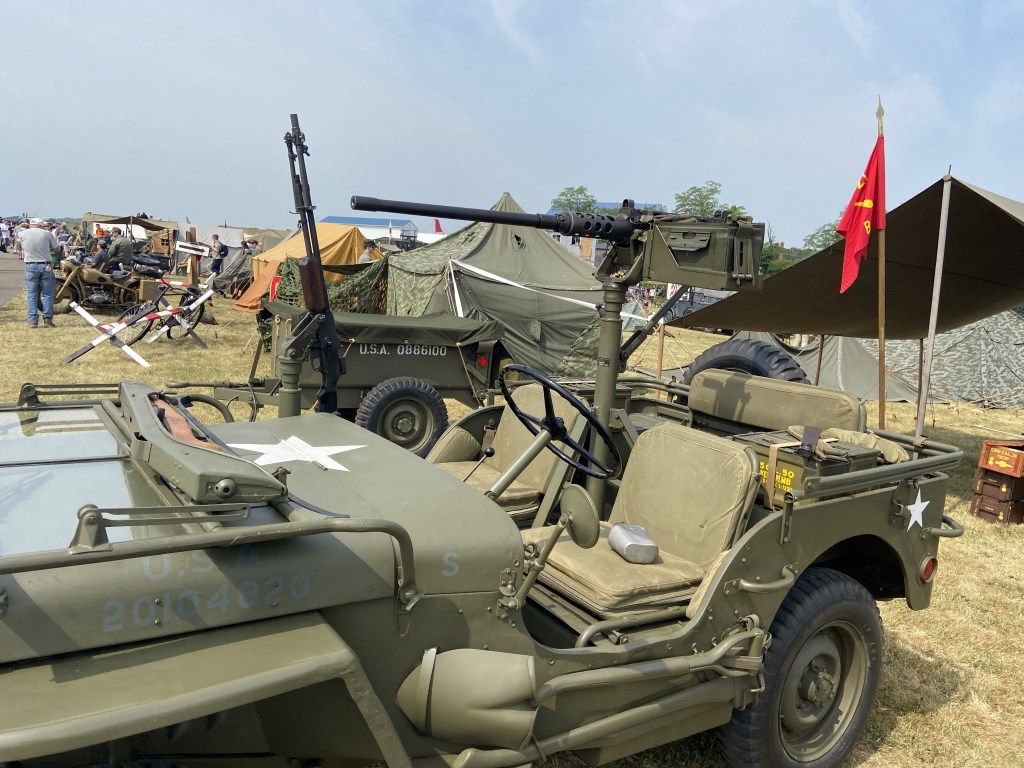
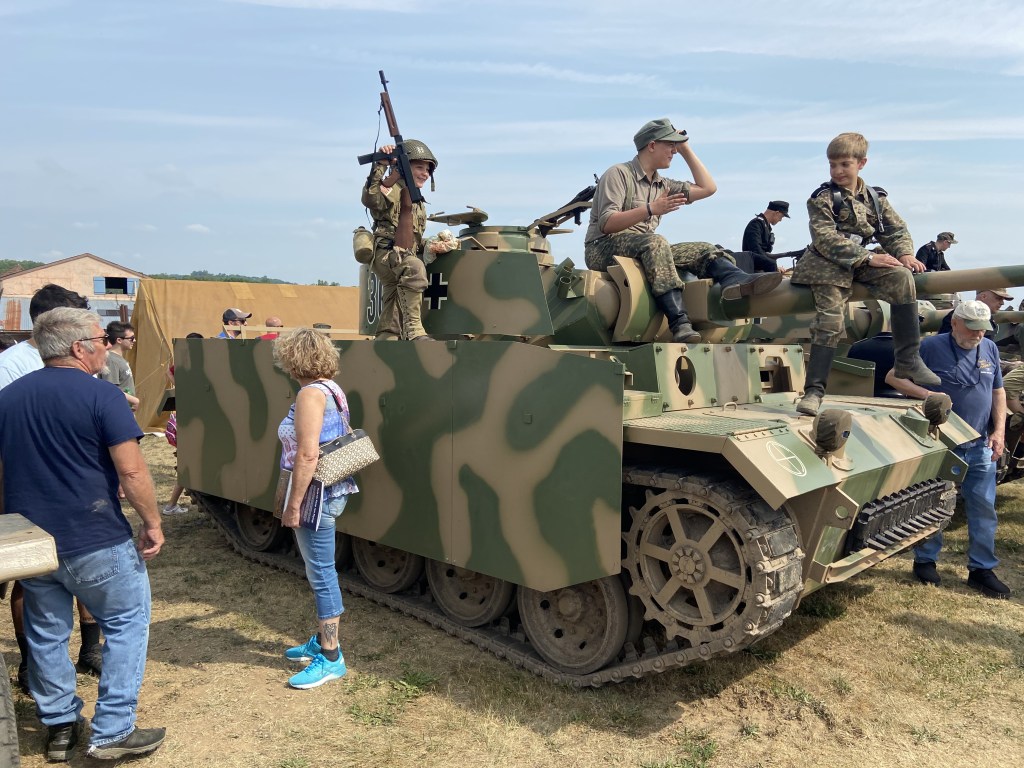
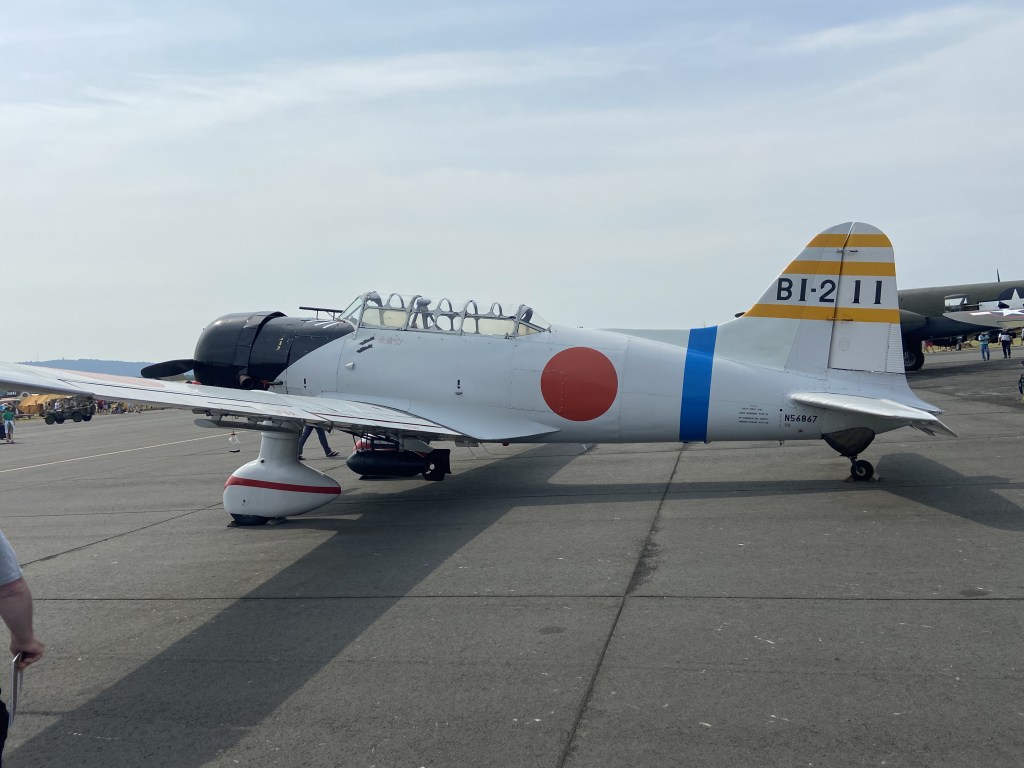
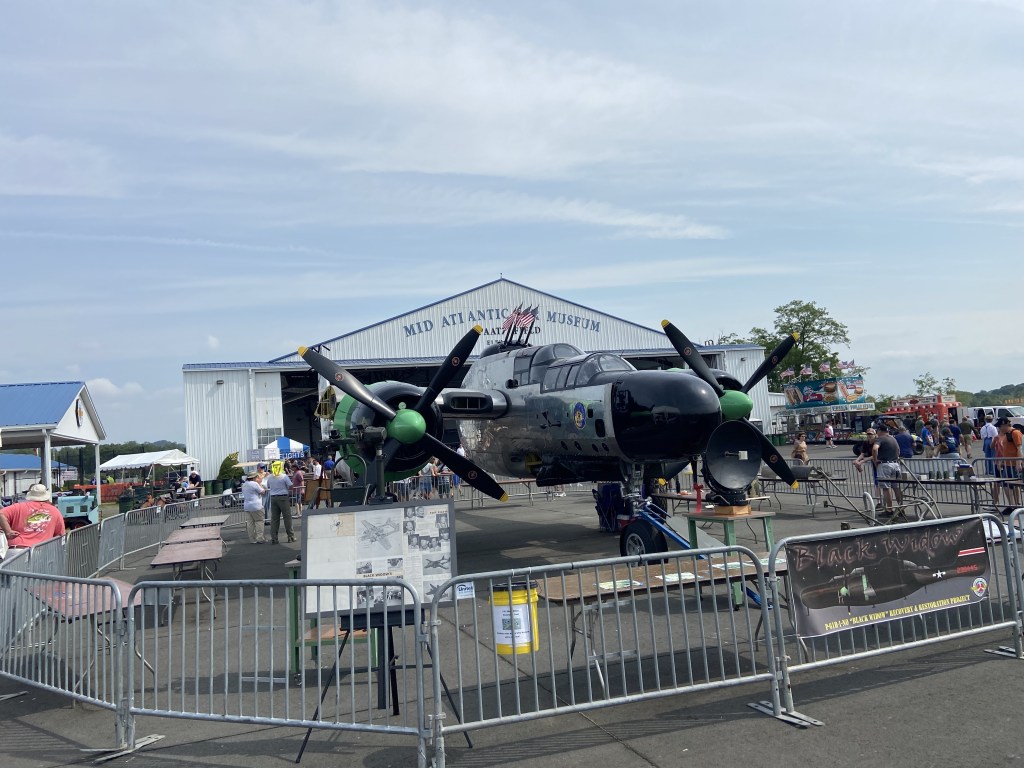
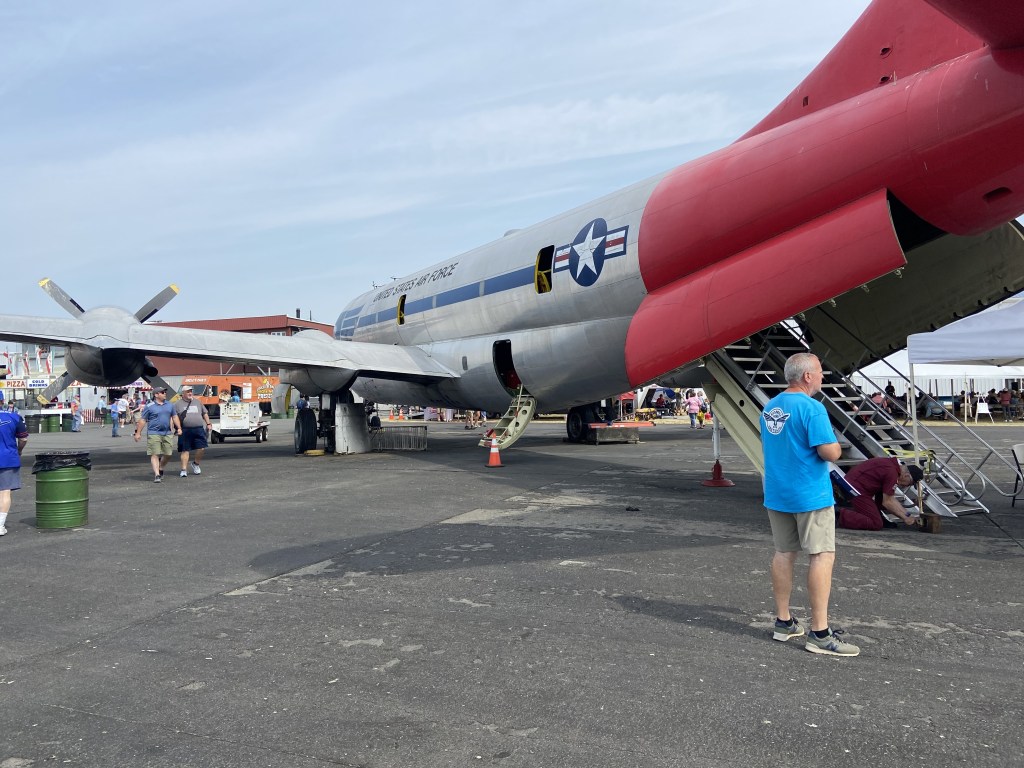
  • My first official History Blog post will be about an amazing event that I went to with my dad on June 3rd. This was my first time attending the Mid-Atlantic Air Museum’s WW2 weekend event. This was the 32nd annual event and it was running Friday, Saturday and Sunday. My dad had gone the previous year and told me that I would really enjoy it. It far exceeded expectations. The event contained all things WWII at the Reading Regional Airport in PA. There were WWII planes, weapons, tanks and other army vehicles.

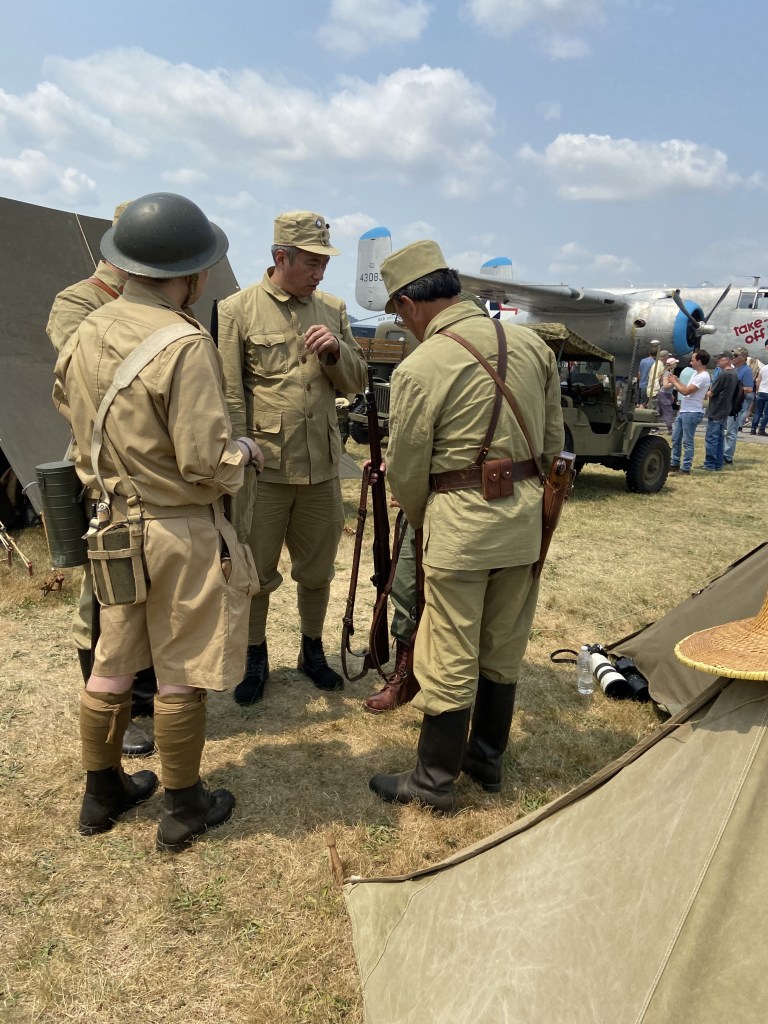
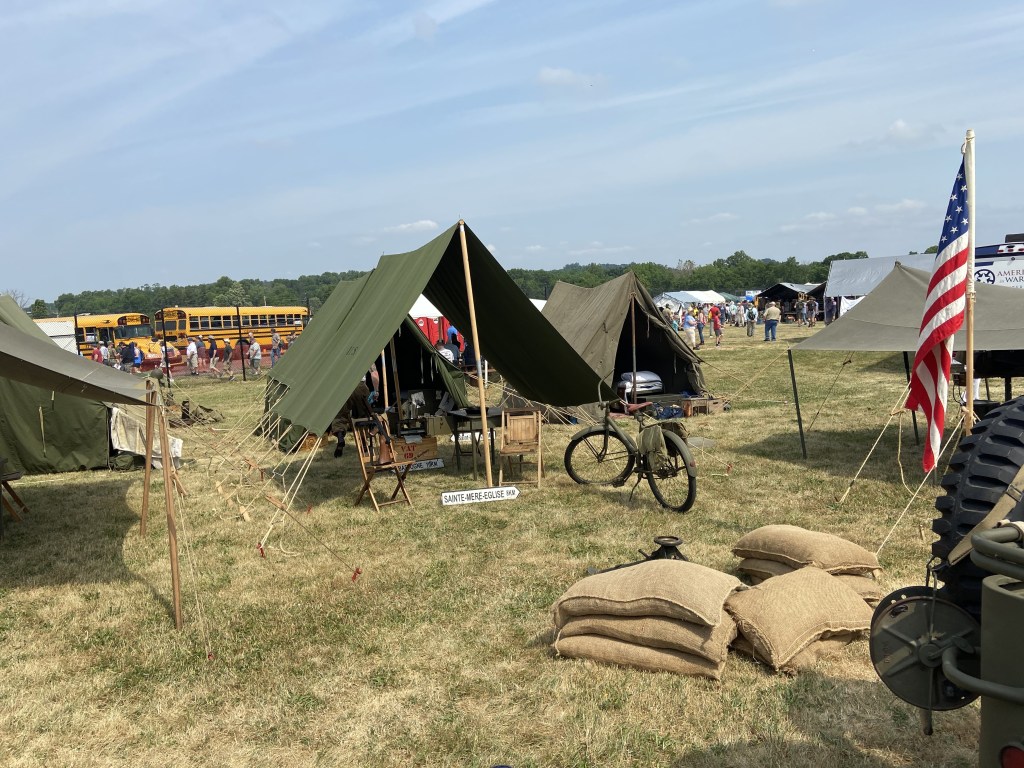
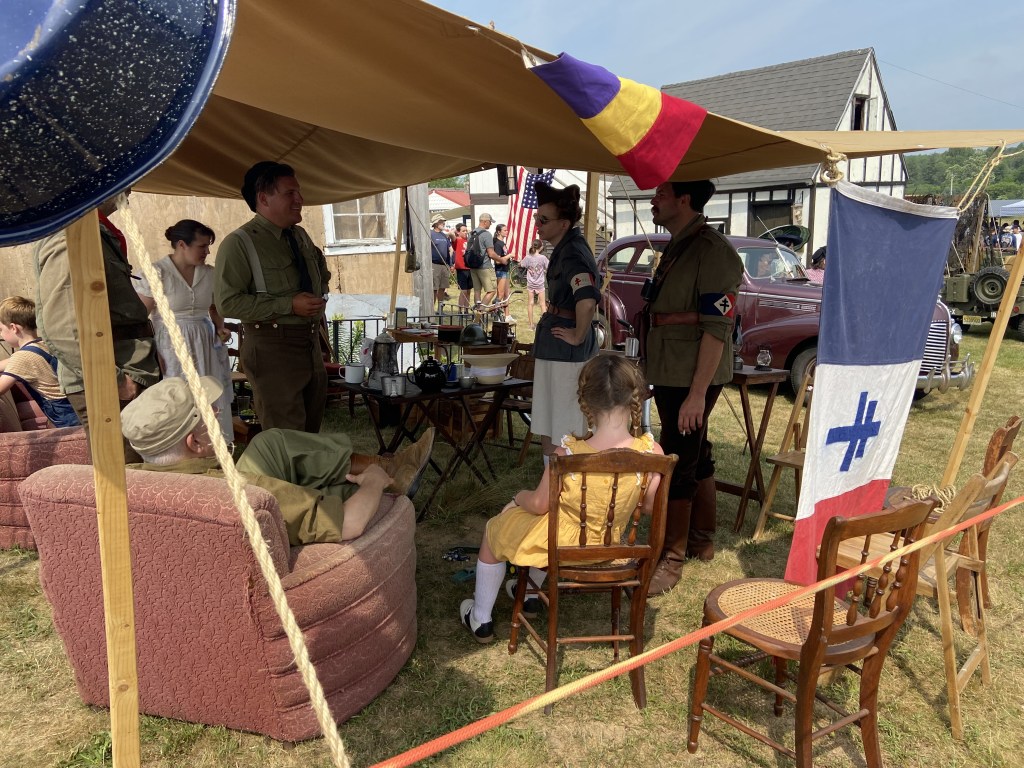
    One aspect of the event that I really enjoyed were the army encampments. Spread around the grounds were the different army encampments from the different countries. Men and women dressed in full WW2 garb answered questions as if they were in the army themselves. One actor from the British camp explained in detail, their role as paratroopers for the British army. Playing in the background throughout the event were oldies from the 1940’s with all of the belongings and supplies that the soldiers would have carried in their camp. For brief moments, you honsetly felt like you were going back in time as a soldier. The dread they must have felt and experienced, knowing they were going off to battle and wondering if they would ever going to see their families again.

    After touring the camps, and chatting with the actors, my dad and I settled down on lawn chairs for the airshow which went on for a couple of hours. It was amazing to see these WWII planes still in action even though they were 80 year old planes. It was very entertaining watching the stunts and tricks of the pilots. During the airshow, seven jumpers lept from the planes using parachutes from that time period. We were told that steering capabilities were extremely limited. Luckily, they skillfully tumbled to the ground.

    I would recommend this event to people of all ages. I couldn’t believe the size of the crowds. But everything was so spaced out that you didn’t feel cramped at all. It was nice to see that so many people respected the history and had such an appreciation for WW2, that they’d take time out of their busy lives to attend. I saw young and old all enjoying themselves and having a good time. I would compare this event to a large festival but all for WWII, with music, food trucks, and vendors selling souvenirs. I’d give this event a 10/10 because it far exceeded expecations. The event is always the first full weekend in June, so I will definately plan to attend again. For more information check out the website: https://www.maam.org/maamwwii.html
    Related Posts: