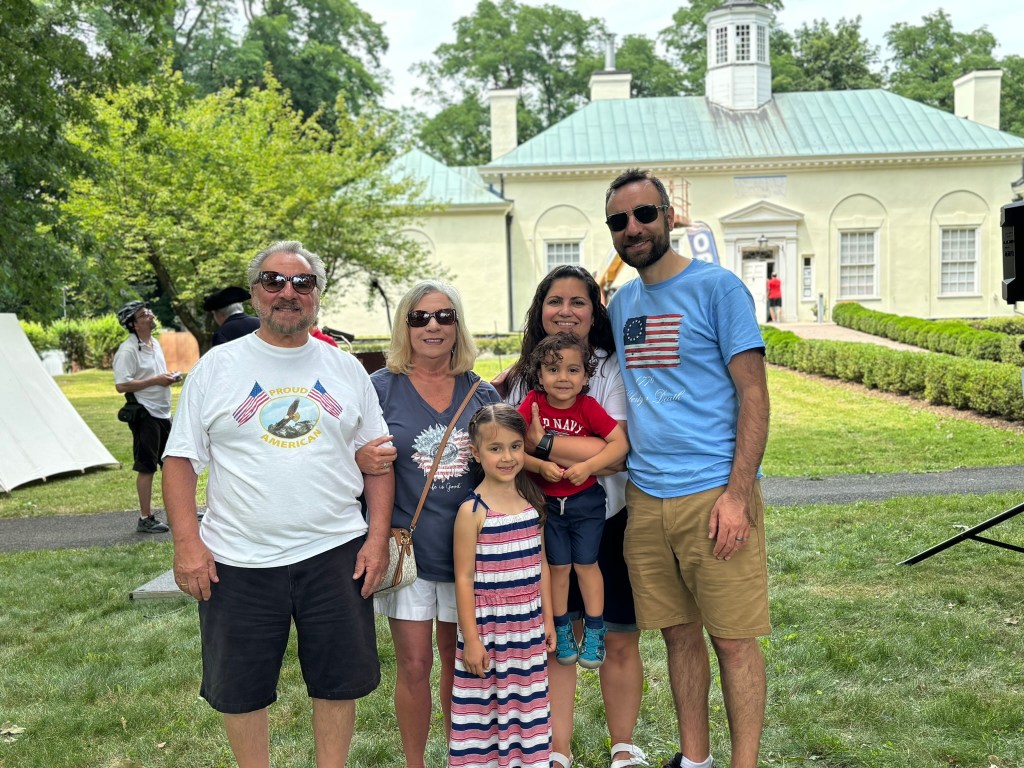
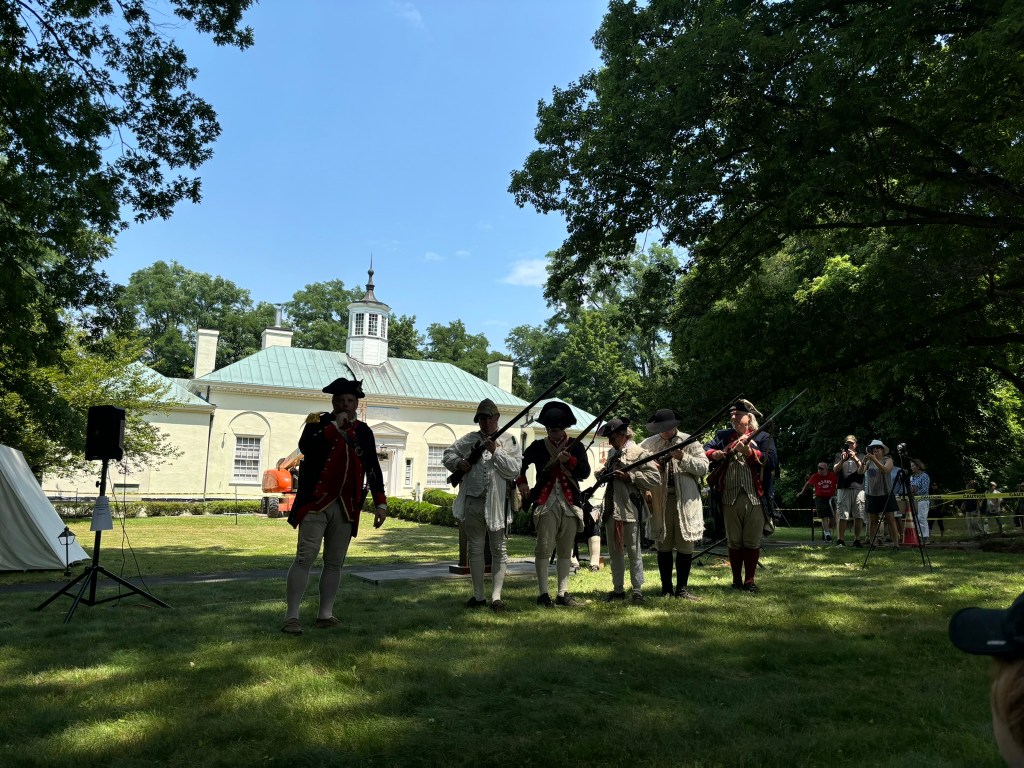
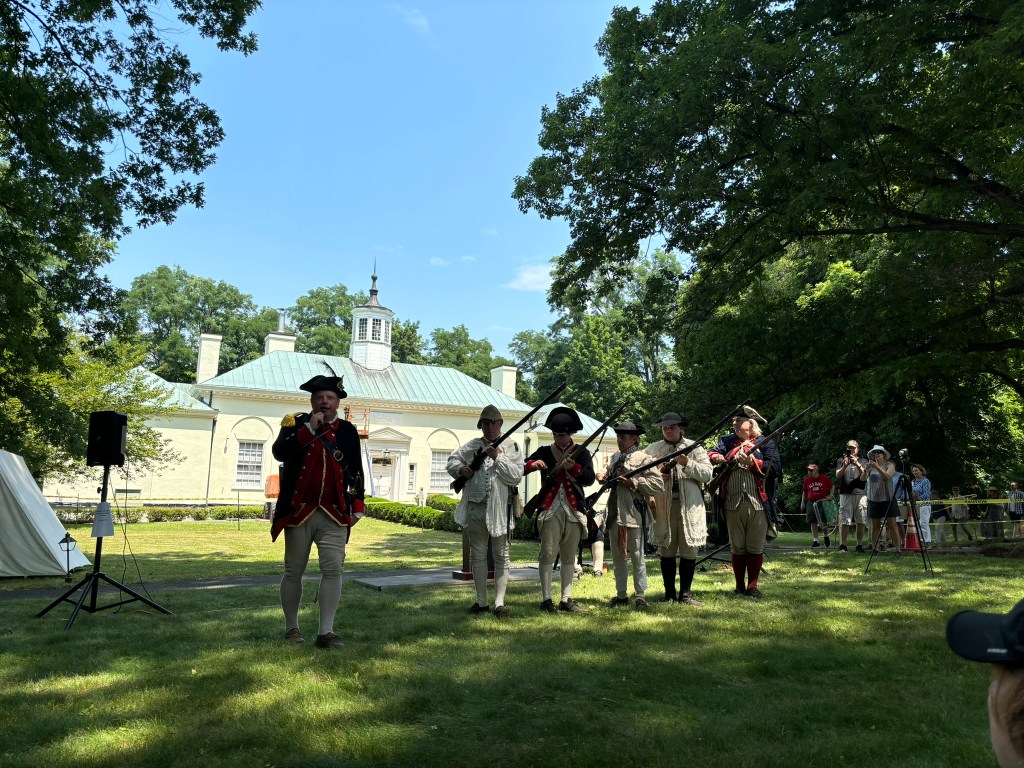
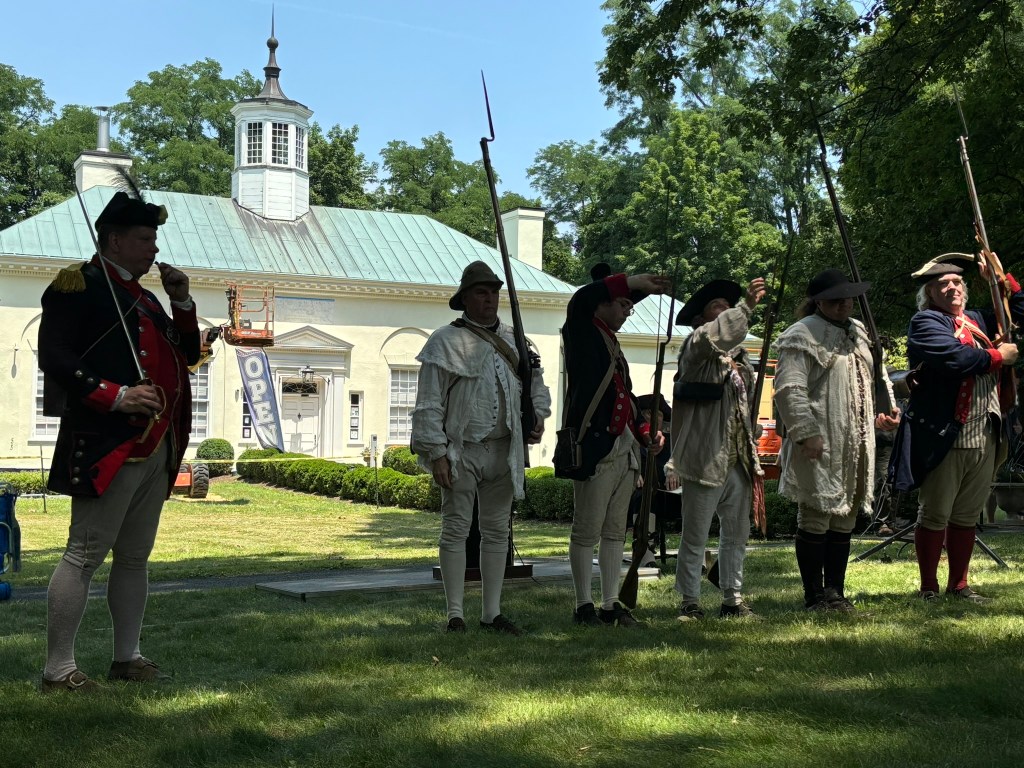
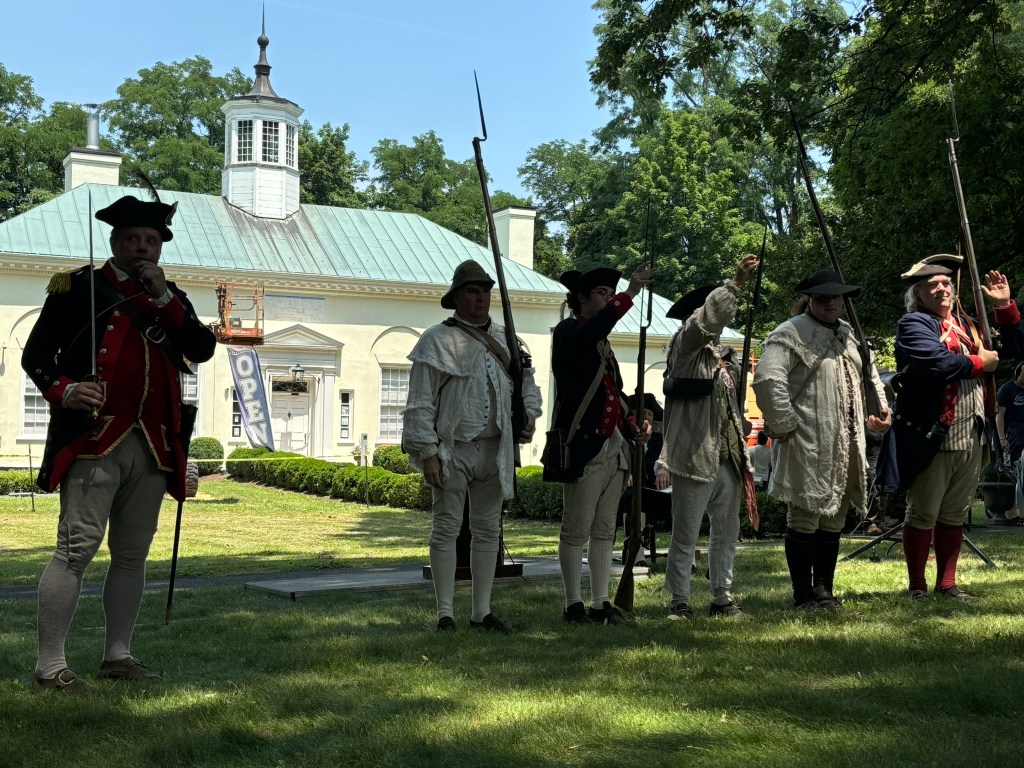
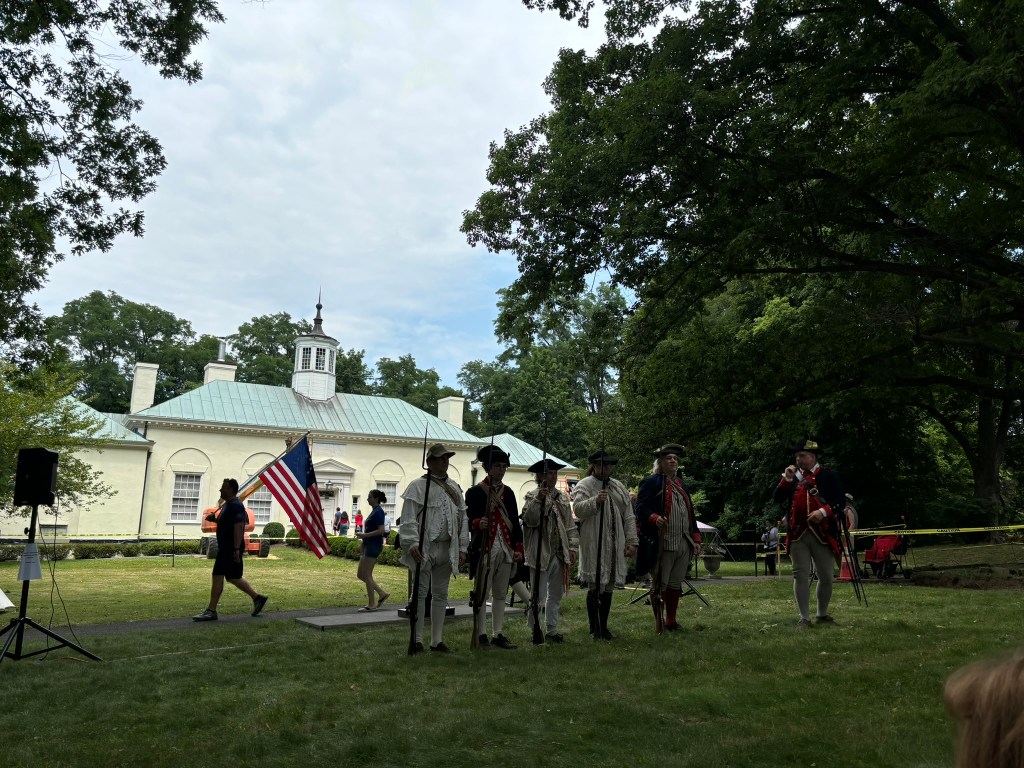
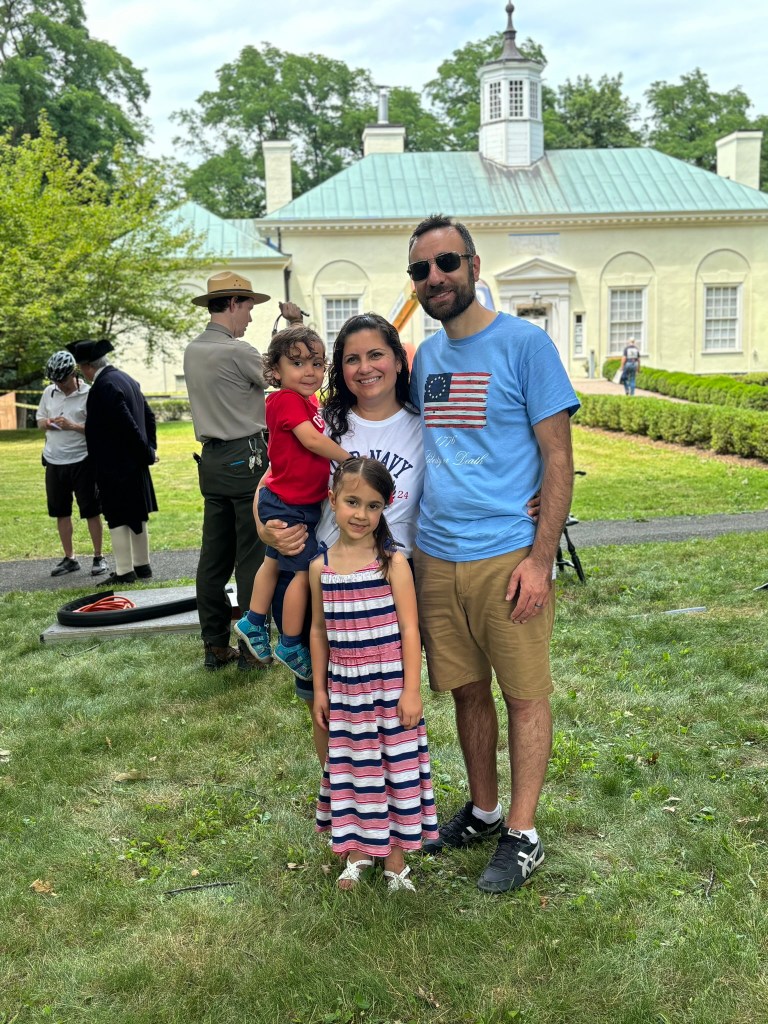
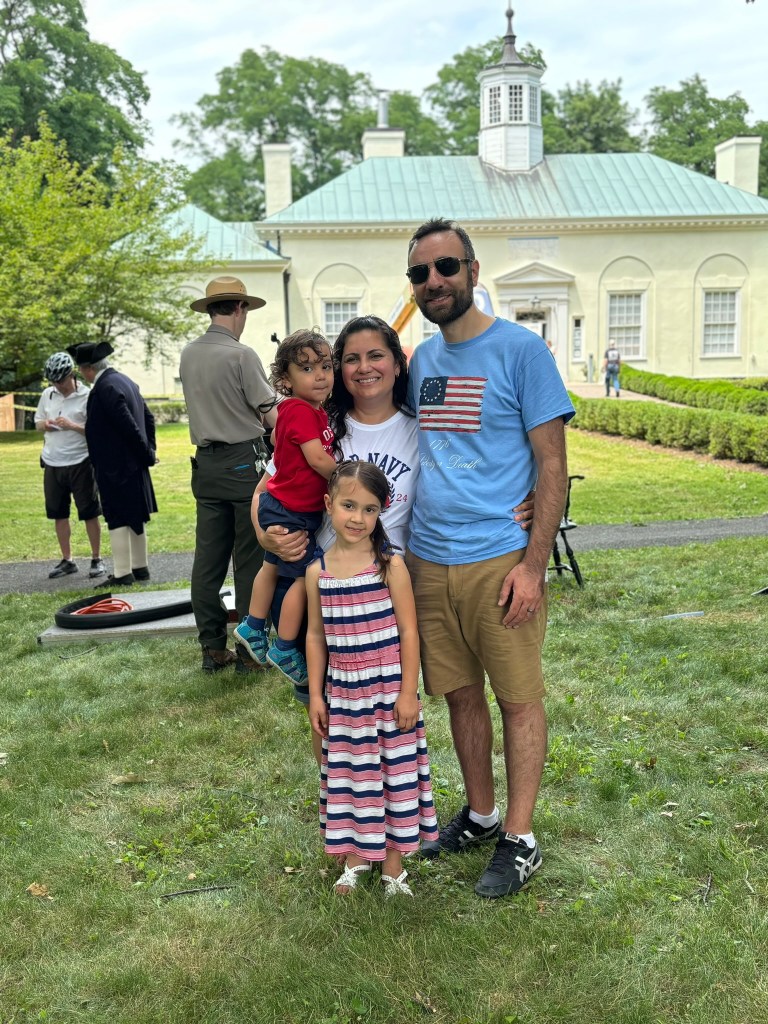
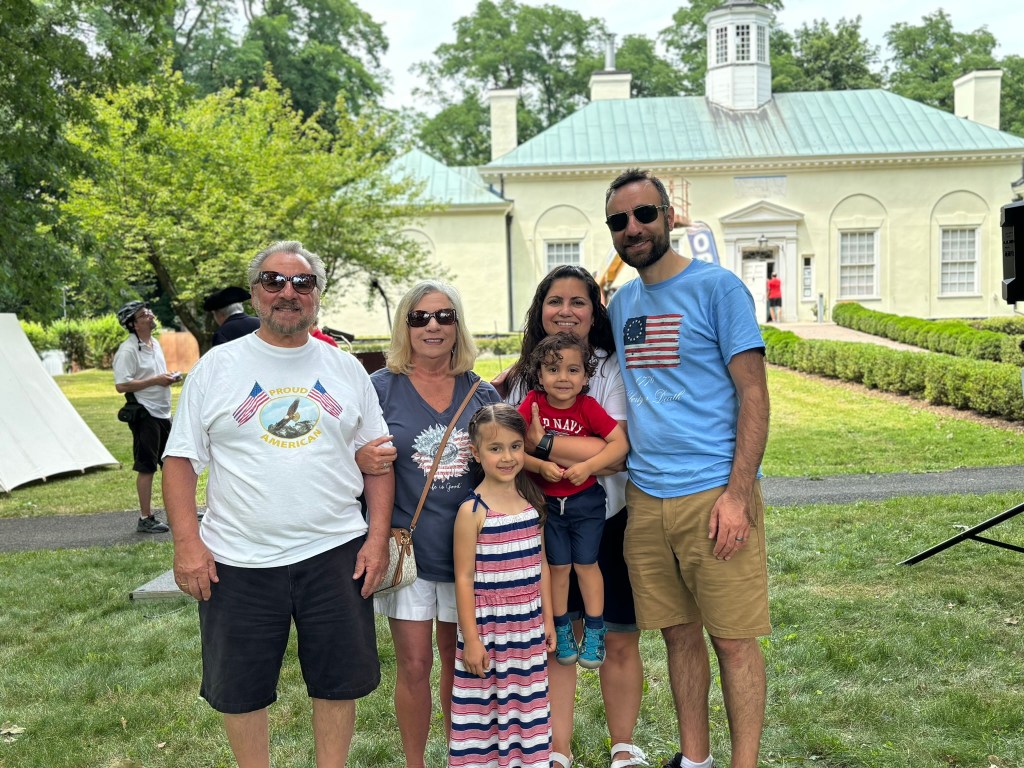
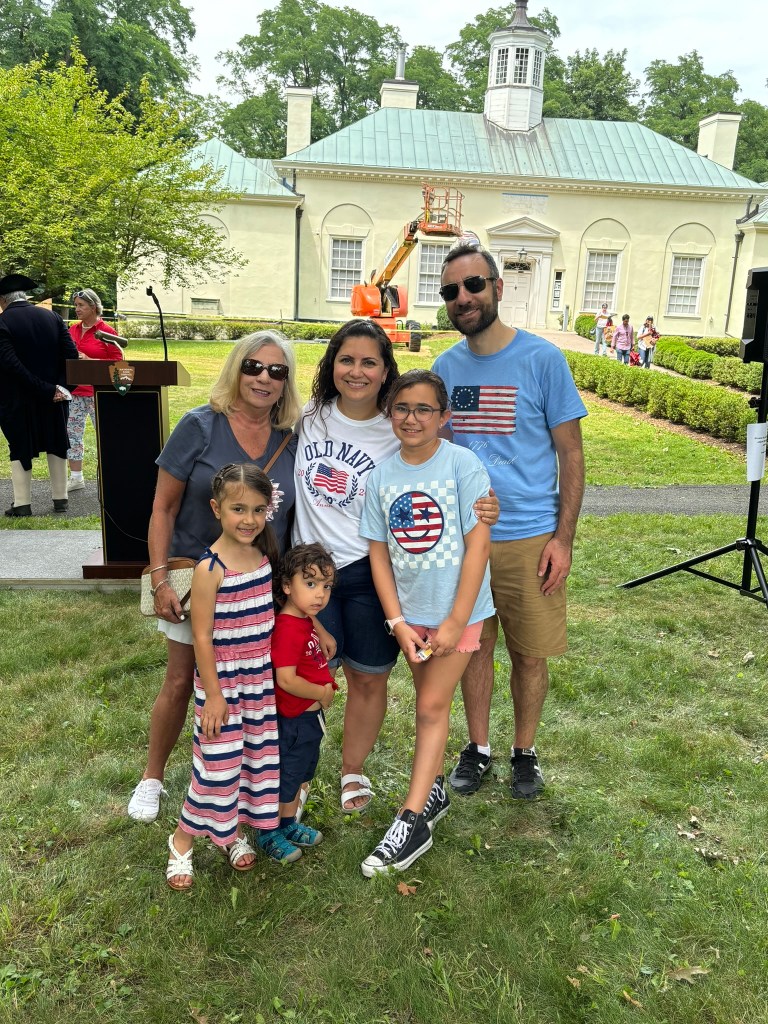
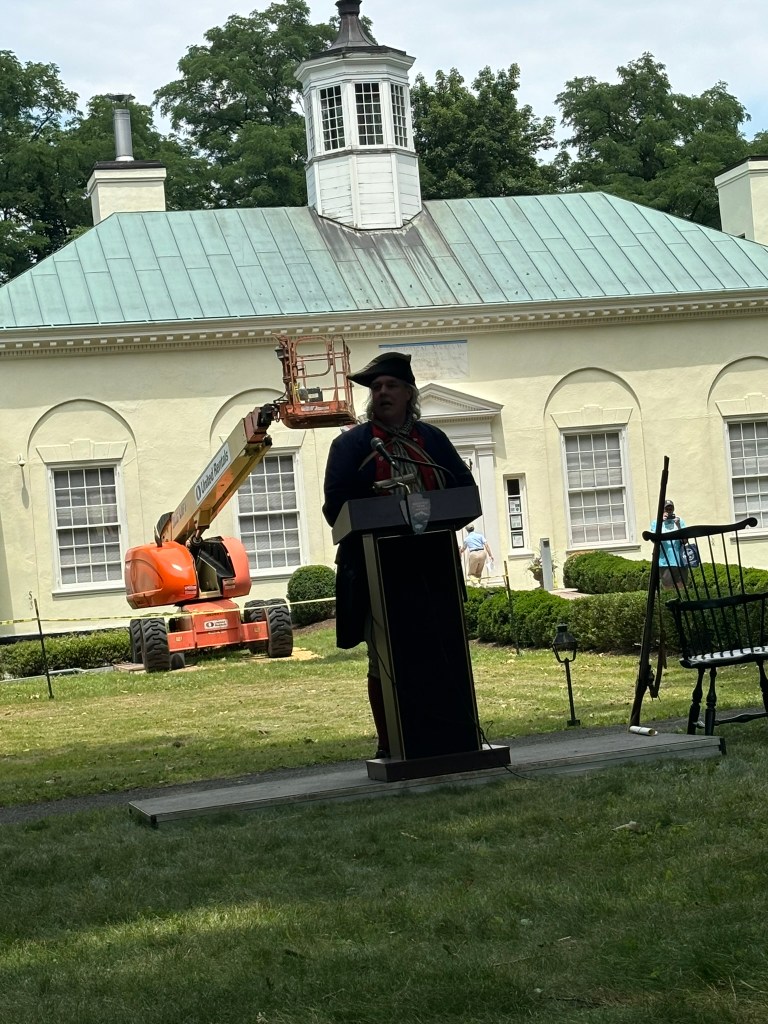
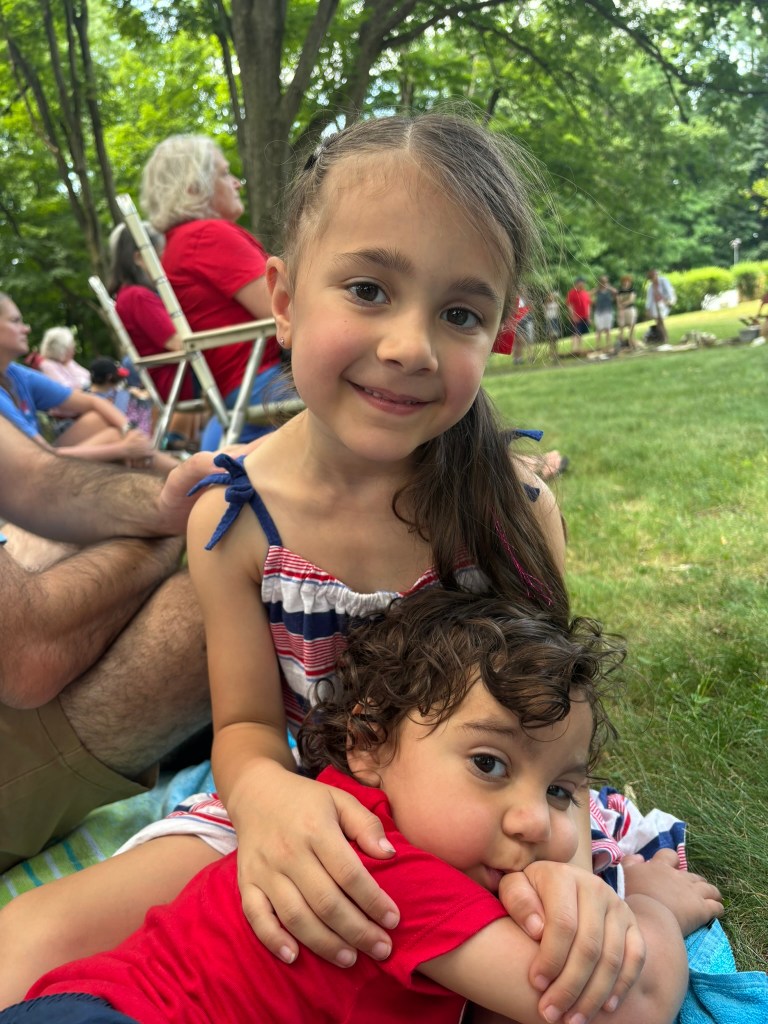
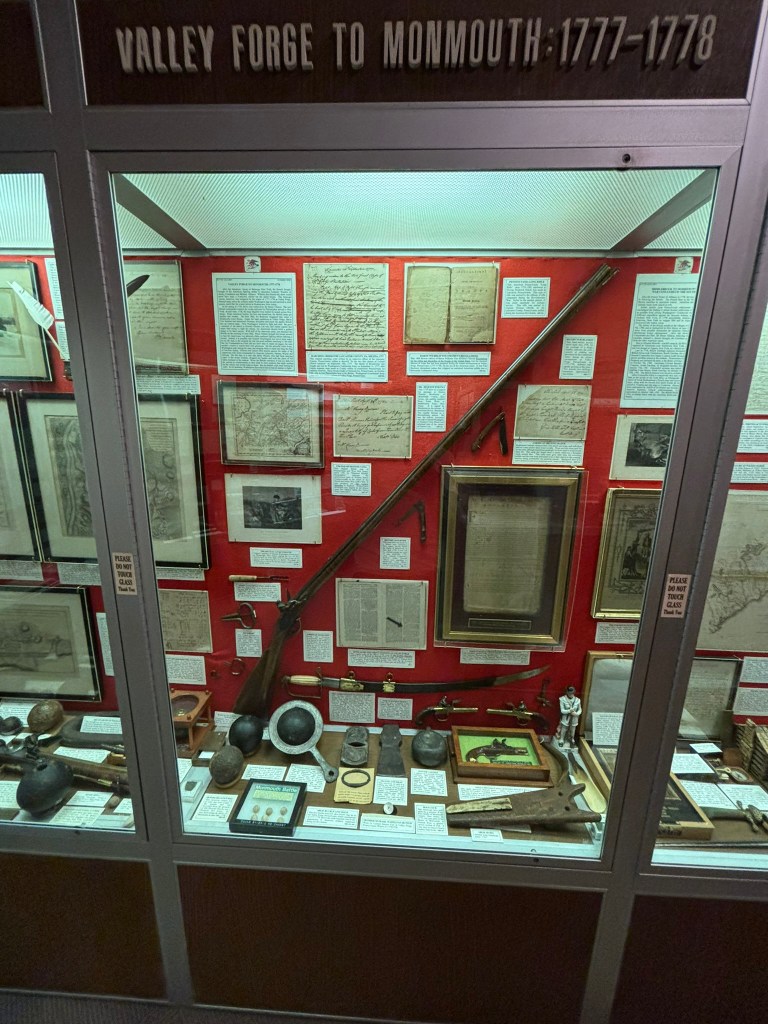
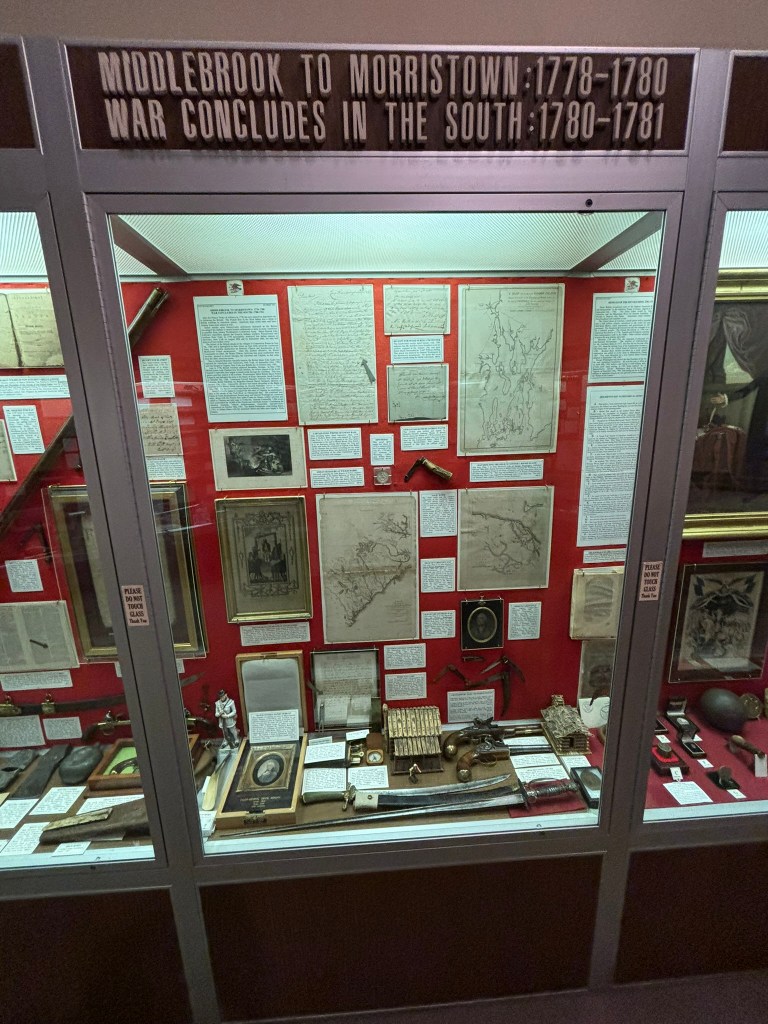
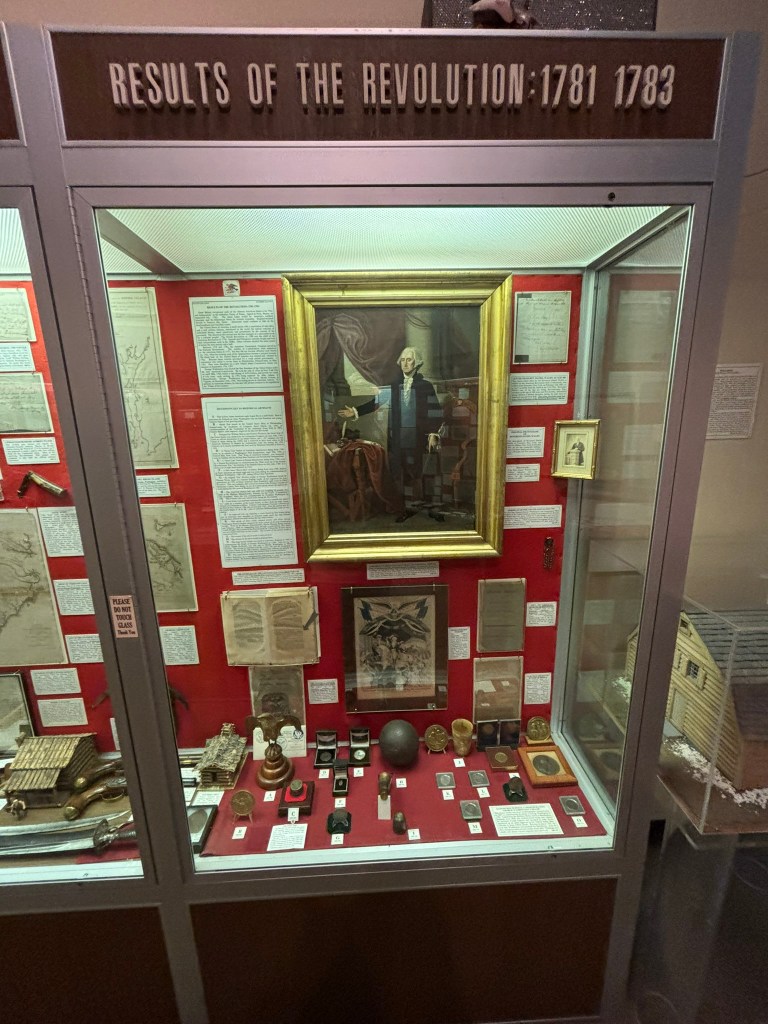
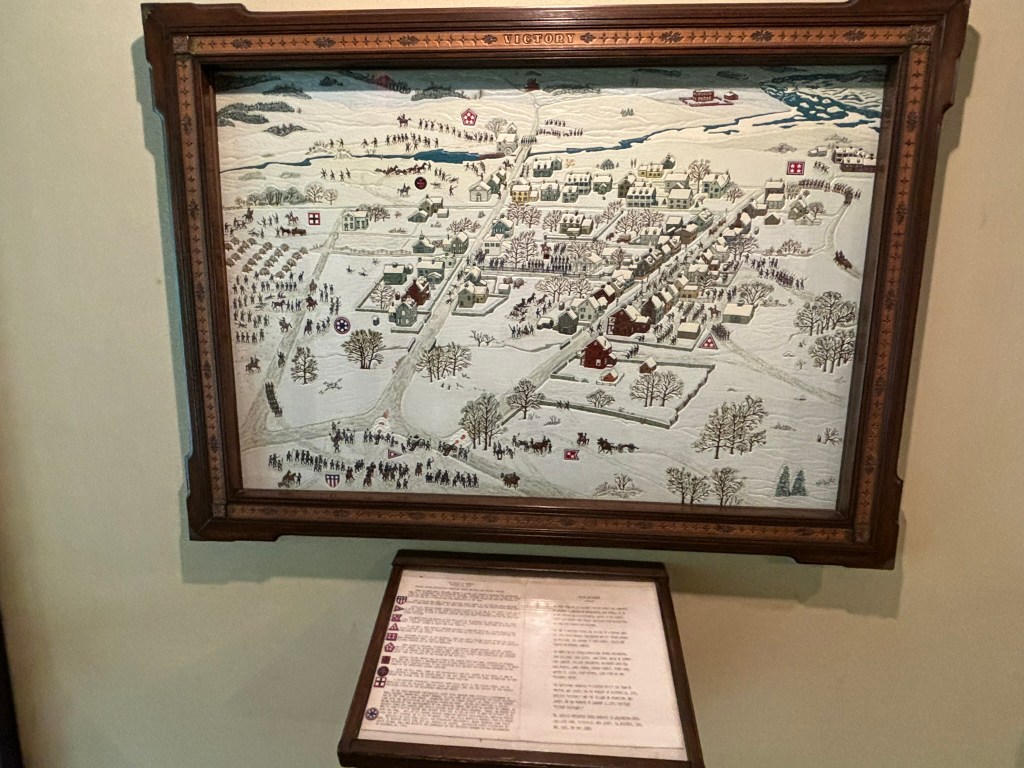
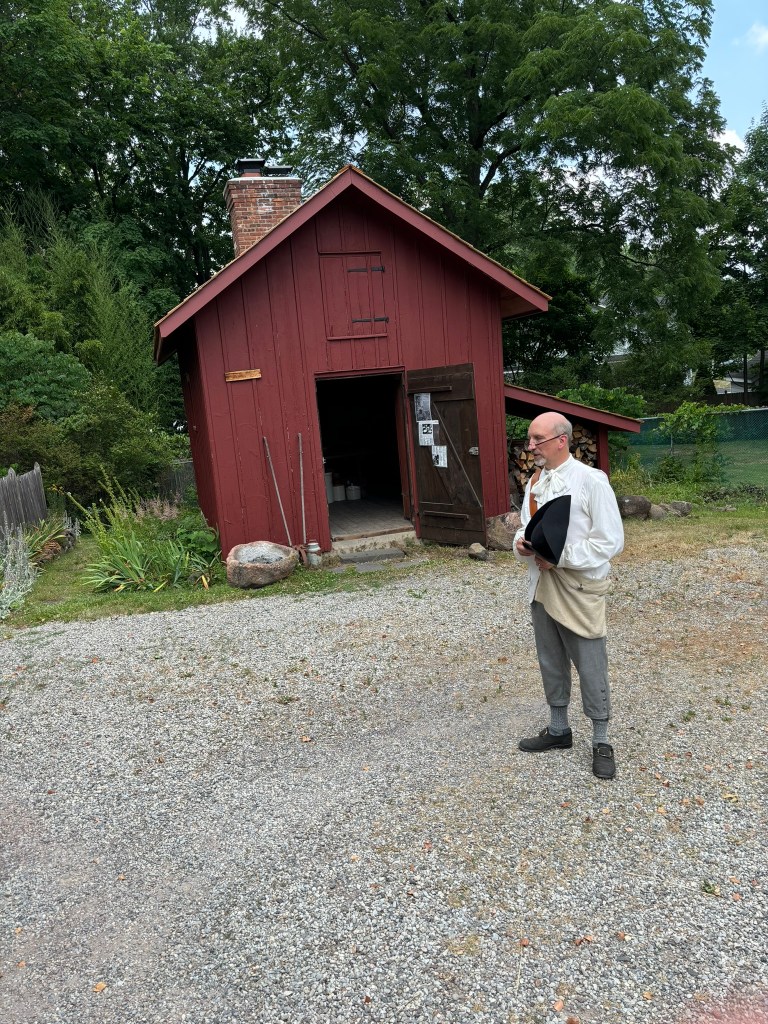
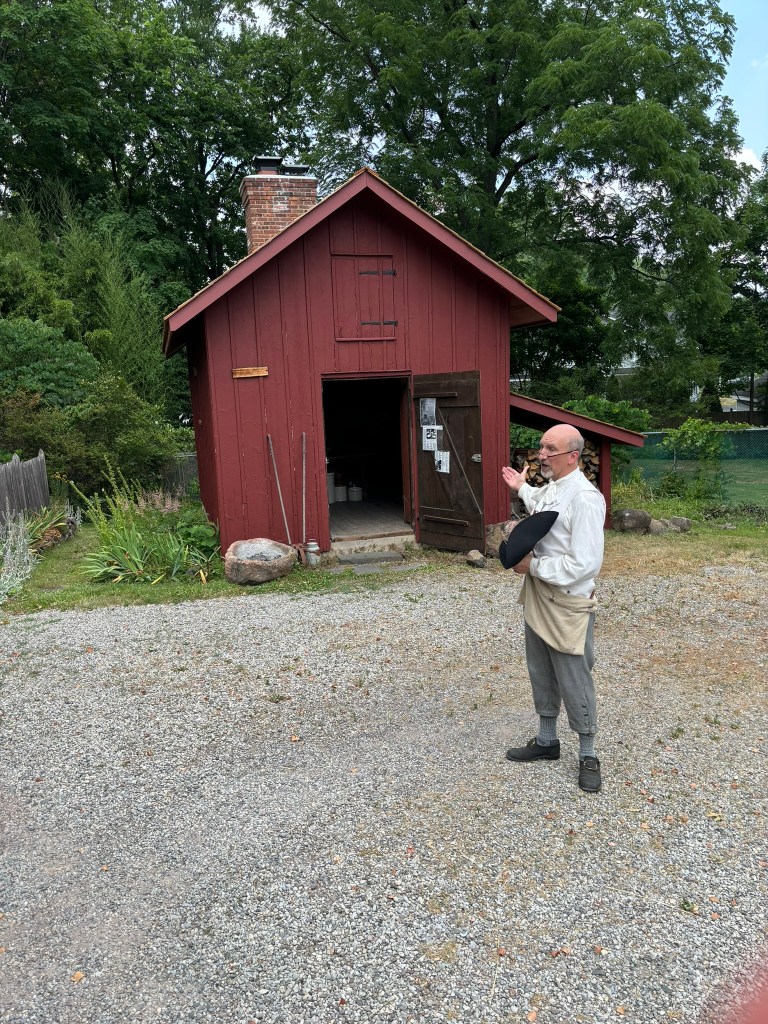
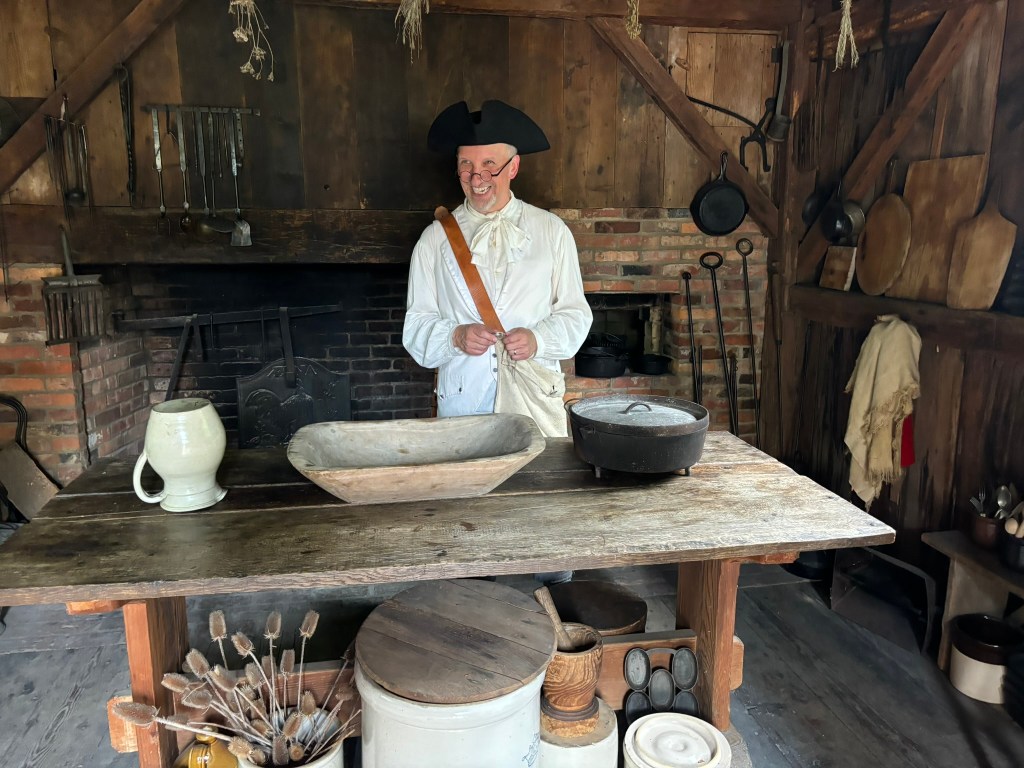
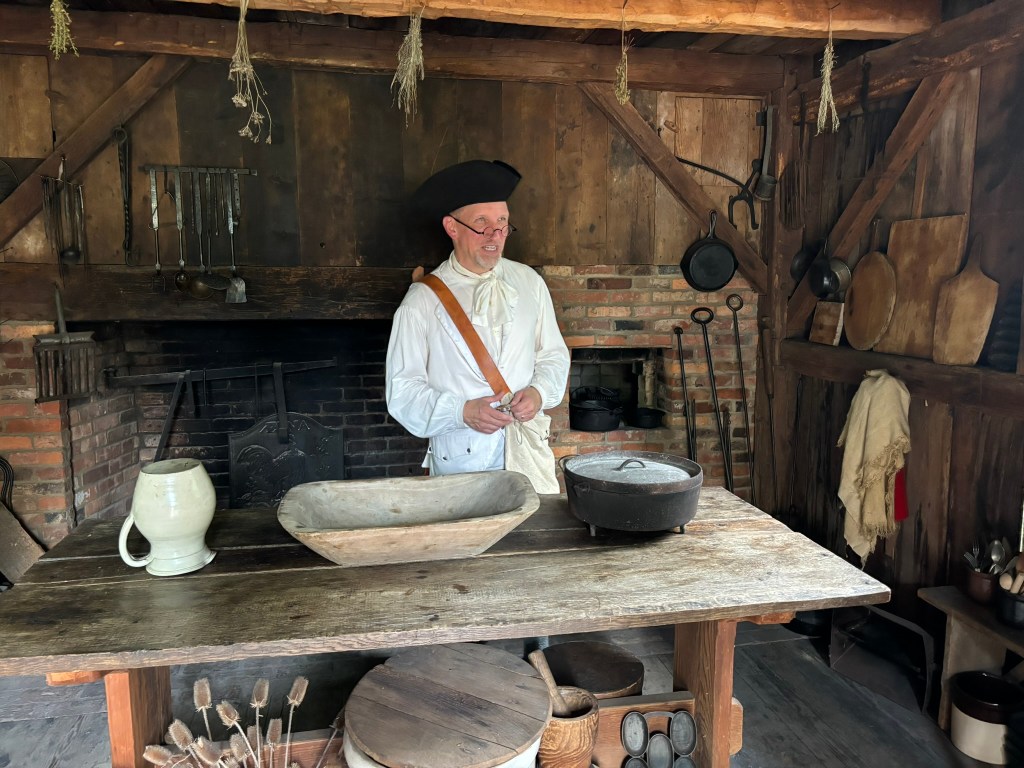
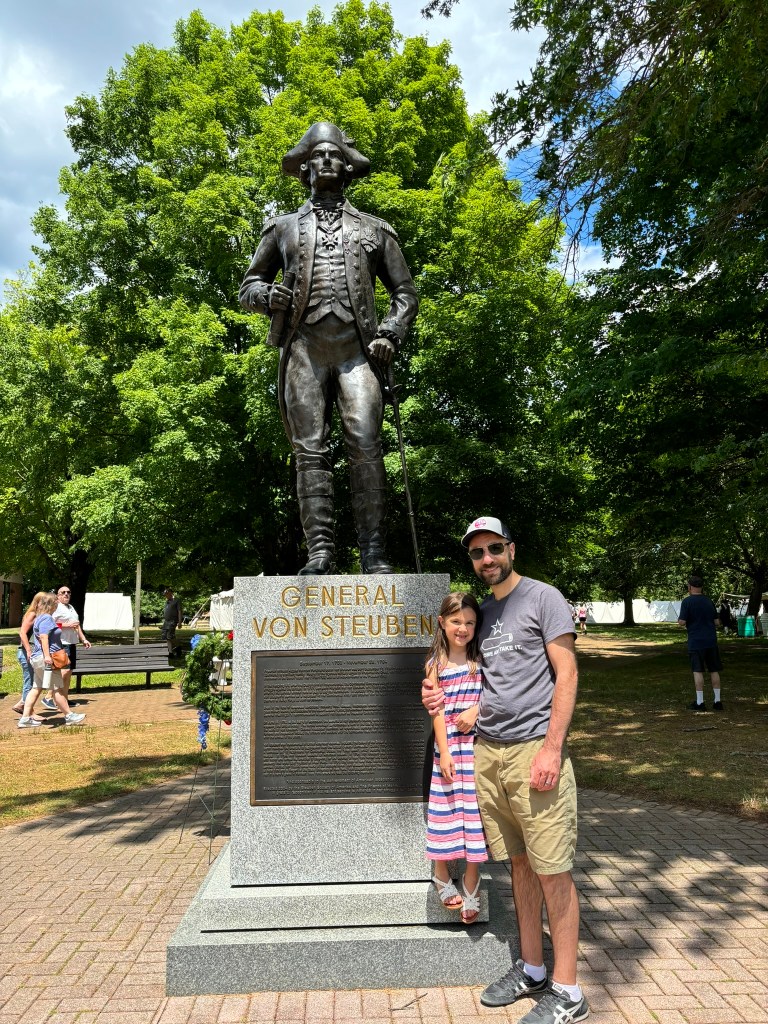
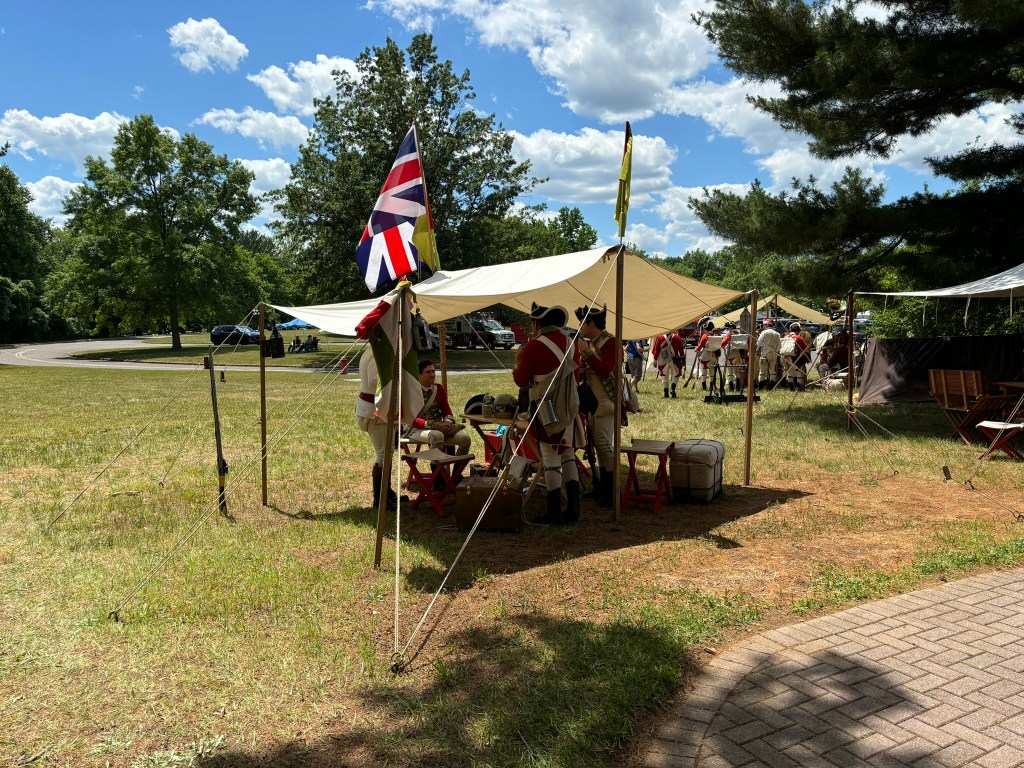
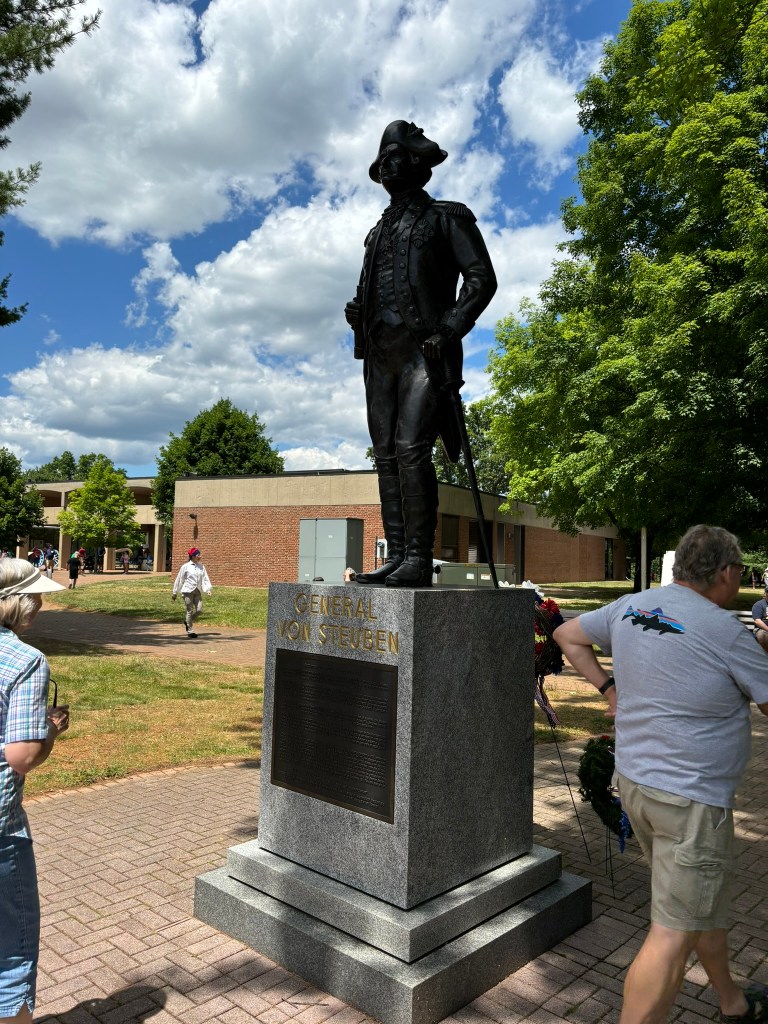
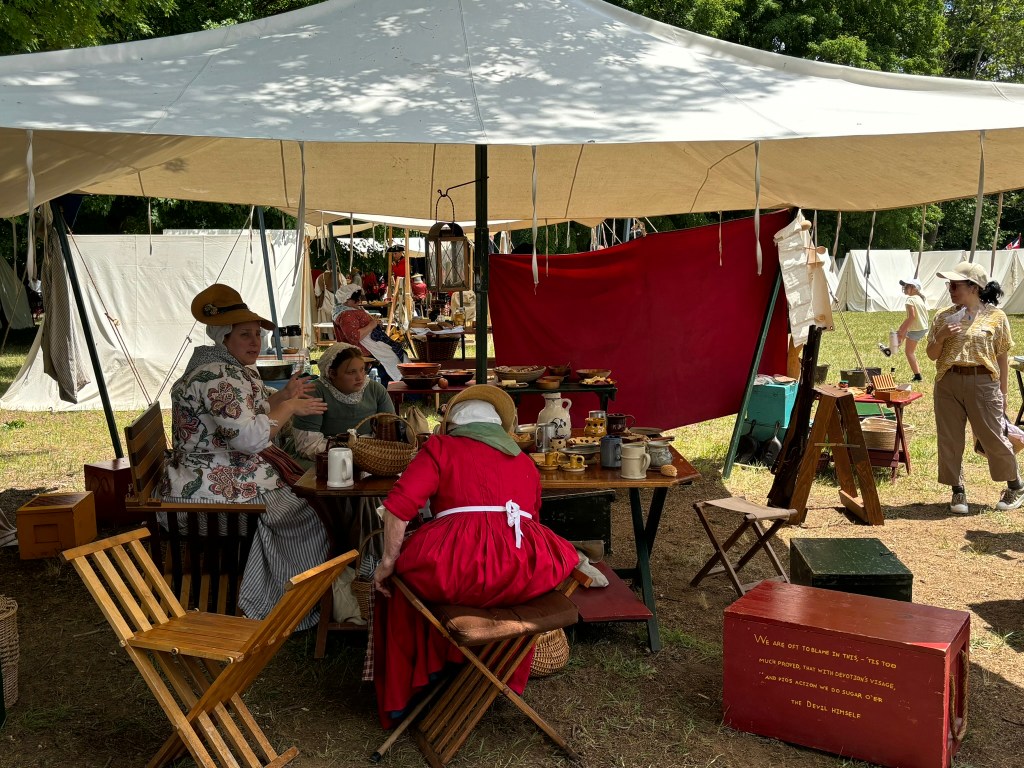
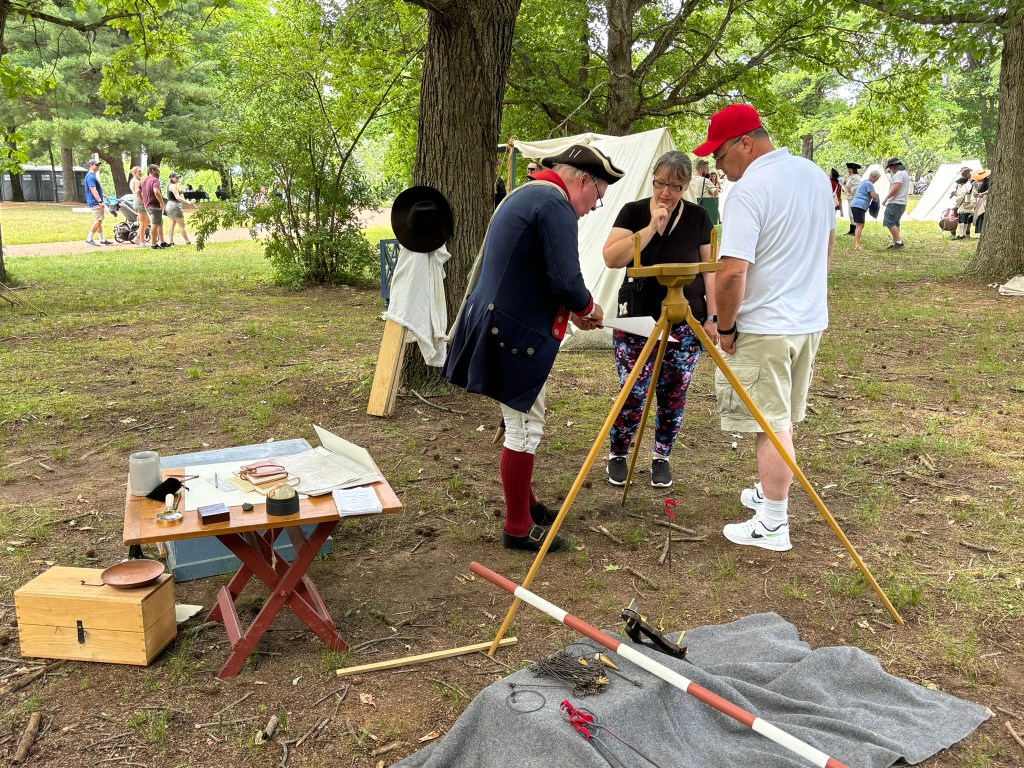
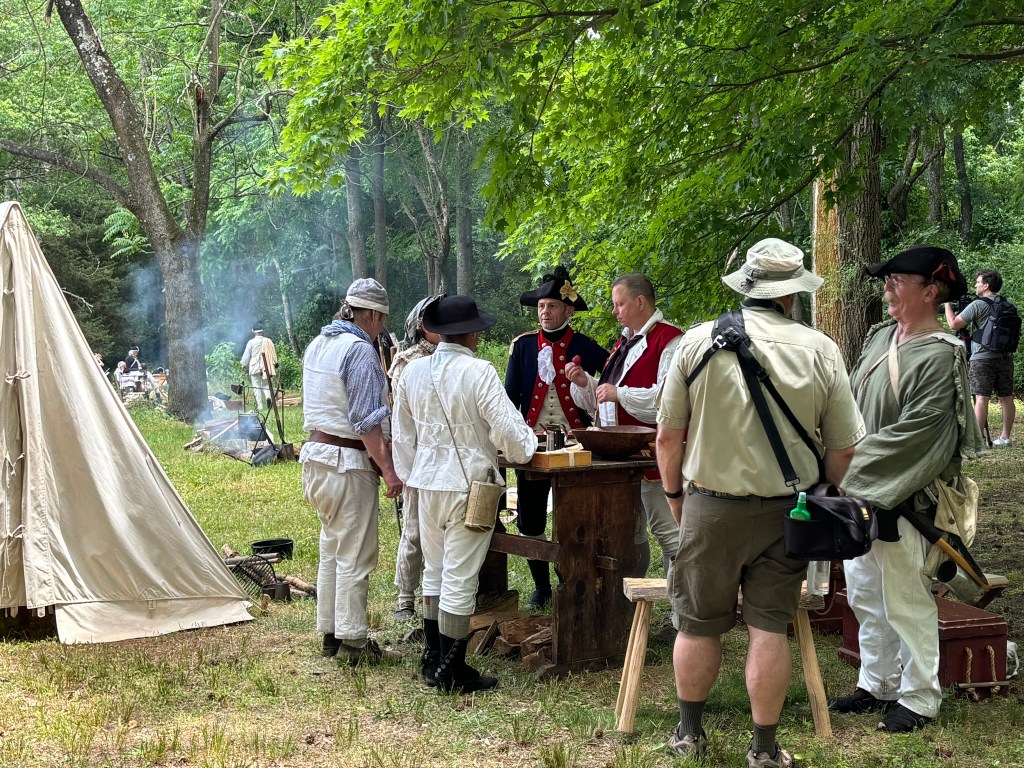
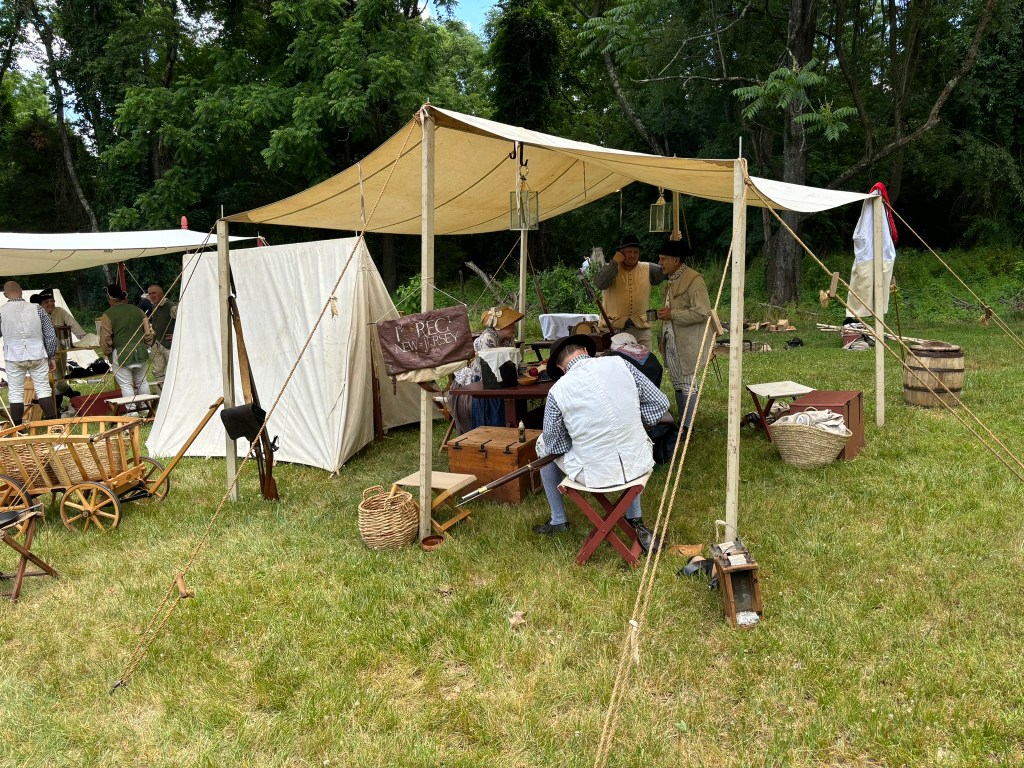
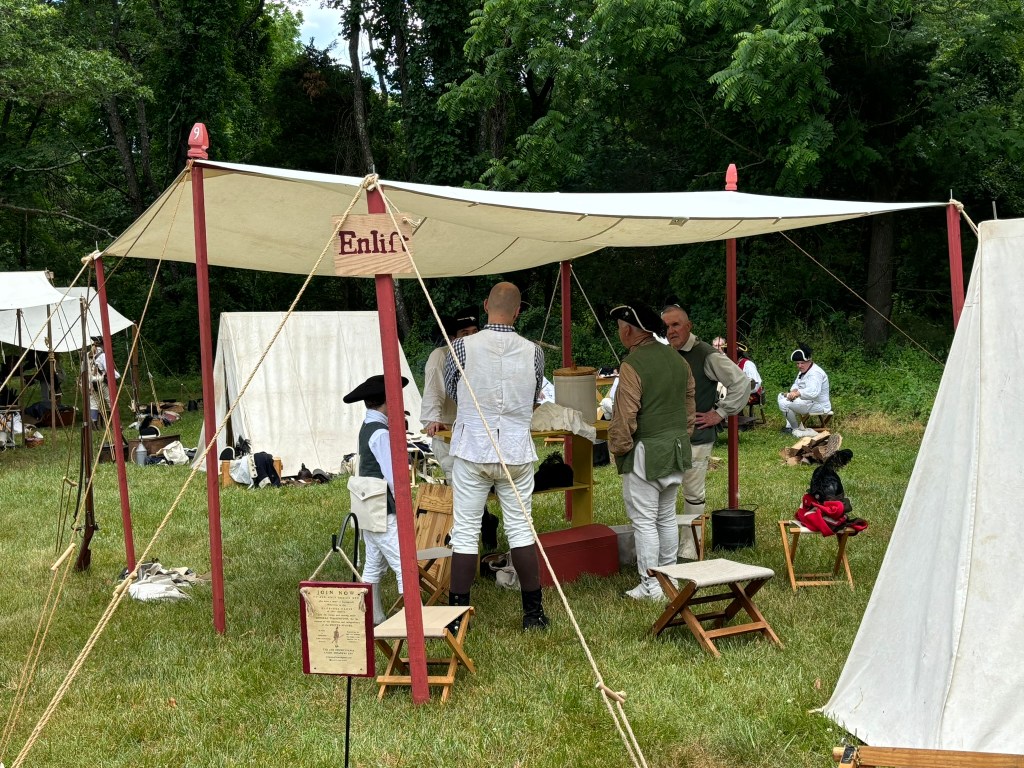
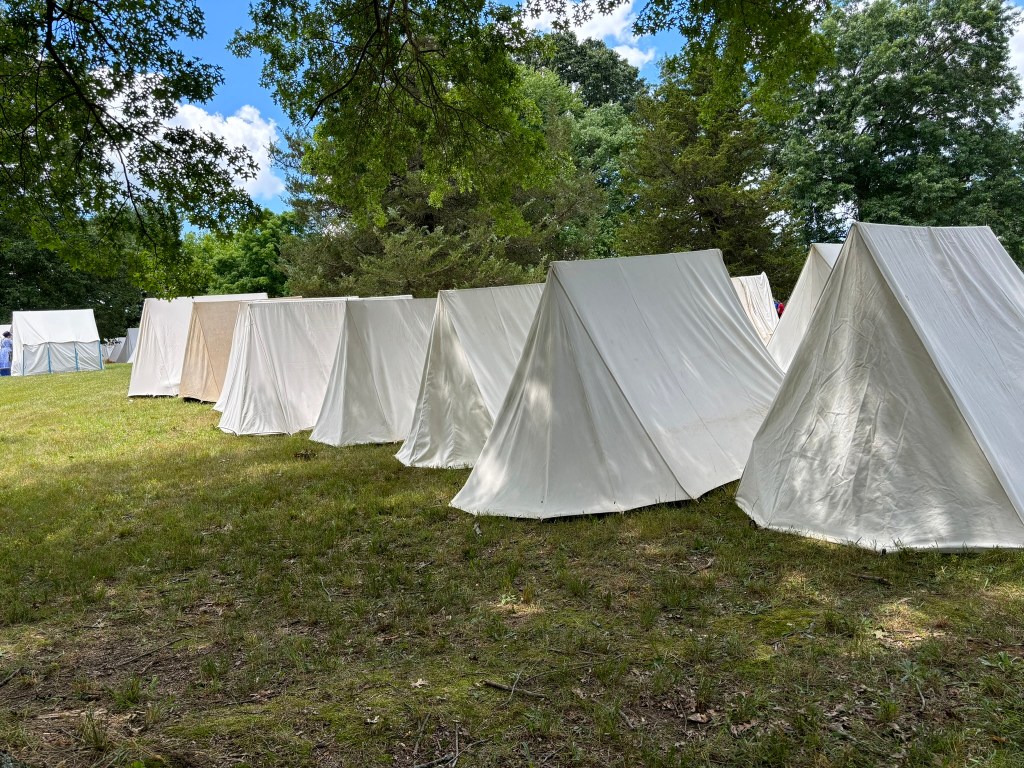
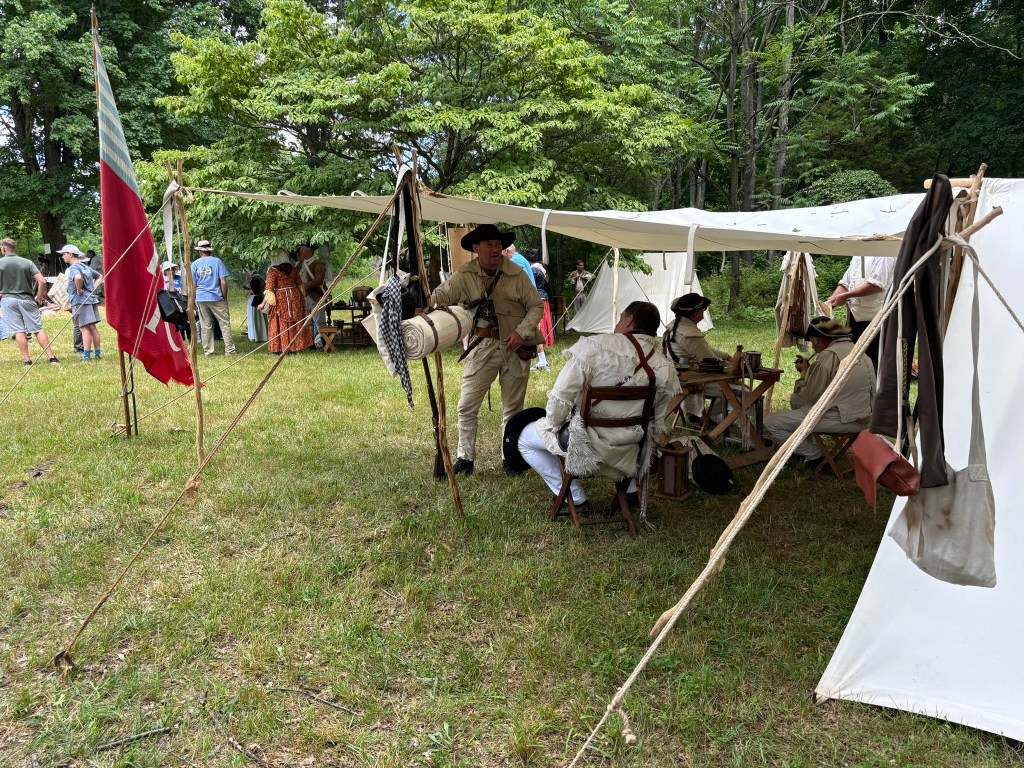
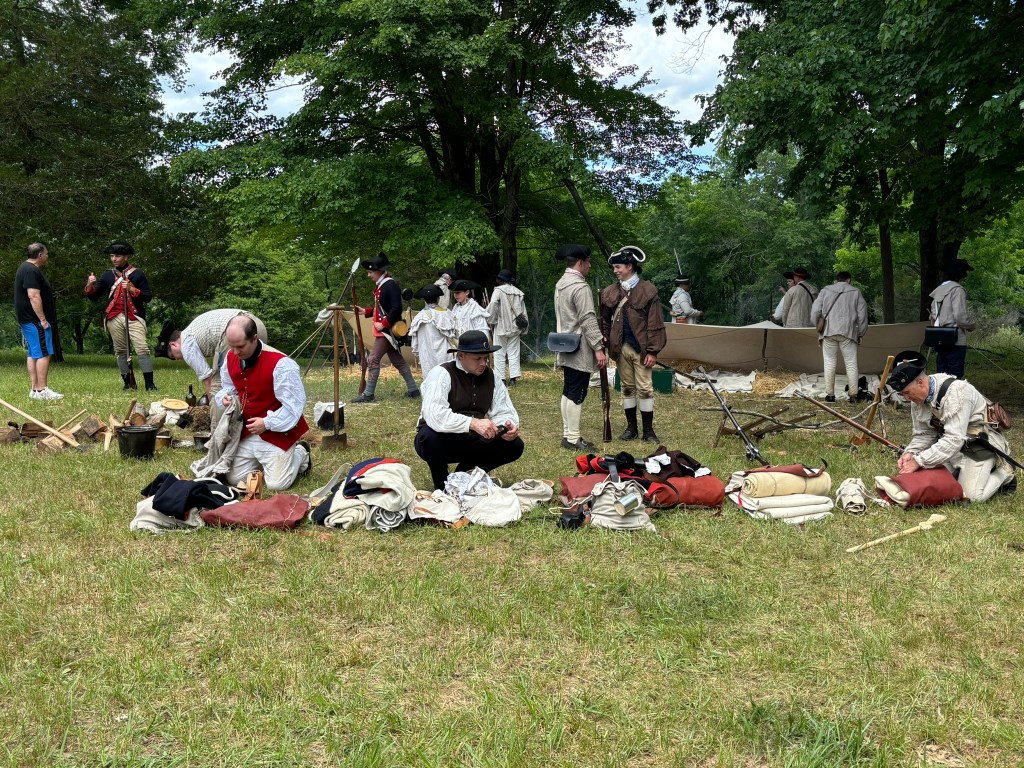
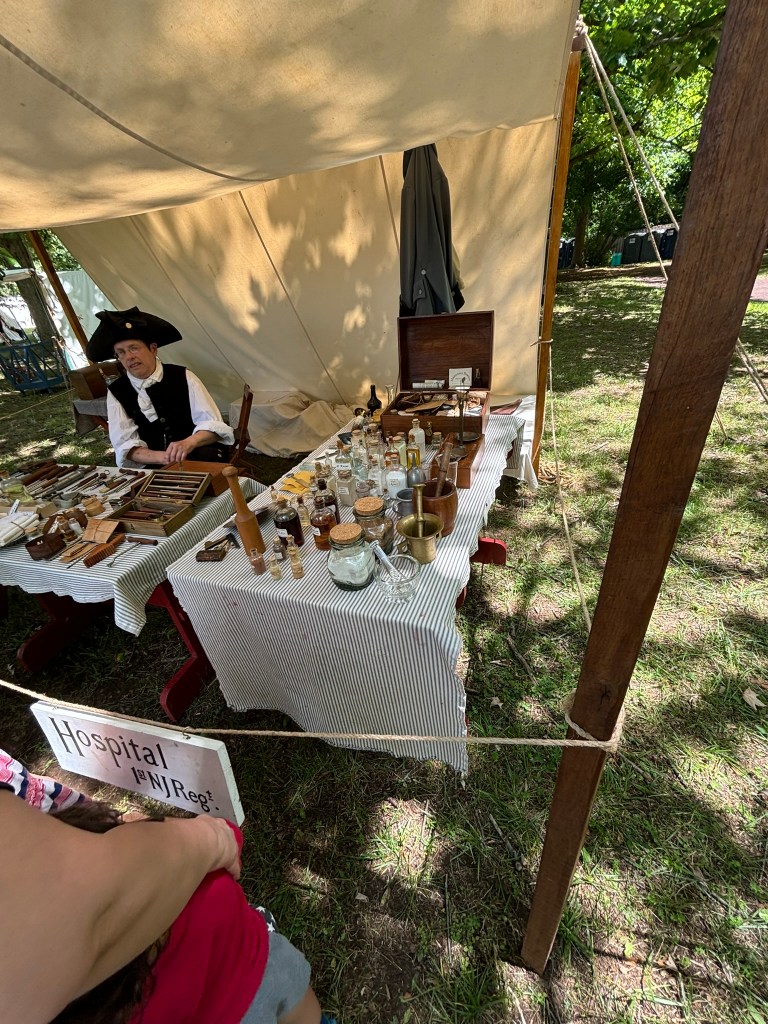
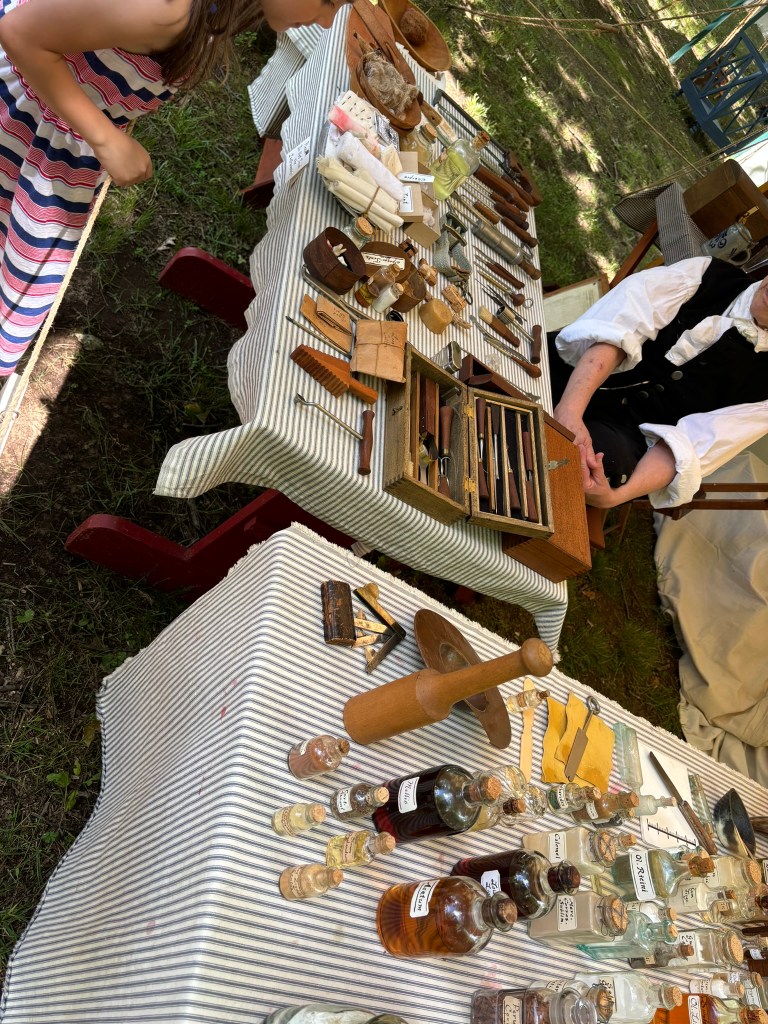
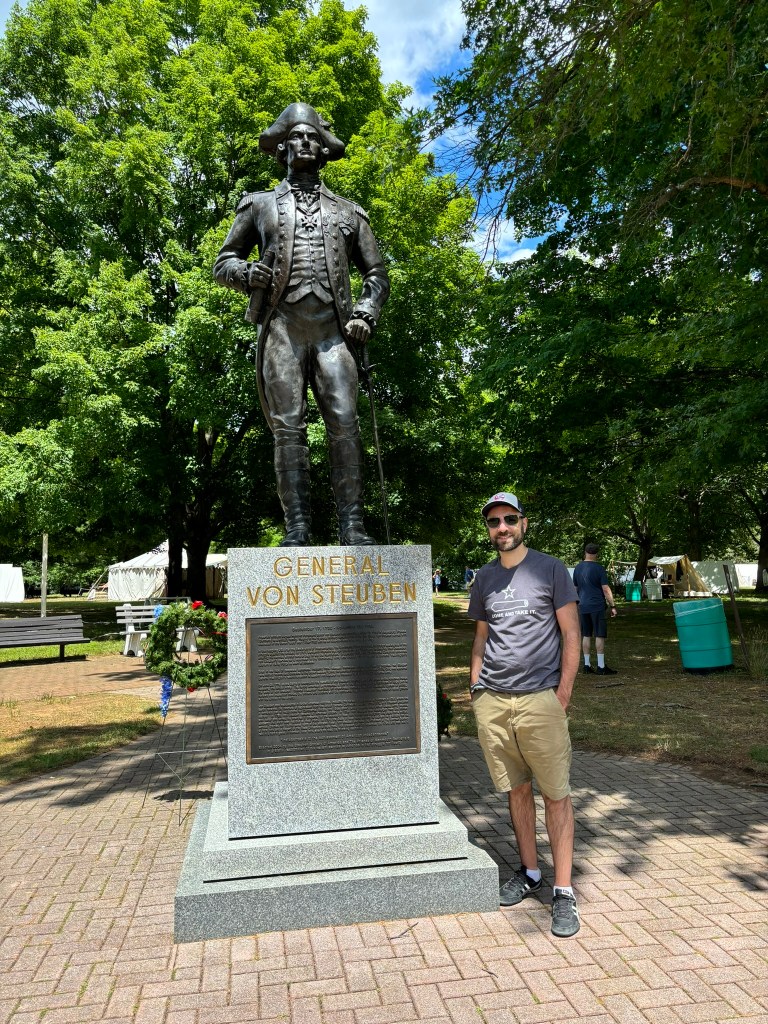
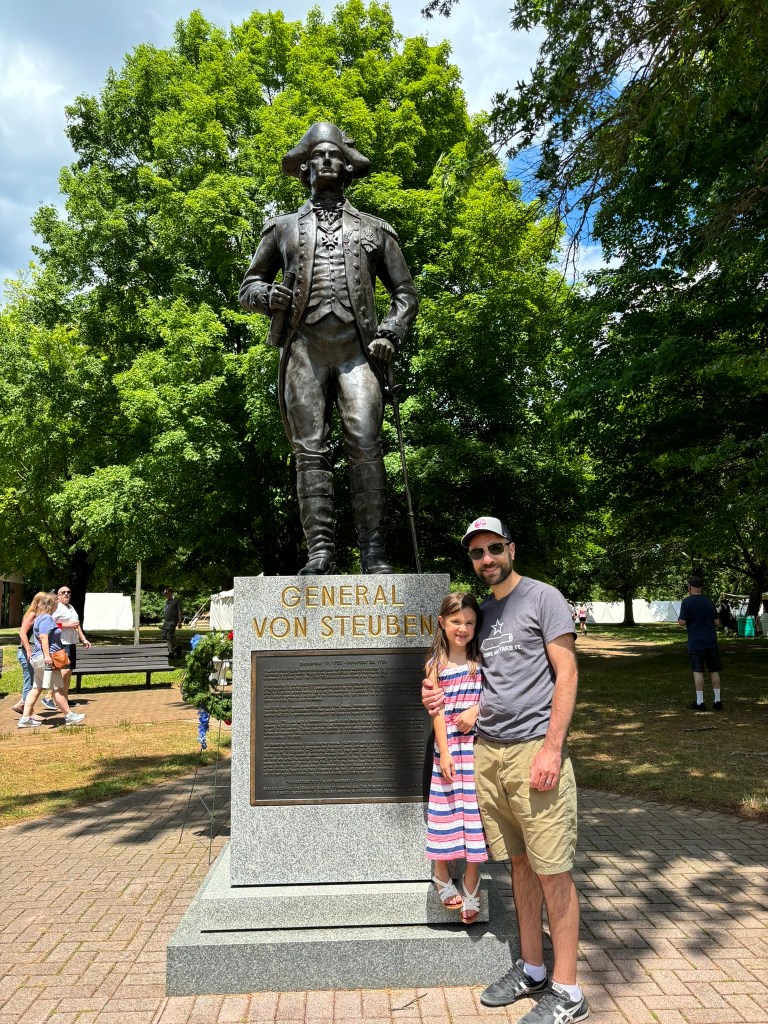
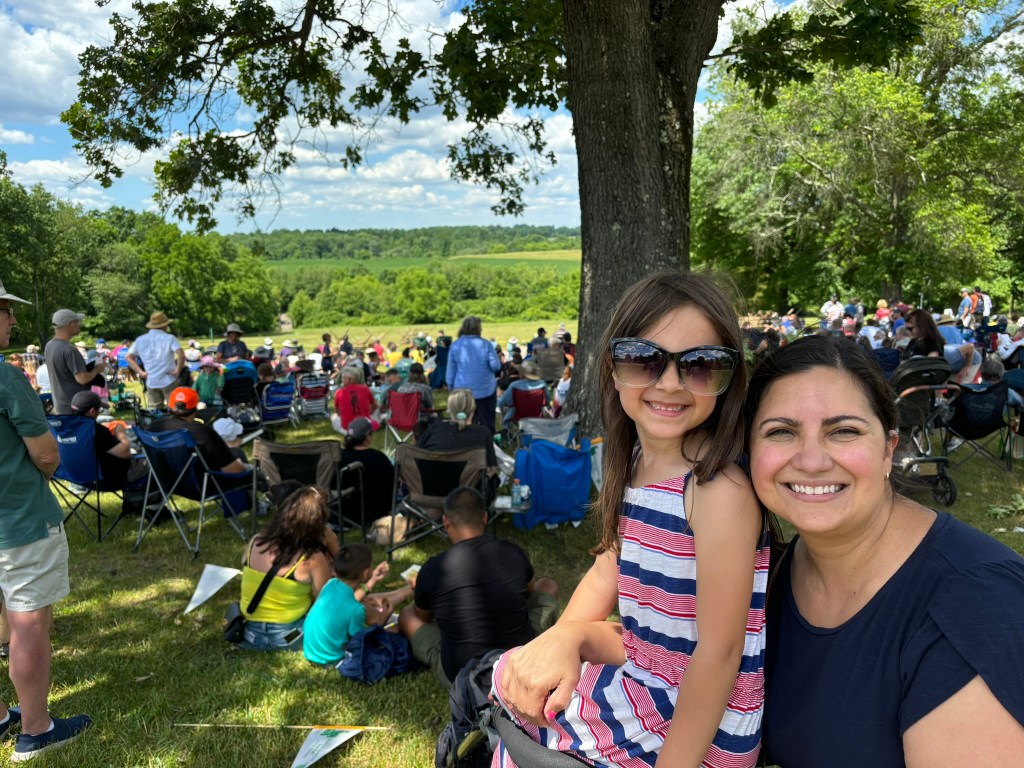
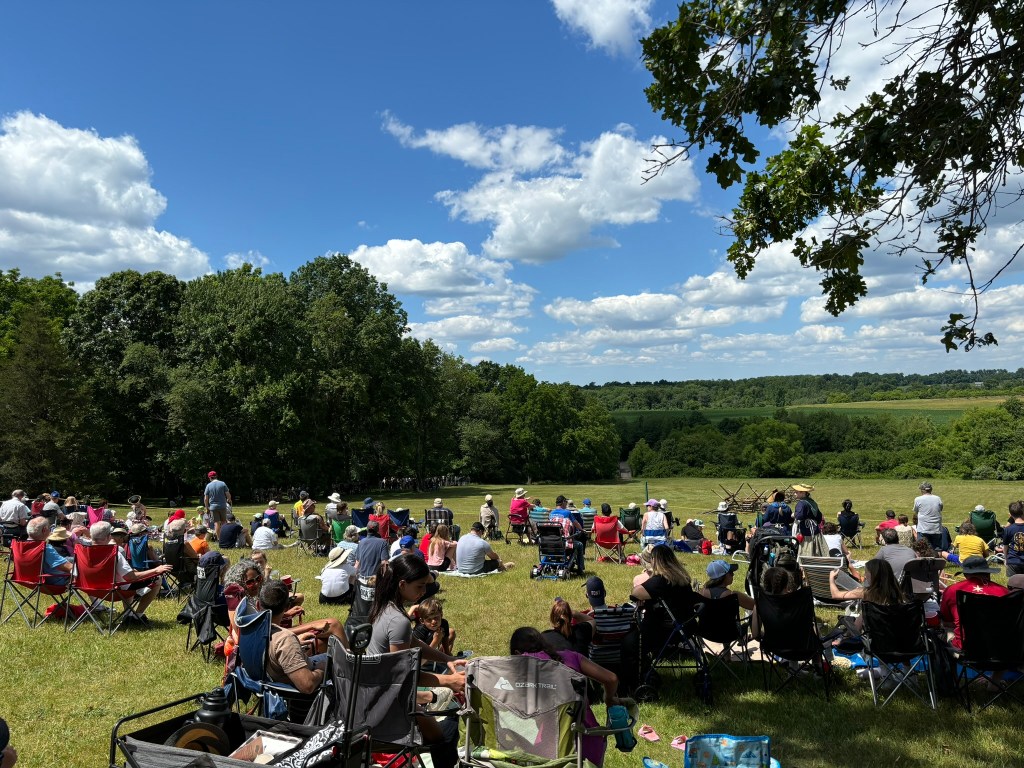
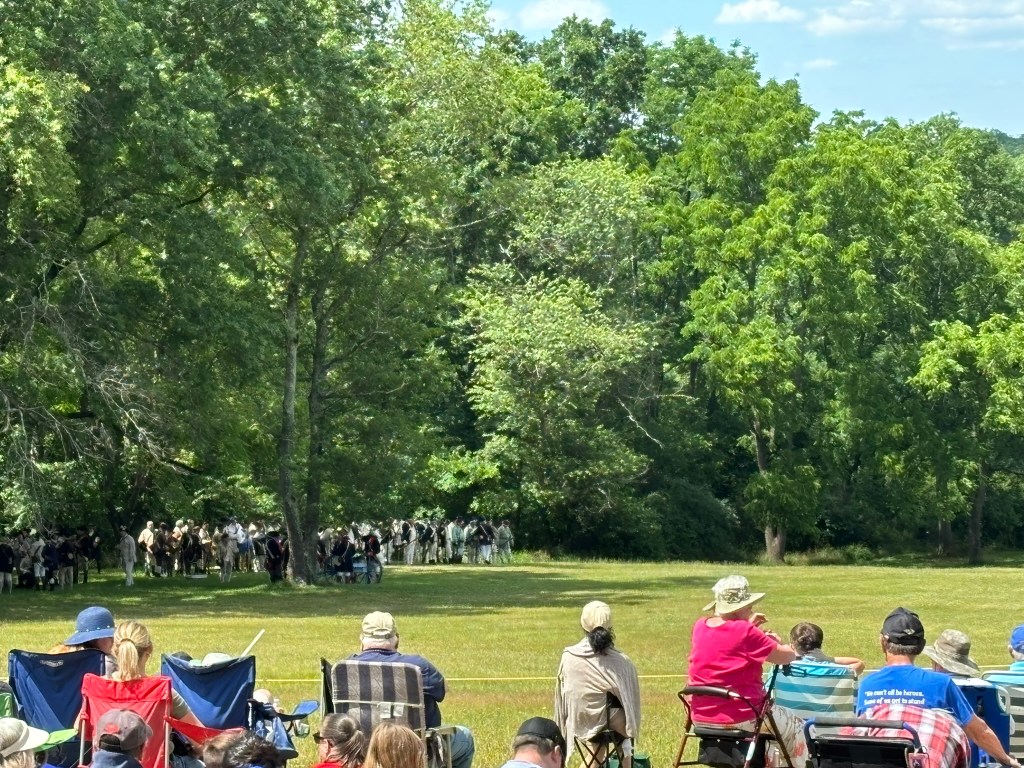
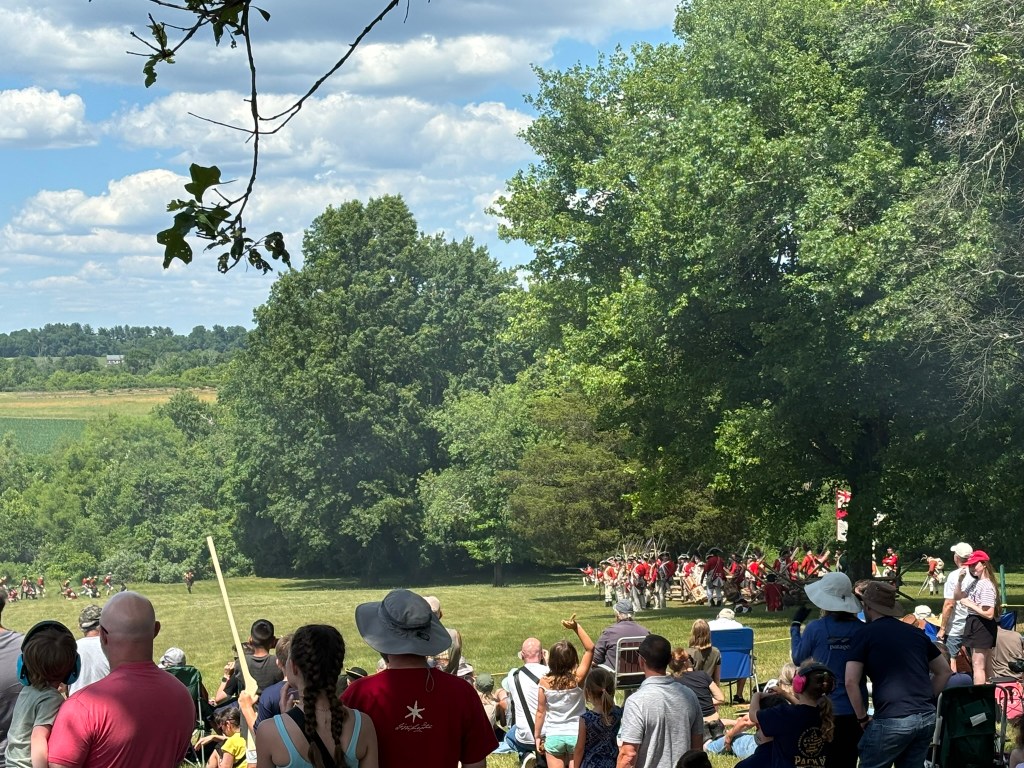
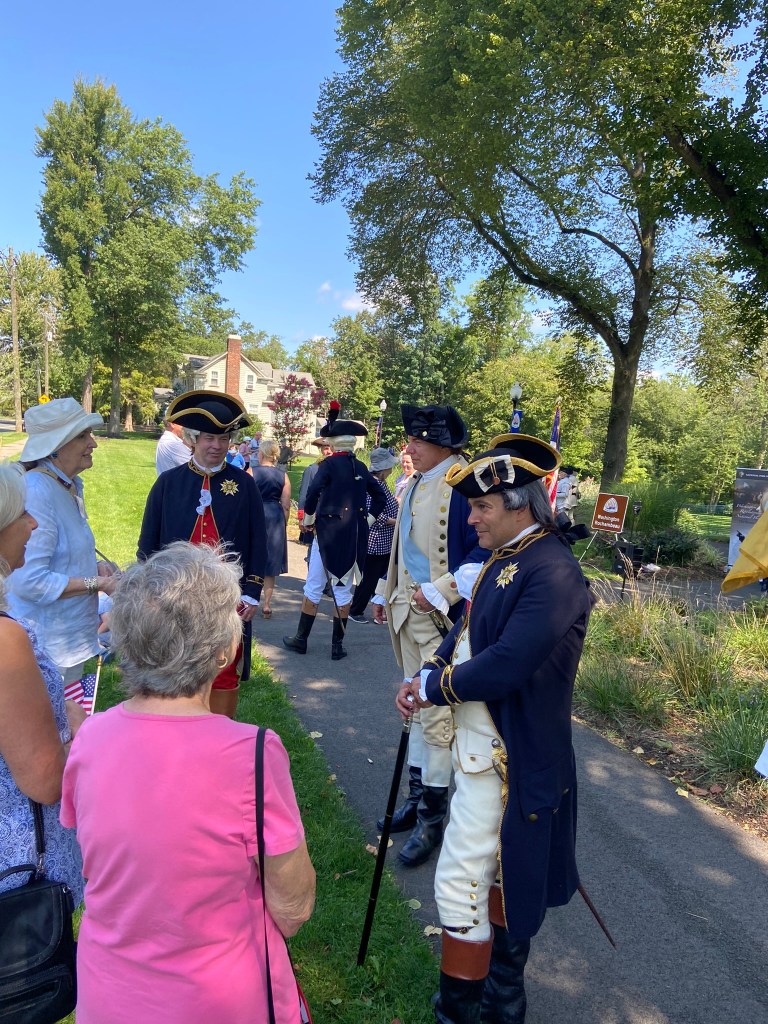
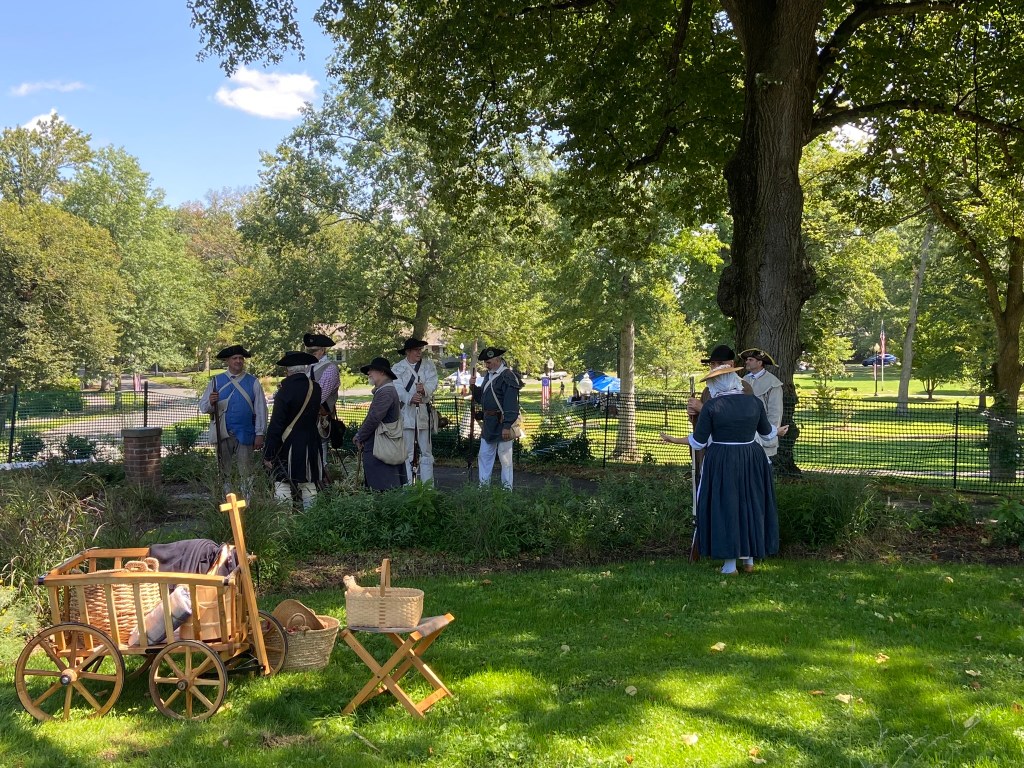
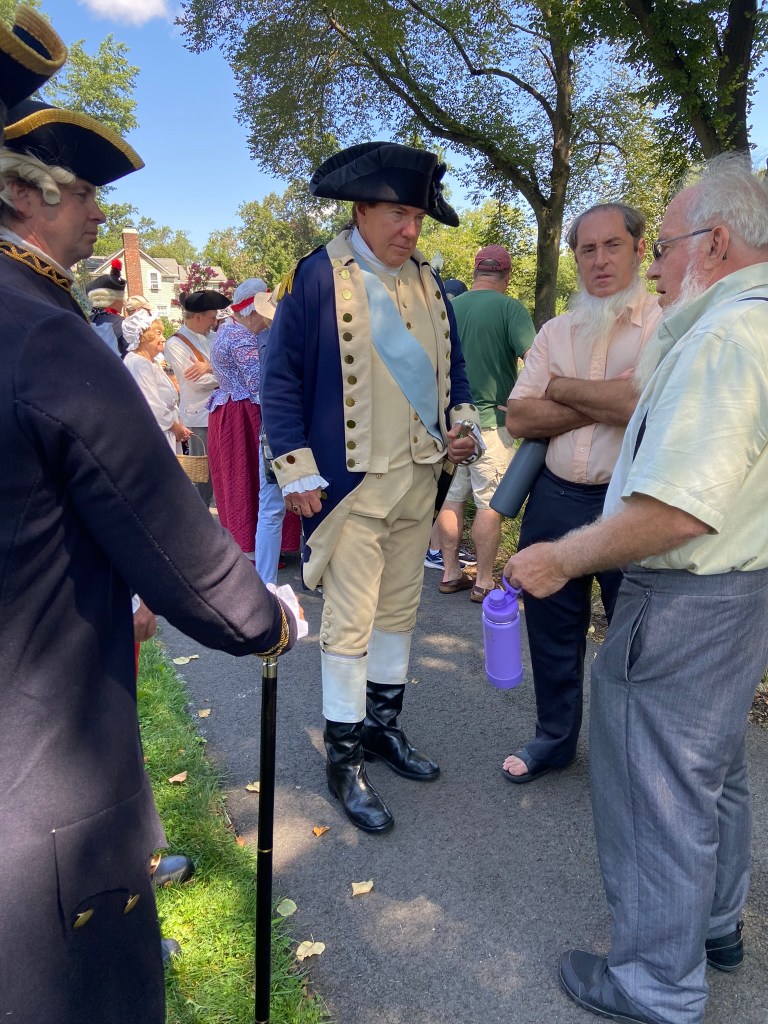
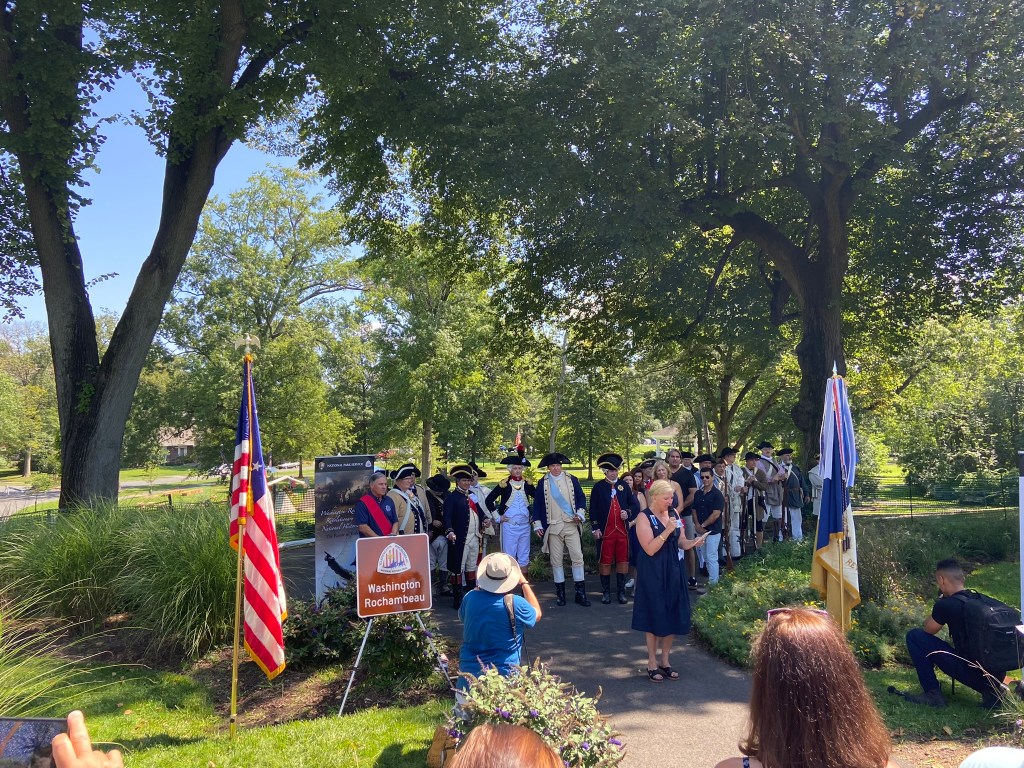
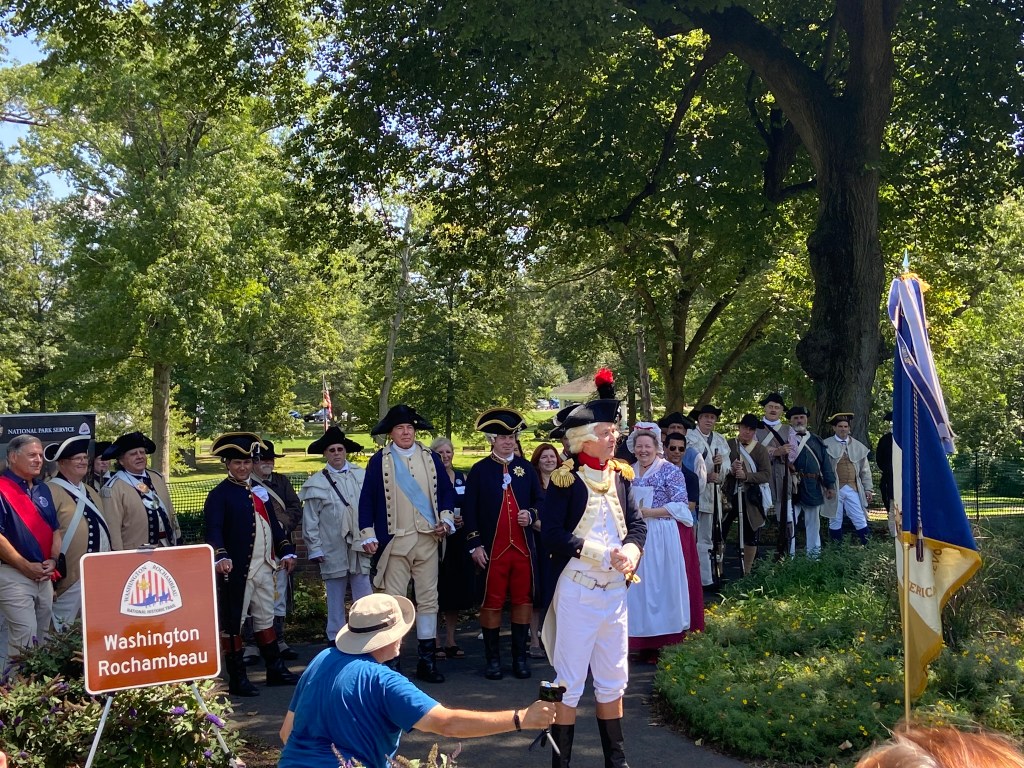
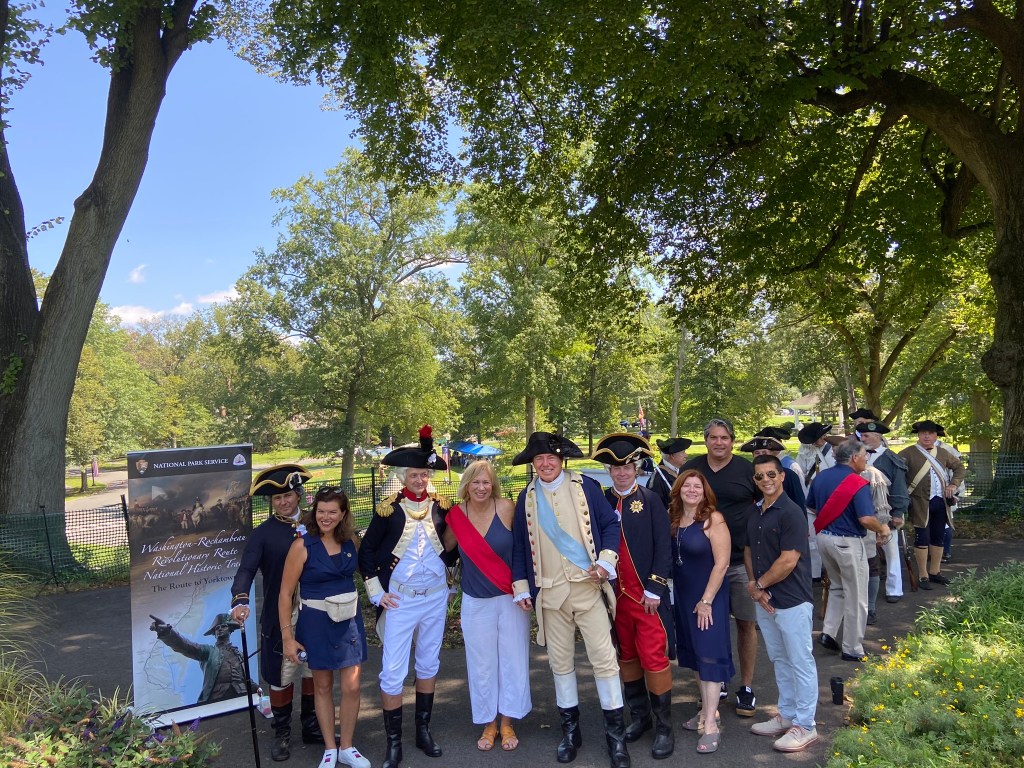
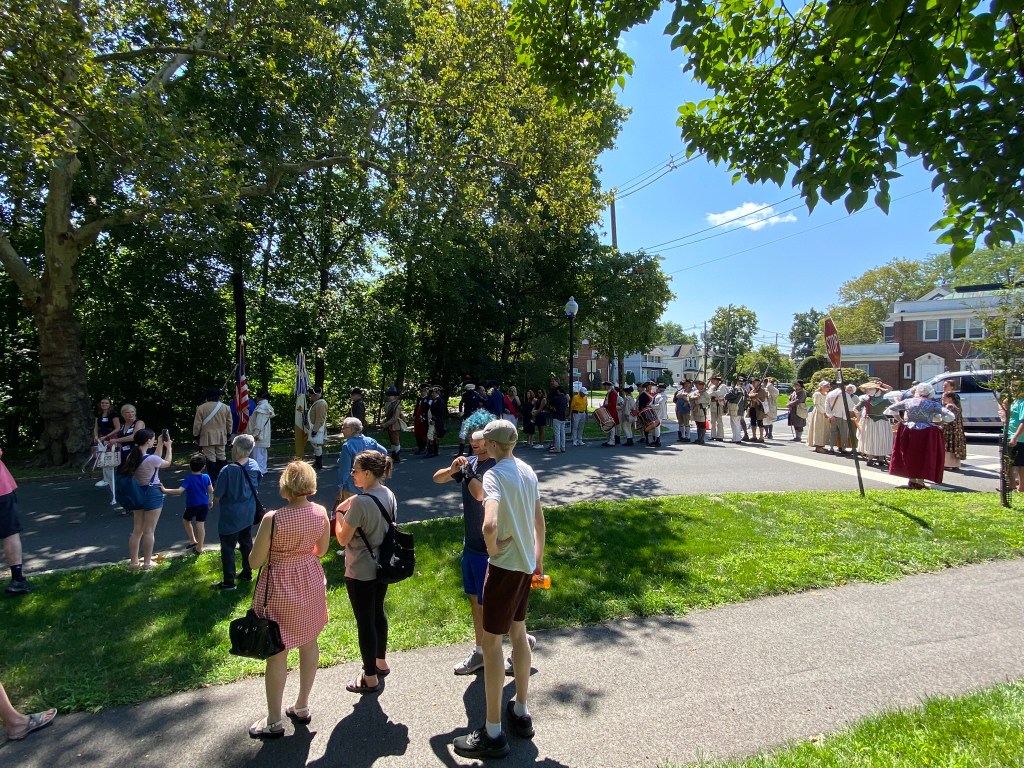
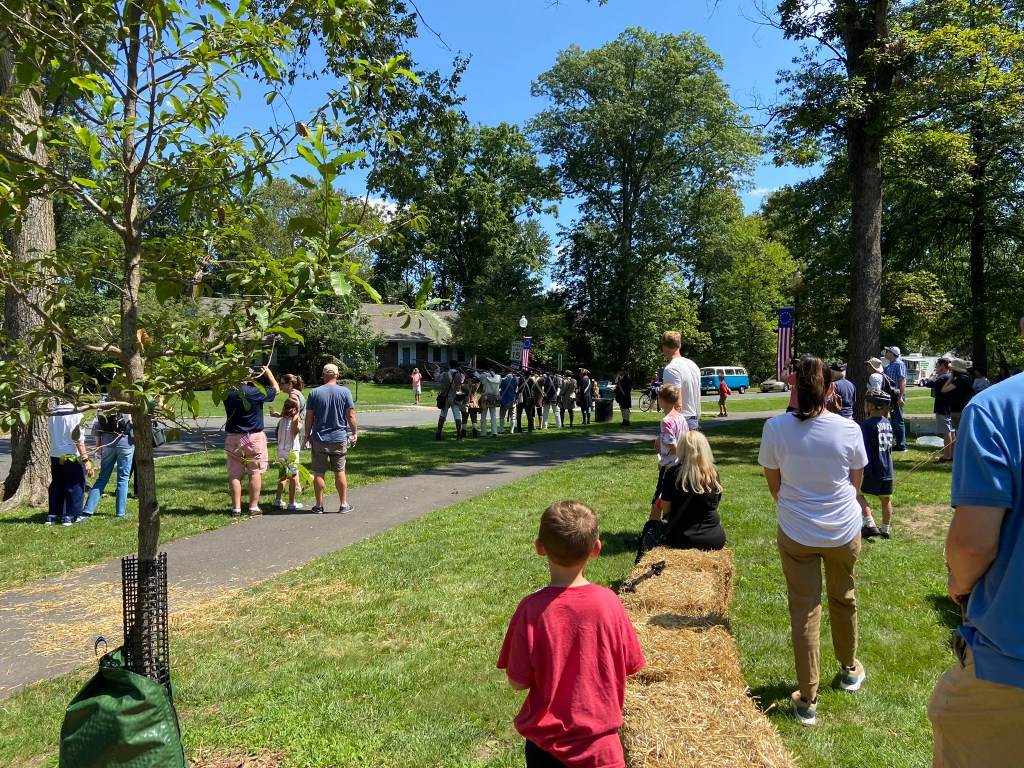
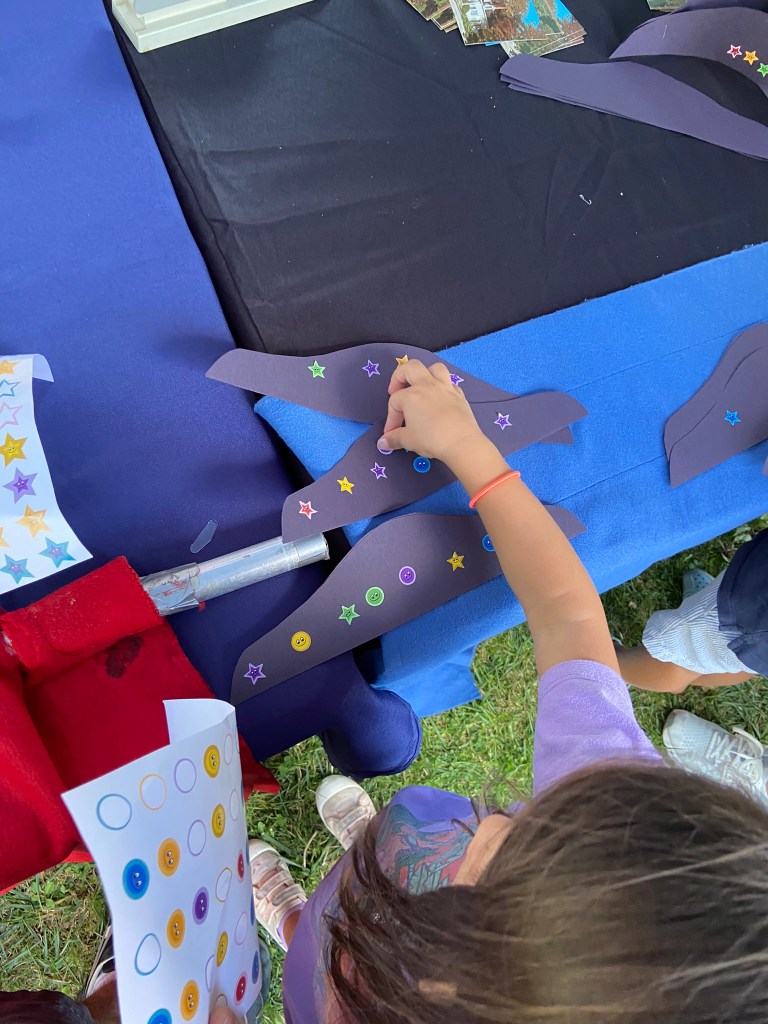
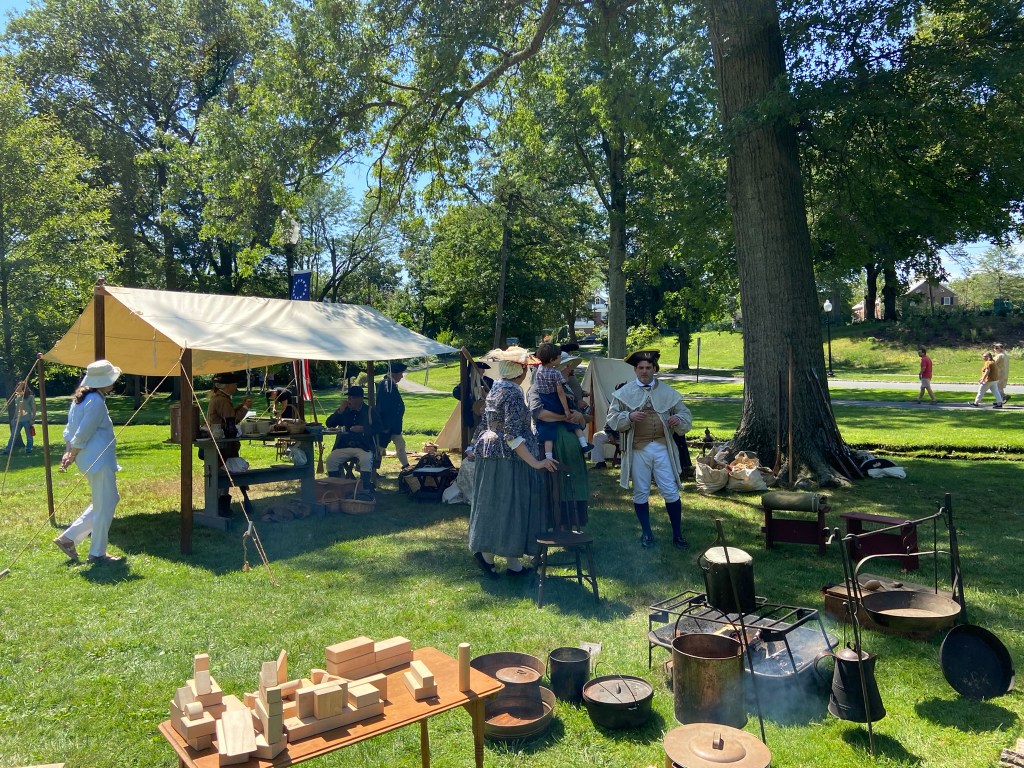
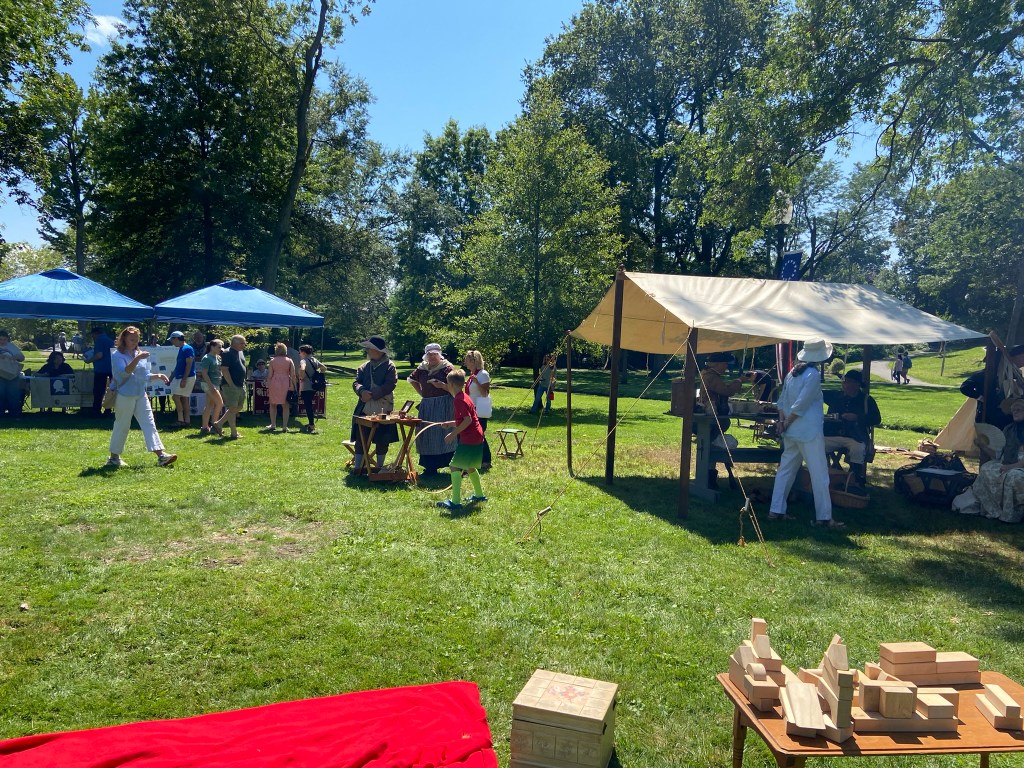
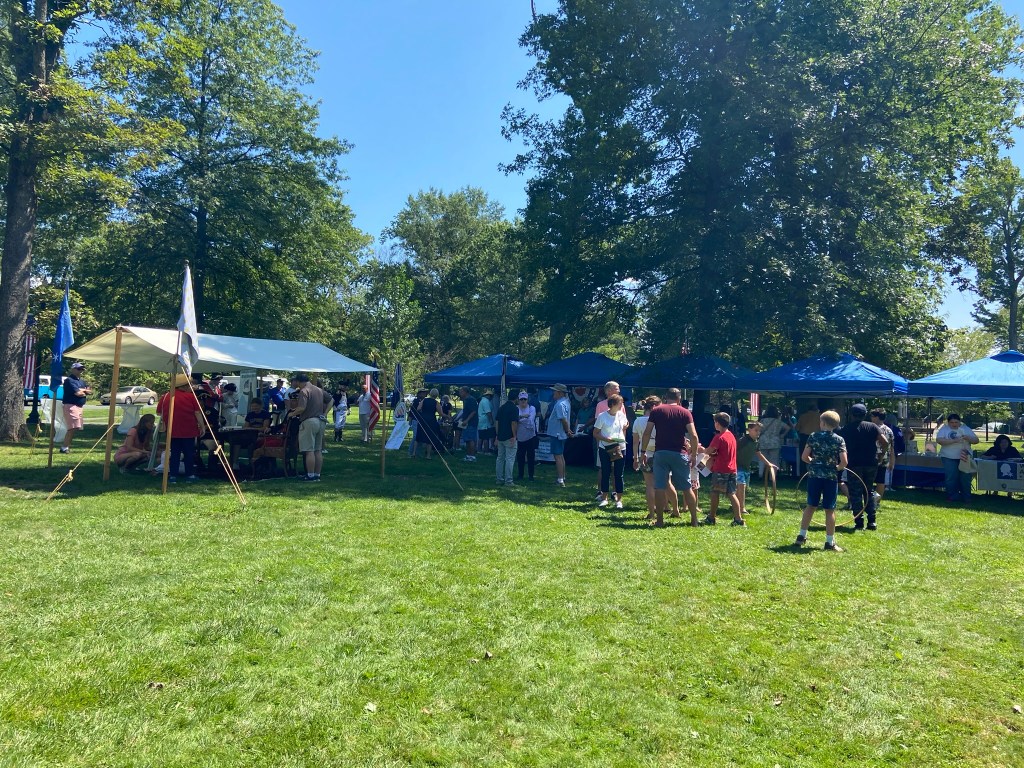
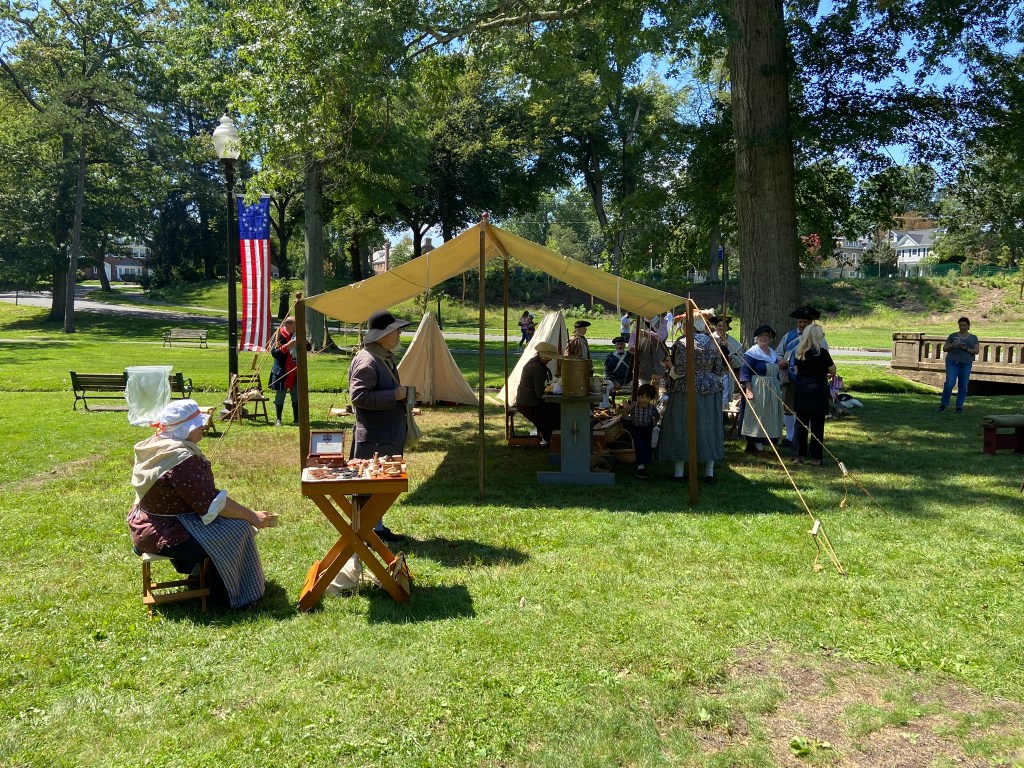
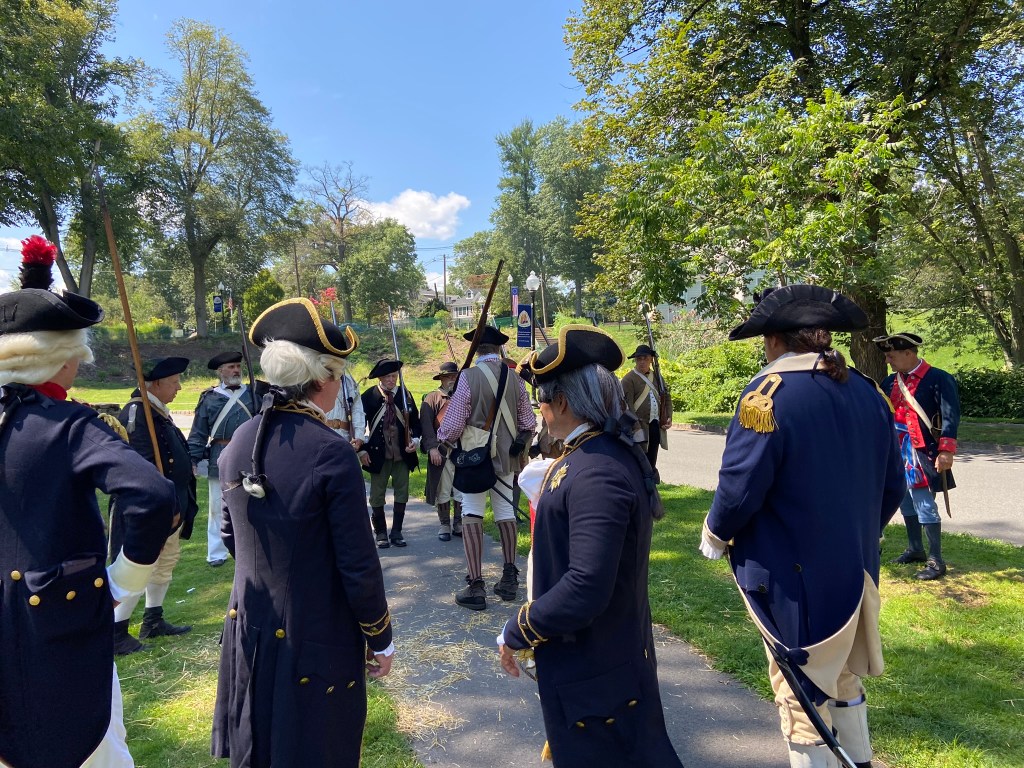
My family and I made it out on the Fourth of July to Washington’s Headquarters in Morristown, NJ for the public reading of the Declaration of Independence. This was our first time attending this yearly event.
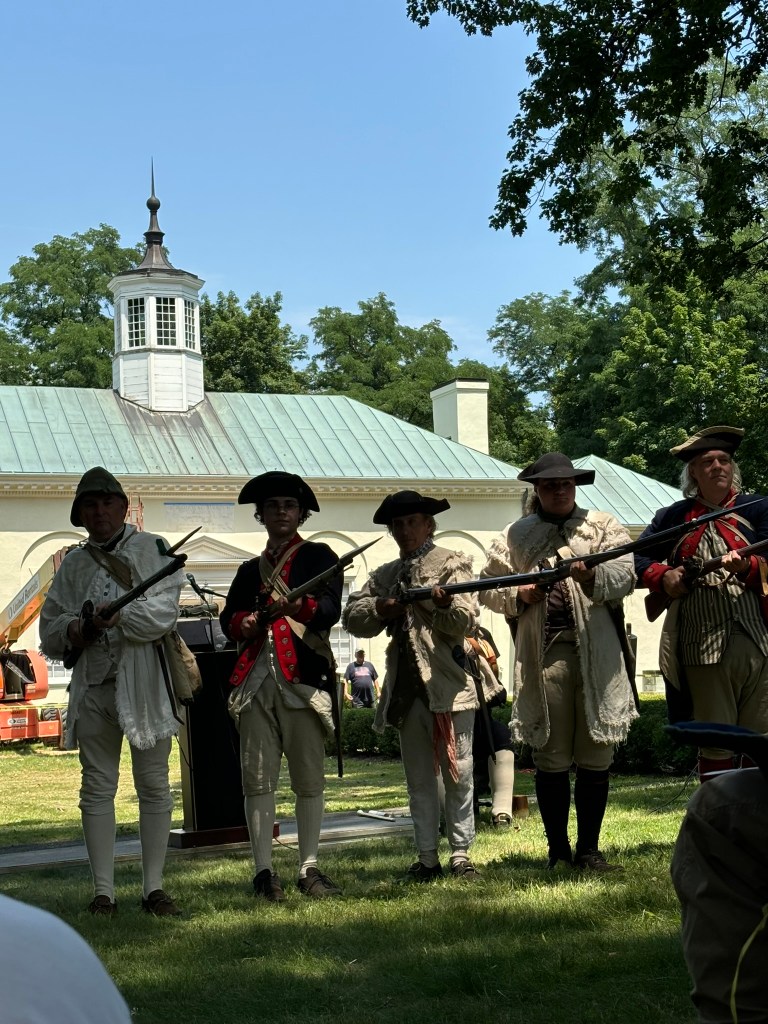
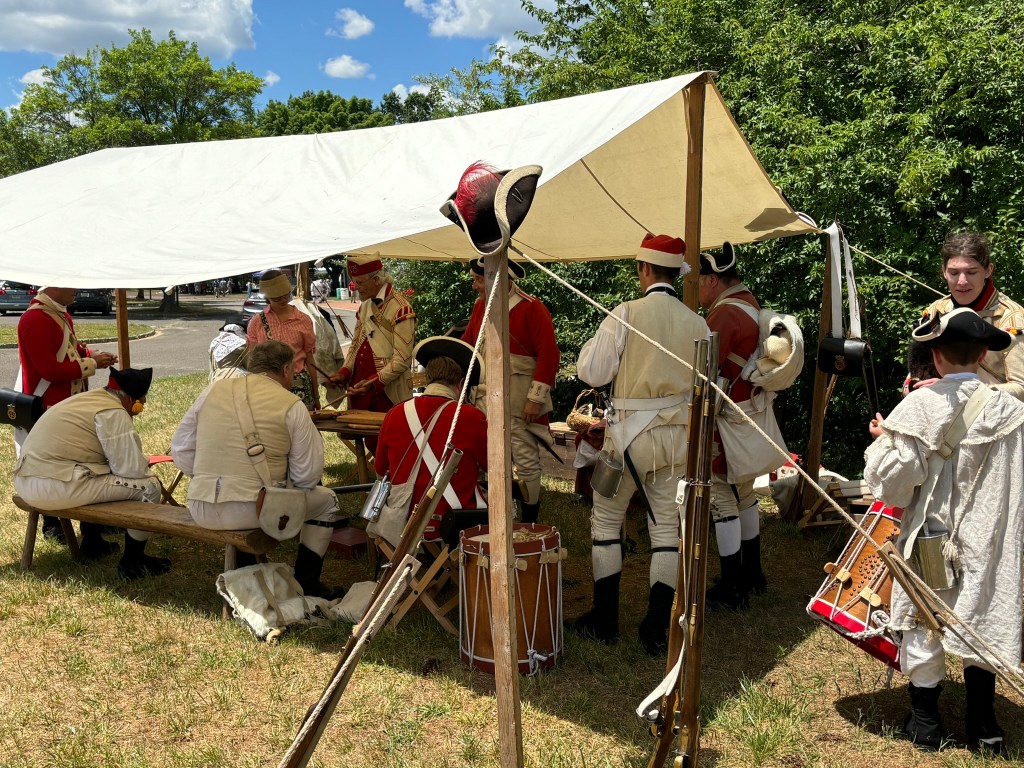
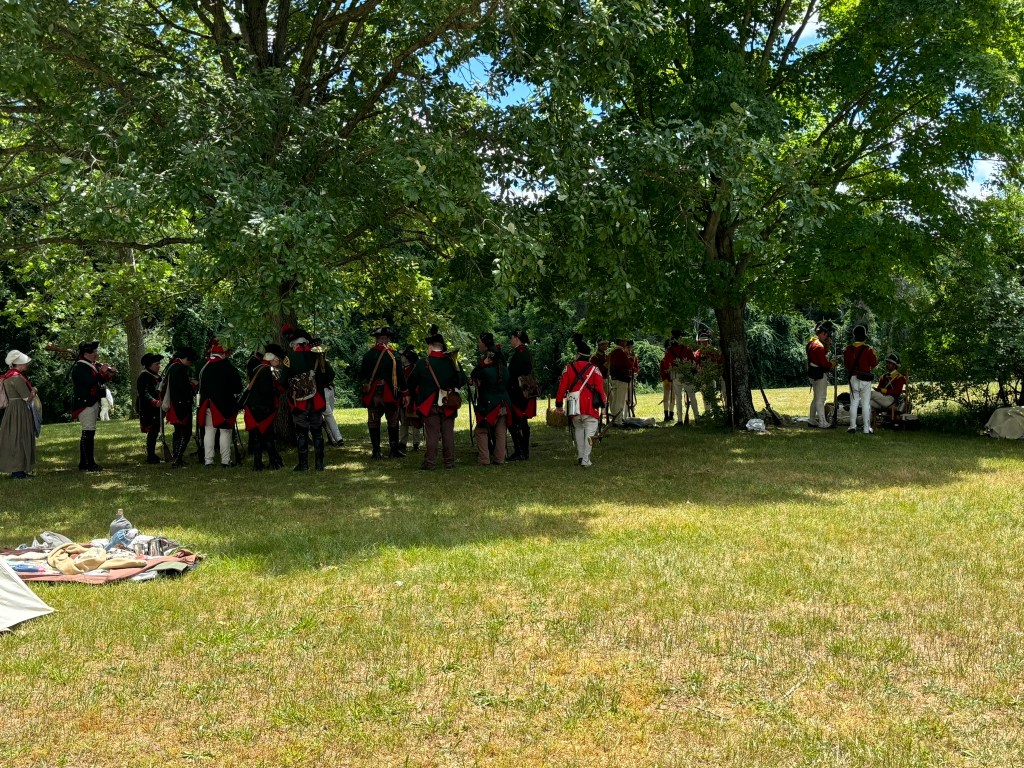
The festivities began at 12pm with demonstrations by reenactors of the 2nd New Jersey regiment. The regiment did a fantastic job showing the crowd how to stand in a line, reload their muskets, and how to use the bayonet. They thoroughly explained the use of muskets in the Revolutionary War, as well as the uniforms and limited supplies of Continental soldiers.
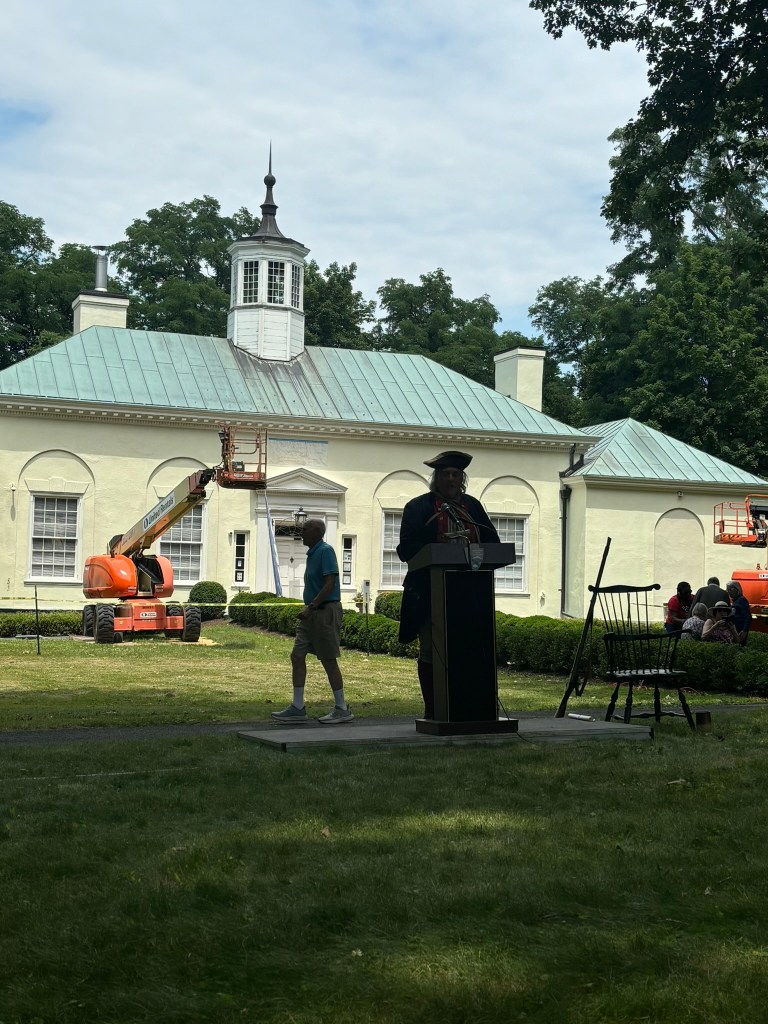
The 2nd New Jersey regiment’s demonstrations lasted nearly to 1pm. At that point there were a few speakers including Thomas Ross, the Superintendent of Morristown National Historic Park. He described the rehabilitation projects taking place at the park, including to the Ford Mansion, as well as to the museum. These projects are in preparation of the 250th anniversary of the Revolution.
Another speaker who addressed the crowd was Congresswoman Mikie Sherrill who represents New Jersey District 11. She described New Jersey’s importance to the Revolution and praised the efforts to preserve New Jersey’s history.
At 1pm, Ranger Tom Winslow read the Declaration of Independence. The audience was encouraged to give shouts of “Huzzah!” when he read words/ phrases favorable to freedom and independence. The audience was encouraged to shout “Down with King George!” Or “Down with Tyranny!” when he read the many grievances listed against the king.
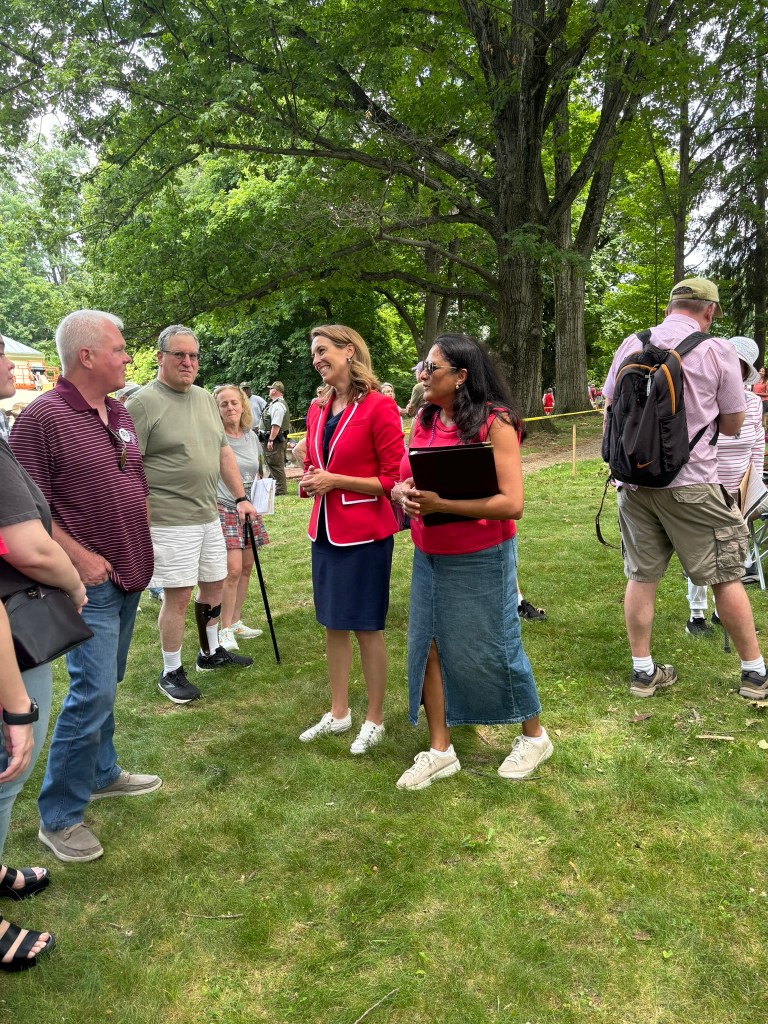
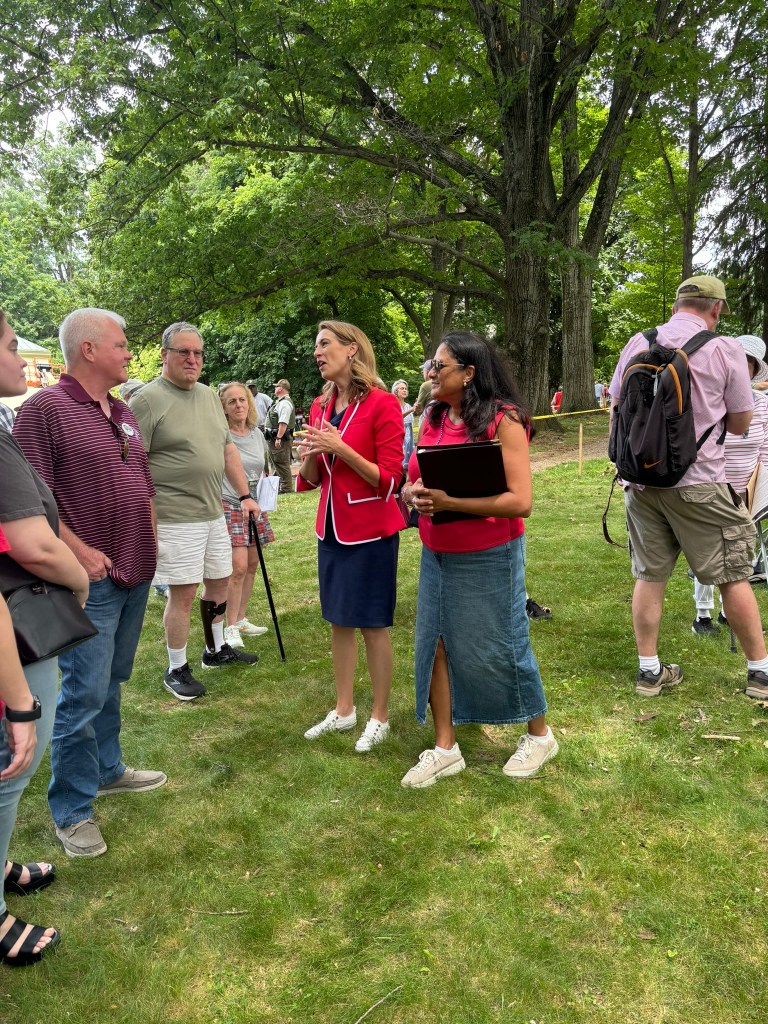
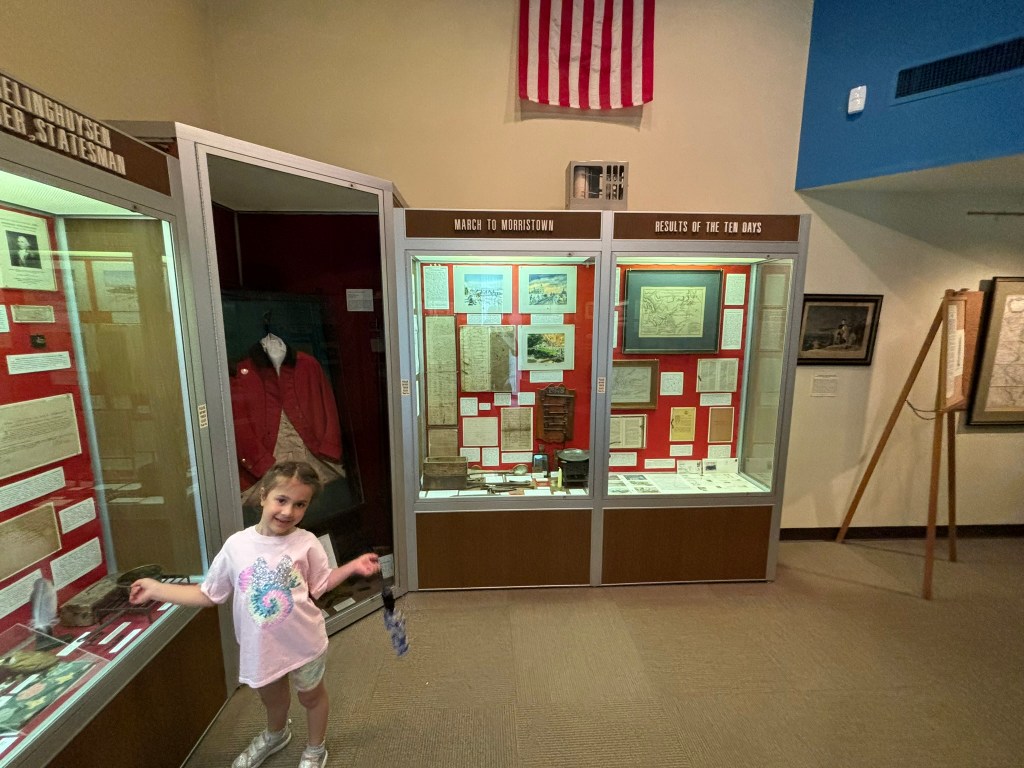
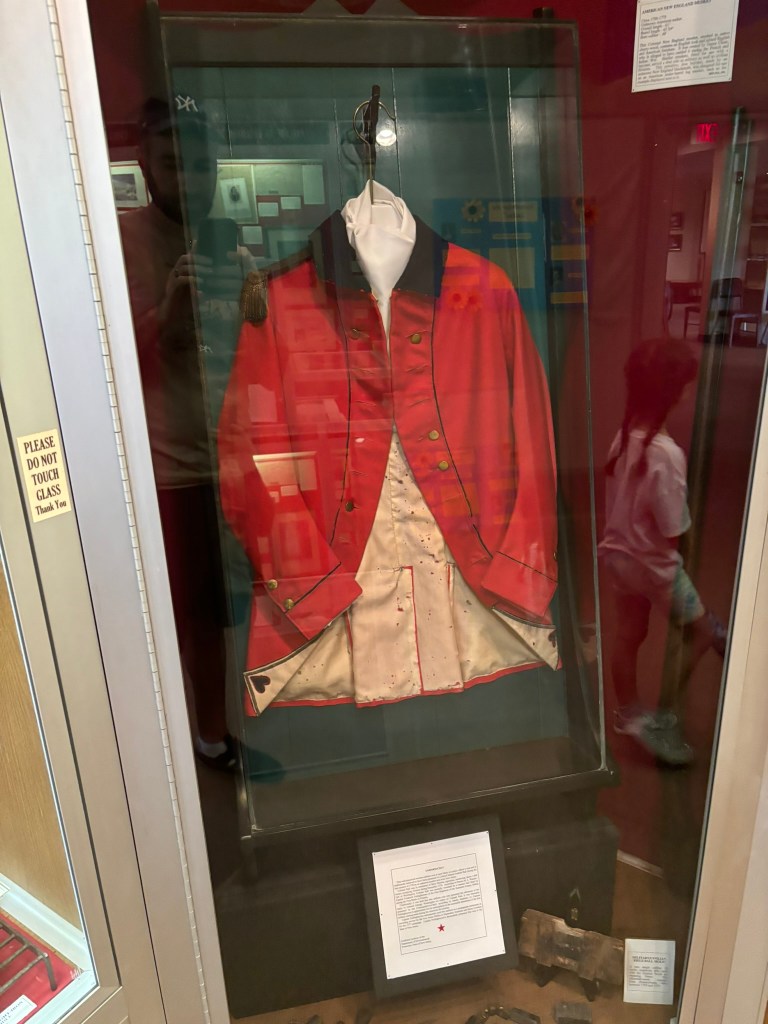
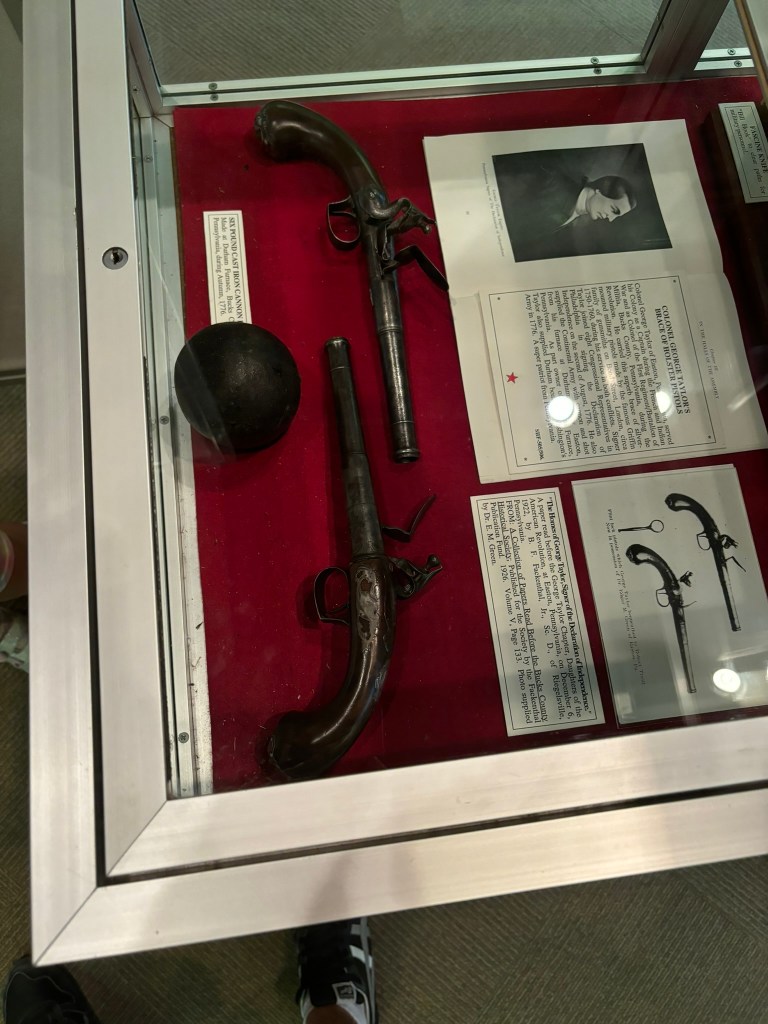
Finally, the program concluded at about 1:30 and my family went in and visited the museum. Representative Mikie Sherrill met and spoke with visitors, while the reenactors also took photos. My family and I really enjoyed our patriotic Fourth of July in Morristown, and would love to come back again! Check out my social media sites in the coming days for videos of the event, including drills, discussions of the revolutionary soldiers, speakers, and the reading of the Declaration of Independence: Facebook, Instagram, Twitter
Below are links to organzations who helped run the event or were in attendance.
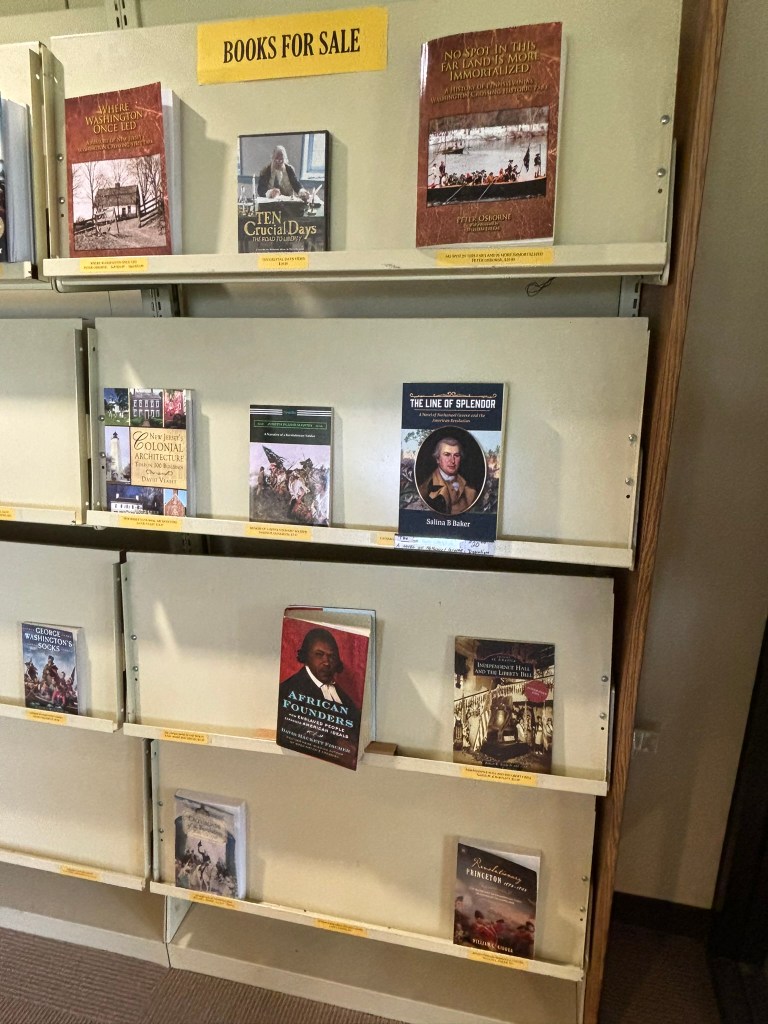
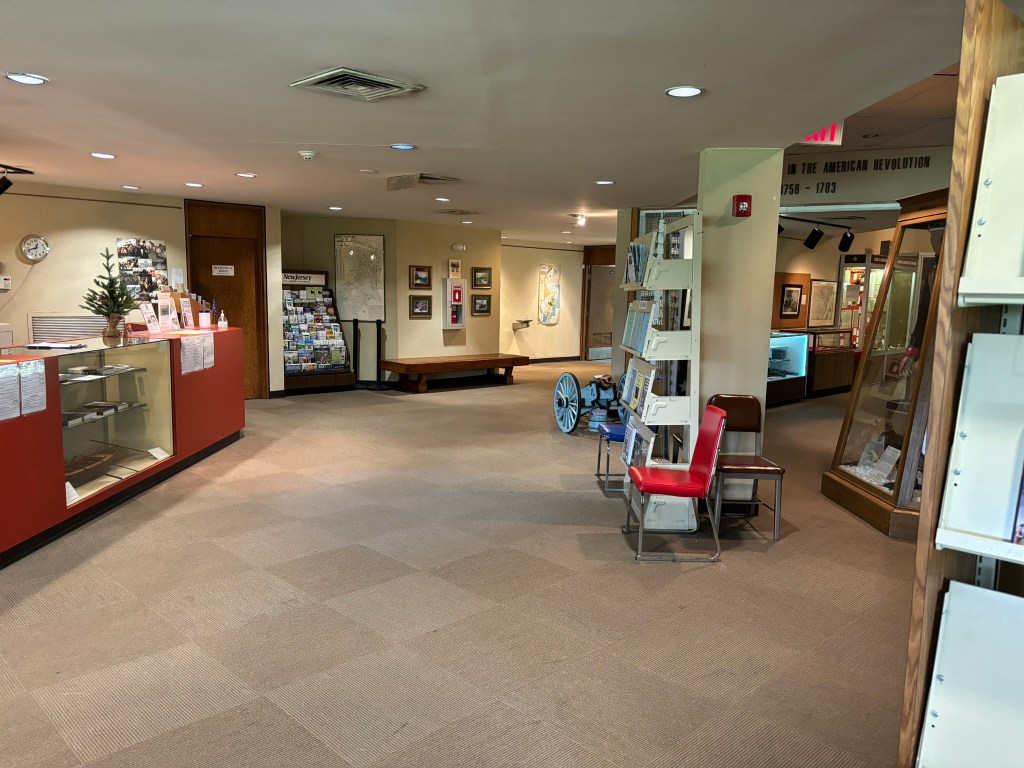
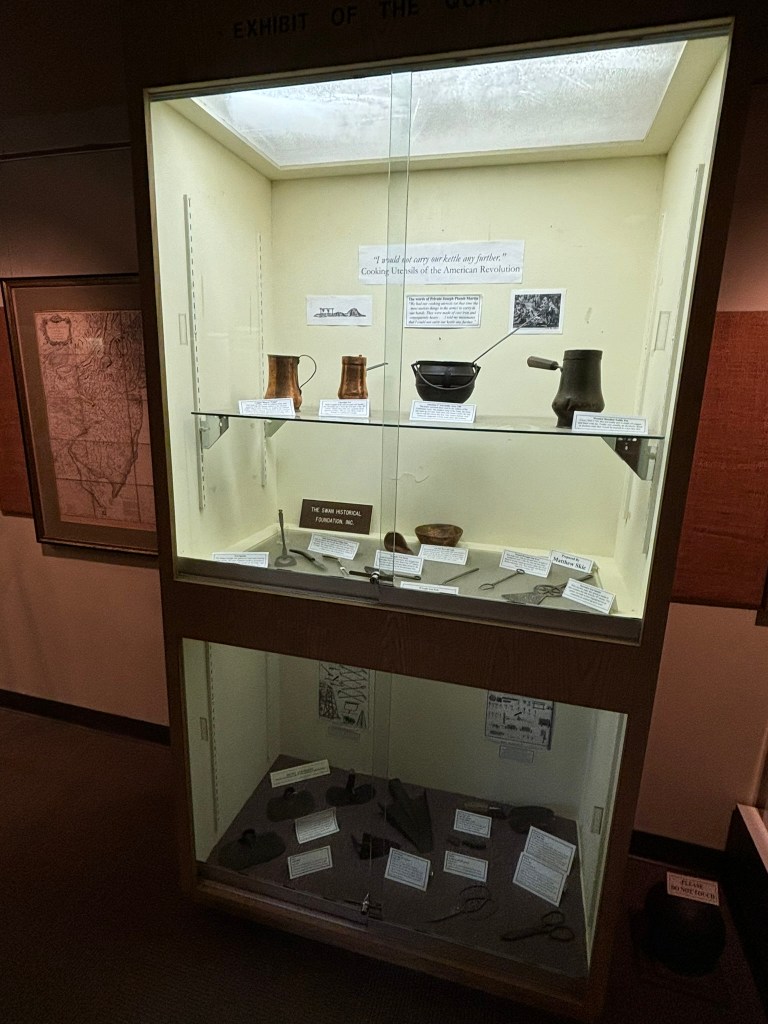
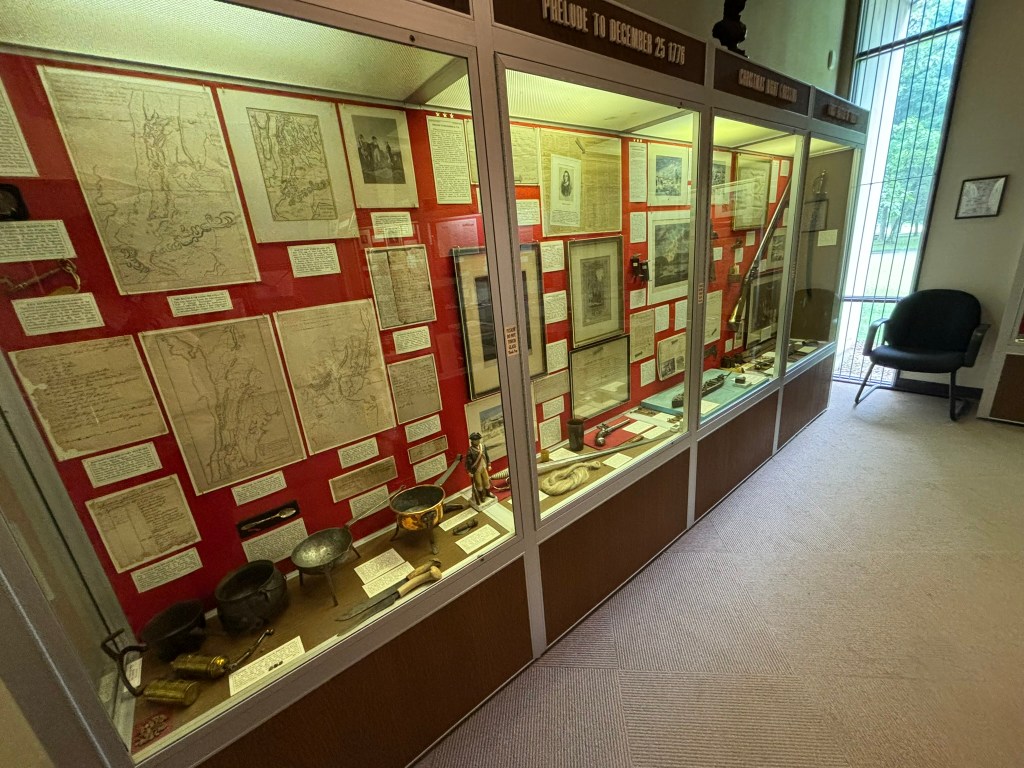
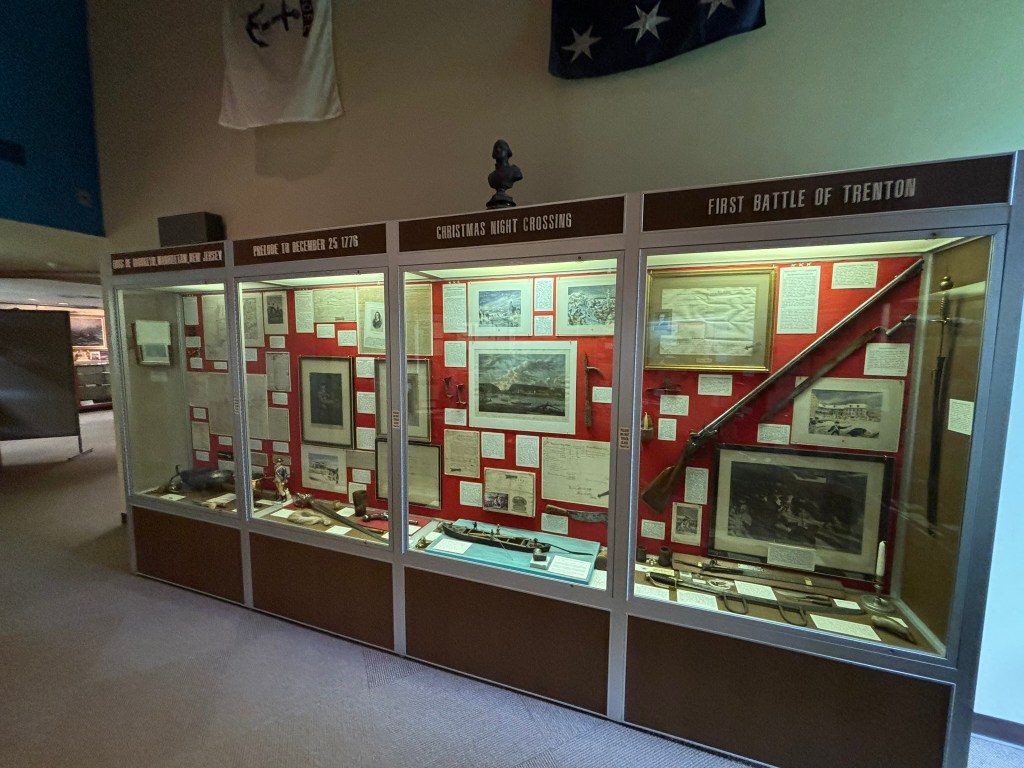
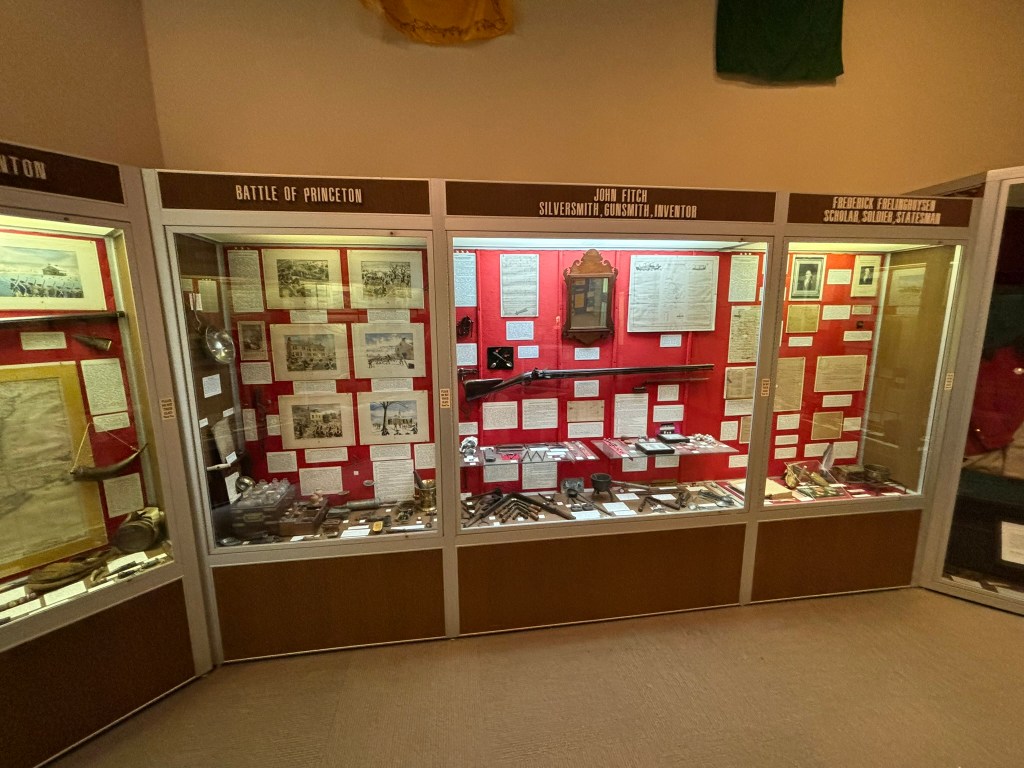
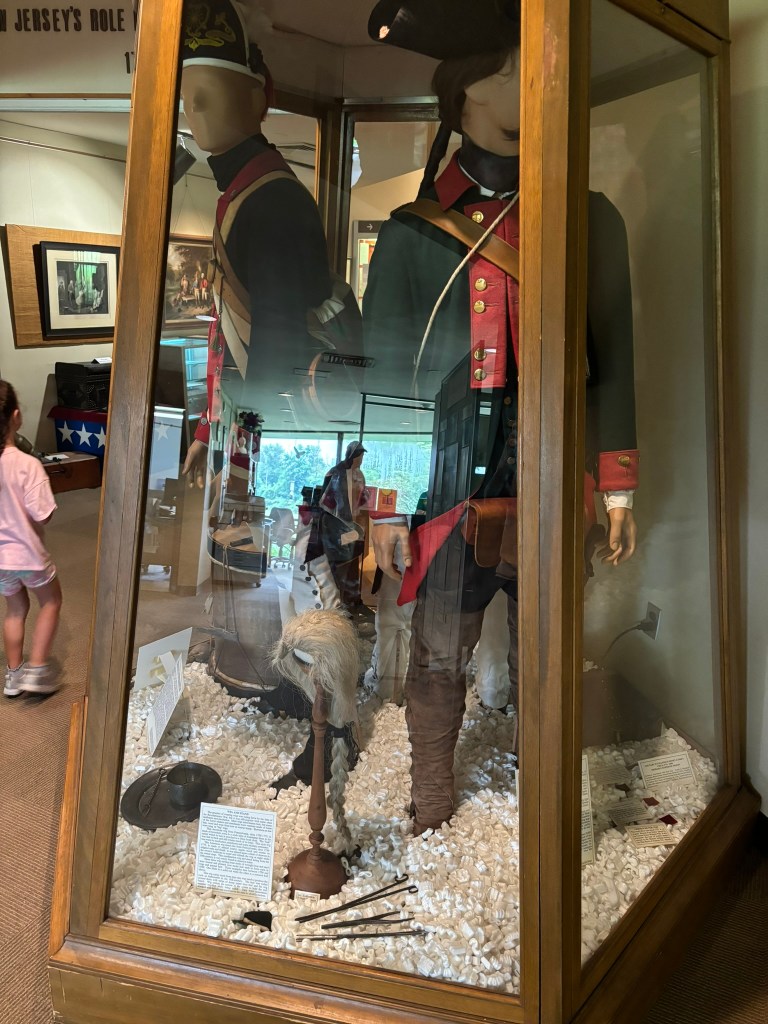
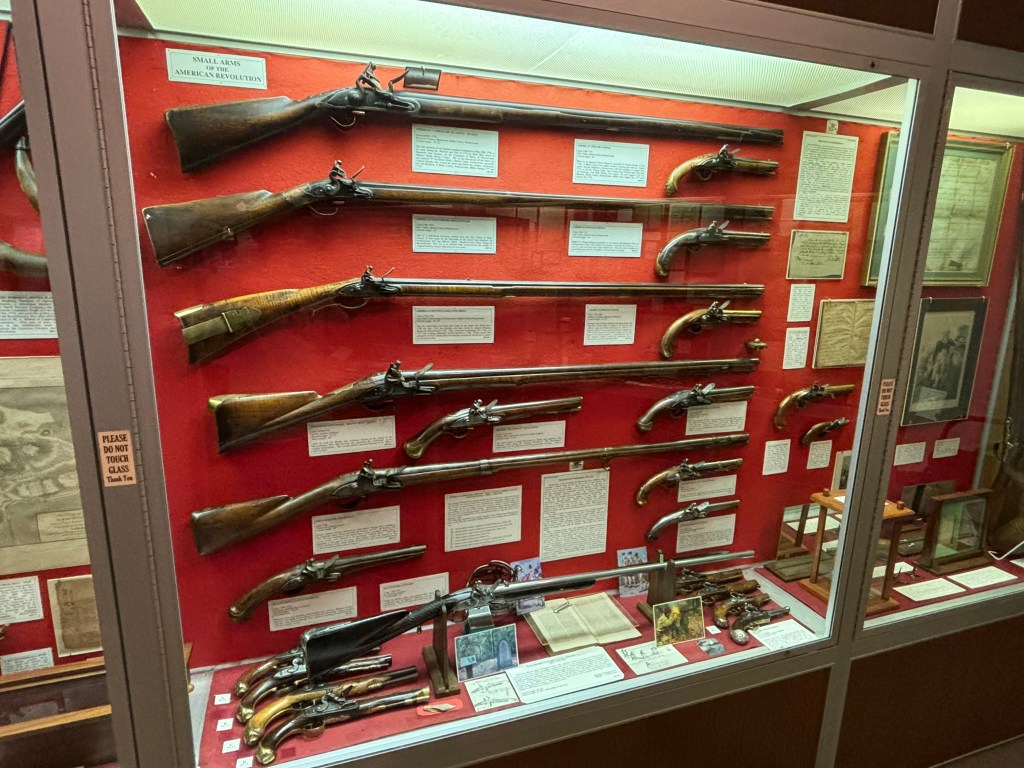
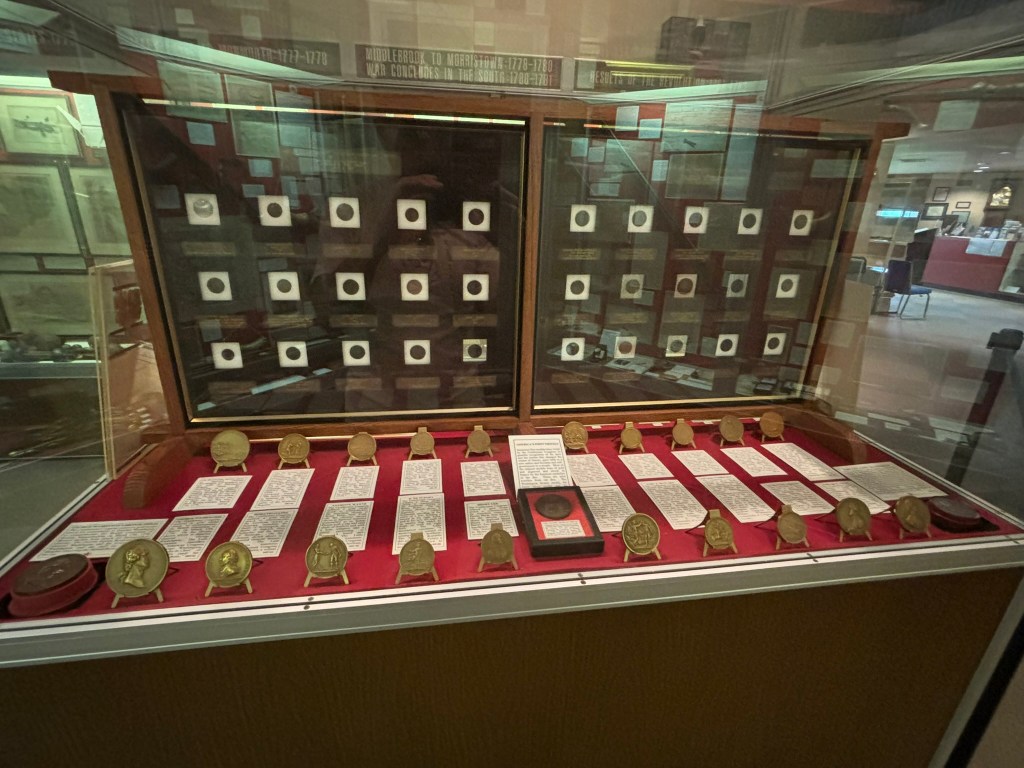
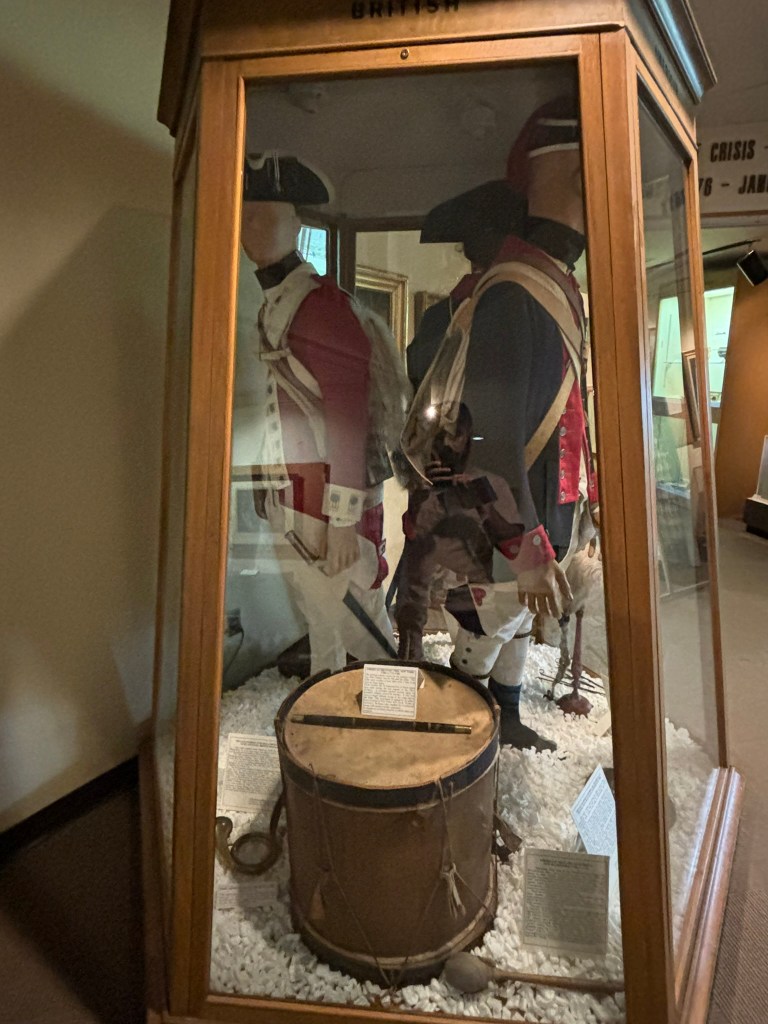
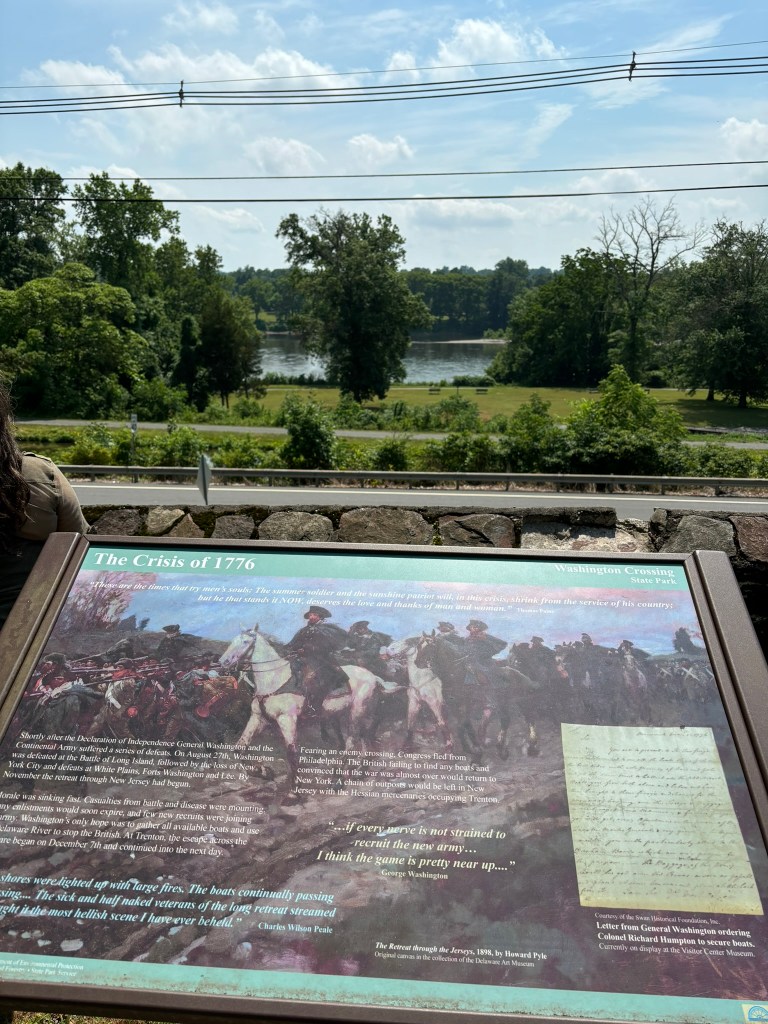
My family and I made it to Washington’s Crossing State Park on the New Jersey side of the Delaware River. My wife and I had gotten free tickets for a tour of the park, which was conducted by the Washington Crossing Park Association. We arrived at the park a little before our 1PM tour time, and we had an opportunity to explore the museum within the Visitor’s Center. The museum had a great collection of artifacts, including uniforms, weaponary, ammunition, coins, letters and other items related to the American Revolution. The Visitor Center also had books for sale.
Background of Washington’s Crossing
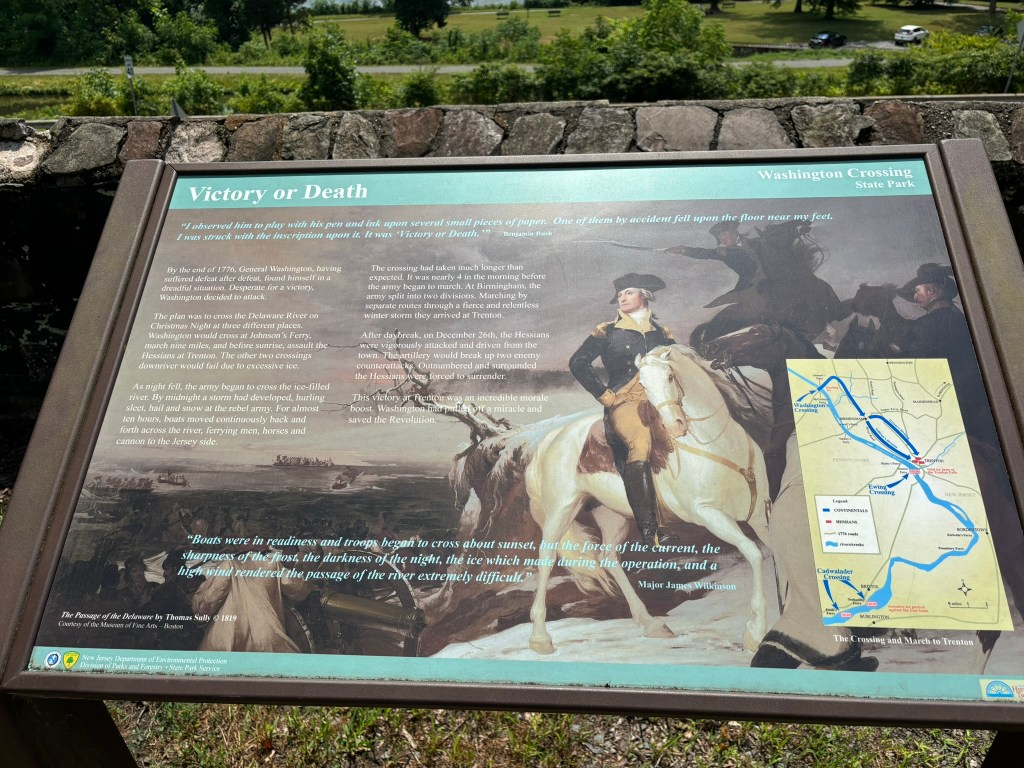
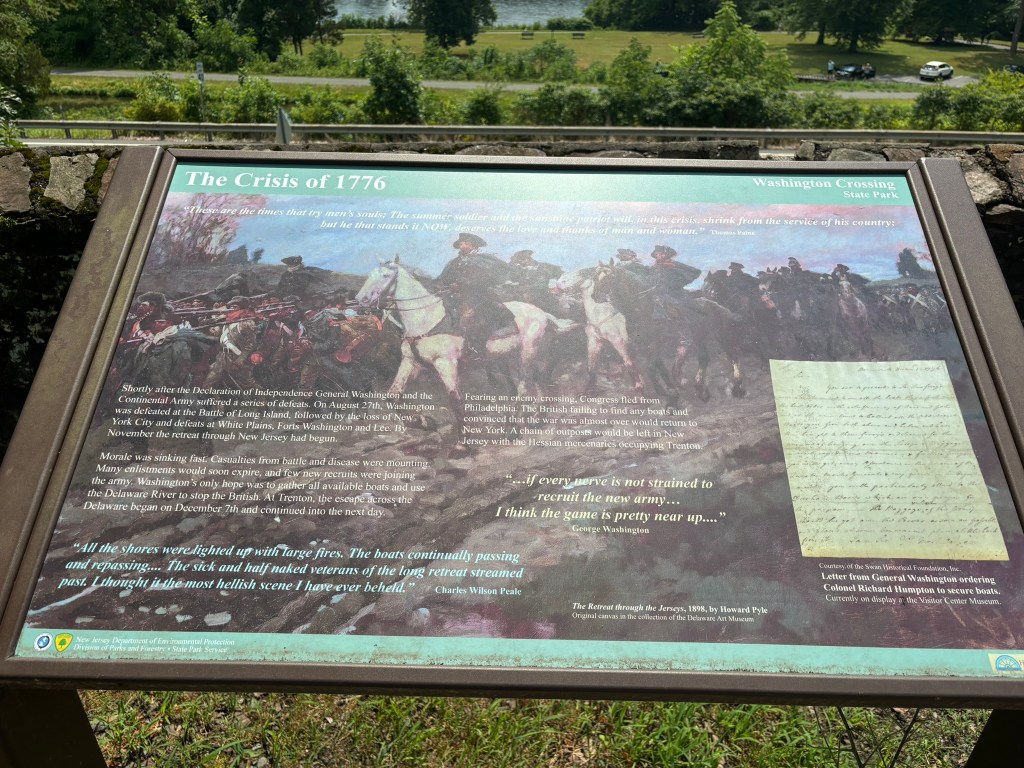
The tour began with a video that was about 30 minutes long called “Ten Crucial Days: The Road to Liberty.” The video’s primary focus was to tell the significance of Washington’s crossing. The video also gave us the background leading up to the event. The British army landed about 32,000 troops in New York harbor starting in August 1776, shortly after the United States declared independence. The British then won a series of battles starting in Long Island, then Manhattan and up to White Plains. The Continental Army retreated across New Jersey while being pursued by the British army. Washington led his hungry, desperate, and dwindling army across the Delaware River and found safety in Pennsylvania by early December.
The revolution seemed lost for the Continentals. To add to Washington’s difficulties, many of his men’s enlistments were up at the end of the year. He needed a major victory to boost the morale of the troops as well as the young nation.
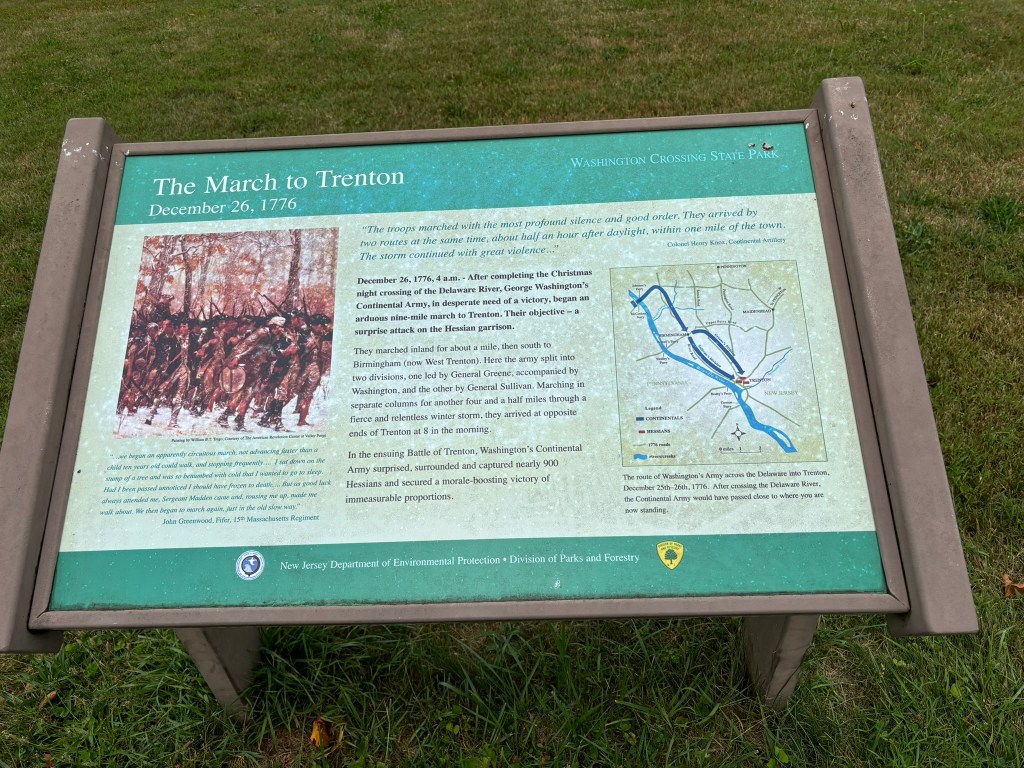
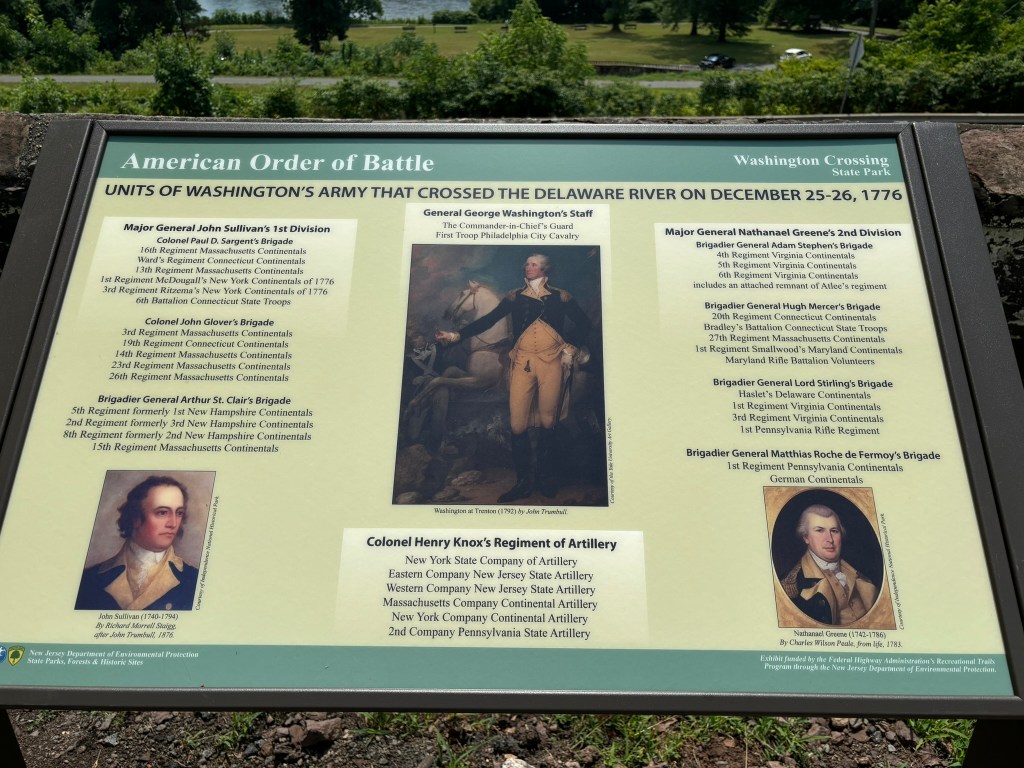
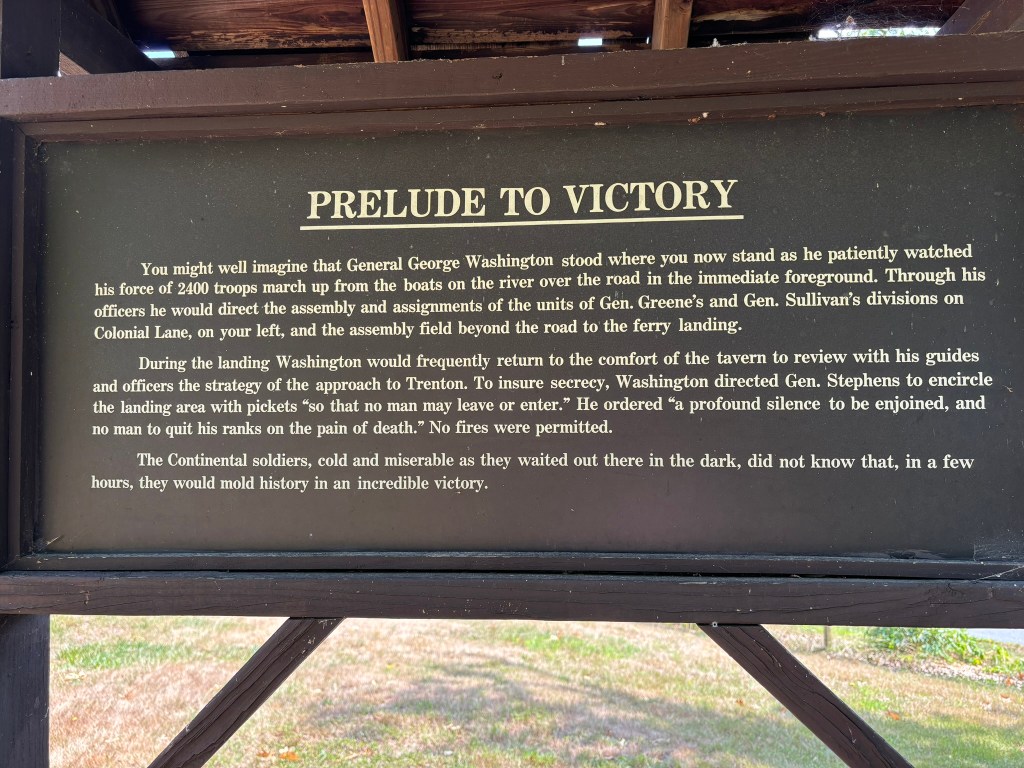
In a quite daring move, Washington planned a surprise attack on the Hessian garrison stationed at Trenton. On Christmas night, he would lead the Continental Army across the Delaware River including horses and artillery, and march nine miles south to Trenton. Washington and the Continentals knew the significance of the element of surprise. He wanted to attack Trenton before sunrise, but the crossing was running hours behind. Washington crossed the Delaware with 2,400 men, not as many as he had hoped because other regiments who were to cross south of Trenton never made it across. After landing on the New Jersey side, Washington and his men finally began their march towards Trenton at 4AM. The weather did not cooperate with the Continentals. Along the march, they first faced light rain, then light snow, then blizzard like conditions. At least two men died during the march.
About halfway to Trenton, the army broke into two groups. General Nathaneal Greene, accompanied with Washington, took one group, and General John Sullivan led a second group. The two groups split off and would take two separate roads to Trenton. This plan would result in the Continentals enveloping the enemy and attacking from two locations. The Continental Army did not reach Trenton until 8AM which was after sunrise, although the morning fog helped conceal the oncoming troops. The battle ensued and lasted just about an hour and half. At its conclusion, the Hessians suffered 22 killed, 83 wounded and nearly 900 captured. It was a resounding victory for the Continentals, and it was the victory that they so desperately needed.
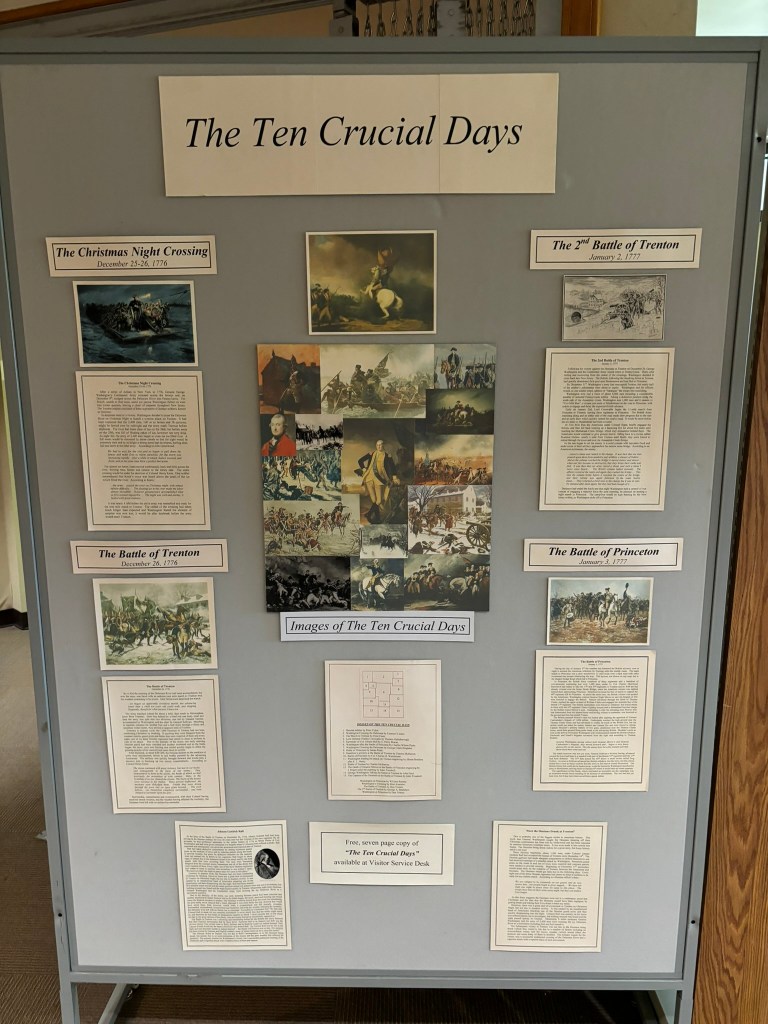
Washington’s crossing was the beginning of what historians call “The Ten Crucial Days.” After the victory at Trenton, the Continental Army went back across the Delaware River to Pennsylvania. Just a couple days later, they again crossed back into New Jersey and encamped at Trenton and held off the British Army at the Second Battle of Trenton. During the night of the second battle, Washington and the Continentals secretly marched around the British army and faced another British army at the Battle of Princeton on January 3rd, 1777. This was another resounding victory for the Continentals who defeated British Regulars. The Ten Crucial Days breathed new life into the revolution. The Continental Army would spend their winter encampment at Morristown, living to fight another day.
Had it not been for Washington’s daring move to attack at Trenton, the Revolution may have been over. Even the British believed that the Continentals had nothing left. Had Washington’s attempt on Trenton failed, the rebels may have lost the war and would become British subjects once again, under the closer scrutiny of the crown. But Washington’s stroke of genius gave the Continentals the hope to continue fighting. The war would continue to drag on for years with victory for the Continentals not becoming official until the Treaty of Paris in 1783. Even though it was early in the war, the Ten Crucial Days are arguably the ten most significant days in American and World history.
The Tour
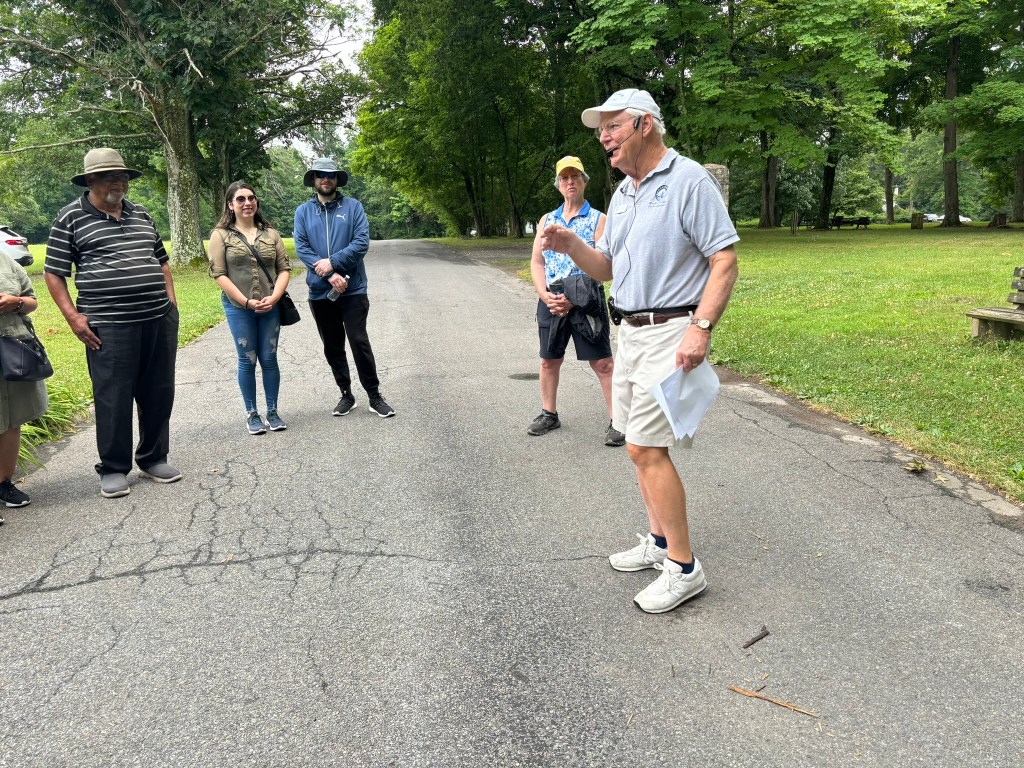
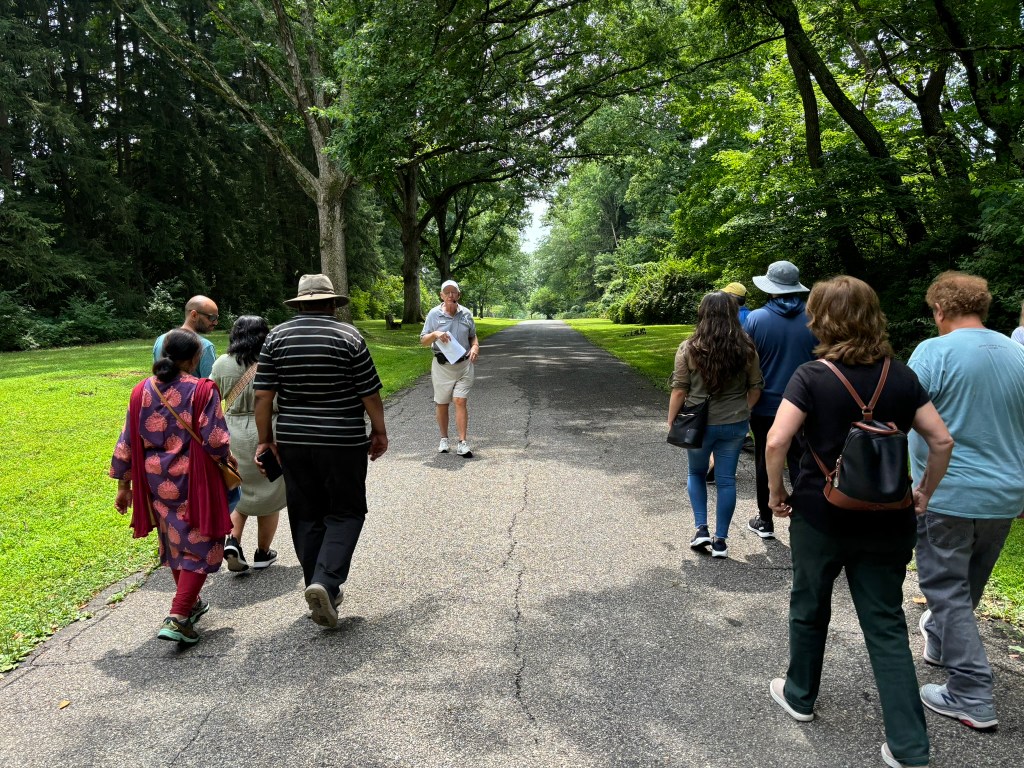
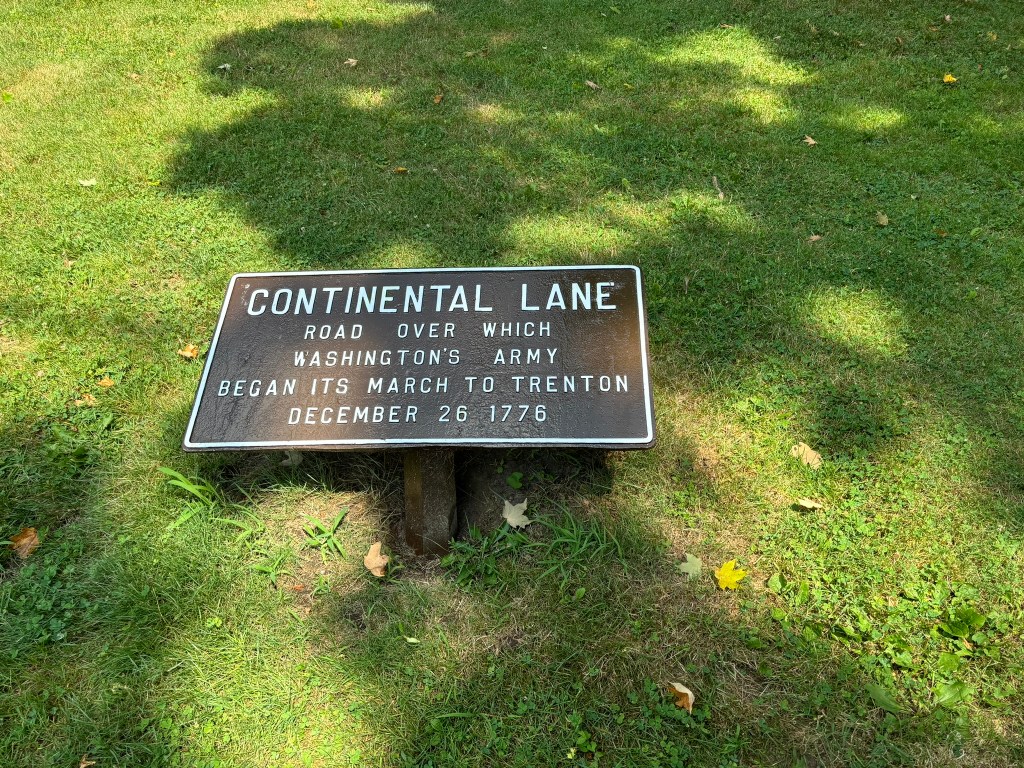
After the video was over, our tour guide, Tim West, took us on a walk through the park, down Sullivan Lane to the entrance of Continental Lane in the direction towards the Delaware River. He discussed the reasons why Washington chose this particular place to cross the river. The Continental Army wanted to be in the vicinity of Philadelphia which was the new nation’s capital and arguably the most important city in the young country.
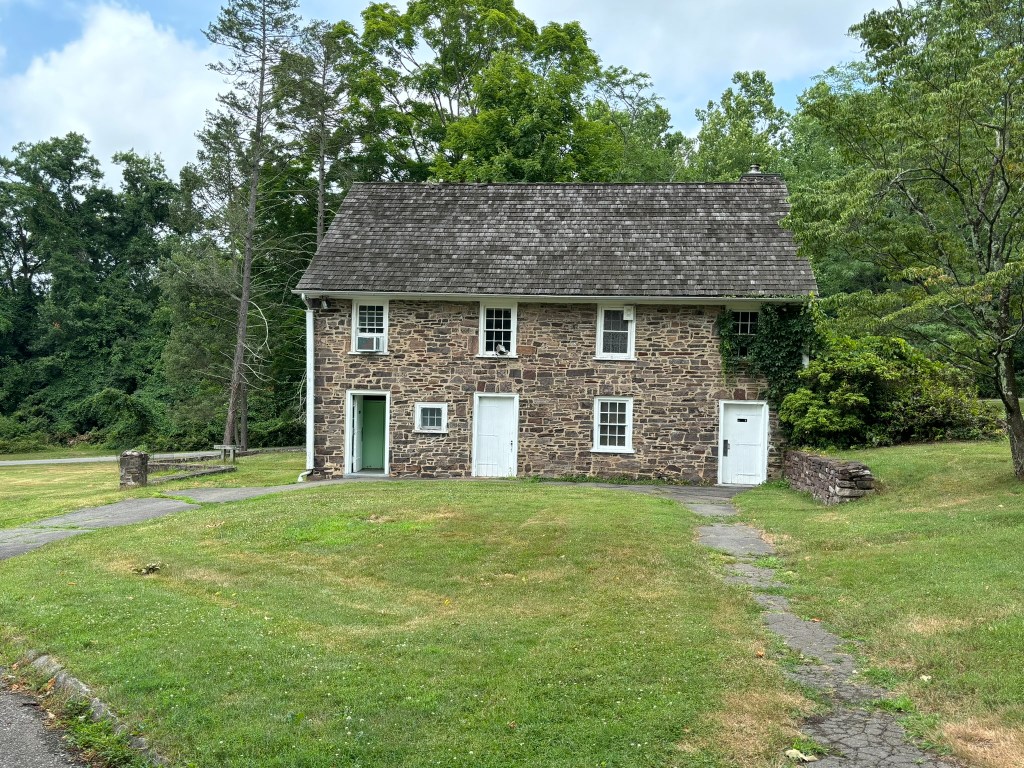
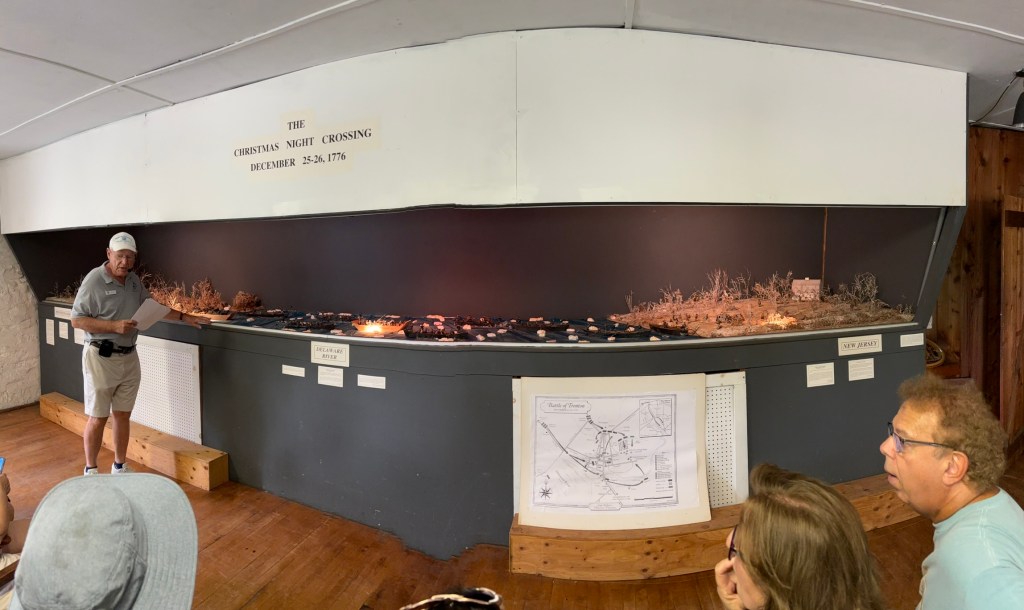
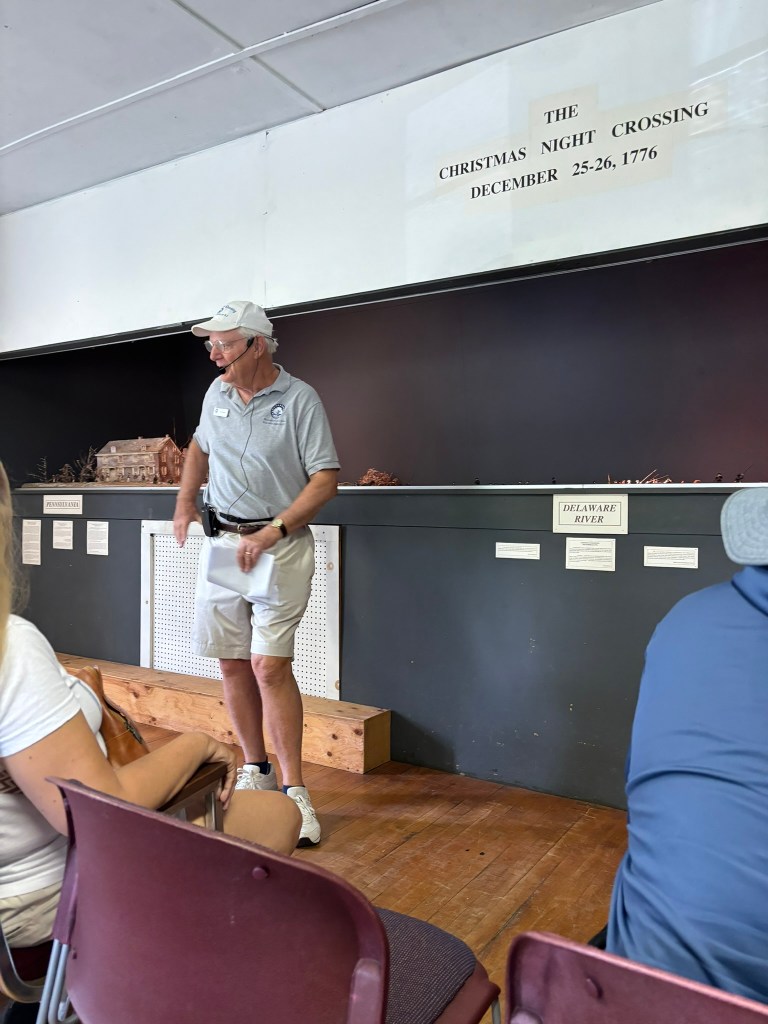
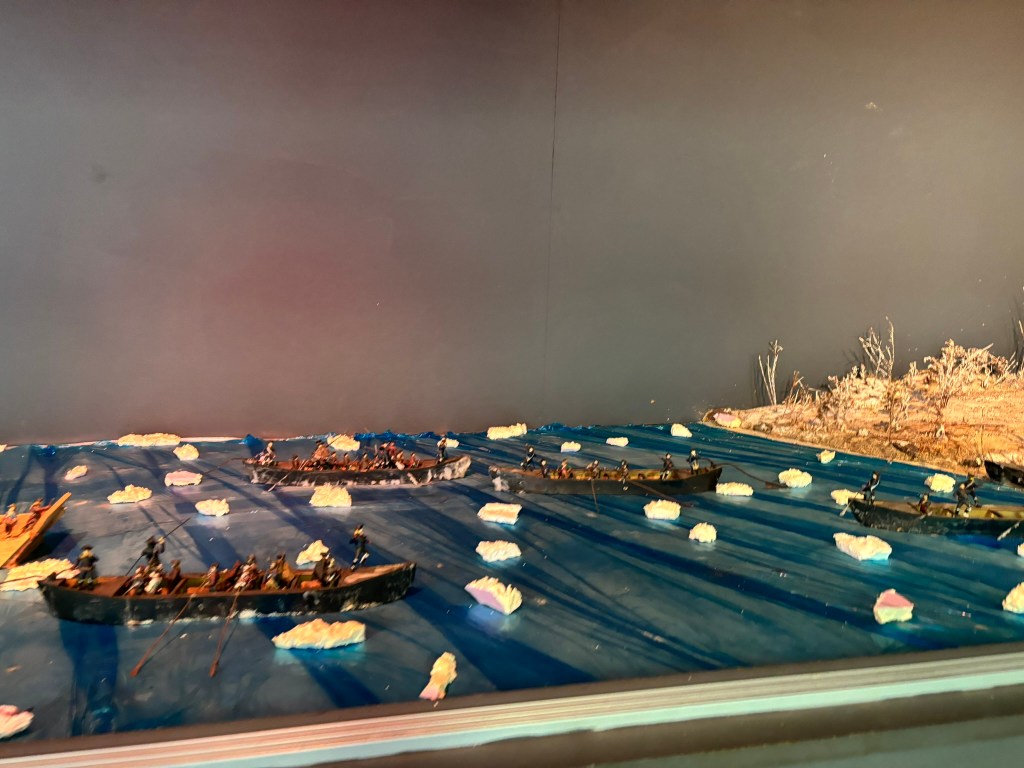
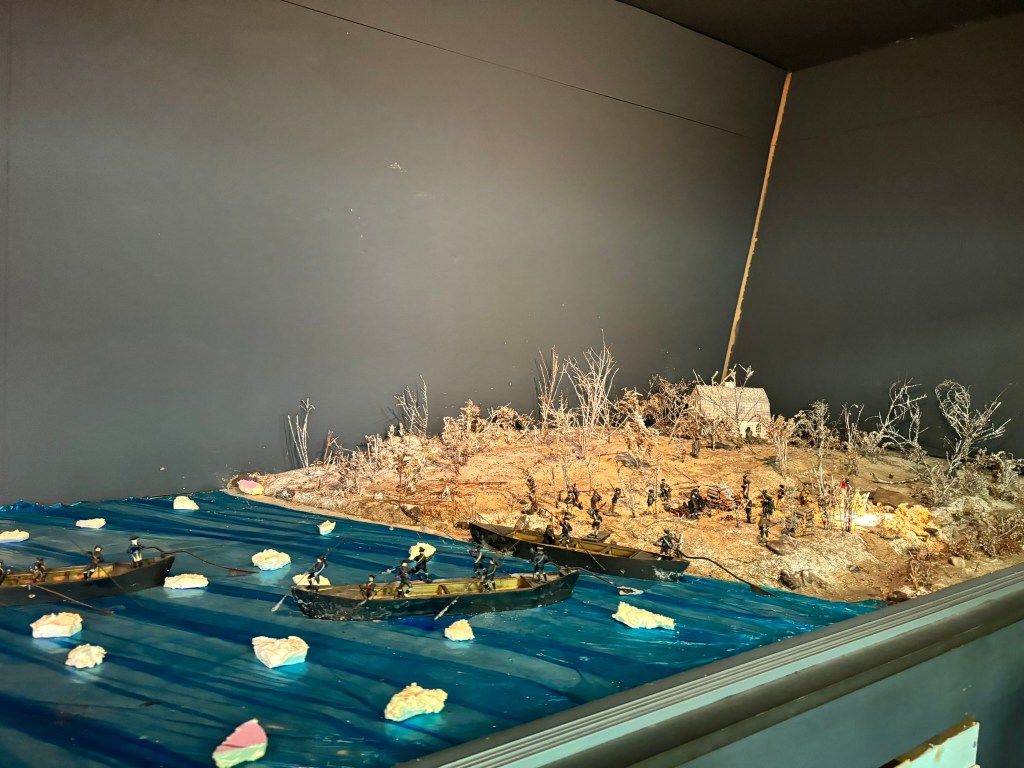
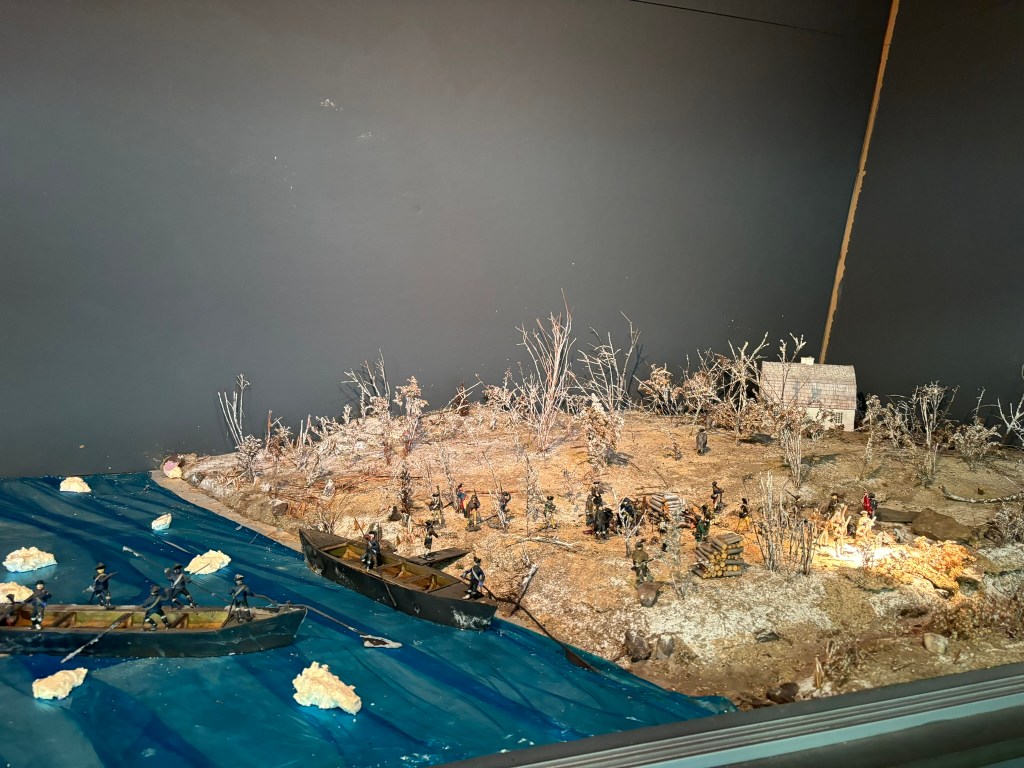
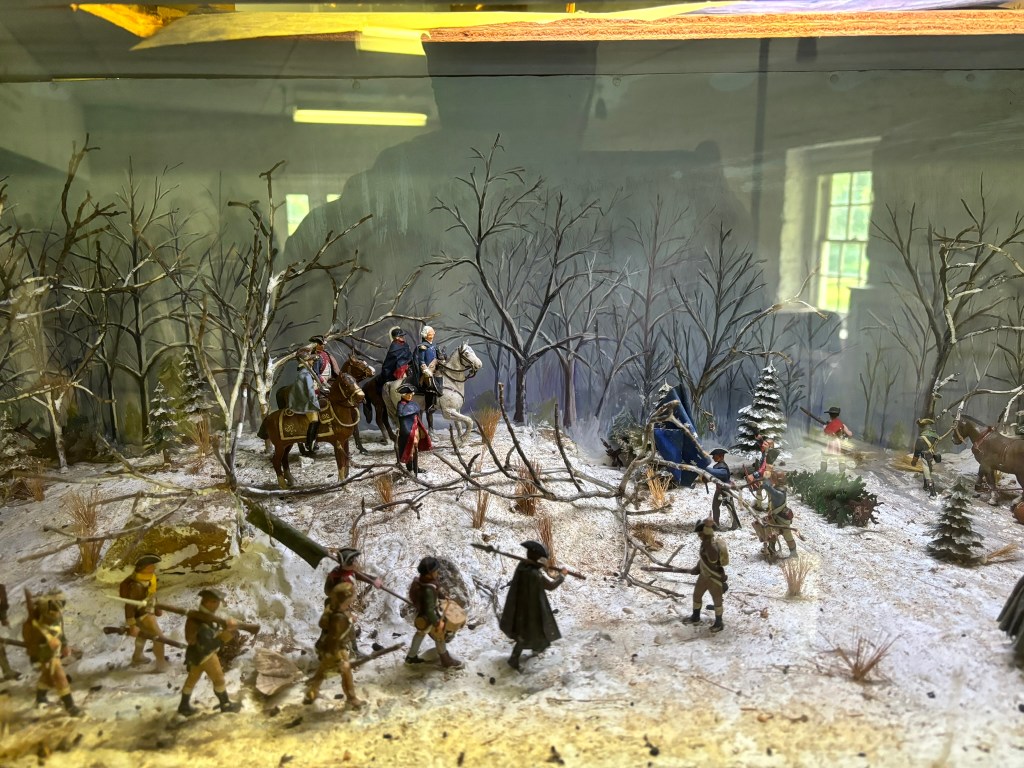
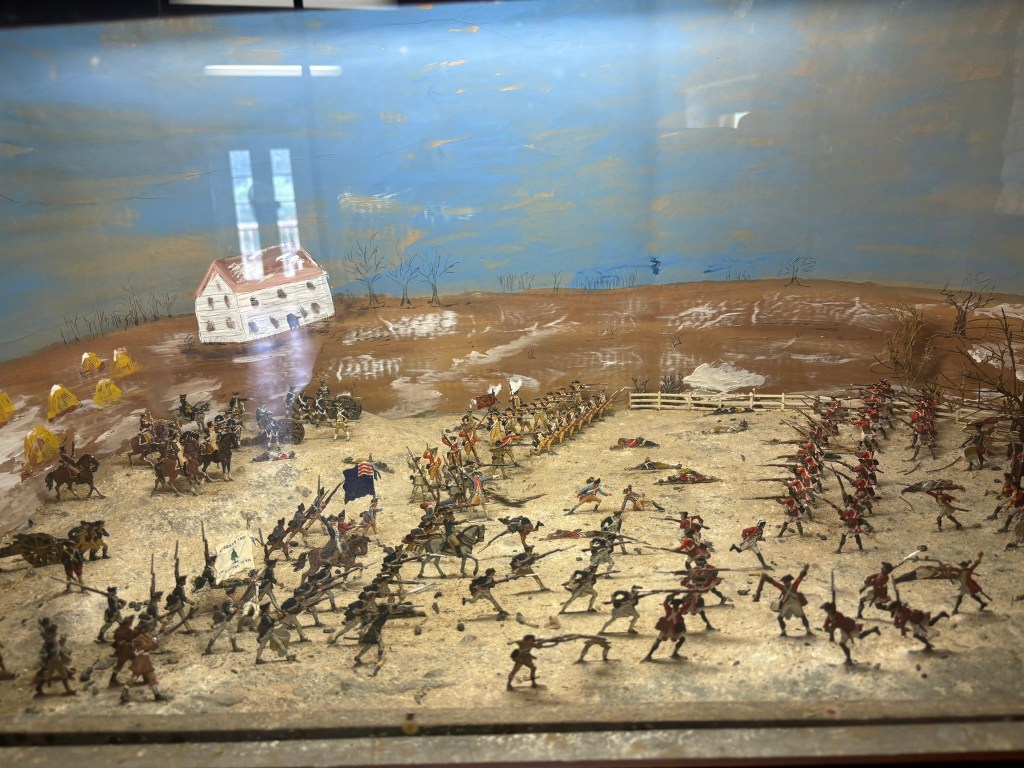
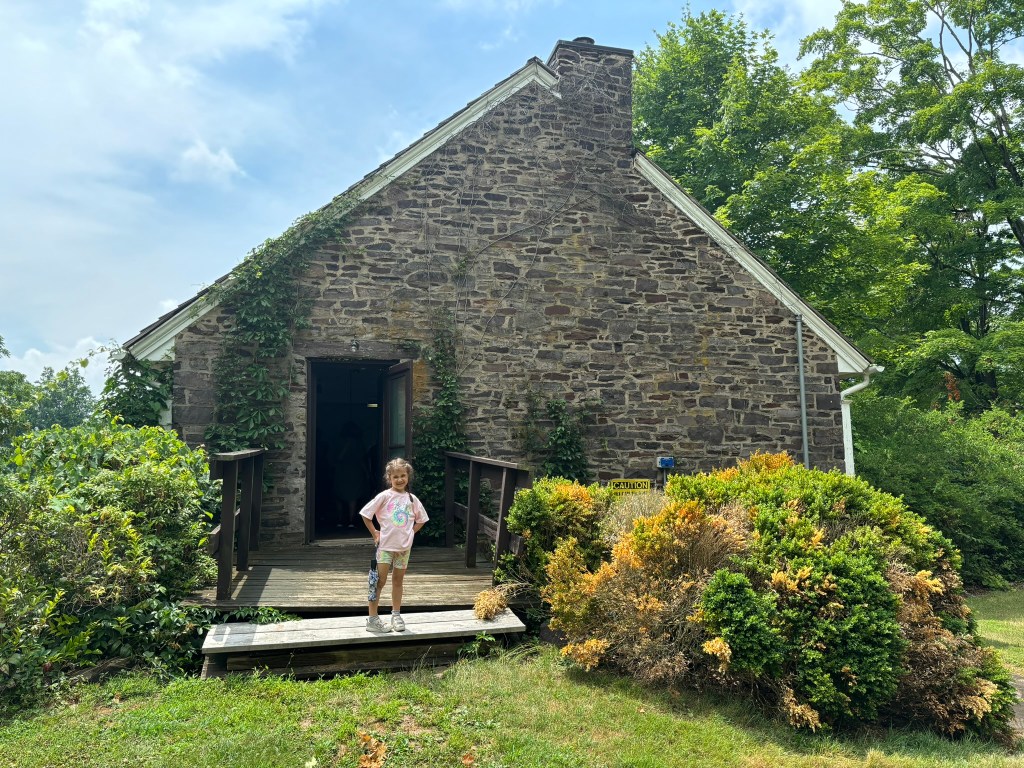
We made our way to the Stone Barn, built in the 1780s, where Tim discussed the army’s march to Trenton, as well as the battle itself. Inside the Stone Barn is a large map of Trenton as it looked in 1776. There is also a fascinating diorama of the river crossing.
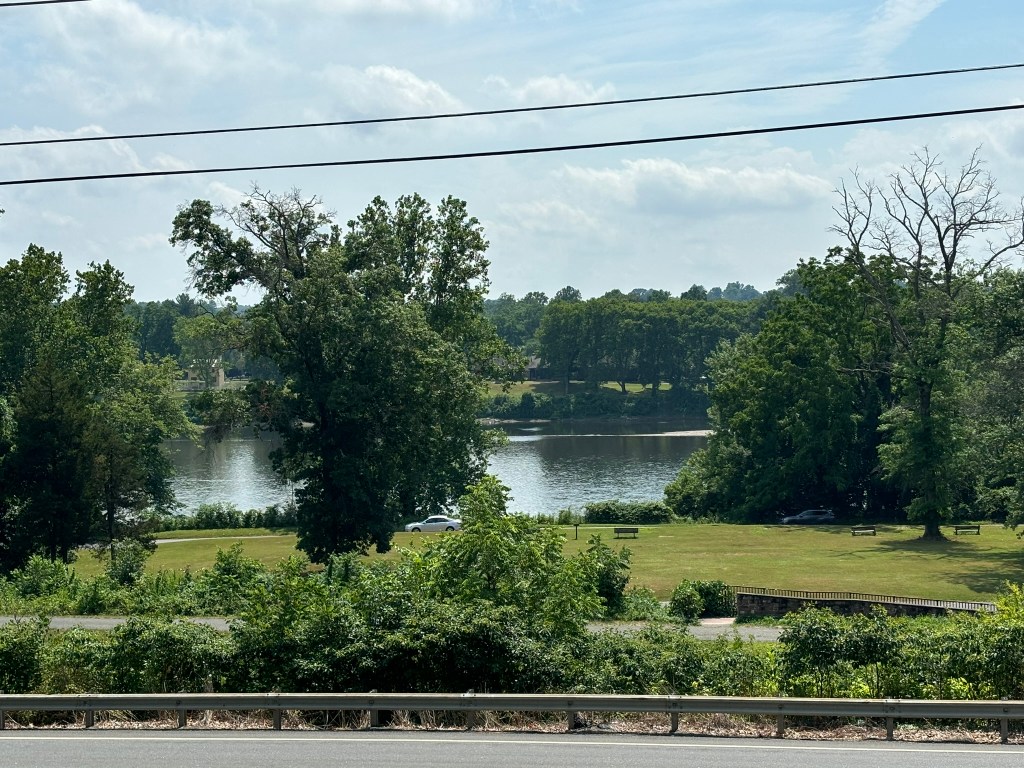
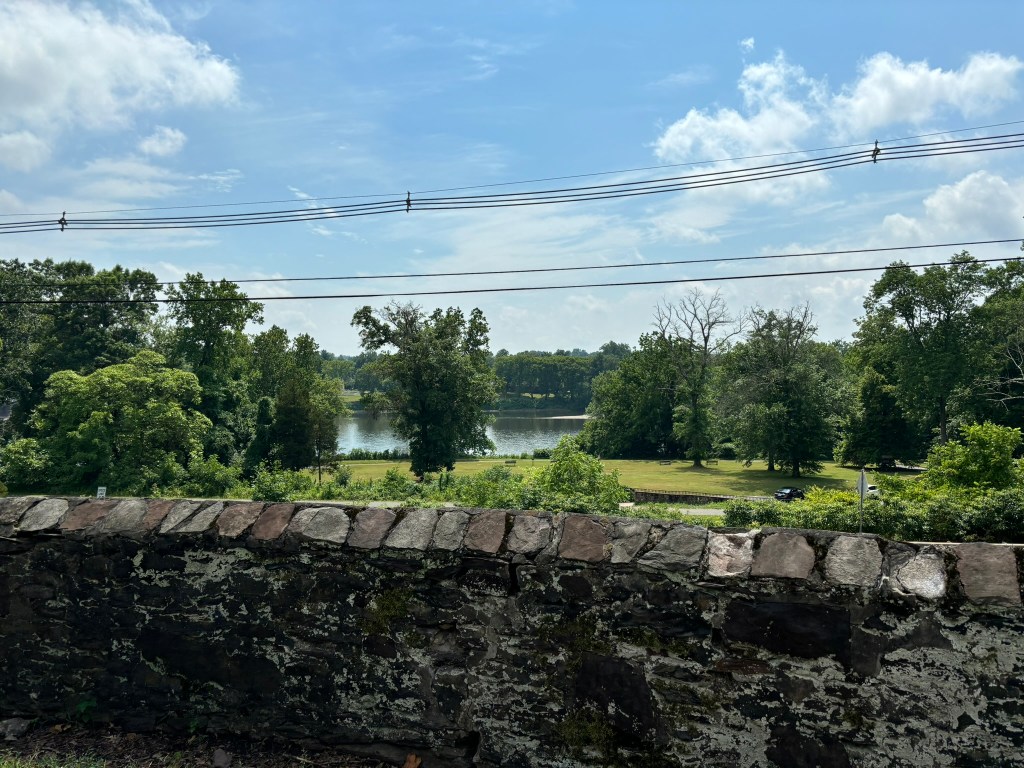
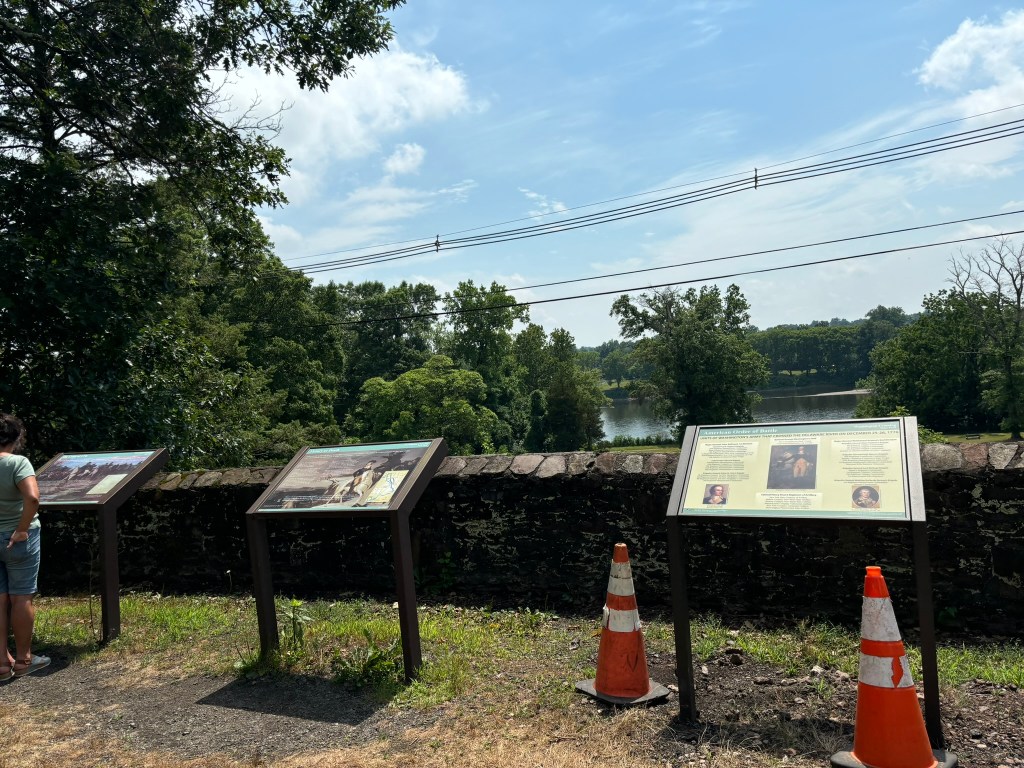
Next, we ventured off to the Landing Overlook, where we could see the location where Washington and the Continental Army crossed the Delaware River. It was quite amazing to see the exact location where such a significant historical event took place.
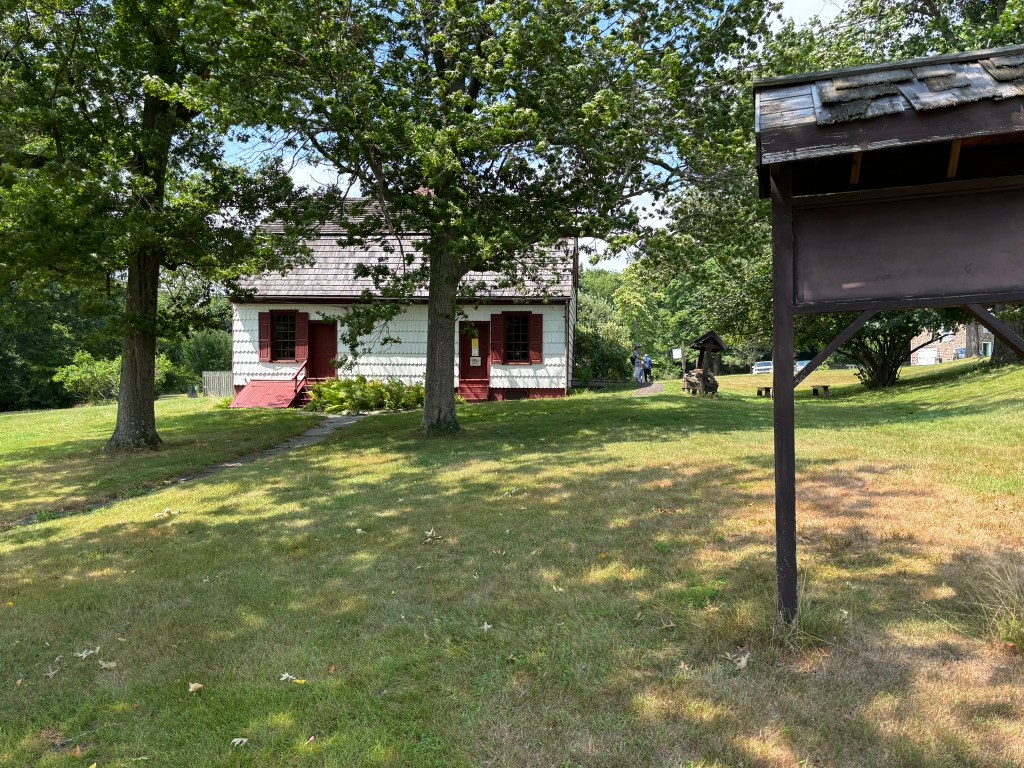
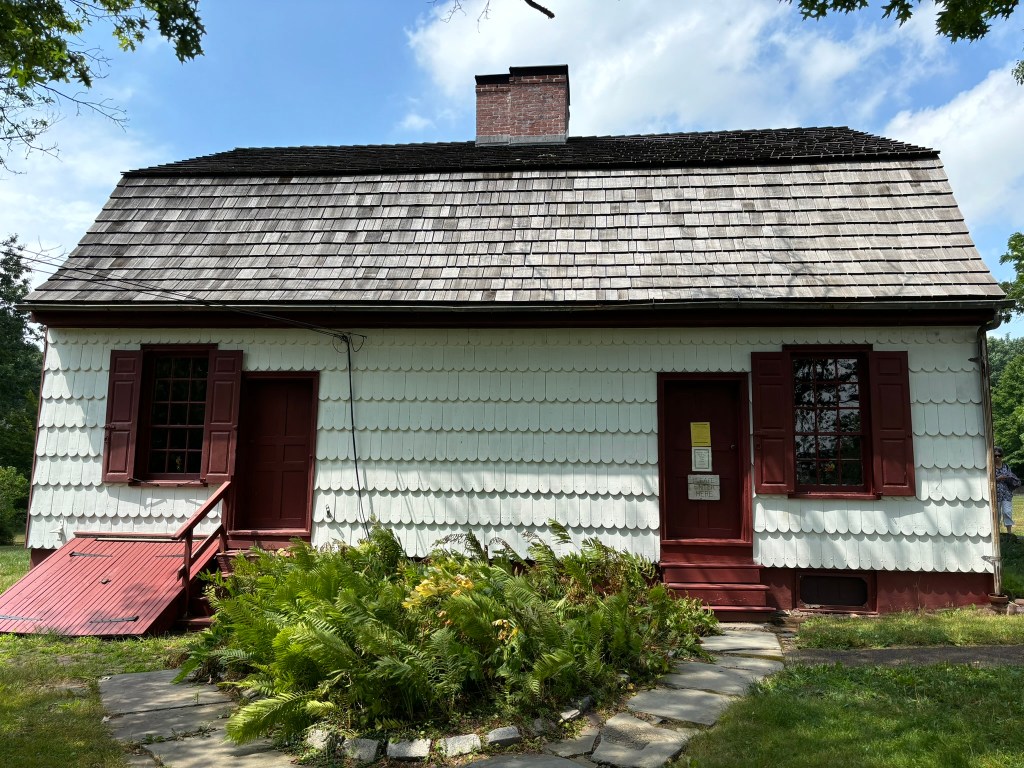
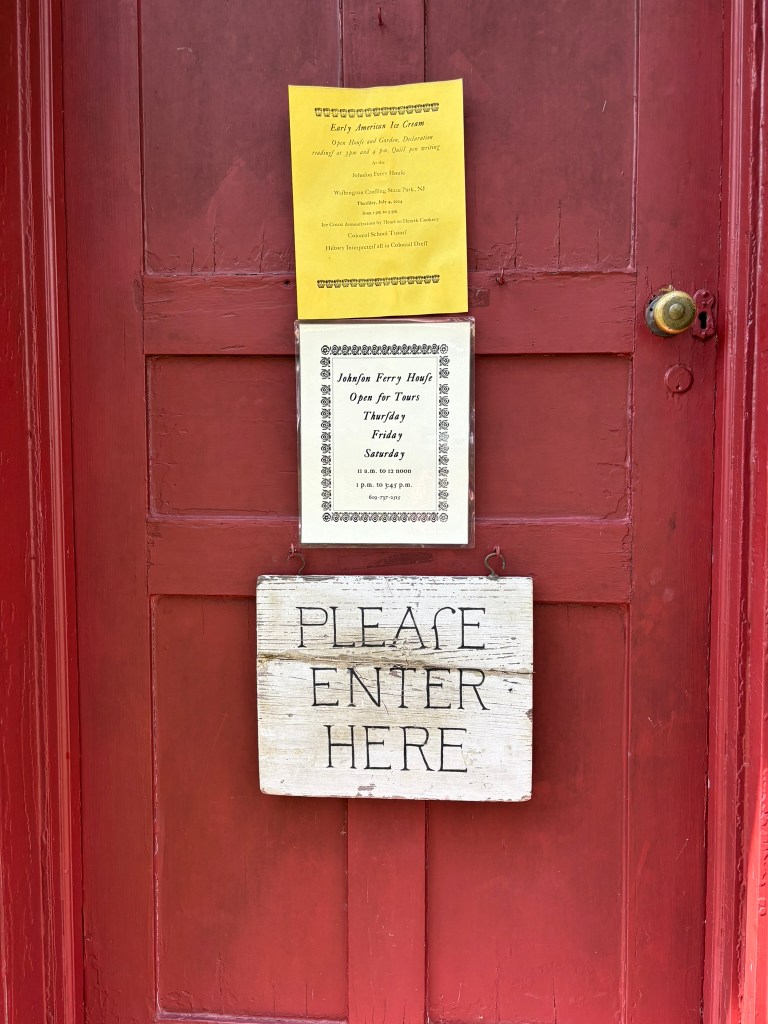
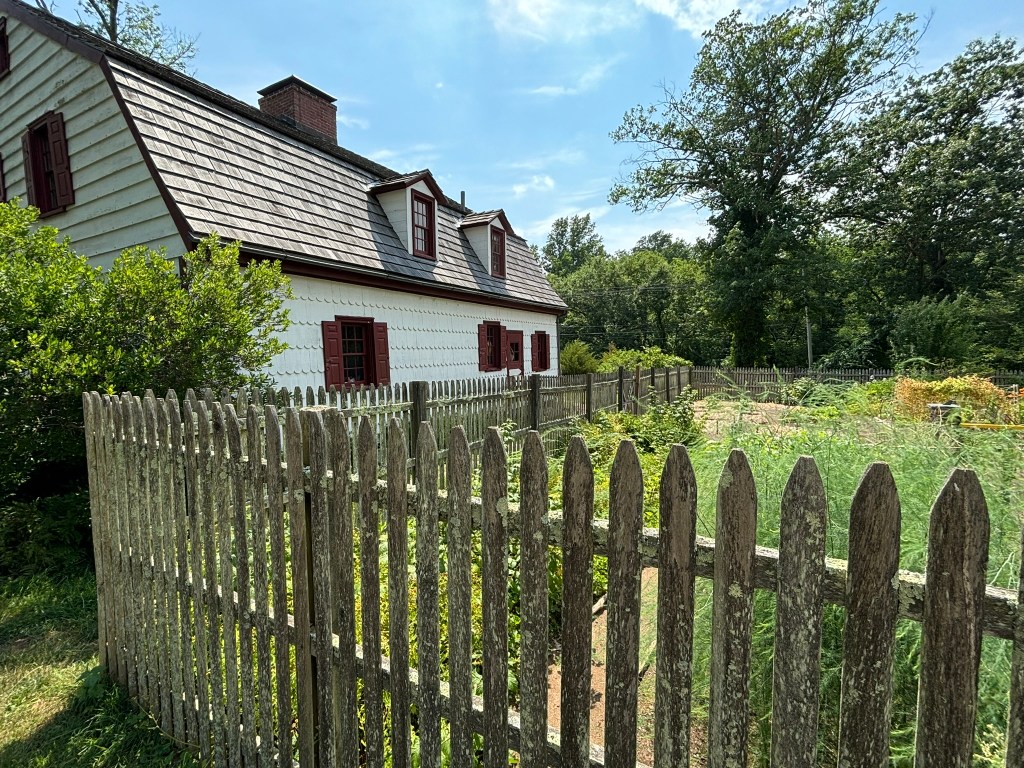
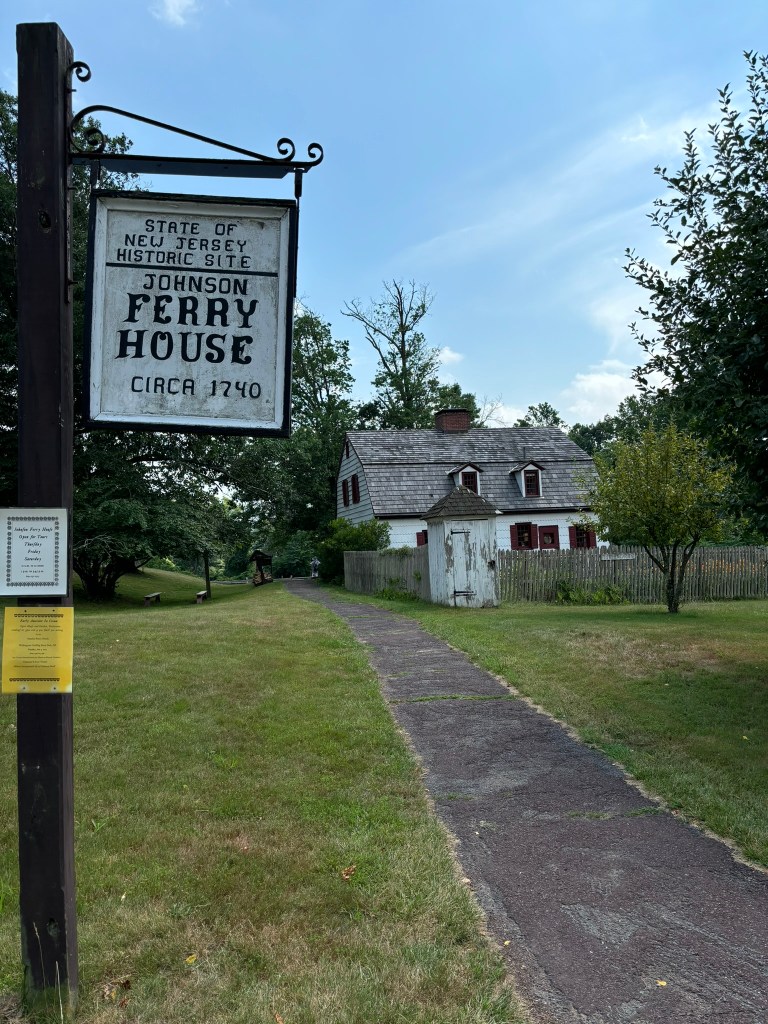
I was able to venture over to the Johnson Ferry House which is very close to the crossing site. The house was built in 1740 and was a witness to the crossing. The house was owned by Garrett Ferry, who had a 490 acre colonial farm and ferry service across the Delaware. It is believed that Washington and his officers used the house to plan out their attack on Trenton. We unfortunately did not have an opportunity to go inside the Johnson Ferry House, but if you are visiting, make sure to check their hours of operations and tours.
We were also told throughout the tour that a brand new visitor center and museum will be built starting early July to be completed in time for the 250th Anniversary. I’m looking forward to checking out the new museum which will have amazing new and updated exhibits. I also look forward to visiting the Pennsylvania side of the river crossing. If anyone has any advice on what to see and do in the area, please comment and let me know!
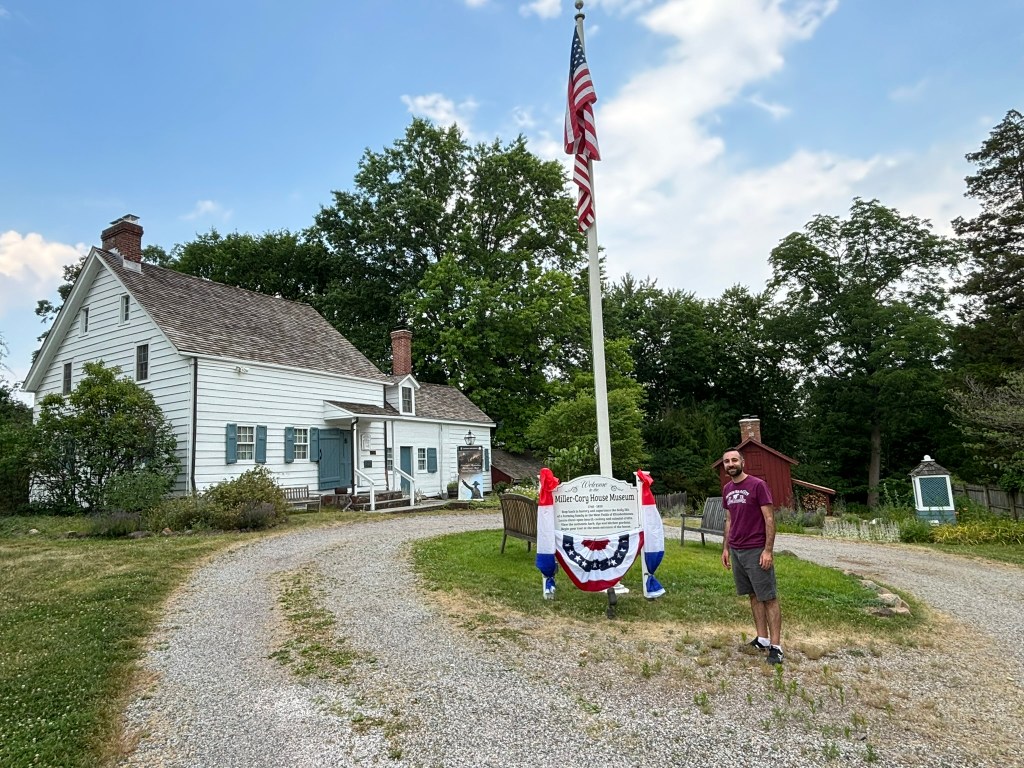
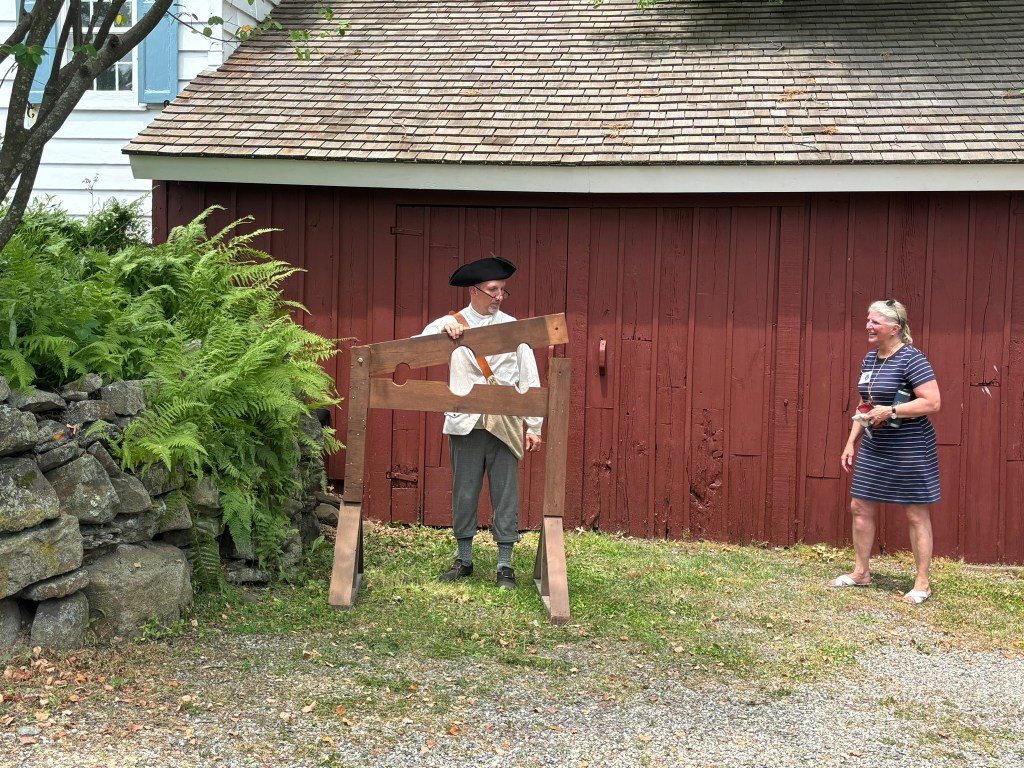
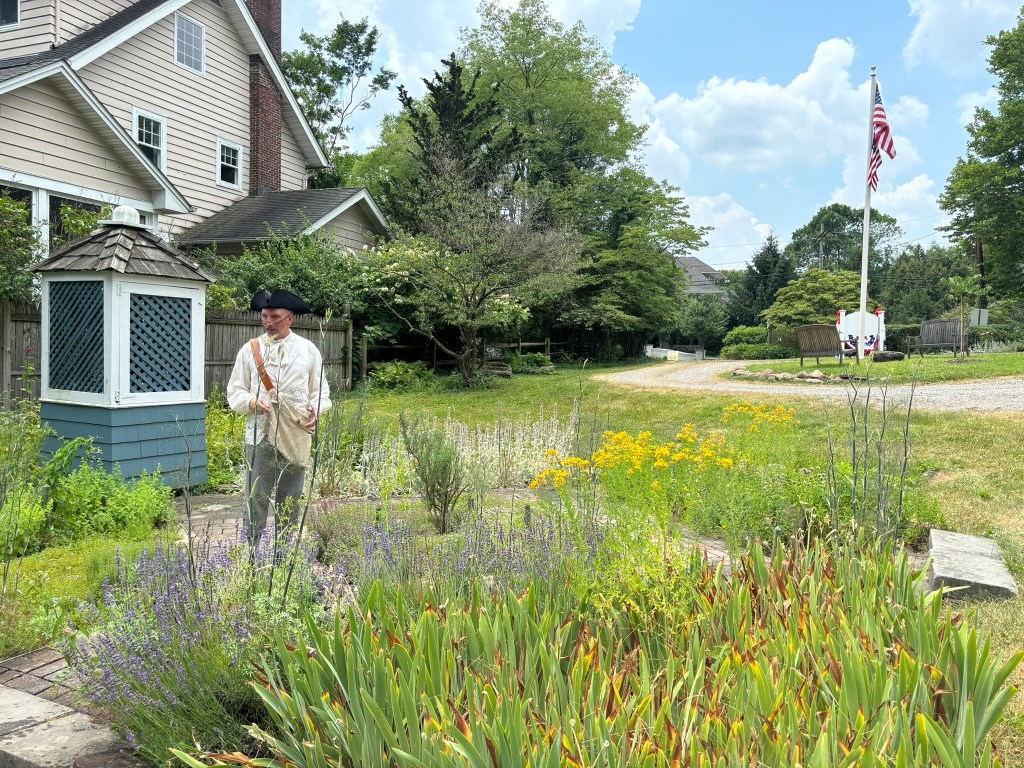
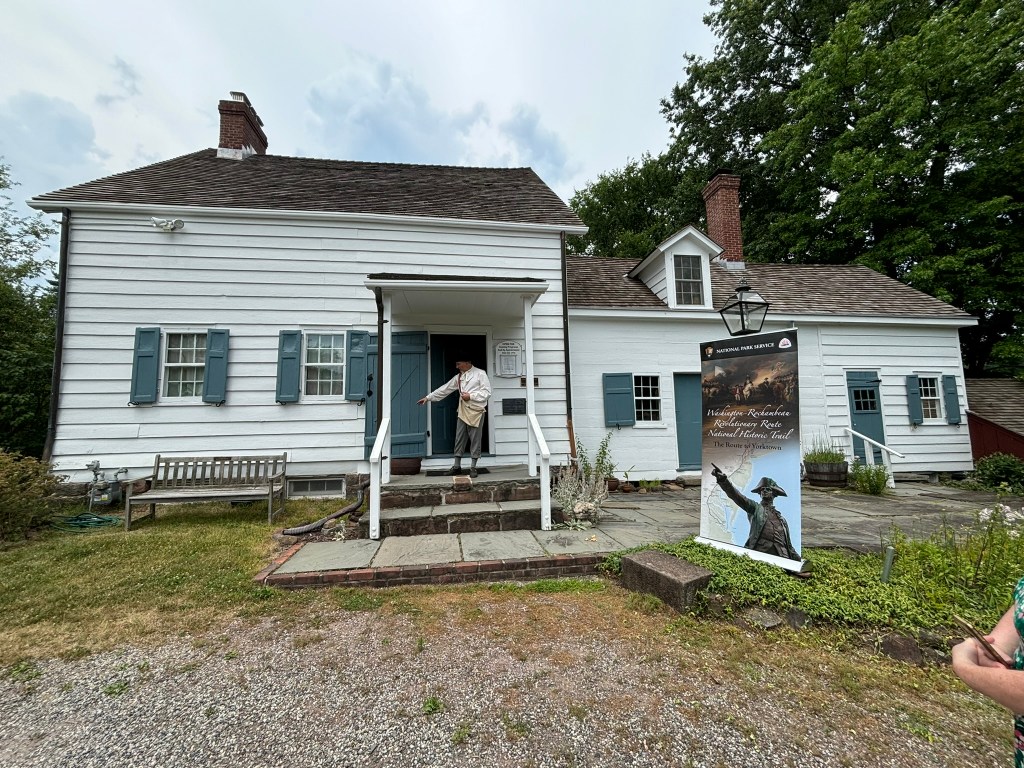
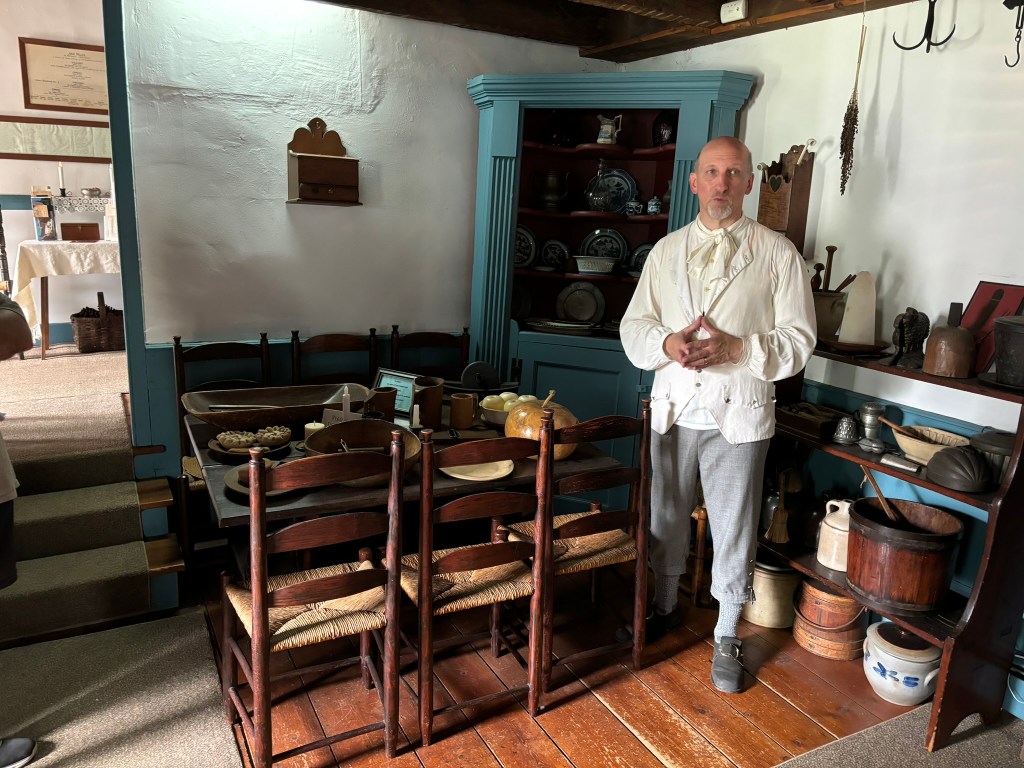
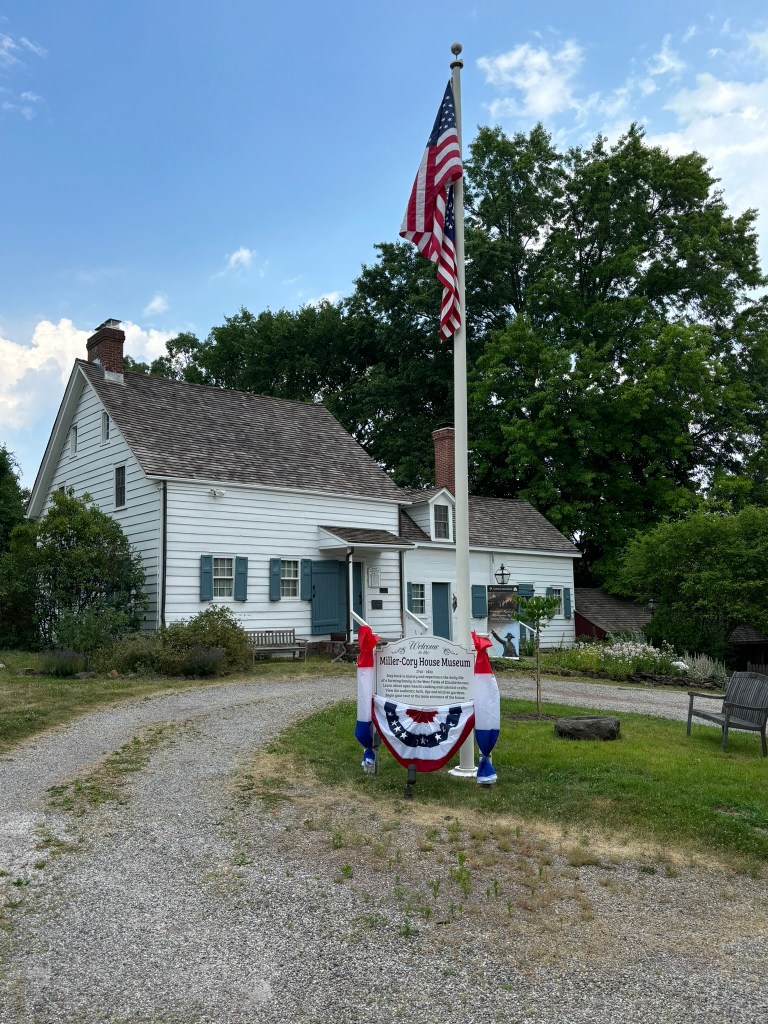
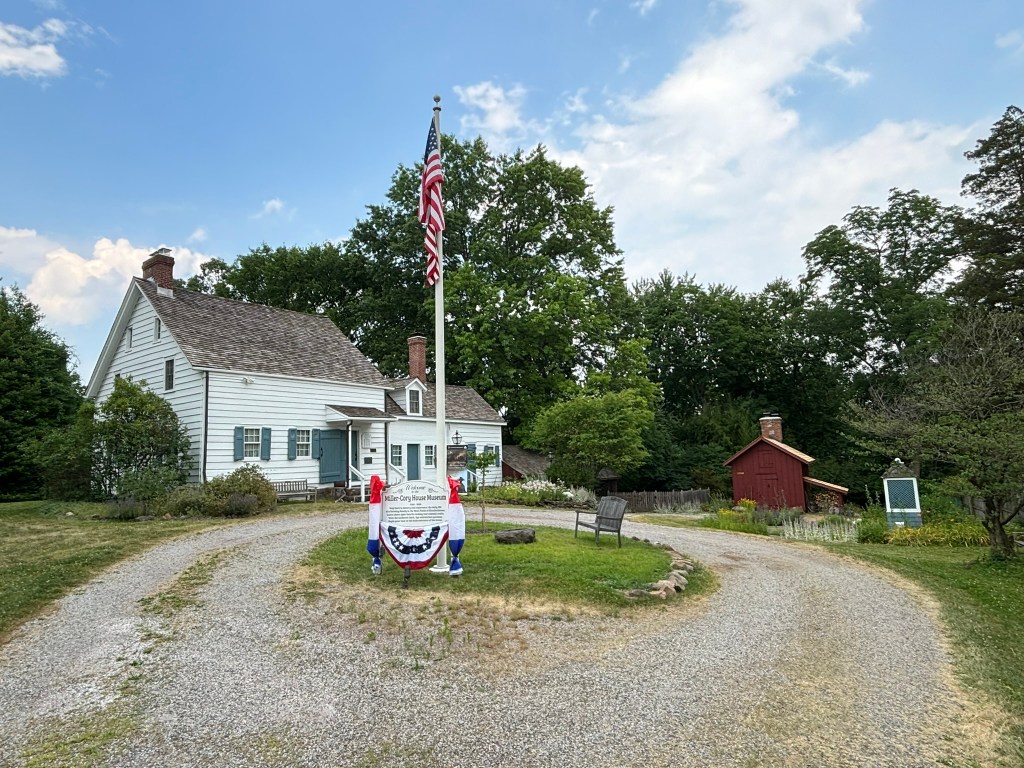
On June 22nd, the Washington-Rochambeau Revolutionary Route National Historic Site-NJ and the Miller-Cory House Museum presented the history of the Washington-Rochambeau Revolutionary Route National Historic Trail and a tour of the Miller-Cory House in Westfield, NJ. The Miller-Cory house was a witness to the allied army march from Rhode Island to Yorktown, VA in 1781 prior to the climactic battle of the American Revolution at Yorktown in October. Joining the tour of the Miller-Cory House was the New Jersey Society of the Children of the American Revolution State Board, and it was an honor to meet them at the tour, as well as sit in on their meeting at the house.
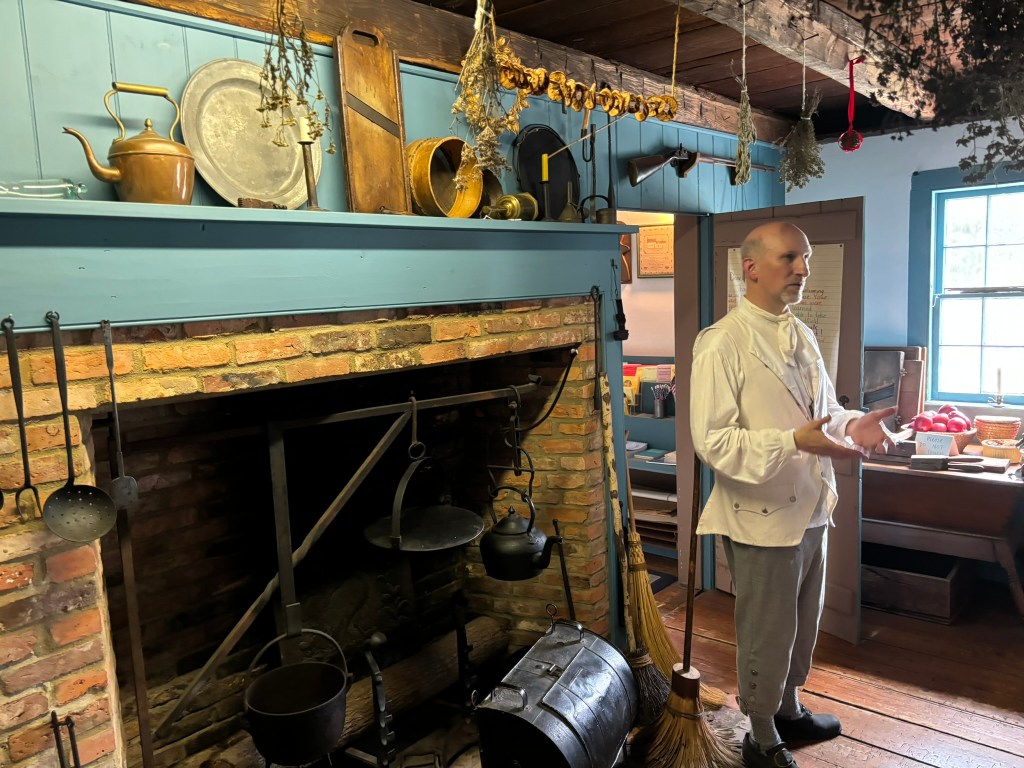
Our tour guide was Robert Wendel, who is a fascinating local historian who is quite knowledgeable about the Miller-Cory House, the history of Westfield, the colonial era, and the American Revolution. He has served as Curator and Vice President of the Westfield Historical Society, former Town Historian, and member of the Westfield Historic Preservation Commission.
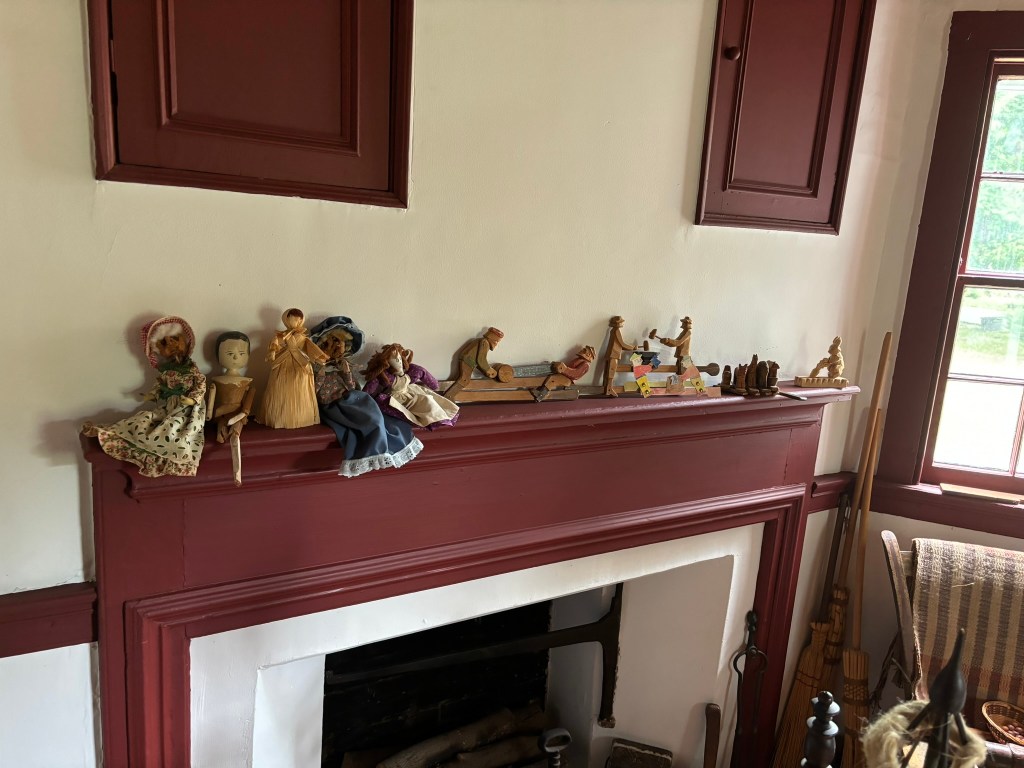
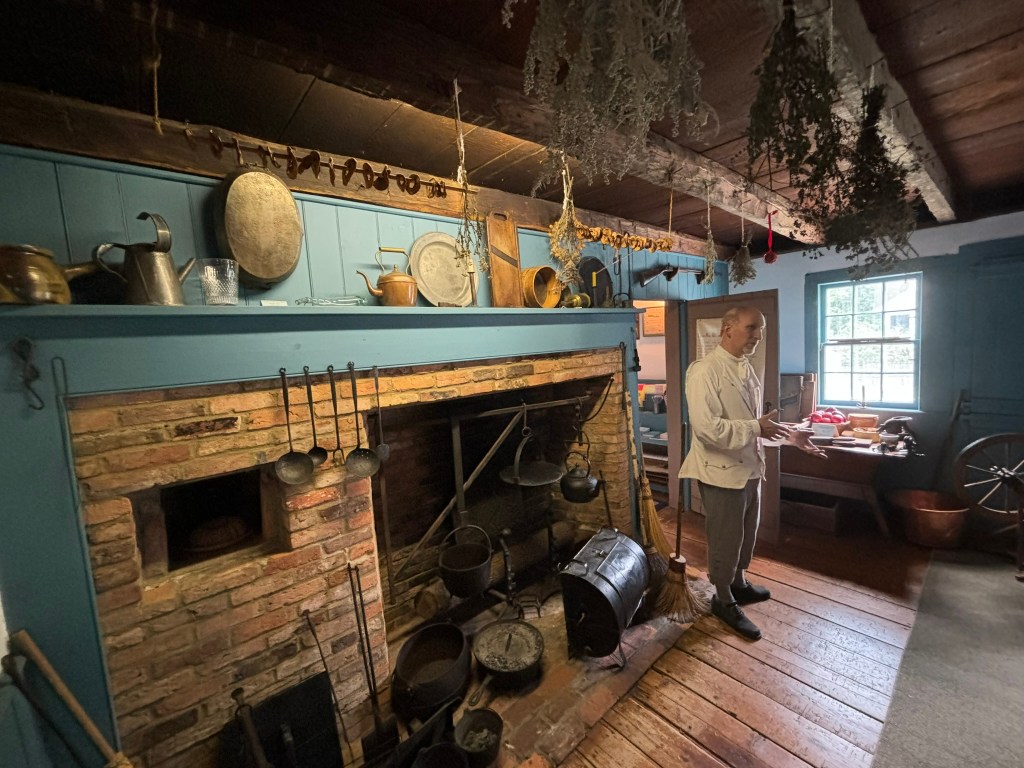
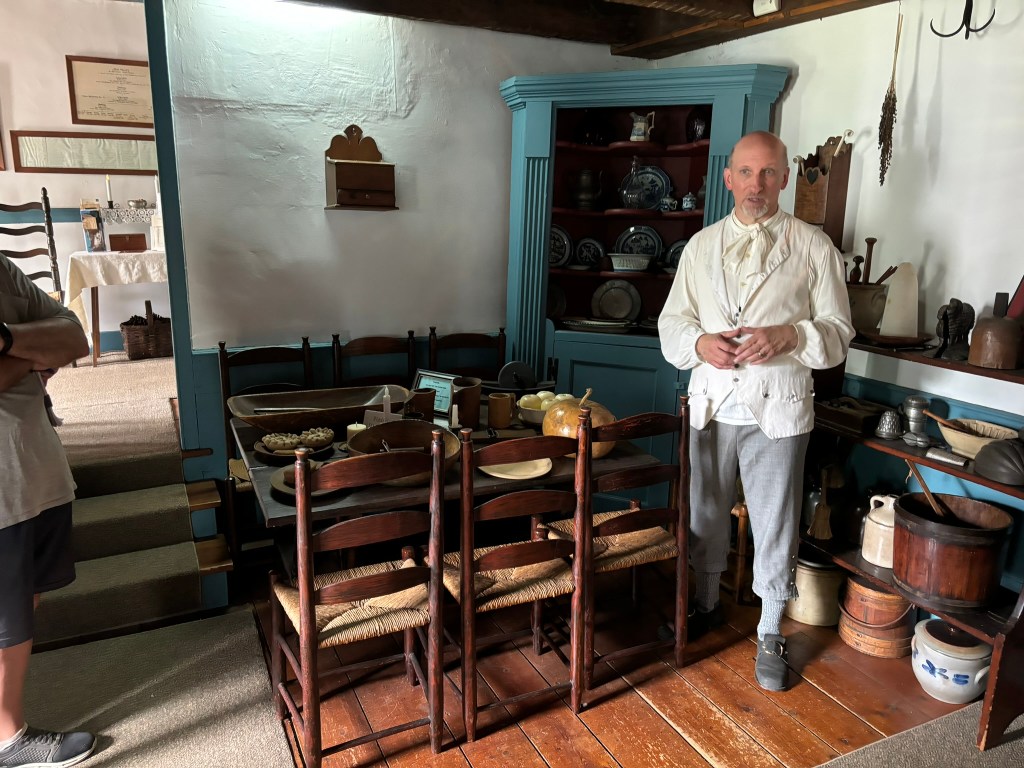
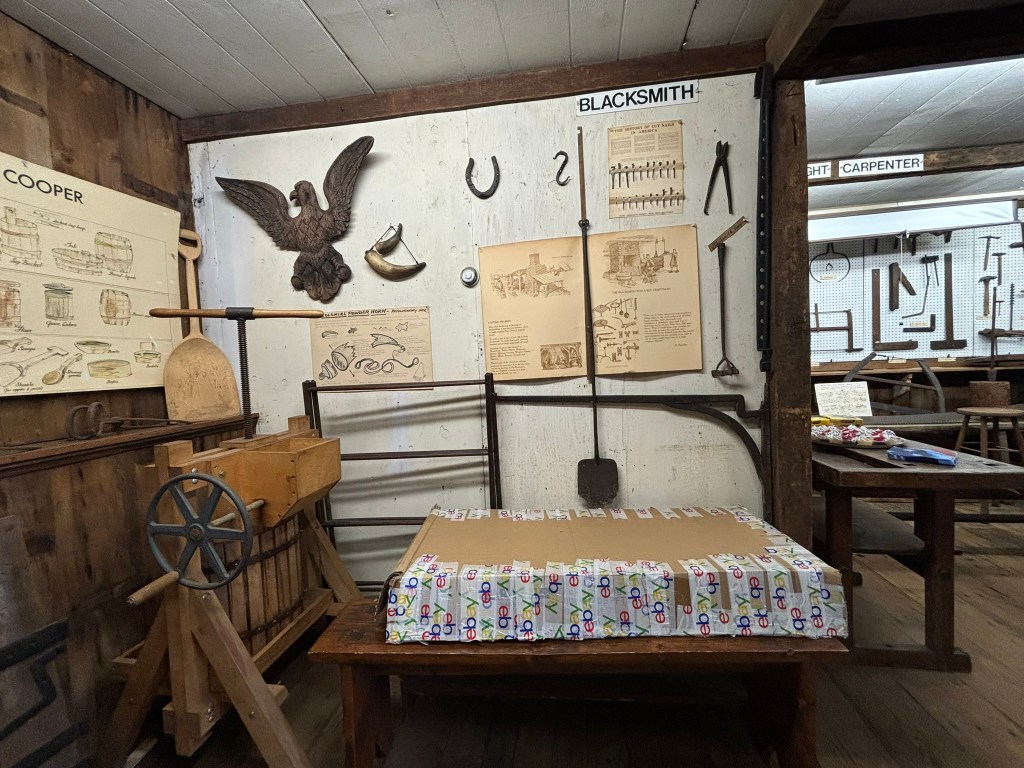
Through Robert, I learned much about the Miller-Cory house, as well as the general area’s role before, during, and after the American Revolution. In 1740, Samuel Miller built the farmhouse and lived there with his wife and children. The property once sat on 110 acres of land. What is now Mountain Ave. in Westfield, which passes by the front of the house, was a Lenni Lenape trail and route along the Washington-Rochambeau Revolutionary Route. The House was sold to Joseph Cory in 1784 and remained in the Cory family until the 1900s. In 1972, the Westfield Historical society raised funds in order to purchase and preserve the house. Through preservation, the house was returned to its earliest, colonial form and was furnished with colonial era artifacts. It currently serves as a living history museum.
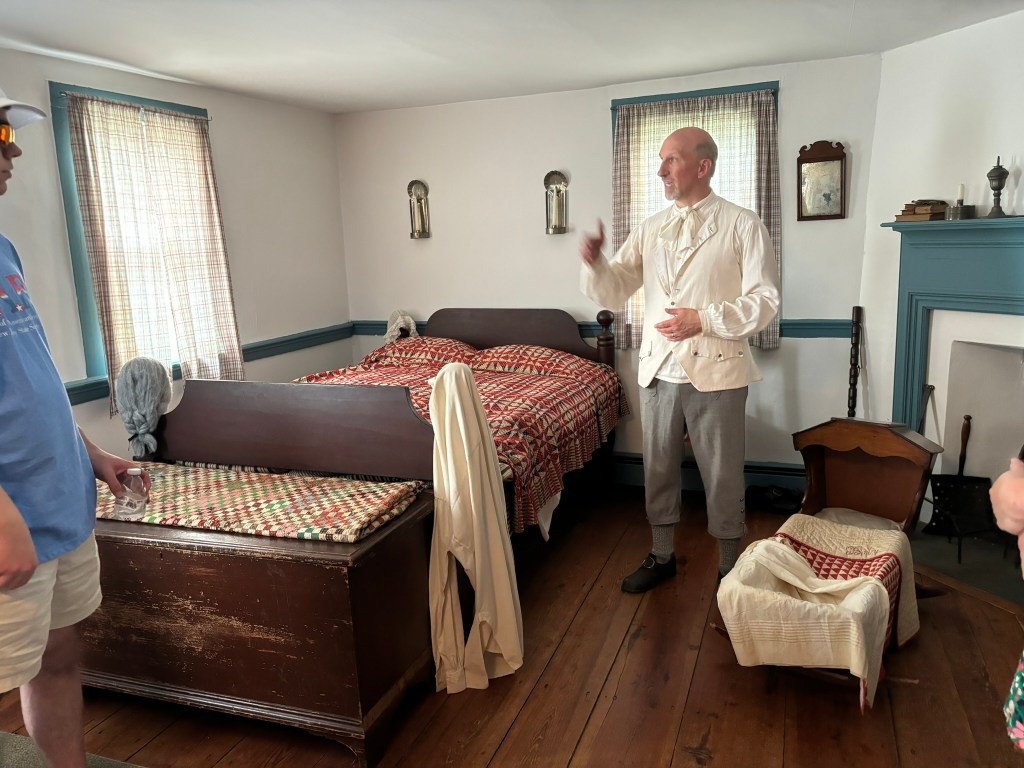
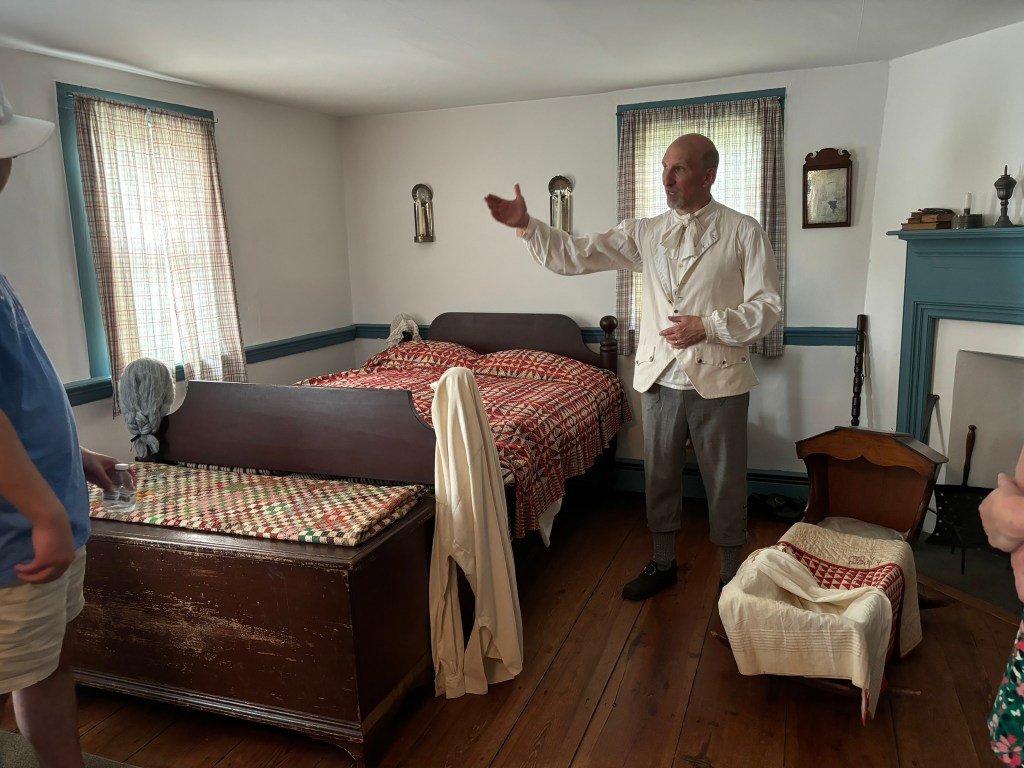
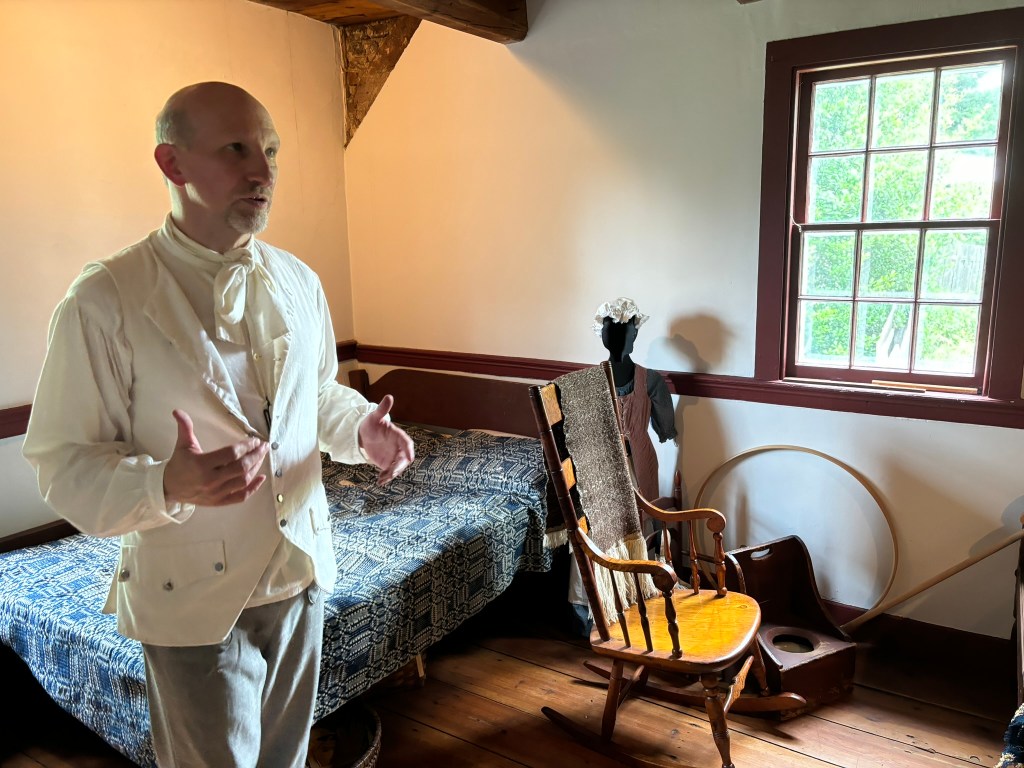
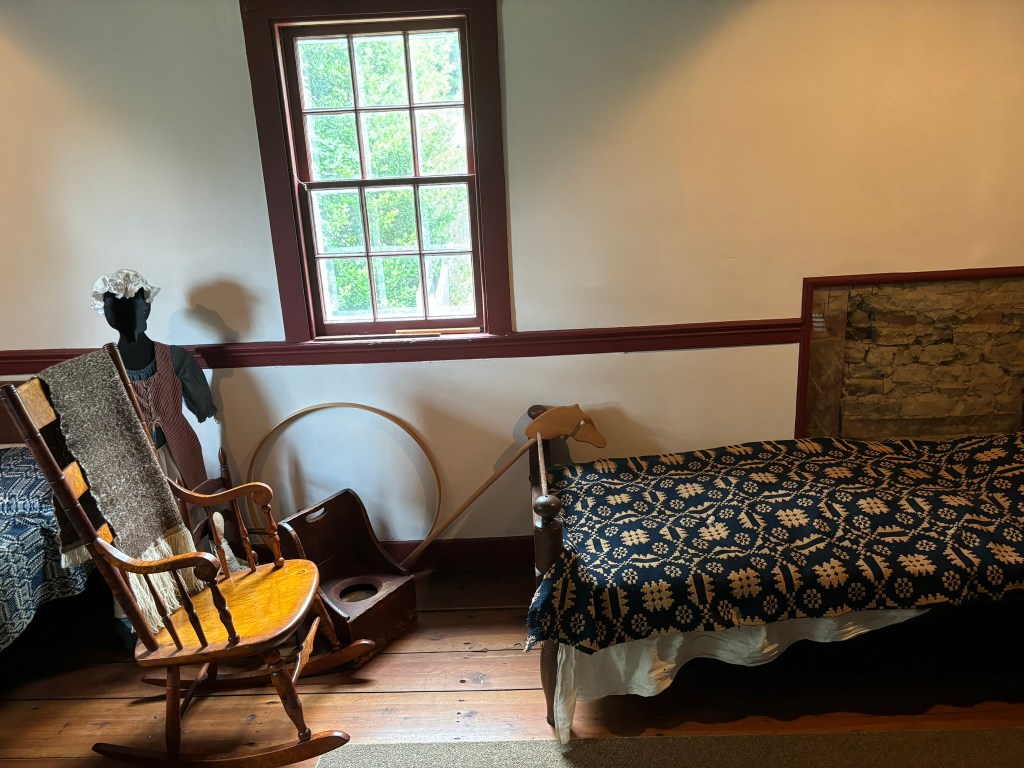
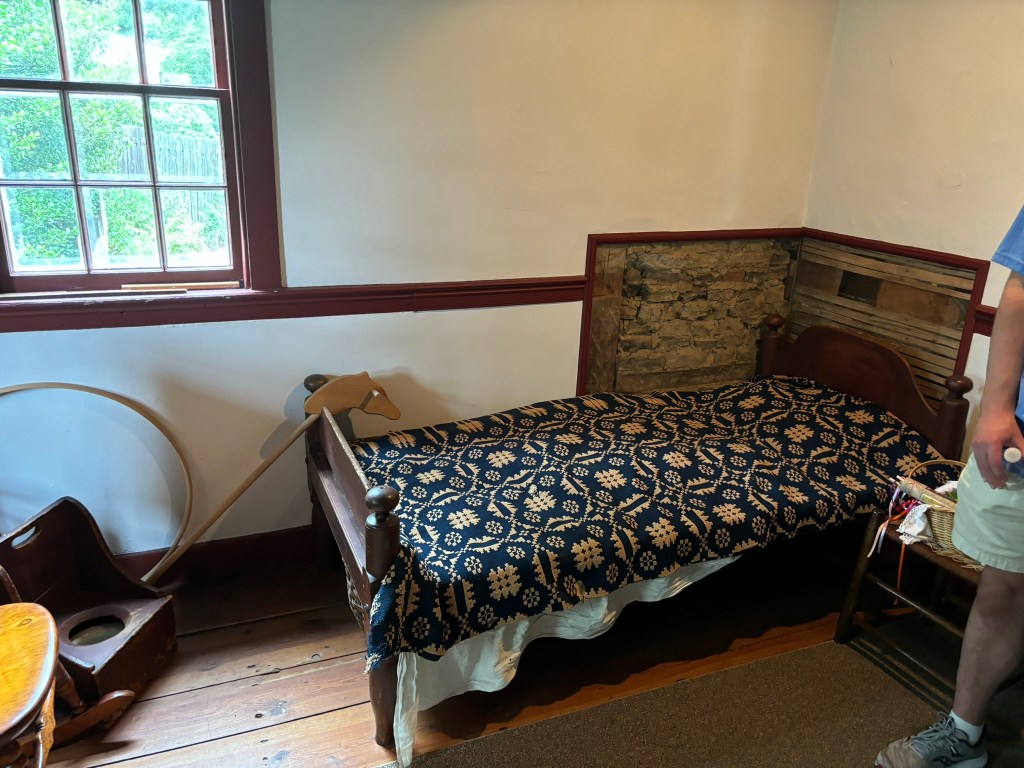
Robert is an expert on the history of the house and was quite knowledgeable of colonial life in the region. The area was once called the West Fields of Elizabeth Town. The land in this region of New Jersey was to be settled and developed by British settlers in the name of King Charles II. Robert took us on a tour of each room in the household, and described for us what life would have been like for those living there in the colonial period. Touring the house was a reminder of the rich colonial history in New Jersey.
As mentioned above, I was then able to meet leaders of the New Jersey Society of the Children of the American Revolution who were kind enough to let me sit in on one of their meetings. I was able to have fascinating conversations with them about their organization and events that they have coming up. Please check out their website here for ways to support and get involved in the organization—> https://sites.google.com/view/njcar/?pli=1
Check out the Washington-Rochambeau Revolutionary Route site for events and ways to get involved. Here is the national site—> https://w3r-us.org/
If you live in the area, I encourage you to visit the Miller-Cory house and check out events that they have throughout the year—-> https://millercoryhouse.com/
My family and I made it to the Annual Reenactment of the Battle of Monmouth on Saturday, June 15th. The event takes place every year in June on a Saturday and Sunday to commemorate the June 28th, 1778 battle. It was a great Father’s Day Weekend experience. We were quite impressed with the event as this was our second time visiting the battlefield, but the first time attending this event. Of the American Revolution events that I have been to, this event drew the largest crowd and attracted the most reenactors.
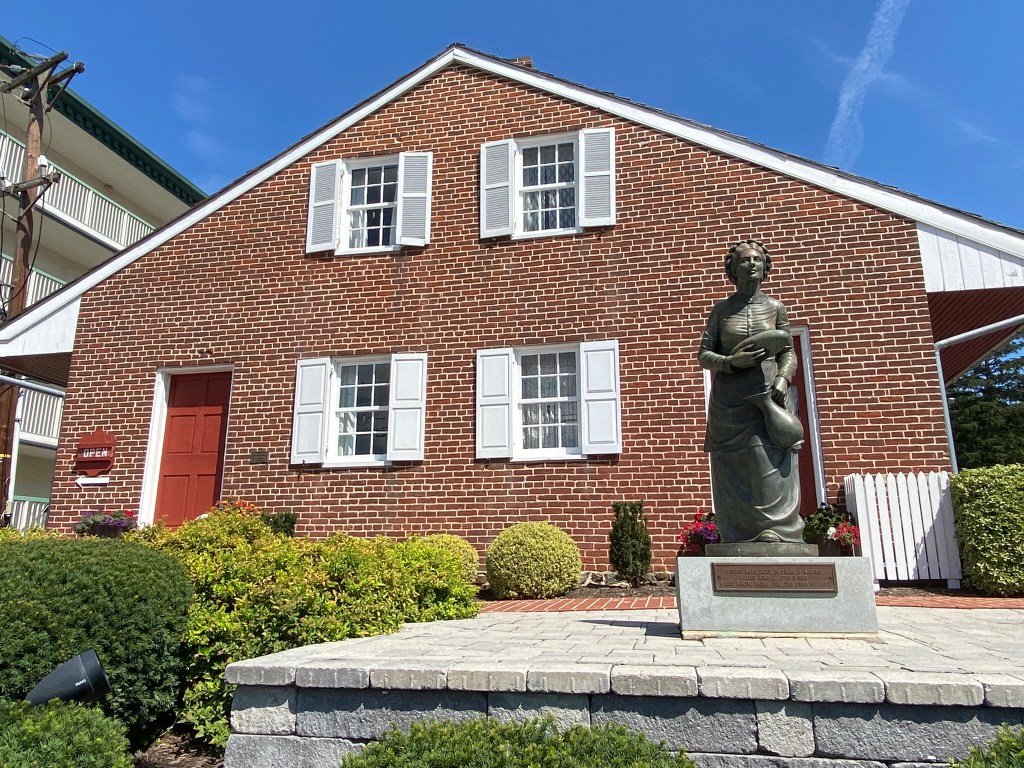
While the Battle of Monmouth did not have much strategic benefit for the Continentals, it was a large battle in terms of manpower, and showed that the Patriot army could go toe to toe with the British. The battle was the largest artillery duel of the war and the Continental Army, led by George Washington, had an opportunity to show their fighting tenacity after a long winter at Valley Forge. At winter camp, the constant drilling from Friedrich Von Steuben, the Prussian drill master, made real soldiers of the Continentals. The benefits of the rigorous drilling were shown on the Monmouth battlefield. The battle is known for temperatures reaching 100 degrees. The night following the battle, the British continued their retreat from Philadelphia to New York (as they had planned), and Washington used this retreat to claim victory for the Patriots. The Battle of Monmouth is also known for the heroics of Molly Pitcher who is commemorated at the park.
When we arrived at the Monmouth Battlefield, we first noticed the many tents and vendors there from all around the area selling shirts, flags, crafts, antiques, and revolution memorabilia. It is also worth noting that there are food trucks there, which we were unaware of (we grabbed lunch on the way there). We made our way to the many camps and presentations from the reenactors. Men, women, and children were all in camp preparing for battle, cooking meals, doing chores, and passing the time. The reenactors were engaging and knowledgeable of 18th century life. Other demonstrators included camp doctors and surveyors. Fife and drums could be heard throughout the encampments. I was impressed with how extensive the camps were as we stumbled upon Patriot, Loyalist, British, and Hessian camps.
At 2:30pm, the reenactment of the Battle of Monmouth took place. It was quite entertaining and I have never seen anything like that before. It was fascinating to imagine what warfare was like in the late 18th century, and you felt like you were a spectator stepping back in time as the troops stood in a line and fired their muskets and cannons. The battle raged for about 30 minutes. After it was over, my family checked out encampments and made our way to the shops where we bought a couple t-shirts.
I really enjoyed my time at the encampment and plan to visit on a more regular basis, especially if it falls on Father’s Day again. The Monmouth battlefield also has an immersive museum that visitors need to see. You can check out the link here about the reenactment. I would highly recommend making it out to the event next year! The event was fun for all ages!
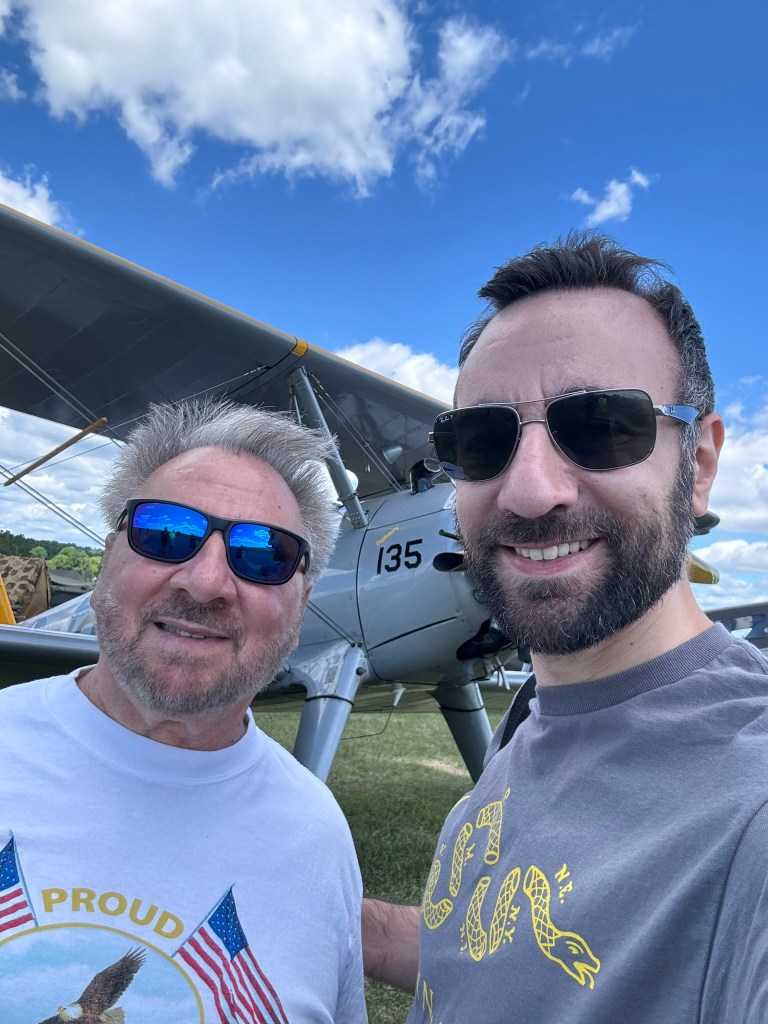
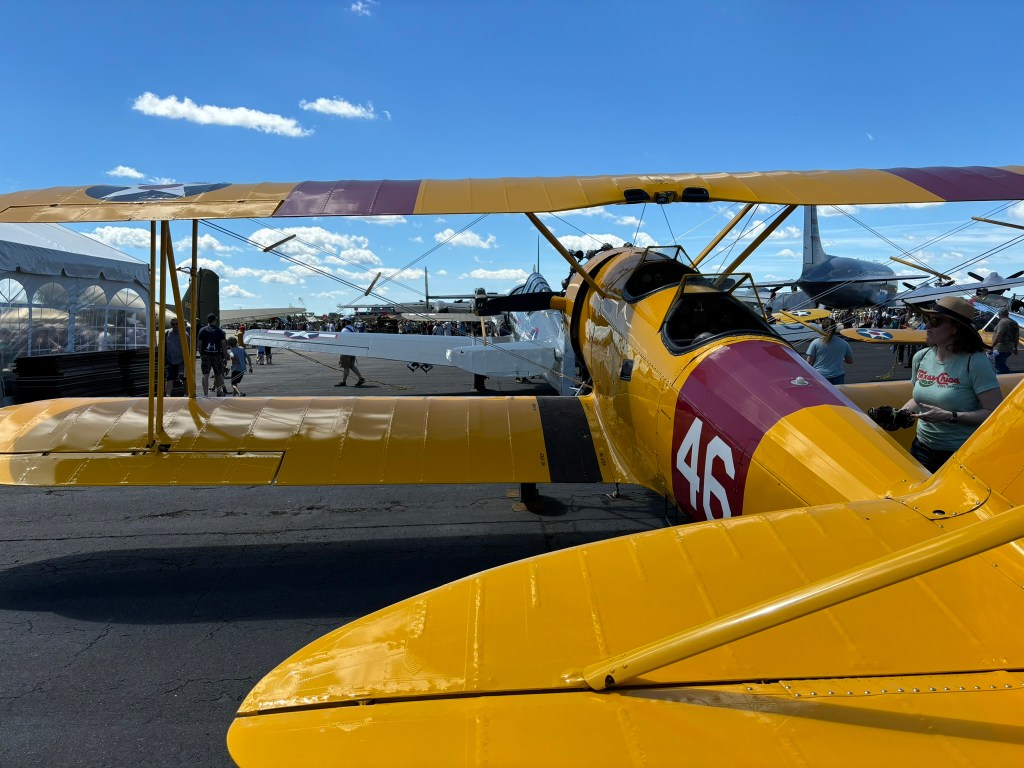
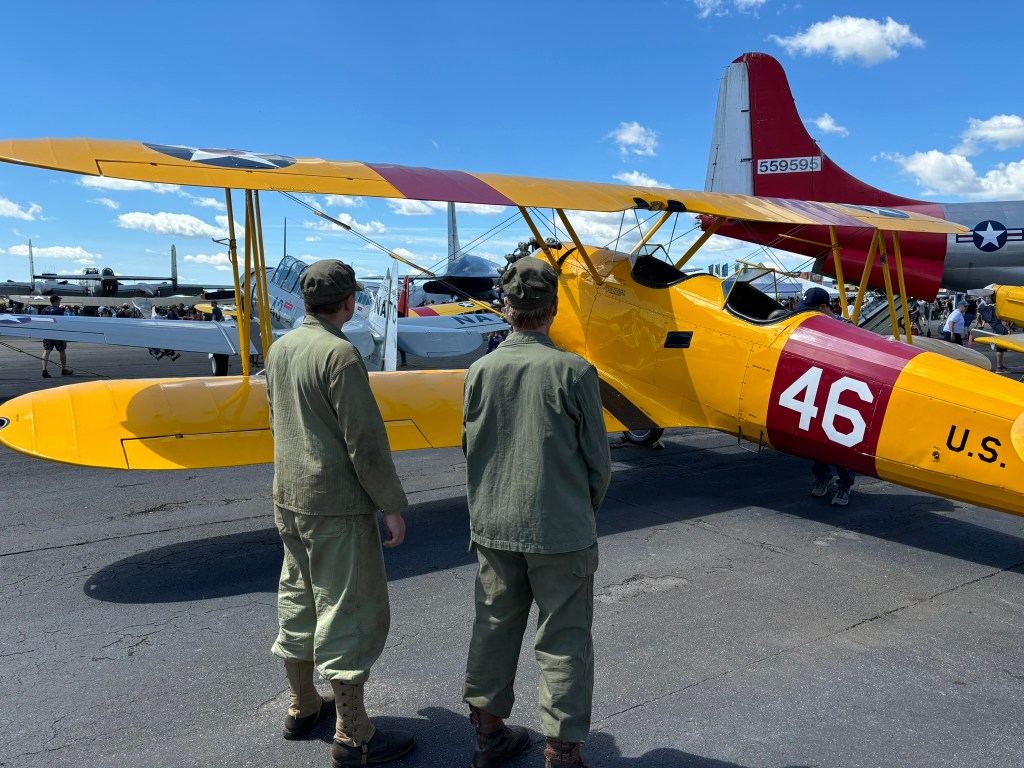
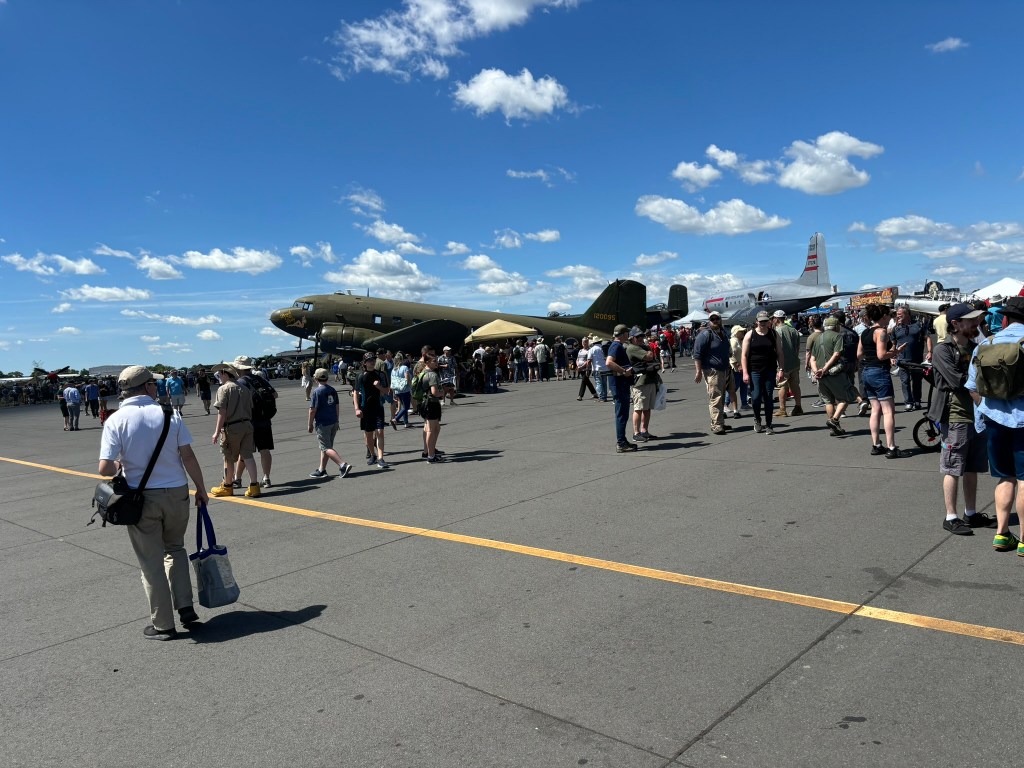
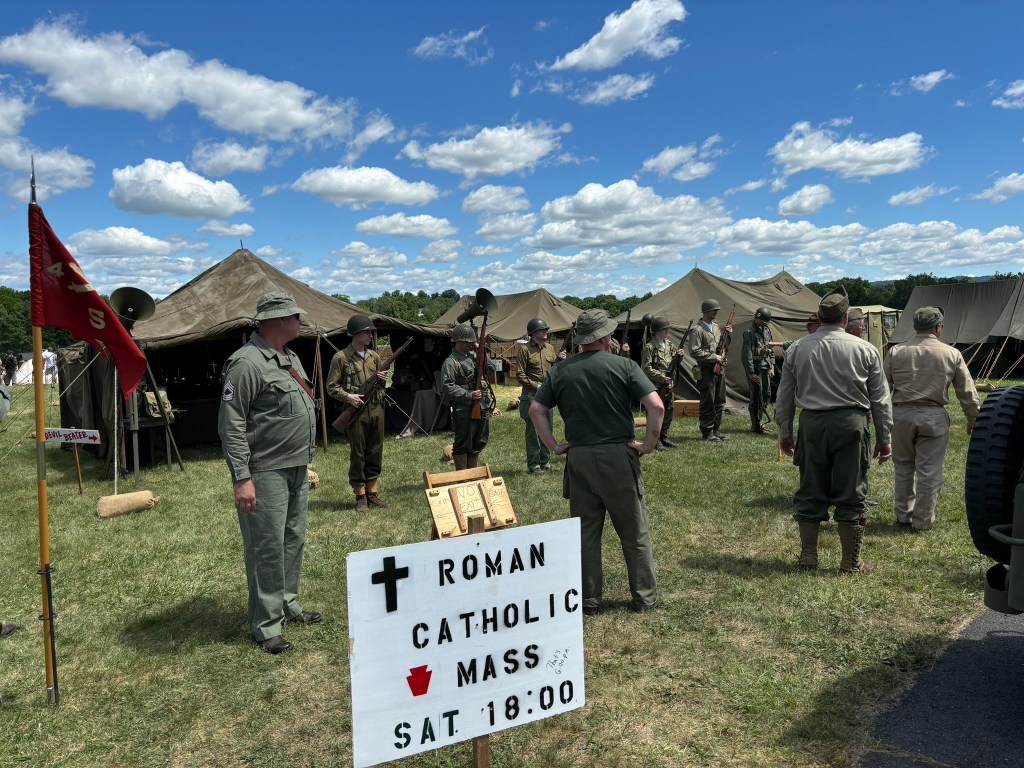
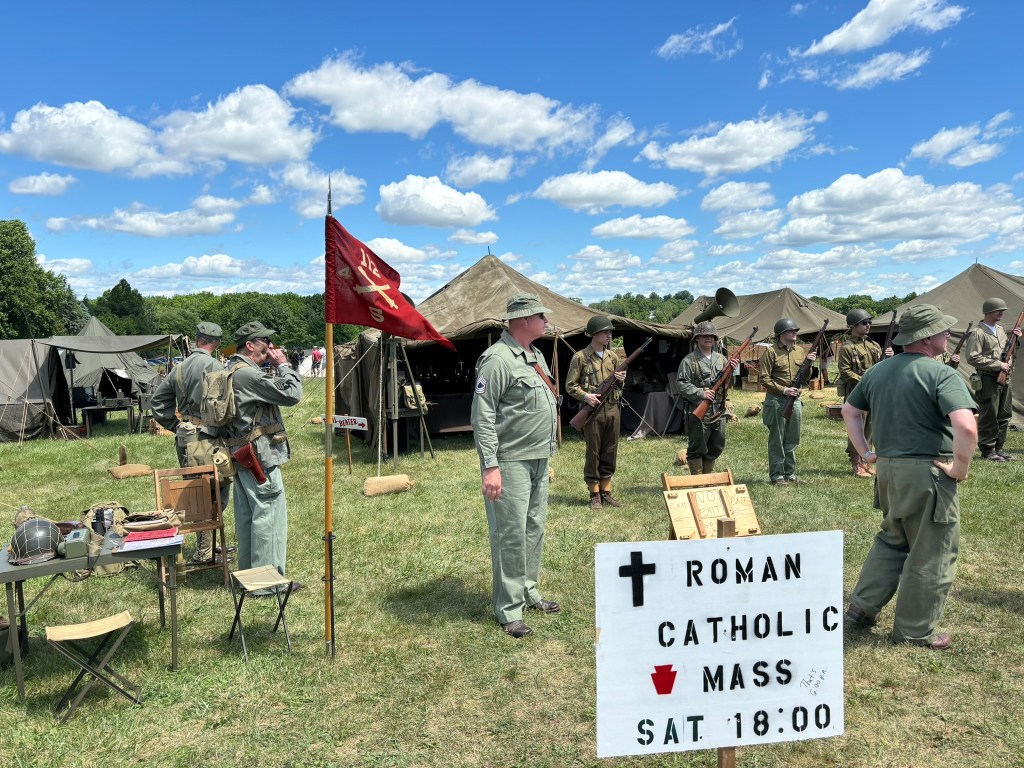
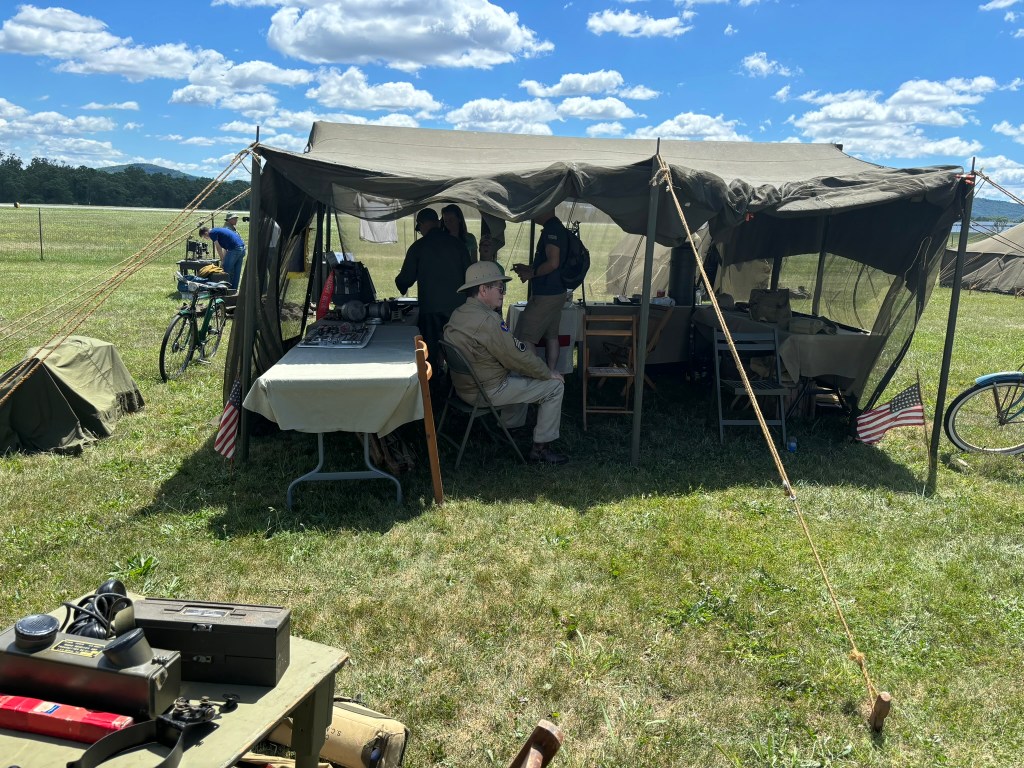
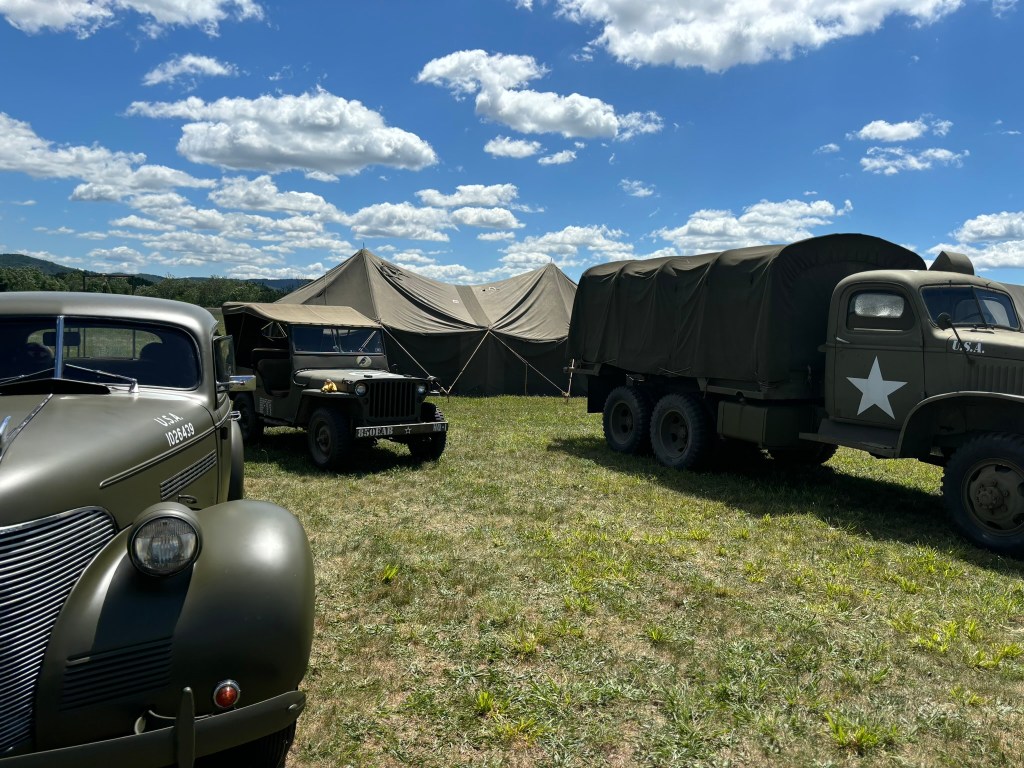
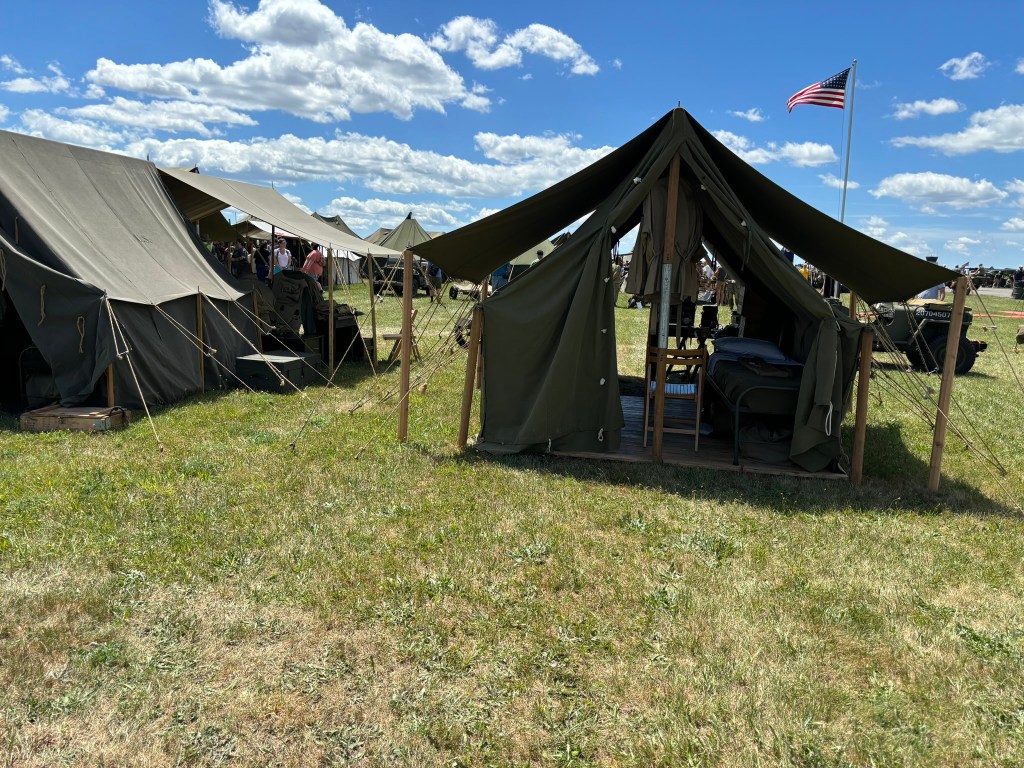
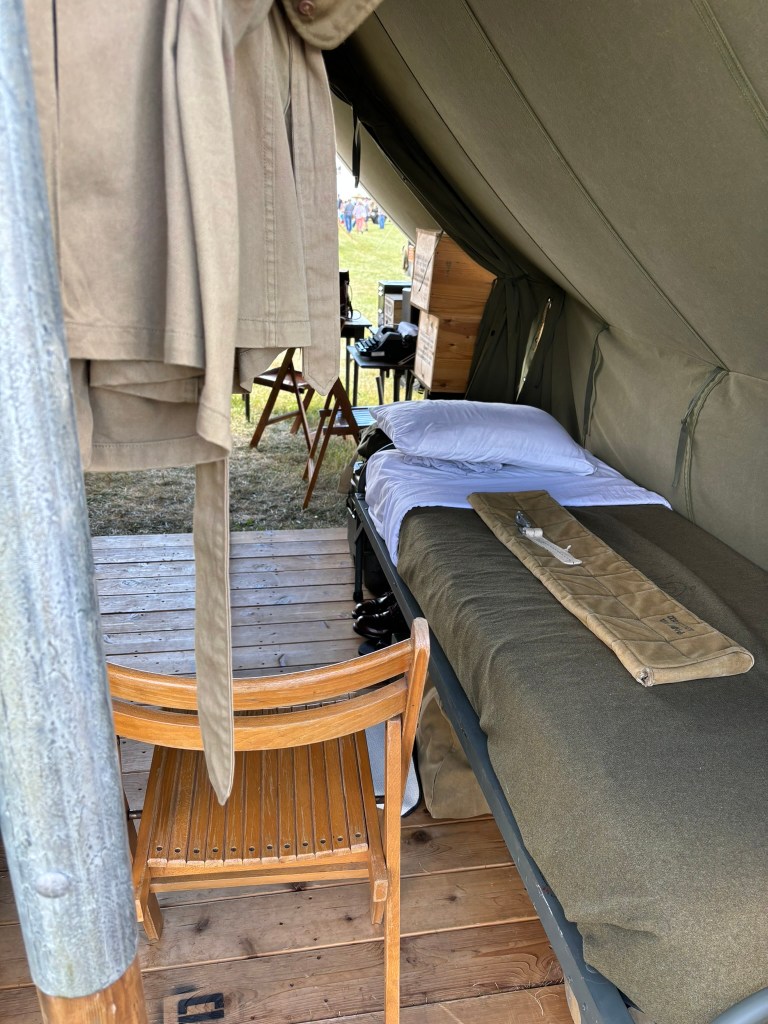
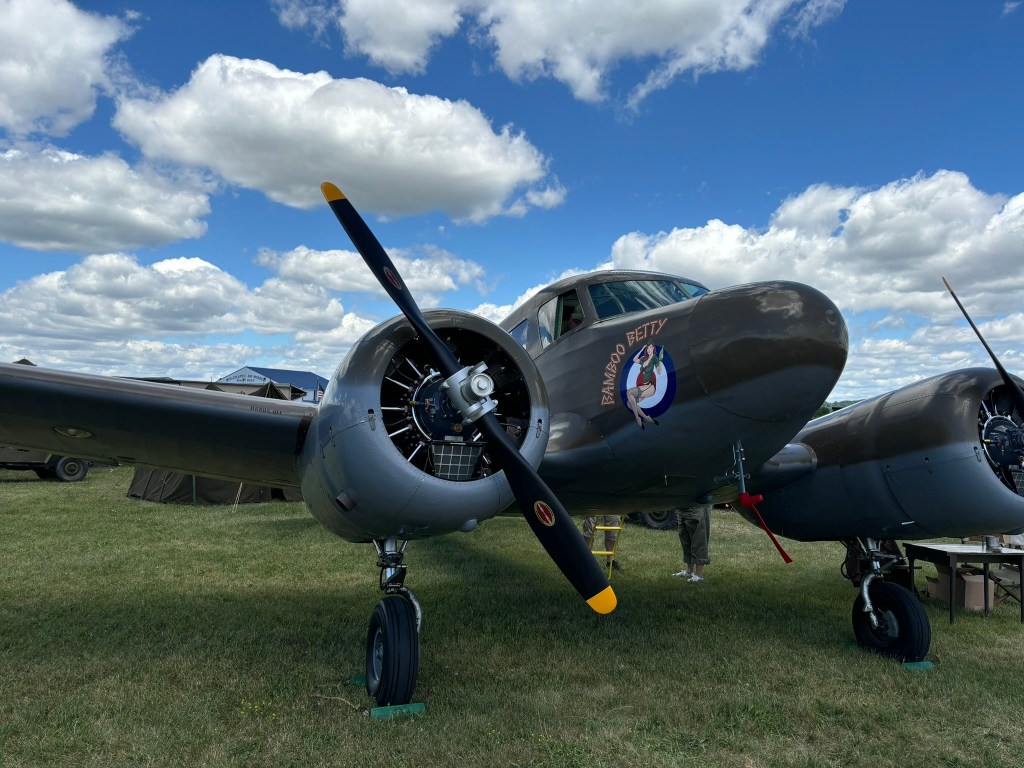
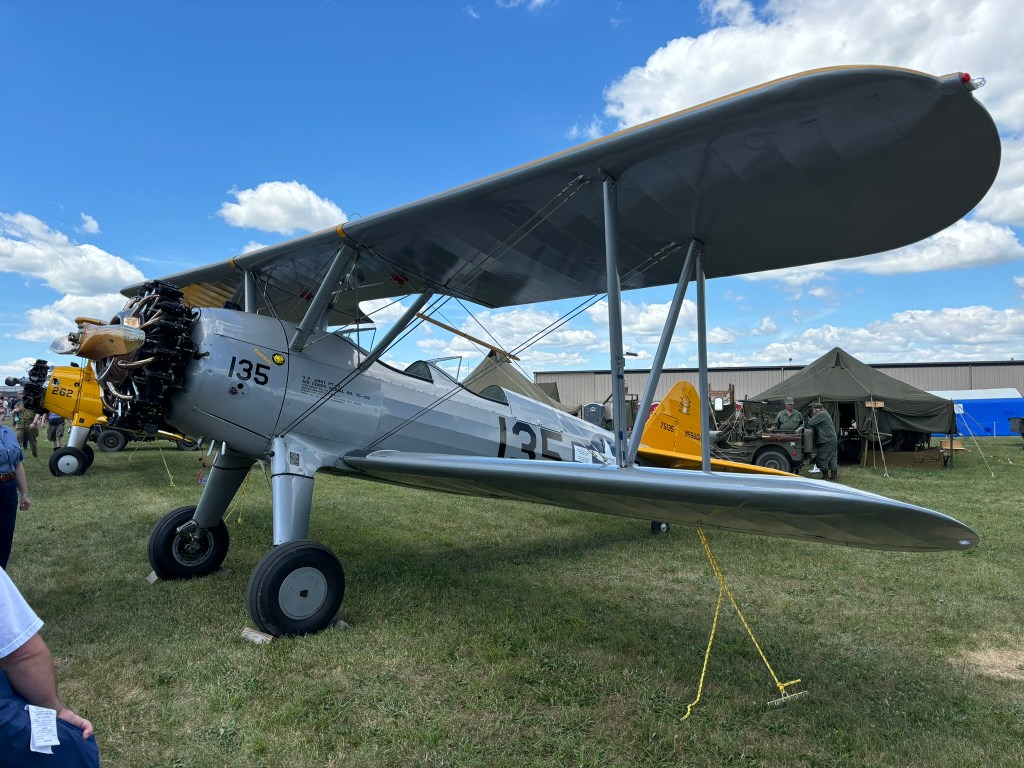
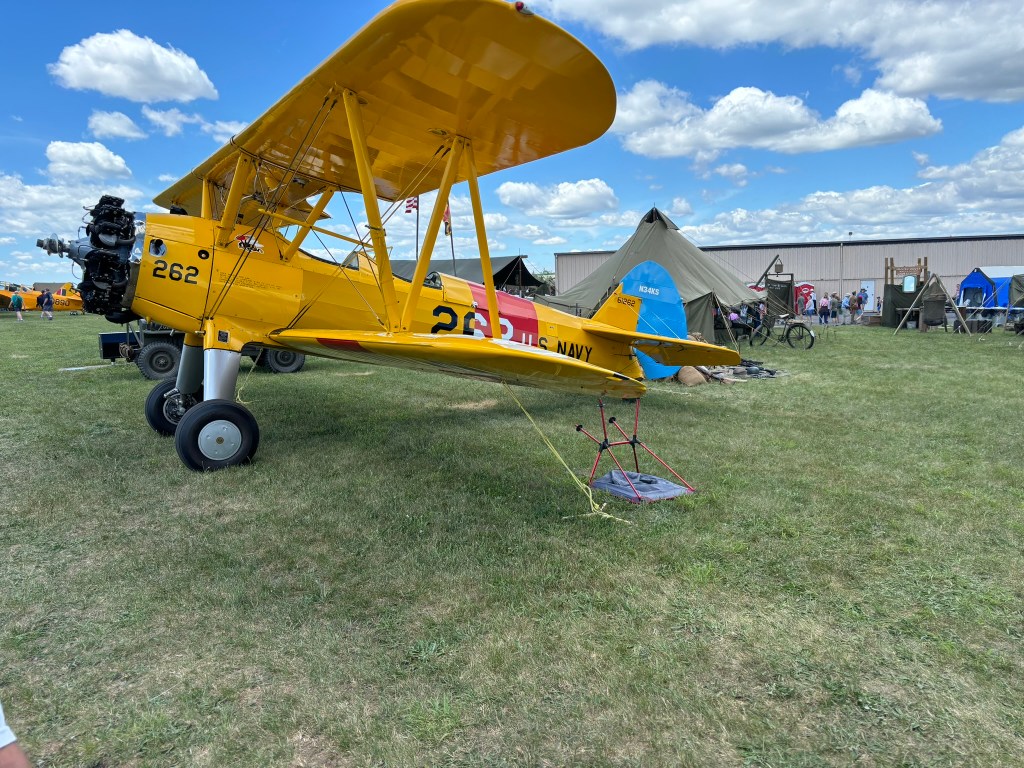
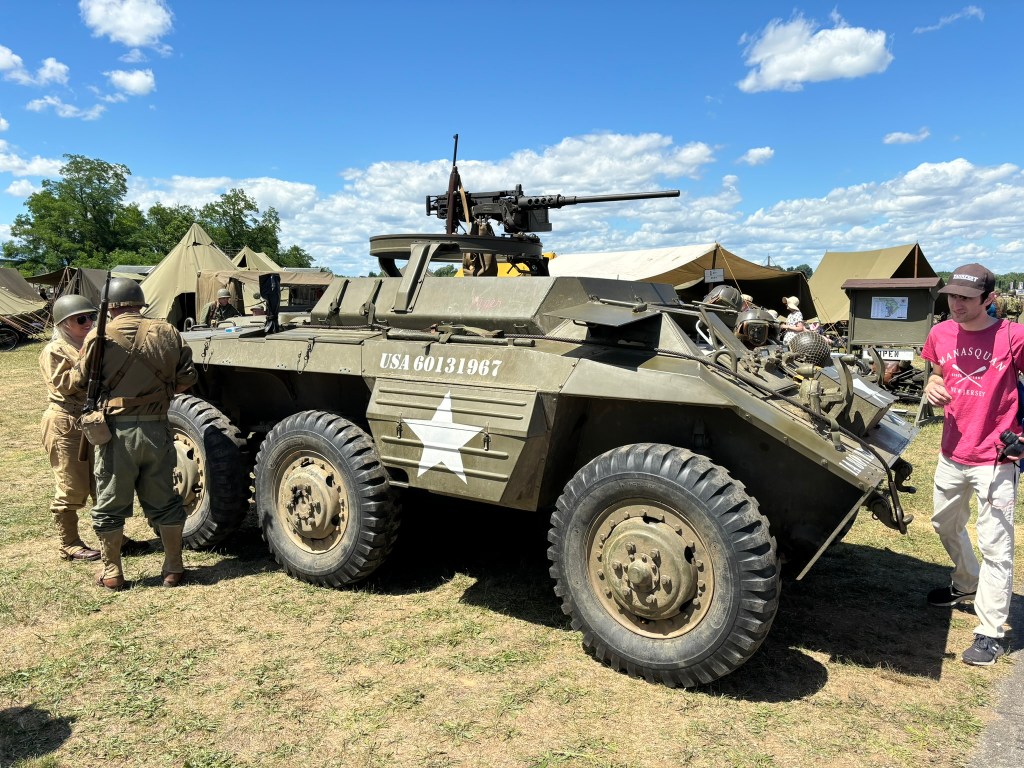
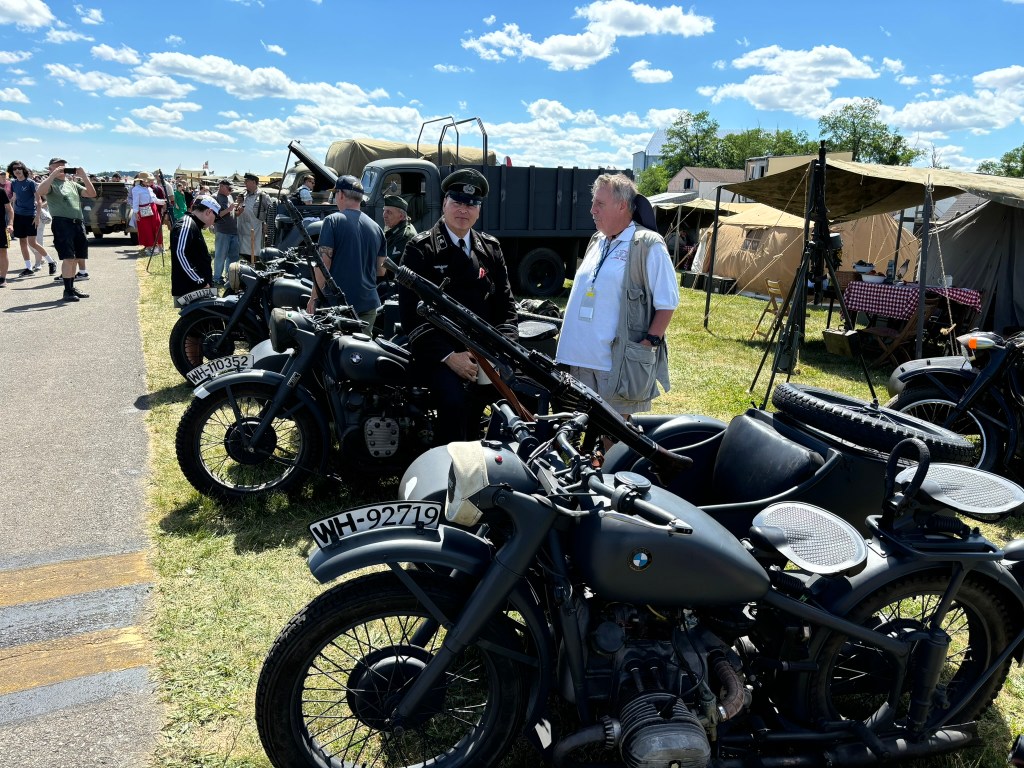
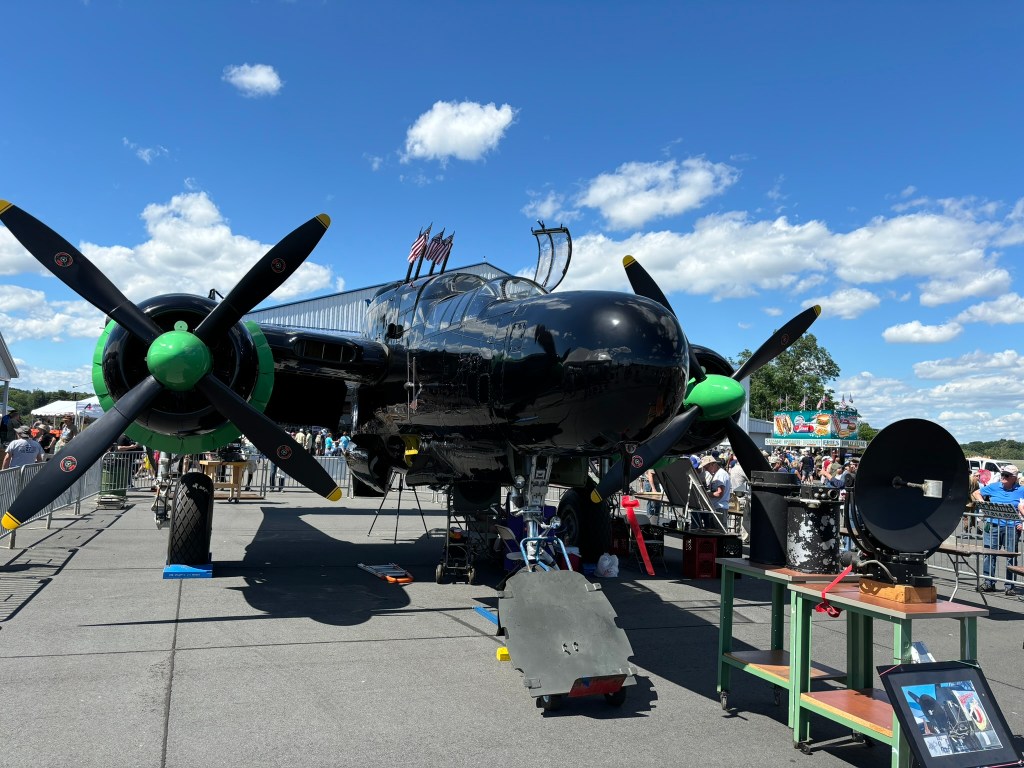
On Saturday, June 8th, my dad and I made it out to the 33rd annual World War II Weekend at the Mid-Atlantic Air Museum in Reading, PA. This was my dad’s fourth year going and this was my second year. Like last year, the event did not disappoint. Last year’s event was the very first event that I ever blogged about on this site, and you can read it here. The event runs Friday, Saturday, and Sunday.
My dad and I made the 2 hour drive and arrived at the parking site at about 10:15am. Right away, we could tell that there were many more people attending this event than last year. It was a beautiful day, and this year celebrated the 80th anniversary of D-Day which drew many people. The lines to catch a shuttle bus to the event were quite long, although they did move pretty quickly. I assume that the organizers of the event didn’t even assume the number of people who would be there. But I have to give them credit for how well organized everything is run there.
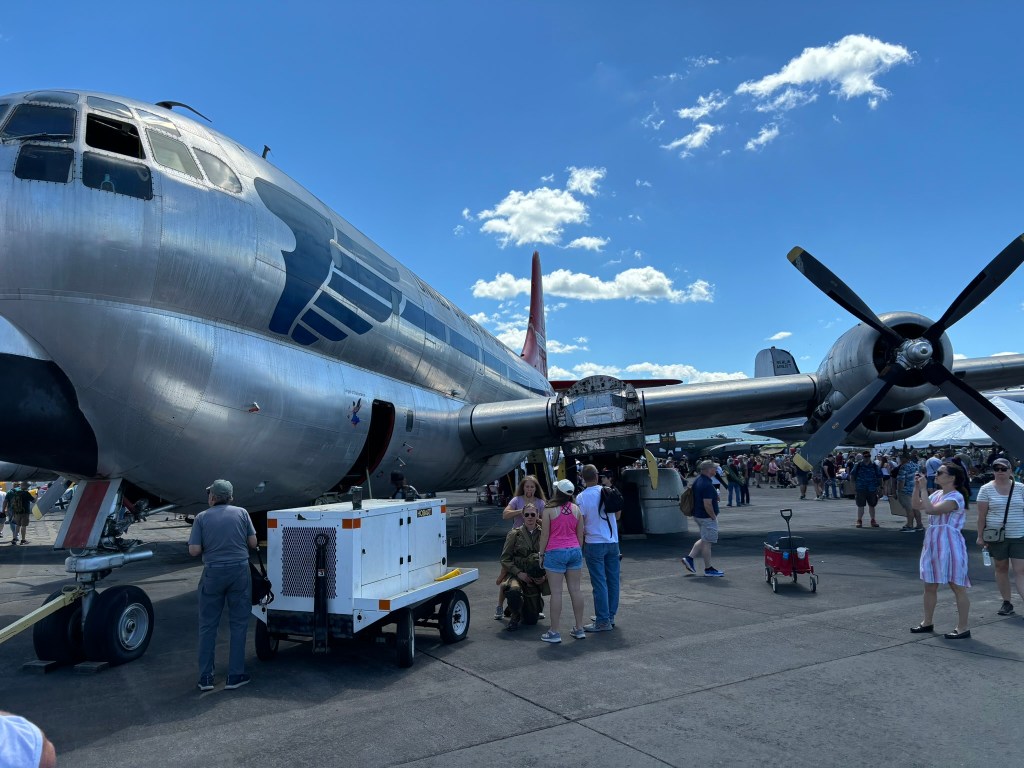
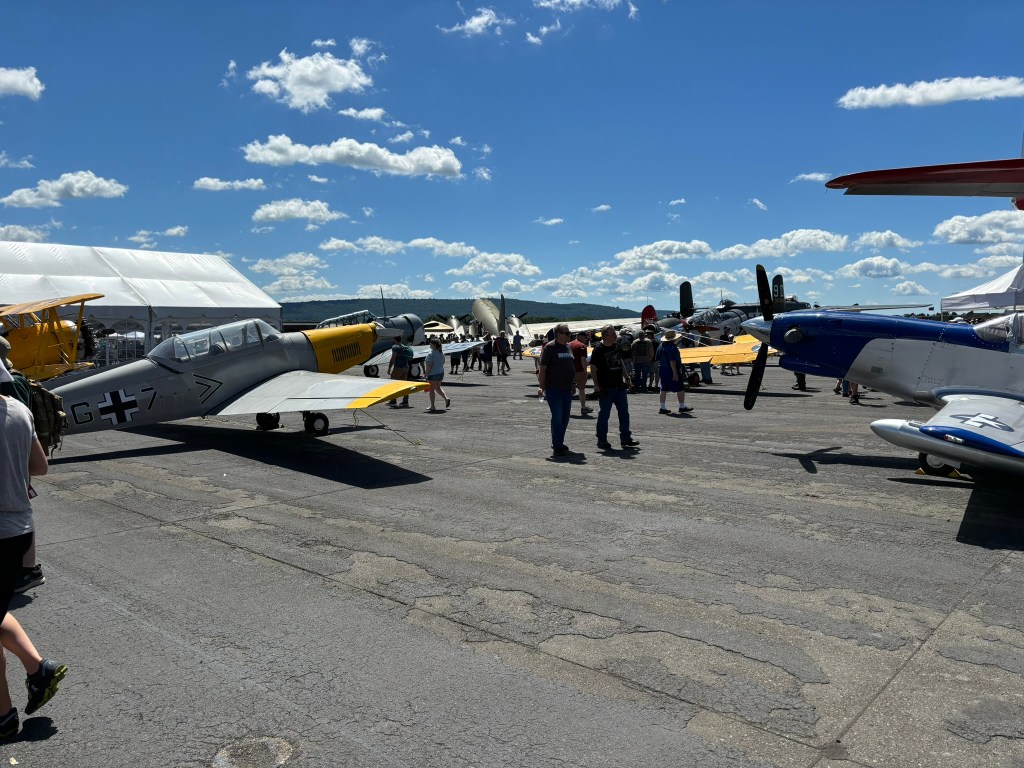
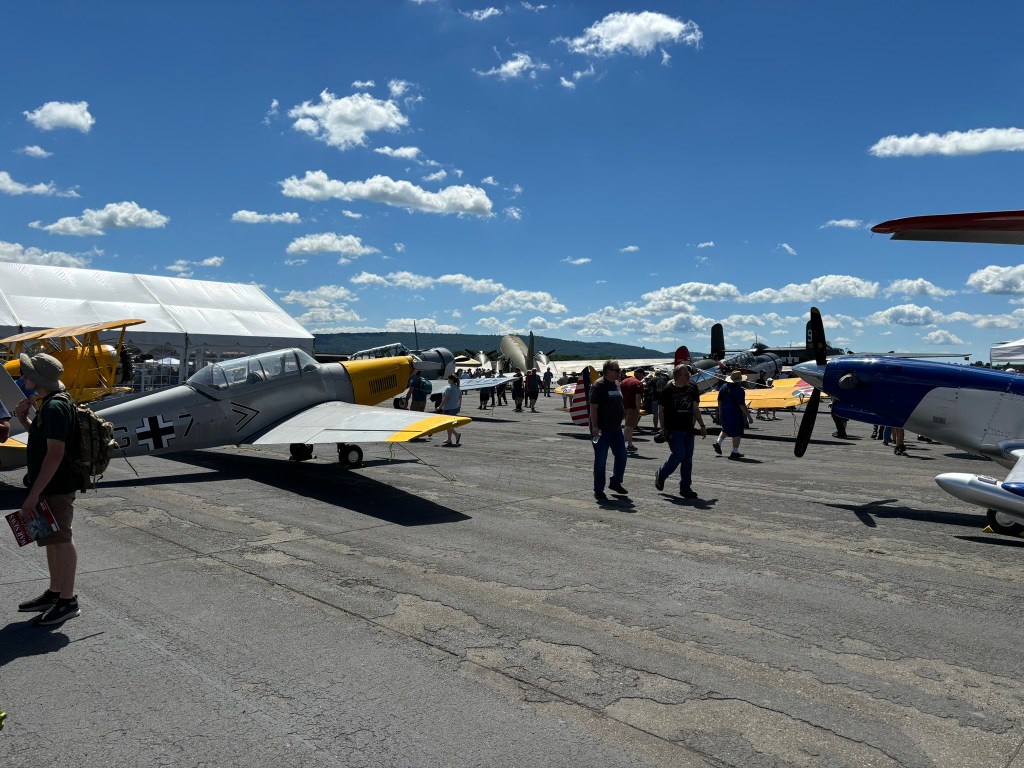
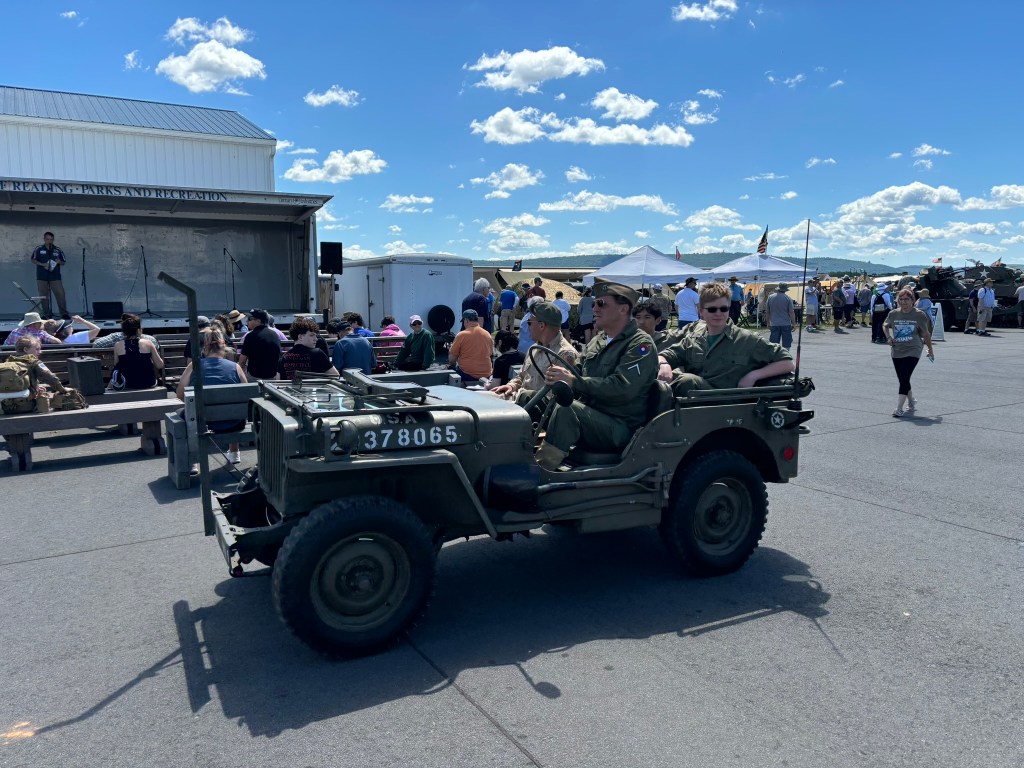
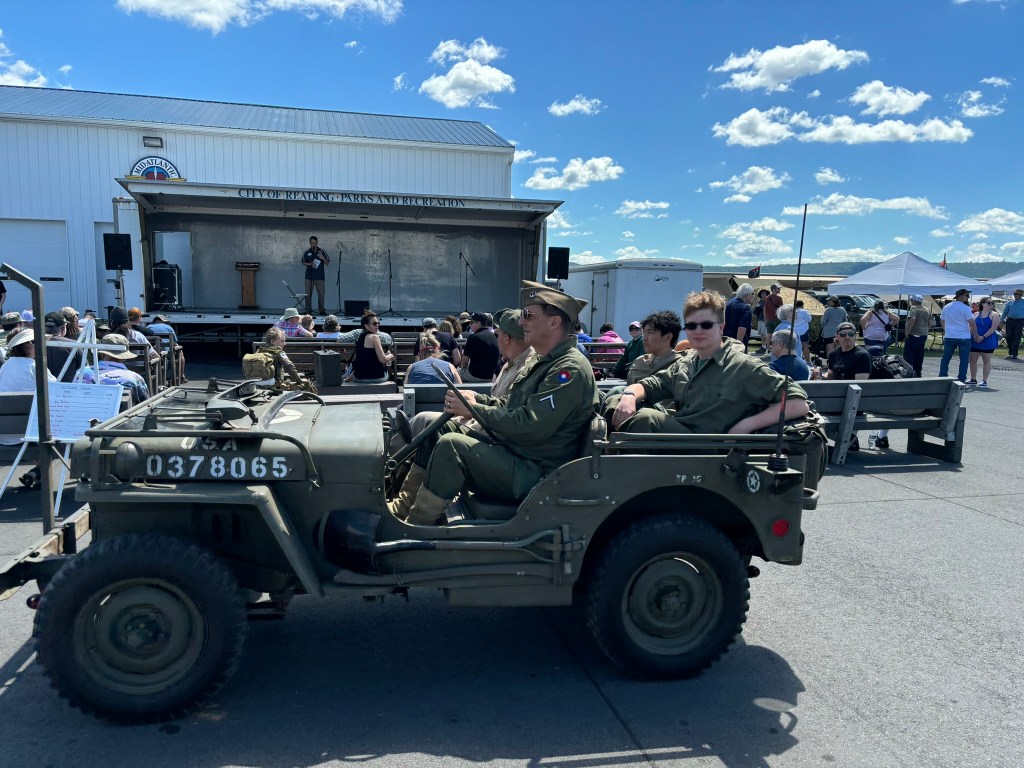
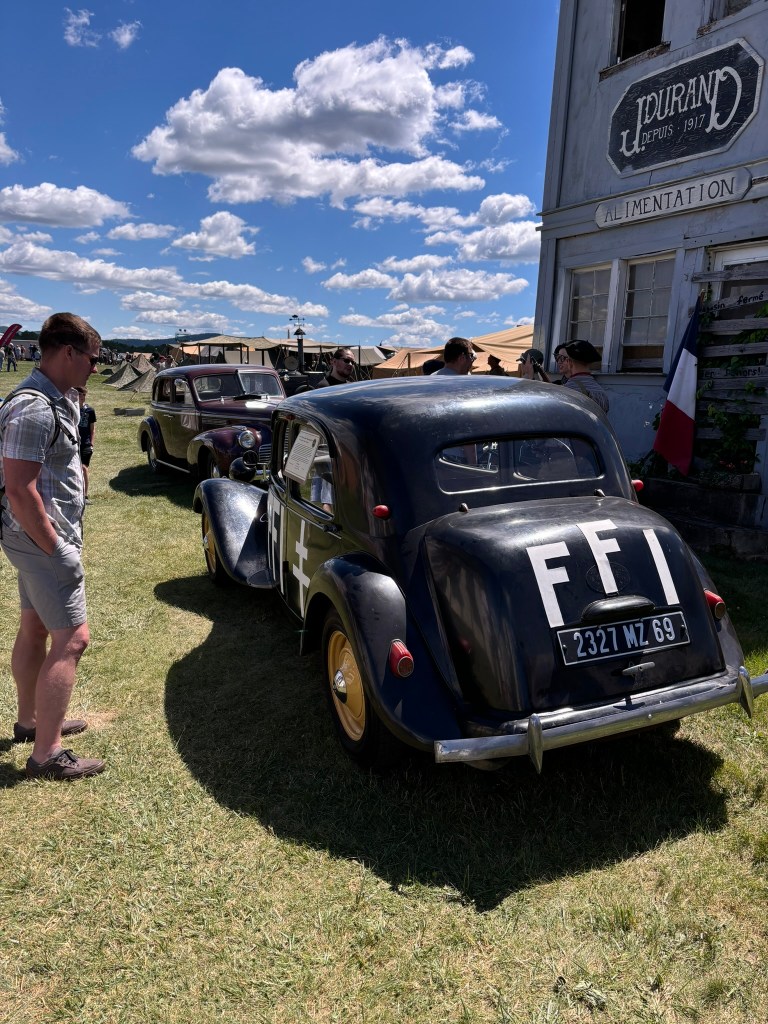
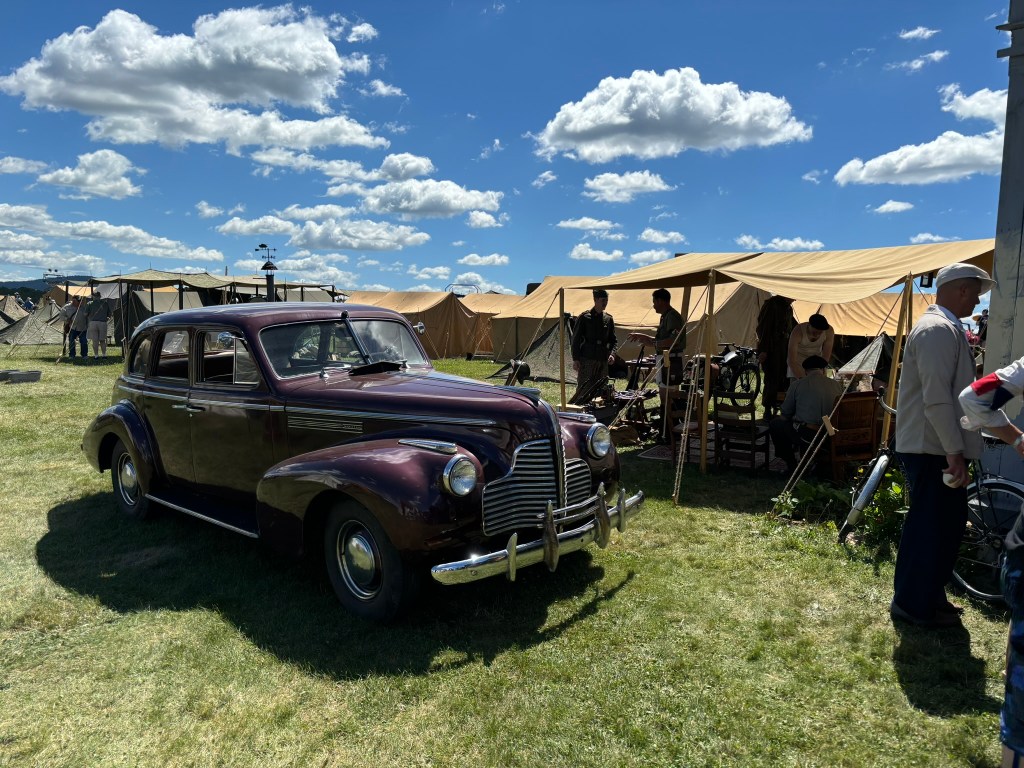
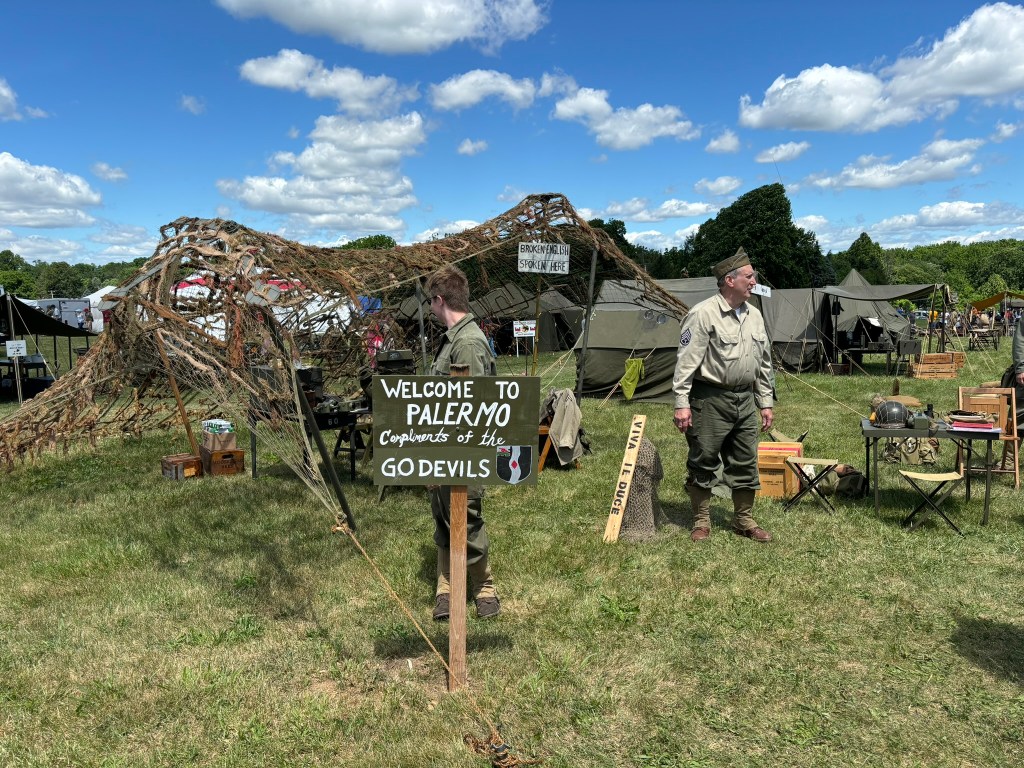
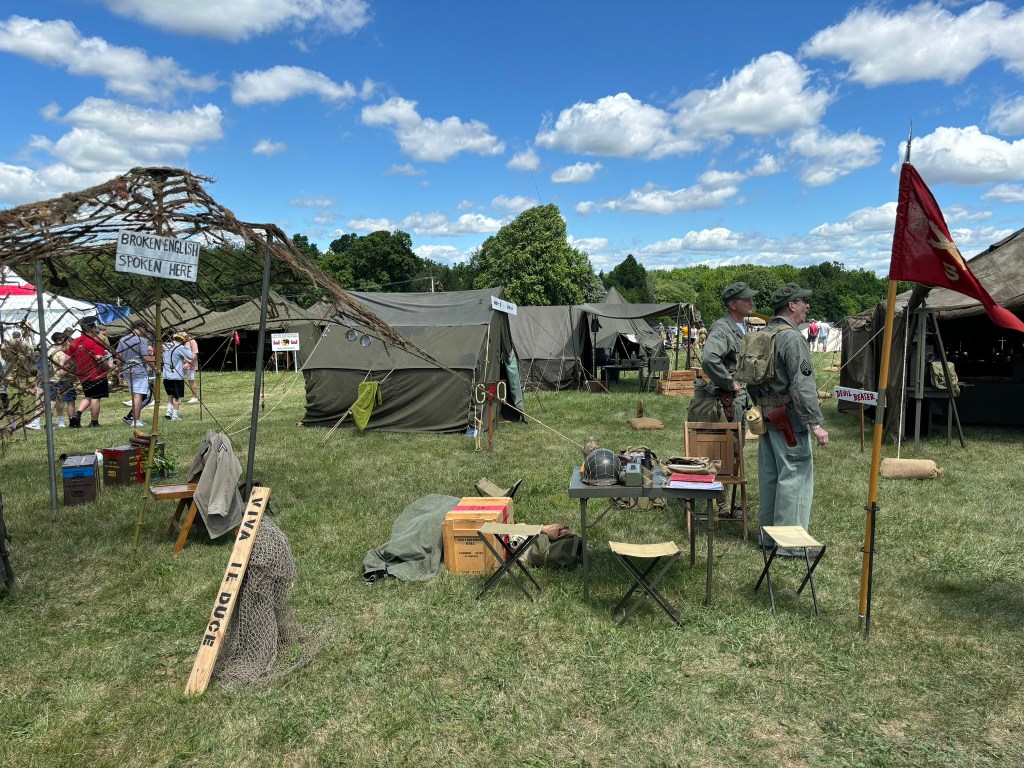
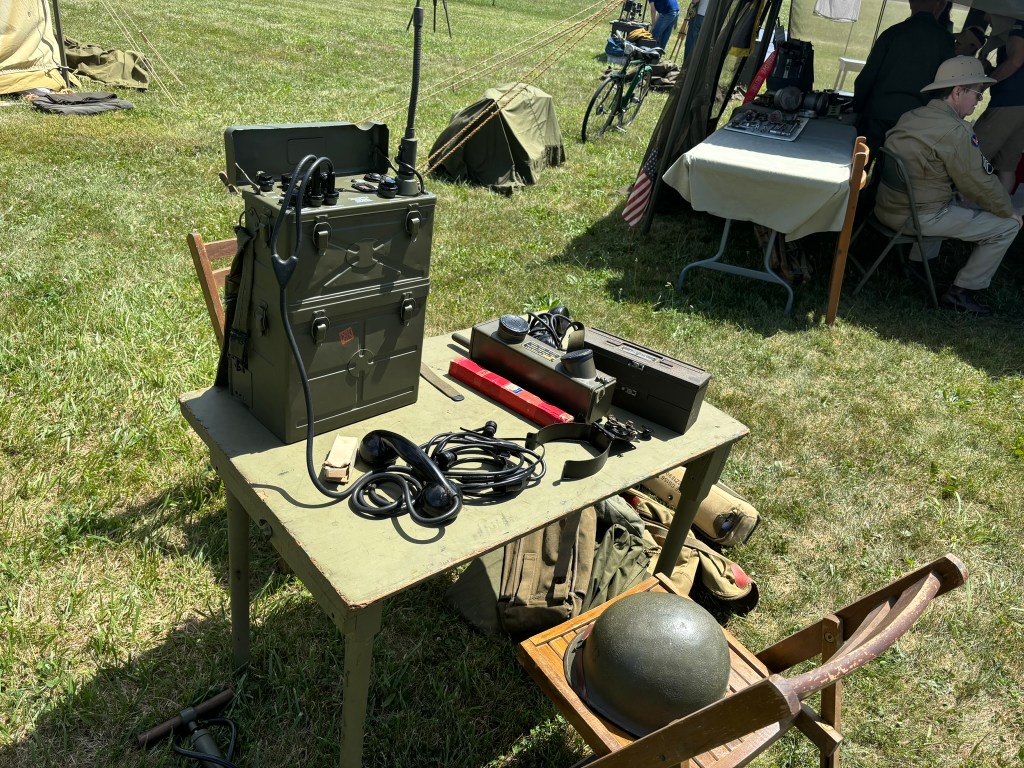
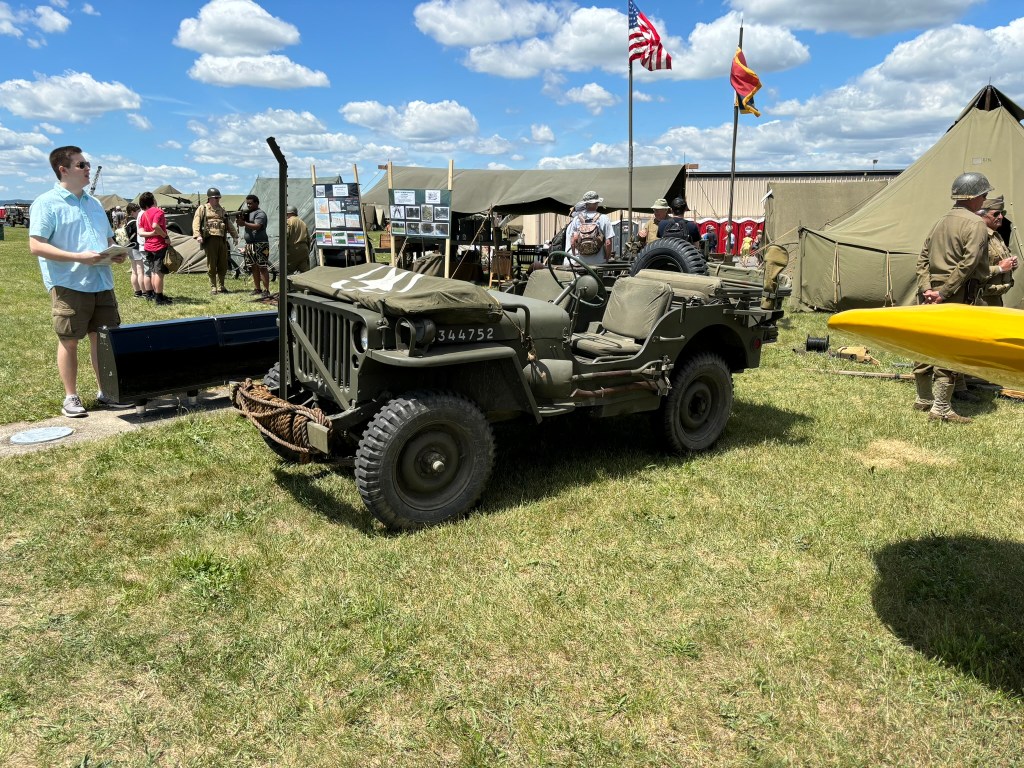
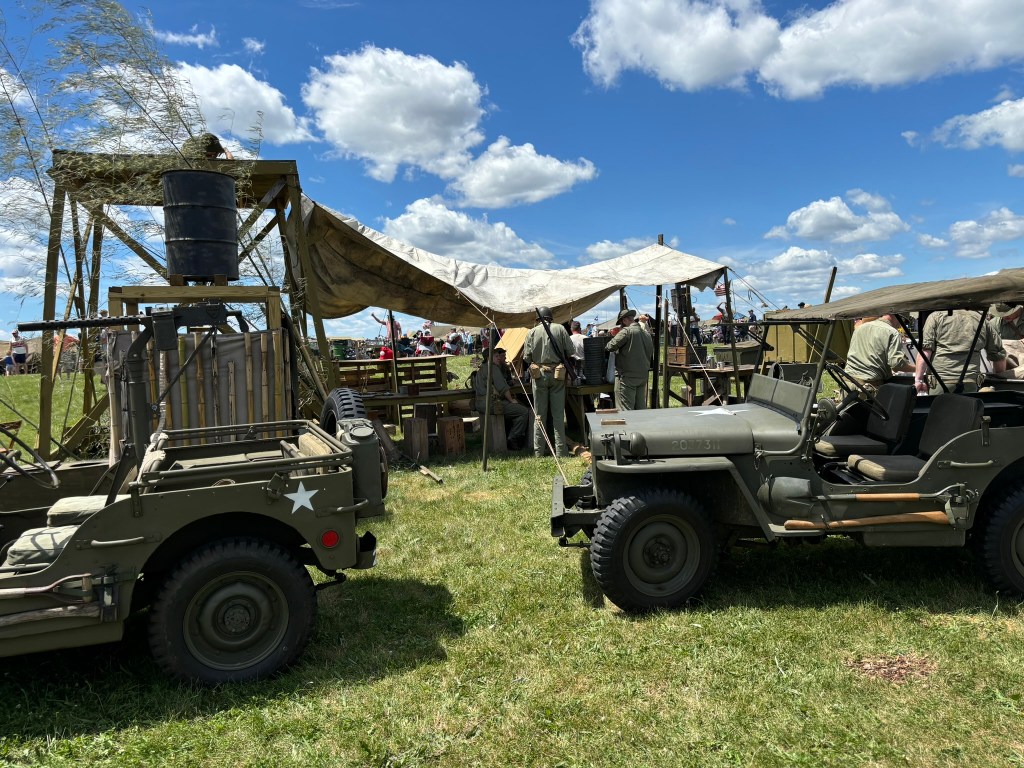
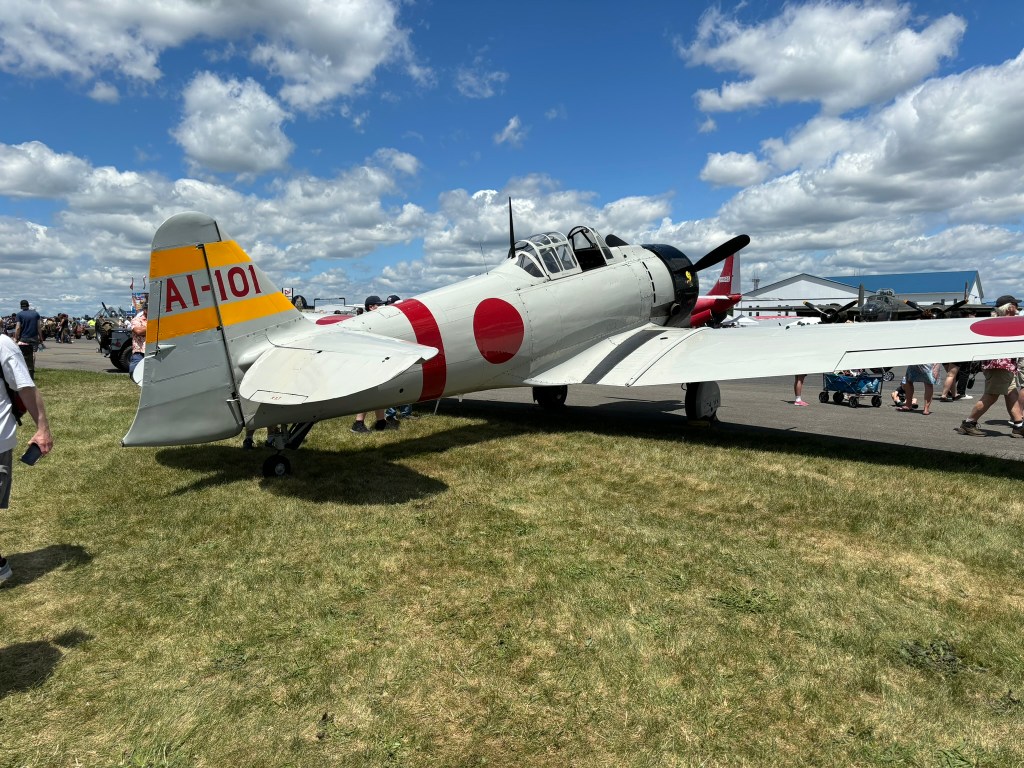
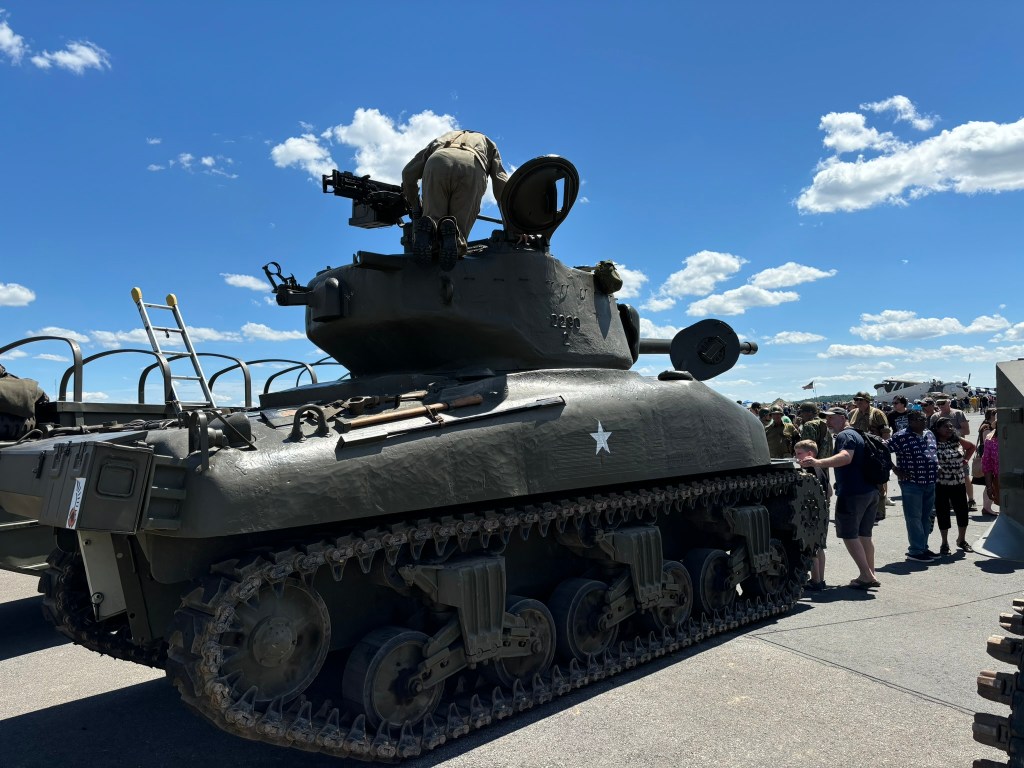
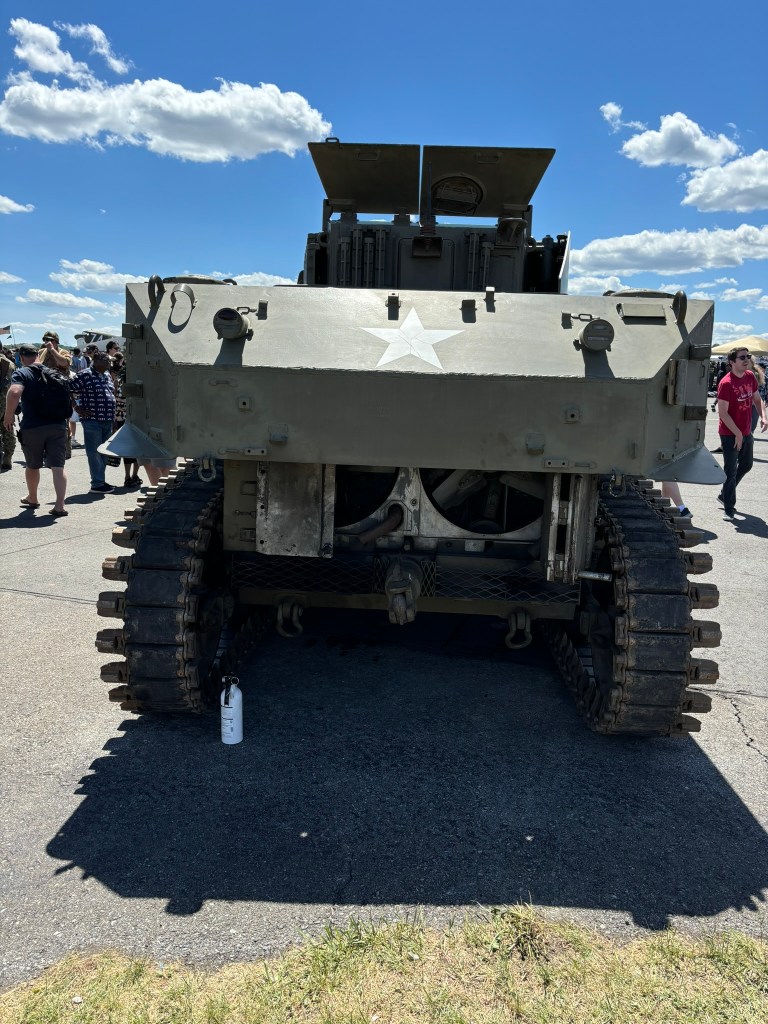
When my dad and I finally made it to the event, we toured the many encampments and checked out all of the WW2 planes. We checked out a small French village, and we viewed WW2 soldiers drilling in line. We saw medics care for two wounded soldiers. We examined the many tanks and army vehicles. The grounds have speakers that play tunes from the 1940s. You truly feel like you’ve stepped into a time machine and are now in a WW2 camp. There are so many reenactors who are in the army camps, and they are very knowledgeable about their subject. One particular re-enactor explained to us how WW2 soldiers used bazookas against enemy tanks. He also explained how jumpers from planes had to safely jump and land holding all of their equipment.
At lunchtime we ate from one of the many food trucks there. Then we started to head over to where the airshow was taking place. We brought lawn chairs and watched the show. It’s quite amazing to watch 80 year old planes still flying and doing tricks. It was a windy day so the parachuters did not jump out of the planes like last year. But it still was an impressive show. Following the air show, we continued to walk the grounds and were immersed in the many WW2 camps, stumbling upon some bagpipers. I love the fact that many people who come to WW2 weekend dress in 1940s attire. Like last year I was amazed at how many people are willing to come out to a historical event, which is a satisfying reminder that so many people out there love history. Everything at the event is so spaced out so that you don’t feel crammed at all.
Finally, in the late afternoon my dad and I decided to leave and there were more long lines to get back on the shuttle bus. The amount of people there just shows how great this event truly is. Anyone in the vicinity of Reading, PA needs to make it to this event! Here is the link to the Mid-Atlantic Air Museum→ https://maam.org/wwii/
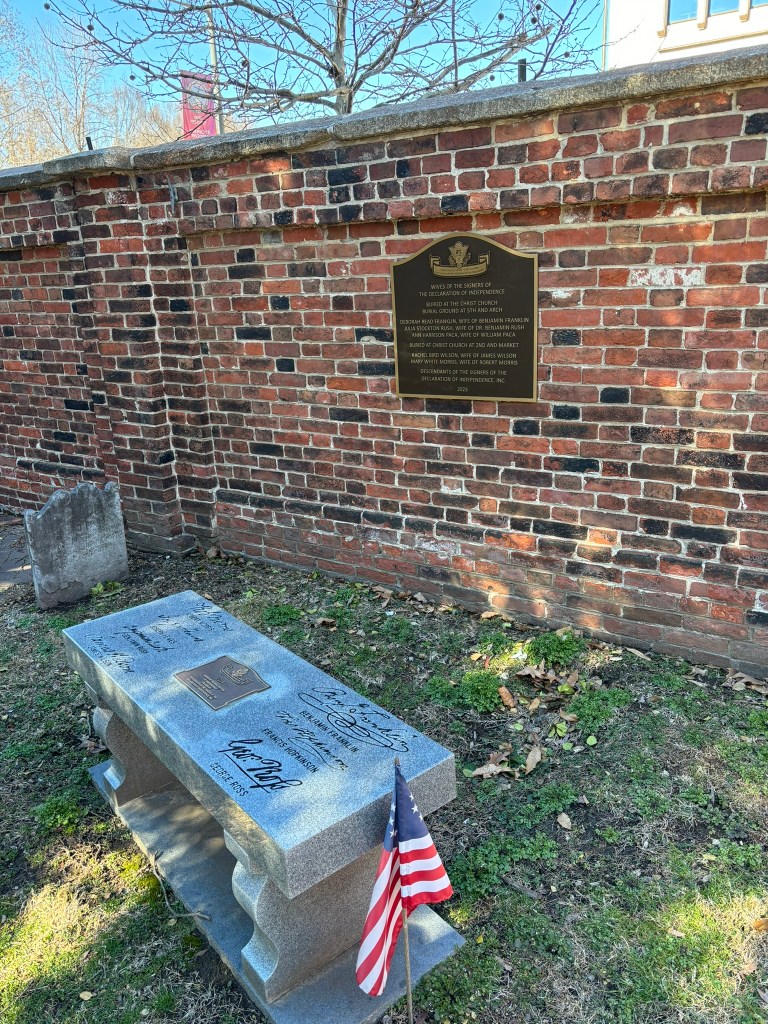
My family and I took a trip to Philadelphia for Presidents’ Day weekend. Day One was seeing historic sites and museums, and Day Two was going to the Please Touch Museum for the kids. This blog will focus on our visit to the Museum of the American Revolution, The Christ Church Burial Ground with the grave of Ben Franklin, The National Constitution Center, Independence Hall and Congress Hall.
Museum of the American Revolution
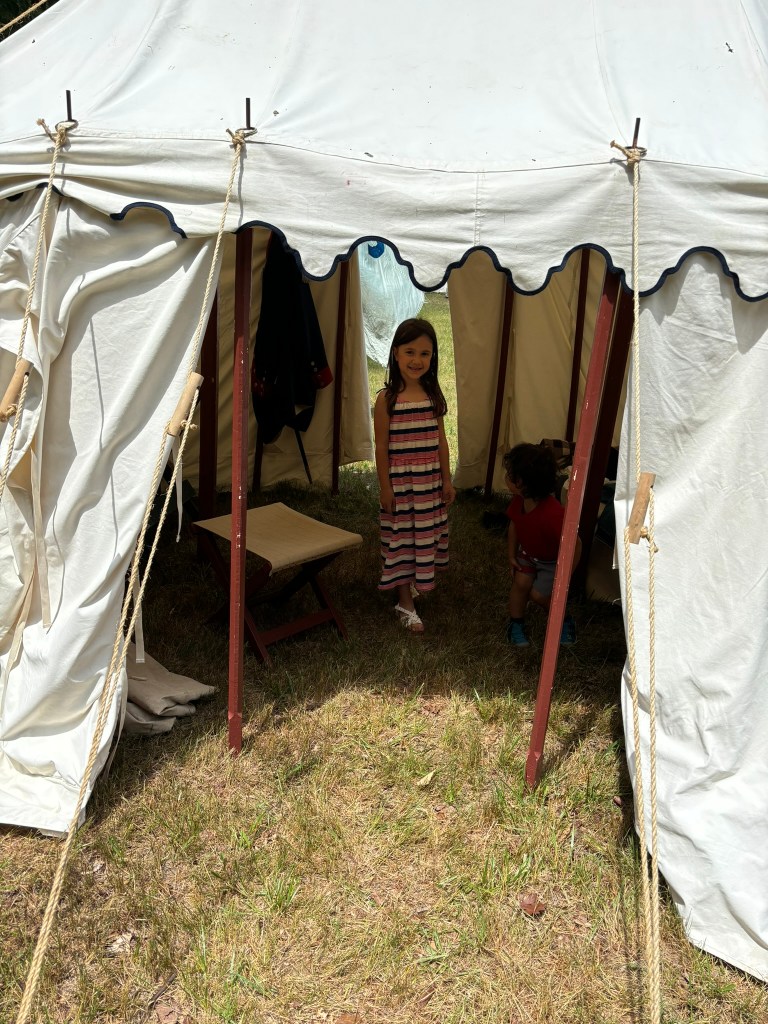
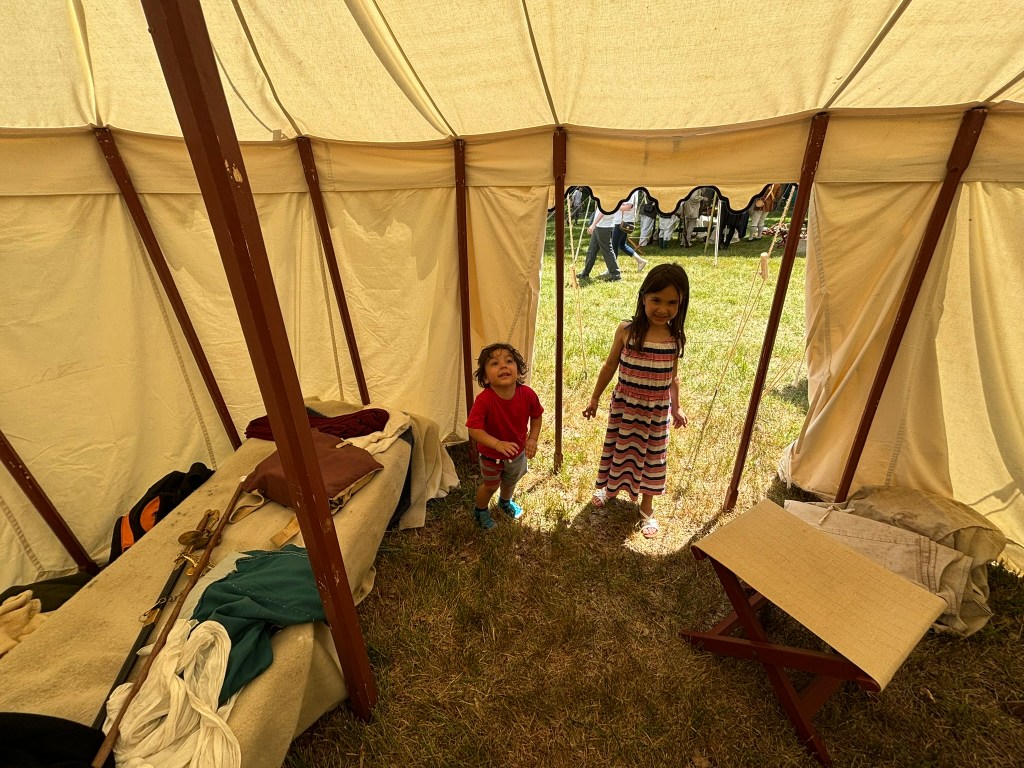
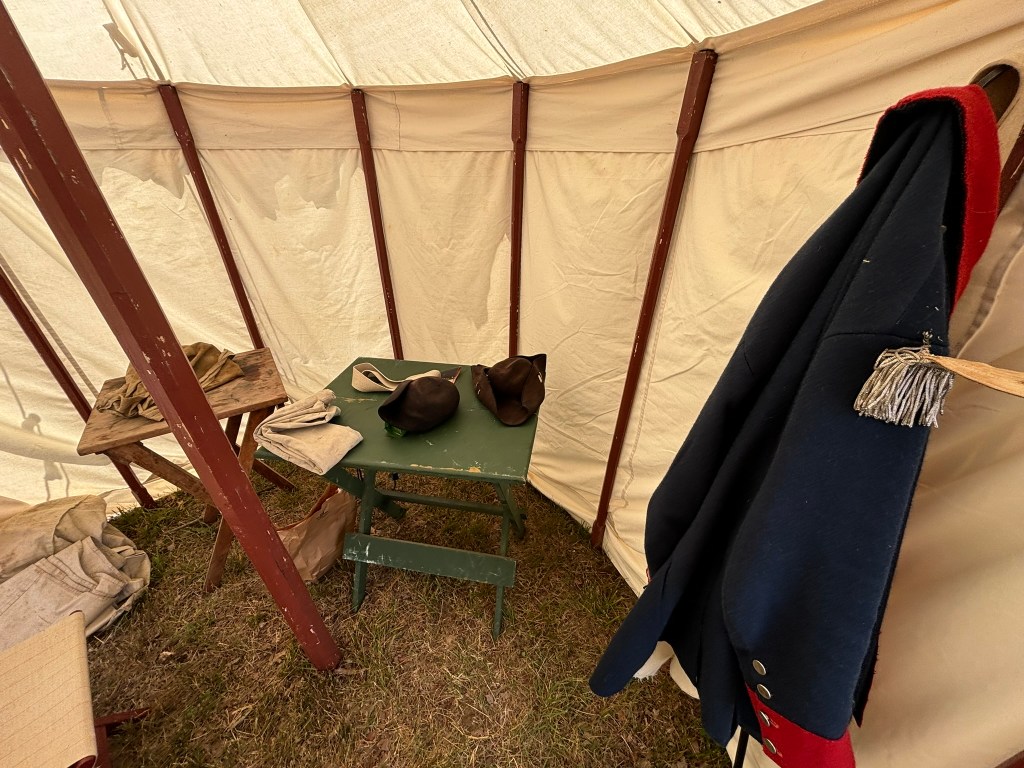
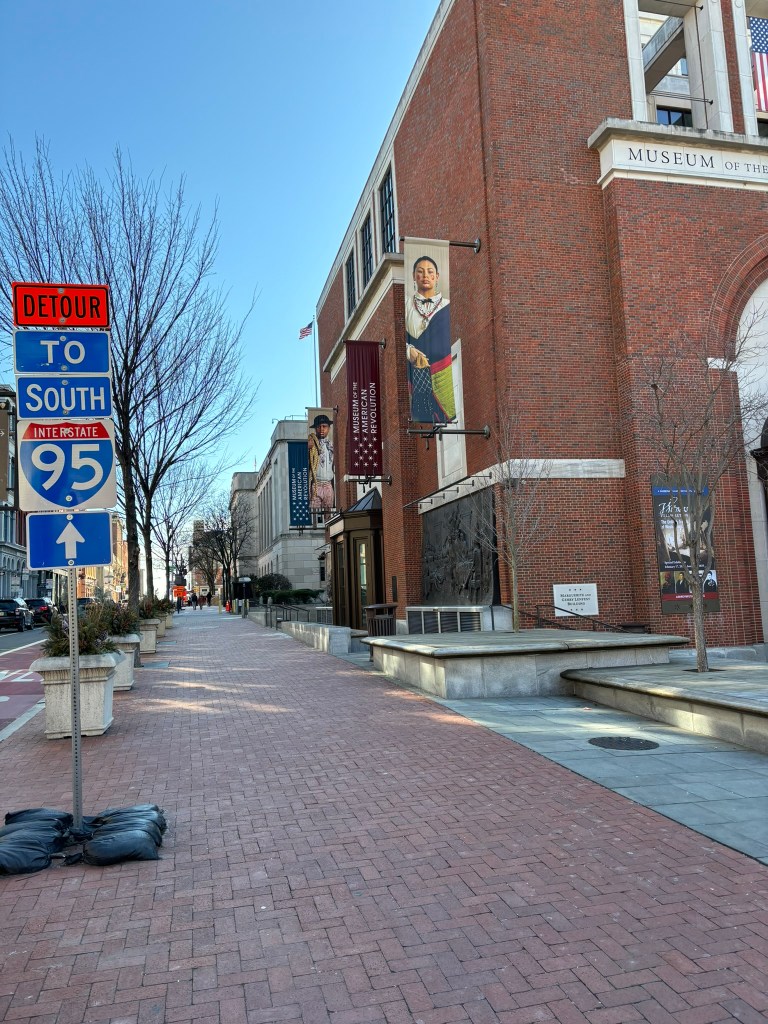
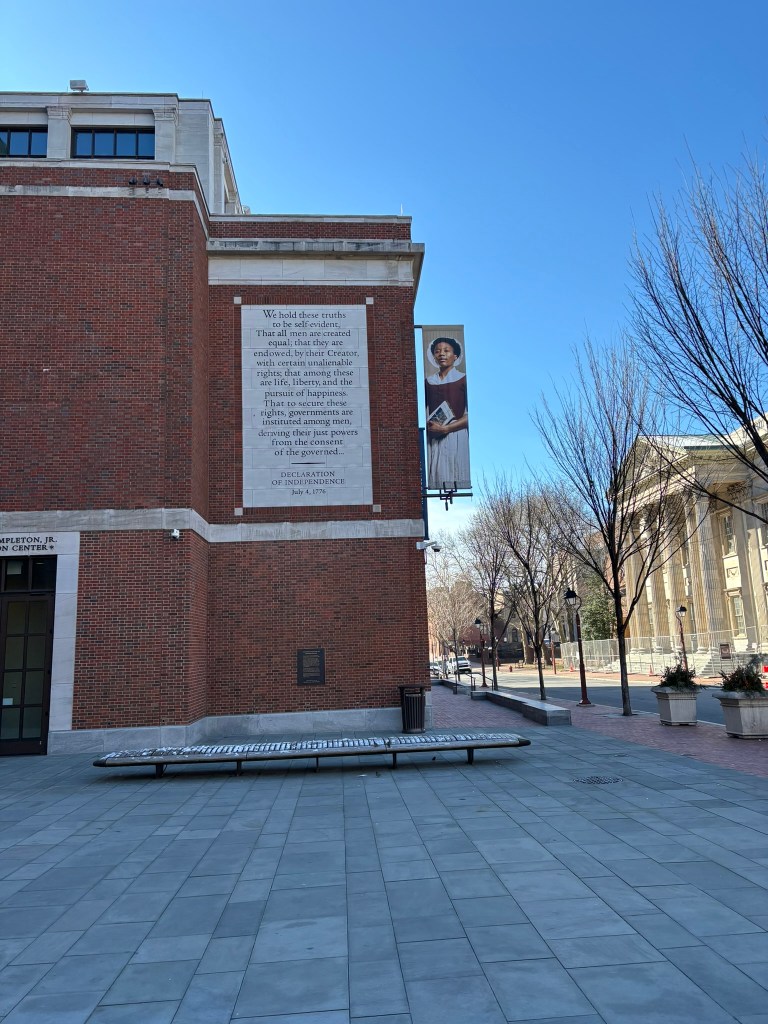
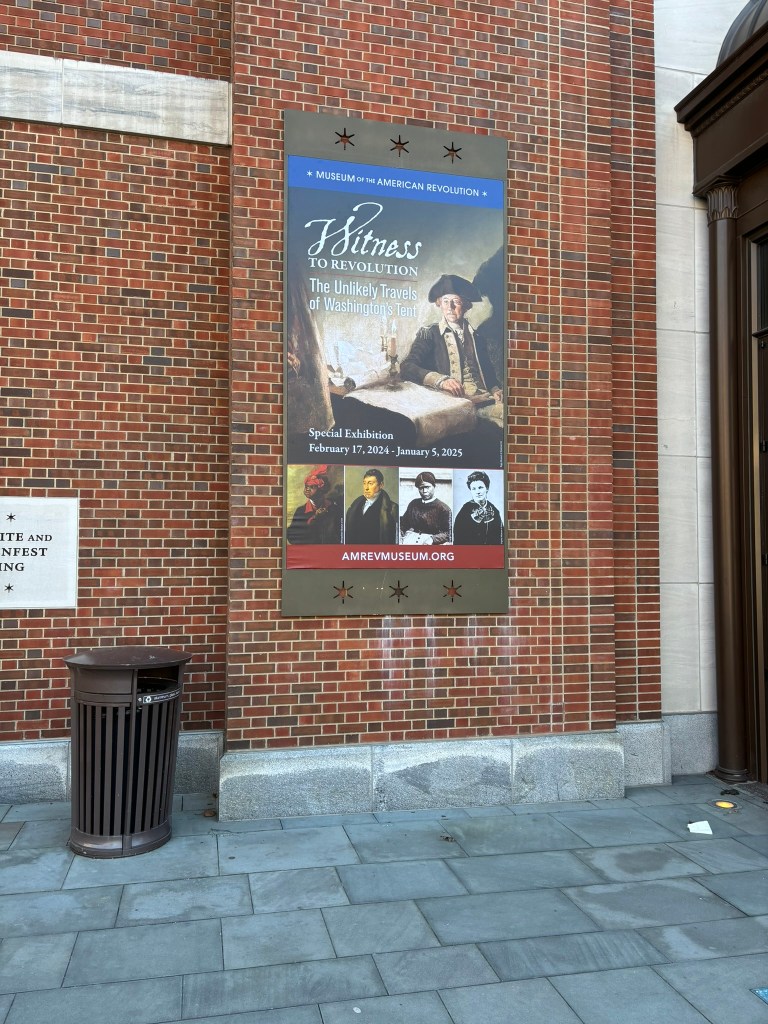
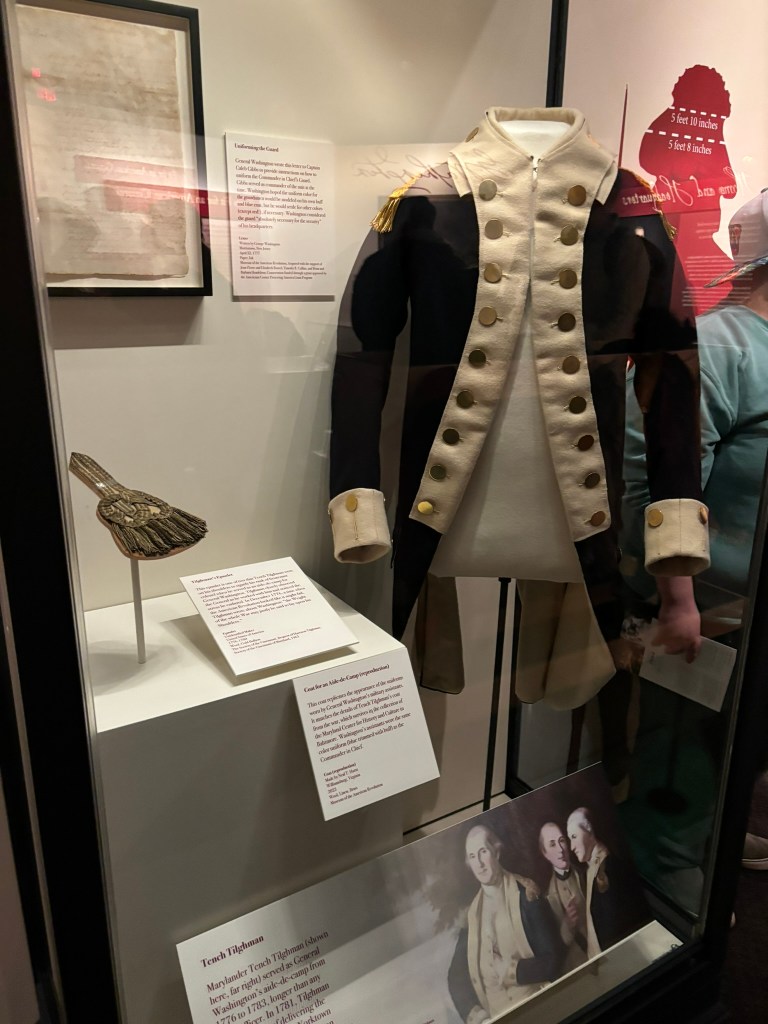
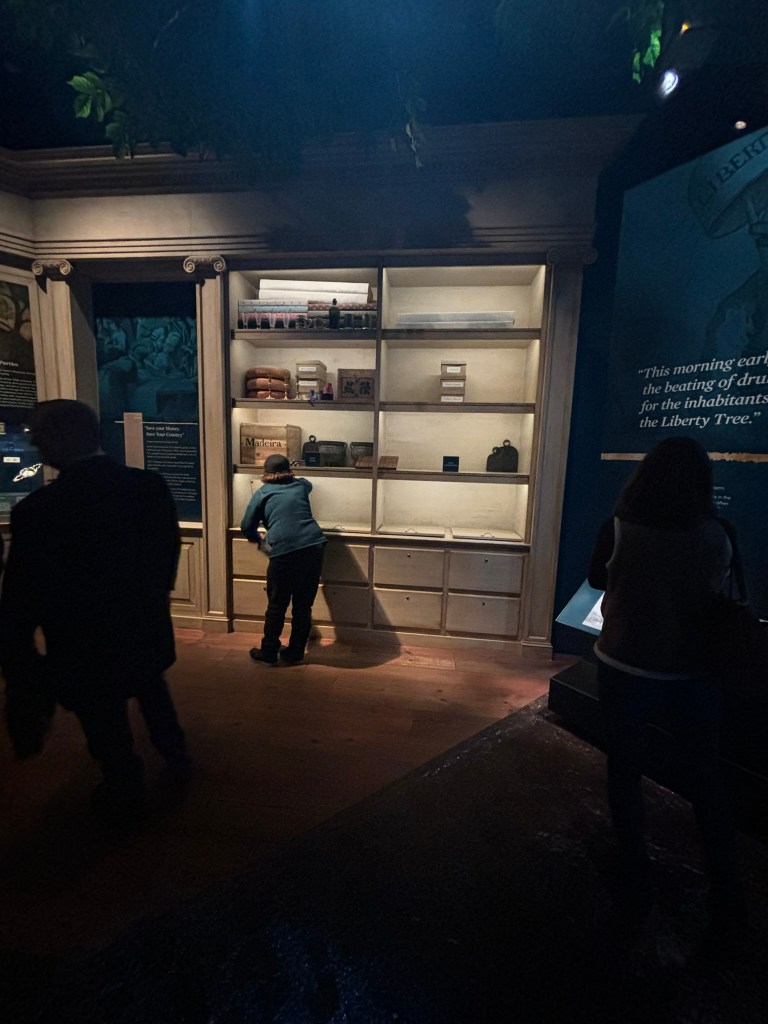
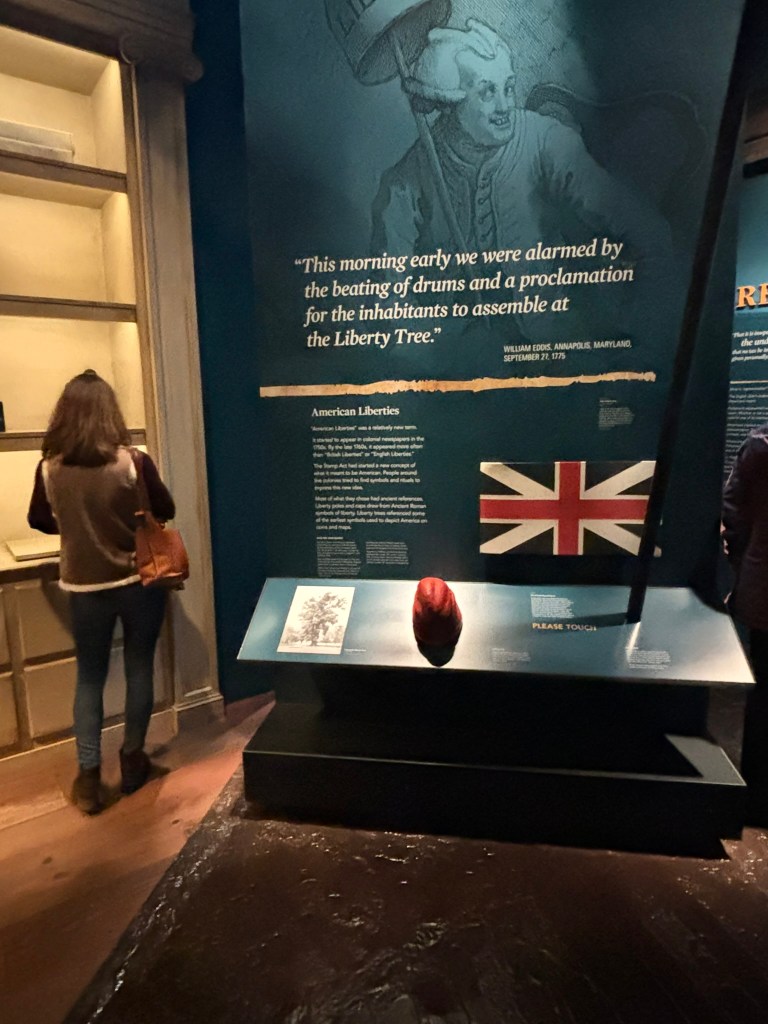
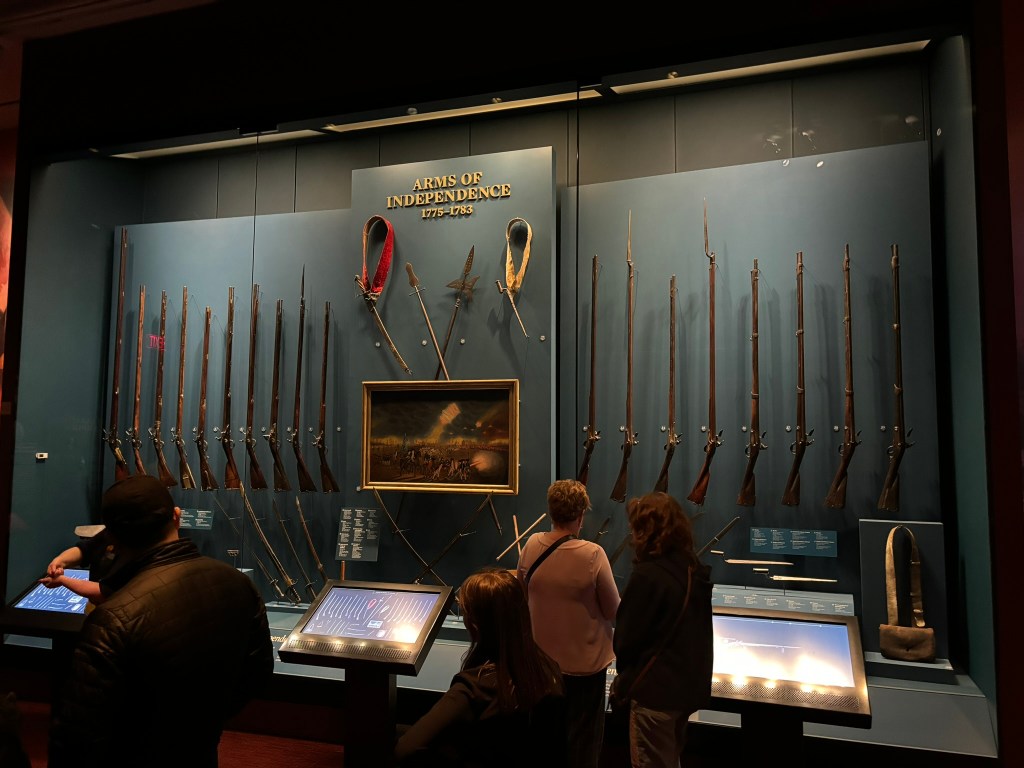
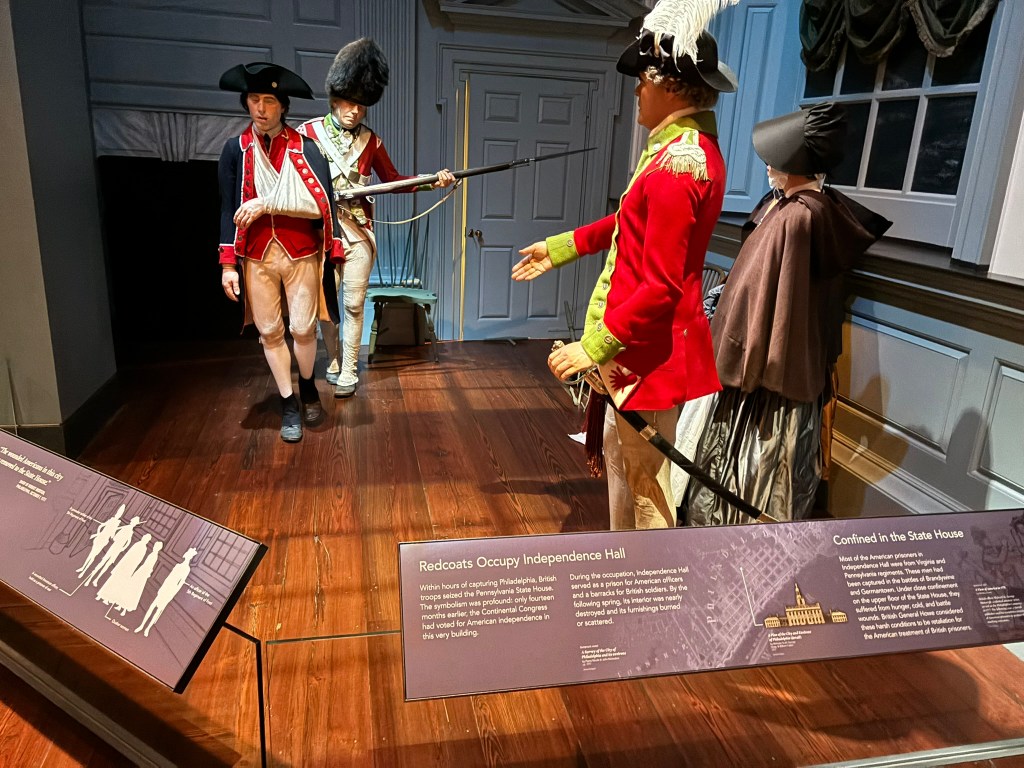
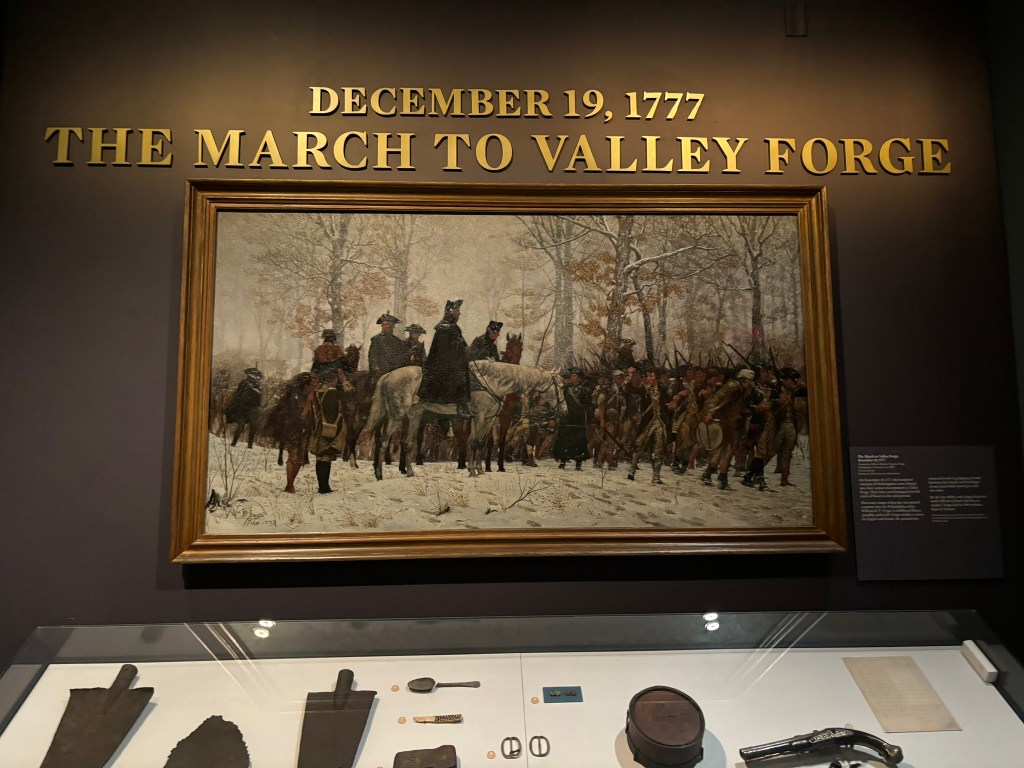
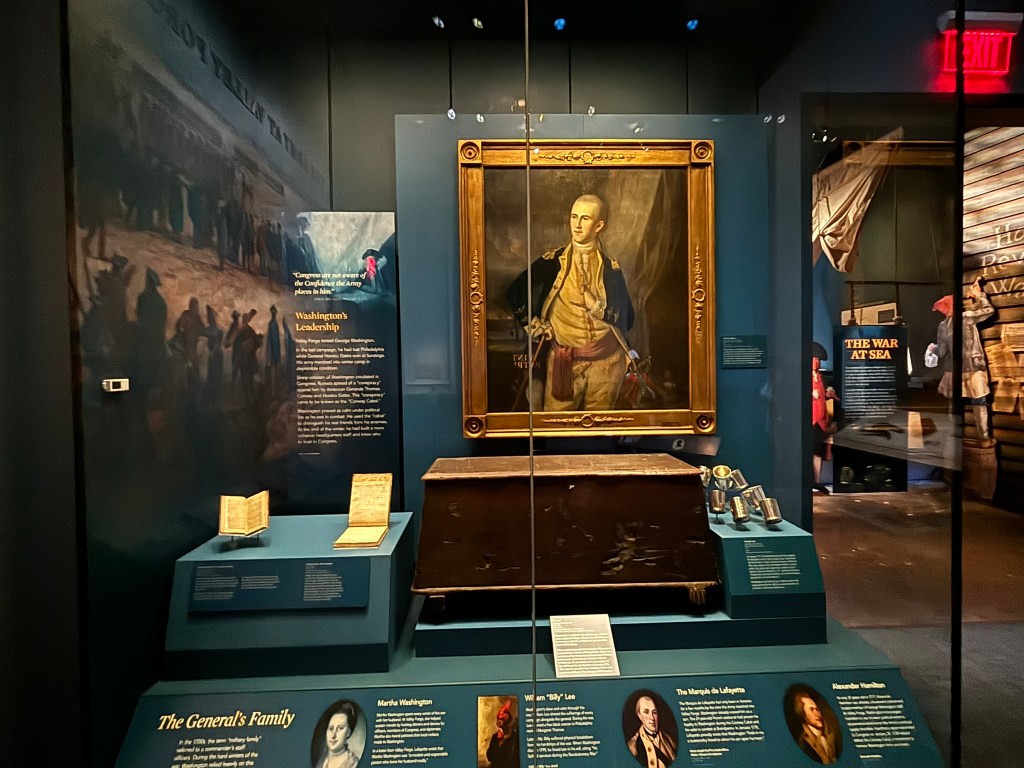
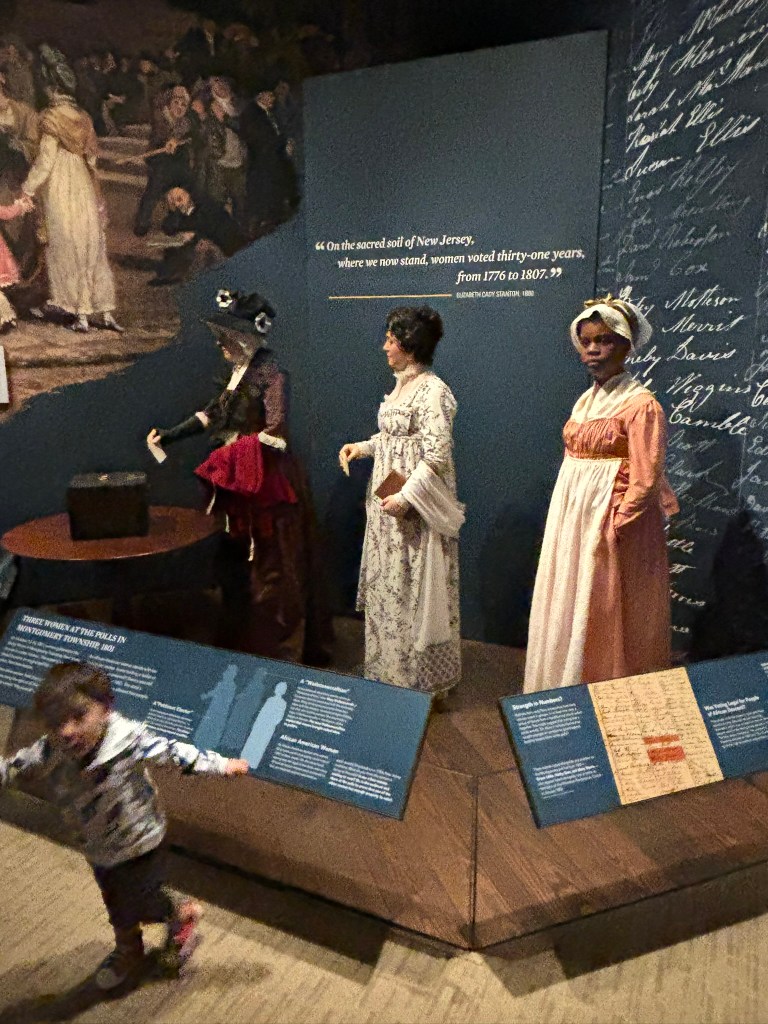
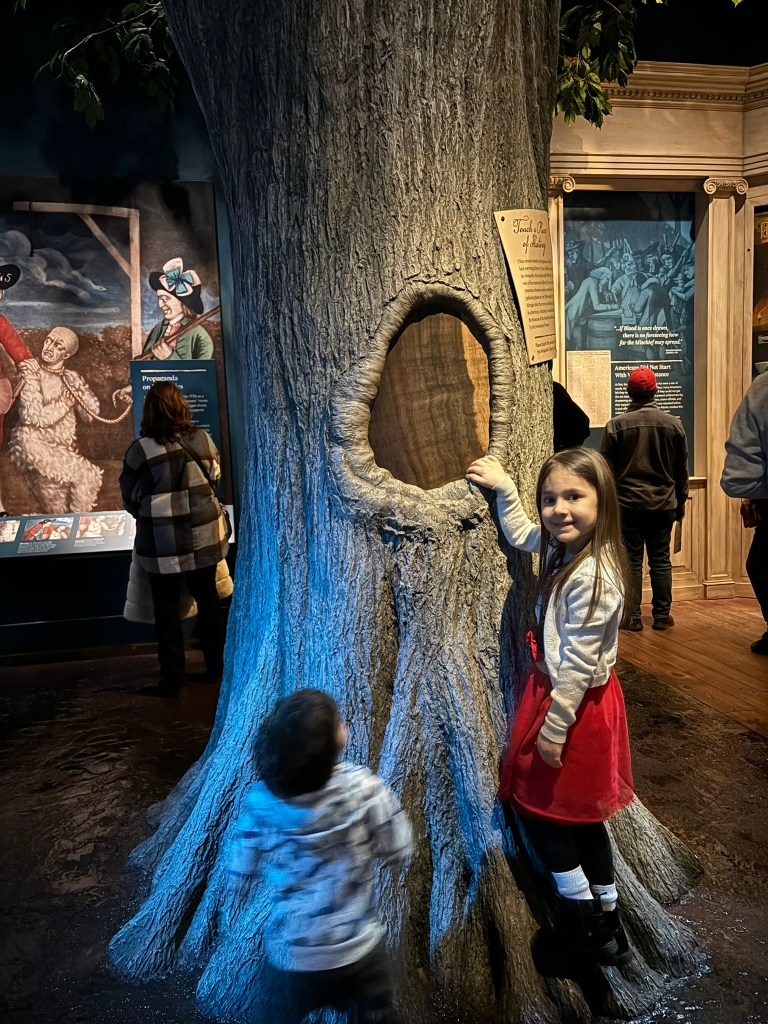
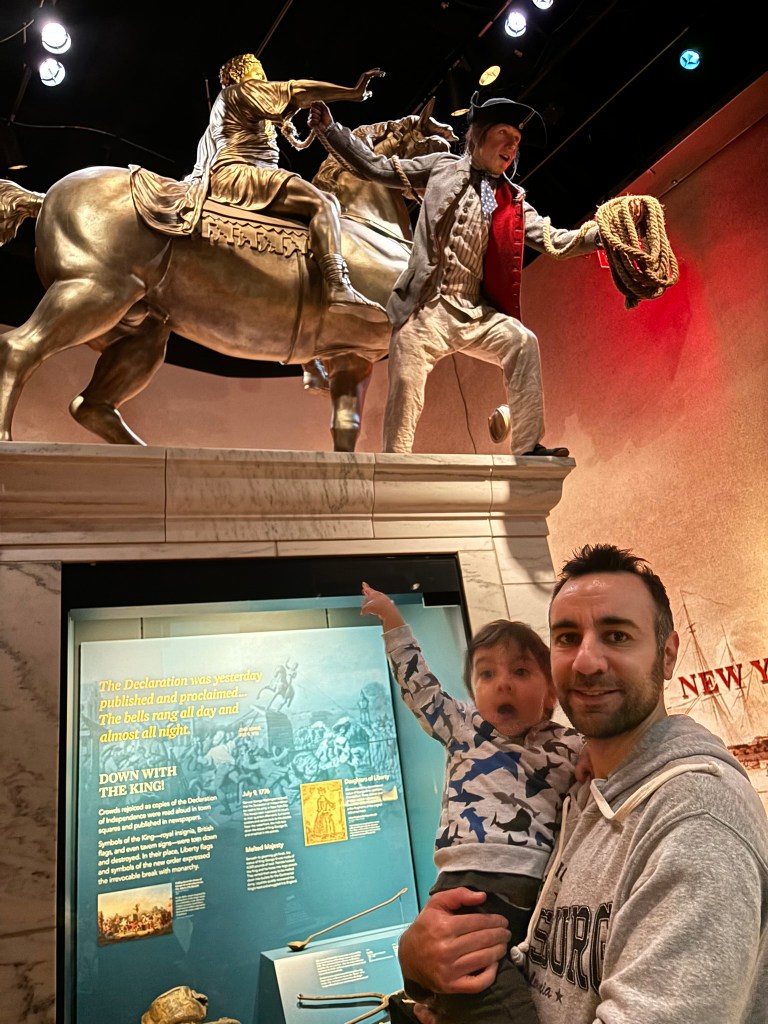
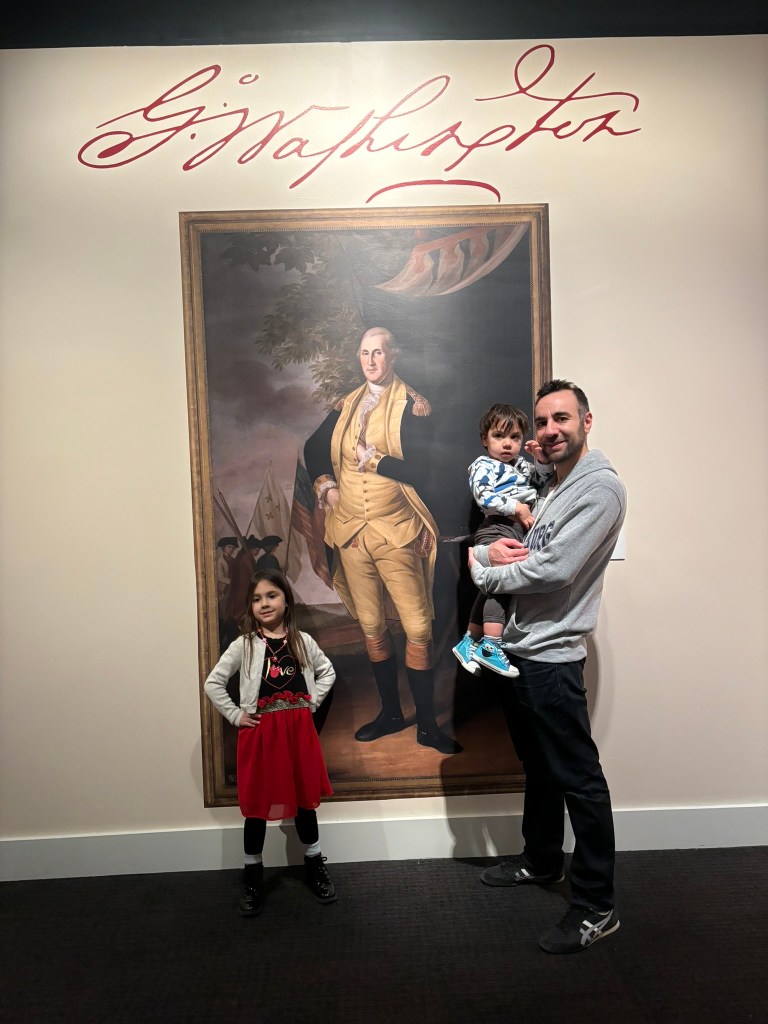
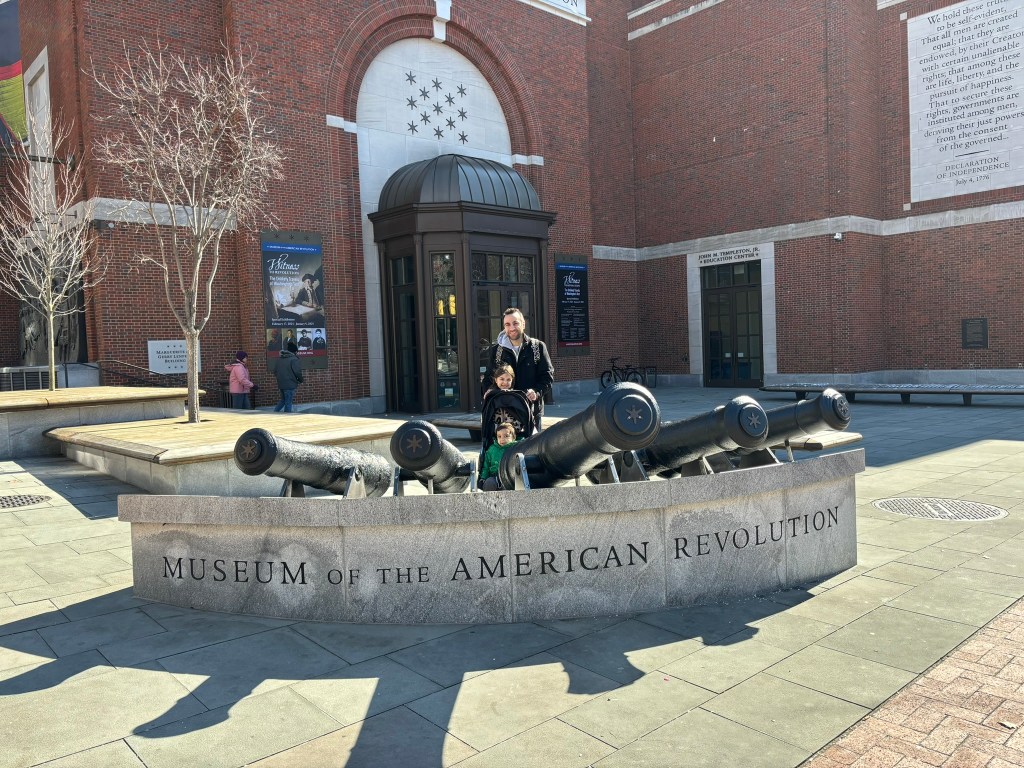
Our first stop when we arrived in Phili was the Museum of the American Revolution, which was my first visit there. The special exhibit that opened the day before we arrived is “Witness to History: The Unlikely Travels of Washington’s Tent.” In my blog post from July 2023, (visit here) my family and I visited Morristown, NJ to see a replica of Washington’s War Tent, and explore inside. The real, authentic tent is located at the Museum of the American Revolution, and we were able to see it there (the museum did not allow photographs of the tent, but photos can be found here.) The new exhibit highlights the roughly 250 year journey of Washington’s War Tent as it has passed through the generations and miraculously has survived through not-so-delicate hands to make it to the museum in Philadelphia. The tent highlights Washington’s commitment to be among his troops and live in similar conditions as them. Washington was a leader that his troops could relate to and respect. He did not want to appear as an elitist or authoritarian. His living quarters were far different from what other European leaders, such as Napoleon, were living in while on campaign. Before viewing the real tent, you are shown a short video about the Revolution and the journey of the tent through the ages. The survival of the tent represents the survival of our fragile, delicate and at-times challenged republic.
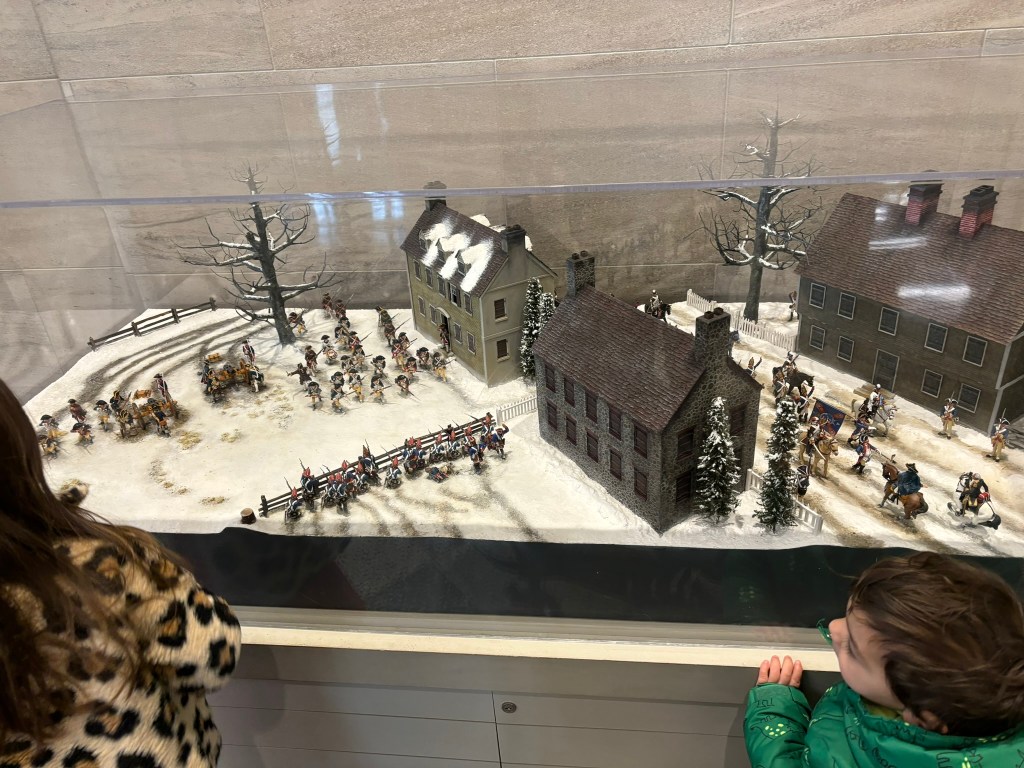
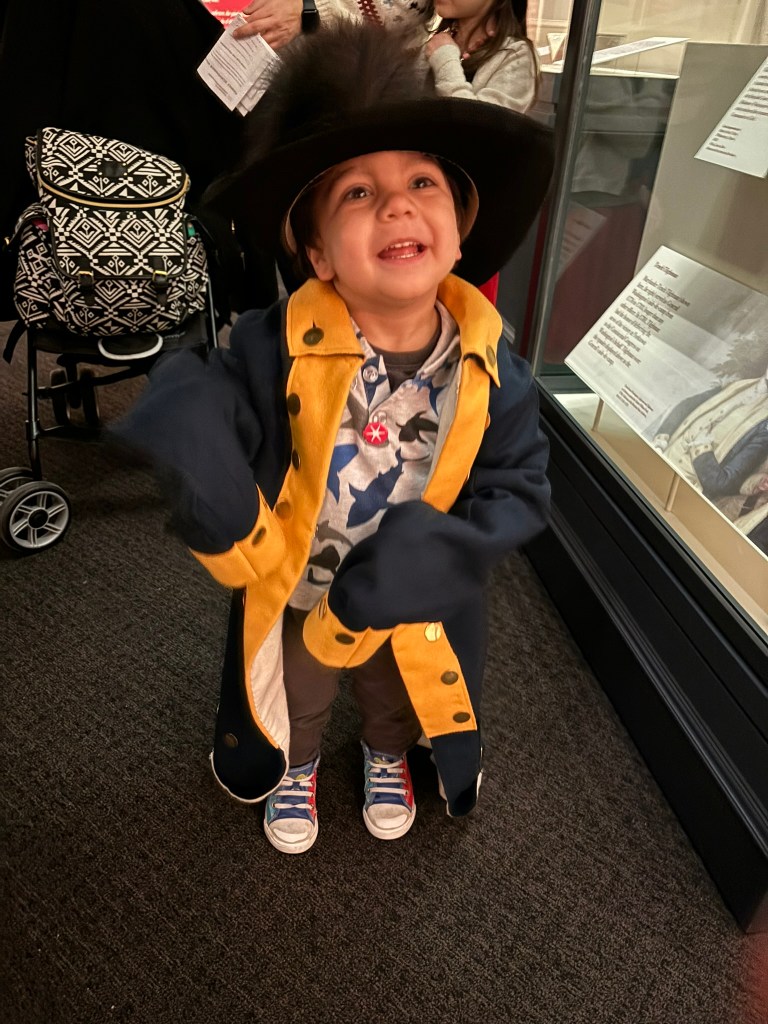
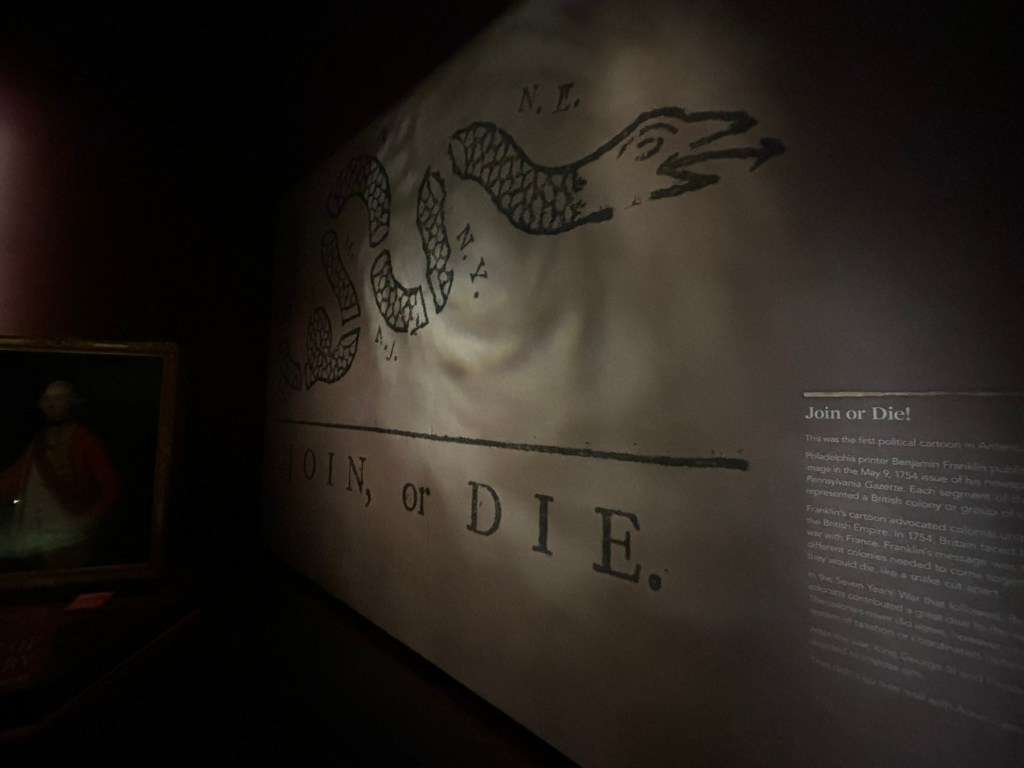
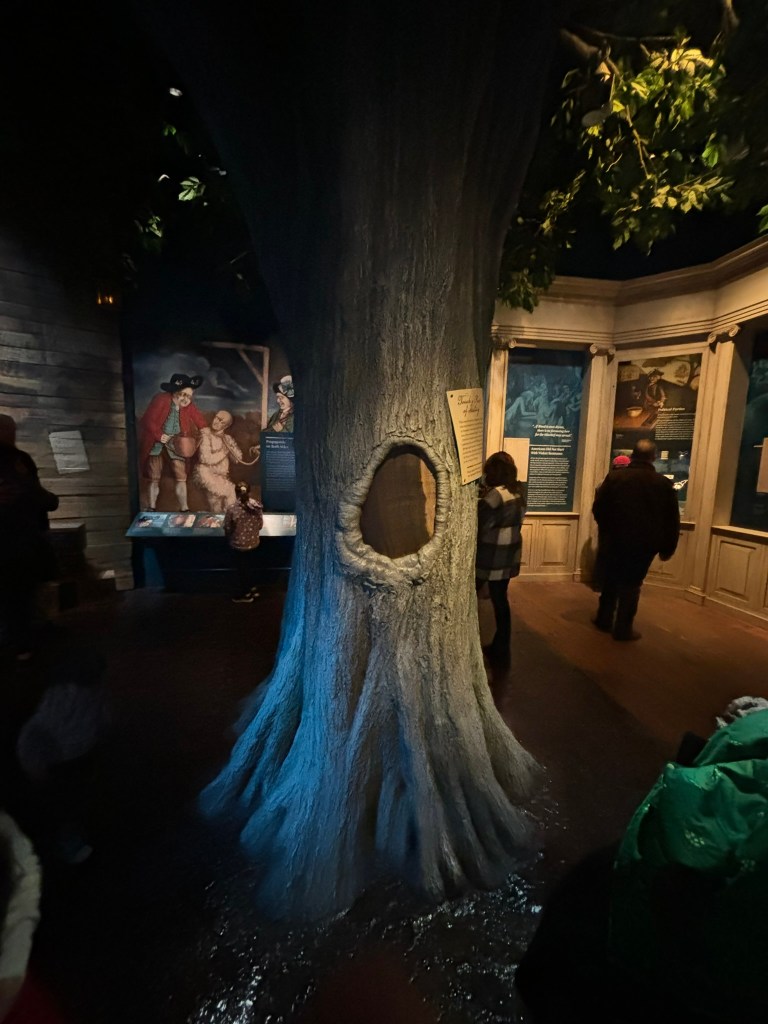
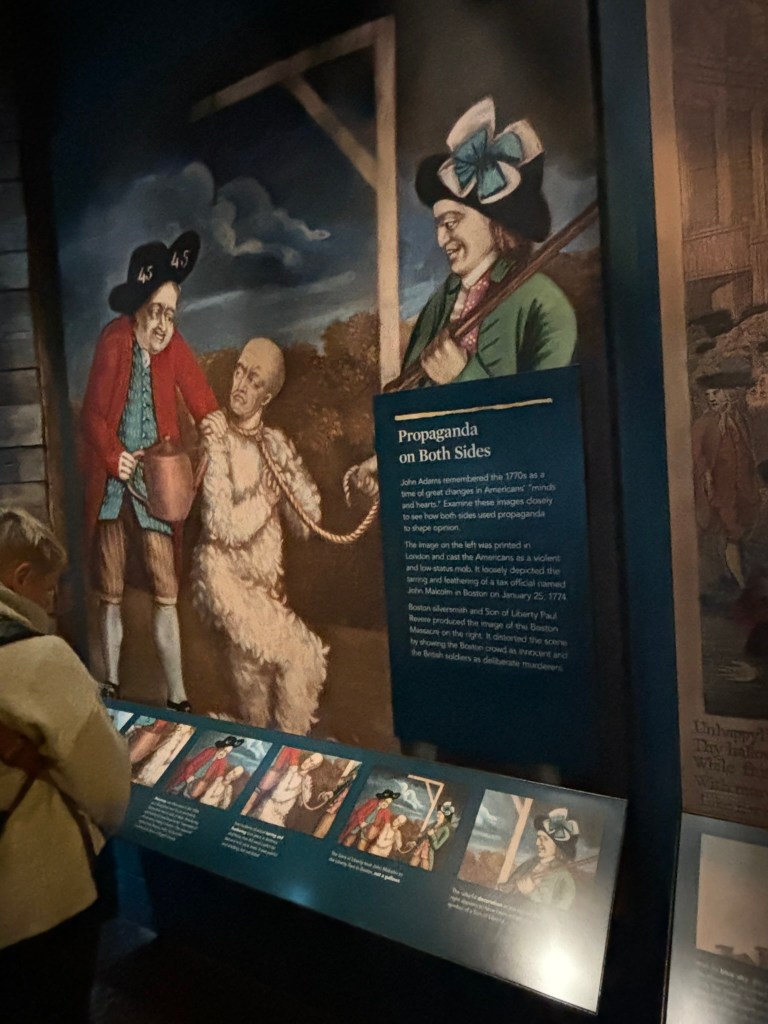
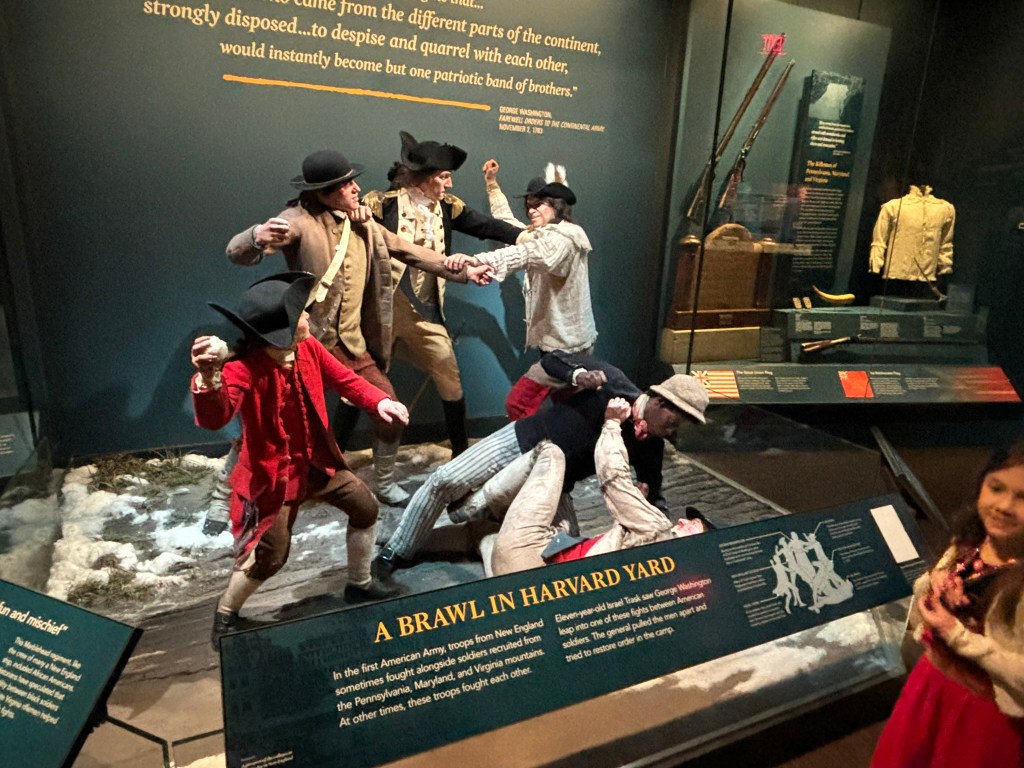
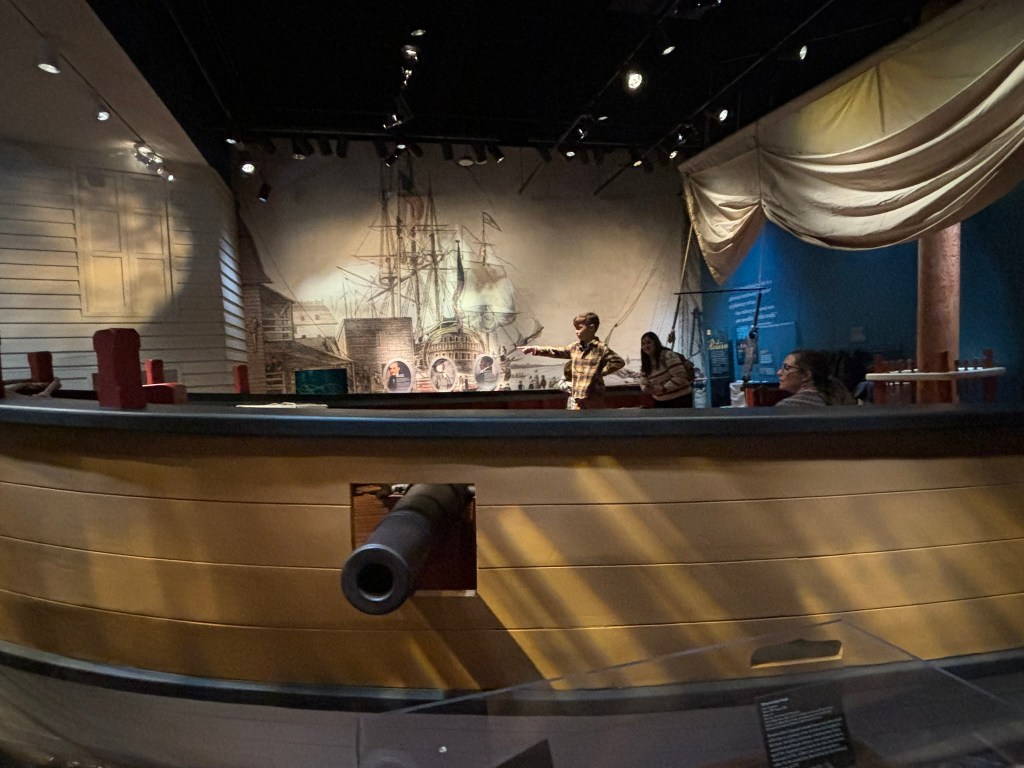
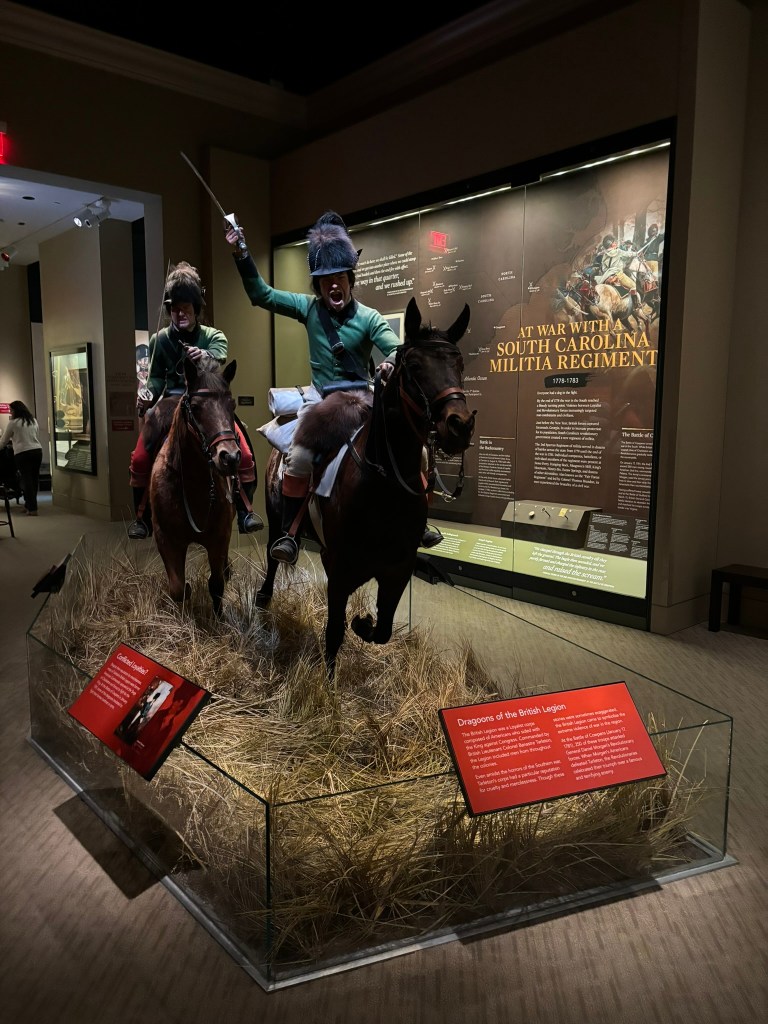
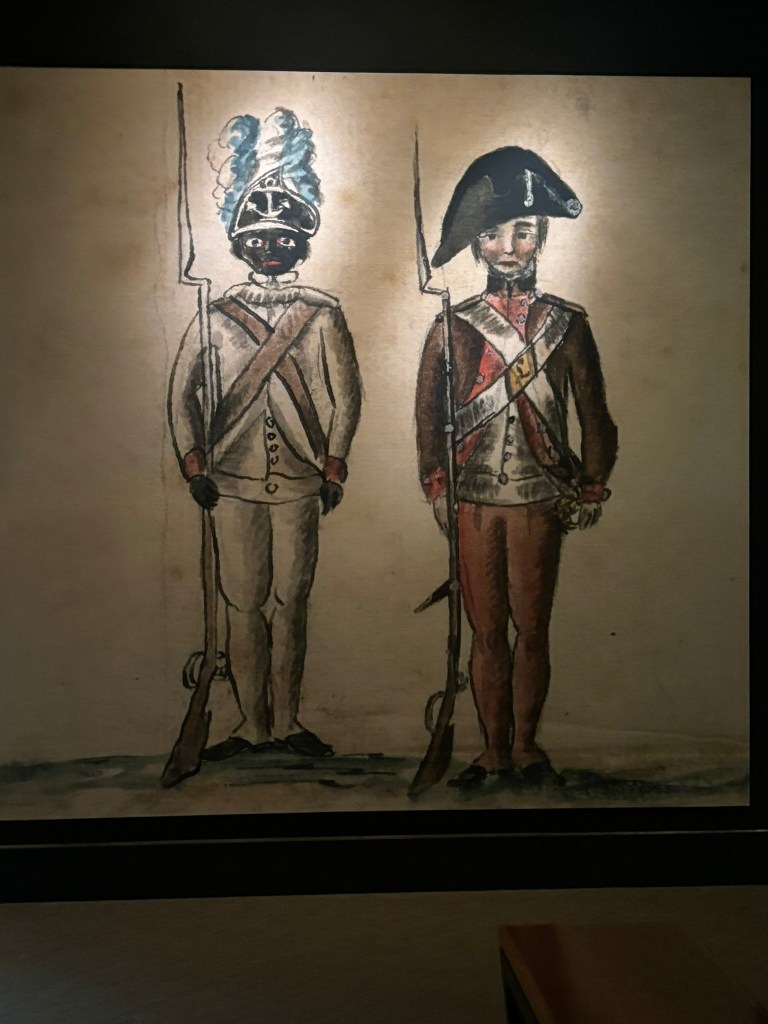
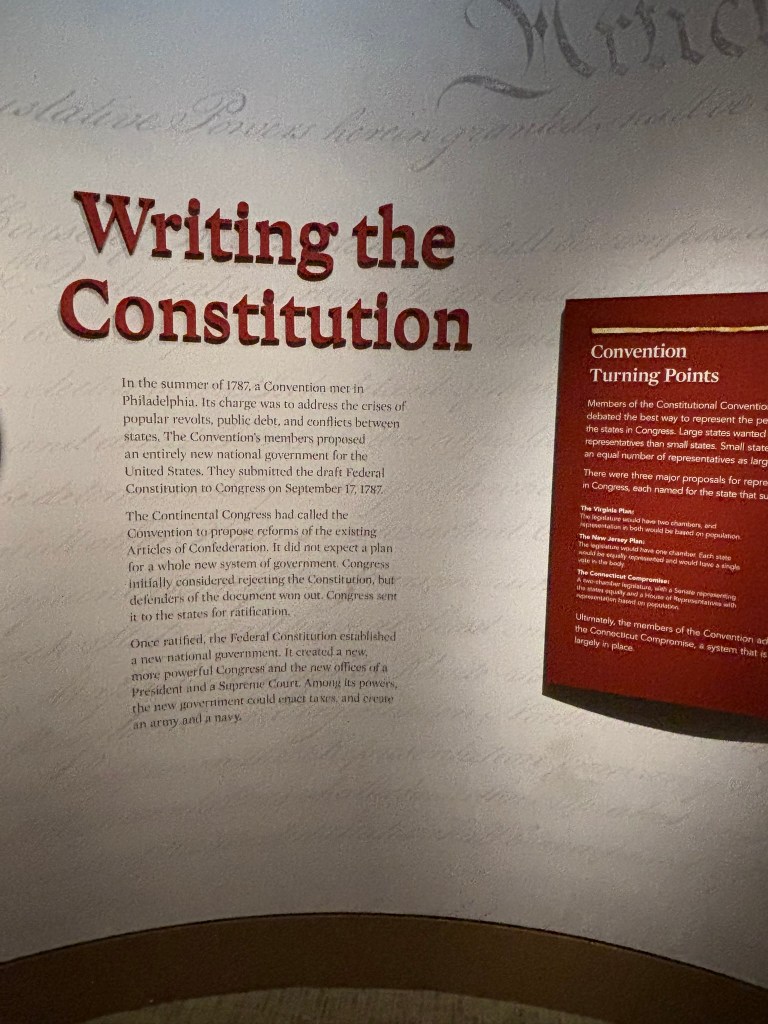
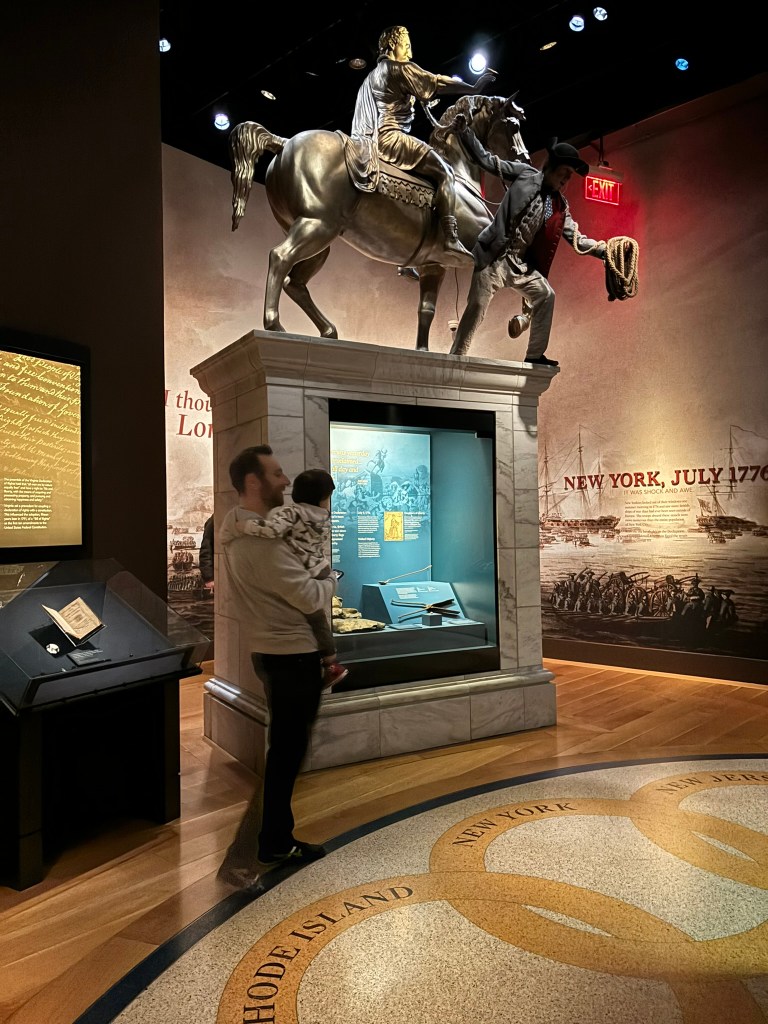
After we saw the tent and explored the special exhibit about the history of the tent, we journeyed through the rest of the museum. The main exhibit immerses you in the events of the Revolution, from the French and Indian war, the British taxes, the protests by the colonists, the opening shots at Lexington and Concord, the key events that transpired throughout the war, and the writing of the Constitution. The exhibit teaches through informative plaques, hands-on learning, videos and artifacts. It truly is a remarkable museum that everyone needs to visit. In the basement floor there is also an activity center for kids with hands-on and interactive exhibits. After our time spent at the museum, we head to lunch.
Christ Church Burial Site/ Grave of Ben Franklin
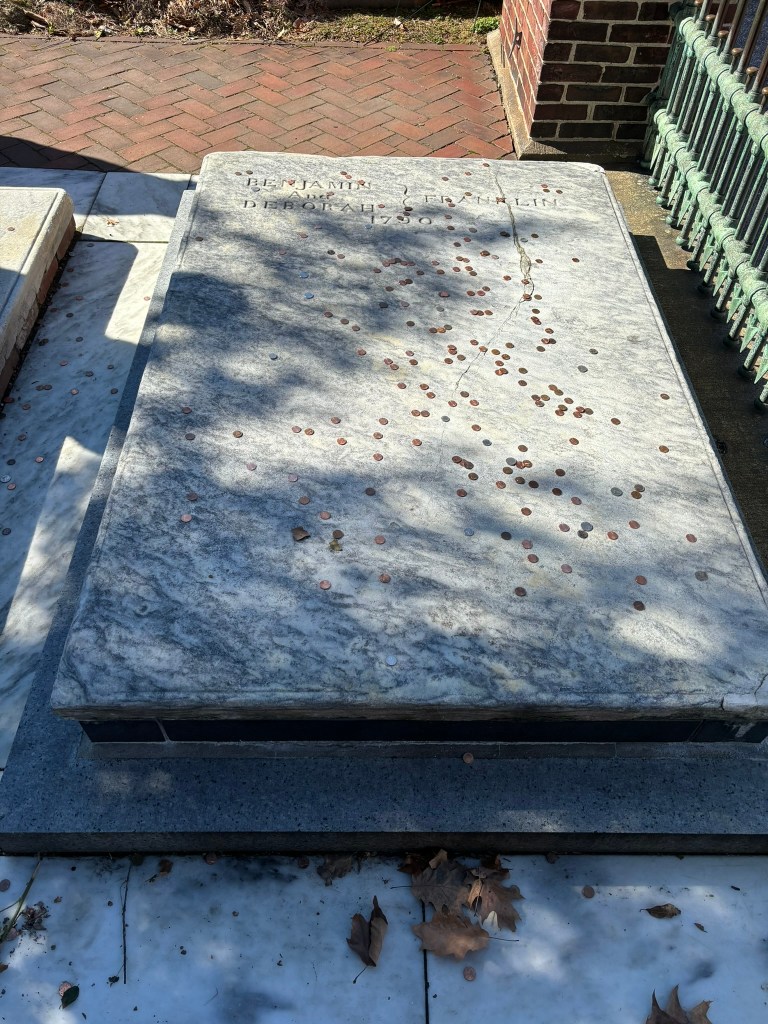
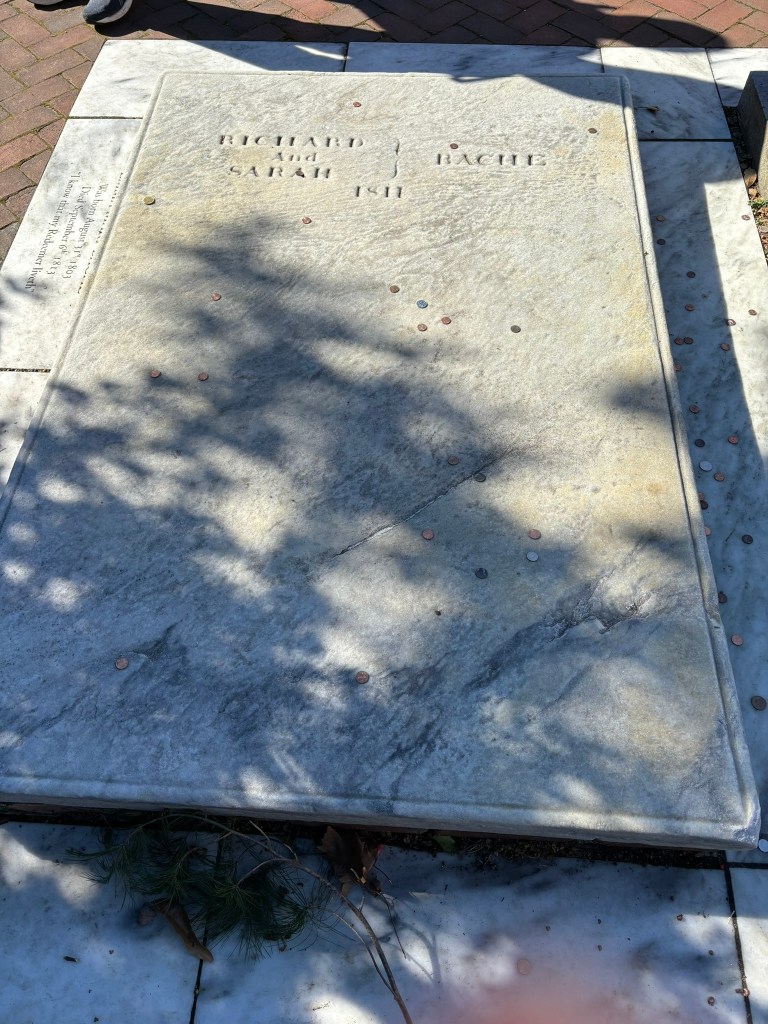
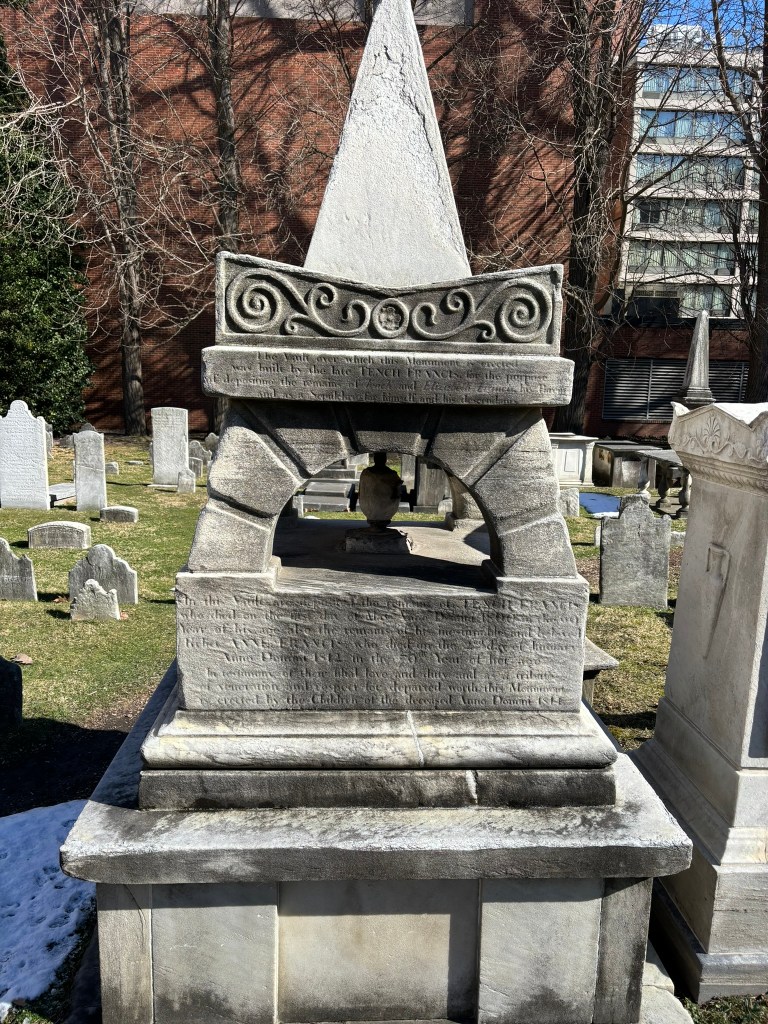
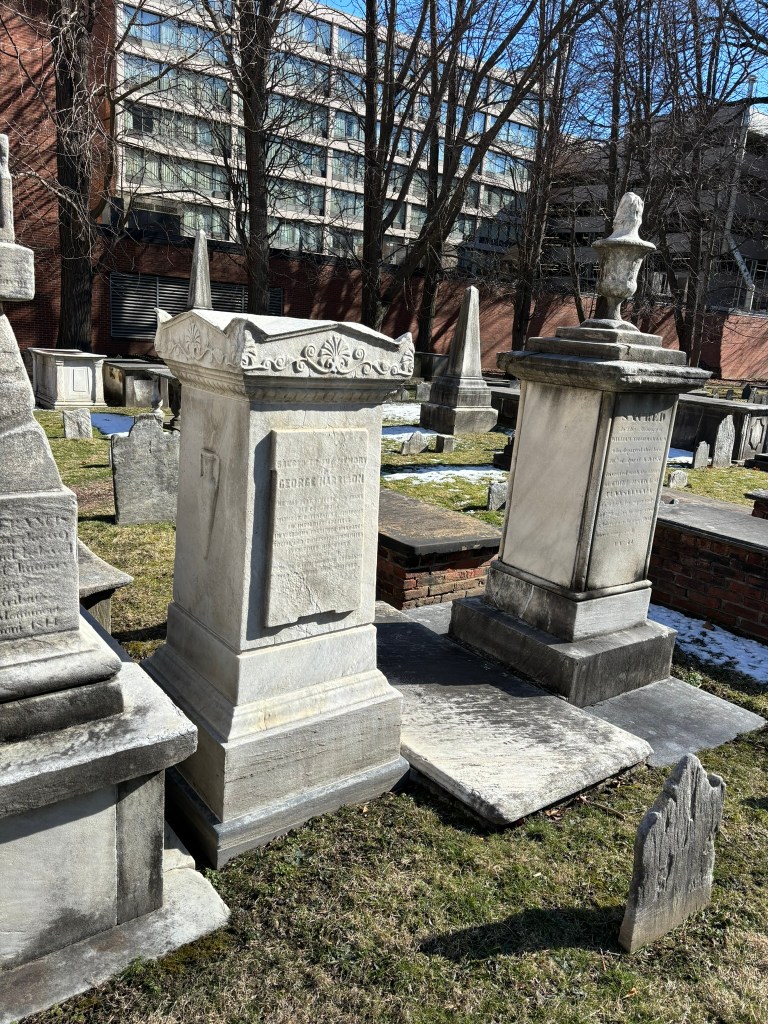
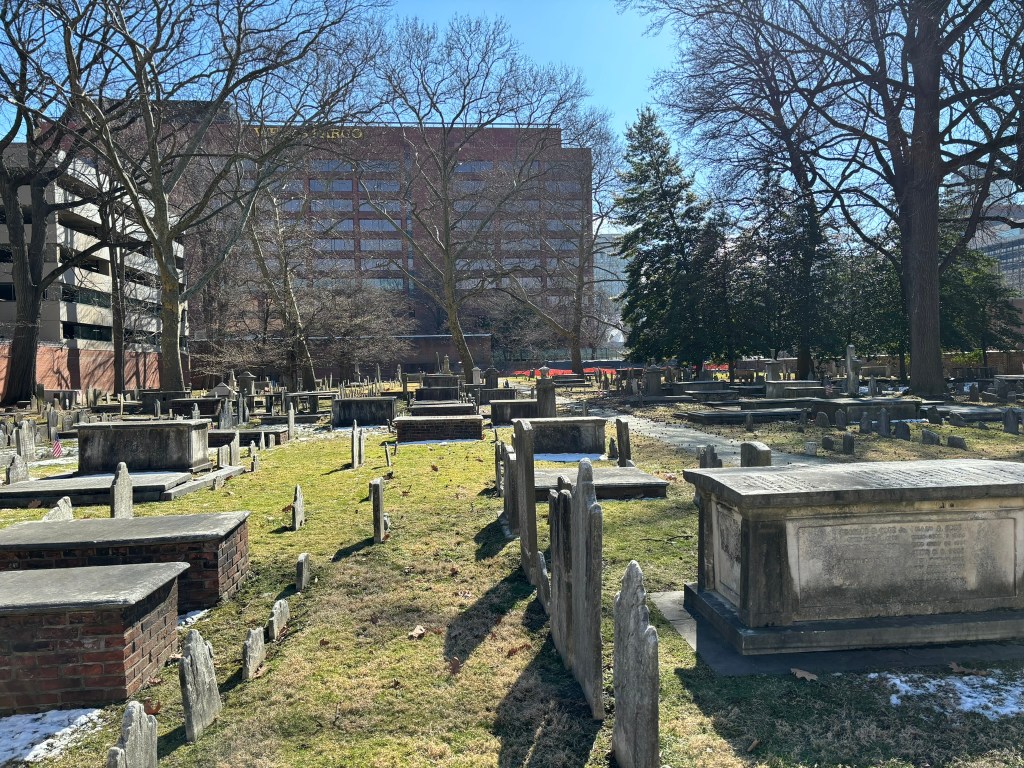
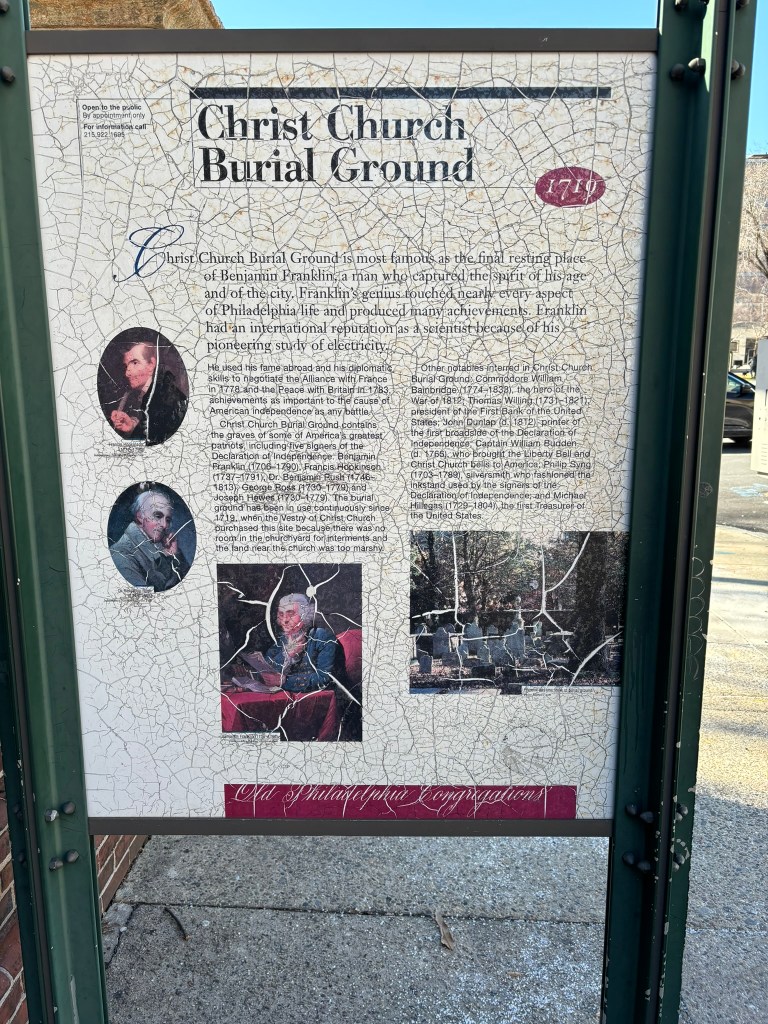
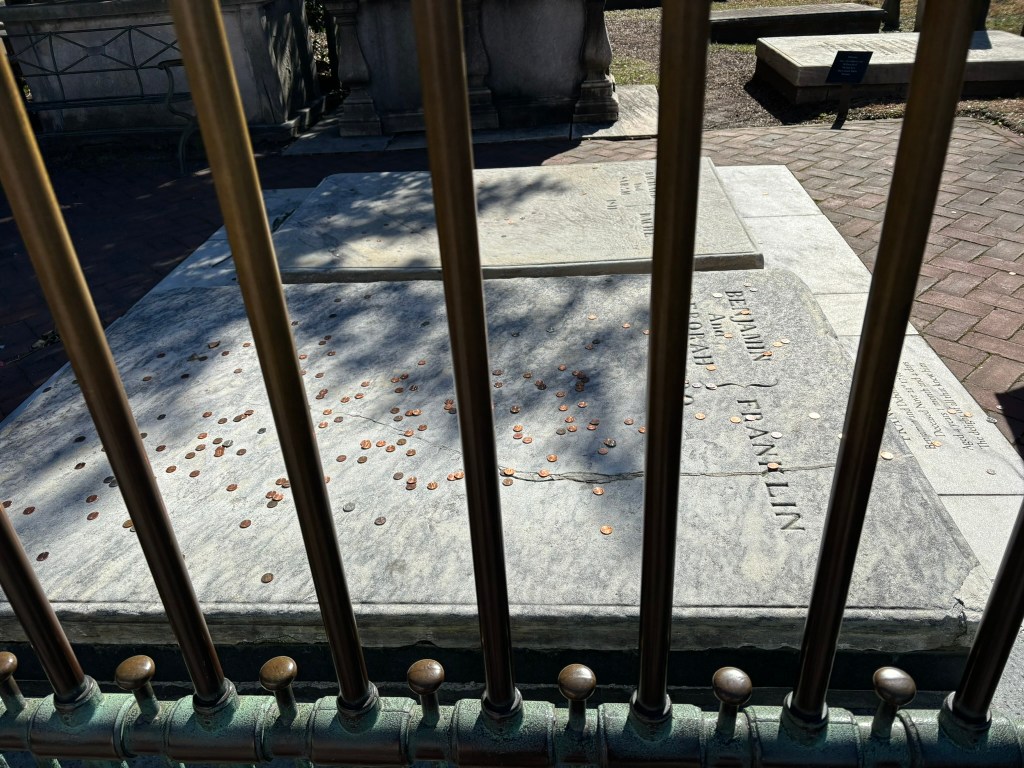
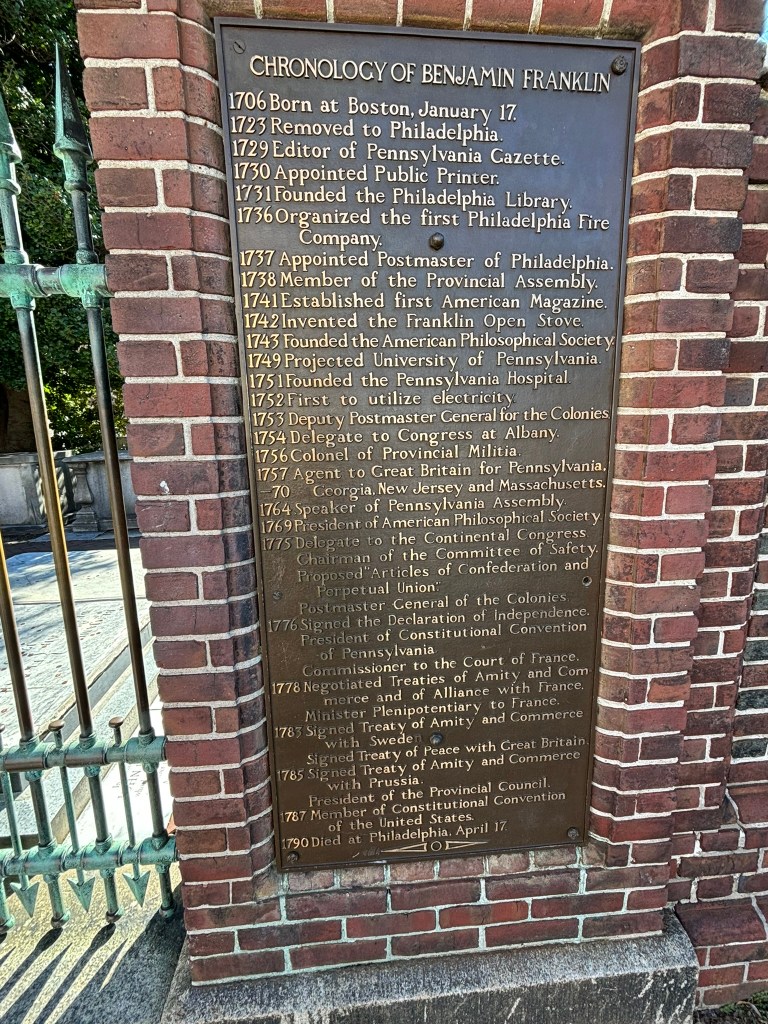
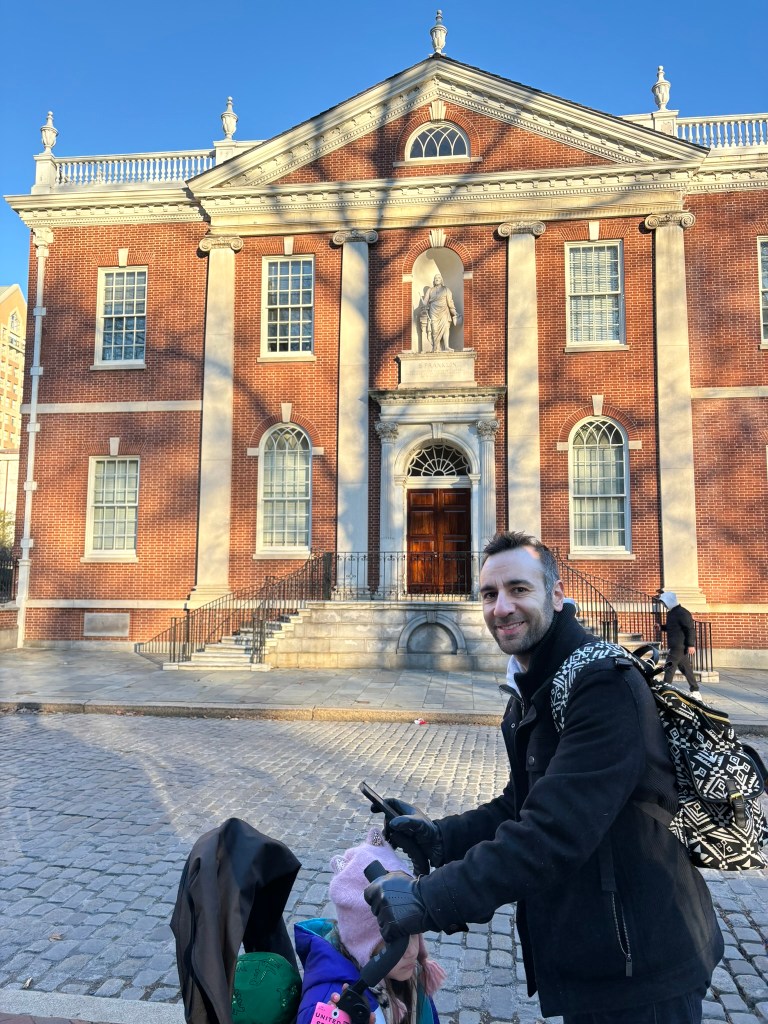
Our next historical stop was the National Constitution Center, but we first walked past Christ Church Burial Site and visited the grave of Benjamin Franklin. The graveyard also serves as a final resting place for many other individuals associated with the Revolution.
The National Constitution Center
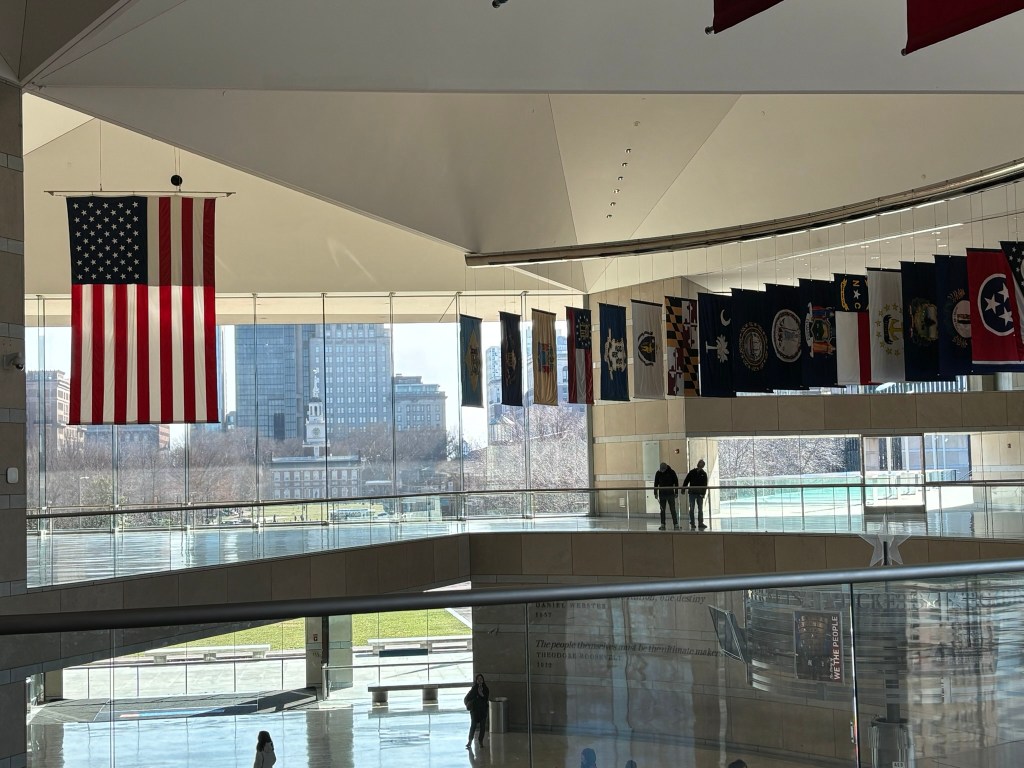
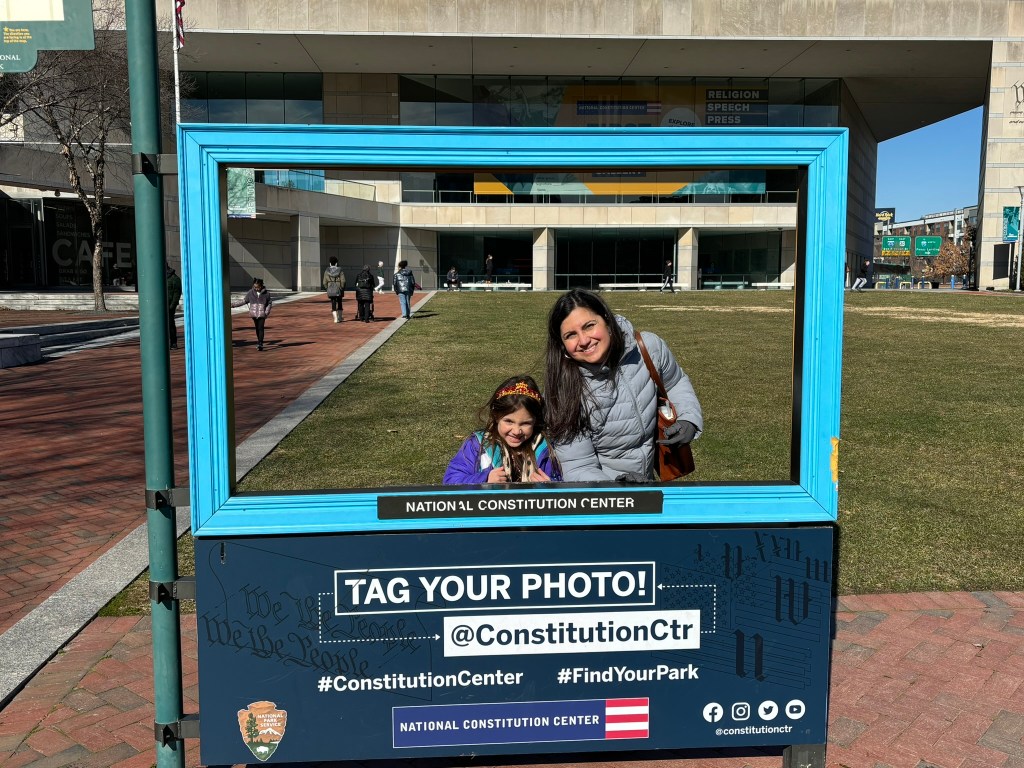
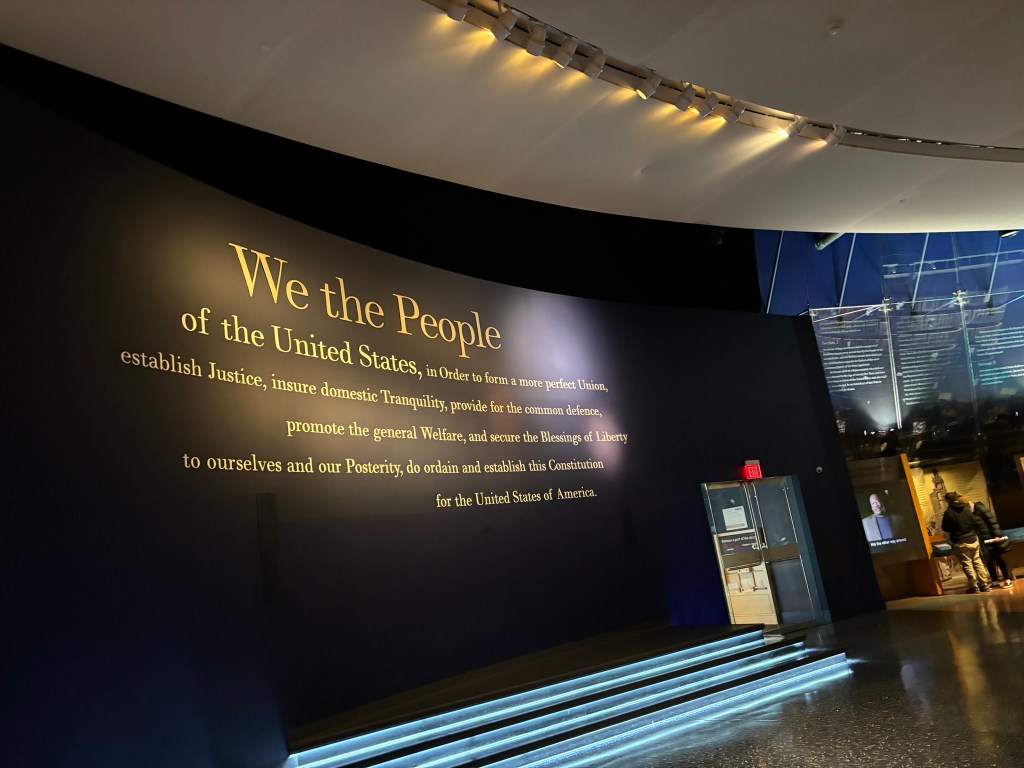
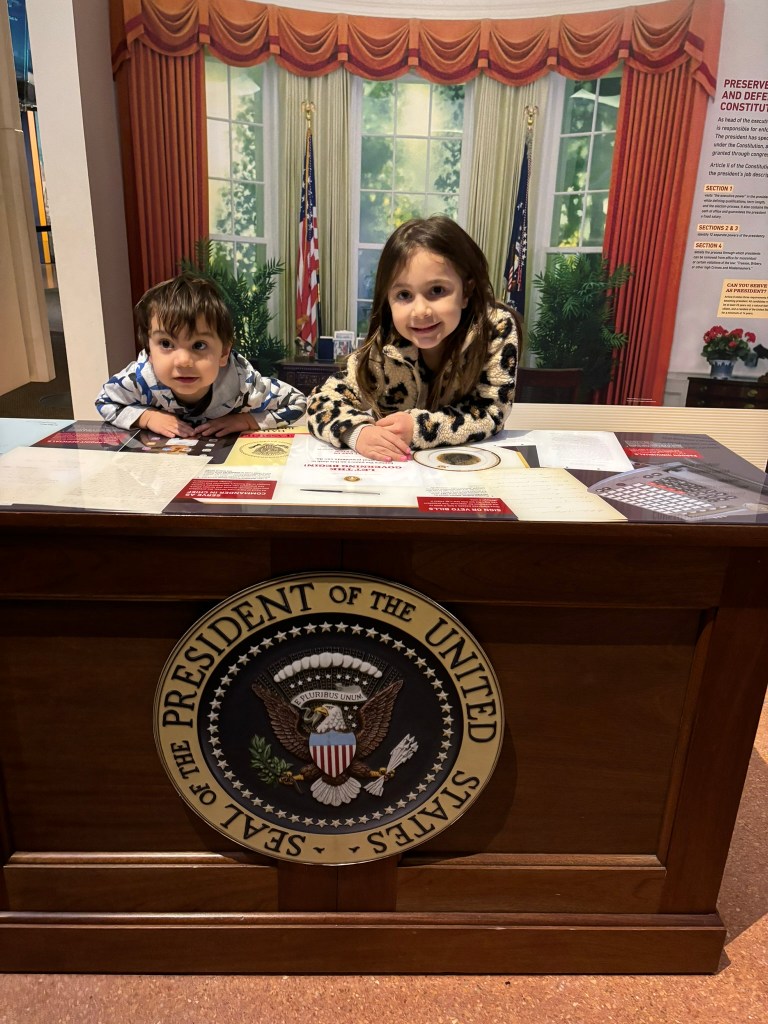
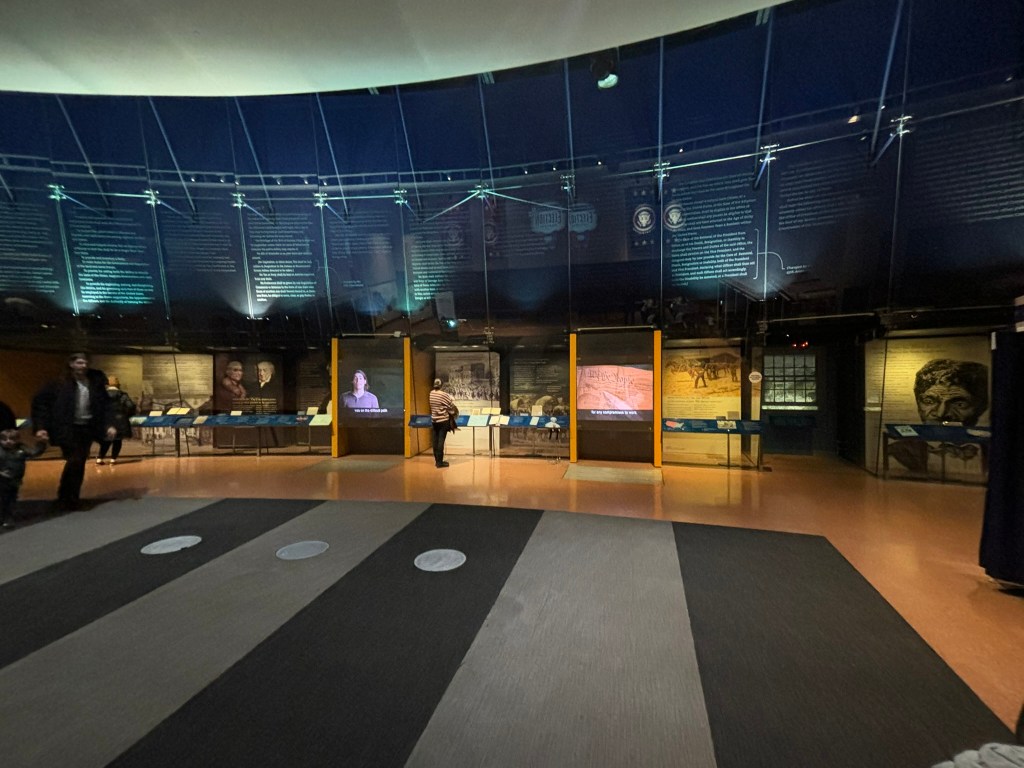
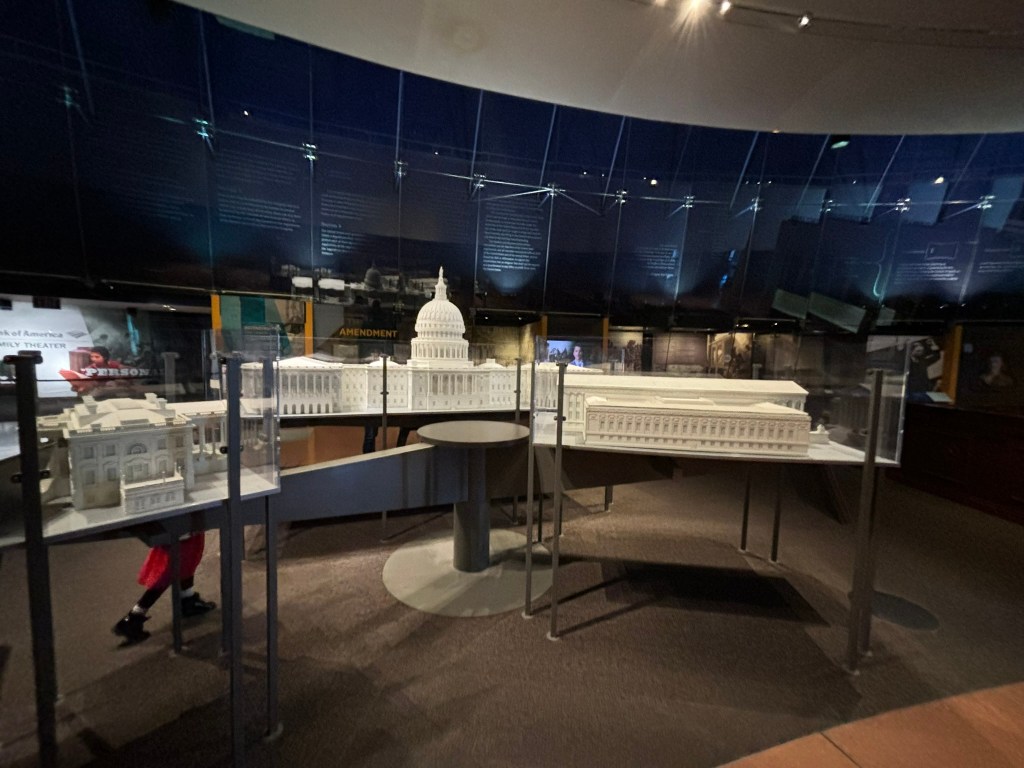
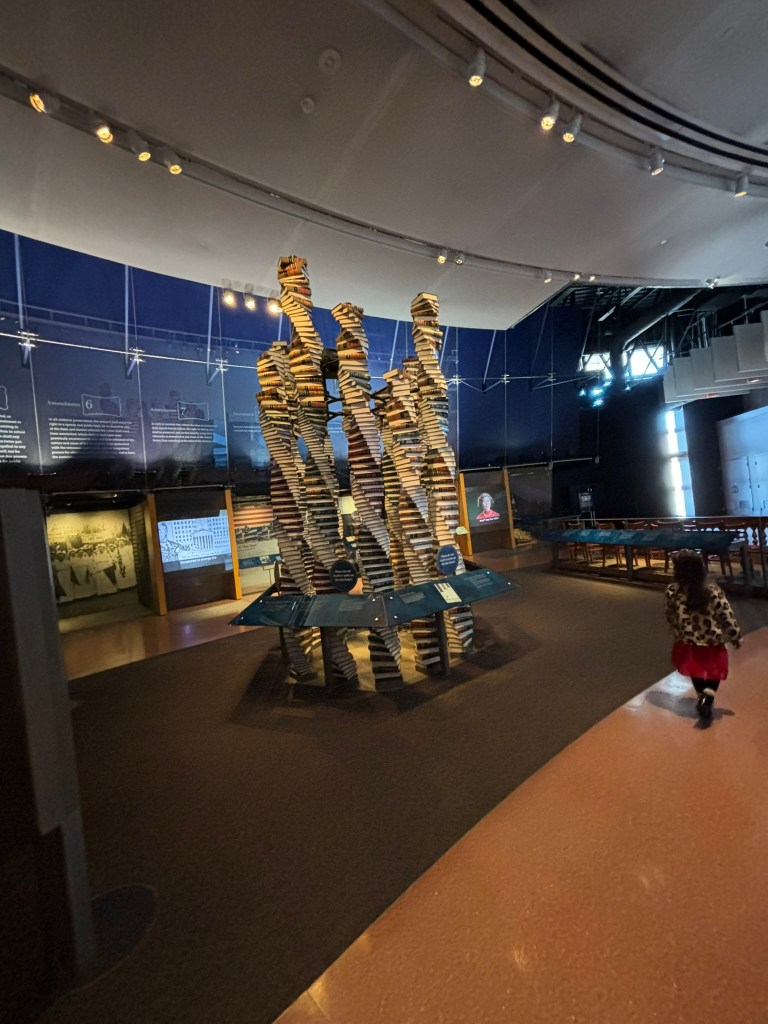
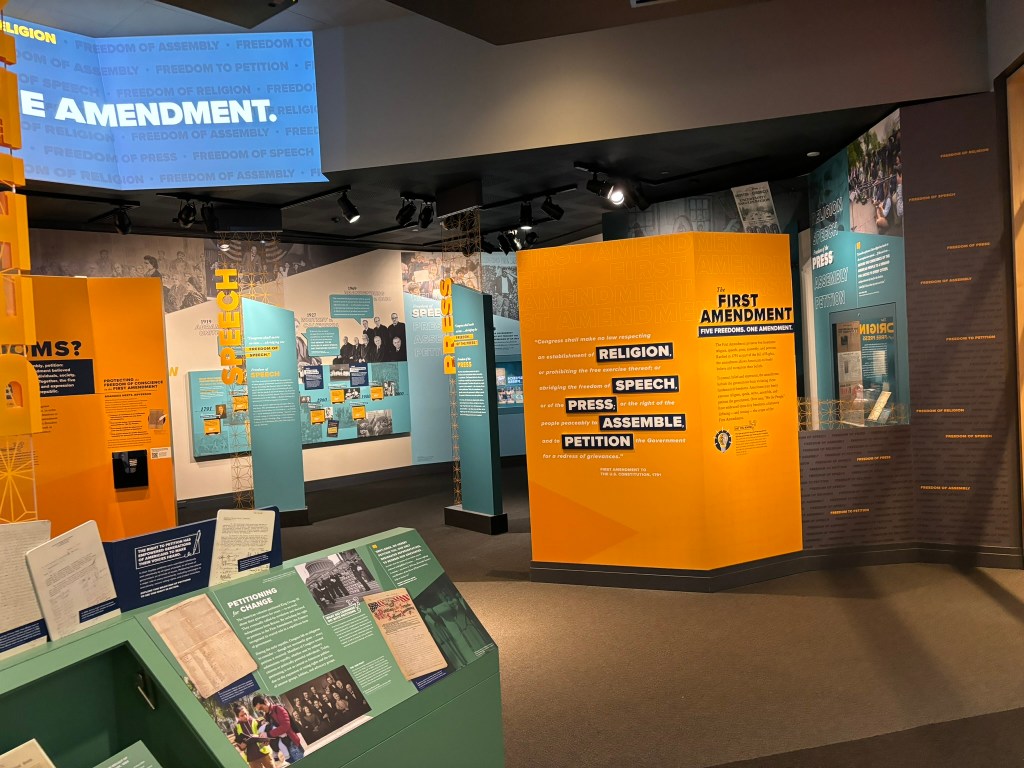
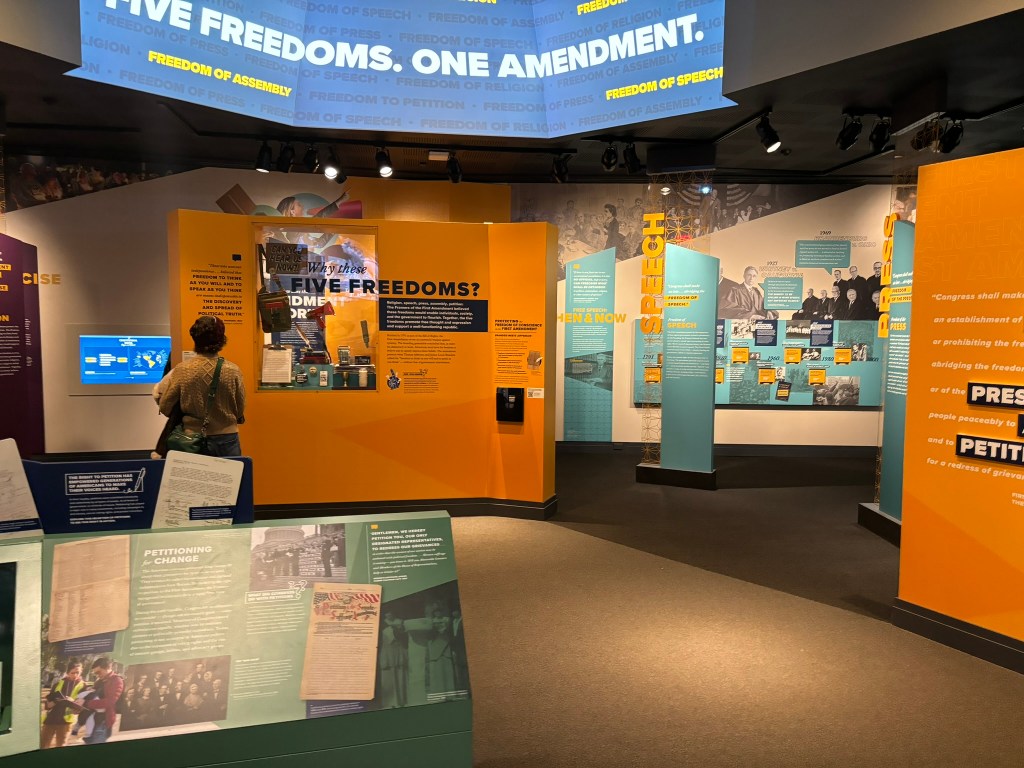
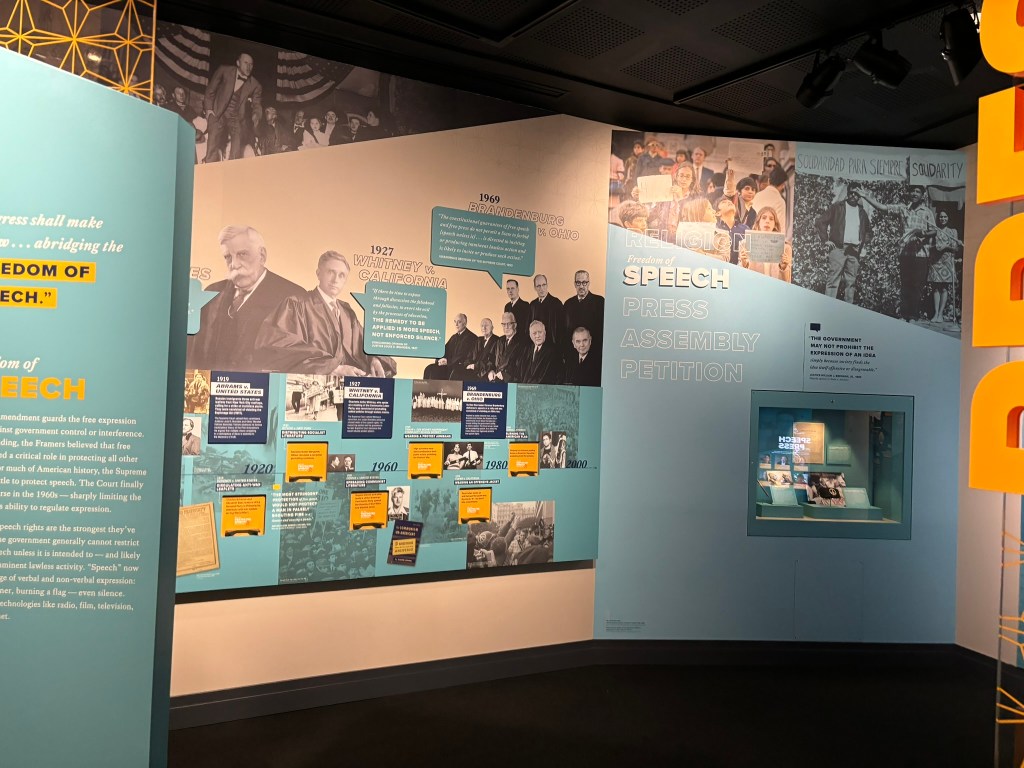
Our visit to the Constitution Center was also a first time visit. We first went to the theater and saw a show which was truly inspiring. The show highlighted, through spoken word and video, the great challenges that the founding fathers had to overcome just to get together and create a brand new government in an age of monarchies and absolute power. The show also went into the challenges that the country has faced since the Constitution was written and the amendments added to remedy these challenges. The show highlighted the fact that we have a government that is not led by a concentration of power in a person or a dynasty. It is led by us, the American people. Leaving inspired, we went to other exhibits throughout the Constitution Center which highlighted the first amendment, as well as exhibits on our three branches of government.
Independence Hall/ Congress Hall
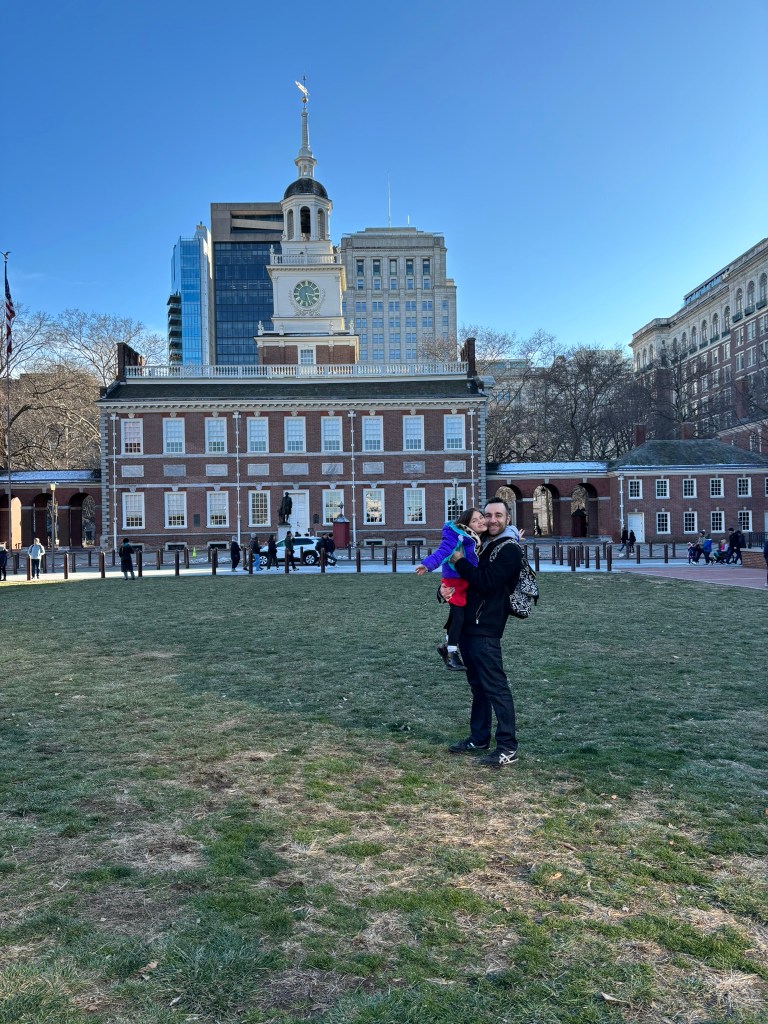
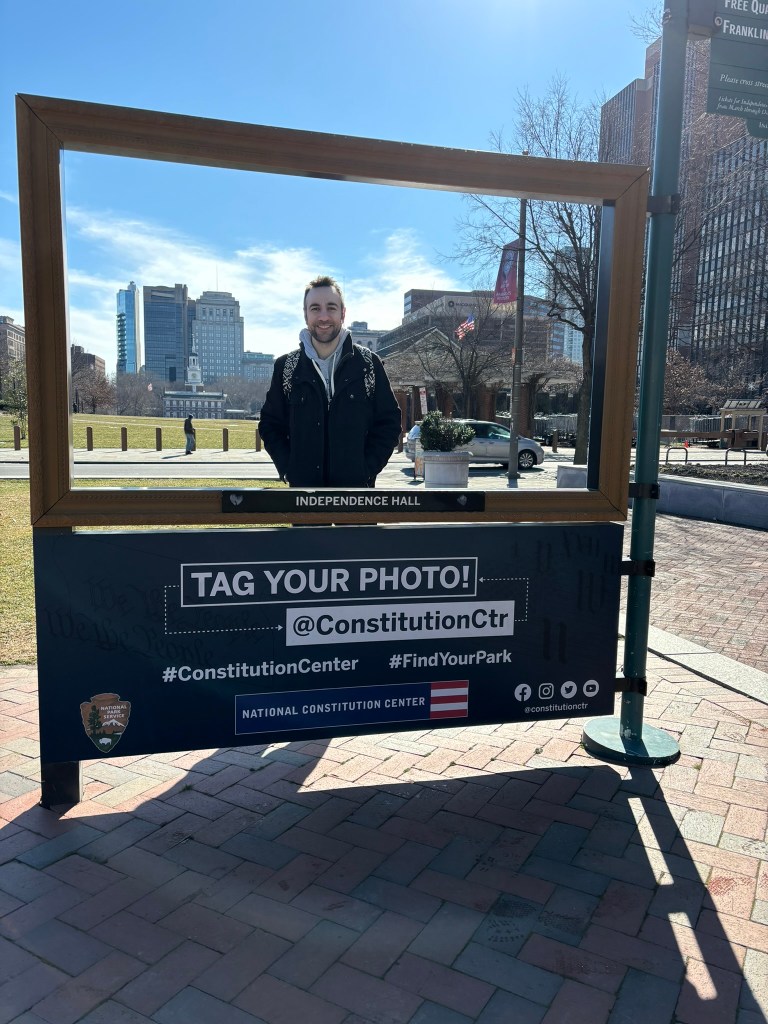
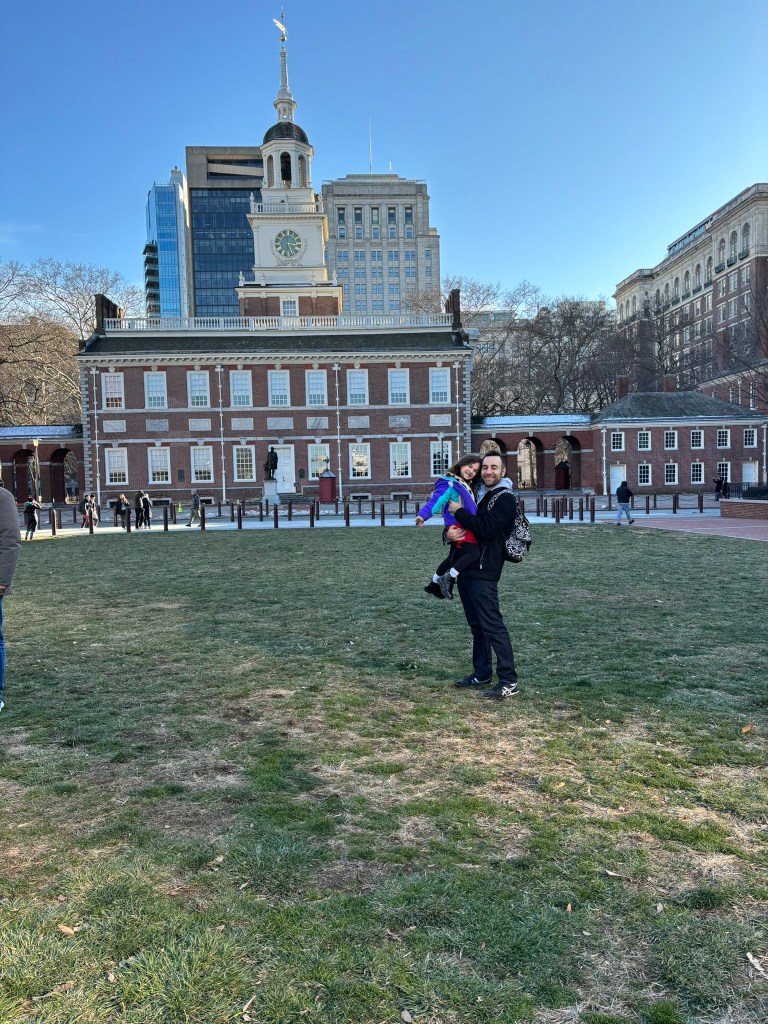
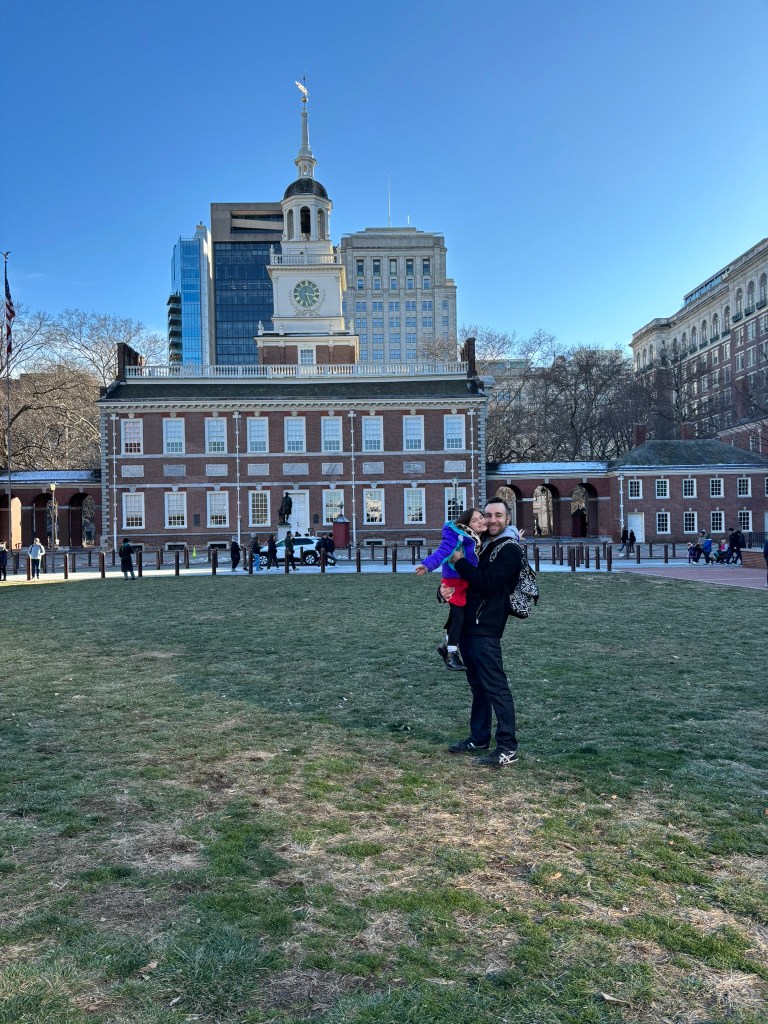
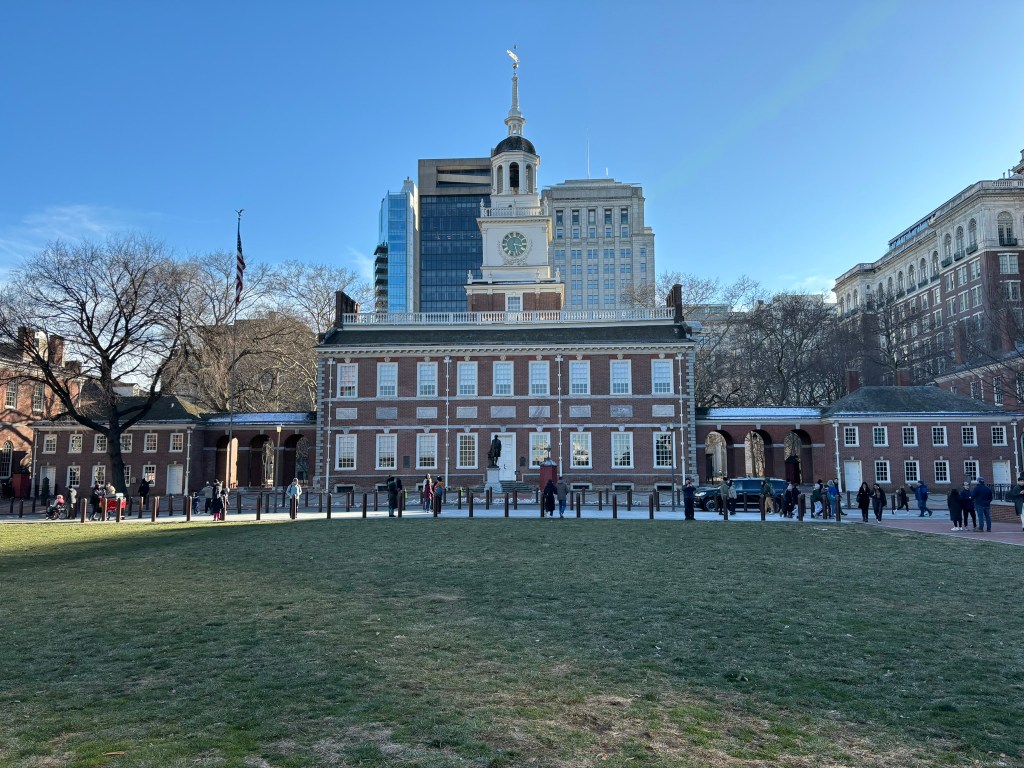
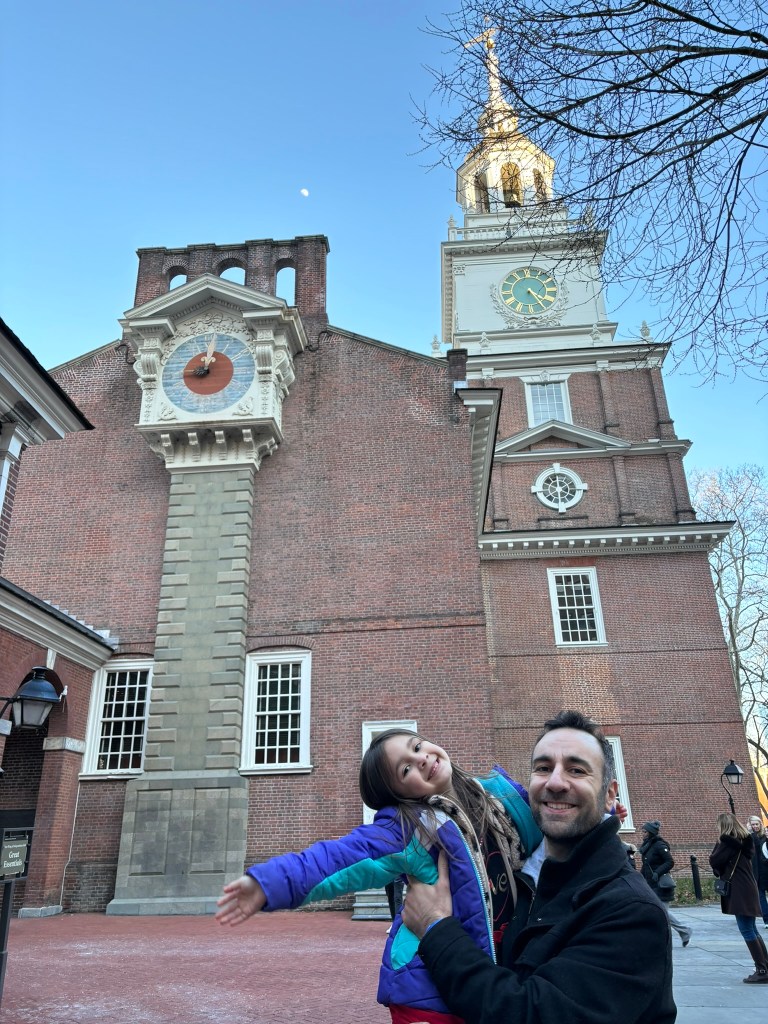
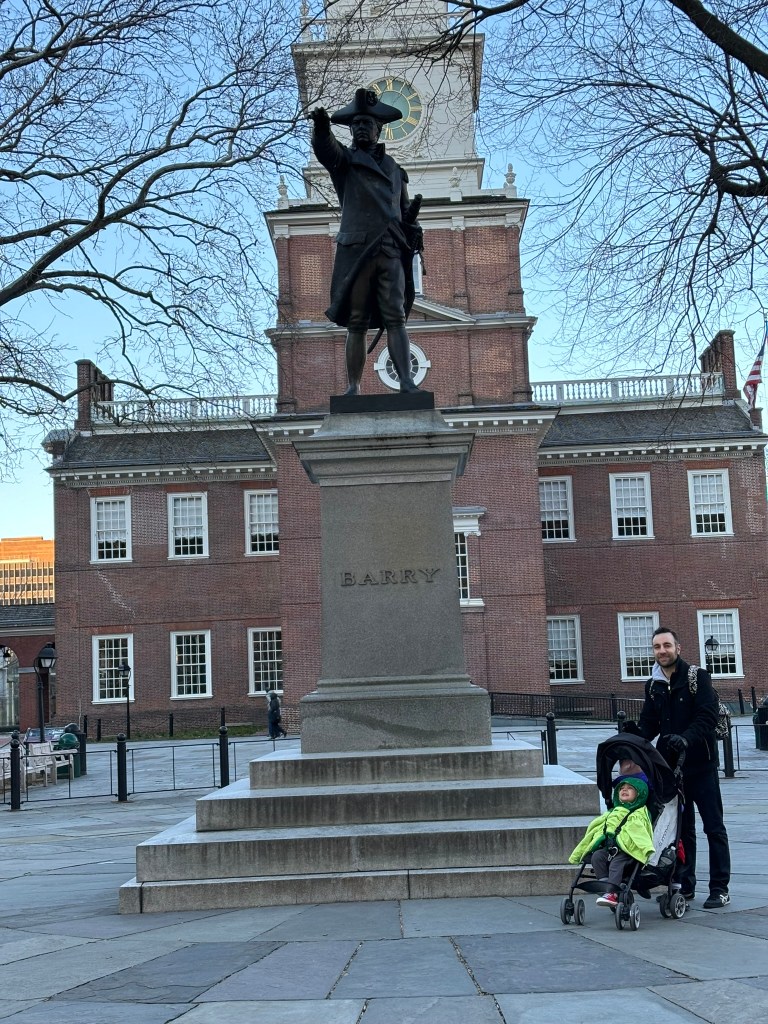
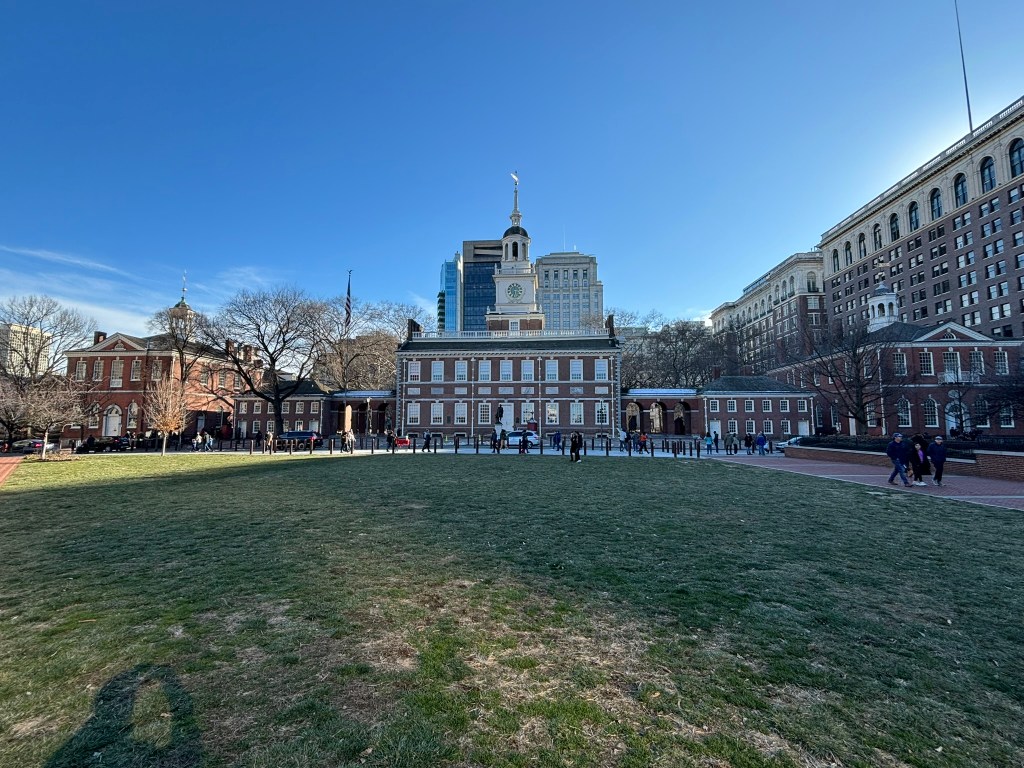
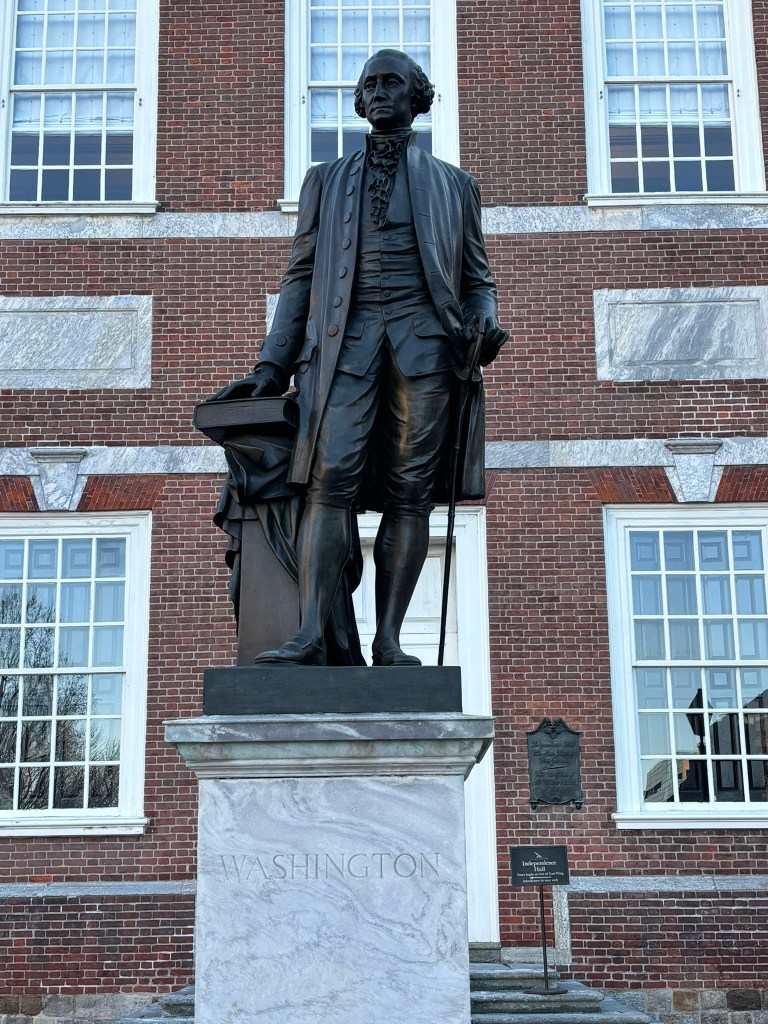
After we left the Constitution Center we walked the short distance to Independence Hall. Unfortunately there were no more tickets to get into Independence Hall. Luckily we had been inside one time previously. The best we could do was take photos from the outside of this historic building, the location where the Declaration of Independence was signed in 1776, as well as the site where our founding fathers wrote the Constitution throughout the summer of 1787. The area was crowded with it being Presidents Day Weekend. It was nice to see many families seeing the historic sites.
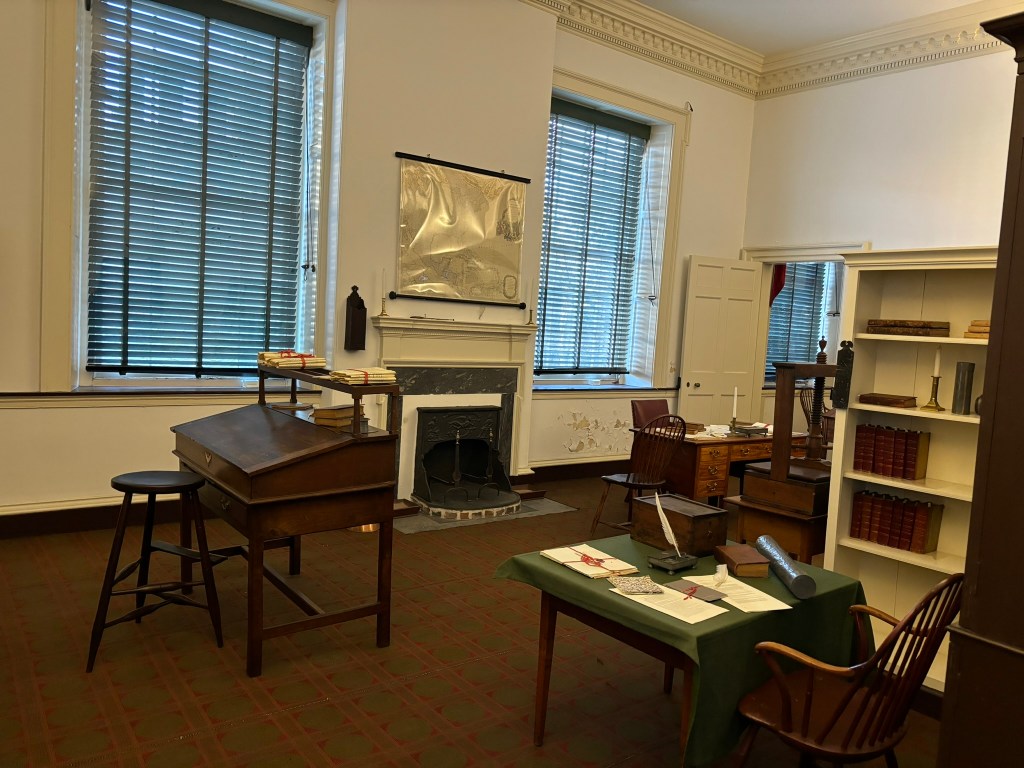
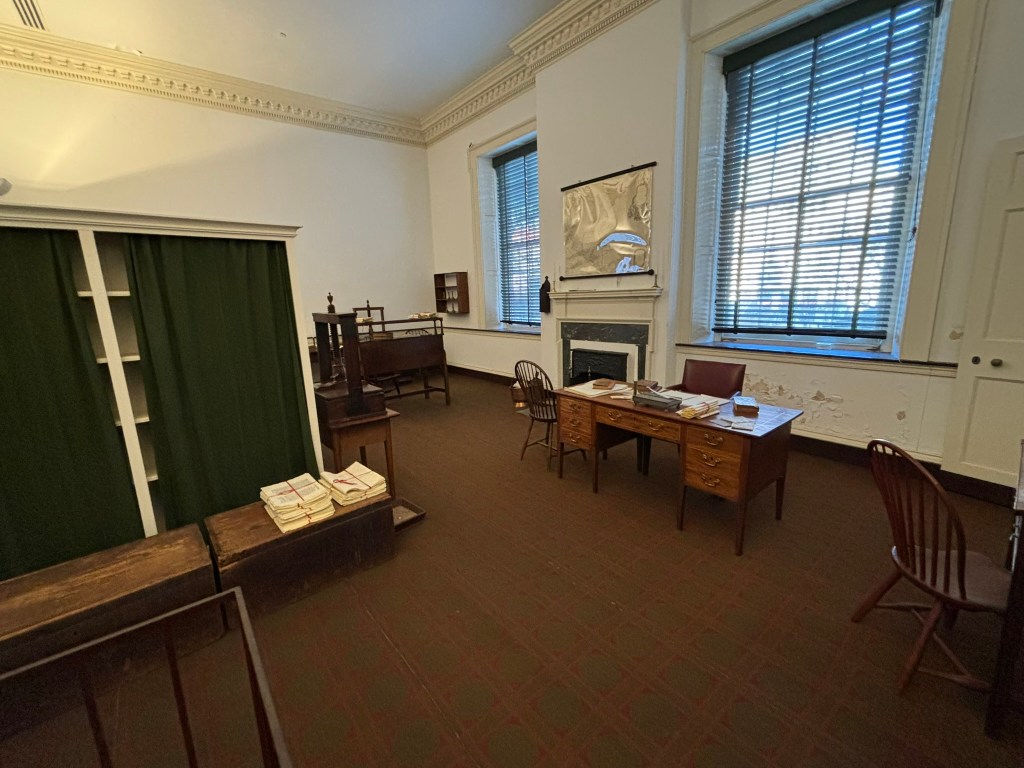
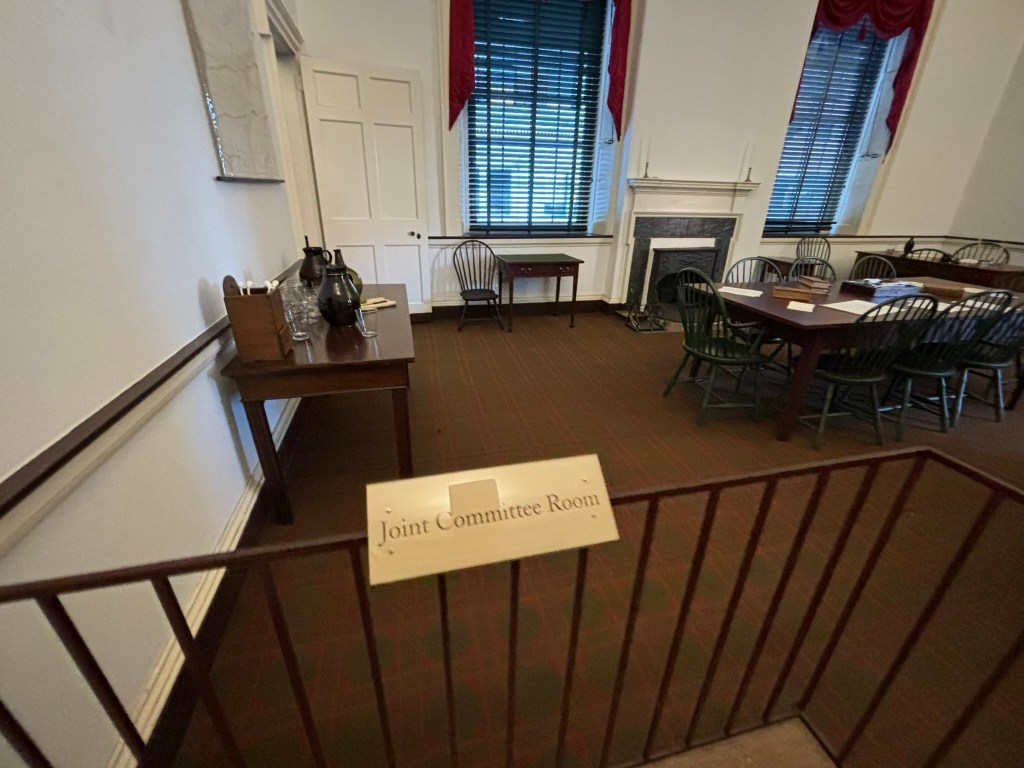
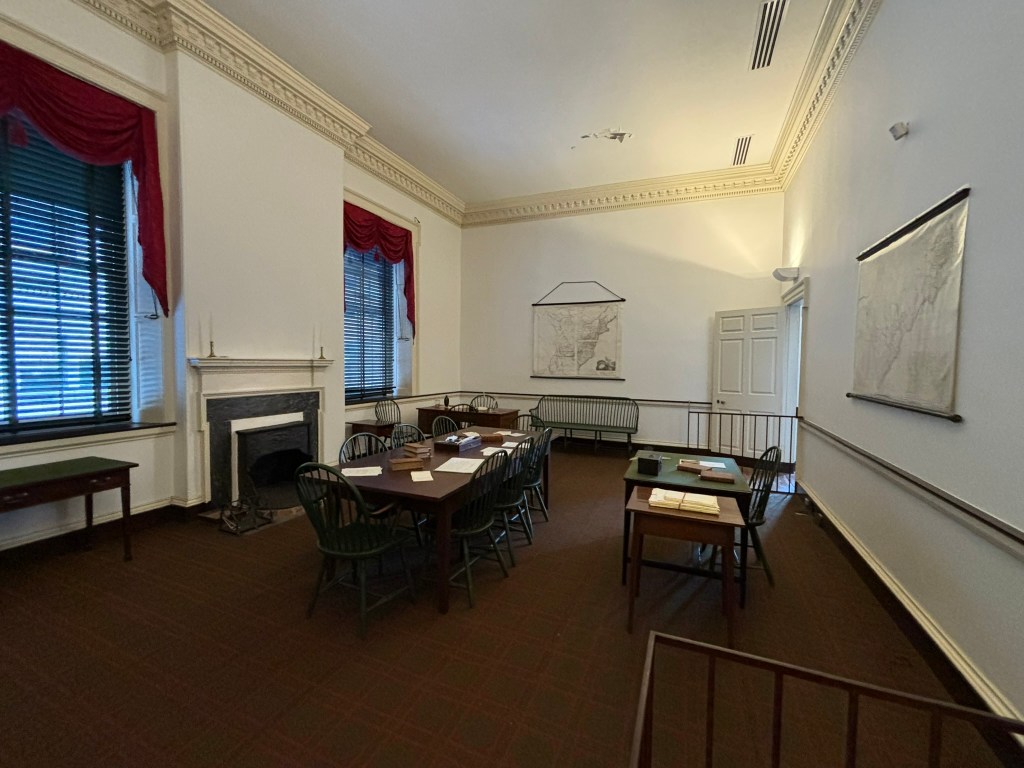
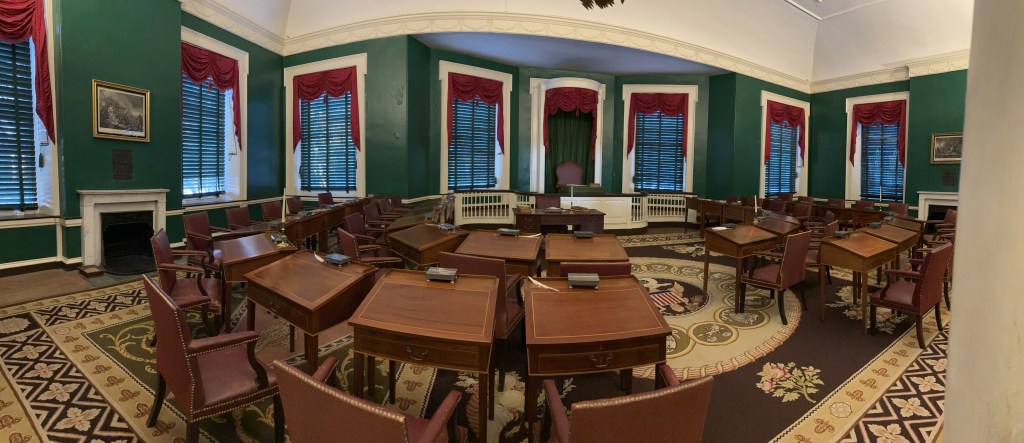
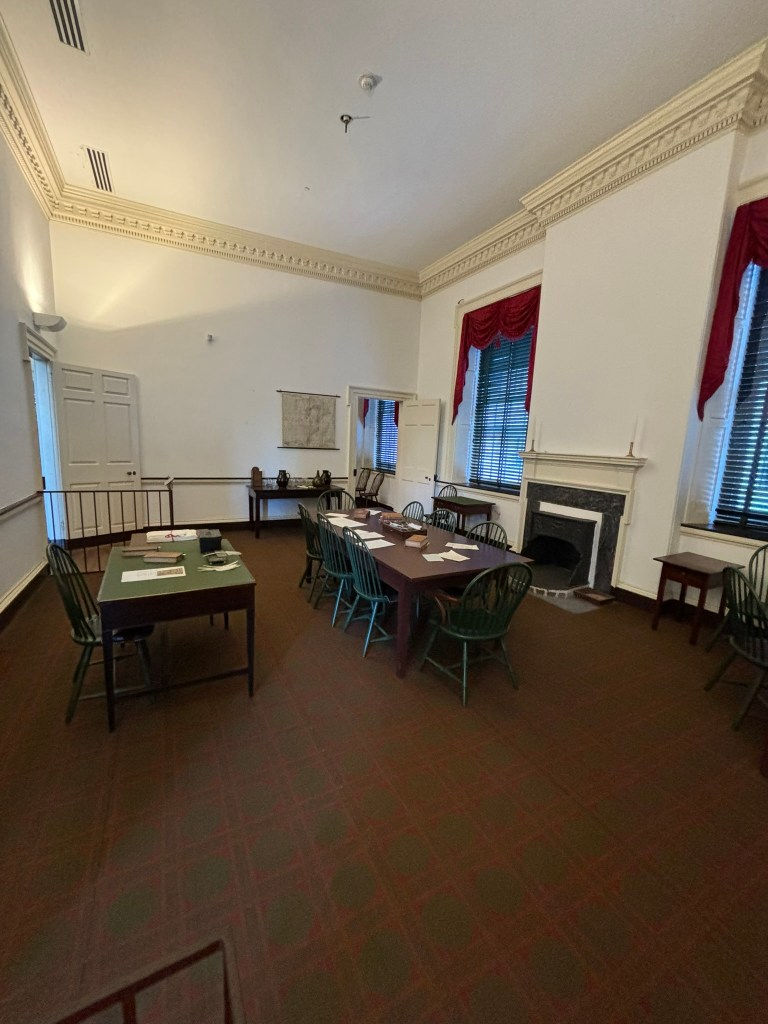
While we didn’t get to go inside Independence Hall, we did have an opportunity to go in Congress Hall which was a first time visit. It was truly remarkable to be in the room where the first Congress sat in our nation’s history. Philadelphia was the nation’s capital from 1790- 1800 while the new capital, Washington DC was being constructed. The 1790s represents one of the most interesting times in our nation’s history. When the Constitution was written, the framers did not take into account the rise of political parties. But within Washington’s cabinet, and within the Congress, two separate parties formed during Washington’s two terms in office. The nascent country experienced the first debates between the Federalist Party (led by Hamilton) and the Democratic-Republicans (led by Jefferson). Congress Hall witnessed the earliest debates over the size and strength of the national government, the economy, and foreign allies. The House of Representatives met on the first floor of Congress Hall, while the senate met on the second floor. When the capital moved to DC in 1800, Congress Hall went back to its original purpose serving as a courthouse. After leaving Congress Hall, the family headed out for dinner.
We really enjoyed the historic sites in Philadelphia. The city was one of the most significant locations from the colonial period, throughout the Revolution, and into the early republic. With significant events taking place like the Constittutional Convention, as well as being the early seat of government, Philadelphia offers much to those interested in the nation’s founding. It is one of the most historic cities in the country, a must visit for all people, especially history nerds.
Check out the following links to the landmarks visited:
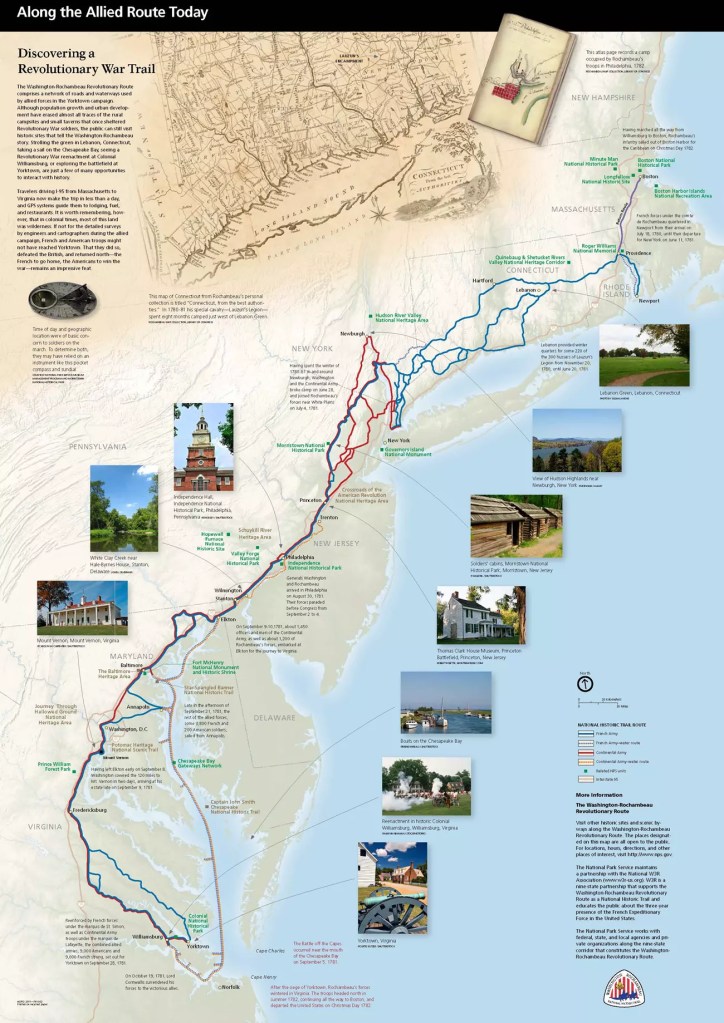
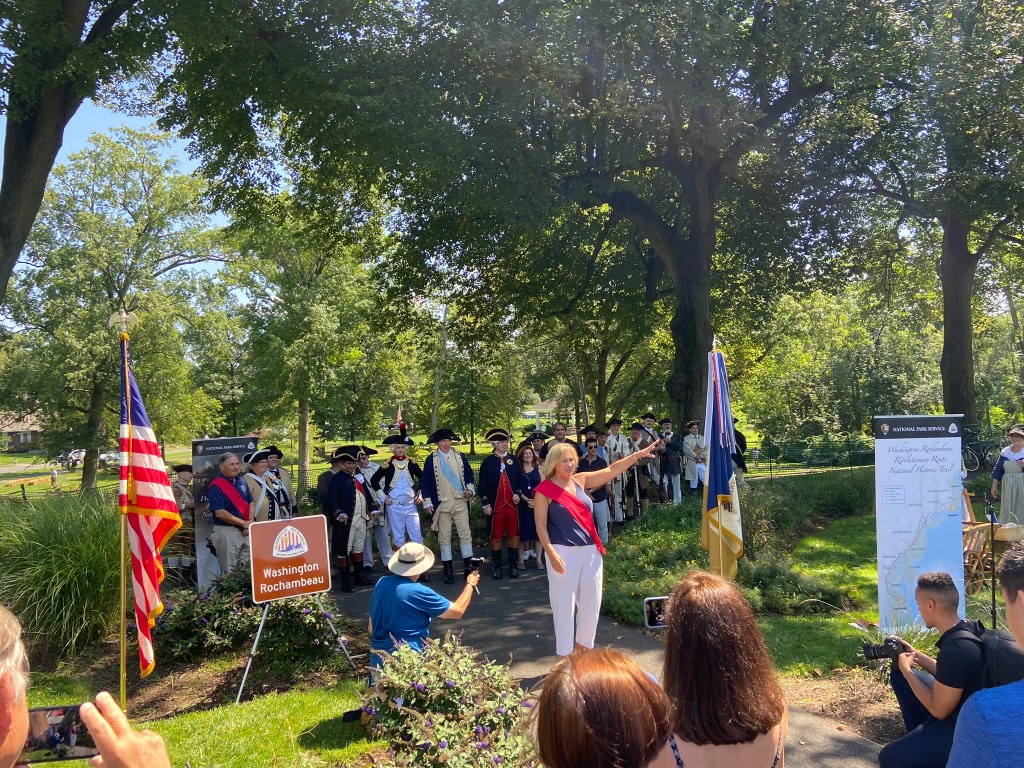
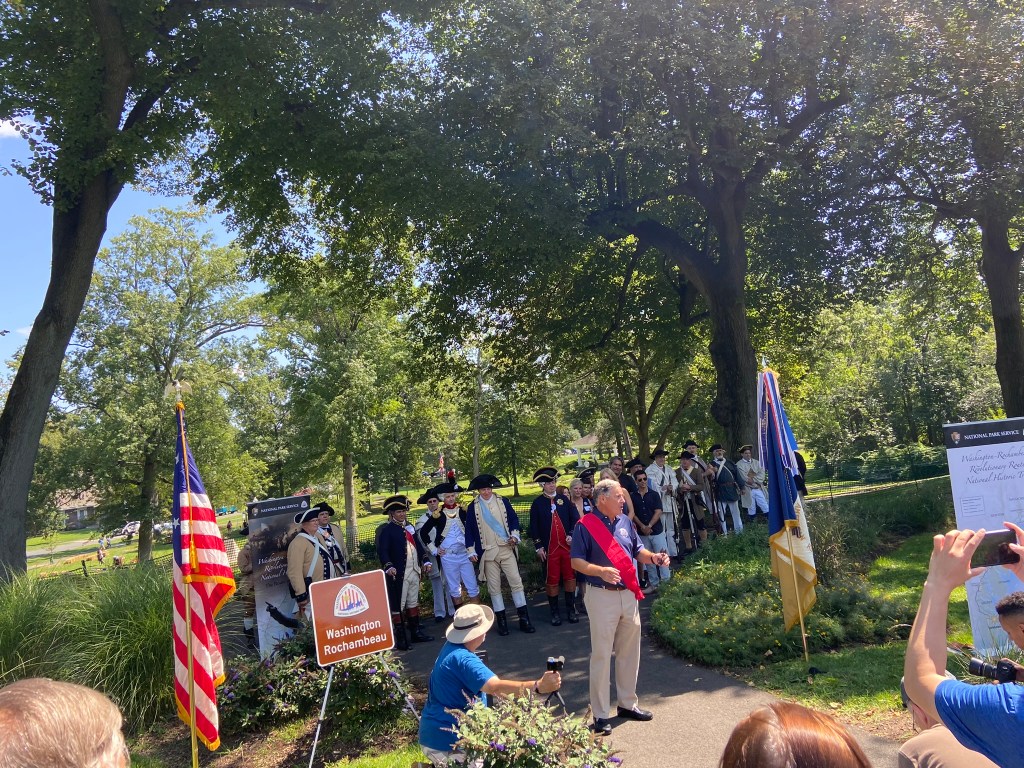
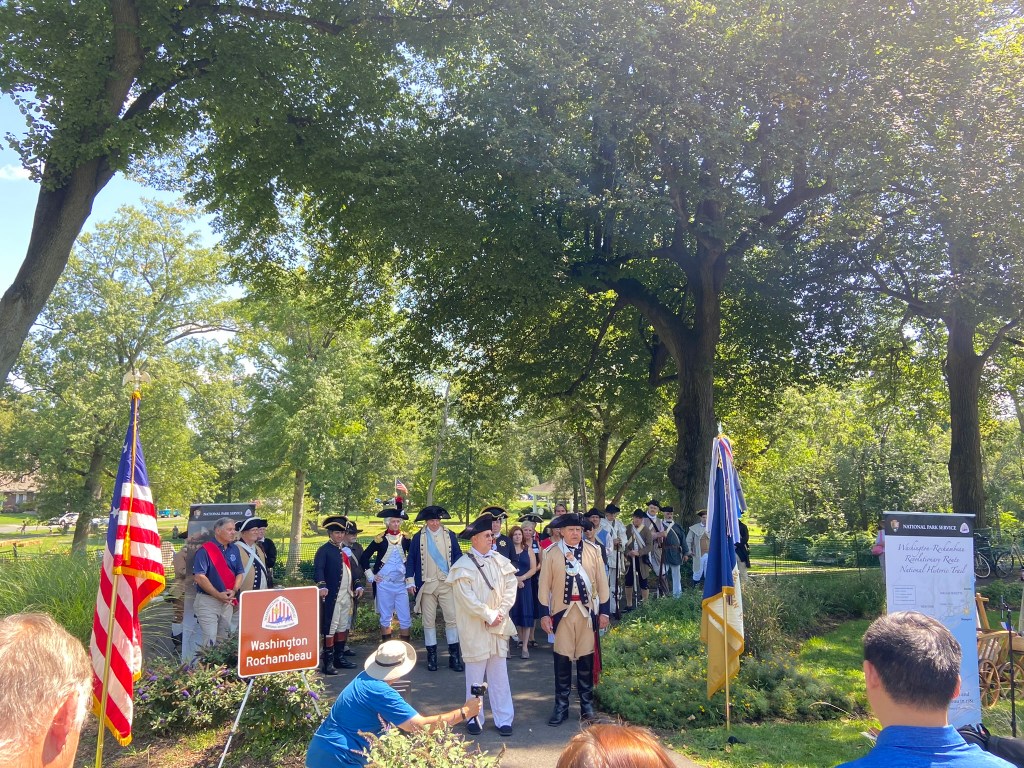
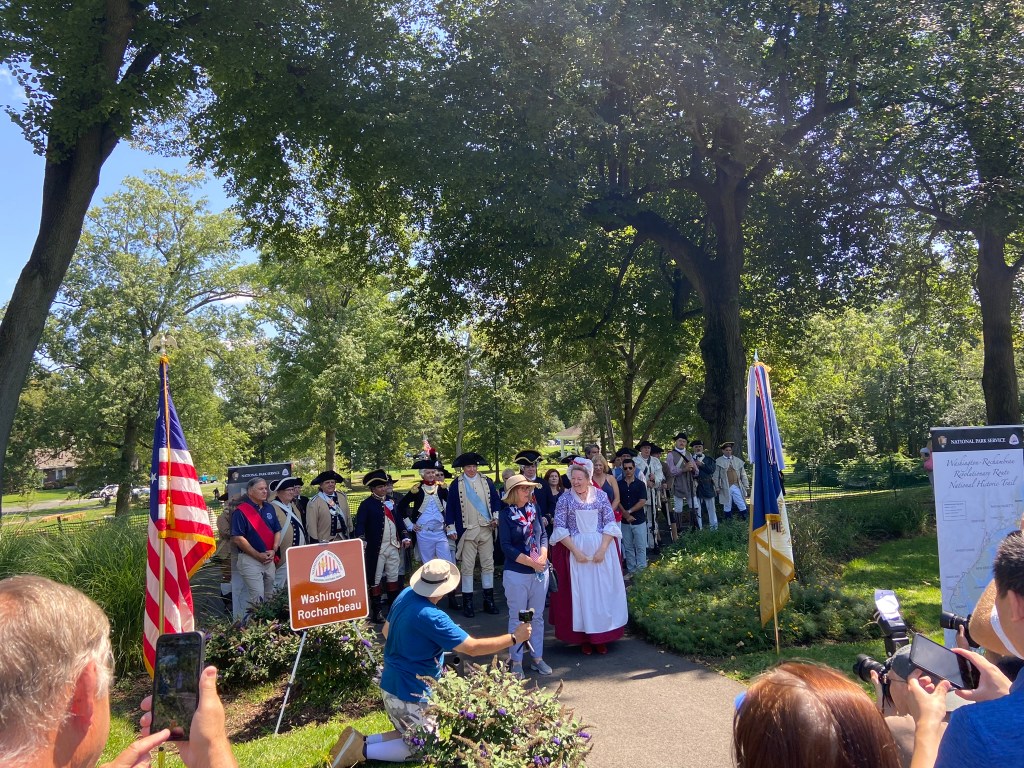
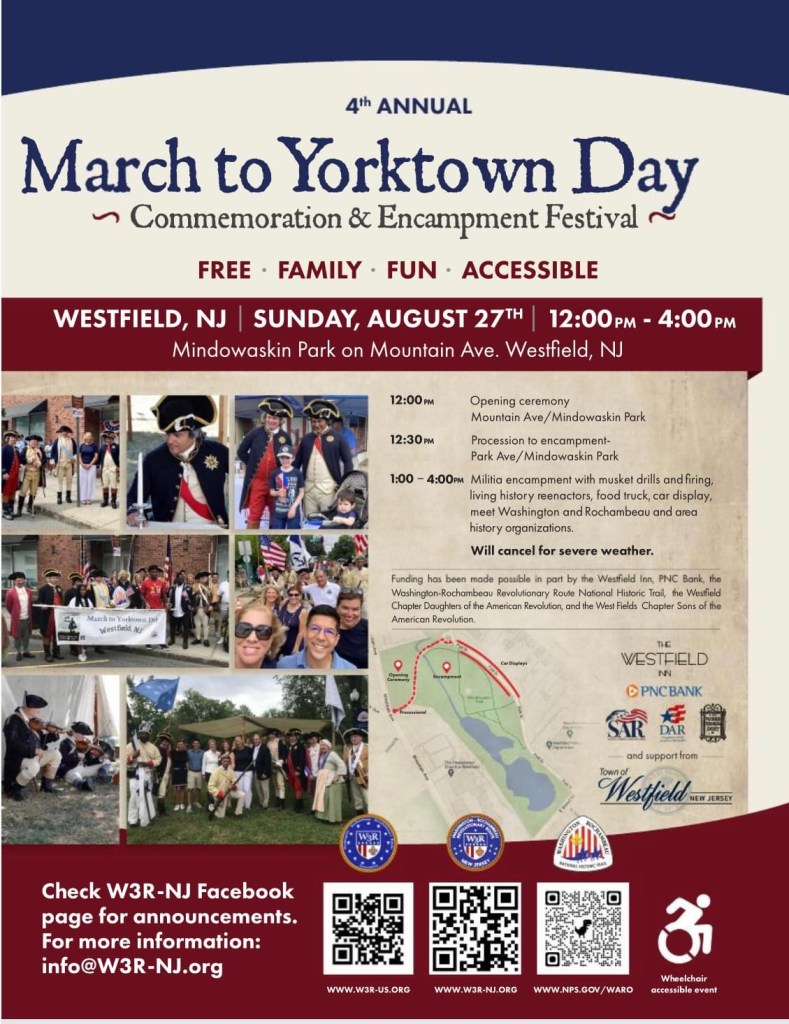
On August 27th, my daughter and I attended the 4th Annual March to Yorktown Day in Westfield, NJ. The event was run by the Washington-Rochambeau Revolutionary Route Association New Jersey (W3R-NJ) to commemorate the day (August 29th, 1781) that General Benjamin Lincoln’s line of the Continental Army, passed through Westfield, NJ on their way to Yorktown, Virginia. The French Army, led by the Comte de Rochambeau, took a route to the west of the Continental Army before the two armies met up outside Princeton, NJ. The Washington-Rochambeau Revolutionary Route highlights the route that the American and French armies took from Newport, Rhode Island, to Yorktown, Virginia, which culminated in the defeat of the British Army in The Siege of Yorktown in October 1781. The Washington-Rochambeau Trail is a unit of the National Park Service.
Map from the National Park Service
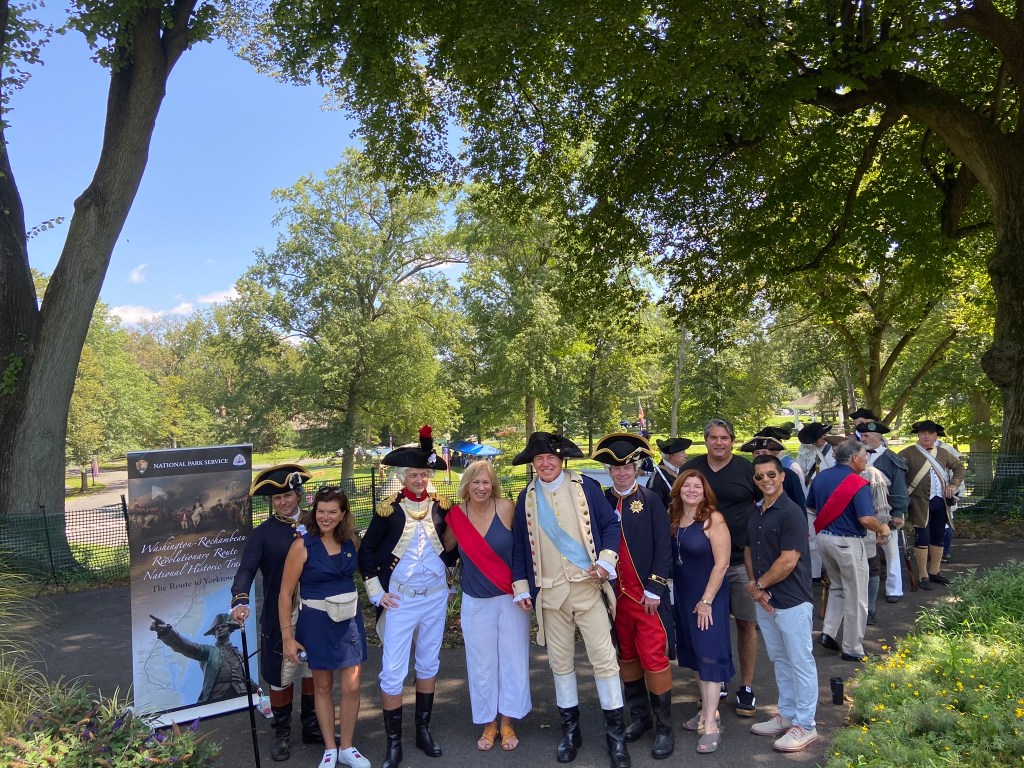
The event began with an opening ceremony at Mindowskin Park. Re-enactors included Washington, Rochambeau, General Chastellux, and the Marquis de Lafayatte. Speakers during the opening ceremony included Julie Diddel, W3R-NJ Chair, who explained the significance of the Washington-Rochambeau Historical Route, as well as Westfield’s role in the Revolution. She did a fantastic job organizing and running the event. Speakers also included Westfield mayor Shelley Brindle, State Senator Jon Bramnick, and others.
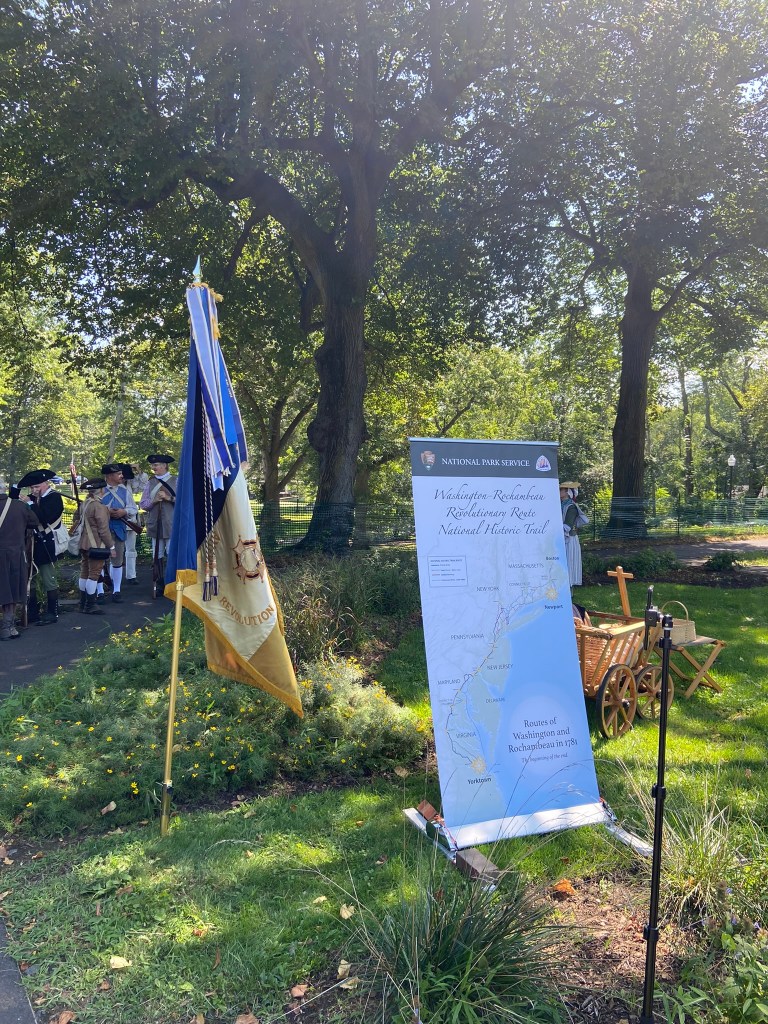
Following the opening ceremonies, the crowd marched into the center of Mindowskin Park, led by Washington and Rochambeau. The park took on the form of a Revolutionary Era militia encampment with colonial games, cooking demonstrations, and frequent marches, drills and musket firing from the soldiers.
Local history organizations set up tents and provided information. Organizations included the Washington Association of New Jersey, the Chatham Historical Society, the Union Township Historical Society, the Princeton Battlefield Society, the Miller-Cory House Musuem, the Westfield Chapter of the Daughters of the American Revolution and others. Music was provided througout the event by fife and drums which took you back to the 18th century.
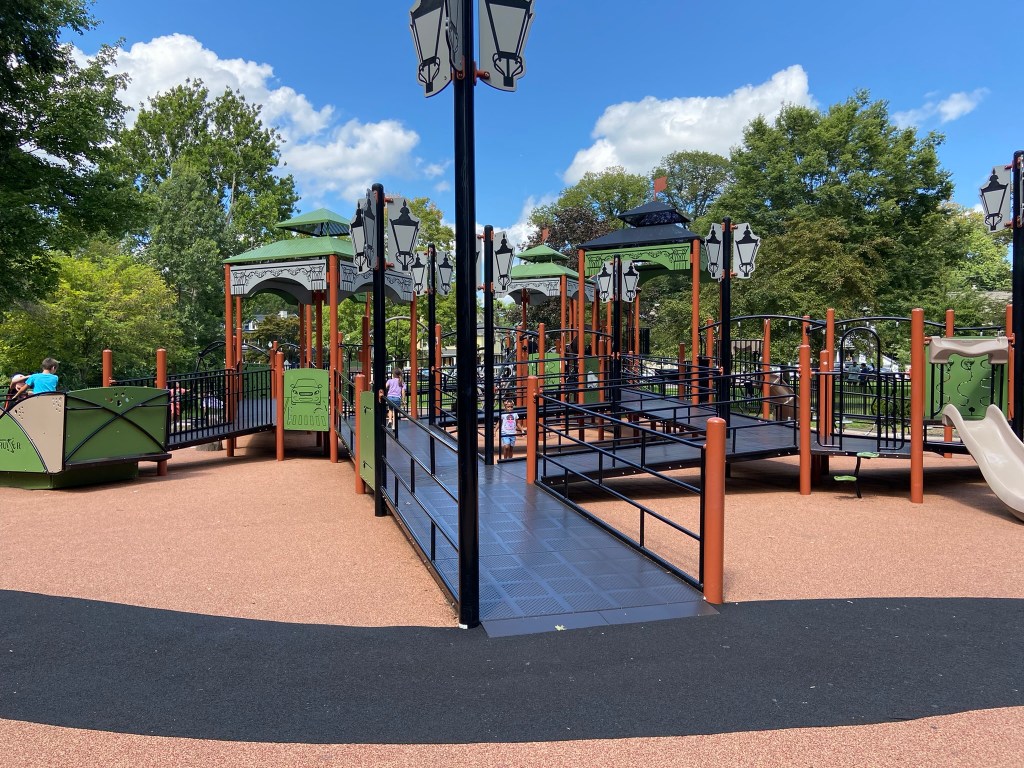
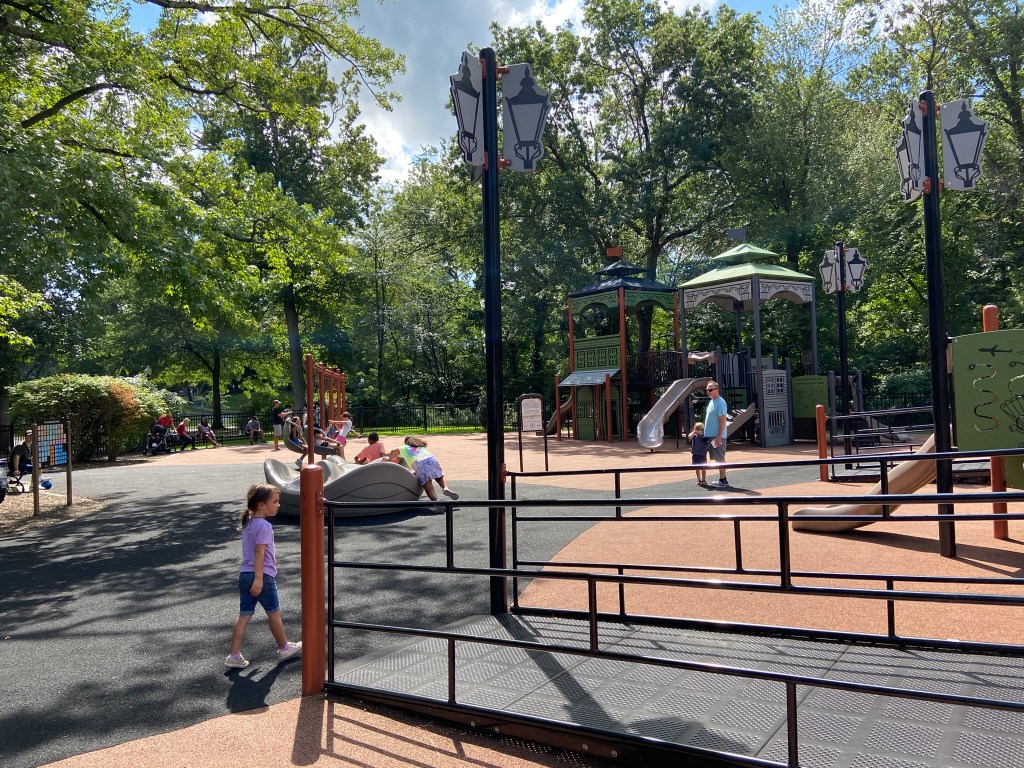
My daughter and I chatted with the re-enactors as well as members of the different historical groups there. We tried out colonial games and learned about colonial encampment cooking. There was a Family Flava food truck at the event so my daughter and I had lunch on a park bench. After we ate, we found out that Mindowskin Park has a beautiful playground that my daugher really enjoyed. I had to bribe her to leave with a stop at the ice cream truck.
My daughter and I had a wonderful time at the March to Yorktown Day in Westfield. The event was another reminder of the rich history in New Jersey and the strong ties that the state has to the American Revolution. The Washington-Rochambeau Revolutionary Route Association New Jersey did a great job providing an event that was fun and informative for all ages. I look forward to attending again next year!
In Part 1 of my post about my family’s trip to Gettysburg, I discussed our experience on the first day of our trip which included the Dobbin House, the Jennie Wade House, a stroll up Baltimore Street, Ronn Palm’s Museum of Civil War Images, and the Gettysburg National Cemetary. In Part 2 I will discuss our second and third (half) days, including a Double Decker bus tour of the battlefield, the Gettysburg National Military Park and Museum, and the Gettysburg Museum of History.
Gettysburg Battlefield Bus Tour
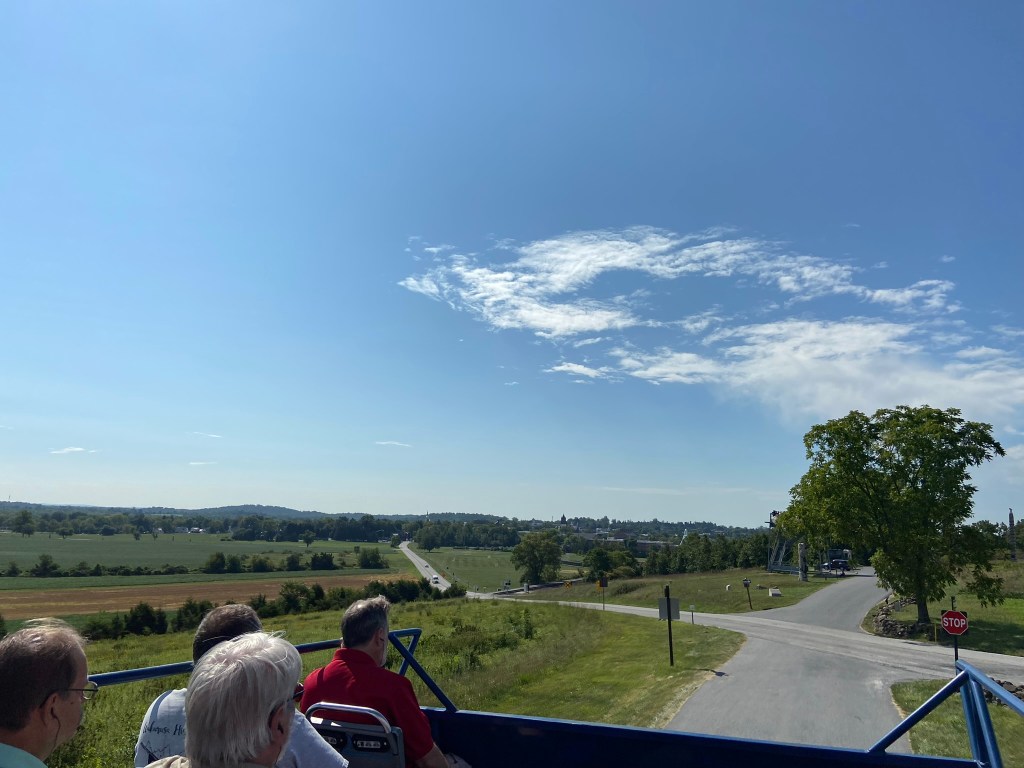
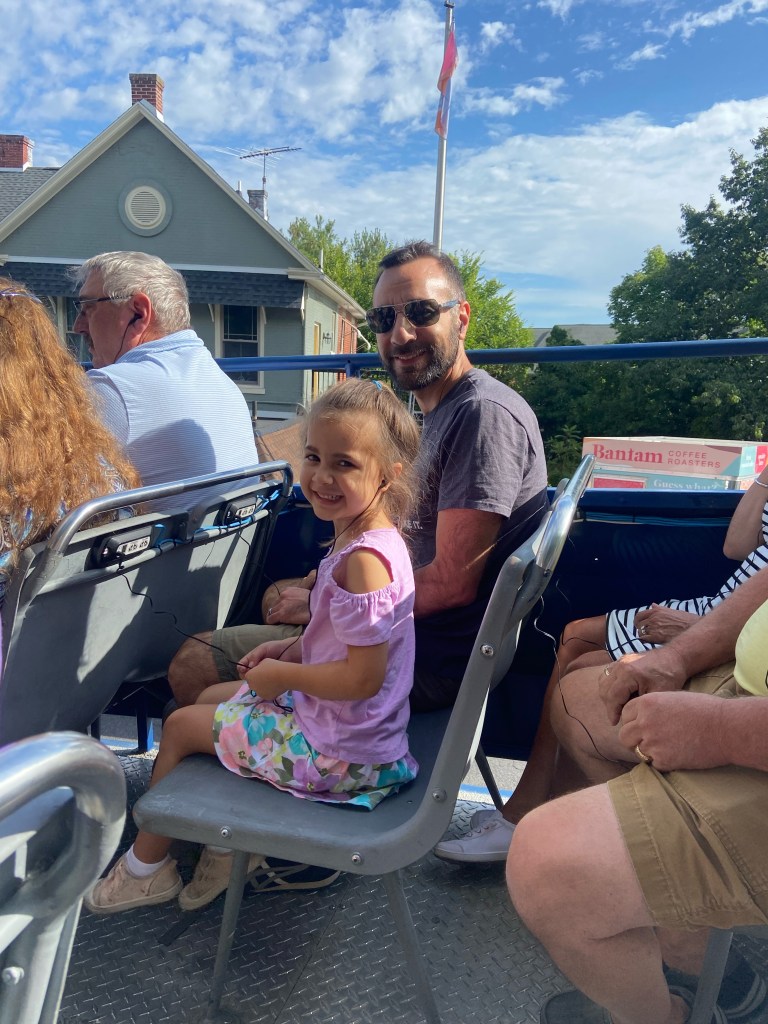
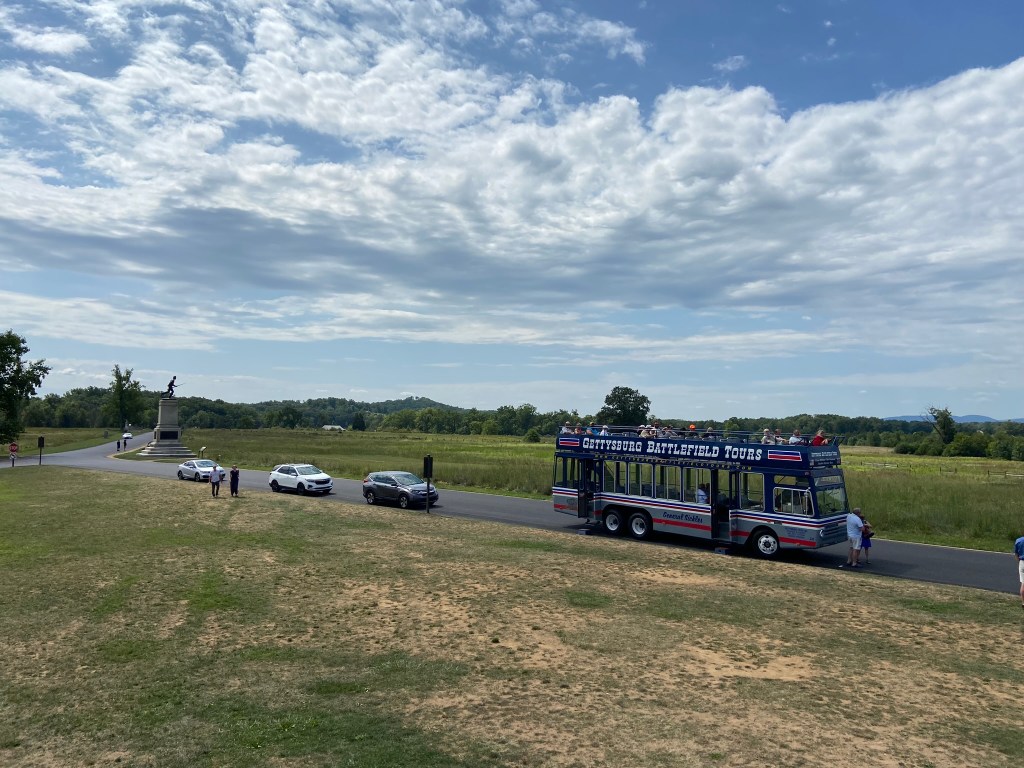
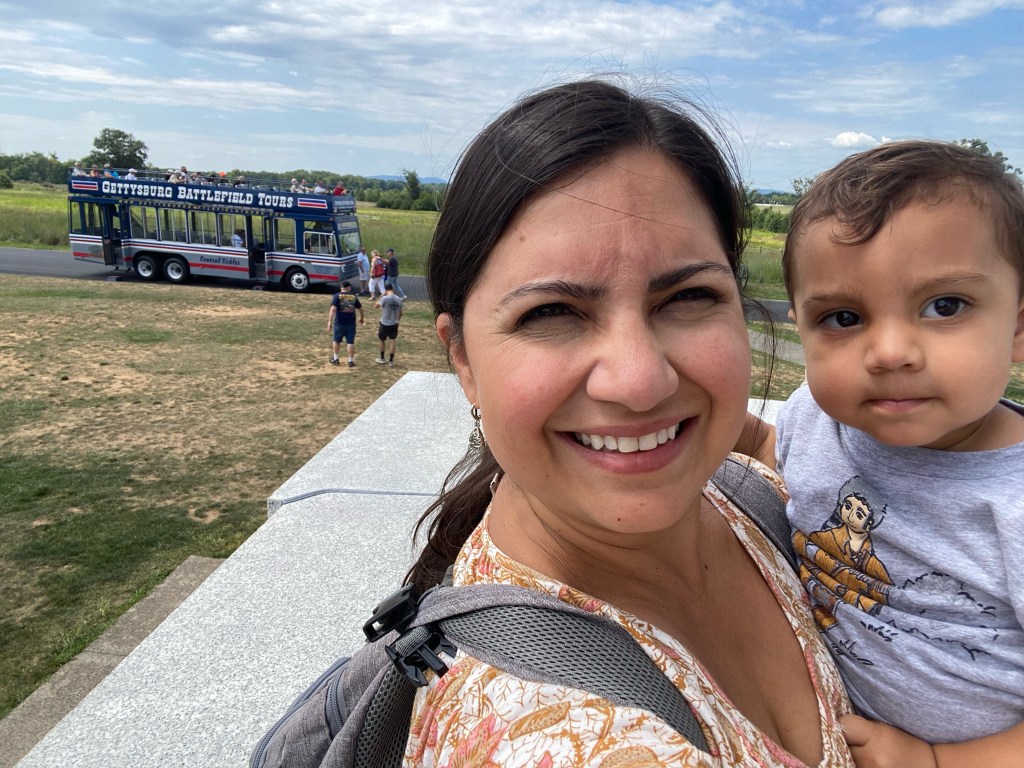
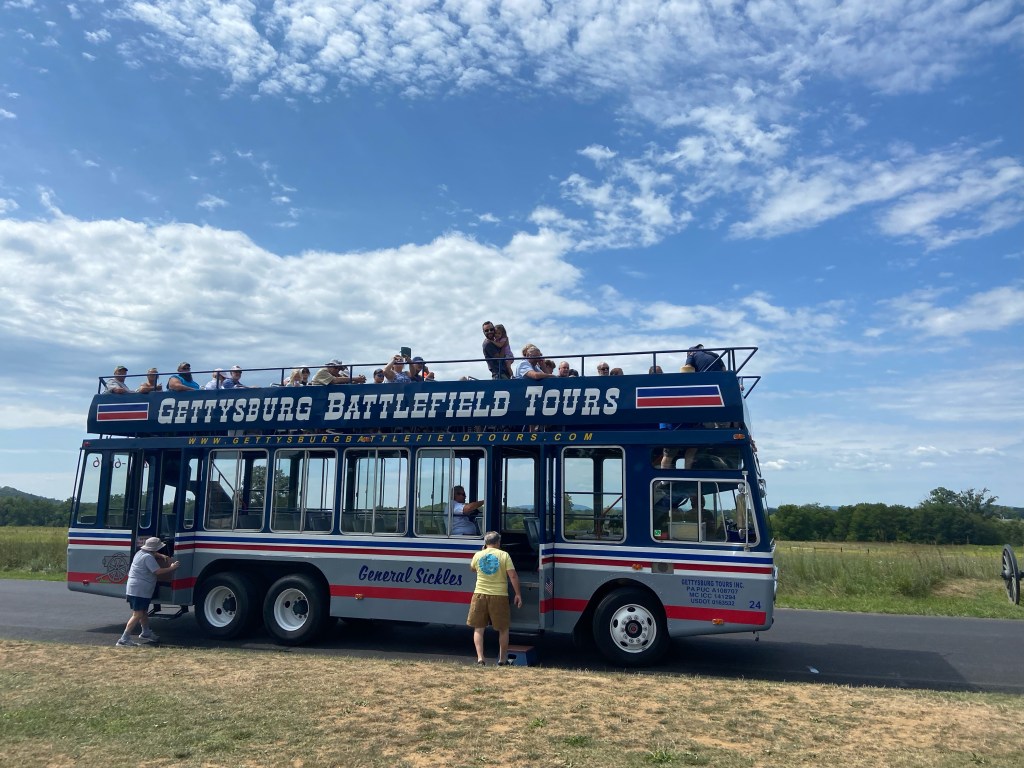
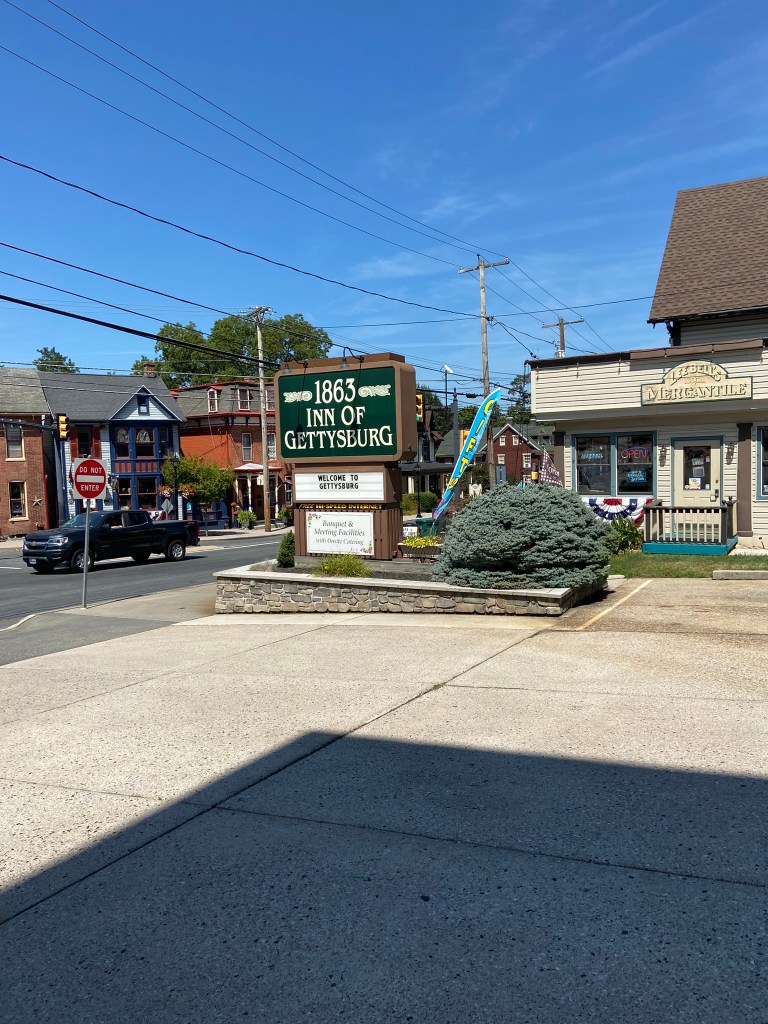
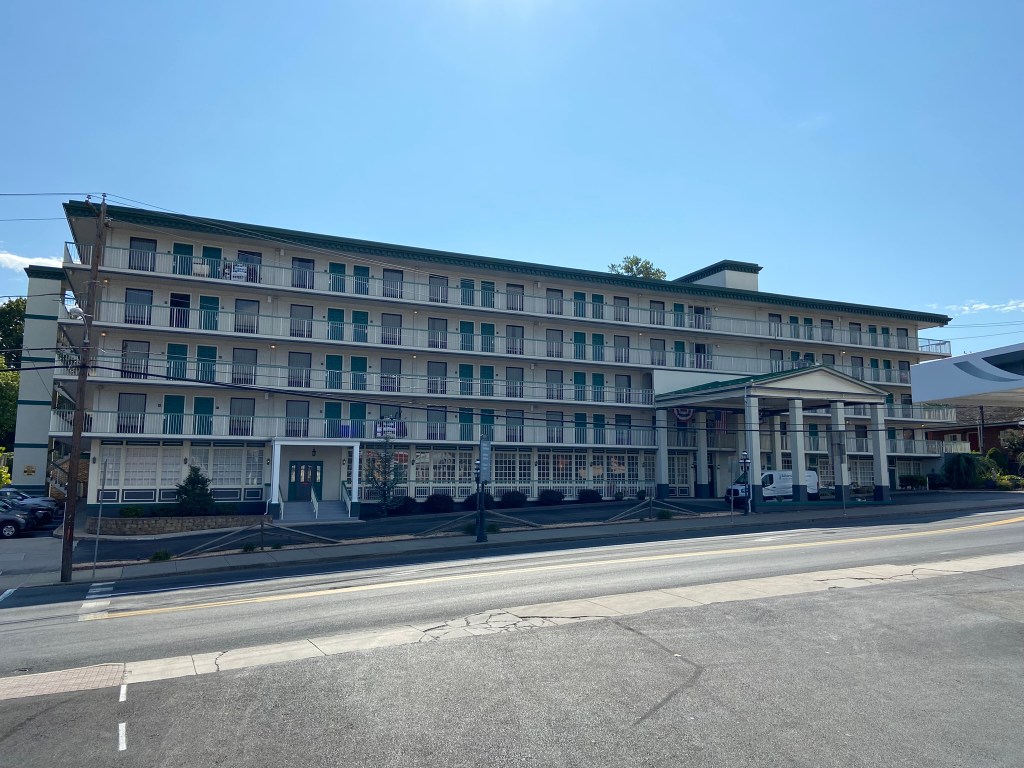
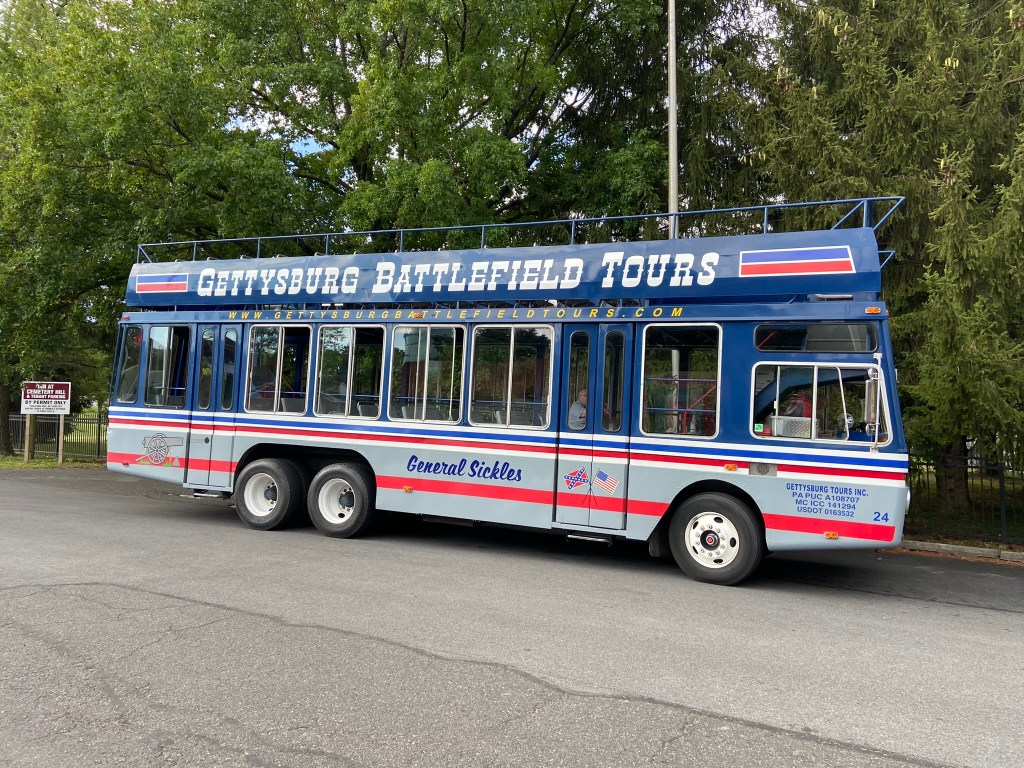
On day 2 of our trip, we woke up and had breakfast in our hotel, the 1863 Inn of Gettysburg. Our bus tour, which is run by Gettysburg Battlefield Tours, started at 10am and we arrived a half hour early. It was nice that the meeting place for the bus tour was just a 2 minute walk from our hotel. We sat on the top of a double decker open-air bus. Each person is supplied with headphones to listen to the professional licensed battlefield guide who sits below. He was willing to address any questions about the tour and the battle.
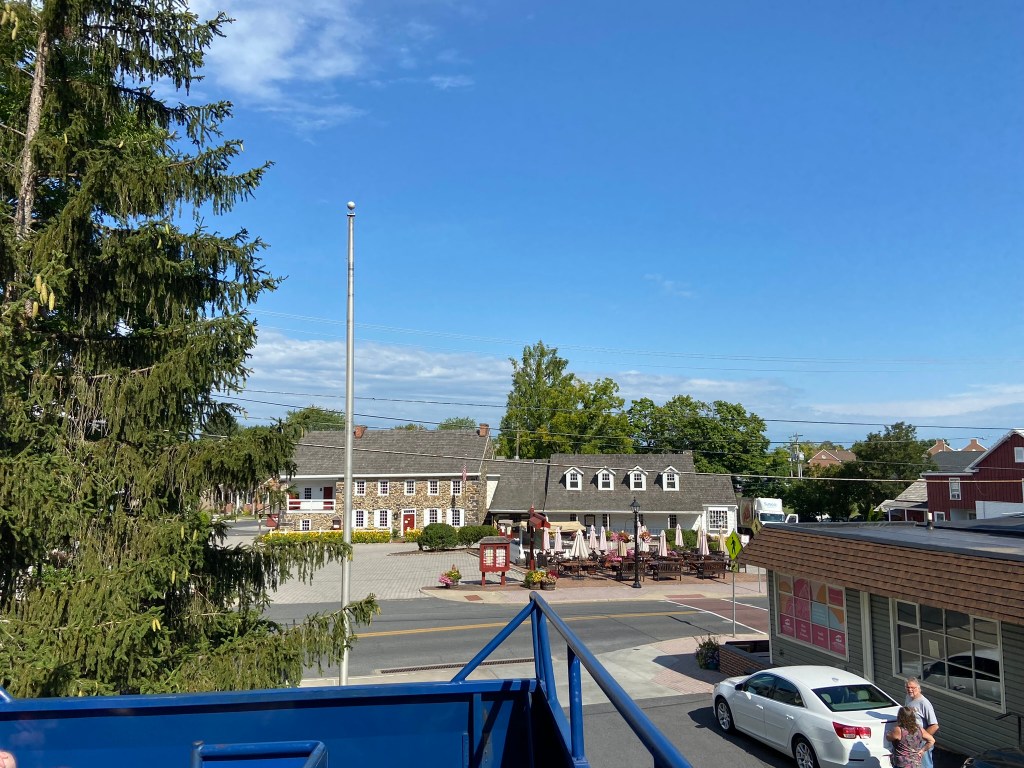
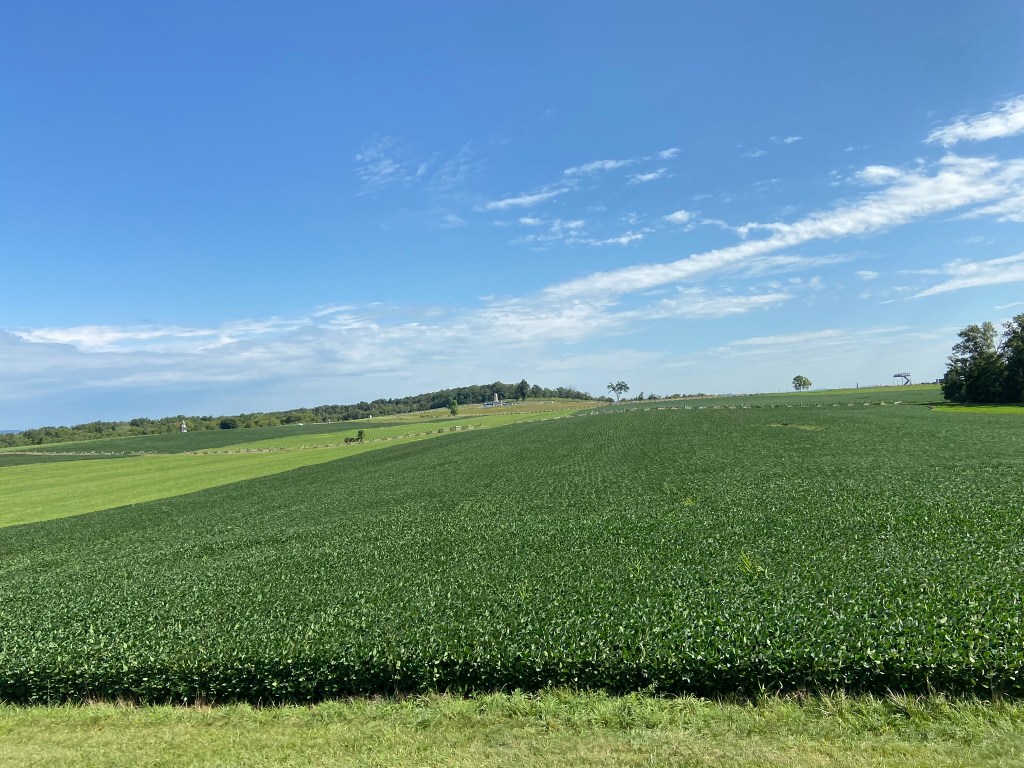
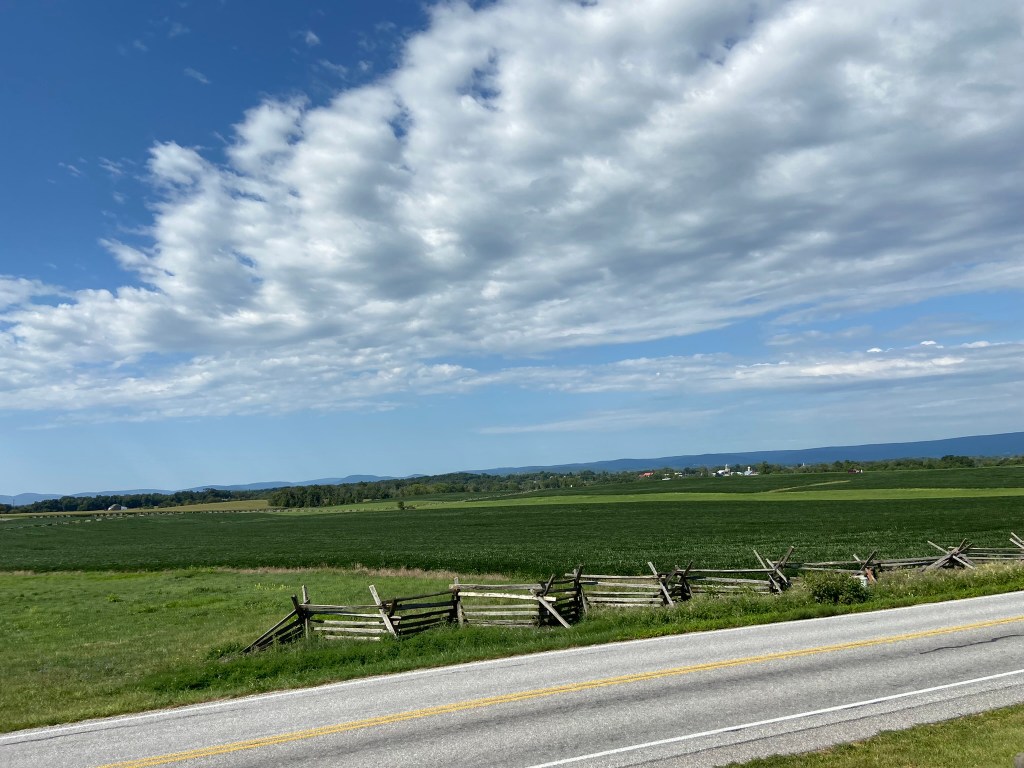
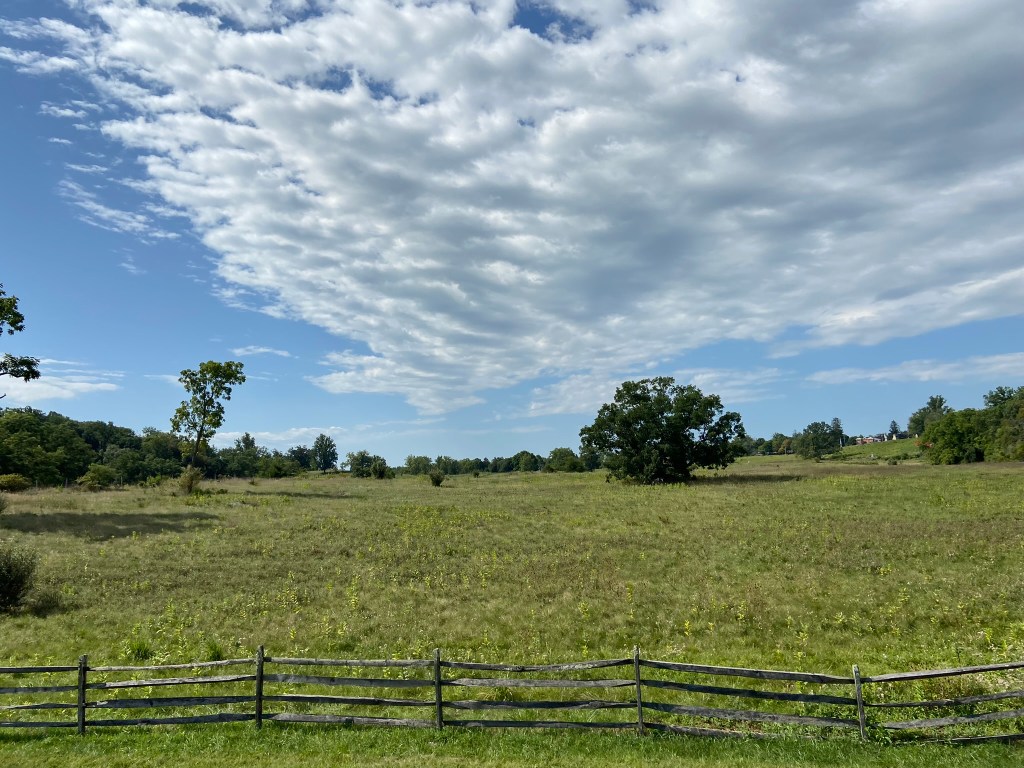
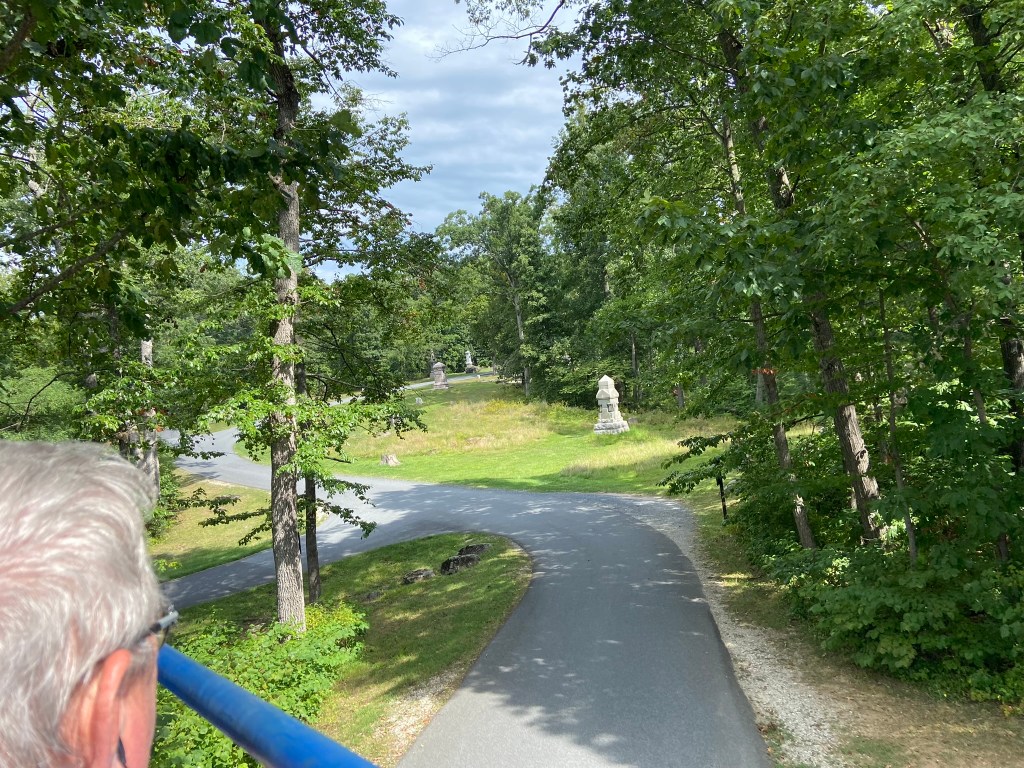
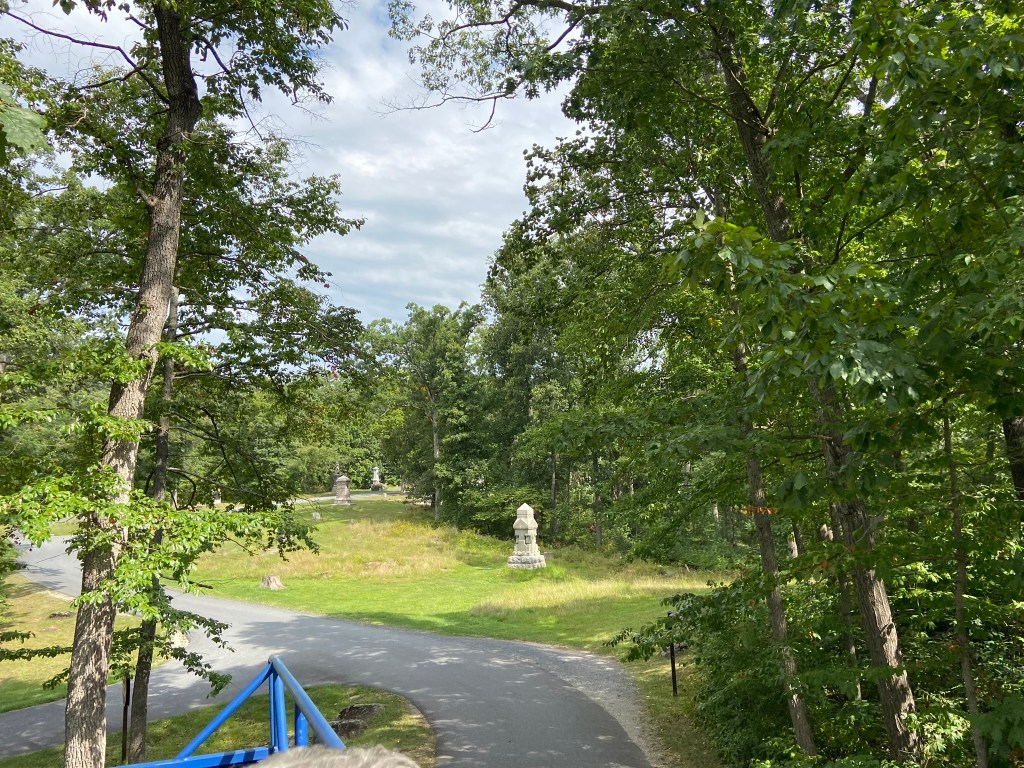
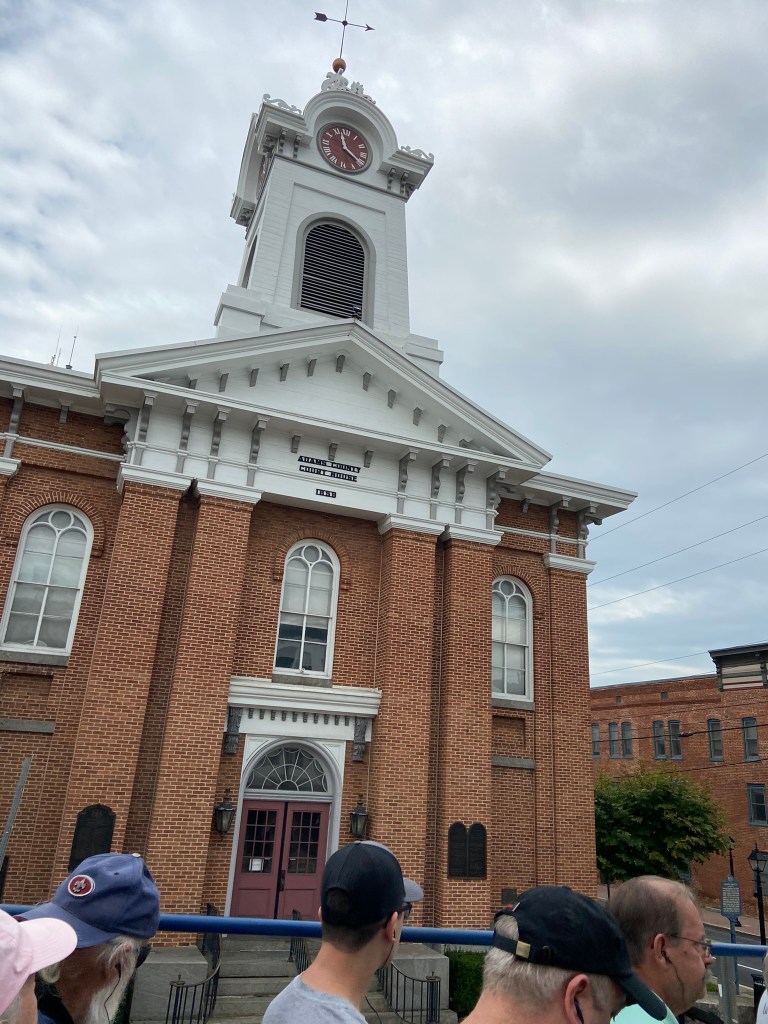
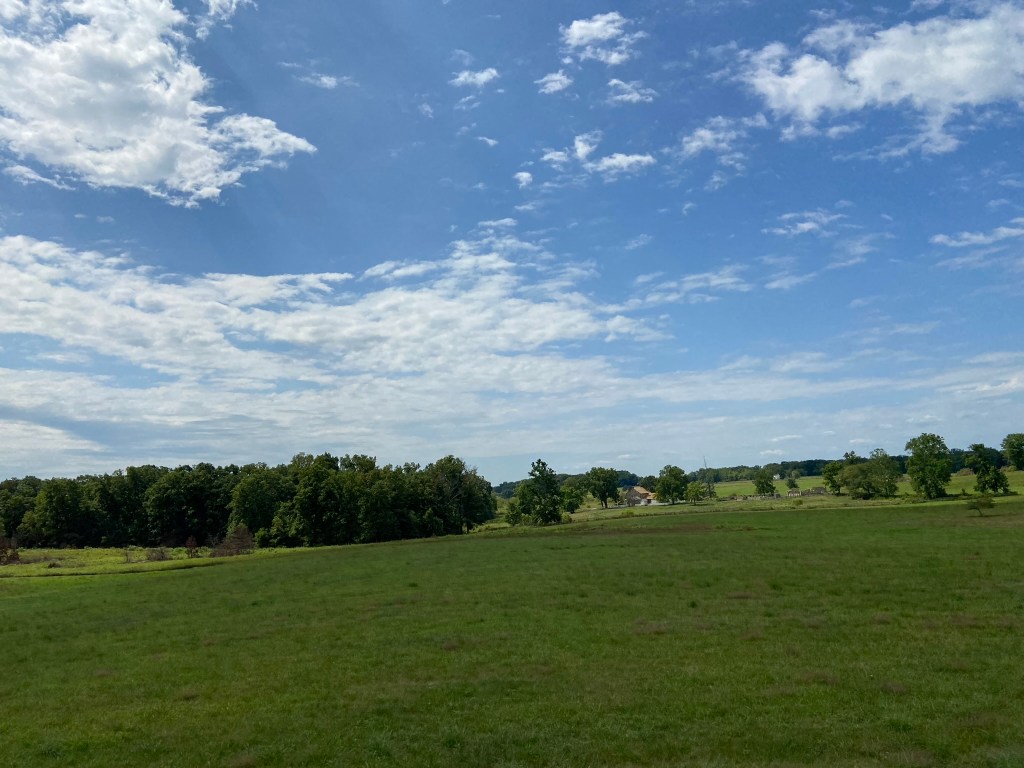
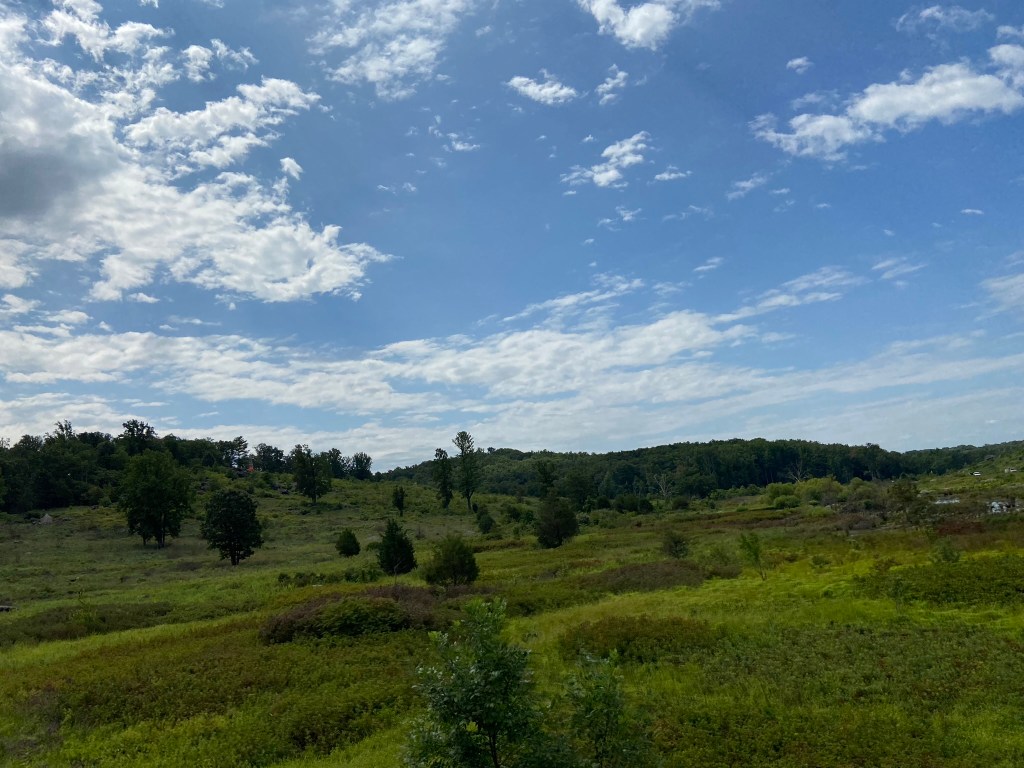
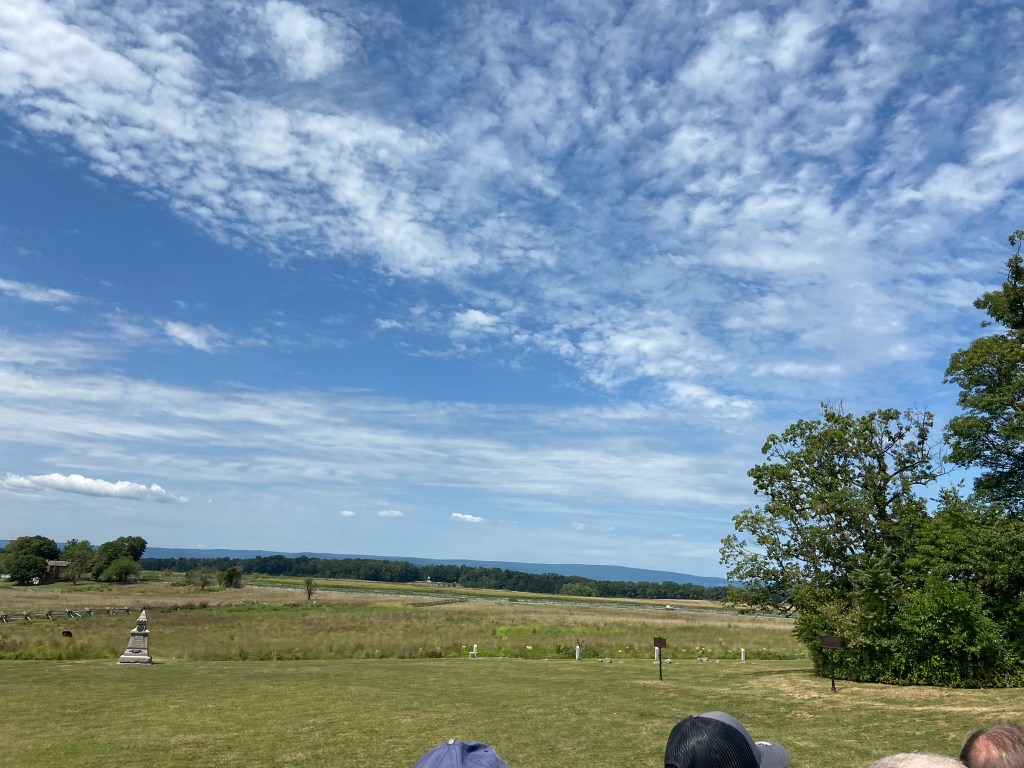
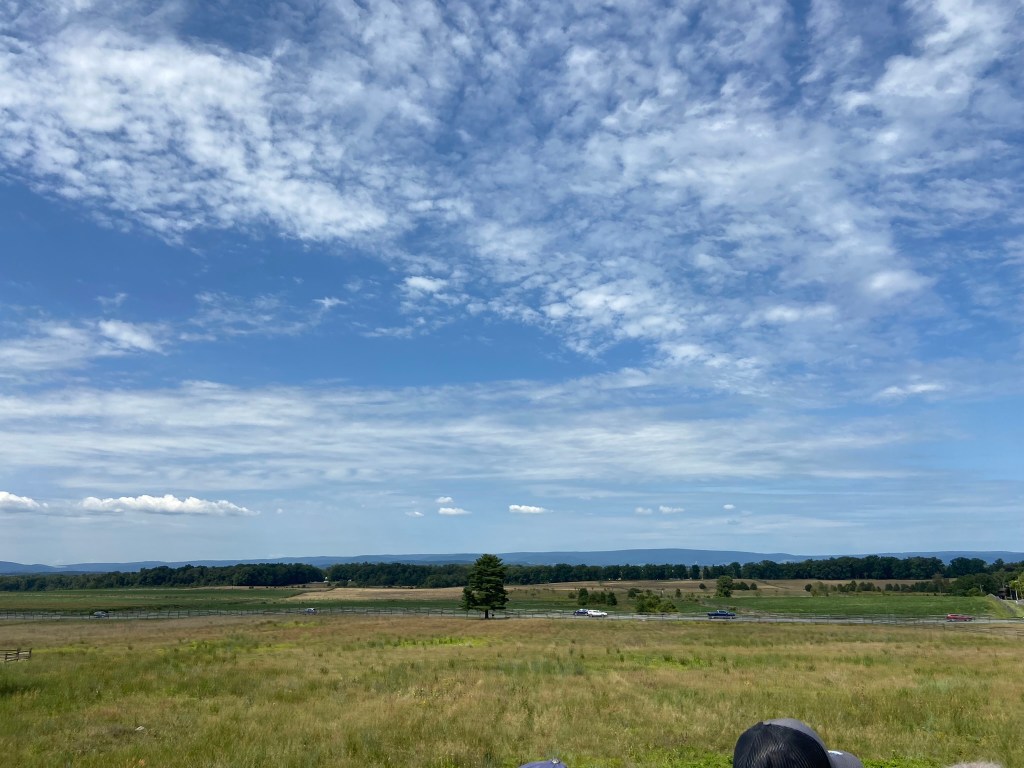
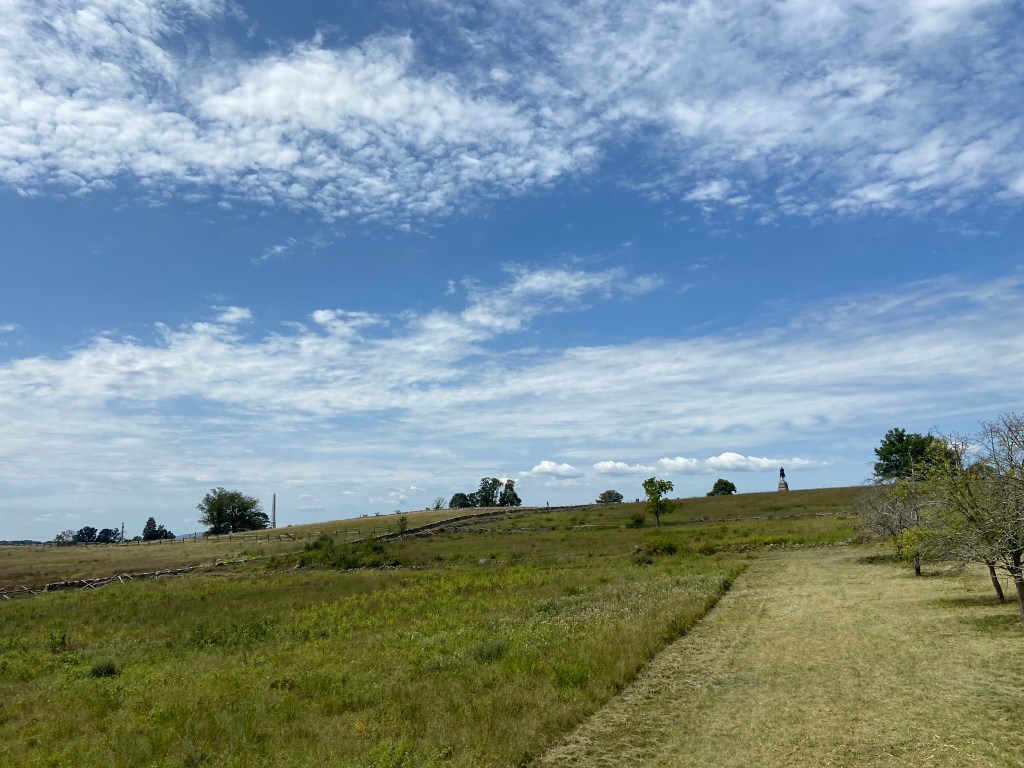
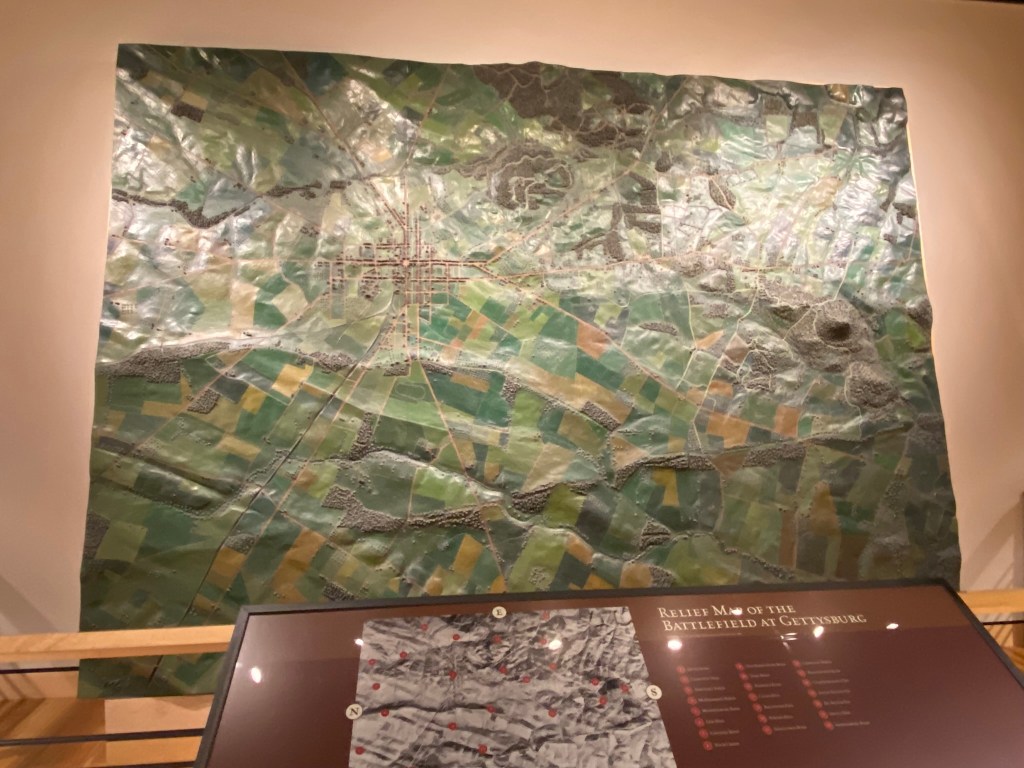
We got started a little after 10:00am and headed through town to the north of Gettysburg where much of Day 1 of the battle took place. I absolutely loved the experience of riding on the open-air double decker bus. It truly was an amazing experience and we were lucky with such a nice day. It was surreal to be at the very location where this great battle took place. I have read and taught about the Battle of Gettysburg for many years, so to be at the very site, seeing it with my own eyes was unbelievable. You could look out into the open farmland and picture Union and Confederate troops on the battlefield. I couldn’t imagine what they went through and the horrors they experienced during such a deadly battle, where thousands of soldiers lost their lives or were severely wounded. I was quite amazed at just how large the battlefield is. Fighting during The Battle of Gettysburg happened all around the outskirts of town (And some even within the town). After we were taken to the north of town, we made our way to landmarks south of town, where the heavy fighting of day 2 and 3 took place.
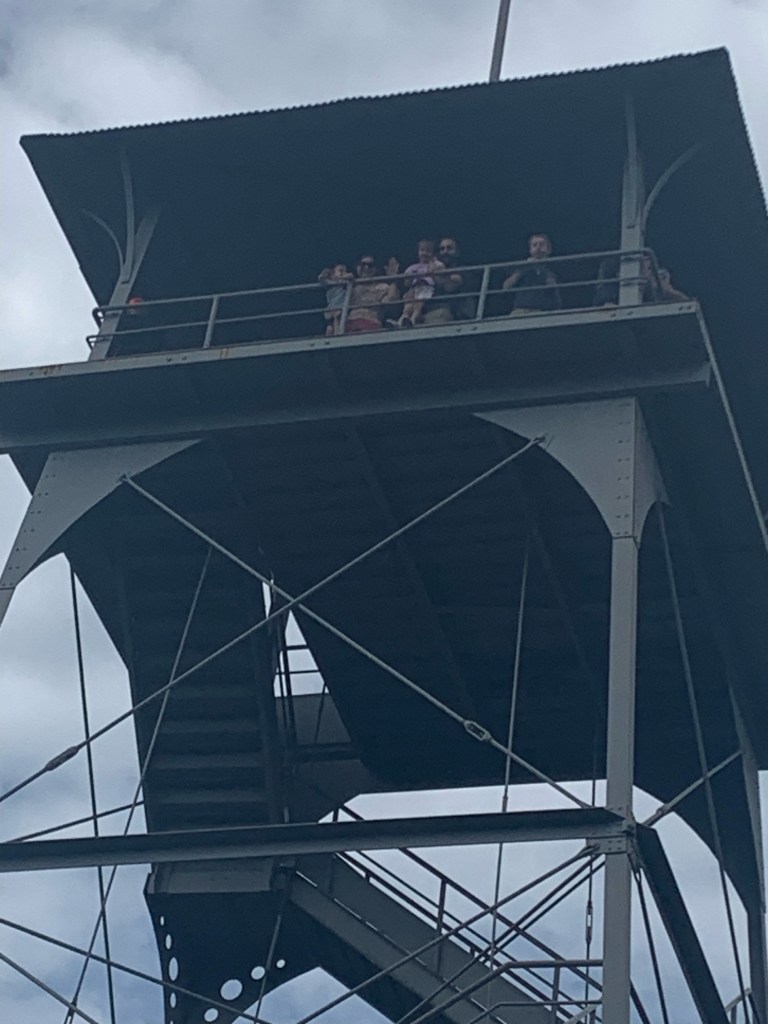
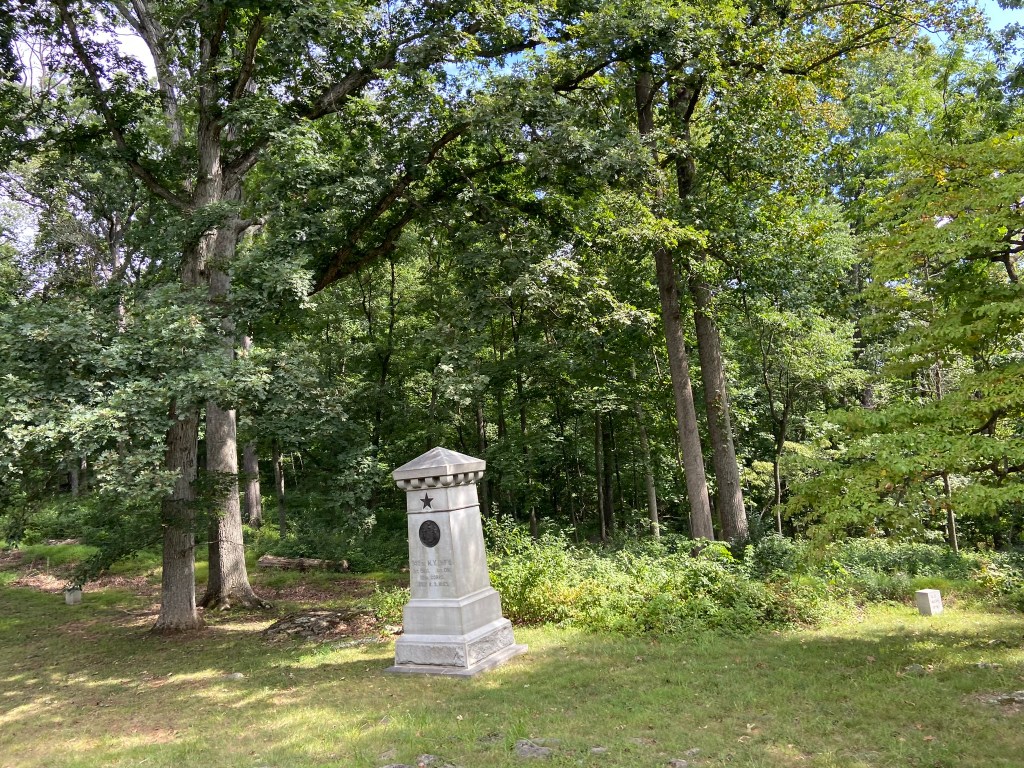
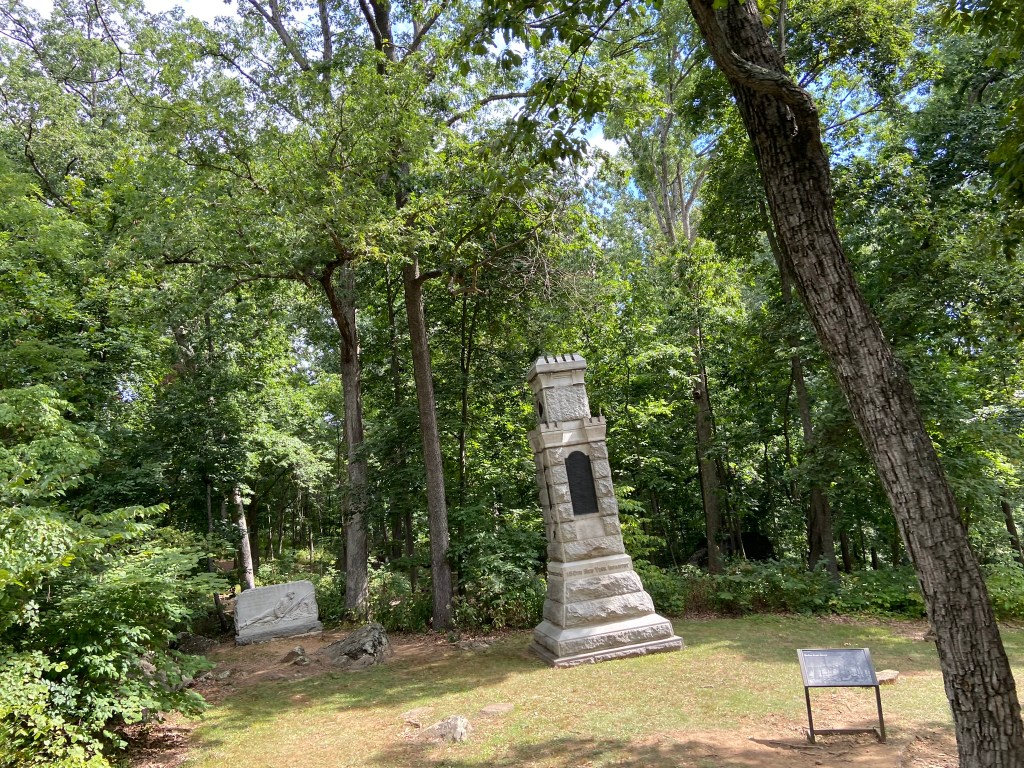
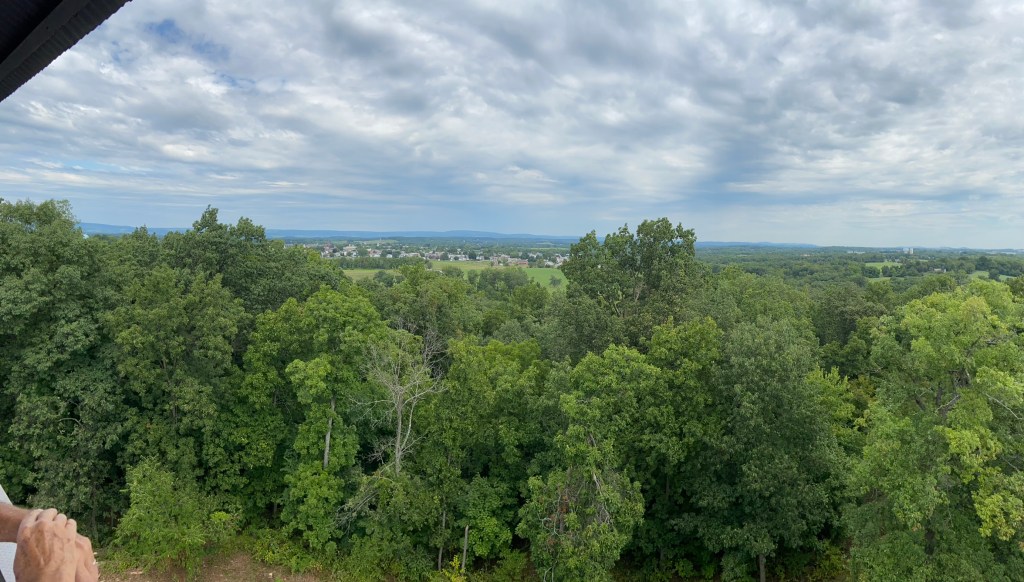
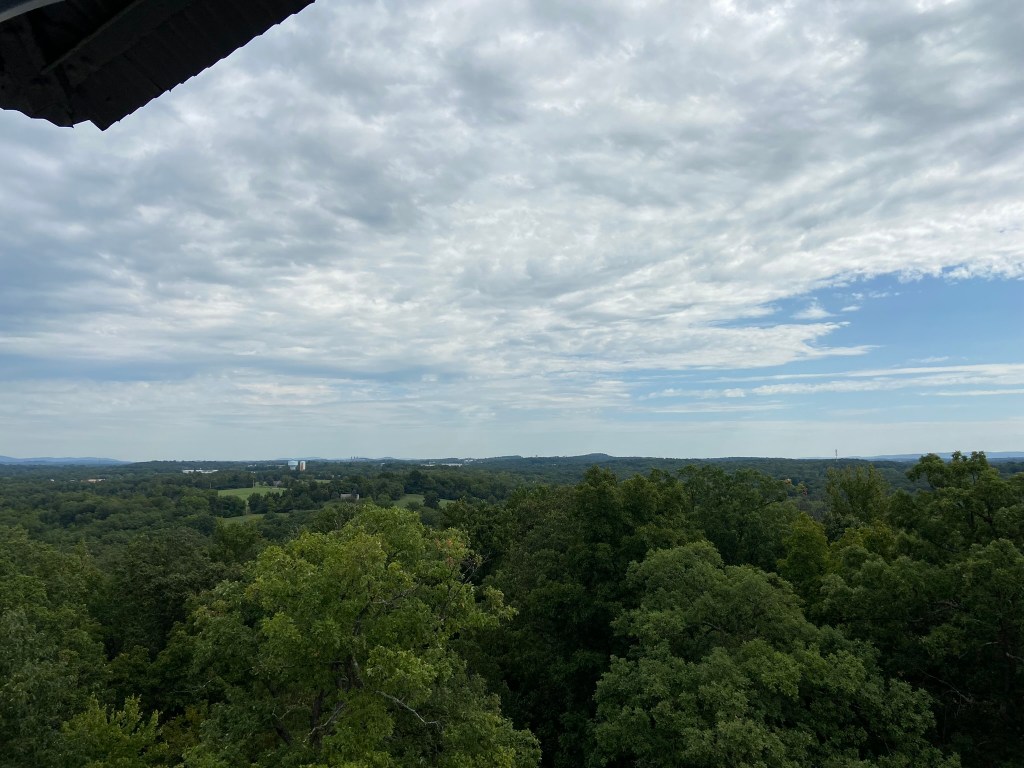
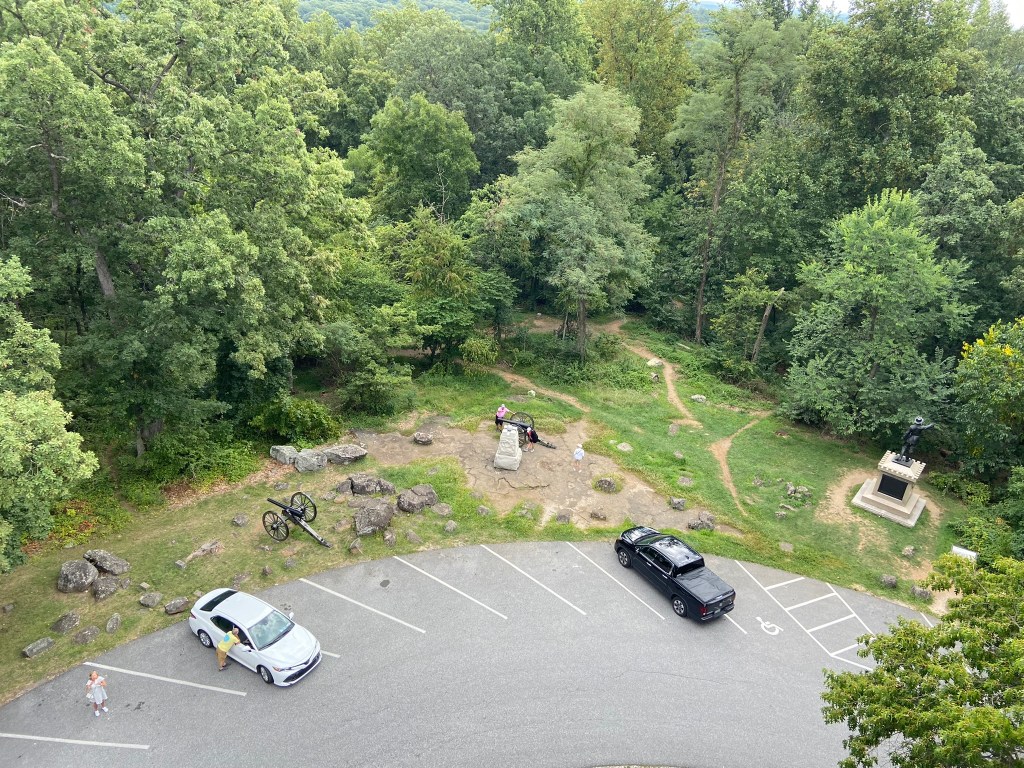
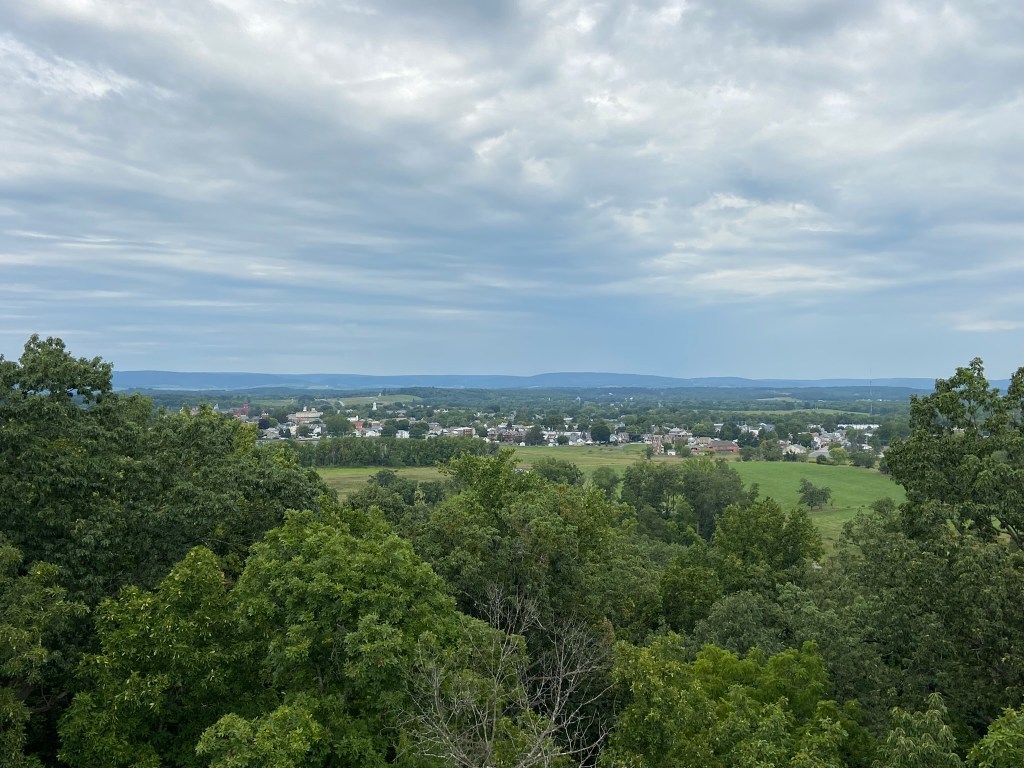
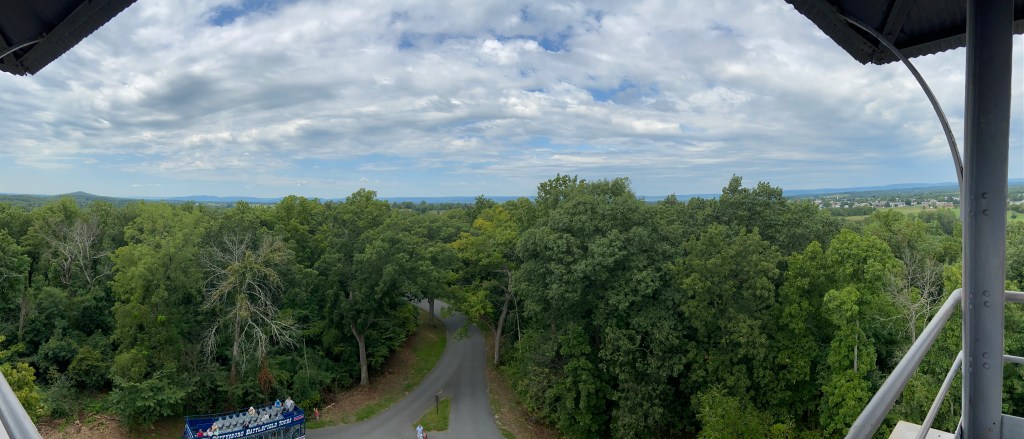
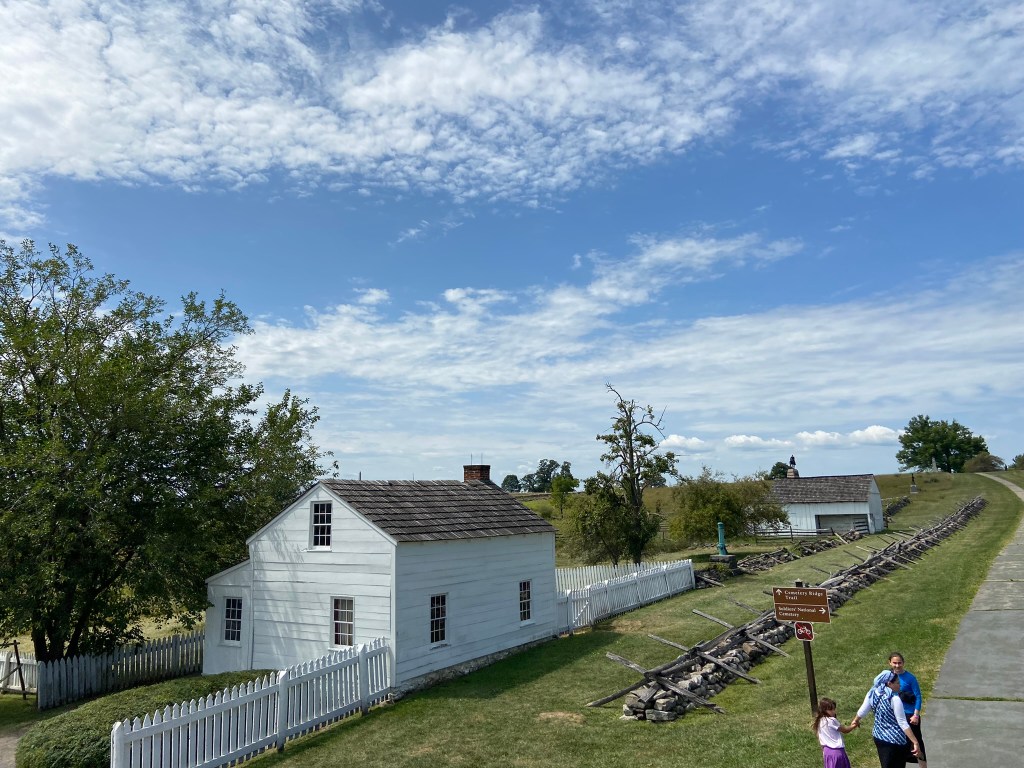
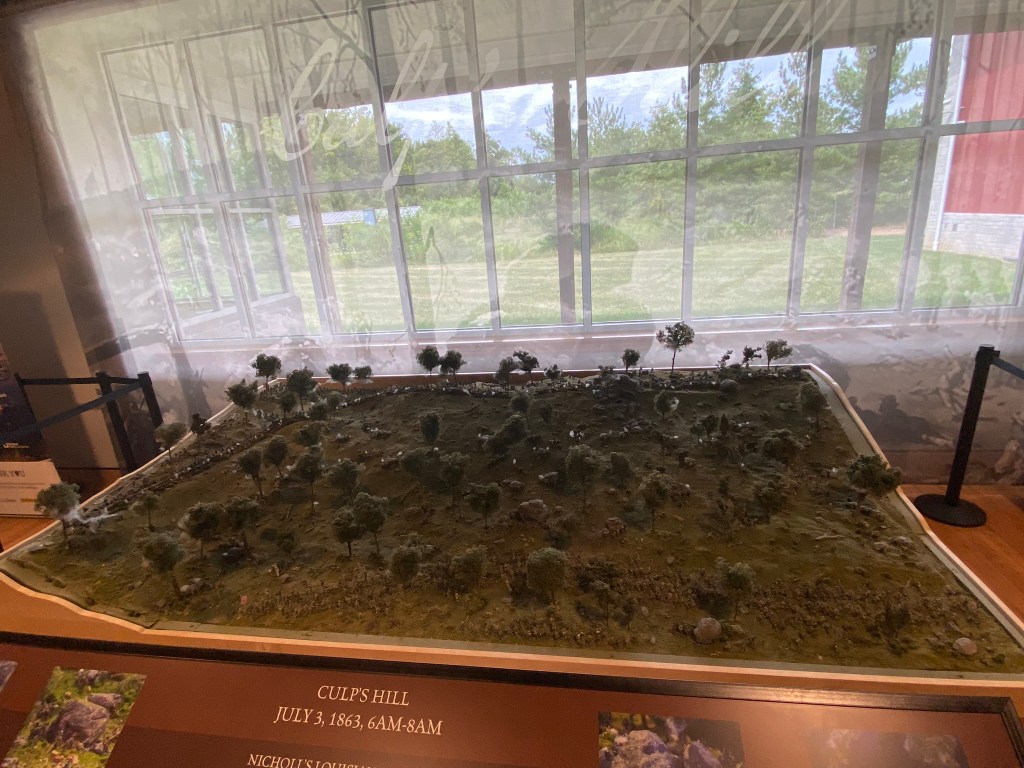
We made our way to Culp’s Hill where we were allowed to exit the bus and climb a high tower that gave breathtaking views of the battlefield and the town of Gettysburg. On the tower are signs that highlight important landmarks on the battlefield.
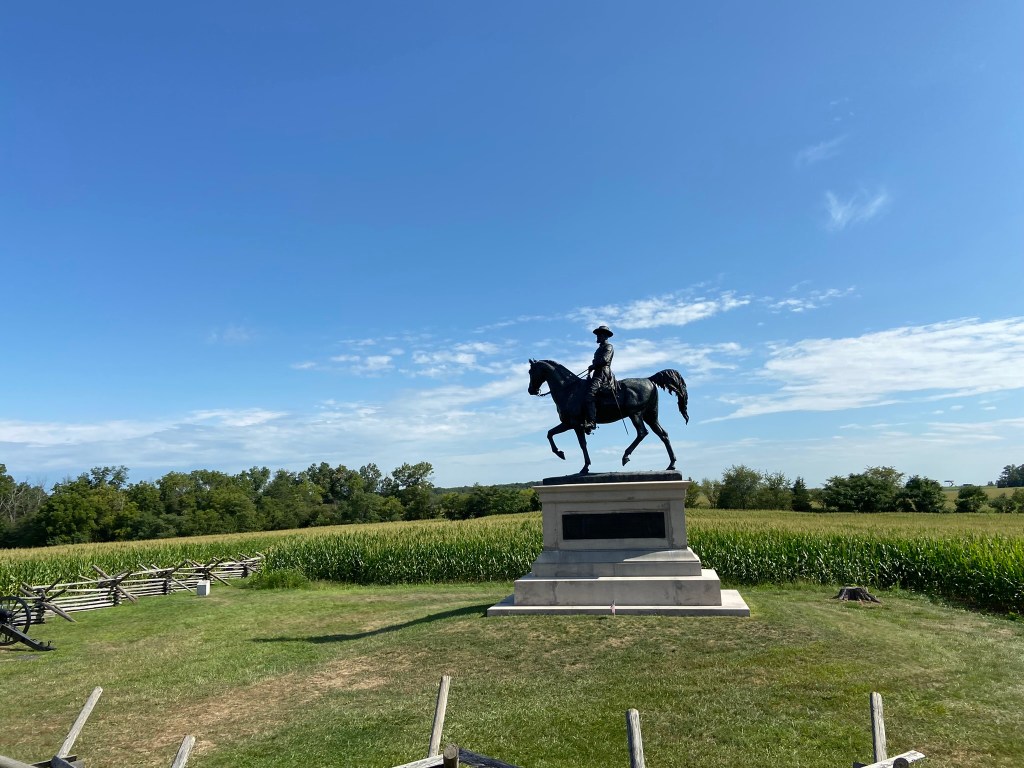
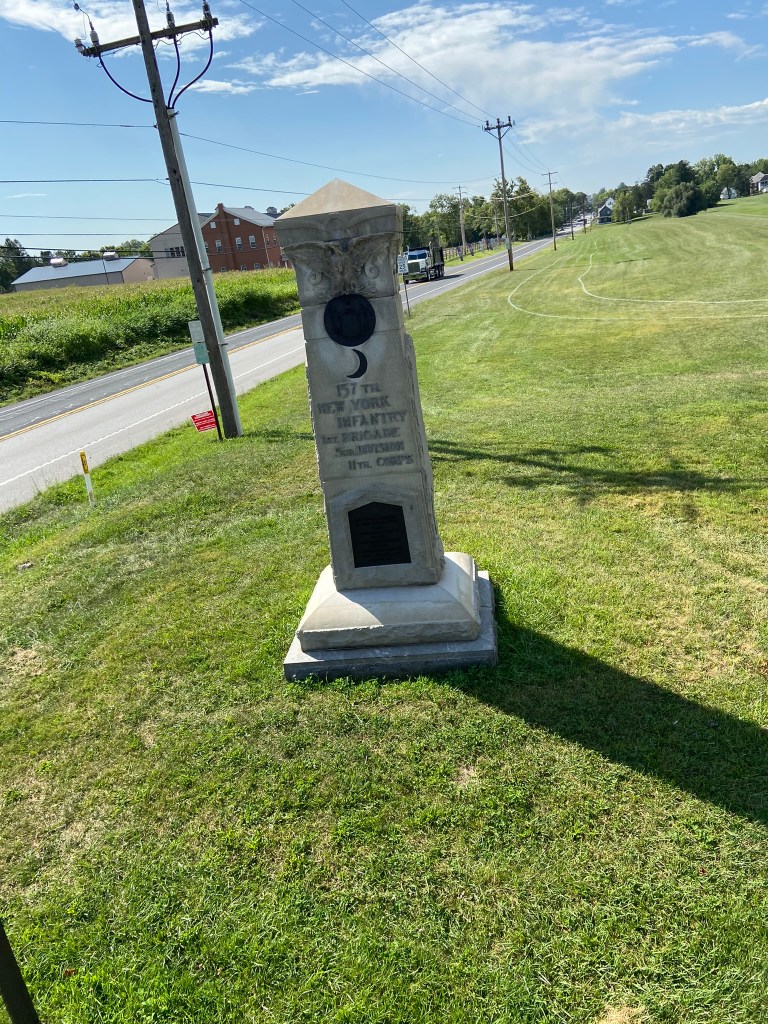
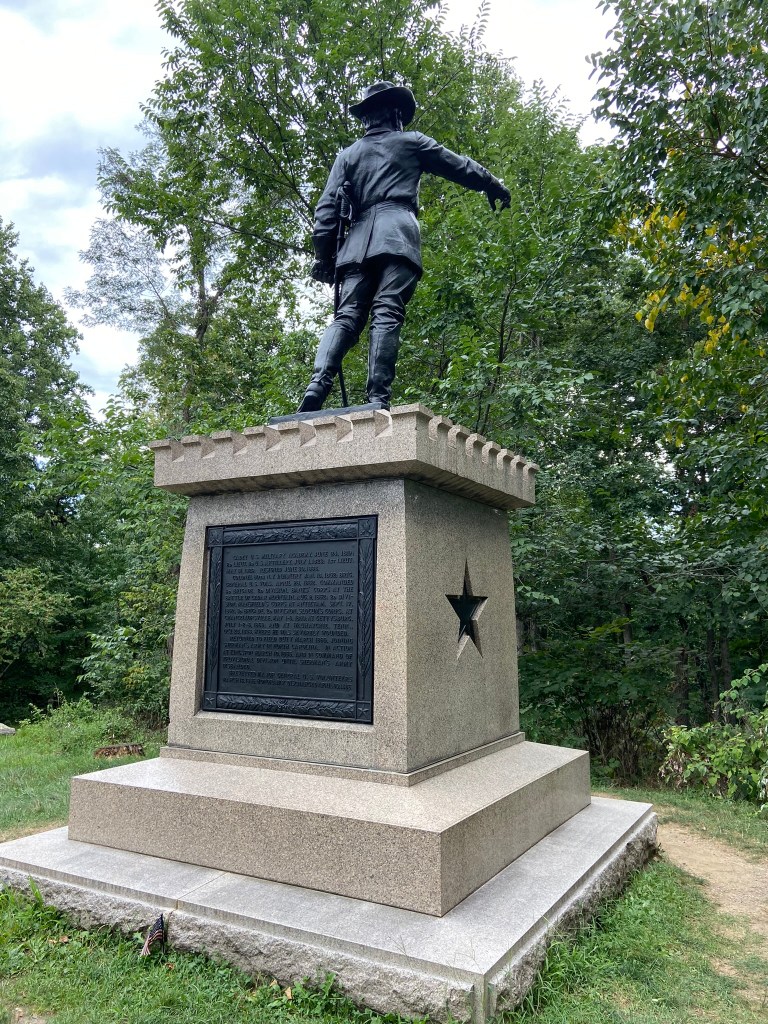
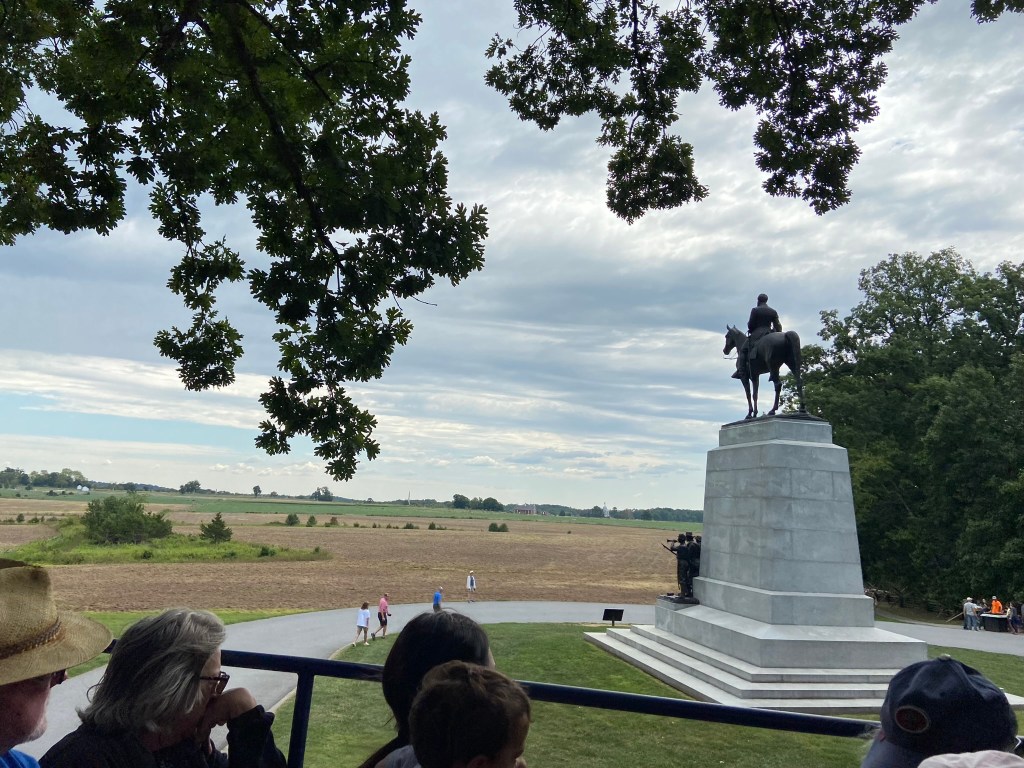
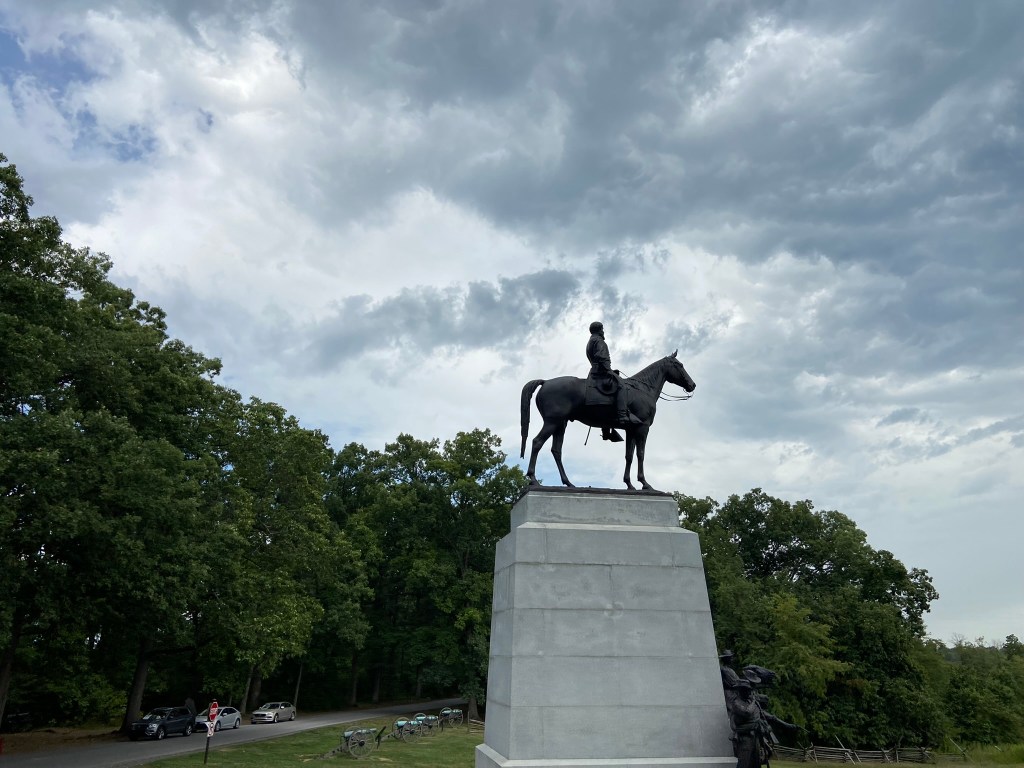
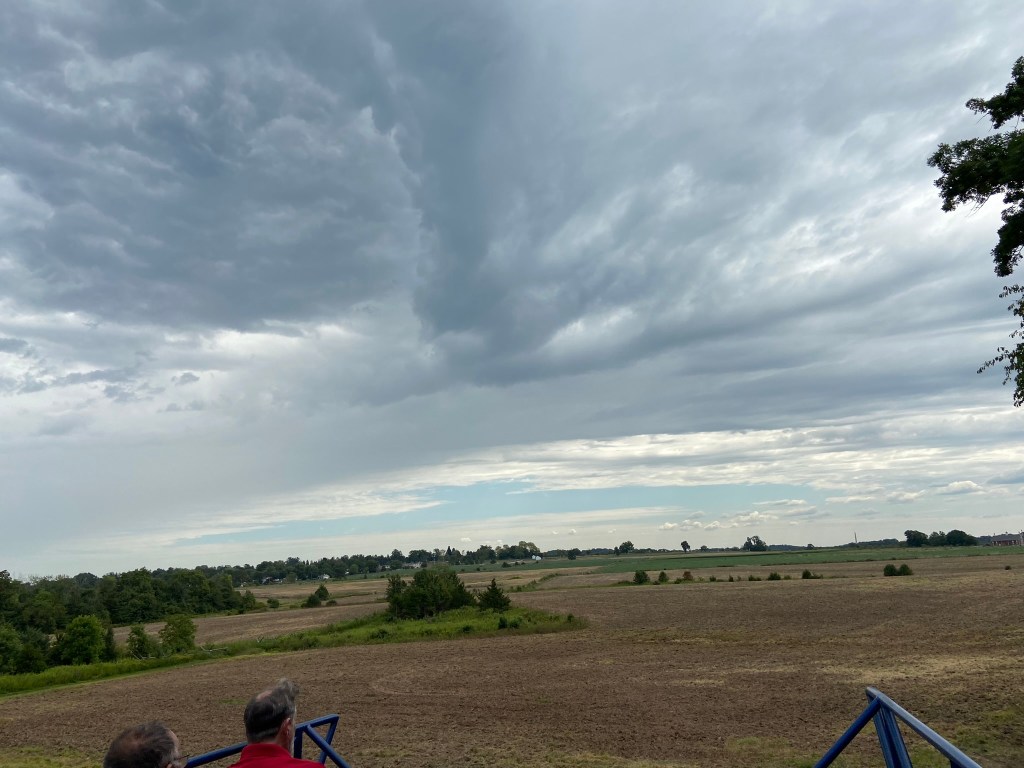
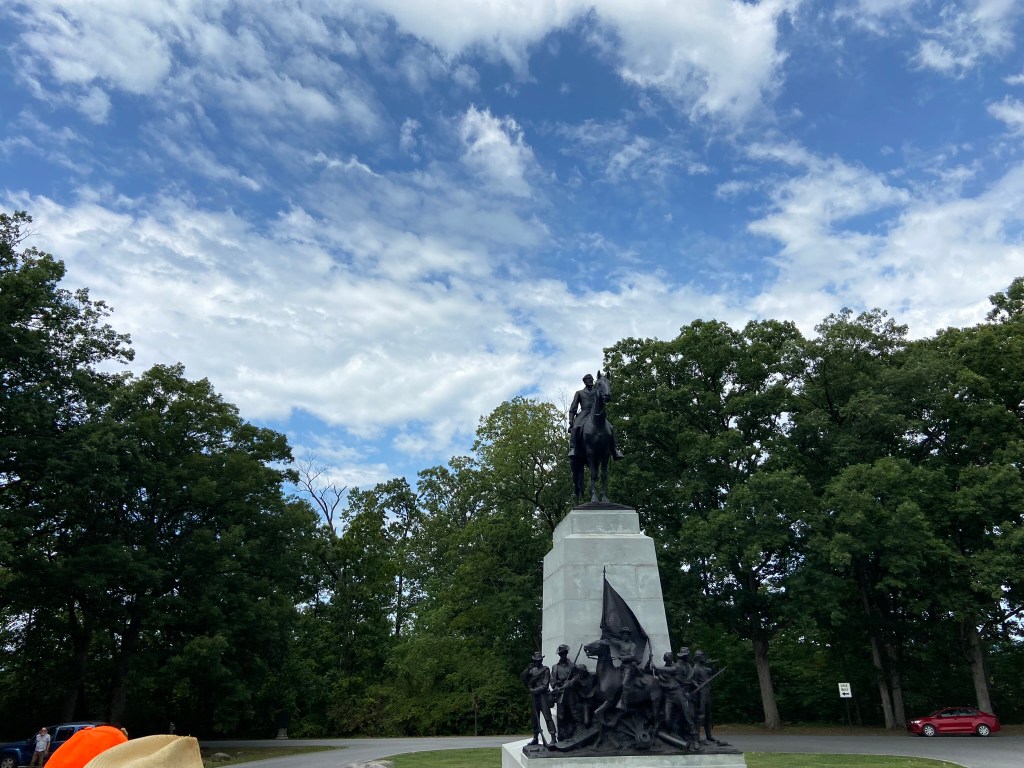
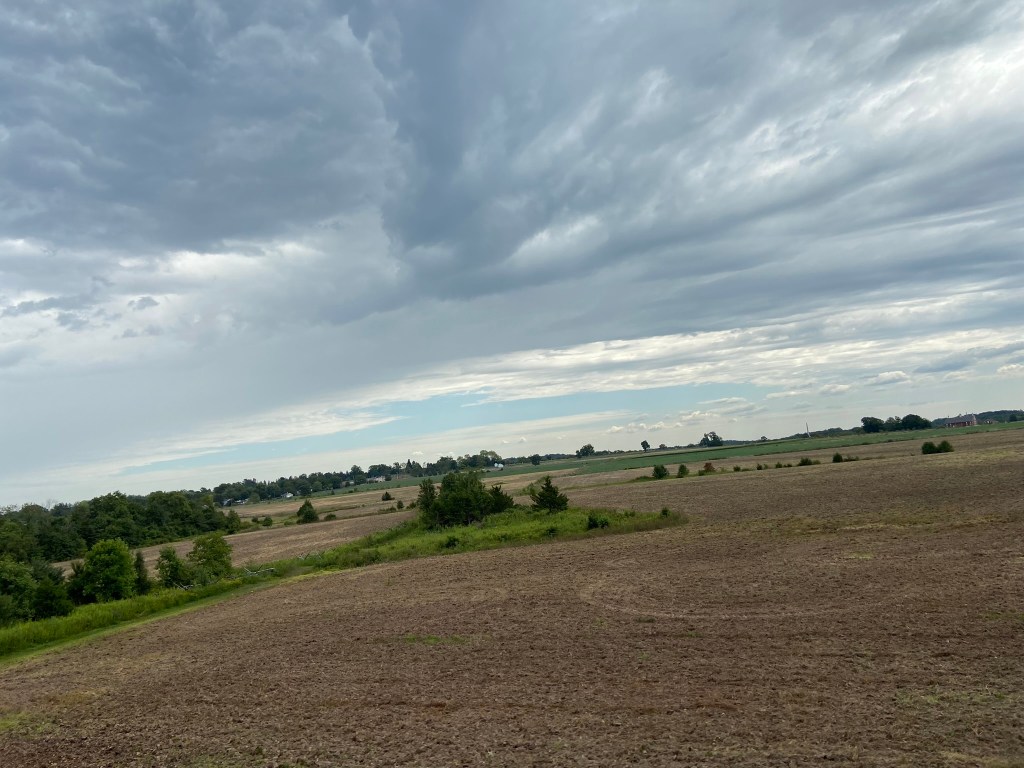
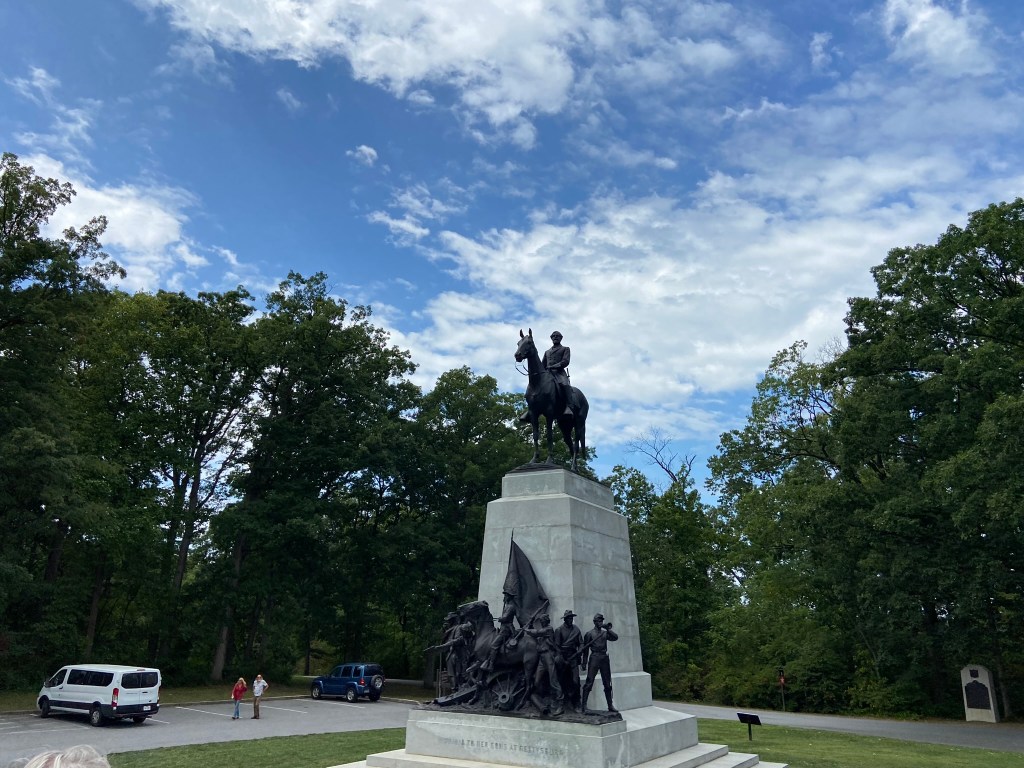
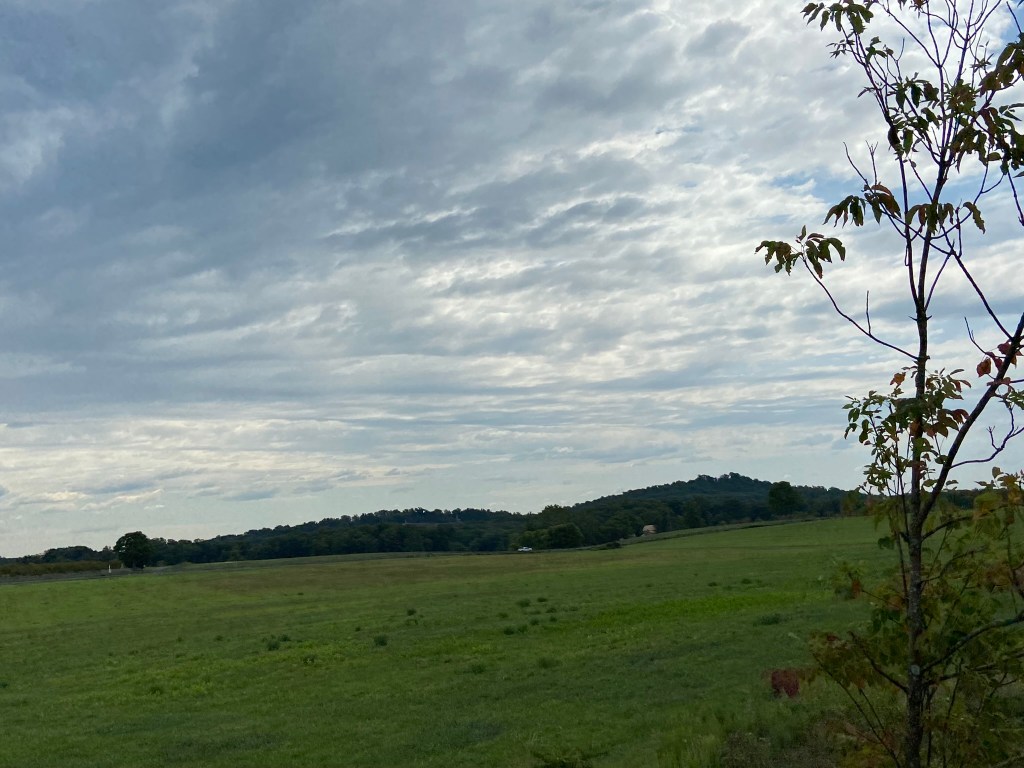
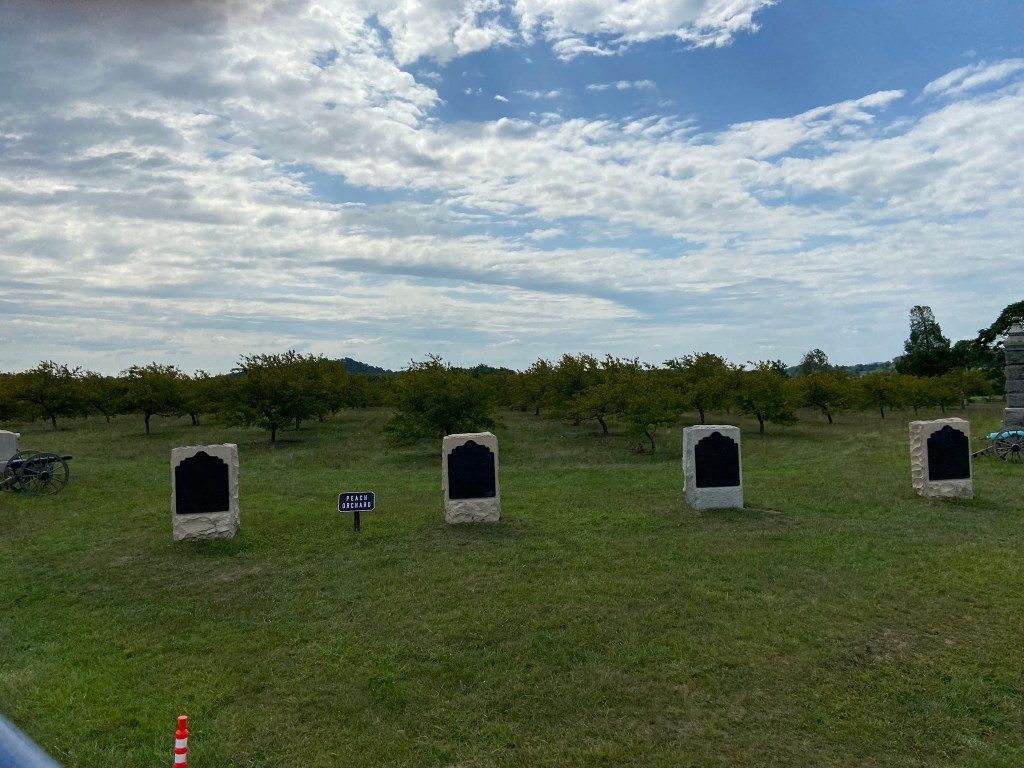
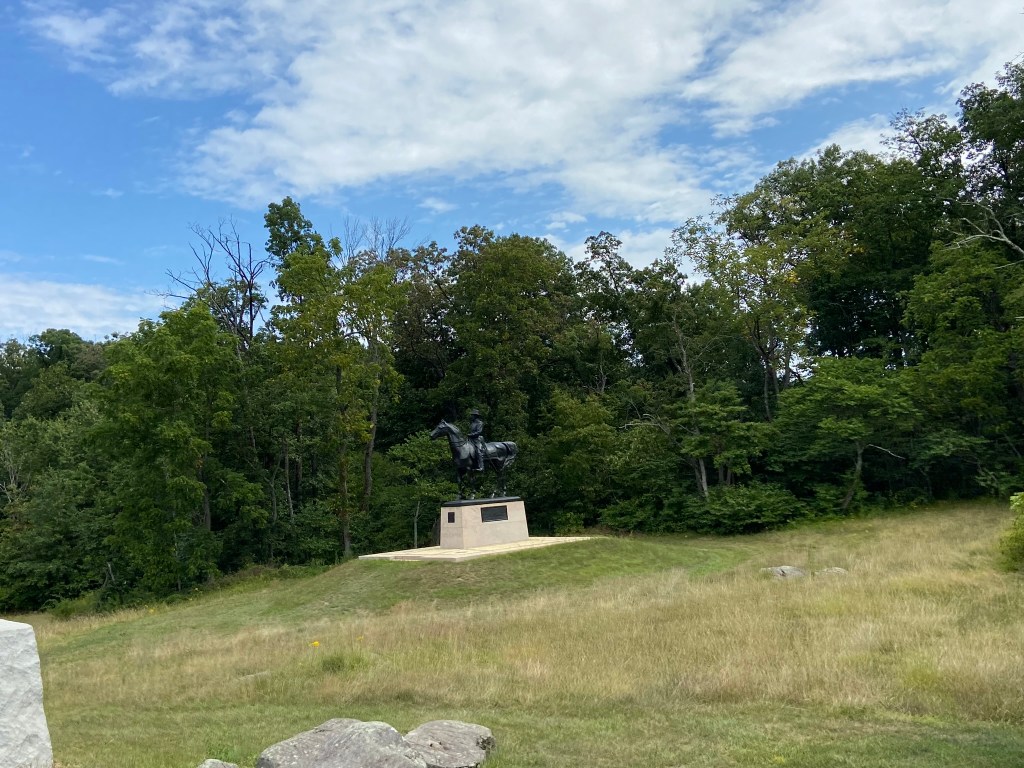
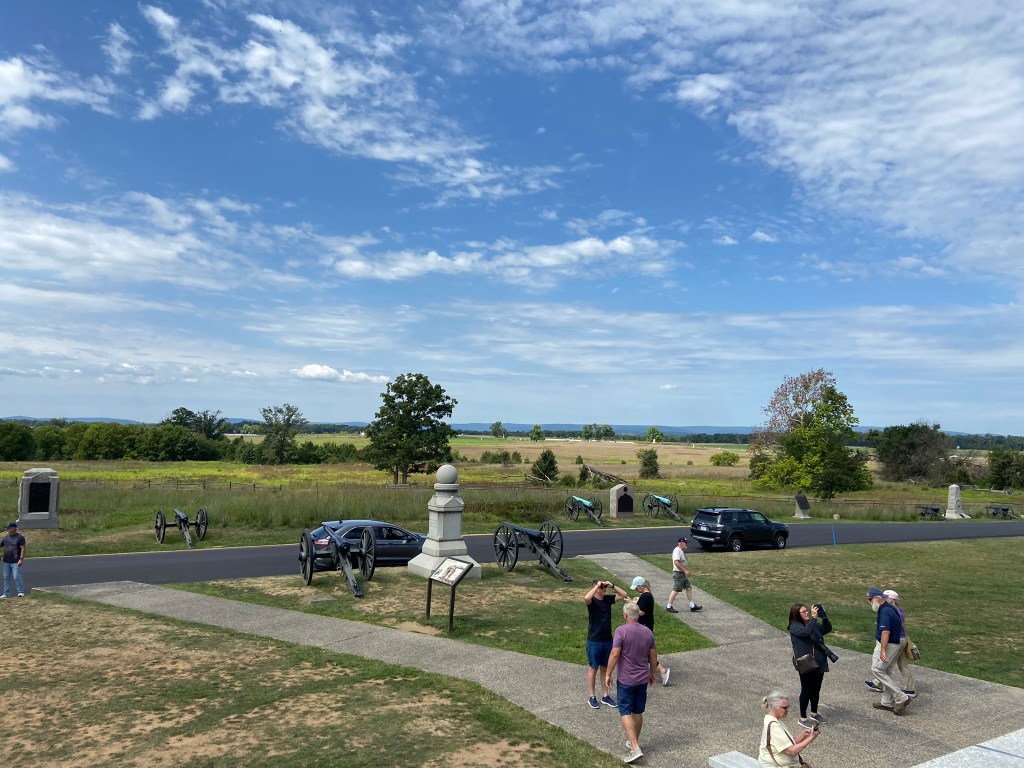
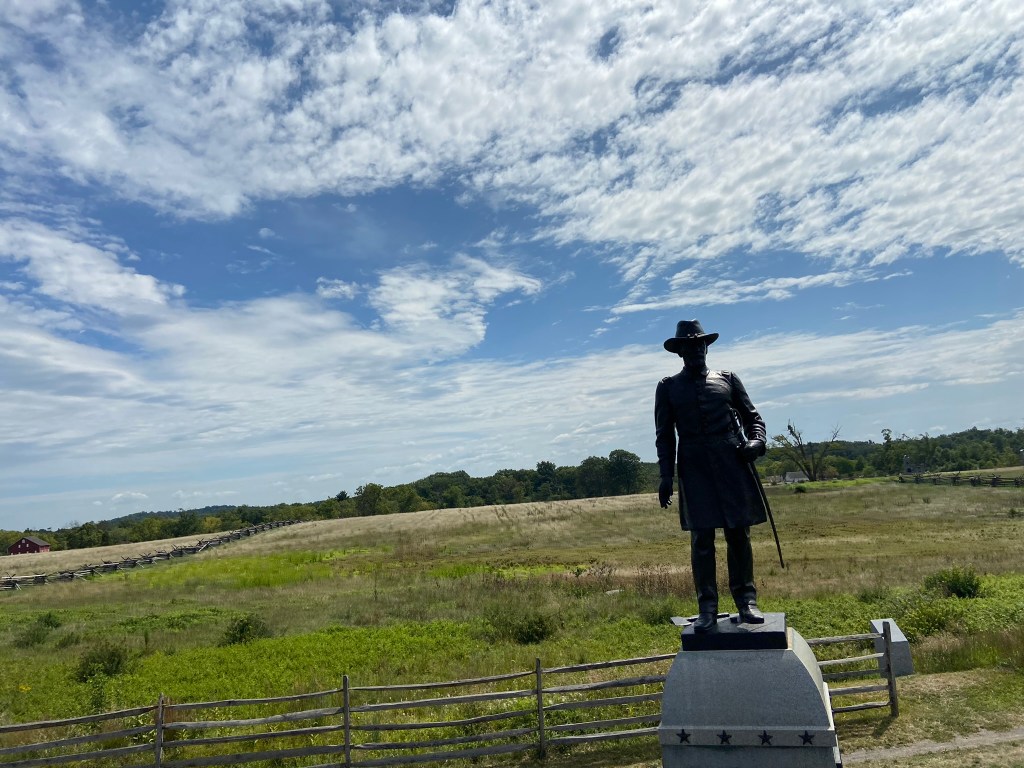
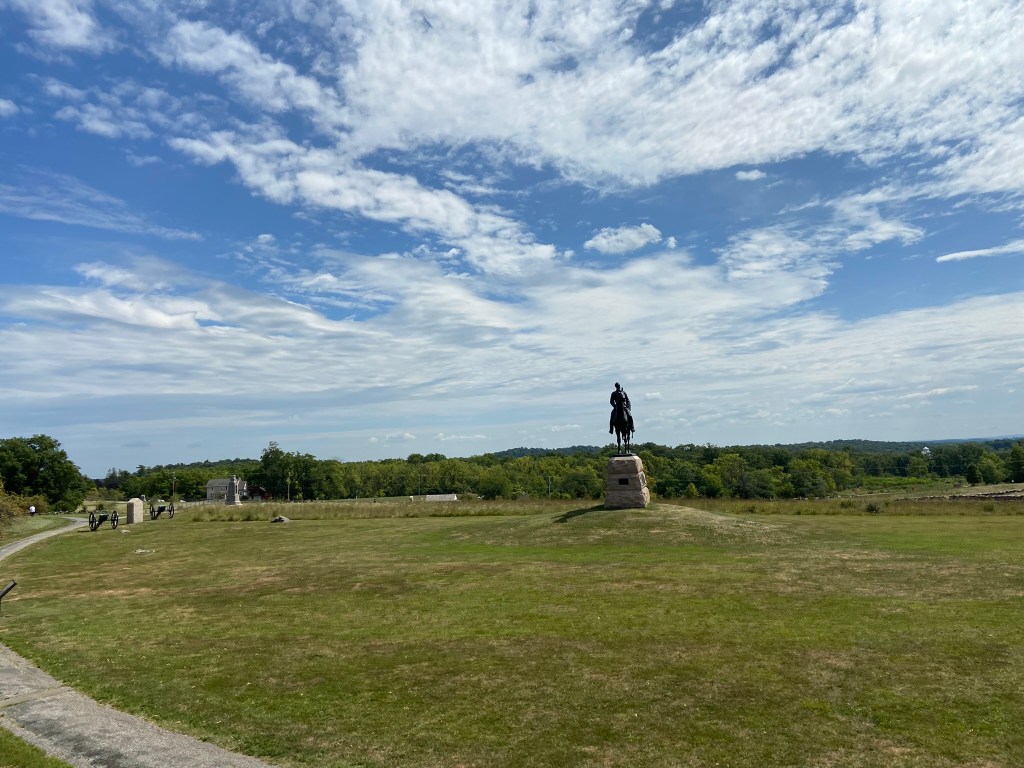
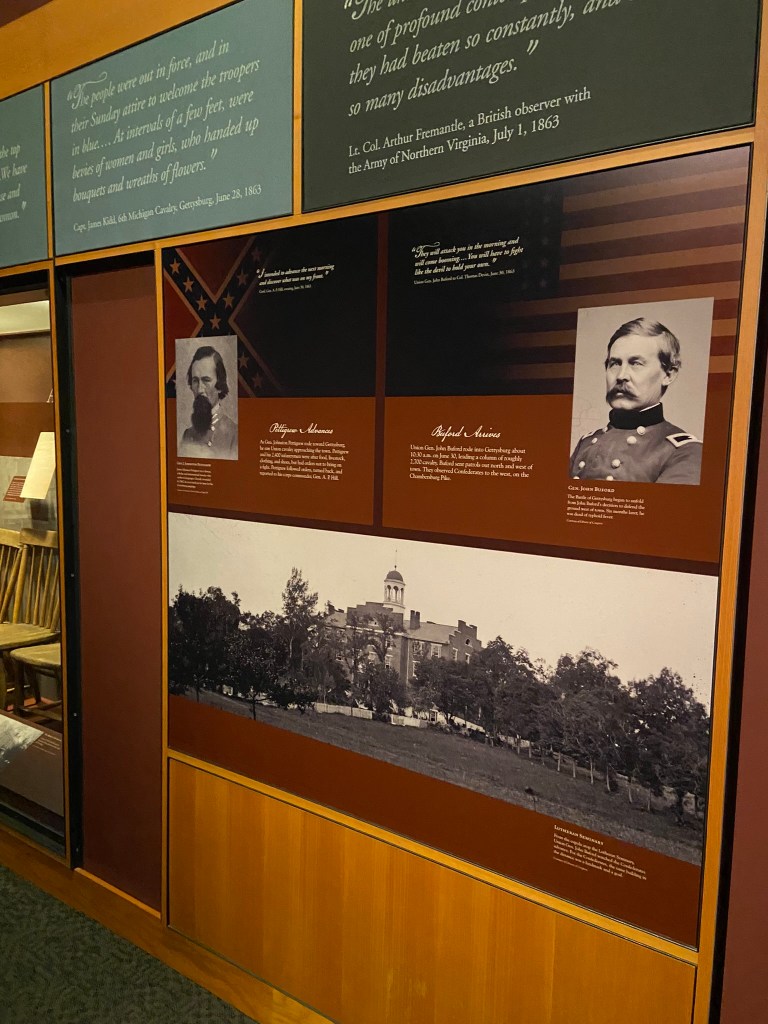
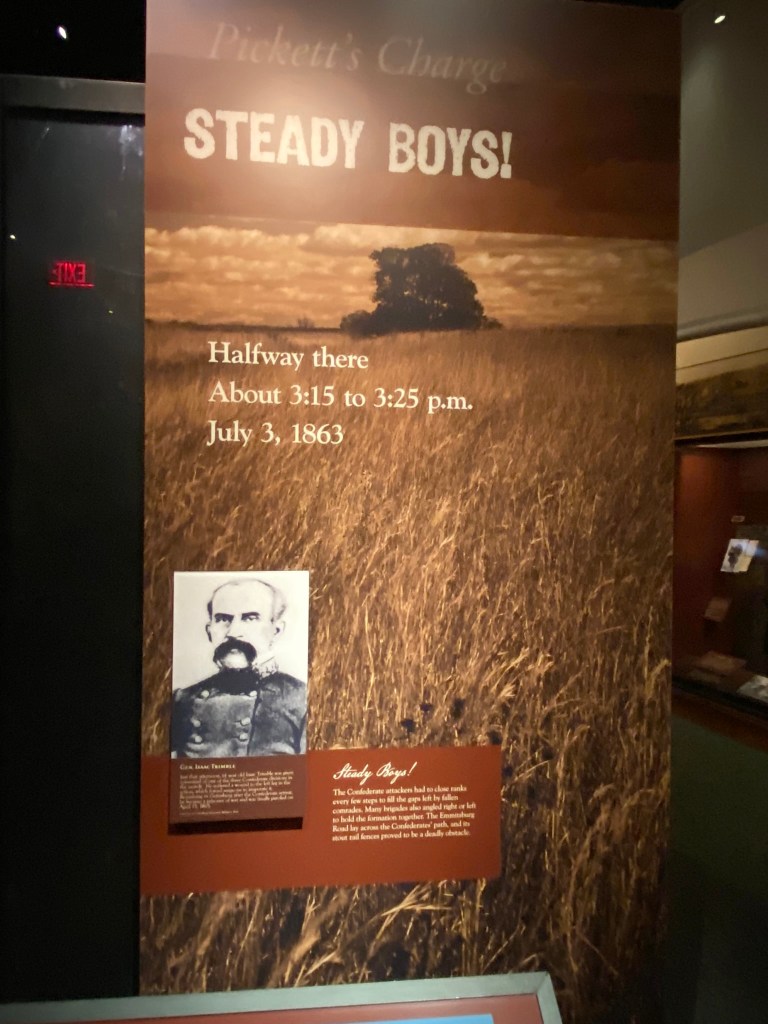
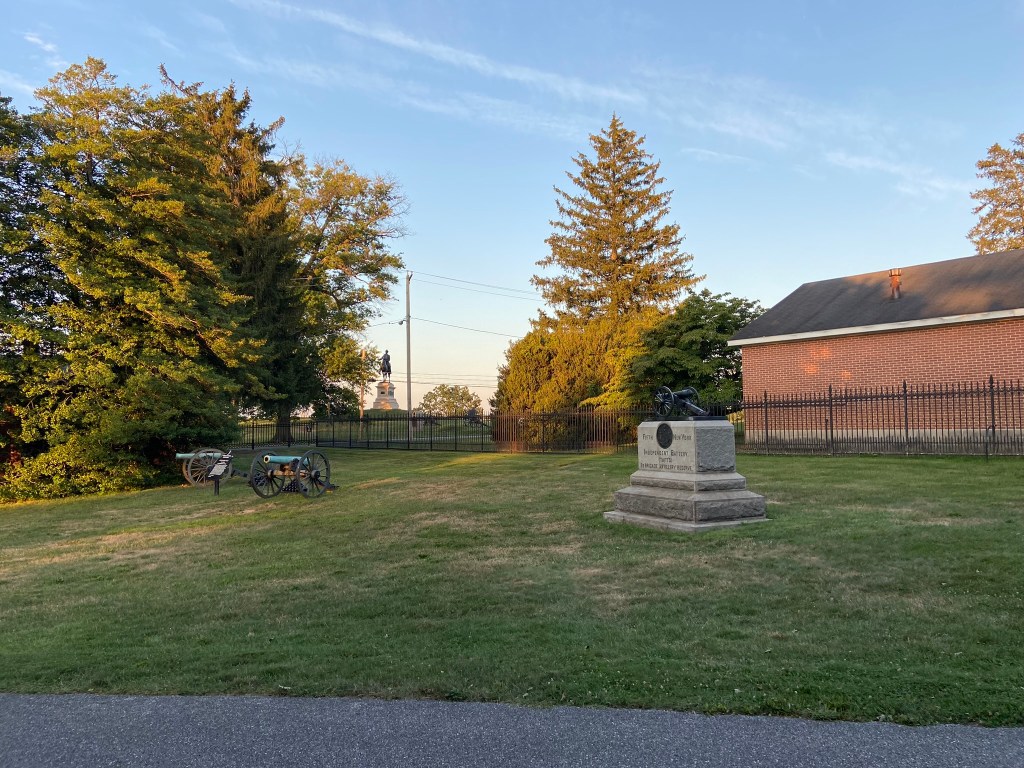
After leaving Culp’s hill we made our way along Seminary Ridge, the point in which the Confederacy started their famous, failed, Pickett’s Charge. We saw the Virginia Monument and Robert E. Lee Statue. We made our way past the Peach Orchard.
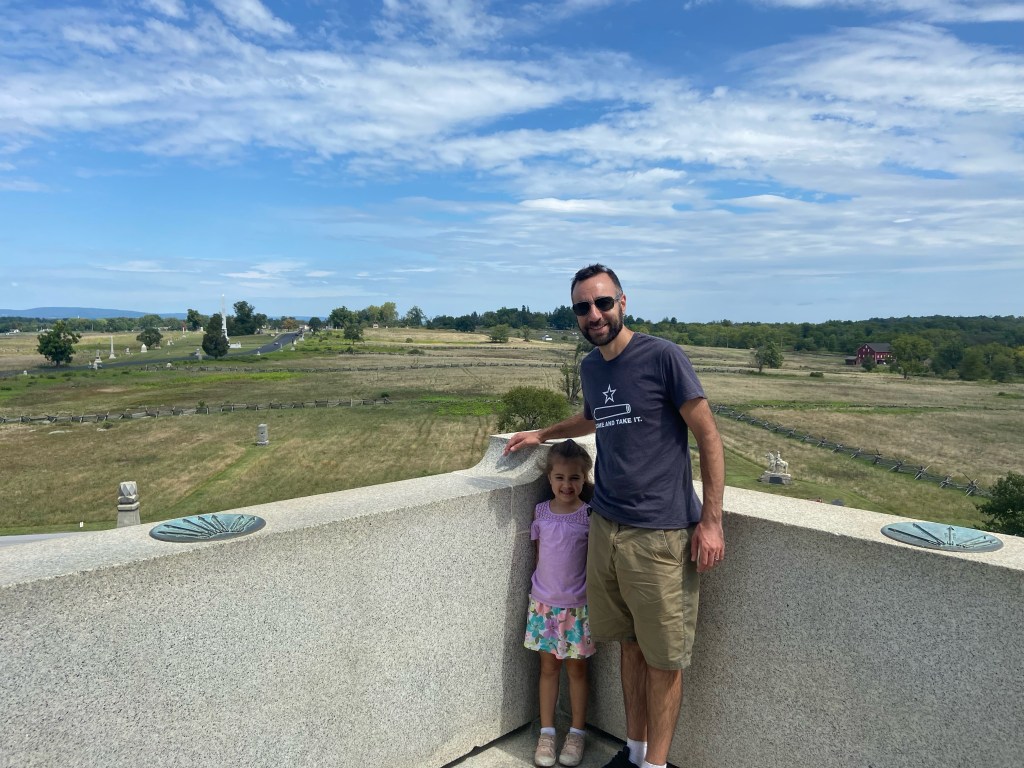
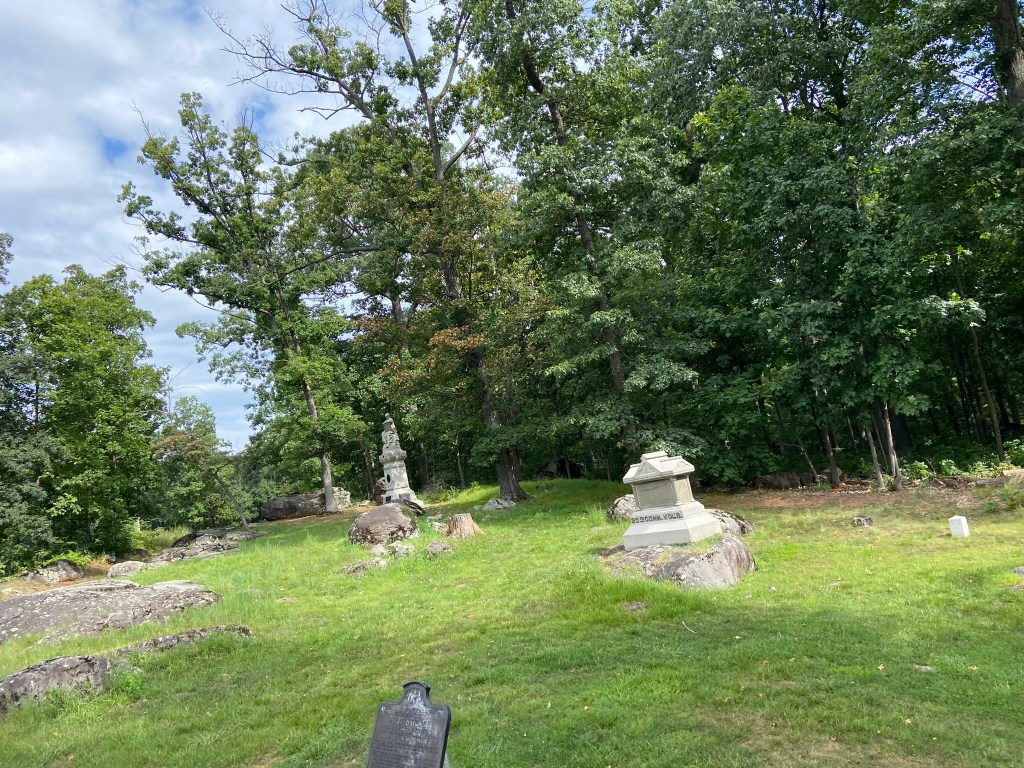
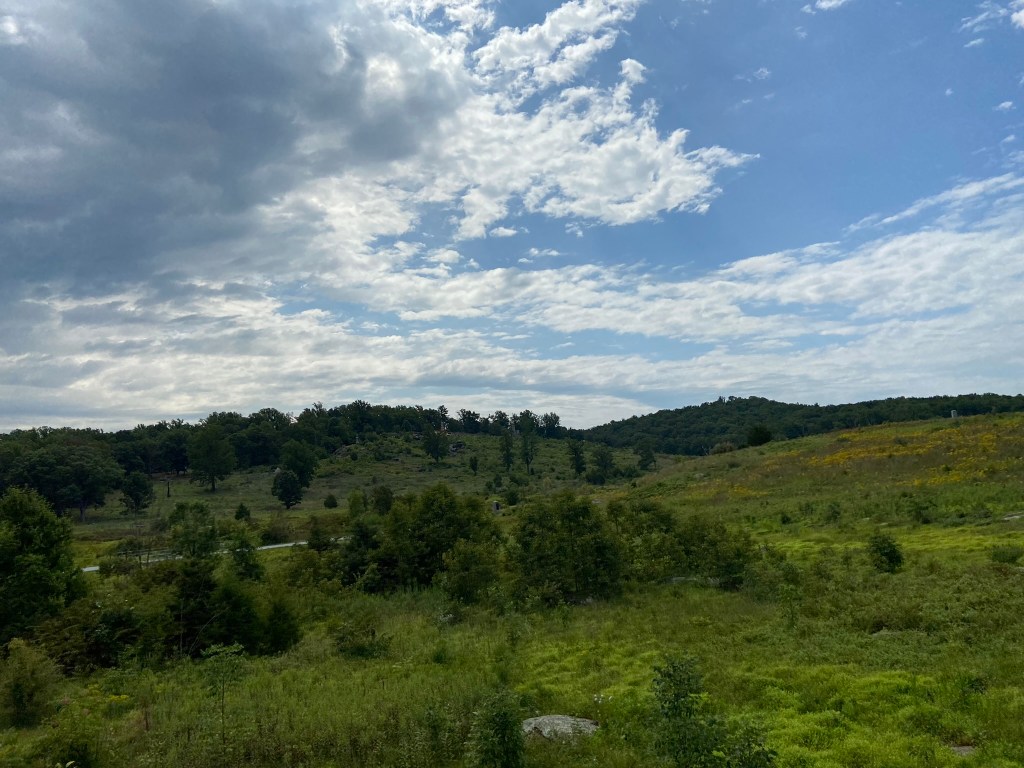
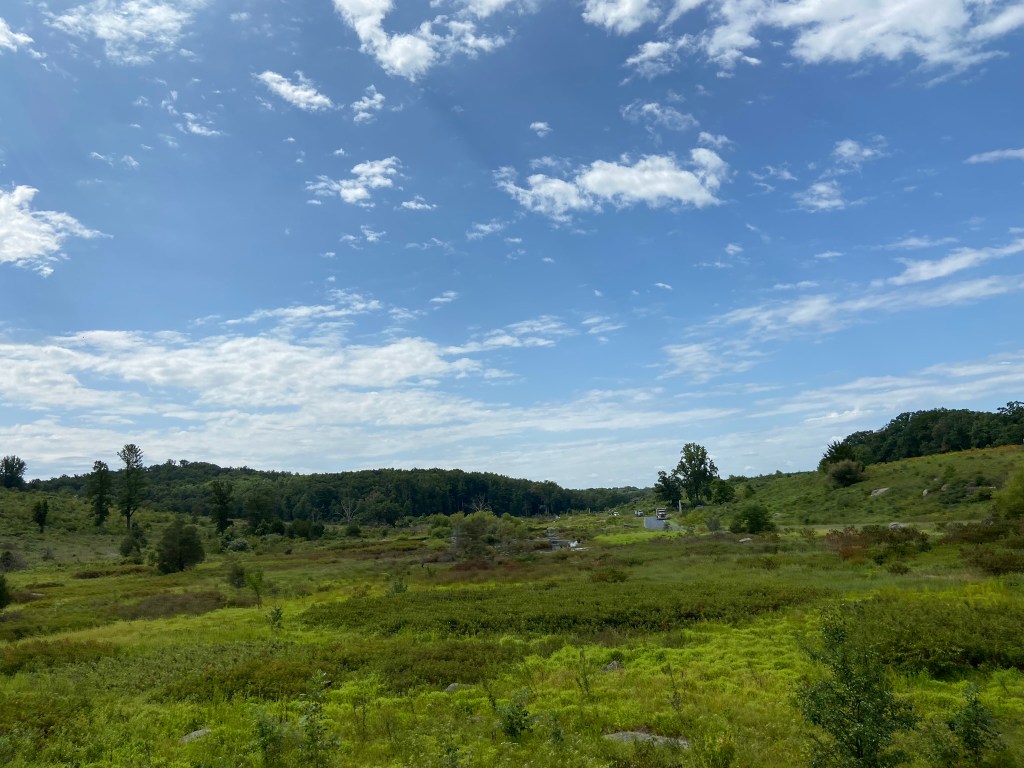
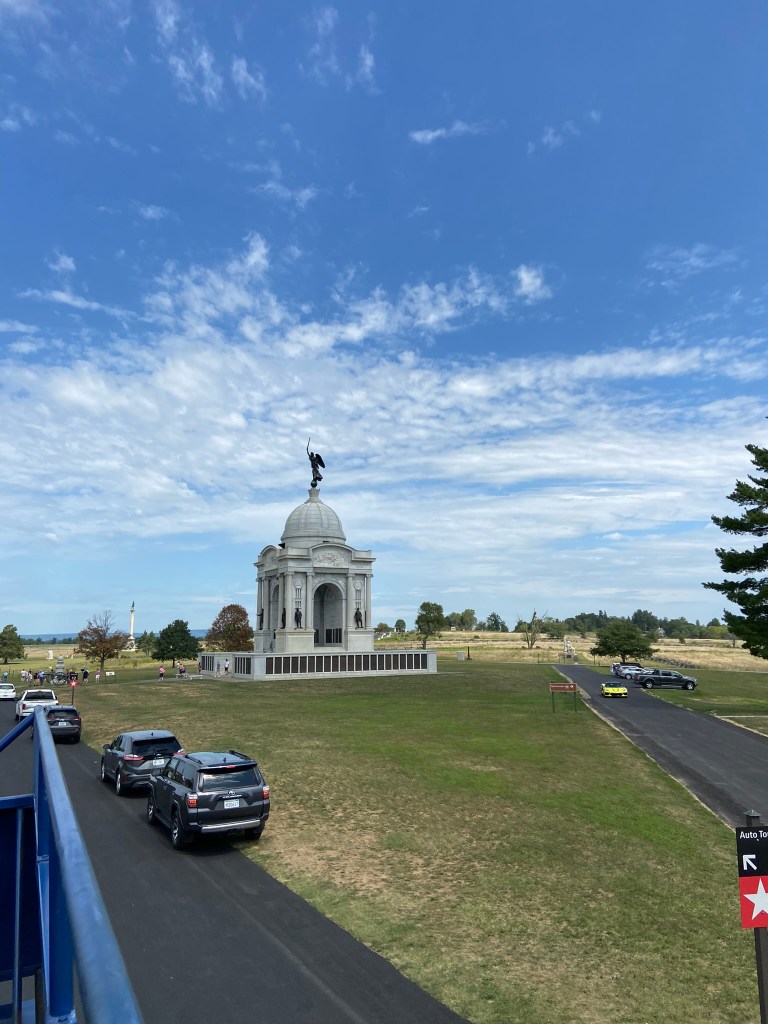
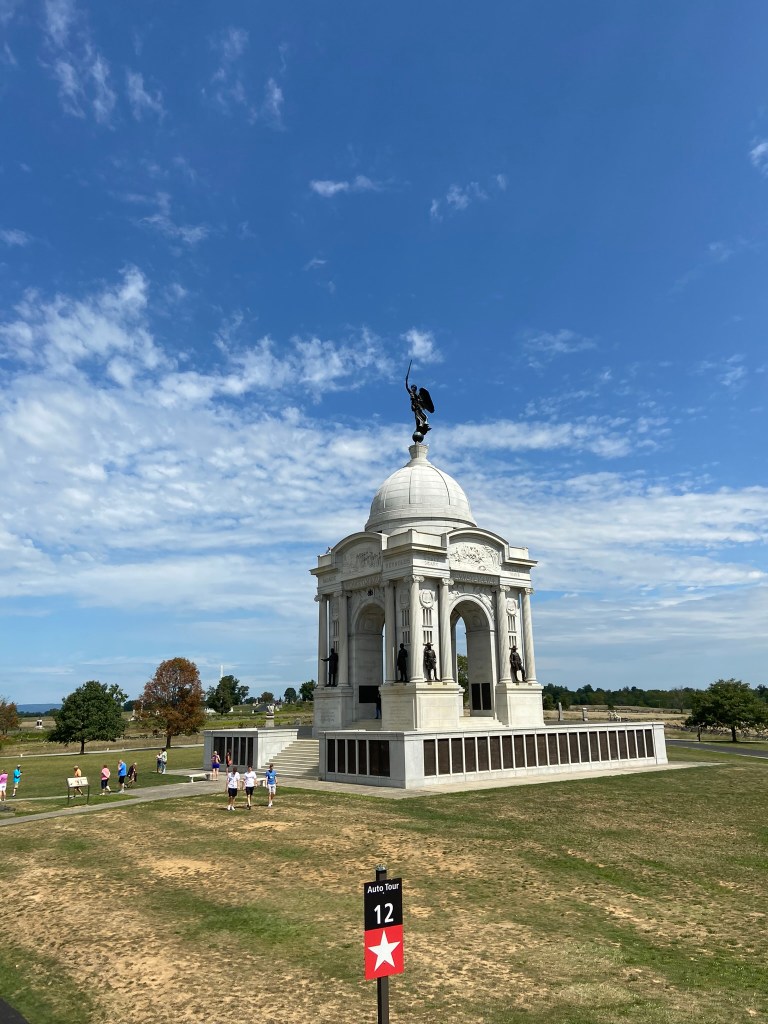
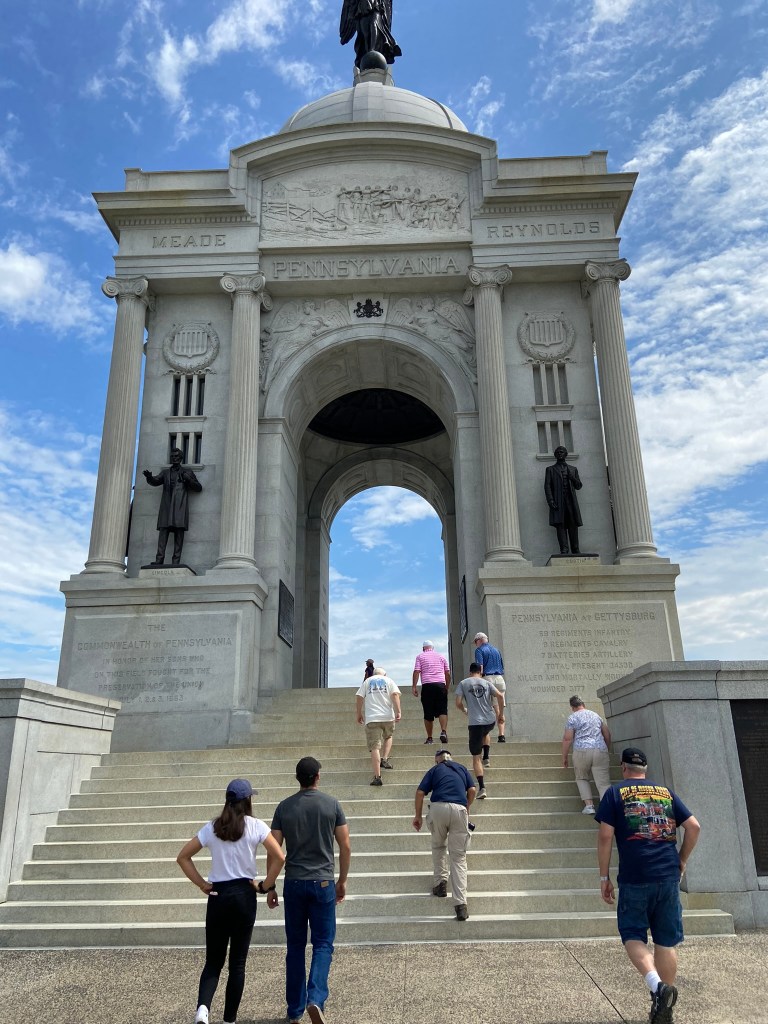
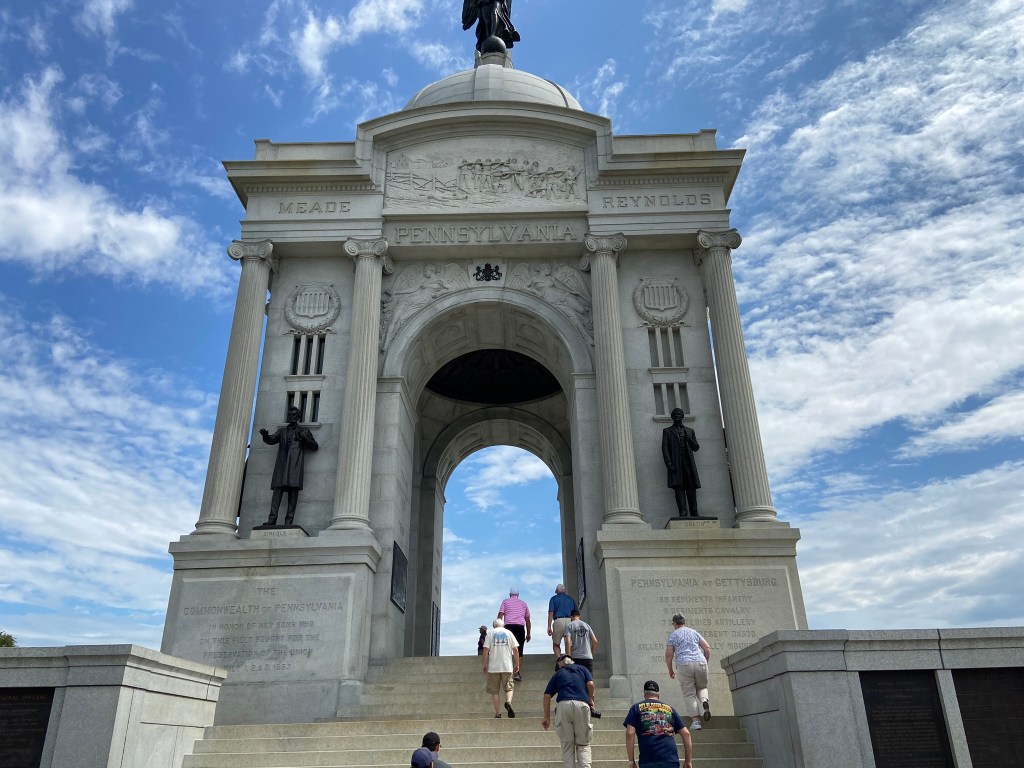
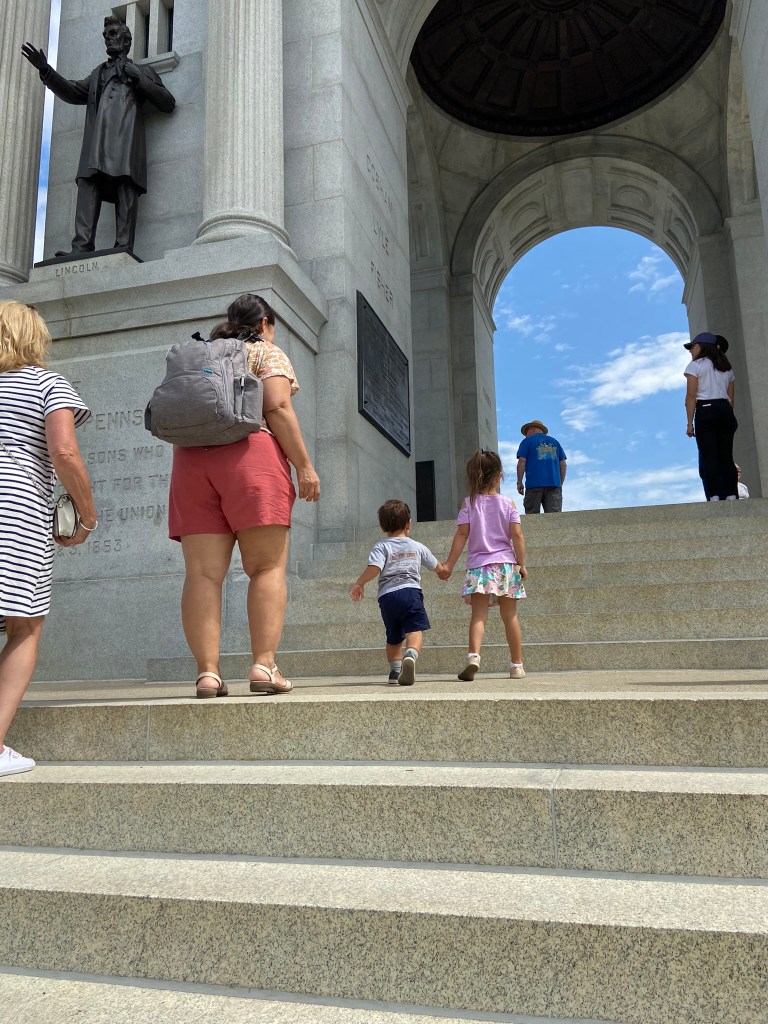
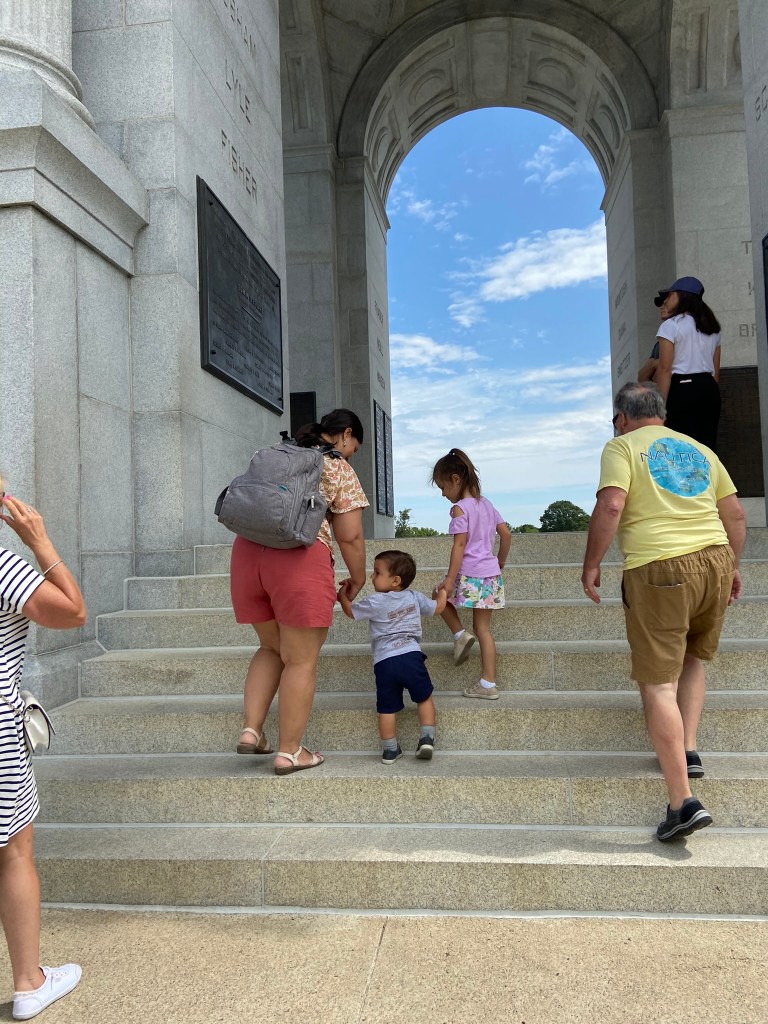
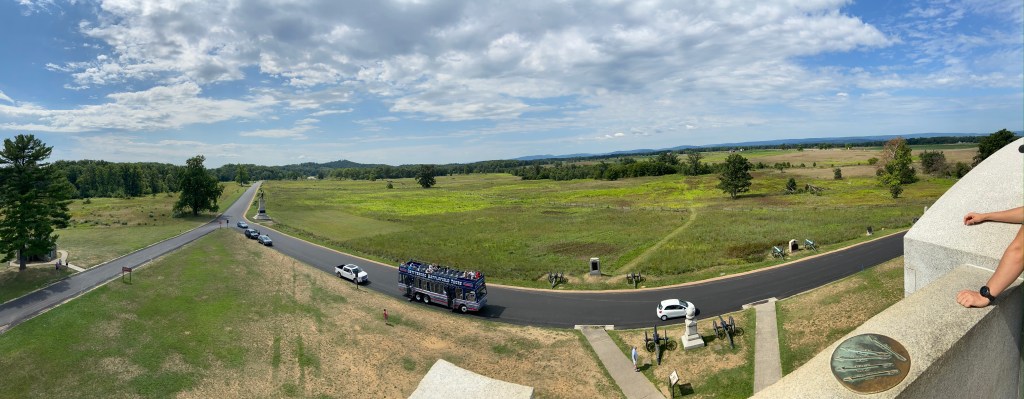
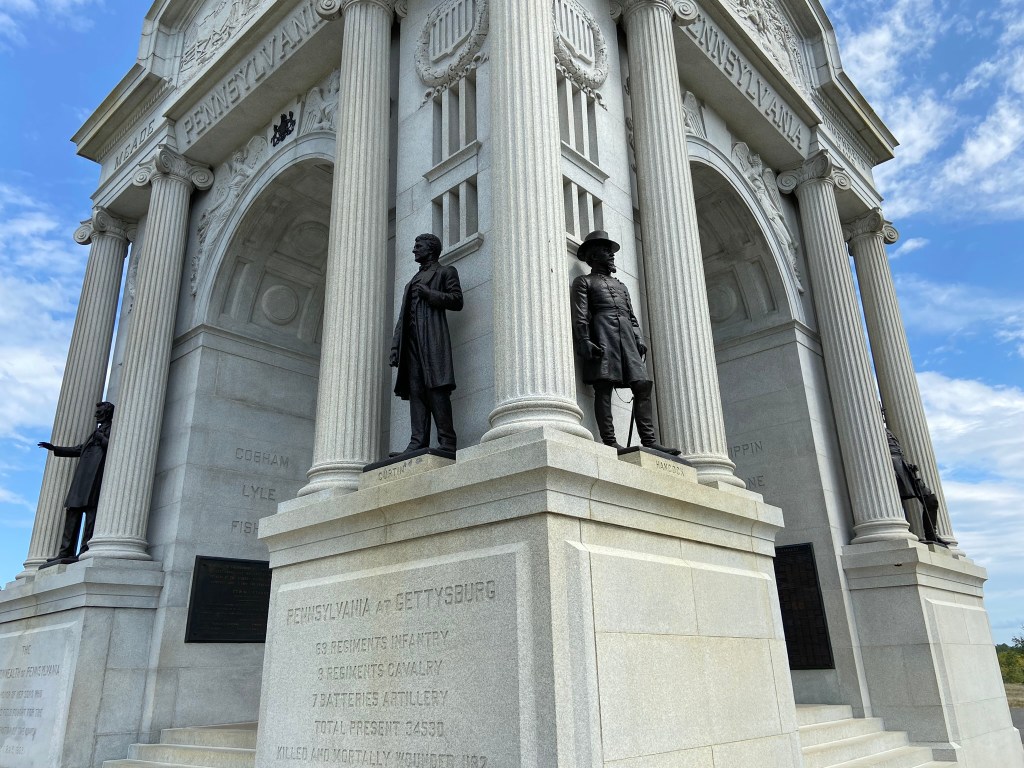
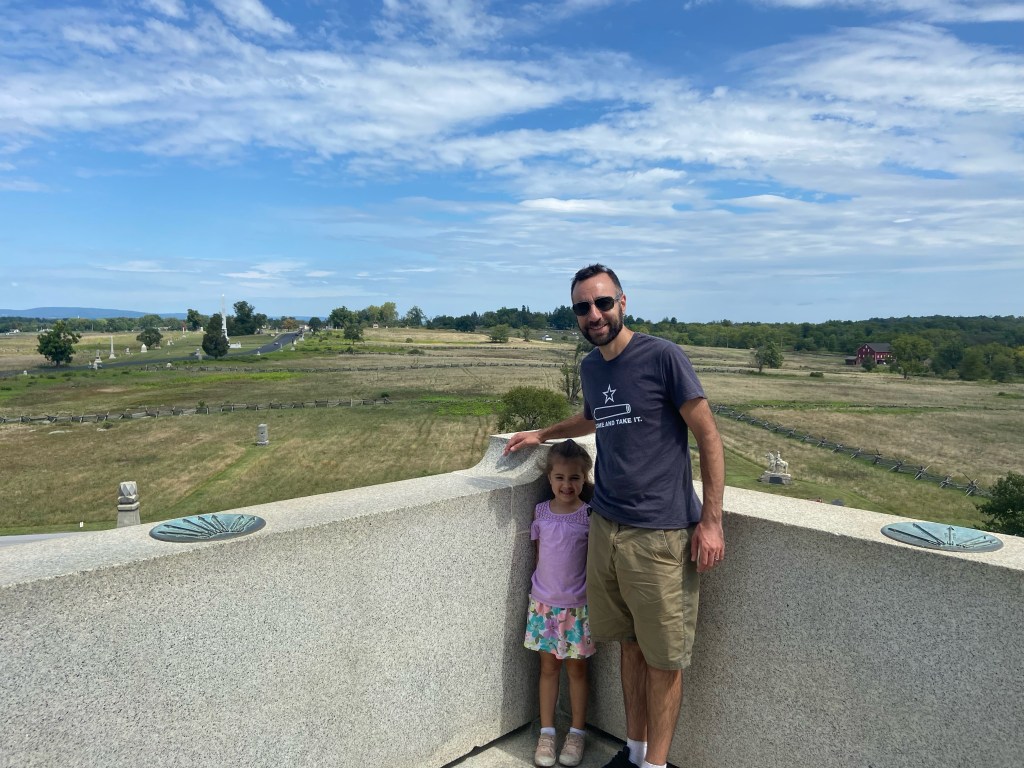
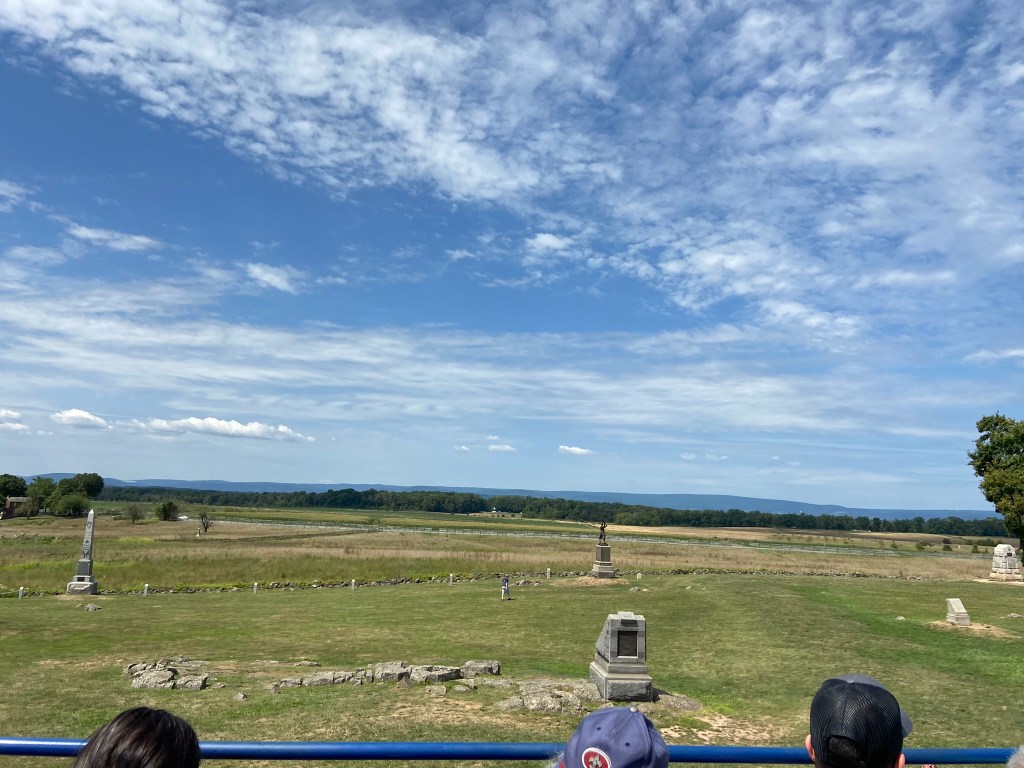
We were not able to see Devil’s Den because of road paving, or Little Round Top which is closed due to the restoration project there. We were told that they are planning to re-open Little Round Top by Spring of 2024. I hope to go back soon and see the sites that were closed down. We drove along Cemetary Ridge and were able to exit the bus again to see the Pennsylvania Memorial which is the largest monument on the Gettysburg Battlefield. The monument honors and names the nearly 35,000 Pennsylvanians who fought in the battle. We were able to climb the stairs within the monument to stand on the top and see great views of the battlefield.
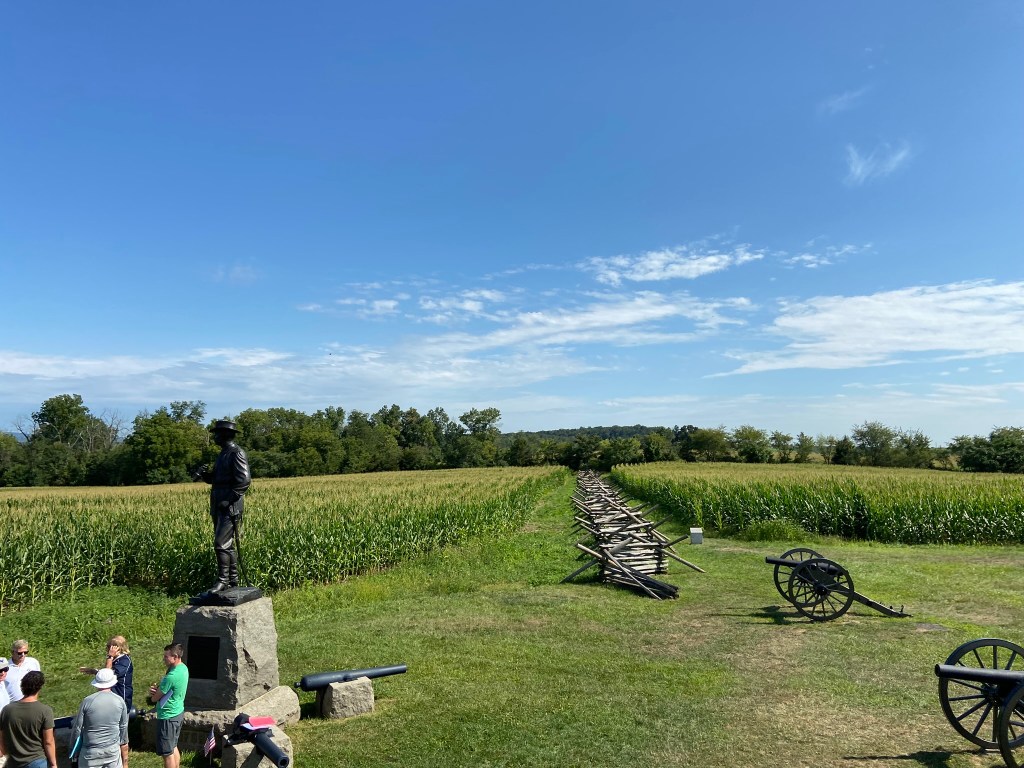
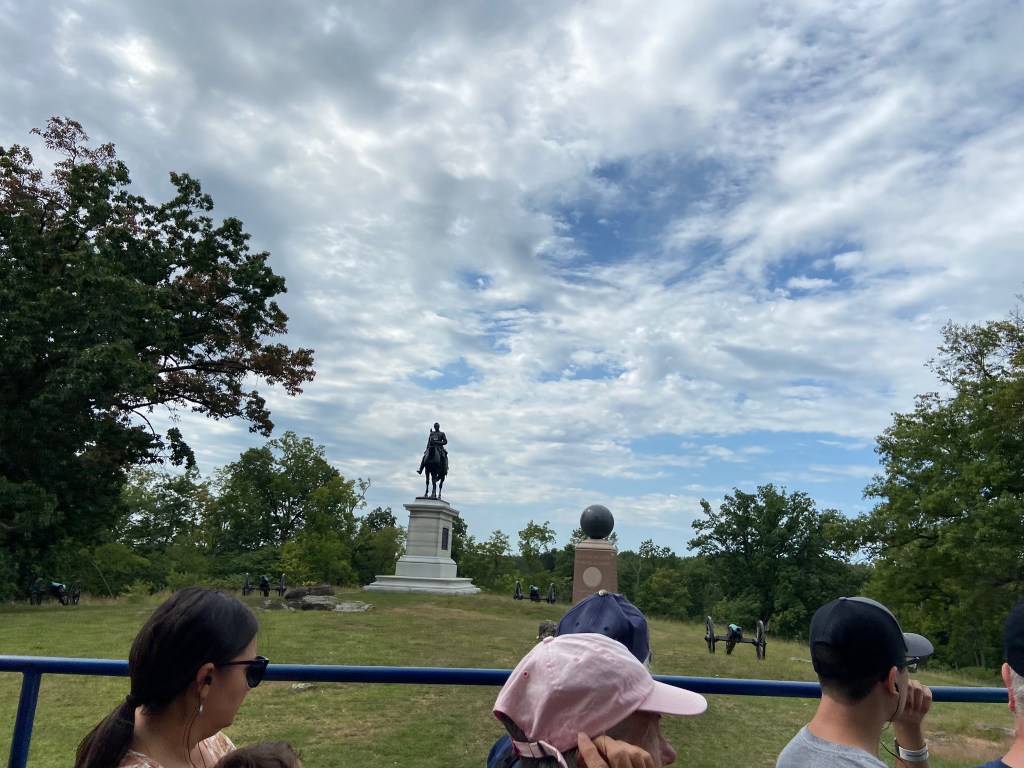
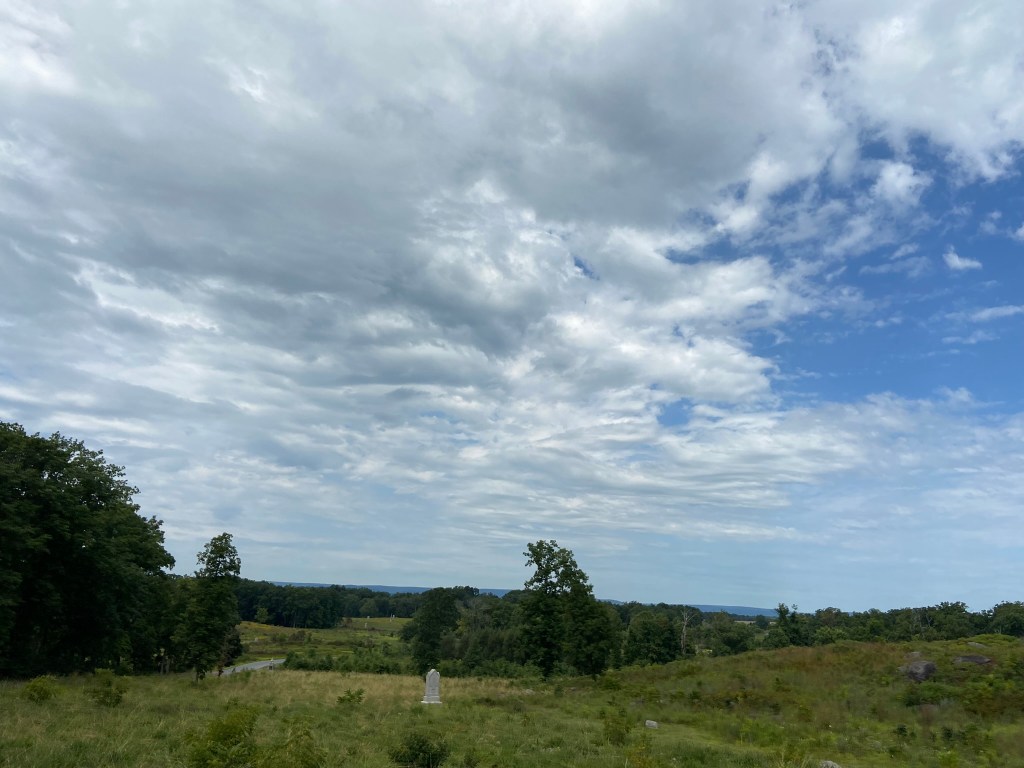
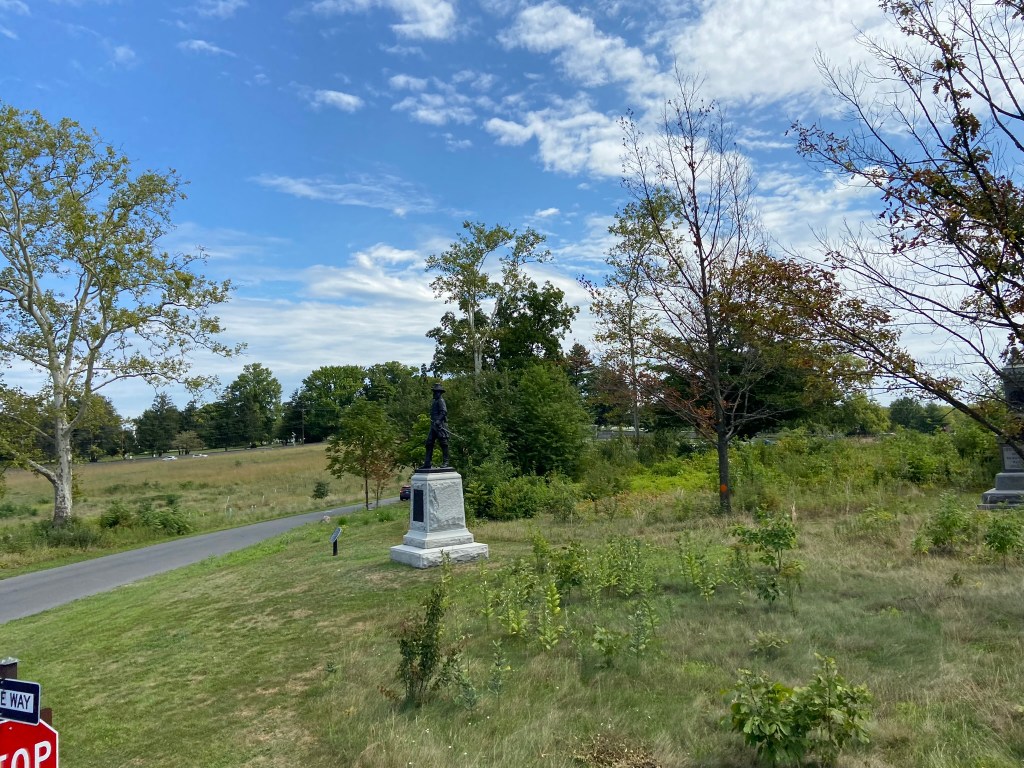
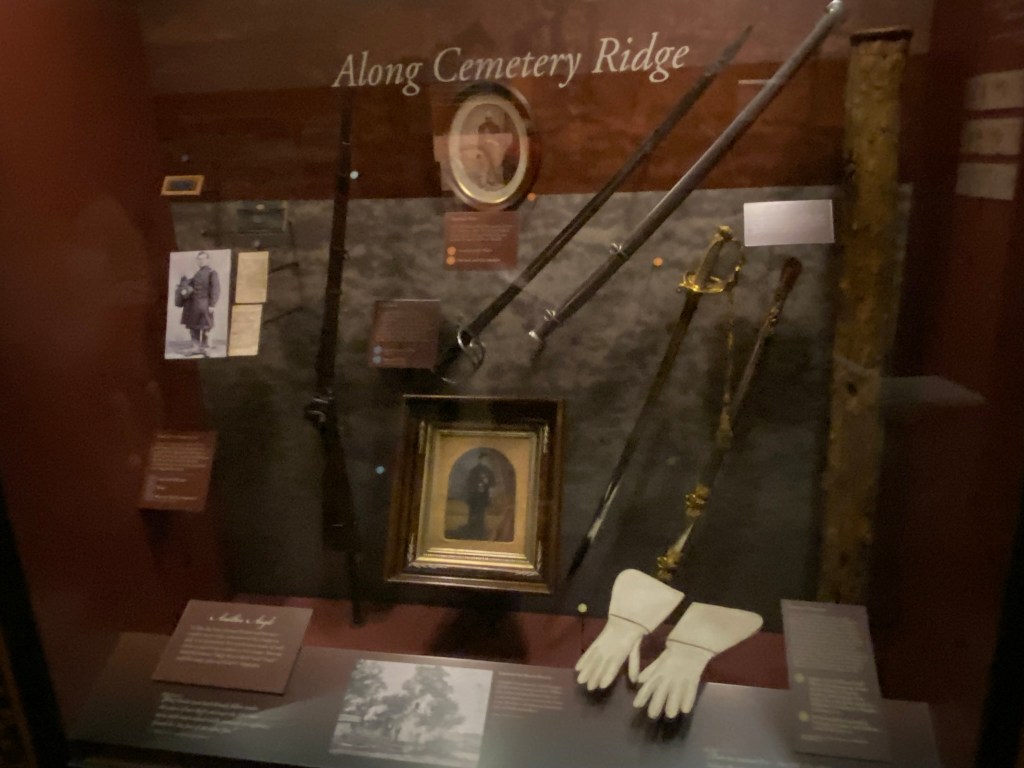
We got back on the bus and continued to head up Cemetary Ridge and we saw the monuments and markers that made this site so significant to the battle, as this was the ground that the Union was holding throughout the second and third days of the battle, including during Pickett’s Charge. After the Union held the high ground and inflicted heavy casualties on the Confederacy at this site, the Confederate Army could not fully recover and was forced to retreat.
After a two hour tour, we made our way back to where the bus tour began. I would highly recommend this bus tour and doing it on the double-decker bus. Of all of the sites that we saw in Gettysburg, this truly was the highlight. We were able to see these hallowed grounds first-hand, as well as the monuments and markers that honor those who fought in the battle. It was nice having a guide explaining all of the landmarks and features of the battlefield along with the history of the town of Gettysburg. For more informaton on Gettysburg Battlefield Tours check out- https://www.gettysburgbattlefieldtours.com/
After we got off the bus, my family and I ate lunch at O’Rourke’s Family Eatery, a casual Irish restaurant, which is right around the corner from where the bus dropped us off. Check out their site here: https://www.ororkes.com/
Gettysburg National Military Park and Museum
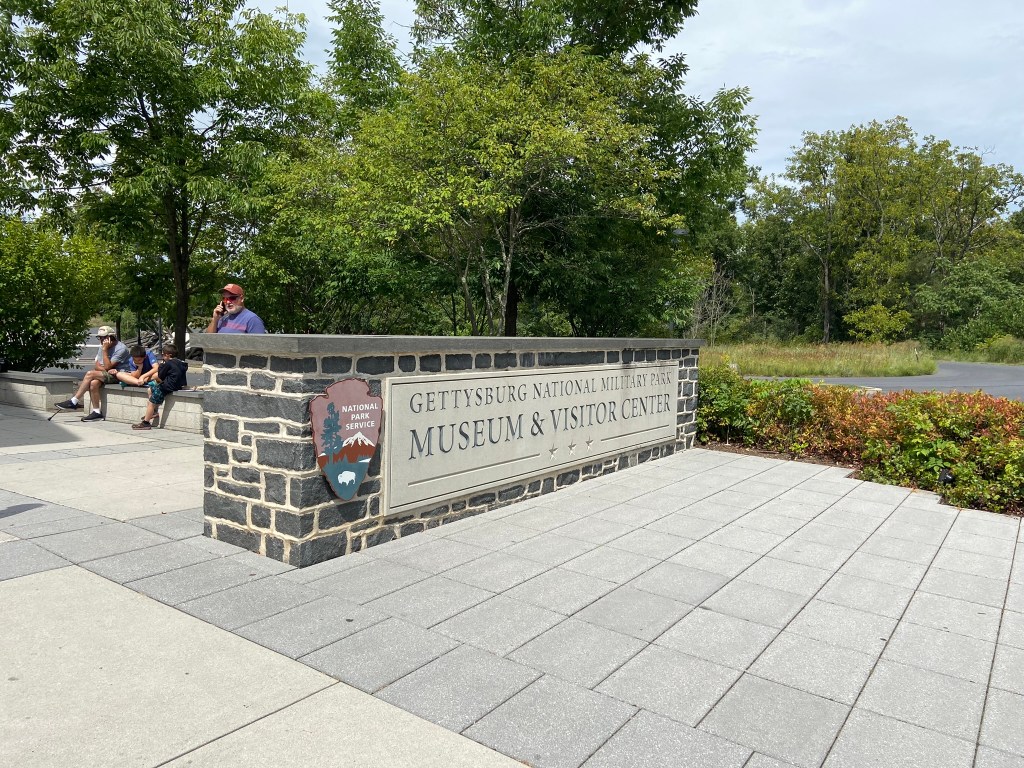
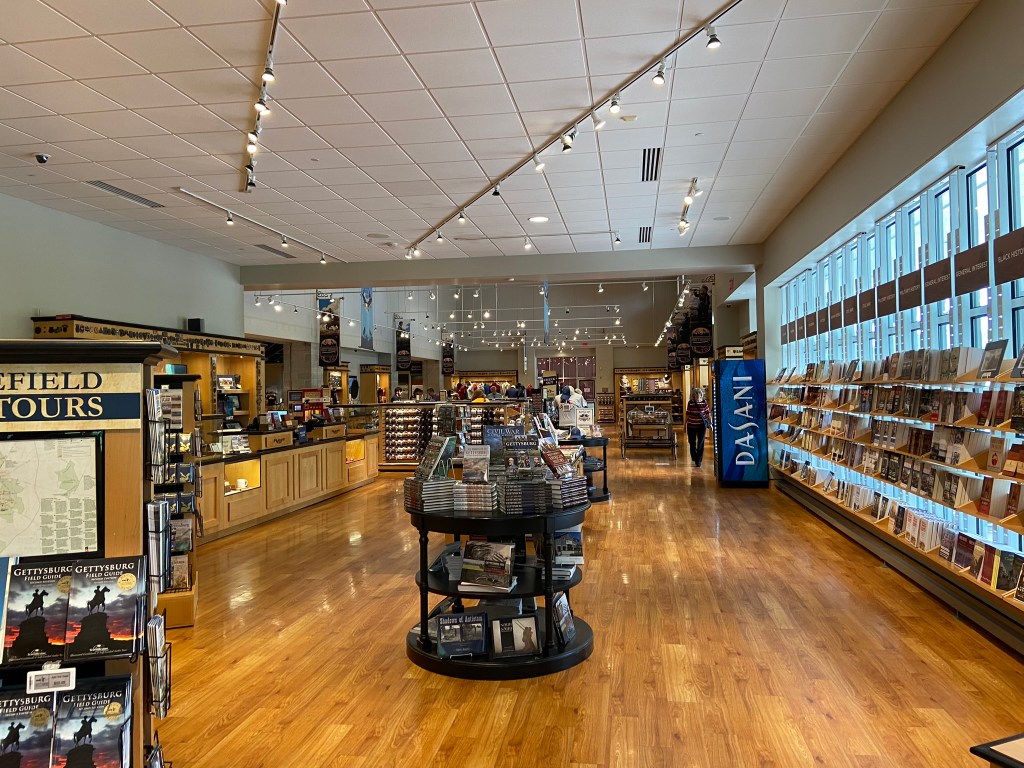
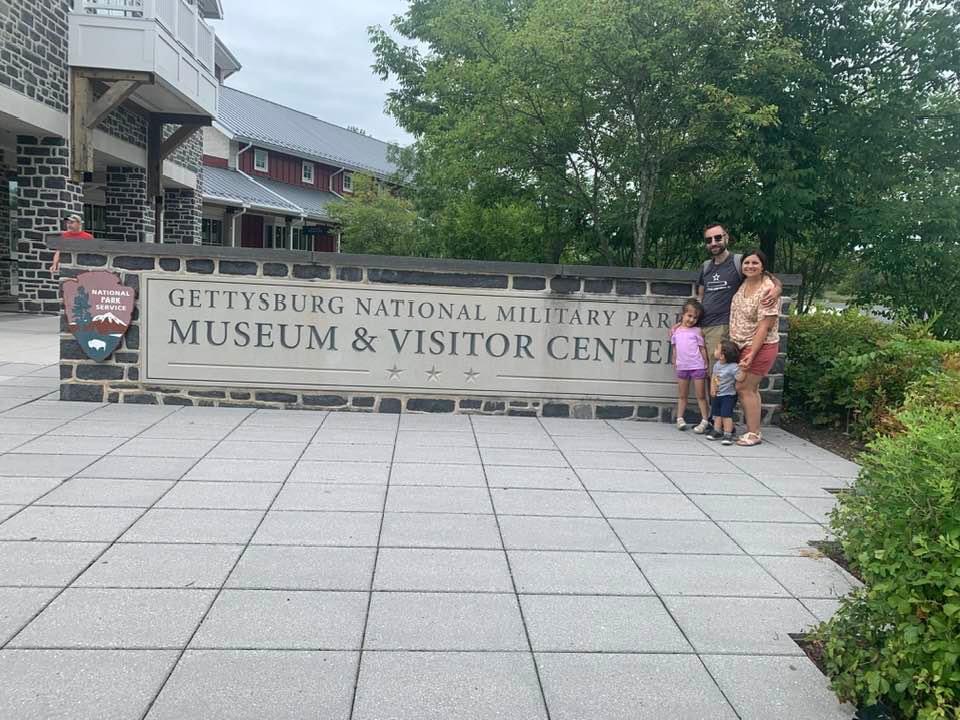
After lunch, our next stop was the Gettysburg National Military Park and Museum. We got in our cars and made the 4 minute drive down the street. The visitor center is a beautiful building that has a huge bookstore. One thing I noticed is that T-shirts/ sweatshirts are much more expensive here than in the smaller shops in town. I’d hold off on buying souvenirs until you make it back to those smaller shops.
“A New Birth of Freedom”
I bought the family tickets for $19 per adult which includes entry to the musuem, a 20 minute film in a theater, and a viewing of the Cyclorama (which I explain below). The family and I first watched the film entiteld “A New Birth of Freedom” in the theater which was entertaining and informative. Narrated by none other than Morgan Freeman, the film discussed the tensions in the country leading up to the Civil War, the start of hostilities and the importance of the Battle of Gettysburg. It emphasized the fact that at stake in the Battle of Gettysburg and the Civil War was the freedom of the 4 million slaves in bondage in the country.
Cyclorama
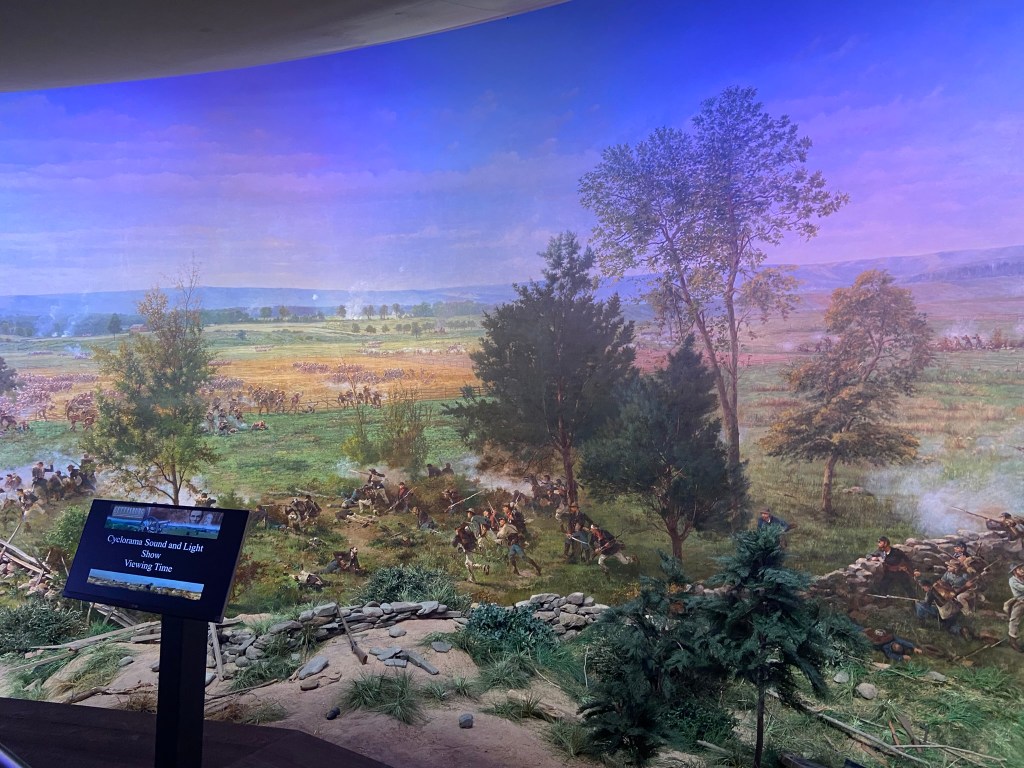
After the 20 minute film we were taken to see the Cyclorama, which you have see to believe just how incredible it is. The Cyclorama is a 360 degree painting of the battle of Gettysburg that surrounds you and depicts the third day of battle during Pickett’s Charge. There is a short demonstration that takes place with a narrator, highlighting different scenes from the battle. The Gettysburg Cyclorama is 377 feet long, 42 feet high, and weighs 12.5 tons. The canvas was painted by French artist Paul Phillppoteaux and it opened to the public in Chicago in 1883. Pictures do not do the Cyclorama justice. You must go see for yourself. (https://www.nps.gov/gett/learn/historyculture/cyclorama.htm)
Gettysburg Museum of the American Civil War
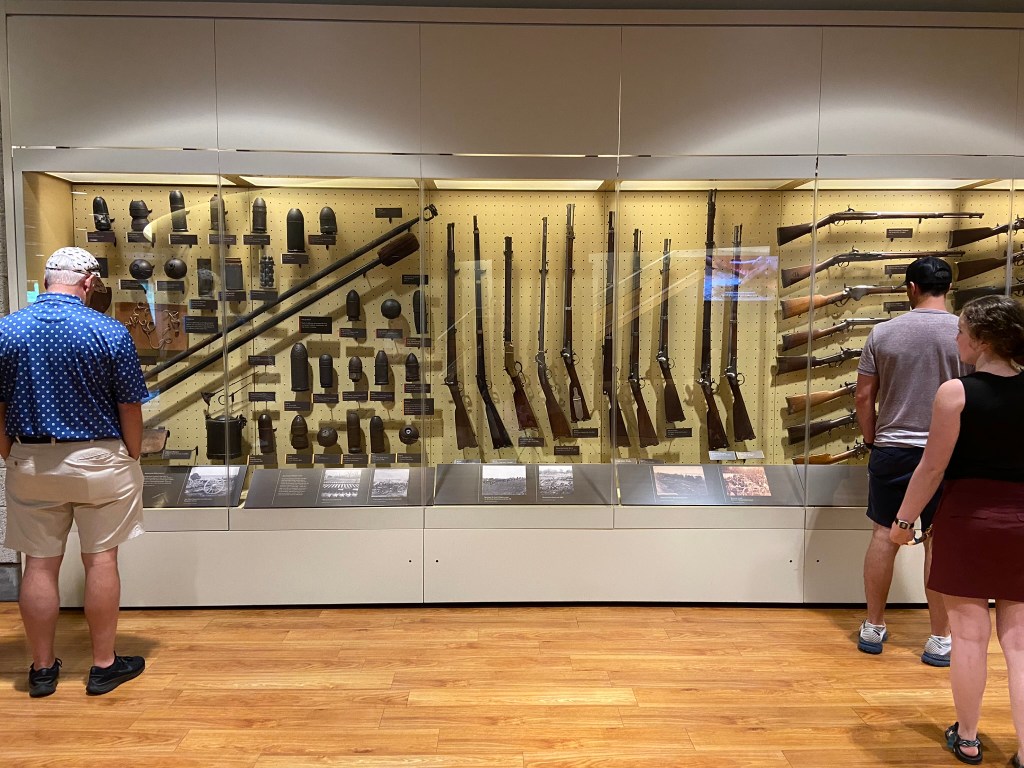
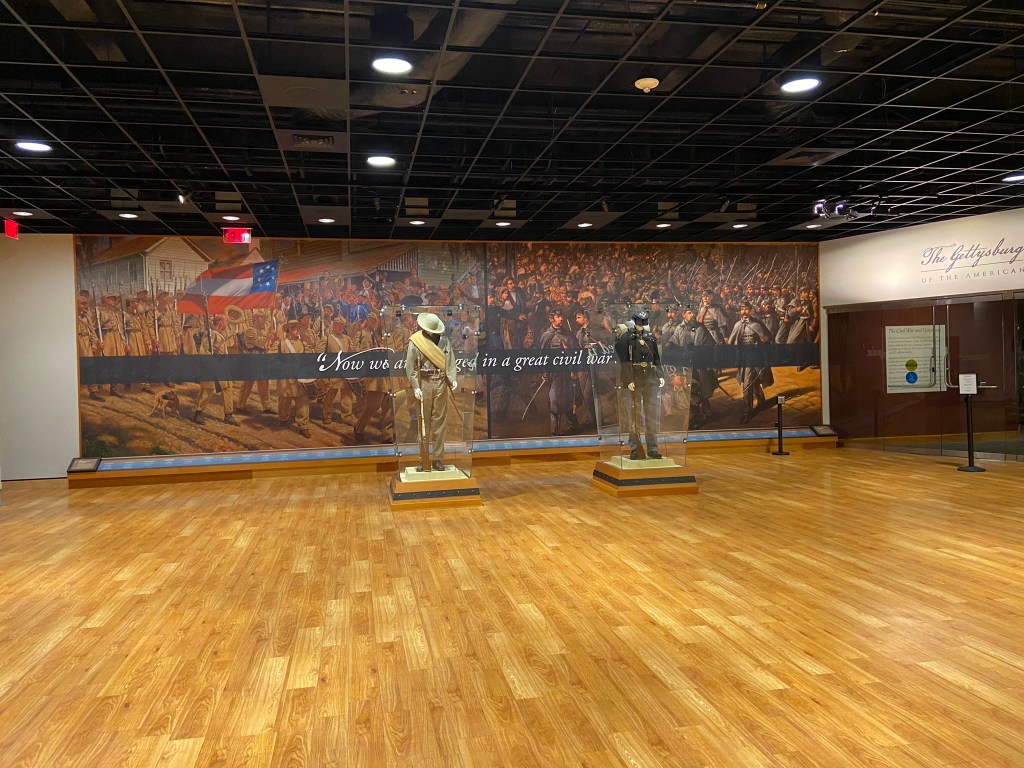
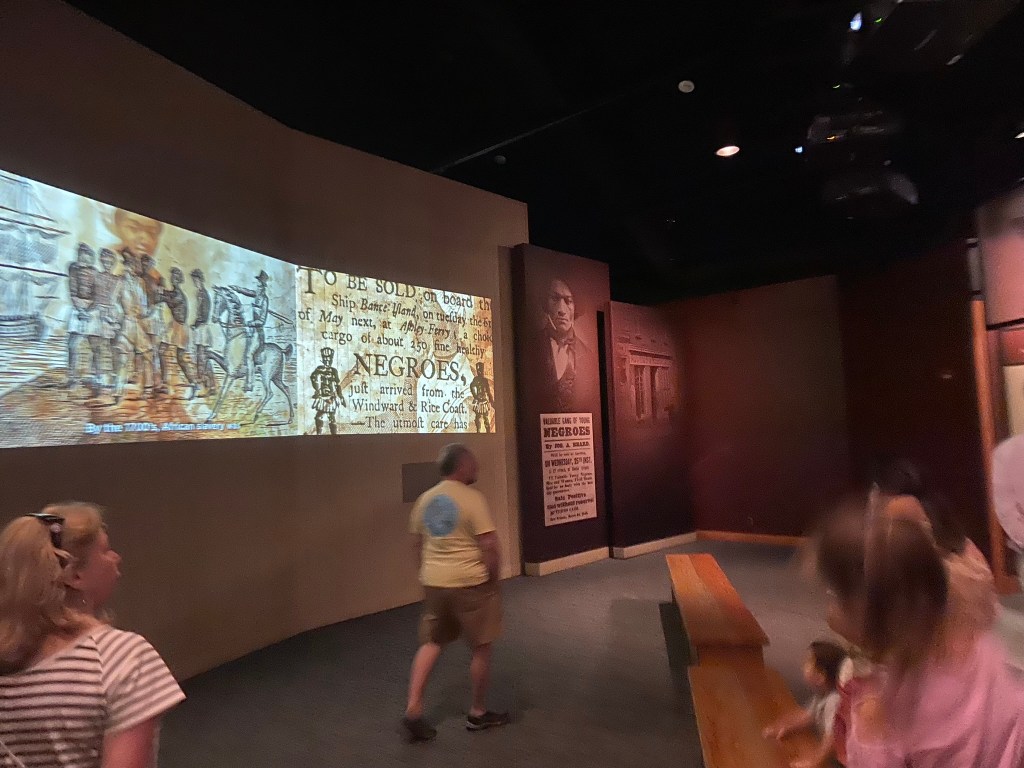
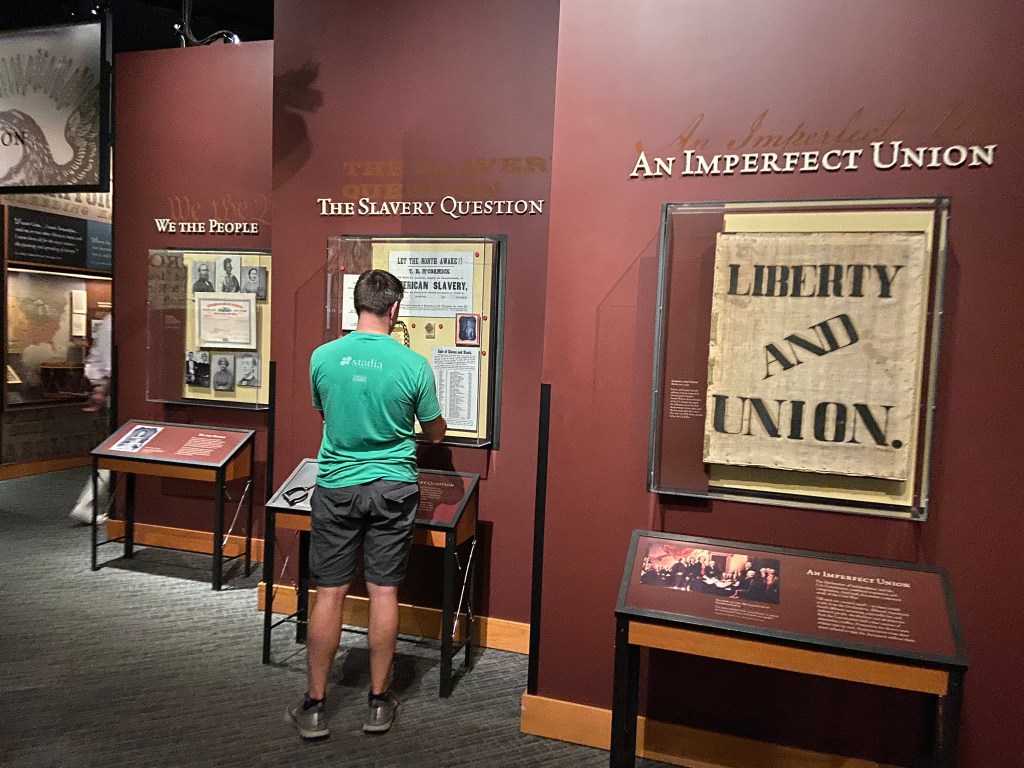
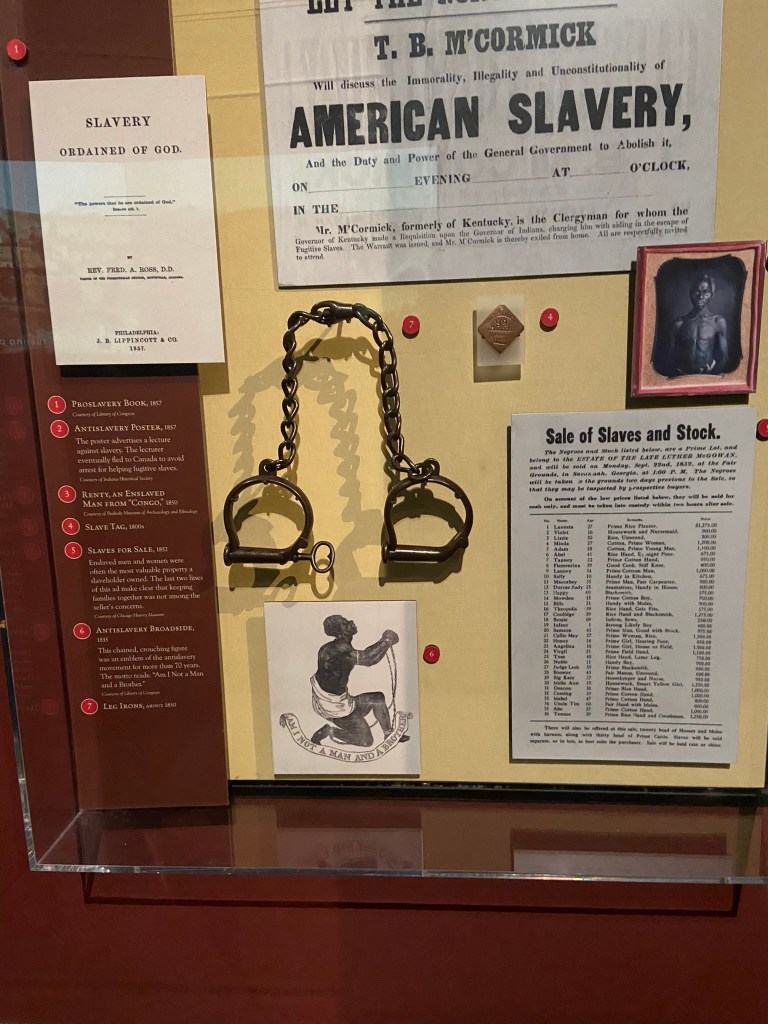
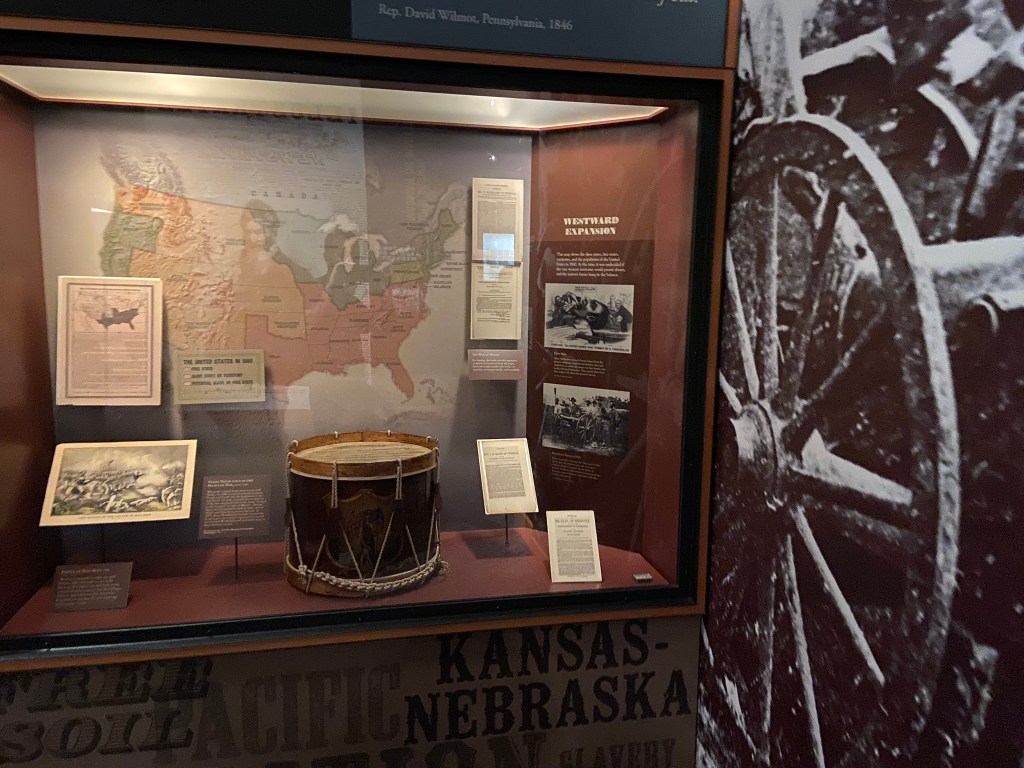
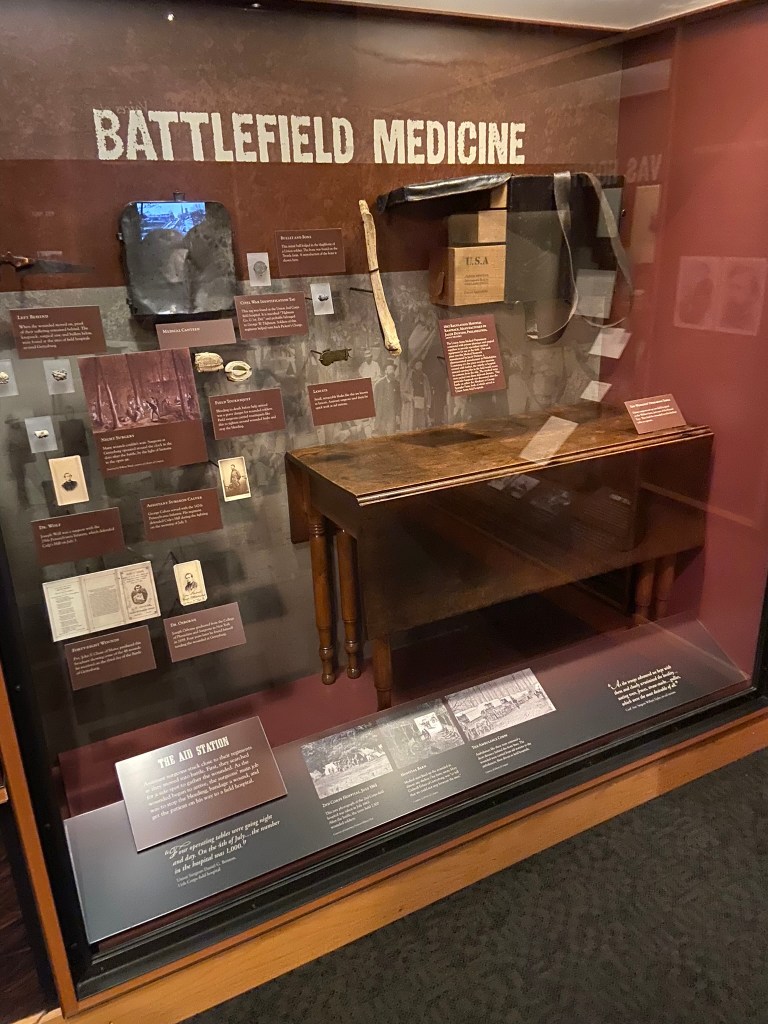
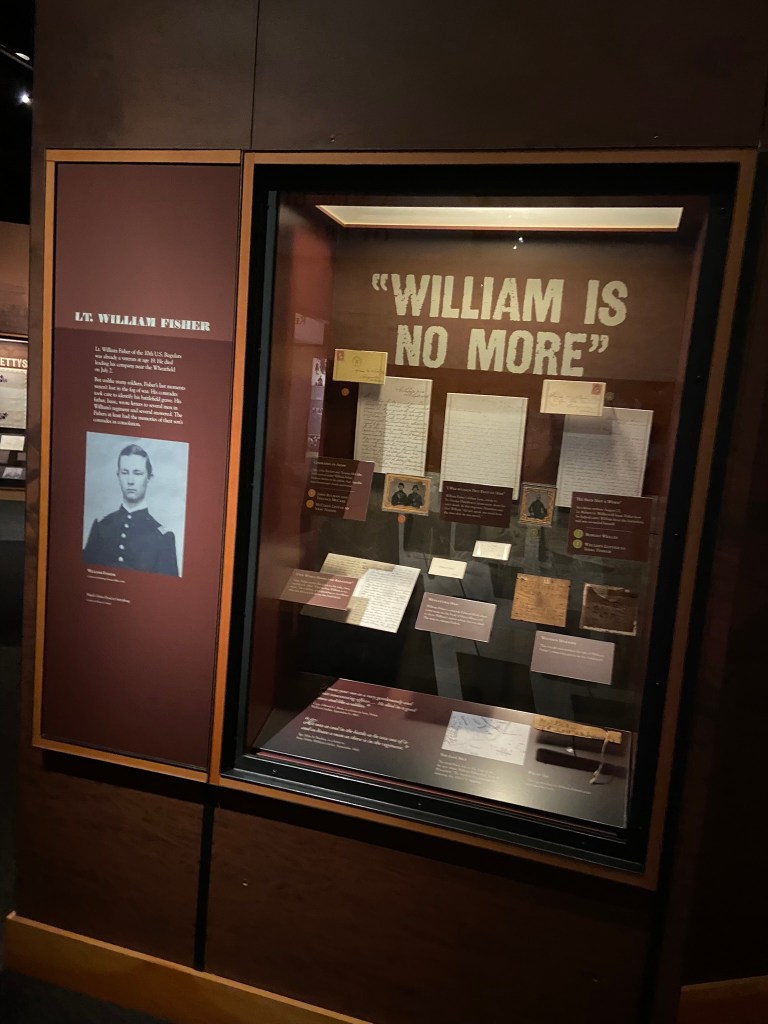
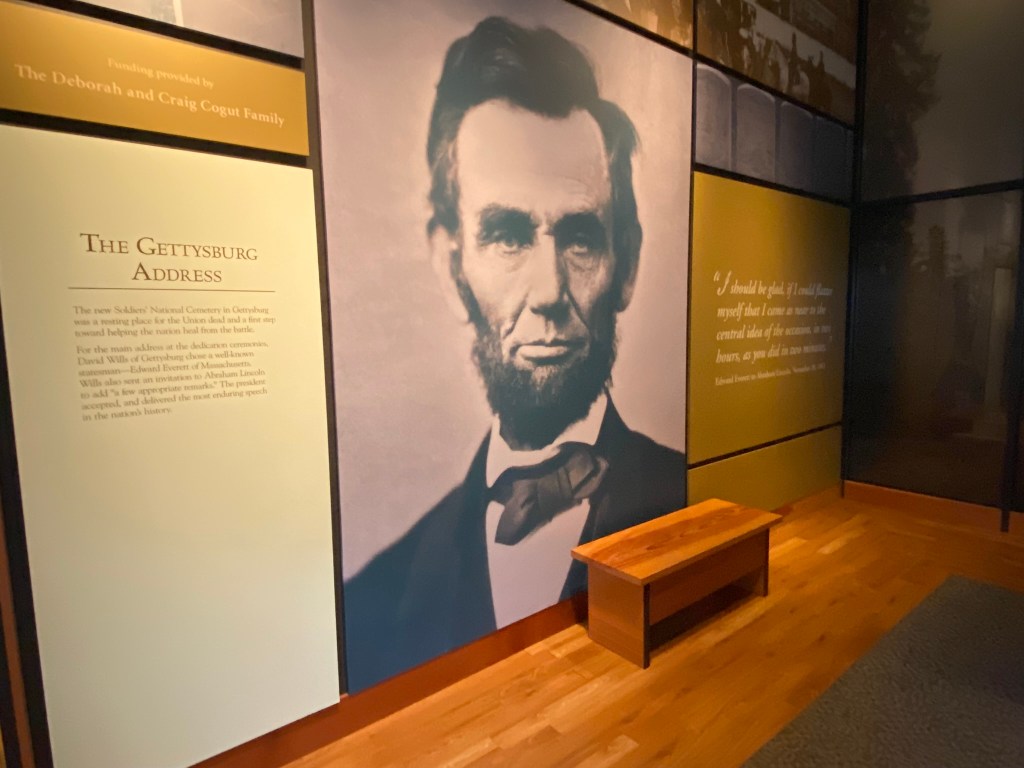
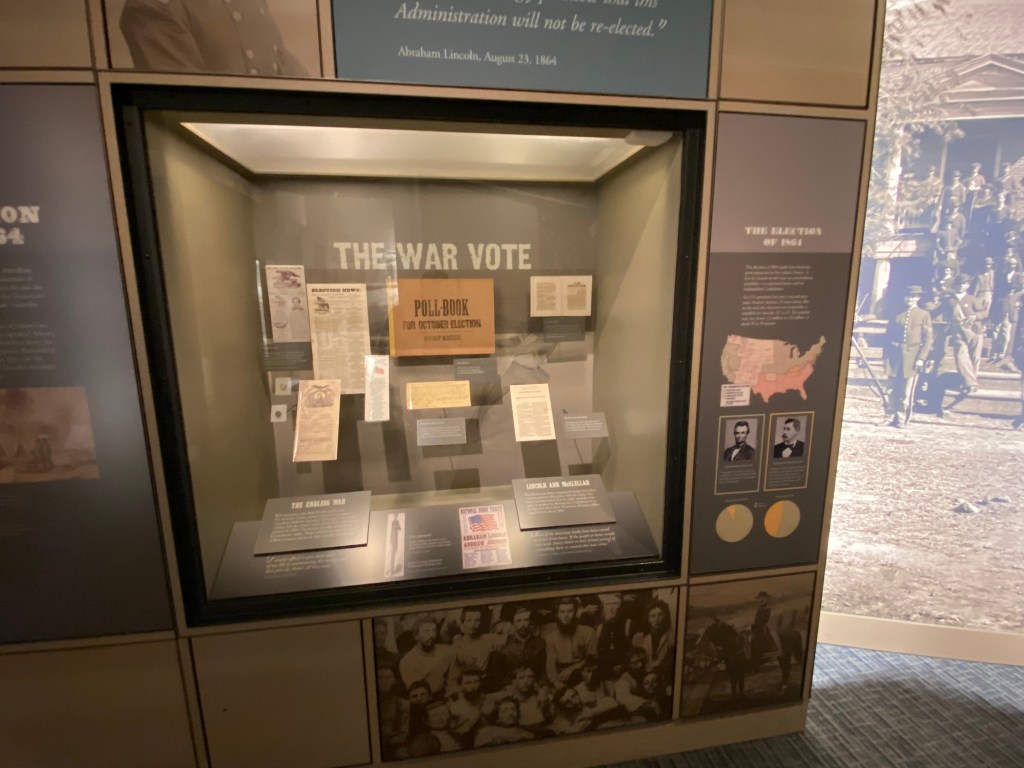
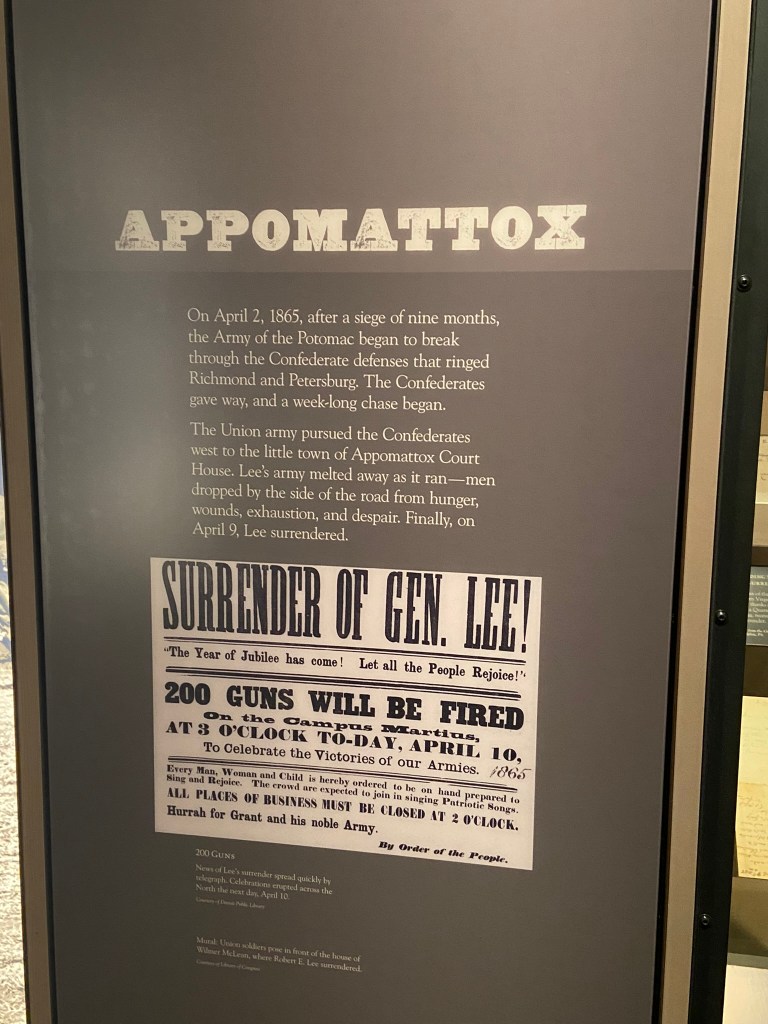
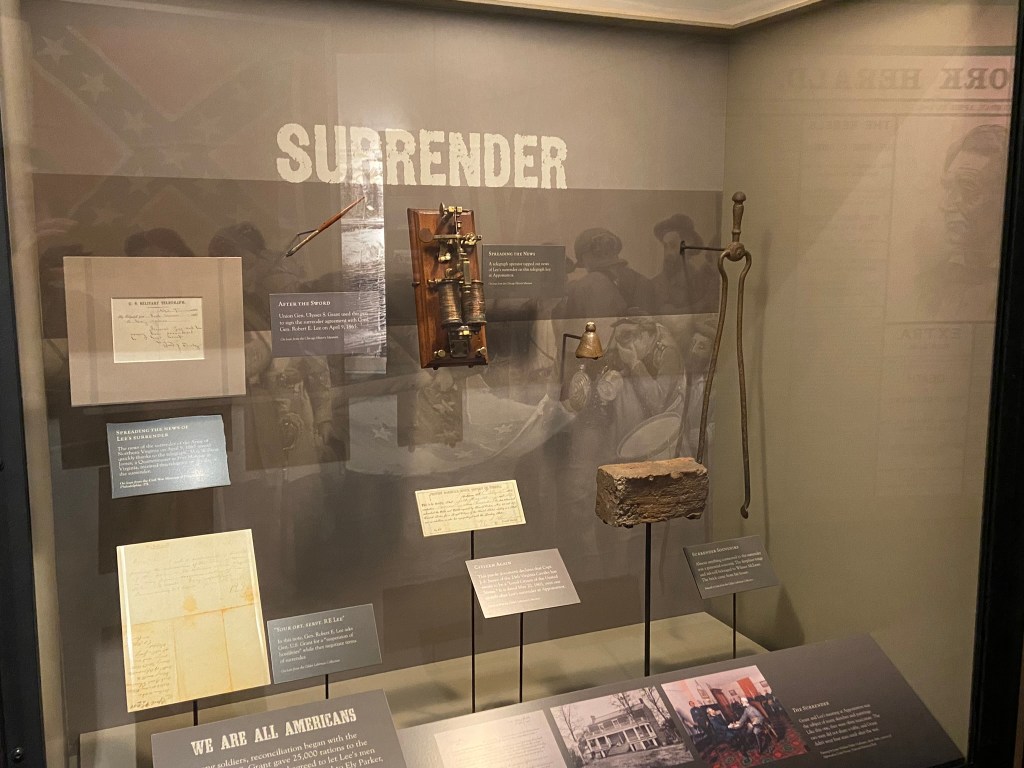
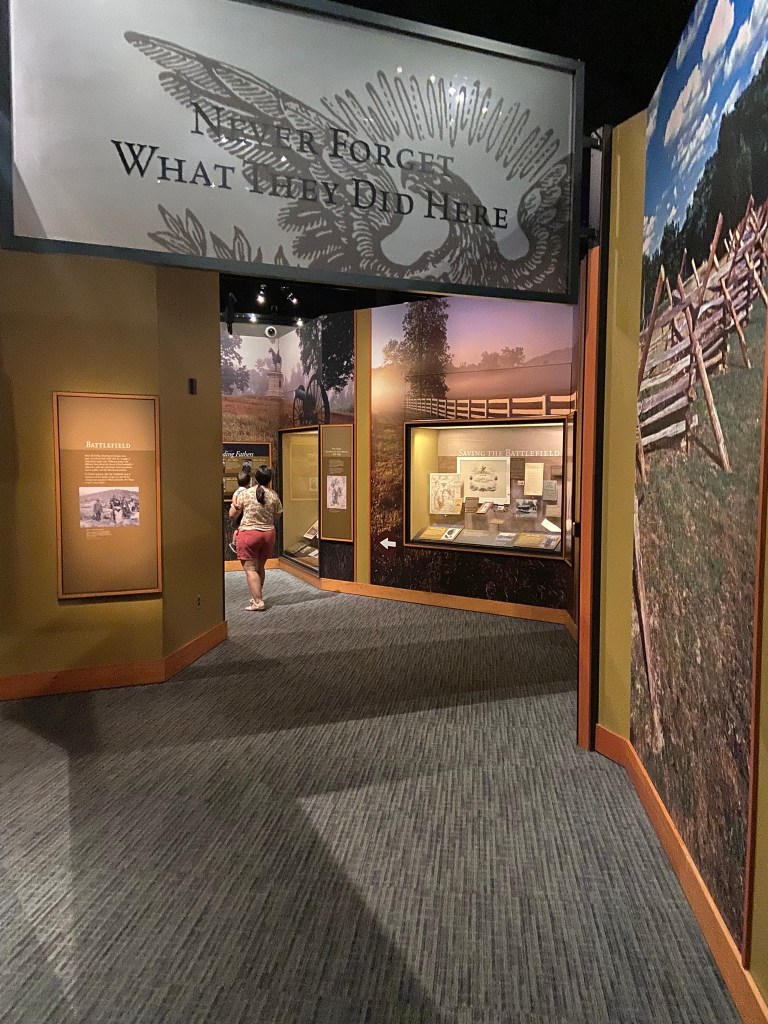
After the Cyclorama, we used our tickets to enter the Gettysburg Museum of the American Civil War. I was very impressed with the museum in terms of the amount of exhibits on display and the breadth of information to read on each exhibit. There are also interactive exhibits and multi-media presentations. As you walk through the museum you are taken through time starting with the writing of the Constitution and tensions in the country over the issue of slavery. The musuem highlights the tensions of the 1850s that eventually led to Lincoln’s election in 1860 and the secession of the Southern states. The musuem highlights the war leading up the Battle of Gettysburg. There is then an extensive emphasis on the three days of battle. The museum then takes you through the later phases of the war, the Confederate surrender, the Lincoln assassination and the aftermath of the war. Truly a wonderful and informative museum, I highly recommend visiting.
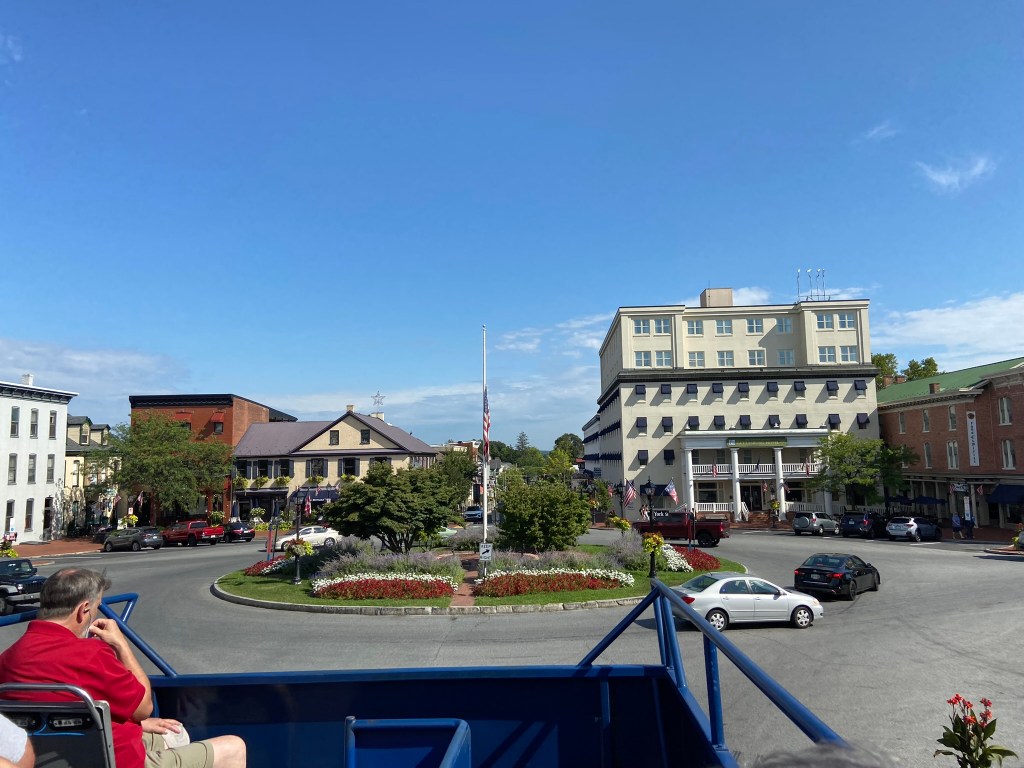
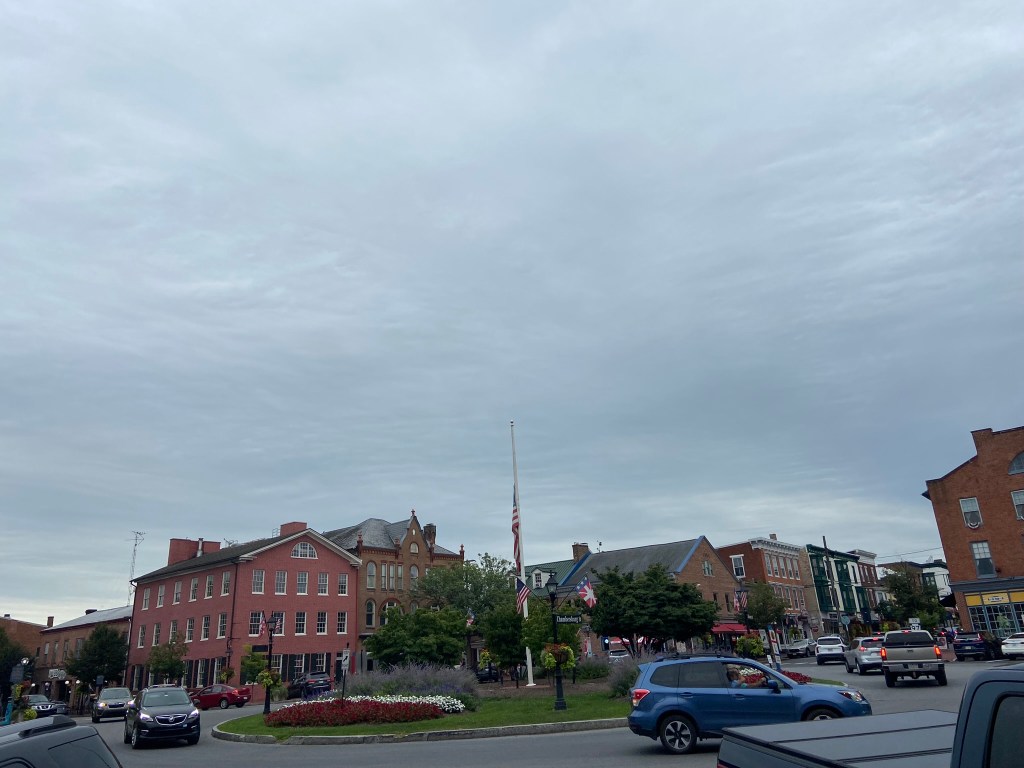
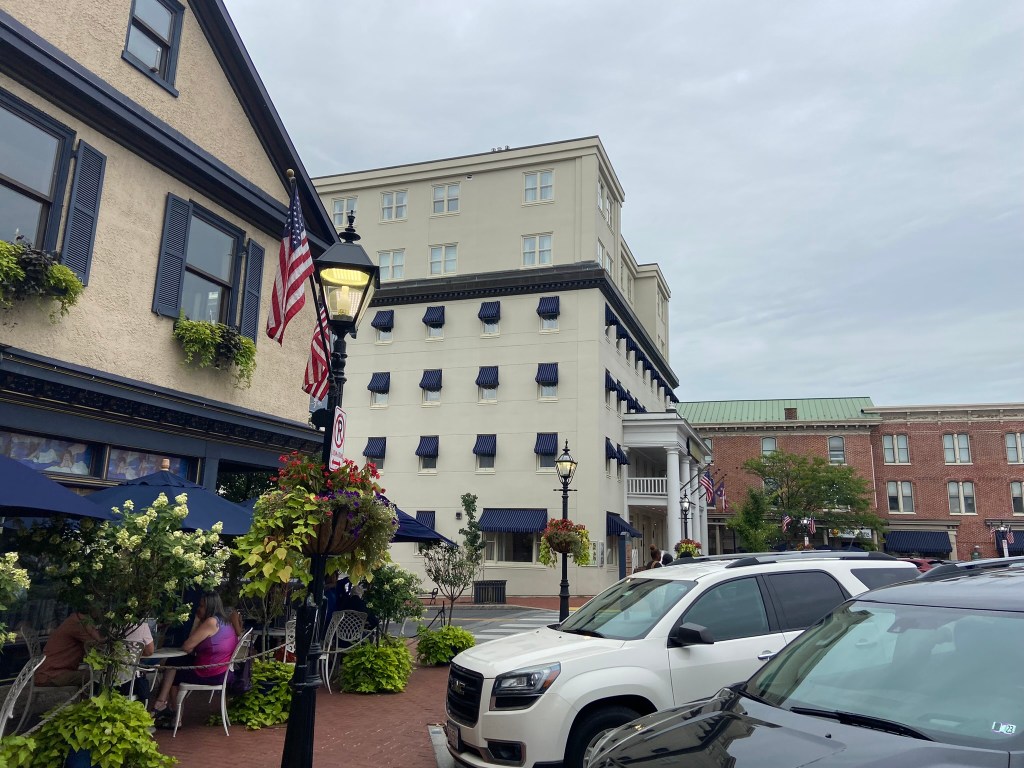
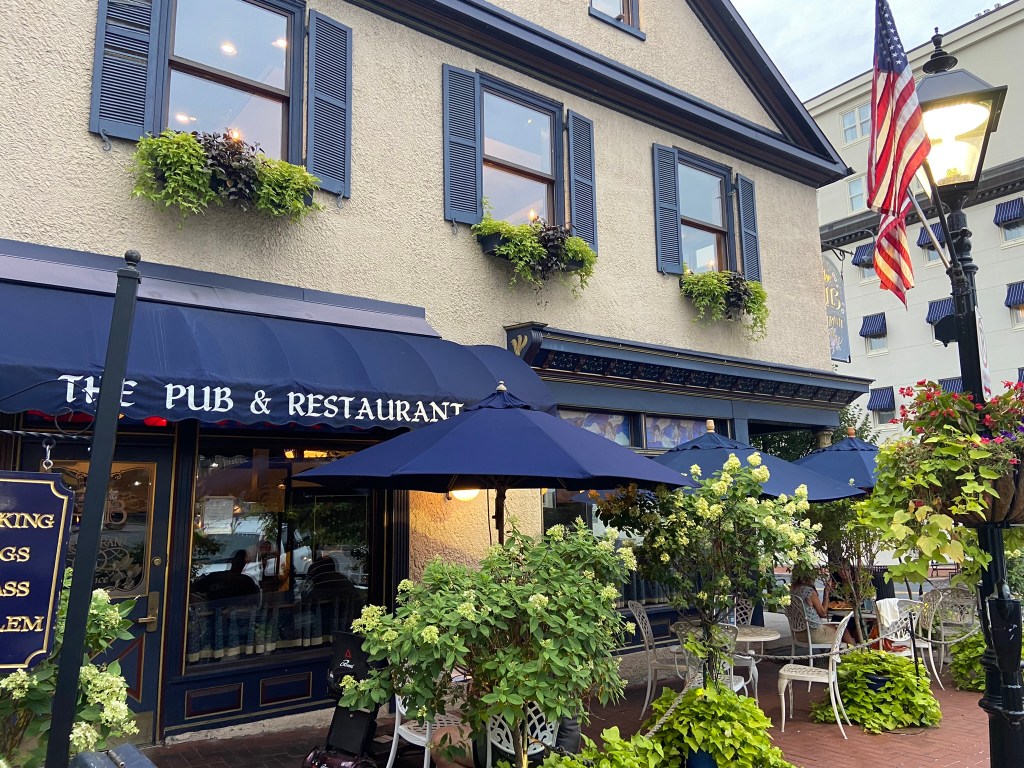
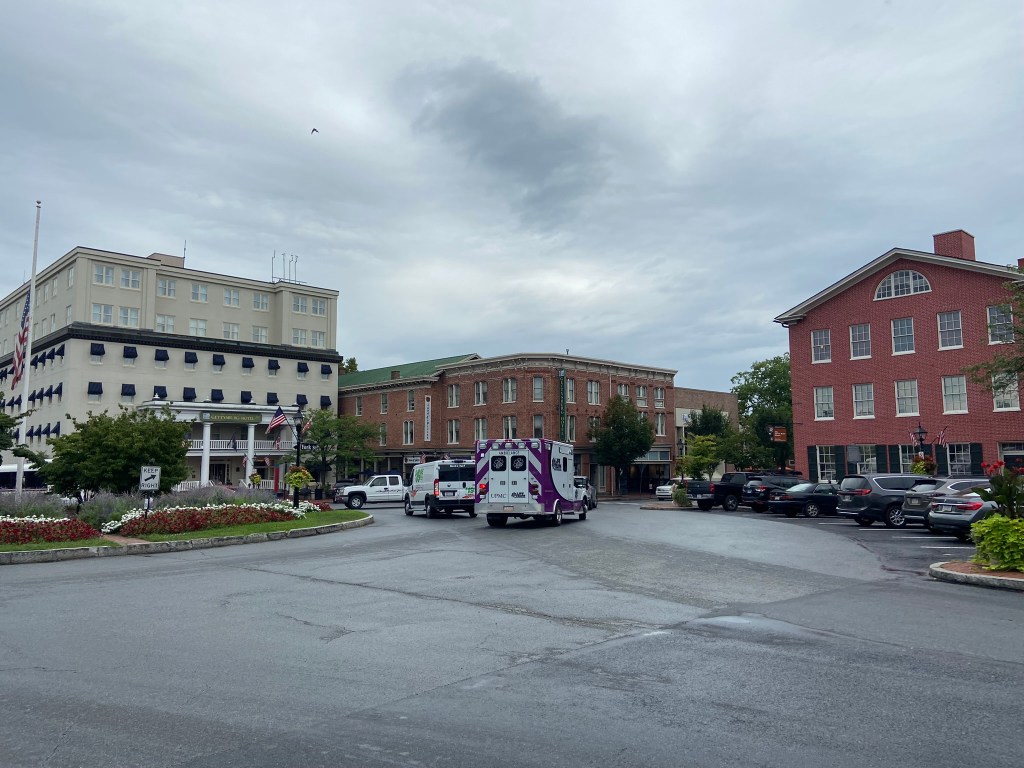
We spent a great deal of time at the Gettysburg National Military Park and Musuem, so that by the time we left and headed back to the hotel, we were thinking dinner. We again walked up Baltimore Street, this time to the center of town at Lincoln Circle. We first tried to go to the Blue and Gray Bar & Grill but there was almost an hour wait for us. So we then decided on The Pub & Restaurant close by because there was only a 5-10 minute wait. The service at this place was not great, but the food was good. After we were done eating we headed back up to our hotel for the evening.
Day 3
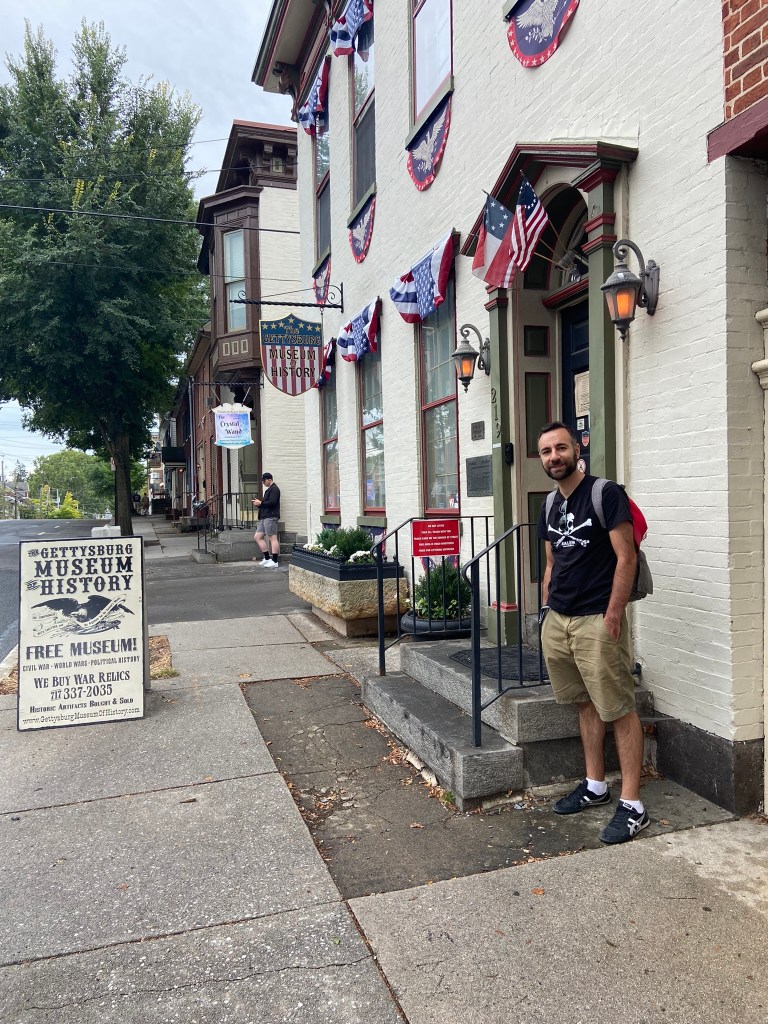
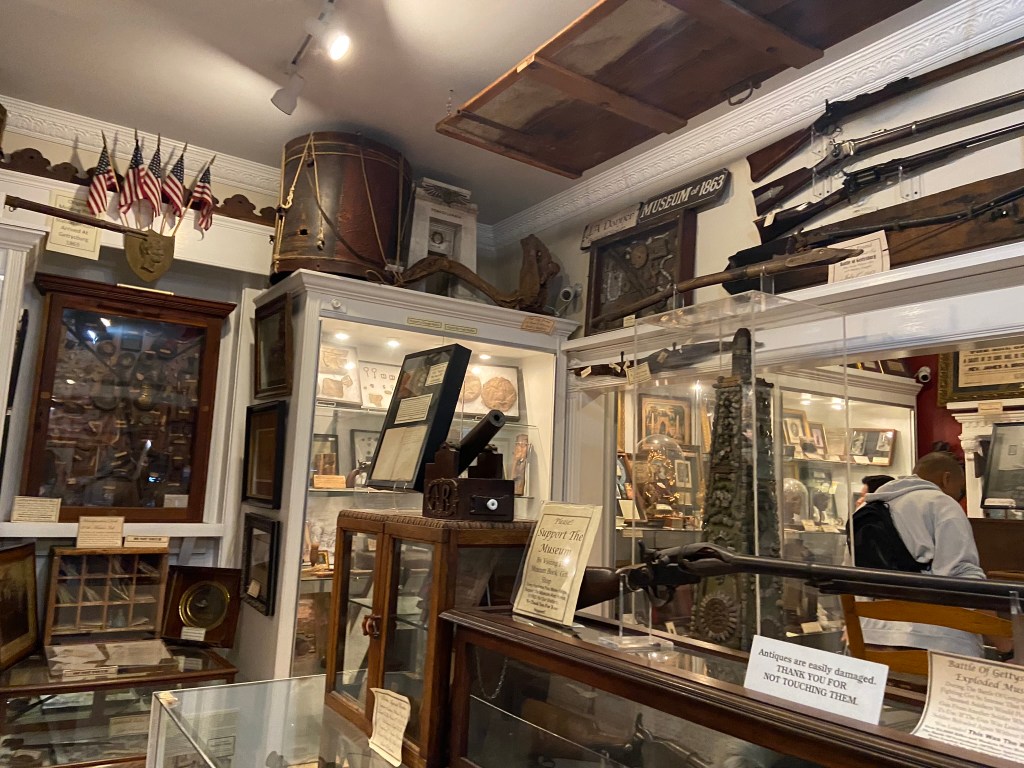
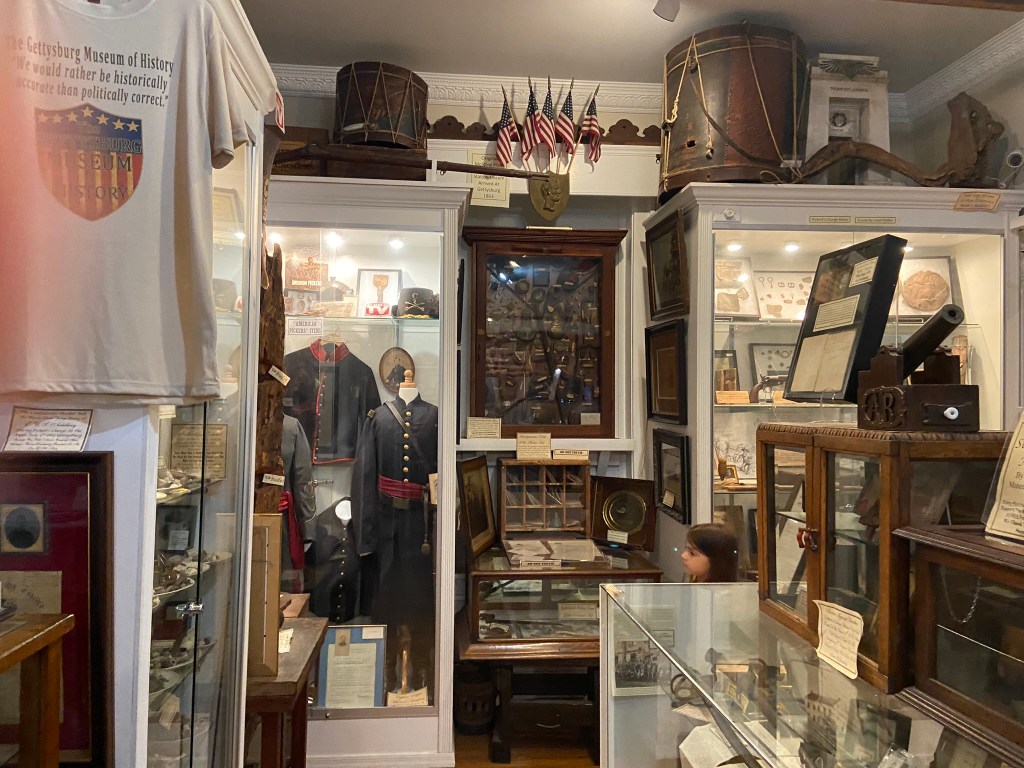
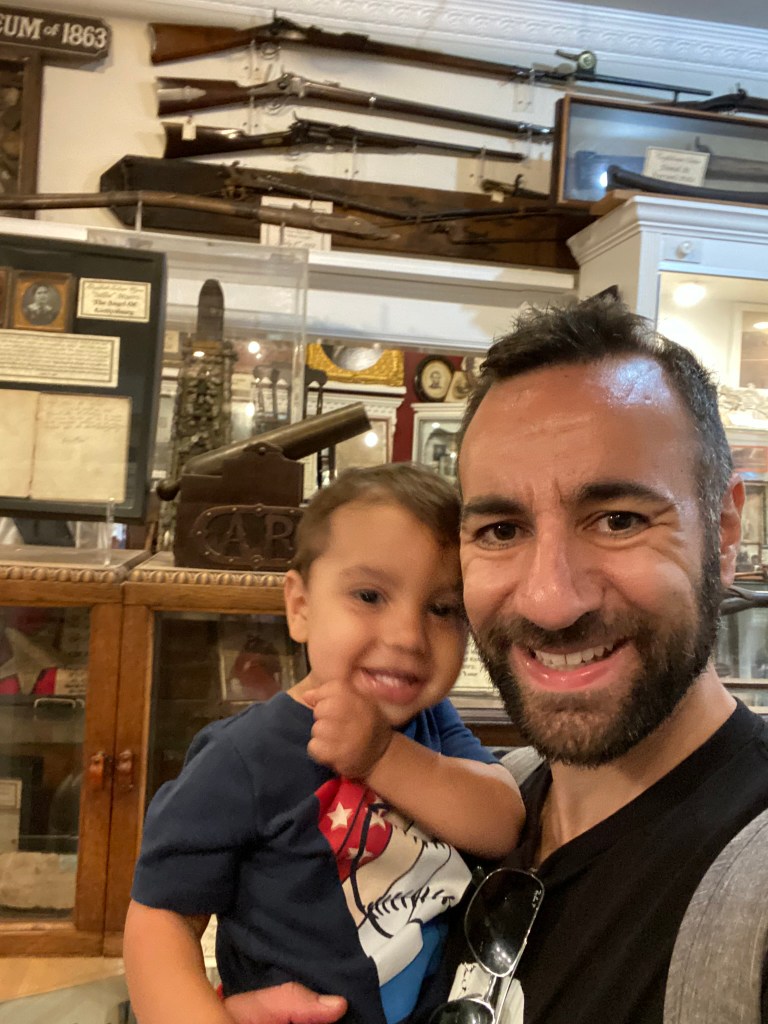
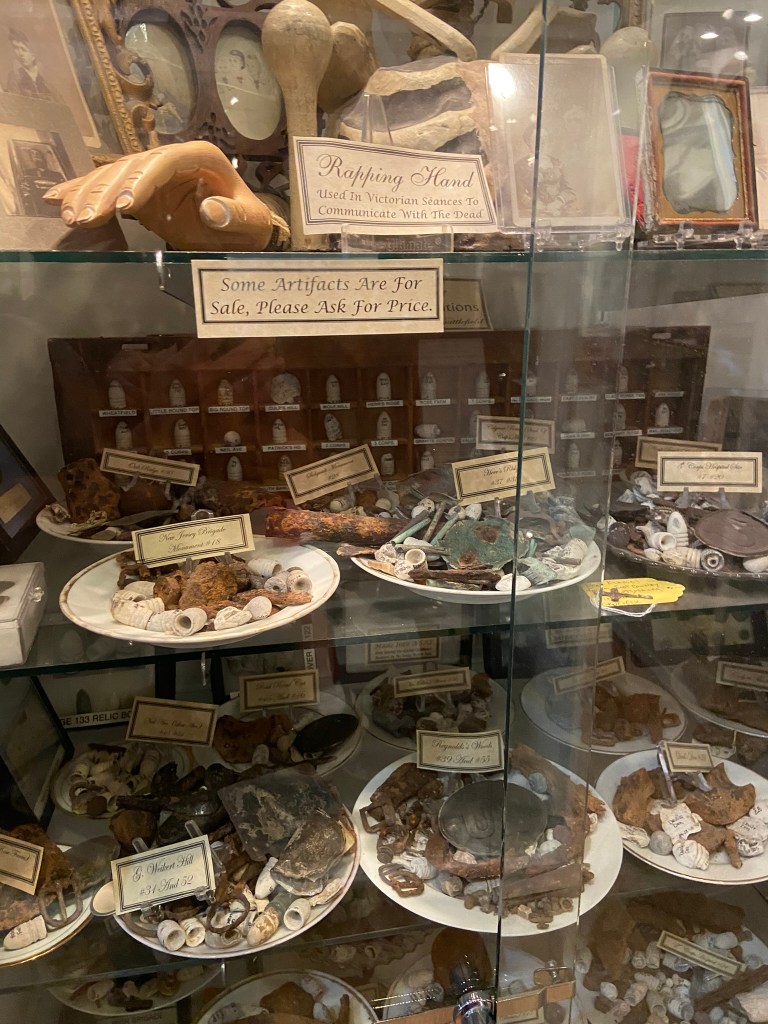
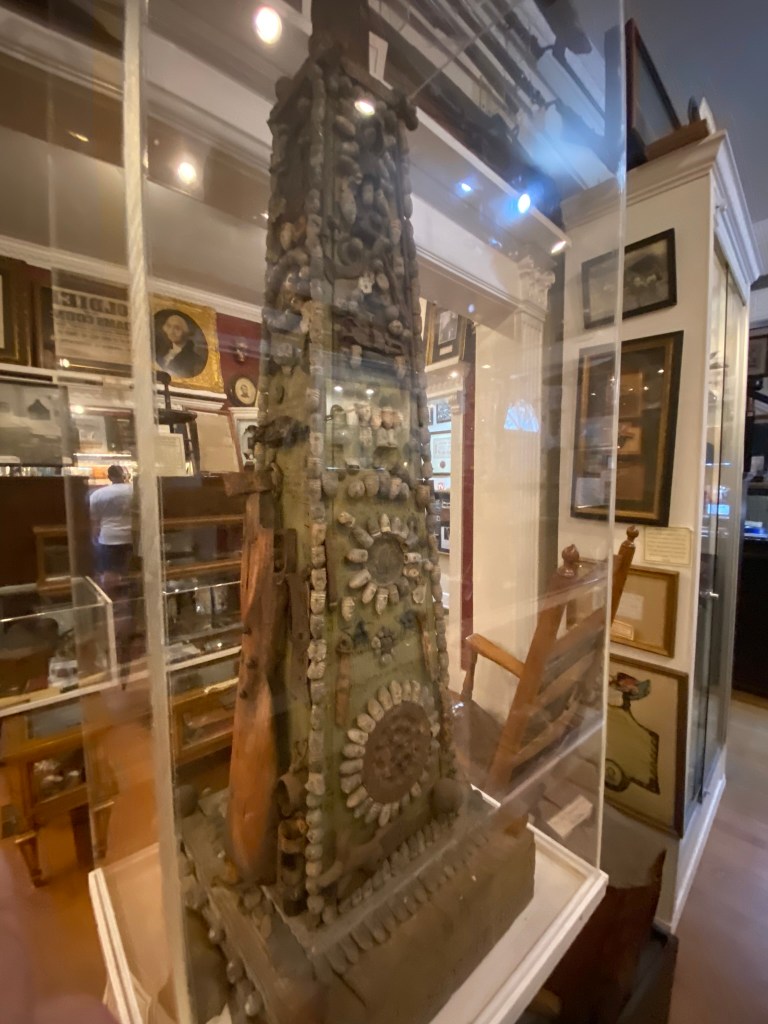
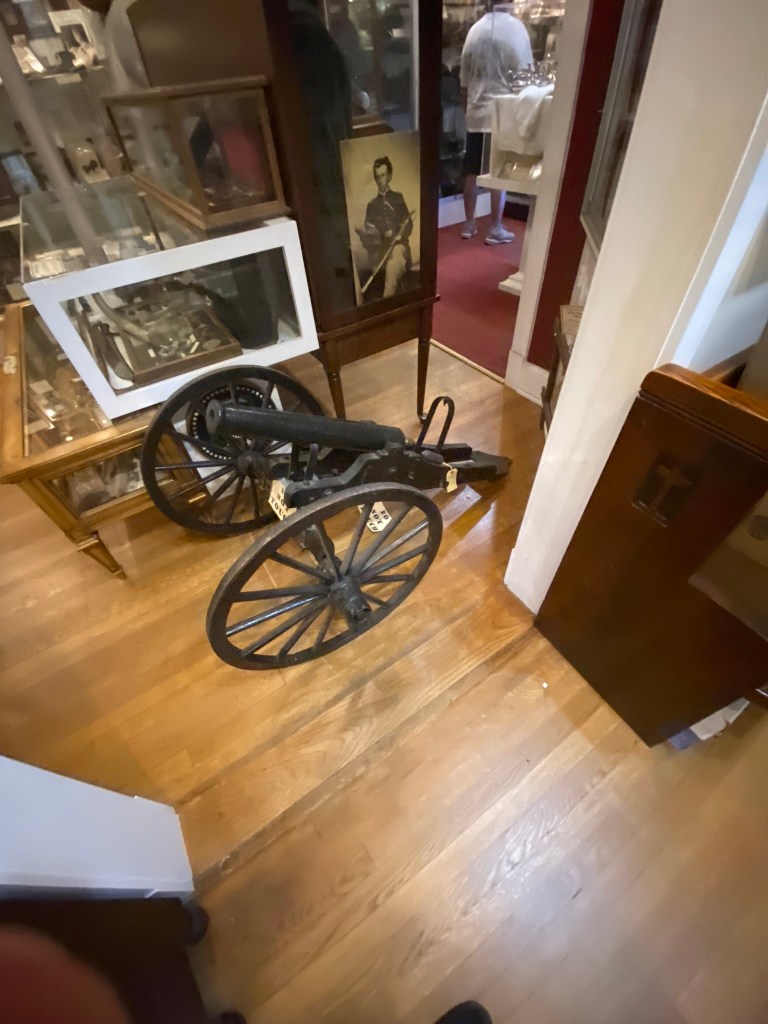
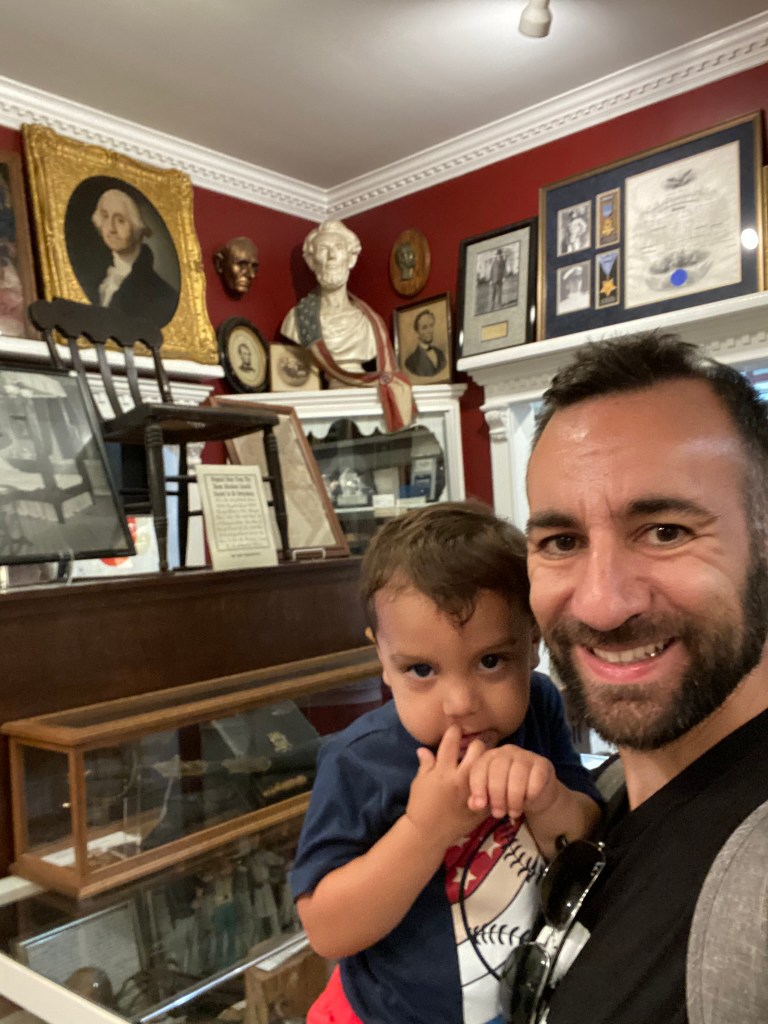
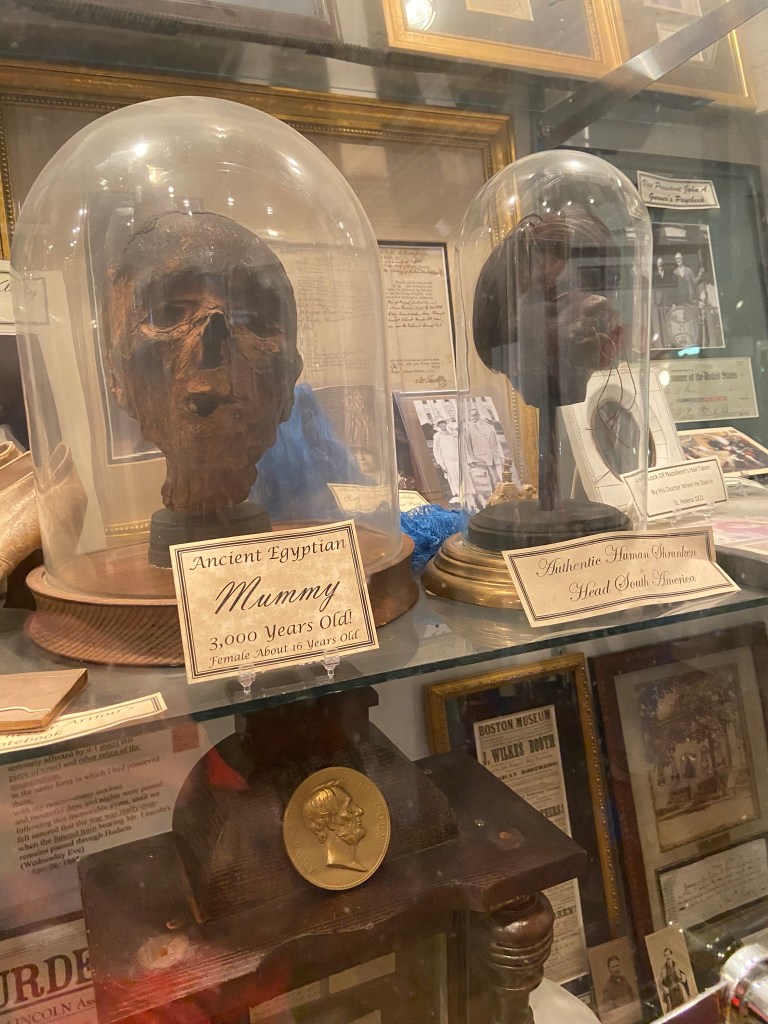
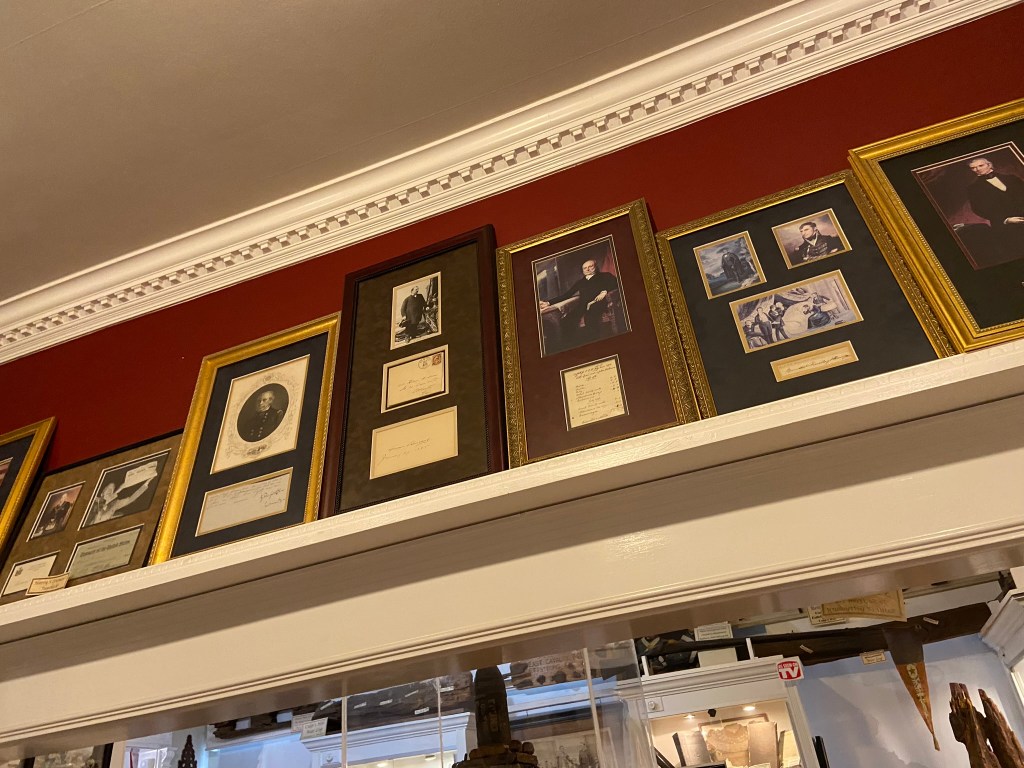
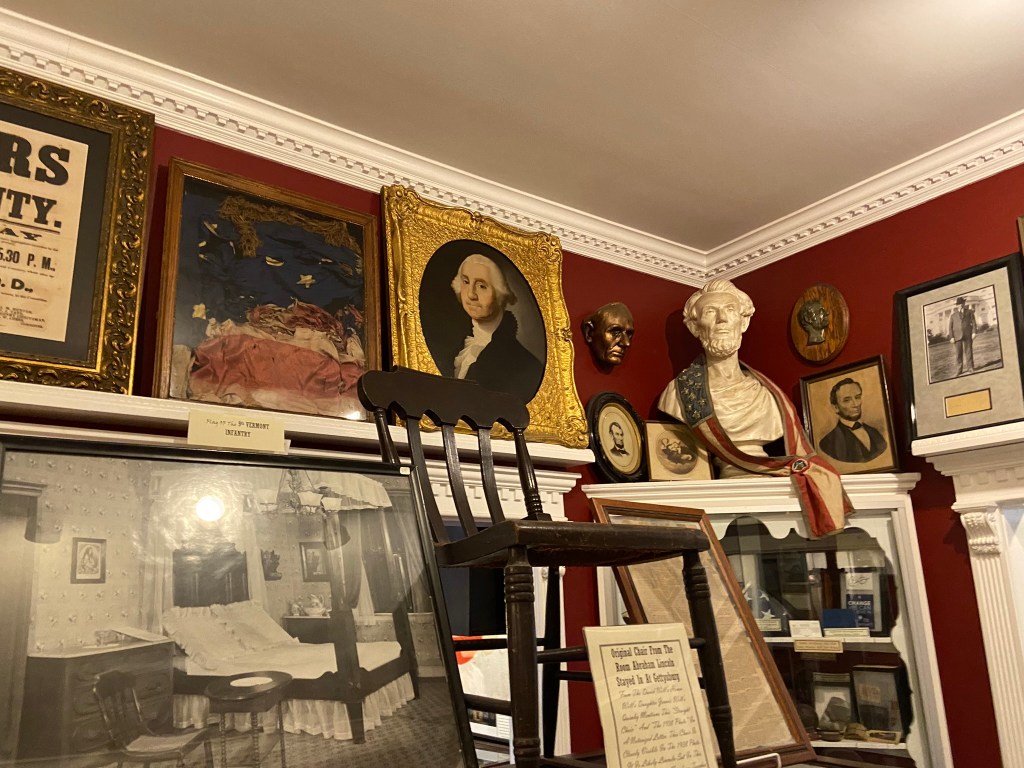
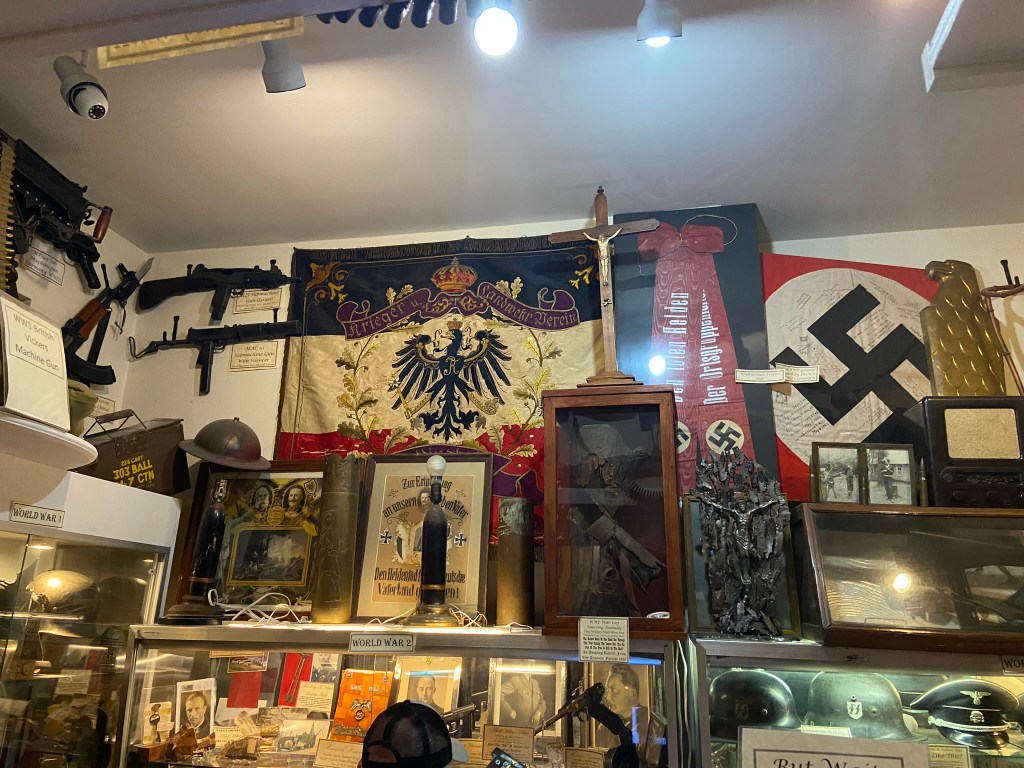
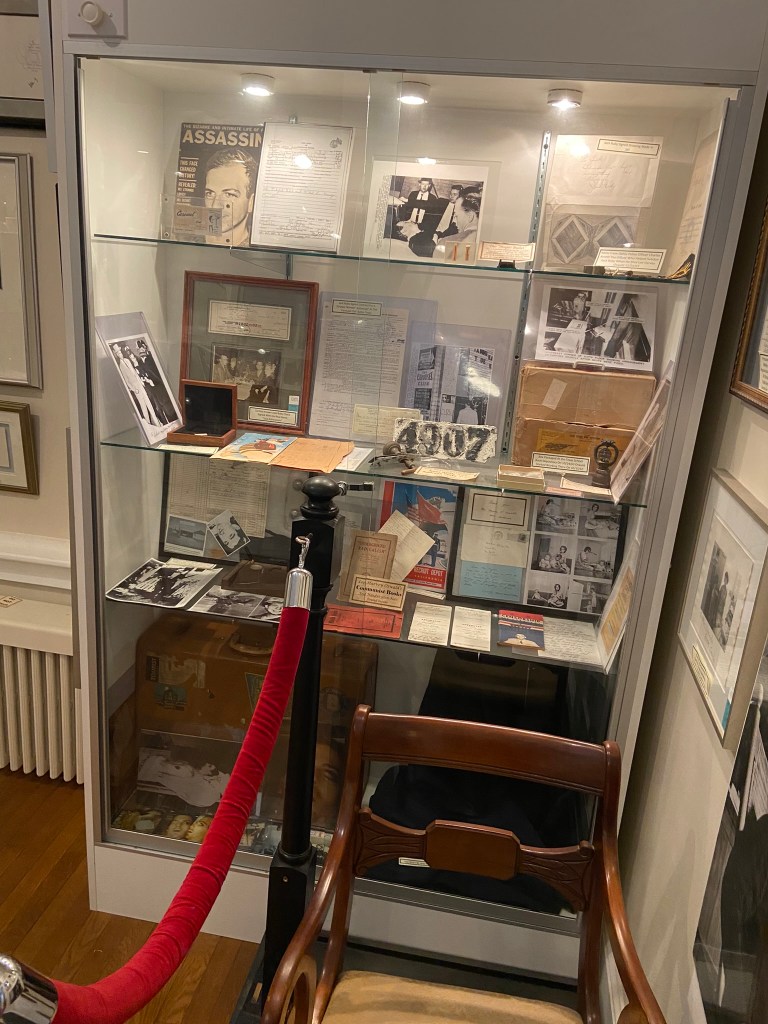
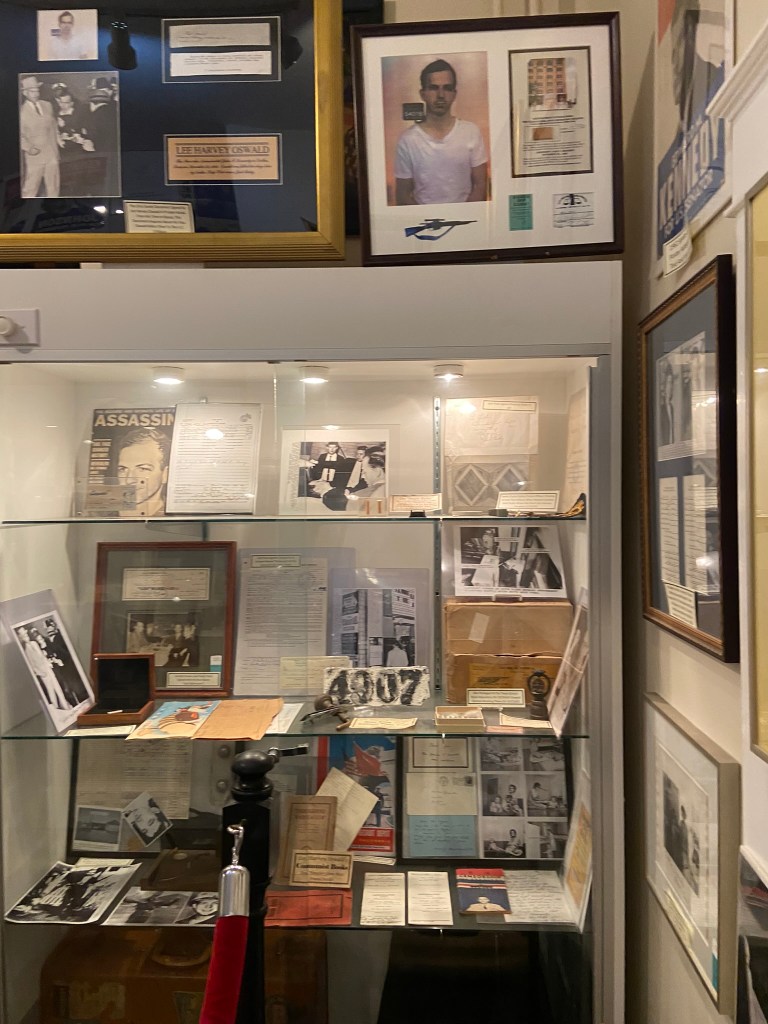
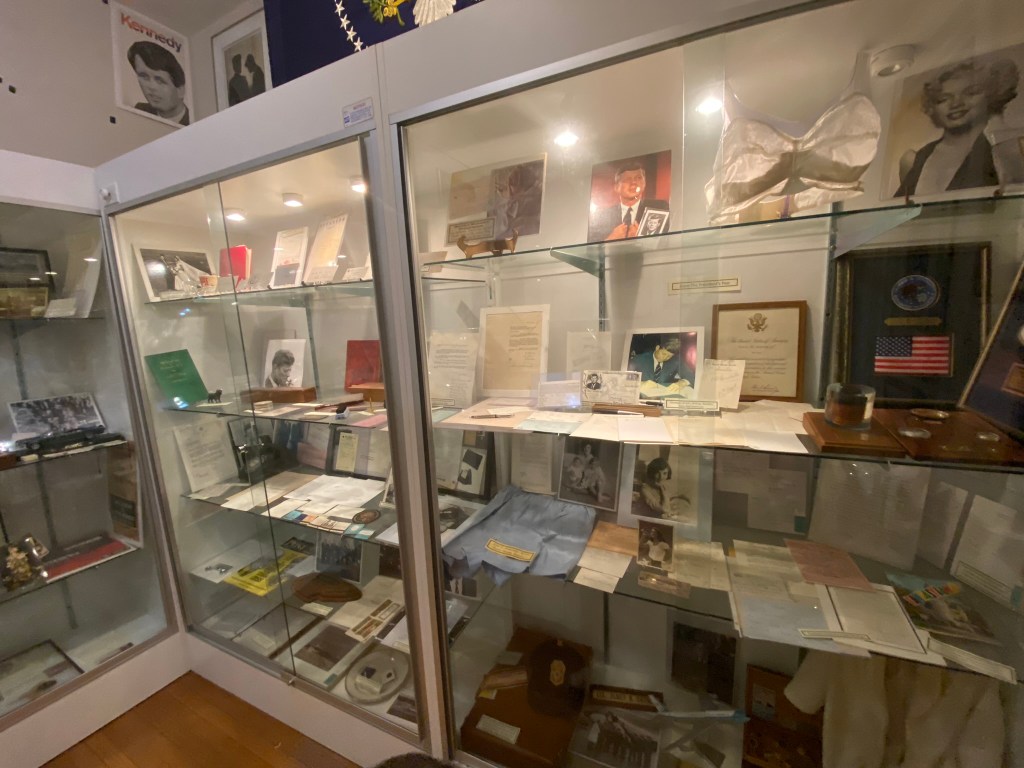
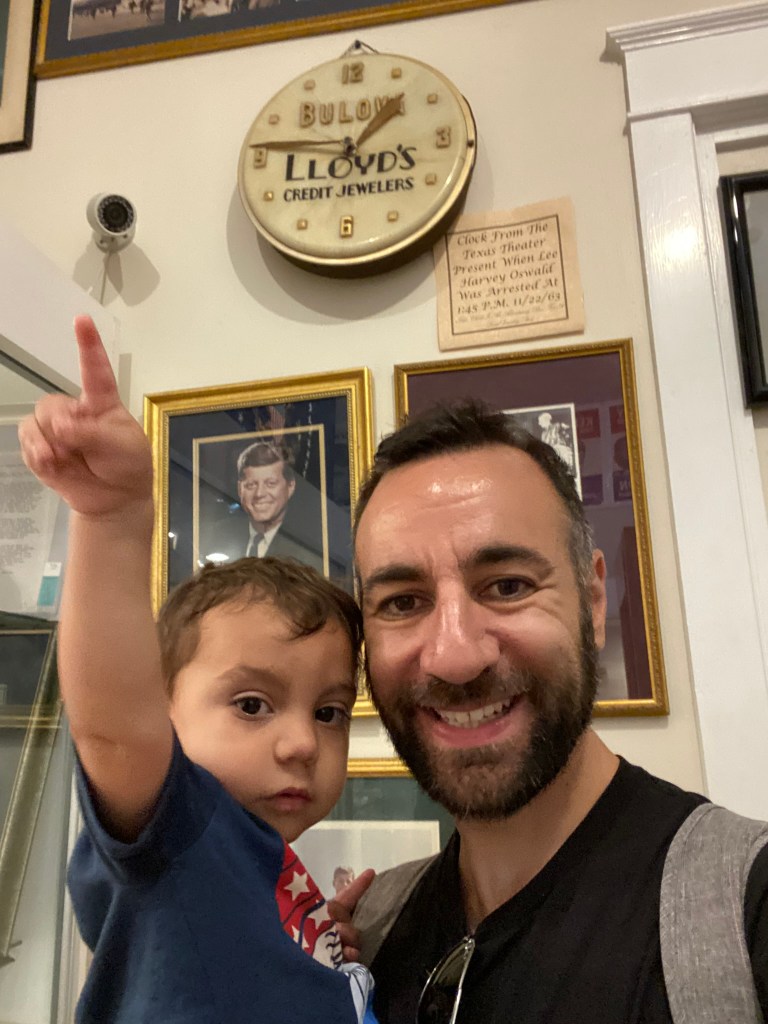
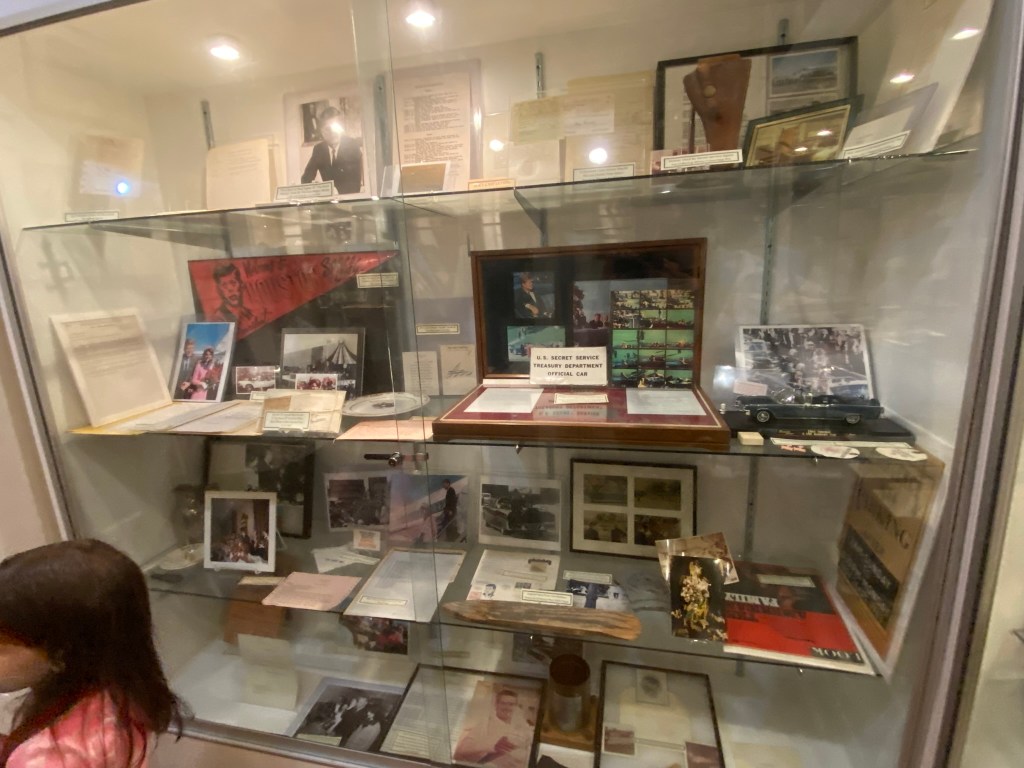
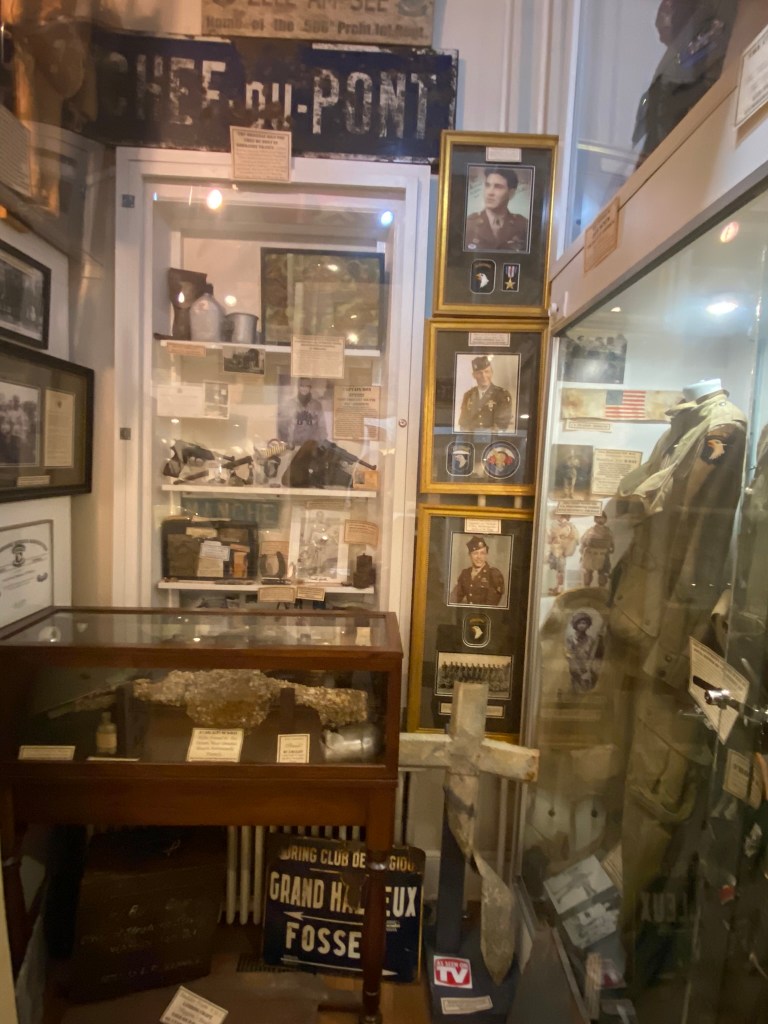
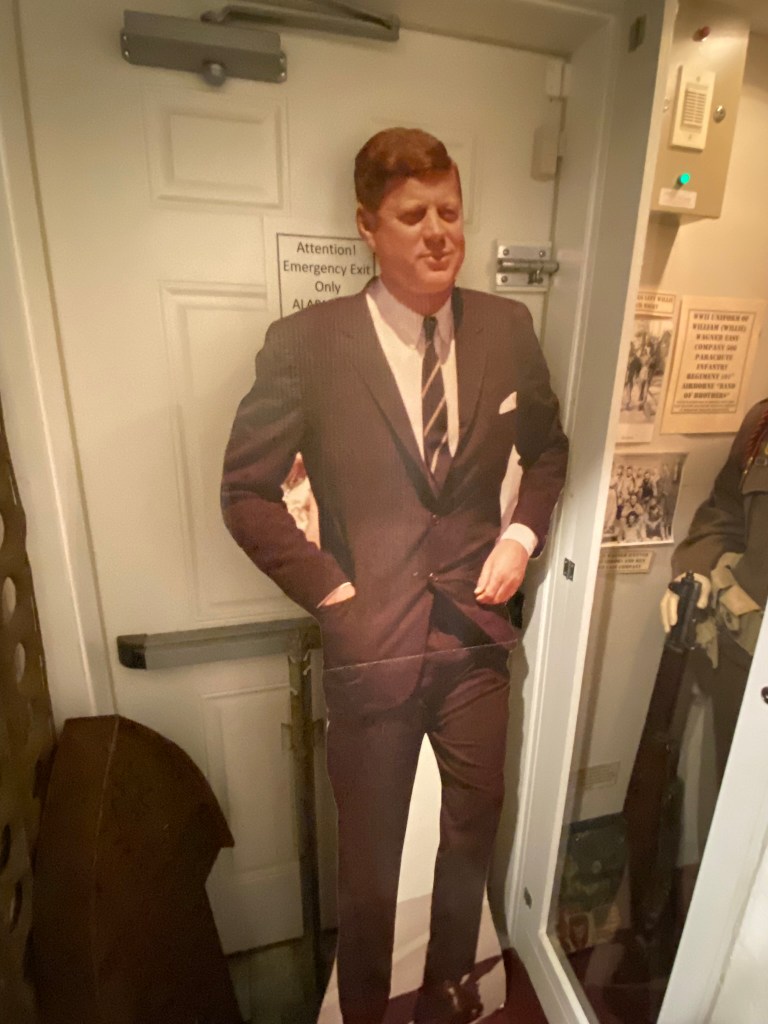
On our third and final day in Gettysburg, we decided to hang out in town until about lunchtime, eat in town and then make the trek back home. We again had a great breakfast in our hotel, packed up our belongings and checked out. We first went to a couple of shops to buy souvenirs and Gettysburg sweatshirts. We then walked back up Baltimore Street and stopped in Christmas Haus and then went to check out the Gettysburg Museum of History, which is a free musuem on Baltimore Street. I was impressed by the amount of artifacts, memoribilia and relics they had in the museum. Not only did they have Civil War artifacts, but they also had other periods of history as well. I was surprised to see a 3,000 year old mummy’s head from Ancient Egypt. They also have artifacts from the World Wars and an entire room dedicated to John F. Kennedy. The museum is fairly small so you’re not gong to spend a ton of time there, but it is definately worth the visit.
After we left the museum we headed back to the car. The family was in the mood for Mexican food for lunch so we headed to Montezuma Restaurant which was really great food. After we ate we made the 3.5 hour ride back home.
I really loved my first trip to Gettysburg. I had high expetations and the trip exceeded them. It truly is such an interesting place. It was just a small town in 1863 that became world famous because of an accidental battle that happened there, a battle that became one of the most famous in history. The town essentially became a Civil War themed town that is so rich in history after 160 years of preservation. The trip is a dream to anyone who loves the Battle of Gettysburg and the Civil War. There are so many musuems and shops to visit that there are still so many museums on my list of places to go. I hope to go again soon and visit those places that we didn’t have time to see. Again, the highlight of the my trip was the double decker bus tour. I highly recommend it to anyone who hasn’t yet had a chance to see the battlefield. If anyone reading this blog has advice on places to see or different ways to view the battlefield, please share. Thanks for reading.
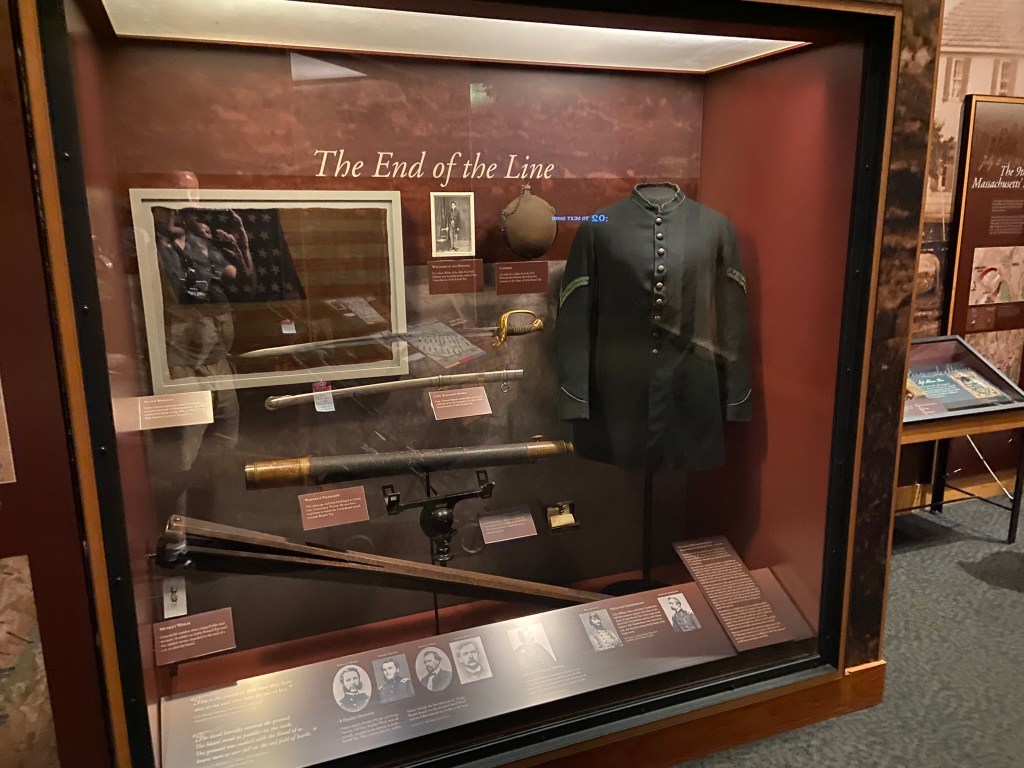
As someone who loves learning and teaching about the Civil War, I’ve been wanting to go to Gettysburg for many years. Gettysburg is the closest Civil War site to where I live and the 1863 battle is one of the most important battles in our nation’s history. Throughout the spring of 1863, the Confederate Army led by Robert E. Lee had won a series of battles in Virginia. They were feeling confident enough to invade Union territory and decided to march into Pennsylvania. This was the Confederacy’s second attempt at invading the North (after Antietam in 1862). So much was at stake at Gettysburg. Lee was hoping for a victory that would turn Northerners against the war and invade further into Pennsylvania or other Union states. The Union army knew that they had to stop Lee and the Confederate army at this battle. The Battle of Gettysburg, a three day battle from July 1st- 3rd, 1863, was the deadliest of the Civil War, resulting in about 51,000 casualties. At the battle’s end, the Union was able to stop the Confederate advance as Lee and his army were forced to retreat back to Virginia. The Confederacy would not be able to invade the North again, although bloody fighting would resume for almost 2 more years.
Gettysburg was a bucket list type of location that I felt I needed to see. I planned a 2 night, 3 day trip with my family, along with my parents. Let me tell you, this trip did not disappoint. Besides touring the battlefield, there are so many museums and shops to visit. We did as much as time would allow. I’m looking forward to going back and visiting the sites we didn’t get to see.
I’m breaking this blog post into two. In the first one I plan to discuss what we visited on Day 1- The Dobbin House, the Jennie Wade House, Ronn Palm’s Museum of Civil War Images and the Gettyburg National Cemetary. In my second post, which you can read (here) I will discuss what we visited on Day 2 and our Half Day 3, which includes a Double-Decker bus tour of the battlefield, the Gettysburg National Military Park and Museum, and the Gettysburg Museum of History.
The 1863 Inn of Gettysburg
My family and I made the 3.5 hour drive into Gettysburg and arrived at about 12:30pm and parked at our hotel, the 1863 Inn of Gettysburg. The hotel was great and I would definately recommend. The rooms were pretty standard hotel rooms, with a nice bathroom and comfortable beds. The location is great; you are walking distance from so many sites, museums and shops to see in town, and you’re just a 10 minute walk from the center of town. One of the best aspects of the hotel is the free breakfast. They serve a high quality breakfast, and you have the convenience of not having to search for somewhere to eat. You can eat and get on your way to seeing sites in town. I would definately stay there again. Check out their site here: https://www.1863innofgettysburg.com/
The Dobbin House
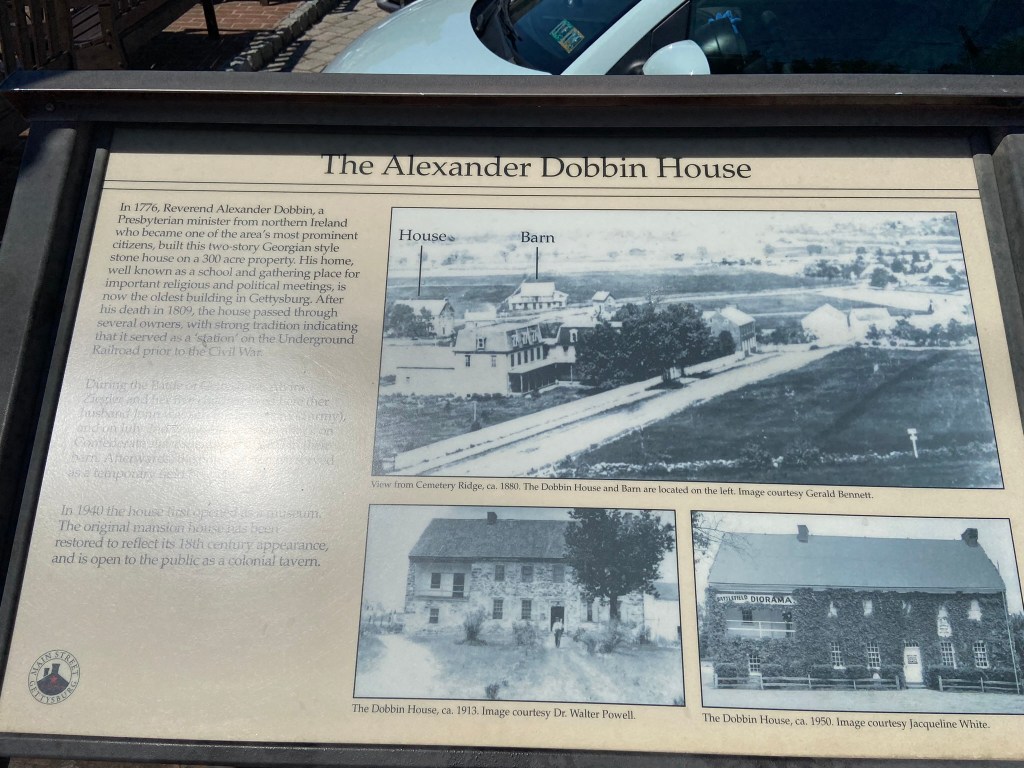
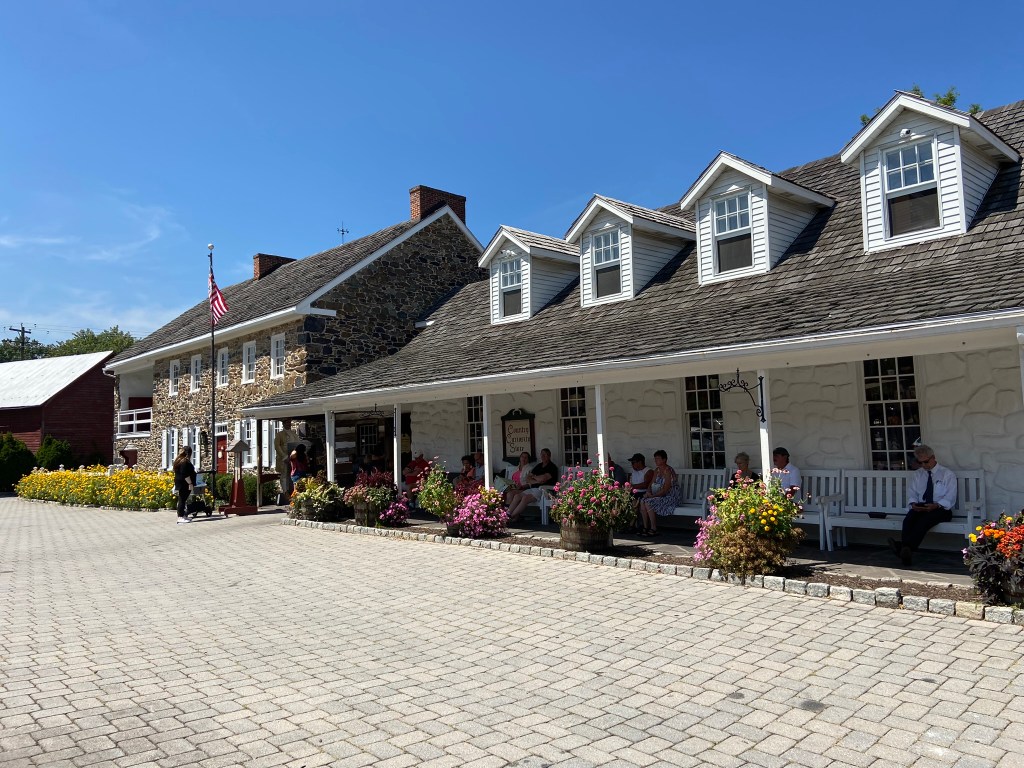
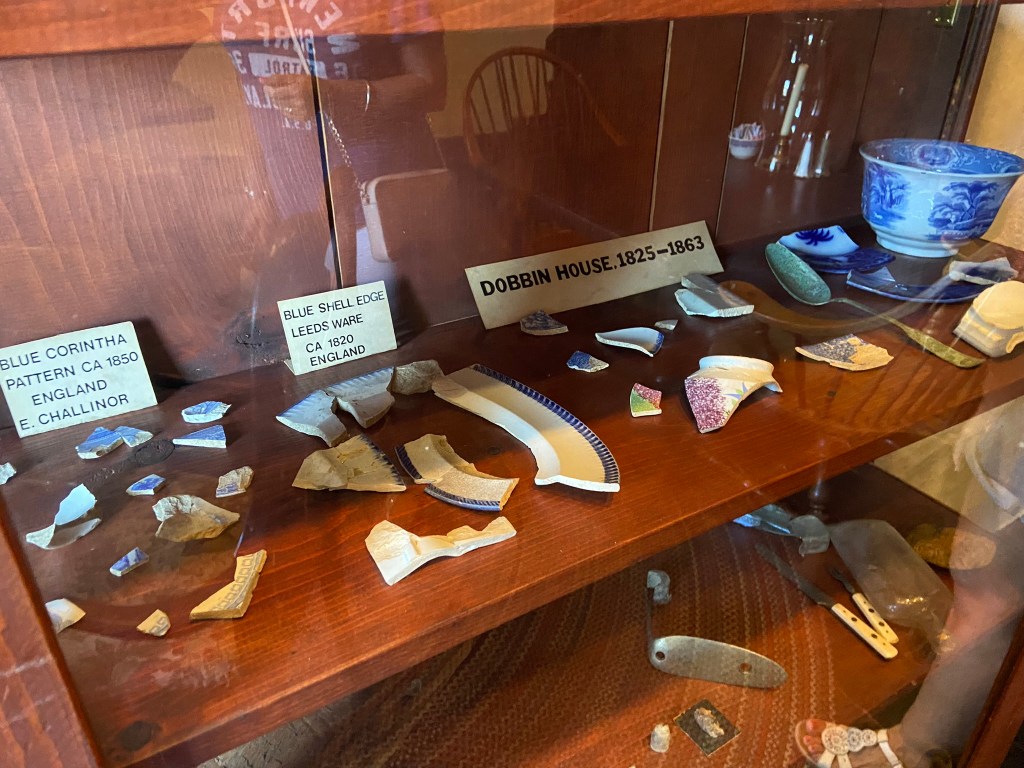
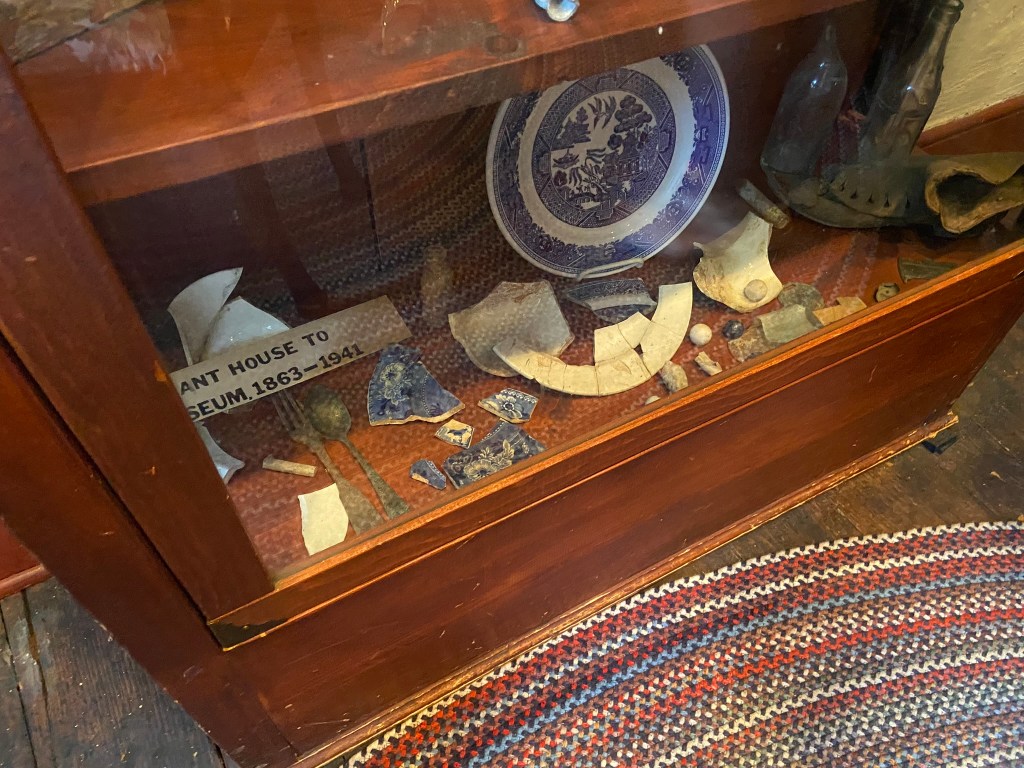
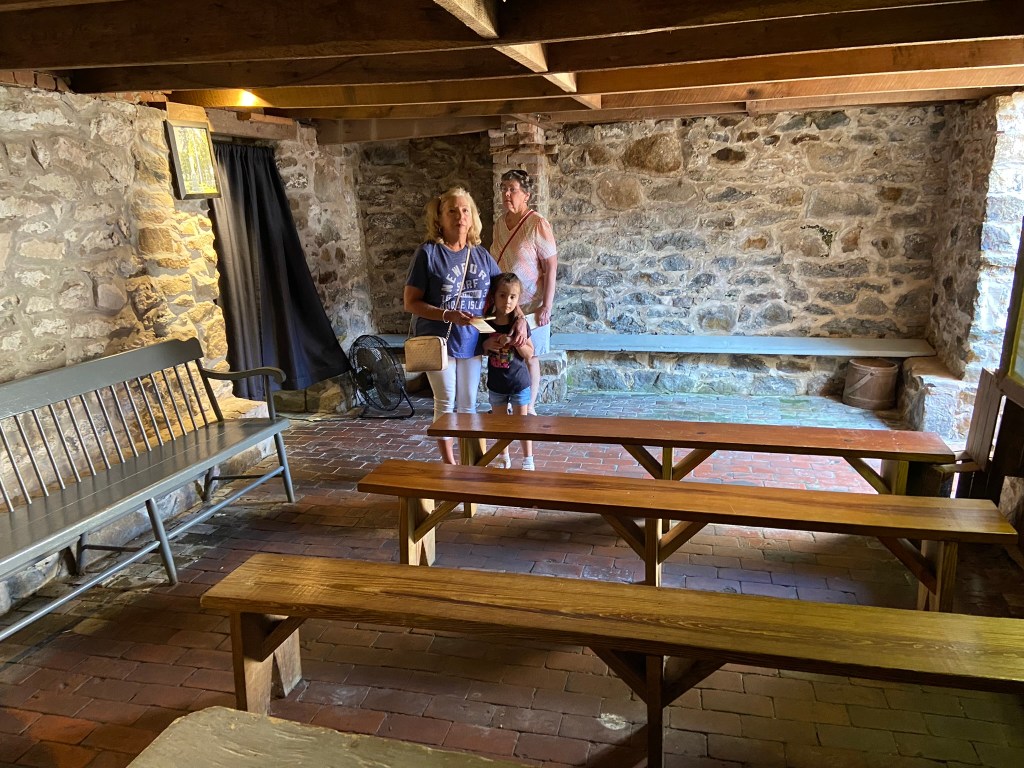
When we arrived at 12:30, we met my parents at the Dobbin House Tavern for lunch. There was about a 30 minute wait. I learned that the Dobbin house was built in 1776 and is the oldest building in Gettysburg, built at the time for one of the area’s most prominent citizens, Reverend Alexander Dobbin. When our table was ready, we were walked down into a basement that felt like you were living in the late 18th century, very dimly lit with candles on each table. The food was also very good. After eating, we went upstairs to find that the house is a museum itself. You’re allowed to wander around the house and look at the 18th century rooms and decor. There is also a set of narrow stairs that leads to an upper floor which served as a stop on the Underground Railroad. There are also artifacts on display there from throughout the 19th century. Find out more info here: http://www.dobbinhouse.com/
The Jennie Wade House
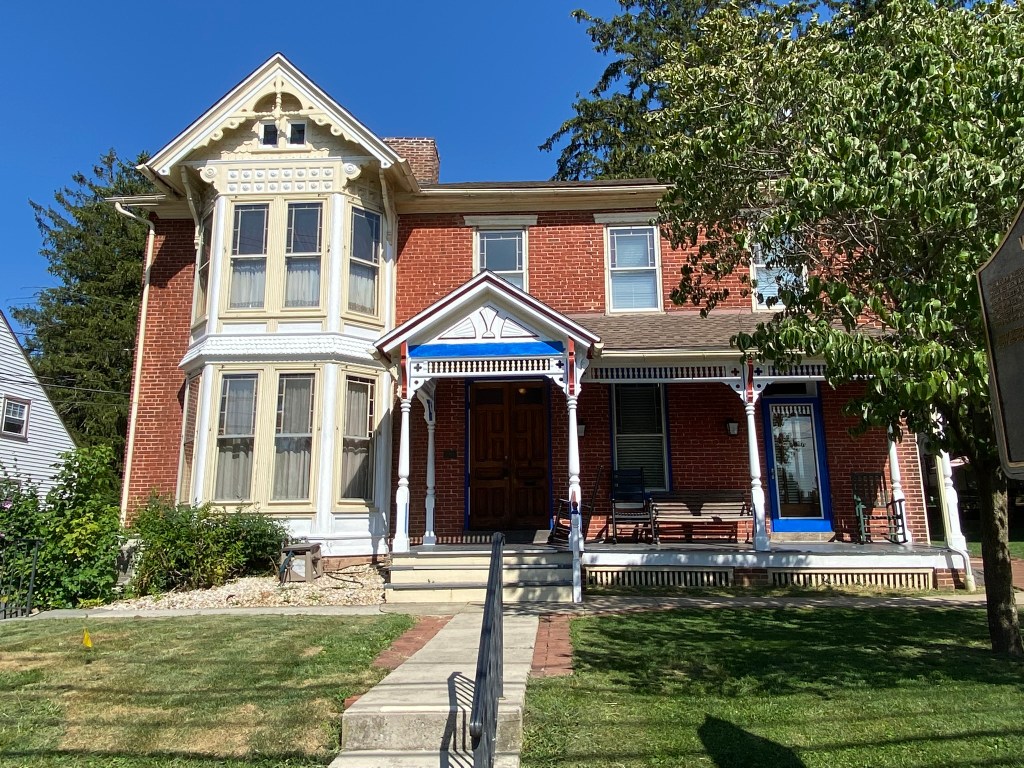
After leaving the Dobbin House, we decided to visit the Jennie Wade House because it is right next door to our hotel. When we visited we found out that the next tour of the house was in about 30 mins. That gave us time to check in to our hotel rooms and make it back down.
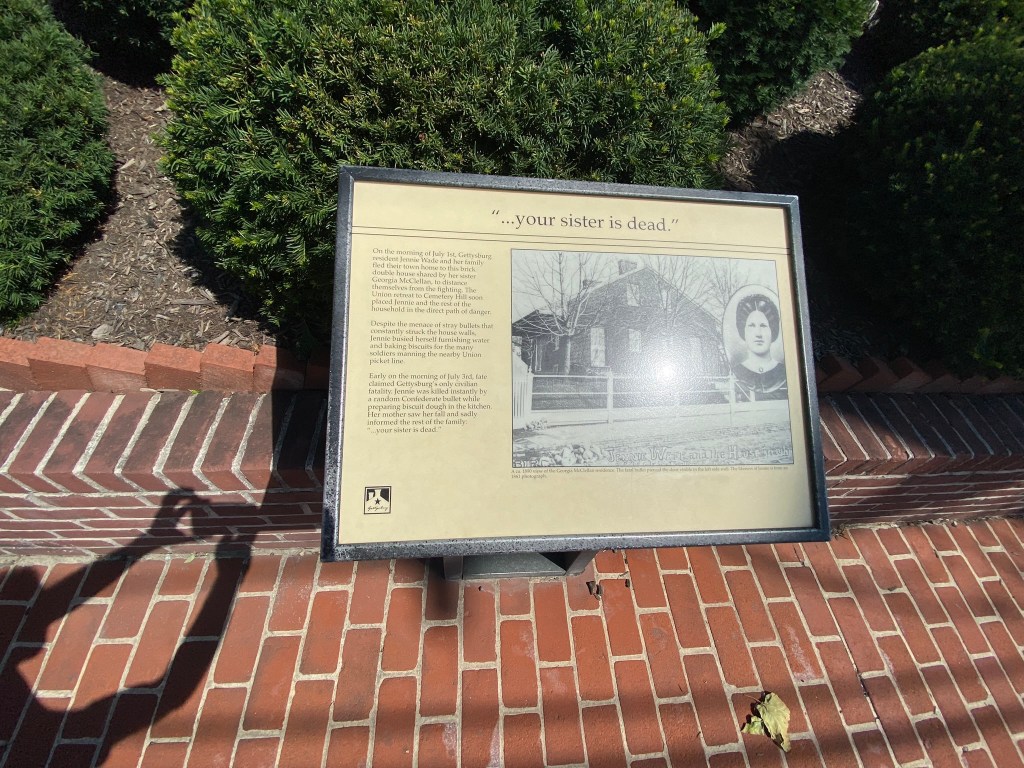
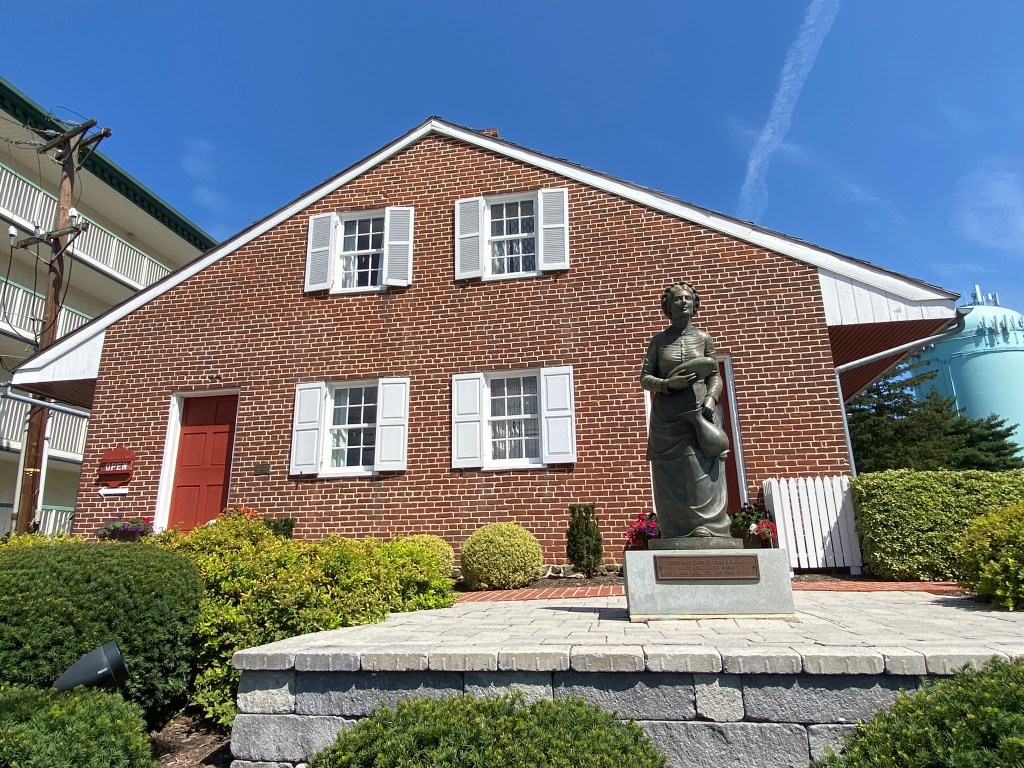
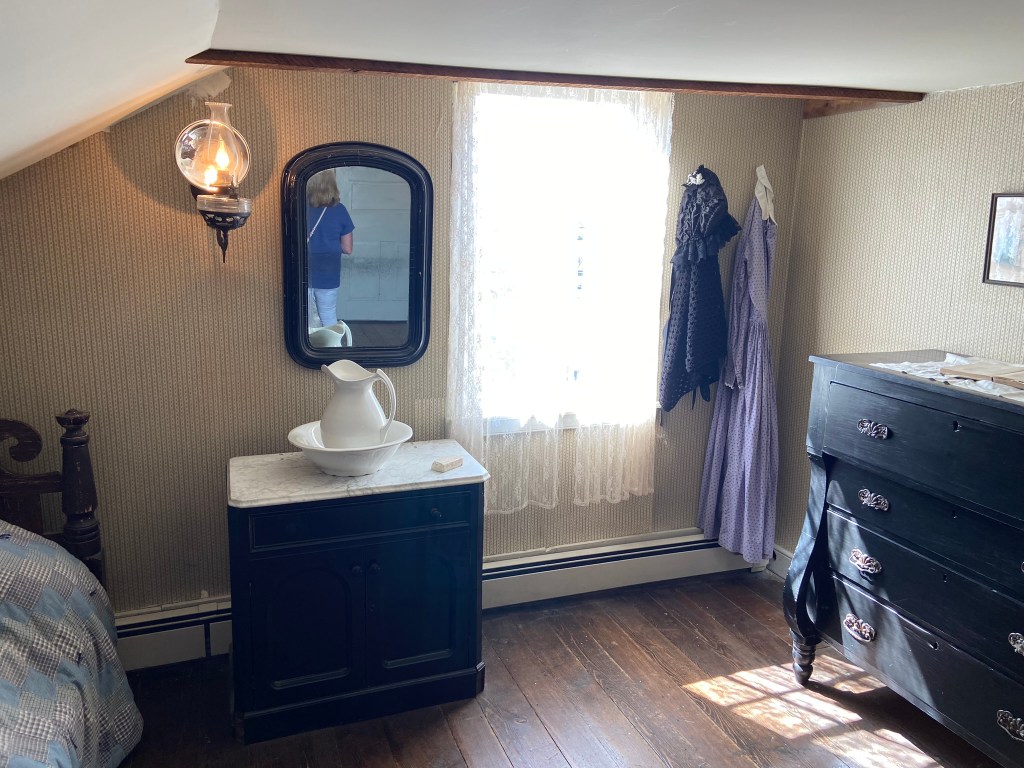
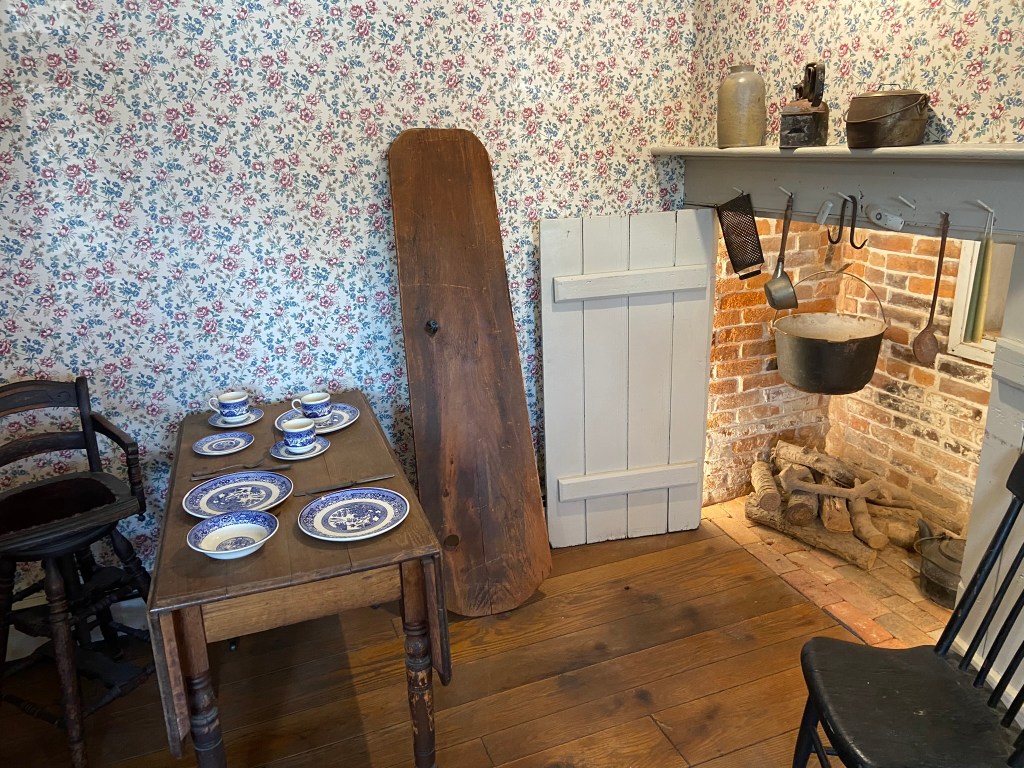
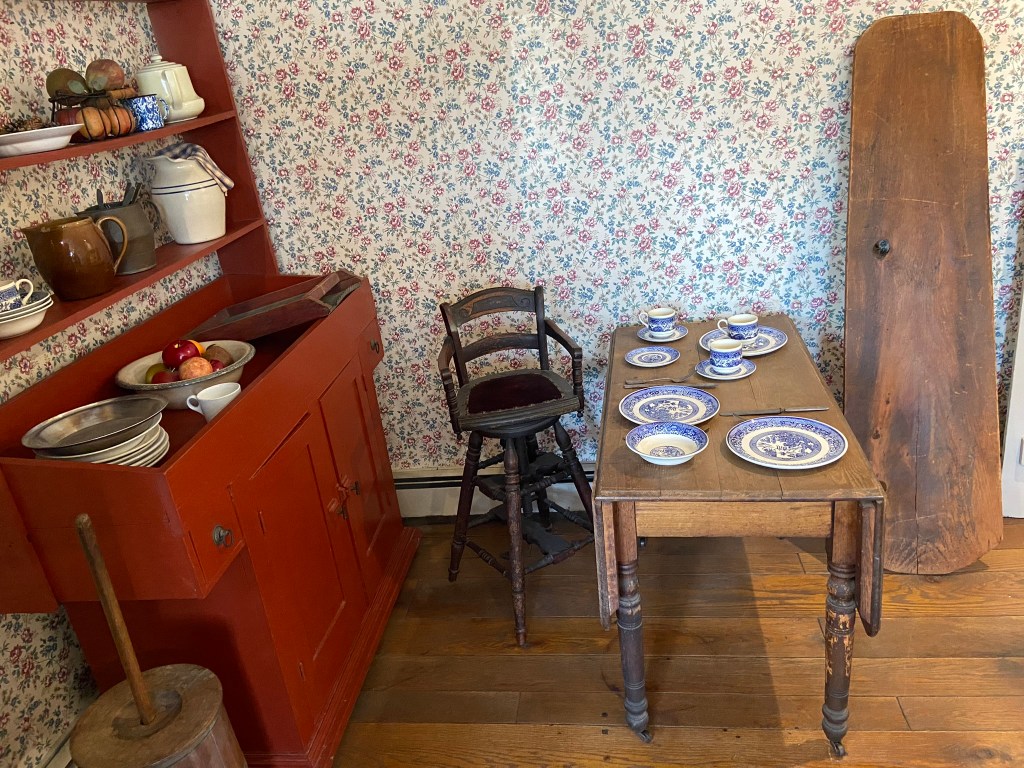
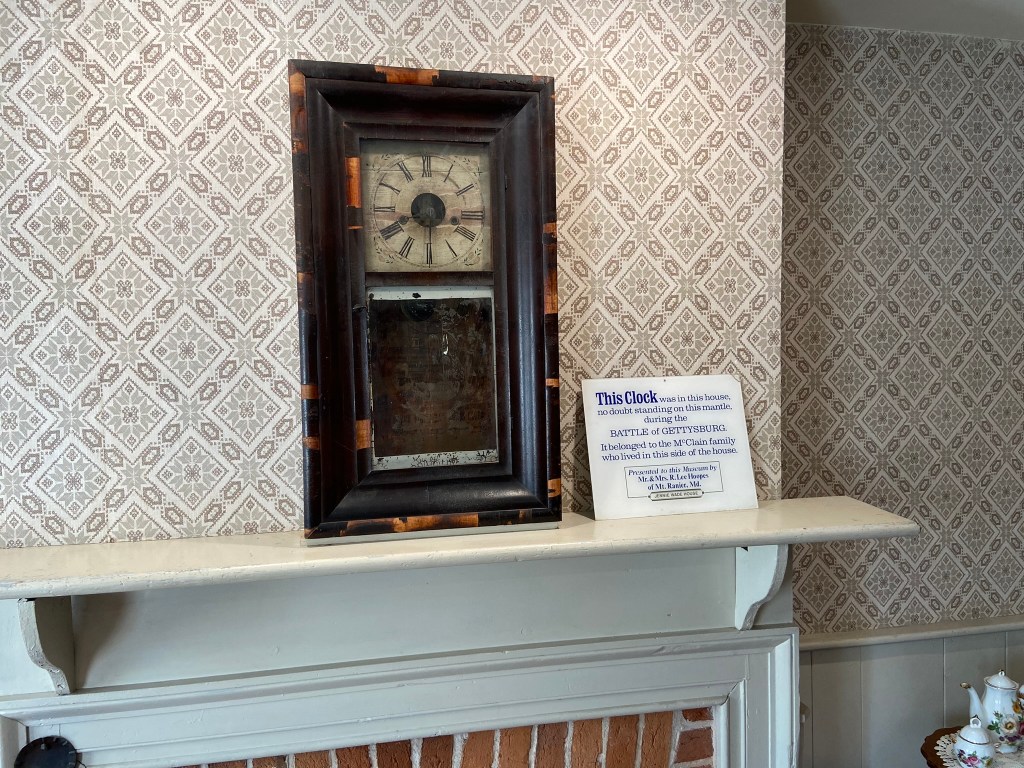
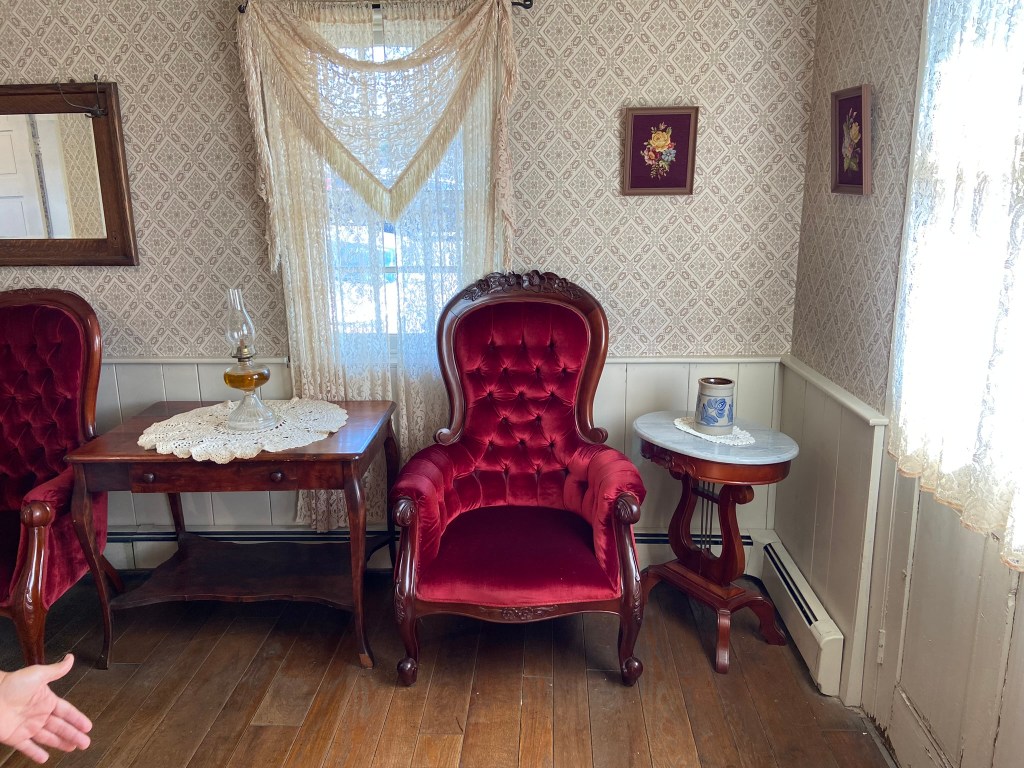
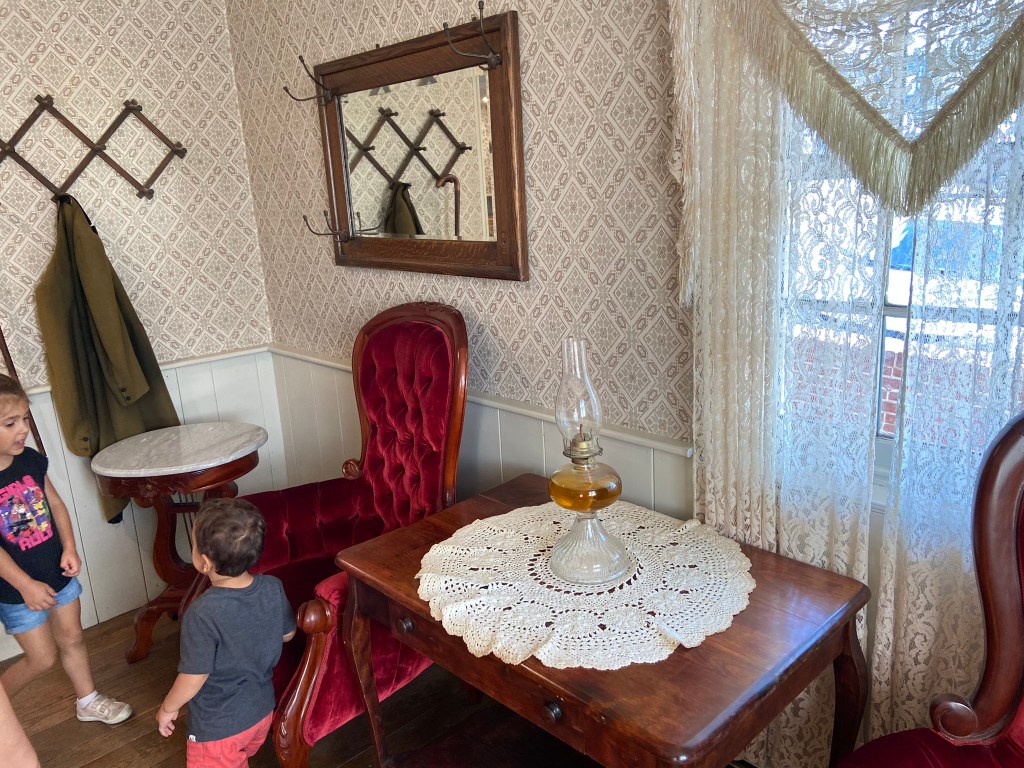
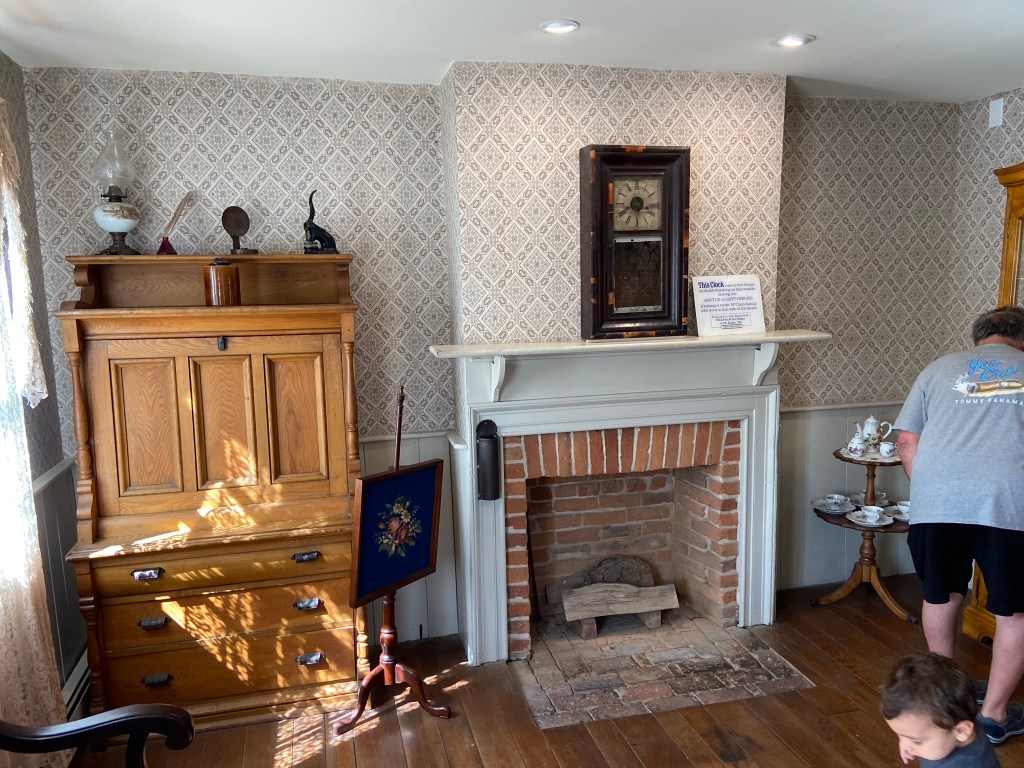
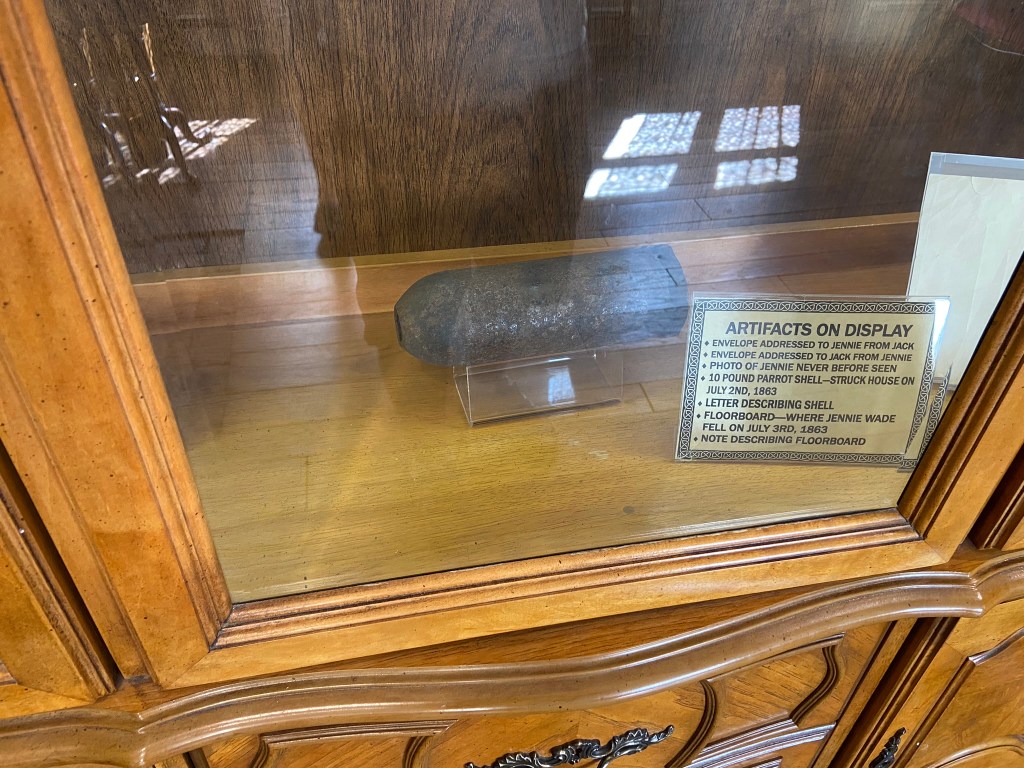
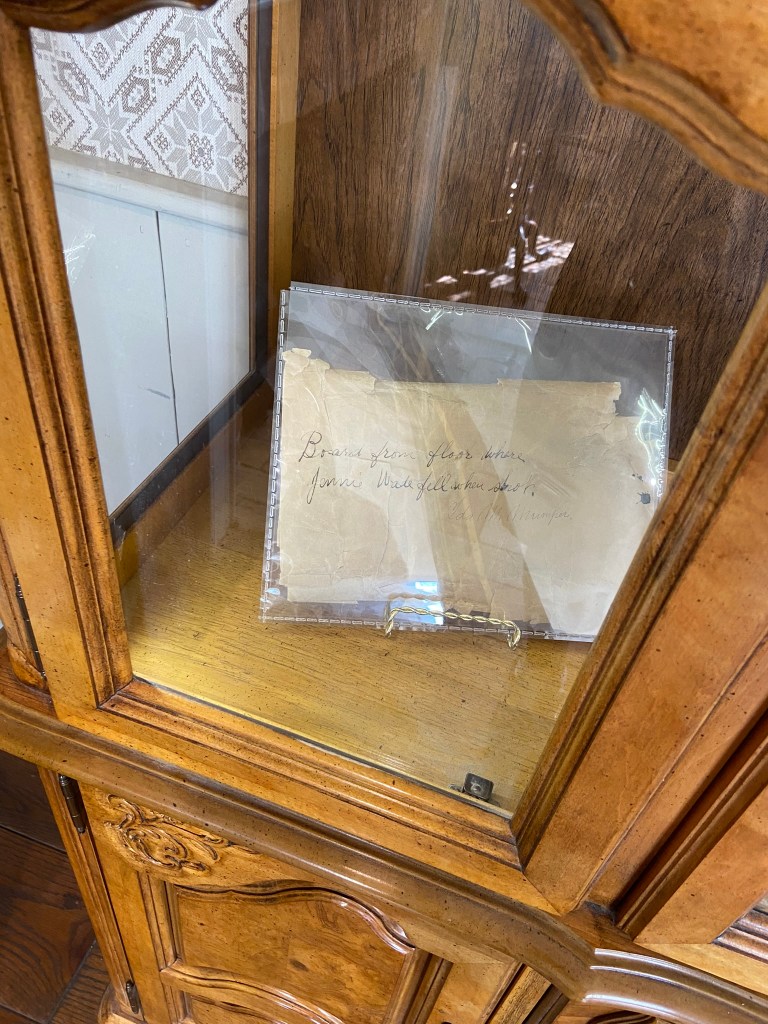
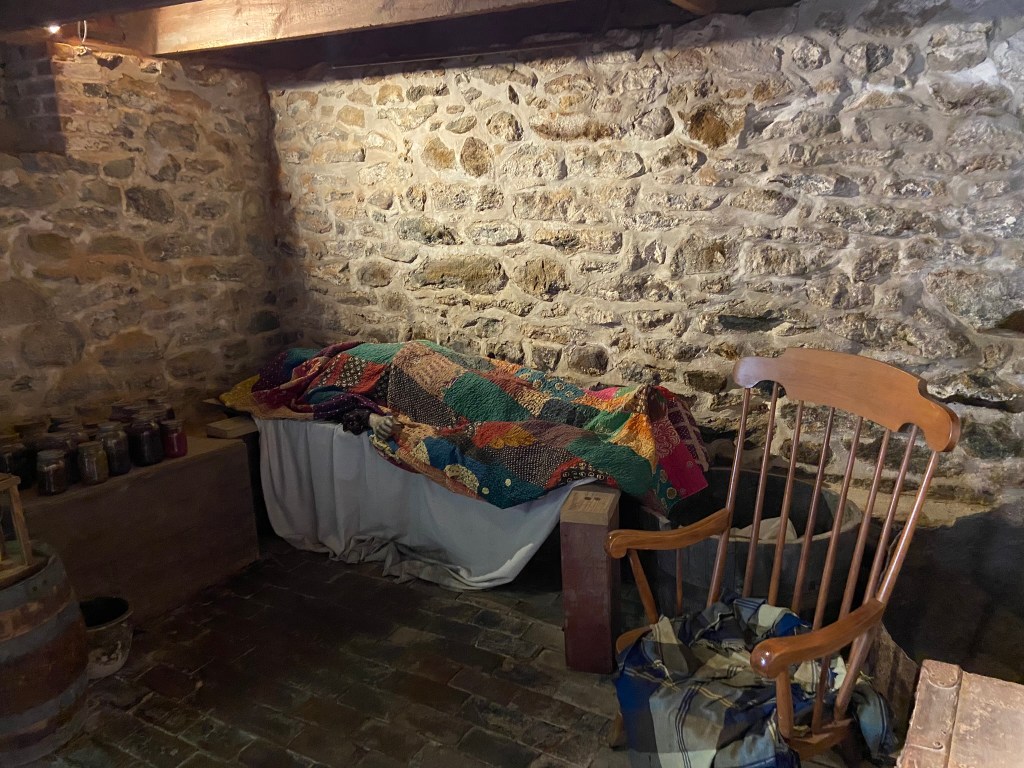
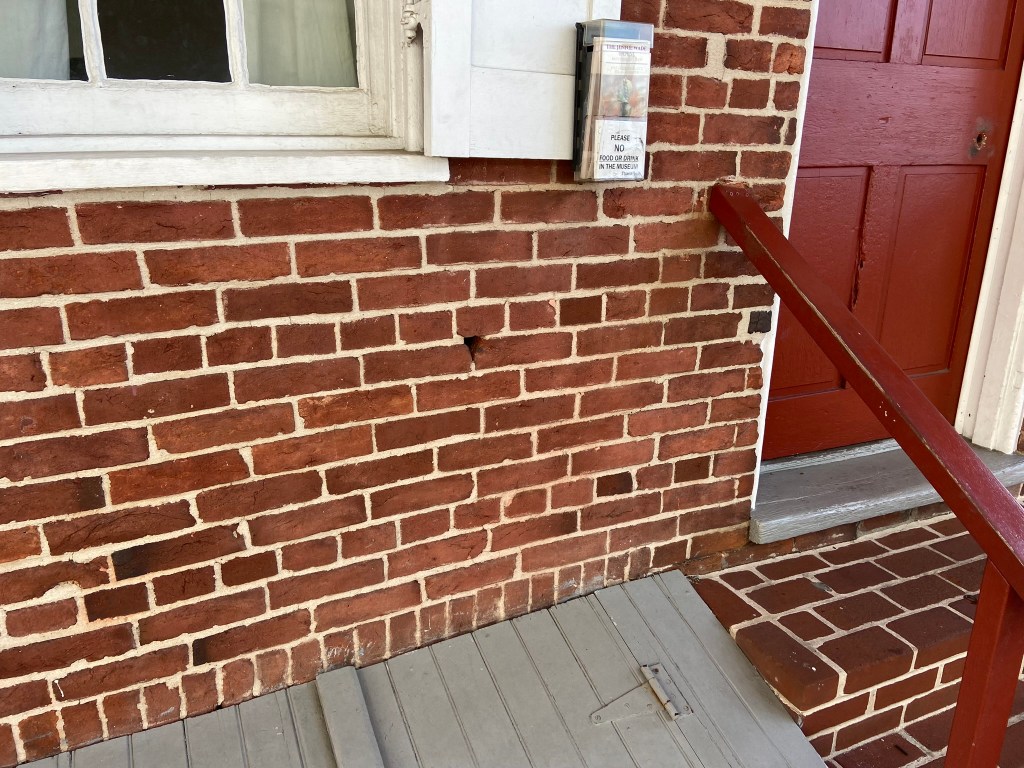
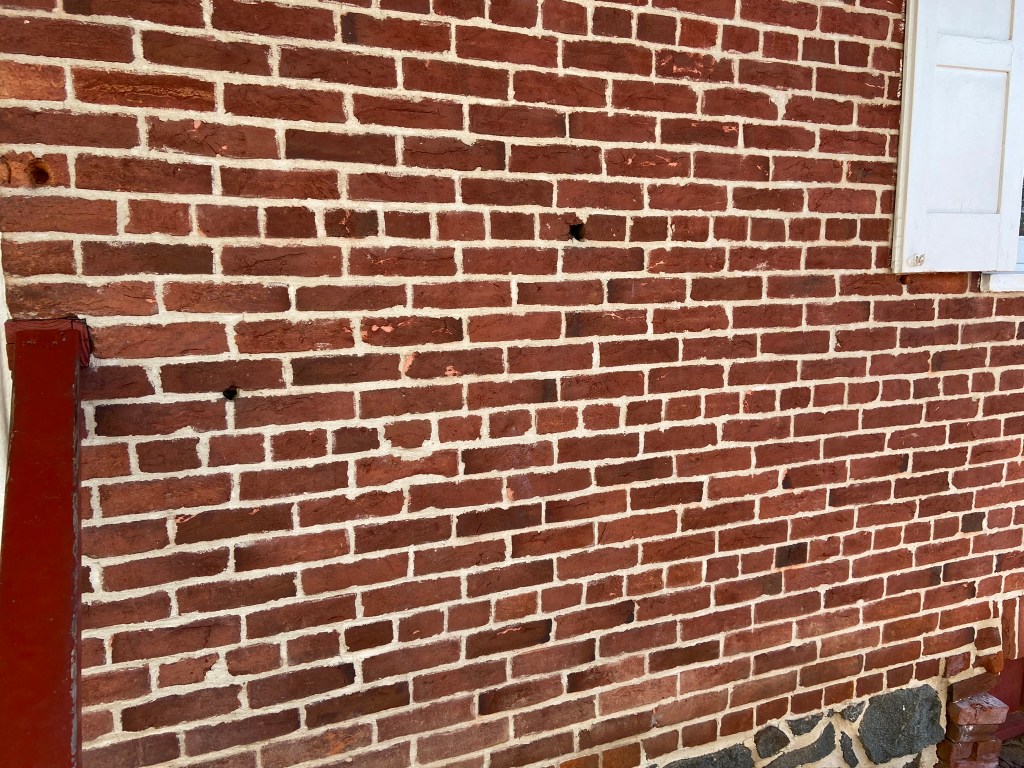
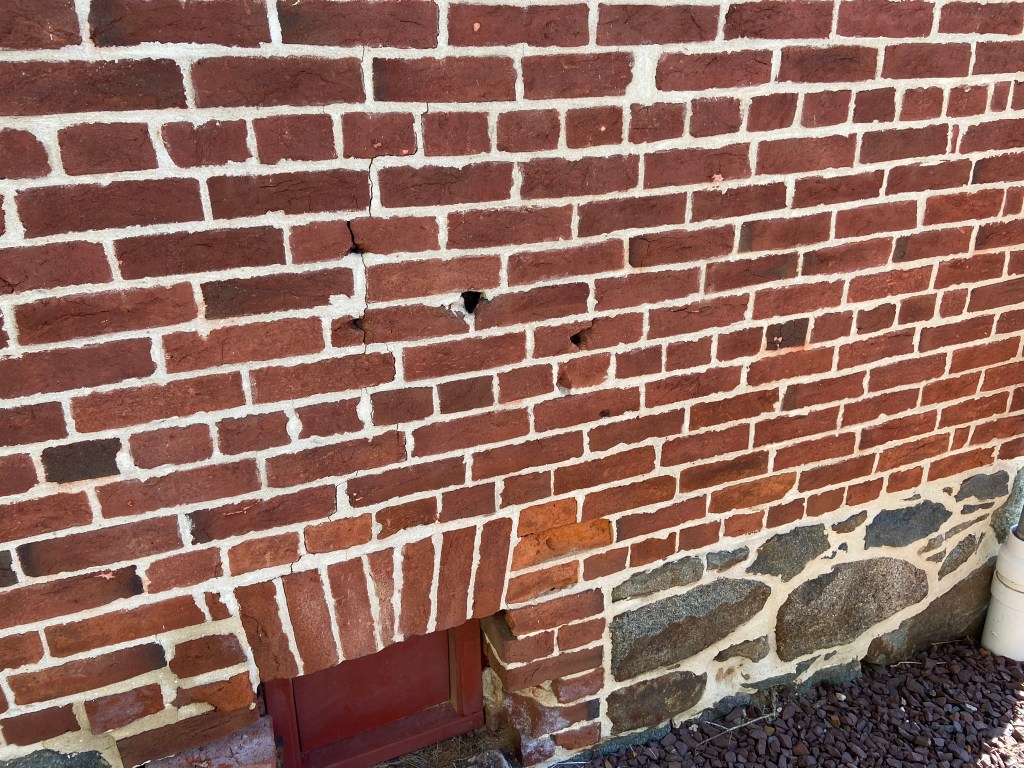
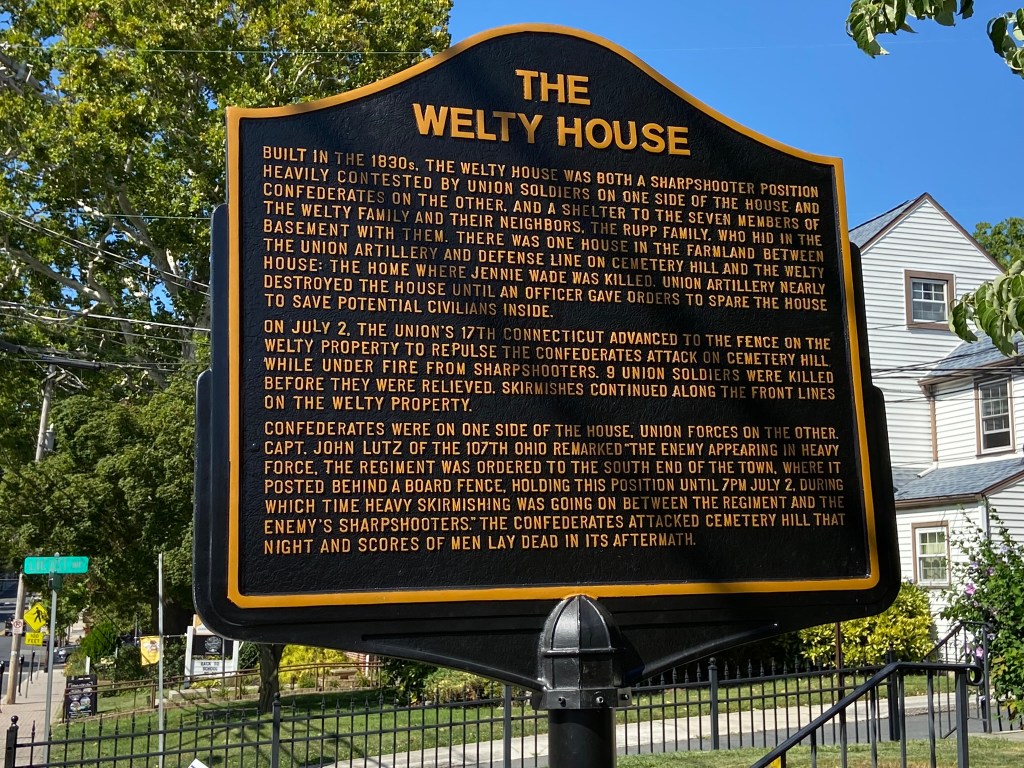
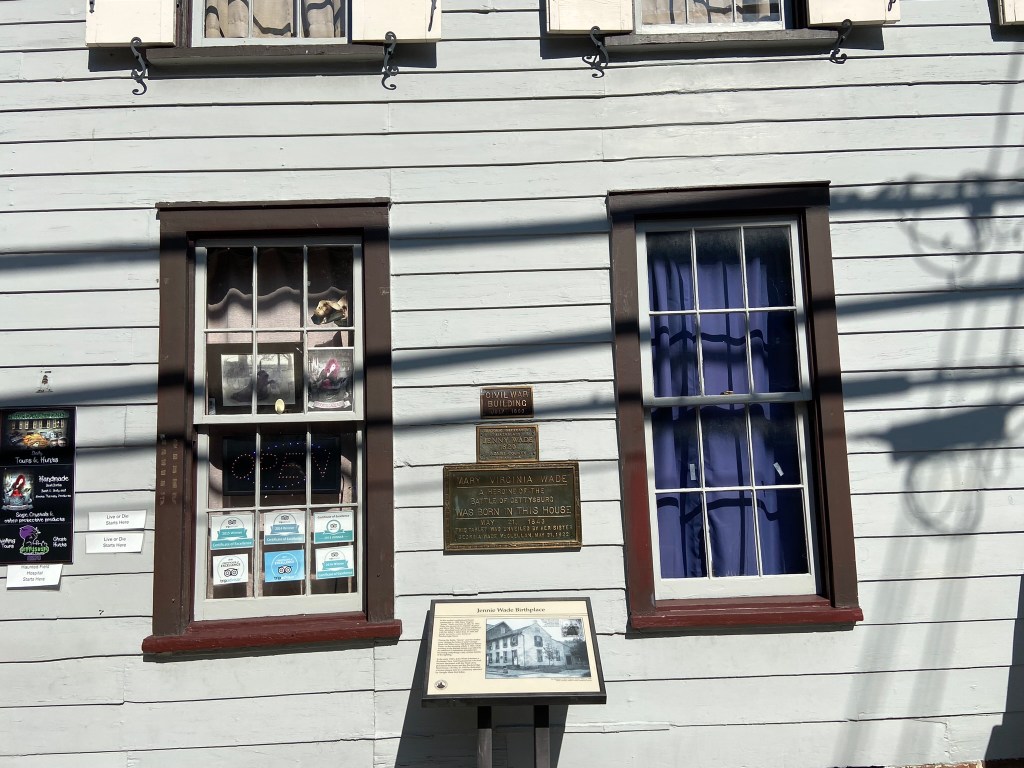
At the Jennie Wade House, the tour guide instructed us that Jennie Wade was the only civilian casualty of the Battle of Gettysburg. She was only 20 years old at the time of her death. Jennie, her mom, and two brothers were visiting Jennie’s sister, Georgia Anna Wade McClellan, who had a newborn baby. They came to her when the battle began because they thought that Georgia’s house was in a safer location. They unfortunately were wrong. The lines of battle between Union and Confederate soldiers formed in the vicinity of her home. The house was continously hit with bullets throughout the three days of battle, which you can still see to this day (and in the photos below). A Confederate artillery shell also hit the South side of the house near the roof, although it did not explode. On July 3rd, (the third day of battle) Jennie was kneading dough to make bread for Union soldiers, who were upstairs, when a stray bullet from a sharpshooter pentrated the kitchen door and the parlor door, striking Jennie through the shoulder blade and through her heart. She died instantly. Horrified, the rest of the family rushed to the basement and spent nearly a day in pitch-black hiding. The battle luckily ended the evening of July 3rd, but now the family was grieving the loss of Jennie. Today, Jennie is honored for dying while serving the Union cause. A monument was erected at her grave in the Evergreen Cemetary. For more info on the Jennie Wade House, visit the website: https://www.gettysburgbattlefieldtours.com/jennie-wade-house/
A Stroll Up Baltimore Street
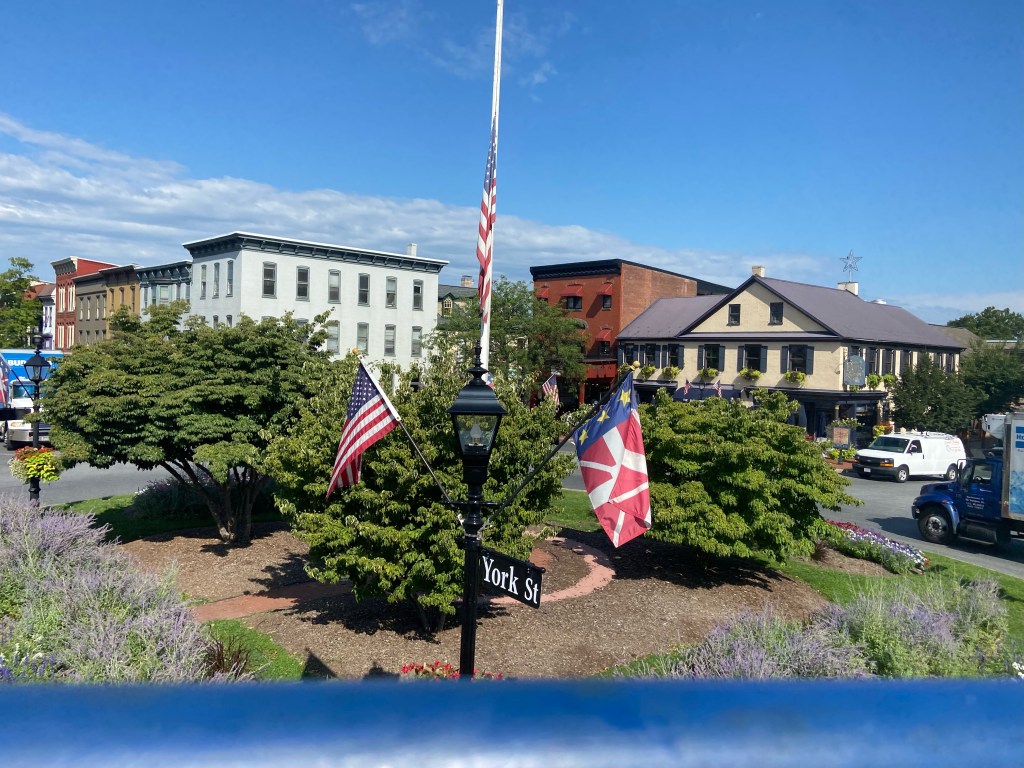
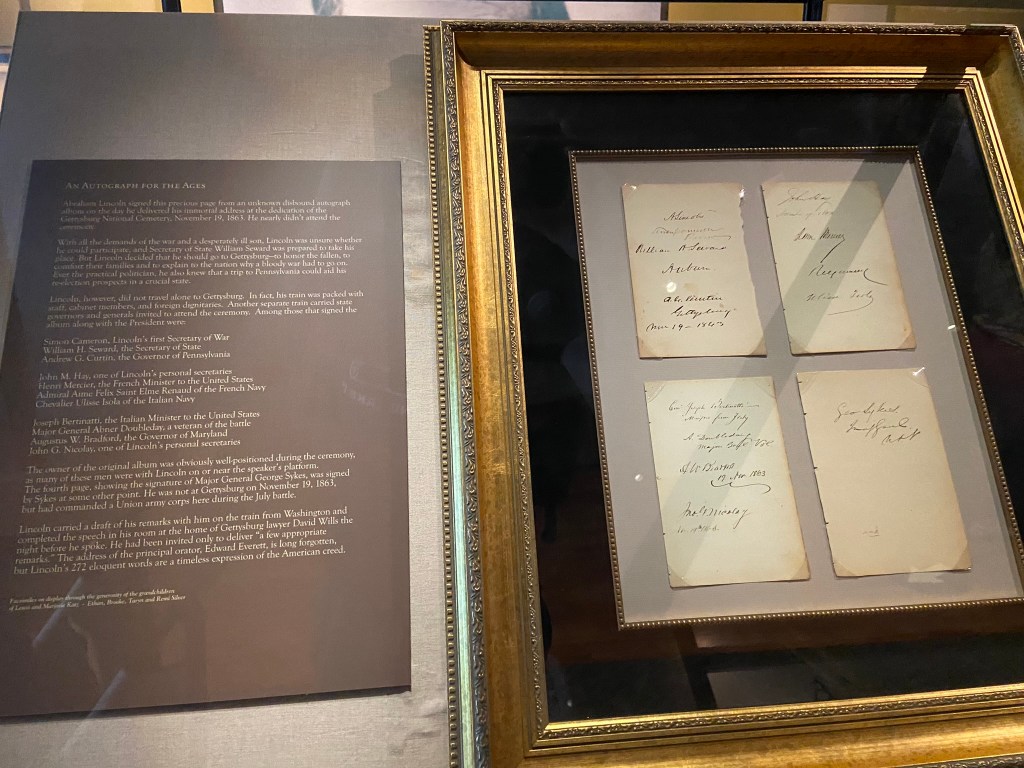
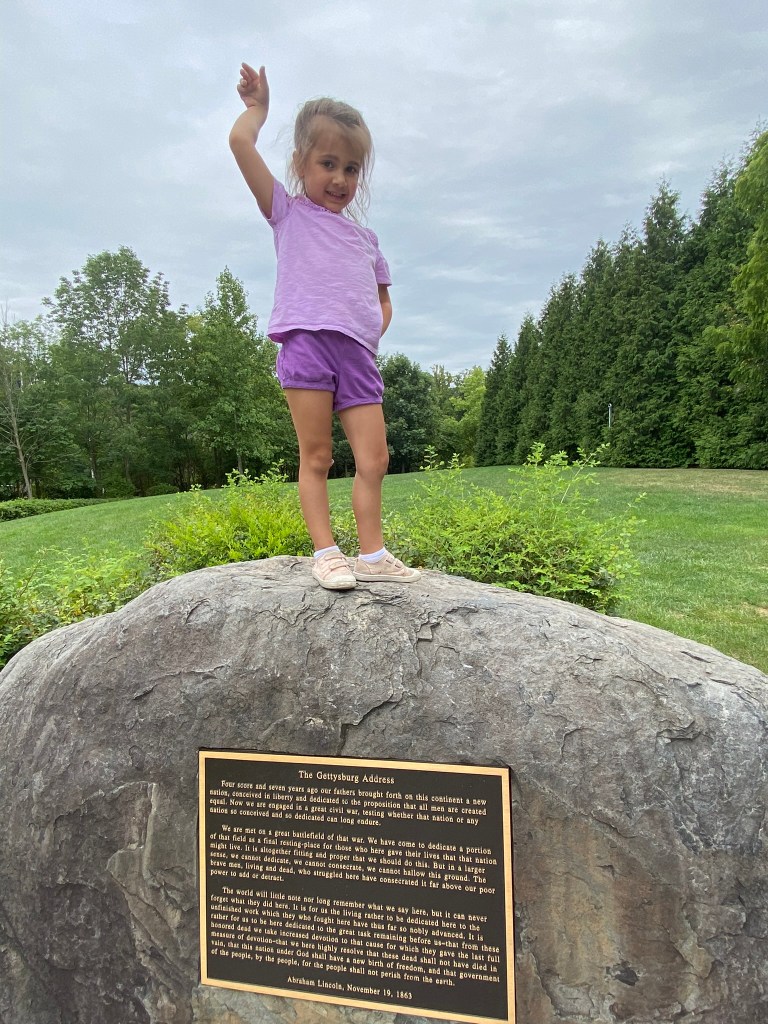
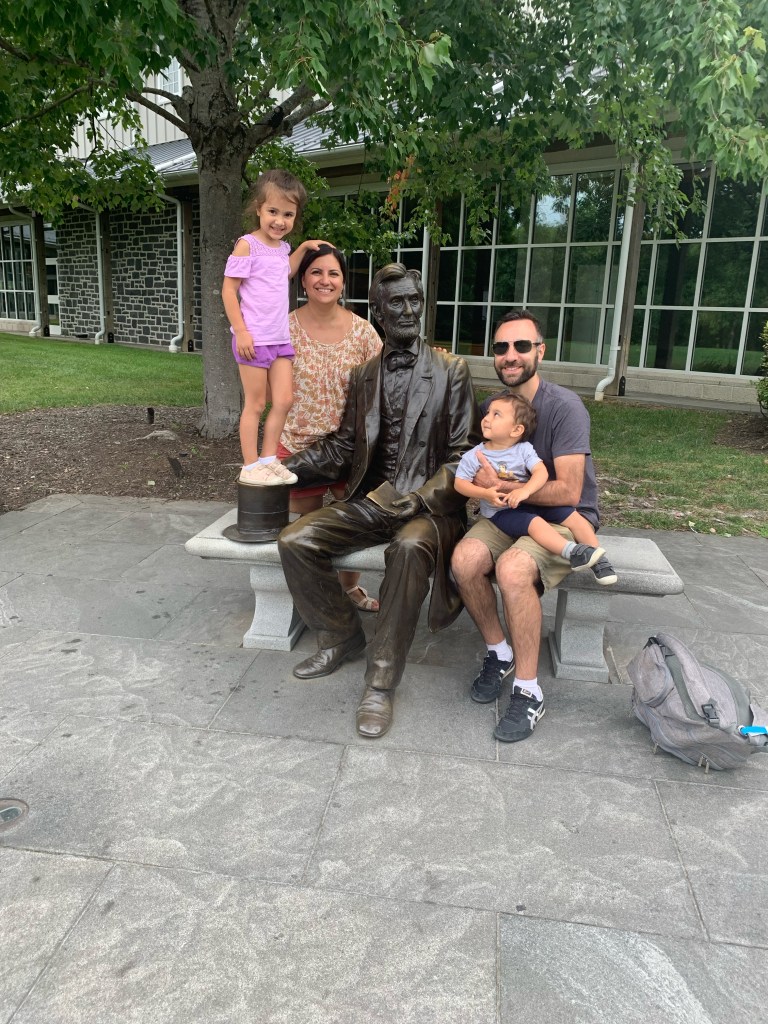
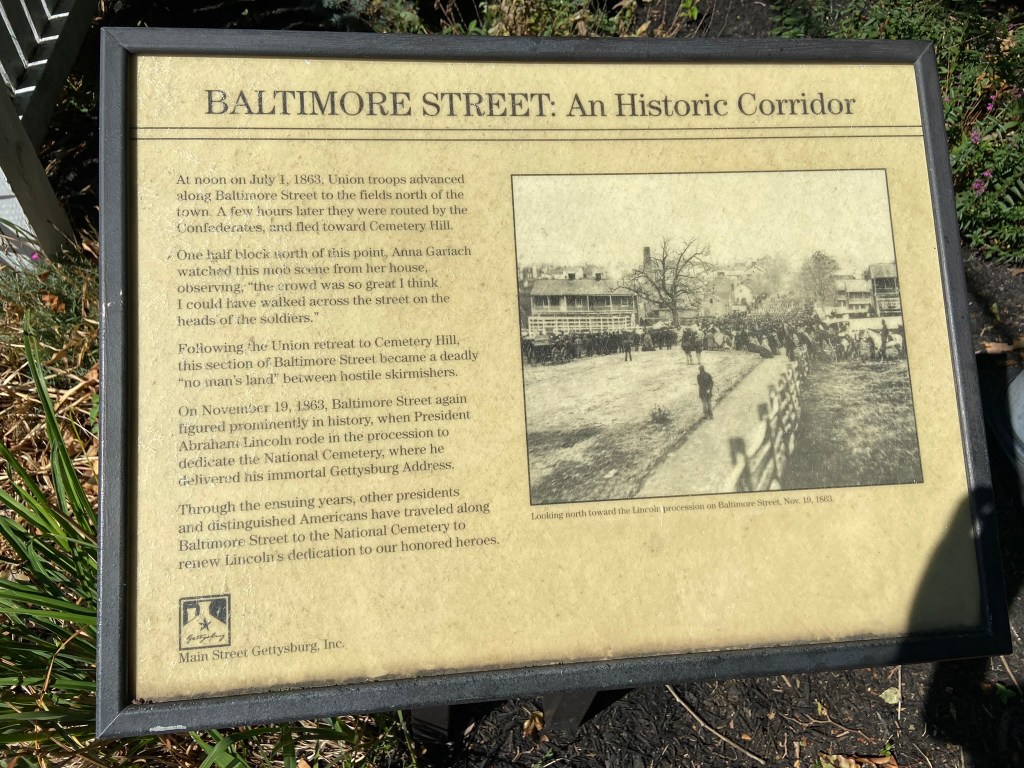
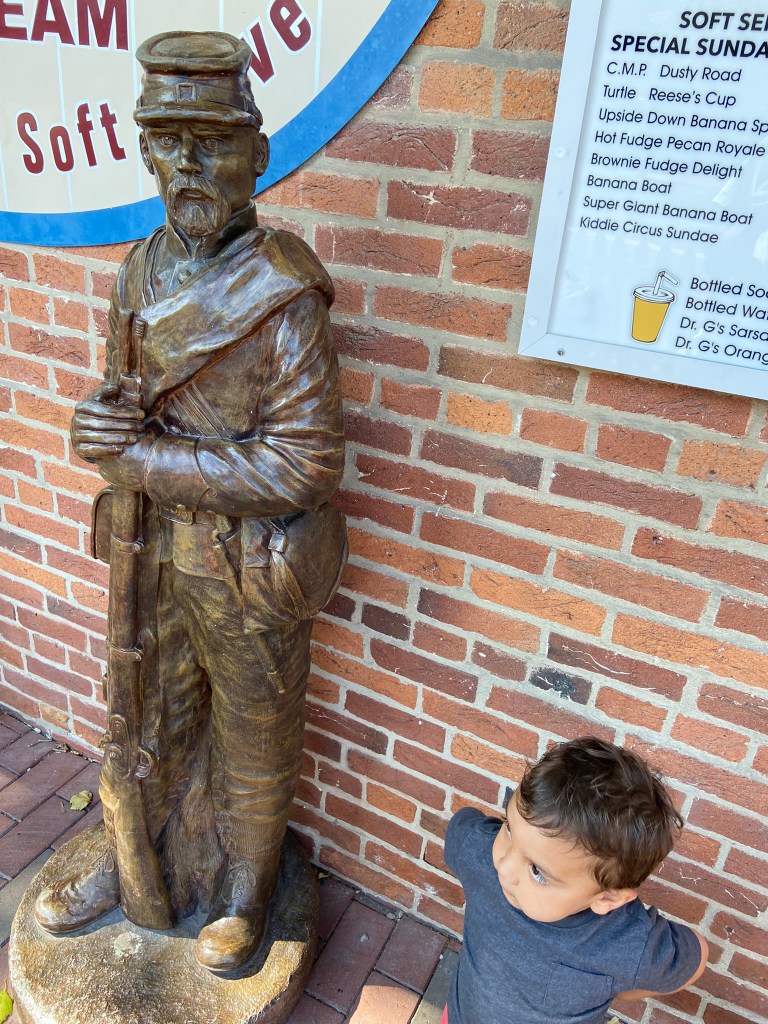
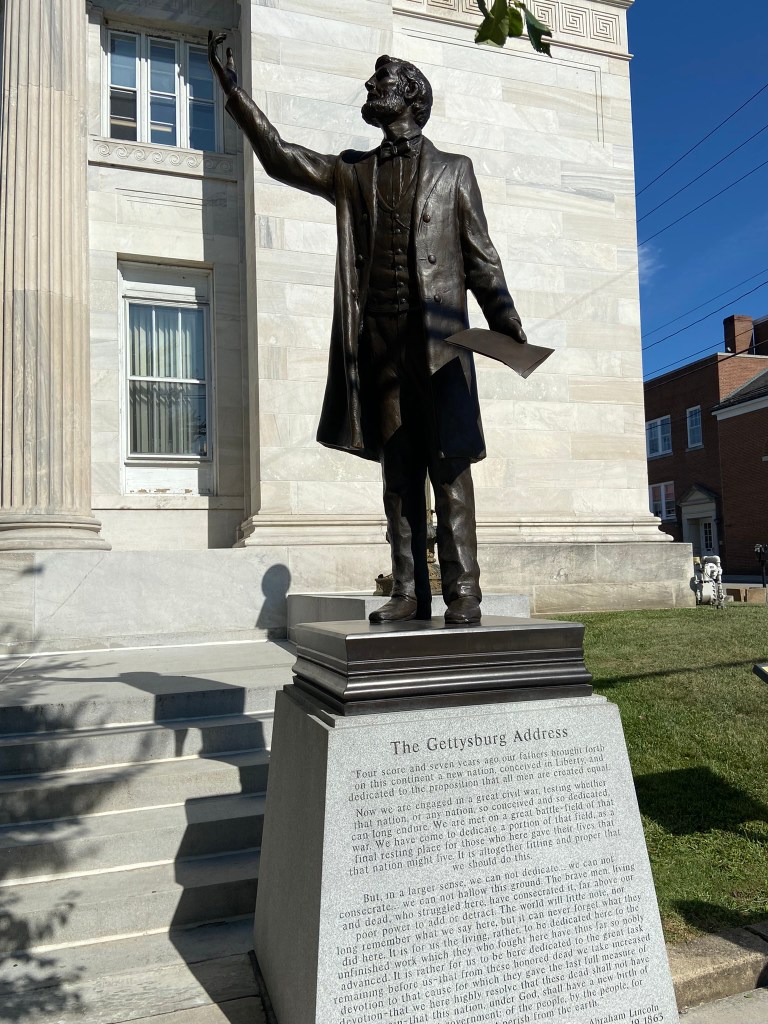
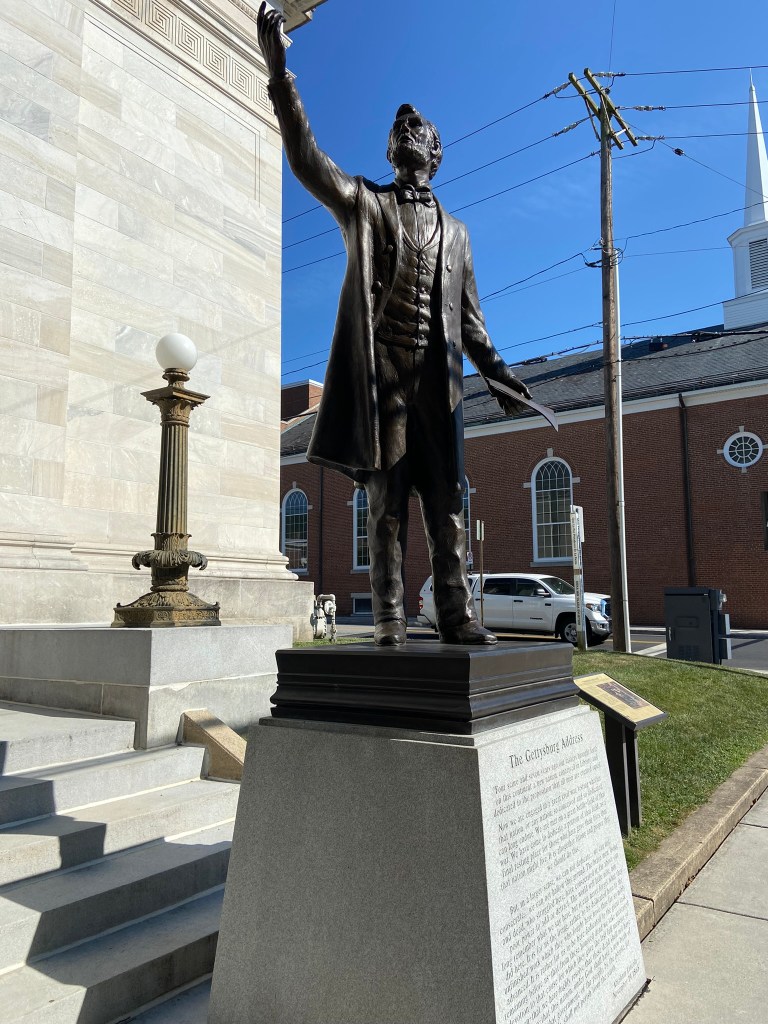
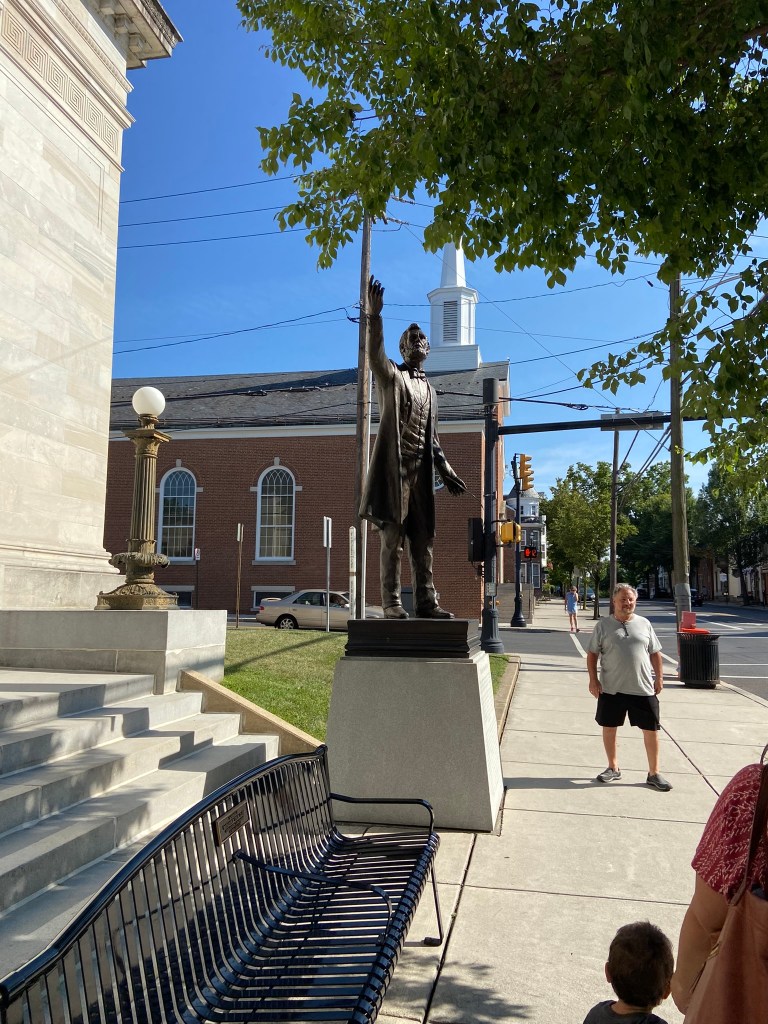
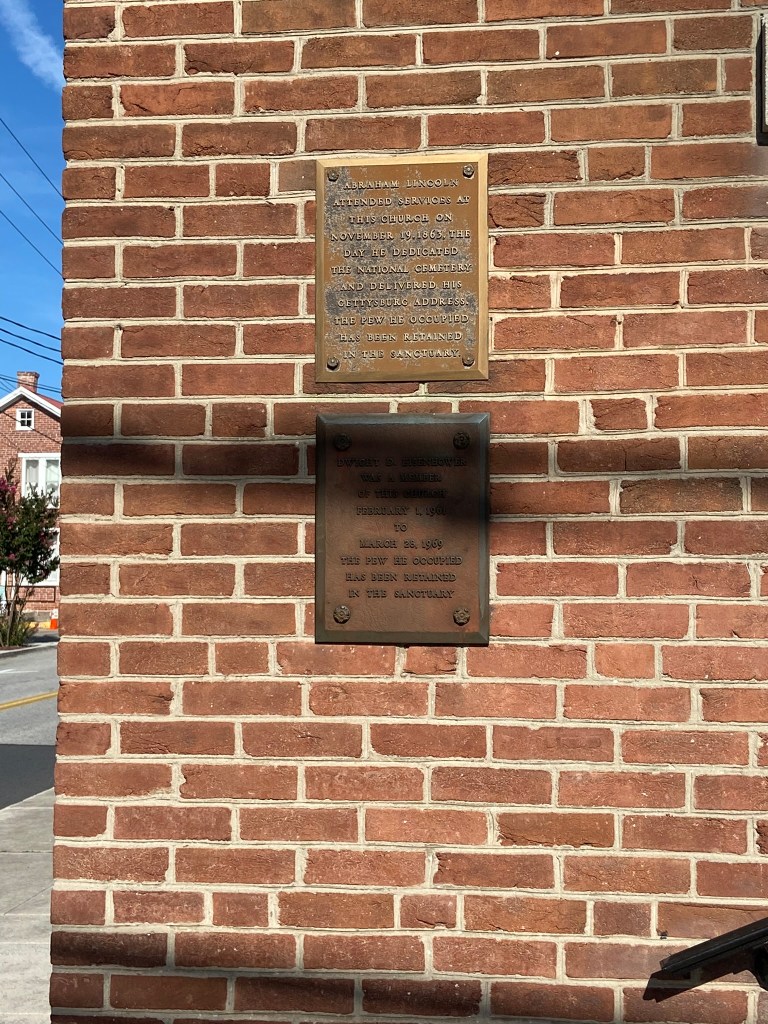
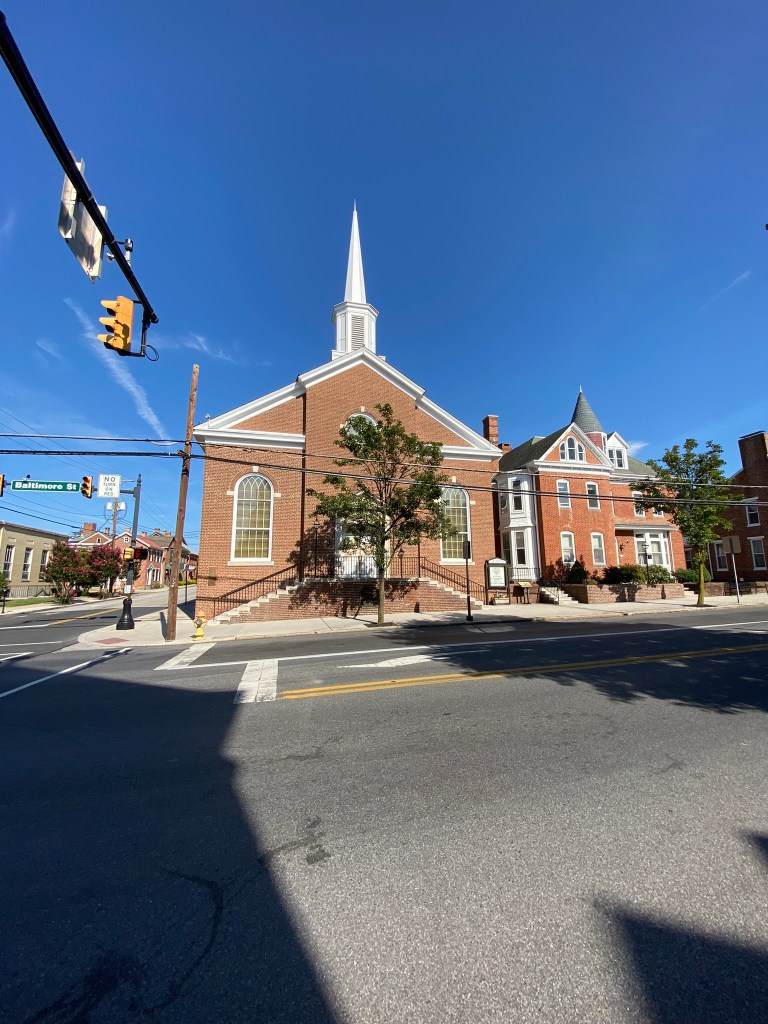
Without having a set plan in mind as to what exactly we were going to do after leaving Jennie Wade’s House, we decided to head North on Baltimore Street in the direction of the center of town since we knew that there were sites to see on the way there. We stopped for ice cream at Mr. G’s for the kids. We later learned that the location of Mr. G’s was about the location of the historic start of town in 1863. We continued heading North seeing the historic buildings that stood at the time of the battle. We saw the Gettysburg Presbyterian Church where Lincoln visited on Nov. 19th, 1863, the day that he gave the Gettysburg Address. We also saw his statue which stands about a block away from the church.
Ronn Palm’s Museum of Civil War Images
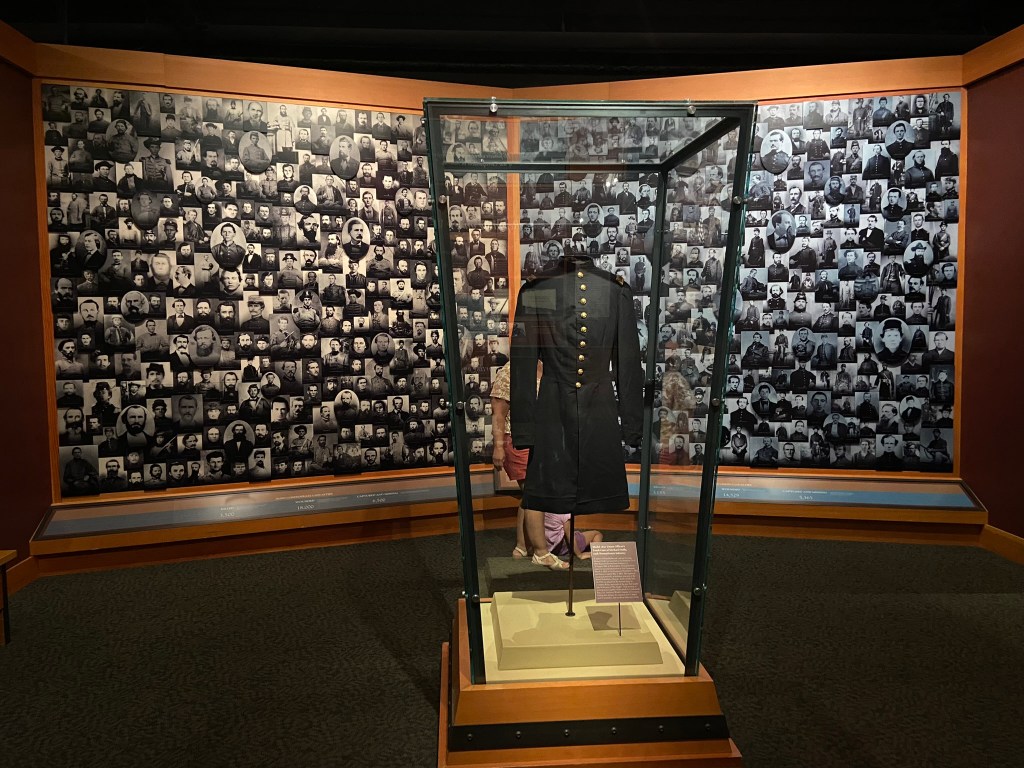
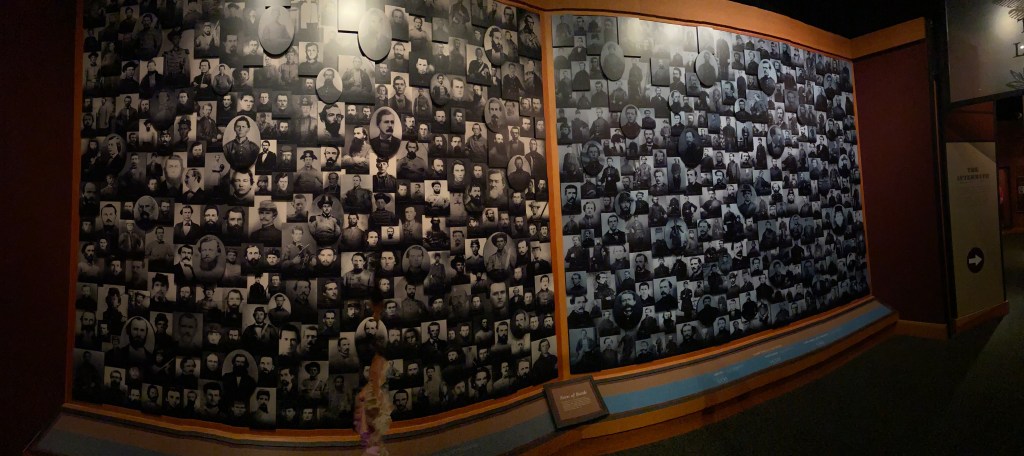
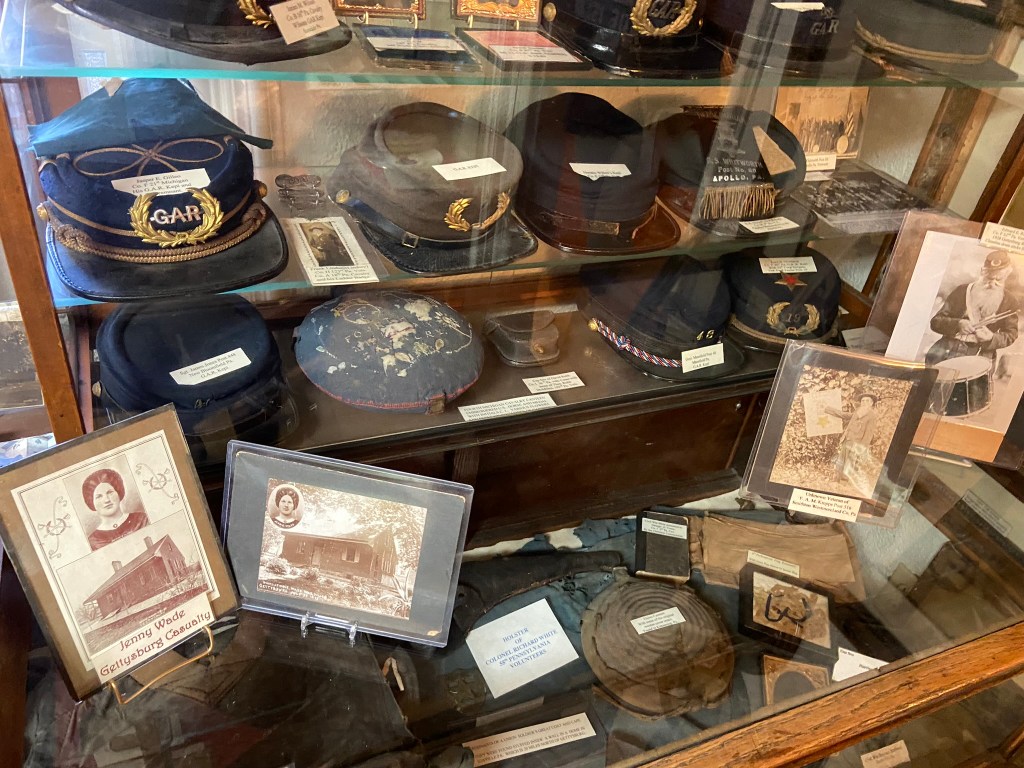
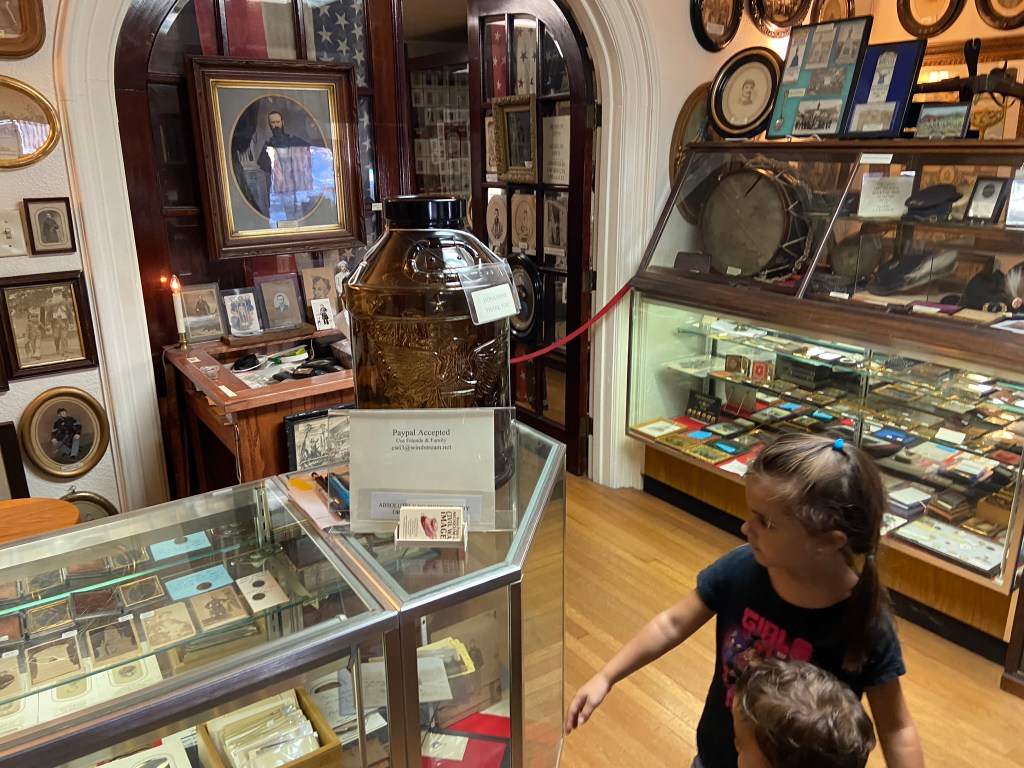
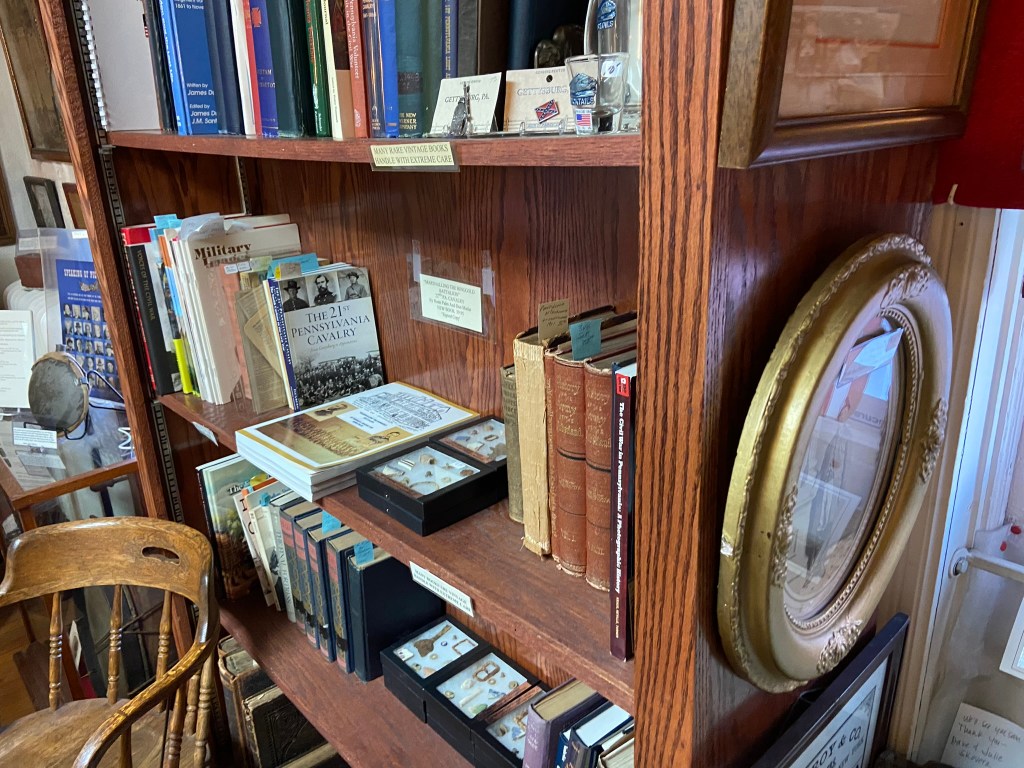
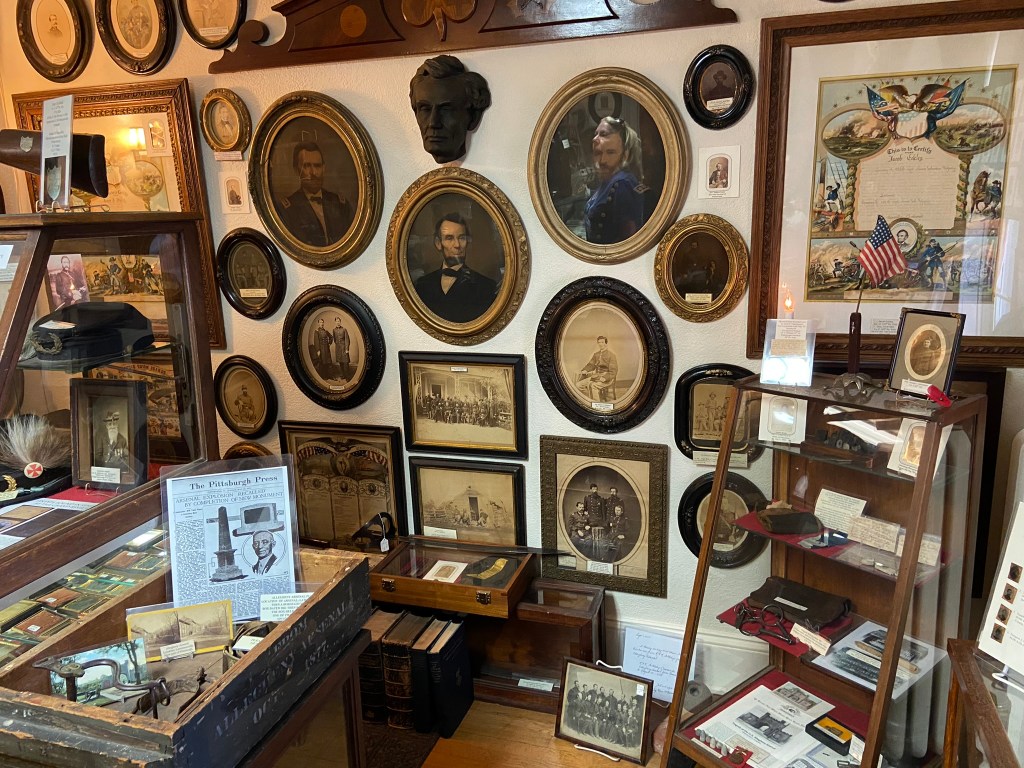
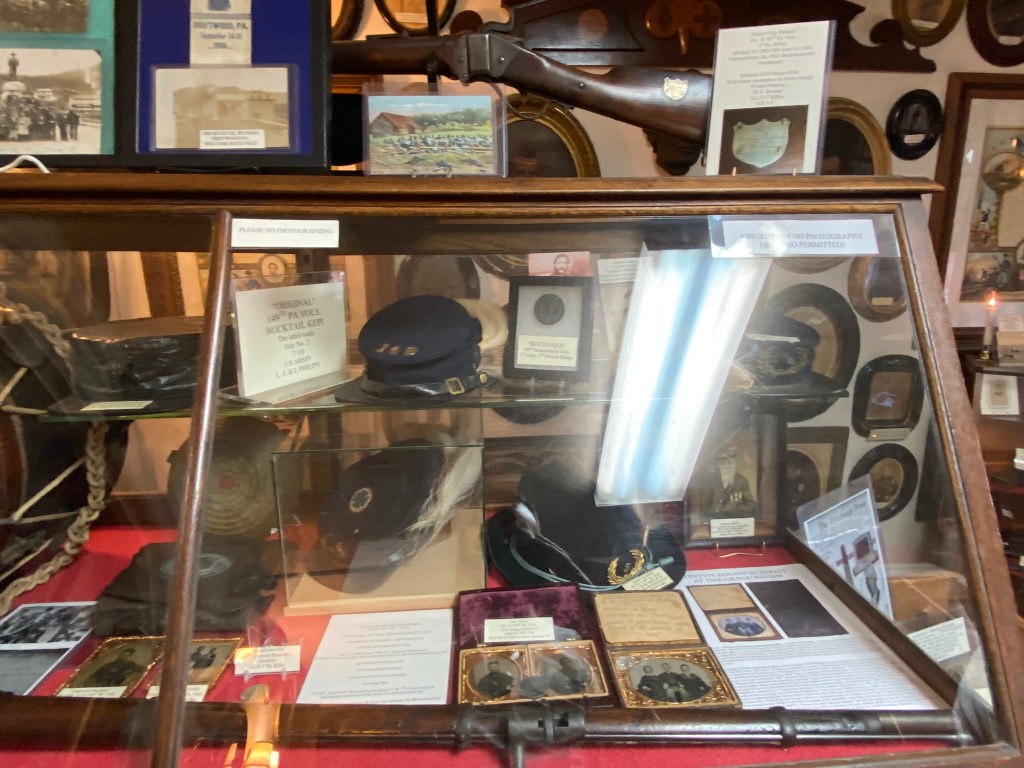
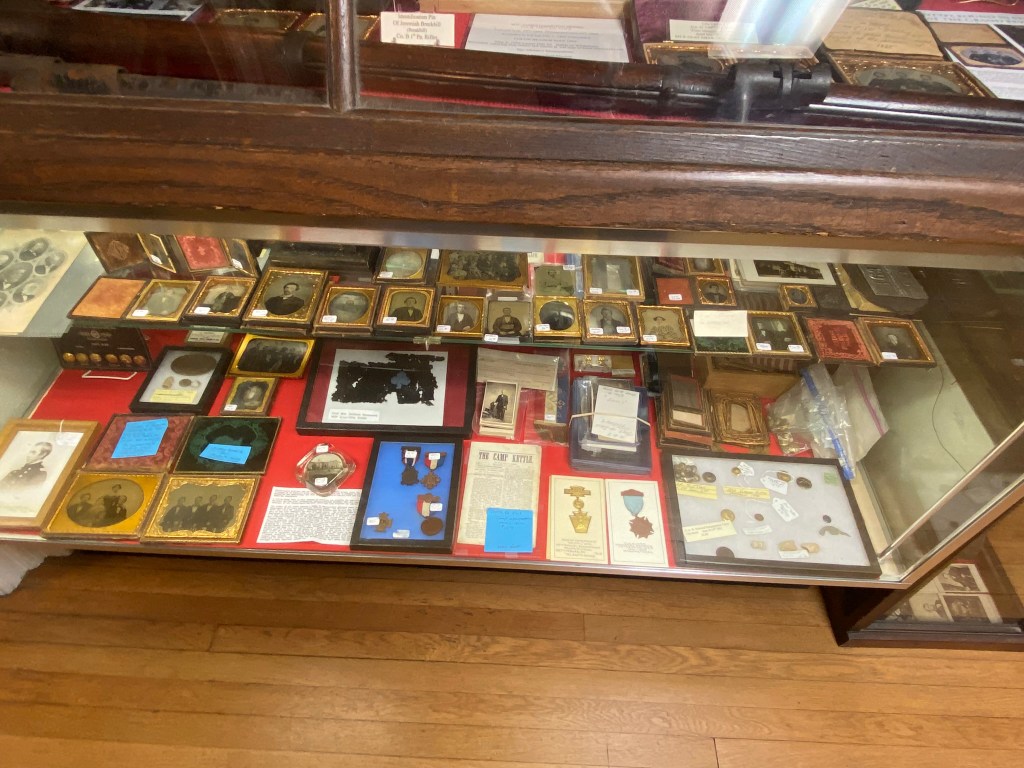
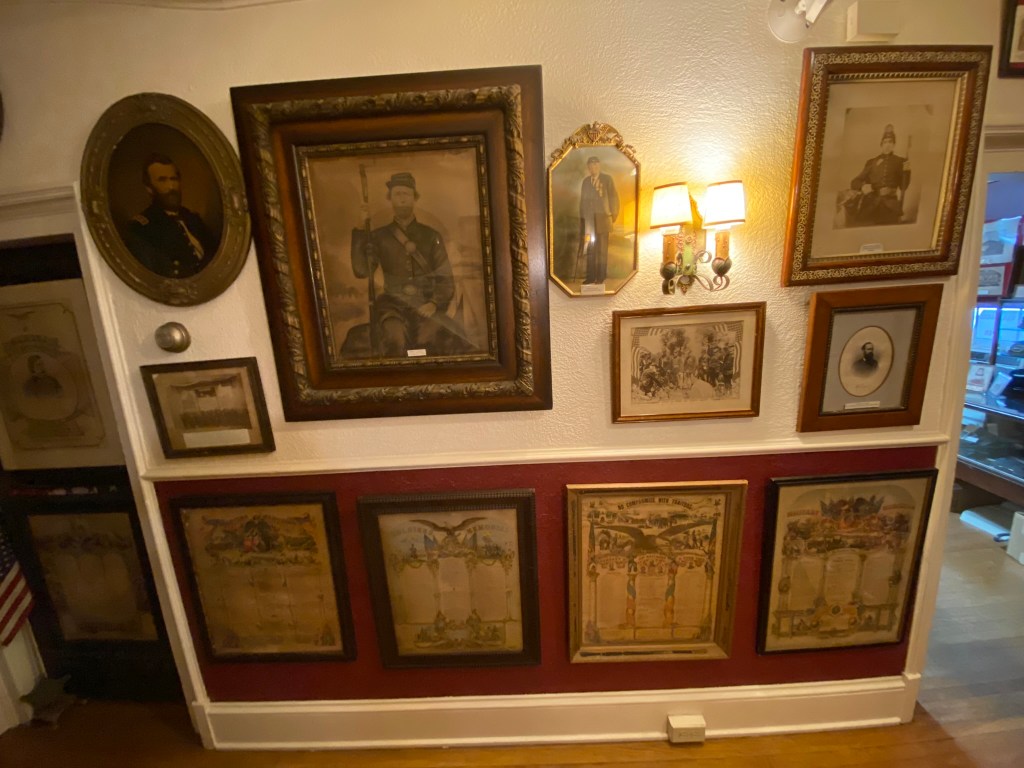
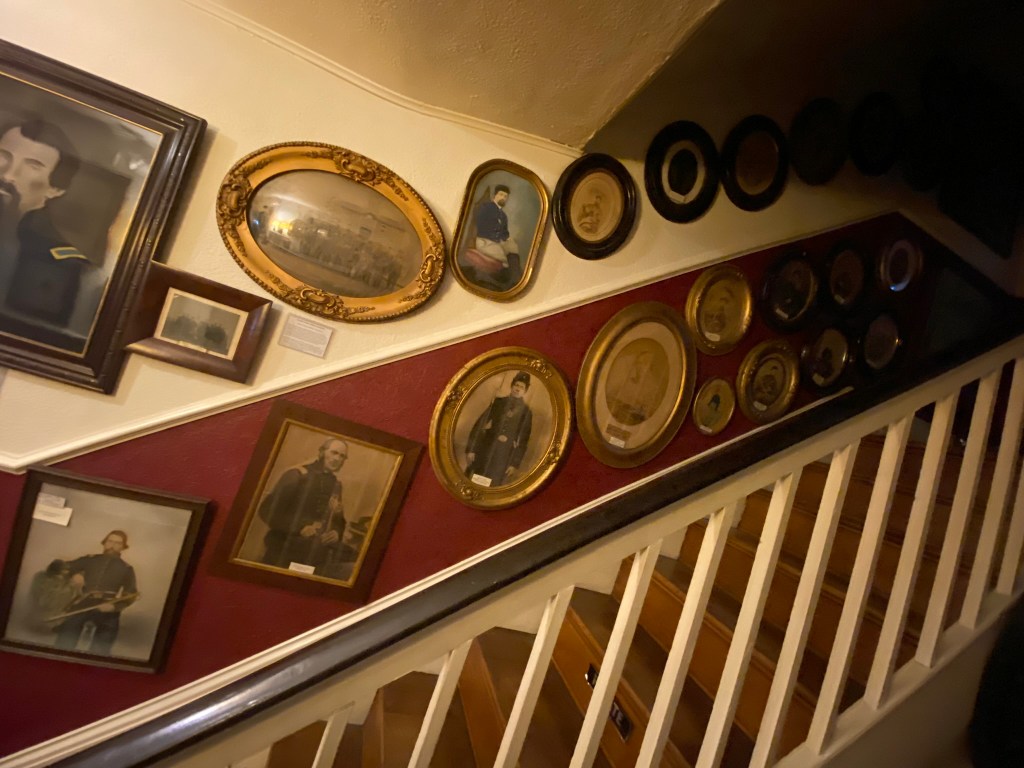
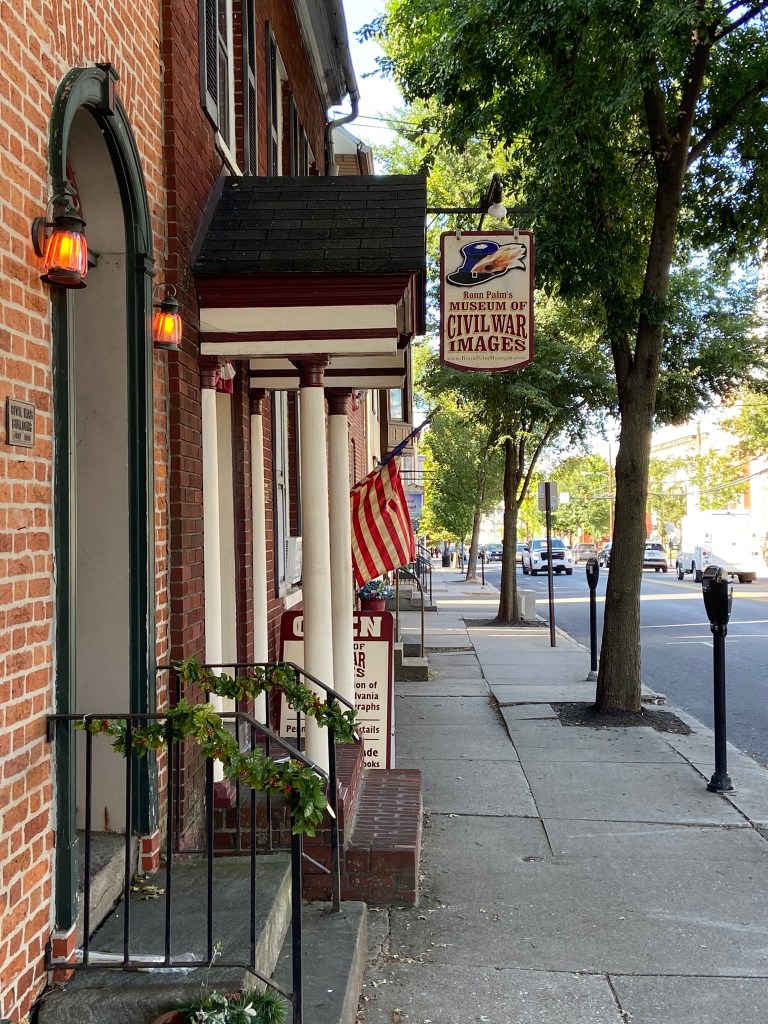
We decided to turn around and head back south on Baltimore Street in the direction towards our hotel. I stopped in Ronn Palm’s Museum of Civil War images. When you walk in, you are simply amazed at the amount of images and artifacts that are on display. Ronn has over 4,000 original photographs and artifacts from the Civil War. There are many on display when you first walk in. Then if you pay $6, which is well worth it, you are able to visit other rooms that are completely covered with photographs of soldiers, artifacts, relics and memoribilia. I was able to chat with Ronn Palm for a short time. His passion for all things Civil War comes through. He has been collecting items for so long and goes to a few Civil War shows throughout the year to trade and collect. He truly is a fascinating person and his museum is a must visit if you’re in Gettysburg. The photos below only scratch the surface of what you will see there. Check out more info about the museum here: https://www.ronnpalmmuseum.com/
Dinner at Gettysburg Eddie’s
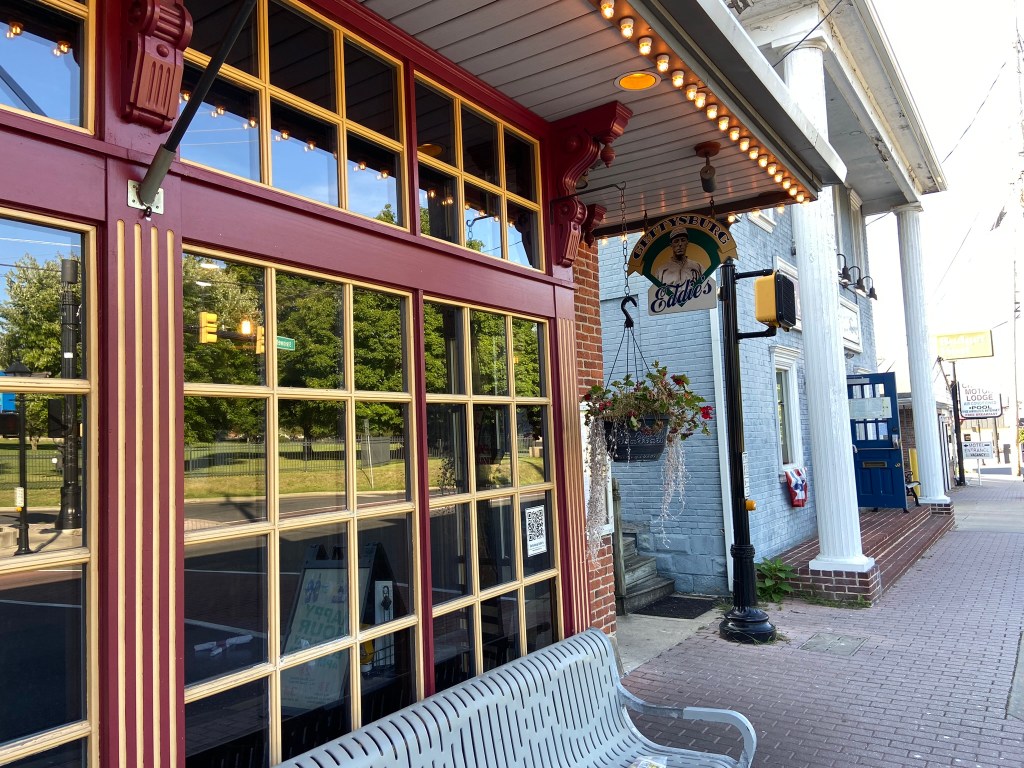
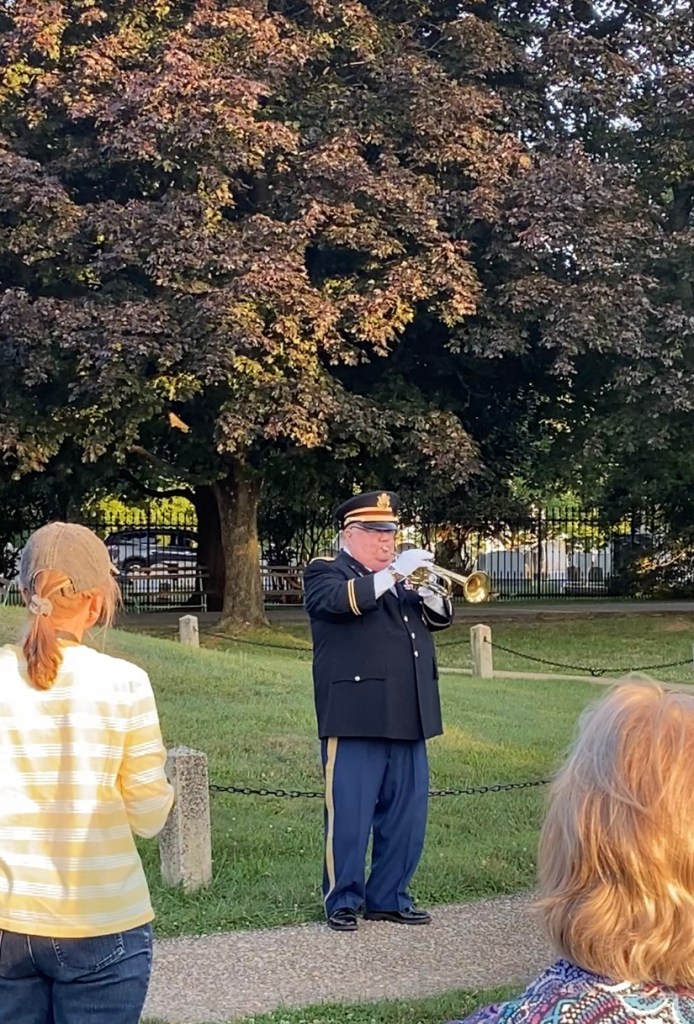
After leaving Ronn Palm’s Musuem of Civil War Images, we stopped in the Shriver House Museum but we had missed the last tour. We were told that every evening at 7pm in the Gettysburg National Cemetary “taps” is played to honor the fallen soldiers. This runs between Memorial Day and Labor Day. We planned to attend after dinner. So we decided to eat at Gettysburg Eddie’s, which is right next to the Cemetary. So we headed down Baltimore Street and down Steinwehr Ave. There was about a 10-15 minute wait before we got a table. They also had very good, American style food. When we left the restaurant, it was about 6:45 so we decided to visit the Gettysburg National Cemetary in time to see “taps” played at 7:00pm. https://www.gettysburgeddies.com/
Gettysburg National Cemetery
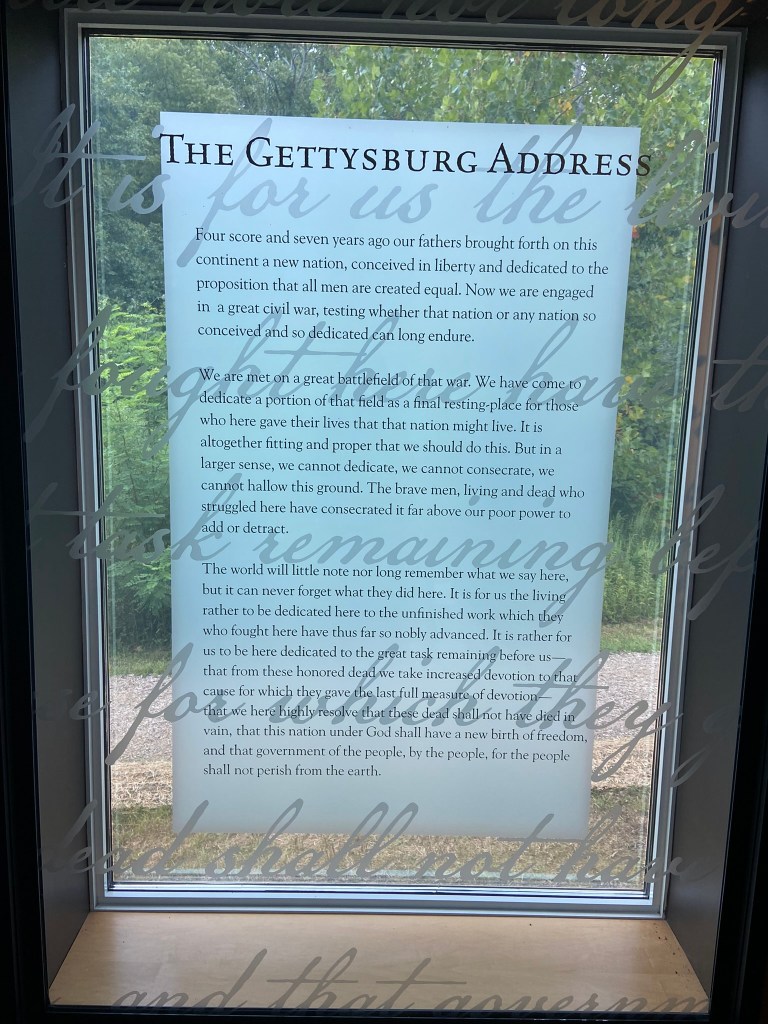
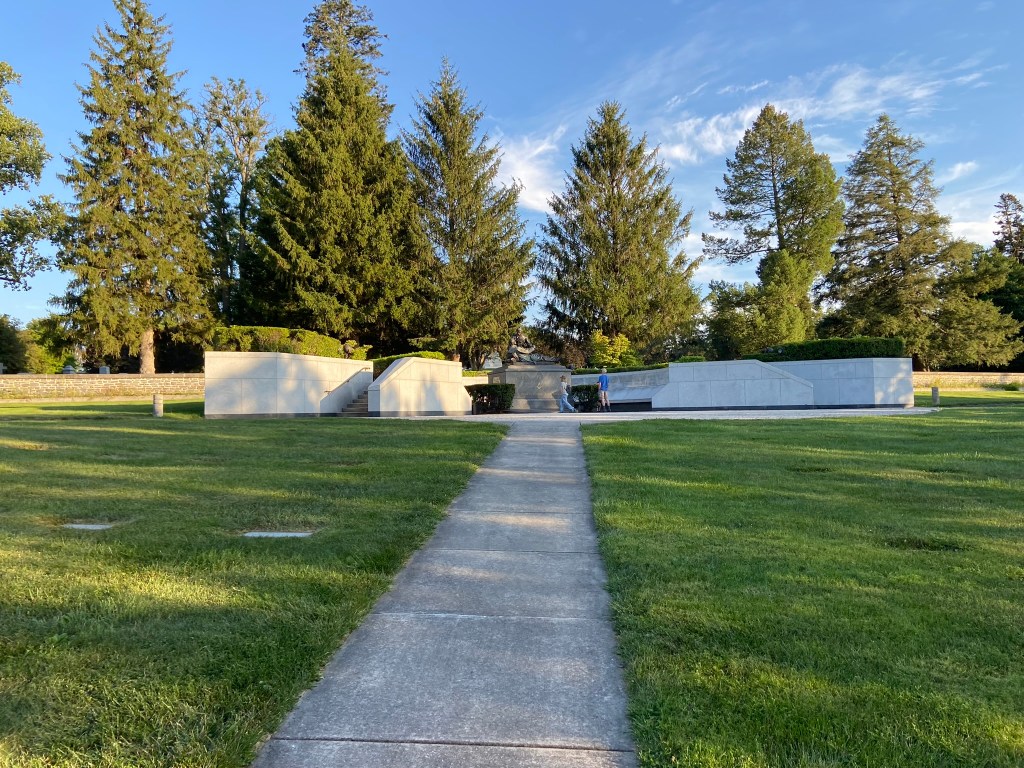
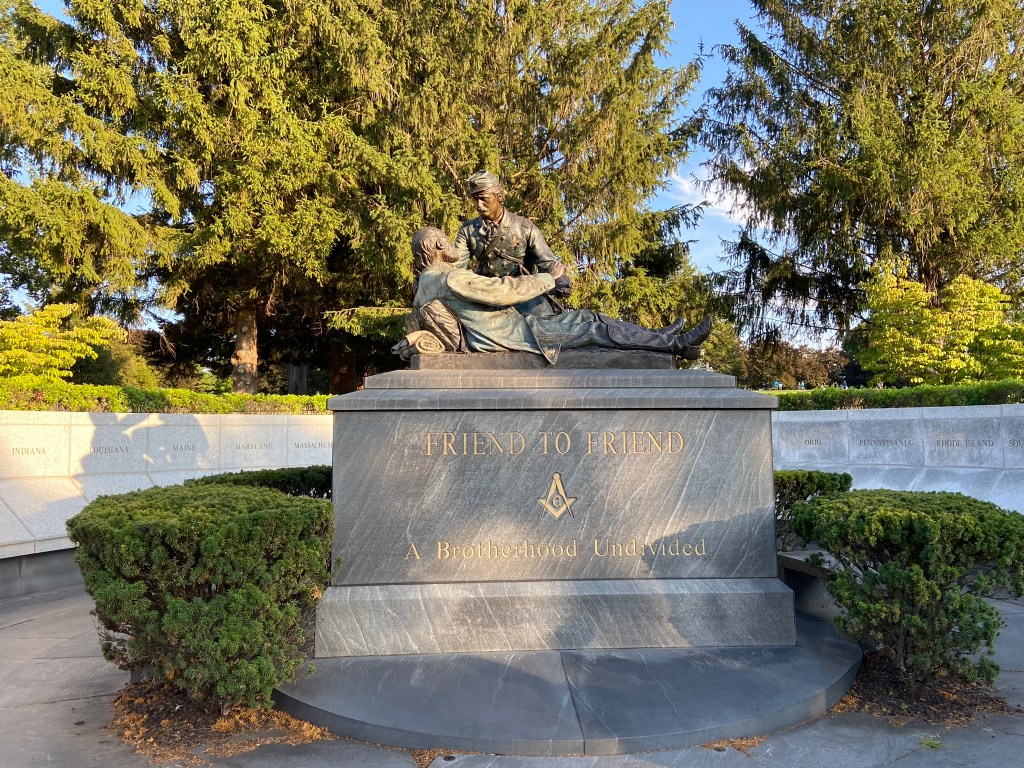
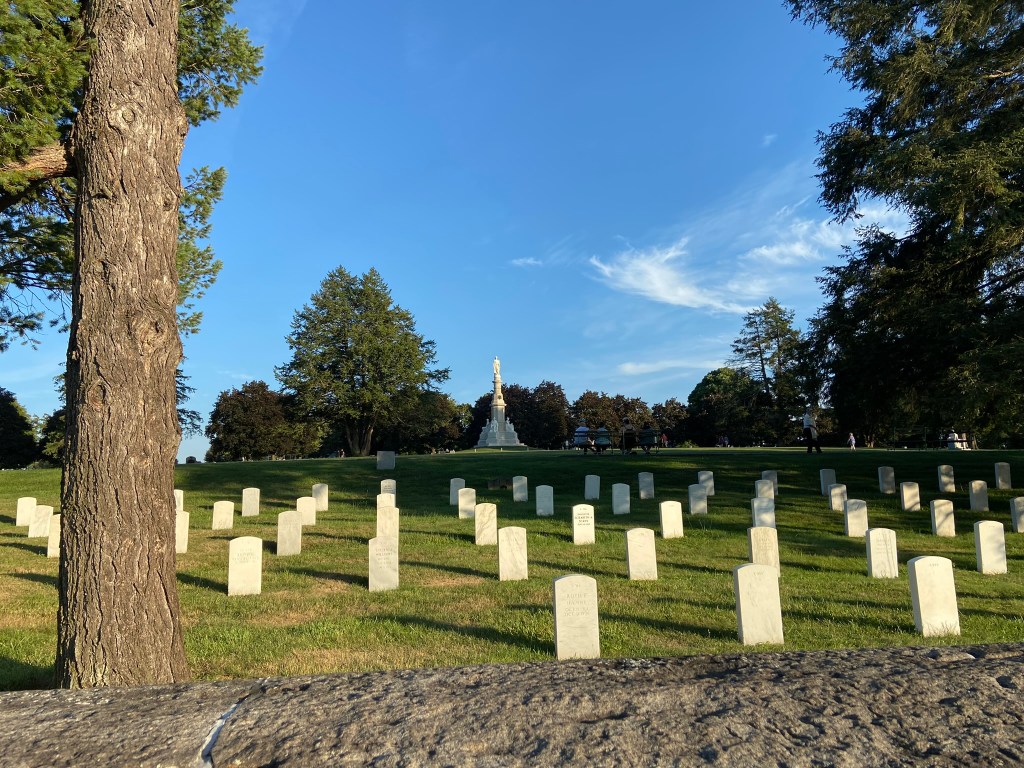
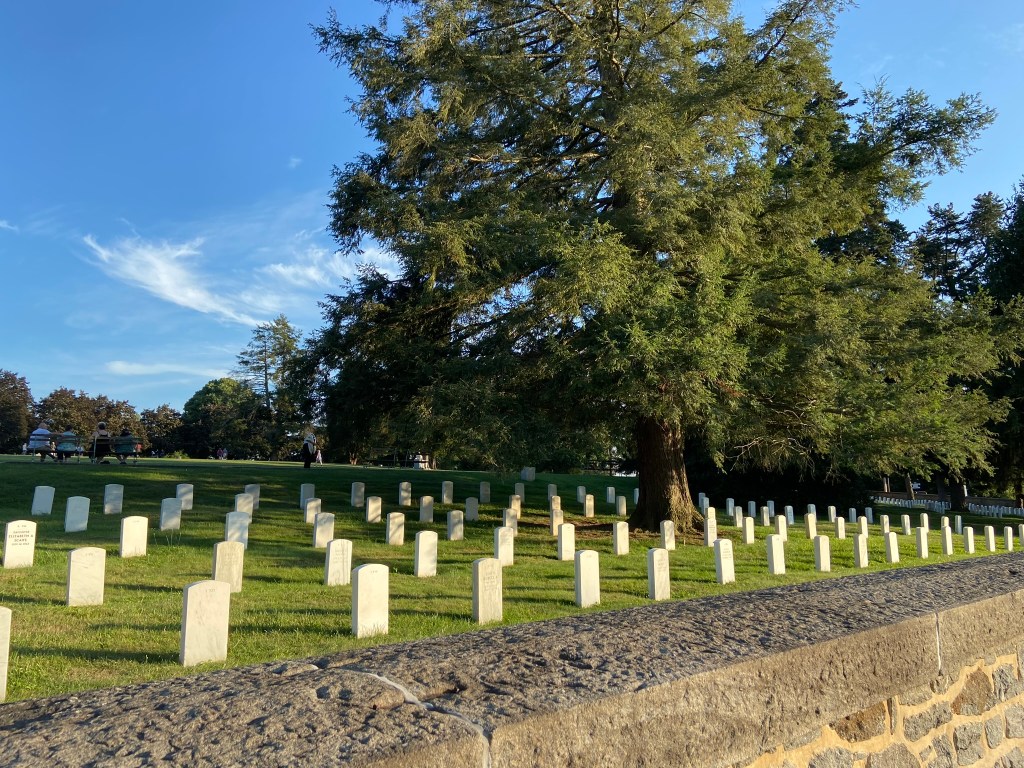
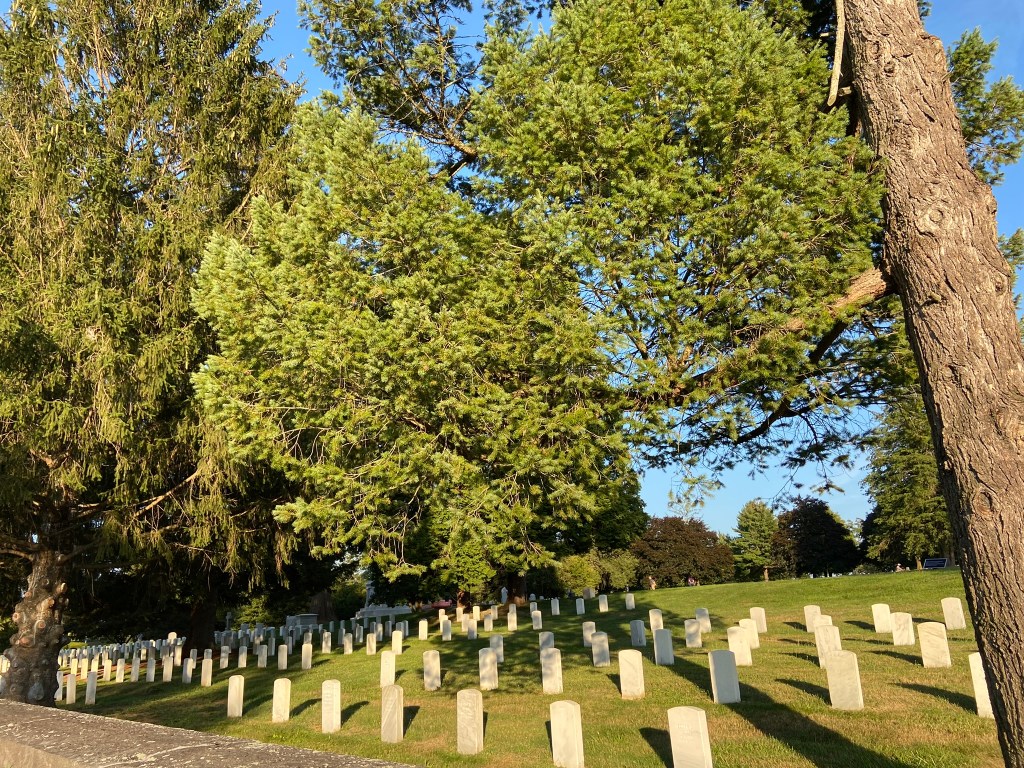
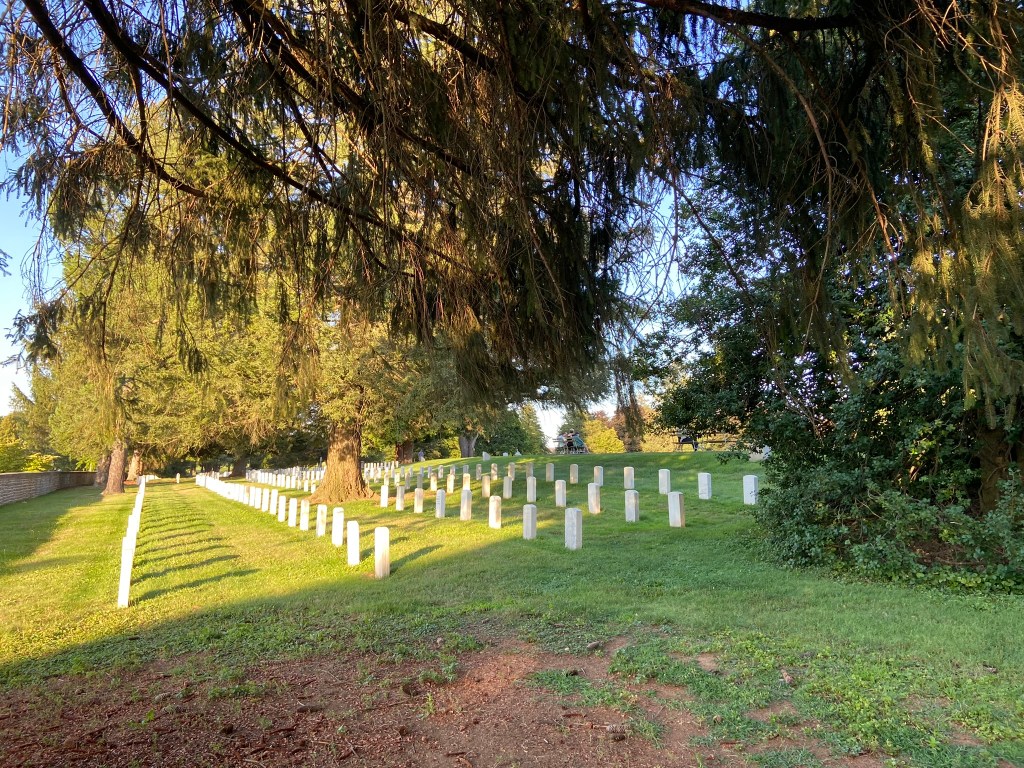
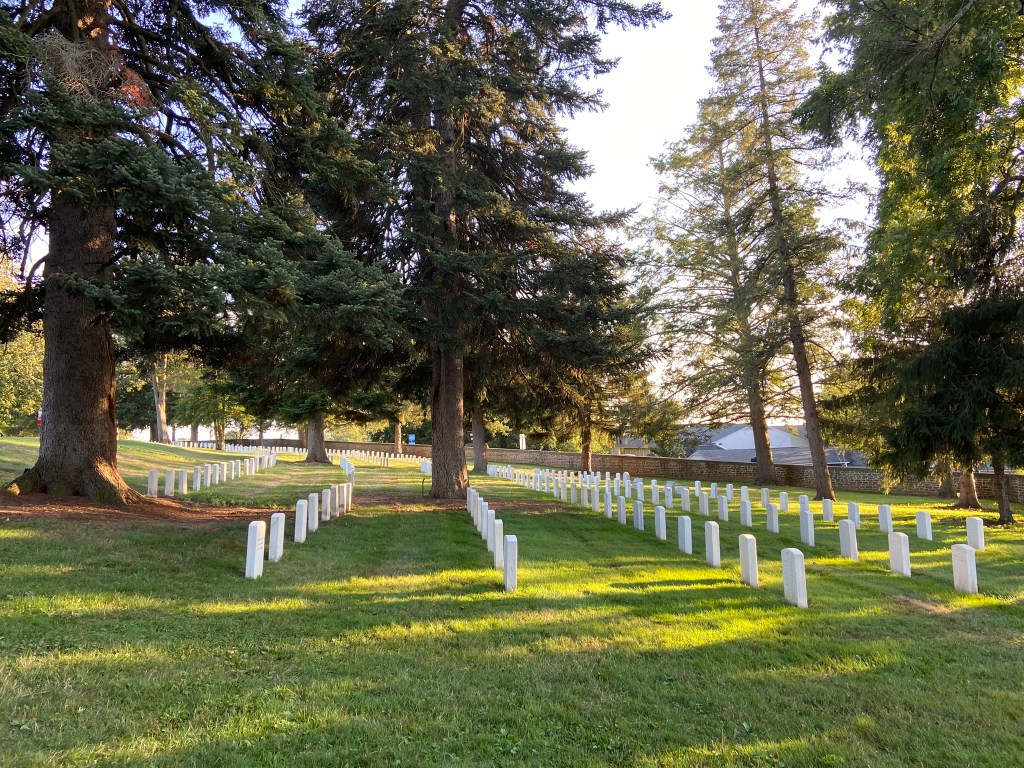
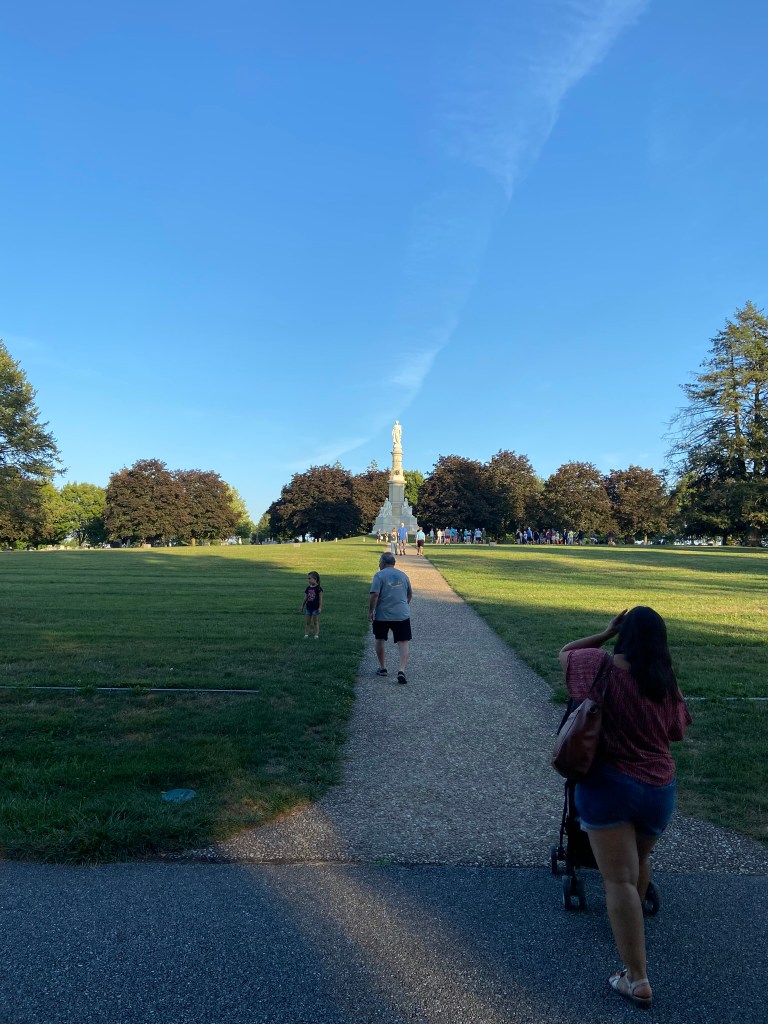
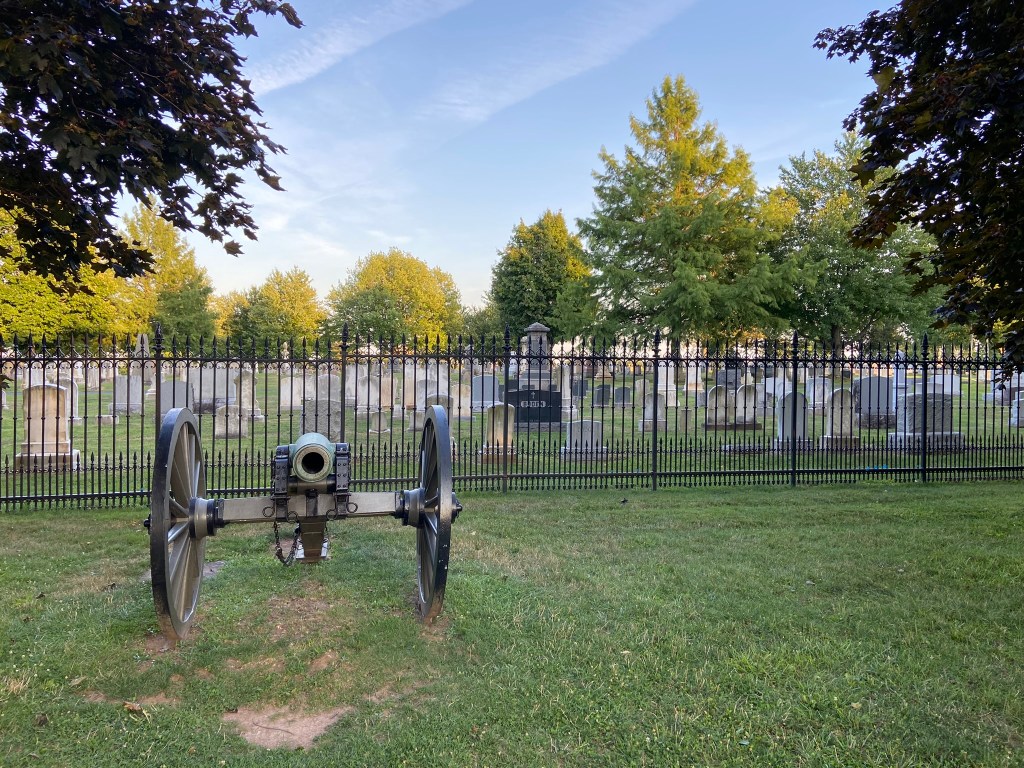
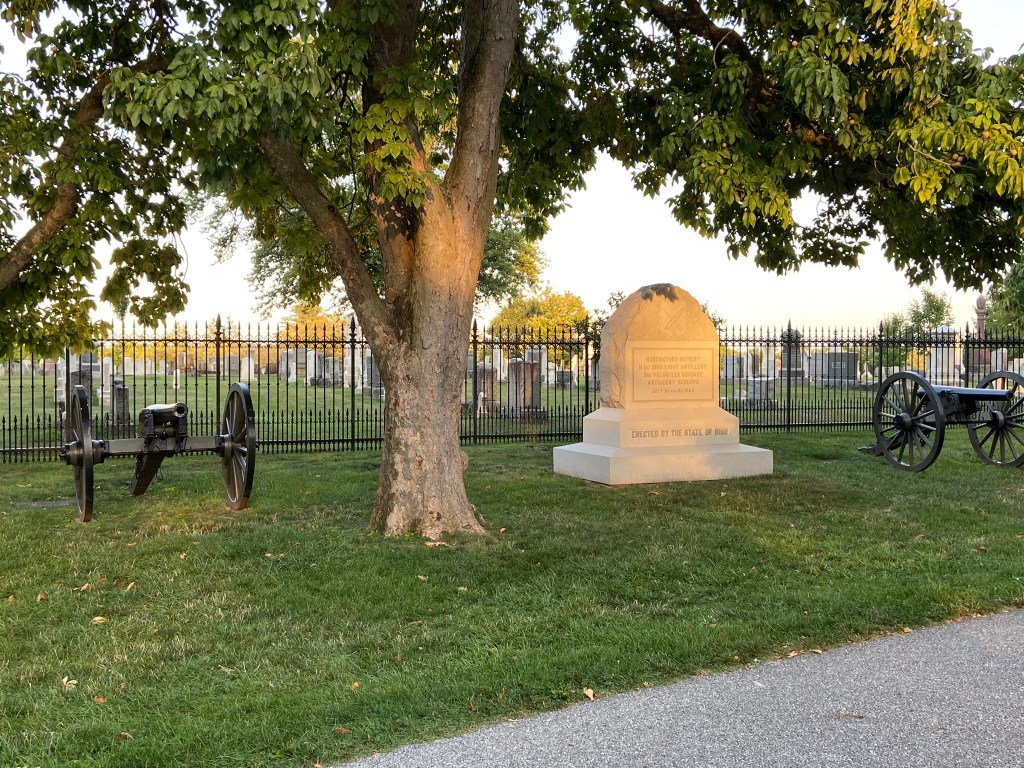
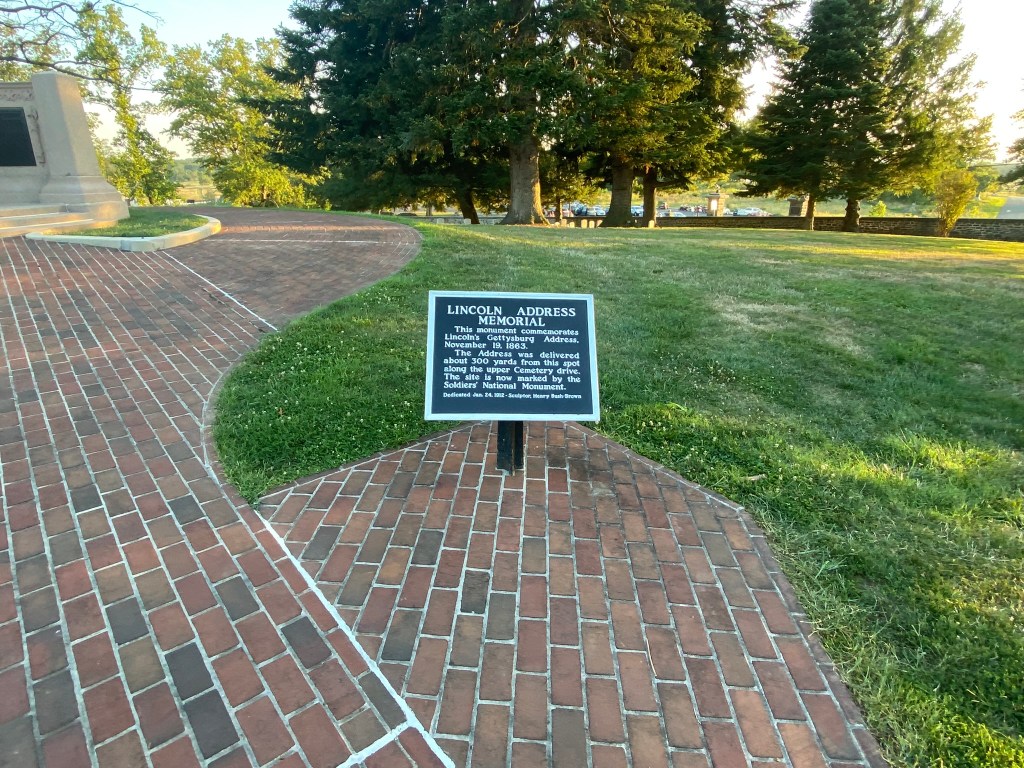
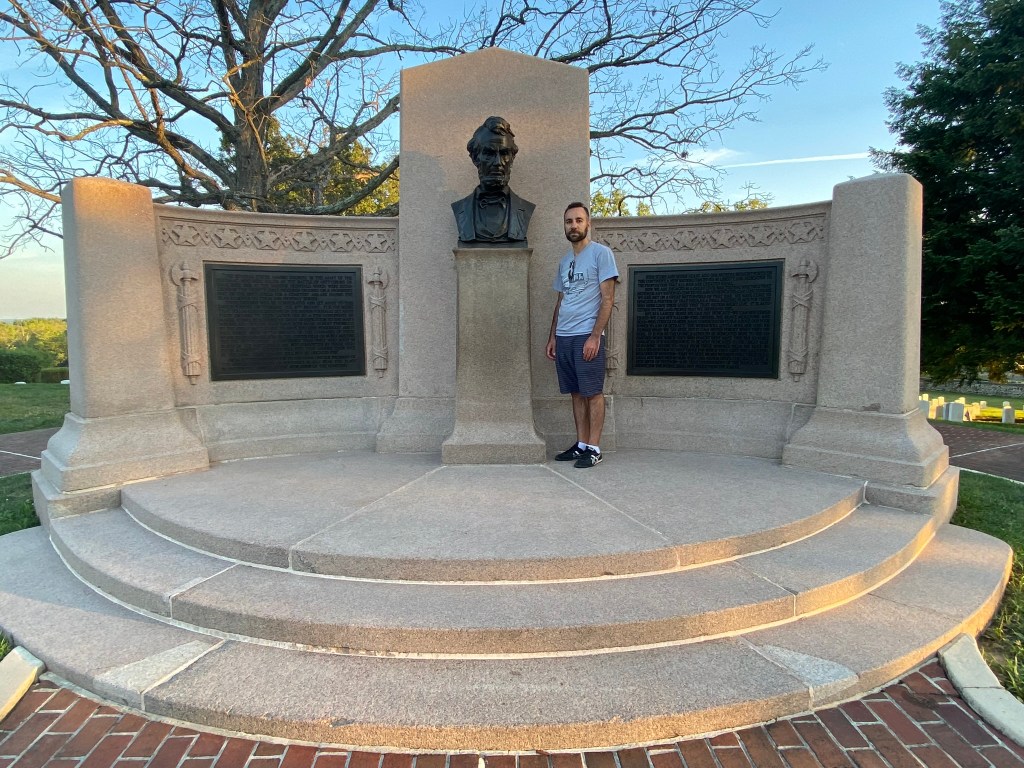
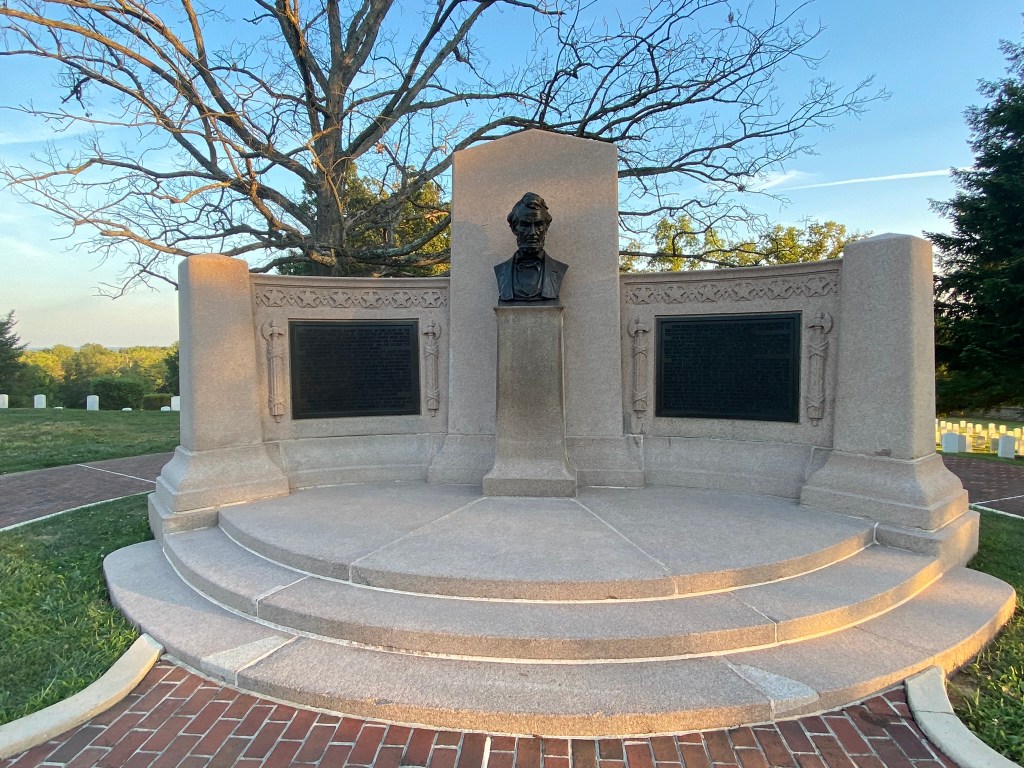
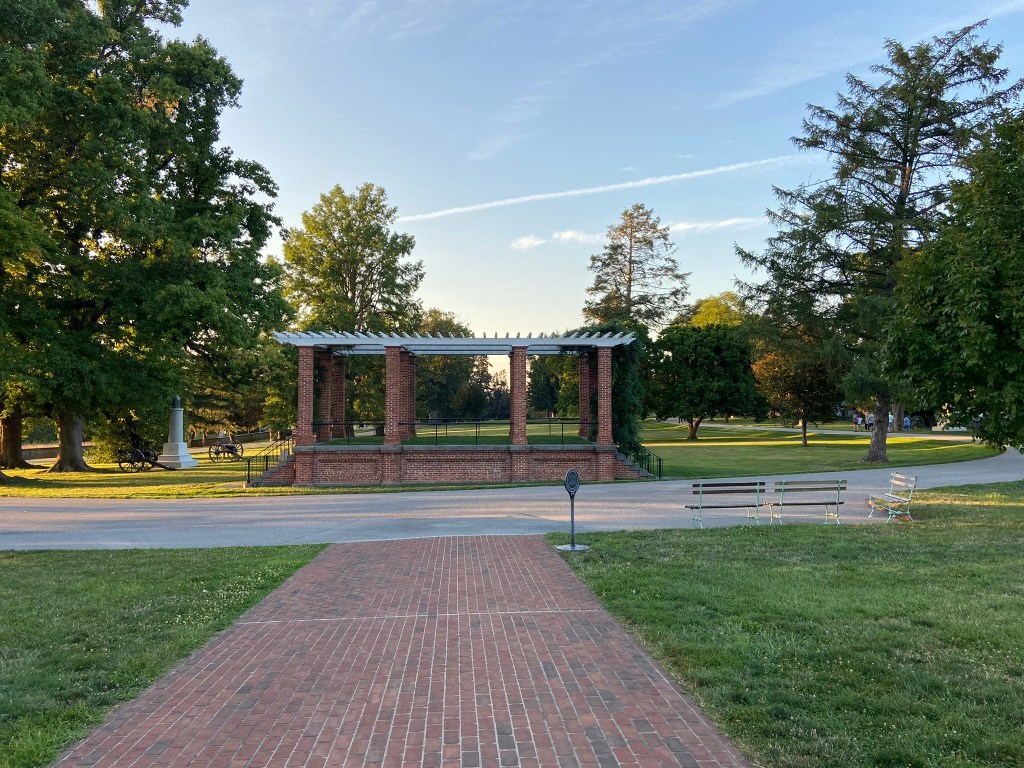
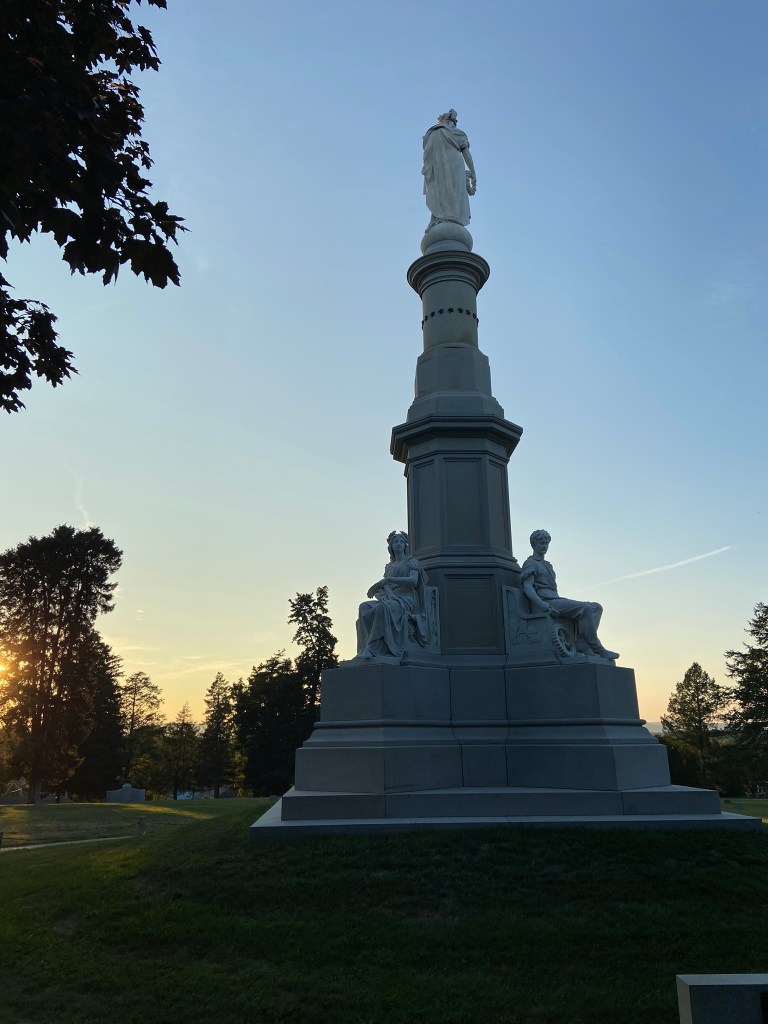
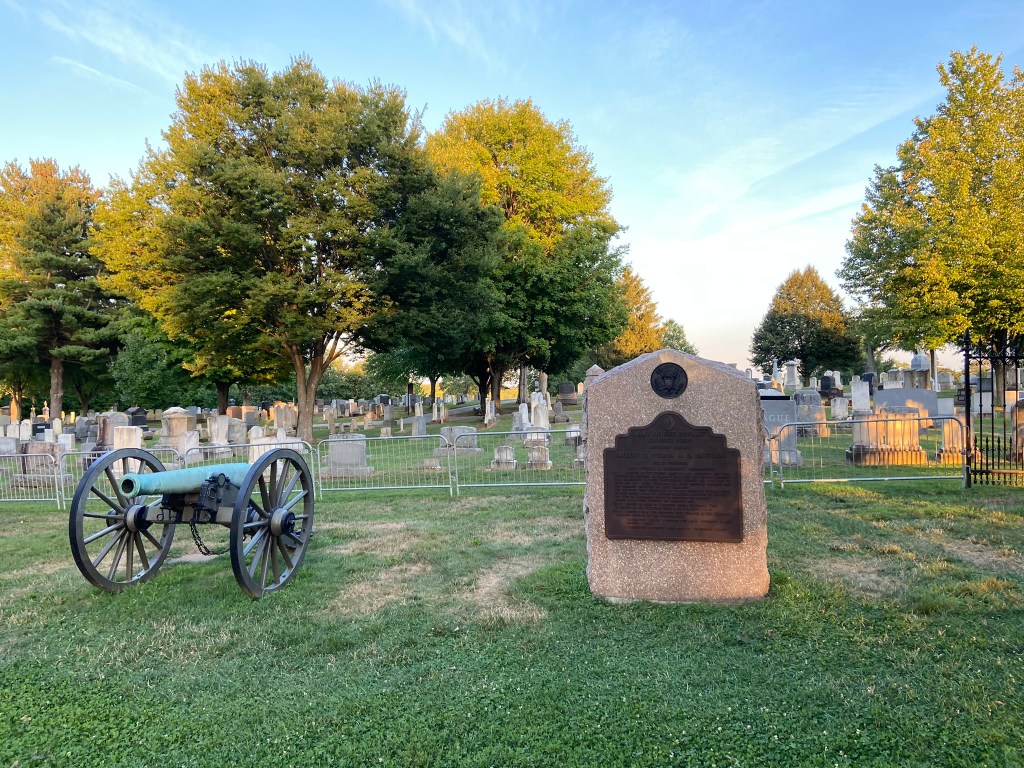
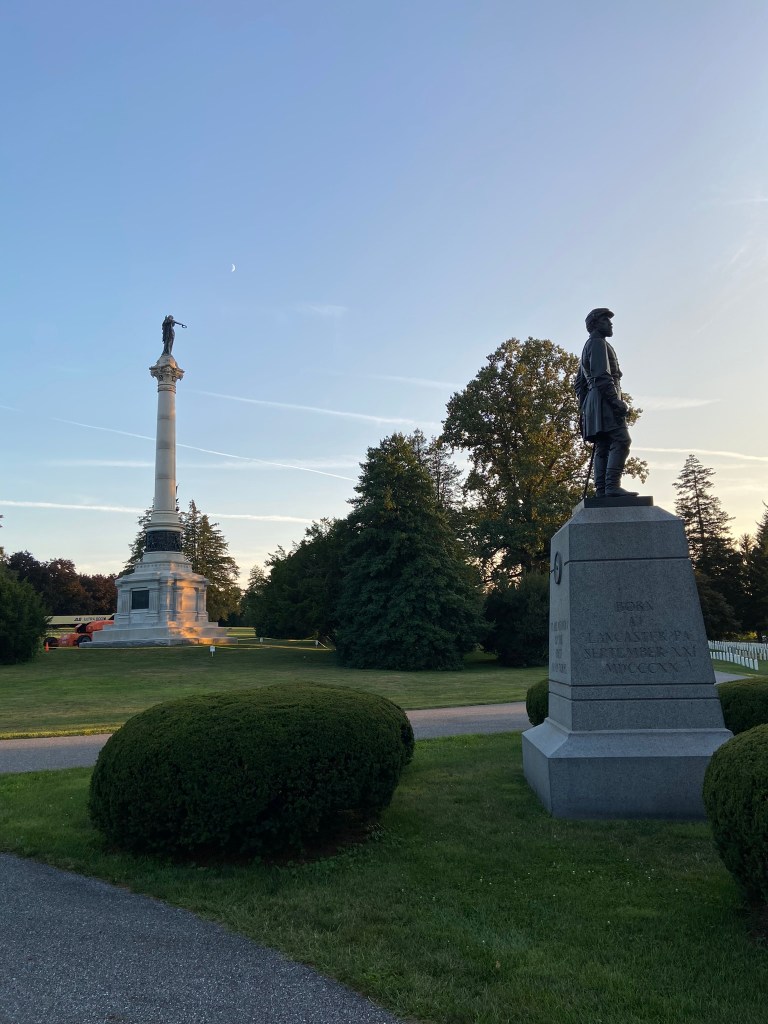
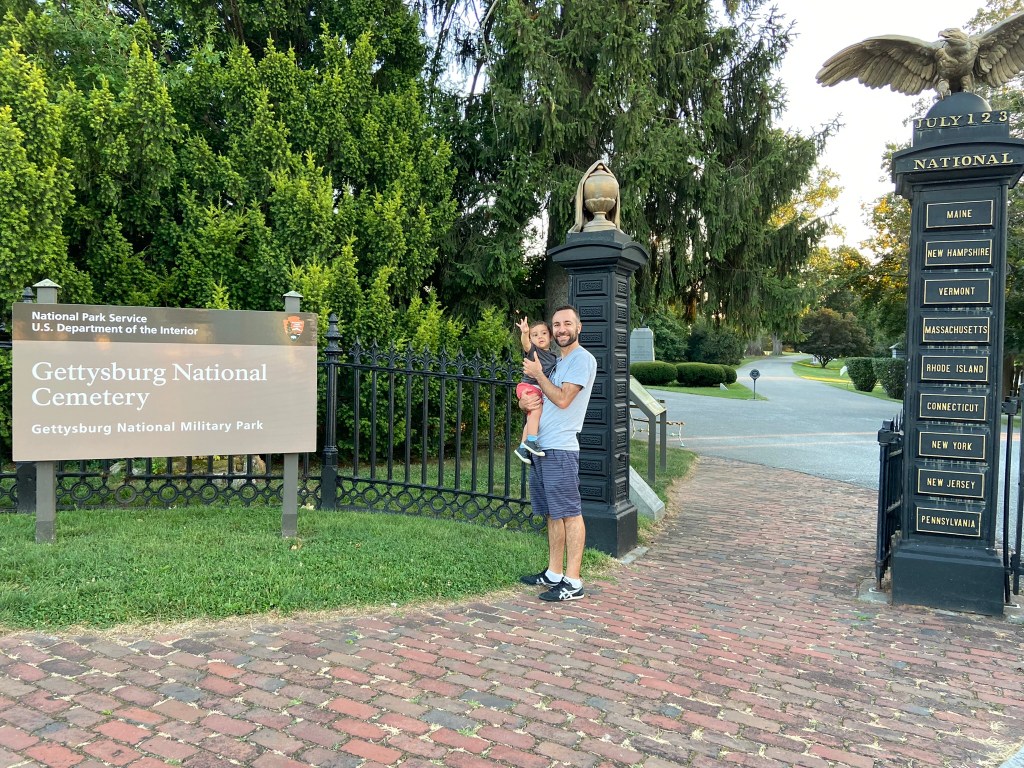
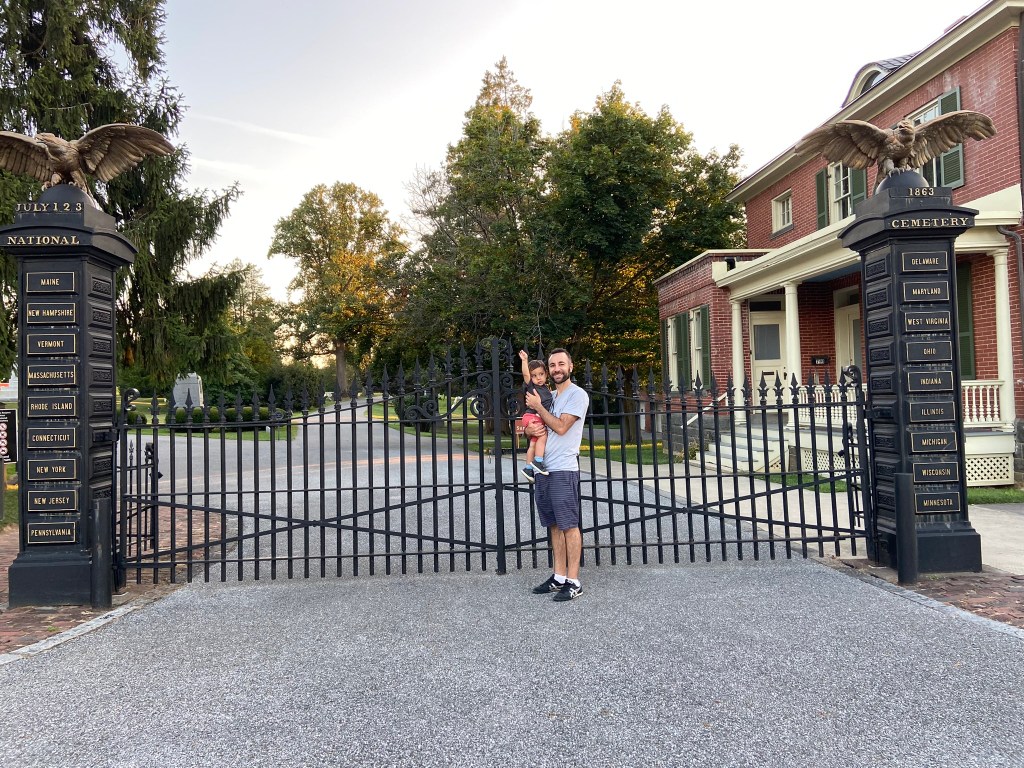
When we entered the cemetary, it was quite humbling to see all of the graves of the fallen victims, as well as the monuments in their honor. Also, listening to taps played in front of the Soldiers National Monument was surreal and quite moving. When finished, the family and I walked through the cemetary to the Lincoln’s Gettysburg Address Memorial, honoring the most powerful speech in American history. After visiting the memorial, we made our way out of the cemetary and towards our hotel for the evening.
In Part 2, I will focus on our next day and a half in Gettysburg, including our double decker bus tour of the battefield, our visit to the Gettysburg National Military Park and Museum, and a visit to the Gettysburg Museum of History. Read HERE.
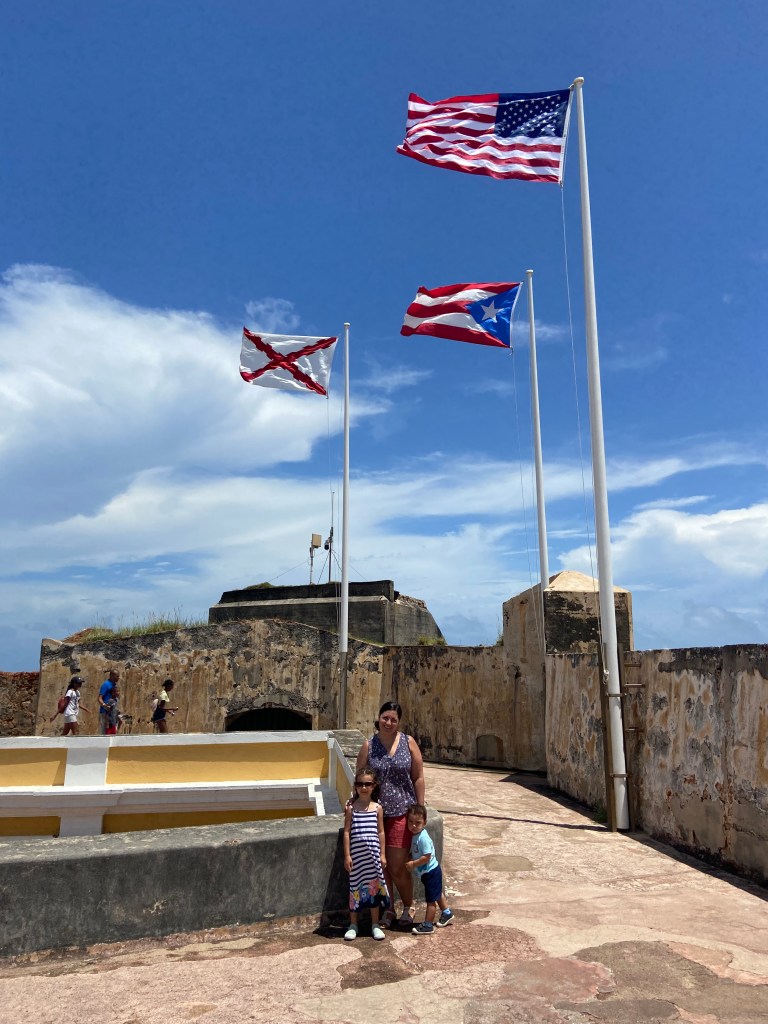
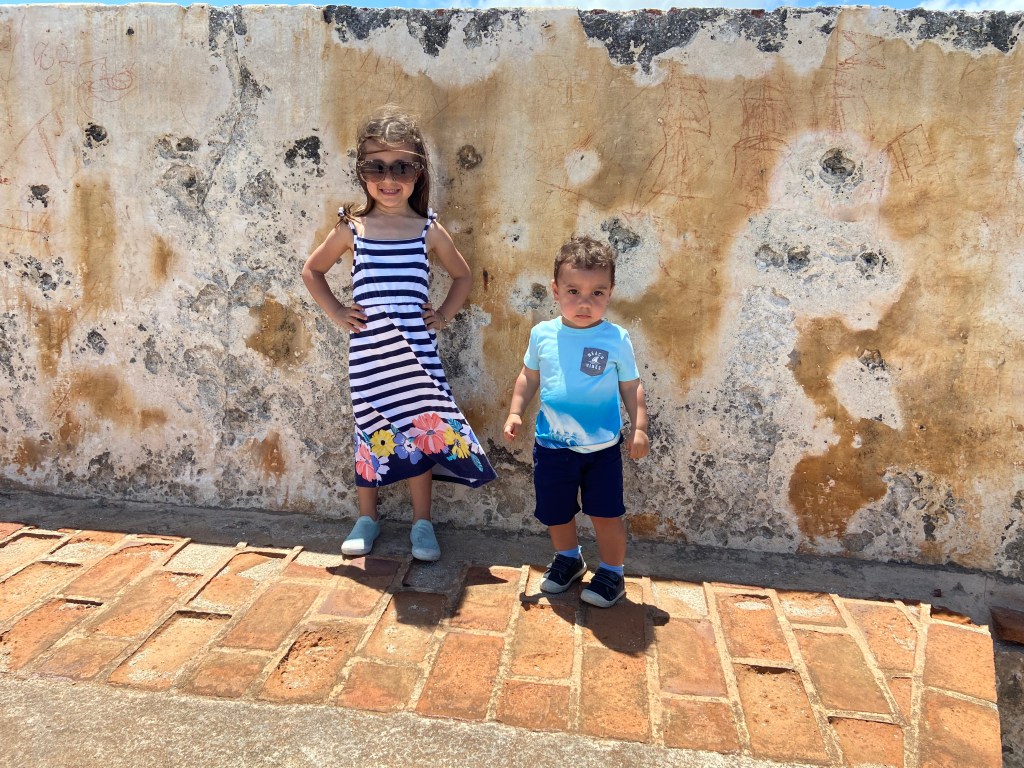
My family and I just spent a week in Isabela, Puerto Rico visiting family there. While most of the week was spent visiting beautiful local beaches and going on local adventures, we did make the 2 hour drive to Old San Juan. I personally had never been to San Juan like my wife had, so I was excited to visit for the first time. The two main sites that we visited there were two historic forts, the Castillo San Felipe del Morro, and the Castillo San Cristobal. Both forts are just a 10 minute walk from one another. Also, if you buy a $10 entry fee for one fort, you get free access to the other if you go by the next day. The kids were free.
Historical Background
Puerto Rico was the home to the Taino people for hundreds of years before European arrival. Christopher Columbus and his men landed in Puerto Rico in 1493 on Columbus’s second voyage. He had originally named the island, San Juan Bautista (St. John the Baptist). It wasn’t until 1508, that Spanish explorer and Conquistador, Juan Ponce de Leon named the island Puerto Rico, “rich port” after exploring the San Juan Bay. The Spanish then established a colony in the region and Ponce de Leon became the governor. Resentment over cruel treatments by Spanish colonizers led to a revolt by the Taino people. The Spanish brutally crushed the revolt and the Spanish built fortified houses.
By the 1530s, the Spanish had new threats from English, Dutch and French privateers seeking to capitalize on Spain’s new found riches. Early in the 1500s, Spain became extremely wealthy from silver and gold coming from their holdings in the New World, particularly in Central and South America.
At this time, Spain claimed the entire Caribbean basin. Besides gold and silver, large quantities of spices and exotic wood added to the wealth of Spain. As a protected harbor at the entrance of the Carribean, San Juan became an important part of Spain’s strategy to protect their American holdings from European competitors.
Castillo San Felipe del Morro
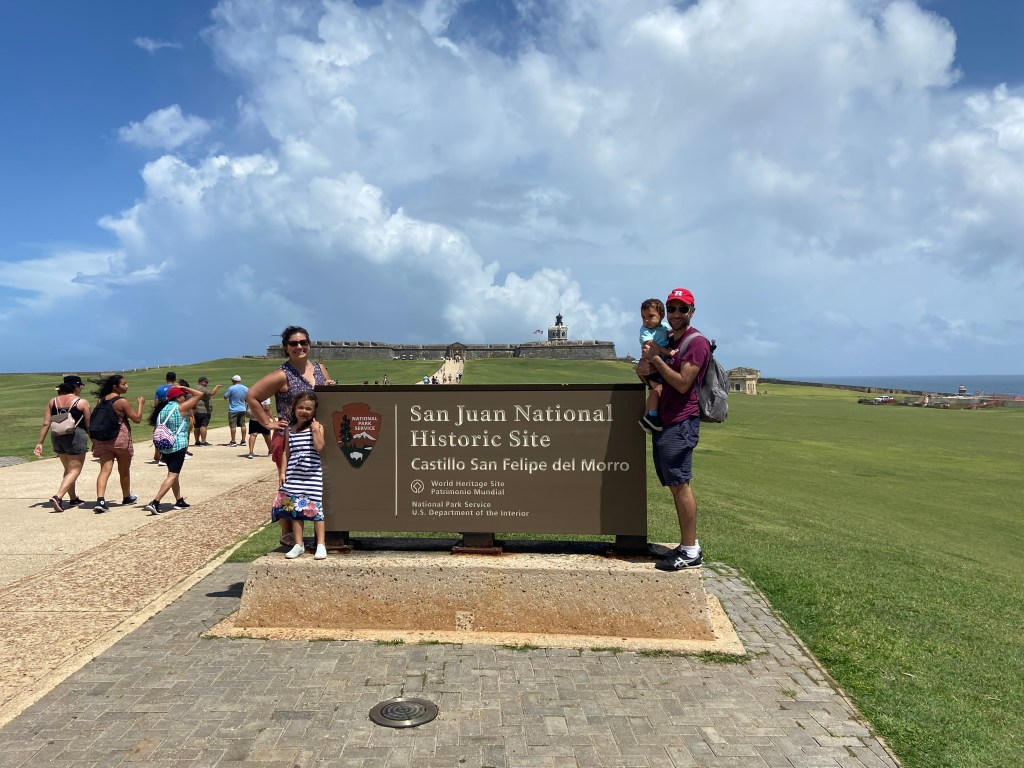
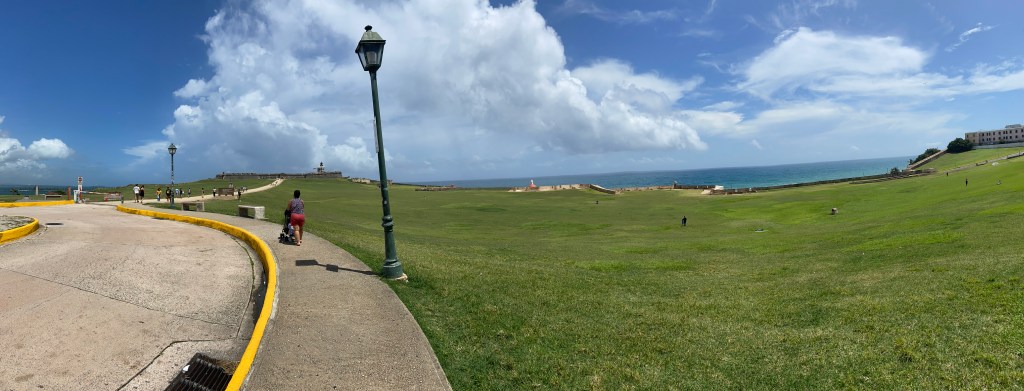
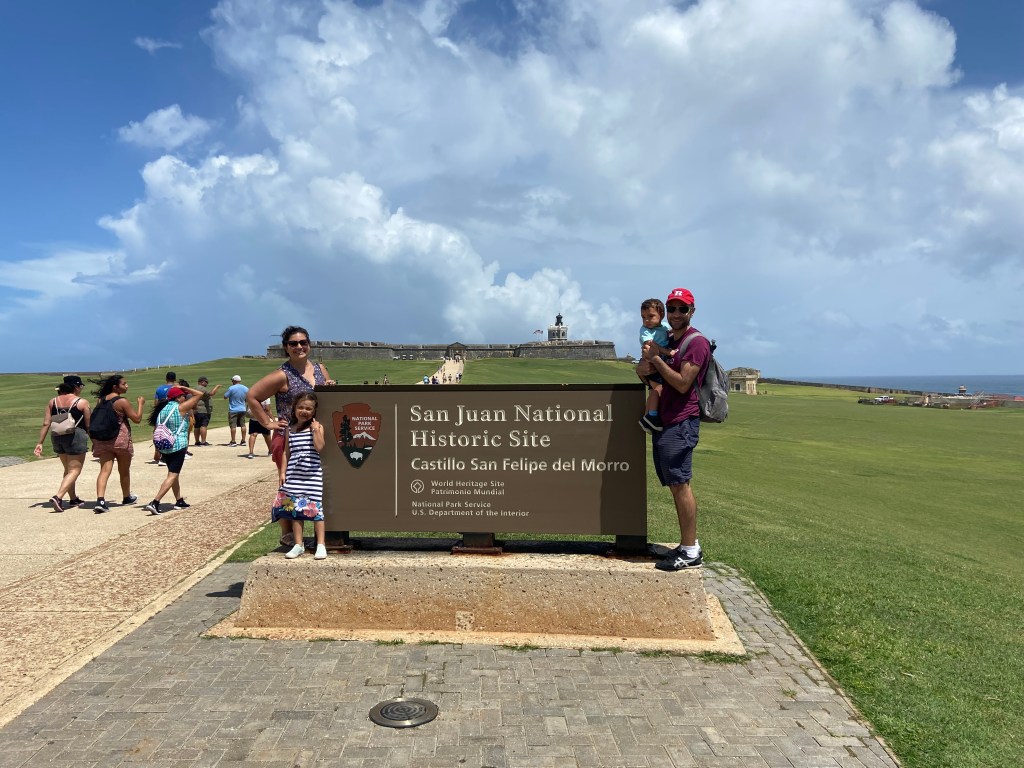
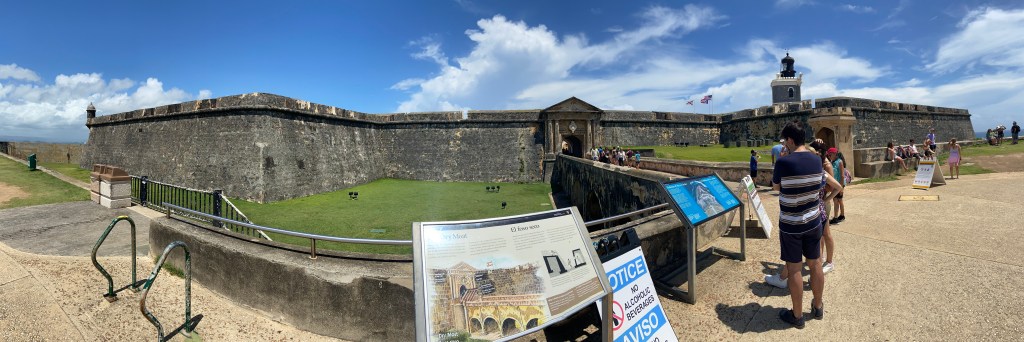
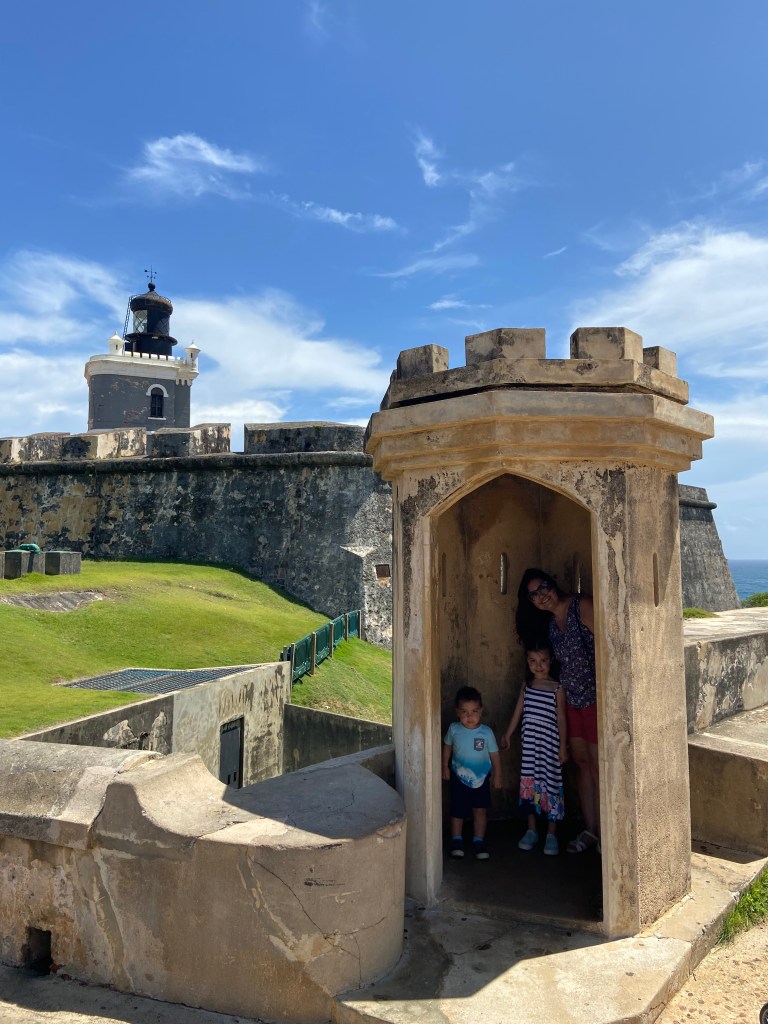
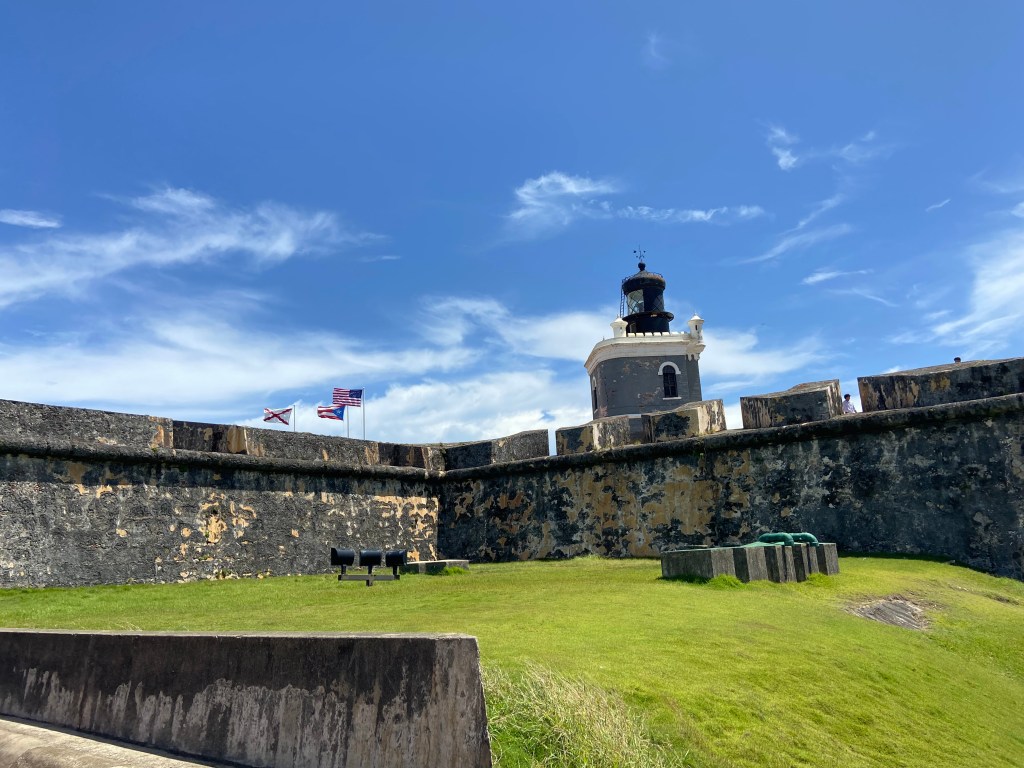
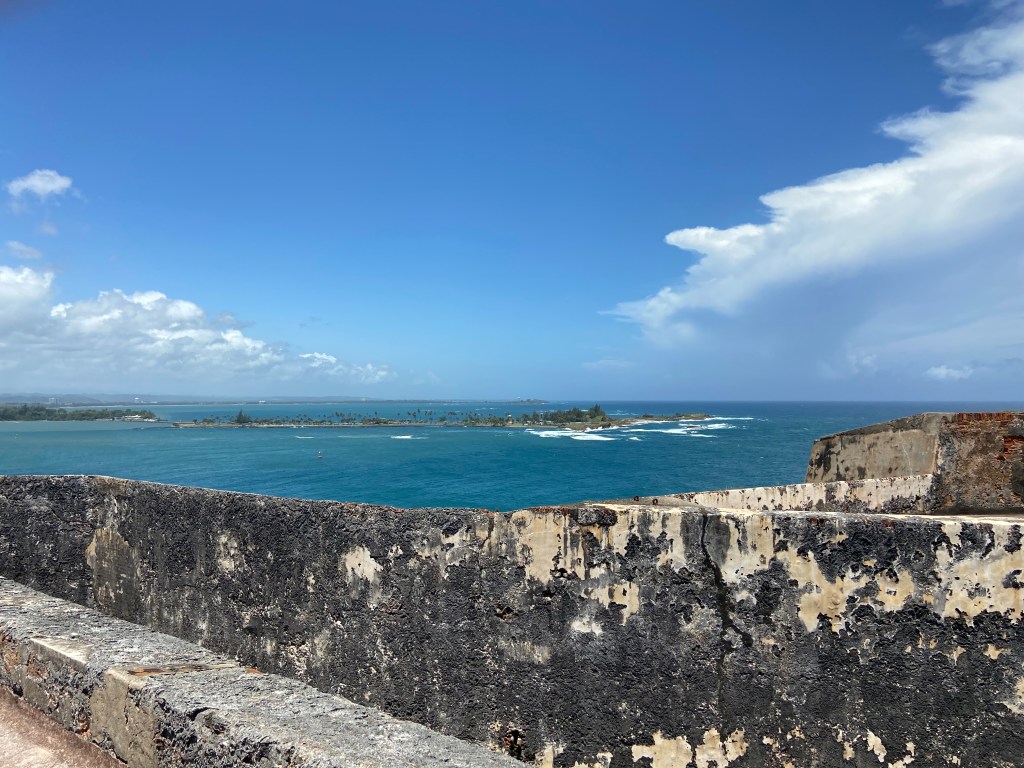
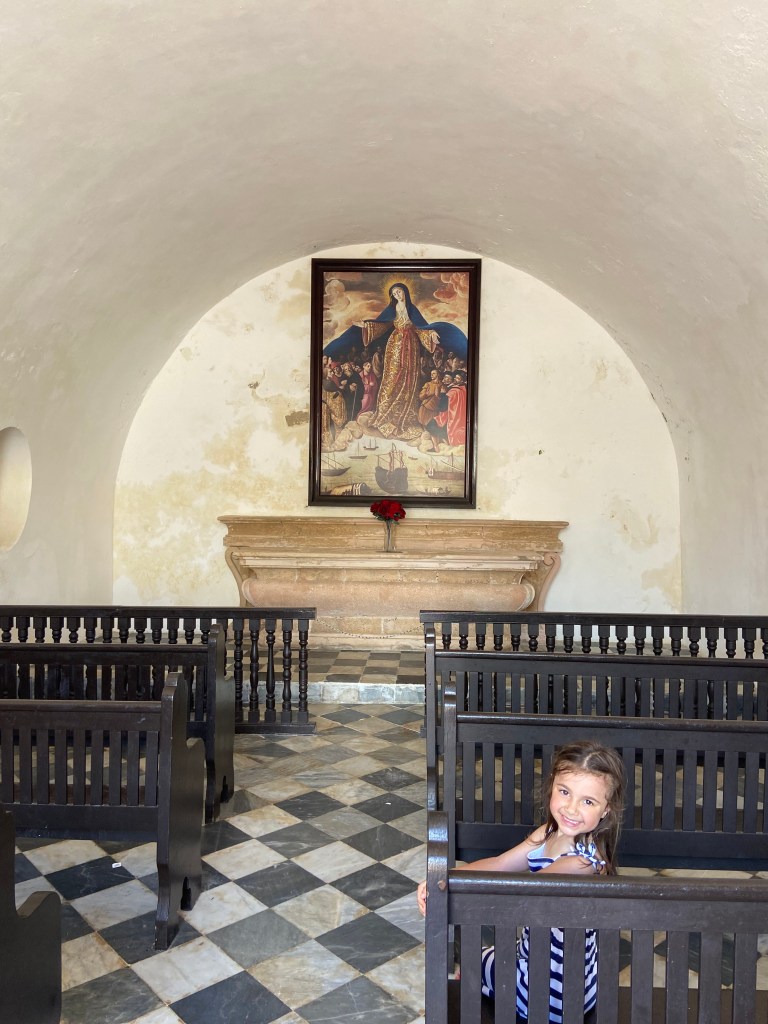
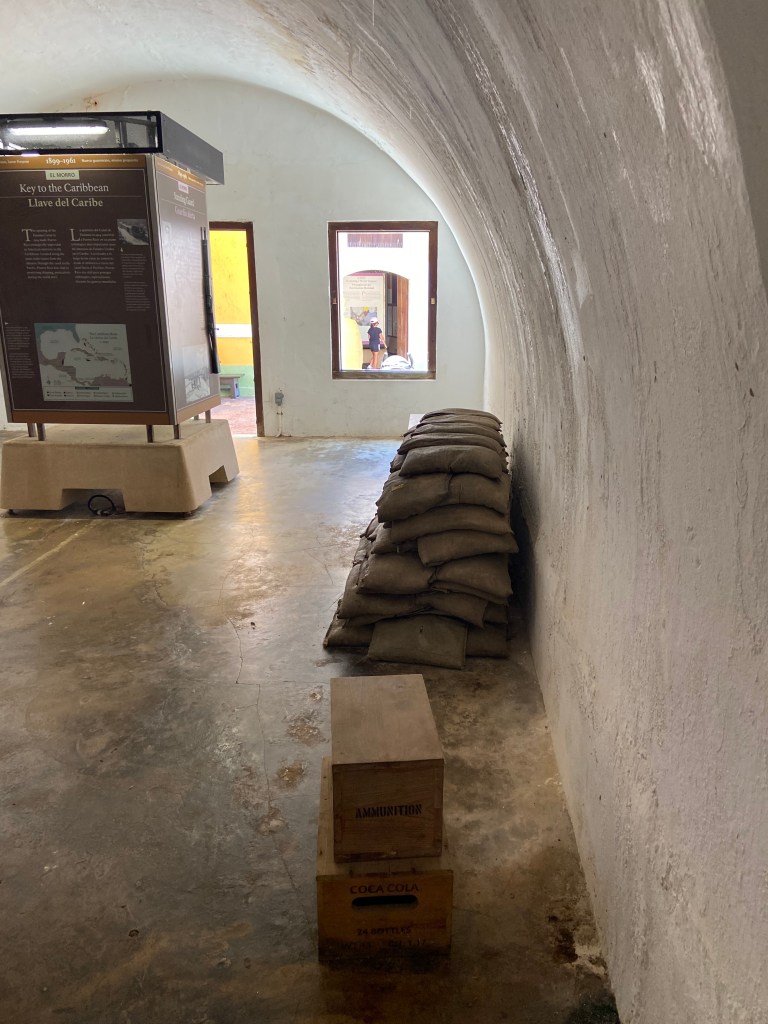
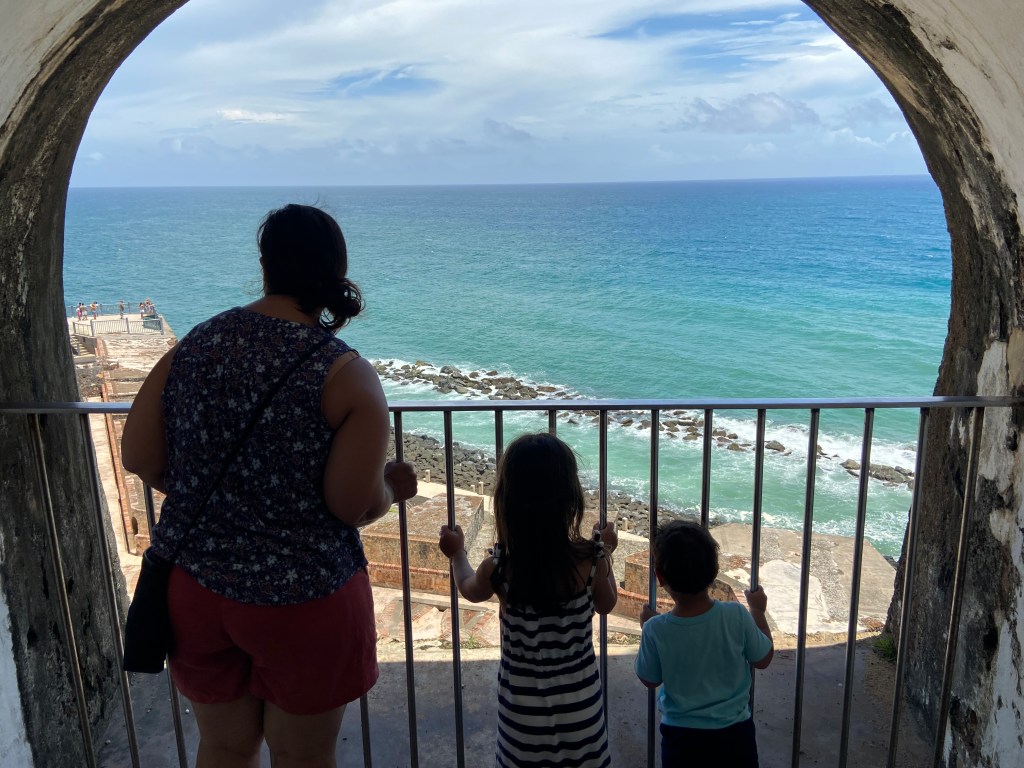
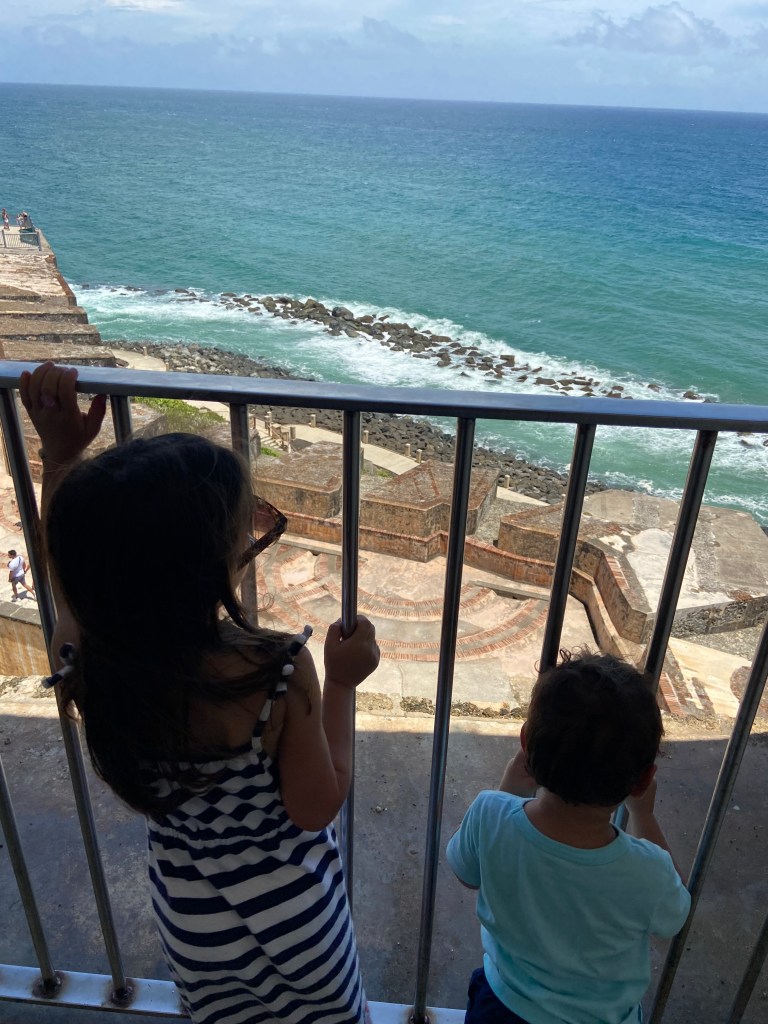
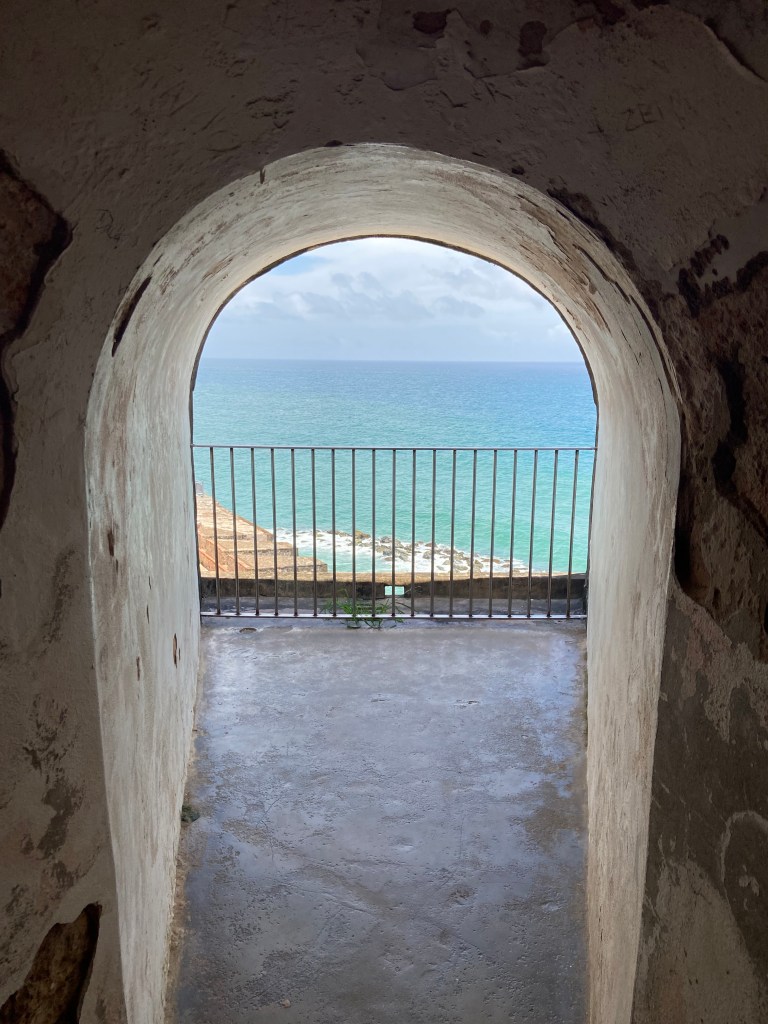
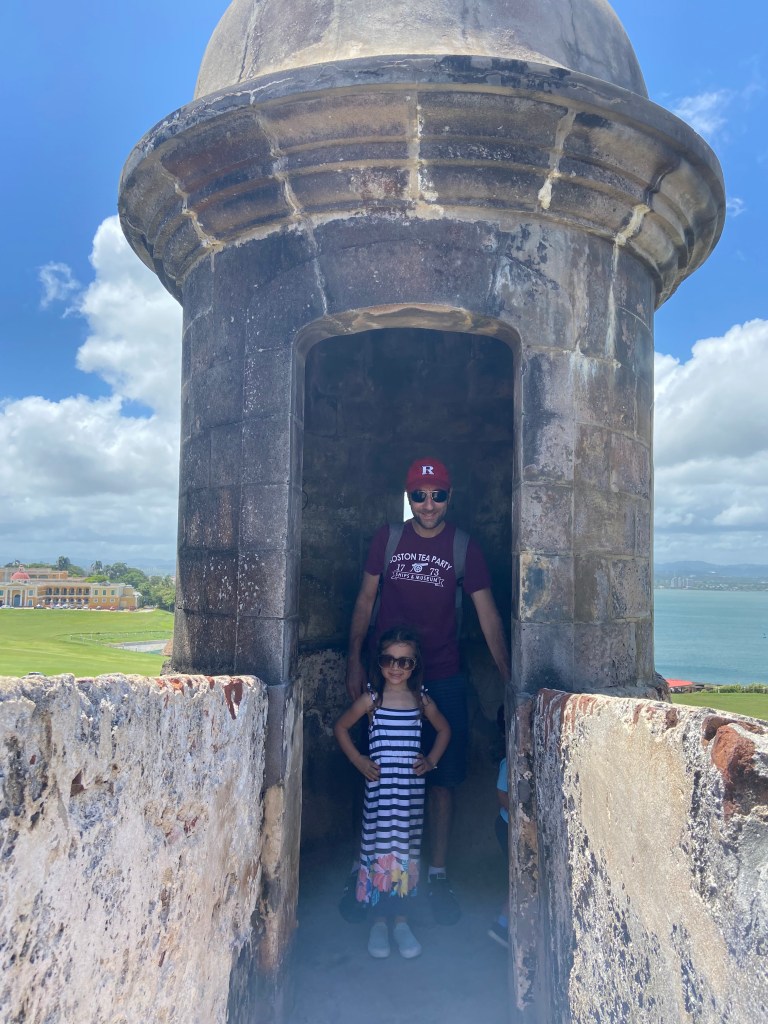
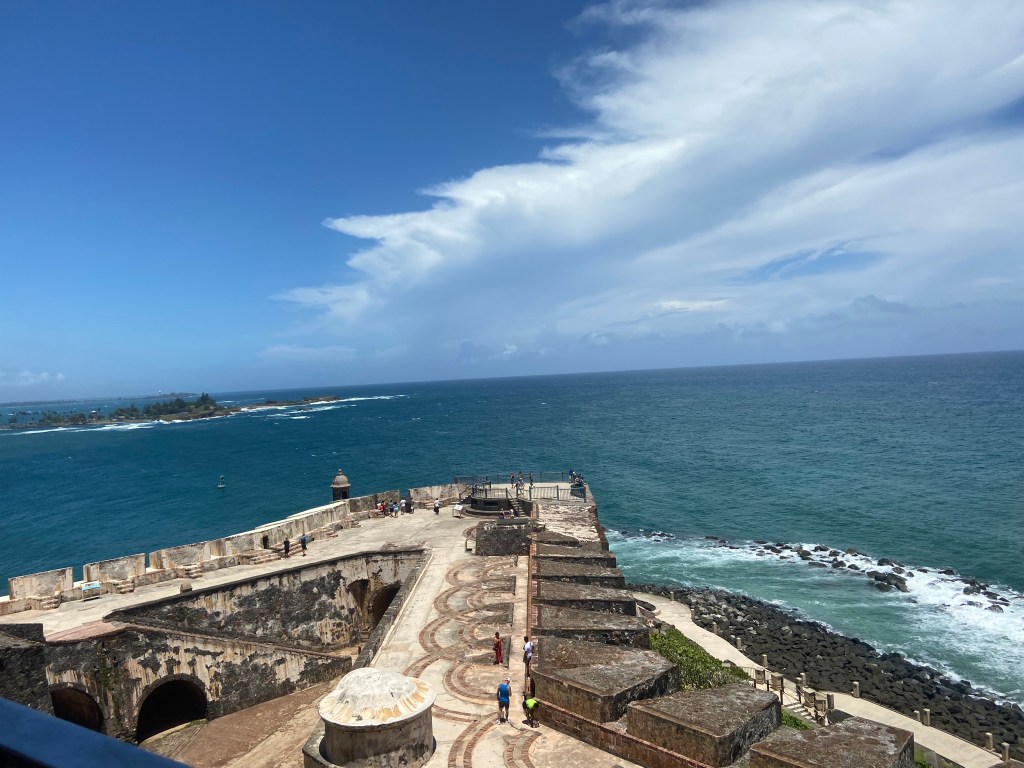
In order to protect the entrance of San Juan Bay from outside intruders, a fort was built in the northwest corner of Old San Juan, called Castillo San Felipe del Morro. This was the first fort that my family and I visited when we arrived at Old San Juan (Pictures below). The construction of the citadel and surrounding walls commenced in 1539 on the orders of King Charles V of Spain. At first, just a proto-fortress was erected while the rest was being built. It was not until 1587 that the fort’s final design was drawn, and arduous labor took years to develop the six level fort. “El Morro” as it came to be called, would go on to become the most feared fort in all of Spain’s colonial fortifications. On the opposite entrance of San Juan Bay, another smaller fort was built called El Canuelo to complement El Morro with defense of the bay.
In 1595, Englishman, Sir Francis Drake, and his navy, unsuccesfully attacked San Juan. He was not able to stand against El Morro and withdrew at the Battle of San Juan (1595).
Another English attack came in 1598, this time by land. The attack by the English was successful as this was the only time in El Morro’s history that a foreign invader was able to take control of the fort. However, just after a few months, the Enligsh troops suffered from an outbreak of dysentary and they were forced to withdraw.
The next time that the El Morro was attacked was in 1625 by the Dutch. El Morro was able to resist the siege and the Dutch were forced to withdraw. However, before leaving the city, the Dutch attackers sacked and burned San Juan.
These attacks convinced the Spaniards to expand their forticactions, and protect San Juan by land. Construction of the city walls surrounding San Juan began in 1634, and by 1650, the town was enclosed on the east, west and south, while natural battlements protected the city along the Atlantic to the north. Another fort, Castillo San Cristobal was also built to protect land invasions. (Castillo San Cristobal will be discussed below as this was the second fort that we visited.)
The sheer intimidation of El Morro kept invaders at bay and it was not until 1797 that the British attacked El Morro again. The British invaded Puerto Rico but were defeated at the Battle of San Juan (1797), again thanks to the impregnable defenses at El Morro.
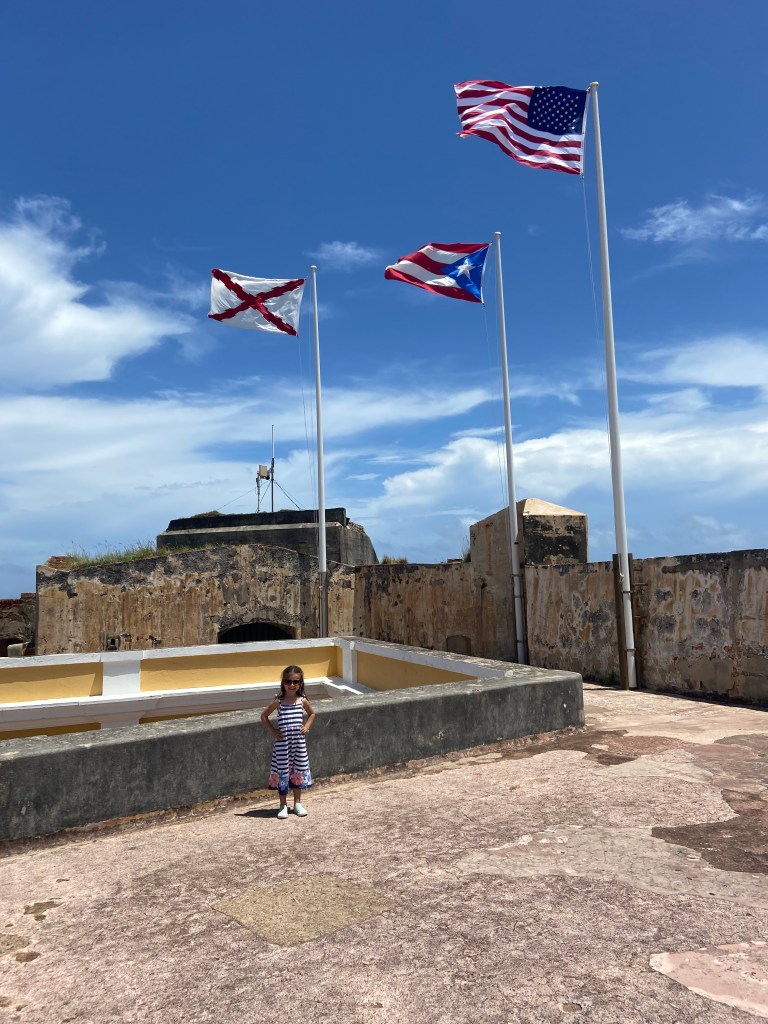
During the Spanish-American War, El Morro was attacked by a naval bombardment by the United States Navy in 1898. The war ended with the Treaty of Paris (1898) and Spain was forced to cede ownership of Puerto Rico, Cuba, Guam, and the Phillippines to the United States. A lighthouse was replaced and built by the U.S. Army from 1906- 1908 and serves as the highest point of El Morro, standing 180 feet above sea level.
El Morro served as an active U.S. military base during the World Wars. However, after serving its purpose for over 400 years, it was obvious after WW2, that the fort had become obsolete. After 1949, San Juan National Historic Site was established and El Morro became the first section of San Juan’s fortifications to be operated by the National Park Service in Puerto Rico.
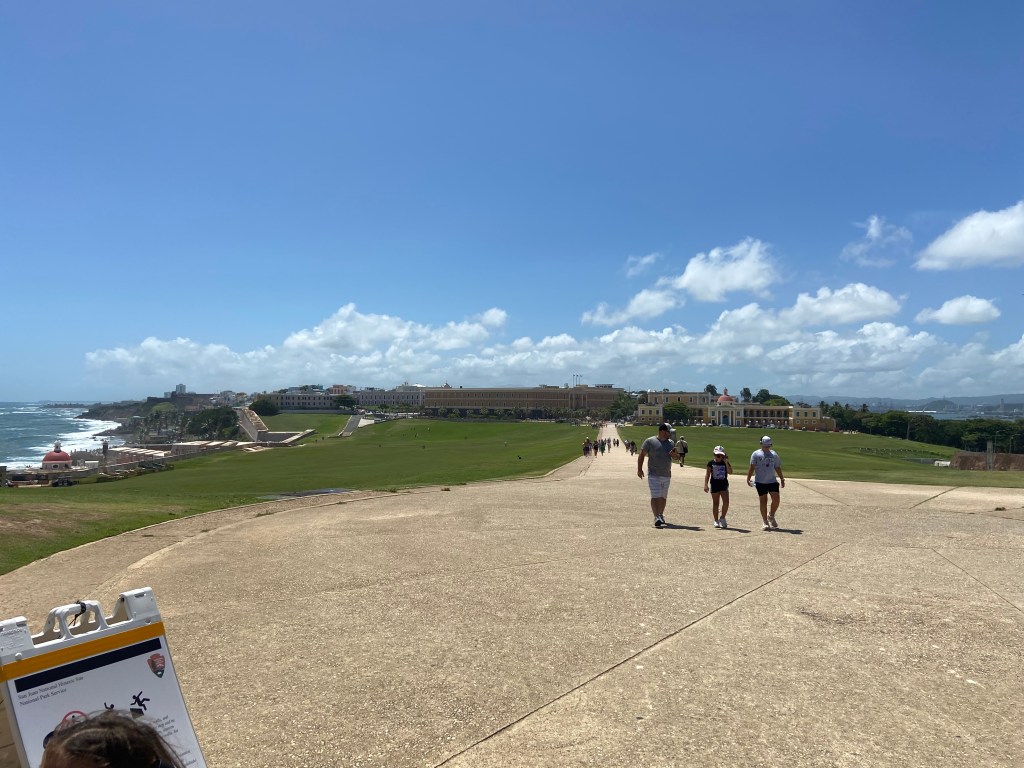
El Morro was the first site that I saw in Old San Juan with my family. I was first stunned by the sheer size of the fort, as well as the long walkway to the front entrance. Green grass on both sides angle down to the ocean. It truly was remarkable to walk through the rooms of the fort and see the ingenuity of its construction. Since the fort is so massive, you will spend time going from room to room and level to level. The Park Service does a great job providing information about the role and purpose of each room and provides the history of the Spanish presence in the Caribbean, the strategic importance of San Juan, and the history of the fort. After we had explored the entire fort, my family ventured off to lunch.
My daughter really wanted to see the umbrellas that we thought hang from the streets in San Juan but after searching for them for a while, we discovered that the umbrellas were taken down and replaced with bells shown in the picture.
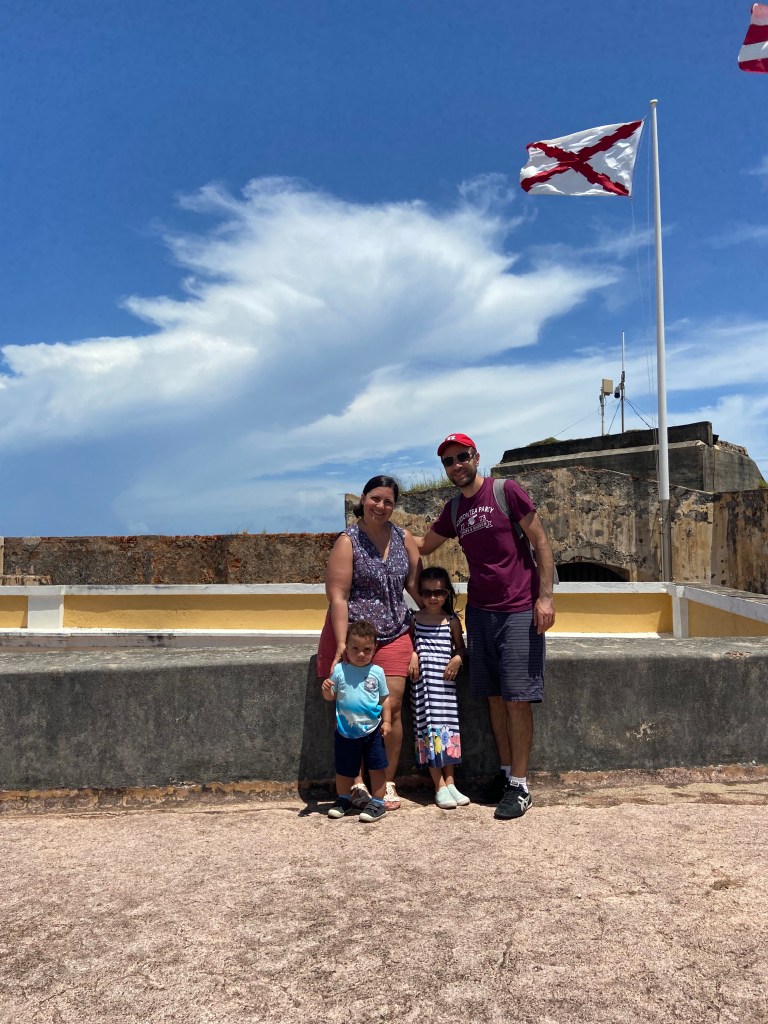
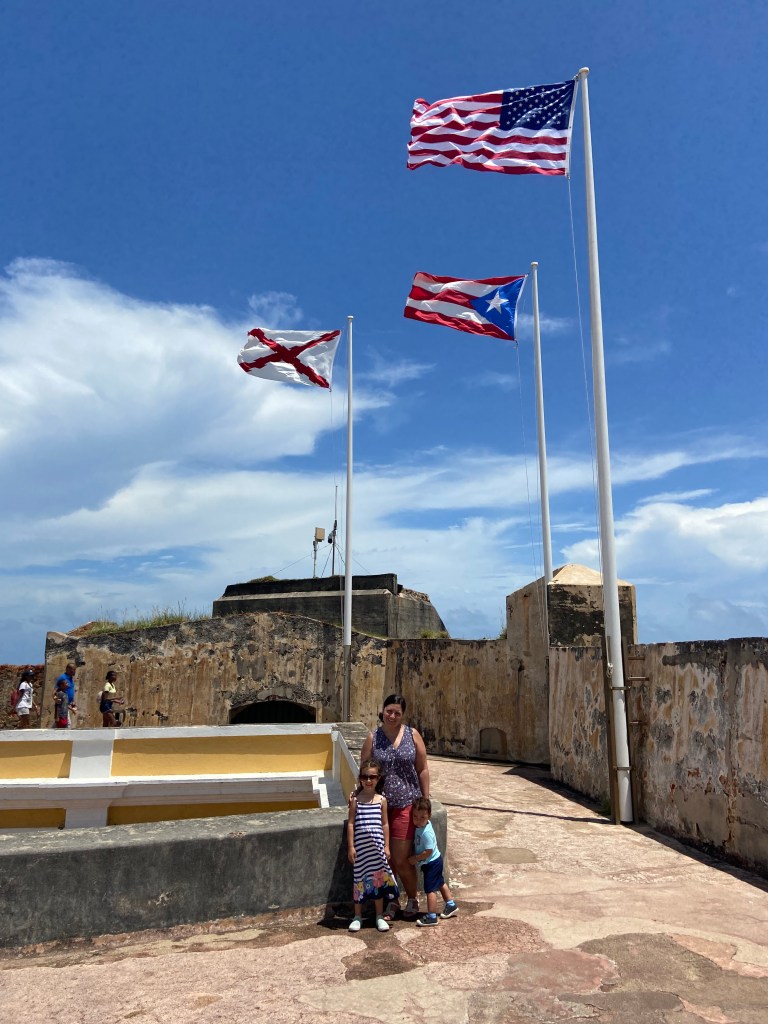
After the slight dissapointment with the lack of colorful umbrellas, my family and I ventured over to Castillo San Cristobal. (My children were troopers because by this point, they were very hot and sweaty but there was no whining or complaining).
Castillo San Cristobal
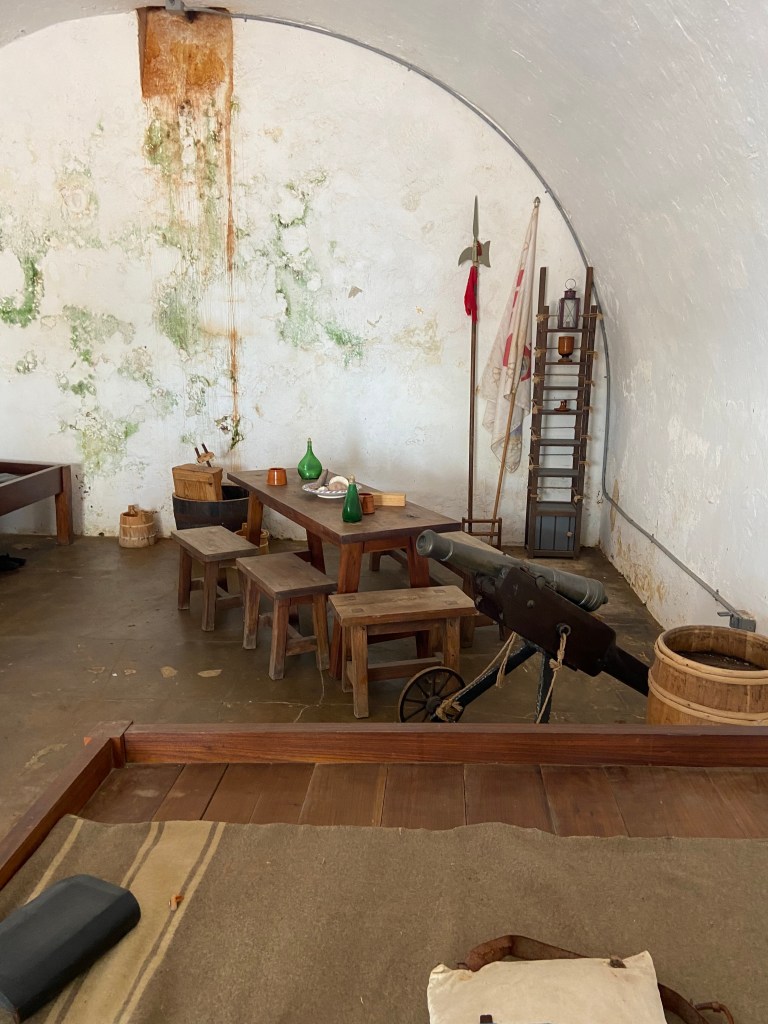
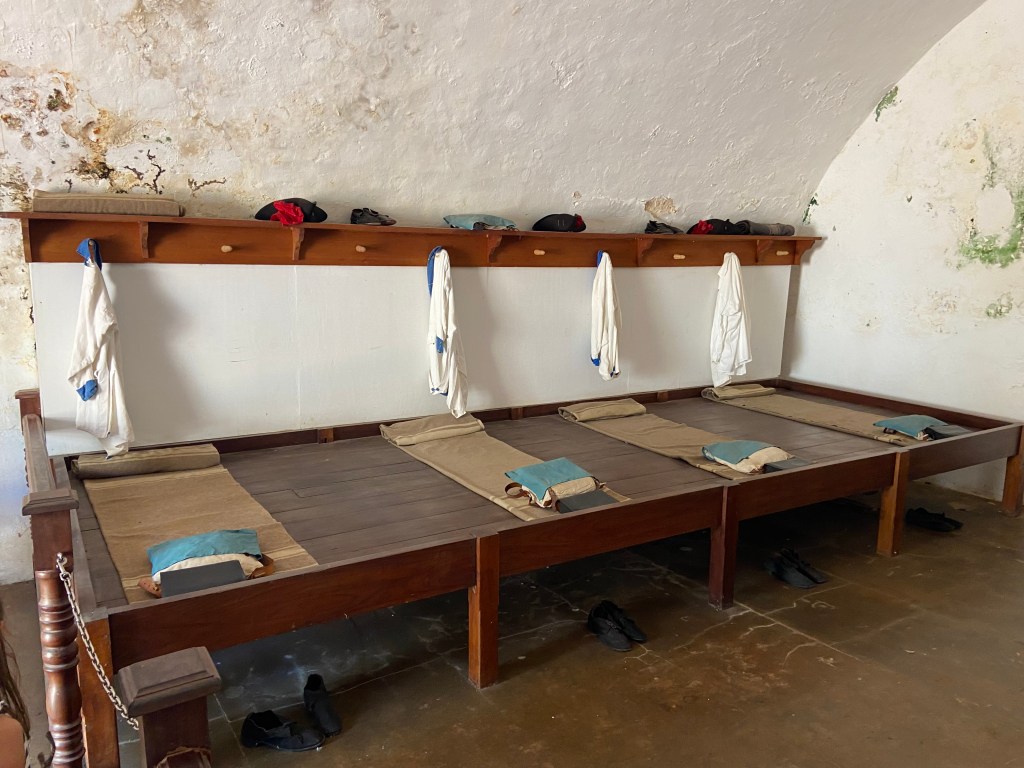
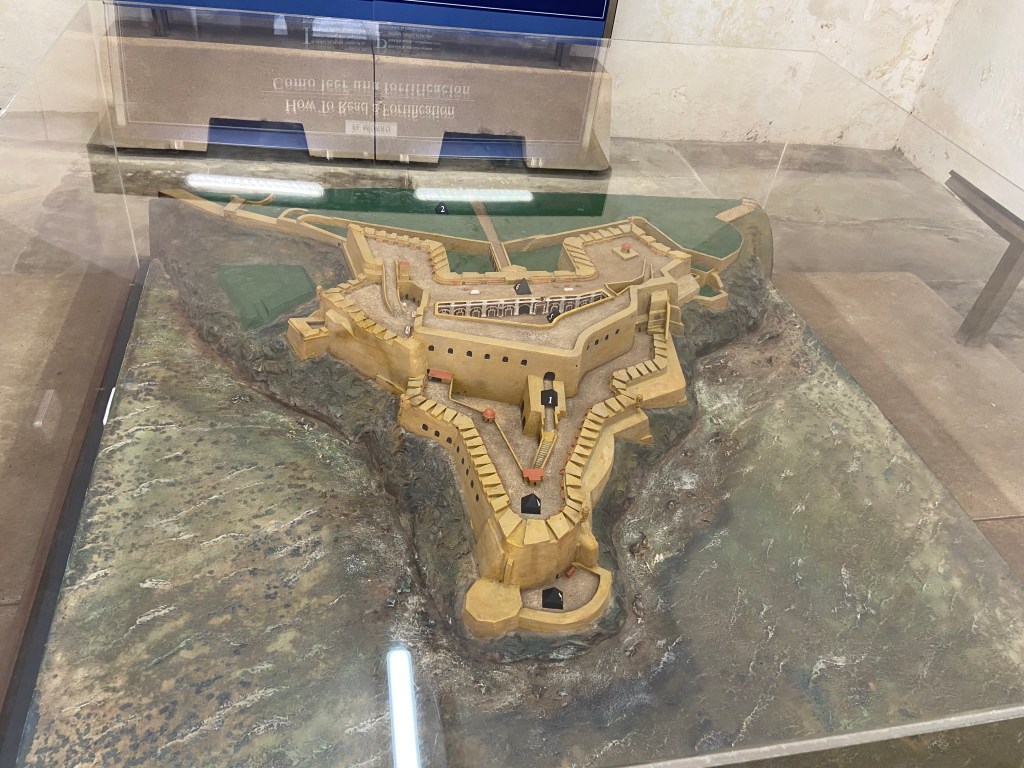
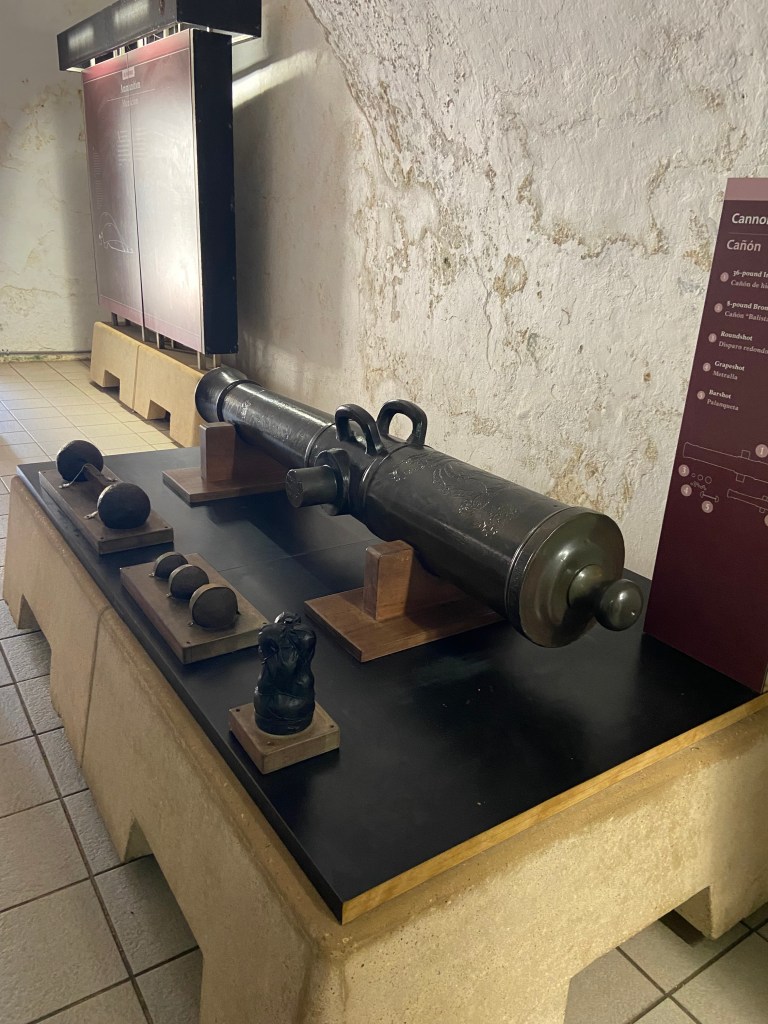
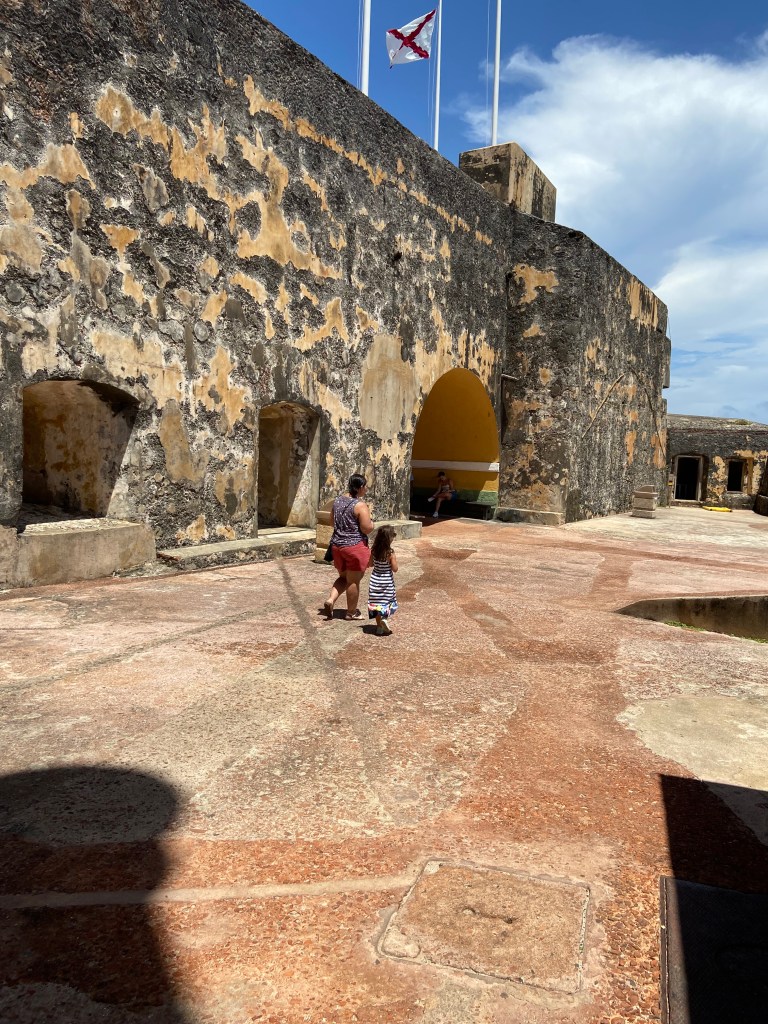
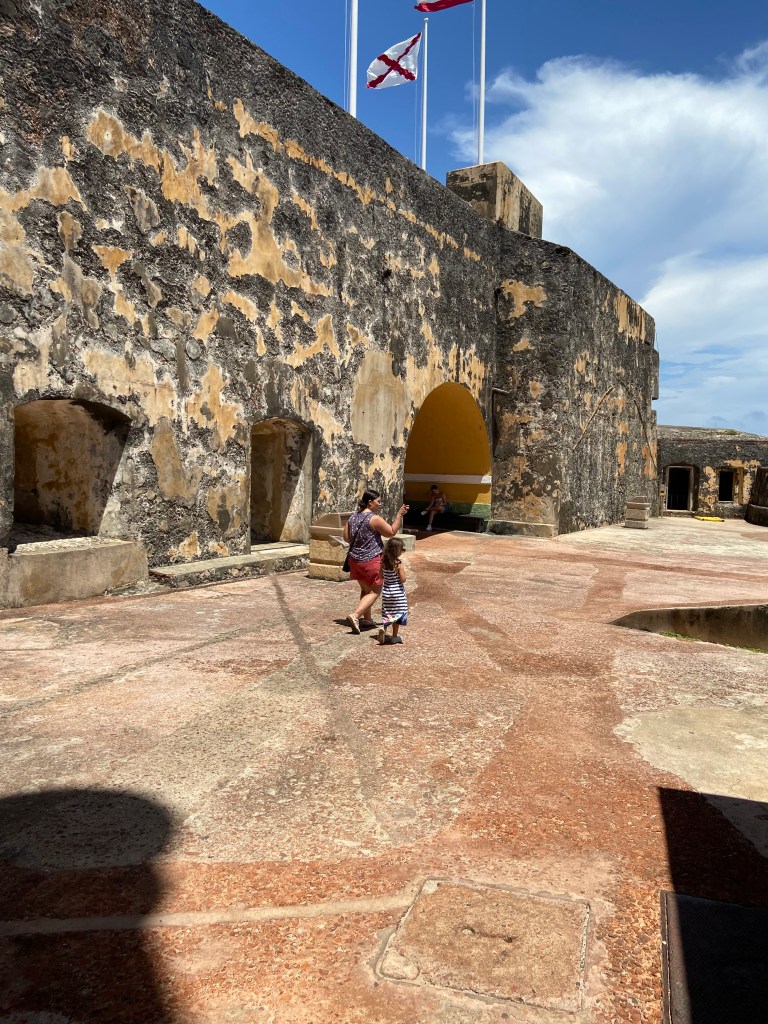
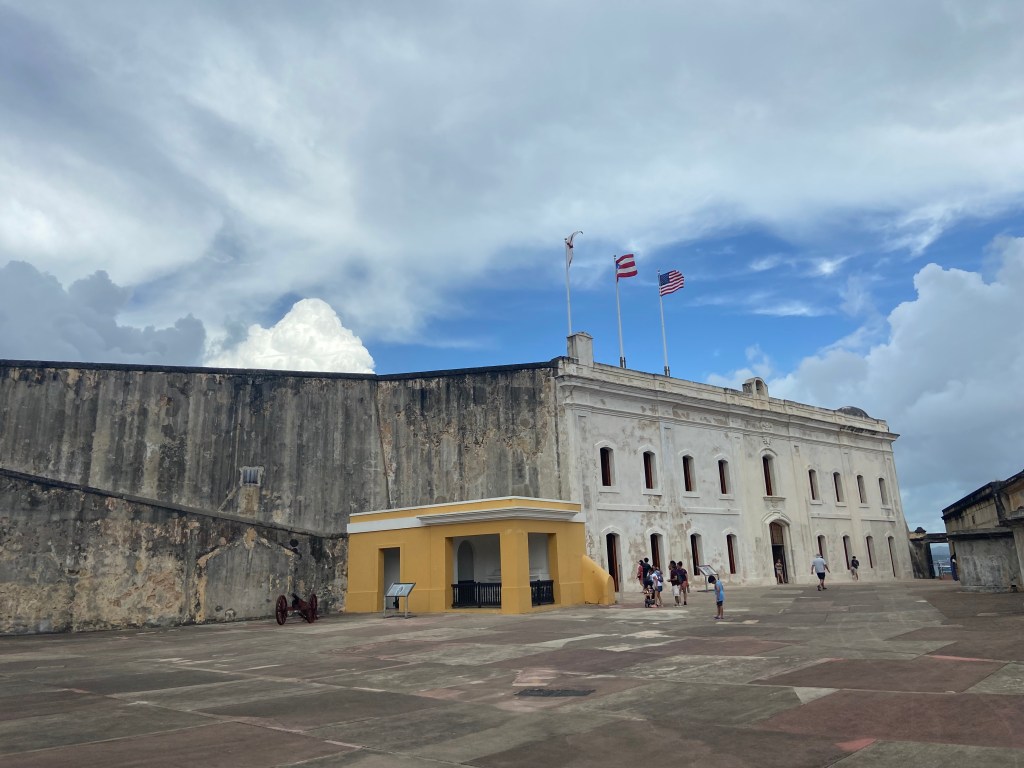
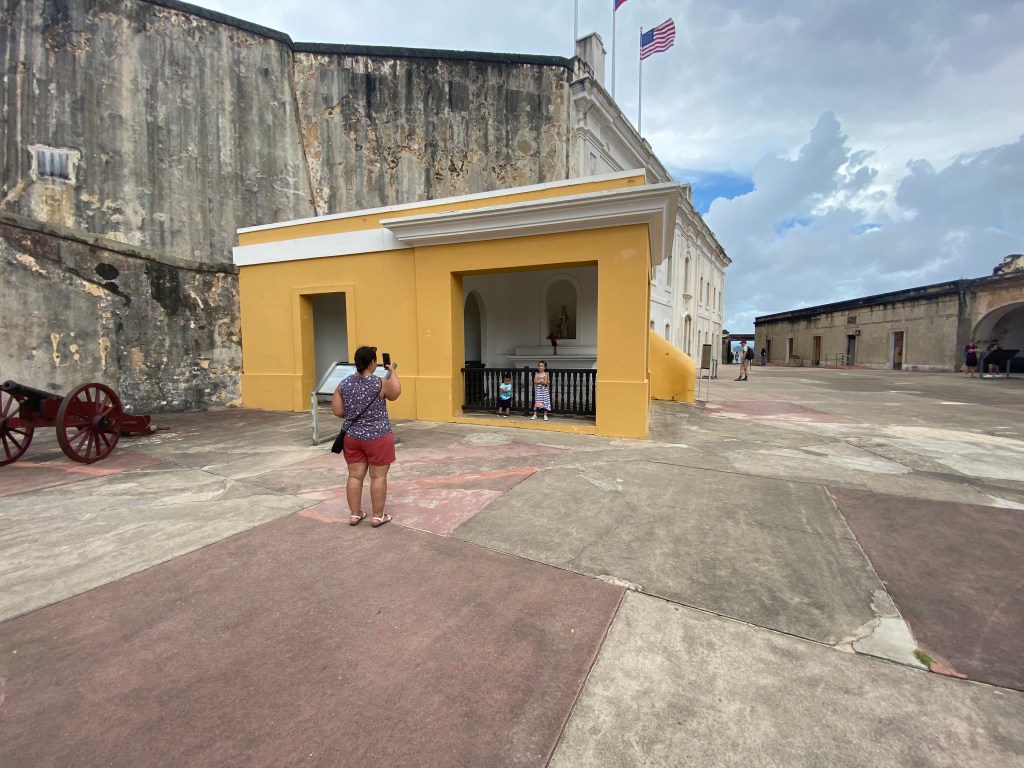
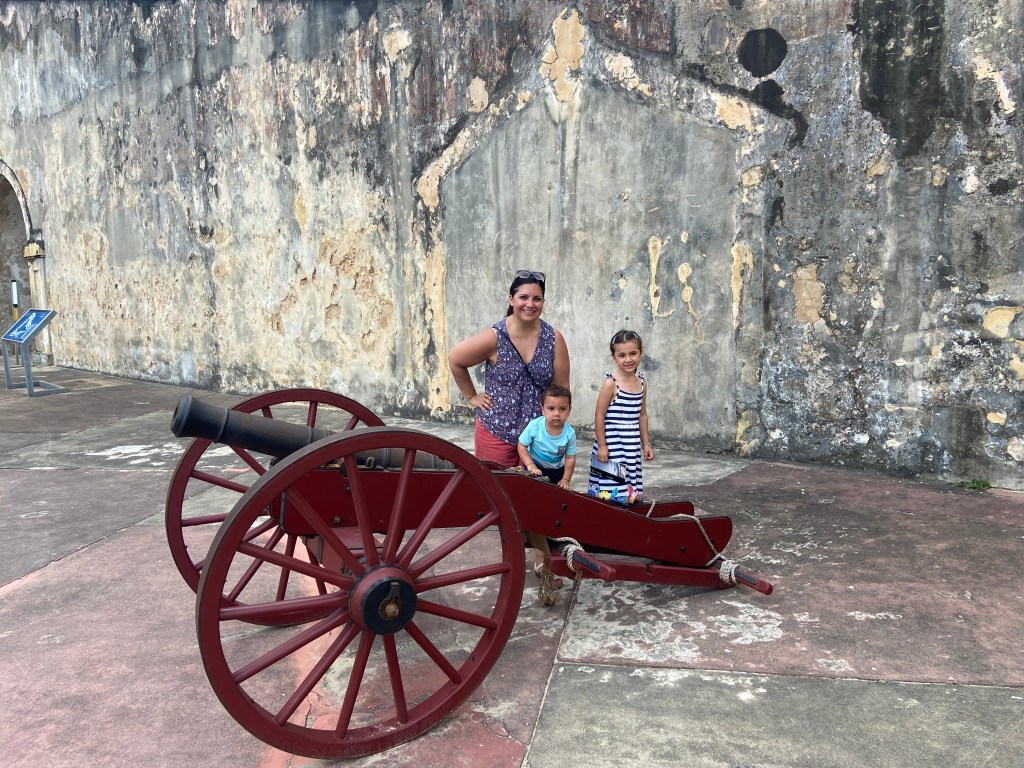
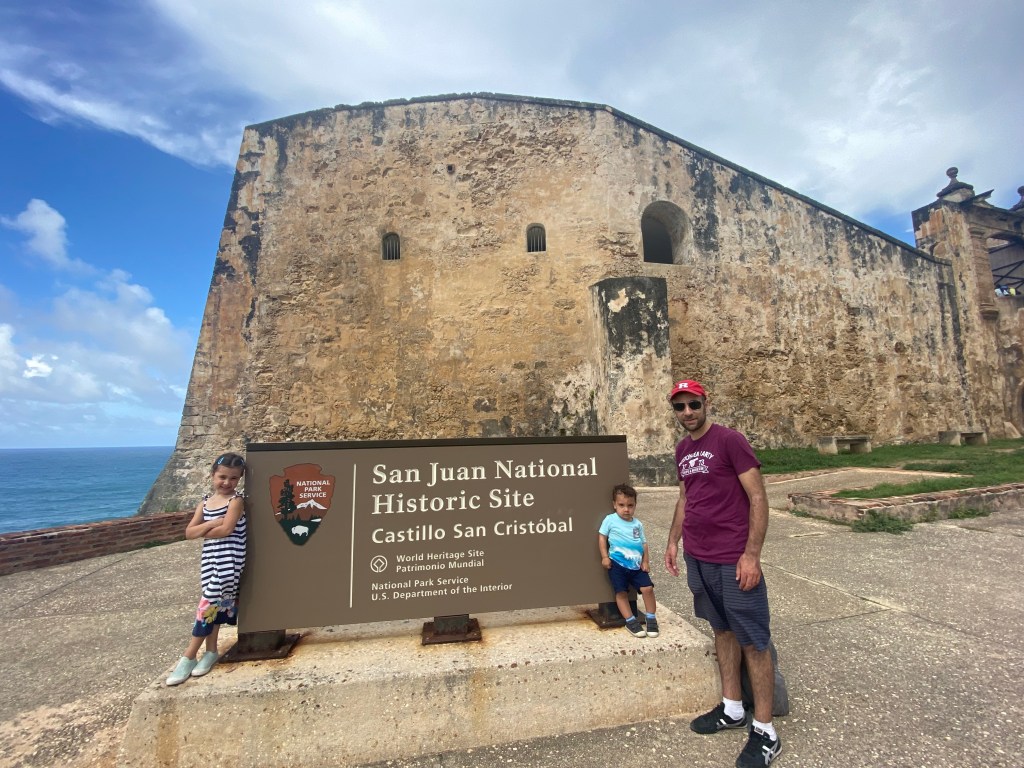
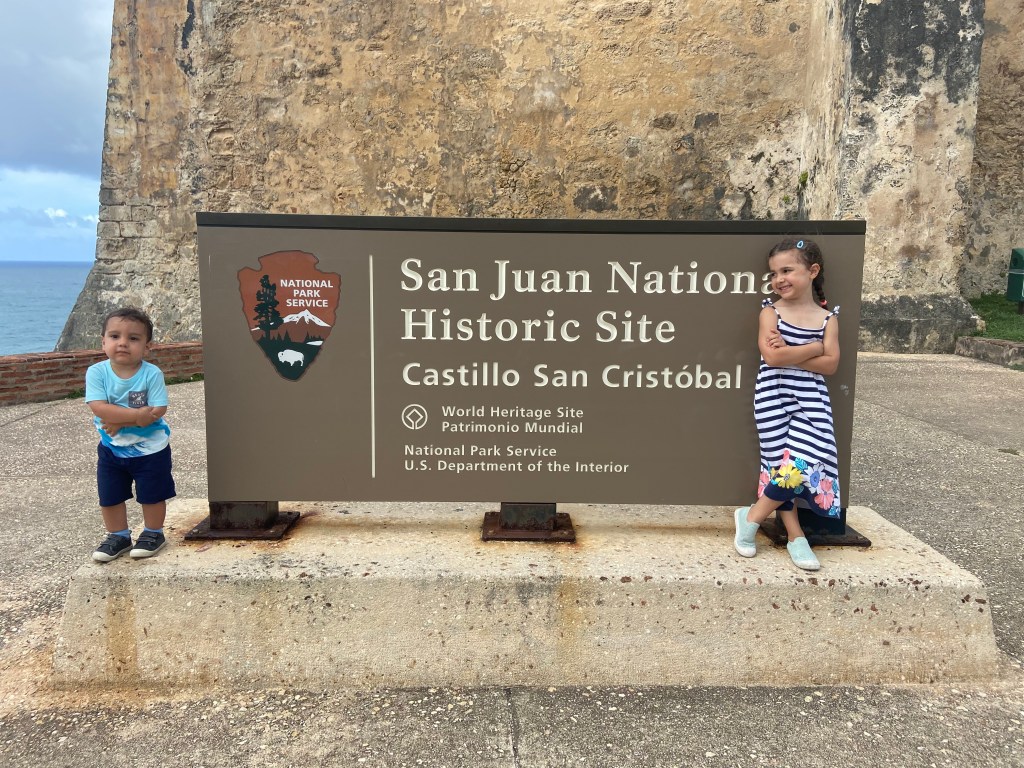
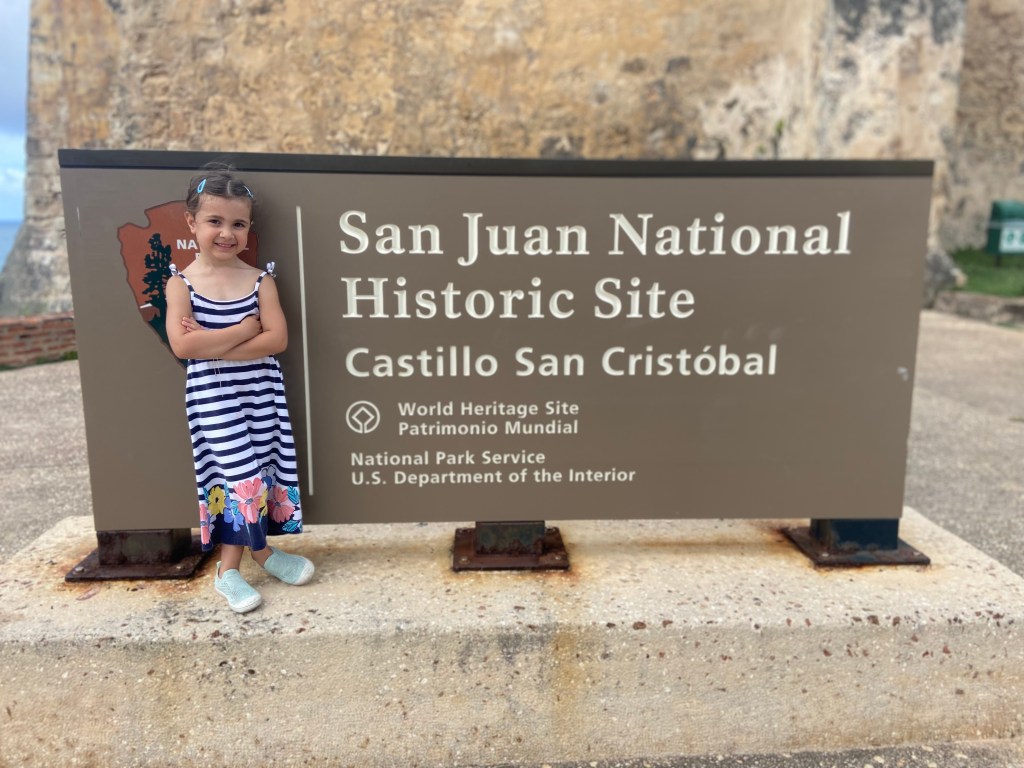
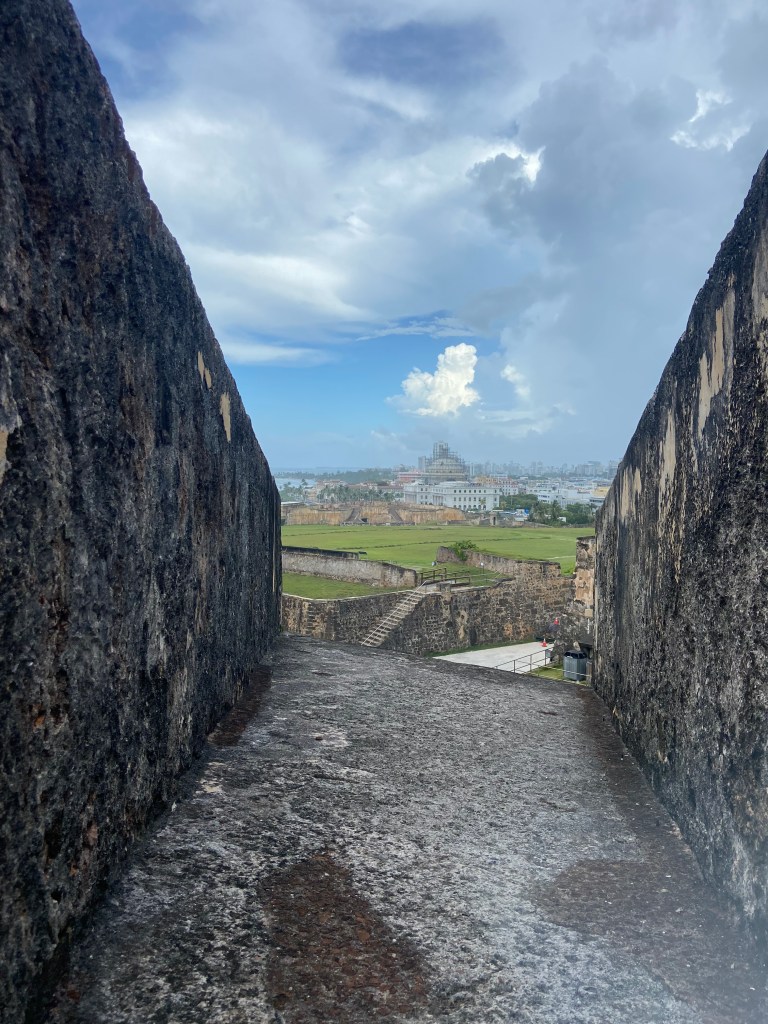
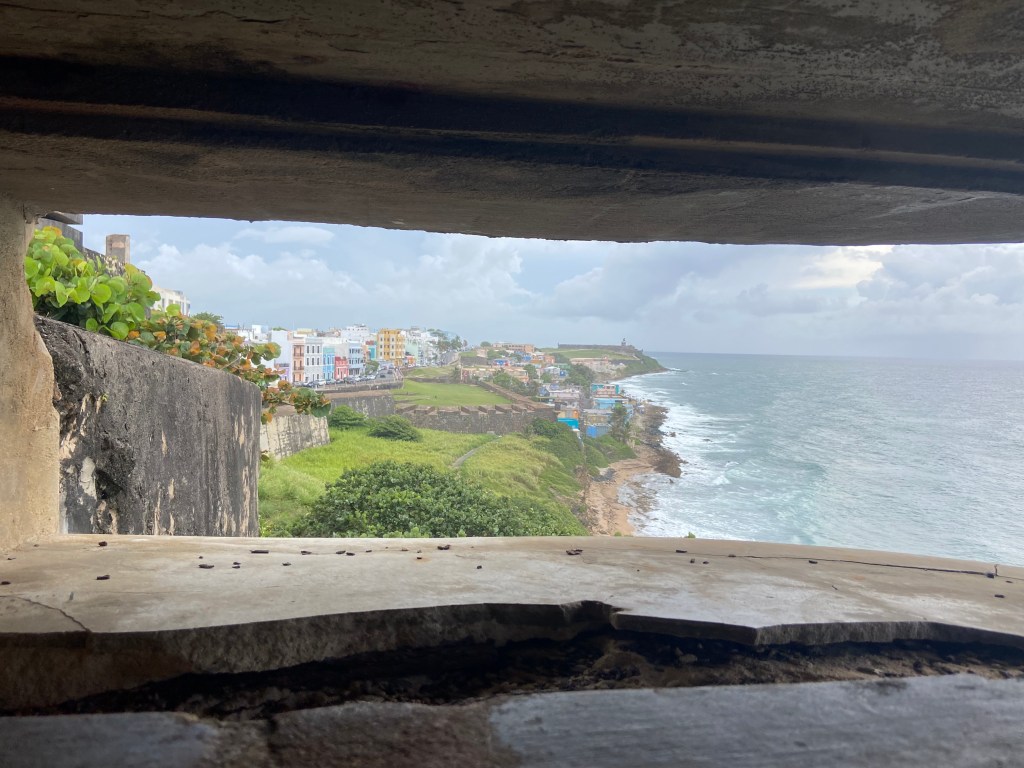
After the devastating attacks by the English and the Dutch, the Spanish expanded its fortifications in San Juan. Besides building city walls, they also built Castillo San Cristobal, considered the largest fort in the Americas, to protect from land attacks. Construction started in 1634. A fortification with three levels, and an extensive series of outer defenses, it took about 150 years to build. When it was finally completed in 1783, it covered 27 acres of land and partly encircled the city of San Juan. In 1897, part of the fort was demolished to ease traffic coming in and out of the city through the city gate. About 1/3 of the fort was destroyed.
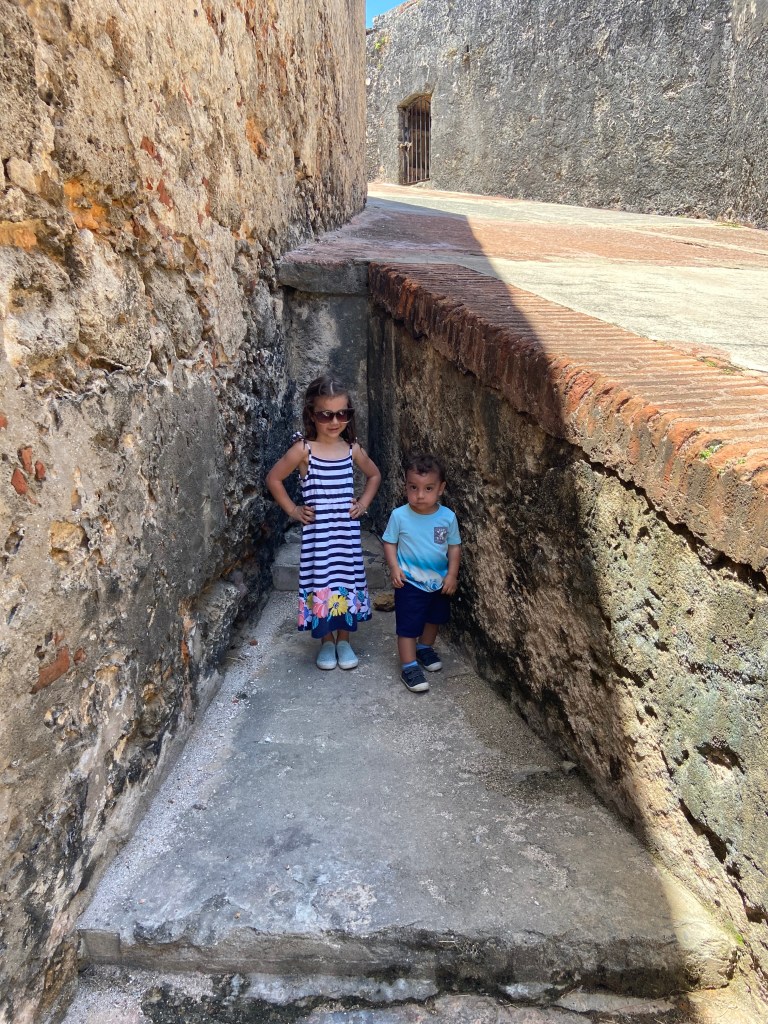
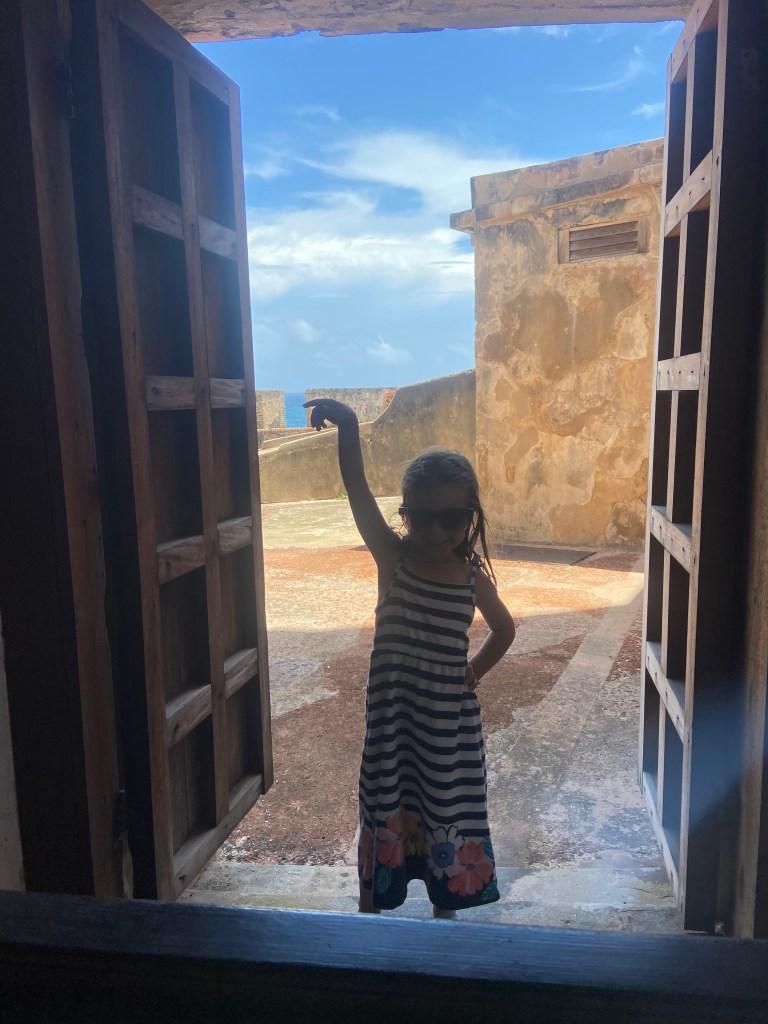
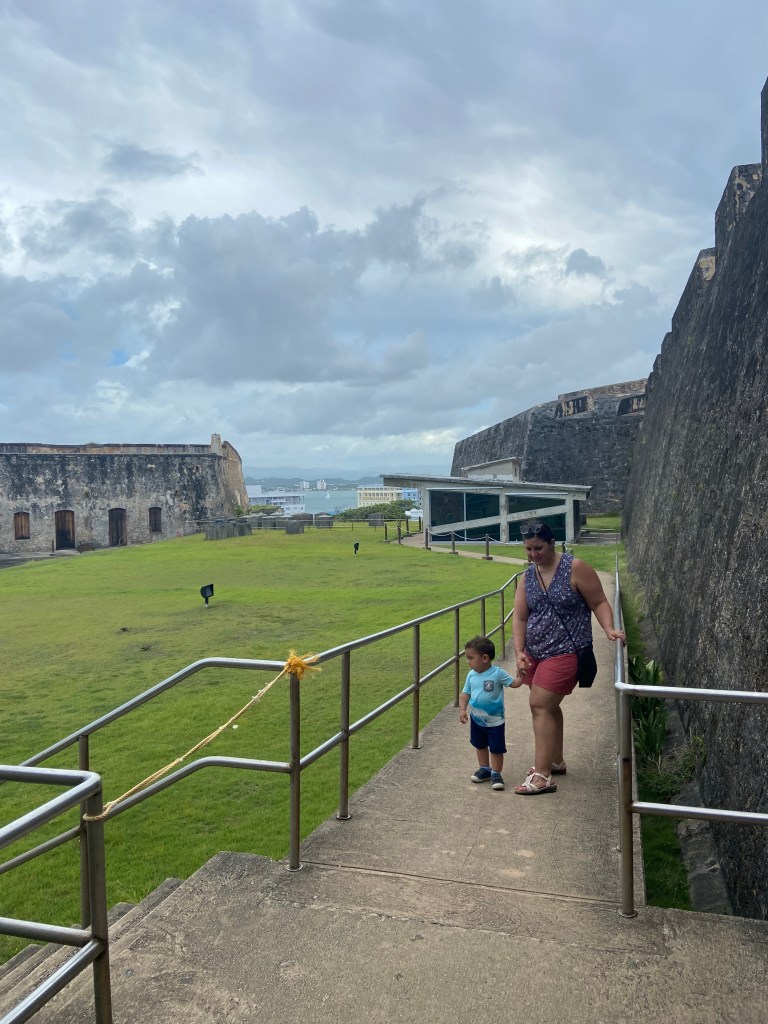
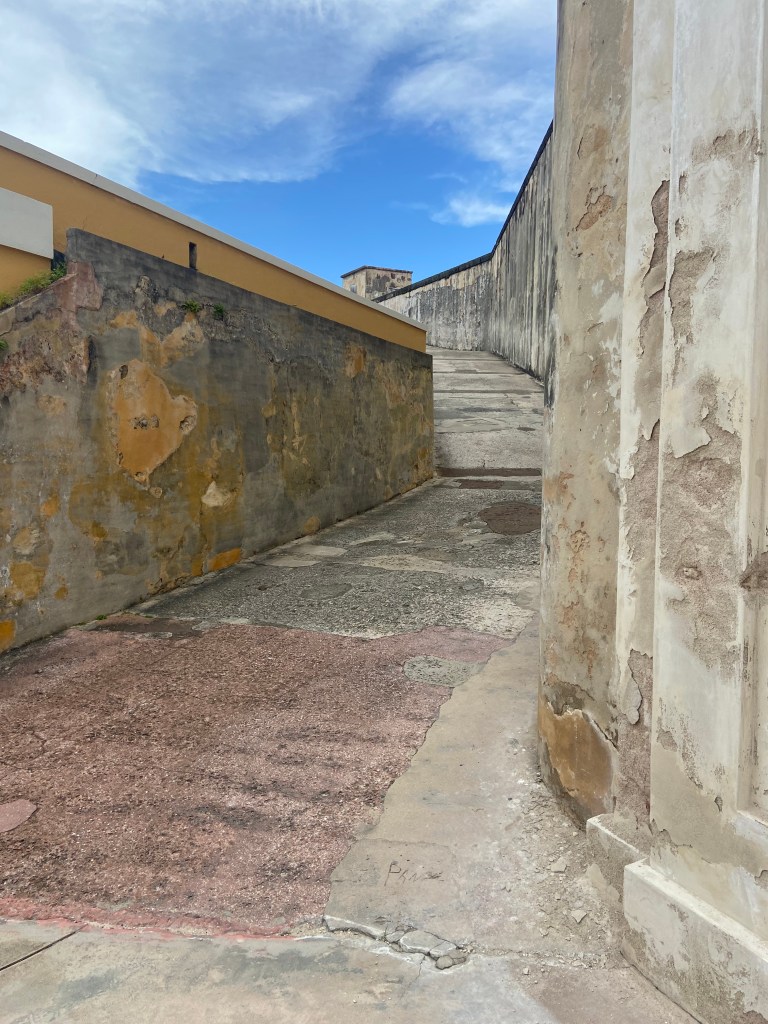
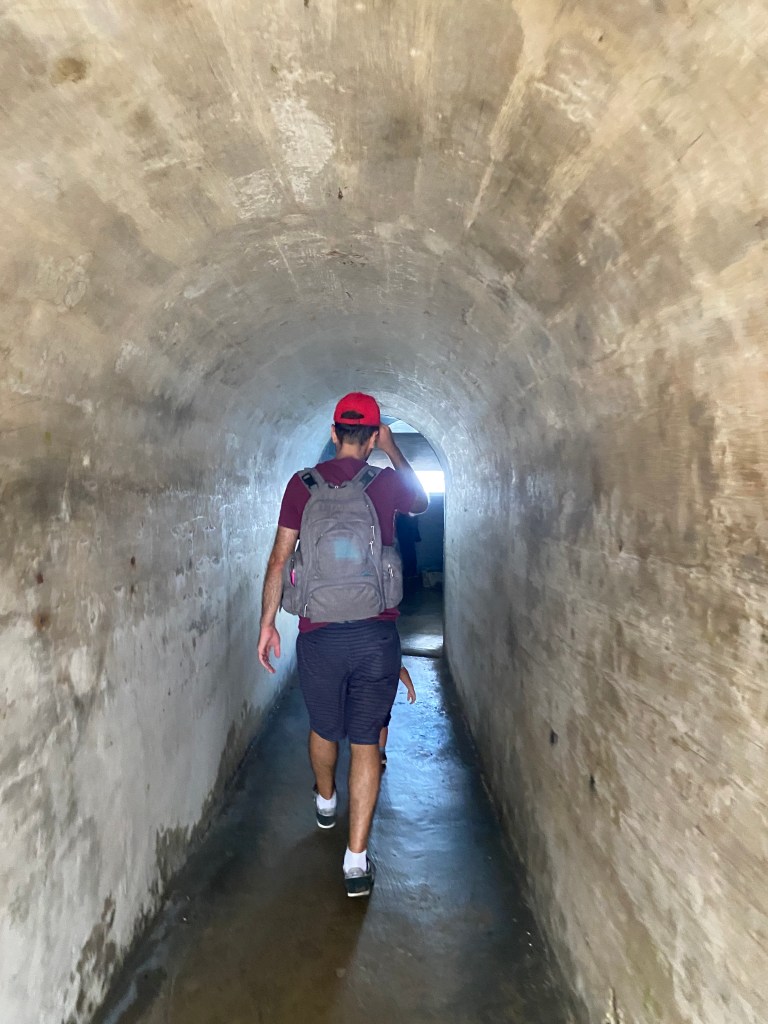
San Cristobal was built with a dry moat (like El Morro) and a series of tunnels to protect soldiers from enemy attacks. My family and I had the opportunity to walk through the longest hidden tunnel that led from the main plaza to an outside section of the fort. My children were brave enough to walk through the dimly lit tunnel.
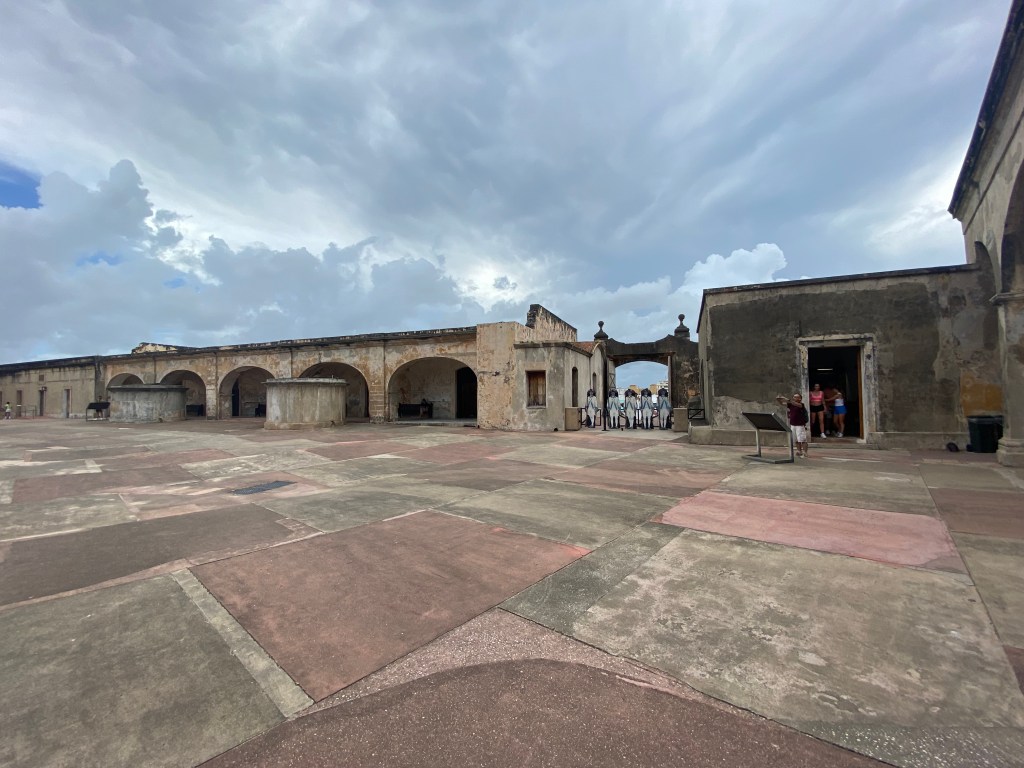
The main plaza of San Cristobal was the heart of the fort. Here, soldiers drilled, were inspected and assembled for formal events. Artillery ramps allowed access to the main firing battery on the dry moat. The fort was designed to catch and retain as much rainwater as possible and the cisterns below held up to 870,000 gallons of water. The cisterns are still functioning today.
Like El Morro, San Cristobal is yet another stunning place to visit because it reflects the power and ingenuity of the Spanish who built it. Such expansive forts remind you of the times they were built, a time when pirates roamed the Caribbean, and when protection was a necessity. The Spanish had built up a tremendous empire, but there were constant threats from their rivals, primarily the French, English, and Dutch. The fortifications built on San Juan were not just to show the might of the empire, but were for the practical purpose of repelling invaders who saw the strategic value of controlling San Juan, and the island of Puerto Rico. The Spanish swelled themselves with gold and silver from the Americas, and San Juan served as a gateway to refuel and restock goods to trade with the rest of the Carribbean and to Central and South America, as well as back to Europe. It’s truly remarkable that Spain was able to retain its hold on San Juan and Puerto Rico for the centuries that it did. This was thanks to their network of fortifications including El Morro and San Cristobal.
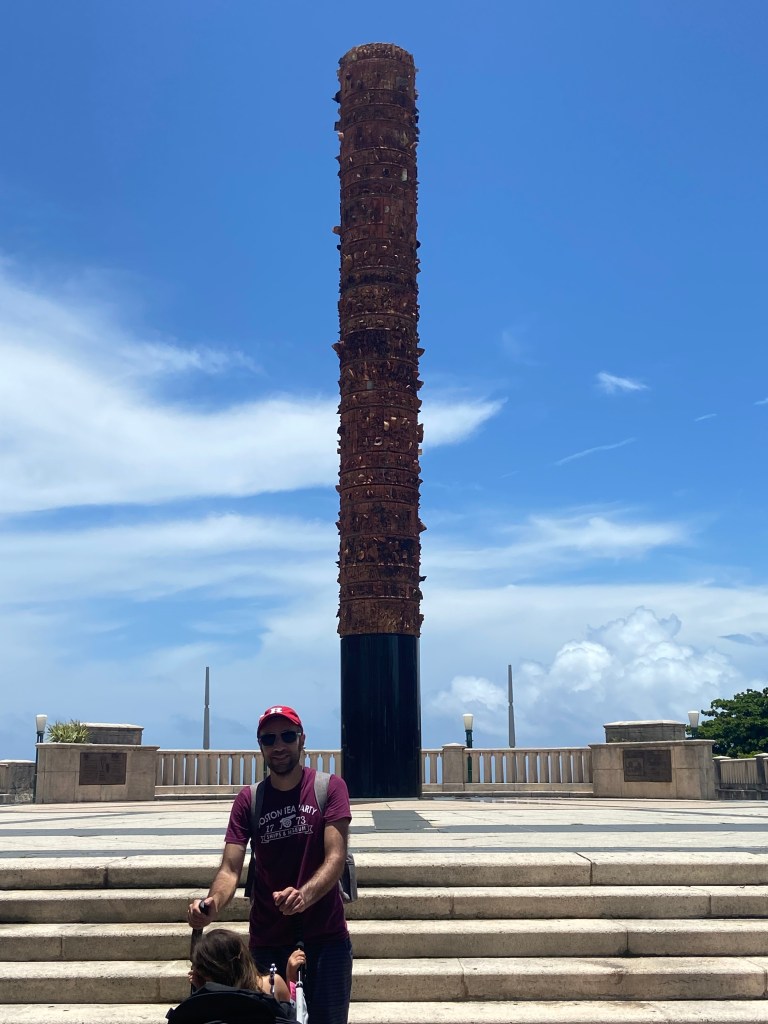
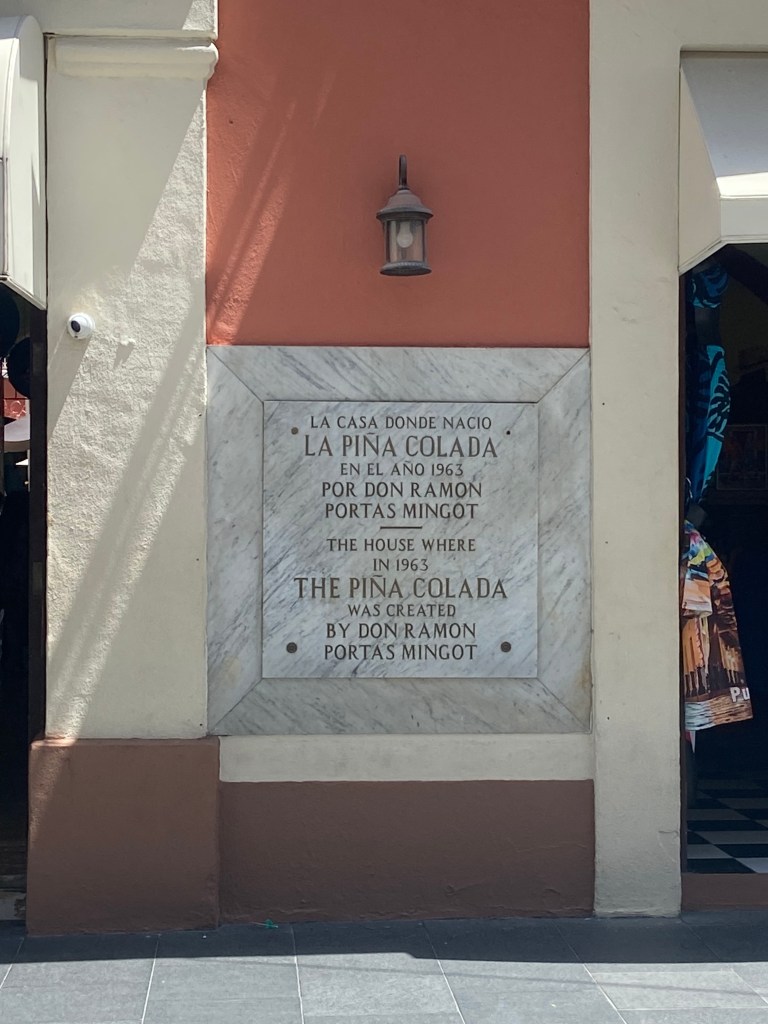
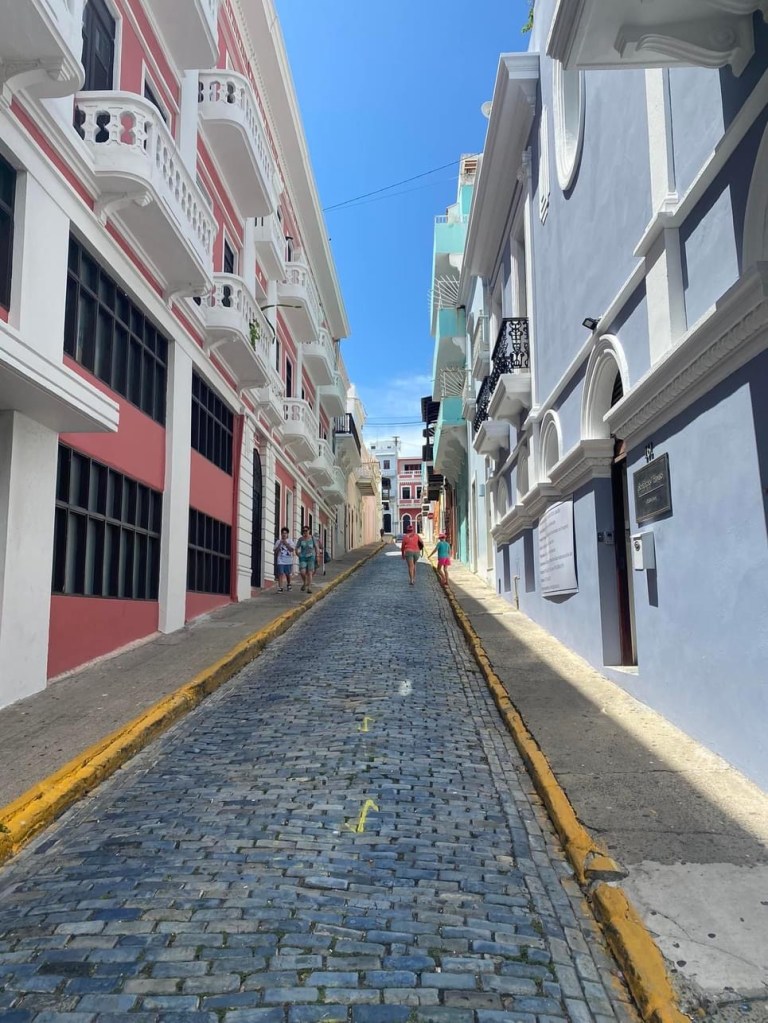
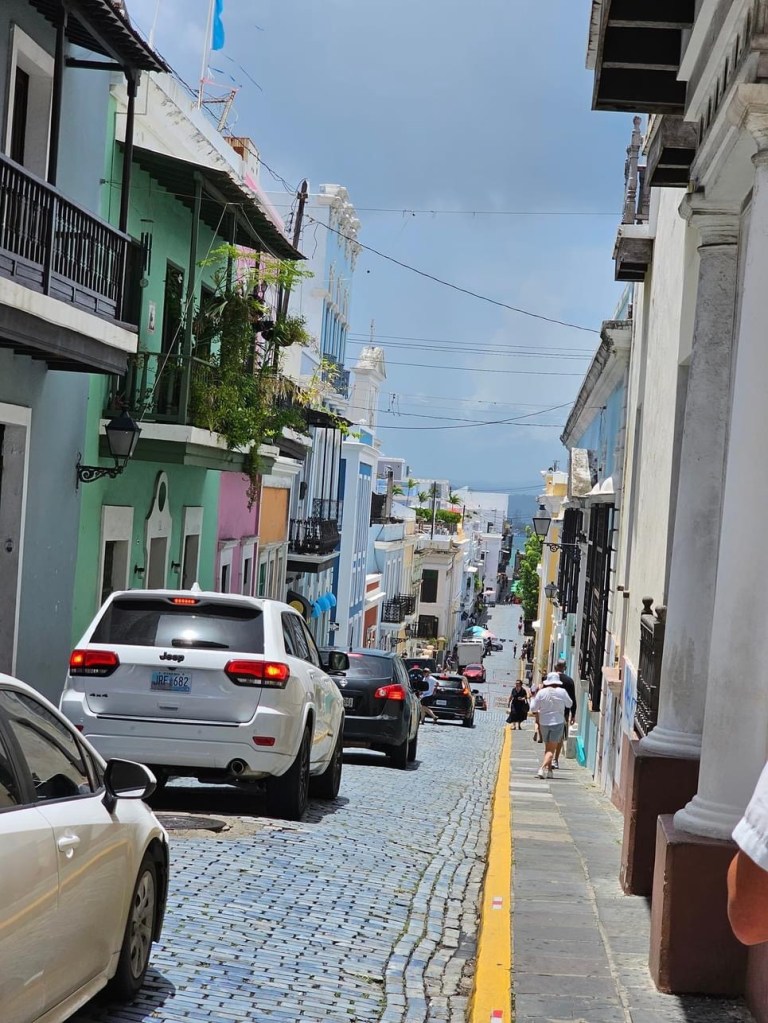
Besides visiting the forts I was also impressed by the old city streets in San Juan. The very narrow, cobblestone streets remind me of European cities that I’ve visited such as Barcelona, Spain or cities in Italy and France. And the bright colors of the buildings give San Juan a very unique and beautiful appeal. After San Cristobal, my family headed to the car and we made the 2 hour ride back to Isabela. I’d love to visit San Juan again soon and visit sites that we missed!