
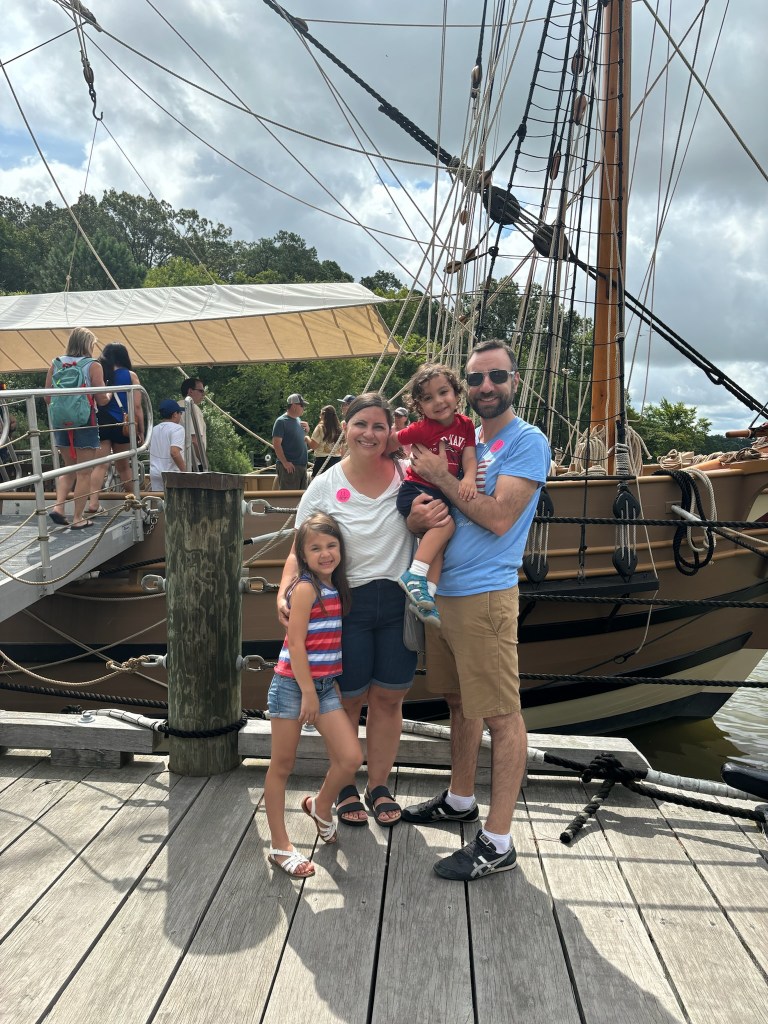
My previous blog post covered my family’s first day on our Williamsburg, VA vacation, which was a visit to Colonial Williamsburg. On our second day, we booked a tour by Viator that took us to Jamestown in the morning, and Yorktown in the afternoon. This blog post will focus on our time in Jamestown, which will be followed by another blog post which will focus on Yorktown.
Viator Trip
I found the Viator trip to Jamestown and Yorktown months in advance of our trip, and thought it a great opportunity to visit two places that I’ve wanted to see for years; two locations so significant to American history. The tour had us meet at 8 AM at the Williamsburg General Store which was about a 7 minute drive from our hotel. We boarded a large bus and made our way to Jamestown. On route to Jamestown, our tour guide gave us some historical background leading up to the settlement of Jamestown 1607. The bus ride to Jamestown was about 20 mins.

I’ve previously written a blog post about the history of the Jamestown settlement, which you could read HERE. Jamestown was the first permanent English colony. The colonists barely survived the settlement in the first couple of years. The settlement that started in Jamestown eventually branched out to become the Virginia colony. To be able to visit Jamestown in person was a real treat.
However, I must include the fact that we visited the Jamestown Settlement, which is a museum about the settlement of Jamestown. This museum is about a mile east of the original Jamestown fort site, which is called Historic Jamestowne. If I had to be perfectly honest, I thought this tour would take us to Historic Jamestowne, but that was not the case. So I was a little disappointed in that. I’ll have to go back another time to see Historic Jamestowne, where archaeological work is taking place. But visiting the Jamestown Settlement was not a disappointment and there was much to see and do there.
Overlook
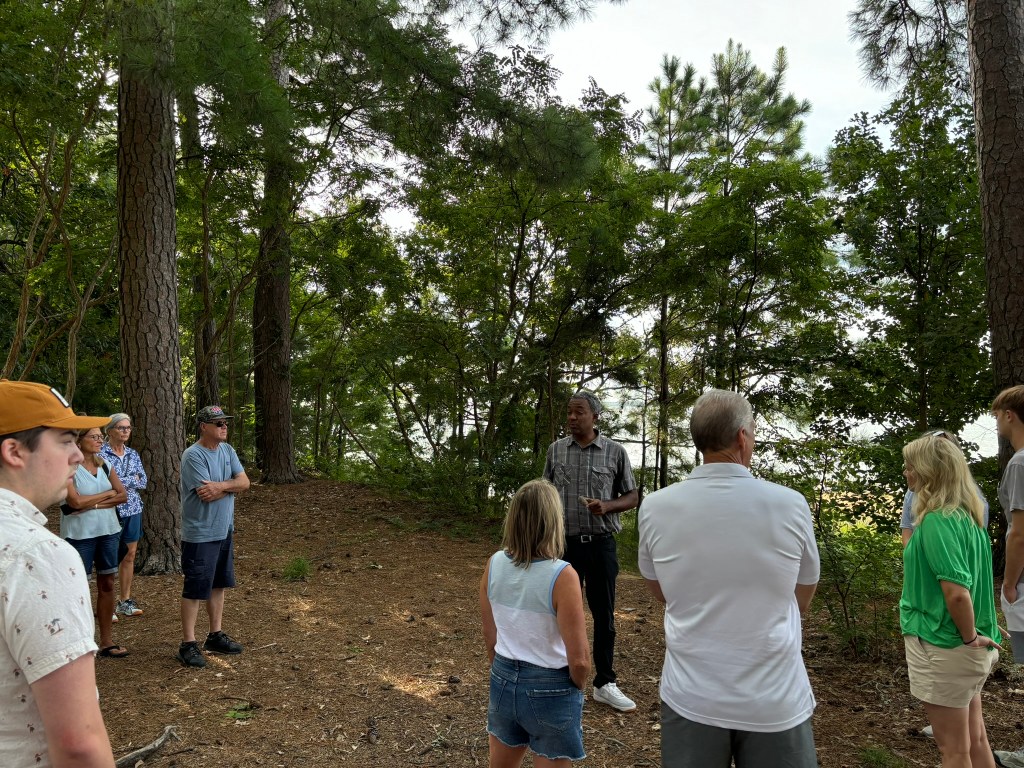
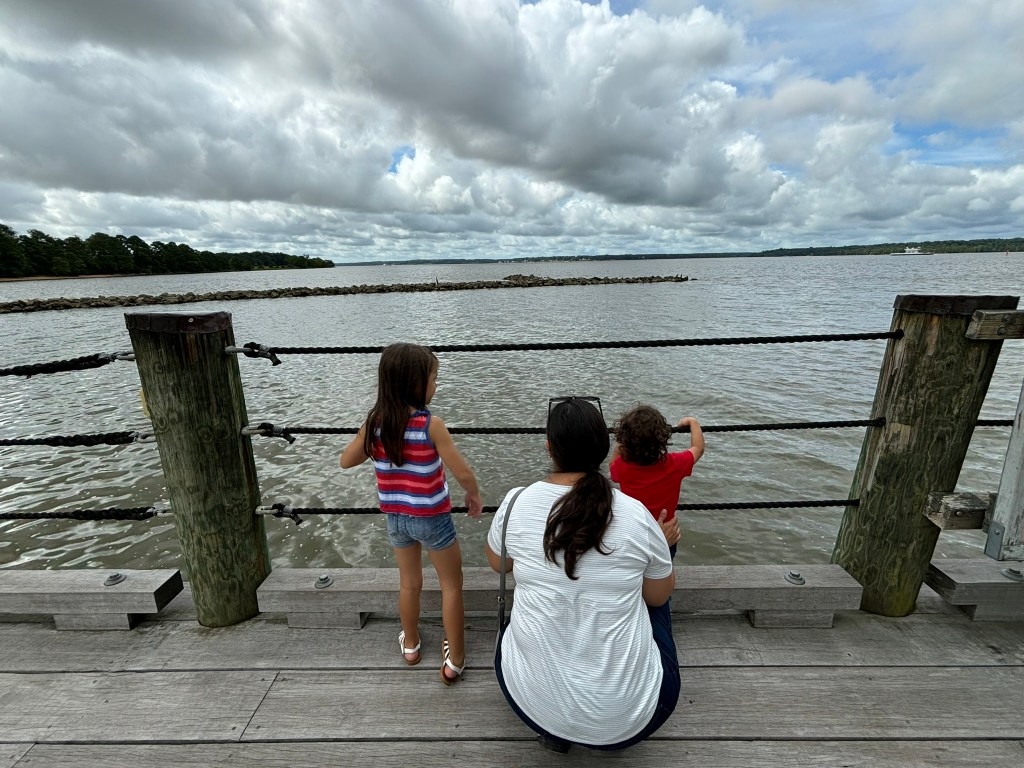
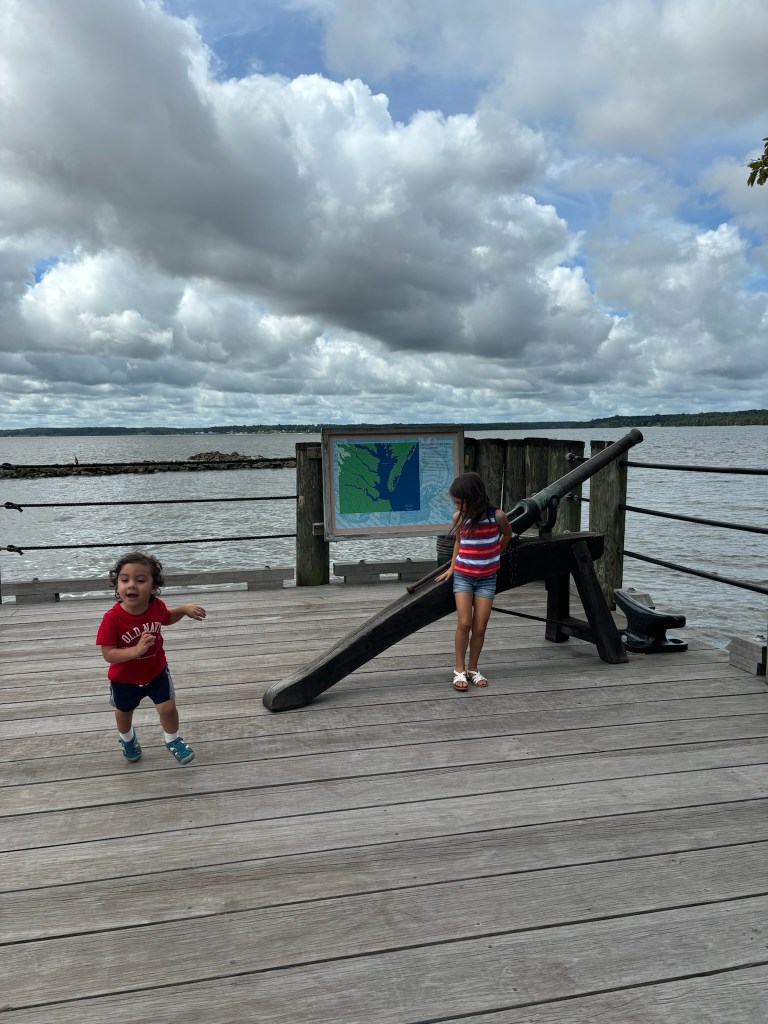
Before arriving to the museum, our tour guide took us out of the bus to a spot along the James River called the “Overlook.” From our vantage point north of the river, we could see the spot that the English colonists orginally landed on their first voyage to Jamestown, which you could see in the photo below.

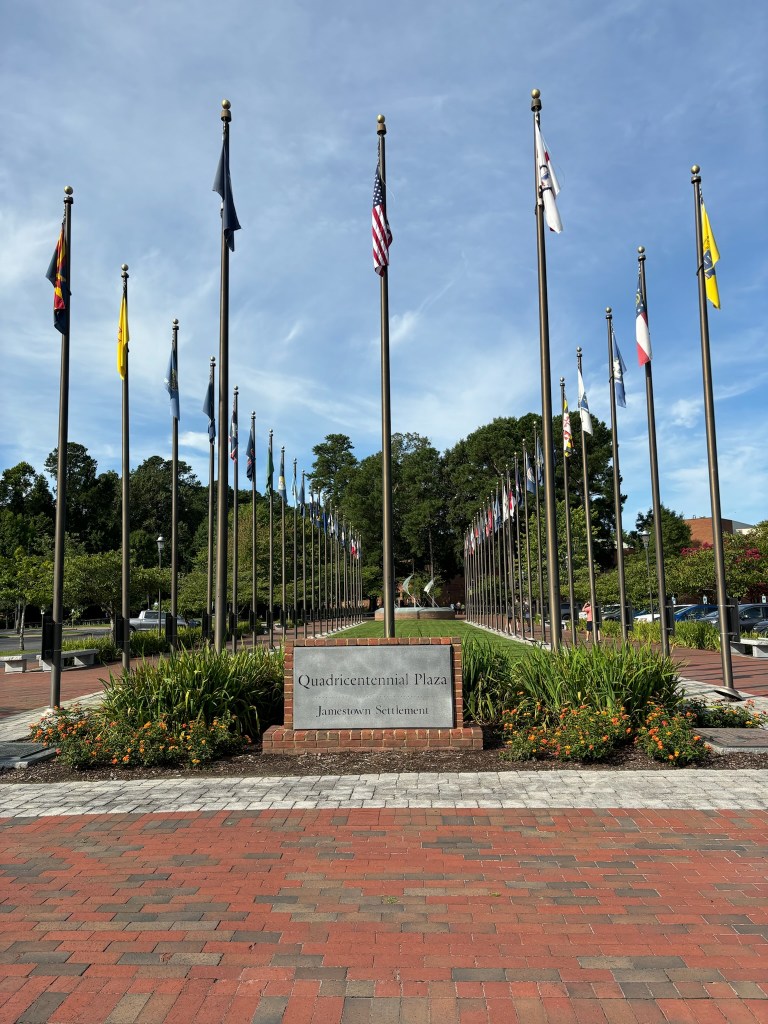
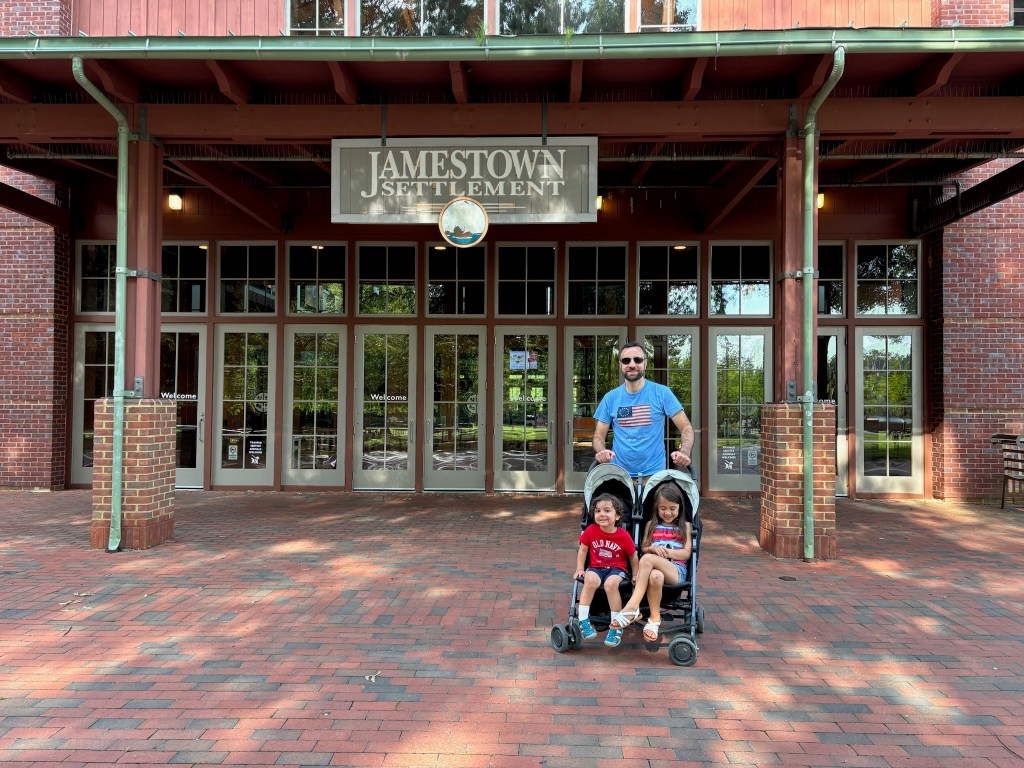
Jamestown Settlement
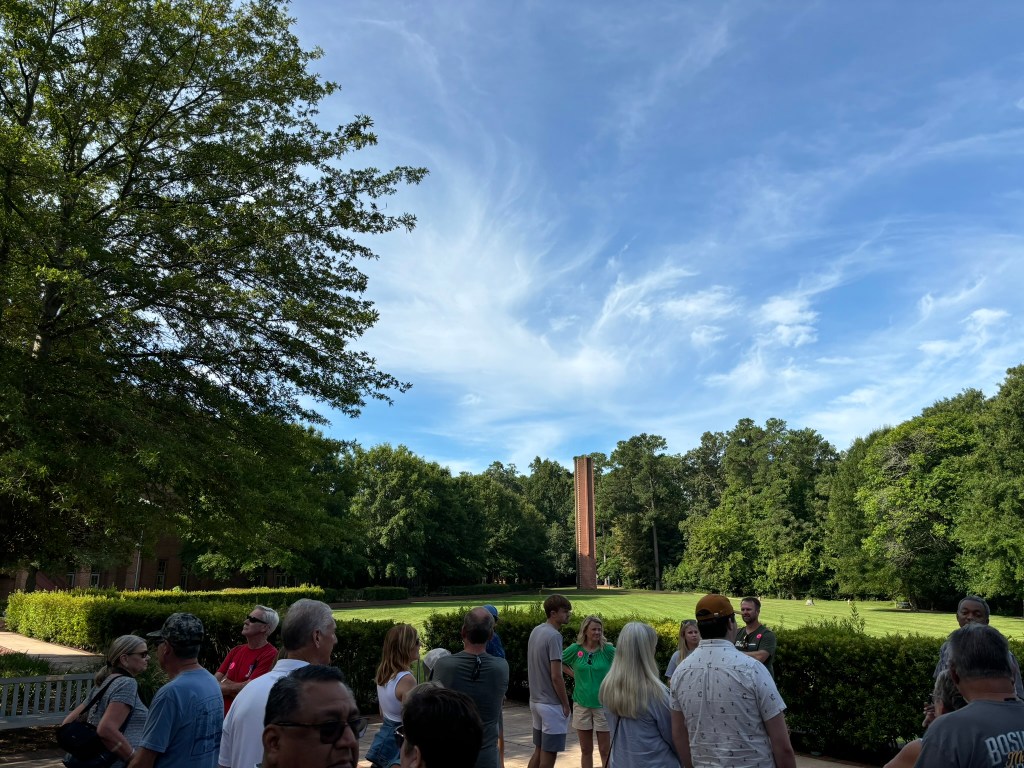
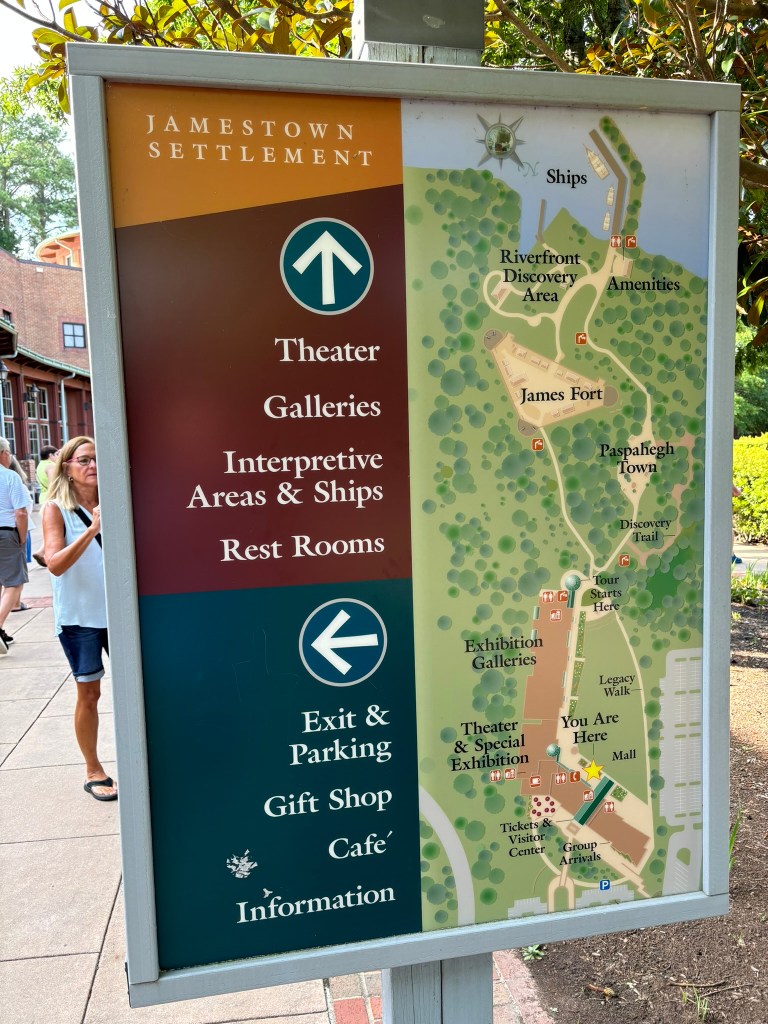
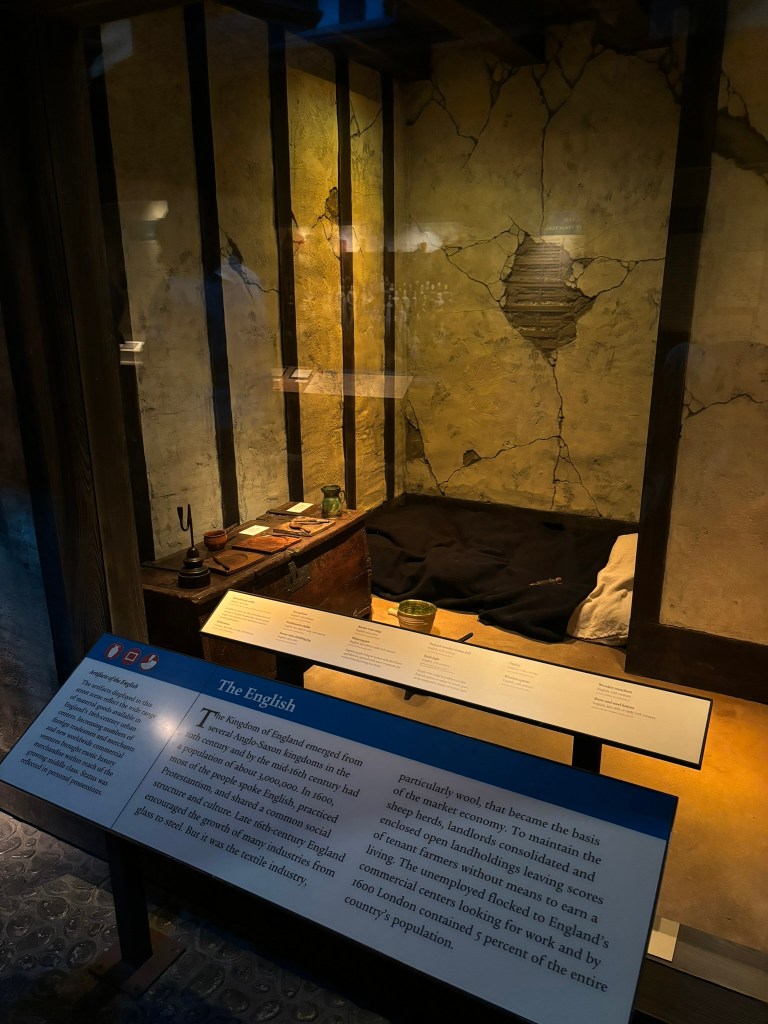
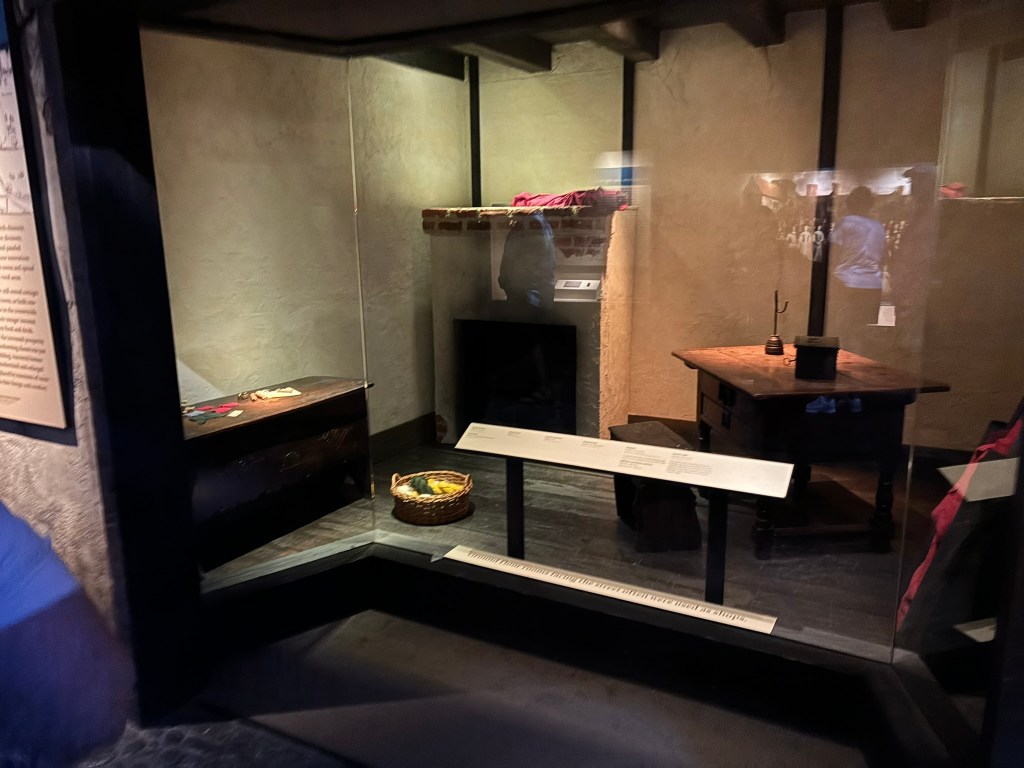
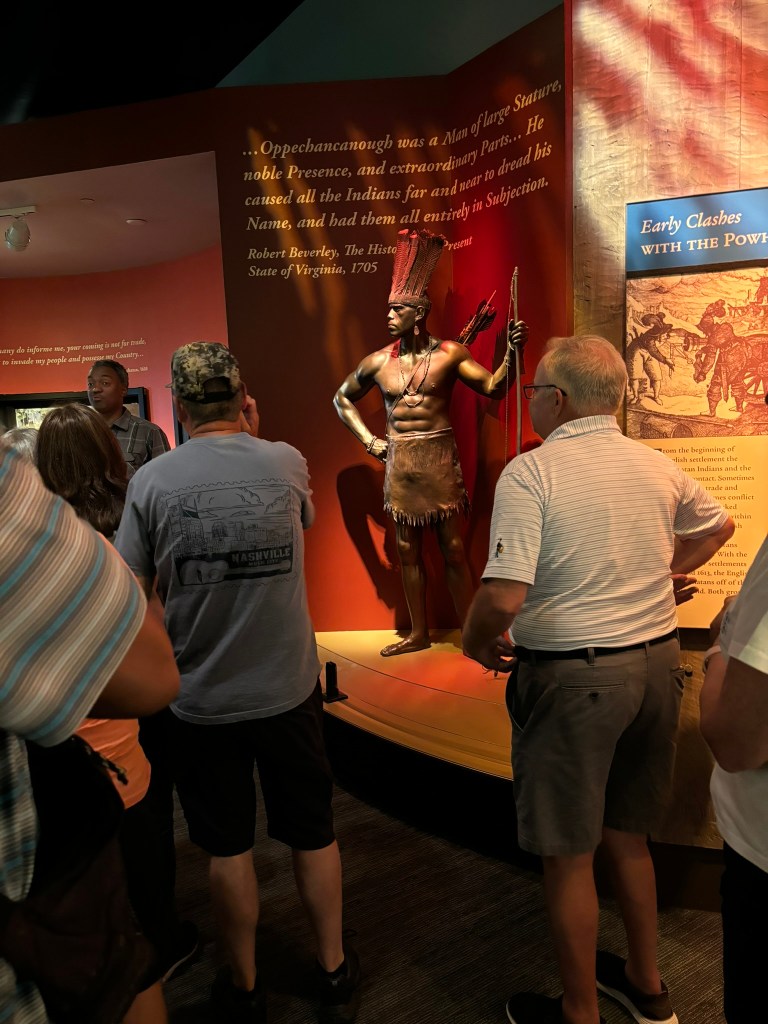
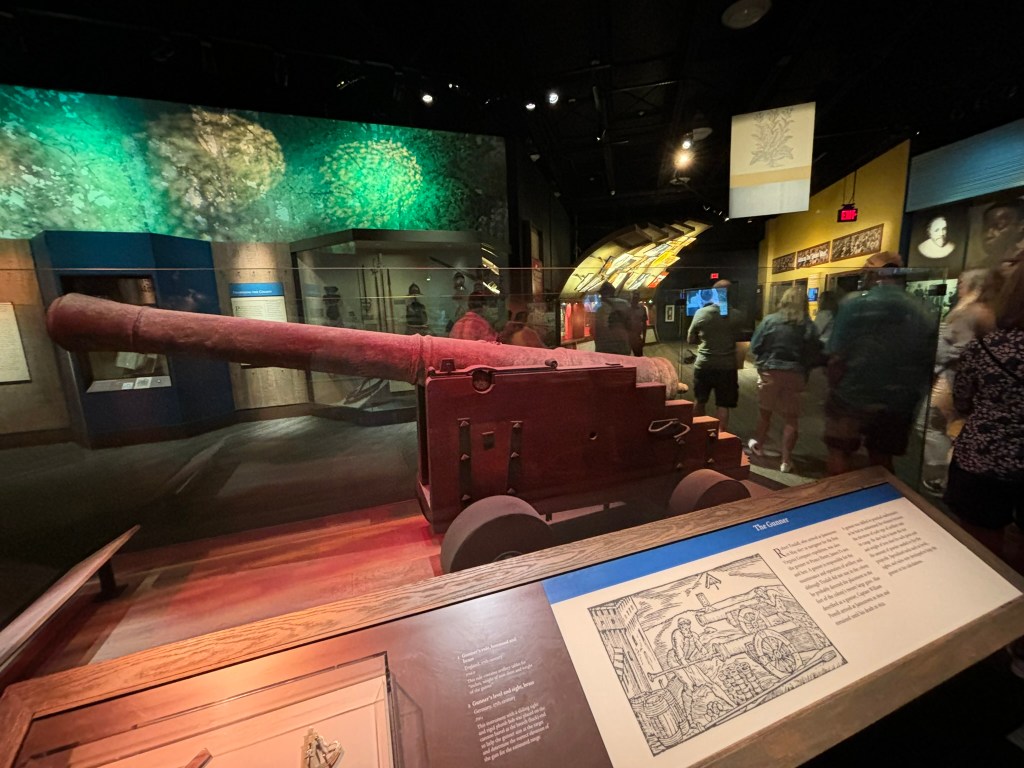
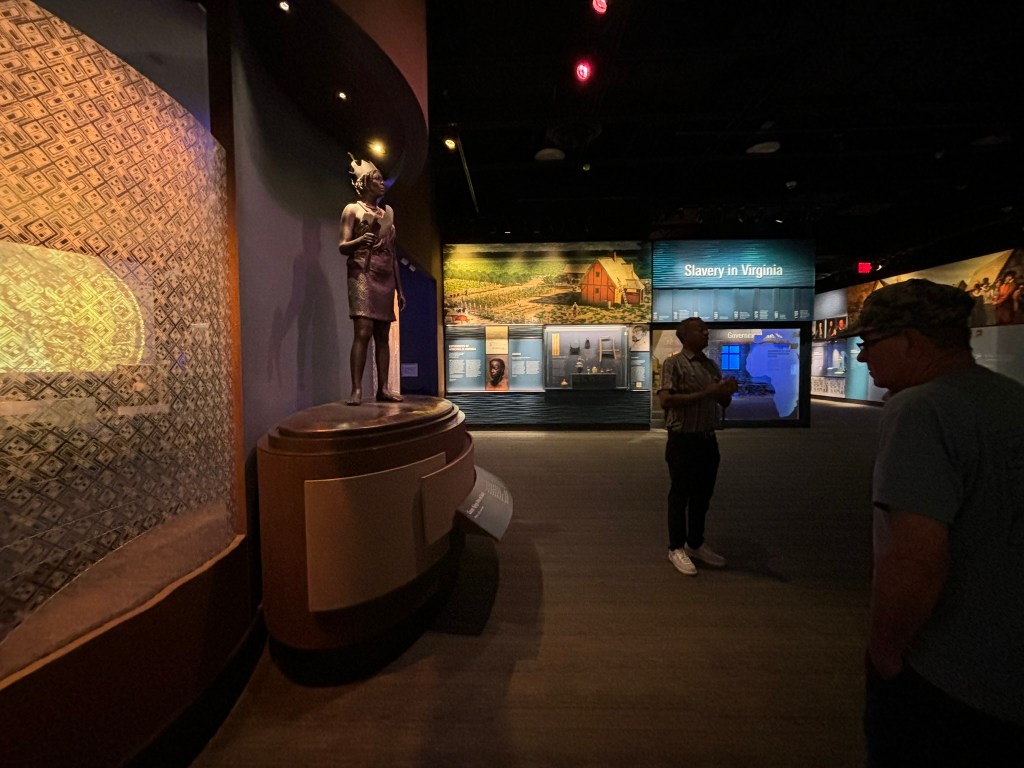
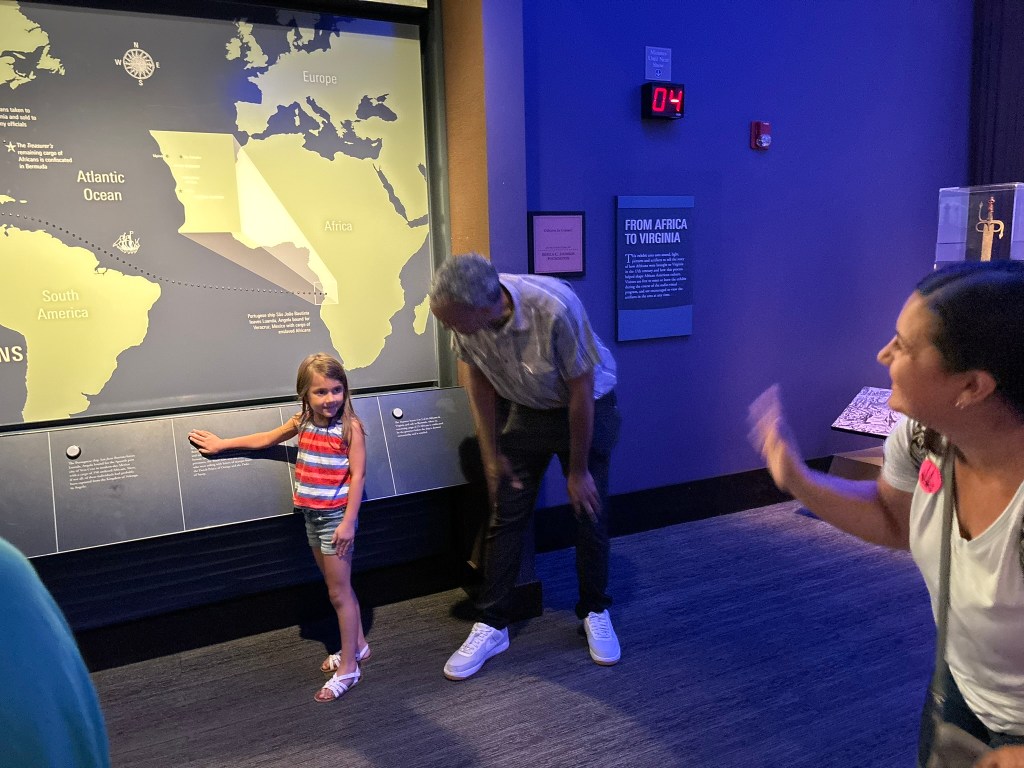
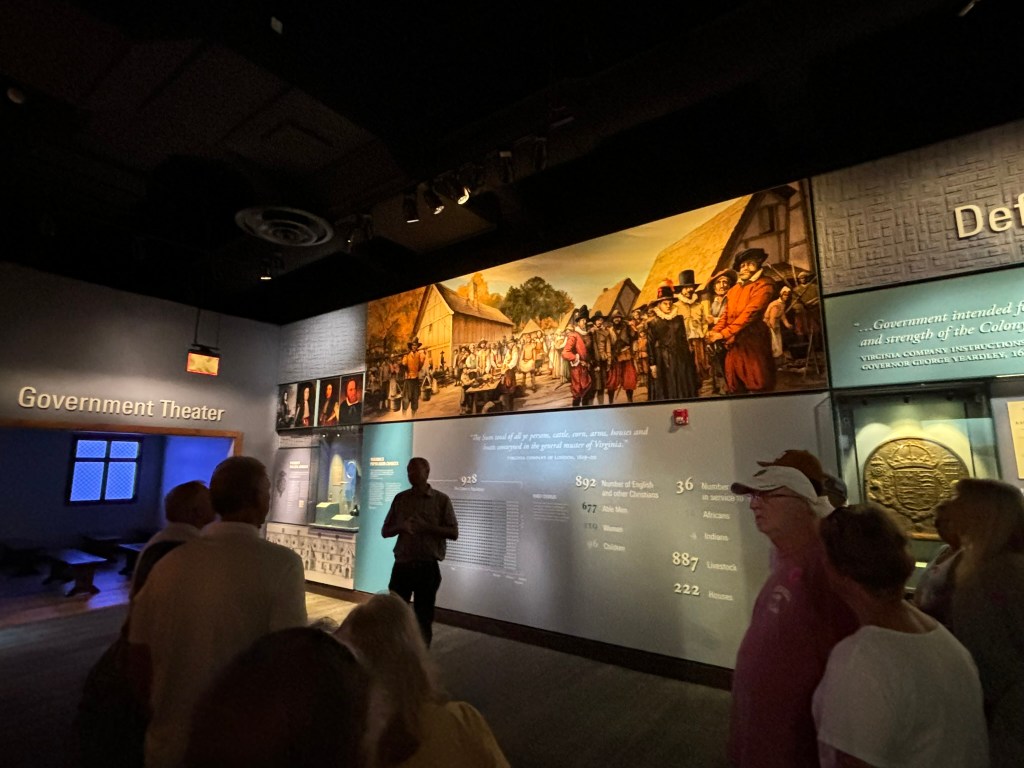
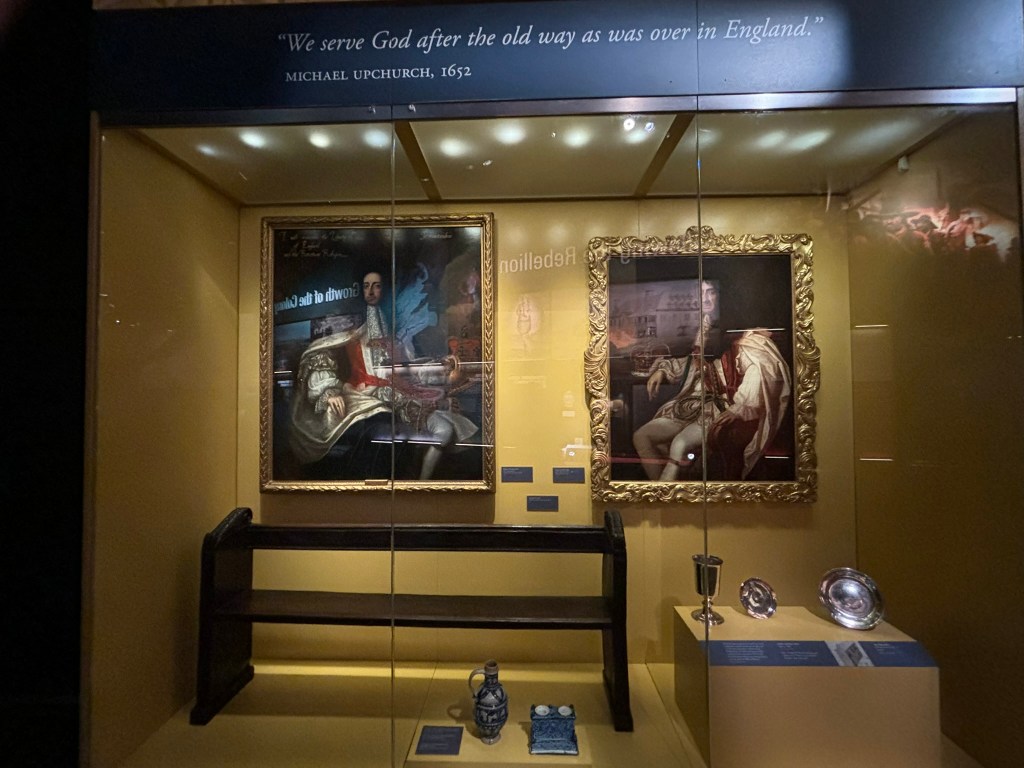
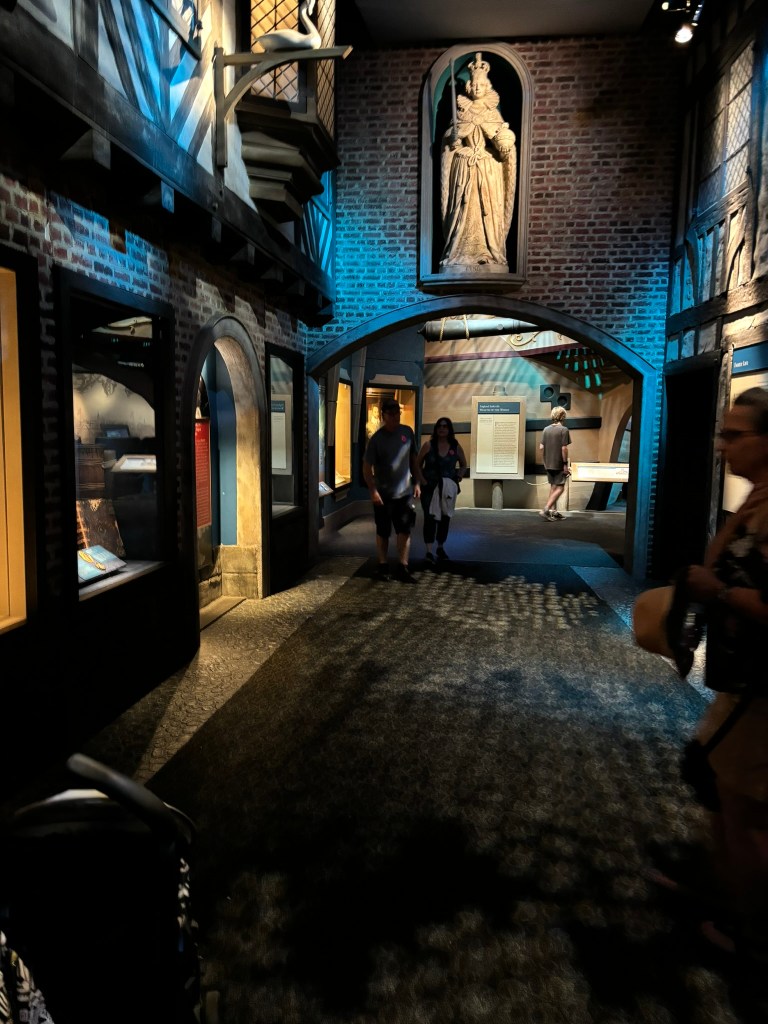
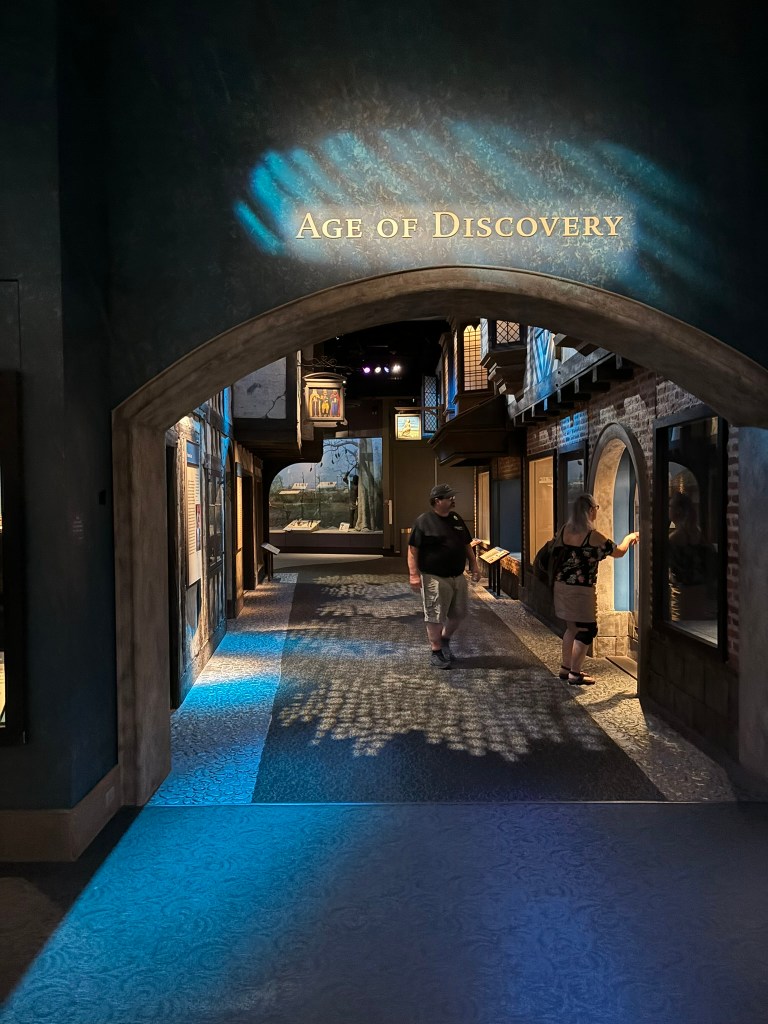
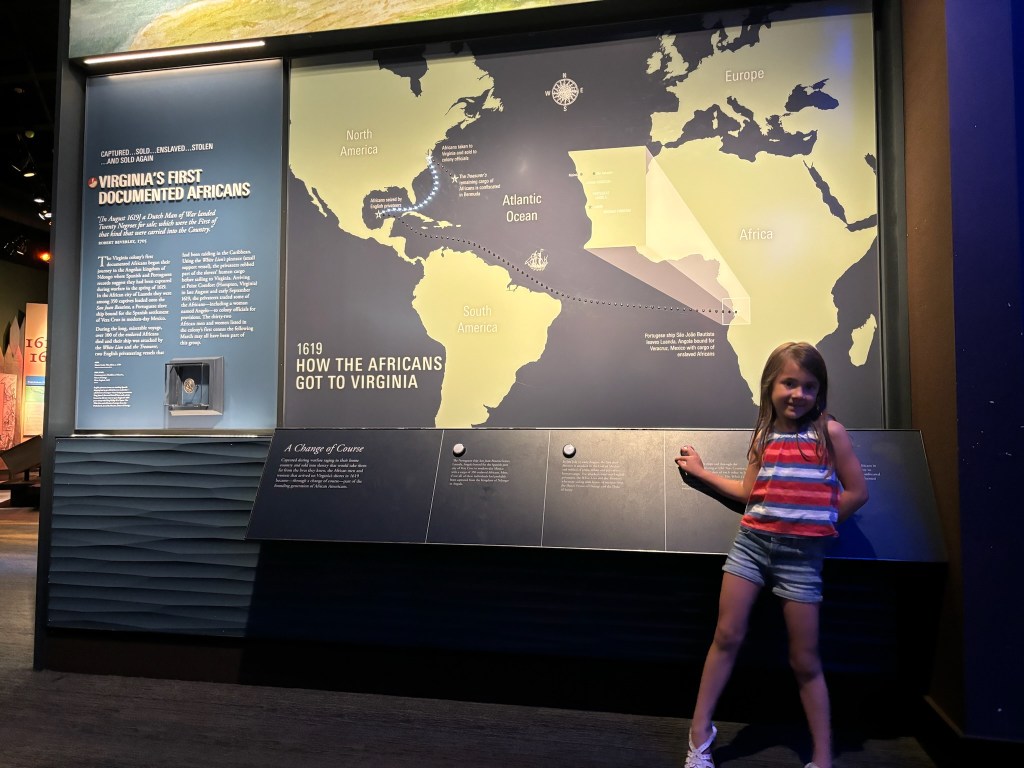
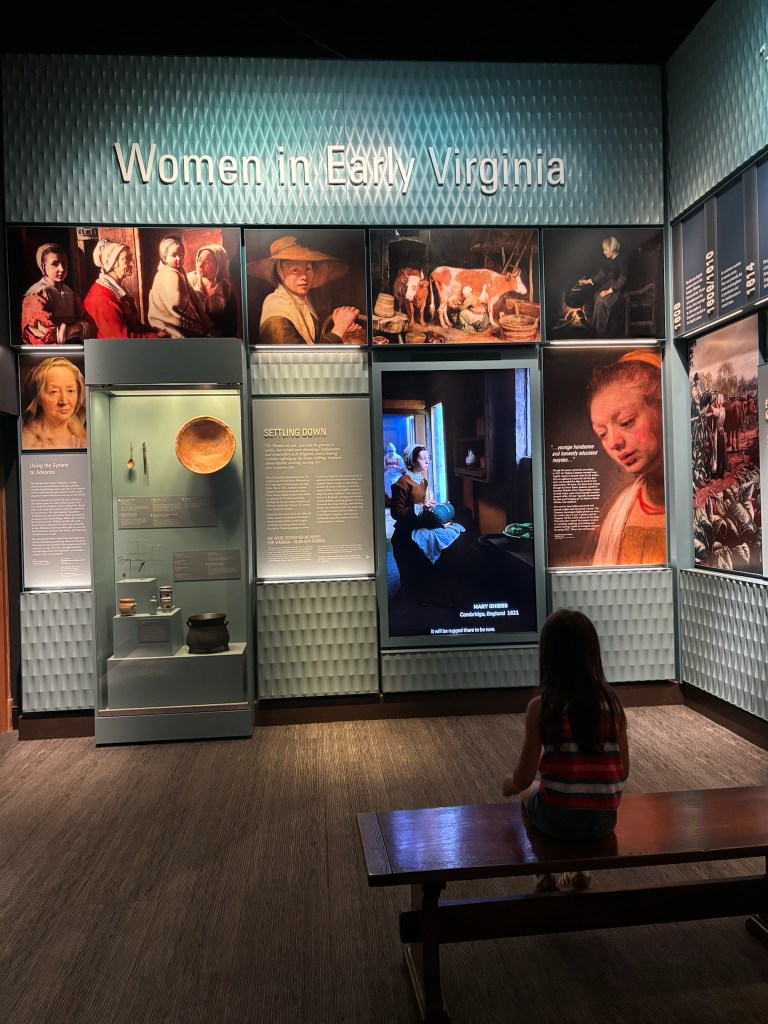
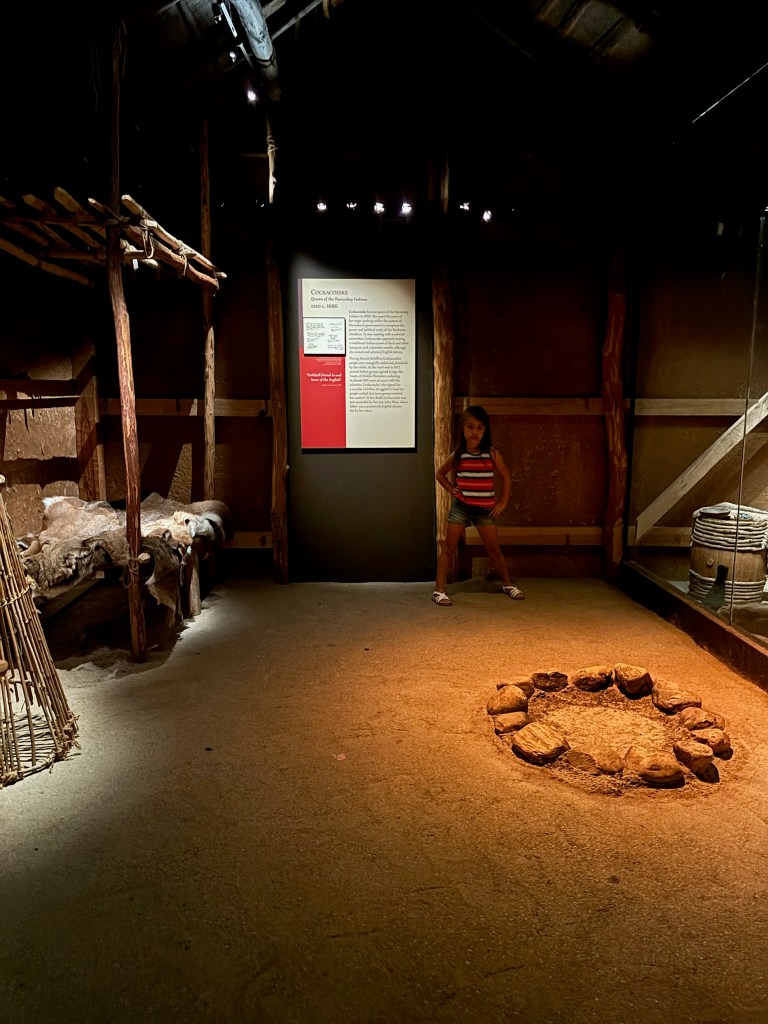
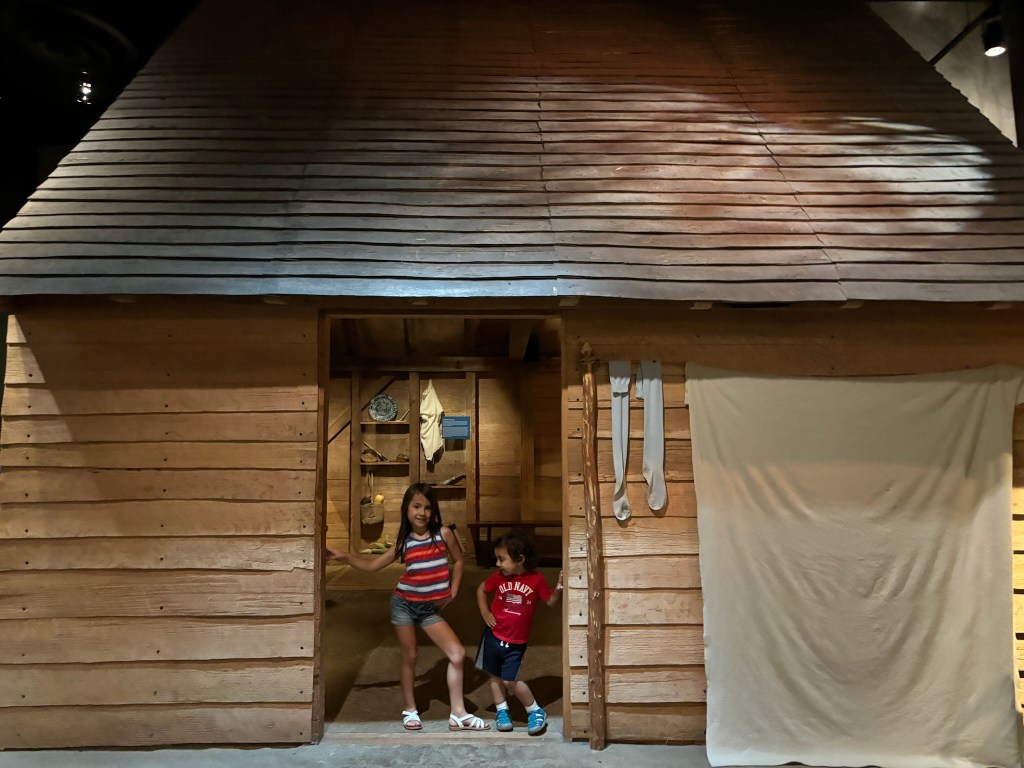
We then made our way to The Jamestown Settlement, which is run by the The Jamestown-Yorktown Foundation. The museum originally opened in 1957. Our tour guide led us through the museum, highlighting and explaining significant figures and events from the colony. The main hallway of the museum appears to be a large timeline dating from 1607, the founding of the settlement, to 1699, the year that the capital of the Virginia Colony was moved to Williamsburg. As you move through the museum, you walk through the history of the Jamestown colony.
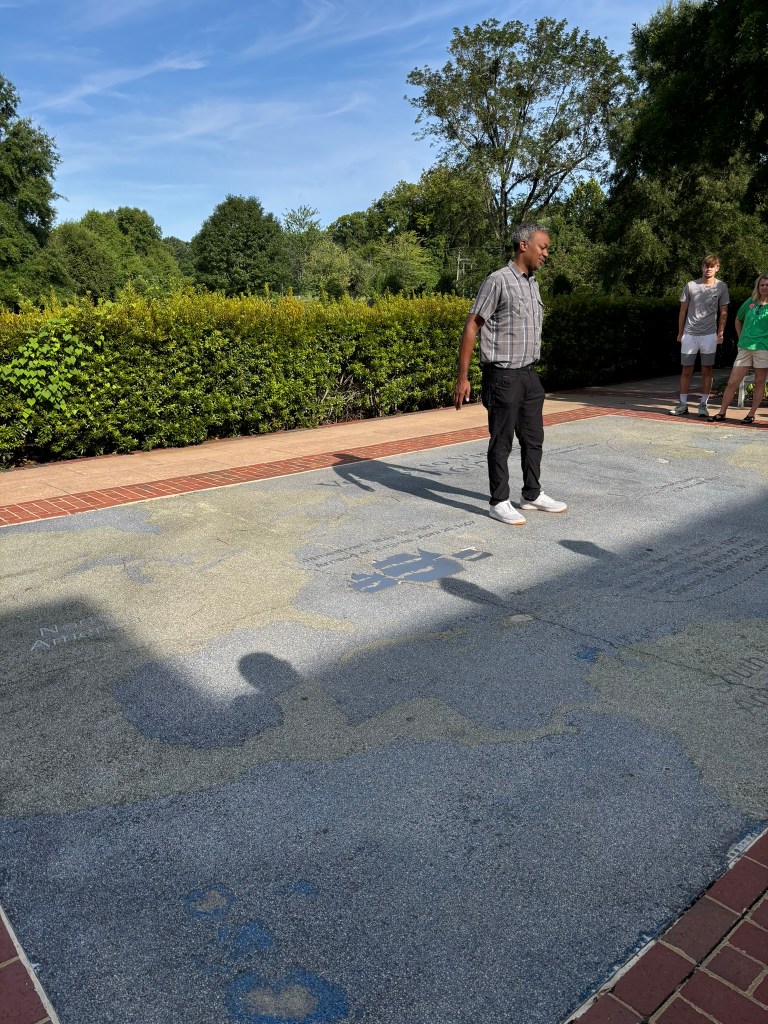
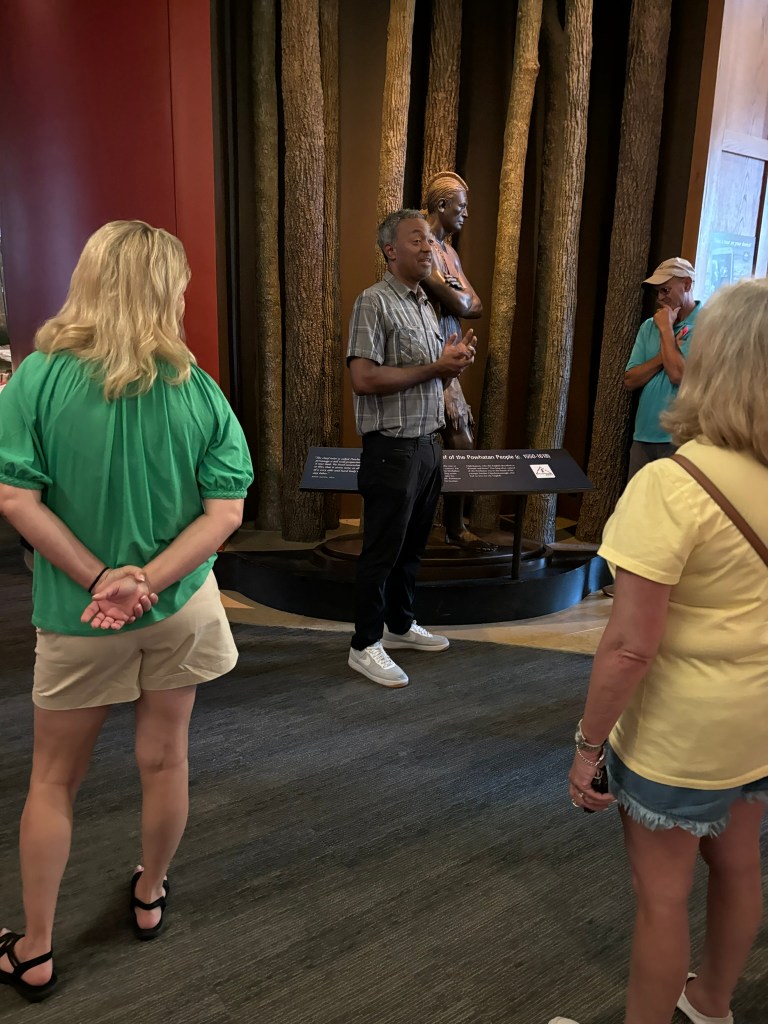
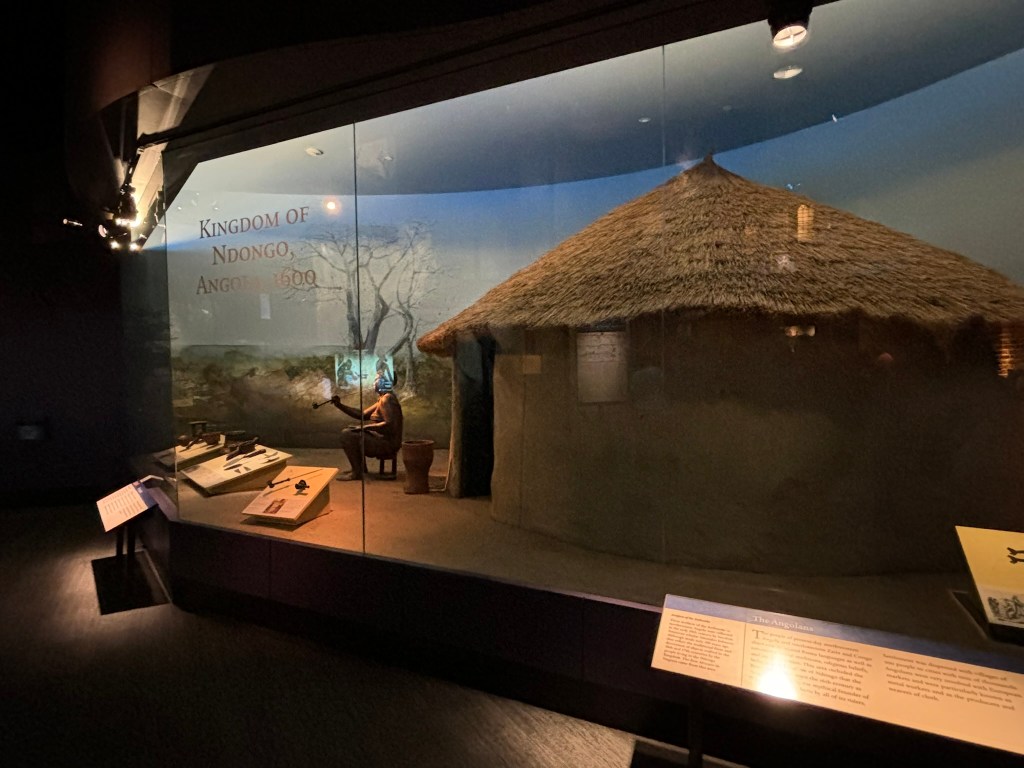
The museum highlights what life was like before 1607 for the Natives living in the region, Africans in Angola, and the English back in Europe. As you move through the museum, you learn about how the settlers barely survived in the first couple of years. You learn about the importance of growing tobacco. You learn about figures like Pocahantas, John Smith and John Rolfe. You learn that in 1619, the first Africans were brought to the colony on a Dutch ship, which completely changed the dynamics and history of the colony. The year 1619 was also significant because this was the first year that the House of Burgesses met. The museum teaches about conflicts between the Natives and English settlers, as well as significant events like Bacon’s Rebellion in 1676. The museum also highlights a map that shows the population changes taking place in Virginia. As the English population was growing and settling along the rivers, the Native population was dwindling, primarily caused by disease and conflict. Finally, the museum takes you to the year 1699, when Jamestown ceased to be the capital of Virginia. Jamestown was susceptible to brackish water, mosquitoes, and the spread of malaria. Williamsburg was on higher ground and easier to defend against invaders such as the French and Spanish.









Paspahegh Village
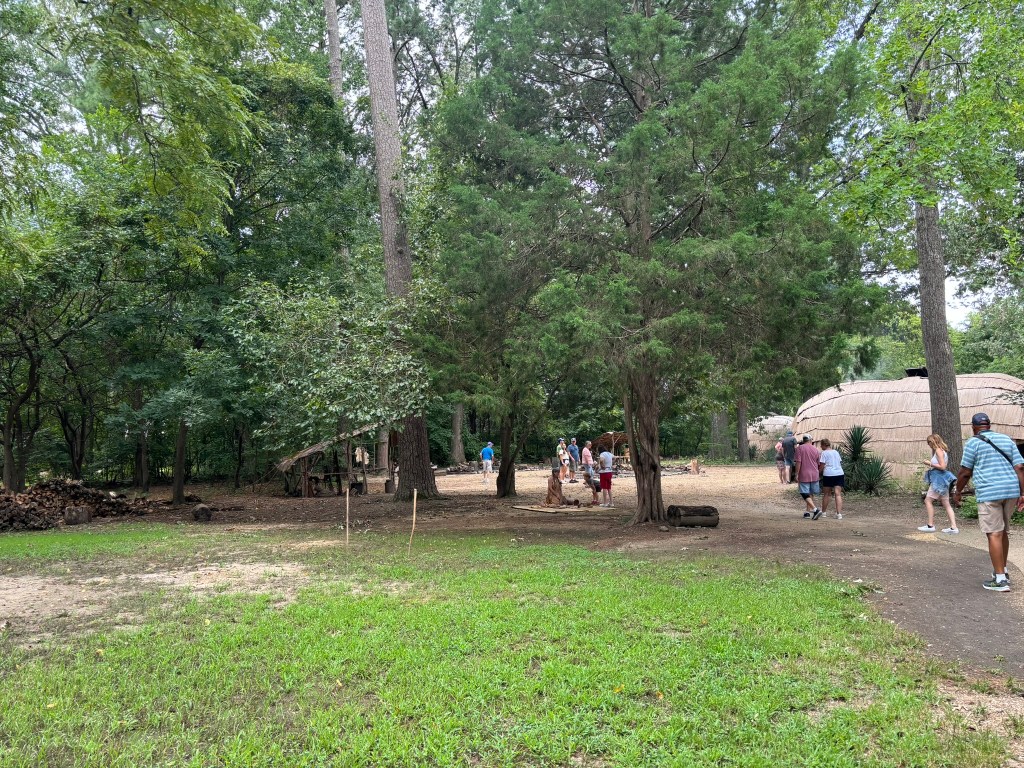
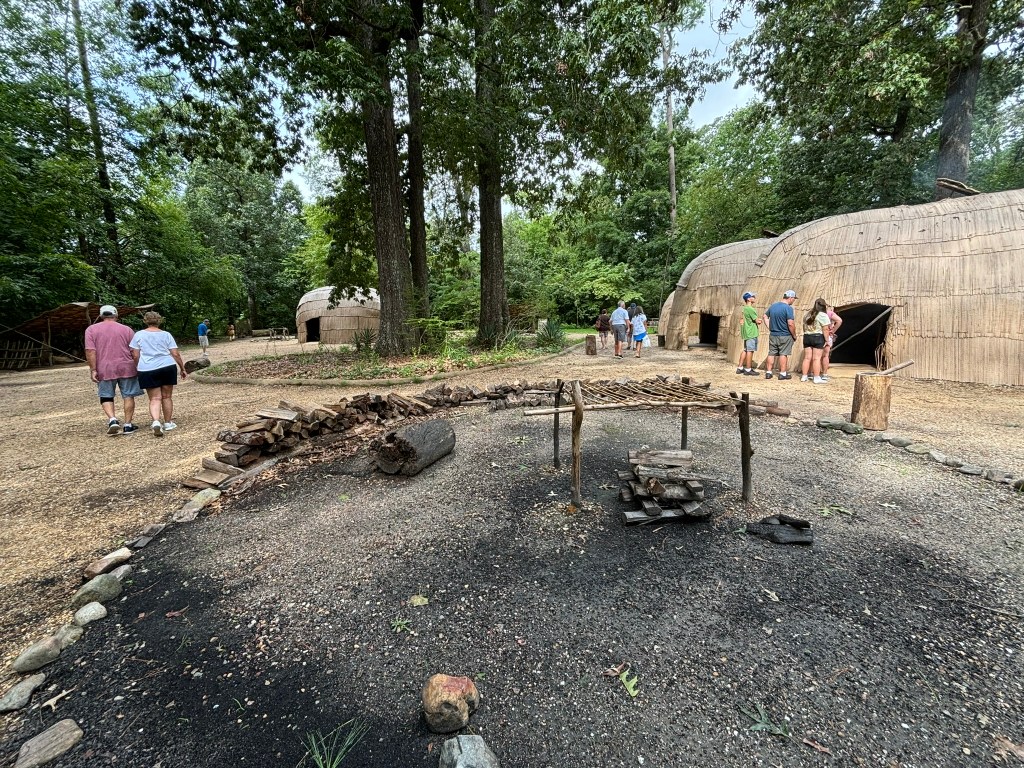
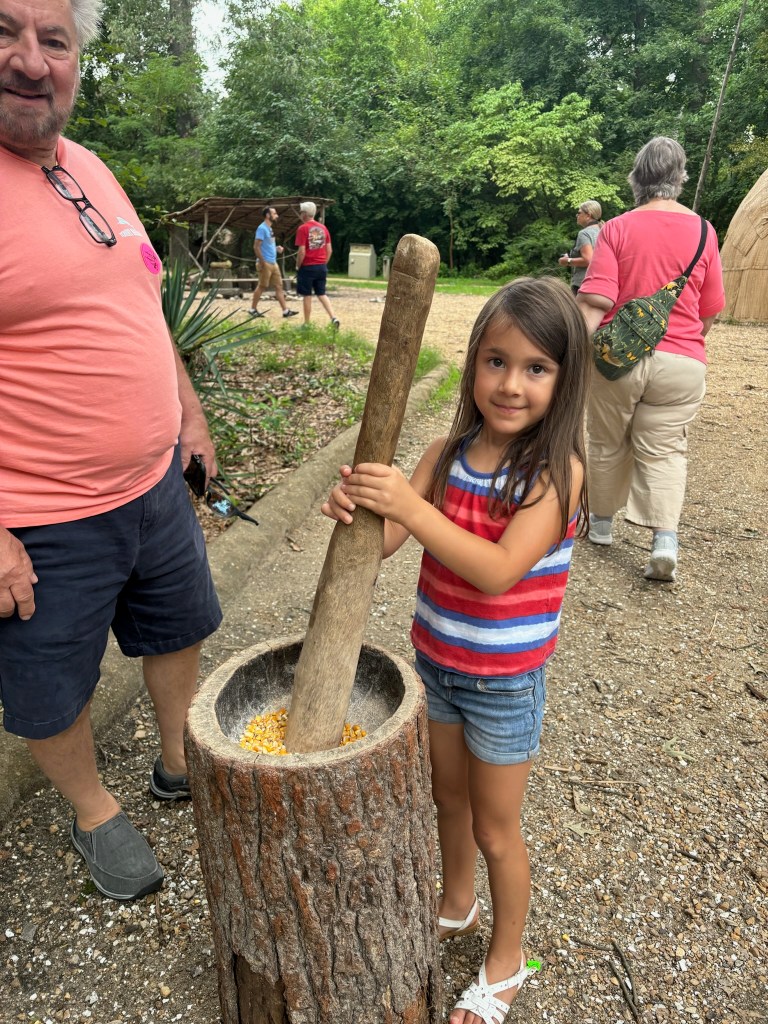
After we were taken through the museum, we were given about an hour to roam around outside in the living history portions of the museum. Our first stop was the Paspahegh village. The Paspahegh tribe was a tributary of the great Powhatan chiefdom. In the village, you could walk through their living quarters, learn how they made canoes from tree trunks, and practice making corn.



Ships
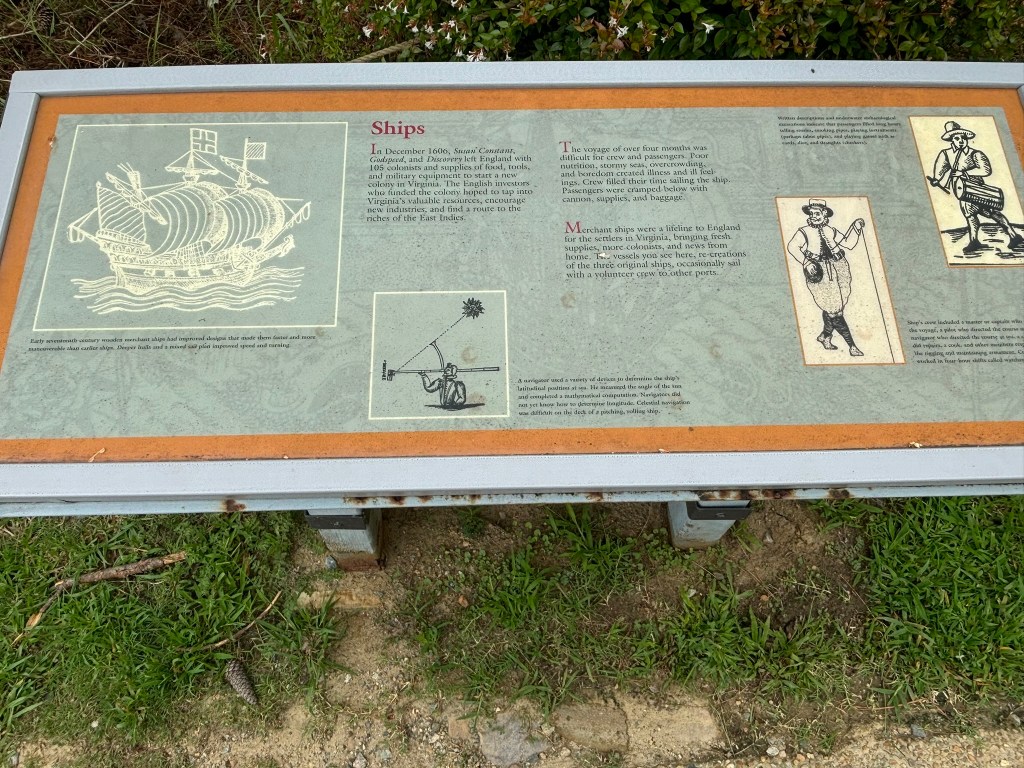
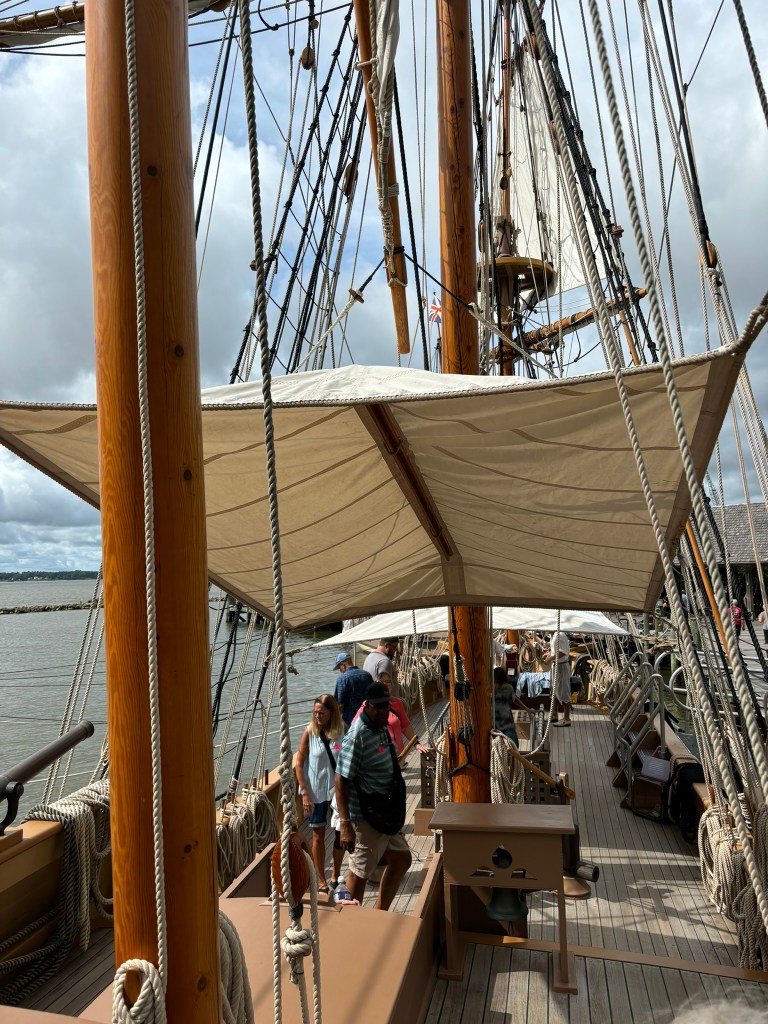
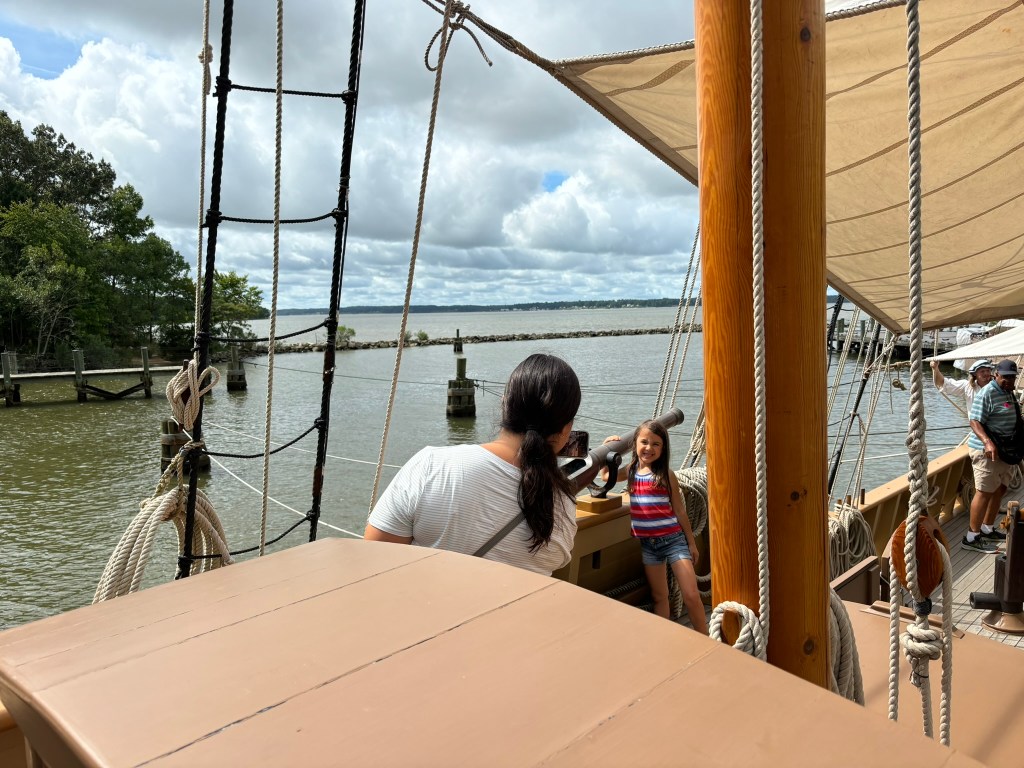
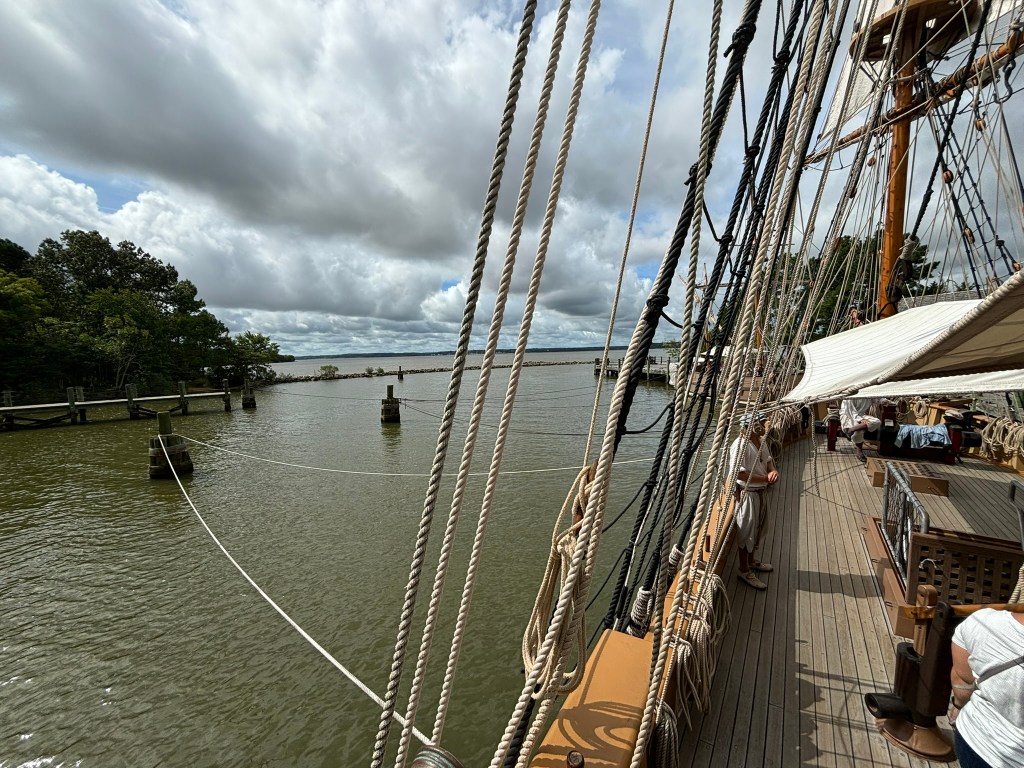
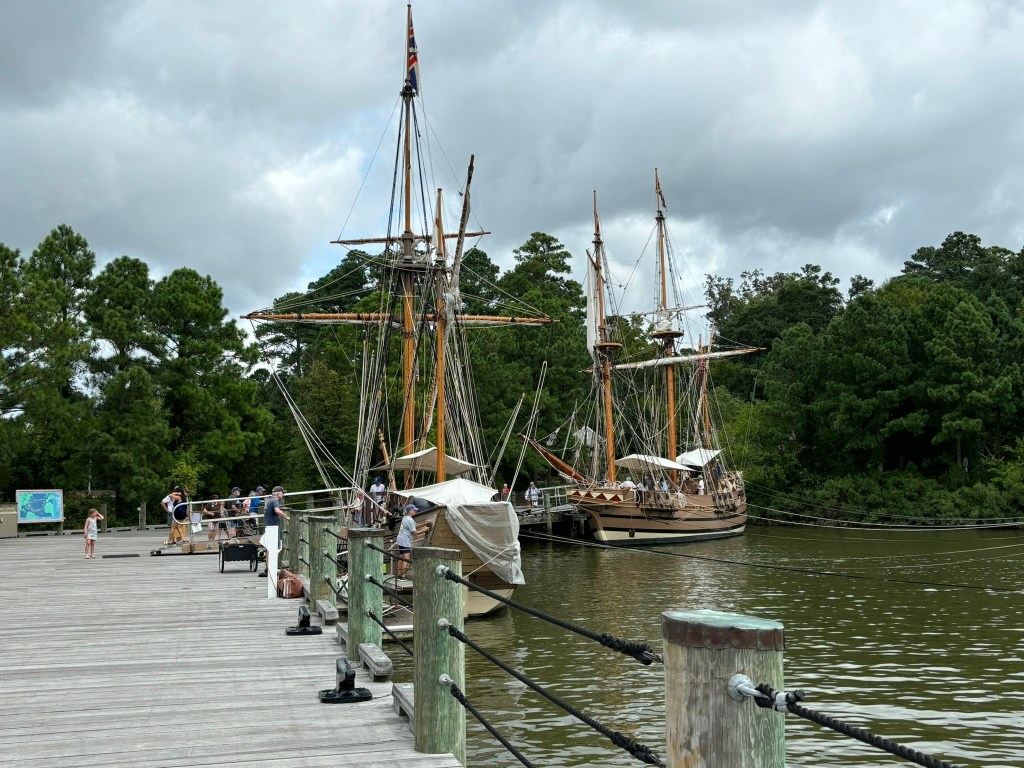
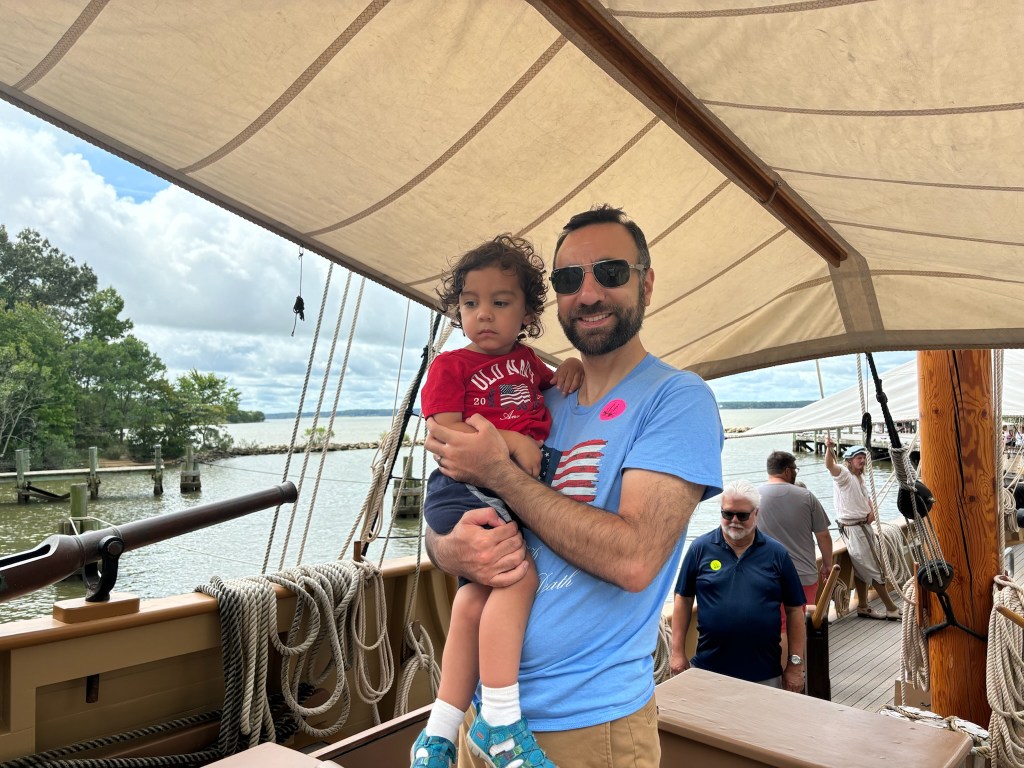
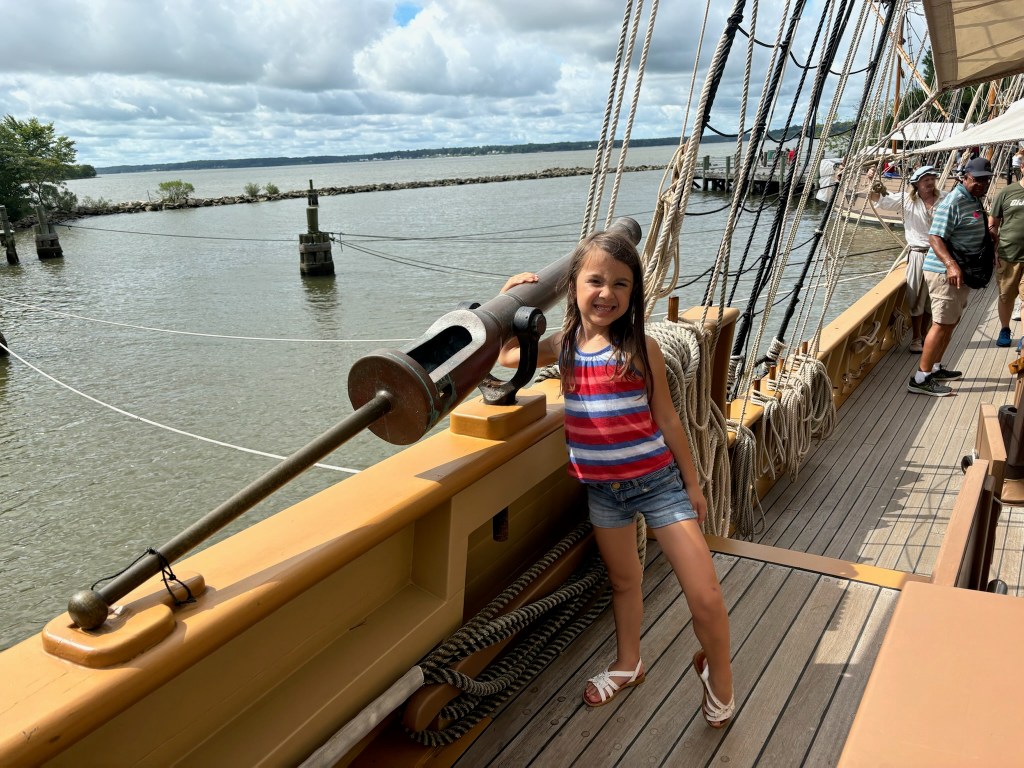
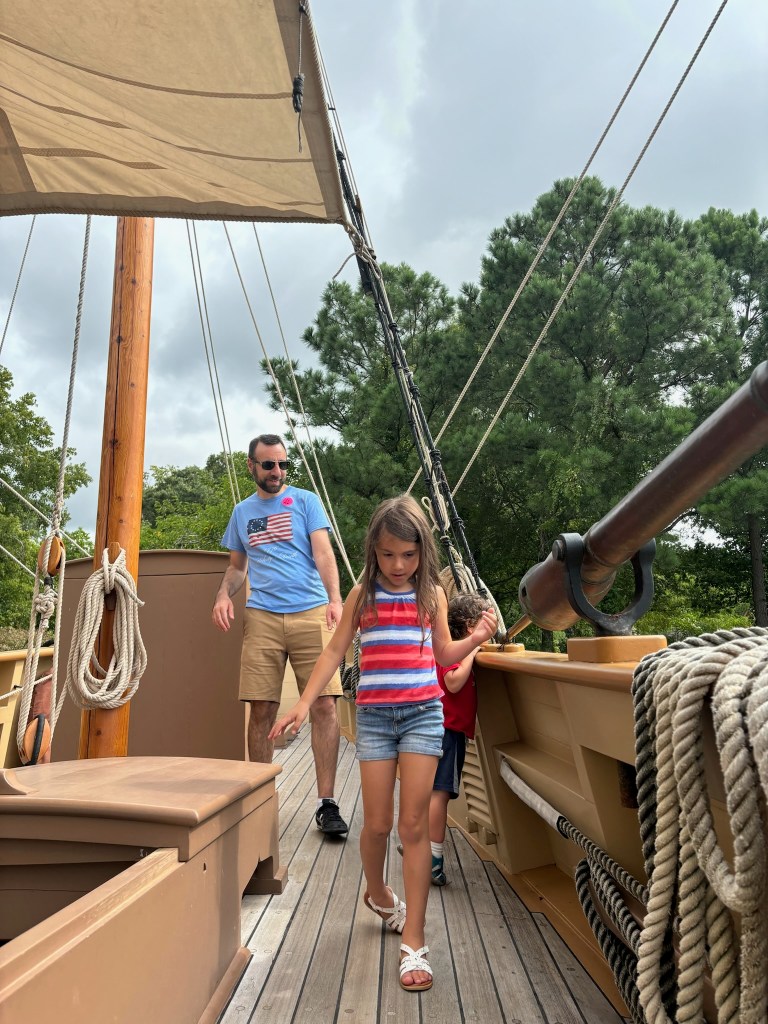
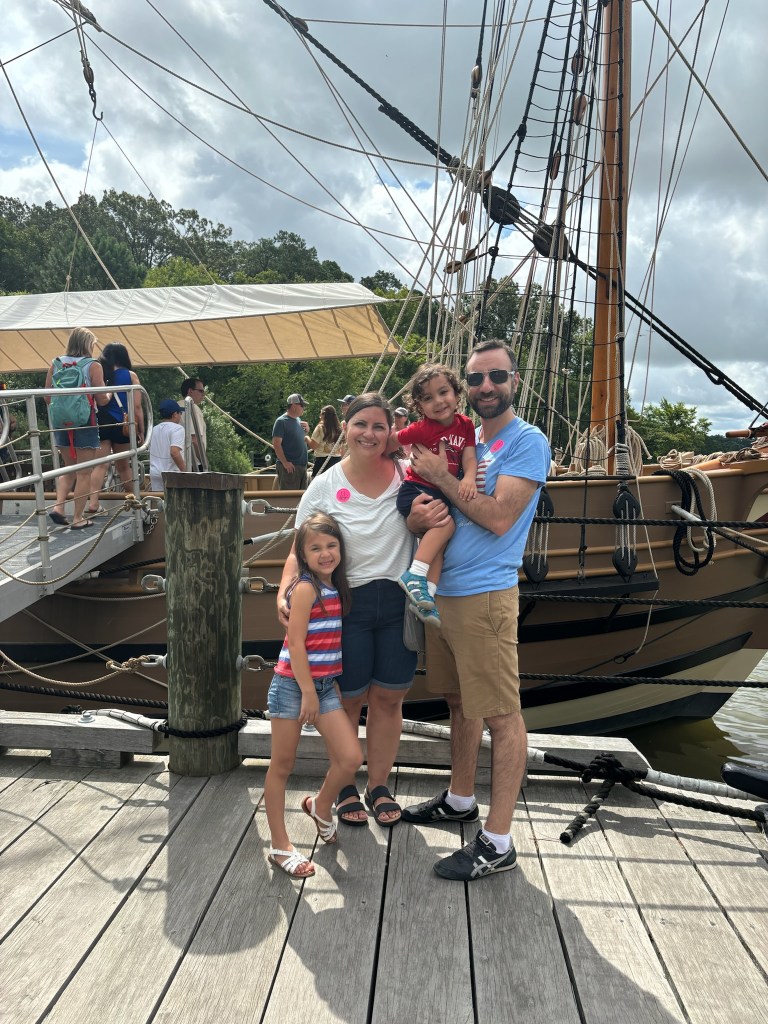
After passing through the Paspahegh village, we made our way to ships docked along the coast. The three ships that took the original voyage to Jamestown were called Susan Constant, Godspeed, and Discovery. Two of the three replica ships were in dock on the day we were there. We were able to go below deck and explore the two ships.



James Fort
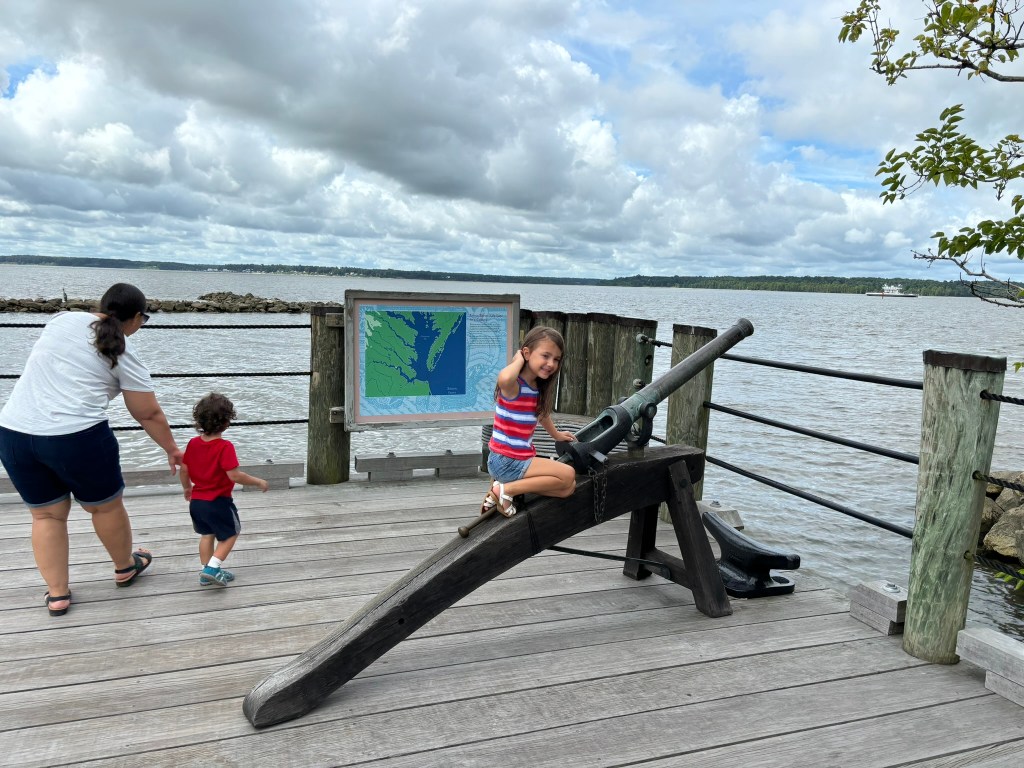
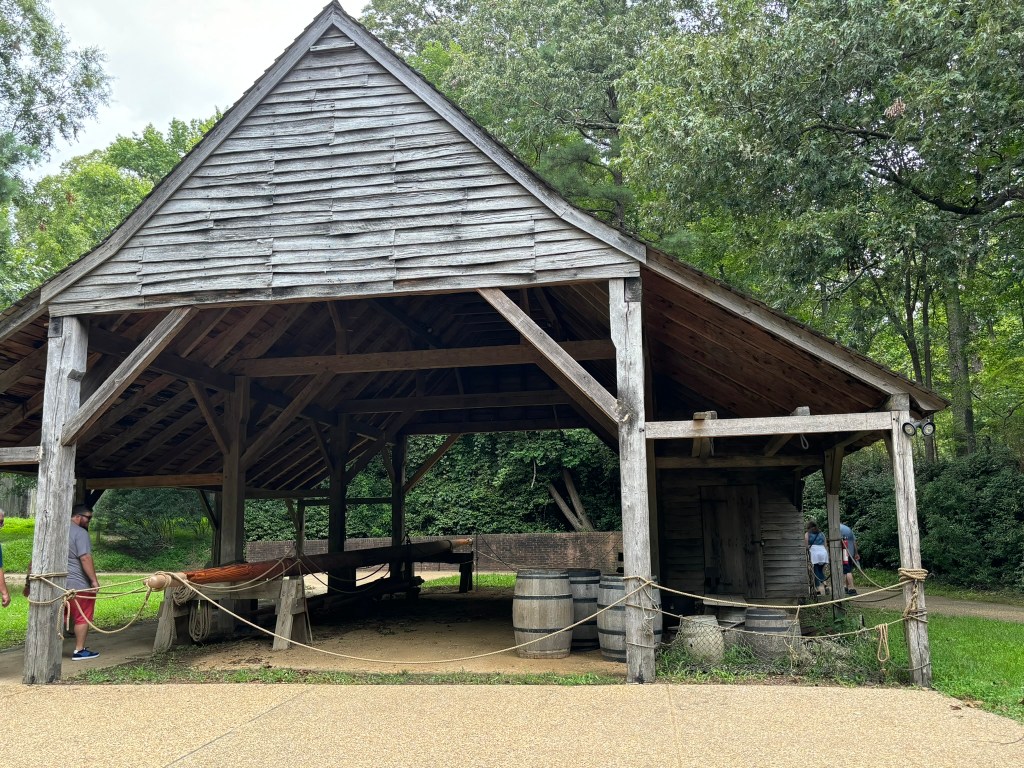
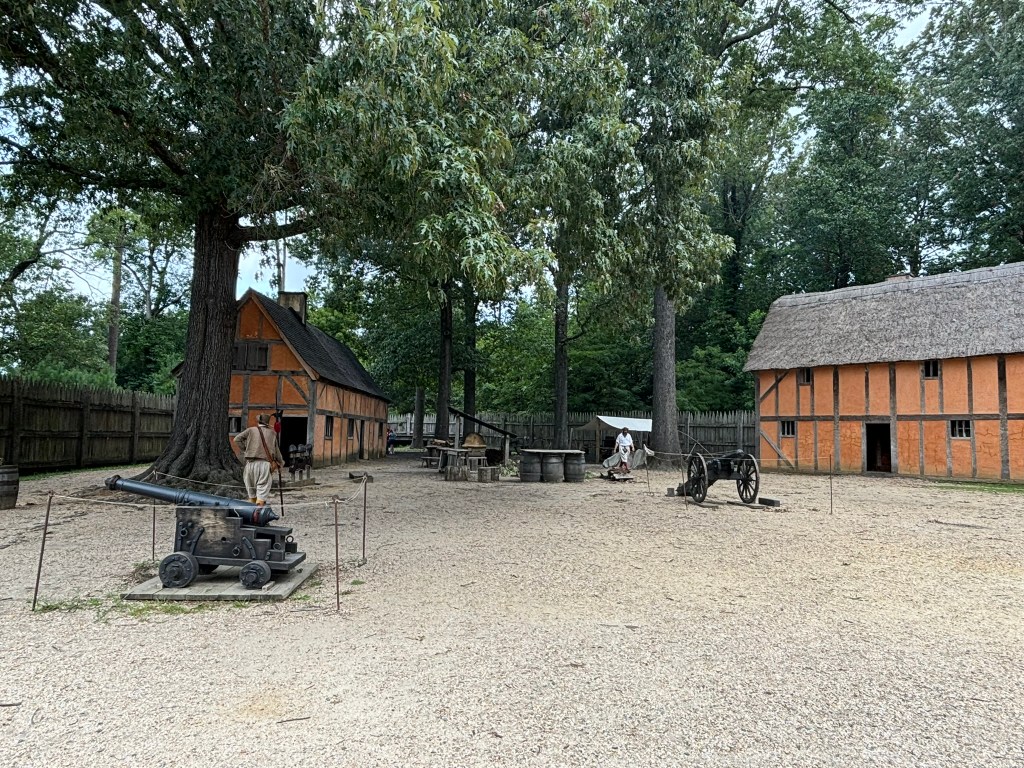
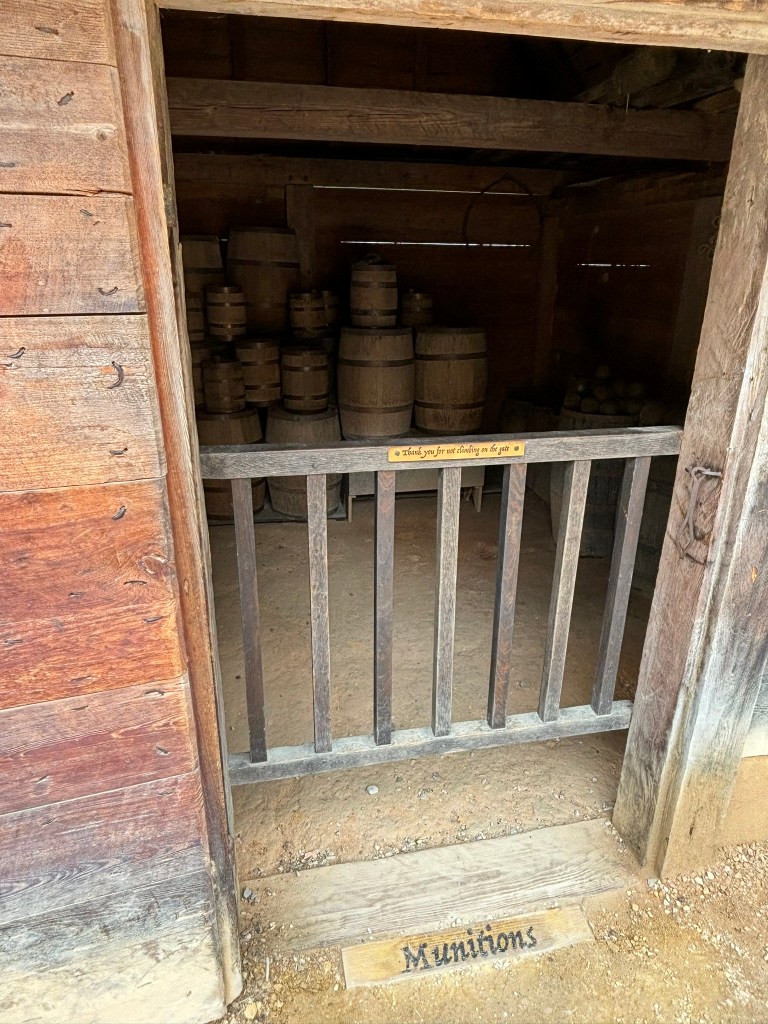
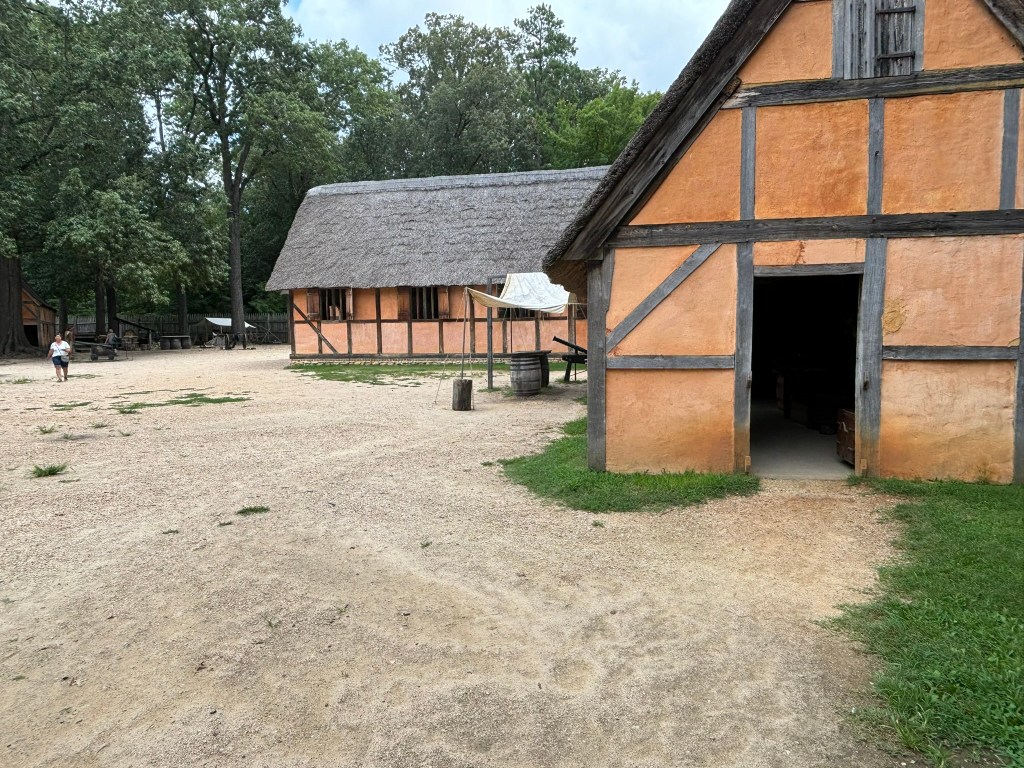
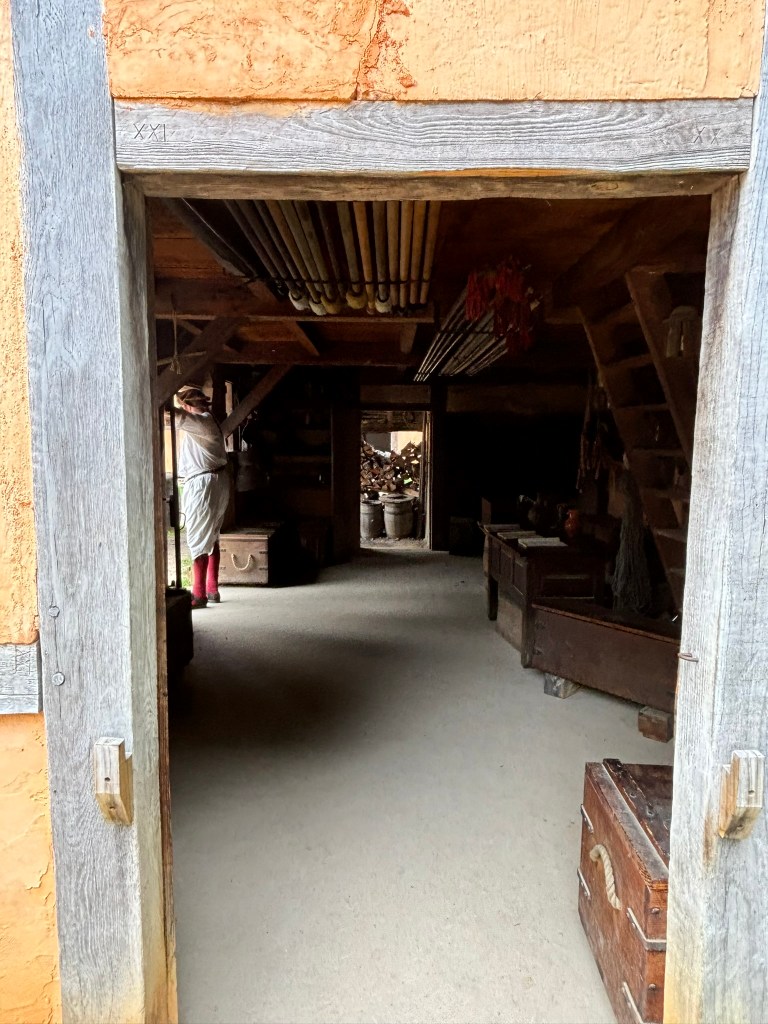
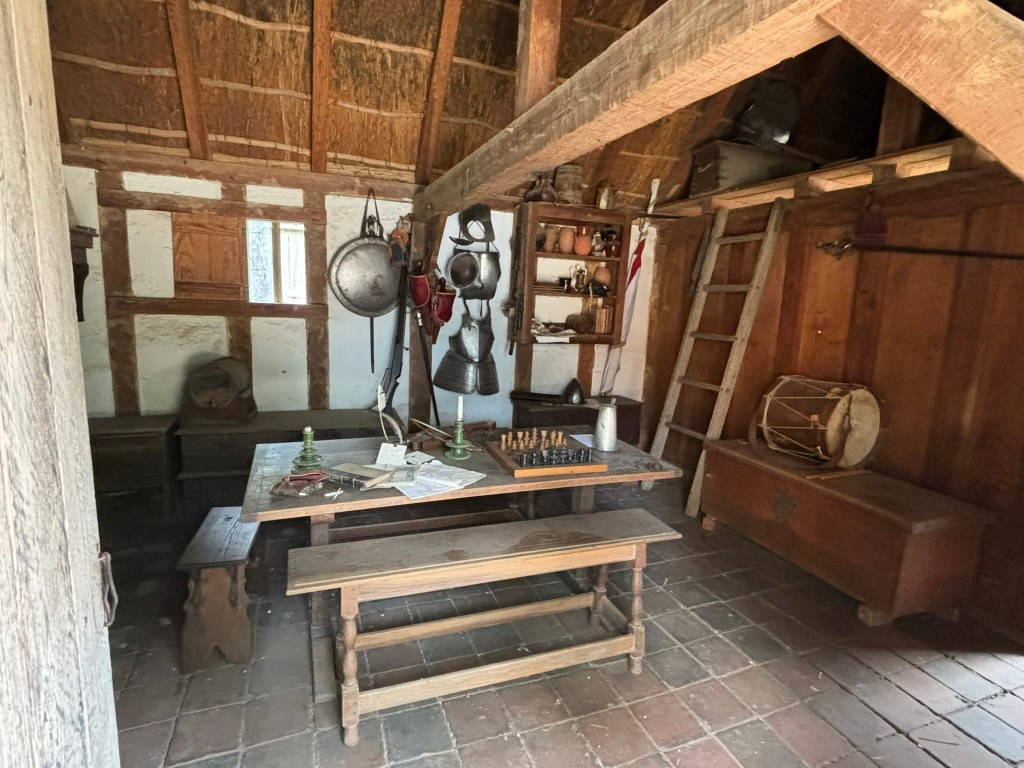
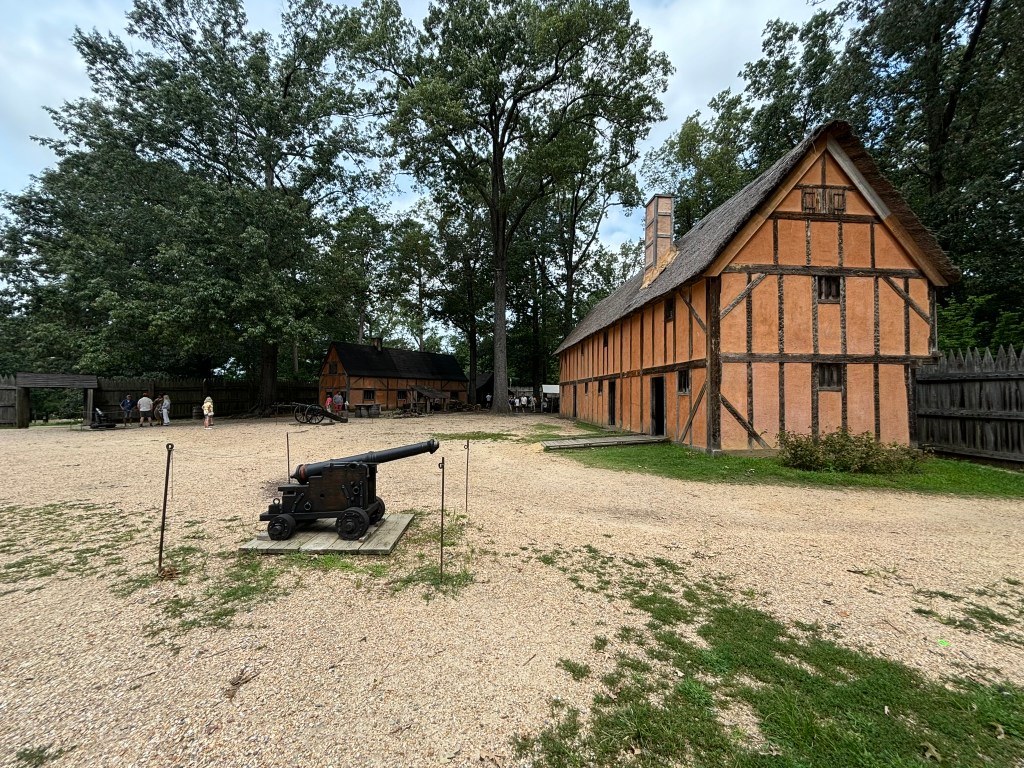
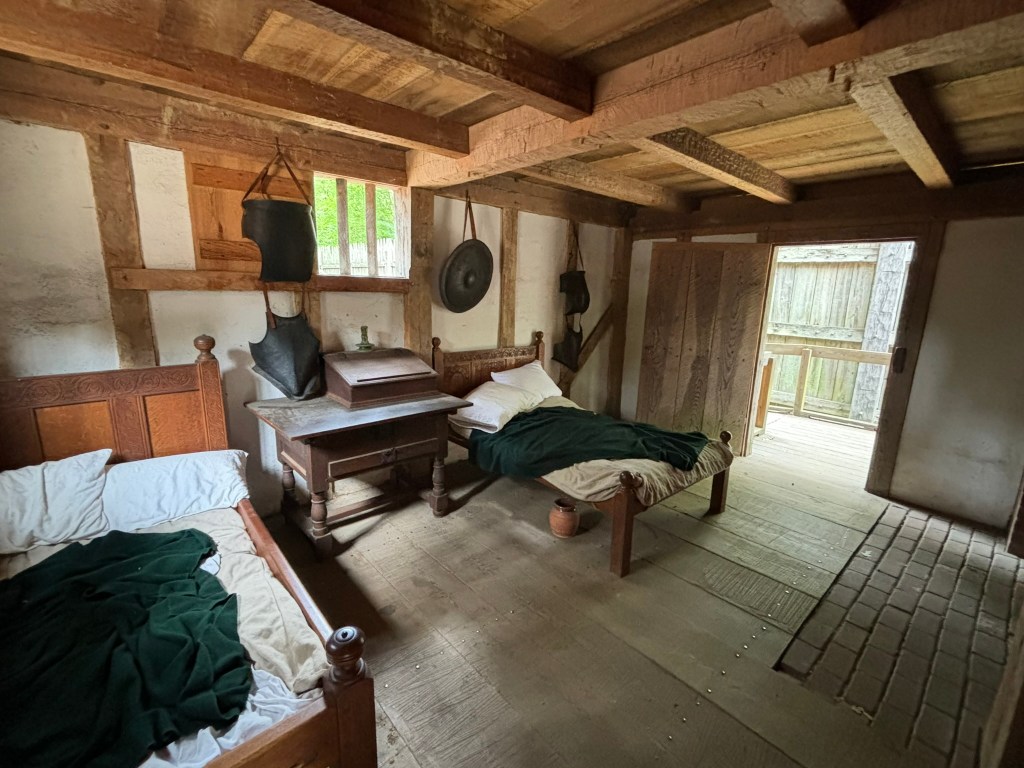
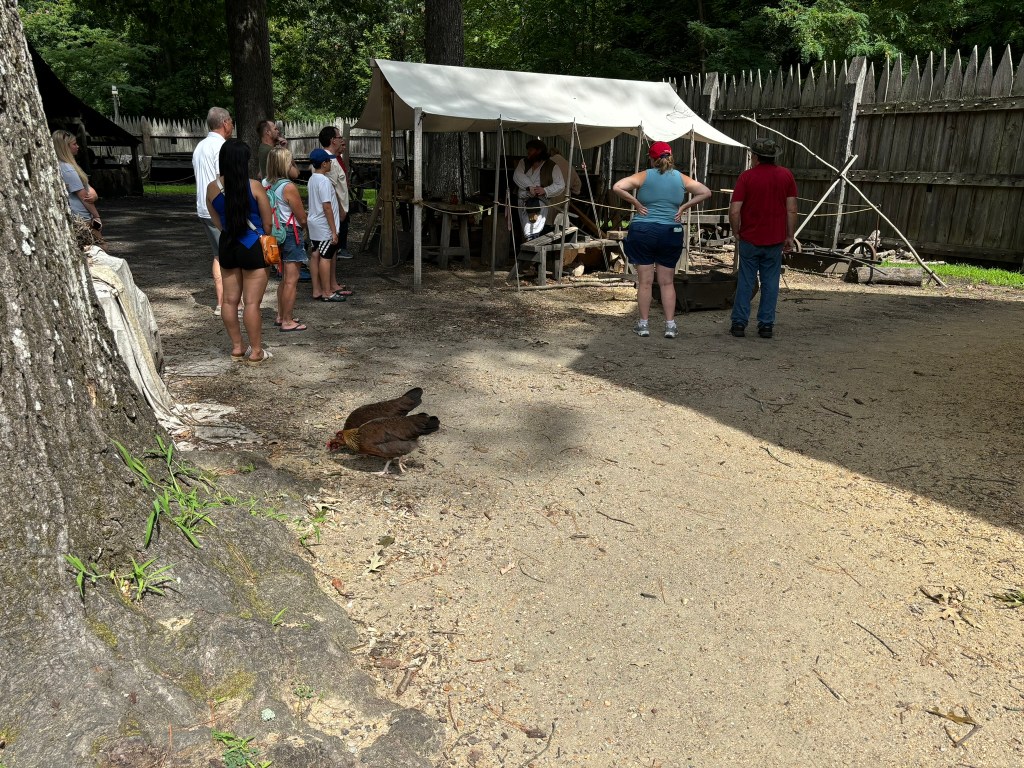
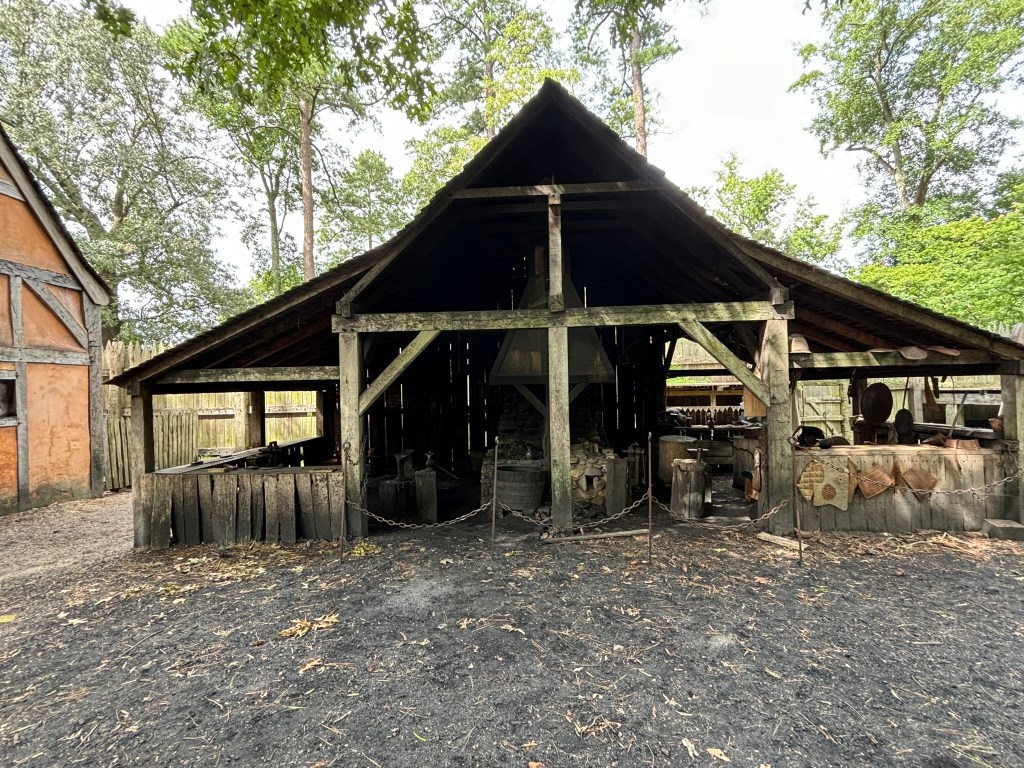
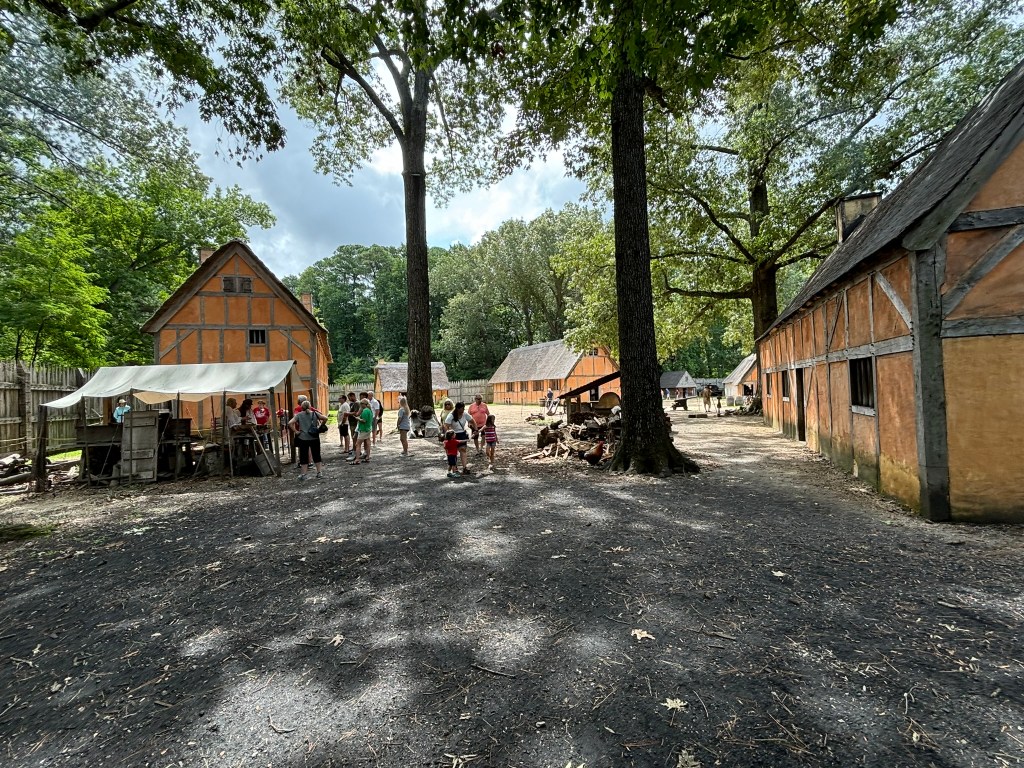
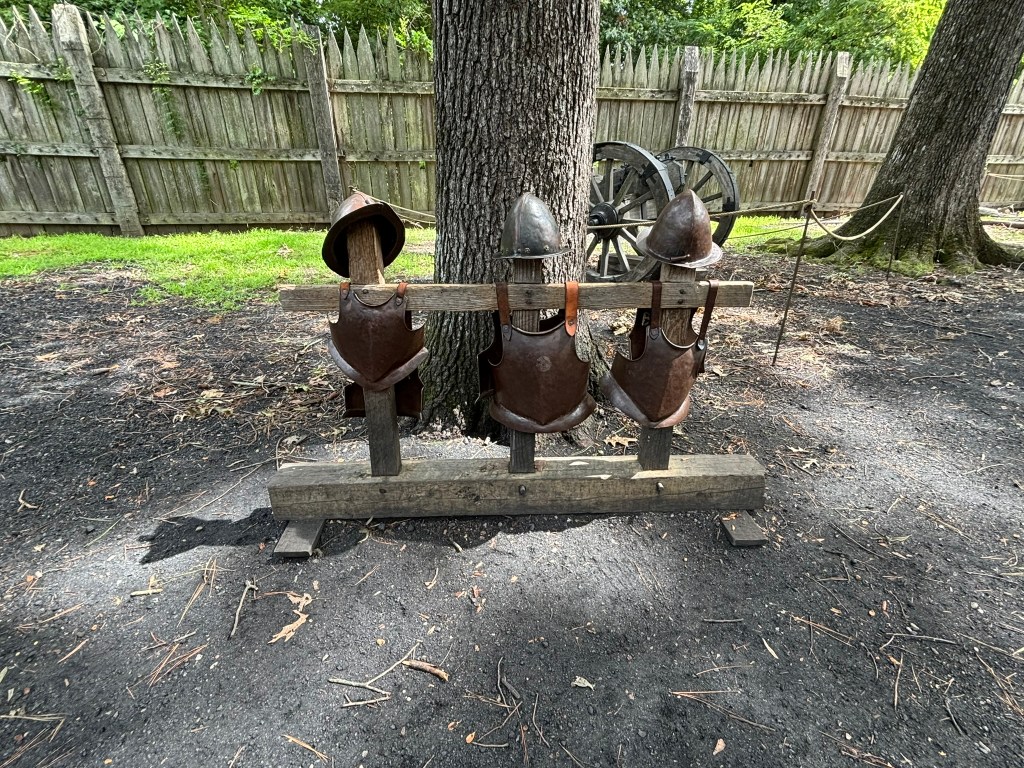
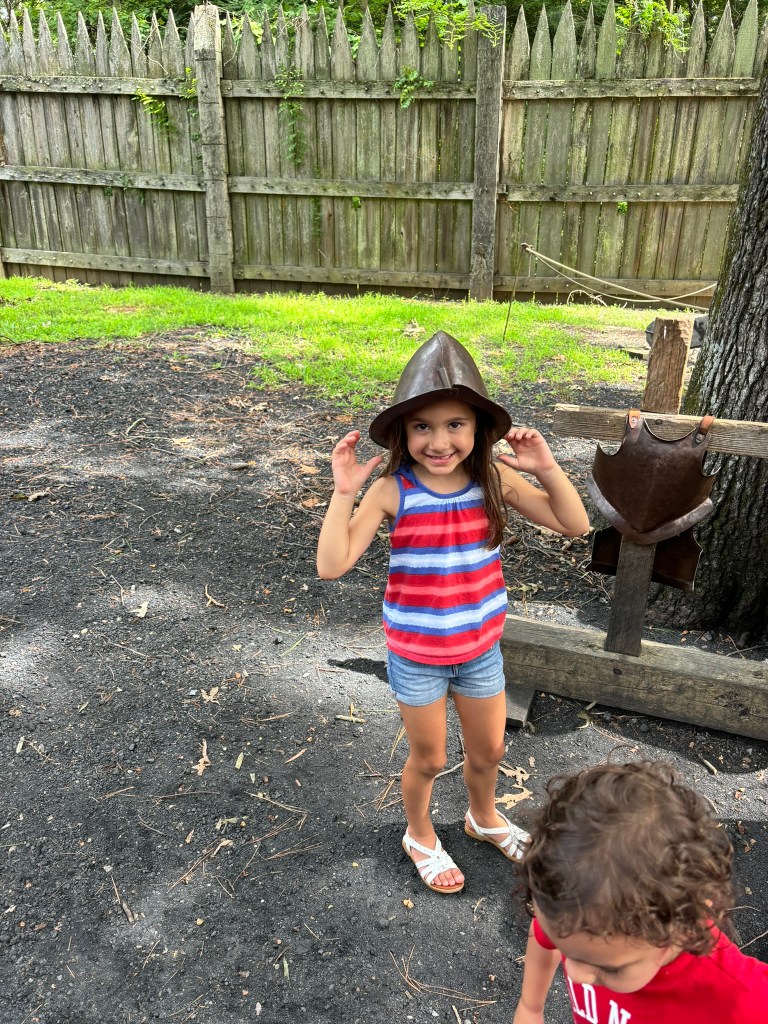
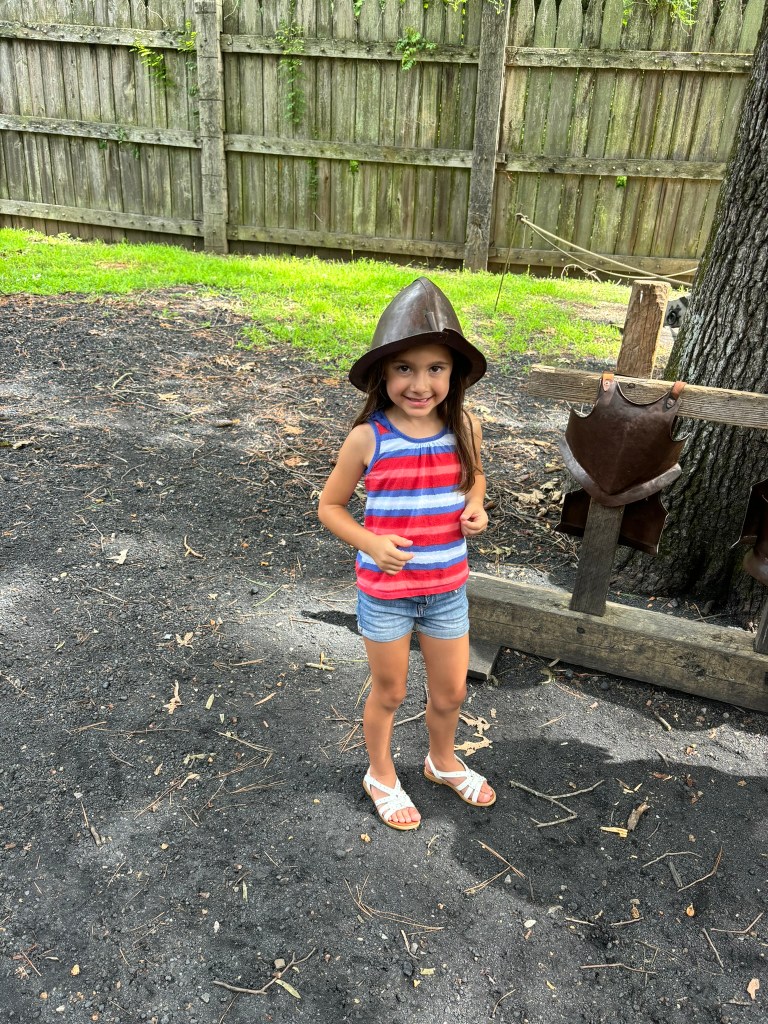
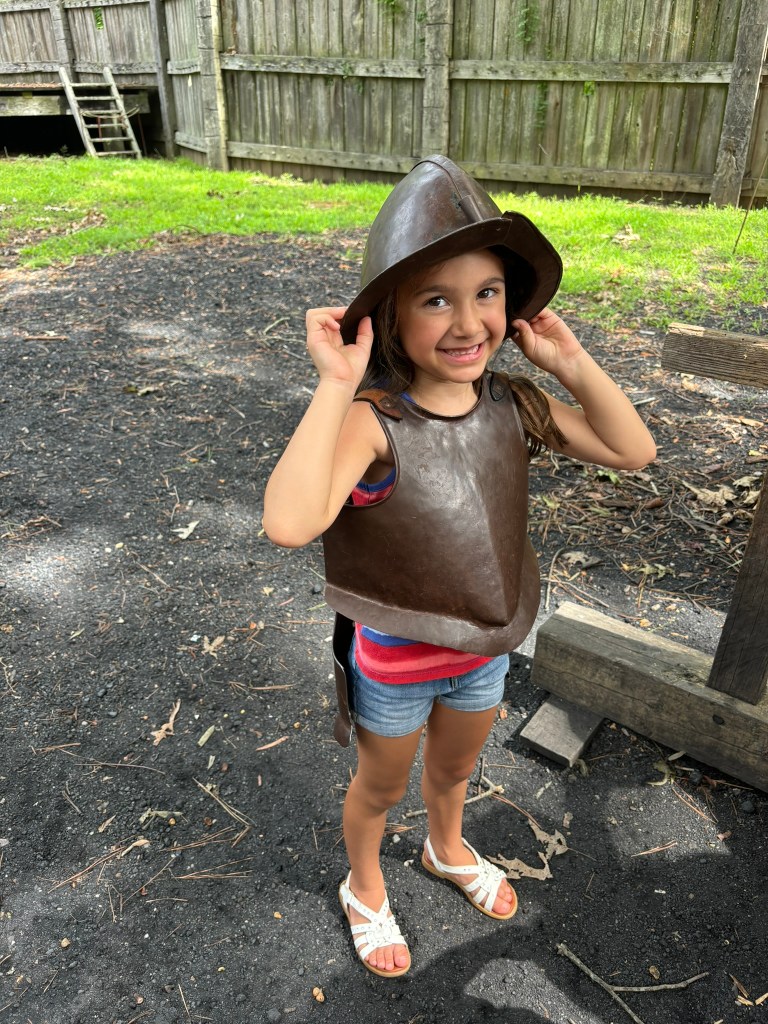
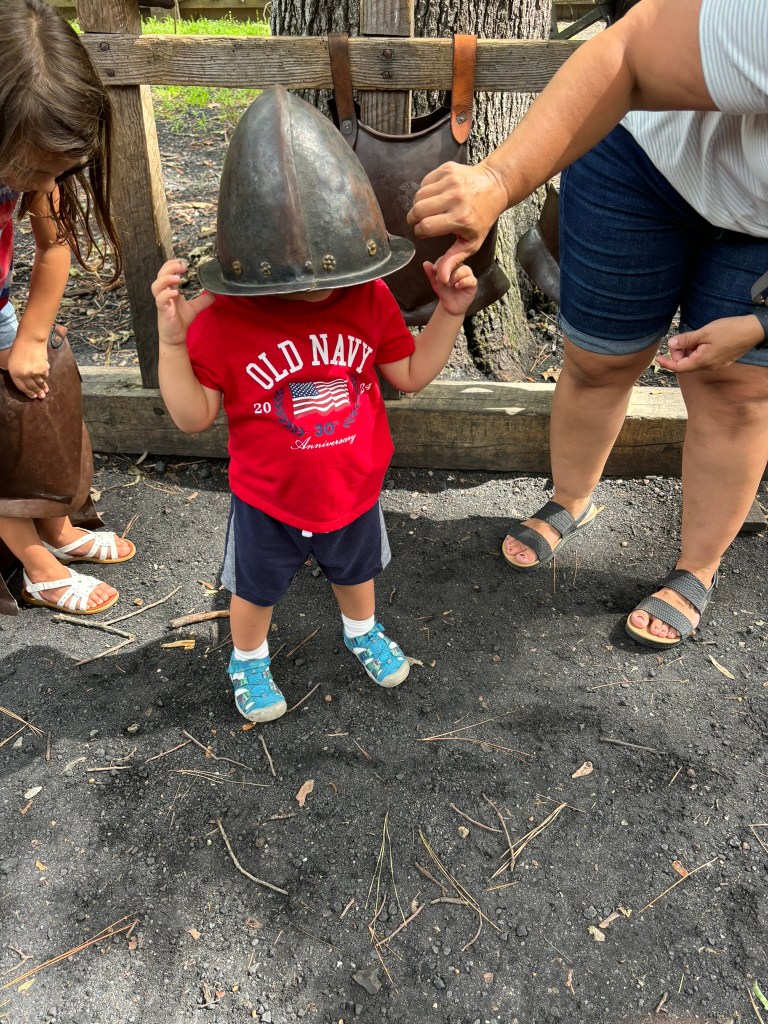
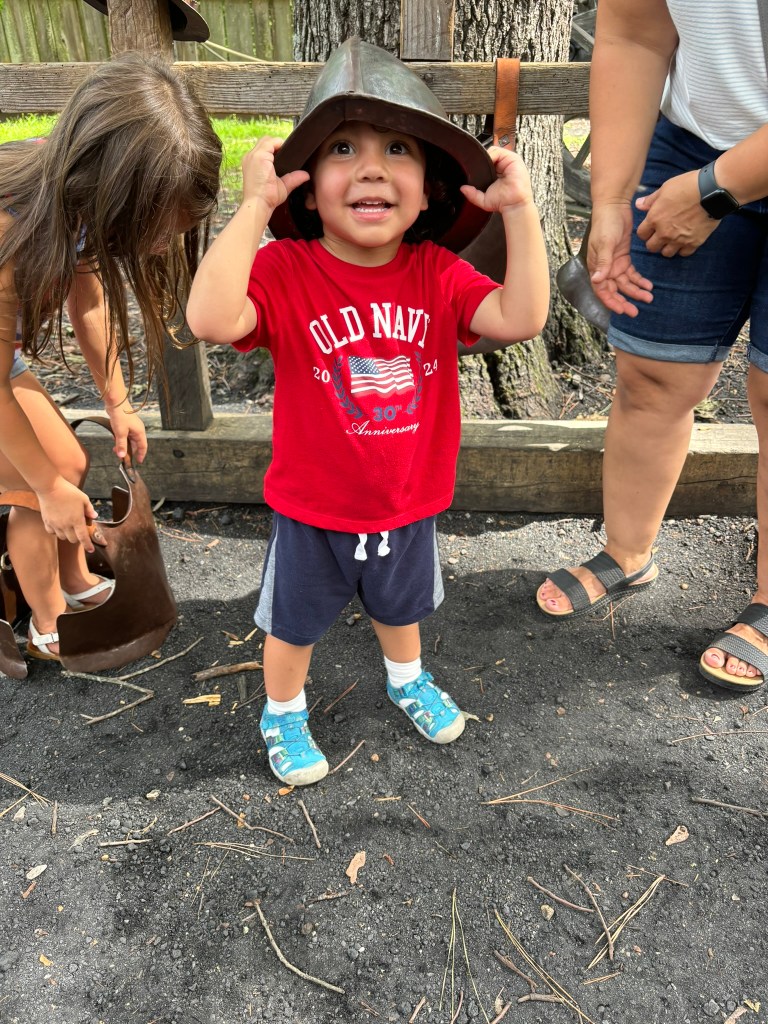
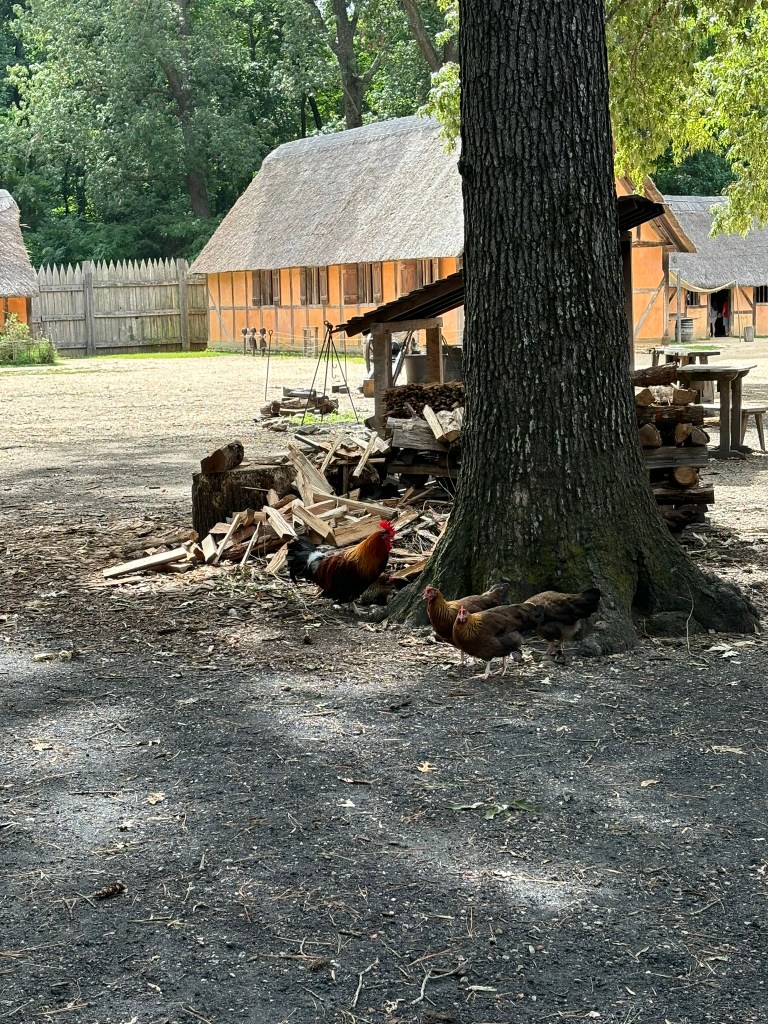
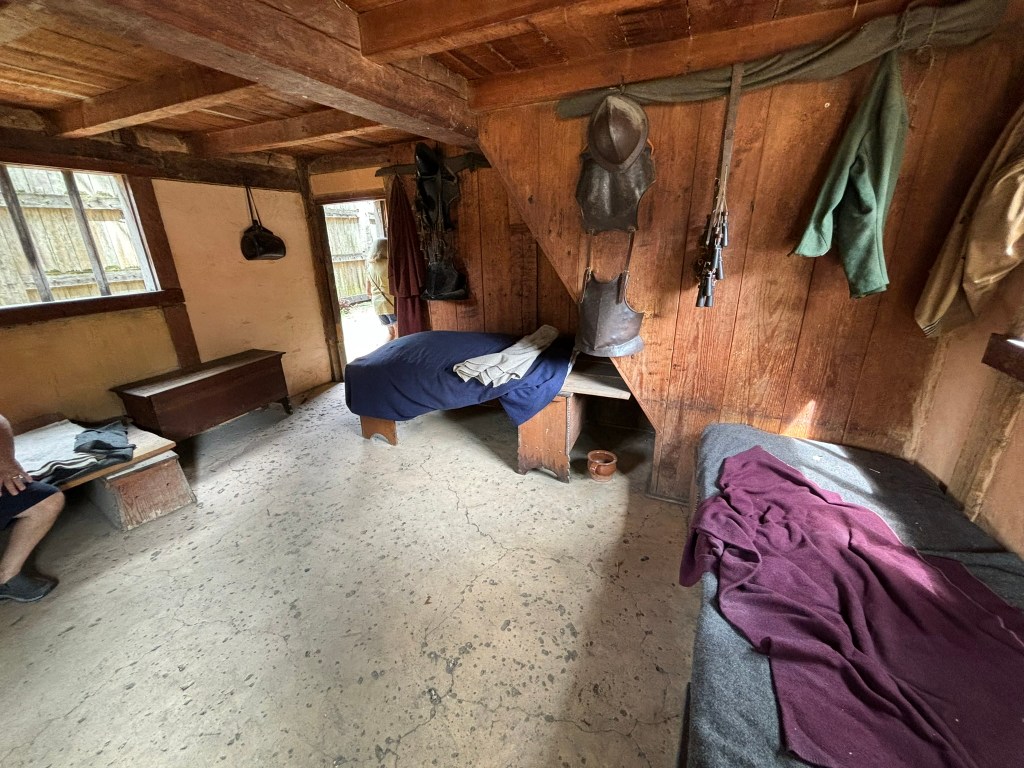
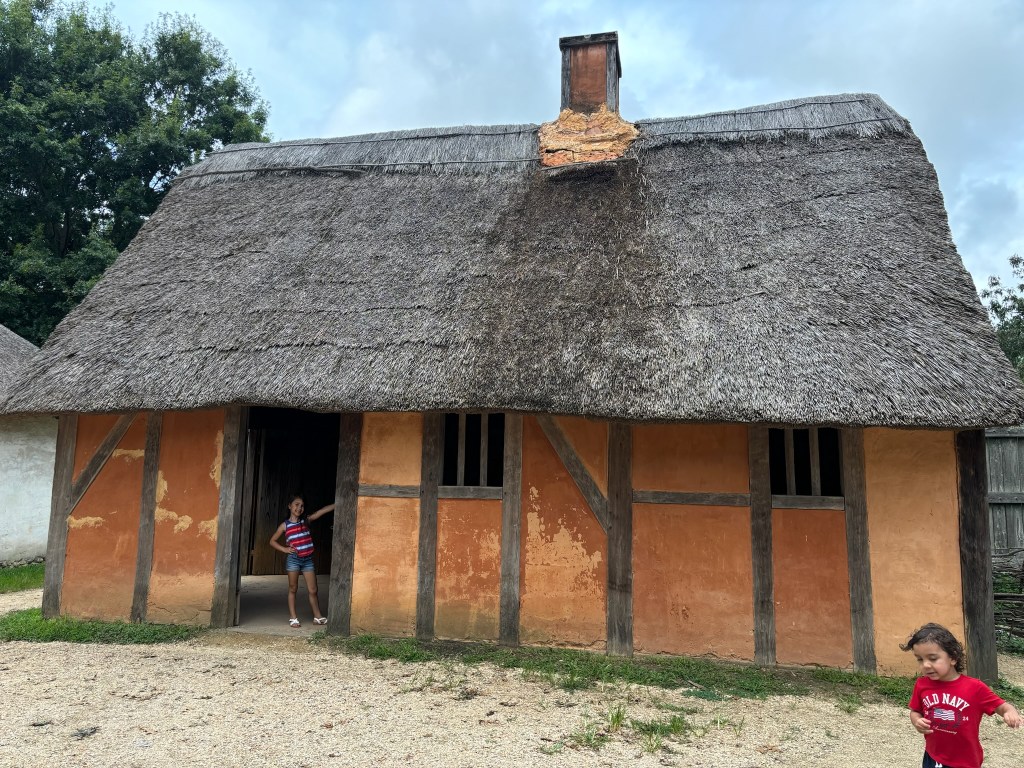
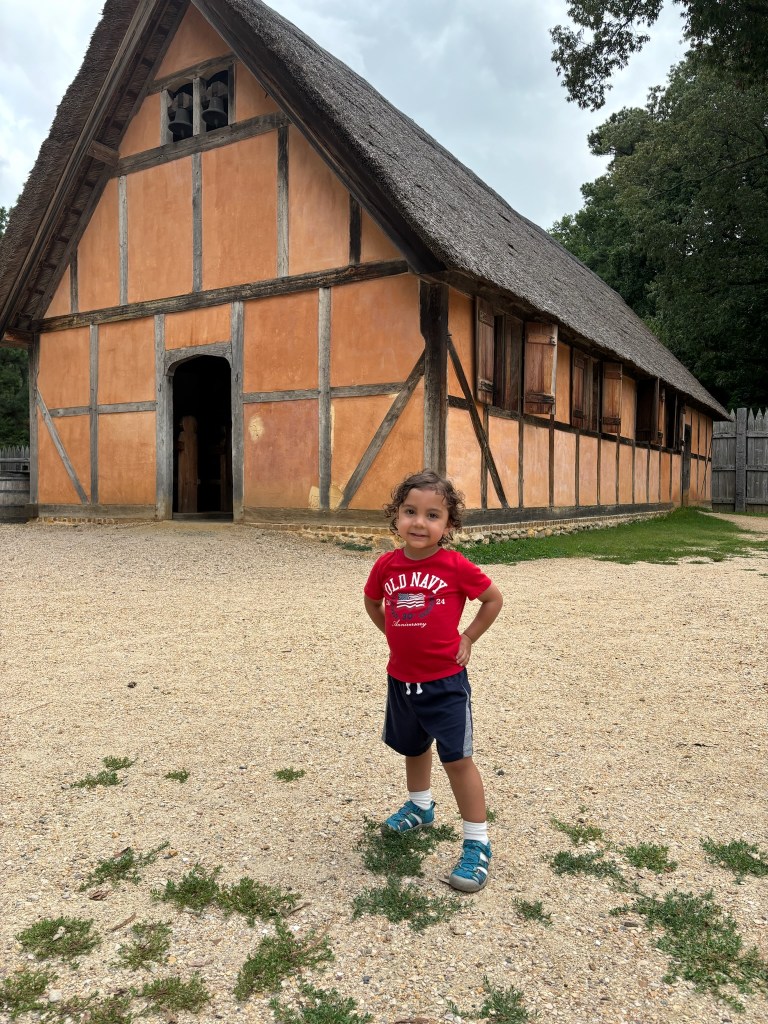
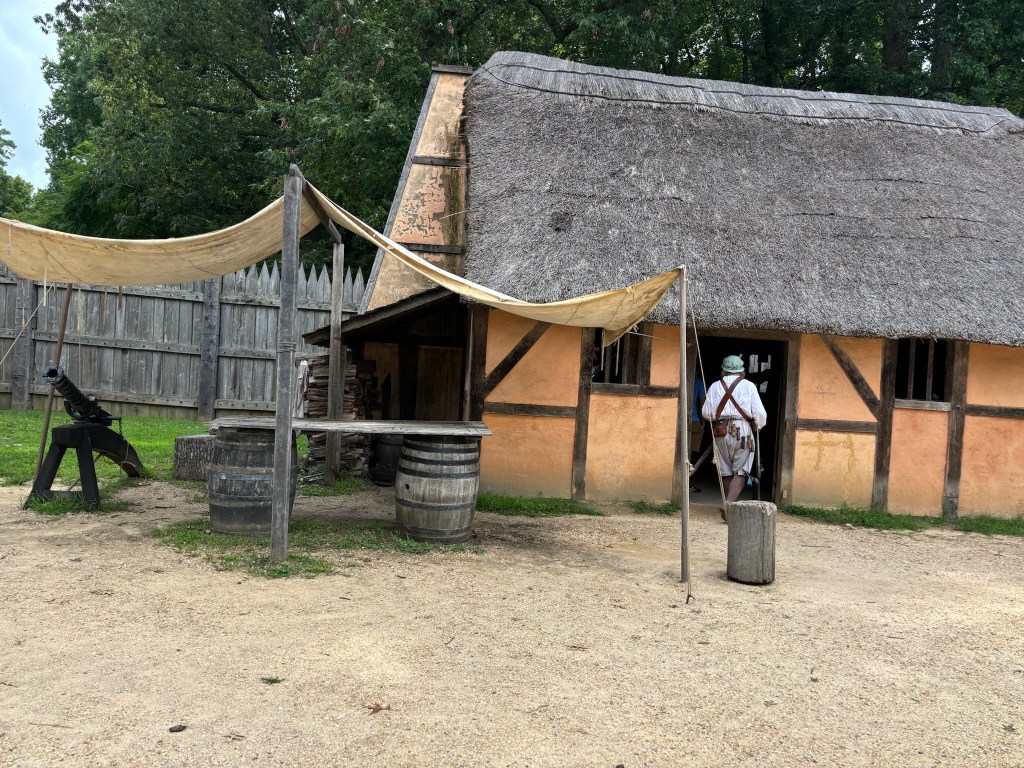
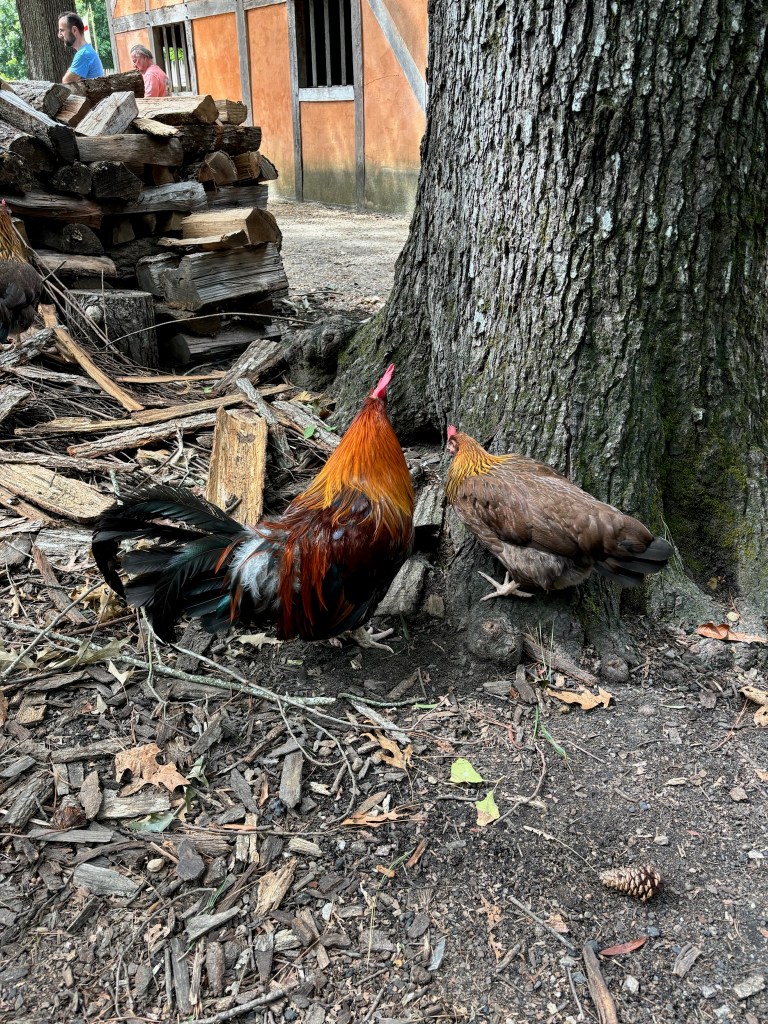
We then made our way to the replica of the original James Fort, shaped in a Triangle. One of the reenactors informed me that the original fort was likely much larger and had more buildings within, but the structures within the replica would have looked very much like the original. We explored the numerous structures within James Fort, including living quarters, a church, an armory, and workstations. There were even live chickens roaming around the fort. Just outside the fort, cannon fire demonstrations are held every 30 mins.

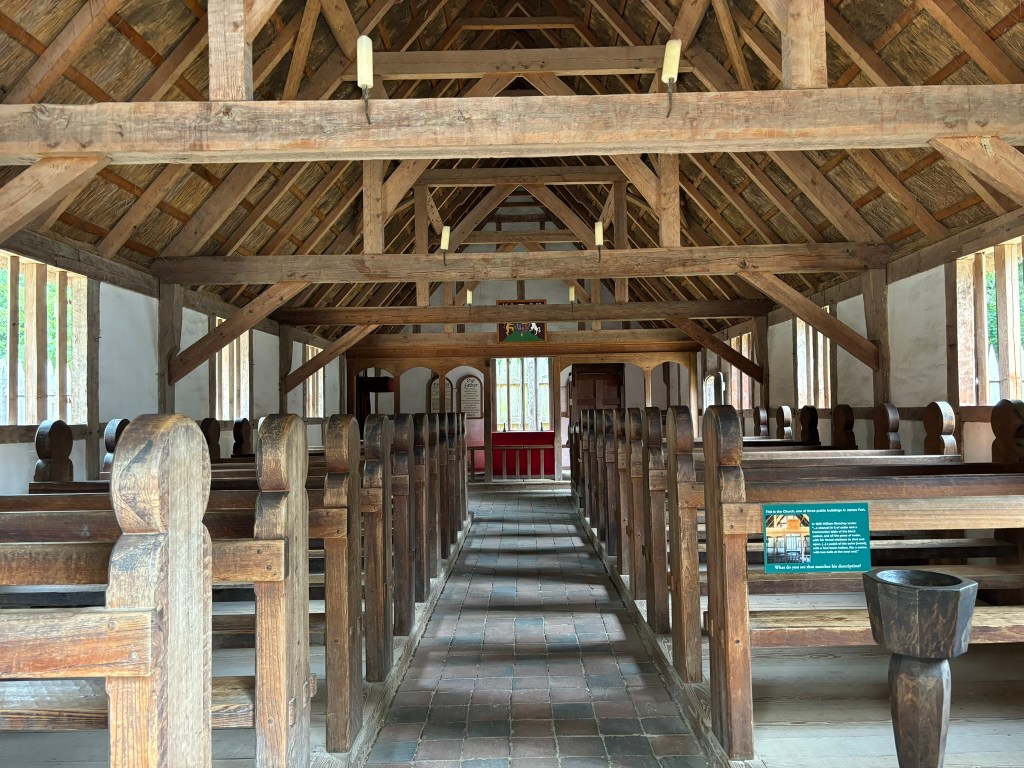
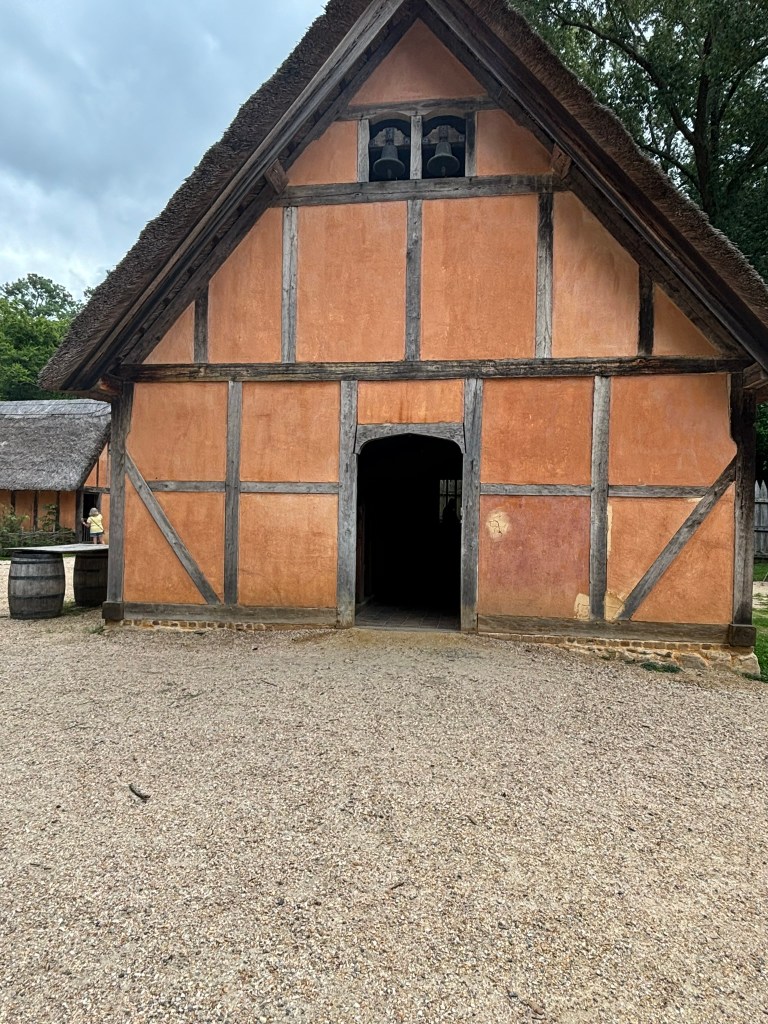
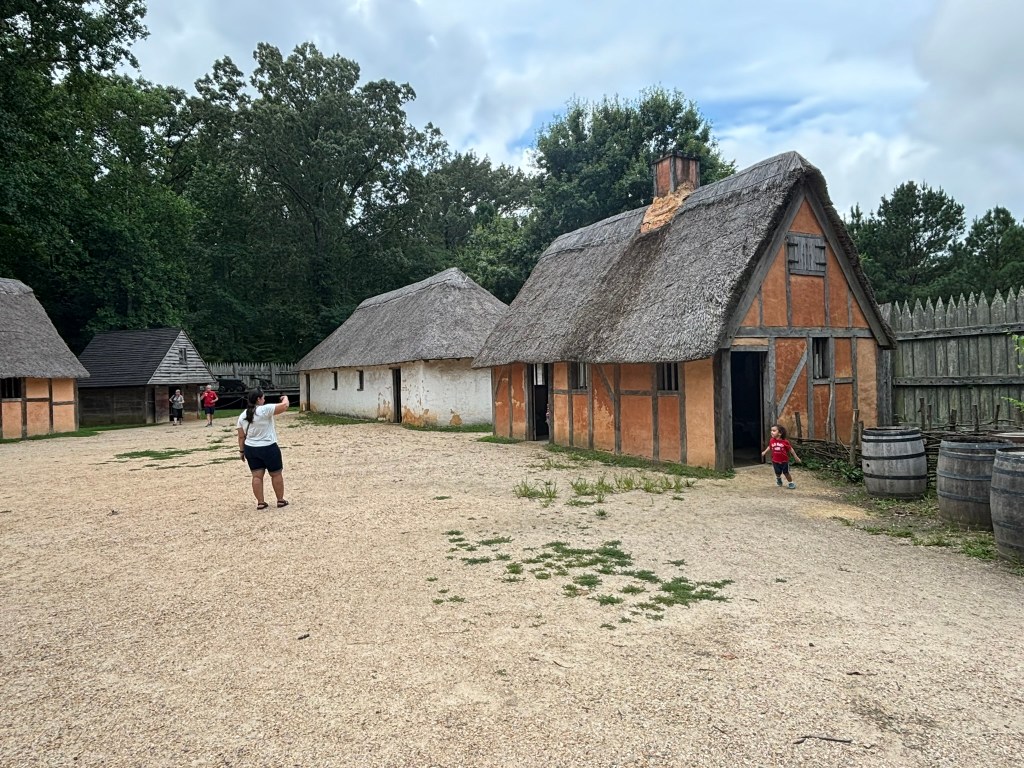
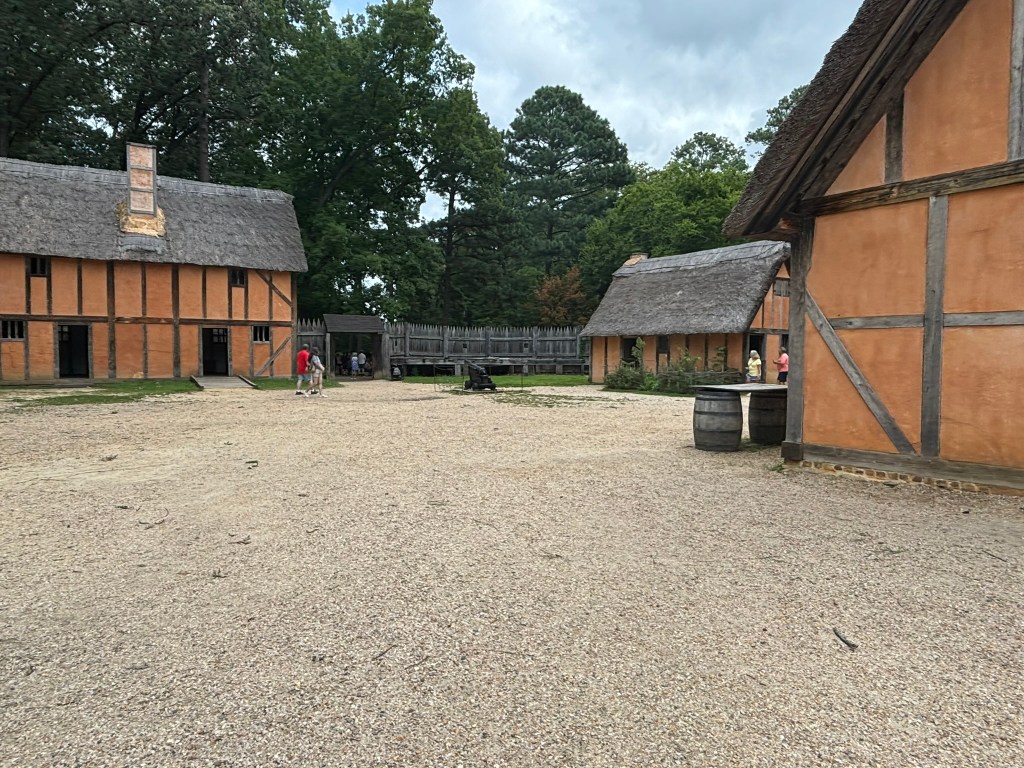



We had some time left before lunch to head back into the museum and take a look at the galleries once again. We ate lunch at the cafe within the museum. Lunch was included with the price of the tour.
After lunch, we headed back onto the bus and headed to Yorktown, which I will discuss in a later blog post.
Overview
The Jamestown Settlement was a great, immersive experience highlighting the importance of the Jamestown settlement. The museum highlighted the fact that three cultures came together in Virginia: English, Native and African. Each culture brought their own unique blend which helped develop colonial culture in the New World. As mentioned before, I thought that this tour would include Historic Jamestowne; the actual location of the original Jamestown Fort. The original fort no longer exists, but the location includes a re-creation of an early church and an Archaearium, which houses over 2,000 artifacts from the Jamestown colony. Perhaps I will have to make another trip on a future date. Despite that, I would highly recommend going to Jamestown Settlement. The museum does a great job taking you through the history of Jamestown and its significance to American history. The living history experience allows you to step into the shoes of those who lived in 1607 and imagine what life would have been like for those in a Native village, those who had to remain on the ships for months at sea, and for those living in the James Fort. The tour was $85 per adult and $45 for my daughter (5) and free for my son (2). It was well worth it considering that this was an all day tour with lunch included. I would highly recommend this tour. You can buy tickets from Viator HERE.
Follow my Instagram, Facebook, and X accounts for videos of our time in Jamestown.
For more information about the Jamestown-Yorktown Foundation, visit HERE.
Stay tuned for my next blog post which will discuss our visit to the Yorktown Battlefield and Museum in the afternoon.
Check out similar blog posts below:
 Benevento's History Blog