

When considering the United States’ most significant wars, you may immediately think of the American Revolution, the Civil War or the World Wars. A war that you probably would not think of is the War of 1812. Not only does the war lack a clever name, the United States failed to gain or lose territory as a result. What were the causes and effects of this war? Who was it against? I’d imagine most Americans would have a hard time answering these questions. While this war, often dubbed “the second American Revolution” is considered a stalemate by historians, it did lead to a growing sense of nationalism amongst Americans which propelled the country into a time period referred to as “The Era of Good Feelings”. So while the results and impact of the war are considered relatively minor, it did help mature the nation and propel it into a new age.
Causes
The American Revolution ended with the Treaty of Paris (1783). After the war and into the days of the early Republic, some Americans, often associated with the Federalist Party of Hamilton, wanted to maintain positive trade relations with the British. Other Americans, often associated with the Democratic-Republicans of Jefferson, looked upon the British with suspicion. They believed that American Anglophiles wanted to turn the new US government into a British style monarchy. The Democratic-Republicans often favored the French in international conflicts. During both the French Revolutionary Wars of the 1790s and the Napoleonic Wars of the early 19th century, tensions remained between the United States and the superpowers of Britain and France. Both Britain and France seized American ships who traded with their enemy. Tensions with the French led to the XYZ Affair and the Quasi-War during the presidency of John Adams. When the Democratic—Republicans came to power with the election of Jefferson in 1800, tensions with the British only increased. During the Napoleonic Wars, Britain seized about 1,000 American ships and practiced impressment- forcing American sailors into the British navy. Desertion was common in the British navy and they sought to replace manpower with captured Americans. This practice continued into the presidency of James Madison, elected to his first term in 1808. The practice of impressment angered Madison who believed that the British were trying to strangle American trade and disrespected American neutrality.
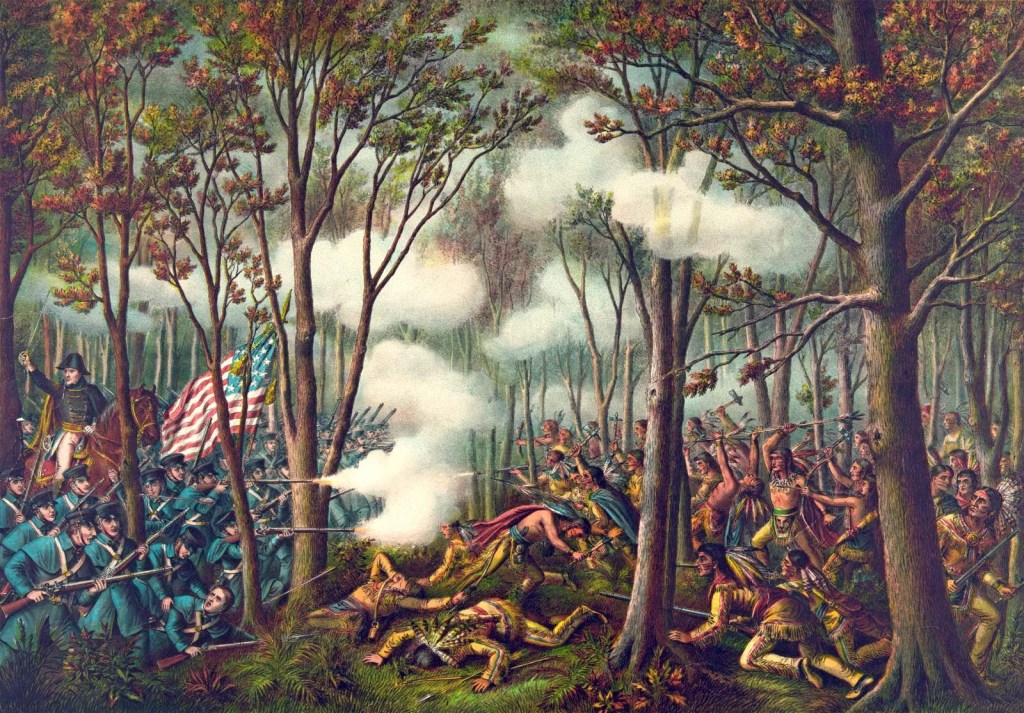
Another source of anger for Americans towards the British was the British supply of weapons to Native American tribes at war with the United States. Tecumseh’s War was fought in the Indiana Territory between the United States and a confederacy of Native American tribes. The confederacy was led by Shawnee chief Tecumseh and his brother, nicknamed by Americans as The Prophet. A major victory for the Americans came in 1811 at the Battle of Tippecanoe. At the conclusion of the battle, it was discovered that the Native confederacy was being supplied with weapons from British Canada. This led to the “Warhawks” in Congress, led by Henry Clay and John C. Calhoun to call for war against Britain. With Britain strangling American trade, impressing Americans into their navy, and now supplying weapons to Native allies, the United States declared war for the first time in the nation’s history, against Great Britain on June 17th, 1812.
Events of the War
The course of the war from 1812- 1815 could be considered a stalemate as neither side gained or lost much territory. However, there were many significant events that took place throughout the war. The fight along the Great Lakes went back and forth between British and American victories. The American navy led by Commodore Oliver Hazard Perry won a major victory over the esteemed British navy at the Battle of Lake Erie. The Americans maintained control over Lake Erie for the remainder of the war, and re-took Fort Detroit, which they had lost earlier in the war.
When Napoleon was defeated in Europe in 1814, the British were able to send more troops to the United States. They burned towns along the Chesapeake Bay, and then marched into Washington DC after a weak defense by the Americans. The British proceeded to set fire to the White House, the Capitol building and other federal buildings. They sought retribution for similar actions done by the Americans in Canada. Within a couple days of the fires being set, an intense rainstorm, likely a hurricane, swept through Washington and helped put out the fires. A possible tornado touched down and tore through the Capitol building. While extensive damage was done to Washington, the storm helped limit the extent of the destruction.

After burning Washington, the British had their eyes set on Baltimore. They bombarded Fort McHenry for 25 hours, an event witnessed by Francis Scott Key, who was captured by the British and watched from a boat. After the American fort survived the bombardment, Key watched the Americans hoisting the American flag in the morning hours. Key was so moved by this event that he penned the lyrics of our Star-Spangled Banner.
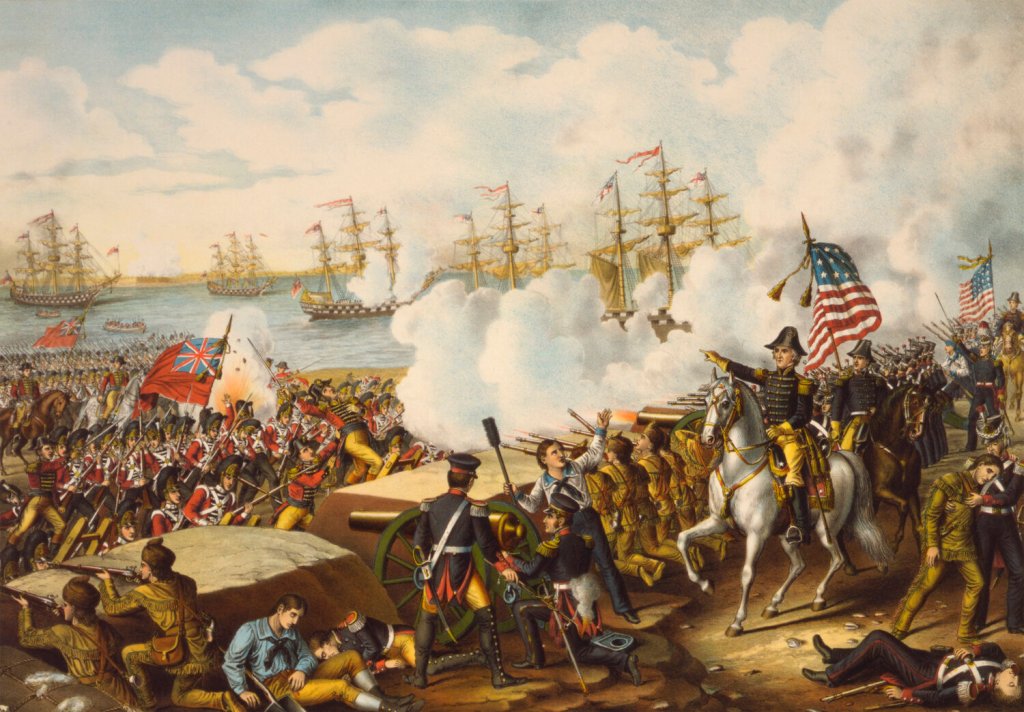
Another impactful event took place in the last days of the war. In late 1814-1815, the British sought to capture the important port city of New Orleans. Andrew Jackson led American troops in a valiant defense of the city on January 8th, 1815. The British suffered 2,017 casualties while the American suffered just 71. The overwhelming victory boosted the morale of the country and a great sense of national pride swept the nation. However, the victory at New Orleans came after the treaty of Ghent was signed in Belgium on December 24th, 1814. With news taking a month to travel across the Atlantic, the participants of the battle of New Orleans had no idea of the peace. Nonetheless, the battle was significant for boosting nationalism and unity in the country, and also increasing the fame and notoriety of Andrew Jackson.
Impact of the War
What if the United States was more successful in this war? Would they have annexed part or all of Canada? What if the British were more successful in the war? Would they have gained territory in the United States? Would they have seized New Orleans and cut off trade down the Mississippi River? We can’t know for sure but what we do know is that the war did have an impact on the young country.
As the first military test of the young nation, the Americans gained national pride. The war showed that the United States could go toe to toe with the world’s superpower once again. The country gained respect throughout the world and propelled the country into the “Era of Good Feelings” a period closely associated with the presidency of James Monroe (1817- 1825). Partisanship was perhaps at its lowest point in the nation’s history. Monroe won his elections overwhelmingly as the nation coalesced around the principles of the Democratic-Republican platform. The two-party system was temporarily at an end with the demise of the Federalist Party (who were opposed to the war). While a growth in nationalism and unity was a significant outcome of the War of 1812, other consequences of the war include the following:
- Andrew Jackson made a name for himself with his victory at New Orleans. Later, he would go on to win the presidency and completely re-shape the office of President as well as the political system in early American history.
- The country gained the words of the Star-Spangled Banner from Francis Scott Key as he witnessed the British bombing of Fort Mchenry outside Baltimore.
- Years of peace between the United States and Britain followed with treaties following the war.
So while the war of 1812 is known as the “forgotten war”, it is worth noting and acknowledging the impact that the war had on a young nation who was seeking to find its own identity.

Check out these similar posts:
 Benevento's History Blog