

My previous two blog posts focused on the lost colony of Roanoke and the first permanent colony of Jamestown. This blog post continues to focus on colonial America, and an individual who could be considered an early founding father: William Penn.
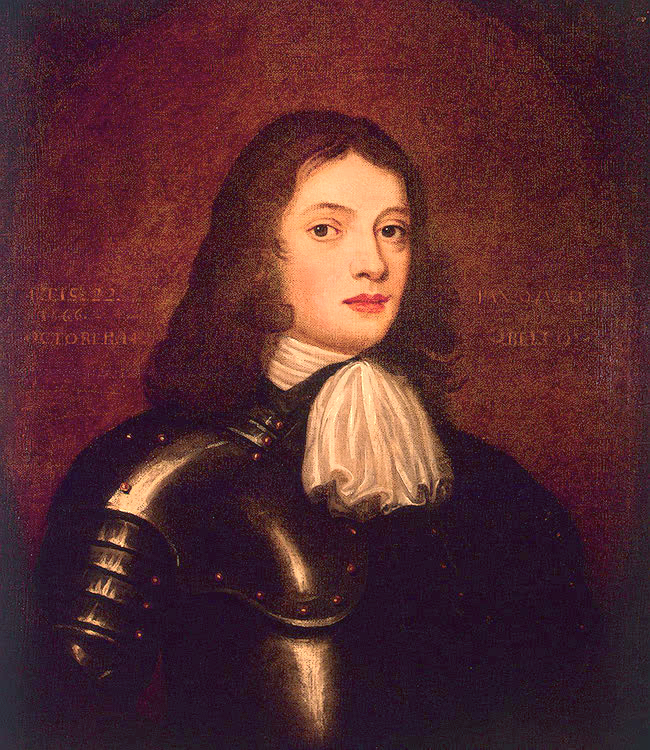
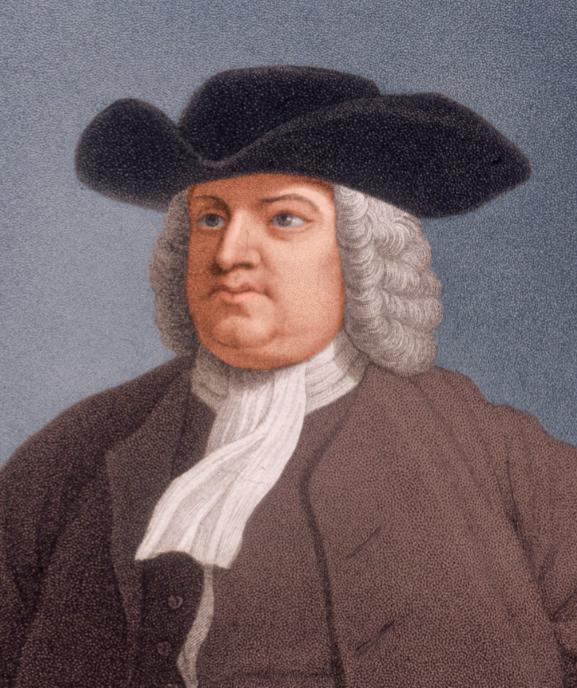
William Penn (1644-1718) was an English Quaker leader and visionary who founded the Province of Pennsylvania. Penn’s vision of a free and democratic society, based on religious tolerance and peaceful coexistence, was a remarkable achievement in the turbulence of the 17th century.
Penn’s Early Life and Conversion to Quakerism
Penn was born in London, the son of Admiral Sir William Penn, a prominent naval officer and politician. Penn received a classical education at Oxford University, but he rebelled against the Anglican Church and was expelled for his religious nonconformity. Penn was influenced by the Puritan movement and by the preaching of Thomas Loe, a Quaker itinerant who visited his family in Ireland.
Quakersim, or the Society of Friends, was a radical sect of Christianity that emerged during the English Civil Wars (1642- 1651). They rejected the authority of the clergy, the sacraments, and the rituals of the established church. They believed in the “inner light” which guided every individual, and in the equality of all people before God, which caused them to be quite liberal for the times. They also refused to swear oaths and pay tithes, and they opposed war. Quakers were persecuted by both the royalist and the parliamentary factions, and many were imprisoned, fined, or executed for their faith.
Penn joined the Quakers in 1667 after hearing Loe preach again in the town of Cork, Ireland. He became a devoted follower and a prolific writer and defender of Quaker doctrines. He also became a close friend and associate of George Fox, the founder of Quakerism. Penn suffered several arrests and imprisonments for his public preaching and publishing. He engaged in debates and controversies with other religious groups, such as the Baptists, the Presbyterians, and the Catholics.
Penn’s Vision of a Holy Experiment
Penn was not only a religious thinker, but also a political activist and idealist. He advocated for democracy, religious freedom, and human rights. He wrote several proposals for a union of the English colonies in America, and for a European federation of states. He also dreamed of creating a new society in America where Quakers and other persecuted religious minorities could live in peace and harmony.
In 1681, Penn received a royal charter from King Charles II, granting him a large tract of land in North America, in payment of a debt owed to his father. The land, which Penn named Pennsylvania, “Penn’s Woods”, included the present-day states of Pennsylvania and Delaware. Penn saw this as an opportunity to establish his “holy experiment”, a model of a Christian commonwealth based on the principles of justice, brotherly love, and liberty of conscience.
Penn sailed to America in 1682, and founded Philadelphia, the City of Brotherly Love, on the banks of the Delaware River. He also drafted a Frame of Government for Pennsylvania, which provided for a representative assembly, an elected governor, and a system of courts. He guaranteed freedom of worship and civil rights for all inhabitants, regardless of their faith. Penn established a fair and friendly relationship with the Native Americans, who welcomed him as a peacemaker. He wrote them a letter acknowledging past mistreatments towards the Natives, but Penn assured them that he came in peace and hoped for friendly relations. He negotiated several treaties with the Lenape and other tribes, and paid them for their land. He also invited them to join his colony as equal citizens.
Penn’s colony attracted thousands of settlers from various backgrounds and countries, such as England, Wales, Ireland, Scotland, Germany, France, and Holland. Many of them were Quakers, but others were Mennonites, Lutherans, Moravians, Amish, Catholics, Jews, and others. Pennsylvania became a diverse and prosperous colony, and a beacon of religious tolerance and social reform.
Penn’s Legacy and Influence
Penn returned to England in 1684 to deal with political and financial troubles. The Penn family often had tensions with the Calvert family (The founders of Maryland). He visited America again in 1699, but he spent most of his later years in his homeland. He died in 1718, and did not profit at all from his colony. Penn was scammed by his business manager, Philip Ford, who embezzled money from Penn’s estate. Despite this, Penn’s vison of creating a colony of equality and freedom had a lasting impact on North America. Penn was a man ahead of his time, and his colony of Pennsylvania remained a haven for religious freedom and a center of culture and education in America. His democratic principles and his vision of a federal union inspired the framers of the U.S. Constitution. His writings and his example also influenced many leaders and movements for social justice, such as the abolitionists, the suffragists, and civil rights activists.
William Penn was a man of faith, courage, and vision, who dared to challenge the status quo and create a new society. He was a man who lived up to his motto: “Love is the hardest lesson in Christianity; but, for that reason, it should be most our care to learn it.”.
Sources:
William Penn | Biography, Religion, Significance, & Facts. https://www.britannica.com/biography/William-Penn-English-Quaker-leader-and-colonist
William Penn – US History. https://www.ushistory.org/penn/
Brief Biography of William Penn – US History. https://www.ushistory.org/penn/bio.htm
 Benevento's History Blog