Social Media

Enter your email to stay updated on new blog posts.

Tag: The Confederacy

  • I recently finished teaching the Civil War, and for much of the beginning of the unit, we focus on the main causes leading up to the war between 1850 and 1860. While slavery was unquestionably the central cause of the Civil War, there were numerous interconnected causes that all revolved around the slavery debate. There were the states’ rights and nullification debates, the cultural and economic differences between North and South, the moral contradictions of slavery, and the repeated failure of political compromises. However, the sub-cause that I want to focus on in this blog post is the power struggle between the North and South—particularly the fight over western lands.

    Someone at a recent history event shared an analogy that I thought perfectly captured the causes of the Civil War. They described the causes as a bicycle wheel. Slavery is the hub in the center, while all of the other causes are like the spokes extending outward. While teaching this material this year, it struck me just how important the competition over western lands became in building the tensions between the North and South.

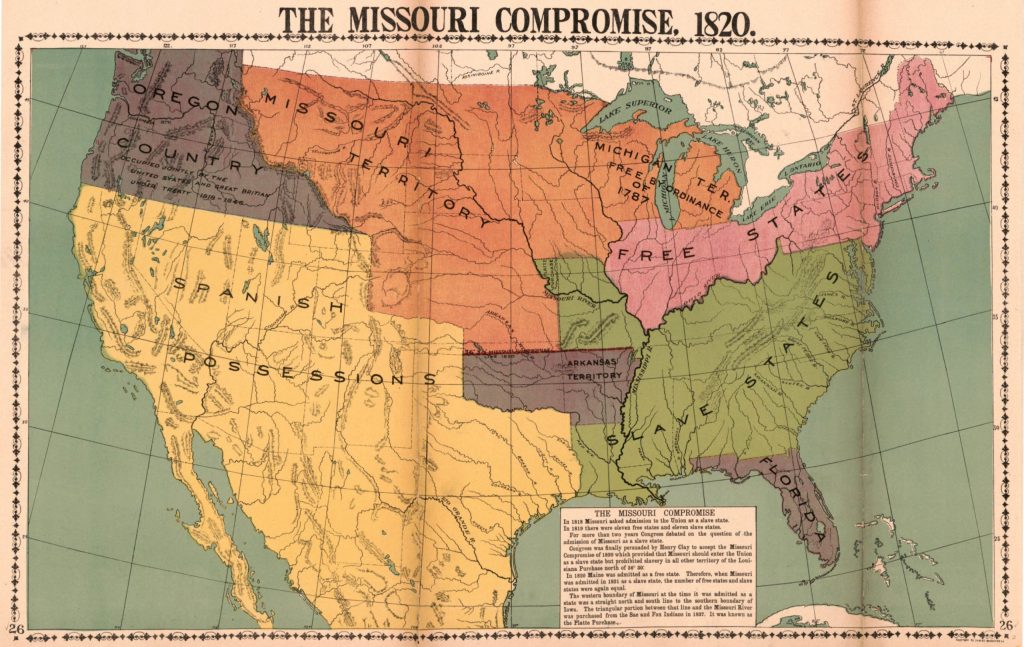
    When discussing the road to the Civil War, one of the earliest major developments was the Missouri Compromise of 1820. Although it was passed forty years before the Civil War began, it planted the seeds for future conflict. At the time, there were an equal number of free and slave states, meaning each side had equal representation in the Senate. Maintaining that balance became critically important because Southern leaders feared being outvoted by Northern senators, while Northerners feared growing Southern political influence—particularly over the issue of slavery.

    When Missouri sought admission to the Union as a slave state, many Northerners worried that the balance would be upset. The compromise allowed Missouri to enter as a slave state while Maine entered as a free state, preserving the balance in the Senate. Congress also drew a line across the Louisiana Purchase at 36°30′ north latitude, Missouri’s southern border. Slavery would be permitted in the Louisiana Purchase south of that line and prohibited north of it, with the exception of Missouri itself.

    What made the Missouri Compromise especially significant was not simply the solution it provided, but the heated debates that surrounded it. For the first time, Northerners and Southerners openly discussed ideas such as “secession,” “disunion,” and even “civil war.” Once the compromise was reached, it appeared that the crisis had been resolved. However, one lasting consequence remained: a physical boundary had now been drawn separating free and slave territories.
    Even Thomas Jefferson, at the age of seventy-seven, feared for the nation’s future when he wrote:

    “This momentous question, like a fire bell in the night, awakened and filled me with terror. I considered it at once as the knell of the Union. It is hushed, indeed, for the moment. But this is a reprieve only, not a final sentence. A geographical line, coinciding with a marked principle, moral and political, once conceived and held up to the angry passions of men, will never be obliterated; and every new irritation will mark it deeper and deeper.”
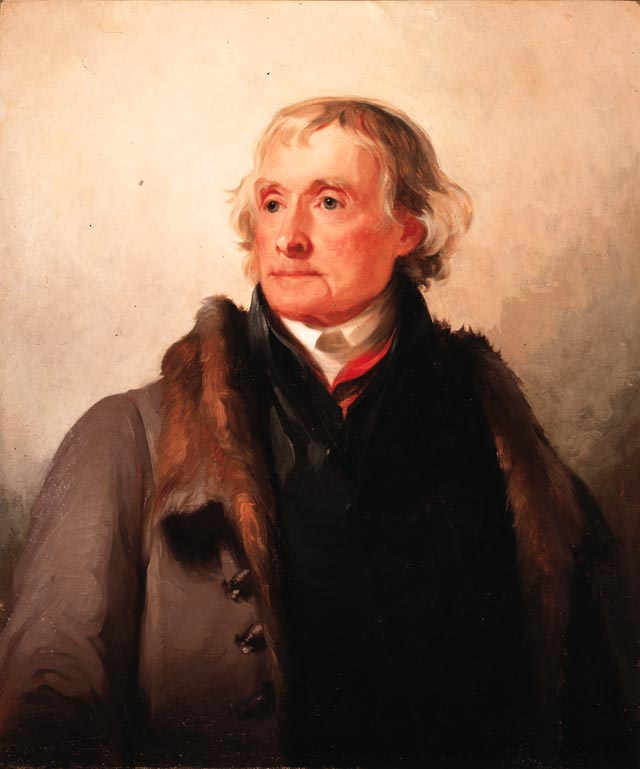
    Jefferson’s warning proved remarkably prophetic. He recognized that once Americans began dividing themselves along a geographical line tied to the issue of slavery, each new disagreement would only deepen the divide between North and South.

    When we think about the causes of the Civil War during the Antebellum Period, it becomes clear that a political power struggle developed between the two regions. Increasingly, many Northerners and Southerners viewed one another through an “us versus them” mentality. Although tensions did not erupt again on a large scale until the 1850s, the identities of the North and South continued to grow further apart.

    In the nineteenth century, land represented wealth, opportunity, political power, and economic influence. Following the Mexican-American War, the United States acquired approximately 530,000 square miles of new territory. One often-overlooked sub-cause of the Civil War was the fierce competition between Northerners and Southerners over who would control that land.
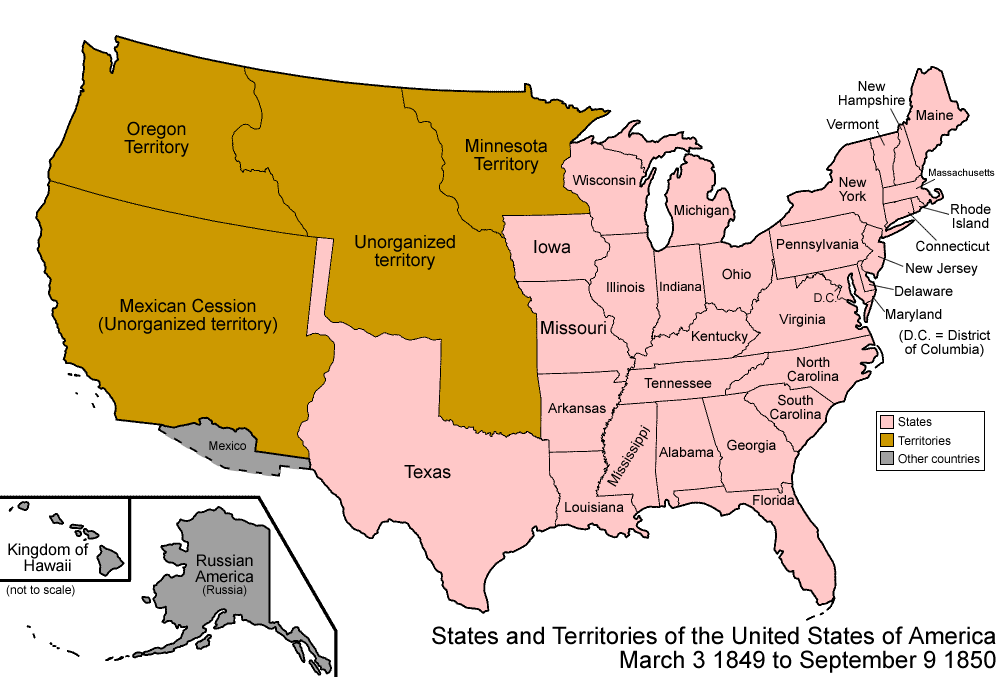
    The essential questions became: Would these new territories permit slavery? Which side would gain greater influence in the Senate? Attempts to settle the issue went terribly wrong, particularly with the Kansas-Nebraska Act of 1854. Under the principle of popular sovereignty, settlers in the territories of Kansas and Nebraska would vote to decide whether slavery would be allowed. Pro-slavery and anti-slavery supporters flooded into Kansas in an effort to influence the outcome, and violence soon erupted. By 1856, the territory had earned the nickname “Bleeding Kansas.”
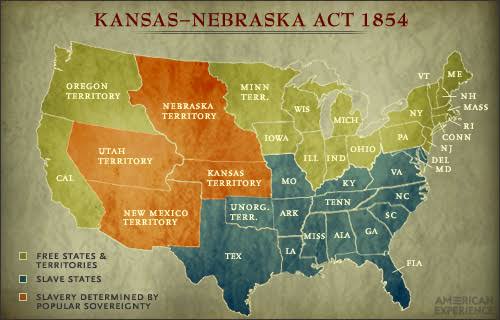
    Northerners hoped that free laborers would settle these western lands, while many Southerners envisioned plantations worked by enslaved laborers. Each side understood that controlling the West meant expanding not only its economy but also its political power and influence over the future of the nation.

    By the 1850s, the North and South had begun to see themselves almost as separate nations. It is therefore understandable why each region sought to expand its influence into the western territories. At precisely the same time Americans embraced the idea of Manifest Destiny, Northerners and Southerners found themselves competing over what kind of nation would emerge in those new lands. Controlling western territory would strengthen each region’s economy, reinforce its way of life, and shape the future balance of political power.

    Many Northerners hoped slavery would gradually disappear by preventing its expansion into the western territories. Southerners argued that the Constitution protected slavery and that they had every right to bring enslaved people into the new territories. Land meant wealth. Land meant power. Neither side was willing to surrender either.

    As the decade progressed, tensions between the North and South continued to escalate. Compromises increasingly failed because neither side was willing to sacrifice its political influence or its vision for the nation’s future. Eventually, both sides became willing to fight for what they believed.

    The election of Abraham Lincoln in 1860 proved to be the final straw for many Southerners. Lincoln became the first president elected on a Republican platform opposing the expansion of slavery into the western territories. Many Southern leaders believed they would soon be permanently outnumbered politically and concluded that they would be better off forming their own nation to preserve slavery and their influence. Northerners, meanwhile, were determined to preserve the Union. They rejected both nullification and the right of states to secede from the United States.
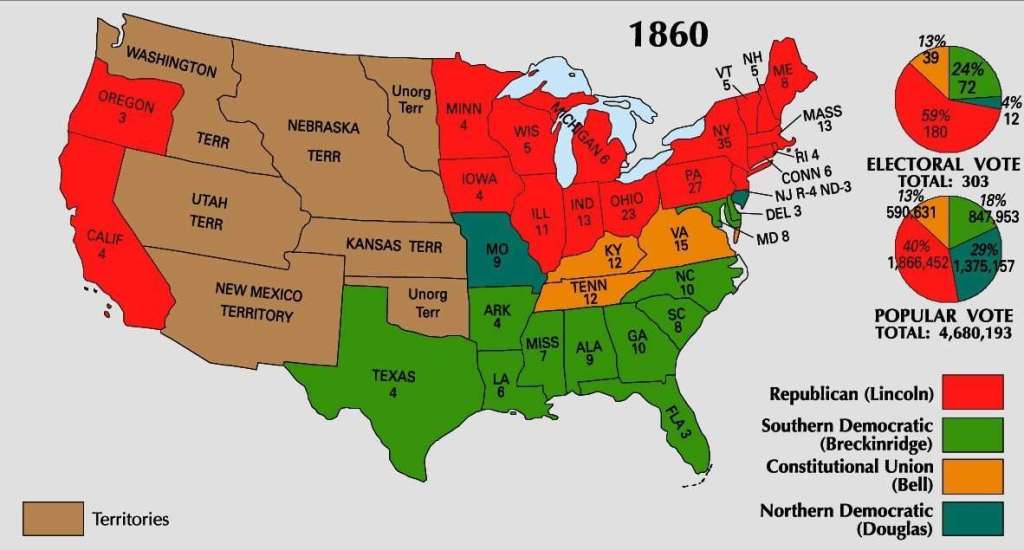
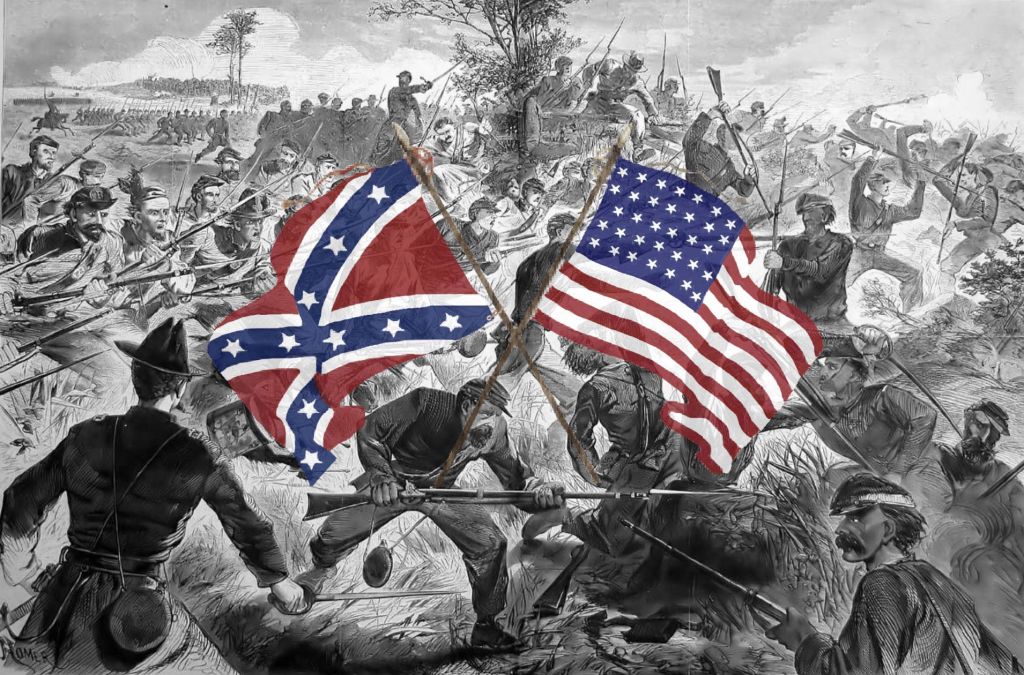
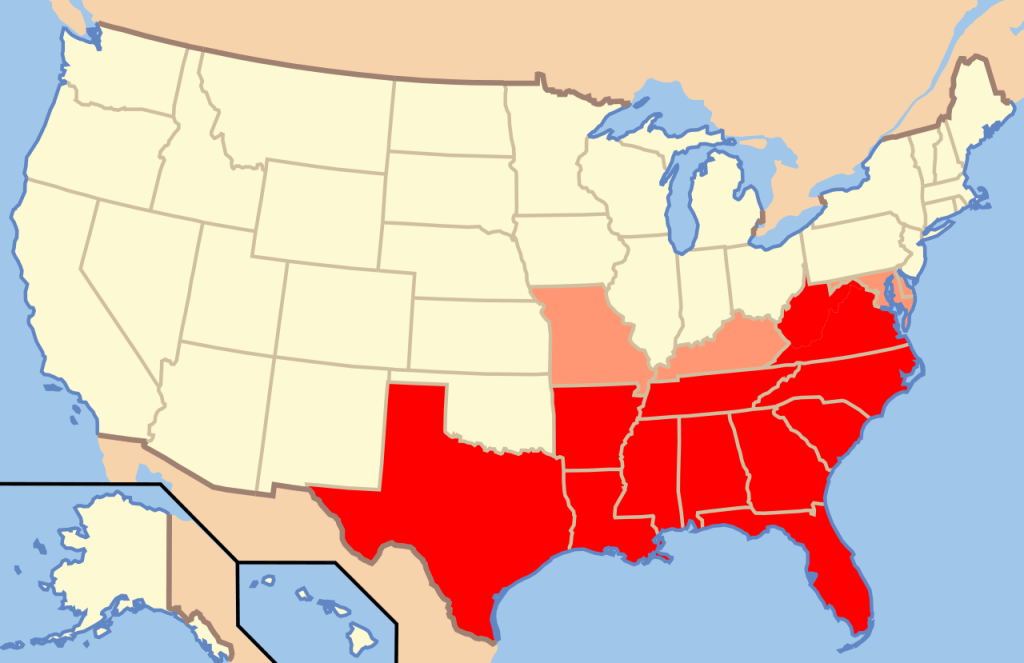
    When compromise finally collapsed, war broke out in 1861, leading to the deadliest conflict in American history. The struggle over western lands had never been simply about geography. It was ultimately a struggle over political power, economic systems, and the future of slavery itself. By the end of the war in 1865, the Union had been preserved, slavery had been abolished, and the western territories ultimately developed as free labor territories rather than slaveholding ones.
    Check out similar blog posts below:

  • One of my favorite thought exercises when reading and teaching history, is the ‘what if’. What if events had gone differently than they actually did? Many people think that history was a series of inevitable events that brought us to the present day. But that simply is not the case. One minor aspect of an event or battle could have gone differently and changed the course of history. The Americans winning the American Revolution or the Union winning the Civil War were not foregone conclusions at the start of the conflicts.

    What if the Confederacy had won the Civil War? They definitely had an opportunity to do so, even though the Union was by far the favorite to win at the start of the conflict. The North had four times as many free citizens, produced 90% of the nation’s manufactured goods, had 70% of the nation’s railroads, and a greater food supply. If this war happened today, Vegas would be betting on the North at the start of the conflict. However, the South had some advantages too. They considered this a fight for their independence, a fight to defend their homeland, and a fight to defend and hold onto the institution of slavery. They had greater motivation to fight. Many of the best generals in the country were from the South.

    There were two major moments in the war in which the Confederacy had an opportunity to strike a blow to the Union. The first instance came in the late summer of 1862. When command of the Confederate army fell to Robert E. Lee, he was able to win a string of impressive victories in the Seven Days Battles, and the Second Battle of Bull Run. Lee was confident enough to attempt to invade Northern soil. His goal was to win a major victory in the North, and turn Northerners against the war. He reasoned that if Northerners voted Peace Democrats into Congress, they would push to end the war, and the Confederacy would be independent.

    The major battle that Lee hoped to win was the Battle of Antietam in Maryland. Though nearly a stalemate in number of casualties, the Confederacy was forced to retreat. Antietam was the deadliest one-day battle in American history with total casualties at 22,720.

    The Confederacy’s second opportunity to strike a blow to the Union was the following summer of 1863. Once again Lee and the Confederates won a series of remarkable victories including at the Battle of Chancellorsville in May 1863. Despite this victory, the Confederates lost one of their best generals in Stonewall Jackson. Had Jackson been a part of the Battle of Gettysburg two months later, the course of the battle may have turned out differently. After Chancellorsville, Lee was feeling invincible and decided to invade the North once again. The ramifications of such a Confederate victory could not be understated. His goal once again was to make Northerners so sick of the war that they would turn against the war effort and push for peace. Lee decided to invade Pennsylvania. But like Antietam, the Battle of Gettysburg was a Union victory because the Confederates were forced to retreat from the battlefield. While both sides had staggering losses, the Confederacy was not able to replace their losses. Gettysburg was the deadliest battle of the war. The Union had 23,049 casualties, and the Confederacy had 28,063 casualties. The twin victories at both Gettyburg and Vicksburg, Mississippi, are considered a turning point in the war. Even though the war continued for almost two more years, the Confederacy could not fully recover and did not again attempt to invade the North.

    But what if the Confederacy had won a decisive victory at Antietam or Gettysburg? While the Union had a larger army in both battles, it is quite possible that the Confederacy could have won either of these battles, especially with the confidence of Lee and his army. Lee had defeated larger Union armies time and time again. If the Confederates had won either battle, they could have continued marching North, possibly winning other battles on Northern soil. And like Lee had hoped, it is reasonable to believe that Northerners could have turned against the war. They might have considered it not worth it to keep fighting to keep the Southern states in the Union. While they probably would have been bitter about a loss, they may have decided that it would be better to let the Southern states become their own independent country.

    Had the confederacy won the war, would other foreign countries have recongized the Confederate States of America as an independent and soverign nation? While some countries would, I think the major countries around the world would not have, at least at first. Countries like Great Britain and France had strongly opposed the institution of slavery by 1861. The Confederacy was hoping to gain recognition from these countries throughout the war, but they refused. I think they would have stuck to their instincts and not recognized a nation that was still relying on slave labor. I also think the United States would have intimidated these countries not to recognize the Confederacy. A major question though, is how long would they not recognize the Confederacy? Would they have continued to not recognize the Confederacy for years or decades? It seems possible that these countries would have had internal debates. Do they recongnize a country that maintains slavery even if the Confederacy itself is friendly and is willing to trade? I think major countries would continue to not recognize the Confederacy as a separate, soverign nation because they didn’t want to be allied with a country that practices slavery.

    Would the United States and the Confederacy have gotten along? Simply, I don’t think so. There probably would be some debate in the U.S. government about how to approach and deal with the Confederate States of America. I suppose there would be some who would see the benefits of friendly trade relations with our neighbor to the South. However, I think the relationship between the U.S. and the C.S.A. would be tense in the long-term. I think most members of the U.S. government would not want to recognize the C.S.A. as an independent, soverign nation for the same reasons as other foreign nations, not wanting to be associated with the institution of slavery. They would feel animosity towards the country that fired the first shots of the Civil War. Because of these tensions, there’s a strong possibility that there would have been border conflicts out west as the two countries continued to expand. I think at some point there would be another armed conflict between the two countries. I’m not sure when that would happen but my guess would be by the end of the 19th century. If armed conflict did break out, the United States would have to decide if it was worth the effort to try to win back the South. This would depend on the size and might of the two opposing countries at that time. If the United States had progressed at a faster rate than the Confederacy (which is quite feasible) they may have taken the opportunity to try win back their former land. This conflict however would be close in size and scale to the first Civil War, which would have everyone second guessing.

    When would slavery have ended? This is probably the most intruging question of them all. If the Confederate States of America remained an independent nation up until the present, when would they have outlawed slavery and what would have been their process? Throughout the nineteenth century, the agitations between pro-slavery Southerners and Northern abolitionists only continued to grow. Pro-slavery southerners began digging in and presenting a growing number of justifications for slavery. Had they won the Civil War, I believe that they would have latched onto these arguments and would have been emboldened by the victory. They may have argued that Divine Providence had been on the side of slavery. Therefore, I think it would have taken decades before they outlawed slavery. I think what would eventually do them in would be the global outcry against the Confederacy and their institutions. There would be an alliance of countries that would refuse to trade with them until they abolished slavery, and the sanctions against them would pile up. At that point the Confederacy’s economy would do so poorly that they would have no other choice than to give into the pressures of the global community. Even if they decided to outlaw slavery, I think they would go about it in a very long, drawn out process of gradual emancipation. This would mean that current slaves would remain slaves, but their children would be freed (Or some other kind of similar method). Southern slave holders would demand payment for their emancipated slaves. The process would take a generation or longer before slavery was fully outlawed. So while I don’t believe slavery would have lasted forever in the Confederacy, the question is how long would it have lasted. I think it would have taken until close to 1900 for them to take any action, and then perhaps another couple decades for slavery to be conpleted eradicated.

    The last question I want to pose is: What would happen to the Northern states after the Civil War if the Confederacy had won? Would there be other states that attempted to secede if they disagreed with the federal government? While I don’t think this would happen, it is worth pondering. Whether or not states had a right to secede was a common debate in the 1800s, starting with founders like Jefferson and Madison. If Northern states witnessed the success of the Confederacy and their quest to leave the union, it is in the realm of possibility that other states would attempt to do the same. Luckily with the Northern victory, the debate on state secession was squashed, and we have not fractured into many small warring countries.

    What do you think? What would have happened if the Confederacy had won the Civil War? Please comment on any of the thoughts above. I’m interested to hear other perspectives.

    Related Posts: