My family and I decided to head out to the New Jersey State Museum in Trenton, NJ. We also knew of Patriots Week happening at the Old Barracks Museum, which is just an 8 minute walk away. This trip was an opportunity for us to explore two museums we have never been to.
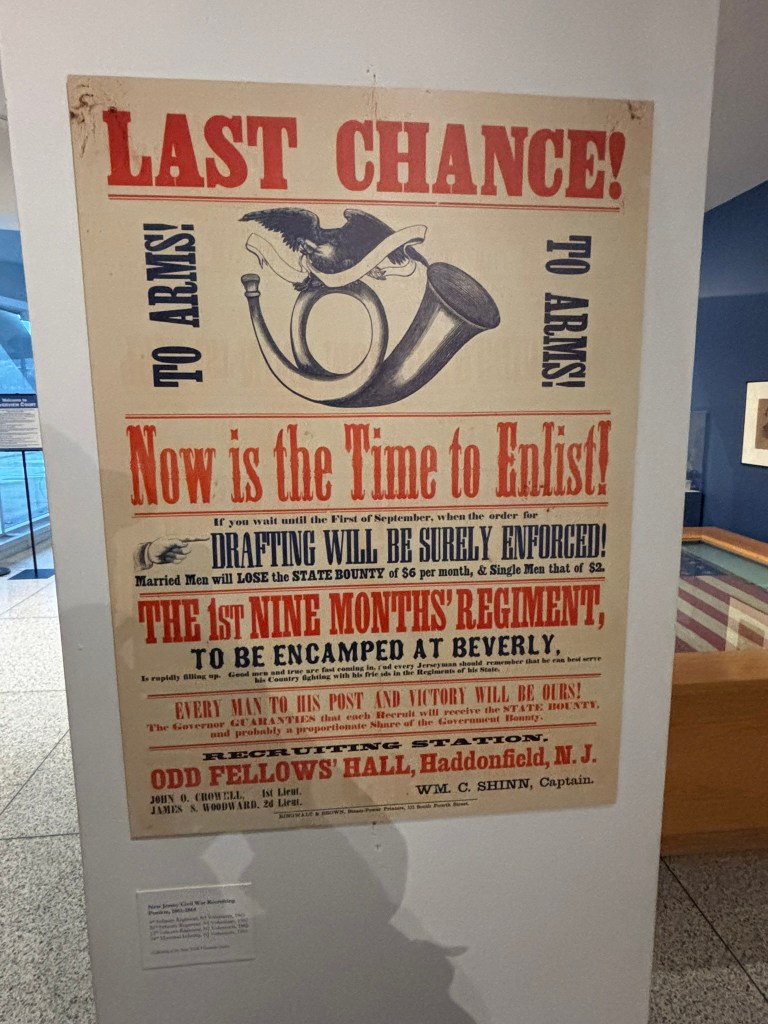
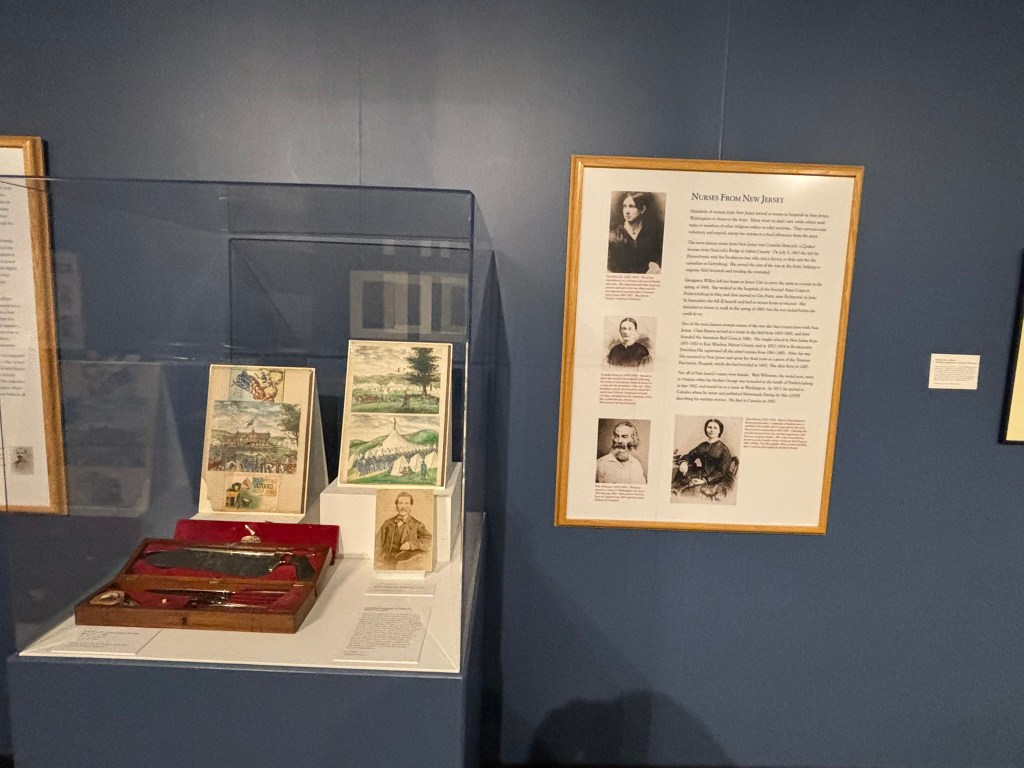
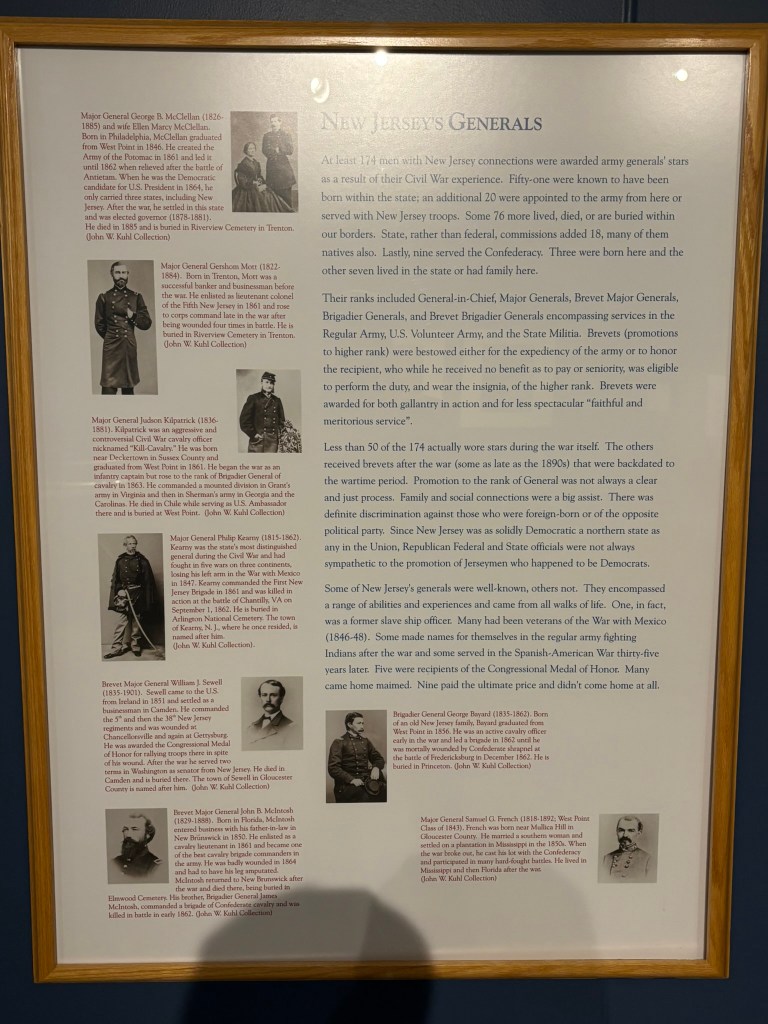
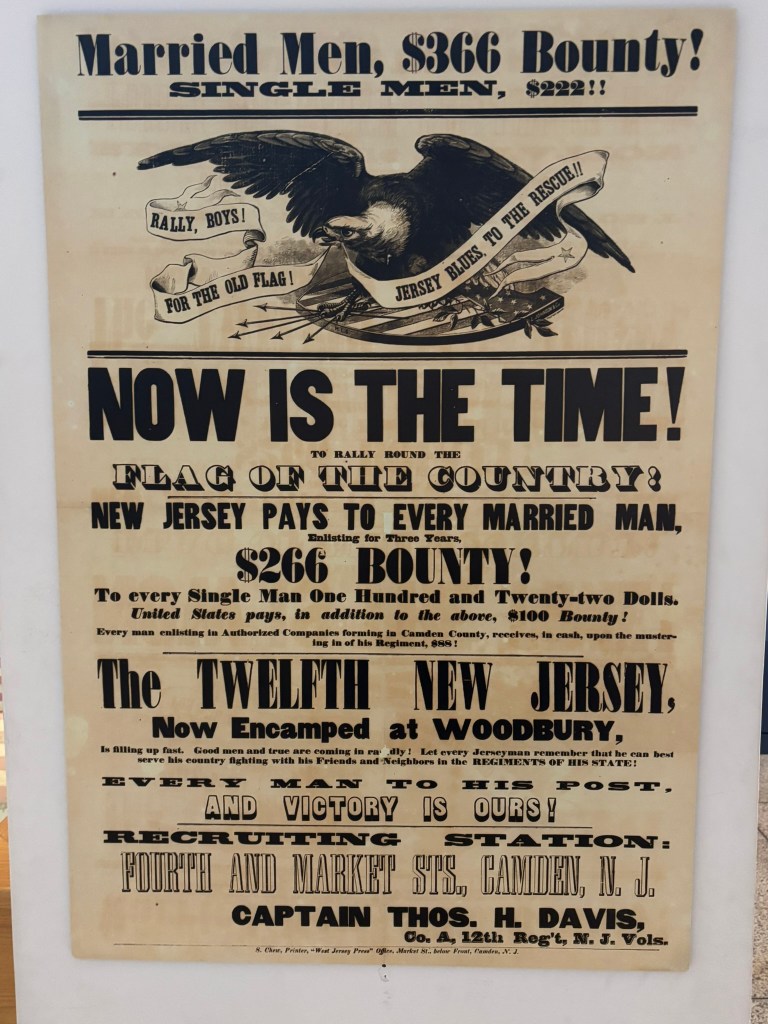
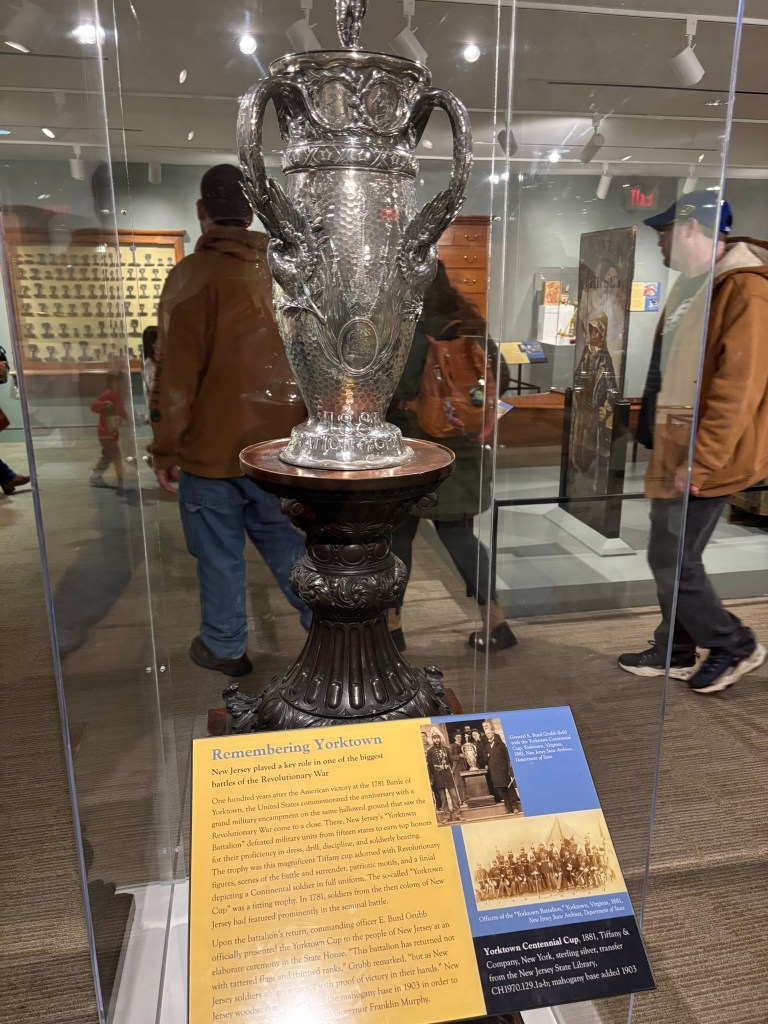
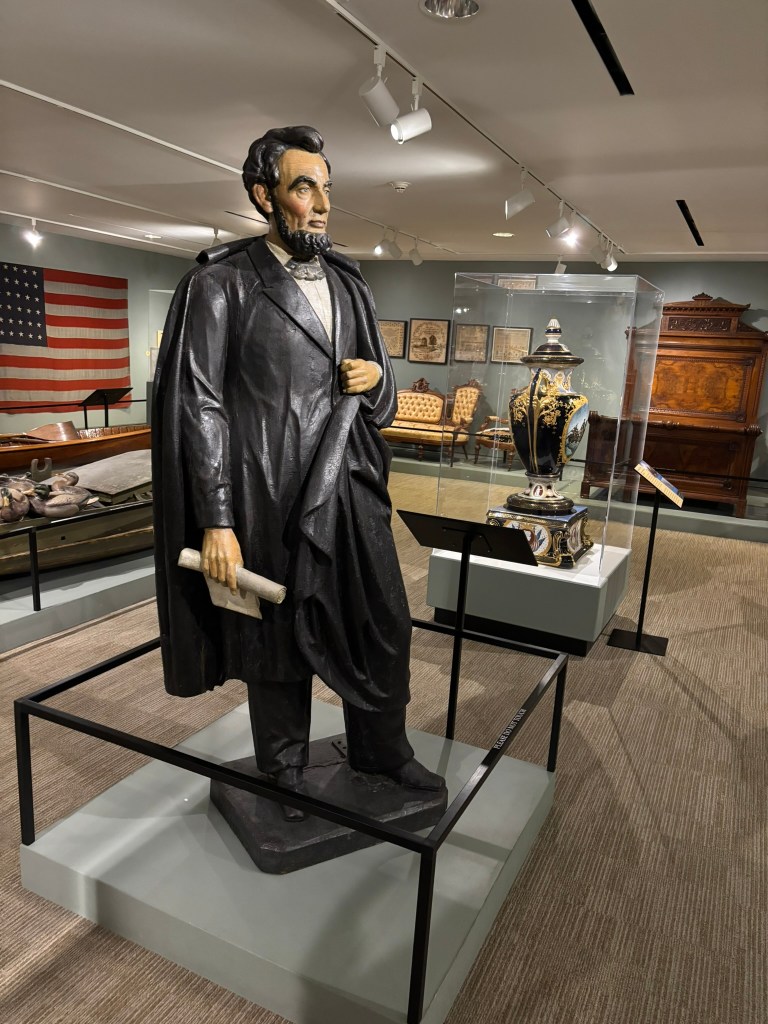
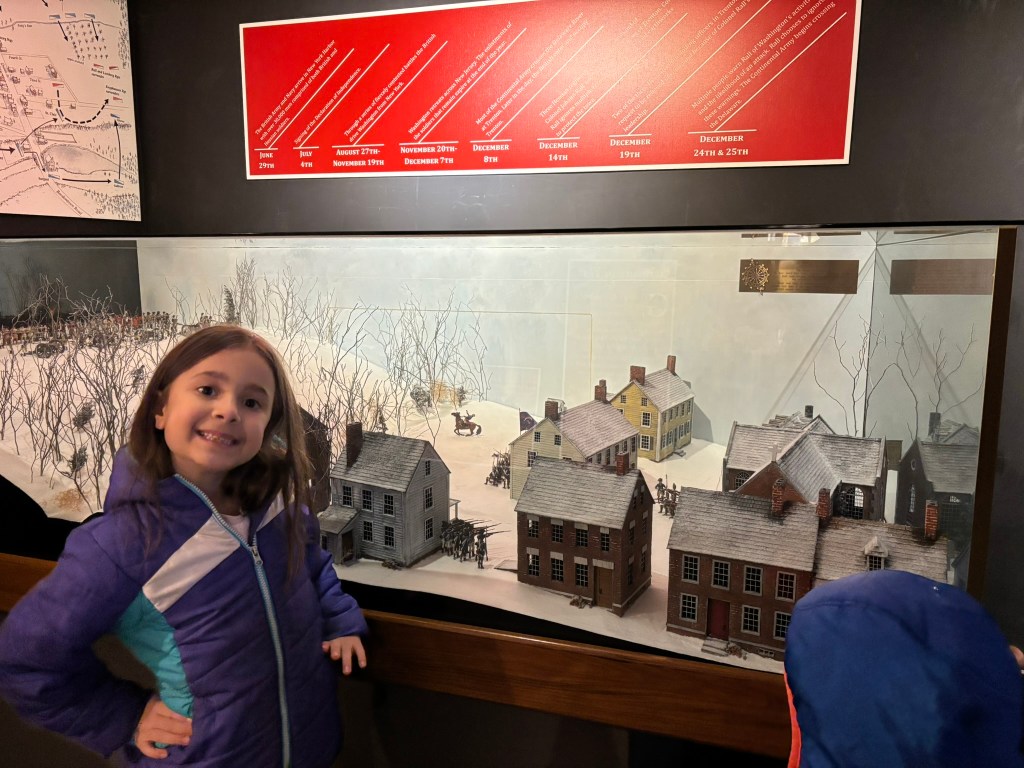
The New Jersey State Museum was a great experience for the whole family and they have a wide variety of exhibits and collections, ranging from Archeology & Ethnography, Cultural History, Fine Art, and Natural History. They also have a Planetarium, and we saw a show called “One World, One Sky: Big Bird’s Adventure” for the kids. Since this is a history blog, the pictures that I display here will be from the Historical aspects of the museum.
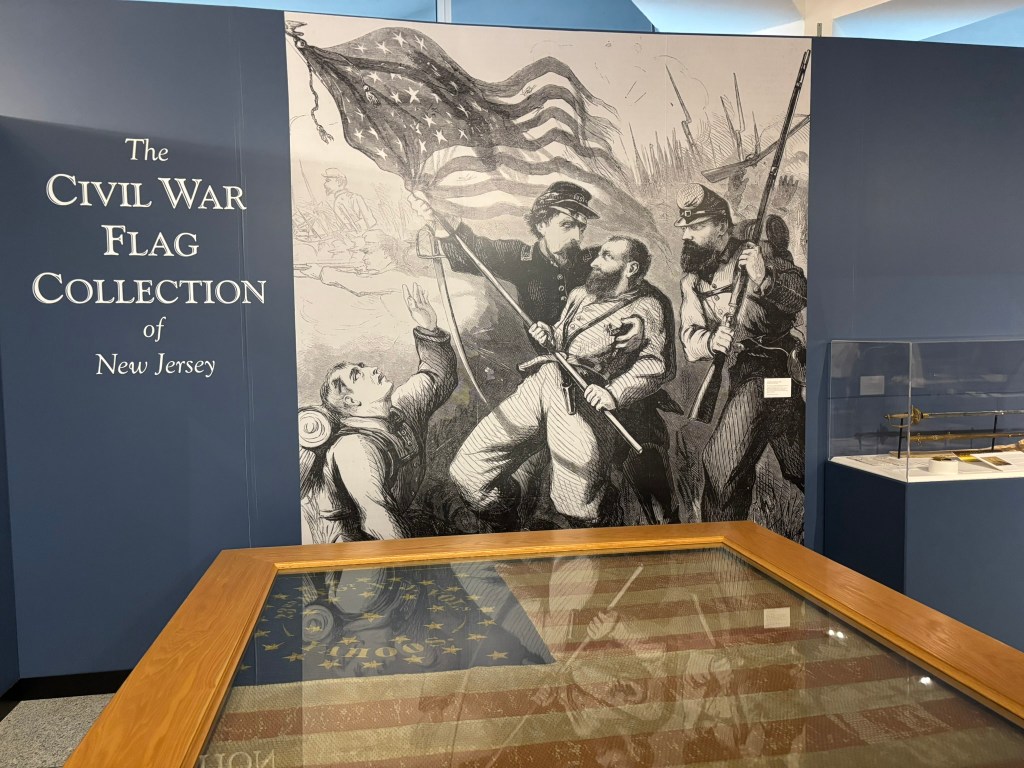
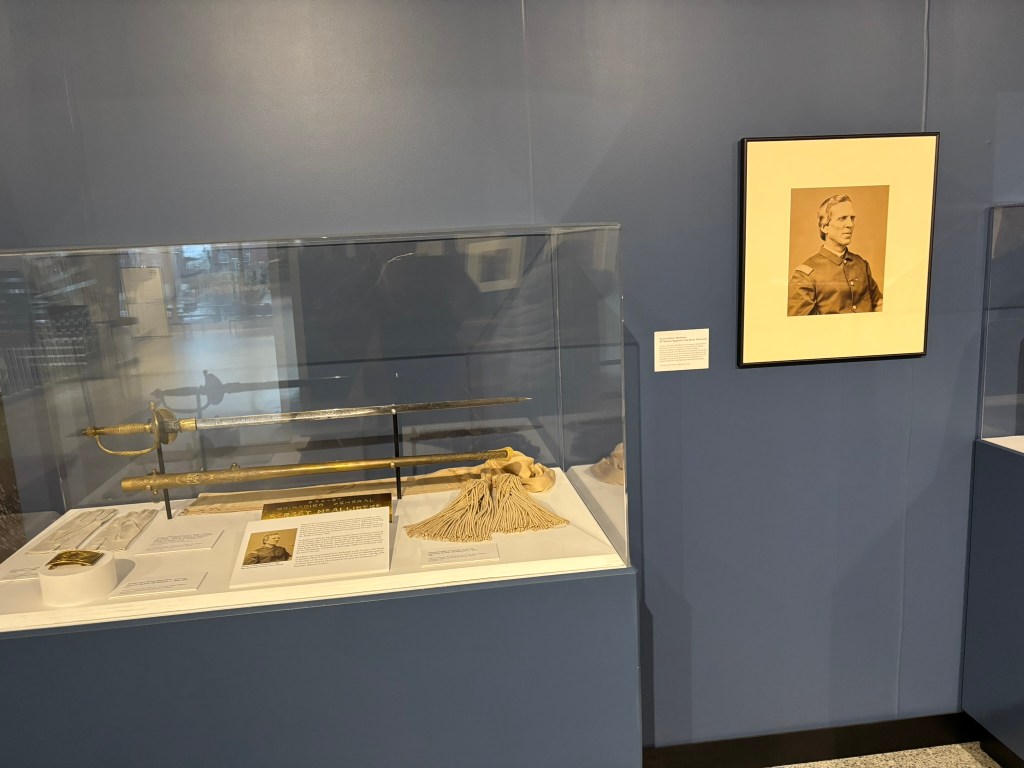
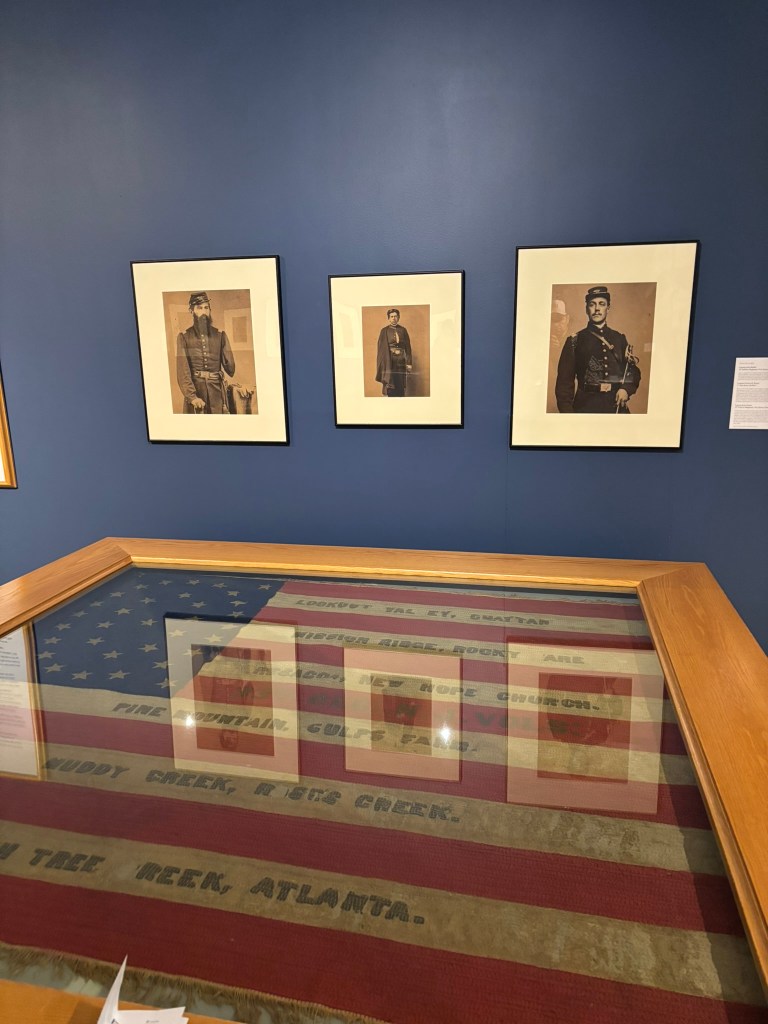
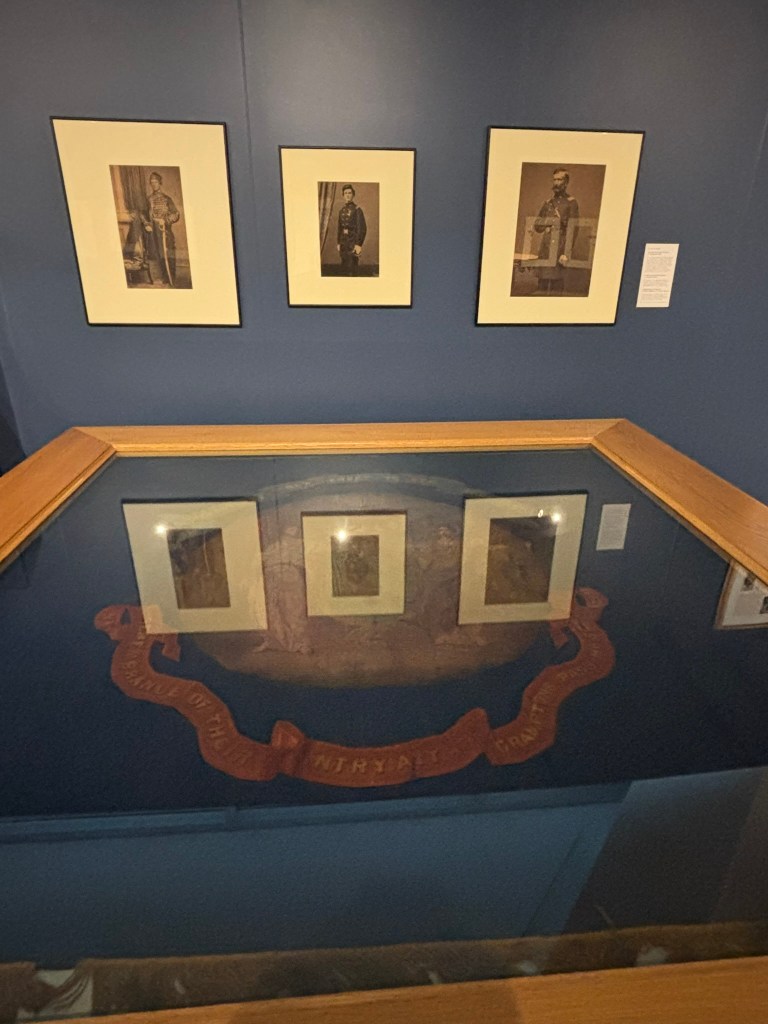
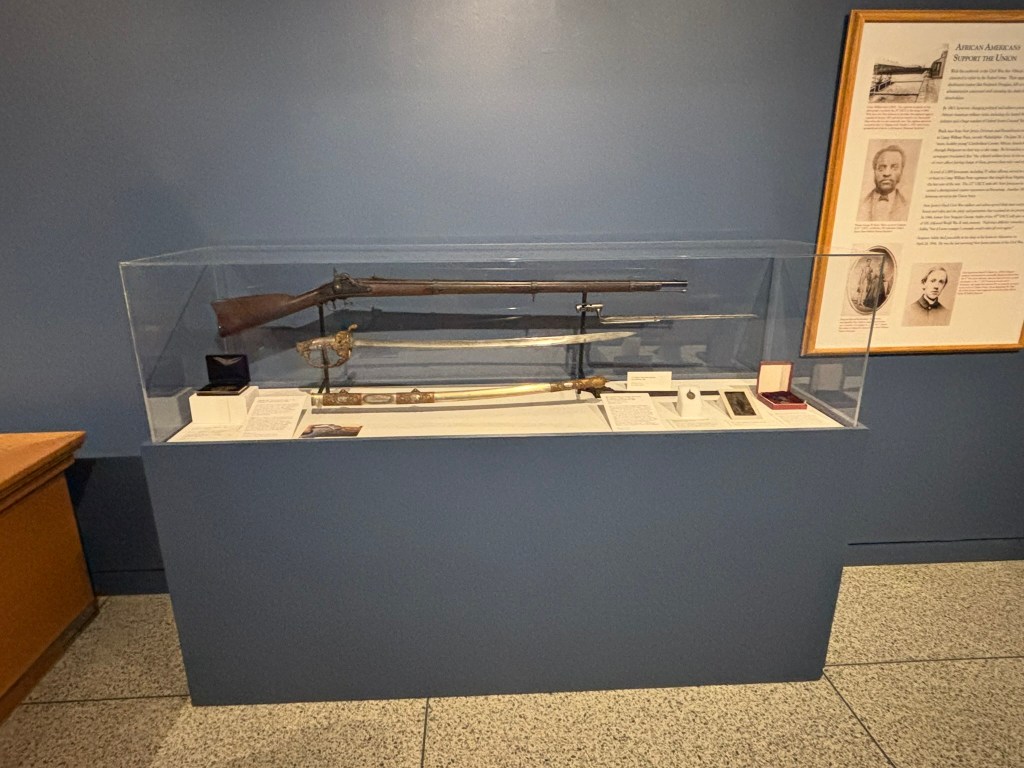
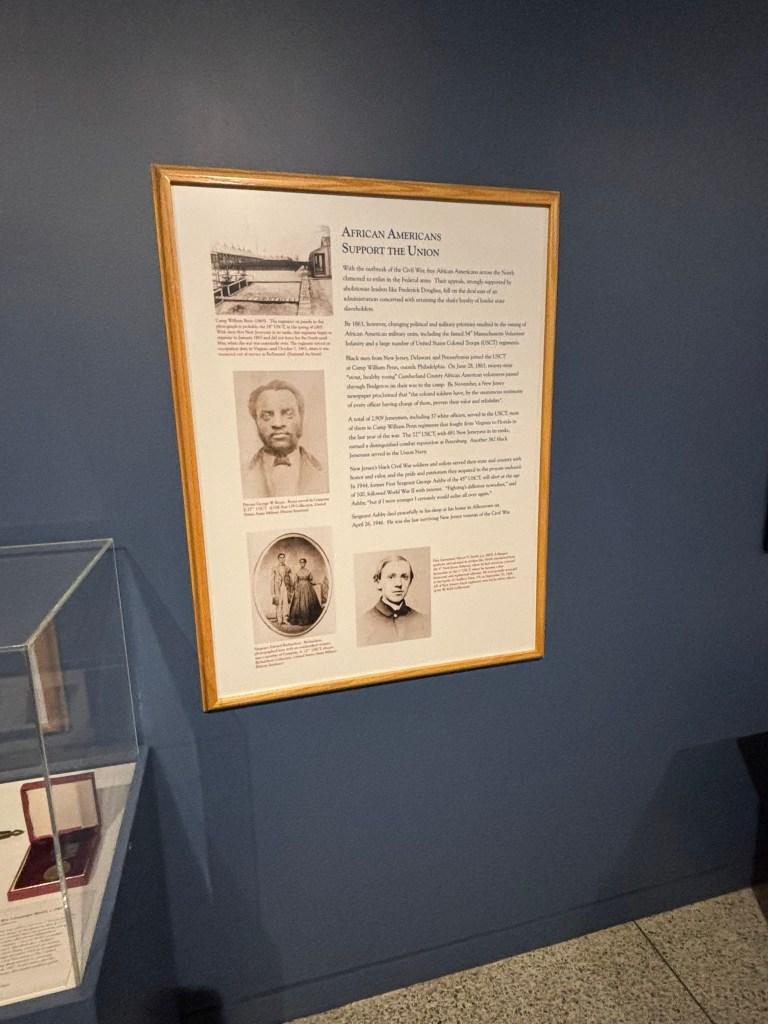
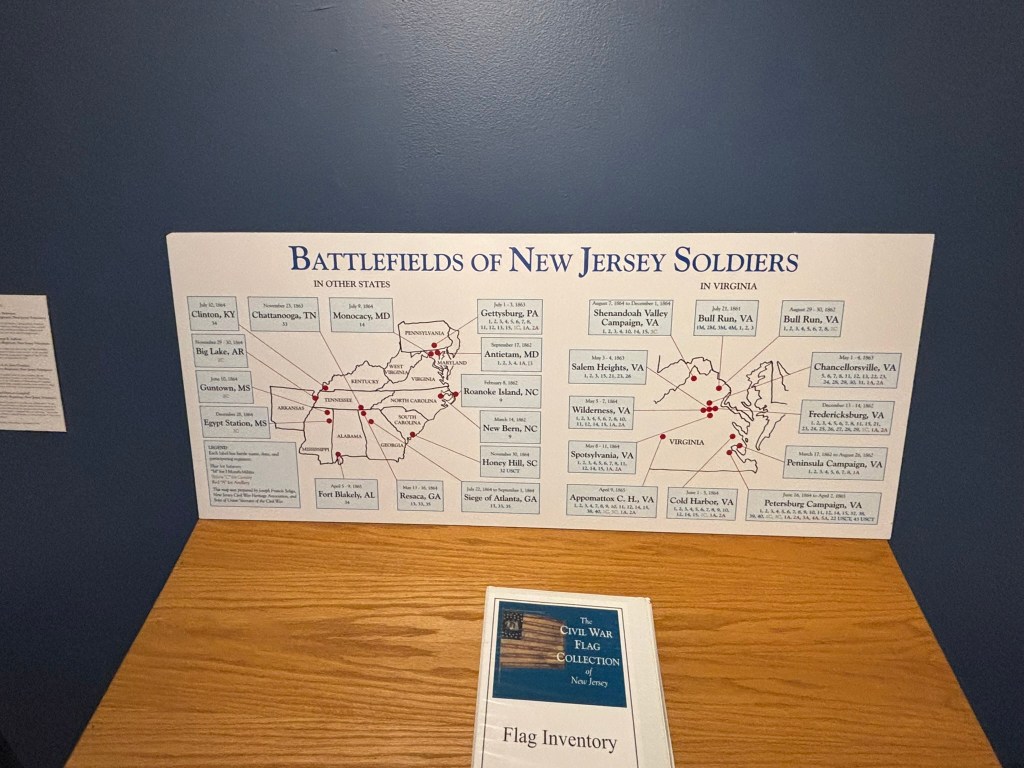
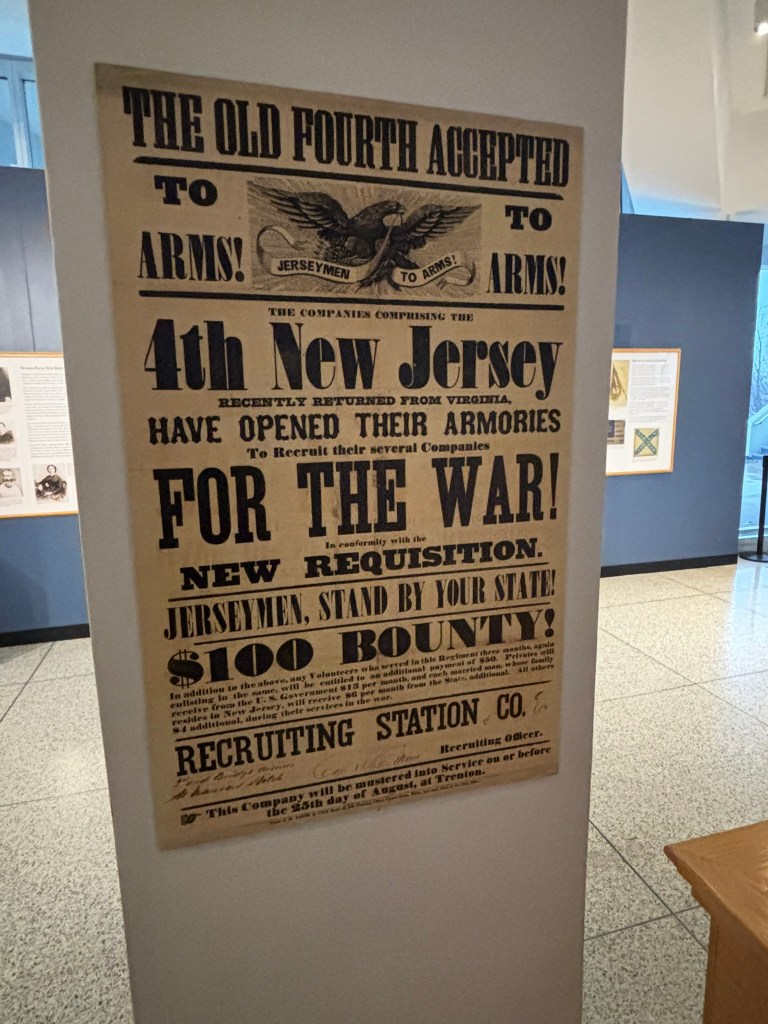
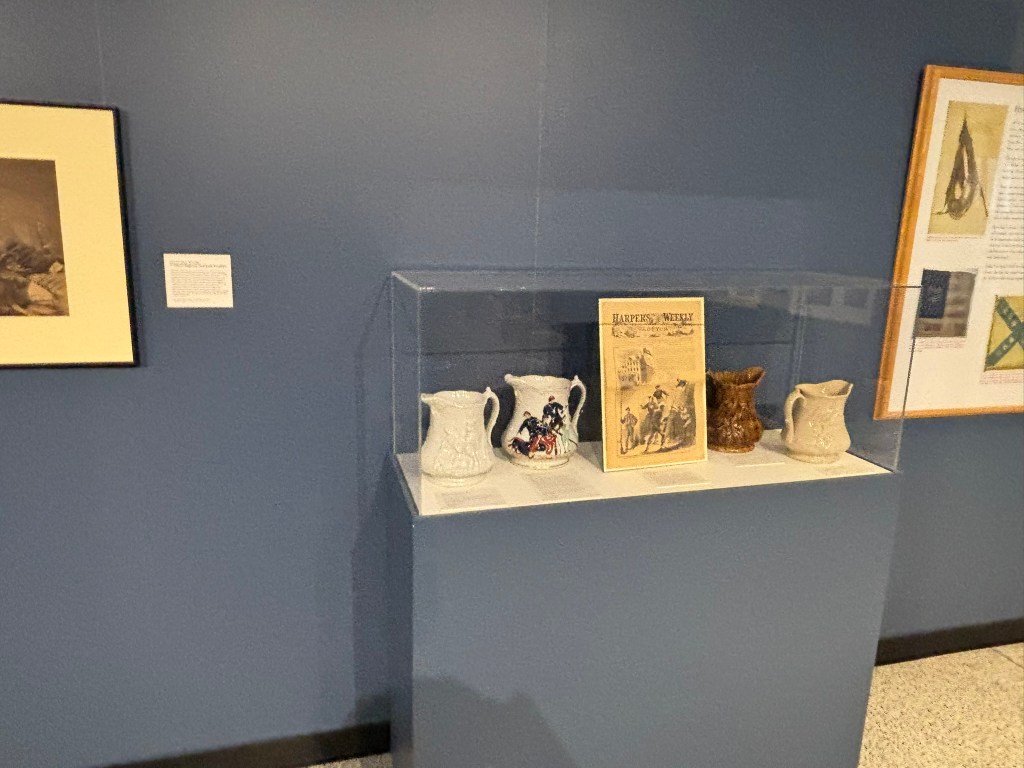
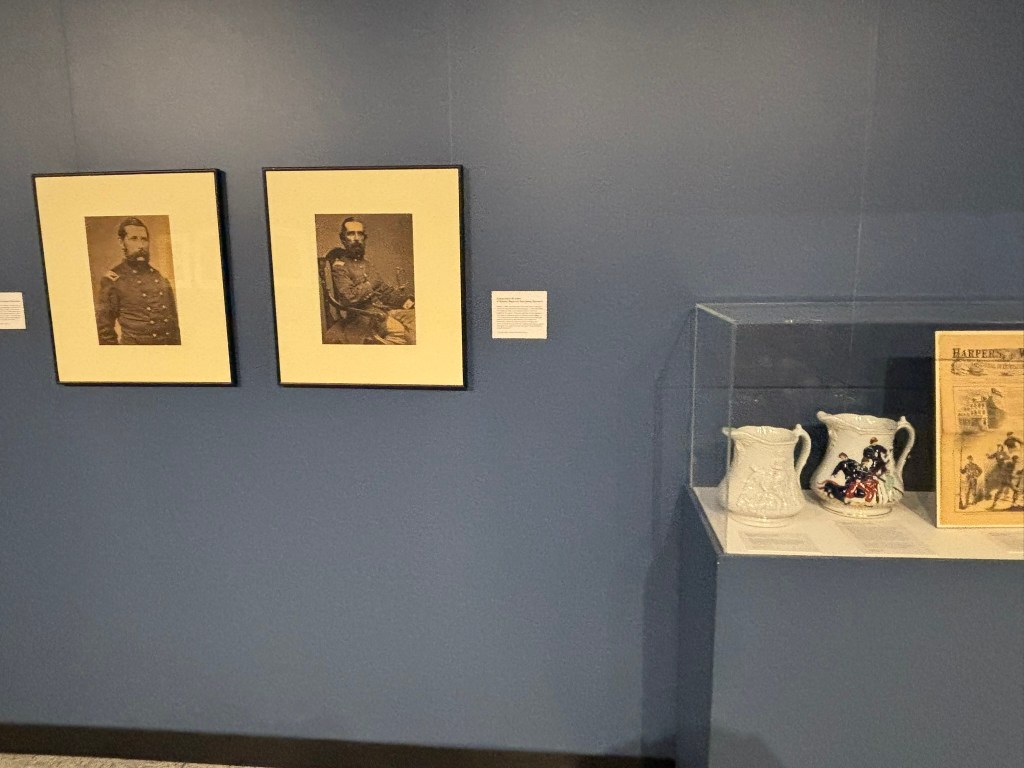
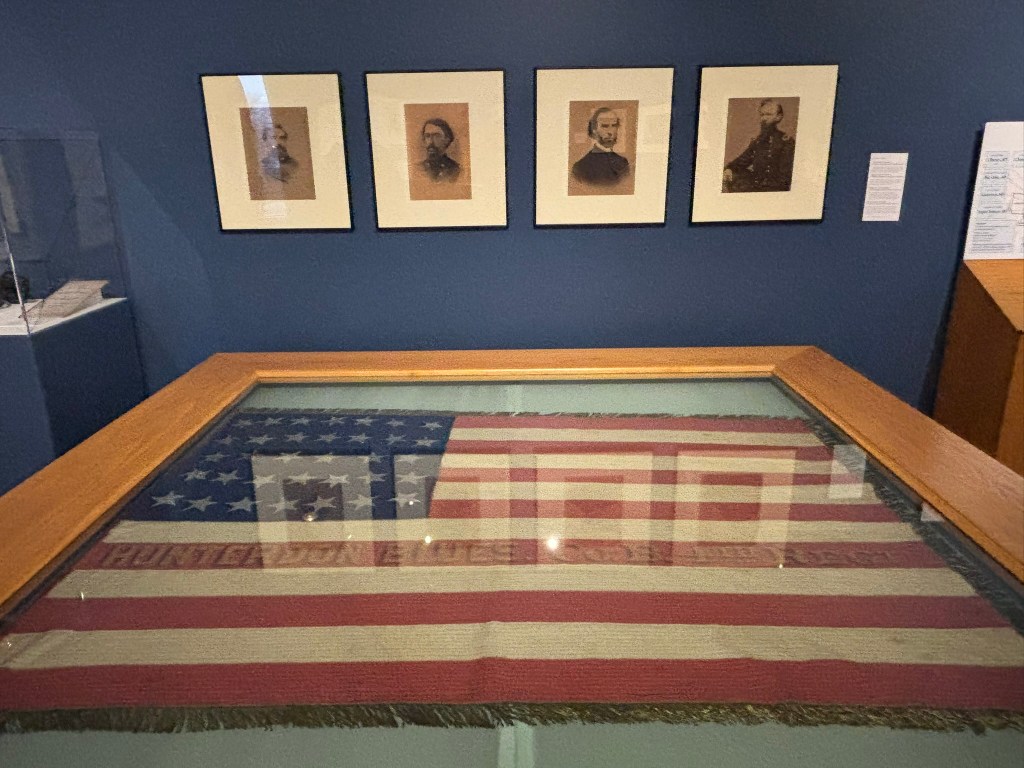
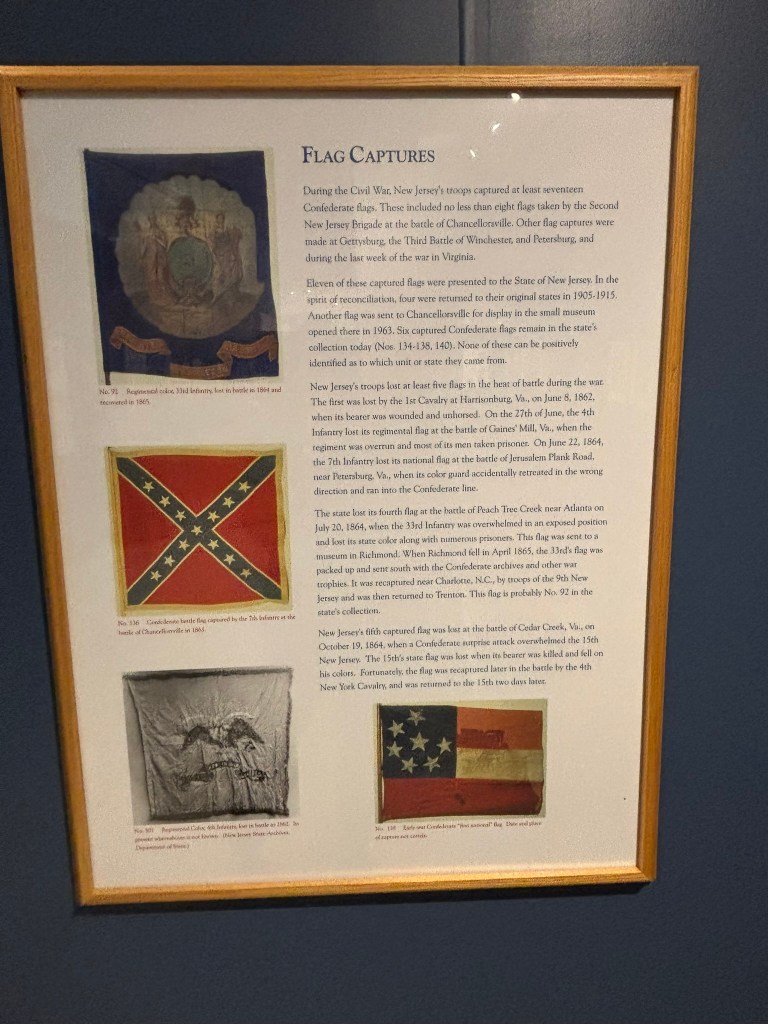
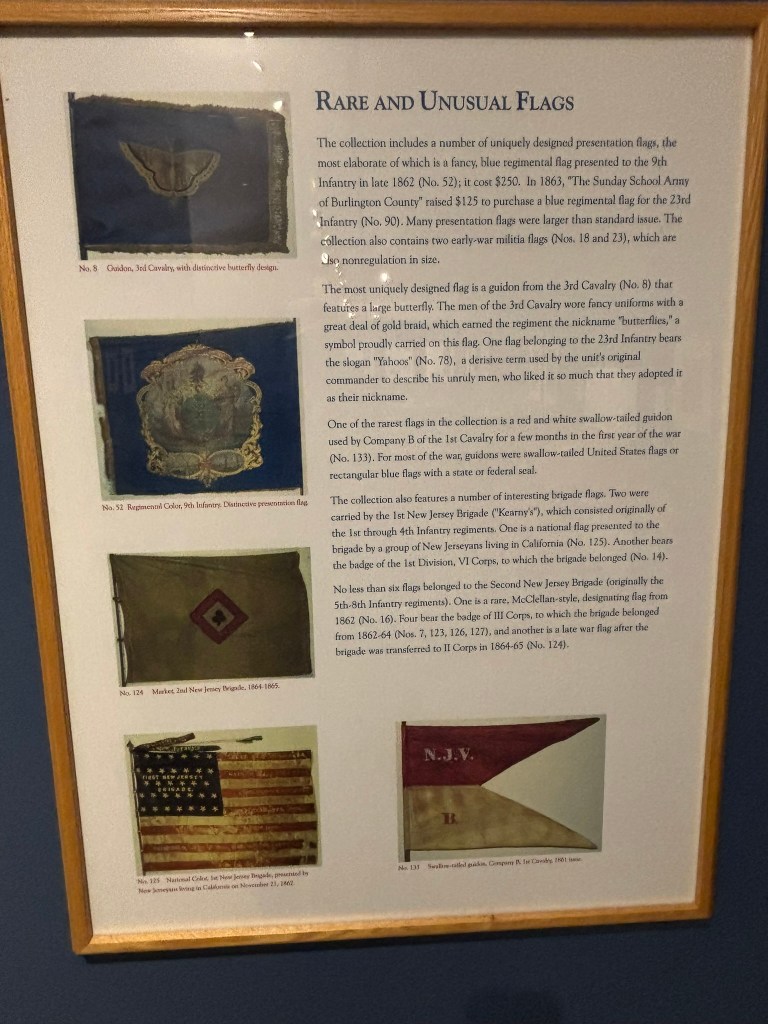
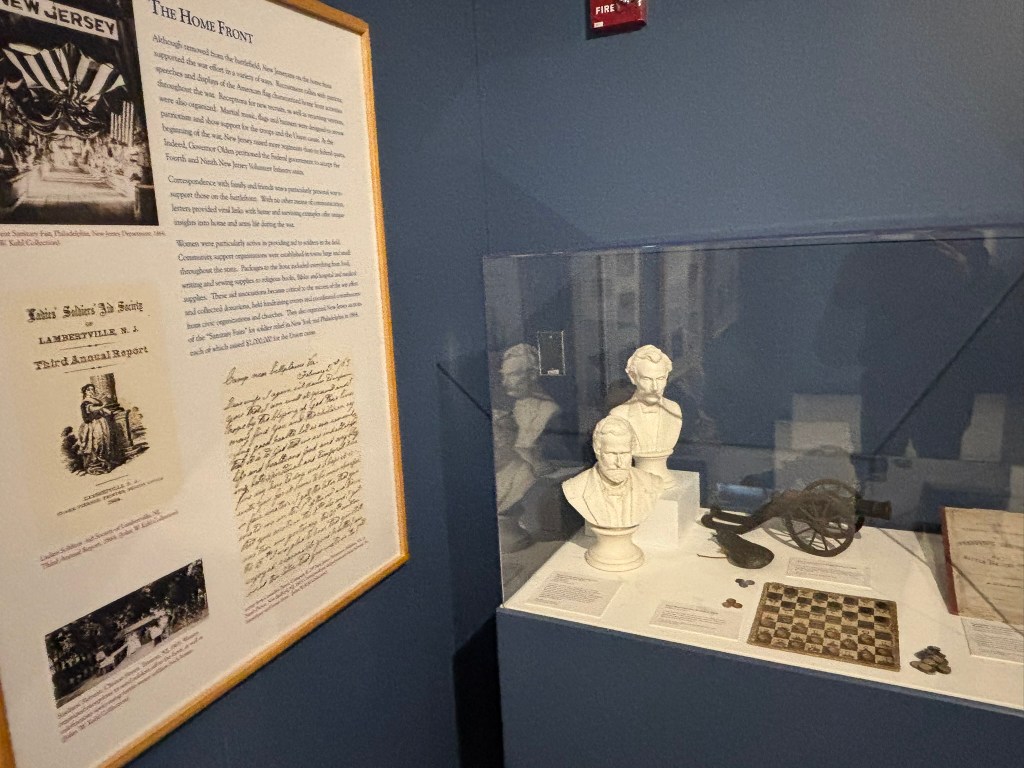
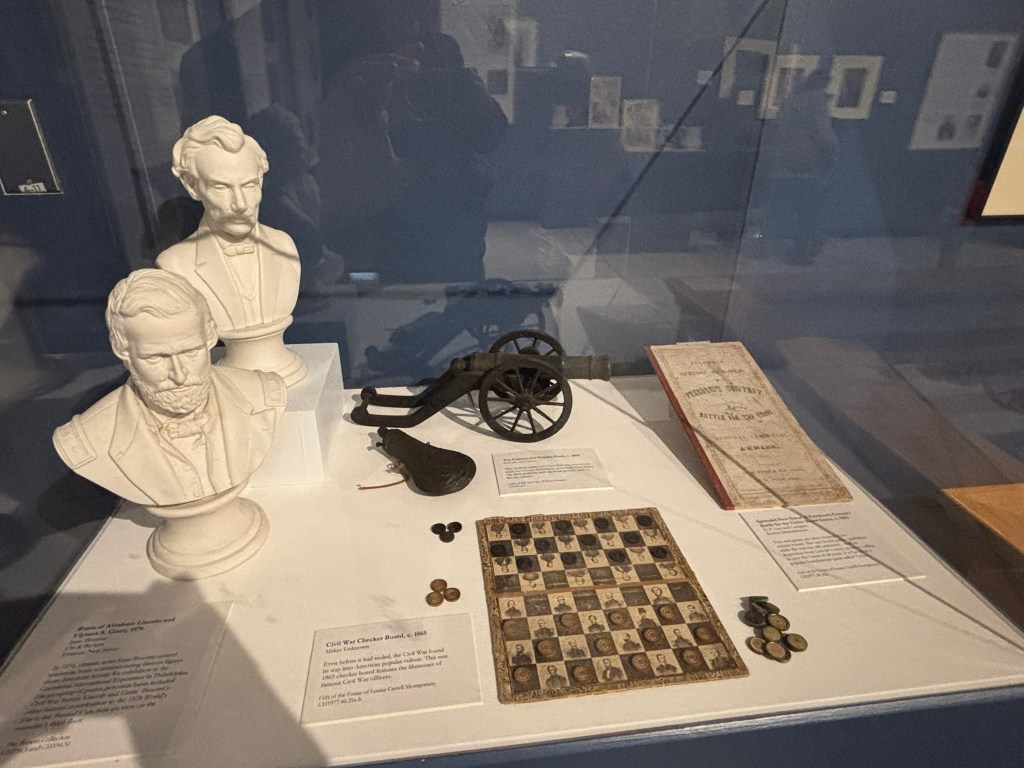
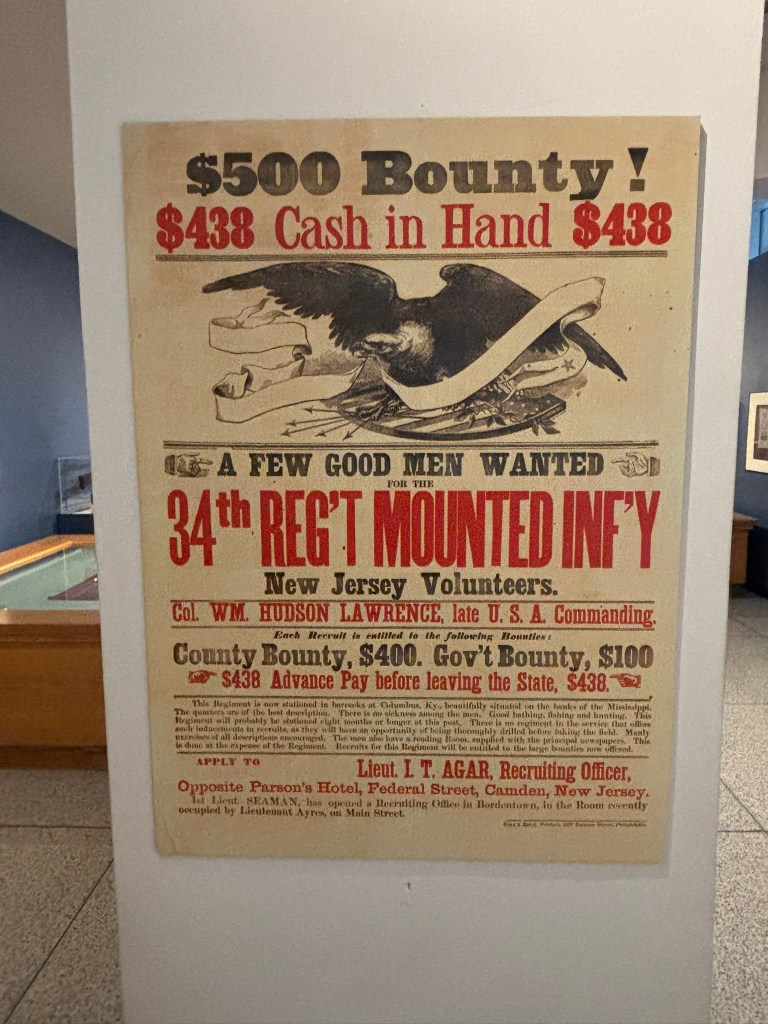
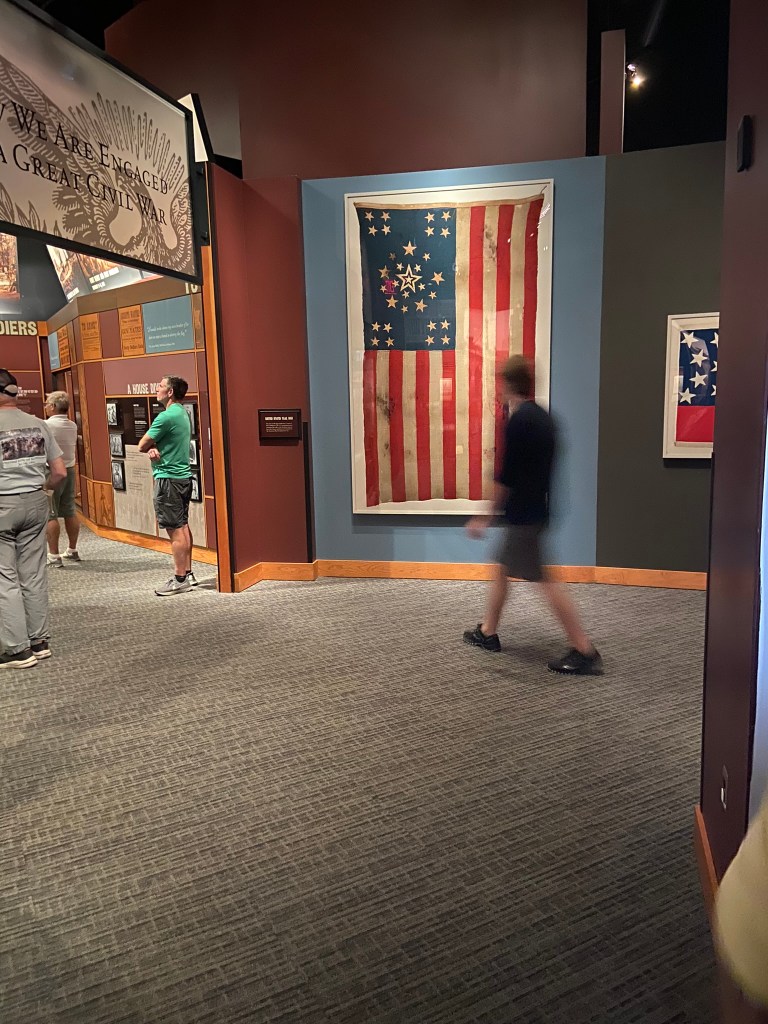
The first exhibit that we saw was the The Civil War Flag Collection of New Jersey. New Jersey soldiers played a significant role in fighting for the Union Army during the Civil War. The flags displayed, as well as the artifacts in the museum remind us of the crucial role that they played.
We explored each floor of the museum. There were crafts for the kids and there were other sections devoted to New Jersey History, Native American history, and colonial history.
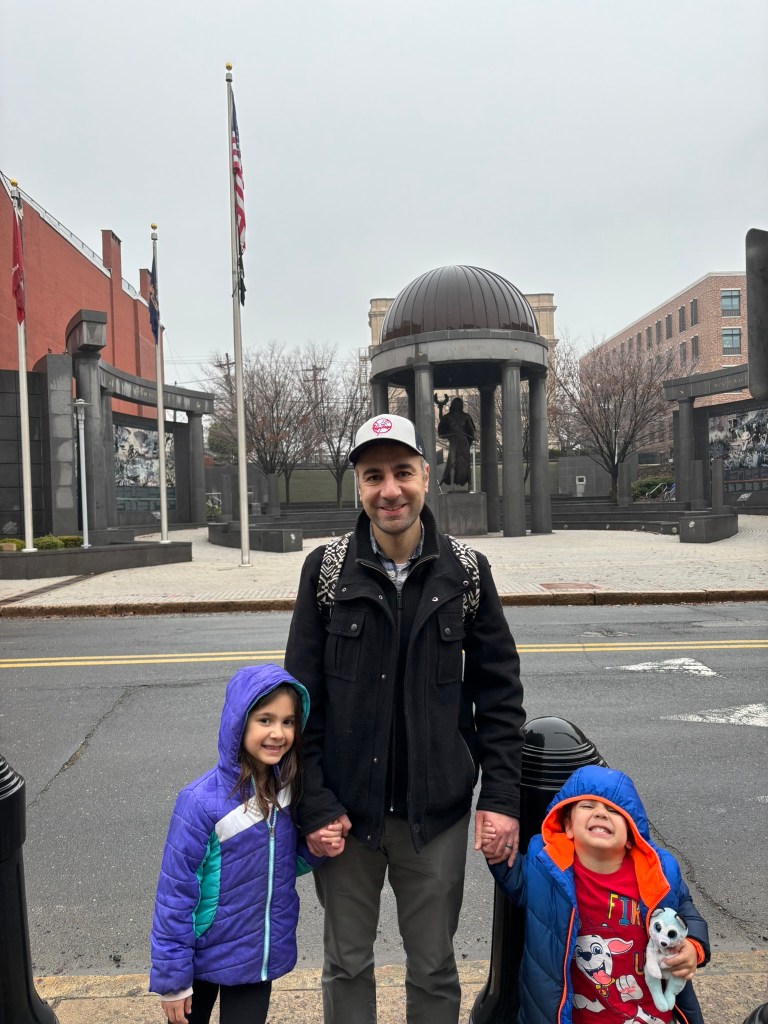
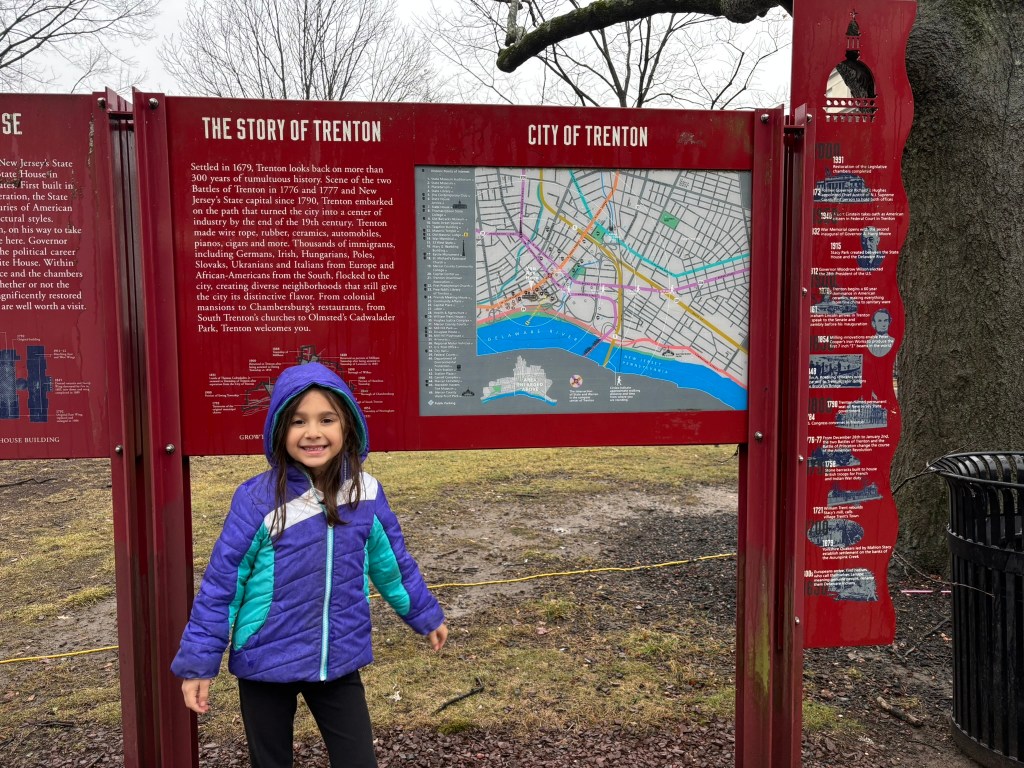
After our time exploring the New Jersey State Museum, we made the 8 minute walk to the Old Barracks Museum for Patriots Week. We stopped to take a picture in front of the WWII Memorial in Veterans Park.
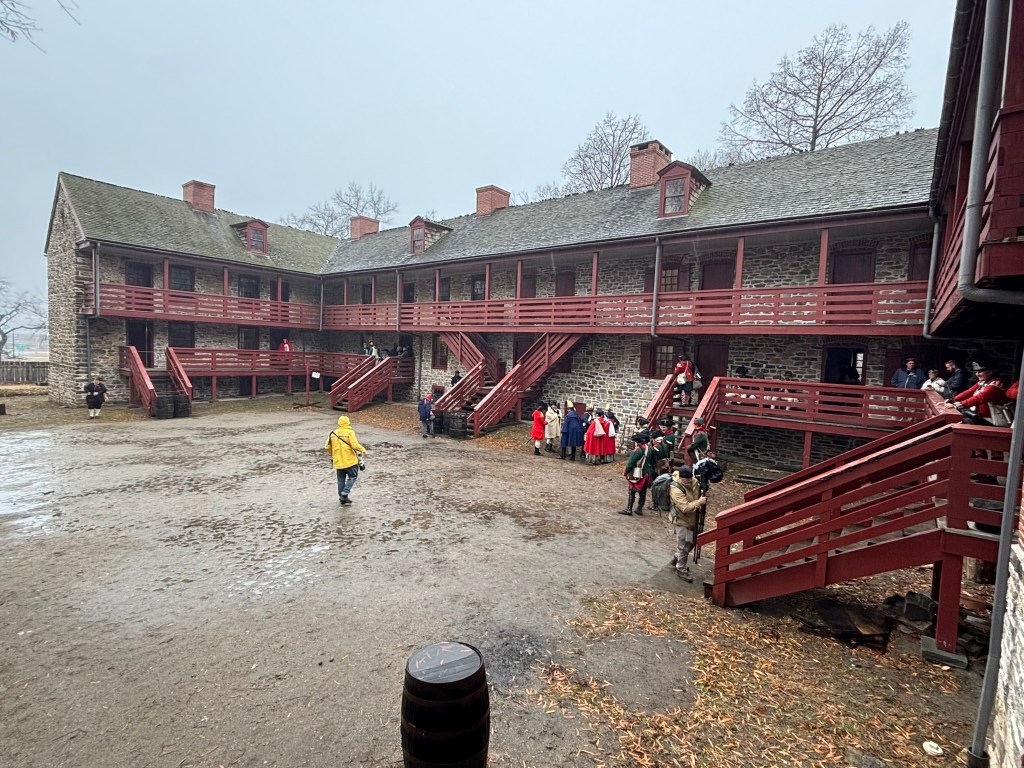
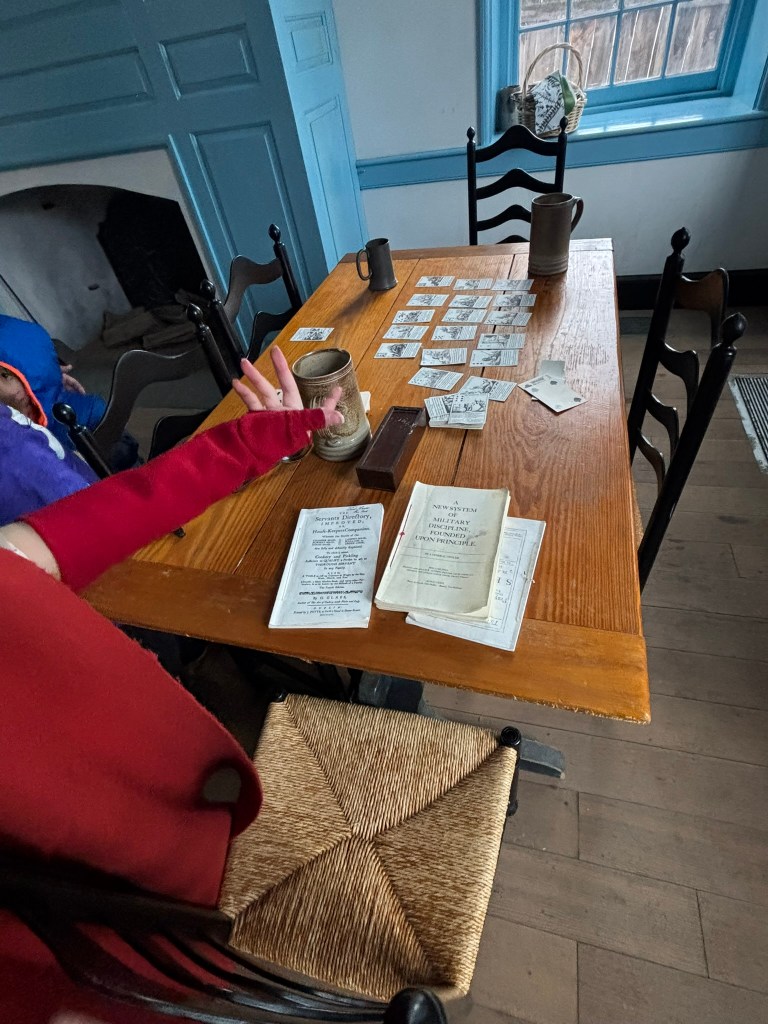
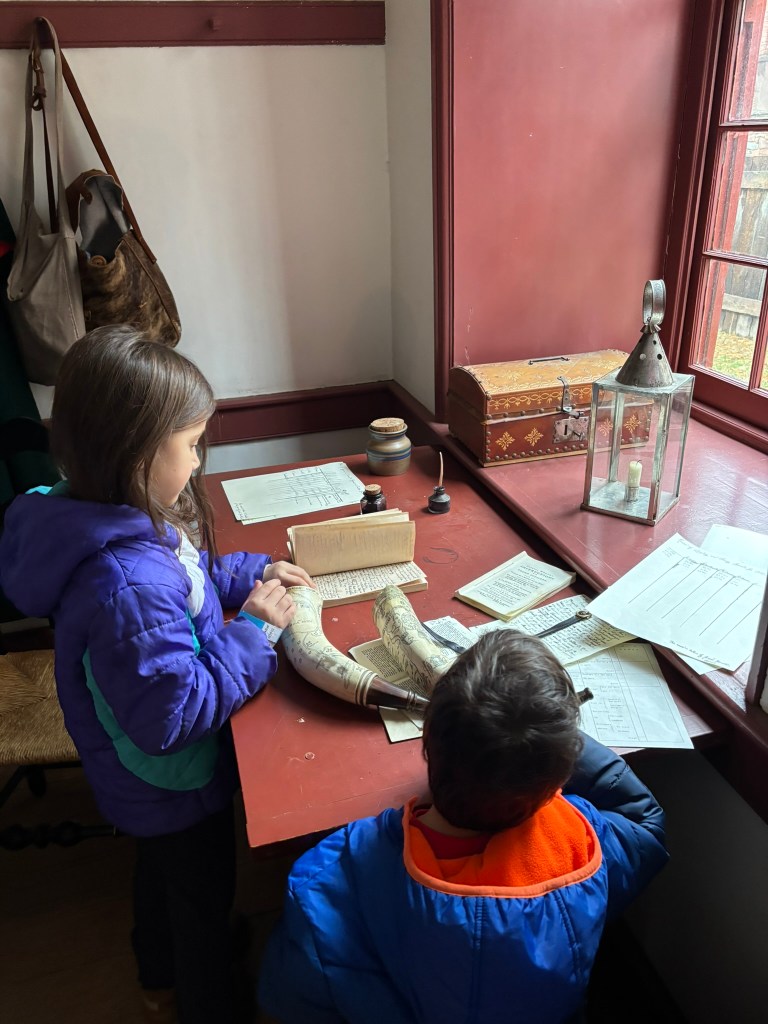
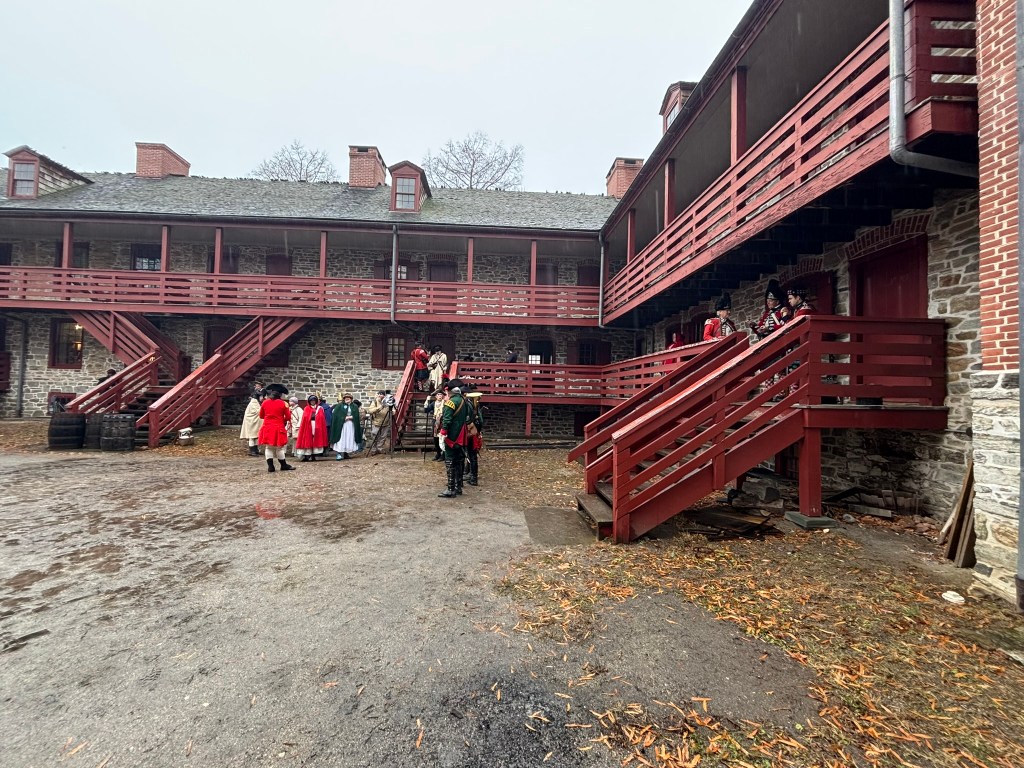
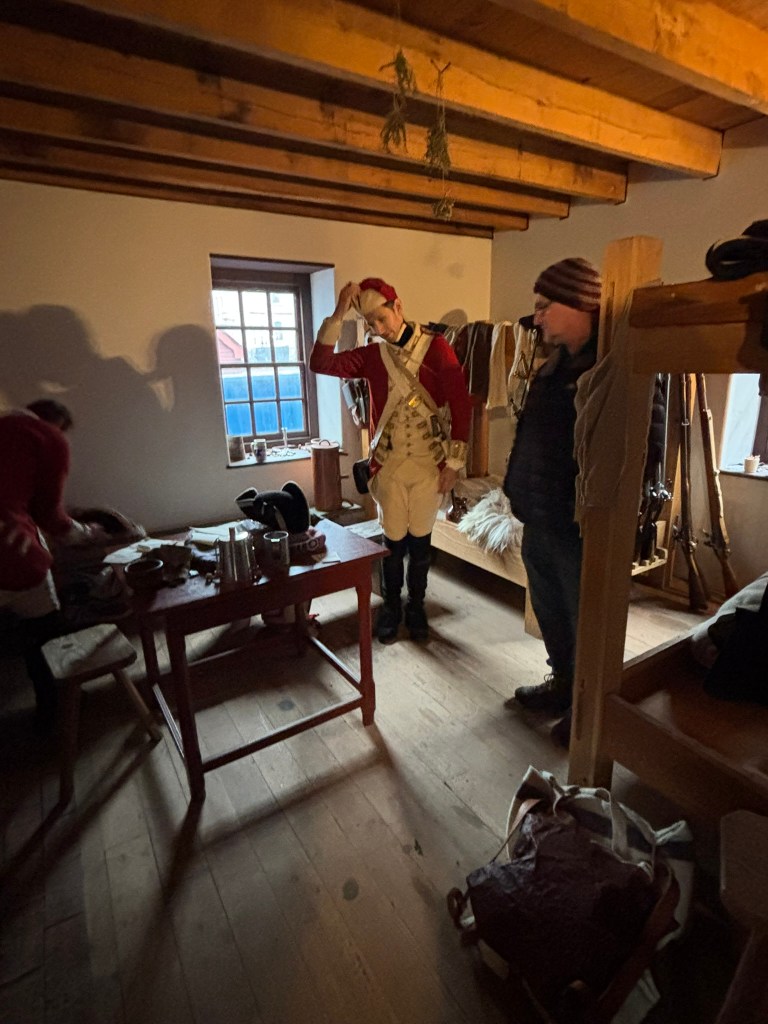
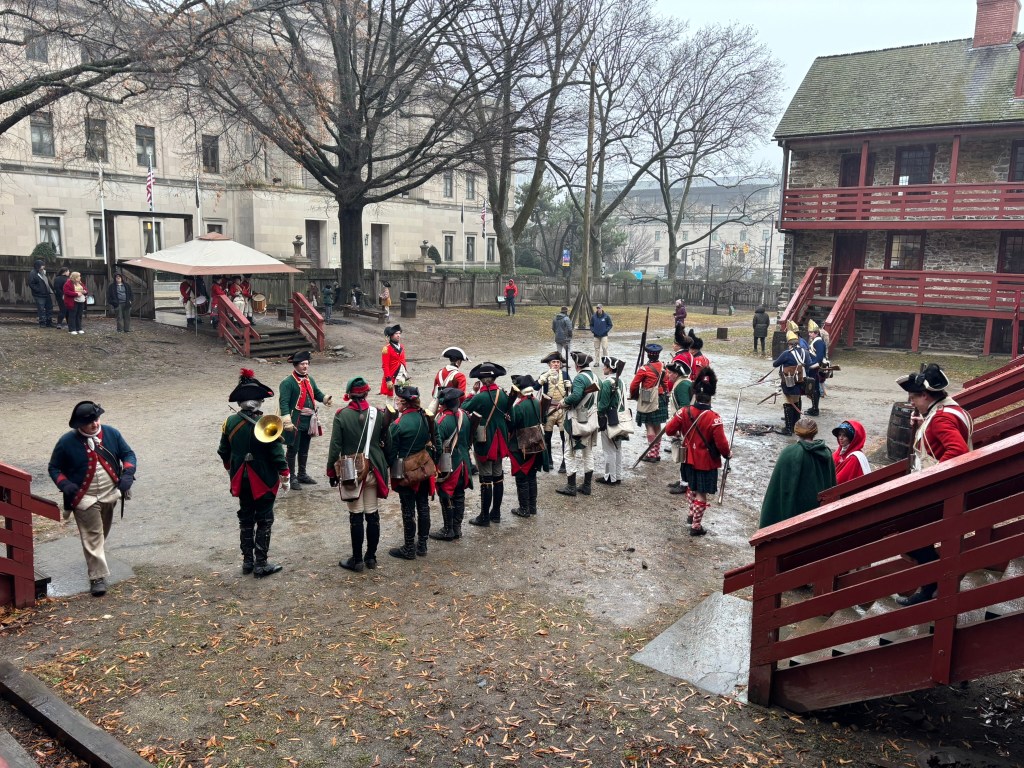
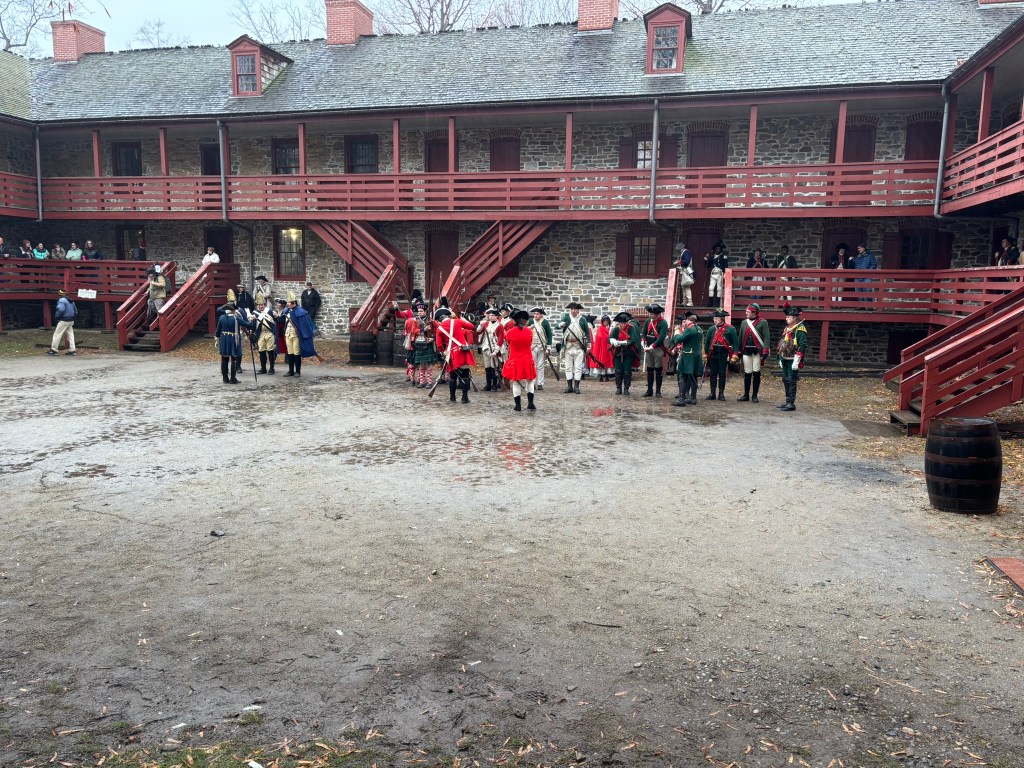
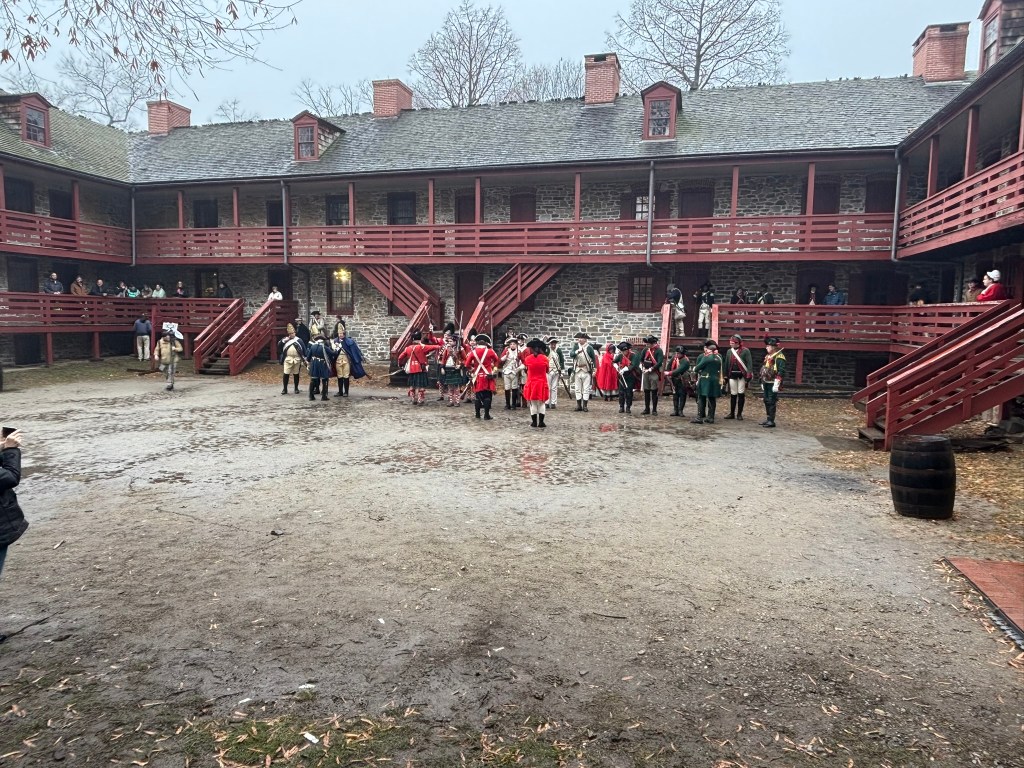
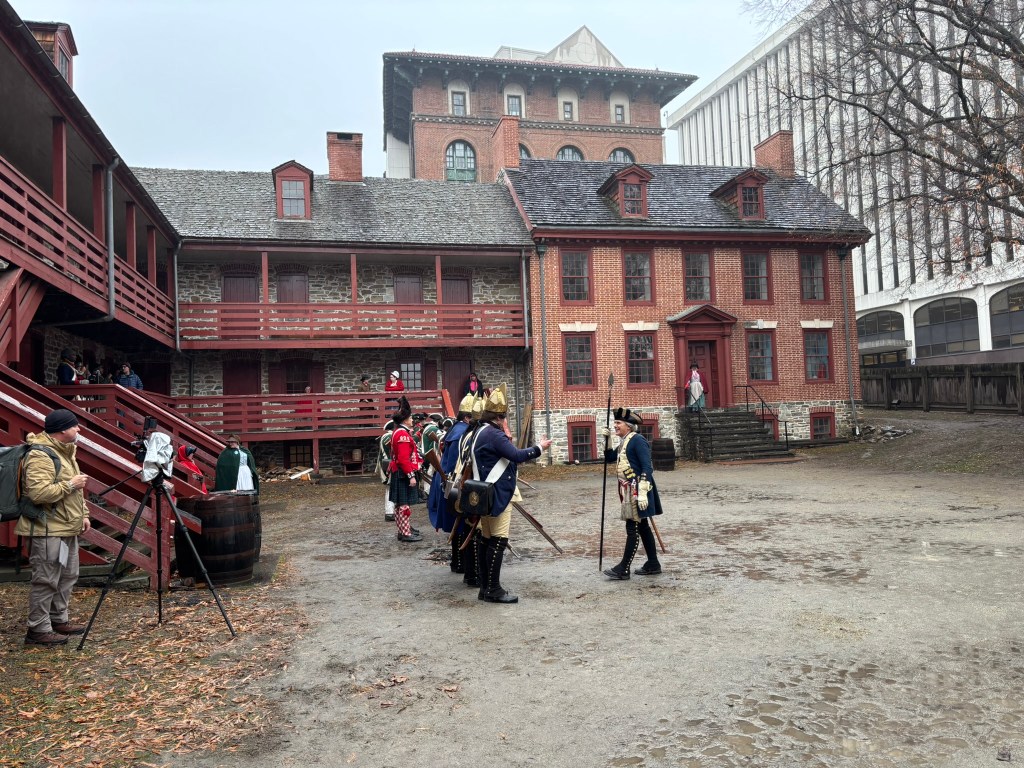
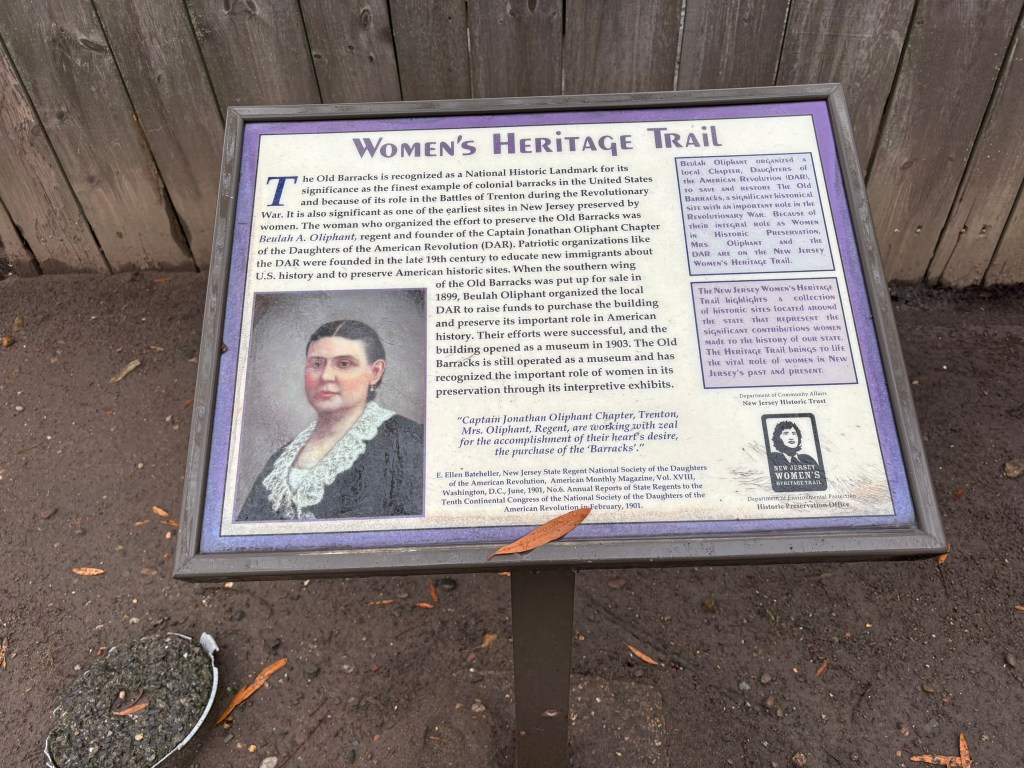
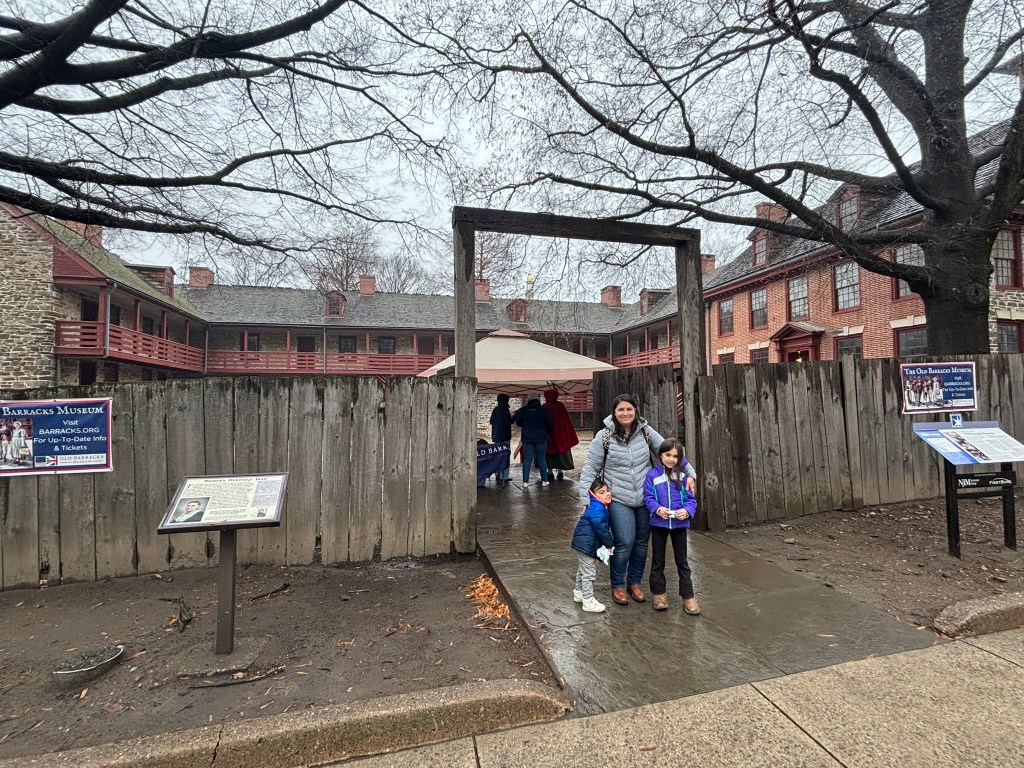
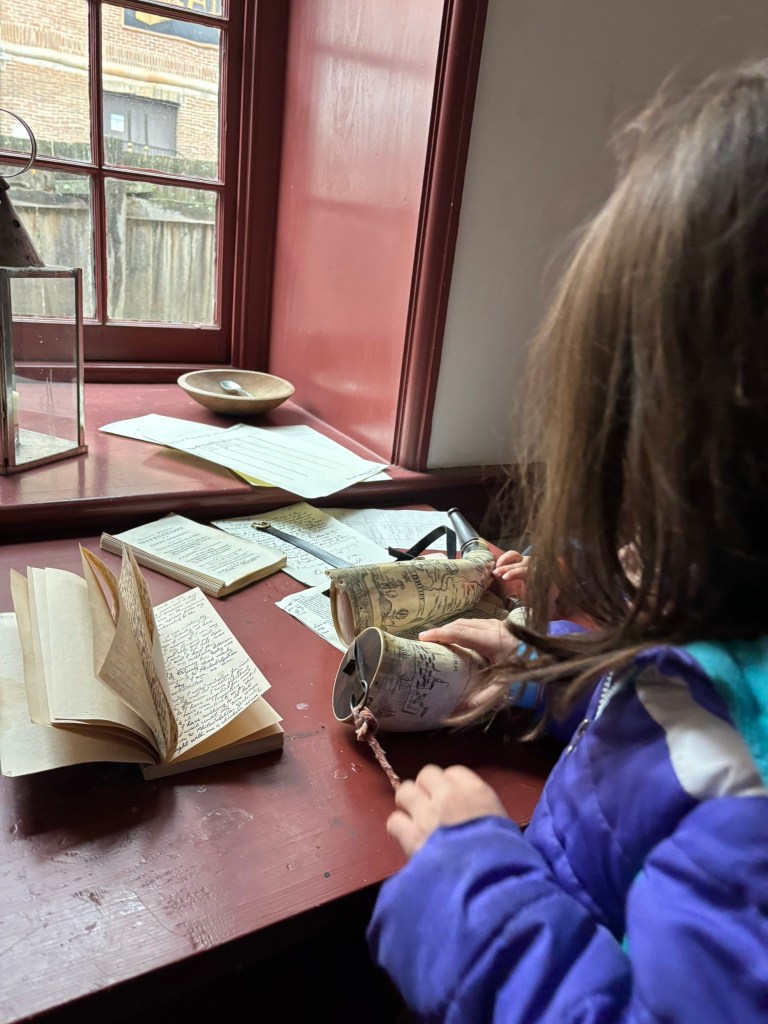
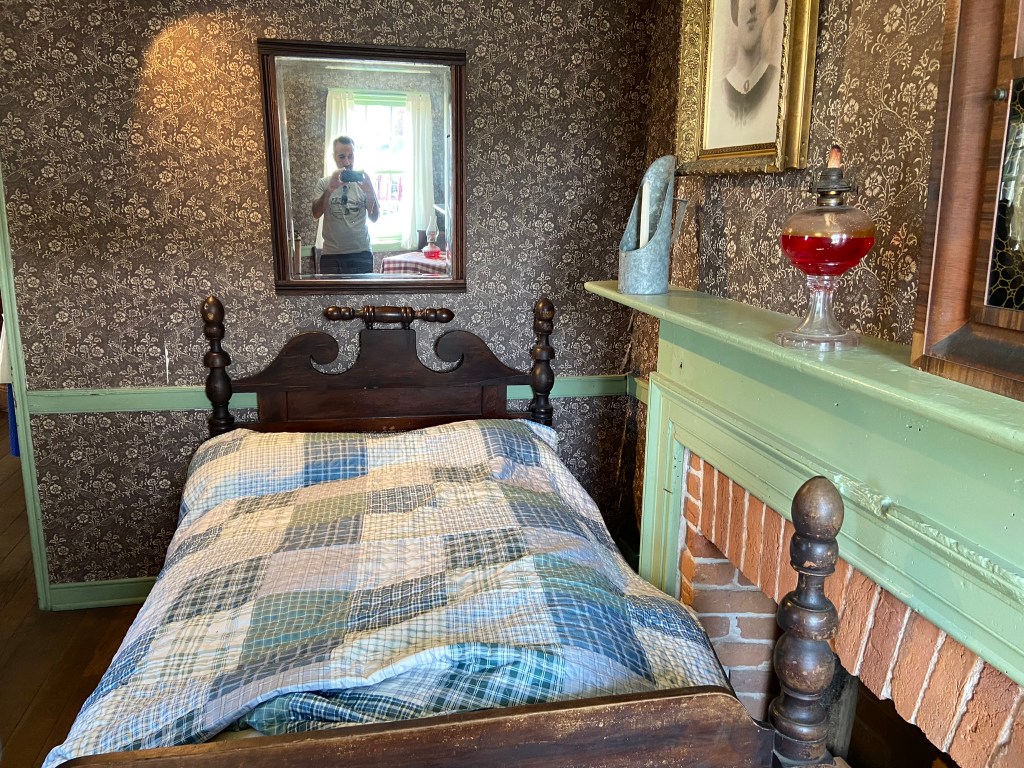
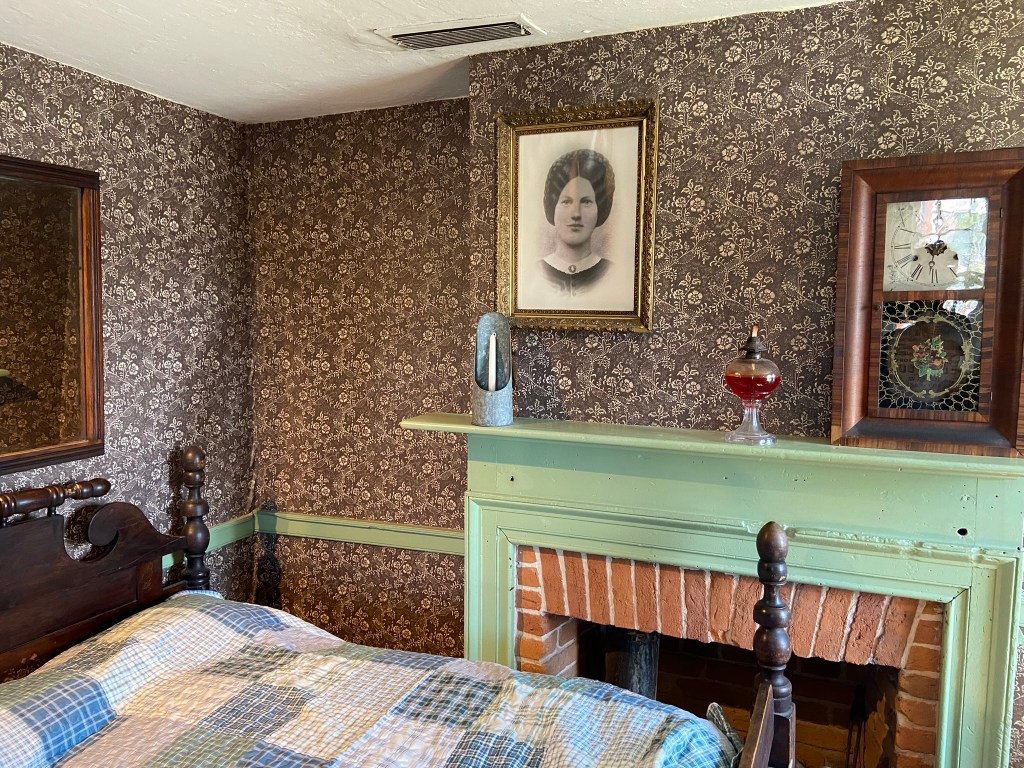
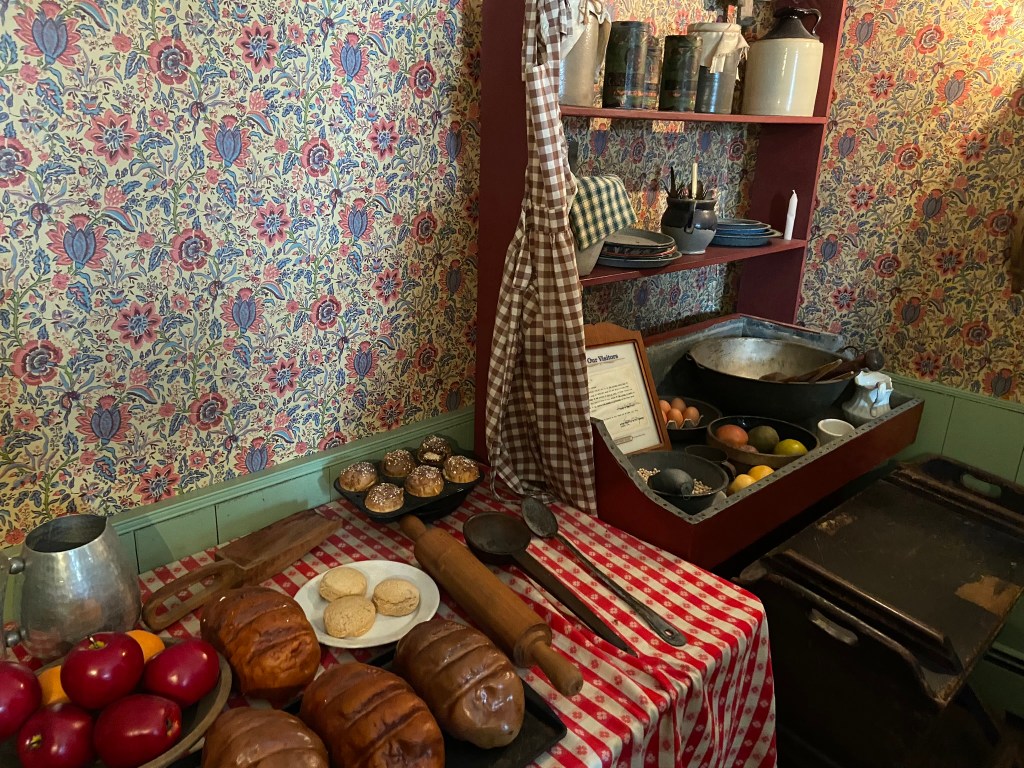
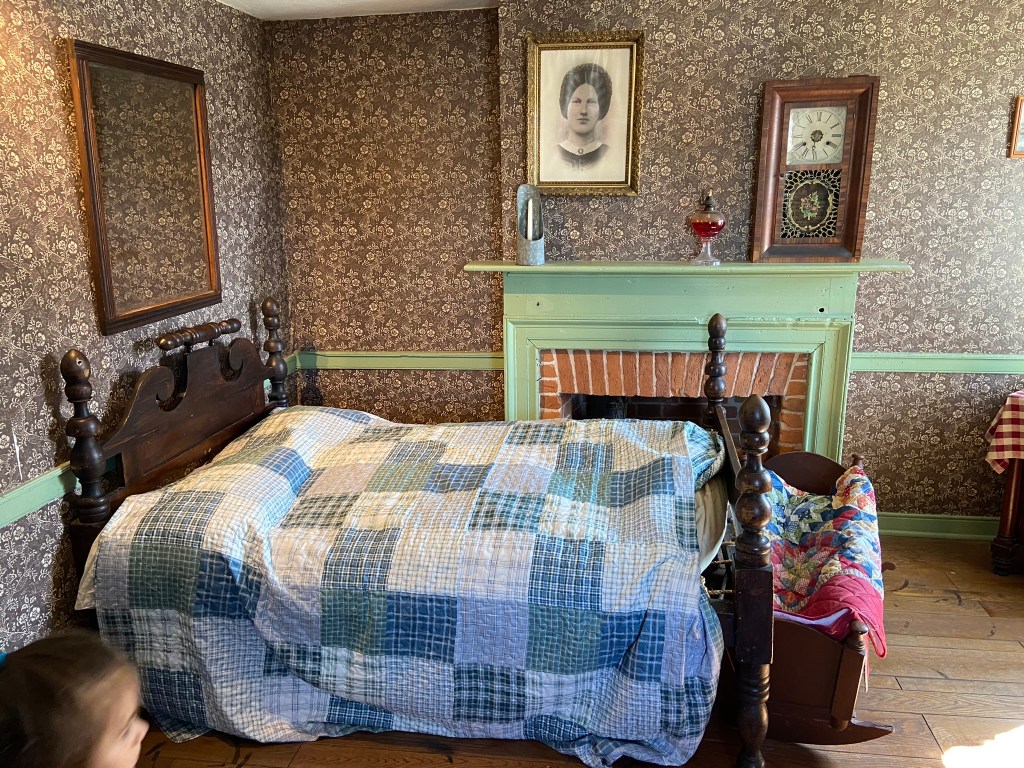
We arrived at and explored the Old Barracks Museum. The Re-enactors at the museum are great. They are very friendly and explain the history of the Barracks which were built in 1758 to house the British Army during the French and Indian War (1754-1763). The re-enactors explained what life would have been like for both the privileged officers, as well as the soldiers. We discovered that officers passed the time by playing cards and other games. We also discovered in the soldiers’ barracks that a room the size of my kids’ bedrooms would have housed between 12-16 men, 3 men per bed! The barracks would serve a variety of purposes during the American Revolution after it was captured by the Americans, including a place to house American troops and British prisoners, as well as a smallpox hospital.
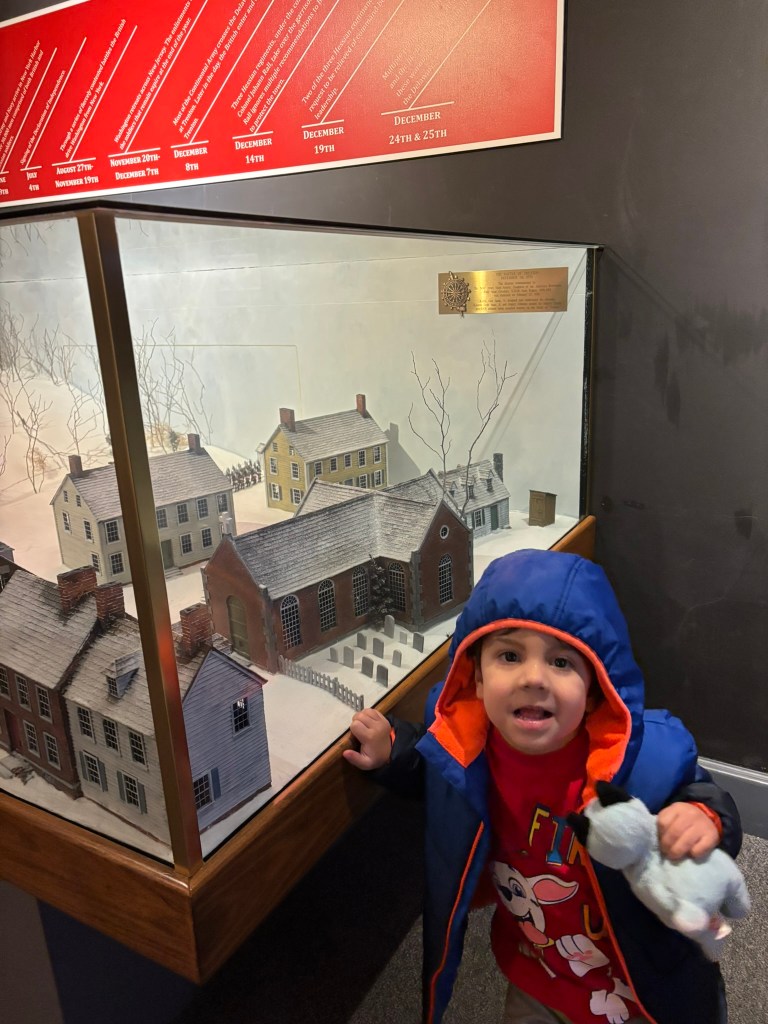
While we were exploring the Barracks, soldiers gathered to line up and march over to the reenactment of the Battle of Trenton, which takes place between State Street and Mill Hill Park. We unfortunately didn’t get an opportunity to see the reenactment. It was taking place farther away from where our car was parked, which would have been a lot for the kids. We are hoping to see it in the future and will plan our day better than we did this time. The reenactment always takes place around this time in December to commemorate the Continental Army’s crucial victory on December 26th, 1776 at the Battle of Trenton, part of the Ten Crucial Days.
This was somewhat of a spur of the moment trip, but overall we had a good day. For next year, I’m hoping we can plan out Patriots Week better so that we can attend more events. The Old Barracks is a place I have wanted to see for a long time. It’s quite fascinating to see a building from 1758 in the middle of Trenton. There is rich history to explore there as it serves as a living history museum. For videos from the the Old Barracks Museum, follow my Social Media Pages. For more information on the two museums that we visited, check out the links below.
In Part 1 of my post about my family’s trip to Gettysburg, I discussed our experience on the first day of our trip which included the Dobbin House, the Jennie Wade House, a stroll up Baltimore Street, Ronn Palm’s Museum of Civil War Images, and the Gettysburg National Cemetary. In Part 2 I will discuss our second and third (half) days, including a Double Decker bus tour of the battlefield, the Gettysburg National Military Park and Museum, and the Gettysburg Museum of History.
Gettysburg Battlefield Bus Tour
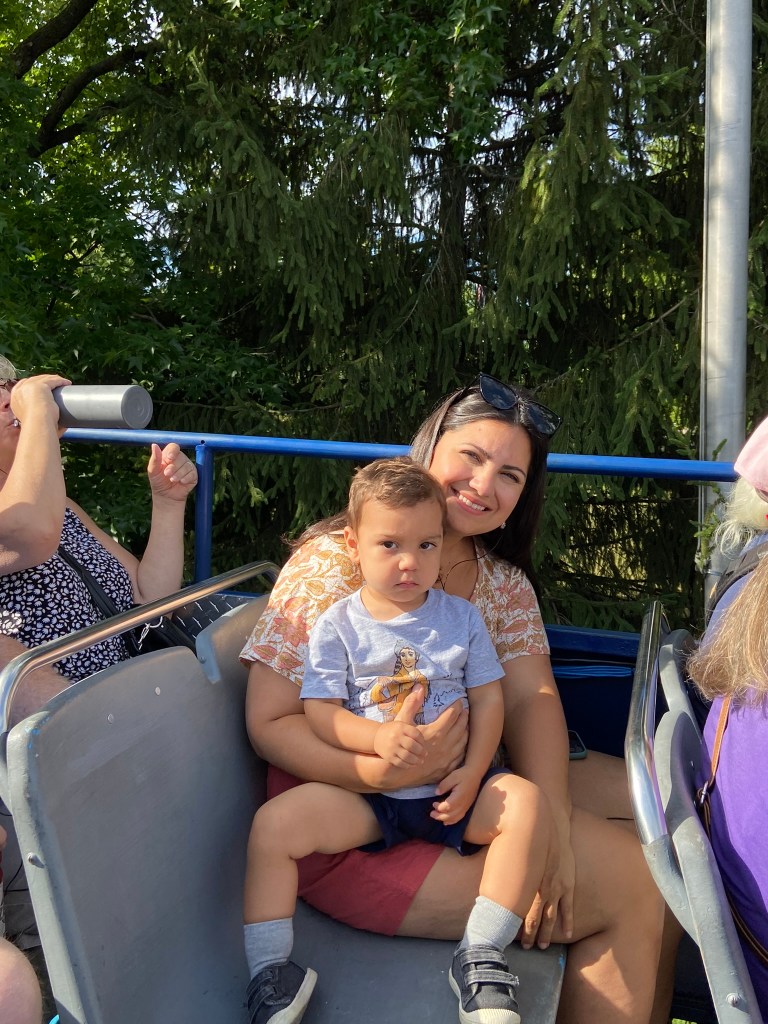
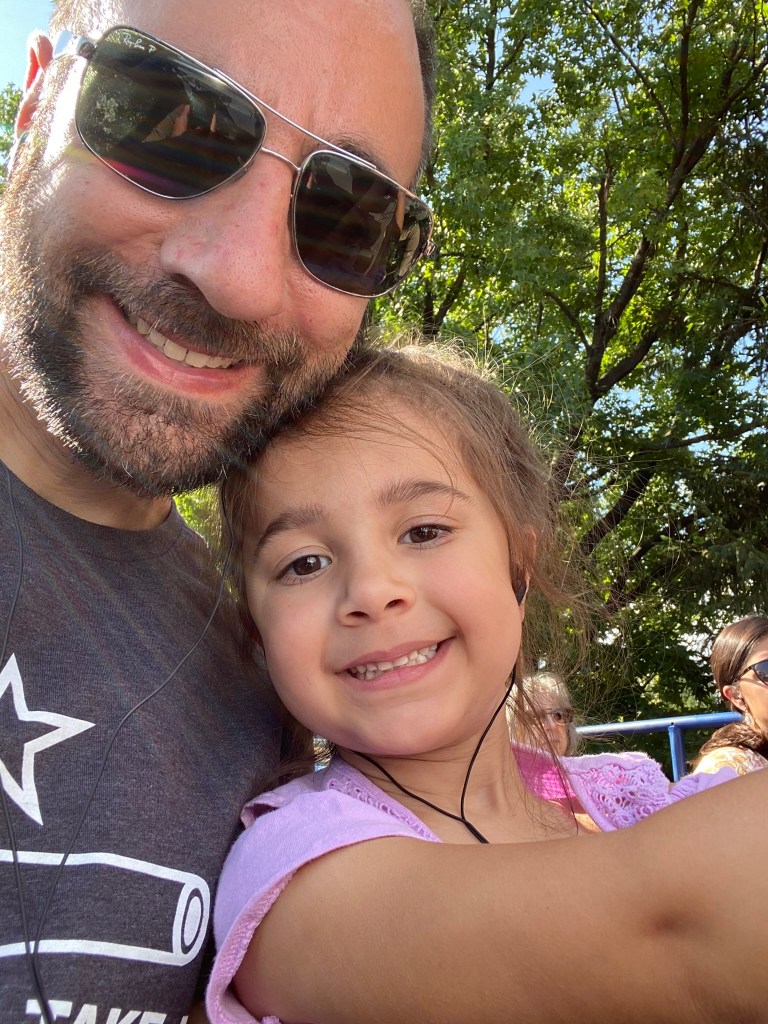
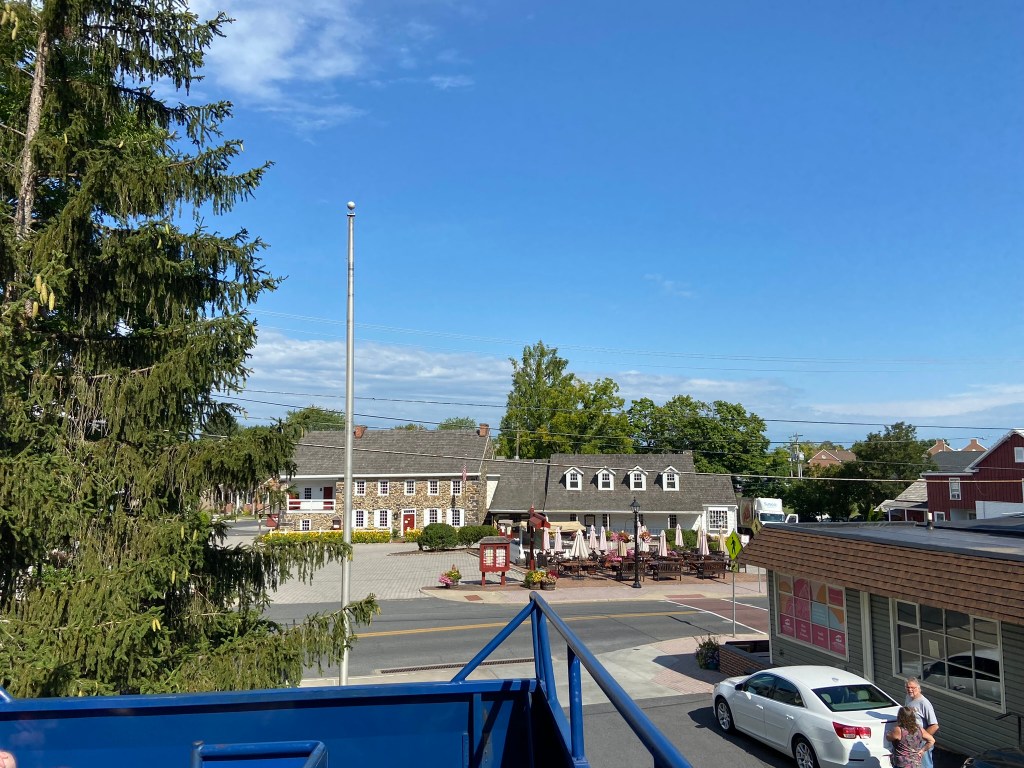
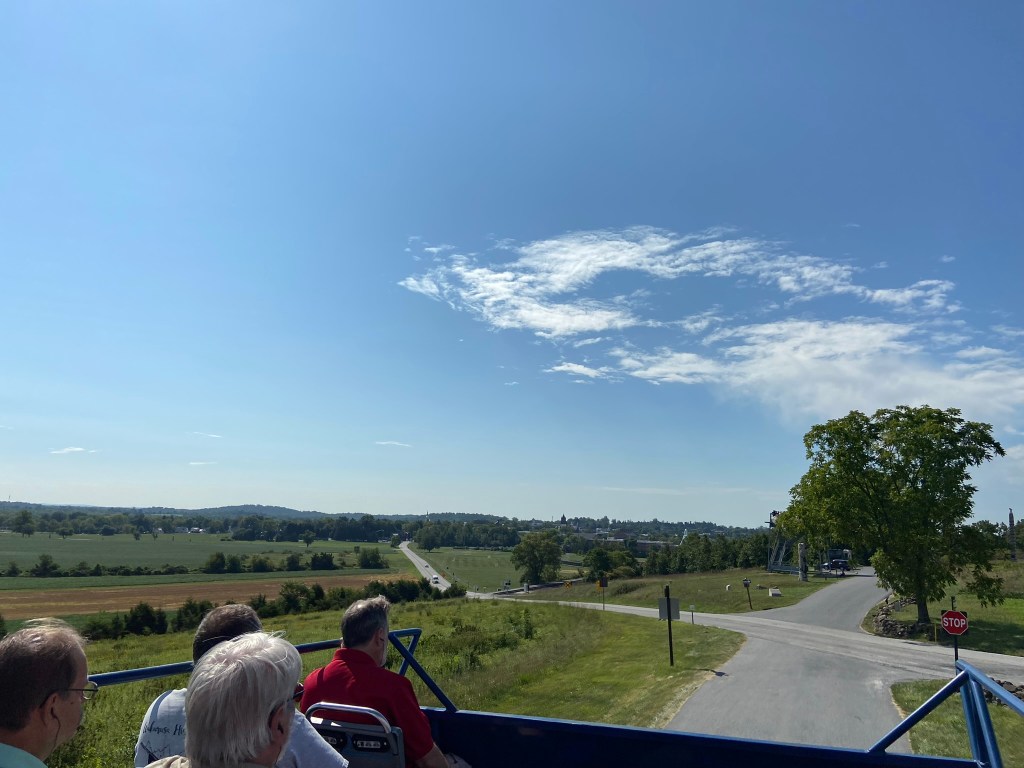
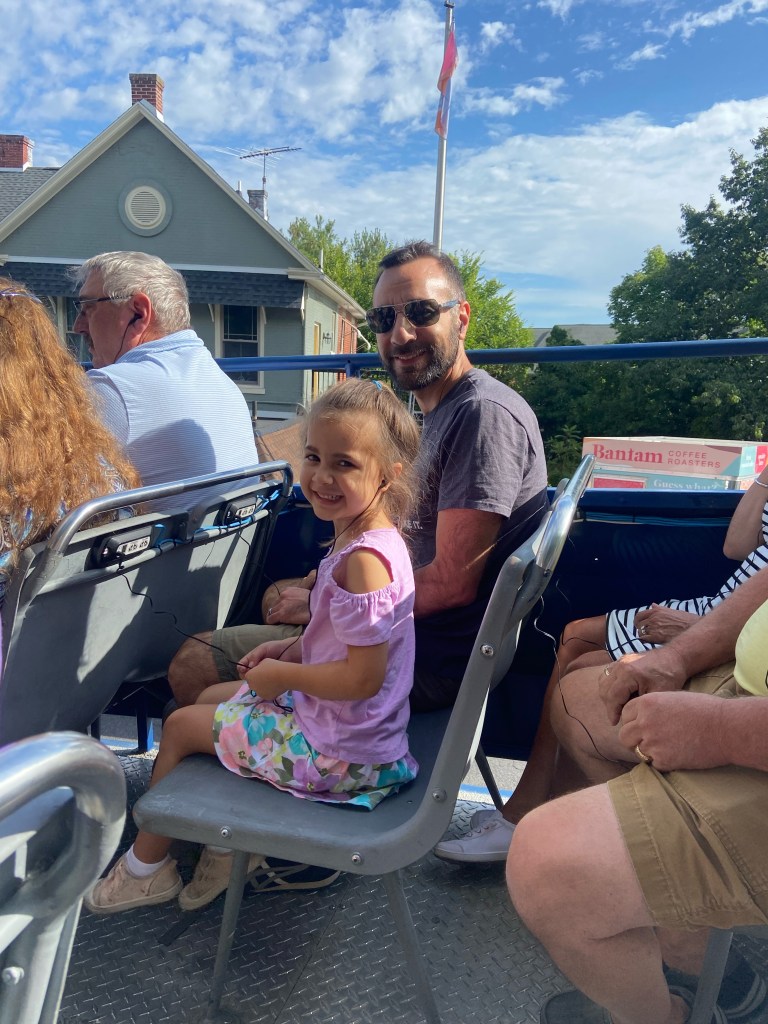
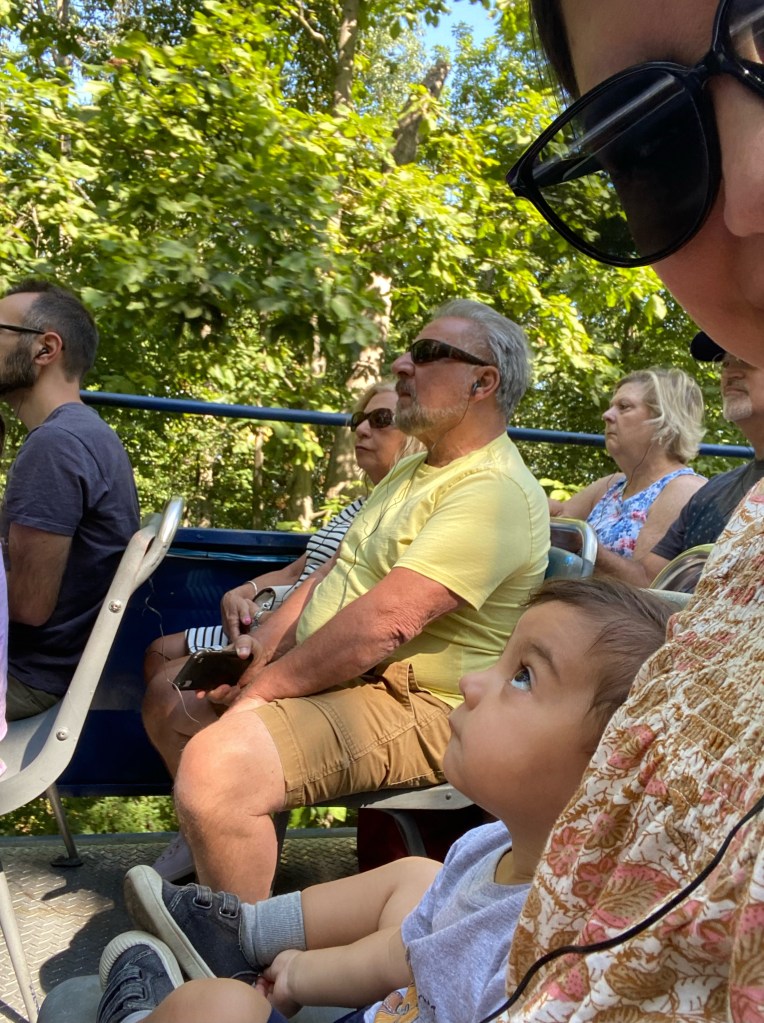
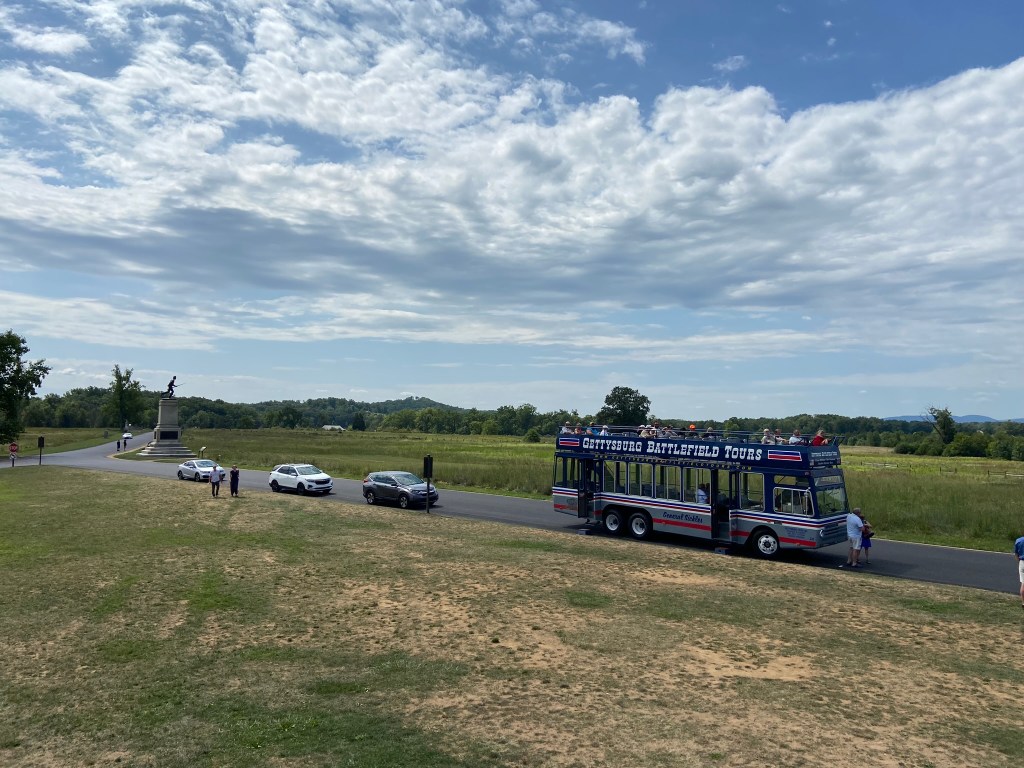
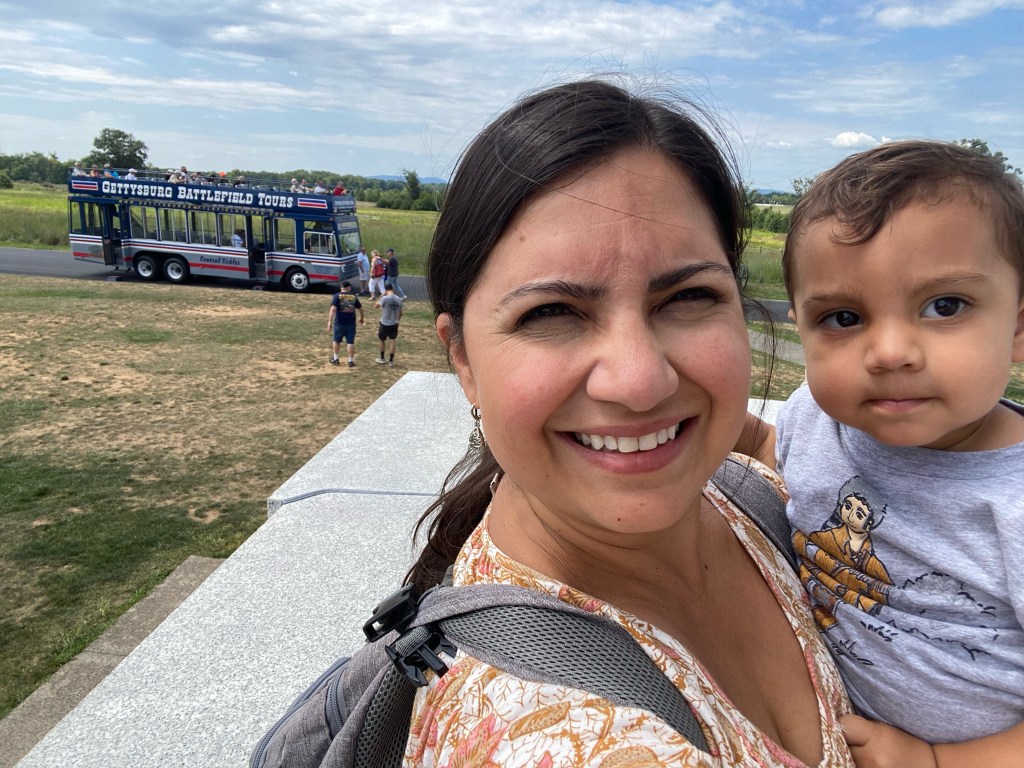
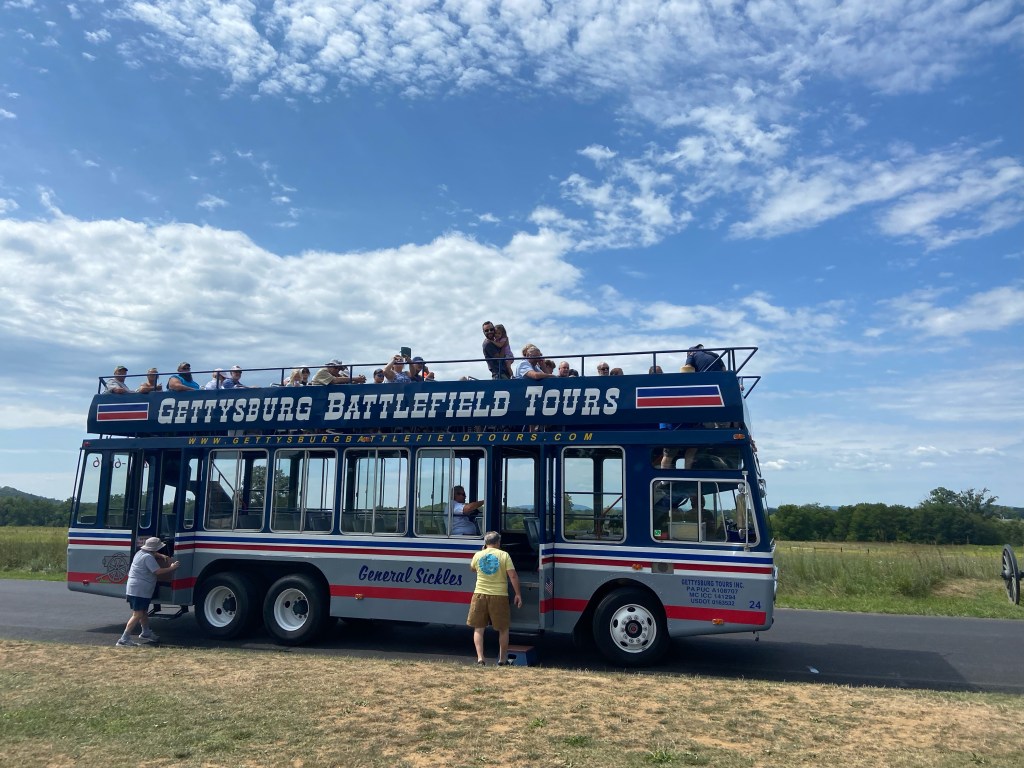
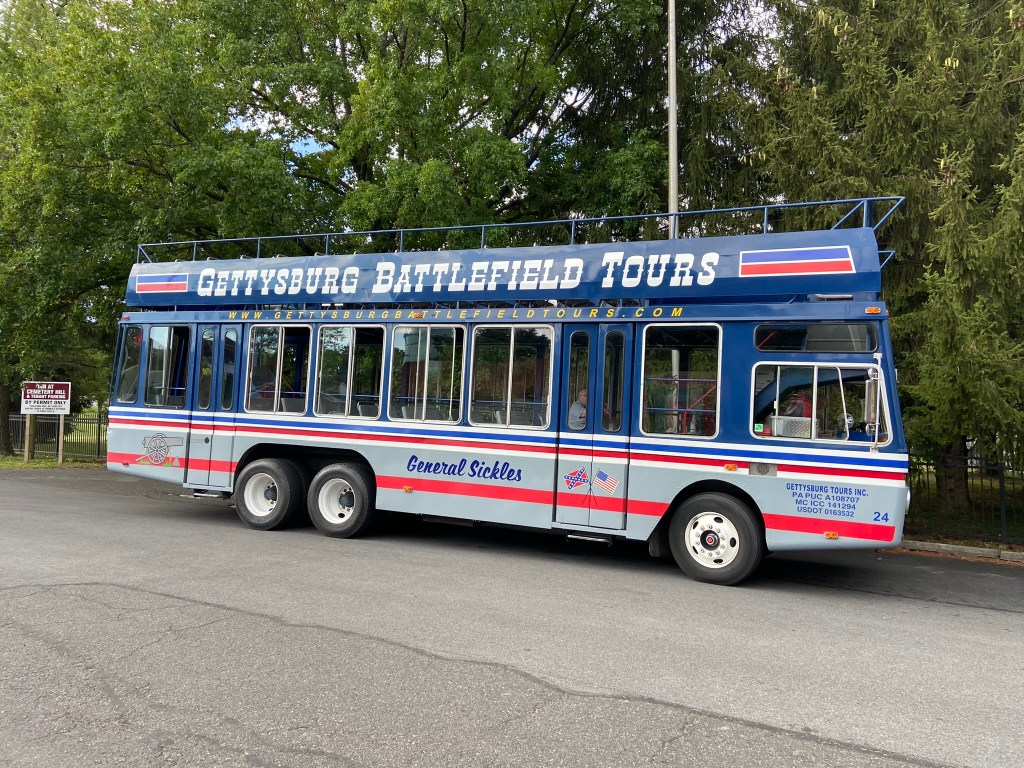
On day 2 of our trip, we woke up and had breakfast in our hotel, the 1863 Inn of Gettysburg. Our bus tour, which is run by Gettysburg Battlefield Tours, started at 10am and we arrived a half hour early. It was nice that the meeting place for the bus tour was just a 2 minute walk from our hotel. We sat on the top of a double decker open-air bus. Each person is supplied with headphones to listen to the professional licensed battlefield guide who sits below. He was willing to address any questions about the tour and the battle.
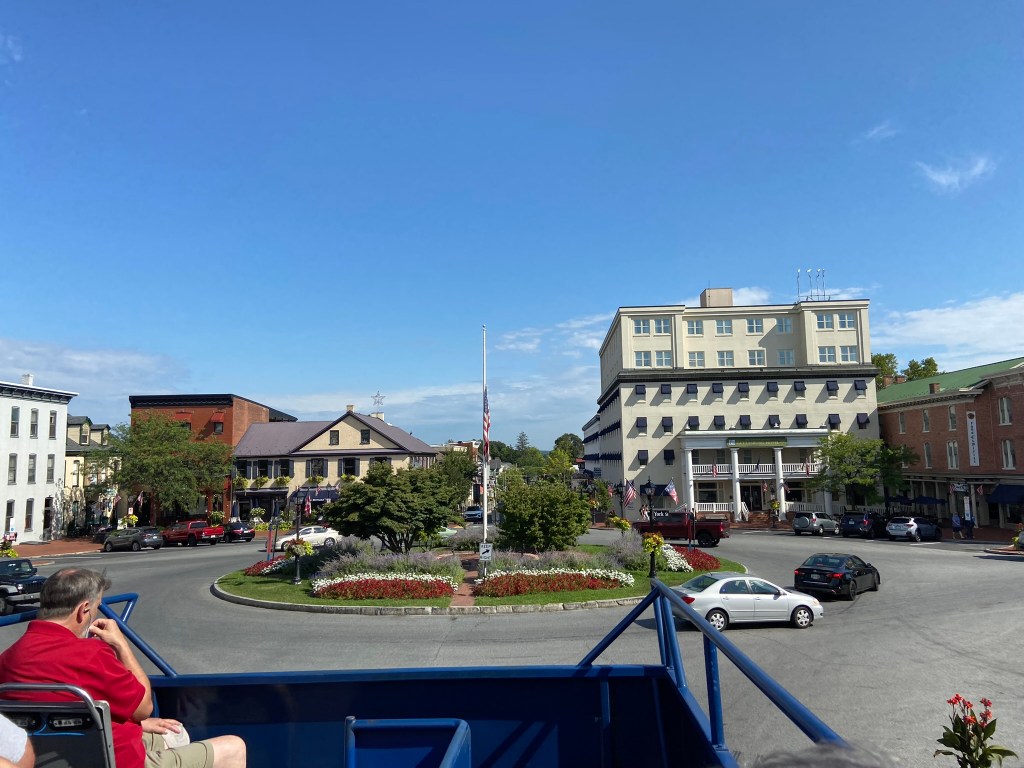
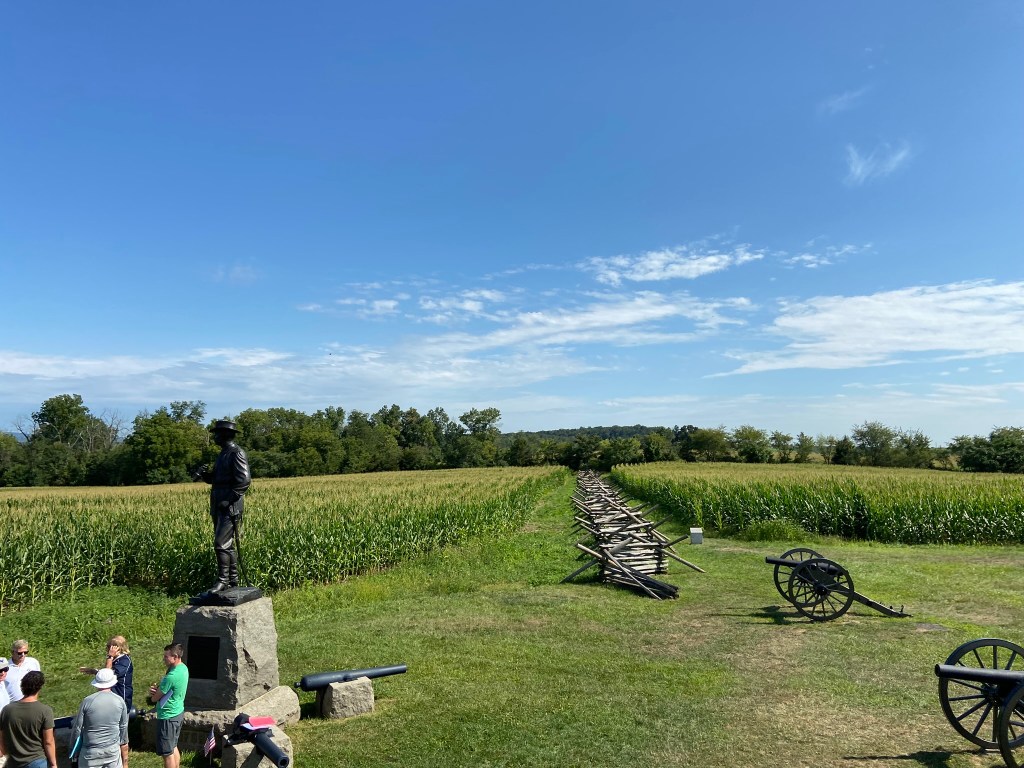
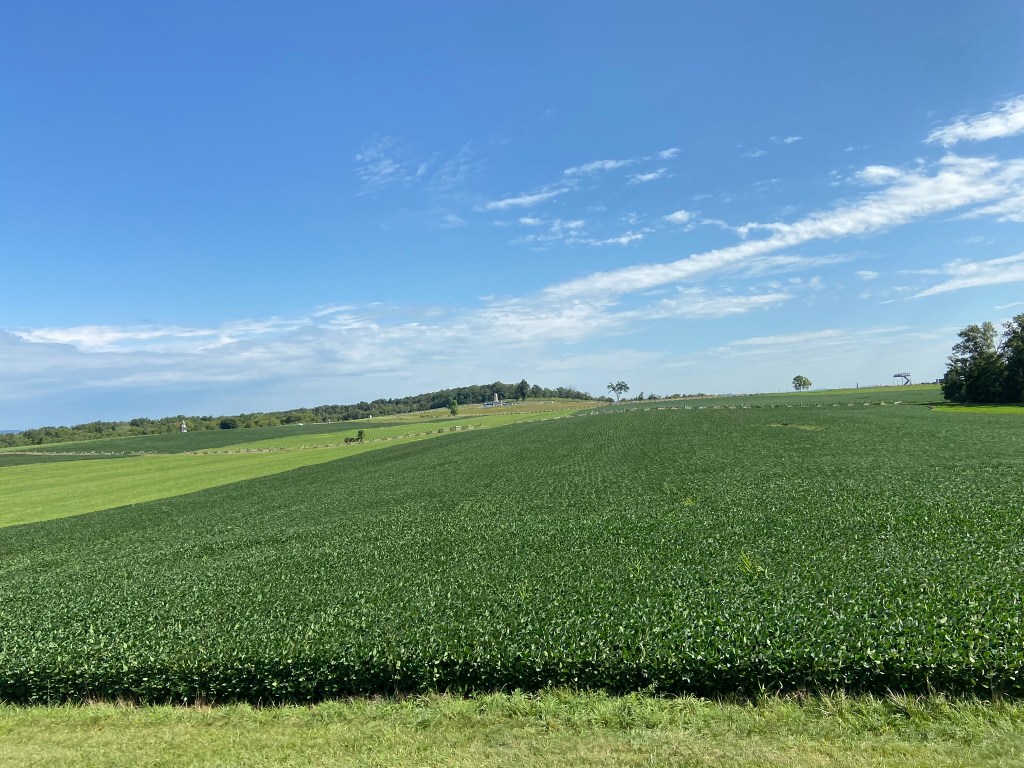
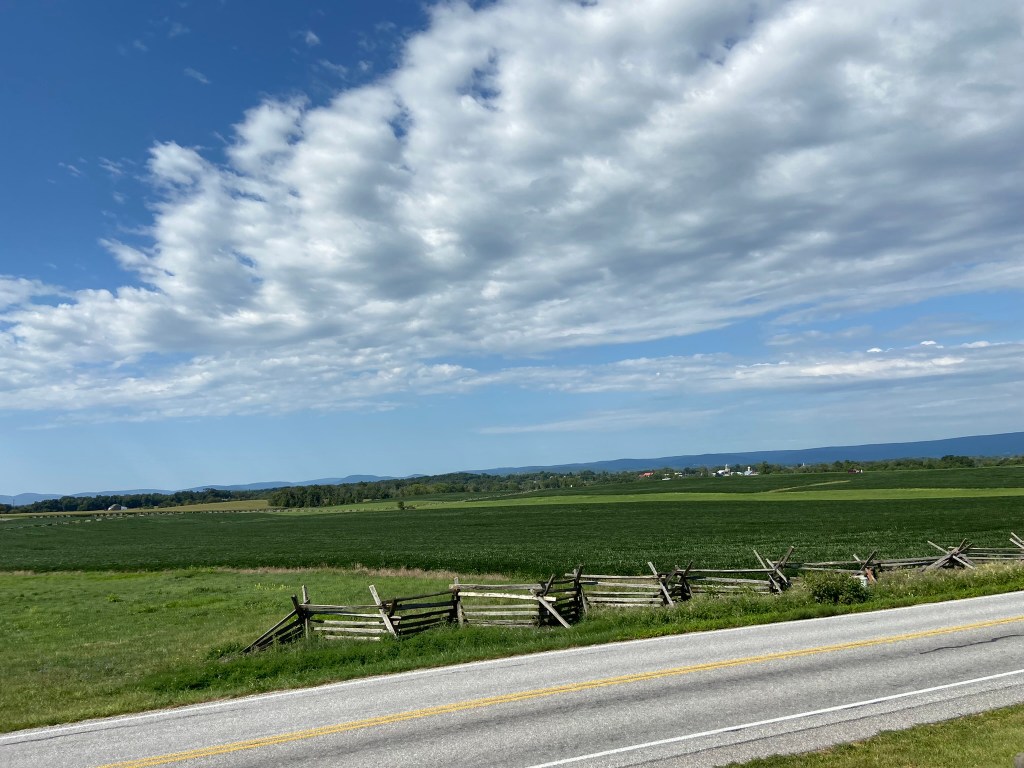
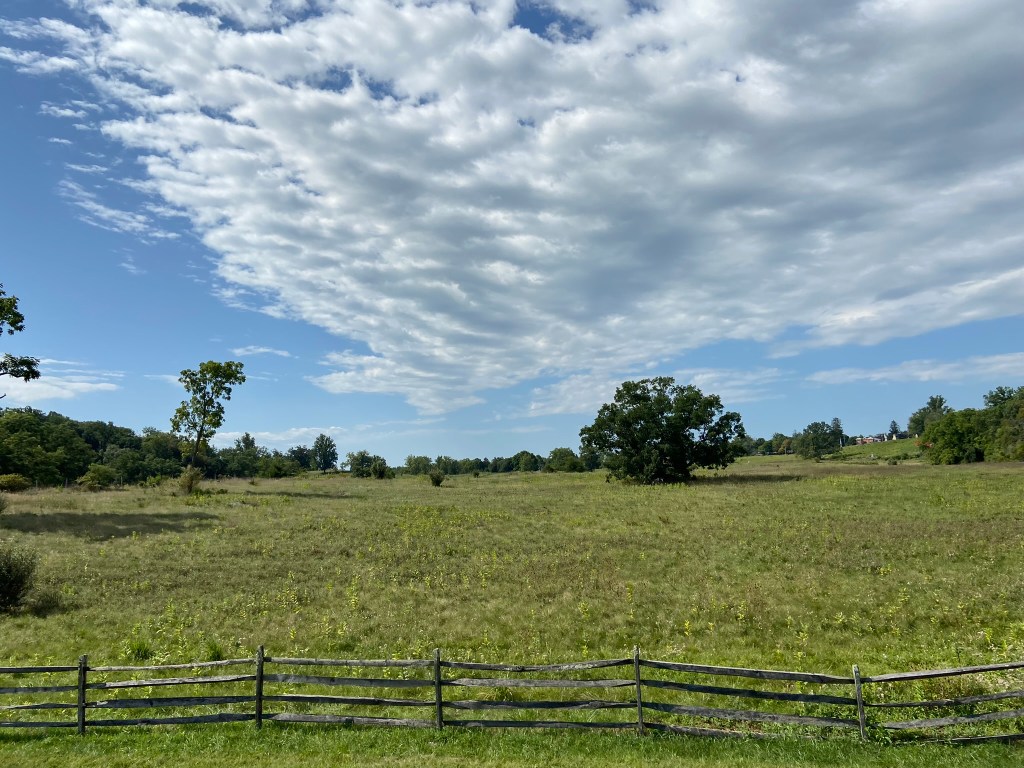
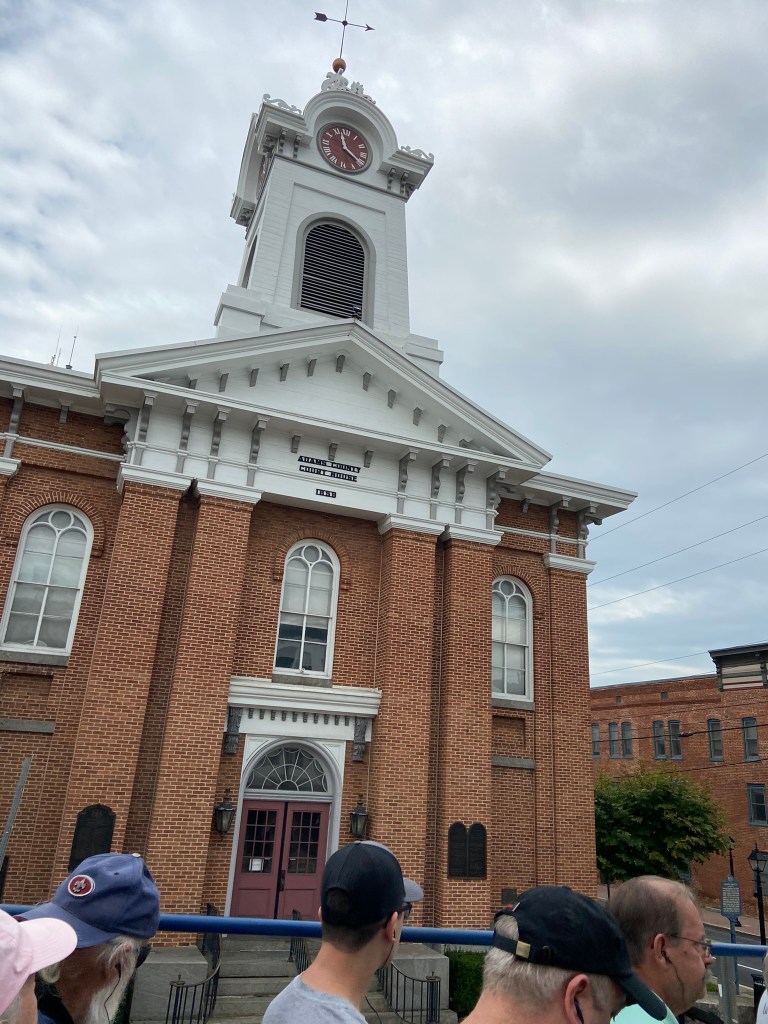
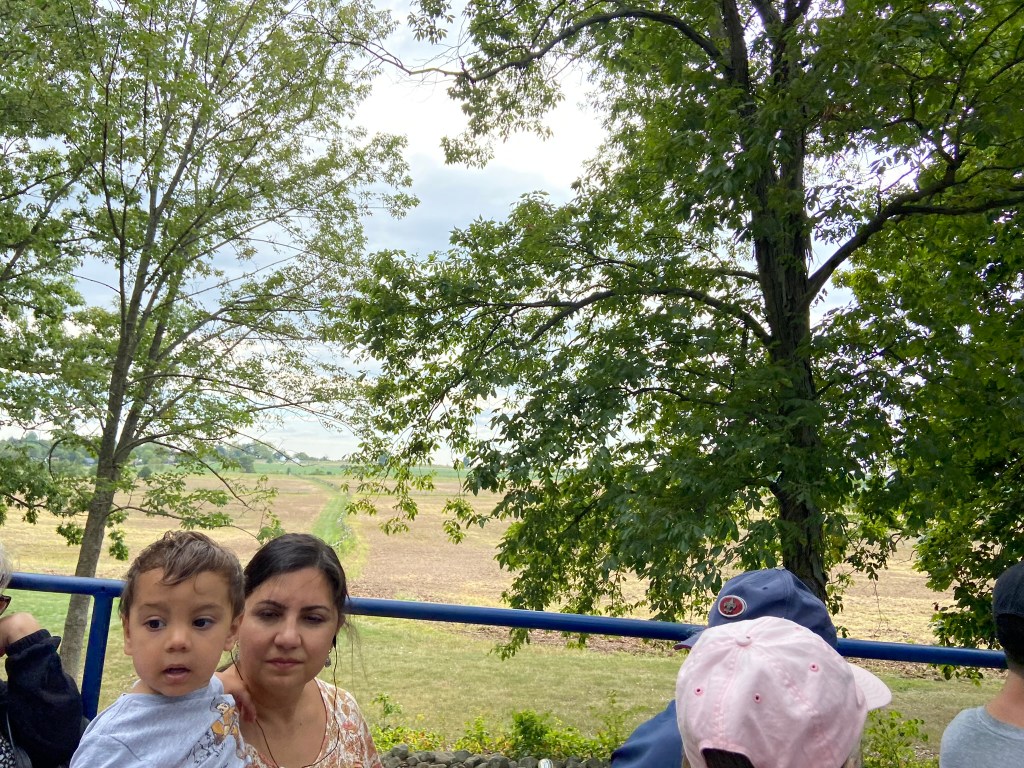
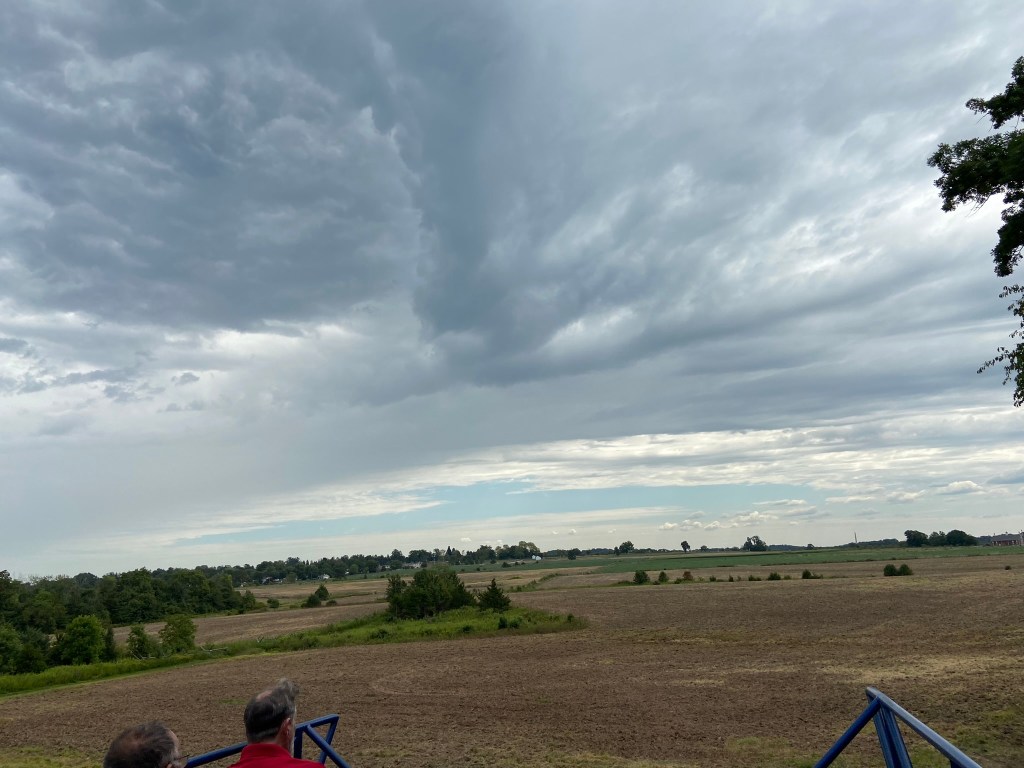
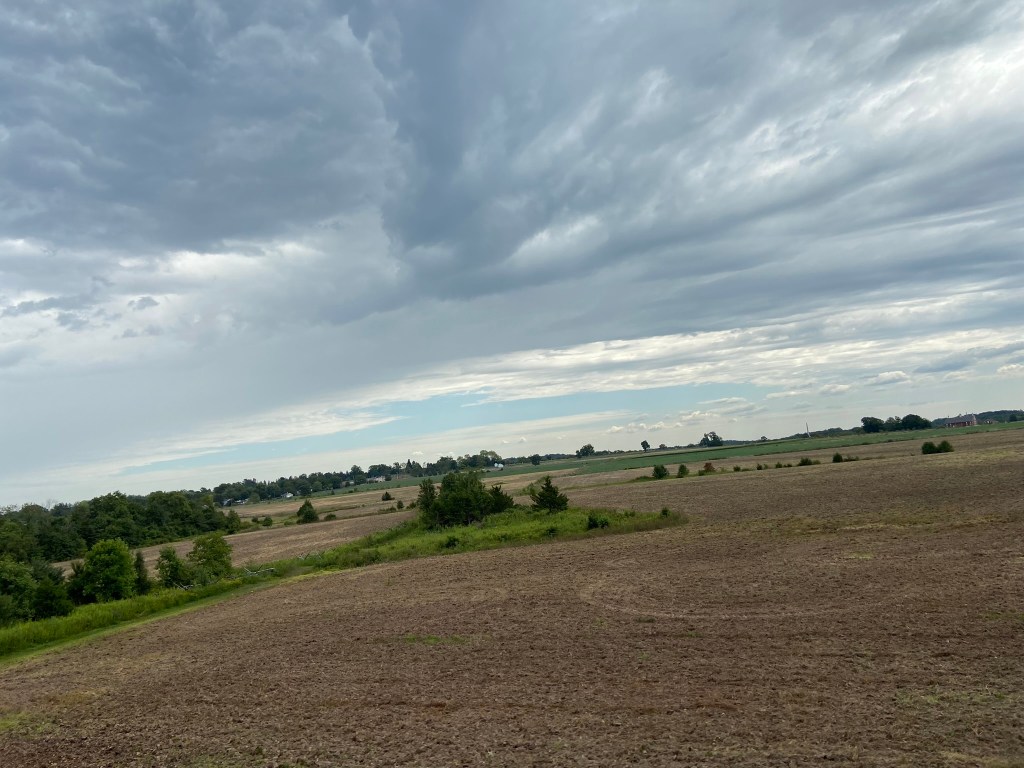
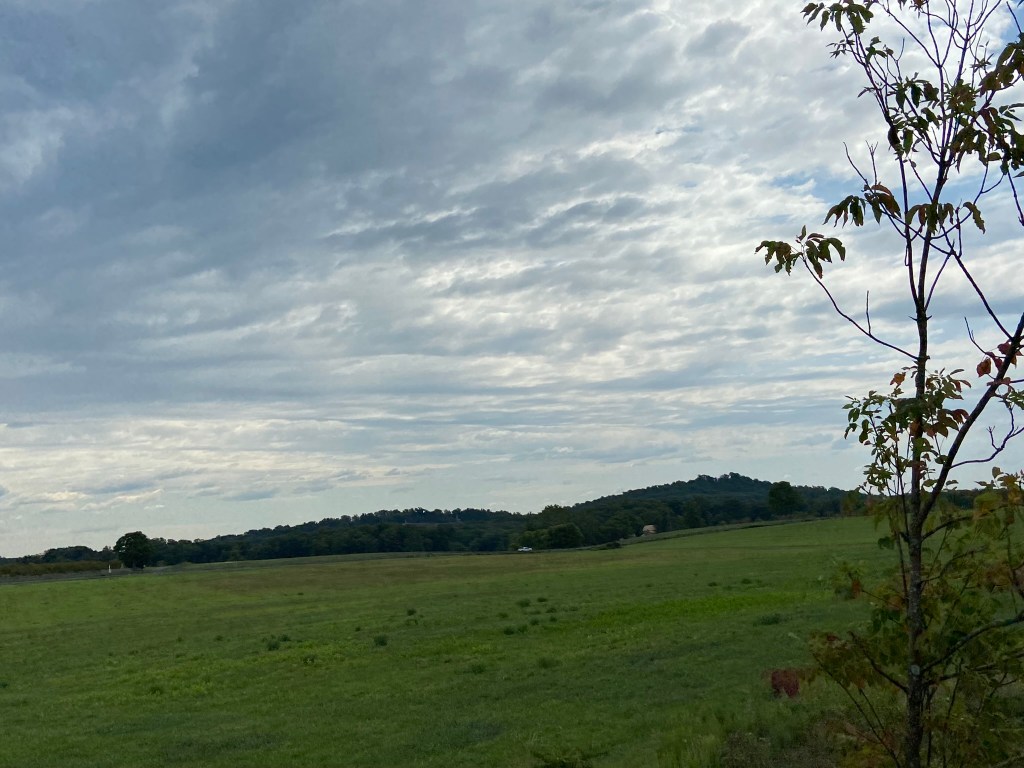
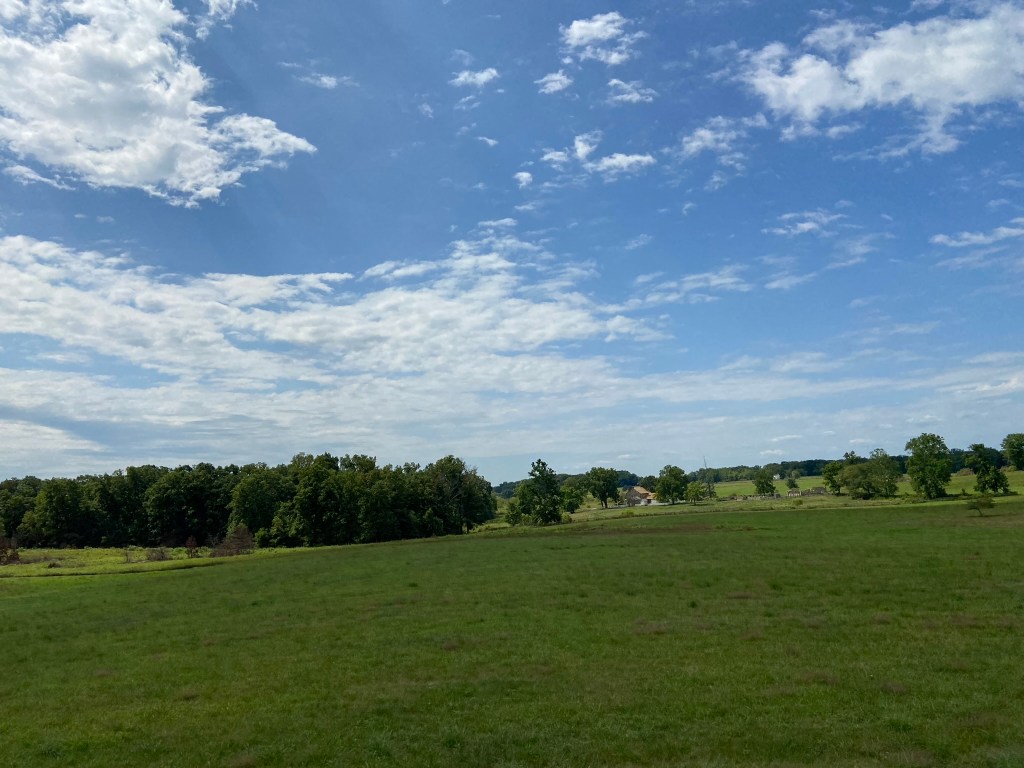
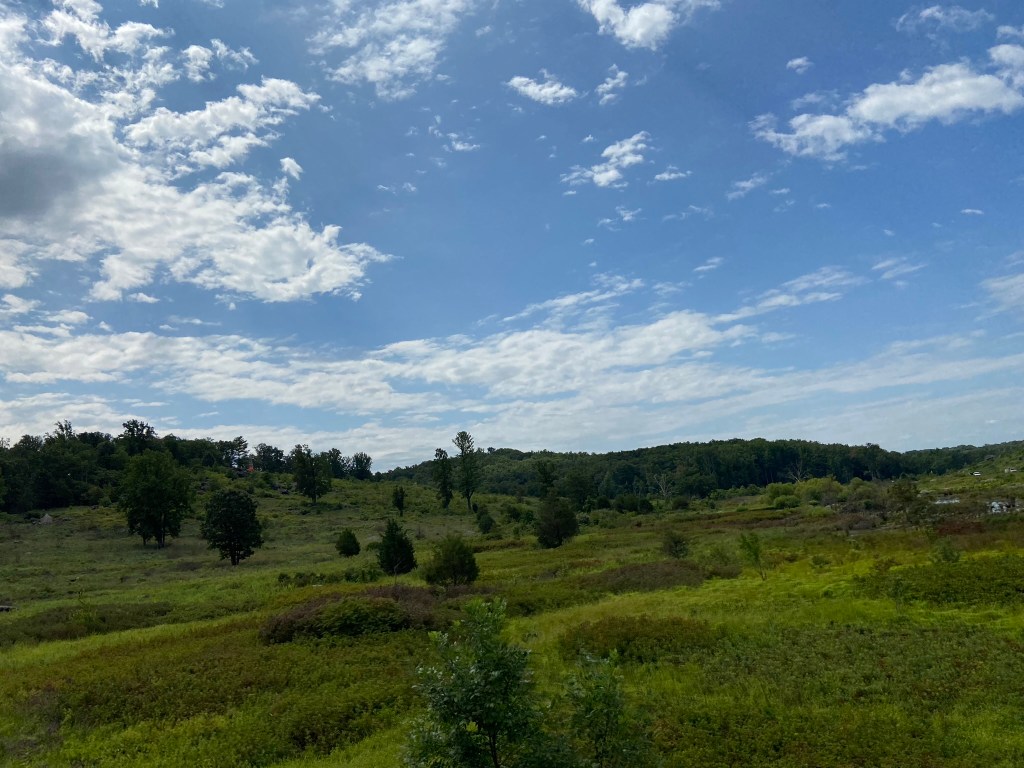
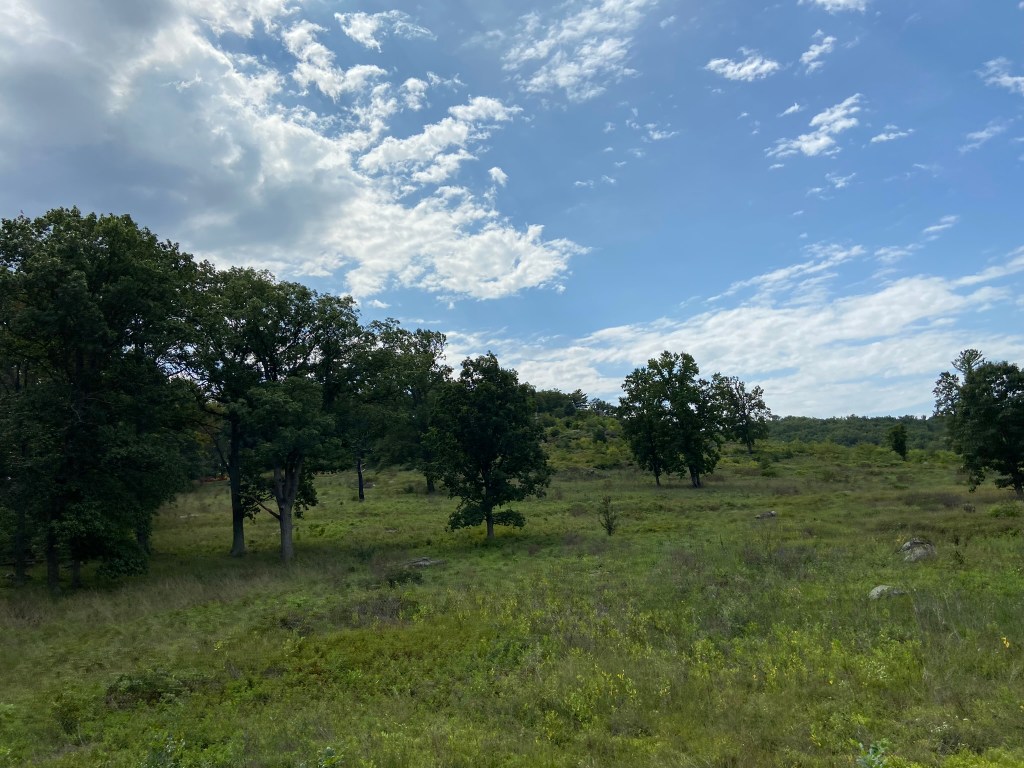
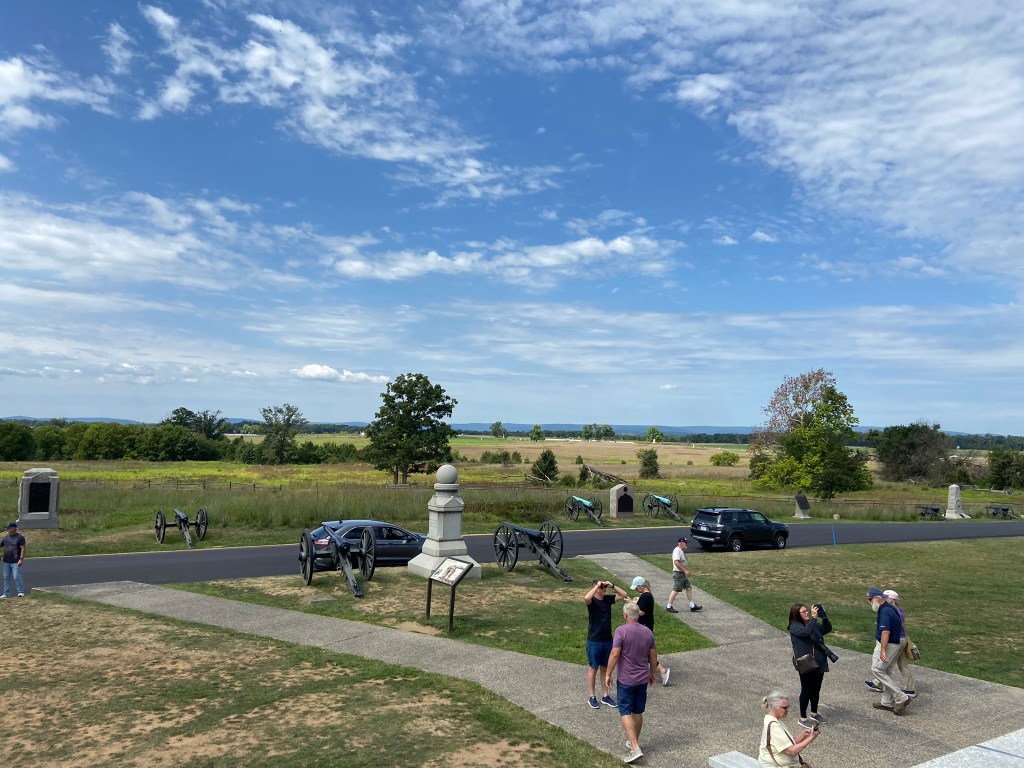
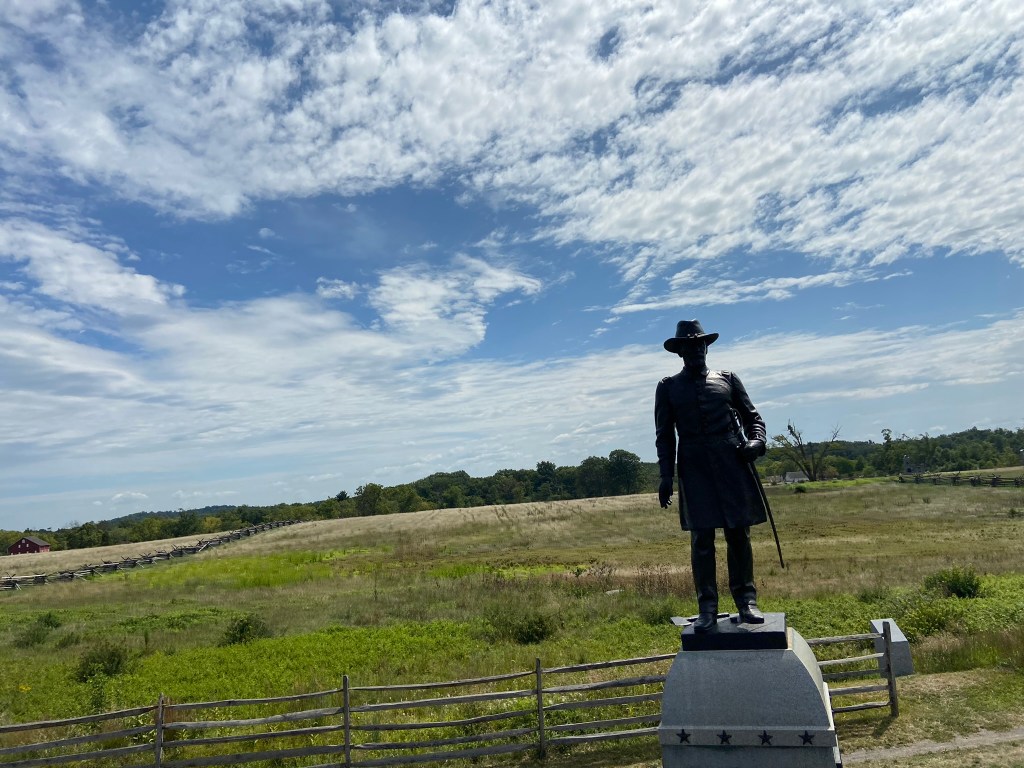
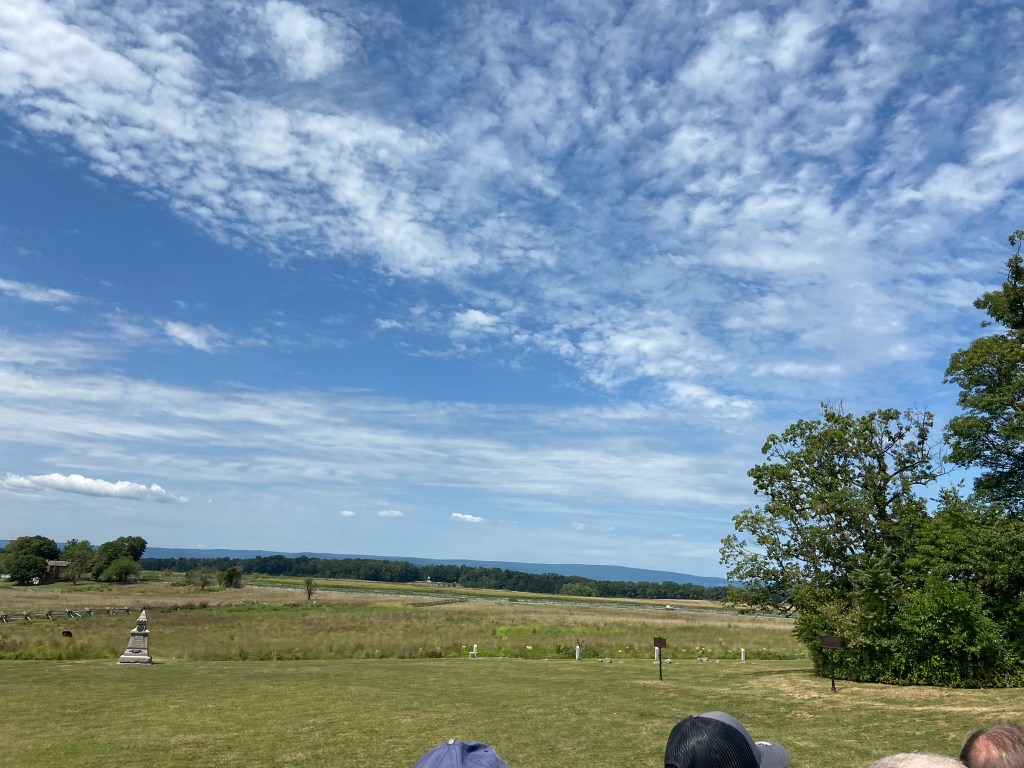
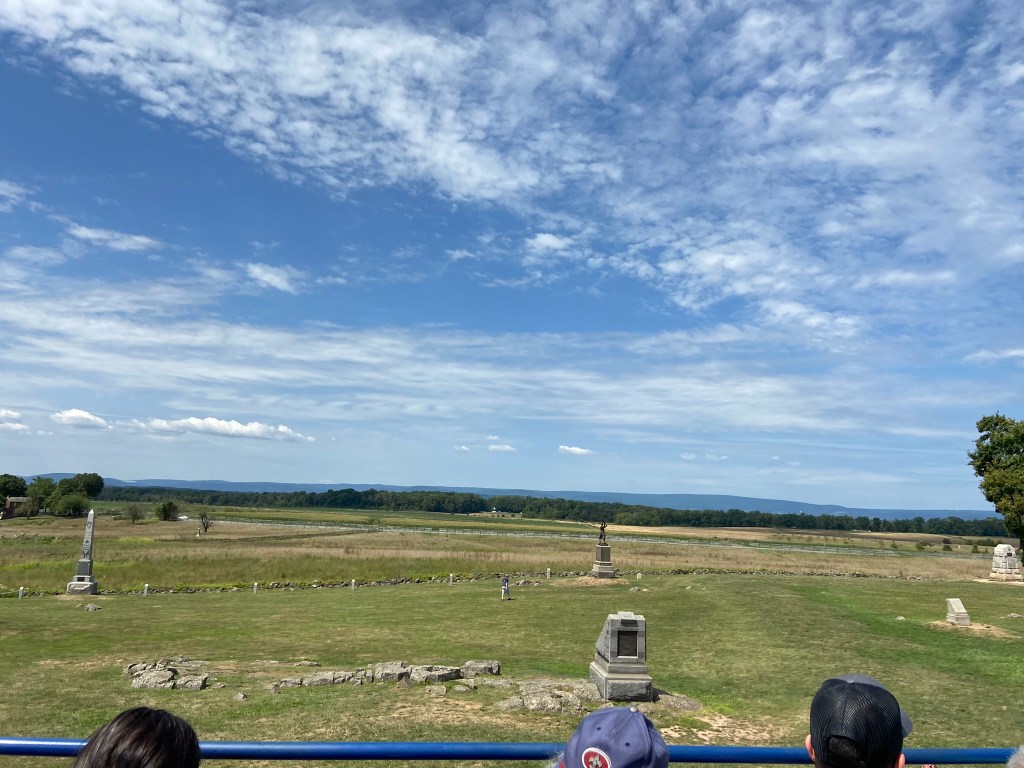
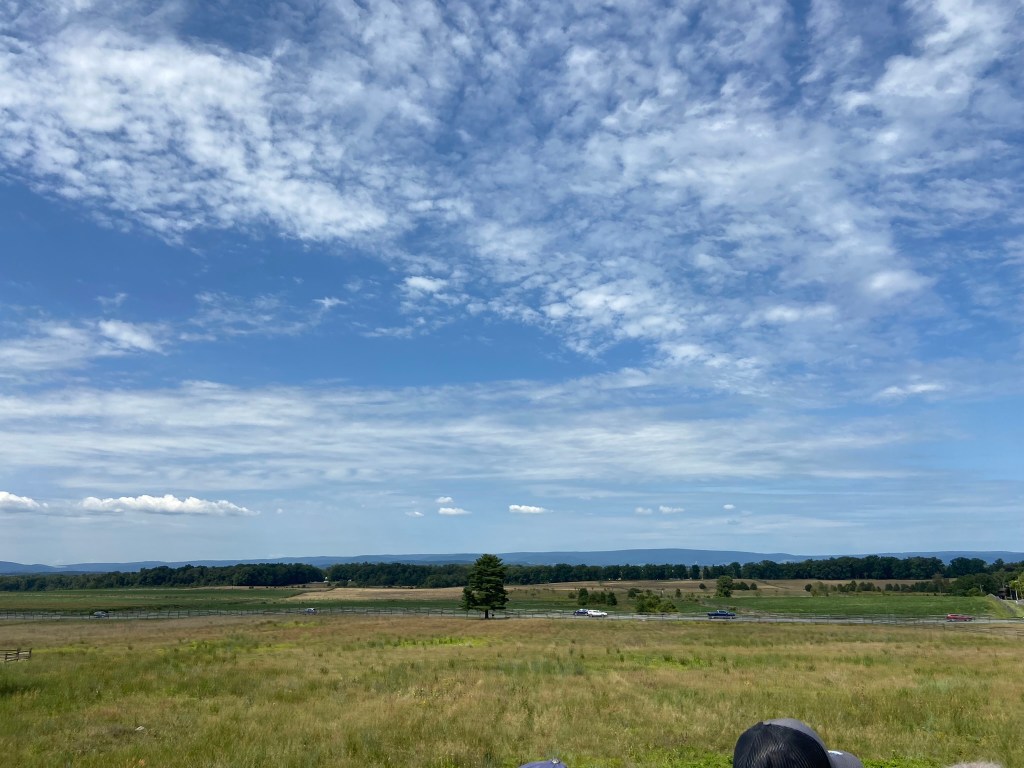
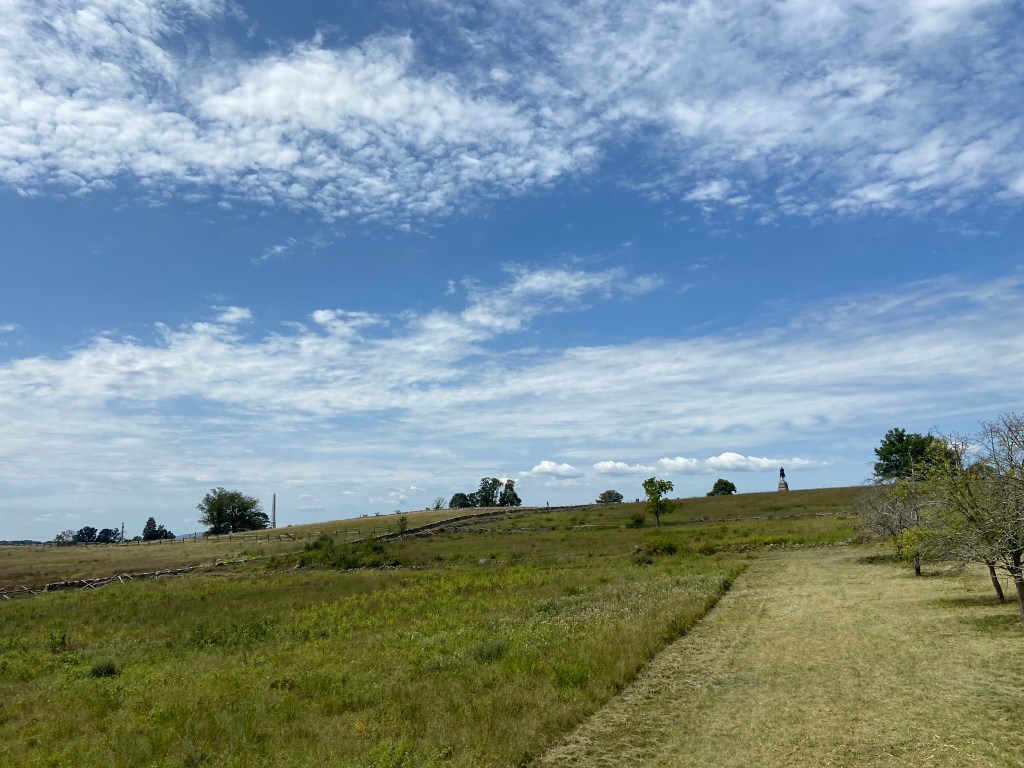
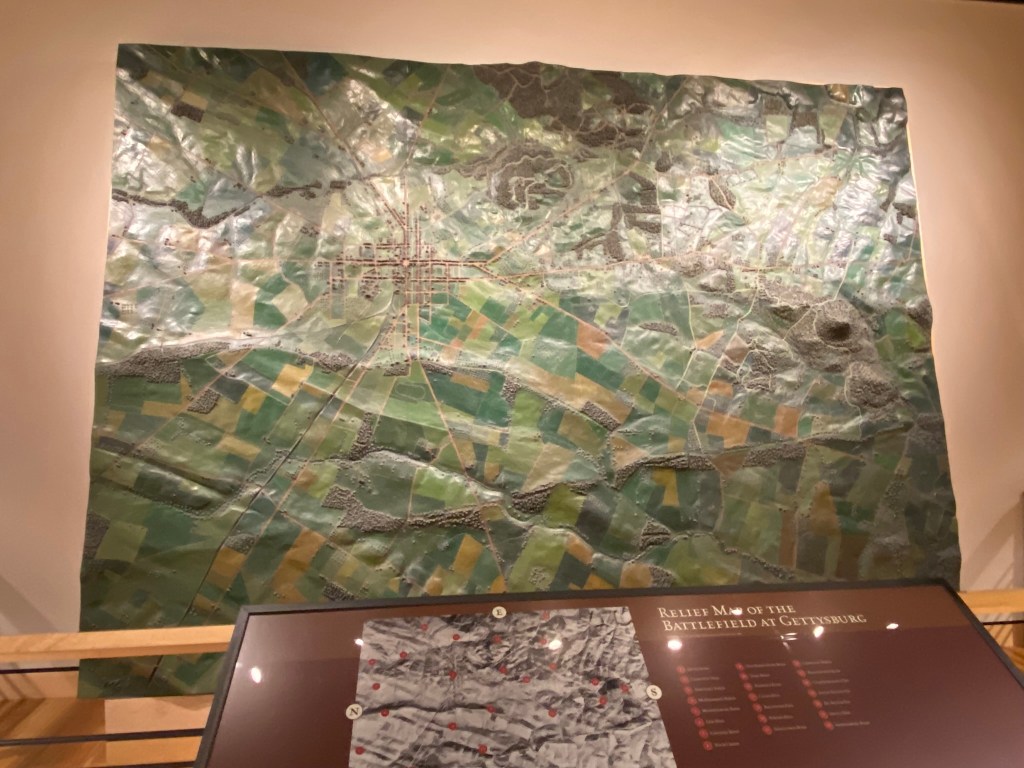
We got started a little after 10:00am and headed through town to the north of Gettysburg where much of Day 1 of the battle took place. I absolutely loved the experience of riding on the open-air double decker bus. It truly was an amazing experience and we were lucky with such a nice day. It was surreal to be at the very location where this great battle took place. I have read and taught about the Battle of Gettysburg for many years, so to be at the very site, seeing it with my own eyes was unbelievable. You could look out into the open farmland and picture Union and Confederate troops on the battlefield. I couldn’t imagine what they went through and the horrors they experienced during such a deadly battle, where thousands of soldiers lost their lives or were severely wounded. I was quite amazed at just how large the battlefield is. Fighting during The Battle of Gettysburg happened all around the outskirts of town (And some even within the town). After we were taken to the north of town, we made our way to landmarks south of town, where the heavy fighting of day 2 and 3 took place.
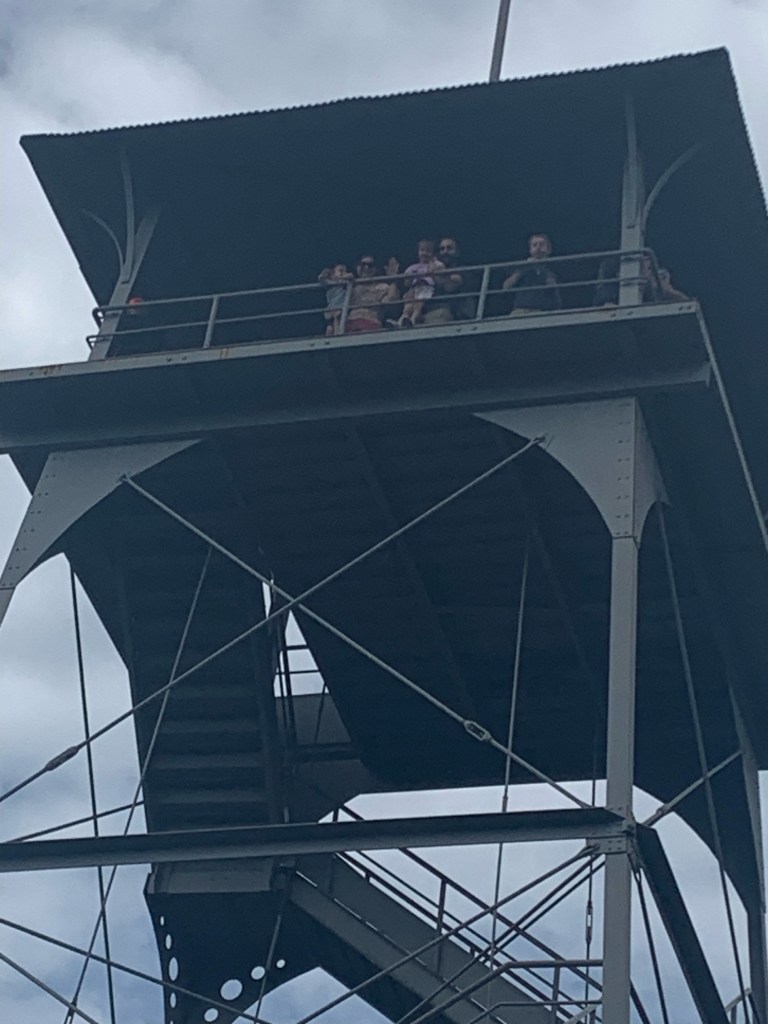
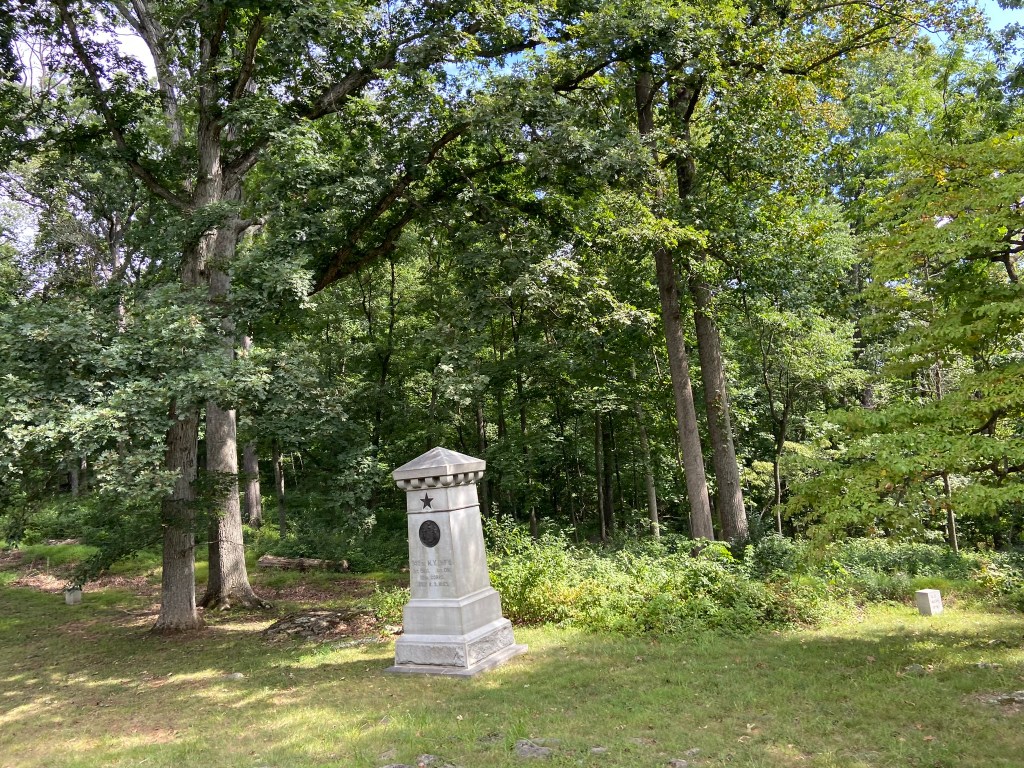
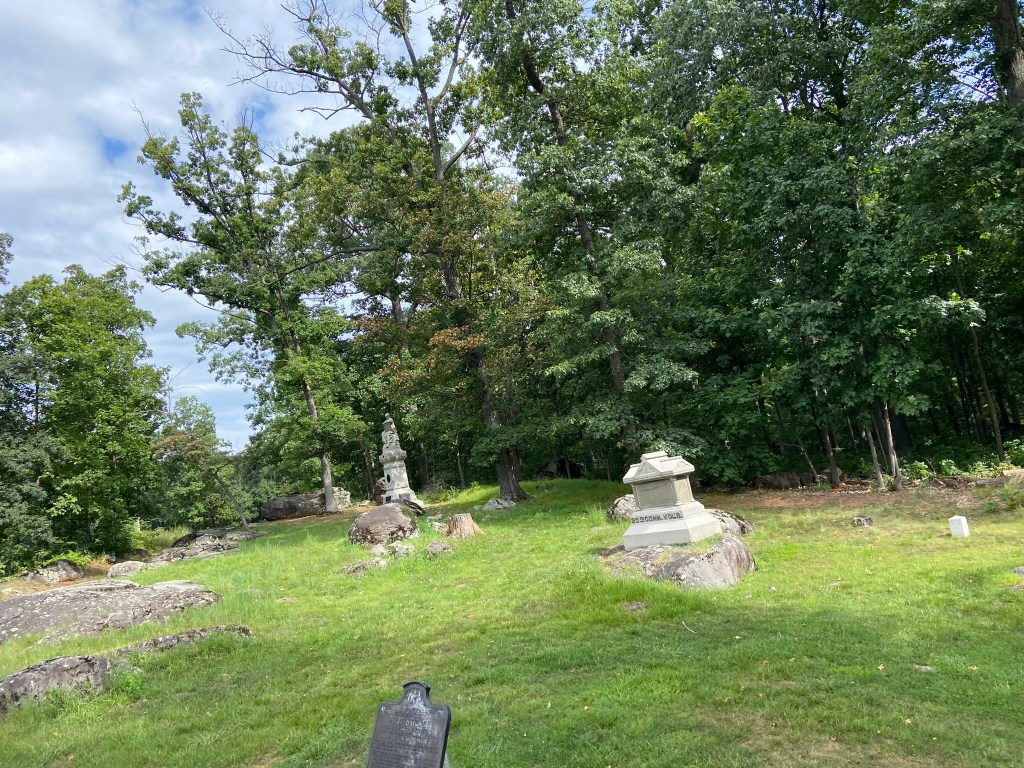
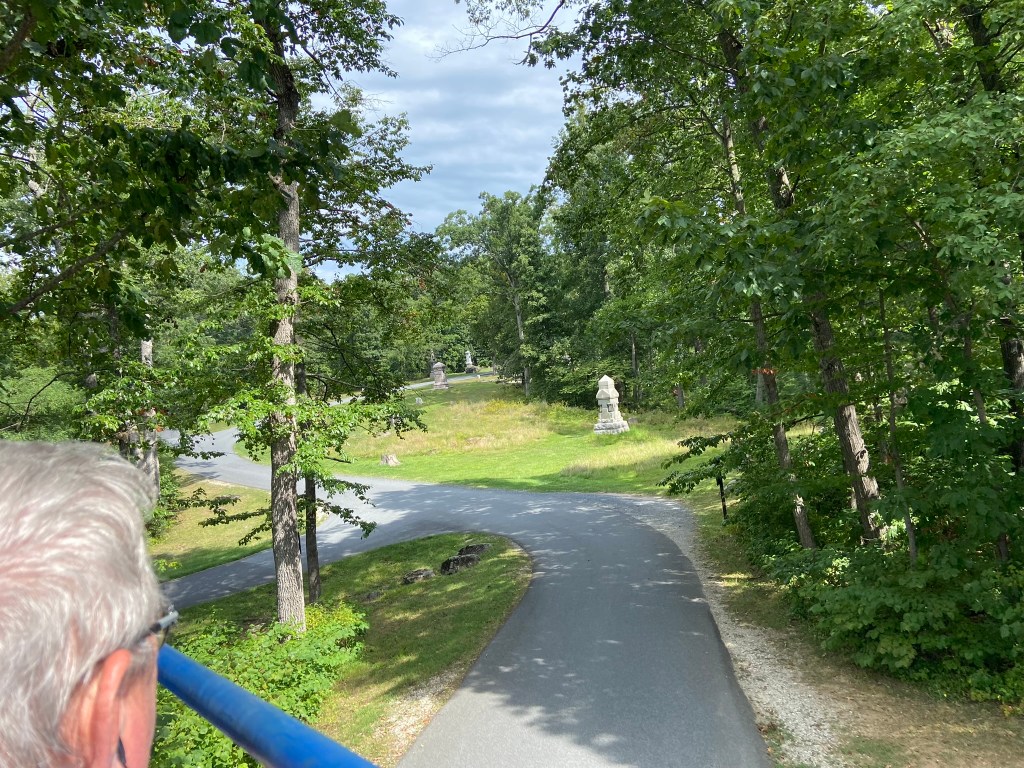
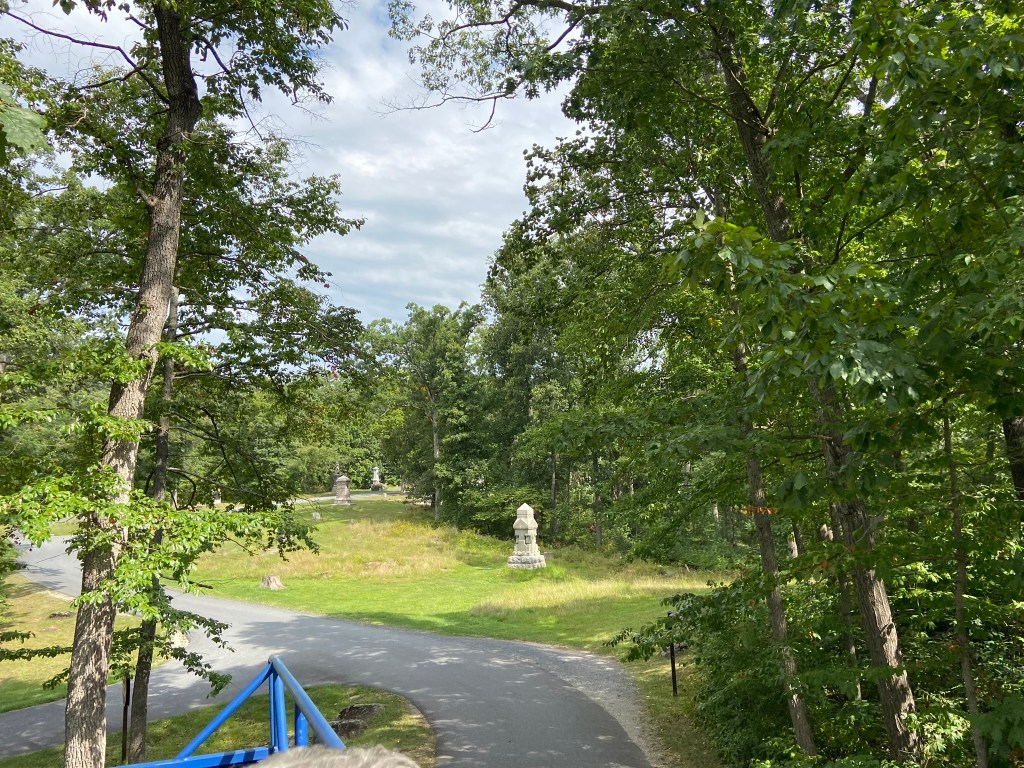
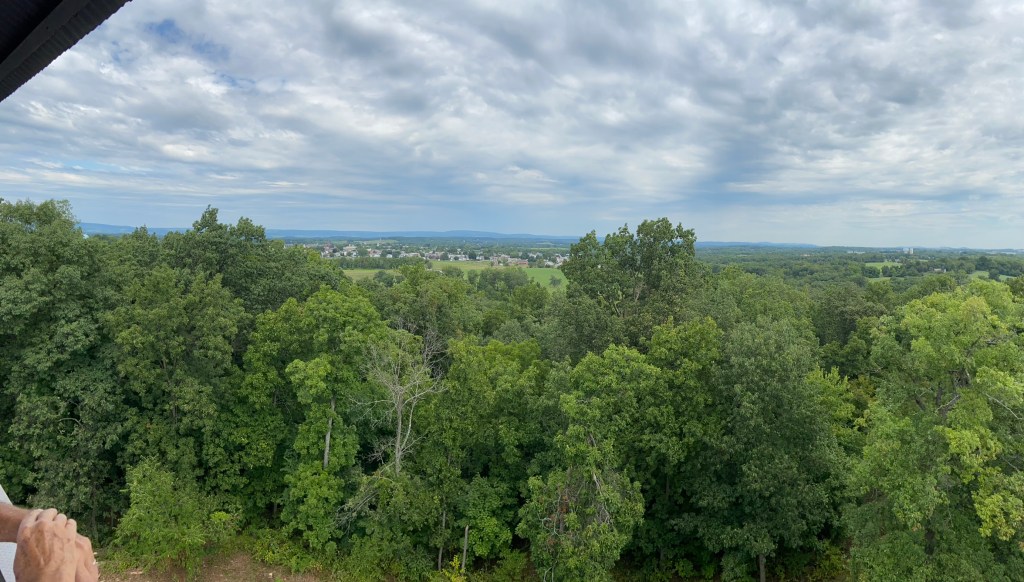
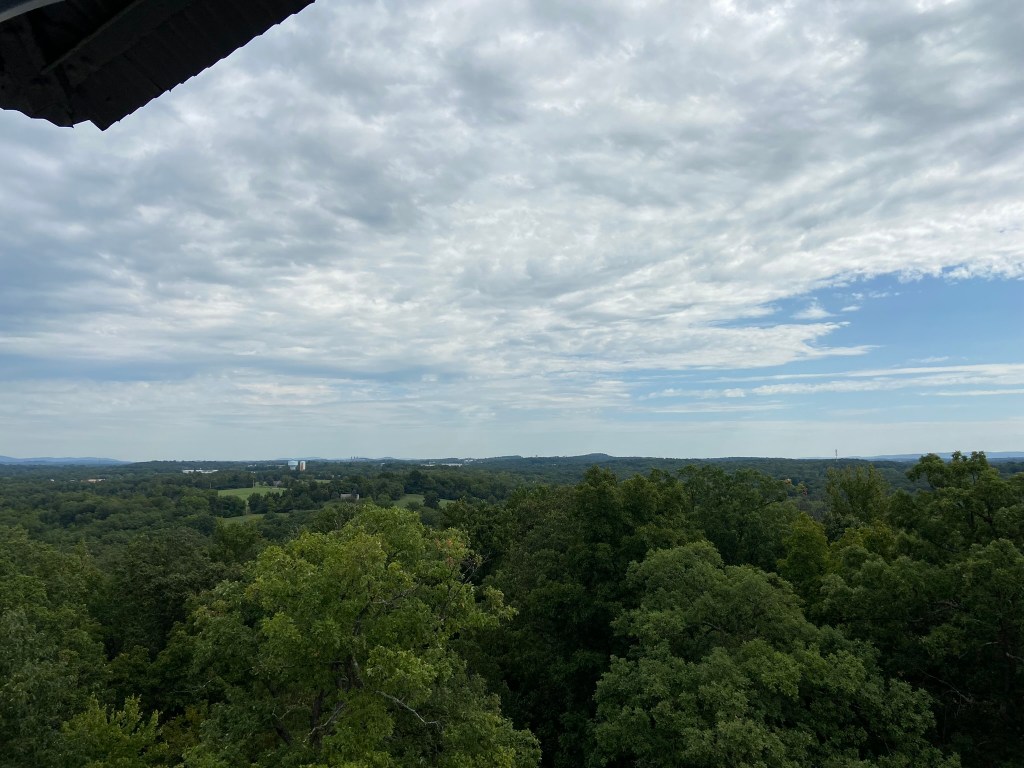
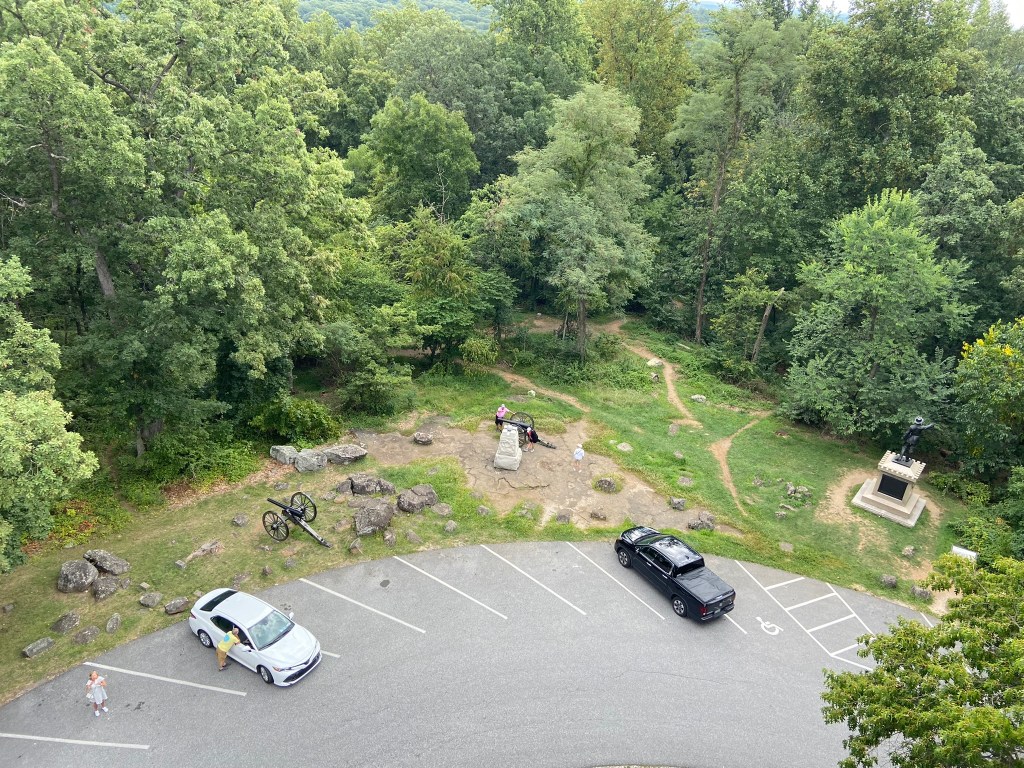
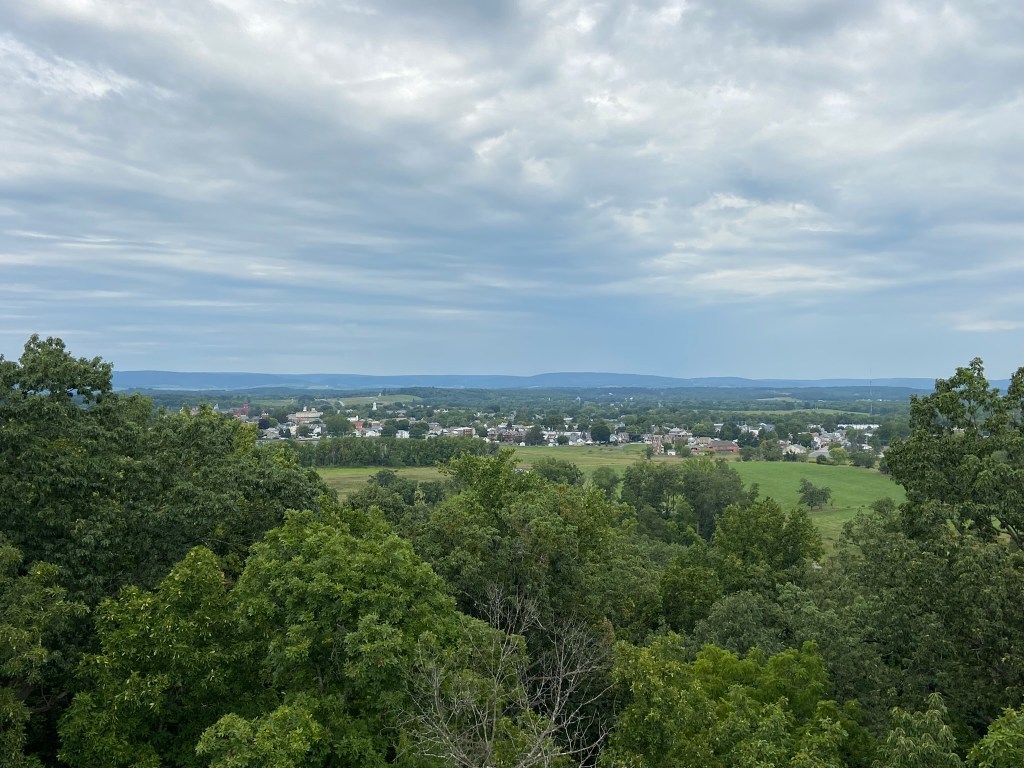
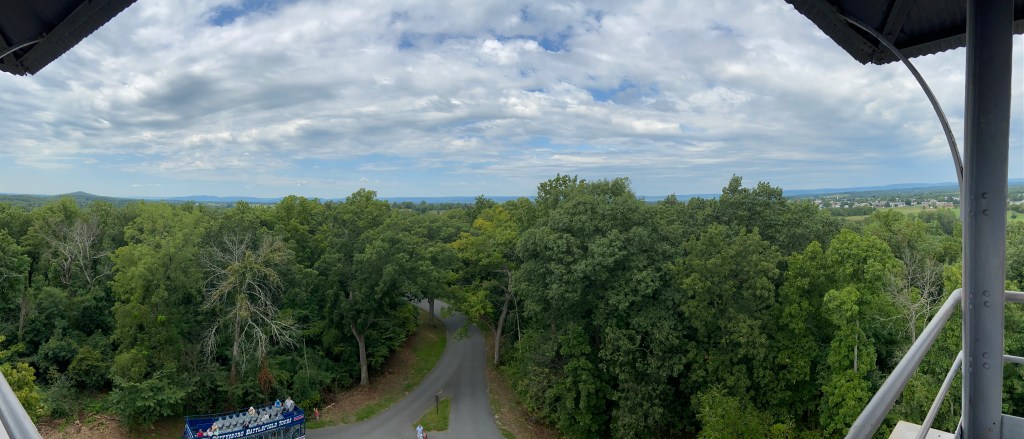
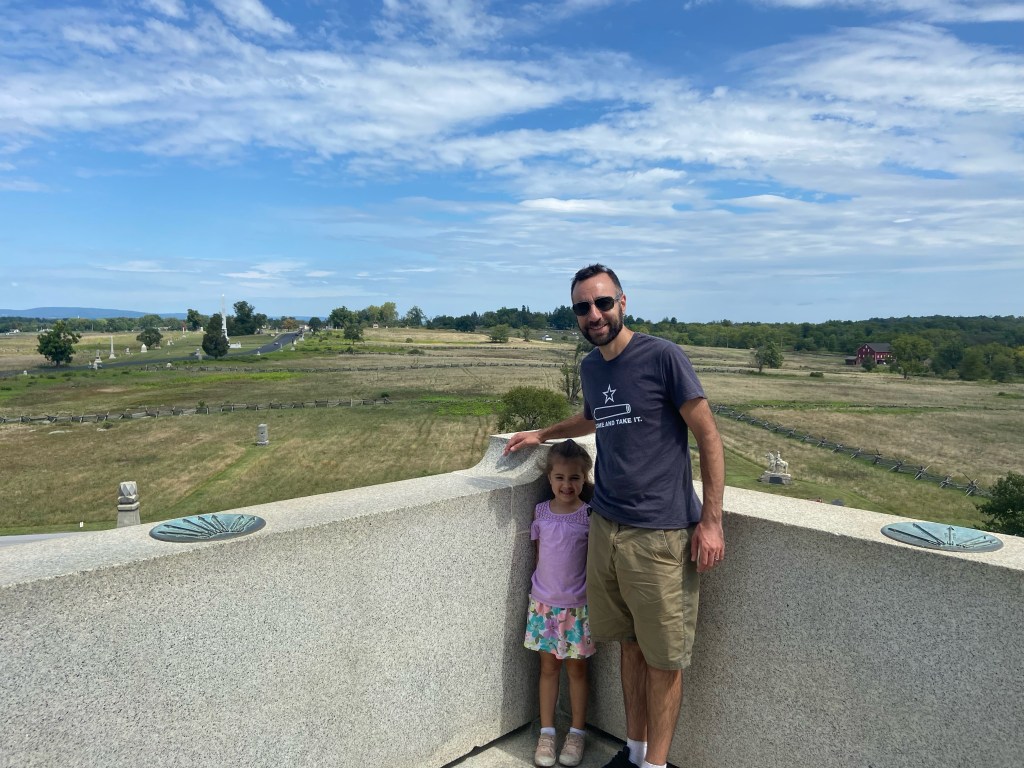
We made our way to Culp’s Hill where we were allowed to exit the bus and climb a high tower that gave breathtaking views of the battlefield and the town of Gettysburg. On the tower are signs that highlight important landmarks on the battlefield.
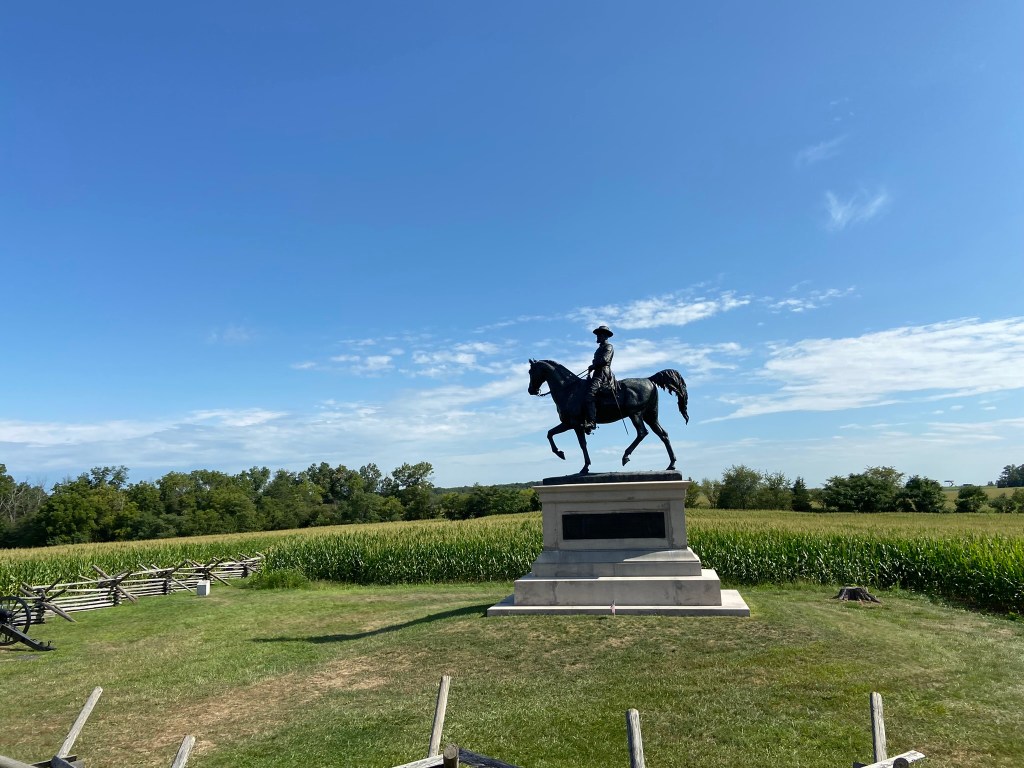
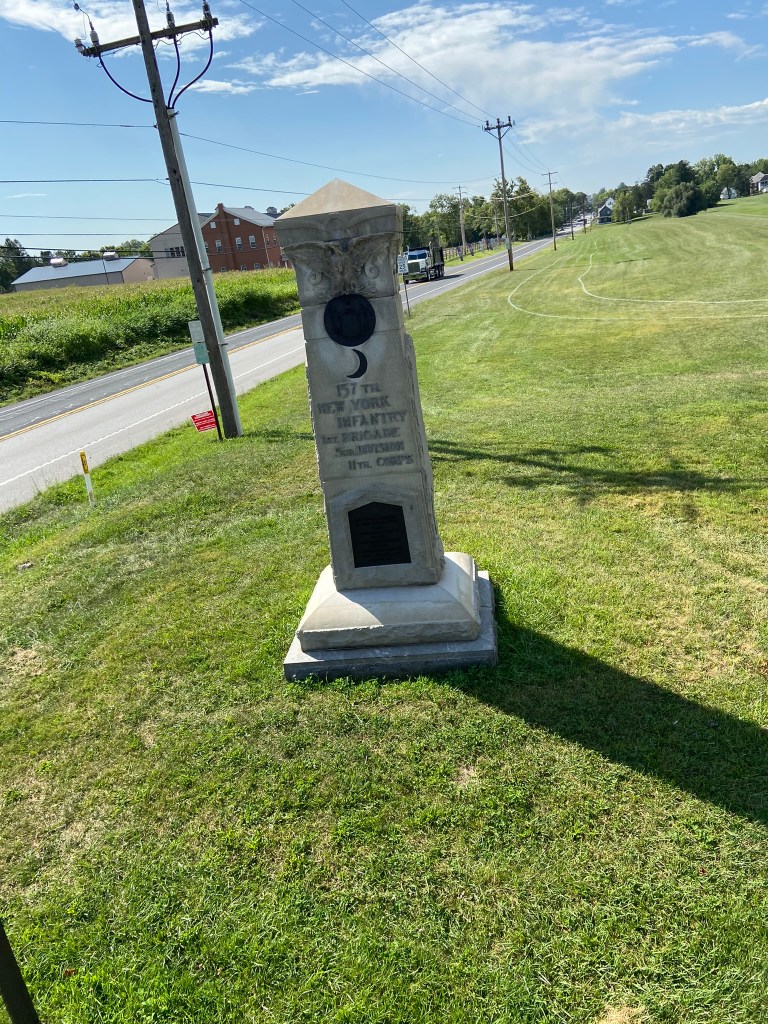
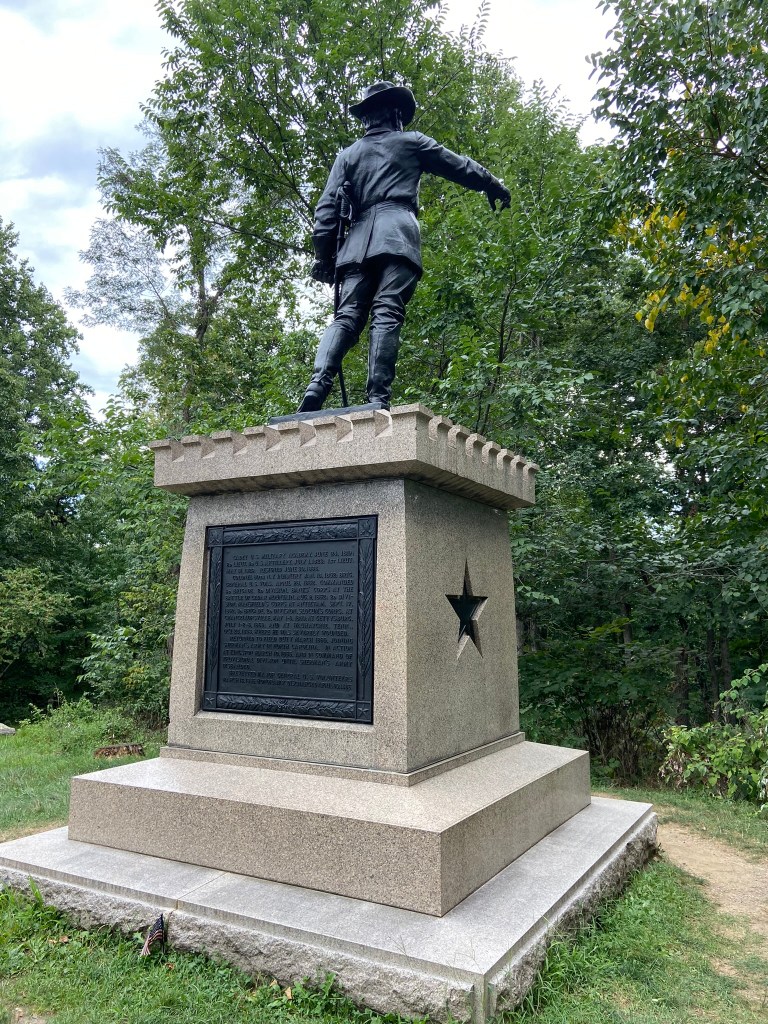
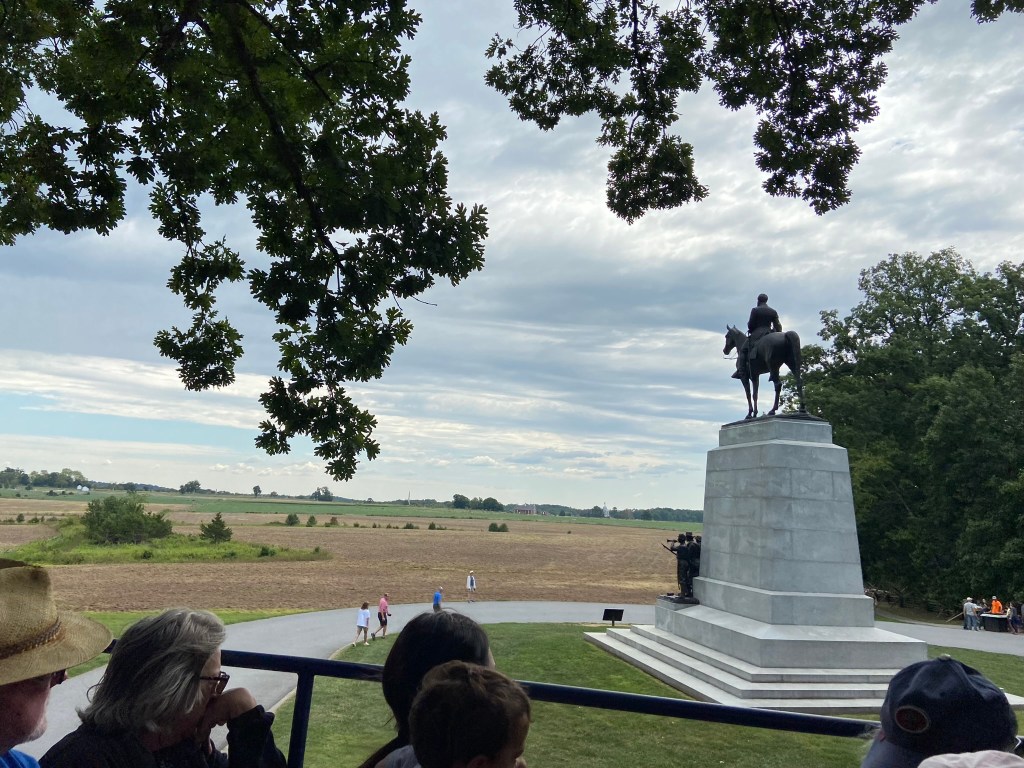
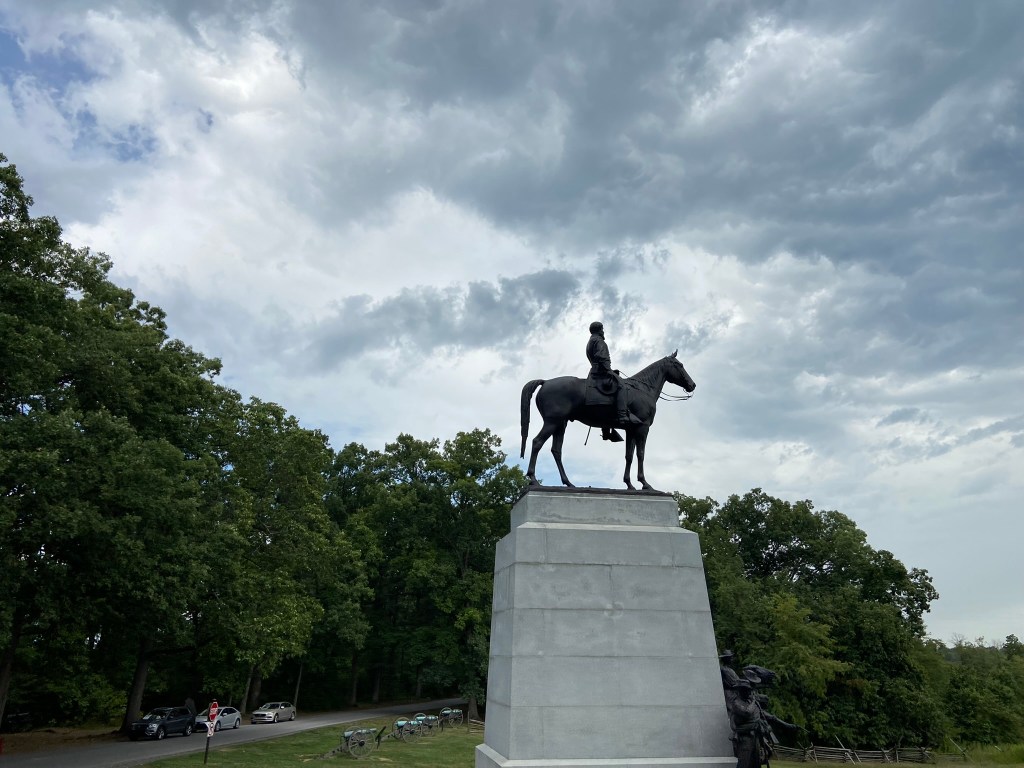
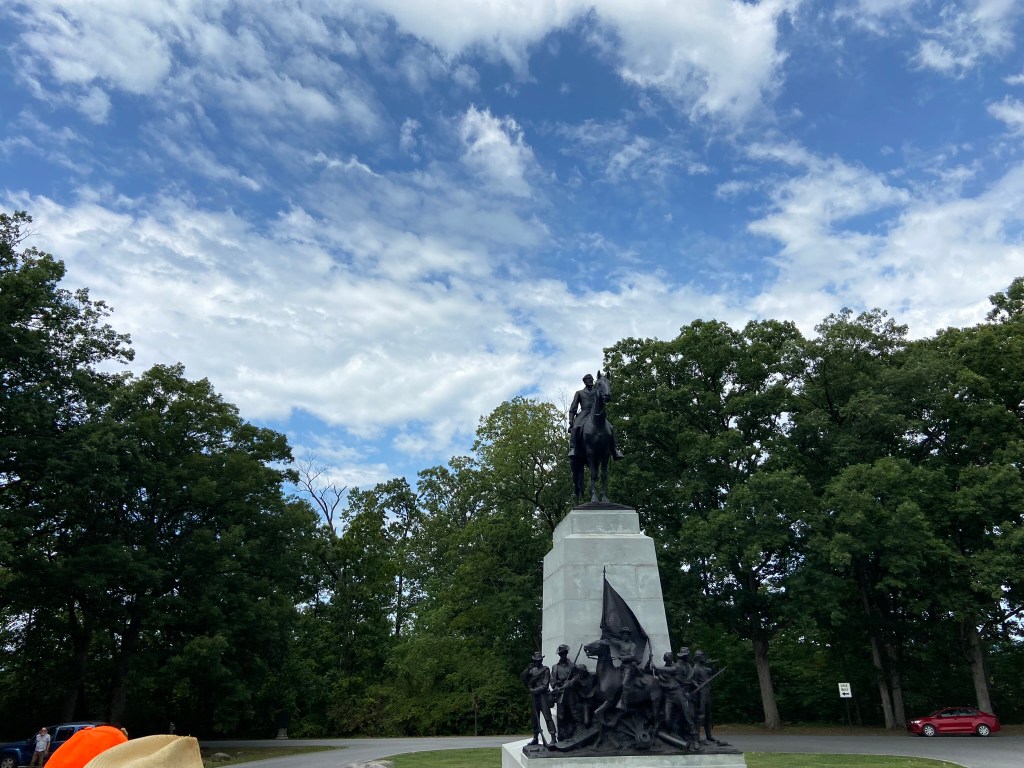
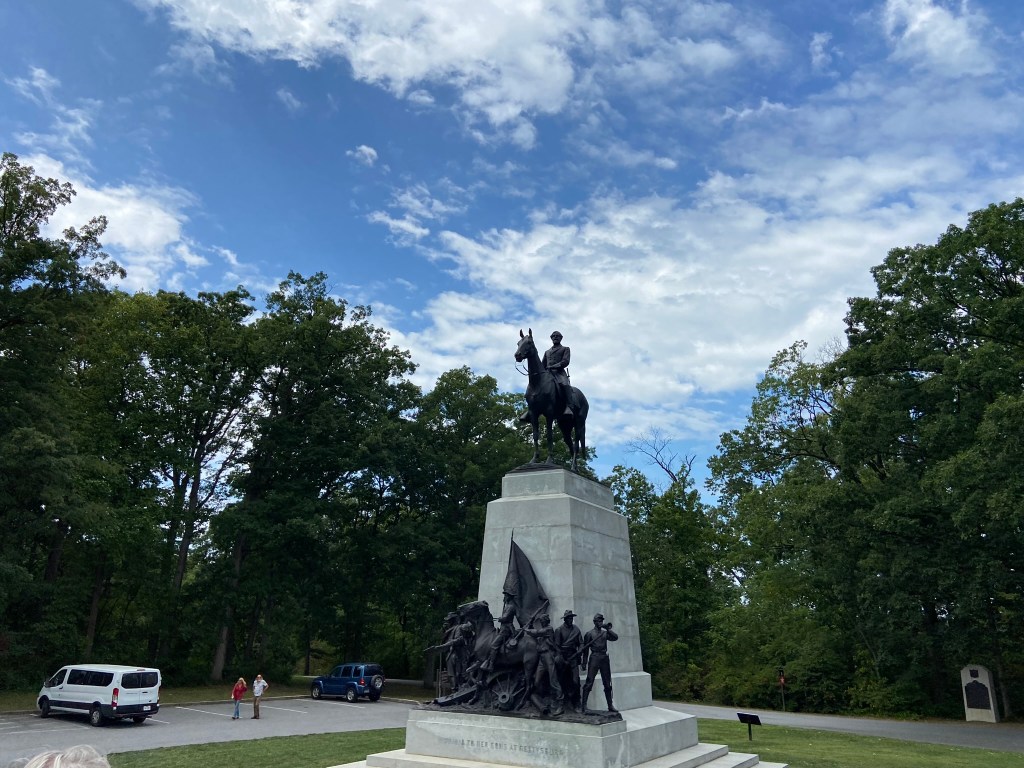
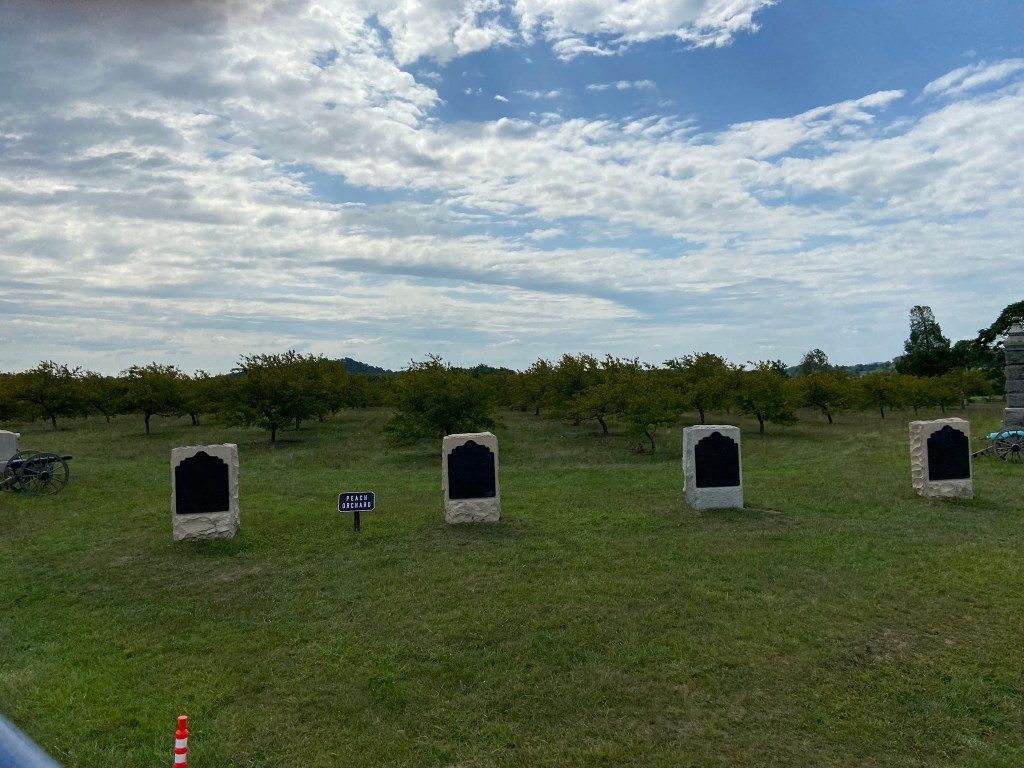
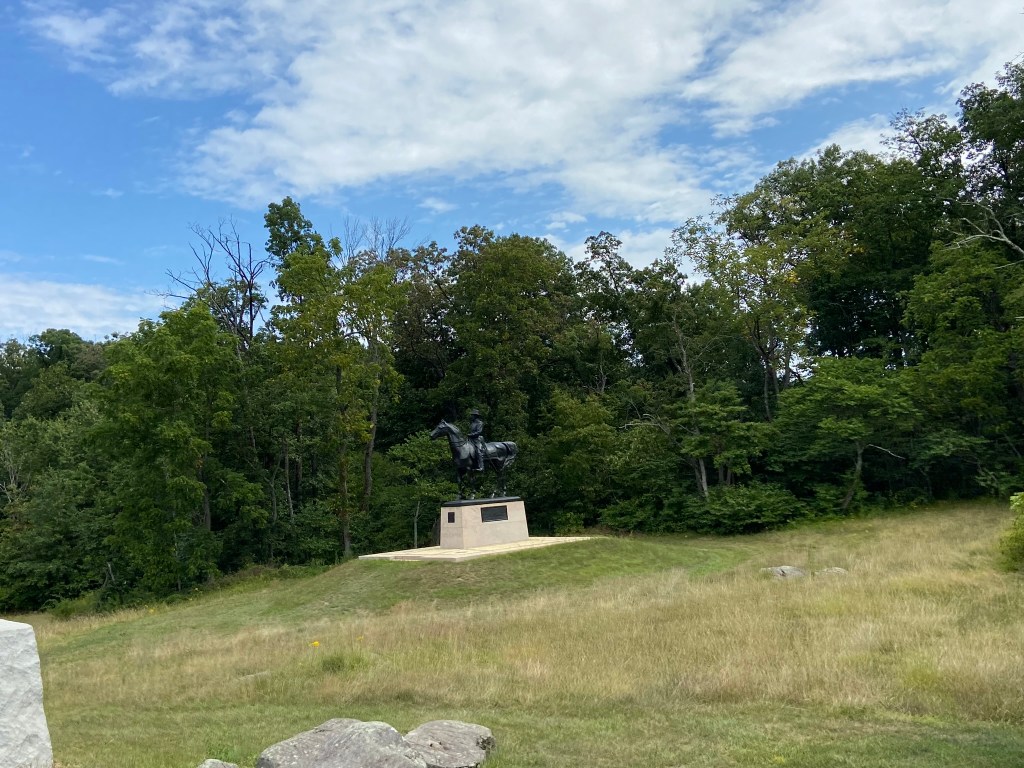
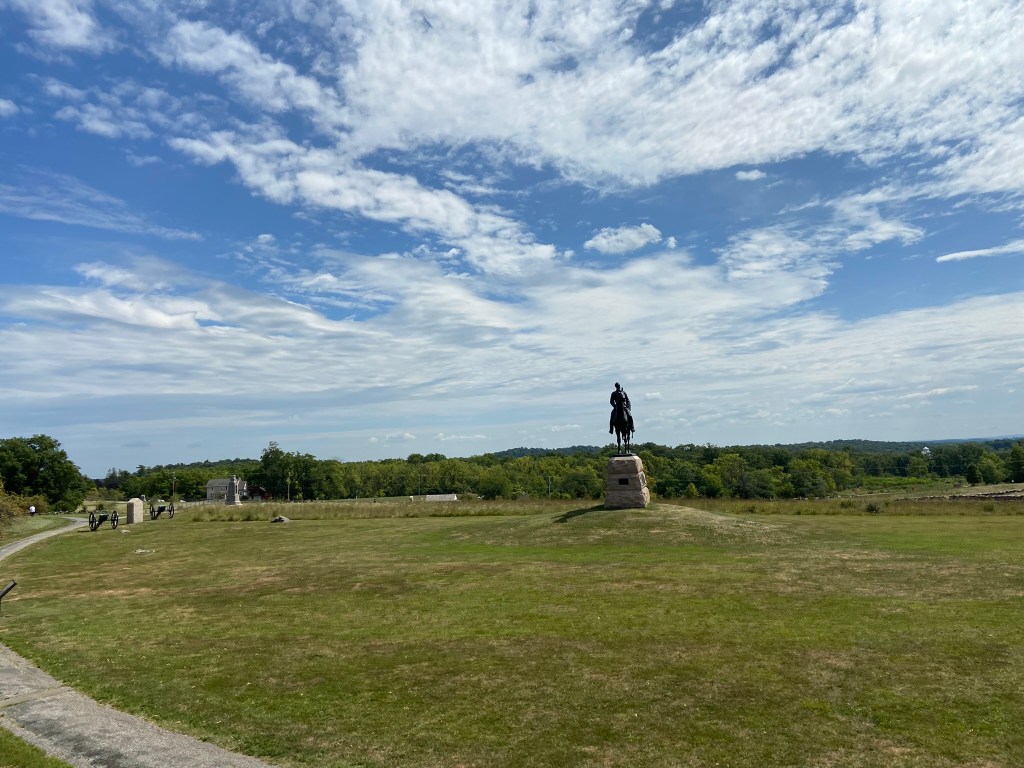
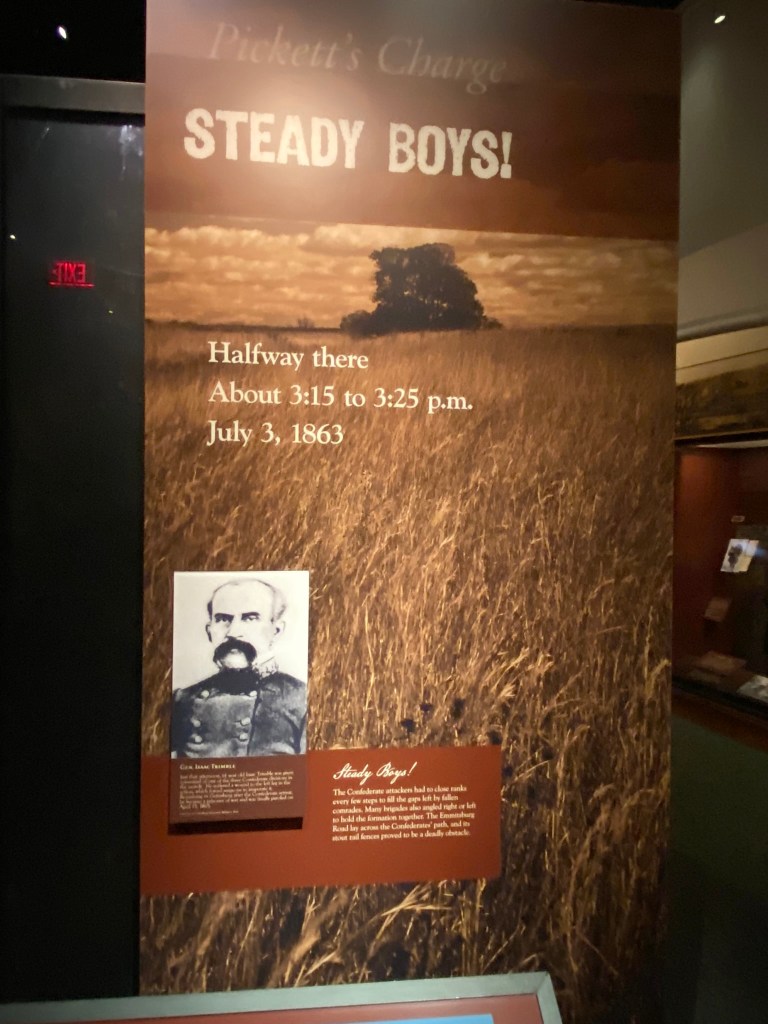
After leaving Culp’s hill we made our way along Seminary Ridge, the point in which the Confederacy started their famous, failed, Pickett’s Charge. We saw the Virginia Monument and Robert E. Lee Statue. We made our way past the Peach Orchard.
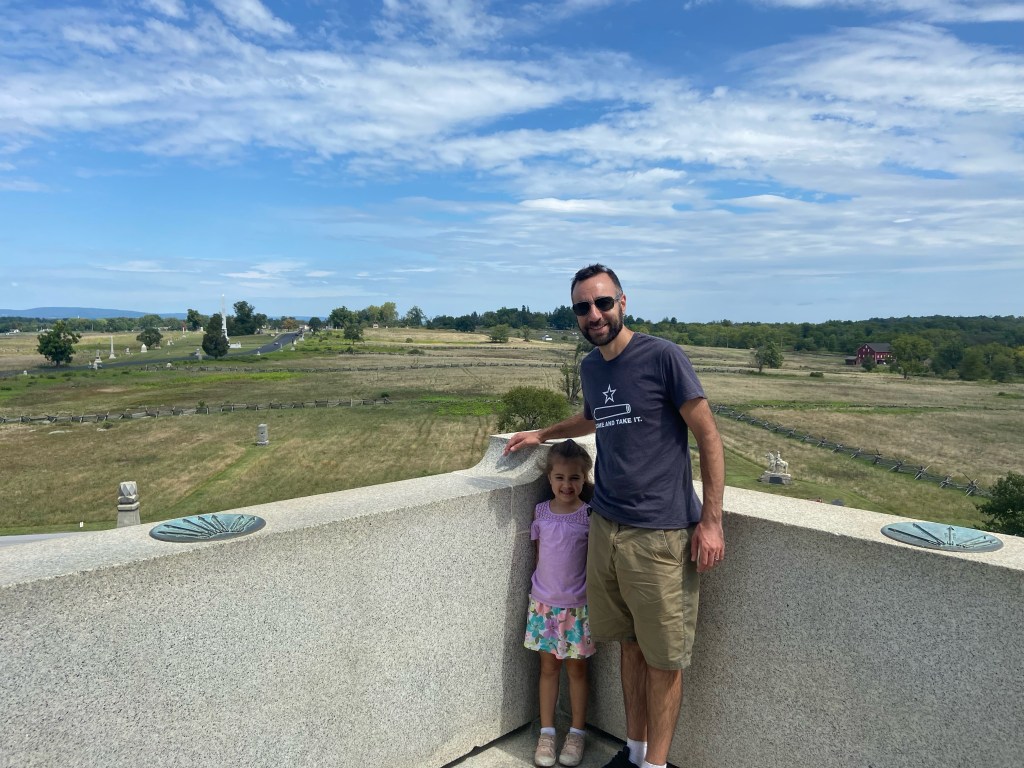
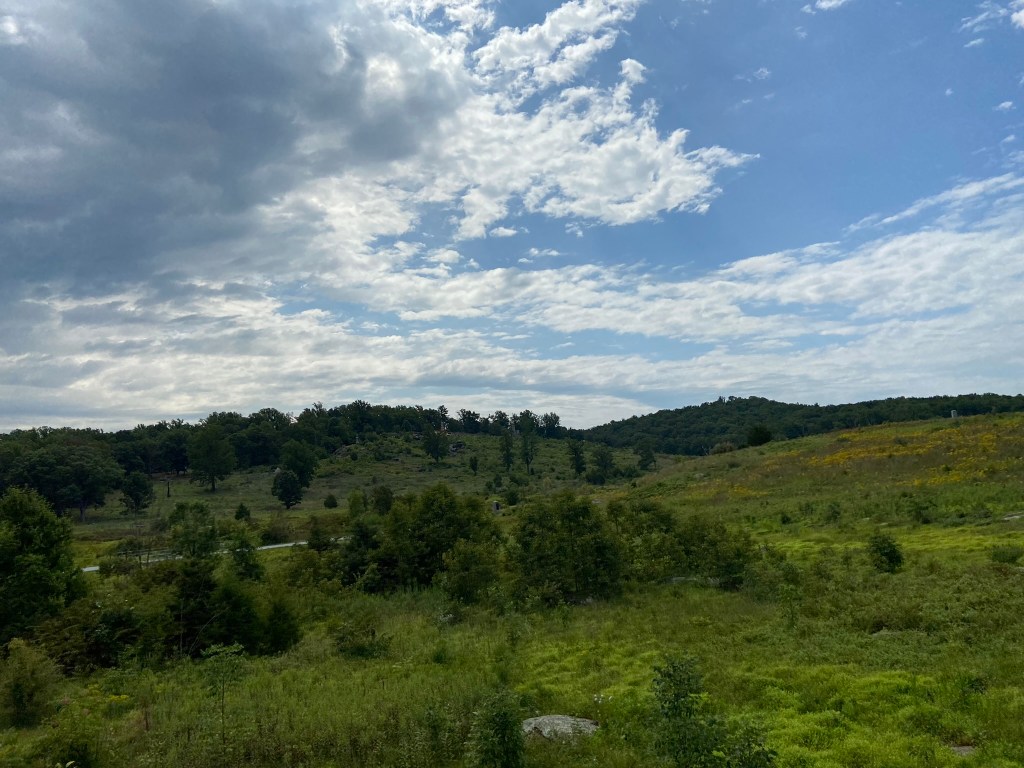
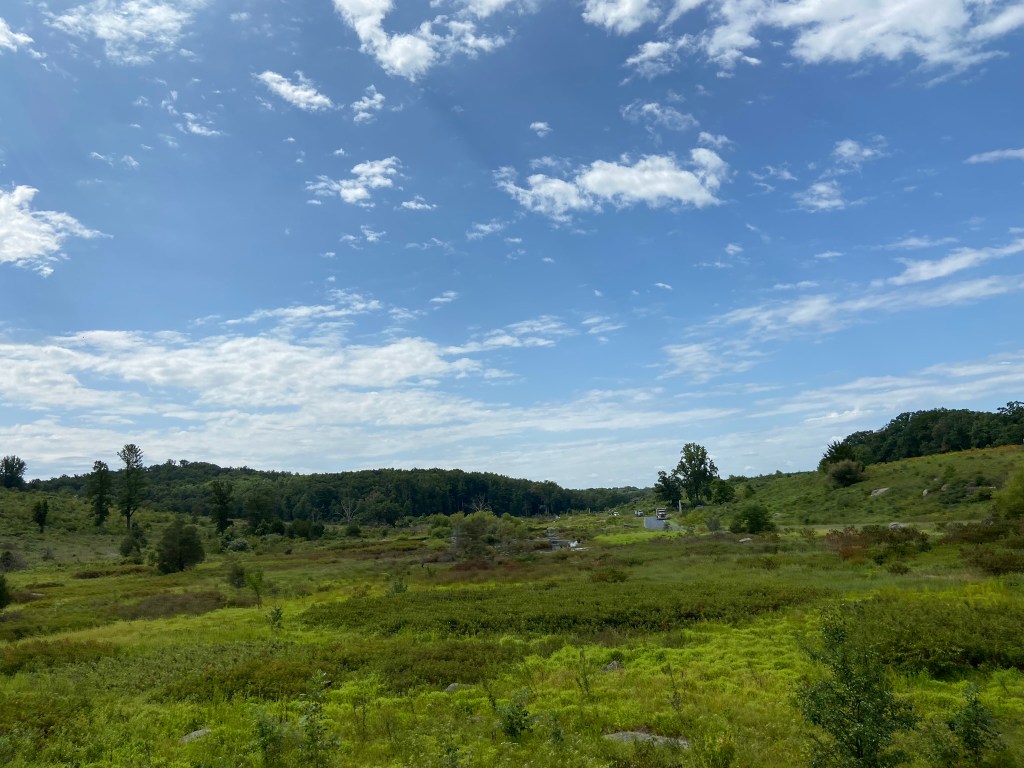
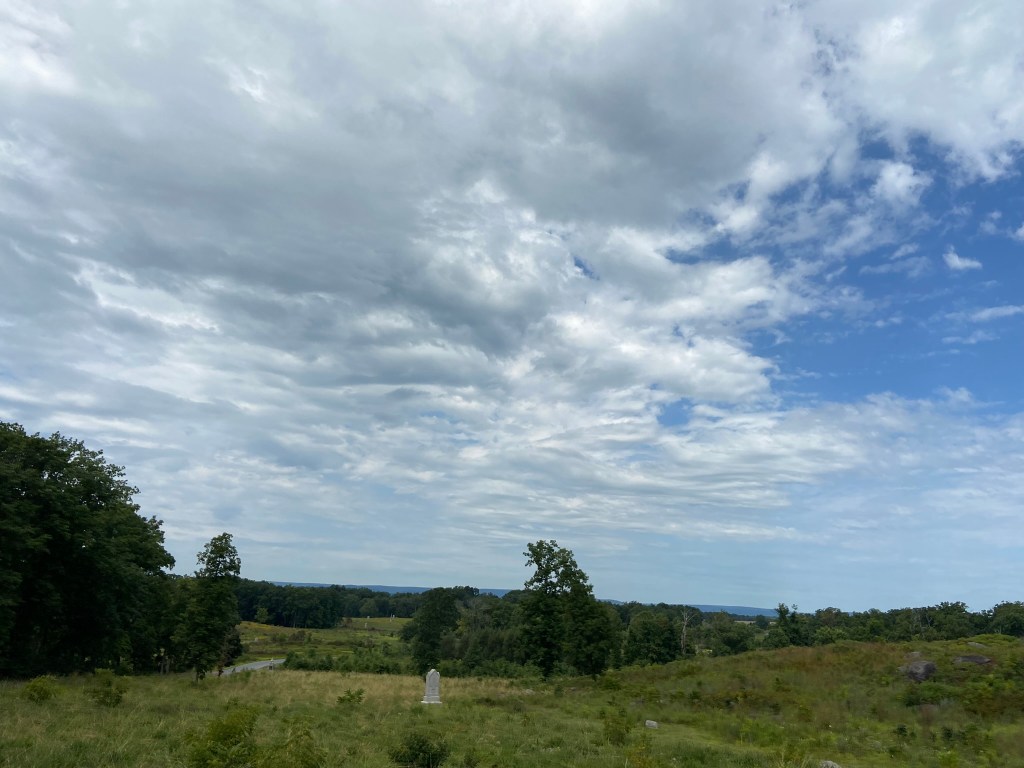
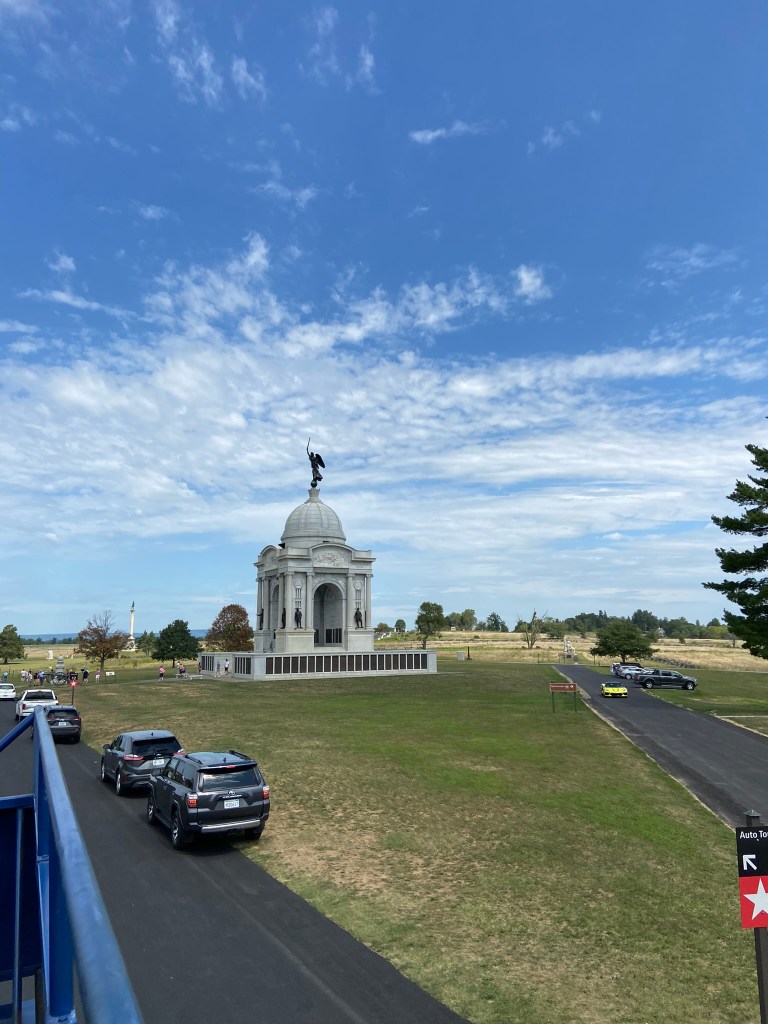
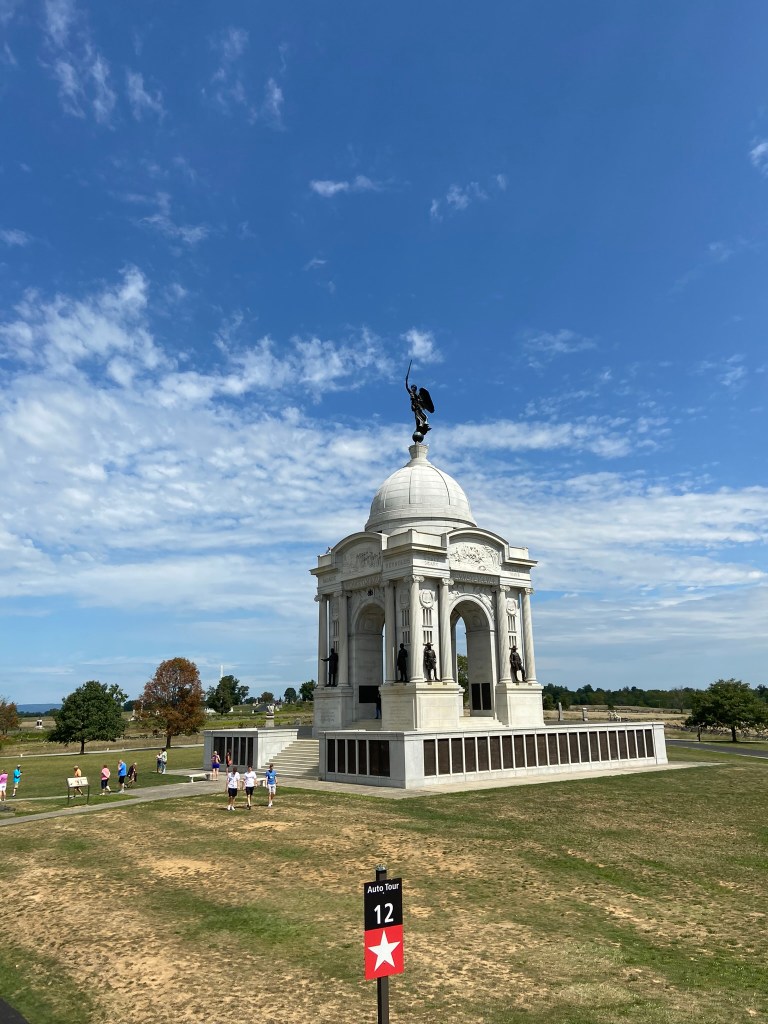
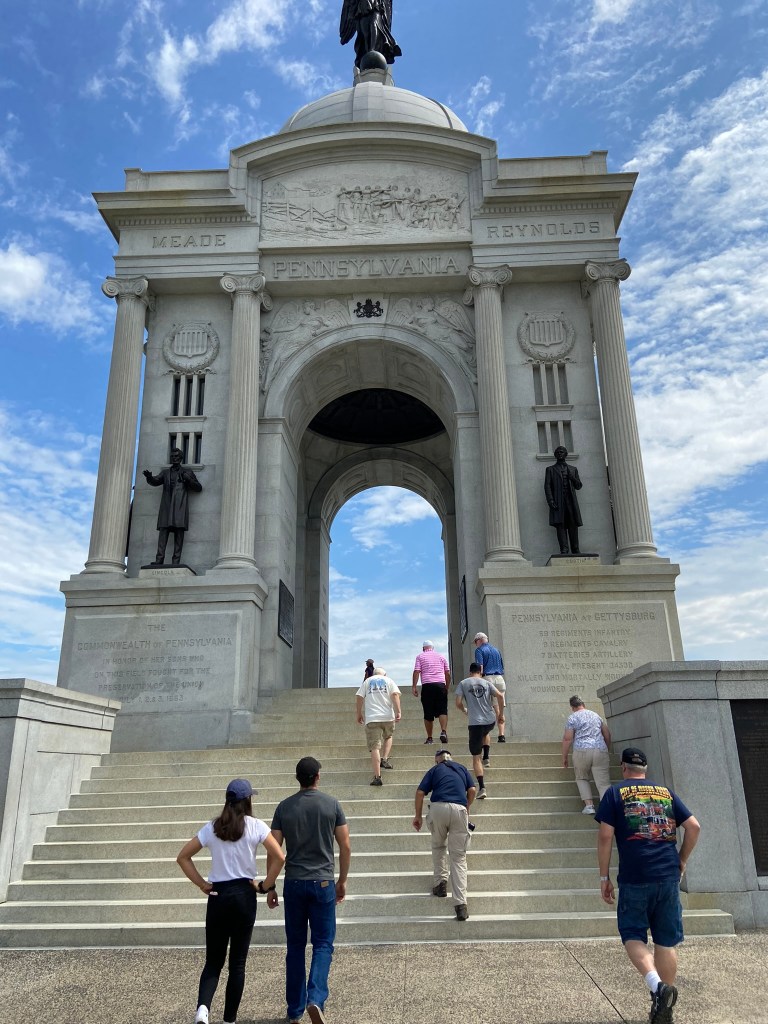
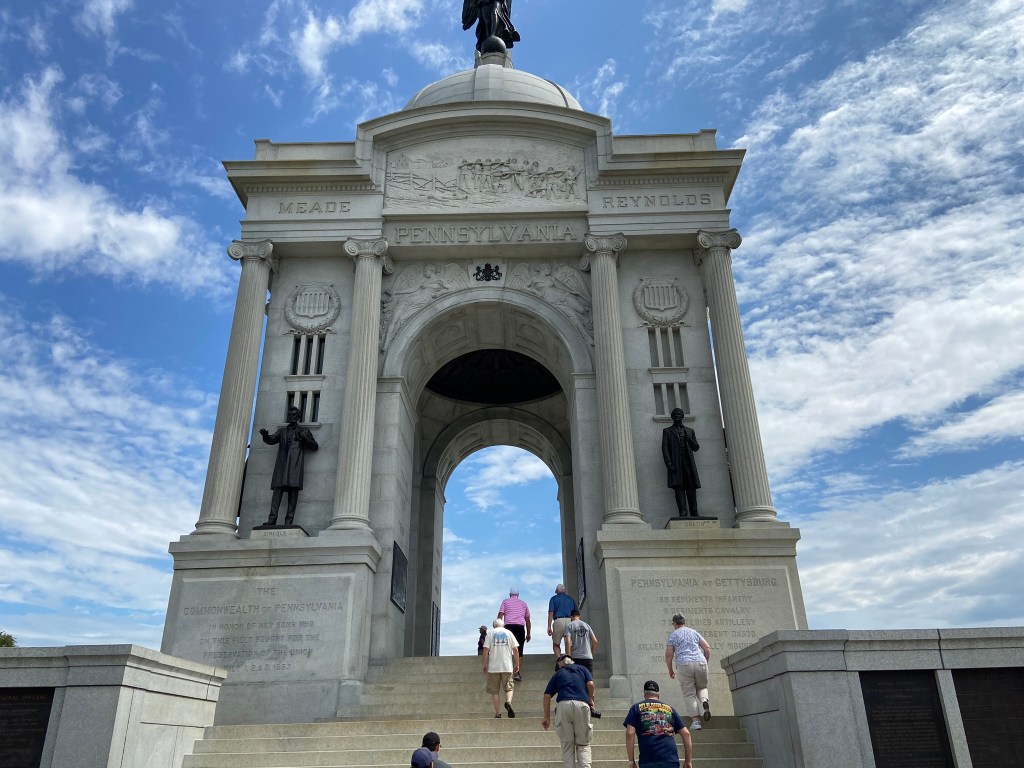
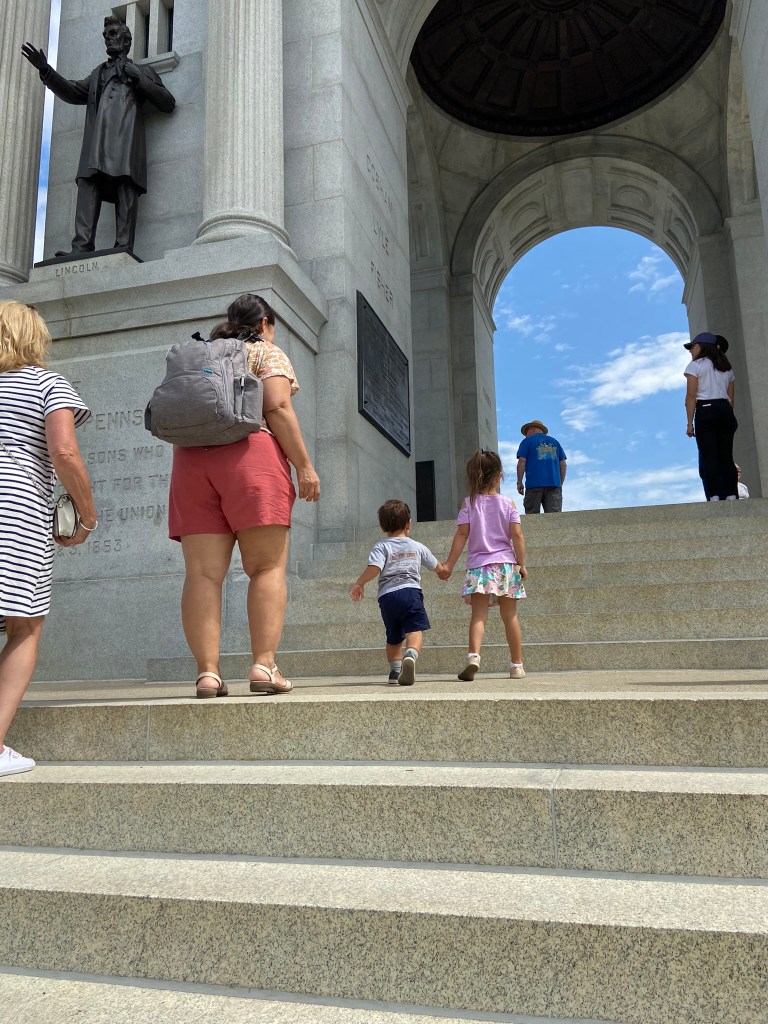
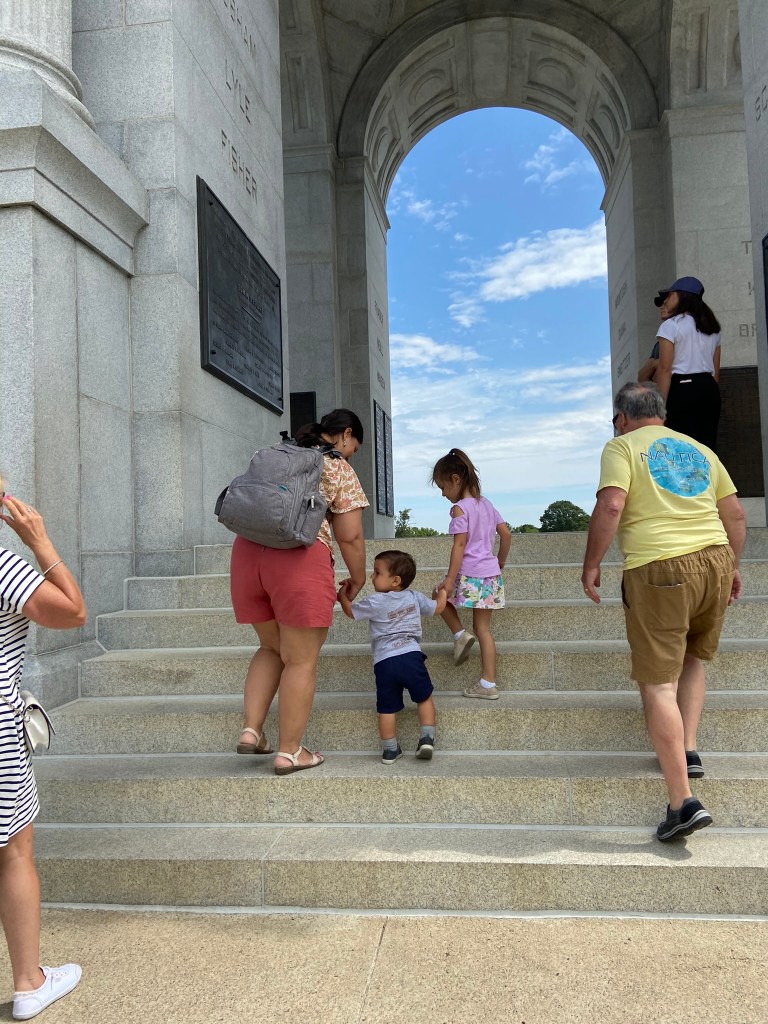
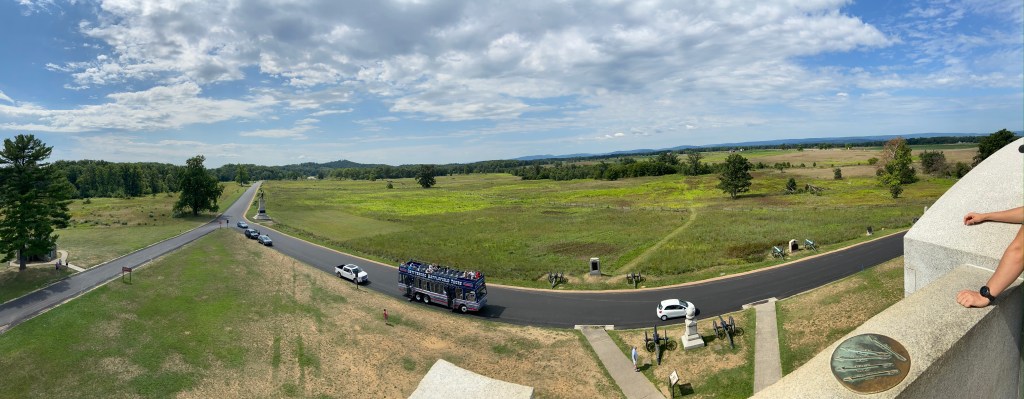
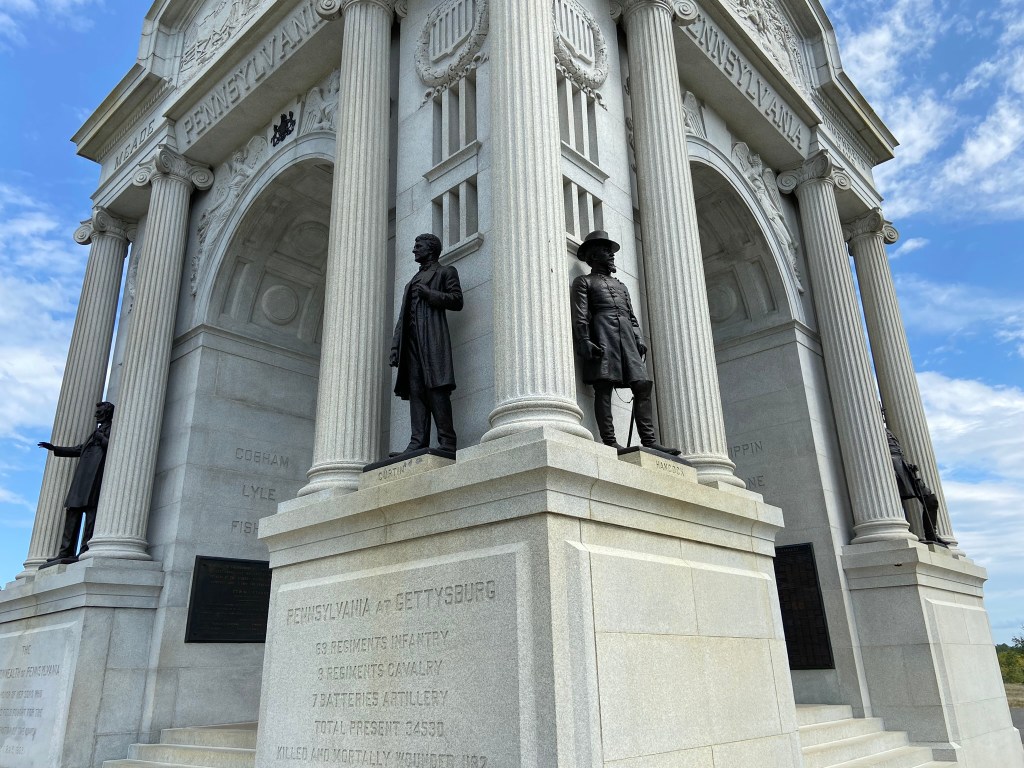
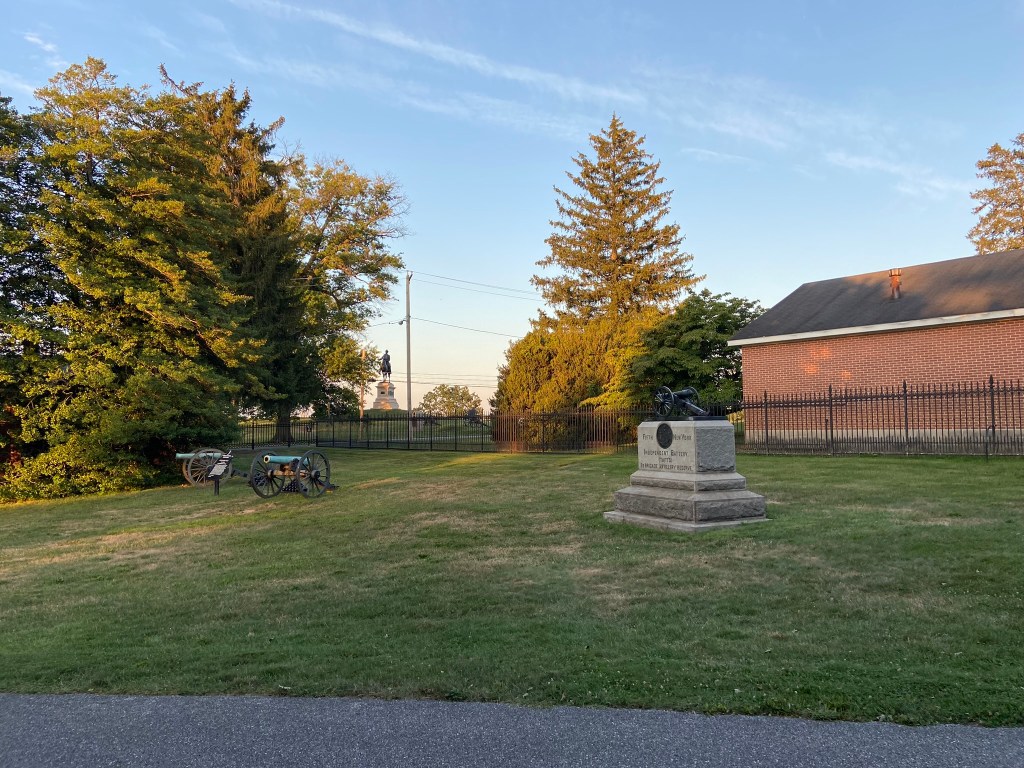
We were not able to see Devil’s Den because of road paving, or Little Round Top which is closed due to the restoration project there. We were told that they are planning to re-open Little Round Top by Spring of 2024. I hope to go back soon and see the sites that were closed down. We drove along Cemetary Ridge and were able to exit the bus again to see the Pennsylvania Memorial which is the largest monument on the Gettysburg Battlefield. The monument honors and names the nearly 35,000 Pennsylvanians who fought in the battle. We were able to climb the stairs within the monument to stand on the top and see great views of the battlefield.
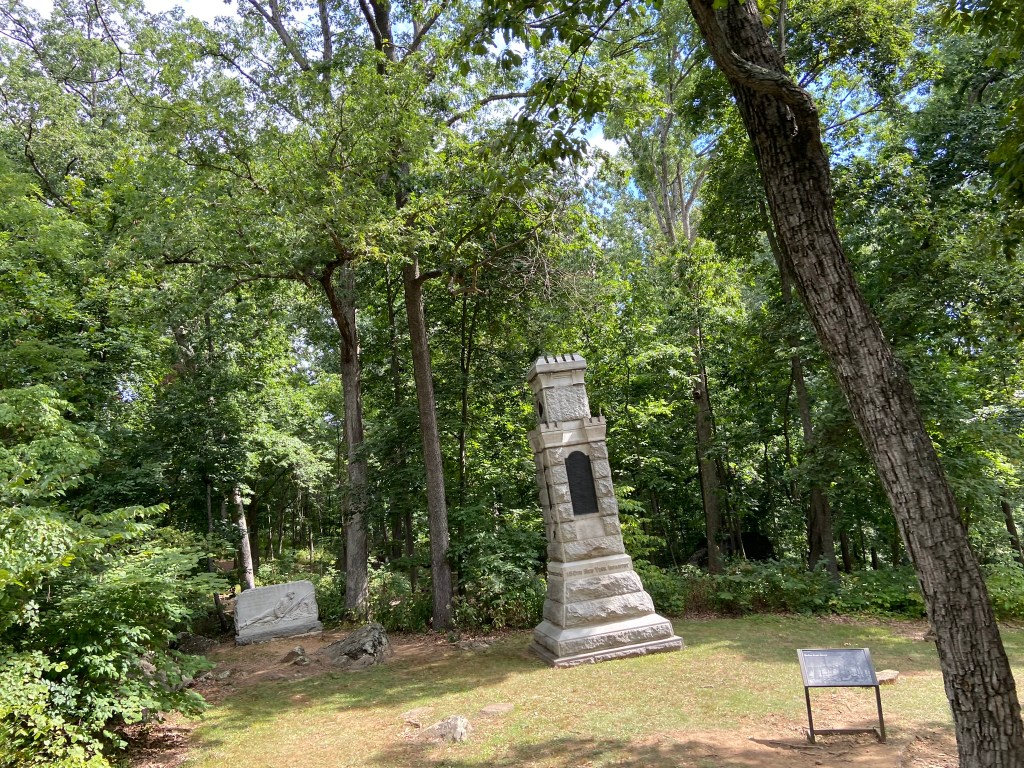
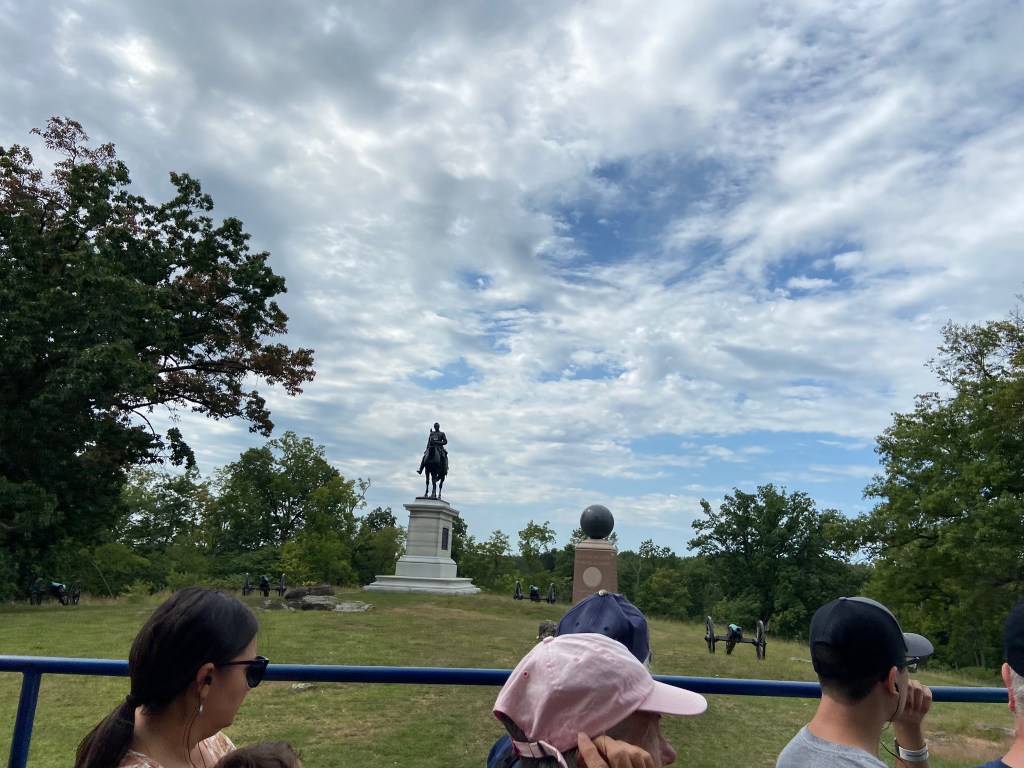
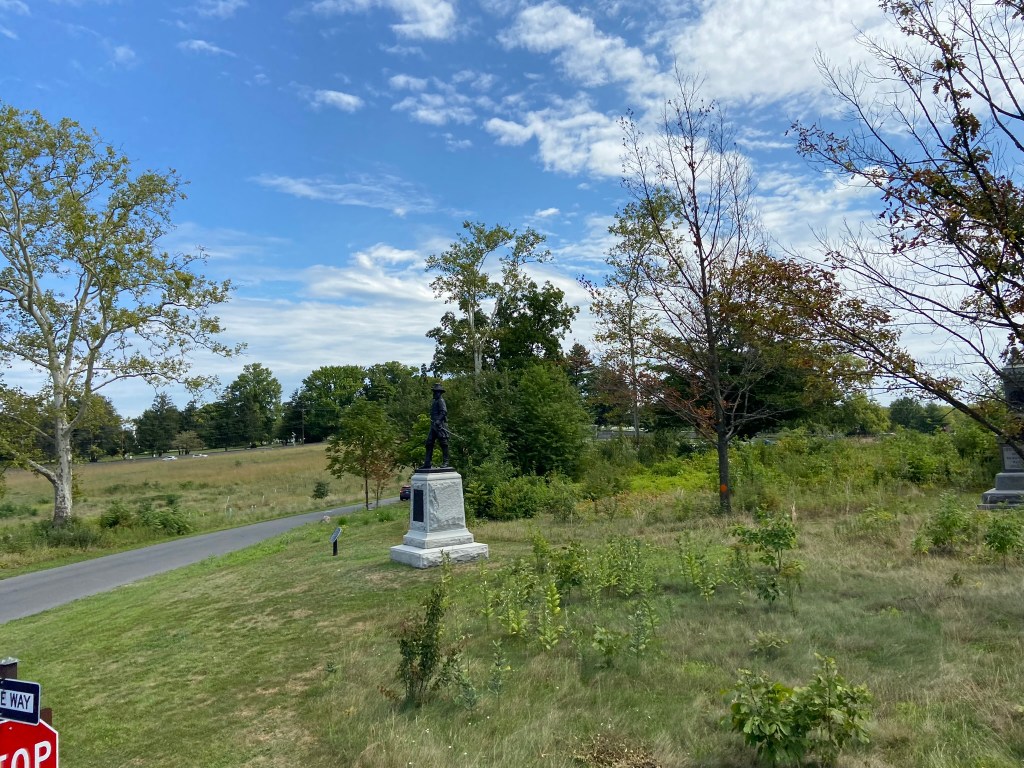
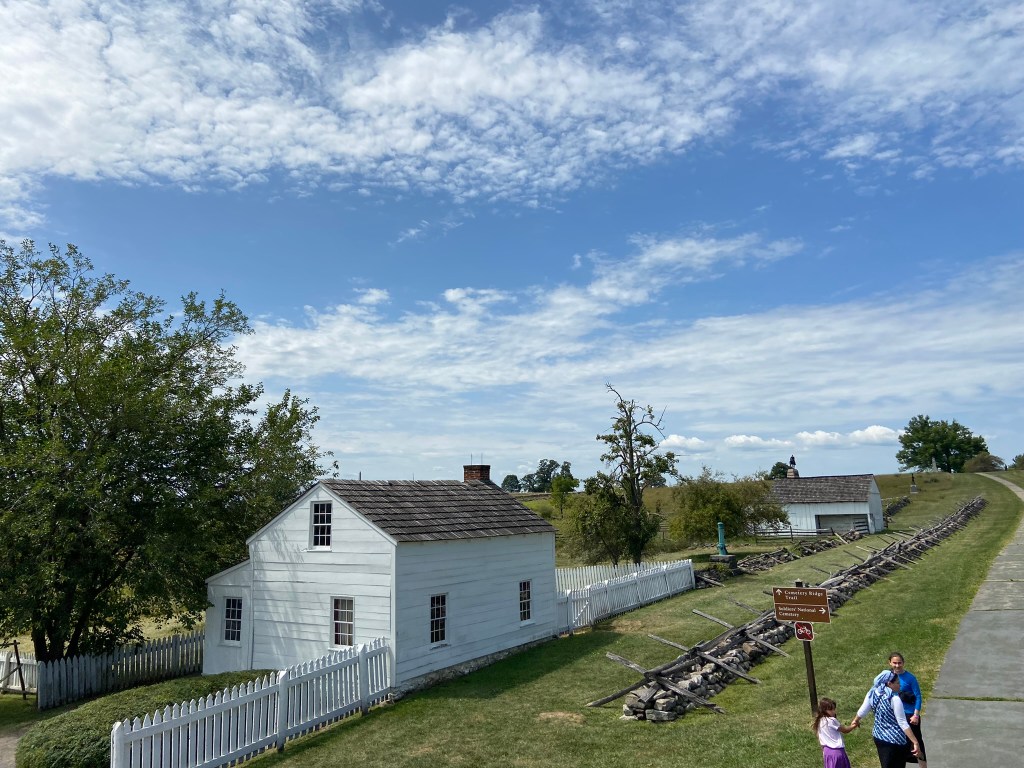
We got back on the bus and continued to head up Cemetary Ridge and we saw the monuments and markers that made this site so significant to the battle, as this was the ground that the Union was holding throughout the second and third days of the battle, including during Pickett’s Charge. After the Union held the high ground and inflicted heavy casualties on the Confederacy at this site, the Confederate Army could not fully recover and was forced to retreat.
After a two hour tour, we made our way back to where the bus tour began. I would highly recommend this bus tour and doing it on the double-decker bus. Of all of the sites that we saw in Gettysburg, this truly was the highlight. We were able to see these hallowed grounds first-hand, as well as the monuments and markers that honor those who fought in the battle. It was nice having a guide explaining all of the landmarks and features of the battlefield along with the history of the town of Gettysburg. For more informaton on Gettysburg Battlefield Tours check out- https://www.gettysburgbattlefieldtours.com/
After we got off the bus, my family and I ate lunch at O’Rourke’s Family Eatery, a casual Irish restaurant, which is right around the corner from where the bus dropped us off. Check out their site here: https://www.ororkes.com/
Gettysburg National Military Park and Museum
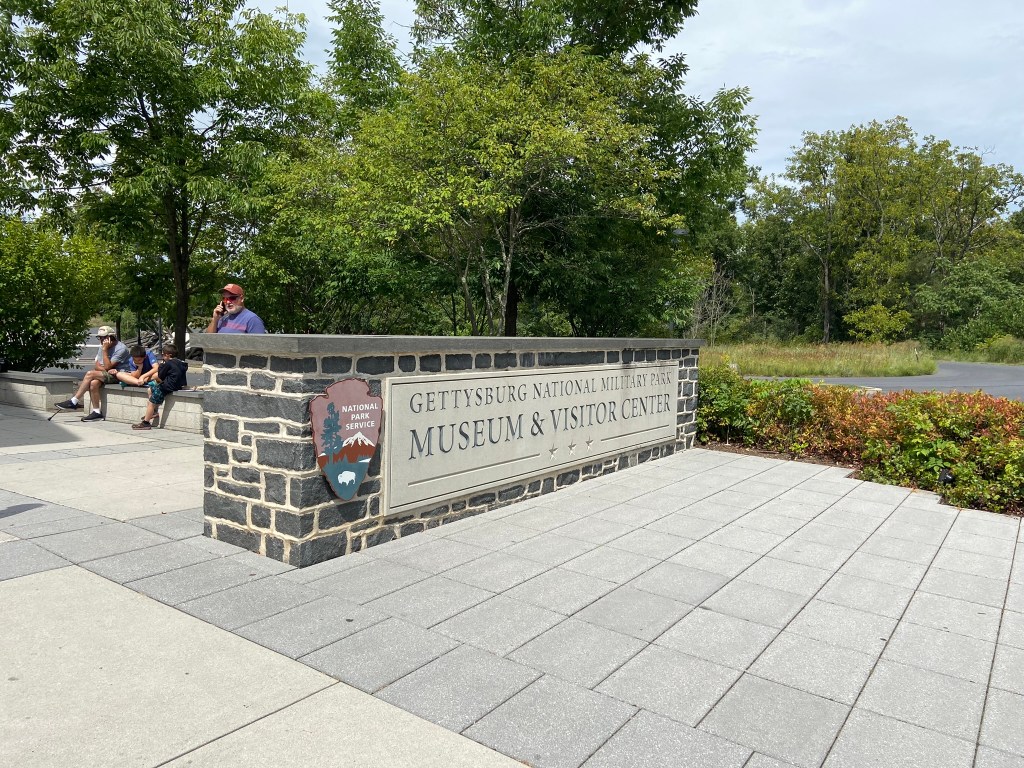
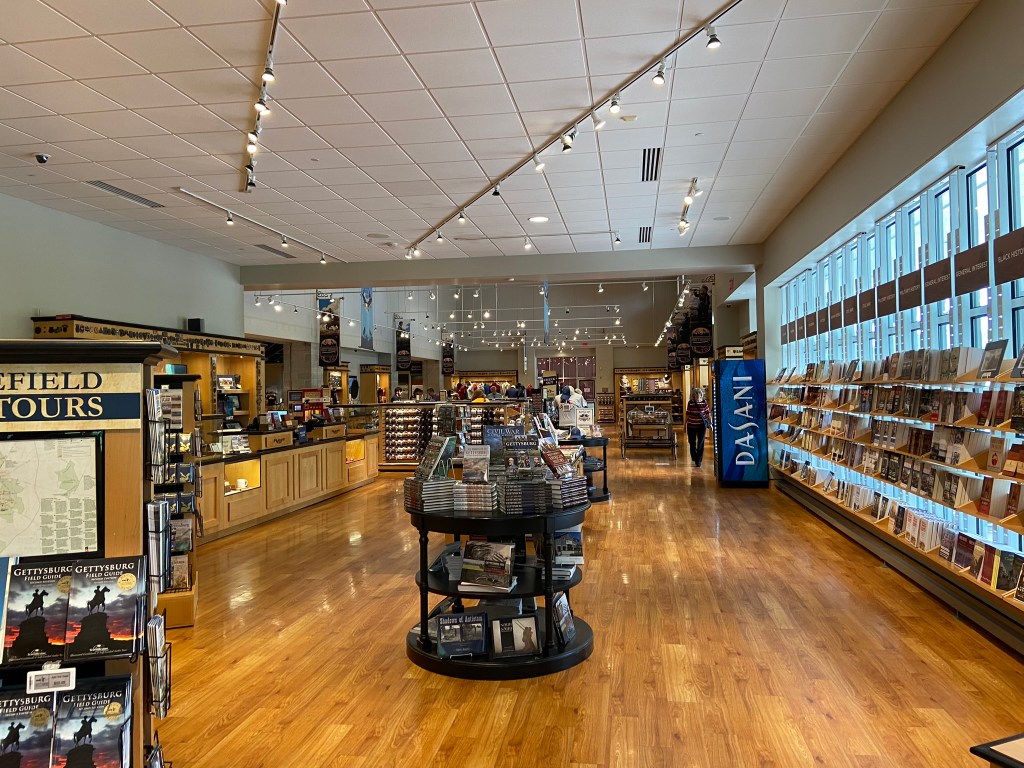
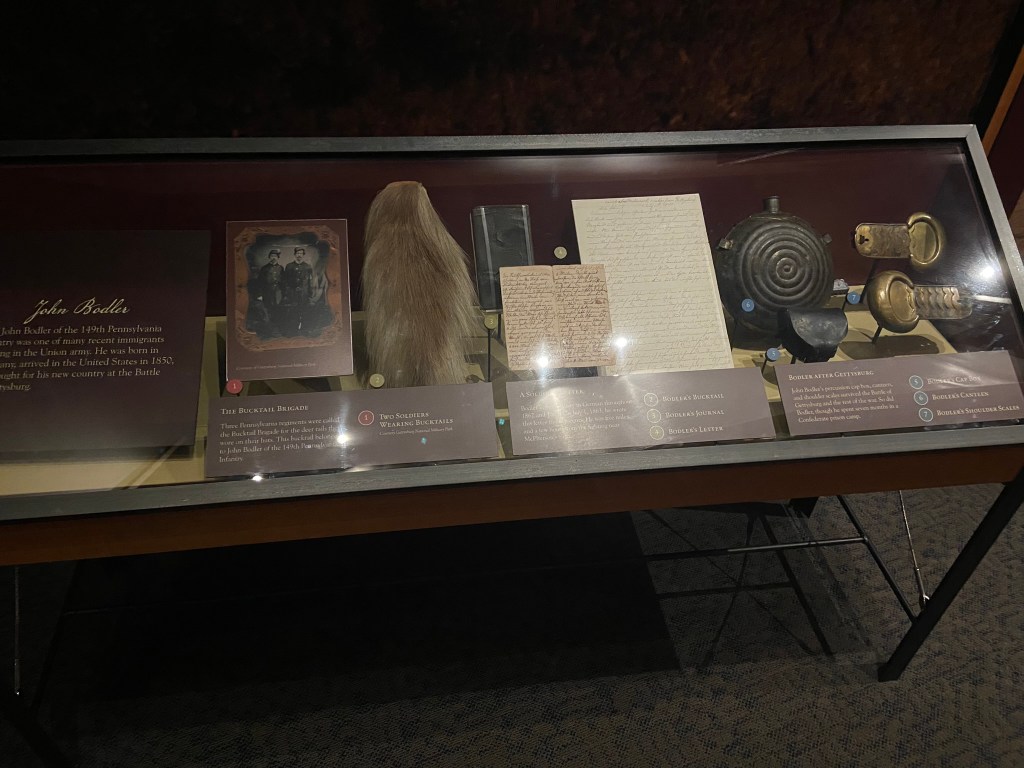
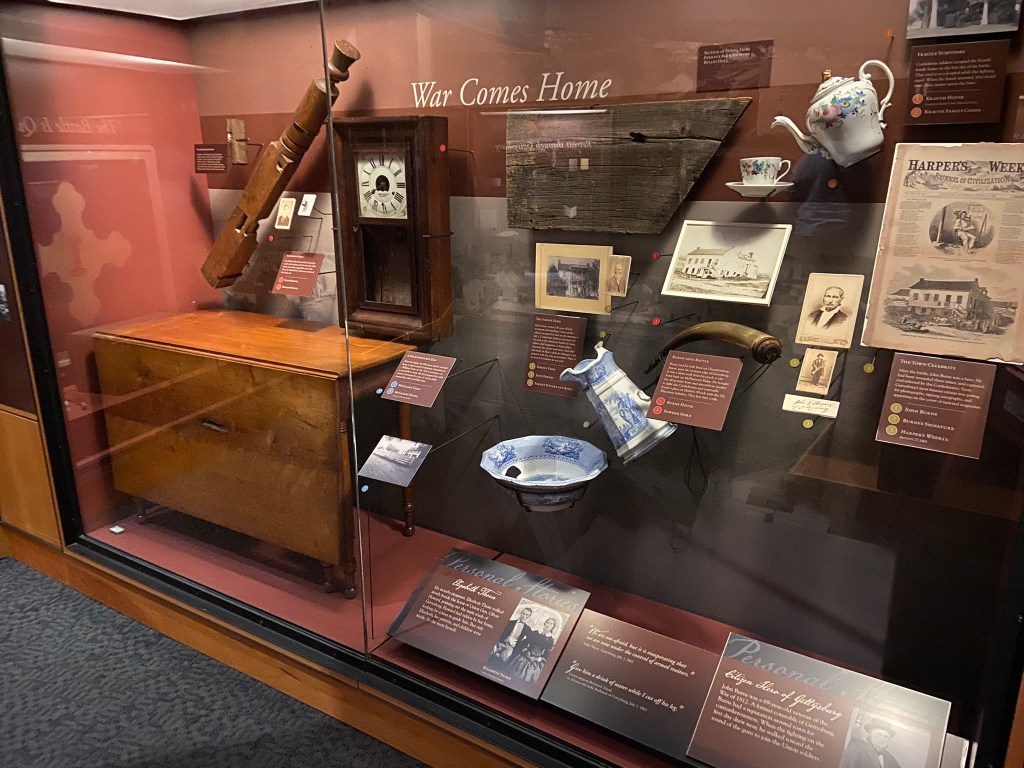
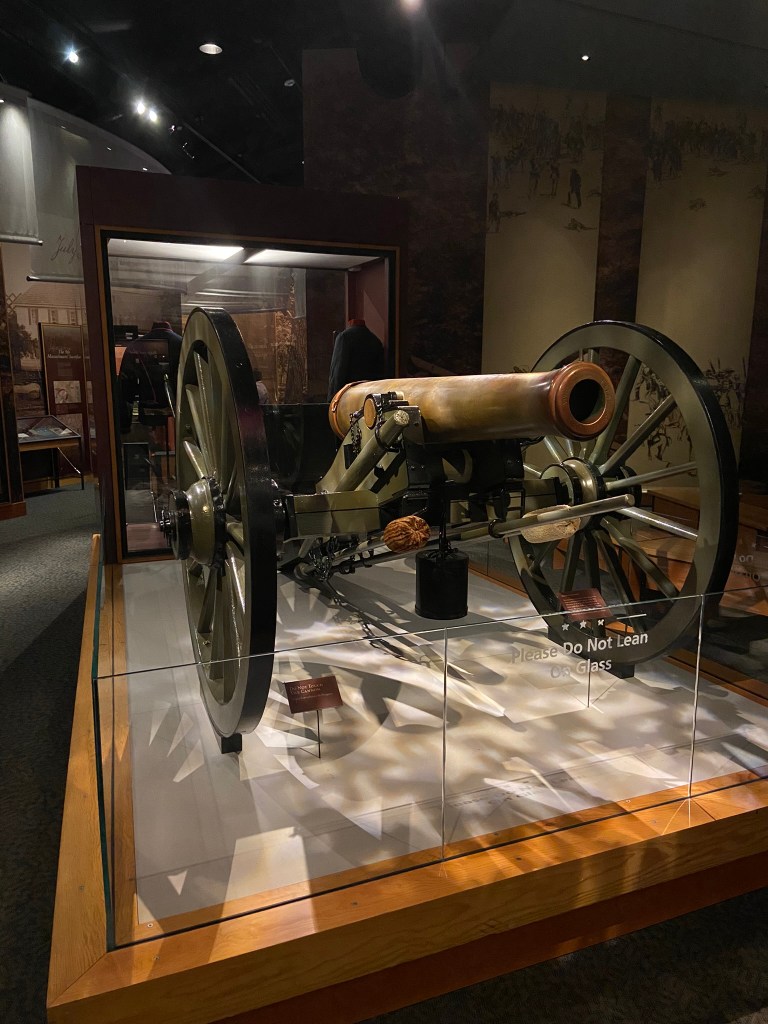
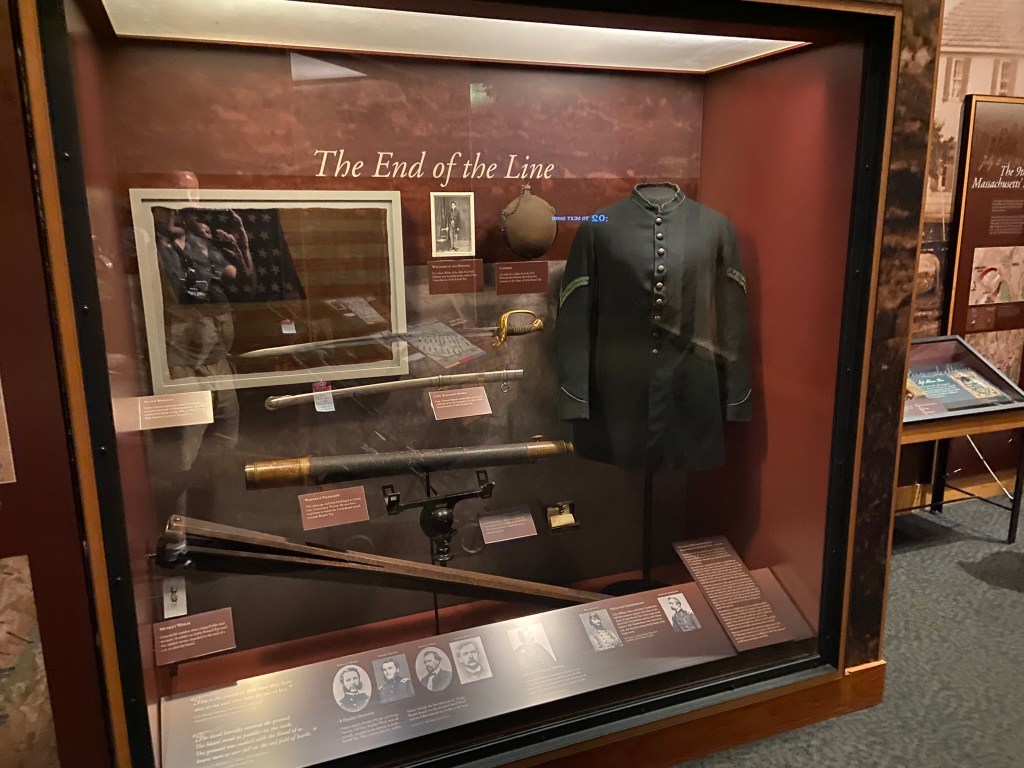
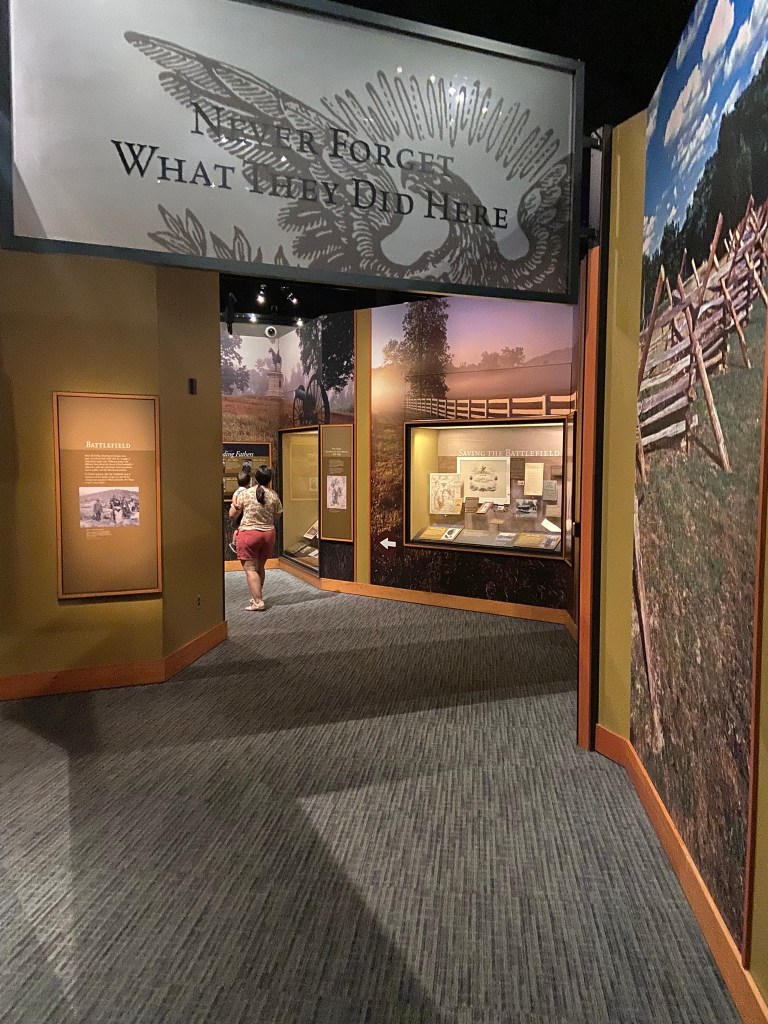
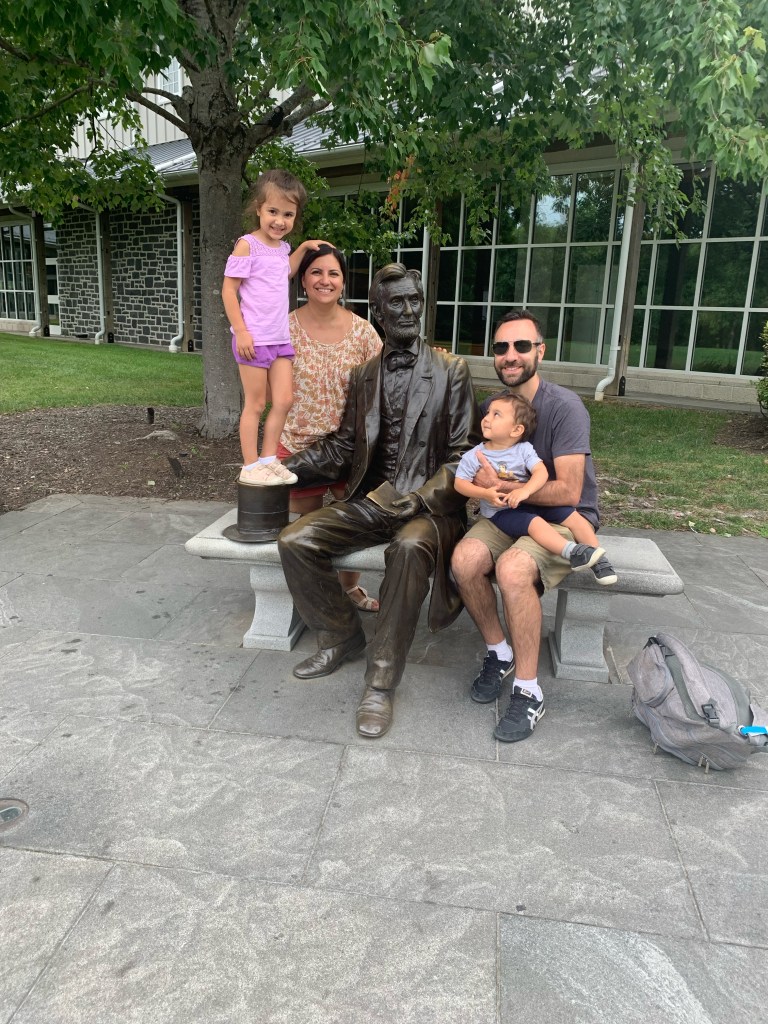
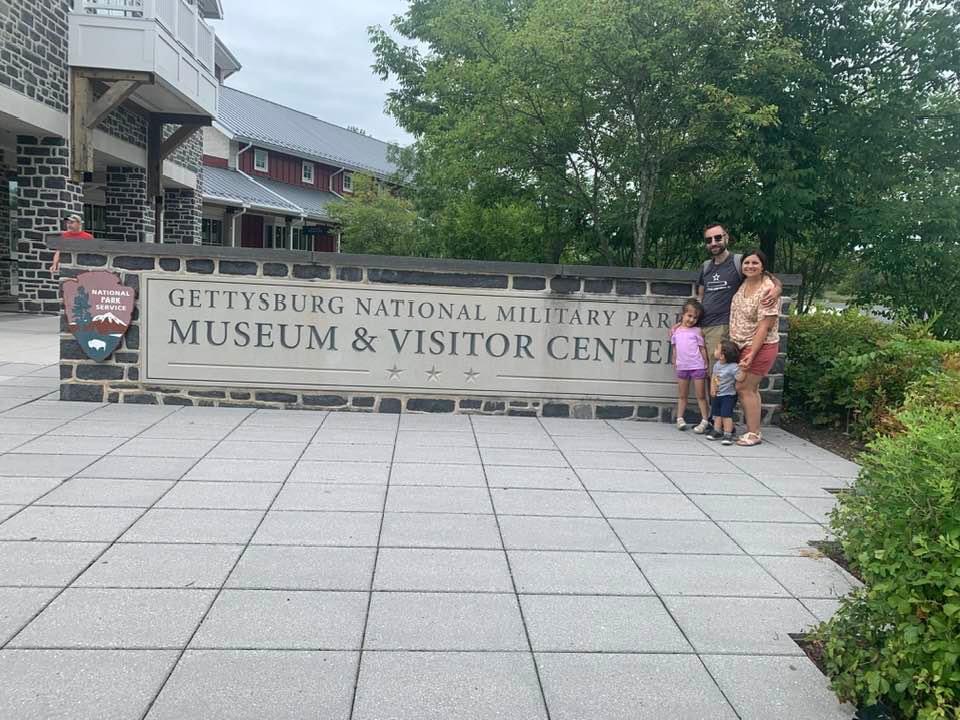
After lunch, our next stop was the Gettysburg National Military Park and Museum. We got in our cars and made the 4 minute drive down the street. The visitor center is a beautiful building that has a huge bookstore. One thing I noticed is that T-shirts/ sweatshirts are much more expensive here than in the smaller shops in town. I’d hold off on buying souvenirs until you make it back to those smaller shops.
“A New Birth of Freedom”
I bought the family tickets for $19 per adult which includes entry to the musuem, a 20 minute film in a theater, and a viewing of the Cyclorama (which I explain below). The family and I first watched the film entiteld “A New Birth of Freedom” in the theater which was entertaining and informative. Narrated by none other than Morgan Freeman, the film discussed the tensions in the country leading up to the Civil War, the start of hostilities and the importance of the Battle of Gettysburg. It emphasized the fact that at stake in the Battle of Gettysburg and the Civil War was the freedom of the 4 million slaves in bondage in the country.
Cyclorama
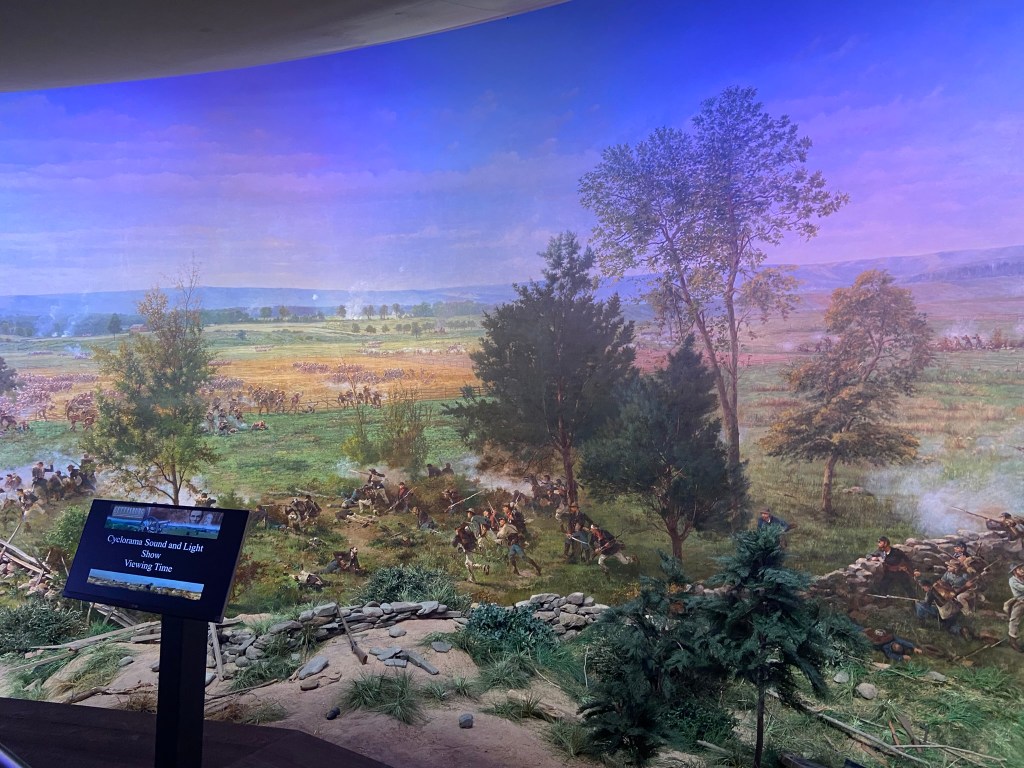
After the 20 minute film we were taken to see the Cyclorama, which you have see to believe just how incredible it is. The Cyclorama is a 360 degree painting of the battle of Gettysburg that surrounds you and depicts the third day of battle during Pickett’s Charge. There is a short demonstration that takes place with a narrator, highlighting different scenes from the battle. The Gettysburg Cyclorama is 377 feet long, 42 feet high, and weighs 12.5 tons. The canvas was painted by French artist Paul Phillppoteaux and it opened to the public in Chicago in 1883. Pictures do not do the Cyclorama justice. You must go see for yourself. (https://www.nps.gov/gett/learn/historyculture/cyclorama.htm)
Gettysburg Museum of the American Civil War
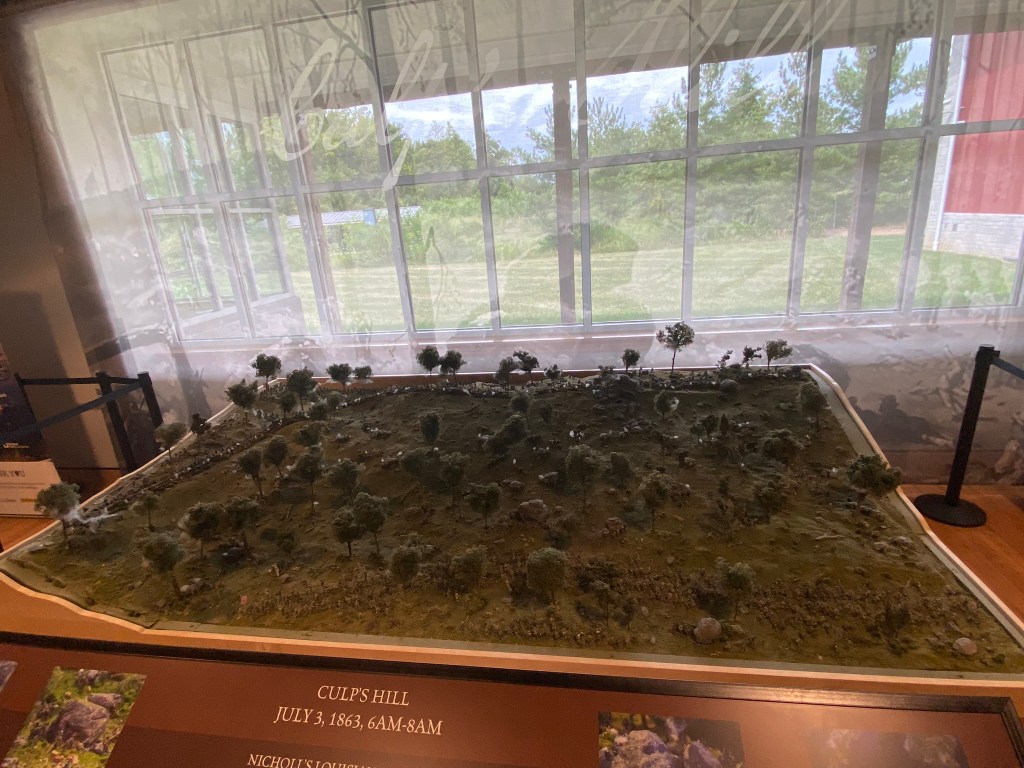
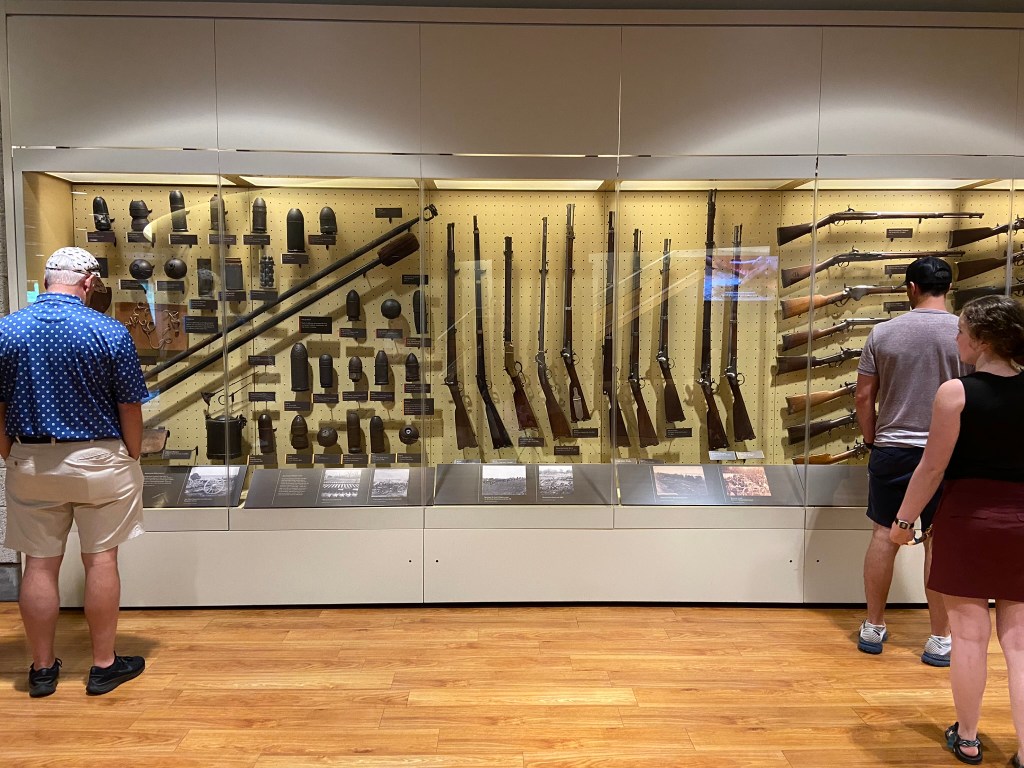
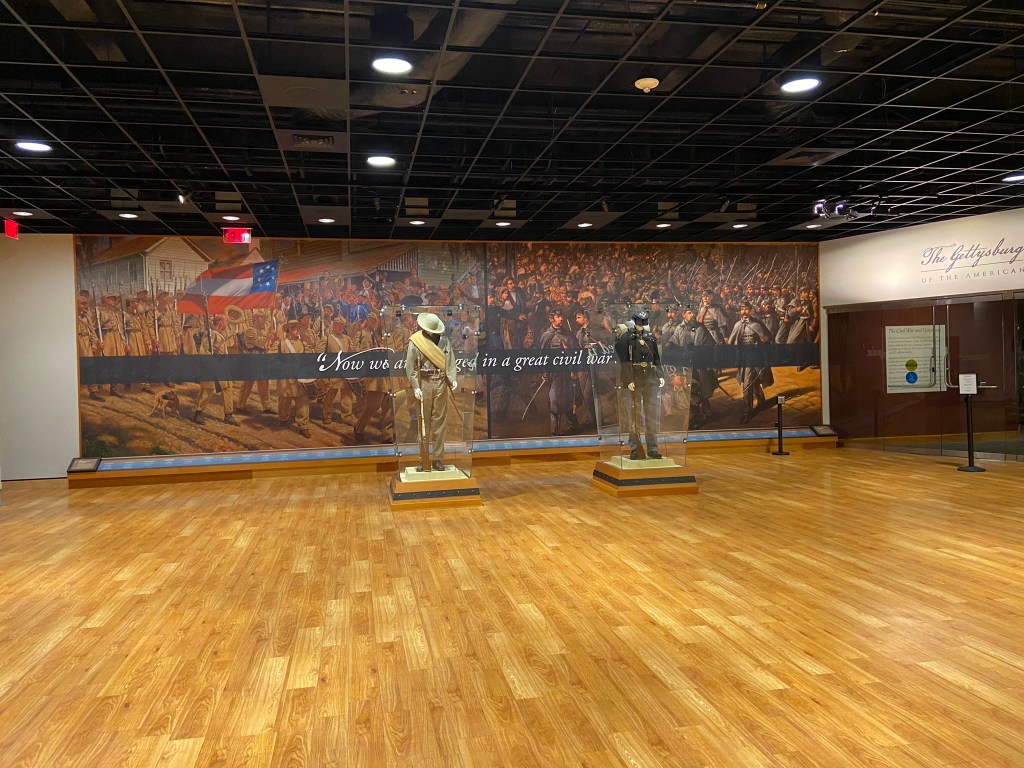
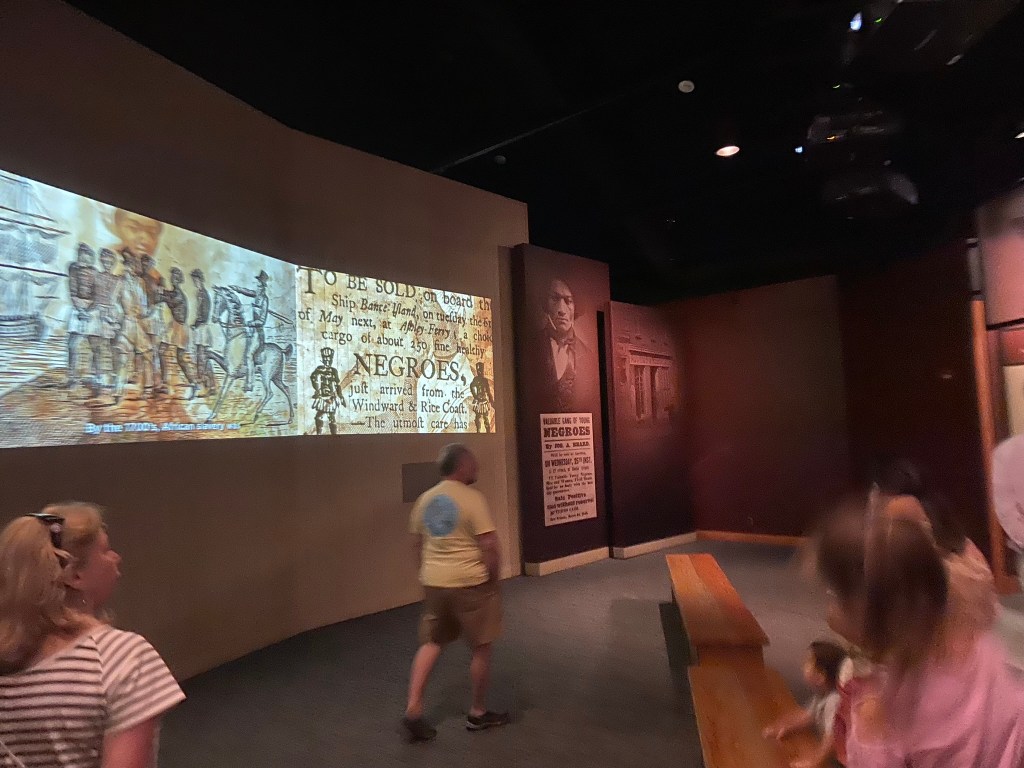
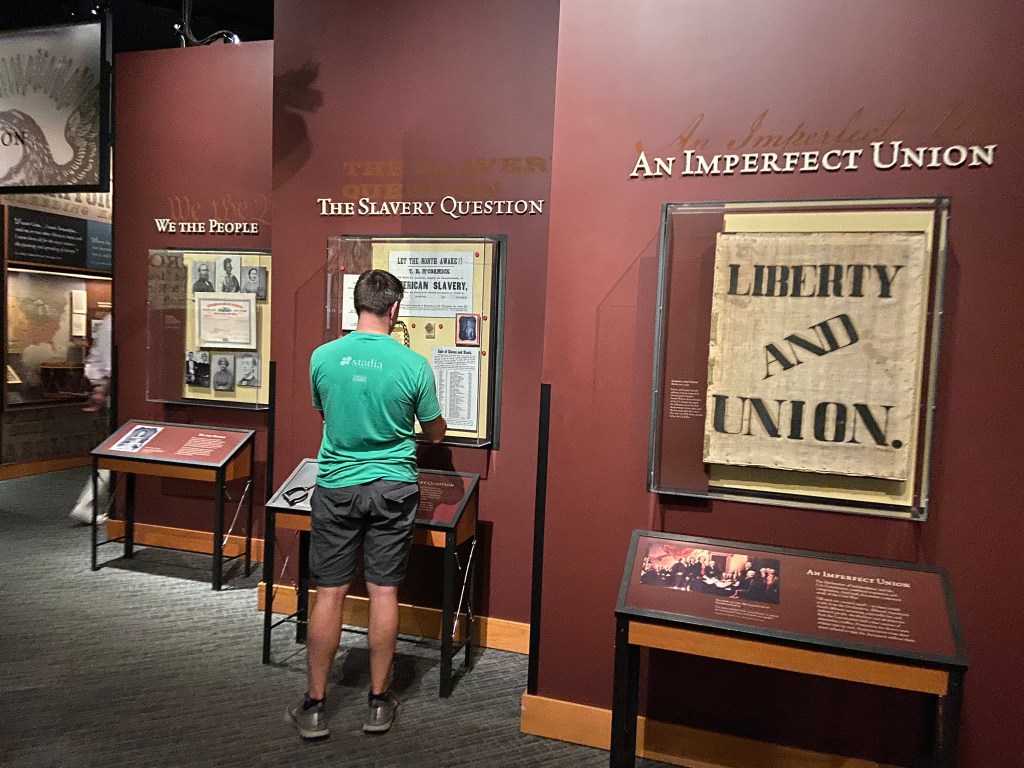
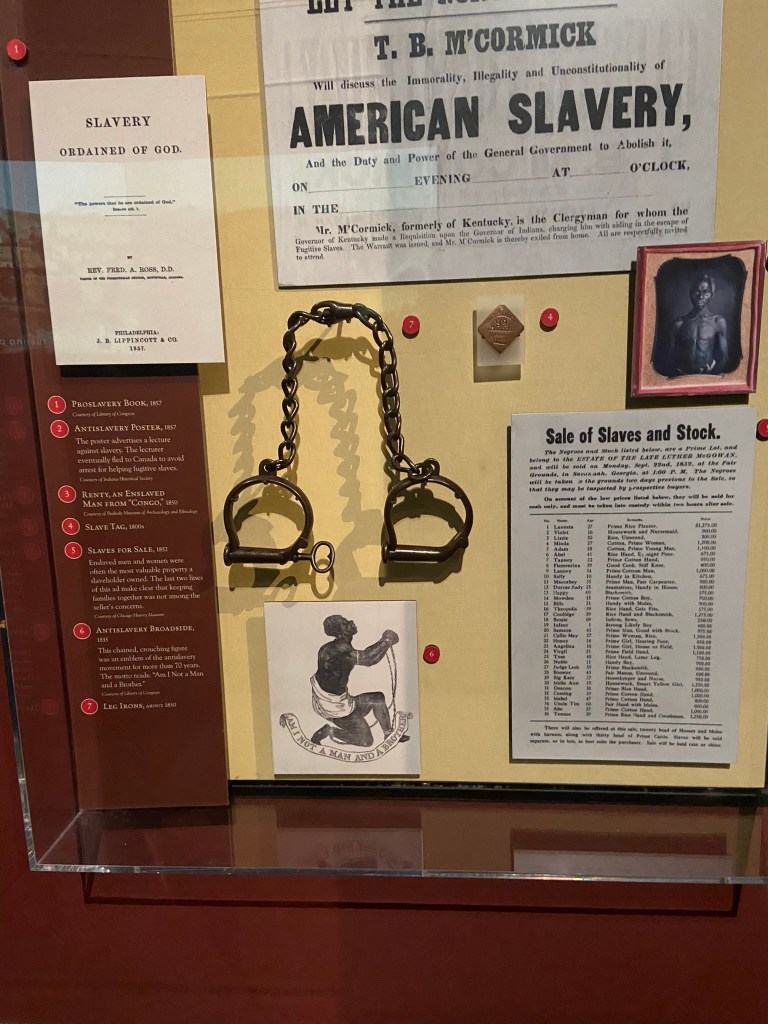
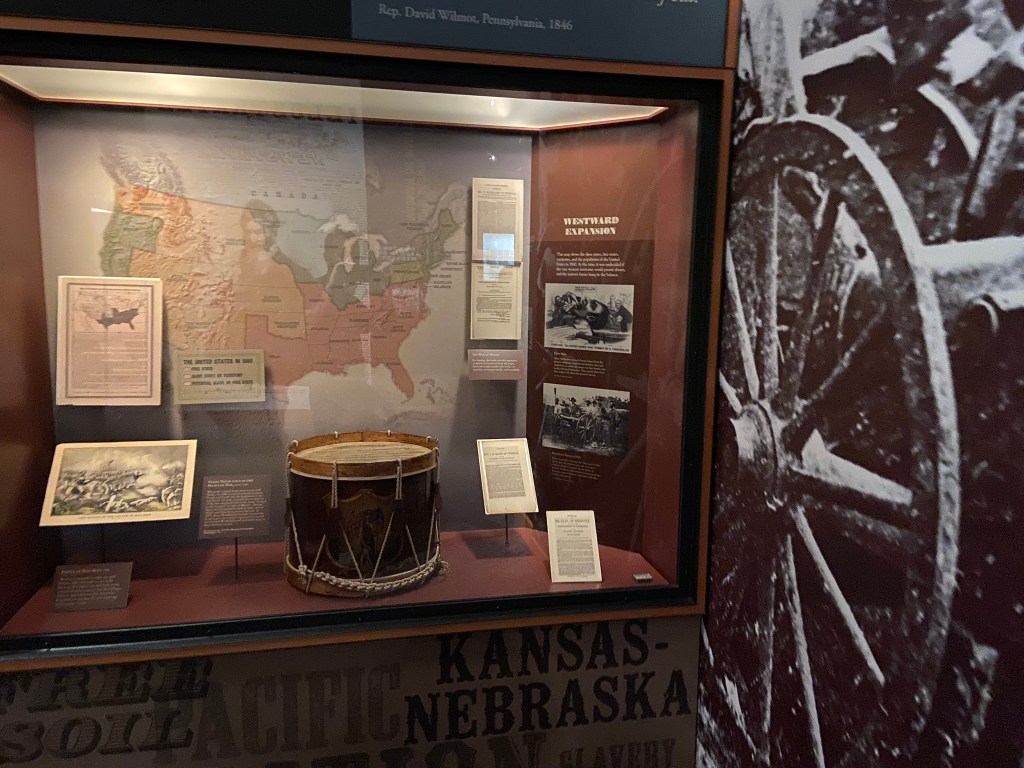
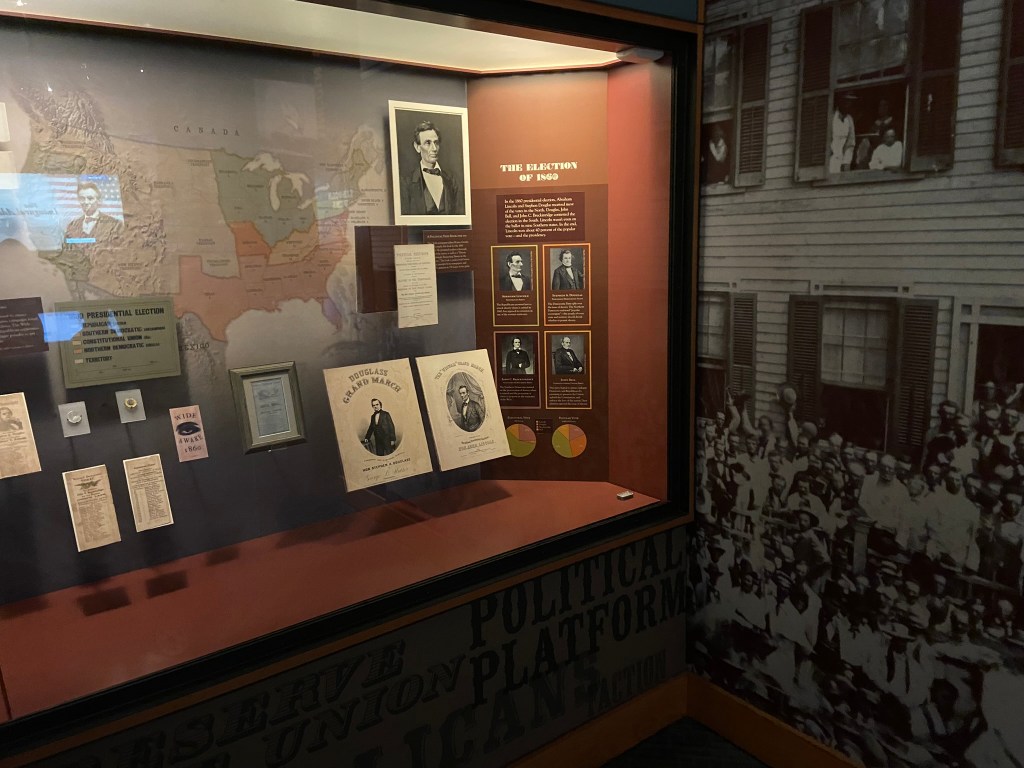
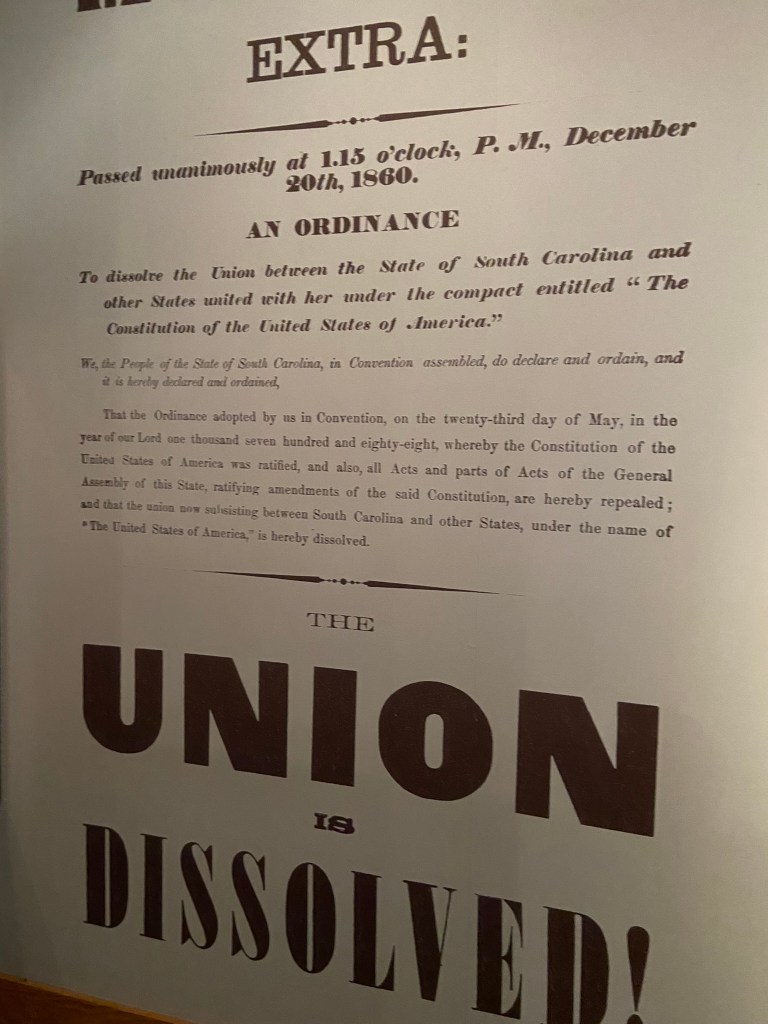
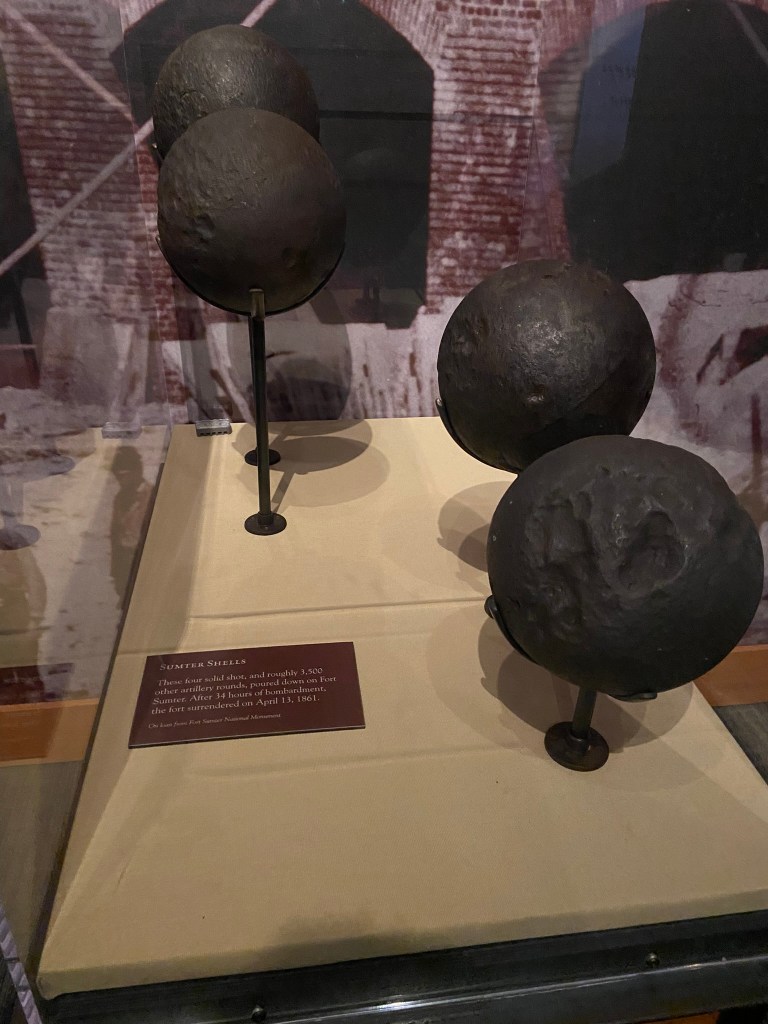
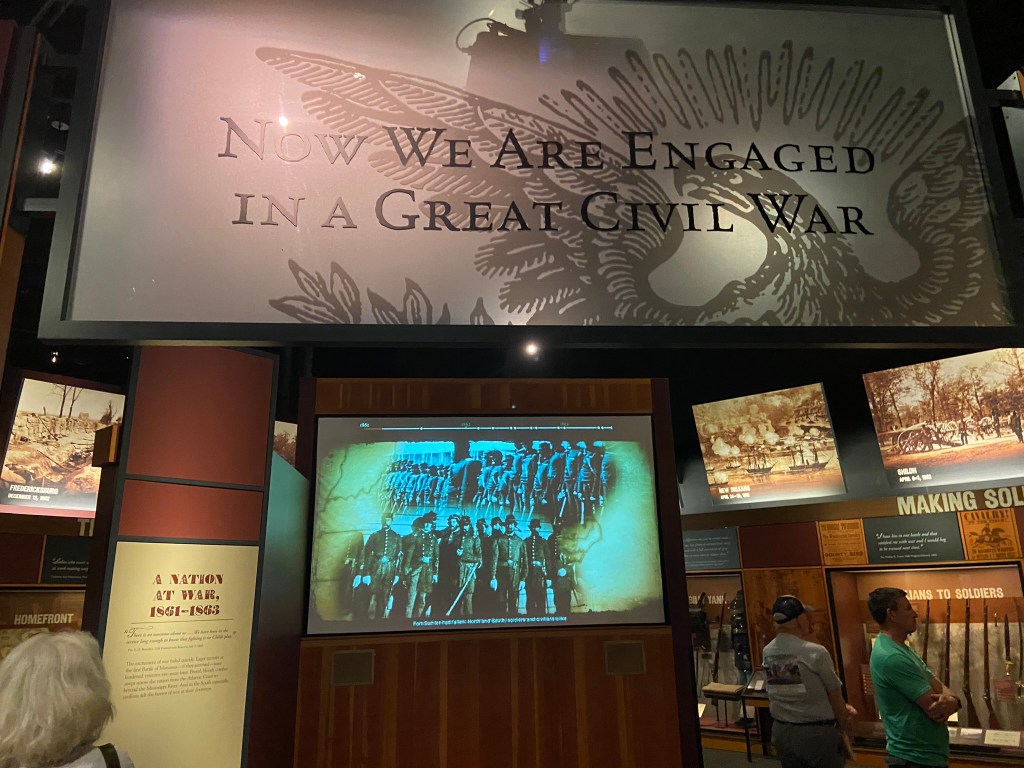
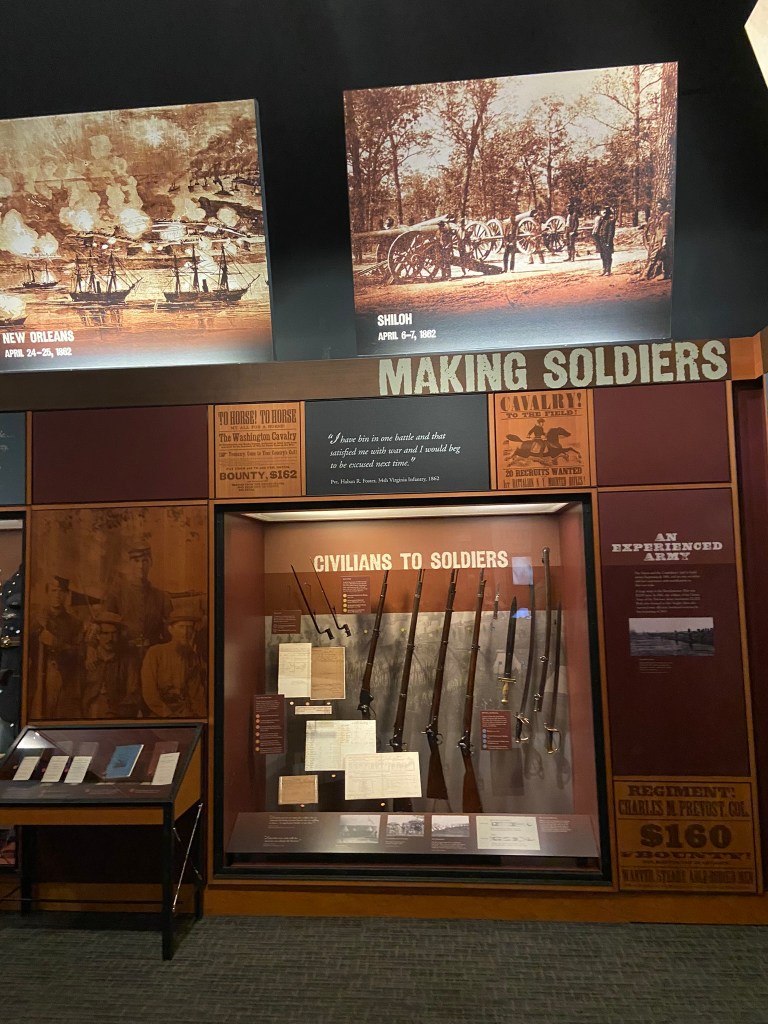
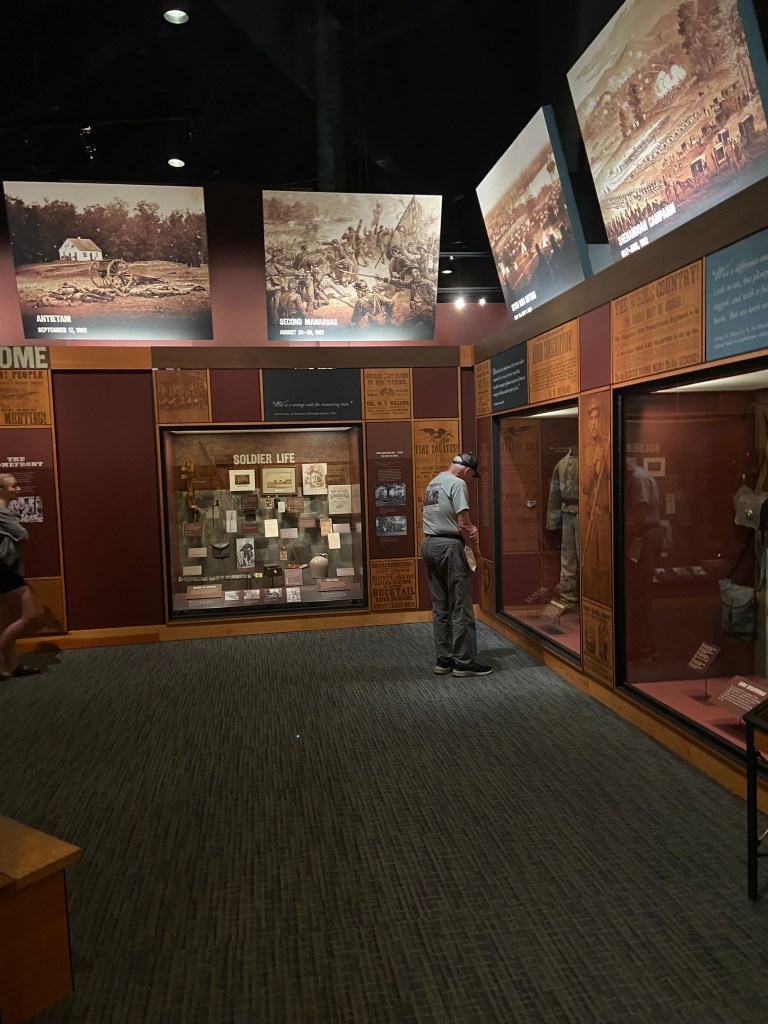
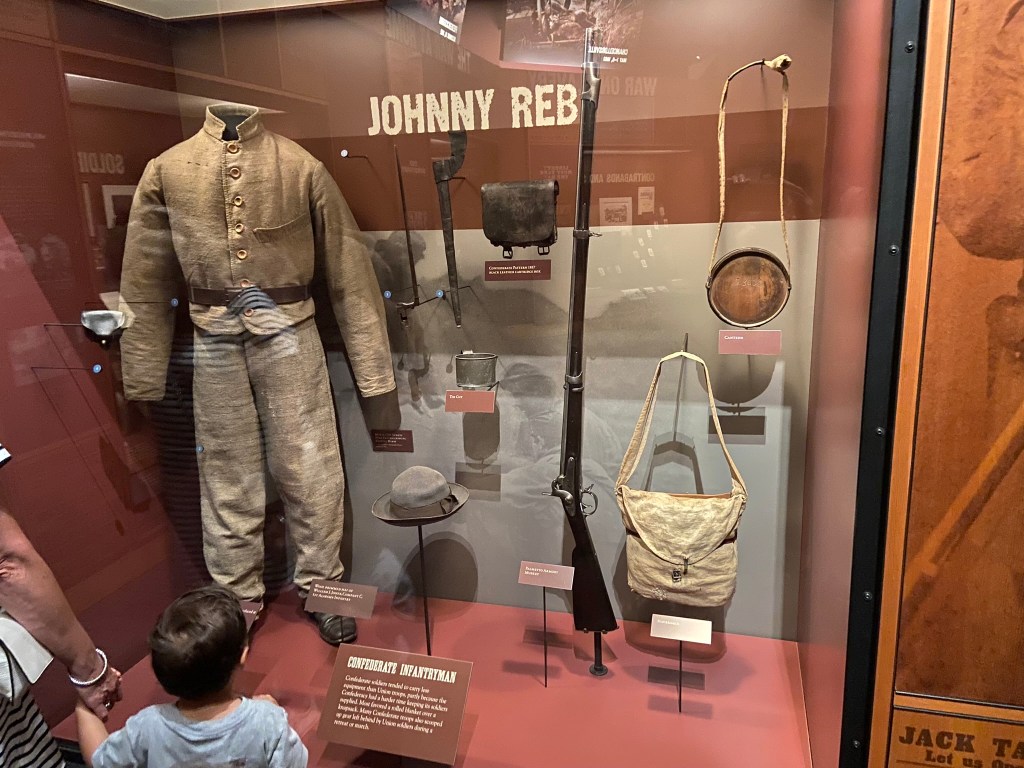
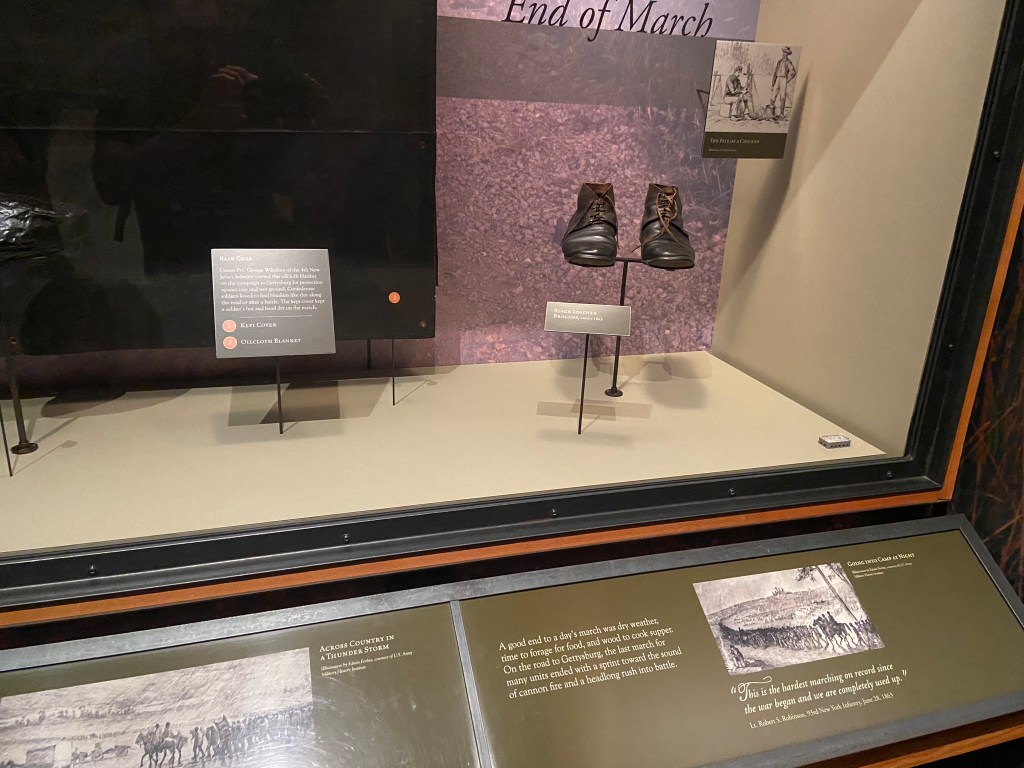
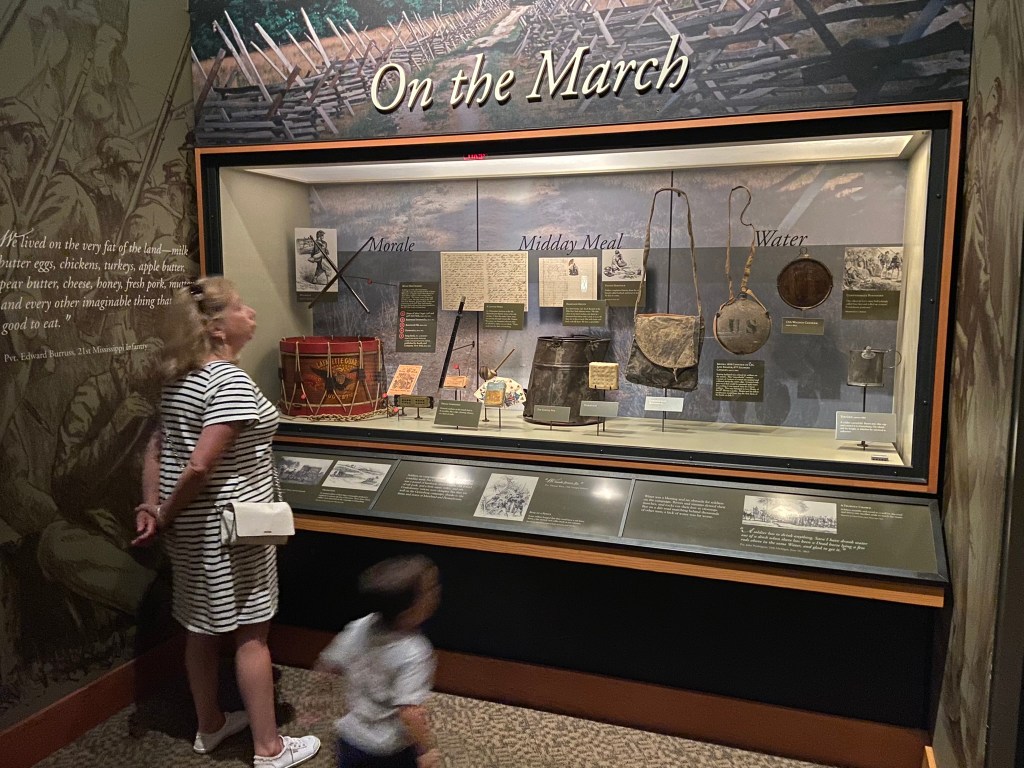
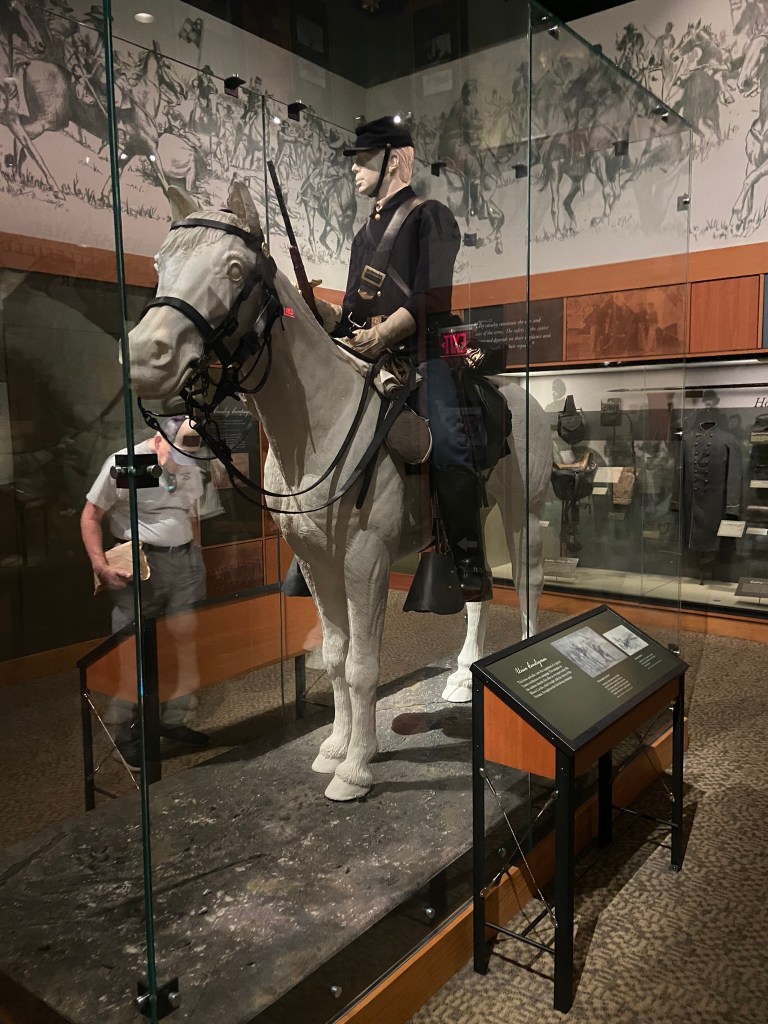
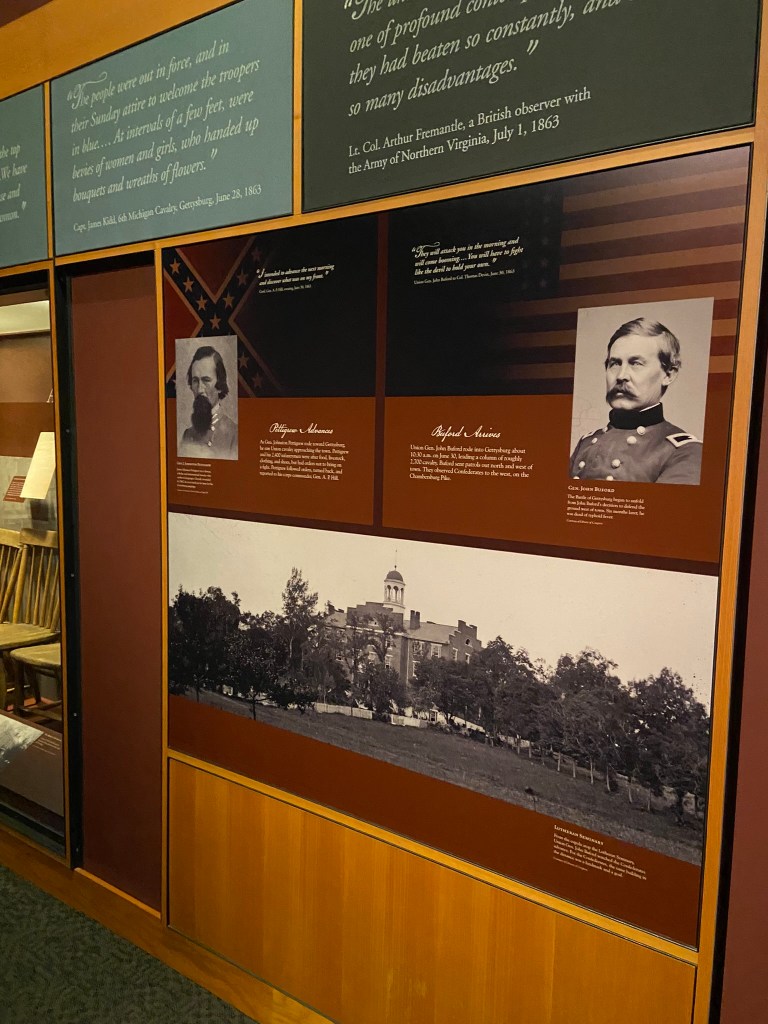
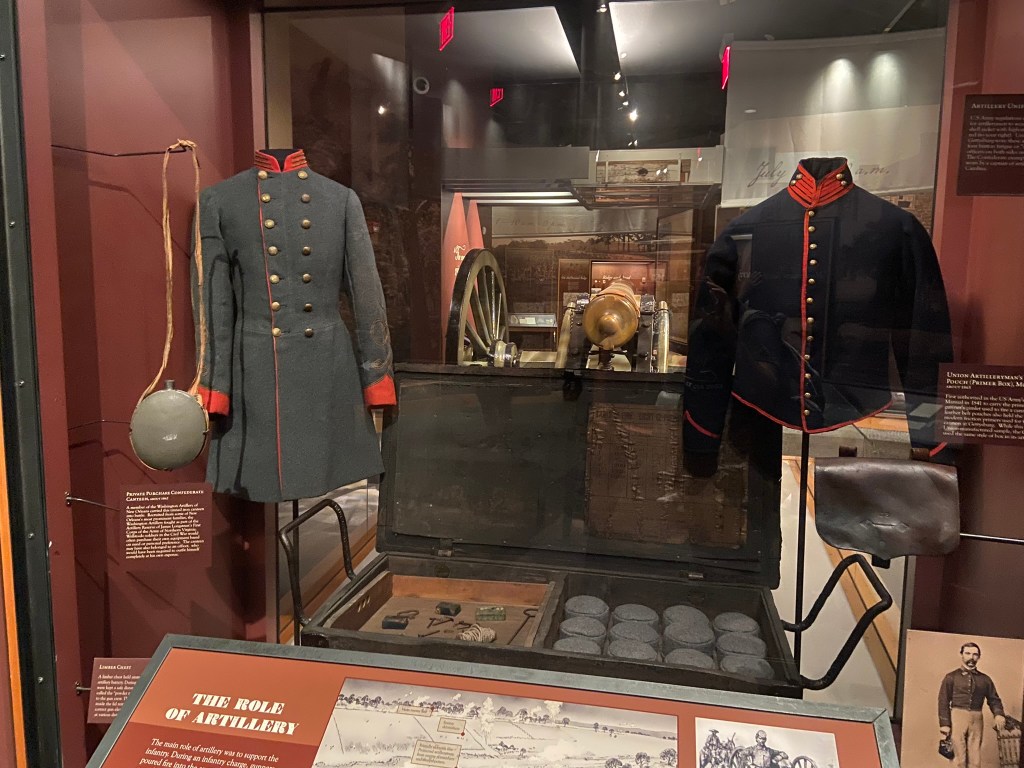
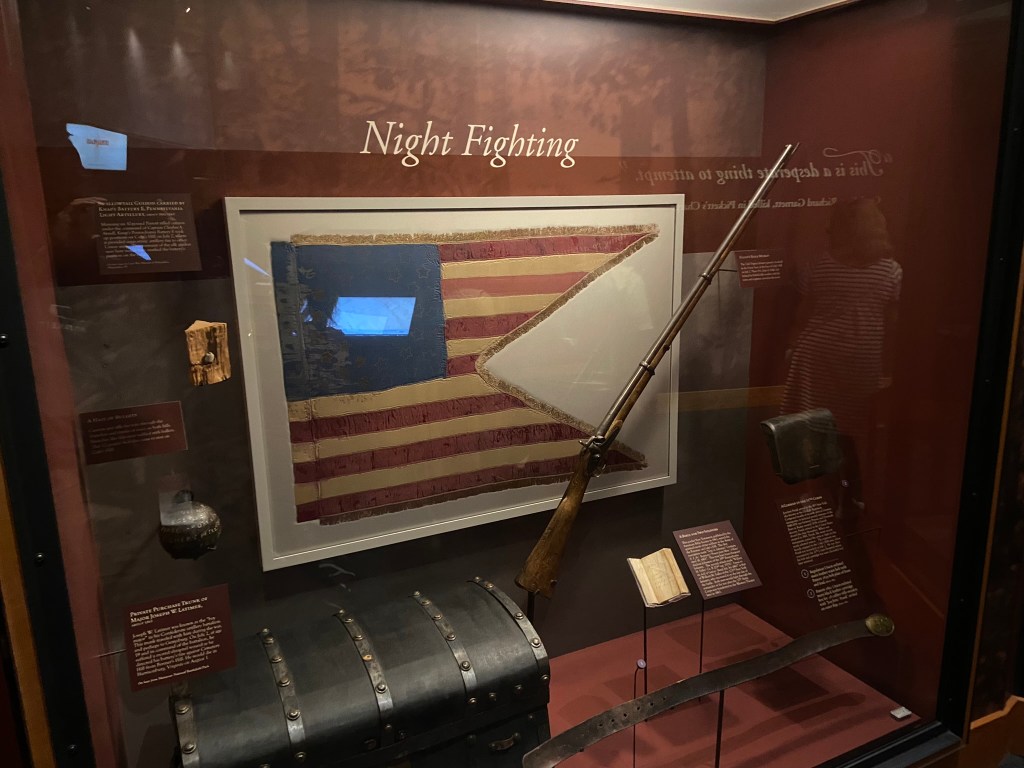
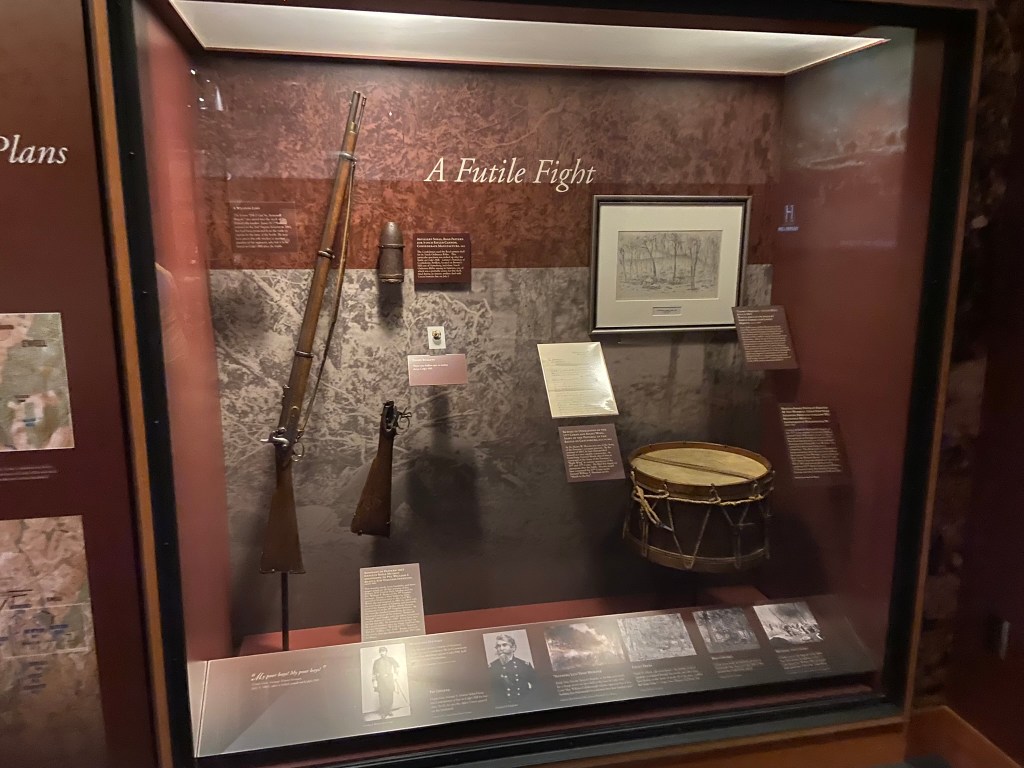
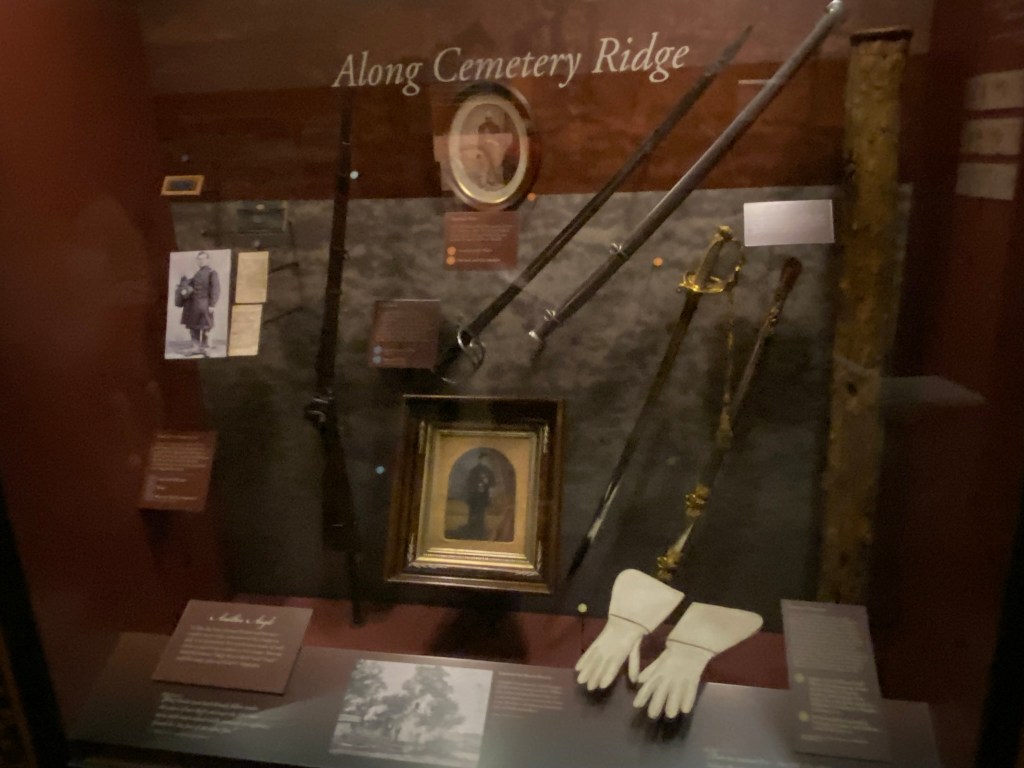
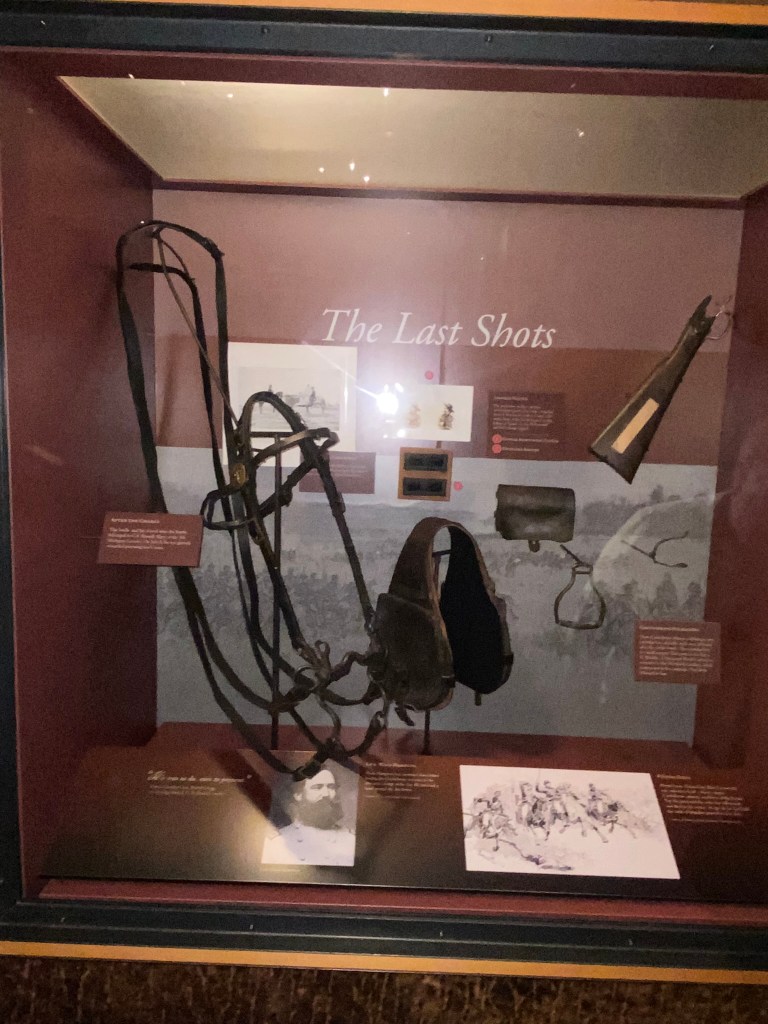
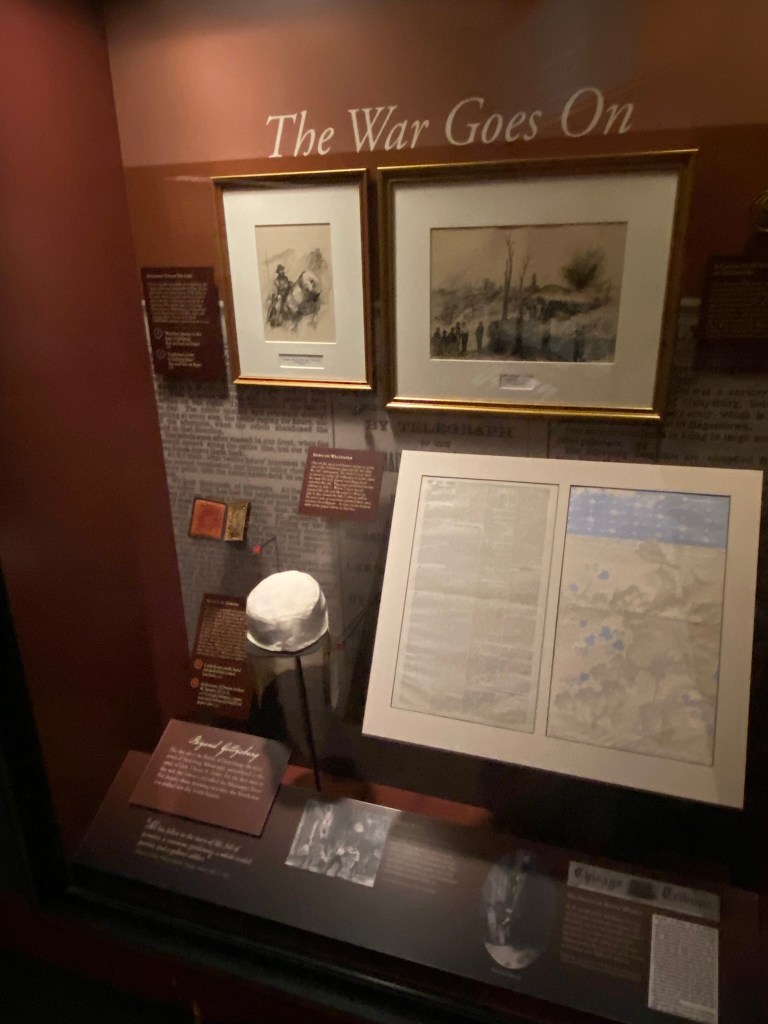
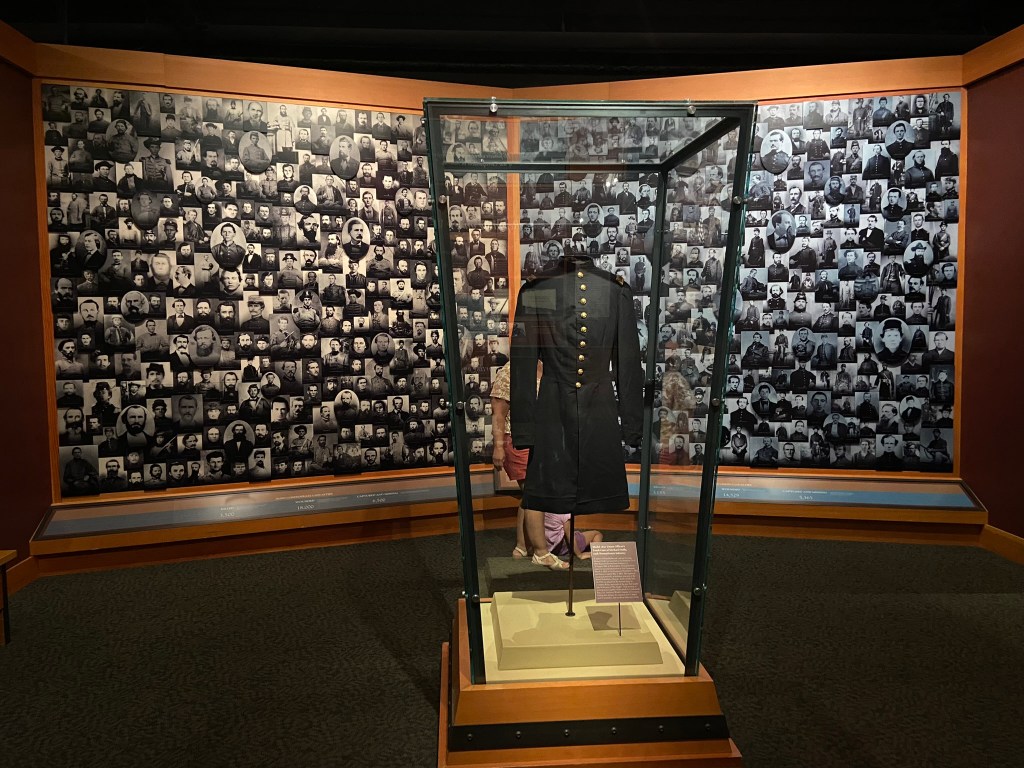
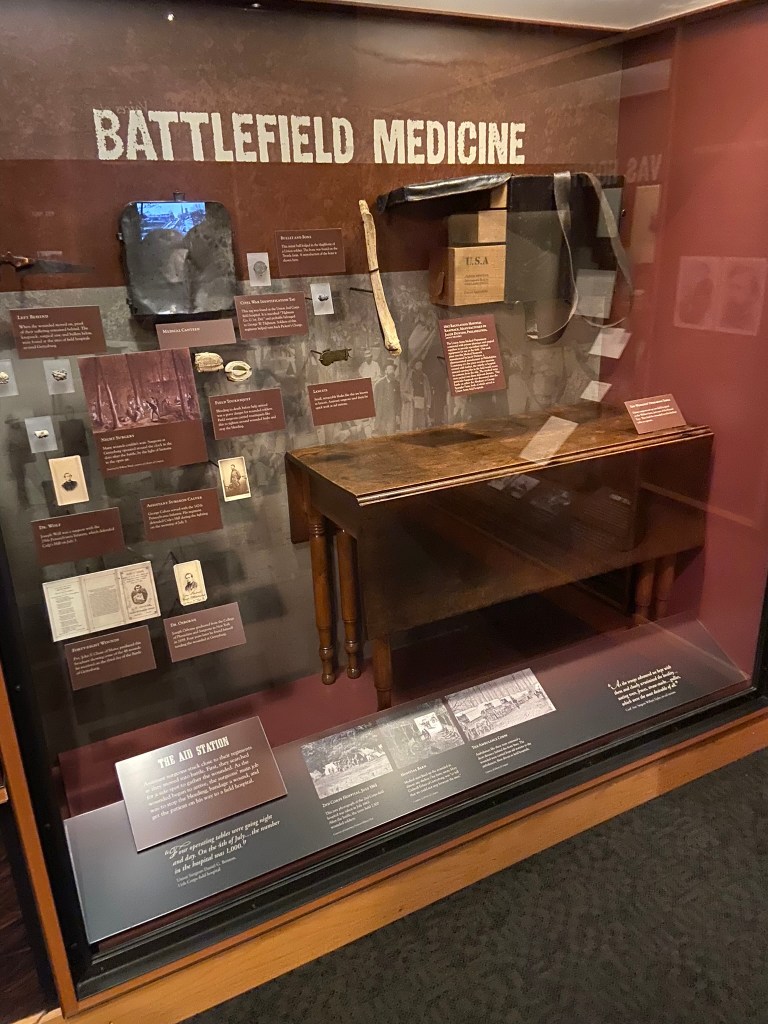
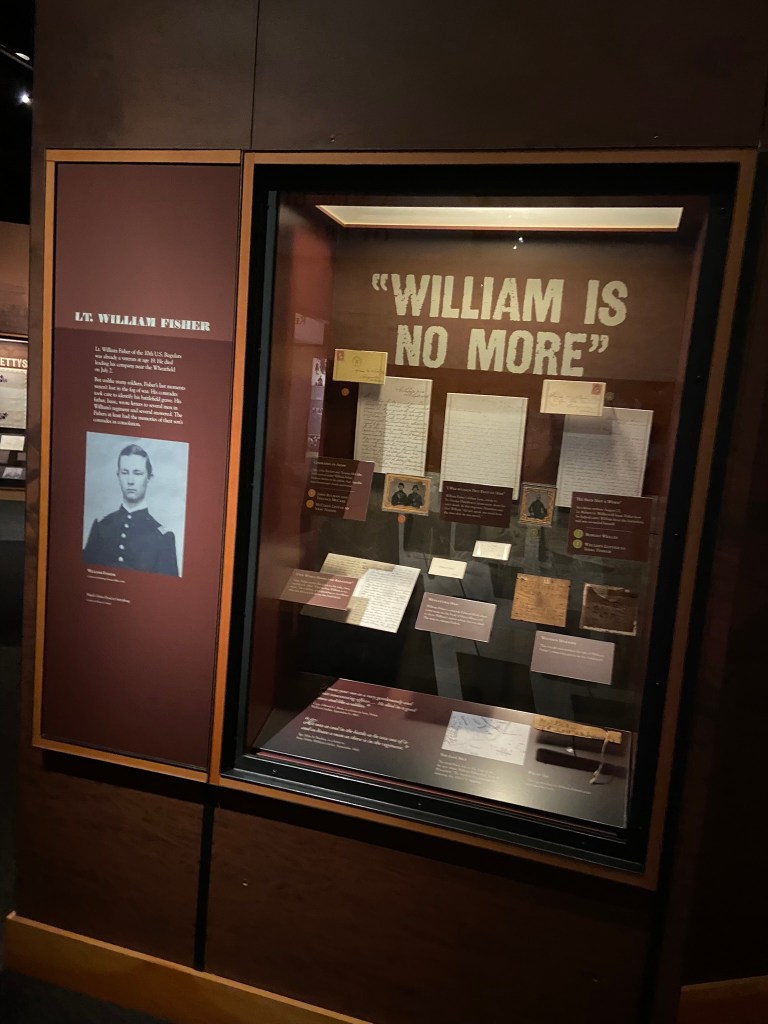
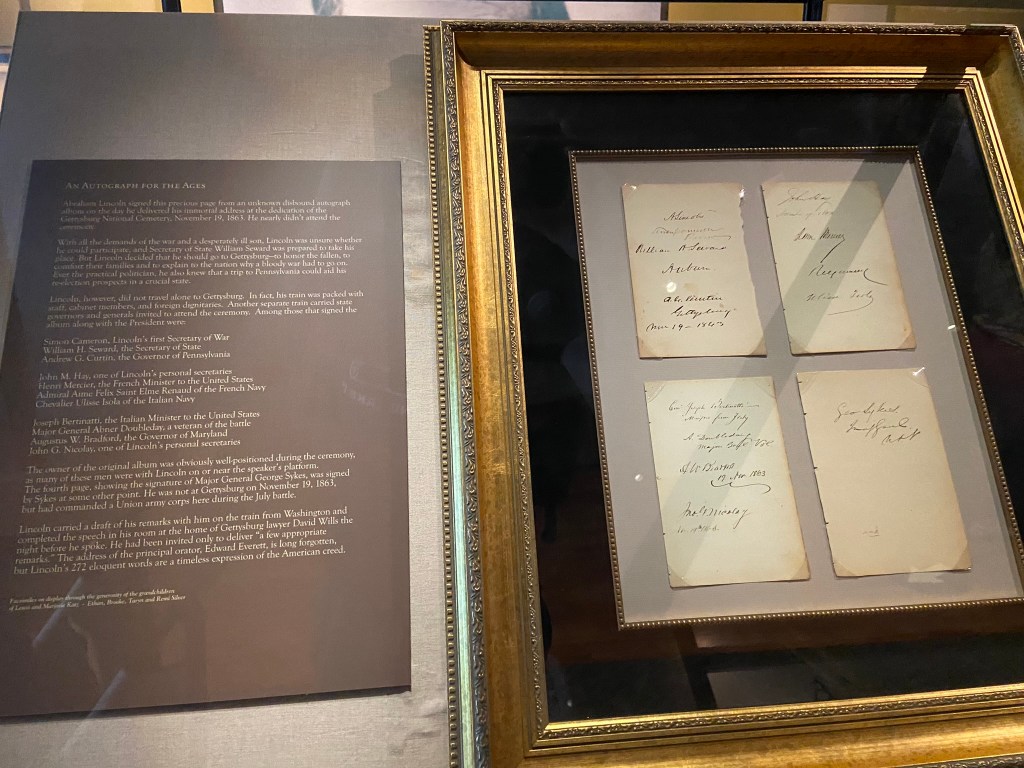
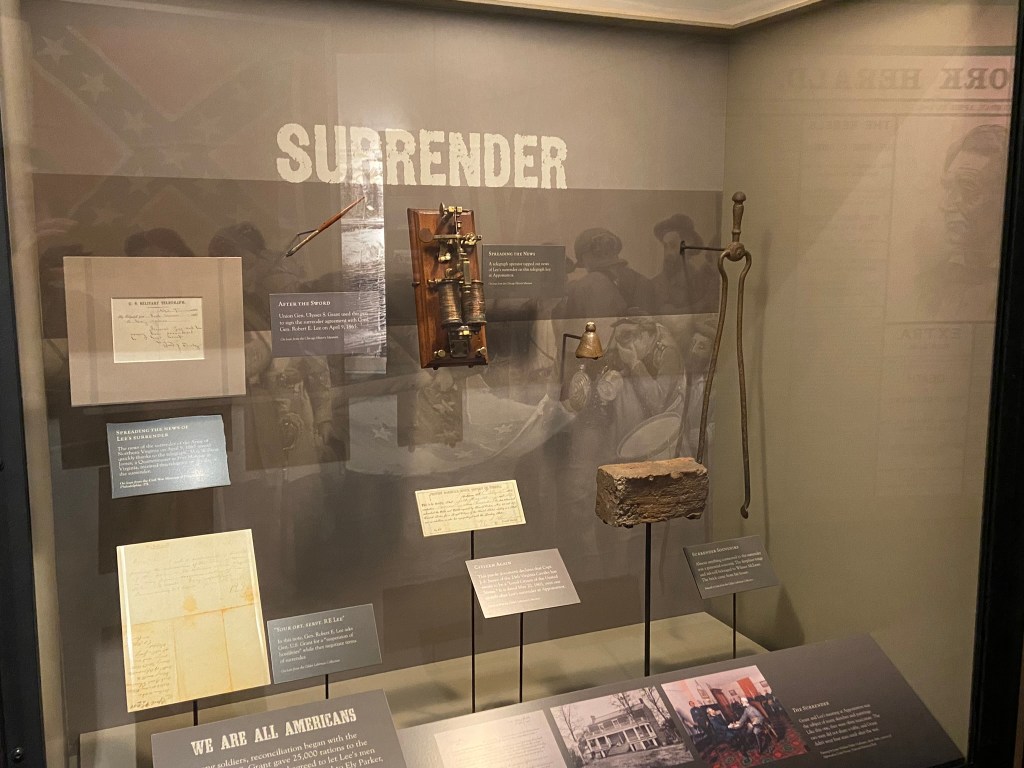
After the Cyclorama, we used our tickets to enter the Gettysburg Museum of the American Civil War. I was very impressed with the museum in terms of the amount of exhibits on display and the breadth of information to read on each exhibit. There are also interactive exhibits and multi-media presentations. As you walk through the museum you are taken through time starting with the writing of the Constitution and tensions in the country over the issue of slavery. The musuem highlights the tensions of the 1850s that eventually led to Lincoln’s election in 1860 and the secession of the Southern states. The musuem highlights the war leading up the Battle of Gettysburg. There is then an extensive emphasis on the three days of battle. The museum then takes you through the later phases of the war, the Confederate surrender, the Lincoln assassination and the aftermath of the war. Truly a wonderful and informative museum, I highly recommend visiting.
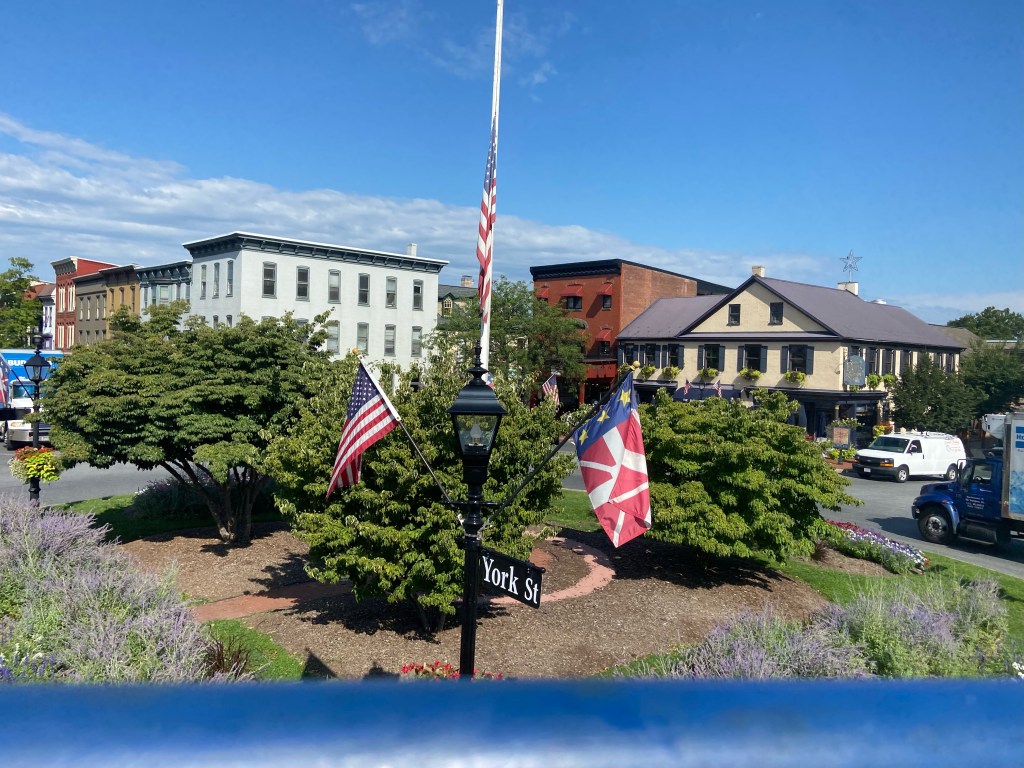
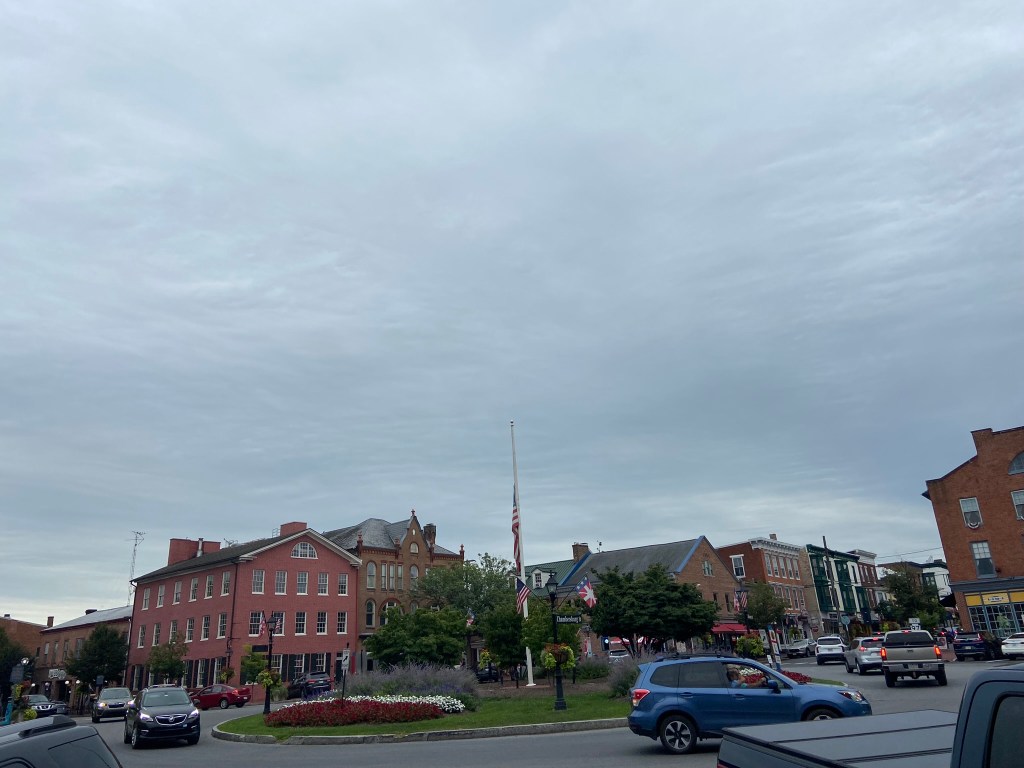
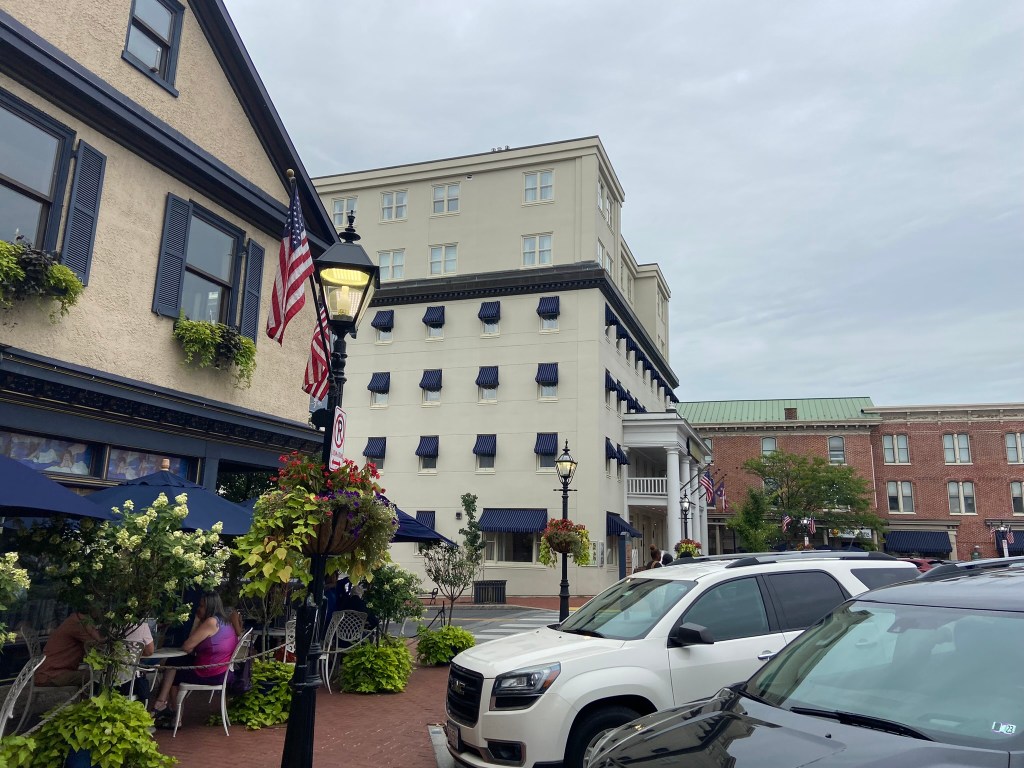
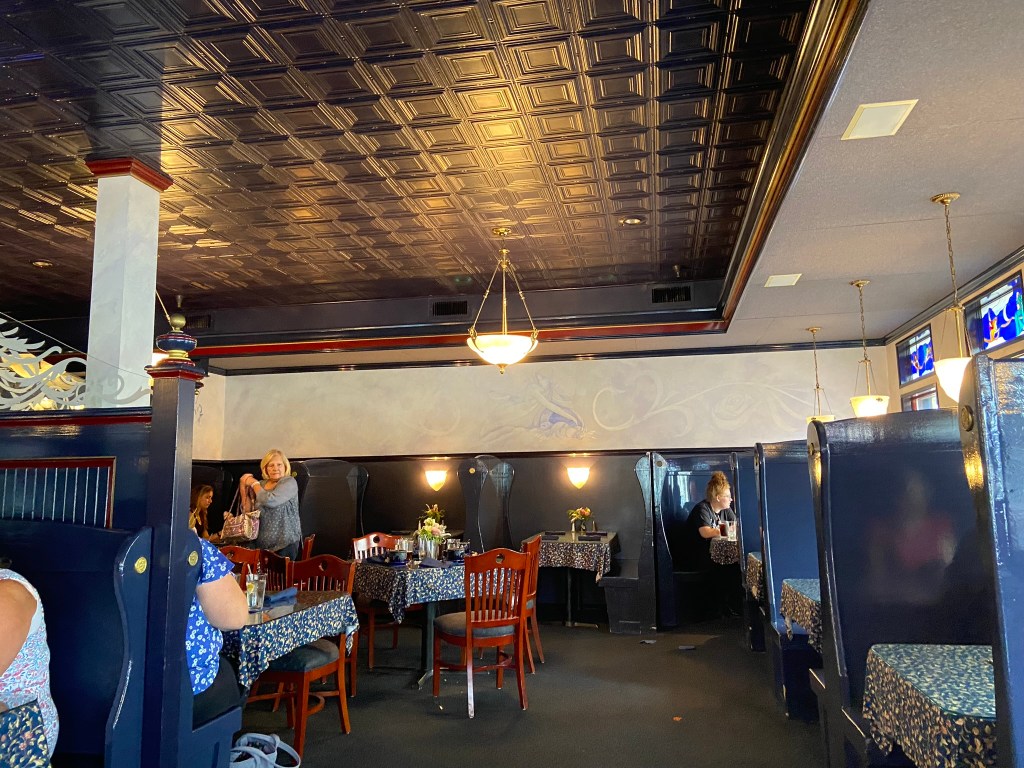
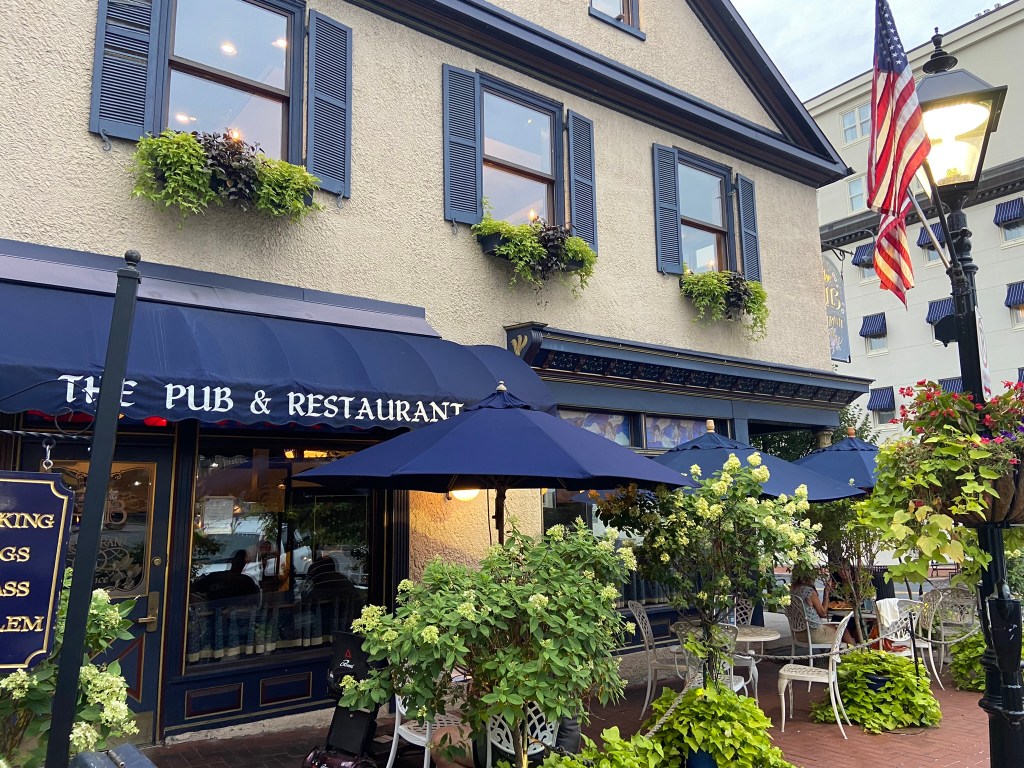
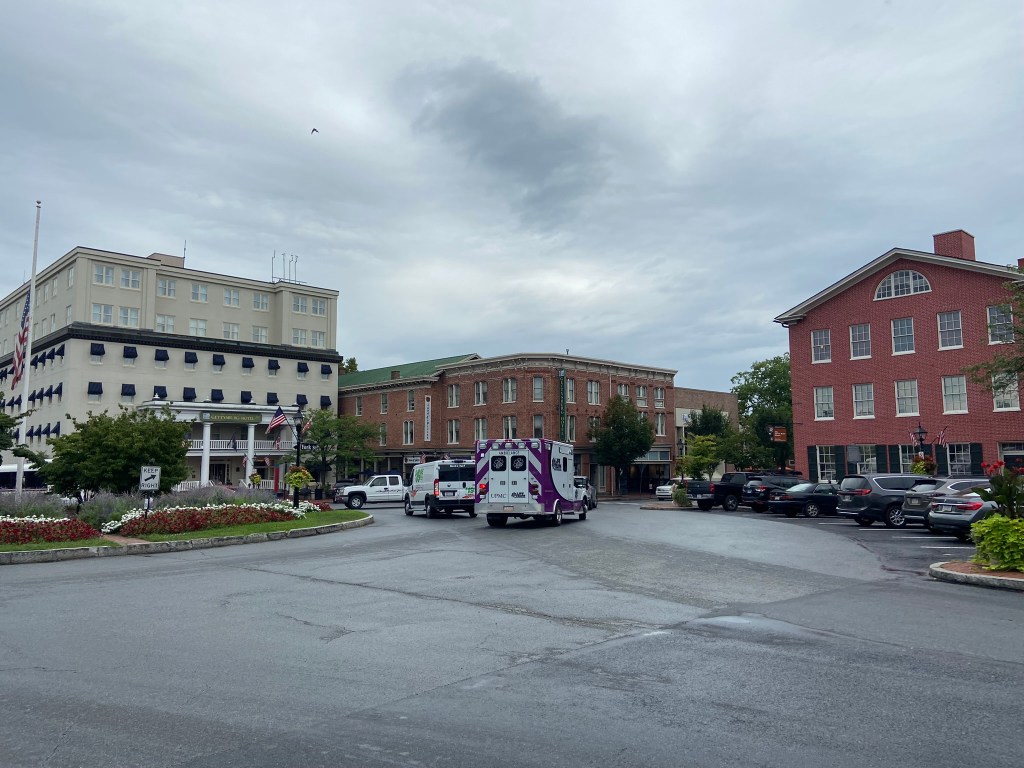
We spent a great deal of time at the Gettysburg National Military Park and Musuem, so that by the time we left and headed back to the hotel, we were thinking dinner. We again walked up Baltimore Street, this time to the center of town at Lincoln Circle. We first tried to go to the Blue and Gray Bar & Grill but there was almost an hour wait for us. So we then decided on The Pub & Restaurant close by because there was only a 5-10 minute wait. The service at this place was not great, but the food was good. After we were done eating we headed back up to our hotel for the evening.
Day 3
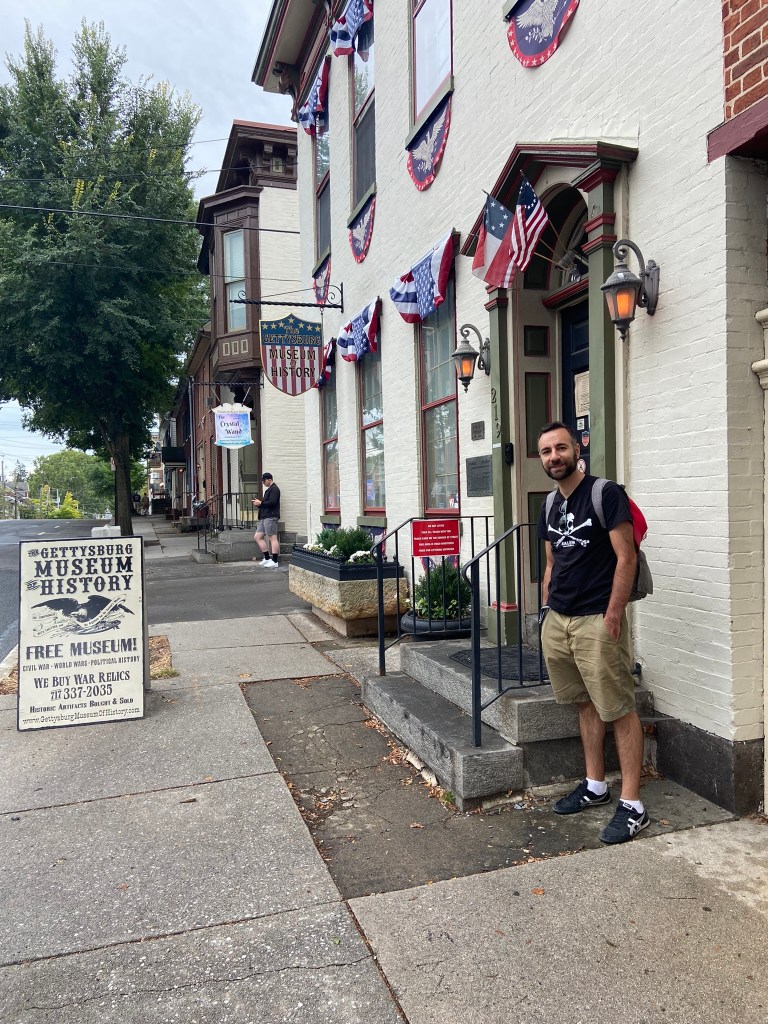
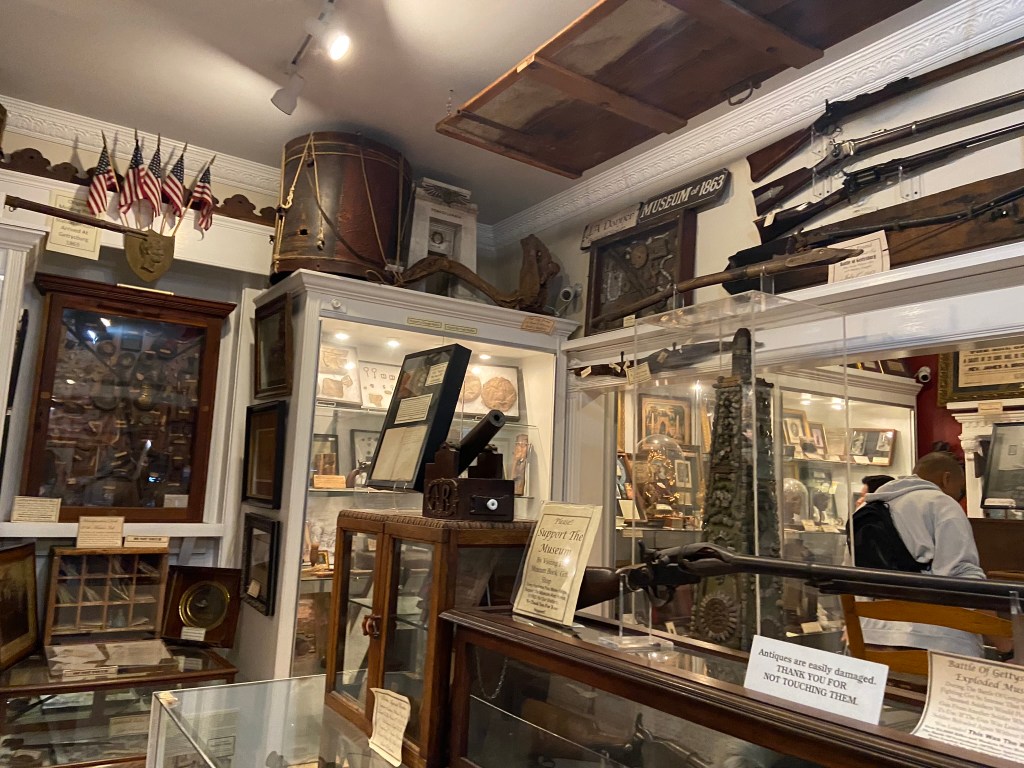
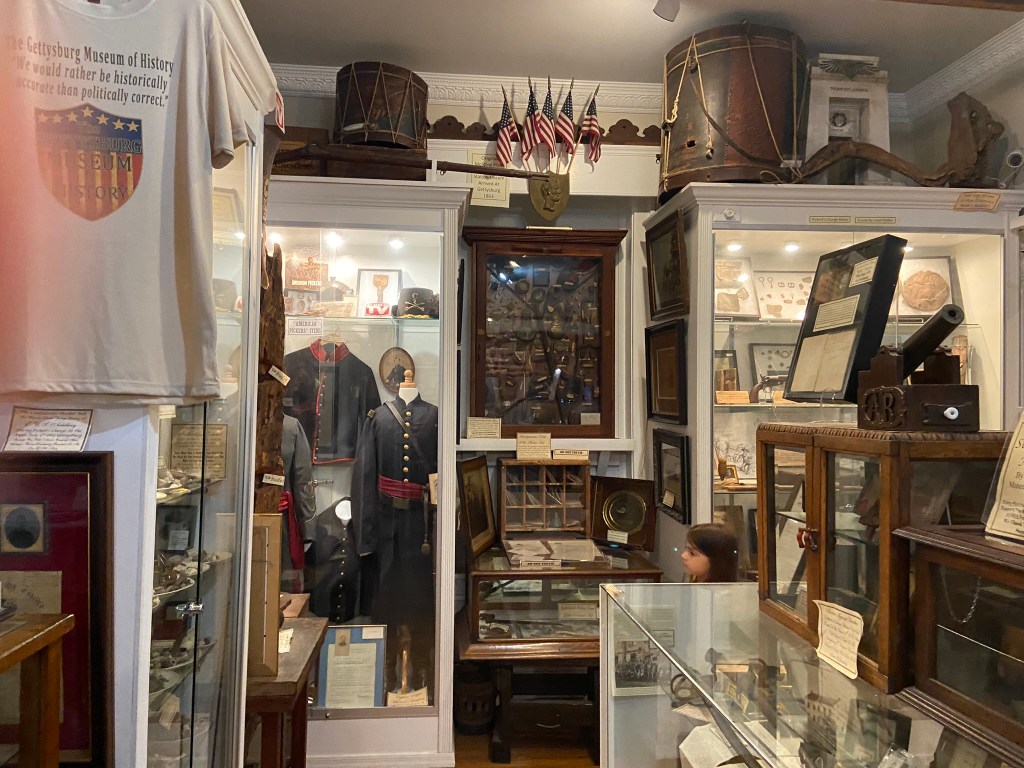
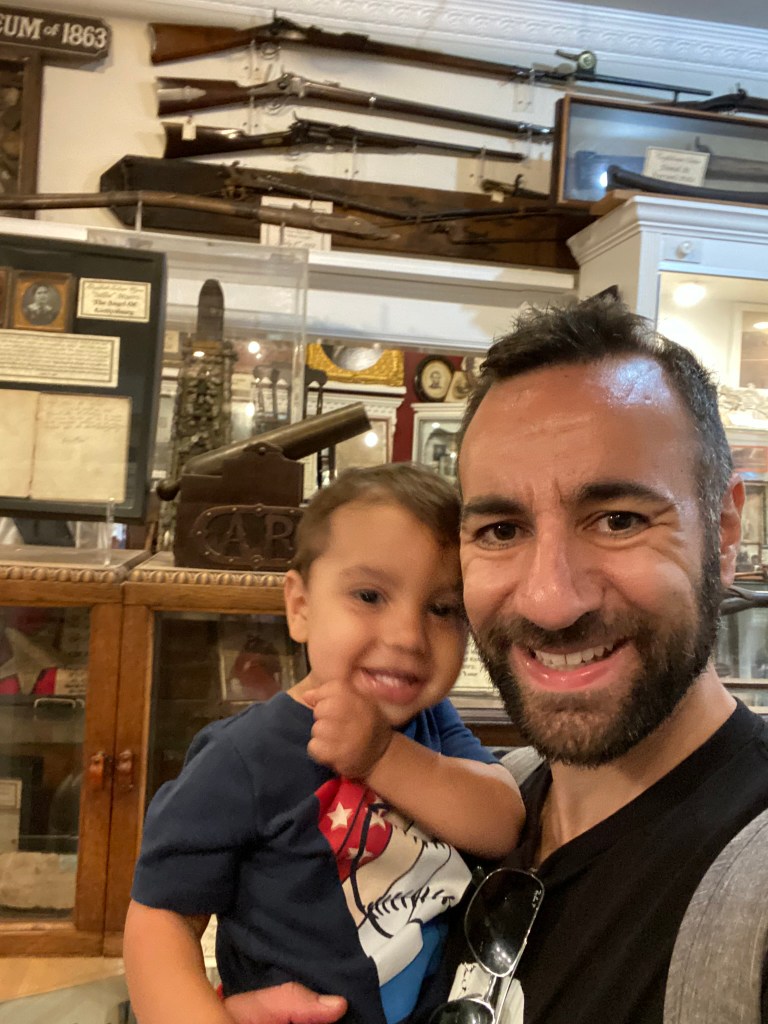
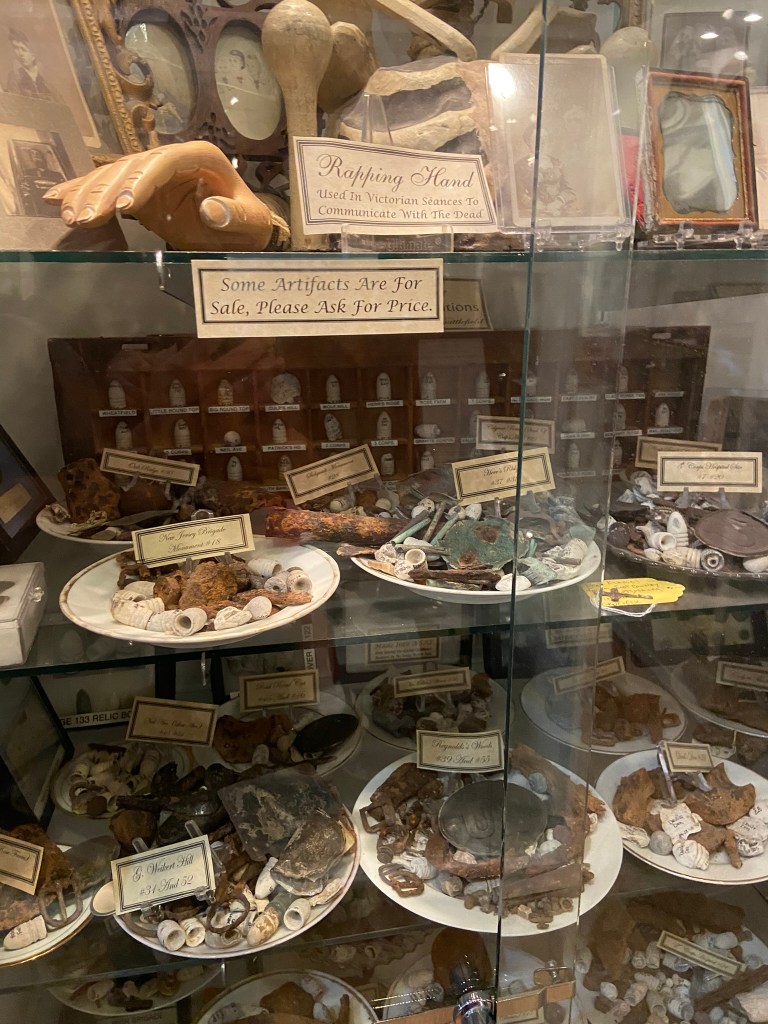
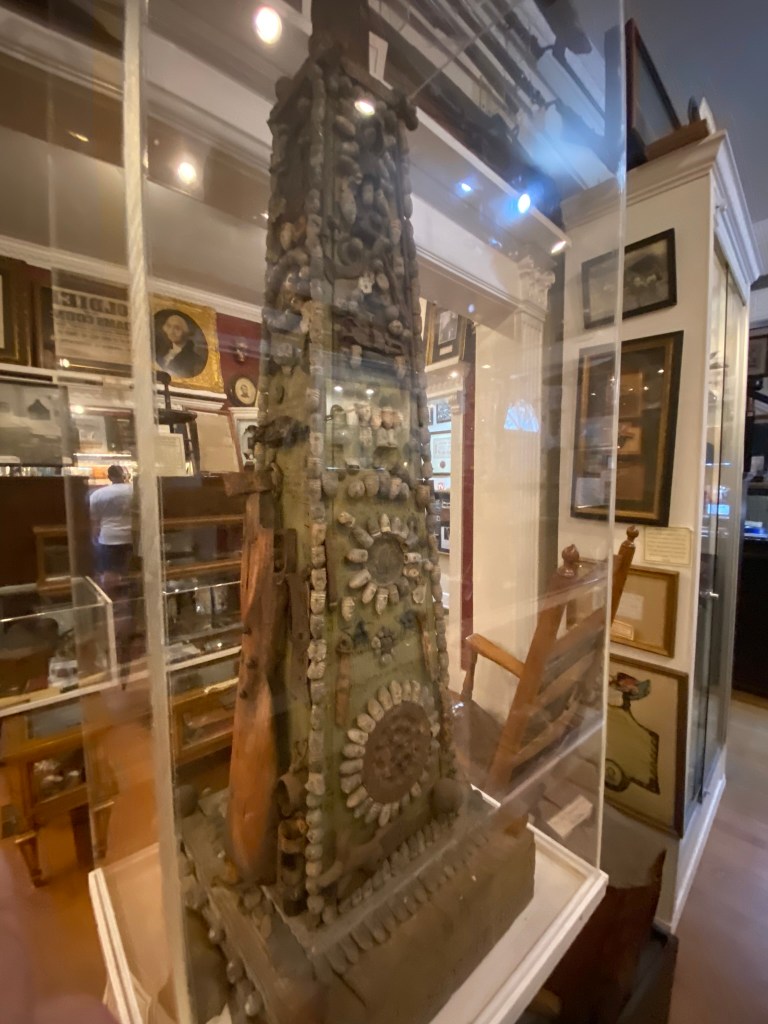
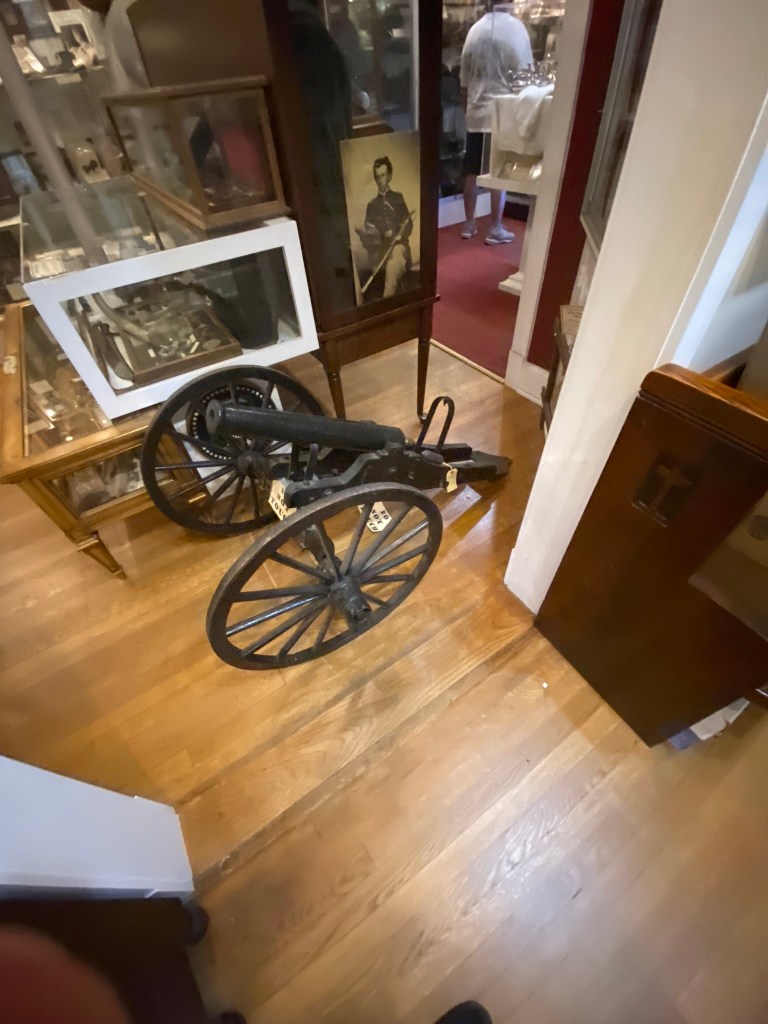
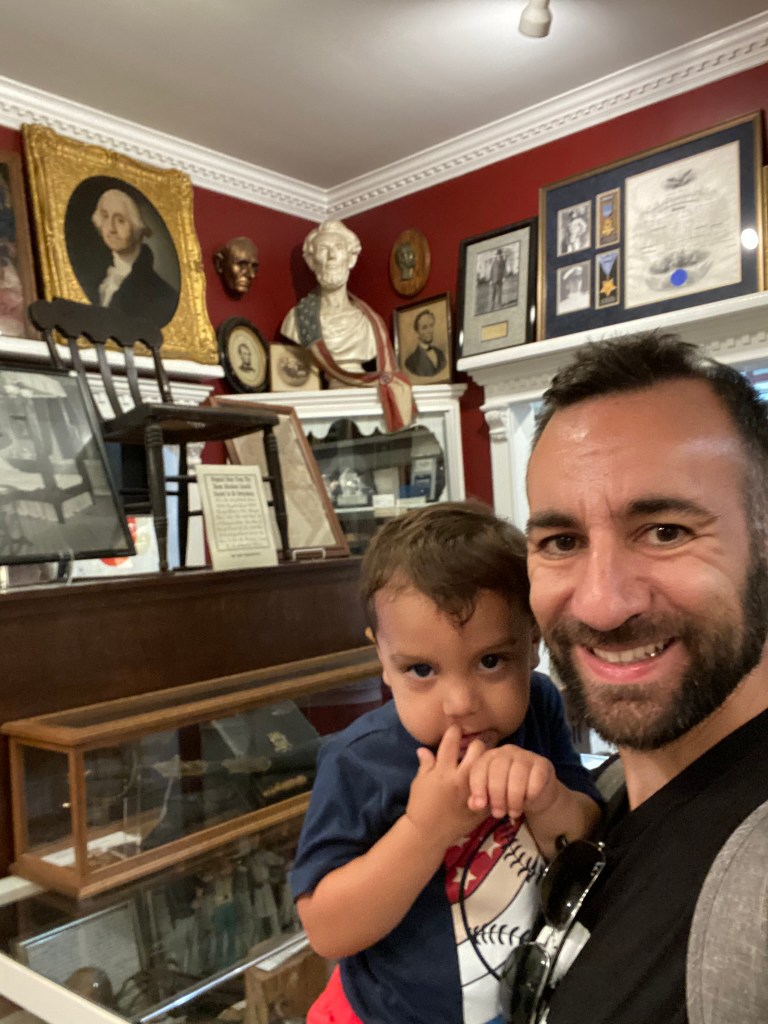
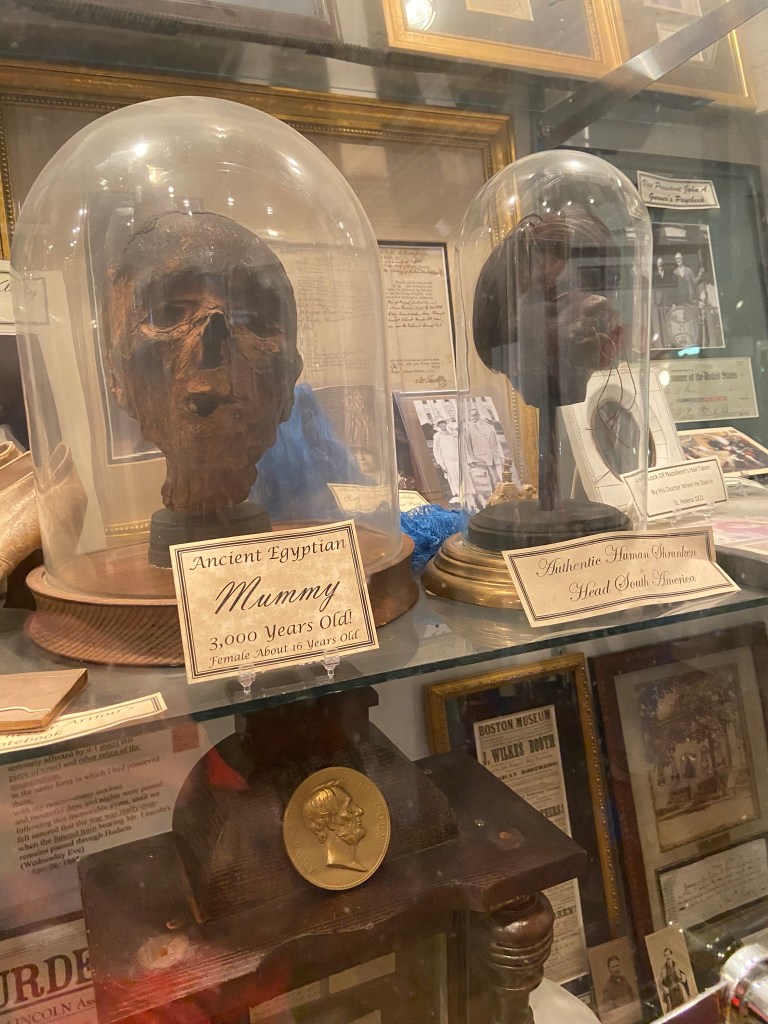
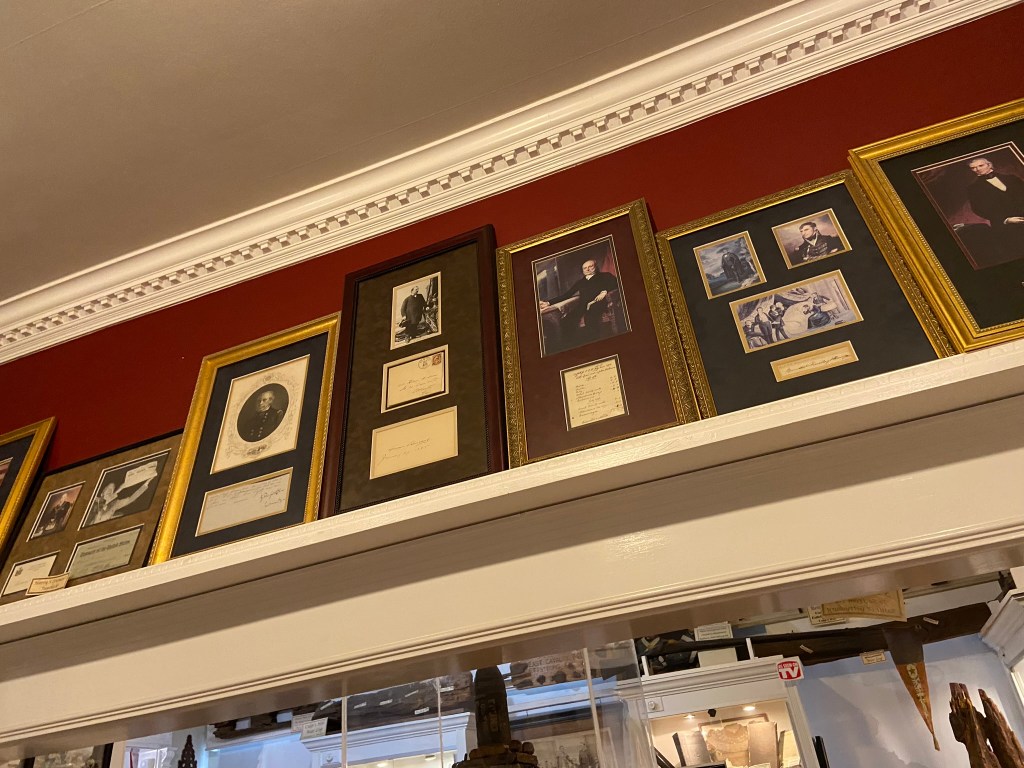
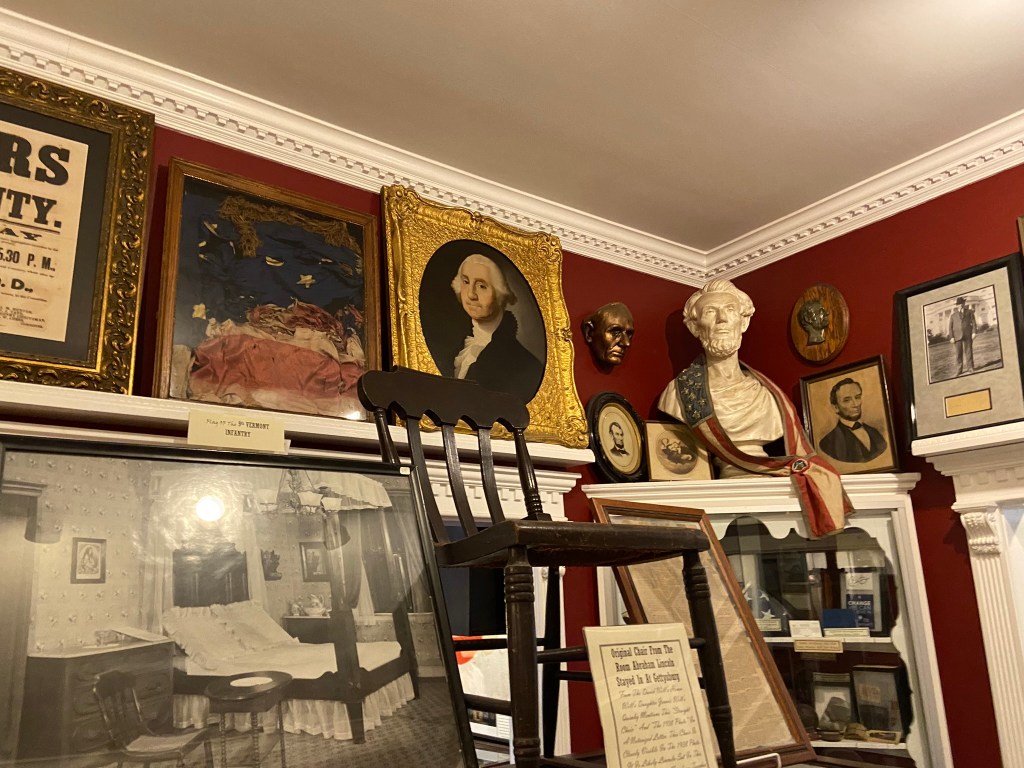
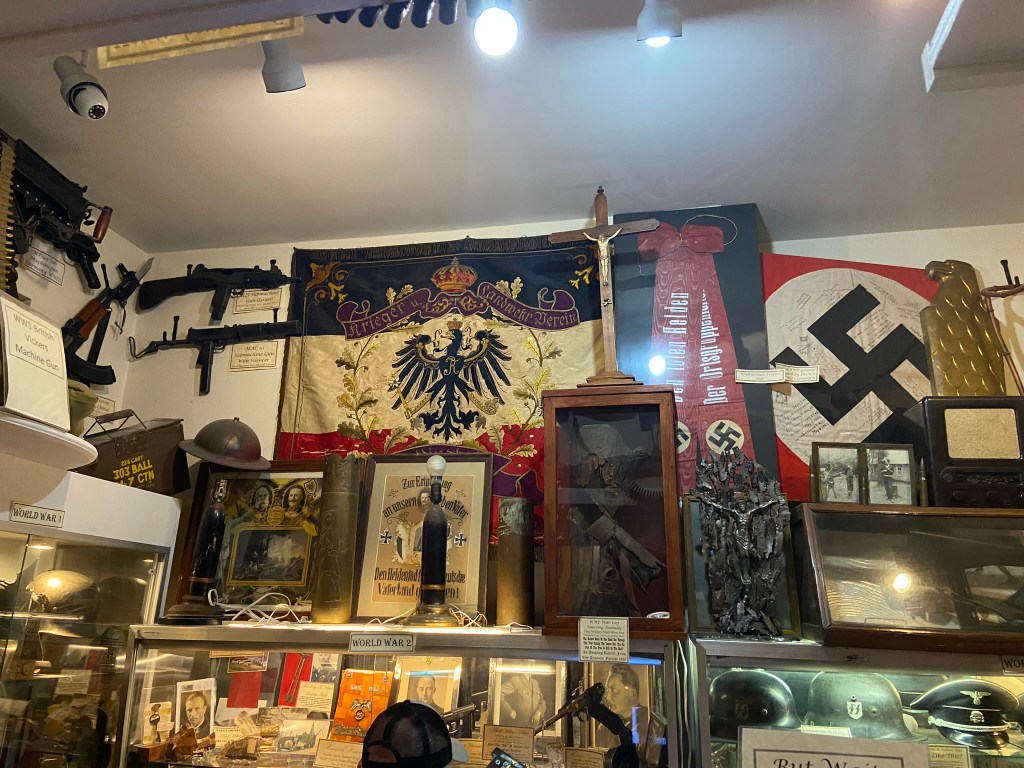
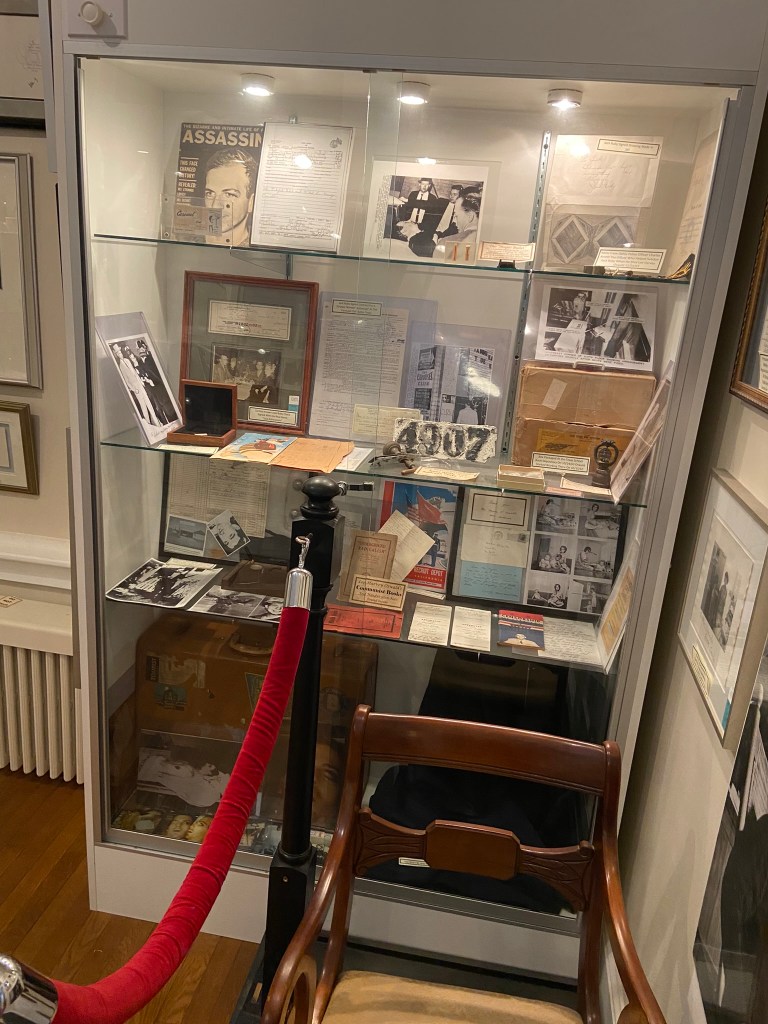
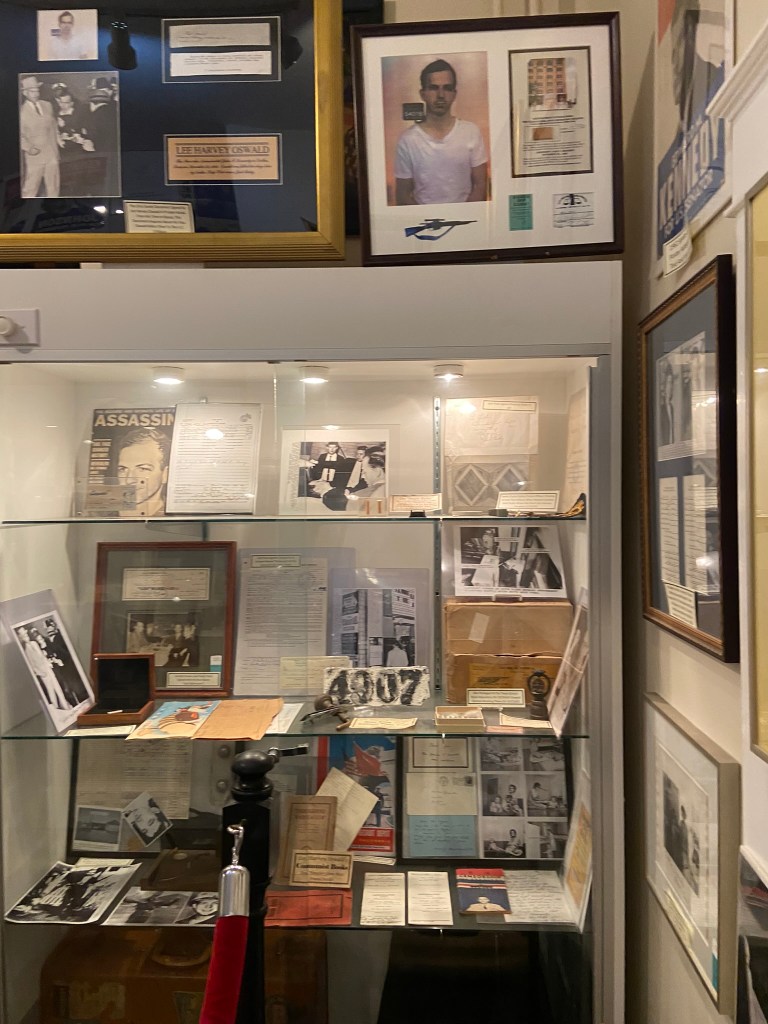
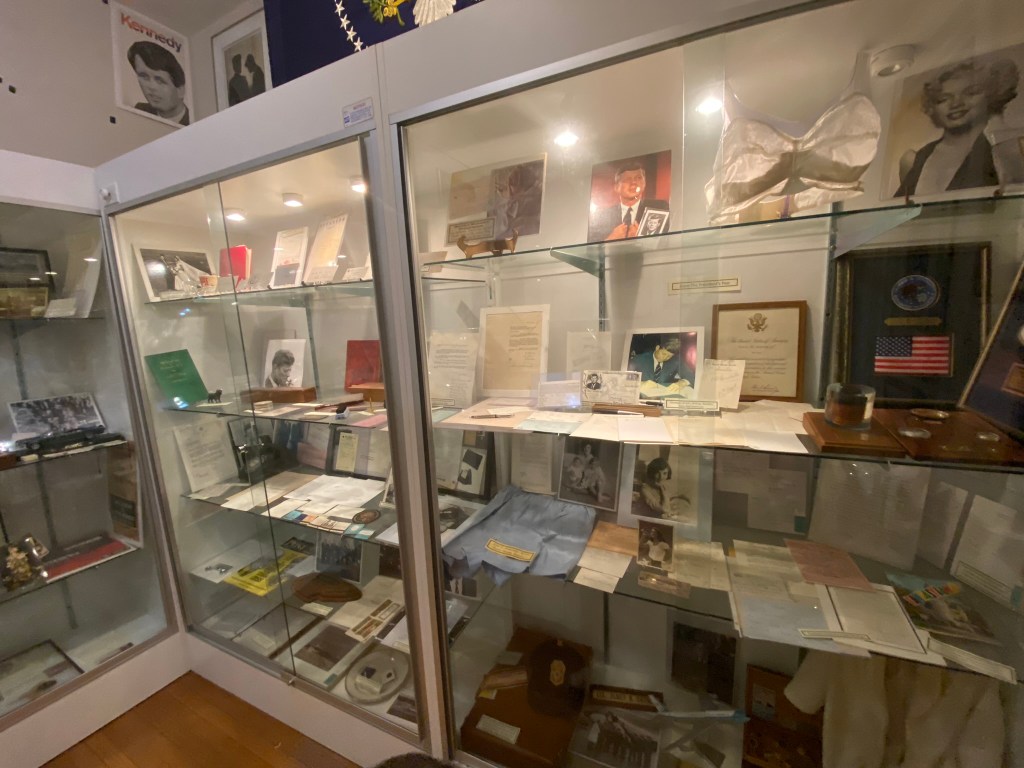
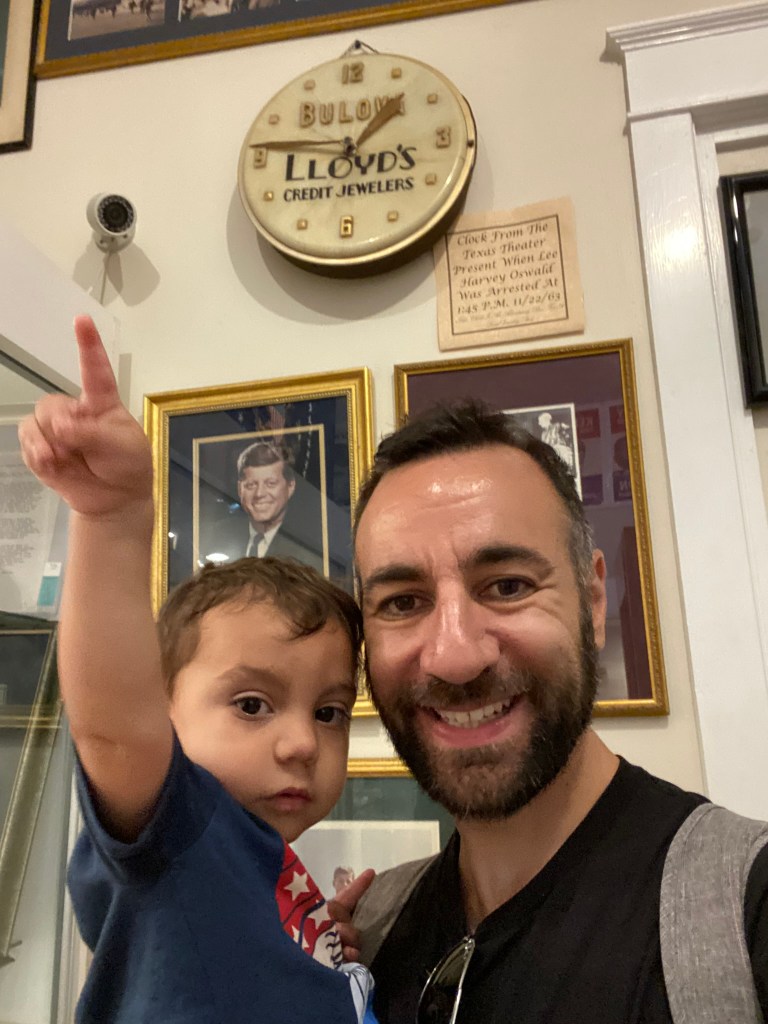
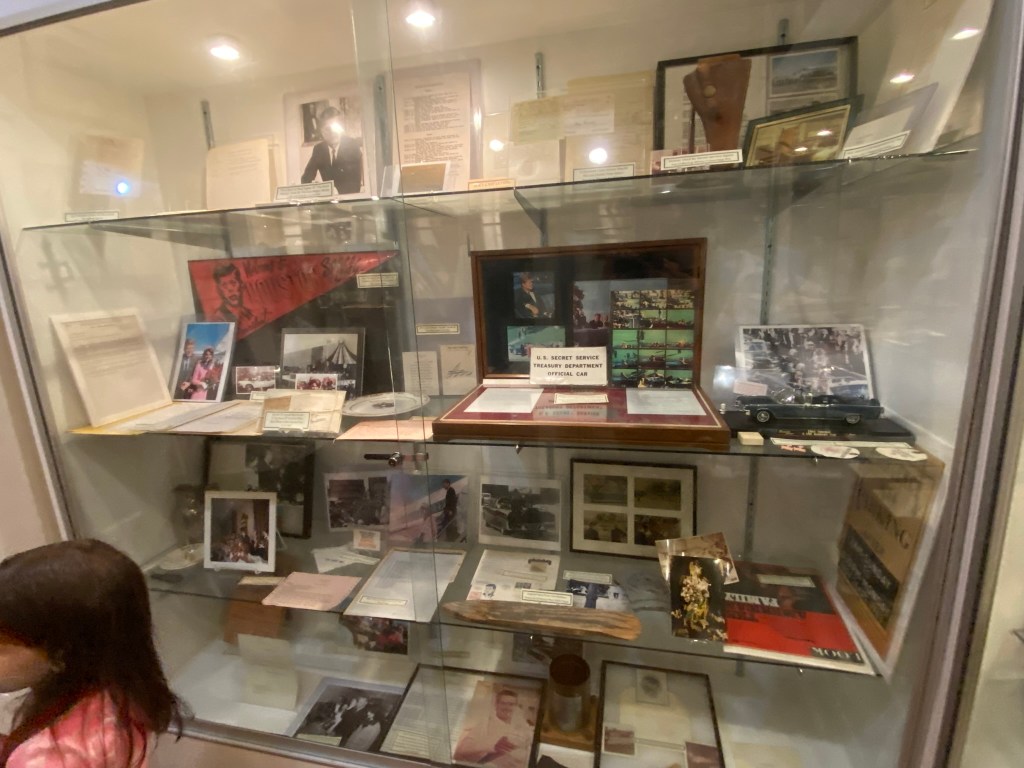
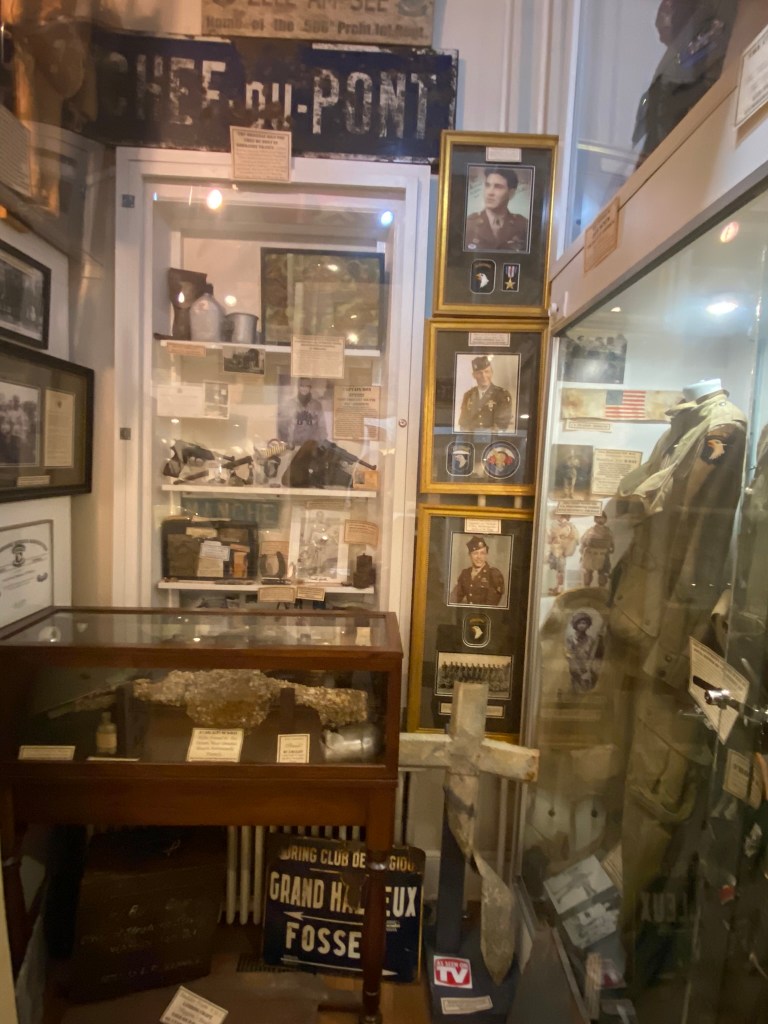
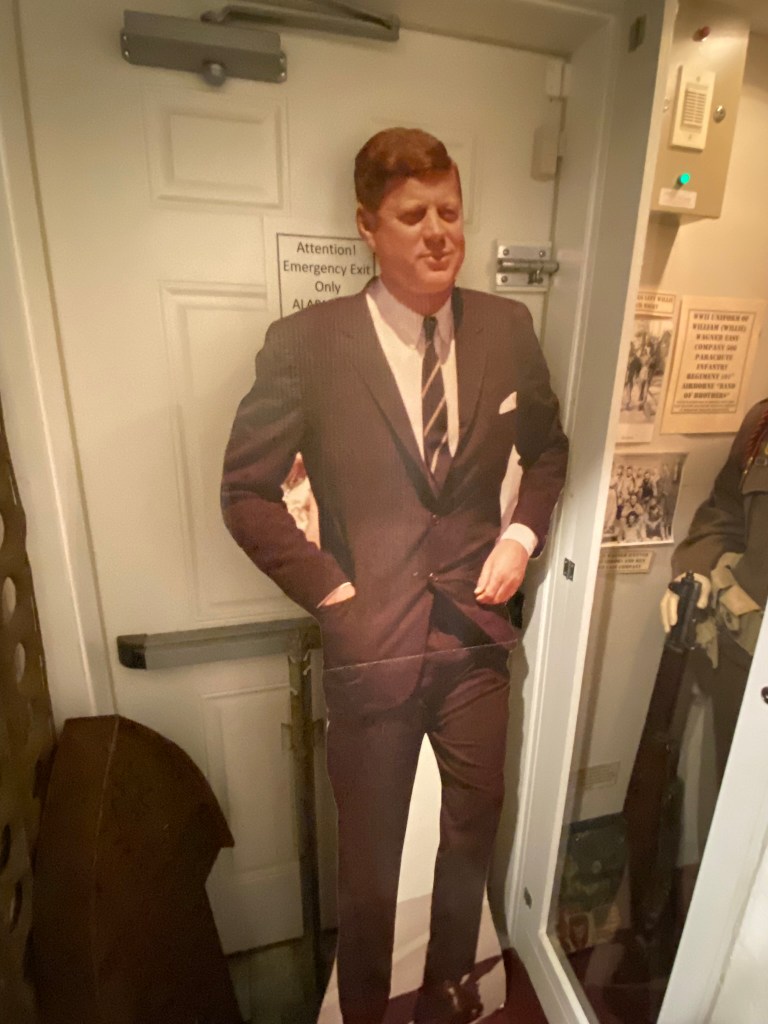
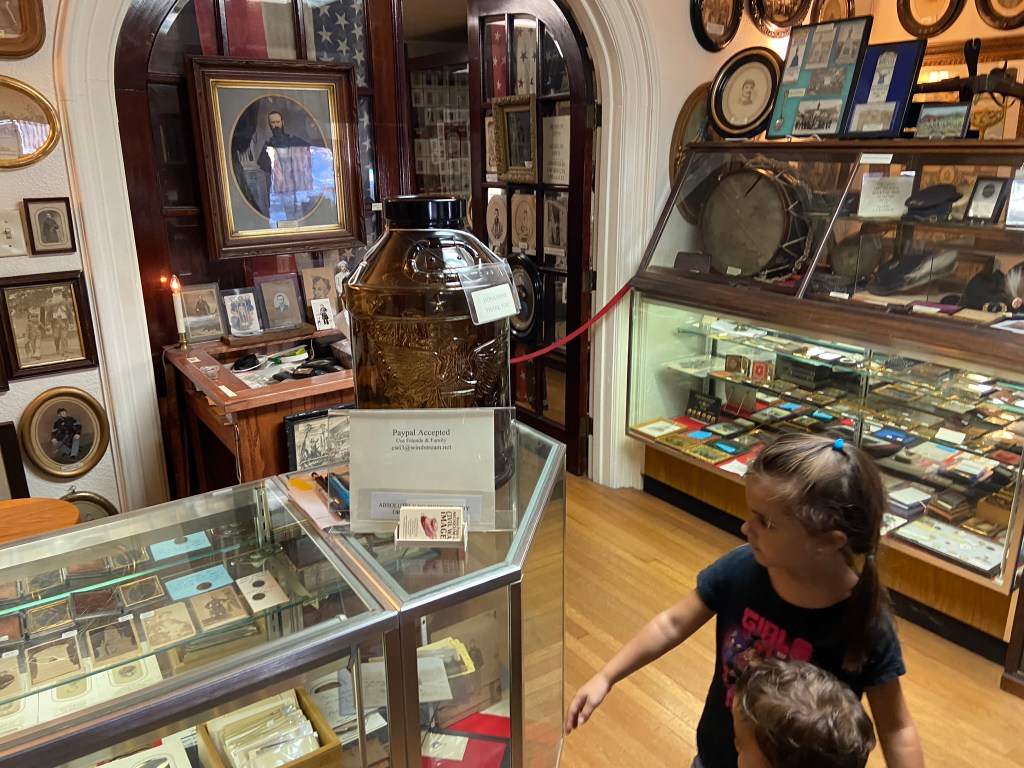
On our third and final day in Gettysburg, we decided to hang out in town until about lunchtime, eat in town and then make the trek back home. We again had a great breakfast in our hotel, packed up our belongings and checked out. We first went to a couple of shops to buy souvenirs and Gettysburg sweatshirts. We then walked back up Baltimore Street and stopped in Christmas Haus and then went to check out the Gettysburg Museum of History, which is a free musuem on Baltimore Street. I was impressed by the amount of artifacts, memoribilia and relics they had in the museum. Not only did they have Civil War artifacts, but they also had other periods of history as well. I was surprised to see a 3,000 year old mummy’s head from Ancient Egypt. They also have artifacts from the World Wars and an entire room dedicated to John F. Kennedy. The museum is fairly small so you’re not gong to spend a ton of time there, but it is definately worth the visit.
After we left the museum we headed back to the car. The family was in the mood for Mexican food for lunch so we headed to Montezuma Restaurant which was really great food. After we ate we made the 3.5 hour ride back home.
I really loved my first trip to Gettysburg. I had high expetations and the trip exceeded them. It truly is such an interesting place. It was just a small town in 1863 that became world famous because of an accidental battle that happened there, a battle that became one of the most famous in history. The town essentially became a Civil War themed town that is so rich in history after 160 years of preservation. The trip is a dream to anyone who loves the Battle of Gettysburg and the Civil War. There are so many musuems and shops to visit that there are still so many museums on my list of places to go. I hope to go again soon and visit those places that we didn’t have time to see. Again, the highlight of the my trip was the double decker bus tour. I highly recommend it to anyone who hasn’t yet had a chance to see the battlefield. If anyone reading this blog has advice on places to see or different ways to view the battlefield, please share. Thanks for reading.
As someone who loves learning and teaching about the Civil War, I’ve been wanting to go to Gettysburg for many years. Gettysburg is the closest Civil War site to where I live and the 1863 battle is one of the most important battles in our nation’s history. Throughout the spring of 1863, the Confederate Army led by Robert E. Lee had won a series of battles in Virginia. They were feeling confident enough to invade Union territory and decided to march into Pennsylvania. This was the Confederacy’s second attempt at invading the North (after Antietam in 1862). So much was at stake at Gettysburg. Lee was hoping for a victory that would turn Northerners against the war and invade further into Pennsylvania or other Union states. The Union army knew that they had to stop Lee and the Confederate army at this battle. The Battle of Gettysburg, a three day battle from July 1st- 3rd, 1863, was the deadliest of the Civil War, resulting in about 51,000 casualties. At the battle’s end, the Union was able to stop the Confederate advance as Lee and his army were forced to retreat back to Virginia. The Confederacy would not be able to invade the North again, although bloody fighting would resume for almost 2 more years.
Gettysburg was a bucket list type of location that I felt I needed to see. I planned a 2 night, 3 day trip with my family, along with my parents. Let me tell you, this trip did not disappoint. Besides touring the battlefield, there are so many museums and shops to visit. We did as much as time would allow. I’m looking forward to going back and visiting the sites we didn’t get to see.
I’m breaking this blog post into two. In the first one I plan to discuss what we visited on Day 1- The Dobbin House, the Jennie Wade House, Ronn Palm’s Museum of Civil War Images and the Gettyburg National Cemetary. In my second post, which you can read (here) I will discuss what we visited on Day 2 and our Half Day 3, which includes a Double-Decker bus tour of the battlefield, the Gettysburg National Military Park and Museum, and the Gettysburg Museum of History.
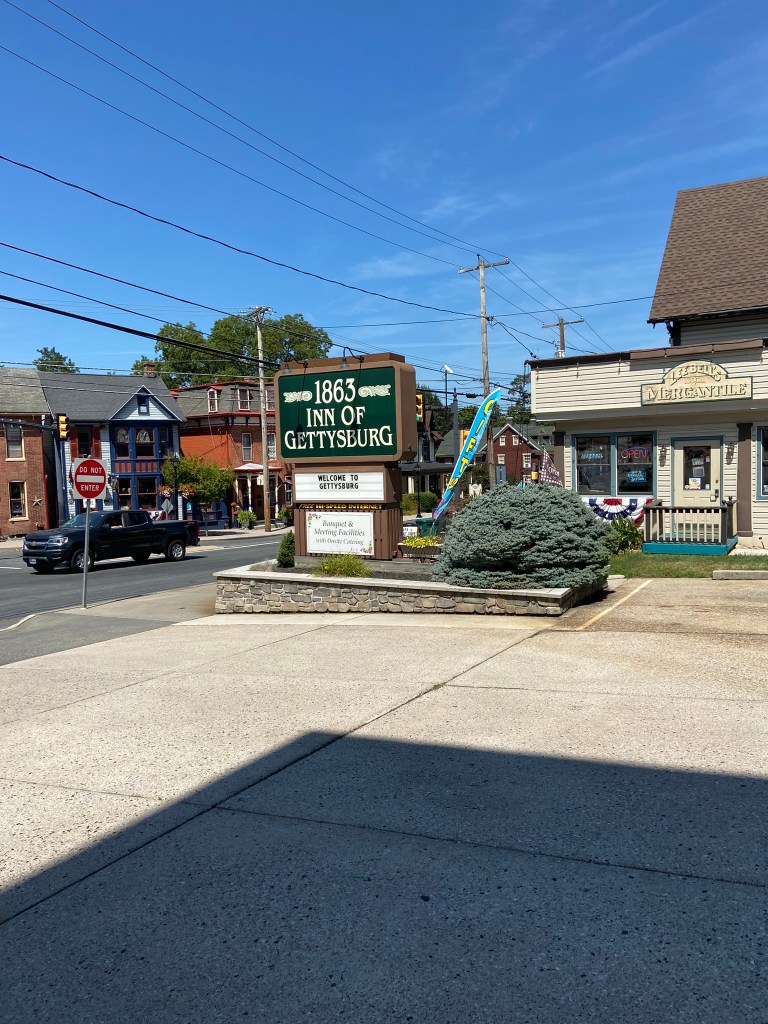
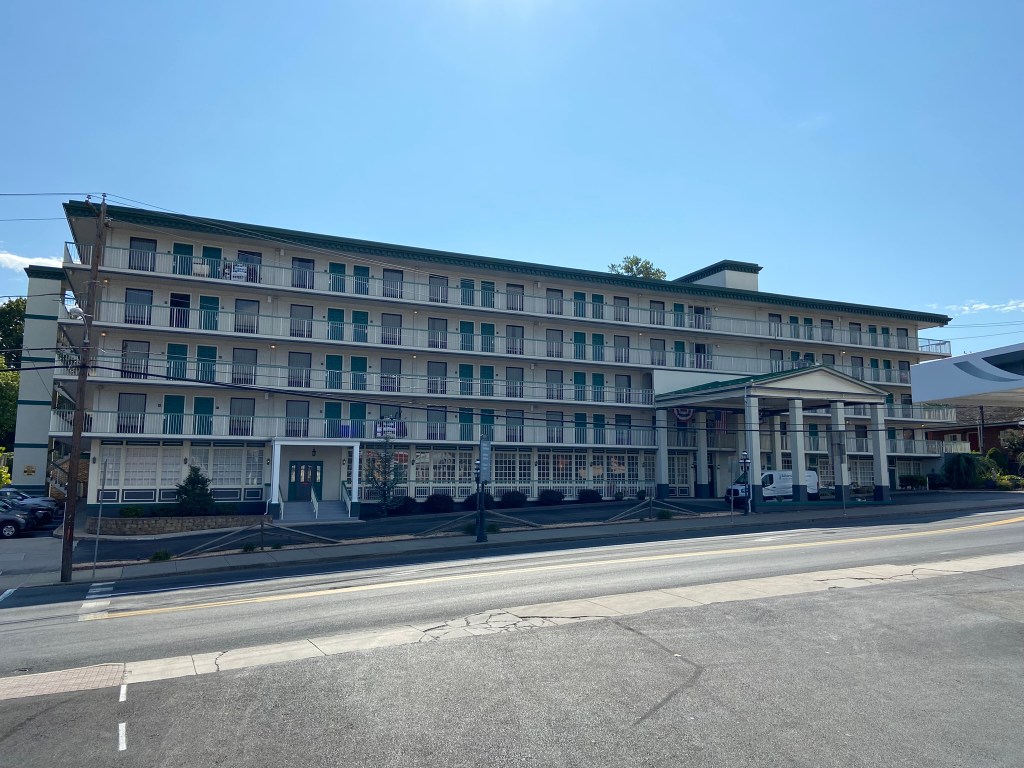
The 1863 Inn of Gettysburg
My family and I made the 3.5 hour drive into Gettysburg and arrived at about 12:30pm and parked at our hotel, the 1863 Inn of Gettysburg. The hotel was great and I would definately recommend. The rooms were pretty standard hotel rooms, with a nice bathroom and comfortable beds. The location is great; you are walking distance from so many sites, museums and shops to see in town, and you’re just a 10 minute walk from the center of town. One of the best aspects of the hotel is the free breakfast. They serve a high quality breakfast, and you have the convenience of not having to search for somewhere to eat. You can eat and get on your way to seeing sites in town. I would definately stay there again. Check out their site here: https://www.1863innofgettysburg.com/
The Dobbin House
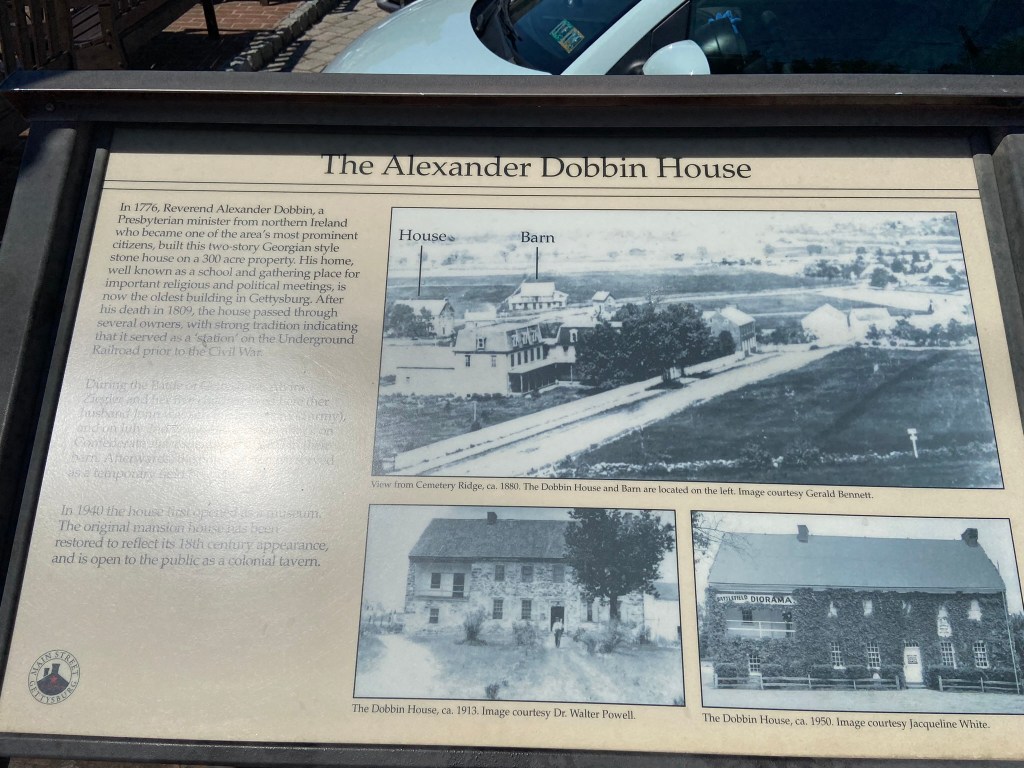
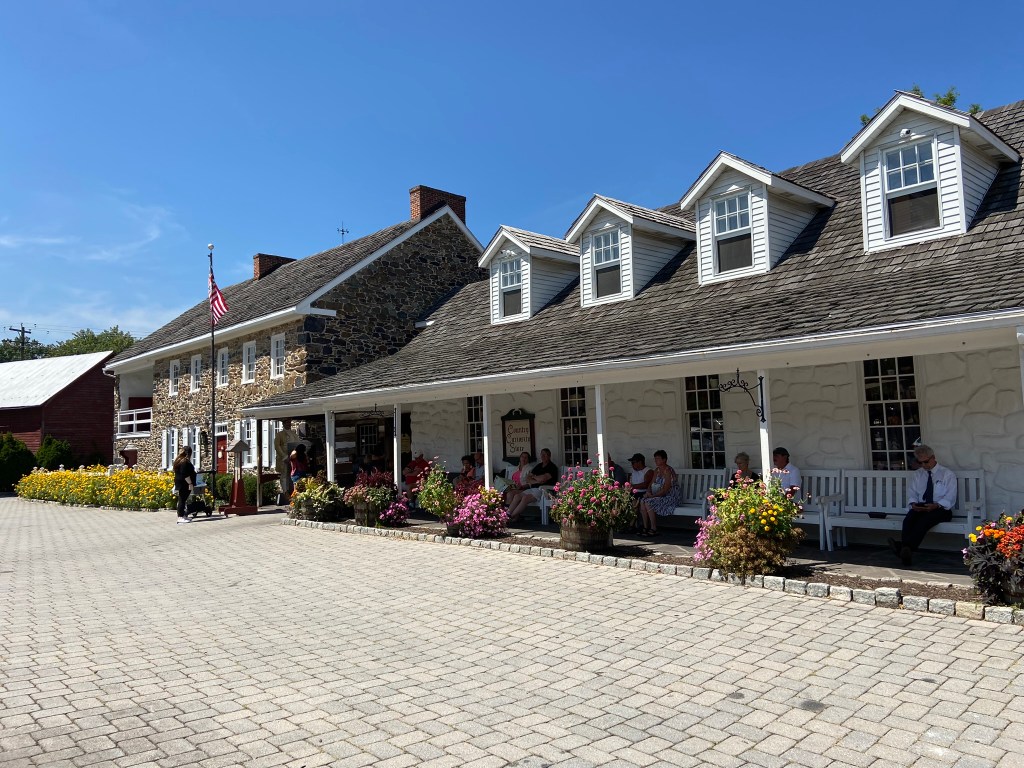
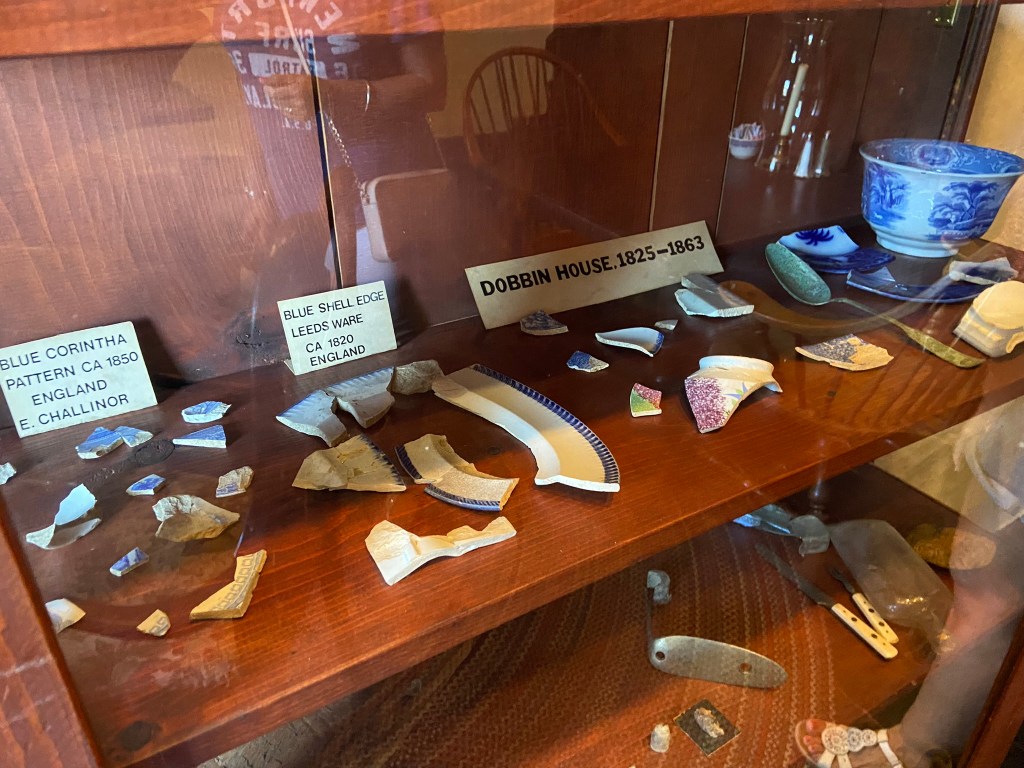
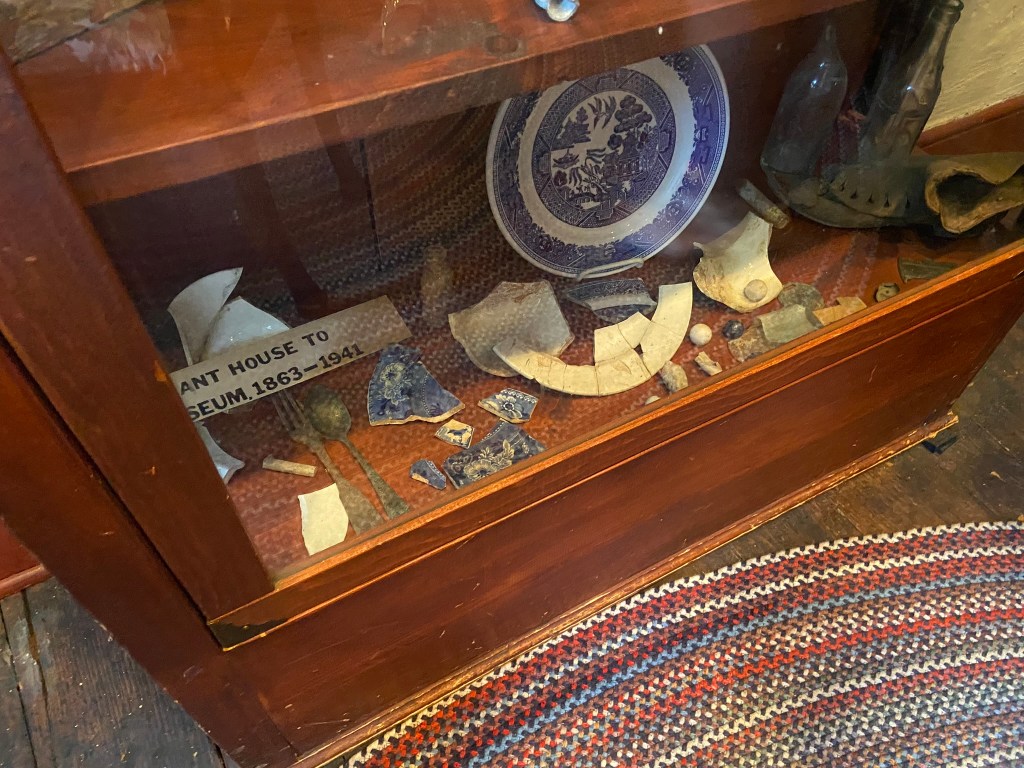
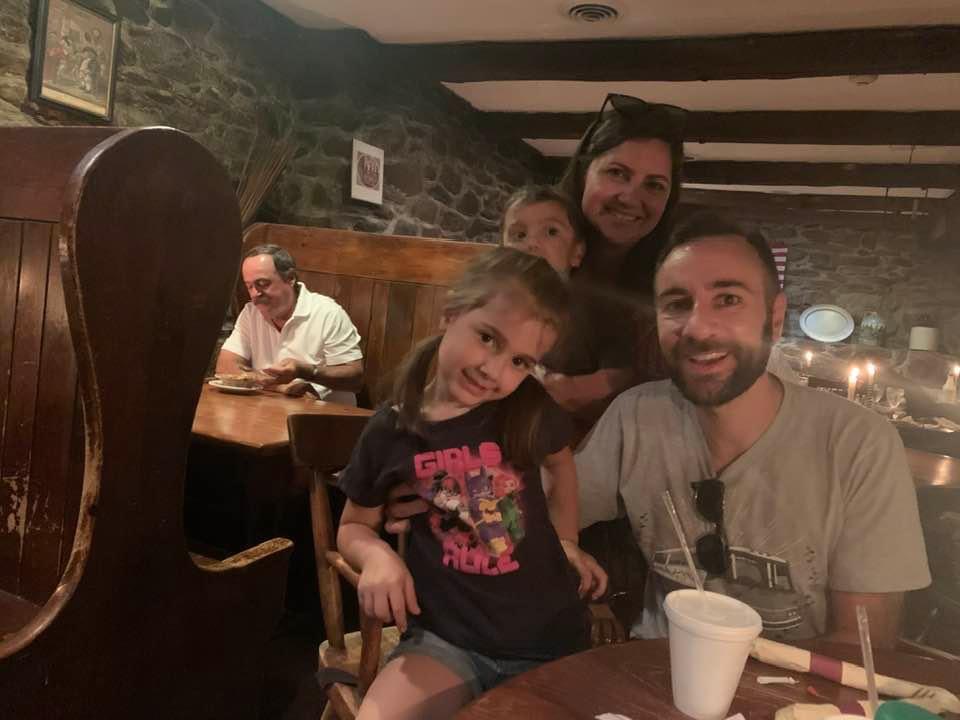
When we arrived at 12:30, we met my parents at the Dobbin House Tavern for lunch. There was about a 30 minute wait. I learned that the Dobbin house was built in 1776 and is the oldest building in Gettysburg, built at the time for one of the area’s most prominent citizens, Reverend Alexander Dobbin. When our table was ready, we were walked down into a basement that felt like you were living in the late 18th century, very dimly lit with candles on each table. The food was also very good. After eating, we went upstairs to find that the house is a museum itself. You’re allowed to wander around the house and look at the 18th century rooms and decor. There is also a set of narrow stairs that leads to an upper floor which served as a stop on the Underground Railroad. There are also artifacts on display there from throughout the 19th century. Find out more info here: http://www.dobbinhouse.com/
The Jennie Wade House
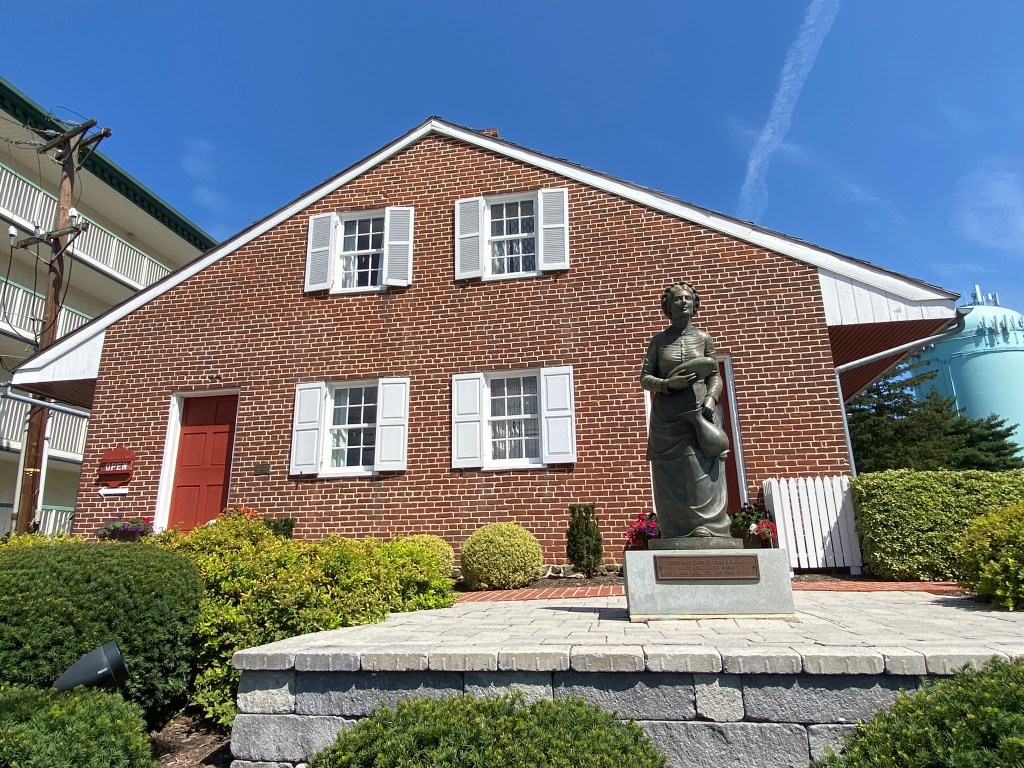
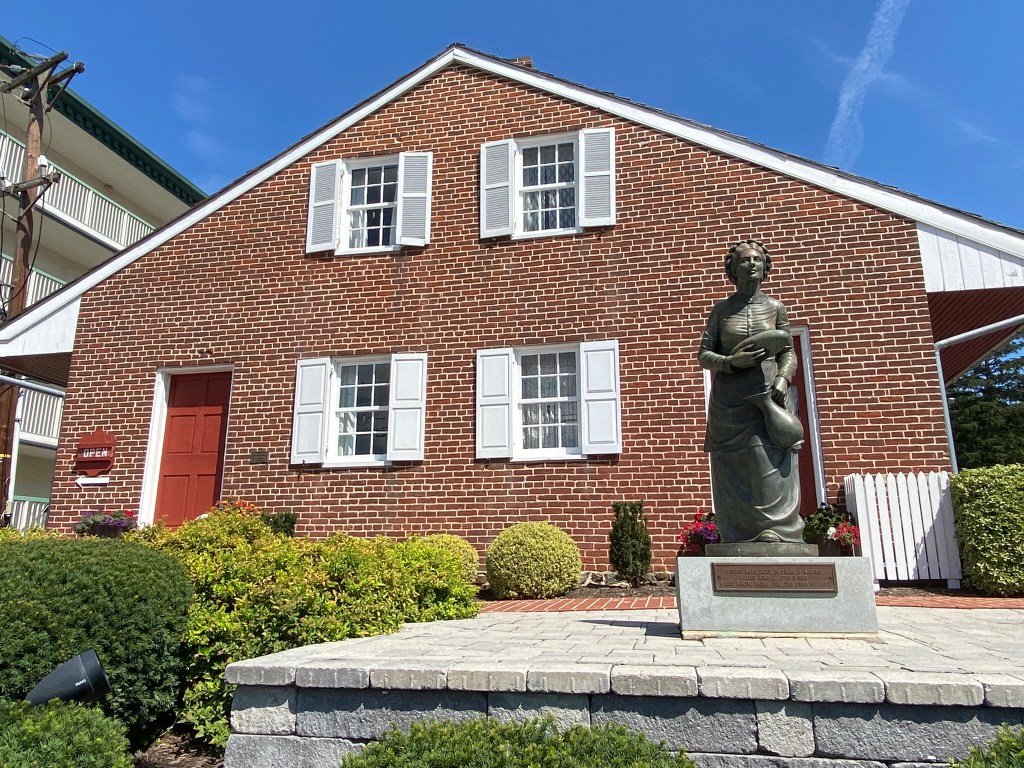
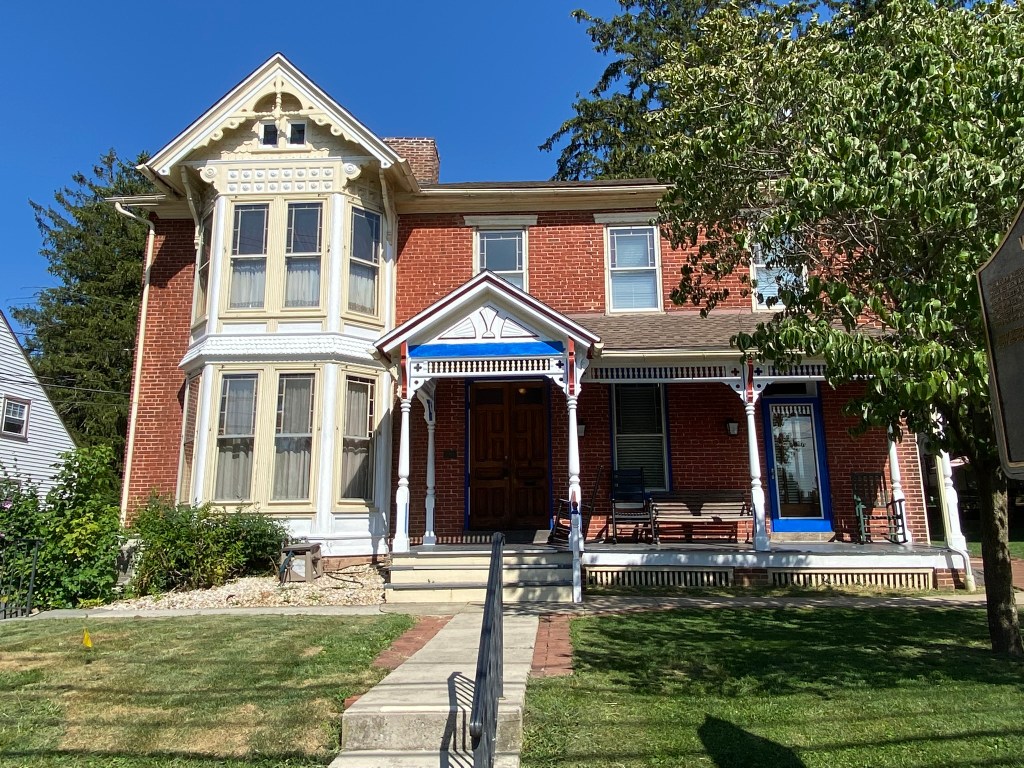
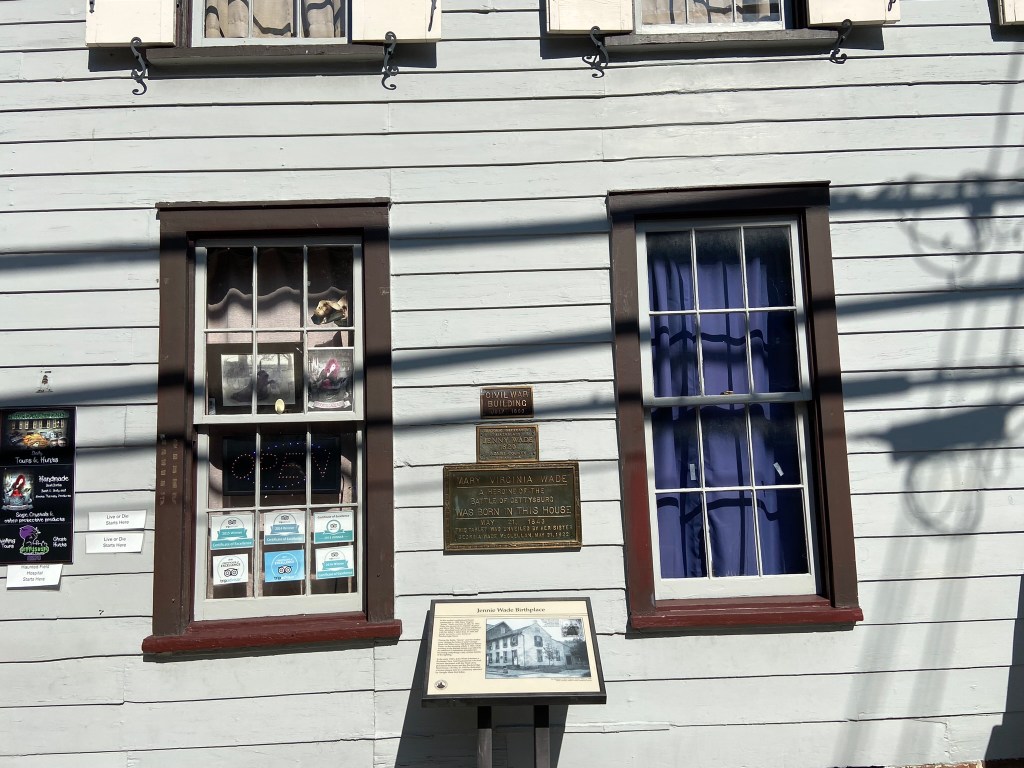
After leaving the Dobbin House, we decided to visit the Jennie Wade House because it is right next door to our hotel. When we visited we found out that the next tour of the house was in about 30 mins. That gave us time to check in to our hotel rooms and make it back down.
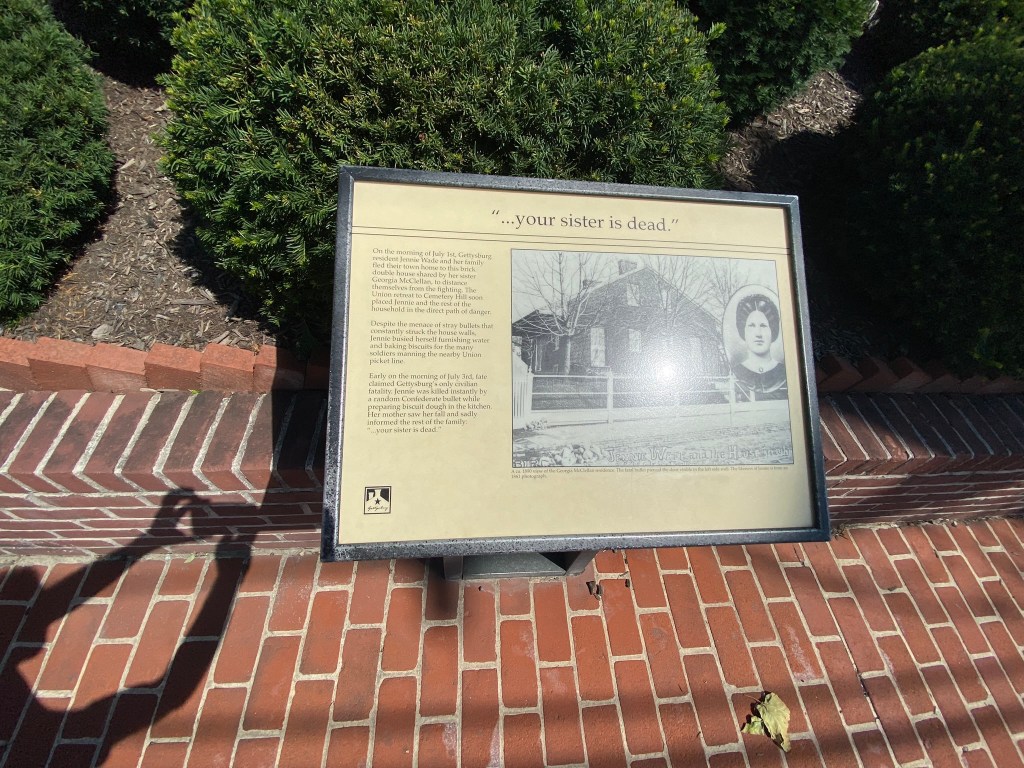
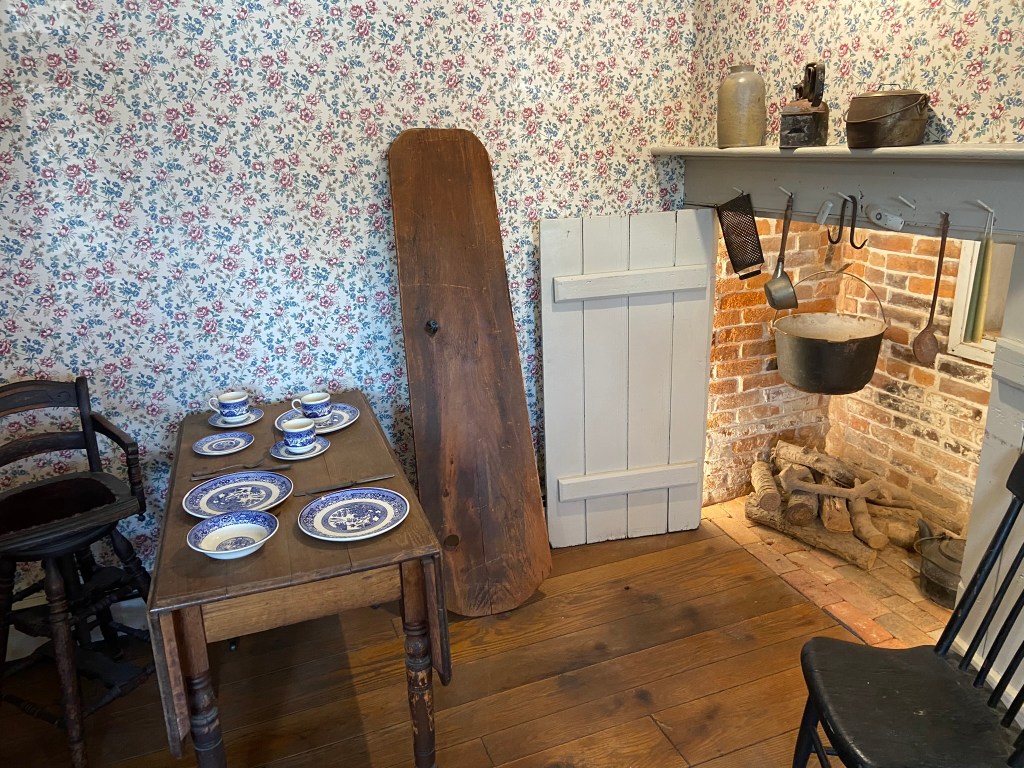
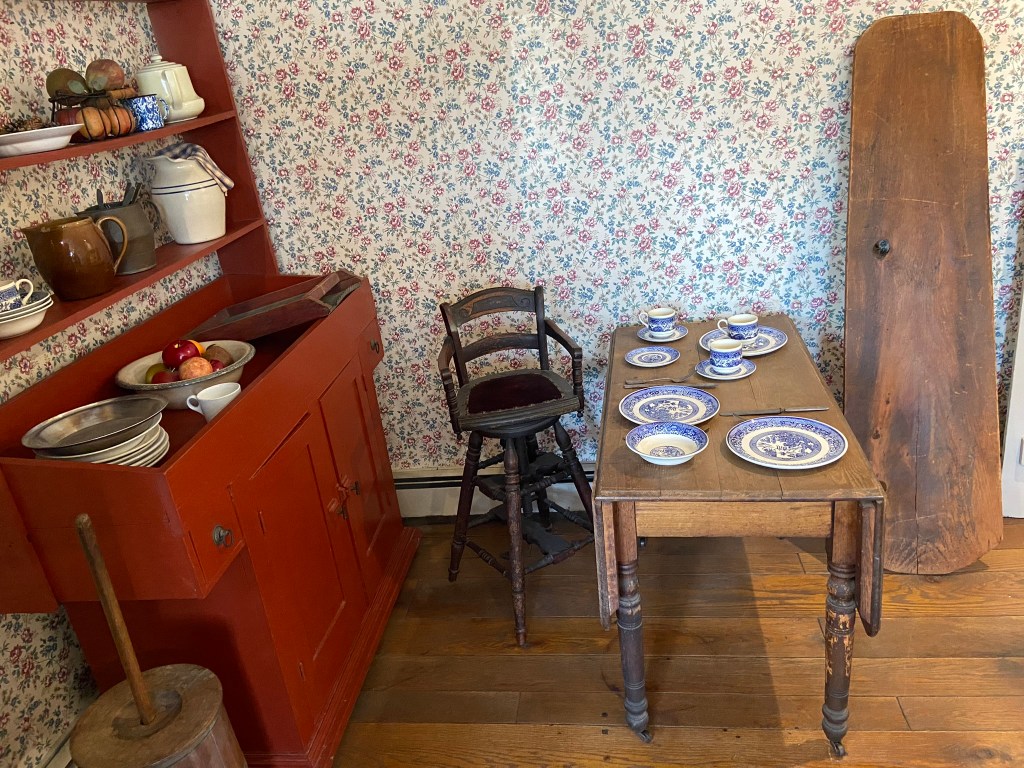
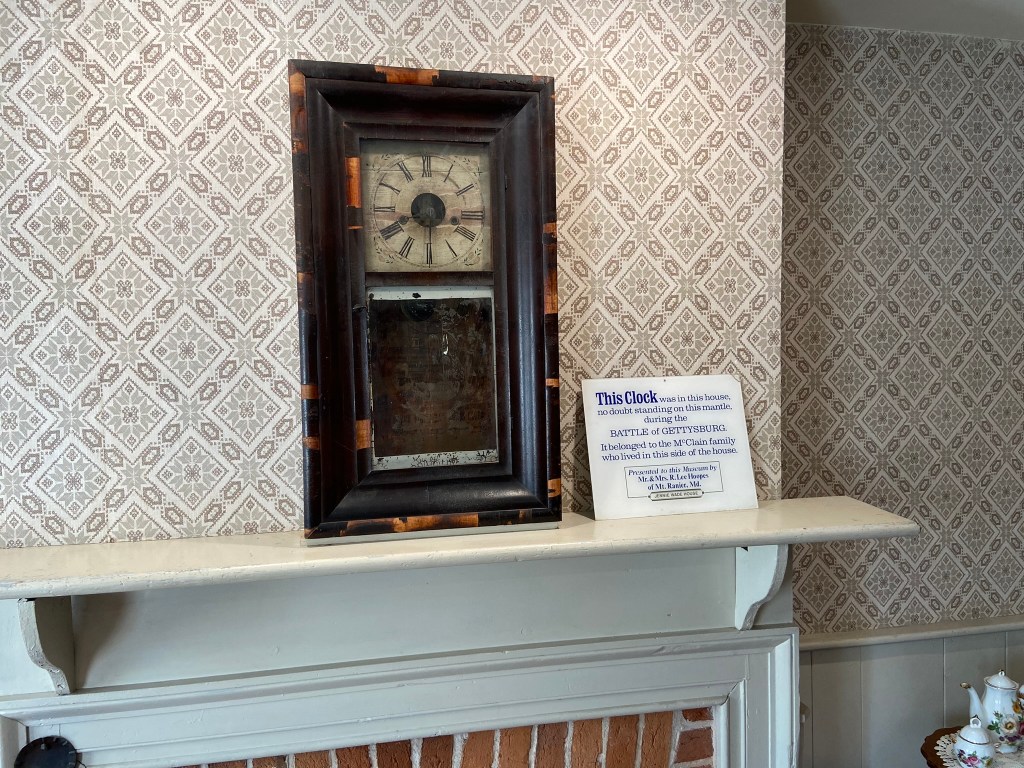
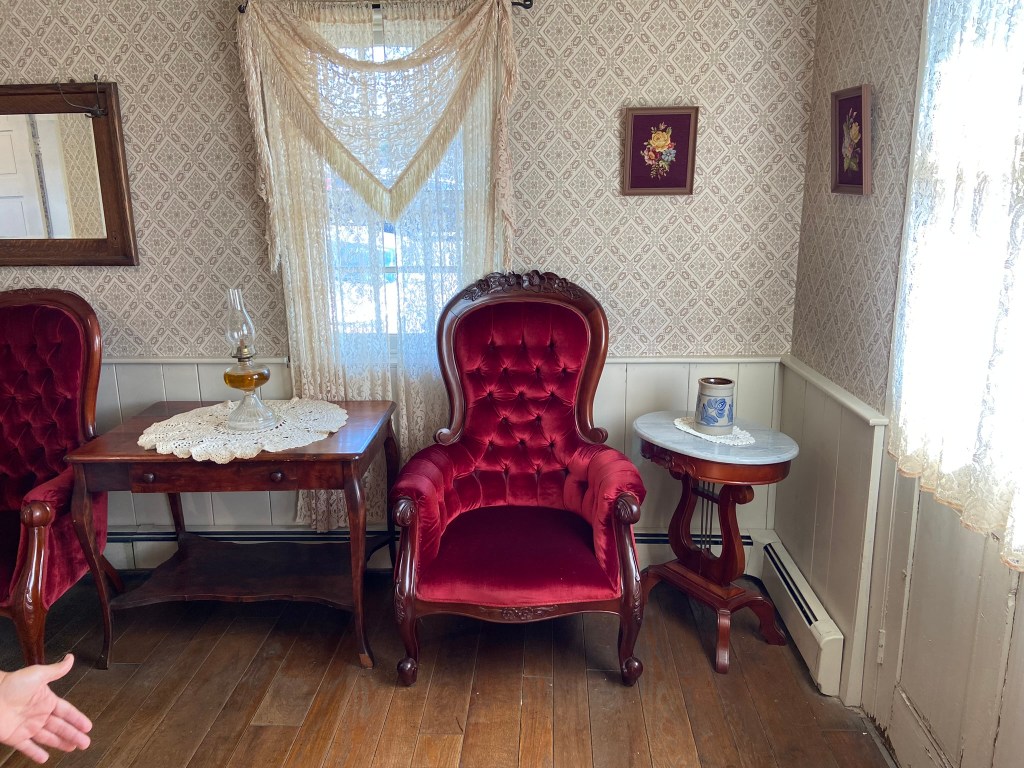
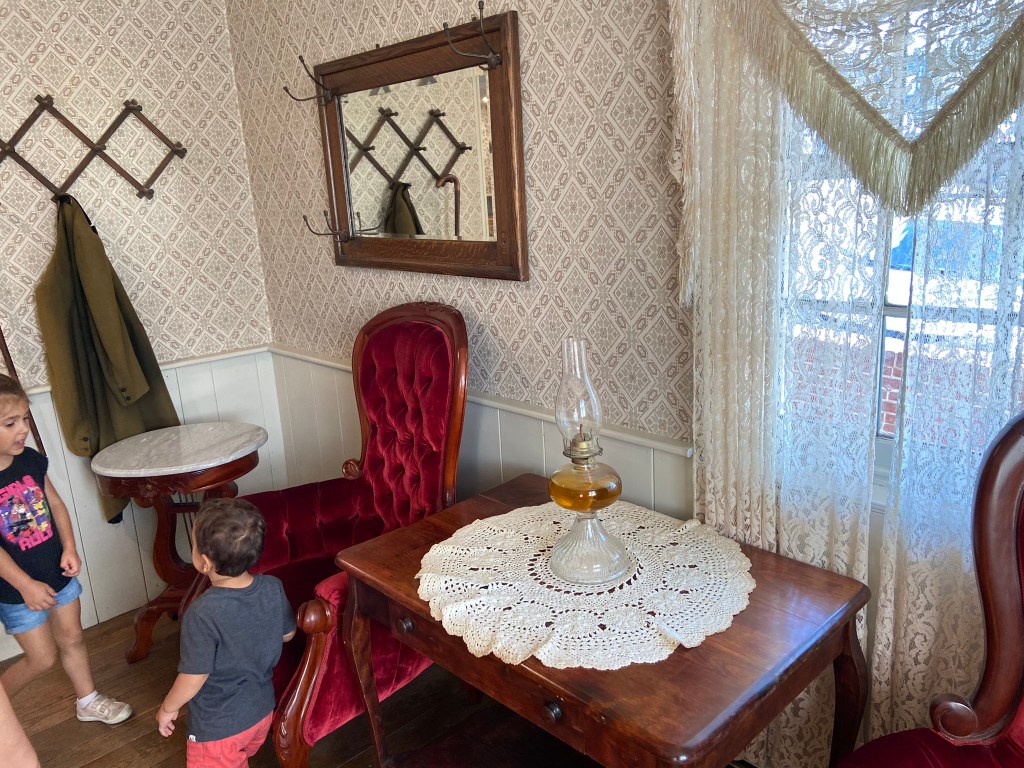
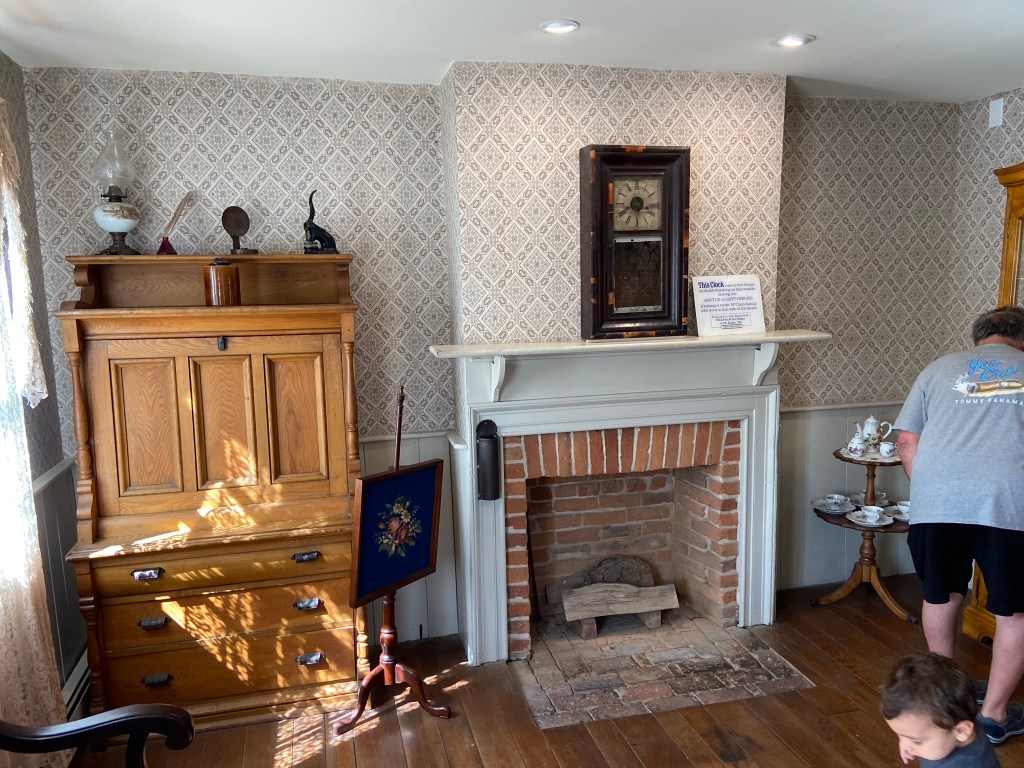
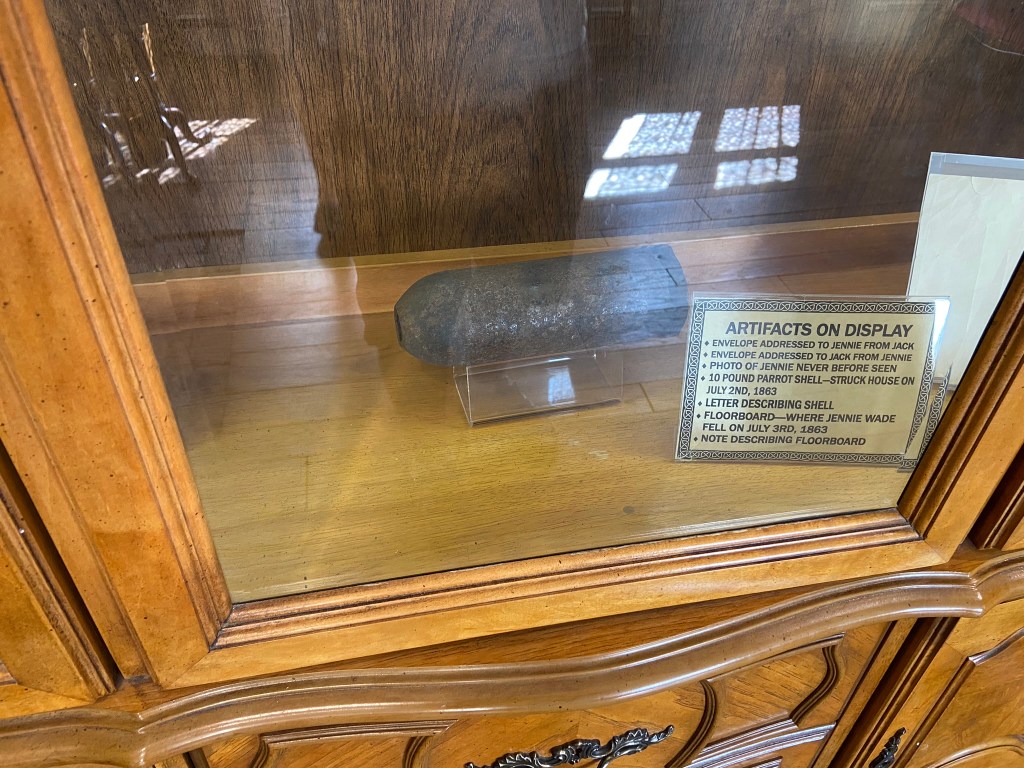
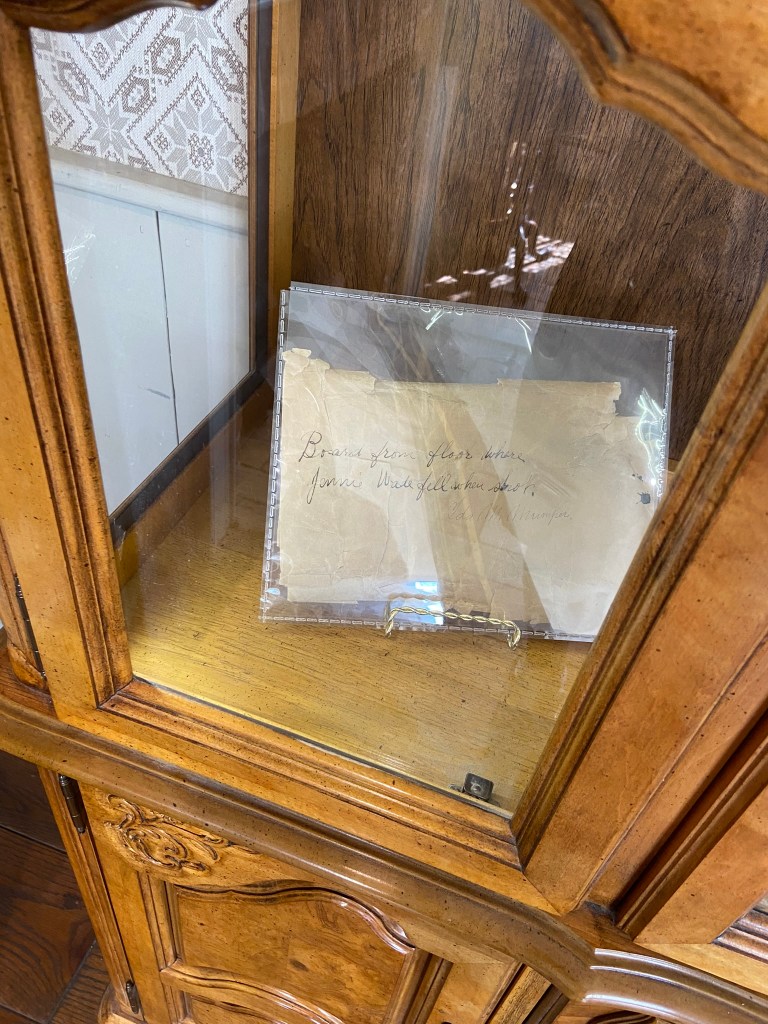
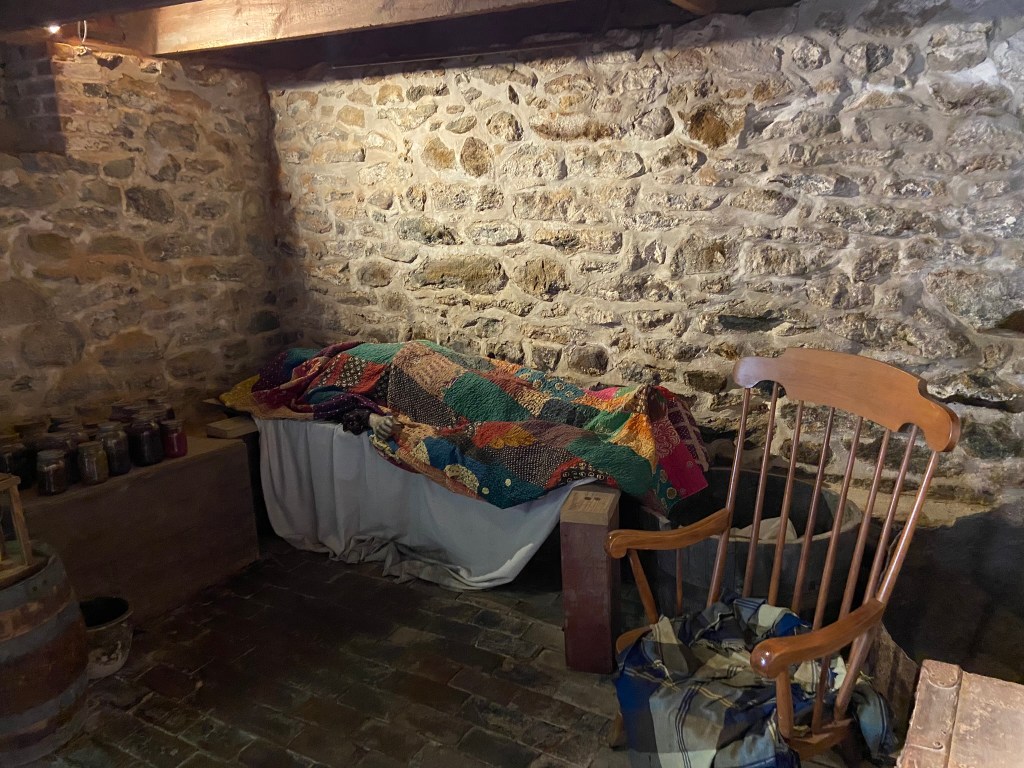
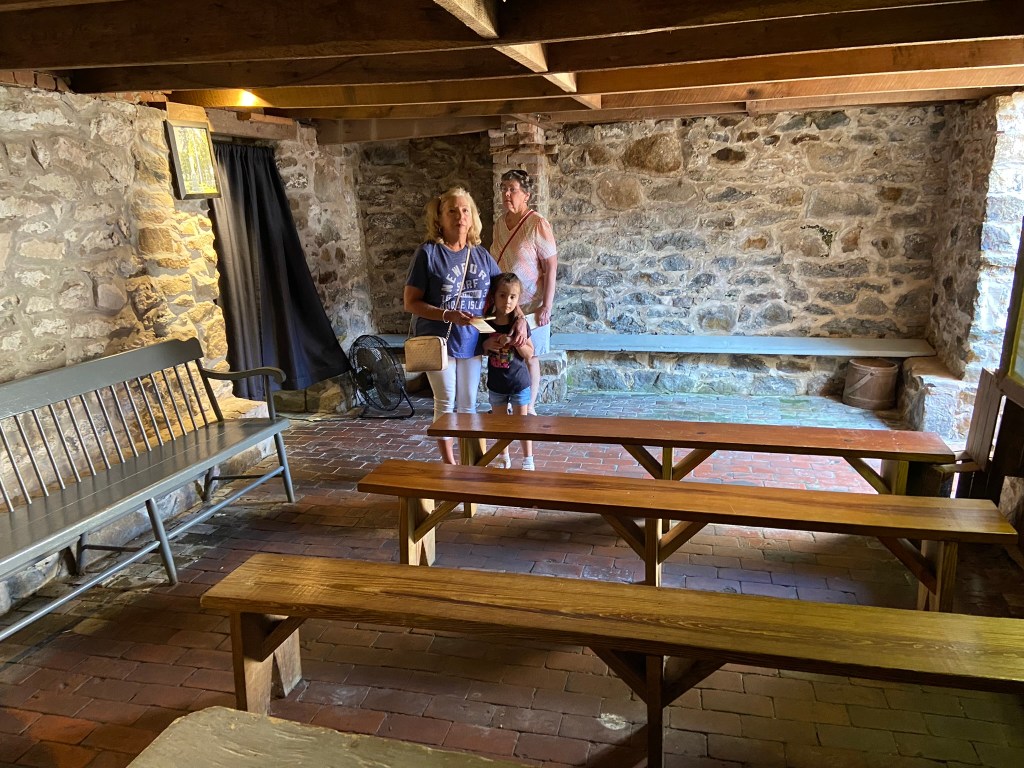
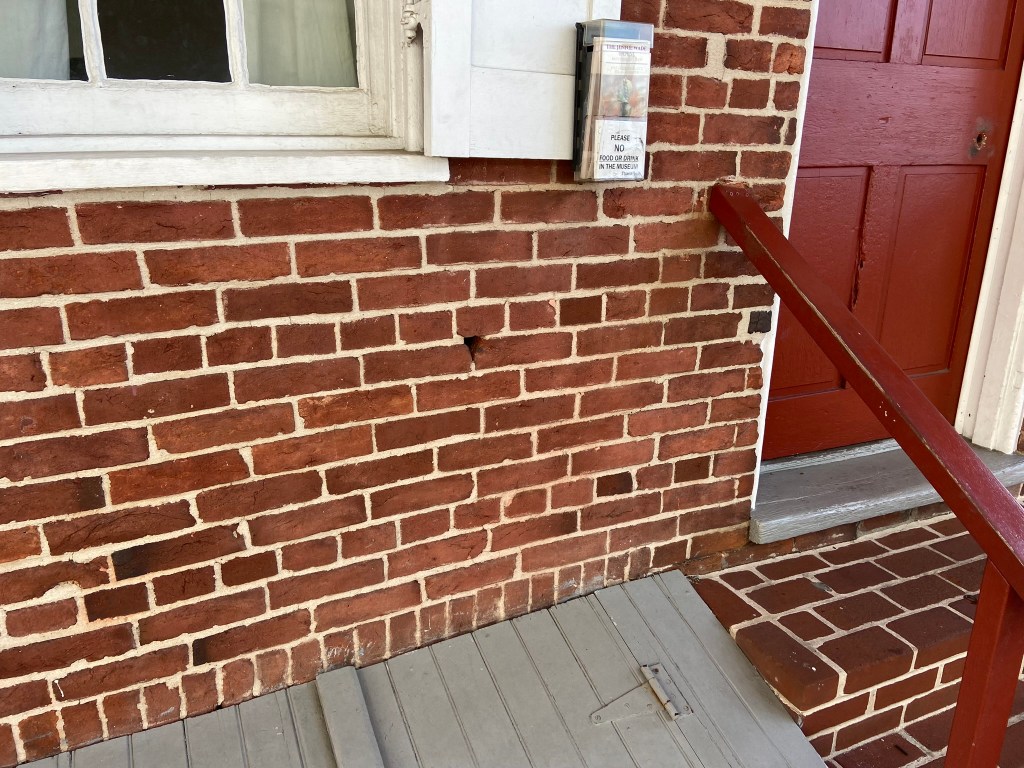
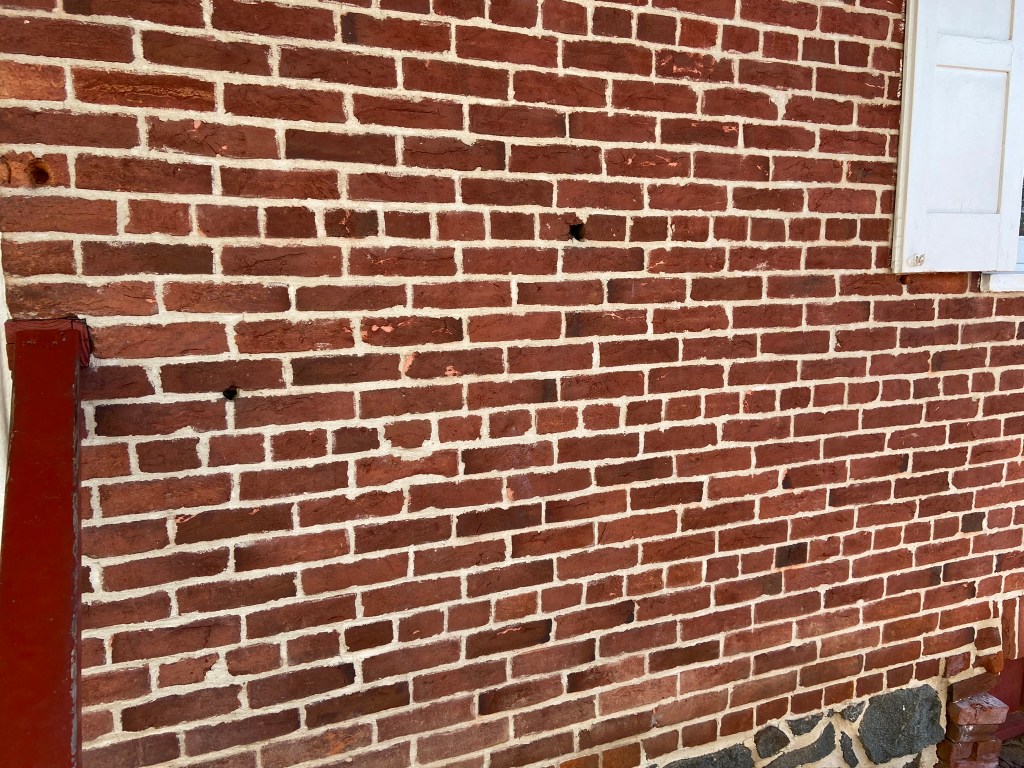
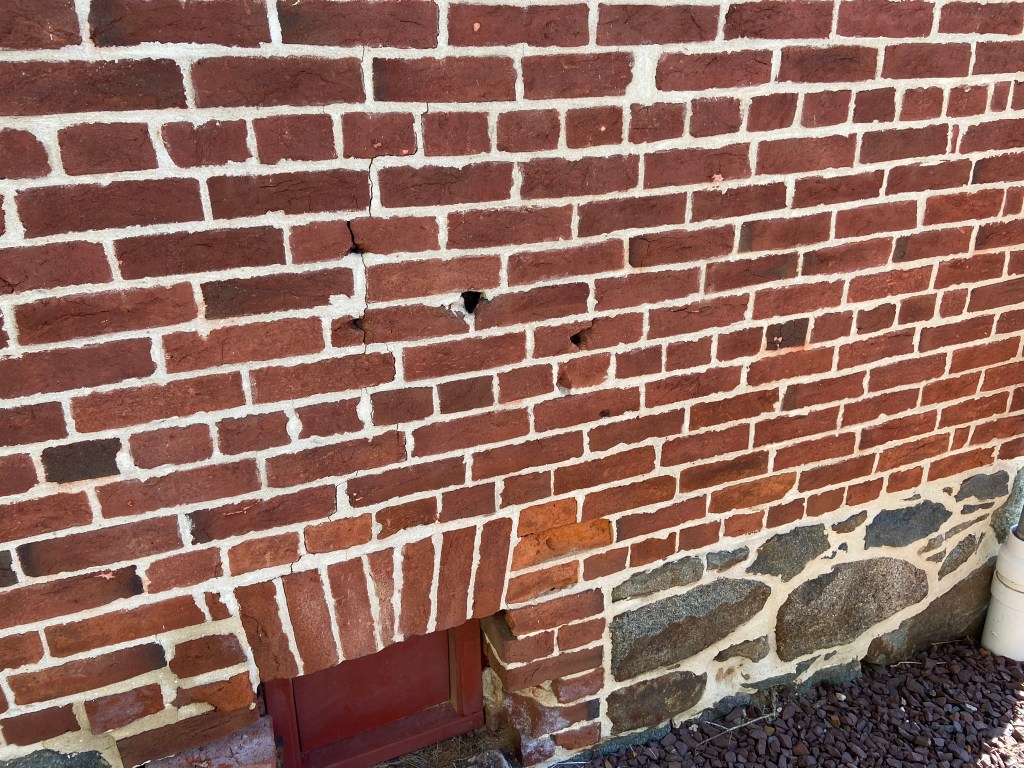
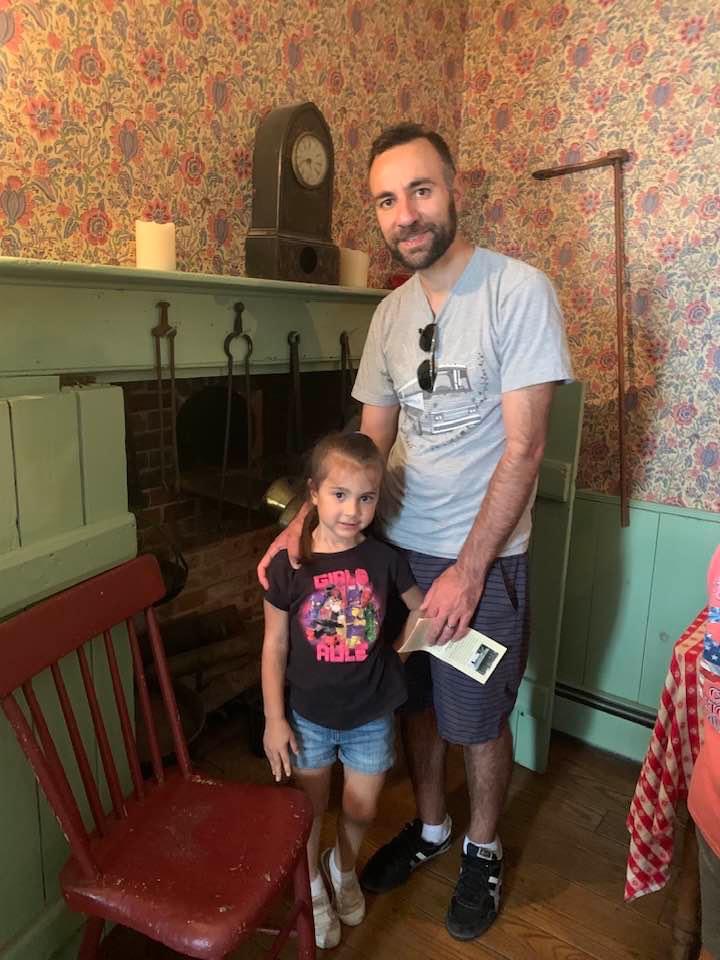
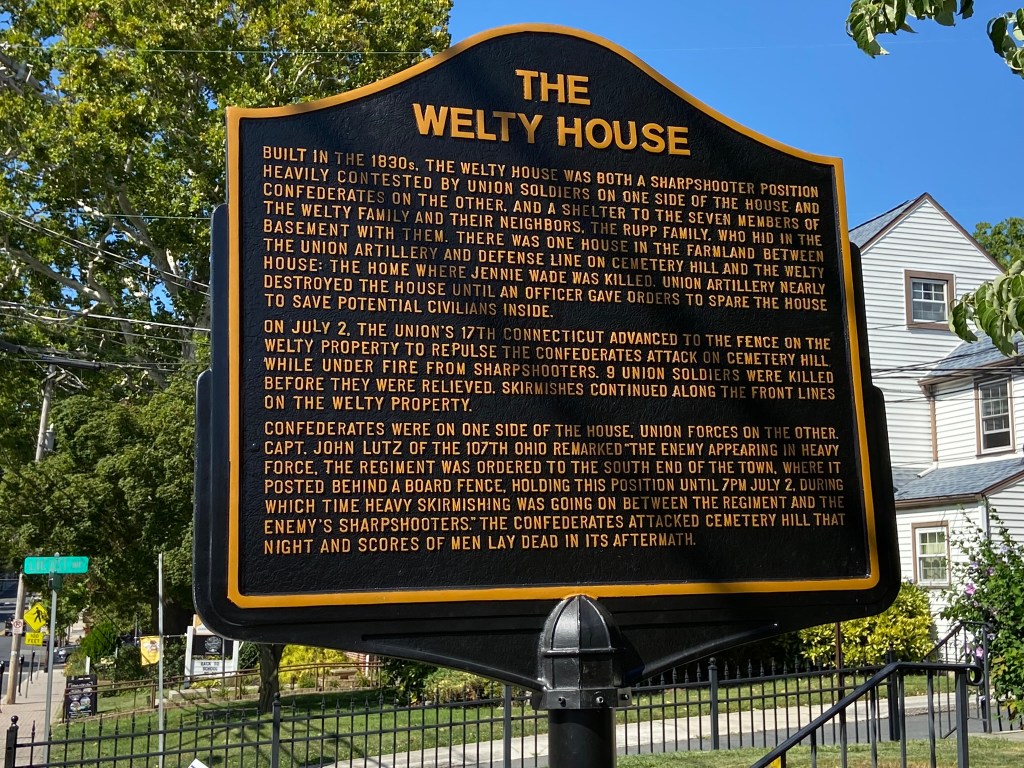
At the Jennie Wade House, the tour guide instructed us that Jennie Wade was the only civilian casualty of the Battle of Gettysburg. She was only 20 years old at the time of her death. Jennie, her mom, and two brothers were visiting Jennie’s sister, Georgia Anna Wade McClellan, who had a newborn baby. They came to her when the battle began because they thought that Georgia’s house was in a safer location. They unfortunately were wrong. The lines of battle between Union and Confederate soldiers formed in the vicinity of her home. The house was continously hit with bullets throughout the three days of battle, which you can still see to this day (and in the photos below). A Confederate artillery shell also hit the South side of the house near the roof, although it did not explode. On July 3rd, (the third day of battle) Jennie was kneading dough to make bread for Union soldiers, who were upstairs, when a stray bullet from a sharpshooter pentrated the kitchen door and the parlor door, striking Jennie through the shoulder blade and through her heart. She died instantly. Horrified, the rest of the family rushed to the basement and spent nearly a day in pitch-black hiding. The battle luckily ended the evening of July 3rd, but now the family was grieving the loss of Jennie. Today, Jennie is honored for dying while serving the Union cause. A monument was erected at her grave in the Evergreen Cemetary. For more info on the Jennie Wade House, visit the website: https://www.gettysburgbattlefieldtours.com/jennie-wade-house/
A Stroll Up Baltimore Street
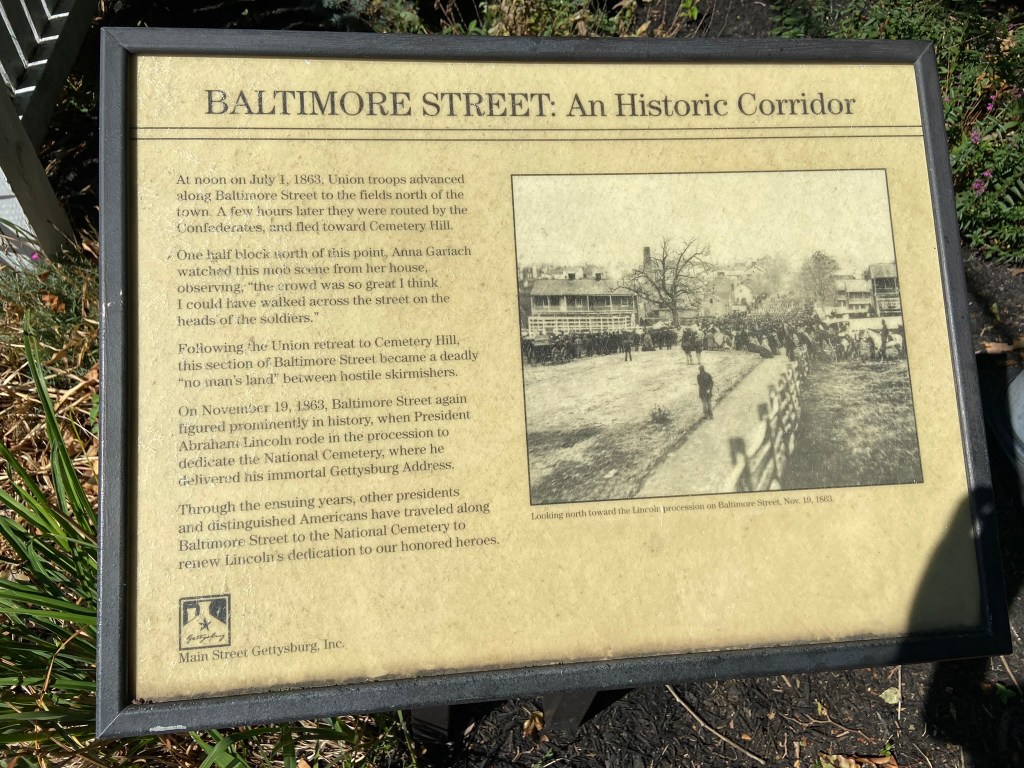
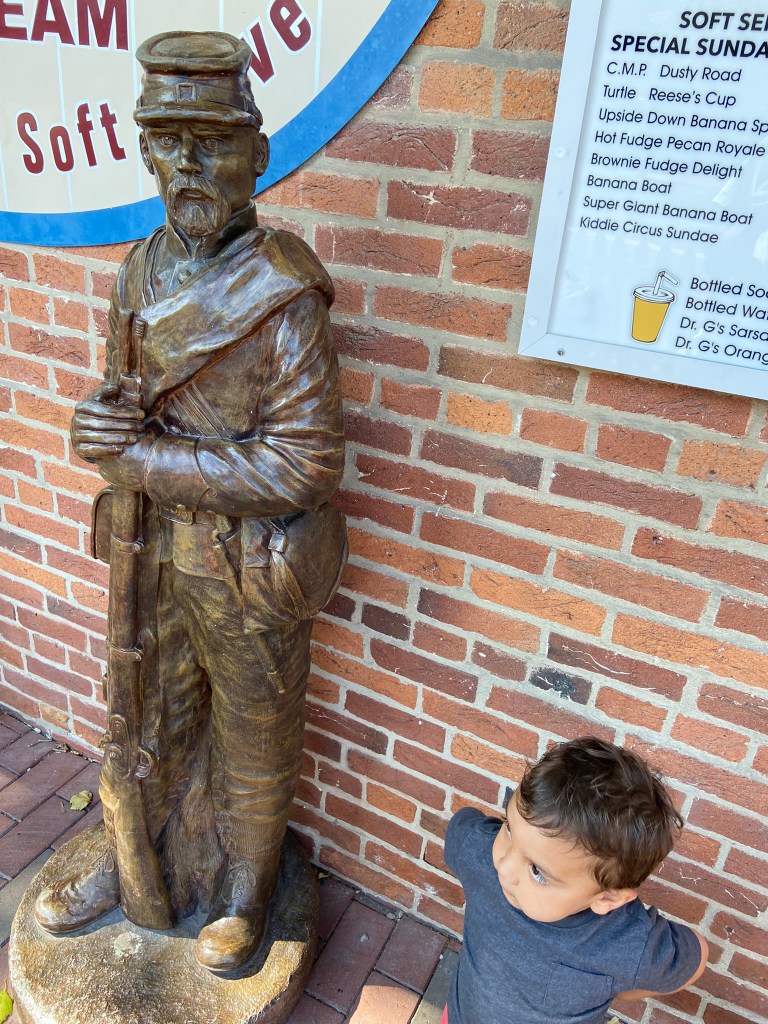
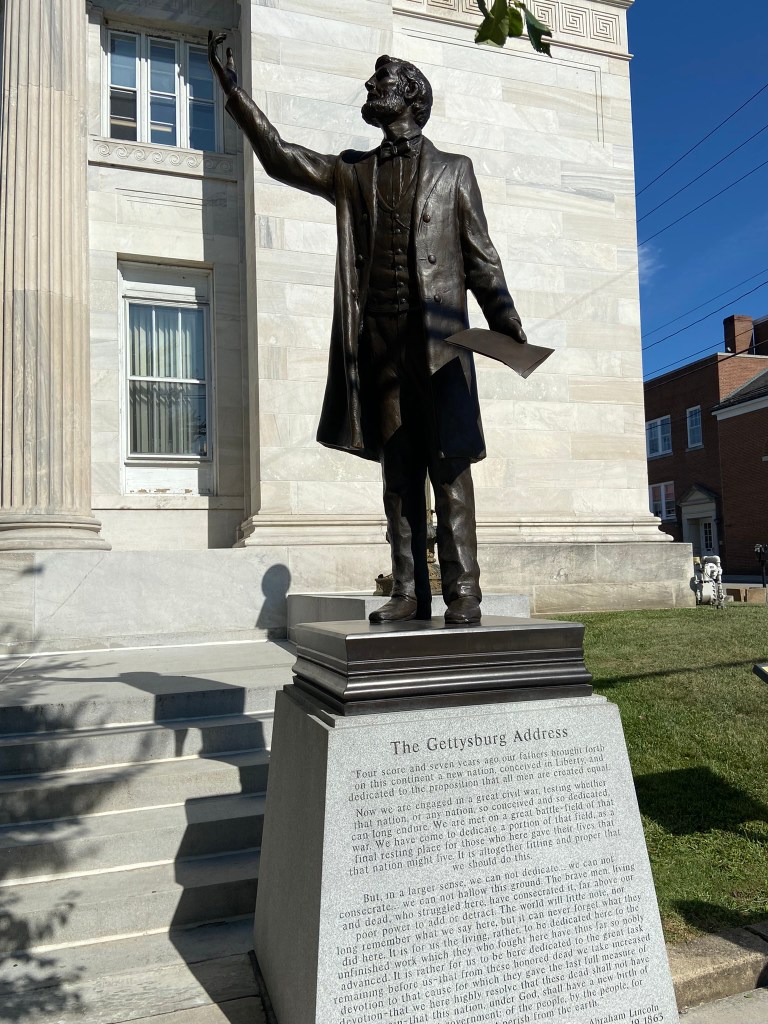
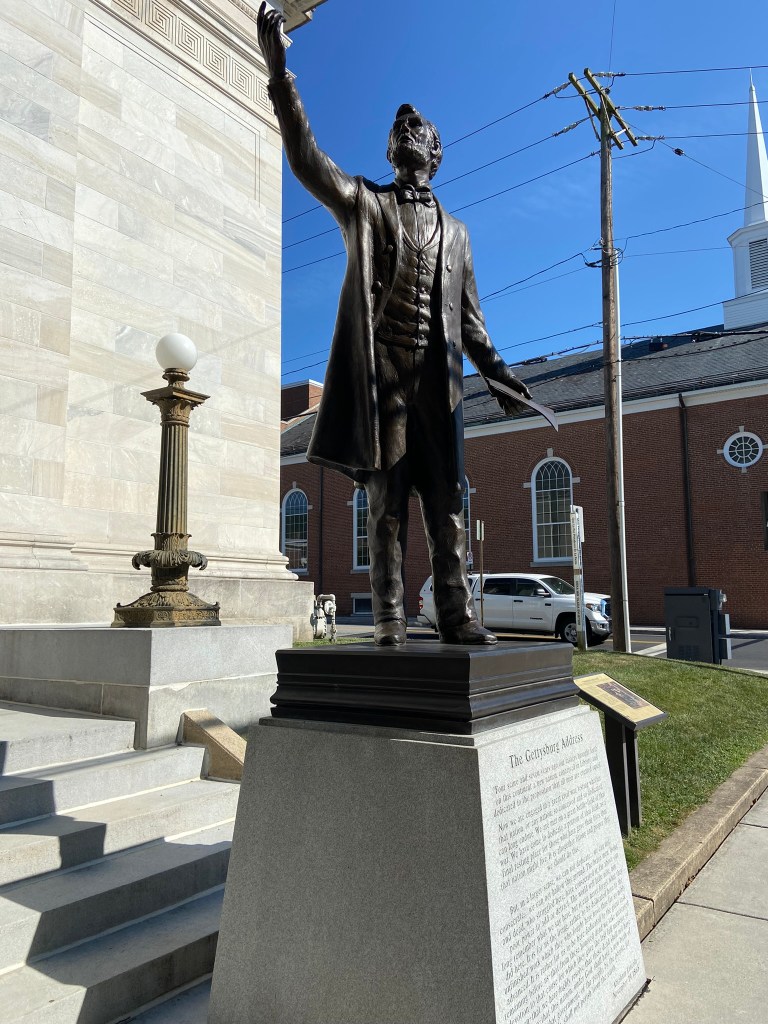
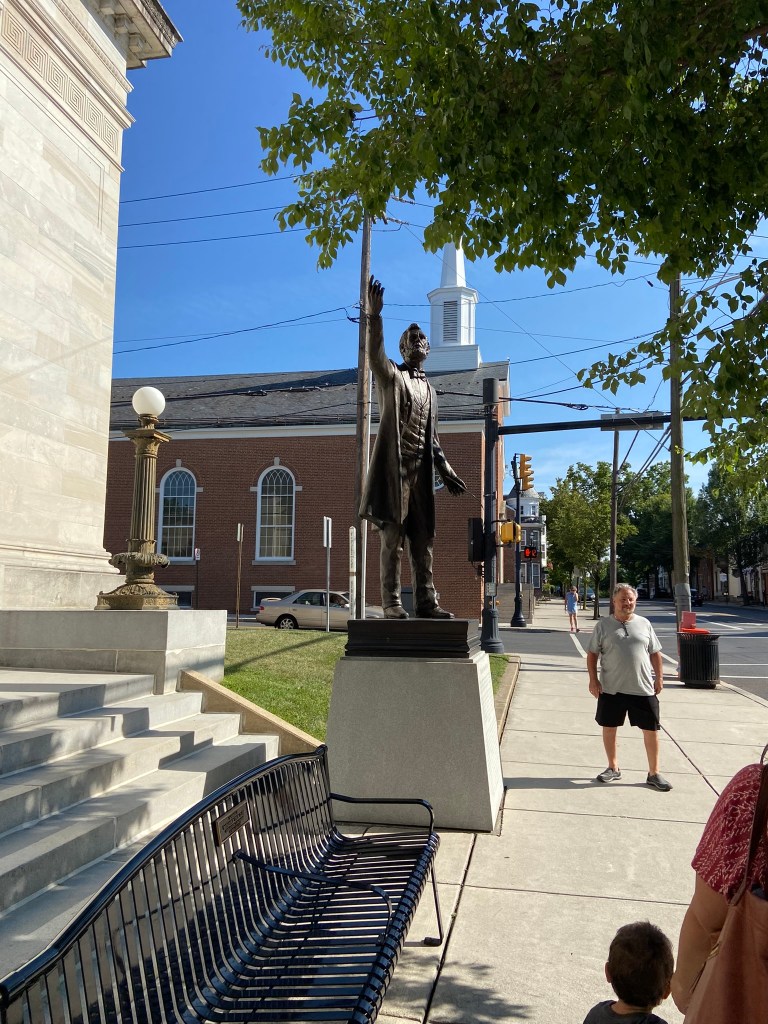
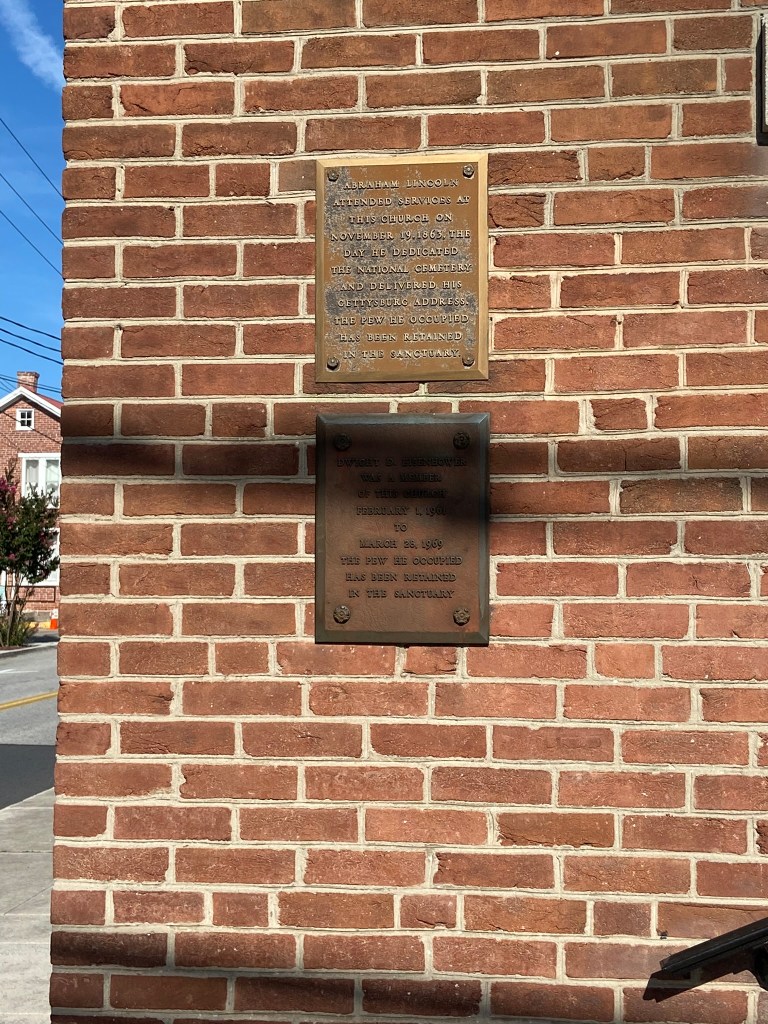
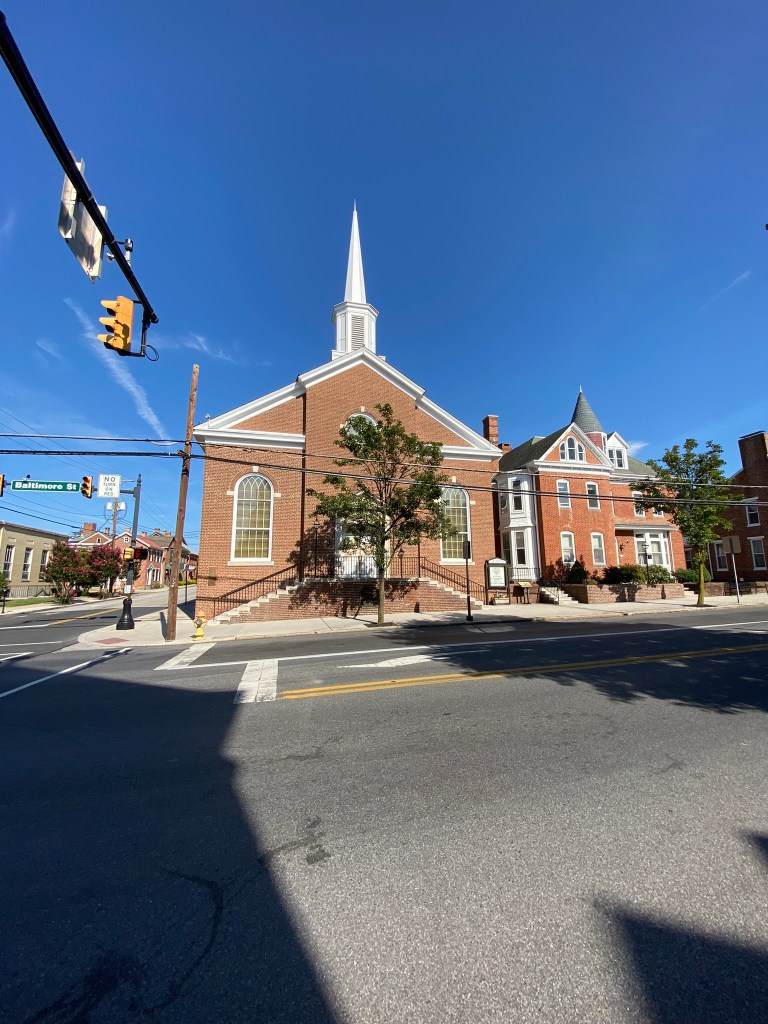
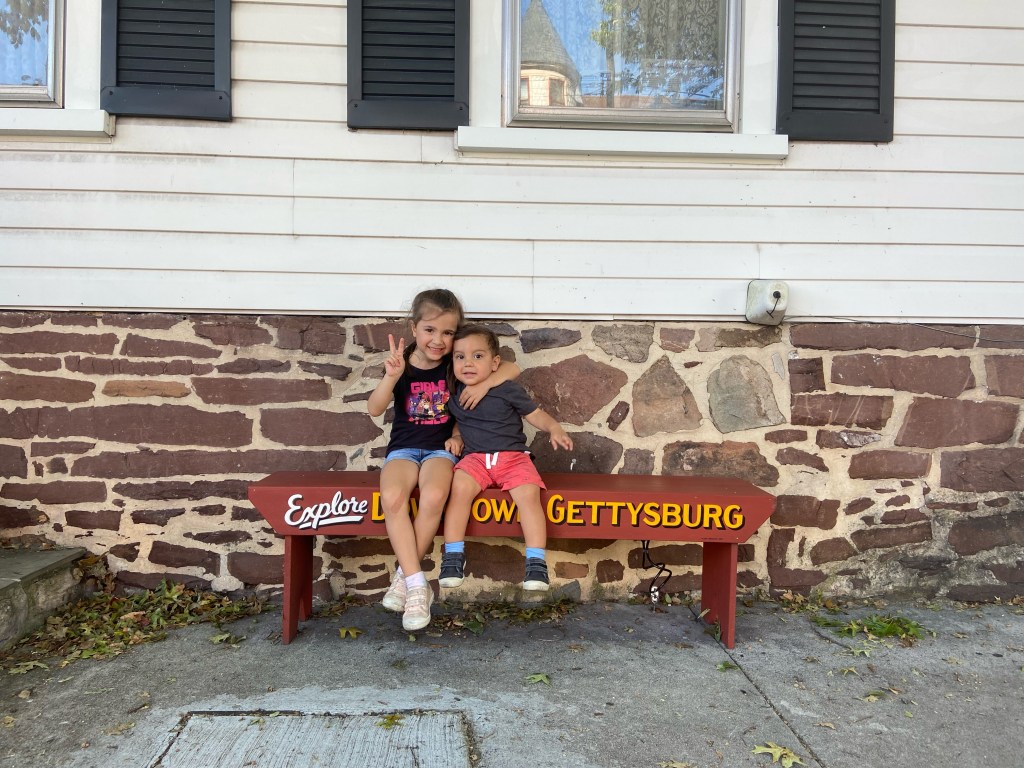
Without having a set plan in mind as to what exactly we were going to do after leaving Jennie Wade’s House, we decided to head North on Baltimore Street in the direction of the center of town since we knew that there were sites to see on the way there. We stopped for ice cream at Mr. G’s for the kids. We later learned that the location of Mr. G’s was about the location of the historic start of town in 1863. We continued heading North seeing the historic buildings that stood at the time of the battle. We saw the Gettysburg Presbyterian Church where Lincoln visited on Nov. 19th, 1863, the day that he gave the Gettysburg Address. We also saw his statue which stands about a block away from the church.
Ronn Palm’s Museum of Civil War Images
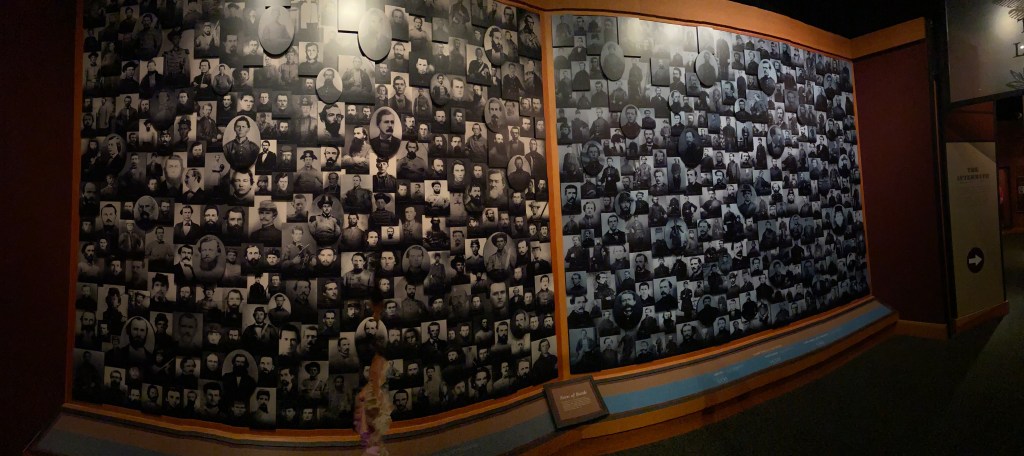
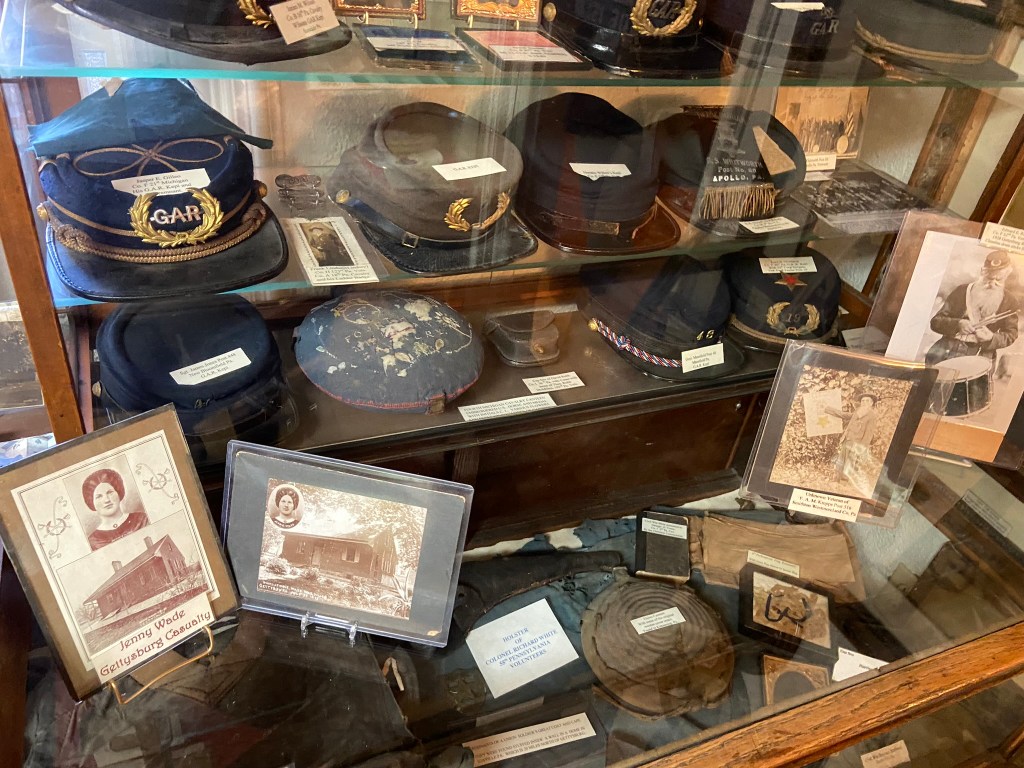
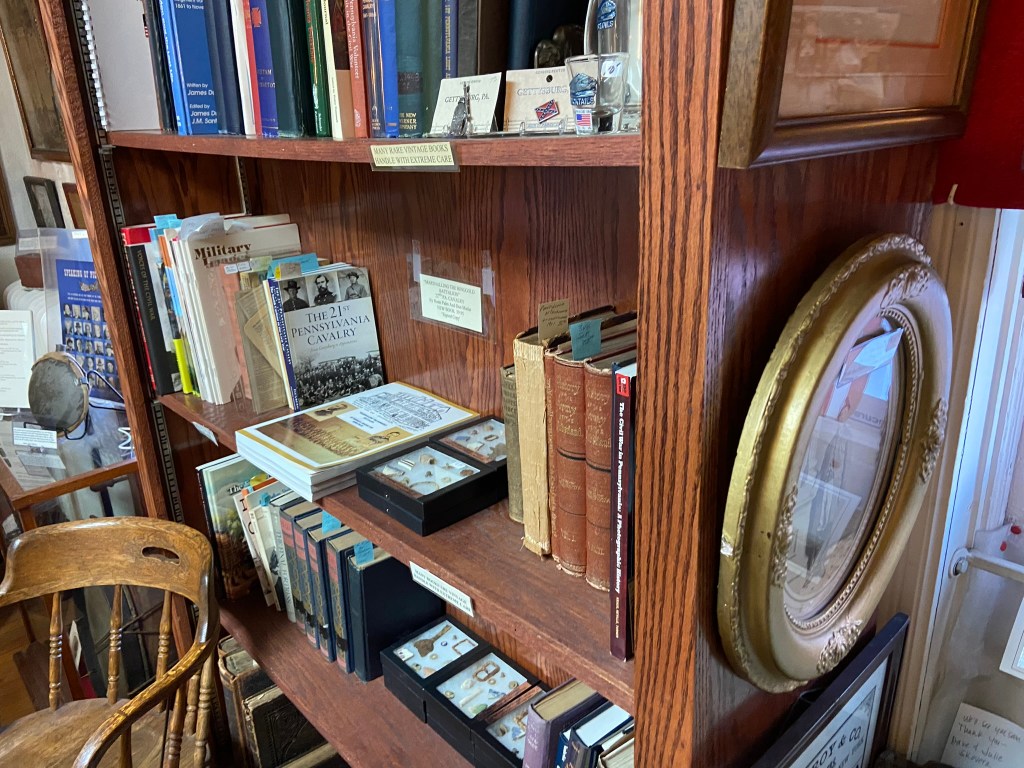
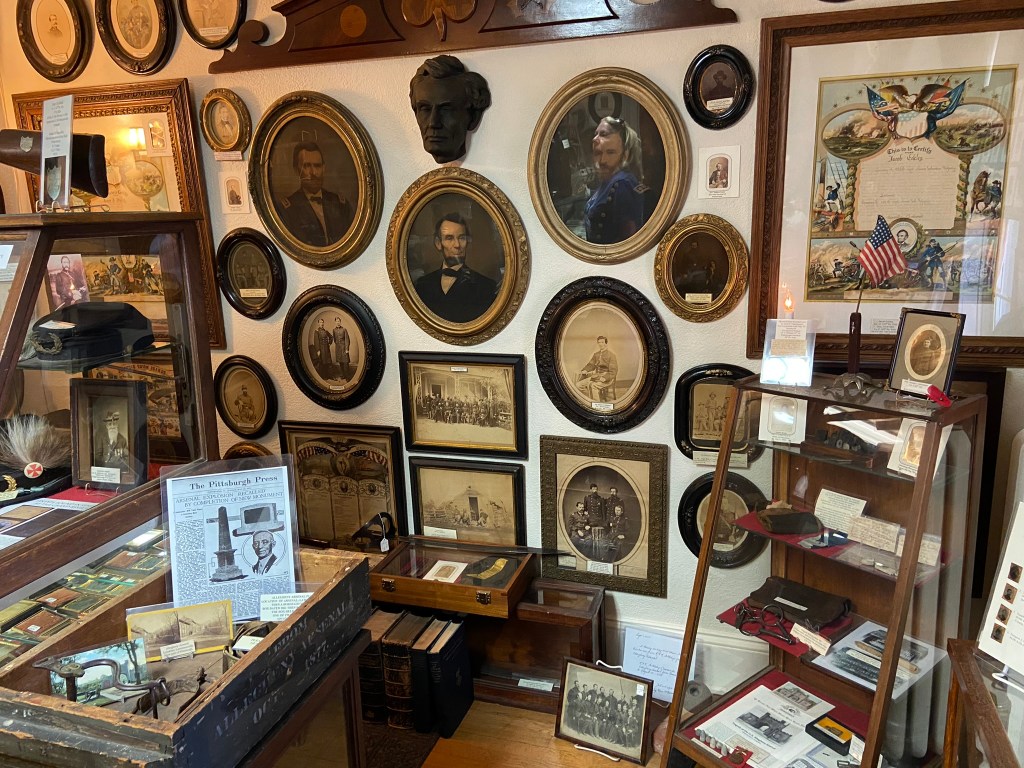
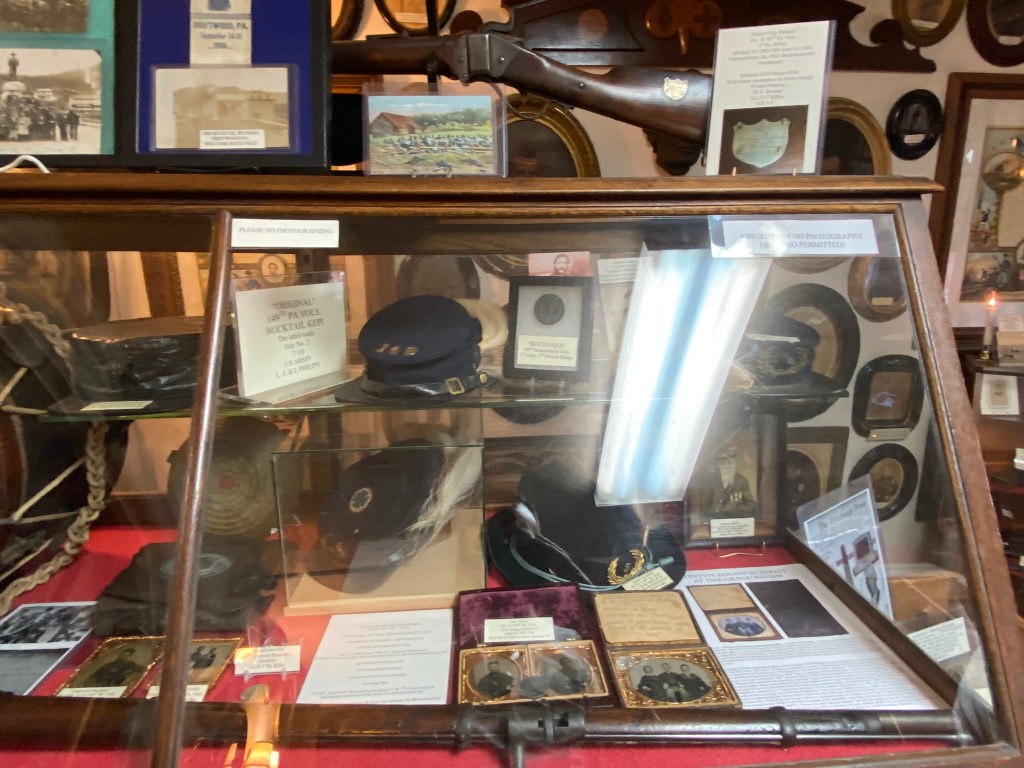
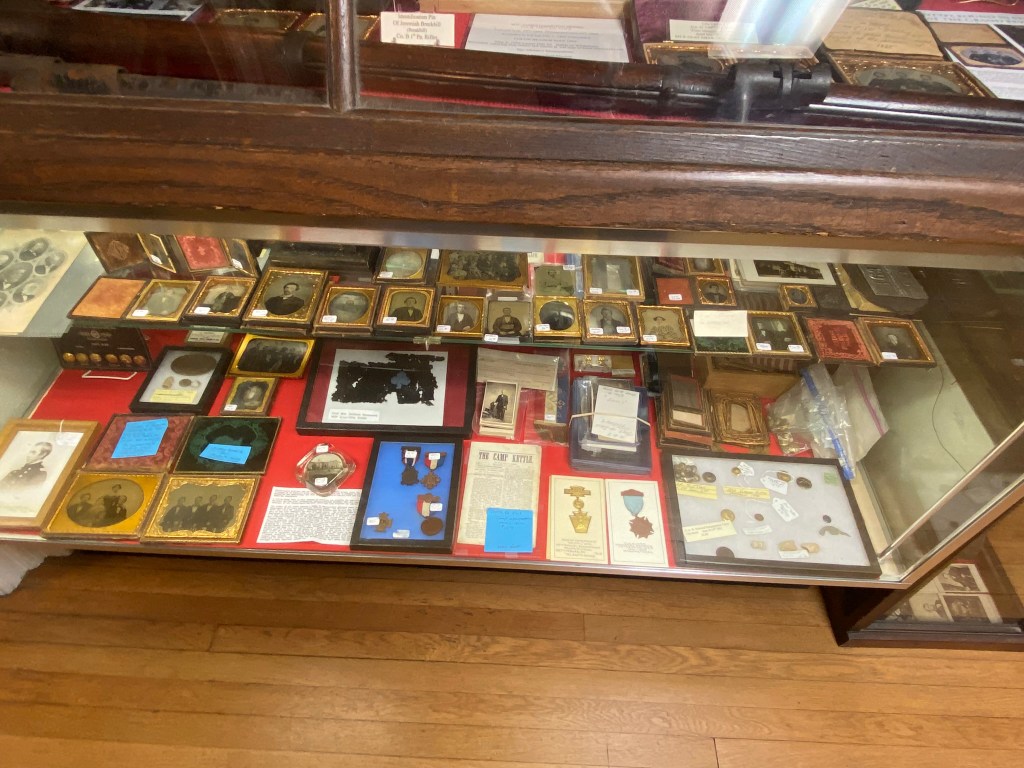
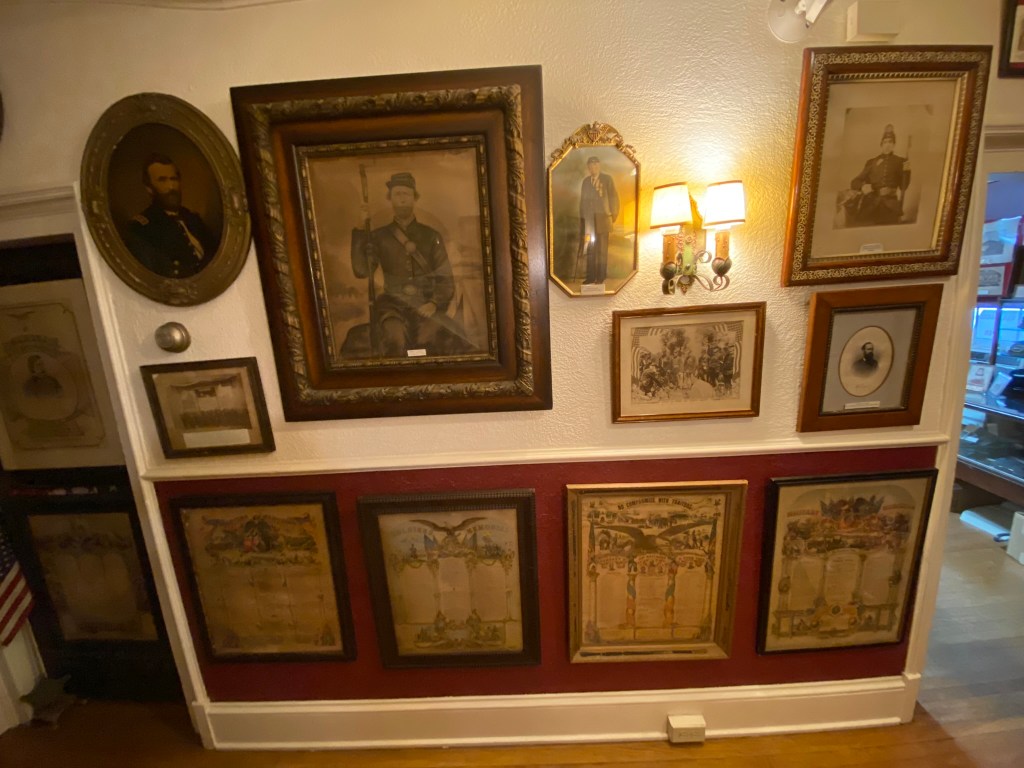
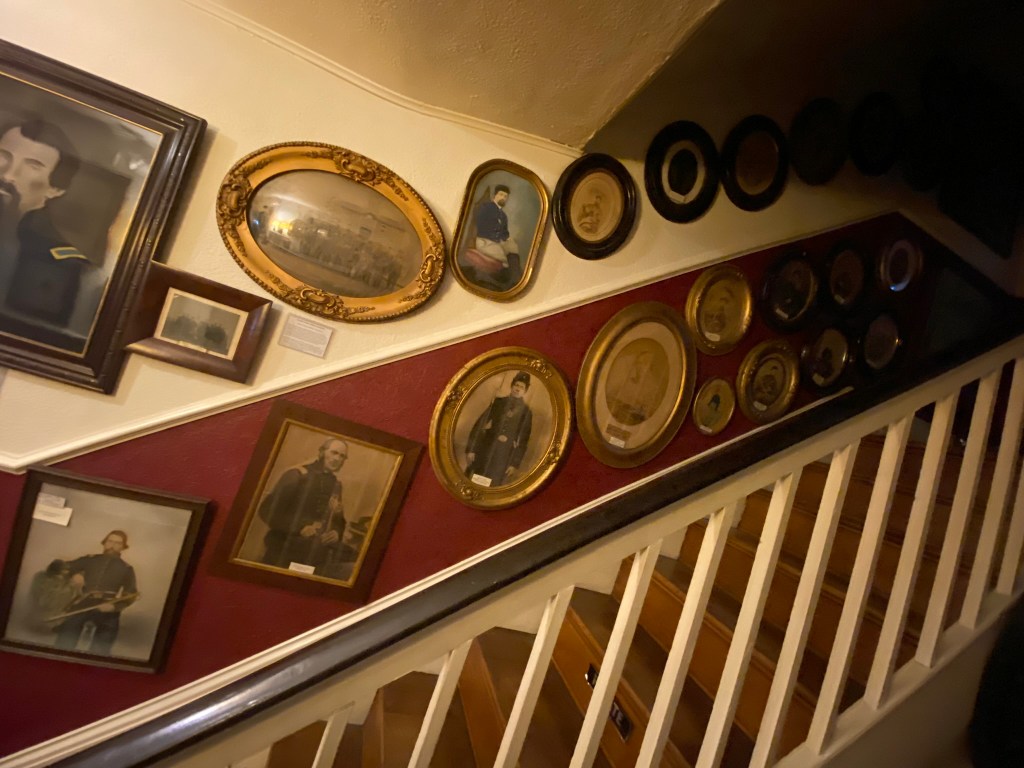
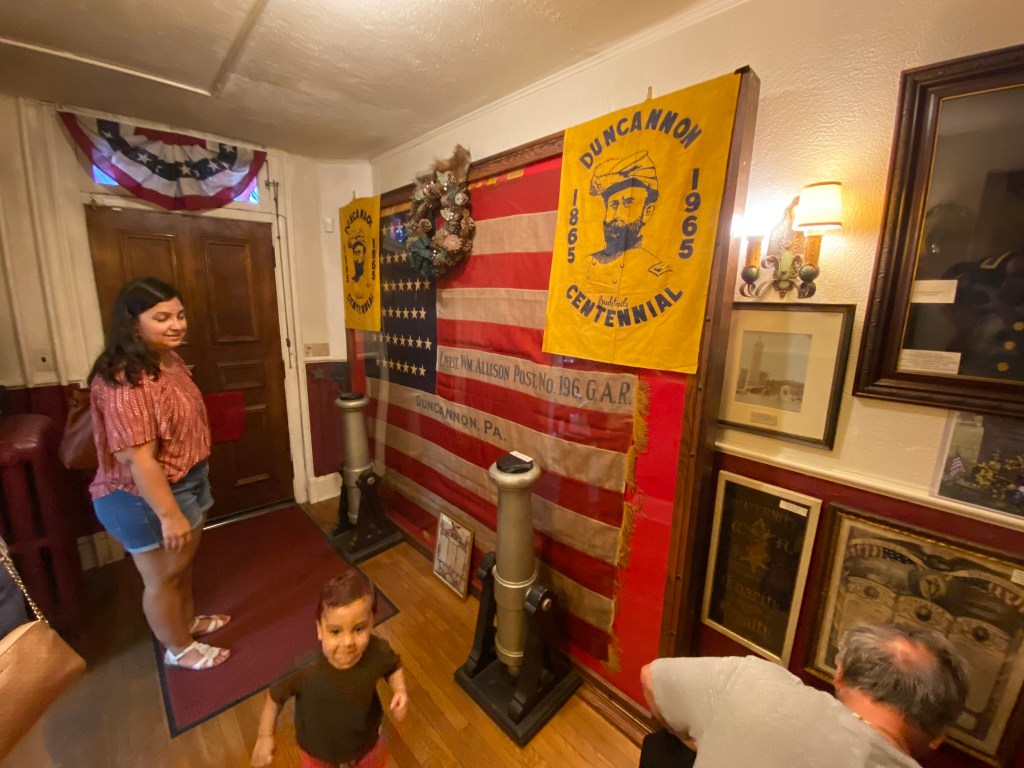
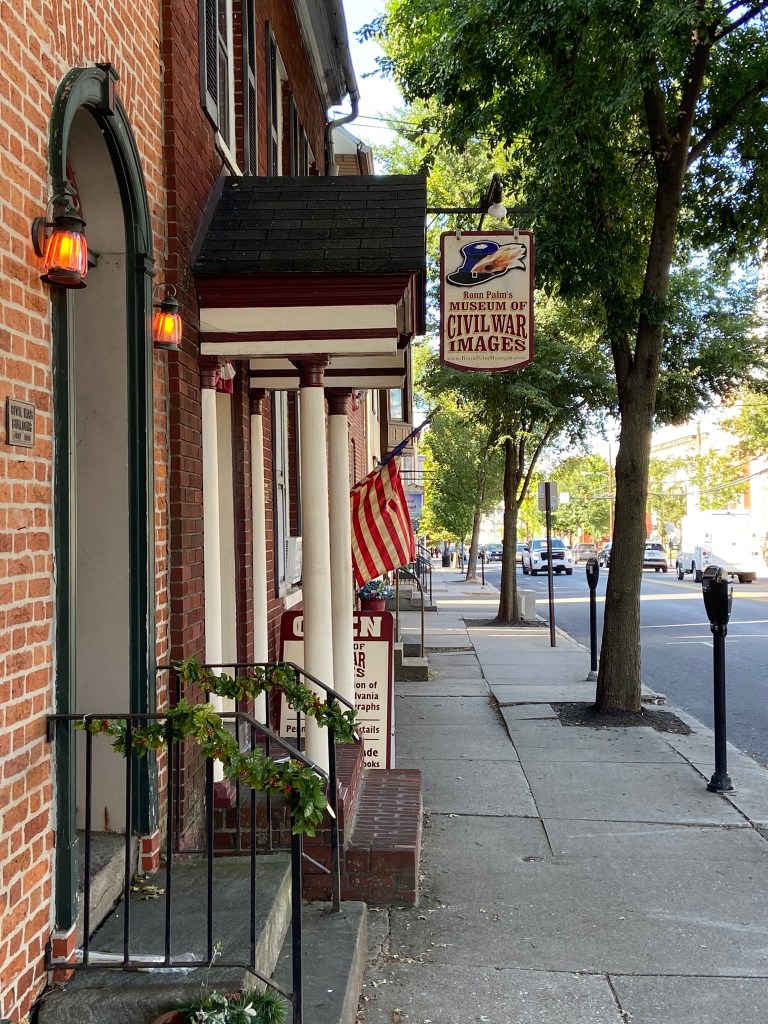
We decided to turn around and head back south on Baltimore Street in the direction towards our hotel. I stopped in Ronn Palm’s Museum of Civil War images. When you walk in, you are simply amazed at the amount of images and artifacts that are on display. Ronn has over 4,000 original photographs and artifacts from the Civil War. There are many on display when you first walk in. Then if you pay $6, which is well worth it, you are able to visit other rooms that are completely covered with photographs of soldiers, artifacts, relics and memoribilia. I was able to chat with Ronn Palm for a short time. His passion for all things Civil War comes through. He has been collecting items for so long and goes to a few Civil War shows throughout the year to trade and collect. He truly is a fascinating person and his museum is a must visit if you’re in Gettysburg. The photos below only scratch the surface of what you will see there. Check out more info about the museum here: https://www.ronnpalmmuseum.com/
Dinner at Gettysburg Eddie’s
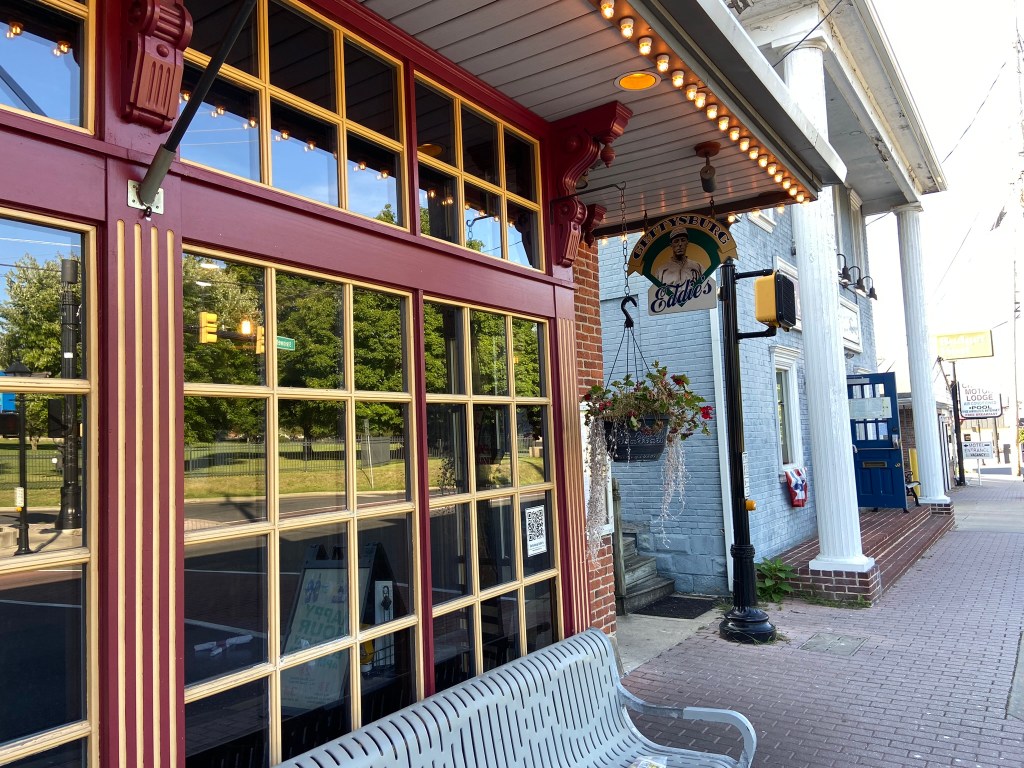
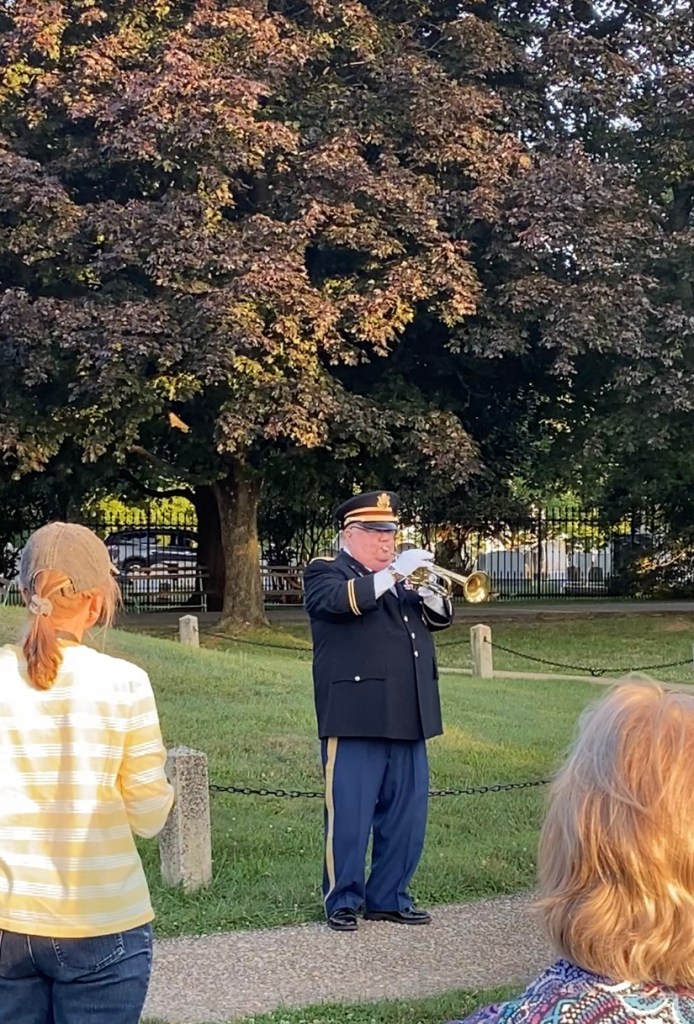
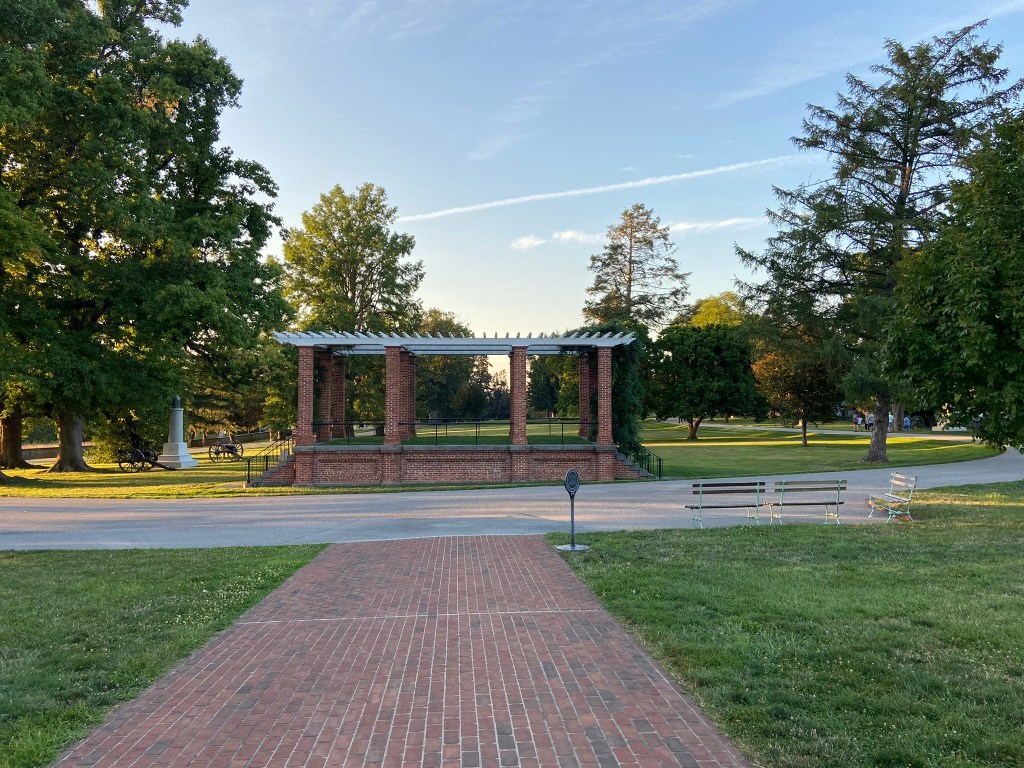
After leaving Ronn Palm’s Musuem of Civil War Images, we stopped in the Shriver House Museum but we had missed the last tour. We were told that every evening at 7pm in the Gettysburg National Cemetary “taps” is played to honor the fallen soldiers. This runs between Memorial Day and Labor Day. We planned to attend after dinner. So we decided to eat at Gettysburg Eddie’s, which is right next to the Cemetary. So we headed down Baltimore Street and down Steinwehr Ave. There was about a 10-15 minute wait before we got a table. They also had very good, American style food. When we left the restaurant, it was about 6:45 so we decided to visit the Gettysburg National Cemetary in time to see “taps” played at 7:00pm. https://www.gettysburgeddies.com/
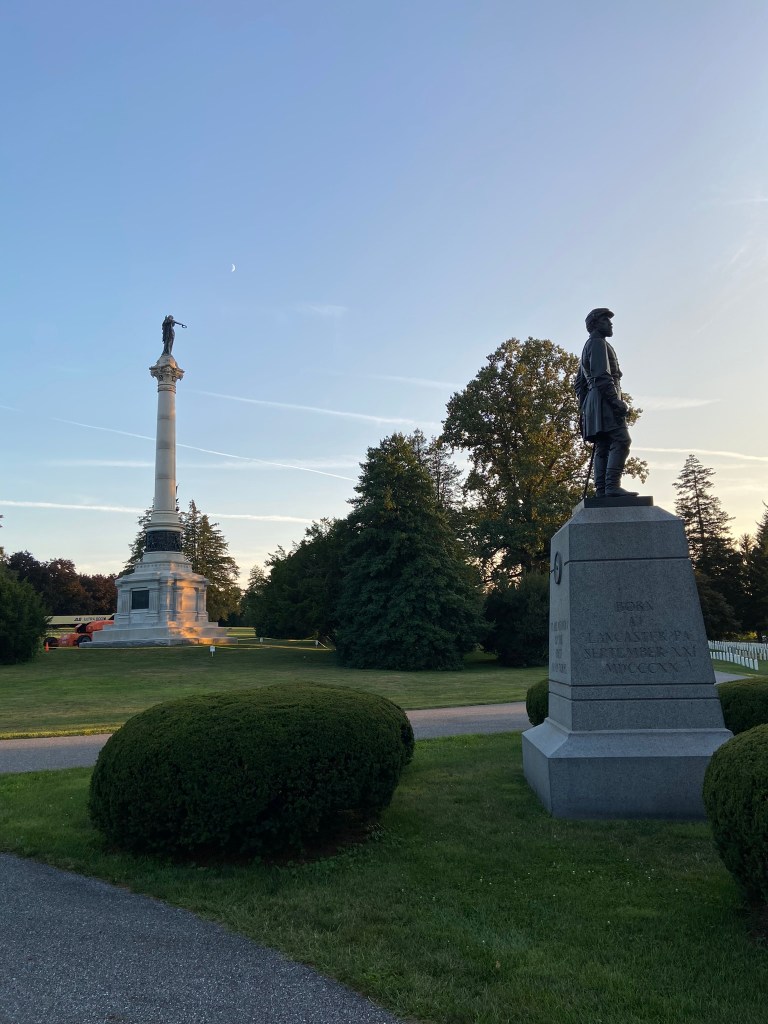
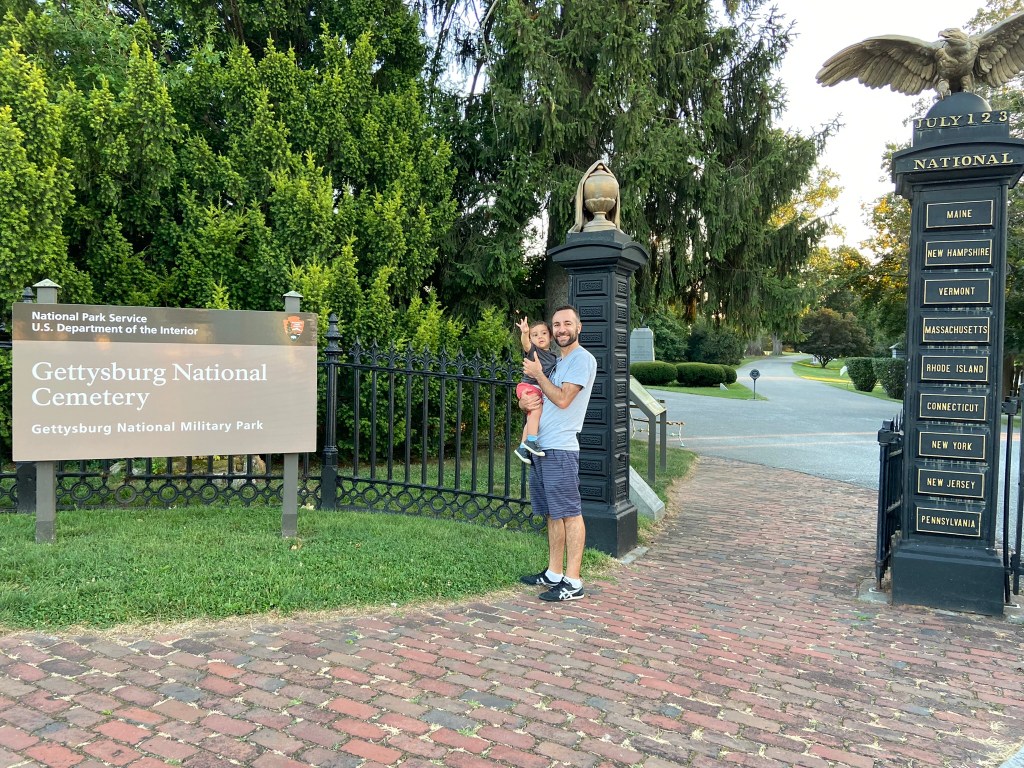
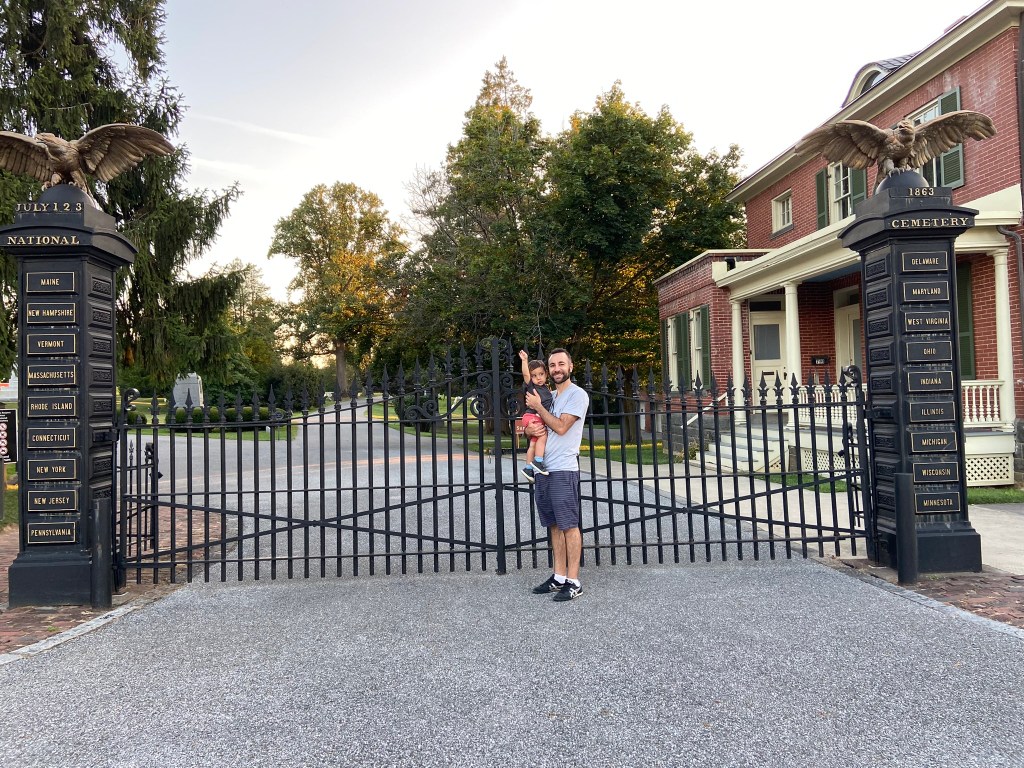
Gettysburg National Cemetery
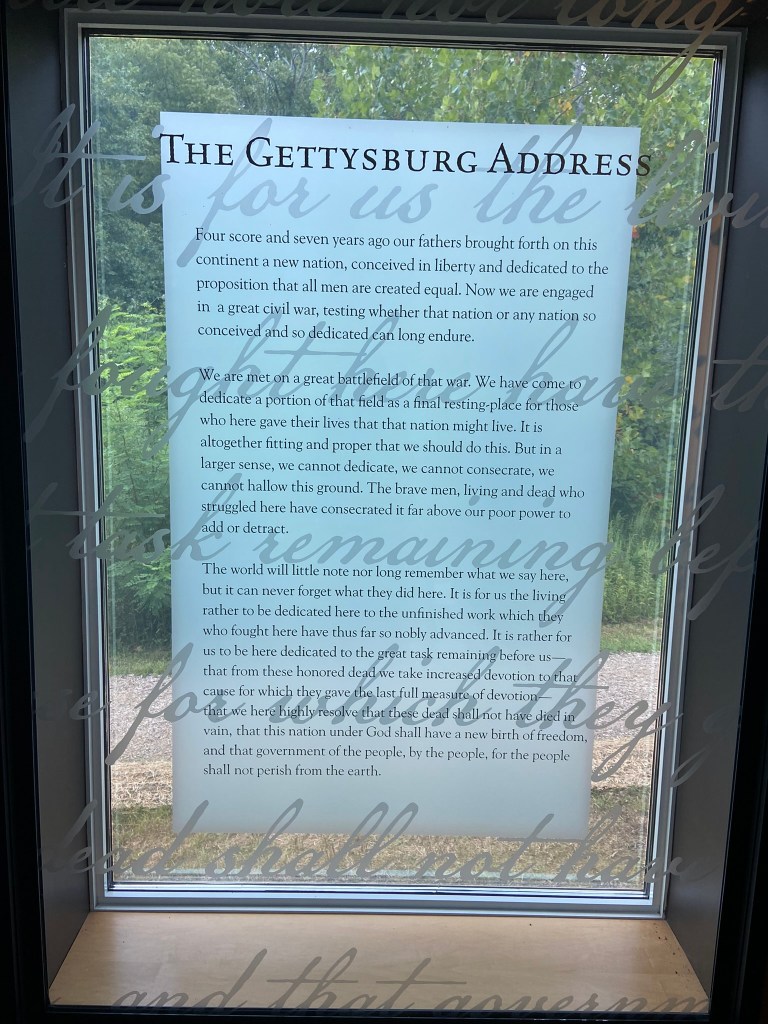
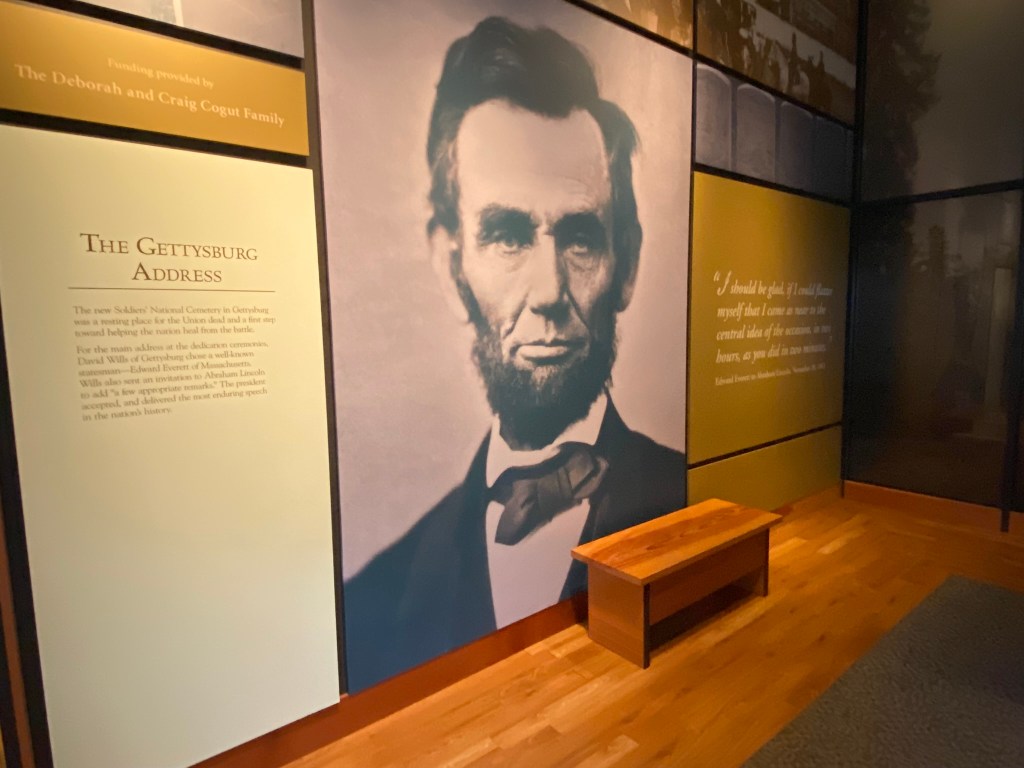
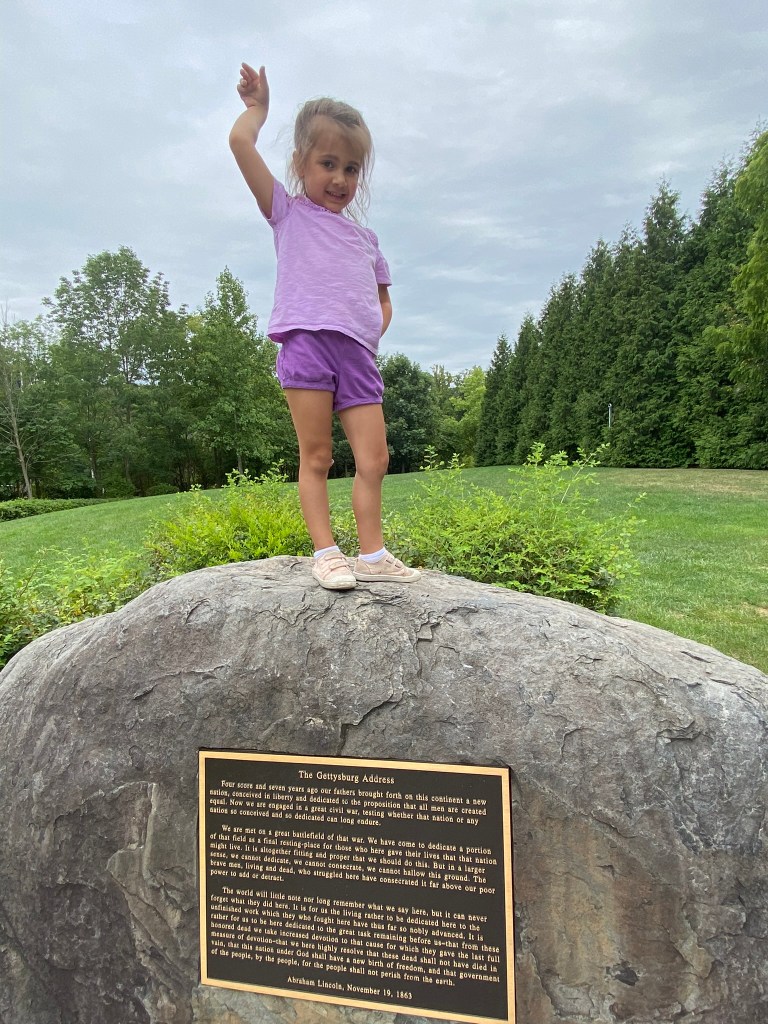
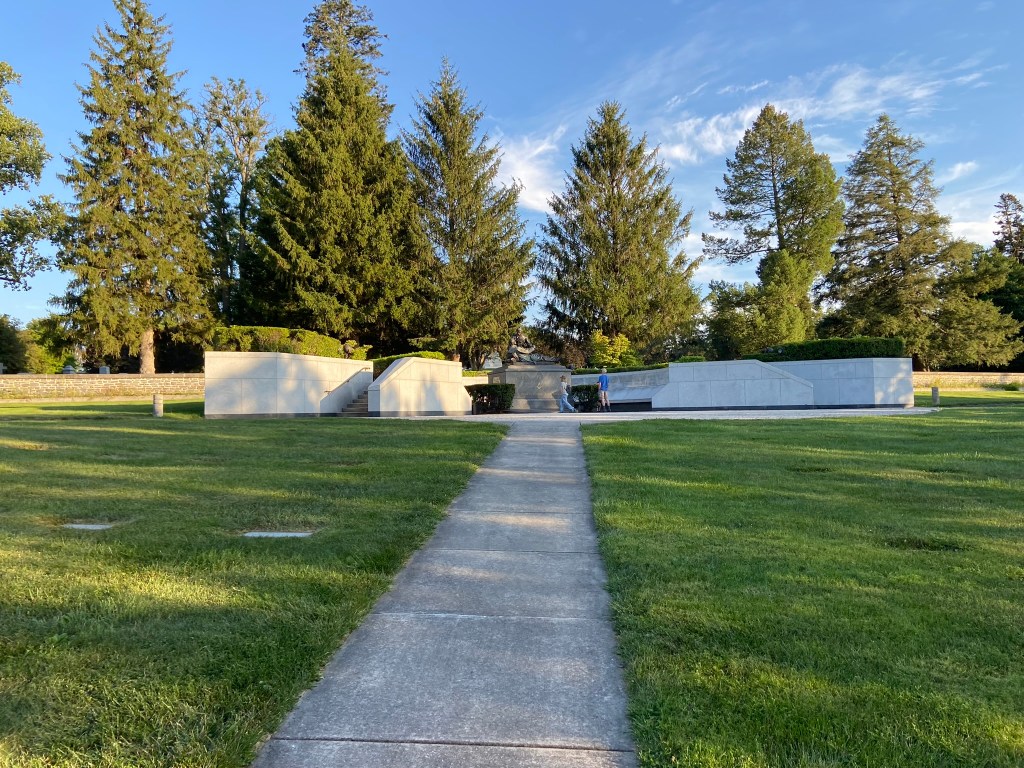
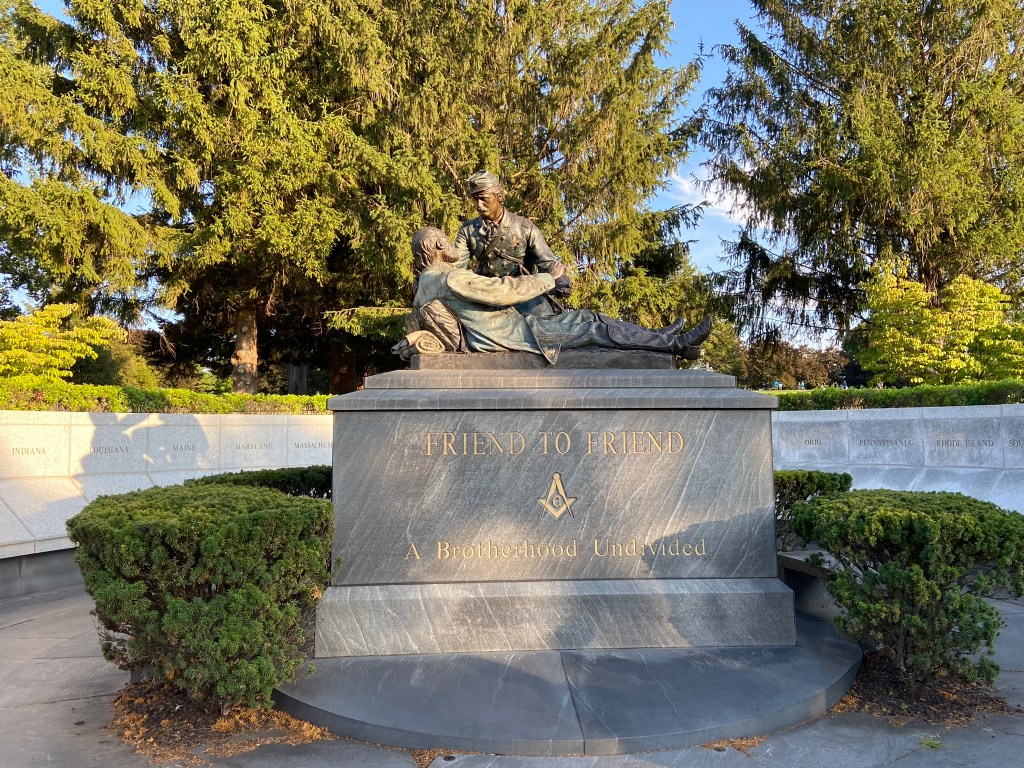
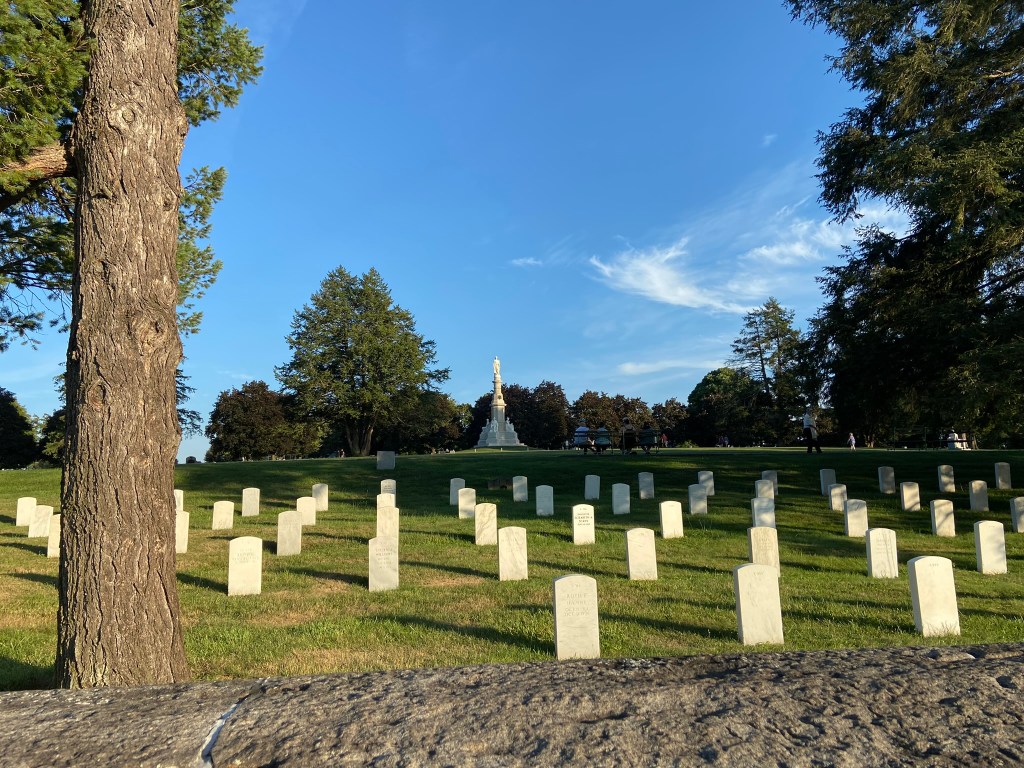
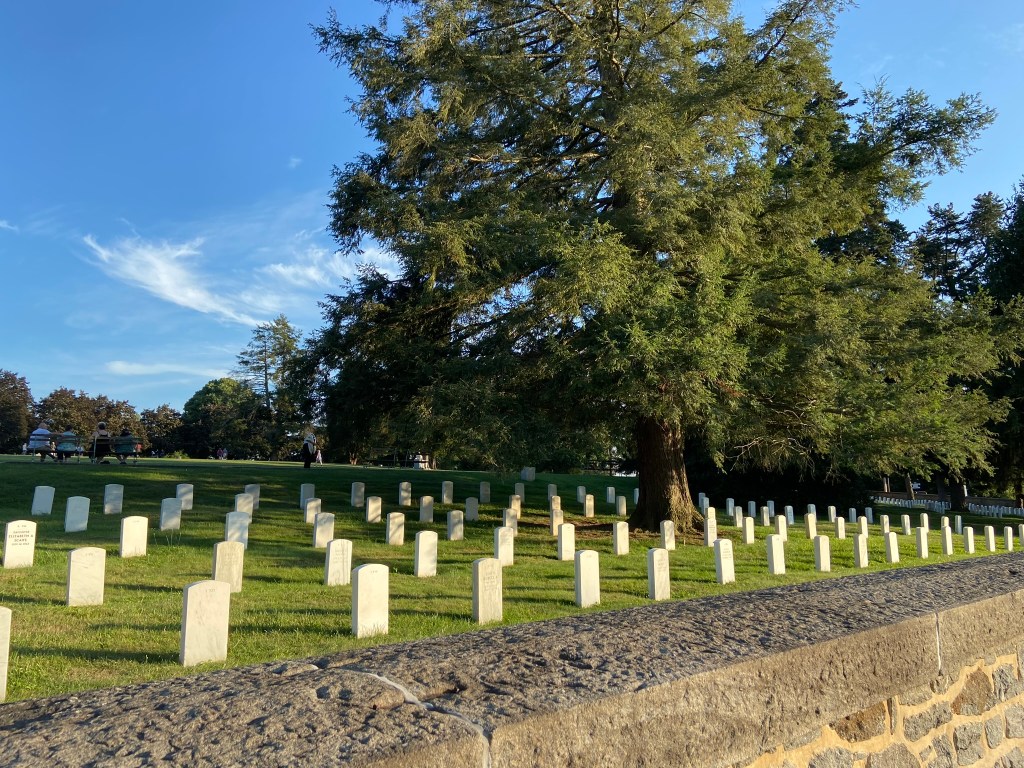
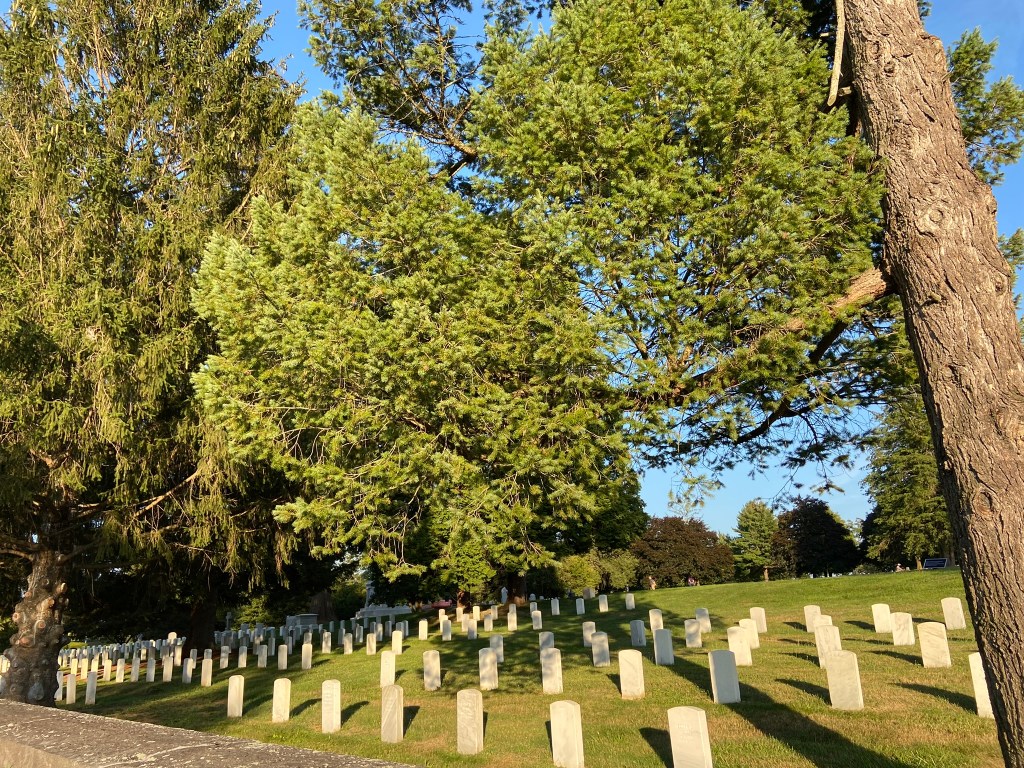
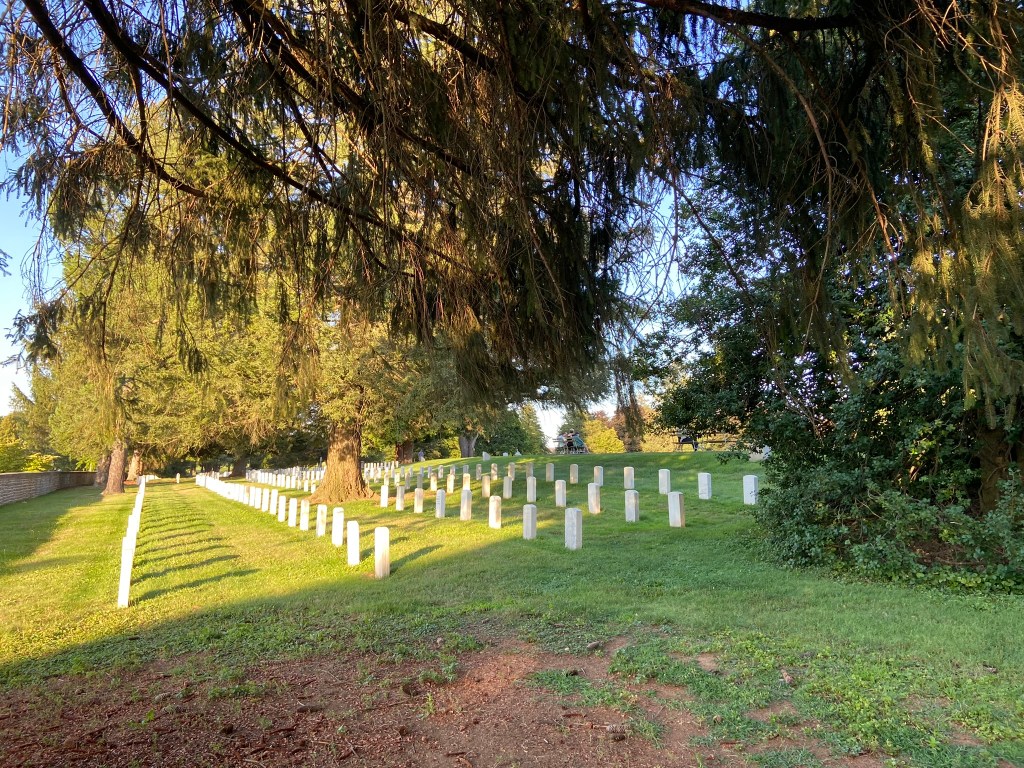
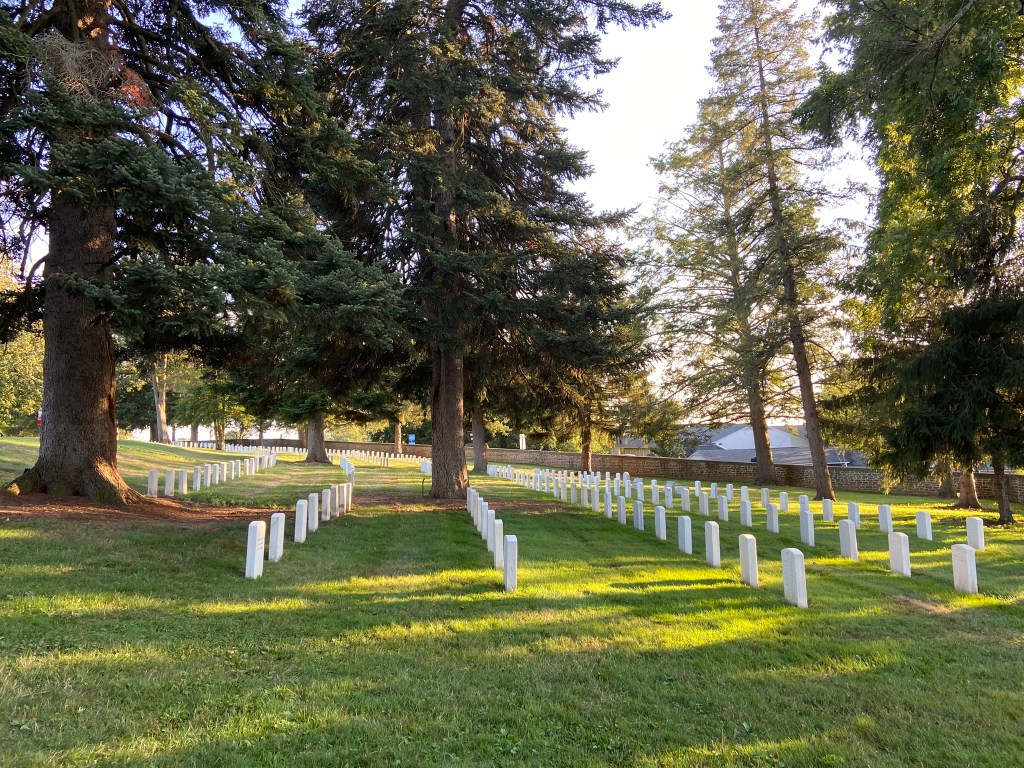
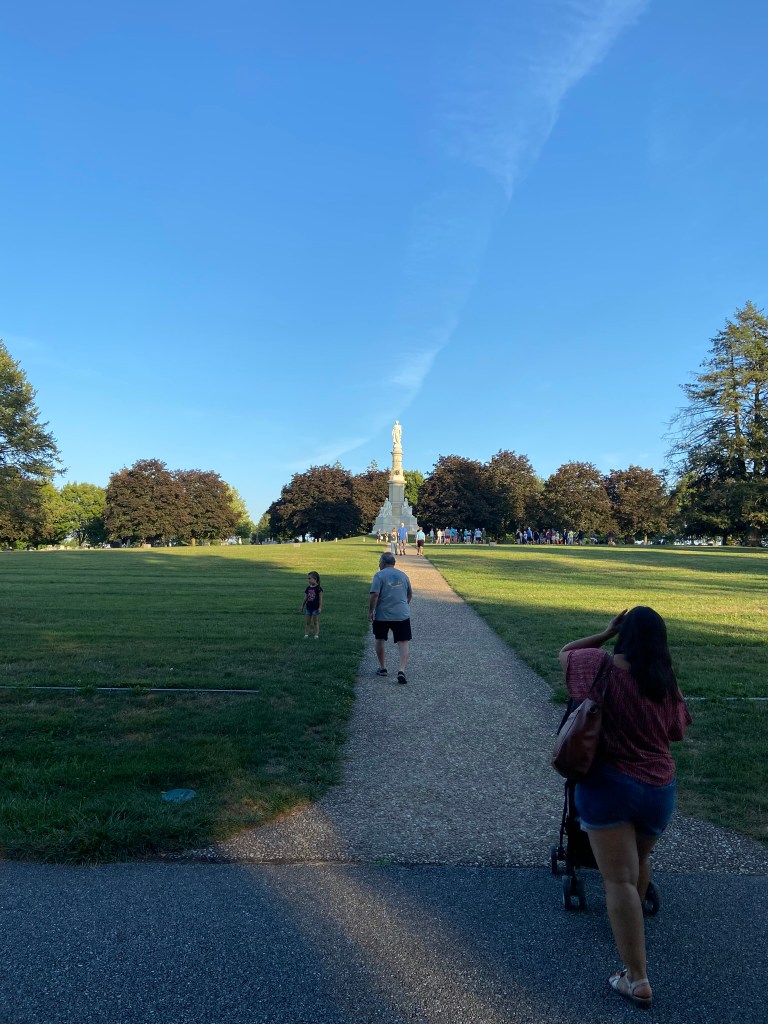
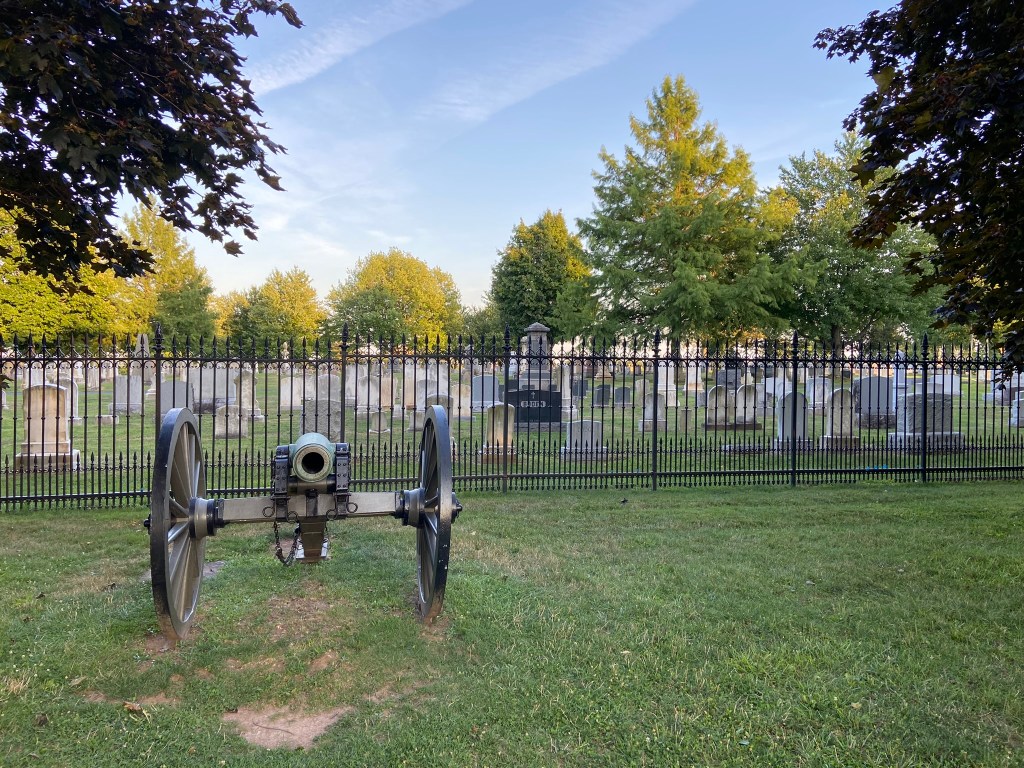
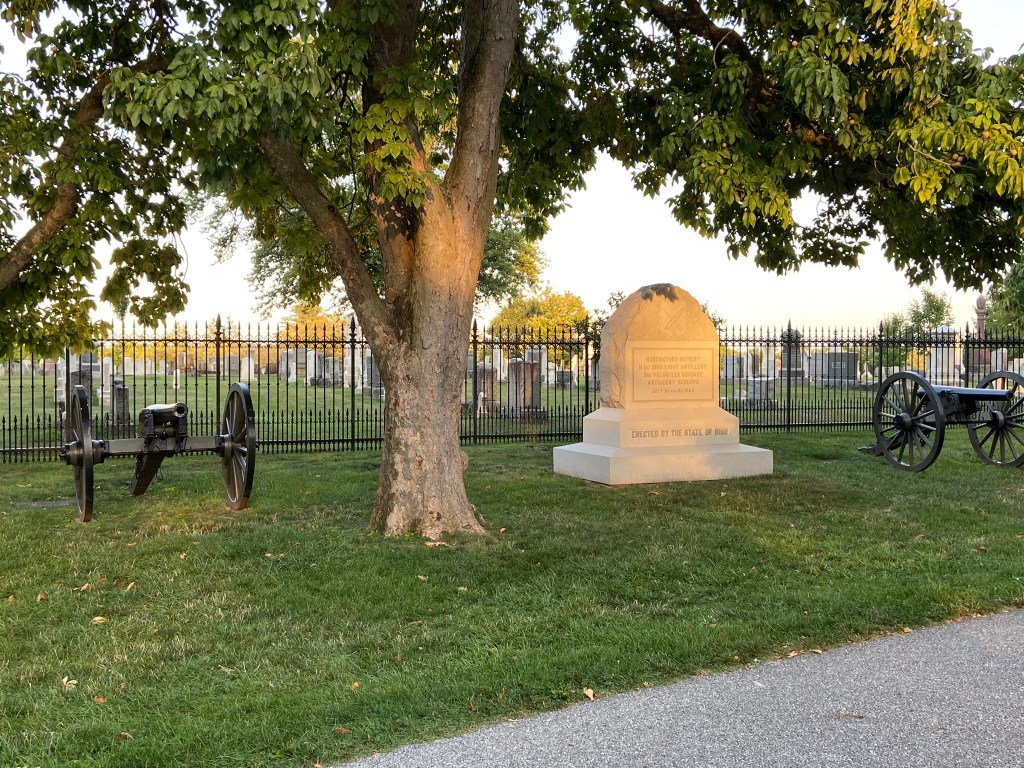
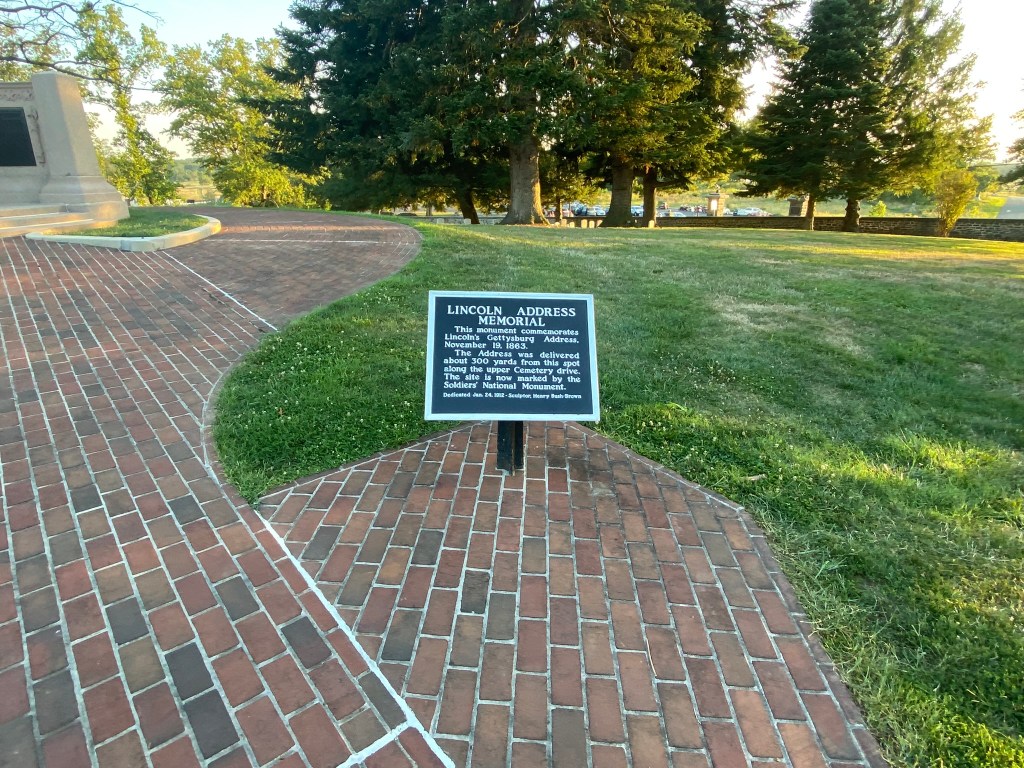
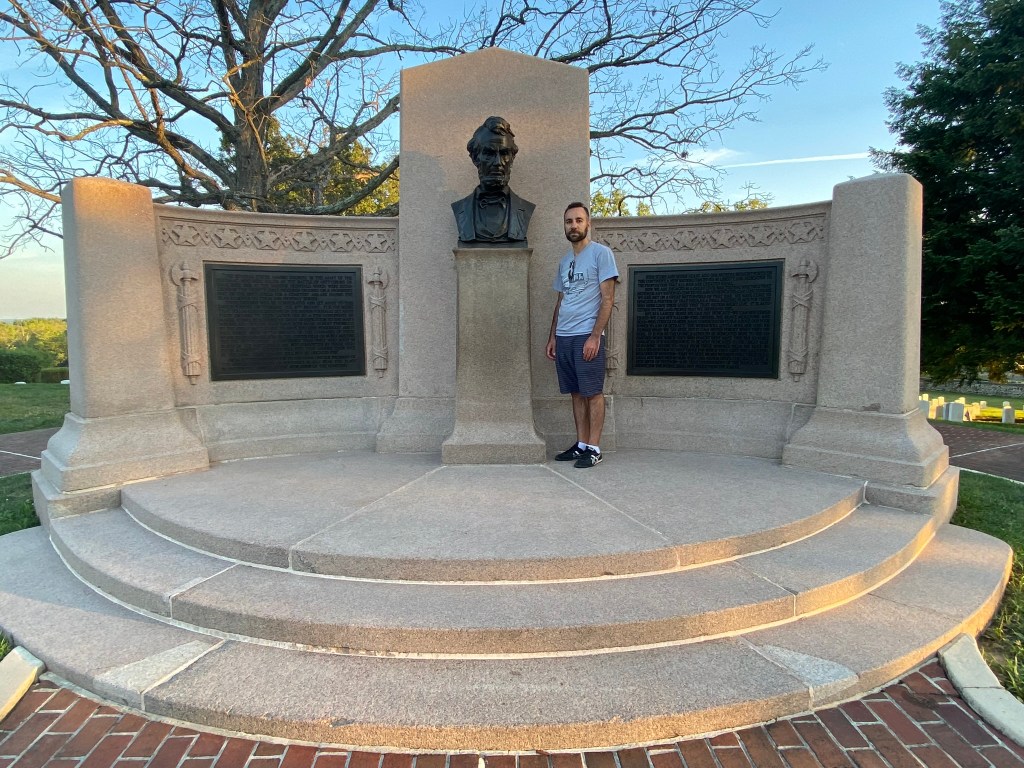
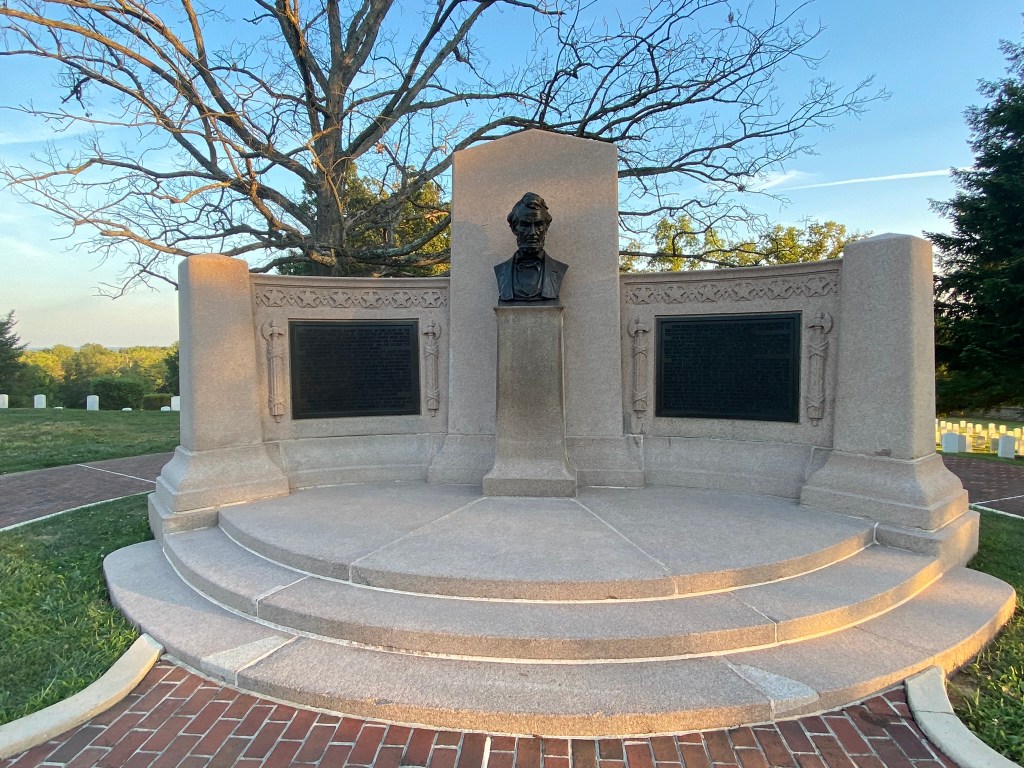
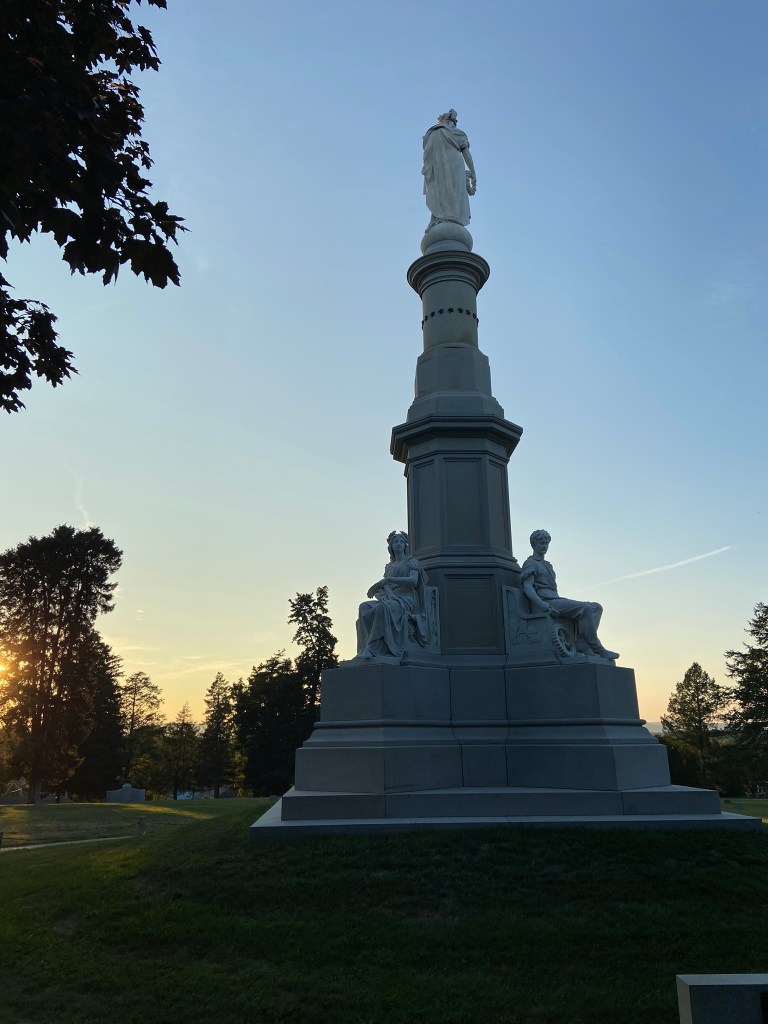
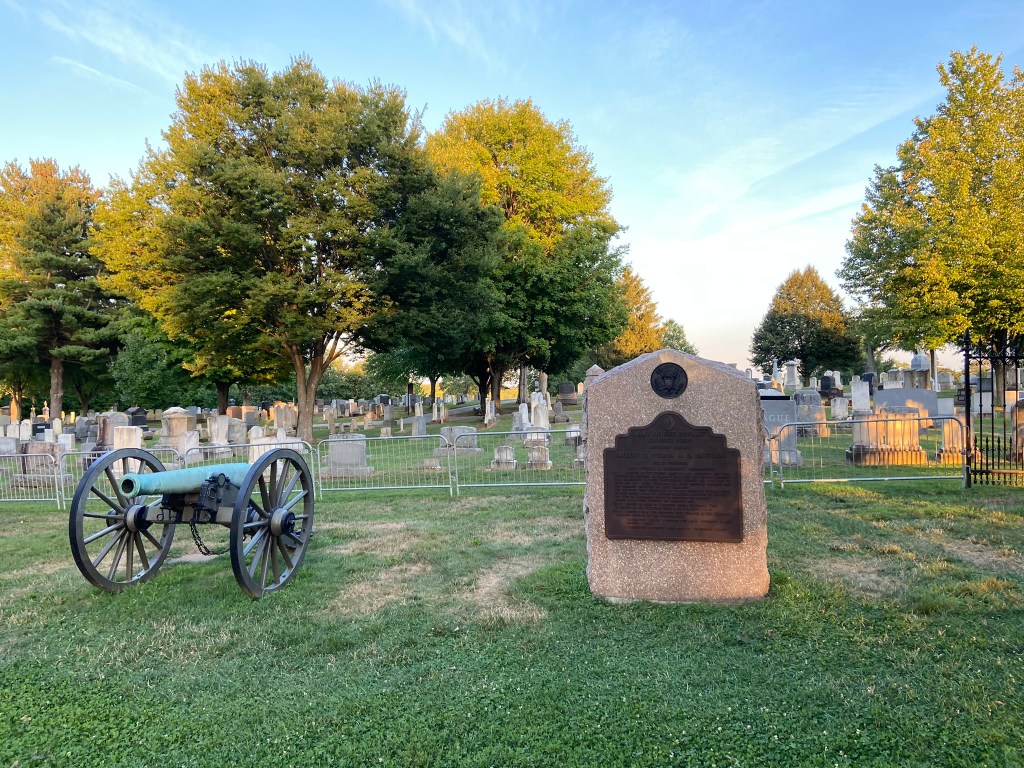
When we entered the cemetary, it was quite humbling to see all of the graves of the fallen victims, as well as the monuments in their honor. Also, listening to taps played in front of the Soldiers National Monument was surreal and quite moving. When finished, the family and I walked through the cemetary to the Lincoln’s Gettysburg Address Memorial, honoring the most powerful speech in American history. After visiting the memorial, we made our way out of the cemetary and towards our hotel for the evening.
In Part 2, I will focus on our next day and a half in Gettysburg, including our double decker bus tour of the battefield, our visit to the Gettysburg National Military Park and Museum, and a visit to the Gettysburg Museum of History. Read HERE.
In (Part 1) and (Part 2) of my blog post on the Lincoln Assassination, I discussed the assassin, John Wilkes Booth, and the events that unfolded on the evening of April 14, 1865. Part 3 will focus on the death of Lincoln and the widspread manhunt for Booth. I also ponder the question: What if Lincoln had lived?
After Booth shot Lincoln at 10:15pm at the Ford’s Theatre, he escaped out of a side door and mounted a horse for his getaway. At about 11:30pm, Booth met up with co-conspirator David Herold and headed south. They arrived at the home of Dr. Samuel Mudd whom examined Booth’s broken ankle. Once Mudd realized that Booth was a fugitive on the run, Mudd asked the conspirators to leave.
They then moved on as fugitives in hiding, making a couple of stops at the homes of Confederate sympathizers. (American Experience, PBS) Booth was able to get his hands on local newspapers. While he thought the country, especially the south, would be praising him, he found that the country was condemning him. Throughout his escape, Booth kept a journal and in it he wrote, “I struck boldly and not as the papers say… our country owed all our troubles to him and God simply made me, the instrument of his punishment.” (American Experience, PBS) Booth believed that the country would be singing his praise for his bold action. However, Booth discovered that not to be true.
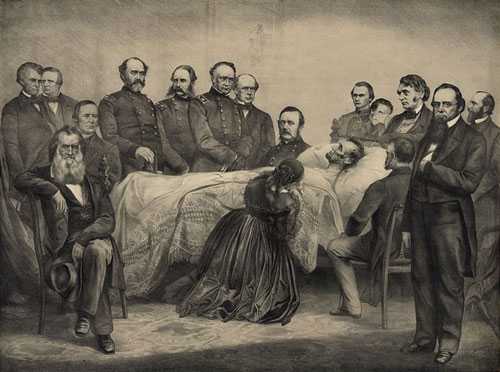
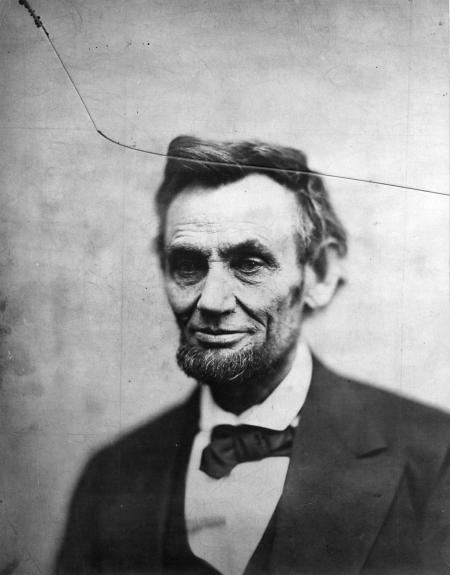
At 7:22 A.M. on April 15th, 1865, Abraham Lincoln died. Lincoln became the first president who was ever assassinated. After the war ended on April 9th, the Union had reason to celebrate. The bloody, four year struggle between the North and the South was finally over. Lincoln had succeeded in preserving the Union and issuing the Emancipation Proclamation. But now just a few days later, the country was mourning its fallen hero. The New York Herald said, “The sun set last night on a jubilant and rejoicing nation. It rose this morning upon sorrow stricken people.” (American Experience, PBS) The day after Lincoln died was Easter Sunday. Preachers around the country devoted their sermons to the memory of Lincoln. He was now seen as a martyr who died to unify the country. (American Experience, PBS) Besides mourning and grief, there was also anger in the North. Mobs formed in cities around the country showing rage and violence towards anyone who identified with the Confederacy or the Democratic Party. Most Southerners publicly expressed condolences, but privately did view Booth as the American Brutus that Booth believed he was. (American Experience, PBS)
By April 20th, 1865, most of the conspirators had been caught, but Booth and Harold were still on the run. The hunt for Booth became the largest manhunt in American history, with a reward of $100,000 for his capture. (American Experience, PBS) During the manhunt, Booth wrote that he’d been hunted like a dog through swamps and woods, “for doing what Brutus was honored for, and yet I, for striking down a greater tyrant than he ever knew, was looked upon as a common cutthroat.” (American Experience, PBS) In his writing, we again see that Booth considered himself a hero, and yet, the public only viewed him as the murderer of a great man.
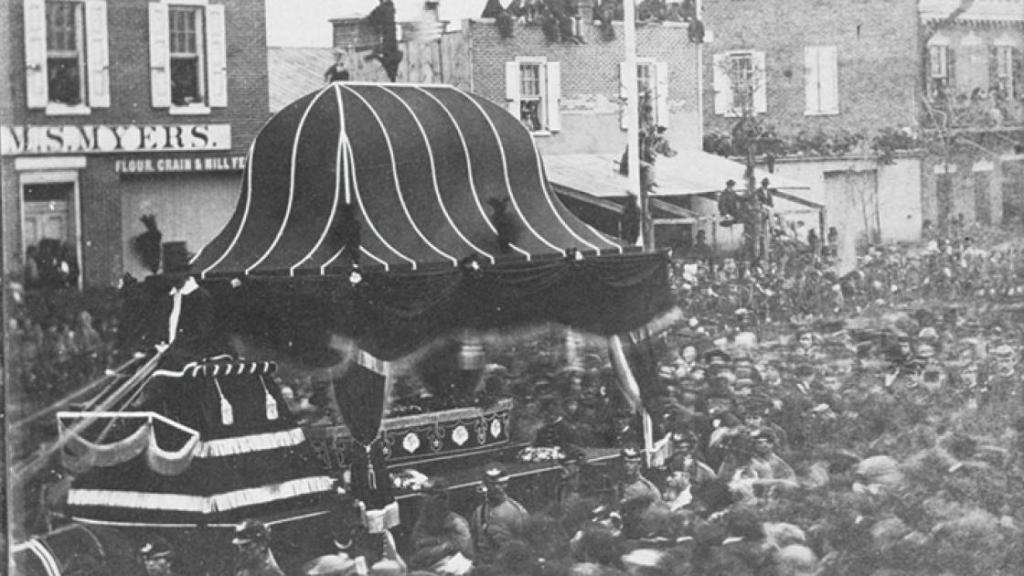
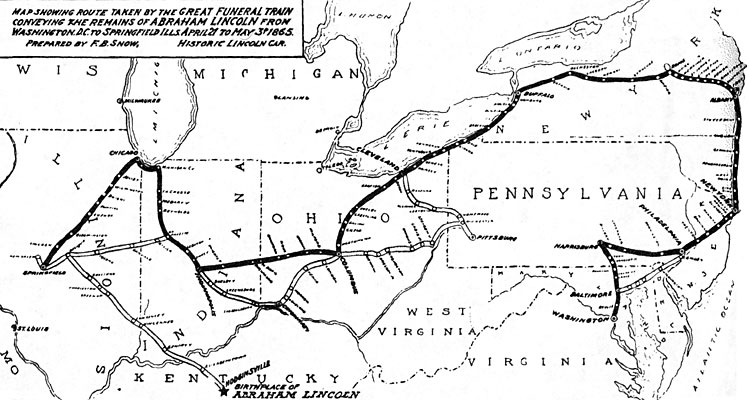
On April 21st, 1865, Lincoln’s funeral train, draped in black, departed from Washington. For 12 days, the train travelled over 1,600 miles to major cities around the country. Approximately 7 million Americans, almost a third of the Union’s population turned out to mourn their hero’s death. (McDougal, p. 371) As they mourned the death of Lincoln, they were also mourning for the lives of the hundreds of thousands lost in the war. The funeral train made its final stop in Lincoln’s hometown of Springfield, IL where he would be buried. (American Experience, PBS) Lincoln had become a larger than life folk hero after his assassination. People respected and honored him for the way he courageously carried the country through the most trying times. The weight of the country was on his shoulders and he ultimately became a martyr for the cause of union, democracy and freedom.
On April 26th, Union cavalry closed in on Booth and Herold at the Garret Farm in Virginia. The cavalry surrounded a barn where the two men hid. Herold surrendered but Booth refused. The cavalry set the barn of fire. As Booth tried to escape, he was shot by Sergeant Boston Corbett and died on April 26th, 1865. (American Experience, PBS) Booth is said to have whispered, “Tell my mother I died for my country. I did what I thought was best.” (McDougal, p. 370) Booth’s other conspirators were either sentenced to death or life in prison.
The manhunt was over. While the country was relieved that Booth was caught, they still mourned for the life of Abraham Lincoln. The country was never given an opportunity to see how Lincoln would have carried out the Reconstruction of the country. That task would fall into the hands of his successor, Andrew Johnson. Lincoln’s legacy and impact on the United States will always be in the minds and hearts of the American people. He preserved the Union and fought for the passage of the 13th Amendment which emancipated the roughly 4 million slaves in the country. When Lincoln died on April 15th, Secretary of War Edwin Stanton was by his side and stated the famous line. “Now he belongs to the ages.” (American Experience, PBS)
What If?
Sometimes I wonder, what if Lincoln lived to serve out his second term? How would history have played out differently? We know that the Reconstruction Era under his successor, Andrew Johnson, went terribly to say the least. Johnson was impeached and was constantly at odds with the Radical Republicans in Congress. Would Lincoln have gotten along with and agreed with the Radical Republicans in Congress about how to handle Reconstruction? Lincoln was more moderate than many of them with his Ten Percent Plan for allowing the former Confederate states back into the country. Would many of the Radical Republicans bend to some of Lincoln’s views? How would Lincoln have helped freed African Americans after the war? We know that Johnson did virtually nothing to help them. It’s likely that they would have gained more opportunities under the Lincoln administration. How would Lincoln have handled post-war challenges? We can only speculate that a character like Lincoln would have done a much more effective job of carrying the country through the challenges of Reconstruction. How would Lincoln have been remembered had he lived? We know in reality that he was viewed as a martyr who saved the Union and has always been ranked either the best or in the top 2 presidents of all time. He definetely would have been revered for what he accomplished but he wouldn’t have been elevated to the status of a martyr. Assuming he had an effective second term, we can assume he would still be ranked amongst the best presidents, but what if his second term didn’t go well? Where would he be ranked then? These questions can’t be answered with certainty but it’s always interesting to the ask the, “What If”? Any thoughts on the matter, please comment below.
In Part 1 (Read Here) of my blog post on the Lincoln Assassination, I discussed the assassin himself, John Wilkes Booth. In Part 2, I discuss the action that he took against our sixteenth president, Abraham Lincoln, at Ford’s Theatre.
On the morning of April 14th, 1865, John Wilkes Booth went to Ford’s Theatre to pick up his mail. A member of the theatre told him that Abraham Lincoln would be attending a play that evening. Booth now knew that he had about eight hours to plan his attack. (American Experience, PBS) Booth called his co-conspirators and decided that at 10:15pm, he would kill Lincoln at Ford’s Theater. At the same time, his co-conspirators would also kill Secretary of State William Seward, and Vice-President Andrew Johnson. (American Experience, PBS)
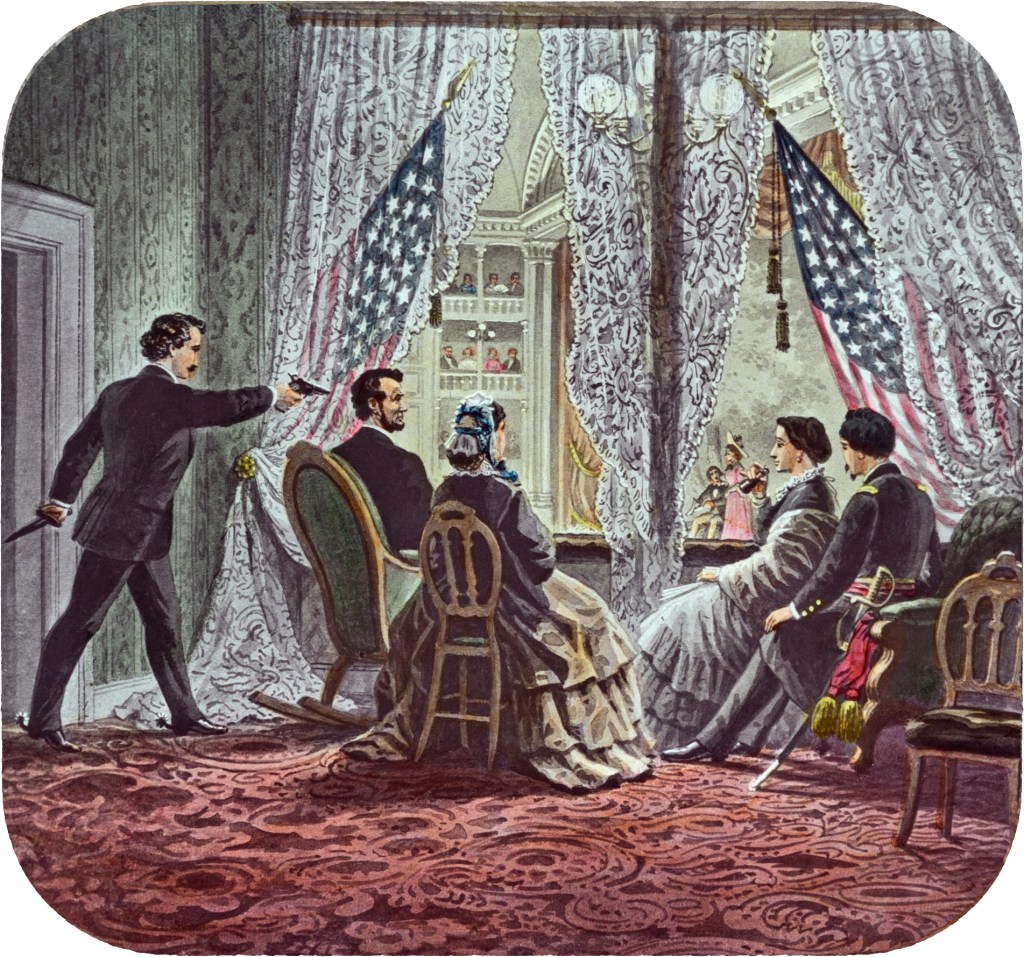
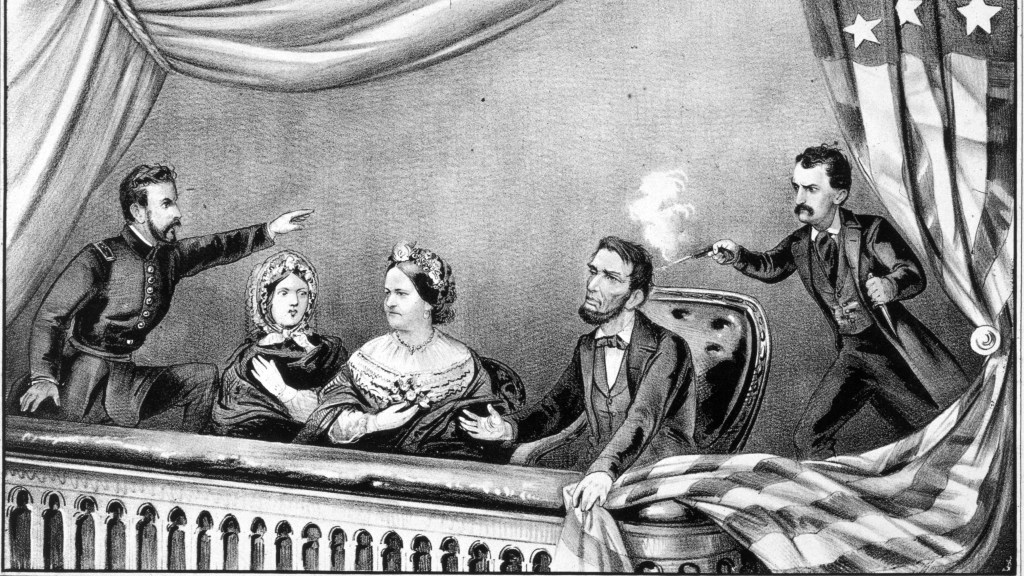
Abraham and Mary Todd Lincoln arrived at the theater at 8:30pm with Corporal Henry Rathbone and his fiancée Clara Harris, to see the British Comedy, Our American Cousin. (McDougal, p. 370). Booth knew the layout of Ford’s Theatre very well because he performed there many times. His last performance there was on March 18th, 1865. (battlefields.org).
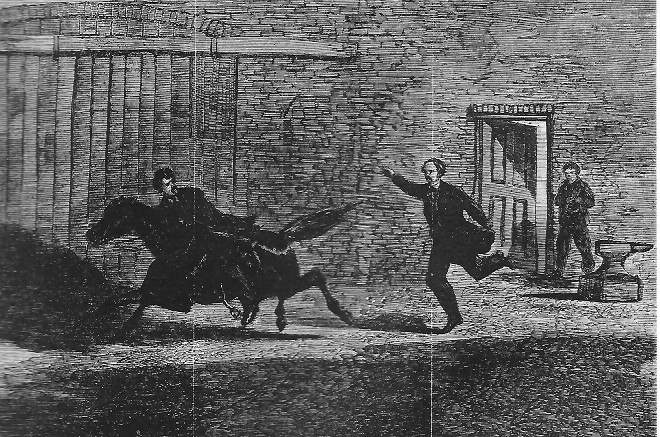
Booth was able to get inside the presidential box because Lincoln’s guard had left his post to have a drink at a local tavern. Booth waited for a part of the play that generated the loudest laughter. At that moment, Booth used his Deringer pistol and shot Lincoln in the back of the head. Corporal Henry Rathbone leapt to his feet and Booth used his dagger to cut Rathbone in the left forearm. Booth then leapt down to the stage and broke his left ankle. He yelled “Sic Semper Tyrannis!” which translates to “Thus always to tyrants!” The audience was confused at first, thinking this was part of the play. Then people started to realize that President Lincoln had been shot and Booth escaped out of a side door. Many people in the crowd had recognized Booth. (American Experience, PBS)
At the same moment that Booth killed Lincoln, co-conspirator Lewis Powell was sent to kill Secretary of State William Seward. Powell broke into Seward’s home, fought off guards and Seward’s sons, and attacked William Seward while in bed, already recovering from a carriage accident. Powell slashed Seward’s face with a Bowie knife. Seward lost so much blood and would be scarred for life, but he did survive. Powell was able to escape.
George Atzerodt was sent to kill Vice-President Andrew Johnson. As he neared Johnson’s residence, he lost his nerve and turned away. (American Experience, PBS) Back at Ford’s Theater, Lincoln’s body was taken across the street to the Petersen House, where he would spend his last agonizing hours. (American Experience, PBS)
Stay tuned for Part 3 which will focus on the death of Lincoln and the widespread manhunt for John Wilkes Booth. I also will ponder the question: what if Lincoln had lived?
Works Cited
Guttridge, Leonard F., and Ray A. Neff. Dark Union: the Secret Web of the
Profiteers, Politicians, and Booth Conspirators That Led to Lincoln’s Death.
Wiley, 2003.
Mcdougal, Holt. Americans, Grades 9-12 New Jersey: Mcdougal Littell the
Americans. Holt Mcdougal, 2007.
“John Wilkes Booth.” American Battlefield Trust, 14 Apr. 2020,
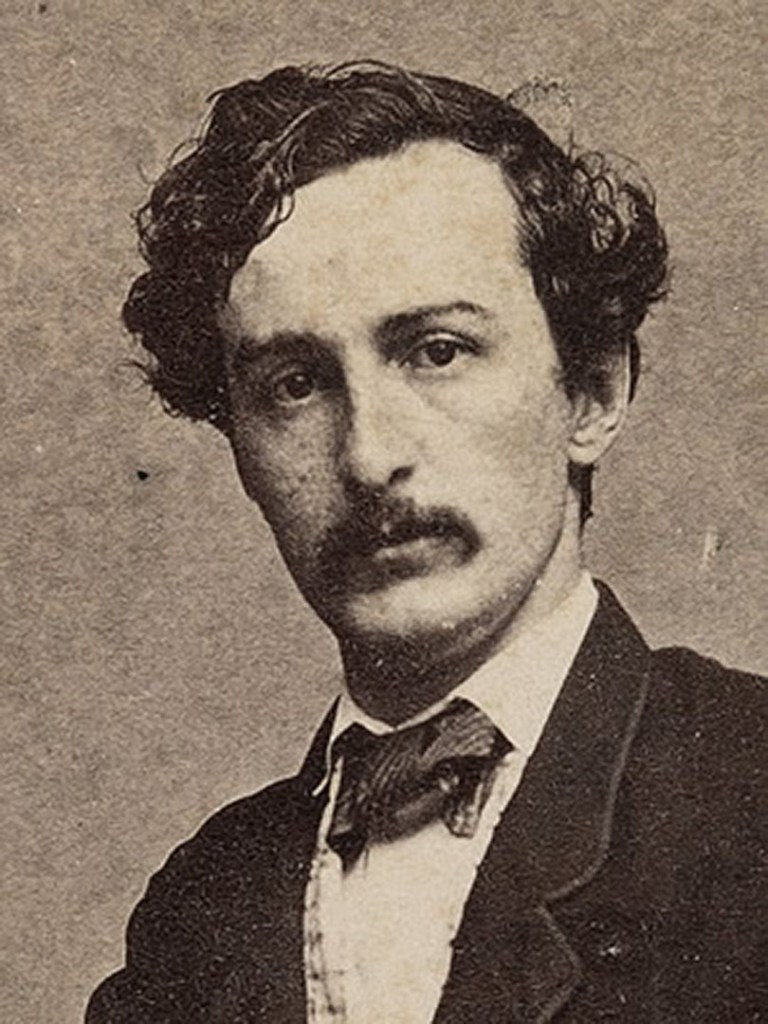
My next three blog posts will focus on the assassination of our sixteenth President, Abraham Lincoln on April 14, 1865. In Part 1, I’ll discuss the assassin, John Wilkes Booth. Later posts will focus on the assassination itself, as well as the aftermath.
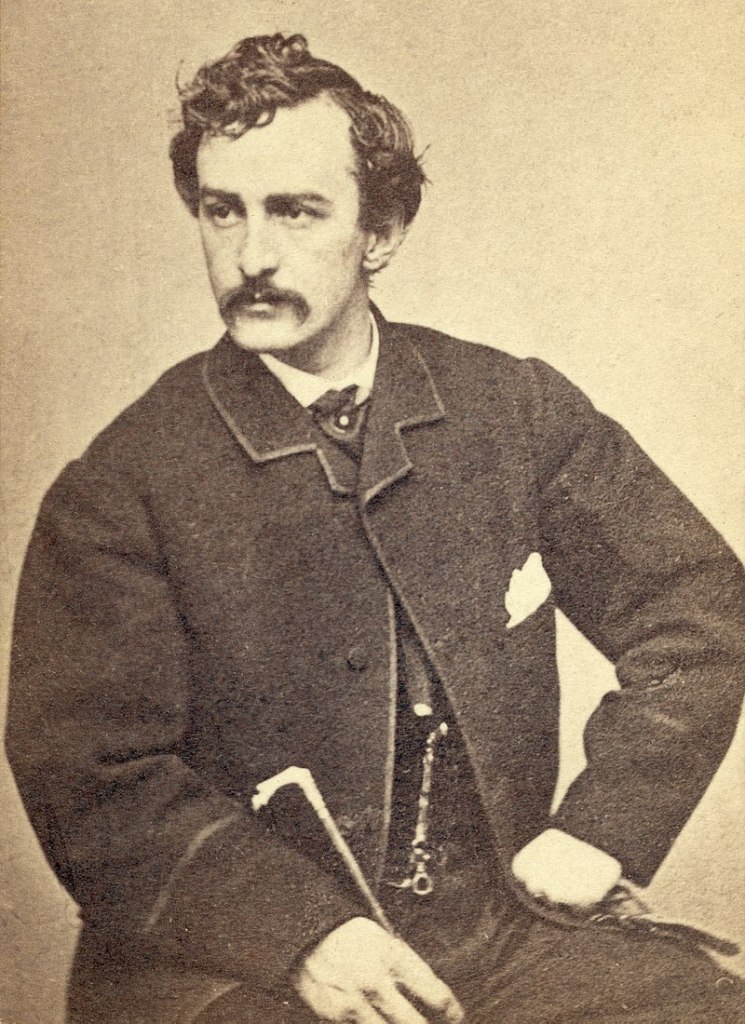
John Wilkes Booth was born in 1838 and raised on his family farm in Maryland. John, like his father Junius, was a famous, wealthy and adored actor. He performed in plays all along the East Coast, including at the Ford’s Theatre in Washington D.C. He was a Southern and Confederate sympathizer who grew to hate Abraham Lincoln. While John identified with the South and the Confederacy, his brother Edwin Booth, also a famous actor, identified with the North and the Union, causing division in the Booth family. John Wilkes Booth once wrote, “my soul, life and possessions are for the South.” (American Experience, PBS) John, like many Southerners, had a hatred for the Northern abolitionists, and the anti-slavery Republican Party. He justified his hatred by claiming that Abraham Lincoln was a tyrant who was responsible for destroying the South. He was only twenty-six years old on the day that he took Lincoln’s life. Booth sacrificed his greatness as an actor for a cause that he held dear. He viewed his action against Lincoln and his dramatic escape as his last great “performance.” (American Experience, PBS)
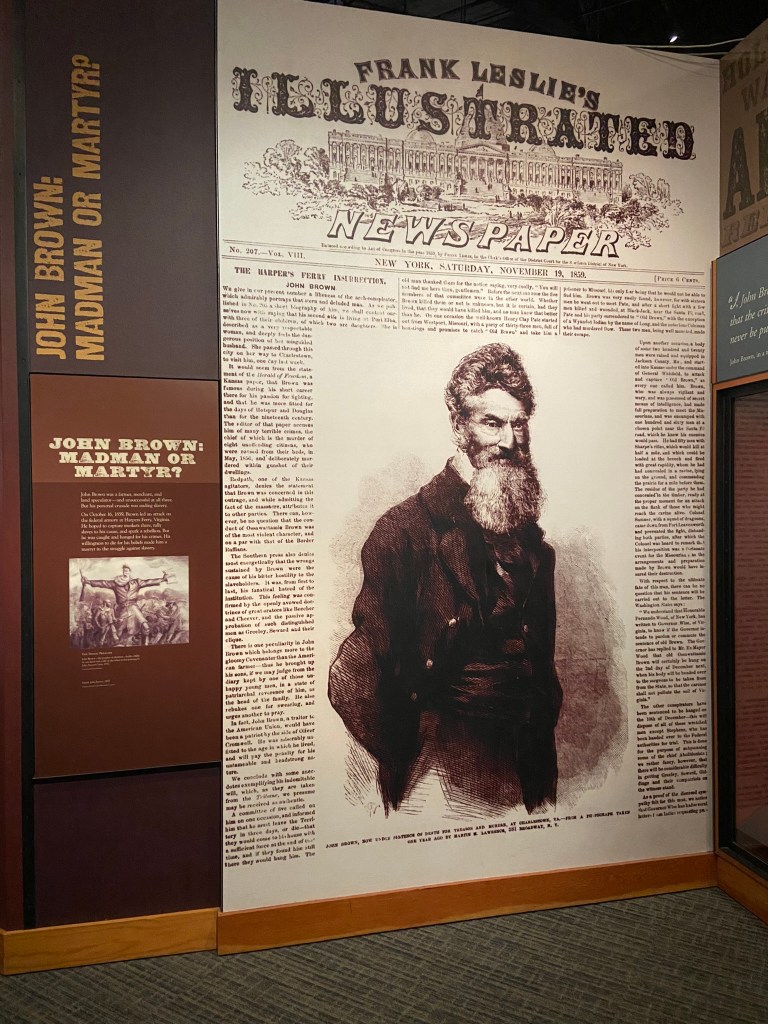
Booth, as an adult, spent most of his time in Richmond, Virginia. He viewed the South as an ideal, pure society. He did not view slavery as an evil and he even claimed it was God’s blessing. (American Experience, PBS) Booth believed that the Northerners were splitting the country apart, and he despised the anti-slavery movement. (American Experience, PBS) In 1859, Booth joined a local militia unit so he would be able to travel to witness the execution of John Brown, a radical abolitionist who attempted to start a slave uprising at Harpers Ferry, VA. (battlefields.org) The election of Republican candidate, Abraham Lincoln in November 1860, enraged millions of southern sympathizers, including Booth. After the election, Booth wrote a speech that he never had a chance to deliver, but gives us a window into his thoughts. Booth was disturbed by the division of the country and blamed Northern fanaticism. He argued that the South wanted justice and would wait no longer to achieve it. (American Experience, PBS)
Booth despised Lincoln for many of the reasons that other Southerners did. They viewed Lincoln as a man who wanted to end slavery and crush the Southern way of life. As a result of Lincoln’s election, southern states seceded from the Union to form the Confederacy, which Booth supported. During the Civil War, Lincoln instituted acts that were viewed as tyrannical from the Southern perspective, such as his suspension of a Writ of Habeas Corpus, shutting down newspapers, and censoring speech. (American Experience, PBS) Like Brutus who assassinated Julius Caesar, Booth believed that he needed to change the course of history and be lifted up to immortality. (American Experience, PBS)
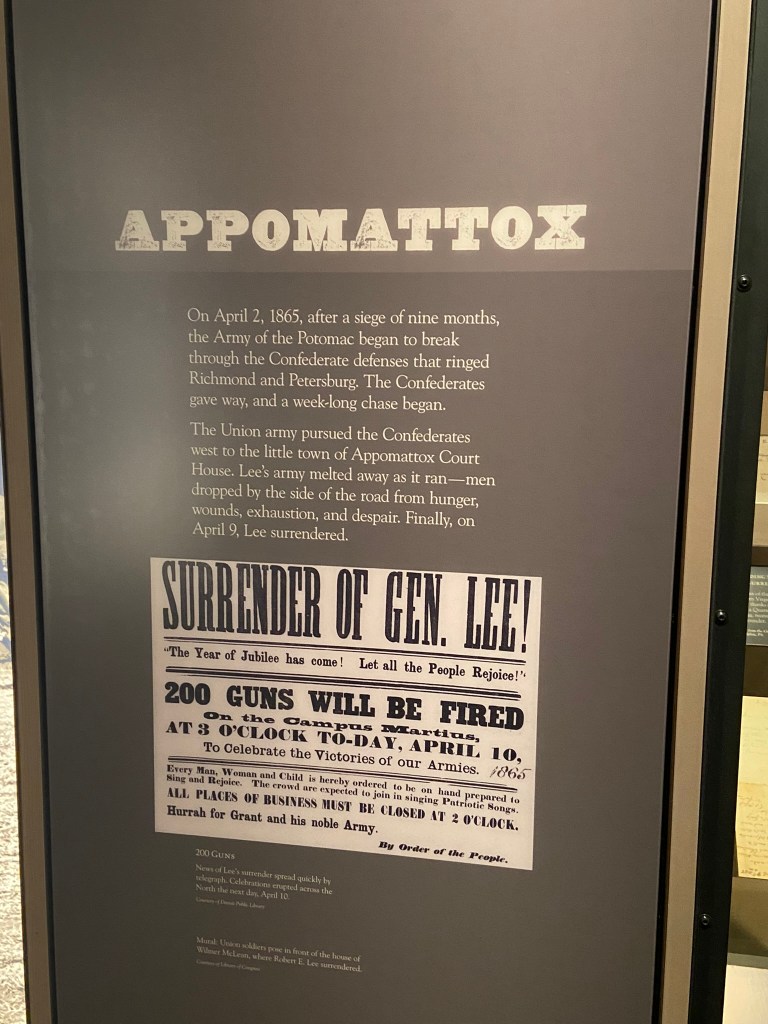
After four long years of bloody war, Lincoln won his second election in 1864. Booth knew that Lincoln would prosecute the war to its end, and serve another four years in office. Southerners believed that Lincoln was going to use the war to destroy the south and eliminate their customs and culture. (American Experience, PBS) Booth and other co-conspirators worked underground for the Confederacy in Northern territory. The conspirators included John Surrat, George Atzerodt, David Herold, Lewis Powell, Samuel Arnold, and Michael O’Laughlen. Their goal was to “strike a blow at tyranny” and kidnap the President, hold him hostage in the Confederacy and use him for prisoner exchanges. (Guttridge and Neff, p. 53) On March 4, 1865 Lincoln gave his Second Inaugural Address. In the crowd was John Wilkes Booth, seething with anger. When Booth presented his plan to kidnap Lincoln from Ford’s Theatre, his co-conspirators believed that his plan was flawed. (American Experience, PBS) By the end of the Civil War, Booth felt that his world and everything he held dear had been crushed and humiliated. (American Experience, PBS) After the Confederate surrender at Appomattox Court House on April 9th, 1865, Booth began to think of a plan that was even more cruel, one that would punish the North…
Stay tuned for Part 2, in which I’ll discuss the assassination at Ford’s Theatre.
Works Cited
Guttridge, Leonard F., and Ray A. Neff. Dark Union: the Secret Web of the
Profiteers, Politicians, and Booth Conspirators That Led to Lincoln’s Death.
Wiley, 2003.
Mcdougal, Holt. Americans, Grades 9-12 New Jersey: Mcdougal Littell the
Americans. Holt Mcdougal, 2007.
“John Wilkes Booth.” American Battlefield Trust, 14 Apr. 2020,
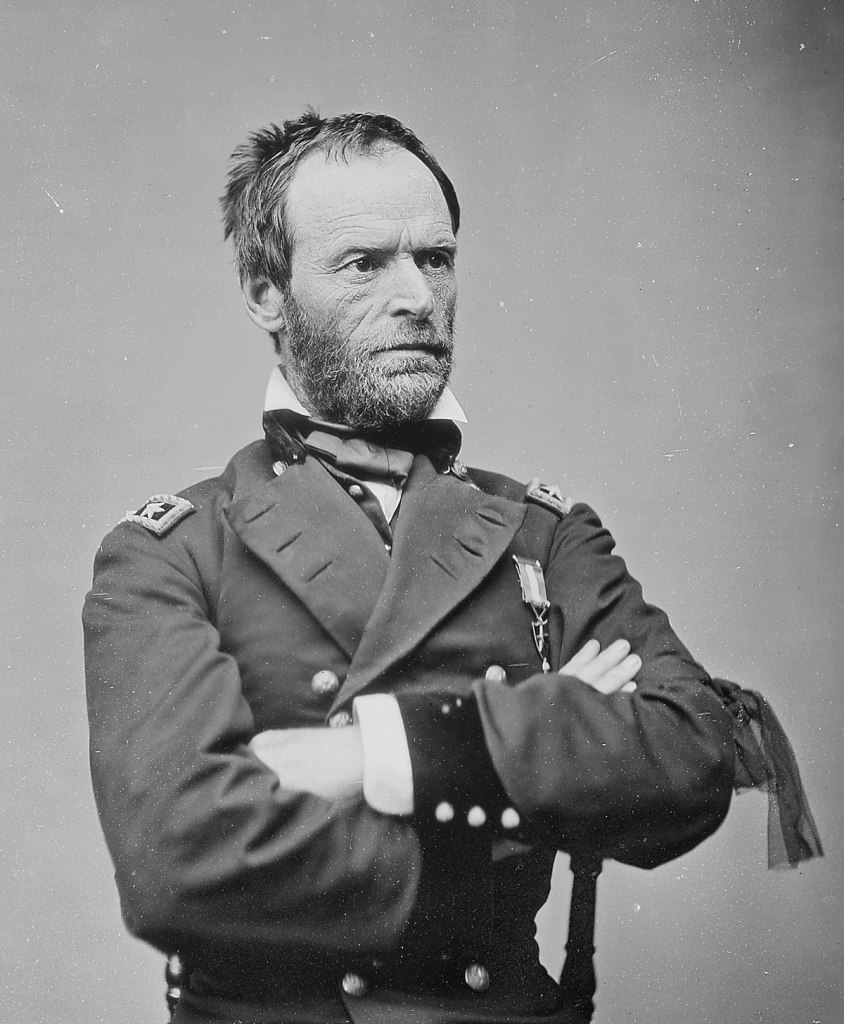
In my previous two blog posts, I highlighted Union Generals, George B. McClellan and Ulysses S. Grant. In this third and final post, I highlight Union General William T. Sherman as a Civil War general. I use six words to describe Sherman and provide an explanation for each. I also explain Sherman’s impact on the Civil War.
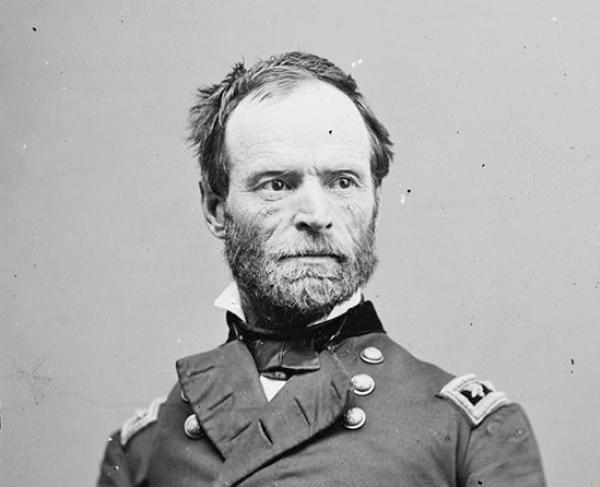
William Tecumseh Sherman
a. Aggressive– William Tecumseh Sherman knew that the only way to bring about the end of the Civil War, was to carry out a “total war”, bring the war to the citizens. This meant destroying cotton fields, livestock and infrastructure. He reasoned that the citizens kept the war going by producing weapons, growing food and transporting goods on which the armies relied. By bringing the war to the people, they would lose the will to fight. This was an aggressive stance by Sherman, but he believed that this would end hostilities.
b. Ruthless– Many believed that Sherman was ruthless, especially those in the South. His scorched-earth “March to the Sea” from Atlanta, Georgia to Savannah, and then up through the Carolinas, was seen by many as being too harsh on the South. He damaged many people’s homes and farms and left a wide path of destruction. He is quoted as saying, “We cannot change the hearts and minds of those people of the South, but we can make war so terrible… and make them so sick of war that generations would pass away before they would again appeal to it.”
c. Daring– By carrying out “Sherman’s March” he made a daring move. He would leave all supply lines, and his men would live off of the land. This was an extremely risky undertaking and could have gone horribly wrong. But as Sherman predicted, his march broke the back of the Confederacy. He showed that he was willing to take risks to complete his goals.
d. Unwavering– Sherman showed many times throughout the war that he was unwavering. He had a goal in mind and was steady in achieving it. In 1864, he had the objective of capturing Atlanta. Sherman had to settle in for a siege and made many attempts to seize railroad and supply lines leading to Atlanta. He stood the course and after a couple months, Atlanta finally fell in September 1864. Like his friend, Ulysses S. Grant, Sherman would not give up until victory was achieved.
f. Strategic– Sherman devised strategic plans to achieve his goals. As a commander, his plans ended in success. His strategy to take Atlanta as well as his “March to the Sea” ultimately achieved the goal of bringing the war closer to an end. When discussing his March to the Sea, many other commanders spoke against the plan. However, Sherman knew that his strategy would devastate the South and cause Southerners to turn against the war. History shows that Sherman was correct.
e. Charitable – Sherman’s military campaigns in the south and west freed tens of thousands of slaves who joined his march. Shortly before the end of the war, he promised the freed slaves who followed his army 40 acres of land per family and the use of army mules. Soon, about 40,000 freed persons settled on land in coastal Georgia and South Carolina. Later, however, the US government did not follow through on Sherman’s ideas of 40 acres and a mule.
William Tecumseh Sherman became one of Lincoln’s most trusted generals and he helped bring about the end of the Civil War. Sherman found success as a military commander in the west with Grant. He played an integral role in the Battles of Fort Henry, Fort Donelson, Vicksburg, and Chattanooga. When Grant was named the head of all Union armies, Sherman became the commander of the Western Theater. In the first half of 1864, Lincoln’s chance of winning re-election was questionable. The war was not going well, and his critics challenged his leadership. Northerners were losing faith in the war effort, and the Democrats’ platform called for a truce with the Confederacy. However, when Sherman captured the strategic transportation hub of Atlanta in September 1864, the tide turned. The North regained hope in the Union war effort and the people elected Lincoln as President to continue the war until victory was achieved. After Sherman’s March, he continued to head North in early 1865 to help Grant who was bogged down with Lee’s army in Virginia. The end was near, as the Confederacy surrendered in April 1865.
In my previous post, I highlighted Union General, George B. McClellan. In my second of three blog posts, I will highlight Civil War General, Ulysses S. Grant. Below are six words that describe Grant as a general, and an explanation for each word. To close, I explain Grant’s impact on the Civil War.
Ulysses S. Grant
a. Courageous– Grant showed his tremendous courage throughout the war. At the Battle of Shiloh, his men got pushed back on the first day of the battle. Many other generals would have retreated. Grant would not. He prepared an attack for the next morning and was able to drive the Confederates away from the field. Grant continuously made courageous decisions. He was never willing to give up or retreat. He only wanted to press on.
b. Determined– Grant was always determined to complete his mission to the bitter end. At the Siege of Vicksburg, Grant attempted two frontal assaults. When those failed, Grant settled in for a long siege. Although he’d prefer a quick victory, he was always willing to try a Plan B in order to accomplish the goal. He stayed determined and had to be patient many times in the war. Grant became the most successful Union general because he was always willing to push forward. Eventually Vicksburg fell to the Union.
c. Tactician– Grant was a great military tactician. He was able to read the enemy’s positions, and call up an effective strategy. Whether that meant attacking the enemy head on, outflanking the enemy, or settling in for a siege, Grant had a knack for knowing what strategy would work best for the given circumstances. He used his reinforcements and reserve troops wisely.
d. Tough– When times became difficult for his Union army, Grant was always tough enough to keep fighting. Unfortunately for the Union, many generals did not have the same characteristics as Grant. During the Overland Campaign, Grant lost many men fighting against Lee’s army. However, Grant knew that the only way to win the war, was to completely destroy Lee’s army. While some in the newspapers and the public were calling Grant a “butcher,” Grant knew he had to be tough enough to keep fighting and win a war of attrition.
e. Calm– The only way to make tough decisions in the heat of the battle was to have the calm demeanor of Grant. He never wavered. He made clear-headed decisions in some of the most trying times. Grant was able to keep his composure and remained calm when he gave orders to his men.
f. Decisive– In the moment by moment developments of the battle, Grant was always clear and decisive with no hesitation. He made a decision and carried out the plan that best suited his circumstances. Some previous Union commanders were quite the opposite, were very indecisive about what their next move should be, or whether or not they should attack or use troops held in reserve. Grant, on the other hand, did not waste time considering his next move. He was quick to act and was always pressing the enemy.
In Grant, Lincoln found the right man to lead the Union army. Grant ultimately saved the Civil War. In the first half of the war, the only successes that the Union was having was in the Western Theater of the war, thanks to Grant. While the war effort was going poorly in the East, Grant won the Battle of Fort Henry and the Battle of Fort Donelson in 1862 in Tennessee. He then won a strategic, although deadly, Battle of Shiloh. Once Lincoln went through many generals in the East, he eventually knew that Grant was the only General who could save the War. Lincoln made Grant the head of armed forces, and he took command of the Union army against Lee’s army. Grant was the only general, up to that point, who was aggressive enough to do so. Although he had to throw many men into battle at a high human cost, he knew that the only way to win the war was to outlast Lee, and ultimately destroy Lee’s army. In the later phases of the war, Lincoln and Grant became very cordial. They agreed on the same strategies and they forged a bond which helped the war effort. Finally, at Appomattox Court House, Grant gave favorable terms of surrender to Lee, just as Lincoln had hoped.
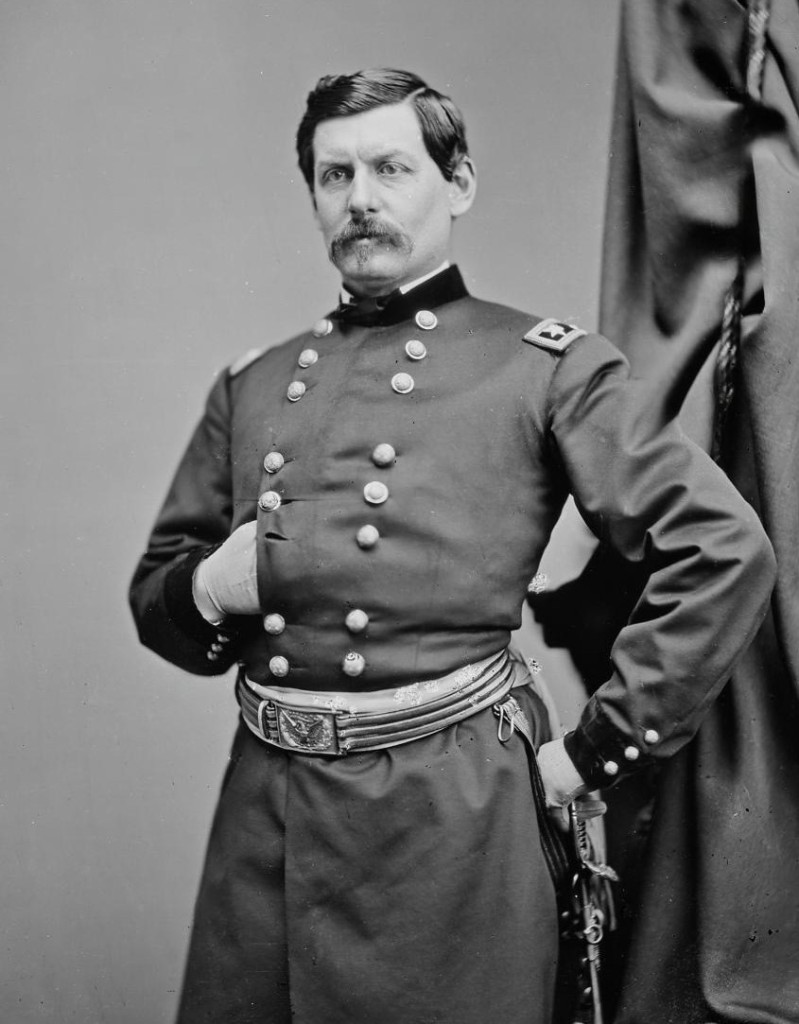
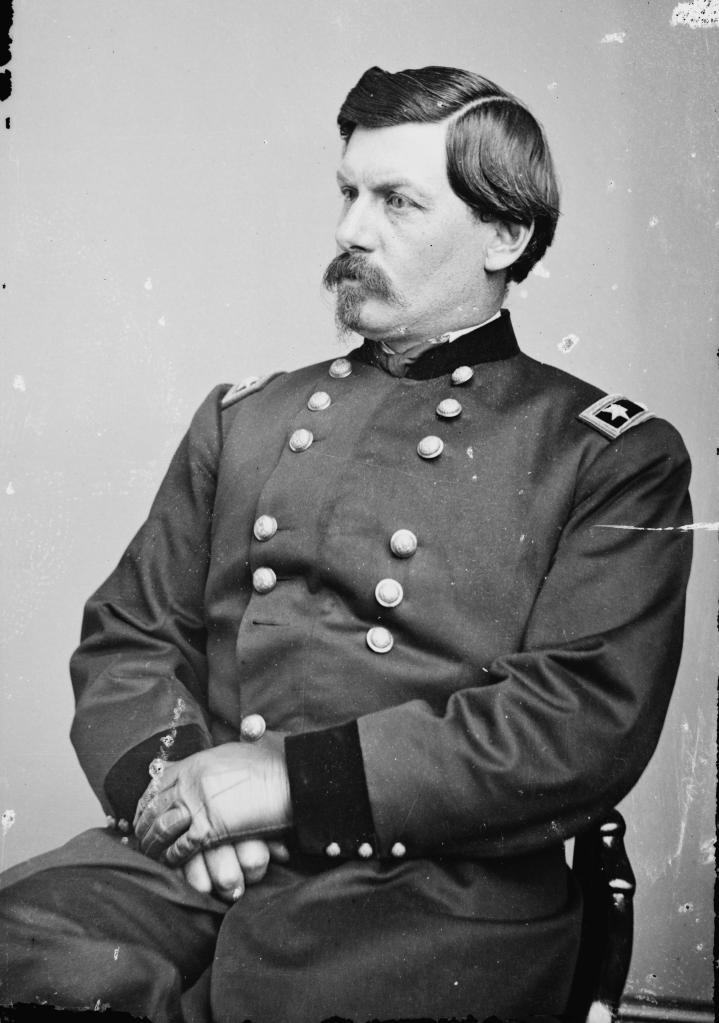
In my next three blog posts I will highlight a Civil War Union General who Abraham Lincoln put his trust in to lead the Union army. I will focus on George B. McClellan, Ulysses S. Grant, and William T. Sherman. For each general, I will use six words to describe them as a general. I will then elaborate on the word chosen. To close, I will explain the general’s impact on the Civil War.
George B. McClellan
a. Administrator– McClellan was known for being a good administrator and his soldiers admired him. At the start of the war, he played an important role in raising an organized and well-trained army, which would become known as the Army of the Potomac.
b. Cautious– McClellan always believed that the Confederate army was larger than it was. He often believed that he needed more men and frequently asked for reinforcements, and therefore, he was overly cautious. At the start of the war he complained that he needed 270,000 soldiers when he had 120,000. McClellan worried too much about what the enemy might do. At Antietam, his subordinates urged him to send in reserve troops, but McClellan would only do so if it was absolutely necessary. McClellan missed opportunities to give a decisive blow to the enemy.
c. Hesitant– McClellan often believed that he was not given the proper resources to conduct a campaign. He complained of not enough men and not enough supplies. Because of this hesitance, his first campaign, the Peninsula Campaign, did not begin until March 1862, nearly a year after hostilities had begun. The newspapers, as well as Lincoln became very impatient with McClellan. Lincoln is quoted as saying that he would like to “borrow McClellan’s army if the general himself was not going to use it.”
d. Selfish– McClellan spoke negatively about Lincoln and other politicians in the Congress and the Cabinet, and even looked down on the President as someone with no military experience. He thought they were ignorant to the real needs of battle, while he, on the front lines, did not have the resources to attack. While everyone was pushing for McClellan to attack the Confederate army, McClellan didn’t listen. He seemed to care more about his own personal success than the success of the army, and he feared losing. After his failure to attack Lee’s retreating army at Antietam, McClellan believed that his actions during the battle were a “masterpiece of art.”
e. Paranoid– McClellan often believed that Lincoln and other politicians who were frustrated with him were talking behind his back, and trying to get him removed from his command. In a letter, he even called Lincoln, “nothing more than a well-meaning baboon…” His paranoia on the battlefield left him at a mental disadvantage. McClellan’s fear of failure hindered his ability to succeed militarily.
f. Indecisive– During the Seven Days’ Battles (June- July 1862), Robert E. Lee took over Confederate command and was much more aggressive than the previous Confederate General, Joseph E. Johnston. Lee so unnerved McClellan that he retreated back down the peninsula to the sea. McClellan again showed his indecisiveness at the Battle of Antietam. Although this was a Union victory, McClellan never ordered an attack during Lee’s retreat even though he greatly outnumbered Lee’s army. This infuriated Lincoln, and McClellan was fired in November, 1862.
George B. McClellan was a hindrance to Lincoln and the Union war effort. At the start of the war, Lincoln chose “The Young Napoleon” because McClellan had proven himself at West Point and the Mexican-American War to be an outstanding field commander. However, McClellan’s cautiousness led Lincoln and McClellan to be constantly at odds with one another, and they grew to distrust each other. This only created more stress for the Commander-In-Chief and the Northern newspapers. There were even rumors that McClellan was working for the Confederacy. While McClellan was at the head of the army, the Union Army of the Potomac faced set-back after set-back. The war in the Eastern Theater was going so poorly that Northerners were losing faith in the Union War effort. After Antietam, Lincoln removed McClellan from command and he would not lead a Union army again. He continued to be a hindrance to Lincoln by running as a Democrat in the 1864 Presidential Election. Although Lincoln was the victor, McClellan may have sought to make peace with Confederacy had he been elected President.
One of my favorite thought exercises when reading and teaching history, is the ‘what if’. What if events had gone differently than they actually did? Many people think that history was a series of inevitable events that brought us to the present day. But that simply is not the case. One minor aspect of an event or battle could have gone differently and changed the course of history. The Americans winning the American Revolution or the Union winning the Civil War were not foregone conclusions at the start of the conflicts.
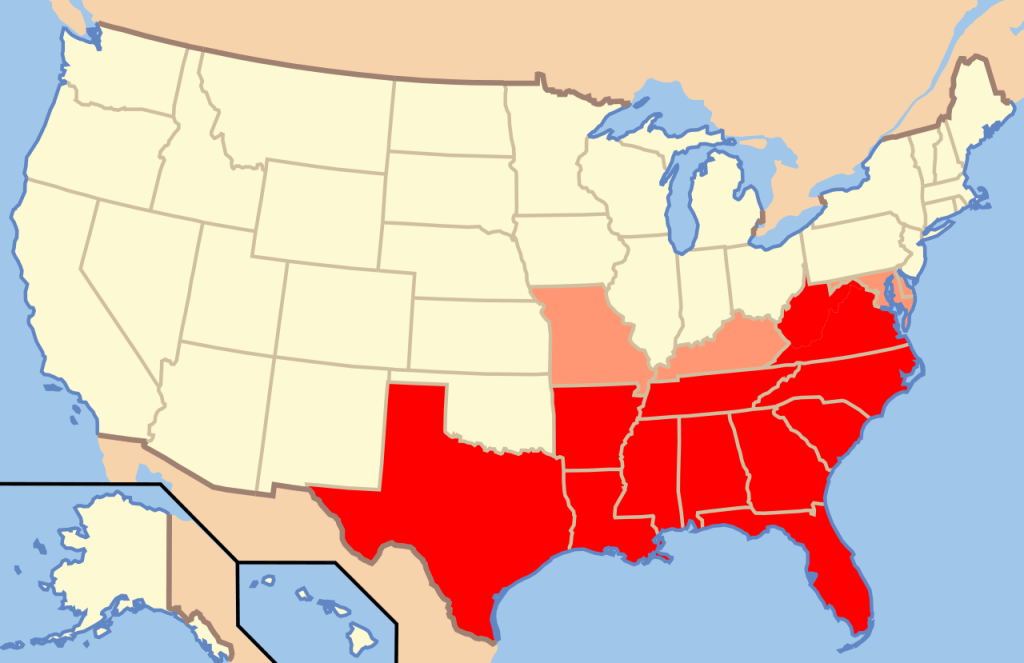
What if the Confederacy had won the Civil War? They definitely had an opportunity to do so, even though the Union was by far the favorite to win at the start of the conflict. The North had four times as many free citizens, produced 90% of the nation’s manufactured goods, had 70% of the nation’s railroads, and a greater food supply. If this war happened today, Vegas would be betting on the North at the start of the conflict. However, the South had some advantages too. They considered this a fight for their independence, a fight to defend their homeland, and a fight to defend and hold onto the institution of slavery. They had greater motivation to fight. Many of the best generals in the country were from the South.
There were two major moments in the war in which the Confederacy had an opportunity to strike a blow to the Union. The first instance came in the late summer of 1862. When command of the Confederate army fell to Robert E. Lee, he was able to win a string of impressive victories in the Seven Days Battles, and the Second Battle of Bull Run. Lee was confident enough to attempt to invade Northern soil. His goal was to win a major victory in the North, and turn Northerners against the war. He reasoned that if Northerners voted Peace Democrats into Congress, they would push to end the war, and the Confederacy would be independent.
The major battle that Lee hoped to win was the Battle of Antietam in Maryland. Though nearly a stalemate in number of casualties, the Confederacy was forced to retreat. Antietam was the deadliest one-day battle in American history with total casualties at 22,720.
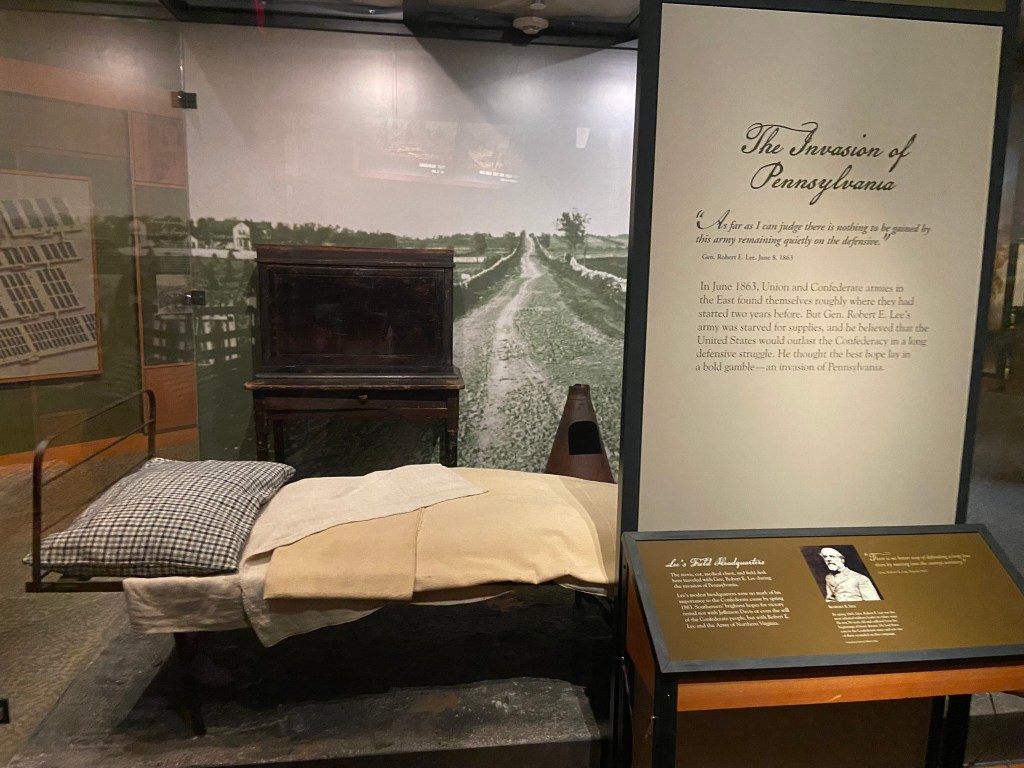
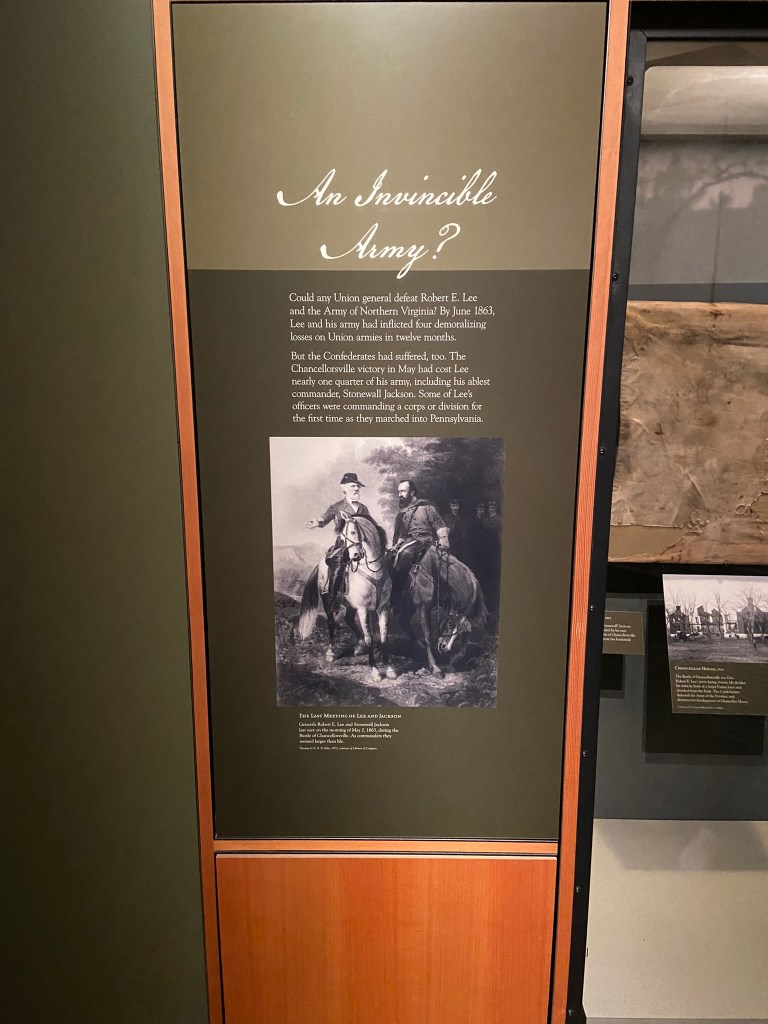
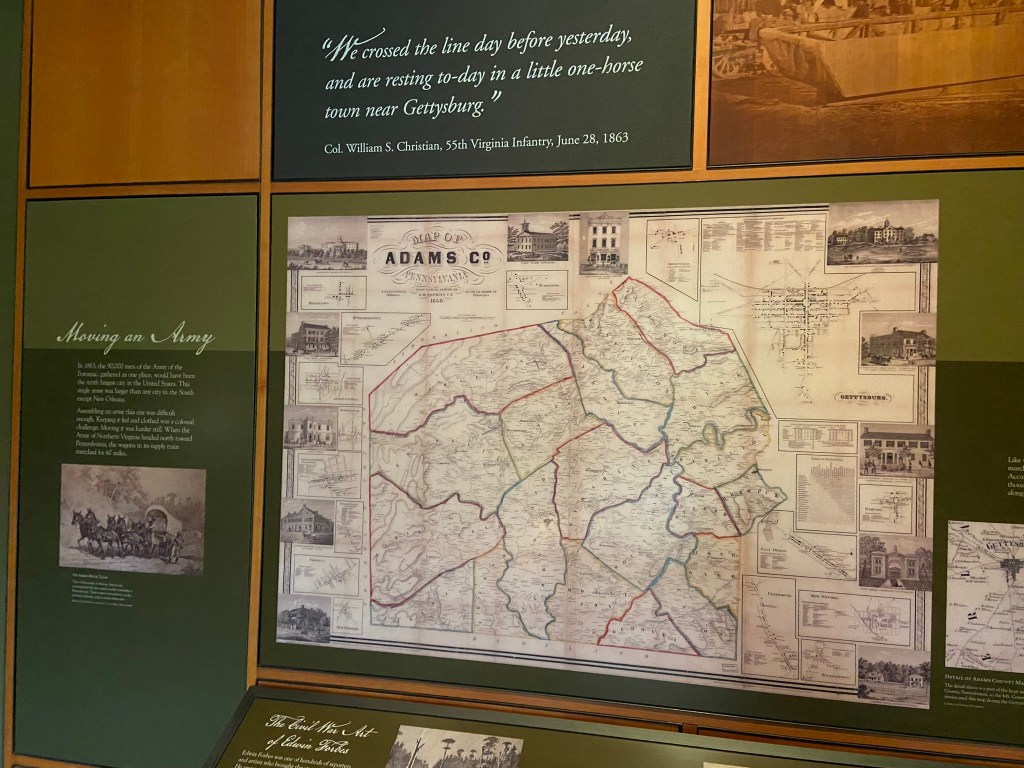
The Confederacy’s second opportunity to strike a blow to the Union was the following summer of 1863. Once again Lee and the Confederates won a series of remarkable victories including at the Battle of Chancellorsville in May 1863. Despite this victory, the Confederates lost one of their best generals in Stonewall Jackson. Had Jackson been a part of the Battle of Gettysburg two months later, the course of the battle may have turned out differently. After Chancellorsville, Lee was feeling invincible and decided to invade the North once again. The ramifications of such a Confederate victory could not be understated. His goal once again was to make Northerners so sick of the war that they would turn against the war effort and push for peace. Lee decided to invade Pennsylvania. But like Antietam, the Battle of Gettysburg was a Union victory because the Confederates were forced to retreat from the battlefield. While both sides had staggering losses, the Confederacy was not able to replace their losses. Gettysburg was the deadliest battle of the war. The Union had 23,049 casualties, and the Confederacy had 28,063 casualties. The twin victories at both Gettyburg and Vicksburg, Mississippi, are considered a turning point in the war. Even though the war continued for almost two more years, the Confederacy could not fully recover and did not again attempt to invade the North.
But what if the Confederacy had won a decisive victory at Antietam or Gettysburg? While the Union had a larger army in both battles, it is quite possible that the Confederacy could have won either of these battles, especially with the confidence of Lee and his army. Lee had defeated larger Union armies time and time again. If the Confederates had won either battle, they could have continued marching North, possibly winning other battles on Northern soil. And like Lee had hoped, it is reasonable to believe that Northerners could have turned against the war. They might have considered it not worth it to keep fighting to keep the Southern states in the Union. While they probably would have been bitter about a loss, they may have decided that it would be better to let the Southern states become their own independent country.
Had the confederacy won the war, would other foreign countries have recongized the Confederate States of America as an independent and soverign nation? While some countries would, I think the major countries around the world would not have, at least at first. Countries like Great Britain and France had strongly opposed the institution of slavery by 1861. The Confederacy was hoping to gain recognition from these countries throughout the war, but they refused. I think they would have stuck to their instincts and not recognized a nation that was still relying on slave labor. I also think the United States would have intimidated these countries not to recognize the Confederacy. A major question though, is how long would they not recognize the Confederacy? Would they have continued to not recognize the Confederacy for years or decades? It seems possible that these countries would have had internal debates. Do they recongnize a country that maintains slavery even if the Confederacy itself is friendly and is willing to trade? I think major countries would continue to not recognize the Confederacy as a separate, soverign nation because they didn’t want to be allied with a country that practices slavery.
Would the United States and the Confederacy have gotten along? Simply, I don’t think so. There probably would be some debate in the U.S. government about how to approach and deal with the Confederate States of America. I suppose there would be some who would see the benefits of friendly trade relations with our neighbor to the South. However, I think the relationship between the U.S. and the C.S.A. would be tense in the long-term. I think most members of the U.S. government would not want to recognize the C.S.A. as an independent, soverign nation for the same reasons as other foreign nations, not wanting to be associated with the institution of slavery. They would feel animosity towards the country that fired the first shots of the Civil War. Because of these tensions, there’s a strong possibility that there would have been border conflicts out west as the two countries continued to expand. I think at some point there would be another armed conflict between the two countries. I’m not sure when that would happen but my guess would be by the end of the 19th century. If armed conflict did break out, the United States would have to decide if it was worth the effort to try to win back the South. This would depend on the size and might of the two opposing countries at that time. If the United States had progressed at a faster rate than the Confederacy (which is quite feasible) they may have taken the opportunity to try win back their former land. This conflict however would be close in size and scale to the first Civil War, which would have everyone second guessing.
When would slavery have ended? This is probably the most intruging question of them all. If the Confederate States of America remained an independent nation up until the present, when would they have outlawed slavery and what would have been their process? Throughout the nineteenth century, the agitations between pro-slavery Southerners and Northern abolitionists only continued to grow. Pro-slavery southerners began digging in and presenting a growing number of justifications for slavery. Had they won the Civil War, I believe that they would have latched onto these arguments and would have been emboldened by the victory. They may have argued that Divine Providence had been on the side of slavery. Therefore, I think it would have taken decades before they outlawed slavery. I think what would eventually do them in would be the global outcry against the Confederacy and their institutions. There would be an alliance of countries that would refuse to trade with them until they abolished slavery, and the sanctions against them would pile up. At that point the Confederacy’s economy would do so poorly that they would have no other choice than to give into the pressures of the global community. Even if they decided to outlaw slavery, I think they would go about it in a very long, drawn out process of gradual emancipation. This would mean that current slaves would remain slaves, but their children would be freed (Or some other kind of similar method). Southern slave holders would demand payment for their emancipated slaves. The process would take a generation or longer before slavery was fully outlawed. So while I don’t believe slavery would have lasted forever in the Confederacy, the question is how long would it have lasted. I think it would have taken until close to 1900 for them to take any action, and then perhaps another couple decades for slavery to be conpleted eradicated.
The last question I want to pose is: What would happen to the Northern states after the Civil War if the Confederacy had won? Would there be other states that attempted to secede if they disagreed with the federal government? While I don’t think this would happen, it is worth pondering. Whether or not states had a right to secede was a common debate in the 1800s, starting with founders like Jefferson and Madison. If Northern states witnessed the success of the Confederacy and their quest to leave the union, it is in the realm of possibility that other states would attempt to do the same. Luckily with the Northern victory, the debate on state secession was squashed, and we have not fractured into many small warring countries.
What do you think? What would have happened if the Confederacy had won the Civil War? Please comment on any of the thoughts above. I’m interested to hear other perspectives.






























































 Benevento's History Blog