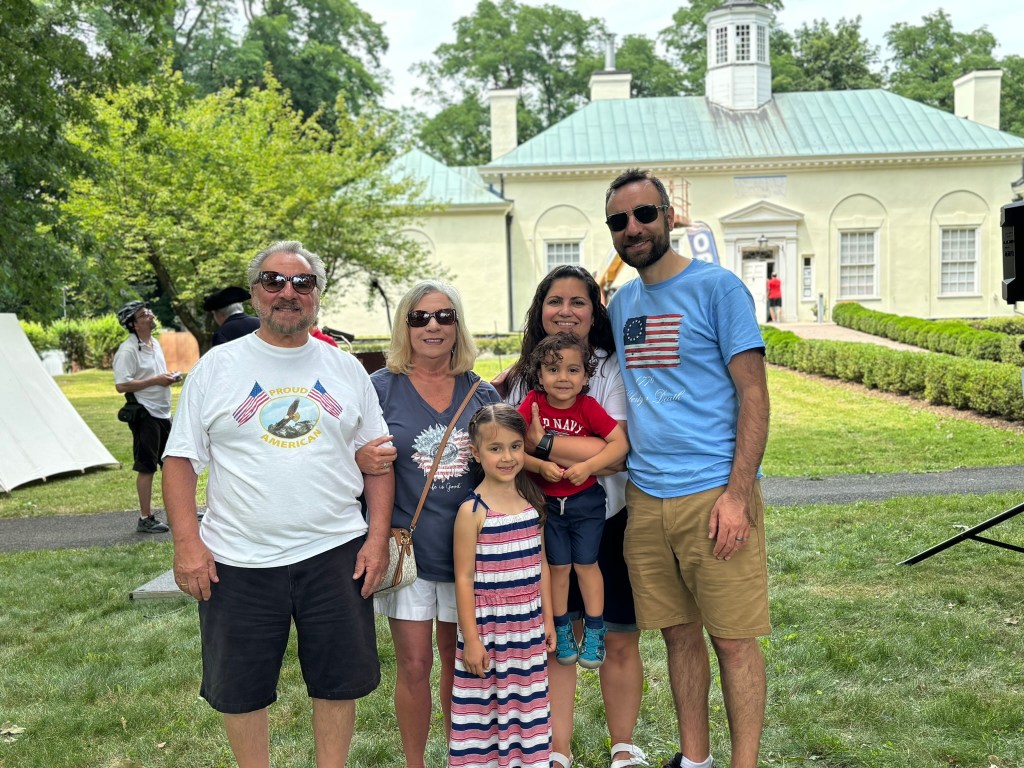
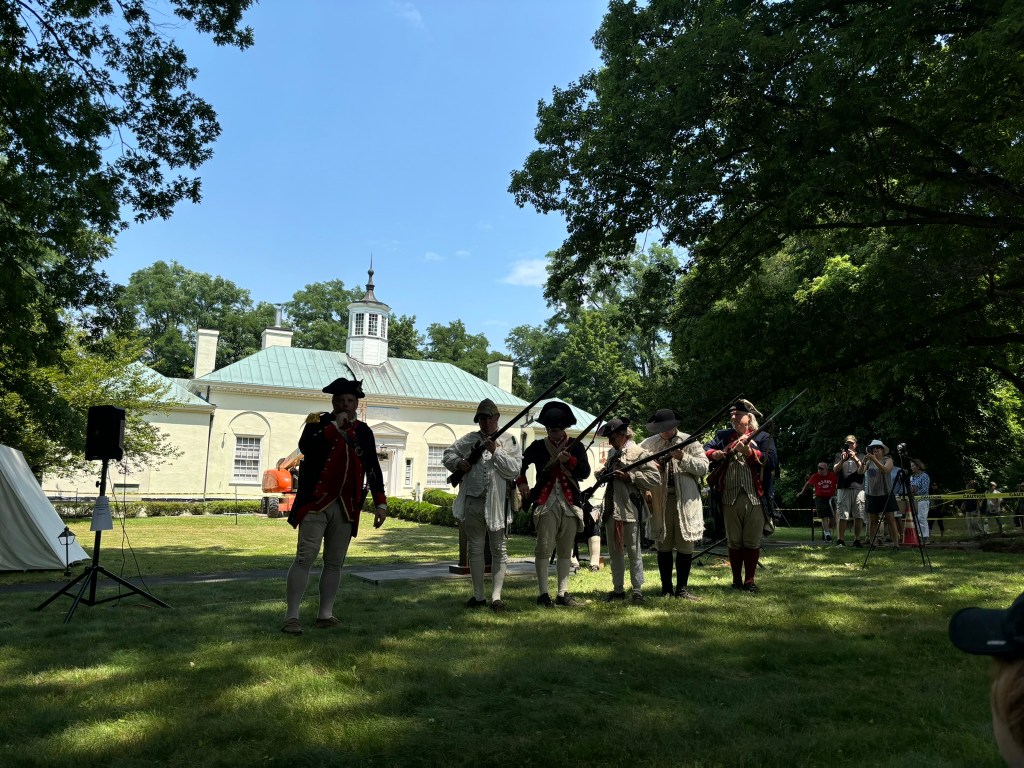
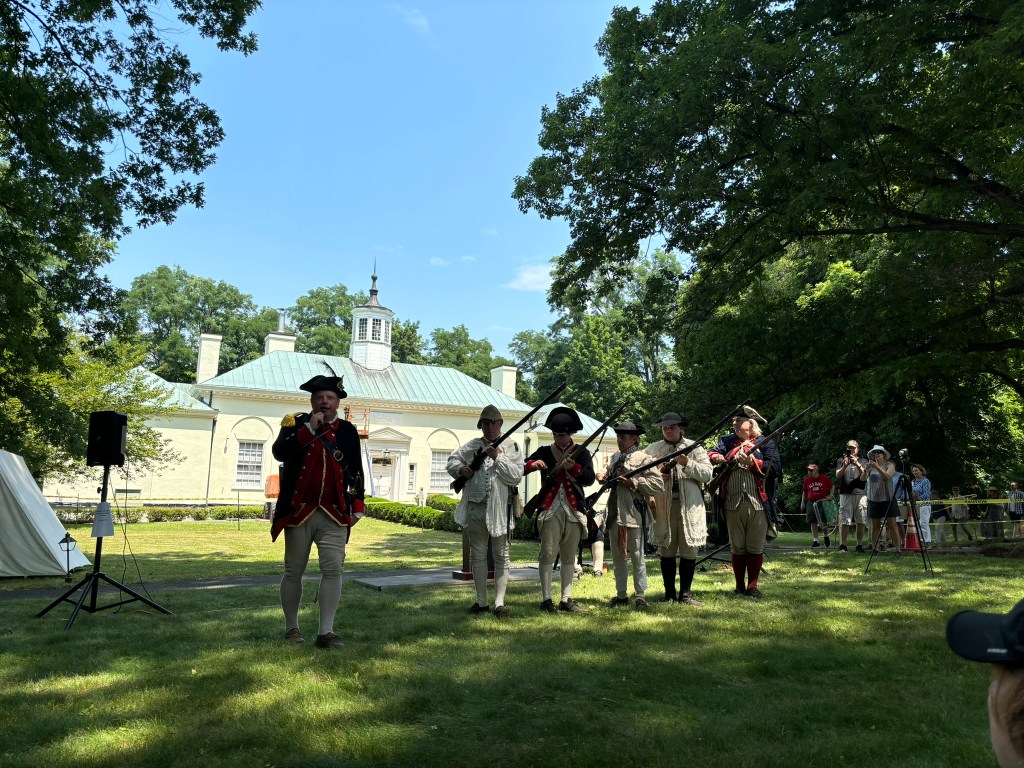
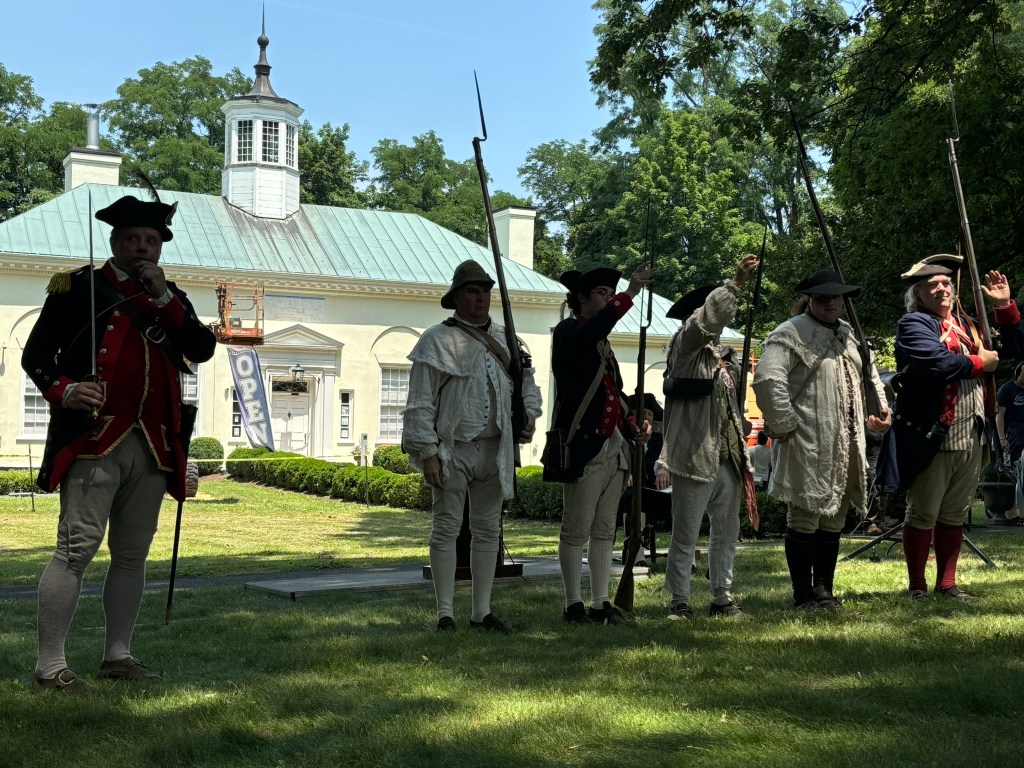
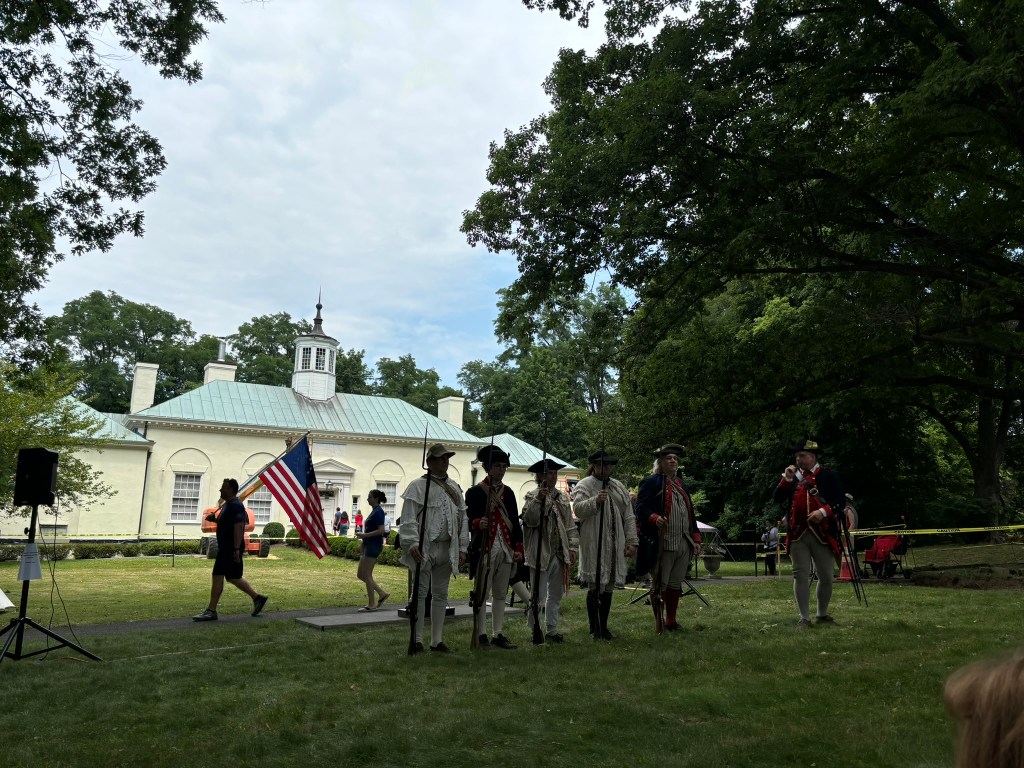
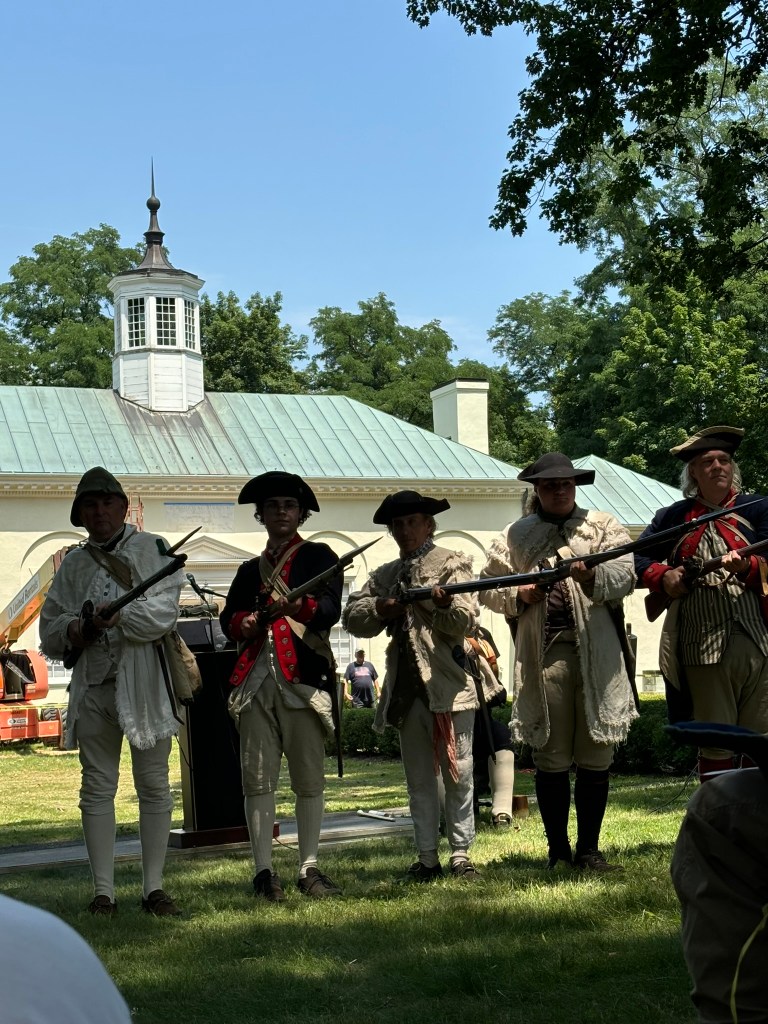
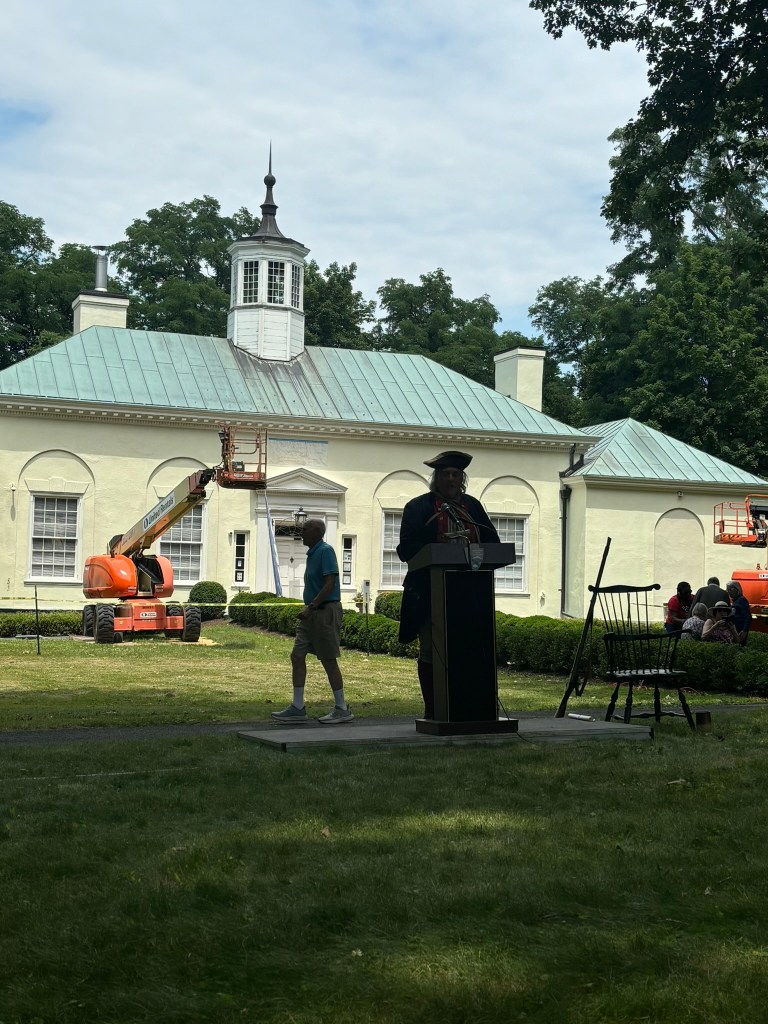
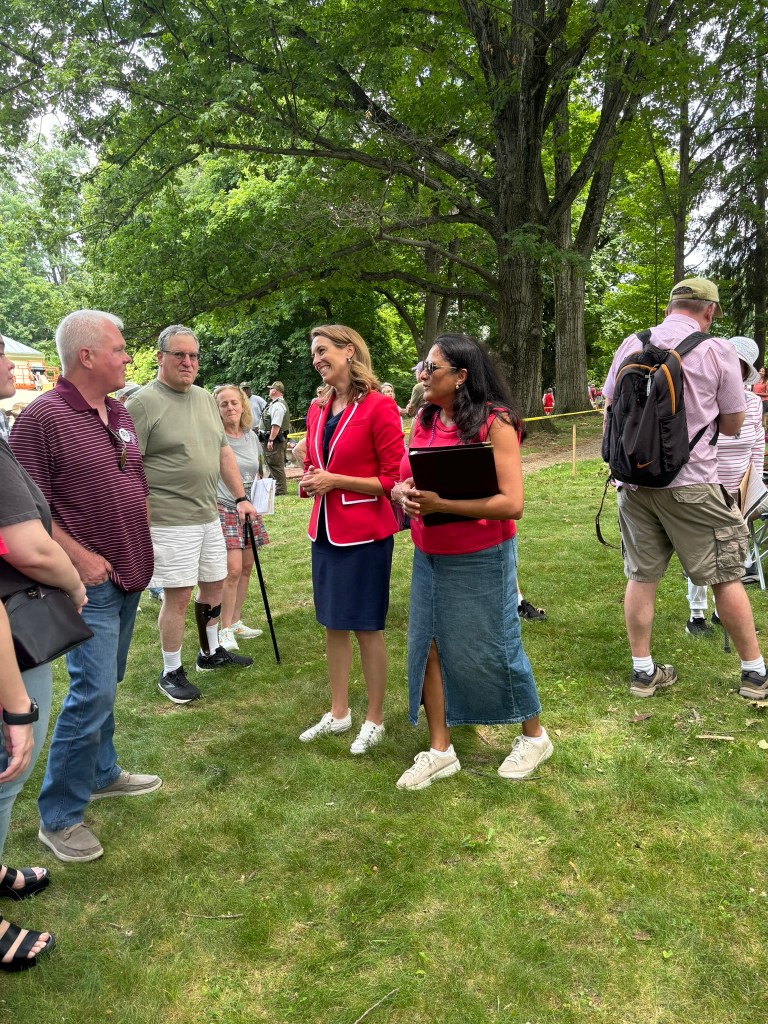
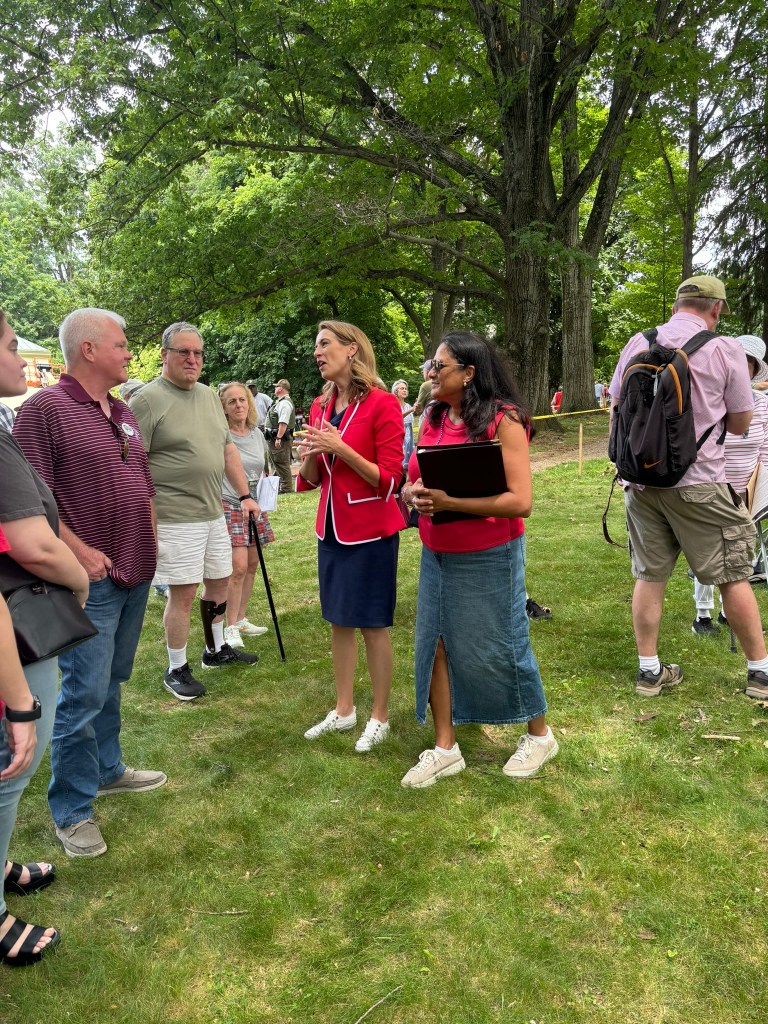
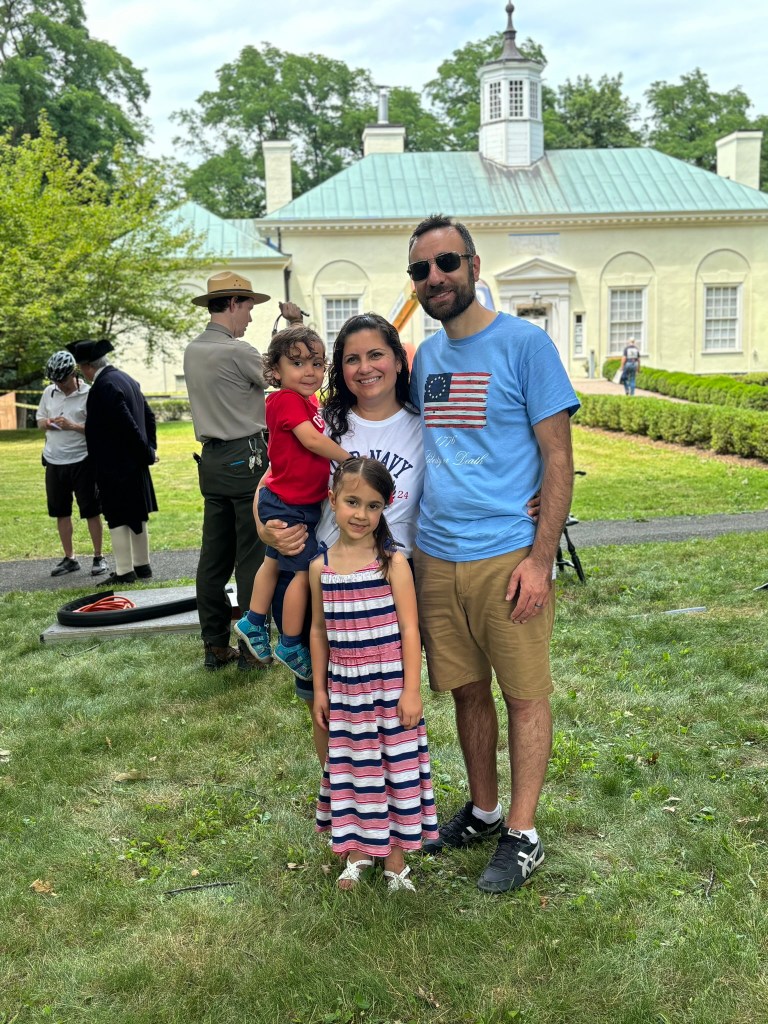
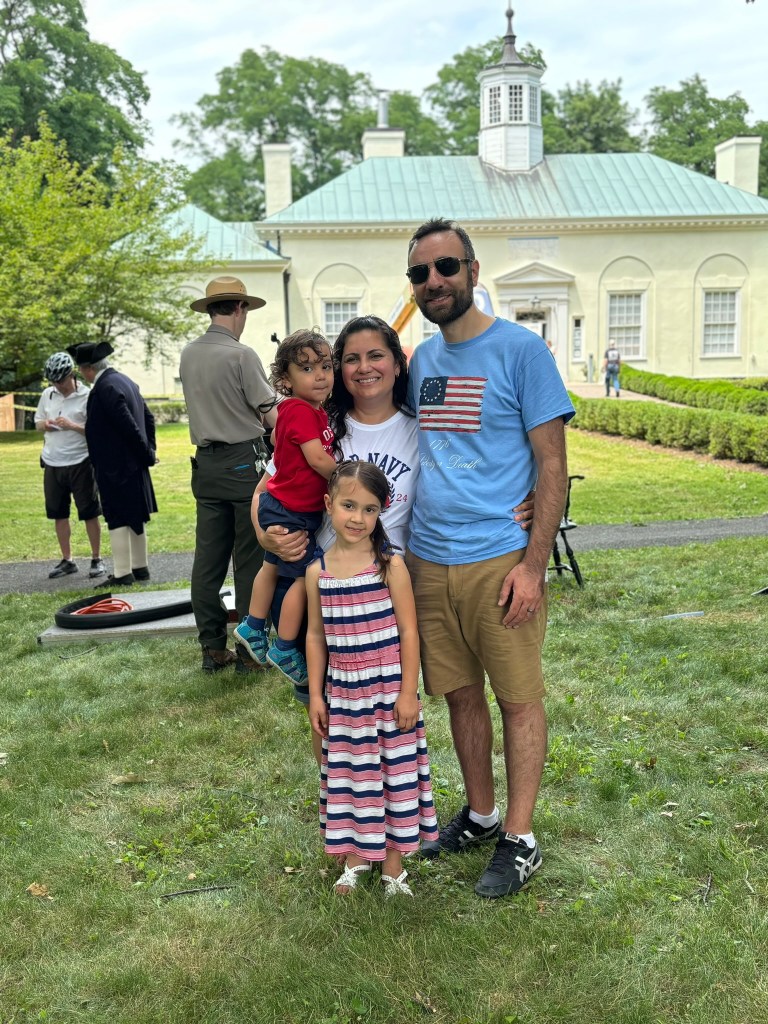
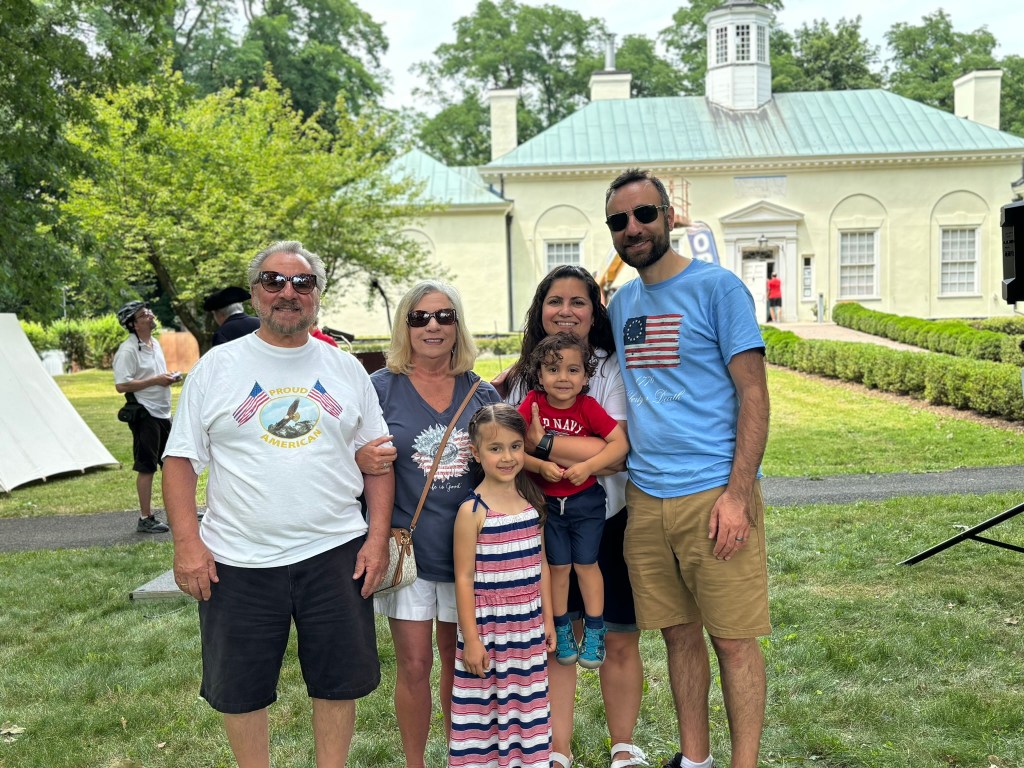
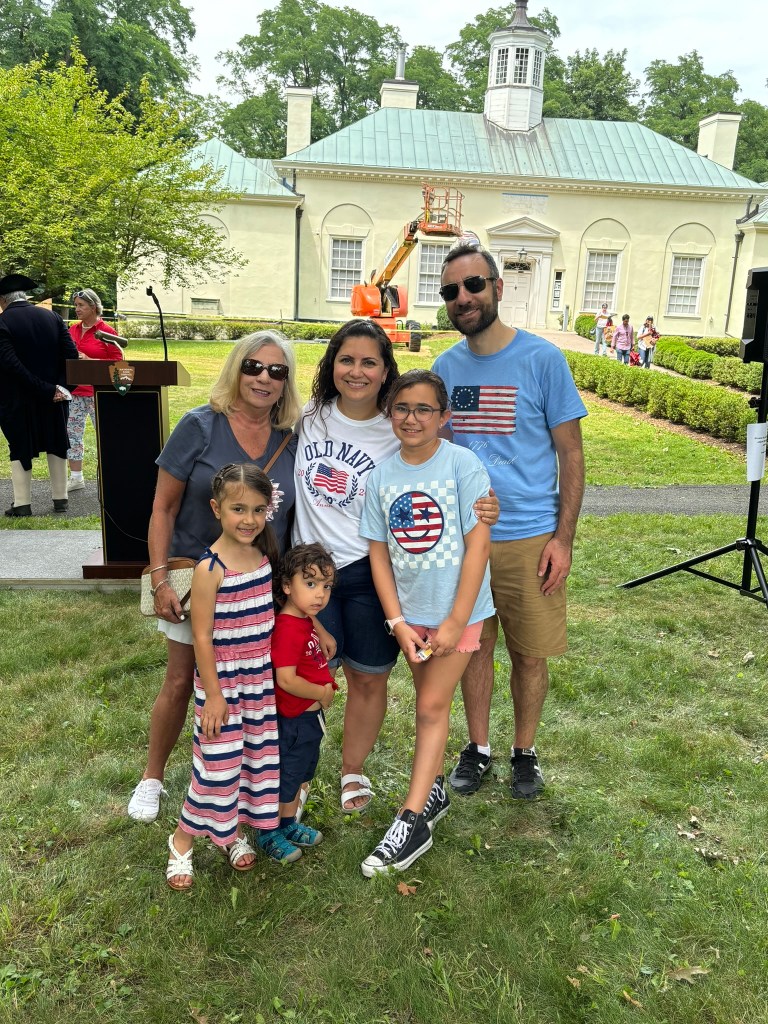
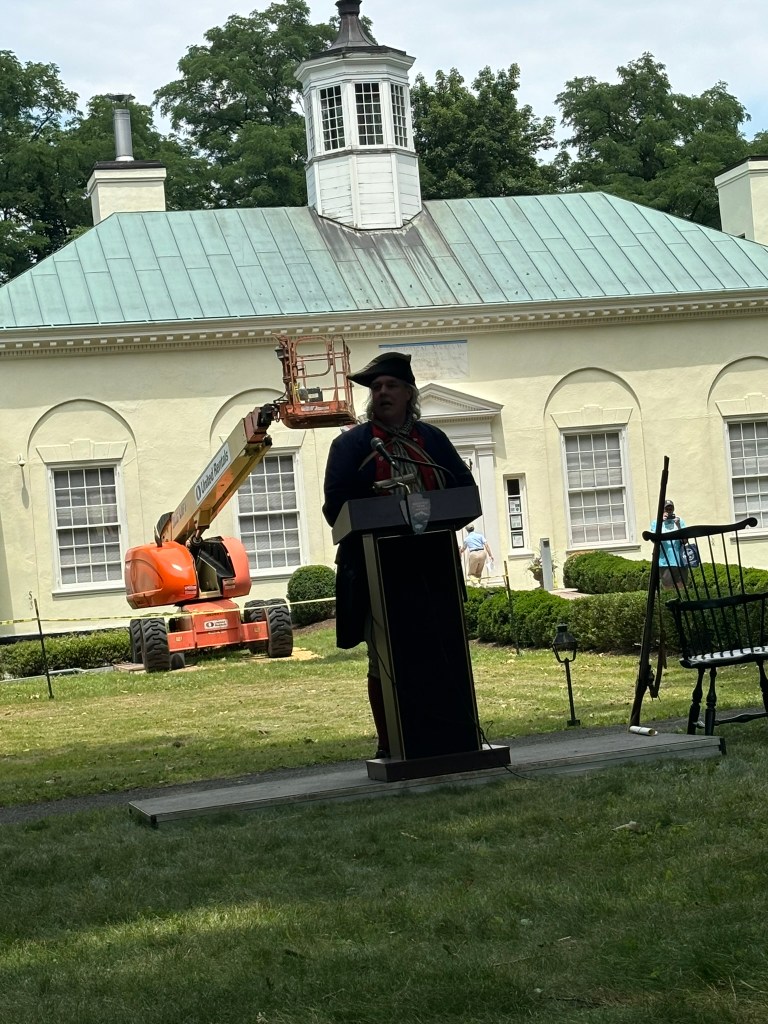
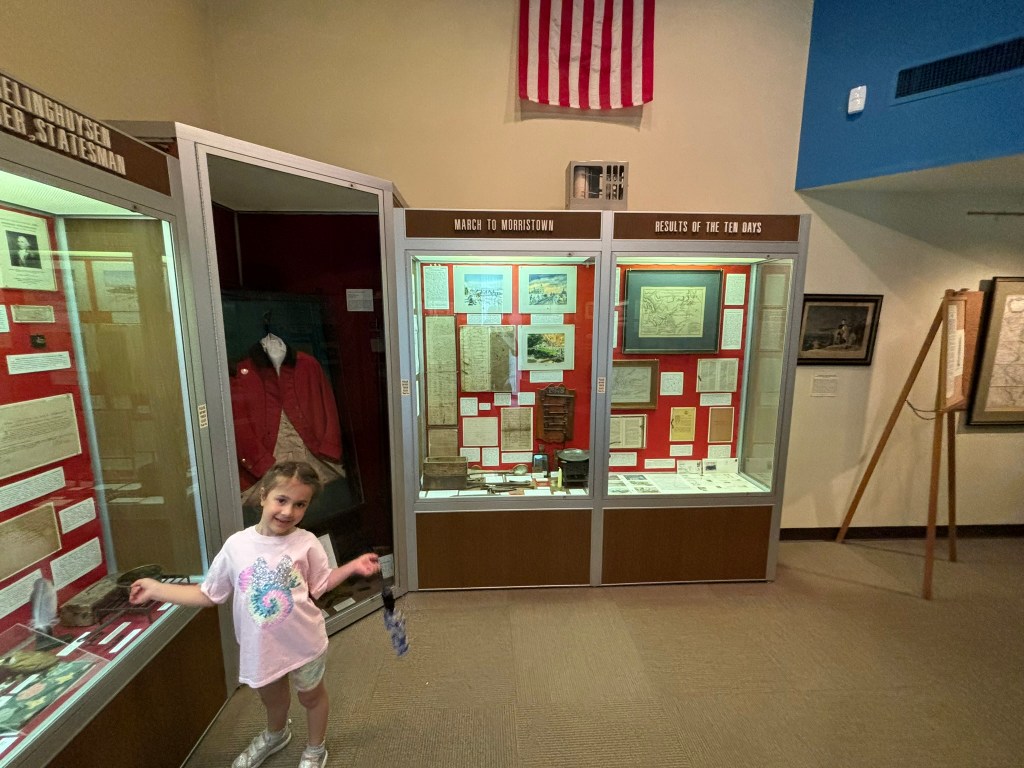
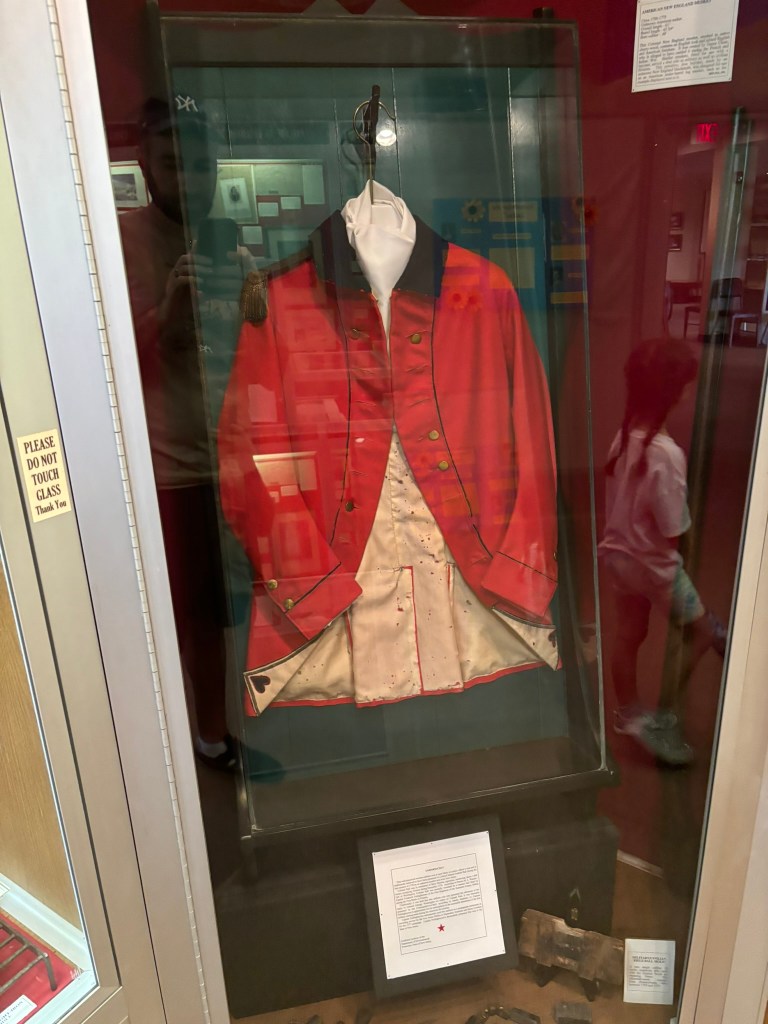
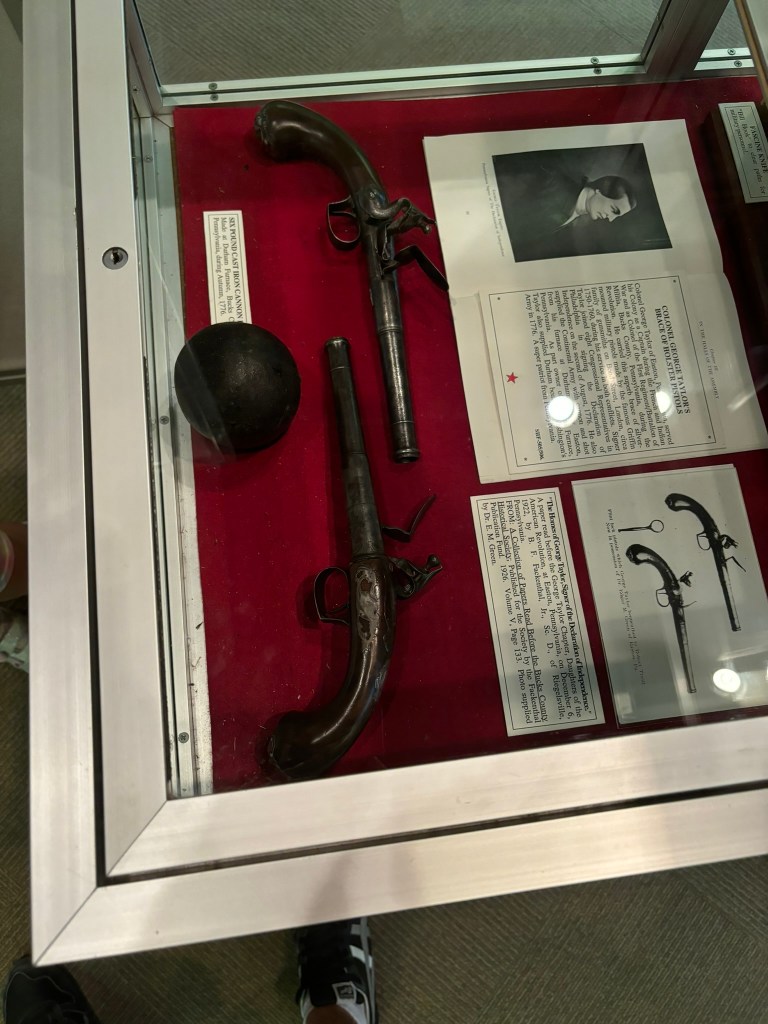
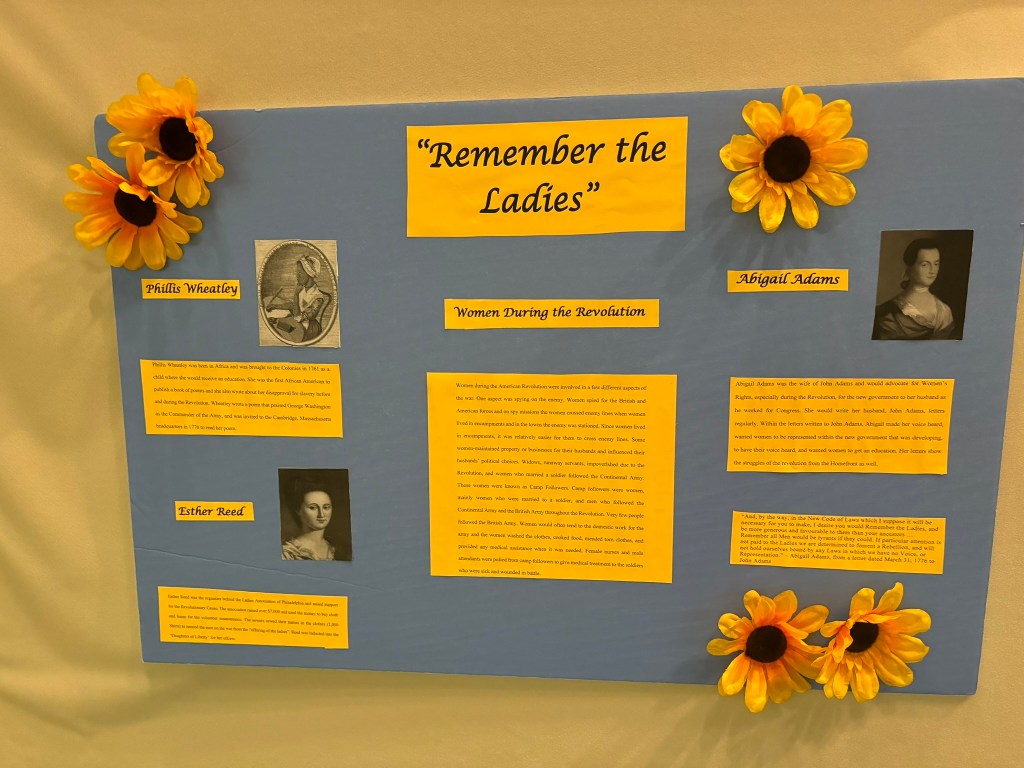
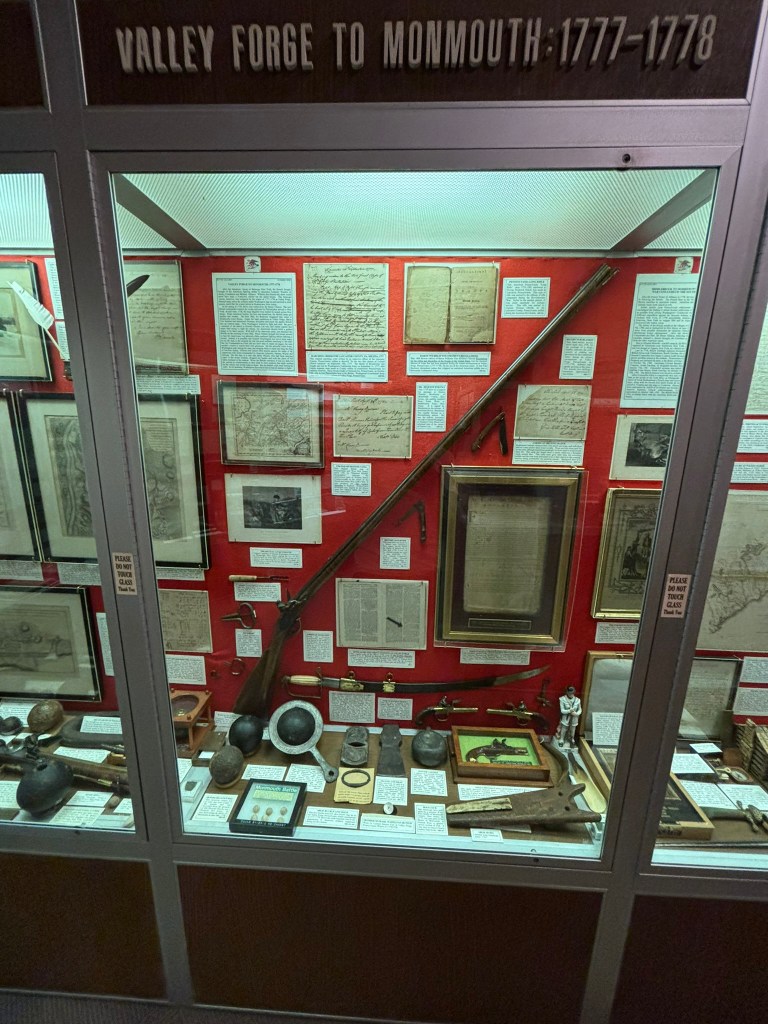
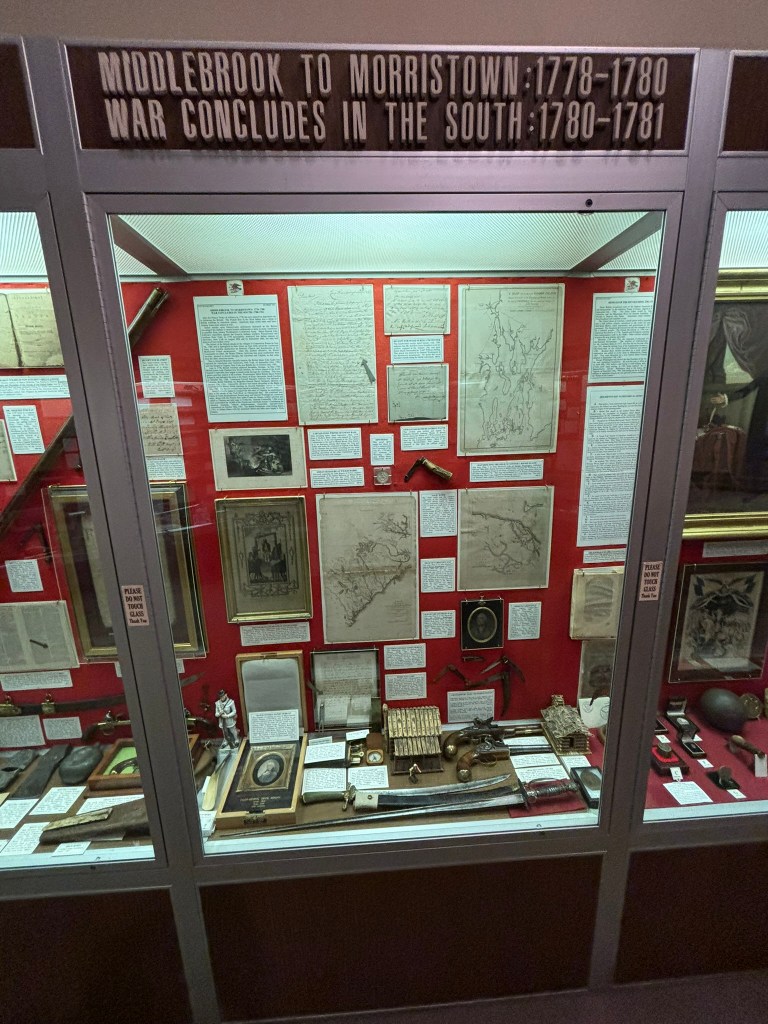
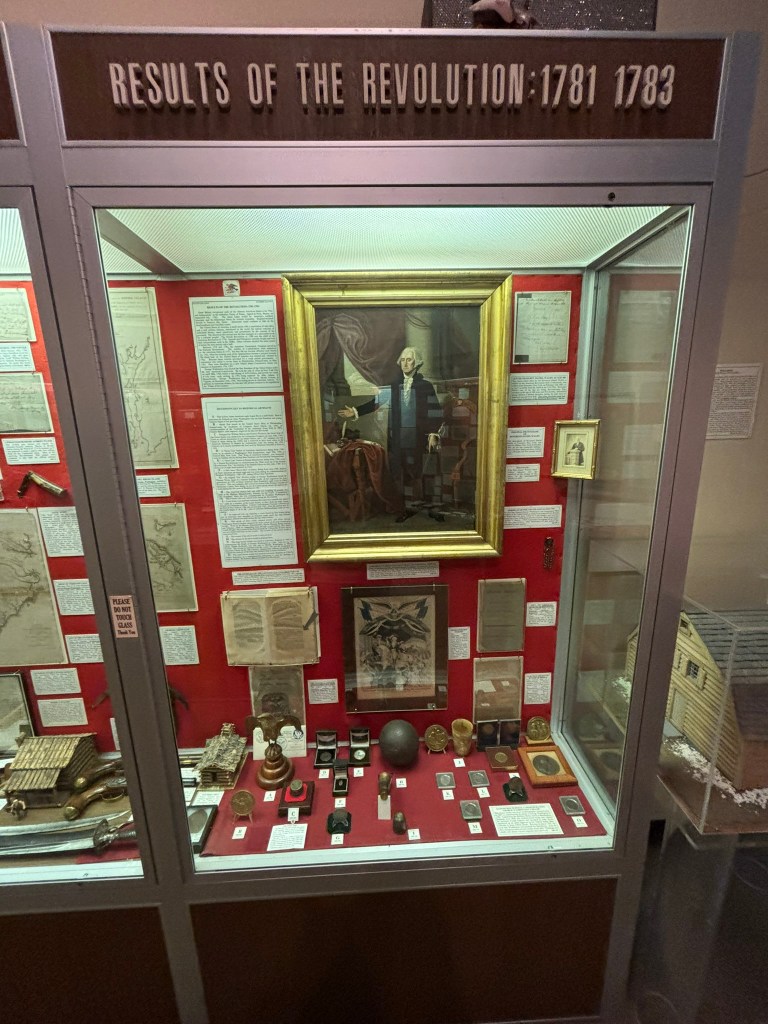
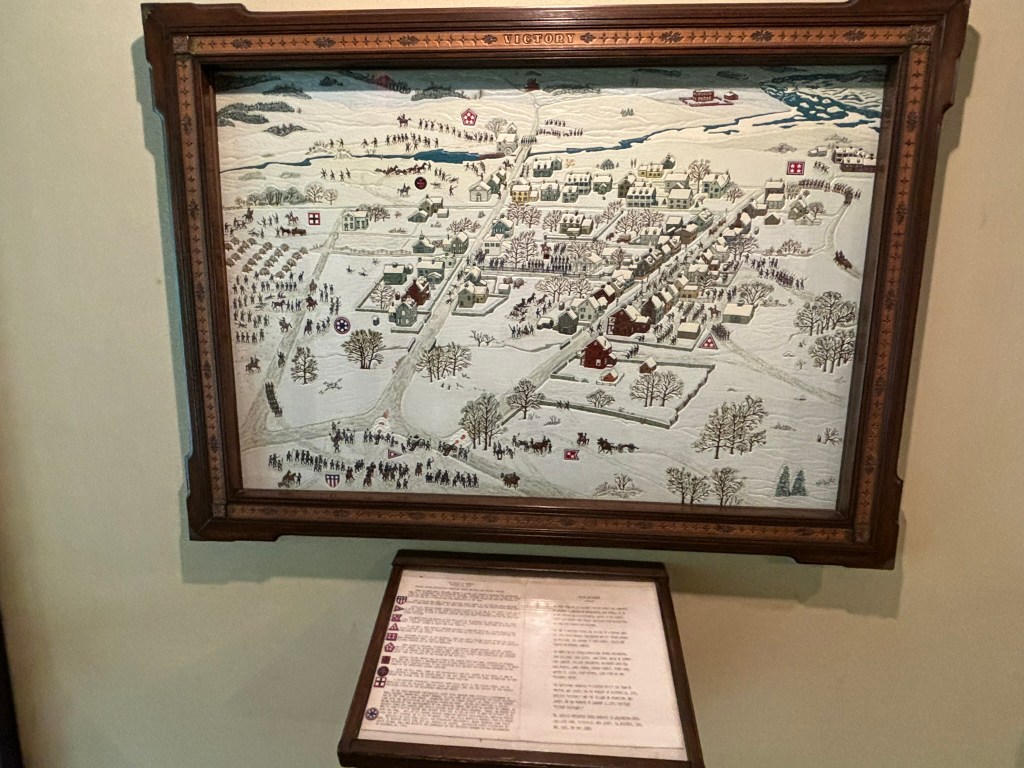
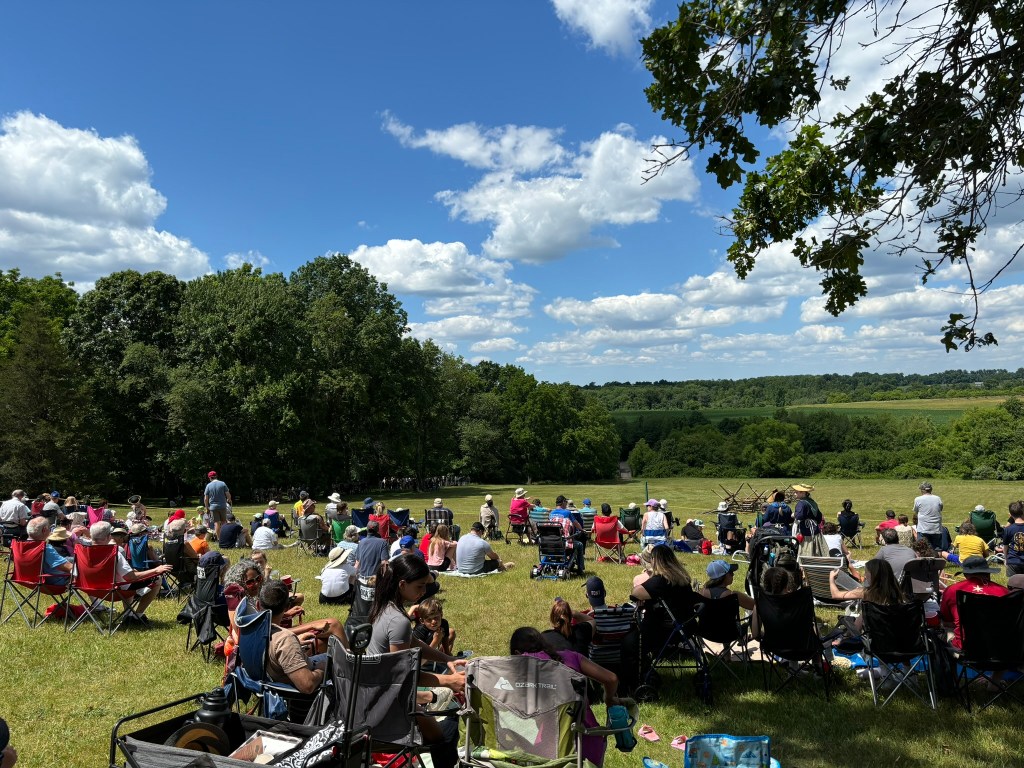
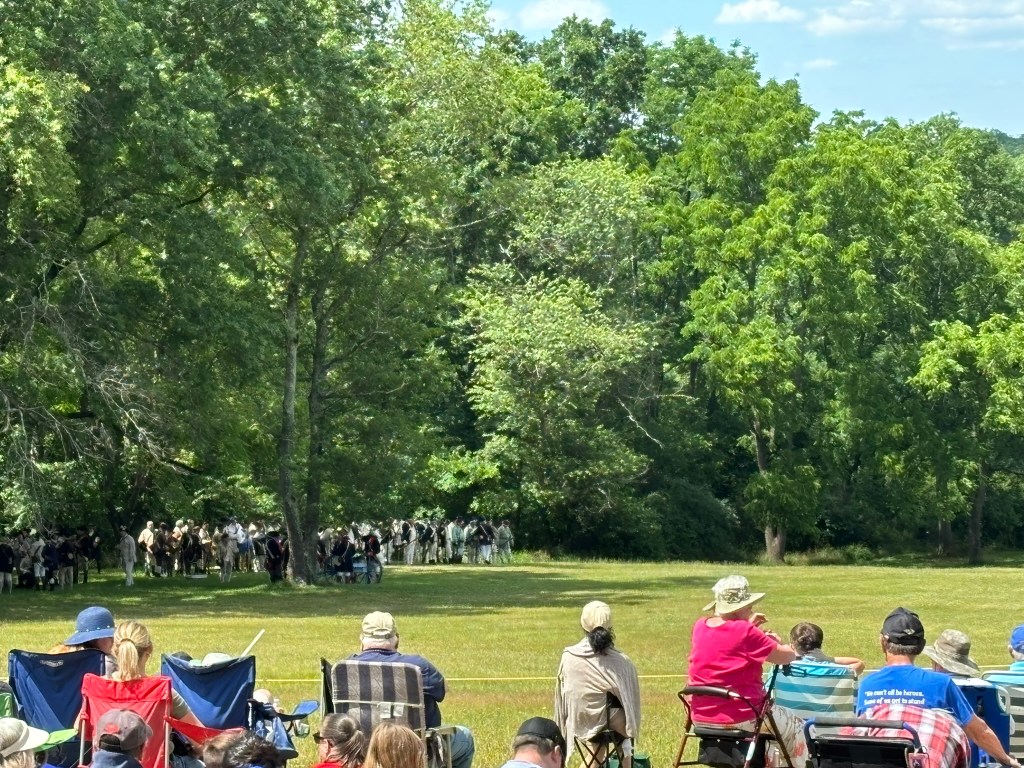
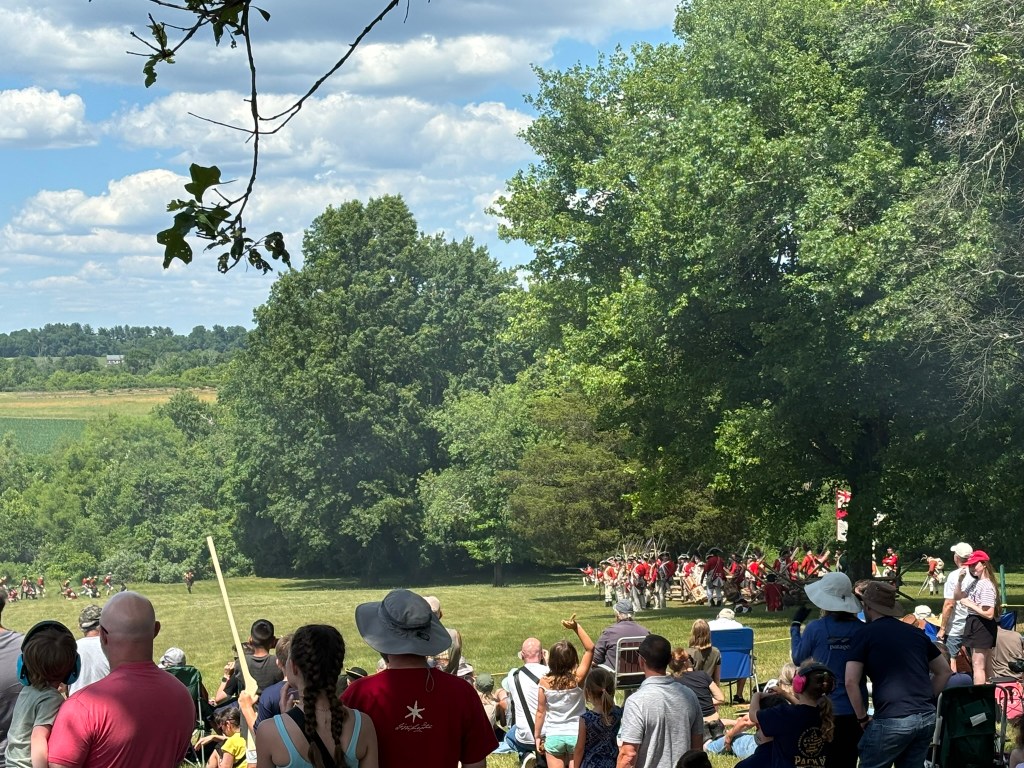
My family and I made it out on the Fourth of July to Washington’s Headquarters in Morristown, NJ for the public reading of the Declaration of Independence. This was our first time attending this yearly event.
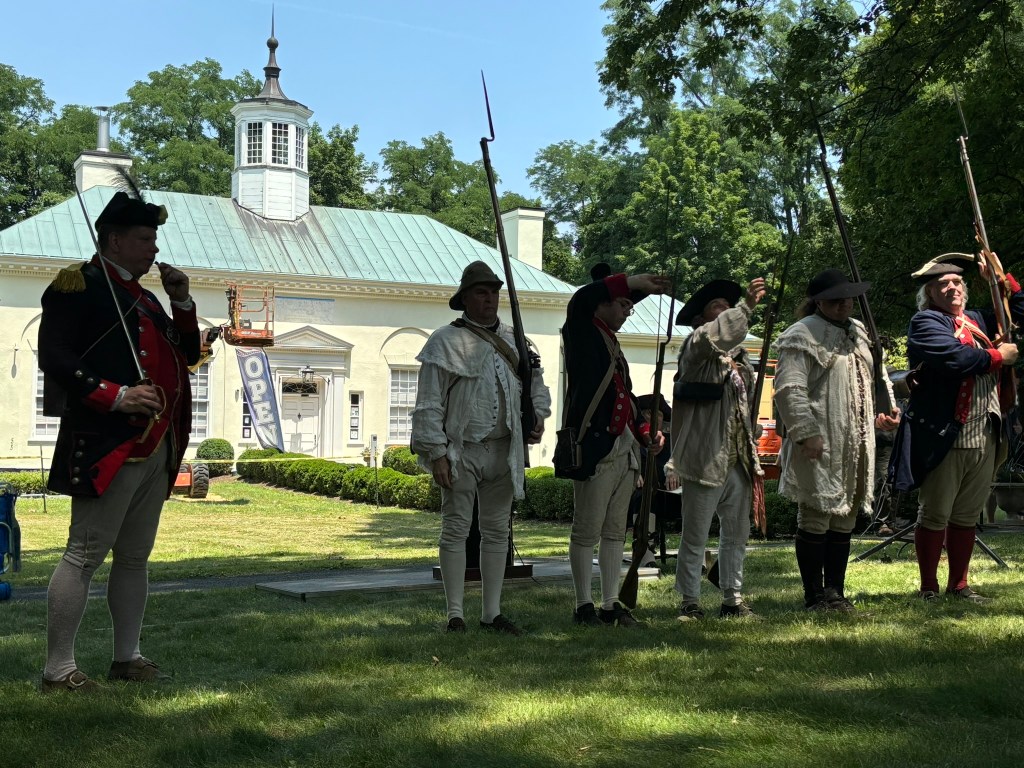
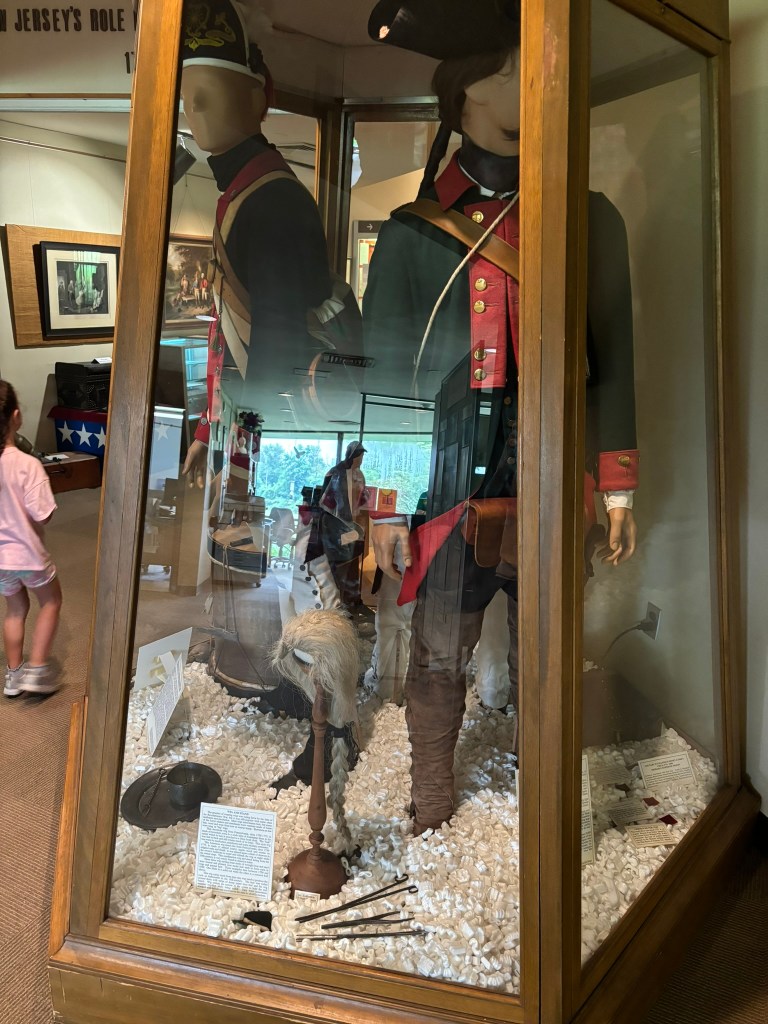
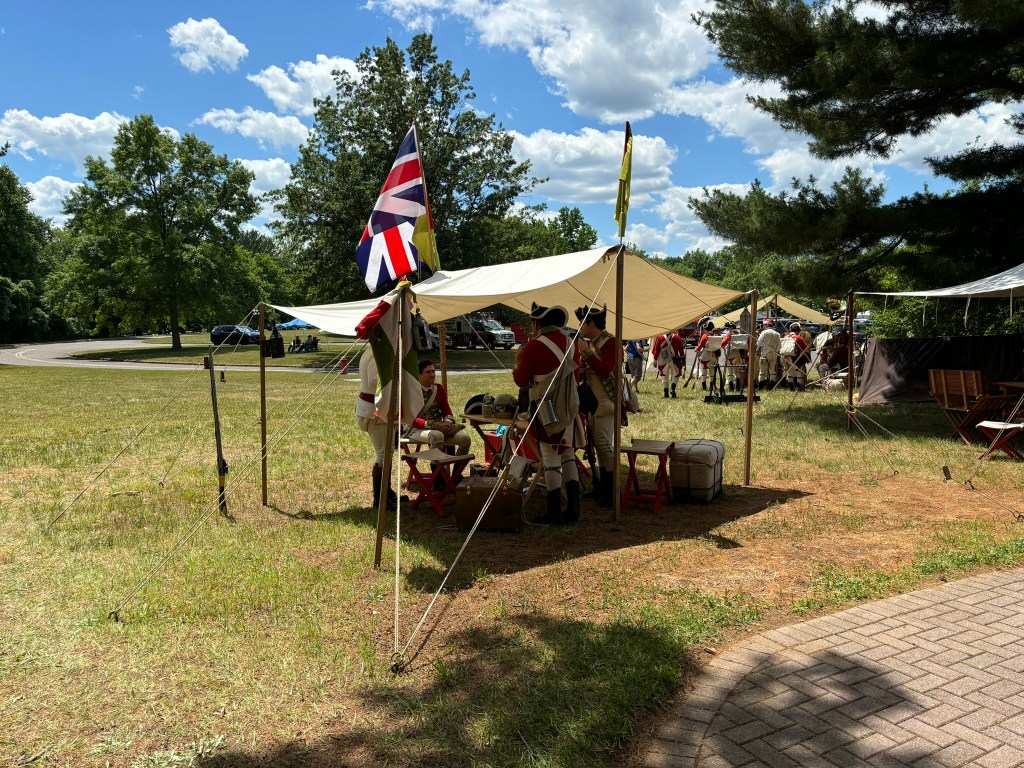
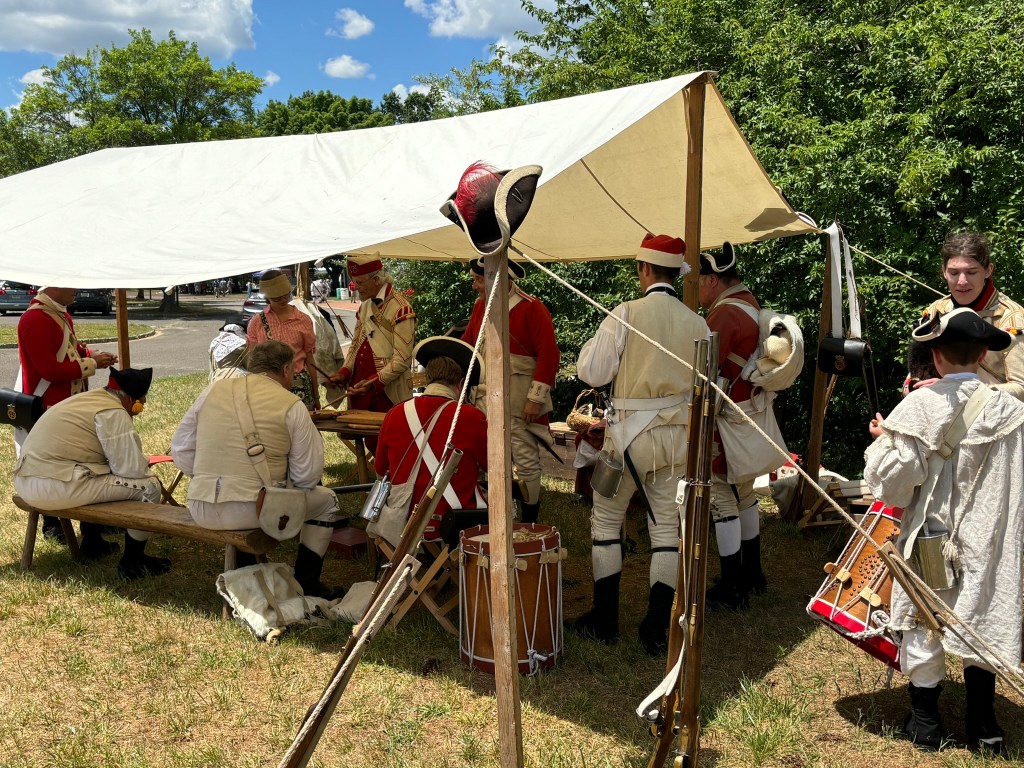
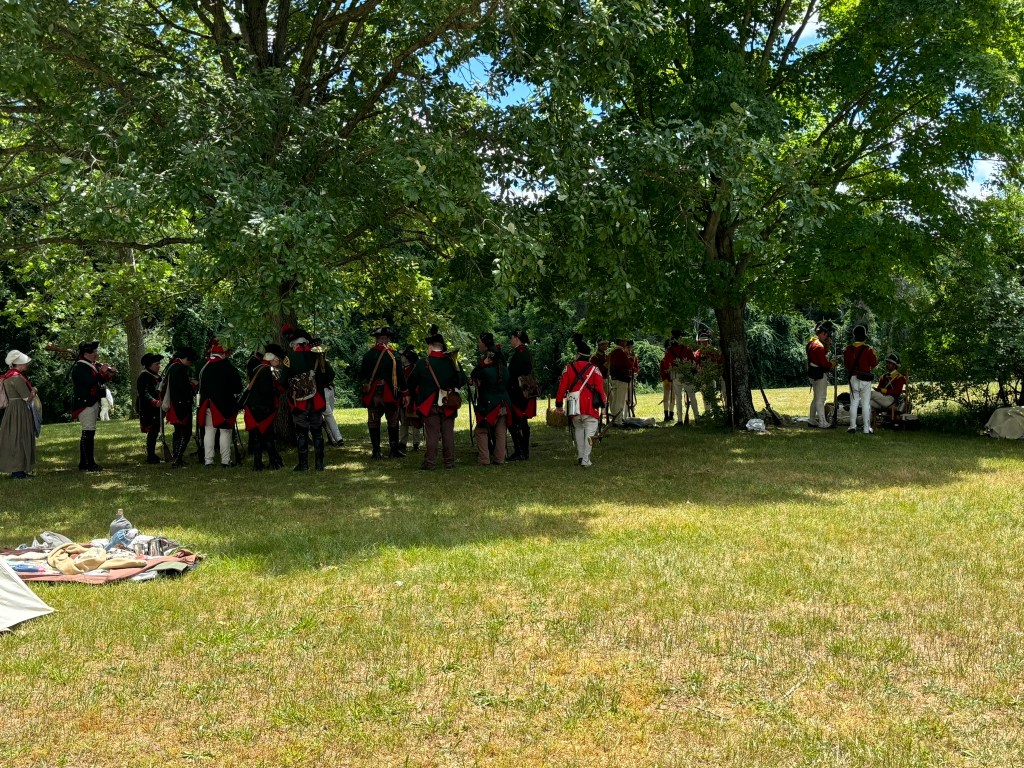
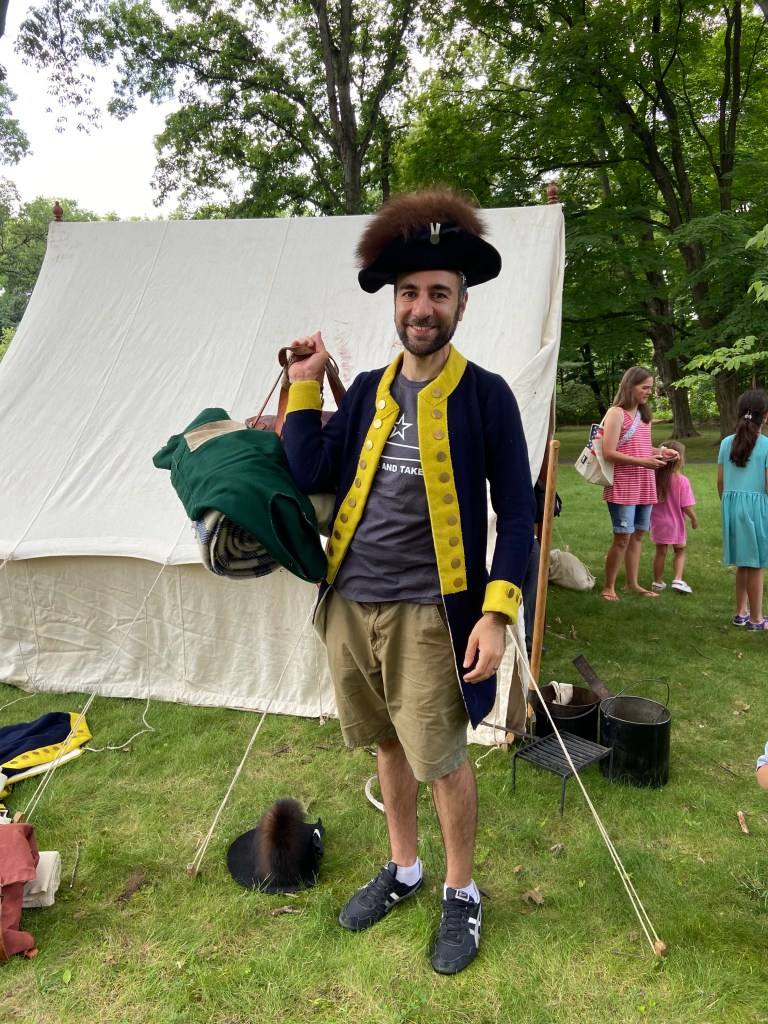
The festivities began at 12pm with demonstrations by reenactors of the 2nd New Jersey regiment. The regiment did a fantastic job showing the crowd how to stand in a line, reload their muskets, and how to use the bayonet. They thoroughly explained the use of muskets in the Revolutionary War, as well as the uniforms and limited supplies of Continental soldiers.
The 2nd New Jersey regiment’s demonstrations lasted nearly to 1pm. At that point there were a few speakers including Thomas Ross, the Superintendent of Morristown National Historic Park. He described the rehabilitation projects taking place at the park, including to the Ford Mansion, as well as to the museum. These projects are in preparation of the 250th anniversary of the Revolution.
Another speaker who addressed the crowd was Congresswoman Mikie Sherrill who represents New Jersey District 11. She described New Jersey’s importance to the Revolution and praised the efforts to preserve New Jersey’s history.
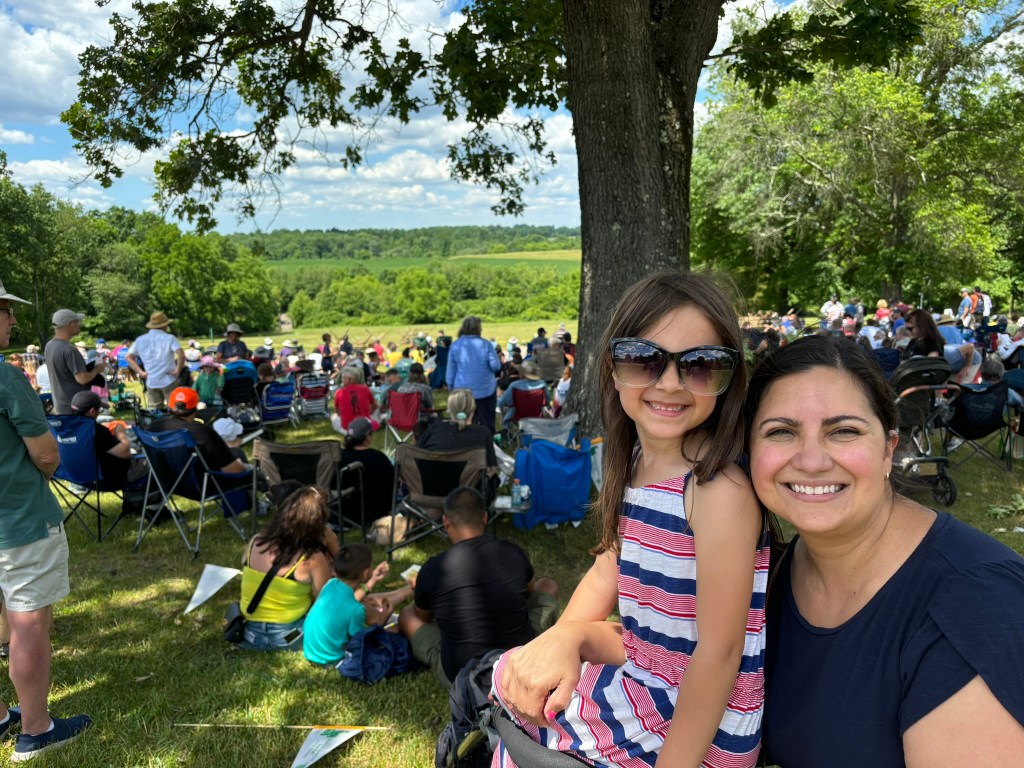
At 1pm, Ranger Tom Winslow read the Declaration of Independence. The audience was encouraged to give shouts of “Huzzah!” when he read words/ phrases favorable to freedom and independence. The audience was encouraged to shout “Down with King George!” Or “Down with Tyranny!” when he read the many grievances listed against the king.
Finally, the program concluded at about 1:30 and my family went in and visited the museum. Representative Mikie Sherrill met and spoke with visitors, while the reenactors also took photos. My family and I really enjoyed our patriotic Fourth of July in Morristown, and would love to come back again! Check out my social media sites in the coming days for videos of the event, including drills, discussions of the revolutionary soldiers, speakers, and the reading of the Declaration of Independence: Facebook, Instagram, Twitter
Below are links to organzations who helped run the event or were in attendance.
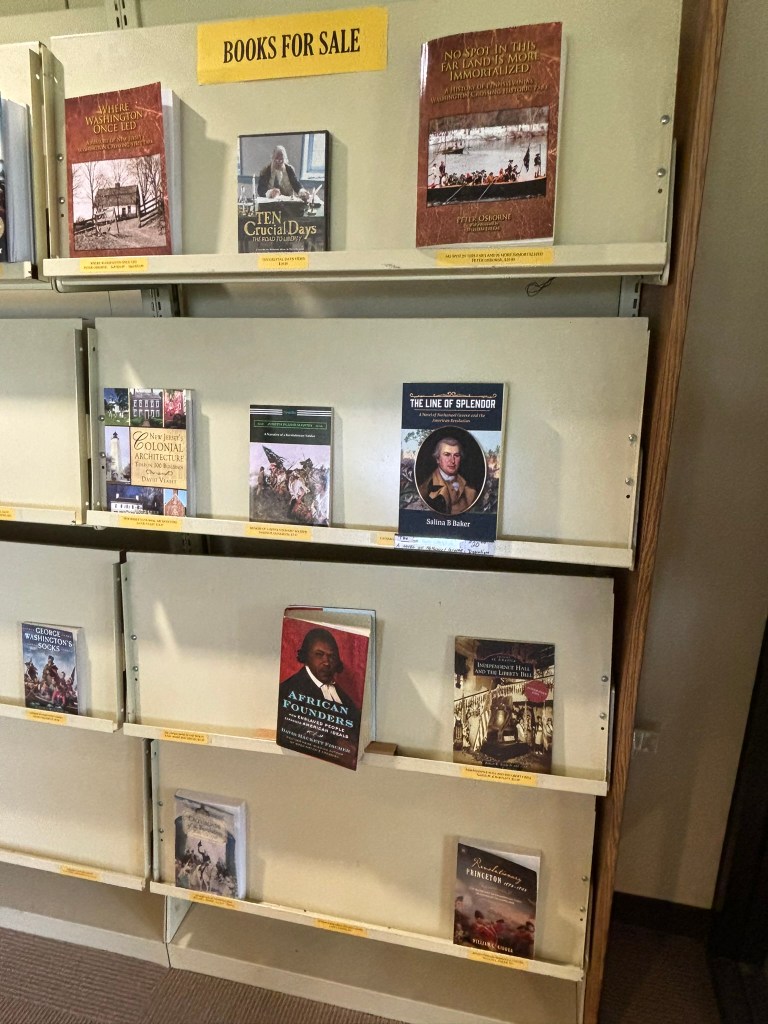
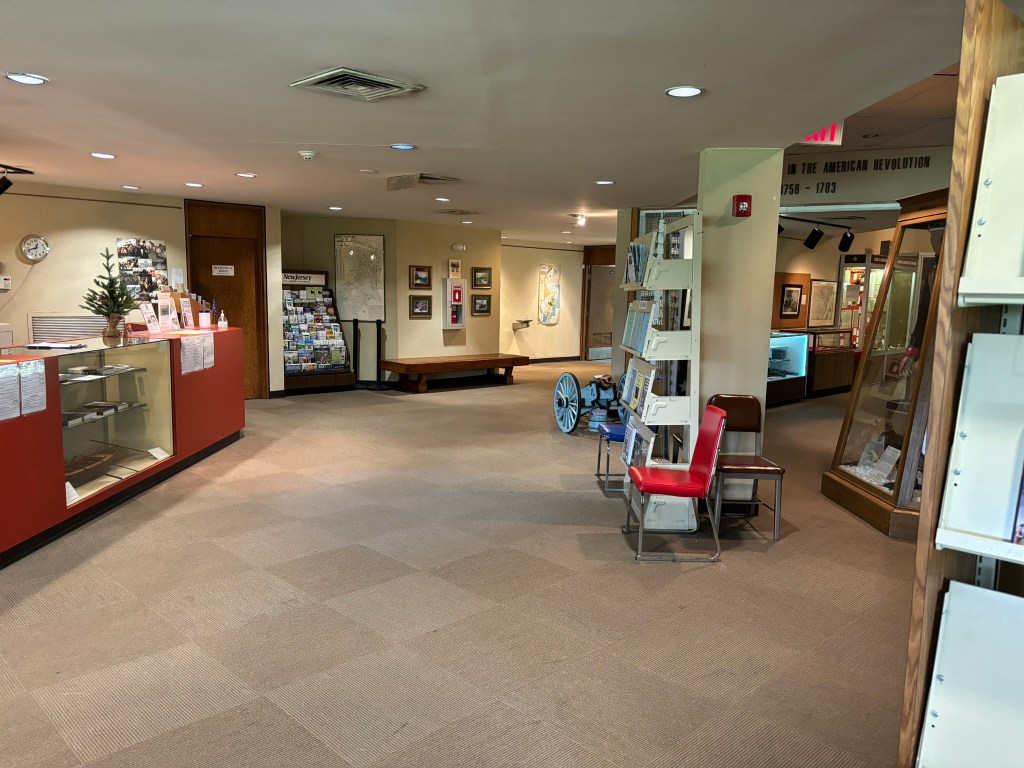
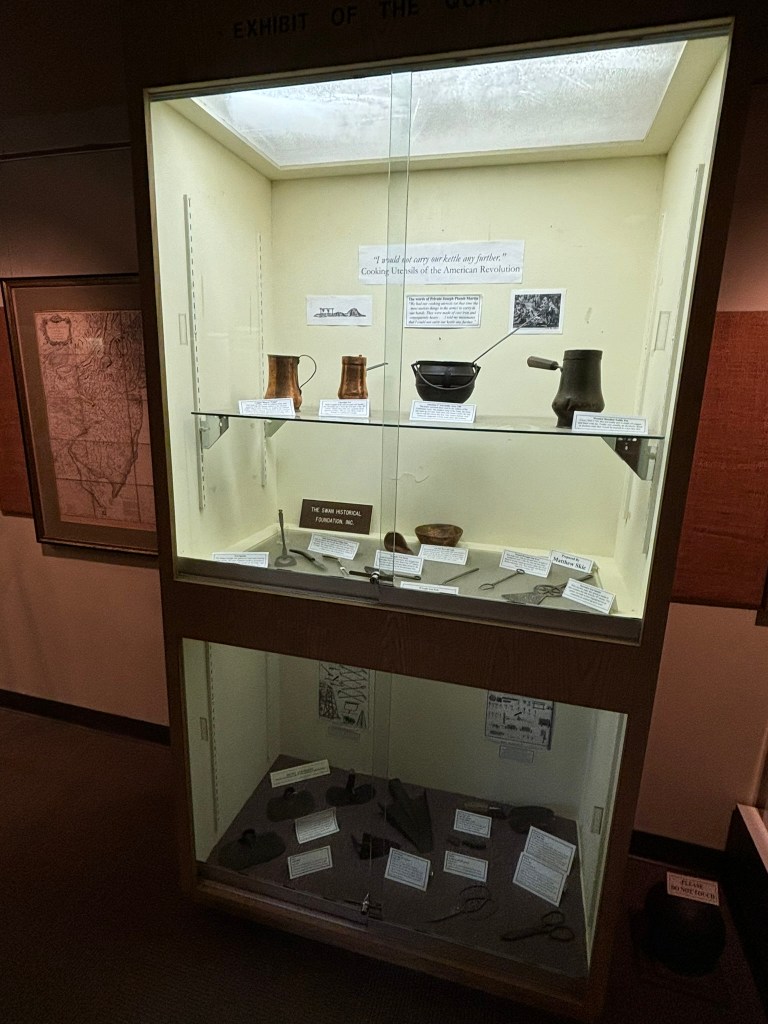
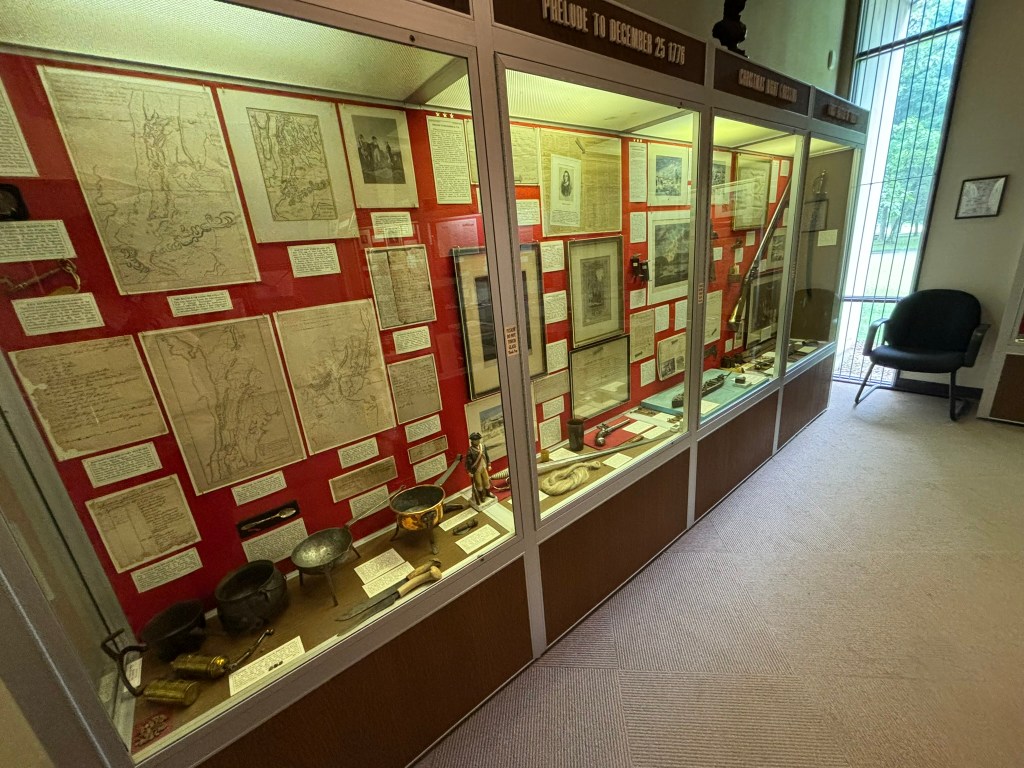
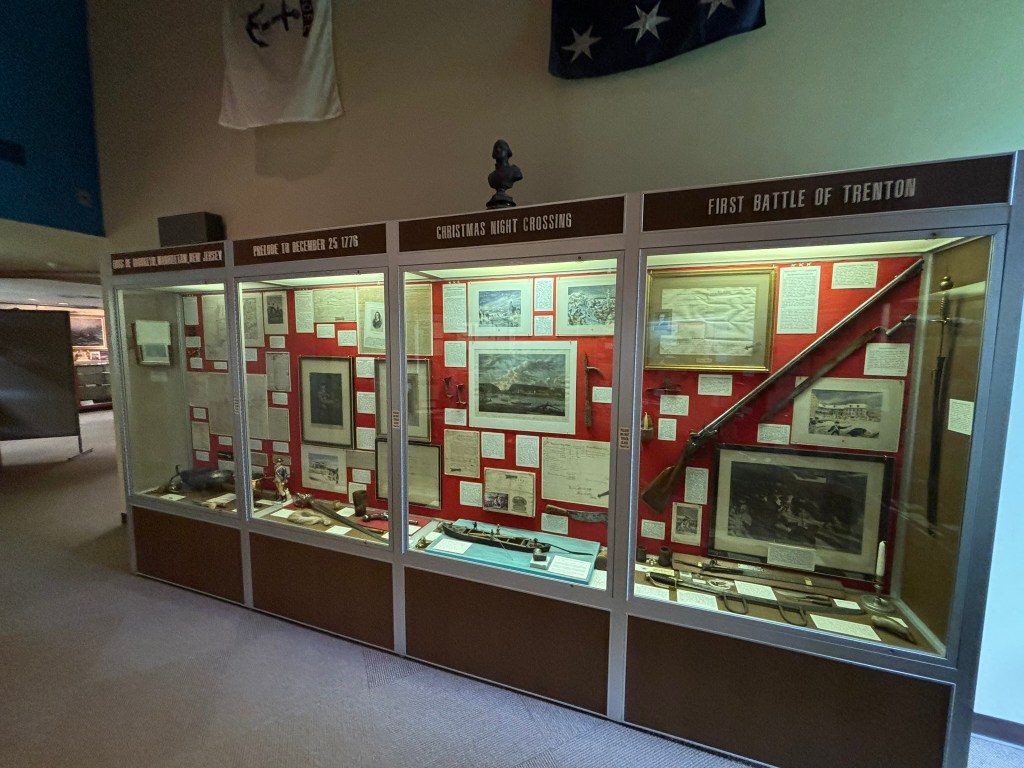
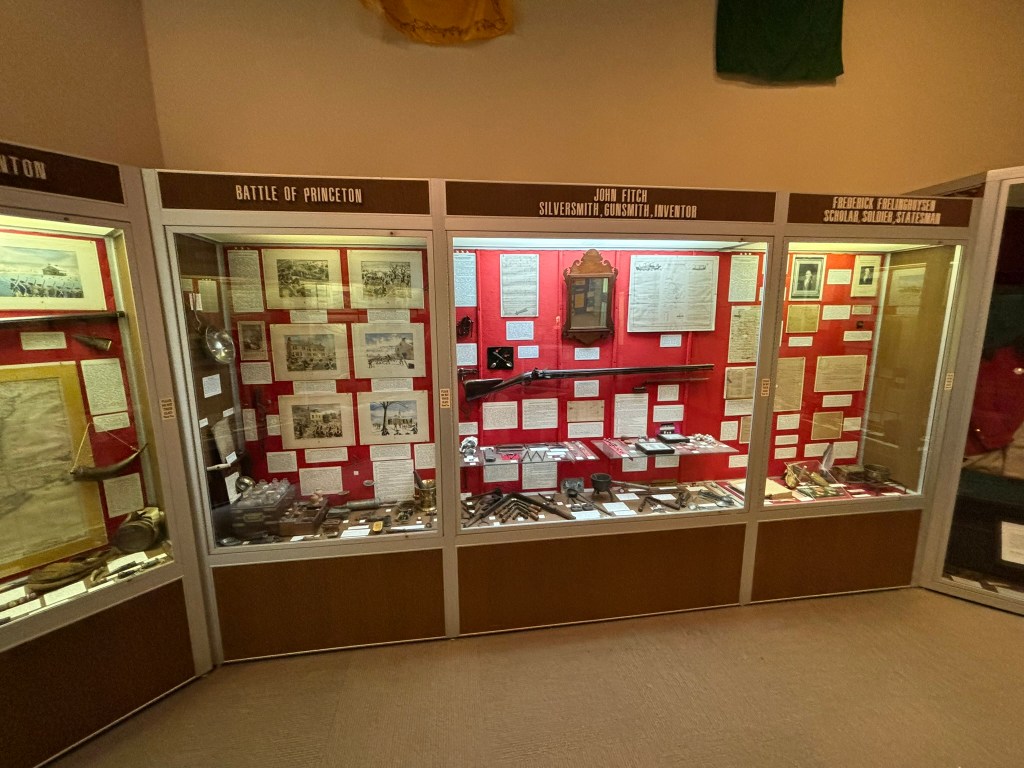
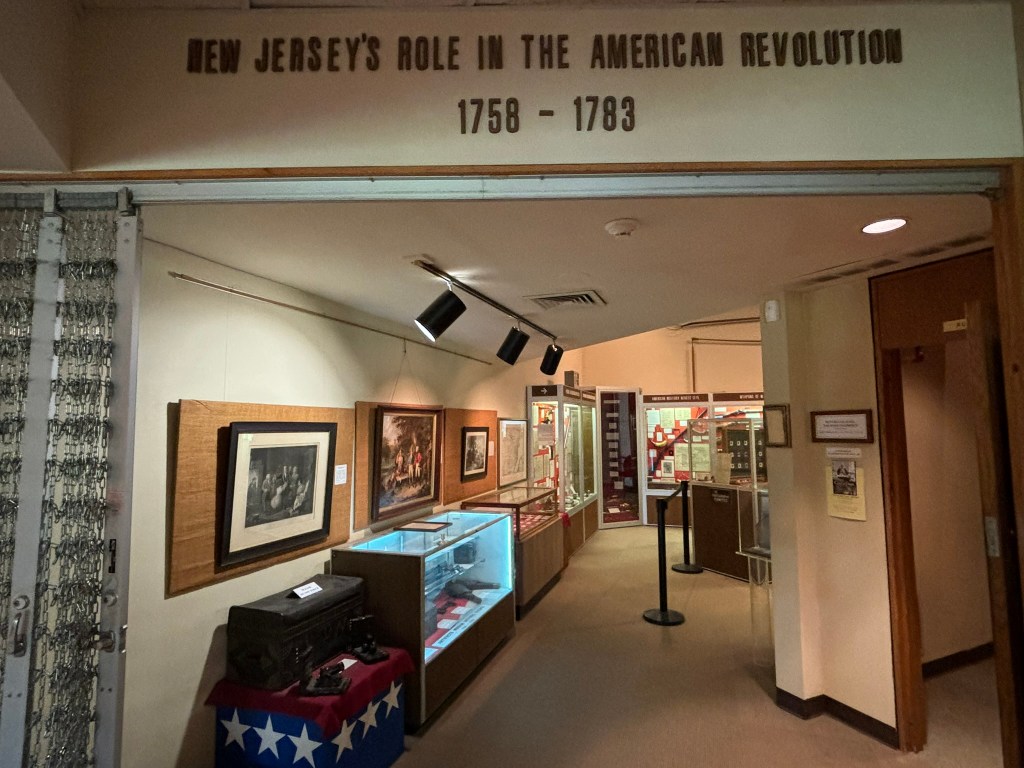
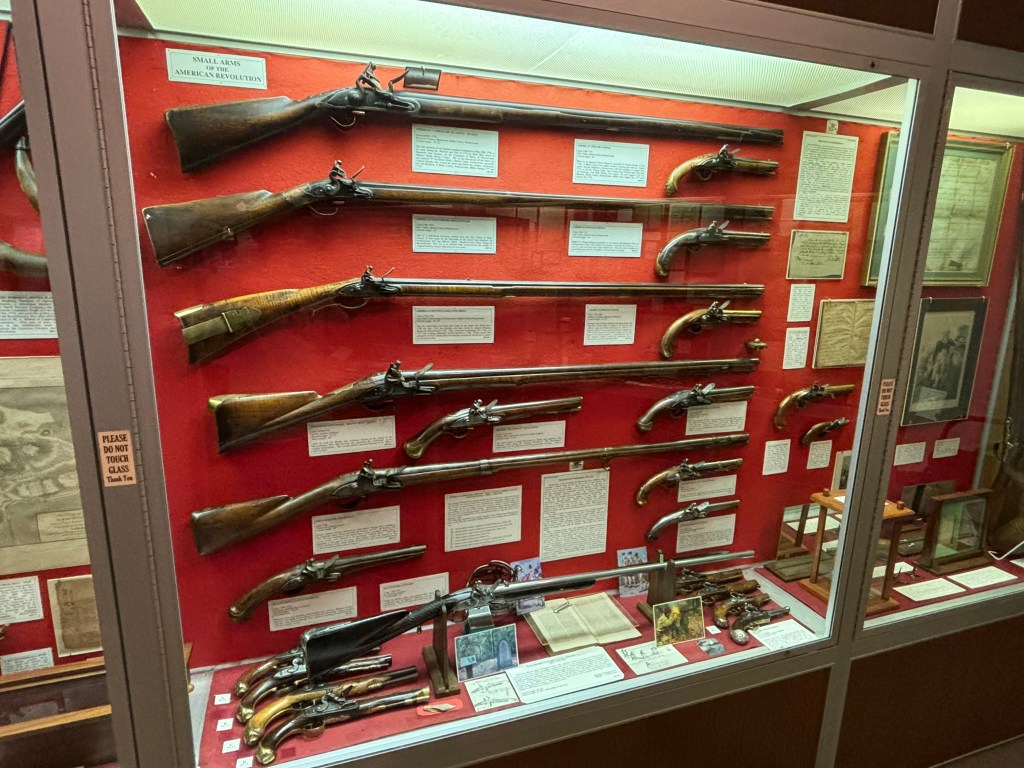
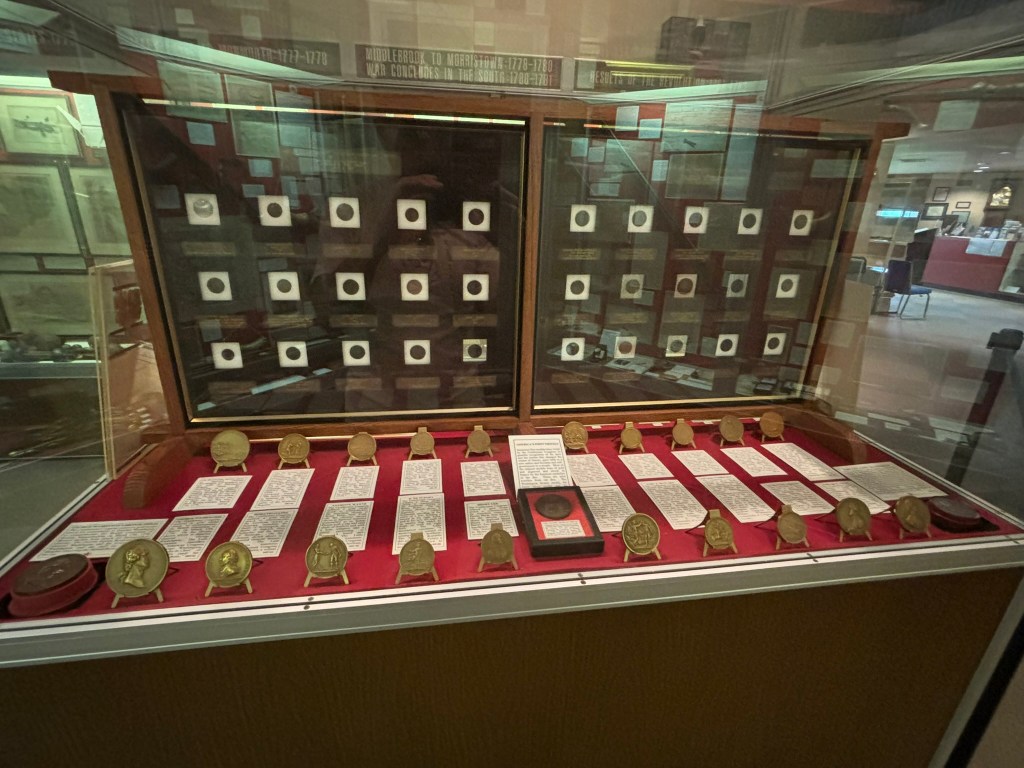
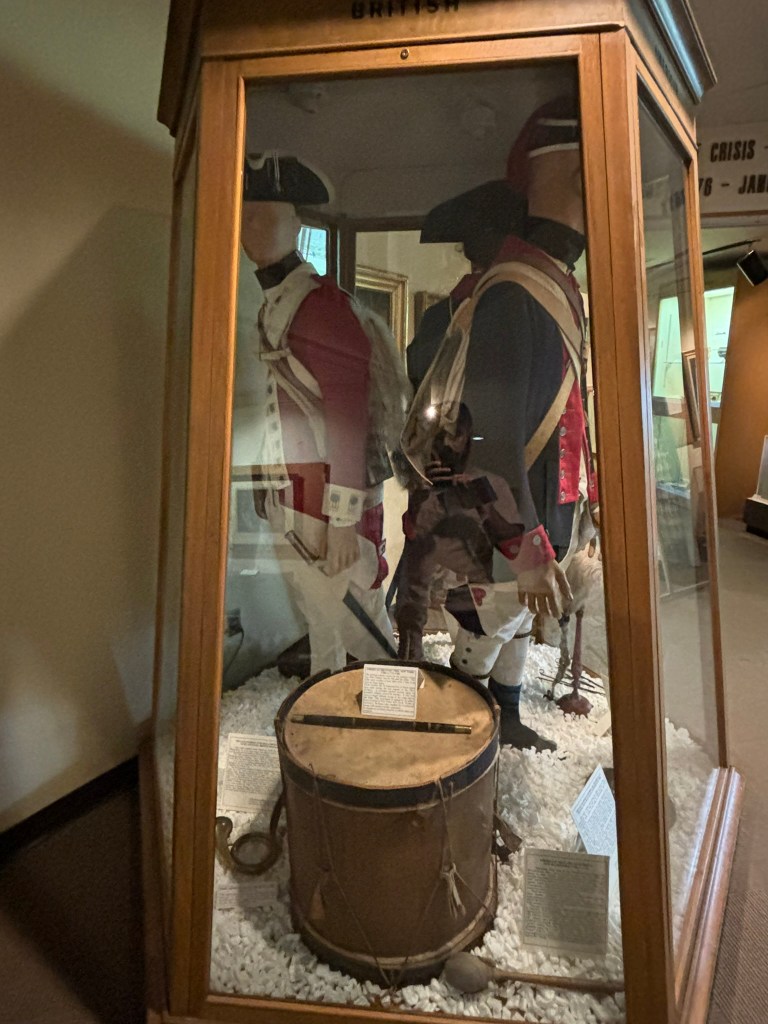
My family and I made it to Washington’s Crossing State Park on the New Jersey side of the Delaware River. My wife and I had gotten free tickets for a tour of the park, which was conducted by the Washington Crossing Park Association. We arrived at the park a little before our 1PM tour time, and we had an opportunity to explore the museum within the Visitor’s Center. The museum had a great collection of artifacts, including uniforms, weaponary, ammunition, coins, letters and other items related to the American Revolution. The Visitor Center also had books for sale.
Background of Washington’s Crossing
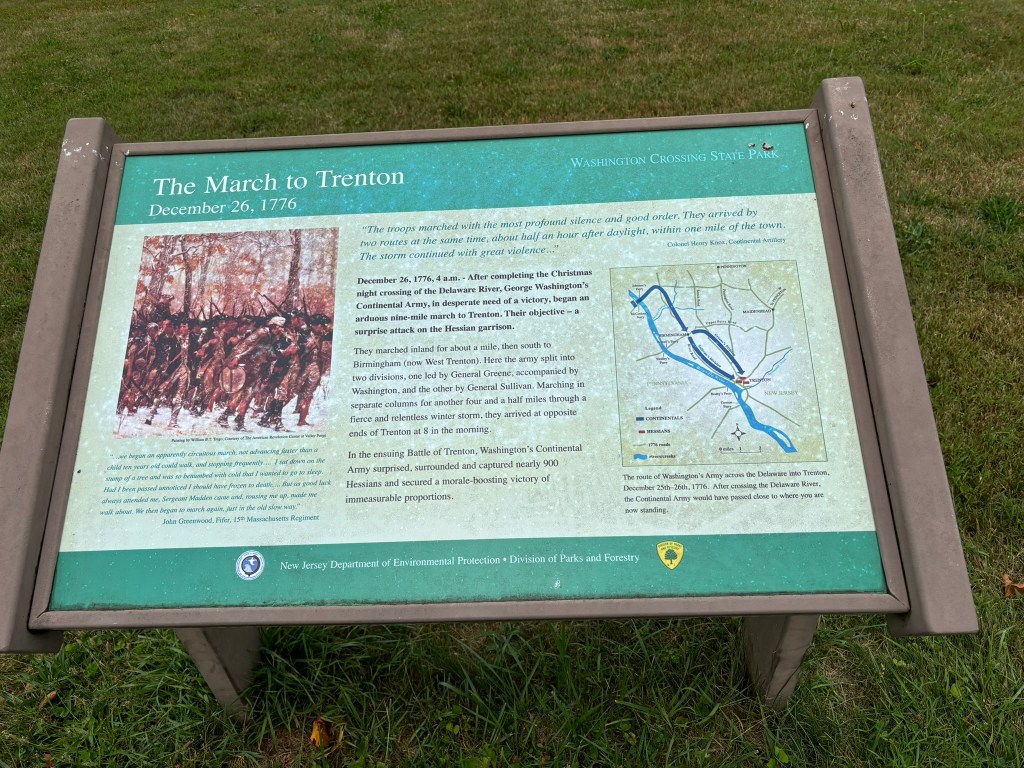
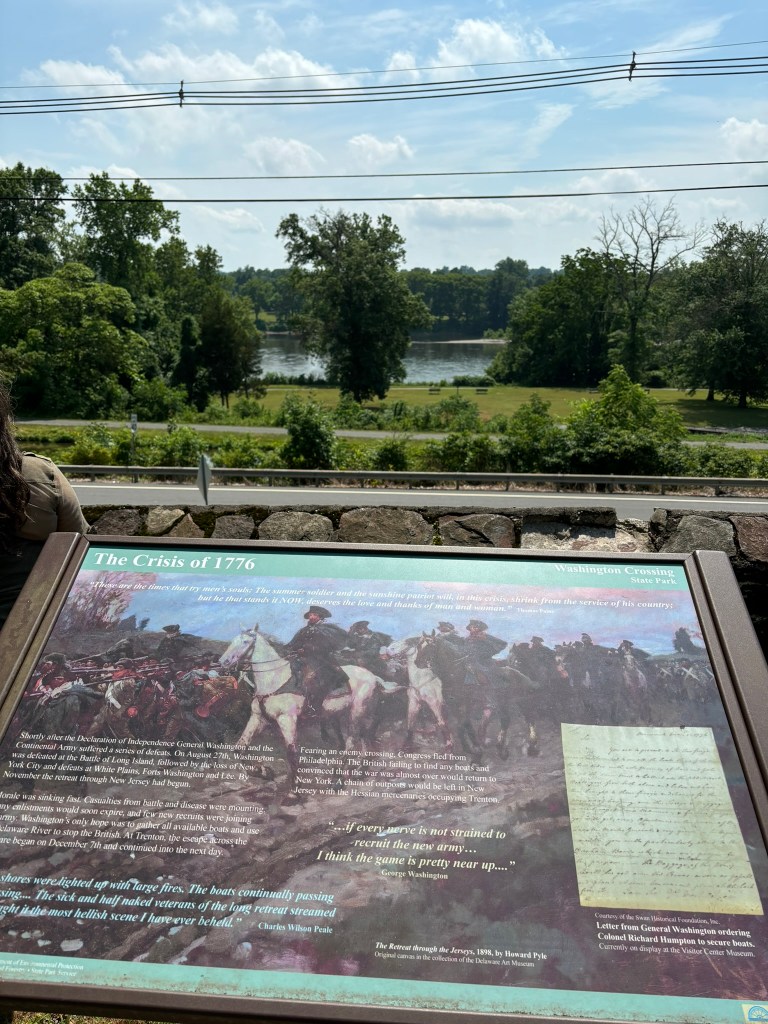
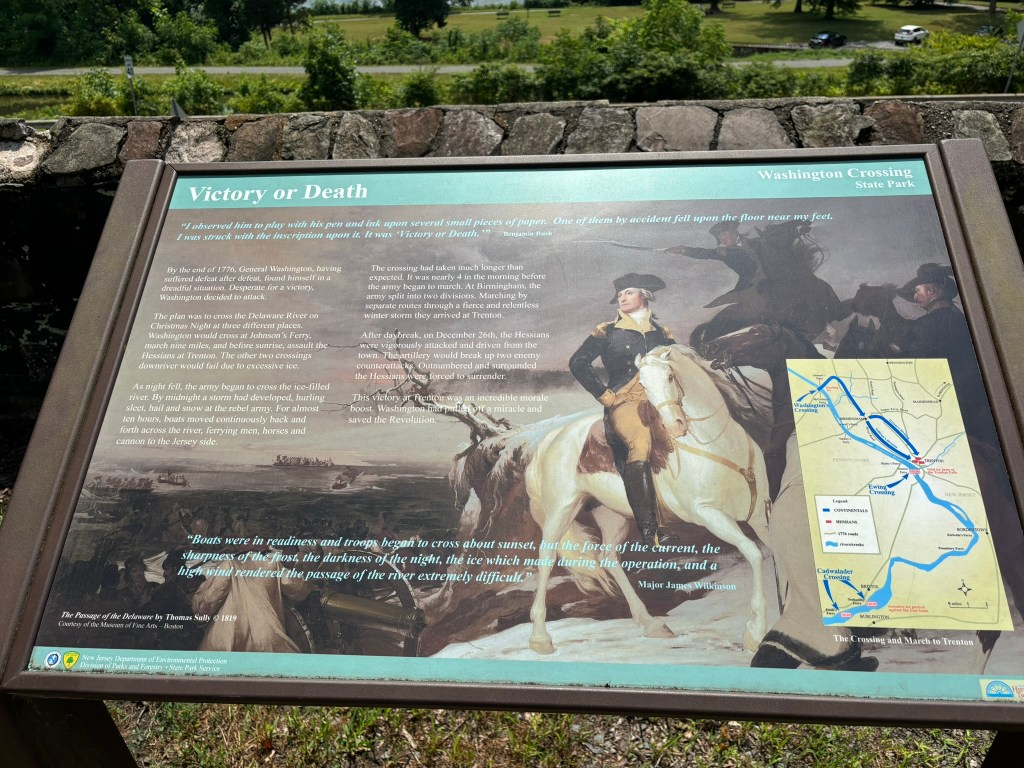
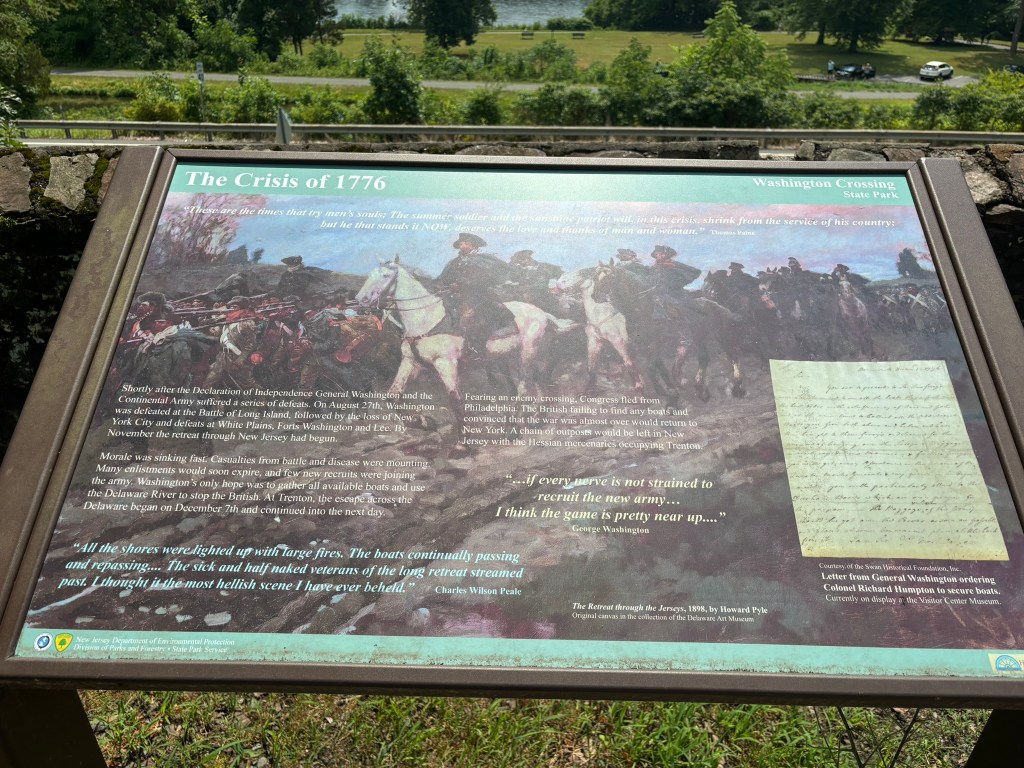
The tour began with a video that was about 30 minutes long called “Ten Crucial Days: The Road to Liberty.” The video’s primary focus was to tell the significance of Washington’s crossing. The video also gave us the background leading up to the event. The British army landed about 32,000 troops in New York harbor starting in August 1776, shortly after the United States declared independence. The British then won a series of battles starting in Long Island, then Manhattan and up to White Plains. The Continental Army retreated across New Jersey while being pursued by the British army. Washington led his hungry, desperate, and dwindling army across the Delaware River and found safety in Pennsylvania by early December.
The revolution seemed lost for the Continentals. To add to Washington’s difficulties, many of his men’s enlistments were up at the end of the year. He needed a major victory to boost the morale of the troops as well as the young nation.
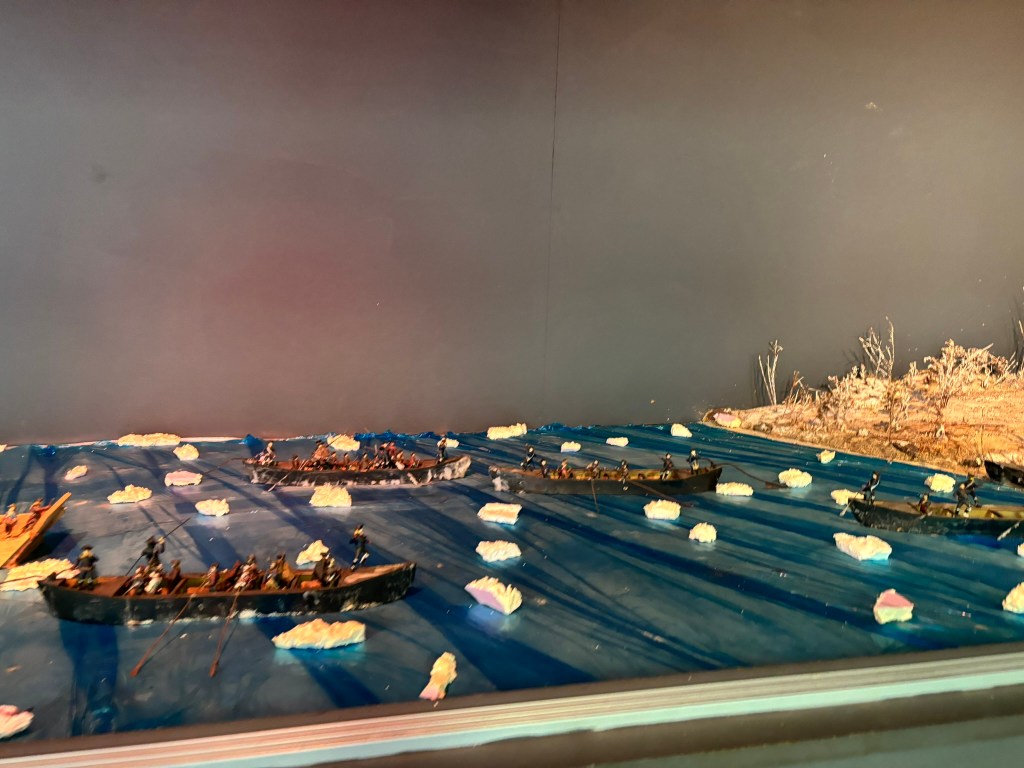
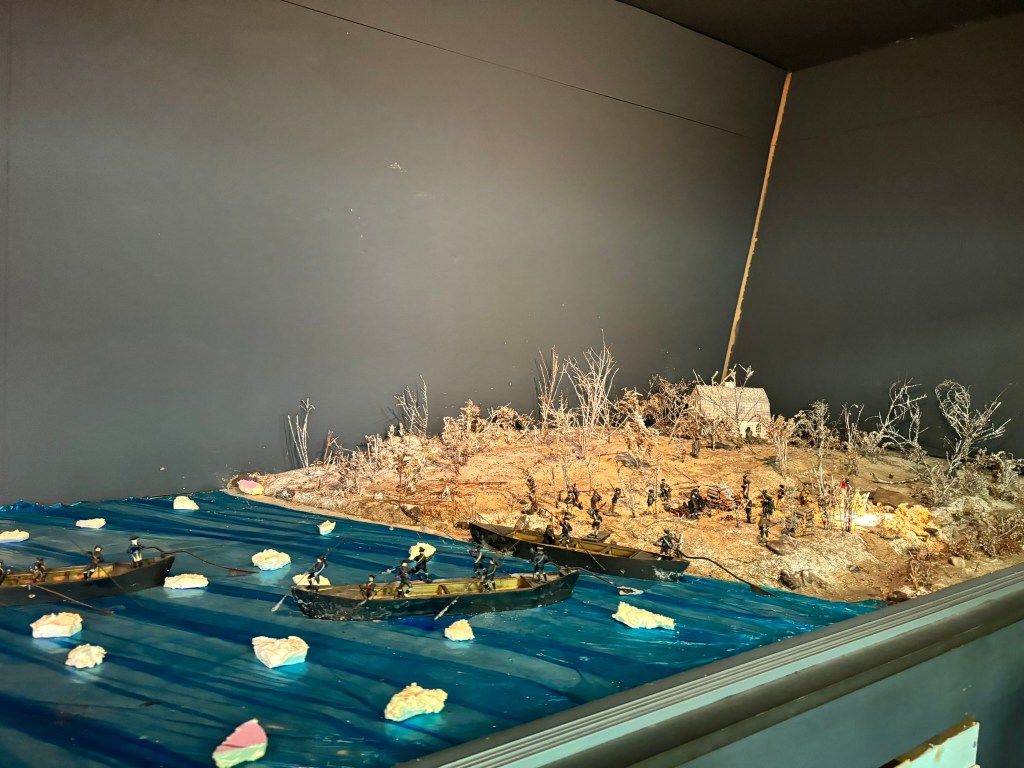
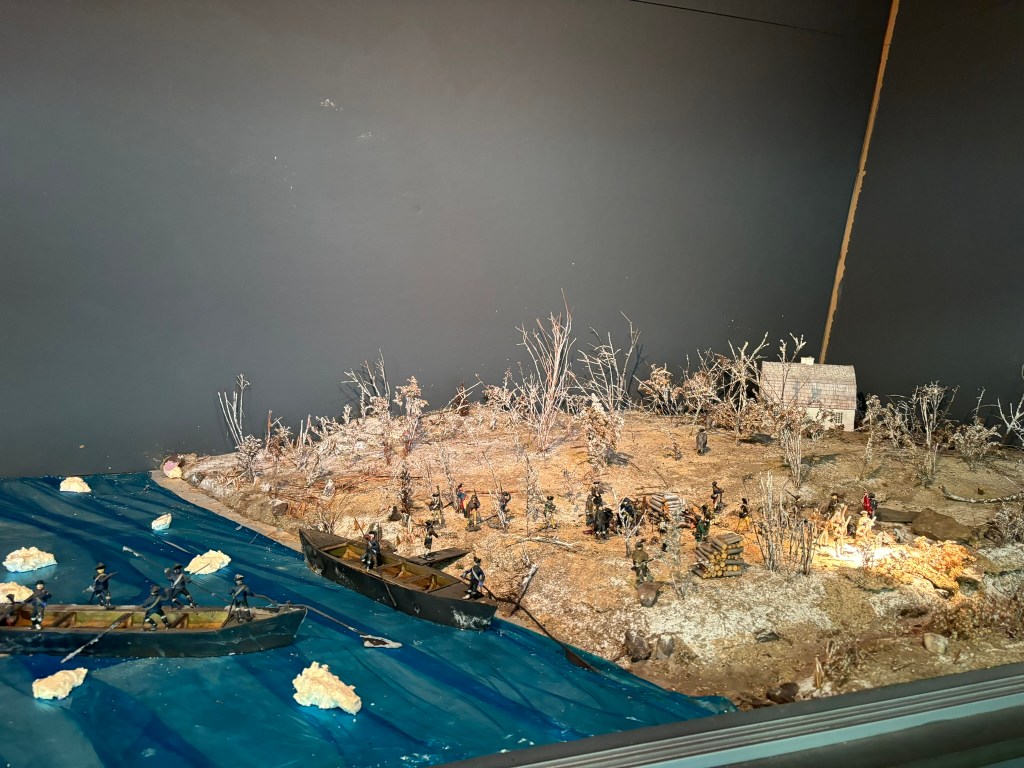
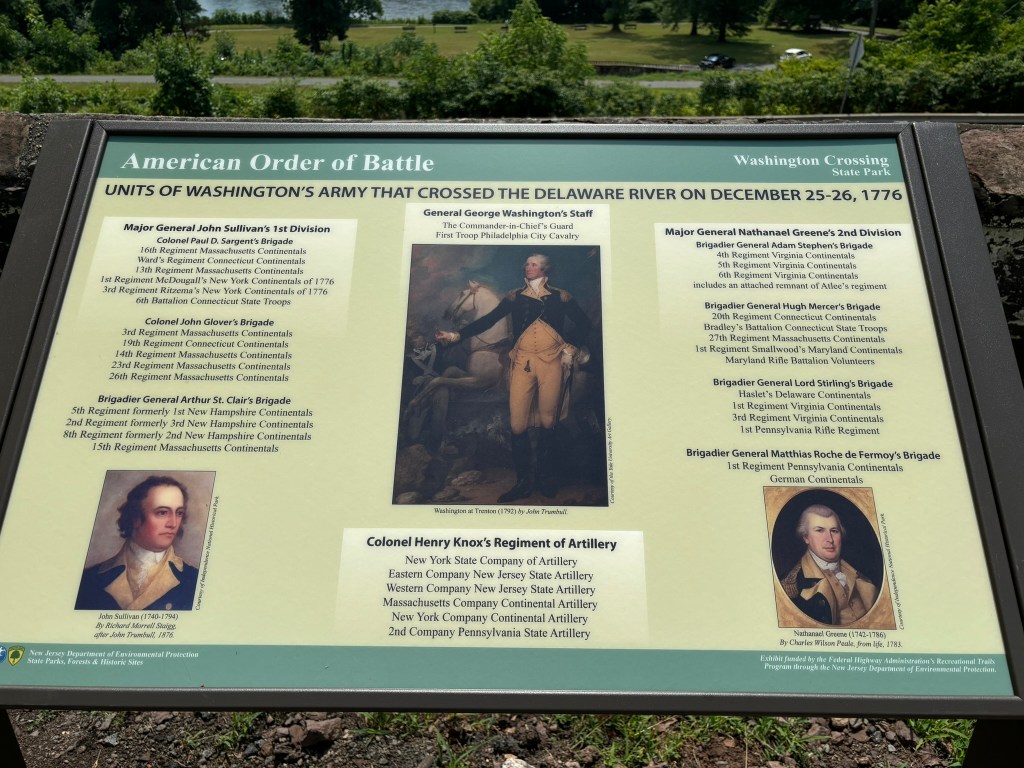
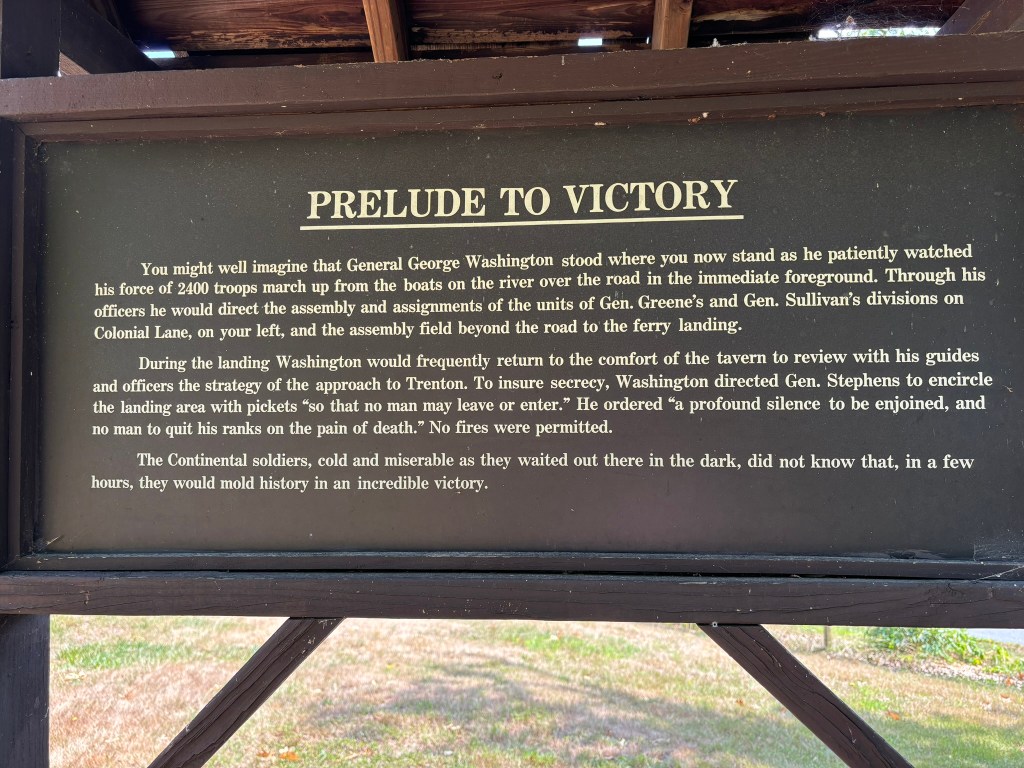
In a quite daring move, Washington planned a surprise attack on the Hessian garrison stationed at Trenton. On Christmas night, he would lead the Continental Army across the Delaware River including horses and artillery, and march nine miles south to Trenton. Washington and the Continentals knew the significance of the element of surprise. He wanted to attack Trenton before sunrise, but the crossing was running hours behind. Washington crossed the Delaware with 2,400 men, not as many as he had hoped because other regiments who were to cross south of Trenton never made it across. After landing on the New Jersey side, Washington and his men finally began their march towards Trenton at 4AM. The weather did not cooperate with the Continentals. Along the march, they first faced light rain, then light snow, then blizzard like conditions. At least two men died during the march.
About halfway to Trenton, the army broke into two groups. General Nathaneal Greene, accompanied with Washington, took one group, and General John Sullivan led a second group. The two groups split off and would take two separate roads to Trenton. This plan would result in the Continentals enveloping the enemy and attacking from two locations. The Continental Army did not reach Trenton until 8AM which was after sunrise, although the morning fog helped conceal the oncoming troops. The battle ensued and lasted just about an hour and half. At its conclusion, the Hessians suffered 22 killed, 83 wounded and nearly 900 captured. It was a resounding victory for the Continentals, and it was the victory that they so desperately needed.
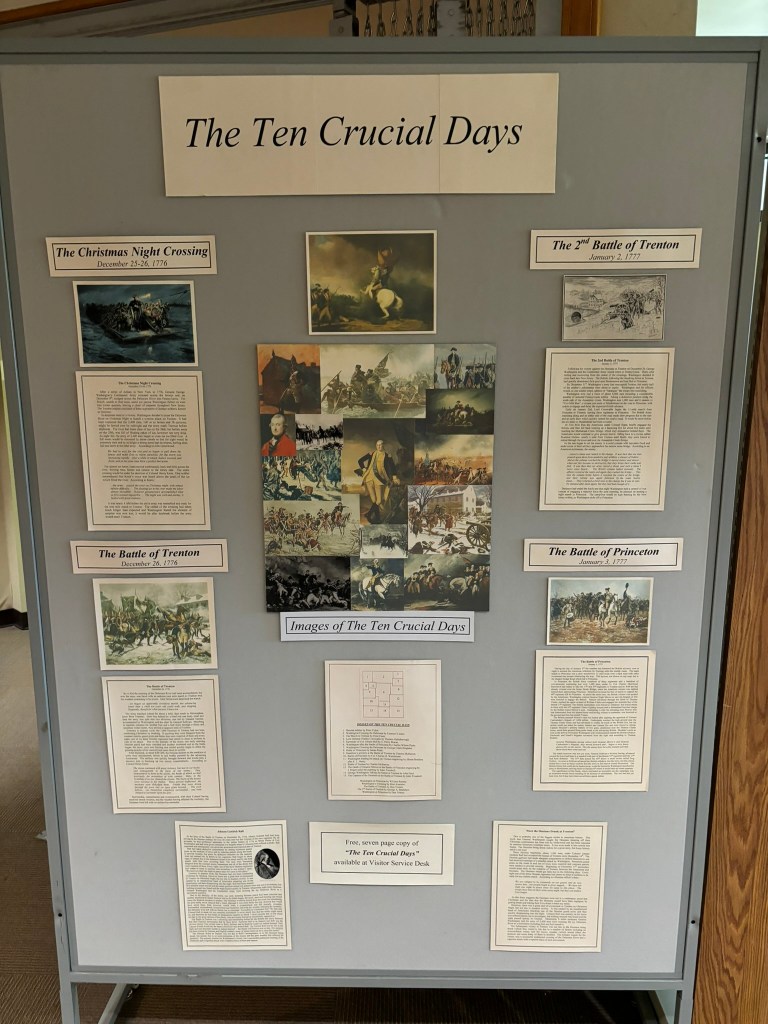
Washington’s crossing was the beginning of what historians call “The Ten Crucial Days.” After the victory at Trenton, the Continental Army went back across the Delaware River to Pennsylvania. Just a couple days later, they again crossed back into New Jersey and encamped at Trenton and held off the British Army at the Second Battle of Trenton. During the night of the second battle, Washington and the Continentals secretly marched around the British army and faced another British army at the Battle of Princeton on January 3rd, 1777. This was another resounding victory for the Continentals who defeated British Regulars. The Ten Crucial Days breathed new life into the revolution. The Continental Army would spend their winter encampment at Morristown, living to fight another day.
Had it not been for Washington’s daring move to attack at Trenton, the Revolution may have been over. Even the British believed that the Continentals had nothing left. Had Washington’s attempt on Trenton failed, the rebels may have lost the war and would become British subjects once again, under the closer scrutiny of the crown. But Washington’s stroke of genius gave the Continentals the hope to continue fighting. The war would continue to drag on for years with victory for the Continentals not becoming official until the Treaty of Paris in 1783. Even though it was early in the war, the Ten Crucial Days are arguably the ten most significant days in American and World history.
The Tour
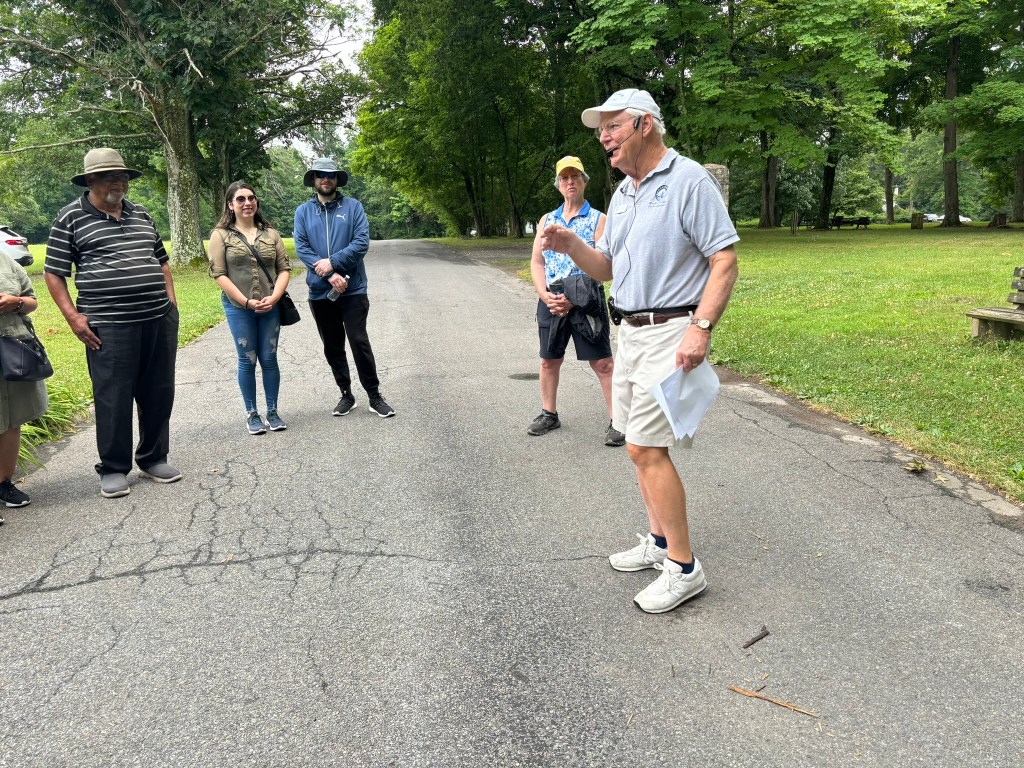
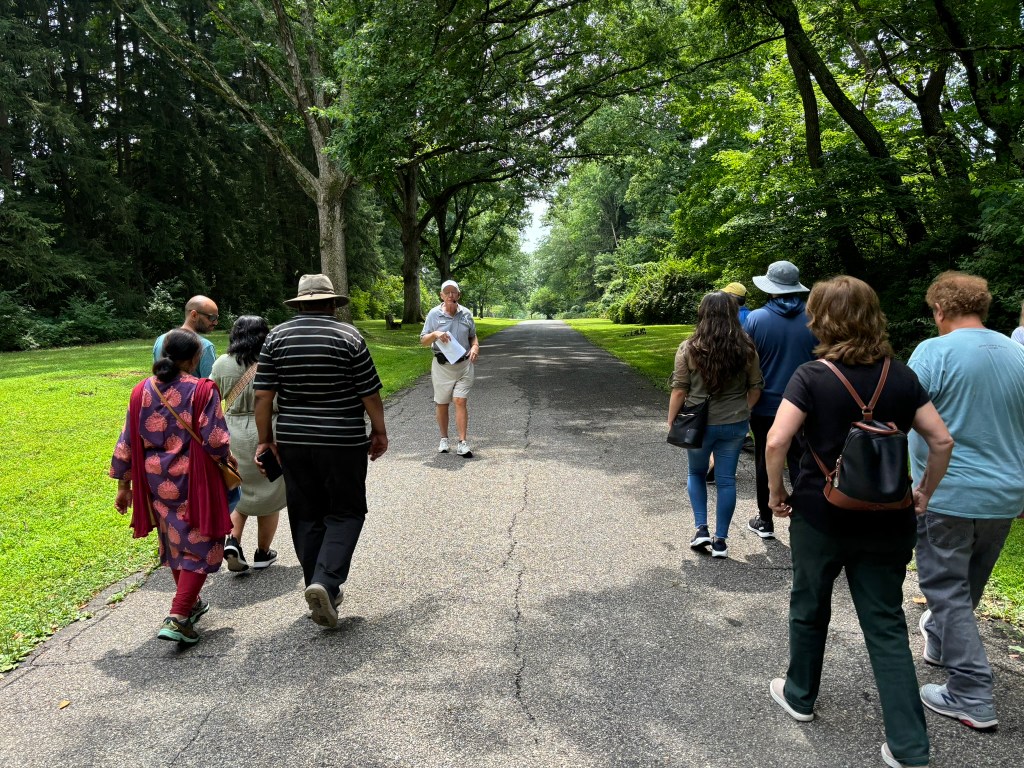
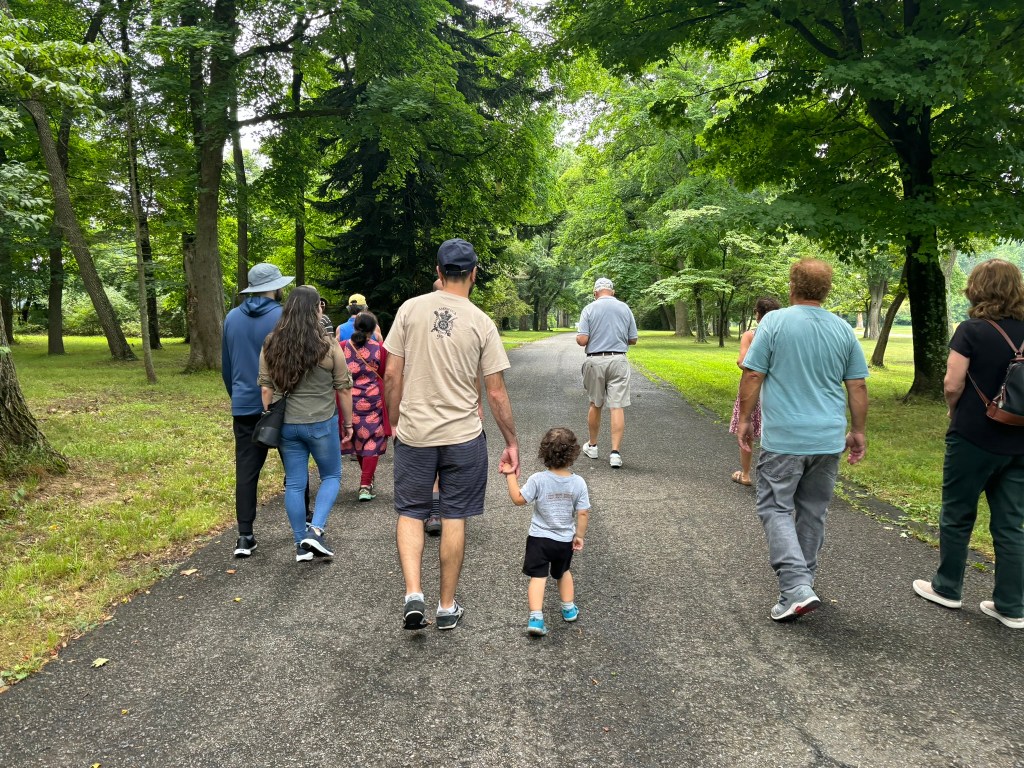
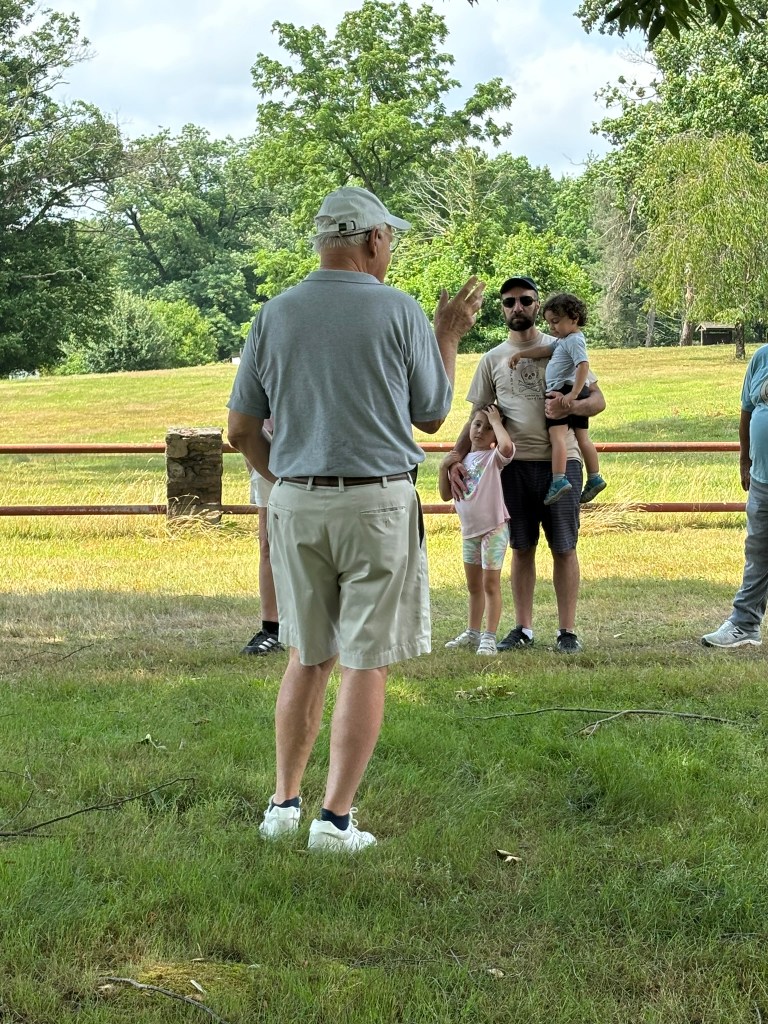
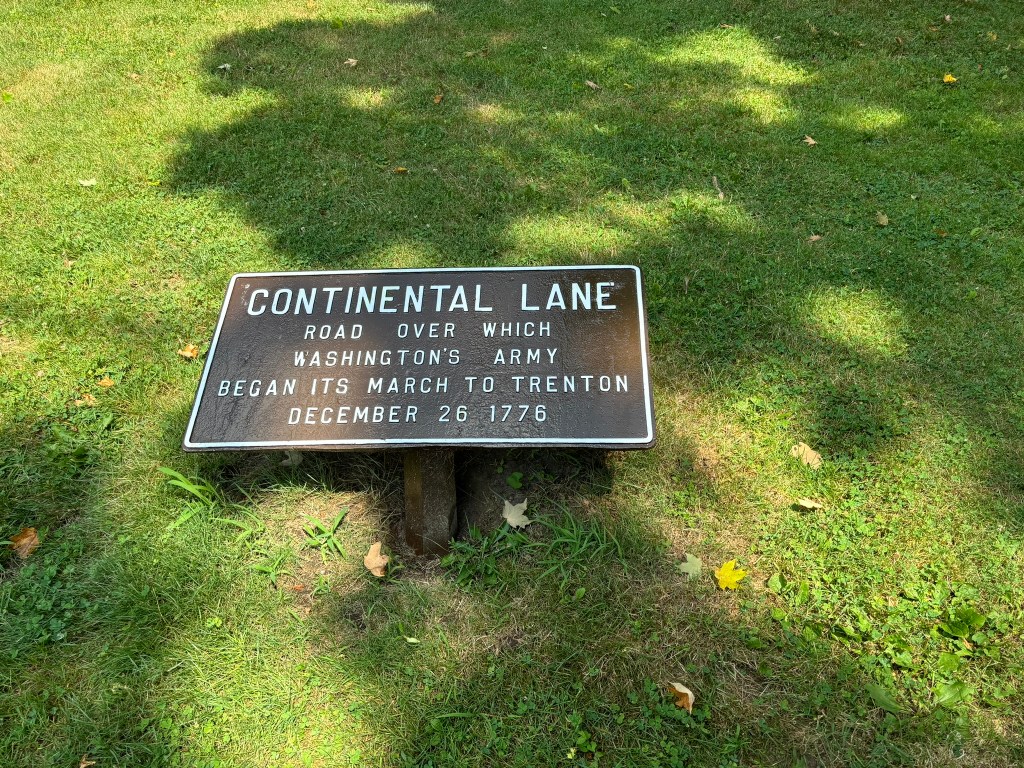
After the video was over, our tour guide, Tim West, took us on a walk through the park, down Sullivan Lane to the entrance of Continental Lane in the direction towards the Delaware River. He discussed the reasons why Washington chose this particular place to cross the river. The Continental Army wanted to be in the vicinity of Philadelphia which was the new nation’s capital and arguably the most important city in the young country.
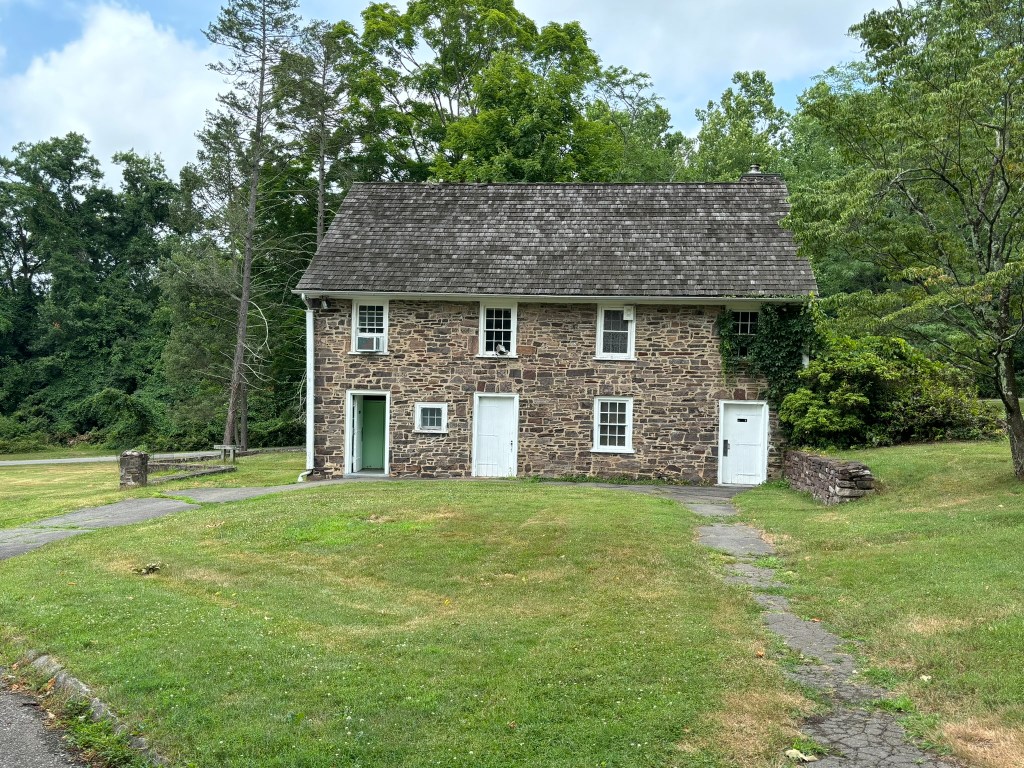
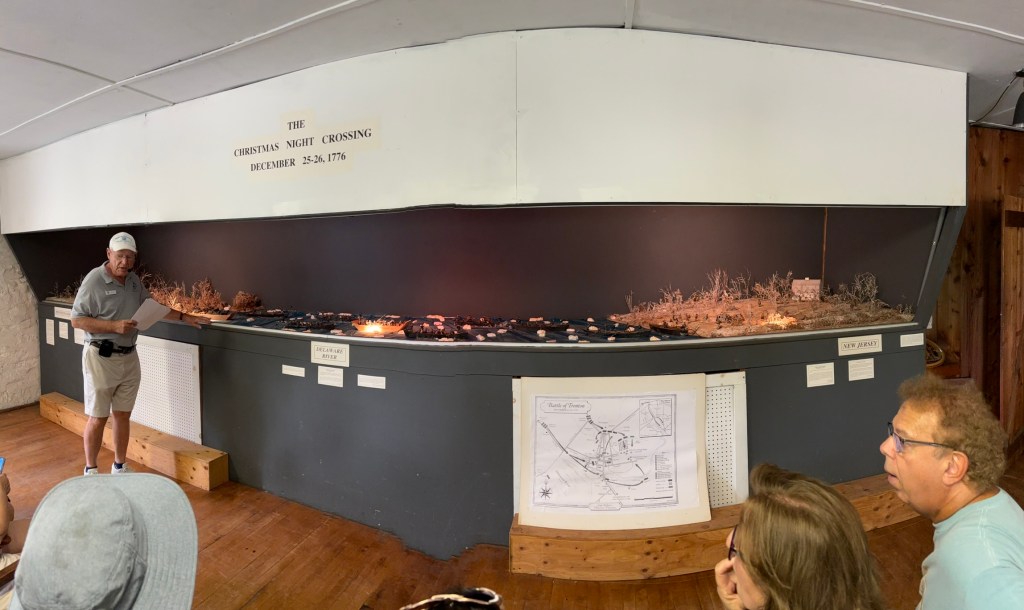
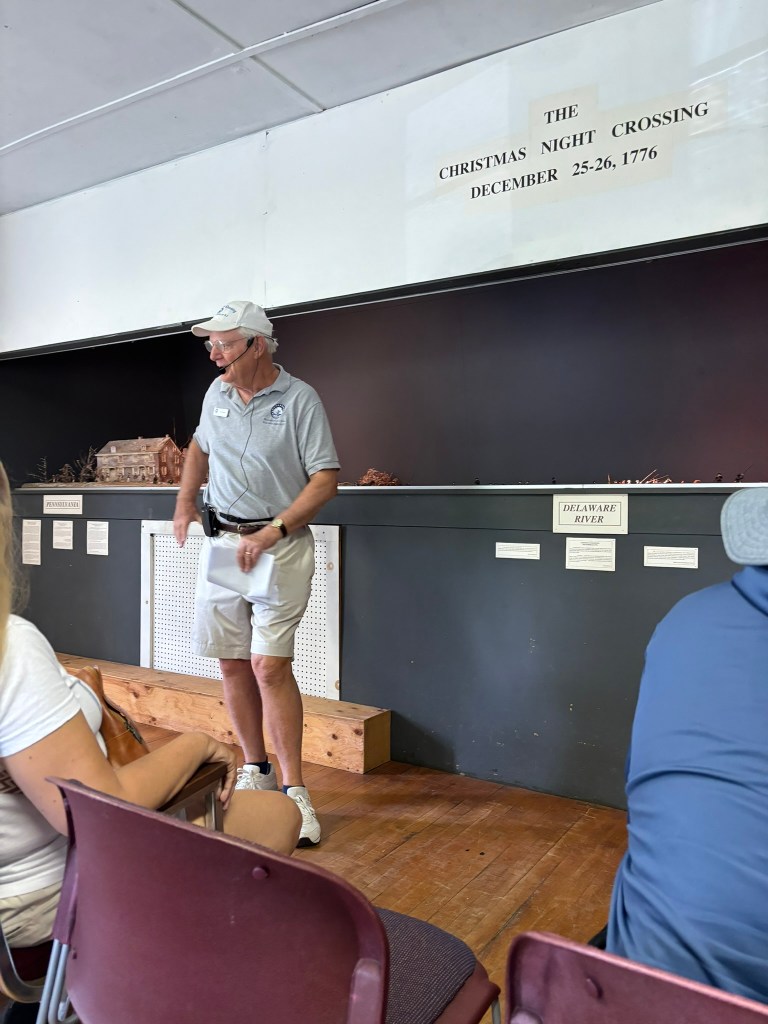
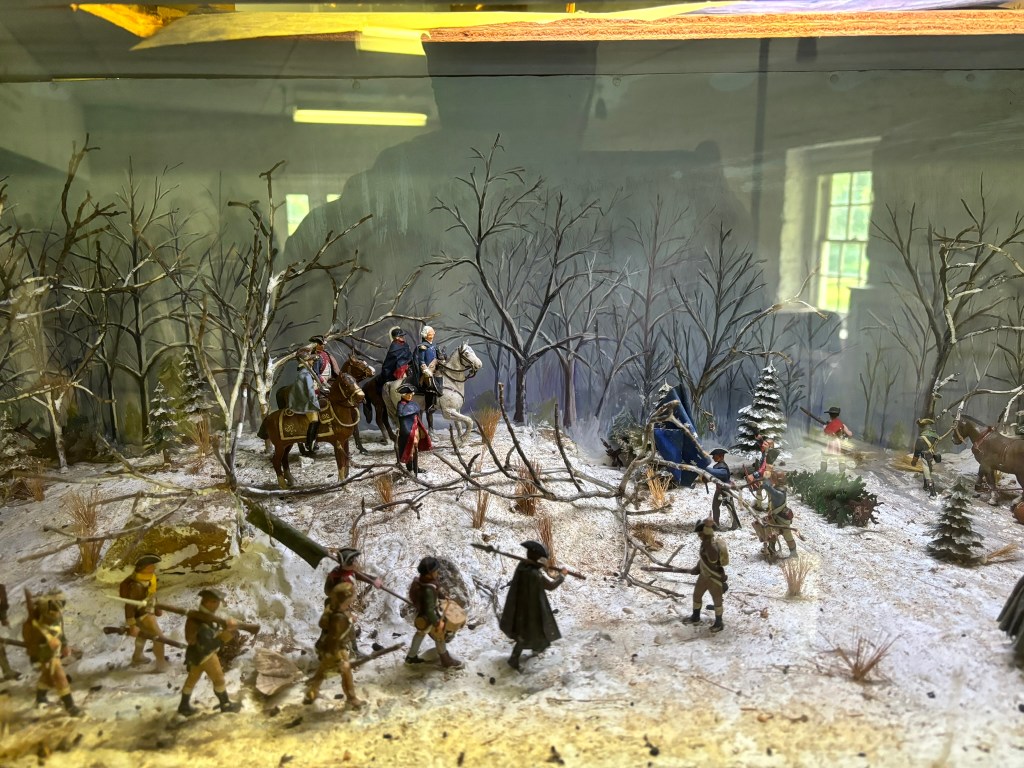
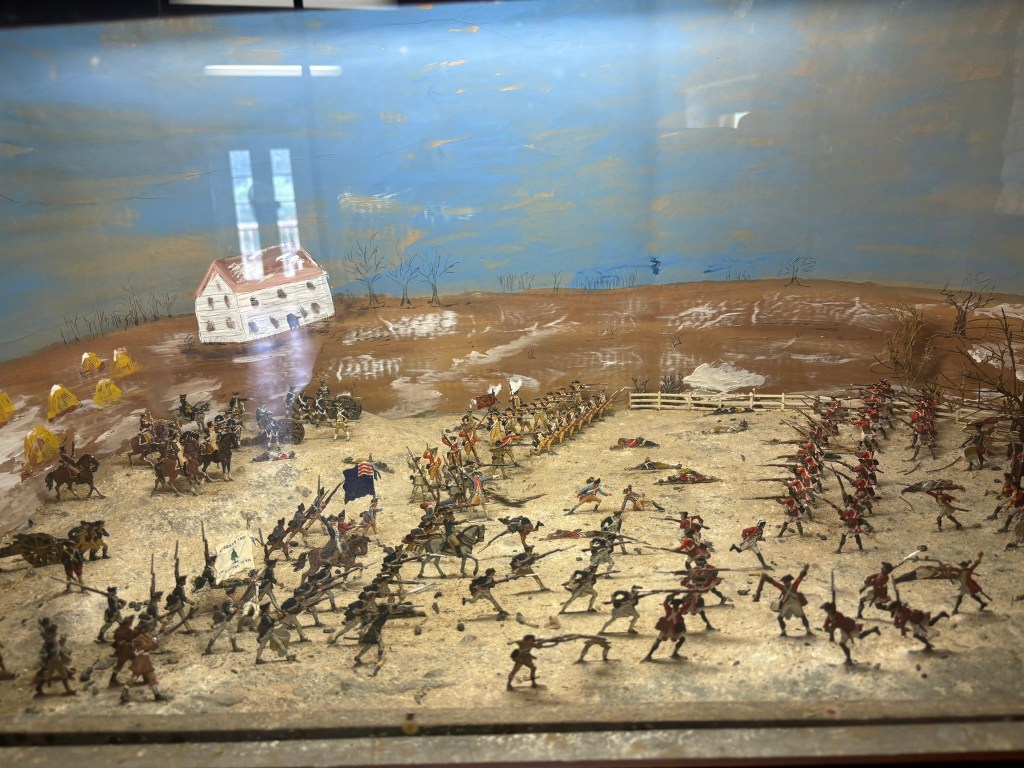
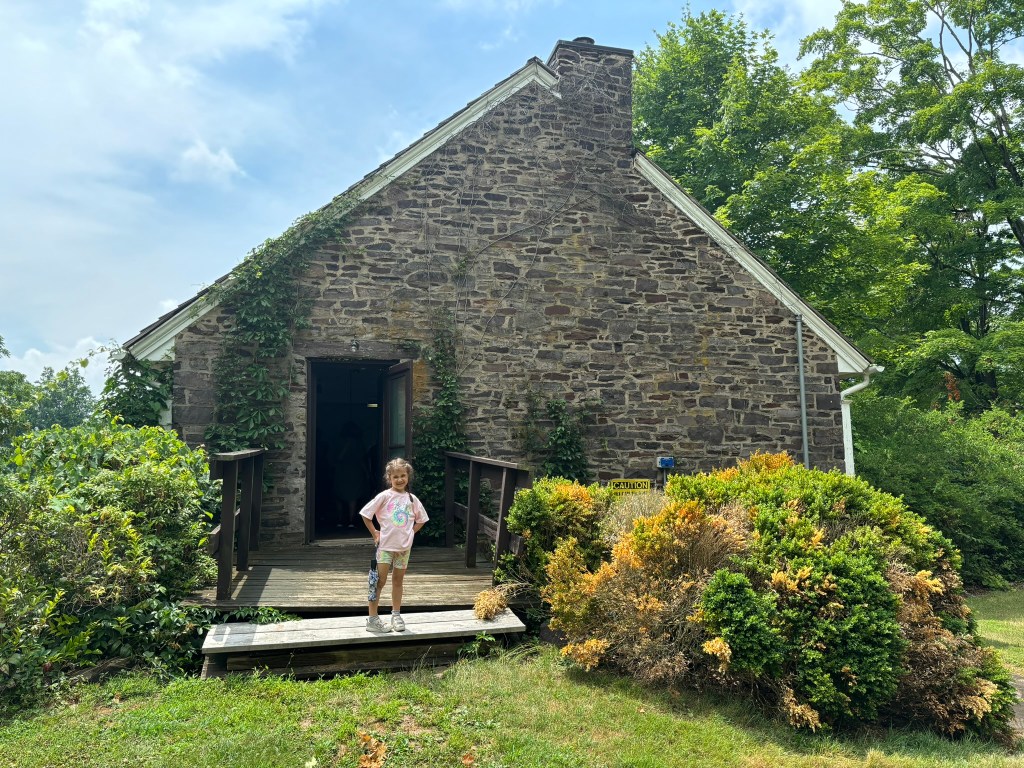
We made our way to the Stone Barn, built in the 1780s, where Tim discussed the army’s march to Trenton, as well as the battle itself. Inside the Stone Barn is a large map of Trenton as it looked in 1776. There is also a fascinating diorama of the river crossing.
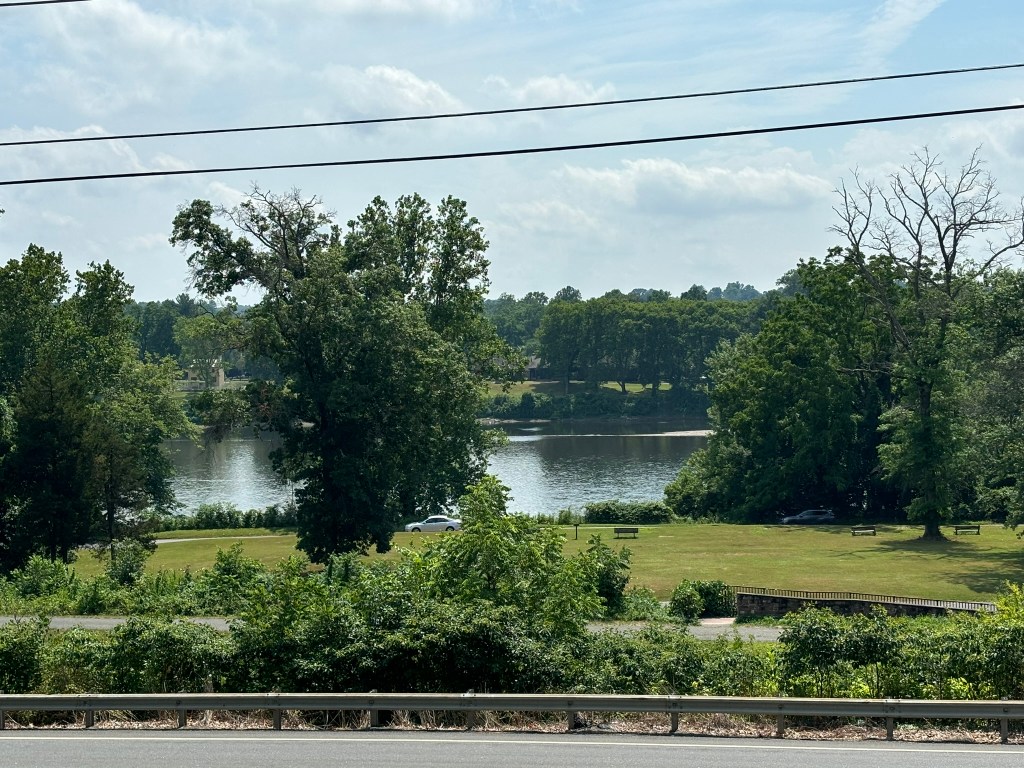
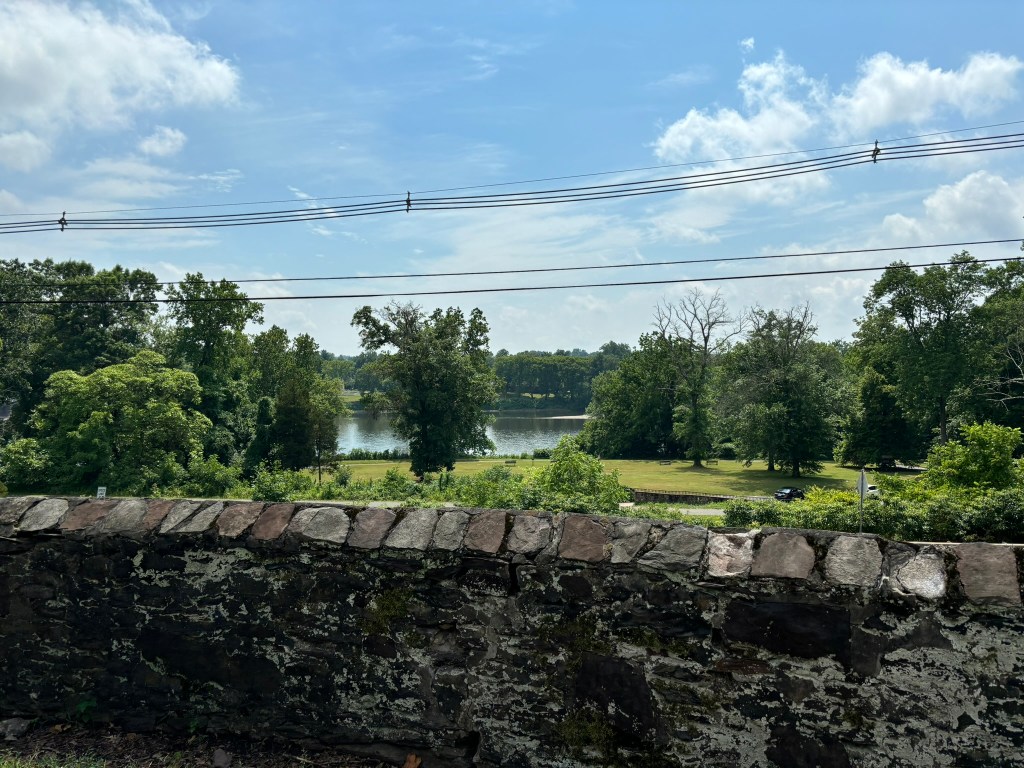
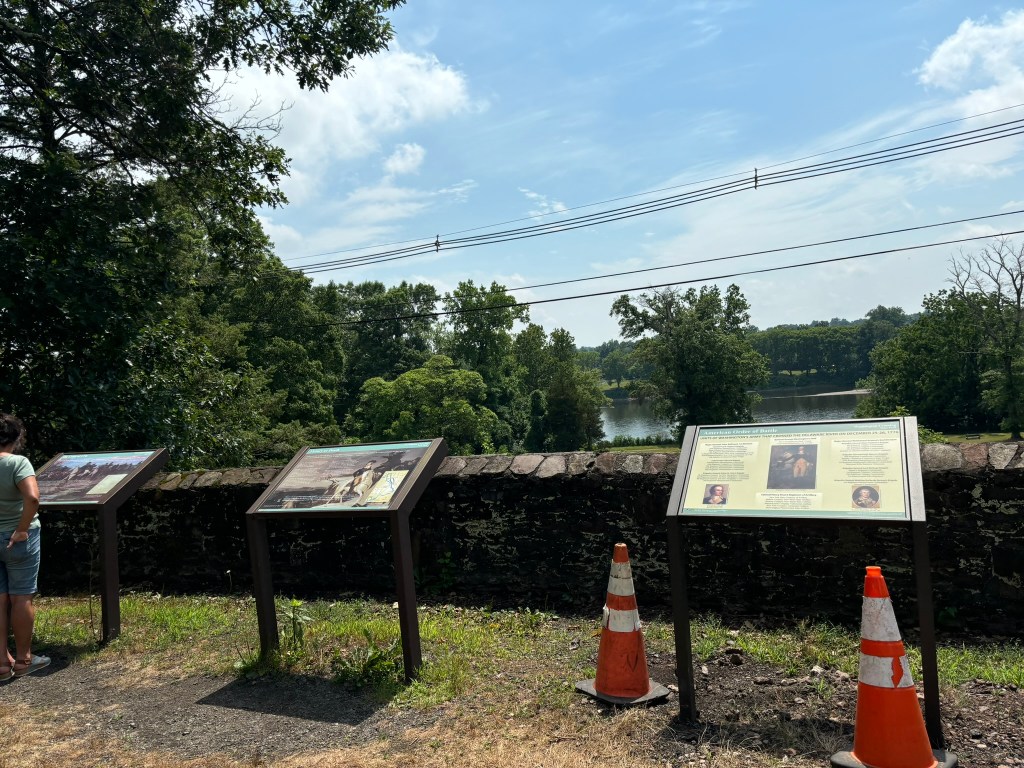
Next, we ventured off to the Landing Overlook, where we could see the location where Washington and the Continental Army crossed the Delaware River. It was quite amazing to see the exact location where such a significant historical event took place.
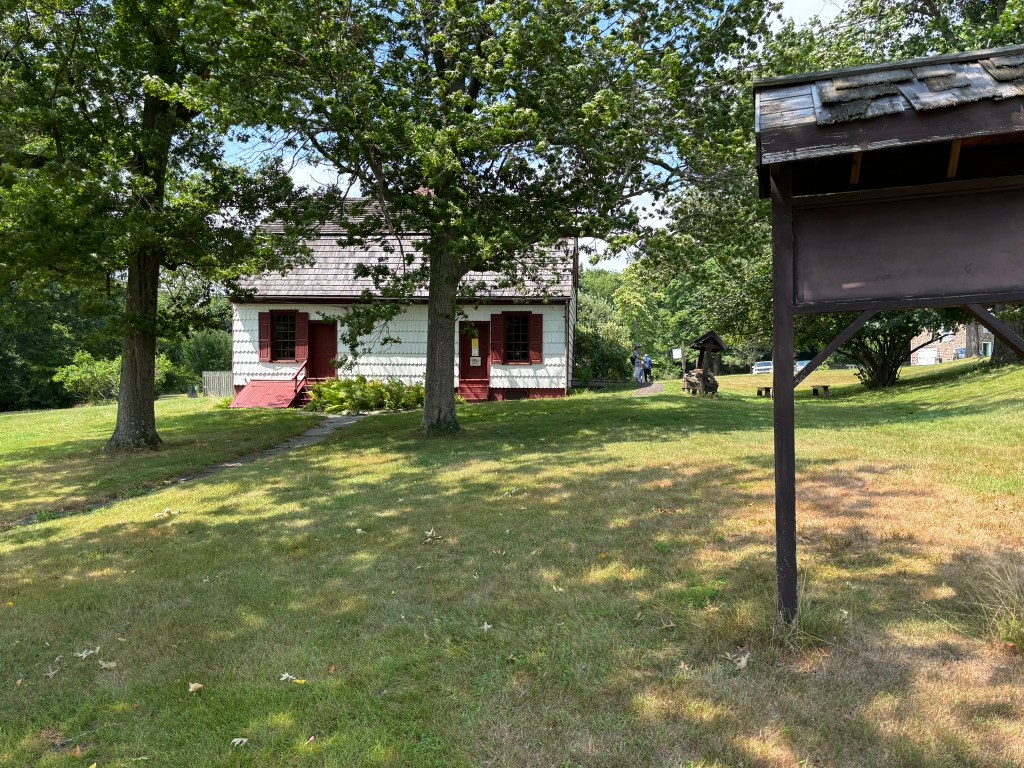
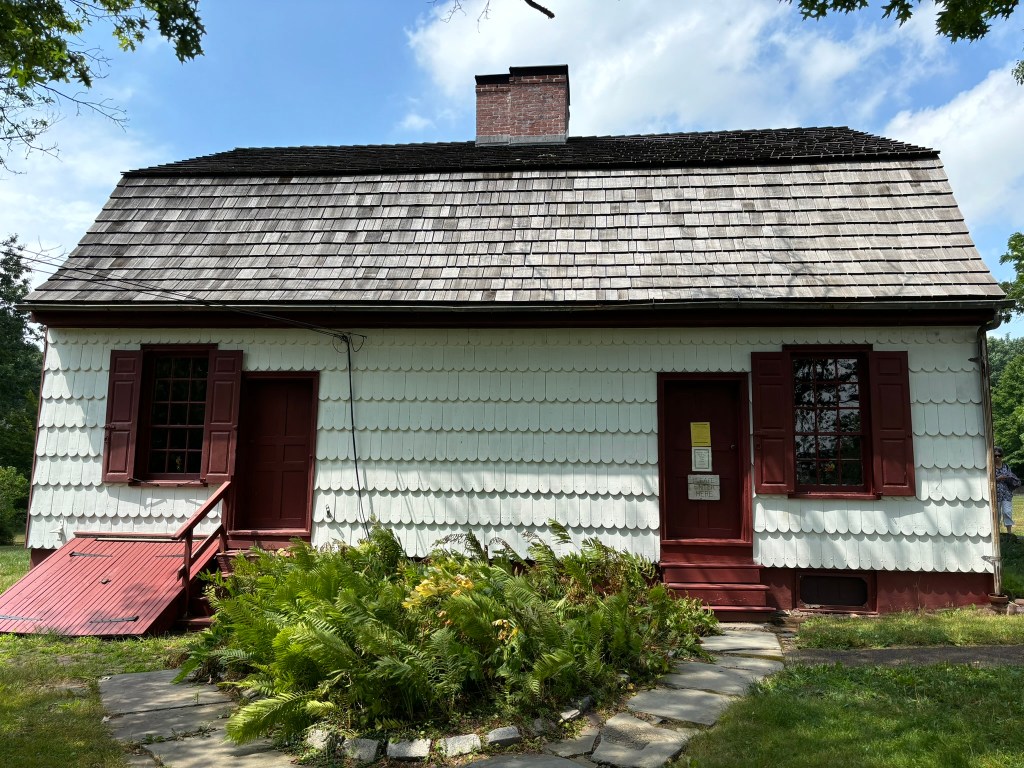
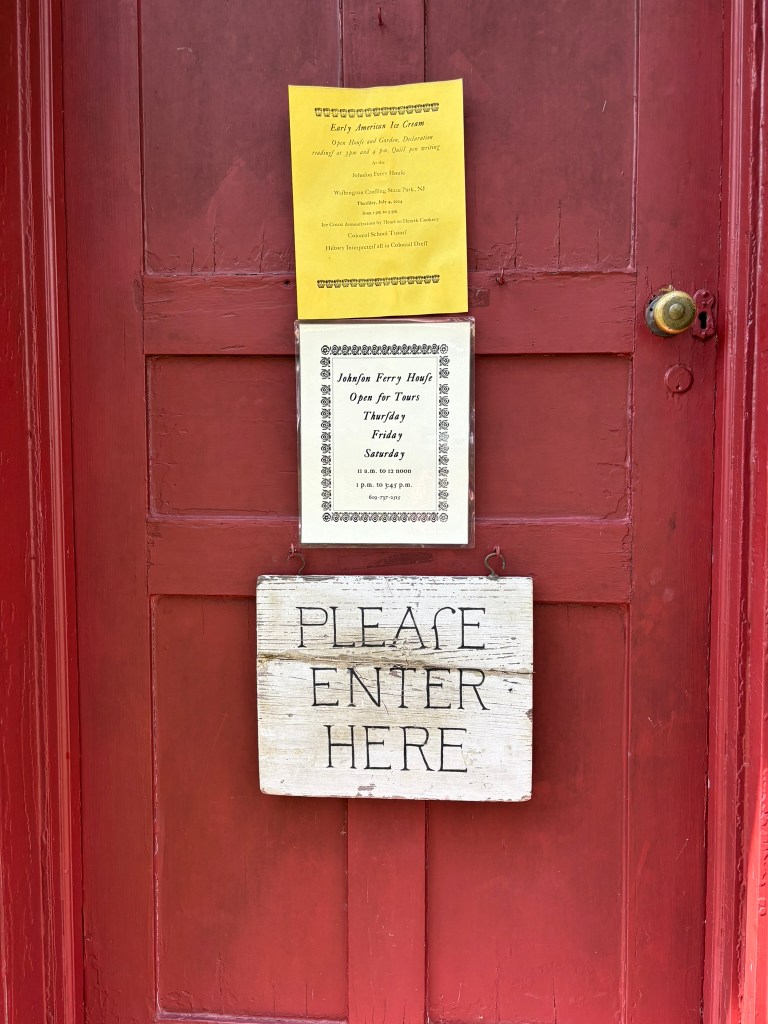
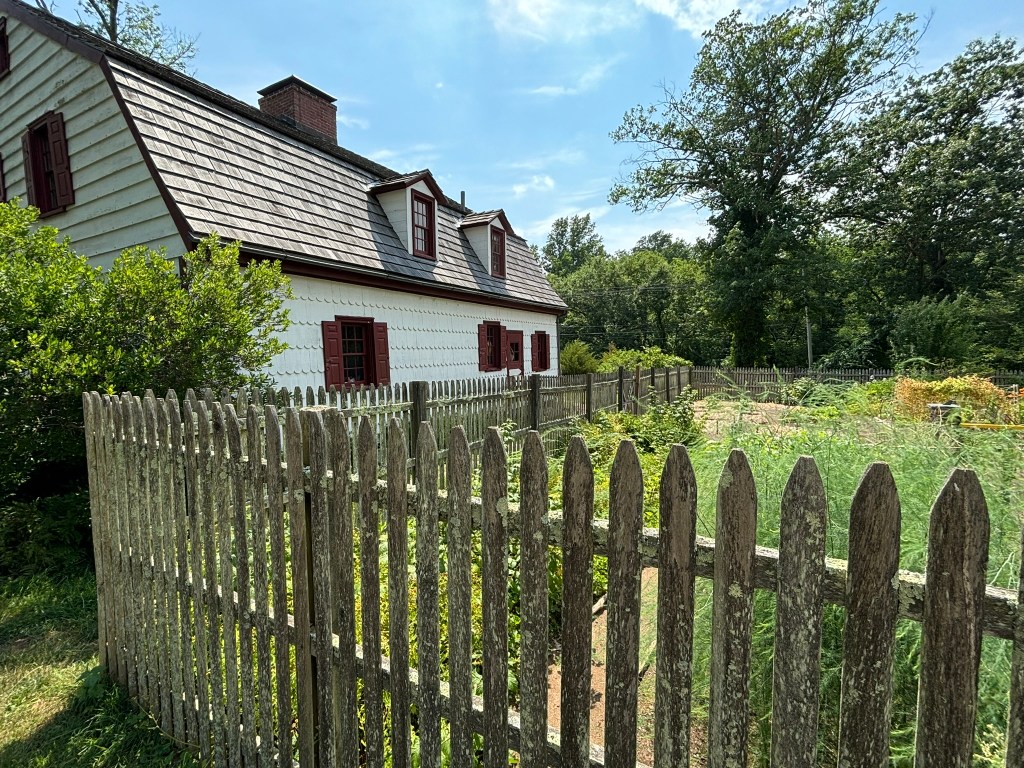
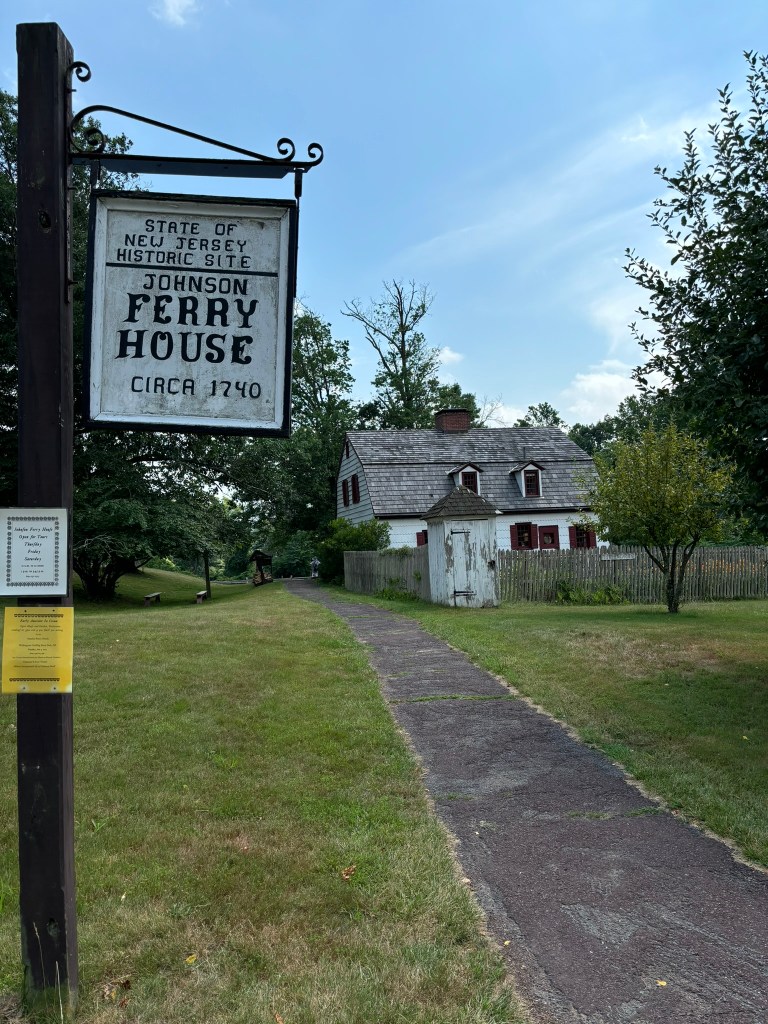
I was able to venture over to the Johnson Ferry House which is very close to the crossing site. The house was built in 1740 and was a witness to the crossing. The house was owned by Garrett Ferry, who had a 490 acre colonial farm and ferry service across the Delaware. It is believed that Washington and his officers used the house to plan out their attack on Trenton. We unfortunately did not have an opportunity to go inside the Johnson Ferry House, but if you are visiting, make sure to check their hours of operations and tours.
We were also told throughout the tour that a brand new visitor center and museum will be built starting early July to be completed in time for the 250th Anniversary. I’m looking forward to checking out the new museum which will have amazing new and updated exhibits. I also look forward to visiting the Pennsylvania side of the river crossing. If anyone has any advice on what to see and do in the area, please comment and let me know!
My family and I made it to the Annual Reenactment of the Battle of Monmouth on Saturday, June 15th. The event takes place every year in June on a Saturday and Sunday to commemorate the June 28th, 1778 battle. It was a great Father’s Day Weekend experience. We were quite impressed with the event as this was our second time visiting the battlefield, but the first time attending this event. Of the American Revolution events that I have been to, this event drew the largest crowd and attracted the most reenactors.
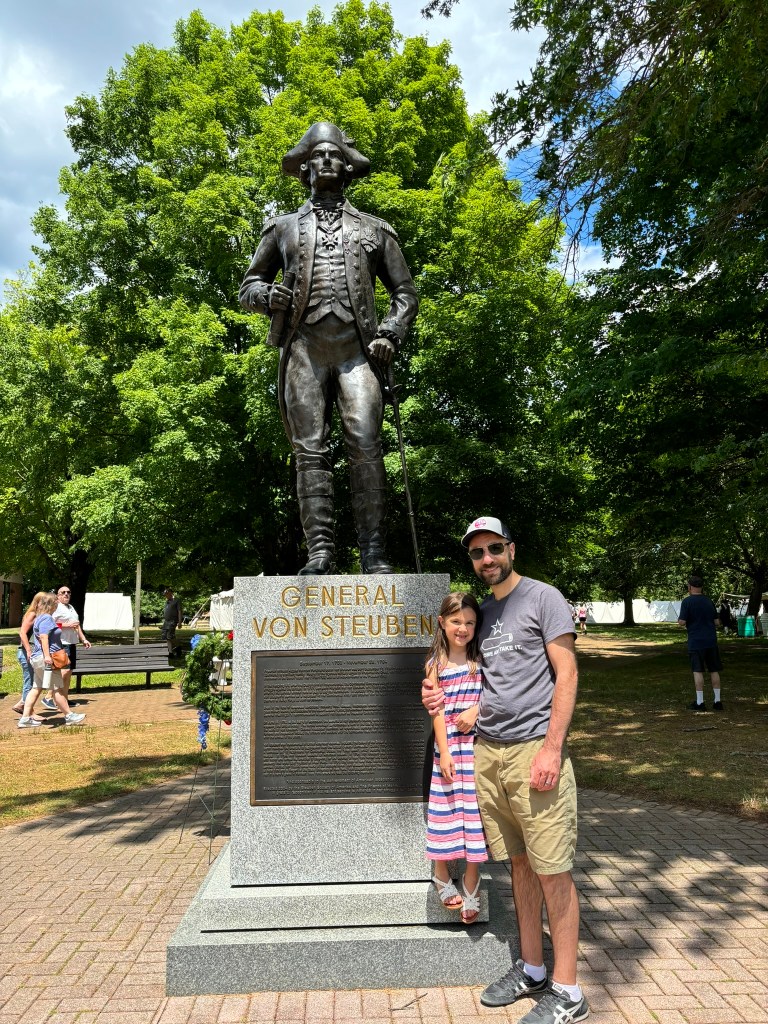
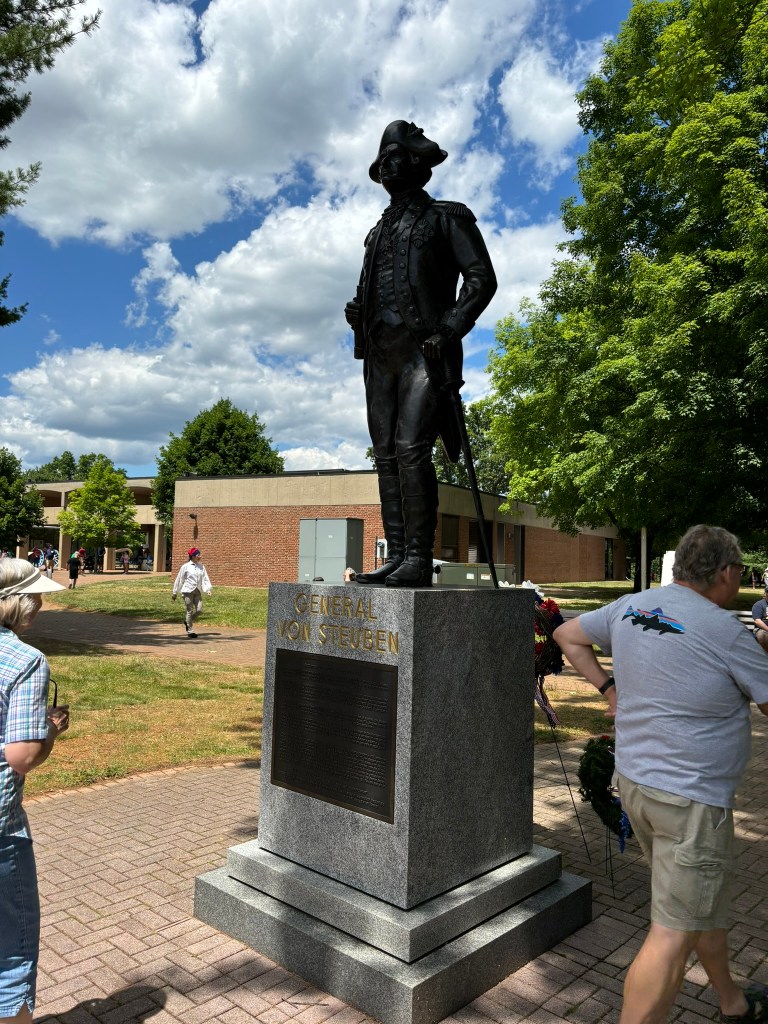
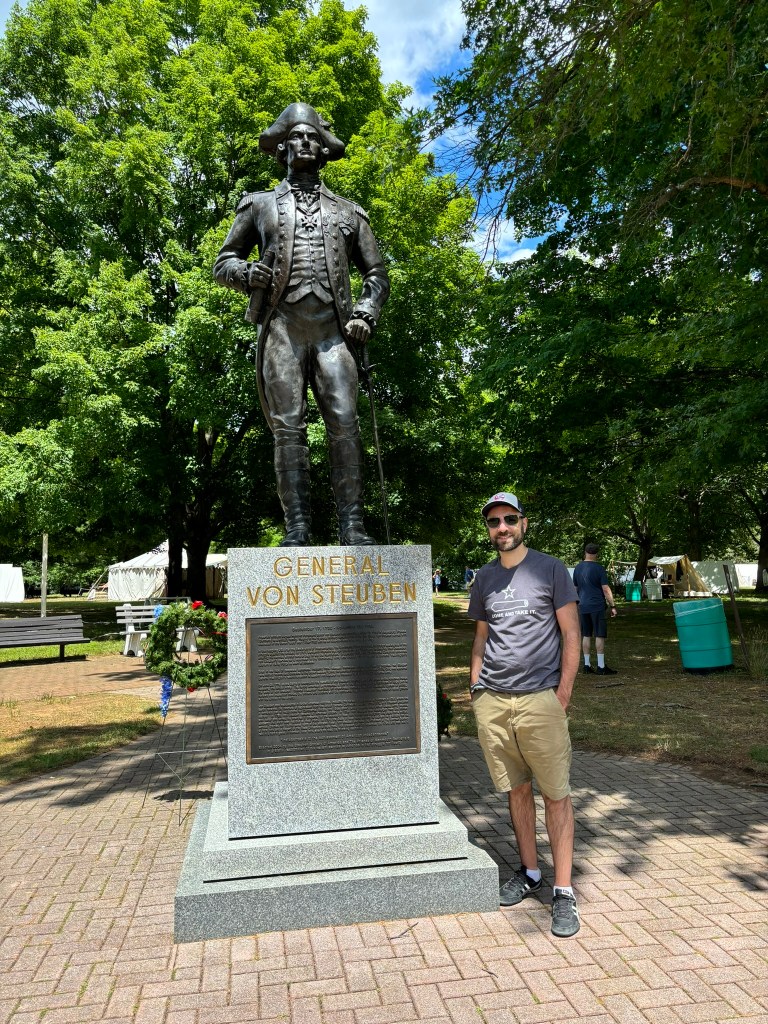
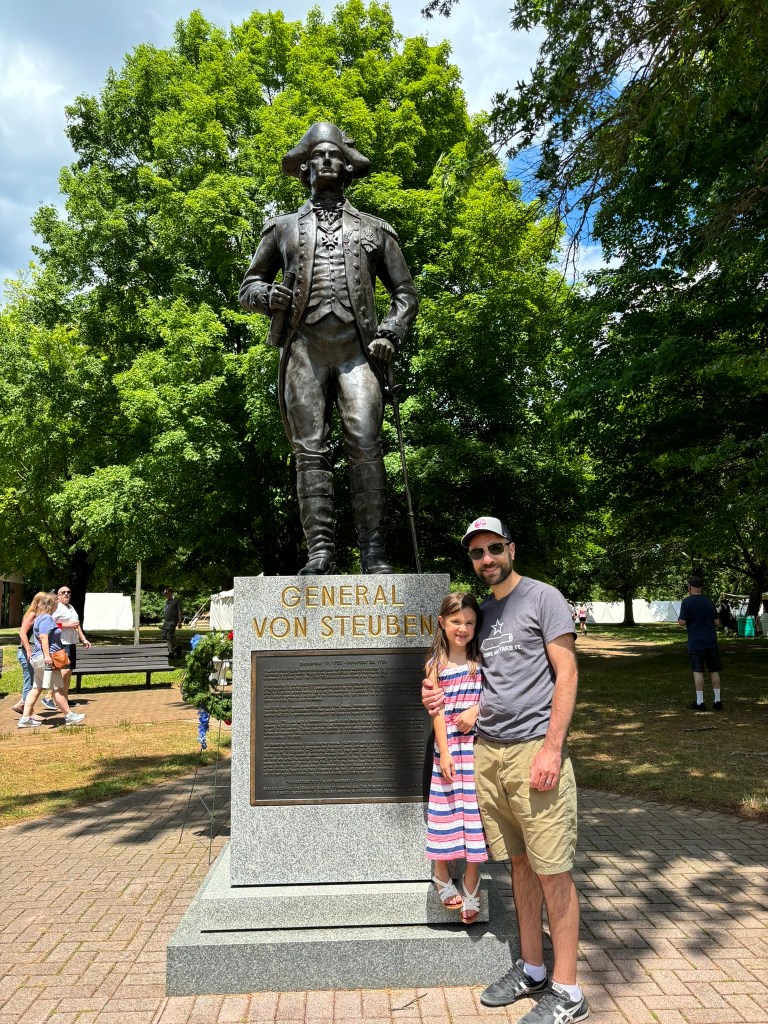
While the Battle of Monmouth did not have much strategic benefit for the Continentals, it was a large battle in terms of manpower, and showed that the Patriot army could go toe to toe with the British. The battle was the largest artillery duel of the war and the Continental Army, led by George Washington, had an opportunity to show their fighting tenacity after a long winter at Valley Forge. At winter camp, the constant drilling from Friedrich Von Steuben, the Prussian drill master, made real soldiers of the Continentals. The benefits of the rigorous drilling were shown on the Monmouth battlefield. The battle is known for temperatures reaching 100 degrees. The night following the battle, the British continued their retreat from Philadelphia to New York (as they had planned), and Washington used this retreat to claim victory for the Patriots. The Battle of Monmouth is also known for the heroics of Molly Pitcher who is commemorated at the park.
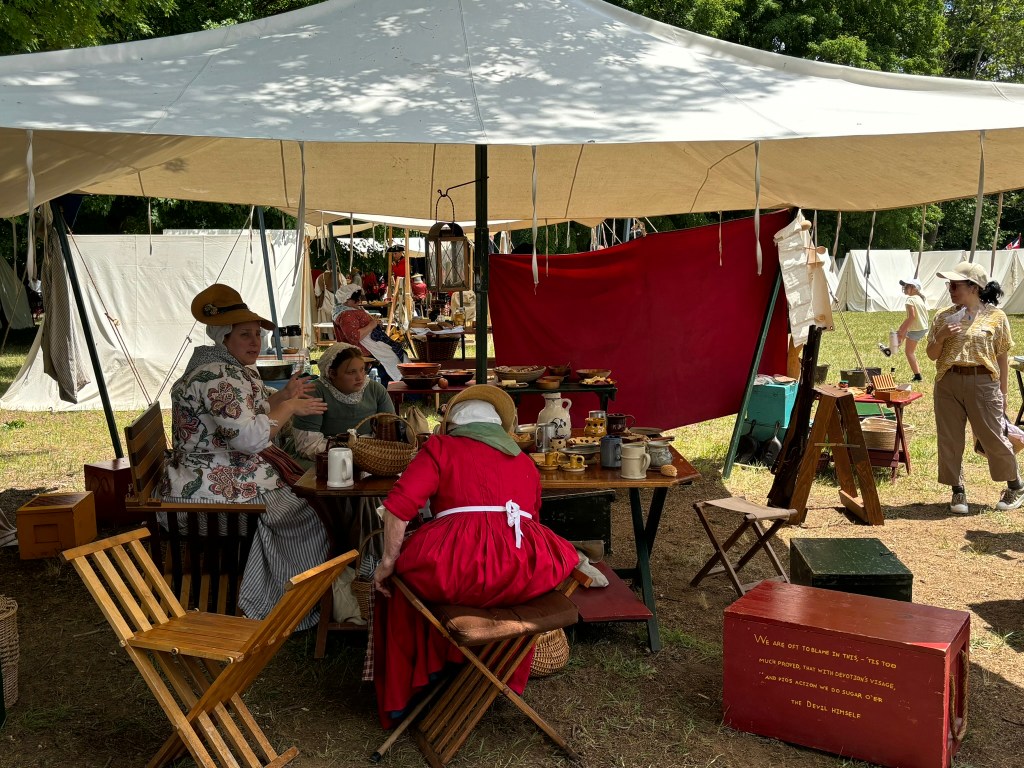
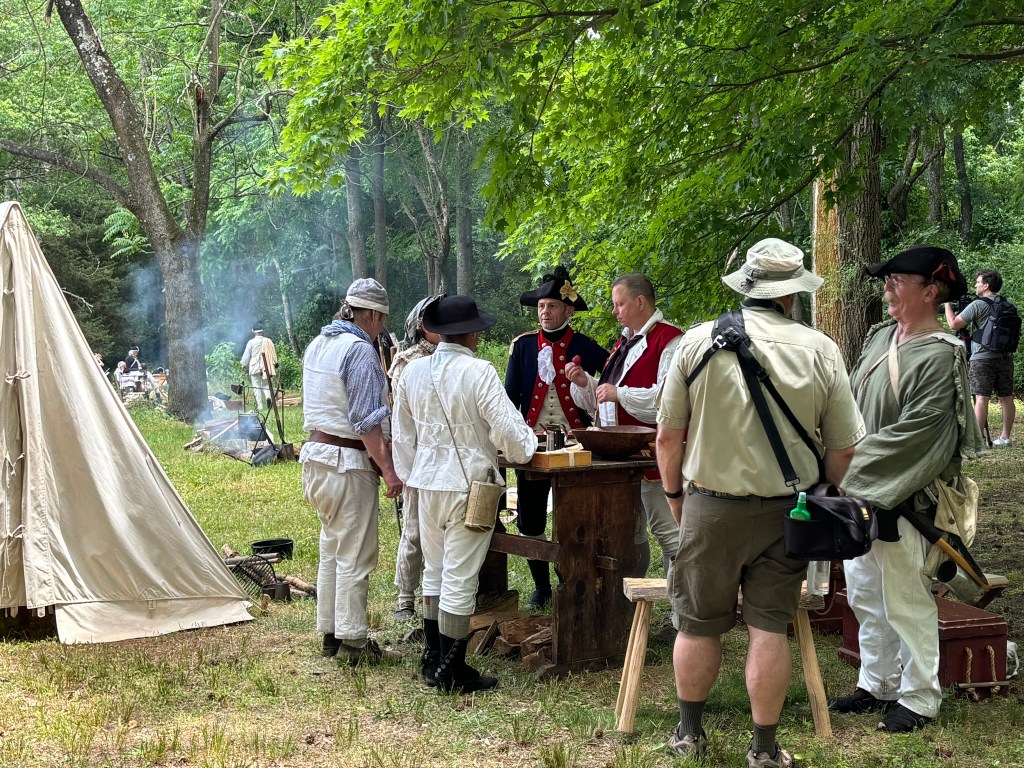
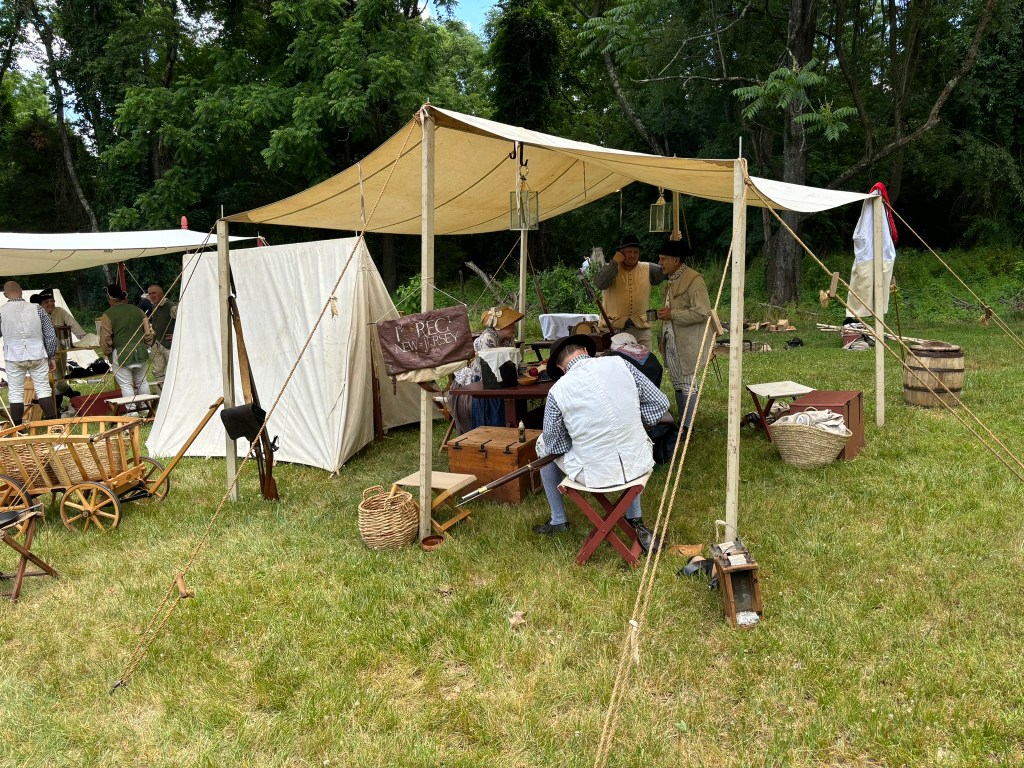
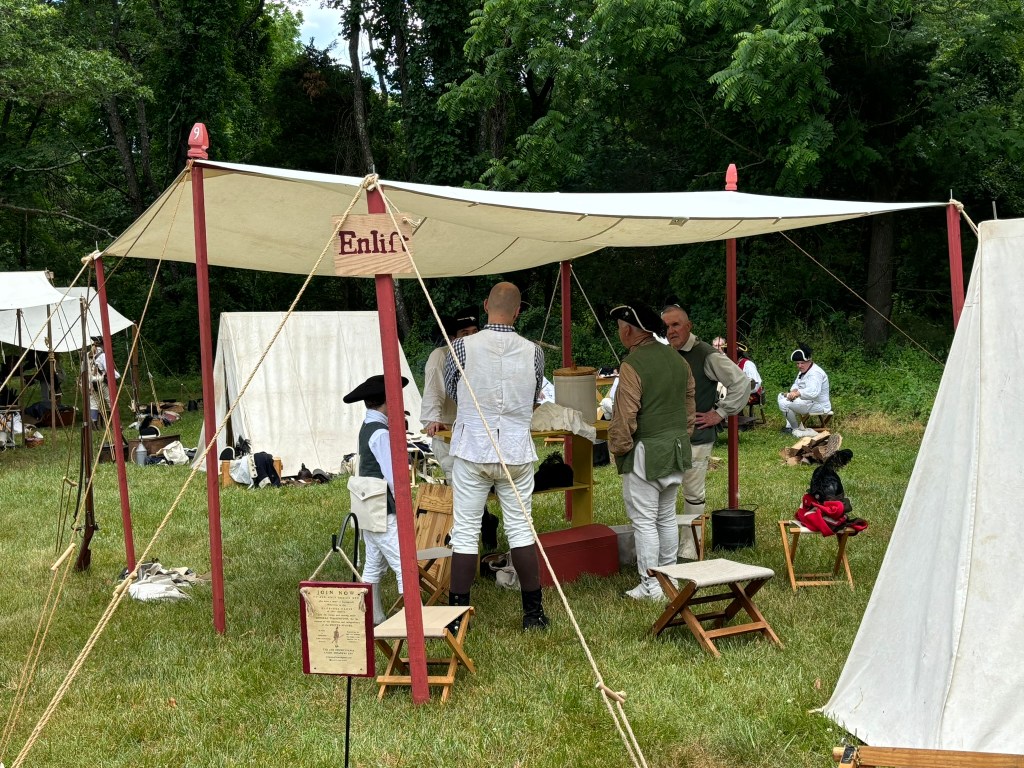
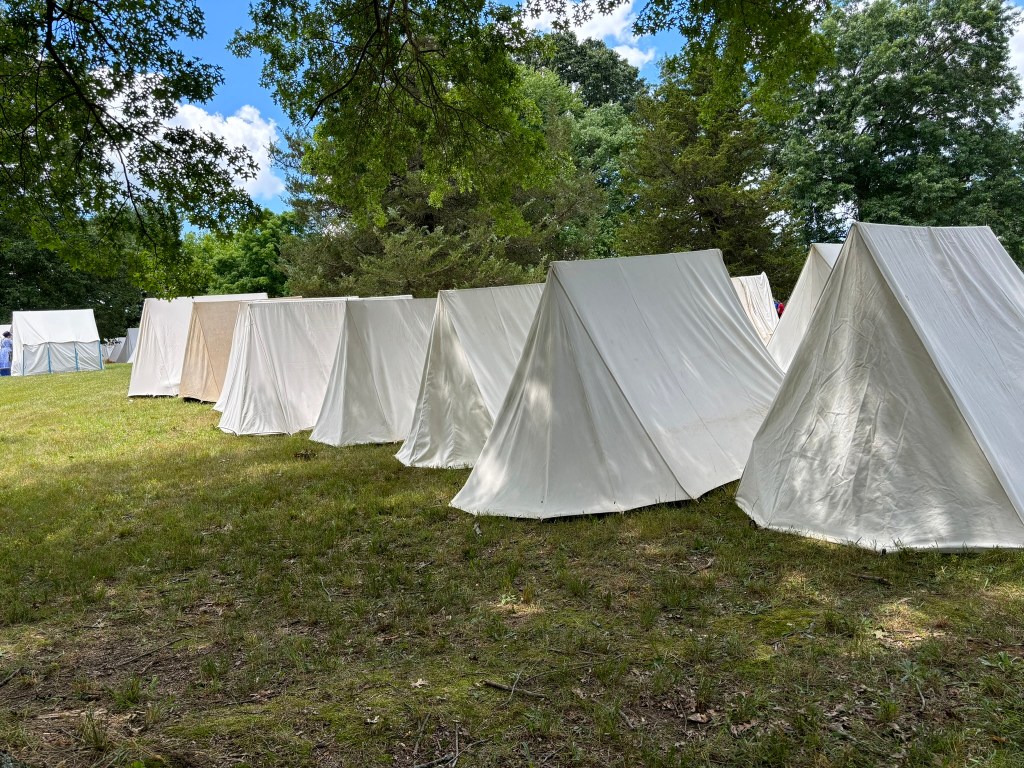
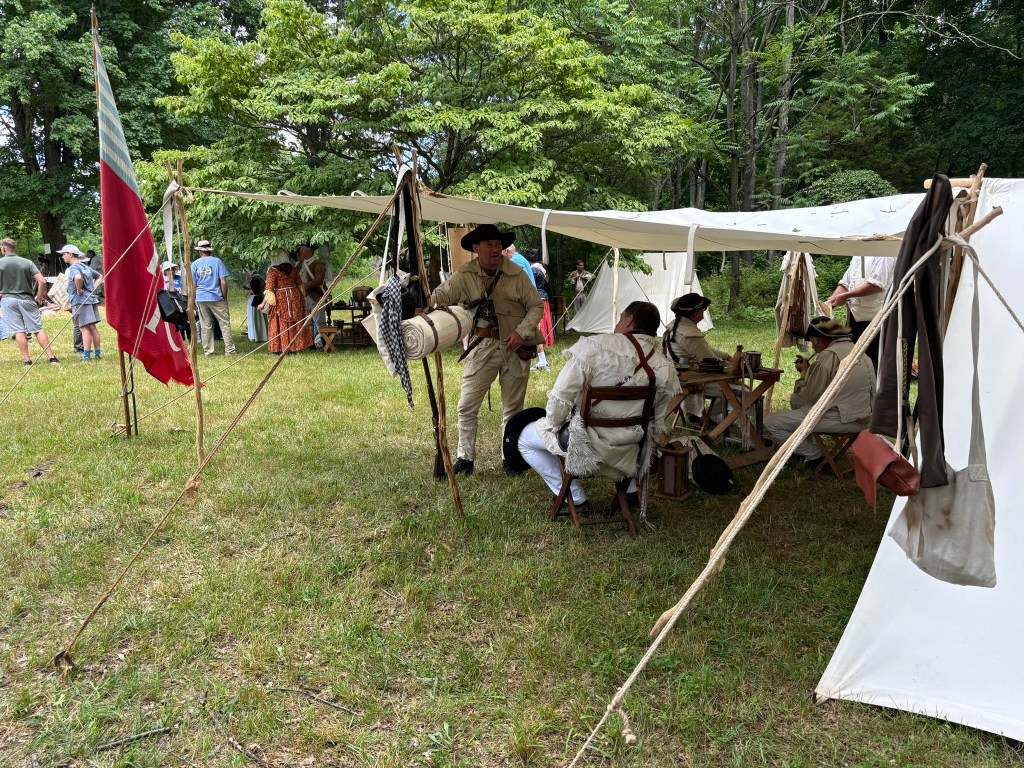
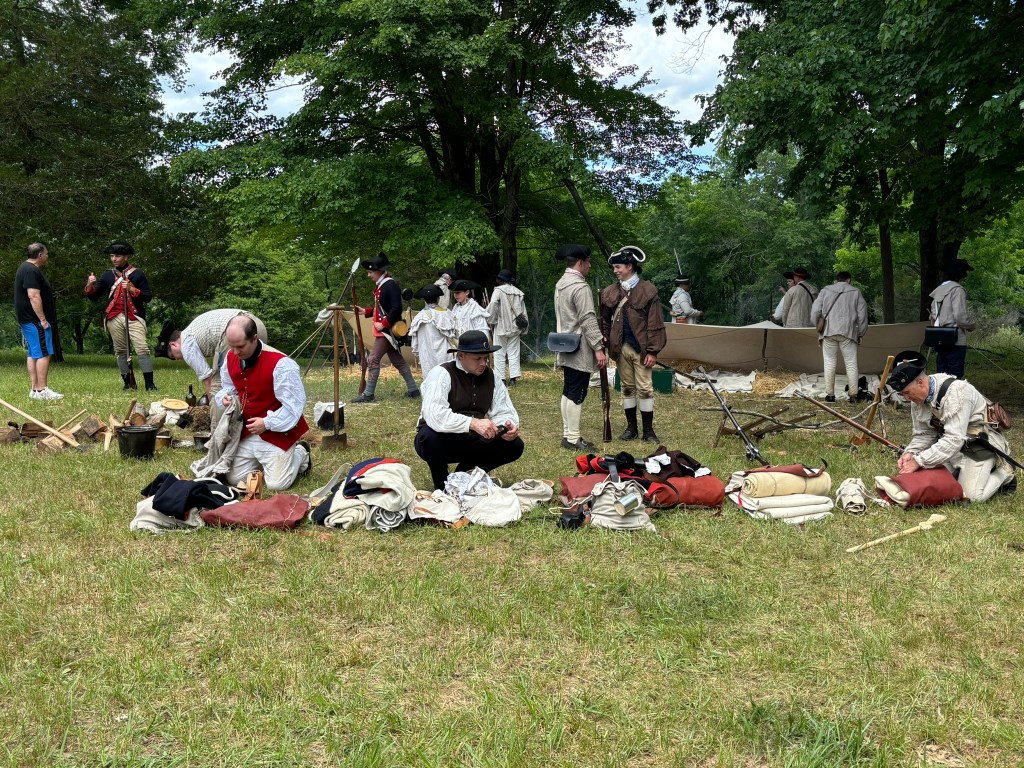
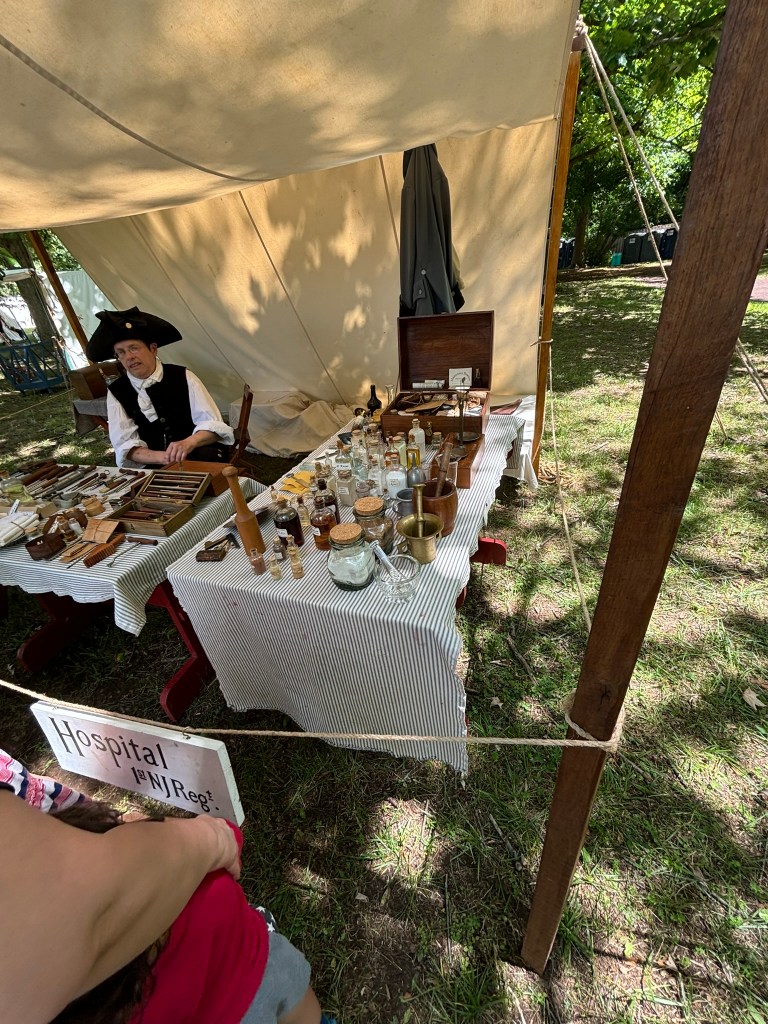
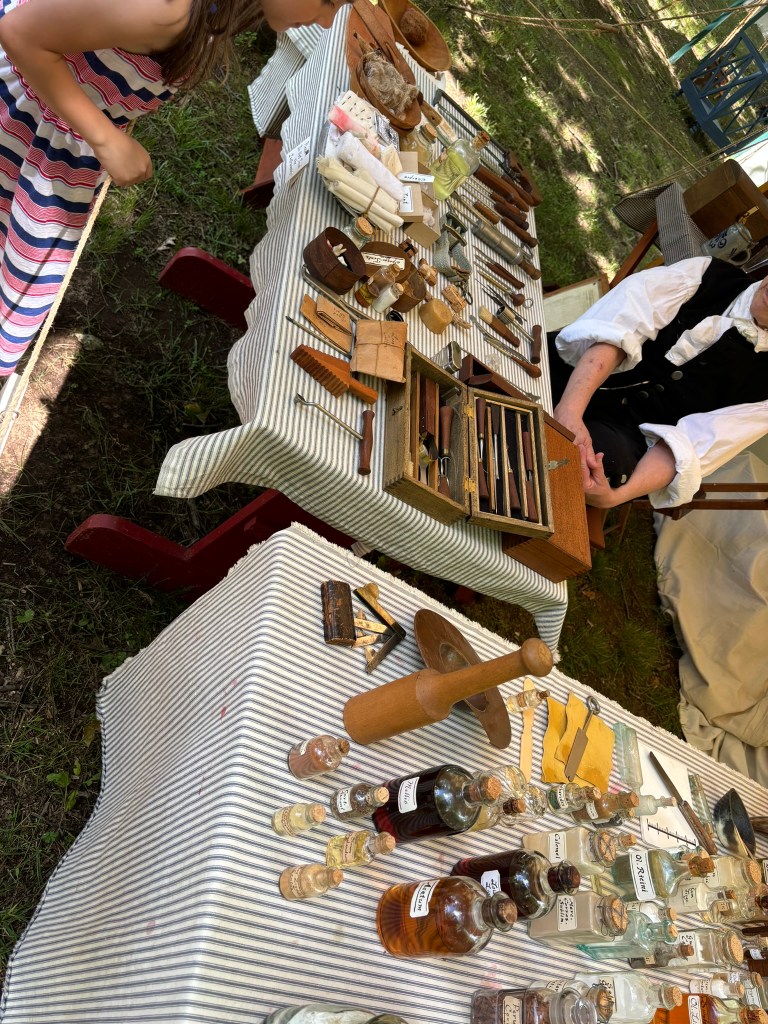
When we arrived at the Monmouth Battlefield, we first noticed the many tents and vendors there from all around the area selling shirts, flags, crafts, antiques, and revolution memorabilia. It is also worth noting that there are food trucks there, which we were unaware of (we grabbed lunch on the way there). We made our way to the many camps and presentations from the reenactors. Men, women, and children were all in camp preparing for battle, cooking meals, doing chores, and passing the time. The reenactors were engaging and knowledgeable of 18th century life. Other demonstrators included camp doctors and surveyors. Fife and drums could be heard throughout the encampments. I was impressed with how extensive the camps were as we stumbled upon Patriot, Loyalist, British, and Hessian camps.
At 2:30pm, the reenactment of the Battle of Monmouth took place. It was quite entertaining and I have never seen anything like that before. It was fascinating to imagine what warfare was like in the late 18th century, and you felt like you were a spectator stepping back in time as the troops stood in a line and fired their muskets and cannons. The battle raged for about 30 minutes. After it was over, my family checked out encampments and made our way to the shops where we bought a couple t-shirts.
I really enjoyed my time at the encampment and plan to visit on a more regular basis, especially if it falls on Father’s Day again. The Monmouth battlefield also has an immersive museum that visitors need to see. You can check out the link here about the reenactment. I would highly recommend making it out to the event next year! The event was fun for all ages!
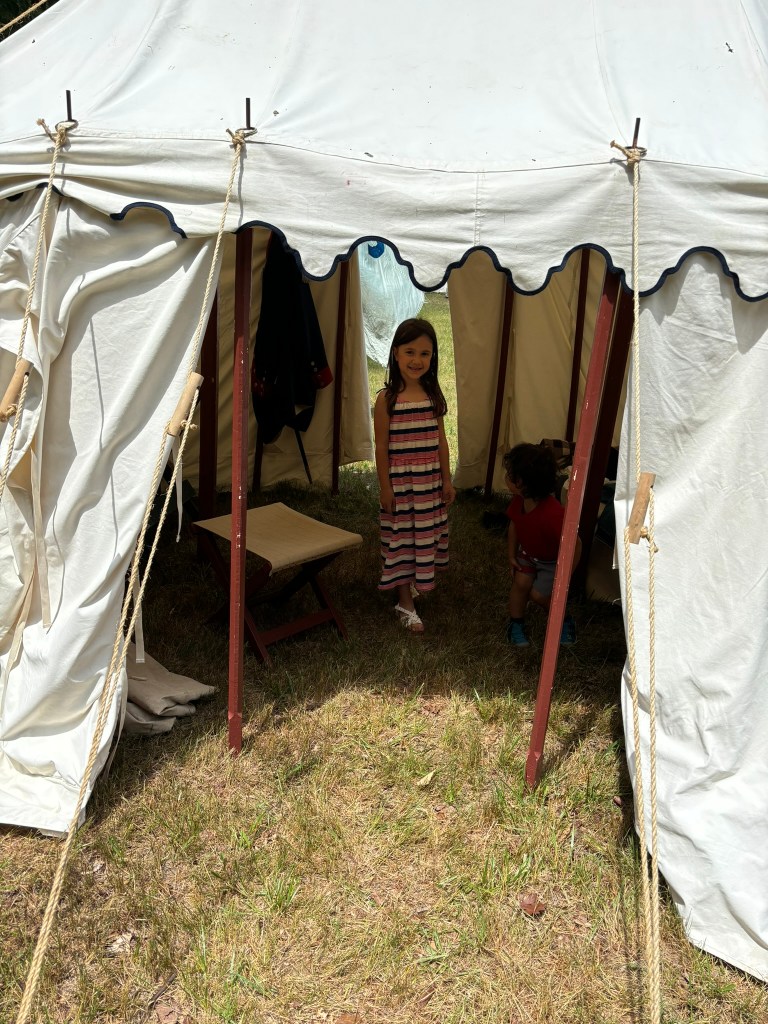
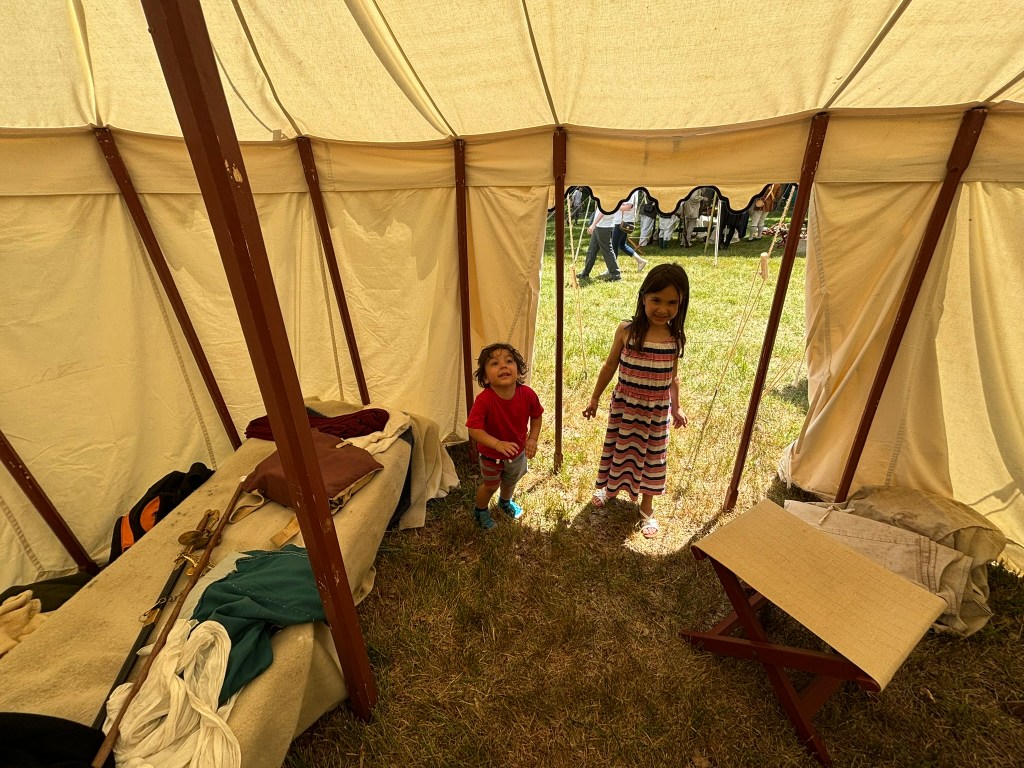
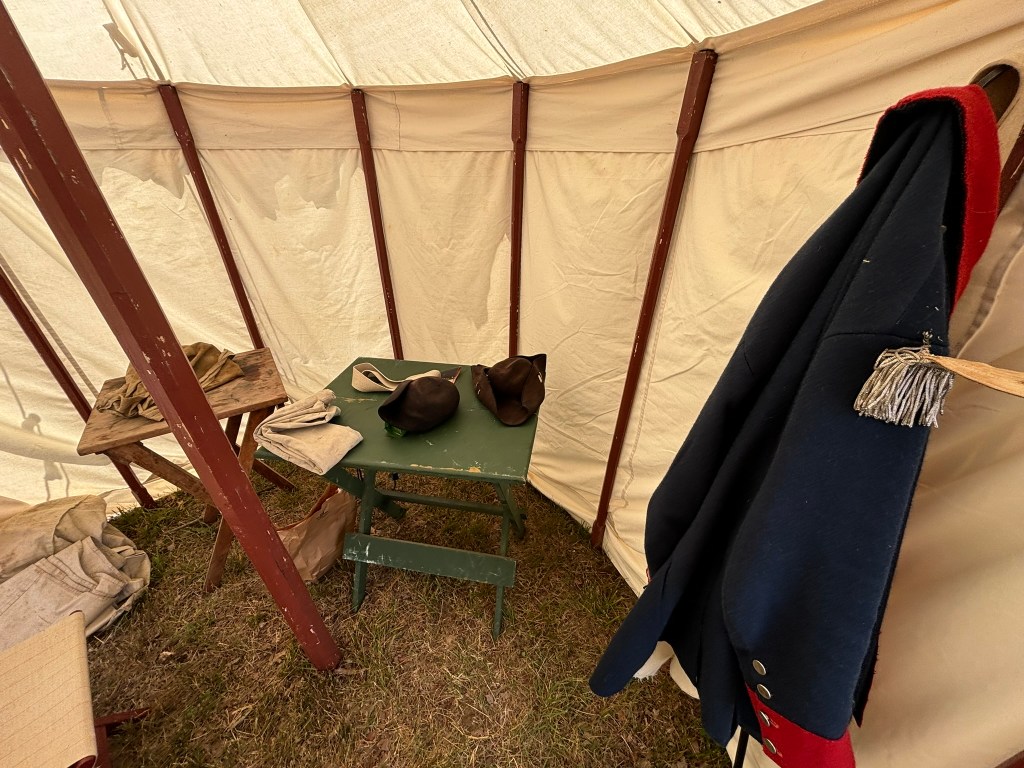
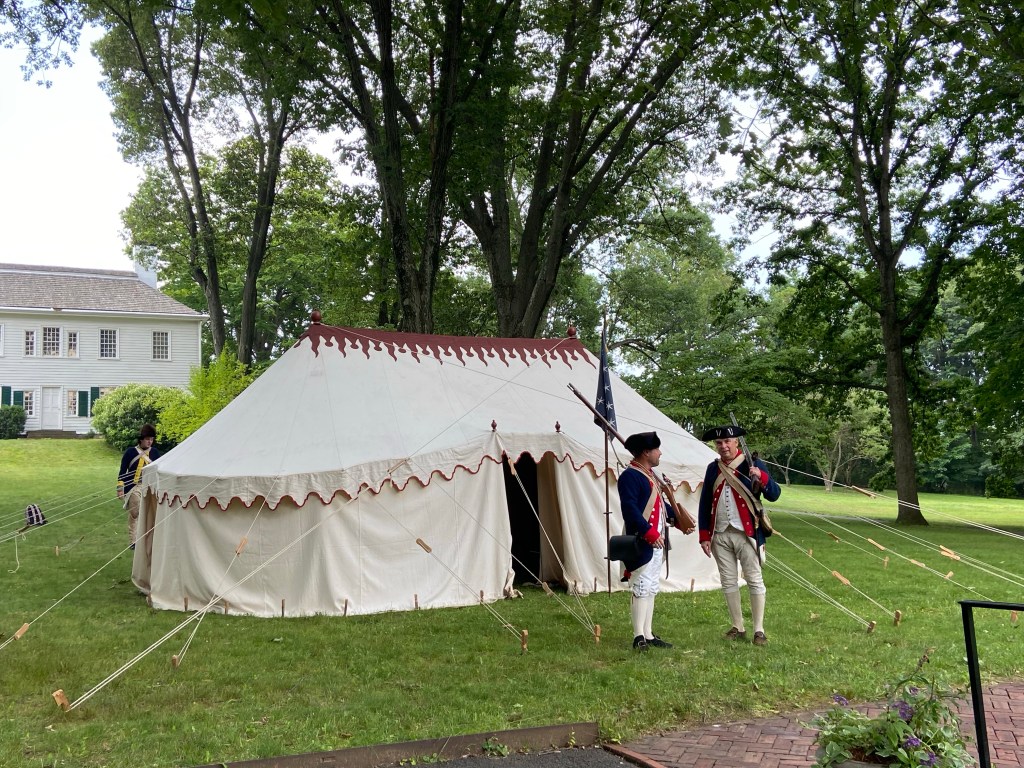
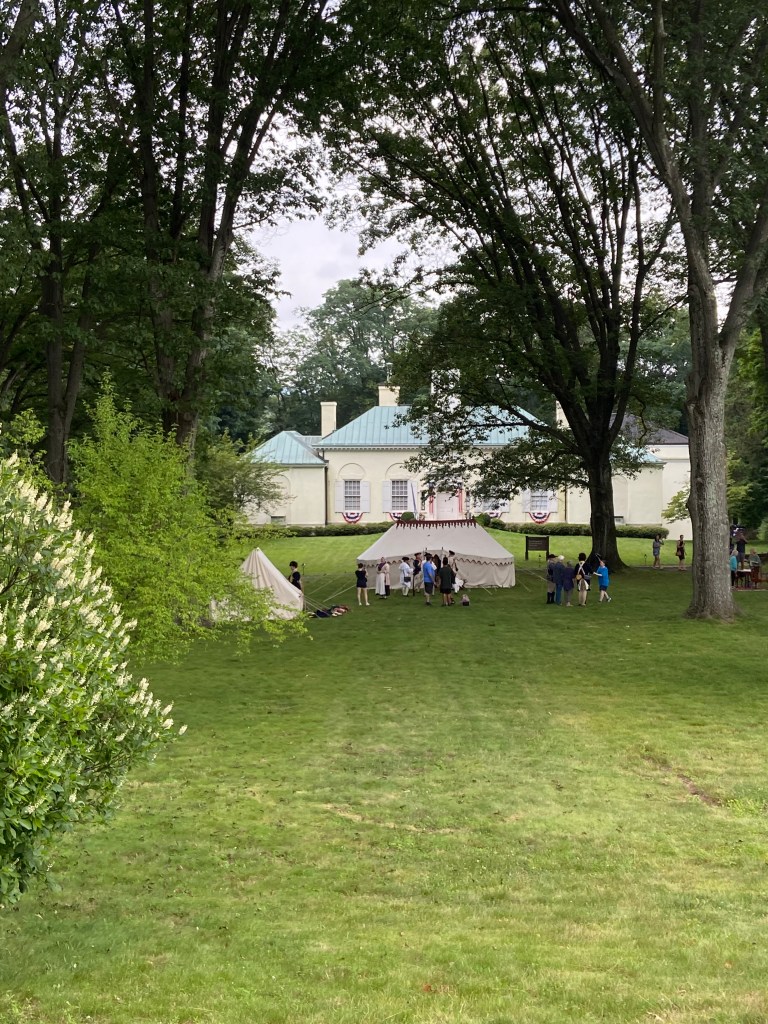
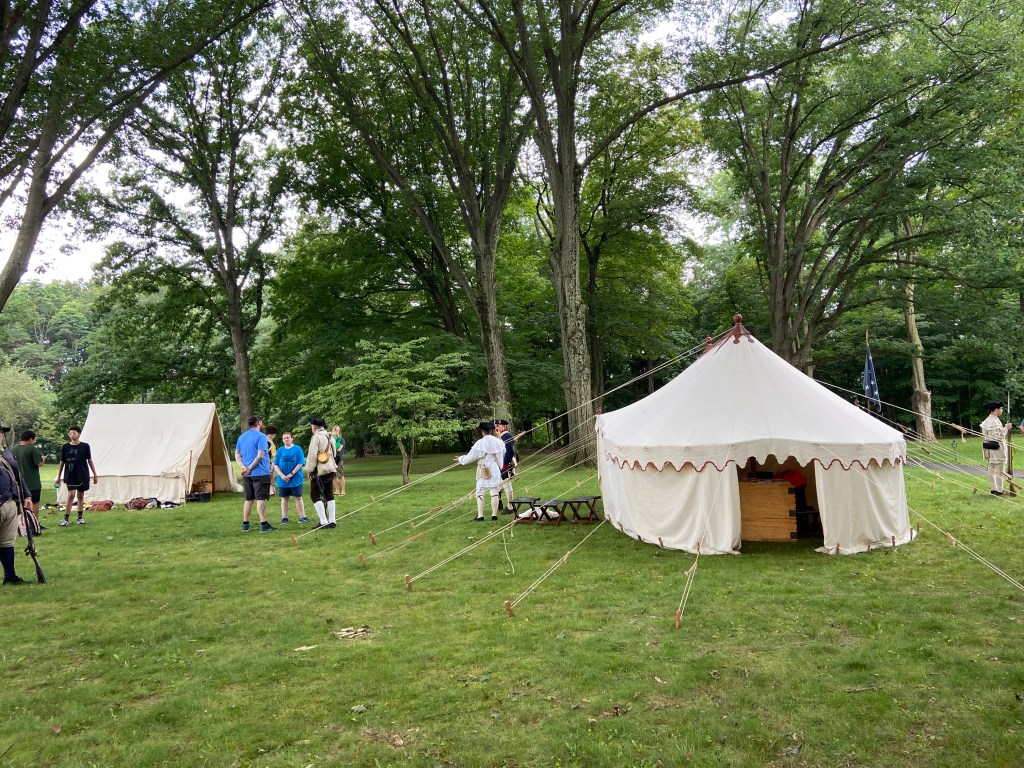
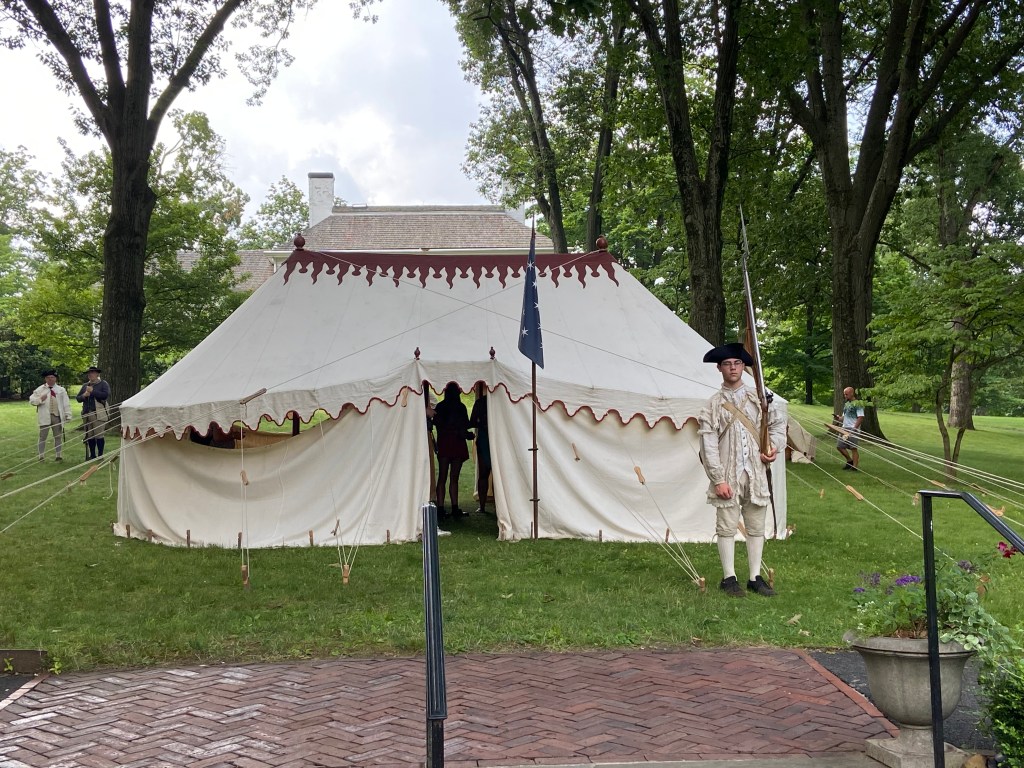
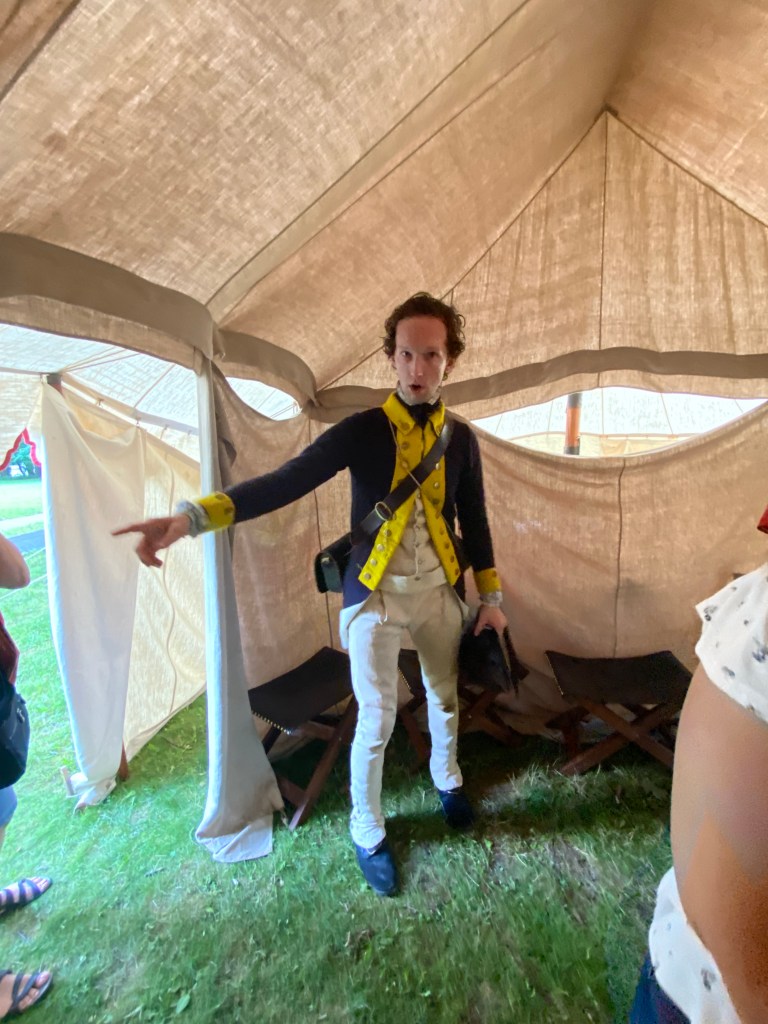
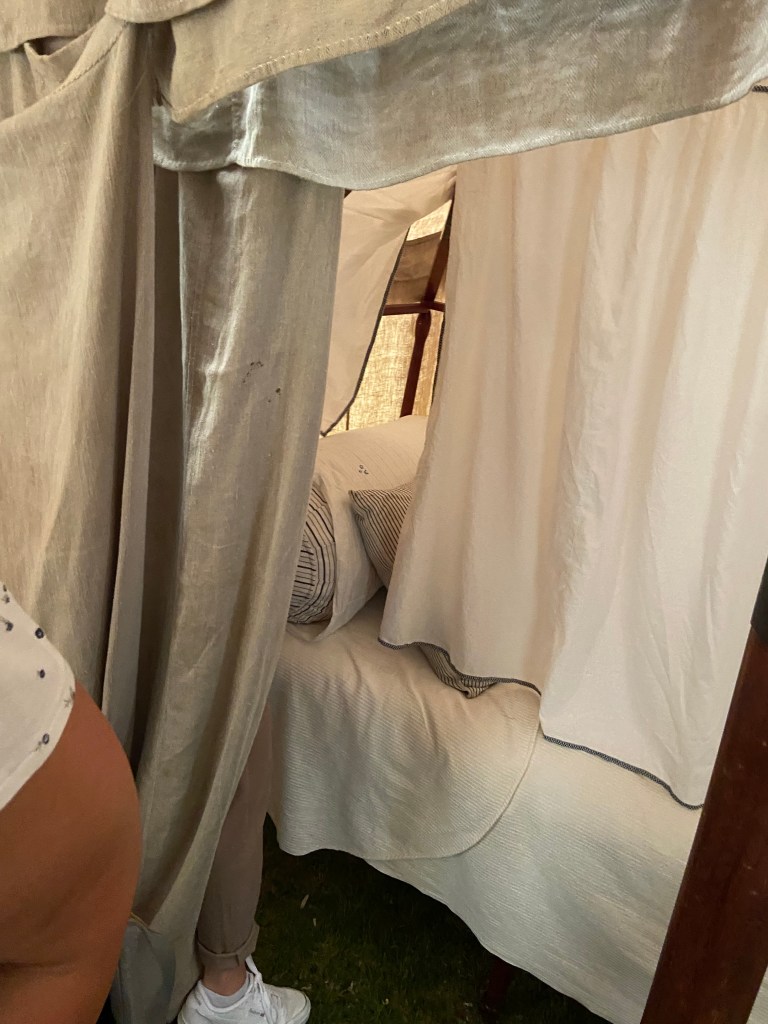
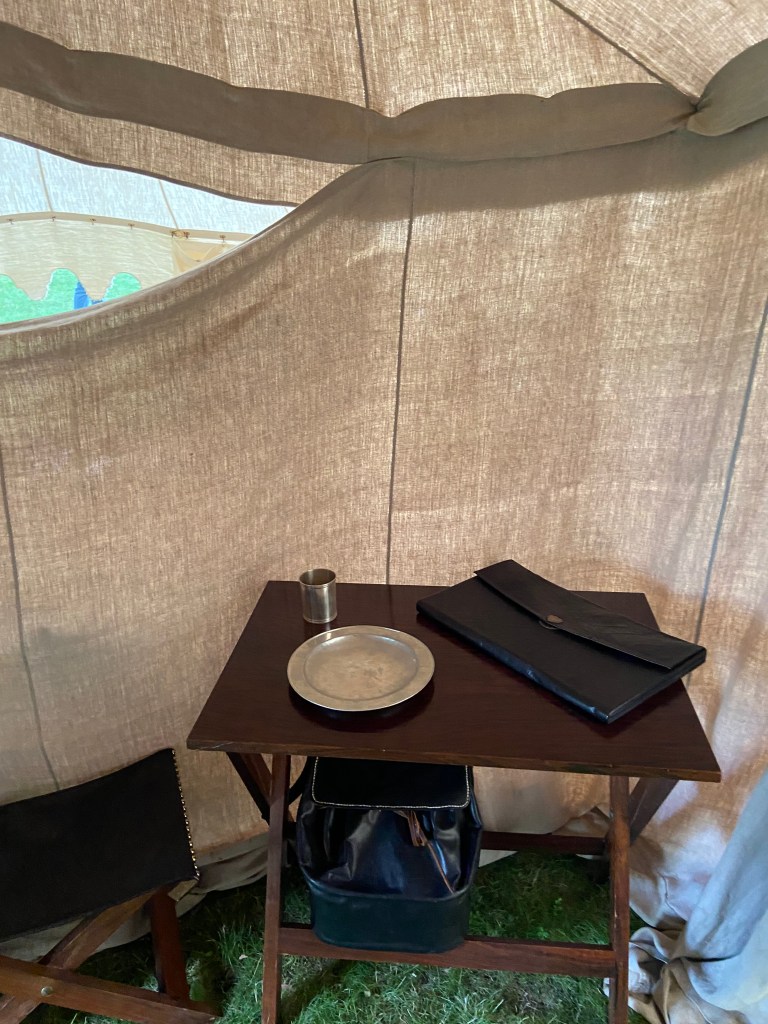
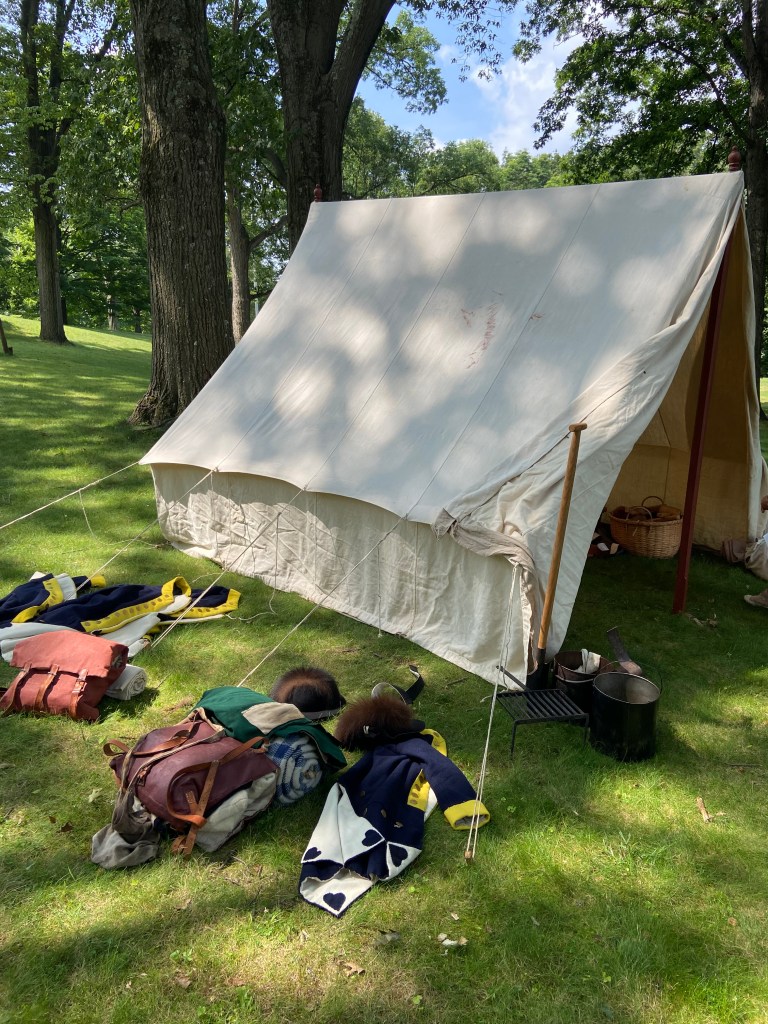
This past weekend I took the family to Washington’s Headquarters in Morristown, NJ. Throughout the week they hosted an event entitled “Red, White and You: Celebrating Independence Week at Washington’s Headquarters!” During the weekend they hosted the Museum of the American Revolution’s “First Oval Office Project,” which includes a full-scale replica of George Washington’s sleeping and operational tents that served as his mobile command and sleeping quarters while on campaign during the American Revolution. The tent and day’s programming was sponsored by the Washington Association of New Jersey.
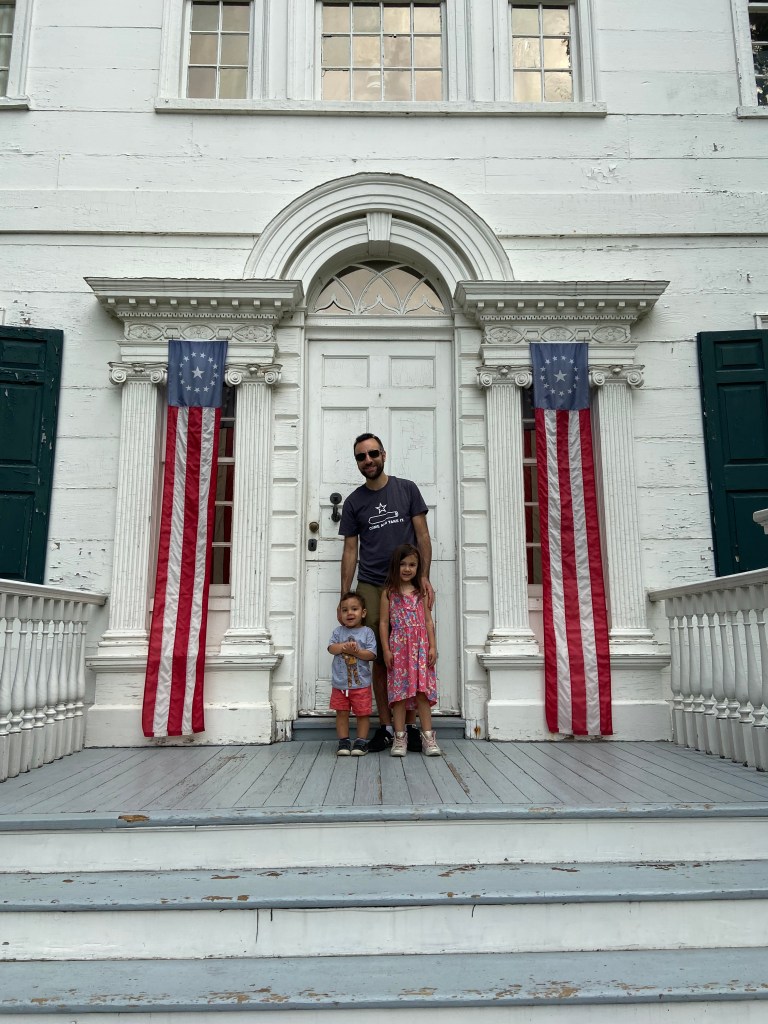
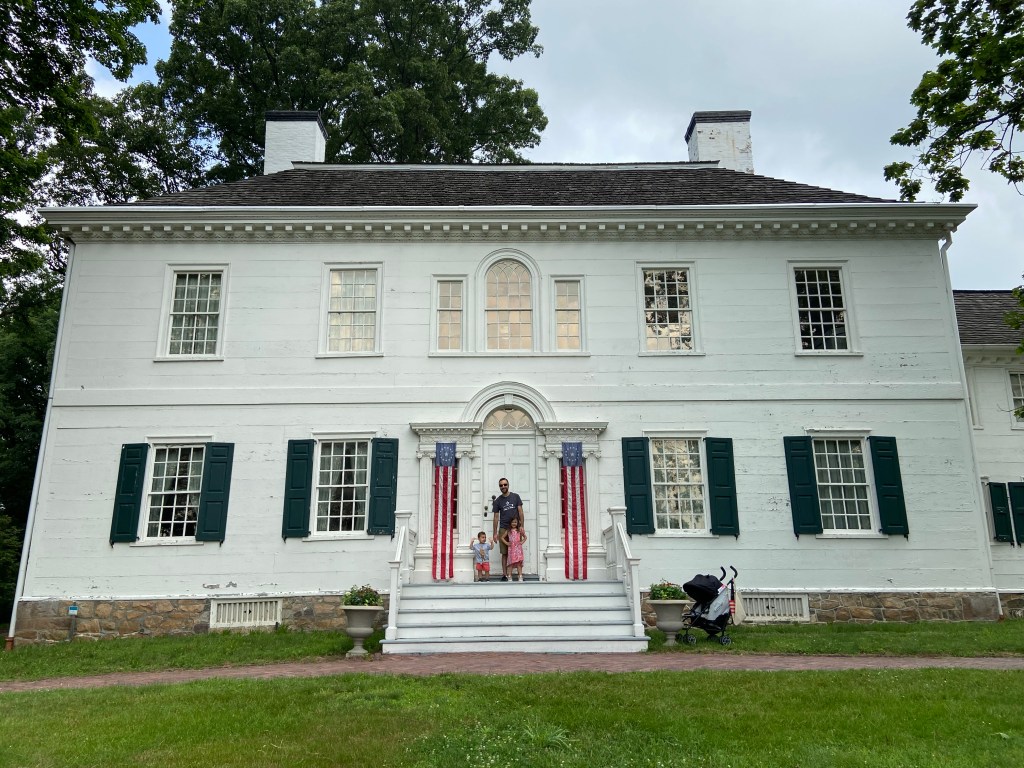
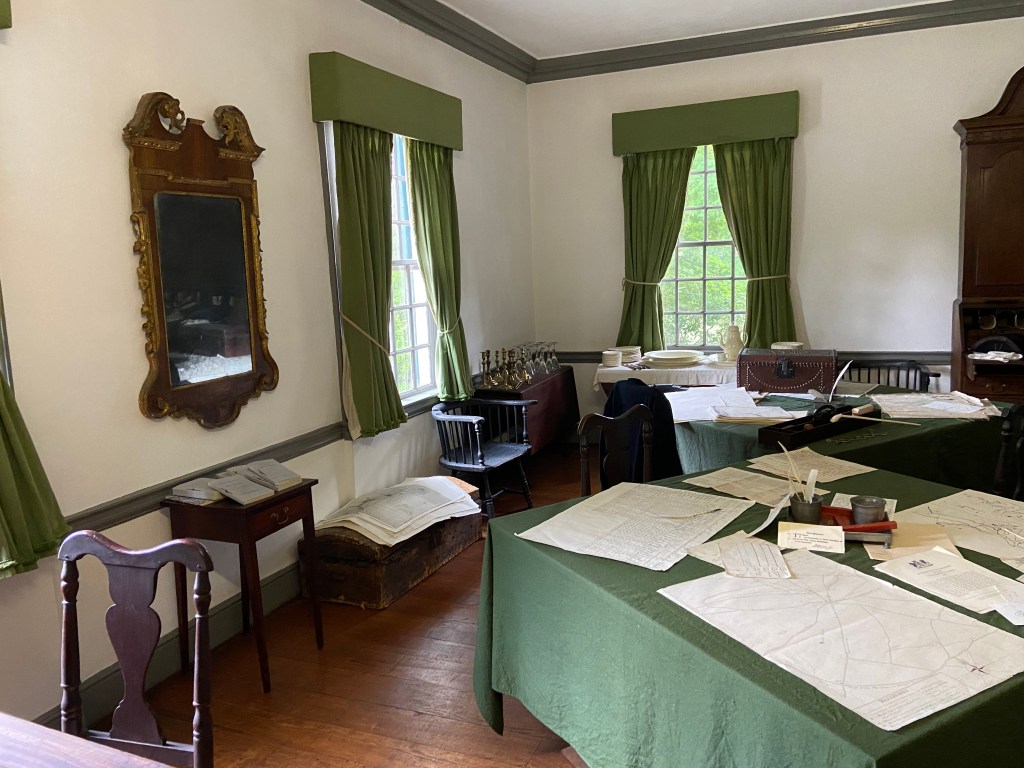
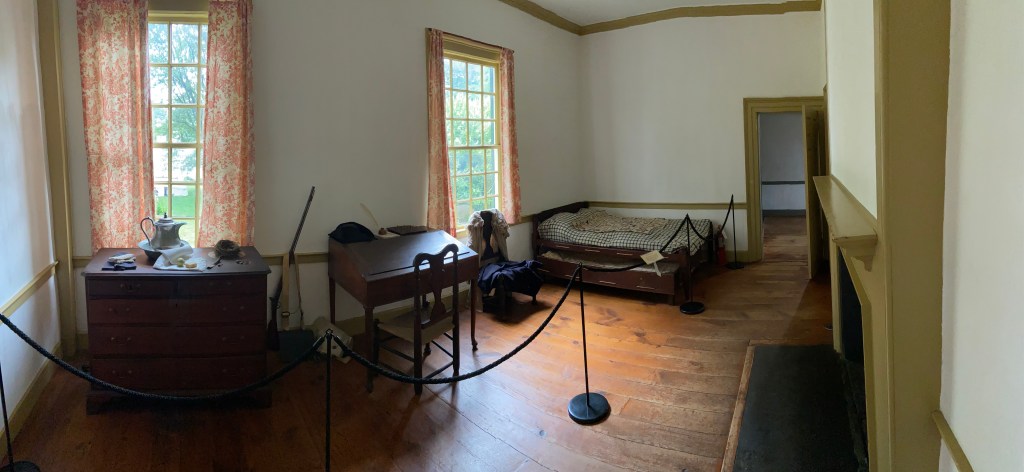
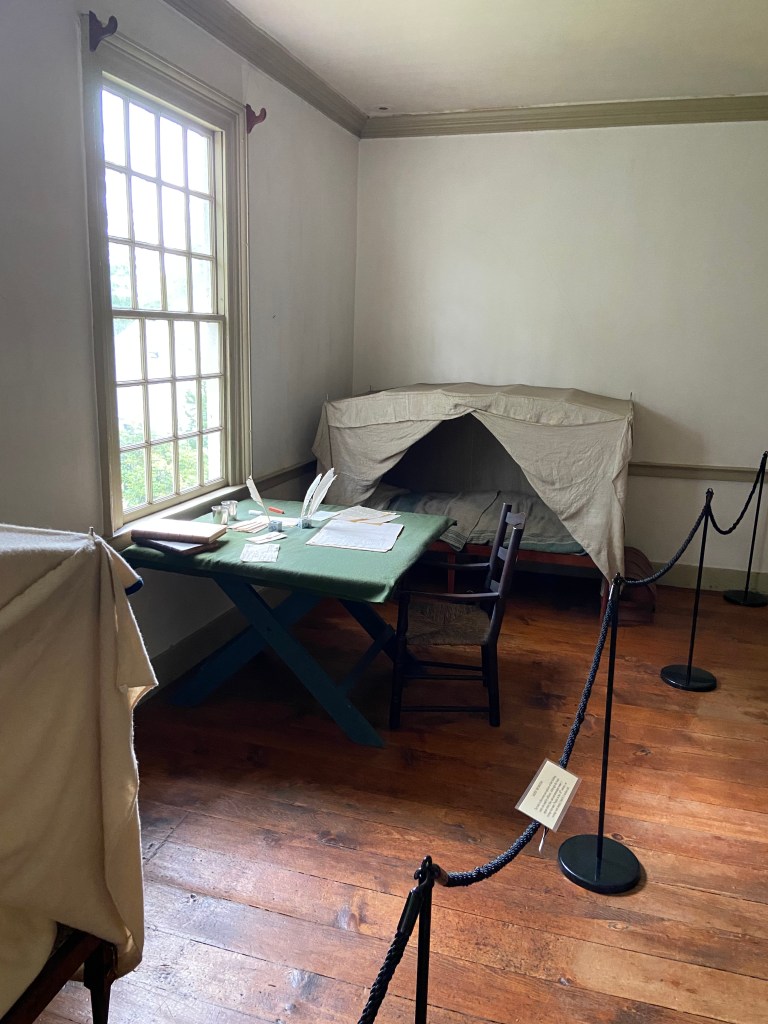
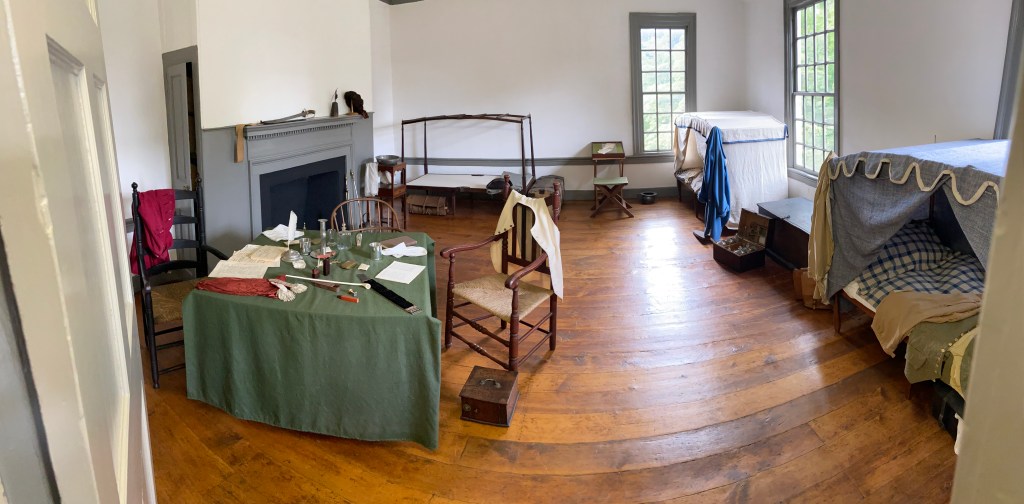
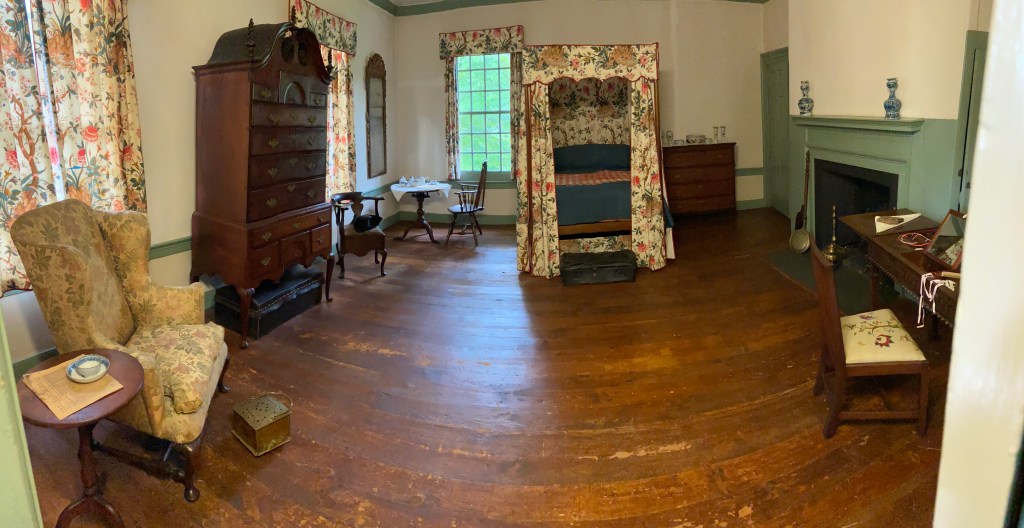
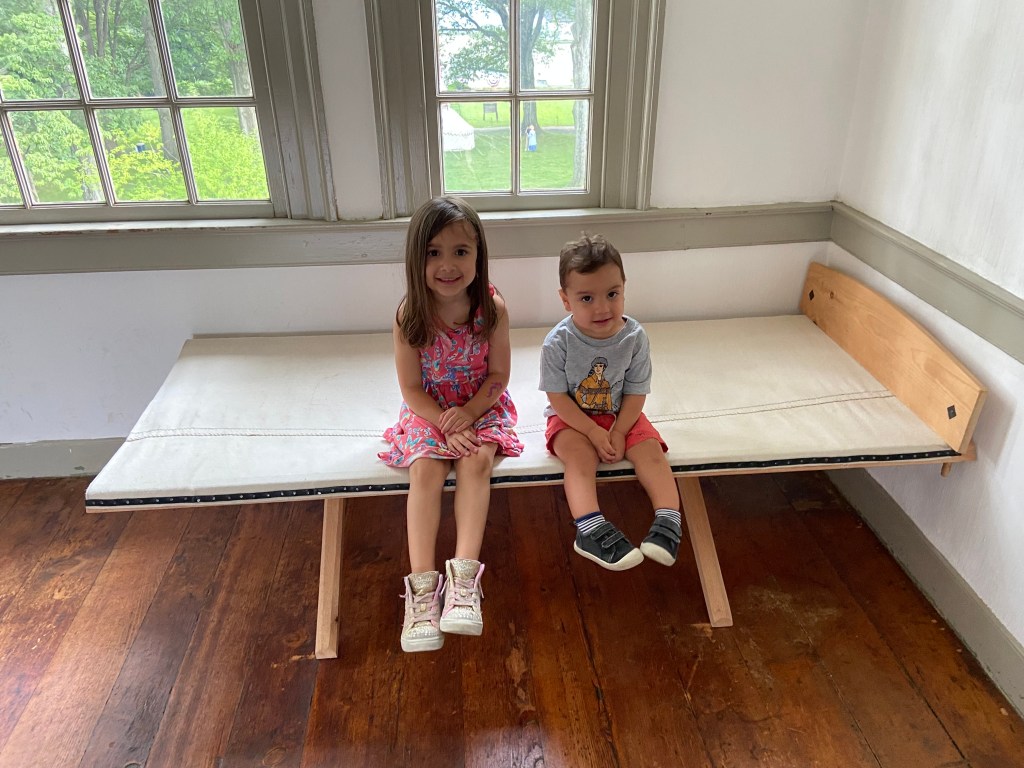
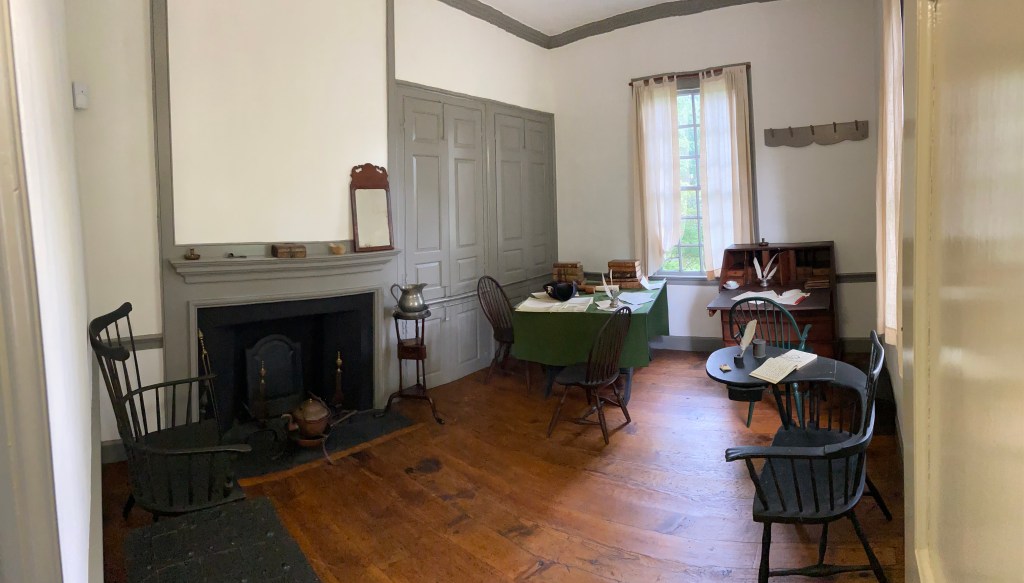
While I had been to Washington’s Headquarters Museum many times for the galleries and book talks, I had not had an opportunity to tour the Ford Mansion. The mansion was open to the public for the weekend events. Since the family and I arrived to Washington’s Headquarters fairly early, we decided to tour the mansion first, and then visit Washington’s War Tent. The guides stationed throughout the mansion were extremely helpful in answering all of our questions about the mansion and Washington’s stay there.
Ford Mansion
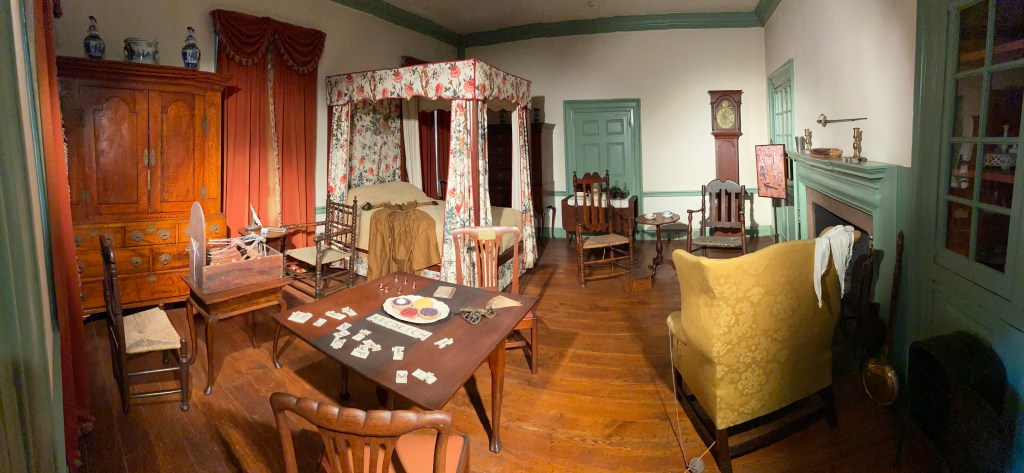
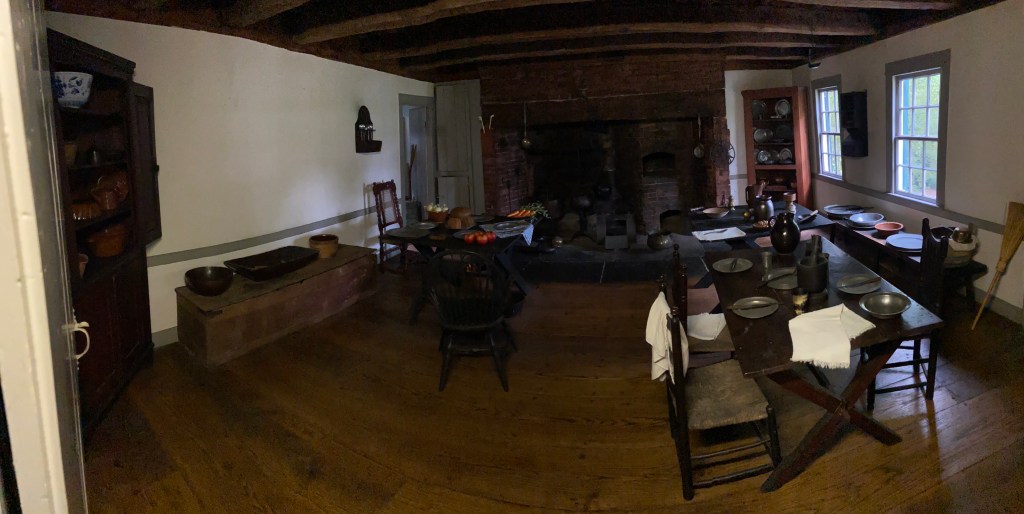
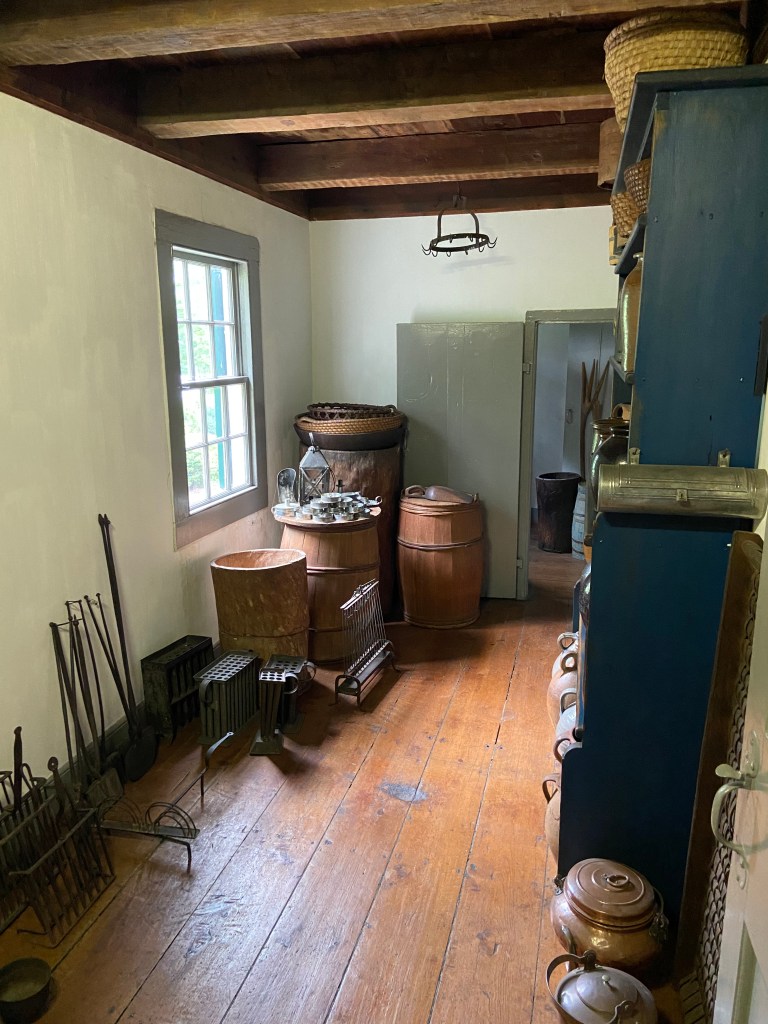
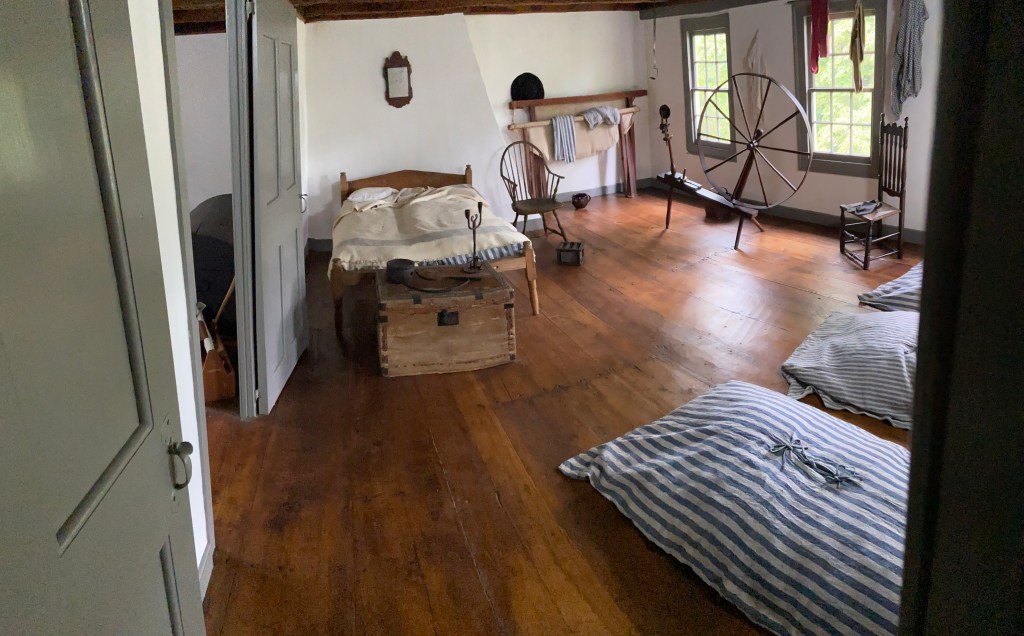
The Ford Mansion was the home of Jacob Ford, Jr, an iron manufacturer and his family. Ford served as a colonel in the Morris County Militia during the Revolution. However, Ford died in January 1777 of pneumonia, and his wife Theodosia was left to raise their four children. Theodosia allowed George Washington to use the mansion as his headquarters in the winter of 1779-1780. With the American capital in Philadelphia and the British capital in Manhattan, the location of Morristown allowed Washington to keep a close eye on the British, while sending letters to the Continental Congress. Washington also liked Morristown’s “defensible terrain, important communication routes, and access to critical resources.” He arrived in Dec. 1779 and stayed until June 1780. The winter of ‘79-’80 was exceptionally brutal. While Washington was quartered at the Ford Mansion, the army built a small village of huts at Jockey Hollow about 5 miles away. Along with George came his wife Martha, five aides-de-camp, including Alexander Hamilton, eighteen servants, and a number of visiting dignitaries and guards. Theodosia and the children stayed in rooms on the first floor while Washington and his entourage occupied rooms on the top floor. While staying at the Ford Mansion, the Commander in Chief of the Continental Army was busy running the affairs of the war, including making sure his army was supplied with their necessities, and frequently writing correspondence with his commanders. After Washington’s six month stay, the Ford family continued to live in the house until the 1870s. Today, the house is furnished to reflect how it would have appeared in Washington’s day.
Washington’s War Tent
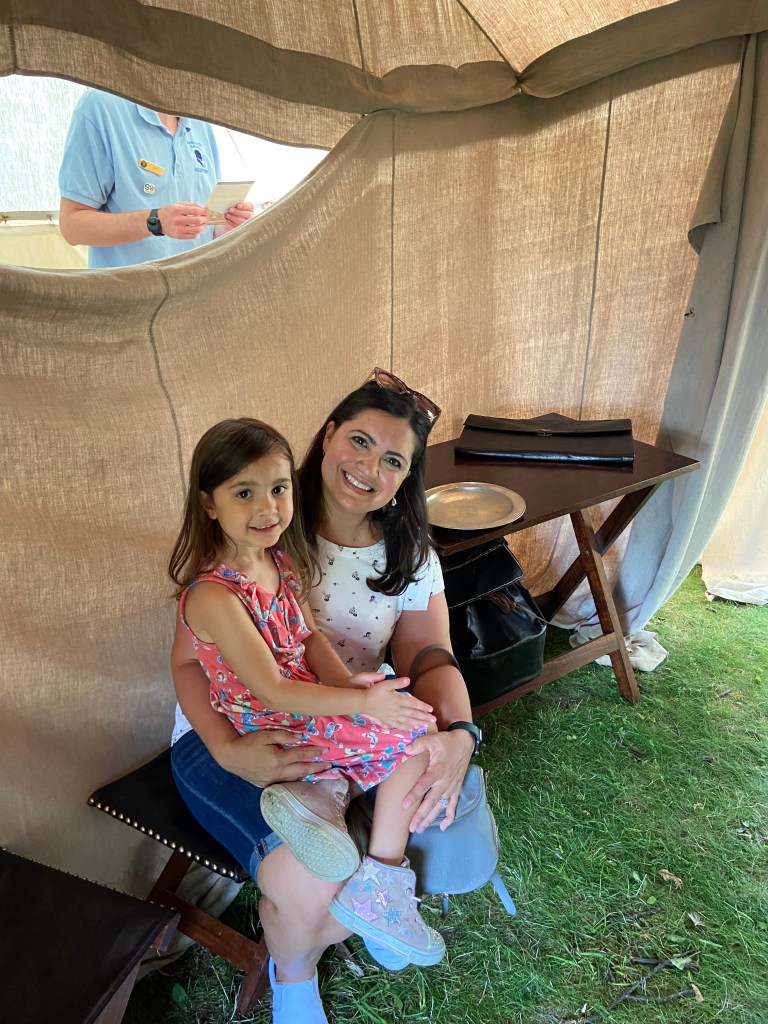
Washington’s War Tent displayed at Morristown this past weekend was a replica of the real one which was preserved after Washington’s life and is now located at the Museum of the American Revolution in Philadelphia. The tent remained with the descendants of Martha Washington’s family until it was sold to the museum collection’s founder, Reverend W. Herbert Burk in 1909. While you can view the original at the museum, you cannot go inside it. The replica was created in order to allow visitors to see what it was like inside Washington’s quarters while he was out on campaign with his army. Washington and his aides used the tent to conduct business, write correspondence and also for sleeping. Personally, going inside the tent was a reminder of the conditions that Washington and his aides had to deal with (it was exceptionally humid this weekend). It showed that Washington, even with his stature, had to brave the elements much like his soldiers did while he was out on campaign. This setting was much different than the comfort he would have had while staying at the Ford Mansion.
Rochambeau & Washington
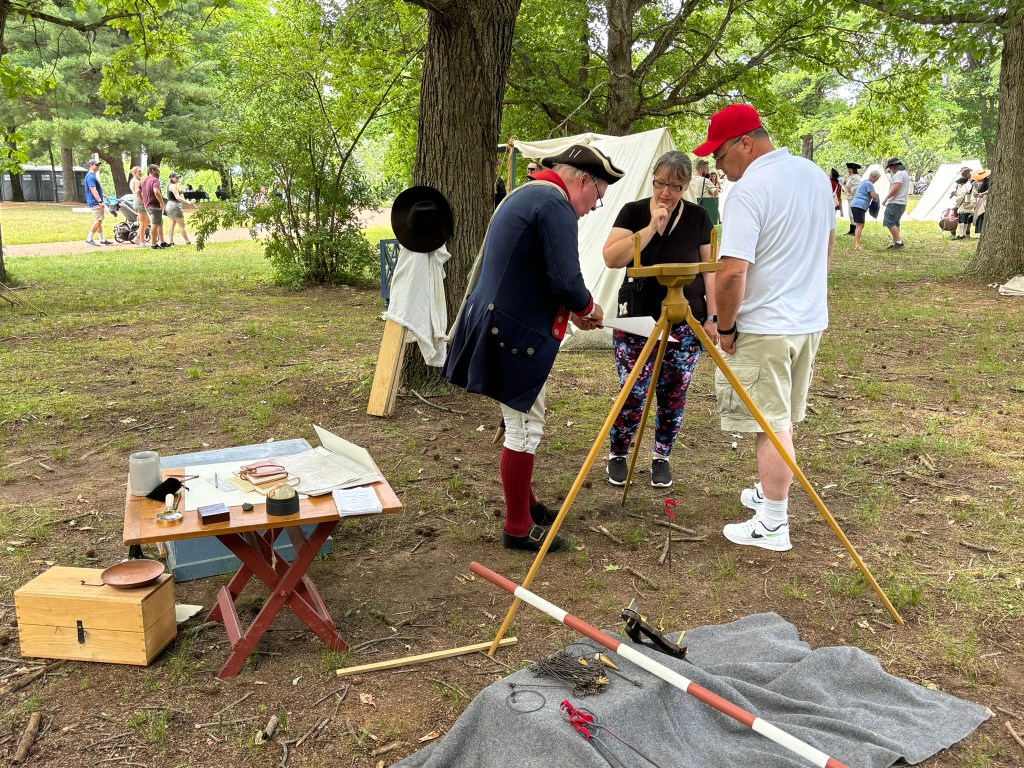
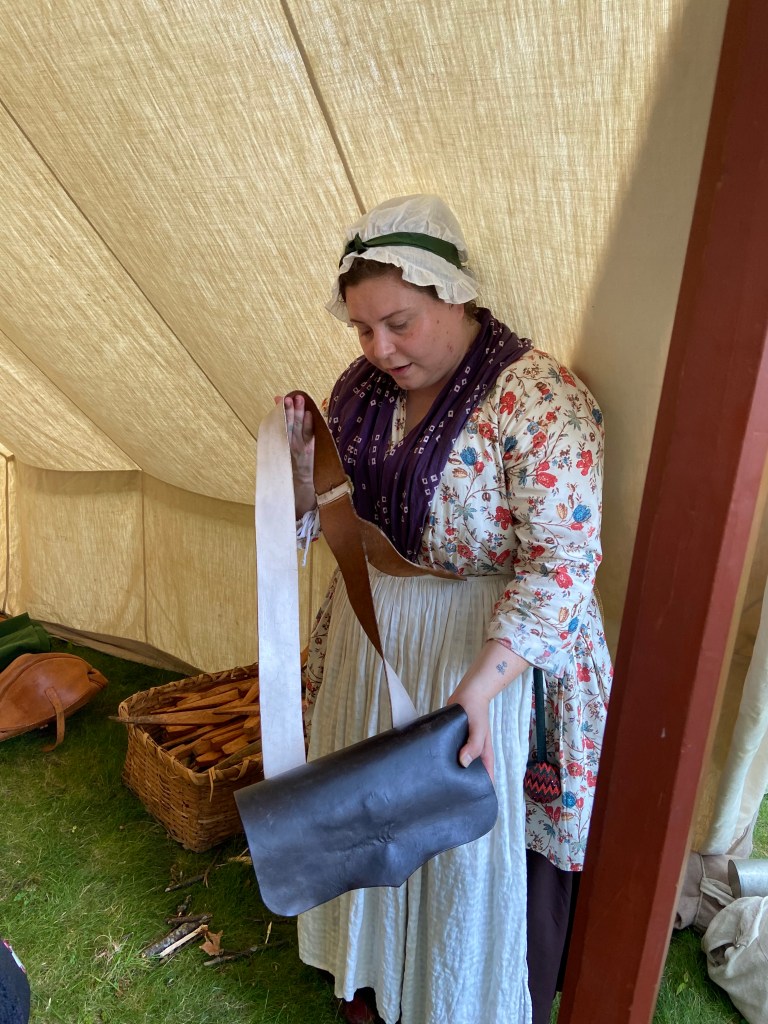
There were many reenactors (from the Museum of the American Revolution) at the event and they were extremely informative. They were experts on their topic and you could tell that they loved talking about the tent and the Revolution. One demonstrator was an expert on women in the American Revolution and spoke in detail about Deborah Sampson who had dressed up like a man so that she could fight in the war. Another demonstrator discussed how surveyors during Washington’s time would have measured the land using very simple tools such as chains, stakes and a compass. While my family and I had to leave to go eat lunch, there were more speakers and demonstrations happening in the afternoon that we unfortunately missed. The collaboration of the Museum of the American Revolution (https://www.amrevmuseum.org), the Washington Association of New Jersey (https://wanj.org), and the Morristown National Historical Park (https://www.nps.gov/morr/index.htm) all did a fantastic job hosting a fun, informative and engaging experience. The First Oval Office Project has further events coming up in Rhode Island and New York. Check out upcoming events here: https://www.amrevmuseum.org/learn-and-explore/first-oval-office-project/first-oval-office-project-programs-and-events