Tag: Jamestown

  • My previous blog post covered my family’s first day on our Williamsburg, VA vacation, which was a visit to Colonial Williamsburg.  On our second day, we booked a tour by Viator that took us to Jamestown in the morning, and Yorktown in the afternoon.  This blog post will focus on our time in Jamestown, which will be followed by another blog post which will focus on Yorktown.

    Viator Trip

    I found the Viator trip to Jamestown and Yorktown months in advance of our trip, and thought it a great opportunity to visit two places that I’ve wanted to see for years; two locations so significant to American history.  The tour had us meet at 8 AM at the Williamsburg General Store which was about a 7 minute drive from our hotel.  We boarded a large bus and made our way to Jamestown.  On route to Jamestown, our tour guide gave us some historical background leading up to the settlement of Jamestown 1607.  The bus ride to Jamestown was about 20 mins.
    I’ve previously written a blog post about the history of the Jamestown settlement, which you could read HERE.  Jamestown was the first permanent English colony.  The colonists barely survived the settlement in the first couple of years.  The settlement that started in Jamestown eventually branched out to become the Virginia colony.  To be able to visit Jamestown in person was a real treat. 

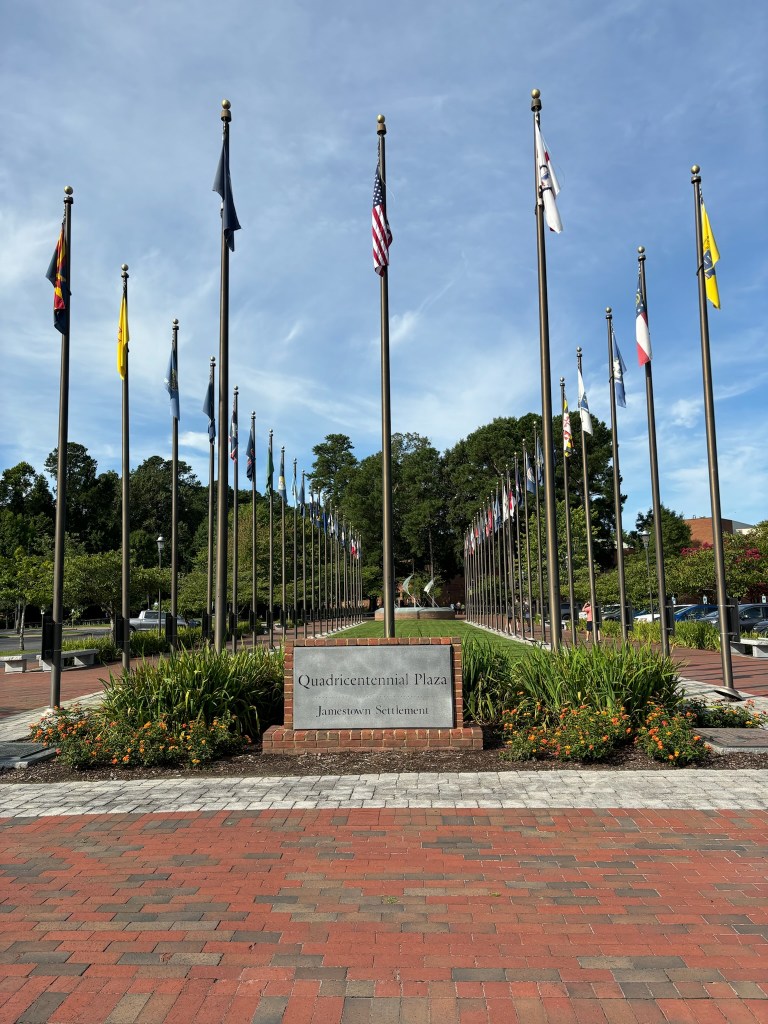
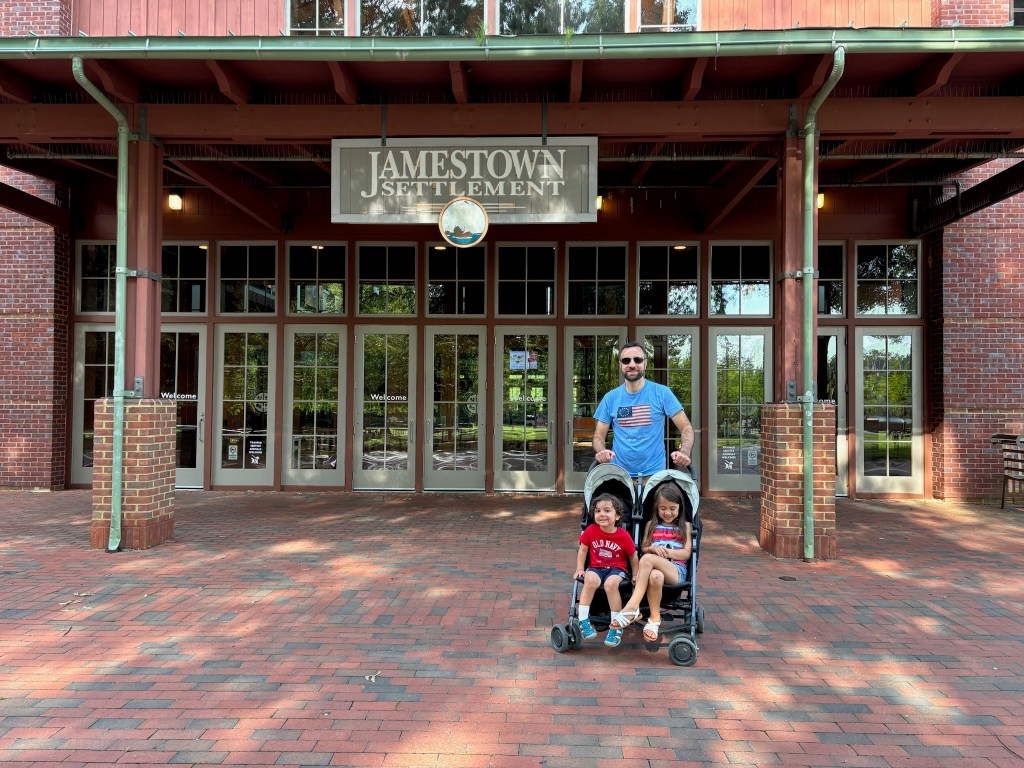
    However, I must include the fact that we visited the Jamestown Settlement, which is a museum about the settlement of Jamestown.  This museum is about a mile east of the original Jamestown fort site, which is called Historic Jamestowne.  If I had to be perfectly honest, I thought this tour would take us to Historic Jamestowne, but that was not the case.  So I was a little disappointed in that.  I’ll have to go back another time to see Historic Jamestowne, where archaeological work is taking place.  But visiting the Jamestown Settlement was not a disappointment and there was much to see and do there.

    Overlook

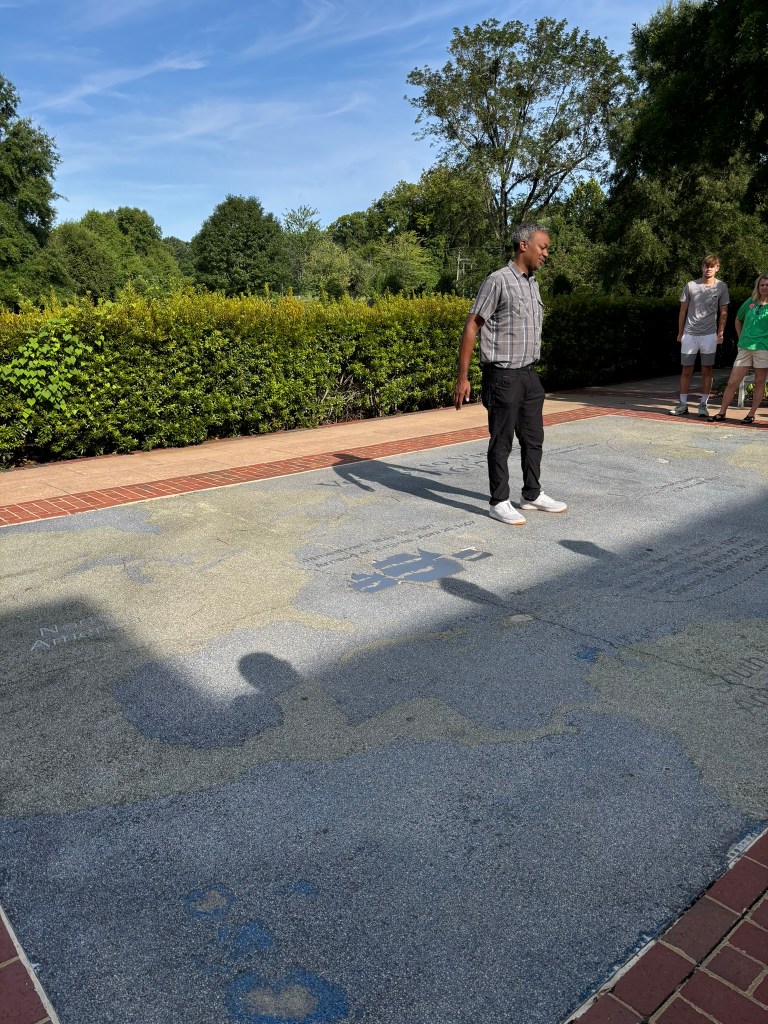
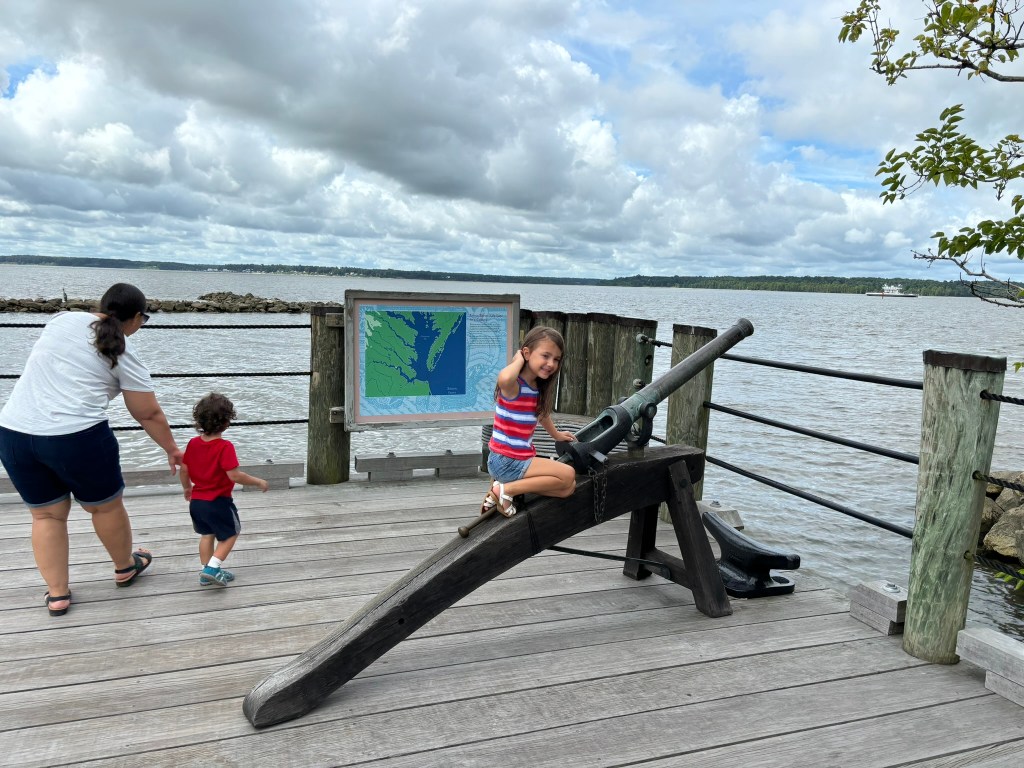
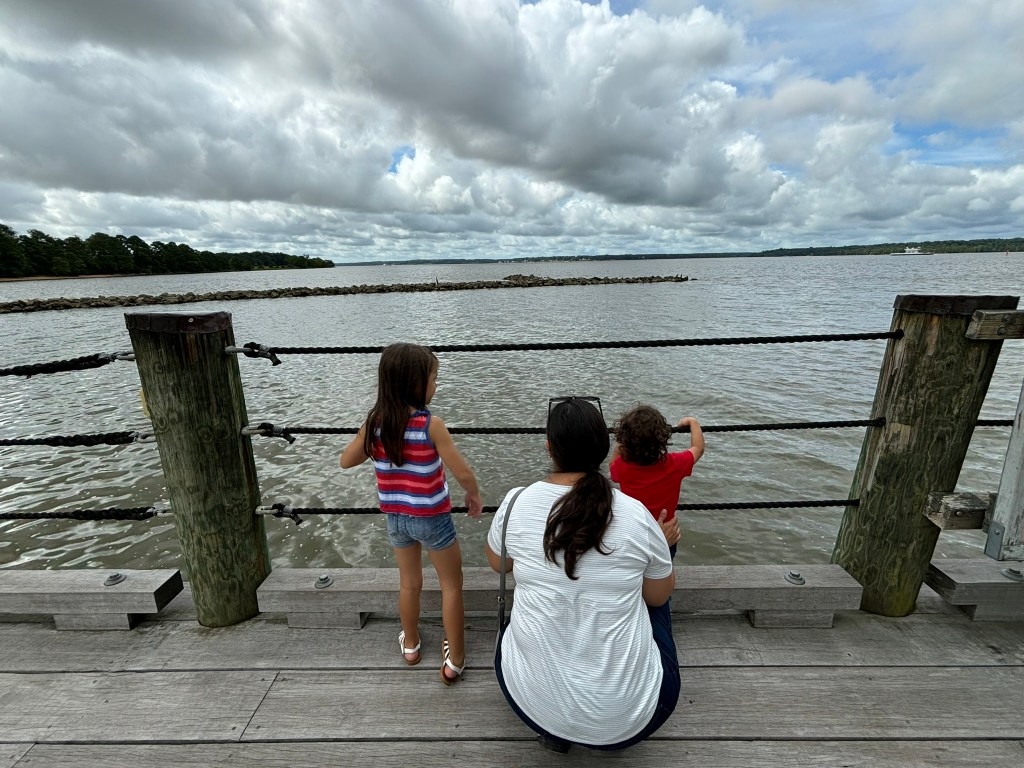
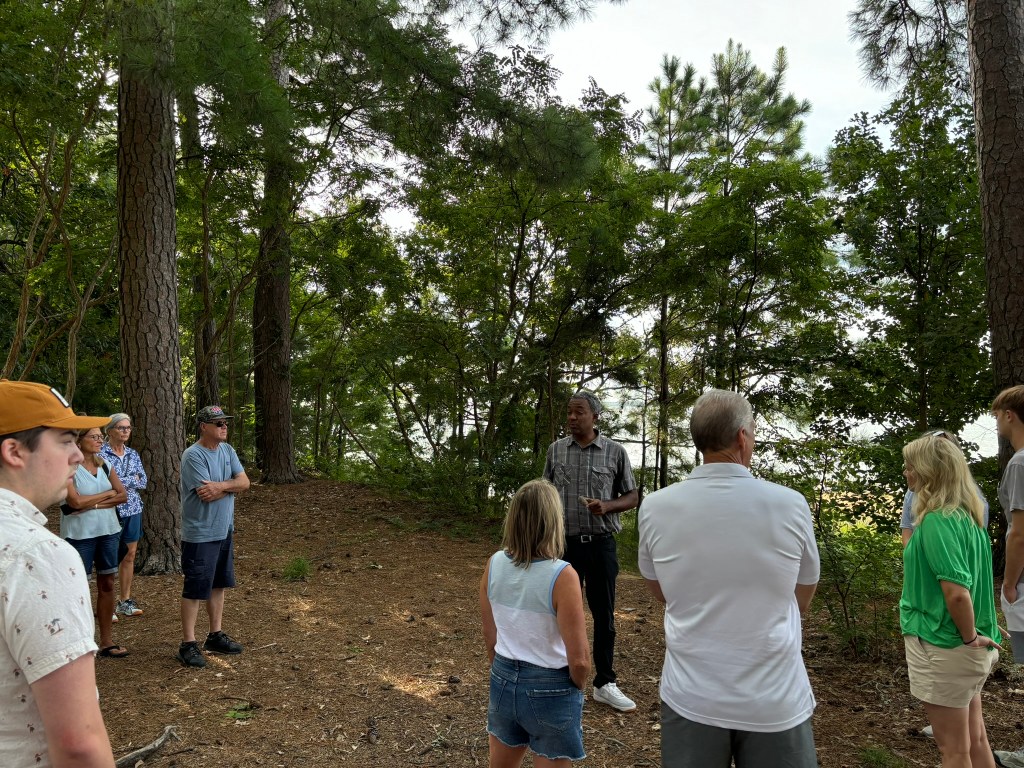
    Before arriving to the museum, our tour guide took us out of the bus to a spot along the James River called the “Overlook.” From our vantage point north of the river, we could see the spot that the English colonists orginally landed on their first voyage to Jamestown, which you could see in the photo below.

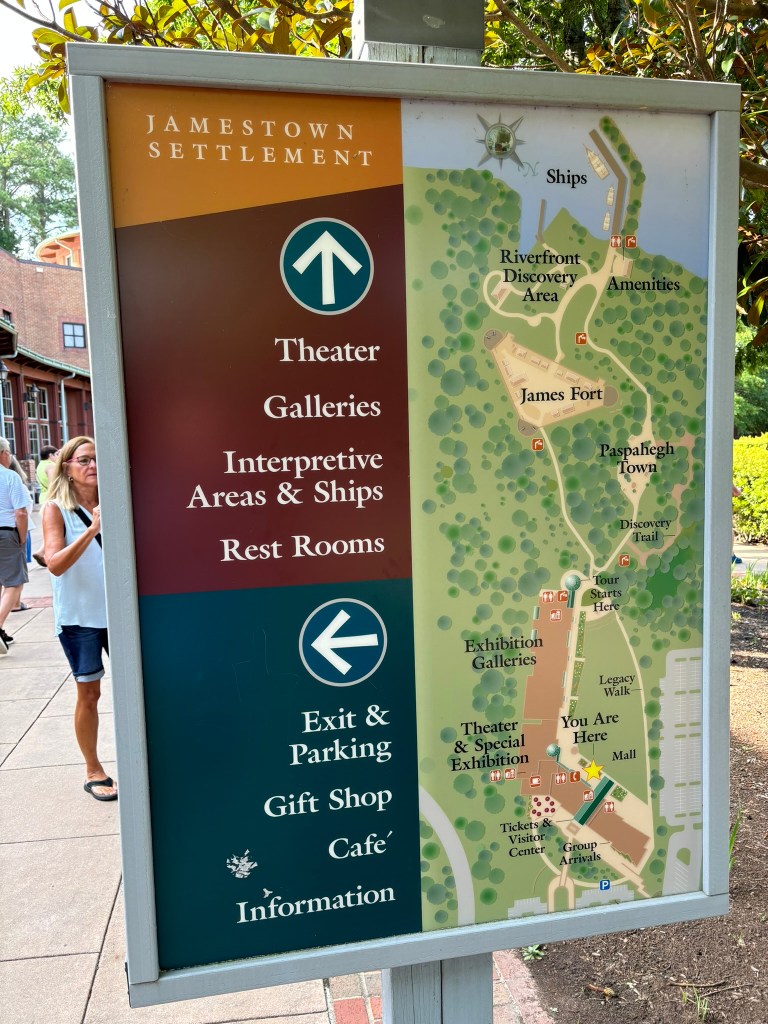
    Jamestown Settlement

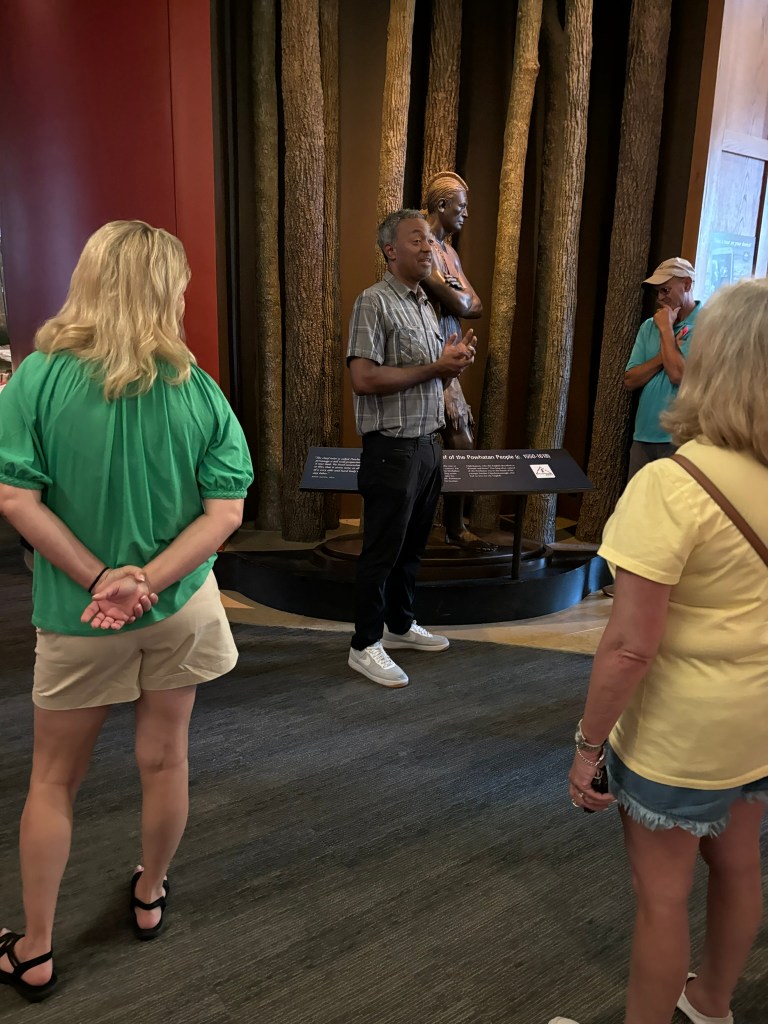
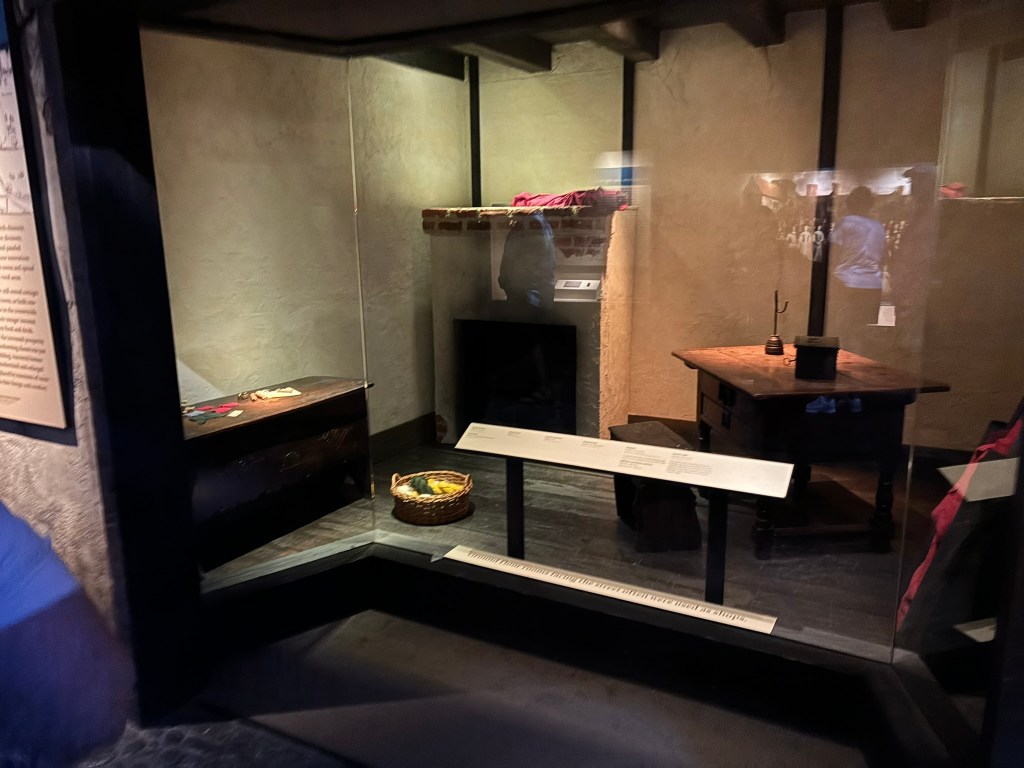
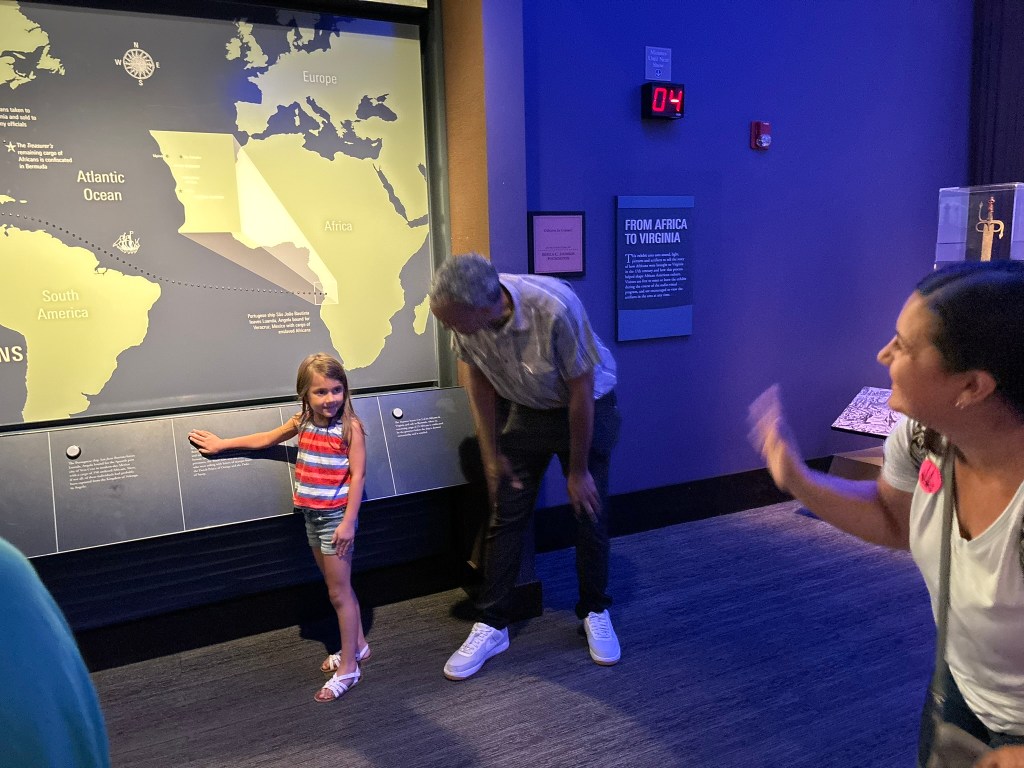
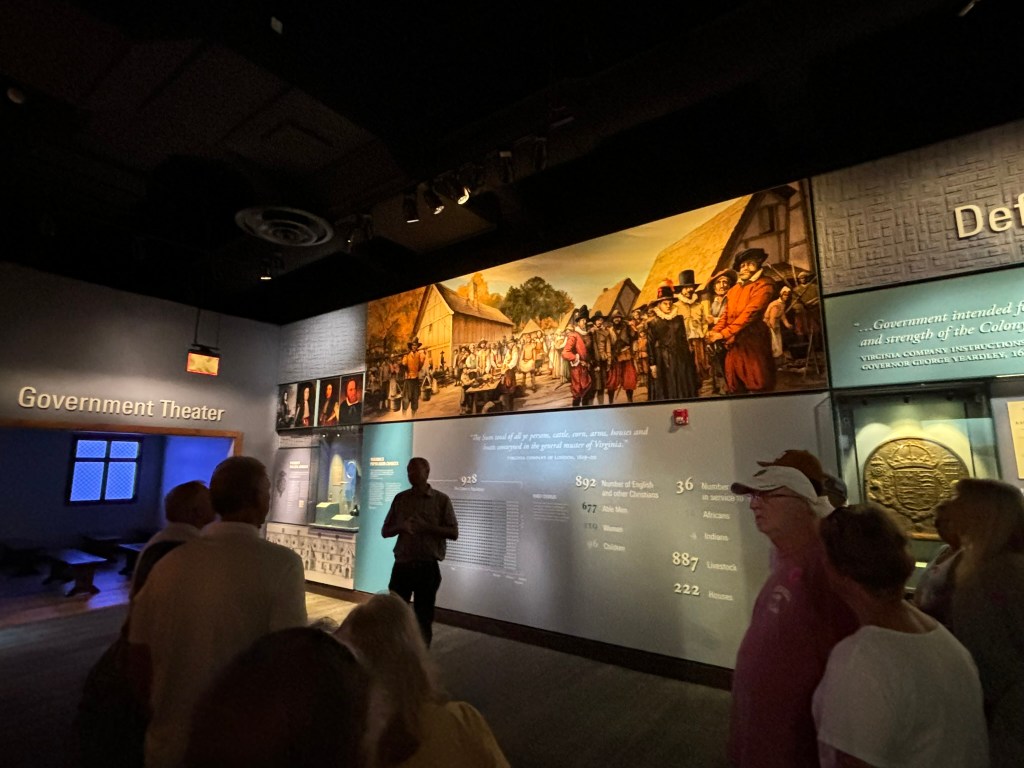
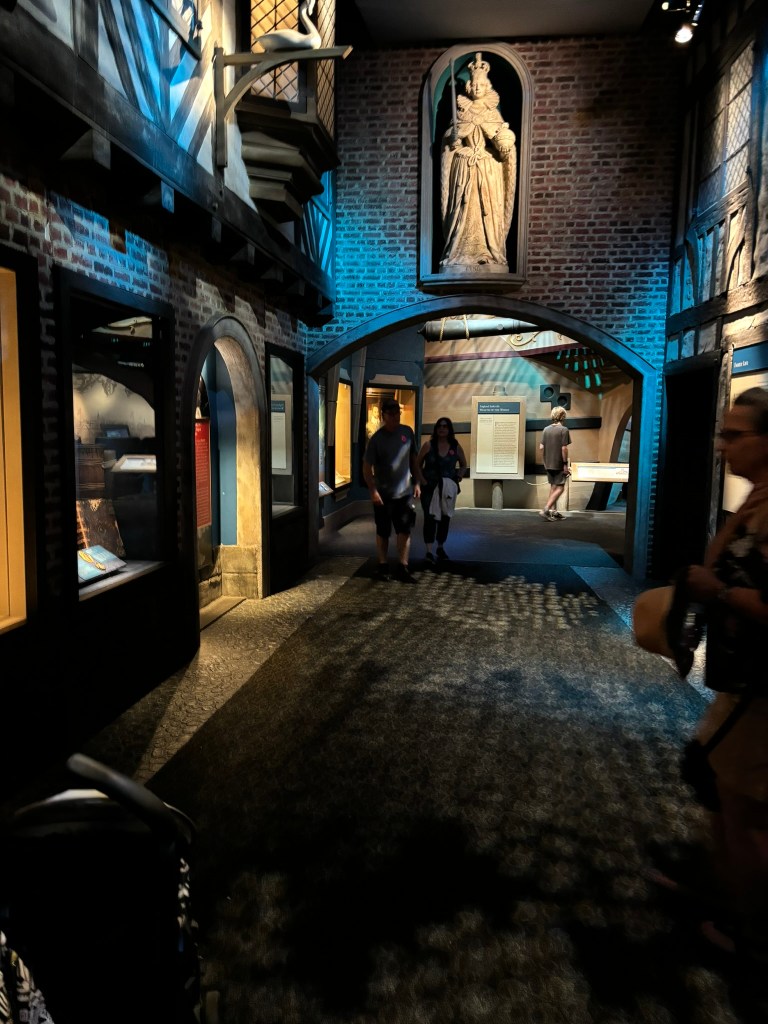
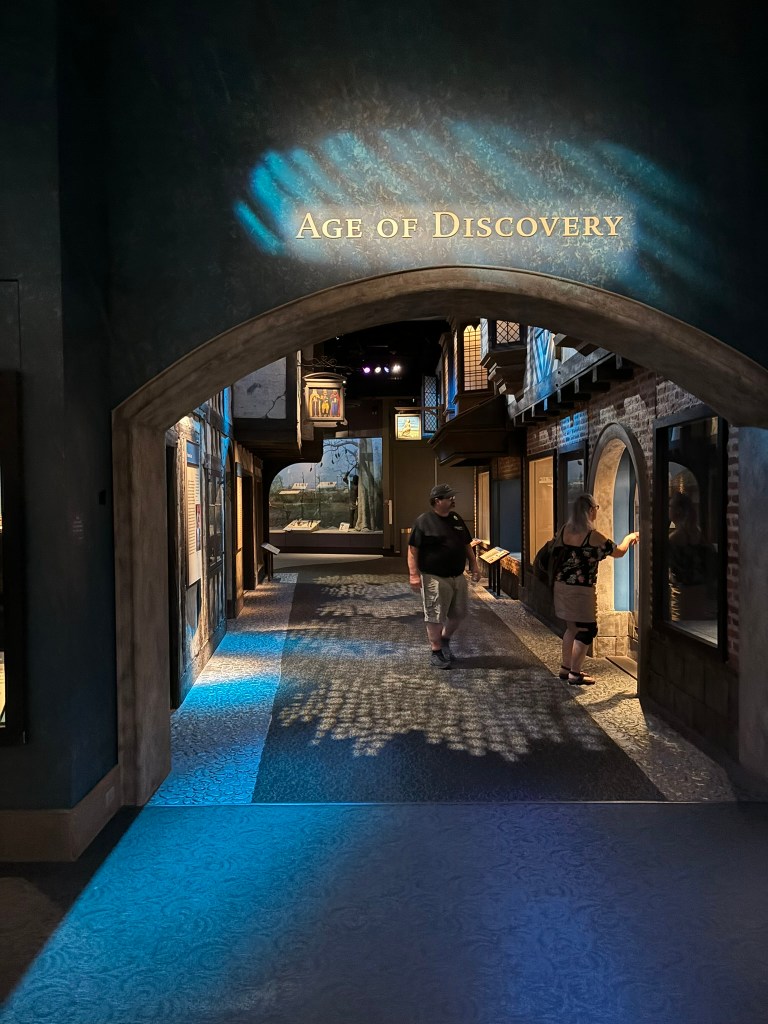
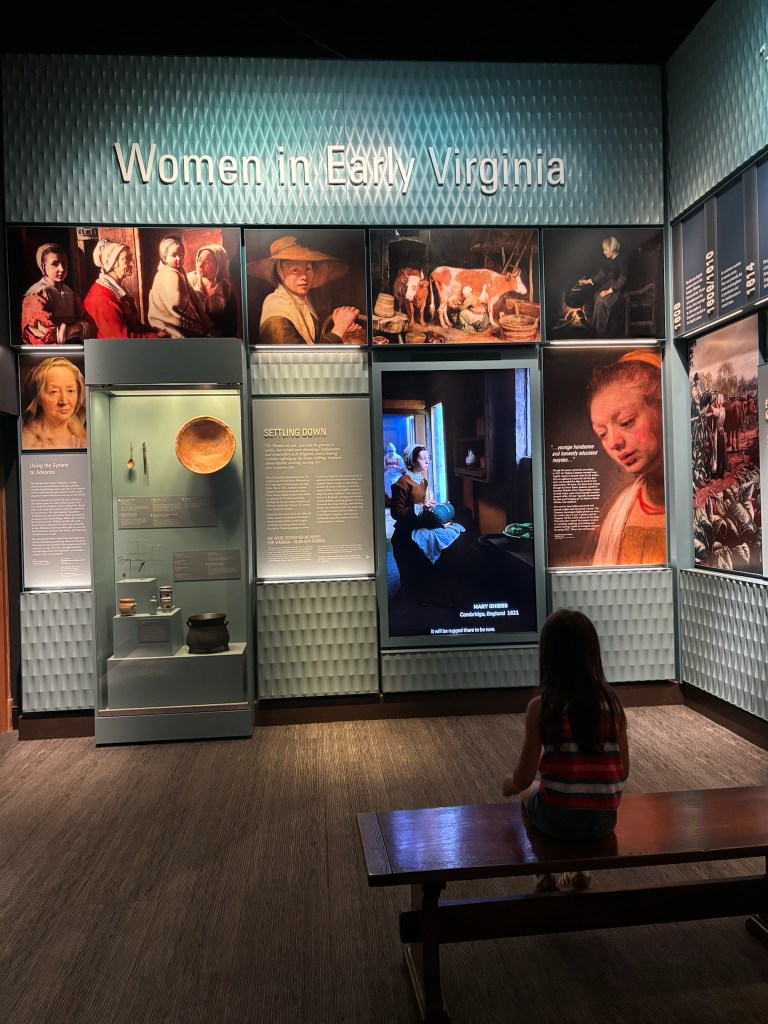
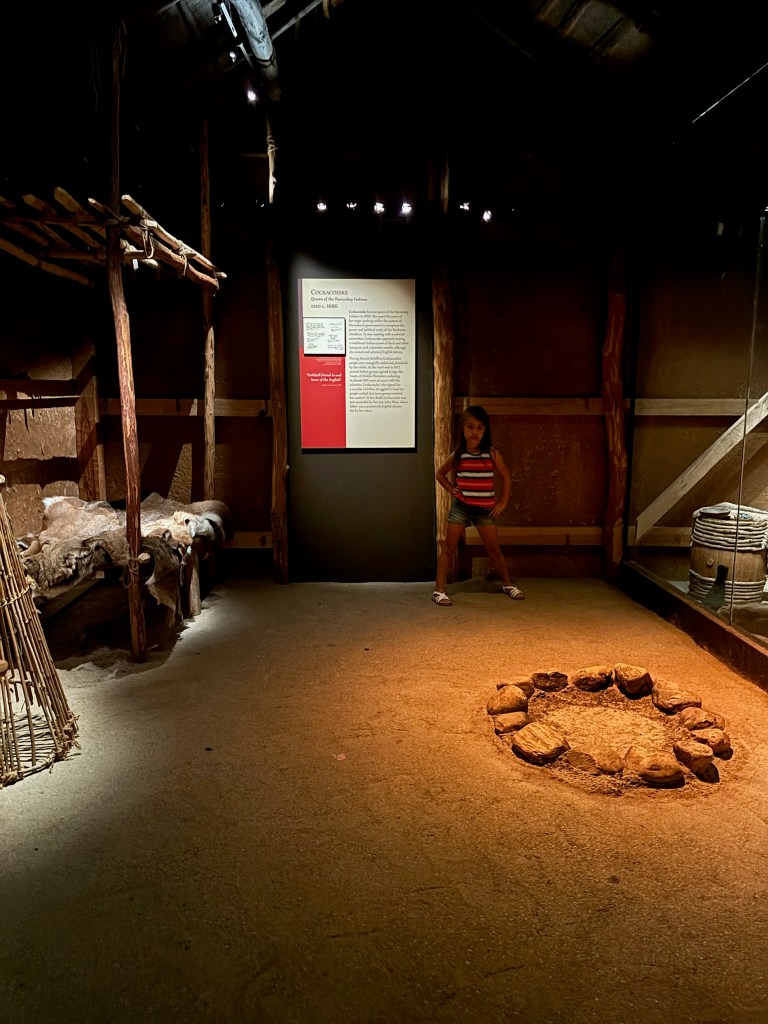
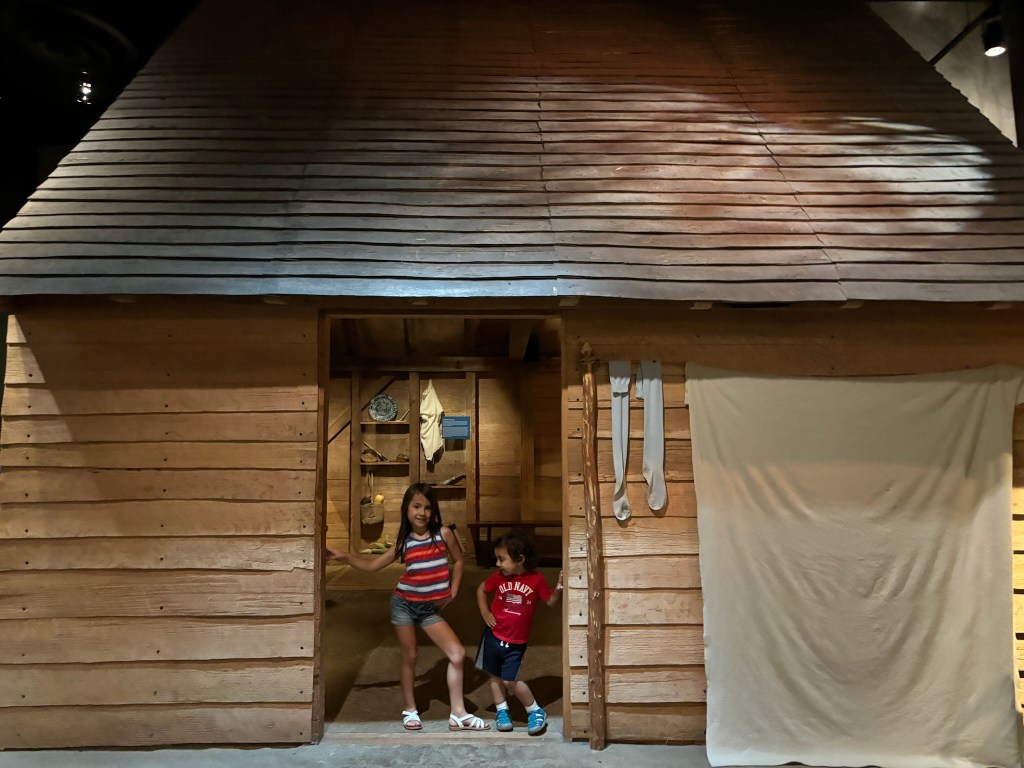
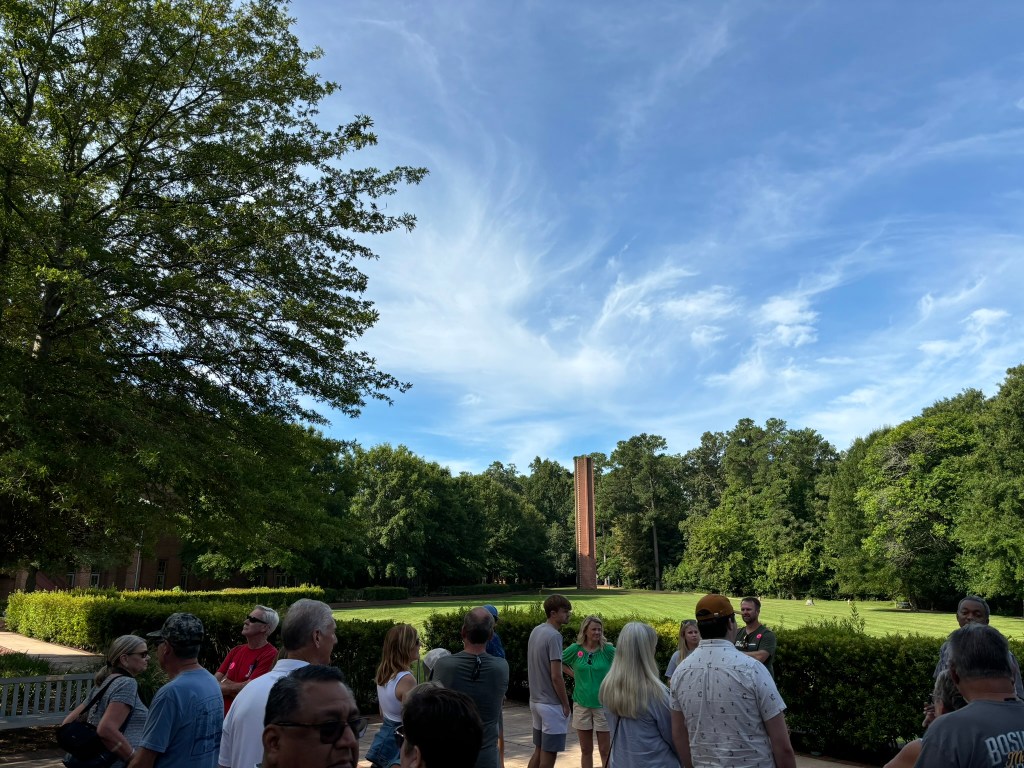
    We then made our way to The Jamestown Settlement, which is run by the The Jamestown-Yorktown Foundation.  The museum originally opened in 1957.  Our tour guide led us through the museum, highlighting and explaining significant figures and events from the colony.  The main hallway of the museum appears to be a large timeline dating from 1607, the founding of the settlement, to 1699, the year that the capital of the Virginia Colony was moved to Williamsburg.  As you move through the museum, you walk through the history of the Jamestown colony.

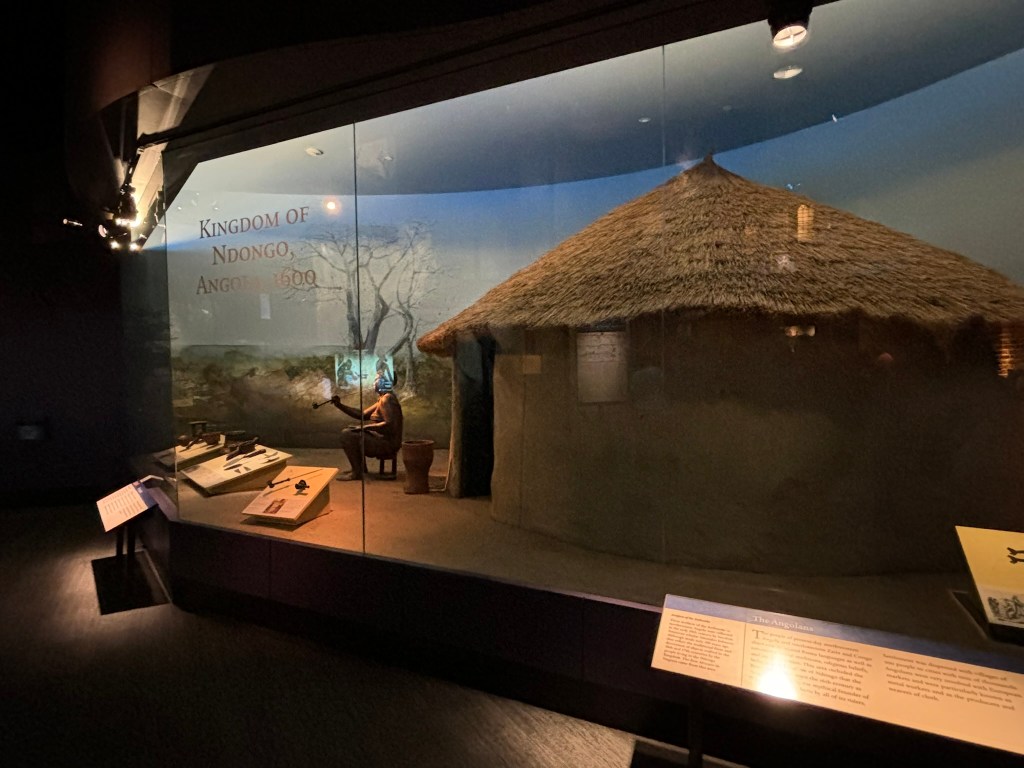
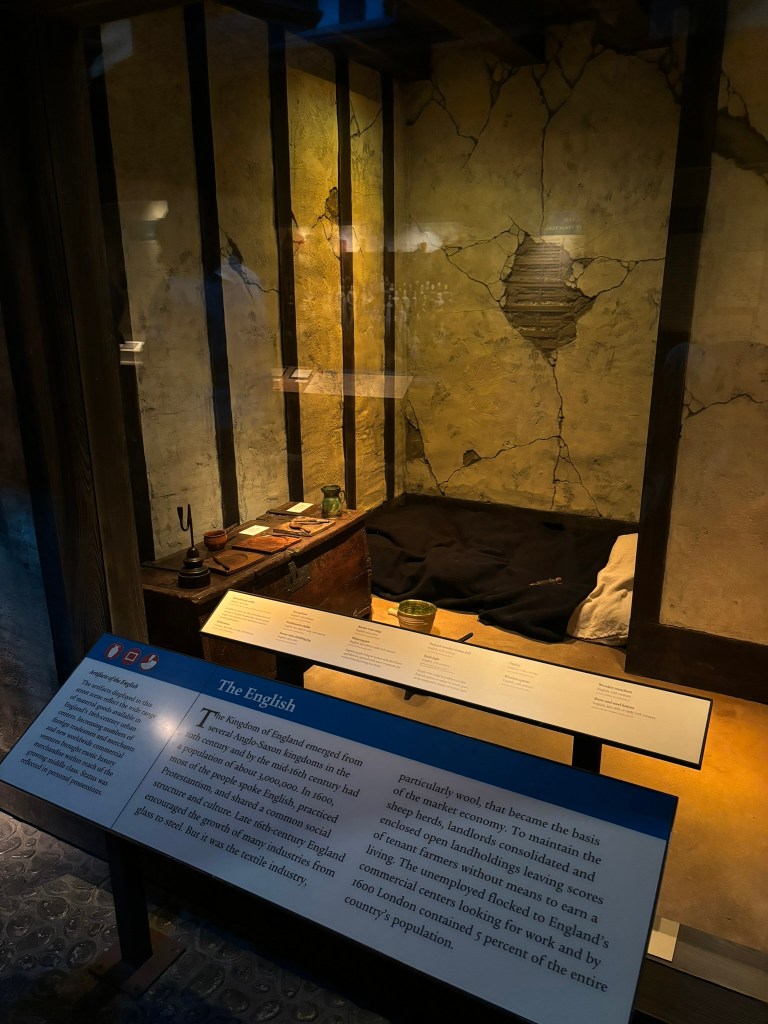
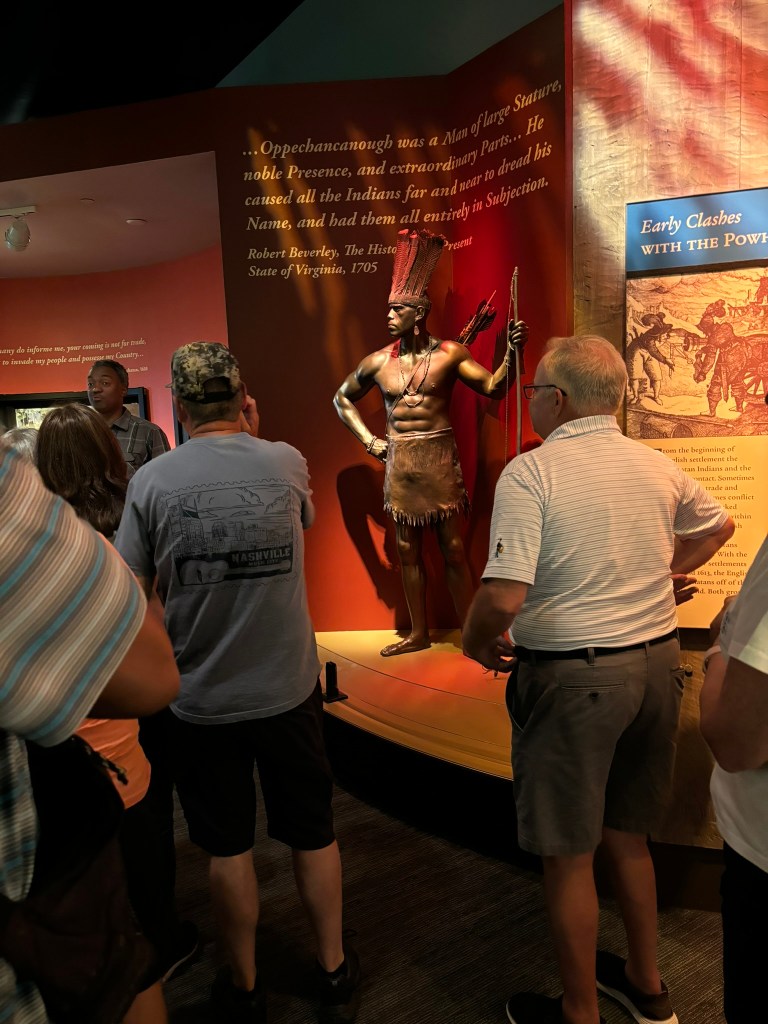
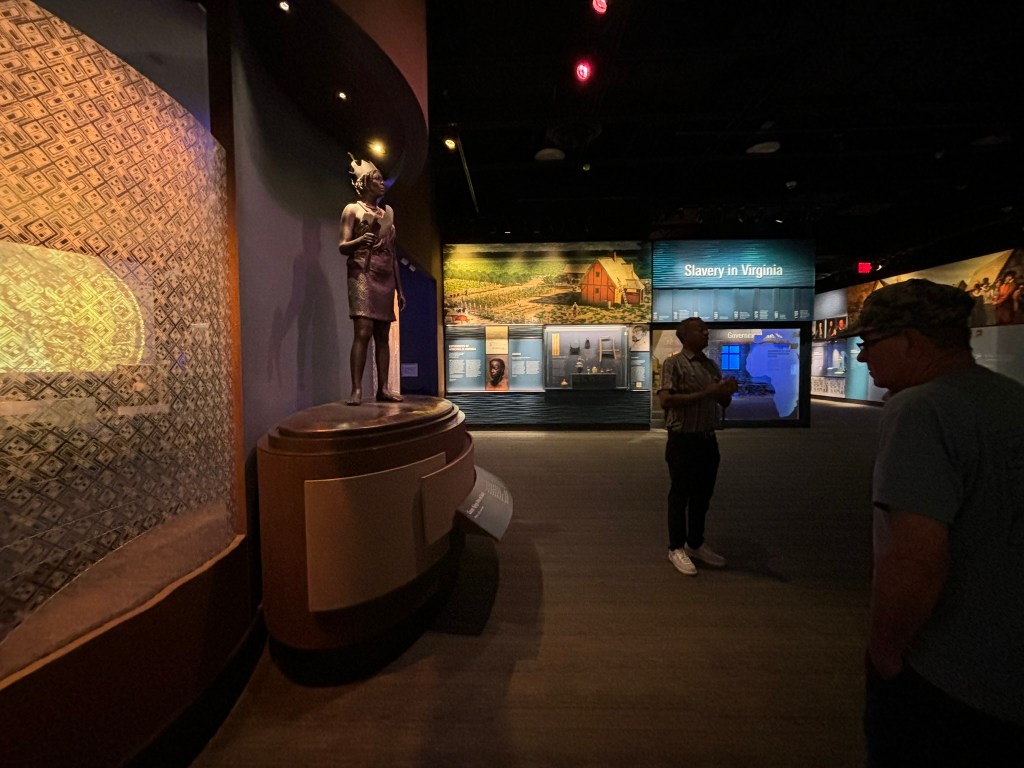
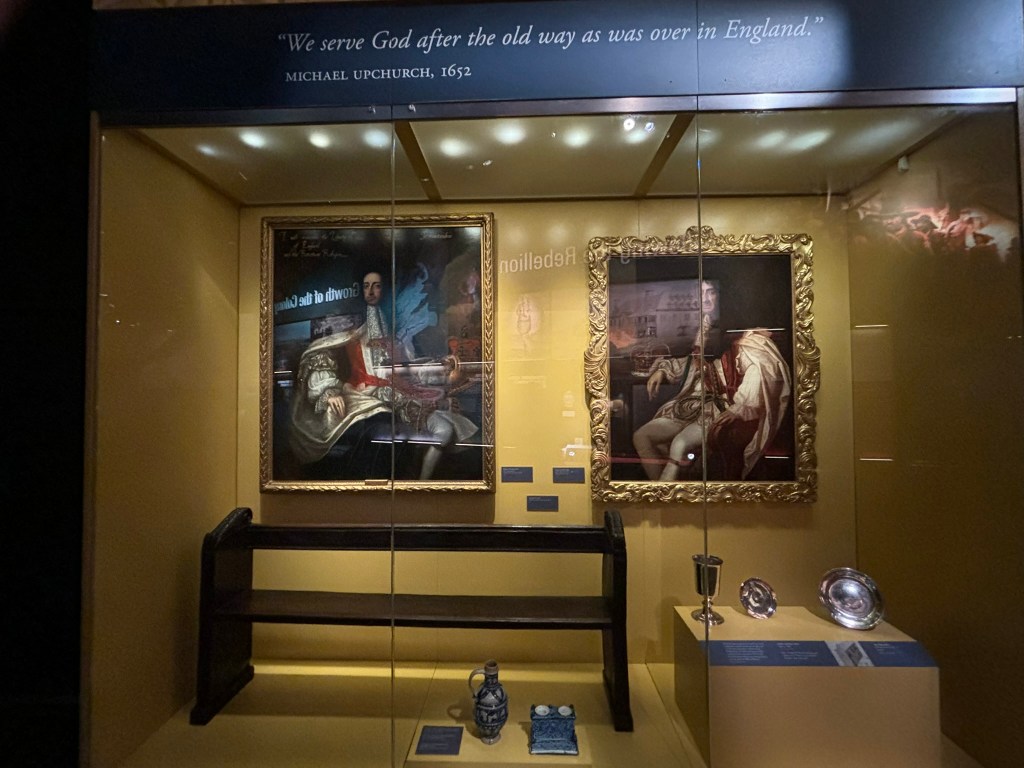
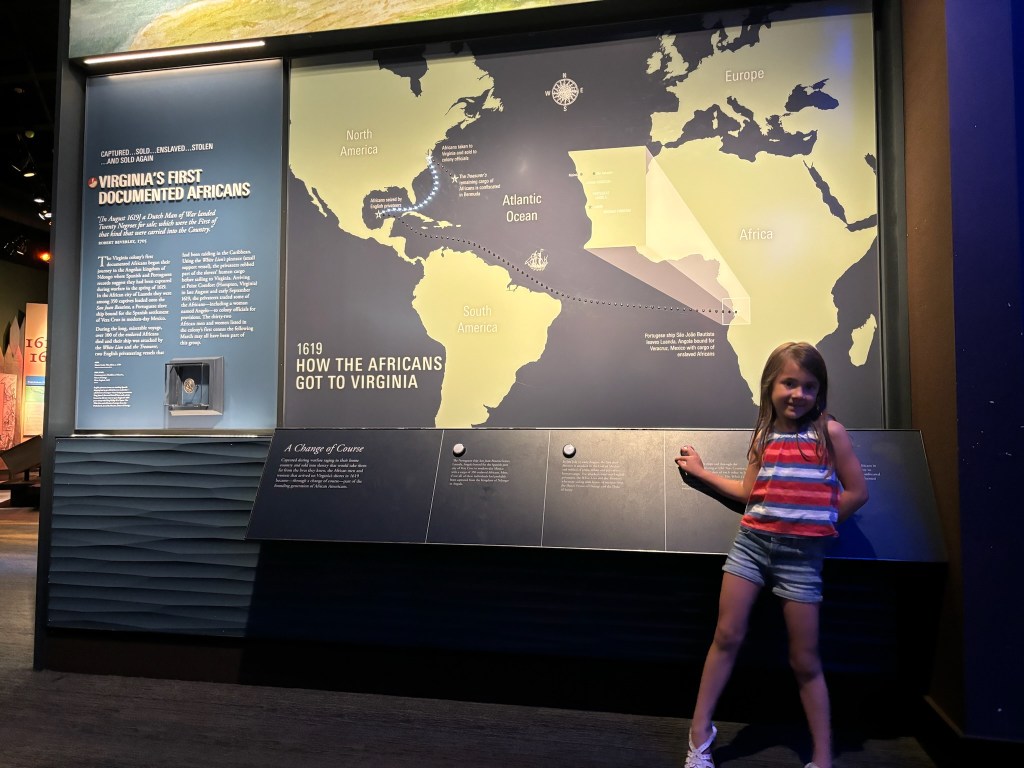
    The museum highlights what life was like before 1607 for the Natives living in the region, Africans in Angola, and the English back in Europe.  As you move through the museum, you learn about how the settlers barely survived in the first couple of years.  You learn about the importance of growing tobacco.  You learn about figures like Pocahantas, John Smith and John Rolfe.  You learn that in 1619, the first Africans were brought to the colony on a Dutch ship, which completely changed the dynamics and history of the colony.  The year 1619 was also significant because this was the first year that the House of Burgesses met.  The museum teaches about conflicts between the Natives and English settlers, as well as significant events like Bacon’s Rebellion in 1676.  The museum also highlights a map that shows the population changes taking place in Virginia.  As the English population was growing and settling along the rivers, the Native population was dwindling, primarily caused by disease and conflict.  Finally, the museum takes you to the year 1699, when Jamestown ceased to be the capital of Virginia.   Jamestown was susceptible to brackish water, mosquitoes, and the spread of malaria.  Williamsburg was on higher ground and easier to defend against invaders such as the French and Spanish.
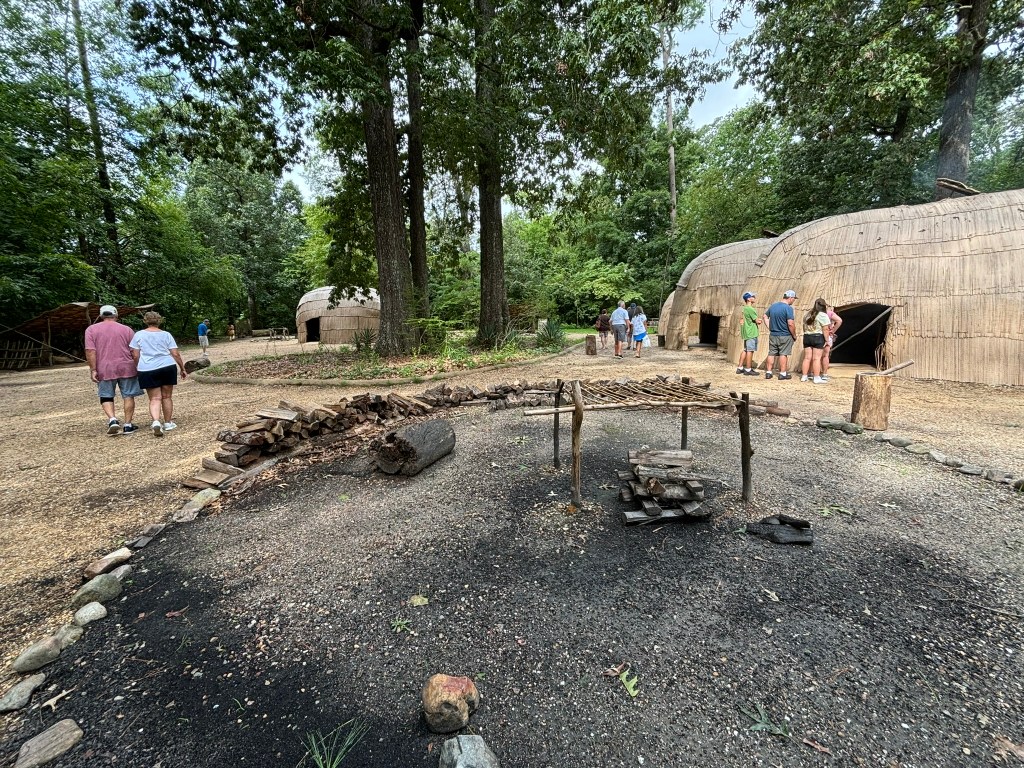
    Paspahegh Village

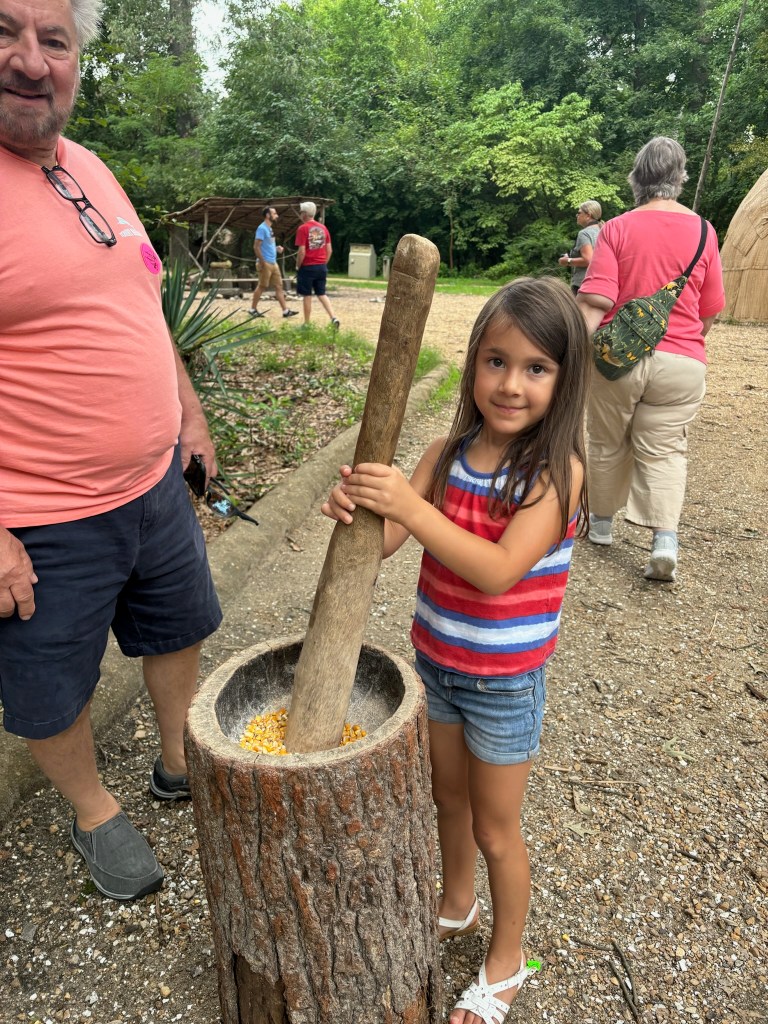
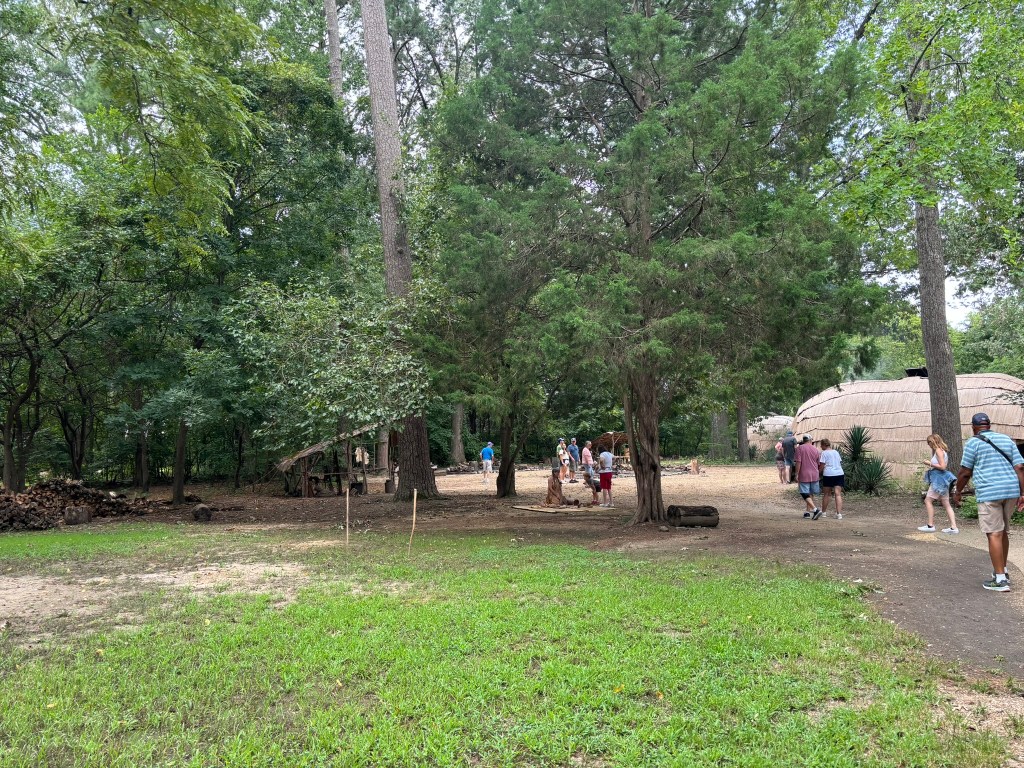
    After we were taken through the museum, we were given about an hour to roam around outside in the living history portions of the museum.  Our first stop was the Paspahegh village.  The Paspahegh tribe was a tributary of the great Powhatan chiefdom.  In the village, you could walk through their living quarters, learn how they made canoes from tree trunks, and practice making corn.  
    Ships

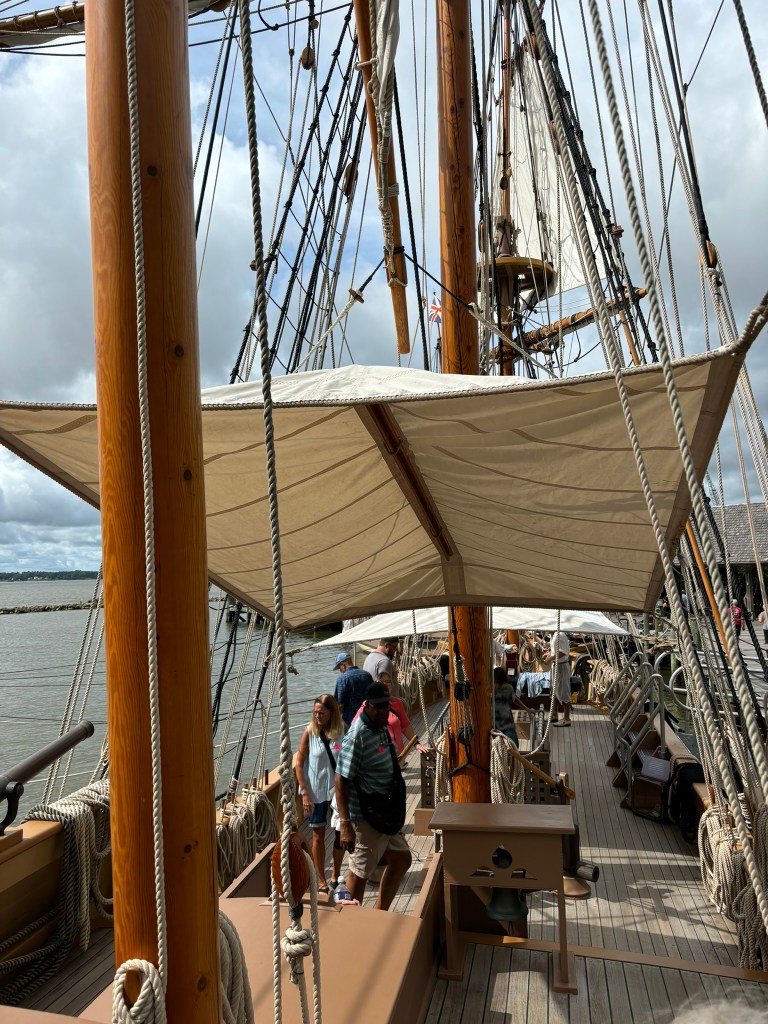
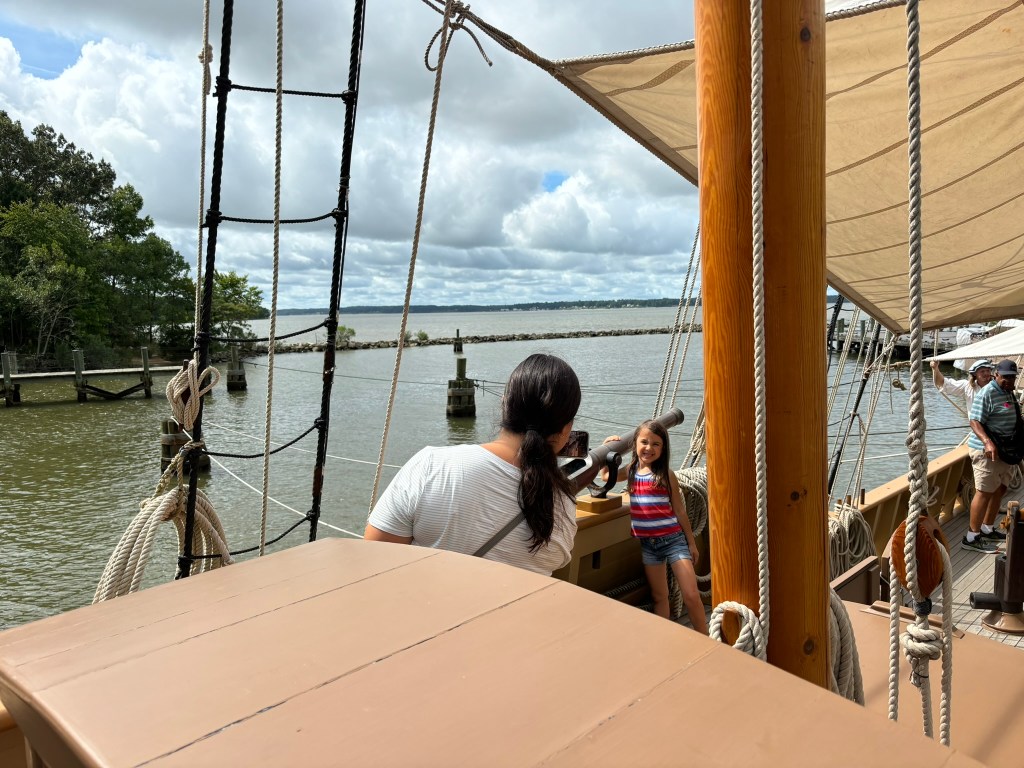
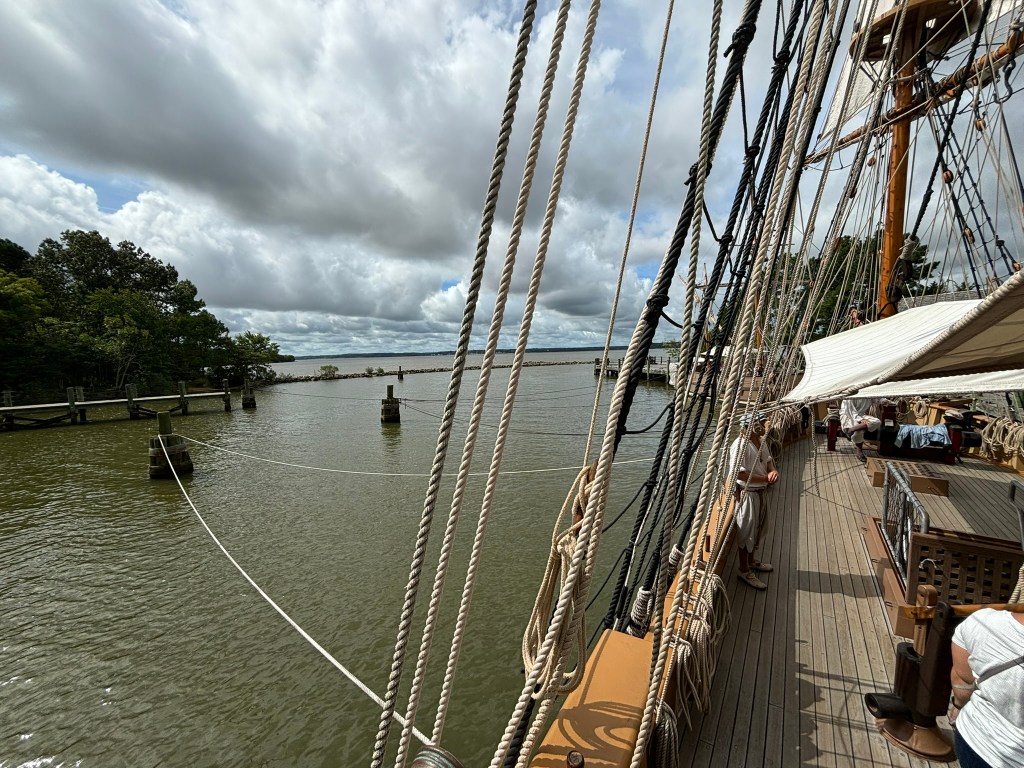
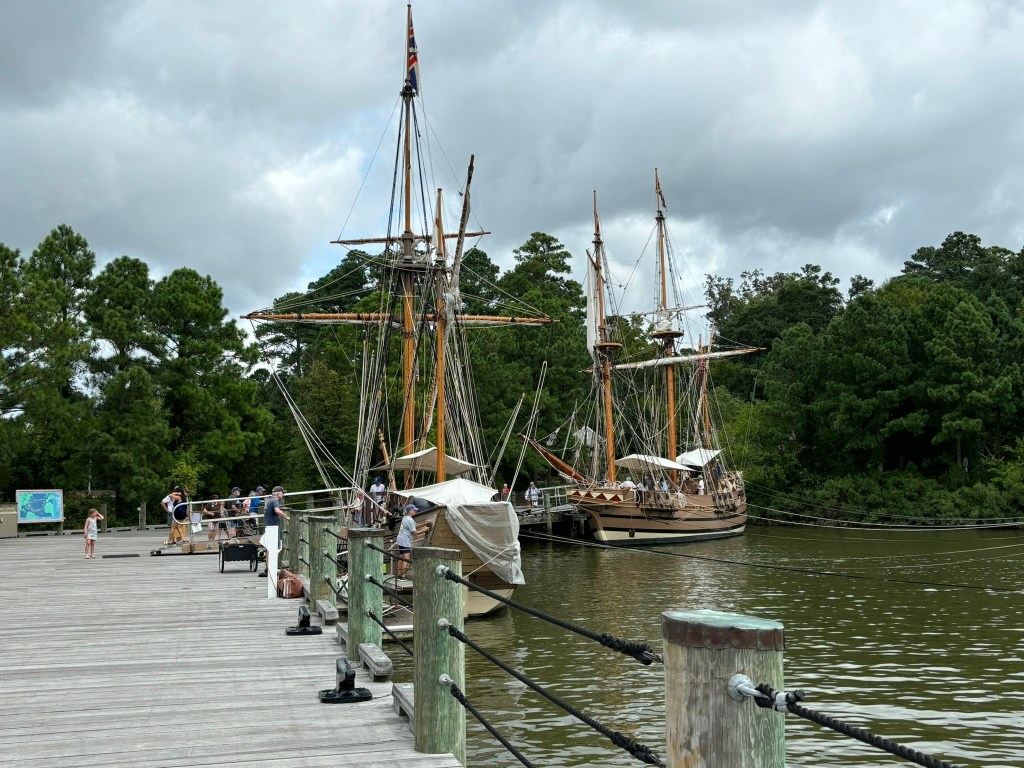
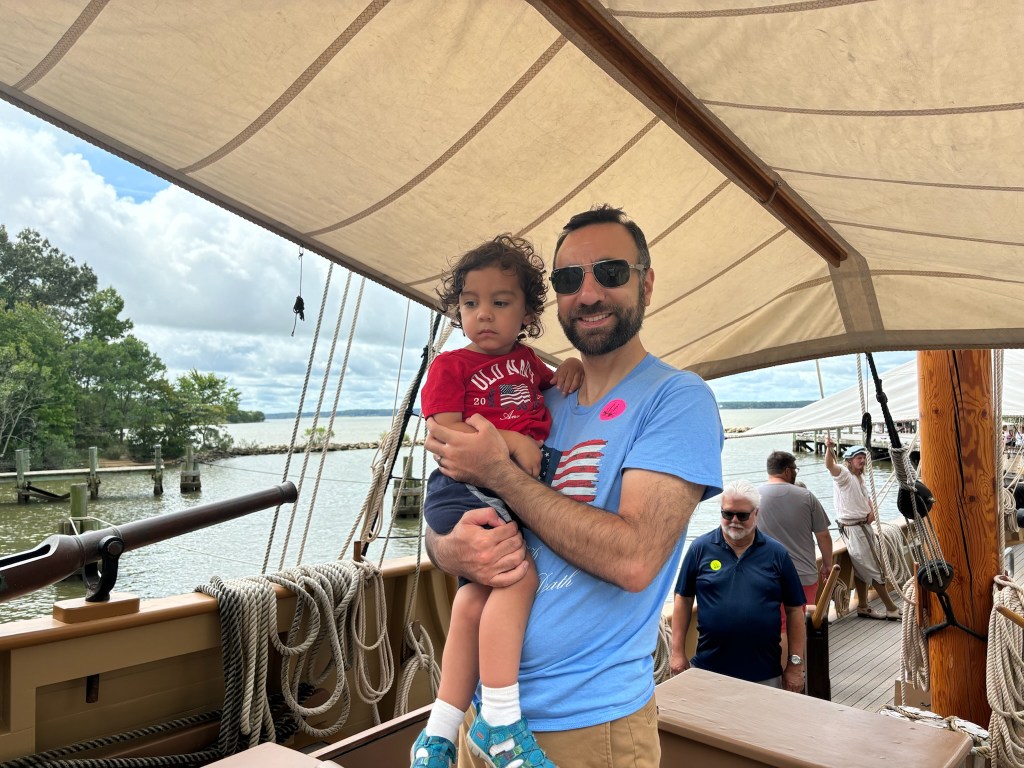
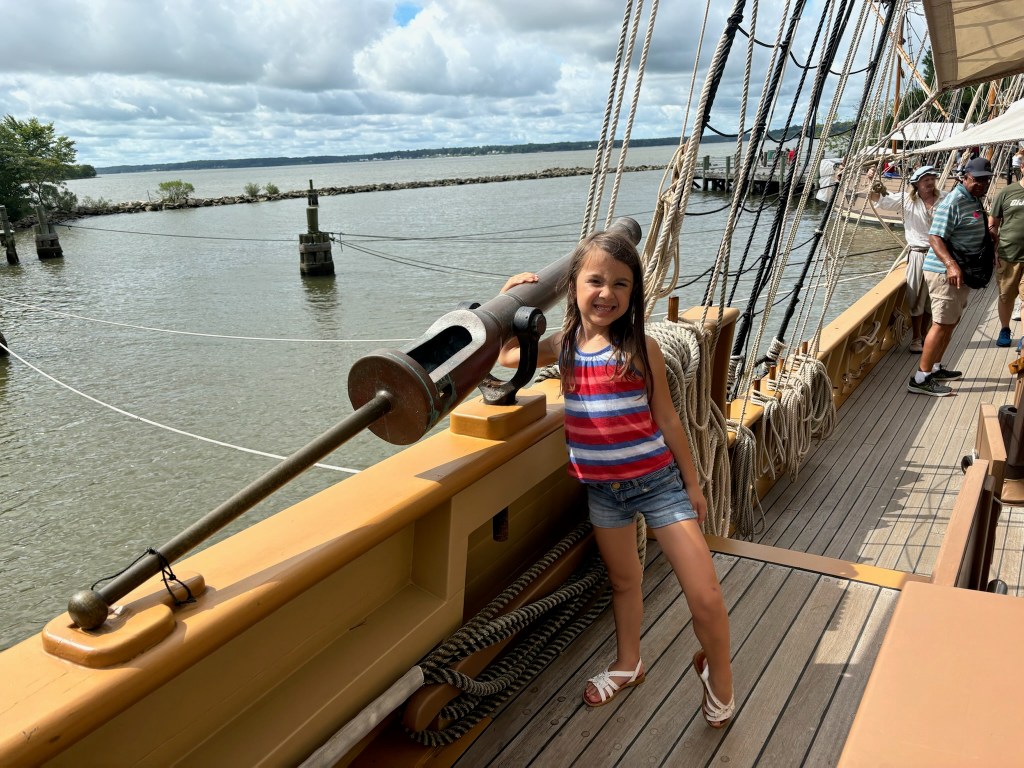
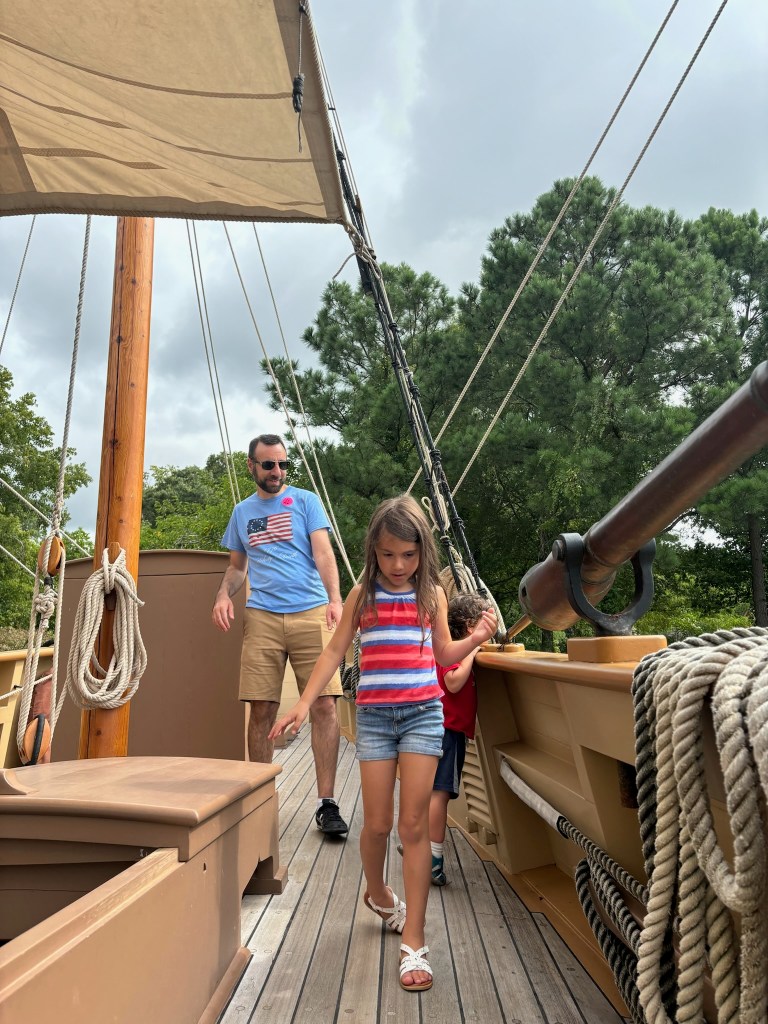
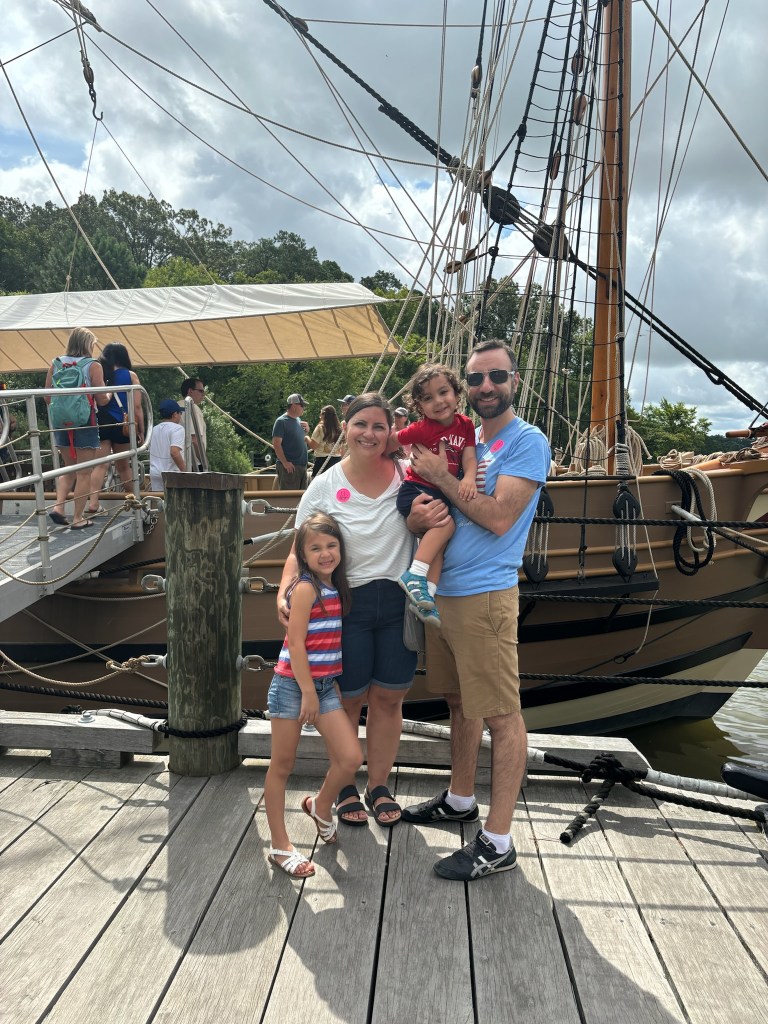
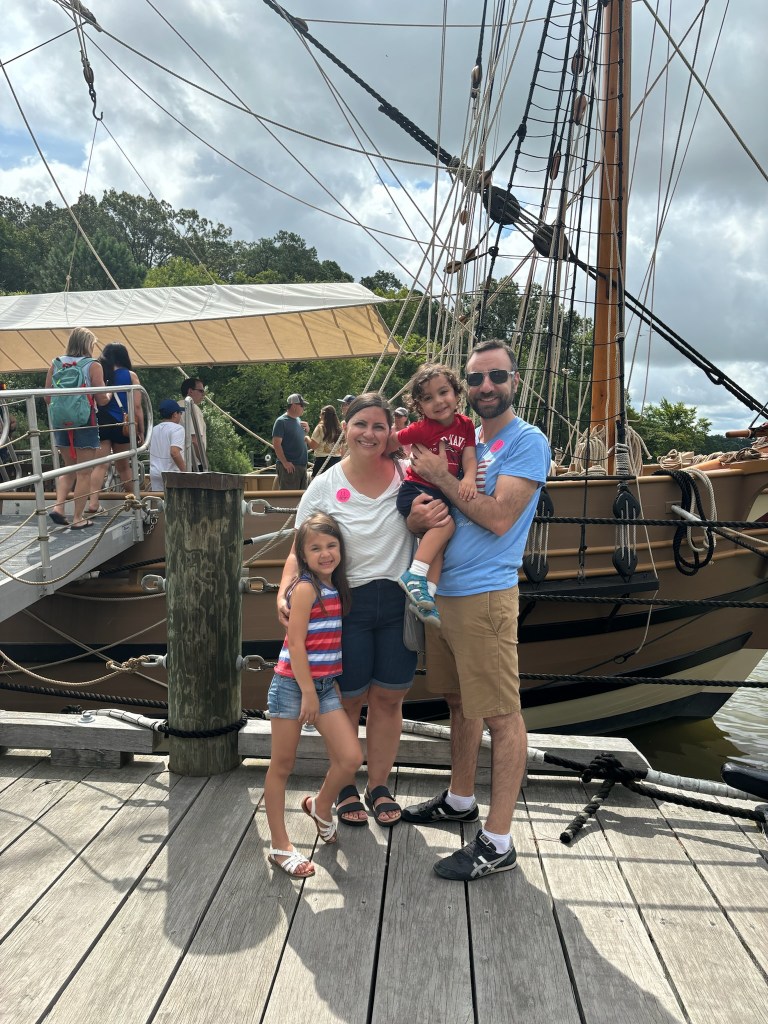
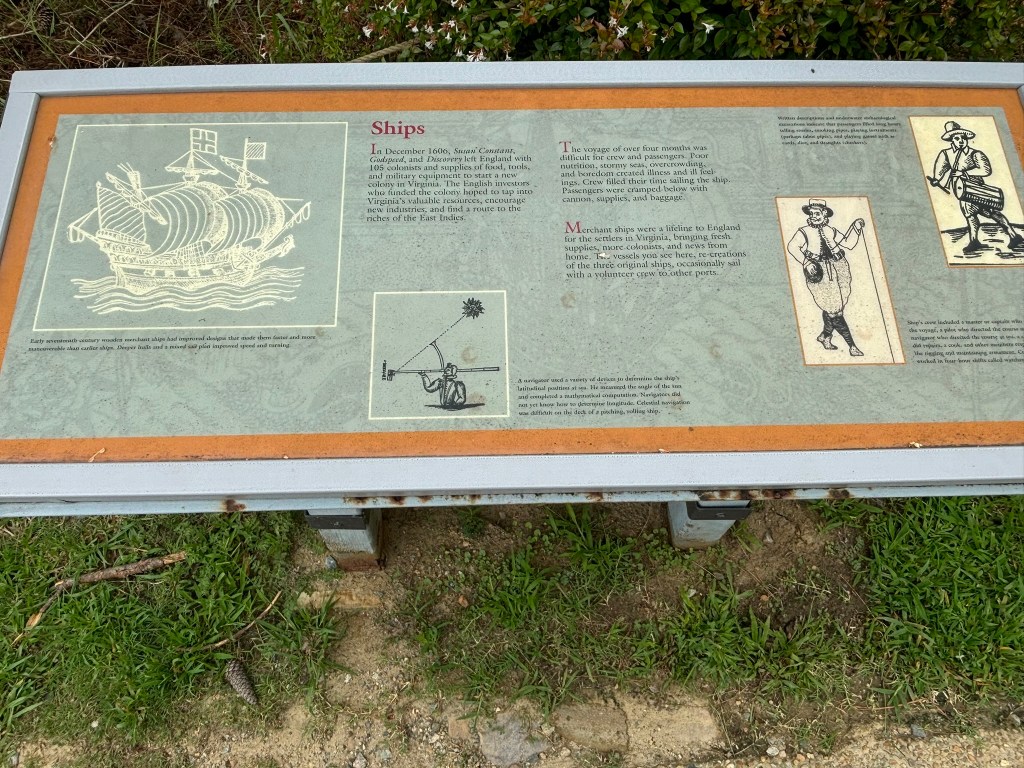
    After passing through the Paspahegh village, we made our way to ships docked along the coast.  The three ships that took the original voyage to Jamestown were called Susan Constant, Godspeed, and Discovery.  Two of the three replica ships were in dock on the day we were there.  We were able to go below deck and explore the two ships.
    James Fort

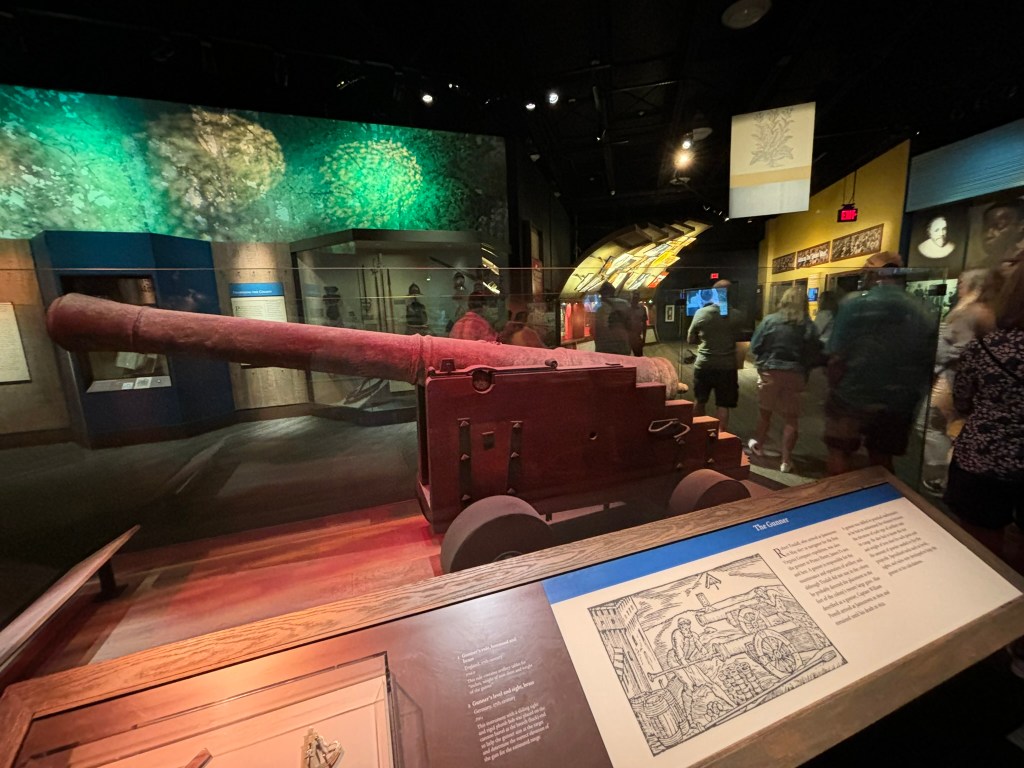
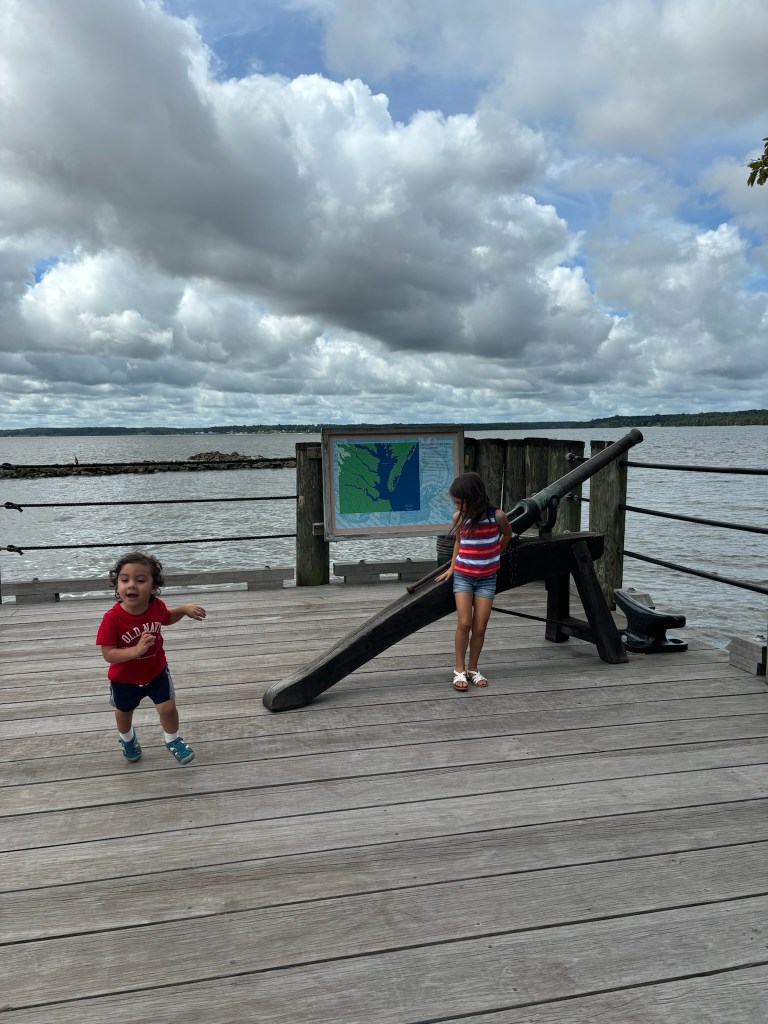
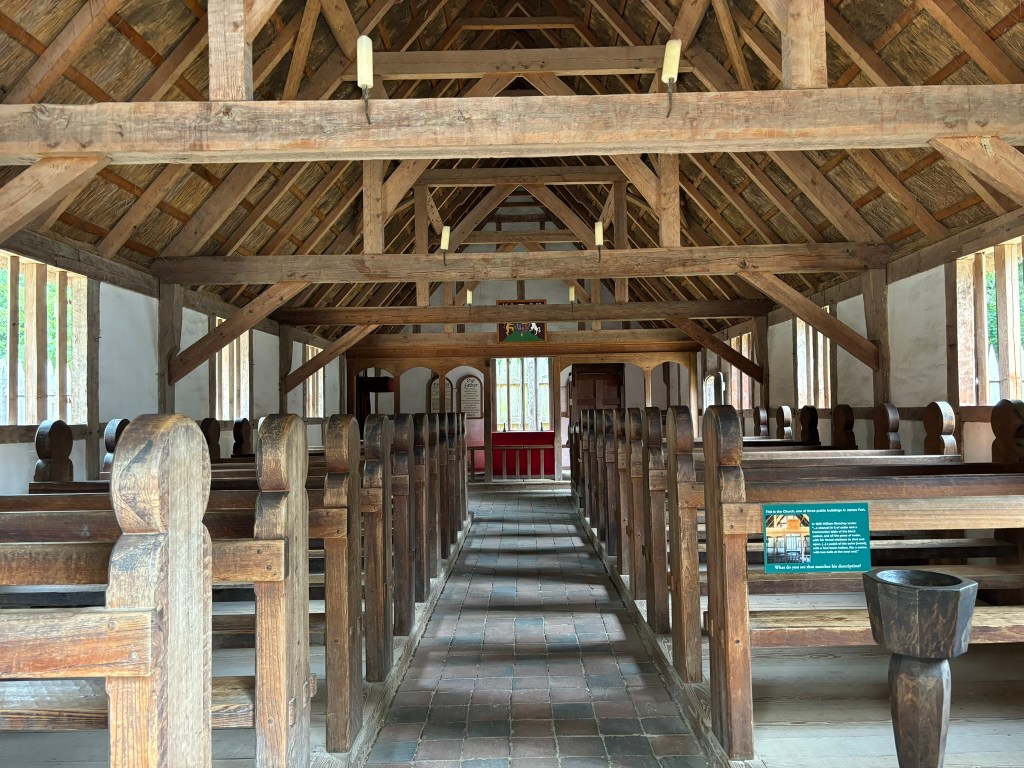
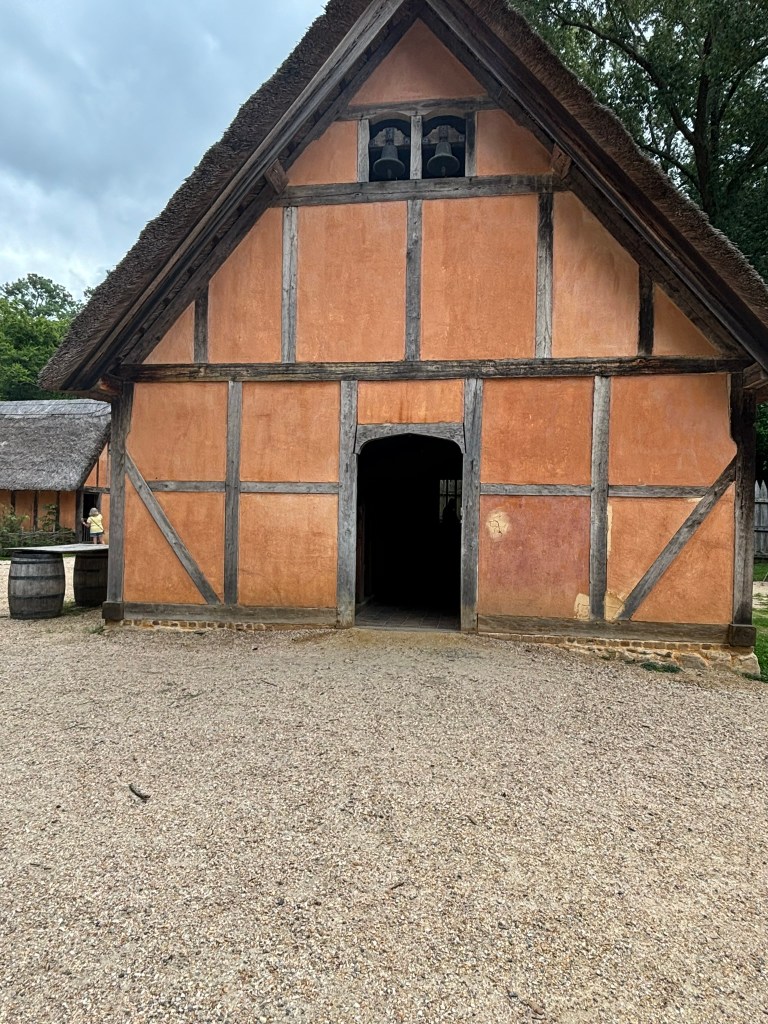
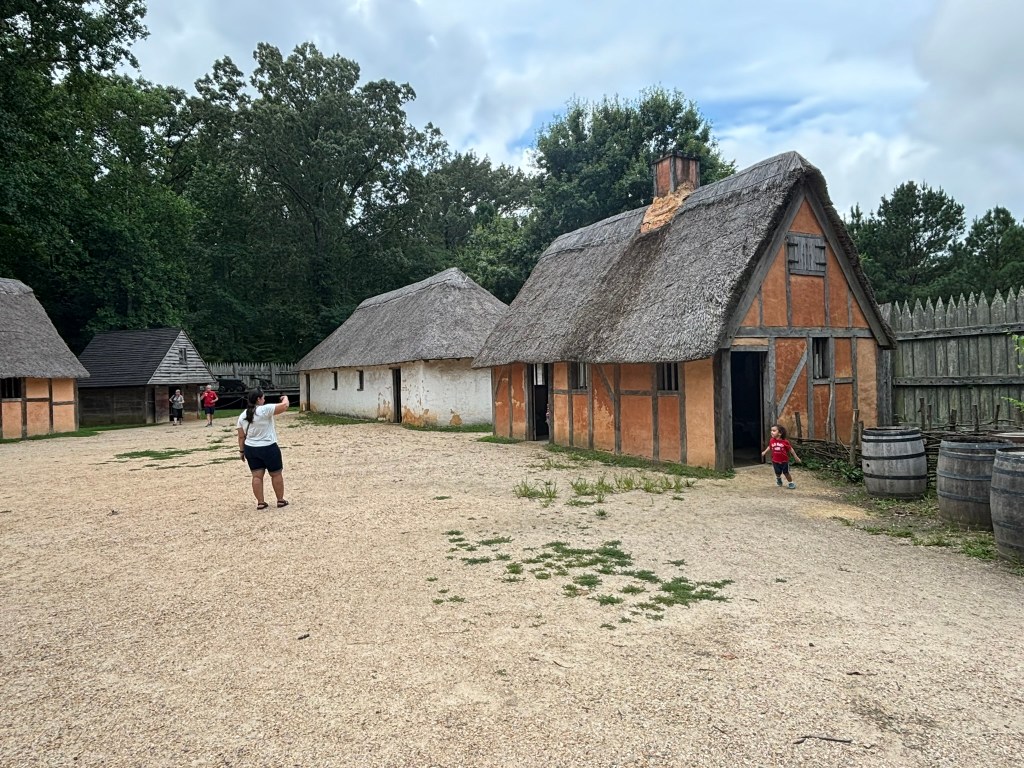
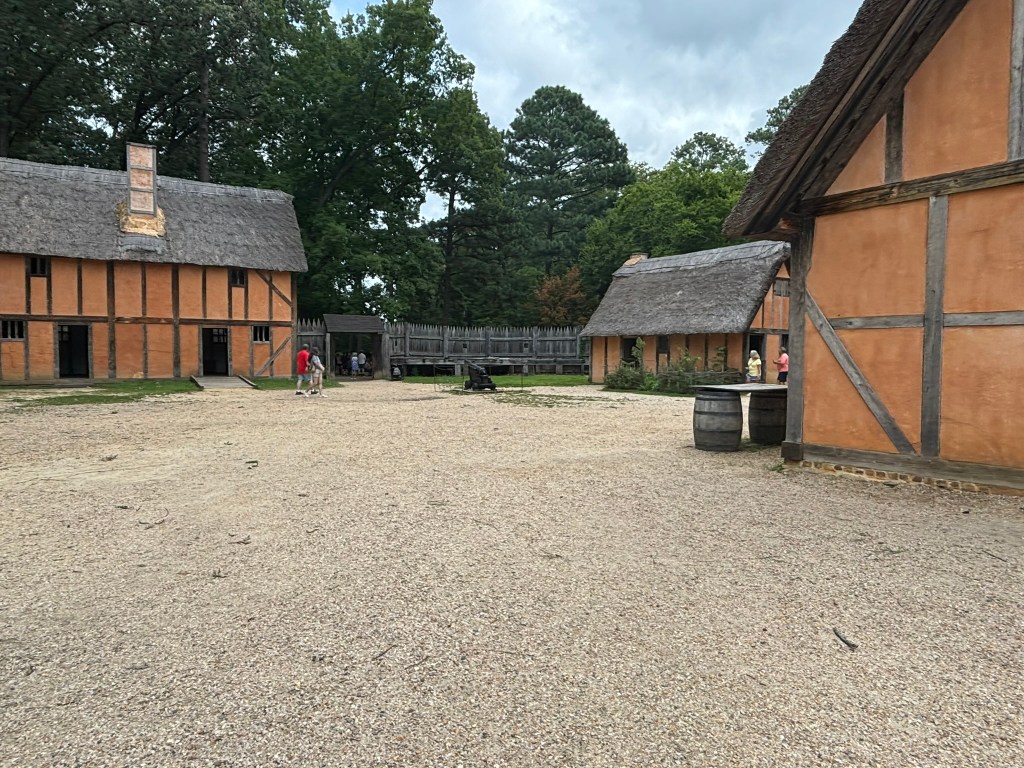
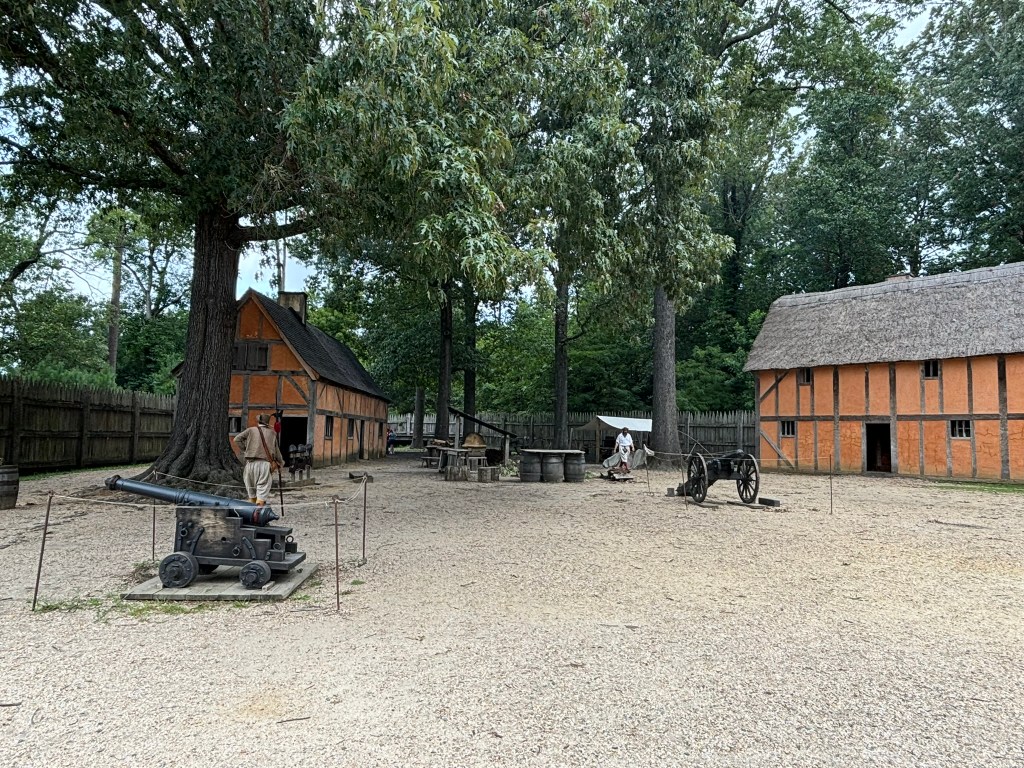
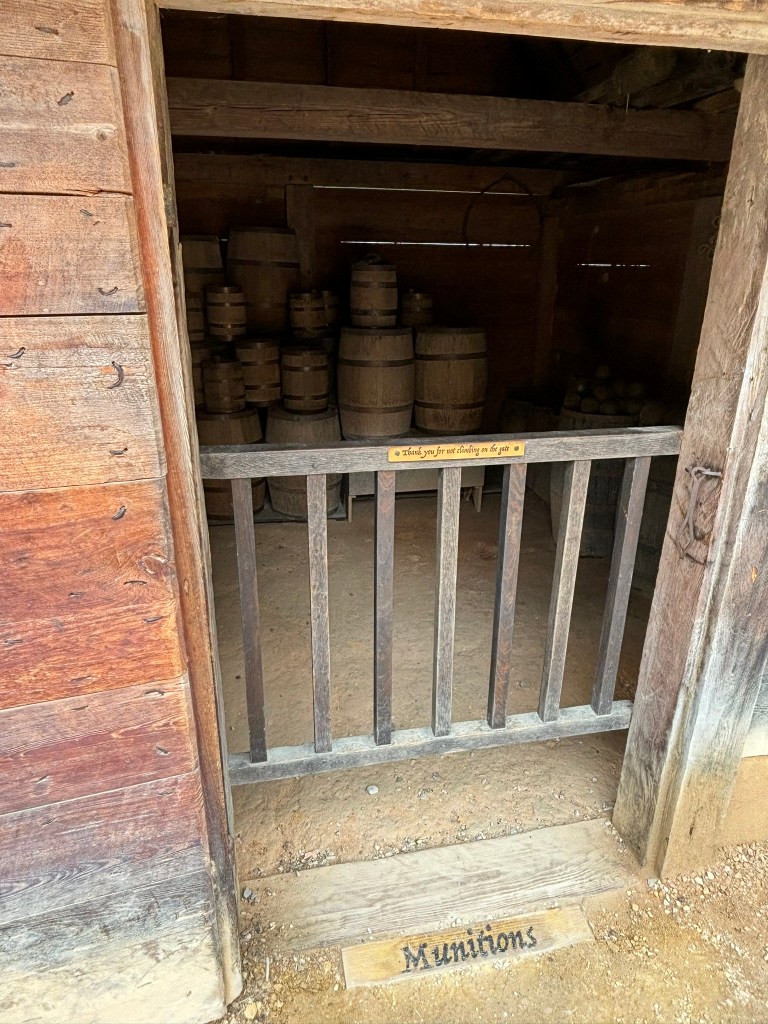
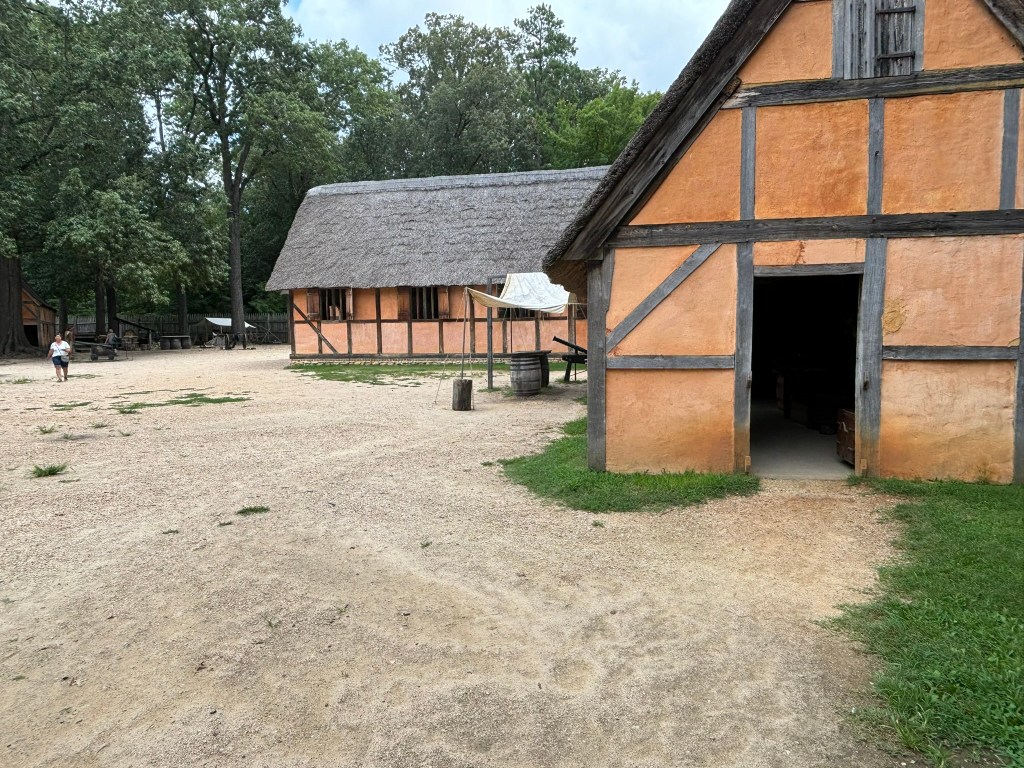
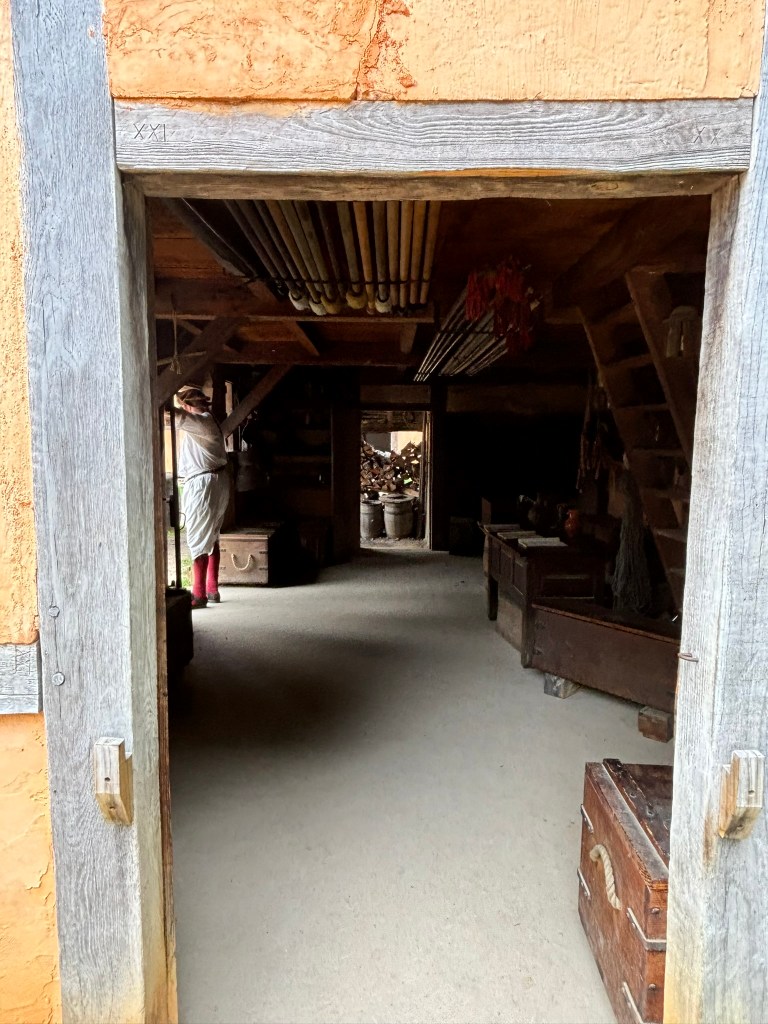
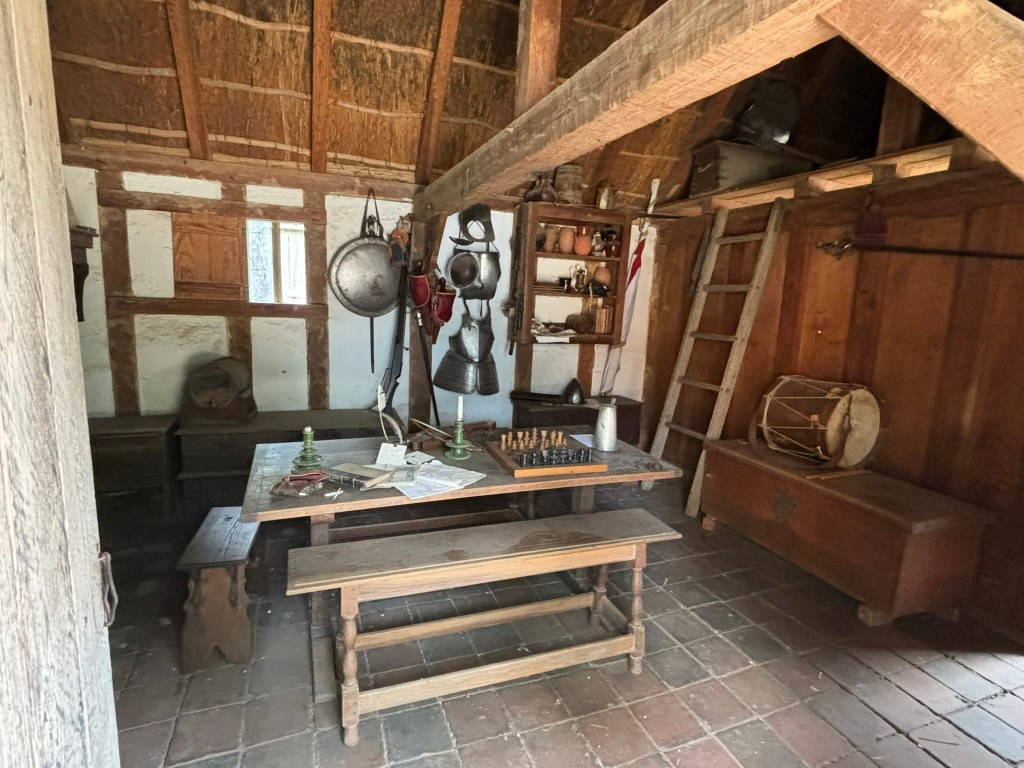
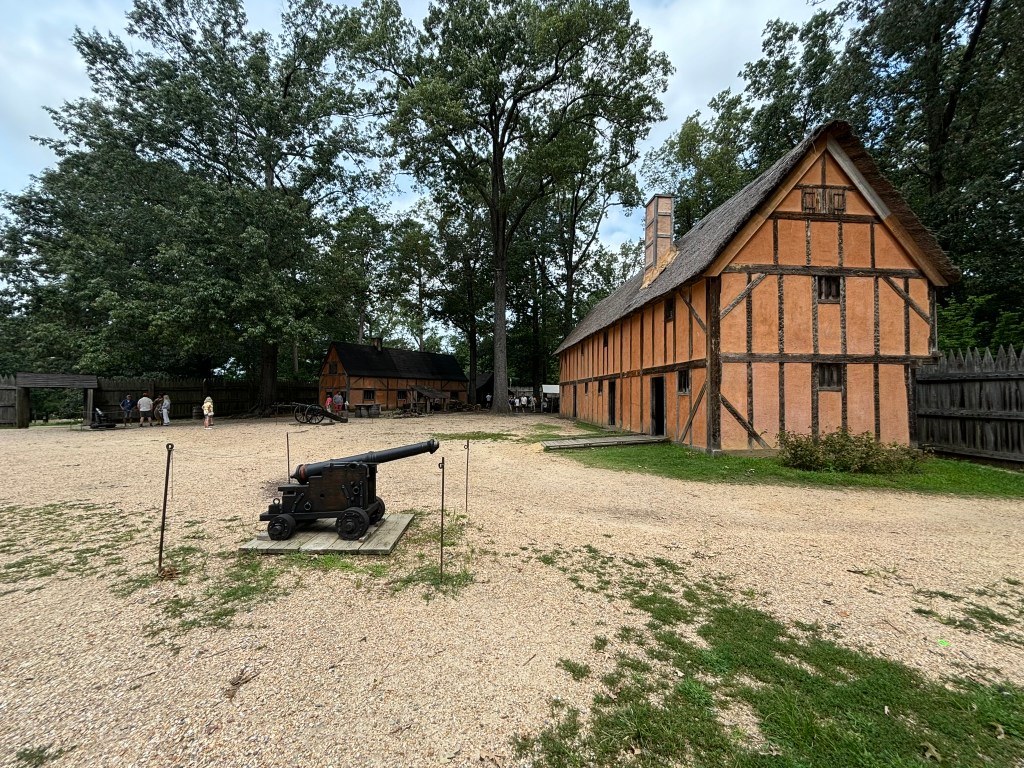
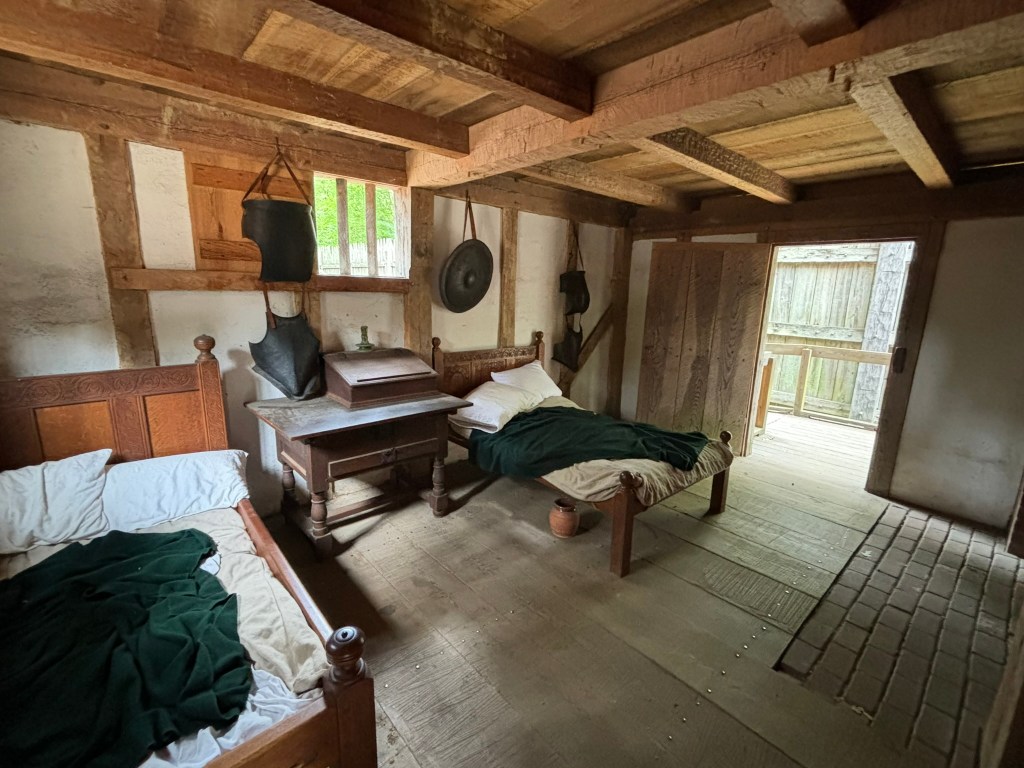
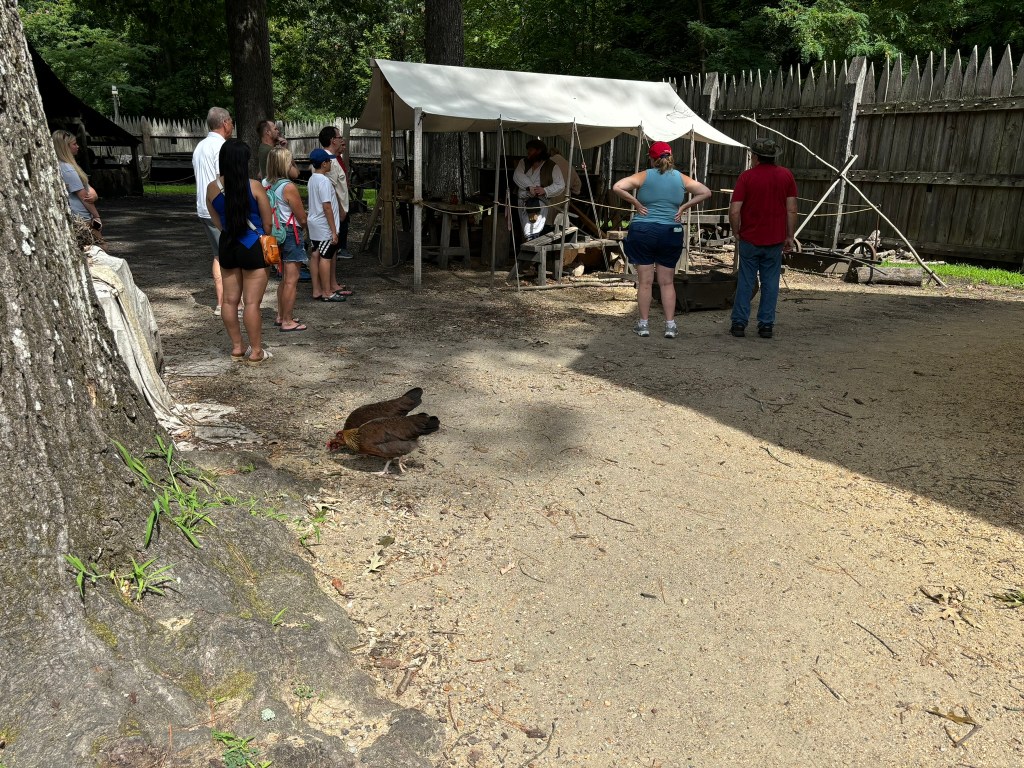
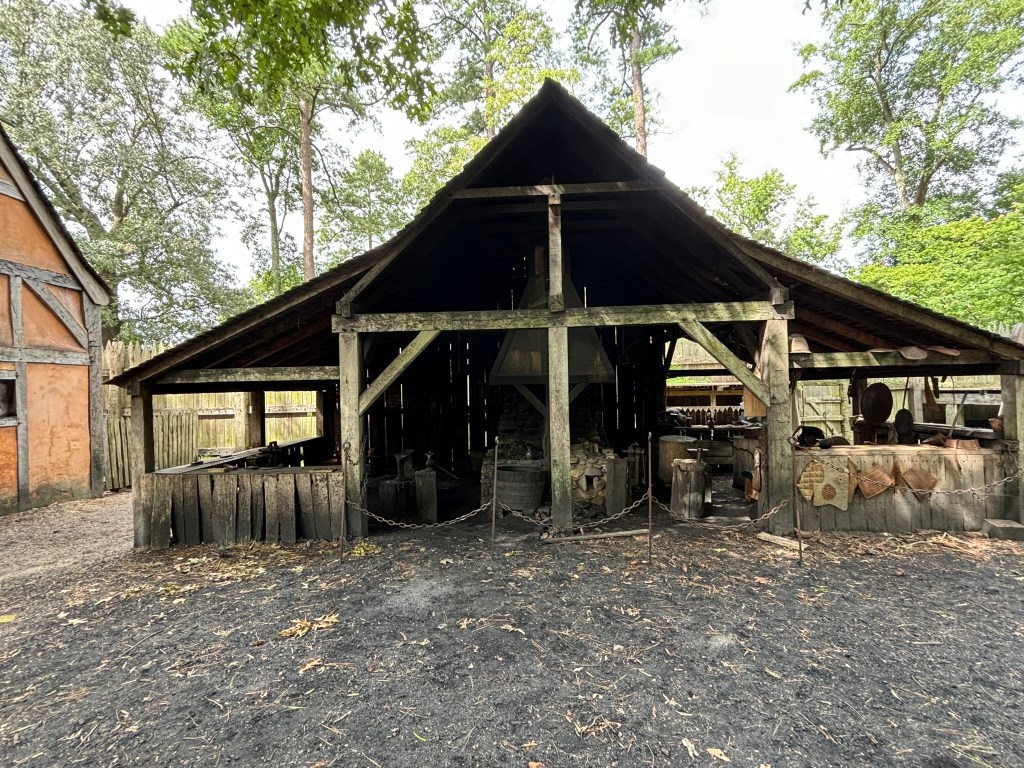
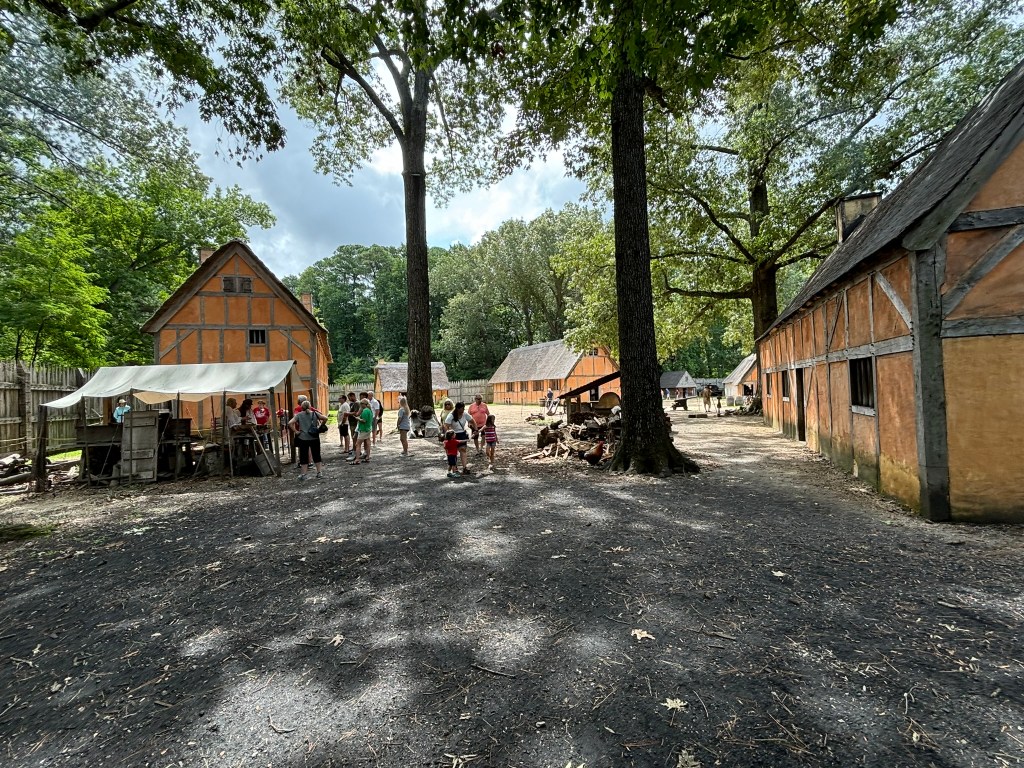
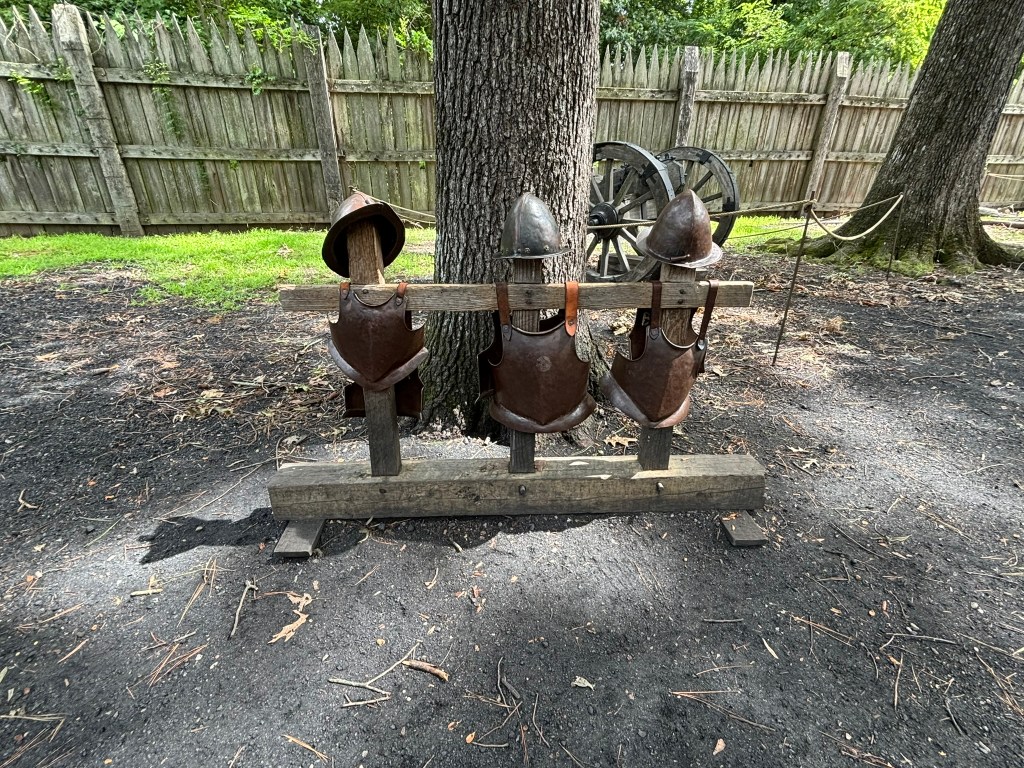
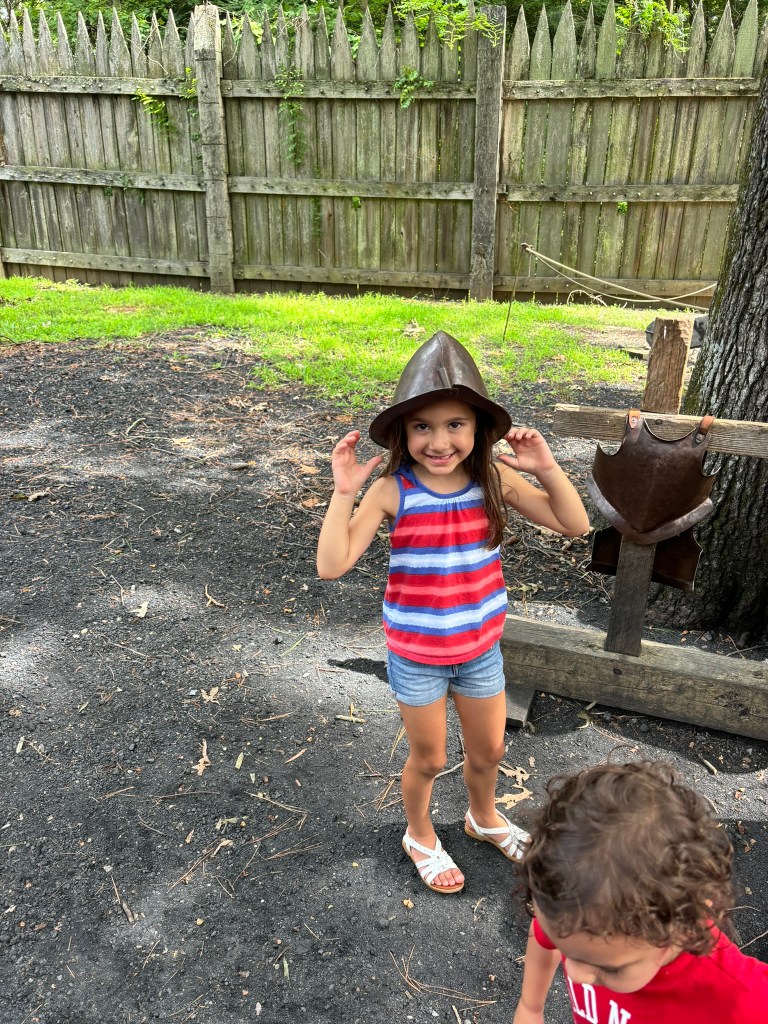
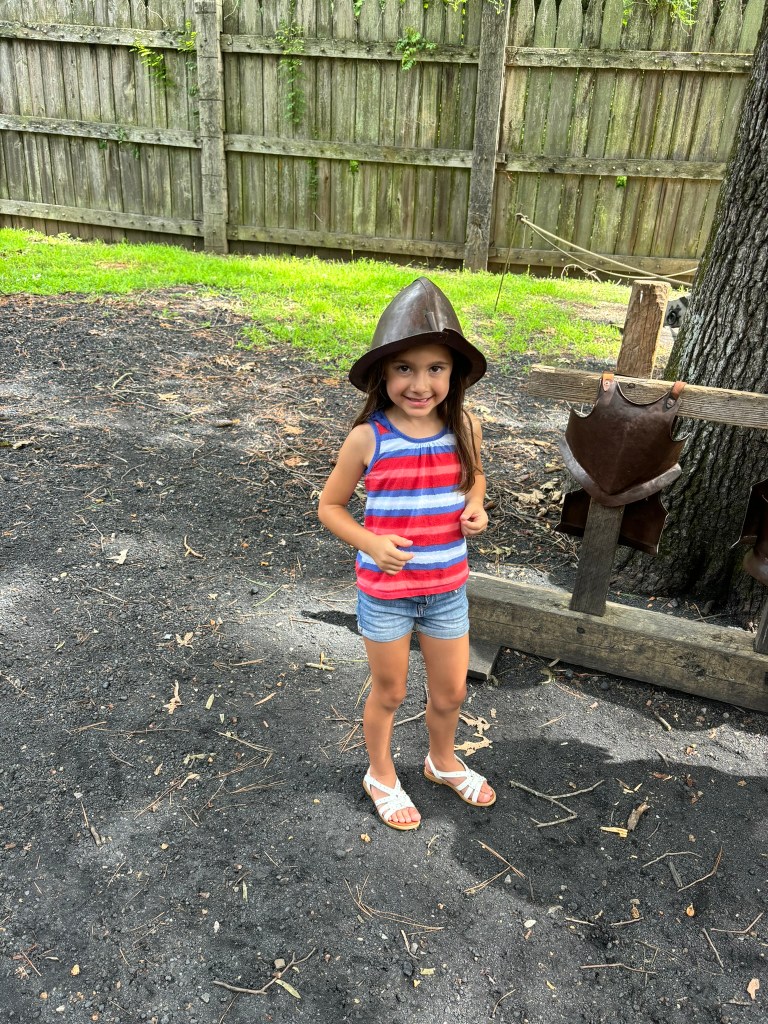
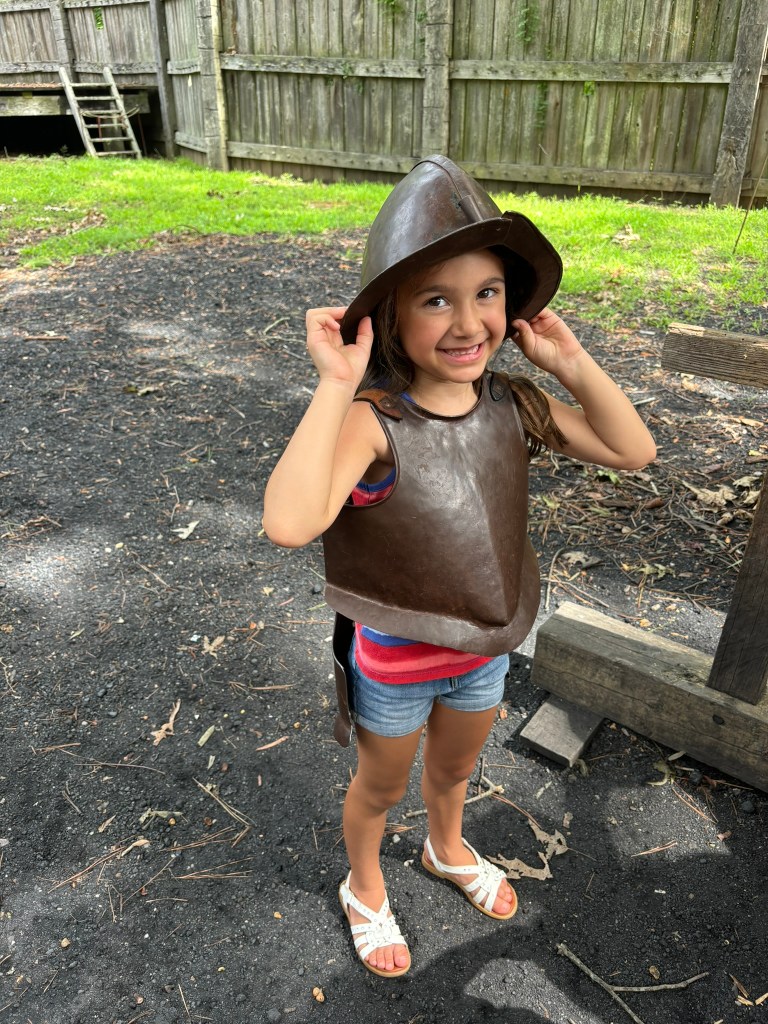
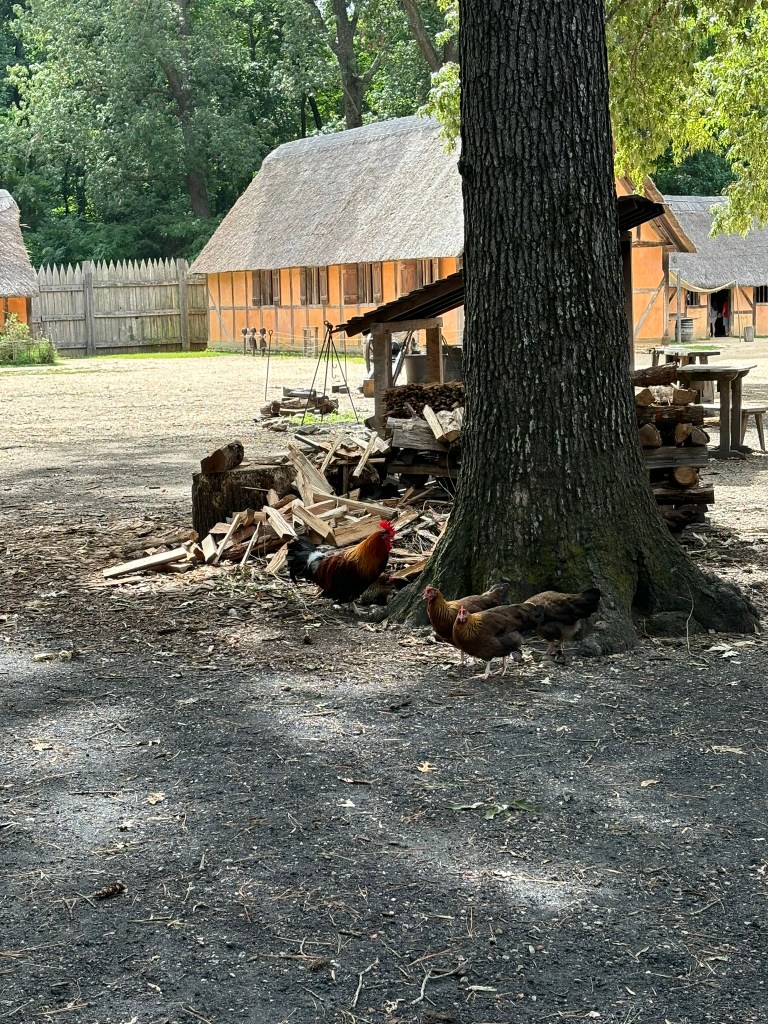
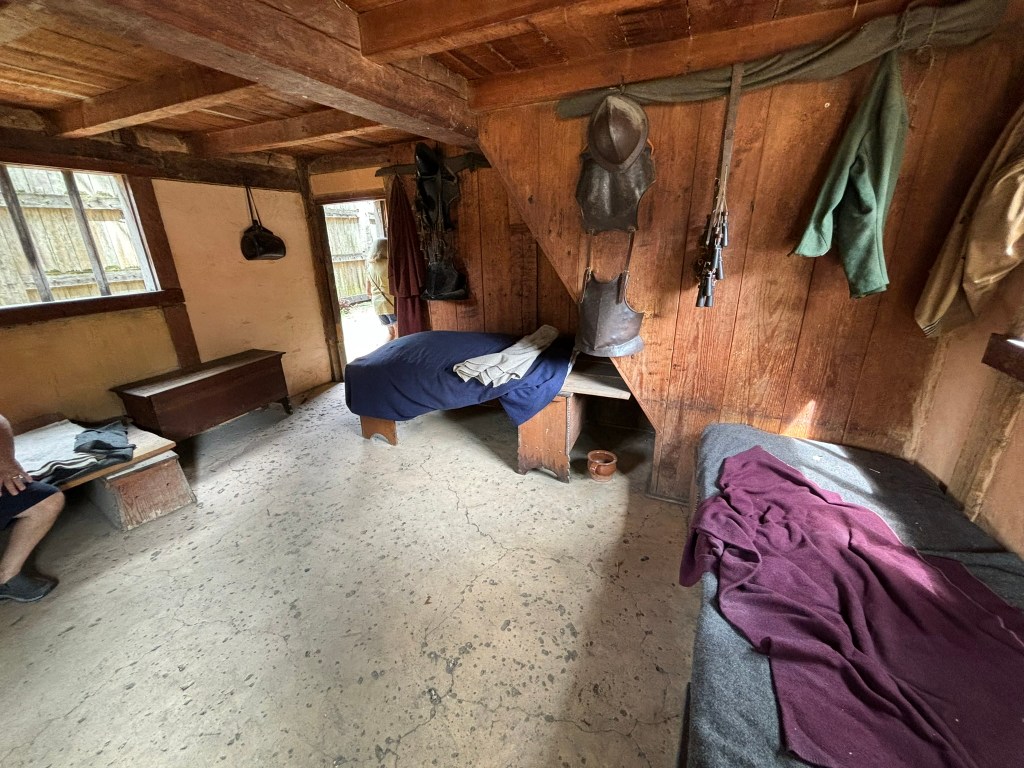
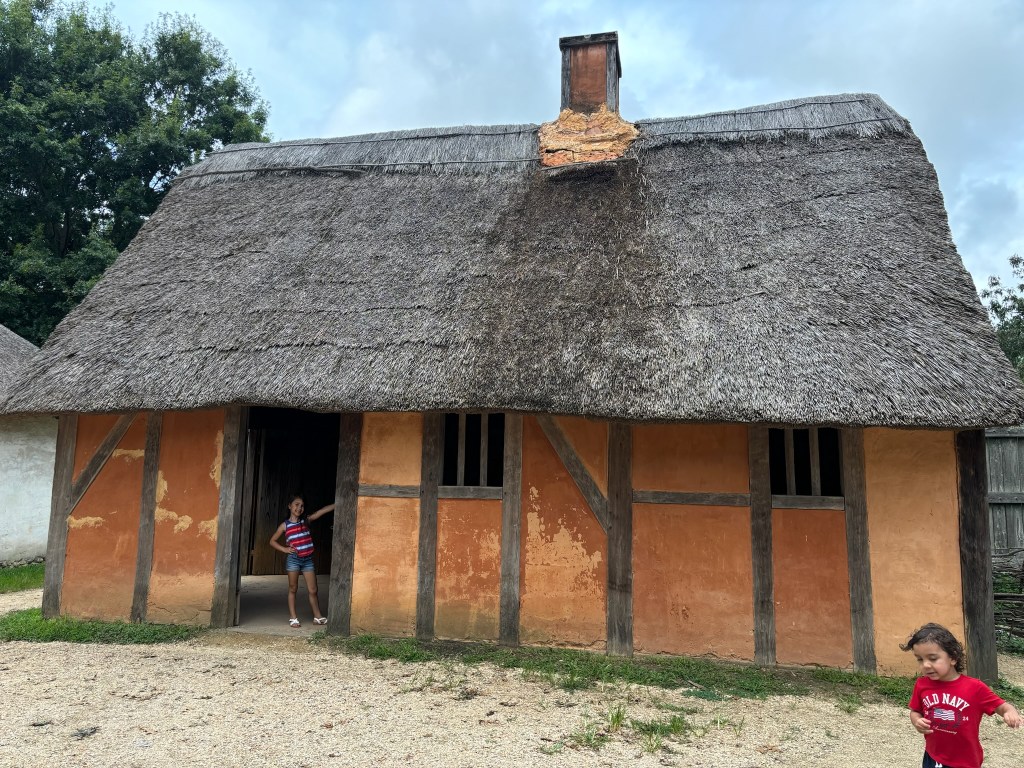
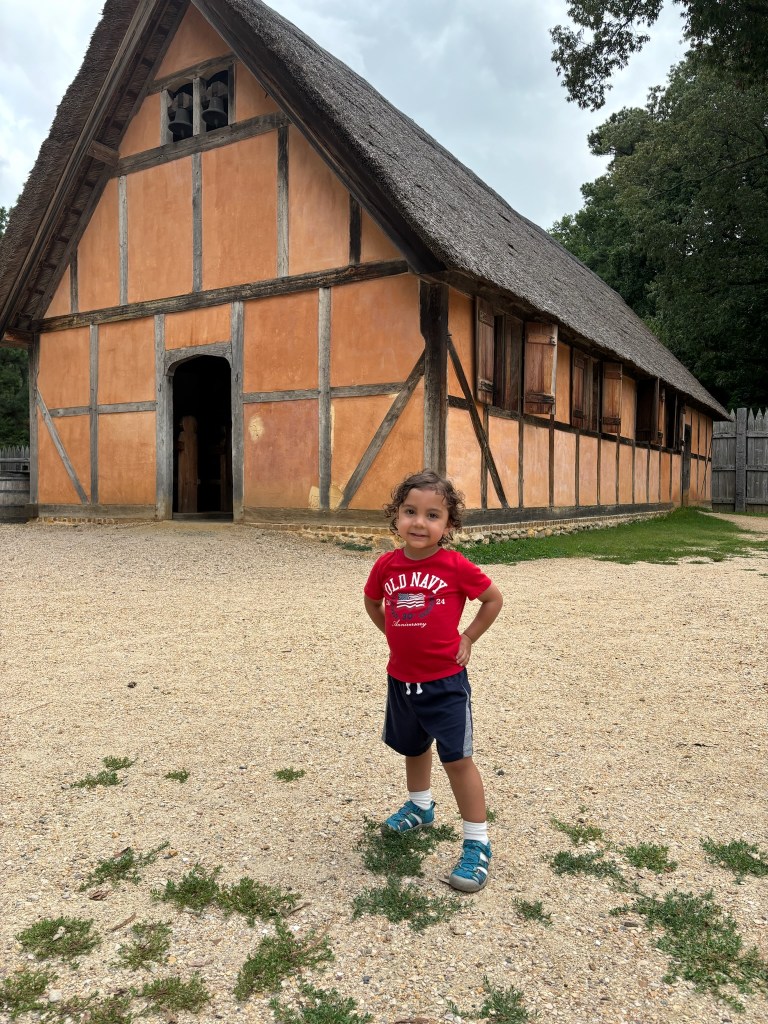
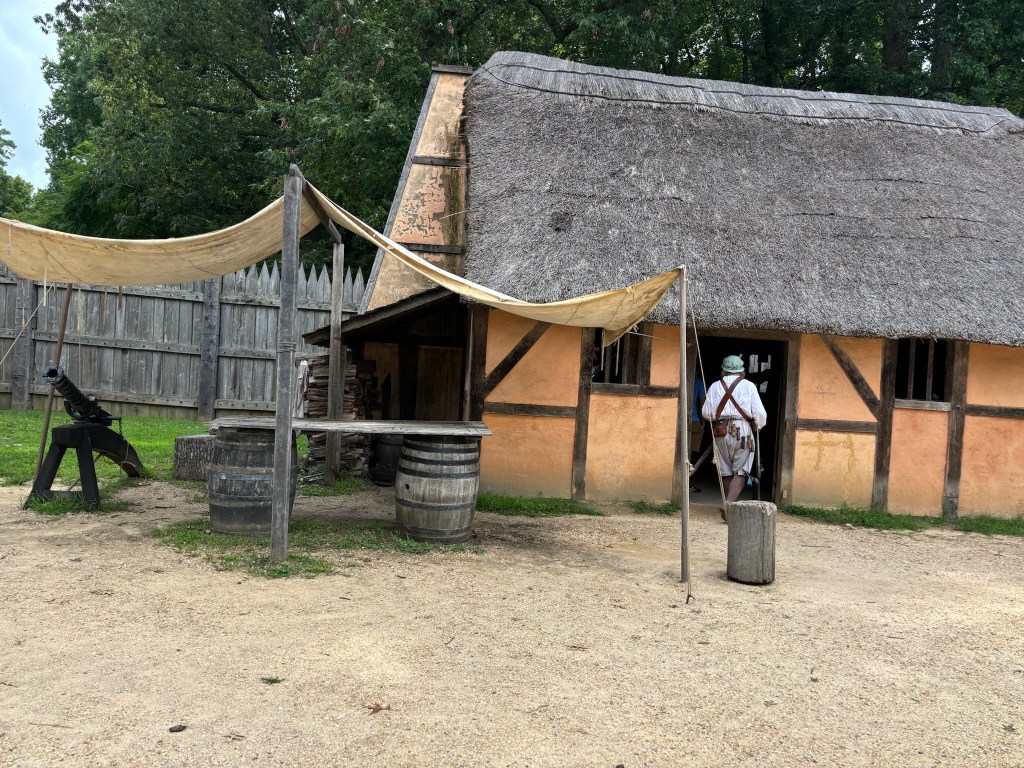
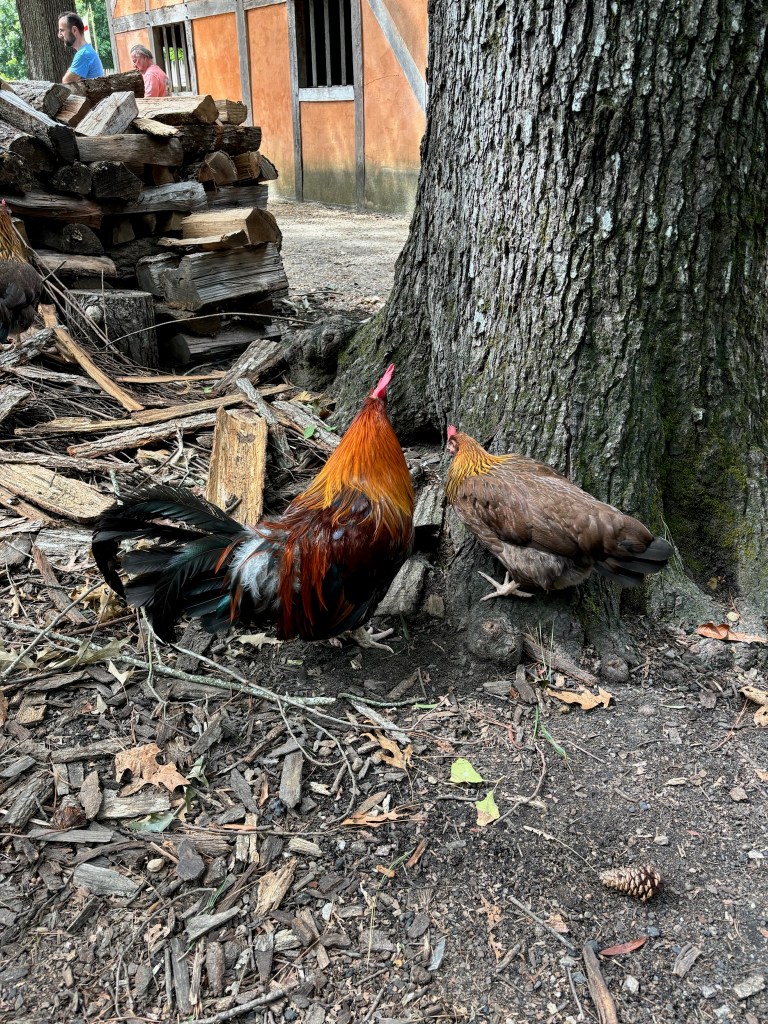
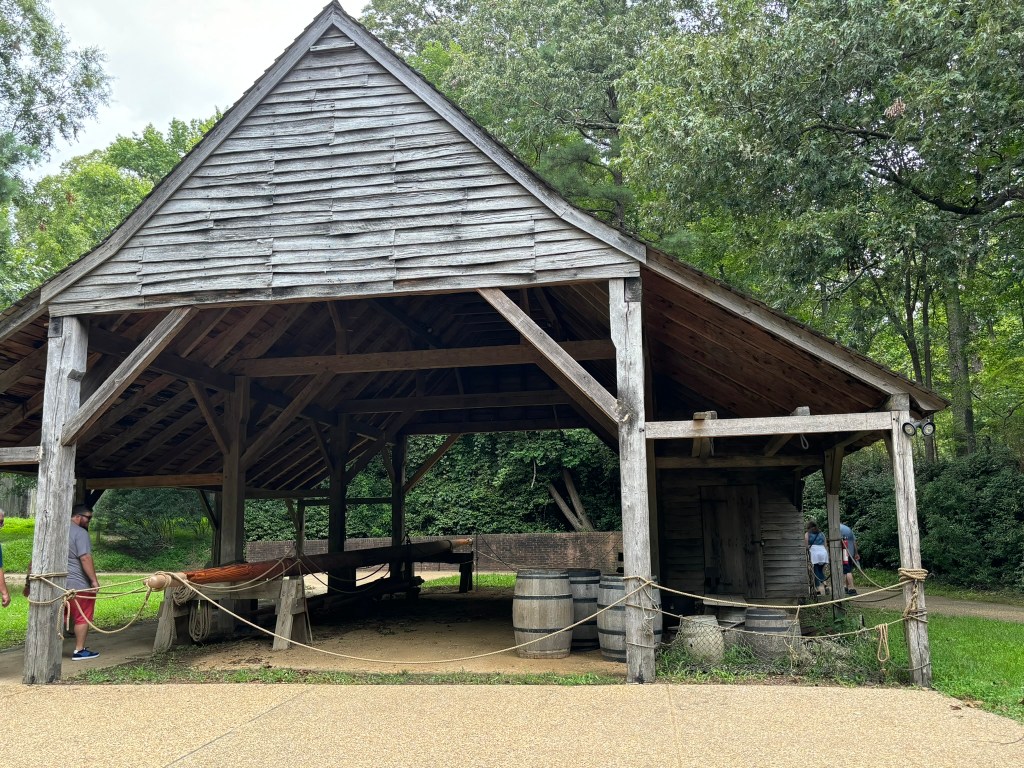
    We then made our way to the replica of the original James Fort, shaped in a Triangle.  One of the reenactors informed me that the original fort was likely much larger and had more buildings within, but the structures within the replica would have looked very much like the original.  We explored the numerous structures within James Fort, including living quarters, a church, an armory, and workstations.  There were even live chickens roaming around the fort.  Just outside the fort, cannon fire demonstrations are held every 30 mins.
    We had some time left before lunch to head back into the museum and take a look at the galleries once again.  We ate lunch at the cafe within the museum.  Lunch was included with the price of the tour.

    After lunch, we headed back onto the bus and headed to Yorktown, which I will discuss in a later blog post.

    Overview

    The Jamestown Settlement was a great, immersive experience highlighting the importance of the Jamestown settlement.  The museum highlighted the fact that three cultures came together in Virginia: English, Native and African.  Each culture brought their own unique blend which helped develop colonial culture in the New World.  As mentioned before, I thought that this tour would include Historic Jamestowne; the actual location of the original Jamestown Fort.  The original fort no longer exists, but the location includes a re-creation of an early church and an Archaearium, which houses over 2,000 artifacts from the Jamestown colony.  Perhaps I will have to make another trip on a future date.  Despite that, I would highly recommend going to Jamestown Settlement.  The museum does a great job taking you through the history of Jamestown and its significance to American history.  The living history experience allows you to step into the shoes of those who lived in 1607 and imagine what life would have been like for those in a Native village, those who had to remain on the ships for months at sea, and for those living in the James Fort. The tour was $85 per adult and $45 for my daughter (5) and free for my son (2). It was well worth it considering that this was an all day tour with lunch included. I would highly recommend this tour. You can buy tickets from Viator HERE.

    Follow my Instagram, Facebook, and X accounts for videos of our time in Jamestown.

    For more information about the Jamestown-Yorktown Foundation, visit HERE.

    Stay tuned for my next blog post which will discuss our visit to the Yorktown Battlefield and Museum in the afternoon.

    Check out similar blog posts below:
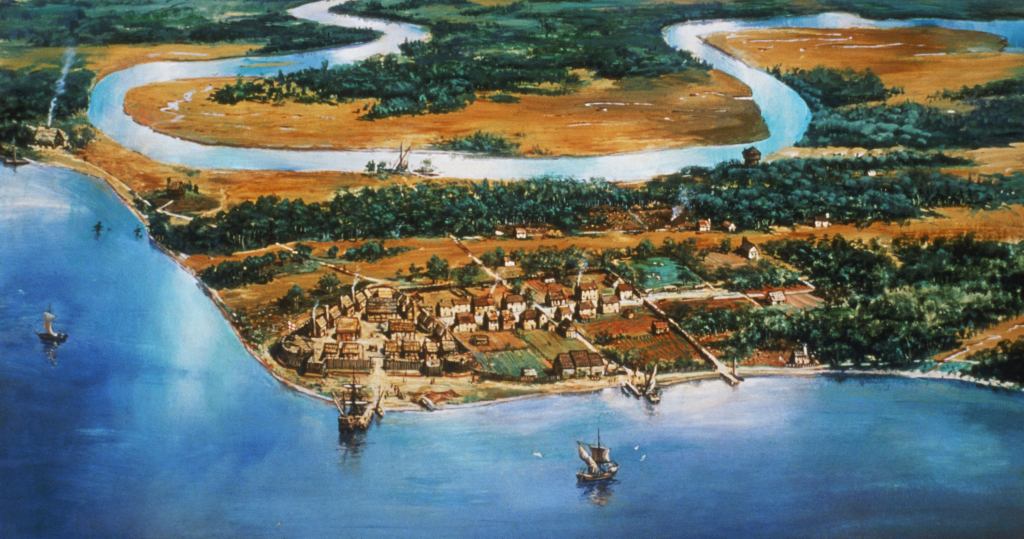
  • The Jamestown colony was founded in 1607 by the Virginia Company, a joint-stock company that received a royal charter from King James I.  Unlike previous failed colonies like Roanoke, Jamestown, against great odds, would go on to become the first permanent English colony in North America. From Jamestown, settlers would branch out beyond the early colony site.   The Jamestown site was located on a peninsula (now an island) in the James River, about 60 miles from the mouth of the Chesapeake Bay. Jamestown faced many challenges and hardships in its early years, such as famine, disease, conflict with Native Americans, and internal strife. Jamestown would survive and become the site of many important events and developments in American history, such as the first representative assembly, the first arrival of African slaves in 1619, and the cultivation of tobacco.

    The Founding of Jamestown

    The Virginia Company was formed in 1606 with the aim of establishing a profitable colony in North America. The company sent three ships, the Susan Constant, the Godspeed, and the Discovery, with 104 men and boys, to explore the coast of Virginia and find a suitable location for a settlement. The expedition was led by Captain Christopher Newport, who had the sealed instructions from the company that contained the names of seven members of the governing council. Among the colonists were gentlemen, craftsmen, laborers, and adventurers, as well as Captain John Smith, a former soldier and explorer who had been accused of mutiny during the voyage.

    The ships arrived at the Chesapeake Bay in April 1607 and sailed up the James River, named after the king. They chose a site for the settlement on May 13, 1607, and named it Jamestown. The site was a peninsula, which made it easy to defend from possible Spanish attacks, and had deep water ports for anchoring ships. However, the site also had many disadvantages, such as being marshy, mosquito-infested, and prone to droughts and floods. The site was also within the territory of the Powhatan Confederacy, a powerful alliance of about 30 Algonquian-speaking tribes led by Chief Powhatan, who controlled most of the coastal Virginia region.

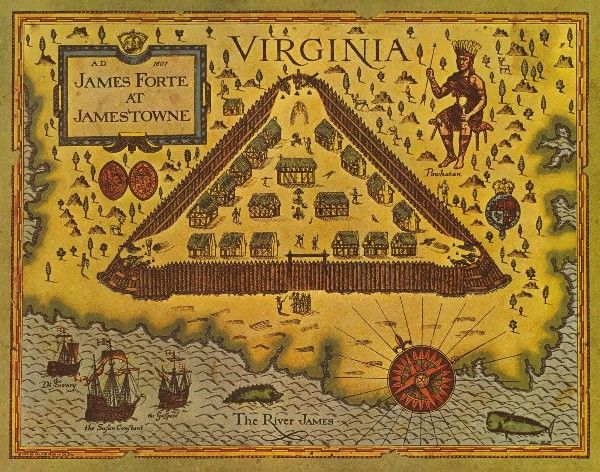
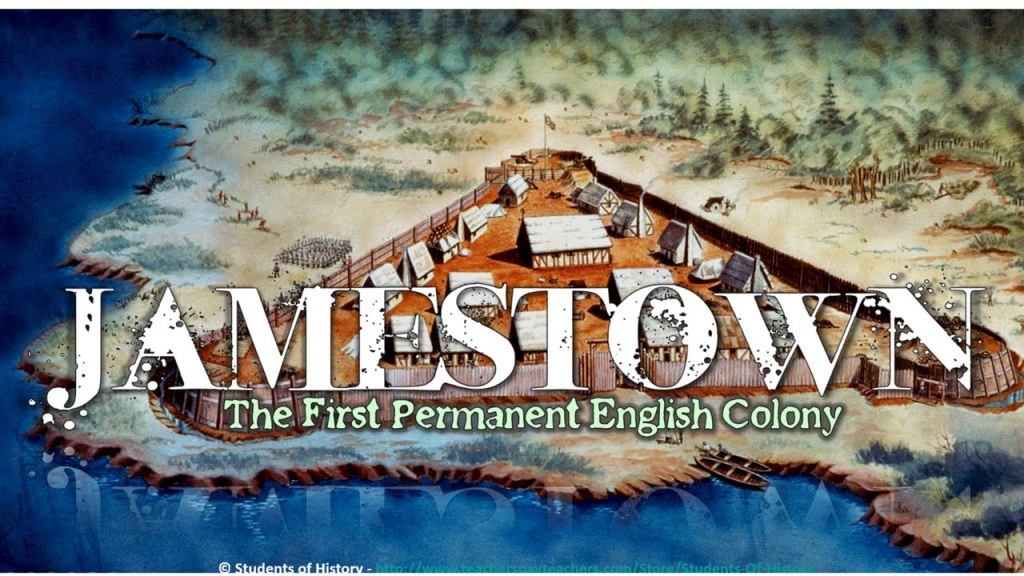
    The colonists quickly built a triangular fort with a storehouse, a church, and several houses. They also planted crops and traded with the Native Americans for food and supplies. However, they soon faced many difficulties because most of the men were set on finding gold, and they did not grow enough crops.  This led to hard times exacerbated by food shortages, diseases, poor leadership, and conflicts with the Powhatan. John Smith held the colony together by forcing the colonists to farm.  Many of the colonists died in the first year, and the survivors were demoralized and desperate. In June 1607, Newport returned to England with two ships and 40 men, leaving behind 104 colonists. He brought back a load of sassafras, a plant that was believed to have medicinal properties, and a letter from Smith that exaggerated the prospects of the colony. Newport also promised to return with more supplies and settlers within six months.

    The Starving Time and the Arrival of Lord De La Warr

    John Smith was an adventurer who had fought in wars and had been captured by pirates.  Later in life, he claimed to have been saved by Pocahantas, the daughter of Chief Powhatan, after being captured by the chief in December 1607.  Smith claimed that Pocahantas had intervened to prevent him from being executed by her people, and that she had created peace between the English settlers and the Natives.  Many historians today doubt the accuracy of his stories, and suggest that he either misunderstood the incident or embellished it for fame or notoriety.

    As leader of the Jamestown colony in its early days, Smith imposed strict discipline and brought order to the colony.  He explored the Chesapeake Bay and Potomac River, and created maps and reports of the region.  He forced the colonists to build houses, clear land, plant crops and hunt for food.  He traded with the natives and established friendly relations with the tribes.

    Smith’s leadership helped the colony survive for about two years.  In October 1609, a stray spark ignited a gunpowder bag John Smith was wearing, while he was in a canoe.  Badly burned, Smith headed back to England for treatment, leaving Jamestown to fend for itself.  His departure marked the beginning of the worst period in the history of Jamestown, known as the “Starving Time” in which only 60 of the 600 new colonists survived.  The “Starving Time” lasted during the winter of 1609-1610 when the colony was besieged by the Powhatan, who cut off their food supply and killed anyone who ventured out of the fort.  The colonists resorted to eating roots, rats, snakes, boiled shoe leather, horses, dogs, cats, and even human corpses.

    The colony was on the verge of collapse, when a fleet of three ships arrived in June 1610, bringing 150 new settlers and supplies, as well as a new governor, Lord Thomas West, known as Lord De La Warr.  He was a veteran soldier and a nobleman, who had been appointed by the Virginia Company as the first permanent governor of Virginia. He brought with him a new charter, which granted more powers and privileges to the company, and a new policy of aggressive expansion and warfare against the Powhatan. De La Warr also arrived just in time to stop the remaining colonists from abandoning Jamestown and returning to England on the ships that had brought them. He ordered them to turn back and rebuild the colony, and vowed to make Jamestown a success.

    The Tobacco Boom

    One of the most significant developments in the history of Jamestown was the introduction and cultivation of tobacco, which became the main export and source of wealth for the colony. Tobacco was a native plant of the Americas, and was used by the Native Americans for ceremonial and medicinal purposes. The Europeans became addicted to tobacco after encountering it in the Caribbean and South America, and the demand for tobacco in Europe grew rapidly in the 17th century. The Virginia Company saw tobacco as a potential cash crop that could make the colony profitable and attract more settlers and investors.

    The first person to successfully grow tobacco in Virginia was John Rolfe, a colonist who had arrived in Jamestown in 1610. Rolfe experimented by cross breeding tobacco from Bermuda with a strain that local Native Americans had grown for years.  He also developed a curing process that improved the quality and flavor of the tobacco. Rolfe’s tobacco was well received in England, and he shipped the first commercial cargo of tobacco from Virginia in 1614. He also married Pocahontas, the daughter of Powhatan, in 1614, which created a temporary peace between the English and the Powhatan.

    The success of Rolfe’s tobacco sparked a tobacco boom in Virginia.  Soon, tobacco was referred to as “Brown Gold.”  Tobacco became the main currency and cash crop of Virginia, and attracted more settlers and investors.  The tobacco boom also saw the increase in labor by indentured servants, and later, slaves.

    The Legacy of Jamestown

    Jamestown laid down the foundations of long lasting institutions in English America.  A great paradox took place in the colony in 1619, which would change the course of history in North America.  The year 1619 witnessed the first representative government in English North America, as well as the first Africans arriving in English North America, a dichotomy of both freedom and bondage.

    The House of Burgesses allowed voters to elect representatives to create laws in the colony.  This groundbreaking experiment was the first representative assembly in North America, in which free, male, property-owners elected representatives.  However, in the same year, Africans first arrived in Virginia aboard a Dutch merchant ship called the White Lion.  At first, Jamestown colonists treated them as indentured servants, much in the same way as white indentured servants from England.  After a few years, most Africans received land and freedom.  However, over time, a racial caste was formed in which Africans became permanent slaves, a trend believed to have been developed by the 1640s.  Jamestown witnessed freedom in a representative body on one hand, and slavery and bondage on another.  The concept of freedom for some and bondage for others would be a primary and complicated debate within North America for centuries to come.

    Jamestown remained the capital of Virginia until 1699, when it was moved to Williamsburg. By then, Jamestown had expanded from its original fort to a town with several public buildings, such as a statehouse, a church and a courthouse. 

    Jamestown was gradually abandoned after its statehouse burned down in 1698. It became a ghost town until it was rediscovered in the late 19th century. In 1934, it was declared a National Historic Site by Congress. Today, it is part of the Colonial National Historical Park, which also includes Yorktown and Williamsburg. Visitors can see the remains of the original fort, as well as reconstructed buildings and exhibits that showcase the life and history of Jamestown.

    Sources:

    Encyclopædia Britannica, inc. (2023, October 25). Jamestown colony. Encyclopædia Britannica. https://www.britannica.com/place/Jamestown-Colony

    A&E Television Networks. (n.d.). Jamestown colony – facts, founding, Pocahontas. History.com. https://www.history.com/topics/colonial-america/jamestown

    Jarus, O. (2022, May 31). Jamestown Colony: Facts & History. LiveScience. https://www.livescience.com/38595-jamestown-history.html

    World History Edu. (2020, September 15). Jamestown Colony: England’s first, thriving settlement in the Americas. https://www.worldhistoryedu.com/jamestown-history-significance-facts/

    Historicjamestowne.org

    Yost, R. (2023, November 11). Jamestown colony facts and story. The History Junkie. https://thehistoryjunkie.com/jamestown-colony-facts/