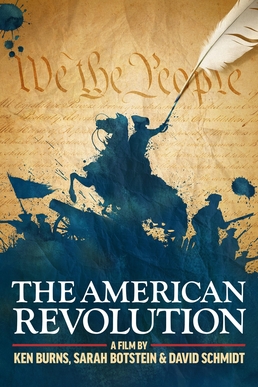
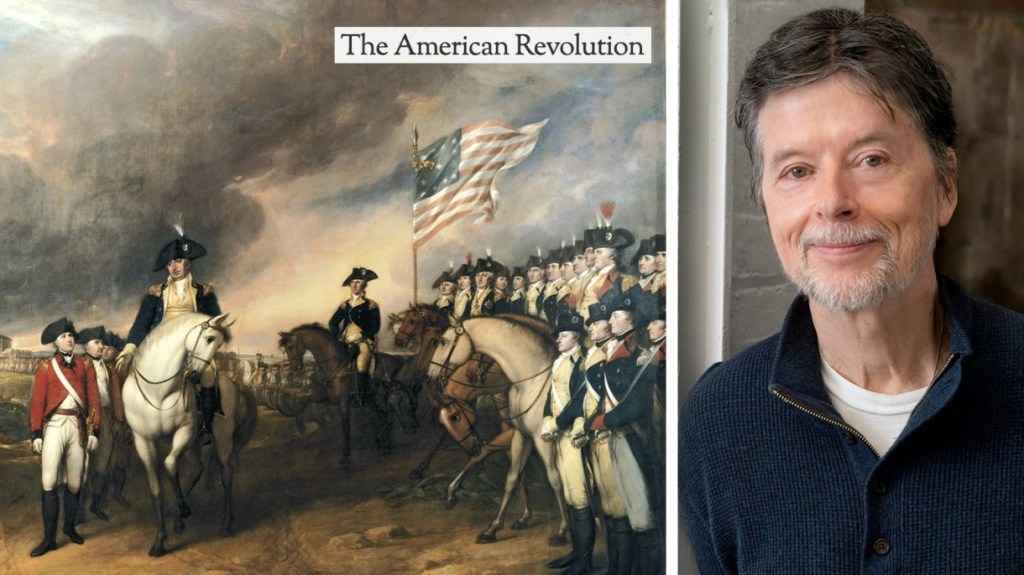
I just finished watching Ken Burns’ PBS documentary The American Revolution, released this past November—perfect timing as the nation approaches the 250th anniversary of the Revolution and the signing of the Declaration of Independence in 1776. The documentary spans six episodes, each two hours long. I found it both highly informative and deeply engaging.
I appreciated how the series moves beyond the traditional Revolutionary War narrative we often encounter in textbooks. It devotes significant time to the perspectives of Native American tribes, African Americans, and women, offering a far more inclusive and nuanced story. The documentary incorporates an extraordinary number of primary sources, giving voice to a wide range of individuals who lived through the Revolution—from lesser-known figures to towering names such as George Washington and John Adams. The documentary also does an excellent job chronicling the military campaings of the war, highlighting the Revolution’s many ups and downs.
The Revolution is presented as both a global and deeply personal event. The series explores the international ramifications of the conflict while simultaneously zooming in on its impact on small towns and families. It powerfully highlights the reality that this was a civil war marked by acts of cruelty committed by both Patriots and Loyalists against one another.
The documentary truly offers something for everyone—those looking to learn the foundational storyline commonly taught in schools, as well as viewers seeking a more complex and inclusive interpretation that brings lesser-known stories to the forefront. The twelve-hour format allows the series to explore a wide range of topics and grapple with the many complexities of the conflict, all while maintaining a clear chronological structure that is easy to follow.
Finally, the documentary addresses the aftermath of the war and the writing of the Constitution, emphasizing that it took many years for the United States to begin living up to the Revolution’s ideals of liberty and equality. The developments that followed would not have been possible without those revolutionary principles. The American Revolution was one of the most significant events in human history, paving the way for later revolutions around the world and standing as the first successful example of a democratic government overthrowing a monarchy.
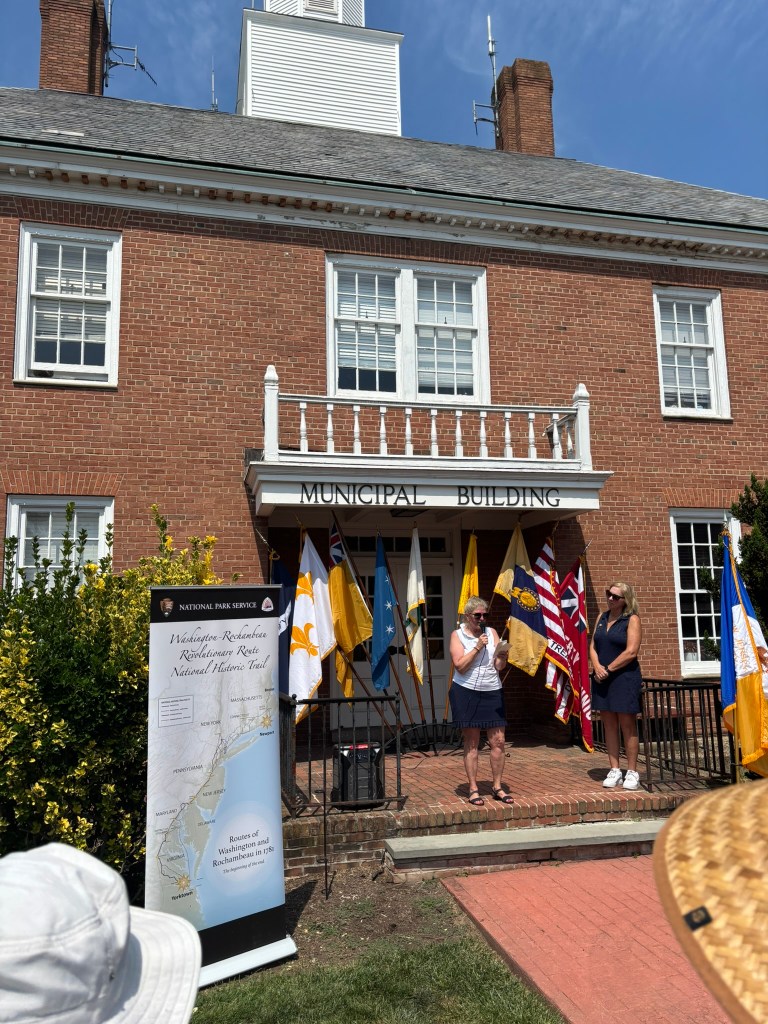
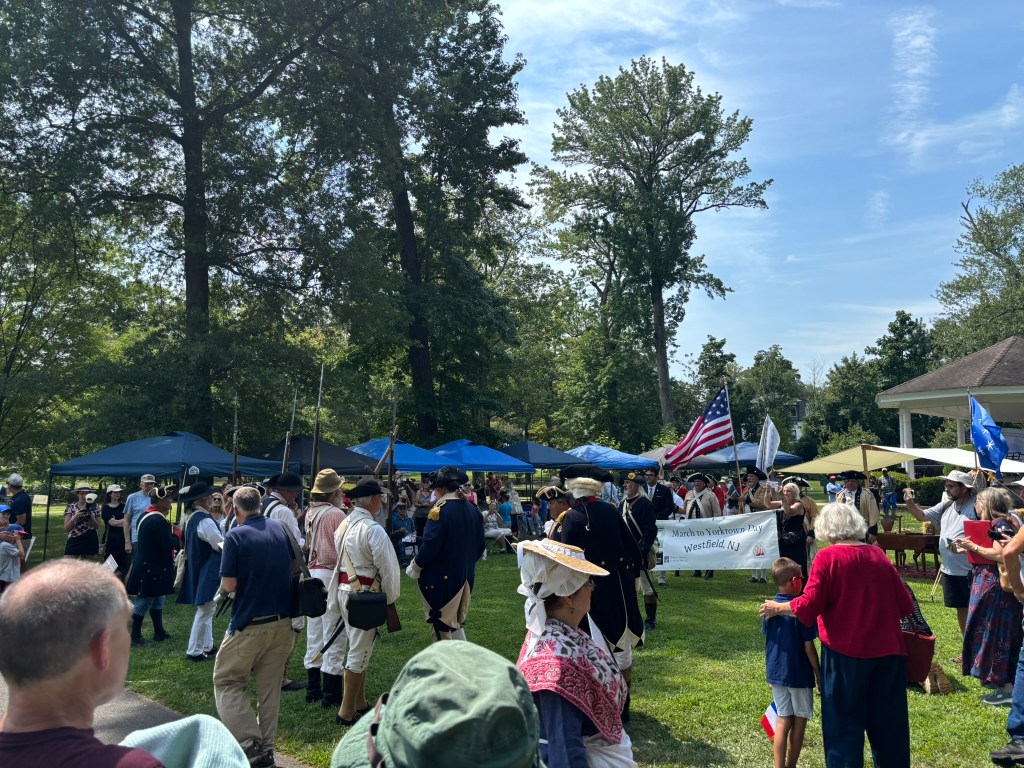
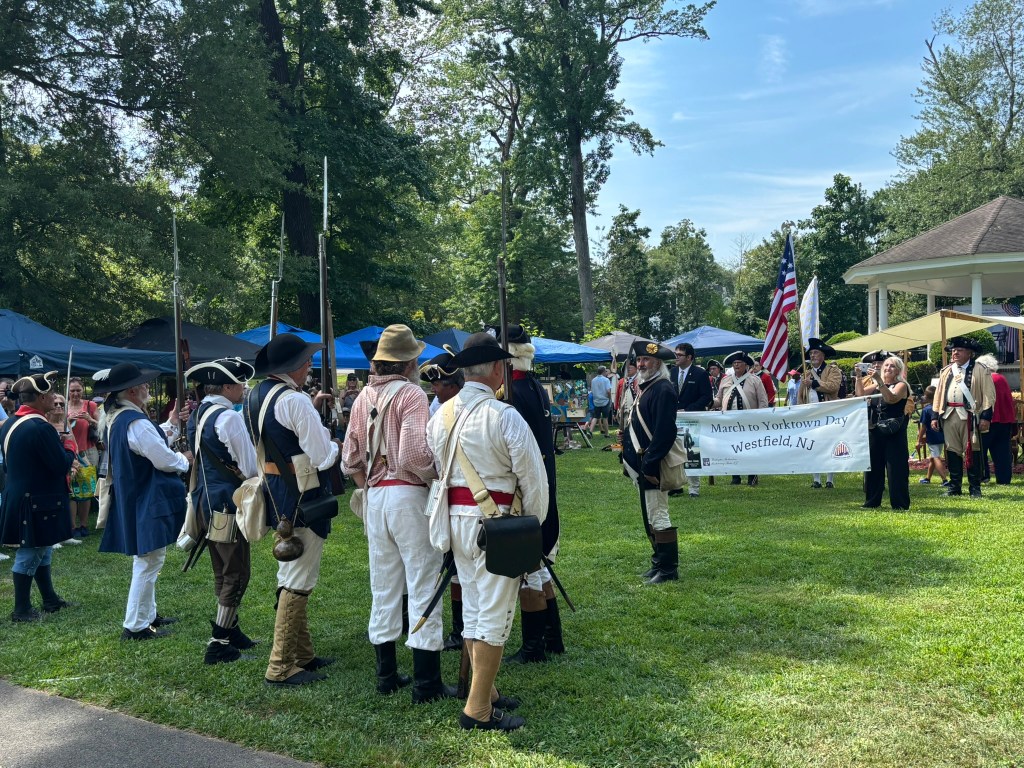
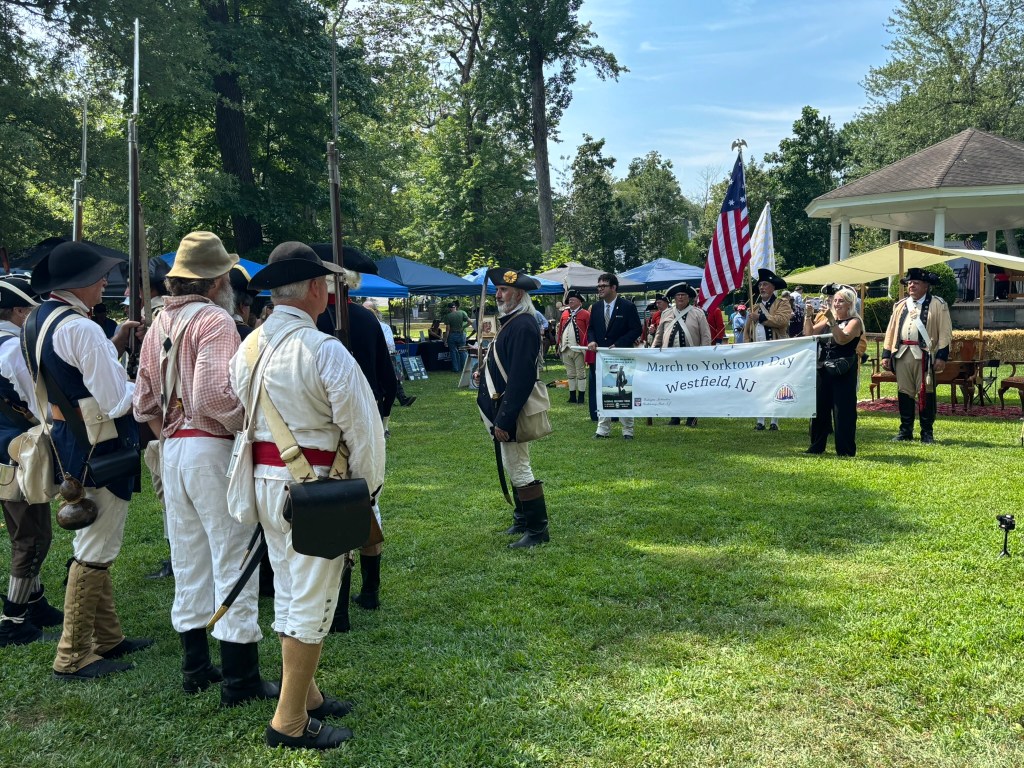
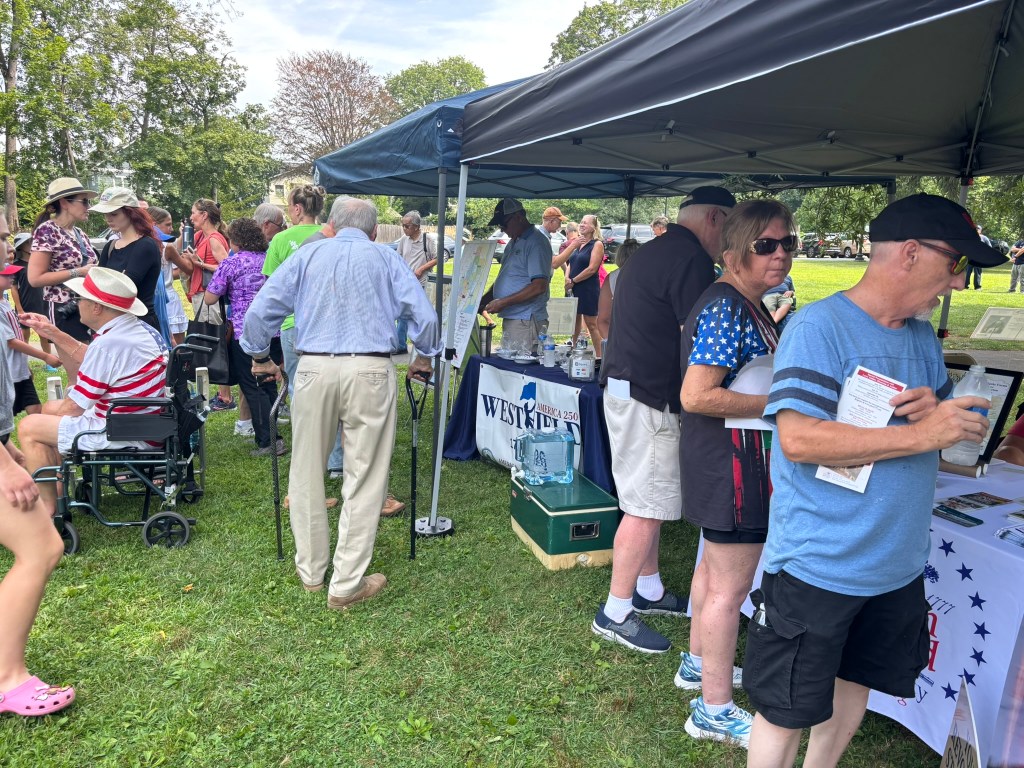
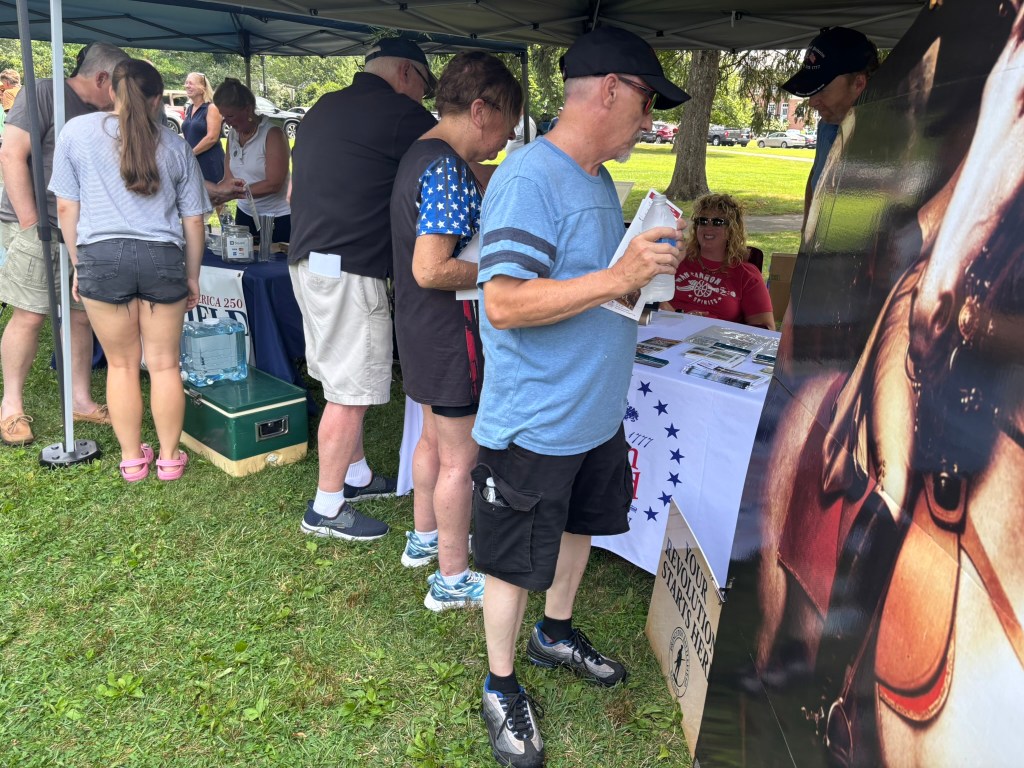
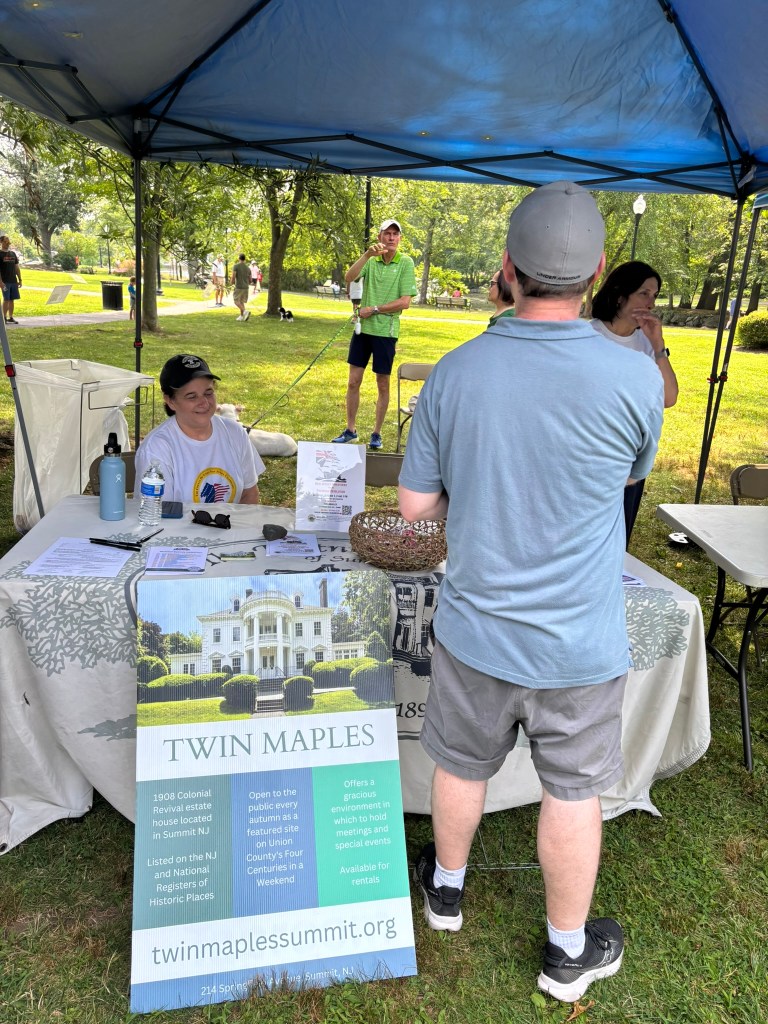
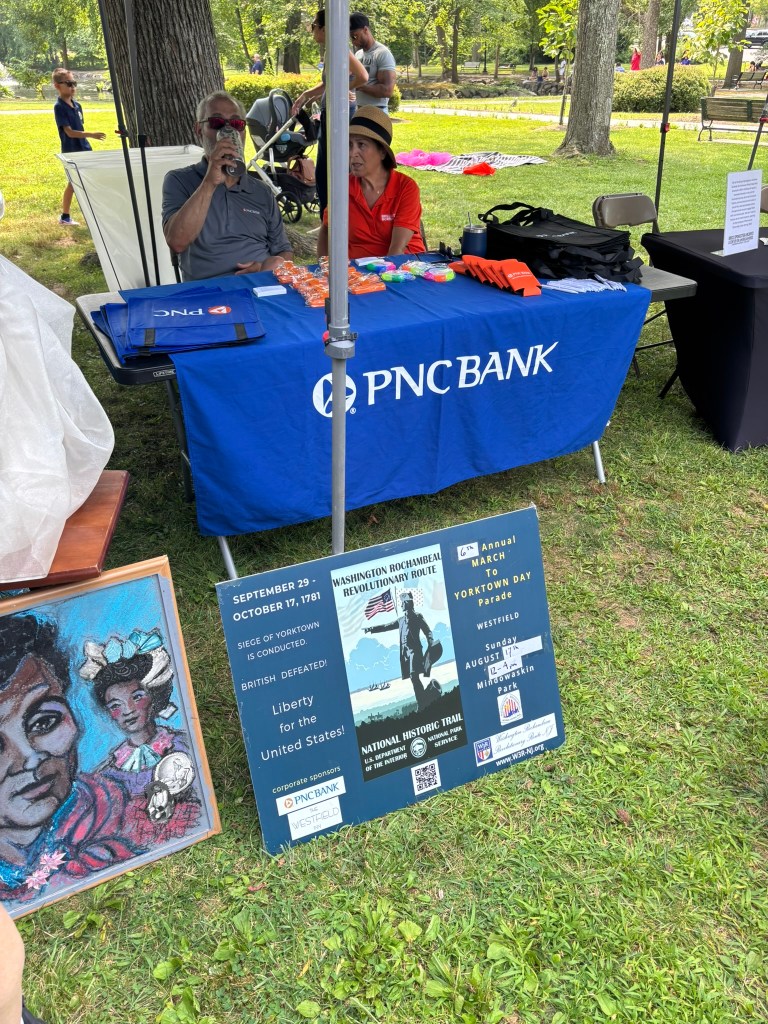
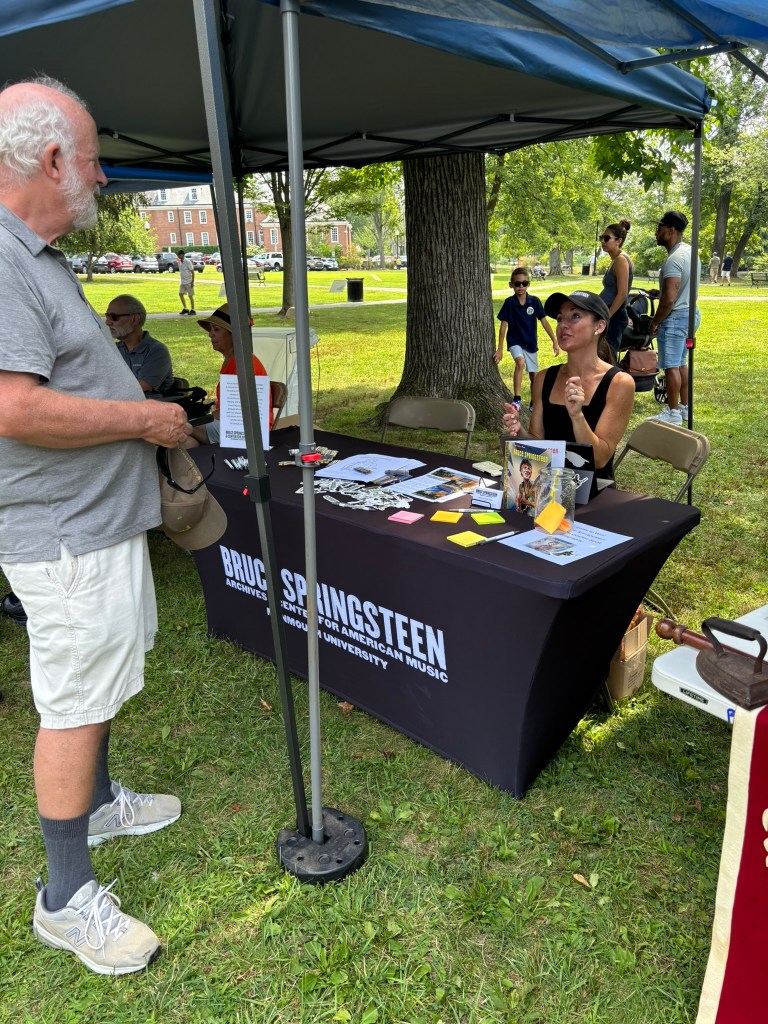
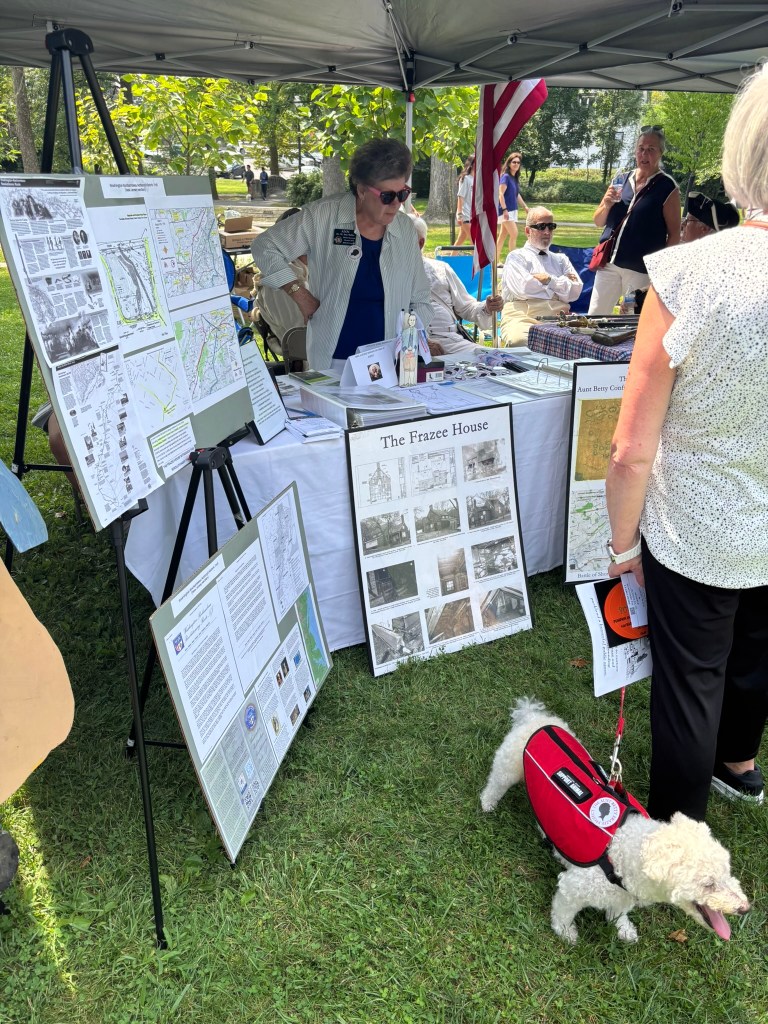
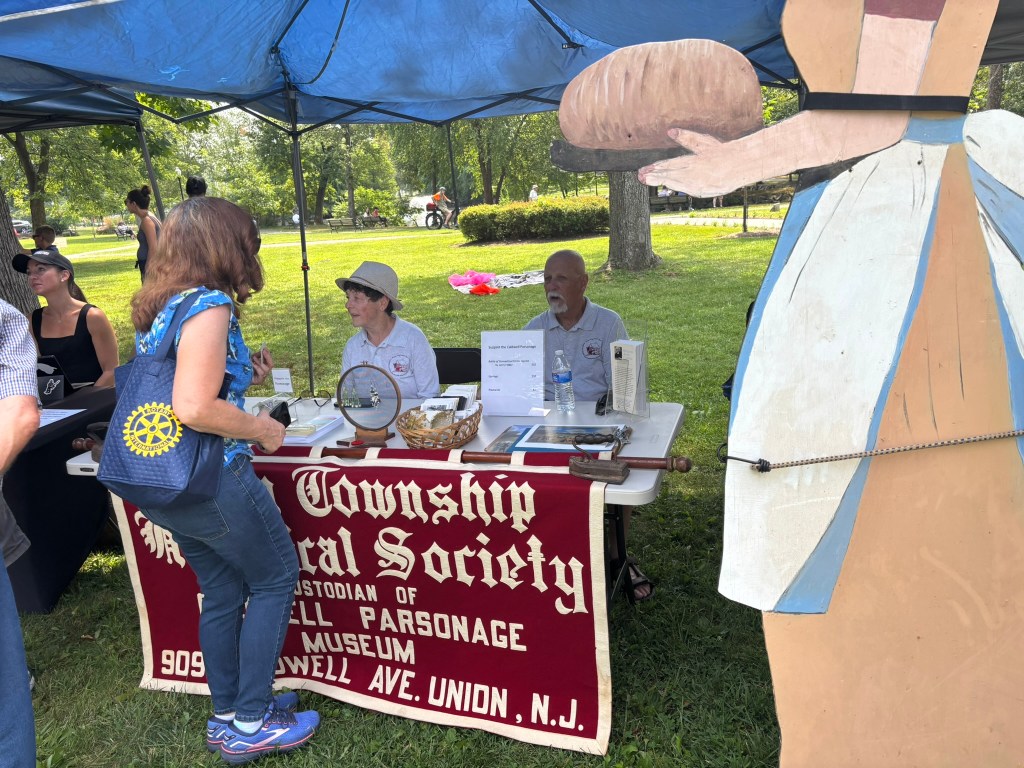
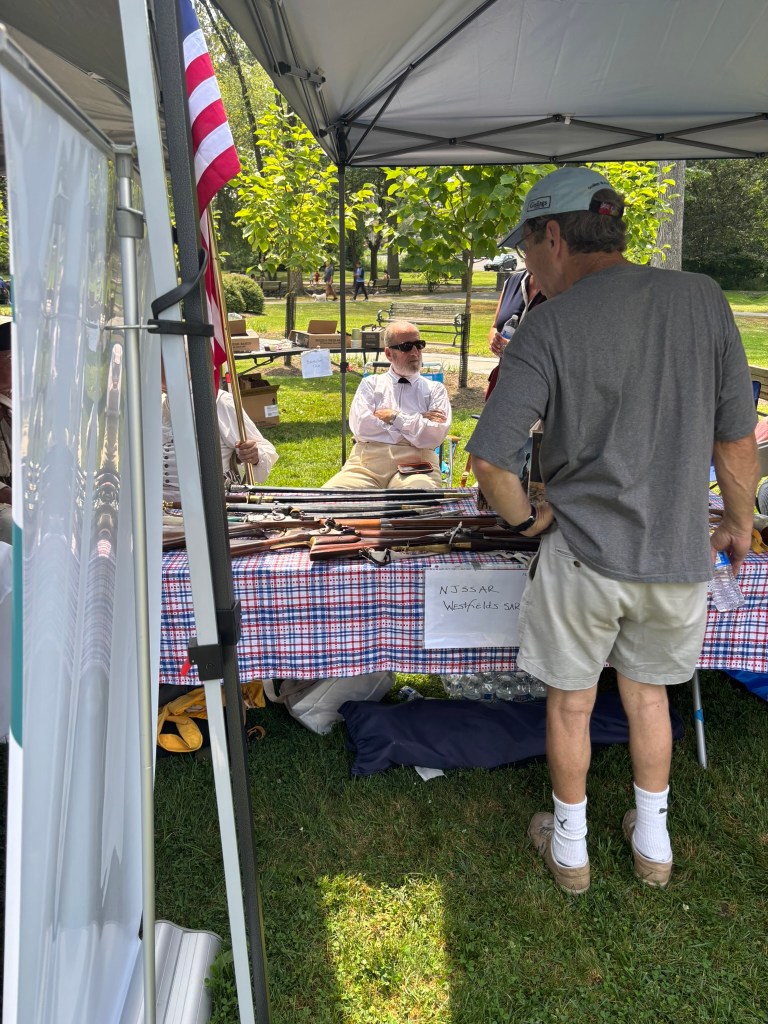
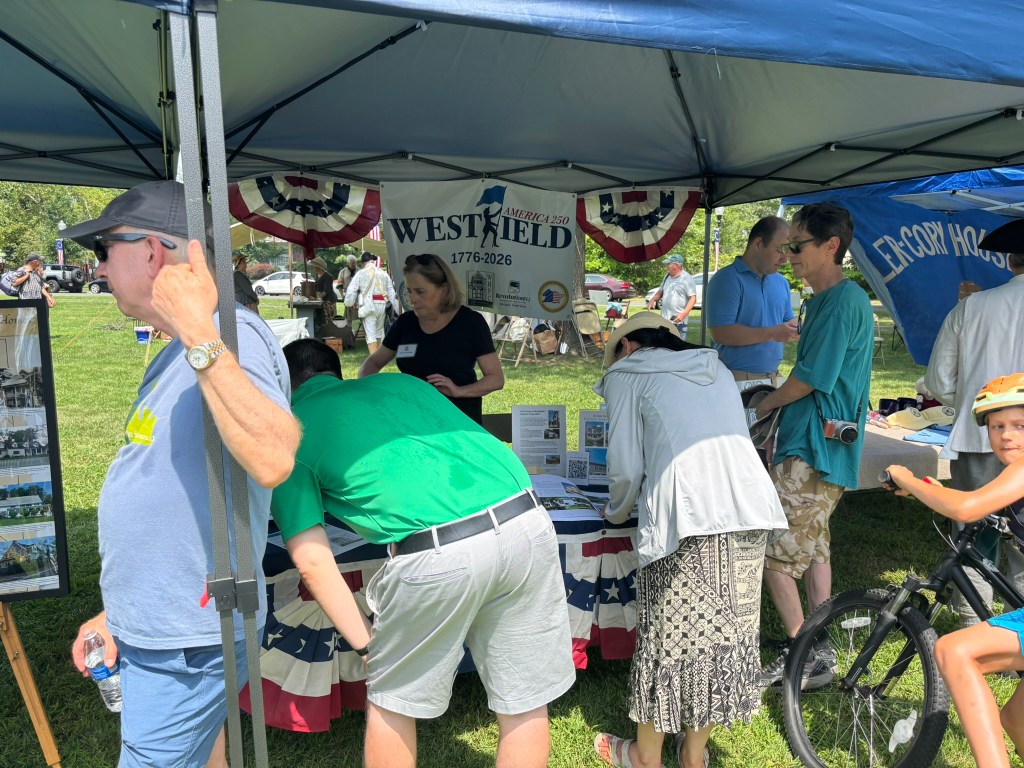
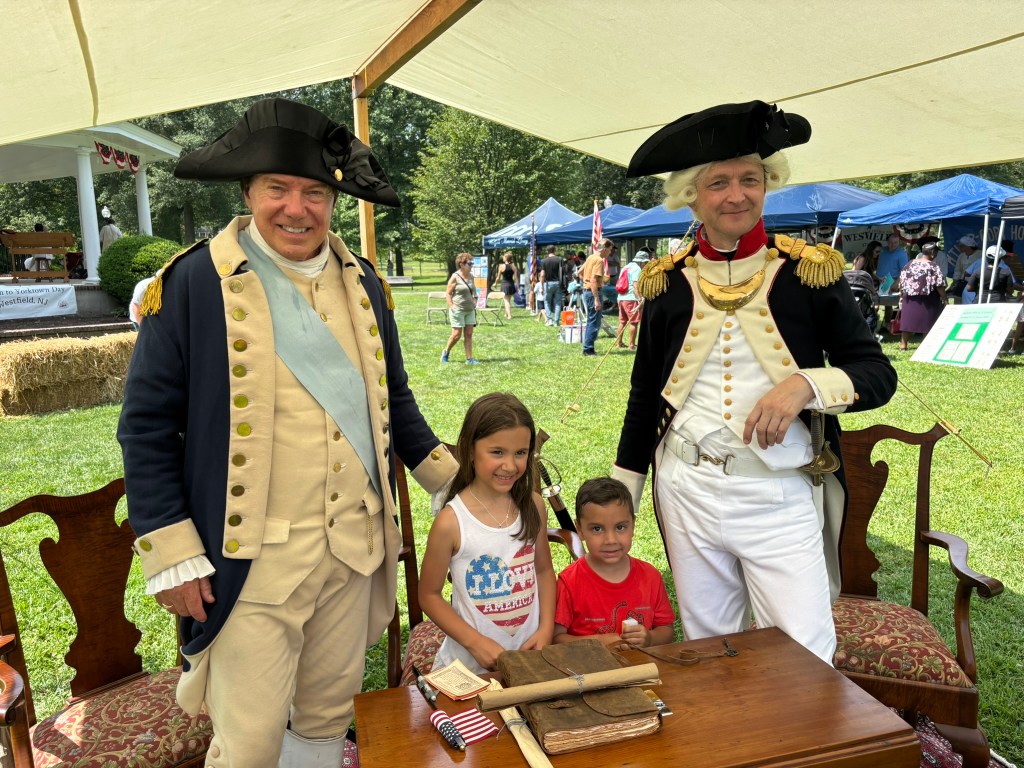
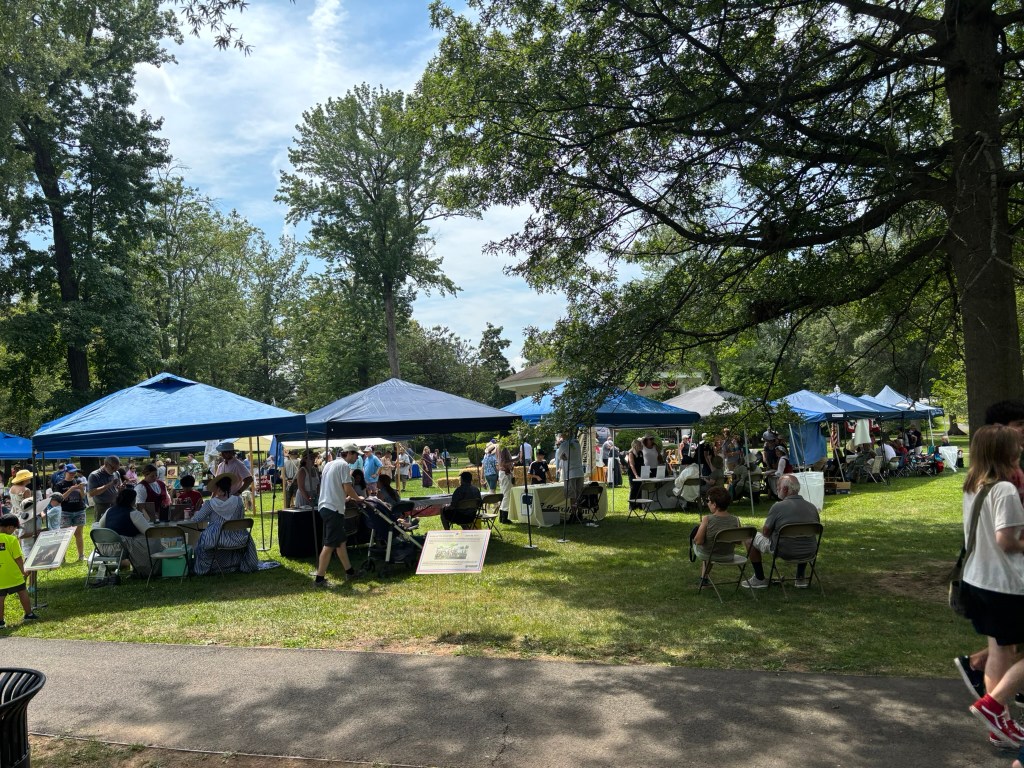
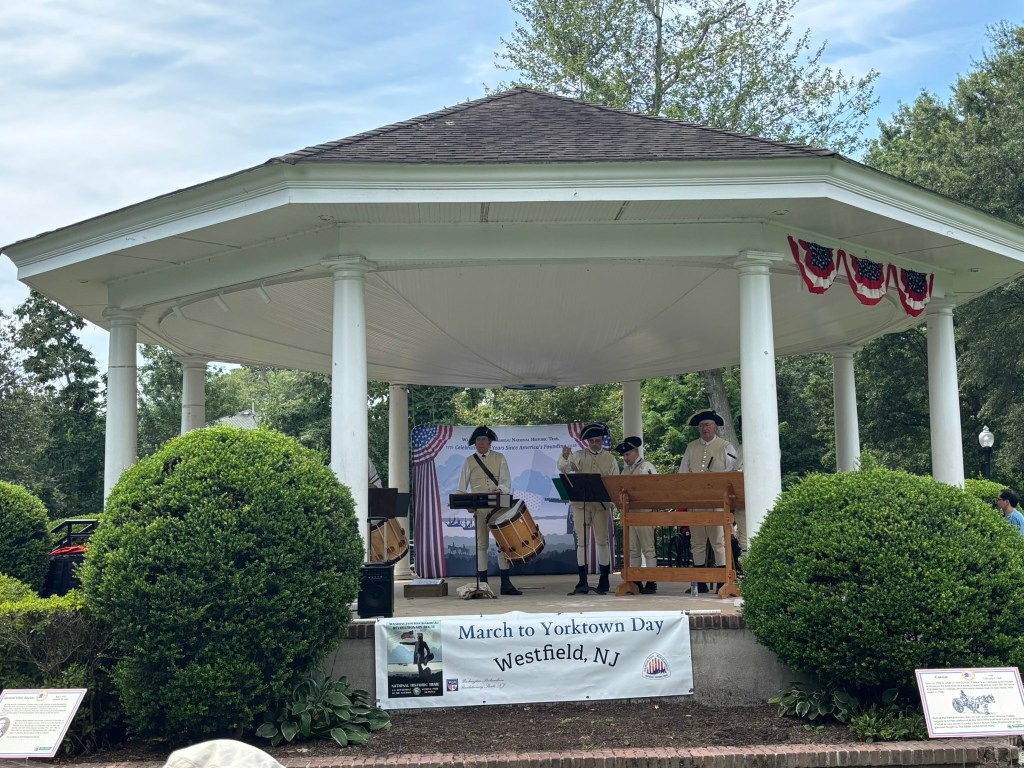
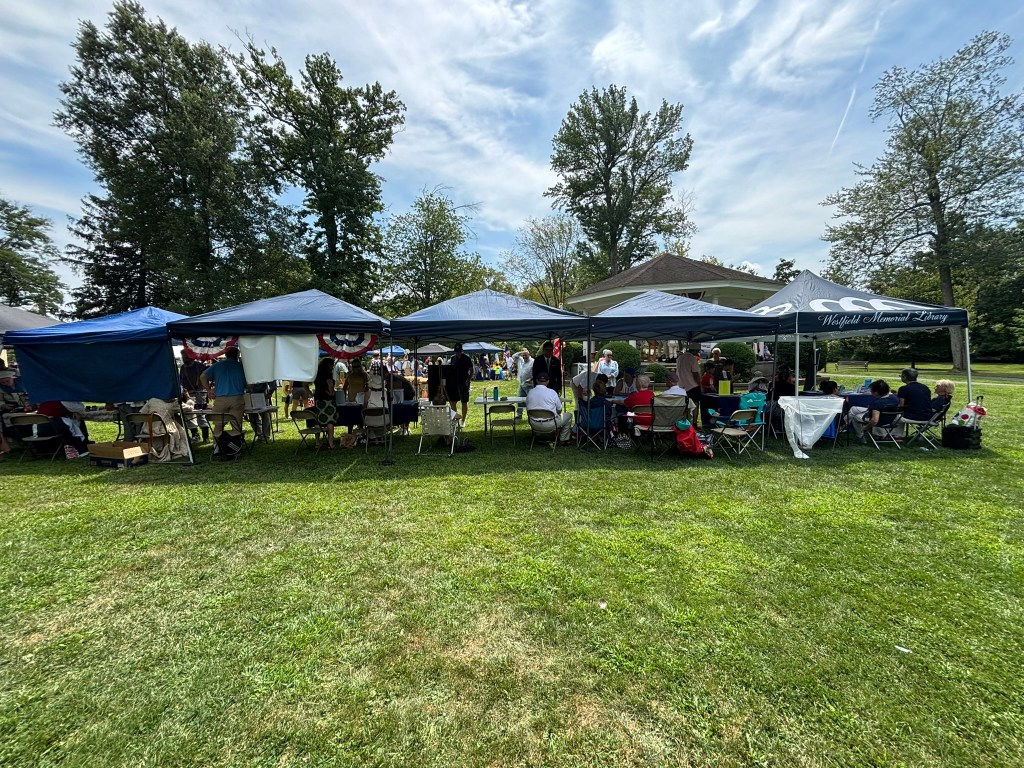
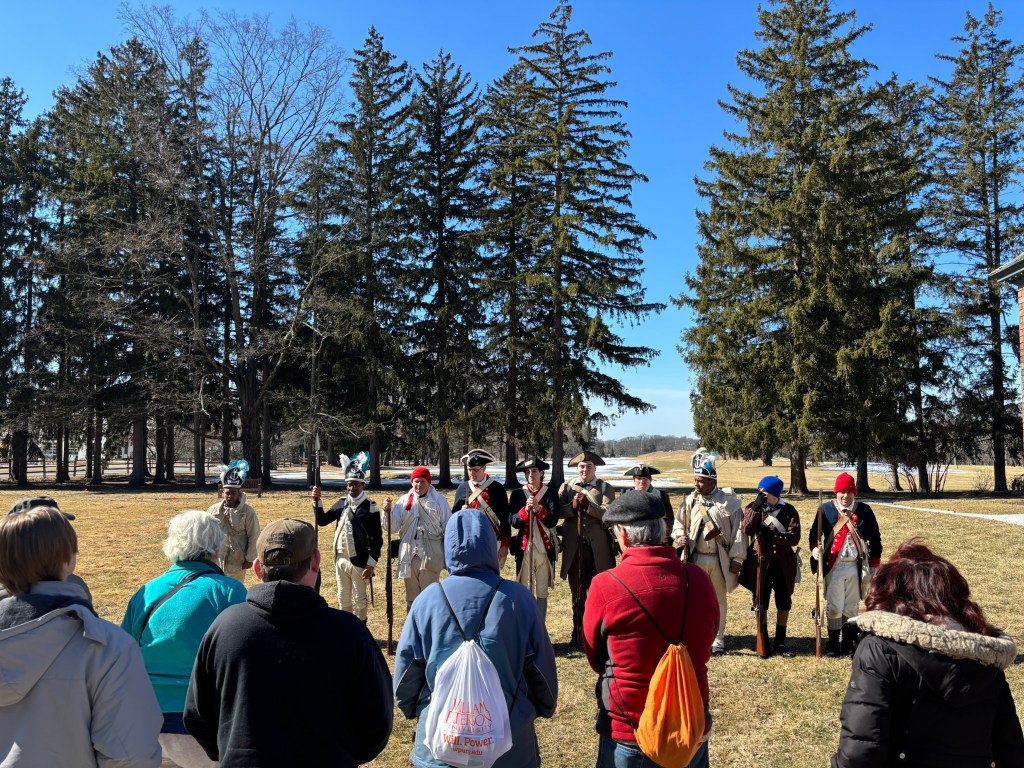
On August 17th, my family and I attended the Sixth Annual March to Yorktown Day in Westfield, NJ. The last time I went was in 2023 with my daughter, which you can read about HERE. This year’s 2025 event drew an impressive crowd and was well planned and organized by Julie Diddel, chair of the Washington-Rochambeau Revolutionary Route Association of New Jersey (W3R-NJ). The commemoration marks August 29, 1781, when General Benjamin Lincoln’s division of the Continental Army passed through Westfield on their march to Yorktown, Virginia. At the same time, the French Army under the Comte de Rochambeau took a route slightly west of the Continentals before both forces united near Princeton, NJ. The Washington-Rochambeau Revolutionary Route traces the path of the American and French armies from Newport, Rhode Island, to Yorktown, where their combined campaign led to the British surrender at the Siege of Yorktown in October 1781. Today, the route is preserved as part of the National Park Service. You can read more about the trail HERE.
Opening Ceremony
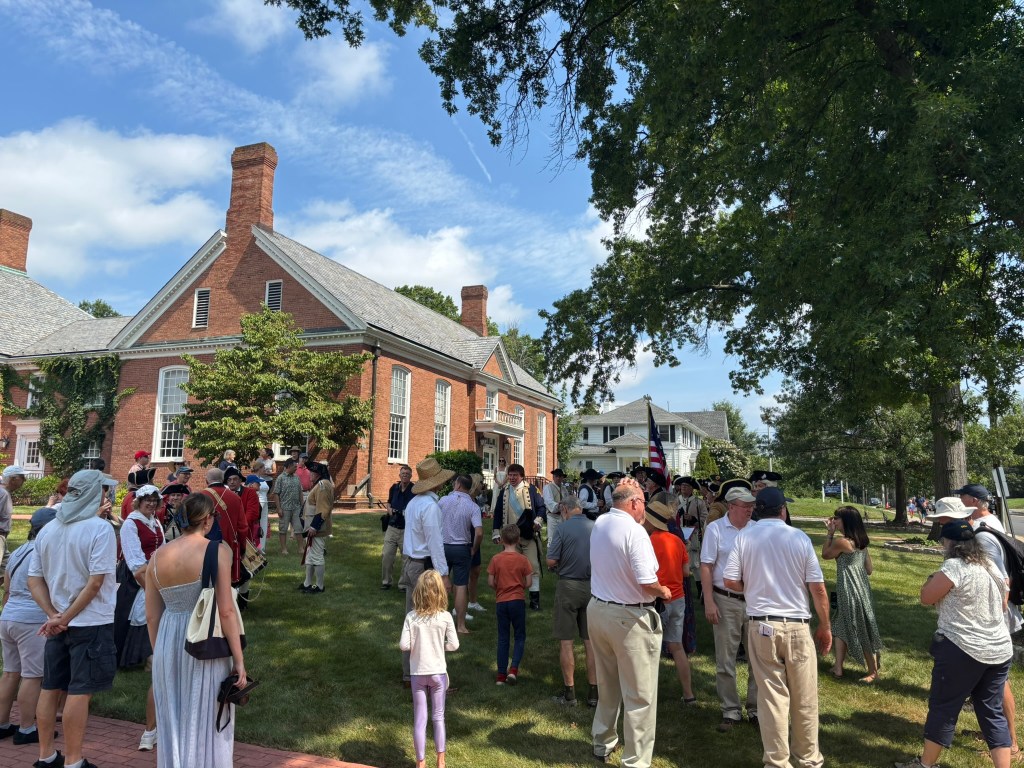
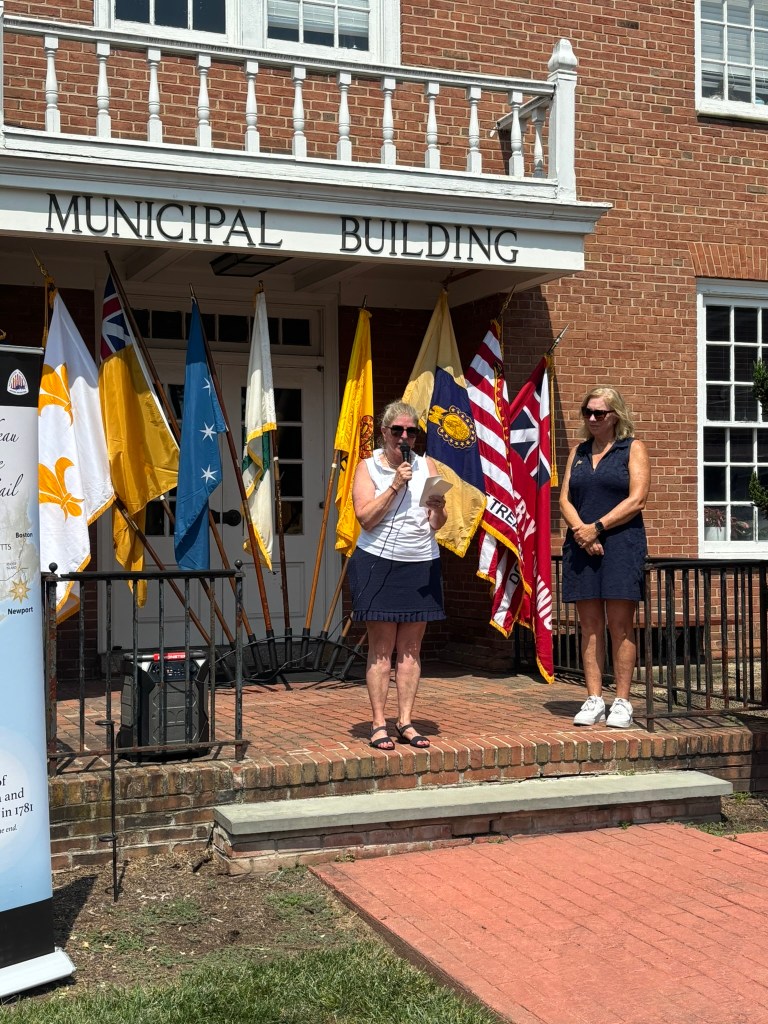
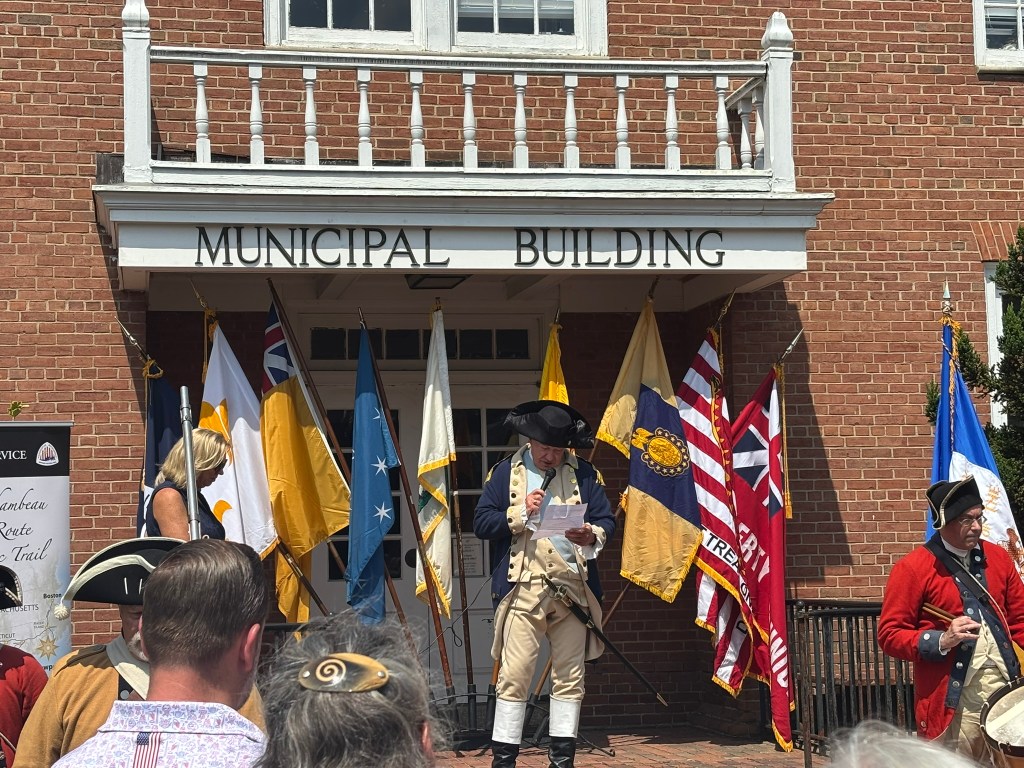
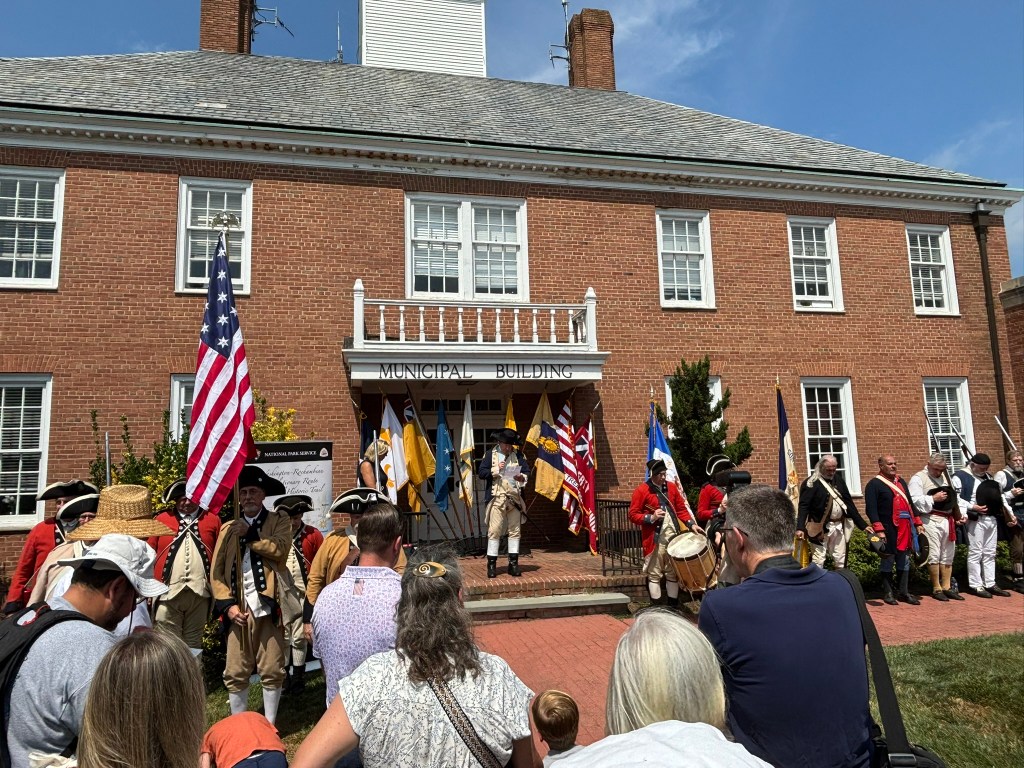
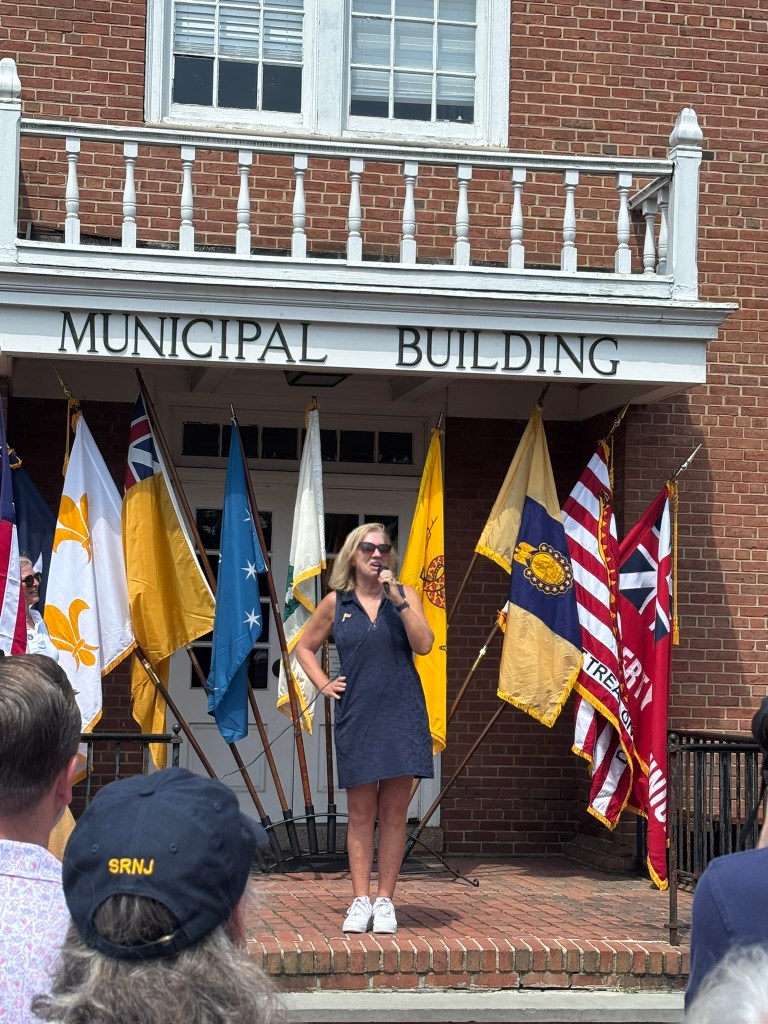
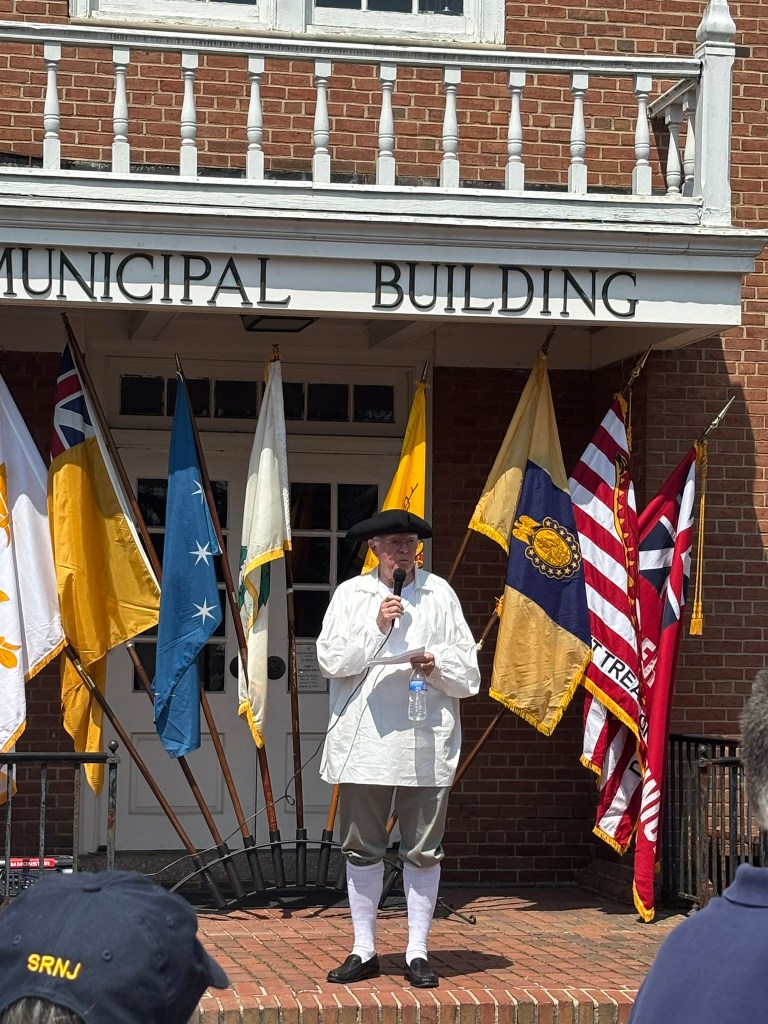
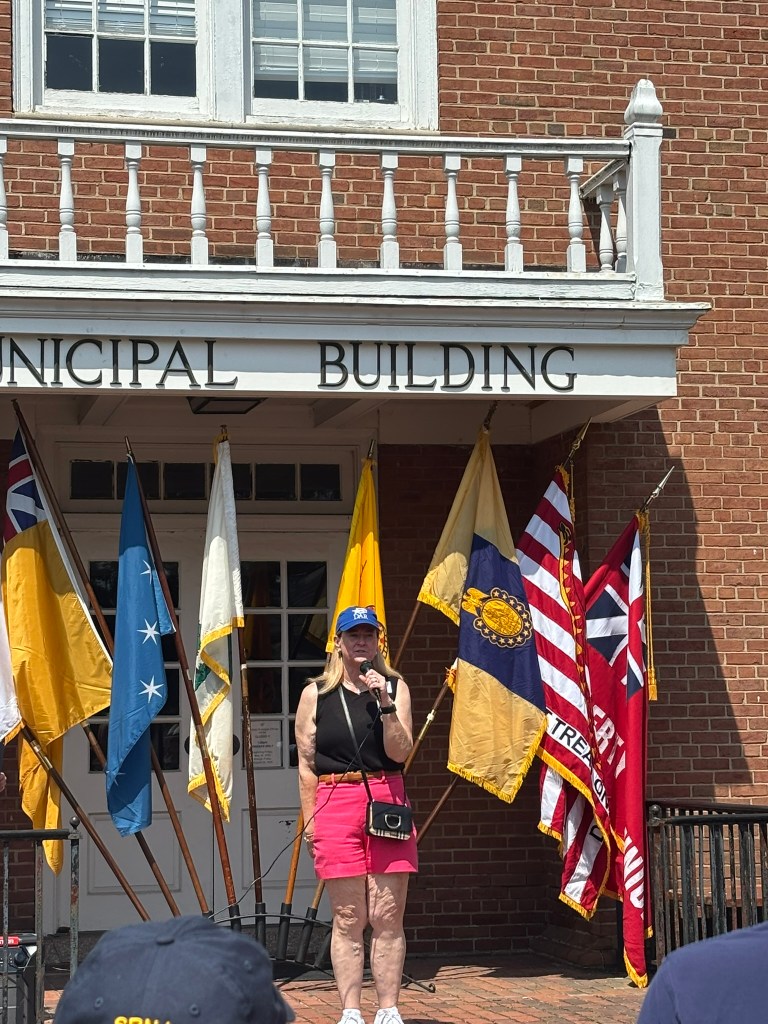
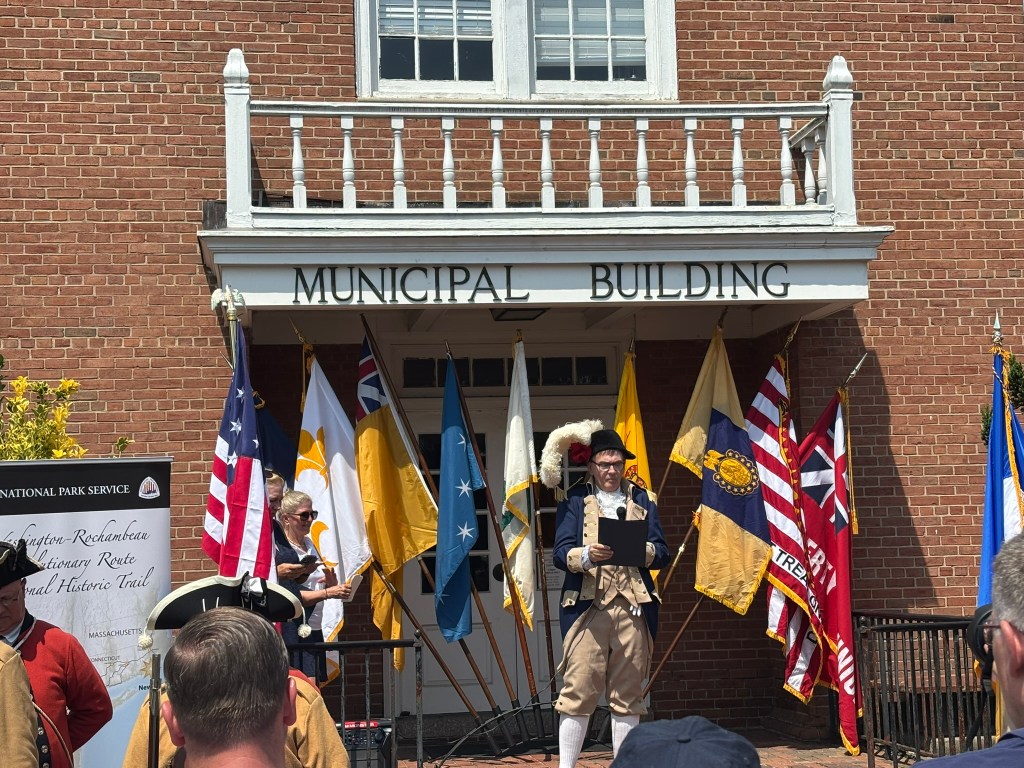
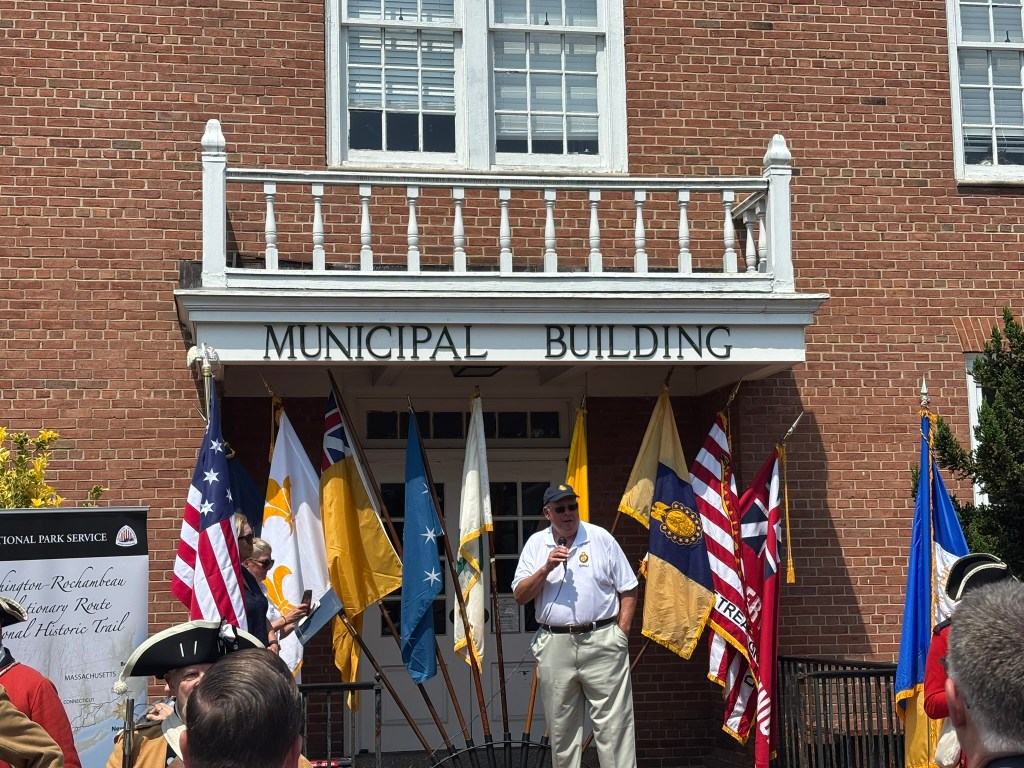
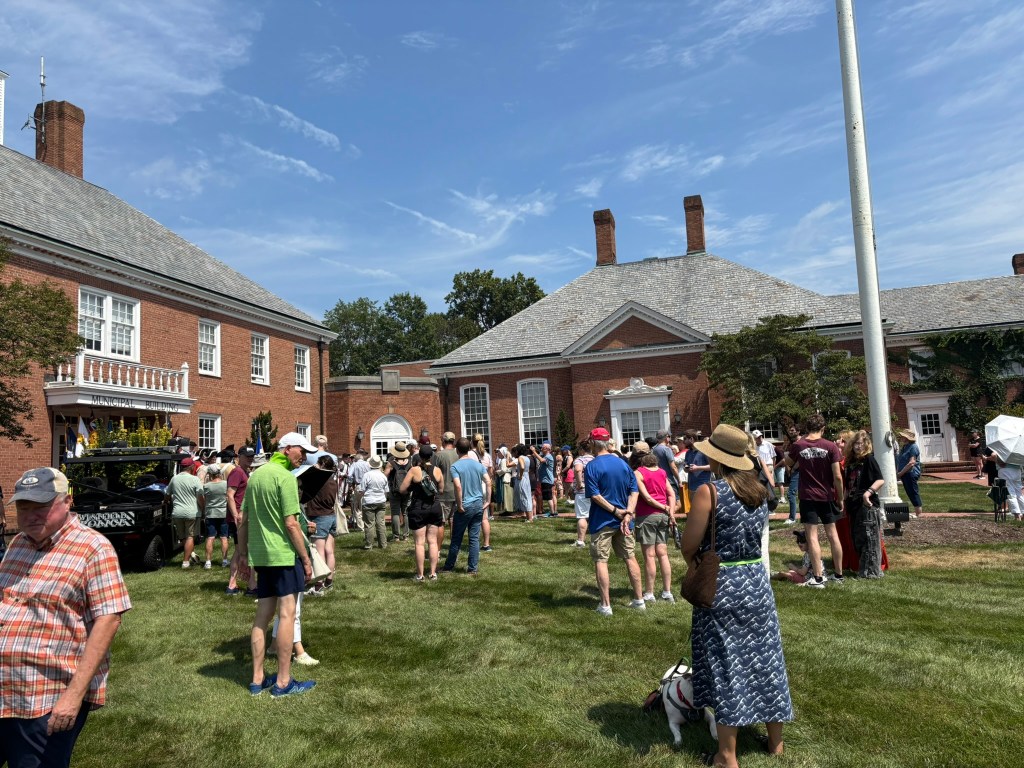
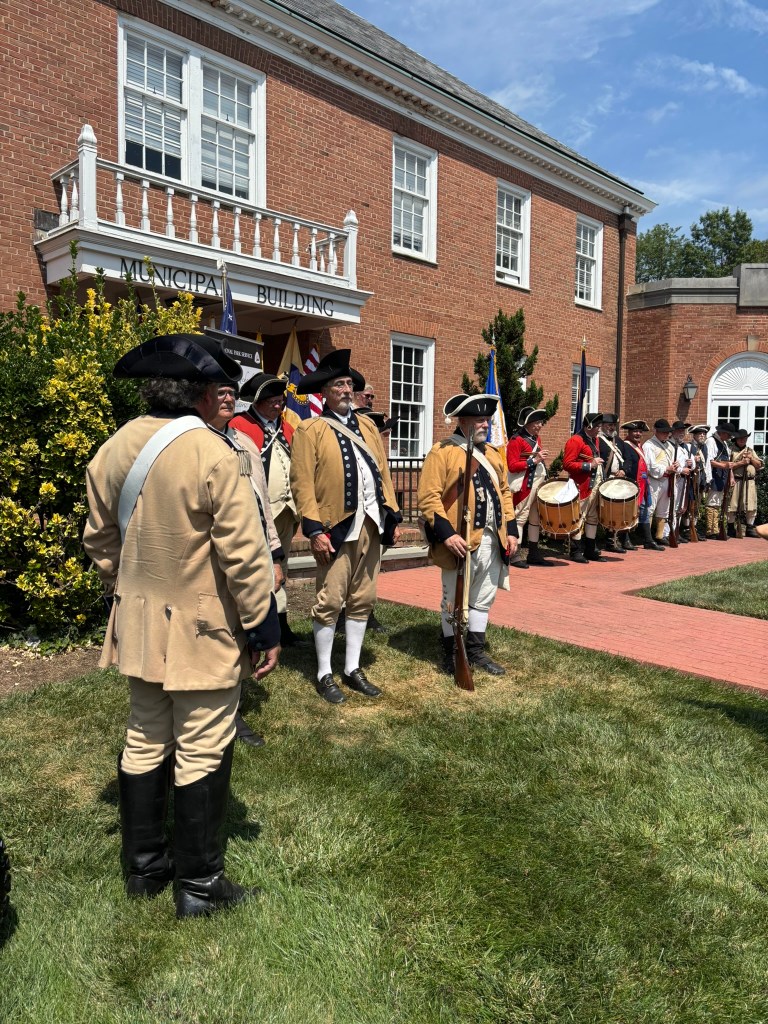
The program began at noon with an opening ceremony in front of Westfield Town Hall on East Broad Street. The first remarks, by Julie Diddel, chair of W3R-NJ, highlighted the significance of the Washington-Rochambeau Revolutionary Trail and Westfield’s role in the Revolution. She was followed by other speakers, including Westfield Mayor Shelley Brindle and leaders from local historical organizations. General George Washington, portrayed by reenactor Sam Davis, offered an opening prayer, and the New Jersey Fifes and Drums led the crowd in the Star-Spangled Banner.
Symbolic March
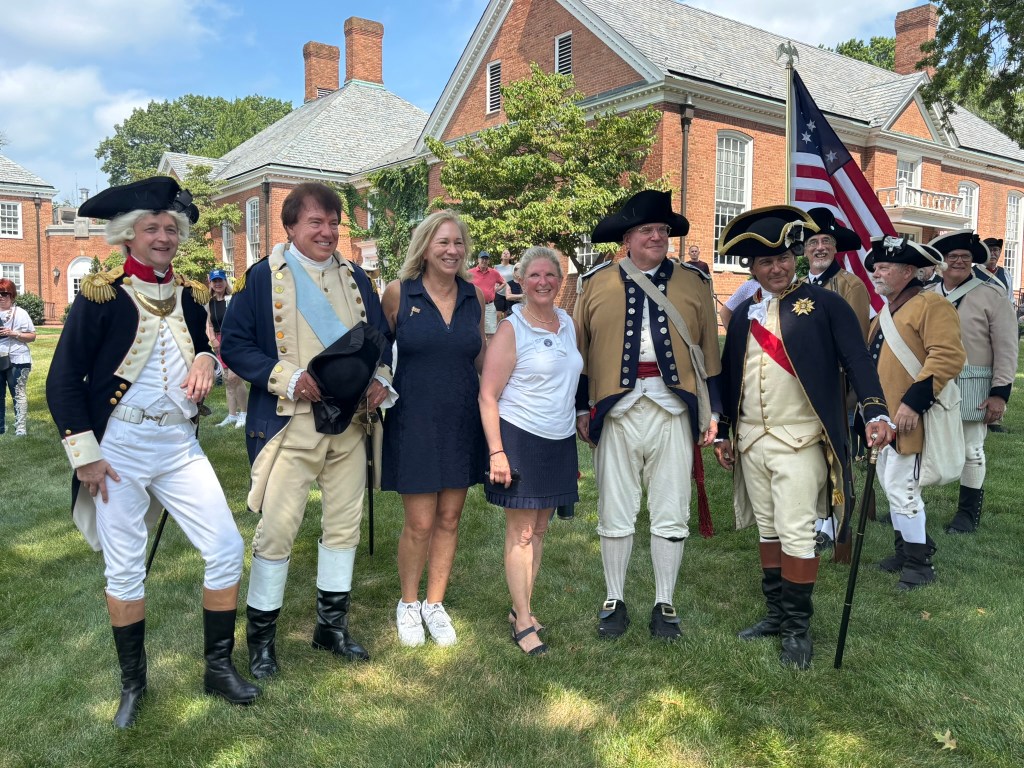
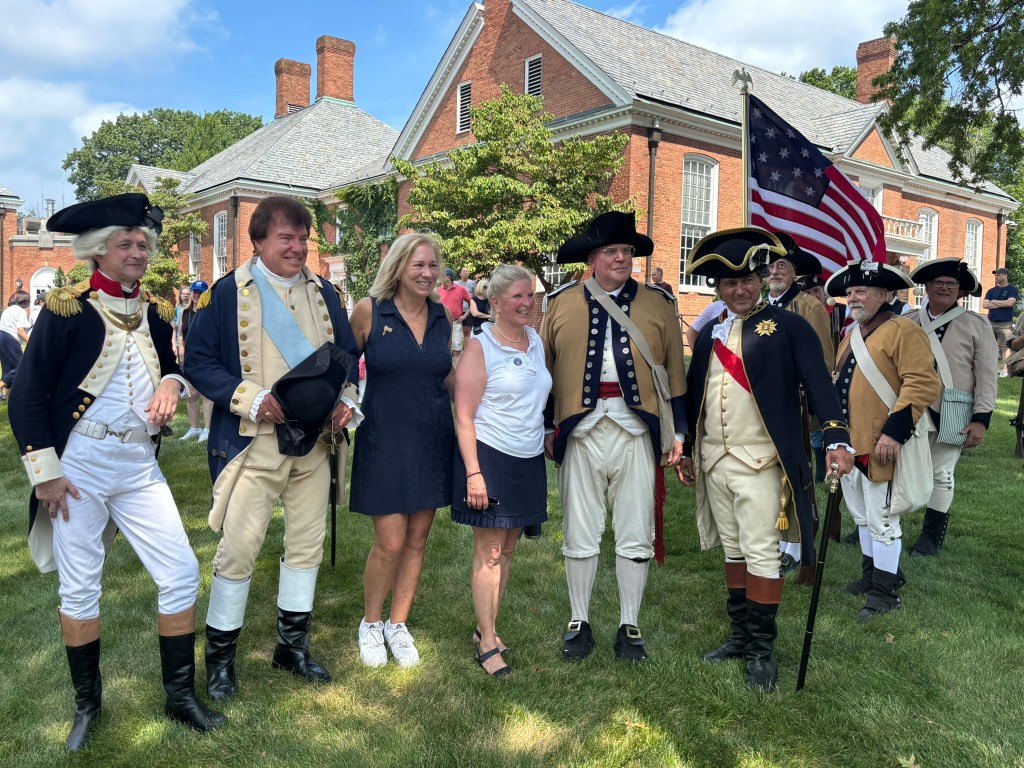
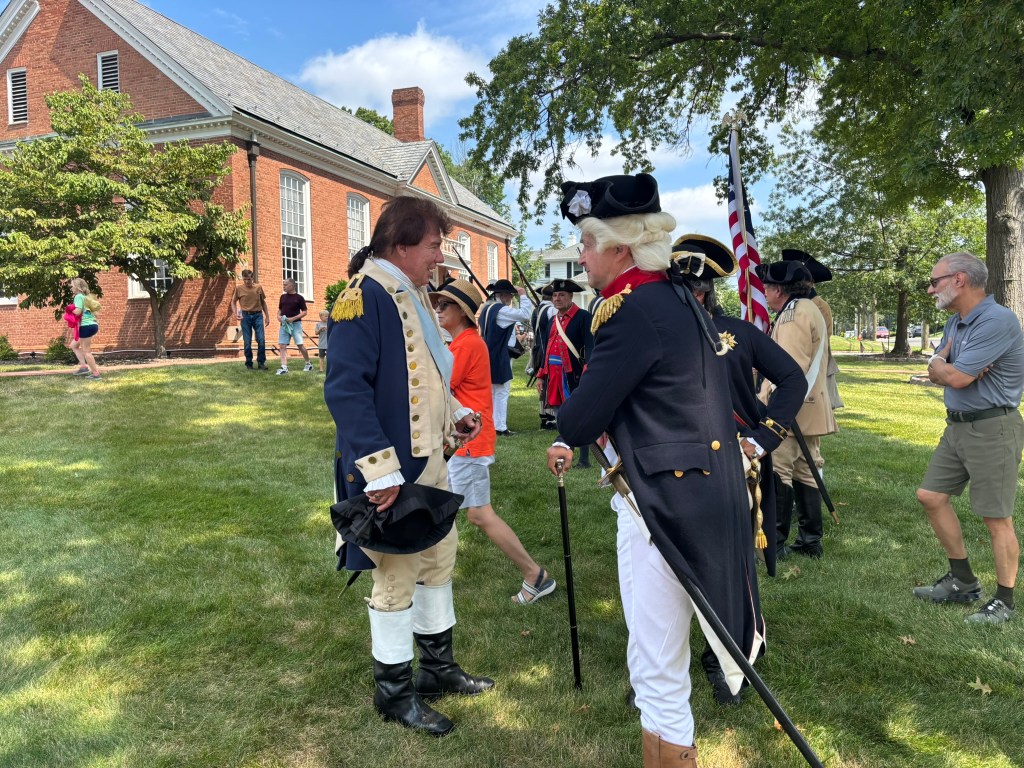
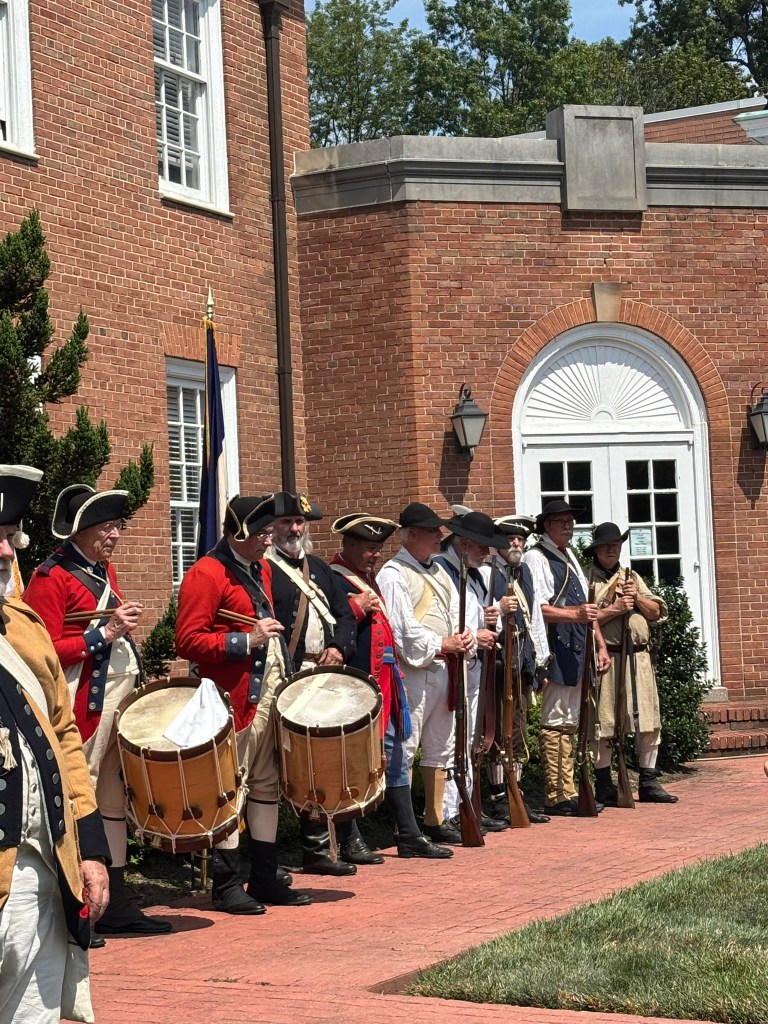
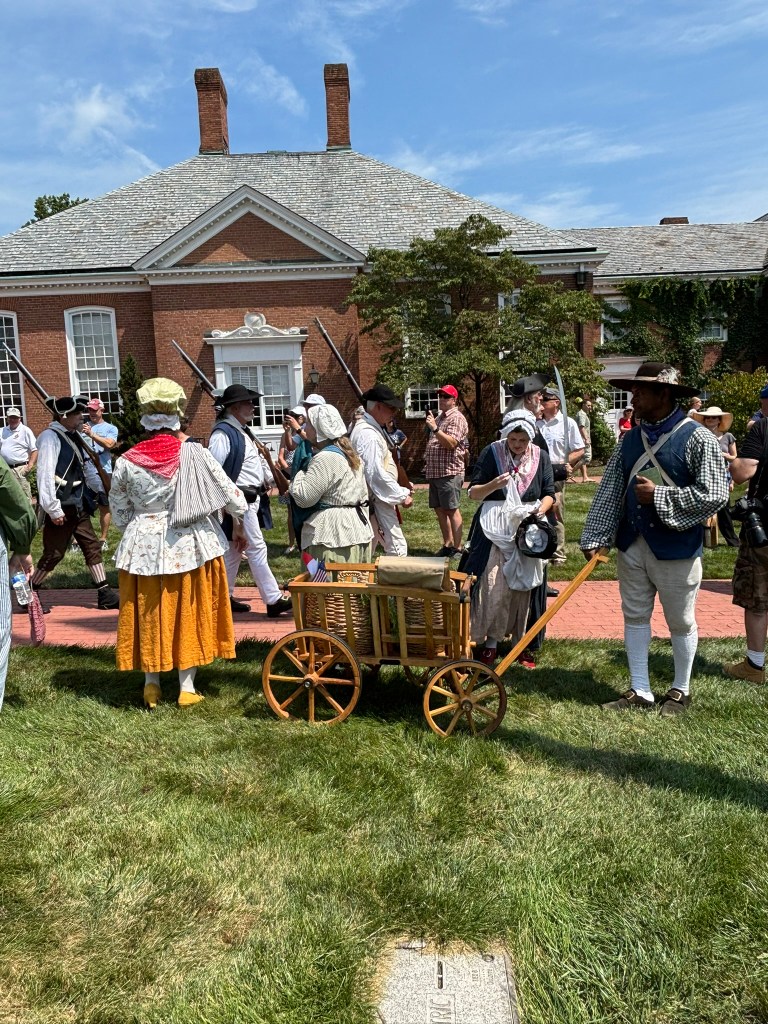
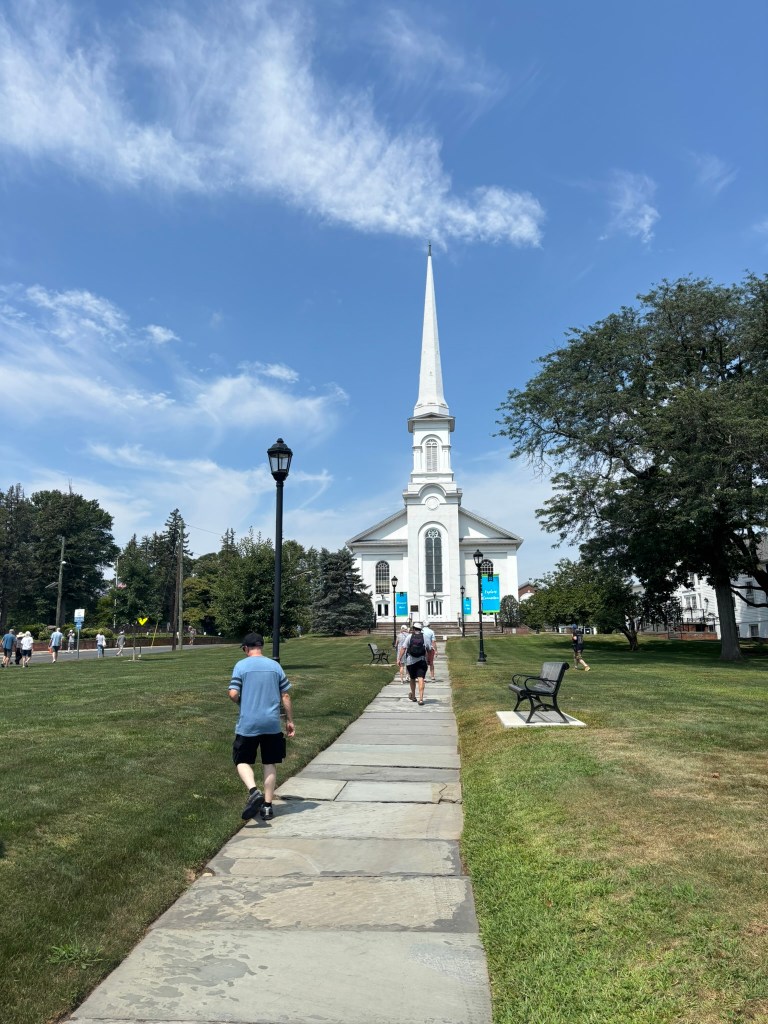
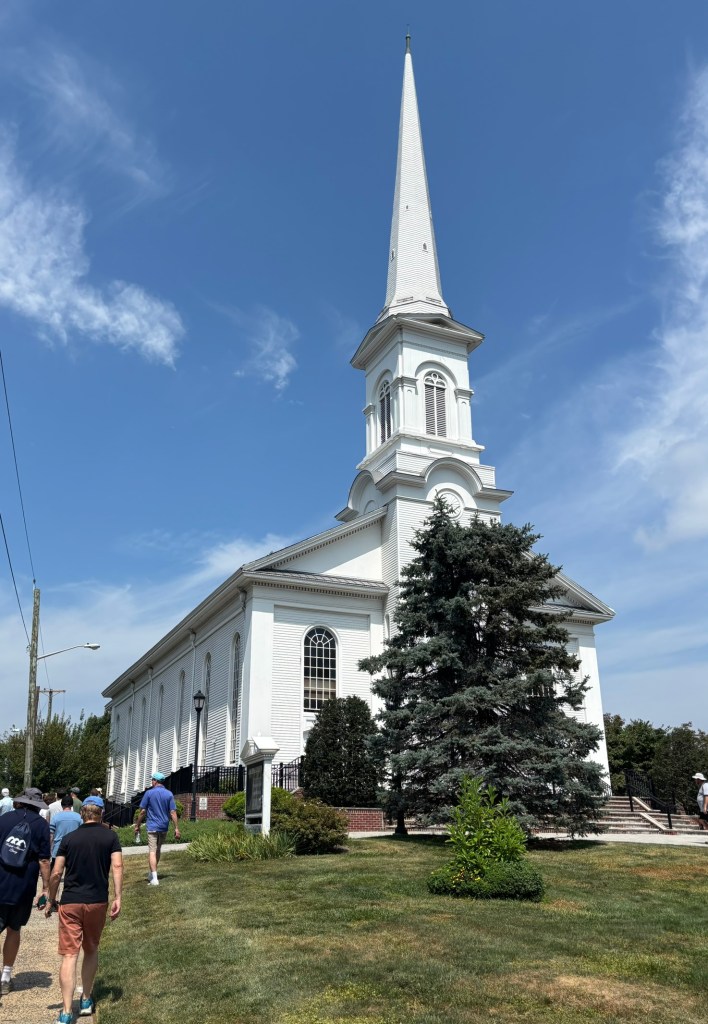
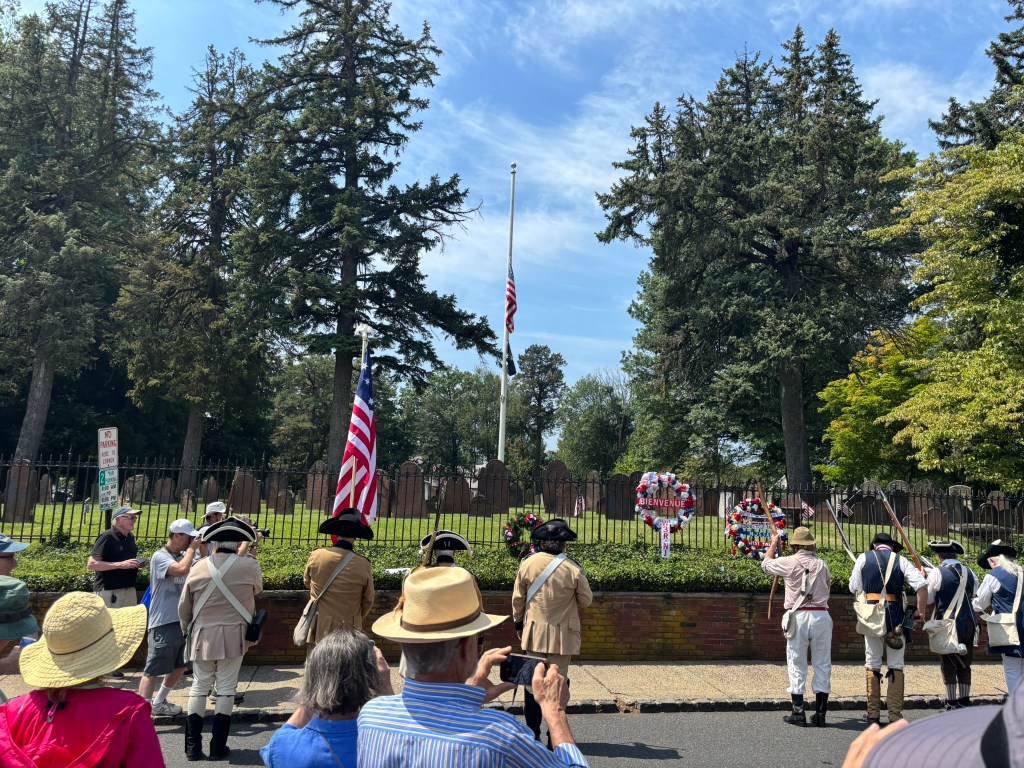
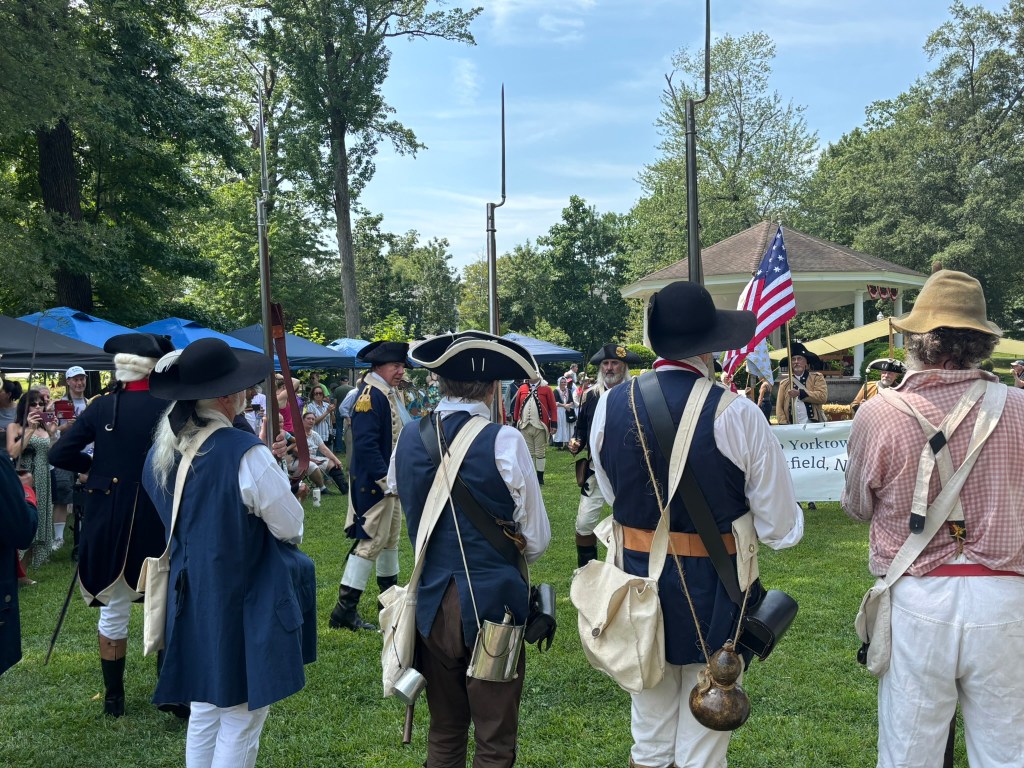
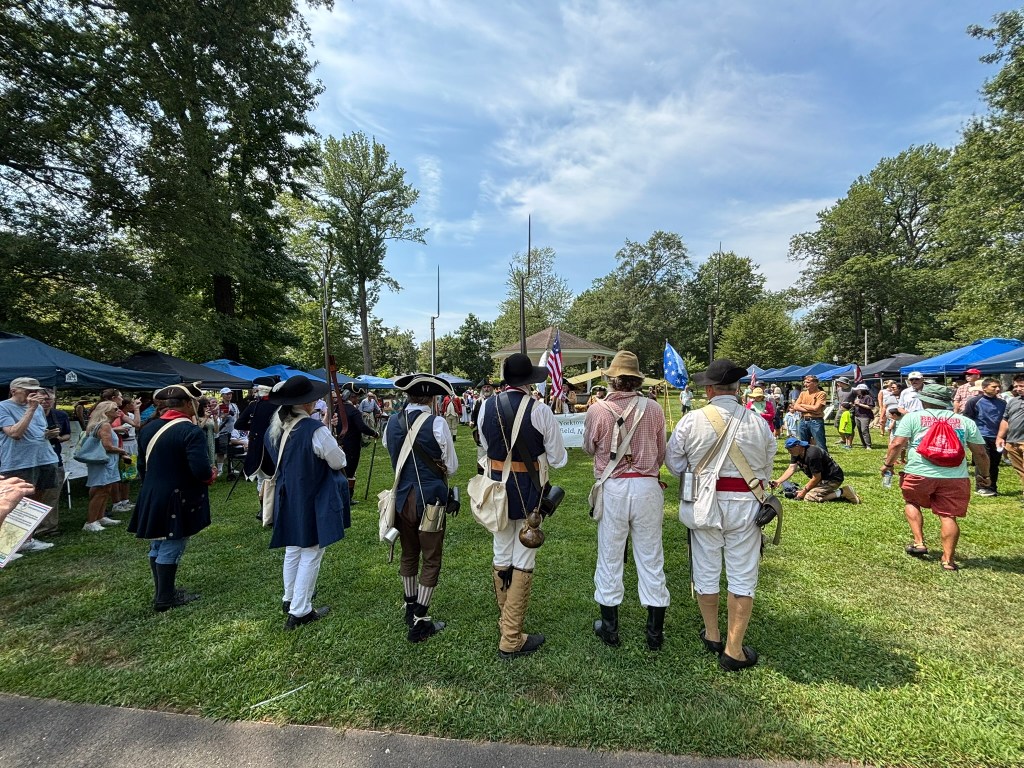
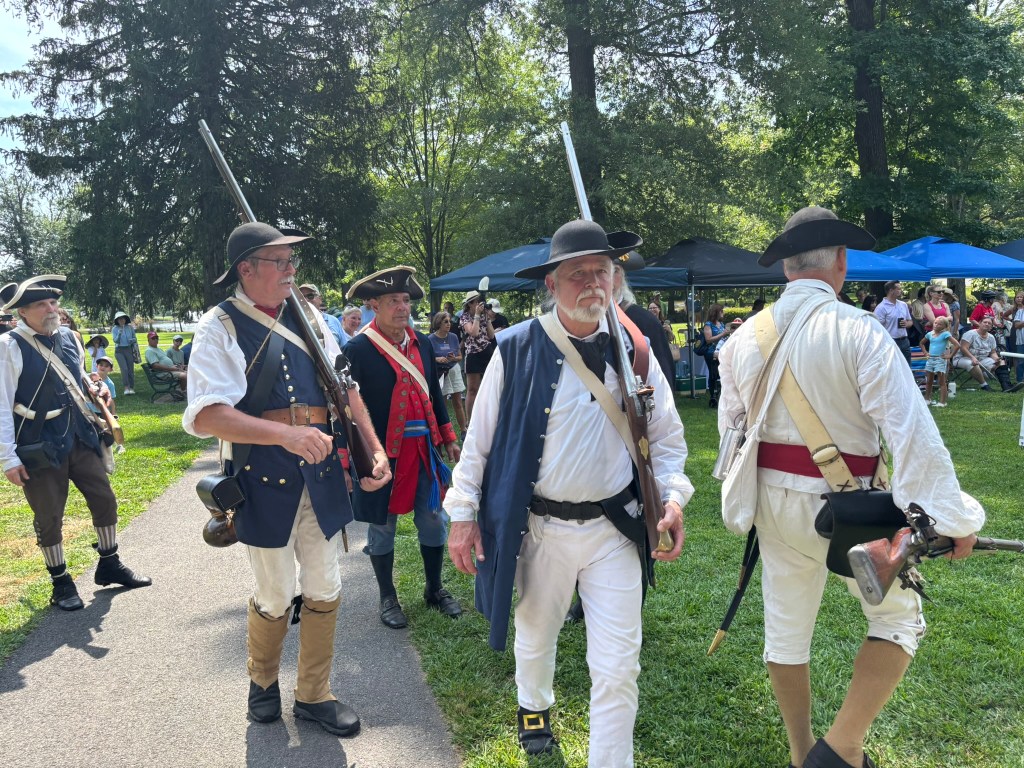
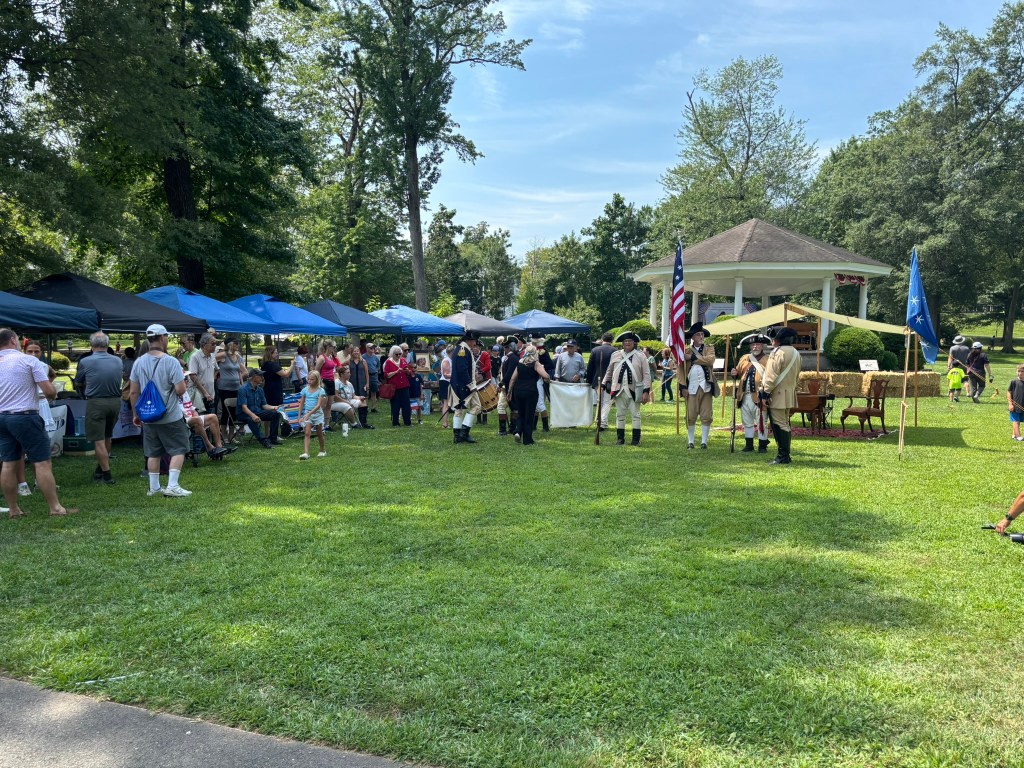
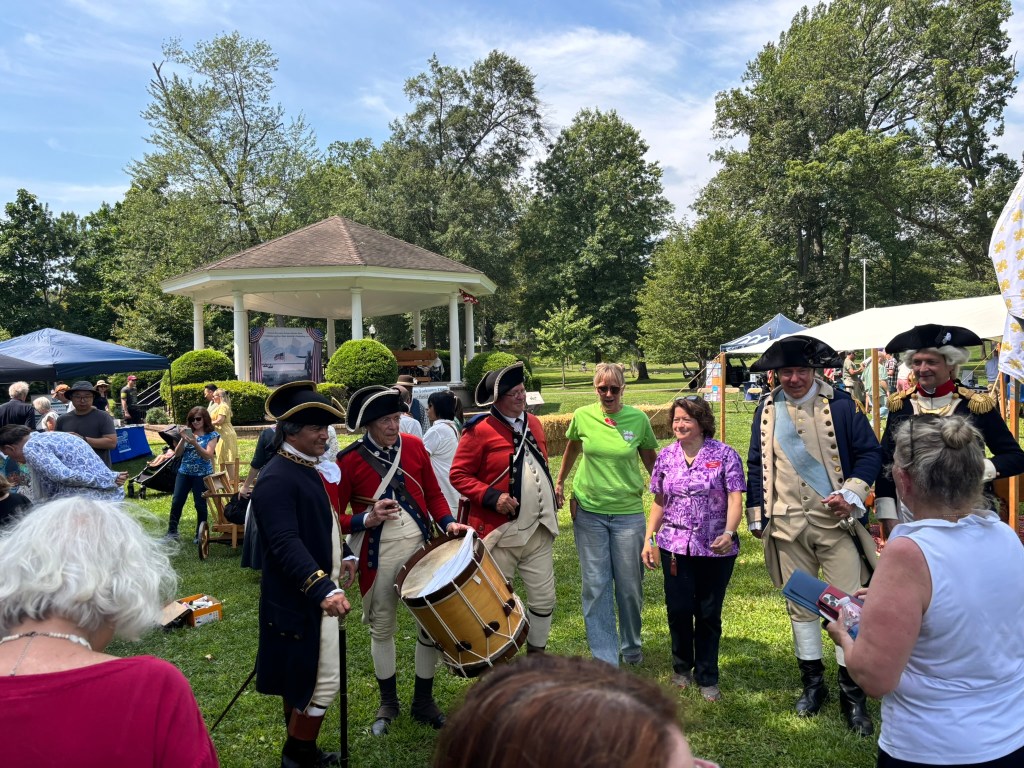
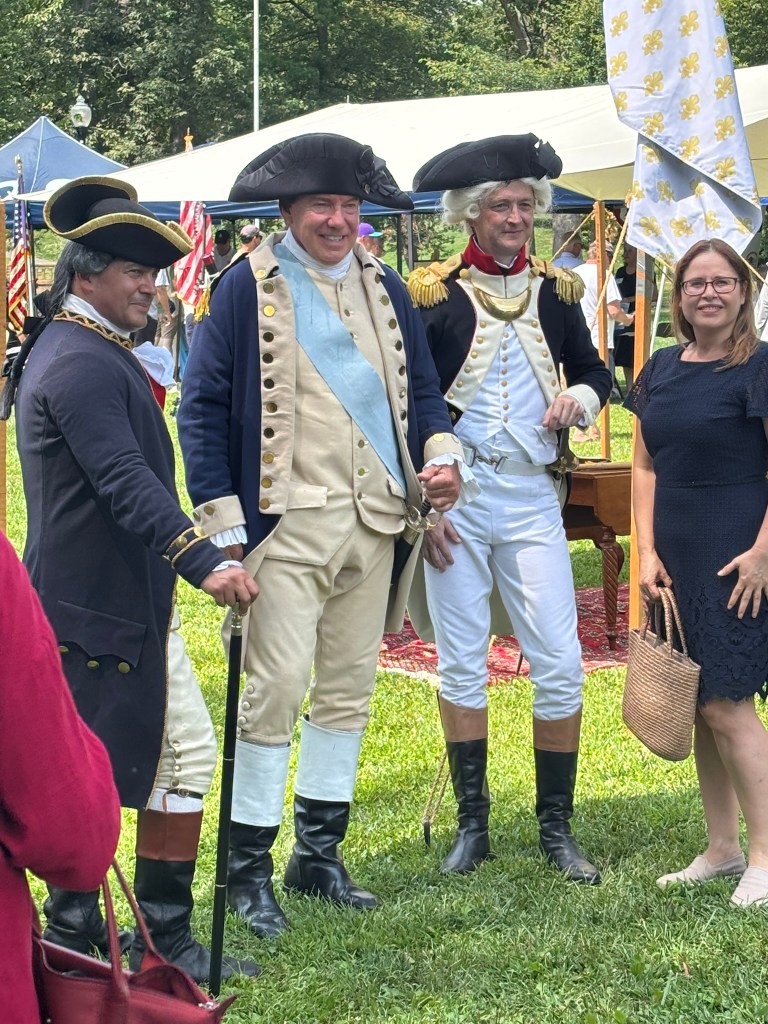
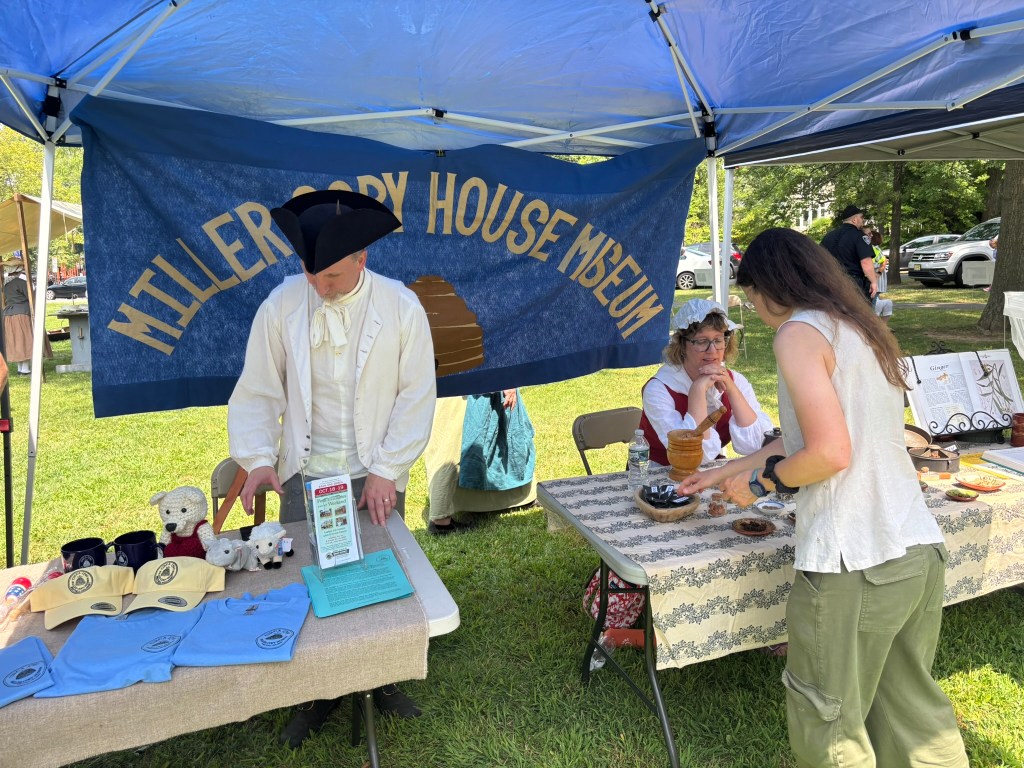
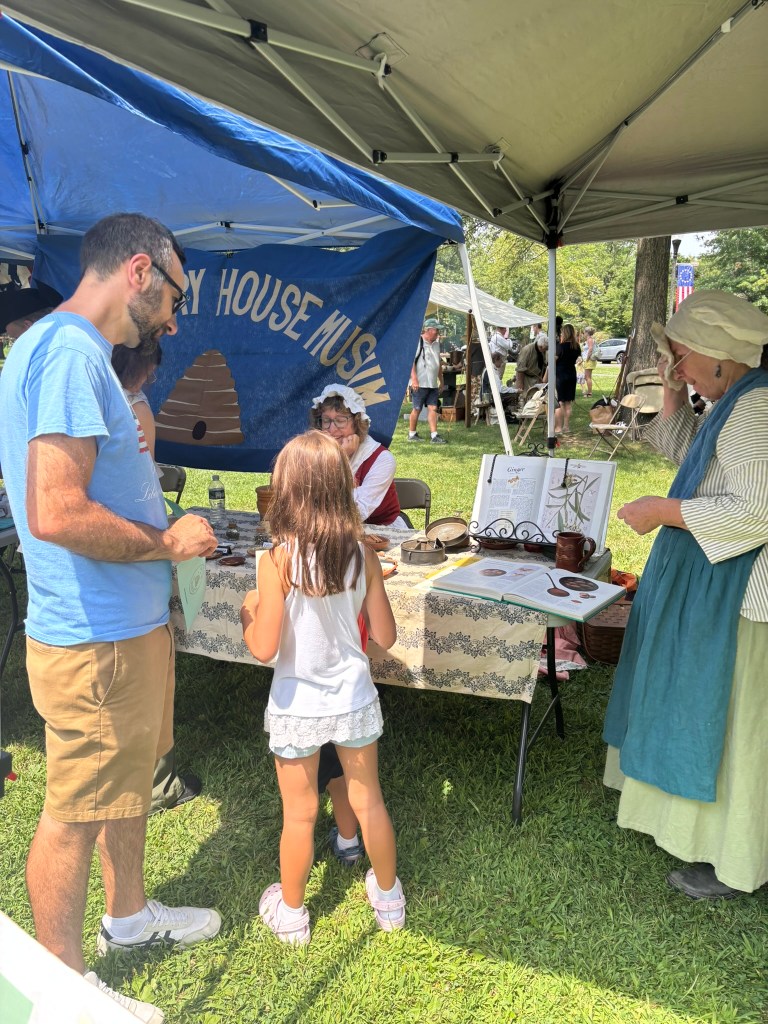
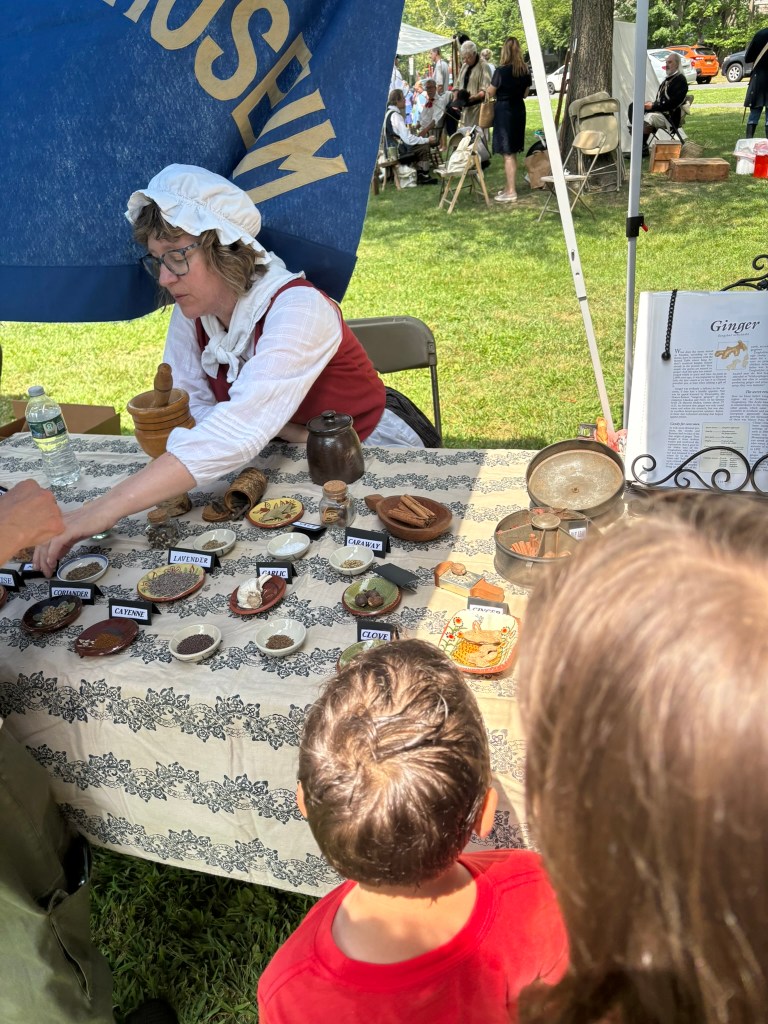
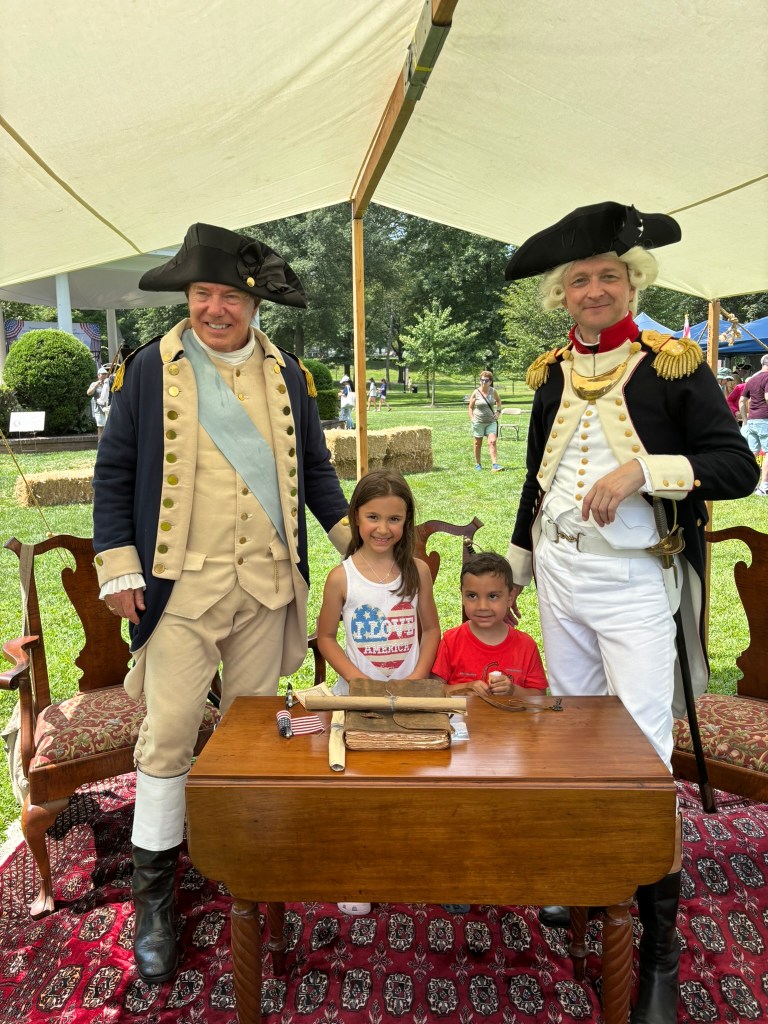
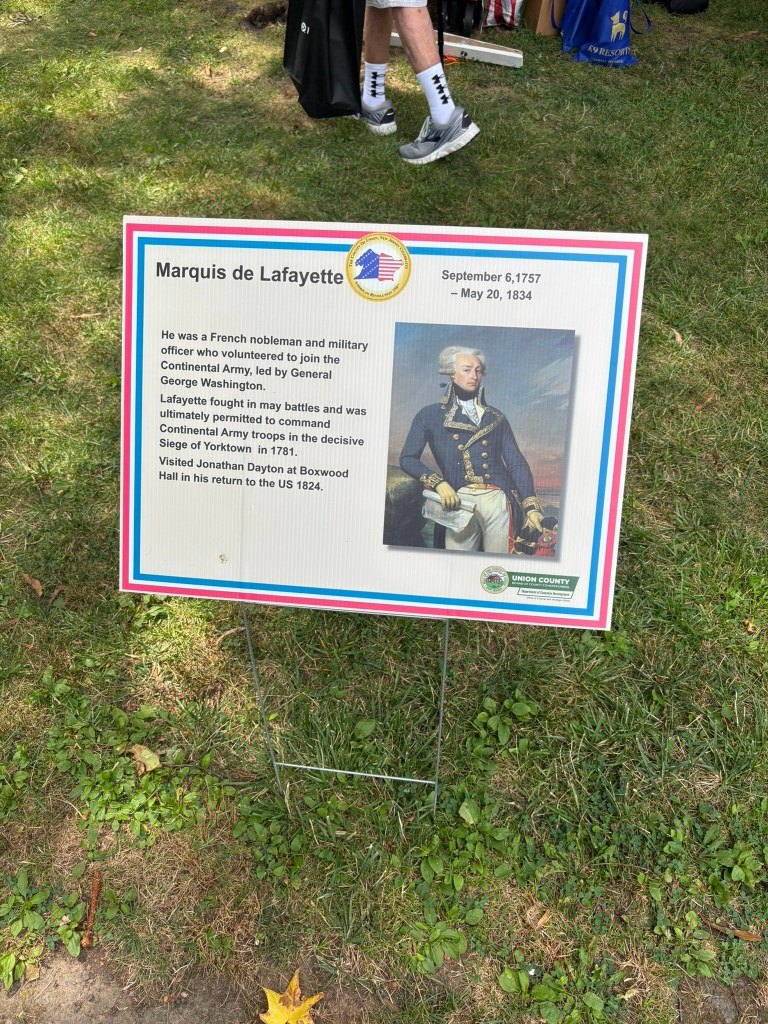
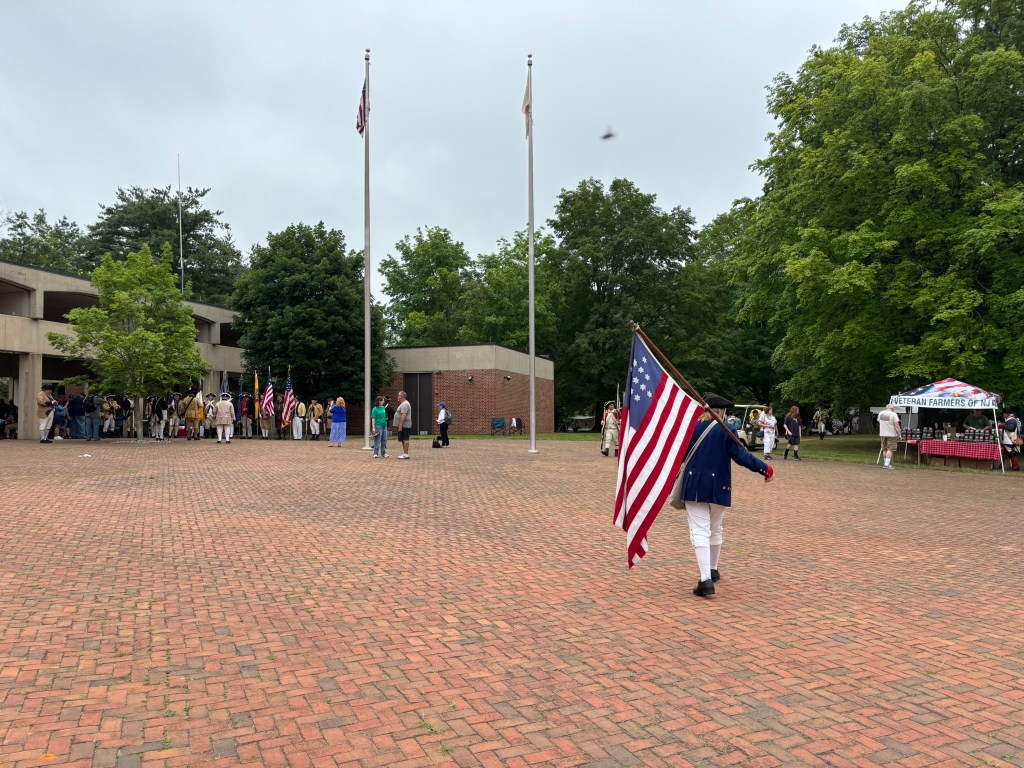
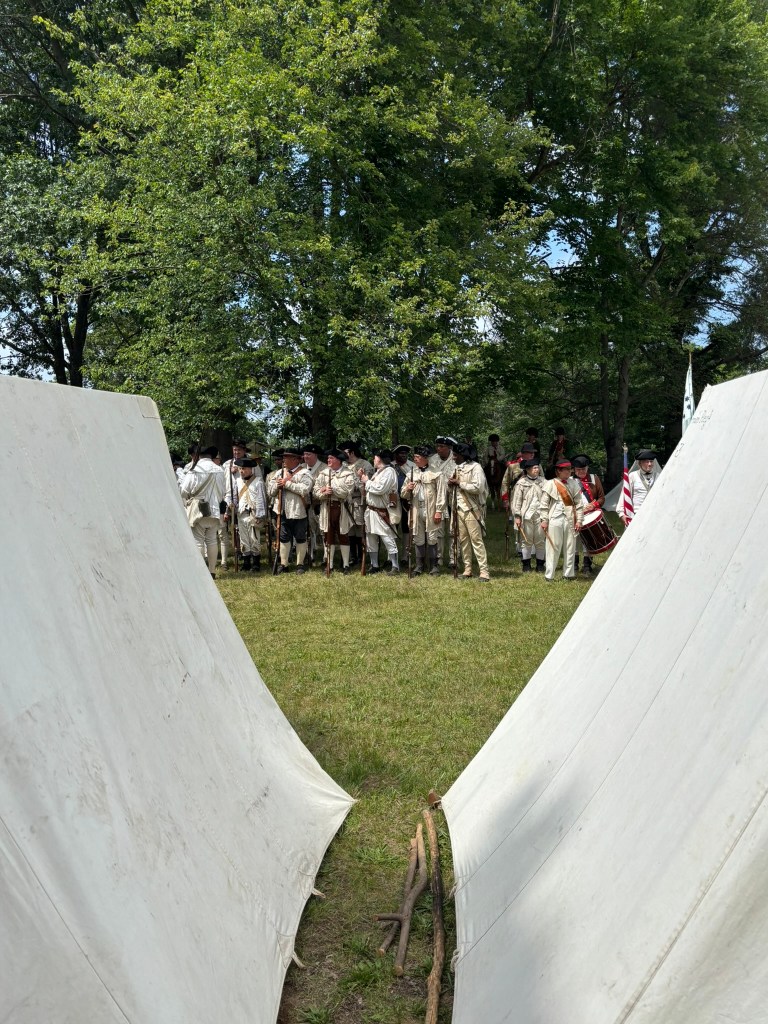
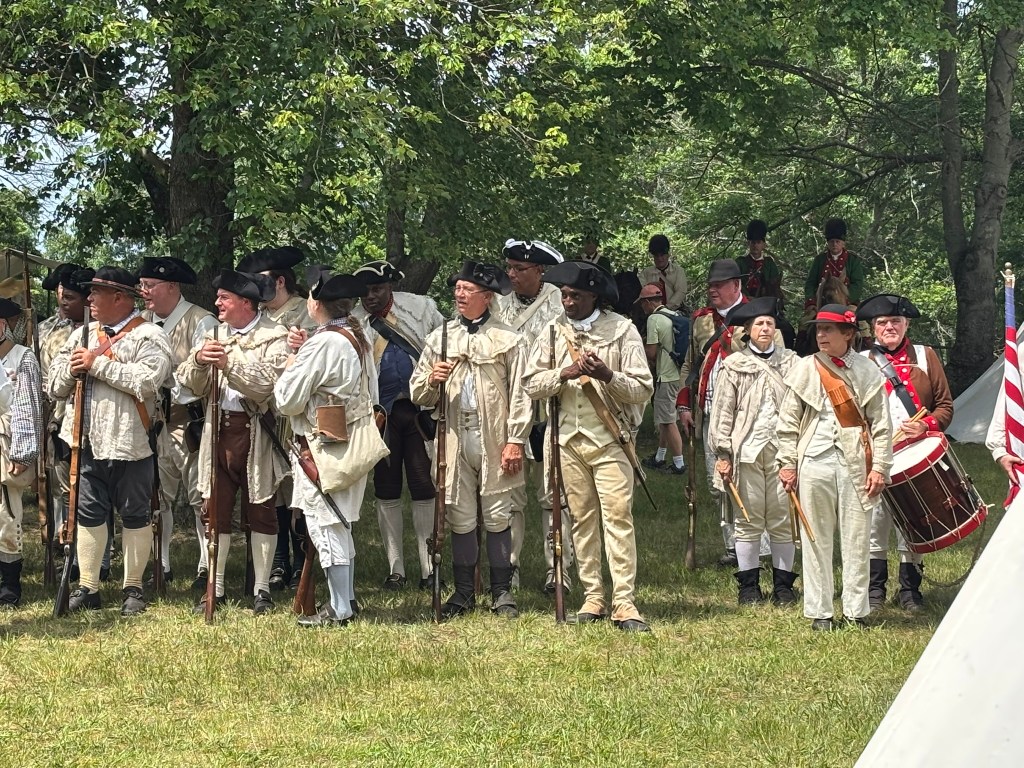
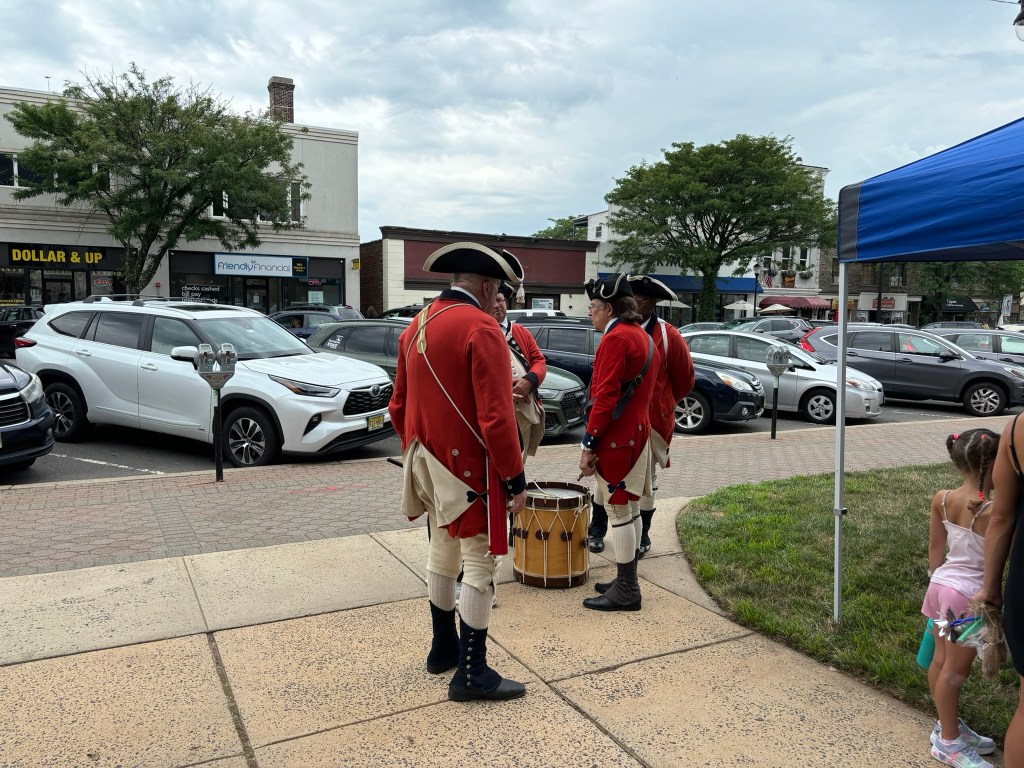
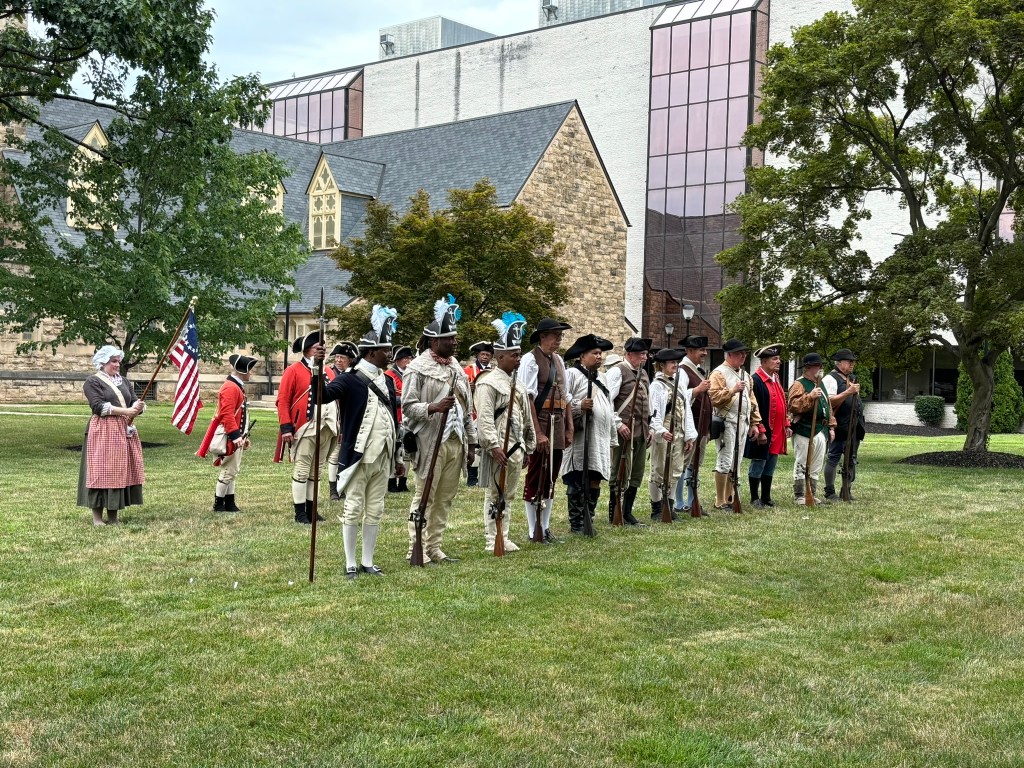
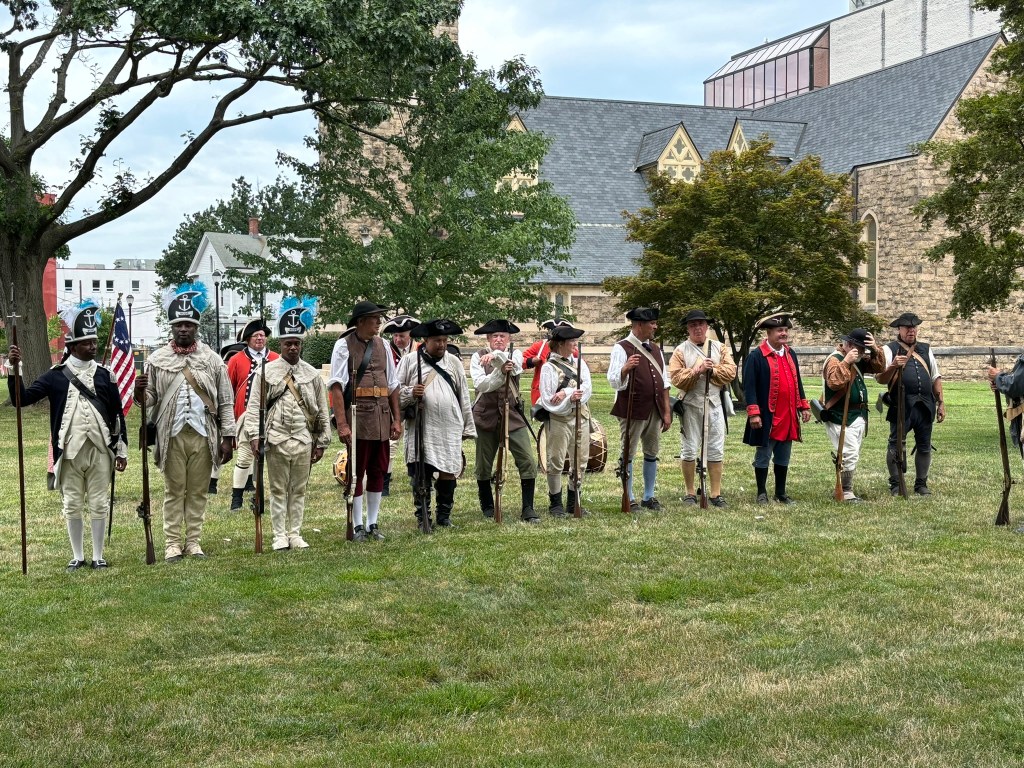
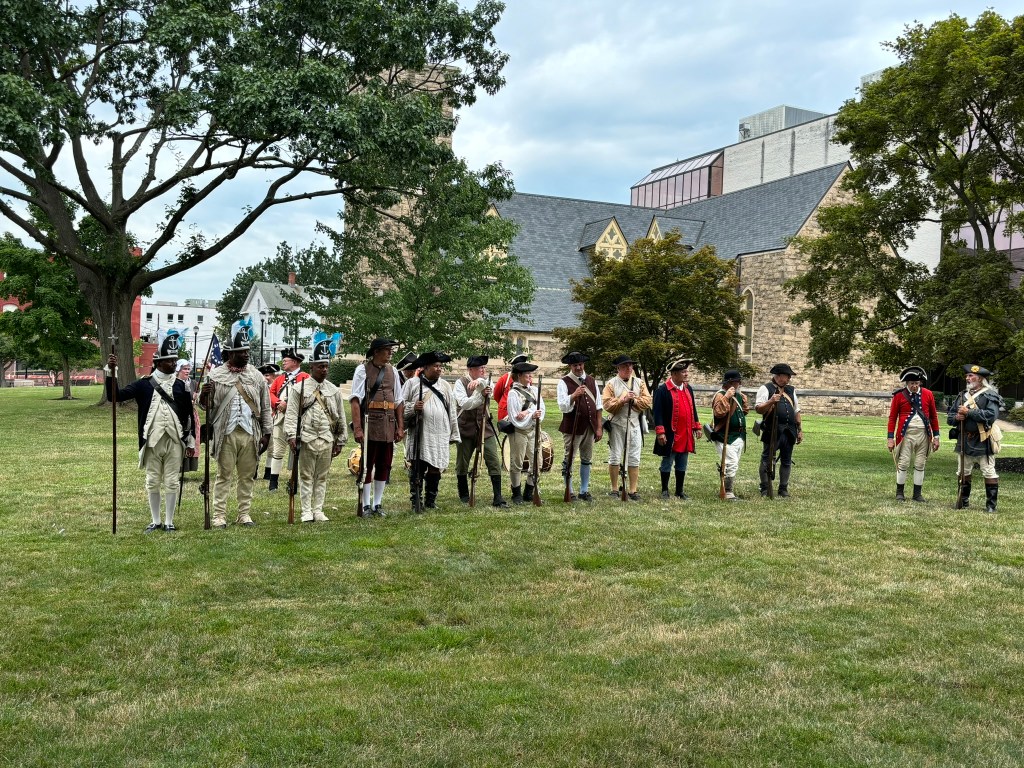
After the 20-minute opening ceremony, the crowd followed reenactors portraying George Washington, Comte de Rochambeau, and the Marquis de Lafayette—along with several Westfield officials—on a symbolic march down East Broad Street to Mountain Avenue. At the Presbyterian Church burial grounds, wreaths were placed in honor of the more than 70 Revolutionary War veterans, along with their families and other patriots, who are laid to rest there. From there, the procession continued into Mindowaskin Park. Joining the march were the New Jersey Sons of the American Revolution Color Guard, members of the Daughters of the American Revolution, the New Jersey Fifes and Drums, the Miller-Cory House Museum’s colonial living history interpreters, women camp followers, and the New Jersey Milita- Heard’s Brigade. Check out my Instagram and Facebook accounts for videos of the march.
Mindowaskin Park
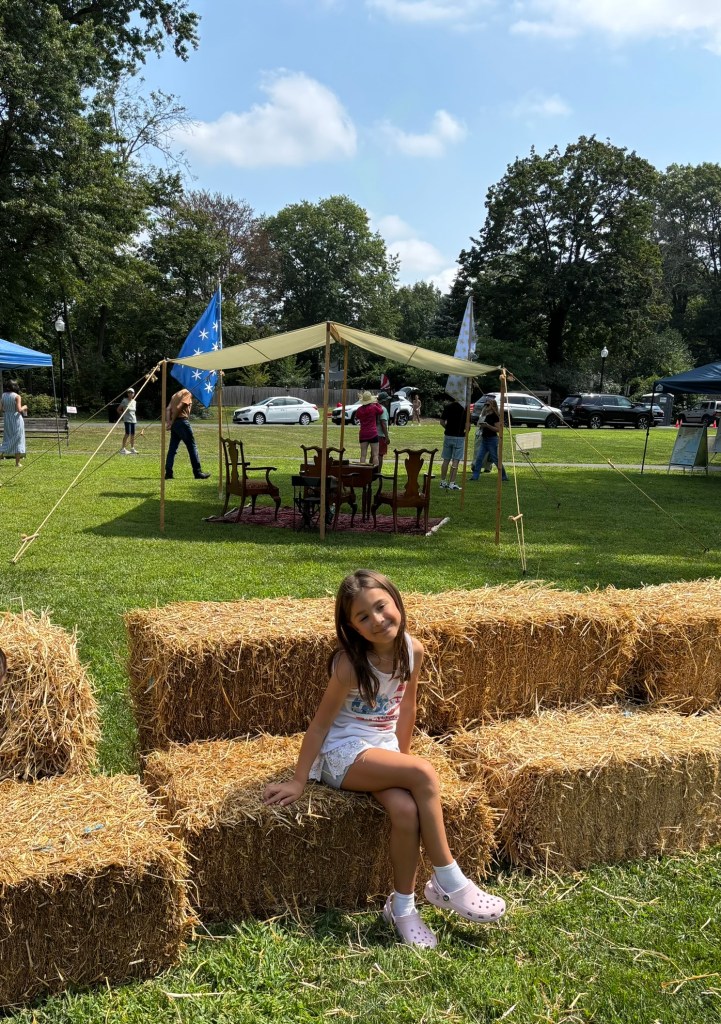
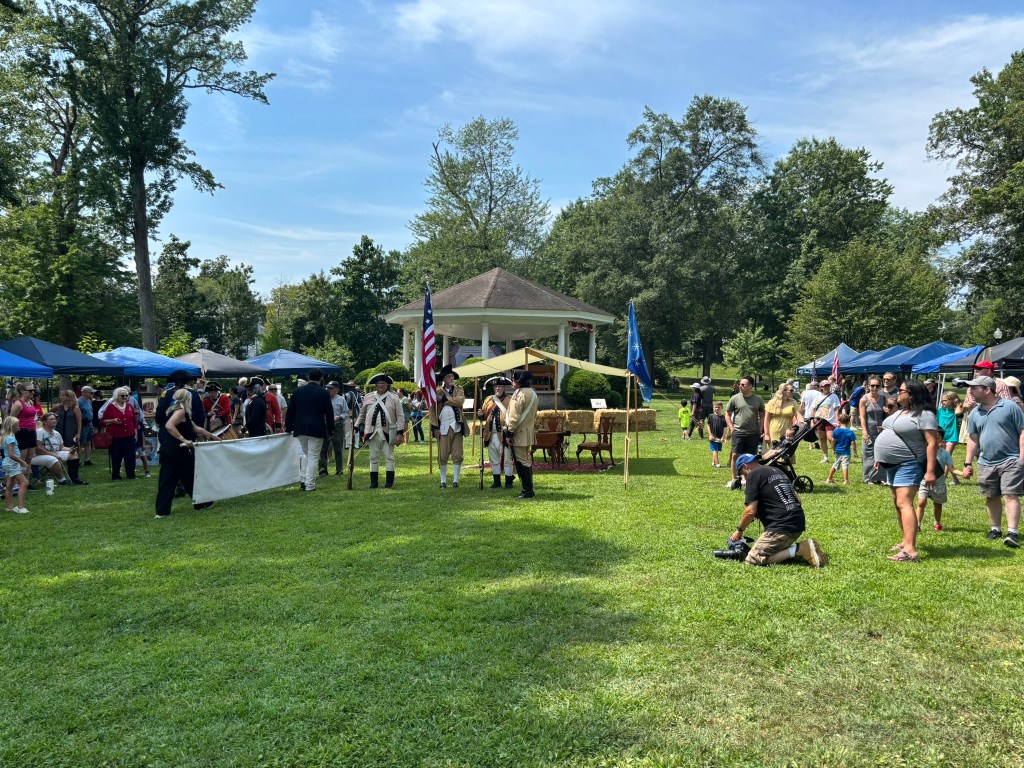
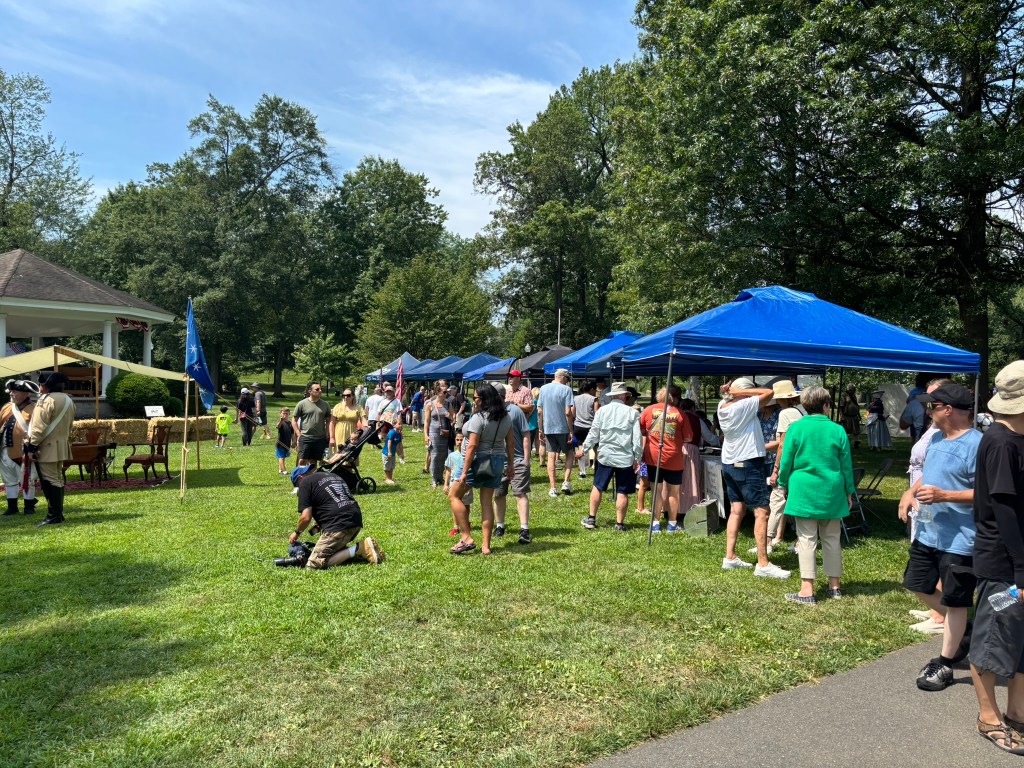
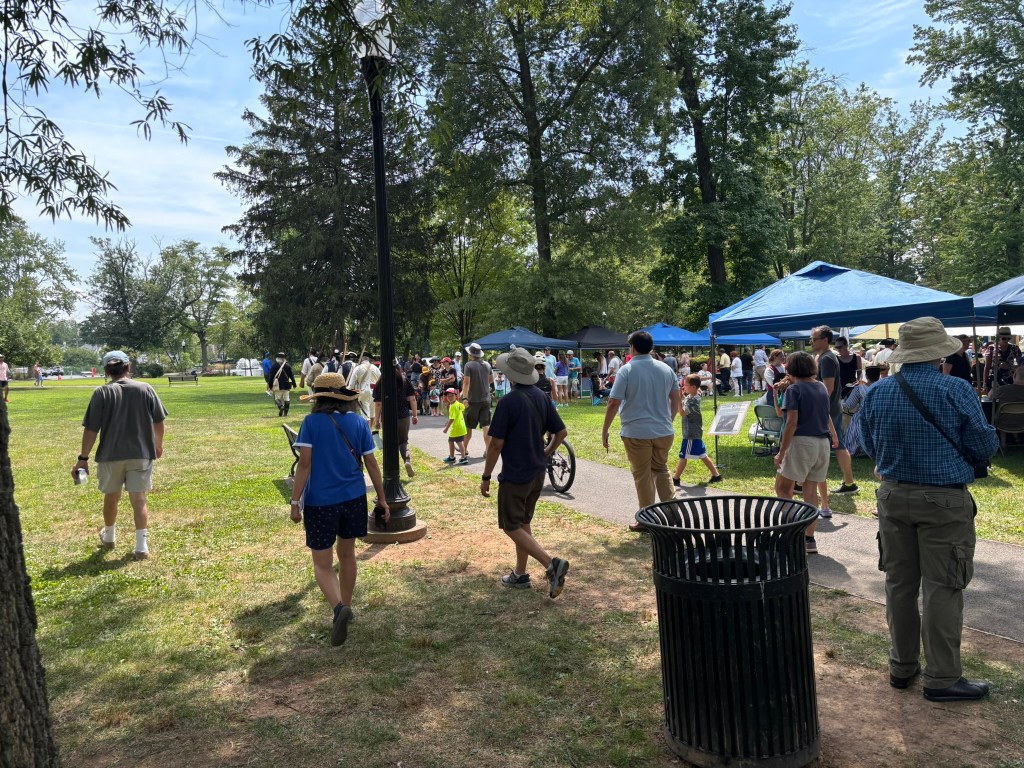
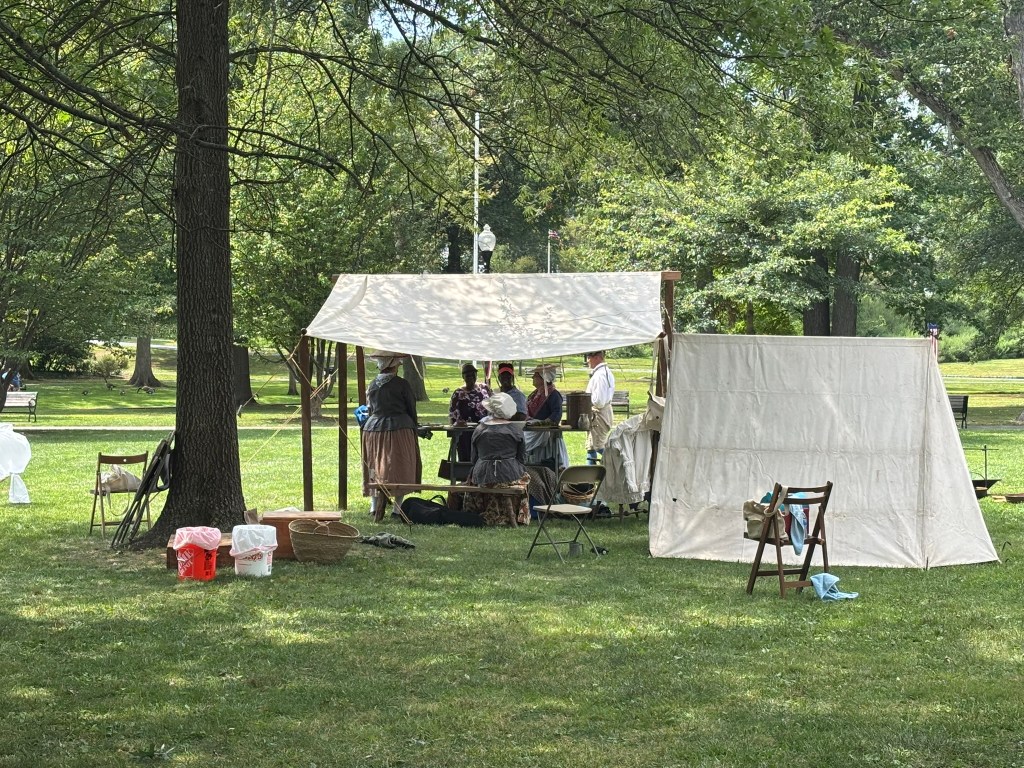
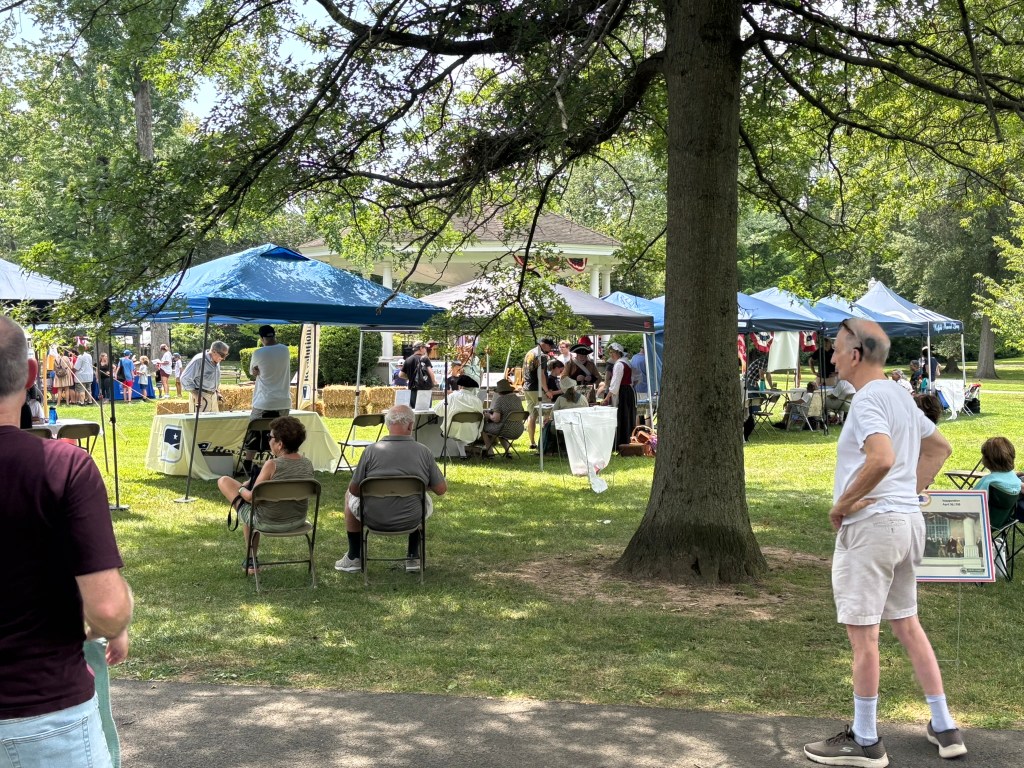
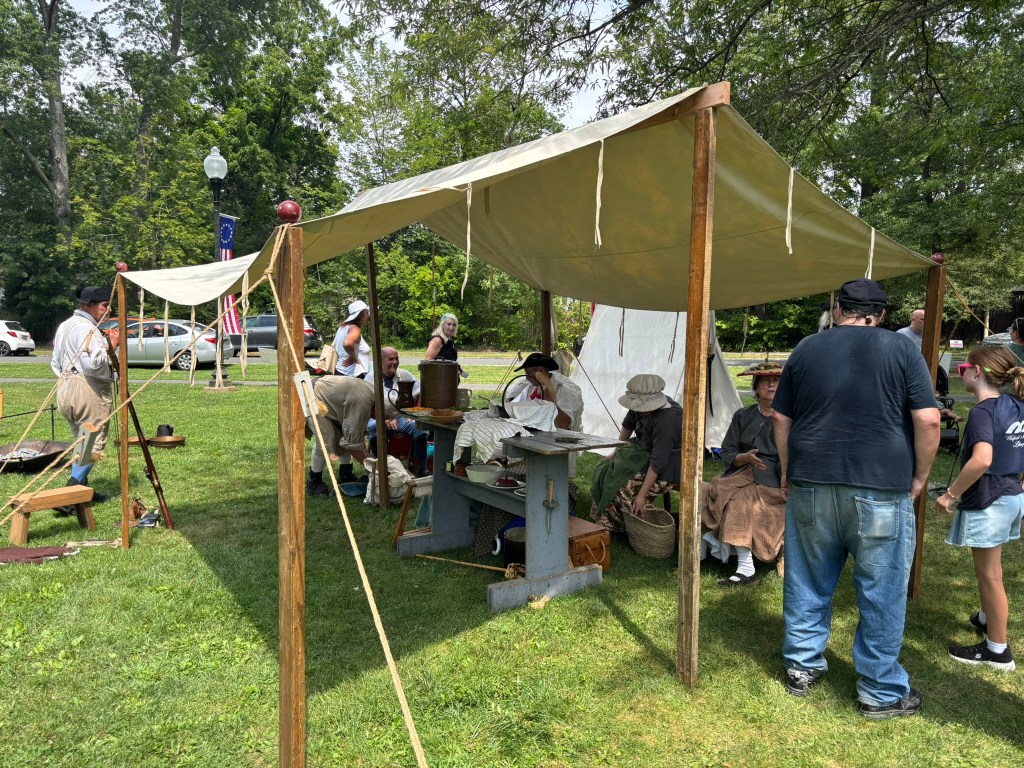
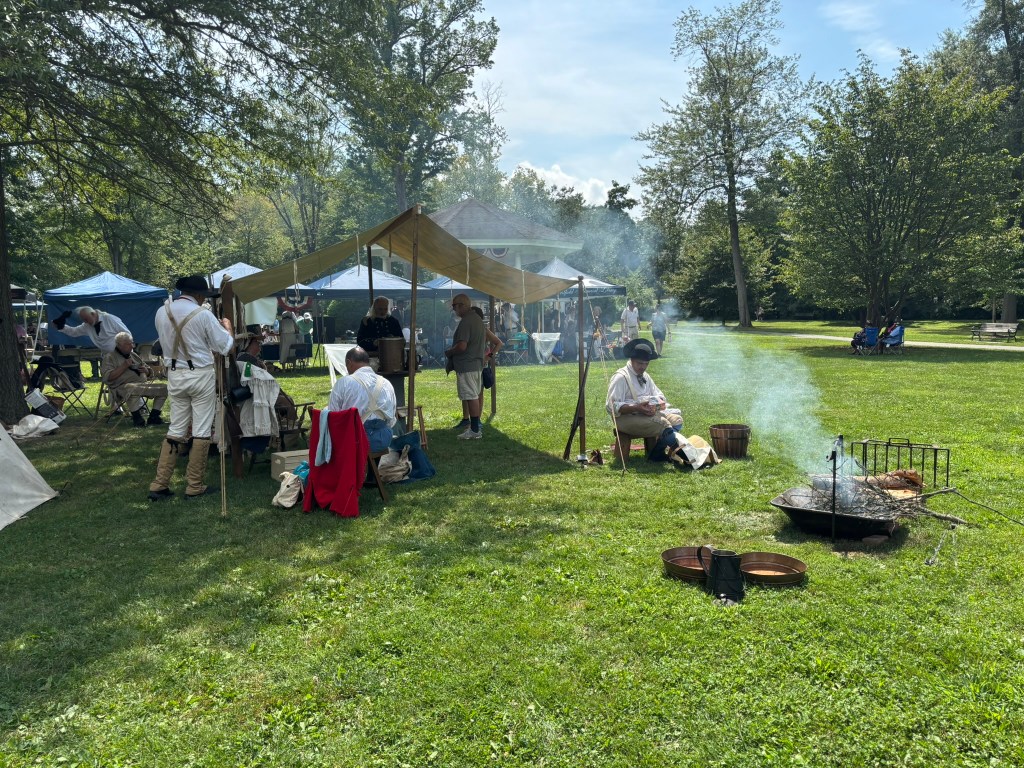
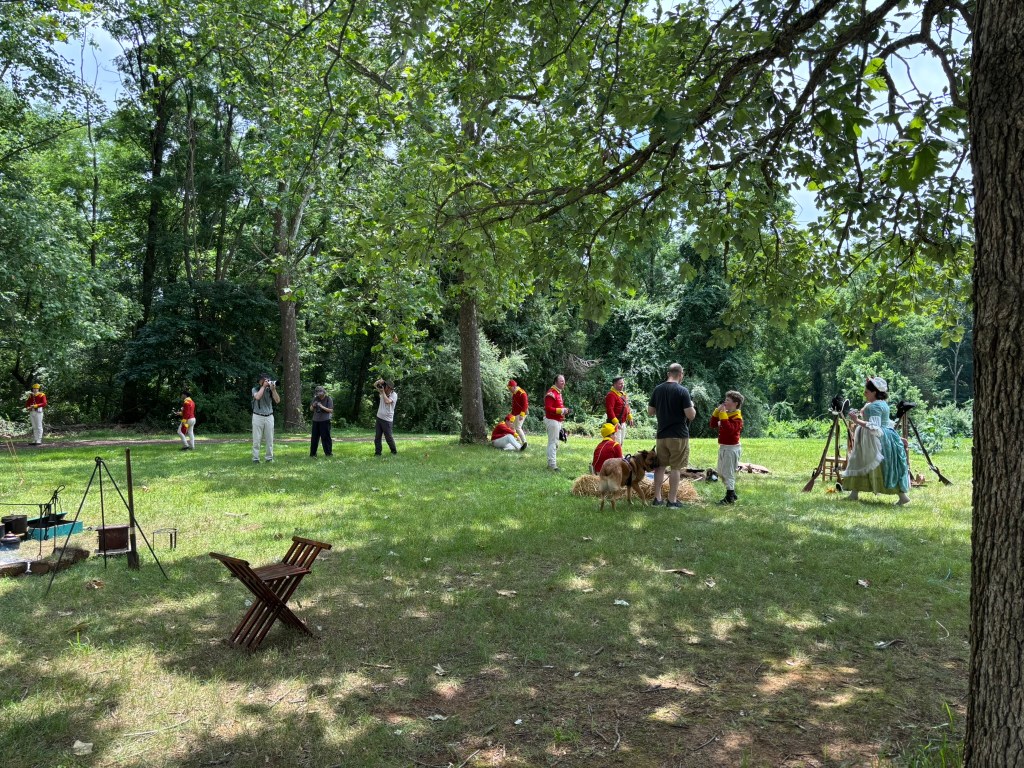
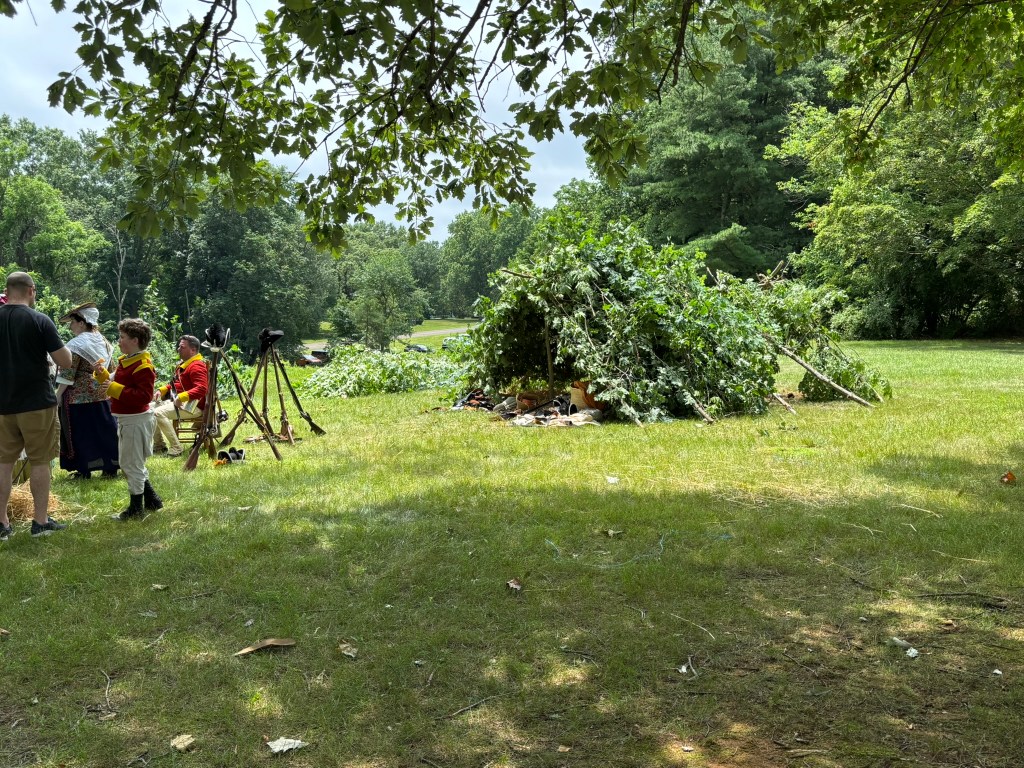
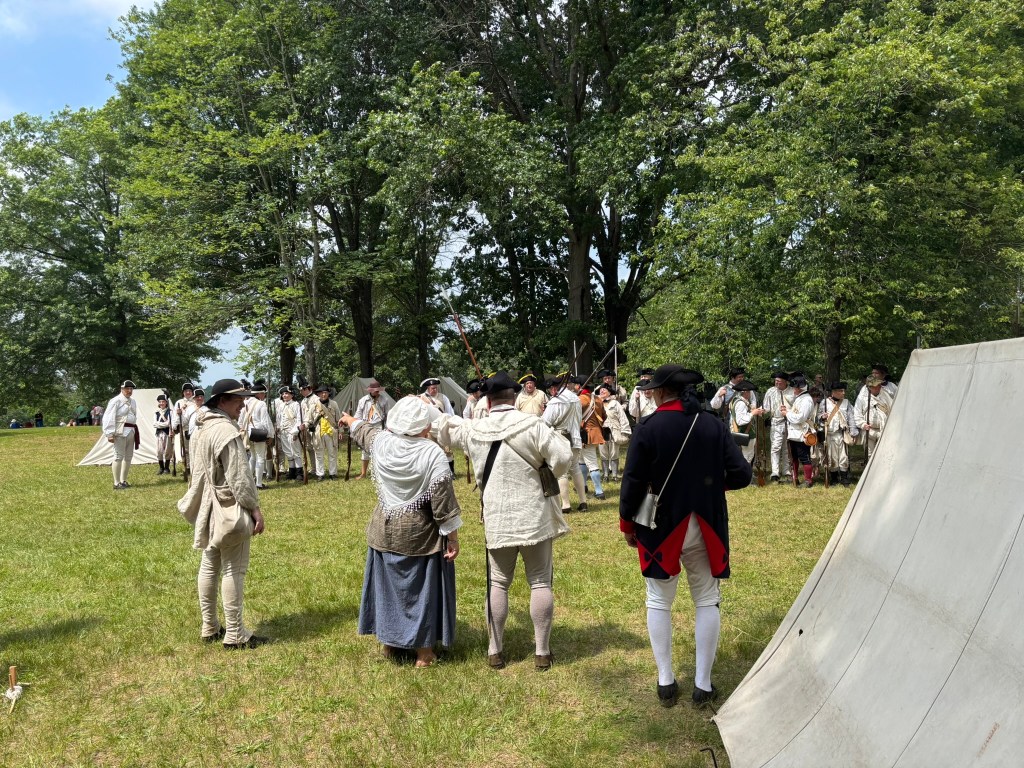
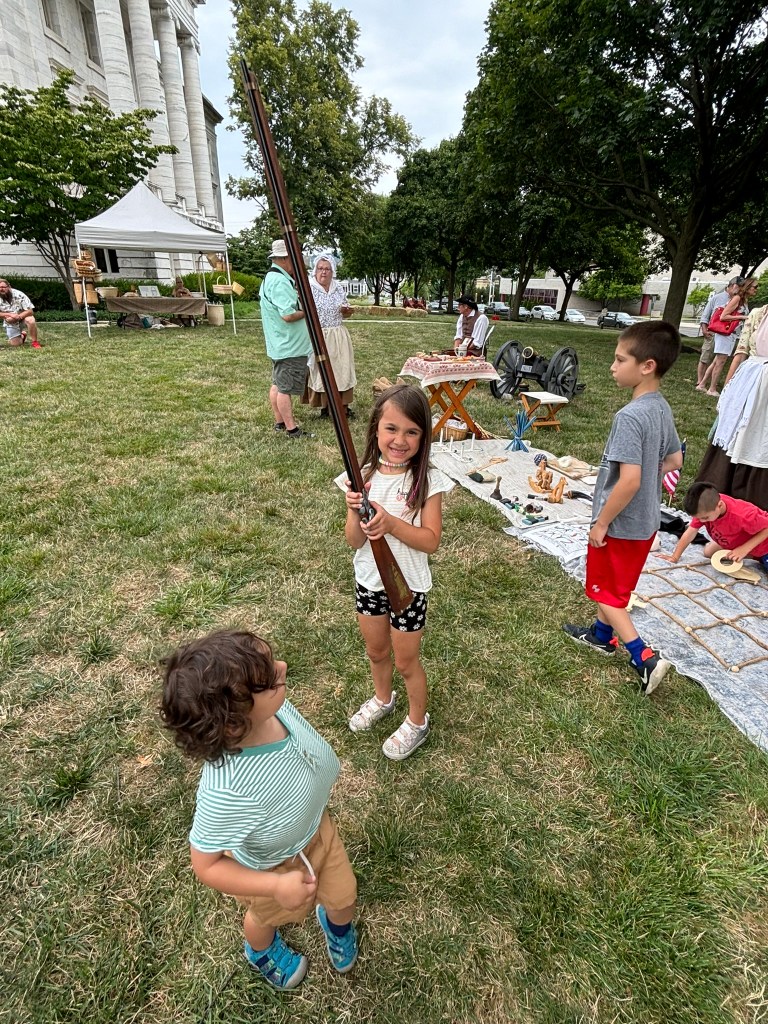
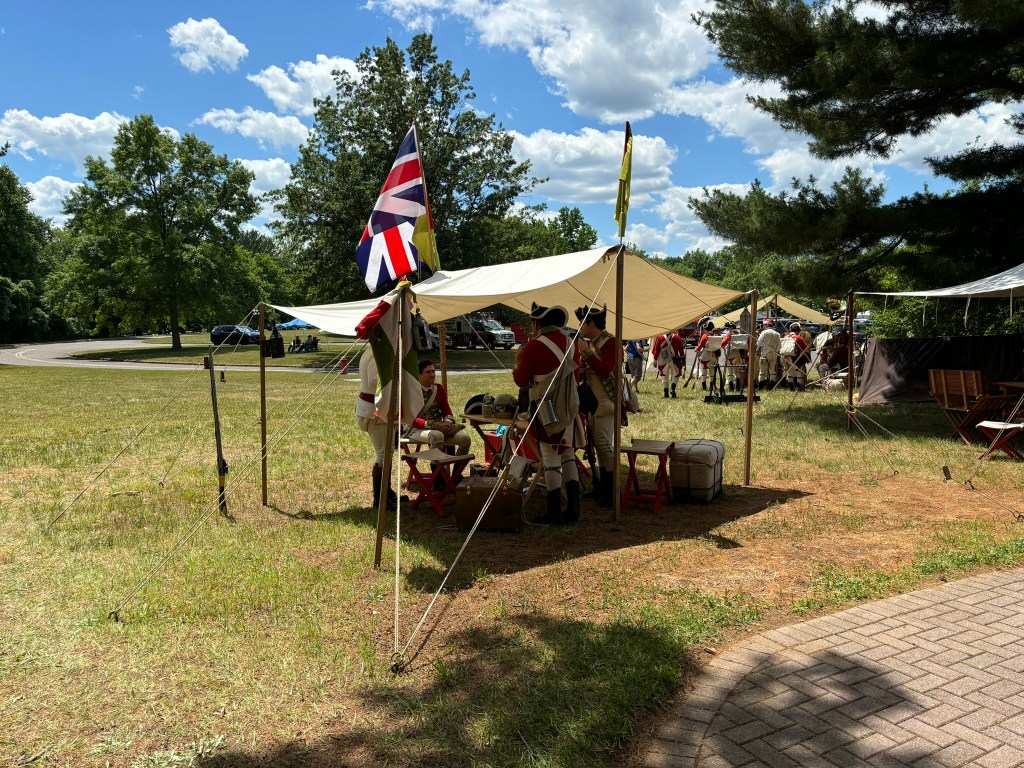
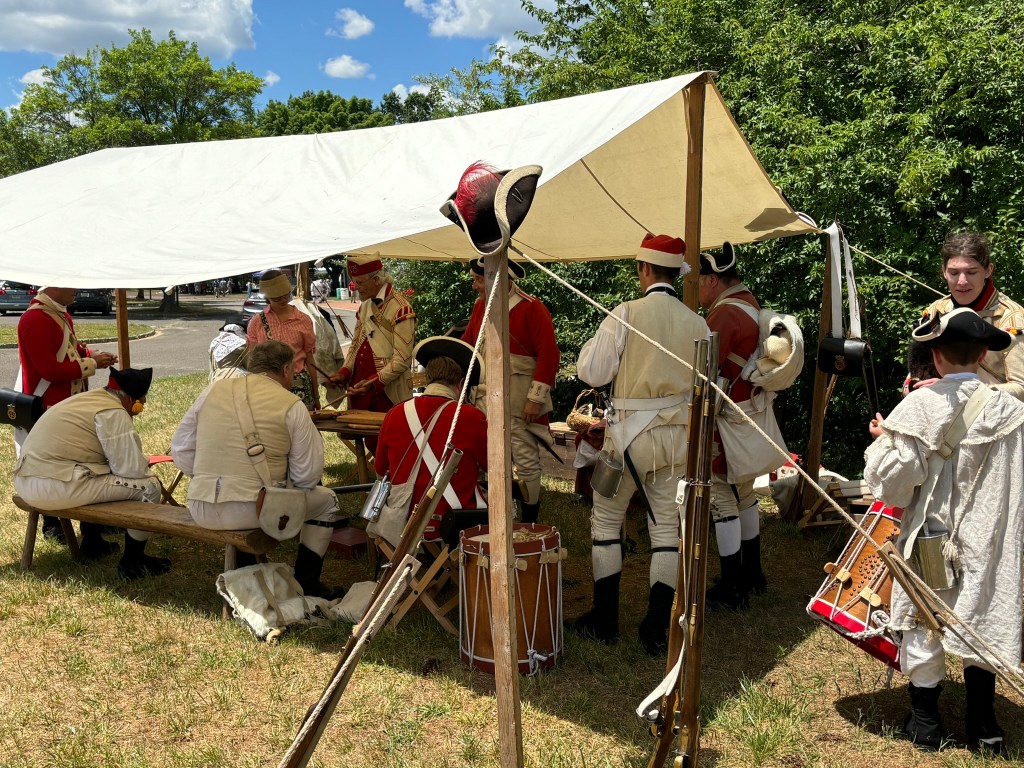
The grounds of Mindowaskin Park were transformed into a Revolutionary War encampment, complete with colonial-era games, open-fire cooking demonstrations, and regular drills, marches, and musket firing by soldiers in uniform.
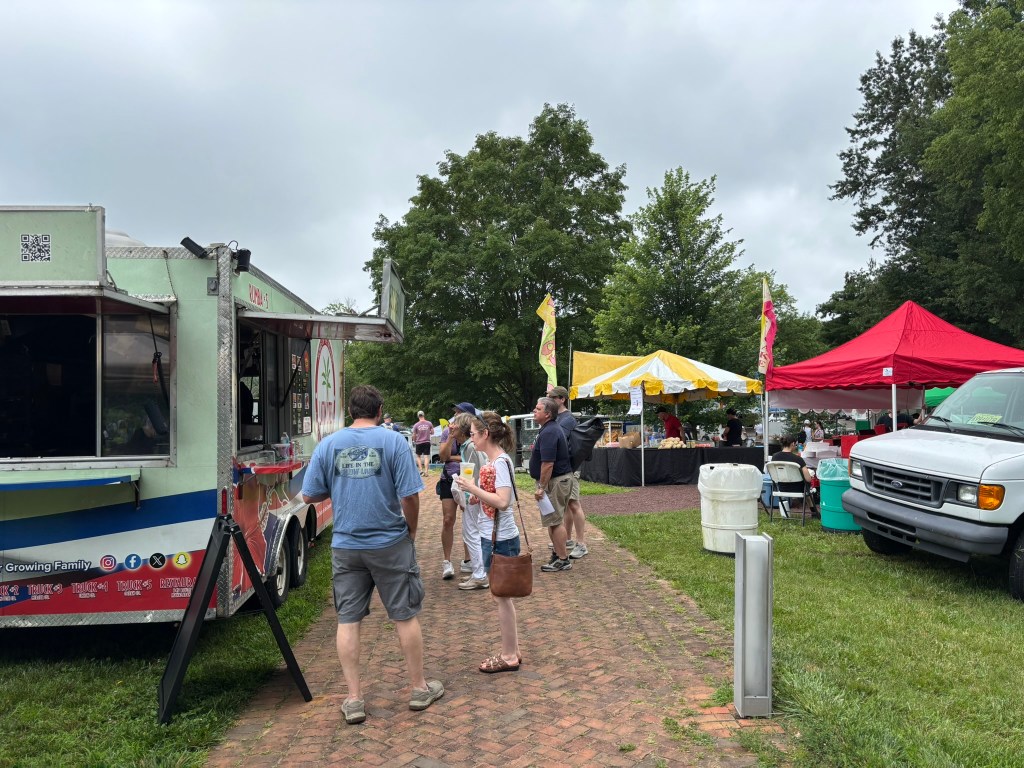
My family and I grabbed lunch from the food truck run by A Taco Affair, and it was delicious. The restaurant has locations in Westfield, Little Falls, and Denville, as well as Savannah, GA. After eating, we continued exploring the event—listening to the fifes and drums, watching musket demonstrations, and chatting with reenactors.
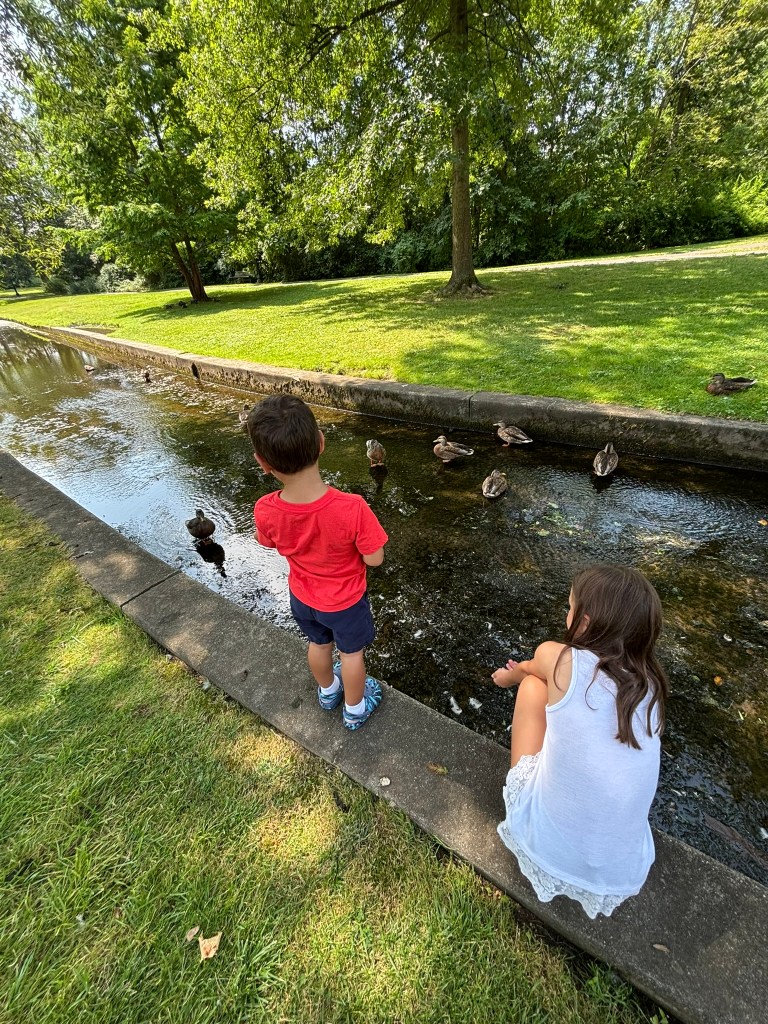
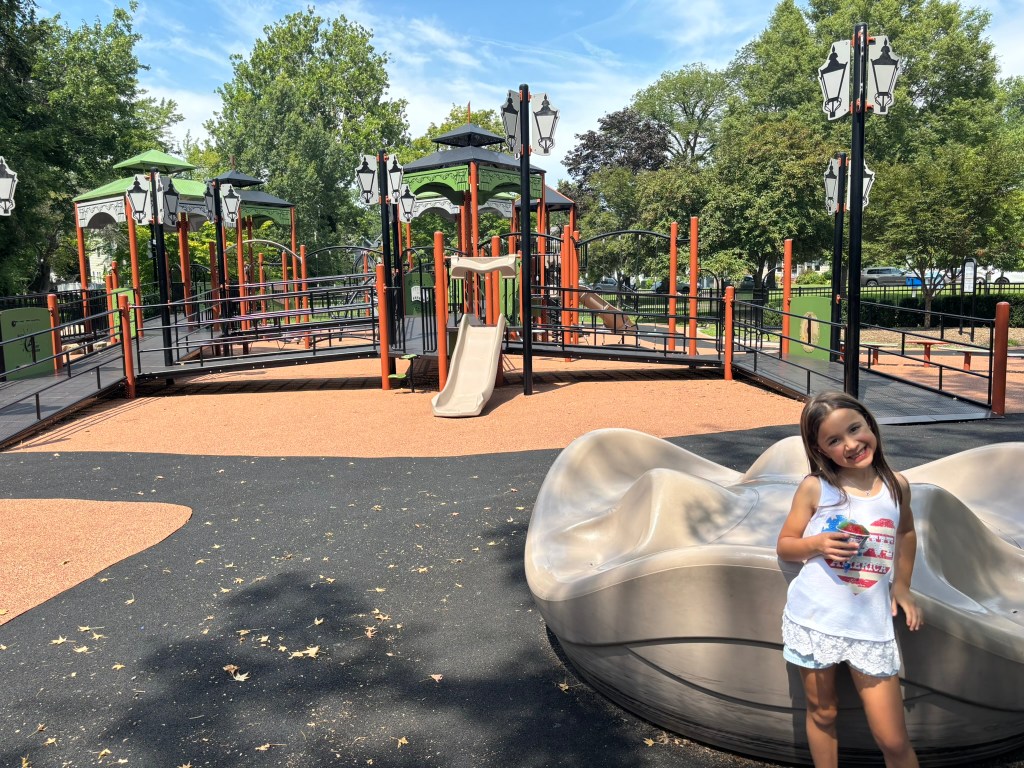
Mindowaskin Park also has a great playground that my kids enjoyed, and they capped off the afternoon with a treat from the ice cream truck on site.
Overall, we had a great time at March to Yorktown Day in Westfield. The event served as a great reminder of New Jersey’s rich Revolutionary War history and the key role the state played in America’s independence. The Washington-Rochambeau Revolutionary Route Association once again did an excellent job organizing the day and bringing the community together. This year’s program was even larger than the one my daughter and I attended two years ago, and it was great to see such a strong turnout. As we approach the 250th anniversary of our nation’s birth, make sure to check out events coming up in your local community.
Check out my Instagram and Facebook pages as I’ll be uploading videos of the event.
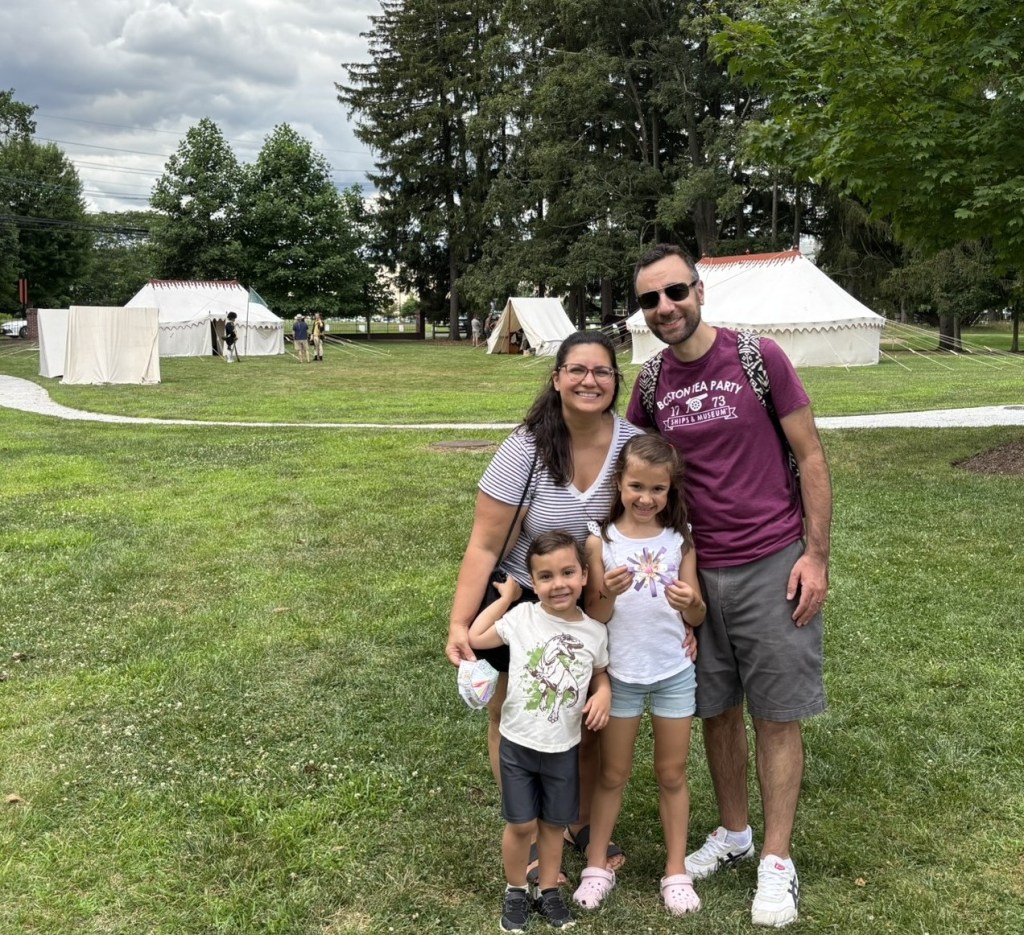
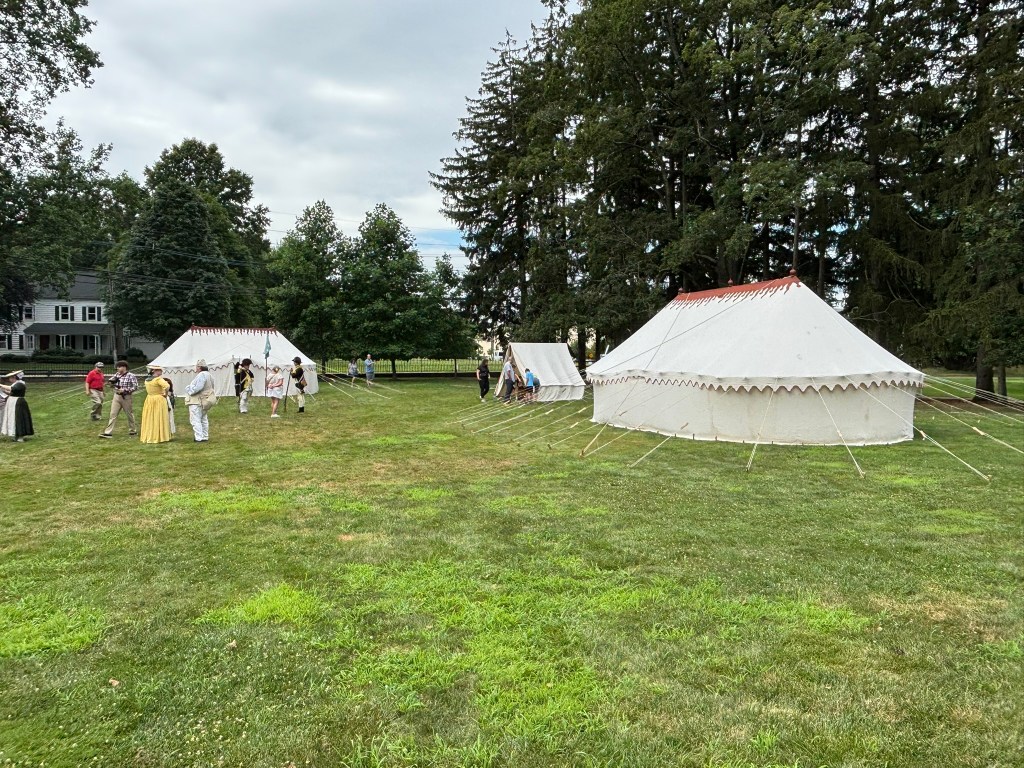
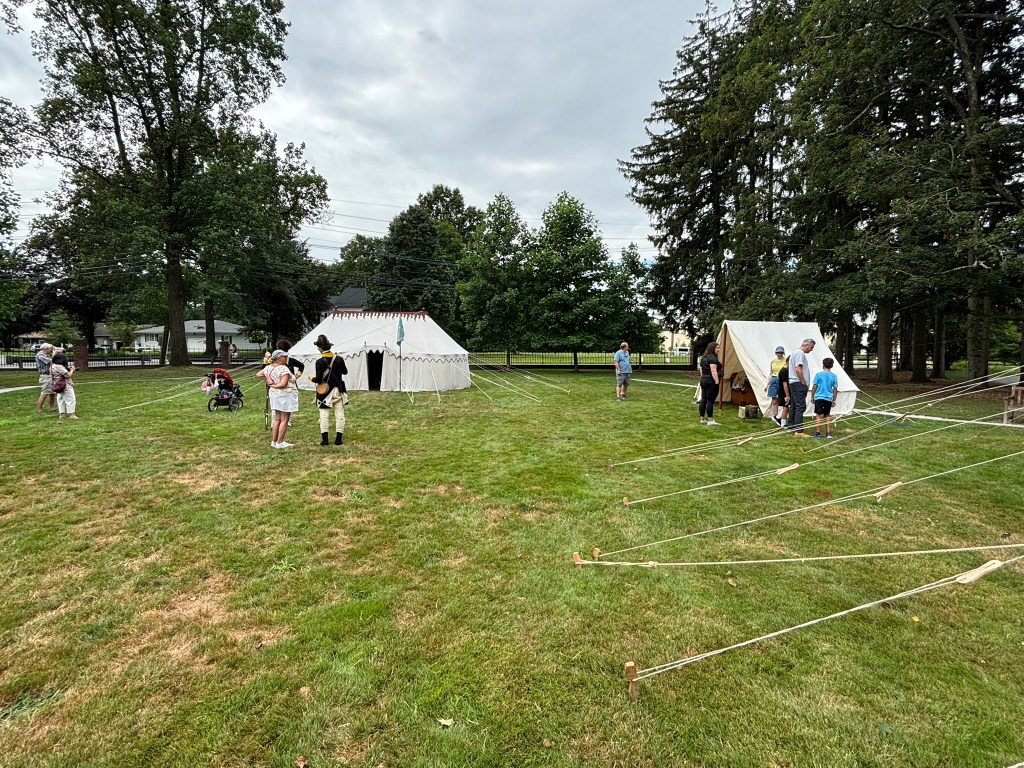
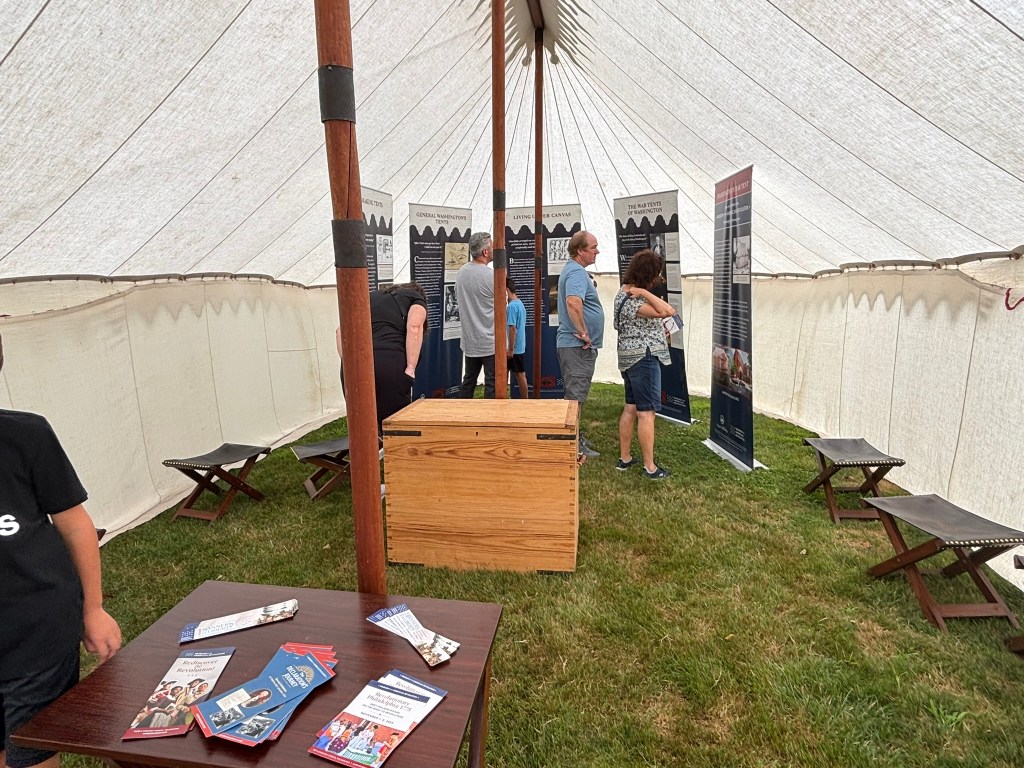
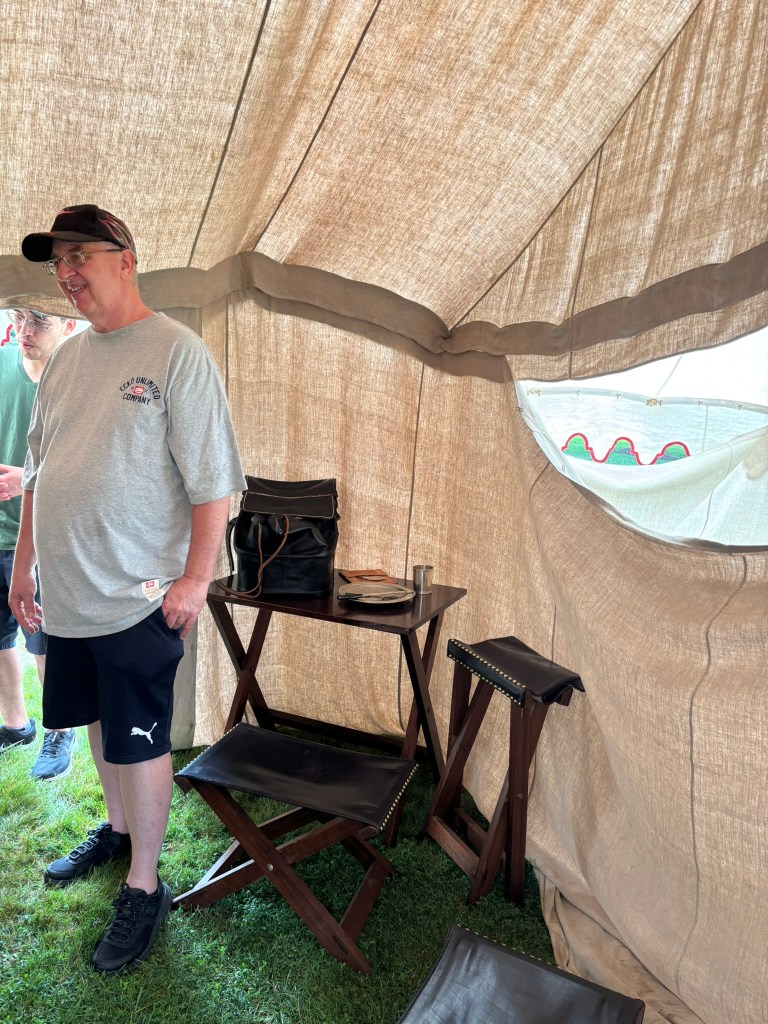
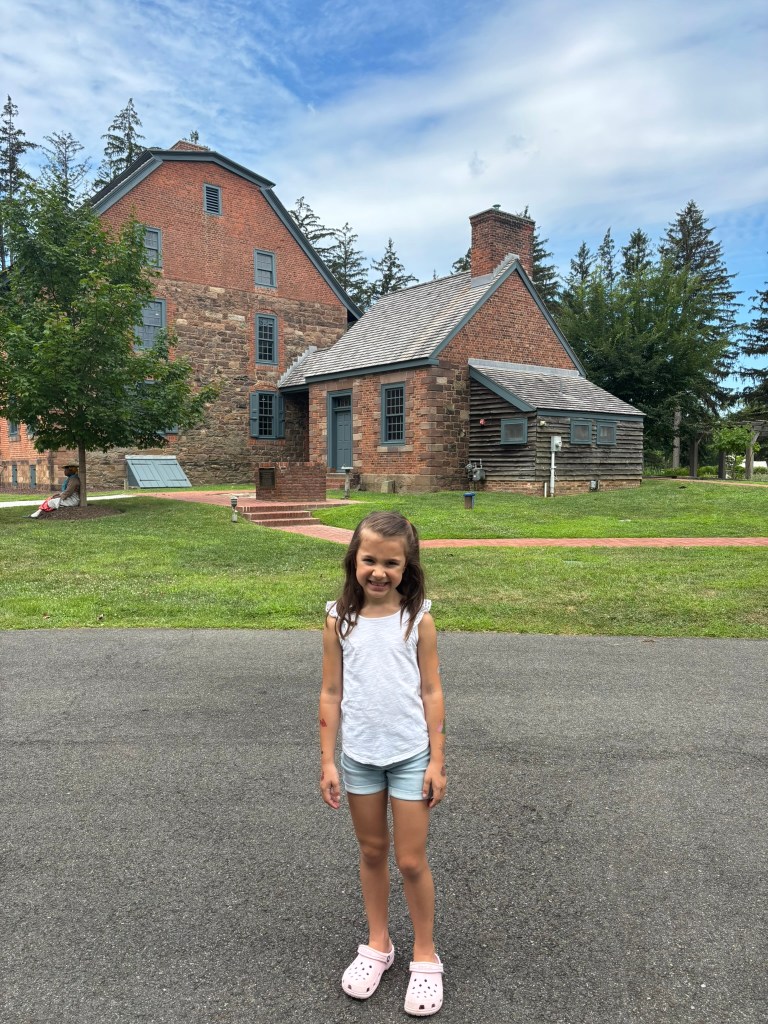
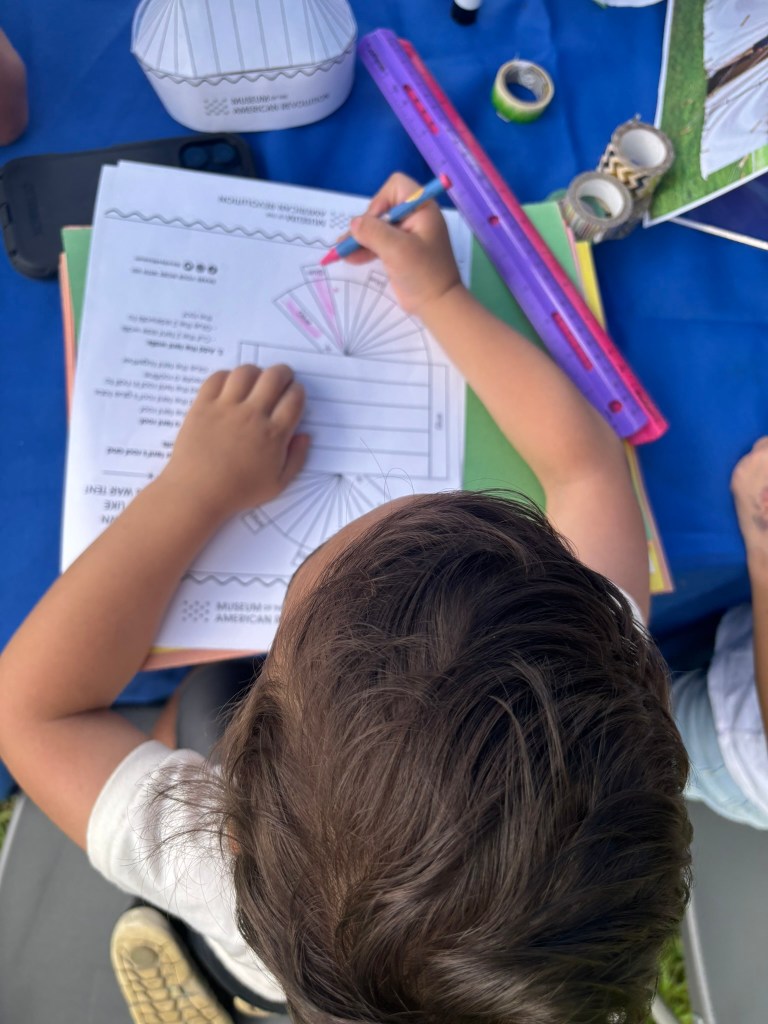
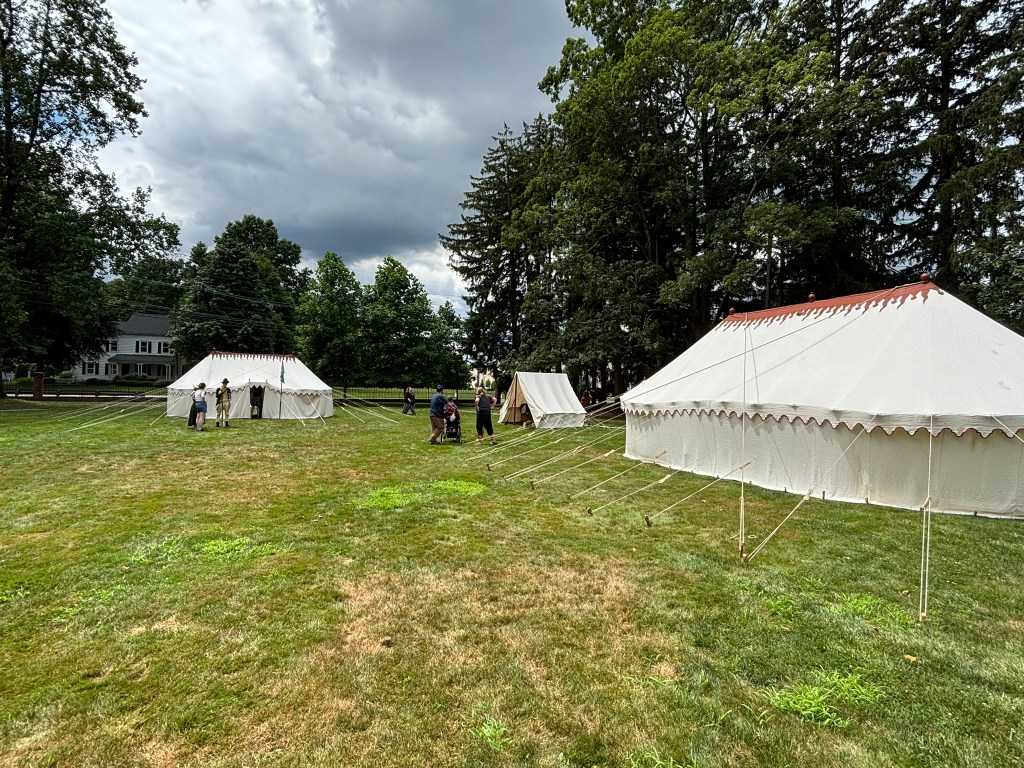
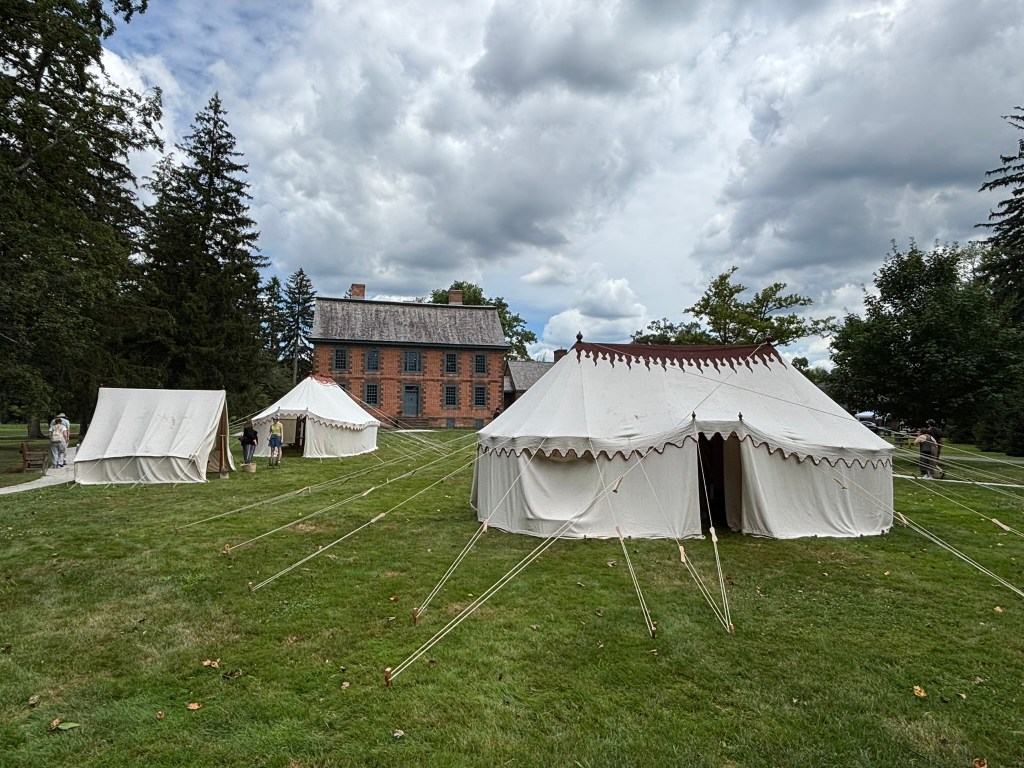
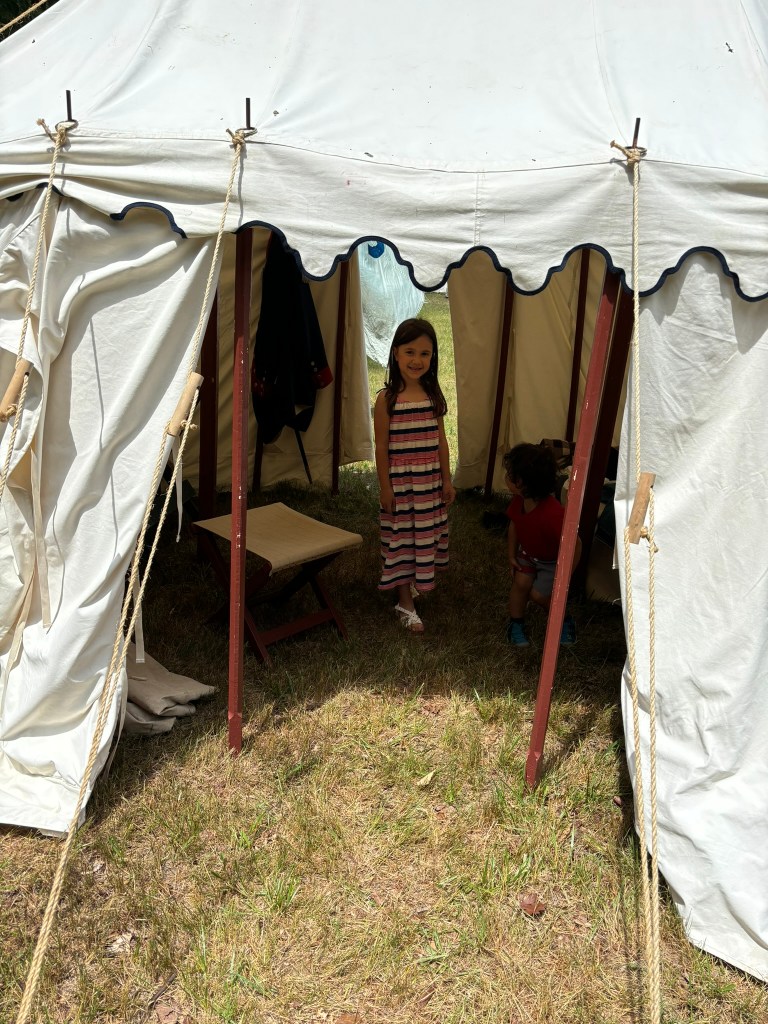
My family and I visited the First Oval Office Project at the Dey Mansion in Wayne, NJ on Saturday, July 19th. The event, which ran all weekend, was curated by the Museum of the American Revolution in Philadelphia and featured a replica of George Washington’s War Tent from the American Revolution. This wasn’t our first time experiencing the tent. In July 2023, as I shared in my post “Washington’s War Tent and the Ford Mansion,” we attended the First Oval Office Project at Washington’s Headquarters in Morristown, NJ. We also had the chance to see the original tent at the Museum of the American Revolution during our trip to Philadelphia in February 2024. You can read more about that trip [HERE]. This recent visit was another great opportunity to see history come to life and engage with historical reenactors.
George Washington’s War Tent
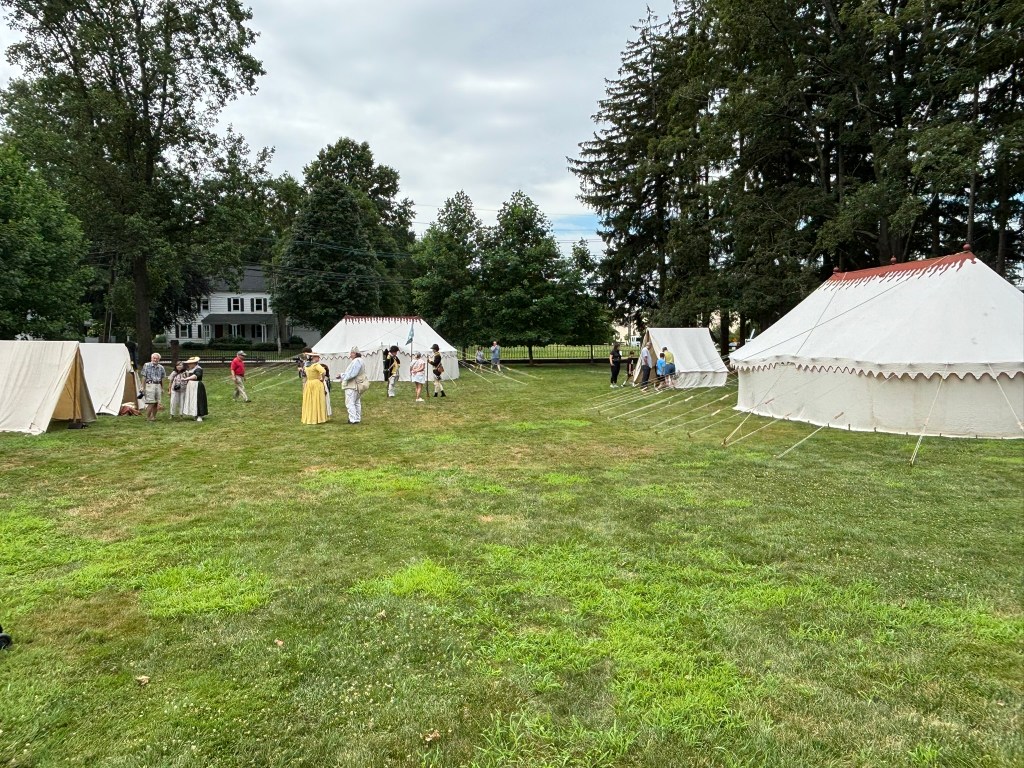
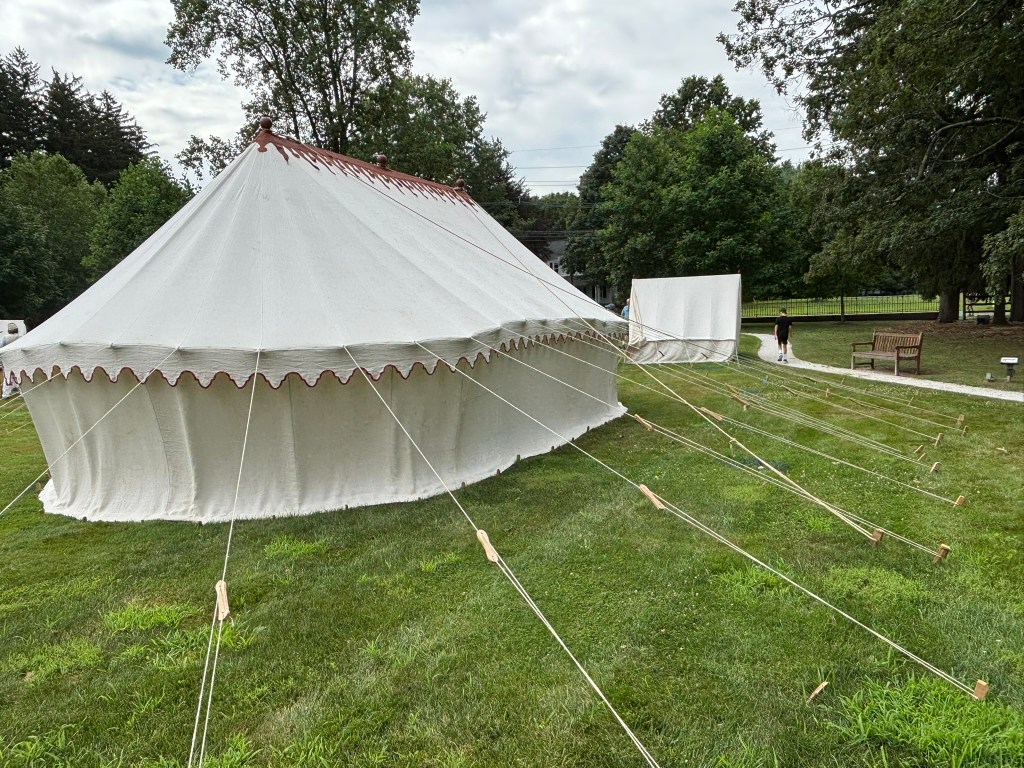
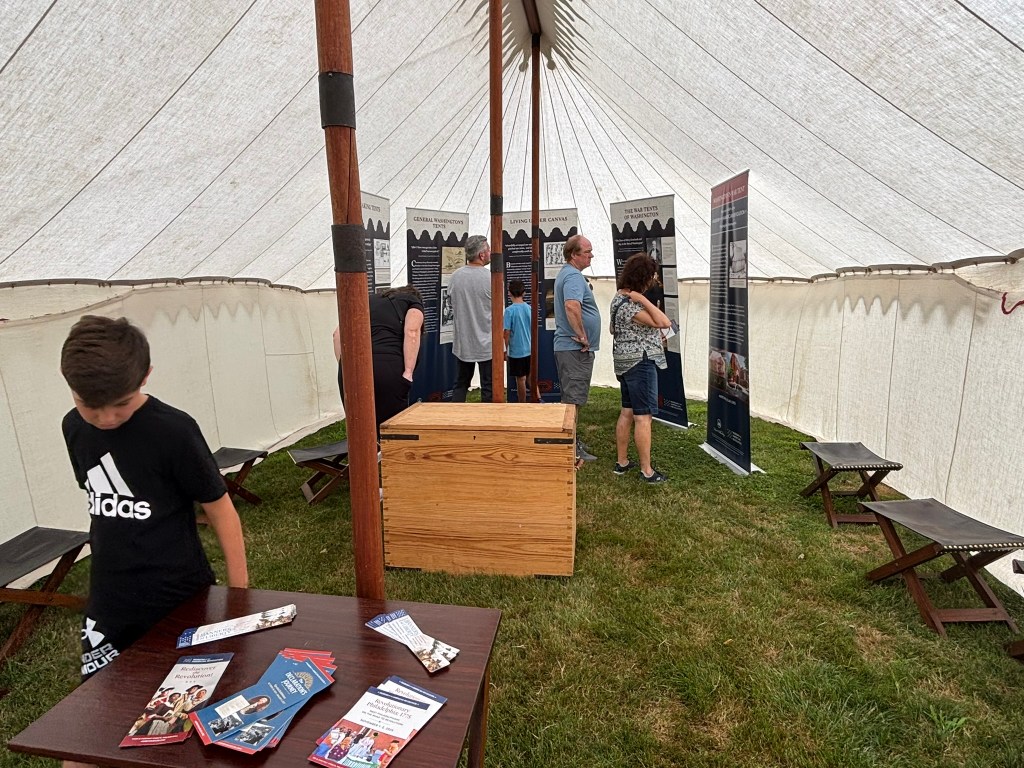
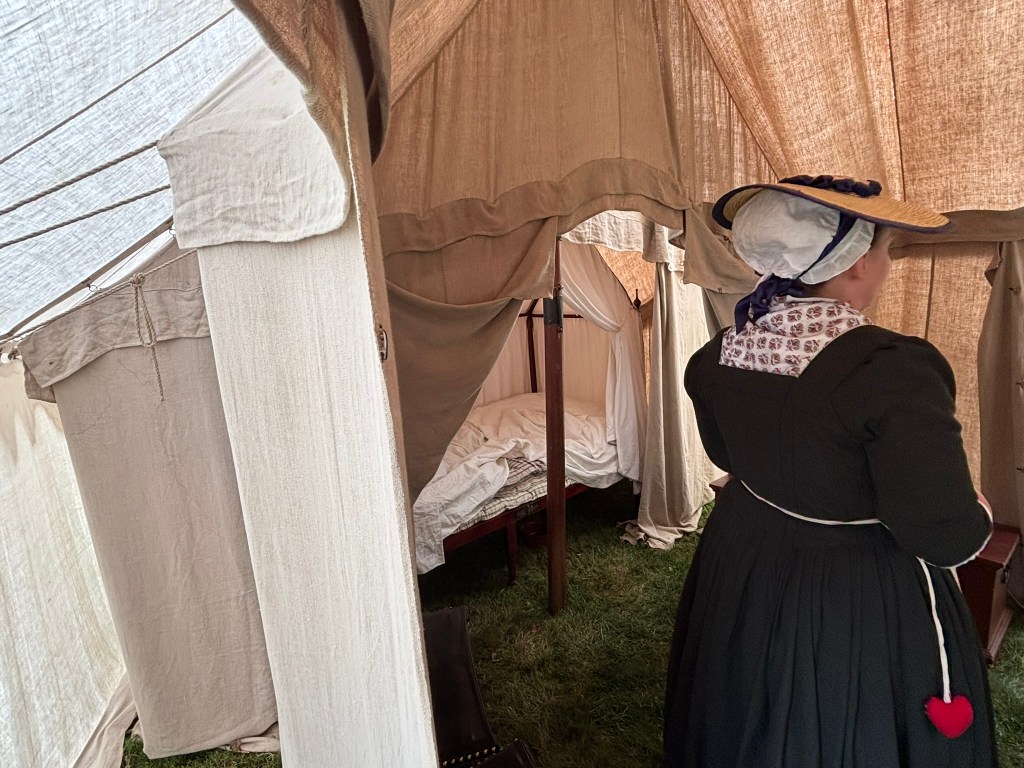
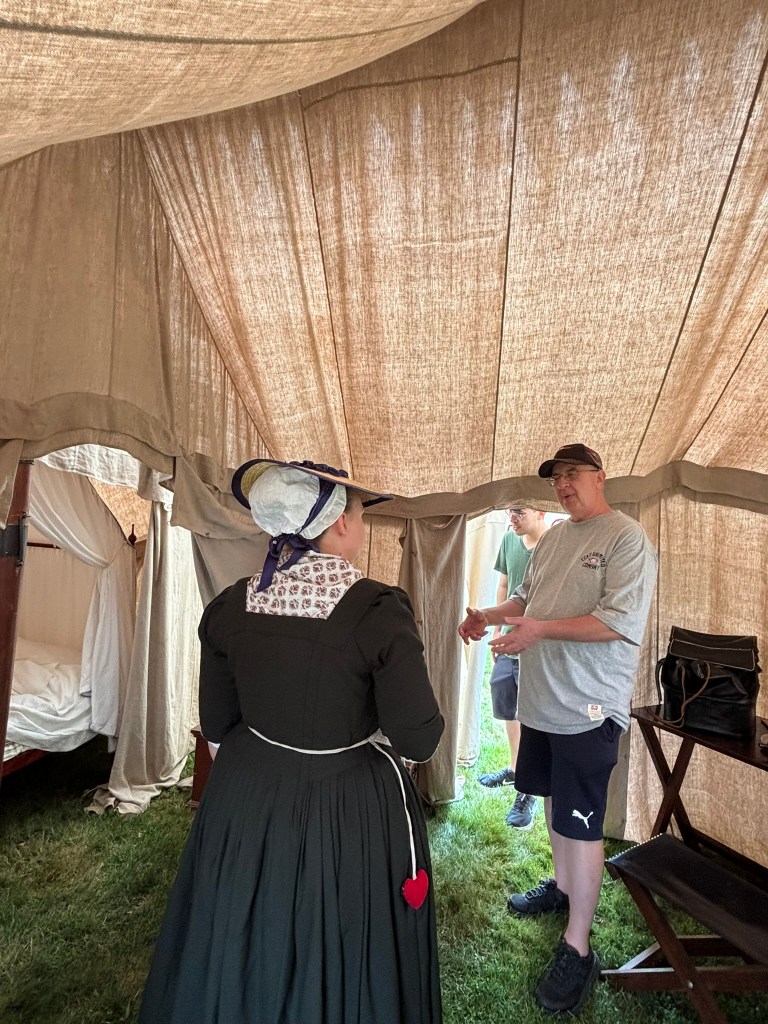
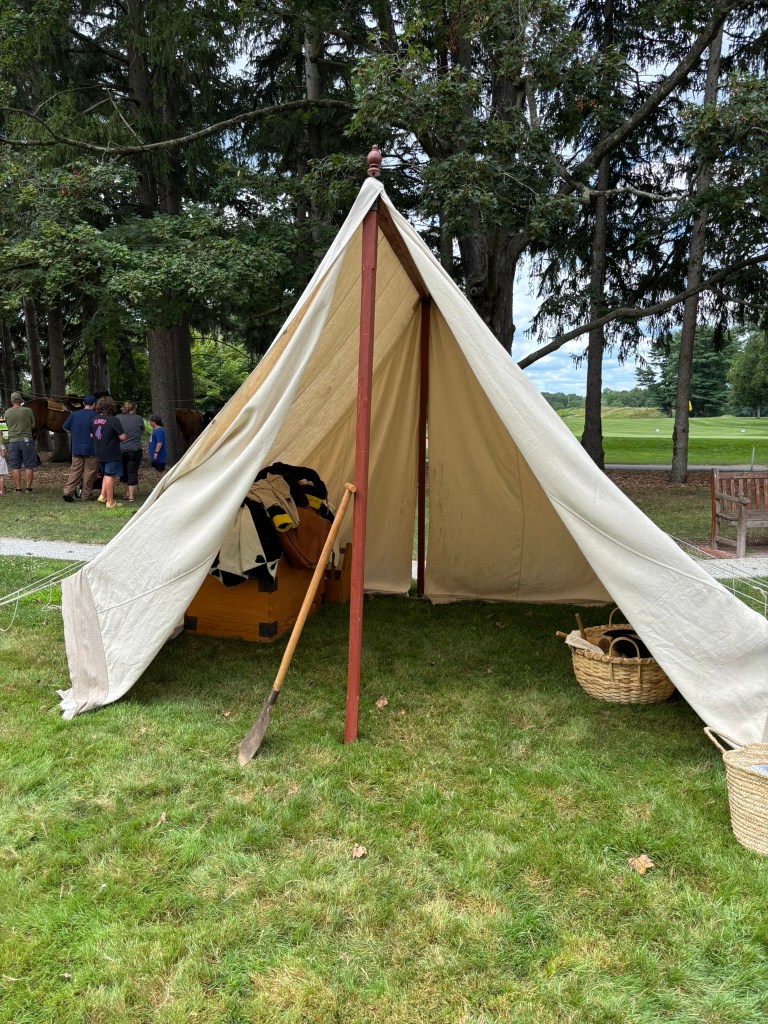
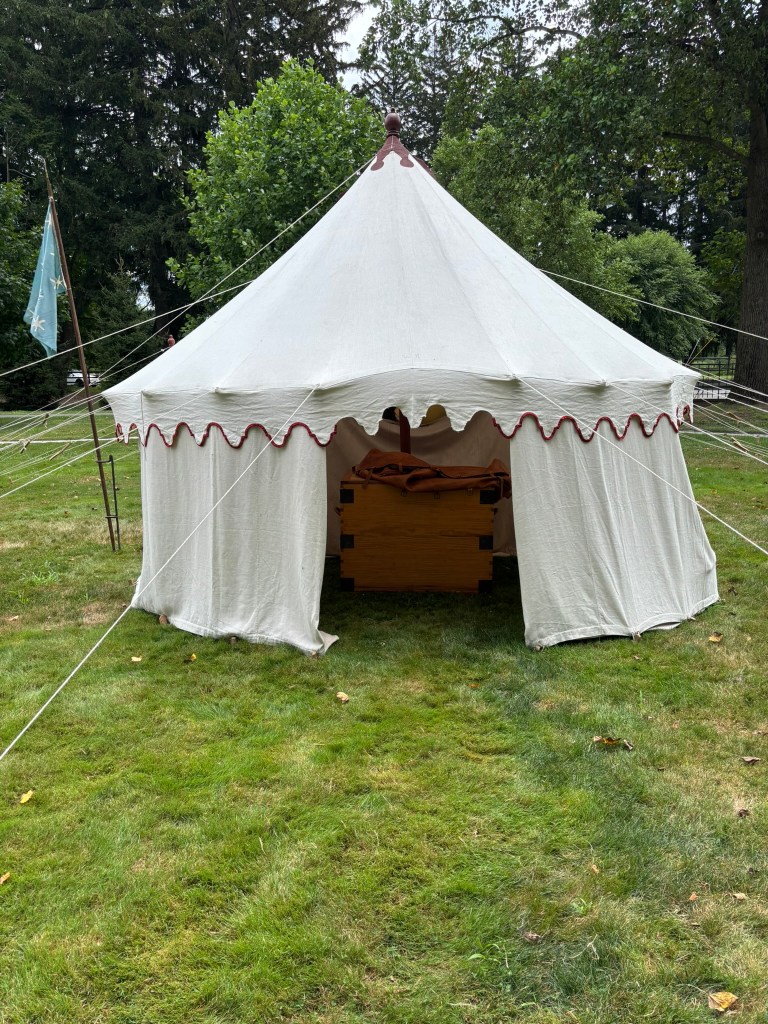
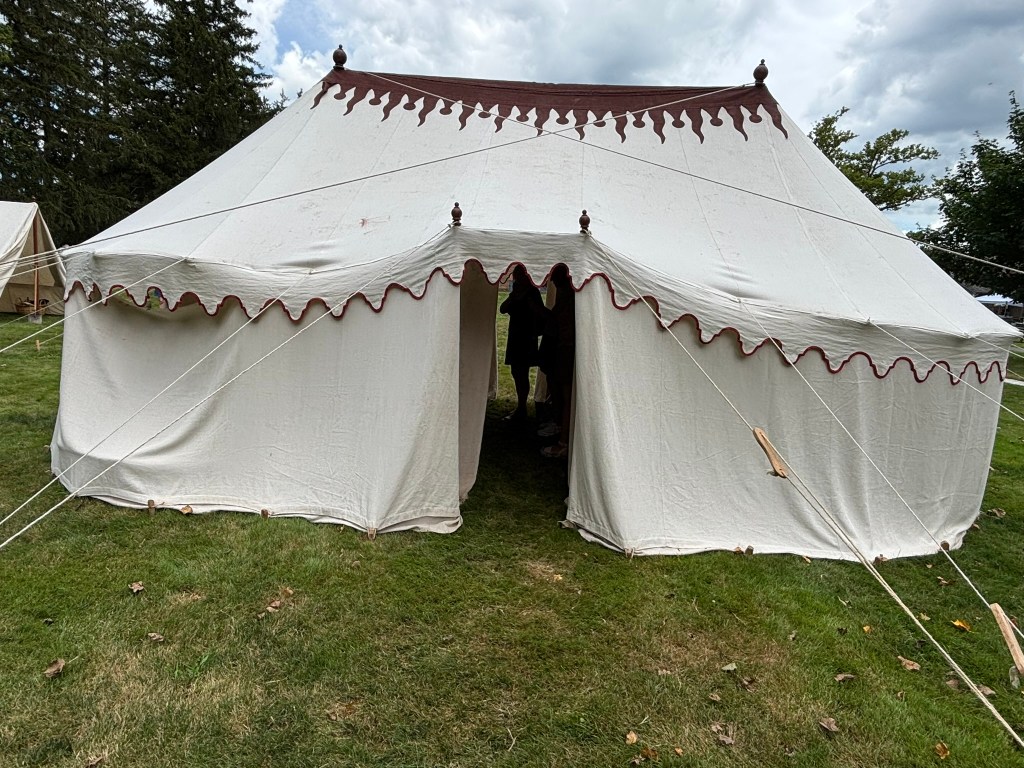
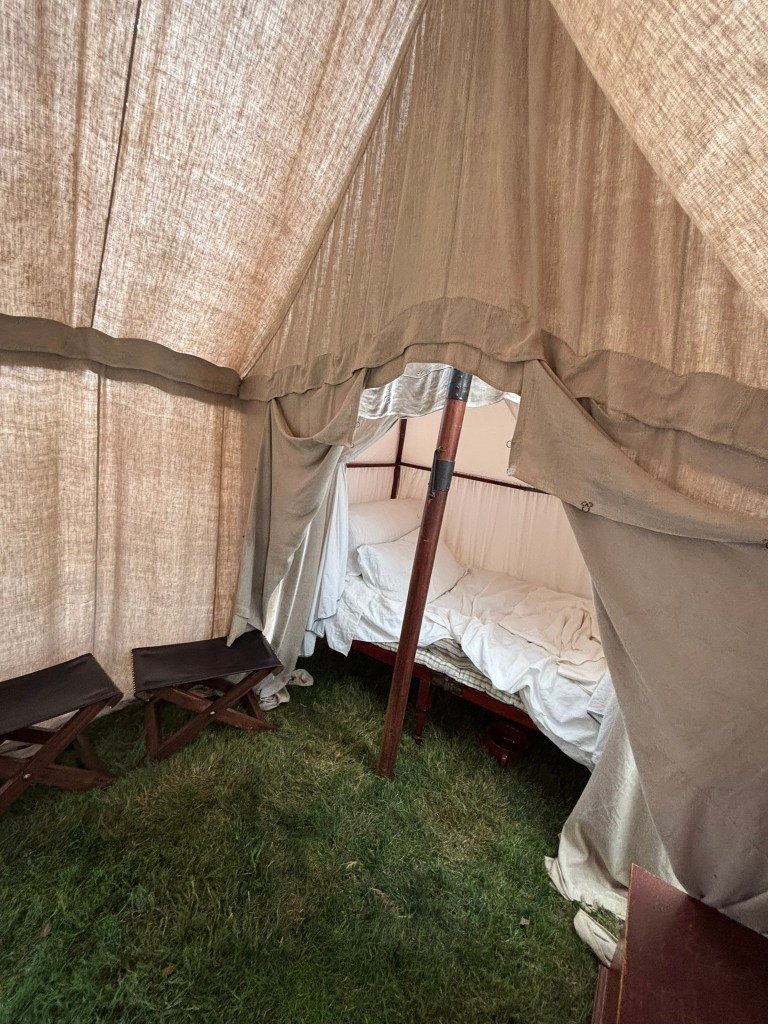
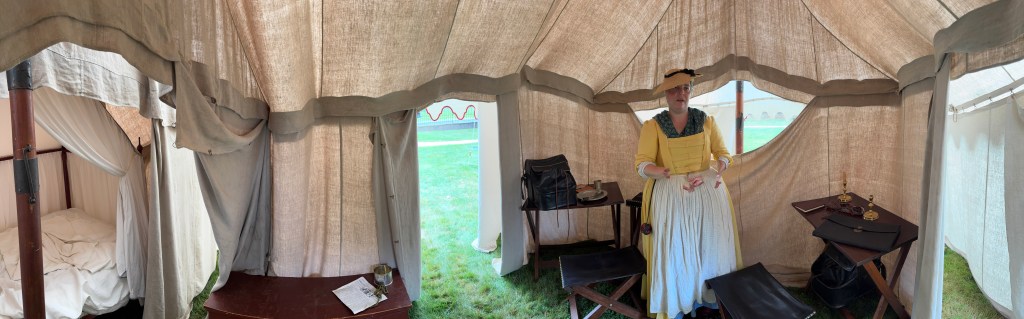
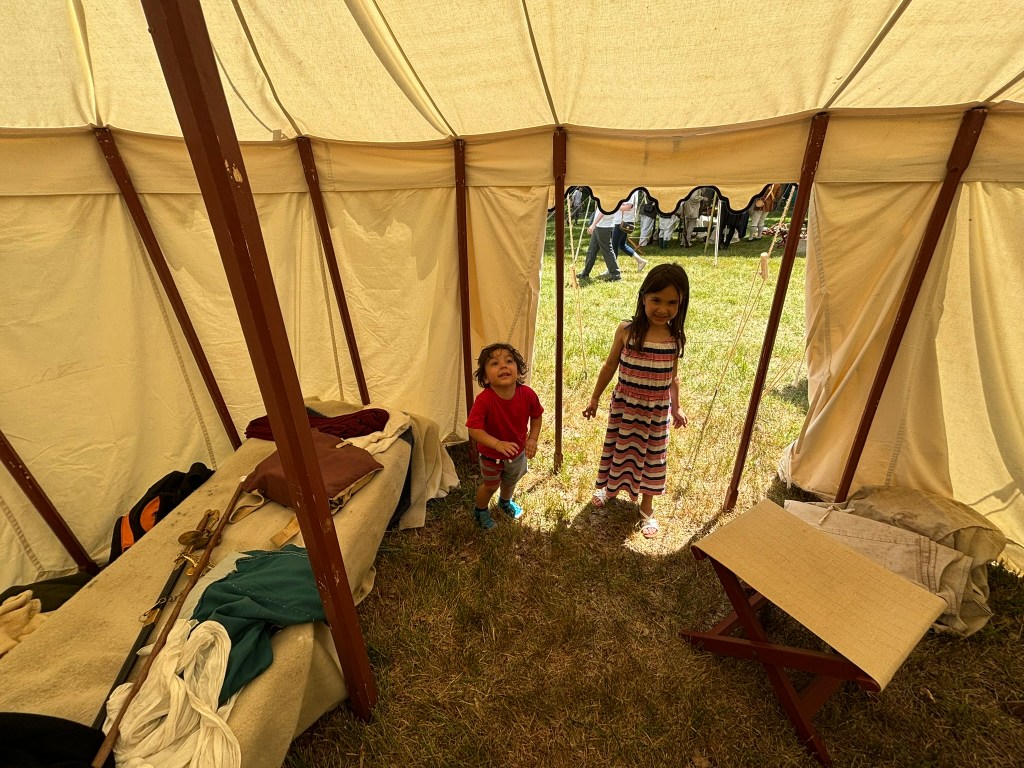
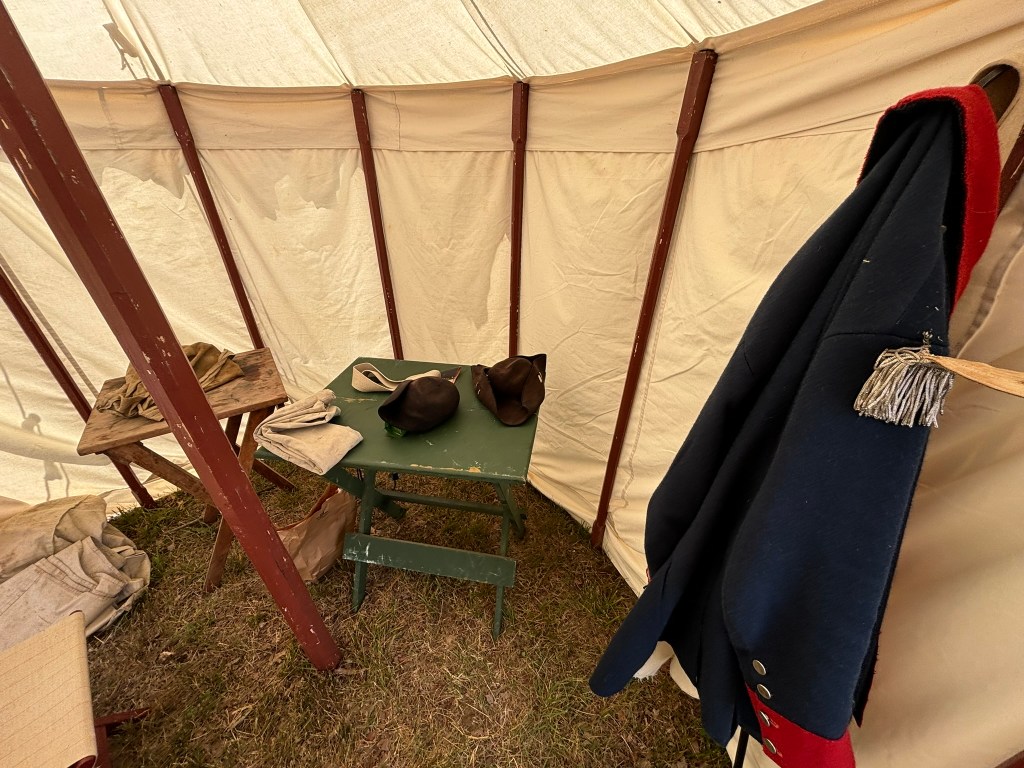
The War Tent on display at the Dey Mansion was a reproduction of George Washington’s original field tent, which has been preserved and is now housed at the Museum of the American Revolution in Philadelphia. After Washington’s death, the tent was passed down through Martha Washington’s descendants until it was acquired in 1909 by Reverend W. Herbert Burk, the founder of the museum’s collection. While the original tent can be viewed at the museum, visitors aren’t permitted to go inside it. This full-scale replica was created to give people a sense of what it was like inside Washington’s mobile headquarters during the Revolutionary War. It served as both a workspace—where he and his aides handled military business and correspondence—and a place to sleep while on campaign.
Our Day
Demonstrations
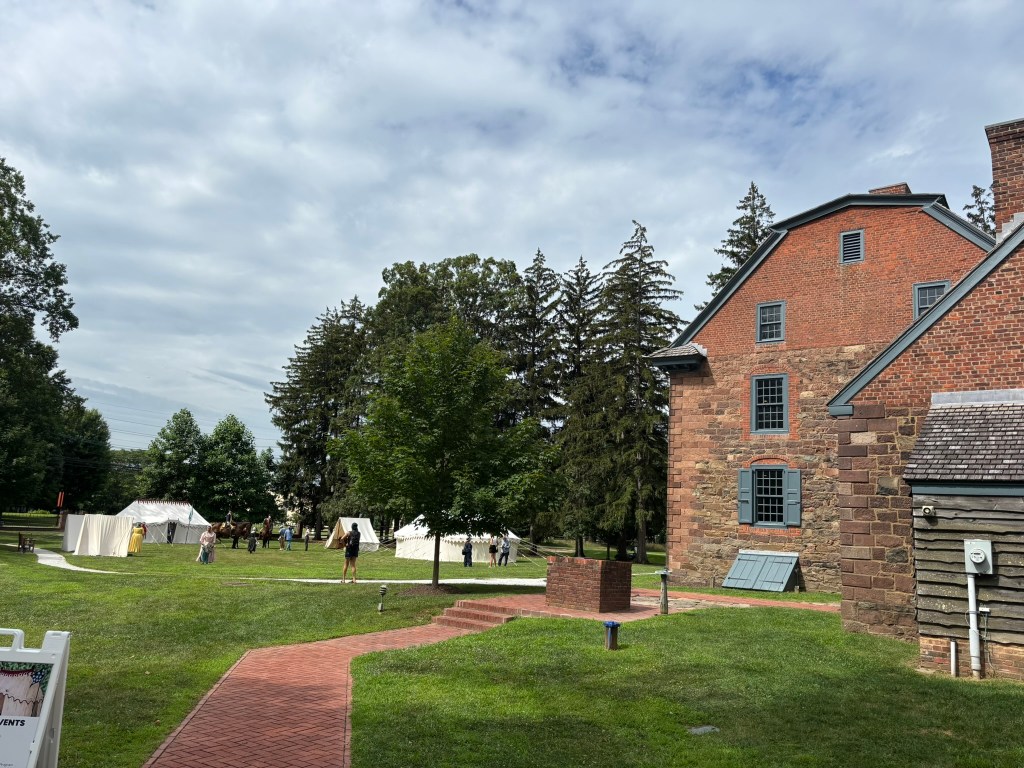
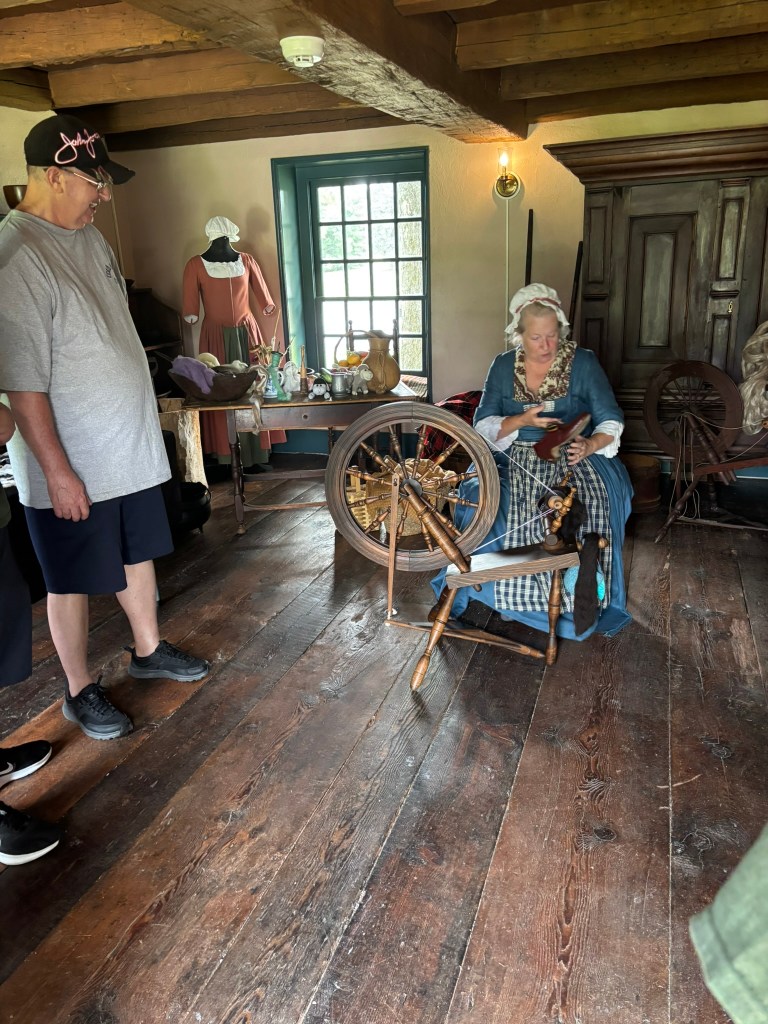
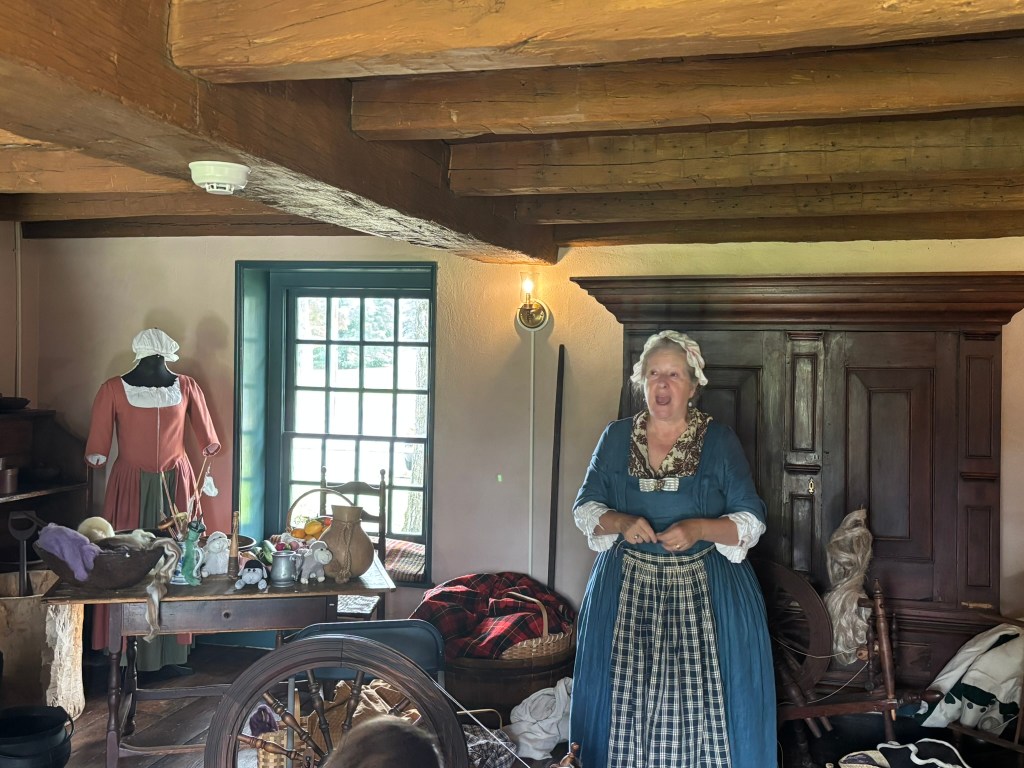
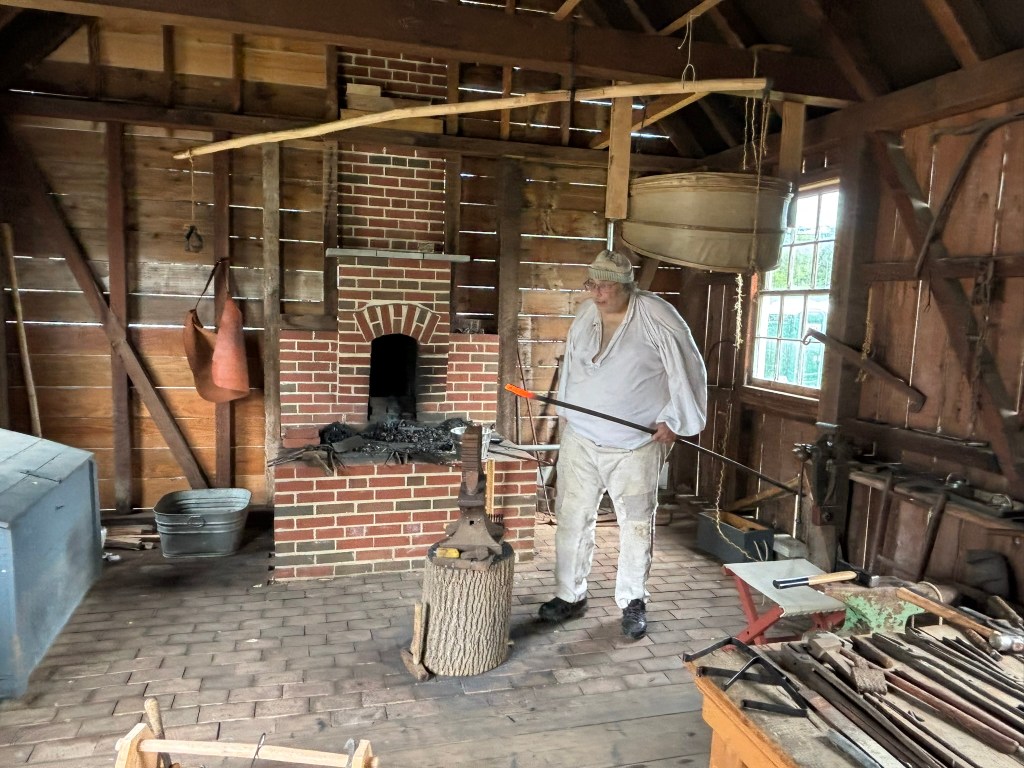
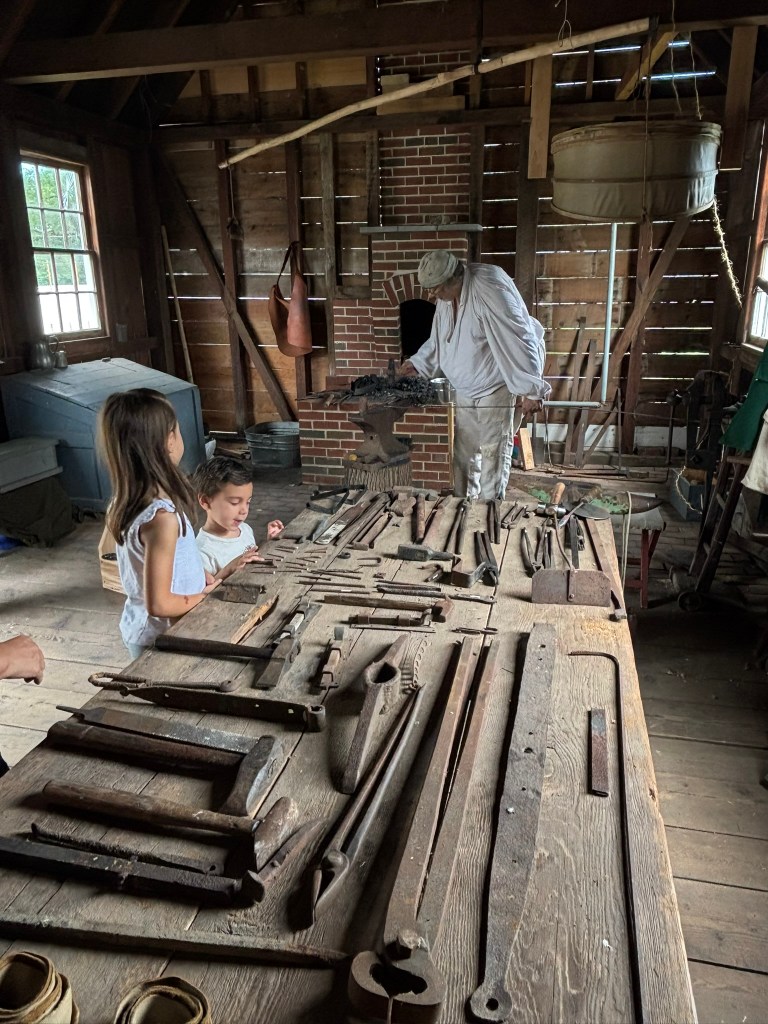
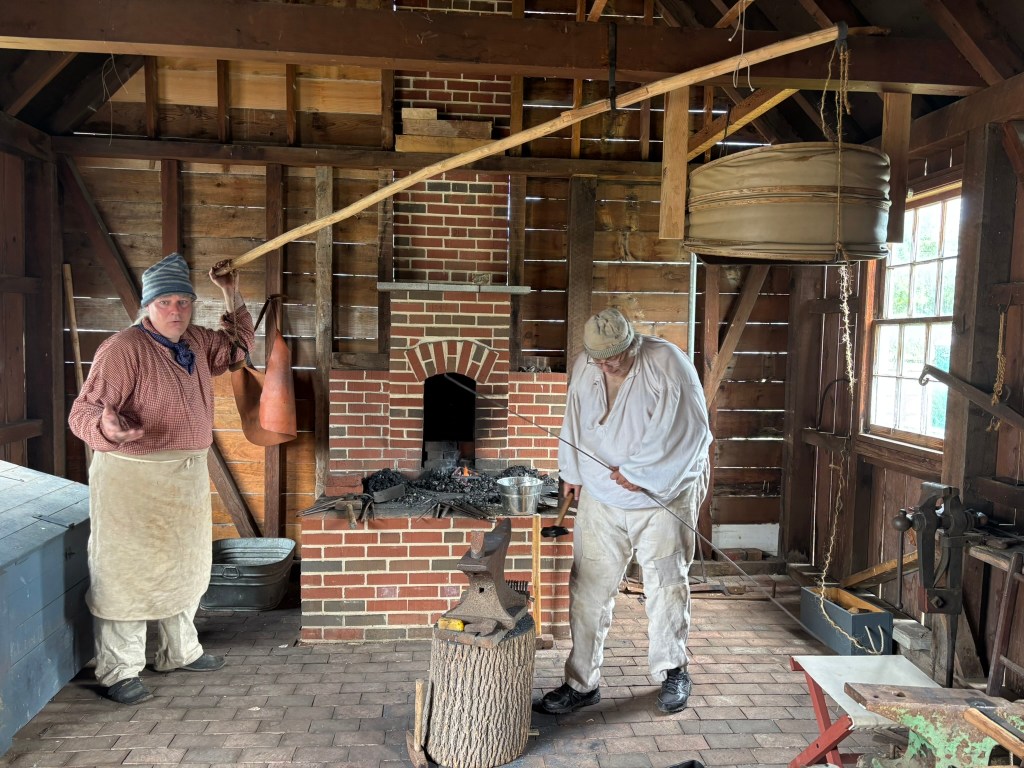
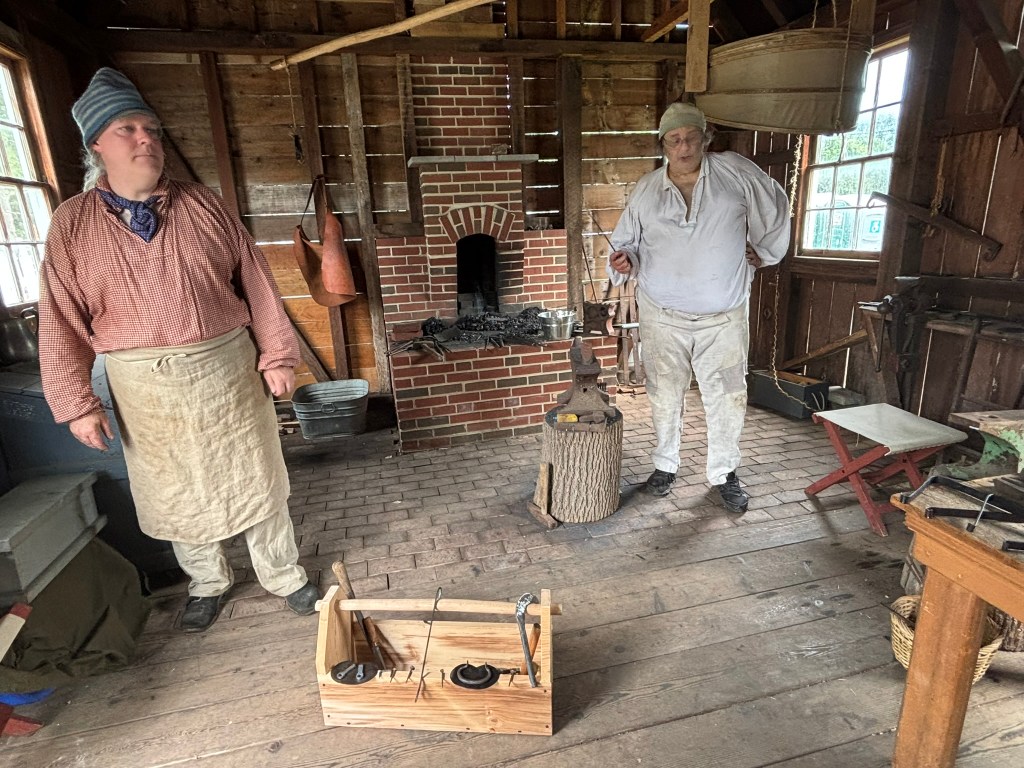
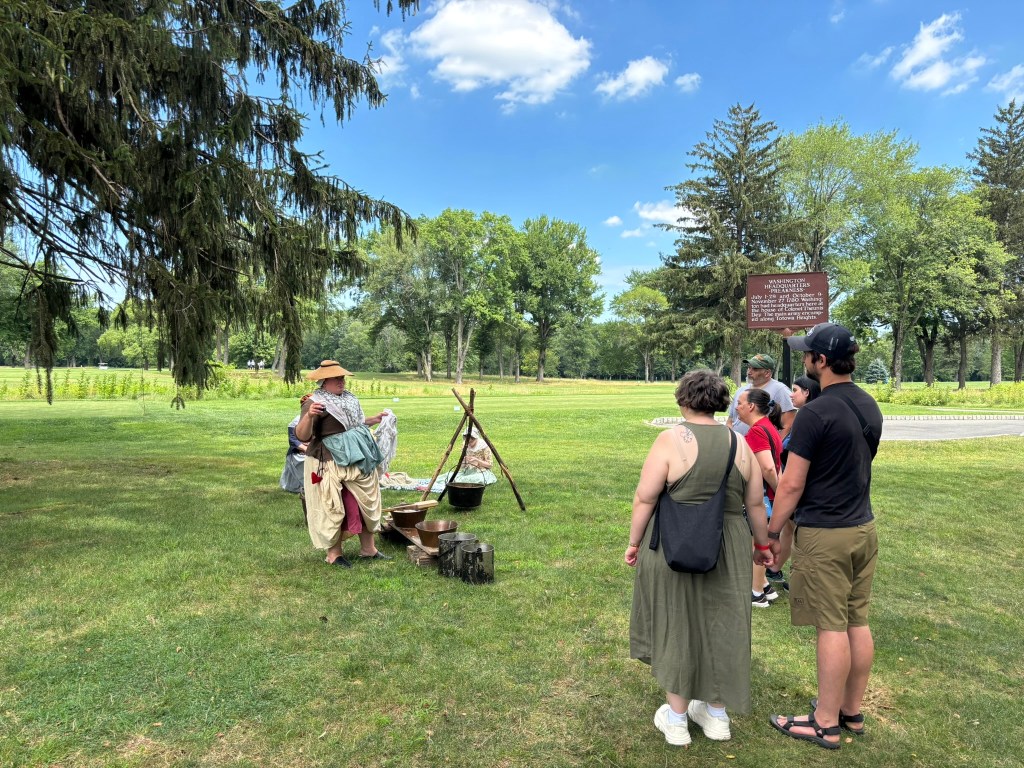
We arrived at the Dey Mansion a little before 10:30 a.m. and began by exploring several of the programs and demonstrations happening on the mansion grounds. Our first stop was a demonstration on 18th-century weaving, followed by a visit to the blacksmith’s shop, where the historical reenactors shared fascinating insights into the techniques and tools used by blacksmiths during the Revolutionary era.
Second New Jersey Regiment, Helm’s Company
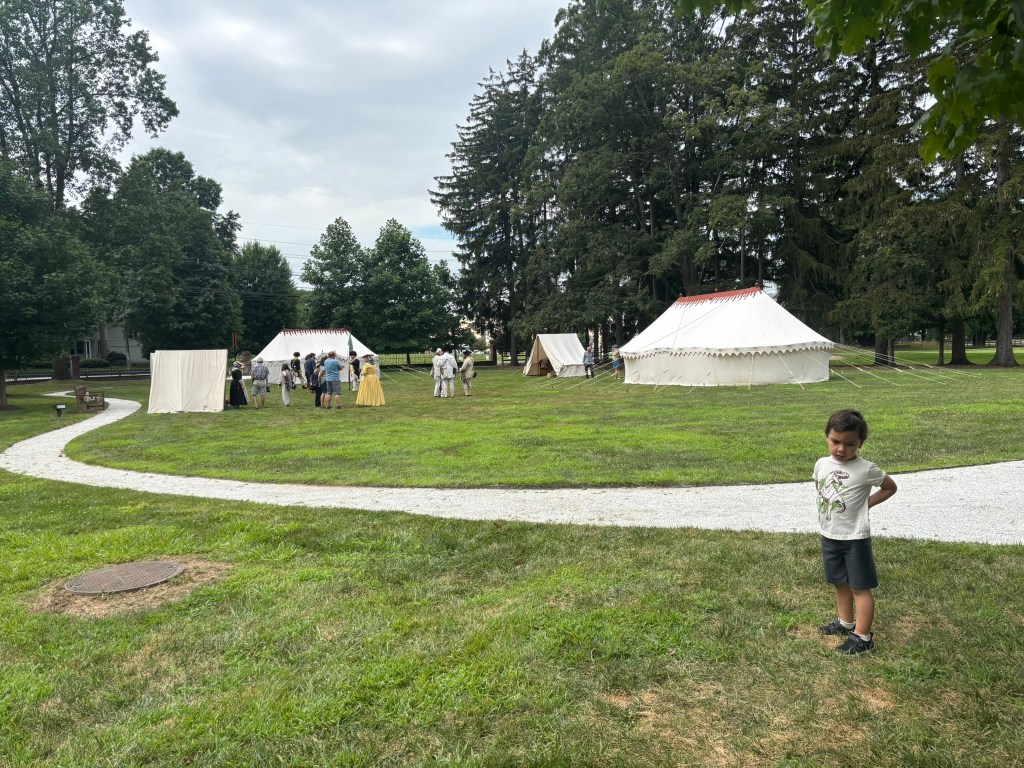
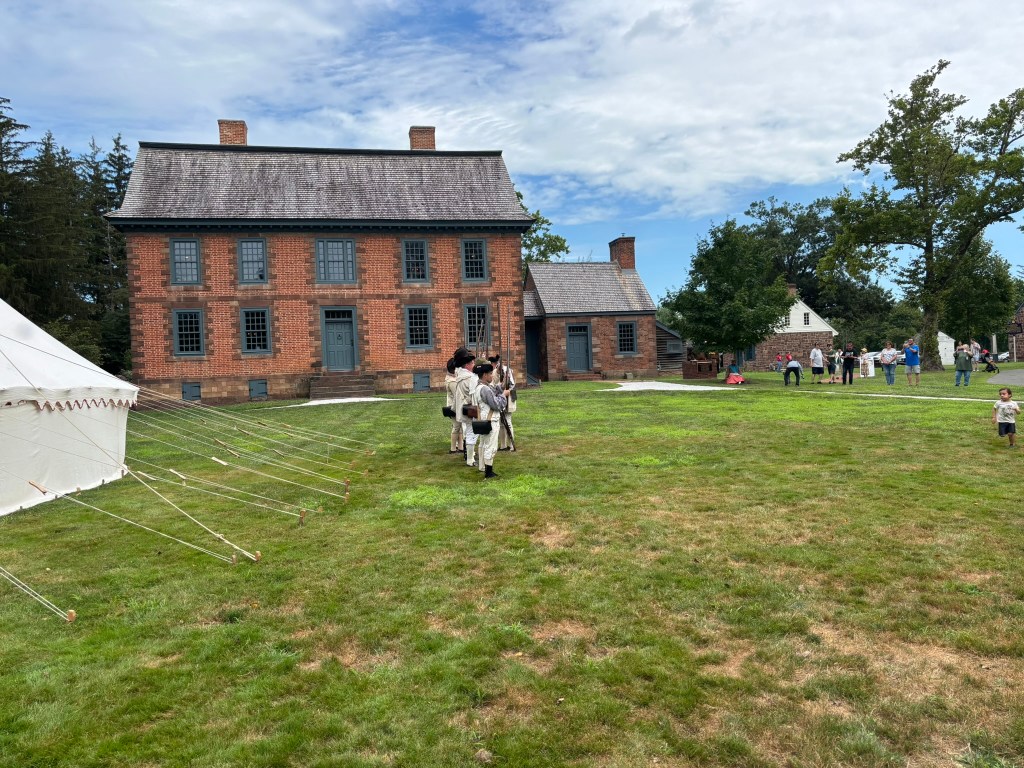
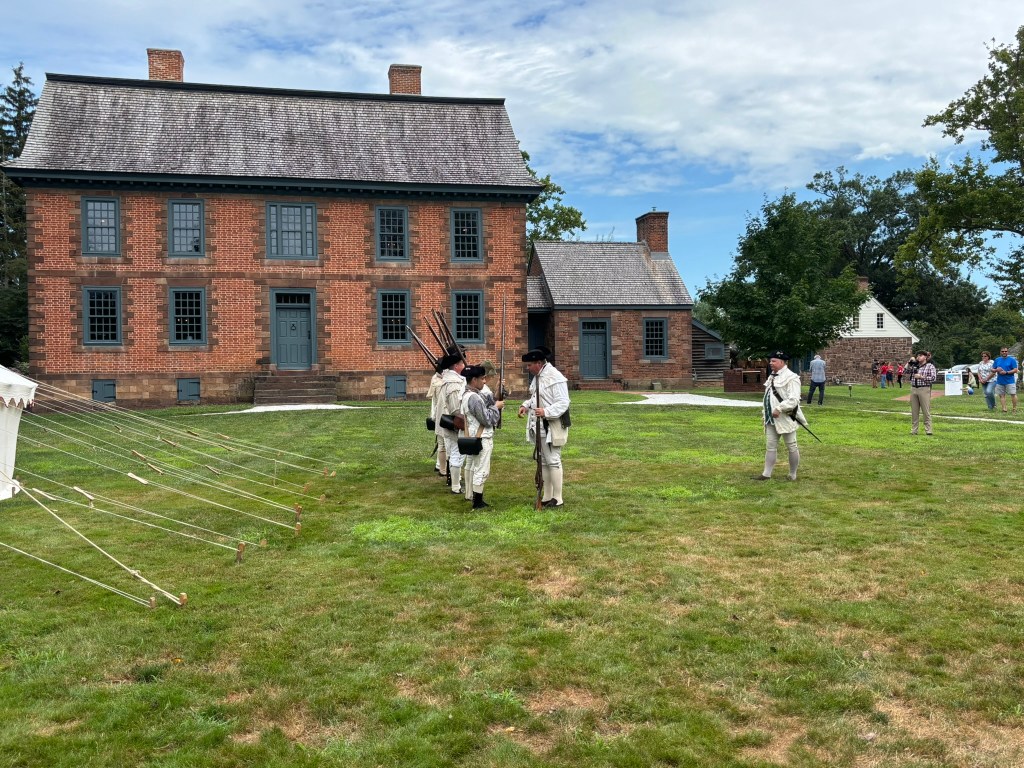
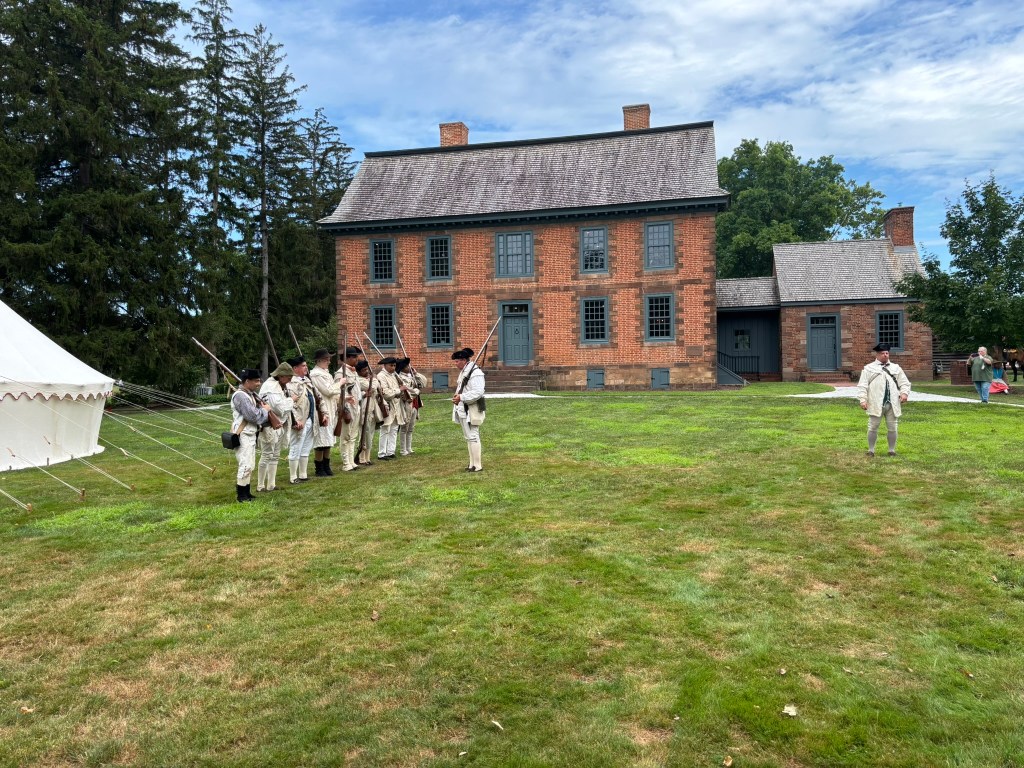
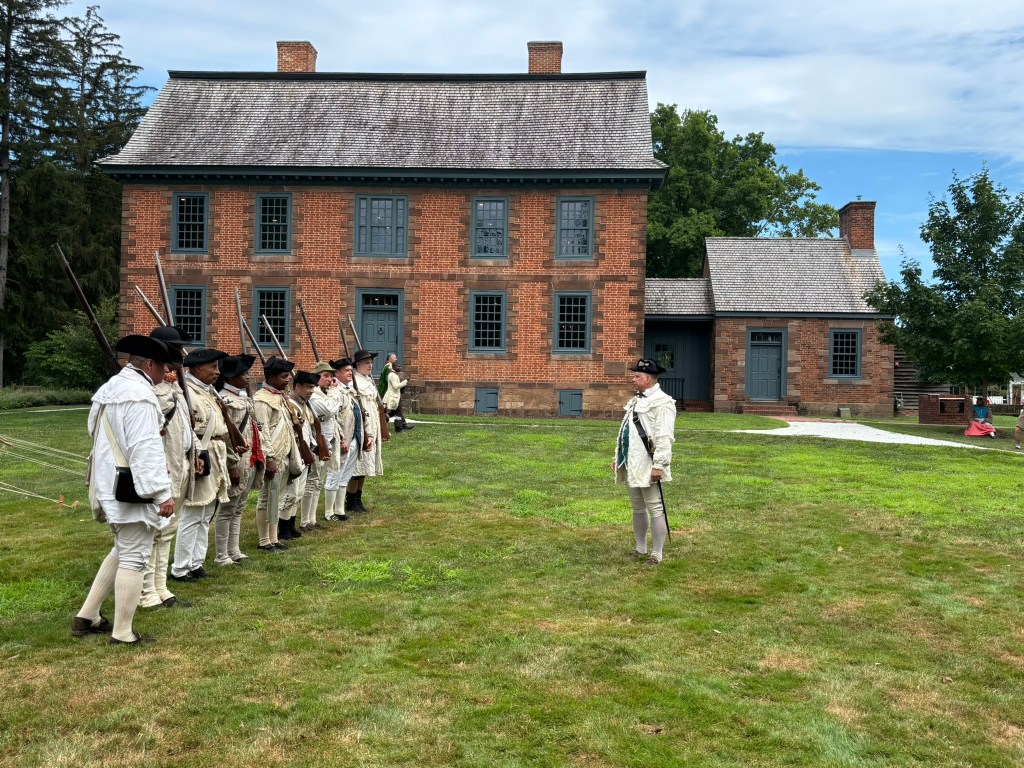
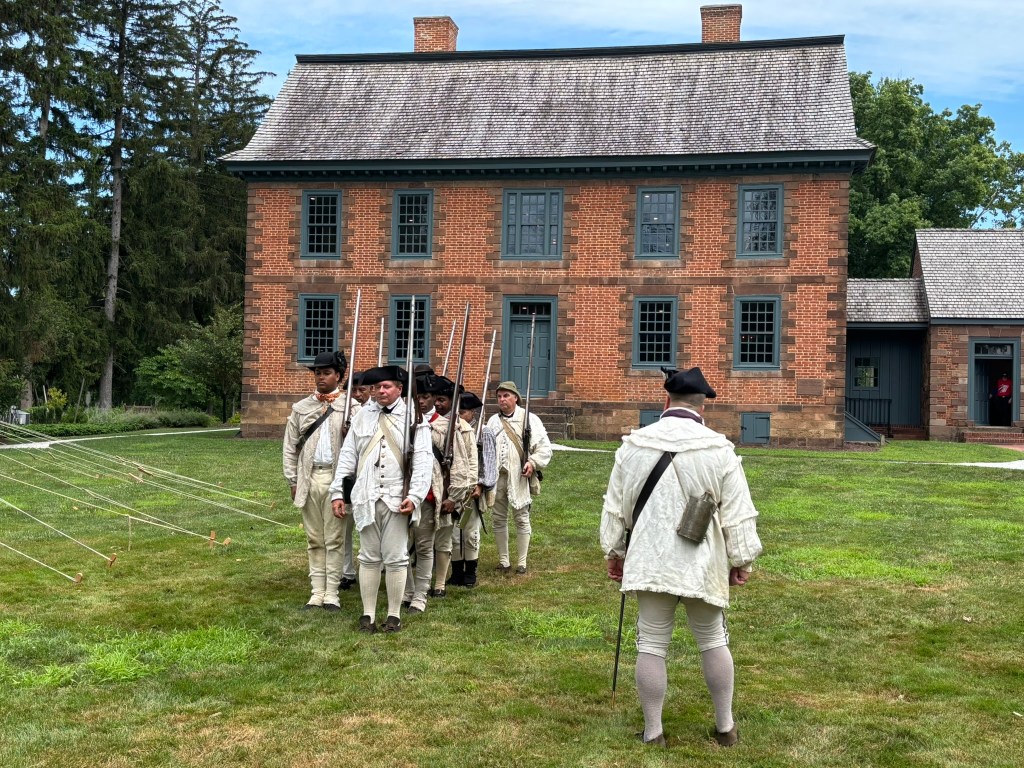
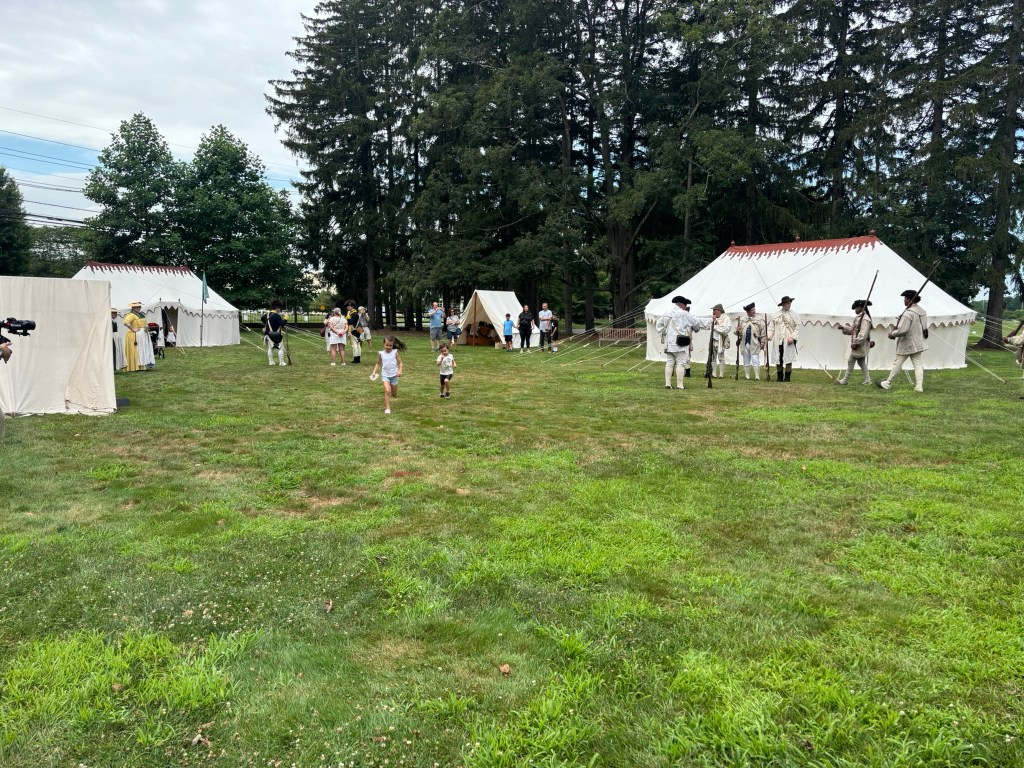
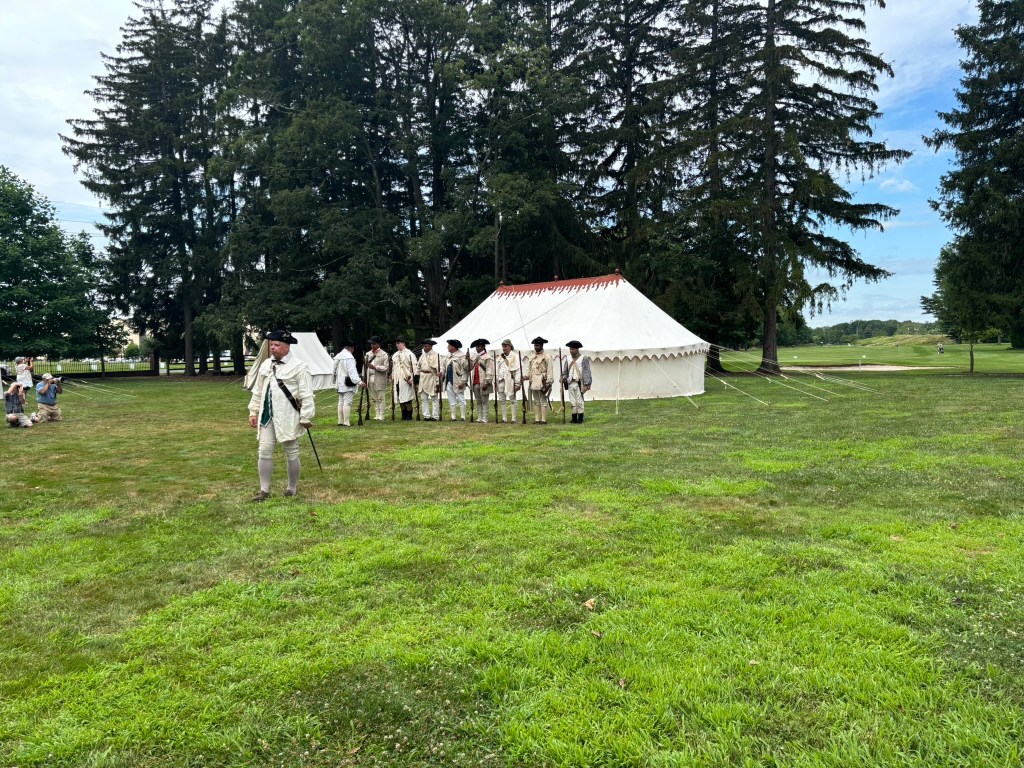
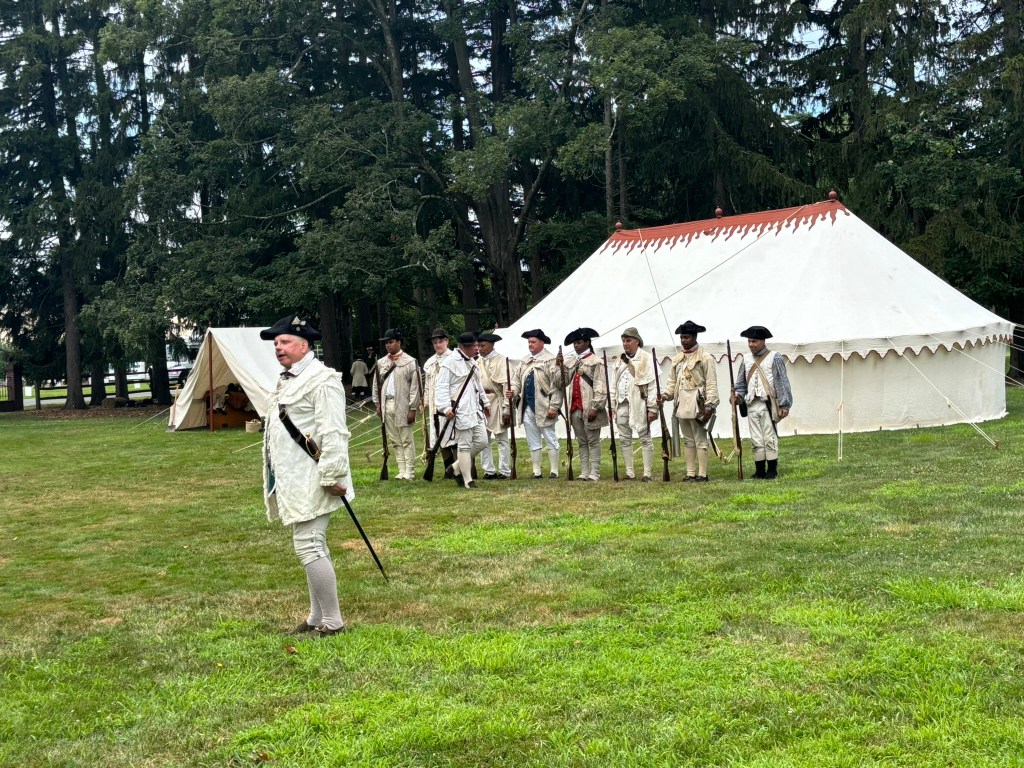
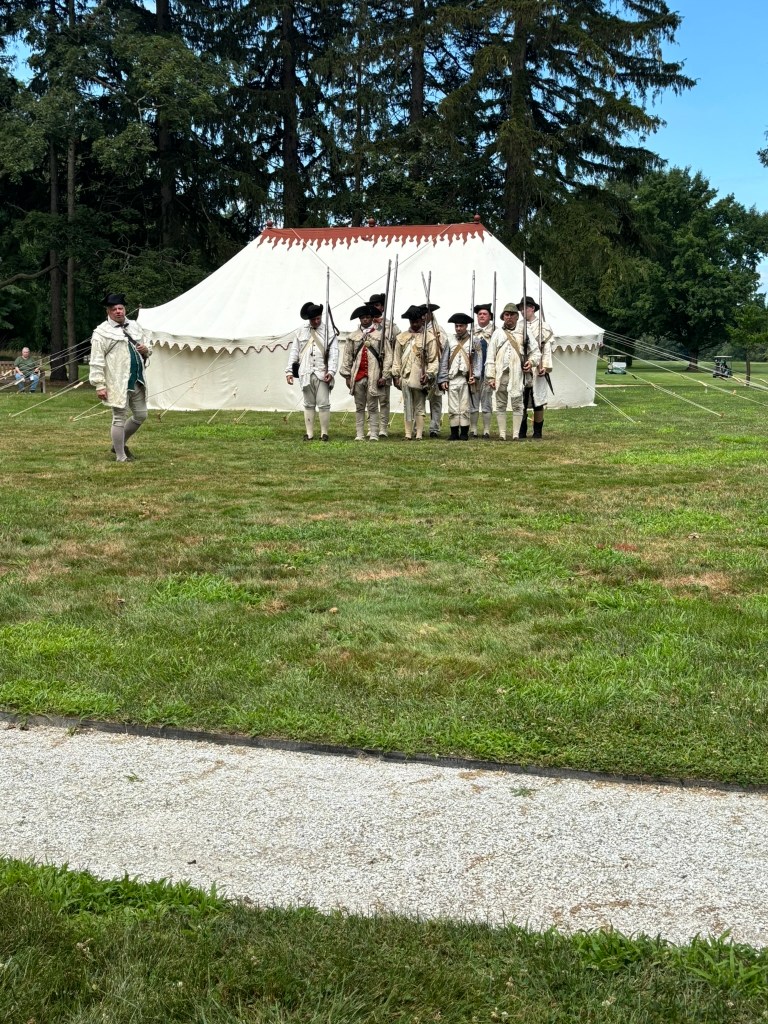
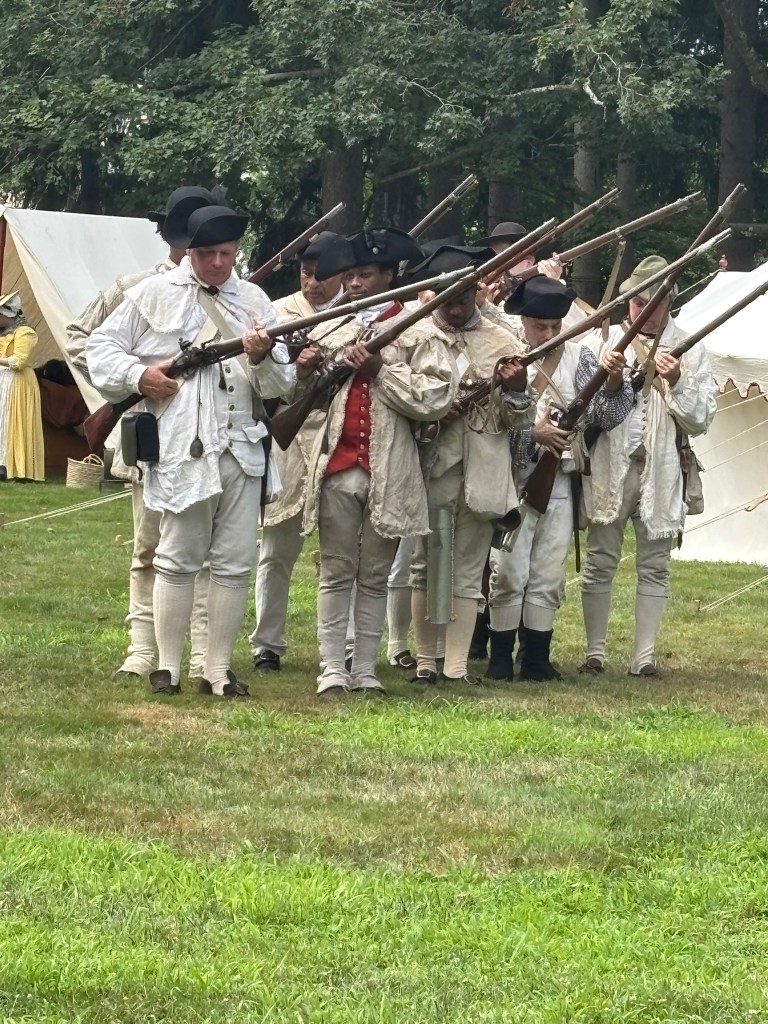
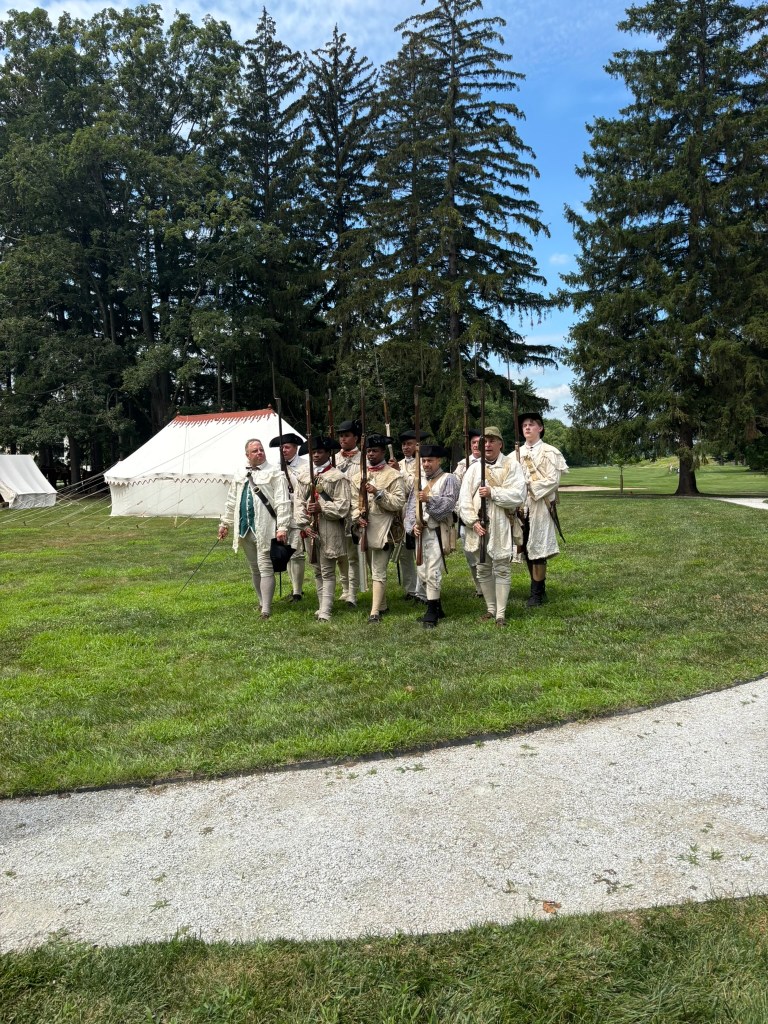
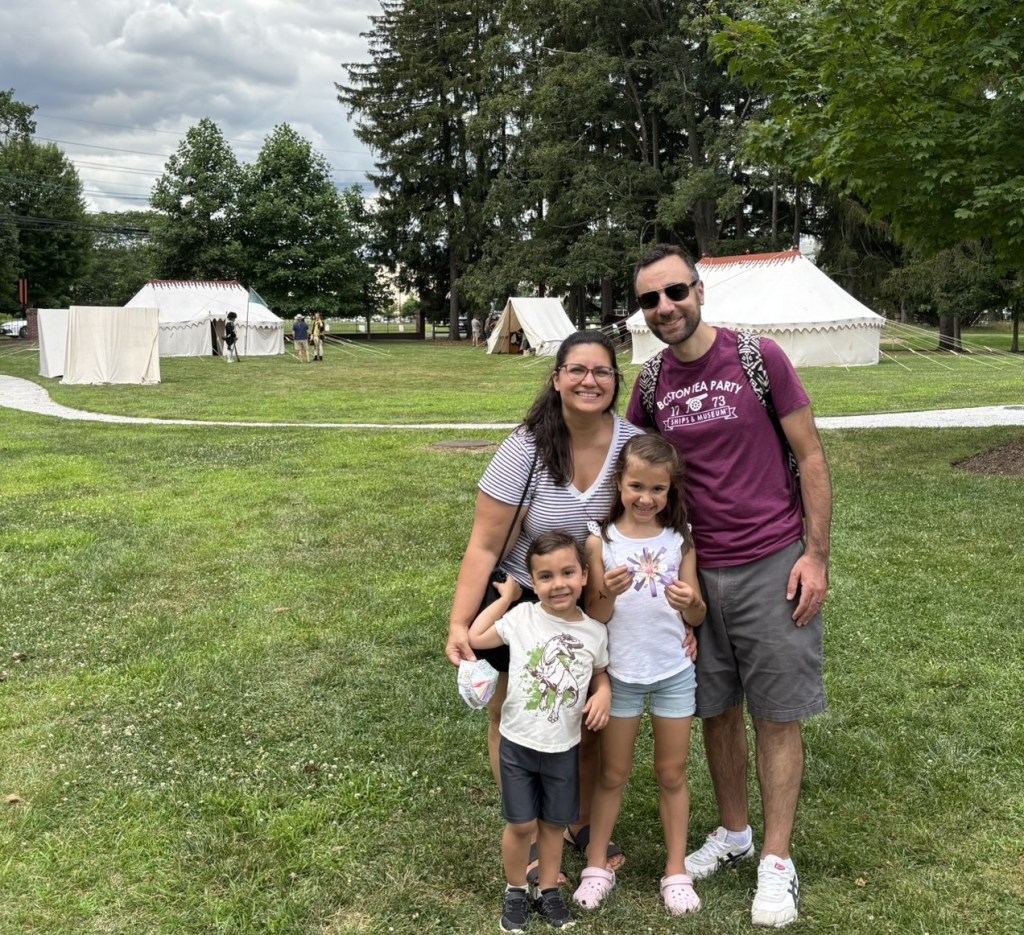
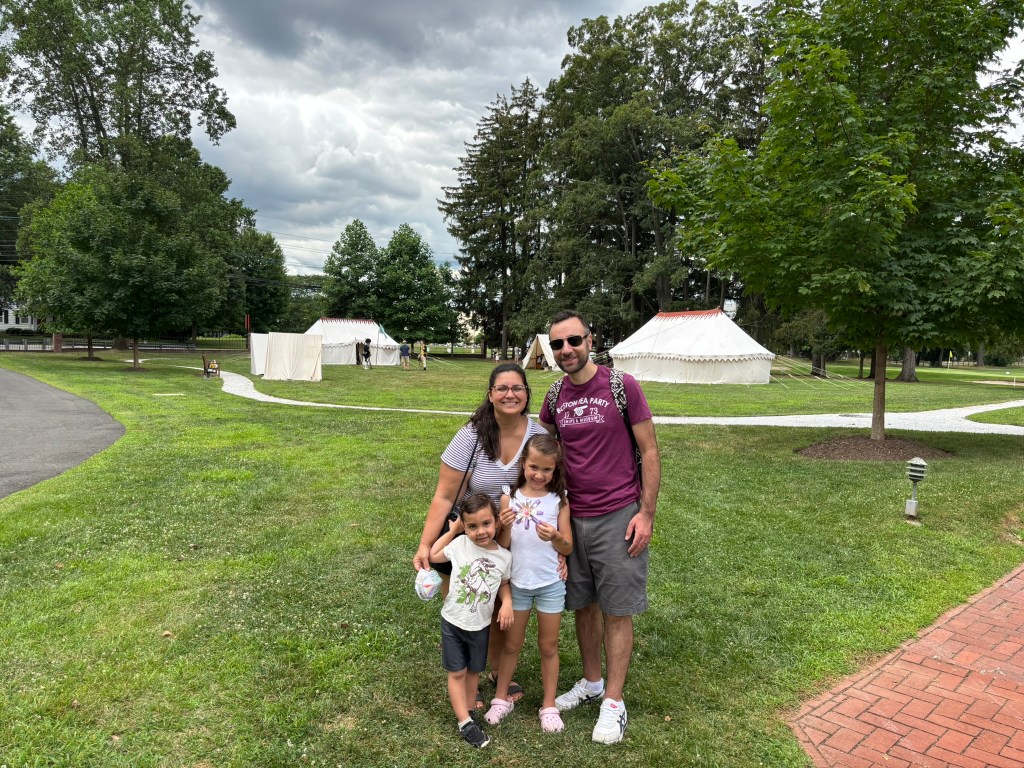
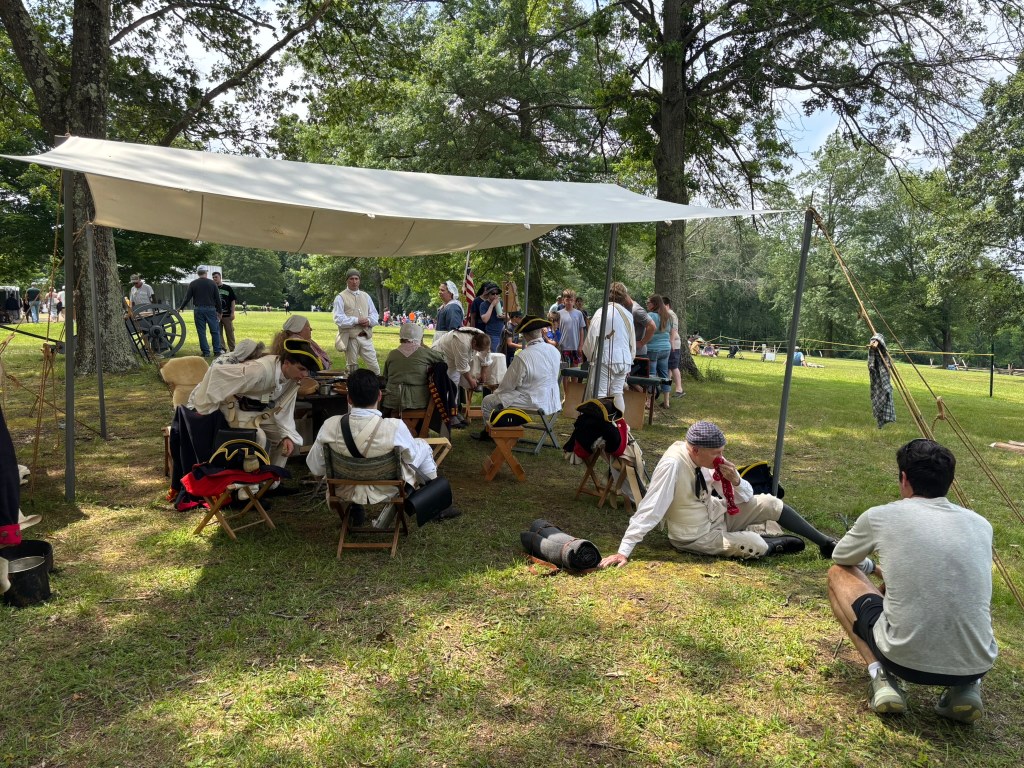
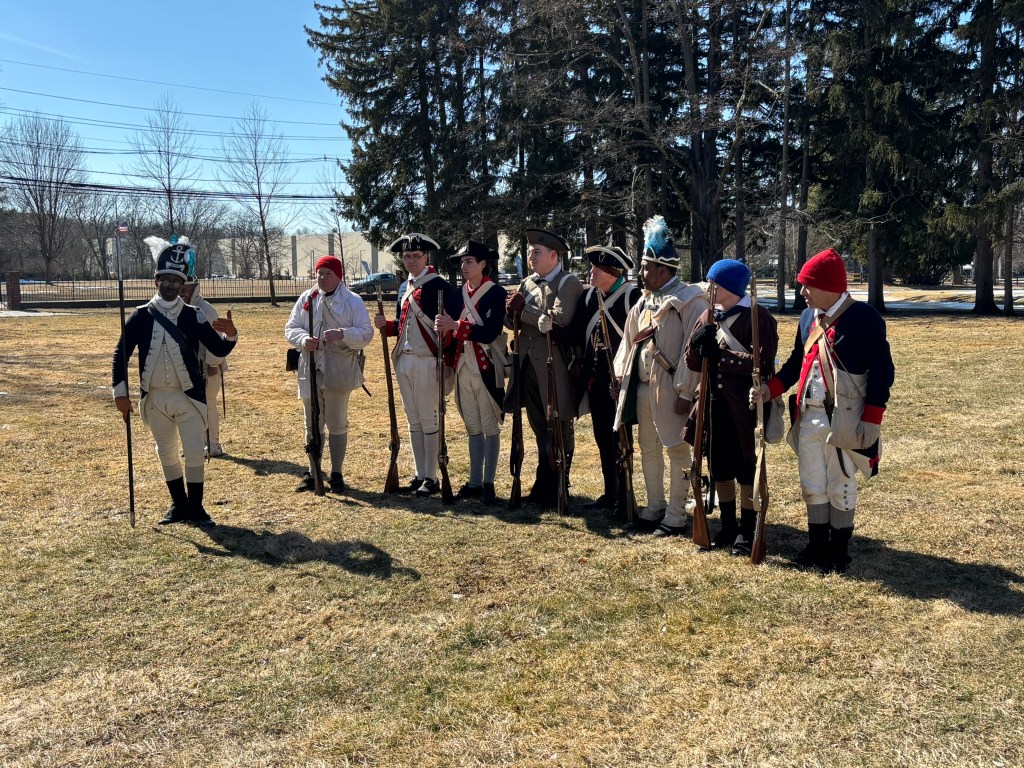
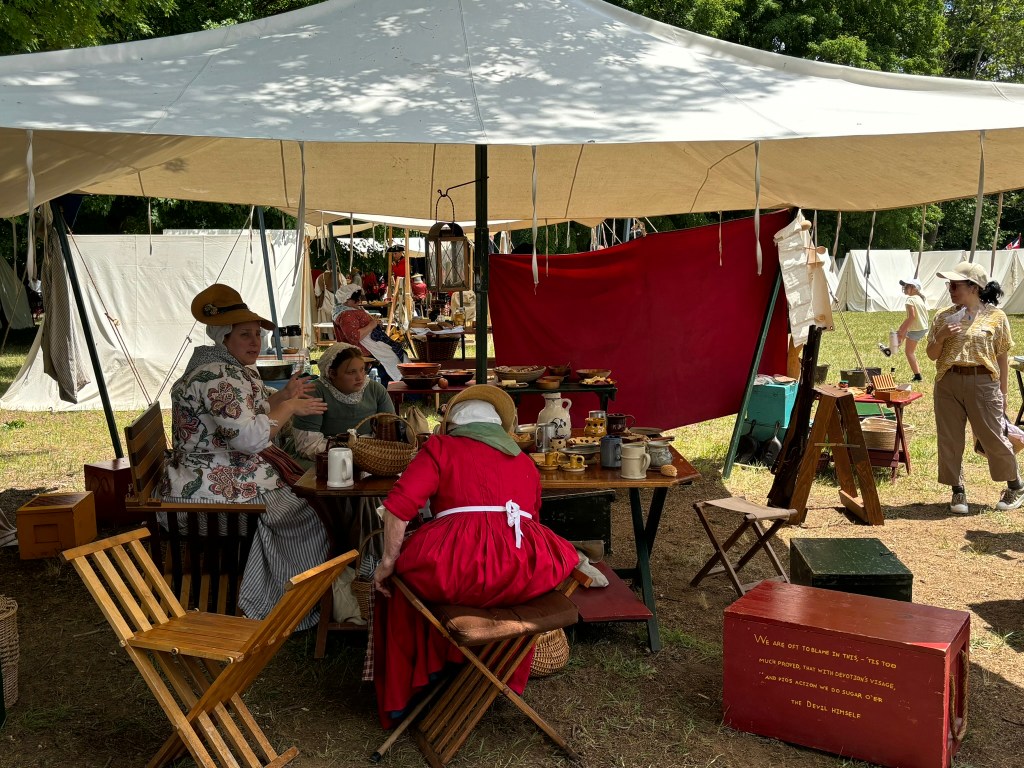
Next, we made our way to the front lawn and explored the dining tent. At 11:00 a.m., the 2nd New Jersey Regiment, Helm’s Company, performed military drills—including standing in formation, loading and firing muskets, marching, and executing a bayonet charge. It’s been a privilege to see Helm’s Company at several recent events, including the Battle of Monmouth Reenactment and Lafayette’s Visit to Morristown. After the demonstration, the reenactors answered questions from the audience and posed for photos.
Arts and Crafts/ Presentations
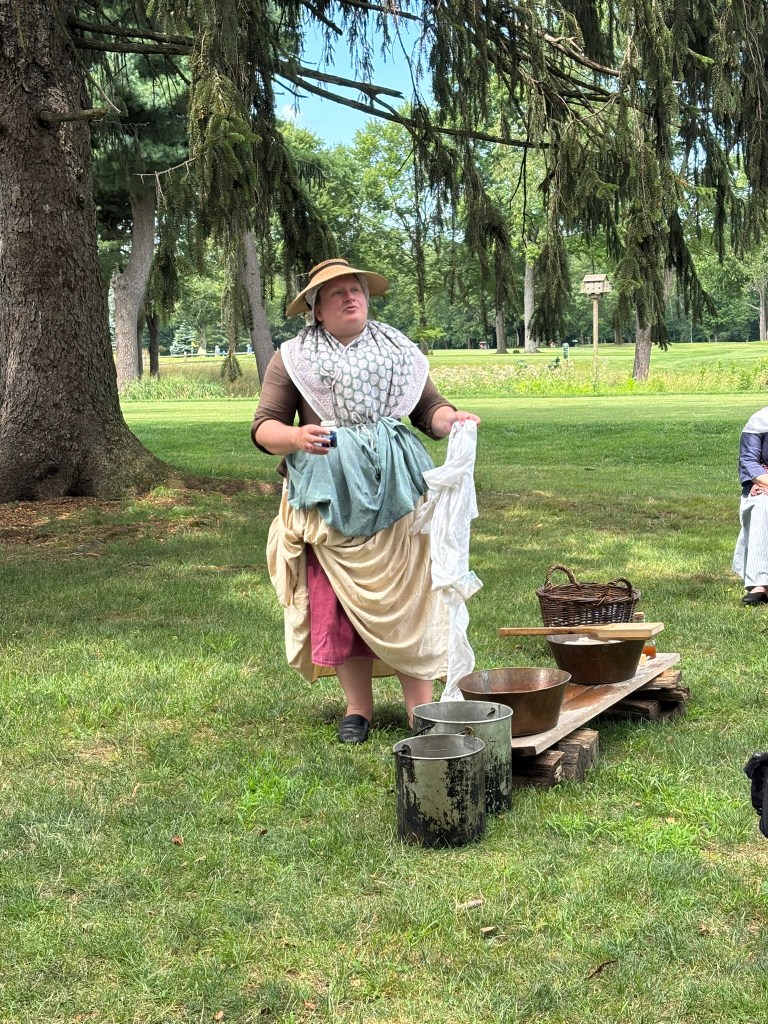
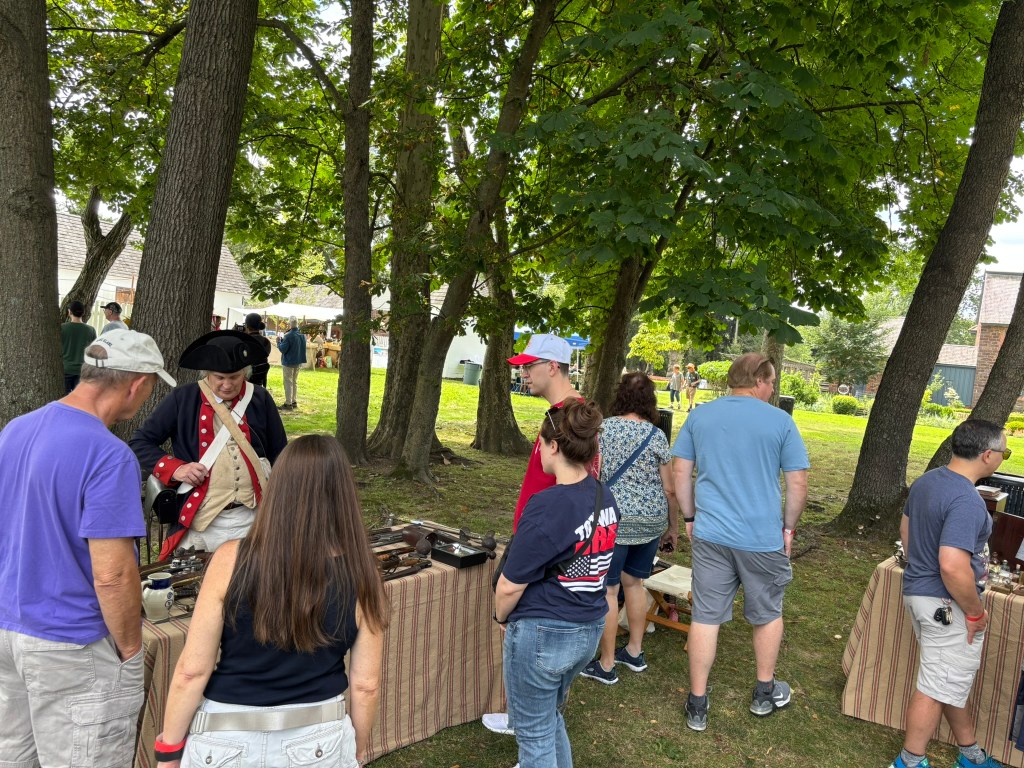
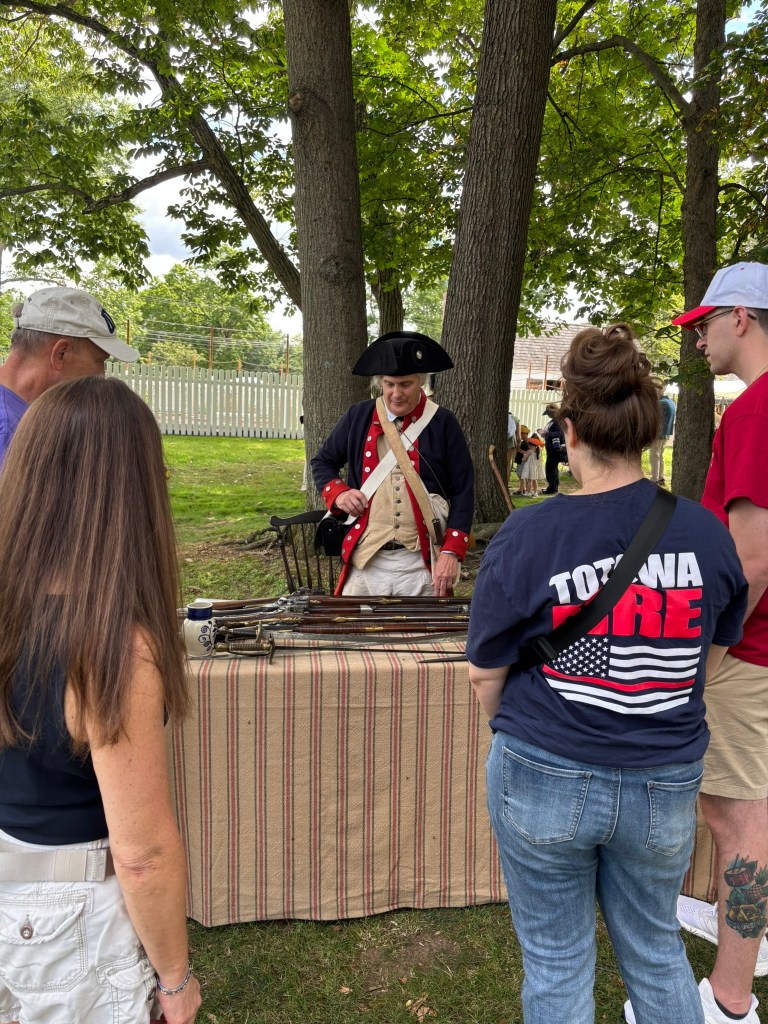
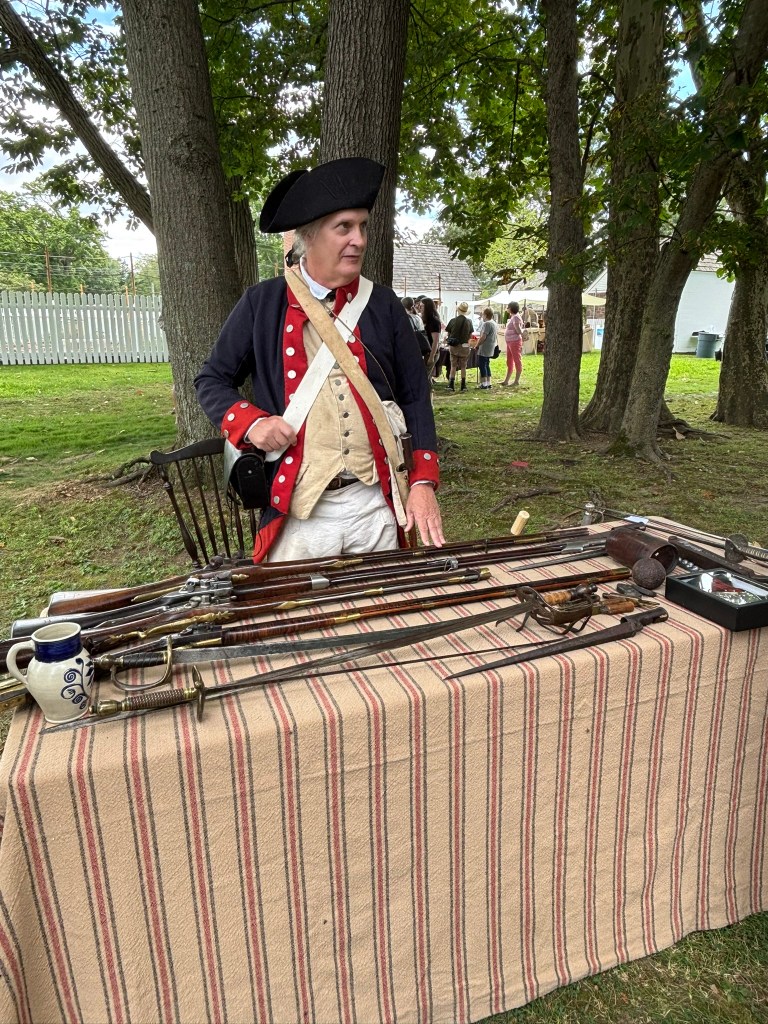
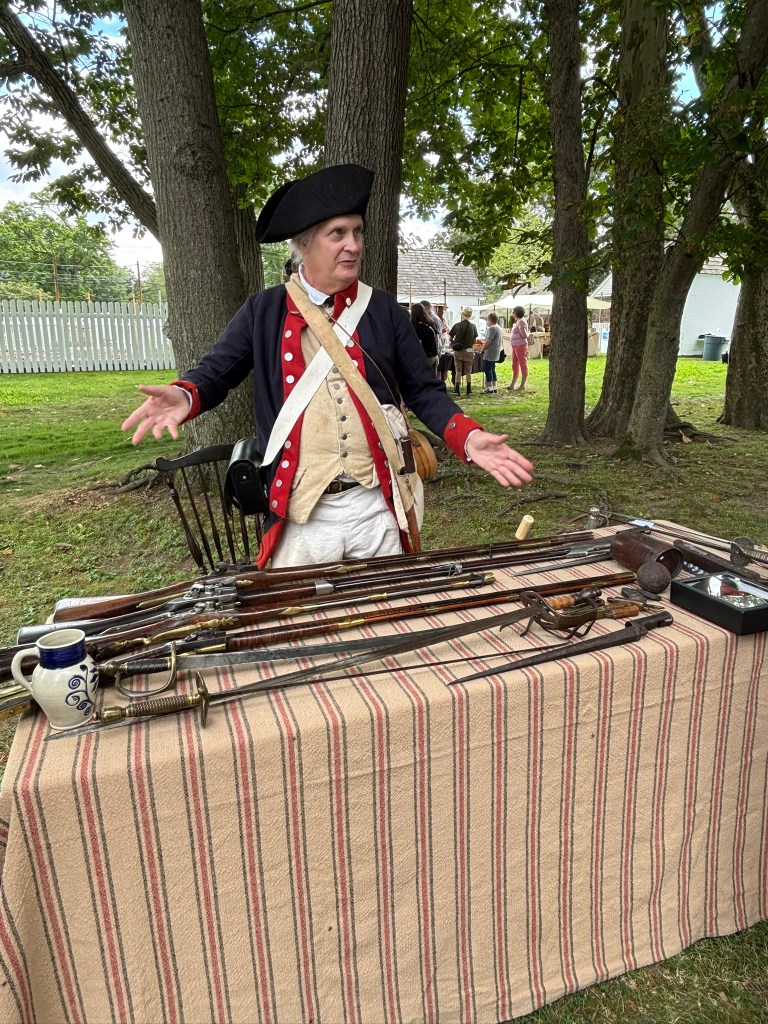
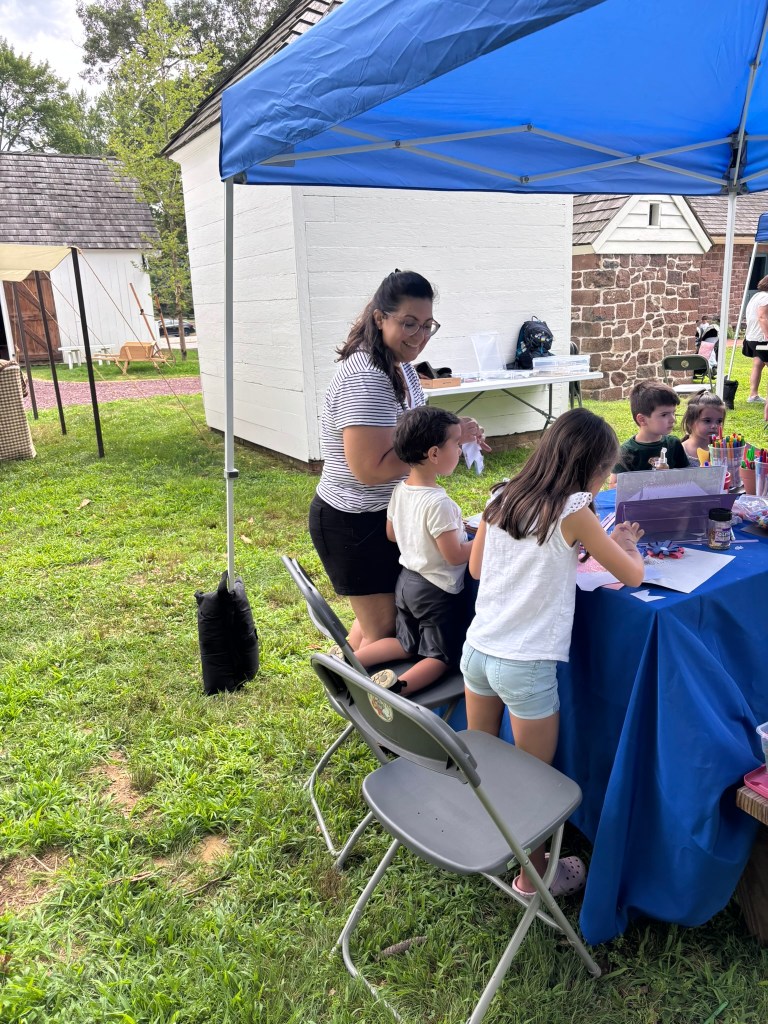
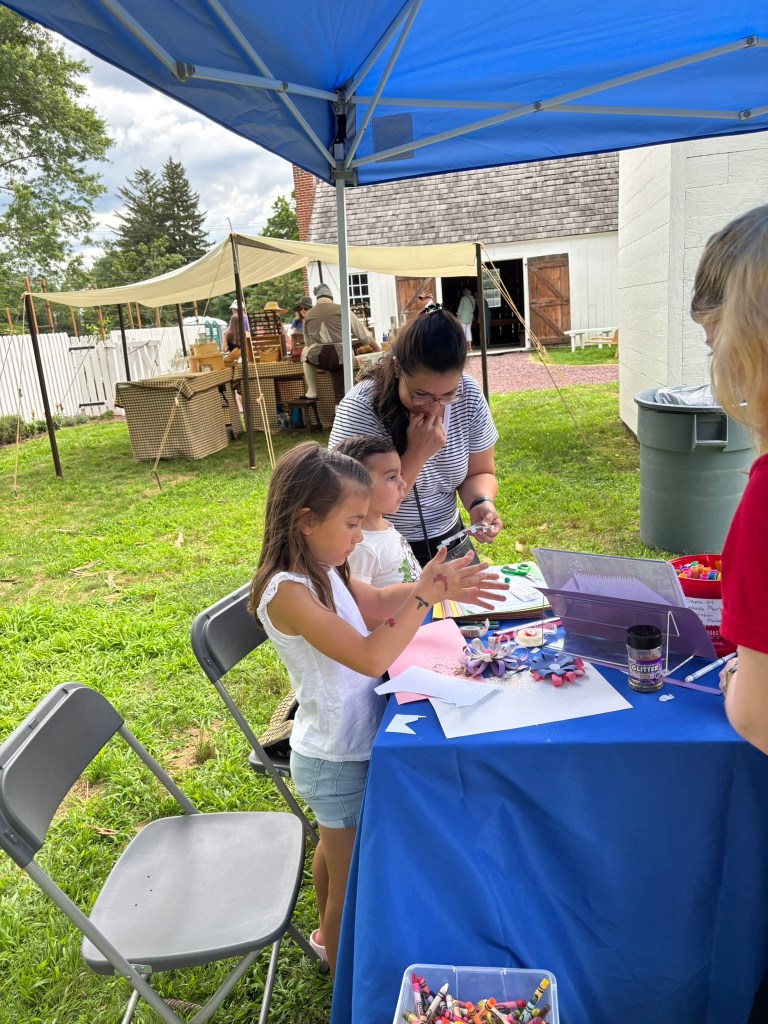
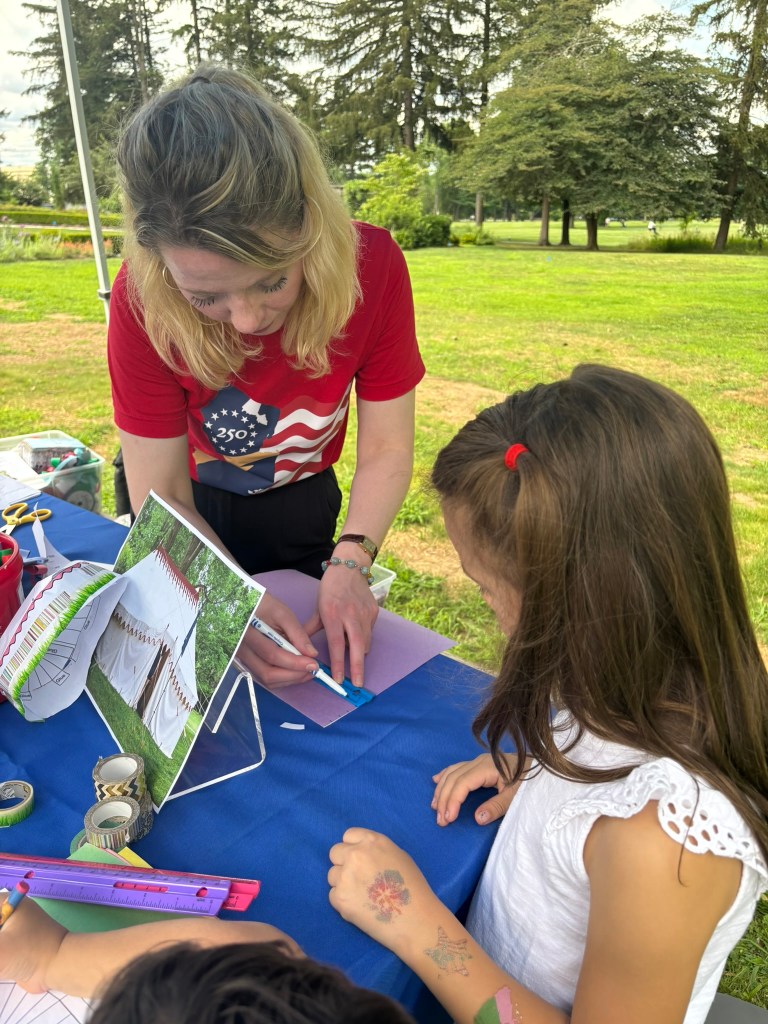
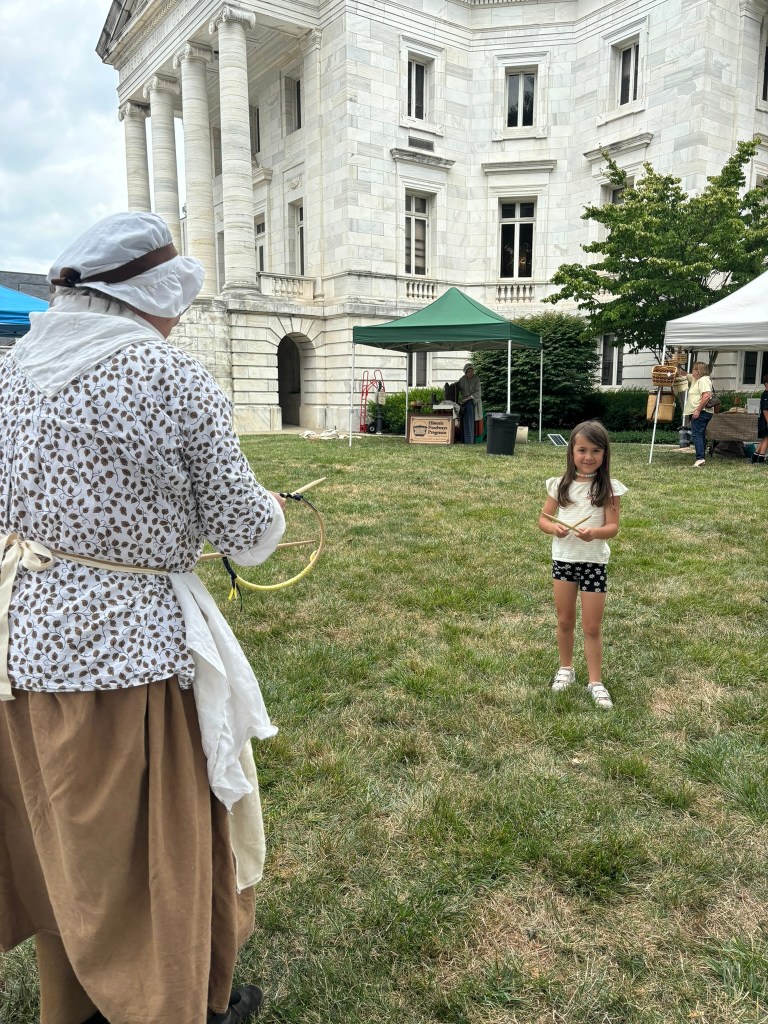
Following the drills, I took a few photos of Washington’s War Tent but planned to return later once the crowd had thinned out. Meanwhile, my children enjoyed doing arts and crafts, which were run by the Passaic County Arts Center. I also attended a demonstration on 18th-century fabric dyeing, and later listened to a reenactor give a detailed presentation on Revolutionary War weaponry. He spoke about muskets, rifles, swords, musket balls, and even primitive hand grenades. His depth of knowledge was evident when addressing spectators’ questions.
Washington’s Tent
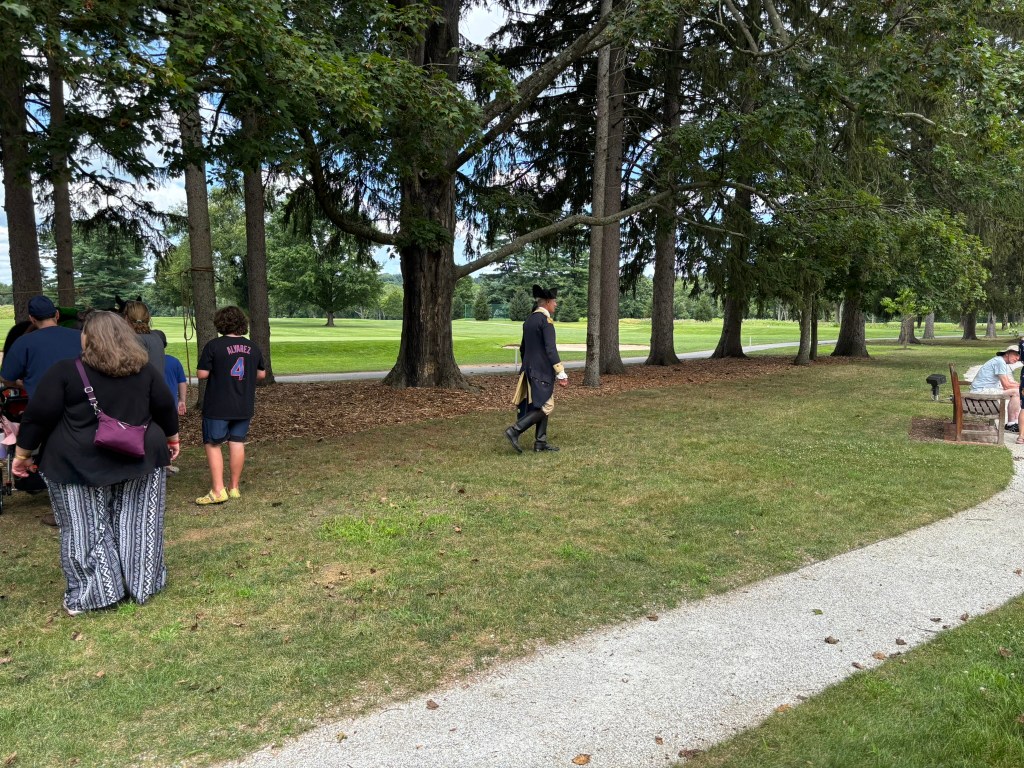
Later, I returned to Washington’s War Tent for a more in-depth look. Just like during our previous visit, it was a great experience to step inside the tent and hear reenactors describe what daily life was like for Washington and his aides while on campaign. It served as a vivid reminder that—despite his leadership and status—Washington endured many of the same hardships as his soldiers. This stood in contrast to the relative comfort he would have enjoyed while staying at the Dey Mansion.
What made this visit to The First Oval Office Project unique was the addition of the dining tent—it was even larger than Washington’s War Tent. The reenactors throughout the event were incredibly informative and passionate about sharing their knowledge. Their dedication to bringing history to life was evident in every conversation.
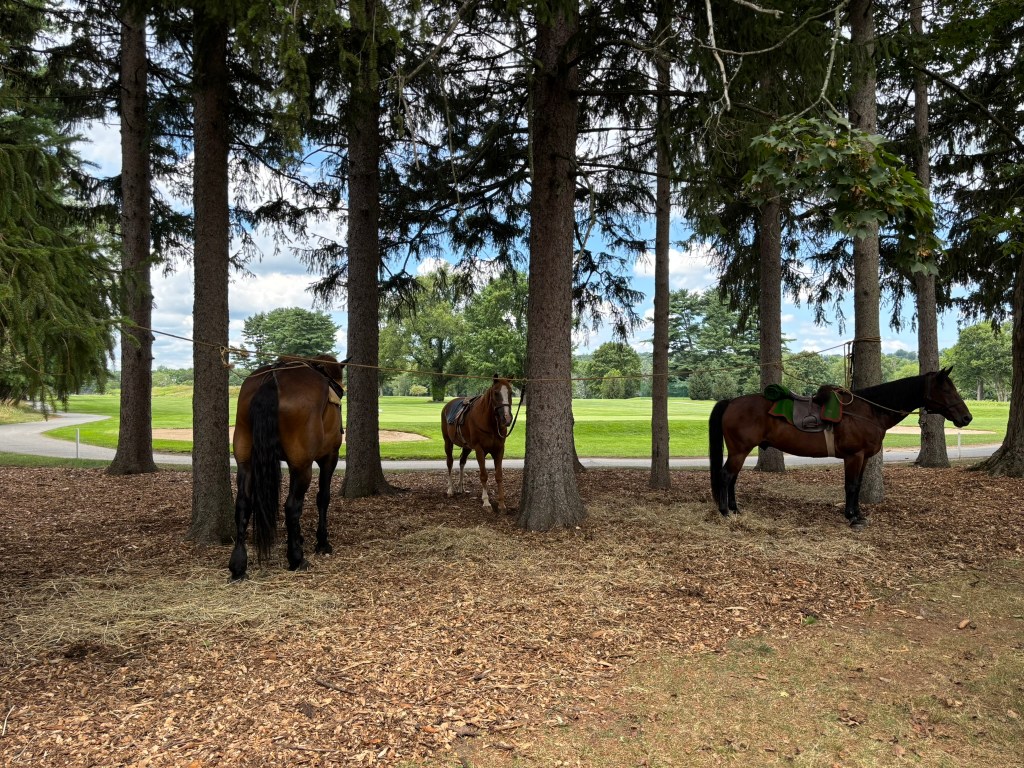
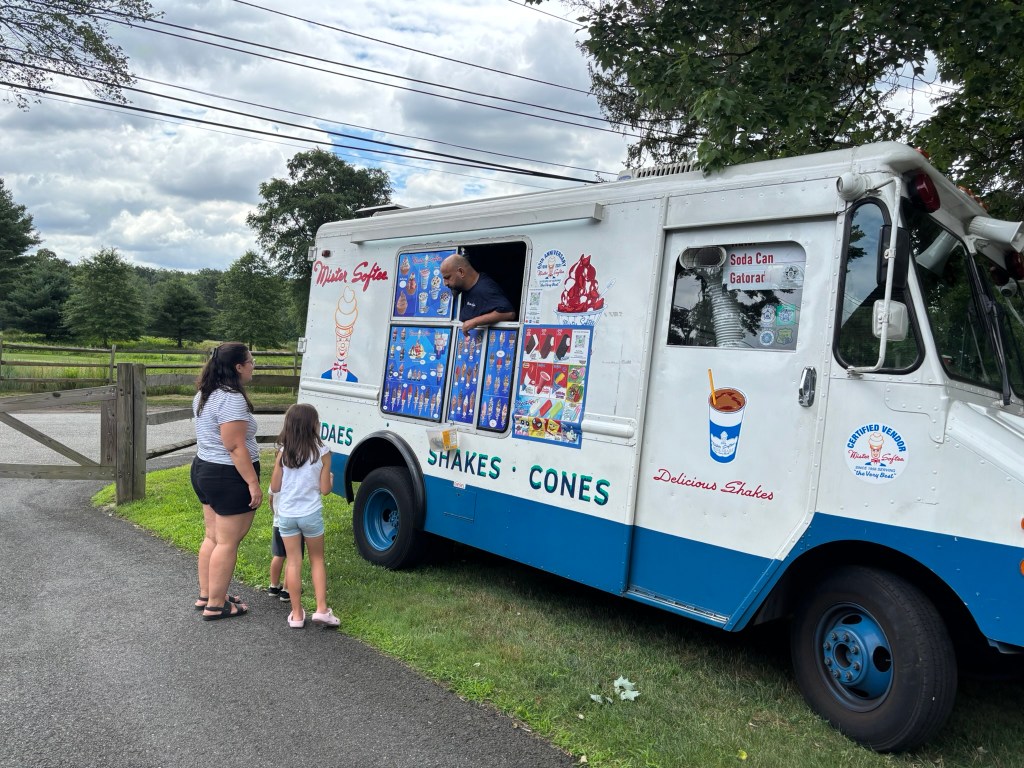
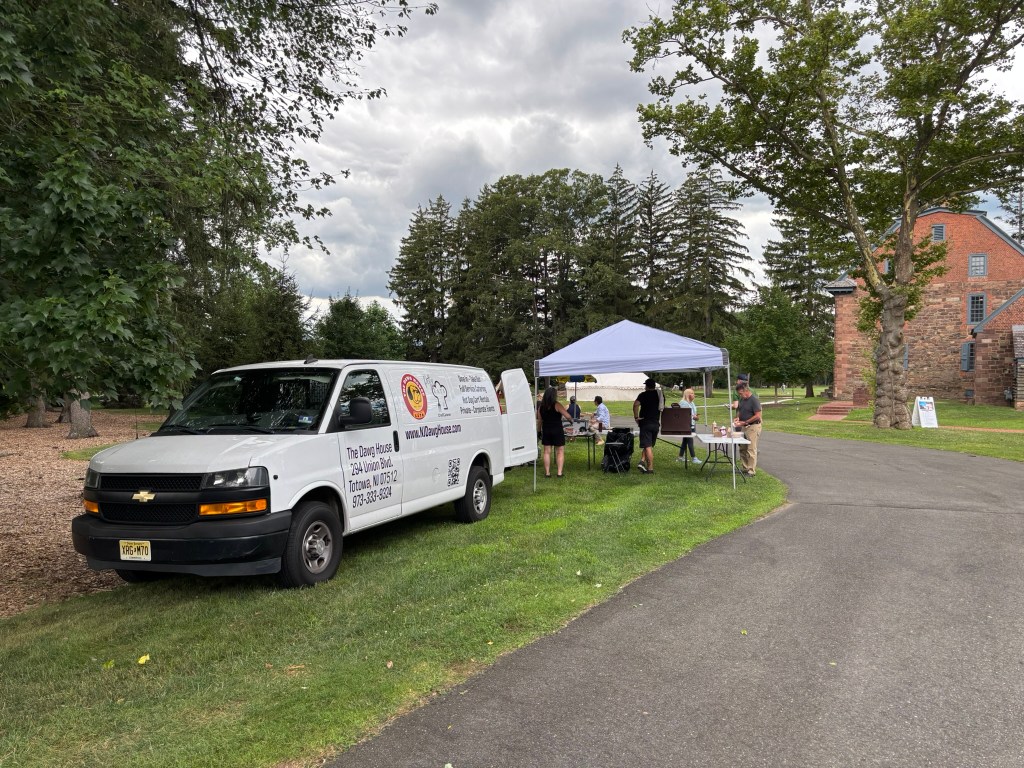
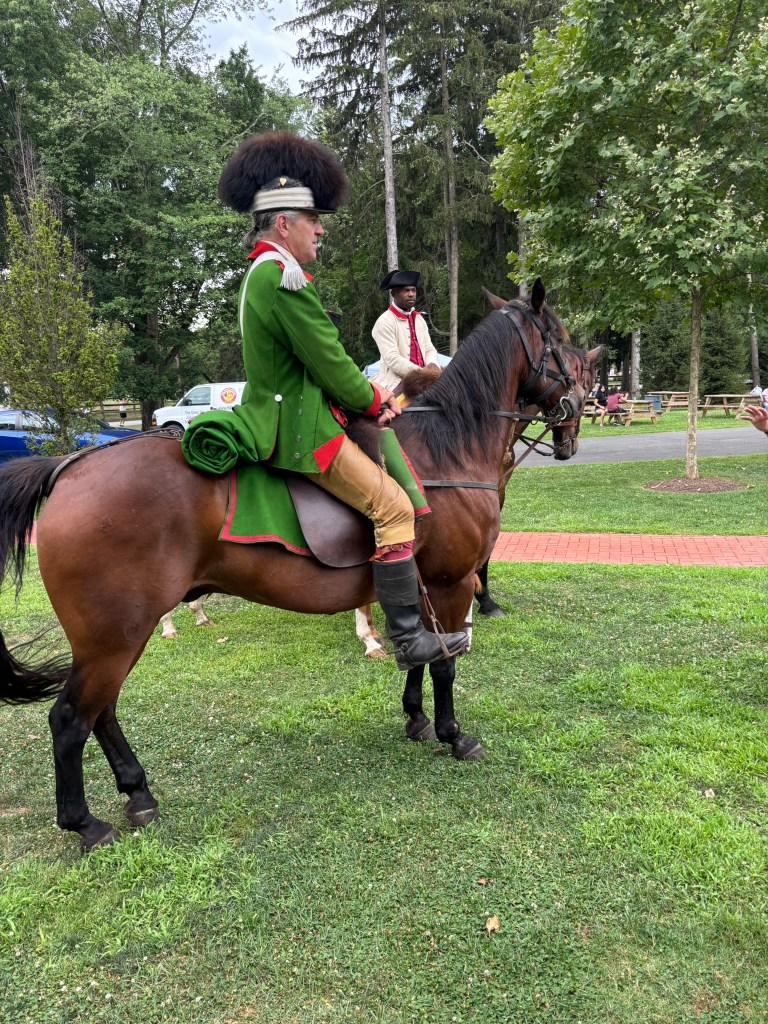
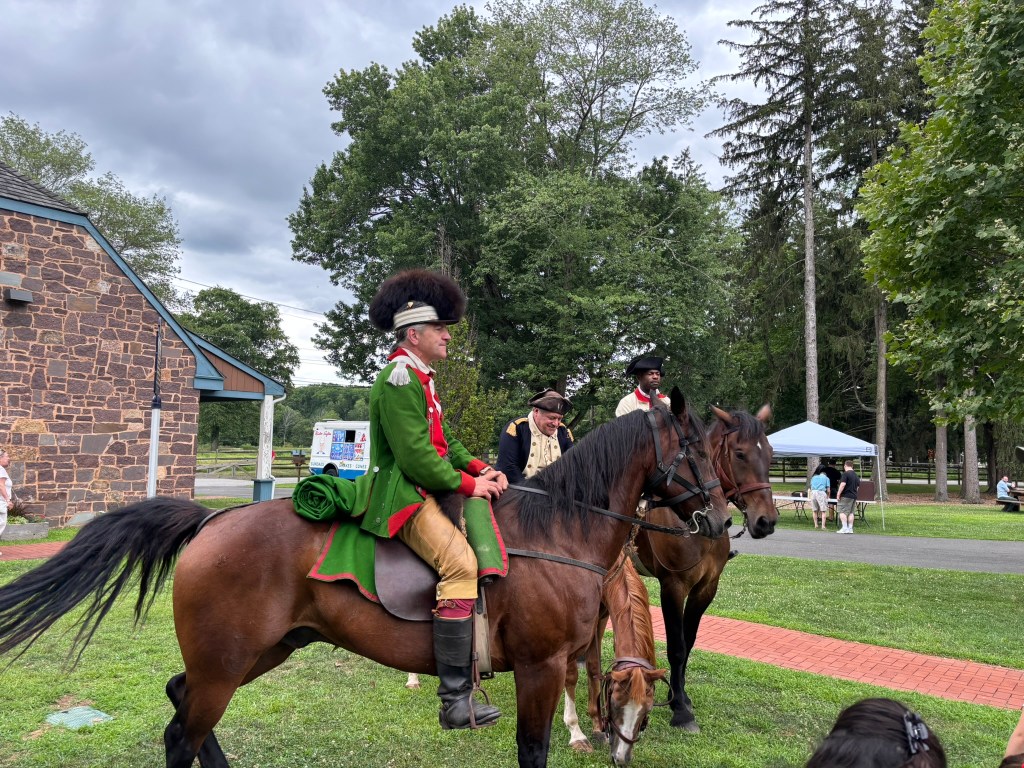
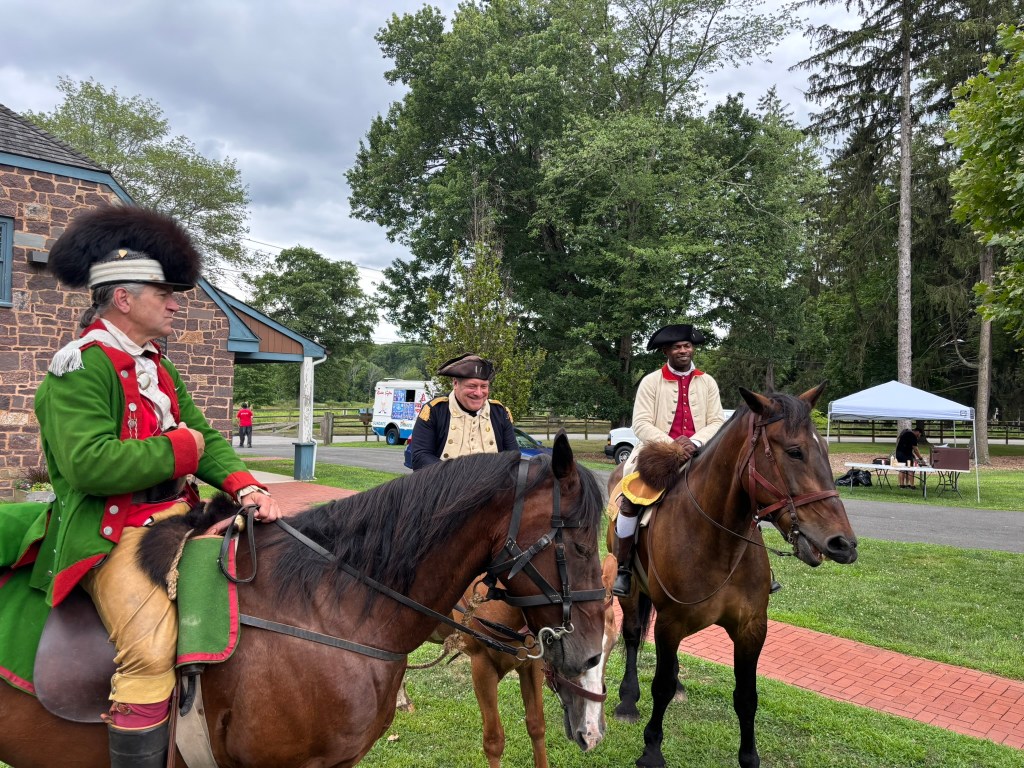
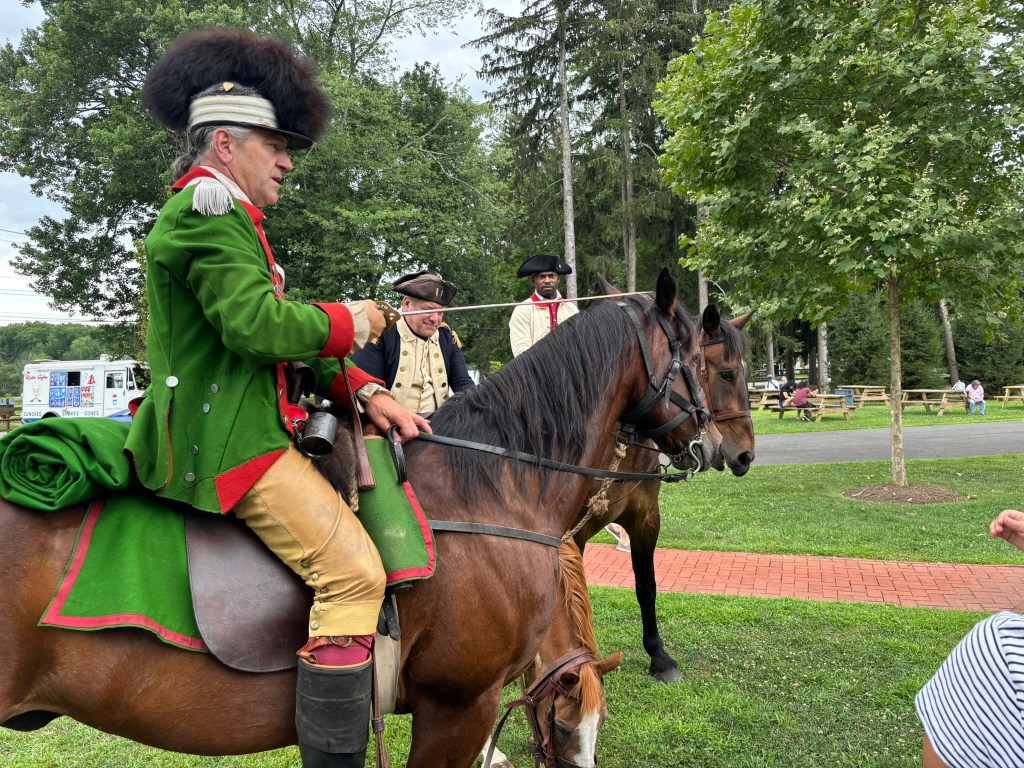
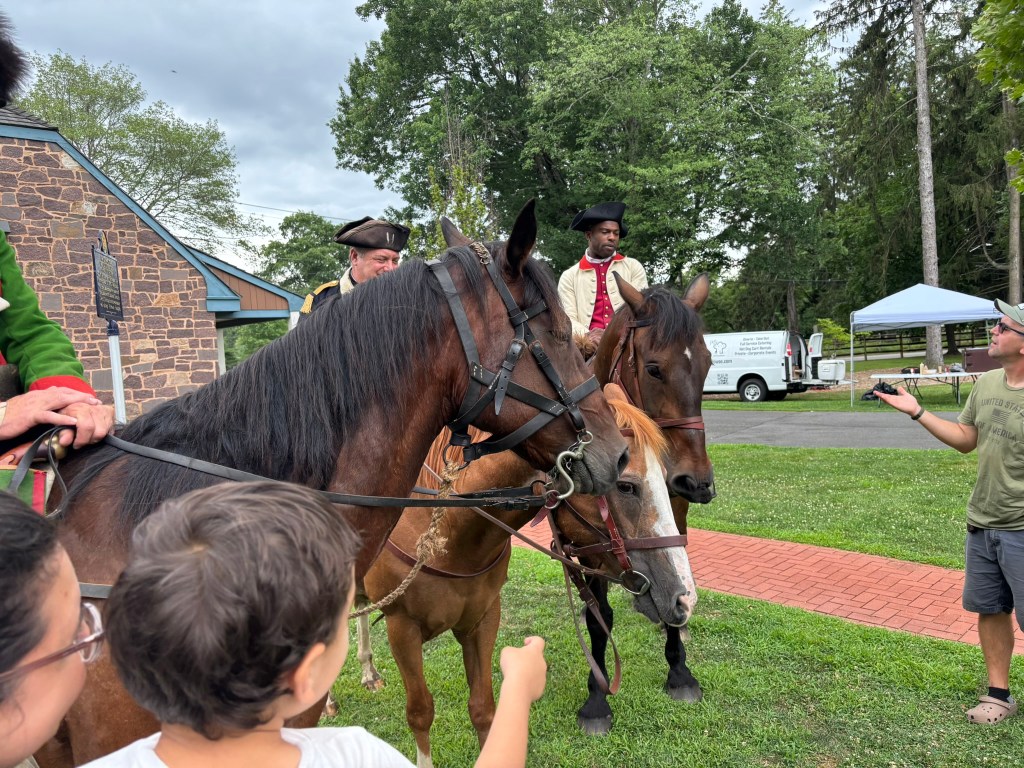
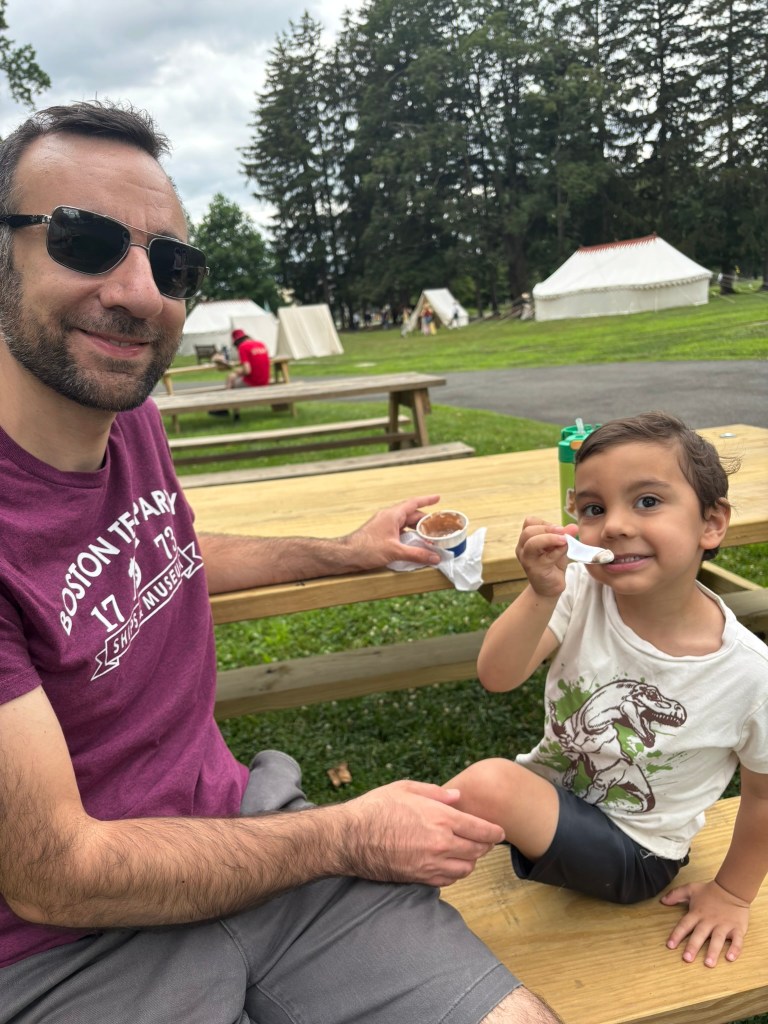
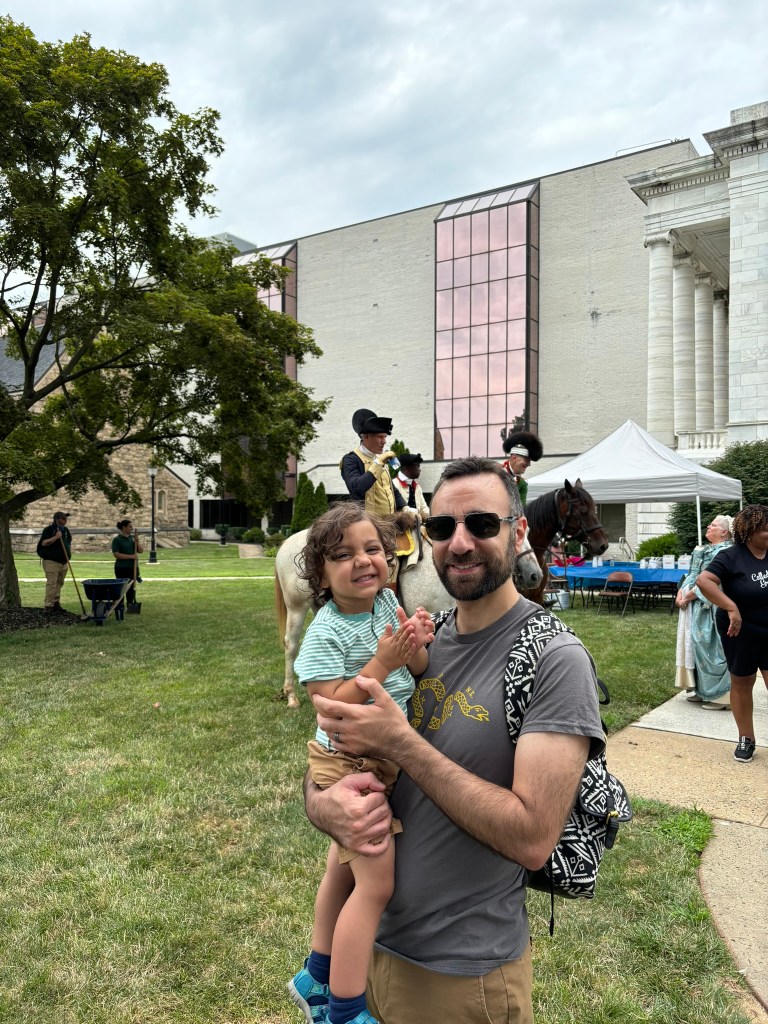
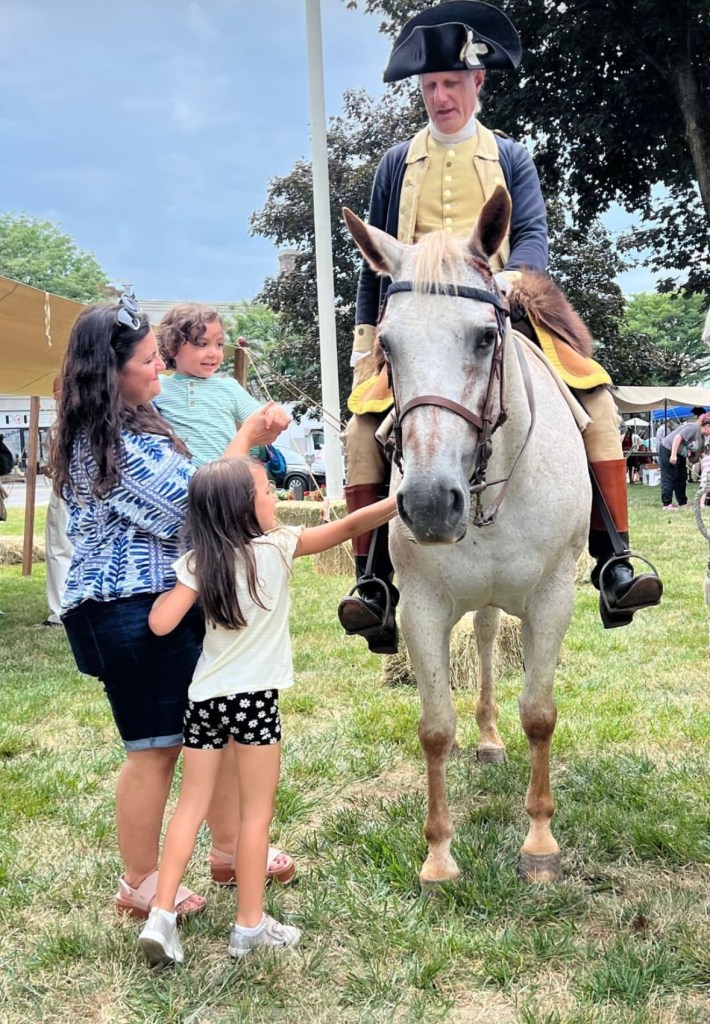
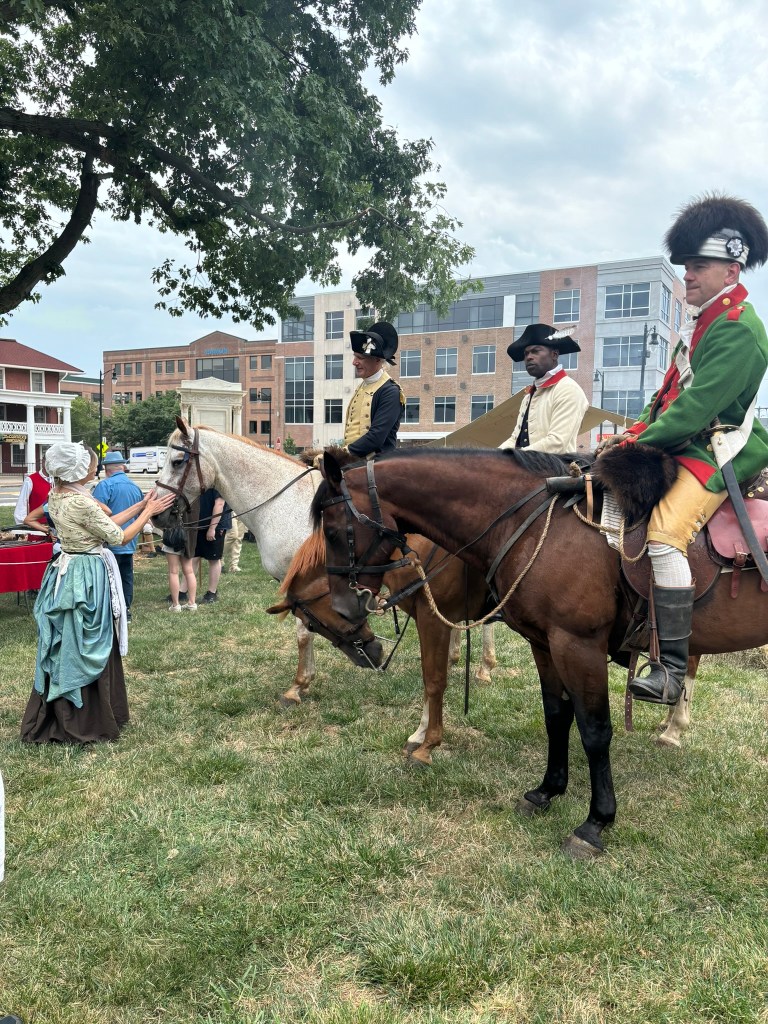
Food was available on-site, with hamburgers and hot dogs offered for just $2 from The Dawg House in Totowa. My kids were also thrilled to grab ice cream—also $2—which was a welcome treat on a warm day. Having food on site made things especially convenient around lunchtime. After their treats, the kids enjoyed petting the horses brought by some of the reenactors.
Final Thoughts
Overall, it was a fantastic day at the Dey Mansion. The Dey Mansion, the Museum of the American Revolution, the 2nd New Jersey Regiment, and all the reenactors and site staff did a wonderful job creating a truly immersive historical experience. It was also great to connect with reenactors I’ve met at previous events. It’s always a pleasure to meet people who are so enthusiastic about sharing their love of history and committed to making it engaging for all ages.
Please stay tuned to my Instagram and Facebook accounts as I will be posting videos of the event.
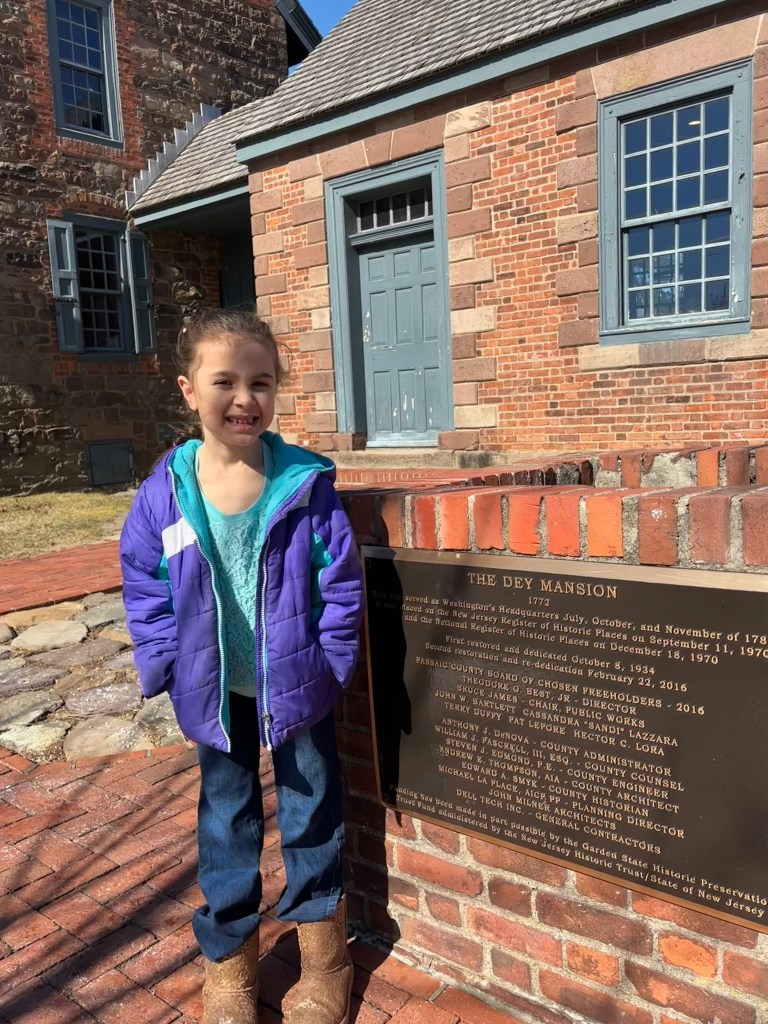
If you’d like to read about our tour inside the Dey Mansion from this past February 2025, check it out [HERE].
Learn more about the organizations involved in this event:
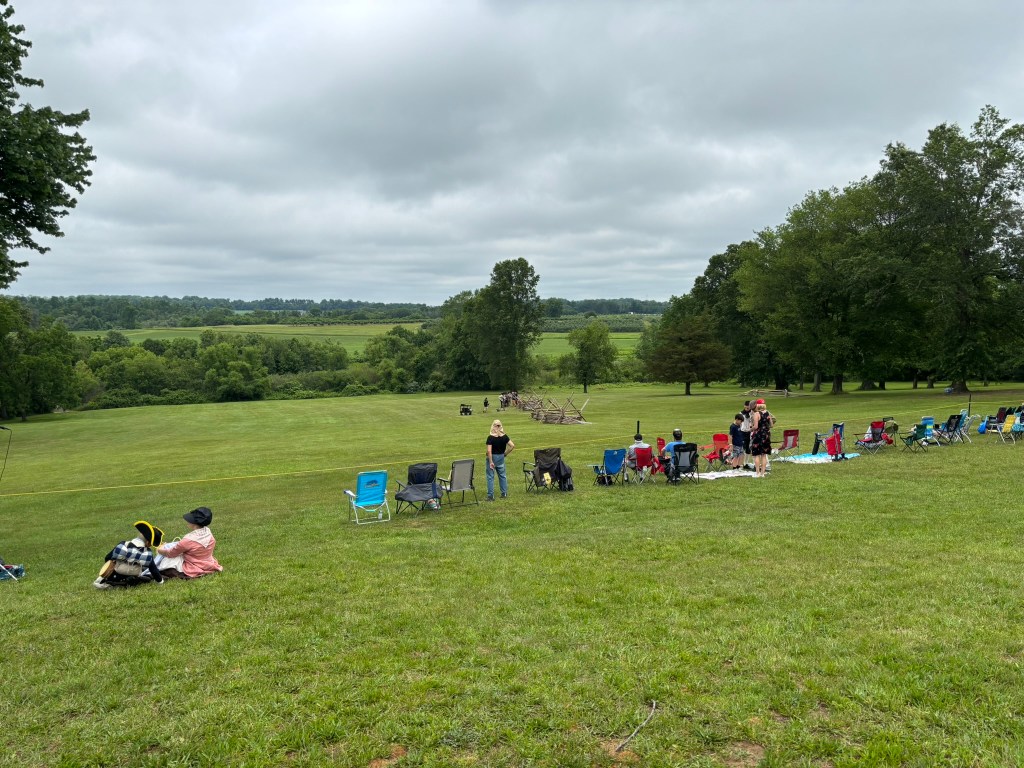
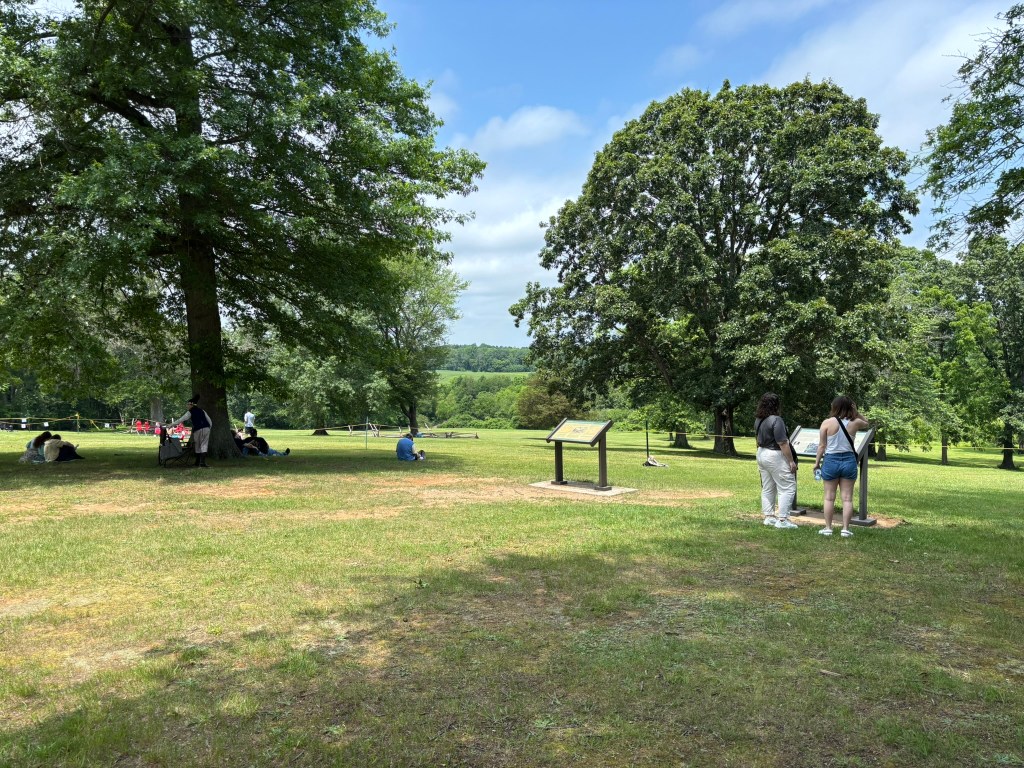
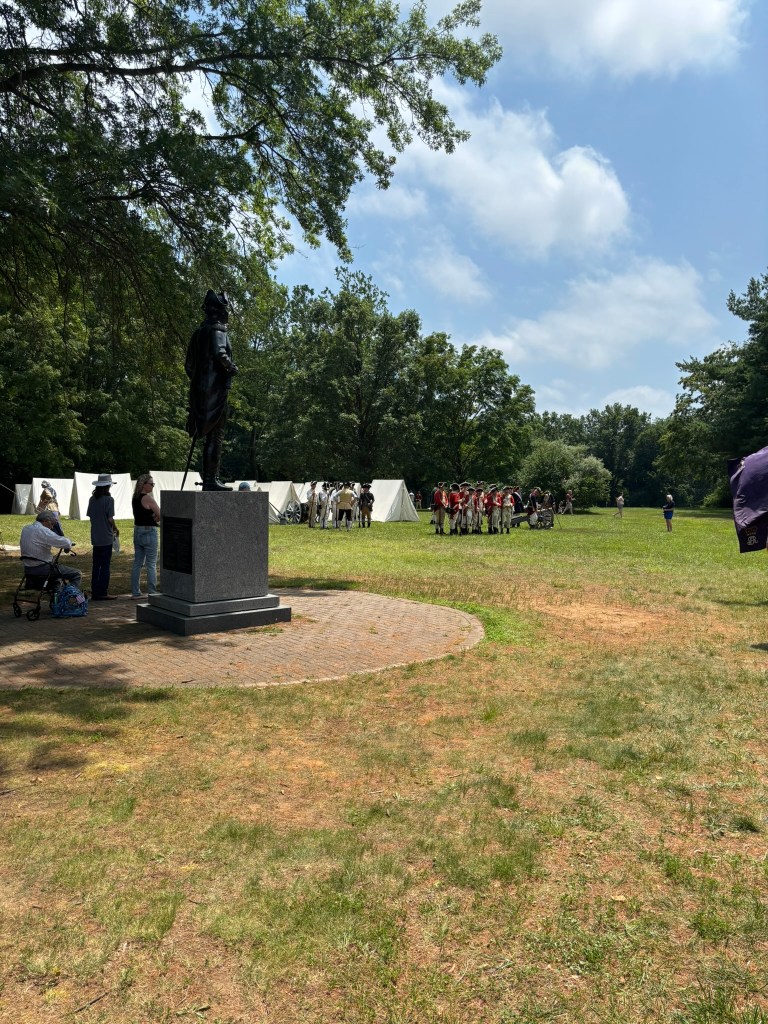
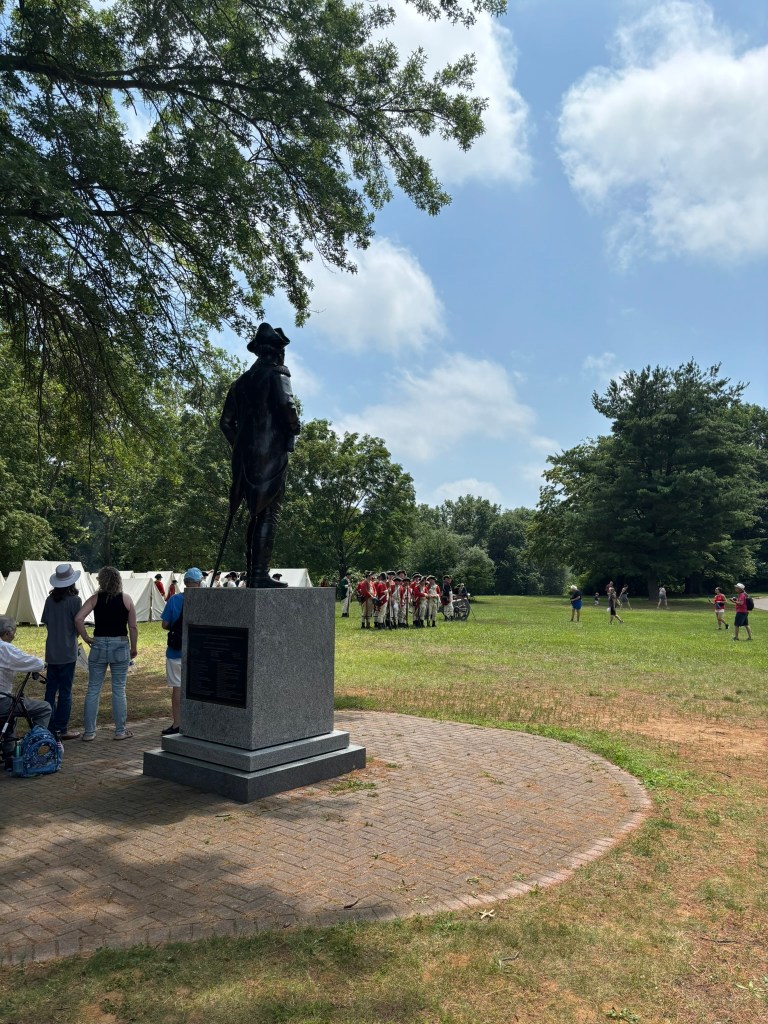
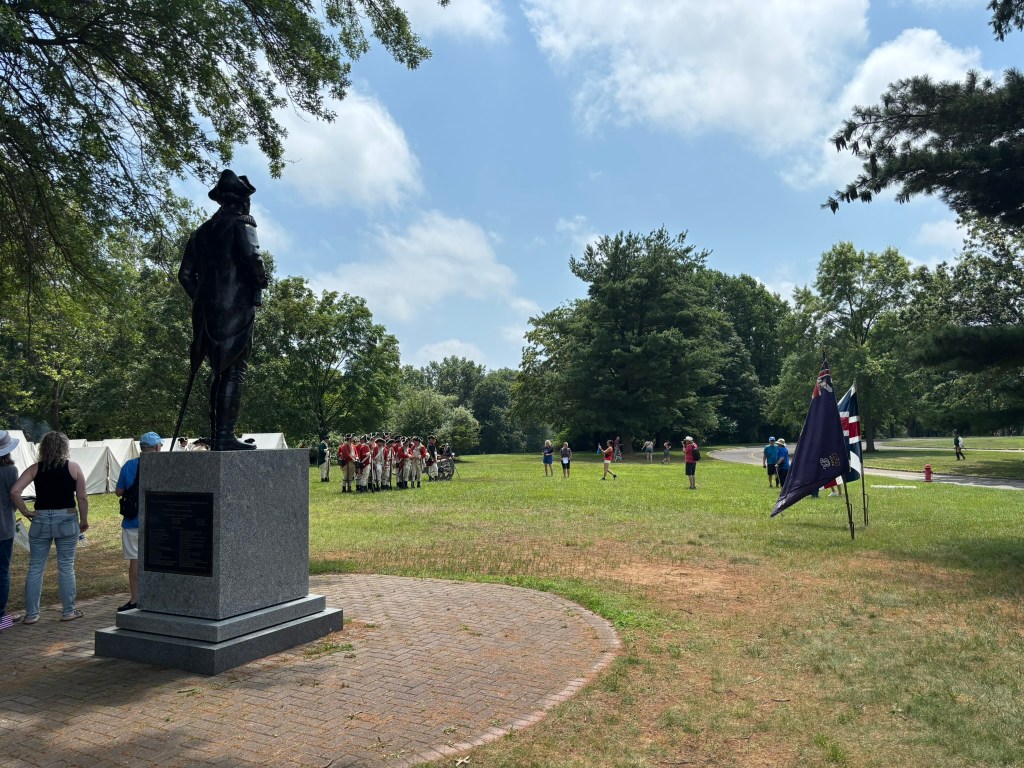
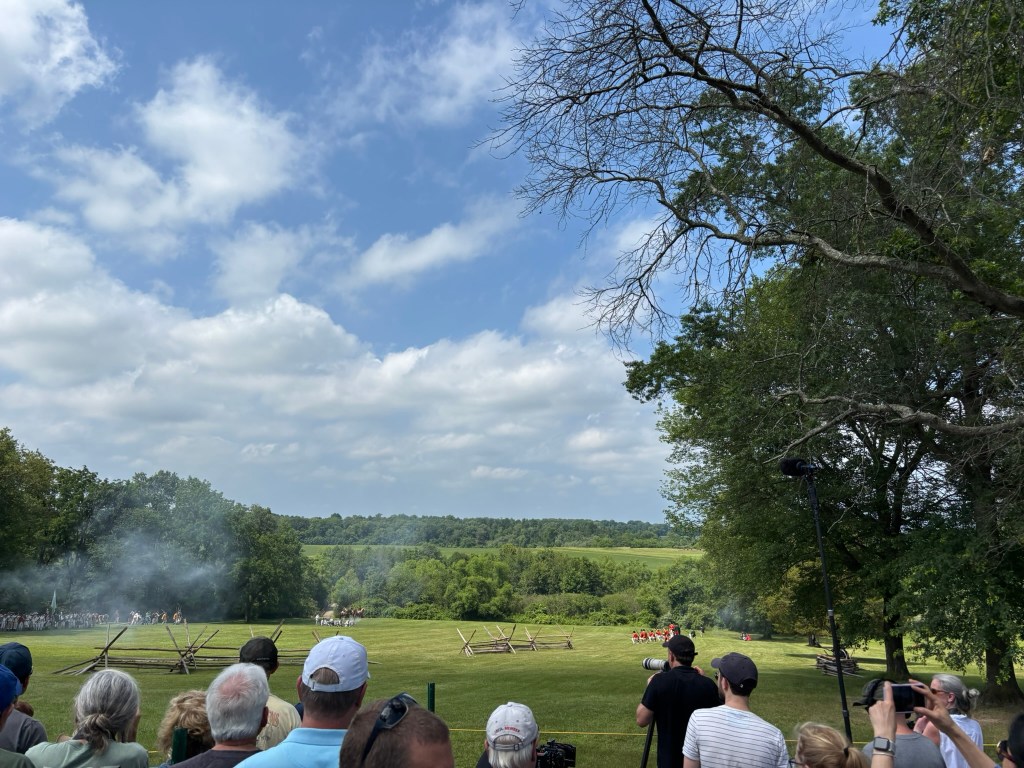
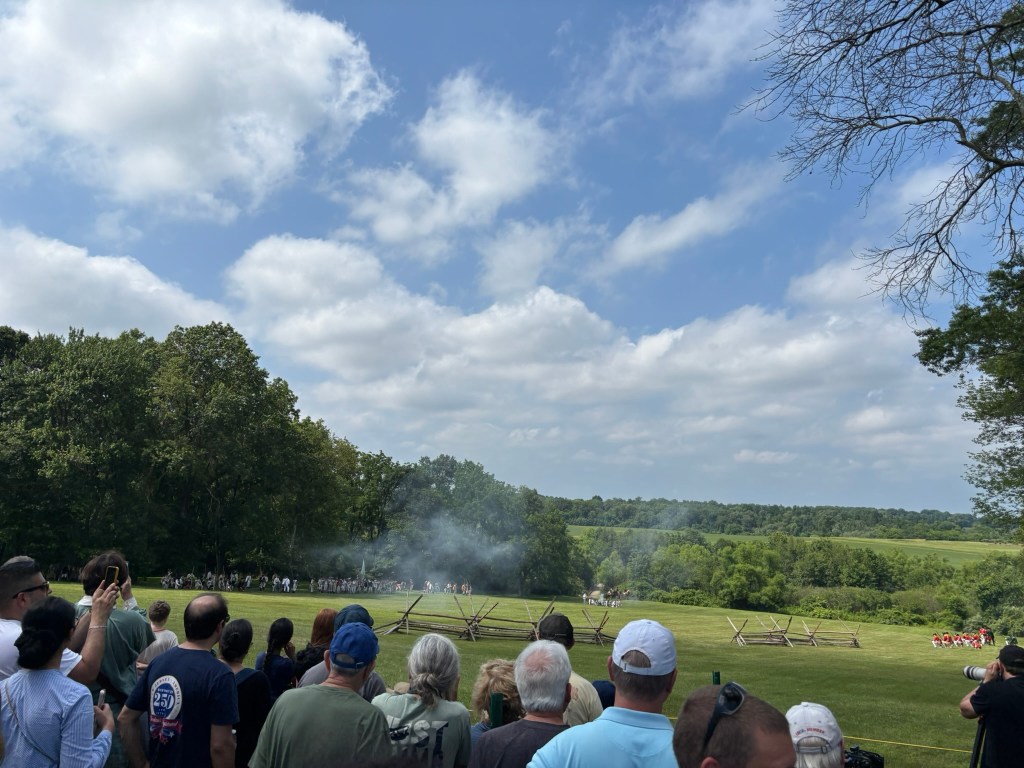
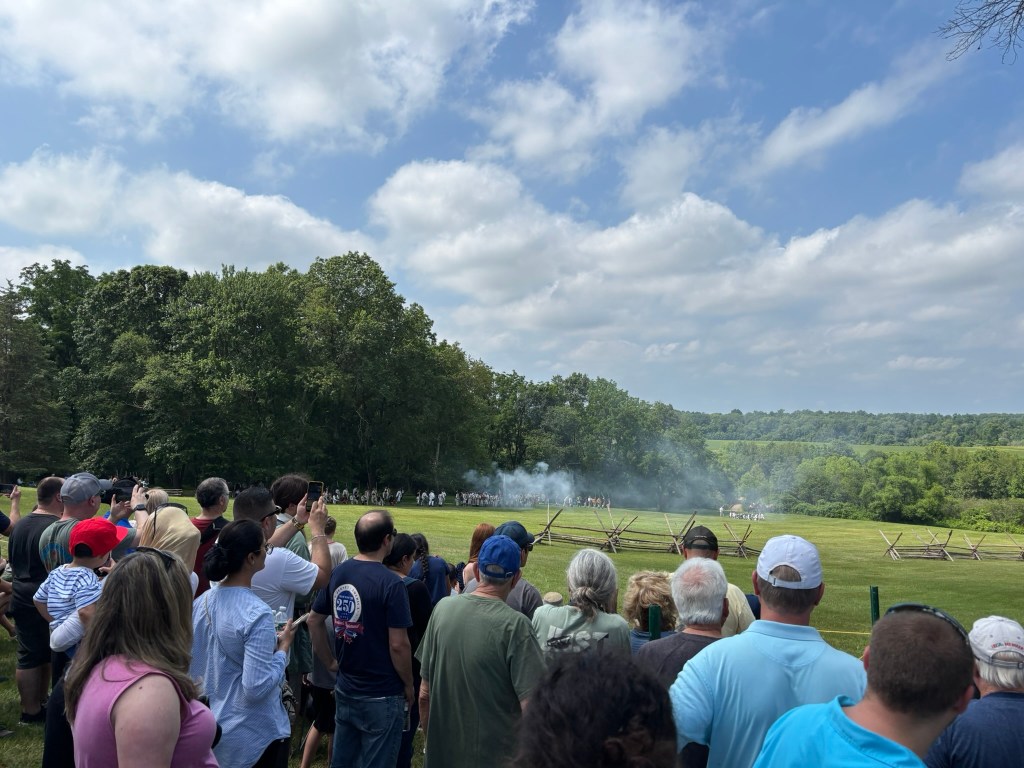
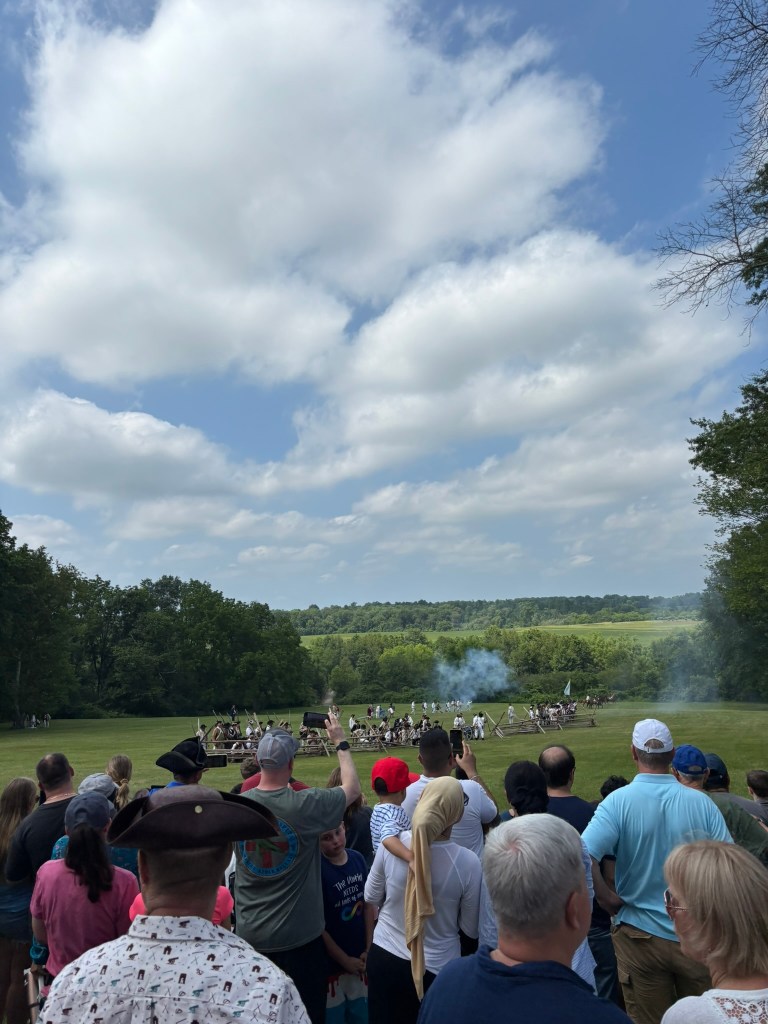
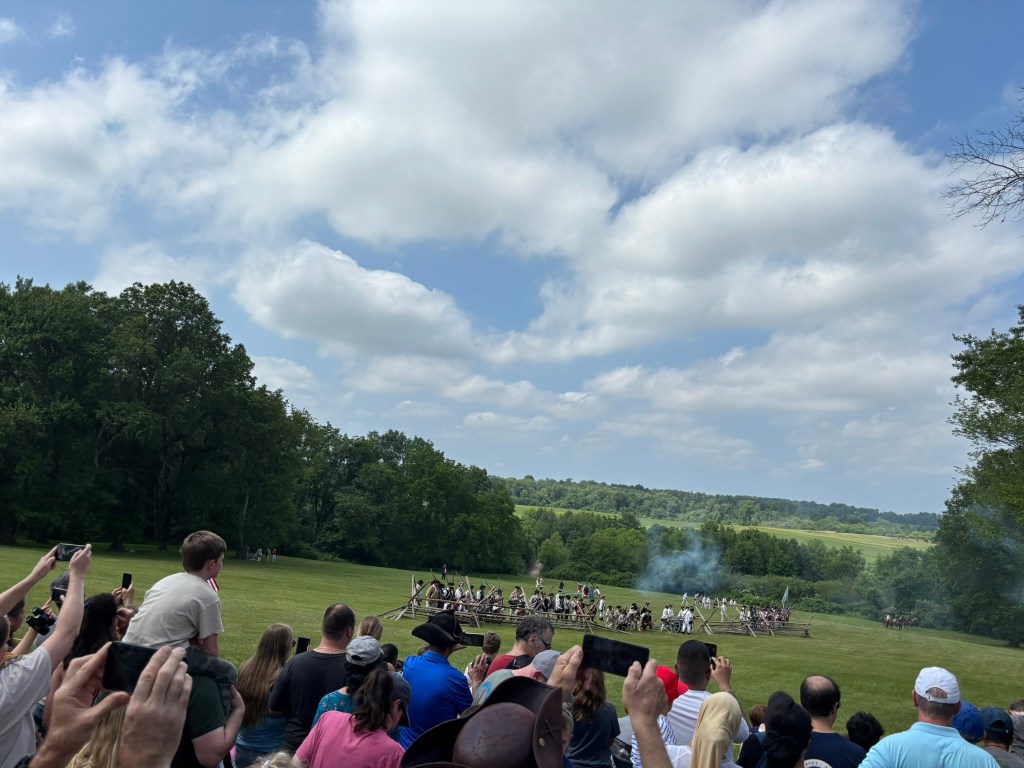
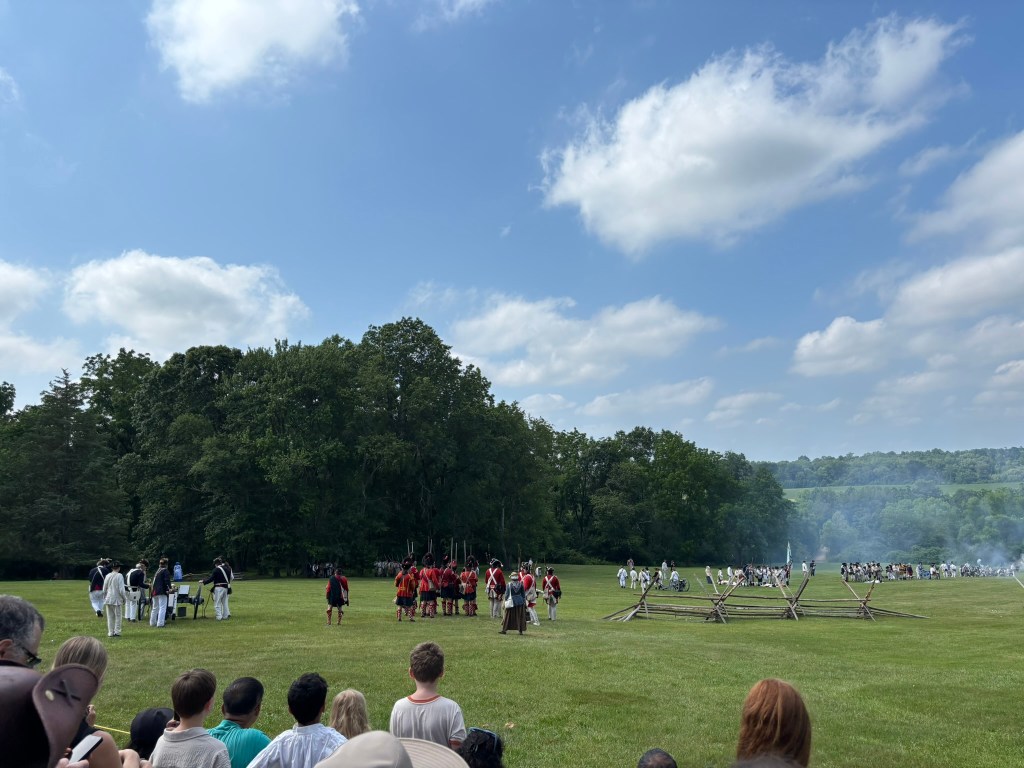
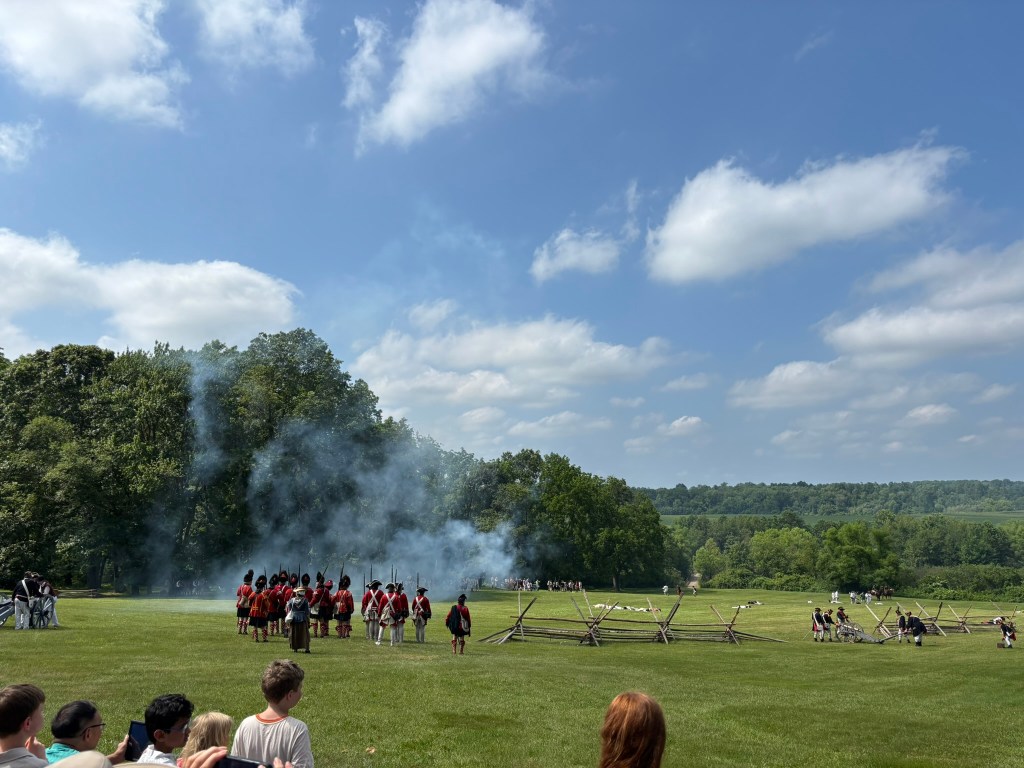
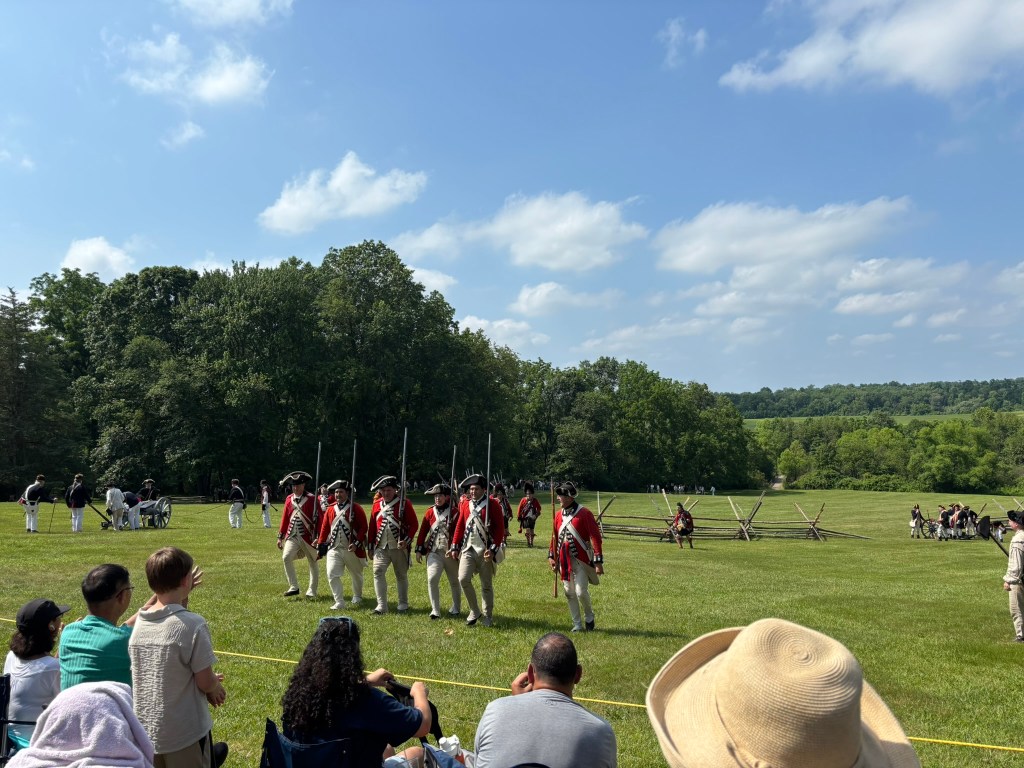
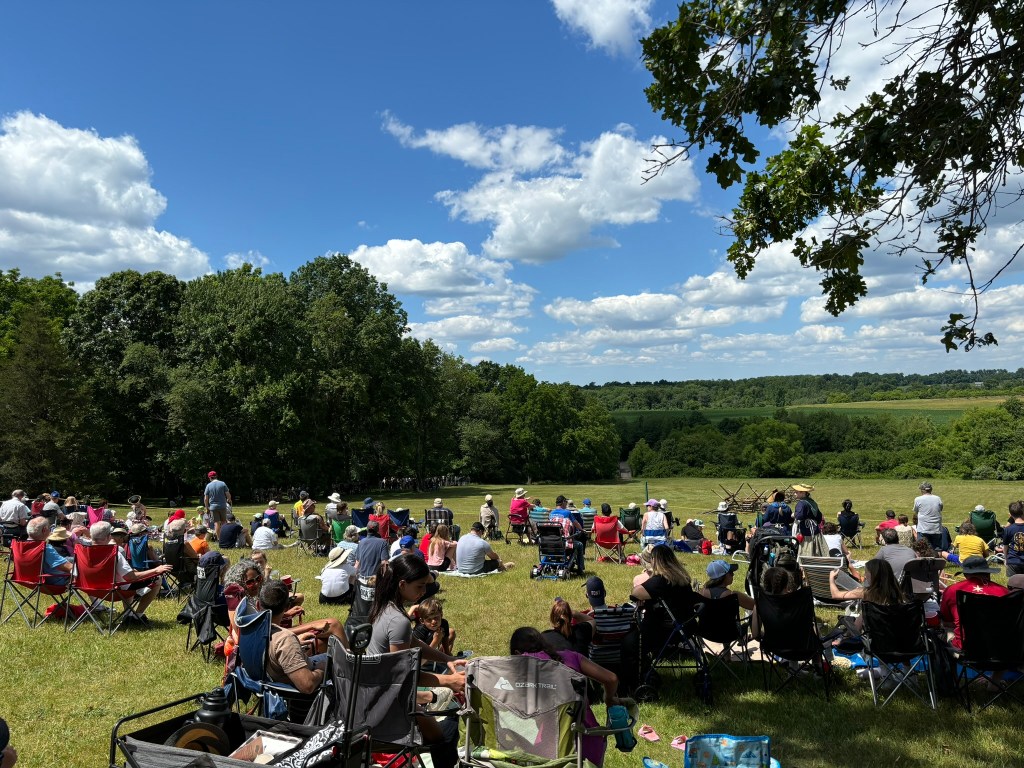
On June 28th, my family and I returned to the annual reenactment of the Battle of Monmouth, held in honor of the historic battle that took place on the same date in 1778. This marked our second year attending, and once again, the event did not disappoint. Among Revolutionary War reenactments, this is the largest I’ve experienced—both in terms of visitor turnout and the impressive number of dedicated reenactors who attend. If you have any interest in the American Revolution, this event is not to be missed. You can read about our experience from last year in 2024 [HERE].
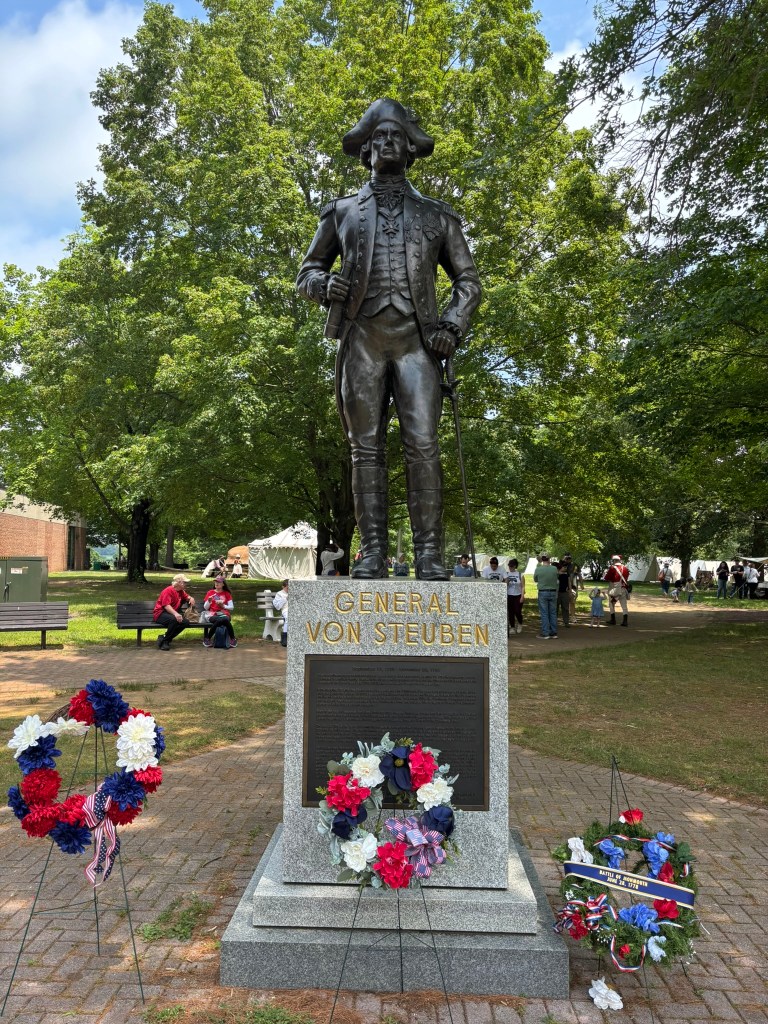
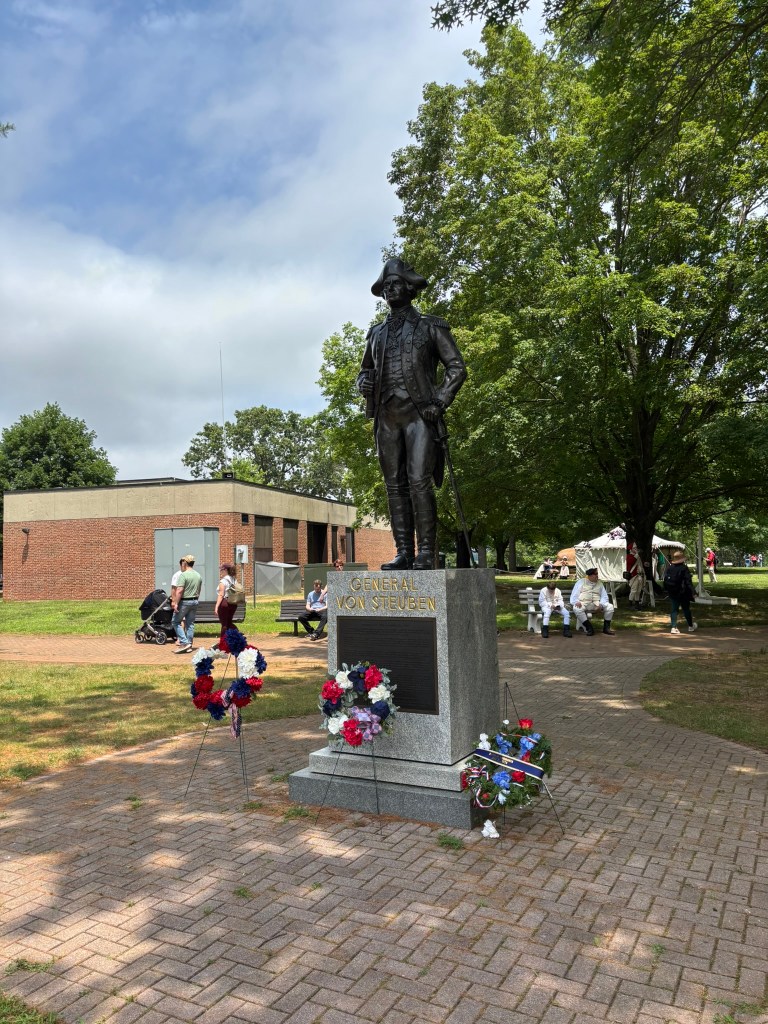
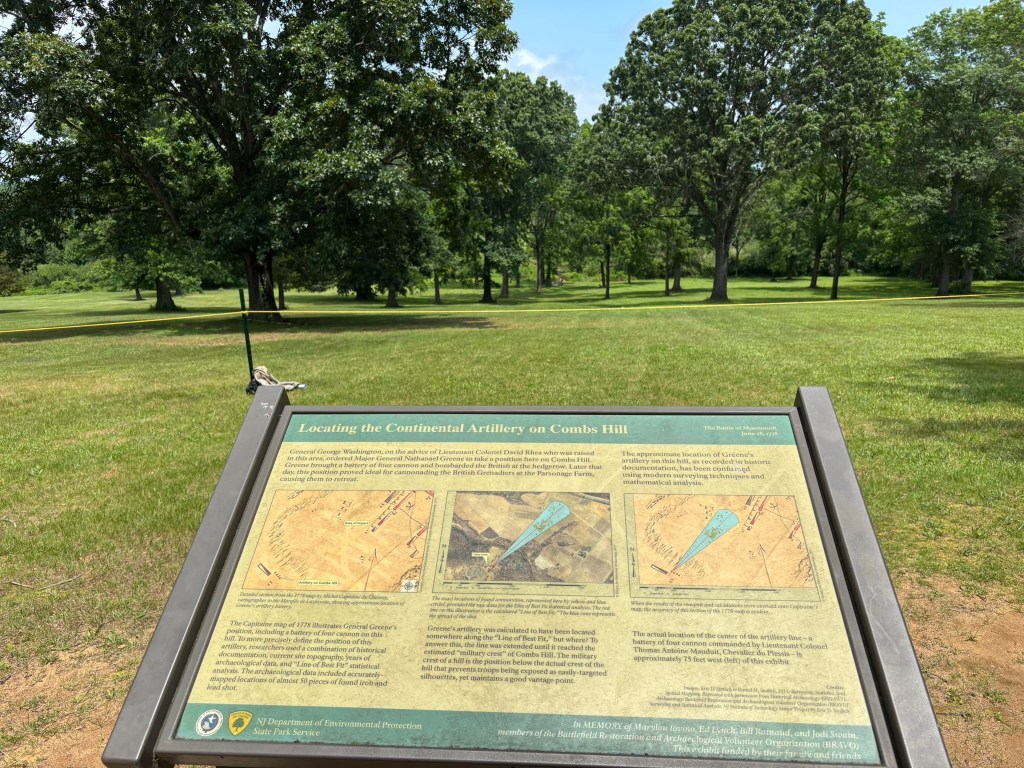
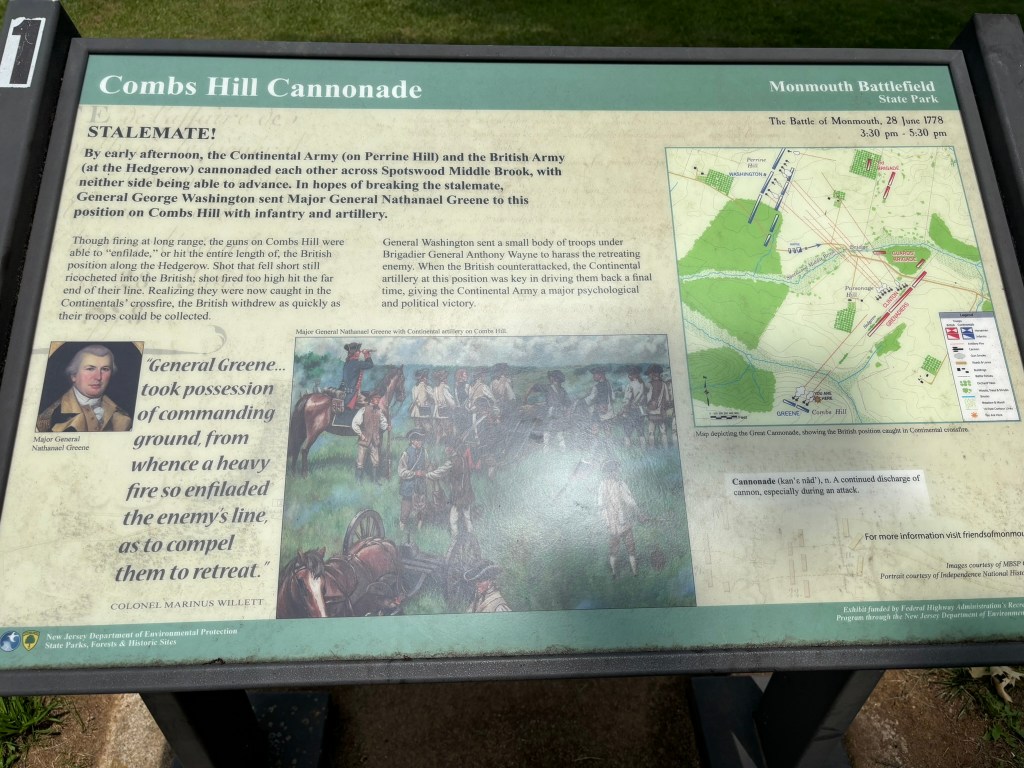
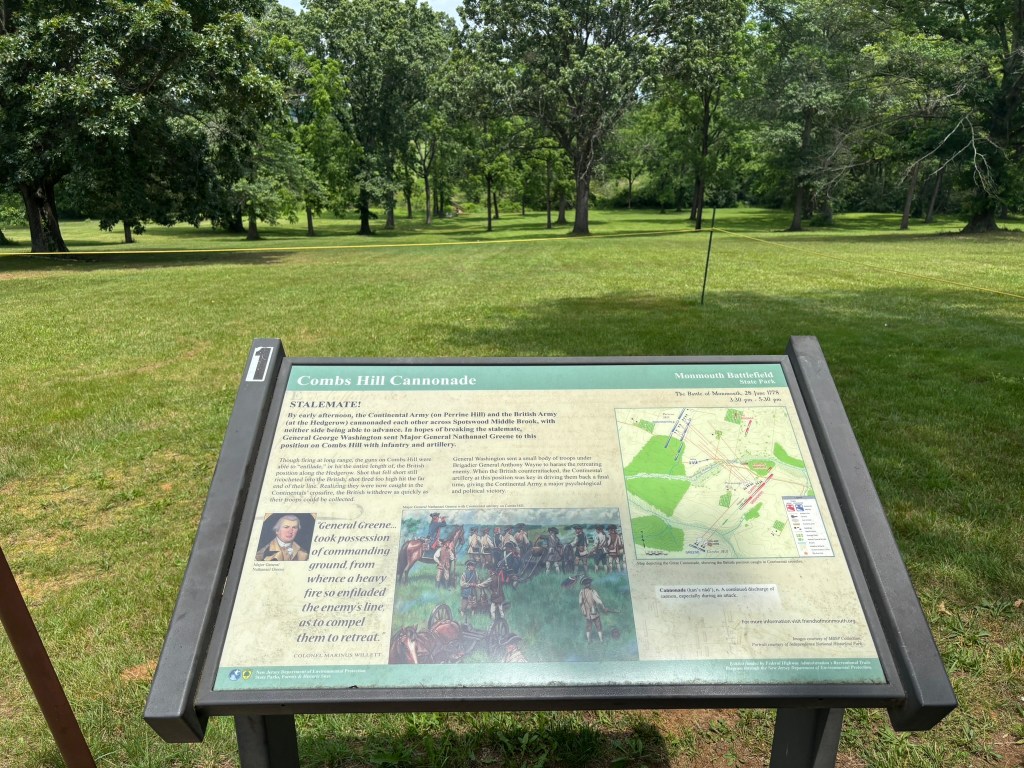
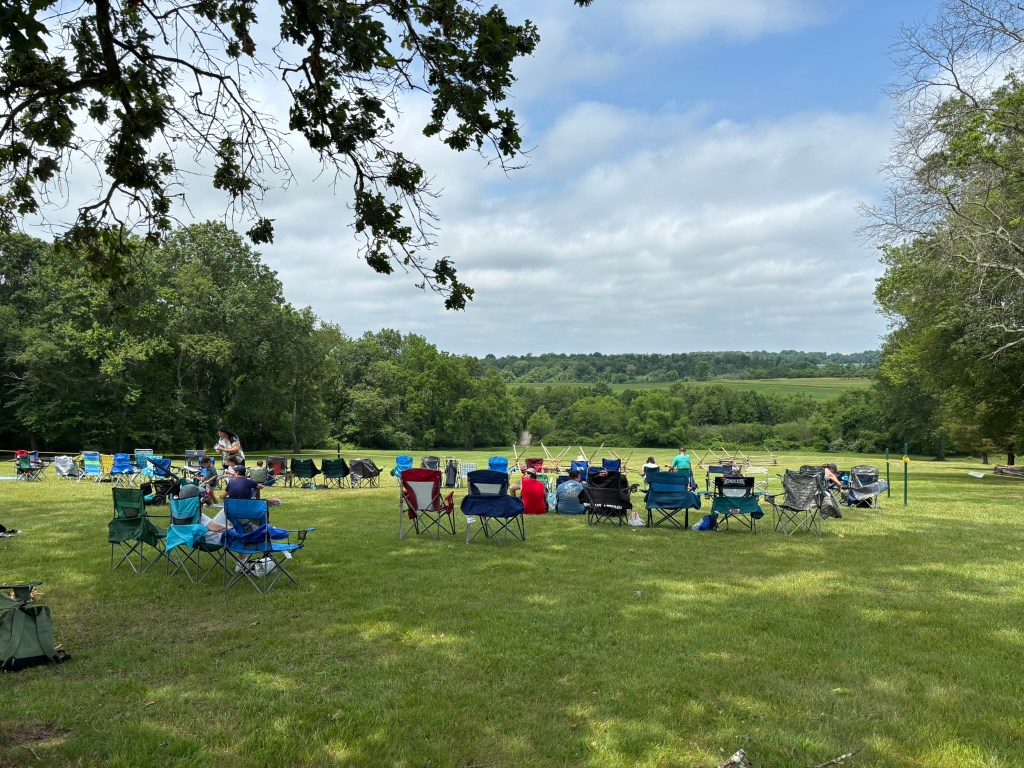
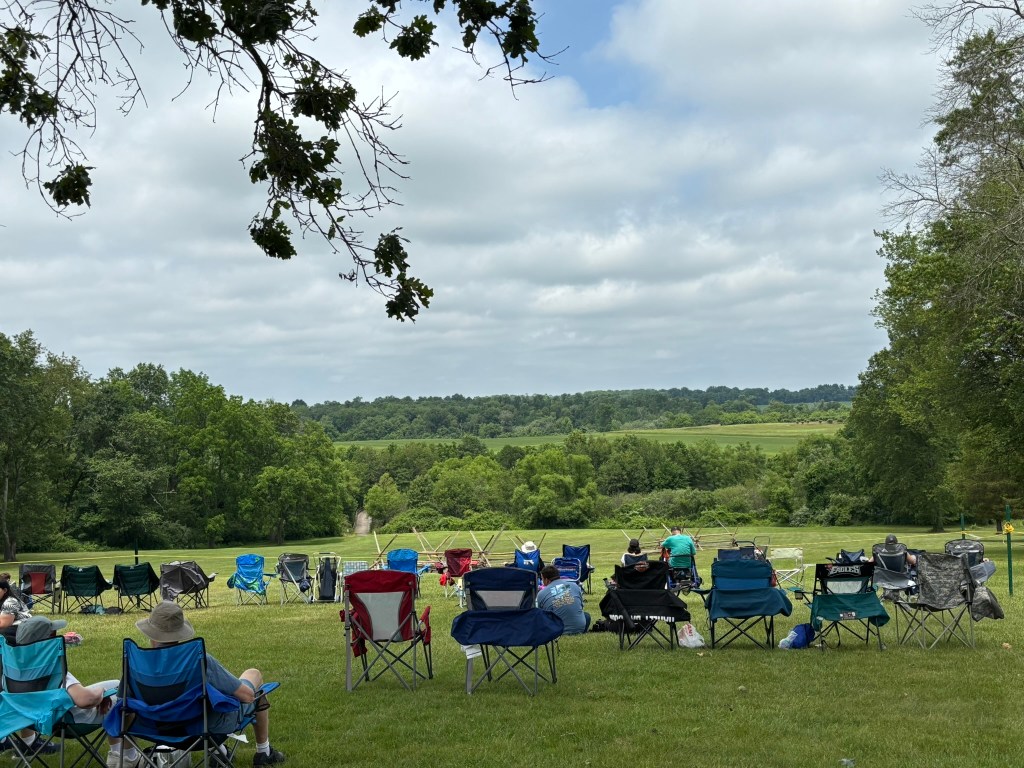
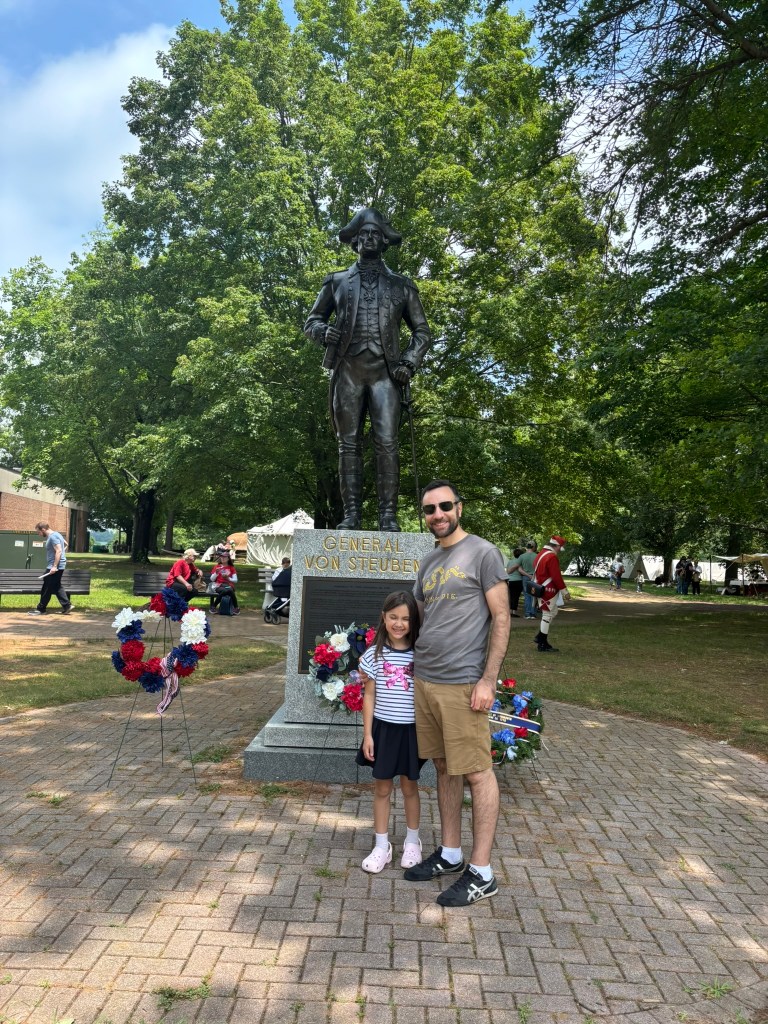
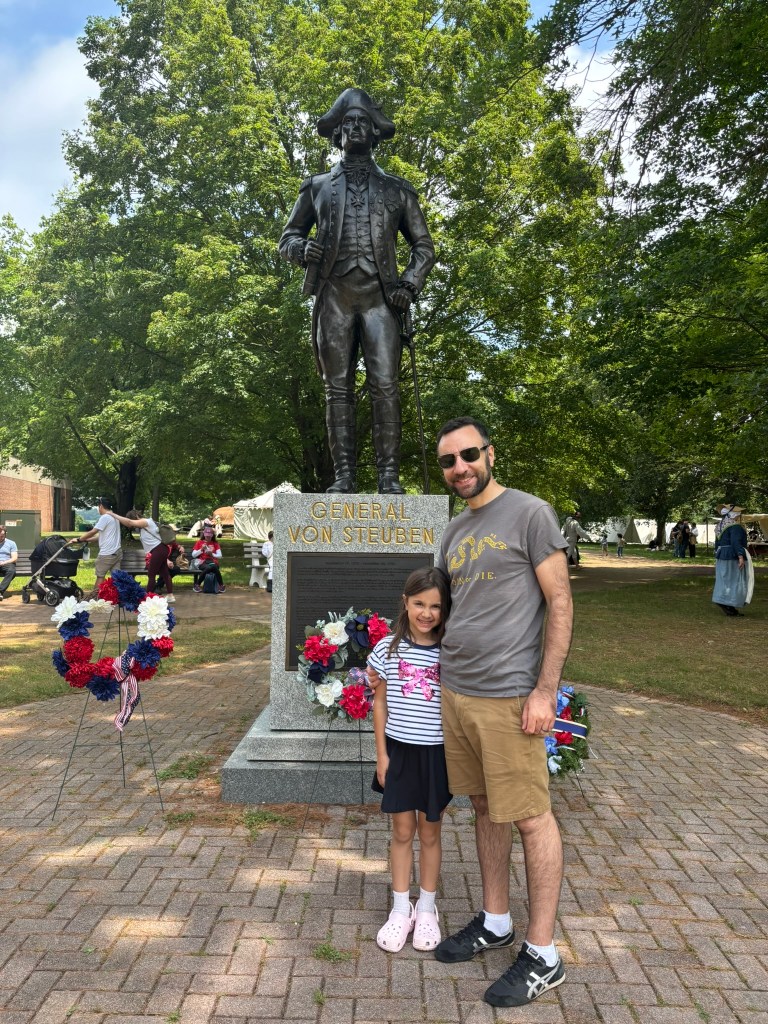
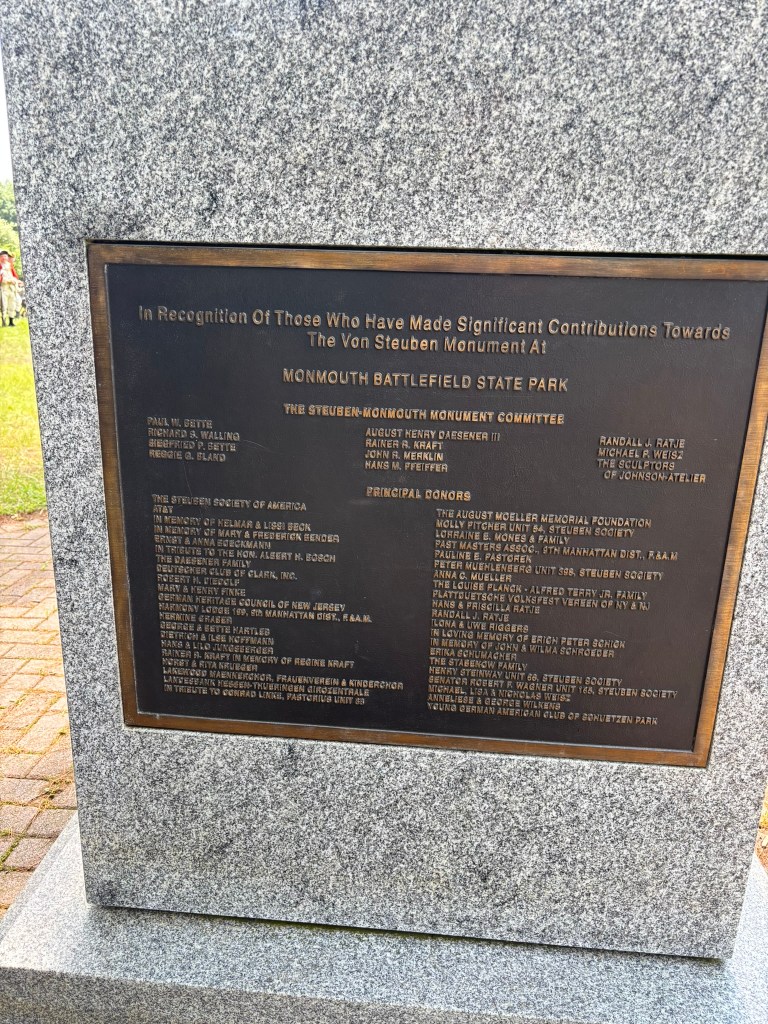
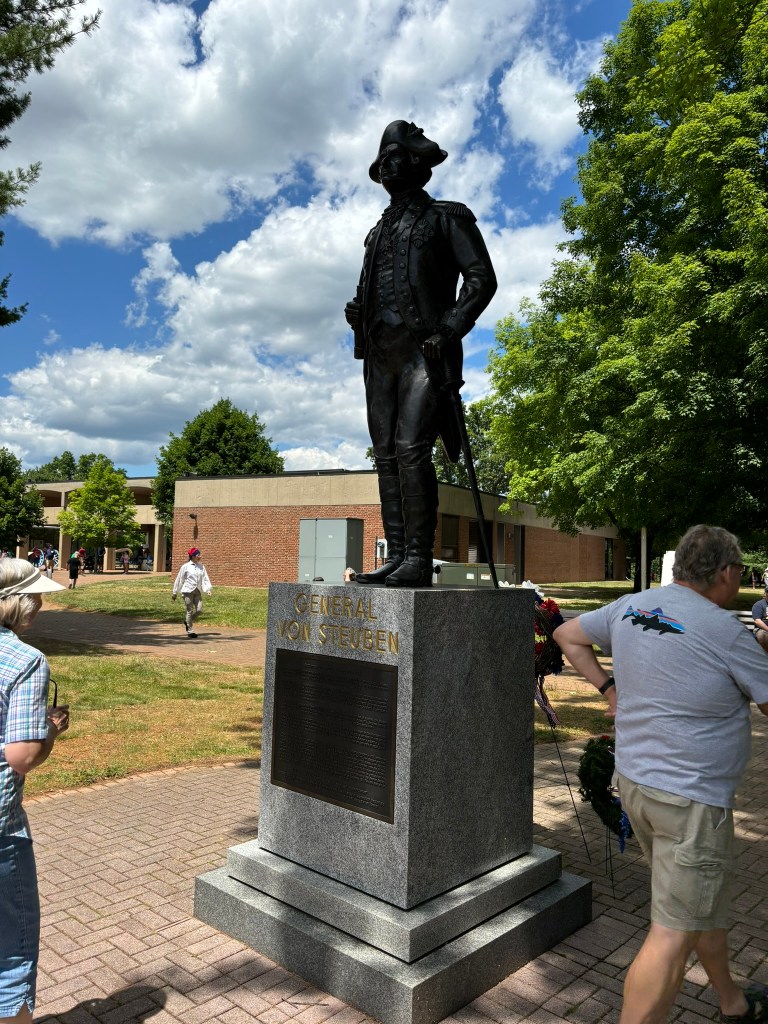
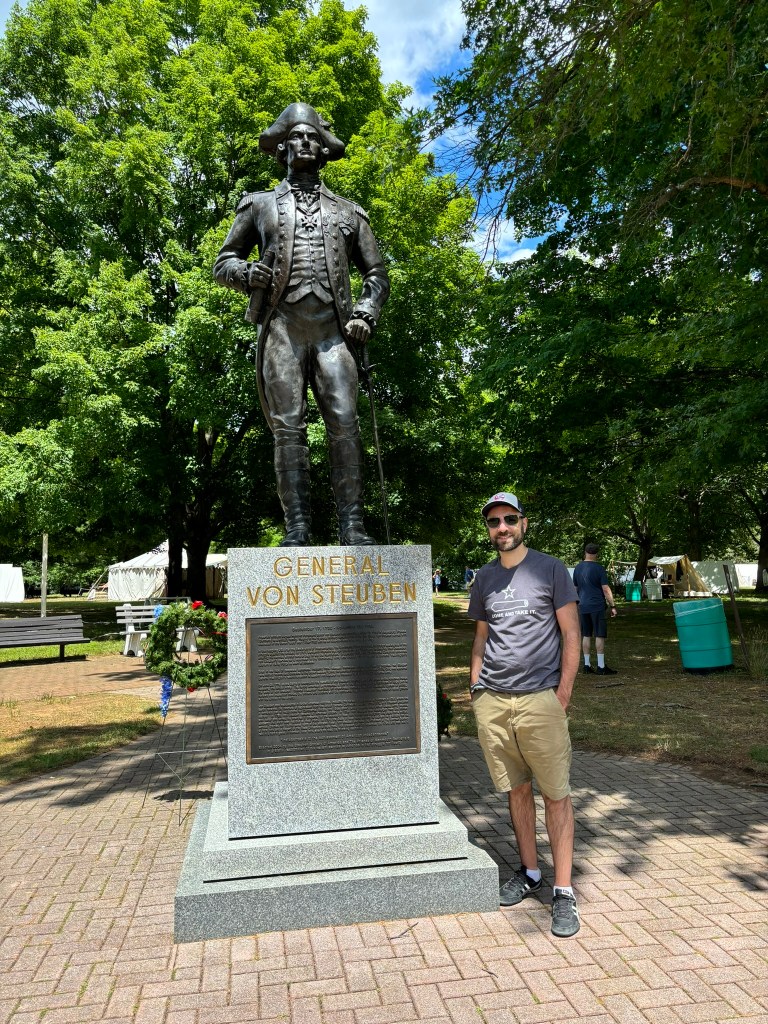
While the Battle of Monmouth did not yield a major strategic advantage for the Continental Army, it was a significant engagement in terms of scale and symbolism. As one of the largest battles of the Revolutionary War in terms of manpower, it demonstrated that the Patriot forces could stand toe-to-toe with the British in open combat. It featured the largest artillery duel of the war and marked a turning point in the professionalism of the Continental Army. After the grueling winter at Valley Forge, where relentless drilling under the Prussian officer Friedrich von Steuben transformed the army into a disciplined fighting force, the Continentals finally had the chance to prove their strength on the battlefield. The results were evident at Monmouth.
The battle is also remembered for its extreme heat, with temperatures reportedly reaching 100 degrees. Despite the intensity of the fighting, the British continued their retreat from Philadelphia to New York the following night as originally planned, allowing General George Washington to claim the battle as a moral victory for the American cause.
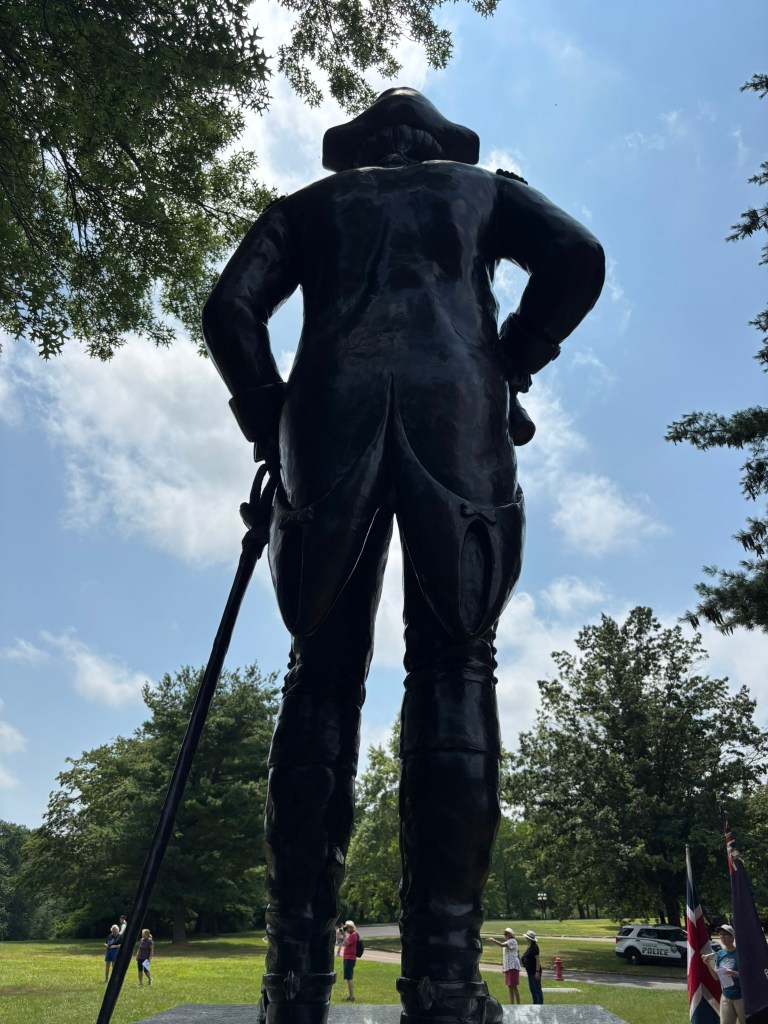
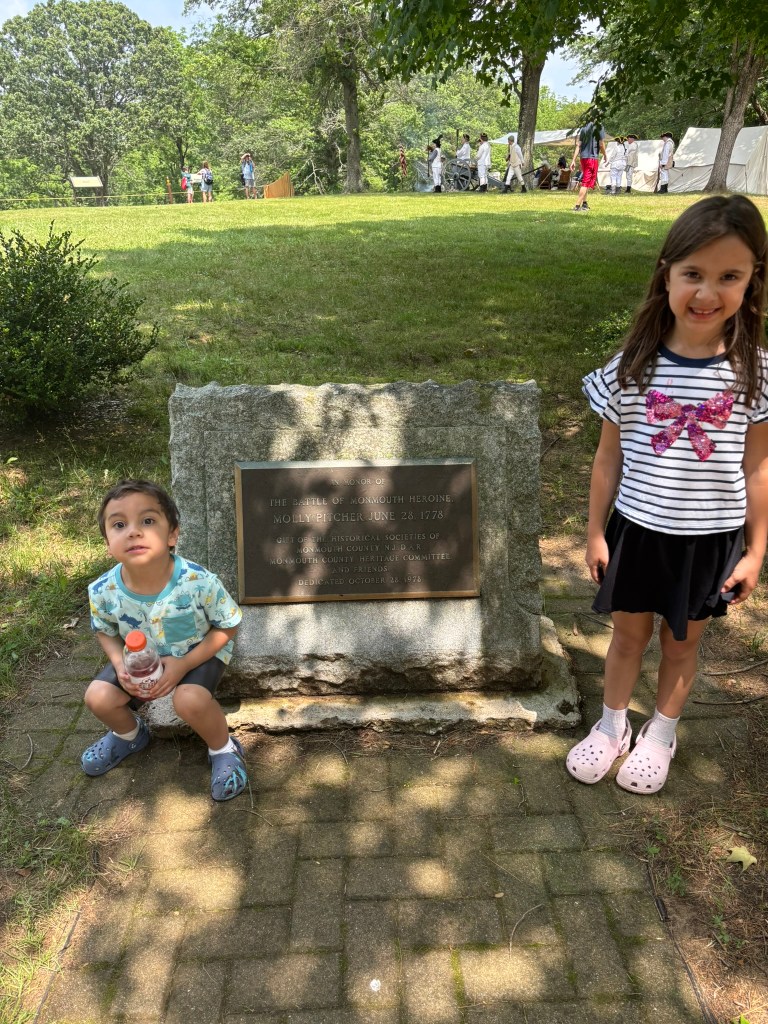
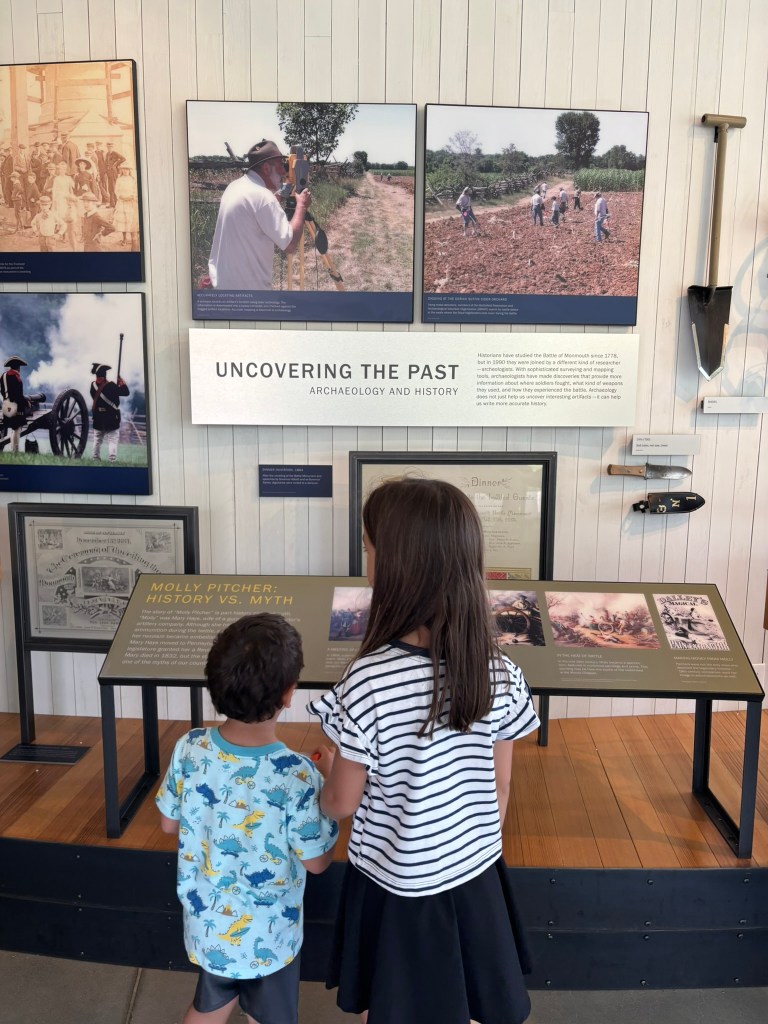
Monmouth is also famous for the legendary heroics of Molly Pitcher, who is honored at the battlefield park for her bravery in the thick of combat.
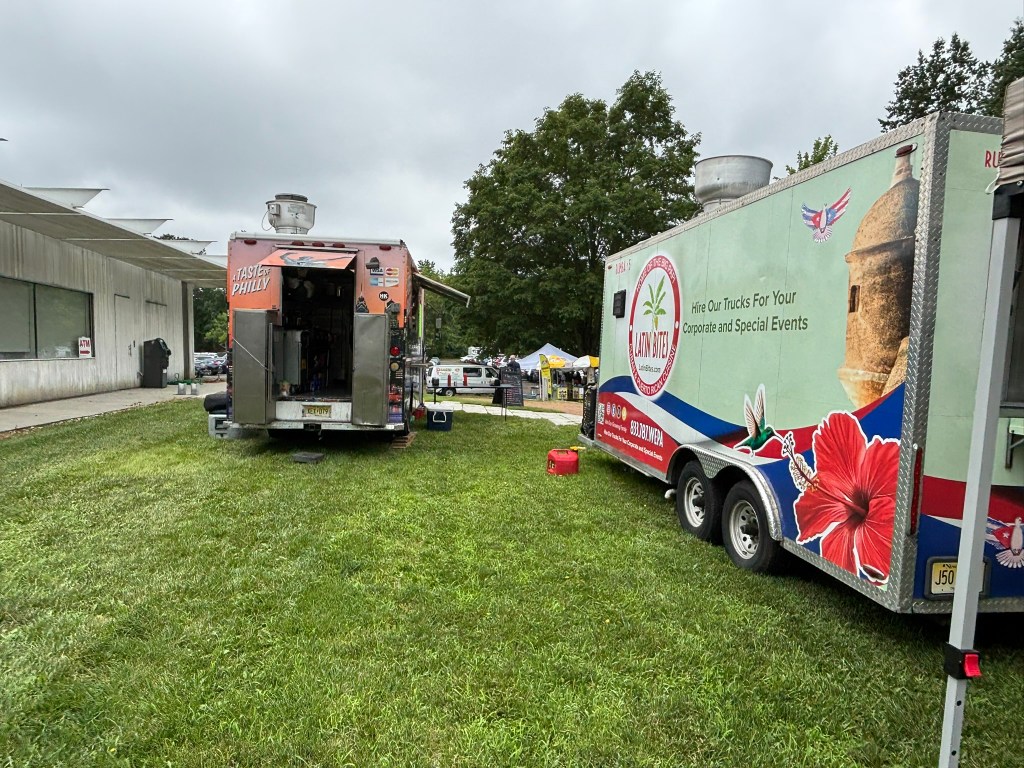
My family and I arrived at the park around 11:30 a.m., planning to have an early lunch before attending a 12:15 p.m. program about Molly Pitcher. One of the great things about this event is the variety of food trucks on site, which makes it easy to feed the kids without needing to stop along the way. There are several different food options available—we opted for empanadas from Latin Bites.
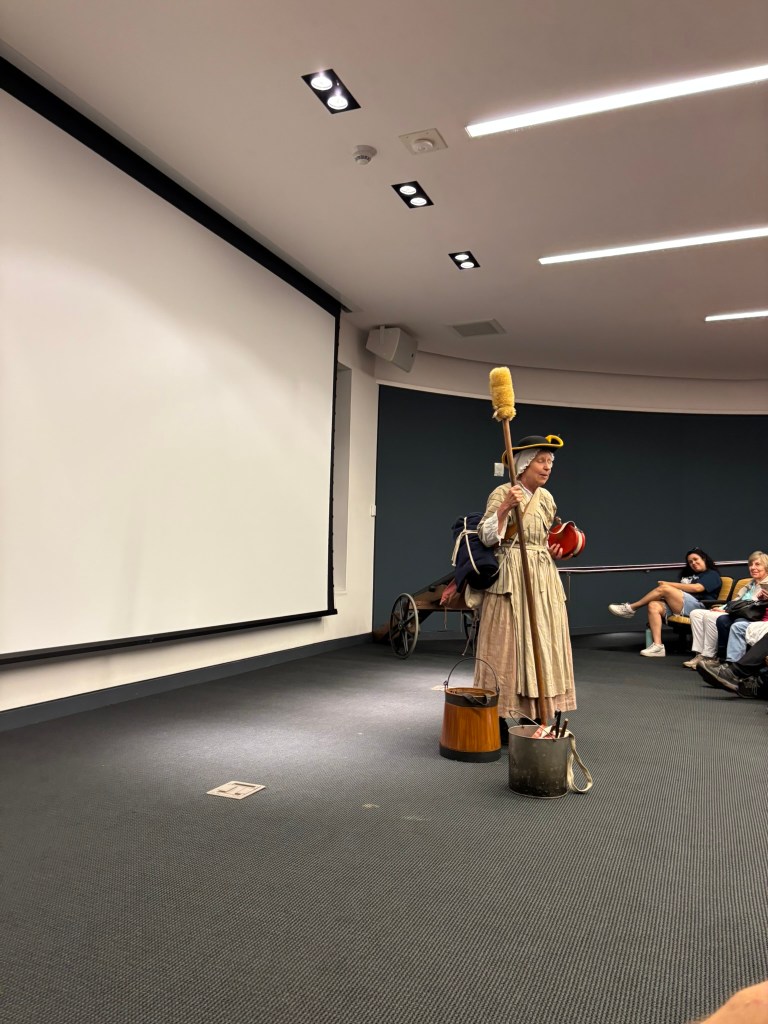
After lunch, we made our way to the auditorium for a program entitled “Over Here, Molly Pitcher.” Historian Stacy Roth portrayed Molly Pitcher, speaking in character as the famed Revolutionary War figure reflecting back on her life in the 1820s. Her performance focused primarily on Molly’s experiences during the war, with special emphasis on the events of the June 1778 Battle of Monmouth. The program lasted about an hour and offered an engaging and informative look into this legendary figure’s story.
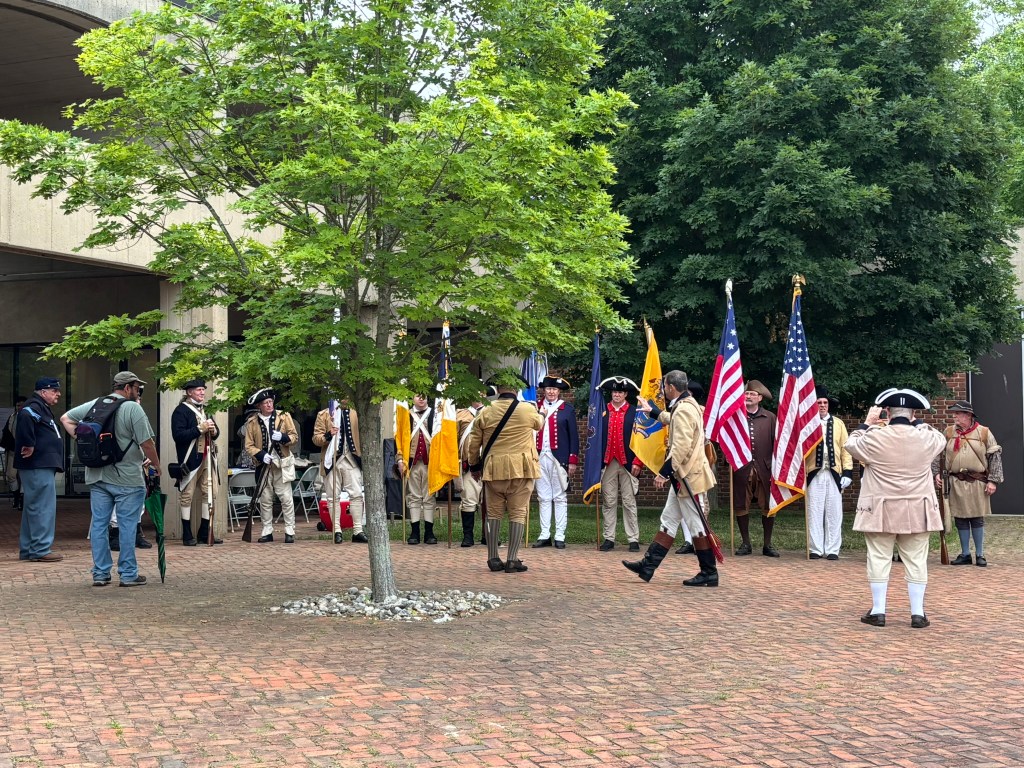
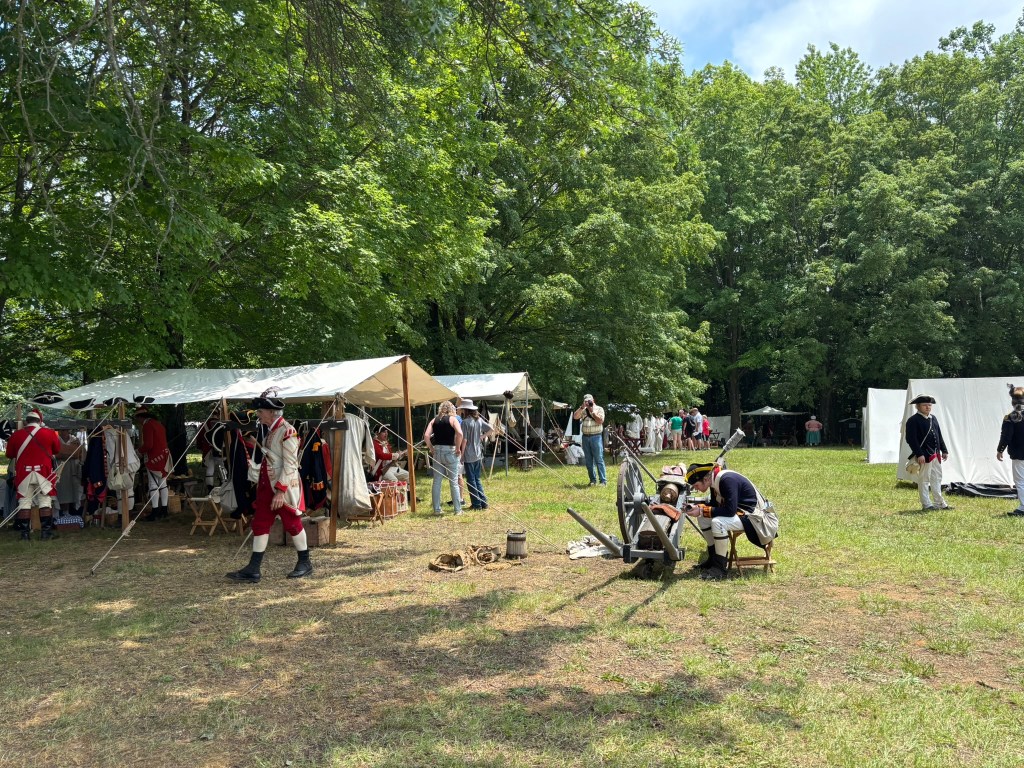
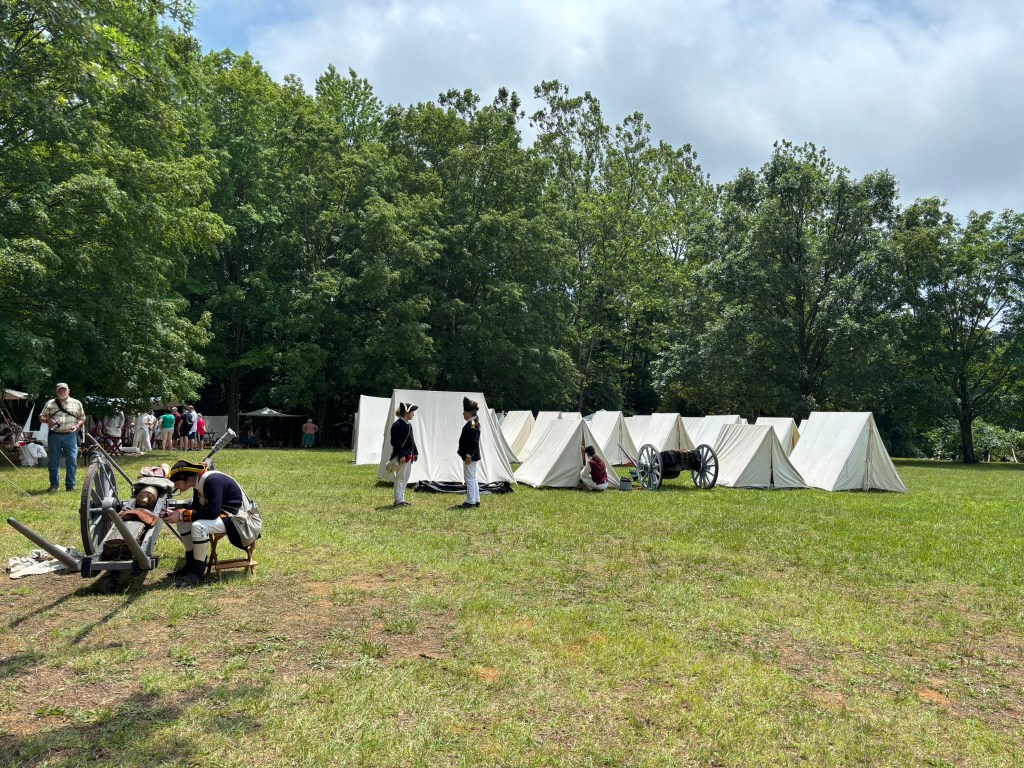
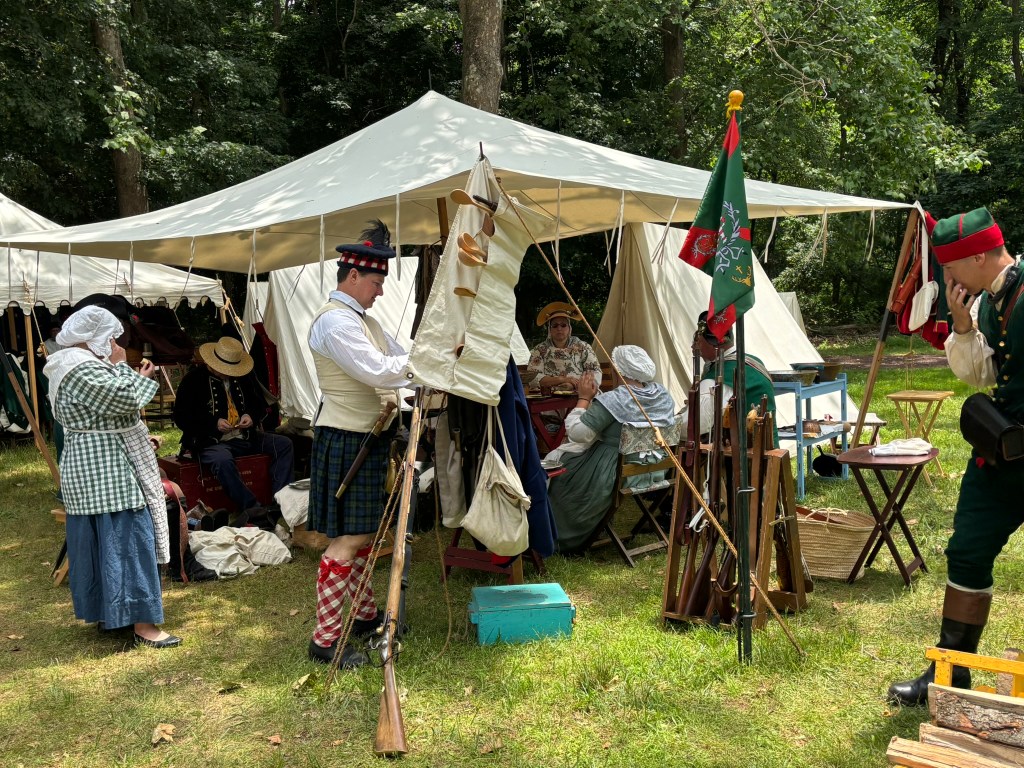
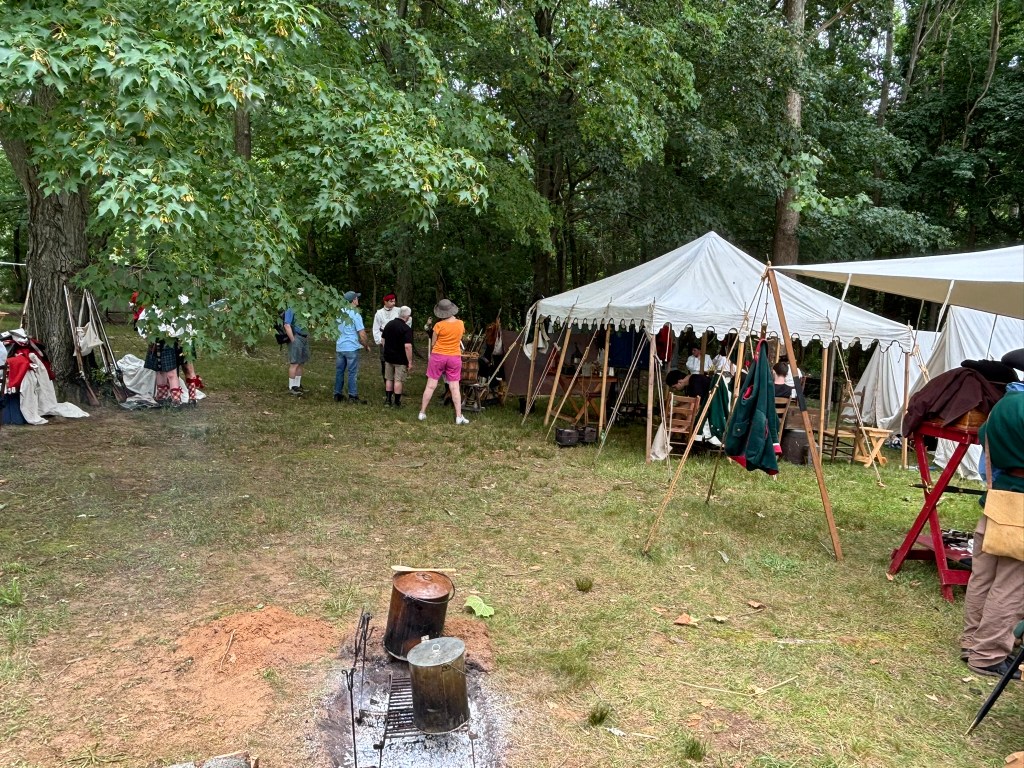
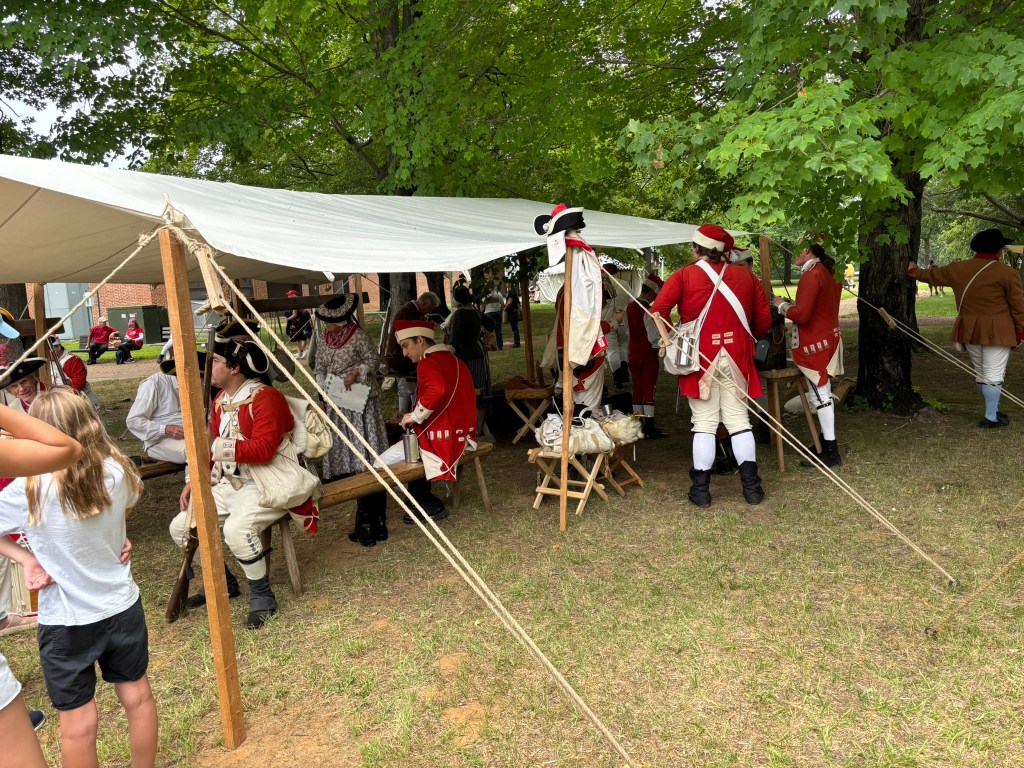
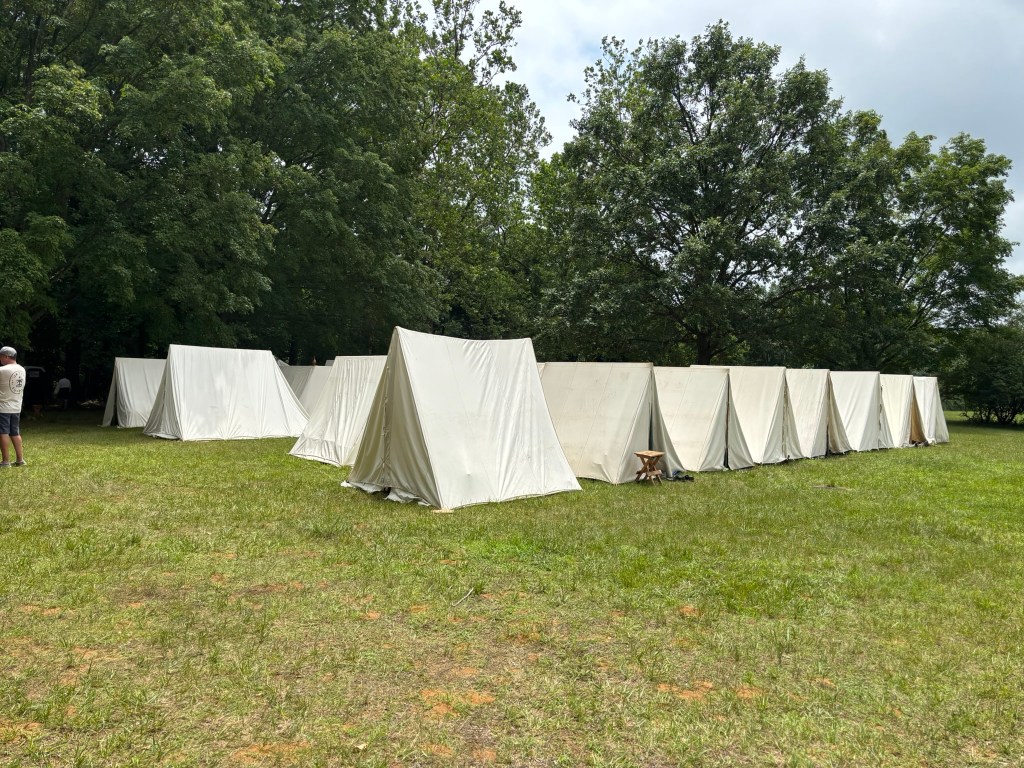
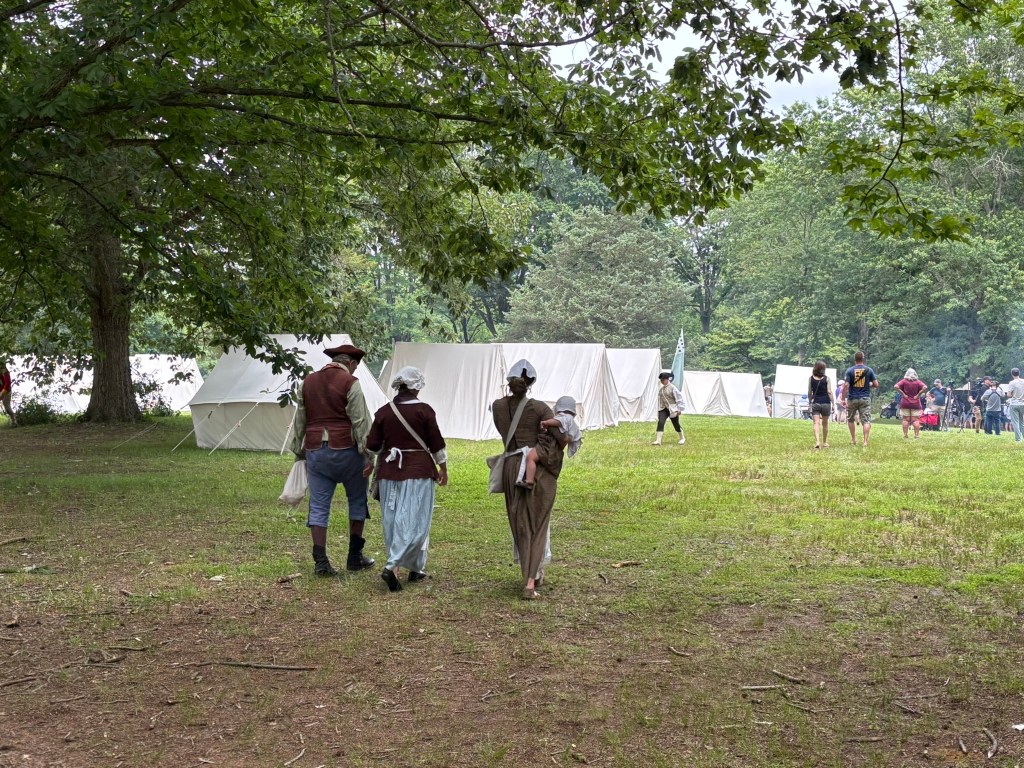
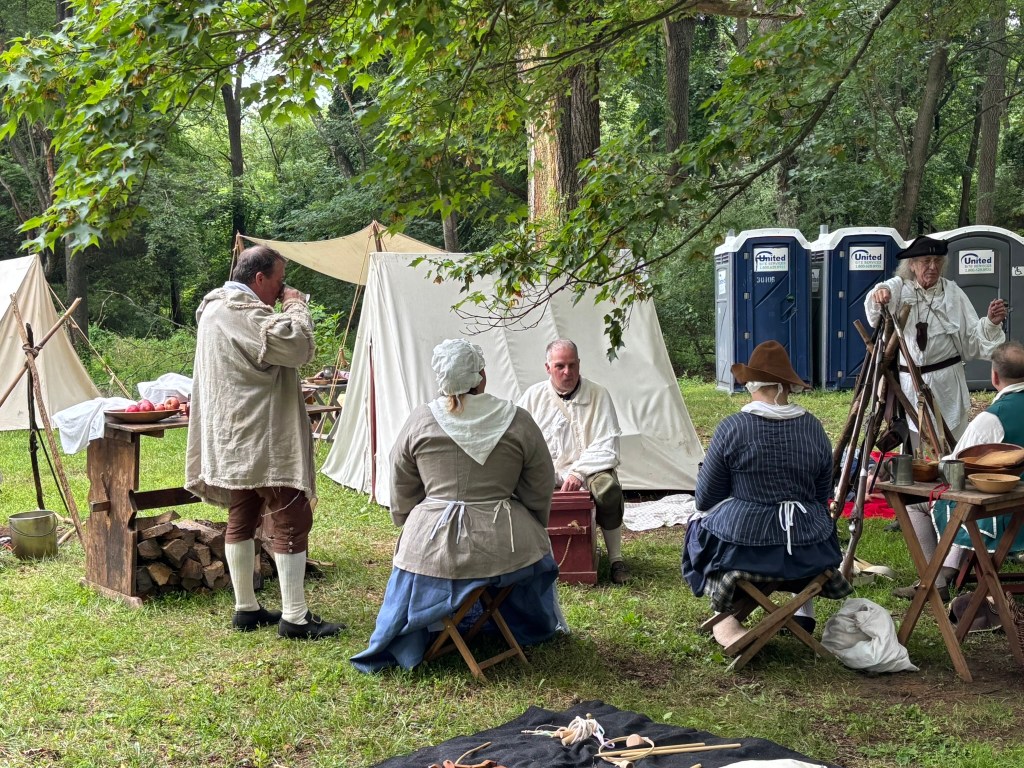
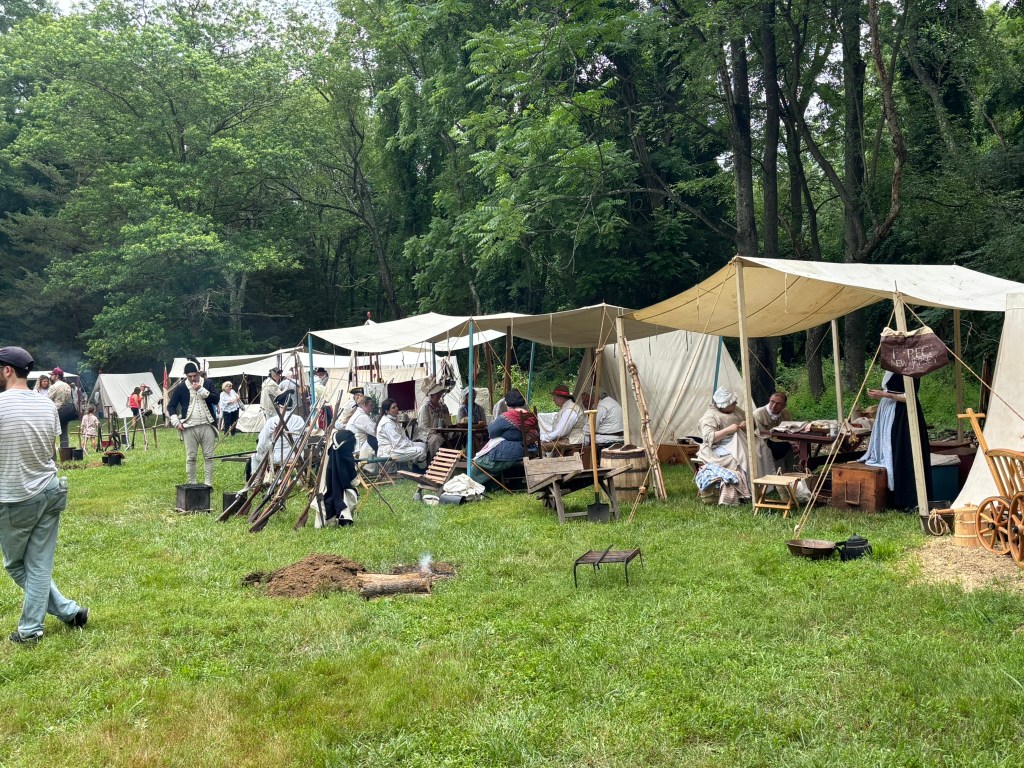
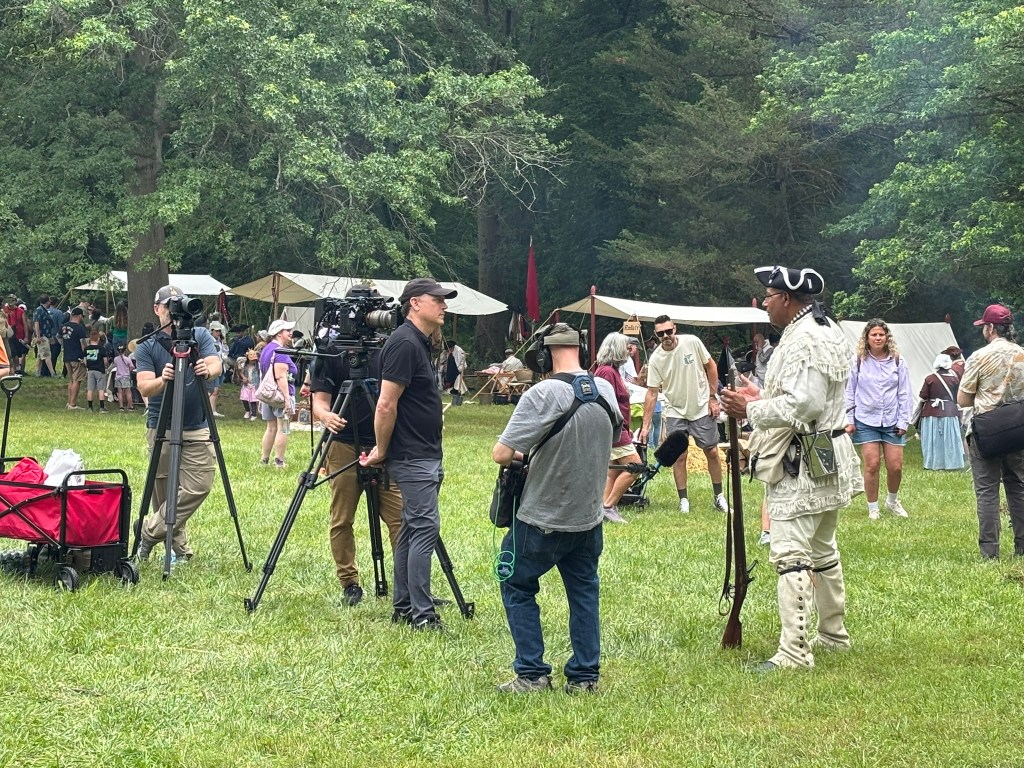
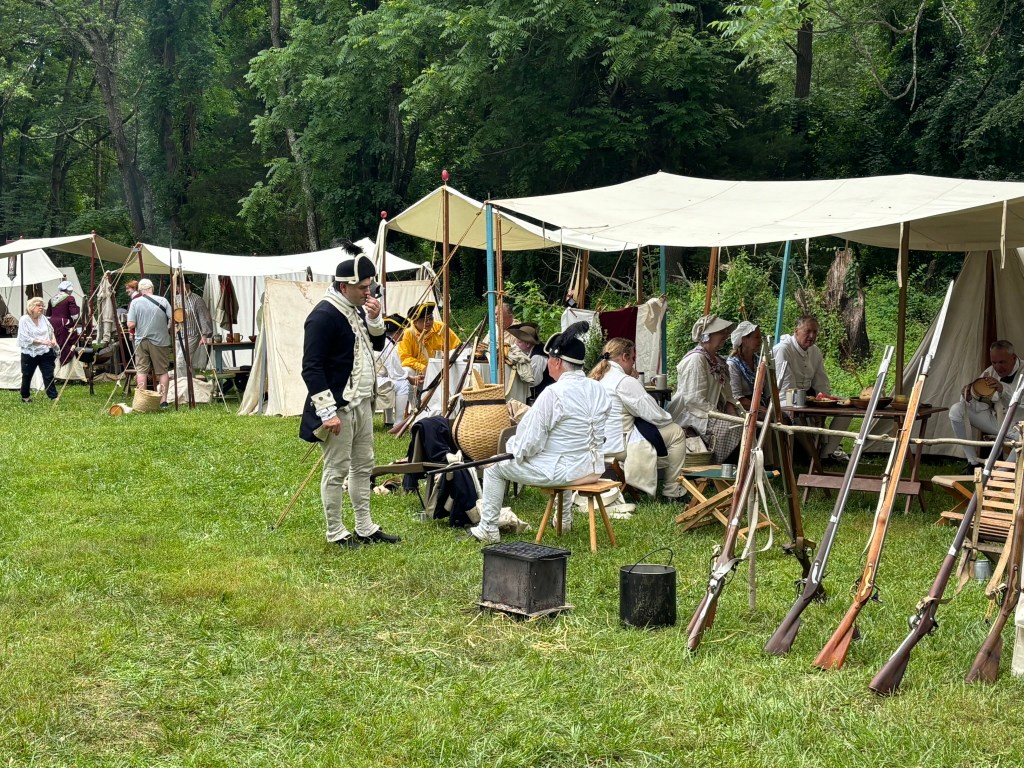
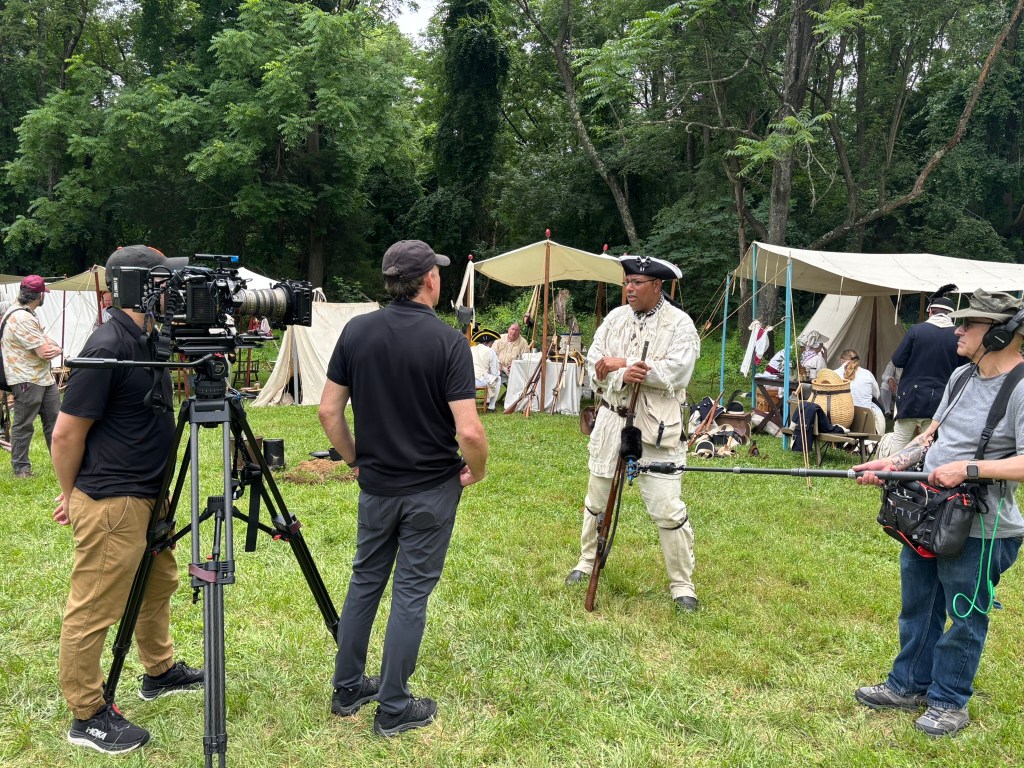
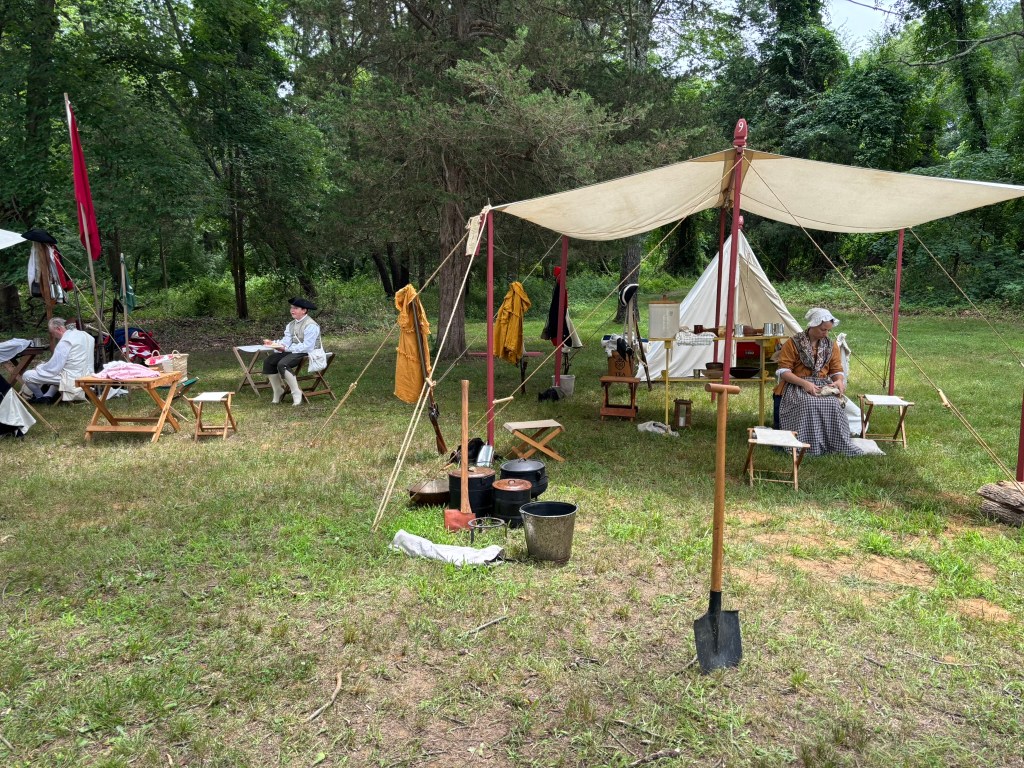
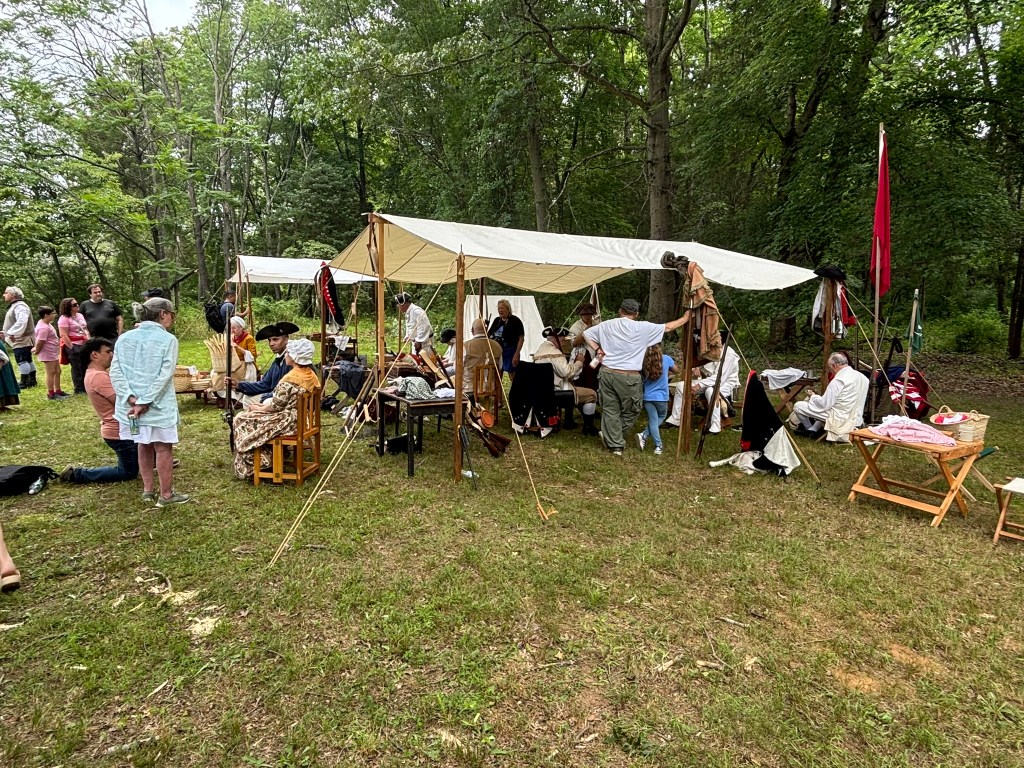
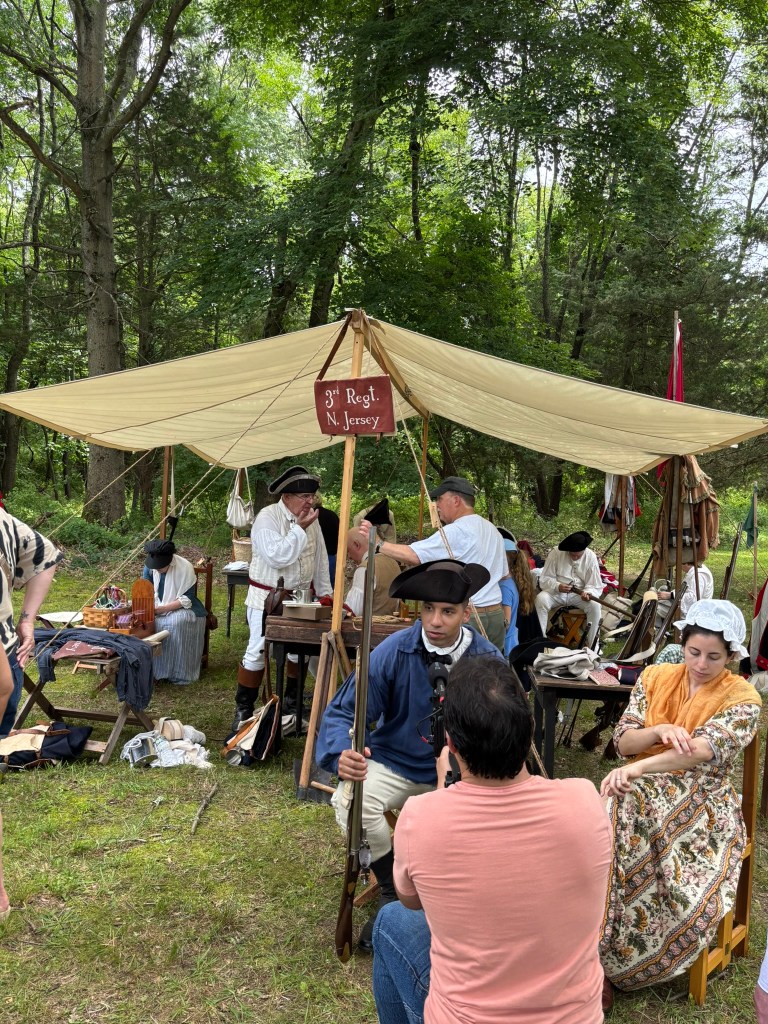
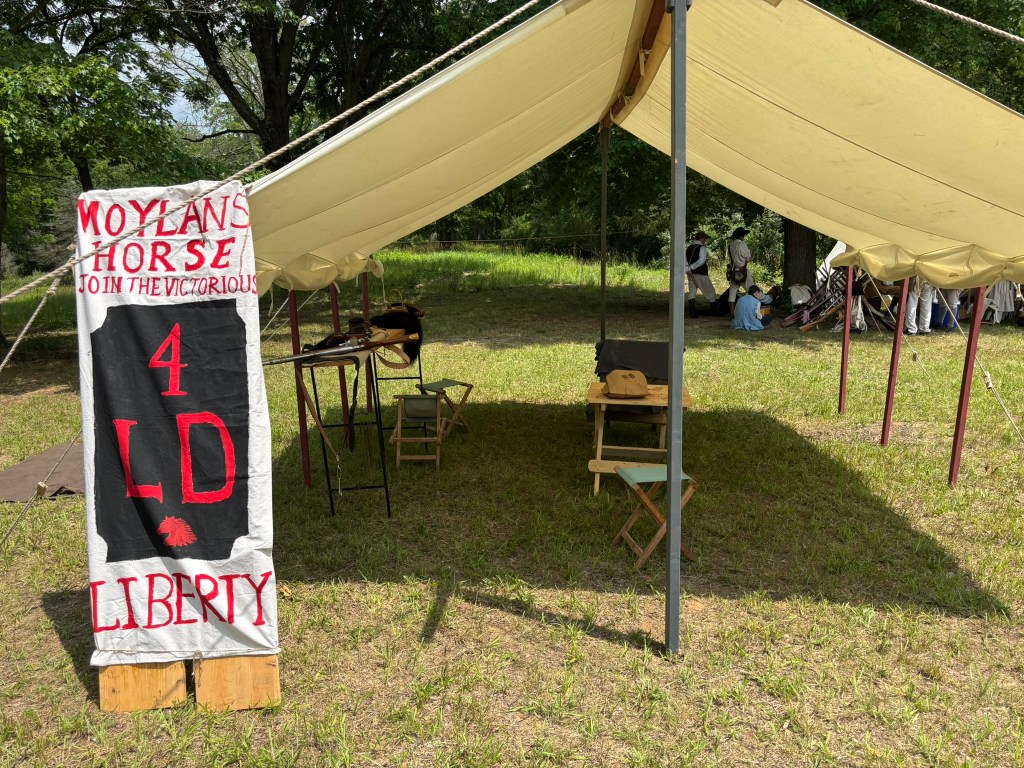
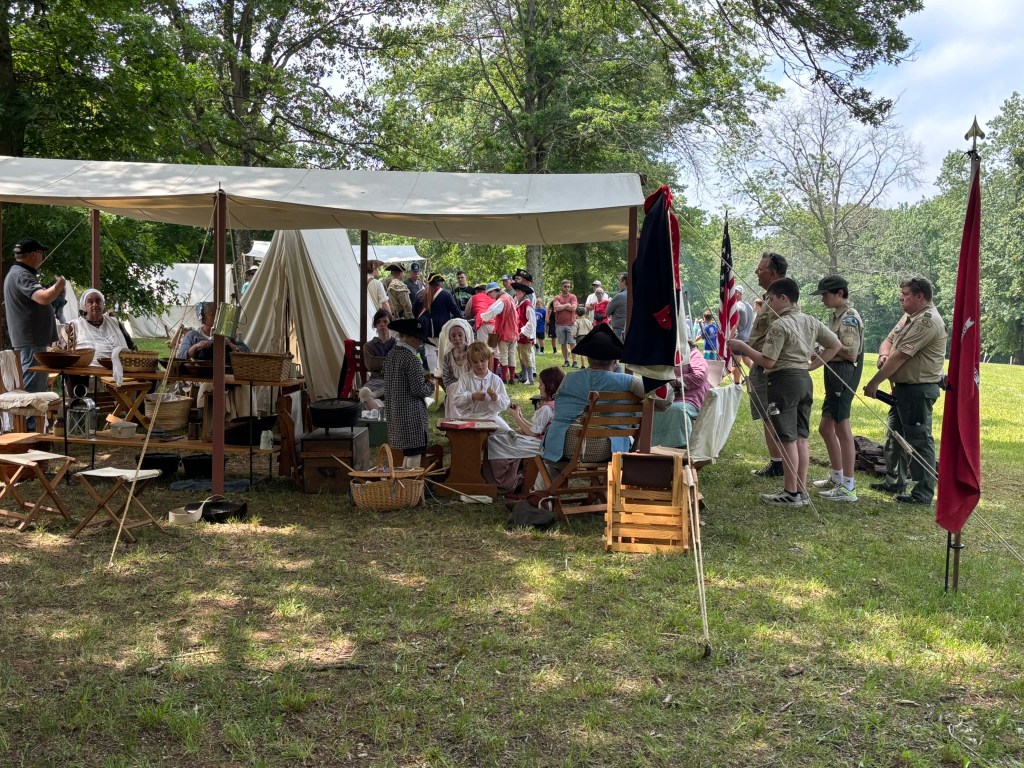
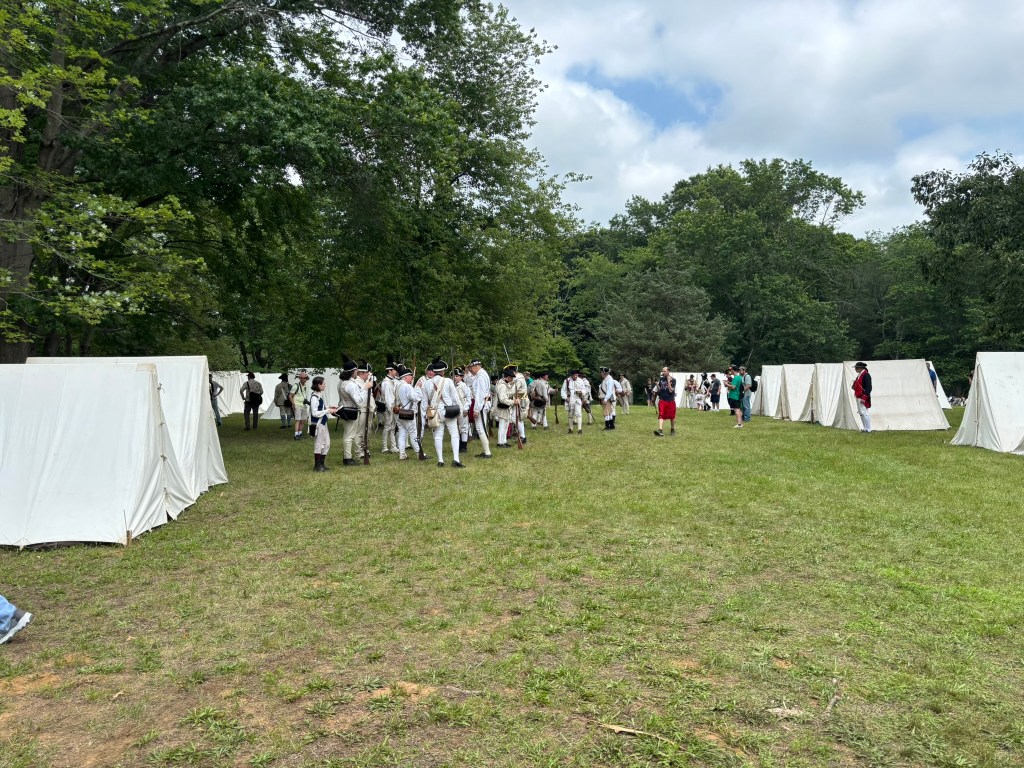
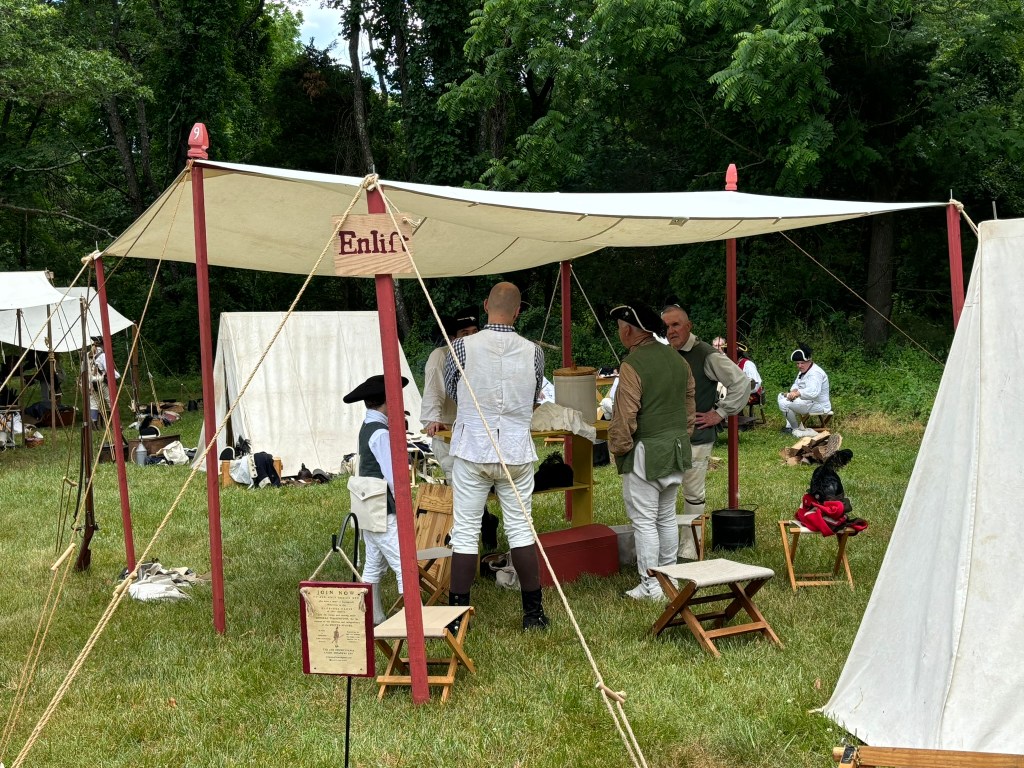
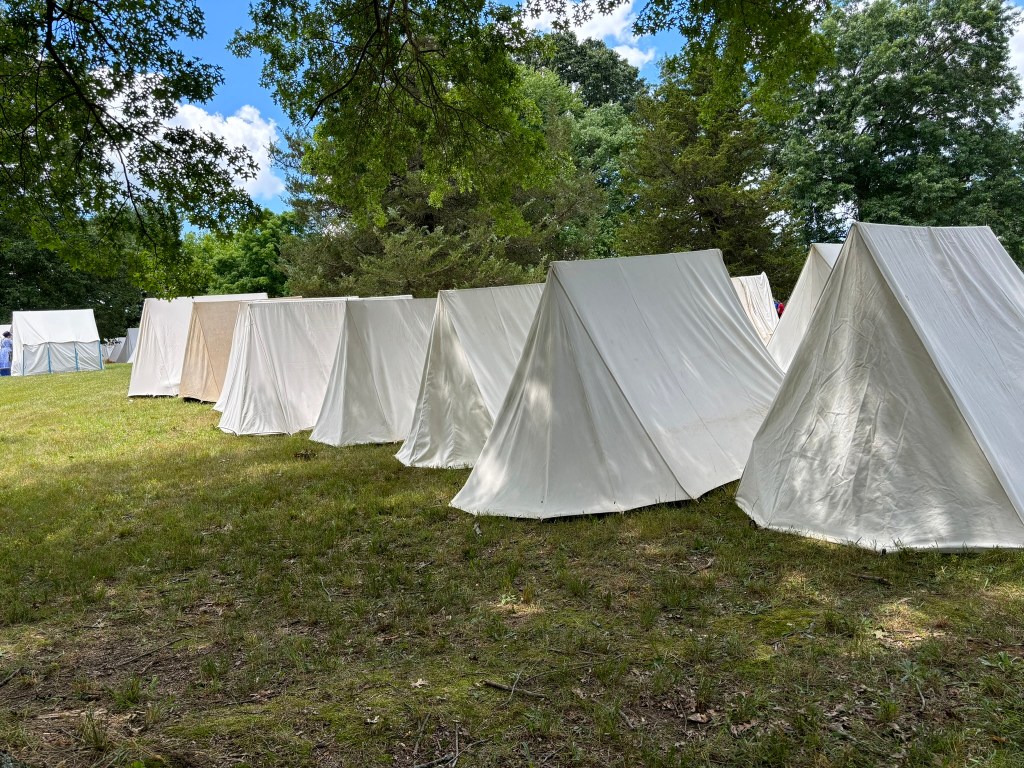
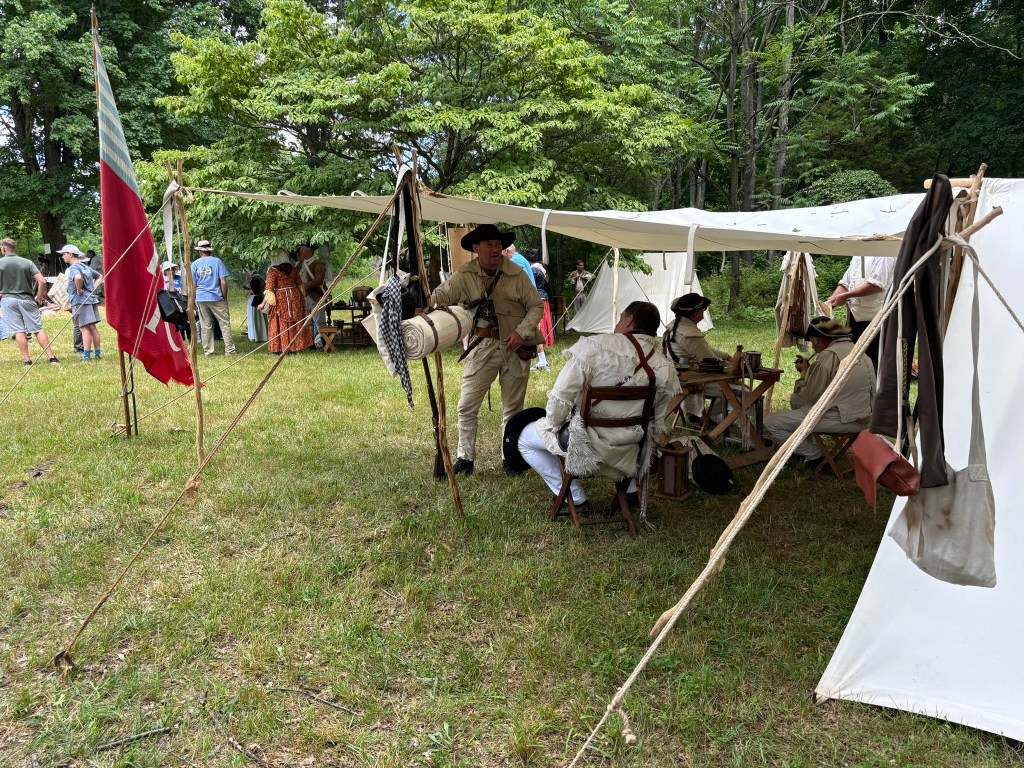
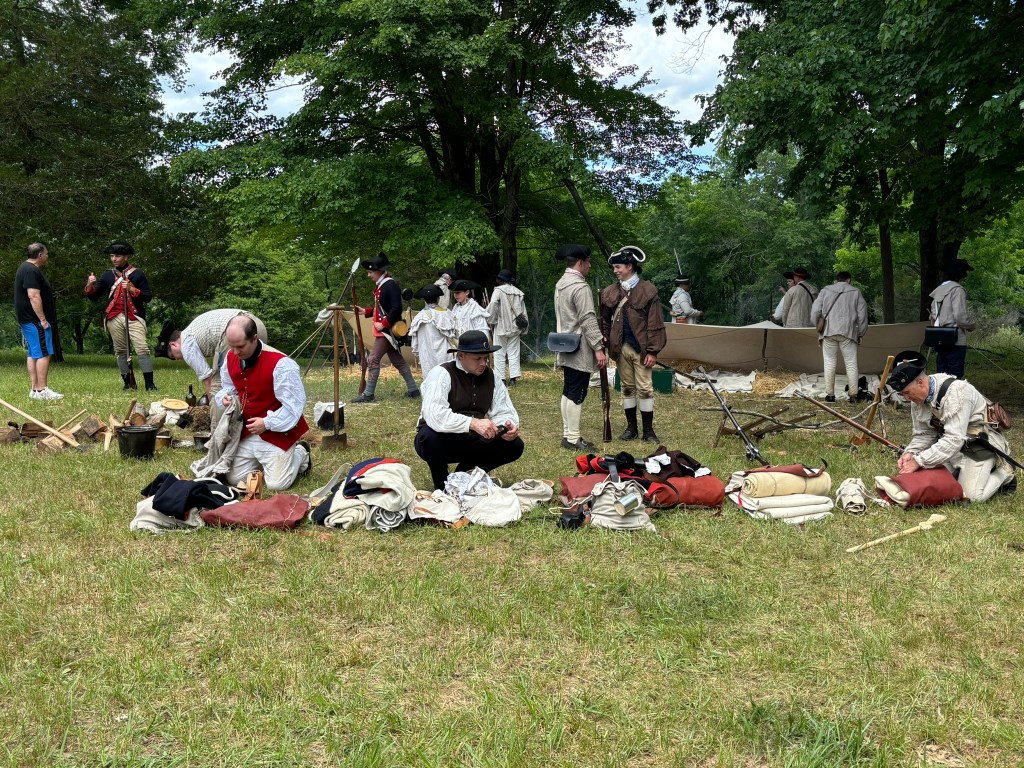
Next, my family and I explored the many encampments set up across the grounds. The experience is truly immersive—designed to make you feel as if you’ve stepped back into a Revolutionary War encampment. Bonfires crackled, soldiers prepared for battle, and women carried out daily chores like cooking. The reenactors did an excellent job bringing the scene to life and were incredibly knowledgeable and friendly when we asked questions.
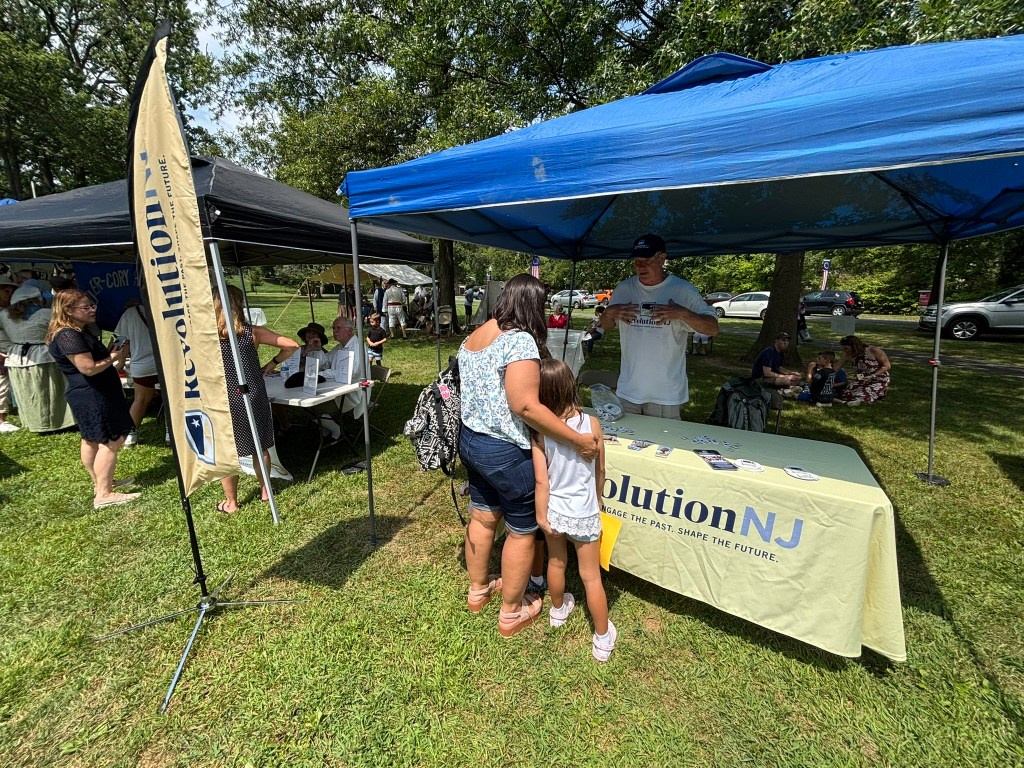
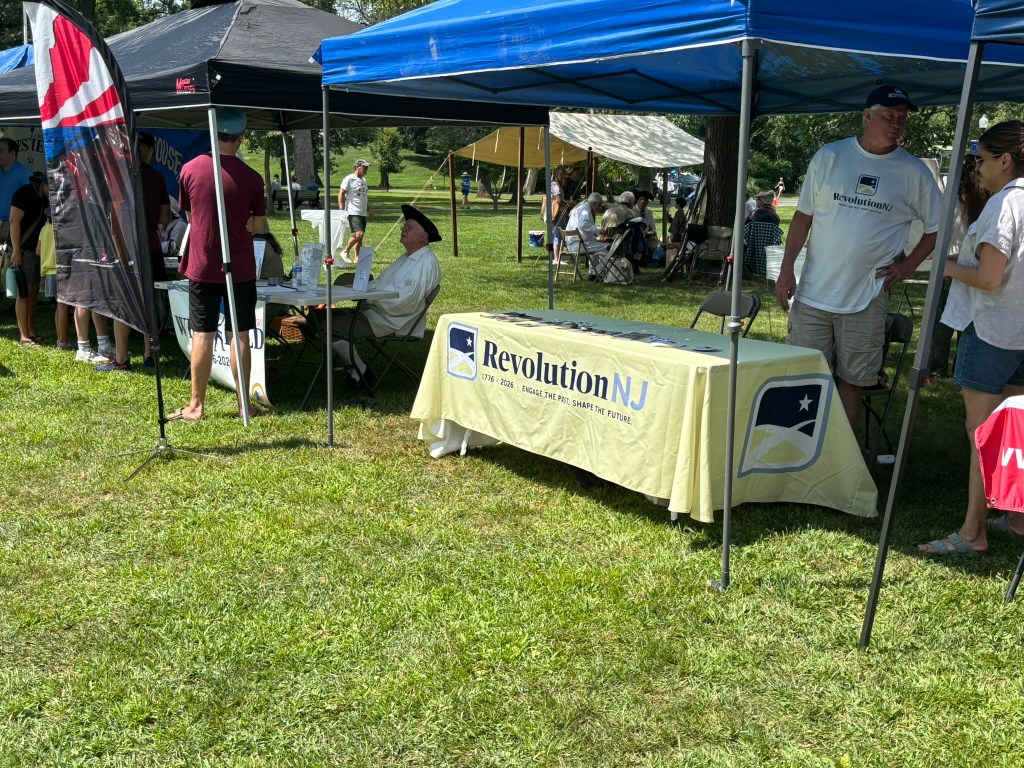
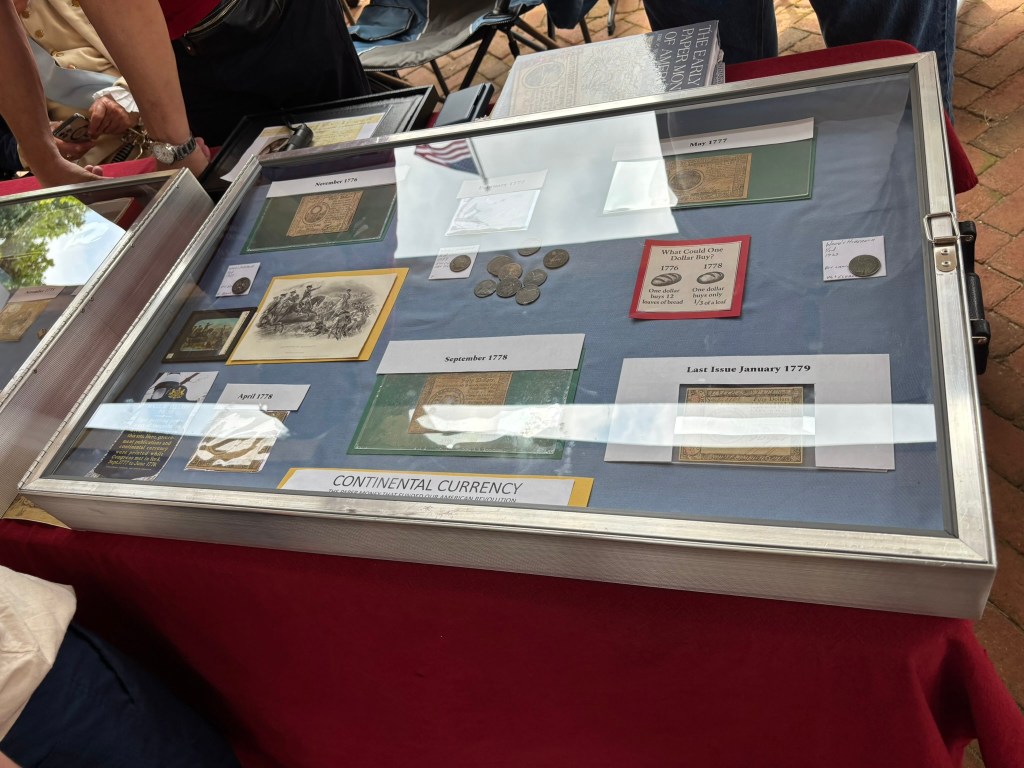
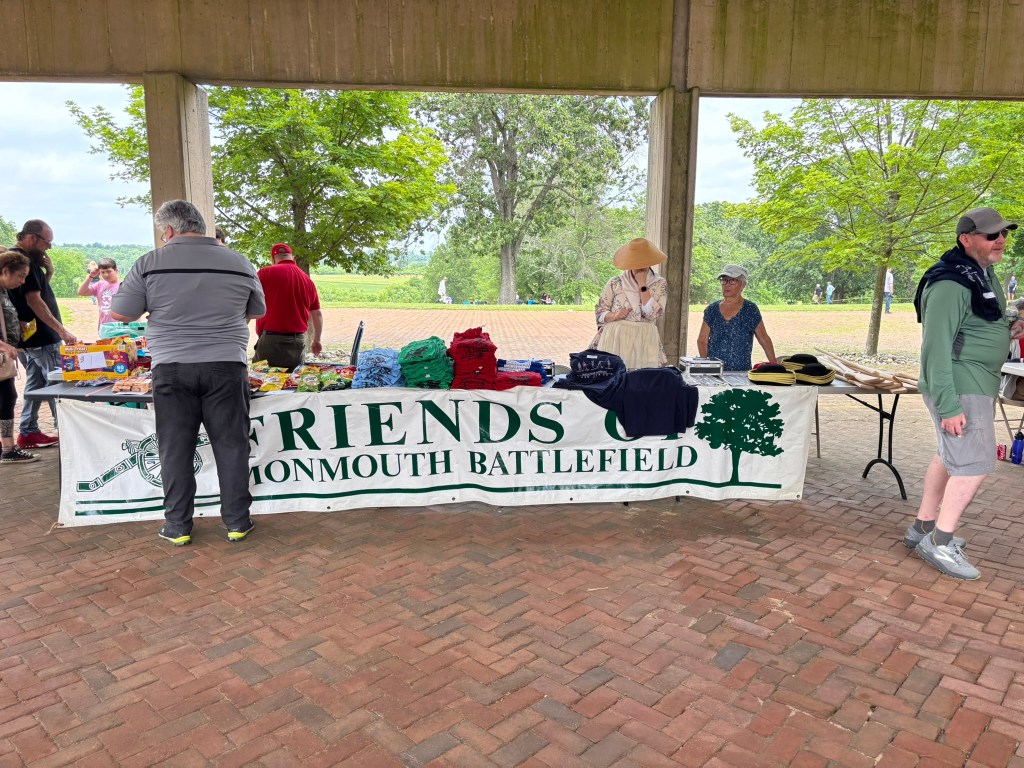
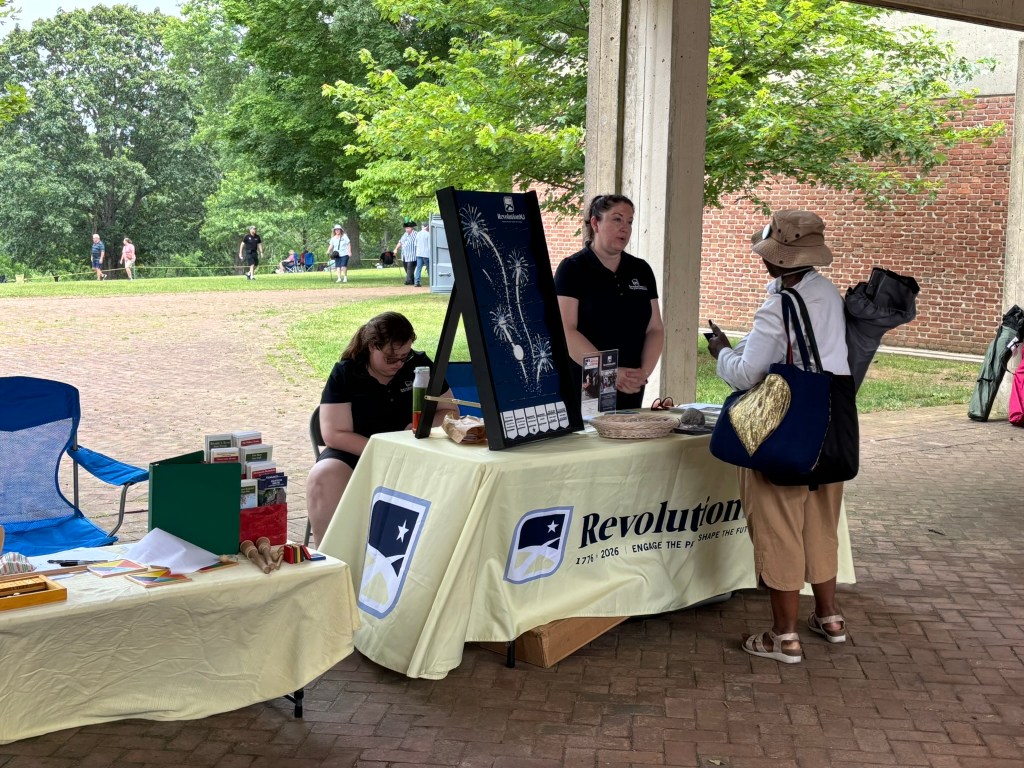
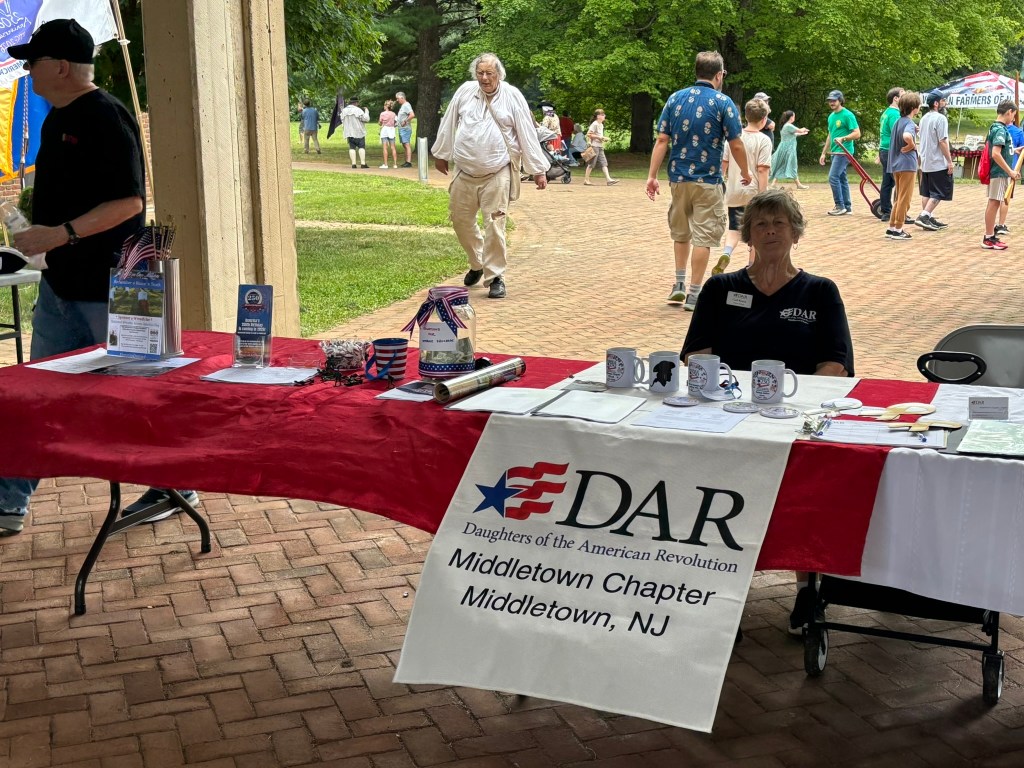
We then made our way over to the tables hosted by various historical groups and organizations. I had the chance to speak with members of RevNJ, a group I’m a Proud Partner with. Among the other participants were representatives from Washington Crossing Historic Park (PA), who brought along fascinating displays—including authentic examples of Continental currency used during the Revolutionary War. Also present were the Friends of Monmouth Battlefield, the Daughters of the American Revolution – Middletown Chapter, and other groups.
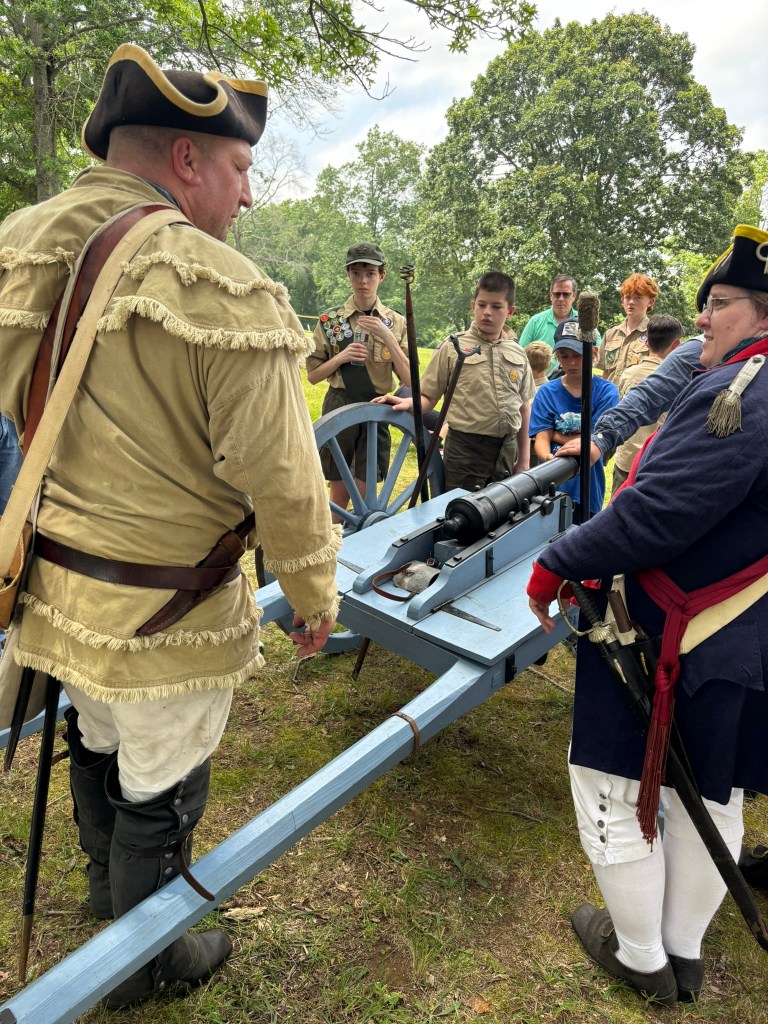
At 1:30, a children’s musket drill drew a large crowd. The reenactor leading the session did an excellent job explaining the process of loading and reloading a musket, presenting the information in a way that was both informative and engaging for the kids.
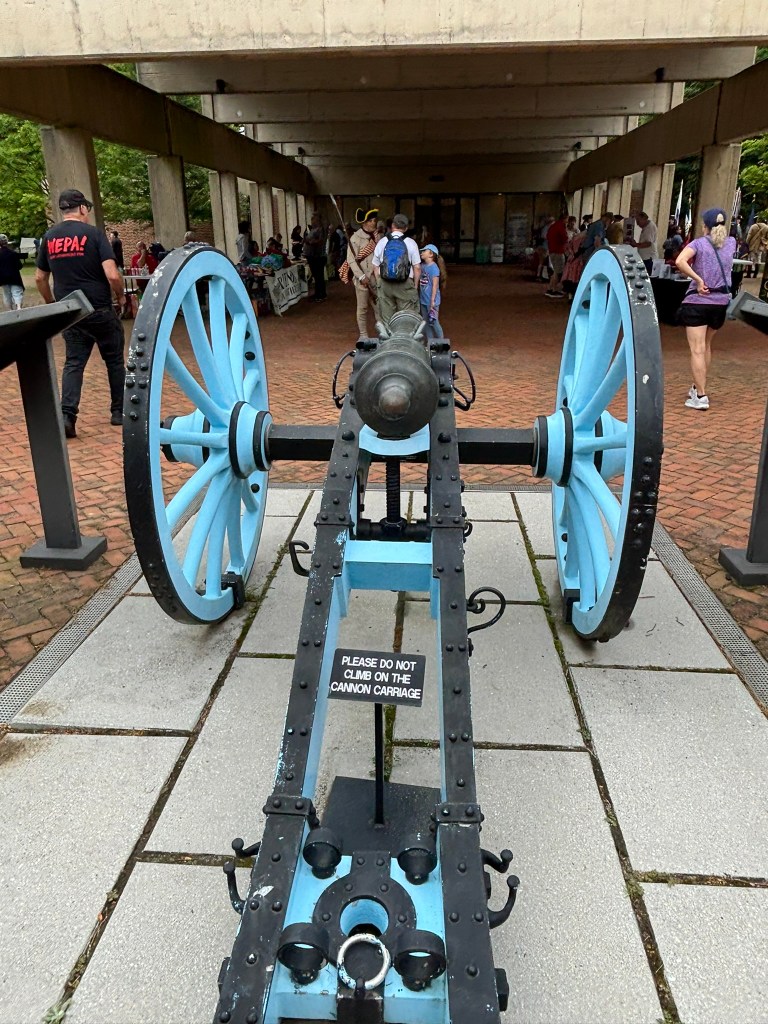
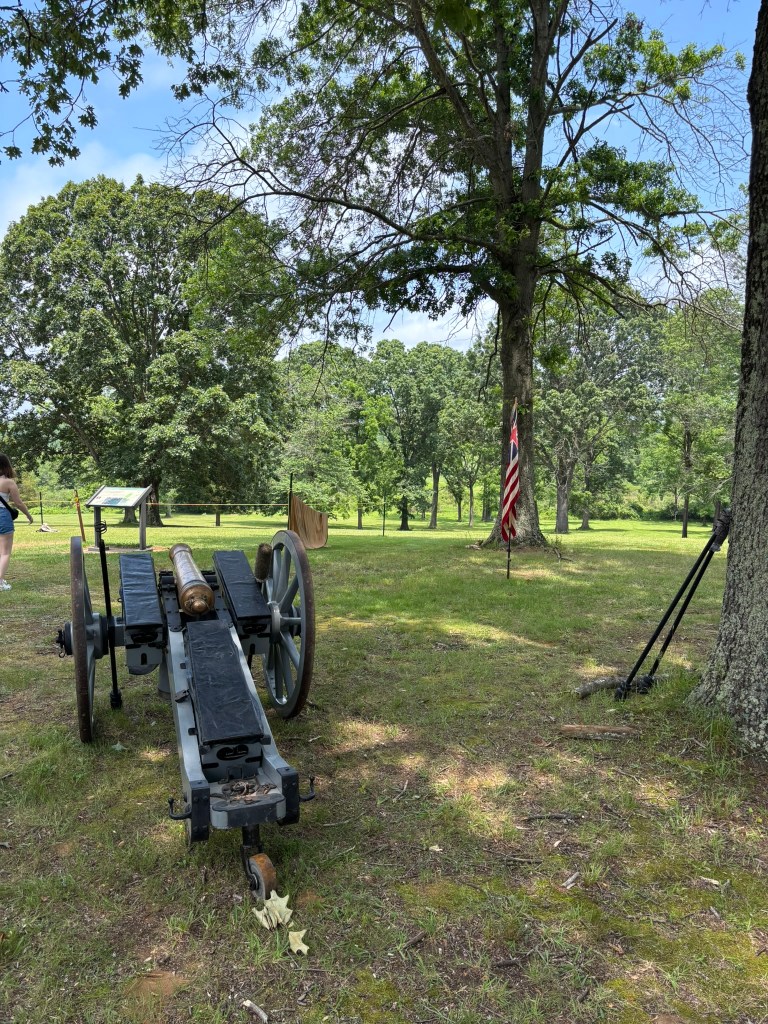
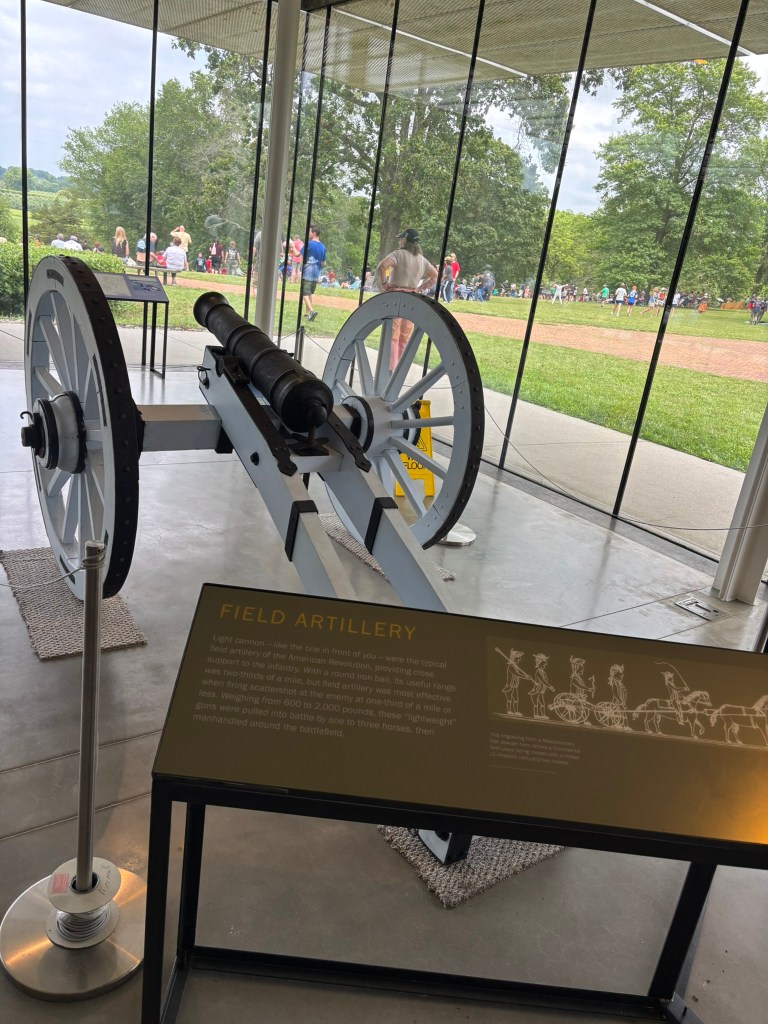
Afterward, I made another round through the encampments, where I watched fife and drum demonstrations and spoke with reenactors who were teaching about the artillery used at the Battle of Monmouth. They gave a thorough explanation of how canister shot was deployed in combat.
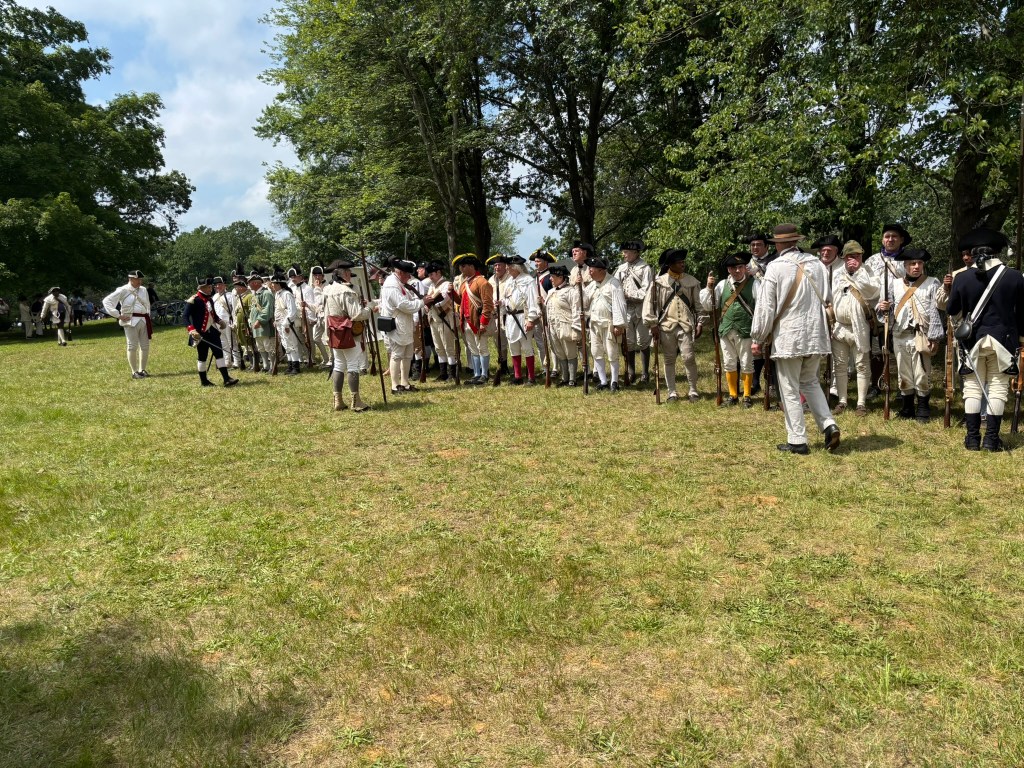
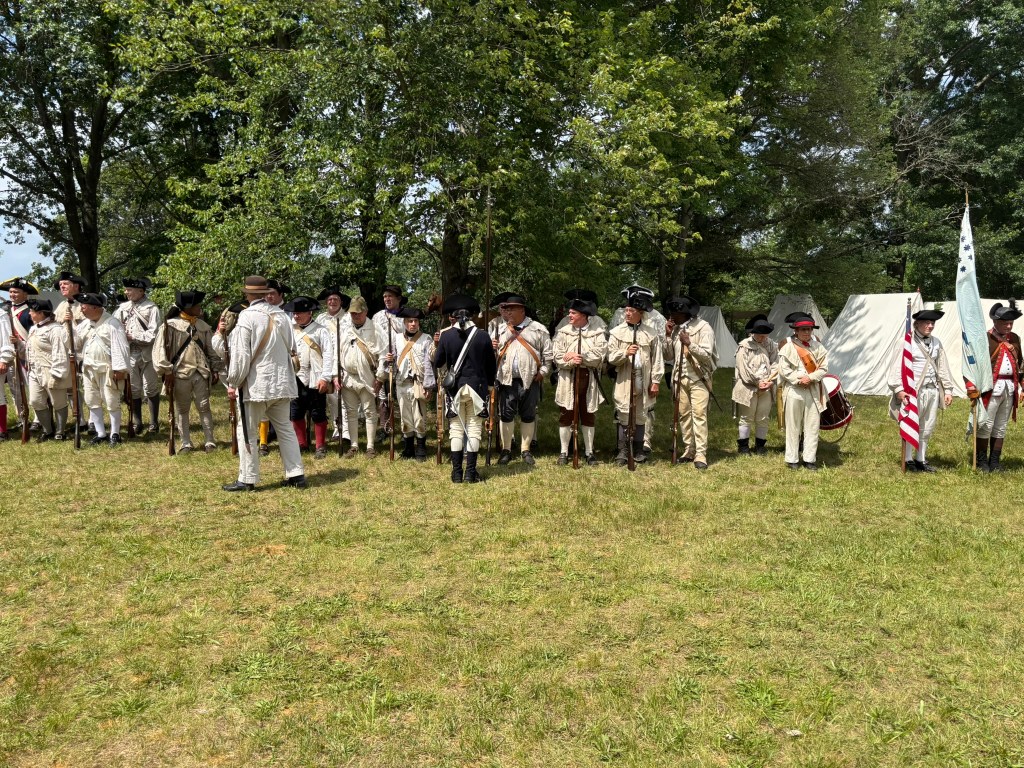
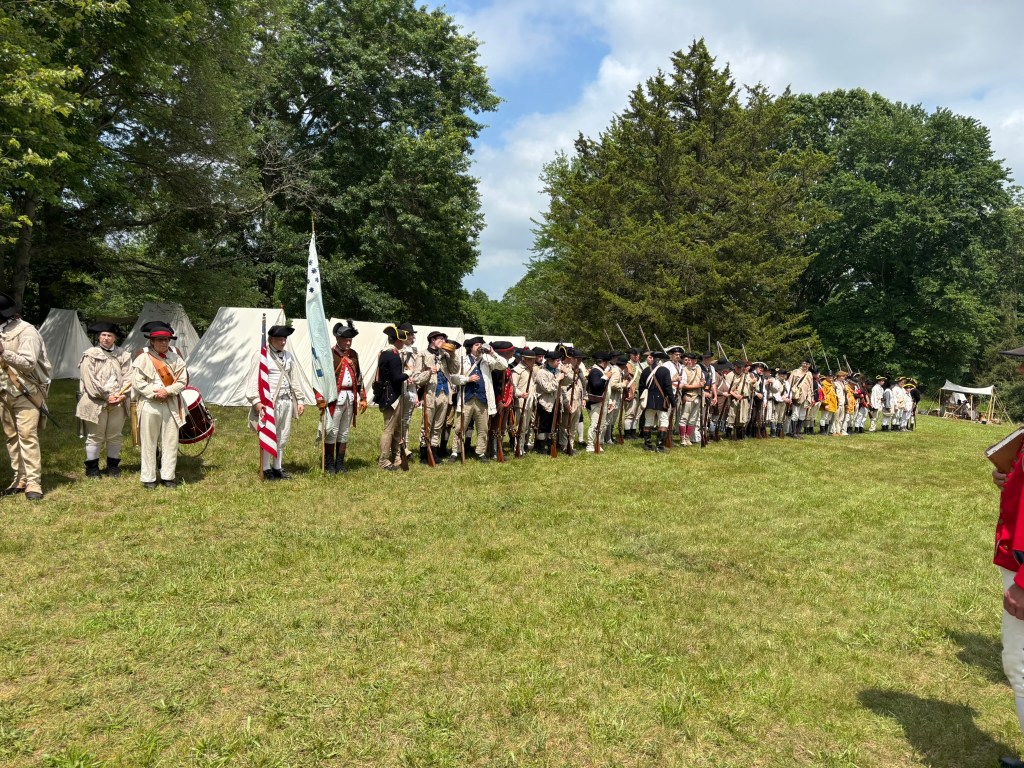
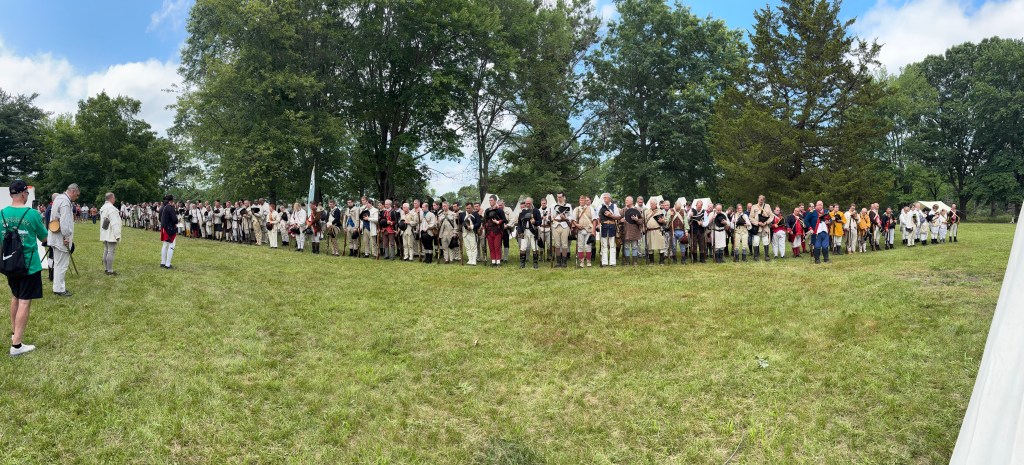
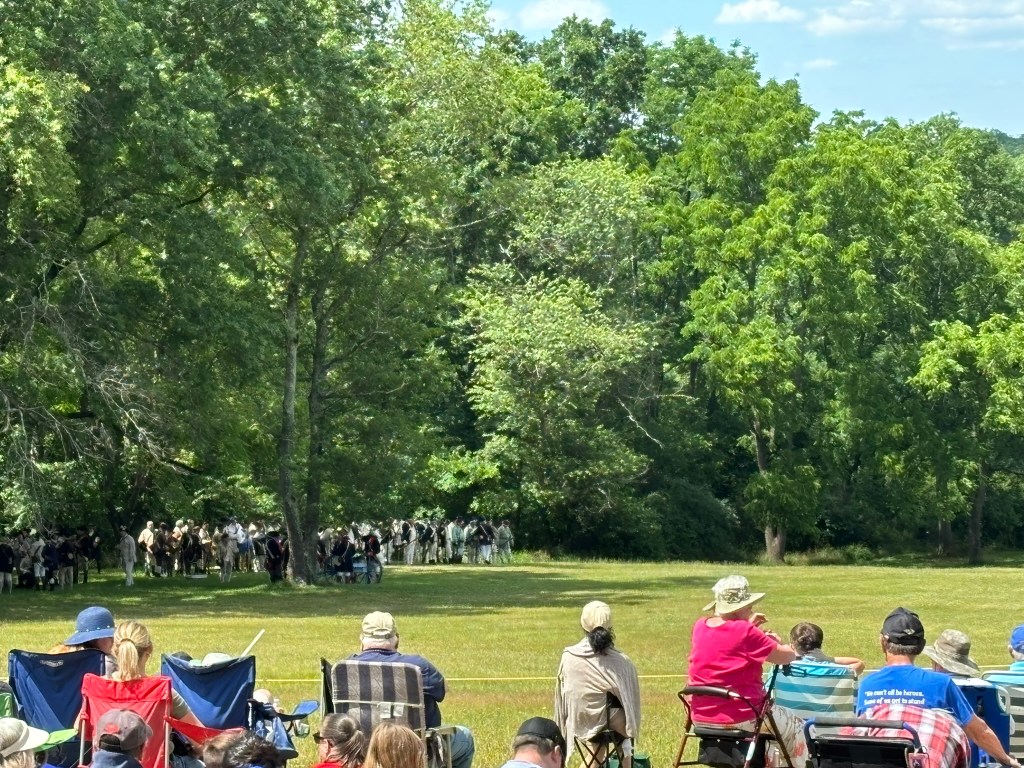
Between 2:30 and 3:00, I observed the soldiers preparing for the reenactment battle—listening to their orders, forming ranks, and taking part in a pre-battle prayer. At 3:00 they marched onto the battlefield.
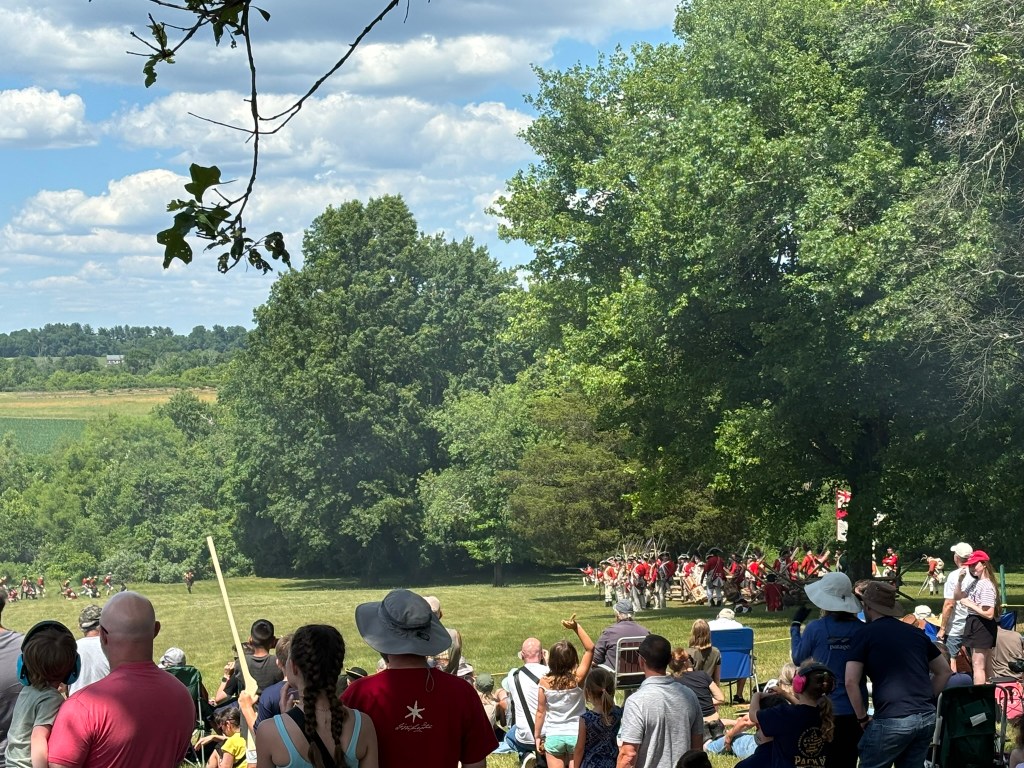
The reenactment of the Battle of Monmouth is truly a sight to see. As far as I know, it’s the only place in New Jersey where you can witness such an accurate recreation of a Revolutionary War battle (someone correct me if I’m wrong). When I’m watching the battle, what always strikes me is the strategy used in 18th-century warfare: lines of soldiers standing shoulder to shoulder, loading and firing in unison. It must have been terrifying to be so vulnerable, and yet this formation was the most practical method of combat at the time. Muskets were so inaccurate, that massed volleys from a line were the most effective way to have any chance of hitting the enemy.
The battle reenactment lasted about 30 minutes. Once it wrapped up around 3:30, my family and I began making our way back to the car. On the way, we stopped by some of the tent shops, browsed around, and made a couple of purchases before heading home.
For anyone interested in the American Revolution, this is a must-attend event. The encampments are immersive, the reenactments are fantastic, and the entire experience offers something for all ages. I highly recommend it.
Be sure to check out my Instagram and Facebook pages, where I’ll be uploading Reels from the event. These short videos give a great glimpse into what the day is like for anyone considering attending in the future.
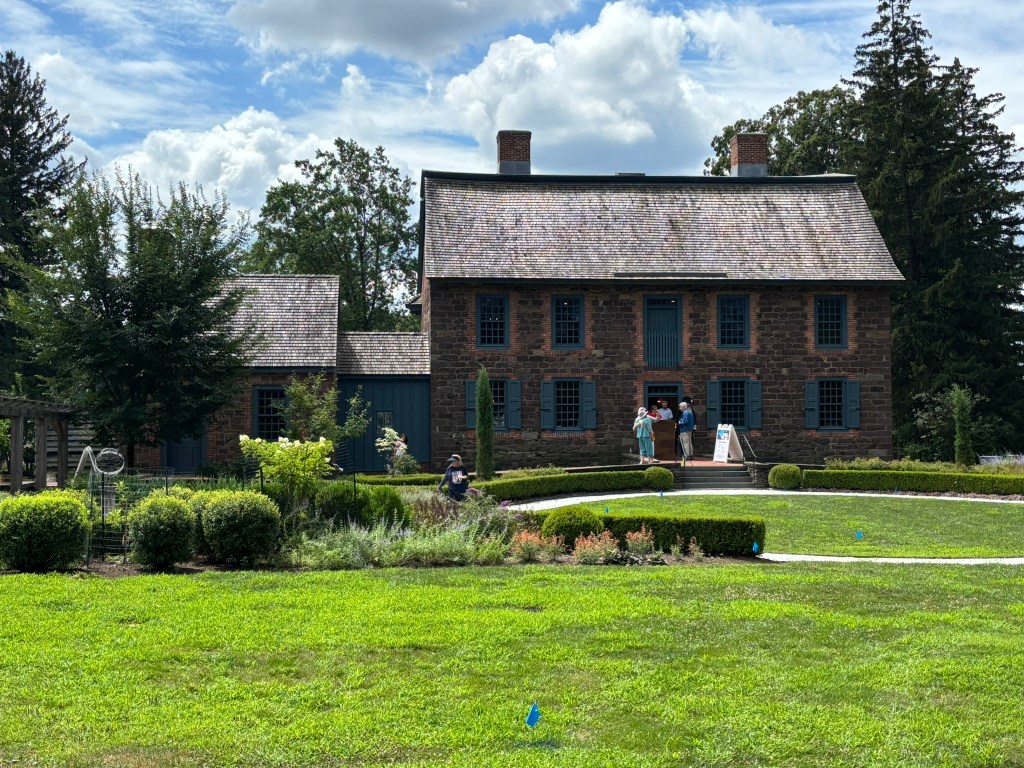
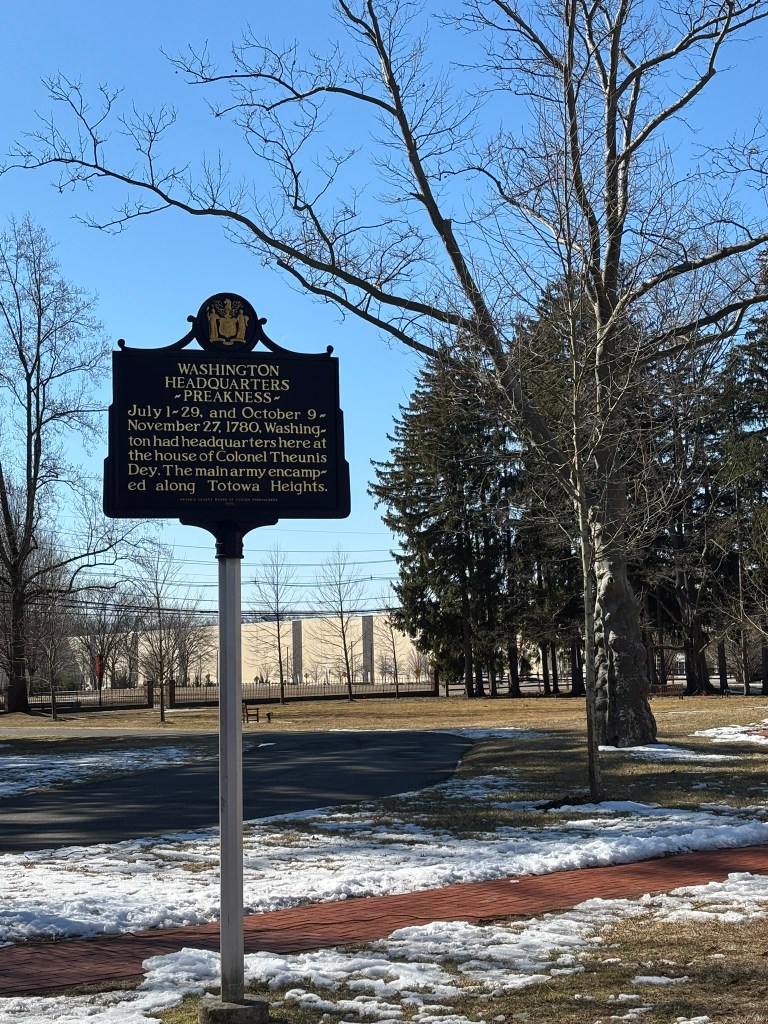
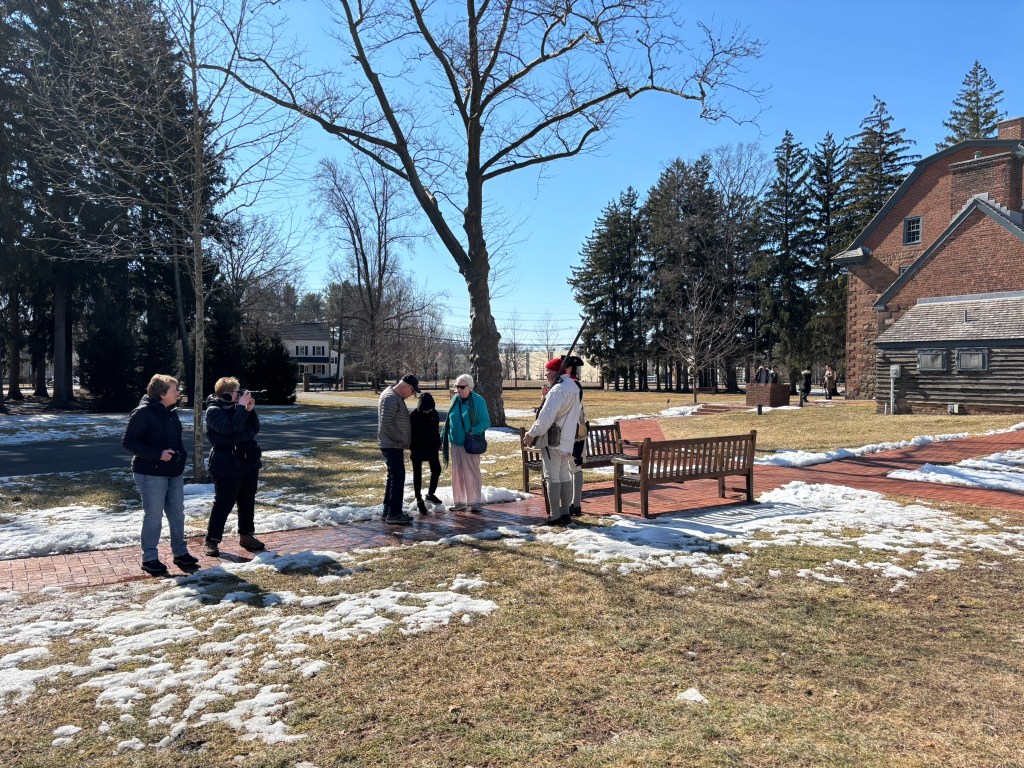
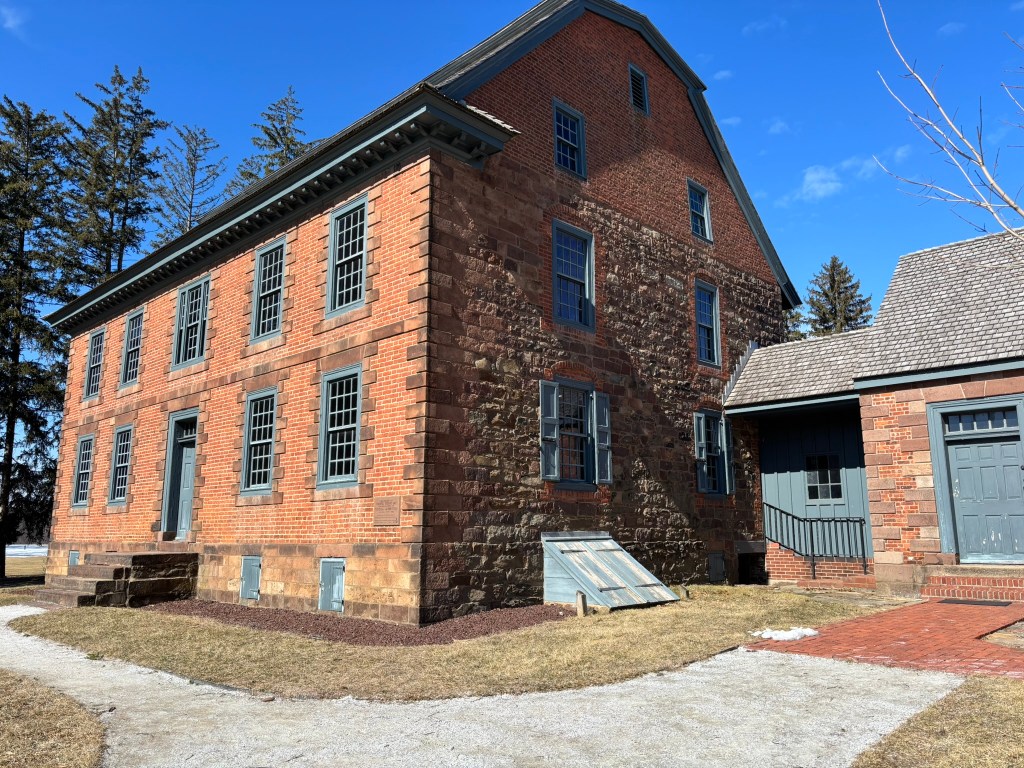
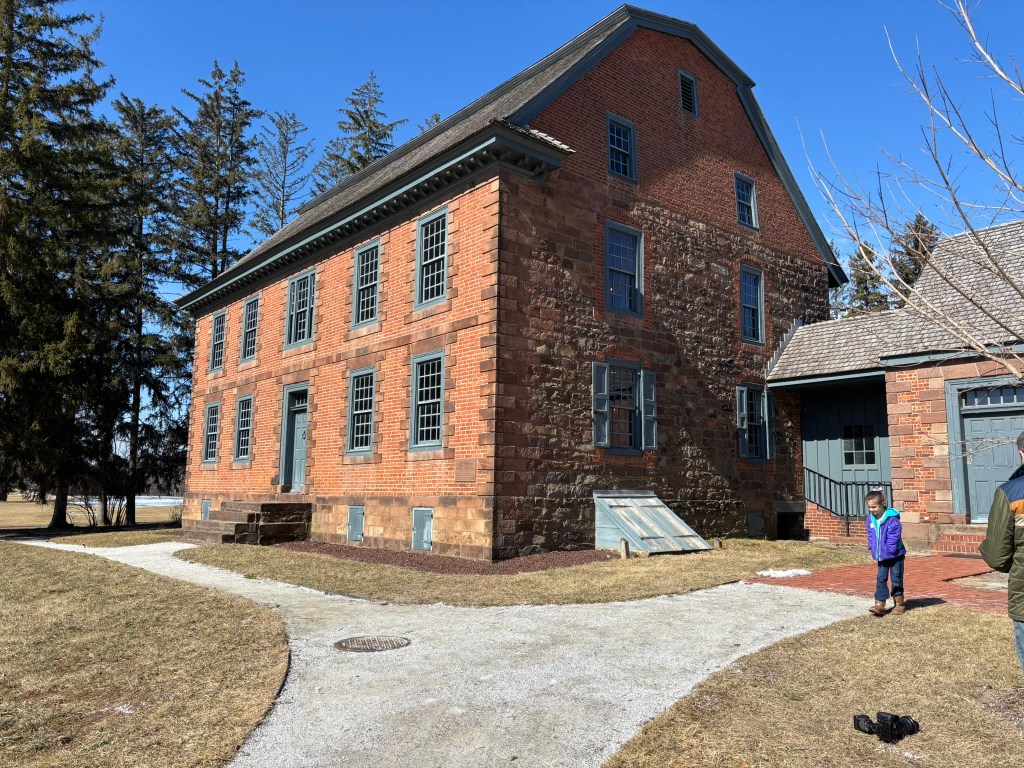
My family and I made it out to Dey Mansion for George Washington’s Encampment weekend which ran on Saturday 2/22 and Sunday 2/23 from 10am to 5pm in honor of George Washington’s birthday. The Dey Mansion in Wayne, NJ served as Washington’s headquarters during the Revolutionary War from July 1st- July 28th, 1780, and again from October 8th to November 27th, 1780.
A Taste of 18th Century Life
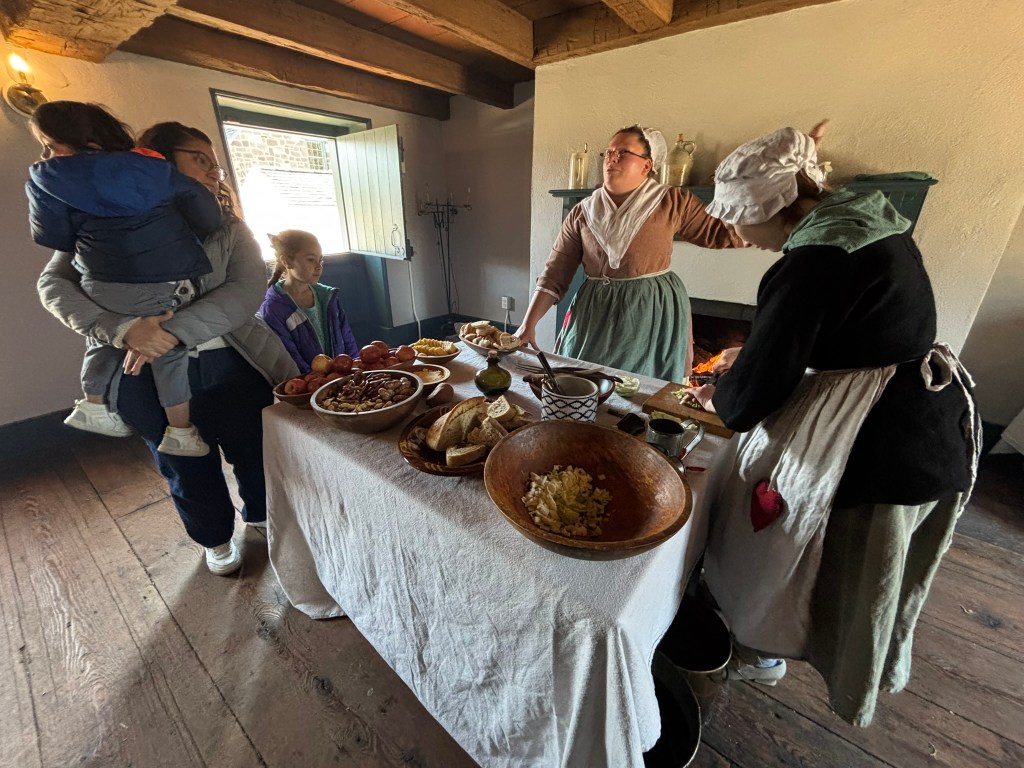
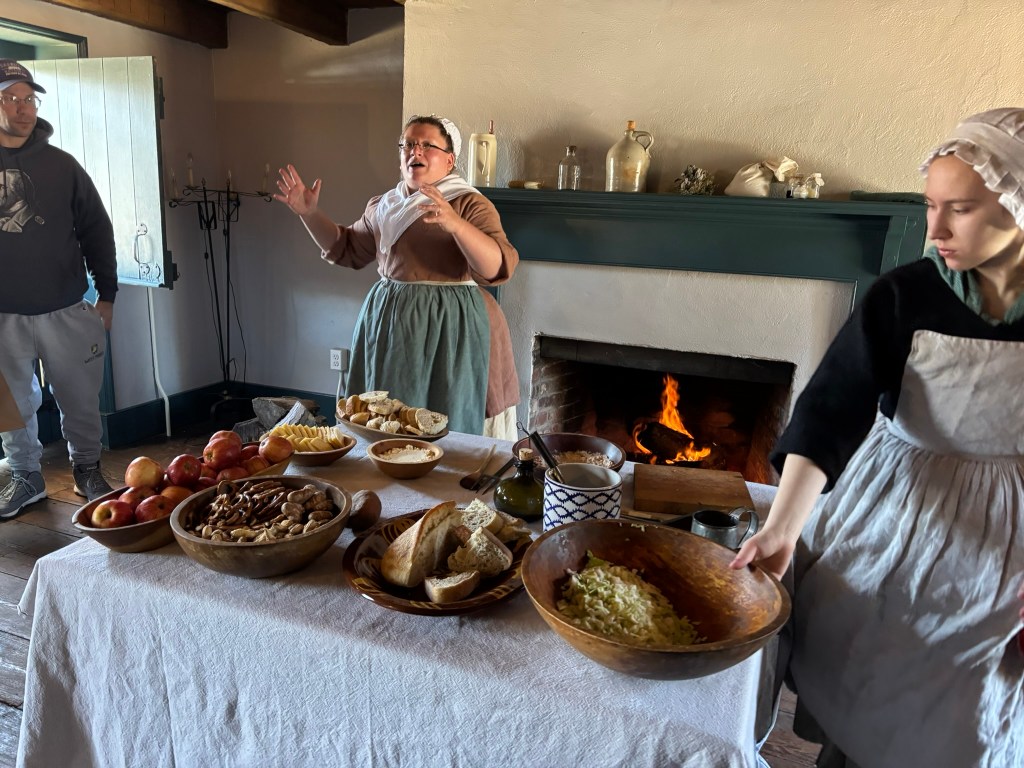
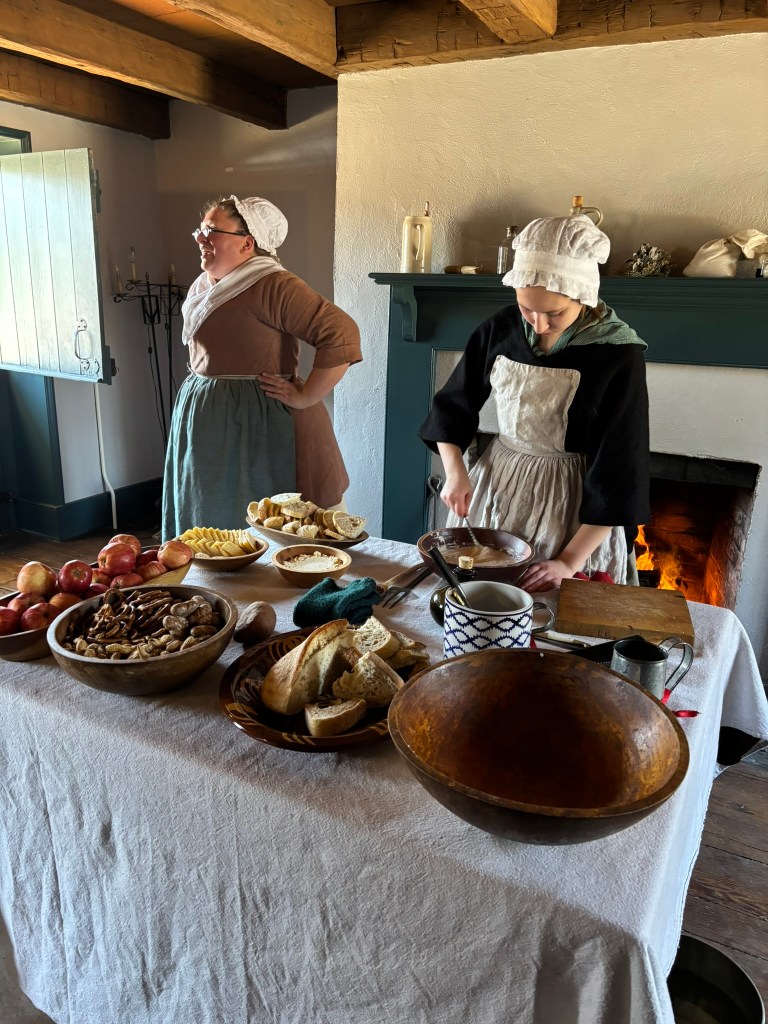
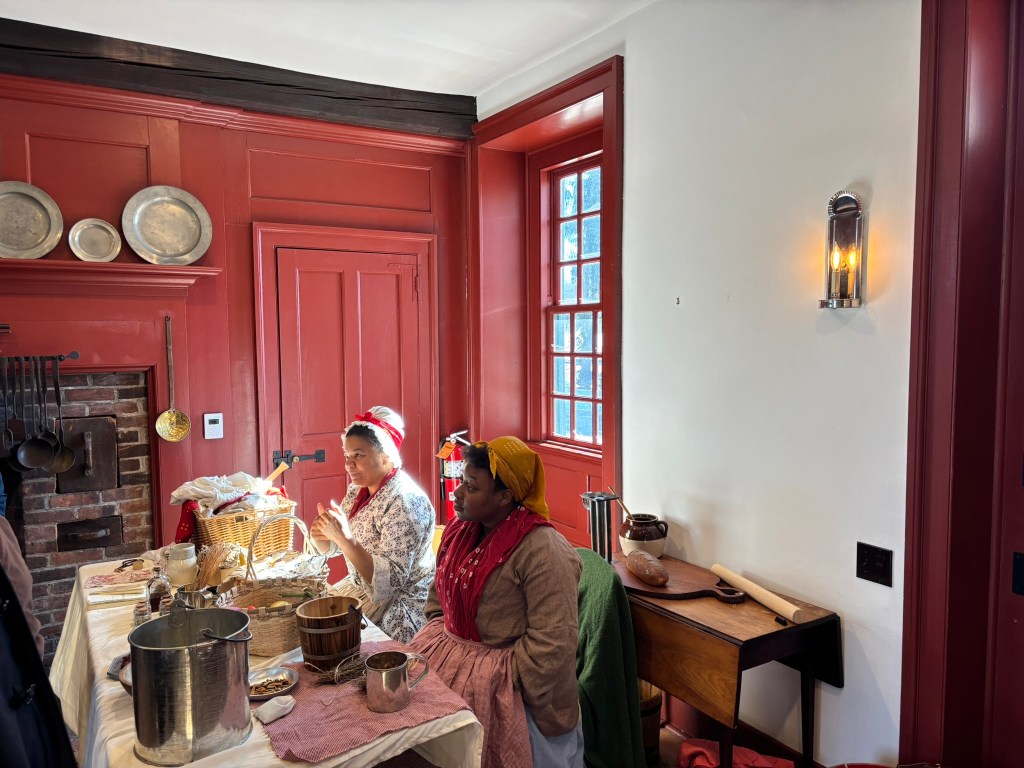
My family arrived on Sunday at about 10:30 am. We really enjoyed the demonstration on 18th century meal preparation and cooking in the Spring Kitchen. We were taught about what the Dey family, who were quite wealthy, would have eaten. We were also taught about the soldiers’ meager daily rations throughout the war. The demonstration was extremely informative and addressed the challenges that the Dey Mansion faced in hosting Washington’s entourage.
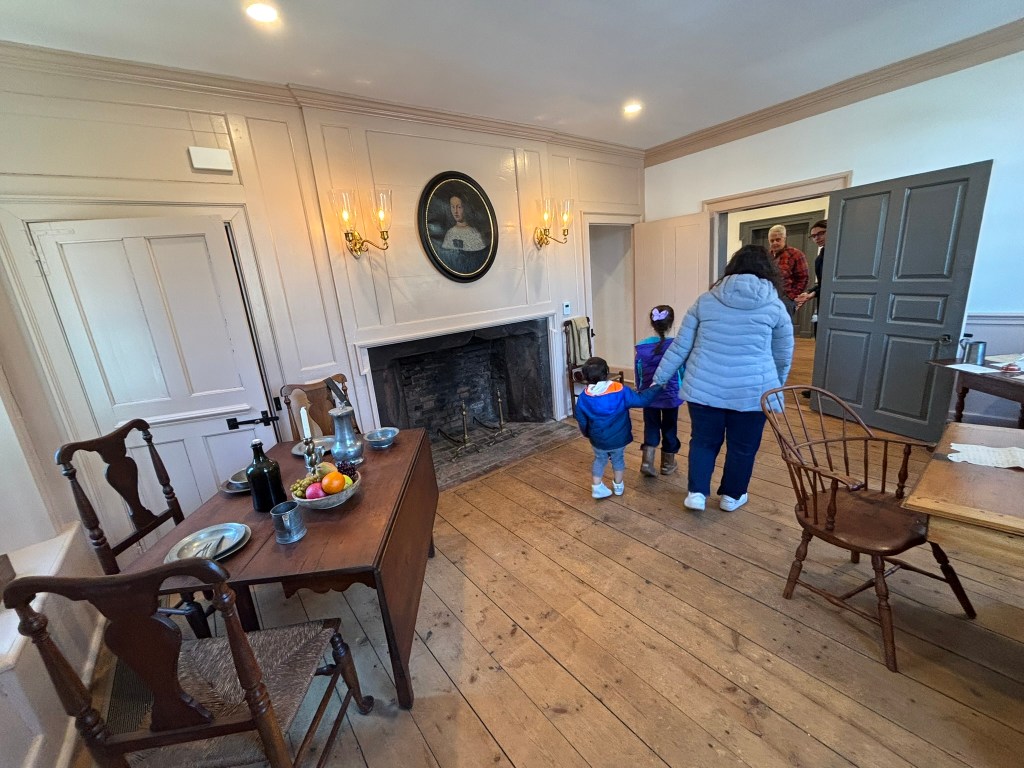
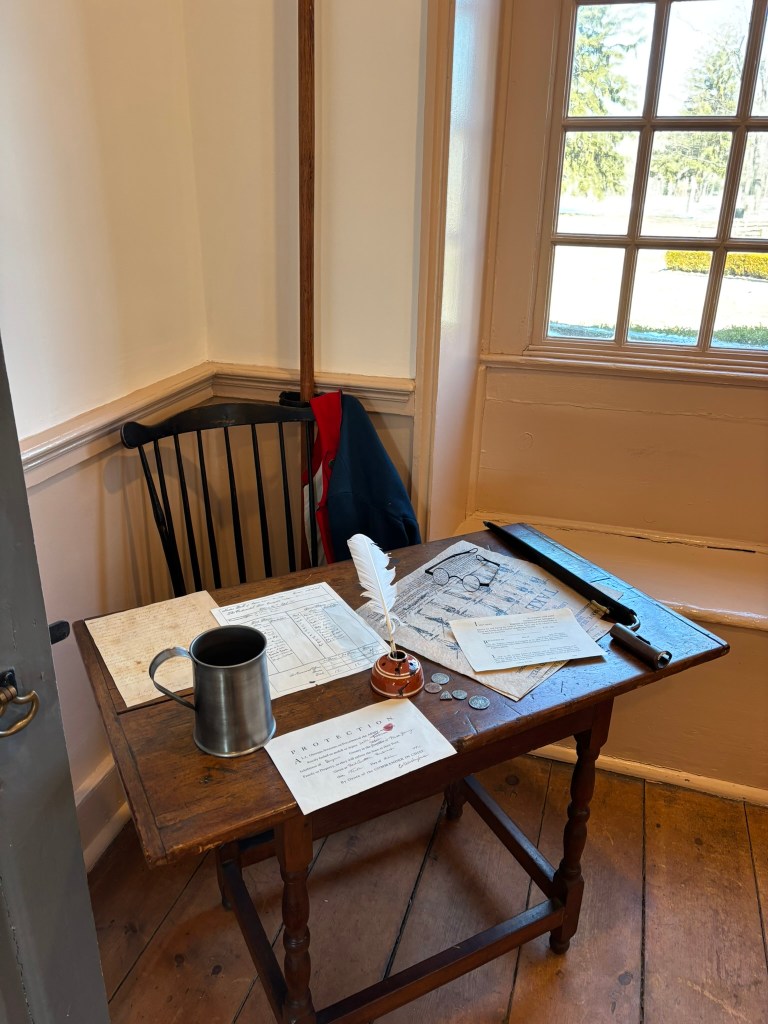
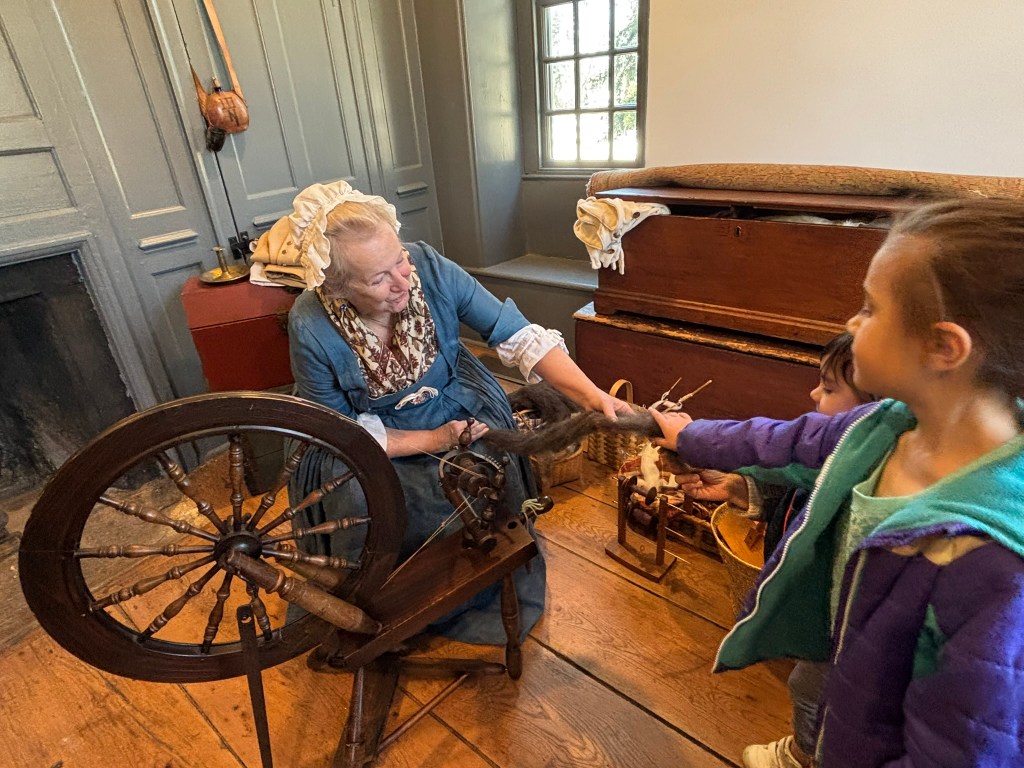
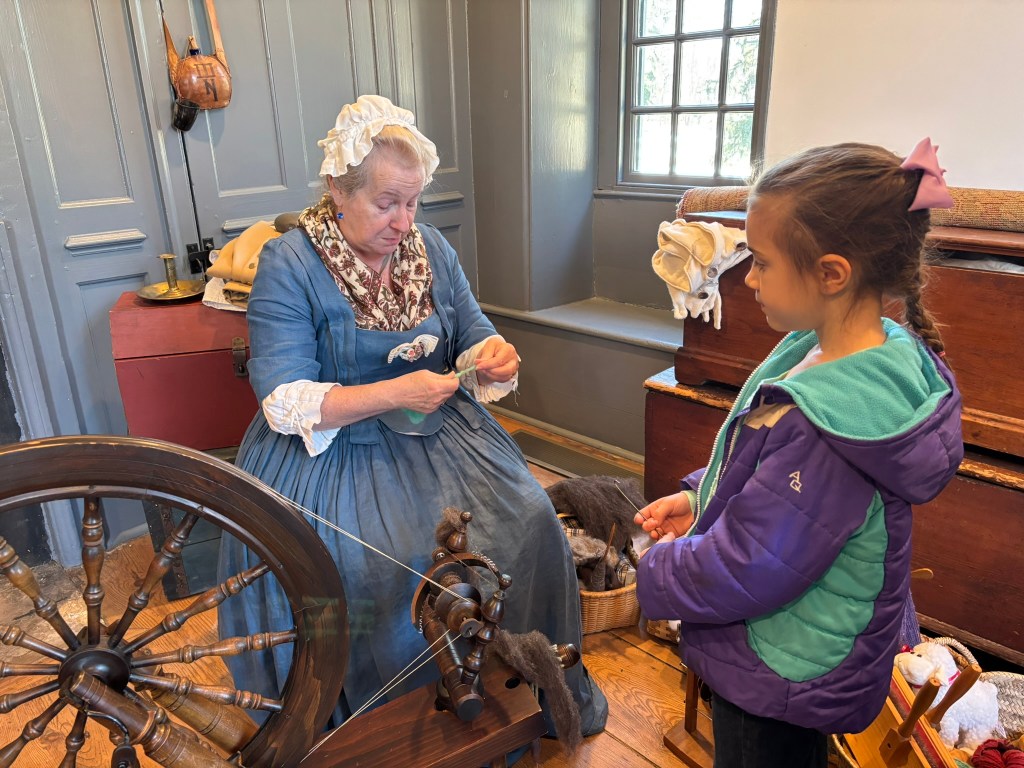
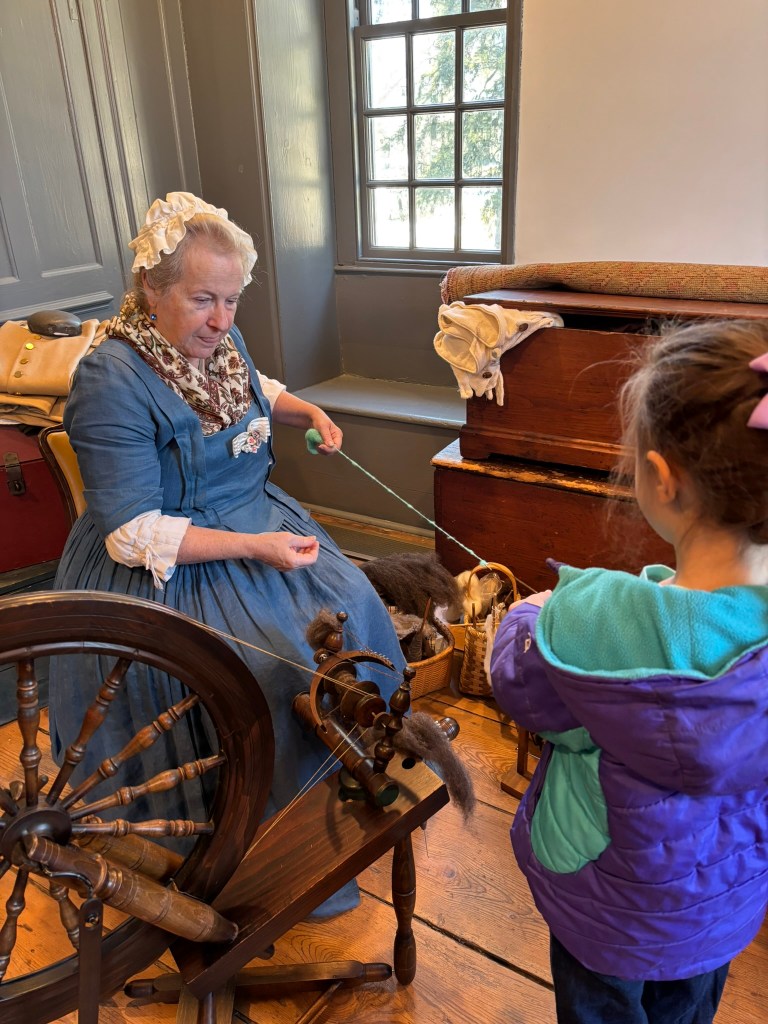
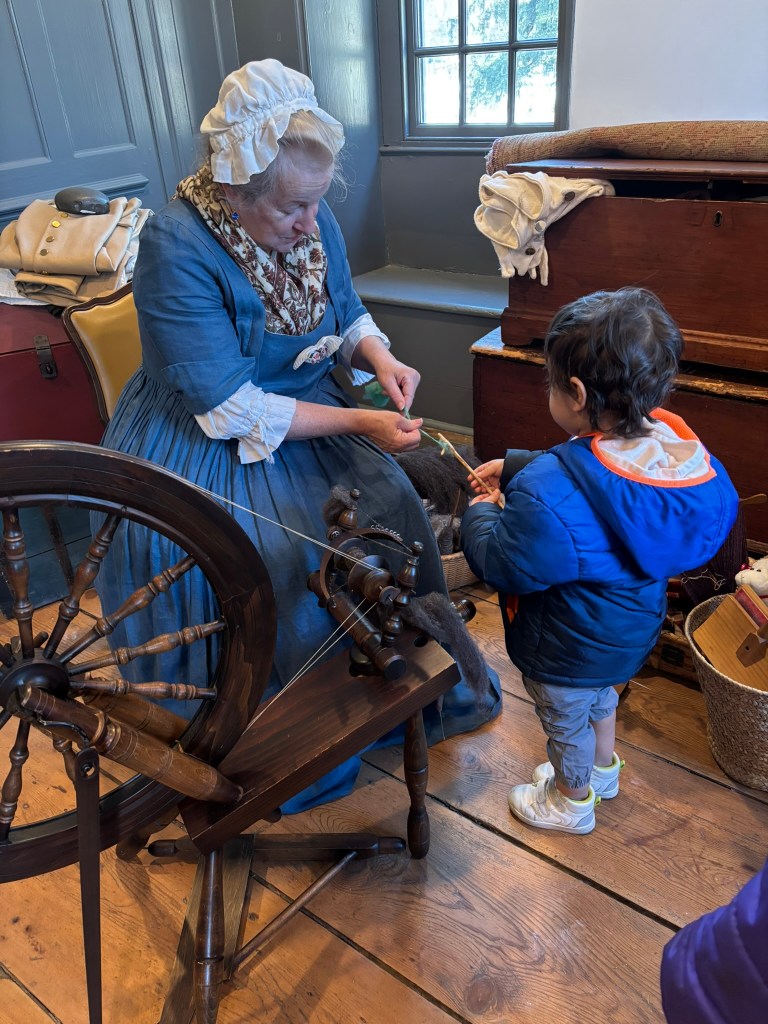
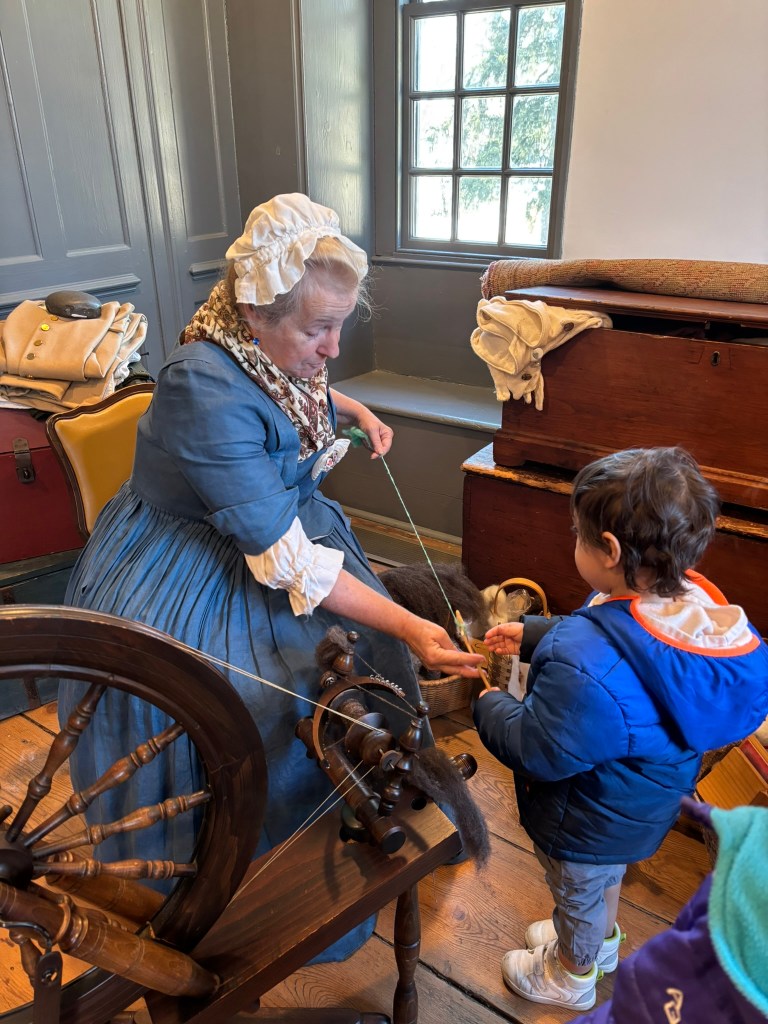
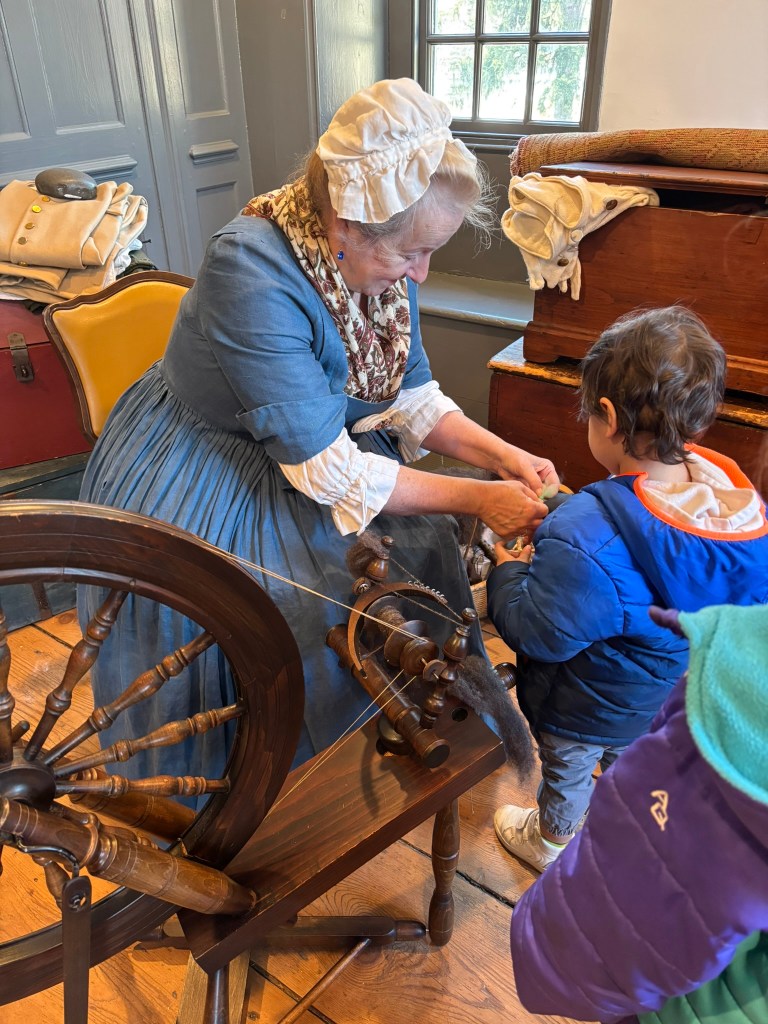
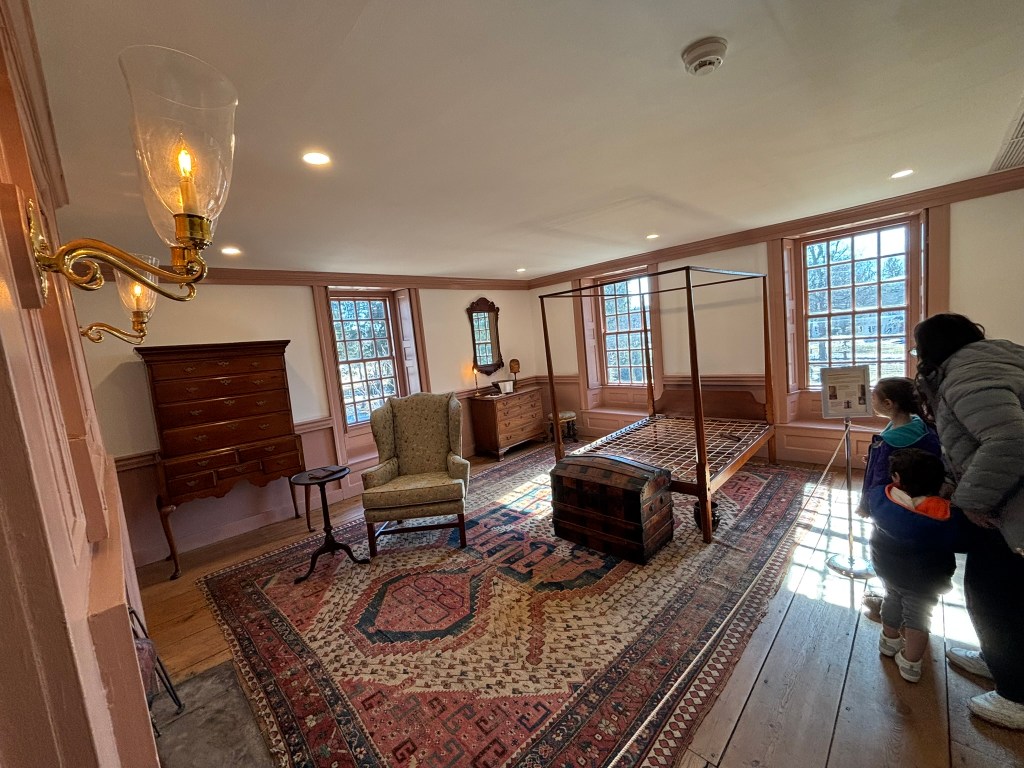
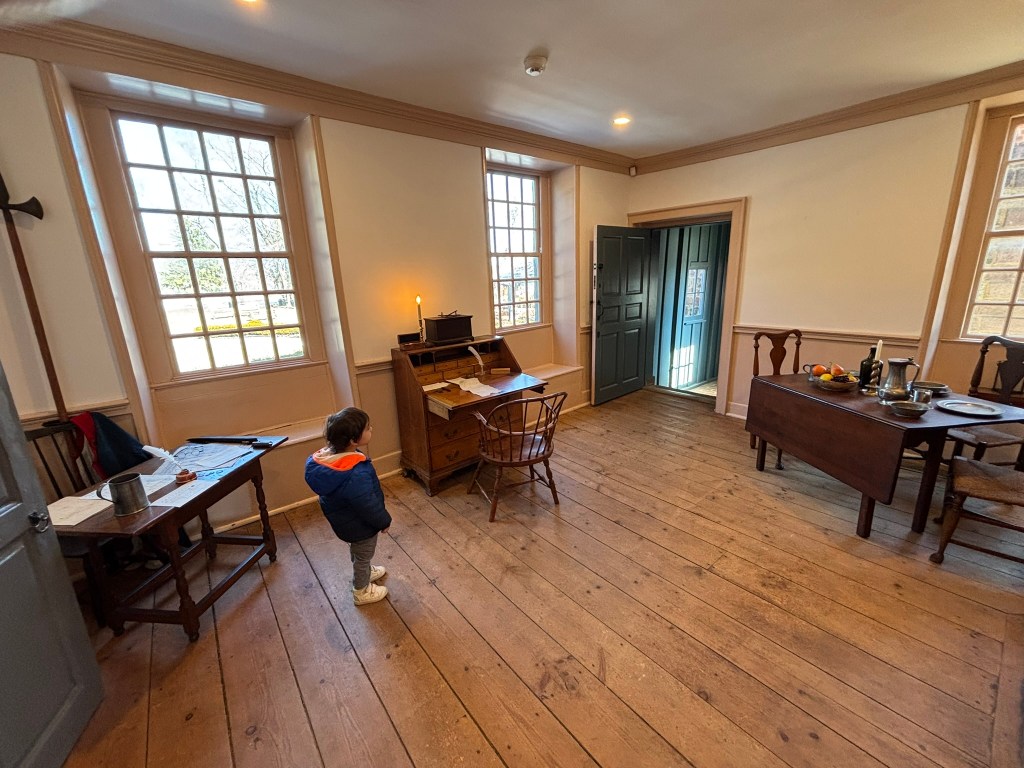
We walked over to the Dey Mansion and explored the house. My children also really enjoyed the demonstration on 18th century spinning. The 18th century reenactor spun sheep’s wool into yarn and the children were able to enjoy a hands-on demonstration as they were able to spin their own yarn, which then became friendship bracelets. The re-enactor taught us that the dyes used to color the yarns were all from natural products. Following the spinning demonstration, we explored the rest of the house and witnessed where Washington and his entourage stayed, including his meeting room, where he and his aides would write and receive hundreds of letters per day.
Military Demonstrations
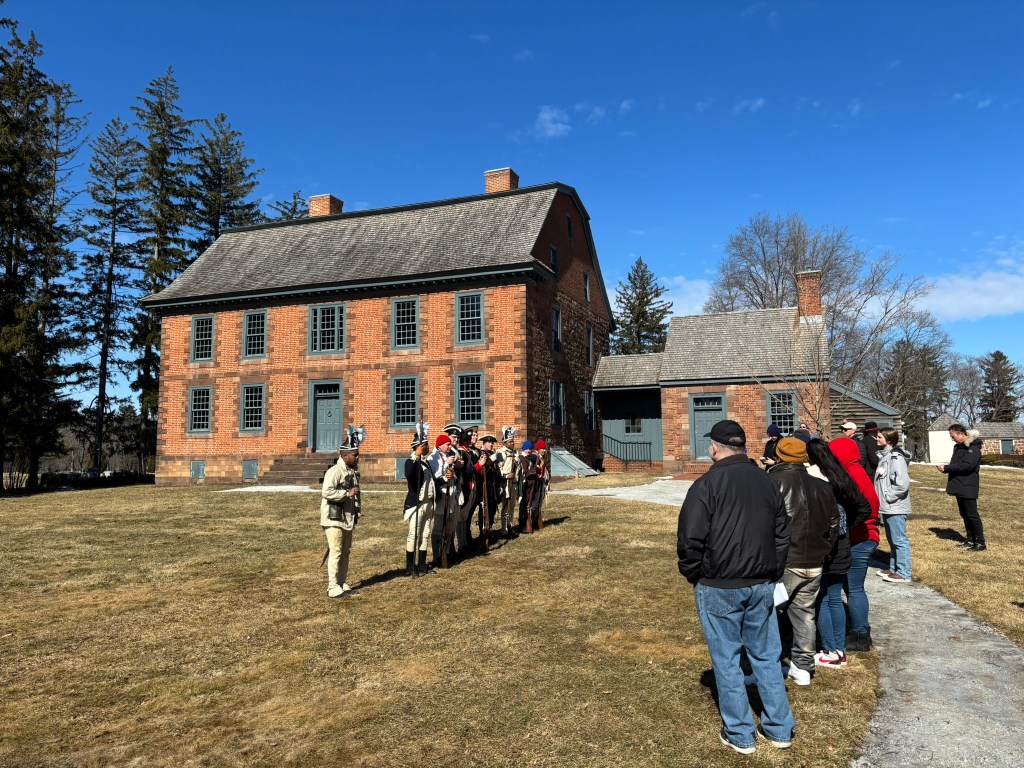
Finally, we made it outside and witnessed the formation of the troops as well as military drills and musket firings. They closed the demonstration with a bayonet charge. Following the demonstrations, the reenactors described their weapons, their clothing, and what the troops carried with them. They also answered questions from the crowd. Following the demonstrations, my family headed out to lunch.
Other Activities
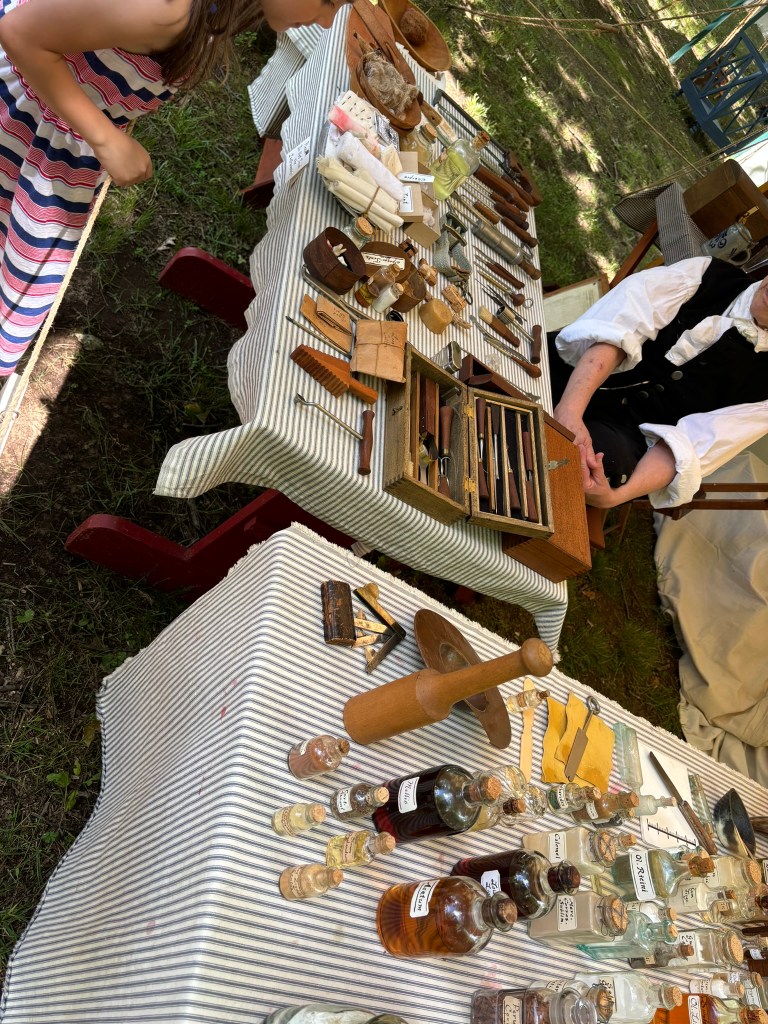
The weekend encampment at Dey Mansion also included 18th century laundry demos, carpentry and blacksmithing in the Blacksmith shop and a medicinal herbs display. There was also a food truck present on site from the Chippery Gourmet Fish & Chips. The Dey Mansion did a fantastic job immersing its visitors into 18th century life during the Revolutionary War.
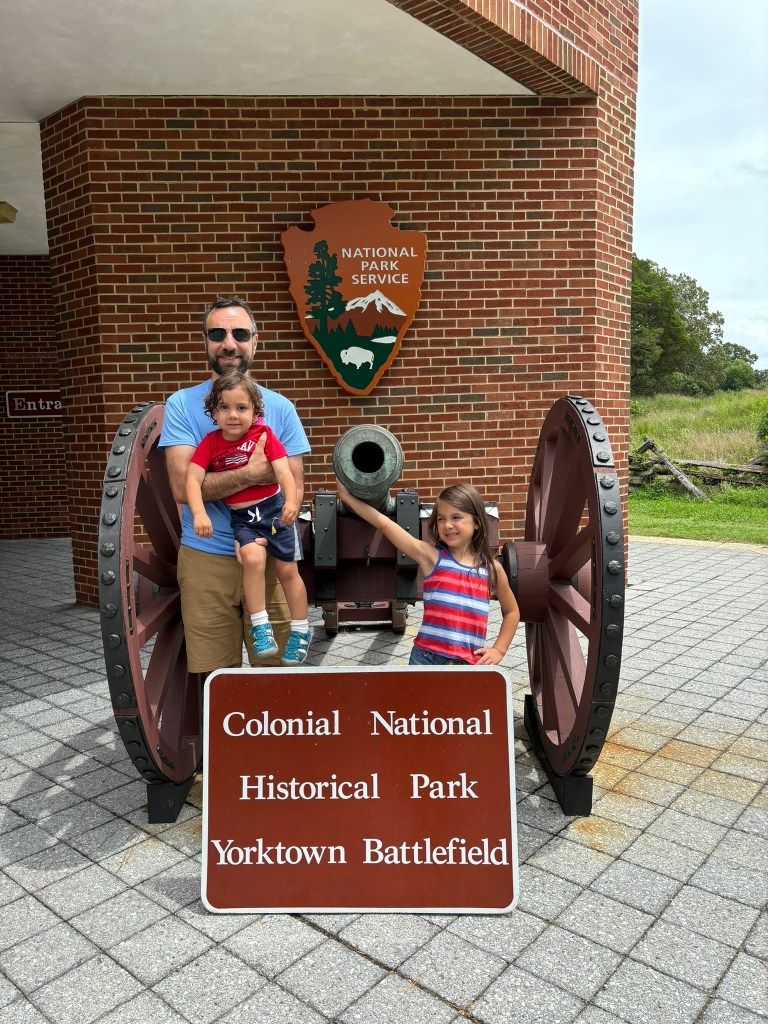
My last two blog posts discussed portions of my family’s summer vacation to Williamsburg, VA. The first blog post discussed our visit to Colonial Williamsburg. My previous blog post discussed a tour of Jamestown Settlement, which was the first half of our second day. This blog post will discuss our afternoon in Yorktown. This Jamestown- Yorktown tour was booked with Viator.
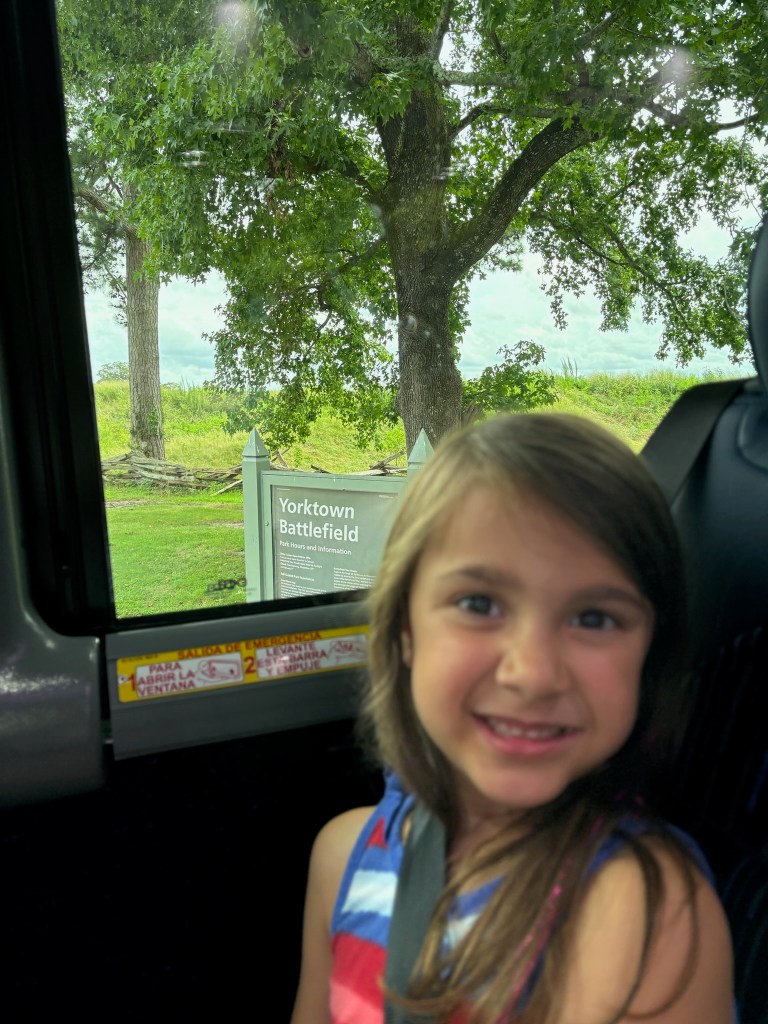
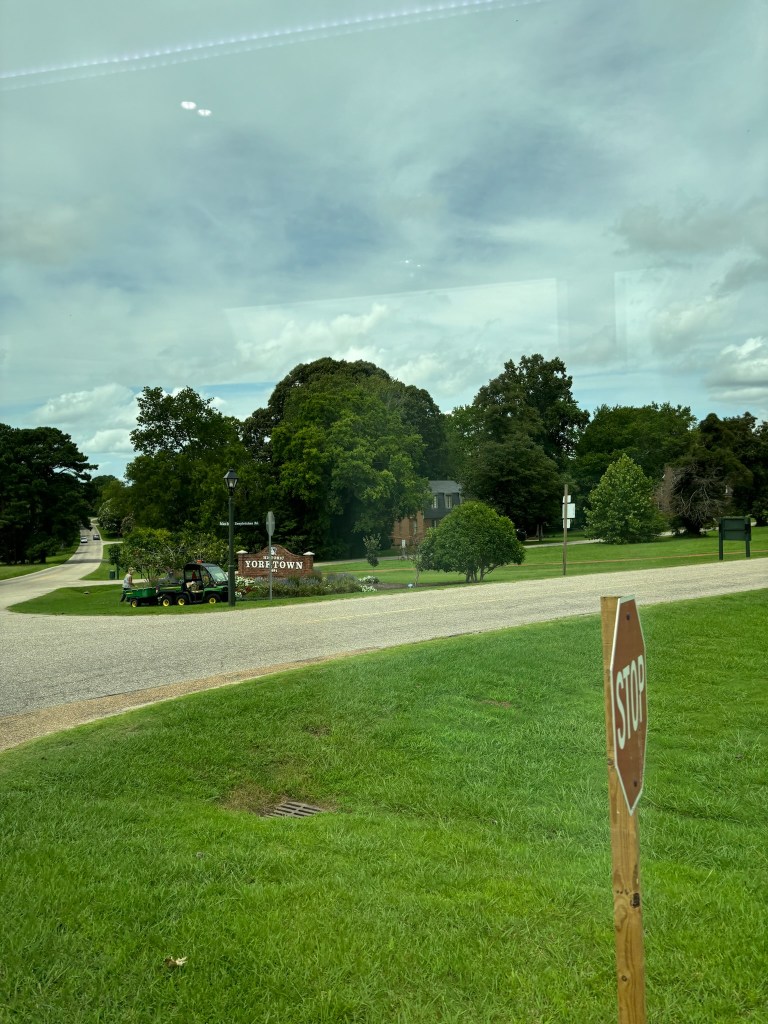
After we ate lunch at the Jamestown Settlement, we got back on the bus and headed to the Yorktown Battlefield. The drive between Jamestown and Yorktown was about 30 mins. Along the route, our tour guide still discussed the impact of the Jamestown settlement, and then transitioned into the 1700s. He explained the lead-up to the American Revolution and the outbreak of the war.
Significance
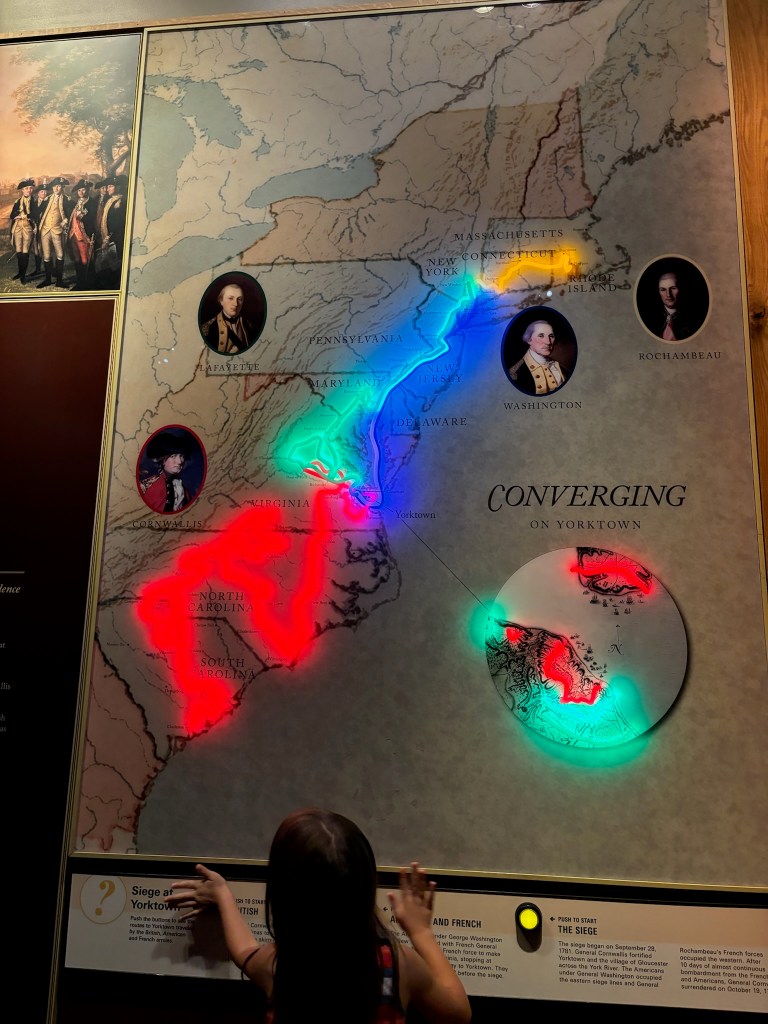
Yorktown was arguably the most important battle of the American Revolution because it was the last, major climactic battle. After six long years of war, and after a couple of grueling years of fighting in the south, British General Lord Cornwallis decided to take the war from the Carolinas to Virginia. He decided to set up camp at Yorktown along the York River. The combined French and American forces planned to surround the British at Yorktown and cut of their supply along the river. As a result of the naval Battle of the Chesapeake on September 5th, 1781, the French were able to successfully gain control of the York River, cutting off a British escape route. The French and American forces made their way from Rhode Island along the Washington-Rochambeau Revolutionary Route. After a siege of about three weeks, Lord Cornwallis’s army was forced to surrender on October 19th, 1781.
While smaller battles and skirmishes did take place in the war after Yorktown, this surrender led to peace talks and was the last major battle of the war. The Treaty of Paris would come in 1783, bringing about the official end to the war.
Yorktown Battlefield
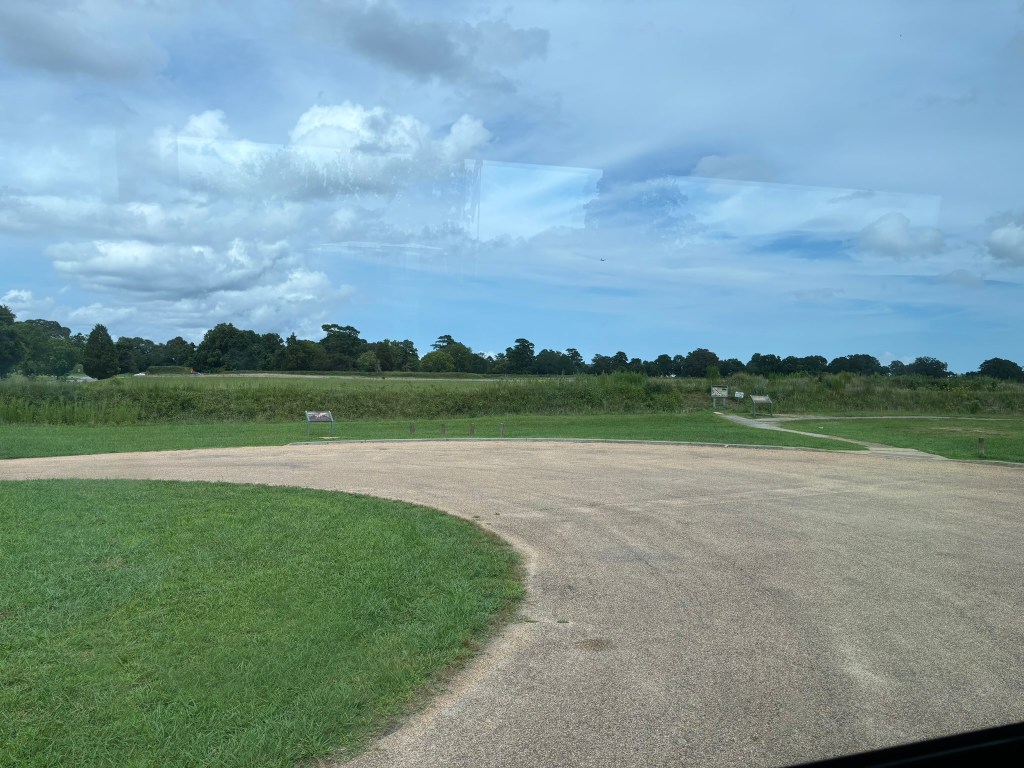
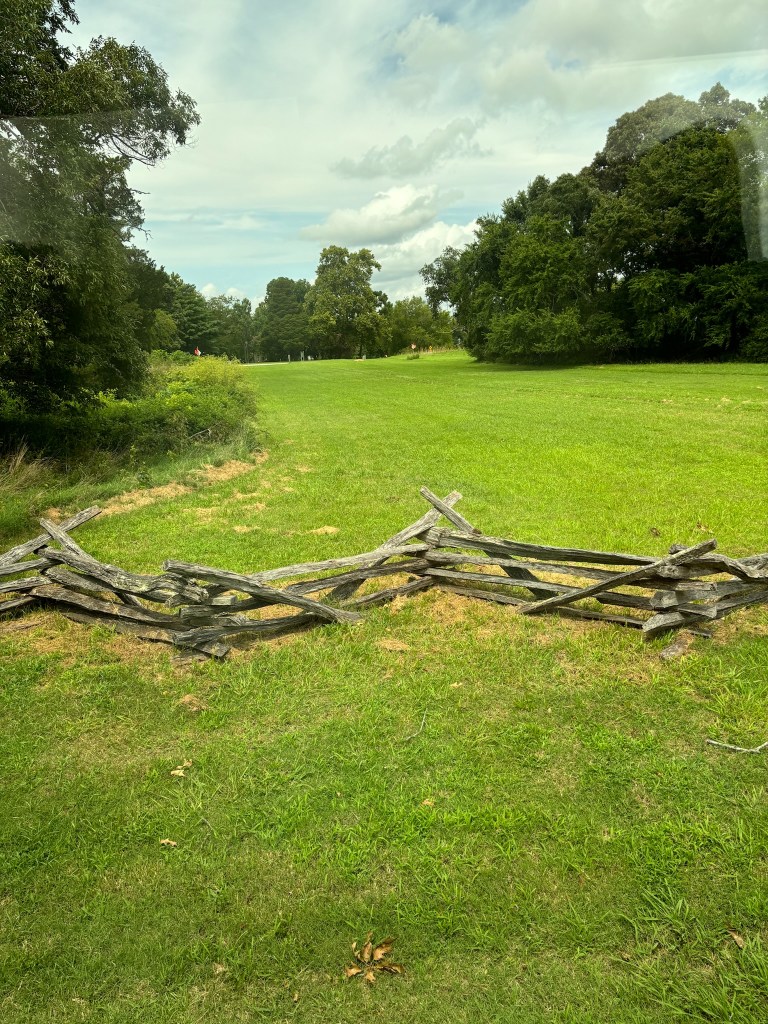
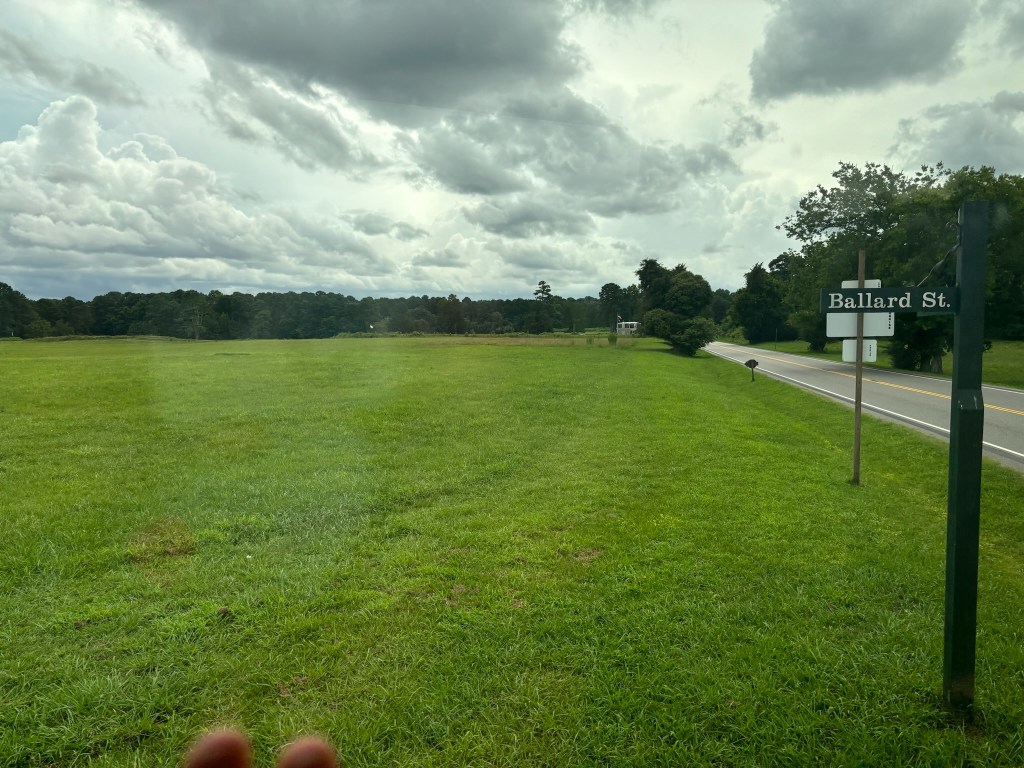
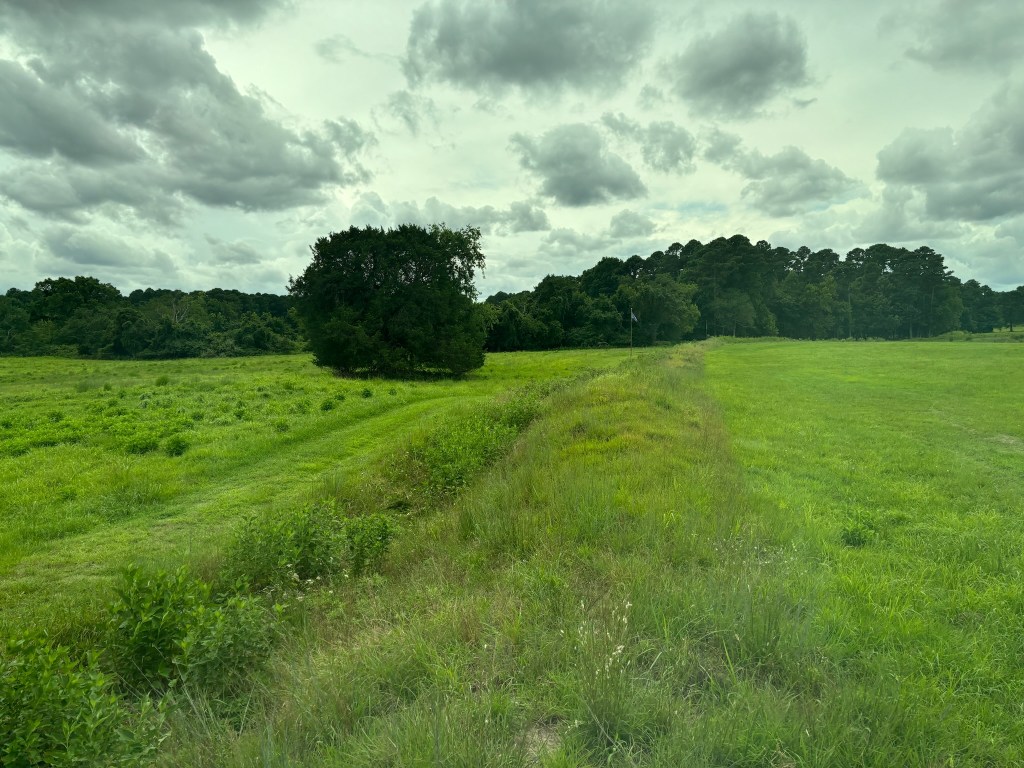
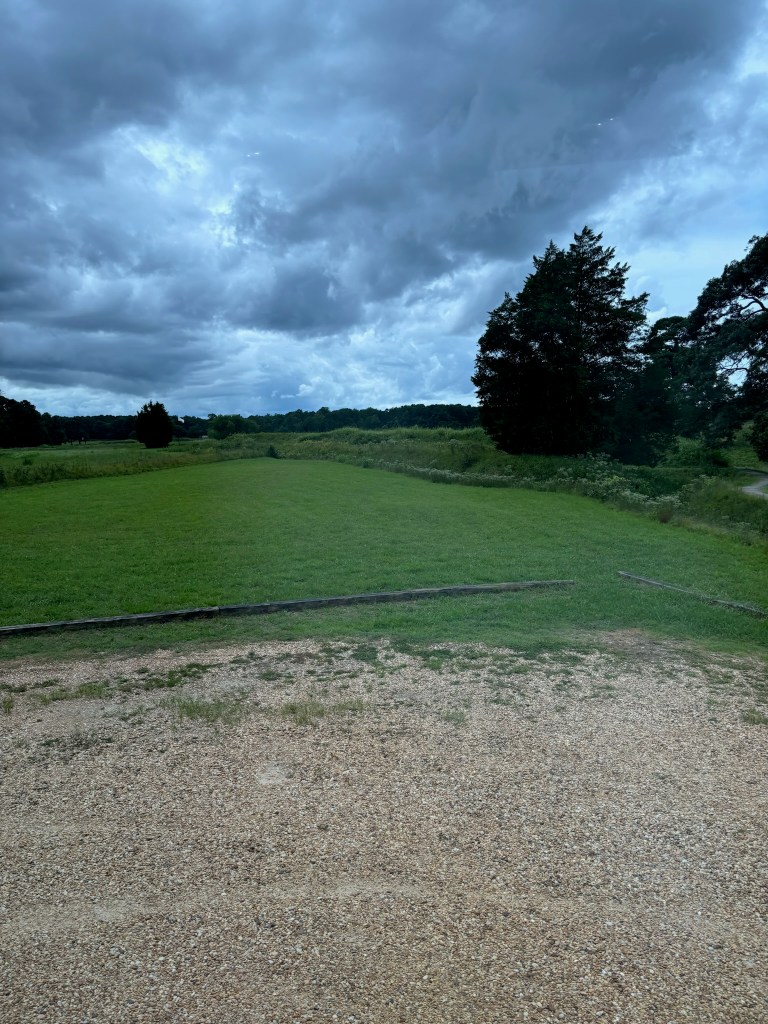
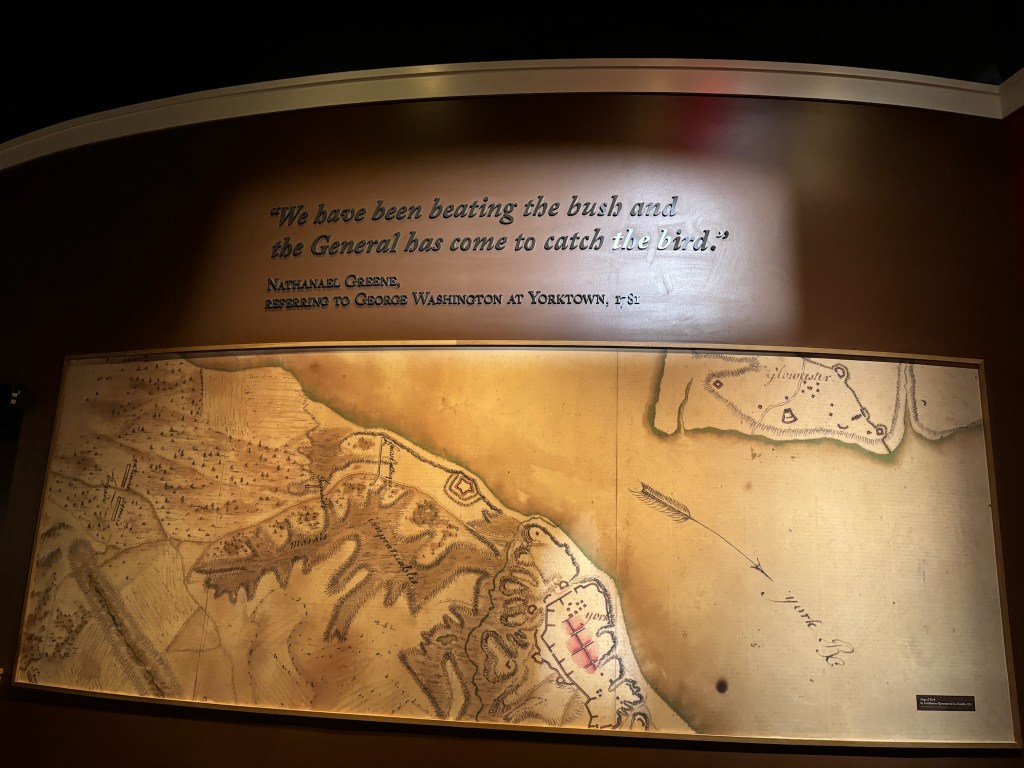
When we arrived at Yorktown, we received a bus tour of the battlefield. You could still see the remnants of the trenches that were built as the American and French forces were digging themselves closer and closer to the British stationed in town. The American and French alliance bombarded the town constantly and cut off food and provisions from getting into town. As we were moving throughout the battlefield, I used my Google Maps app to pinpoint exactly where we were in relation to town to get a sense of the exact locations of where the troops were moving on the battlefield.
Redoubts #9 and #10
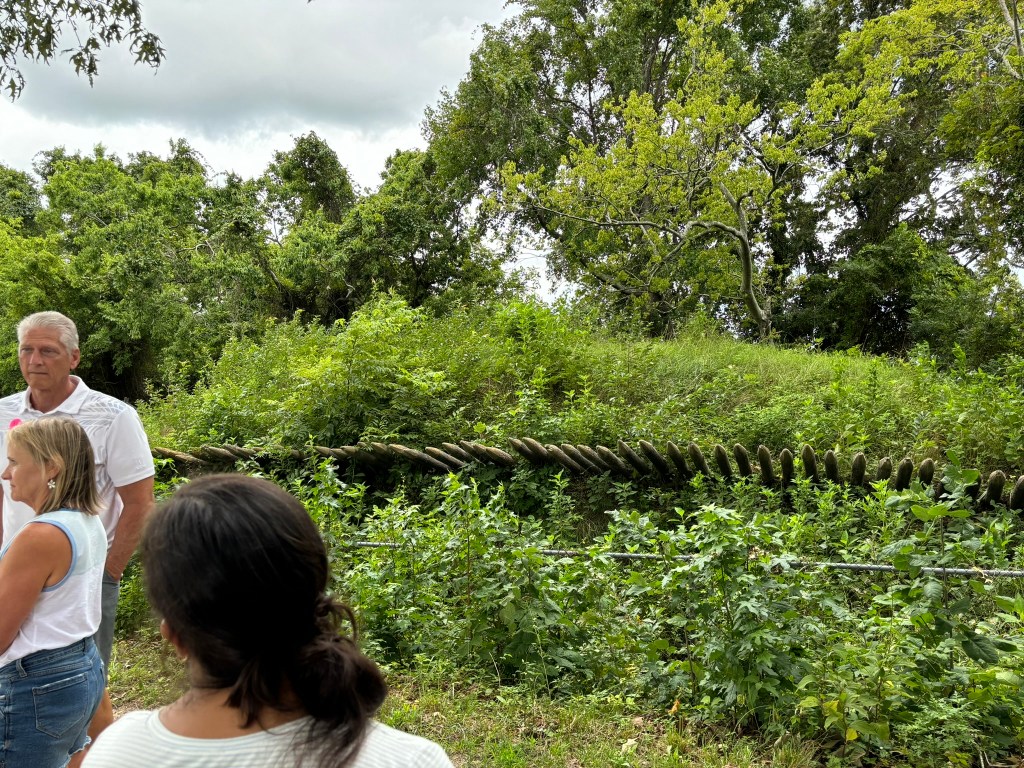
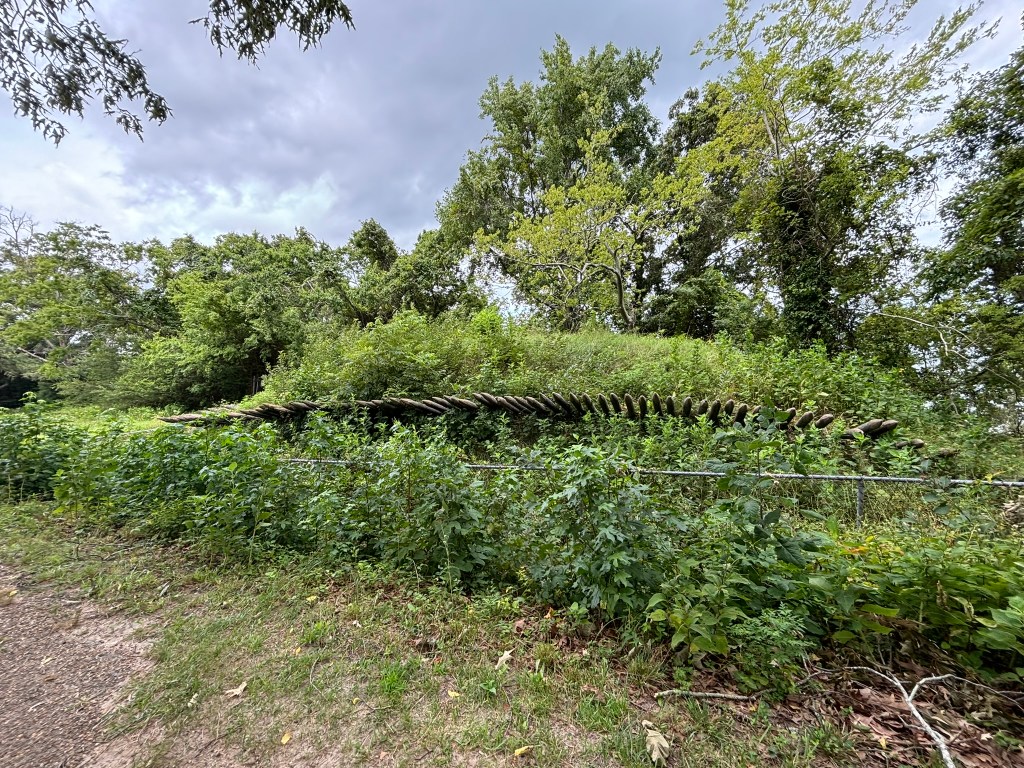
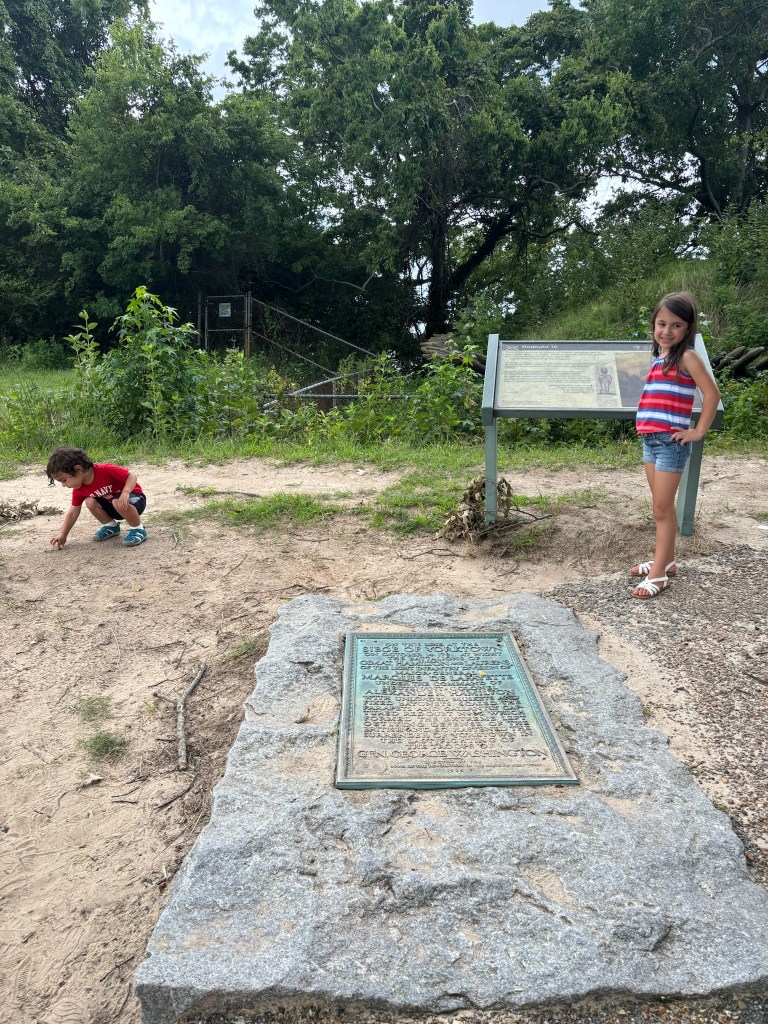
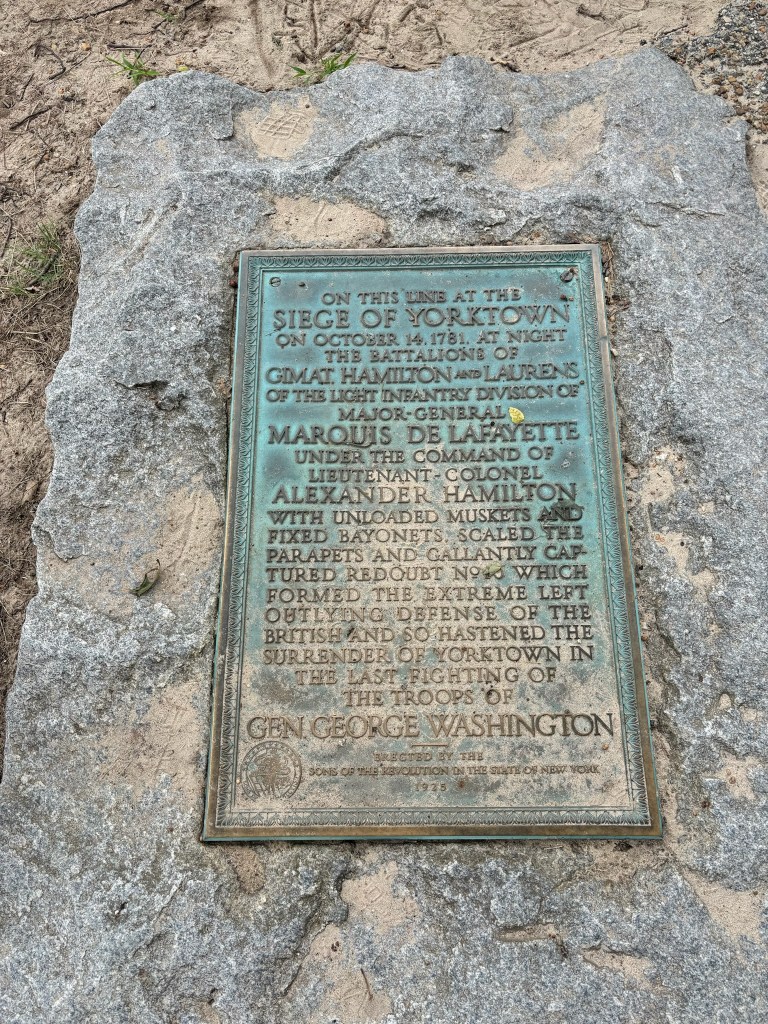
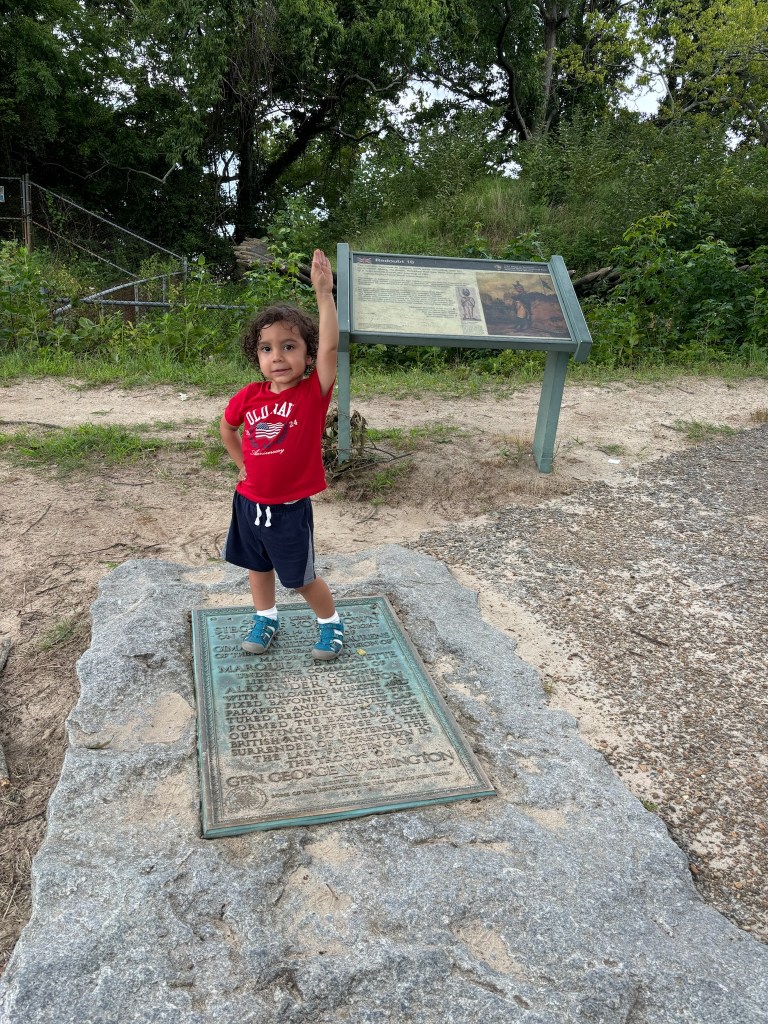
The bus made its way to Redouts # 9 and #10. These were two smaller fortifications just outside the British inner defenses, designed by the British to defend against French and American forces. When we arrived at the redoubts, we got out of the bus to observe Redoubt #10. Our tour guide explained the significance of the Redoubt. By October 14th, the American and French trench lines were within 150 yards of these two Redoubts. Washington devised a plan in which the French would attack Redoubt #9 and the Americans would attack Redoubt #10. Alexander Hamilton was chosen to lead the offensive in the night against Redoubt #10. The soldiers charged the redoubt with no ammo, just bayonets drawn. This was in order to keep the element of surprise. The American soldiers stormed the redoubt, climbed the abatis, and successfully took Redoubt #10 in brutal hand-to-hand combat in just 10 minutes. The French were also successful in taking Redout #9. Truly a climactic moment of the siege, the British surrendered just 5 days later.
The Moore House
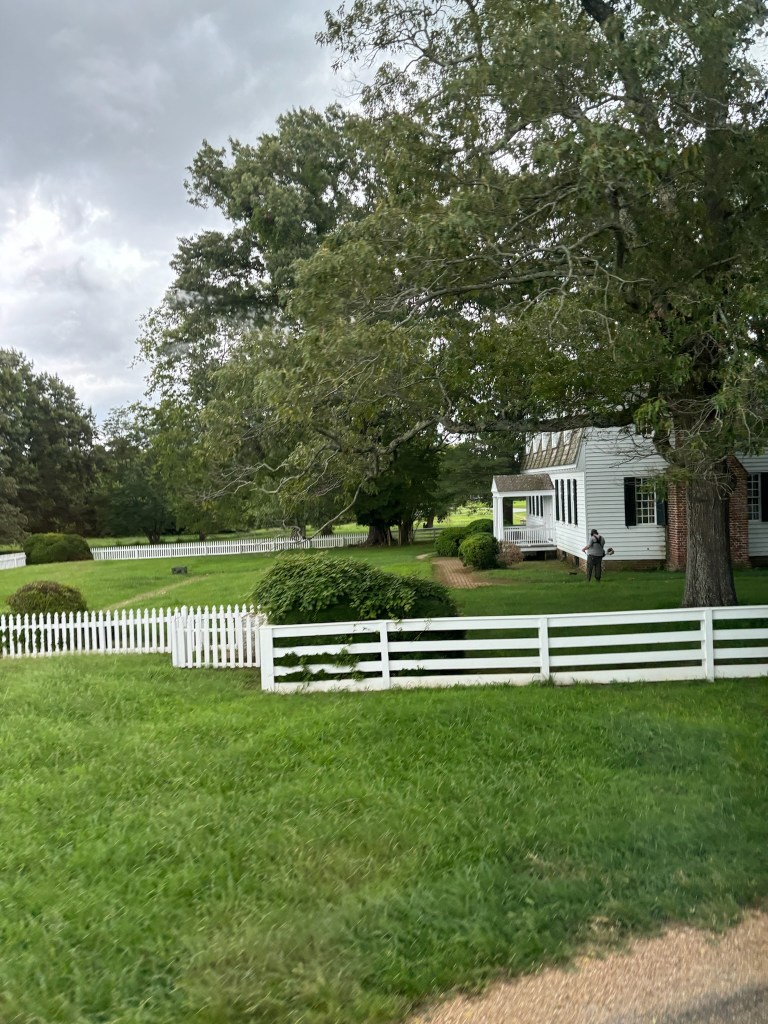
After viewing the redouts, the tour bus then took us to and parked in front of the Moore House, the location where negotiations for surrender took place. The tour guide did a nice job explaining the symbolic significance of the house. It essentially was here, where victory in the American Revolution was secured, confirming American independence.
Yorktown Victory Monument
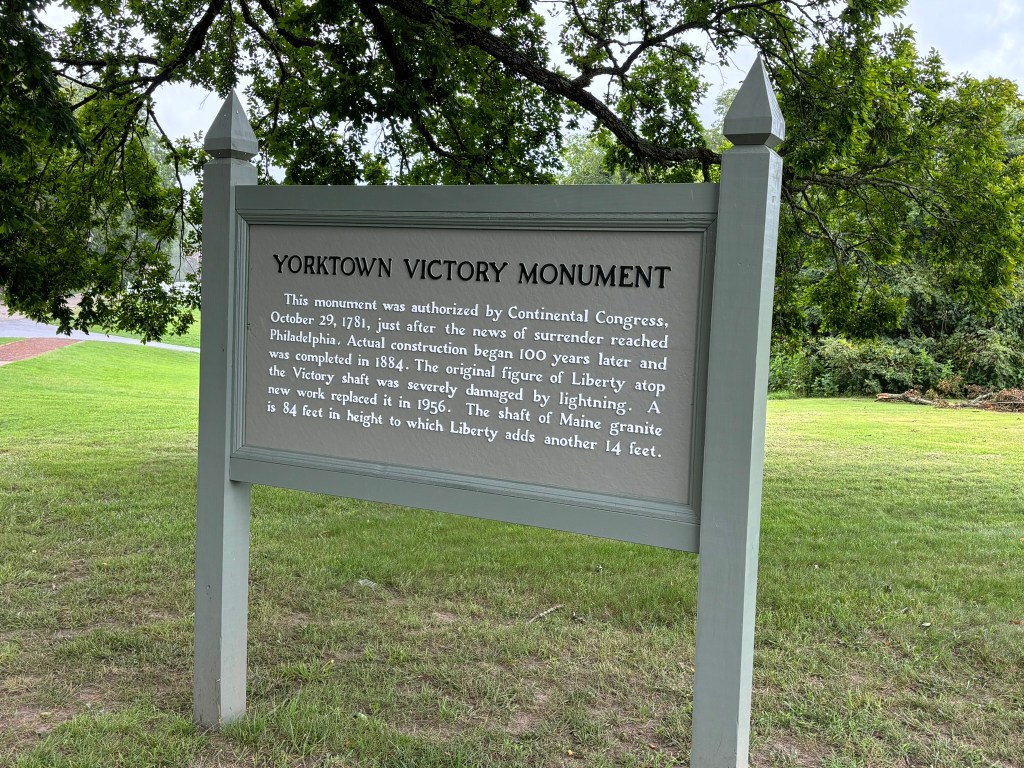
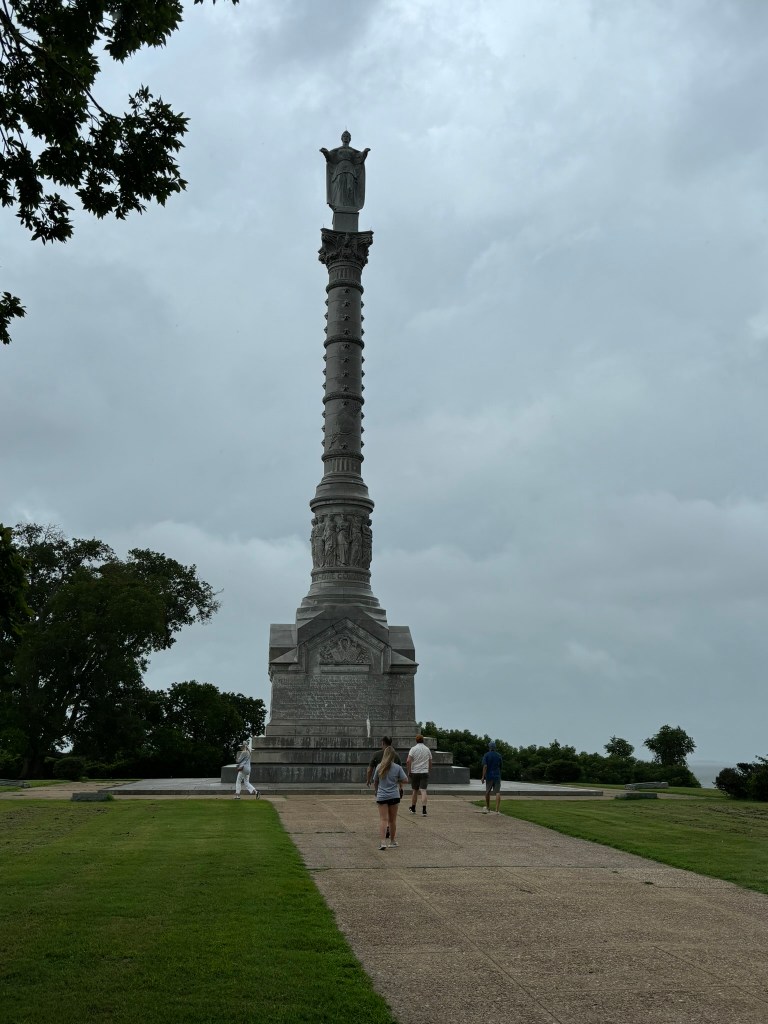
The tour bus began riding towards town and stopped at the Yorktown Victory Monument, built to commemorate this great victory.
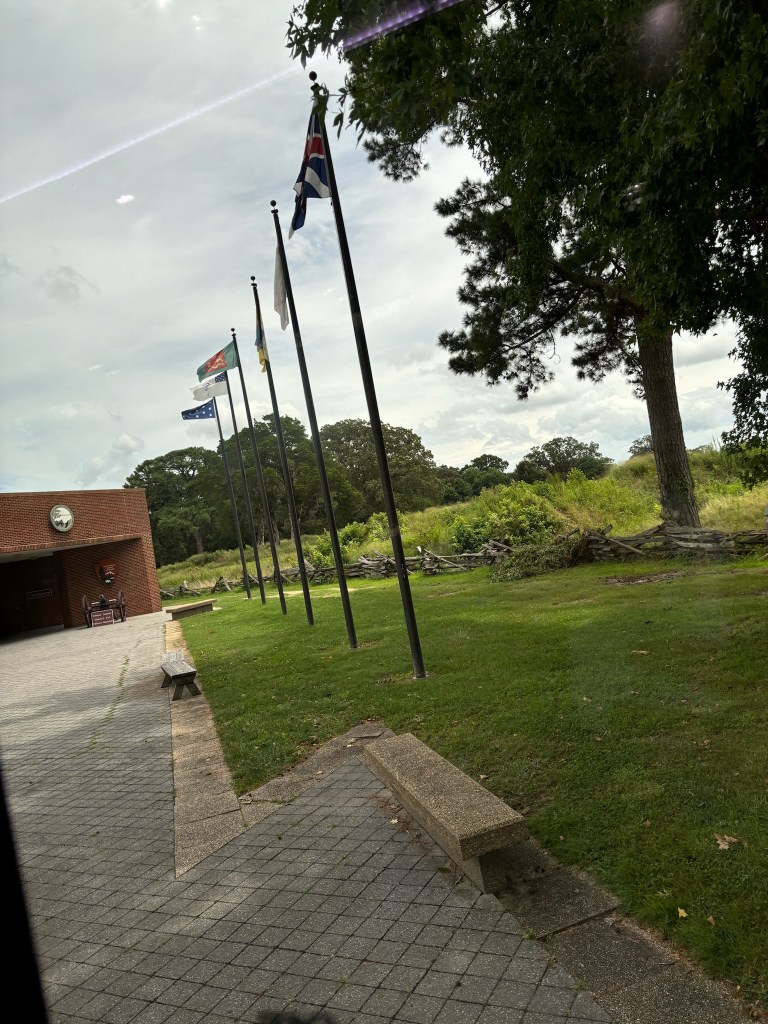
American Revolution Museum at Yorktown
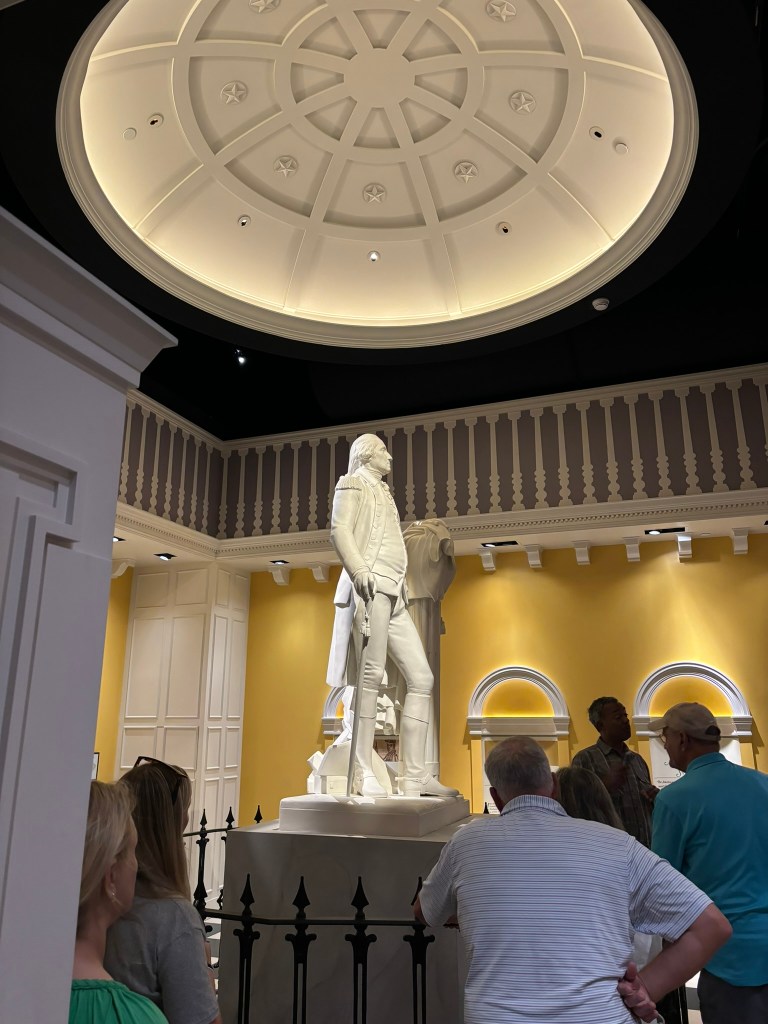
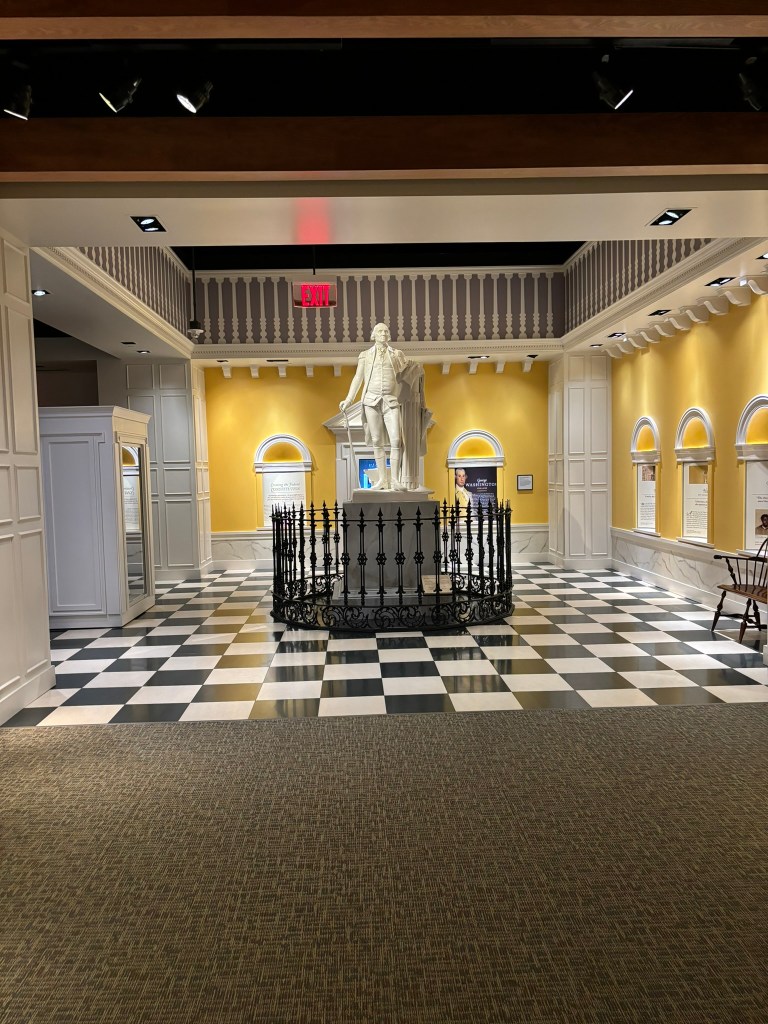
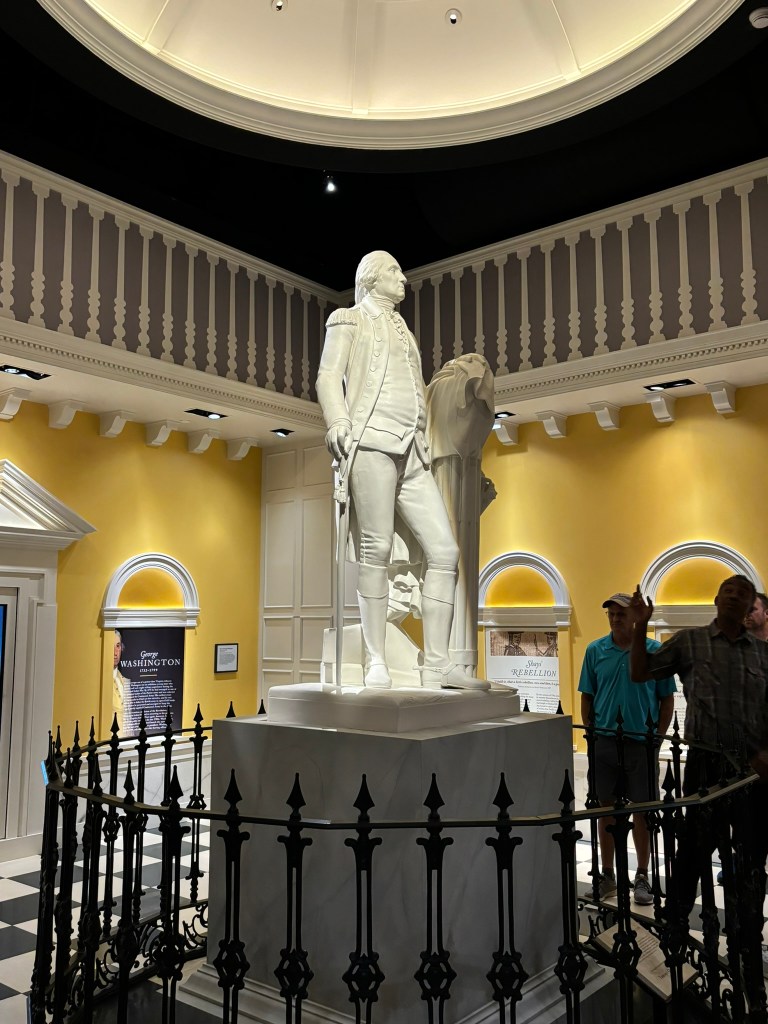
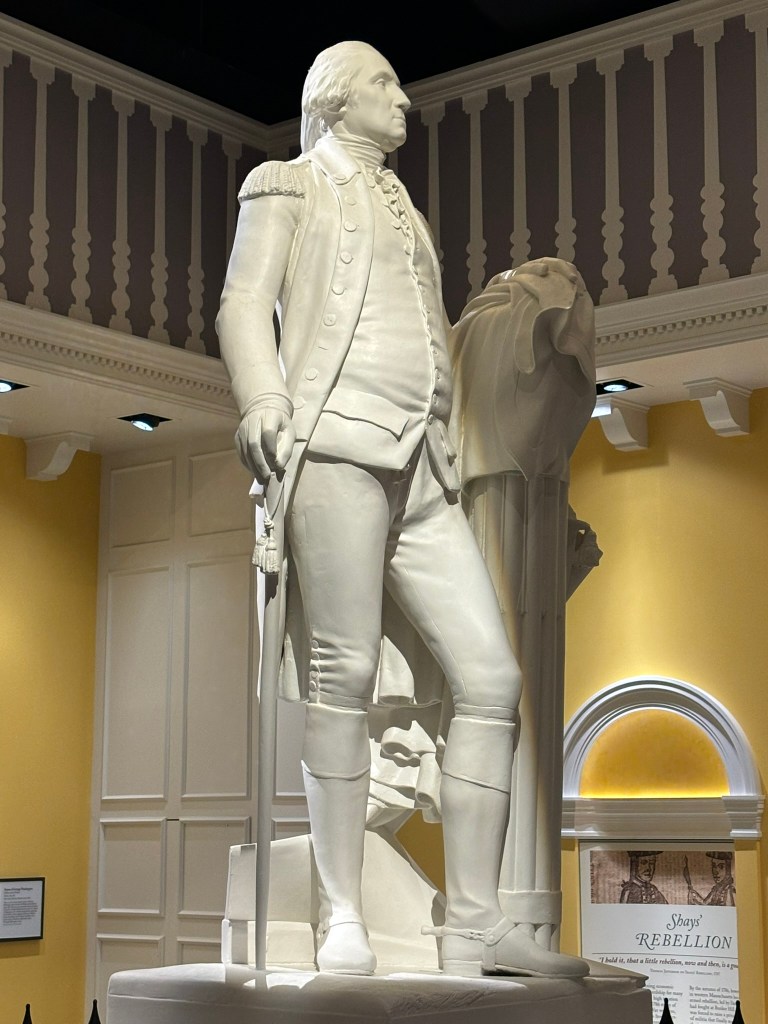
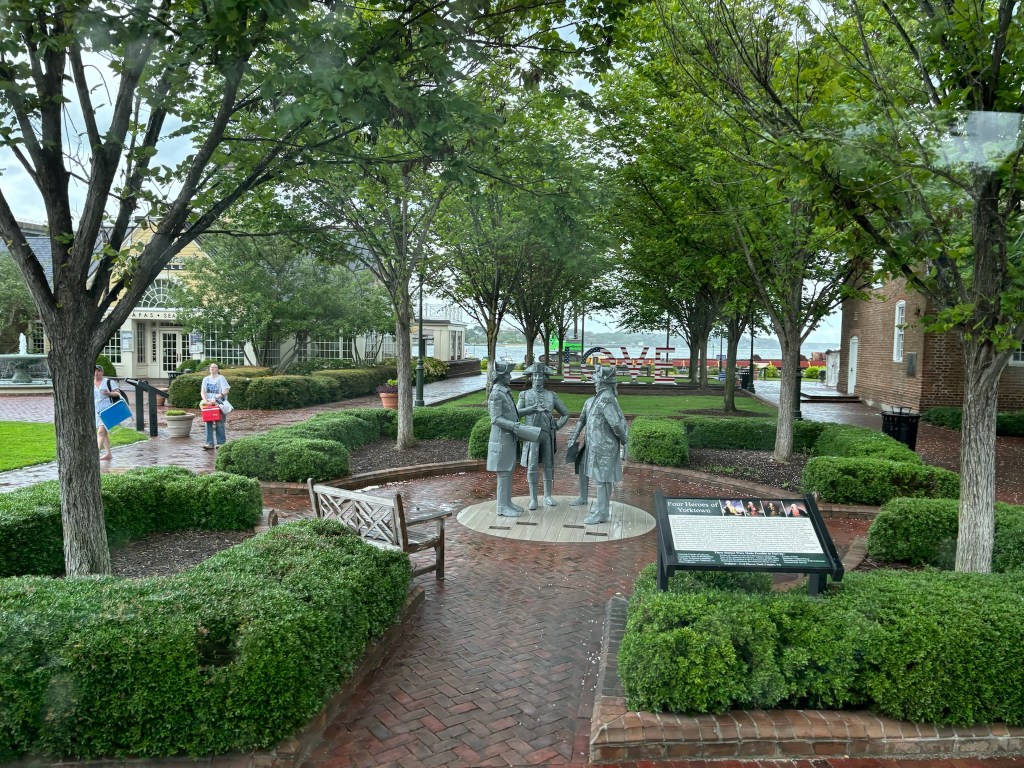
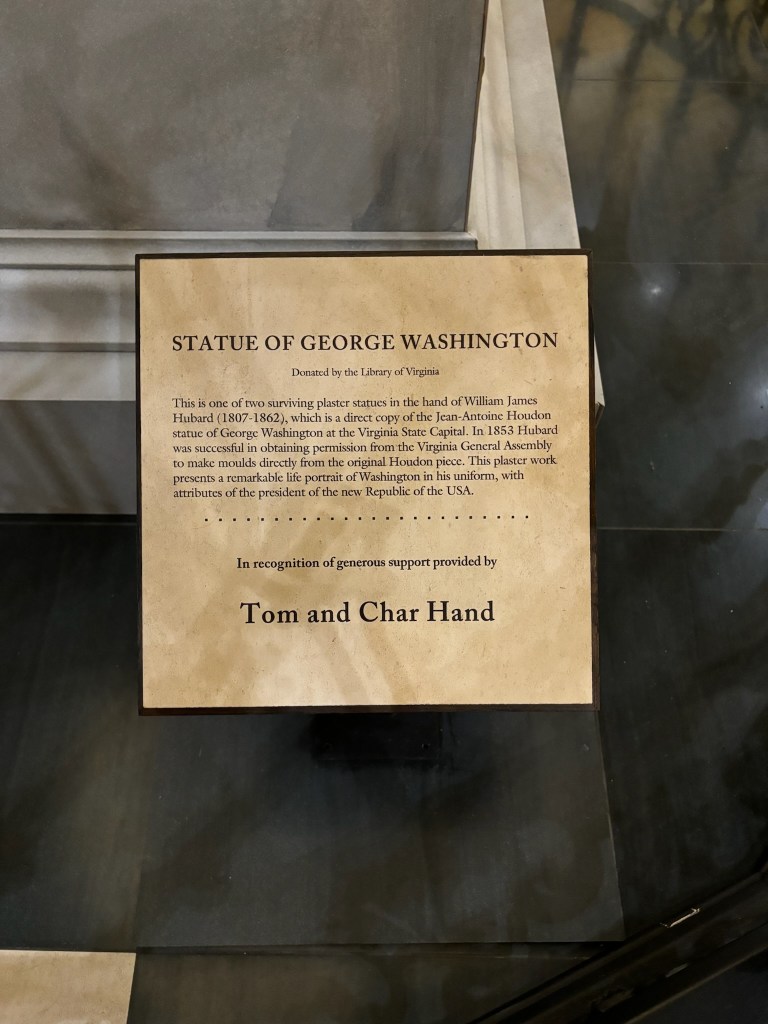
We made our way through town and then over to the American Revolution Museum at Yorktown, which is run by the Jamestown-Yorktown Foundation, as mentioned in my previous blog post about the Jamestown Settlement. Our tour guide first took us to a statue of George Washington, which formally was exhibited in the U.S. Capitol. We discussed different examples of symbolism within the statue.
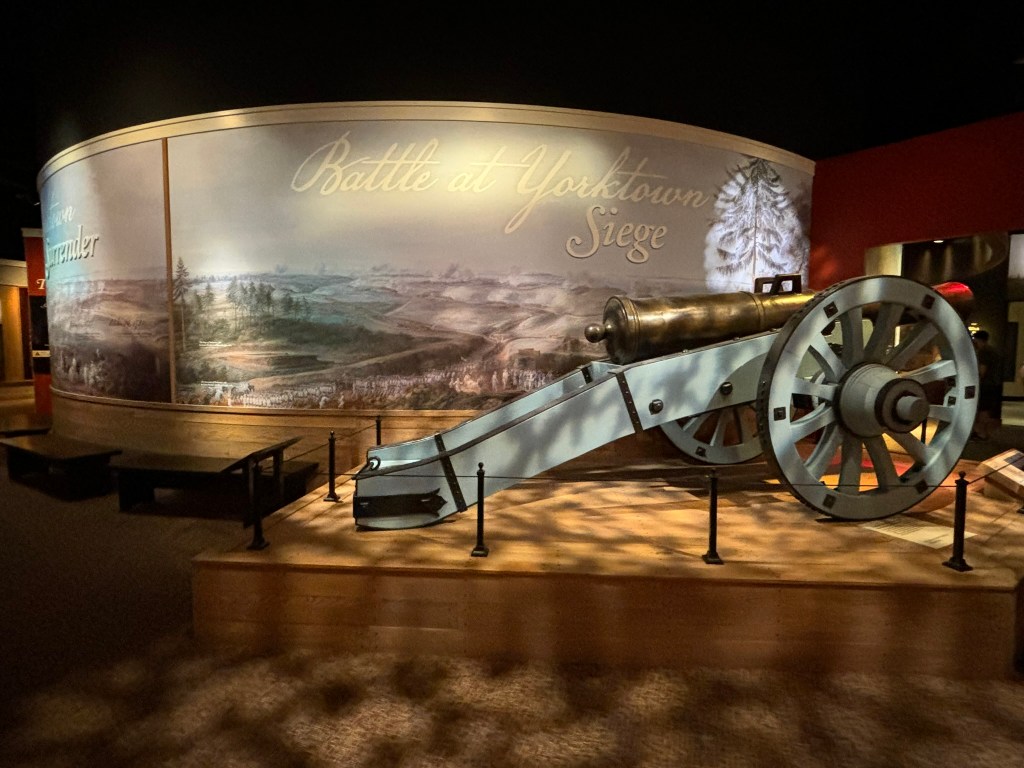
We then went into a 4-D experiential theater and watched a 9 minute video called the “Siege of Yorktown.” The screen in the theater surrounds the viewer. The video not only depicts the battle, but explains its significance. The theater fills with smoke at certain scenes and you really feel the wind and the thunder of cannon fire. It was a tremendous 9 minute experience.
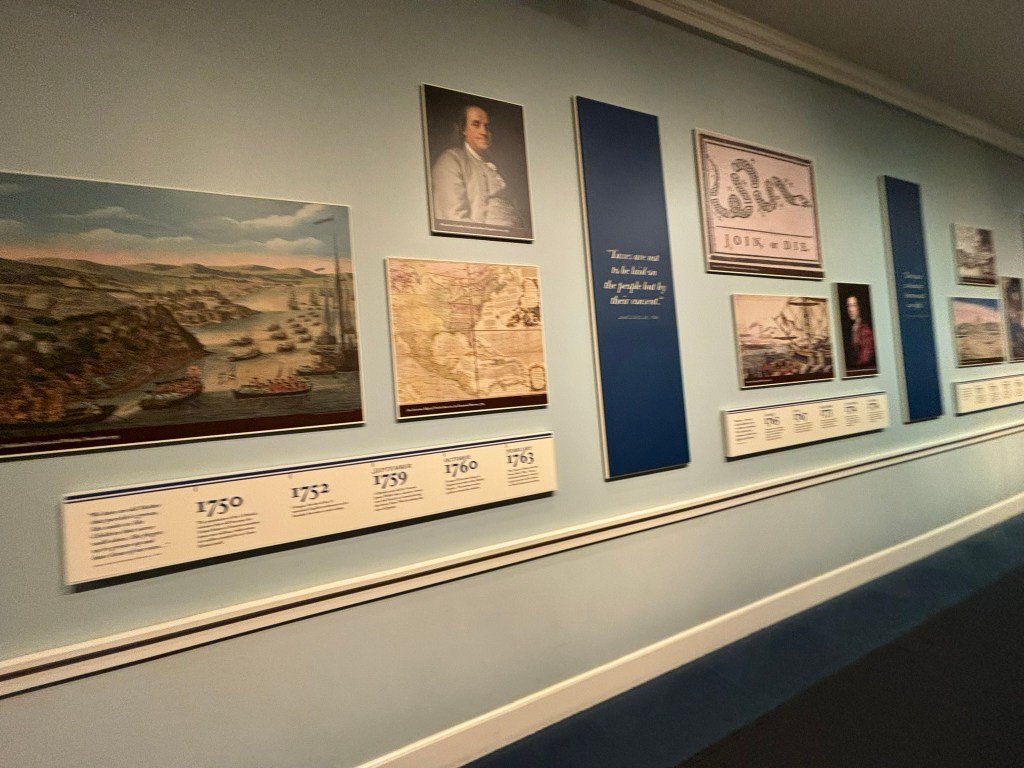
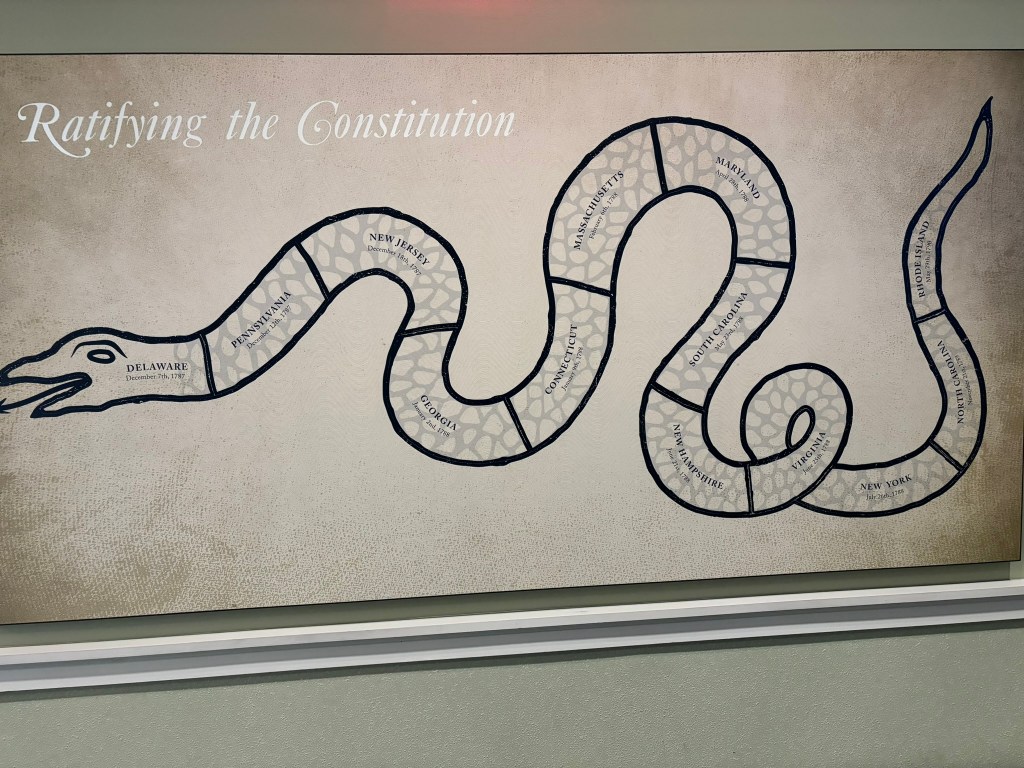
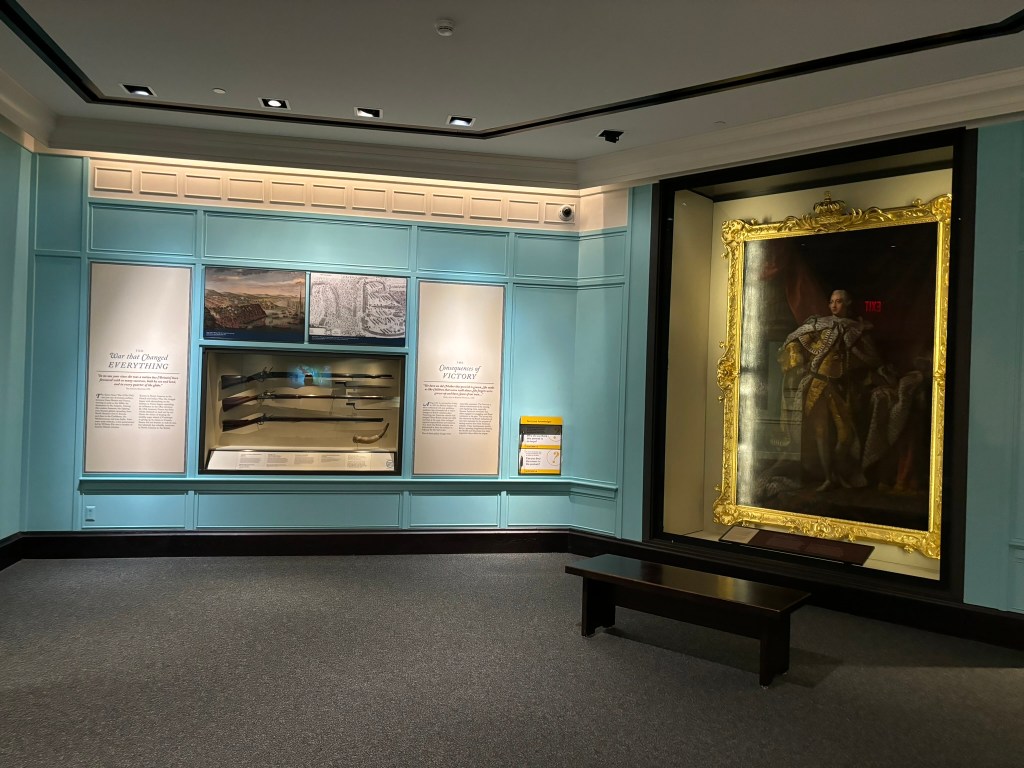
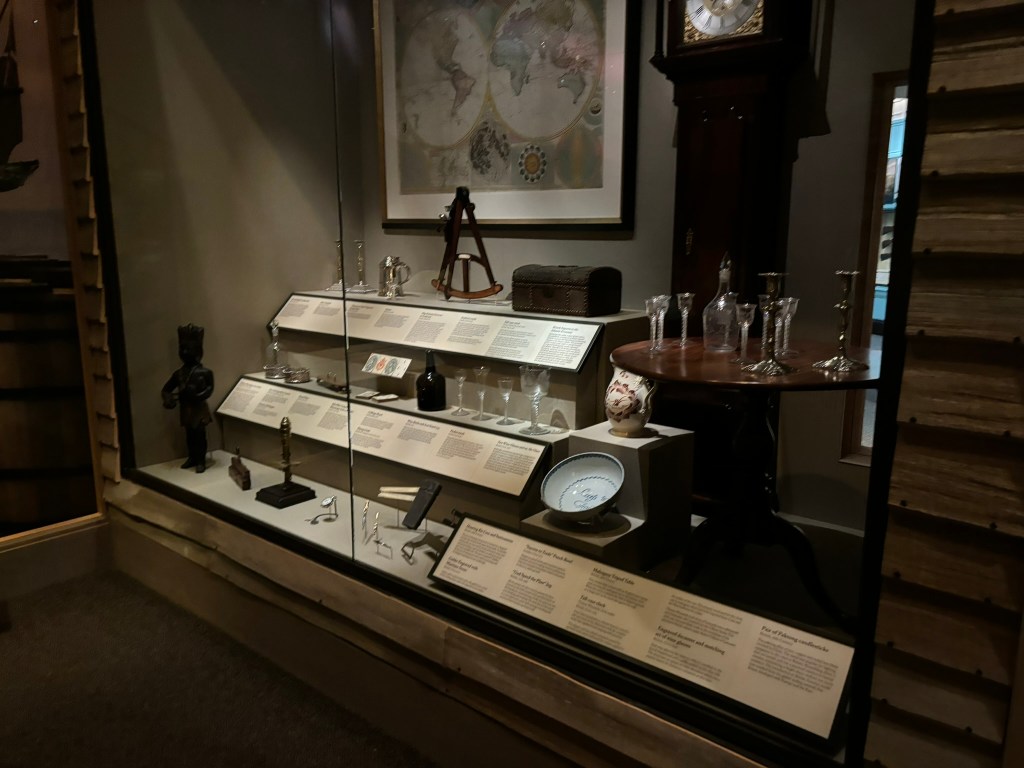
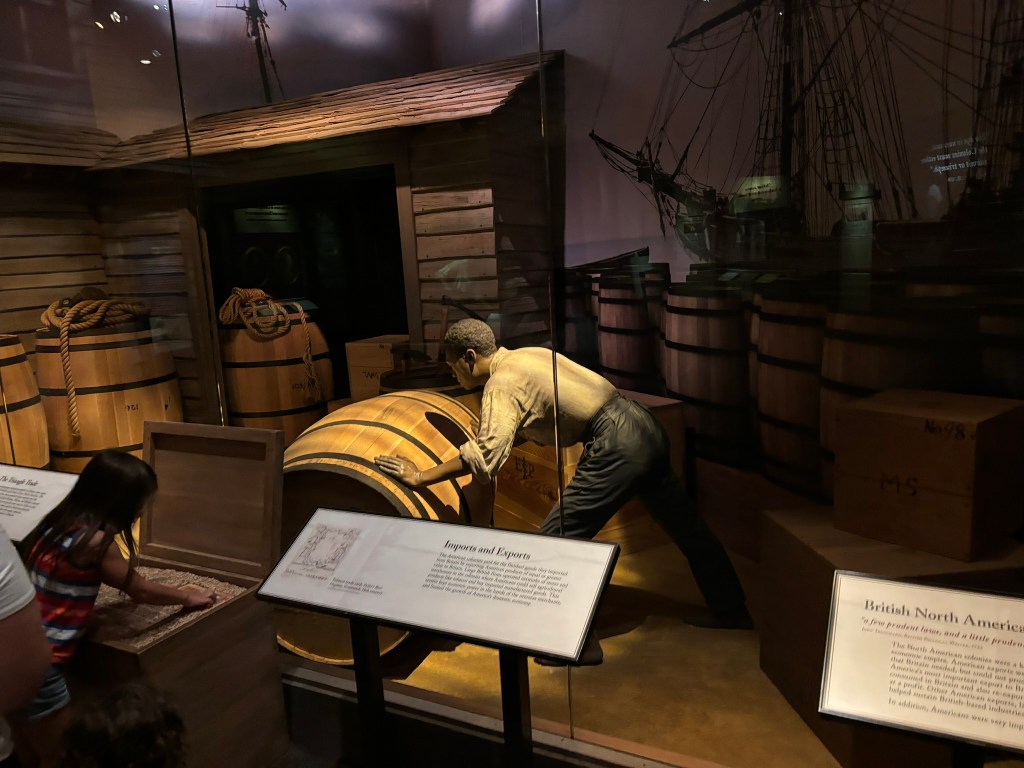
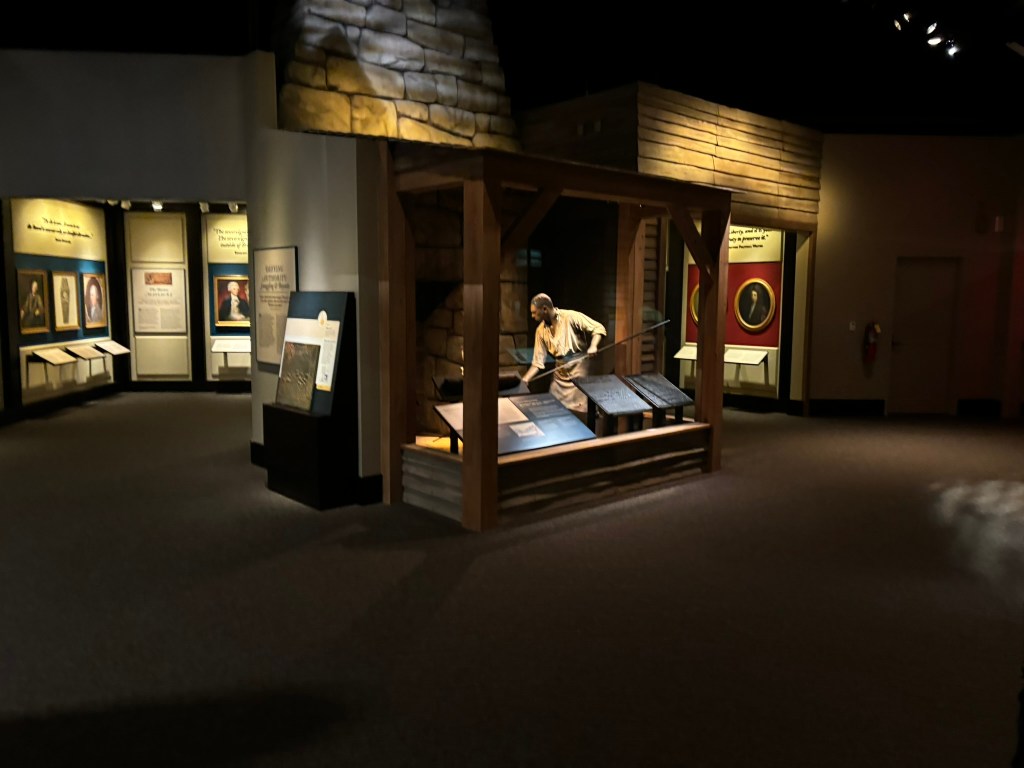
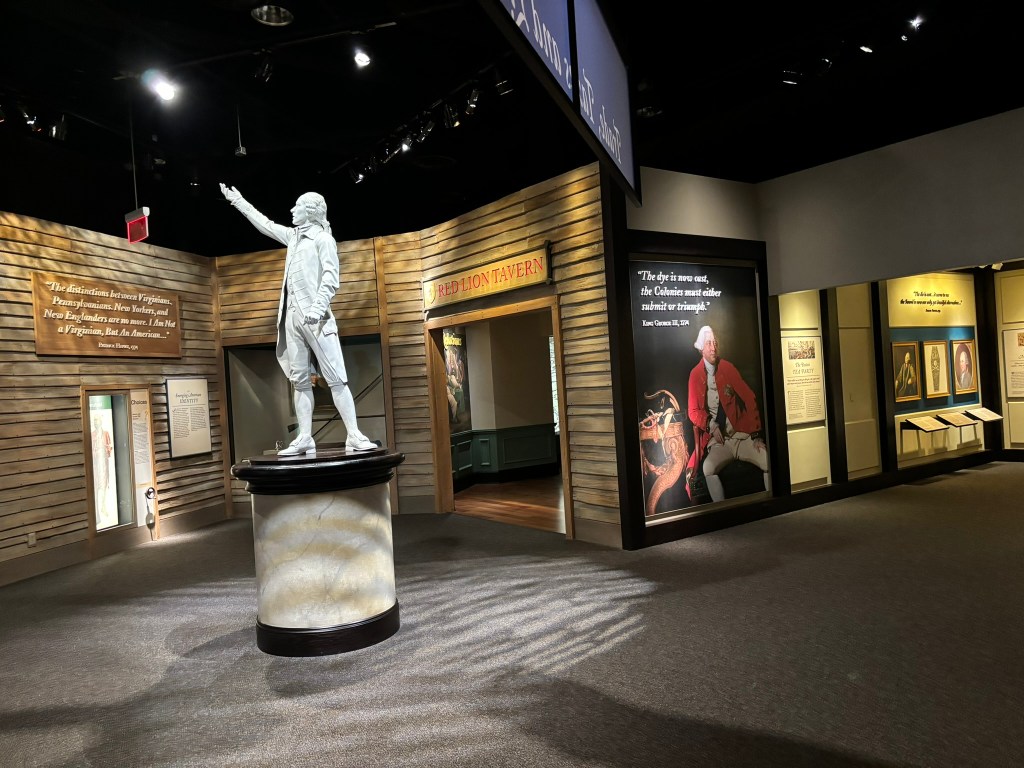
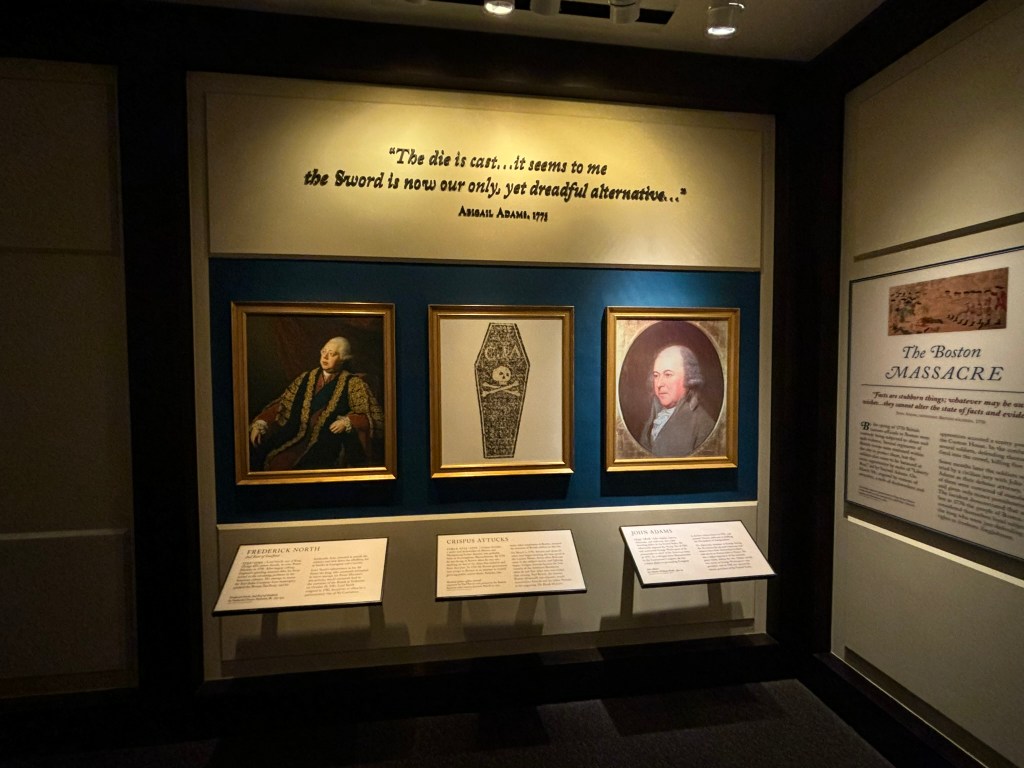
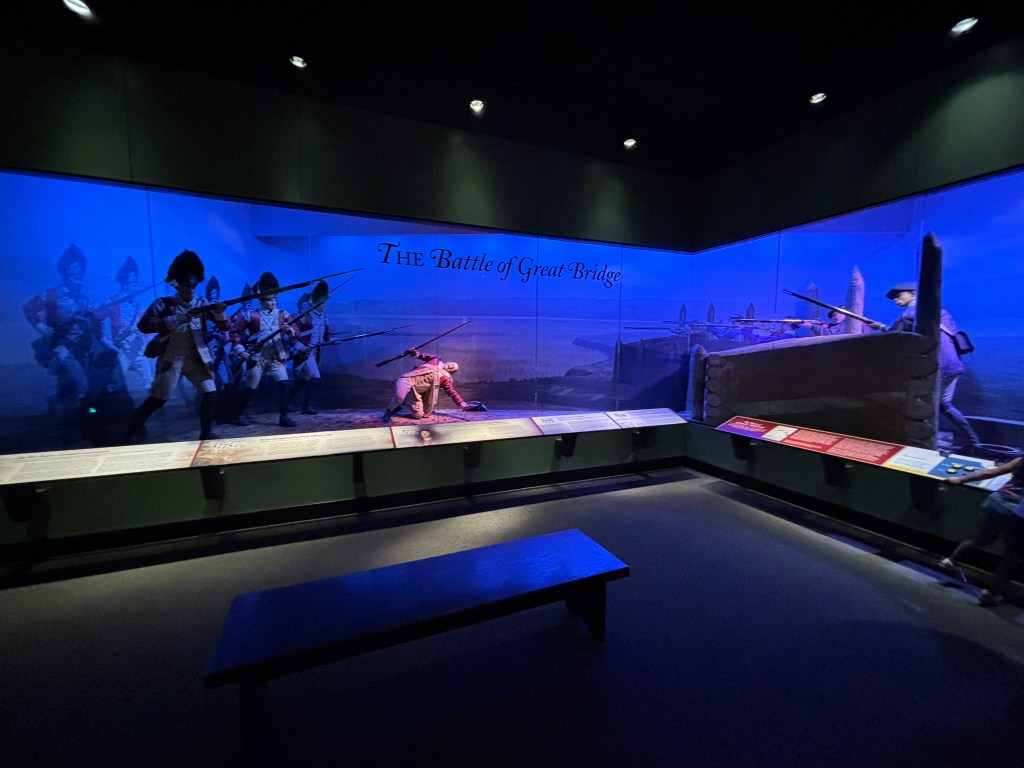
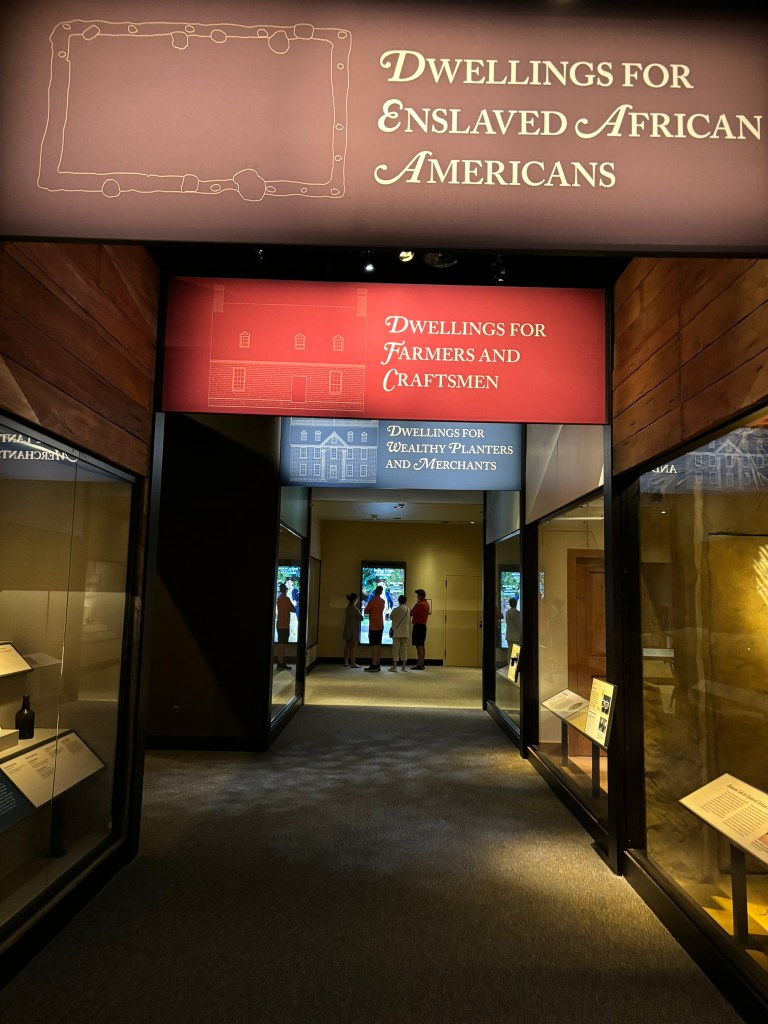
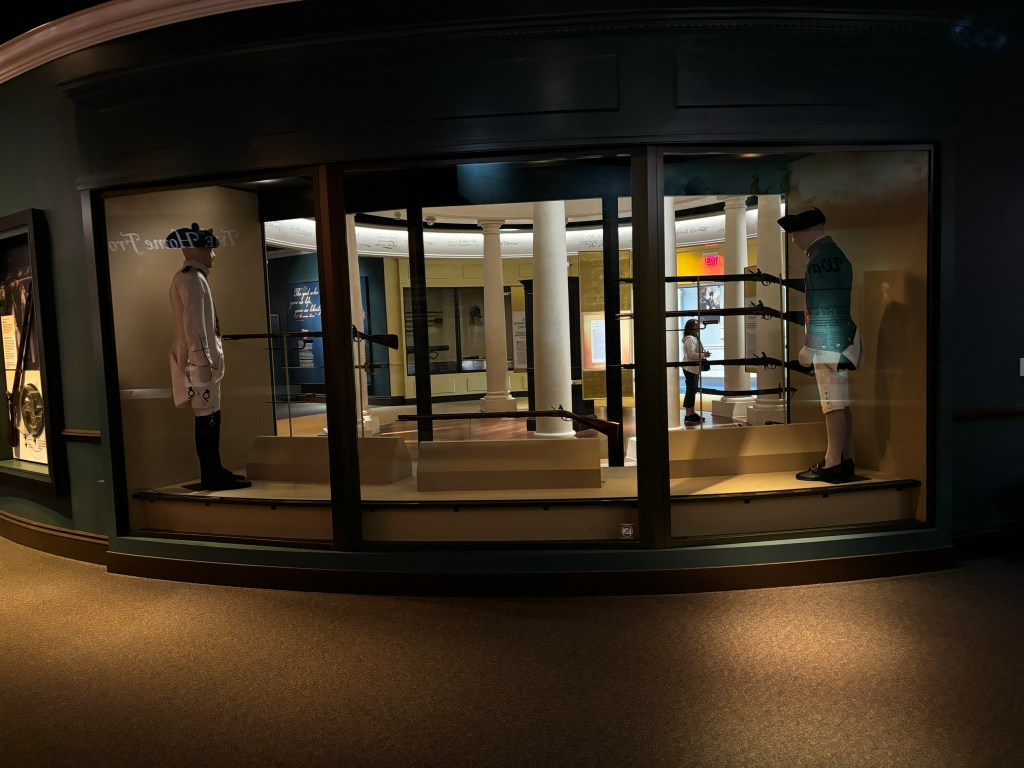
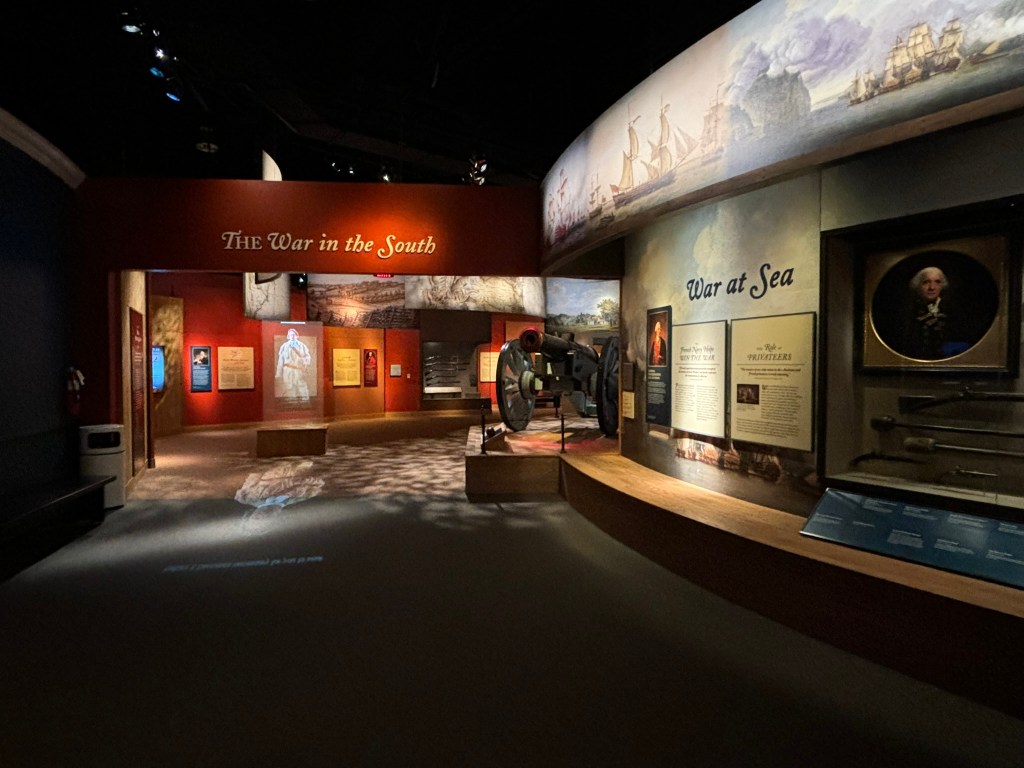
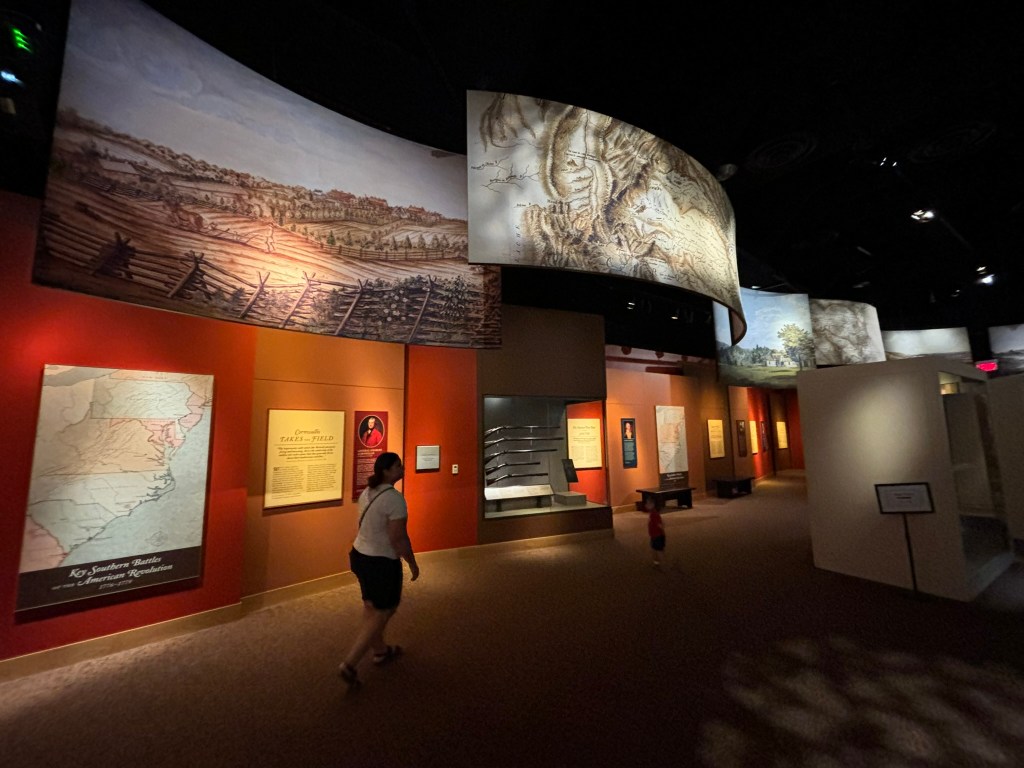
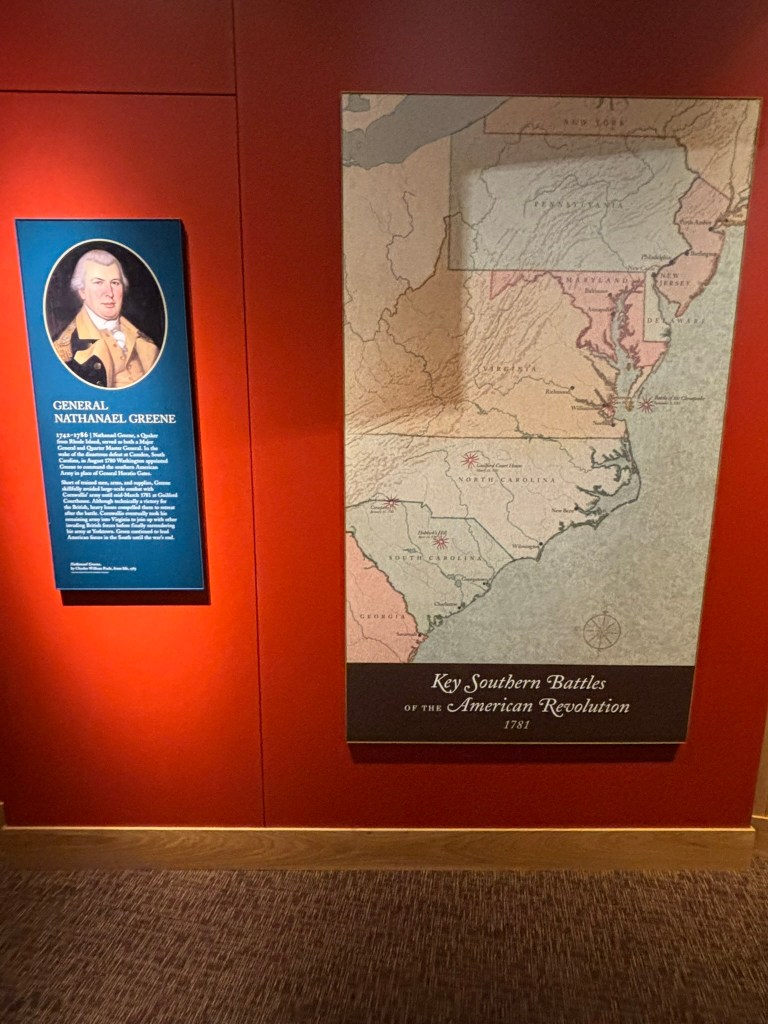
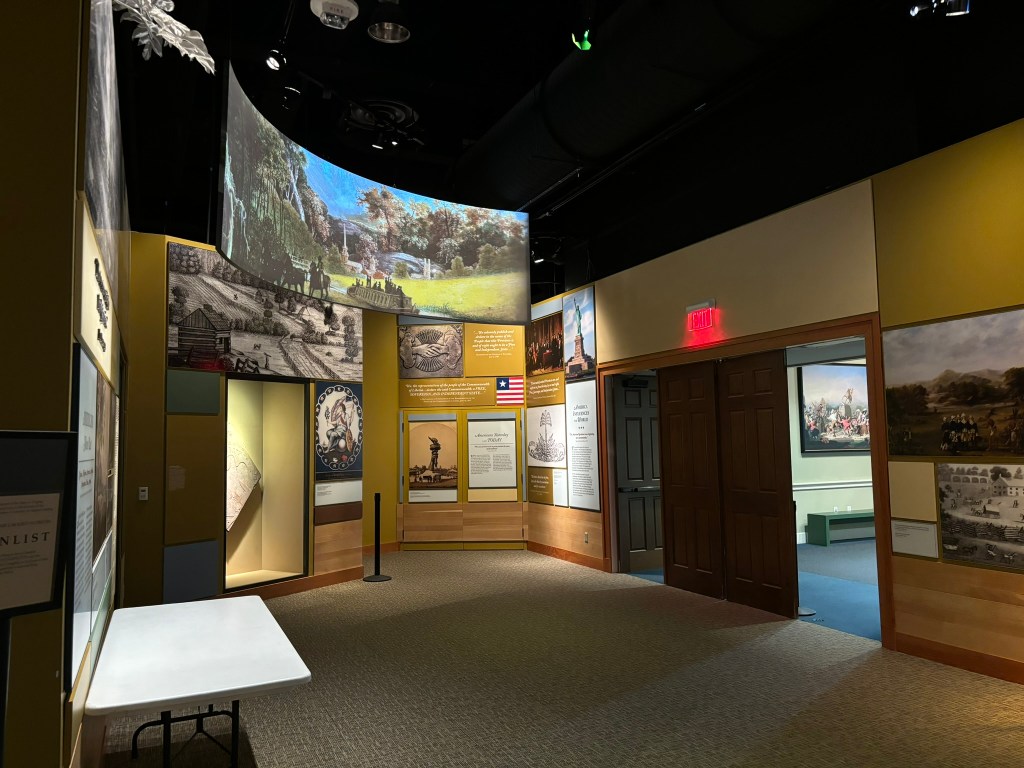
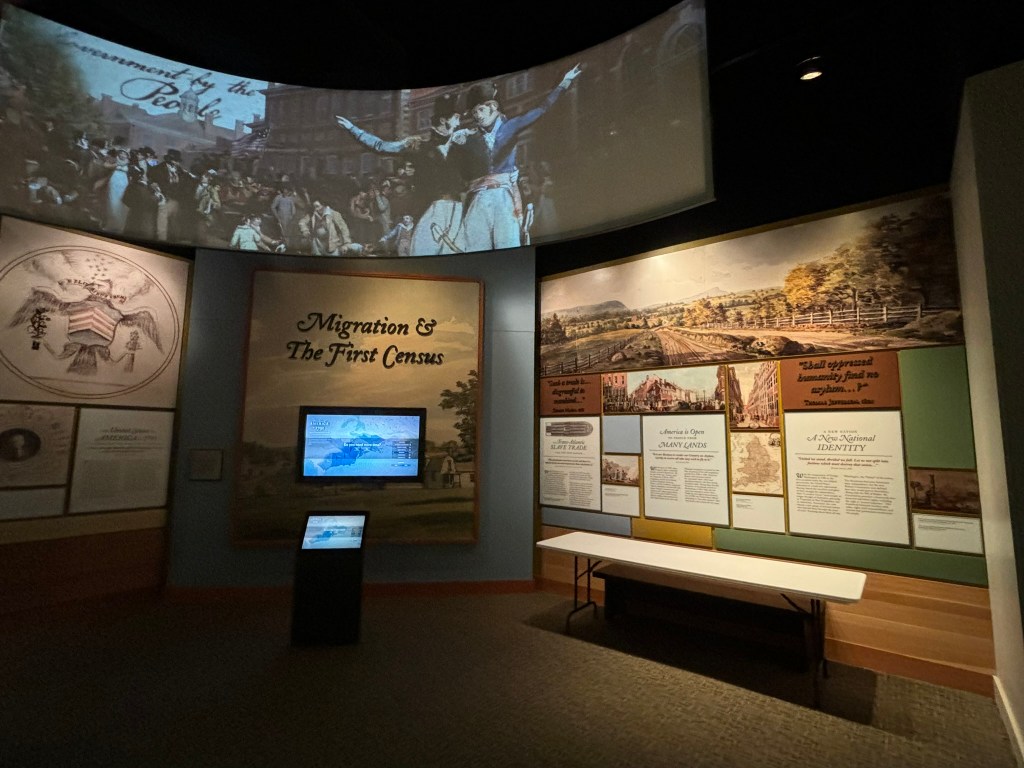
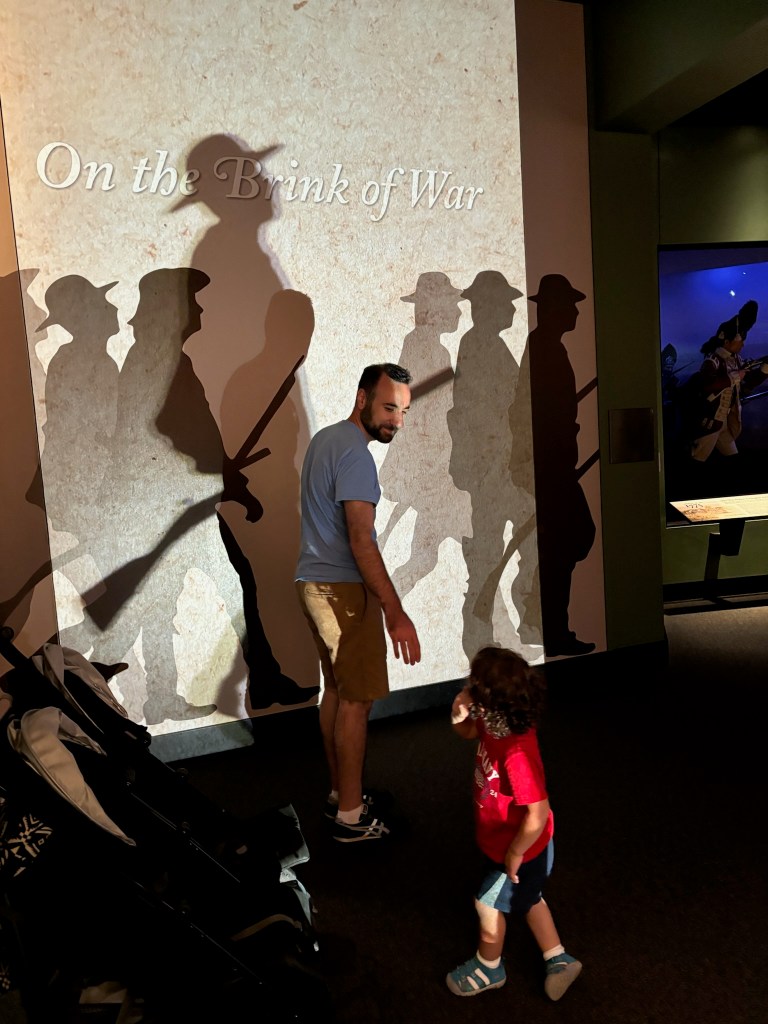
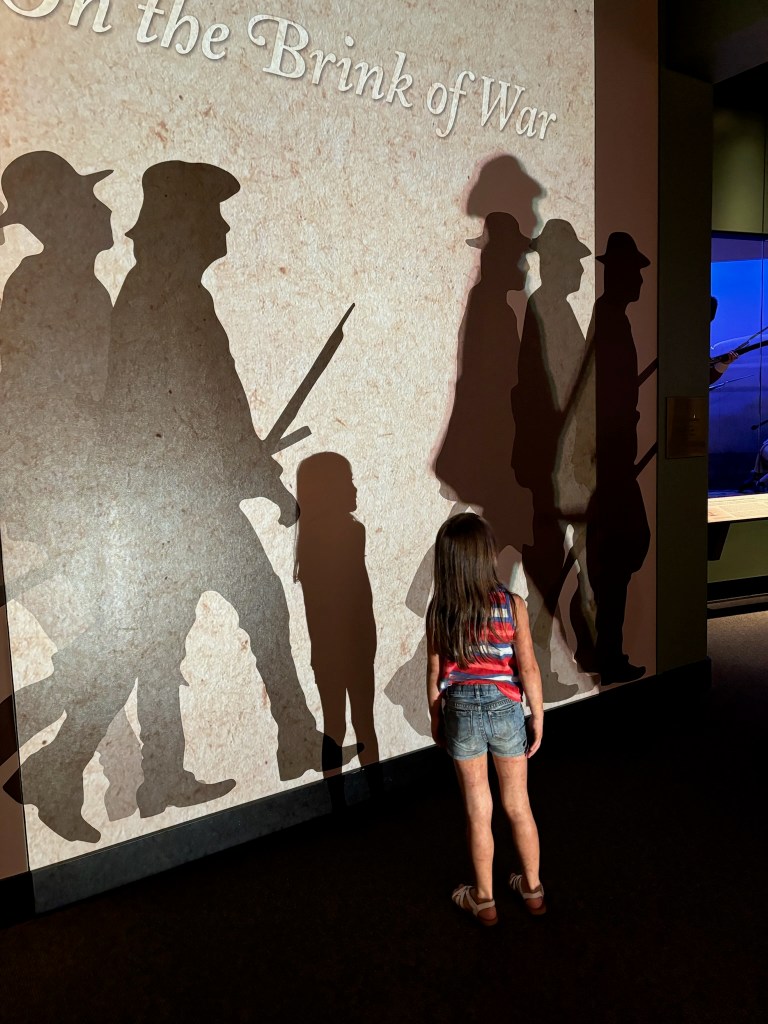
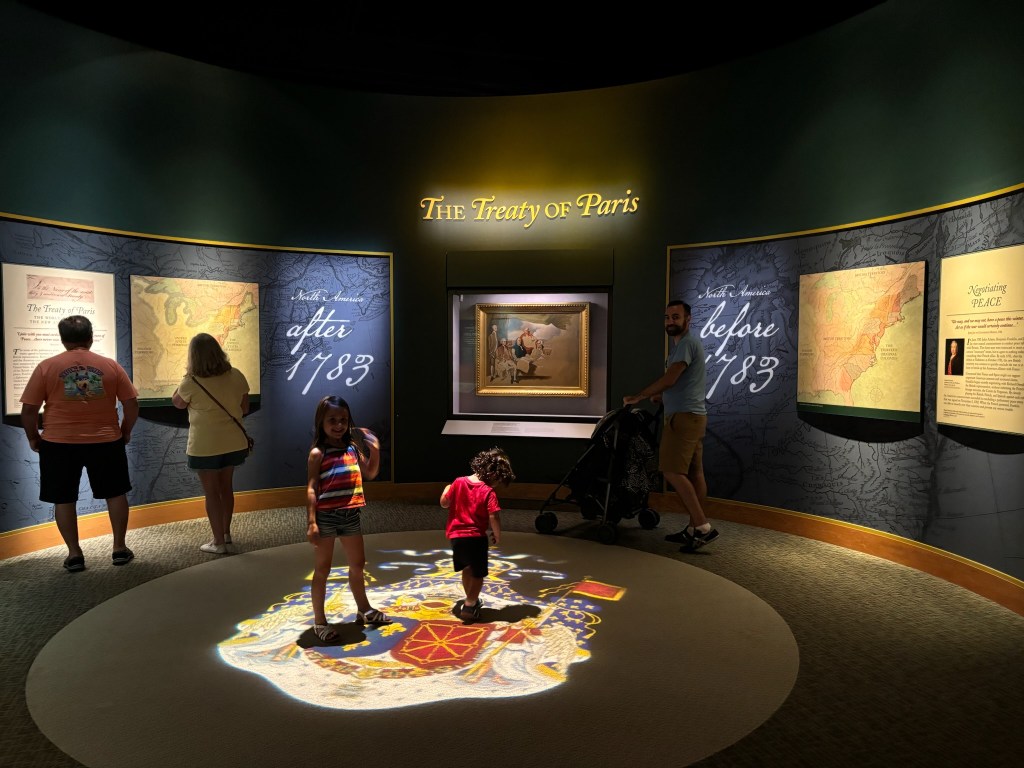
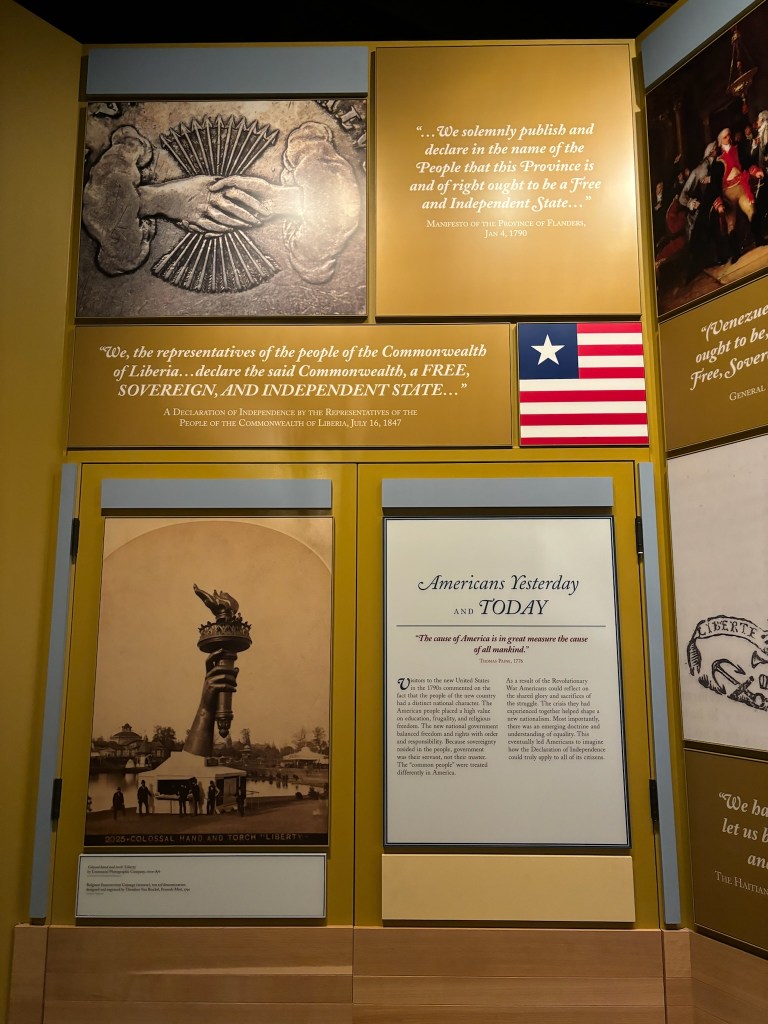
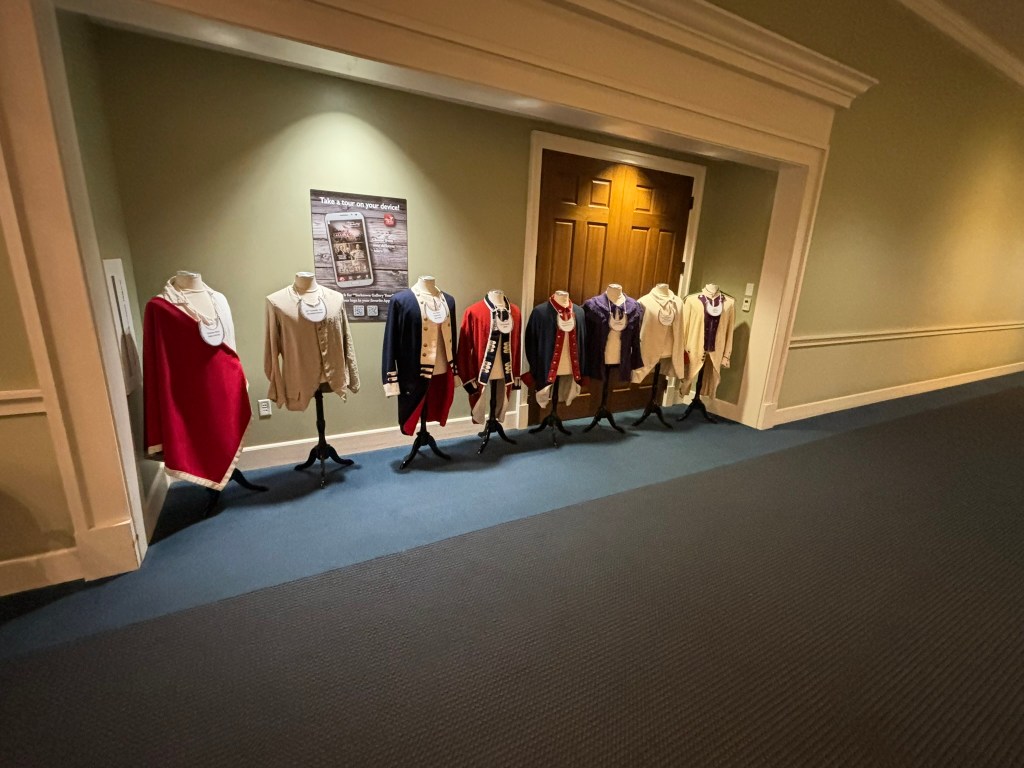
At this point in our tour, we had time to travel through the museum at our own pace. The museum takes you through the American Revolution chronologically, from the causes in the beginning of the museum, to the writing of the Constitution at the end. They had a great array of different types of displays including artifacts, primary sources, videos, and pictures that allowed the viewer to be immersed in the conflict.
Living History
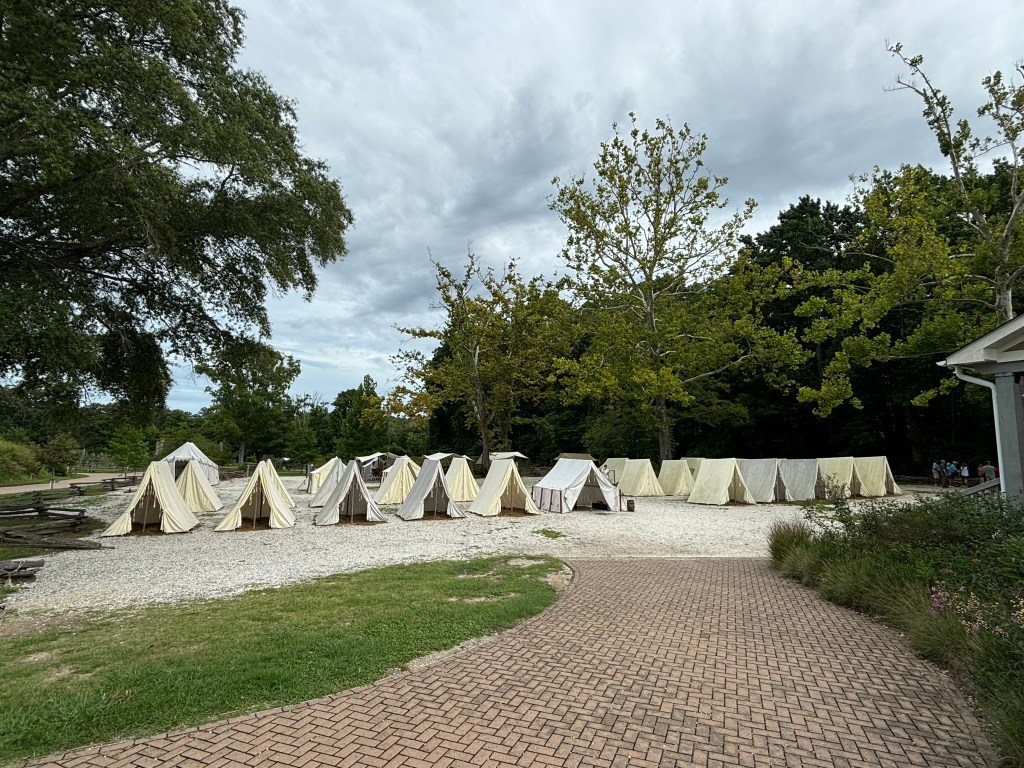
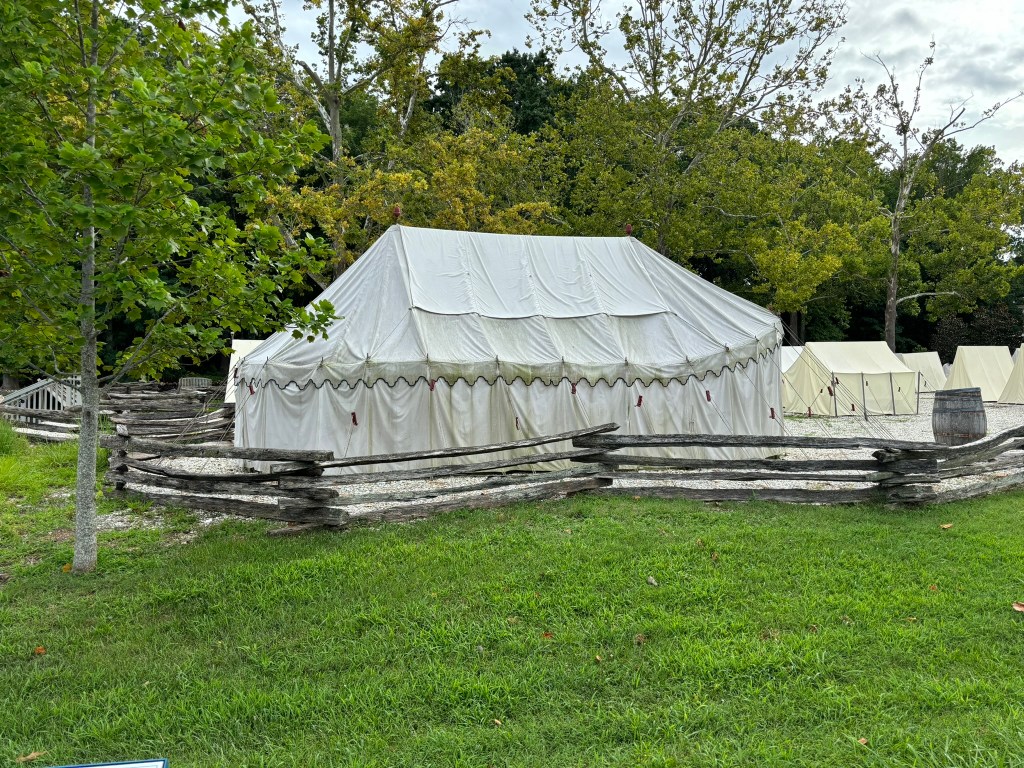
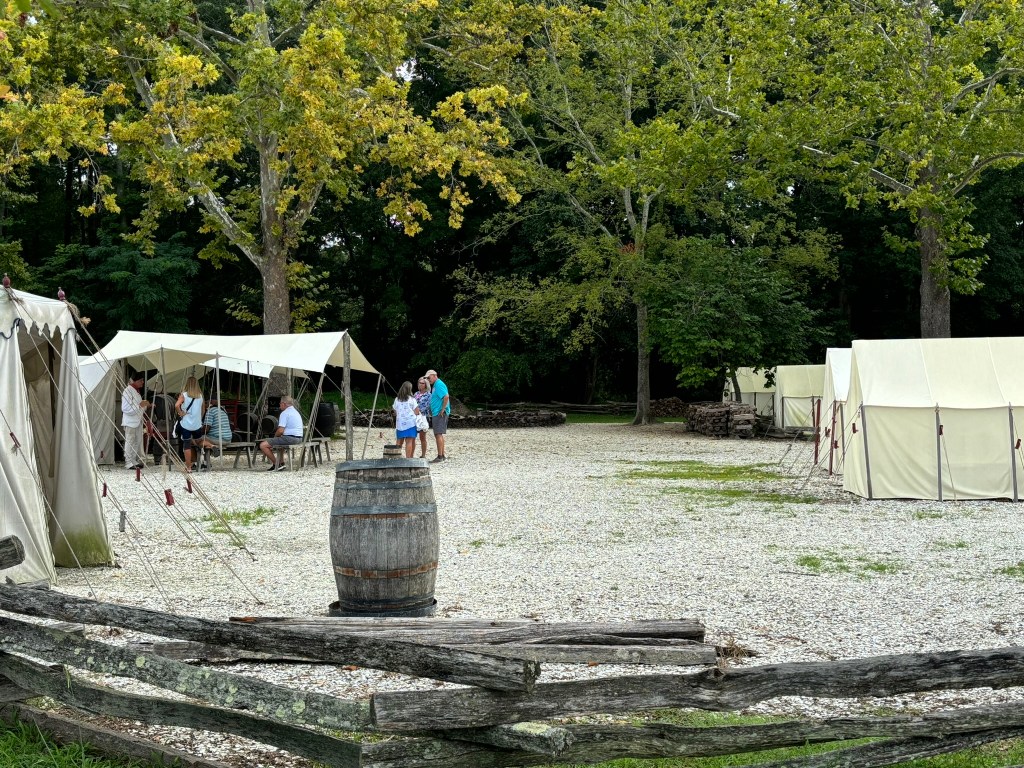
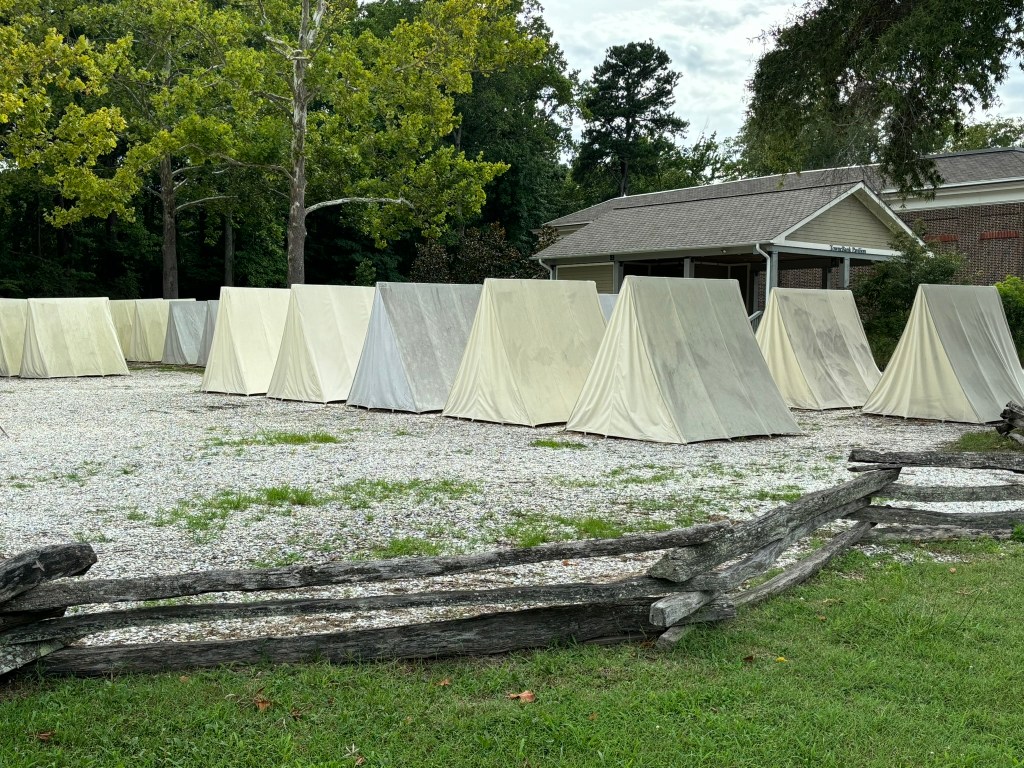
After we made our way through the museum, my family went outside to the living-history portion of the museum. Like we experienced in Colonial Williamsburg and Jamestown, the museum allowed us to go back in time and experience first-hand, what life was like in the late 18th century. First, there was a Continental Army encampment that we walked through.
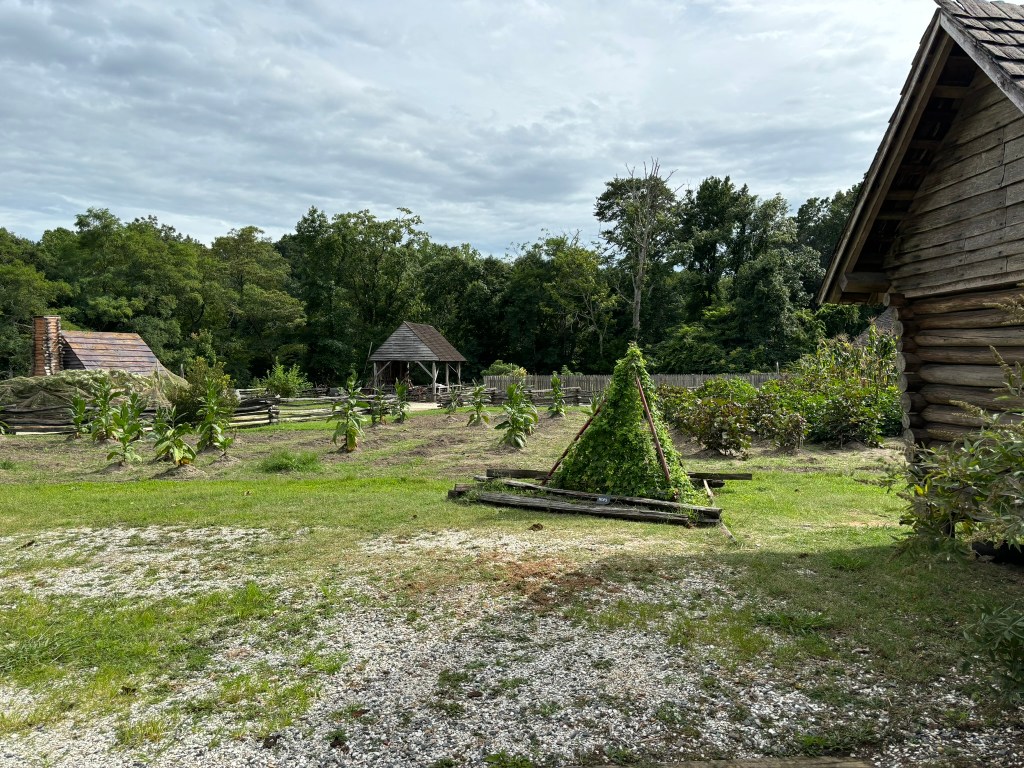
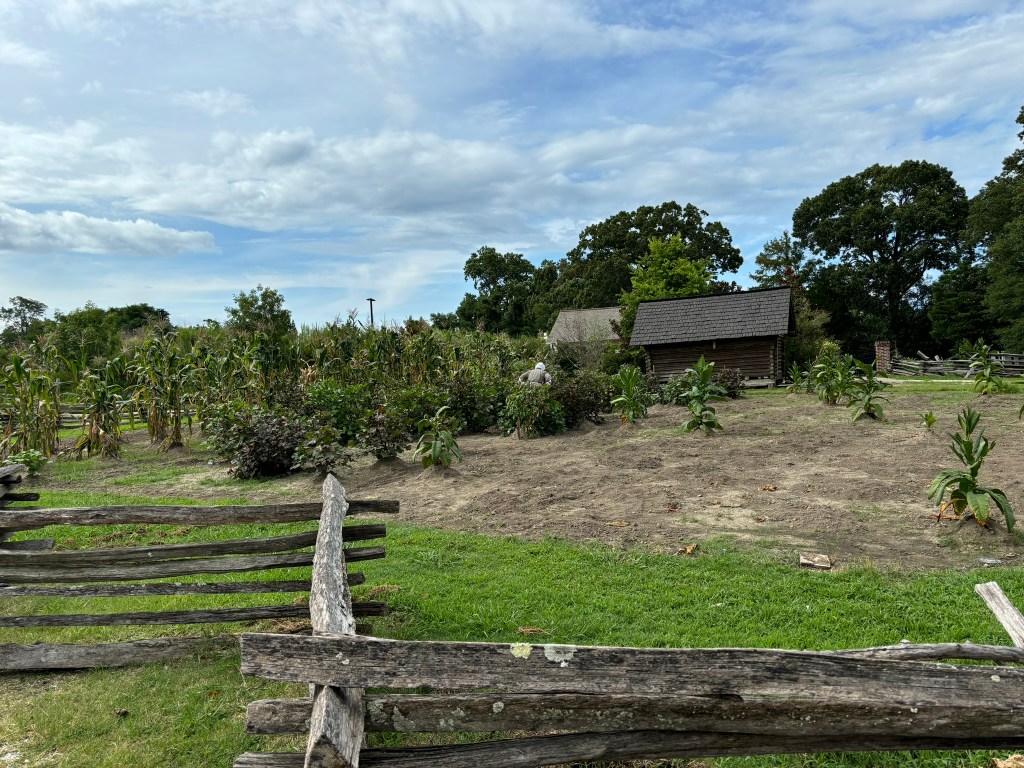
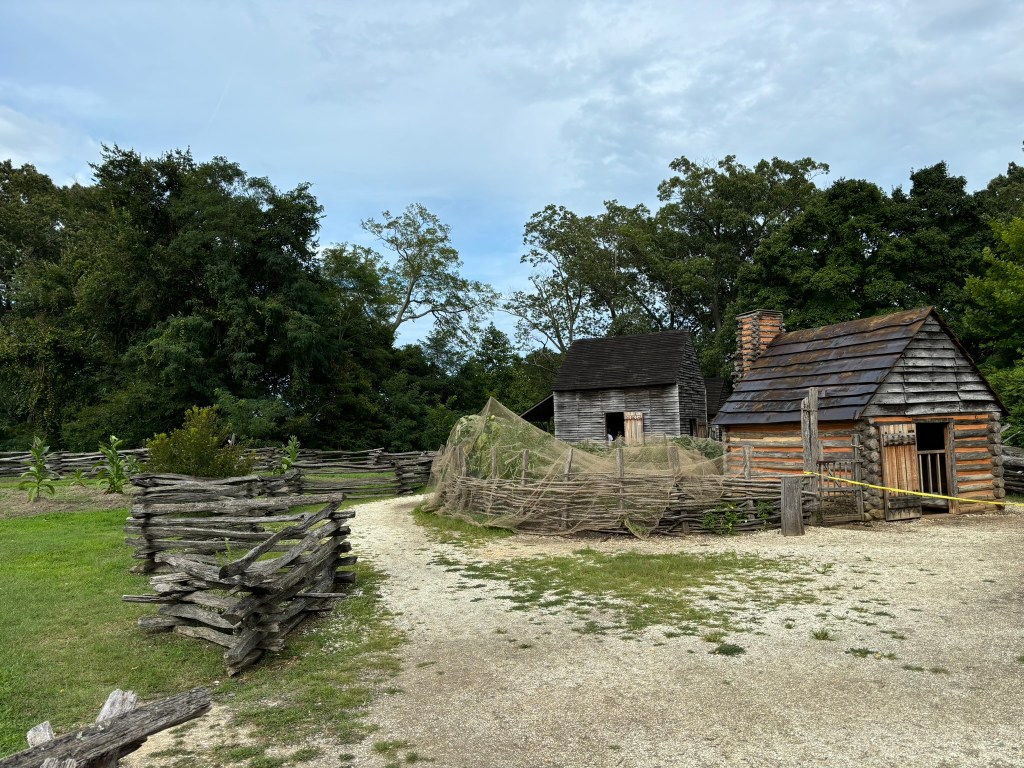
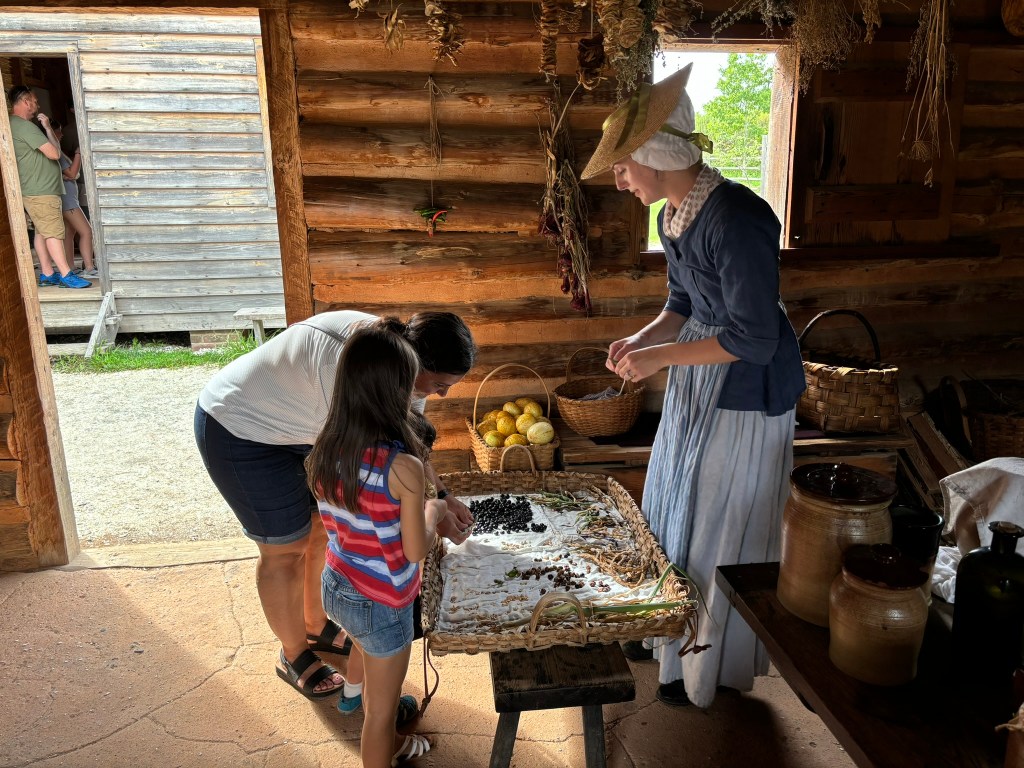
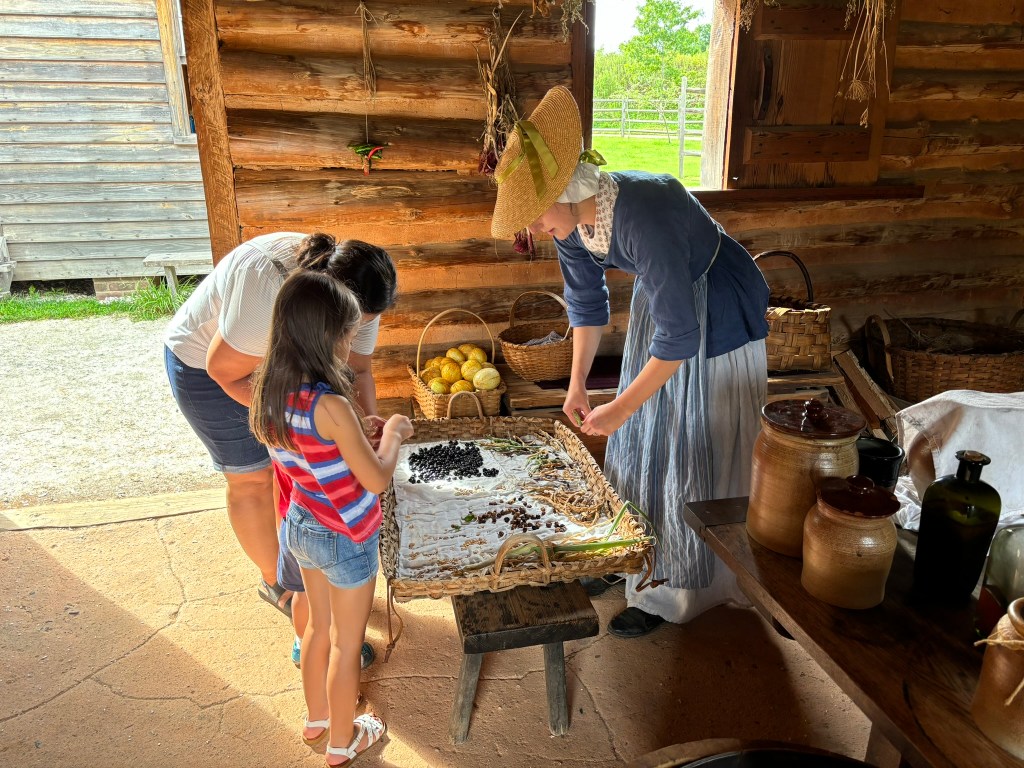
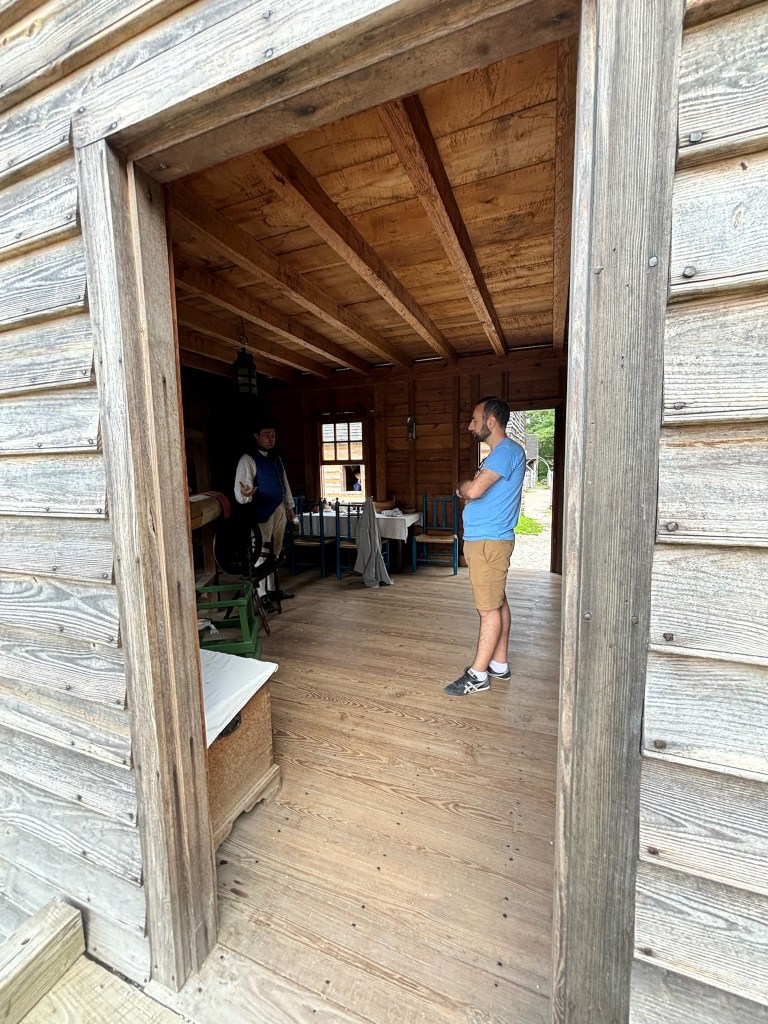
We then moved onto a living-history farm, as well as other structures. We went to a detached kitchen where my daughter separated peas from a pea pod, and we were taught how the colonials preserved food. We also moved onto a structure that would serve as a living quarters for a middle-class family. To supplement the family income, they weaved clothing from yarn using a loom. My family and I then made our way back to the museum to meet our group and catch the bus back to Williamsburg.
Overview
Having described the Washington-Rochambeau Revolutionary Route in previous posts, it was great to see the final destination of that route: Yorktown. I have also loved teaching about the Siege of Yorktown to my classes for so many years. It adds a brand new perspective when you go to the actual location where a great battle took place. I plan to bring my experiences into the classroom when I teach about Colonial America and the American Revolution again this fall. Yorktown was such a significant victory because the war had dragged on for six years up until that point. The Continental Army couldn’t afford to have it drag on much longer. The Declaration of Independence would mean nothing without an American victory in the war, and Yorktown was the victory that secured independence. Seeing the battlefield first-hand was a great experience, and I would highly recommend the museum as well.
As mentioned in my previous post about Jamestown, I would also highly recommend this tour by Viator. You are able to see Jamestown and Yorktown in the span of one day. You could buy tickets to the tour HERE.
Follow my Instagram, Facebook, and X accounts for videos of our time on our trip.
I’d also like to add here that our trip did not stop after Jamestown and Yorktown. On the third full day of our trip, we went to Busch Gardens, which was a really great day for the family. We got a little bit of rain in the middle of the day but it cleared up after that. I think because it was a dreary Wednesday, there were essentially no lines and the kids went right on every ride that they wanted. We also went to a couple of shows and ate both lunch and dinner there. We bought tickets that had food included which I would definitely recommend. My 2 year old loved the Sesame Street Portion, but every section of the park had so many great rides for both kids. It’s a park for all ages because besides the kiddy rides, there were also massive roller coasters that my teenage-self would have loved.
On the fourth day of our trip, we went to Virginia Beach, which was also my wife’s birthday. The ride from Williamsburg was about an hour. The weather was not great, threats of rain throughout the day, but not a washout. We walked down on the beach and the kids played on a playground on the sand. For my wife’s birthday, we ate at a great restaurant called Waterman’s Surfside Grille that I would highly recommend if you’re in the area. Our hotel was right on the beach so it was nice to see the sun rise the next morning. The next day, we ate breakfast and then made the 7 hour drive back to New Jersey. We drove over the Chesapeake Bay Bridge-Tunnel for the first time! Overall, it was a great family vacation! I’d recommend this type of trip to people of all ages! Usually our trips include historical portions and fun for the kids. Williamsburg has something to offer for everyone!
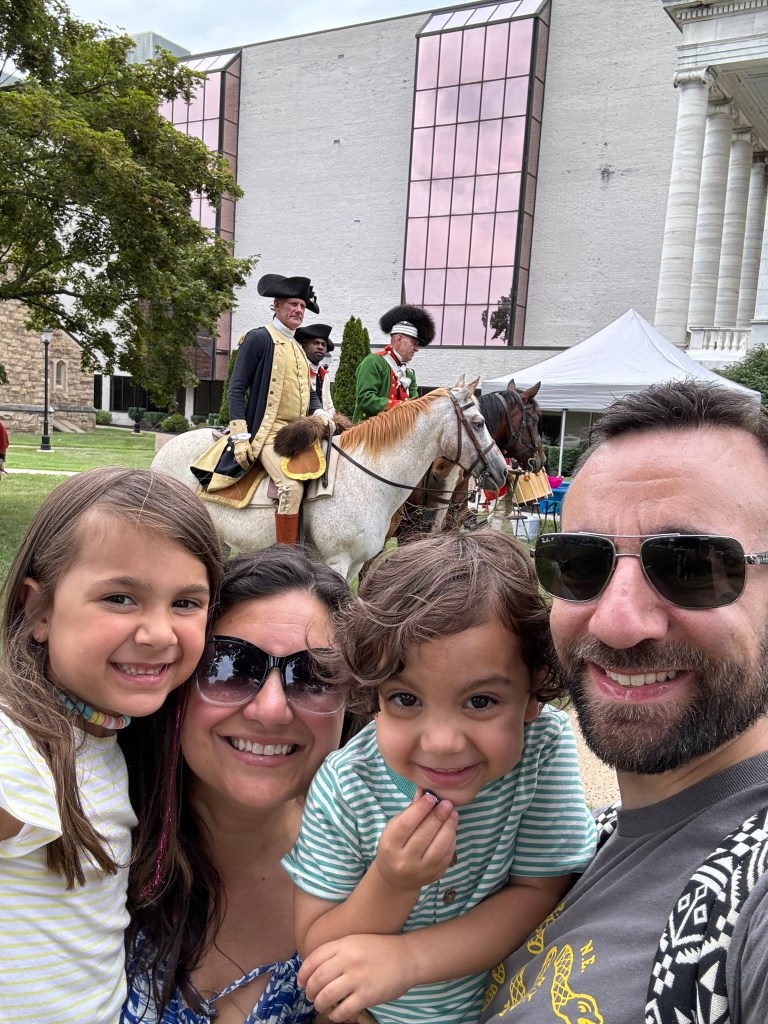
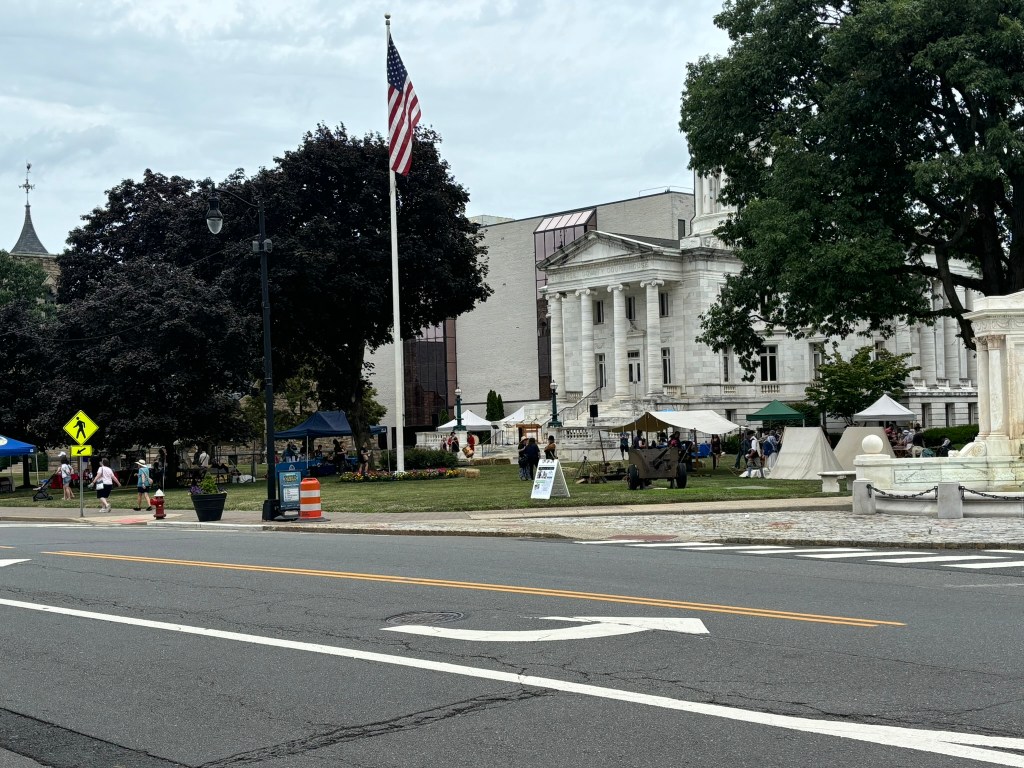
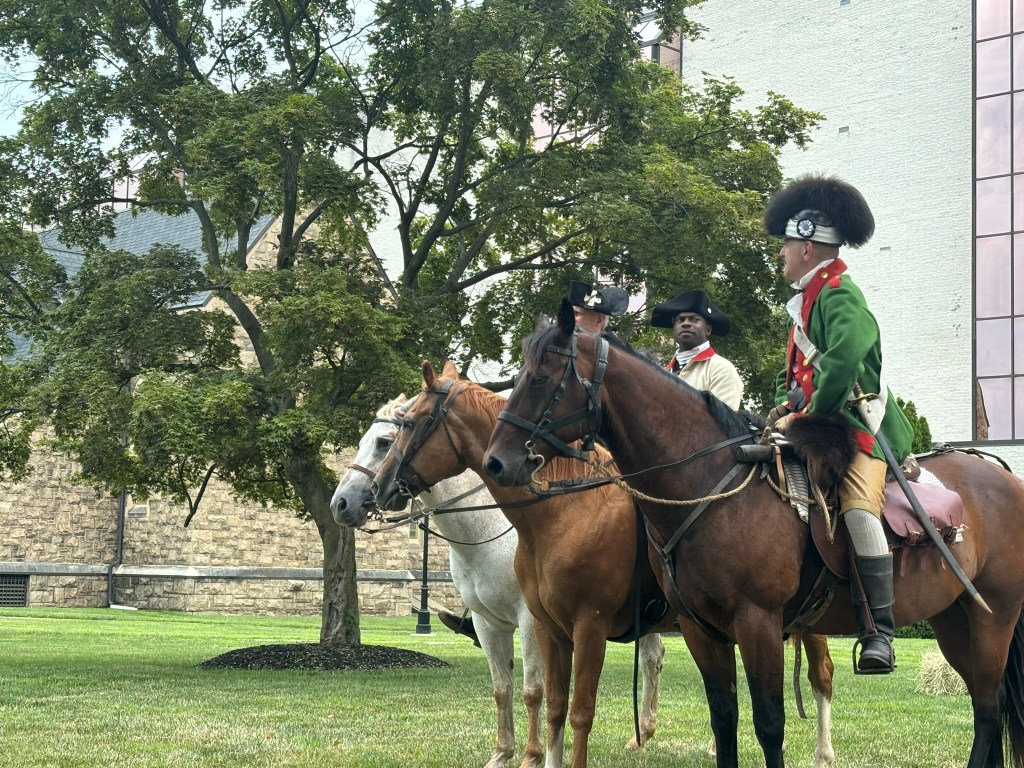
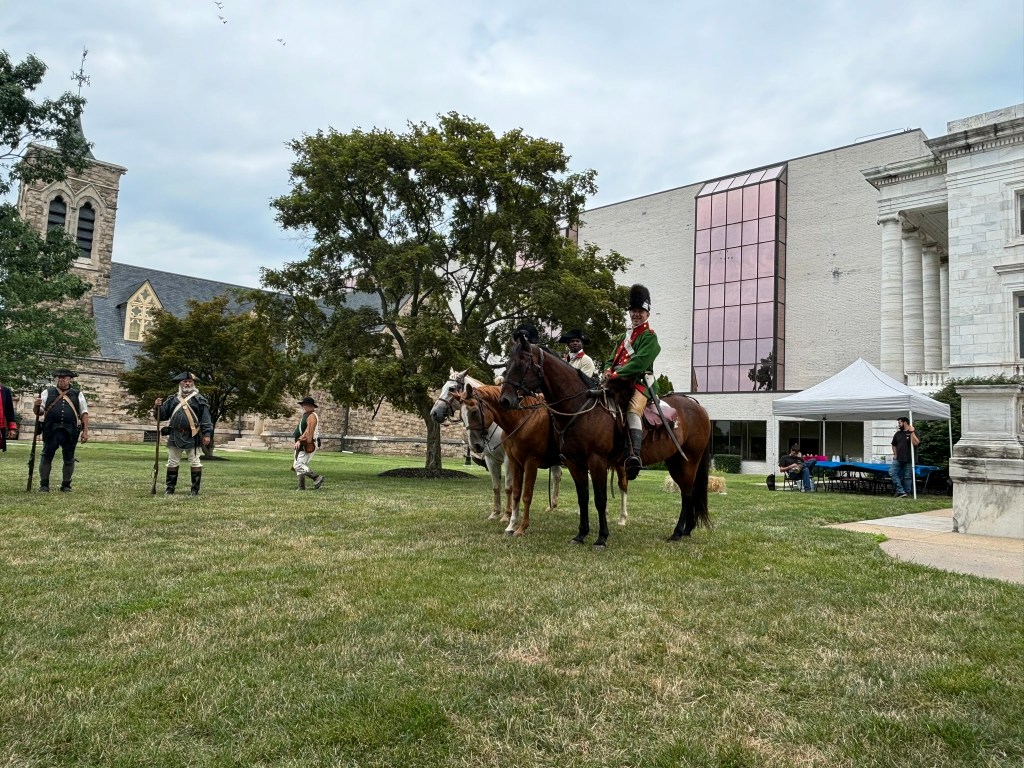
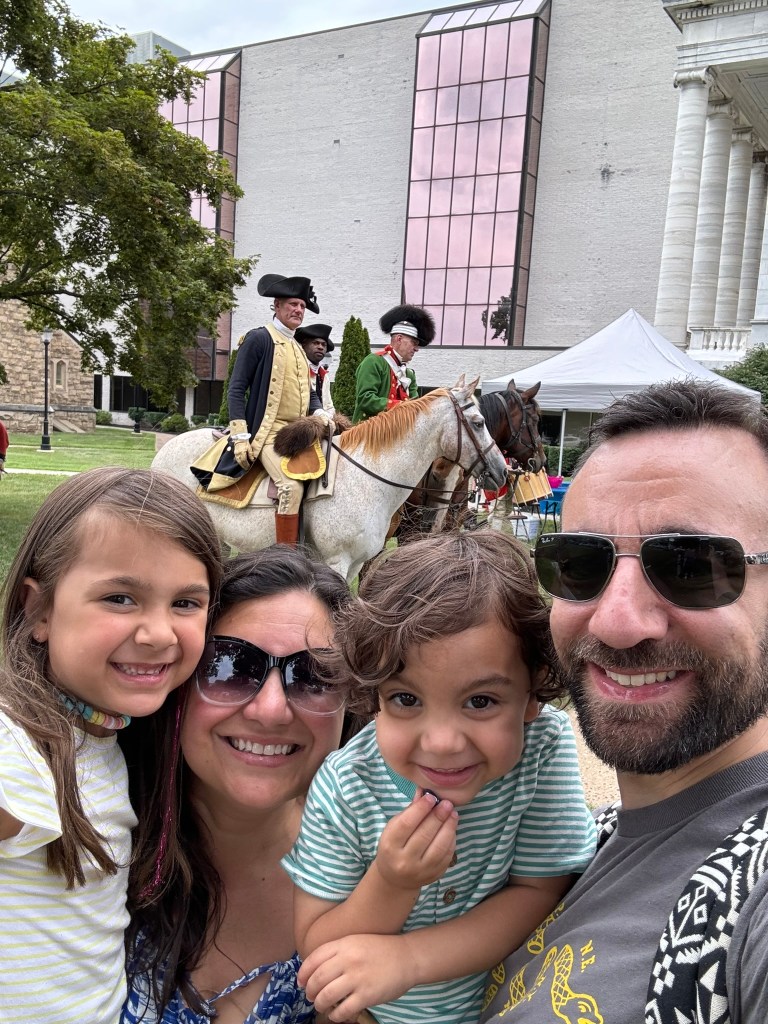
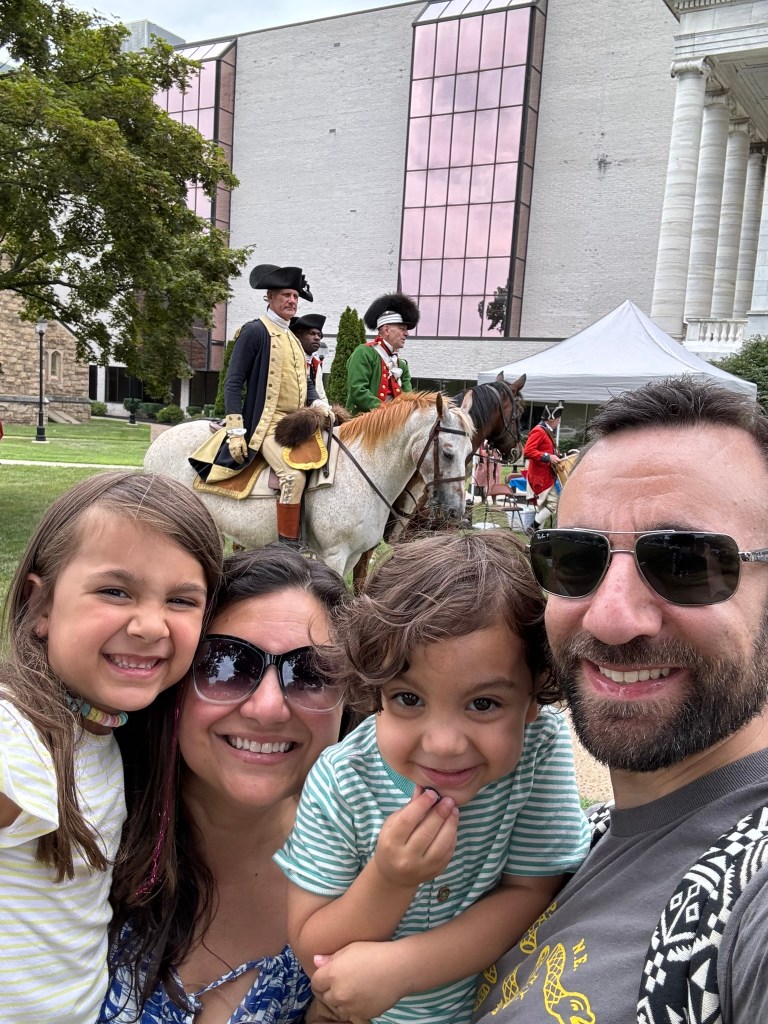
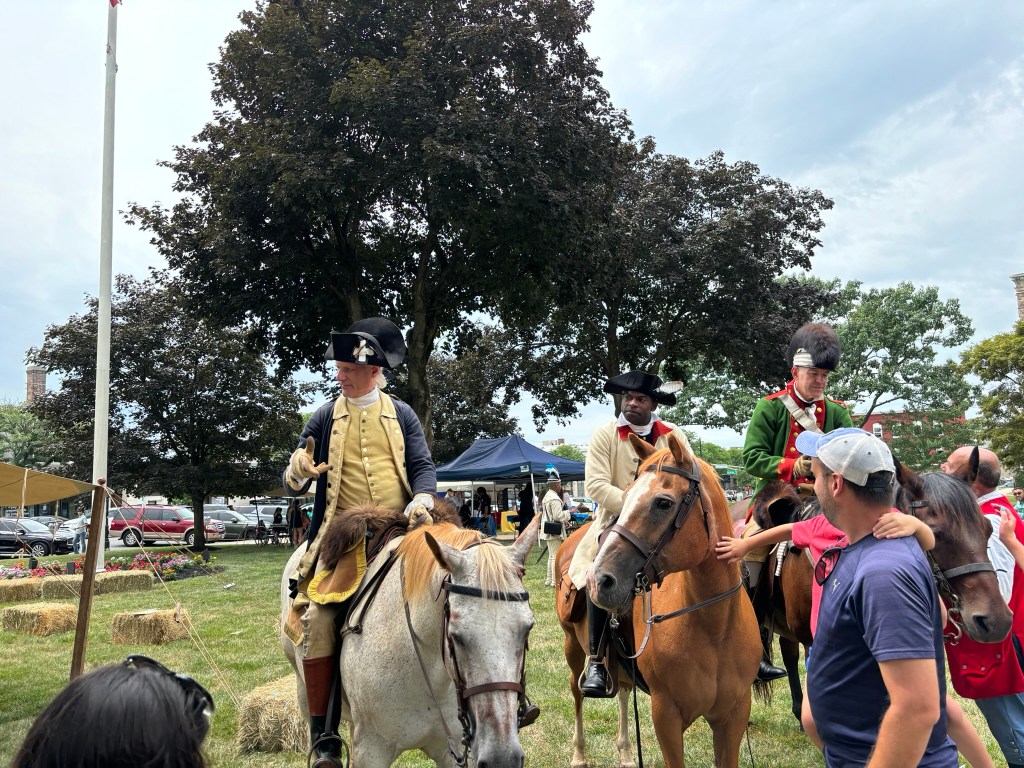
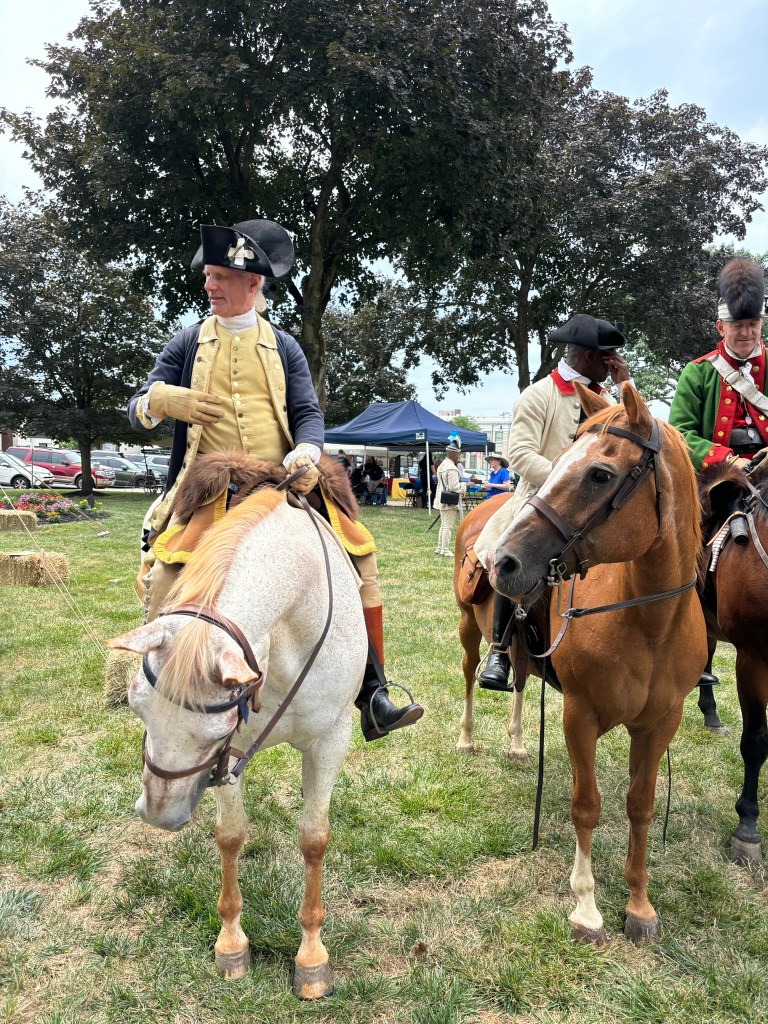
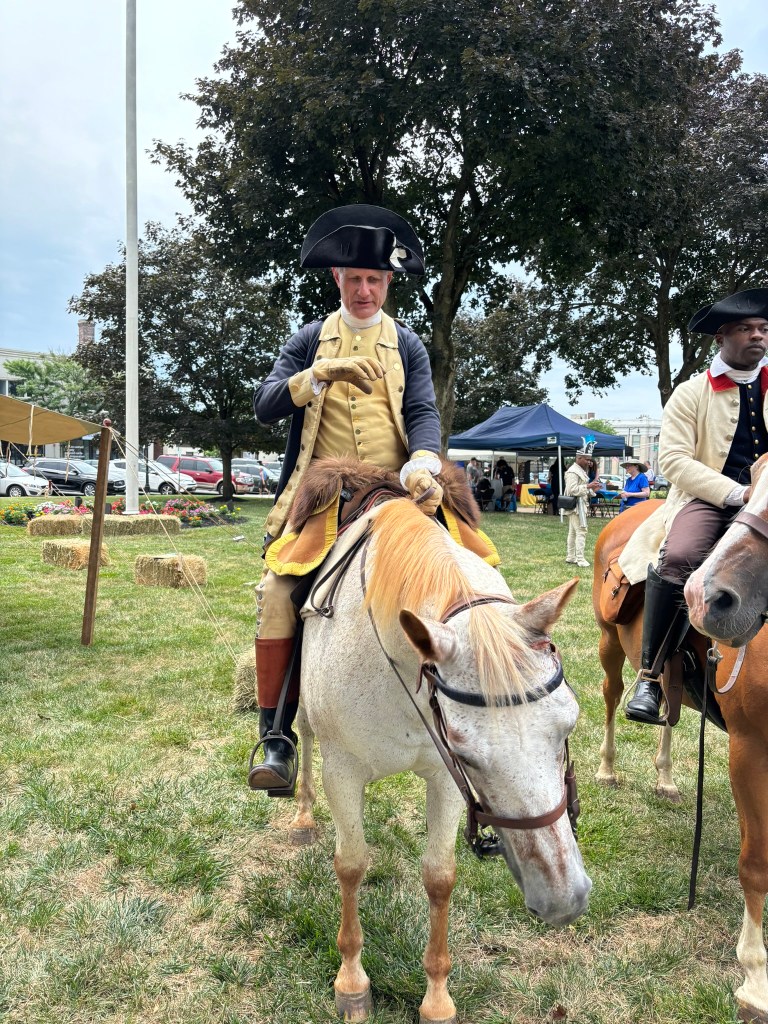
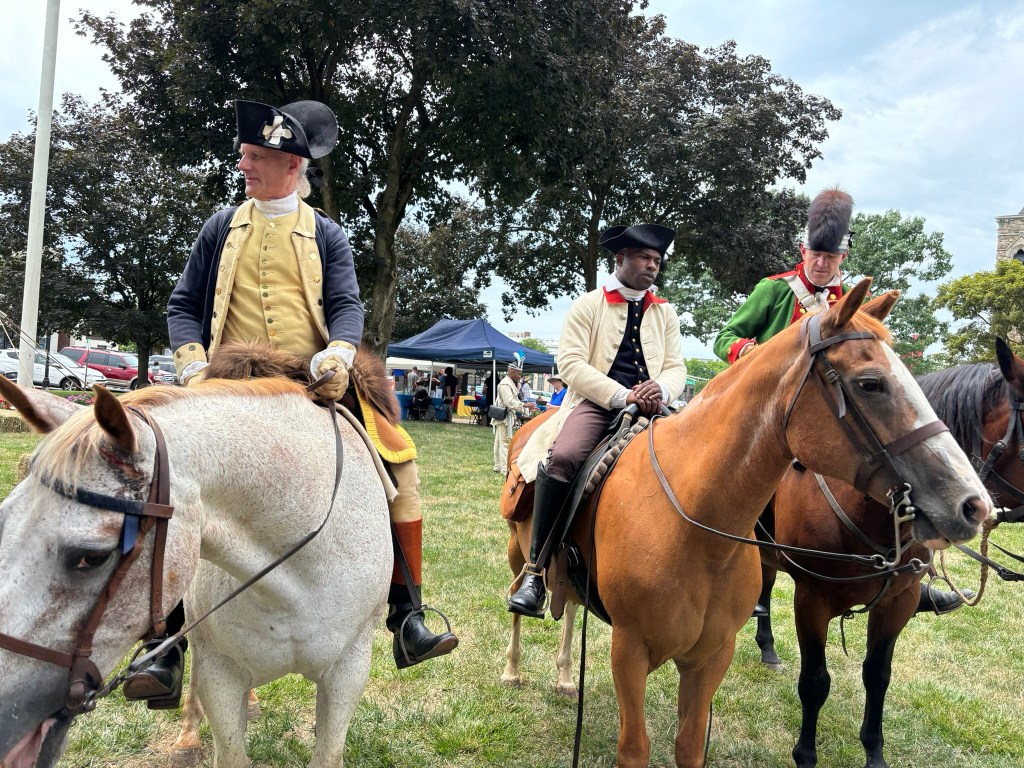
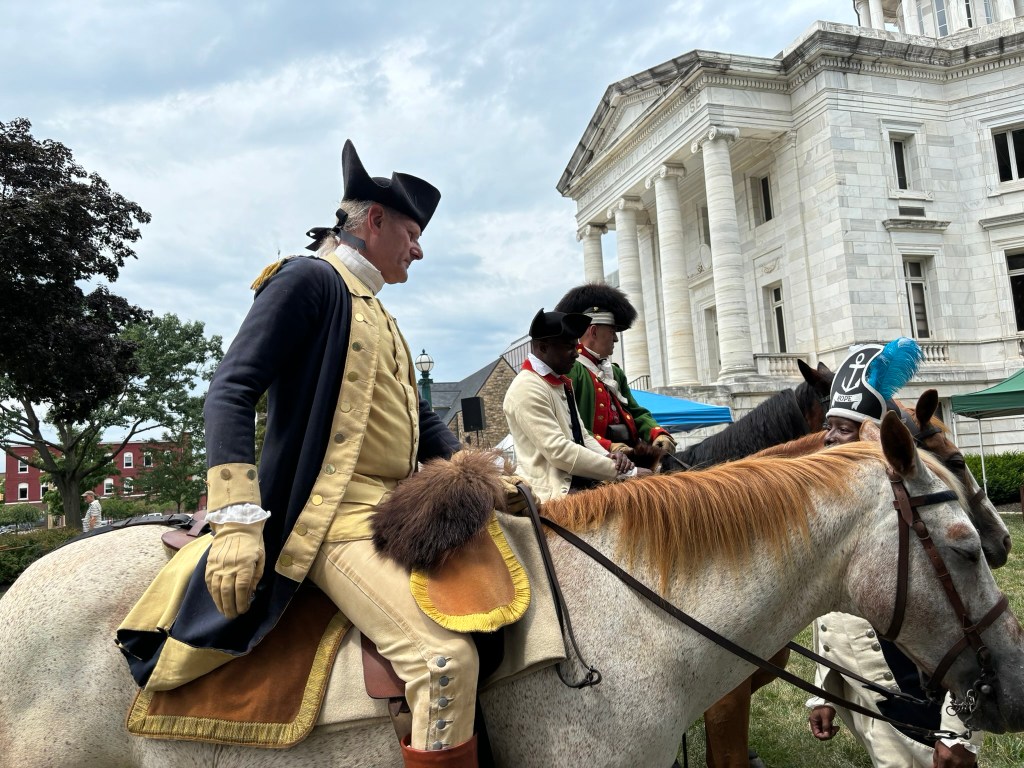
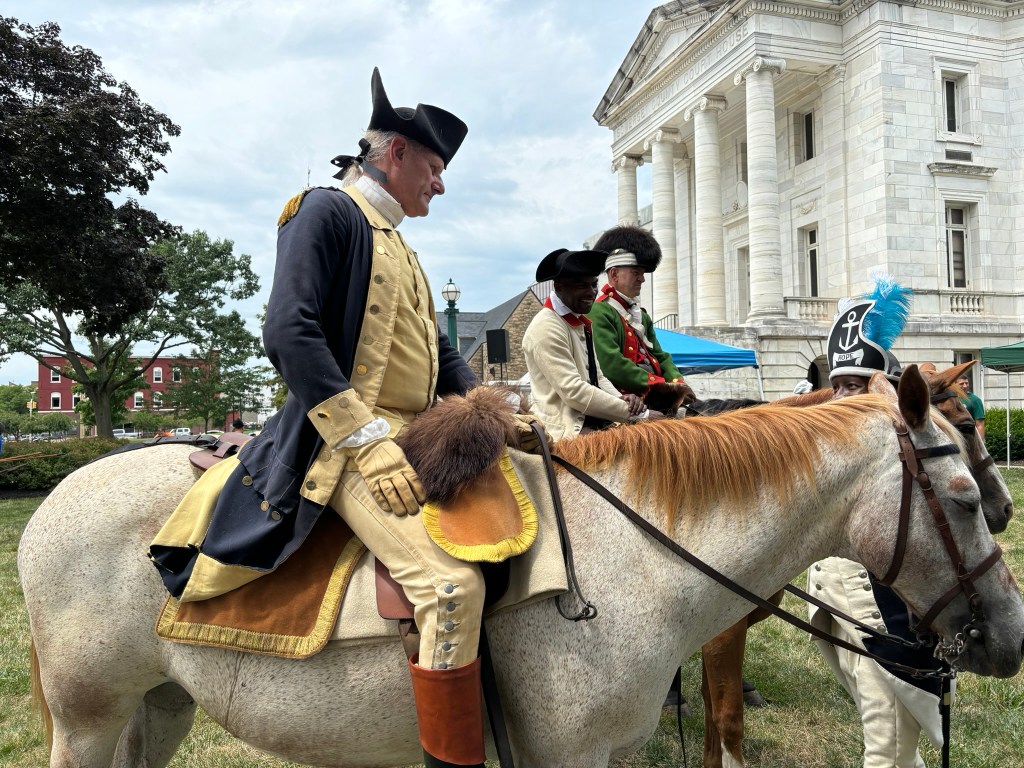
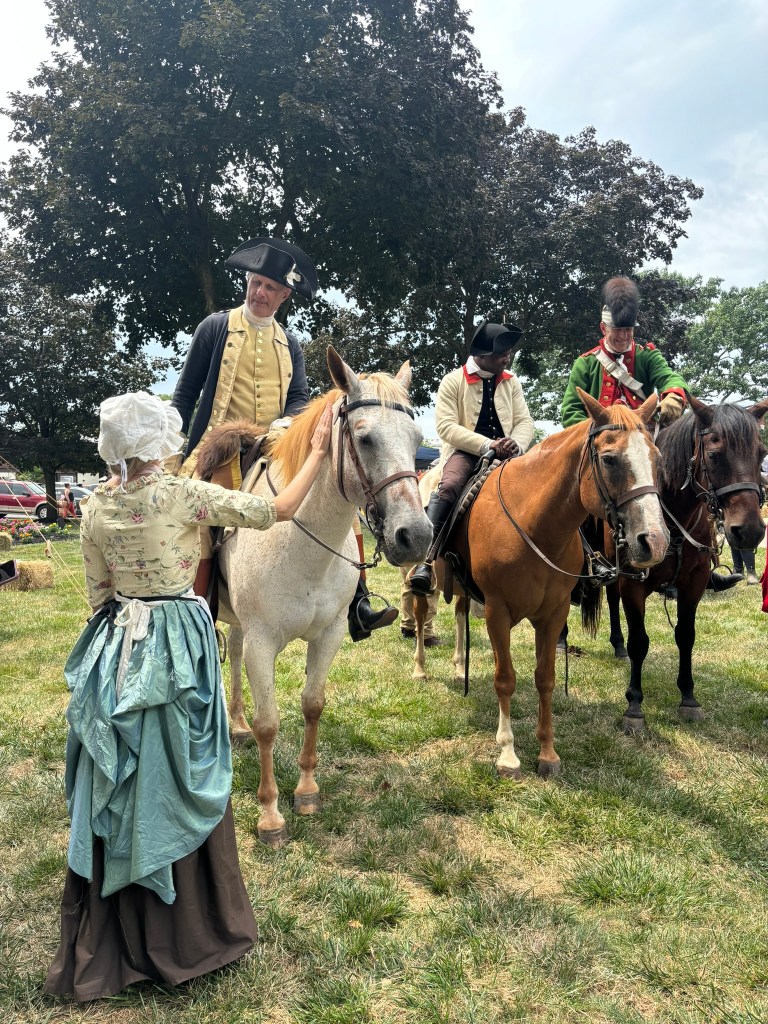
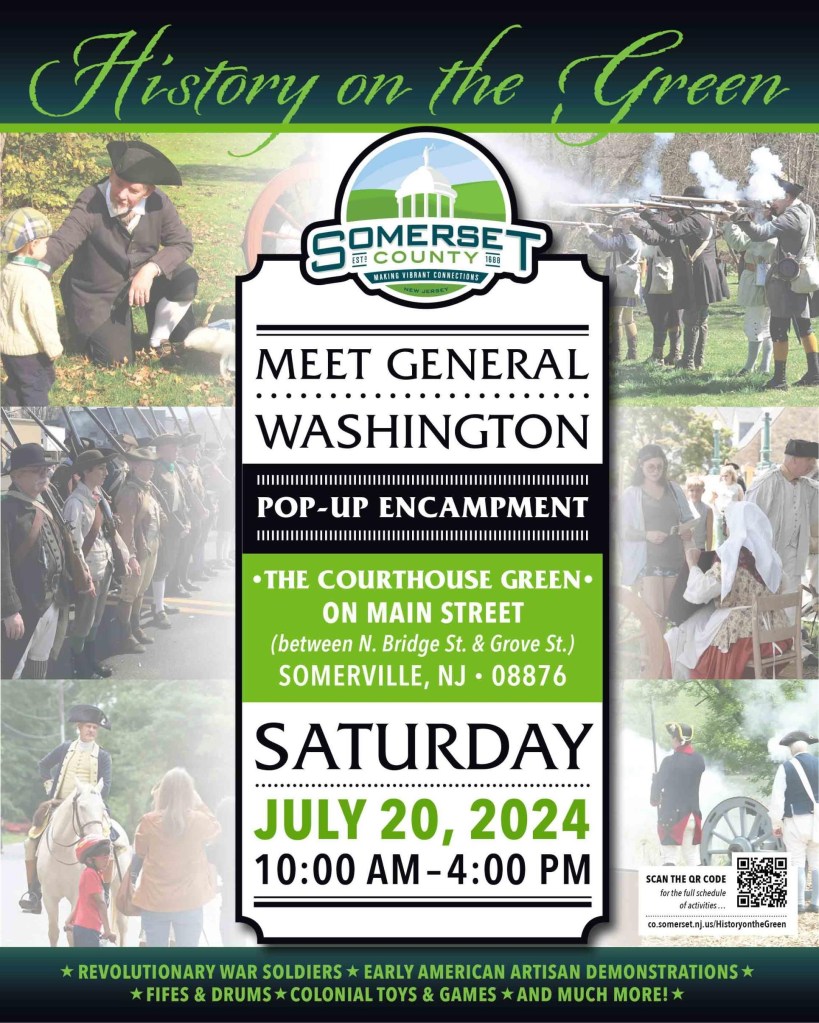
My family and I made it out to the “History On The Green” event in Somerville, NJ this past Saturday. The event featured a pop-up encampment site featuring George Washington and his valet, Billy Lee. The event also featured the New Jersey regiment- Heard’s Brigade, the 1st Rhode Island Regiment, and the NJ Fifes and Drums.
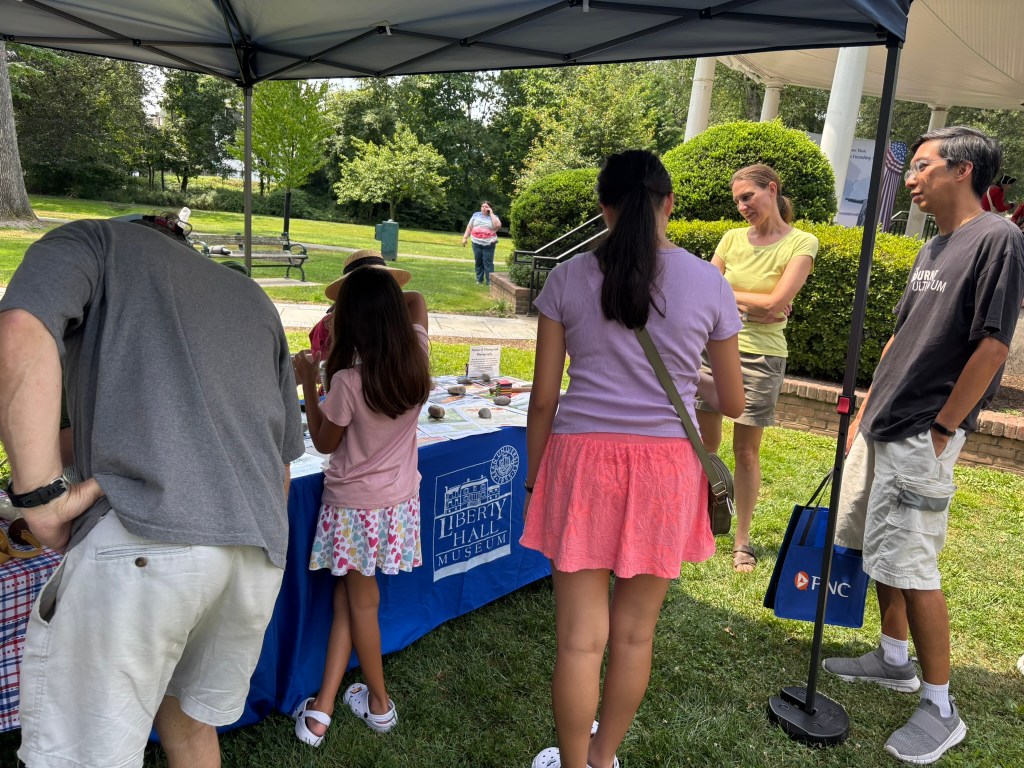
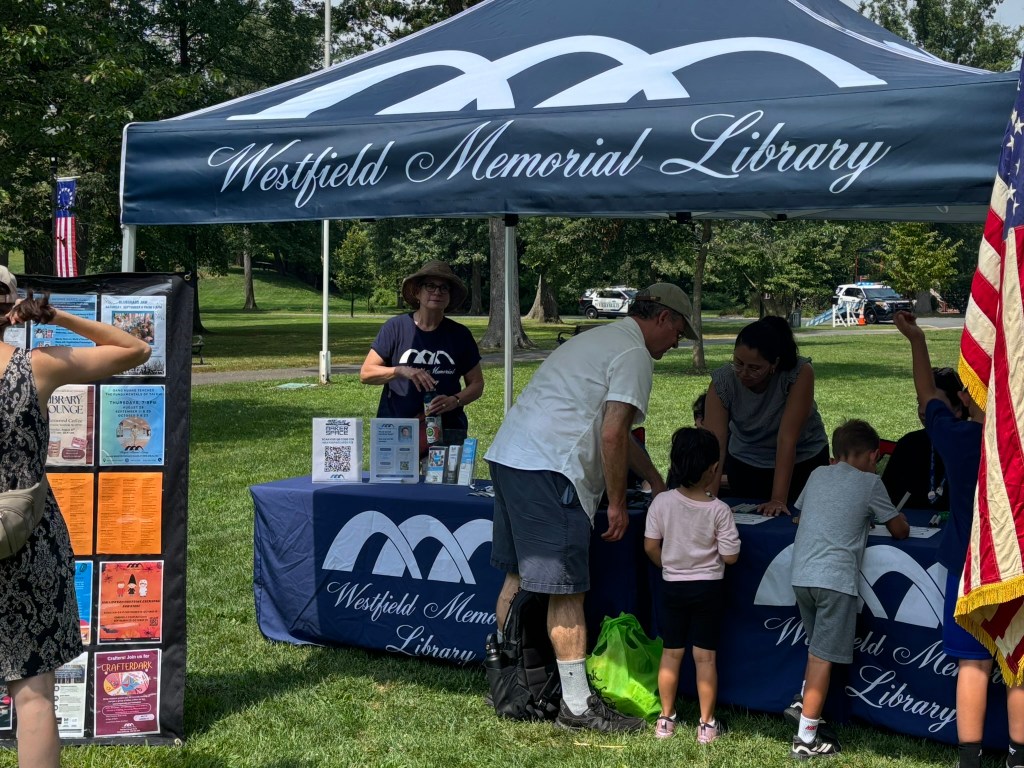
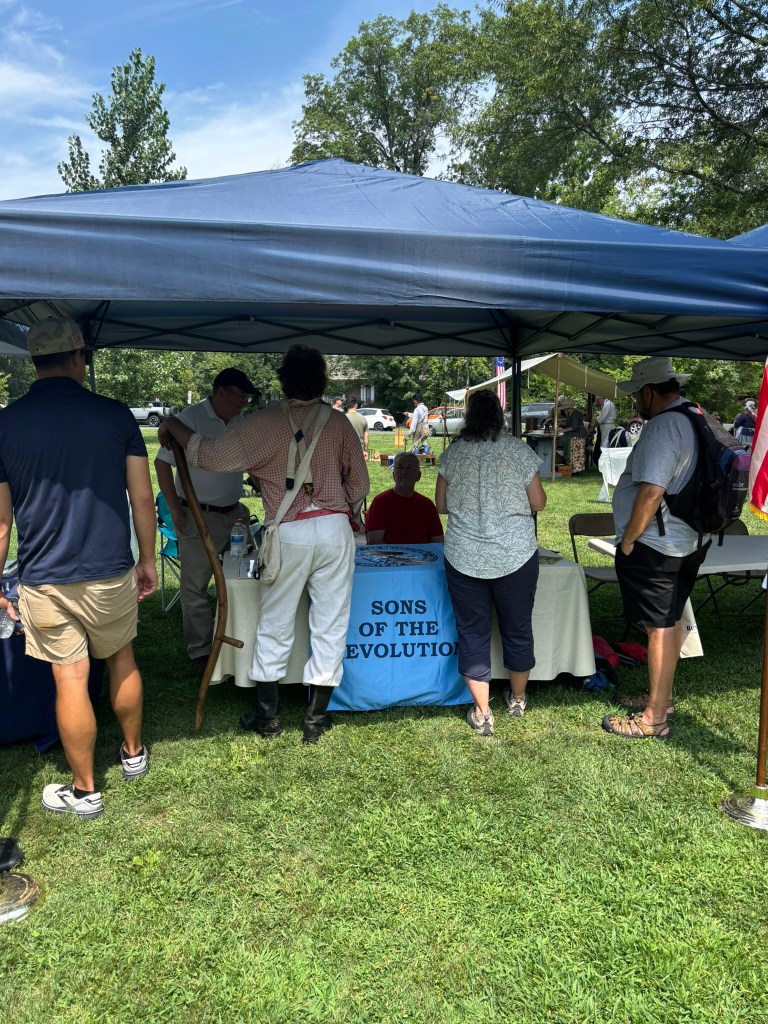
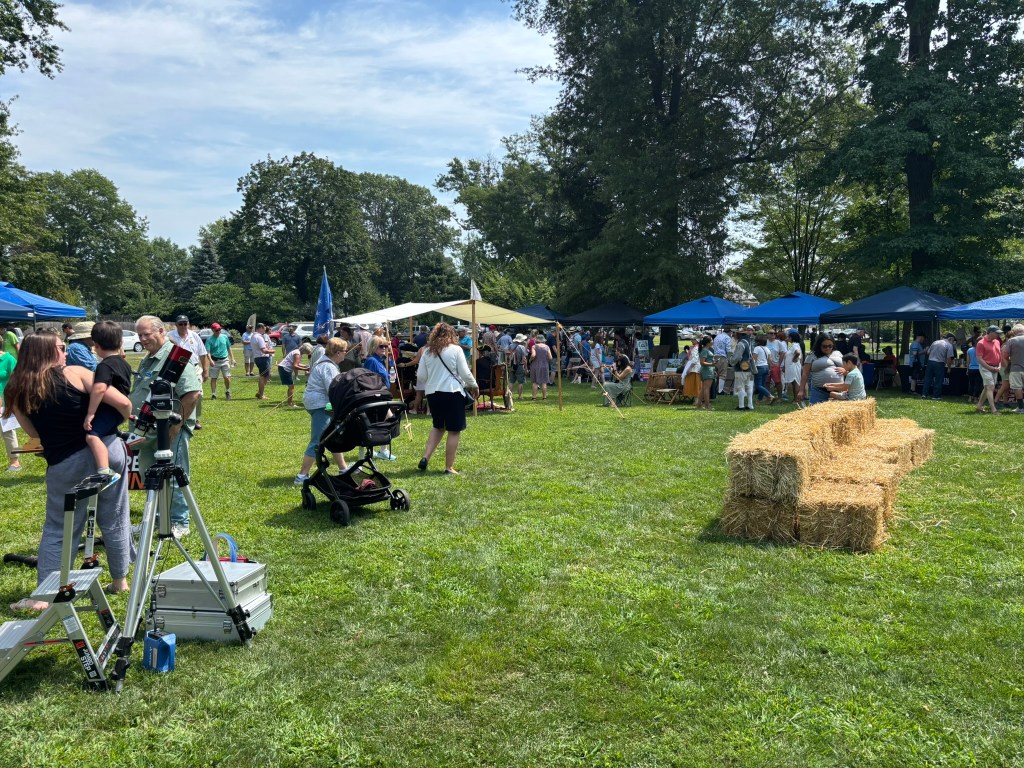
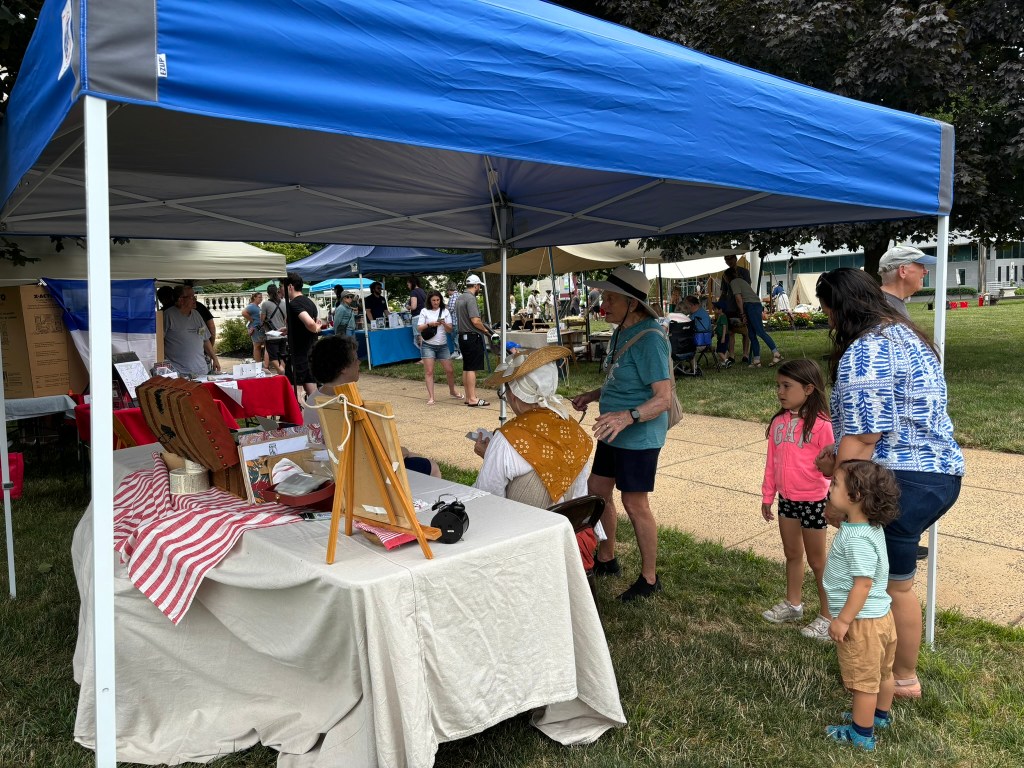
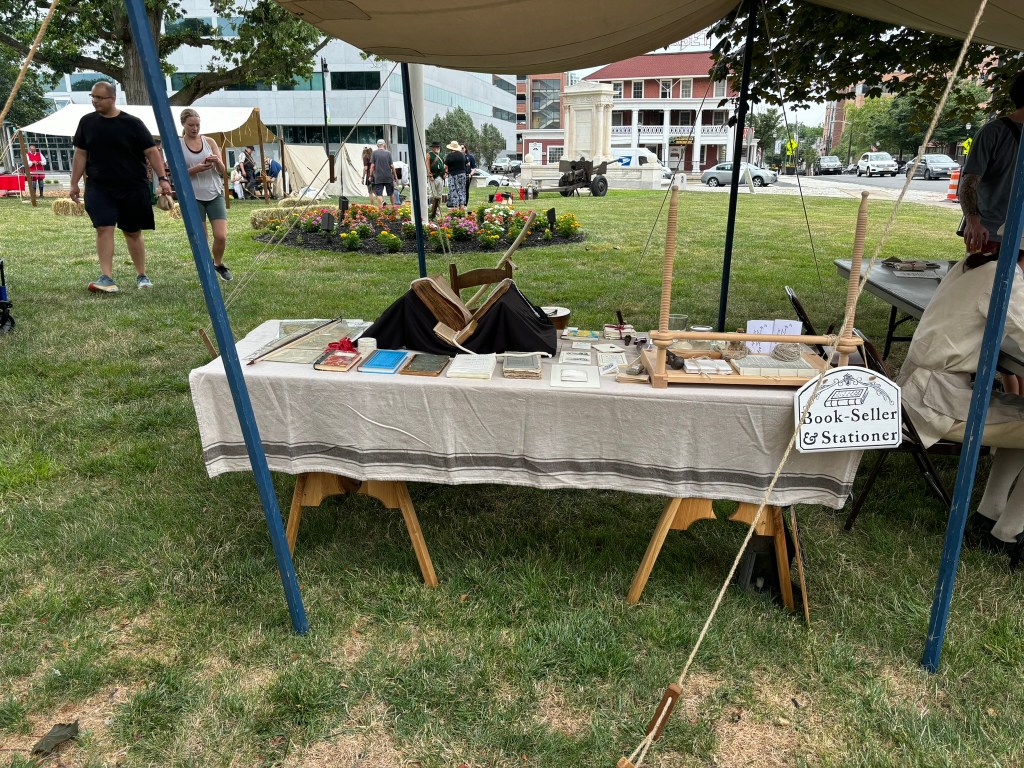
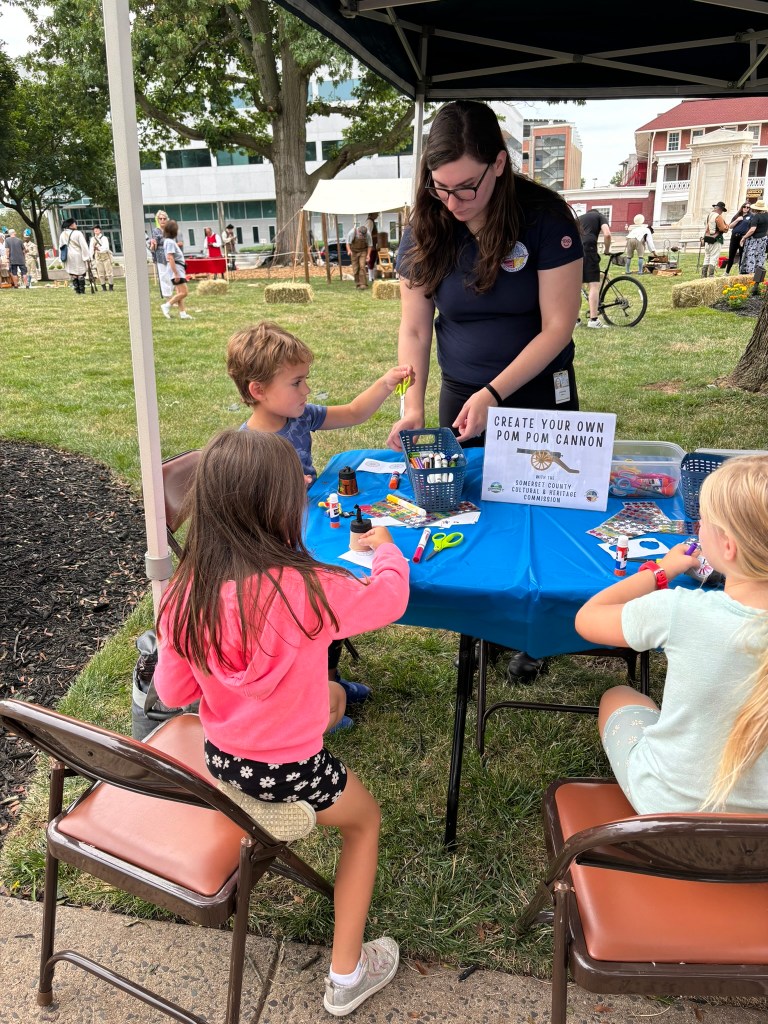
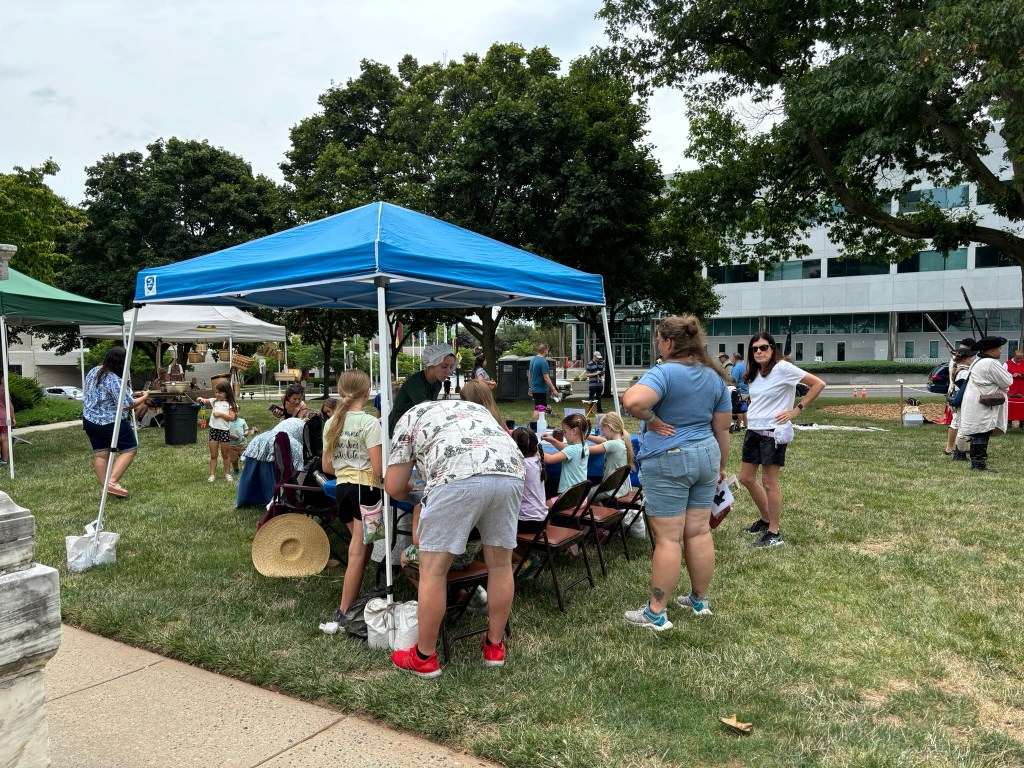
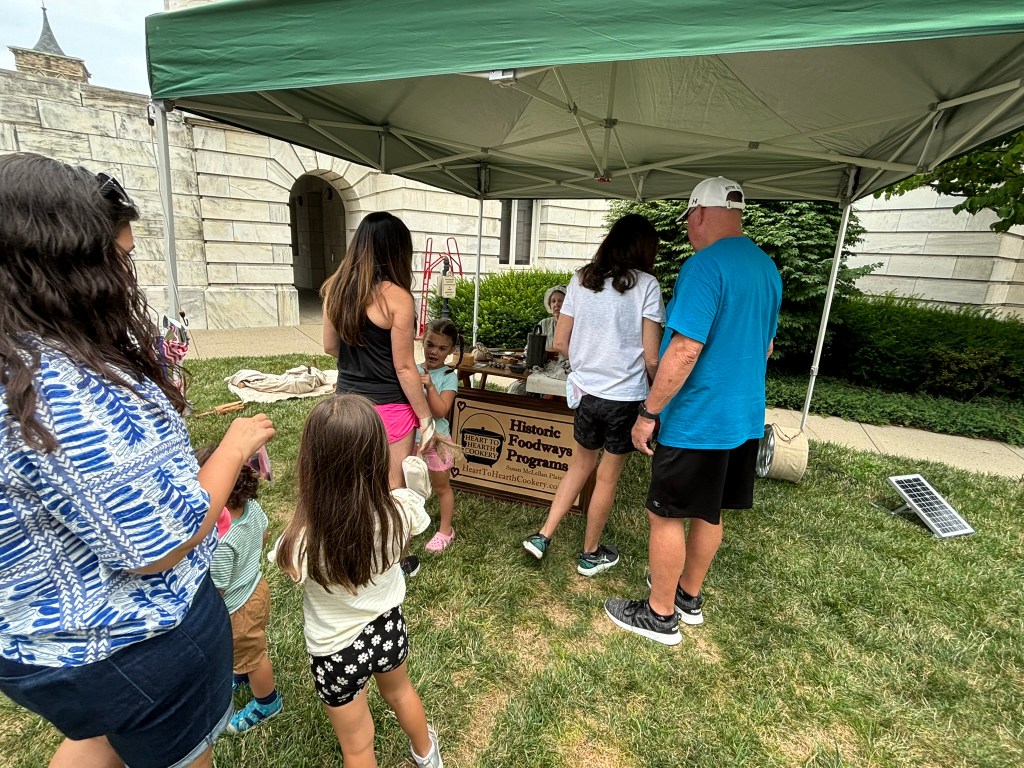
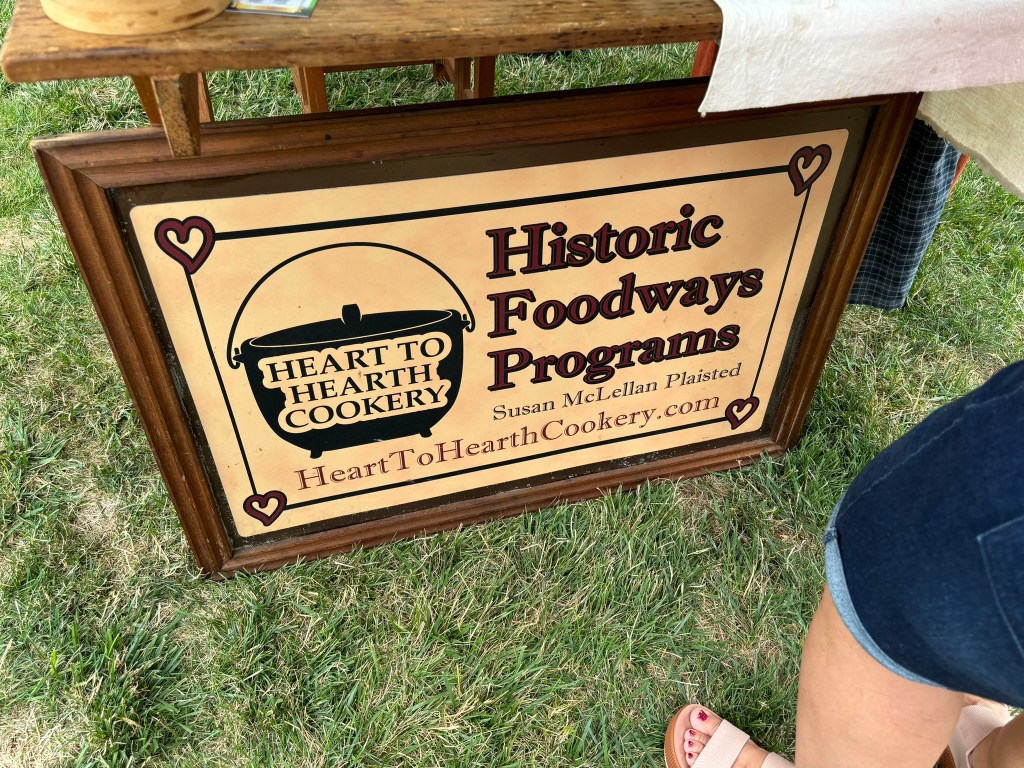
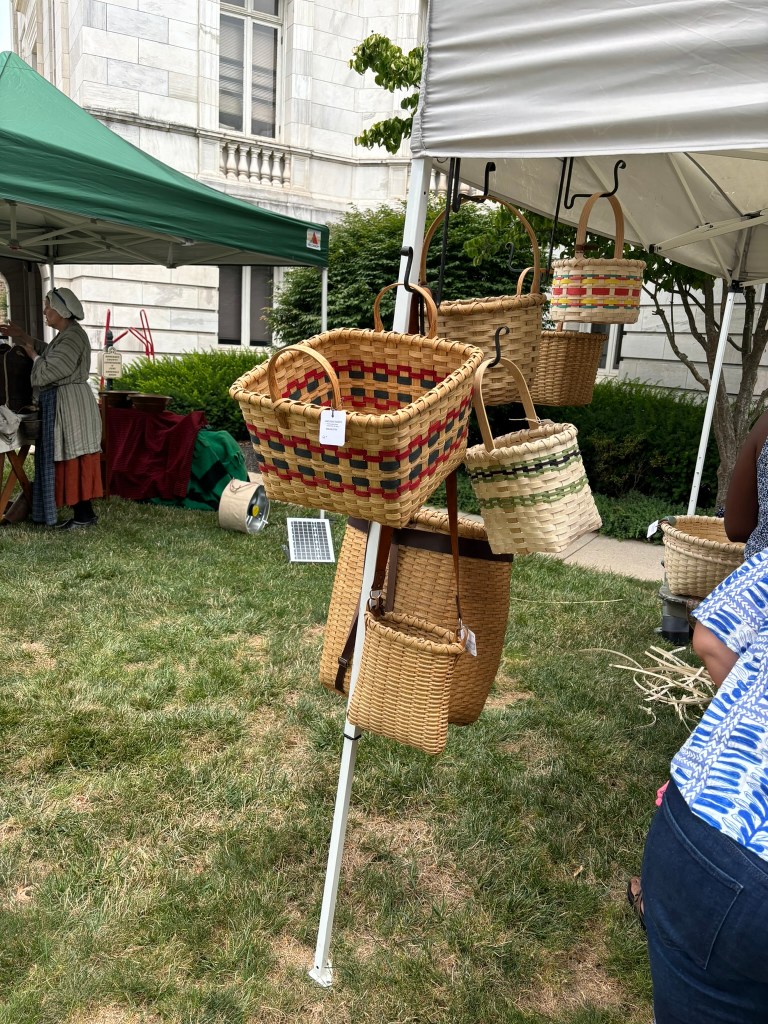
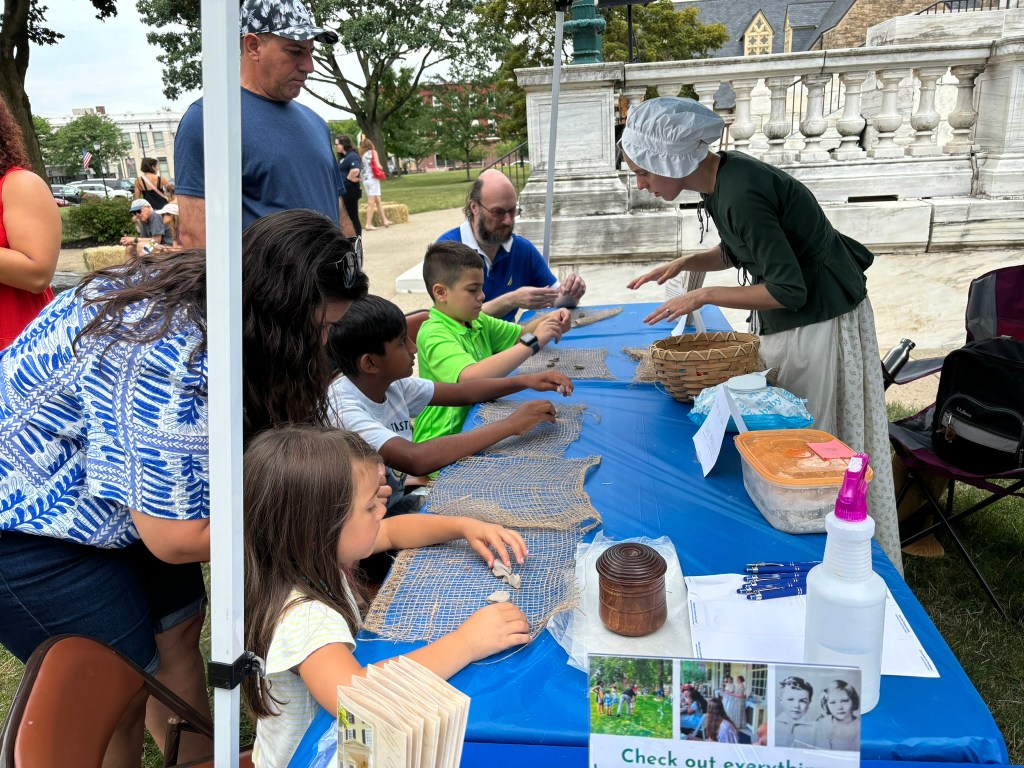
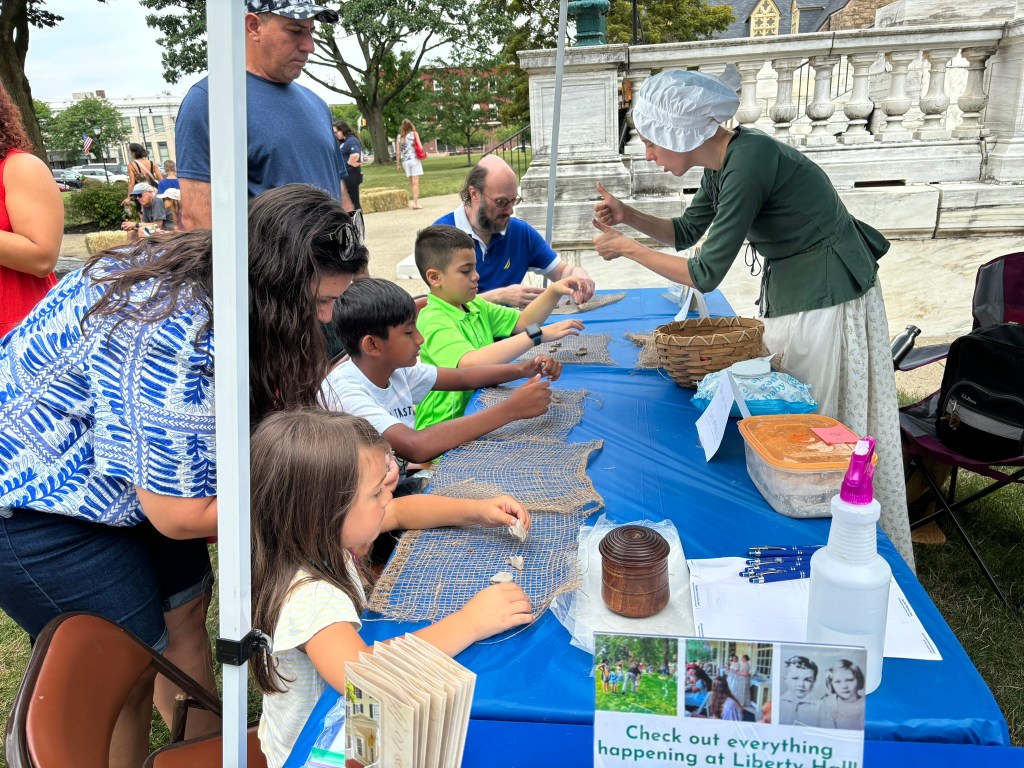
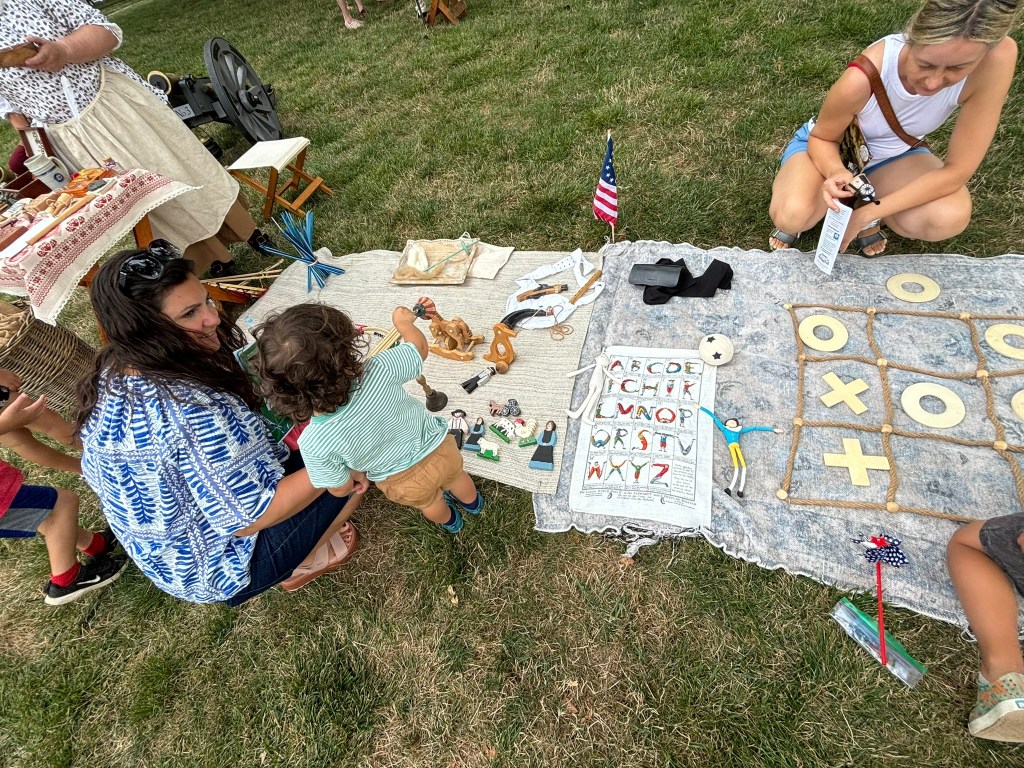
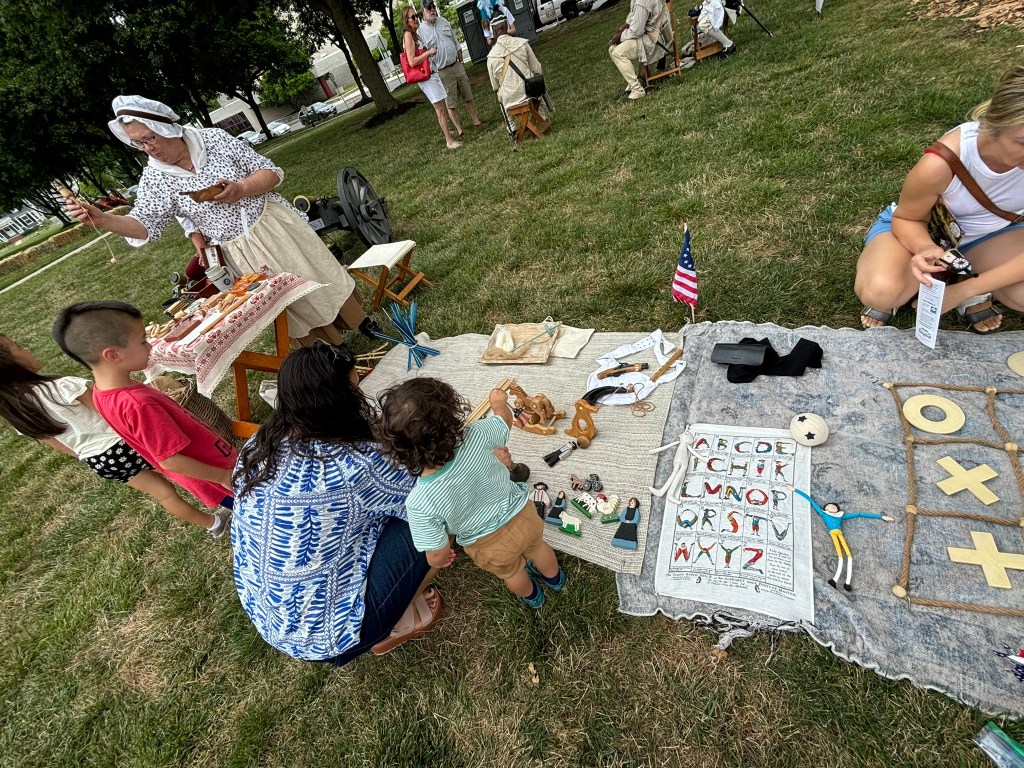
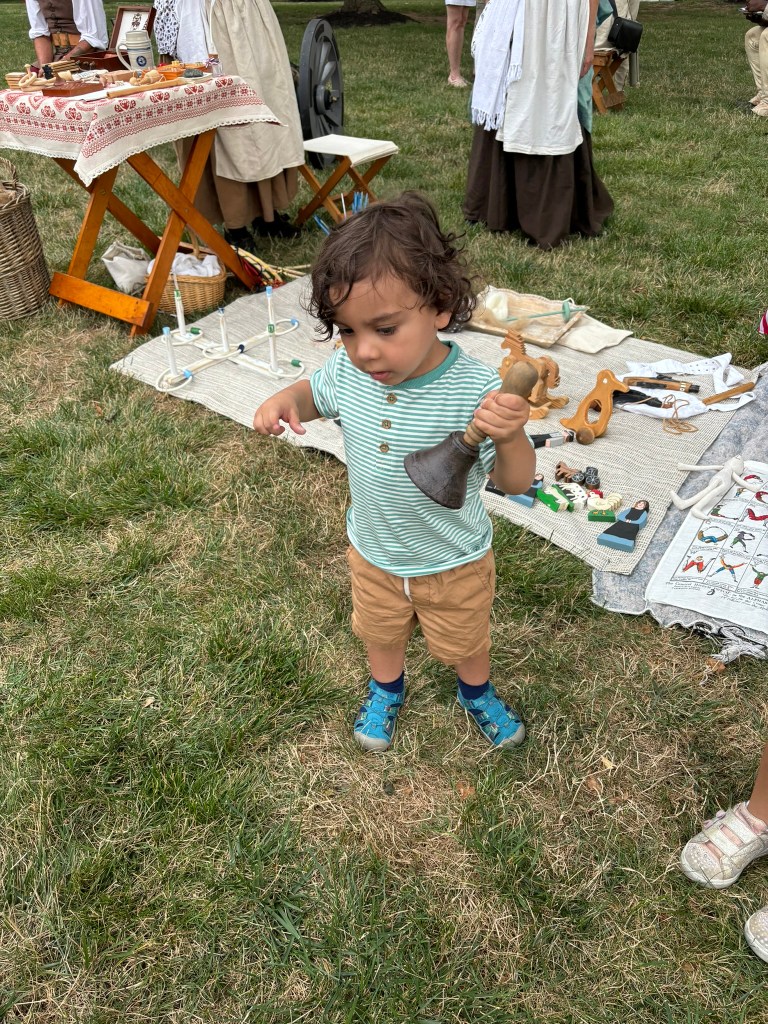
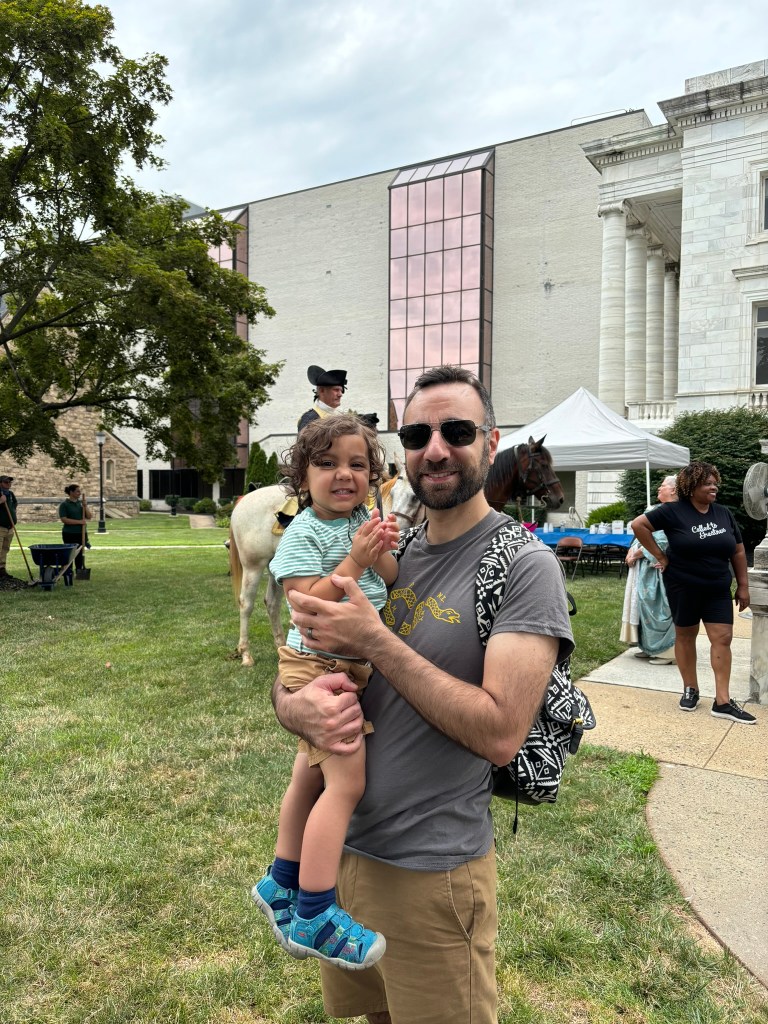
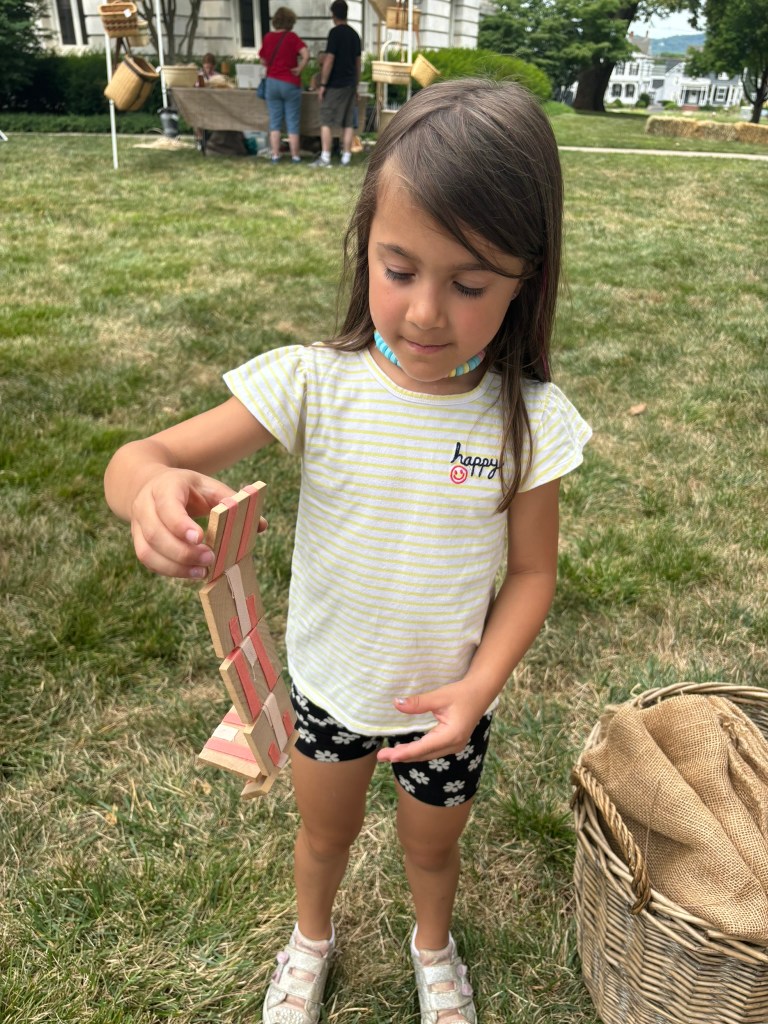
We arrived to Somerville a little early to eat brunch across the street at Turf Surf and Earth which was quite convenient and really delicious. We arrived to the event at about 11:30. There were tables set up from a few historical organizations in the region including the Heritage Trail Association, the Somerset County Historical Society, and the Somerset County Cultural and Heritage Commission. Our kids had a great time as soon as we arrived because there were many activities set up for them. My children did crafts with the Cultural and Heritage Commission, and they played colonial games with Liberty Hall Museum, including cup-and-ball. They also made their own clay marbles. We were instructed on how the colonials such as Washington and Jefferson would have made their own ice cream, which was demonstrated by Heart to Hearth Cookery. The kids also saw a display of colonial basketweaving.
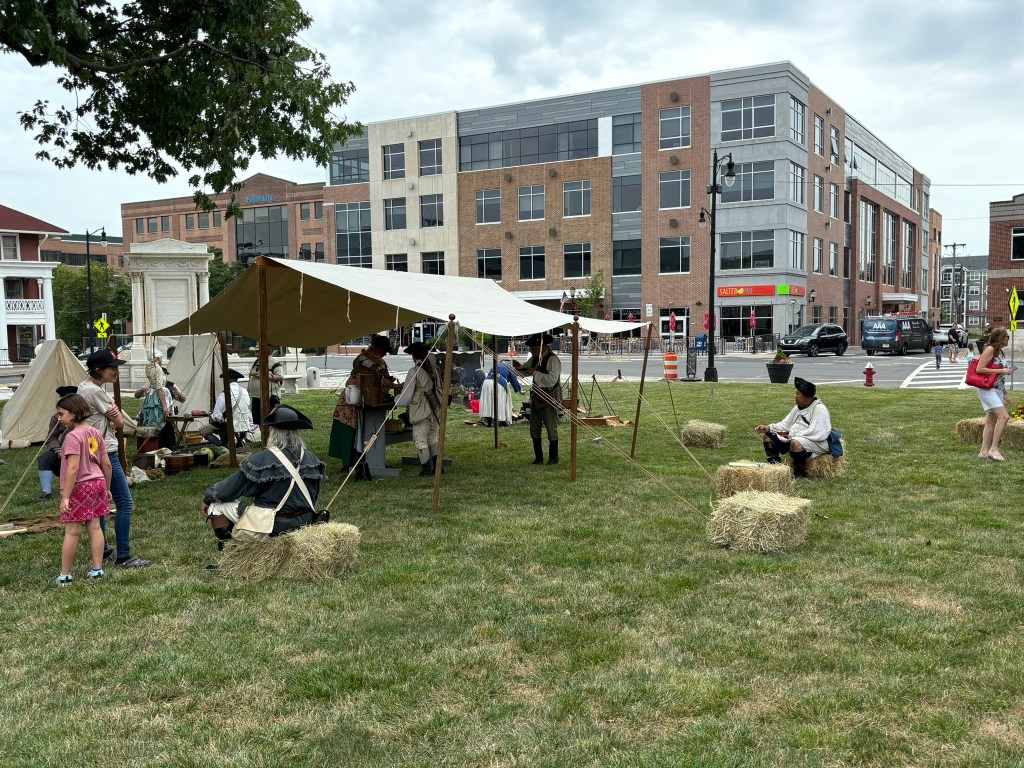
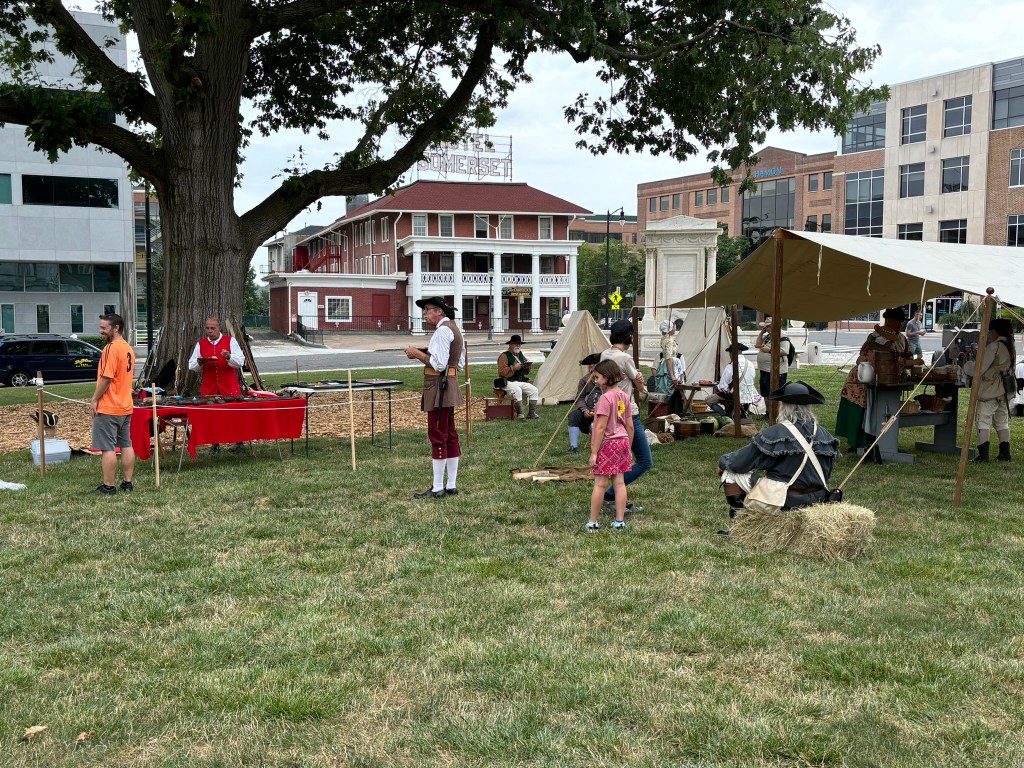
We moved on to the colonial pop-up encampment with displays by reenactors of weaponry/ artifacts, which were from the Revolution era. The reenactors took us back in time: cooking meals, doing chores, and preparing for battle.
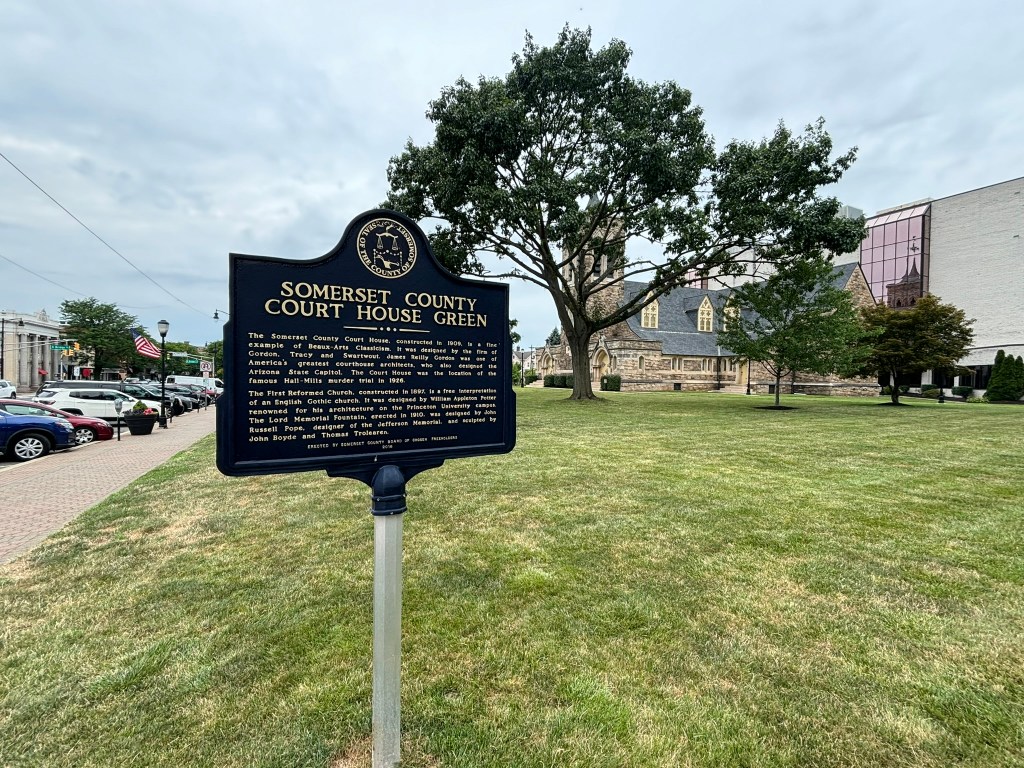
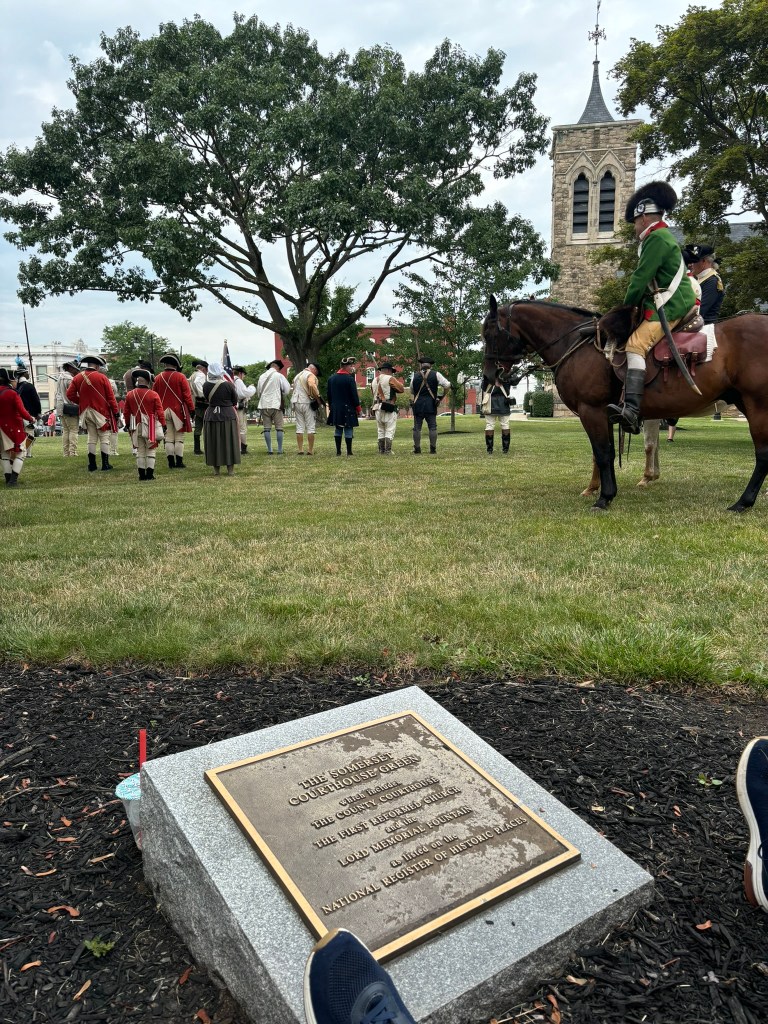
At about 12pm, George Washington and his entourage made their way down Main Street to the Courthouse Green. They were accompanied by members of New Jersey Fifes and Drums. The members of the New Jersey Militia- Heard’s Brigade, as well as the First Rhode Island Regiment stood in line and received orders from their commander. George Washington inspected the troops before they fired their muskets.
At about 12:30, Somerset County Commissioner Director, Shanel Y. Robinson addressed the crowd, and discussed how Somerset County was preparing for the 250th Anniversary of Independence.
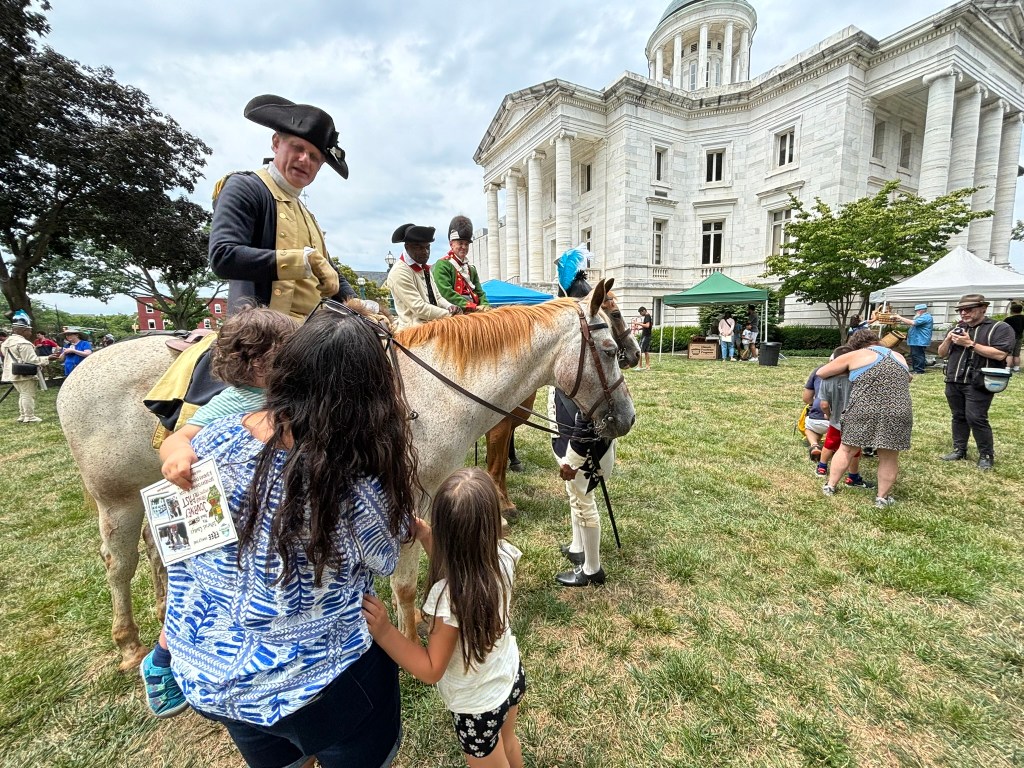
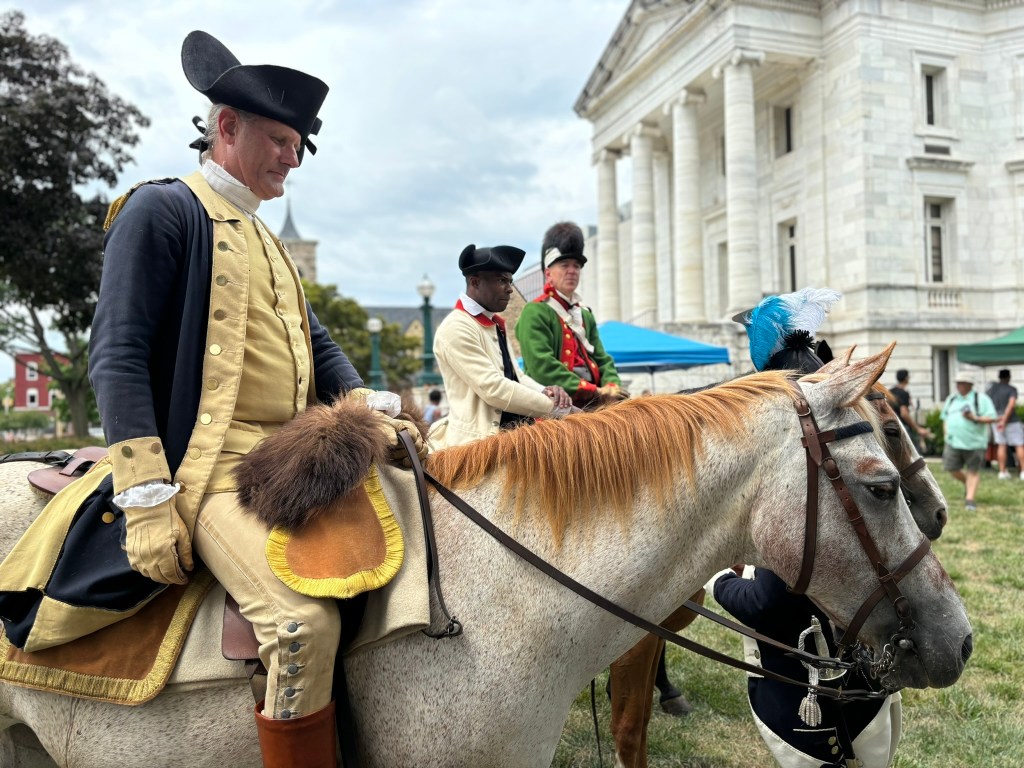
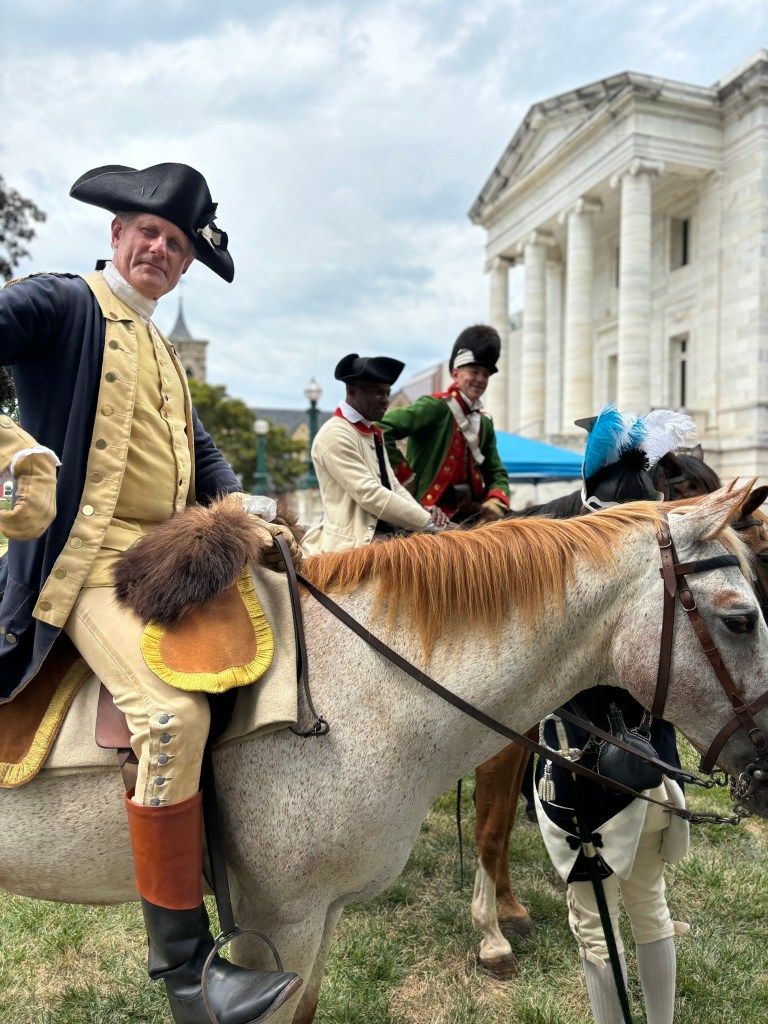
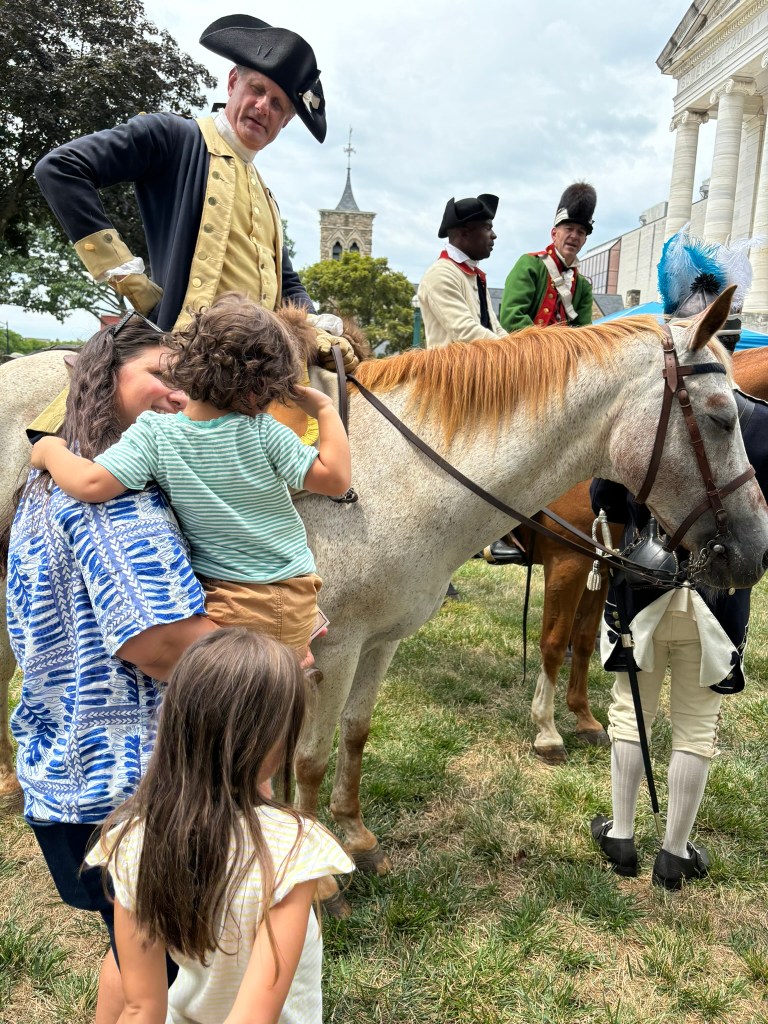
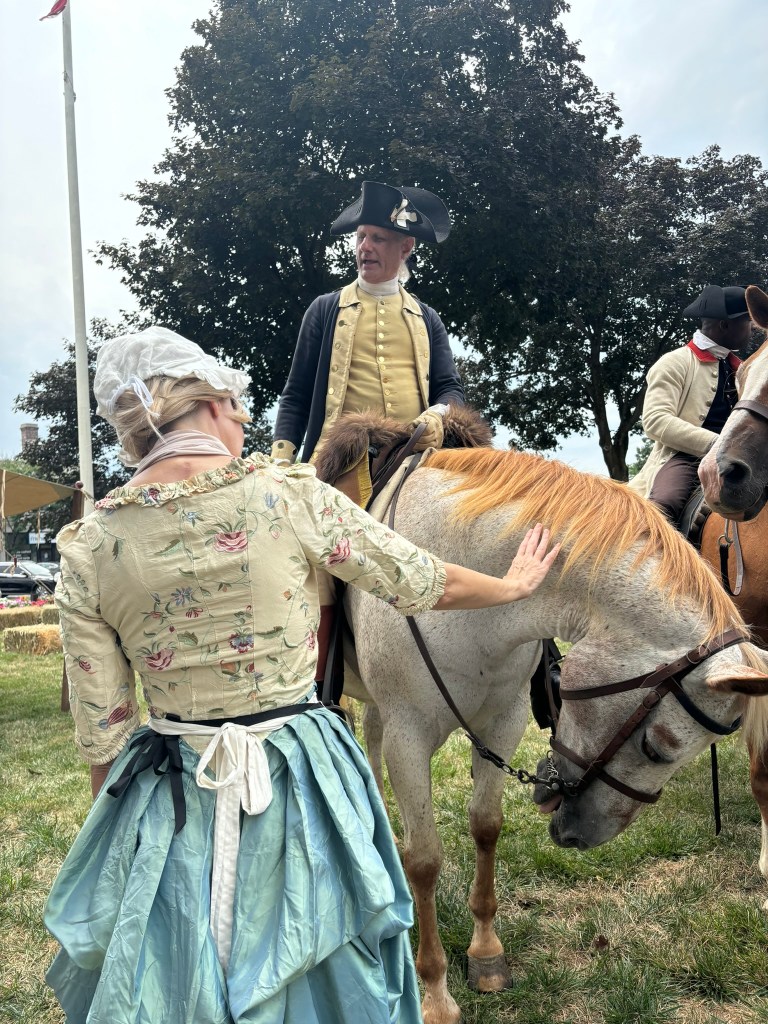
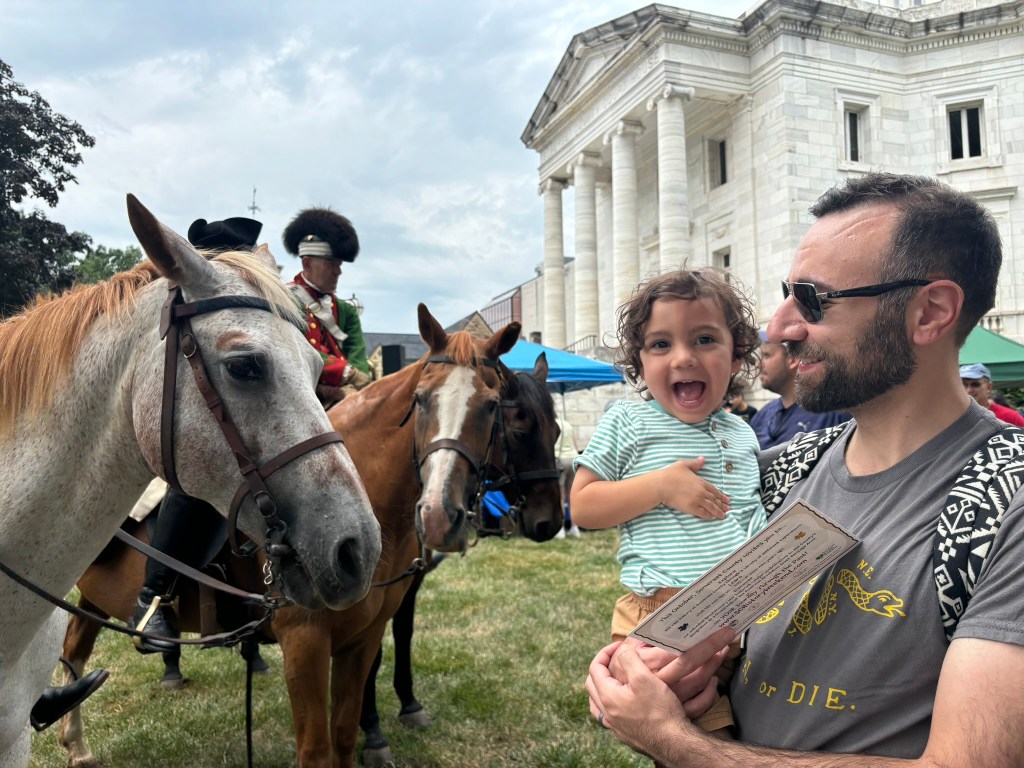
My children took another round of the many colonial games. They also took part in 18th century reading and writing, including writing with an 18th century ink and quill. We made our way over to George Washington on top of his horse, Penny, which the kids were able to pet.
Screenshot
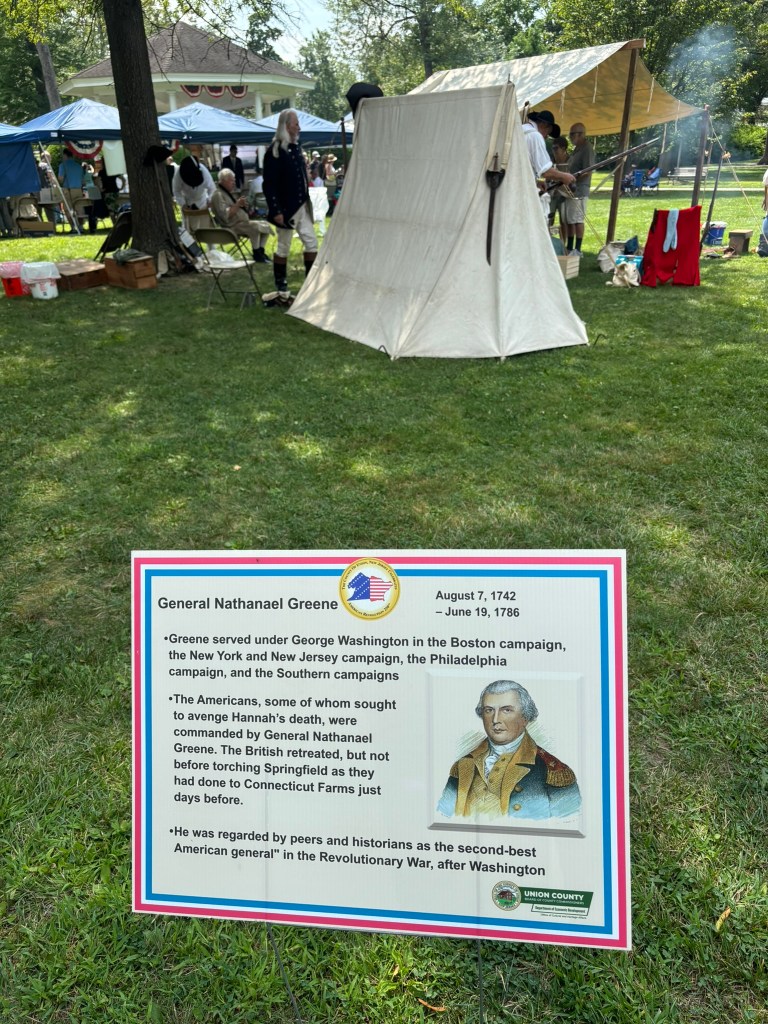
We had a great day in Somerville. This event was the most kid-friendly event that we’ve been to lately. History On The Green was another reminder of the tremendous impact that New Jersey had on the American Revolution. This region in Somerset County was home to the Middlebrook encampments throughout the war. Many houses still stand in the area that served as headquarters to Continental generals including Washington, Nathanael Greene, Henry Knox, Lord Stirling, and Friedrich von Steuben. I’m looking forward to going next year and also excited for what they have planned for 250!
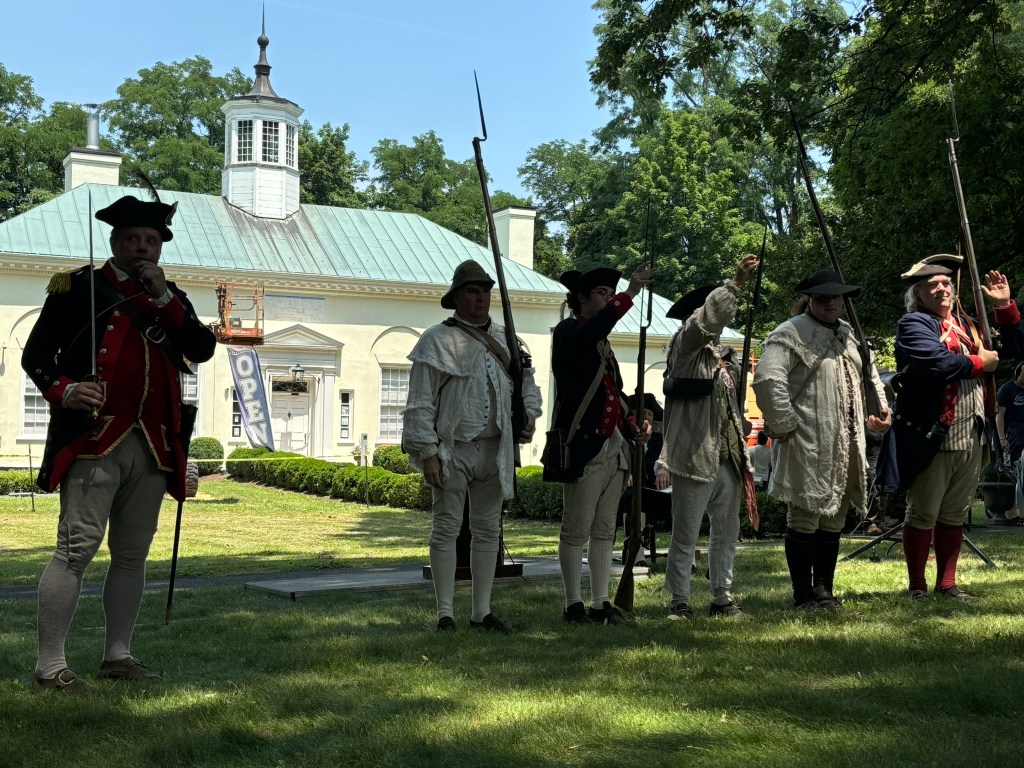
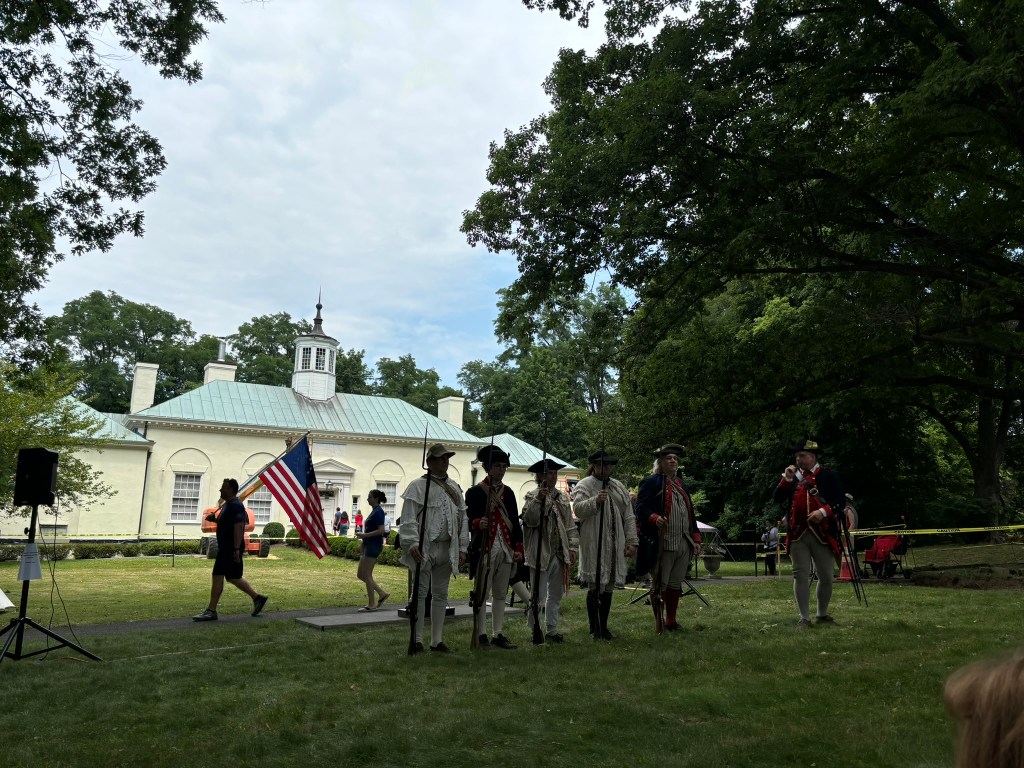
My family and I made it out on the Fourth of July to Washington’s Headquarters in Morristown, NJ for the public reading of the Declaration of Independence. This was our first time attending this yearly event.
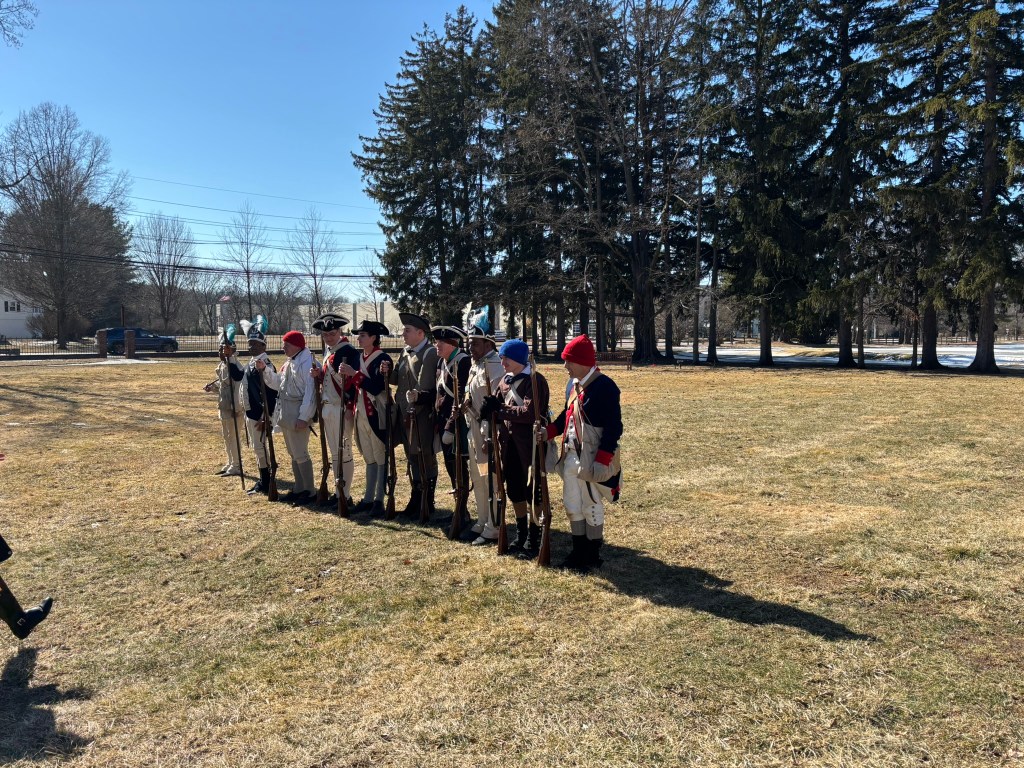
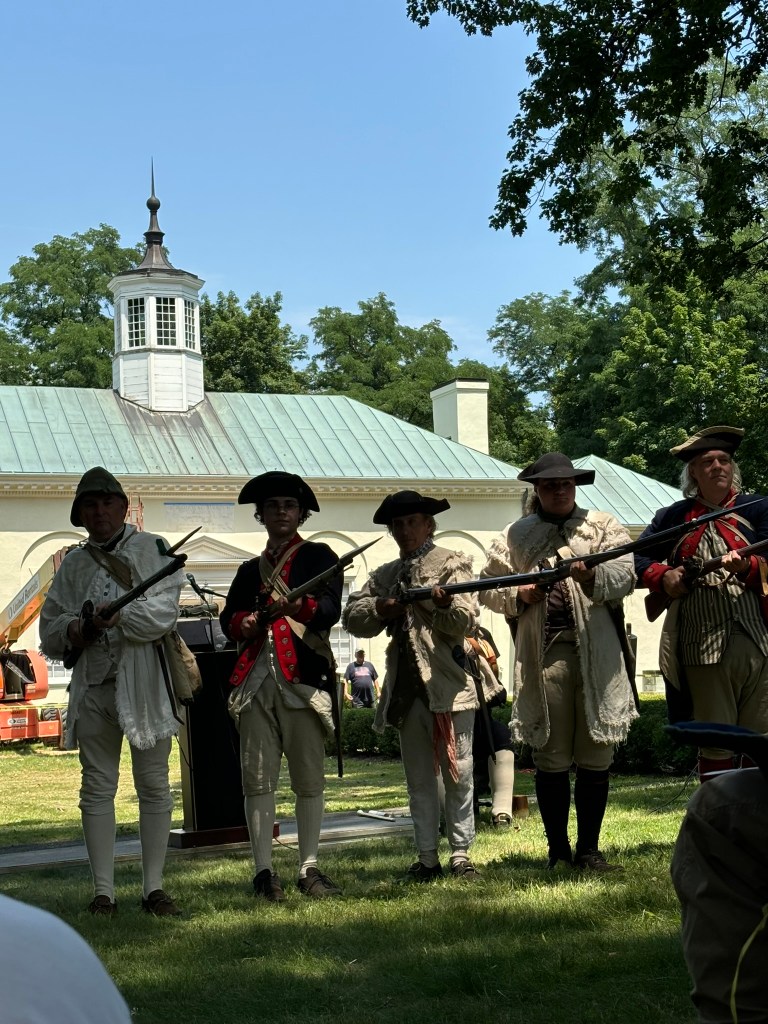
The festivities began at 12pm with demonstrations by reenactors of the 2nd New Jersey regiment. The regiment did a fantastic job showing the crowd how to stand in a line, reload their muskets, and how to use the bayonet. They thoroughly explained the use of muskets in the Revolutionary War, as well as the uniforms and limited supplies of Continental soldiers.
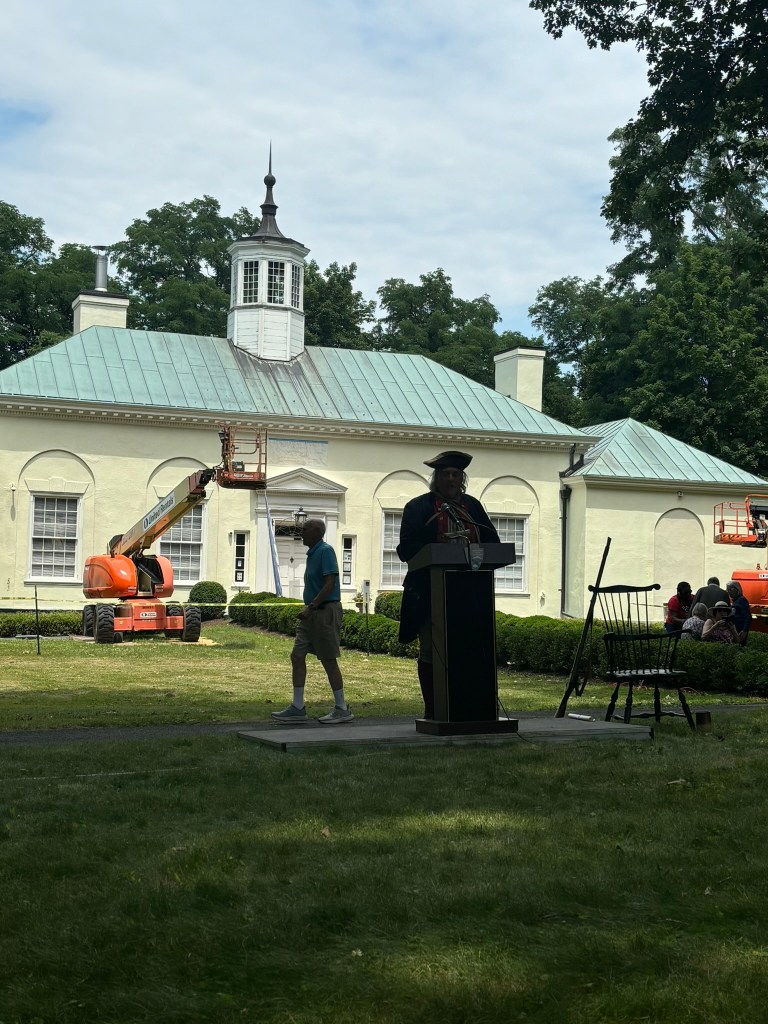
The 2nd New Jersey regiment’s demonstrations lasted nearly to 1pm. At that point there were a few speakers including Thomas Ross, the Superintendent of Morristown National Historic Park. He described the rehabilitation projects taking place at the park, including to the Ford Mansion, as well as to the museum. These projects are in preparation of the 250th anniversary of the Revolution.
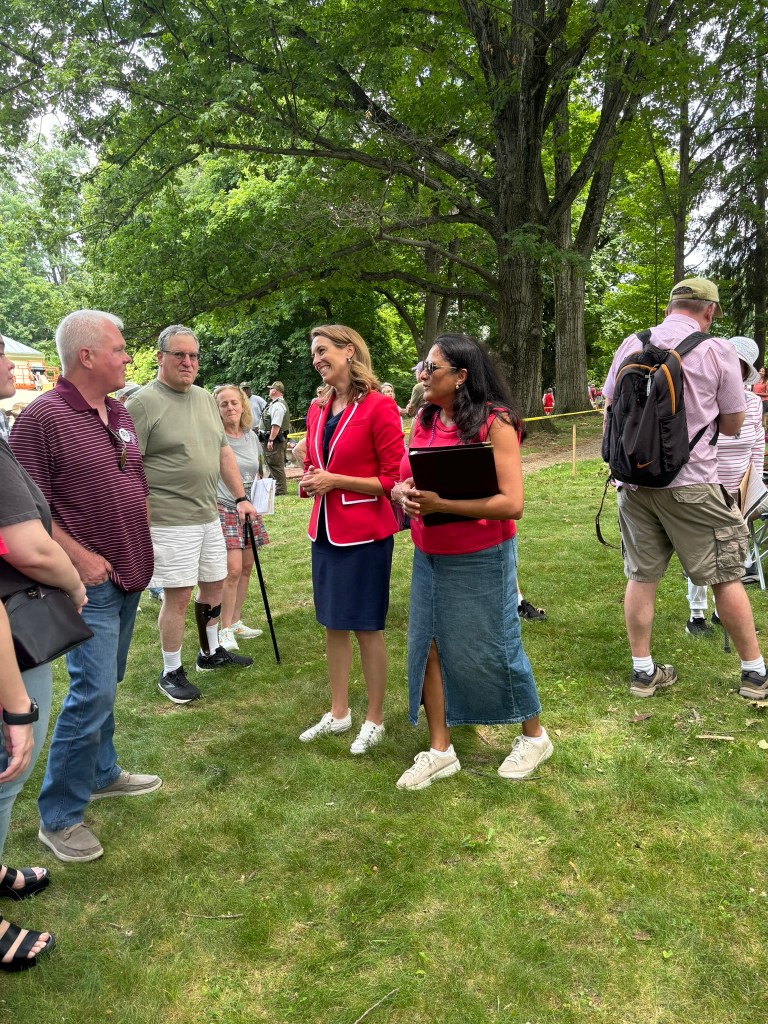
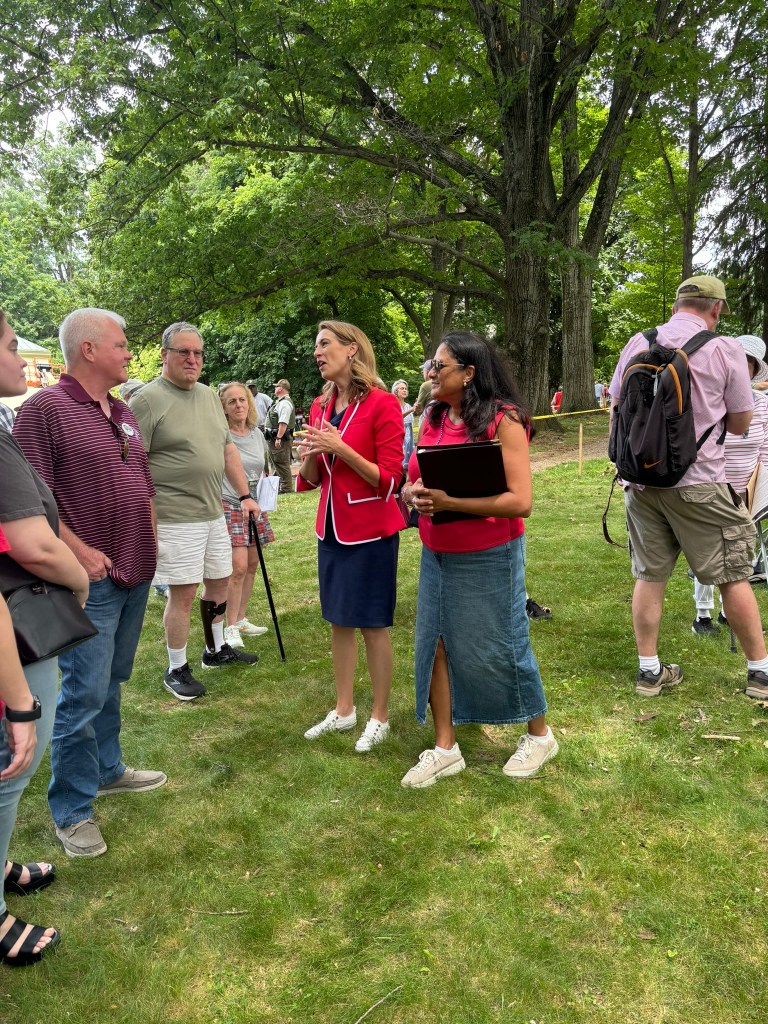
Another speaker who addressed the crowd was Congresswoman Mikie Sherrill who represents New Jersey District 11. She described New Jersey’s importance to the Revolution and praised the efforts to preserve New Jersey’s history.
At 1pm, Ranger Tom Winslow read the Declaration of Independence. The audience was encouraged to give shouts of “Huzzah!” when he read words/ phrases favorable to freedom and independence. The audience was encouraged to shout “Down with King George!” Or “Down with Tyranny!” when he read the many grievances listed against the king.
Finally, the program concluded at about 1:30 and my family went in and visited the museum. Representative Mikie Sherrill met and spoke with visitors, while the reenactors also took photos. My family and I really enjoyed our patriotic Fourth of July in Morristown, and would love to come back again! Check out my social media sites in the coming days for videos of the event, including drills, discussions of the revolutionary soldiers, speakers, and the reading of the Declaration of Independence: Facebook, Instagram, Twitter
Below are links to organzations who helped run the event or were in attendance.
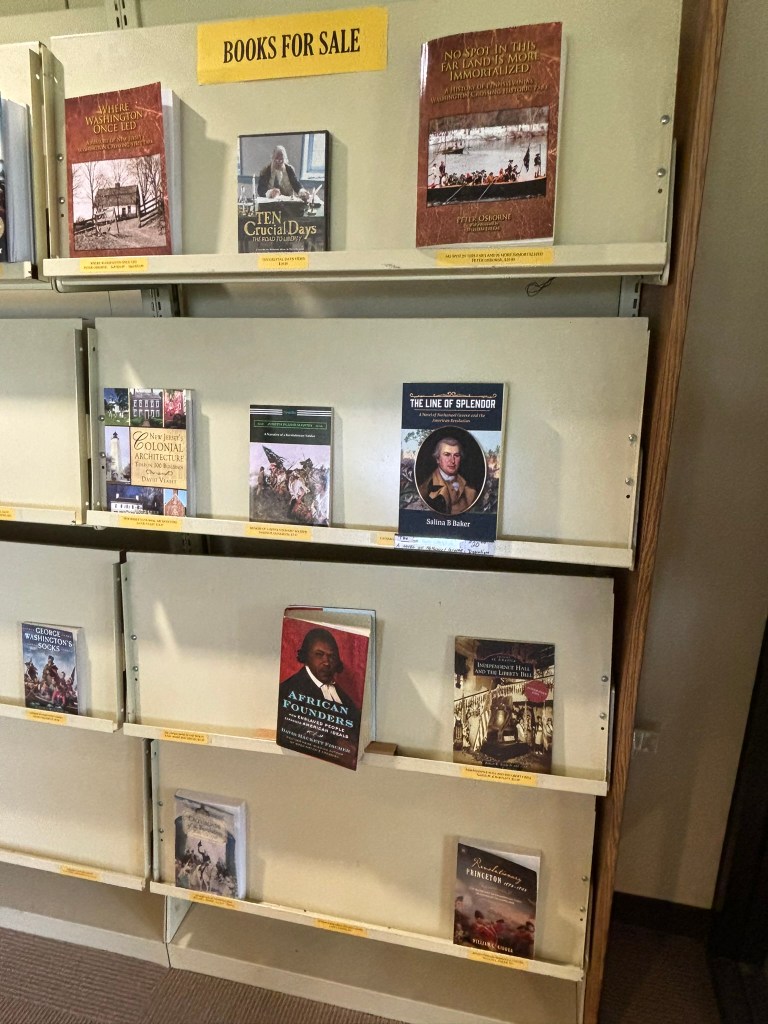
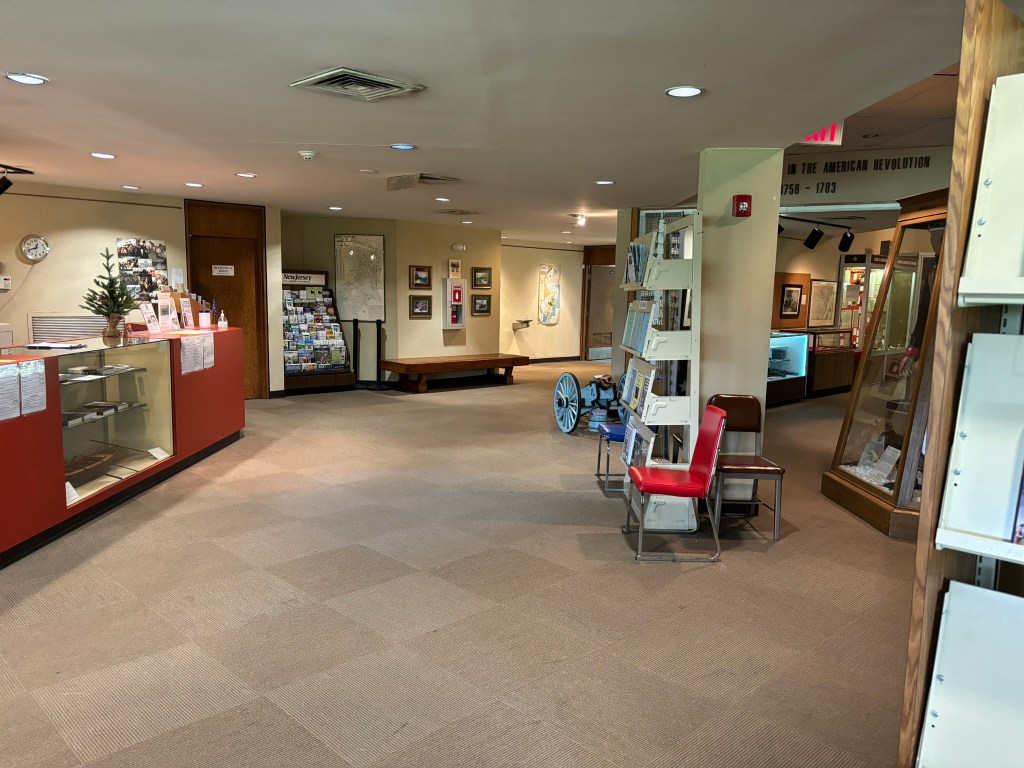
My family and I made it to Washington’s Crossing State Park on the New Jersey side of the Delaware River. My wife and I had gotten free tickets for a tour of the park, which was conducted by the Washington Crossing Park Association. We arrived at the park a little before our 1PM tour time, and we had an opportunity to explore the museum within the Visitor’s Center. The museum had a great collection of artifacts, including uniforms, weaponary, ammunition, coins, letters and other items related to the American Revolution. The Visitor Center also had books for sale.
Background of Washington’s Crossing
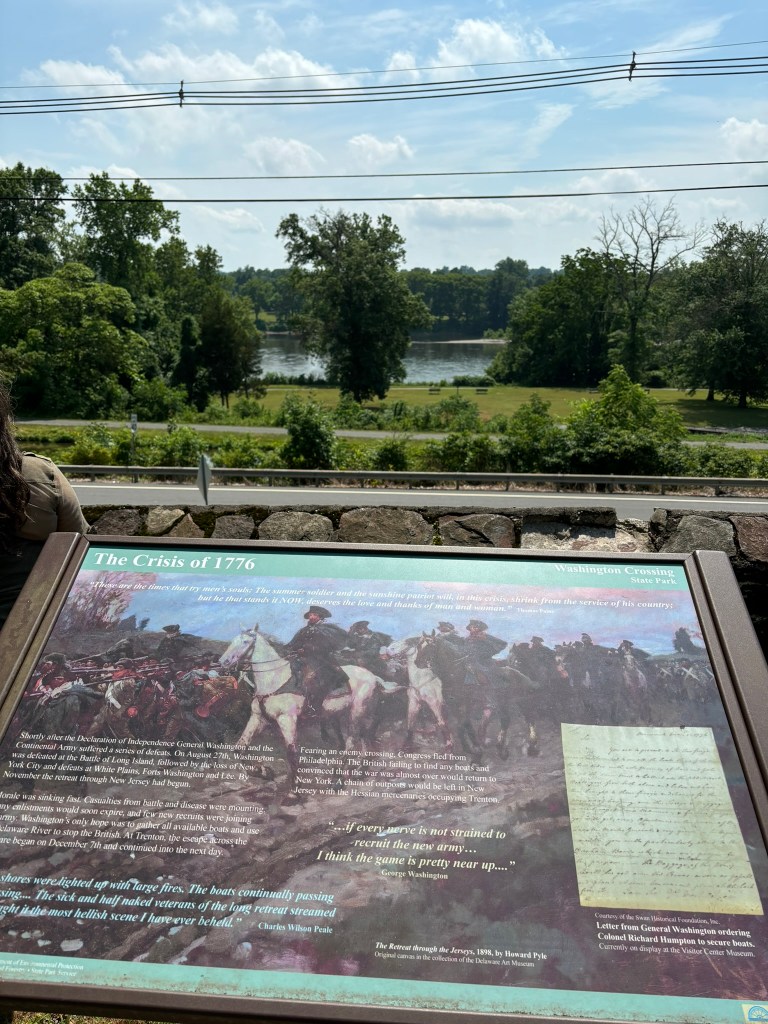
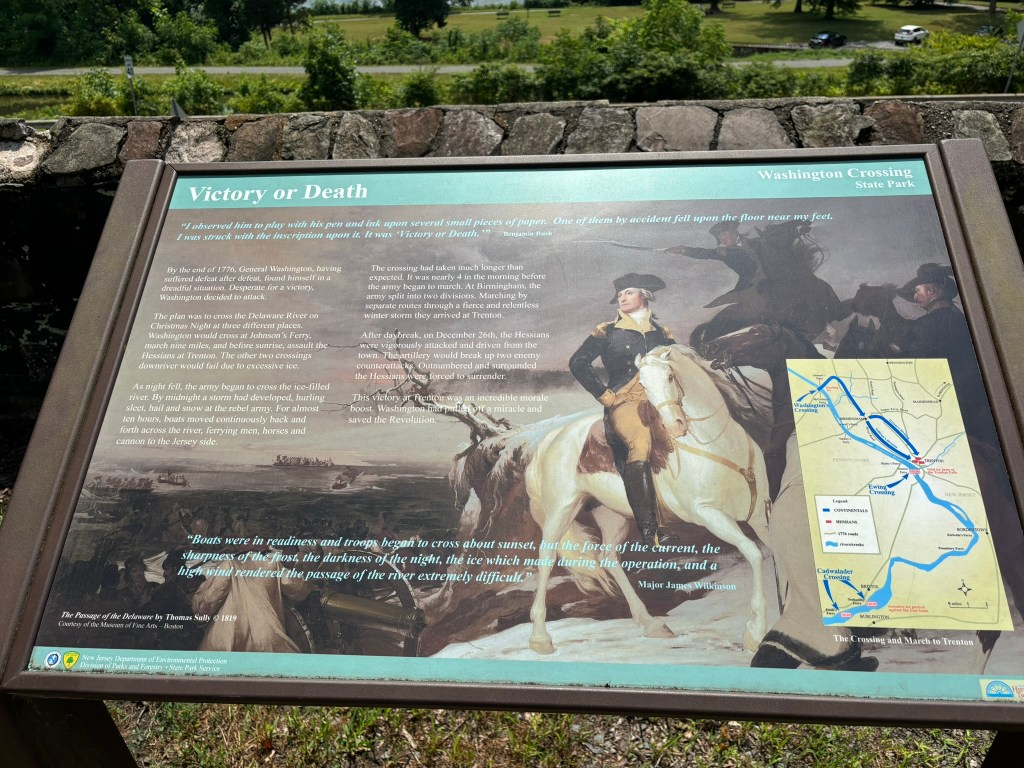
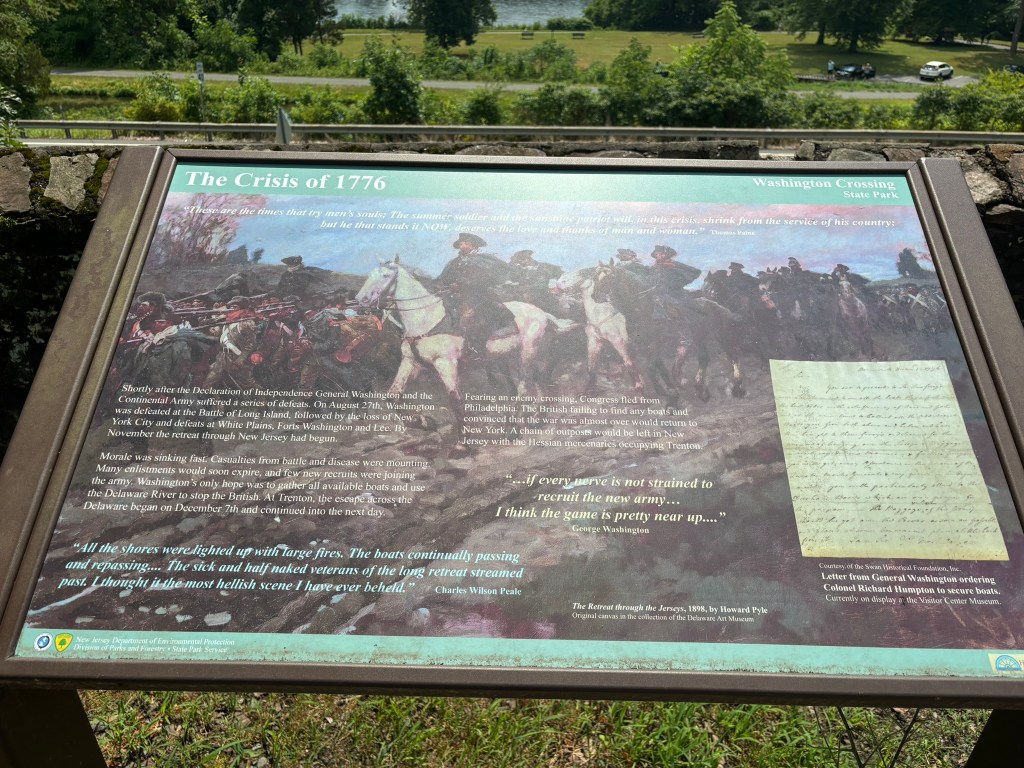
The tour began with a video that was about 30 minutes long called “Ten Crucial Days: The Road to Liberty.” The video’s primary focus was to tell the significance of Washington’s crossing. The video also gave us the background leading up to the event. The British army landed about 32,000 troops in New York harbor starting in August 1776, shortly after the United States declared independence. The British then won a series of battles starting in Long Island, then Manhattan and up to White Plains. The Continental Army retreated across New Jersey while being pursued by the British army. Washington led his hungry, desperate, and dwindling army across the Delaware River and found safety in Pennsylvania by early December.
The revolution seemed lost for the Continentals. To add to Washington’s difficulties, many of his men’s enlistments were up at the end of the year. He needed a major victory to boost the morale of the troops as well as the young nation.
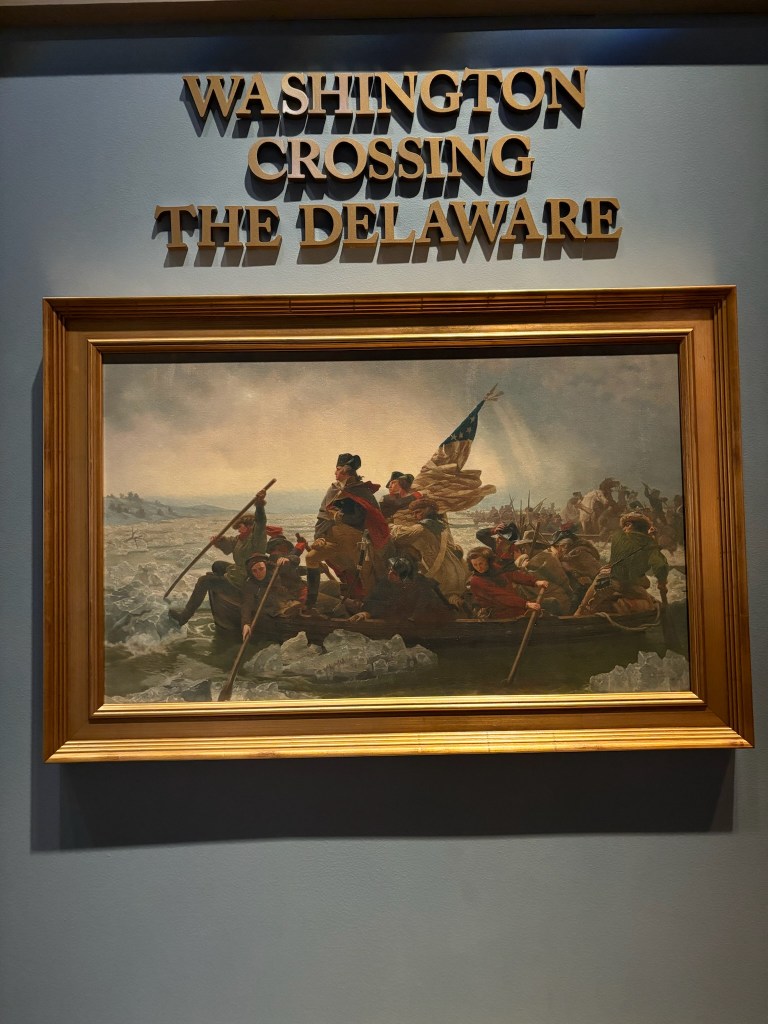
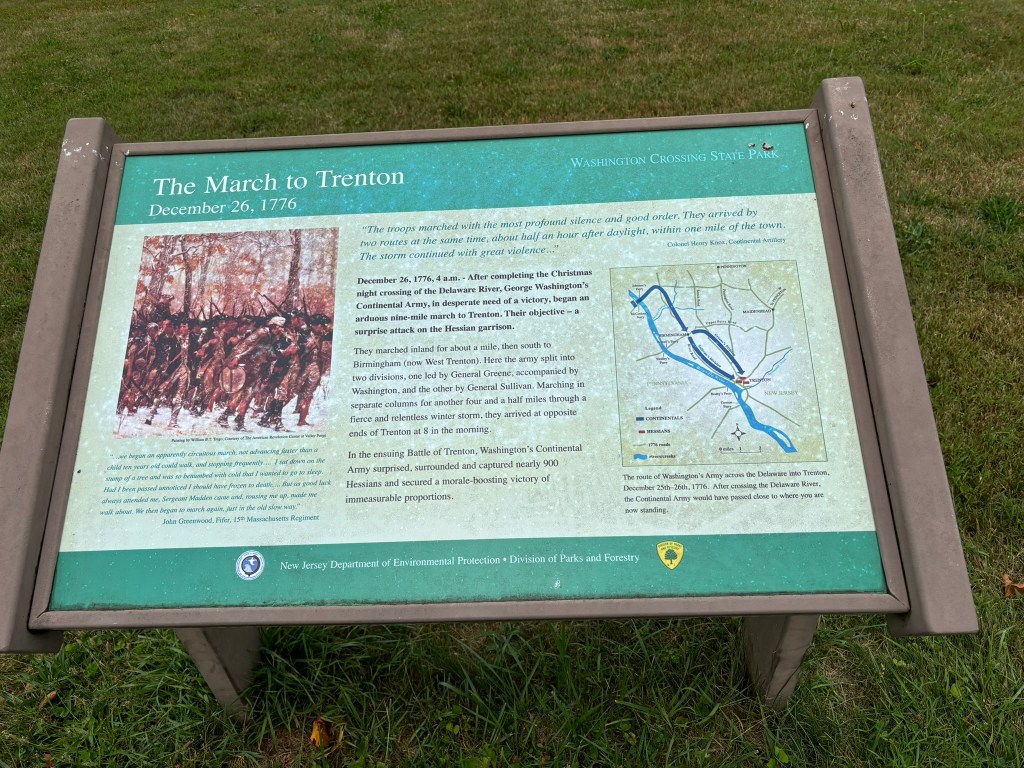
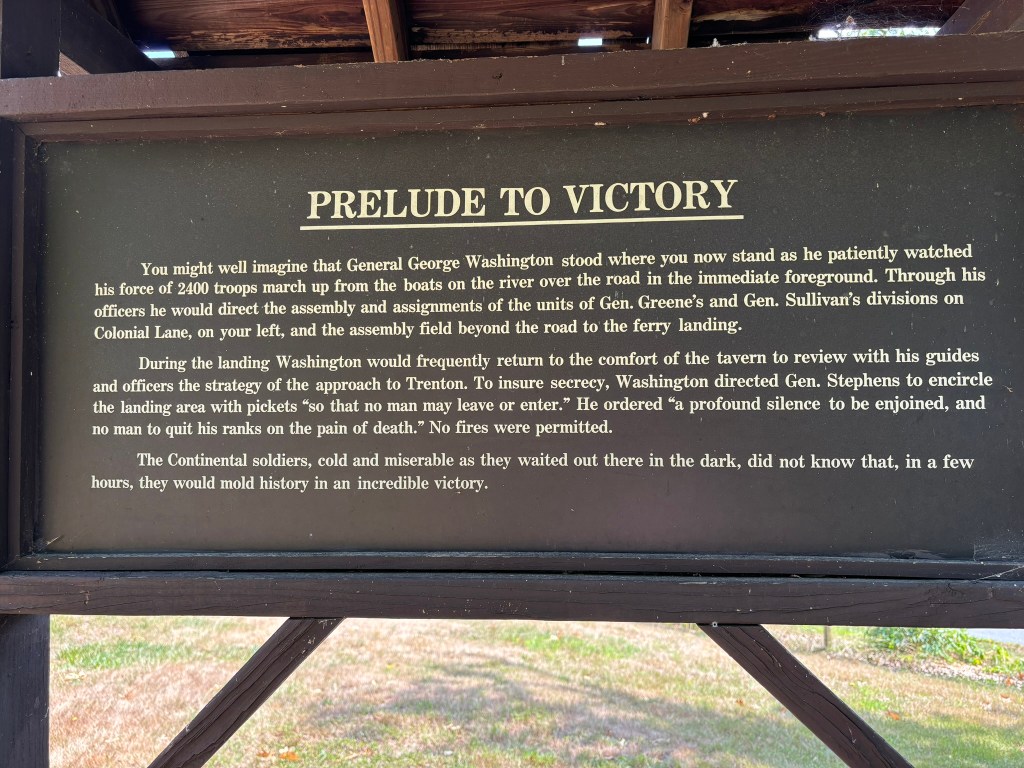
In a quite daring move, Washington planned a surprise attack on the Hessian garrison stationed at Trenton. On Christmas night, he would lead the Continental Army across the Delaware River including horses and artillery, and march nine miles south to Trenton. Washington and the Continentals knew the significance of the element of surprise. He wanted to attack Trenton before sunrise, but the crossing was running hours behind. Washington crossed the Delaware with 2,400 men, not as many as he had hoped because other regiments who were to cross south of Trenton never made it across. After landing on the New Jersey side, Washington and his men finally began their march towards Trenton at 4AM. The weather did not cooperate with the Continentals. Along the march, they first faced light rain, then light snow, then blizzard like conditions. At least two men died during the march.
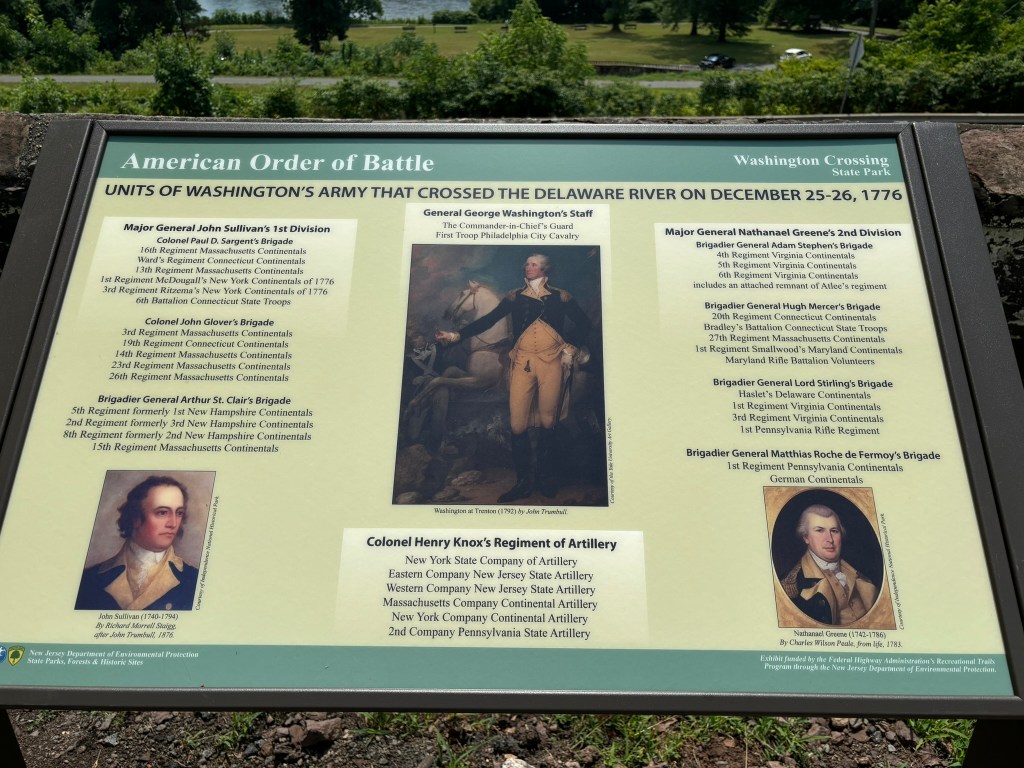
About halfway to Trenton, the army broke into two groups. General Nathaneal Greene, accompanied with Washington, took one group, and General John Sullivan led a second group. The two groups split off and would take two separate roads to Trenton. This plan would result in the Continentals enveloping the enemy and attacking from two locations. The Continental Army did not reach Trenton until 8AM which was after sunrise, although the morning fog helped conceal the oncoming troops. The battle ensued and lasted just about an hour and half. At its conclusion, the Hessians suffered 22 killed, 83 wounded and nearly 900 captured. It was a resounding victory for the Continentals, and it was the victory that they so desperately needed.
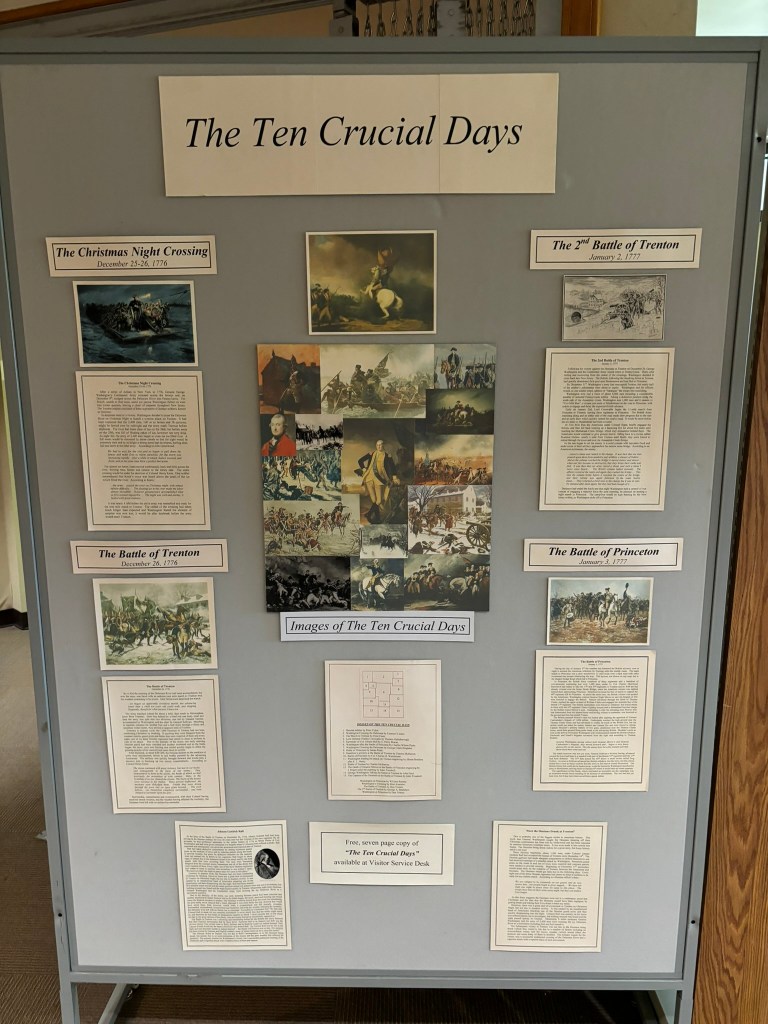
Washington’s crossing was the beginning of what historians call “The Ten Crucial Days.” After the victory at Trenton, the Continental Army went back across the Delaware River to Pennsylvania. Just a couple days later, they again crossed back into New Jersey and encamped at Trenton and held off the British Army at the Second Battle of Trenton. During the night of the second battle, Washington and the Continentals secretly marched around the British army and faced another British army at the Battle of Princeton on January 3rd, 1777. This was another resounding victory for the Continentals who defeated British Regulars. The Ten Crucial Days breathed new life into the revolution. The Continental Army would spend their winter encampment at Morristown, living to fight another day.
Had it not been for Washington’s daring move to attack at Trenton, the Revolution may have been over. Even the British believed that the Continentals had nothing left. Had Washington’s attempt on Trenton failed, the rebels may have lost the war and would become British subjects once again, under the closer scrutiny of the crown. But Washington’s stroke of genius gave the Continentals the hope to continue fighting. The war would continue to drag on for years with victory for the Continentals not becoming official until the Treaty of Paris in 1783. Even though it was early in the war, the Ten Crucial Days are arguably the ten most significant days in American and World history.
The Tour
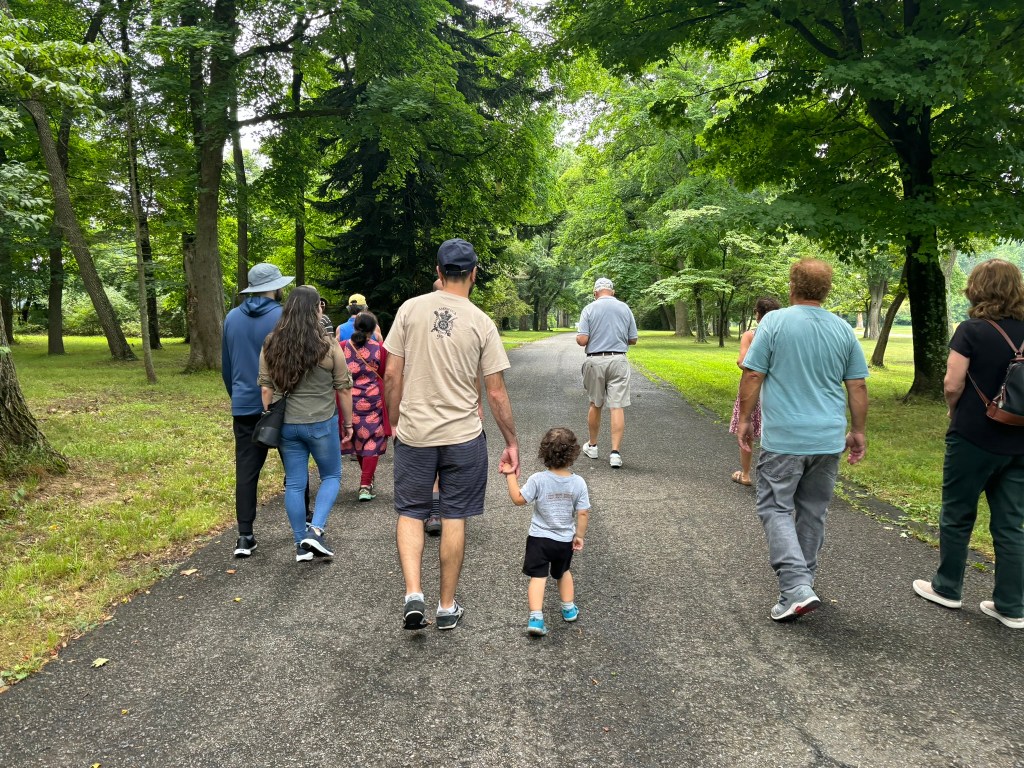
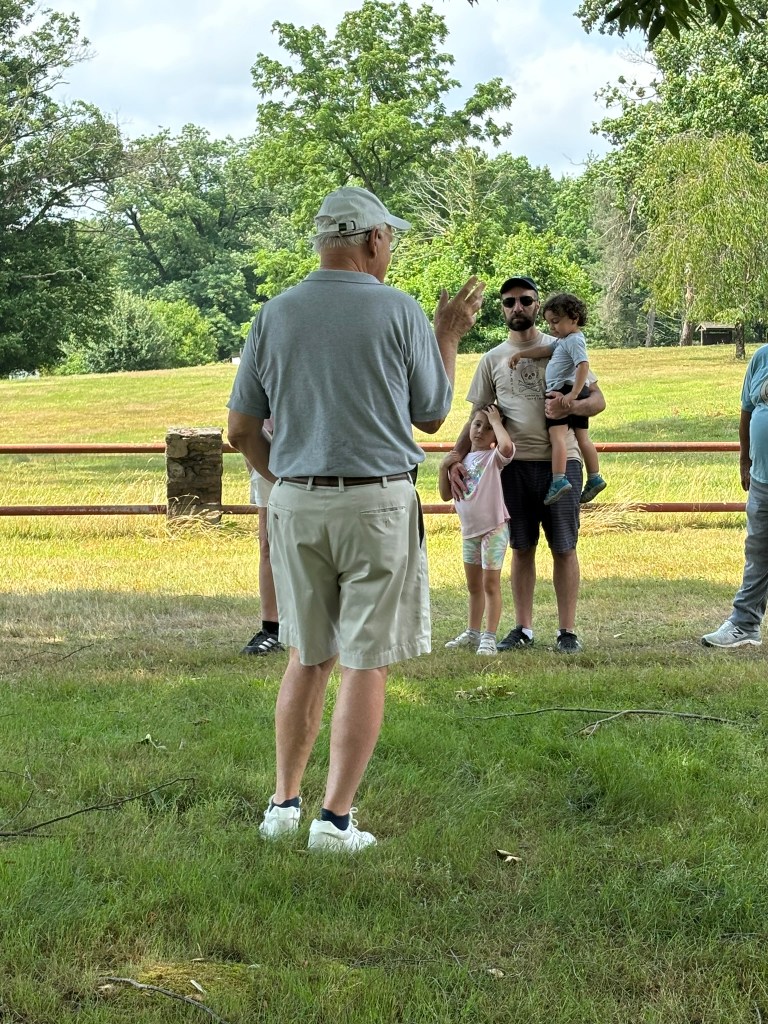
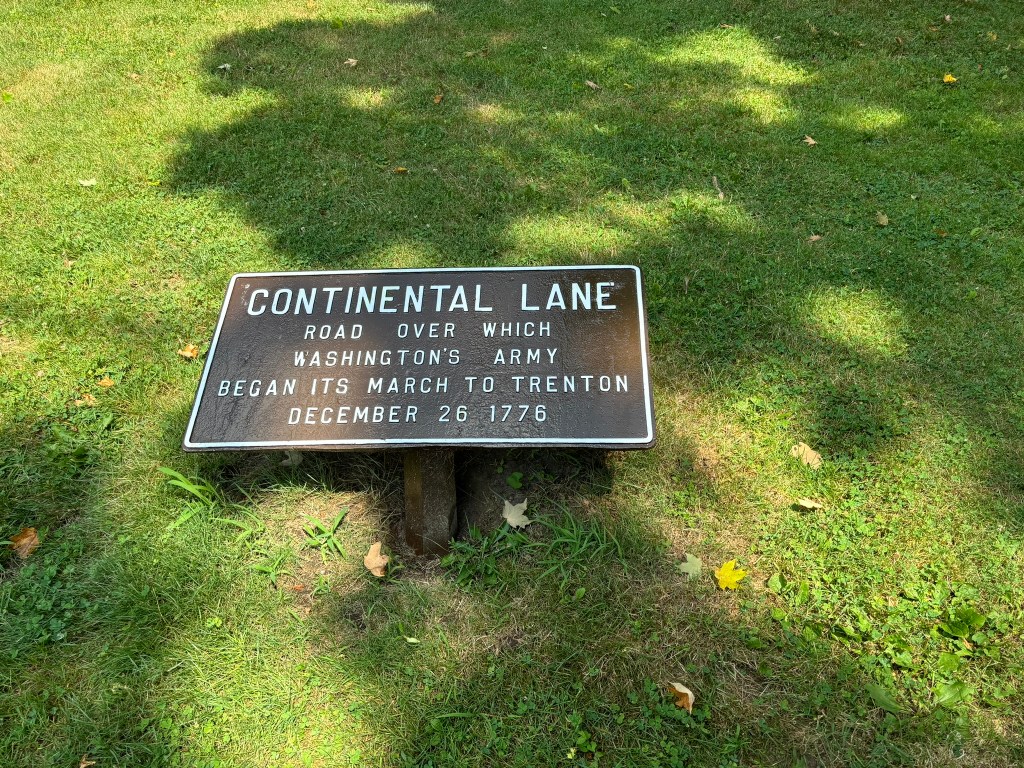
After the video was over, our tour guide, Tim West, took us on a walk through the park, down Sullivan Lane to the entrance of Continental Lane in the direction towards the Delaware River. He discussed the reasons why Washington chose this particular place to cross the river. The Continental Army wanted to be in the vicinity of Philadelphia which was the new nation’s capital and arguably the most important city in the young country.
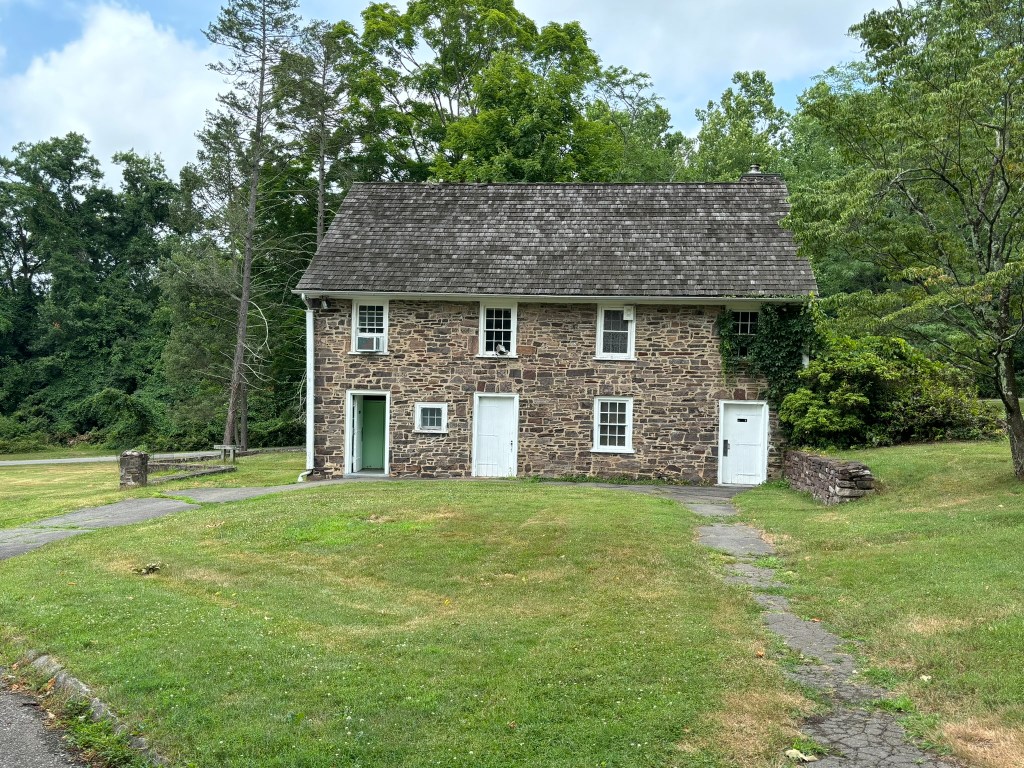
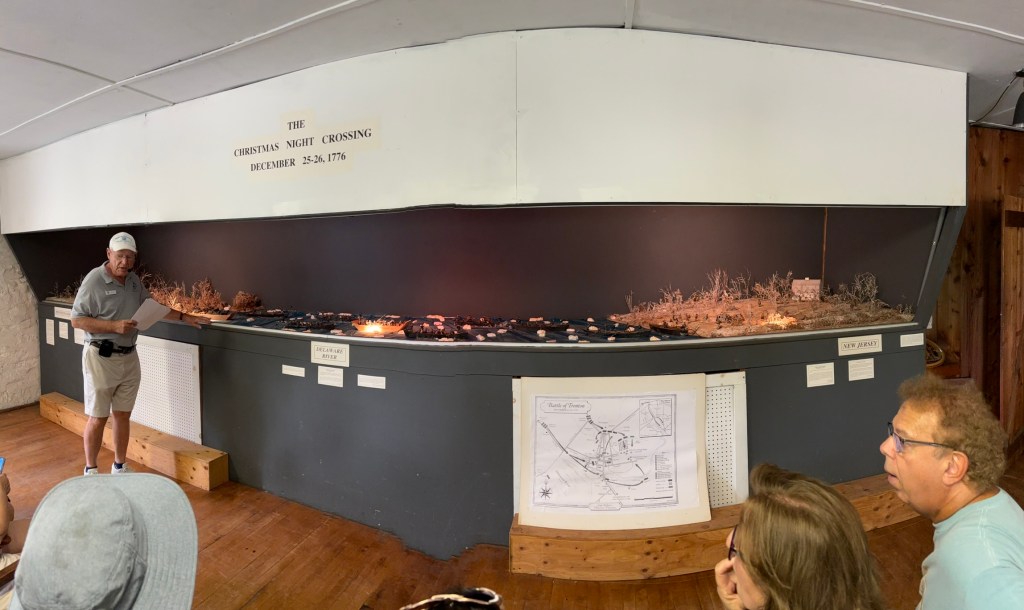
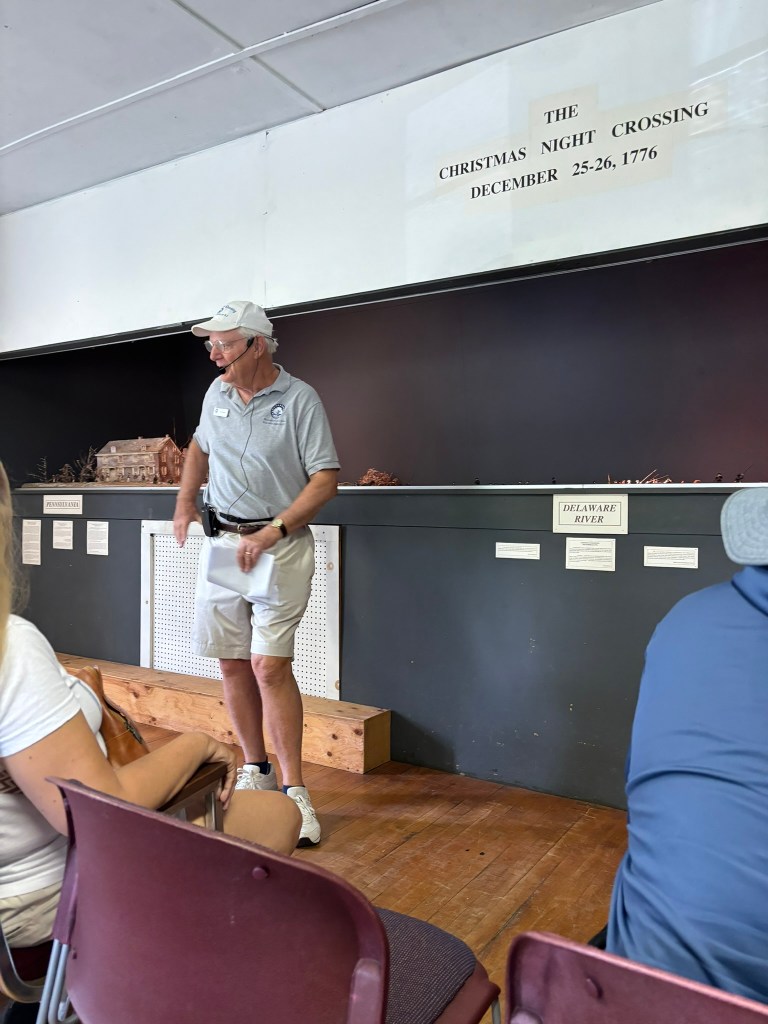
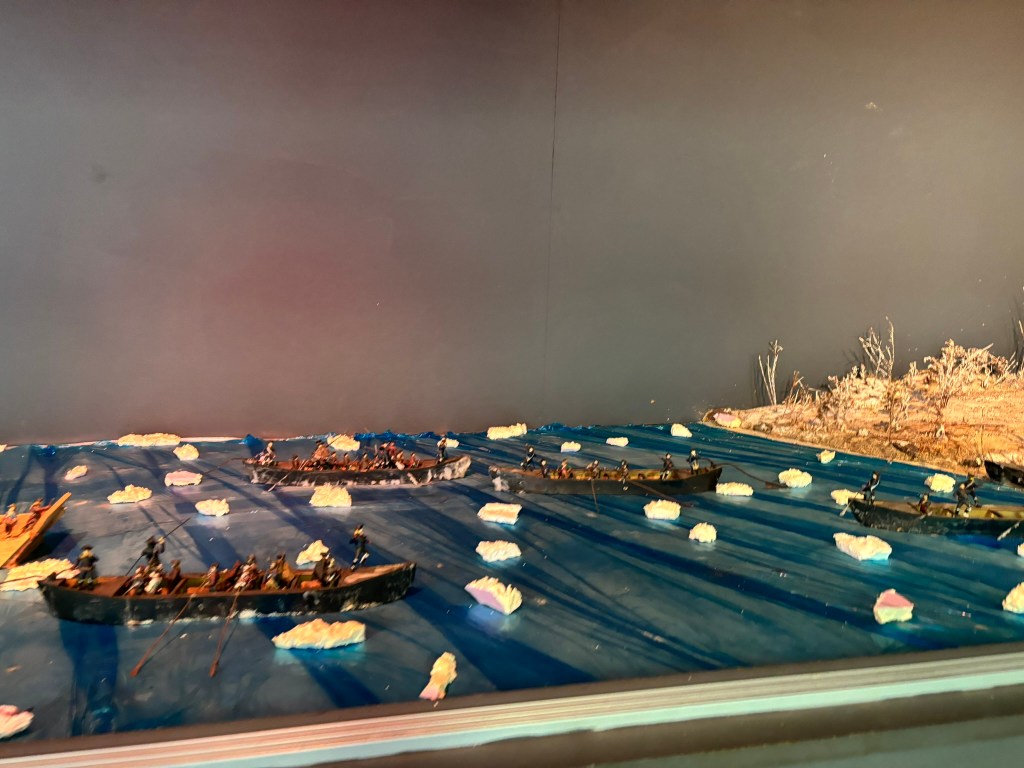
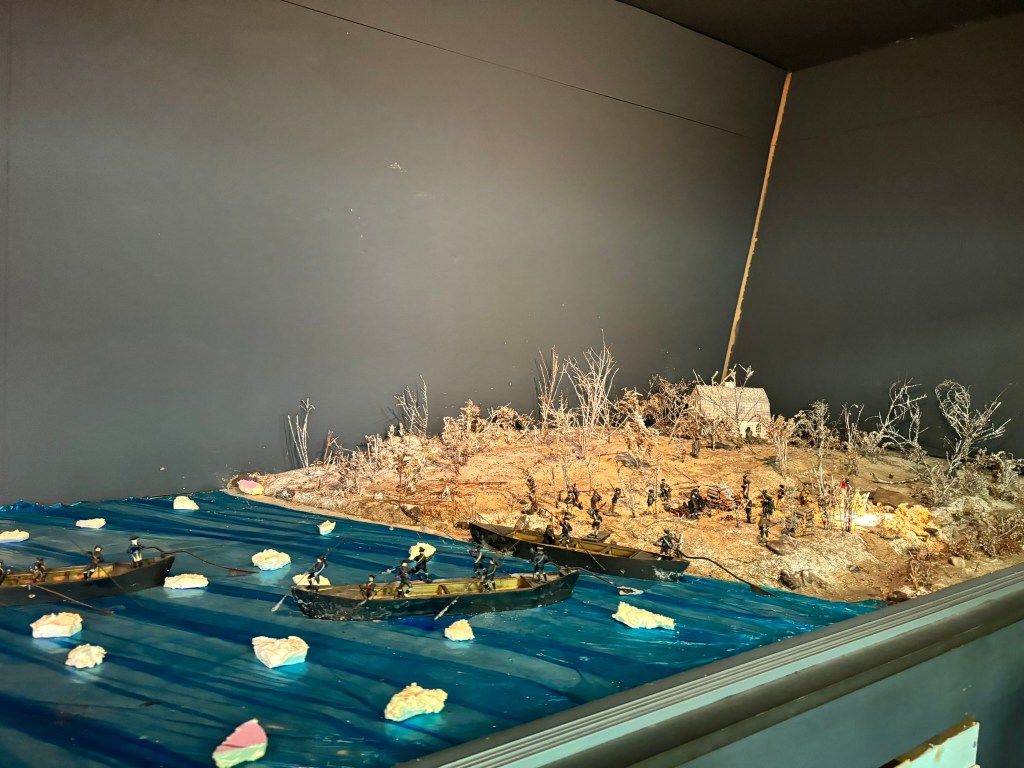
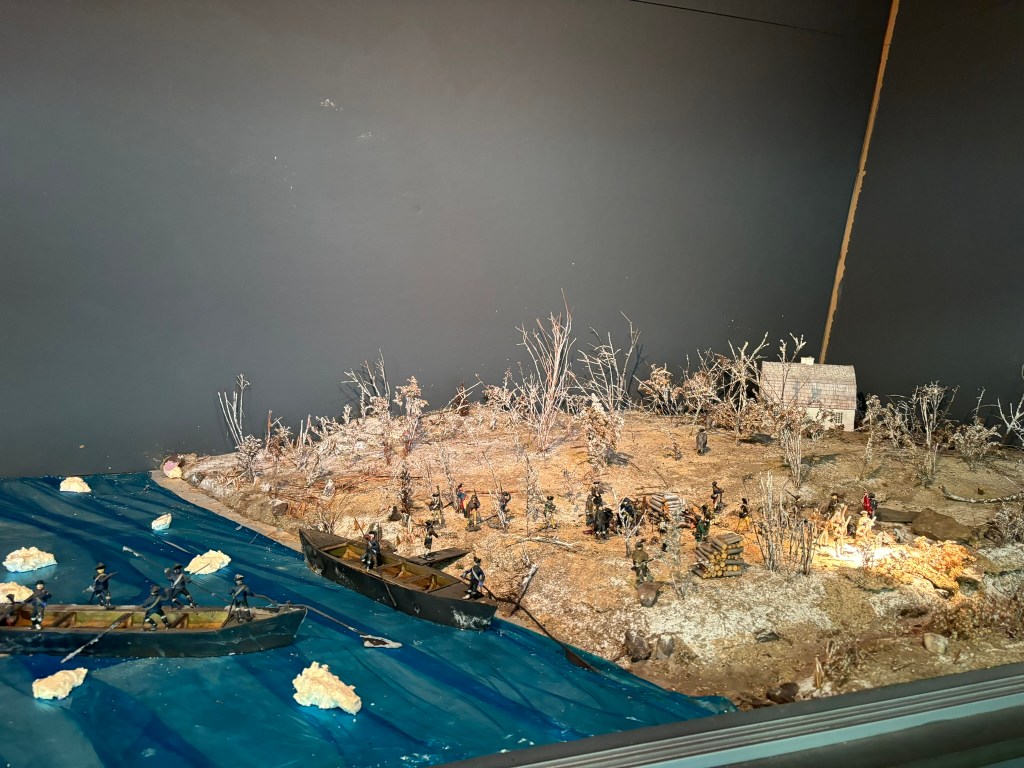
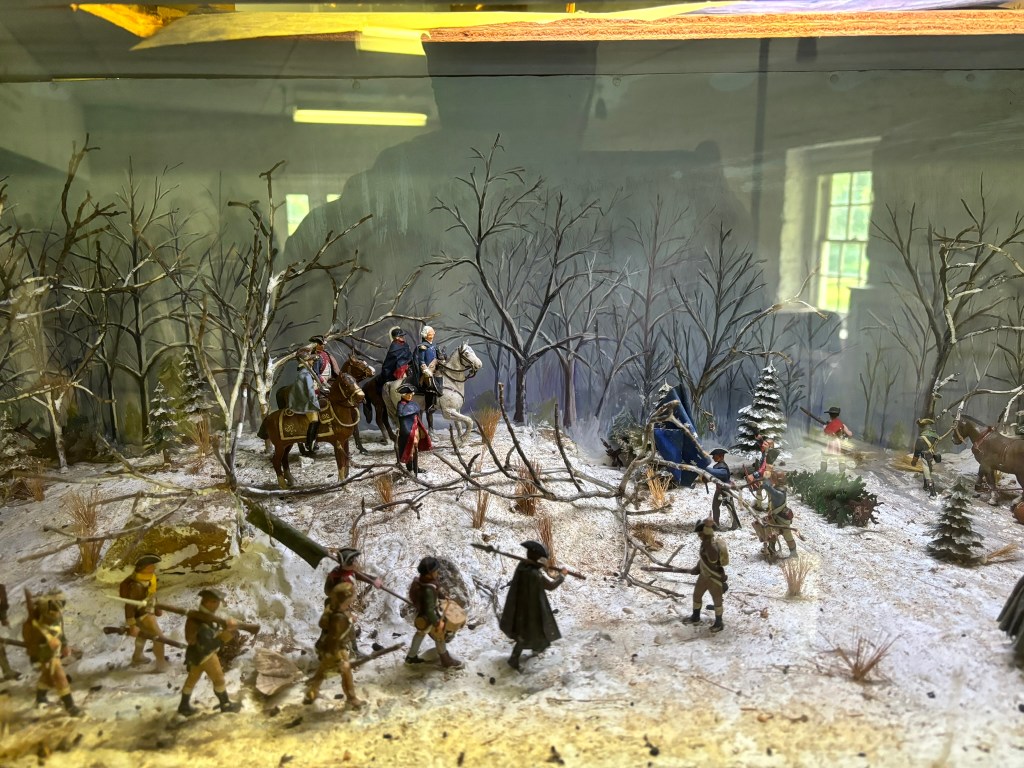
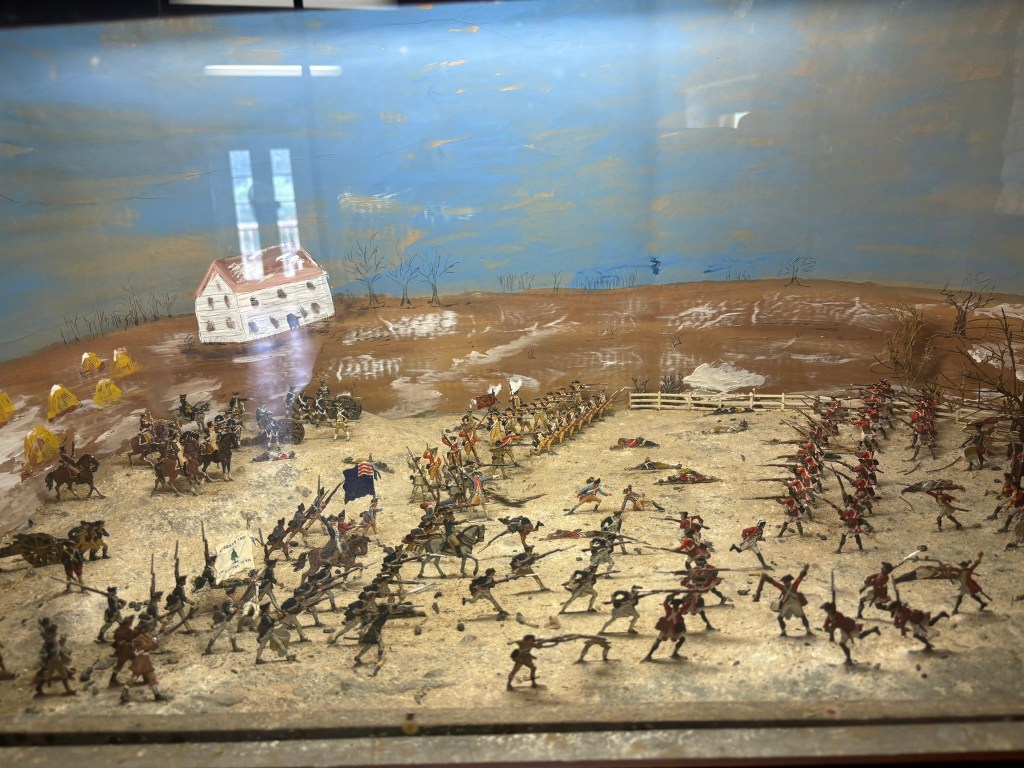
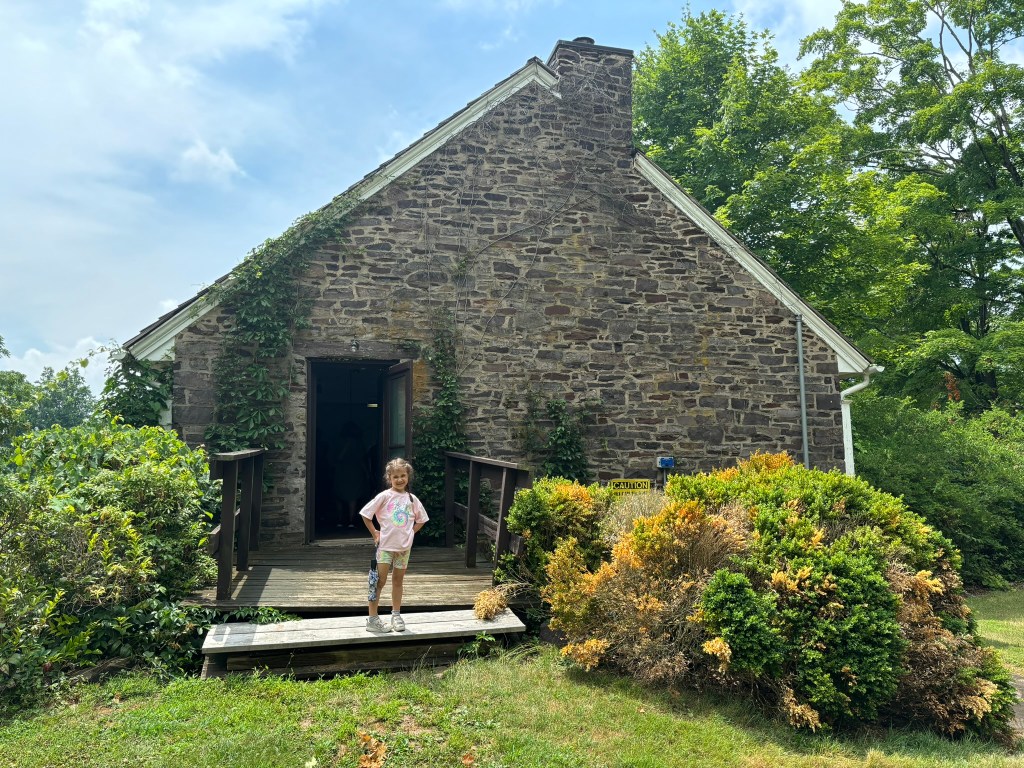
We made our way to the Stone Barn, built in the 1780s, where Tim discussed the army’s march to Trenton, as well as the battle itself. Inside the Stone Barn is a large map of Trenton as it looked in 1776. There is also a fascinating diorama of the river crossing.
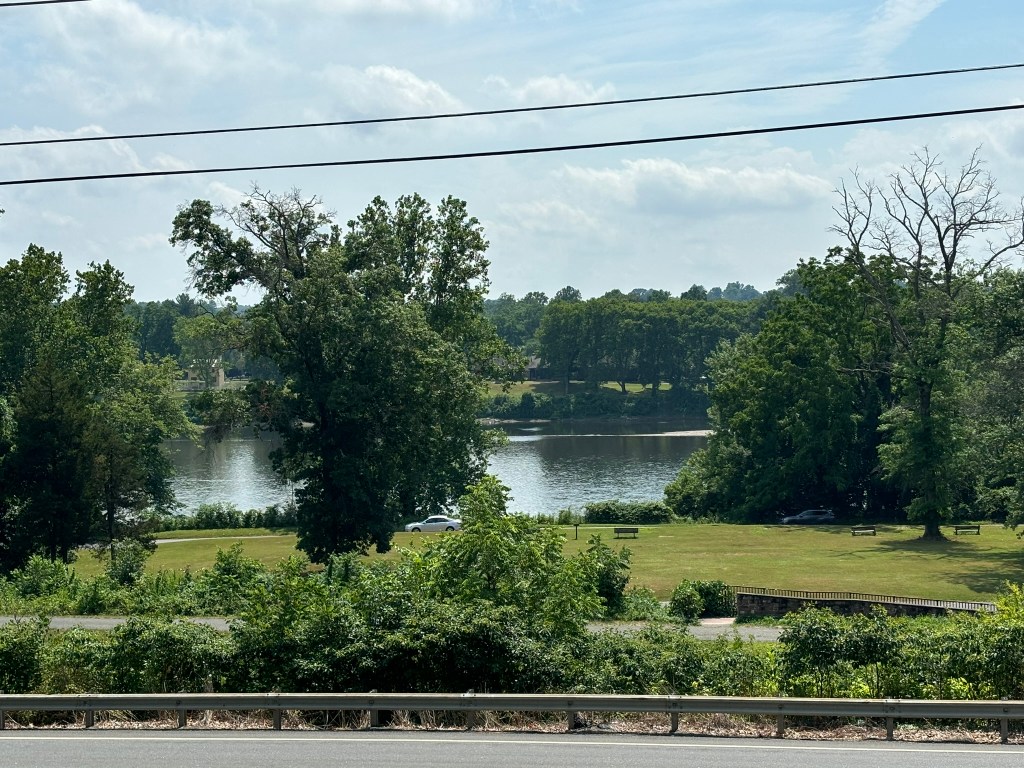
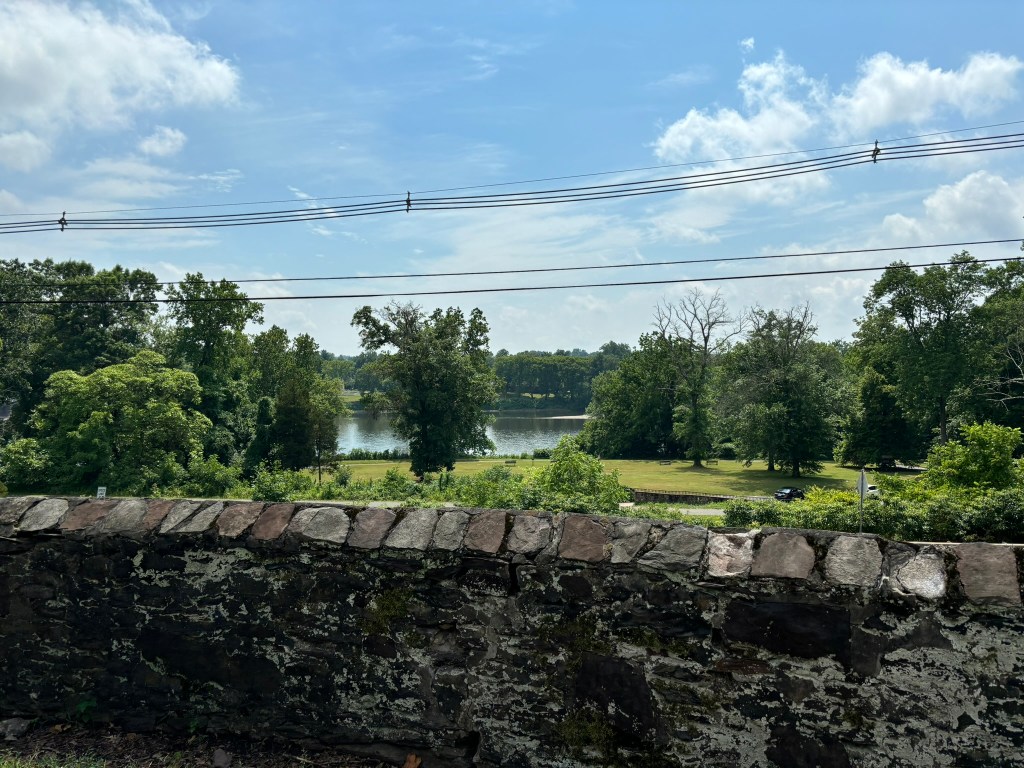
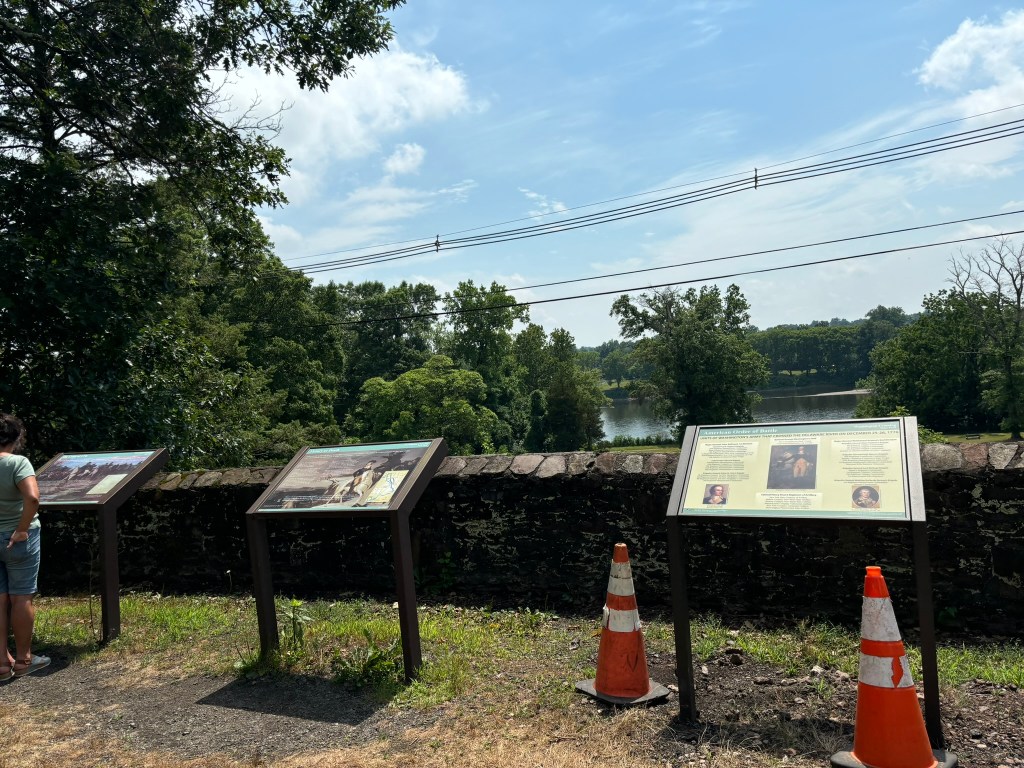
Next, we ventured off to the Landing Overlook, where we could see the location where Washington and the Continental Army crossed the Delaware River. It was quite amazing to see the exact location where such a significant historical event took place.
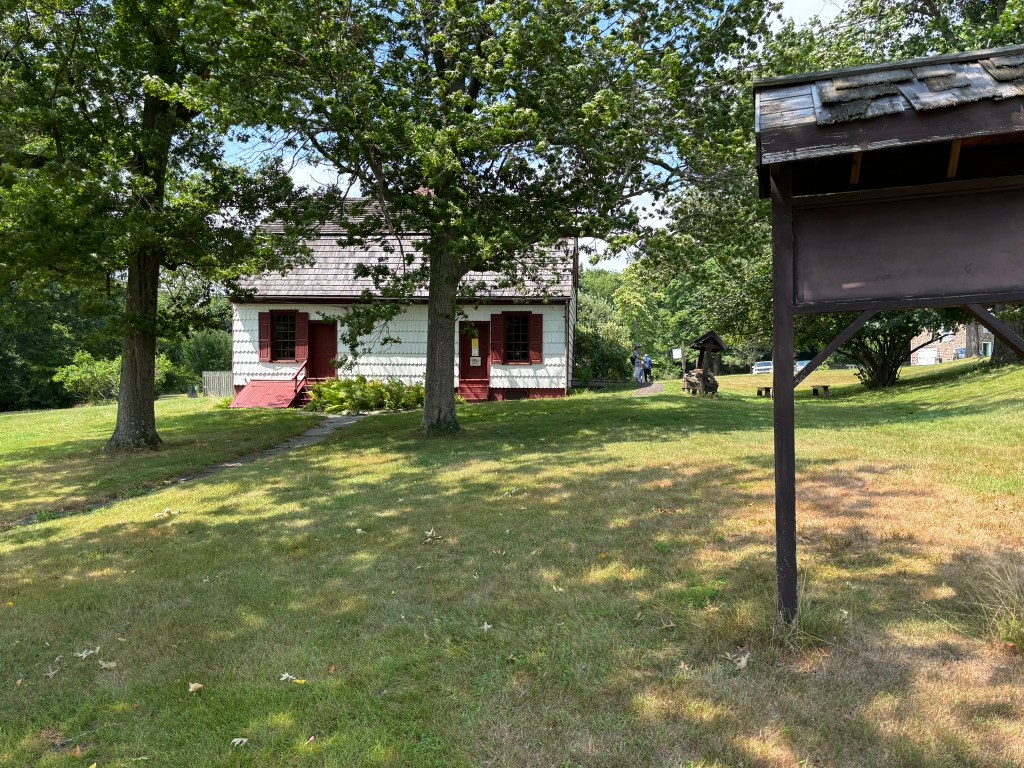
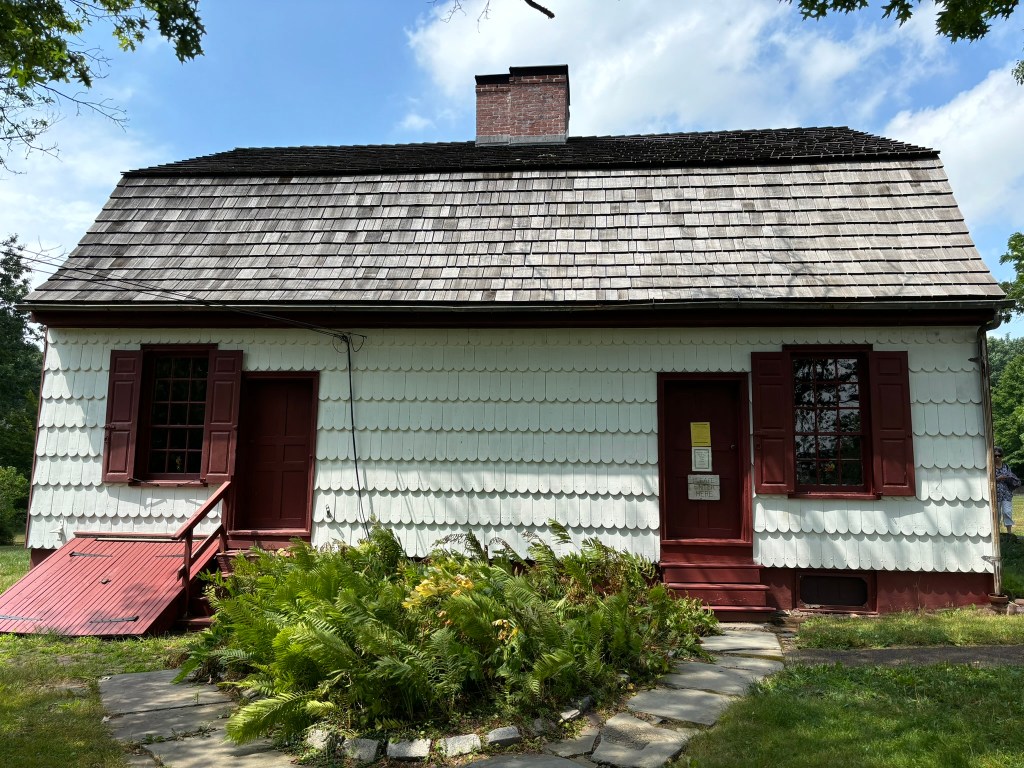
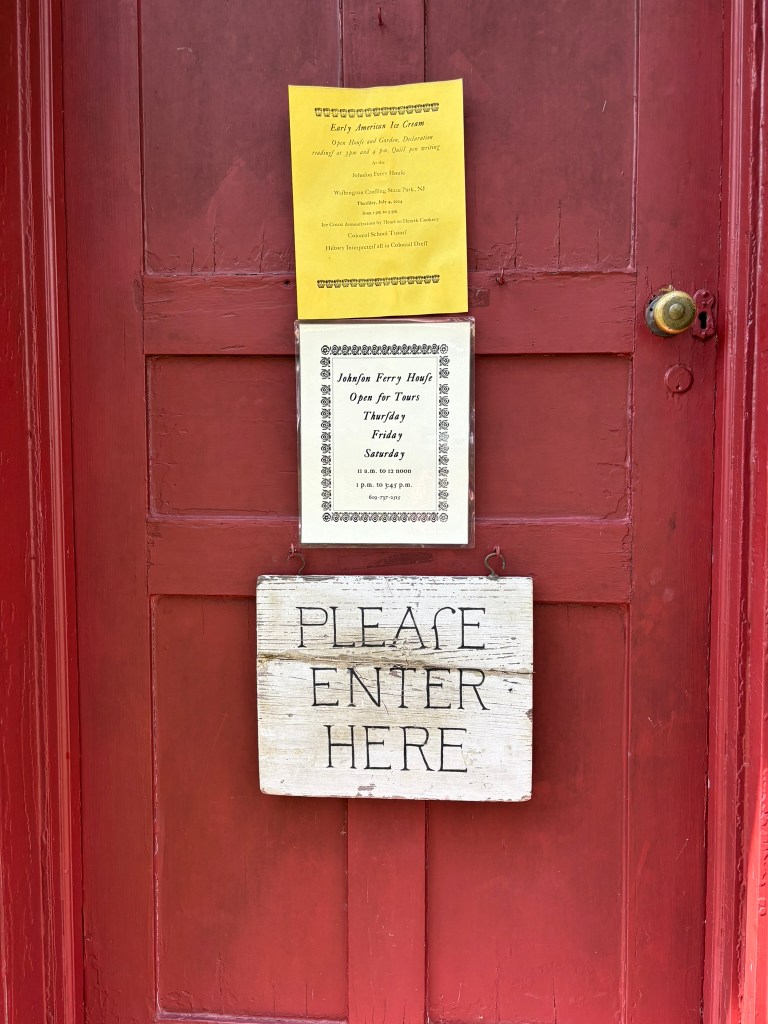
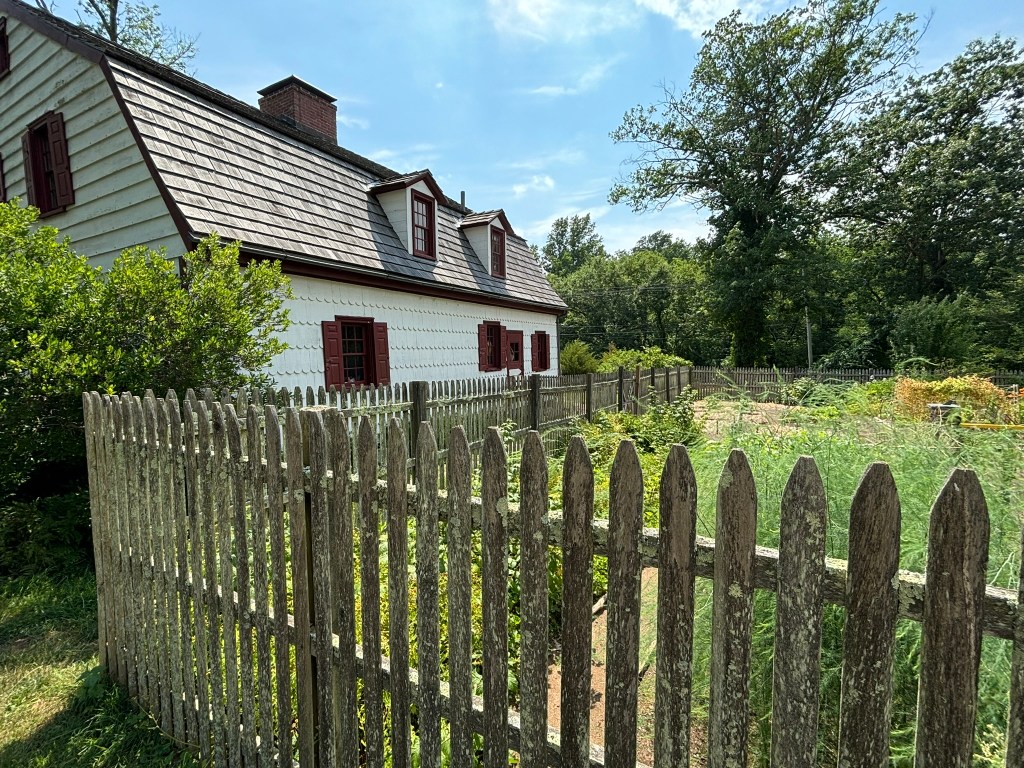
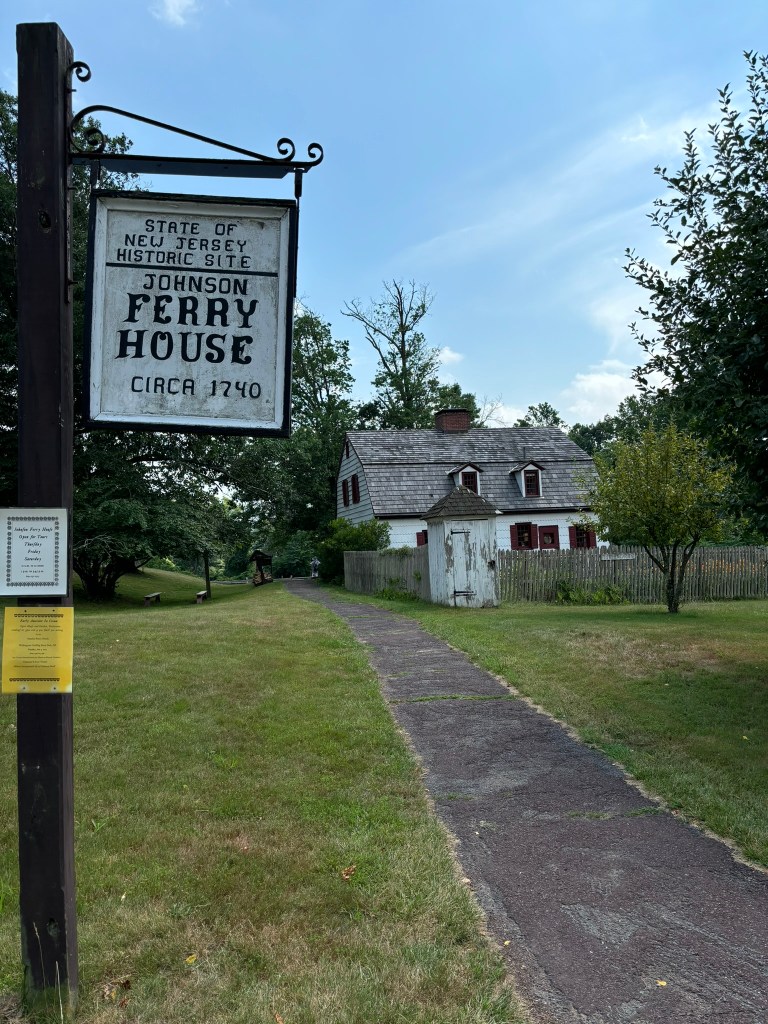
I was able to venture over to the Johnson Ferry House which is very close to the crossing site. The house was built in 1740 and was a witness to the crossing. The house was owned by Garrett Ferry, who had a 490 acre colonial farm and ferry service across the Delaware. It is believed that Washington and his officers used the house to plan out their attack on Trenton. We unfortunately did not have an opportunity to go inside the Johnson Ferry House, but if you are visiting, make sure to check their hours of operations and tours.
We were also told throughout the tour that a brand new visitor center and museum will be built starting early July to be completed in time for the 250th Anniversary. I’m looking forward to checking out the new museum which will have amazing new and updated exhibits. I also look forward to visiting the Pennsylvania side of the river crossing. If anyone has any advice on what to see and do in the area, please comment and let me know!
My family and I made it to the Annual Reenactment of the Battle of Monmouth on Saturday, June 15th. The event takes place every year in June on a Saturday and Sunday to commemorate the June 28th, 1778 battle. It was a great Father’s Day Weekend experience. We were quite impressed with the event as this was our second time visiting the battlefield, but the first time attending this event. Of the American Revolution events that I have been to, this event drew the largest crowd and attracted the most reenactors.
While the Battle of Monmouth did not have much strategic benefit for the Continentals, it was a large battle in terms of manpower, and showed that the Patriot army could go toe to toe with the British. The battle was the largest artillery duel of the war and the Continental Army, led by George Washington, had an opportunity to show their fighting tenacity after a long winter at Valley Forge. At winter camp, the constant drilling from Friedrich Von Steuben, the Prussian drill master, made real soldiers of the Continentals. The benefits of the rigorous drilling were shown on the Monmouth battlefield. The battle is known for temperatures reaching 100 degrees. The night following the battle, the British continued their retreat from Philadelphia to New York (as they had planned), and Washington used this retreat to claim victory for the Patriots. The Battle of Monmouth is also known for the heroics of Molly Pitcher who is commemorated at the park.
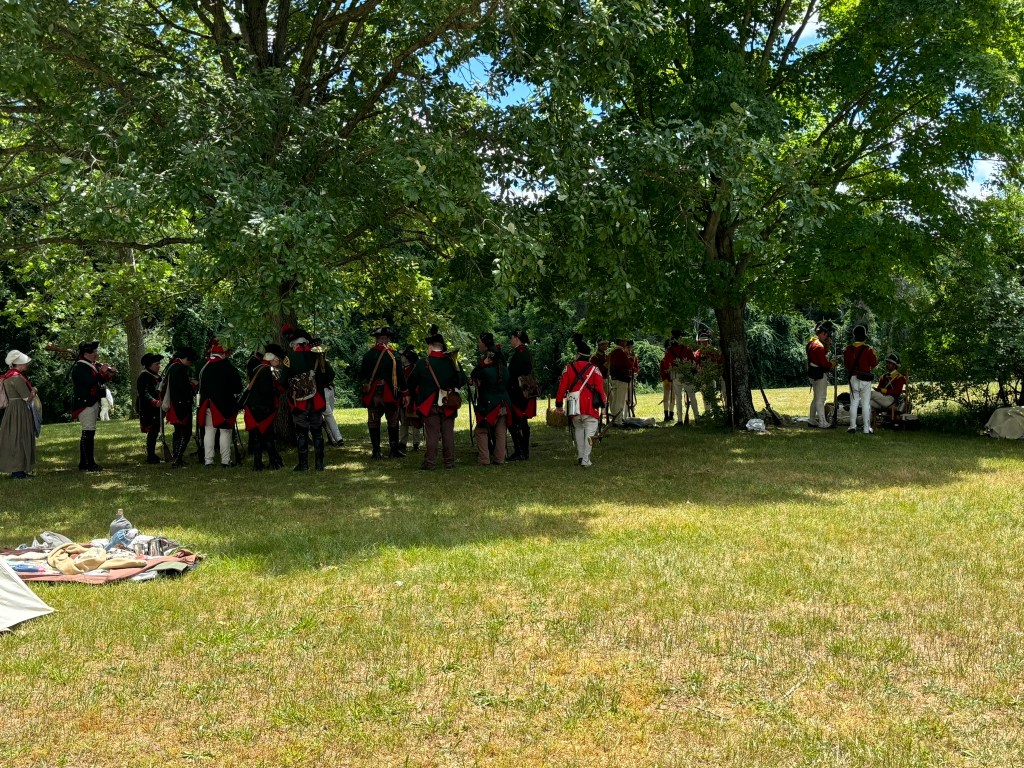
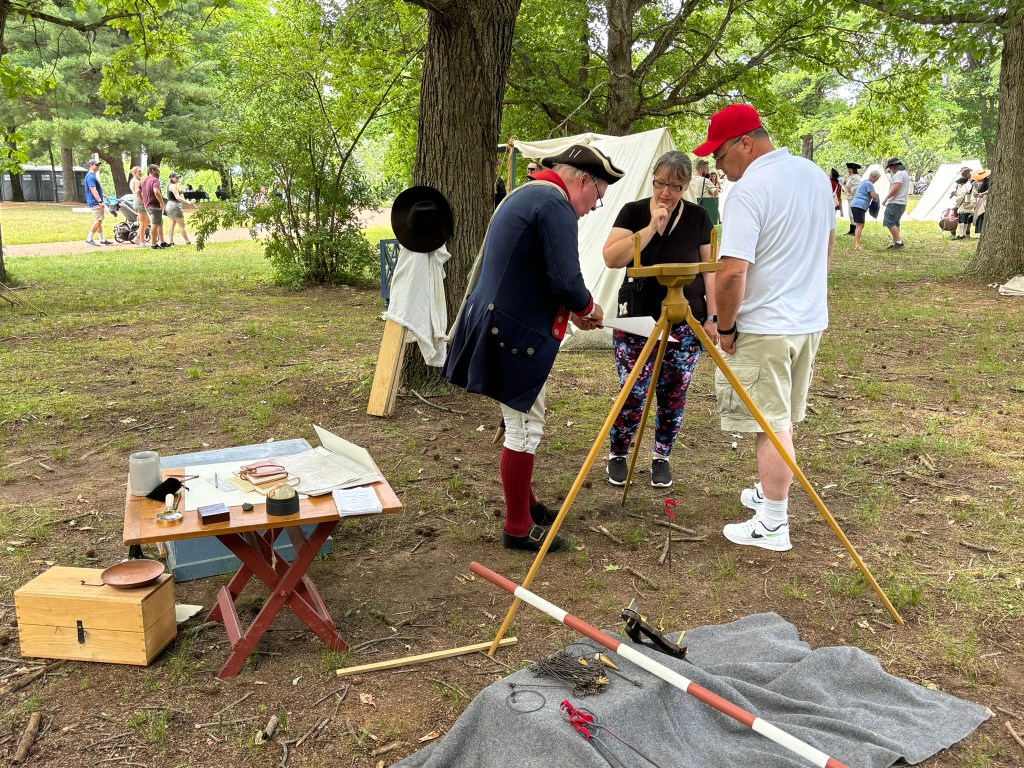
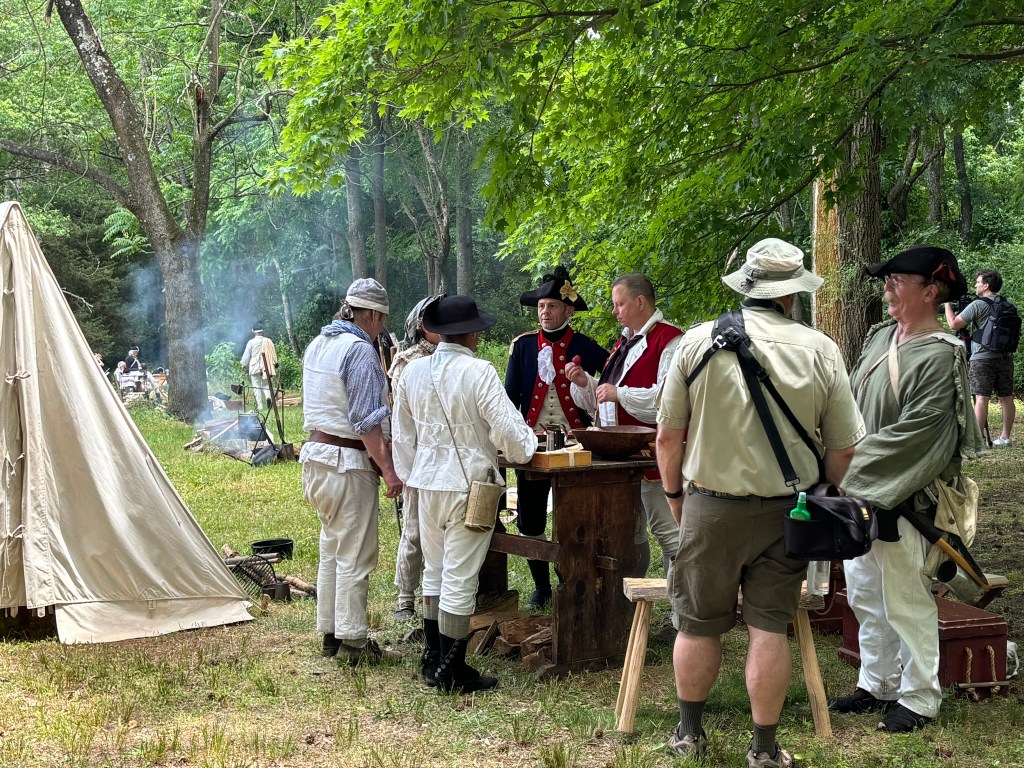
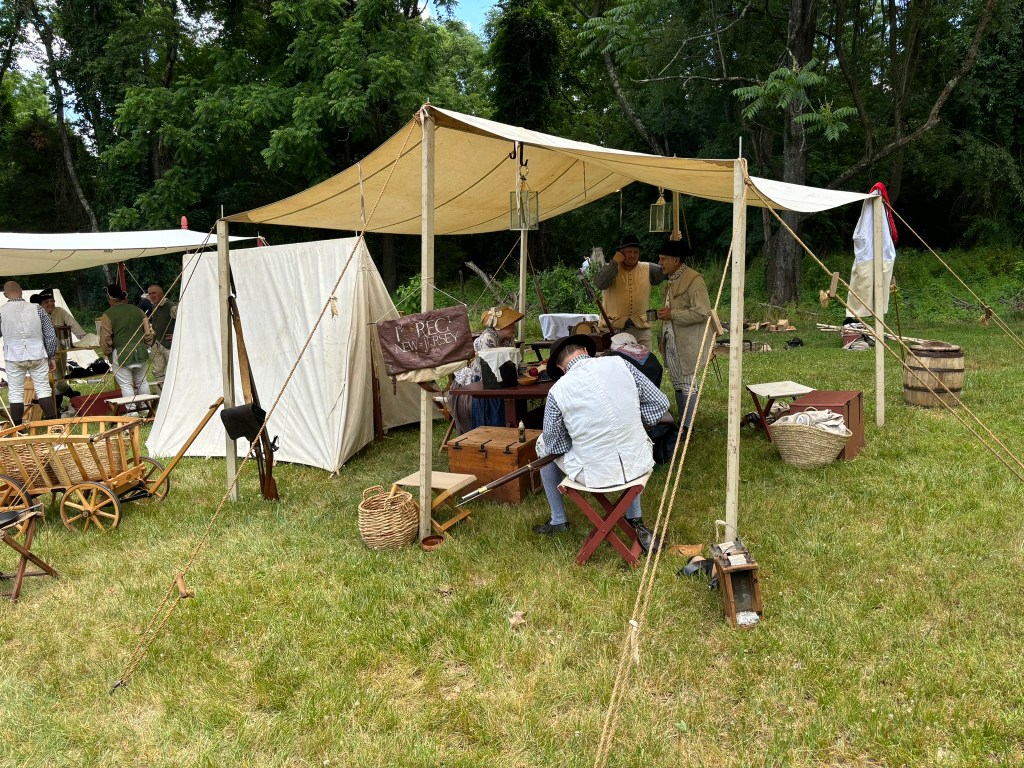
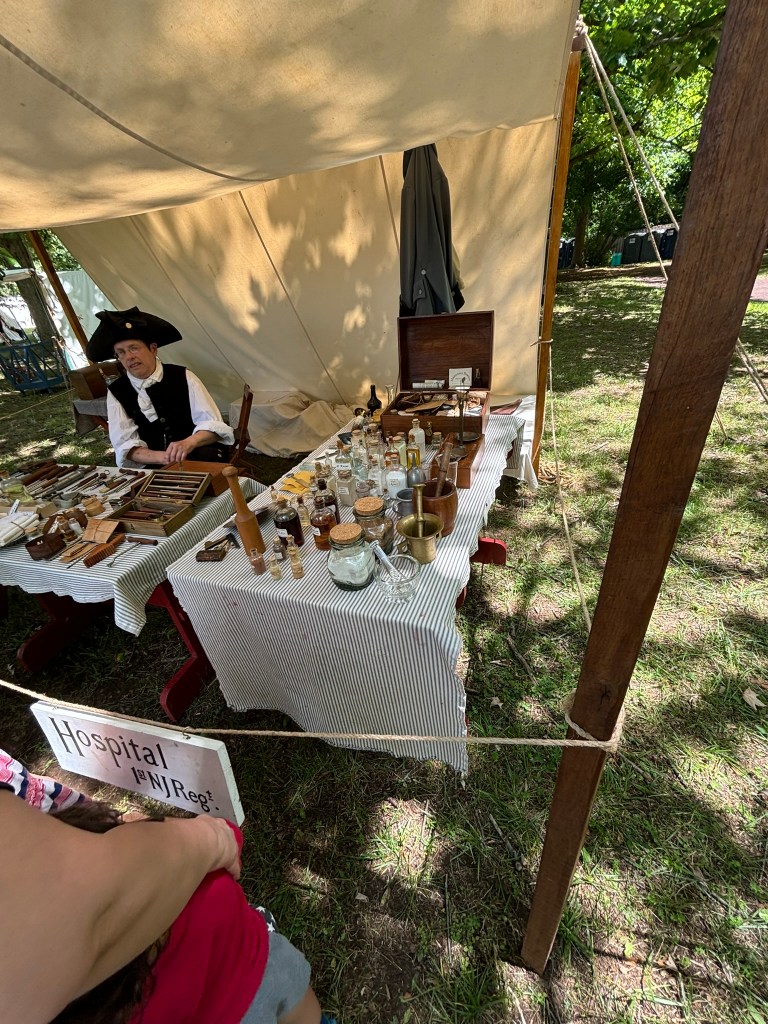
When we arrived at the Monmouth Battlefield, we first noticed the many tents and vendors there from all around the area selling shirts, flags, crafts, antiques, and revolution memorabilia. It is also worth noting that there are food trucks there, which we were unaware of (we grabbed lunch on the way there). We made our way to the many camps and presentations from the reenactors. Men, women, and children were all in camp preparing for battle, cooking meals, doing chores, and passing the time. The reenactors were engaging and knowledgeable of 18th century life. Other demonstrators included camp doctors and surveyors. Fife and drums could be heard throughout the encampments. I was impressed with how extensive the camps were as we stumbled upon Patriot, Loyalist, British, and Hessian camps.
At 2:30pm, the reenactment of the Battle of Monmouth took place. It was quite entertaining and I have never seen anything like that before. It was fascinating to imagine what warfare was like in the late 18th century, and you felt like you were a spectator stepping back in time as the troops stood in a line and fired their muskets and cannons. The battle raged for about 30 minutes. After it was over, my family checked out encampments and made our way to the shops where we bought a couple t-shirts.
I really enjoyed my time at the encampment and plan to visit on a more regular basis, especially if it falls on Father’s Day again. The Monmouth battlefield also has an immersive museum that visitors need to see. You can check out the link here about the reenactment. I would highly recommend making it out to the event next year! The event was fun for all ages!



















































































 Benevento's History Blog