Tag: Colonial America

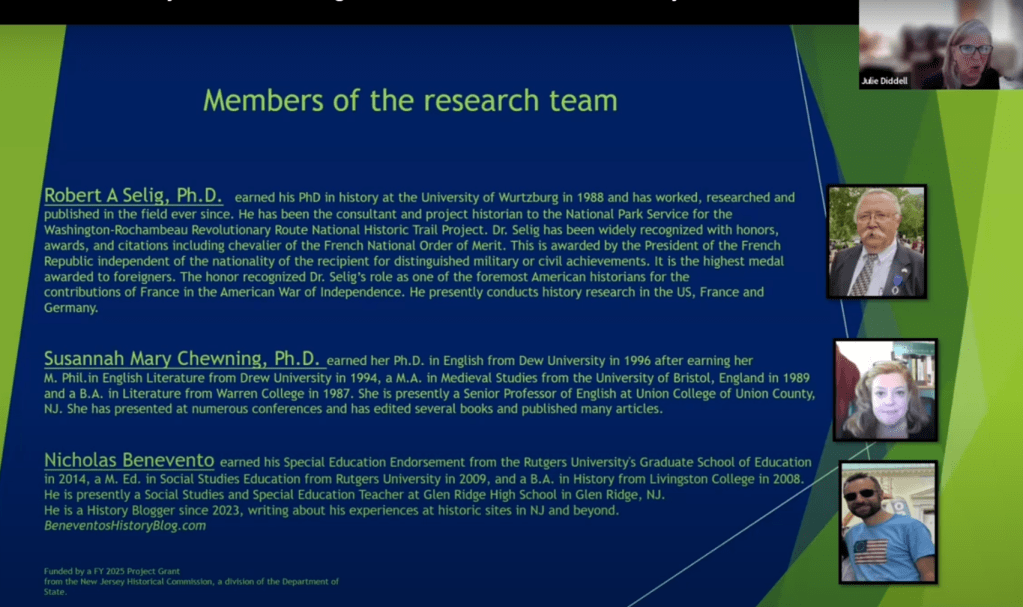
  • In a previous blog post entitled “The Inclusive History of the Washington-Rochambeau Revolutionary Trail Phase II – Westfield, NJ (Part 1)”, I shared an overview of an ongoing history research project conducted by the Westfield Historical Society, with support from the New Jersey Historical Commission. The research has been conducted by Dr. Susannah Chewning and Dr. Robert Selig, and it aims to uncover untold stories and to shed light on both free and enslaved inhabitants of the greater Westfields of Elizabethtown and their roles during the time of the American Revolution.

    If you haven’t had a chance to read the first blog post from February 7th, 2025, I encourage you to check it out [HERE]. It offers valuable context about the project’s background, goals, and initial findings.

    This blog post picks up where the previous one left off. Since February, the research has entered a new phase, bringing to light fresh insights and raising new questions that have continued to guide the direction of the work. In this update, I’ll share the latest progress, some of the challenges encountered, key discoveries made, and an overview of the final presentation which took place on June 21st, 2025.

    The researchers have been working closely with Julia Diddell, Chair of the Washington-Rochambeau Revolutionary Route- New Jersey, as well as Brian Remite, President of the Westfield Historical Society, to comb through enlightening resources.  The team met in late March to discuss new findings, challenges along the way, and future goals.  The team was also joined by Dr. Mary Konsolaki and Dr. Ken Mirsky, who both serve on the Grants Committee at the Westfield Historical Society.  
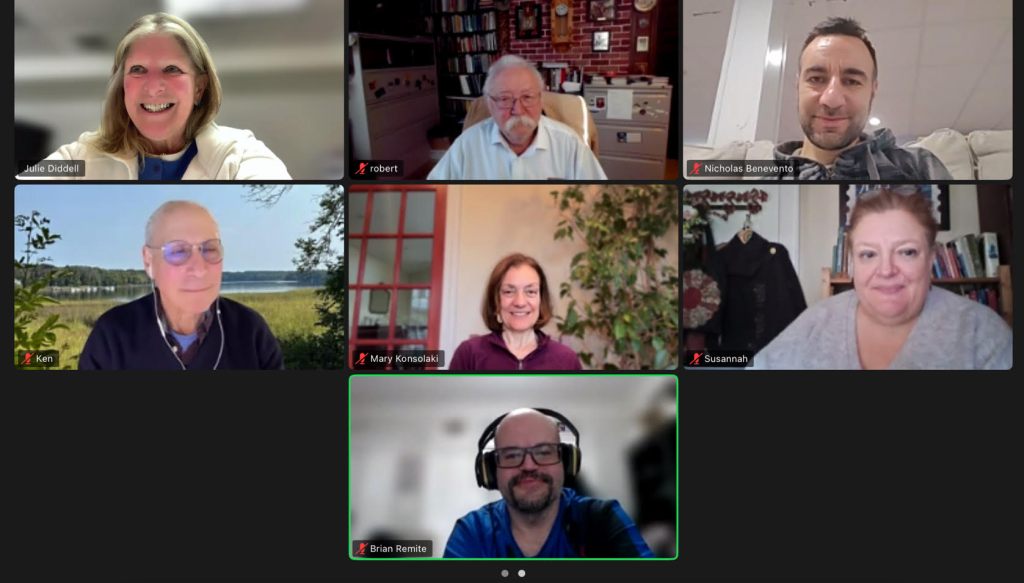
    The team reconvened in mid-May, with each researcher sharing their latest findings, describing any new obstacles, and discussing plans for the final presentation. During the meeting, Julia shared that the Westfield Historical Society is interested in using the research to develop a long-term outdoor exhibit in Westfield. She also noted that the Society is planning to collaborate with the Rutgers Department of Landscape Architecture to explore potential sites for the exhibit and may even conduct a survey this summer.

    The information provided below provides the latest updates on the research and discoveries of Dr. Robert Selig and Dr. Susannah Chewning, covering their progress from April 2025 to the final outcomes of the research project, concluding with the presentation to the public. For an overview of their research topics and goals, please refer to the first blog post.  

    The Mood of the Local Inhabitants

    Dr. Robert Selig, a distinguished historian with a PhD in History and extensive experience consulting with the National Park Service, has been conducting research on early Revolutionary War activities within Westfield and surrounding towns to gain a better understanding of the mood of the local inhabitants, leading up to the Revolution.  Having written extensively on the Washington-Rochambeau National Historic Trail, Dr. Selig has brought invaluable expertise to the project, particularly in investigating the local impact of the national movement toward independence.

    April 2025 Update

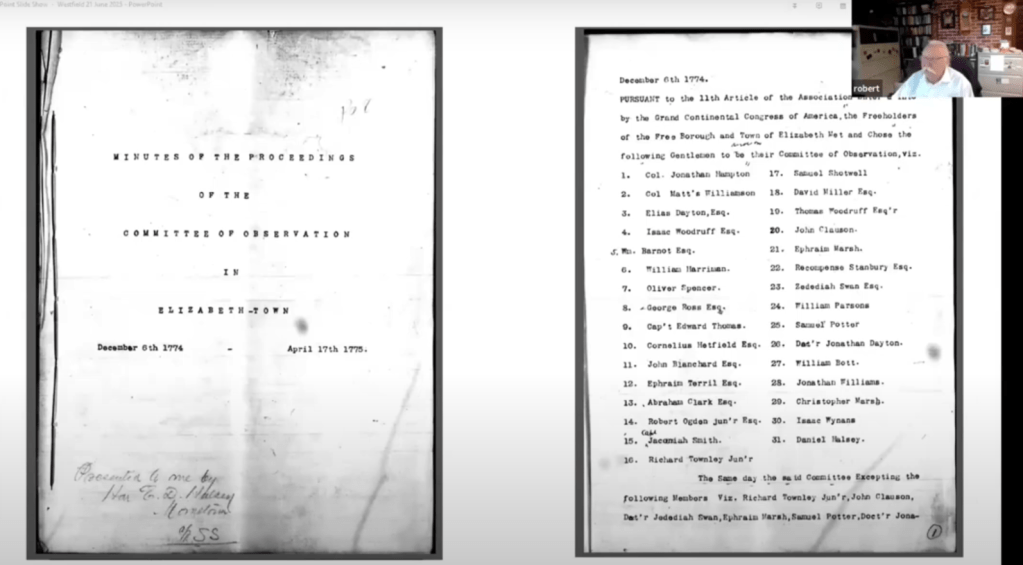
    During our late March meeting, Dr. Selig provided updates on his research. He emphasized the importance of identifying individuals on a list from the New Jersey Committee of Correspondence, focusing on their economic status and roles within the community. Dr. Selig has accessed damage claims from the New Jersey State Archives, revealing that seven of the ten Westfield Committee members filed claims—though notably, Abraham Clark, a key regional leader and signer of the Declaration of Independence, did not. These claims provide valuable insights into the local inhabitants. Moving forward, he also intends to study New Jersey citizens who served in the war, particularly through pension applications from soldiers and members of the New Jersey militia, which could offer significant insight.

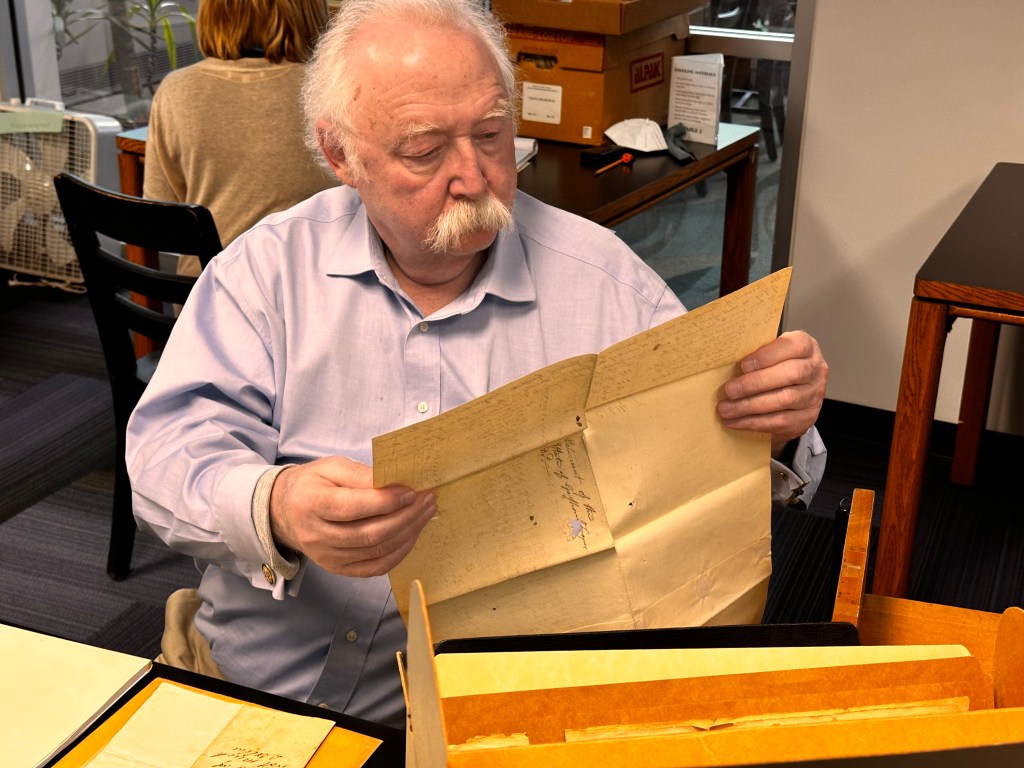
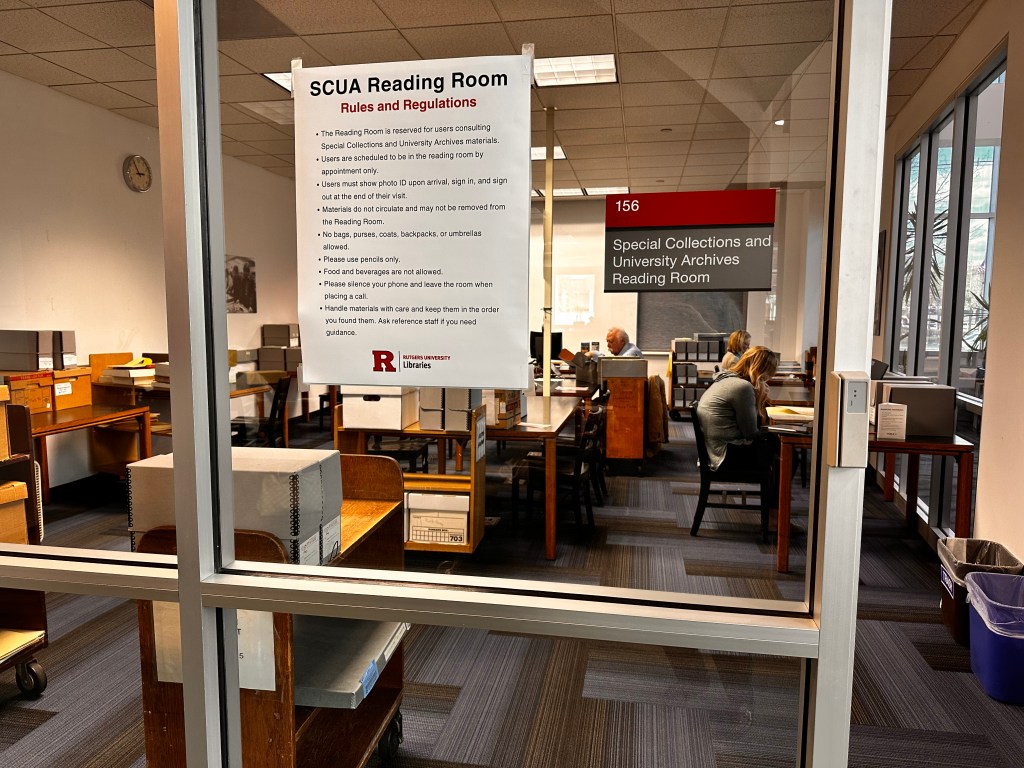
    In early April, Dr. Selig had the opportunity to visit Rutgers University’s Special Collections Library to continue his research, and on his second day, he made a significant discovery—the Jedediah Swan Papers. Dr. Selig found some 500 documents, including letters, indentures, and other records, spanning nearly 75 years of Swan family history, from Amos Swan in the 1760s to Jedediah’s death in the 1820s. Many of the papers referenced Westfield as either the origin or destination. Jedediah Swan (1732–1812) is buried in Scotch Plains.

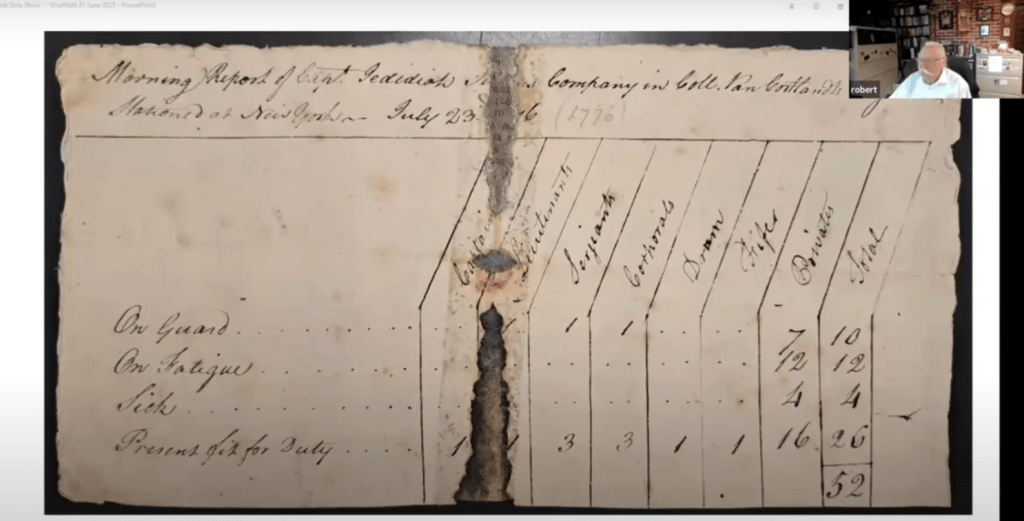
    Jedediah Swan was an MD, Justice of the Peace, Overseer of the Poor, Committee of Correspondence member, Captain of the Second Regiment Essex County Militia, and held several other roles. Dr. Selig photographed about a dozen documents that will help the researchers reconstruct Swan’s influence in the community. Among the findings were an enlistment paper for a soldier in his company, a record committing a poor woman to the town’s care, a case involving an unwed mother and the man she accused of fathering her child, a note mentioning his enslaved individual, Dorceas, and a receipt for expensive beaver-fur hay. These findings help paint a picture of a man who was influential in the Revolutionary movement in the Westfields.

    May 2025 Update

    During our May meeting, Dr. Selig discussed the book War in the Countryside: The Battle and Plunder of the Short Hills, New Jersey, June, 1777. Vol. I by Frederic C. Detwiller, which includes references to Jedediah Swan and cites the “Marsh Papers,” housed at the Plainfield Historical Society. The team described their efforts to contact the Society and locate these papers, which may contain valuable information about Swan. This example highlights the researchers’ diligence and the many challenges they navigated—acting as historical detectives, following promising leads. It’s been truly impressive to watch the team support one another and collaborate so effectively.

    Presentation Day- June 21st, 2025

    On June 21st, the research team presented its findings to the public via a Zoom webinar, now available to watch on YouTube [HERE]. I highly encourage you to view the full presentation to get a comprehensive look at the project and its exciting discoveries.

    The session began with remarks from Julia, Project Manager and Chair of the Washington-Rochambeau Revolutionary Route – New Jersey. She outlined the project’s goals, provided a historical overview of the Revolutionary War, described the Washington-Rochambeau Revolutionary Route, and discussed its lasting impact on the local community. Julia also introduced each member of the research team before transitioning to a pre-recorded video presentation by Dr. Selig.
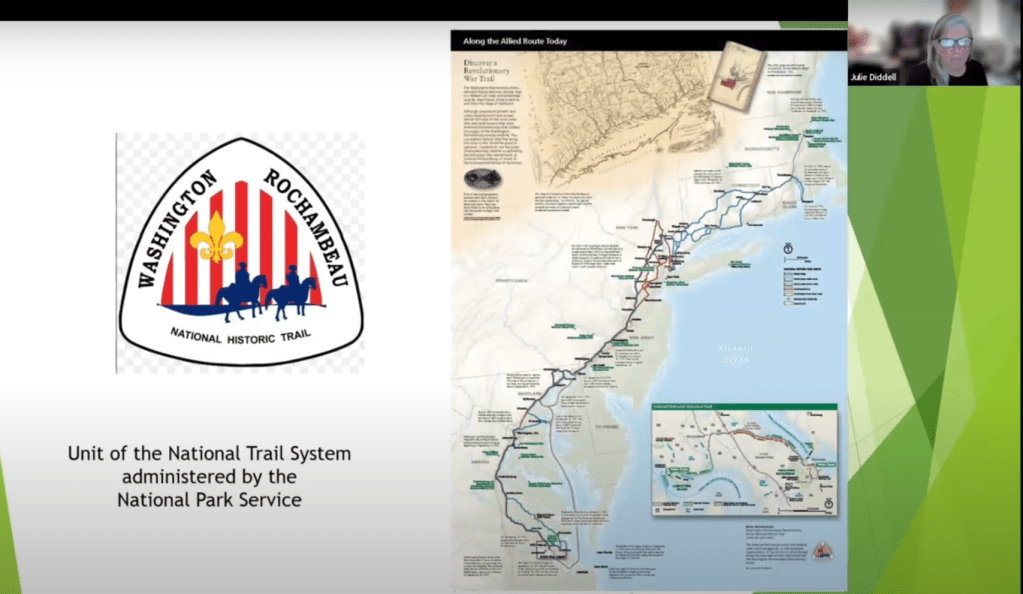
    In his presentation, Dr. Selig shared the objectives of his research, which focused specifically on Westfield, New Jersey. His goals included identifying residents who served on the Essex County Committee of Correspondence, documenting the sentiments of local inhabitants in the lead-up to the Revolution—particularly in the area then known as the West Fields of Elizabethtown—and analyzing pension applications and other historical documents from Westfield veterans of the War of Independence.

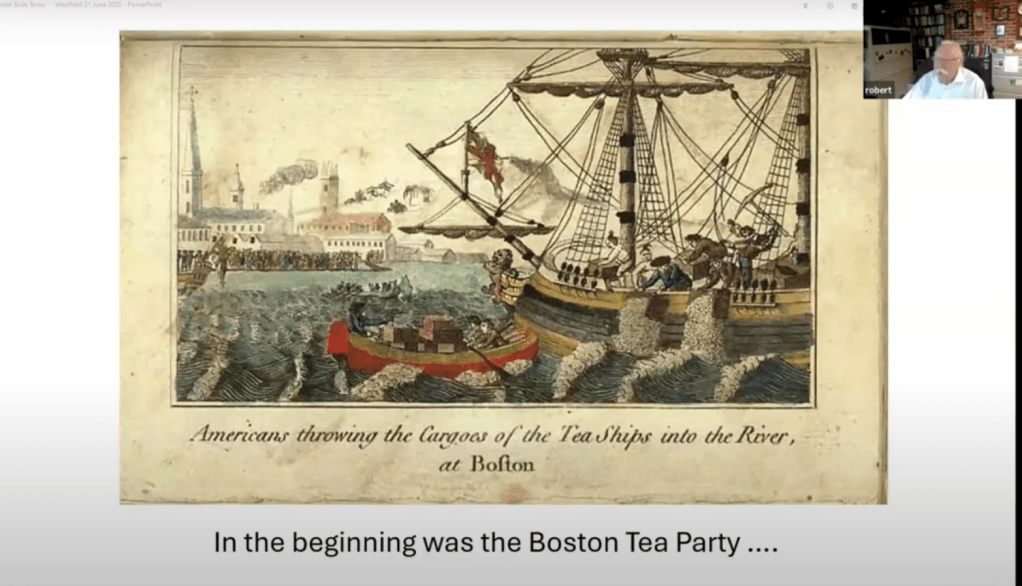
    To set the historical context, Dr. Selig began with the Boston Tea Party of December 16, 1773. In response to this act of defiance, the British government passed the Intolerable Acts, aimed at punishing the colonies—especially Massachusetts. This prompted the Massachusetts Committee of Correspondence to call upon other colonies to join a boycott of British goods. For New Jersey, this marked the first major action taken by its own Committee of Correspondence in support of a united colonial resistance.

    Dr. Selig described how meetings were held throughout New Jersey to coordinate responses to British policies. Delegates from various counties gathered in towns such as New Brunswick and Elizabeth. He identified several representatives from the Westfield area who attended these meetings—men who were part of the local elite and played influential roles in shaping public sentiment. Through primary source materials, Dr. Selig offered insight into who these leaders were, including damage claims they filed during the war.

    A particularly notable figure discussed was Jedediah Swan. As mentioned above, Dr. Selig uncovered significant information about Swan during his research at Rutgers University, including original documents that shed light on his contributions during the Revolutionary era. Swan’s story illustrates the importance of individual actors in the broader historical narrative.

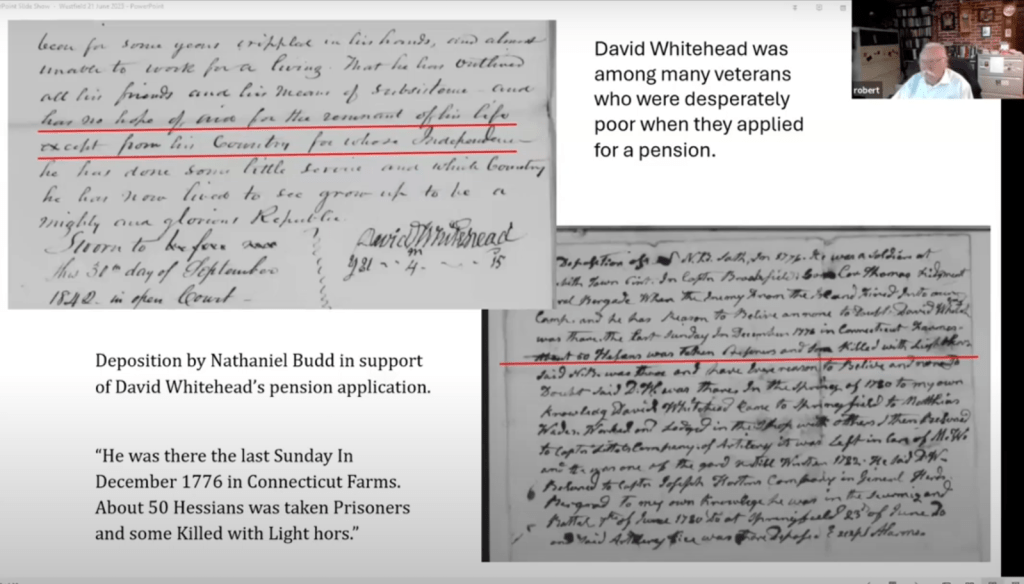
    Dr. Selig also explored the wartime experiences of ordinary Westfield citizens through pension applications filed under the Federal Pension Act of 1832. He transcribed approximately 25 applications from Westfield veterans, noting that many more remain. These documents offer a rich look into both the war and its long-term effects on those who served. For example, one application recounted the capture of Hessian soldiers, while another revealed the desperate financial condition of veteran David Whitehead at the time of his filing. Some veterans described fleeing their homes during British raids. These accounts provide a deeply personal view of how the war affected individuals and families, both during and long after the conflict ended.

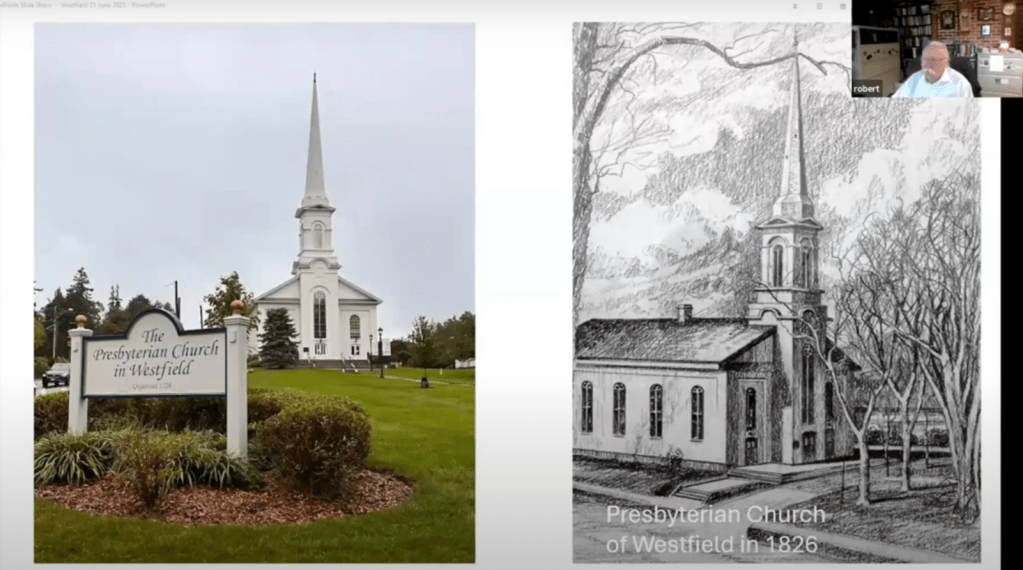
    Another important highlight from Dr. Selig’s presentation was the Miller-Cory House, located in Westfield along the Washington-Rochambeau Revolutionary Route. The house was built by Clark Miller, who served in the Continental Army for two years and six months. He is buried in the cemetery of the Westfield Presbyterian Church, connecting a local landmark to national history in a profound way.

    Dr. Selig concluded his presentation by summarizing his key themes, including the formation of the Committees of Correspondence and the development of local militias—both essential to understanding early American resistance efforts in the local community.

    Dr. Selig’s presentation is a compelling and informative look at Westfield’s pivotal role in the Revolutionary War and a testament to the value of local history in understanding our nation’s past.
    A Focus on African American History

    Research has been conducted that has focused on the African American community in Westfield and the surrounding towns during the Revolutionary Period.  Dr. Susannah Chewning, a Senior Professor of English at the College of Union with a diverse academic background in English Literature and Medieval Studies, has been leading this important aspect of the project.  Dr. Chewning has been exploring local records, including manumission documents and birth certificates to trace the lives of African Americans in the region.  She is working to compile a comprehensive database from her work.

    April 2025 Update

    During our late March meeting, Dr. Chewning referenced a pre-Revolutionary-era taxable inventory/ census document shared by Julia. She noted her plans to visit Princeton University to examine the full document, as it includes references to enslaved individuals. This information will help her identify who was living in the area at the time and expand her database of African American residents. She also pointed out that some of the enslaved individuals listed were recorded as tax-exempt.

    Dr. Chewning noted that when her research first began, she had identified 25 enslaved individuals who lived in Westfield between 1778 and 1781—most of them by name. That number has since grown to 69.  Dr. Chewning also discussed a well-known, formerly enslaved woman named Jude, who is buried at Fairview Cemetery in Westfield. Dr. Chewning believes she has identified Jude’s parents, offering another valuable lead in tracing individuals who were alive during the March to Yorktown in 1781.

    Dr. Chewning recently presented her research at her college and at the New Jersey College English Association Annual Conference, where it was well received. While at the conference, she attended a Digital Humanities Workshop sponsored by the New Jersey Humanities Consortium, which provided valuable insights for the development of her website (featured in the first blog post). Inspired by the workshop, Dr. Chewning is now exploring the idea of launching a podcast. She envisions using the platform to interview descendants of formerly enslaved individuals from the Westfields, as well as researchers and historians. Although still in the early planning stages, she is already brainstorming episode ideas. In addition, she connected with members of other New Jersey counties working on similar projects and is considering a long-term initiative to honor the African Americans who lived in the region during the Revolutionary era.

    As part of her efforts to locate the burial sites of African Americans, Dr. Chewning noted that when Fairview Cemetery was established in 1868, many bodies were relocated from the Old Presbyterian Church burial ground. She plans to continue her research to determine who was moved and the reasons behind those relocations.

    May 2025 Update

    During our May meeting, Dr. Chewning shared her latest research efforts in preparation for the upcoming June 21st presentation. She mentioned her ongoing plans to visit Fairview Cemetery to investigate additional burial sites and uncover more information about African Americans buried there. She also spoke with Julia about plans to create a permanent public outdoor display that will showcase the researchers’ work.

    Presentation Day- June 21st, 2025.

    After Dr. Selig presented his findings, Dr. Chewning had the opportunity to share her own research with the public. She began by introducing herself and explaining how she became involved in the project.

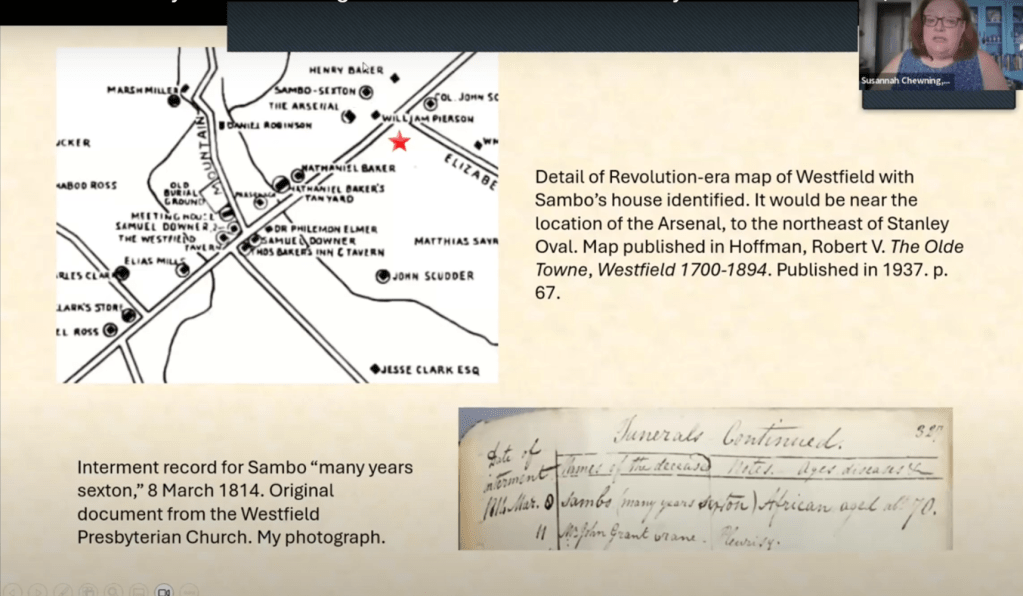
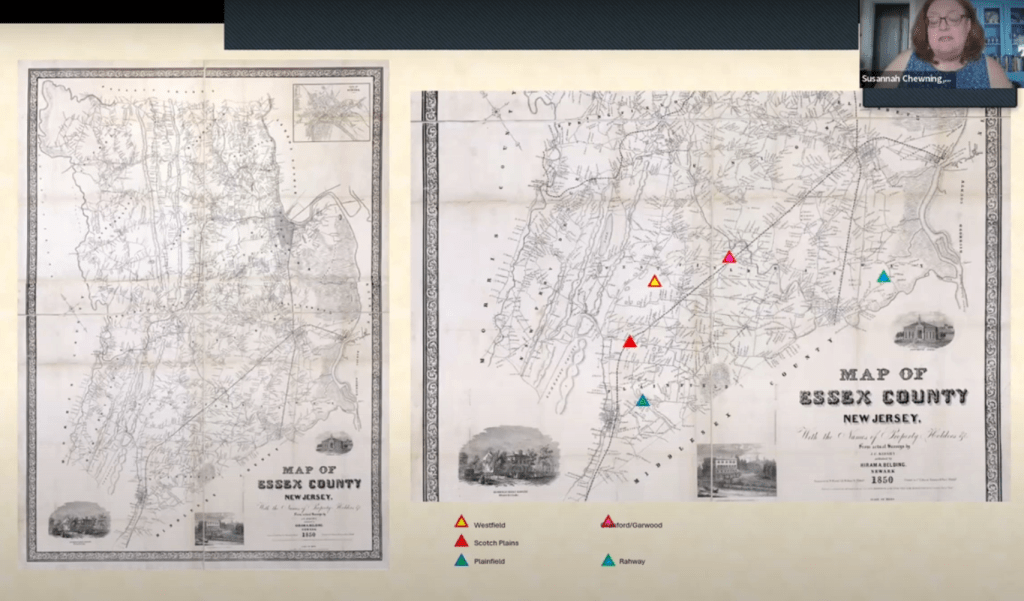
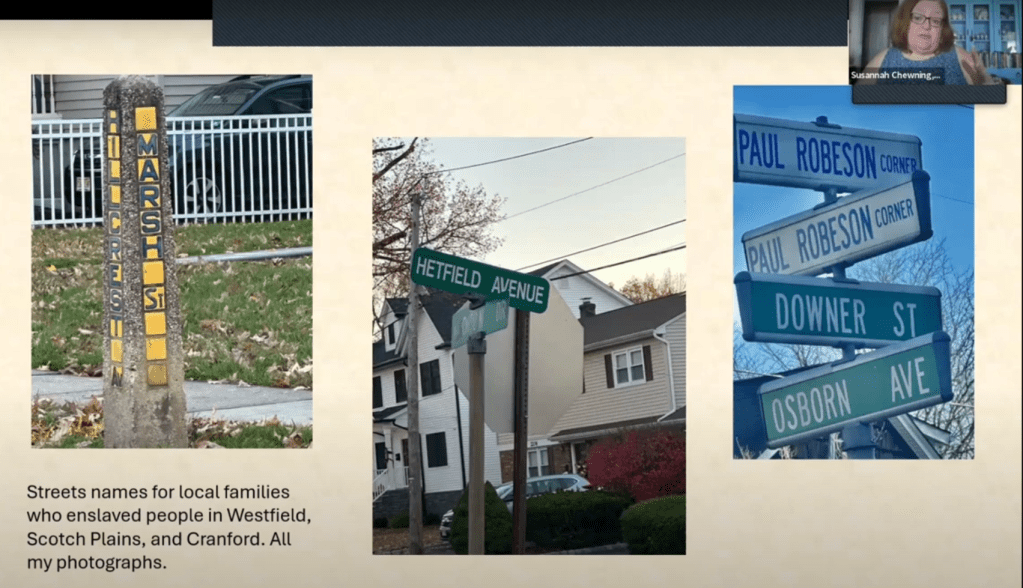
    Dr. Chewning shared maps of what were historically known as the Westfields of Elizabethtown. She noted that many of the streets in present-day Westfield are named after influential early figures in the area. However, she also pointed out that many of these individuals were slave owners, a fact often overlooked in the local historical narrative.

    Dr. Chewning then discussed the goals of her first grant-funded research project, conducted the previous year, before outlining the aims of the current project. These include building a comprehensive database documenting:

    • The names of African Americans who lived in the region
    • Burial locations of African Americans from the Revolutionary War era
    • Possible descendants of those identified

    Her database will also include information such as burial and interment dates, grave locations, personal stories, manumission and birth certificates, original documents, transcriptions, and links to related historical materials.

    Dr. Chewning reported that her list of African Americans in the region has continued to grow, currently up to 200 individuals spanning from 1704 to 1866—the year slavery was finally abolished in New Jersey.

    During her presentation, Dr. Chewning highlighted several individuals from her research, offering biographical details such as where they lived and what is known about their lives. By doing so, she brings voice and humanity to people who were often silenced by the historical record.

    She also emphasized the wide array of sources used to construct these stories, including:

    • Baptism, marriage, and death records from the Westfield Presbyterian Church
    • Local tax and census documents
    • Burial records from Fairview Cemetery
    • Archives from the New Jersey Historical Society
    • The New Jersey Slavery Records Database and Northeast Slavery Records Index
    • Inventories of damages caused by British and American forces in New Jersey
    • The Winans Collection at Princeton University
    • Archives of the Westfield Historical Society
    • Various books and local histories

    Dr. Chewning also addressed the history of slavery in Westfield by naming prominent early residents known to have enslaved individuals. She has a list of about seventy enslaved people living in the West Fields at the time of the March to Yorktown in 1781.  She presented a range of primary sources that help tell their stories, such as sale records, damage claims, baptismal and burial records, Revolutionary War-era maps, runaway slave advertisements, and manumission documents.

    A key part of her ongoing work involves identifying burial sites of African Americans in the community. Dr. Chewning noted that enslaved individuals were known to be buried at the Old Burying Ground of the Westfield Presbyterian Church, the First Presbyterian Churches in Woodbridge and Elizabeth, as well as in family plots and home burials—many of which may have later been moved to Fairview Cemetery. She explained that further research is needed to match unnamed graves to individuals and that she is actively collaborating with Fairview Cemetery staff to advance this work.

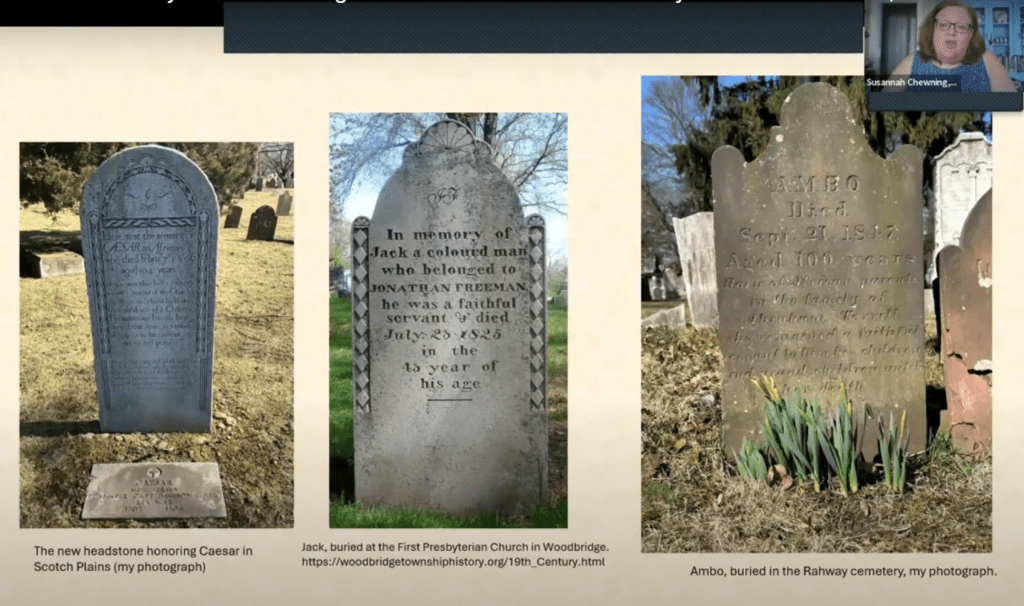
    Dr. Chewning shared photos of gravestones belonging to known African Americans in local cemeteries. She underscored that, to her knowledge, these are the only marked graves of enslaved individuals currently identified in Union County.

    Dr. Chewning concluded her presentation by highlighting Wally Brown, a Westfield resident whose great-grandparents, Jack and Lembe Williams, are believed to be buried in the Old Burying Ground. Brown believes he knows the precise spot where they were laid to rest, though no marker currently exists. Dr. Chewning expressed her commitment to continuing this vital work.
    My Presentation

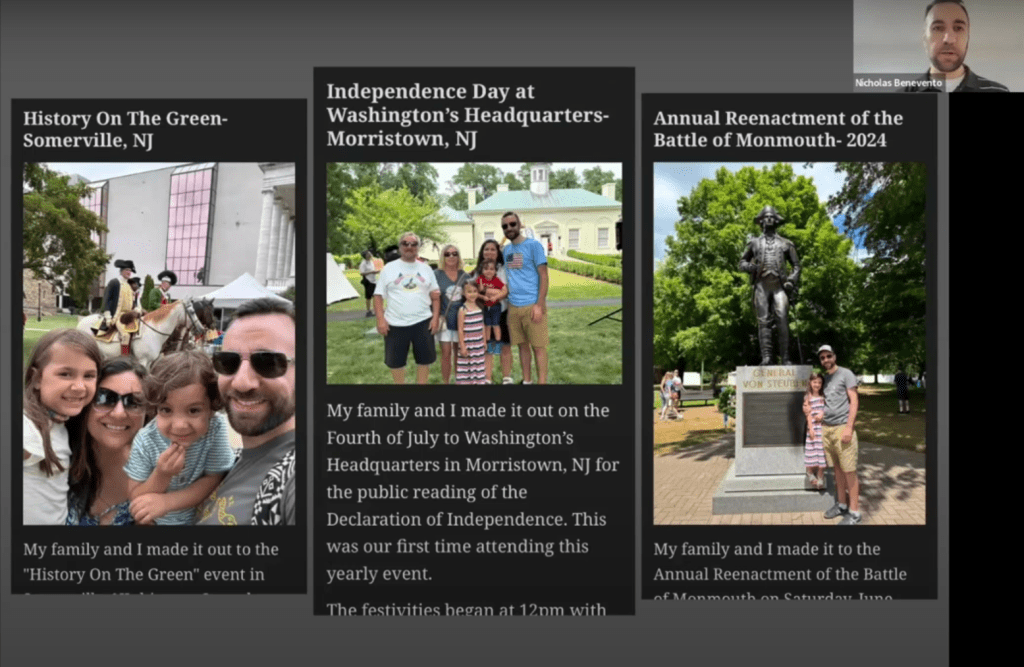
    Following Dr. Chewning’s presentation, I had the opportunity to discuss my blog with the audience. I shared how the blog started, the kinds of content it features, and how I became involved in the research project. It was a true honor not only to present my work, but to contribute to such a meaningful and collaborative effort. As mentioned earlier, you can watch the full presentation [HERE].

    Building a Lasting Legacy

    By shining a light on both prominent leaders and those whose names were nearly lost to history, this project reminds us of the power of local research to reshape our understanding of the past.  As I discussed in Part 1, one of the aims of this research project is to create a lasting educational resource for the community.  The team has been exploring and discussing the possibility of an enduring outdoor exhibit or monument that would allow the public to engage with this history in a meaningful way.  The groundwork has been laid for this educational space that honors the notable figures who played an impactful role in Westfield and surrounding towns at the time of the American Revolution.  Stay tuned to the Westfield Historical Society for updates on this future endeavor, and continue to check in with Benevento’s History Blog for future updates.  Thanks for reading and supporting this project. Stay connected with the organizations listed below that have been involved with this project:
    Check out these related posts:
  • Every year that I teach the American Revolution, I often ponder new questions related to the event.  One question that I’ve asked myself this year is:  Could have cooler heads prevailed in the lead up to the American Revolution?  The primary, foundational disagreement between the American colonists and the British government was the simple question: “Did the British Parliament have the right to tax the colonists?”  The colonists were so steadfast with an emphatic “NO” that they were willing to protest, boycott, destroy property and risk going to war.  The British responded with an empathic “YES”.  They were so steadfast that they were willing to tighten control over the colonies, send British troops to enforce its laws, close Boston’s port for trade, enact martial law in Massachusetts, and alter the justice system of the colonies.  The British were so committed to their power to tax the colonists that they were willing to go to resort to war. 

    There is no doubt that the colonists drew a line in the sand against British infringements on their rights as Englishmen.  There is also no doubt that the British officials were quite stubborn with their unwillingness to listen and work with the American colonists.  The British had a reputation to defend and were unwilling to give in to colonial demands.   There was a sense of arrogance in their responses to the colonists throughout the controversies that occured between 1763- 1775.  Had the British been more willing to negotiate, was it possible that war could have been avoided?  Or was an independence movement in the colonies inevitable? I explore these questions later in the blog post, but first, I’ll highlight the chain of events and laws that continued to build tensions between the two sides.

    Tensions Emerge at the Conclusion of the French and Indian War

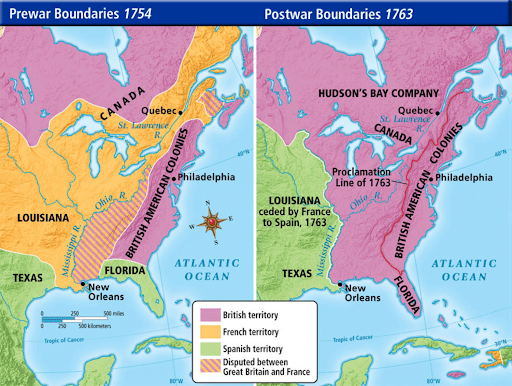
    The French and Indian War (The American Theater of the global, Seven Years’ War) started in 1754 and ended with the Treaty of Paris in 1763. It was a conflict that emerged between the growing French Empire (along with Native allies) and the British Empire around the Ohio Country, the Great Lakes, and in Canada. The British emerged victorious and kicked the French out of their North American holdings. At the conclusion of the war, the British Empire in North America stretched from the east coast to the Mississippi River. In its aftermath, the British racked up a debt nearly double what it was before the conflict.

    The British passed the Proclamation of 1763 to ban new colonial settlements west of the Appalachian Mountains. This was an effort to limit conflicts between the American colonists and Native Americans. The British sent about 10,000 British troops to the frontier to regulate the ban and limit any future tensions with the French and Natives. The American colonists saw the British stationed in the colonies as a standing army in a time of peace, which was unacceptable according to 18th century norms.. The standing army only added to Britain’s debt.

    The British government believed that the American colonists should pay for their own protection and passed a series of laws that would extend the tax burden onto the colonists. Along with the taxes were a number of events that further led to tensions between the British government and the American colonists. Let’s take a walk through the timeline below to highlight the growing friction between the two sides:

    1763- The Treaty of Paris (Ends the French and Indian War)

    1763- Passage of the Proclamation of 1763- highlighted above.

    1764- The Sugar Act

    The British passed this law to address illegal smuggling by the colonists. The Navigation Acts, which had been passed throughout the colonial period, allowed the colonists to only trade with England. The colonists freqently smuggled goods into the colonies including tea, molasses, sugar and other items. The Sugar Act sought to do two things- split the tax on foreign sugar/ molasses in half, (with the hopes that the colonists would pay the lower tax) and strengthen the enforcement of the law, allowing prosecutors to try smuggling cases in vice-admiralty courts with only a British judge and not a jury. While the colonists were opposed to the act, there was not widespread anger or oppostion (like we’d see with the Stamp Act). The colonists understood that this act was written to regulate trade, not necessarily to raise revenue for the Empire.

    1765- The Stamp Act

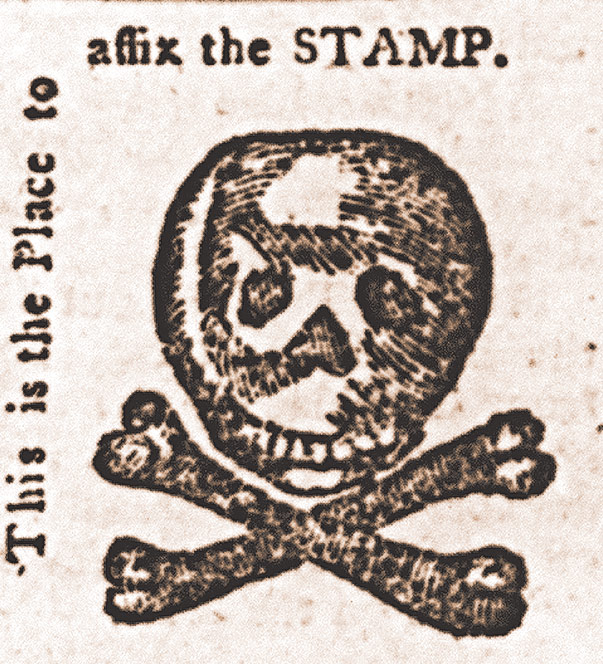
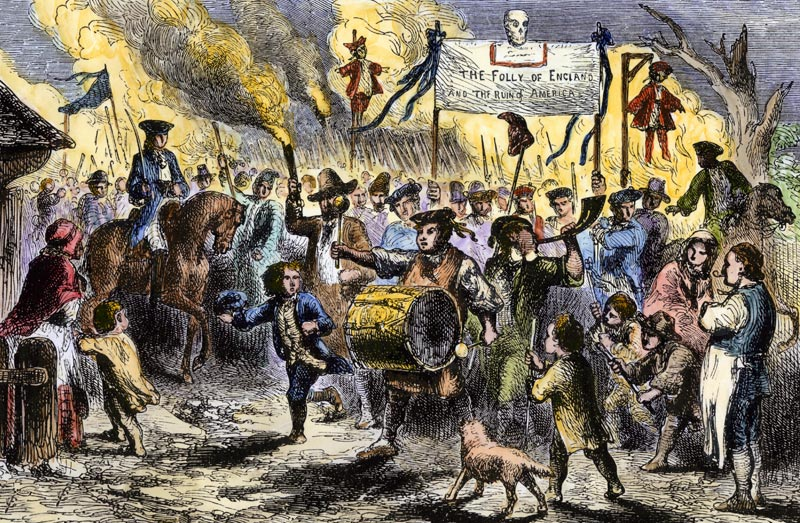
    This law led to fierce, widespread anger throughout the colonies. The Stamp Act required all paper products: legal documents, newspapers, licenses, pamphelts, almanacs, playing cards, and even dice to be taxed. This was a direct tax that affected all colonists. Never before in colonial history had the British Parliament taxed the colonies in such a manner. The colonies had only been taxed by their colonial legislatures. The central argument from the colonists was “No Taxation Without Representation.” The colonists argued that because they were not represented in the British Parliament, that body did not have the right to take their property (in the form of a tax). This was an age old belief in England and the colonists wanted to be treated the same as people in the motherland.

    The British response was that the English colonists were virtually represented by the British Parliament. Most citizens in the England could not elect their representatives because of property requirements for voting. Just as those individuals were represented by Parliament, so too were the colonists. The American colonists did not buy this argument and continued to state that the taxes were unconstitutional. To them, only the colonial legislatures could tax the colonists because their local government was where they were represented.

    The rage of the colonists led to protests, boycots, riots, the tar and feathering of tax collectors, and the destruction of private property. These actions worked because the following year, the British Parliament repealed the Stamp Act, pressured by British merchants who were feeling the pinch of the colonial boycotts. However, the British also passed the Declaratory Act, stating that the British Parliament had the right to make laws “to bind the colonies and people of America… in all cases whatsoever.”

    1765- The Quartering Act

    The Colonies had to provide inns, alehouses, barns and other buildings to house British soldiers at the expense of the colonies. This was seen as another tax because the colonial governments had to foot the bill.

    1767- The Townshend Acts

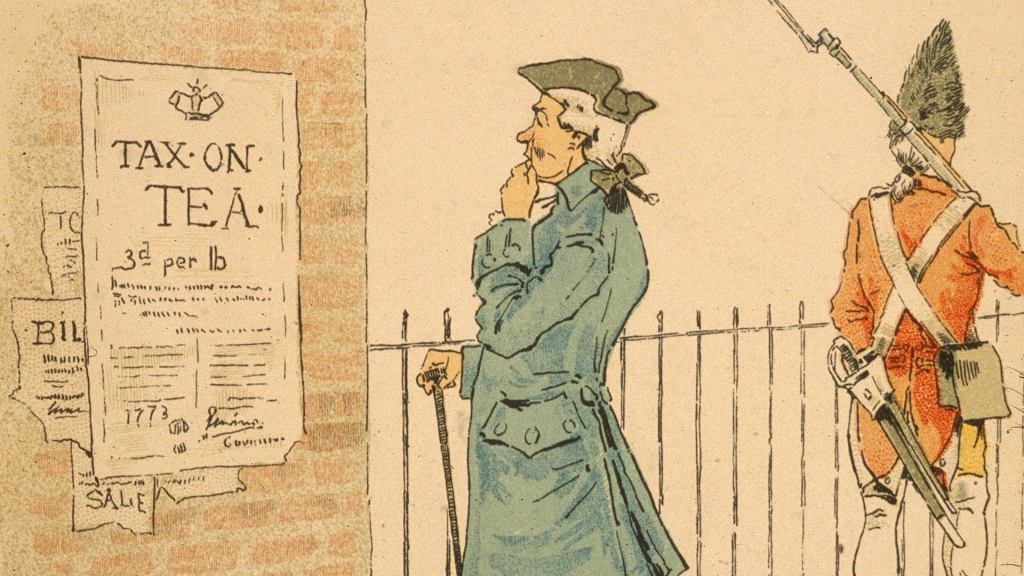
    In response to the repeal of the Stamp Act, the British passed a series of acts referred to as the Townshend Acts (after British offical, Thomas Townshend). The acts included indirect taxes on goods arriving into the colonies from Great Britain, including glass, lead, paint, paper, and tea. Widespread protests and boycotts followed with the same argument as the Stamp Act. Even though this was an indirect tax, the colonists argued that it was still a tax to raise revenue for the British crown, and was therefore, unconstitutional. In the next few years, the Townshend Acts were repealed, except the tax on tea. The primary reason that British Prime Minister, Lord North wanted to keep the tax on tea, was to prove to the colonists that the British Parliament had a right to tax the colonists.

    1768- The Liberty Affair

    The ship called the Liberty belonging to known smuggler and wealthy merchant, John Hancock, was seized by British officials. Hancock was accused of smuggling wine from Madeira without paying customs duties. The incident led to riots in Boston, encouraging the British to send 2,000 troops to the city.

    1770- The Boston Massacre

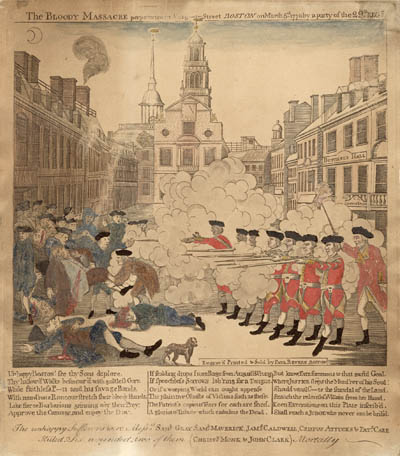
    On the evening of March 5th, a crowd gathered outside the Boston Customs House and began threatening a British soldier, who called for backup. After seven more soldiers arrived, the scene continued to escalate as the mob grew larger. Members of the mob even dared the British soldiers to shoot. The crowd threw snow, ice and other projectiles at the soldiers, until one British officer fell to the ground and then fired his gun. Other British officers fired as well, killing 5 and wounding six in what the colonists called “The Bloody Massacre”. An engraving of the event (an early form of propoganda) by Paul Revere published in the newspapers increased the anger that the colonists felt for the British. As a result of the soldiers’ trial, six were cleared of any wrongdoing while two were convicted of manslaughter and punished with a branding on the thumb. The soldiers were defended by John Adams, who wanted to prove to the British that the American colonists believed in the right to a fair trial.

    Image from the collections of the Massachusetts Historical Society.

    1772- Gaspee Affair

    A British ship called the HMS Gaspee ran aground as it was attempting to enforce the Navigation Acts. A group of colonists attacked, boarded, and set the ship aflame leading to anger from the British government. King George III called on the perpetrators to be caught and brought to Great Britain to stand trial. While the perpetrators were never actually caught, the idea of bringing colonists to Britain for trial only added to the anger and fear amongst the colonists.

    1773- The Tea Act

    Throughout the colonial period, the colonists were frequently smuggling cheap tea into the colonies from the Dutch. This, of course, was in direct violation of the Navigation Acts. In response, the British passed the Tea Act which allowed the British East India Company (which had tons of unsold tea and was nearly bankrupt) to sell their tea directly to the colonists. Prior to the Tea Act, the British East India Co. sold its tea at the London Tea Auction to tea merchants. The tea merchants then sold it to colonial tea merchants, who then sold it to the colonists. This process made British tea more expensive than smuggled Dutch tea.

    As a result of the Tea Act, the British East India Co. could now sell their tea directly to the colonists and take out the middlemen, the tea merchants. Even with the the additional tax on tea (which was the holdover from the Townshend Acts), Prime Minister Lord North was hoping that the colonists would simply purchase the cheaper British tea. Instead, the colonists reacted violently. The colonists knew that this was a sneaky way for the British to still force the colonists to pay the tax on tea.

    As the tea ships landed throughout the colonies, the colonists refused to allow the tea to be unloaded in the colonies. Through threats of violence by the colonists, the British officials were unable to unload the tea, and brought the tea ships back to England. An example of this is what is referred to as the “Philadelphia Tea Party”. The only British official who refused to give in to the colonists, was Lieutenant Governor of Massachusetts, Thomas Hutchinson. He would not allow for the tea ships to be brought to England, and therefore, three tea ships sat in the Boston Harbor.

    1773- The Boston Tea Party

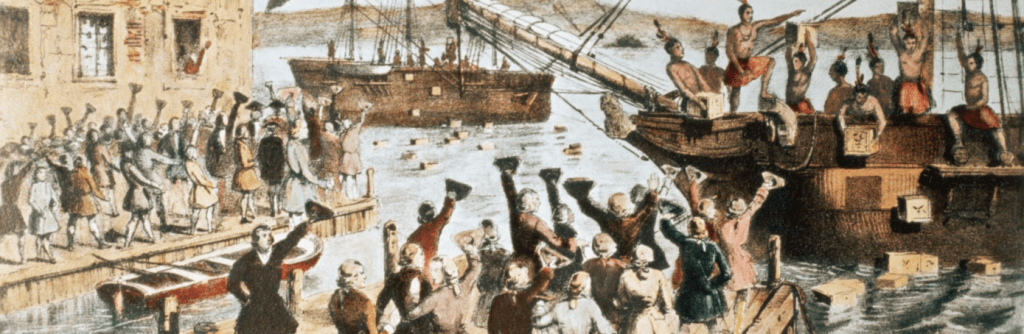
    Boston colonists, likely led by the Sons of Liberty and many disguised as Native Americans, boarded the three ships and dumped all of the tea into the Boston Harbor. In today’s U.S. dollars, the British East India Company lost about $1.7 million worth of tea.

    1774- The Intolerable Acts

    King George III was enraged when he heard of the destruction of the tea. Even members of Parliament who had been sympathetic to the colonists before, had completely turned on them. Lord North wanted to punish Massachusetts, and Parliament passed a series of laws that the colonists called the Intolerable Acts (The Coercive Acts from the British perspective). The British shut down Boston’s port until the tea was paid for. This would stop all exports and imports to and from the port of Boston.

    The Massachusetts government was altered. Thomas Gage, the British Commander in Chief of armed forces, was the Masachusetts governor, and voting rights were taken away from the colonists. Town meetings were limited to no more than once a year.

    British officials accused of a crime in Massachusetts would have their trial in Great Britain. George Washington referred to this law as the “Murder Act” because now British soldiers could get away with murder by having their trial in a sympathetic British court.

    Finally, a stricter Quartering Act was passed, ensuring that the British were housed in vacant private homes and other public buildings.

    1774- The First Continental Congress

    The colonies were united in their outrage over the Intolerable Acts. They met in Philadelphia at the First Continental Congress to decide their next steps. They wrote a petition to the king, asking for a repeal of the Intolerable Acts, and a return to the prior harmony that the colonists and the mother country had previously shared. The petition was ignored. The Congress agreed to boycott British goods until the Intolerable Acts were repealed. The Congress also agreed that each colony should set up and train its own militia.

    April 1775- Lexington and Concord

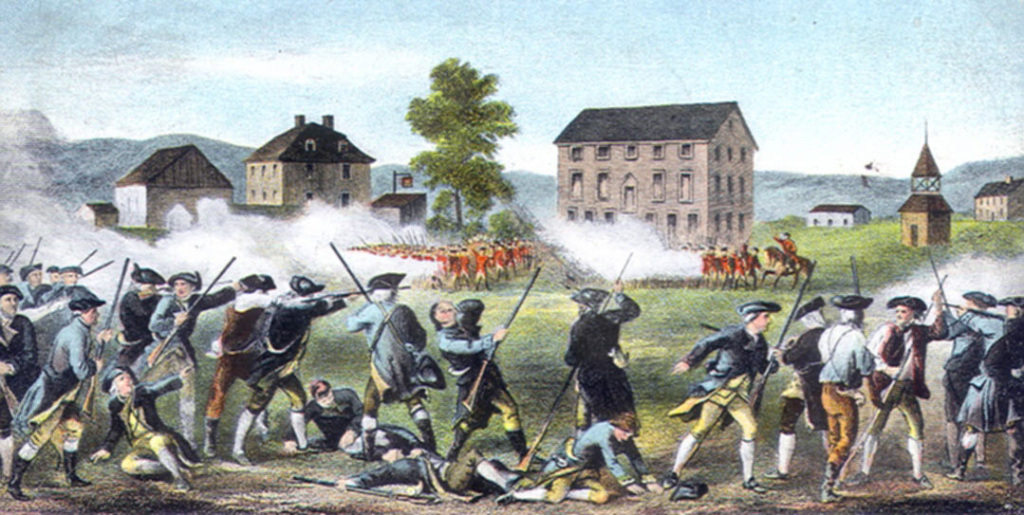
    With heigtened tensions, the British learned that the colonists were stockpiling weapons and gunpowder in Concord, MA. The British planned to capture Sam Adams and John Hancock in Lexington and seize the arsenal in Concord. The famous “shot heard round the world” came on the village green in Lexington, and the Revolutionary War began.

    As we can see with the timeline, tensions continued to escalate from the end of the French and Indian War. But could they have been avoided? Could perpetual peace have been possible without the shedding of blood and a war that would last 8 years?

    Was Independence Inevitable Or Was Reconciliation Possible?

    Let’s take a look at the two sides: The colonists and the British government.

    The Colonists’ Viewpoints

    The colonists, as mentioned above, drew a line in the sand against British taxes. They were not willing to budge on the issue, especially ardent Patriots. But the long-term causes of independence goes back further- well before 1763. In the late 1600s and for most of the 1700s, the British approach to the American colonies can be described with the phrase, “Salutary Neglect”. The British generally left the colonies alone and did not strictly enforce their laws for the continued devotion of the colonies. Throughout this time period, there was relative peace between the two sides. However, the colonists were displeased with the Navigation Acts, which required the colonists to only trade with the British. While the colonies were growing, they were increasingly feeling a sense of independence. They elected leaders to their own colonial governments, and they felt they could fend for themselves and run their own affairs through brilliant and tenacious leaders, who would become the Founding Fathers. They were an ocean away from Mother England, and were capable of governing themselves.

    Therefore, when the British began enforcing laws more strictly and passing new direct tax laws, the colonists were understandably outraged. The colonists truly believed that the British government was acting in a way that was unprecendented. It seems that independence was inevitable, and the movement towards independence needed a spark of anger. This outrage came from British taxes.

    What about from the British side?

    Could the British have made peace with the colonists and avoided independence? To me, they could have done a much better job in their approach to the concerns of the colonists. But if they would have been more benevolent towards the colonies in the 1760s and 1770s, they may have been simply delaying an eventual indpendence movement.

    The British government after 1763 was quite headstrong in their belief of taxing the colonies. The British were not willing to negotiate with the colonists during the many controversies between 1765- 1774. The chasm between the colonists and the British grew wider and wider. It’s clear that the British looked down upon their American countrymen. This can be seen in the ways that the British military viewed American military leaders, such as George Washington, during the French and Indian War. An American could not work his way up to become a British general. If you view Mother England and her American colonies as a parent-child relationship, Mother England was in the driver seat as to how the relationship was to develop.

    There likely was a belief amongst the British leadership that if they continued to tighten controls over the American colonies, that perhaps the colonists would rebel. If that were to happen, the British would easily crush the rebellion, and maybe tighten controls over the colonists even more. The Americans had no navy. Their only military forces were inexperienced colonial militias. To the British, there would be no way that the Americans could defeat the mighty British army and navy, if they even dared to try.

    When the colonists began to protest against the Stamp Act, it may have caught the British by surprise. At the conclusion of the Stamp Act riots, it appears that the British had the idea that they really needed to prove to the colonists who was in charge.

    What if the British had more accommodating leaders?

    There could have been peace between the colonists and the British: but only for a time. The Englightenment ideals had spread to the American colonies, and led many to question the very idea of a monarchy. It is quite conceivable that even if the Revolution didn’t break out in the 1770s, there could have been later controversies in later decades that would have fueled an independence movement.

    If cooler heads prevailed, and if British leaders were more understanding of the American arguments, I believe there could have been peace between the British and the Americans in the 1770s. However, there was a widespread and growing independence movement in the Americas taking place. The very ideals that Americans were developing in this time period were completely incompatable with the British monarchy. These ideals included political freedom, voting rights, right to a fair trial, and protection from unlawful search and seizure. I believe that independence was inevitable because of these ideals. The British Empire had spread itself too thin at the end of the Seven Years’ War and felt that they needed more money to continue to build their empire. They wanted to force the American colonies into submission in the 1760s and 1770s. This was an approach that ended up backfiring on the British. They took a calculated risk while tightening controls over the colonies, and the result would be American independence and the Treaty of Paris ending the Revolutionry War in 1783. With that, the British empire lost its vast American colonies in North America.

    Reconciliation between the two sides was possible temporarily, but American independence would come sooner or later.

    Please let me know your thoughts in the comments or on social media.

    Check out related blog posts below:

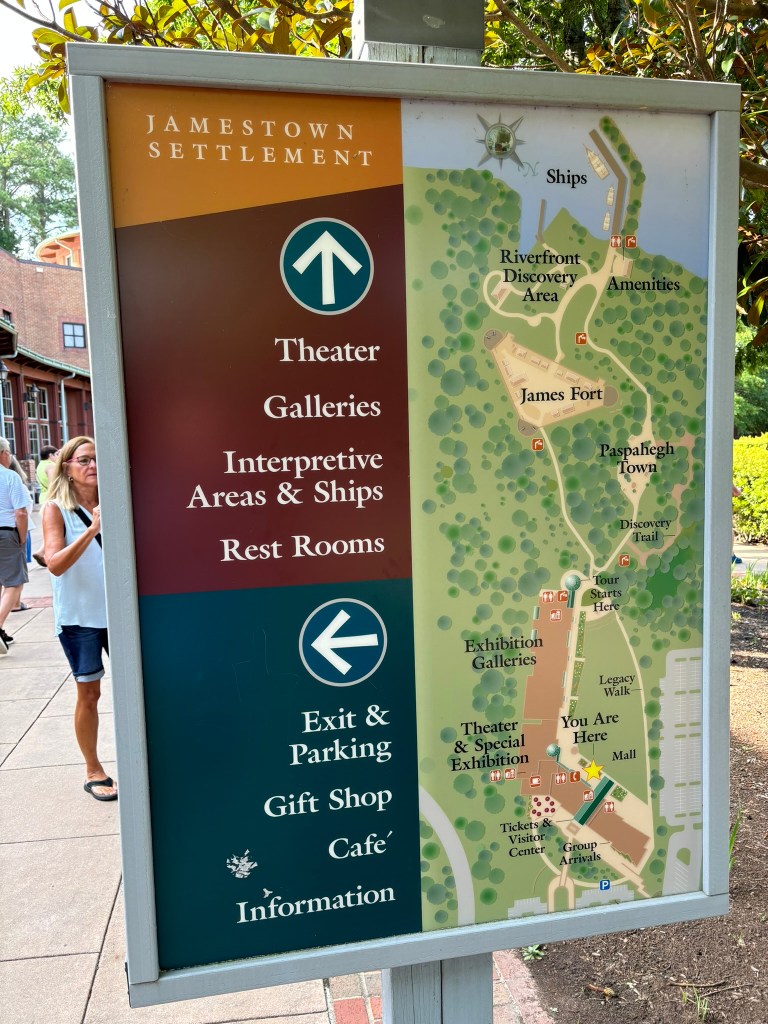
  • My previous blog post covered my family’s first day on our Williamsburg, VA vacation, which was a visit to Colonial Williamsburg.  On our second day, we booked a tour by Viator that took us to Jamestown in the morning, and Yorktown in the afternoon.  This blog post will focus on our time in Jamestown, which will be followed by another blog post which will focus on Yorktown.

    Viator Trip

    I found the Viator trip to Jamestown and Yorktown months in advance of our trip, and thought it a great opportunity to visit two places that I’ve wanted to see for years; two locations so significant to American history.  The tour had us meet at 8 AM at the Williamsburg General Store which was about a 7 minute drive from our hotel.  We boarded a large bus and made our way to Jamestown.  On route to Jamestown, our tour guide gave us some historical background leading up to the settlement of Jamestown 1607.  The bus ride to Jamestown was about 20 mins.

    I’ve previously written a blog post about the history of the Jamestown settlement, which you could read HERE.  Jamestown was the first permanent English colony.  The colonists barely survived the settlement in the first couple of years.  The settlement that started in Jamestown eventually branched out to become the Virginia colony.  To be able to visit Jamestown in person was a real treat. 

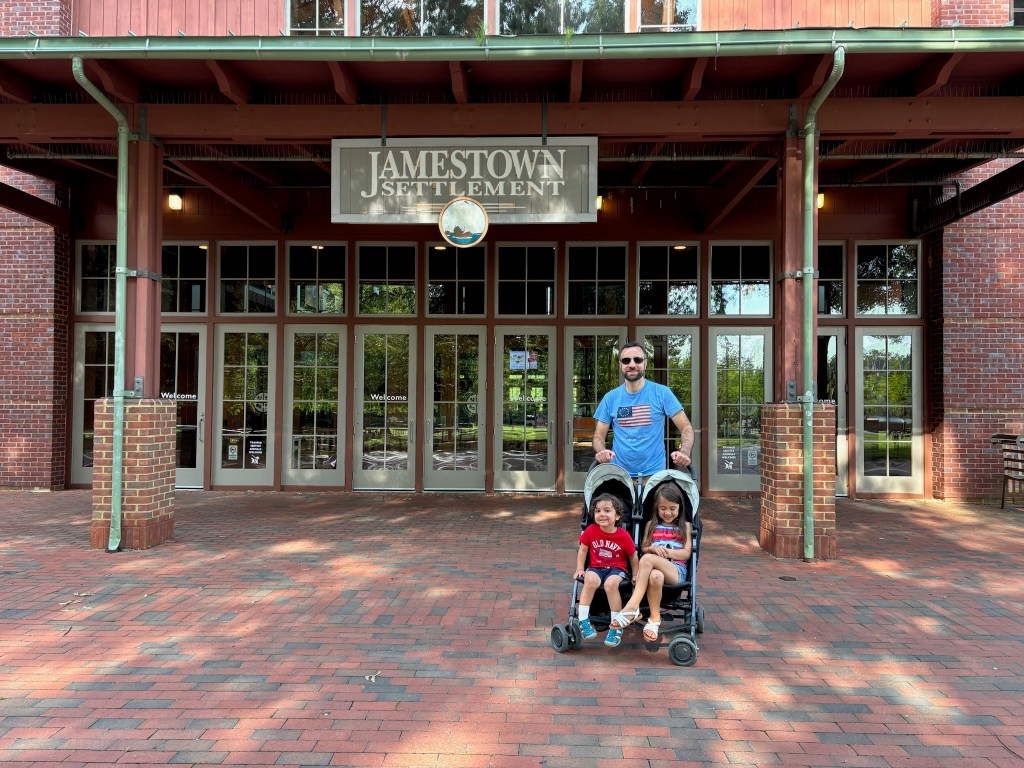
    However, I must include the fact that we visited the Jamestown Settlement, which is a museum about the settlement of Jamestown.  This museum is about a mile east of the original Jamestown fort site, which is called Historic Jamestowne.  If I had to be perfectly honest, I thought this tour would take us to Historic Jamestowne, but that was not the case.  So I was a little disappointed in that.  I’ll have to go back another time to see Historic Jamestowne, where archaeological work is taking place.  But visiting the Jamestown Settlement was not a disappointment and there was much to see and do there.

    Overlook

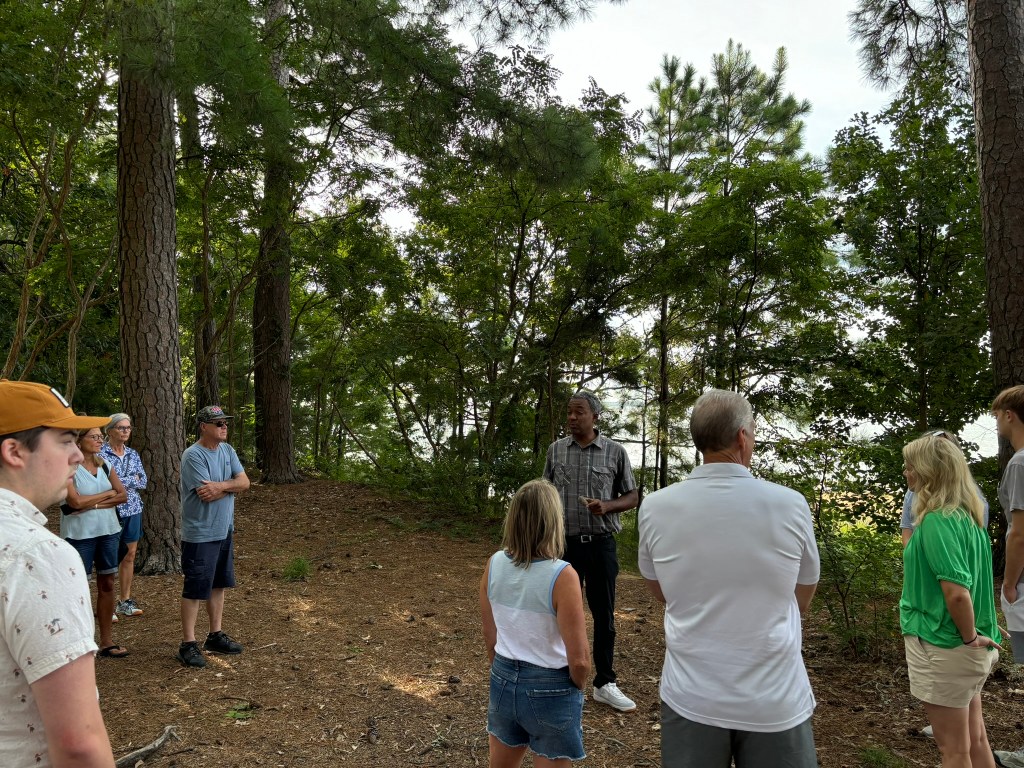
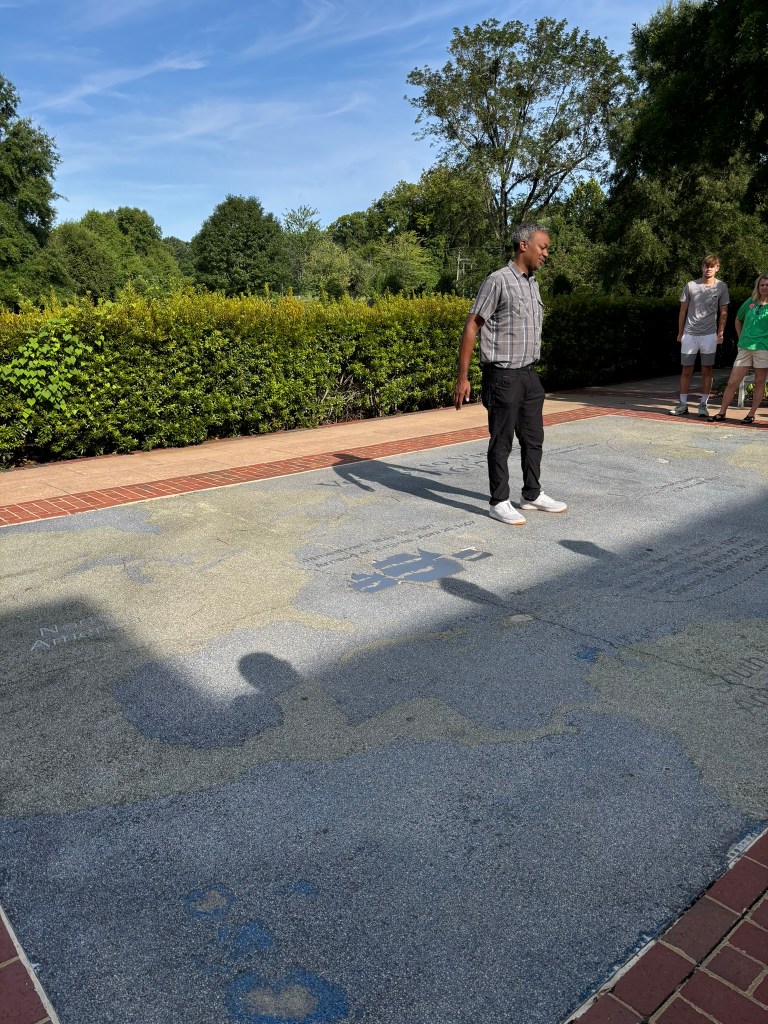
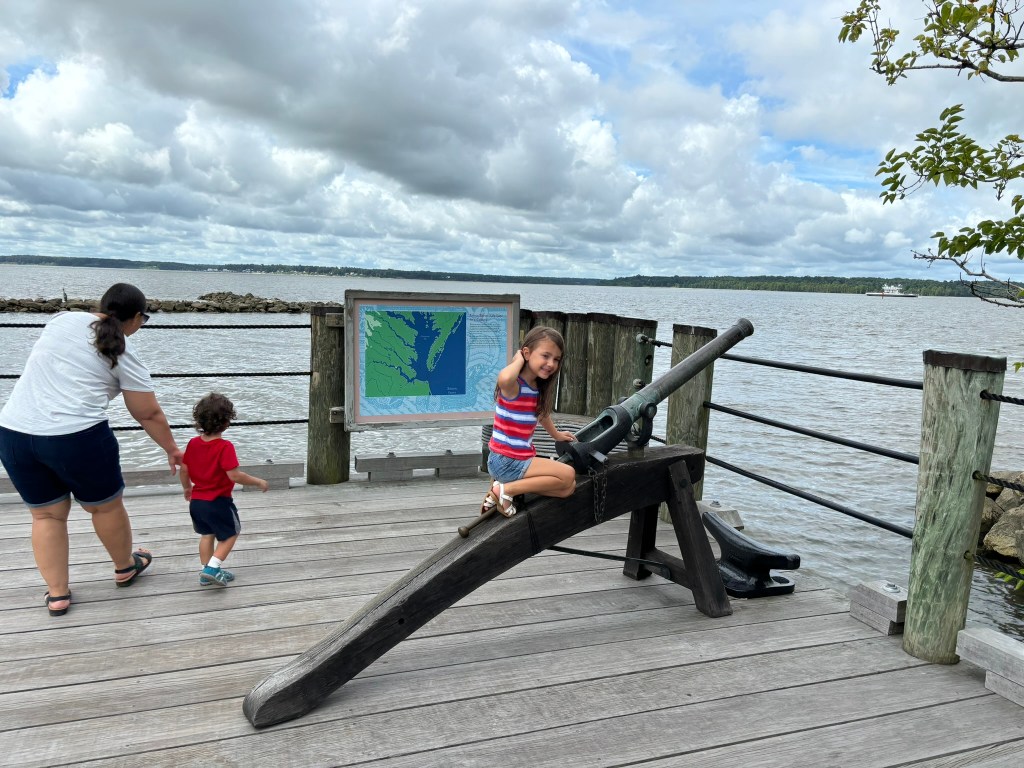
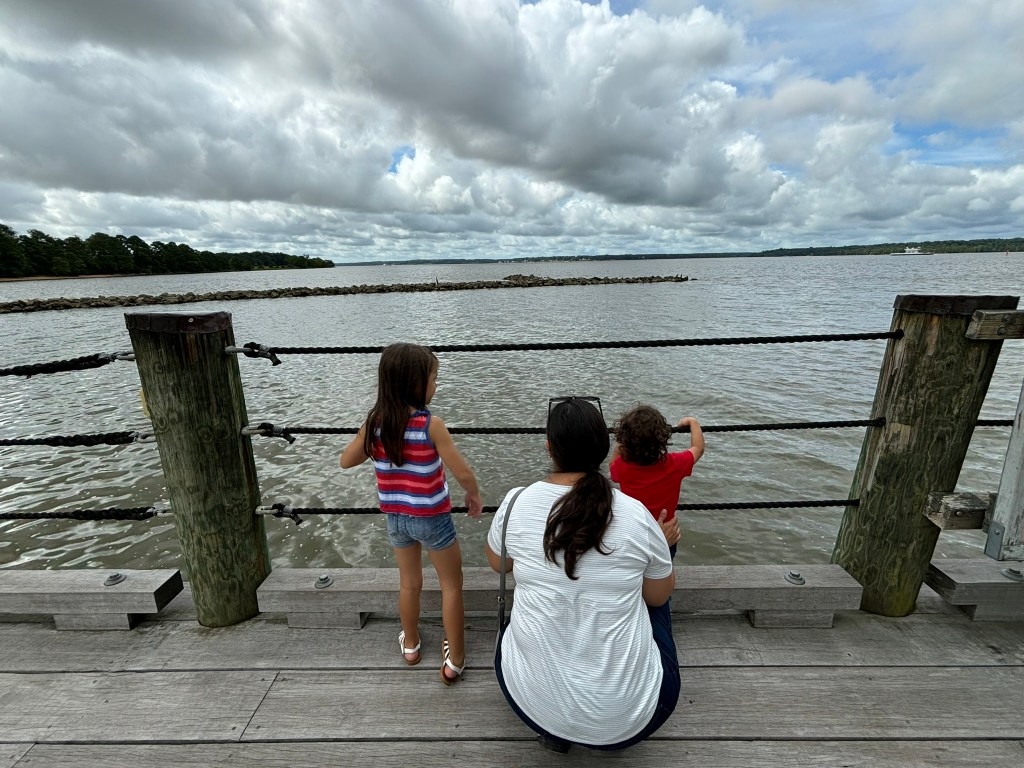
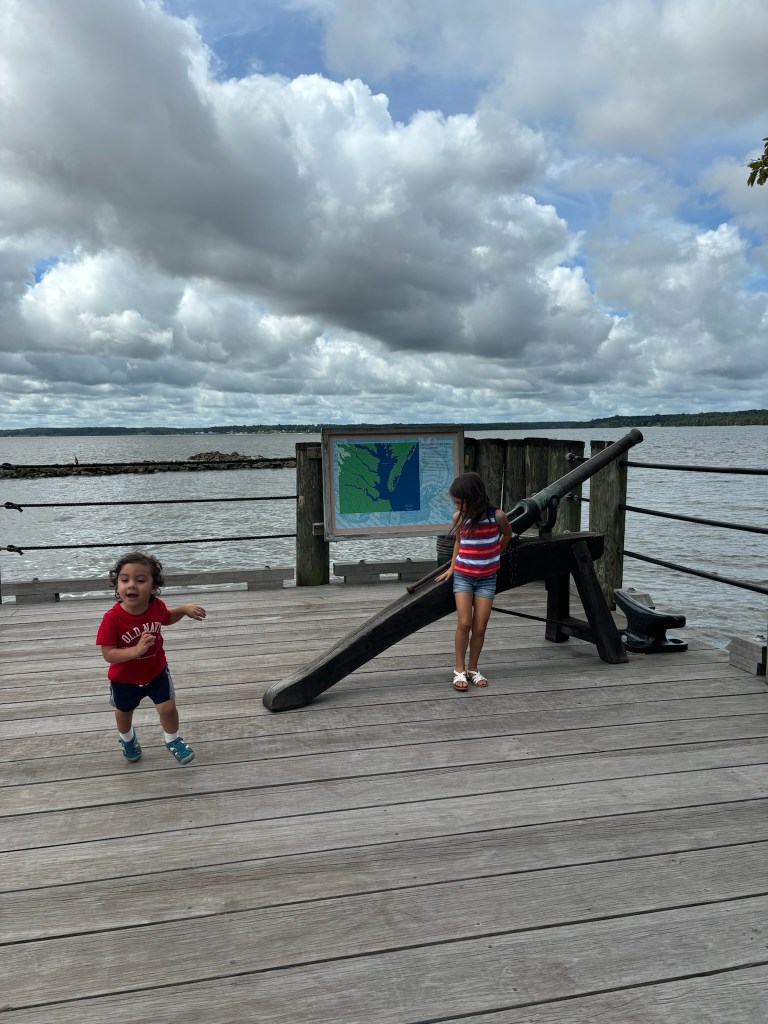
    Before arriving to the museum, our tour guide took us out of the bus to a spot along the James River called the “Overlook.” From our vantage point north of the river, we could see the spot that the English colonists orginally landed on their first voyage to Jamestown, which you could see in the photo below.

    Jamestown Settlement

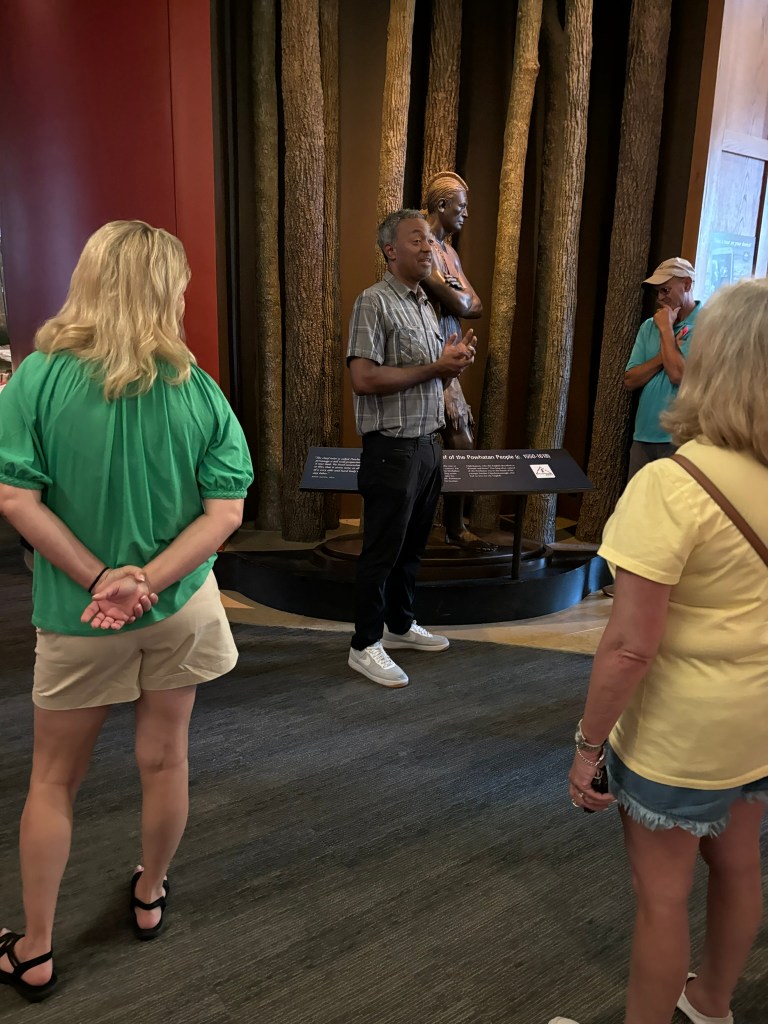
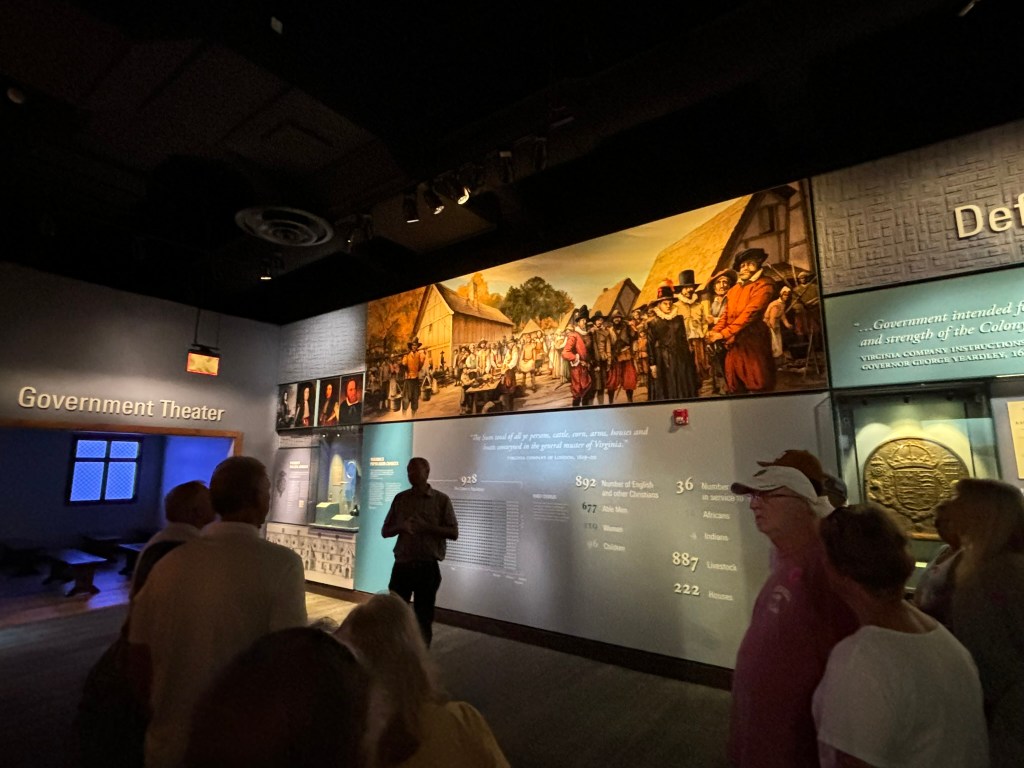
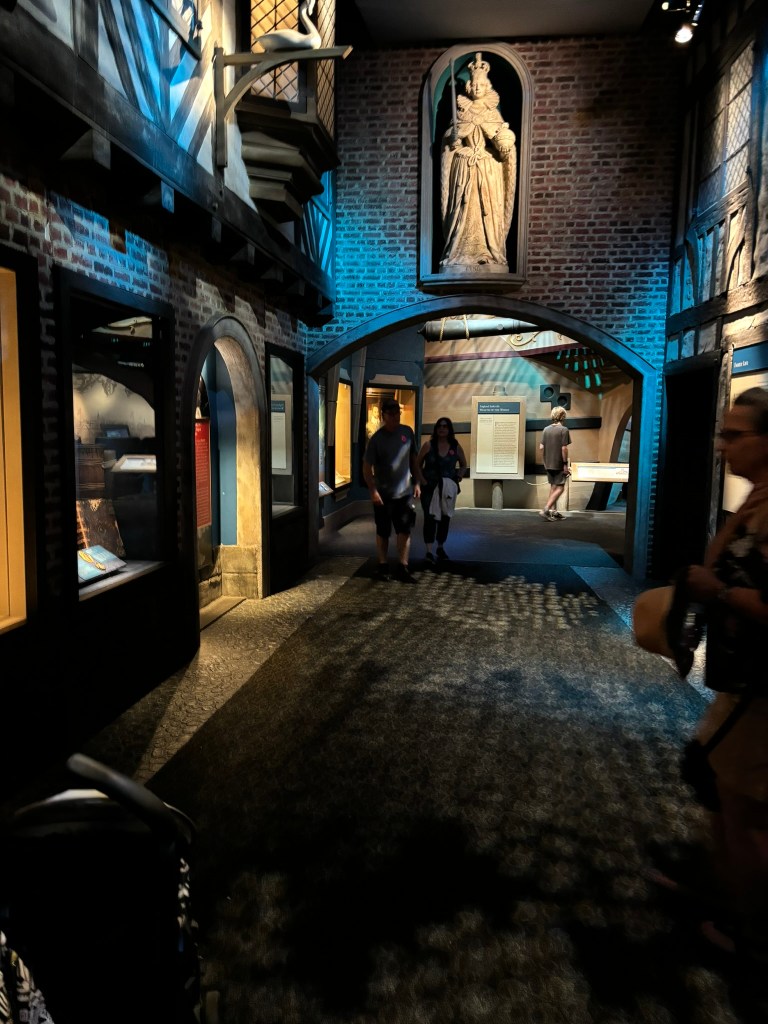
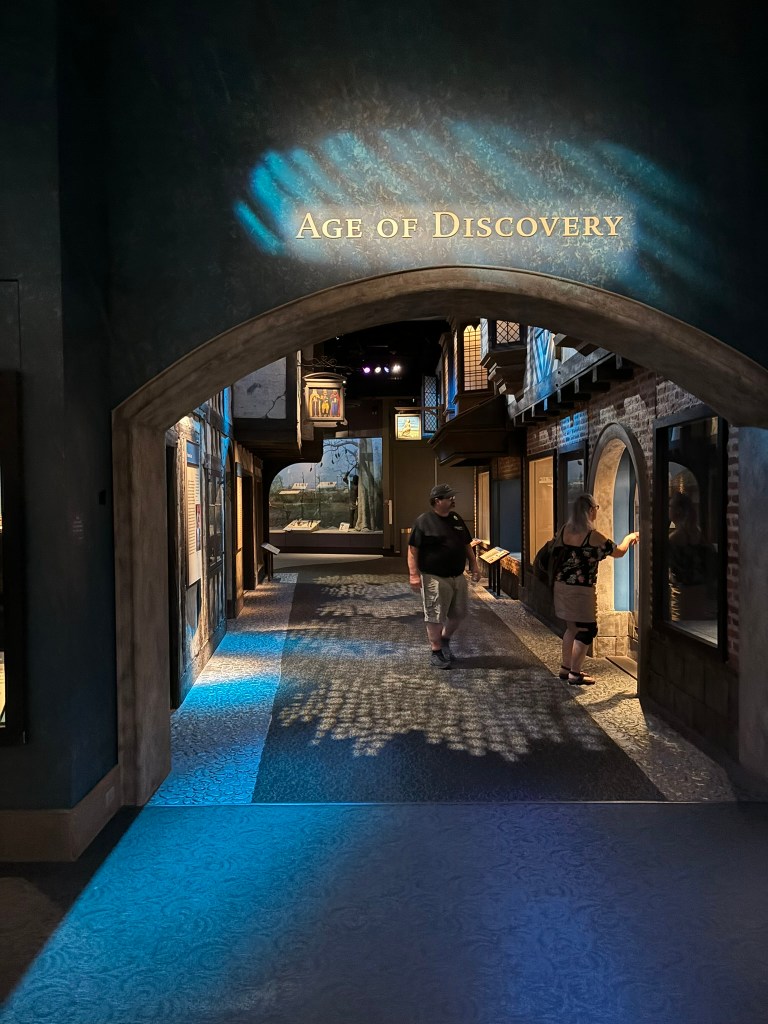
    We then made our way to The Jamestown Settlement, which is run by the The Jamestown-Yorktown Foundation.  The museum originally opened in 1957.  Our tour guide led us through the museum, highlighting and explaining significant figures and events from the colony.  The main hallway of the museum appears to be a large timeline dating from 1607, the founding of the settlement, to 1699, the year that the capital of the Virginia Colony was moved to Williamsburg.  As you move through the museum, you walk through the history of the Jamestown colony.

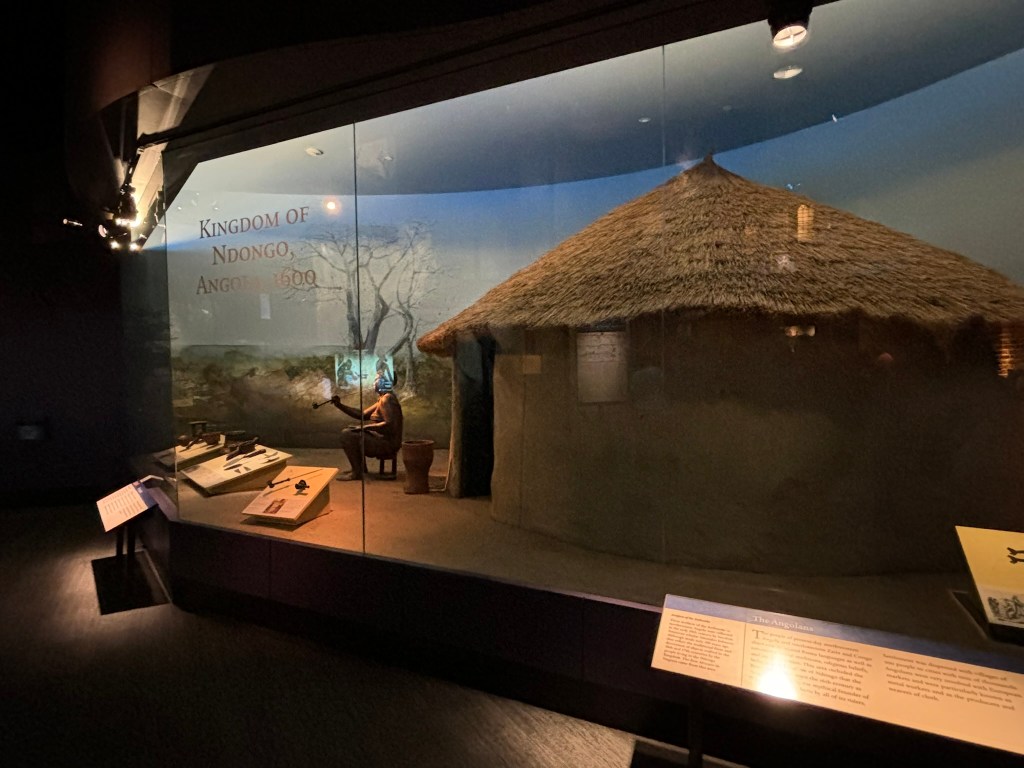
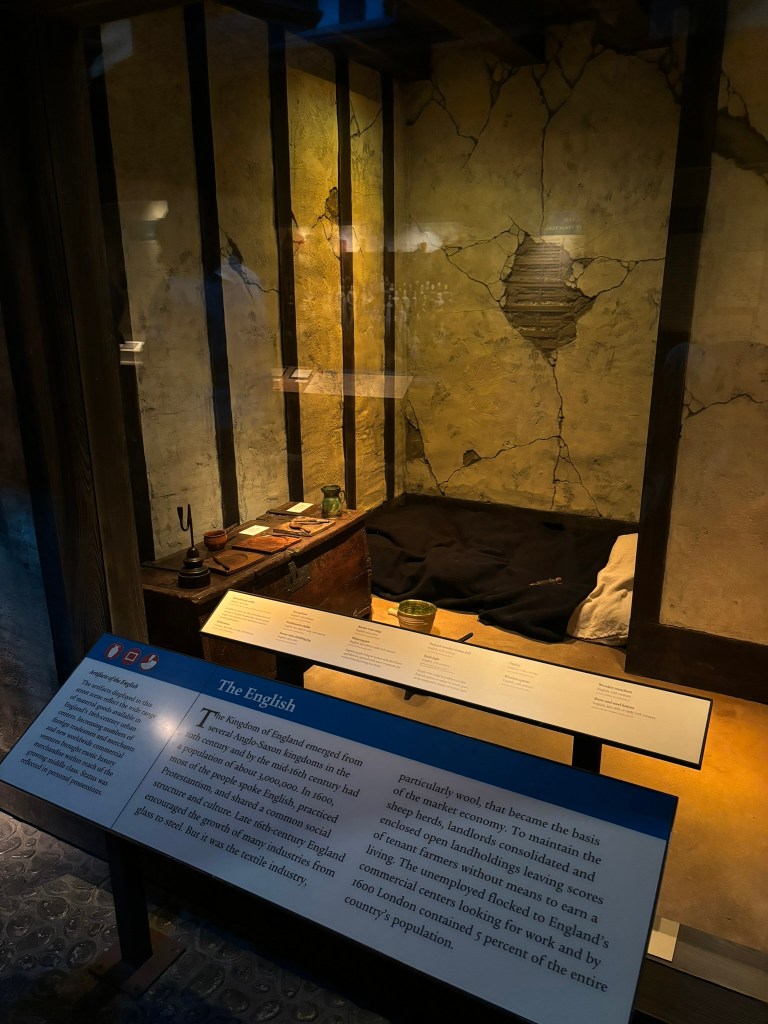
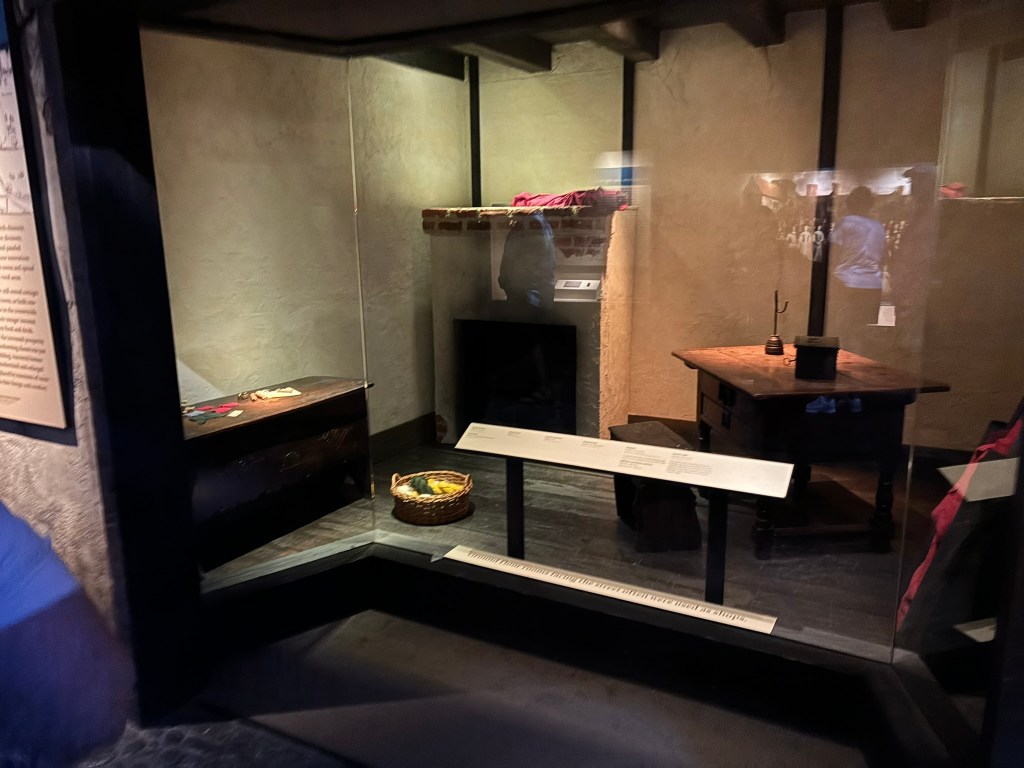
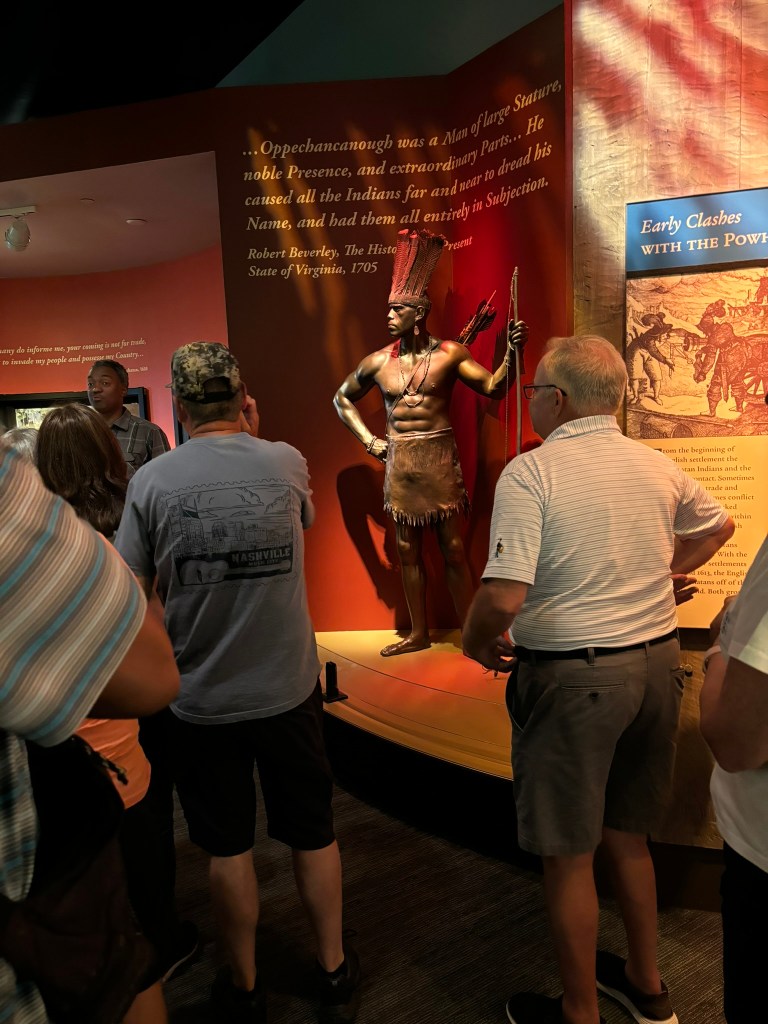
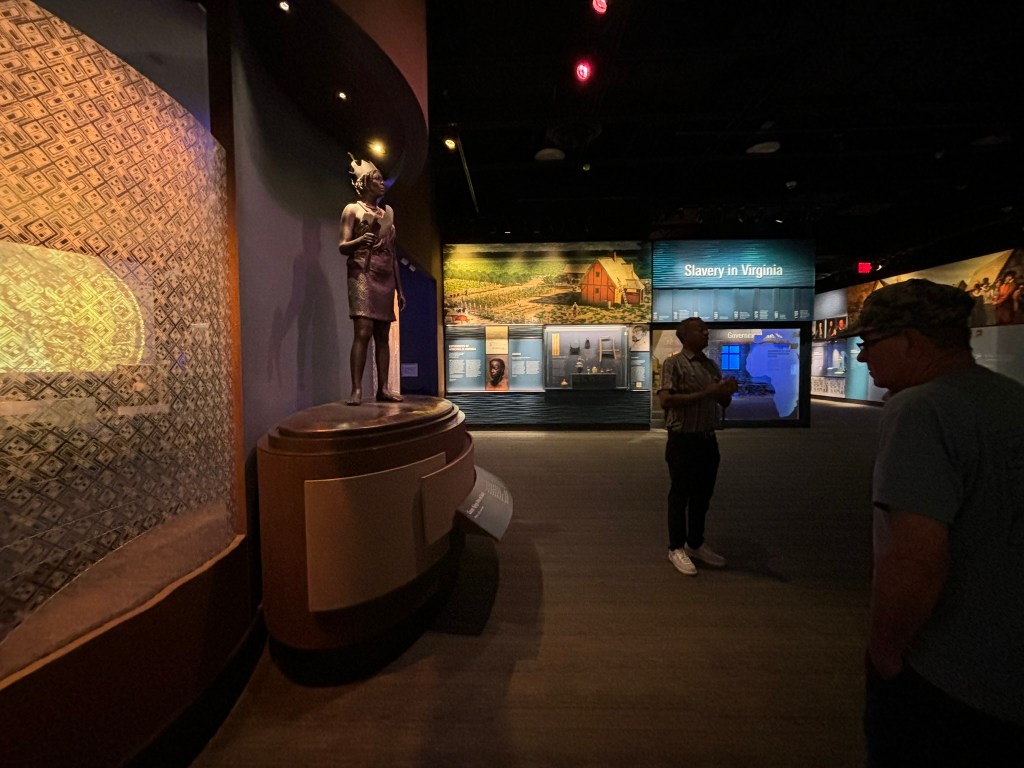
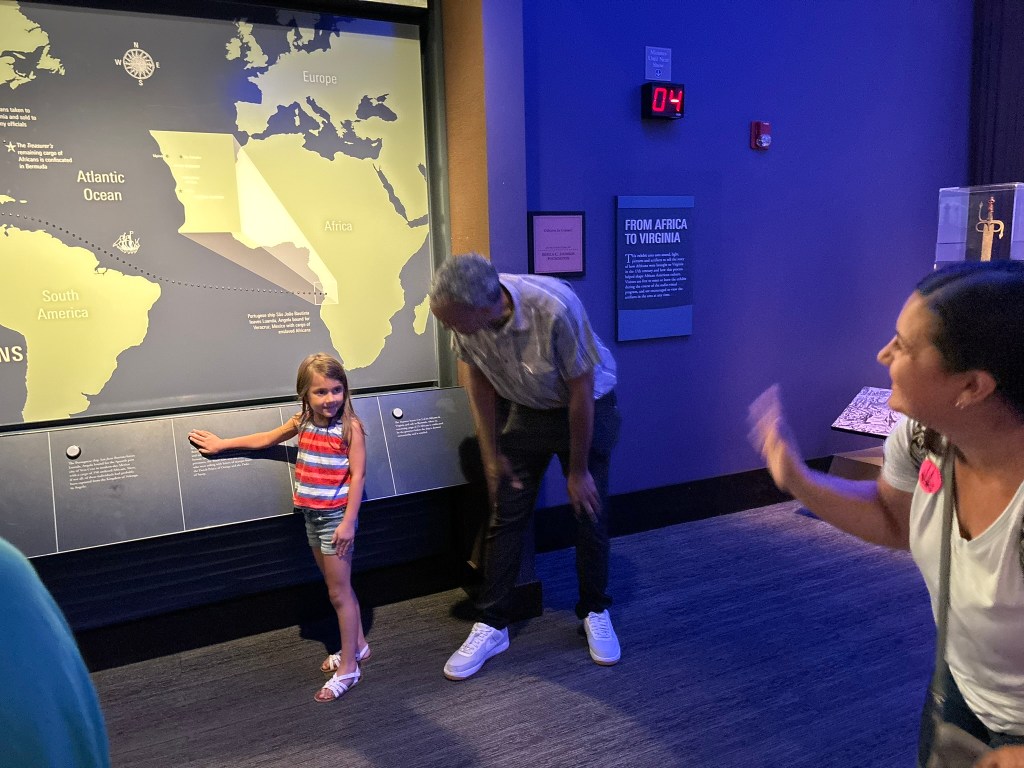
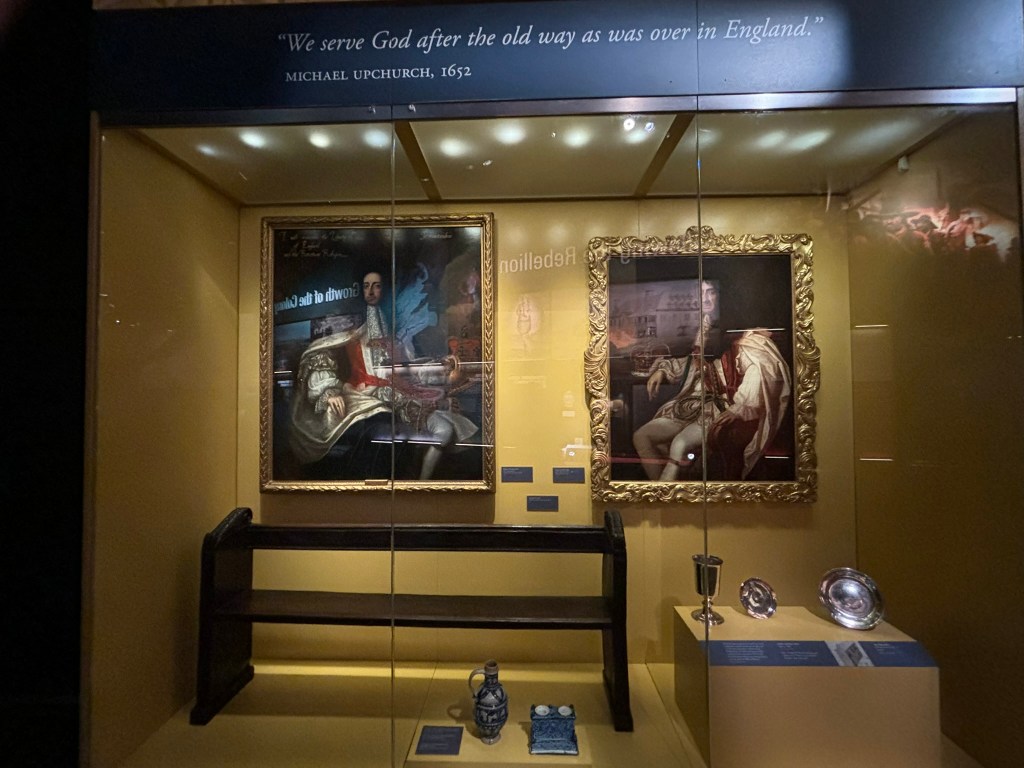
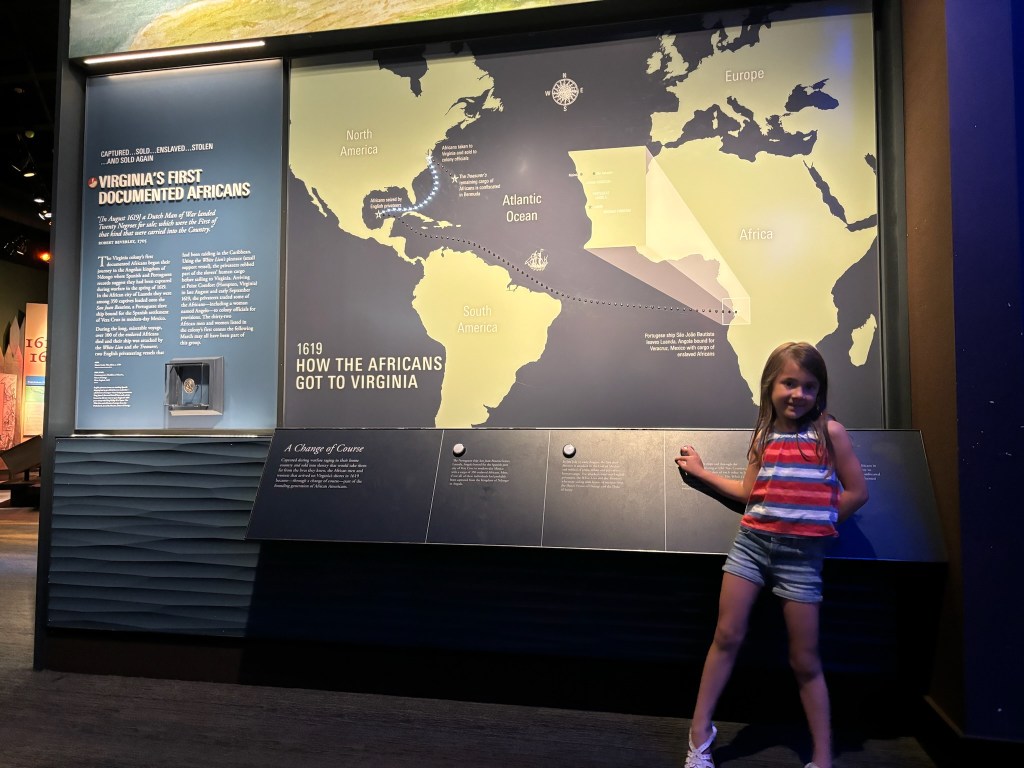
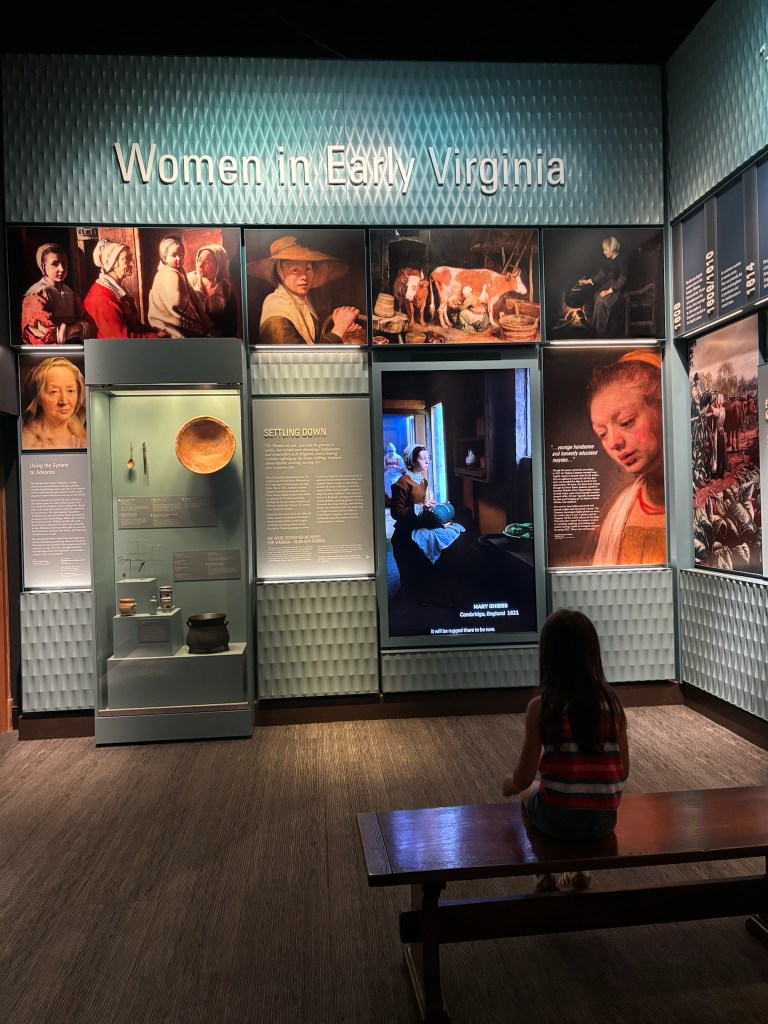
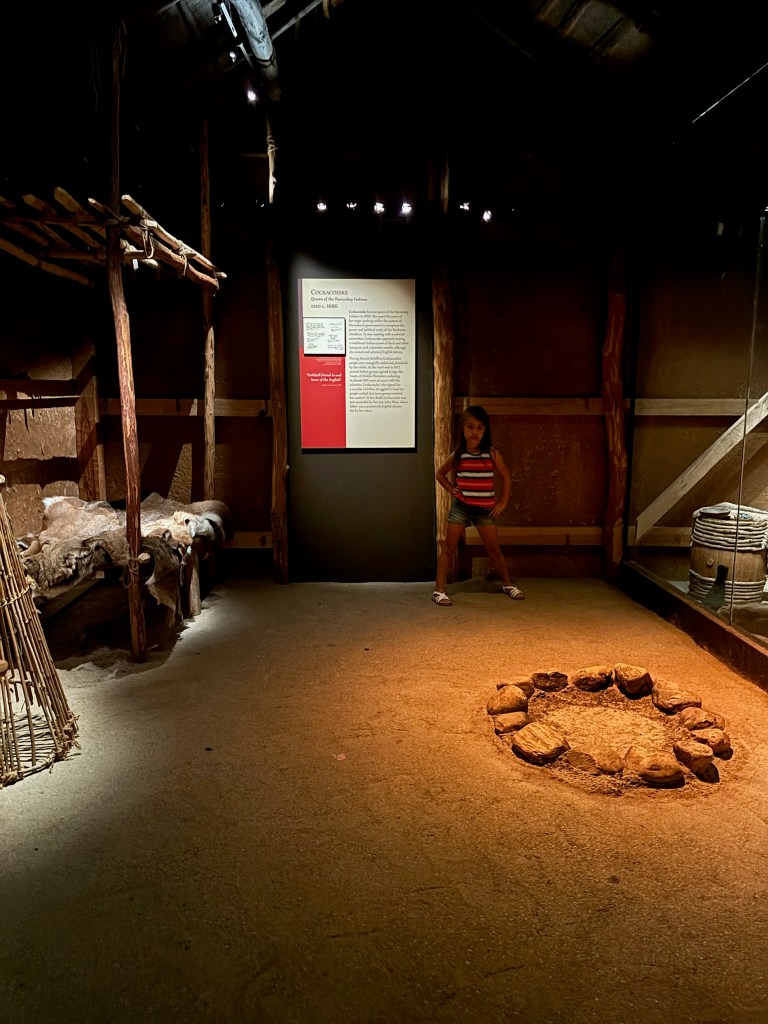
    The museum highlights what life was like before 1607 for the Natives living in the region, Africans in Angola, and the English back in Europe.  As you move through the museum, you learn about how the settlers barely survived in the first couple of years.  You learn about the importance of growing tobacco.  You learn about figures like Pocahantas, John Smith and John Rolfe.  You learn that in 1619, the first Africans were brought to the colony on a Dutch ship, which completely changed the dynamics and history of the colony.  The year 1619 was also significant because this was the first year that the House of Burgesses met.  The museum teaches about conflicts between the Natives and English settlers, as well as significant events like Bacon’s Rebellion in 1676.  The museum also highlights a map that shows the population changes taking place in Virginia.  As the English population was growing and settling along the rivers, the Native population was dwindling, primarily caused by disease and conflict.  Finally, the museum takes you to the year 1699, when Jamestown ceased to be the capital of Virginia.   Jamestown was susceptible to brackish water, mosquitoes, and the spread of malaria.  Williamsburg was on higher ground and easier to defend against invaders such as the French and Spanish.

    Paspahegh Village

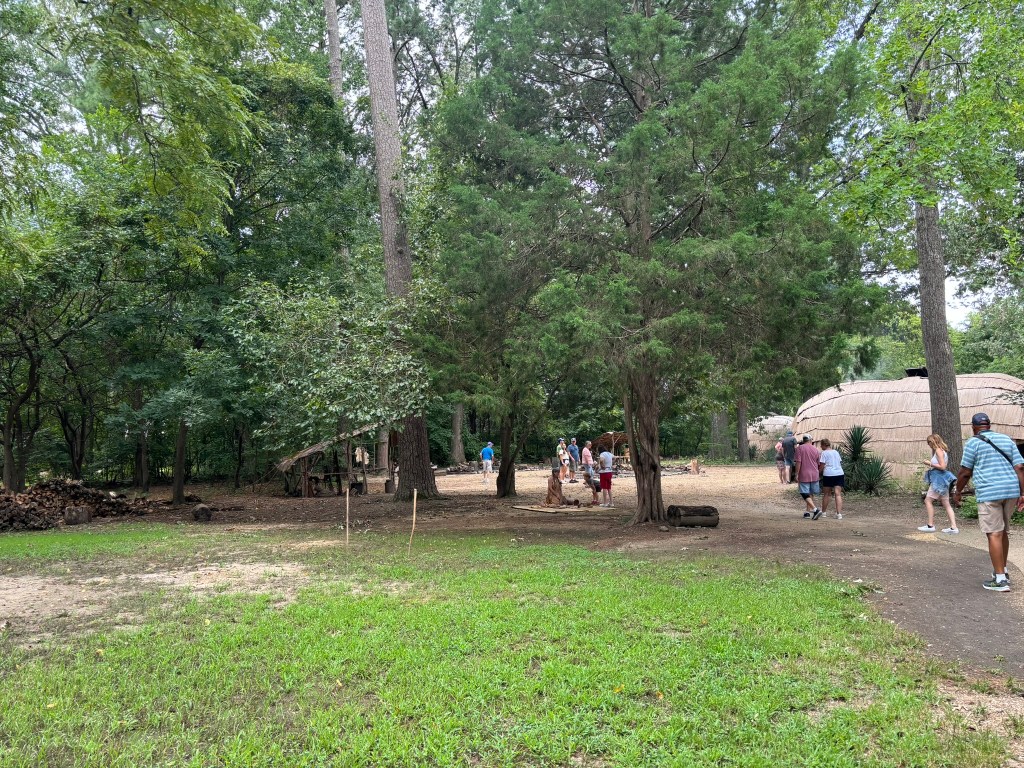
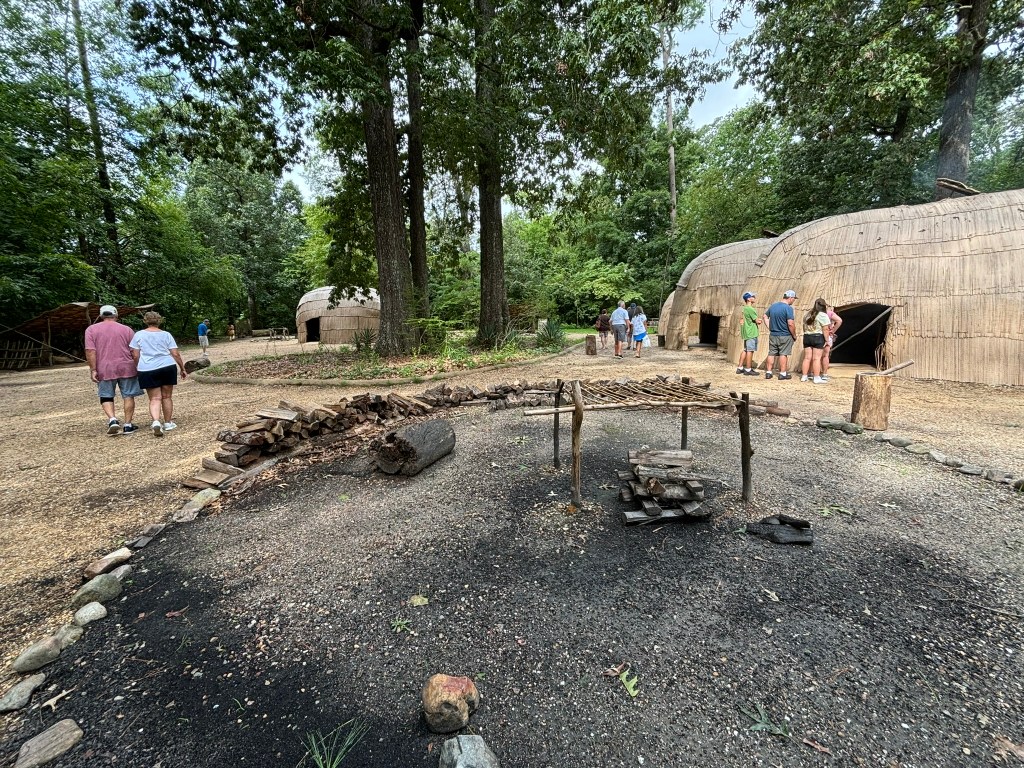
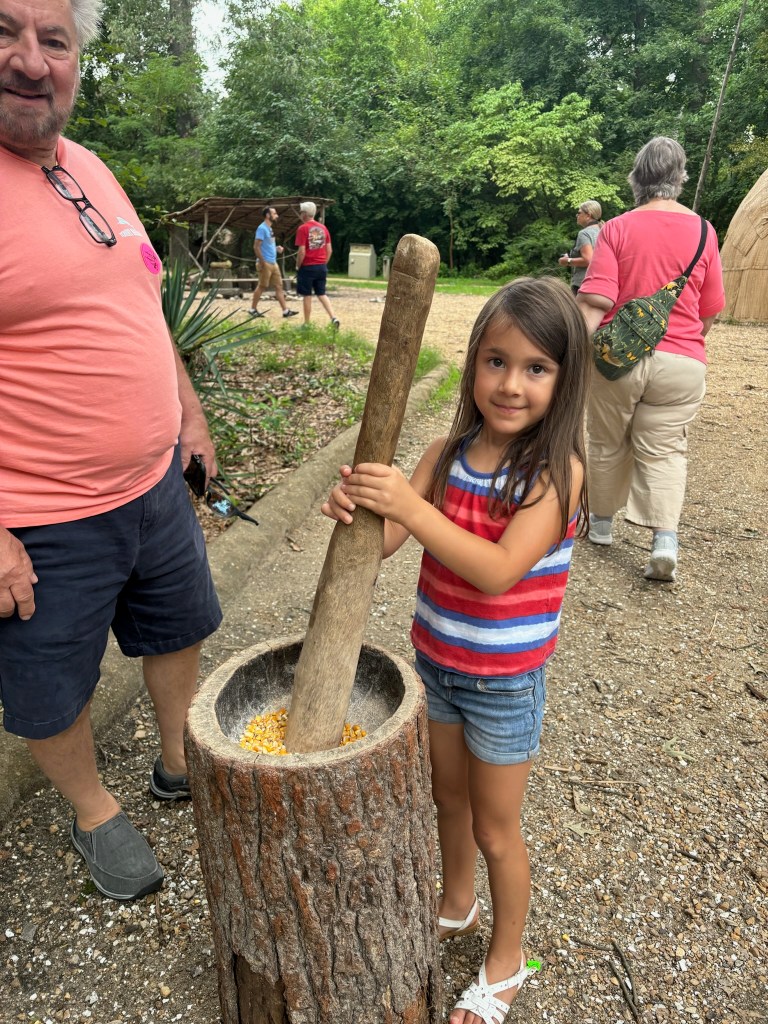
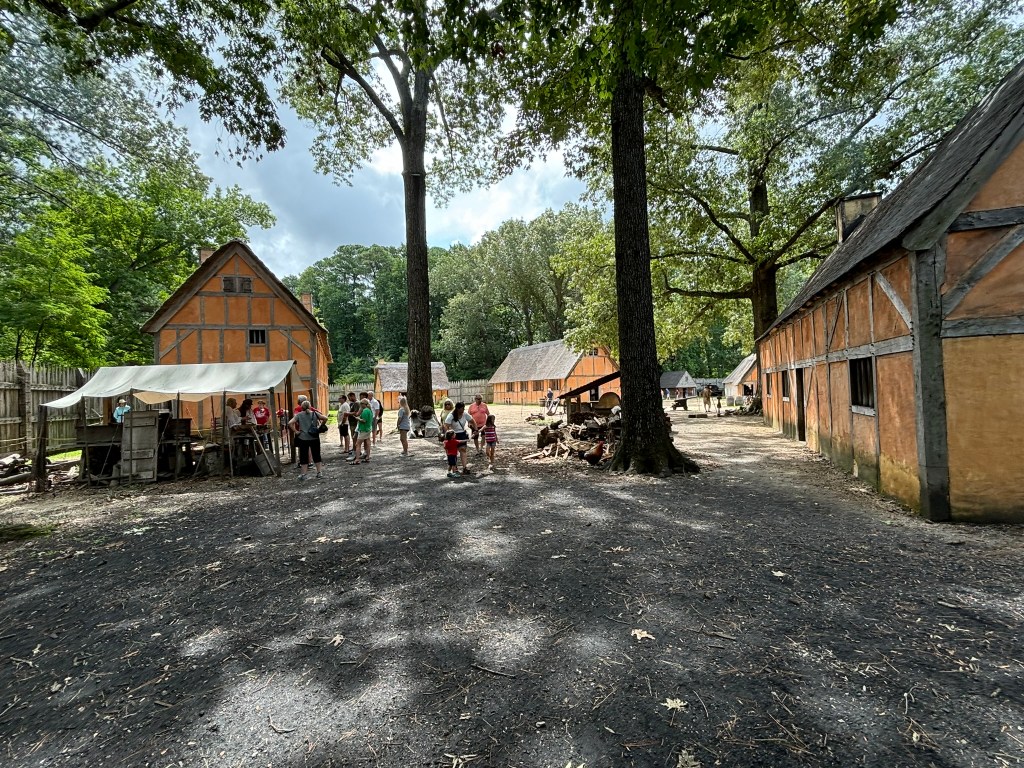
    After we were taken through the museum, we were given about an hour to roam around outside in the living history portions of the museum.  Our first stop was the Paspahegh village.  The Paspahegh tribe was a tributary of the great Powhatan chiefdom.  In the village, you could walk through their living quarters, learn how they made canoes from tree trunks, and practice making corn.  

    Ships

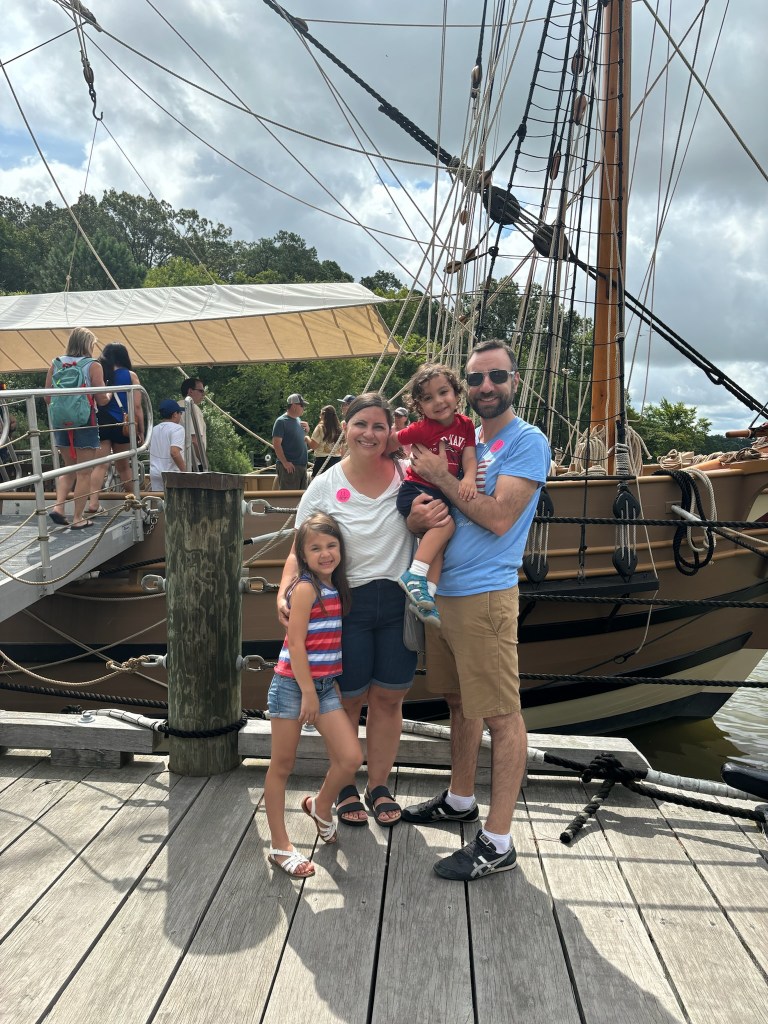
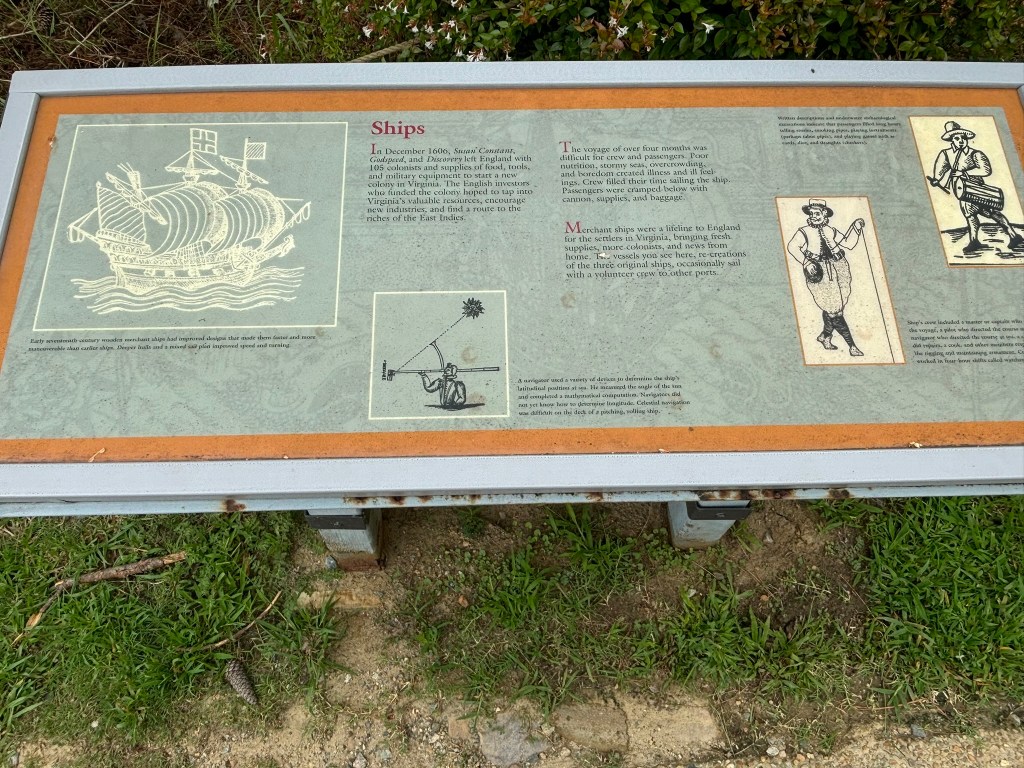
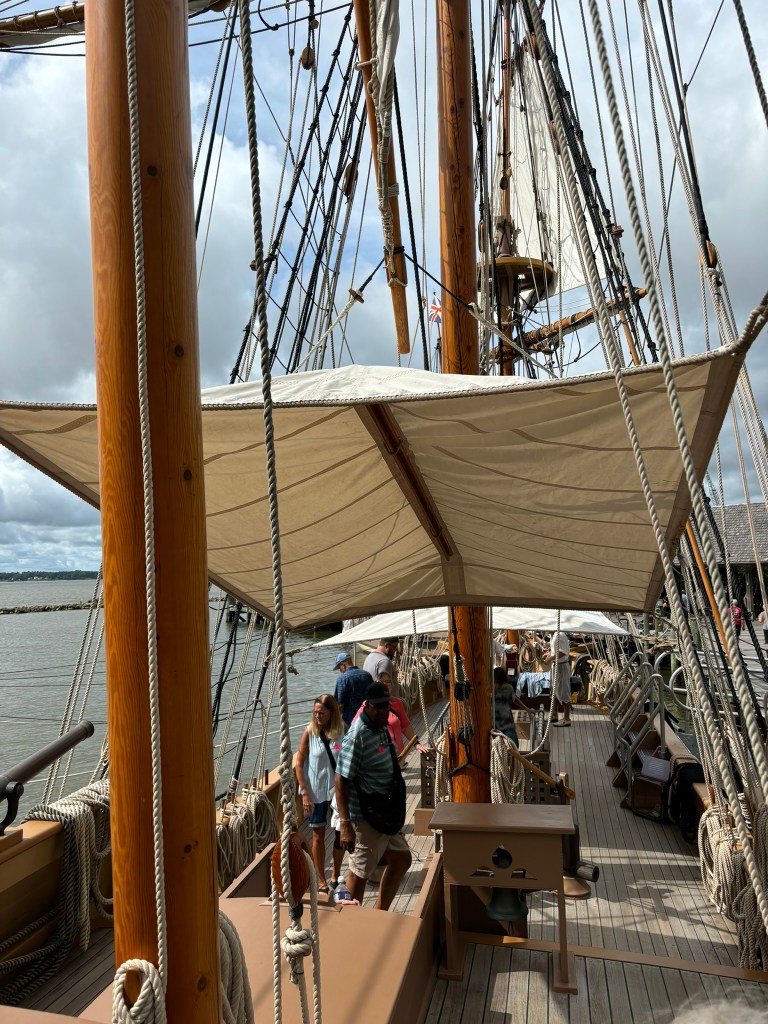
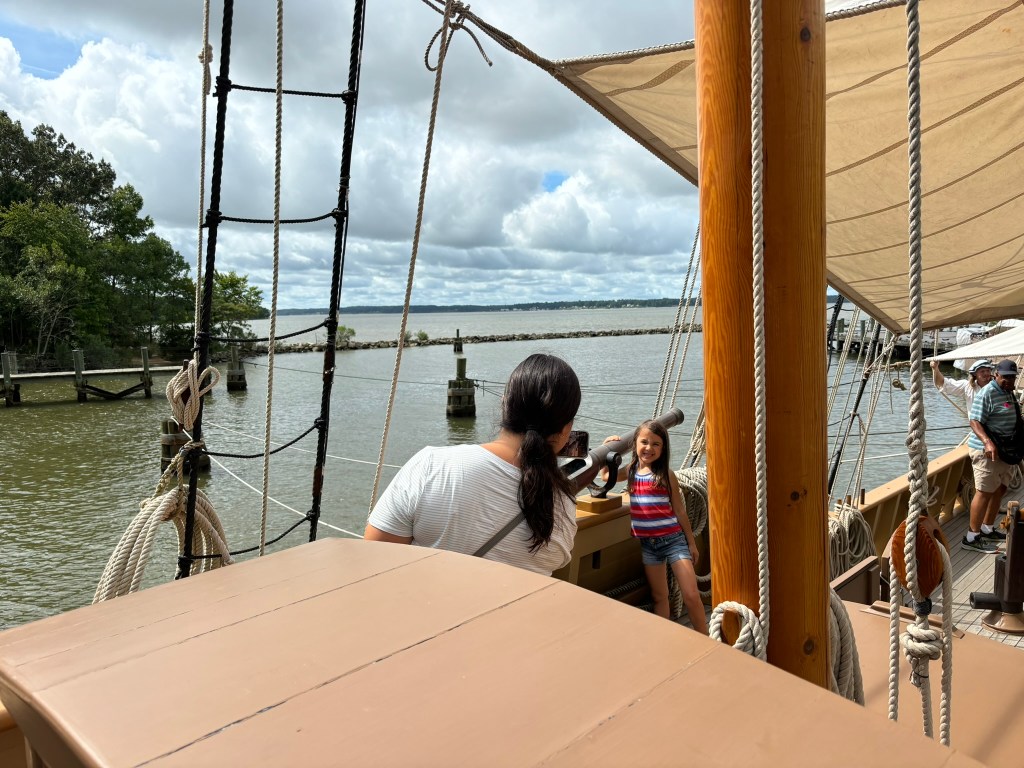
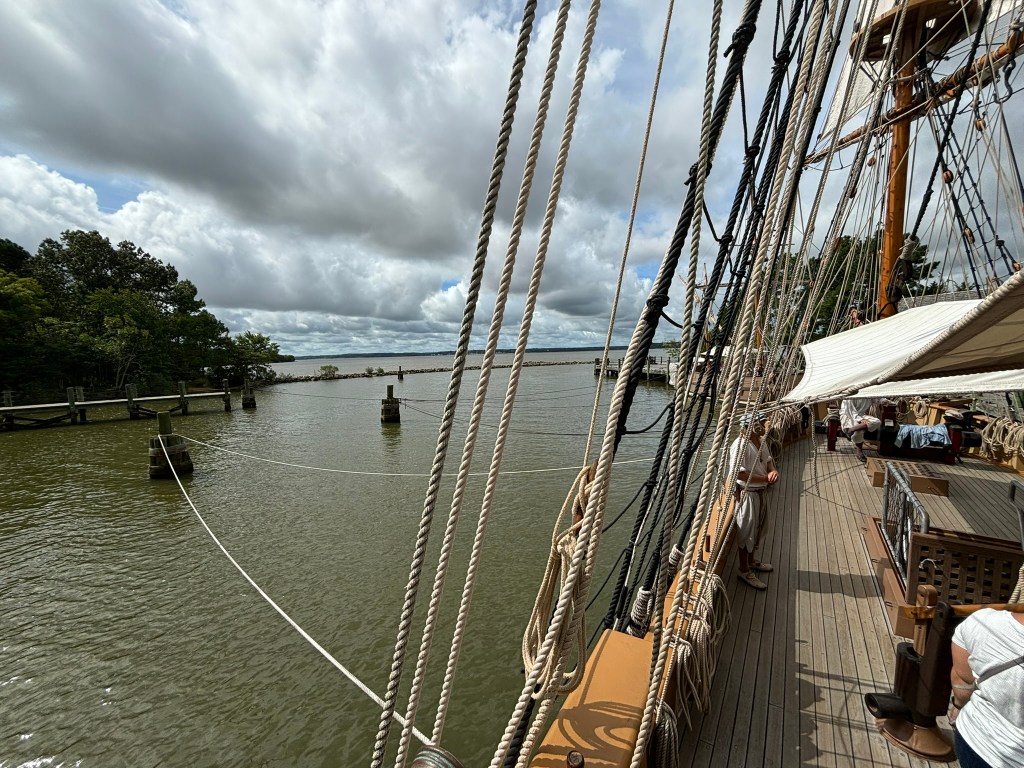
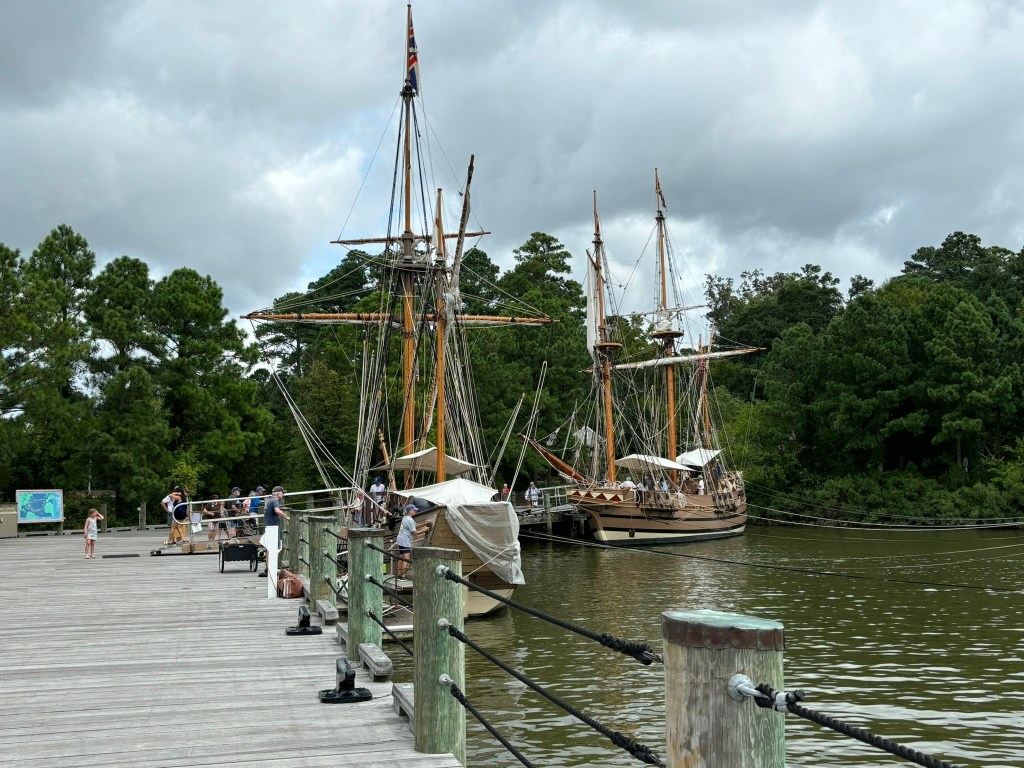
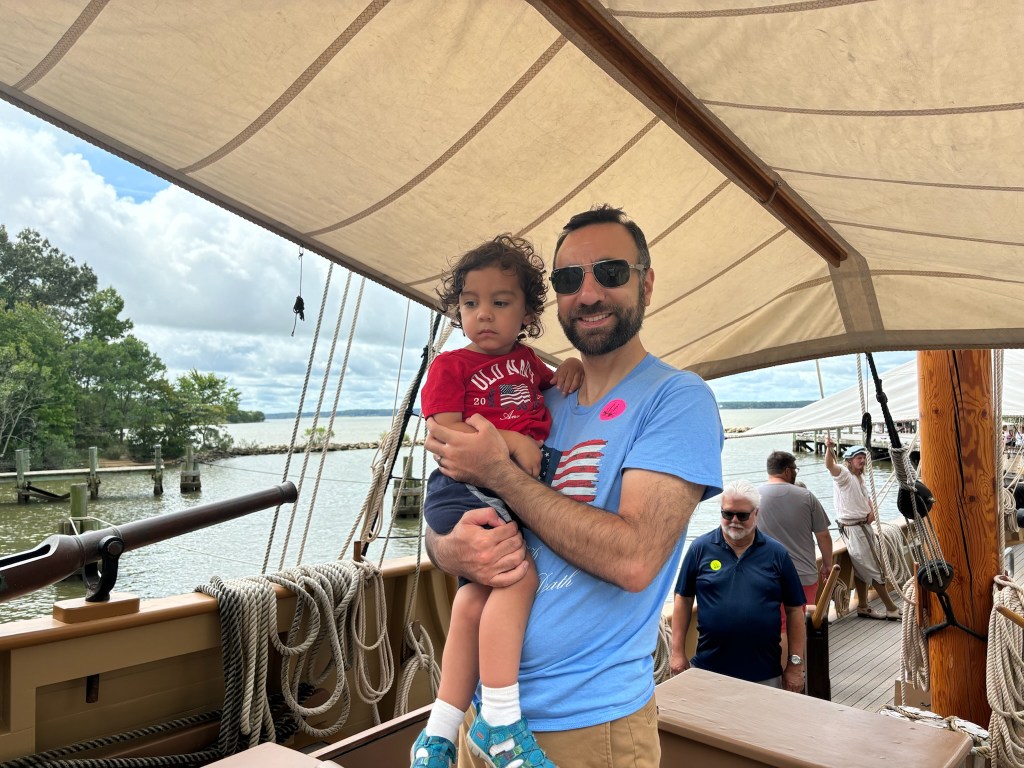
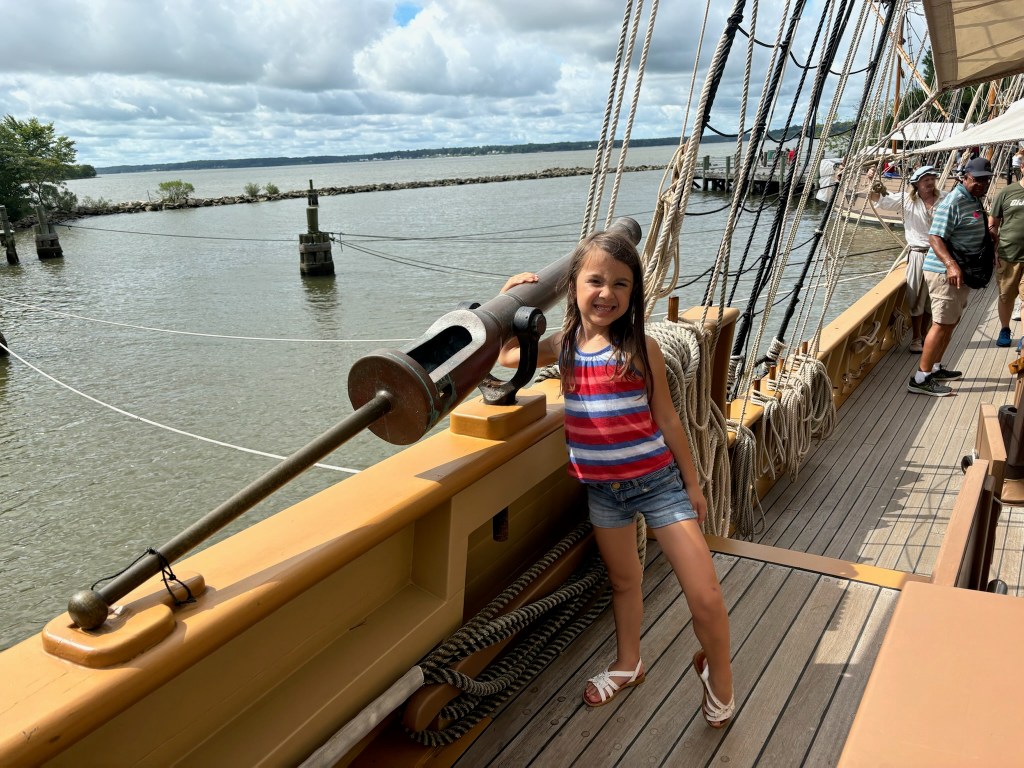
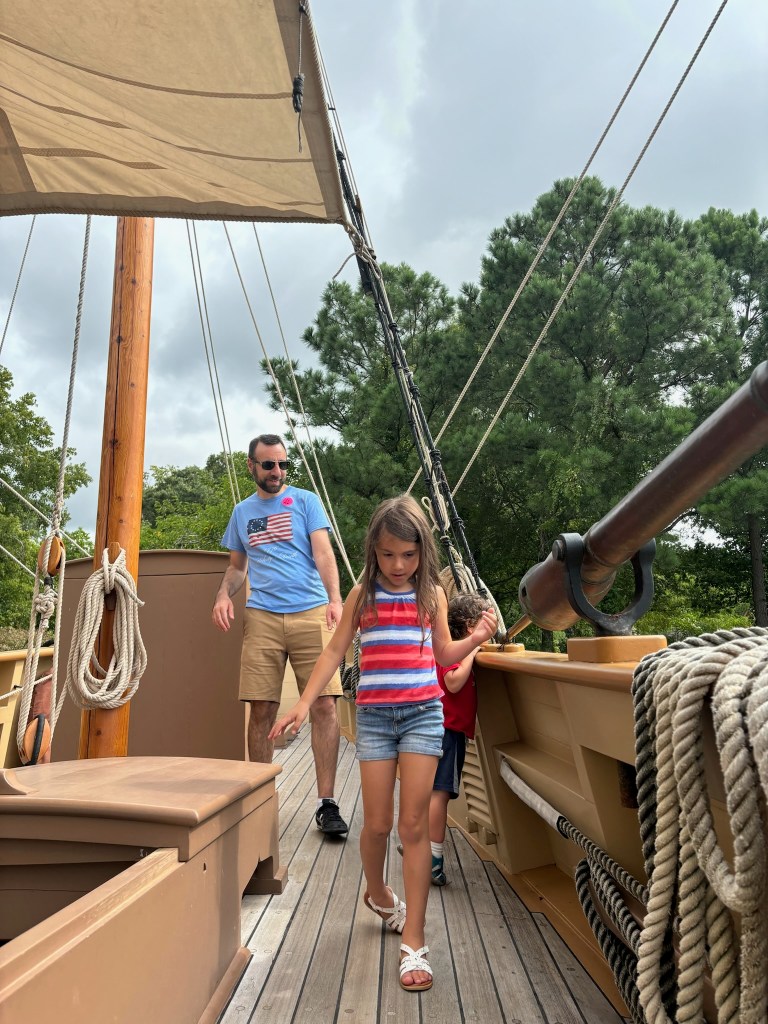
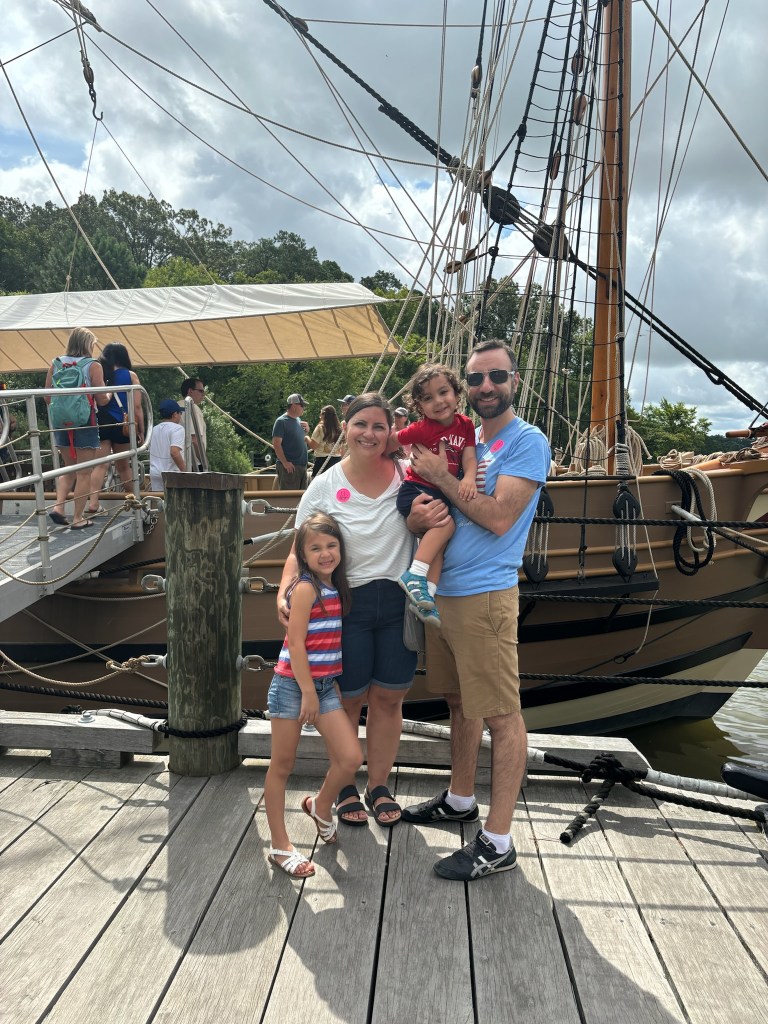
    After passing through the Paspahegh village, we made our way to ships docked along the coast.  The three ships that took the original voyage to Jamestown were called Susan Constant, Godspeed, and Discovery.  Two of the three replica ships were in dock on the day we were there.  We were able to go below deck and explore the two ships.

    James Fort

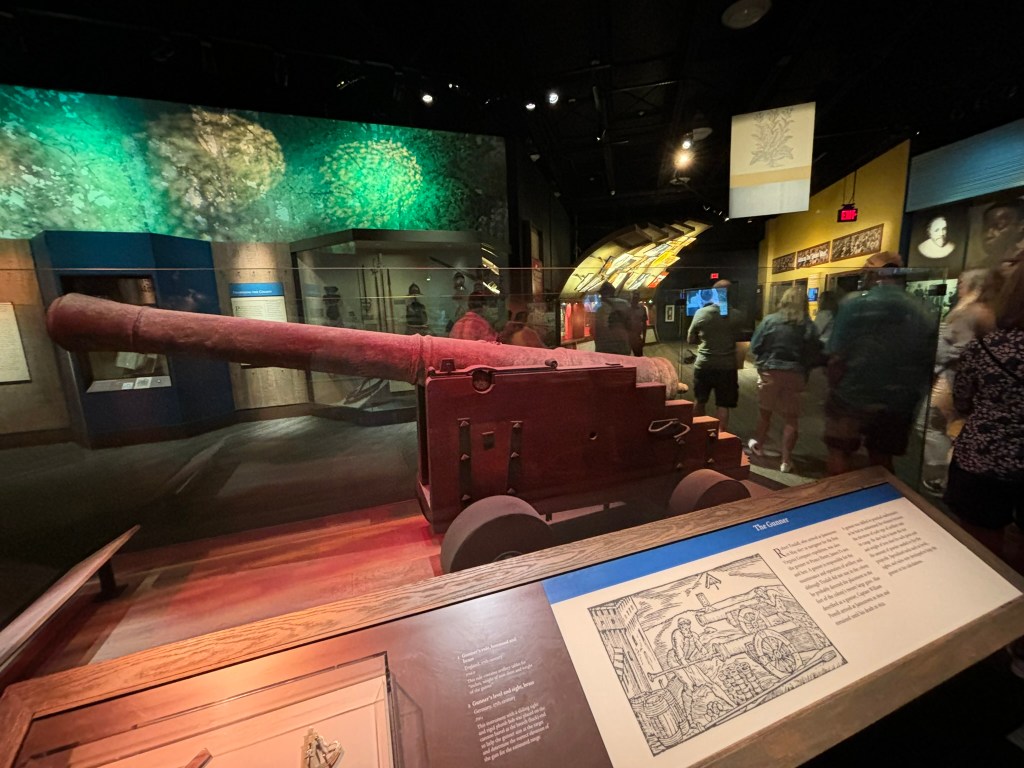
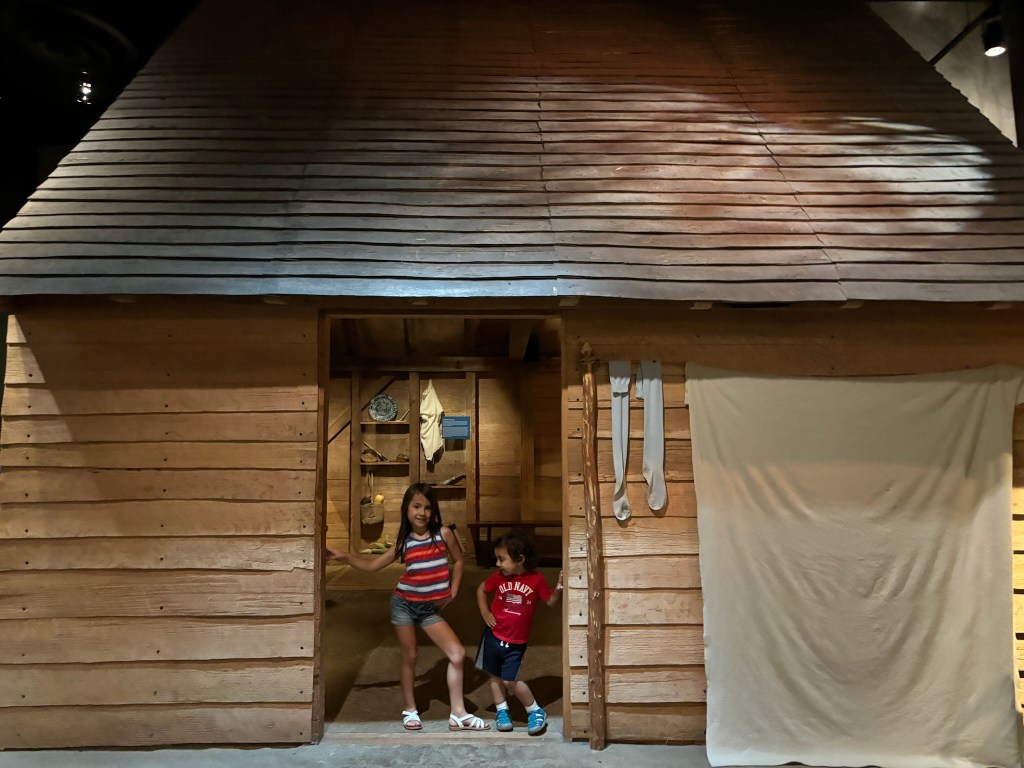
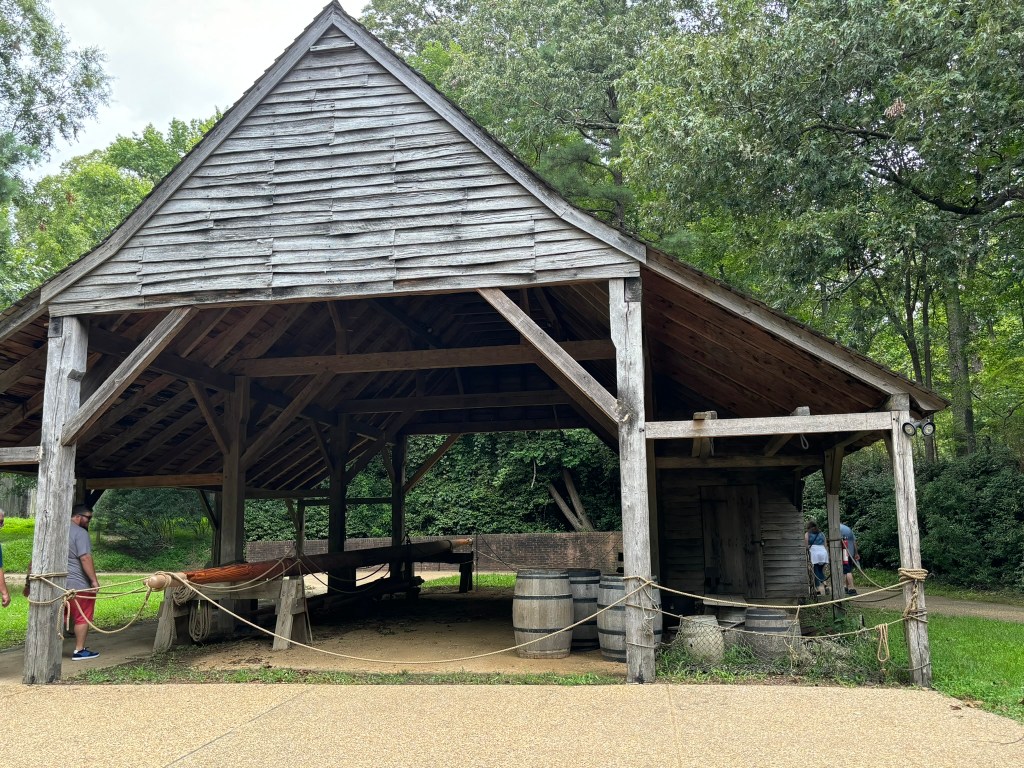
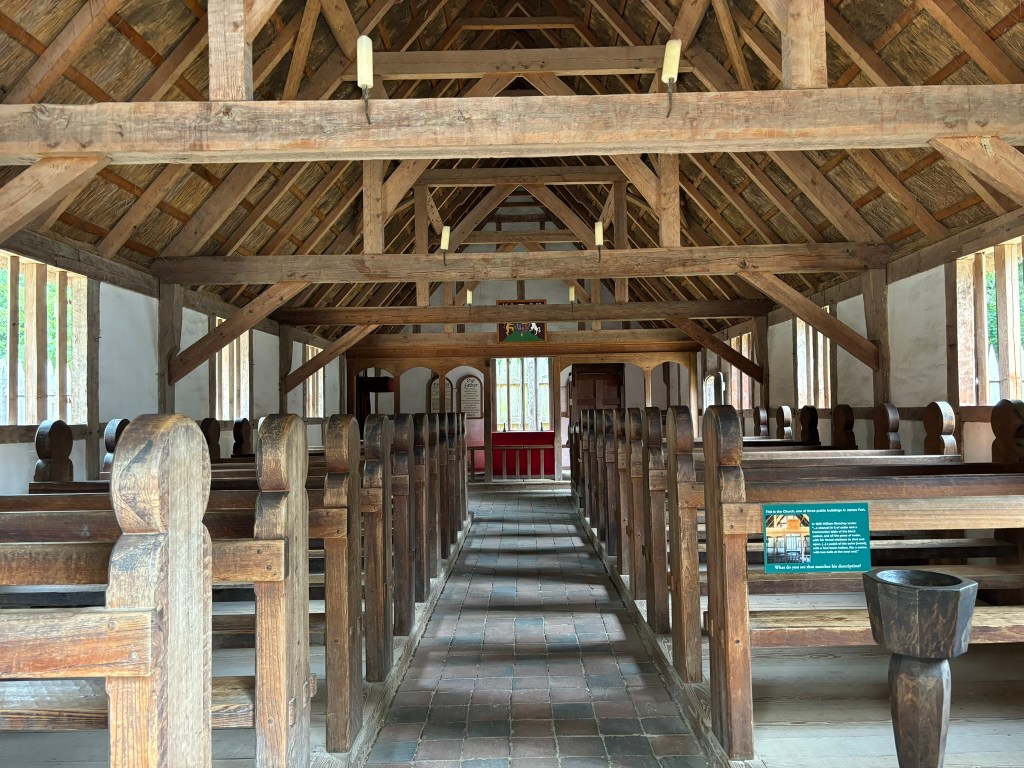
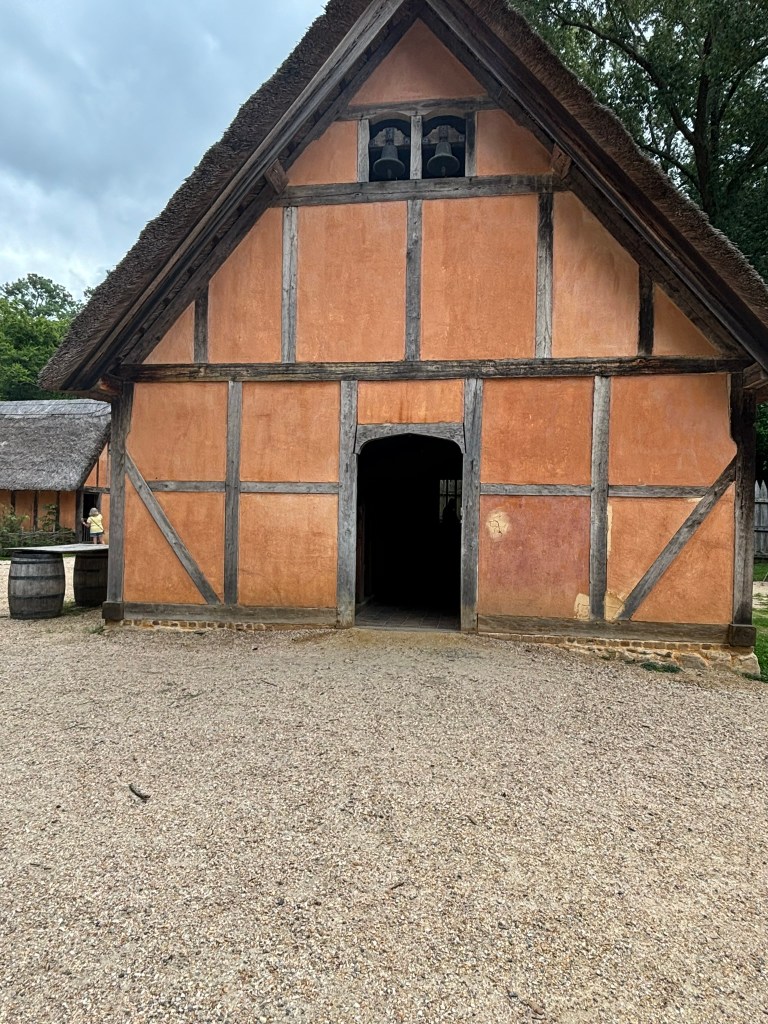
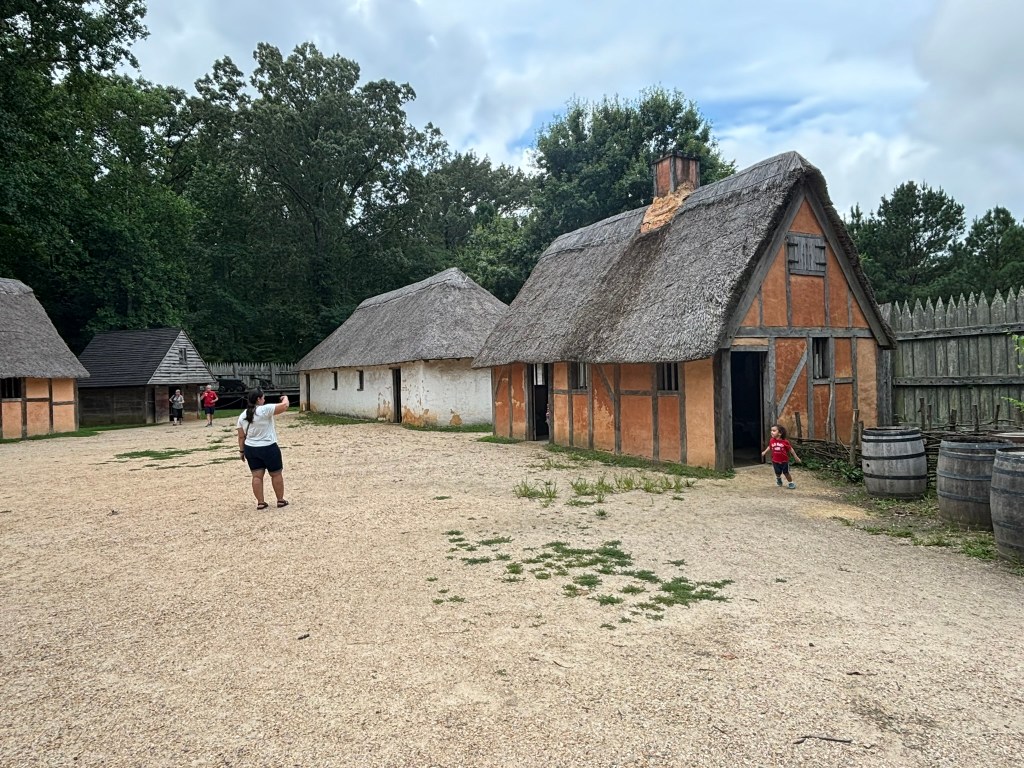
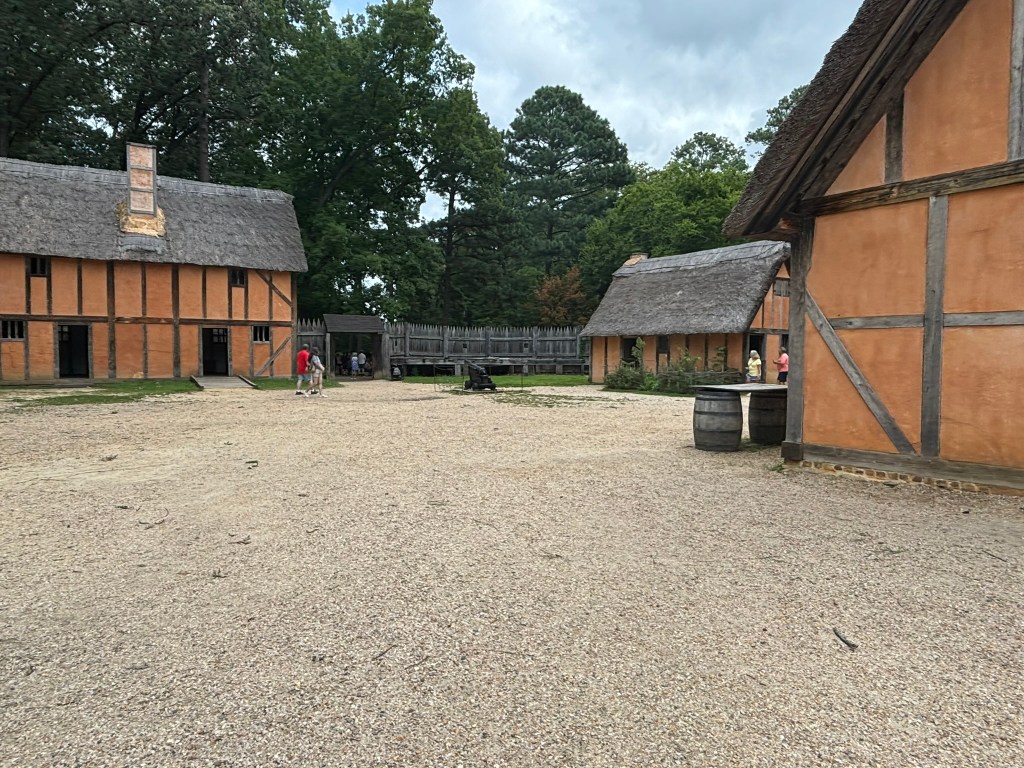
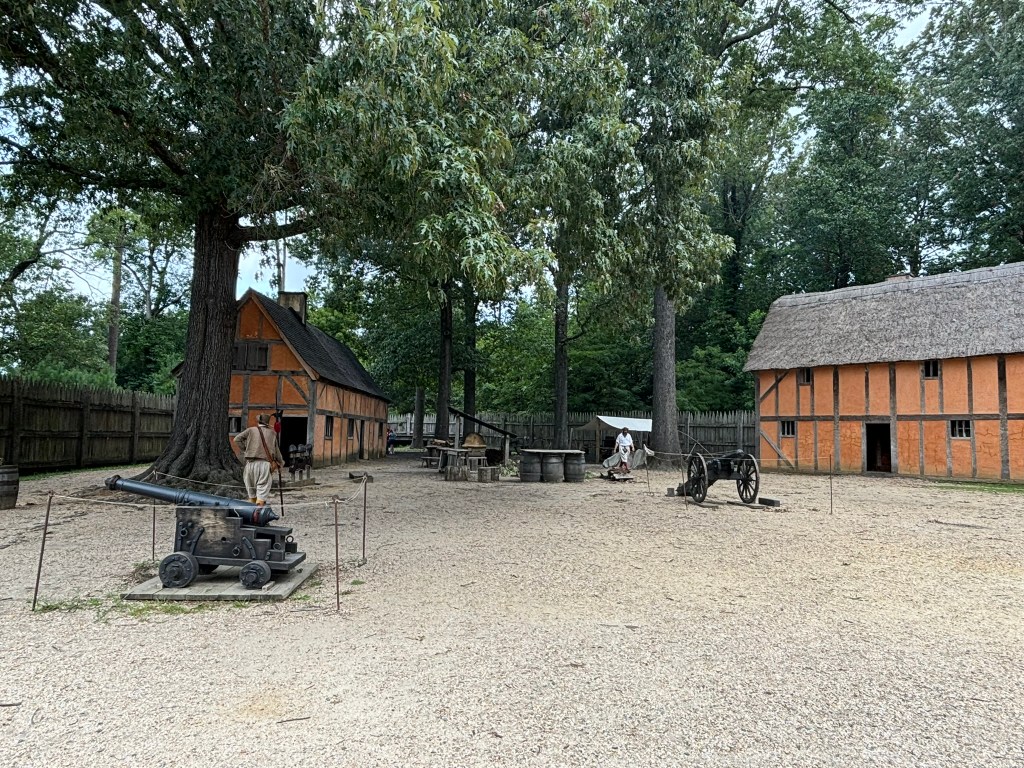
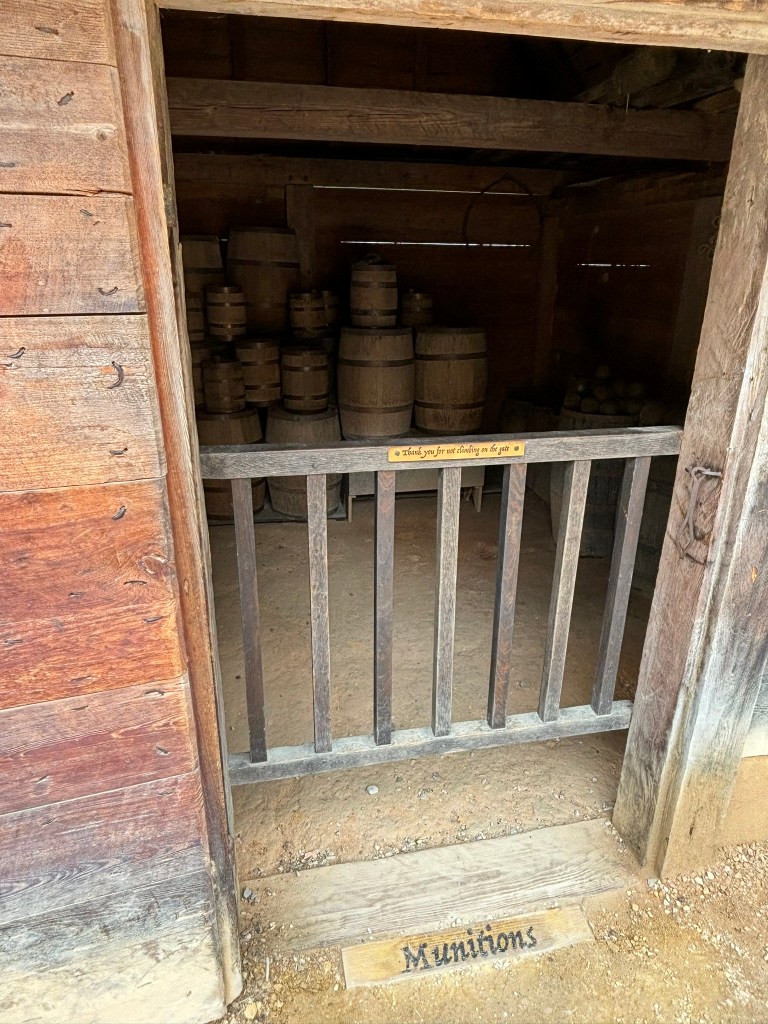
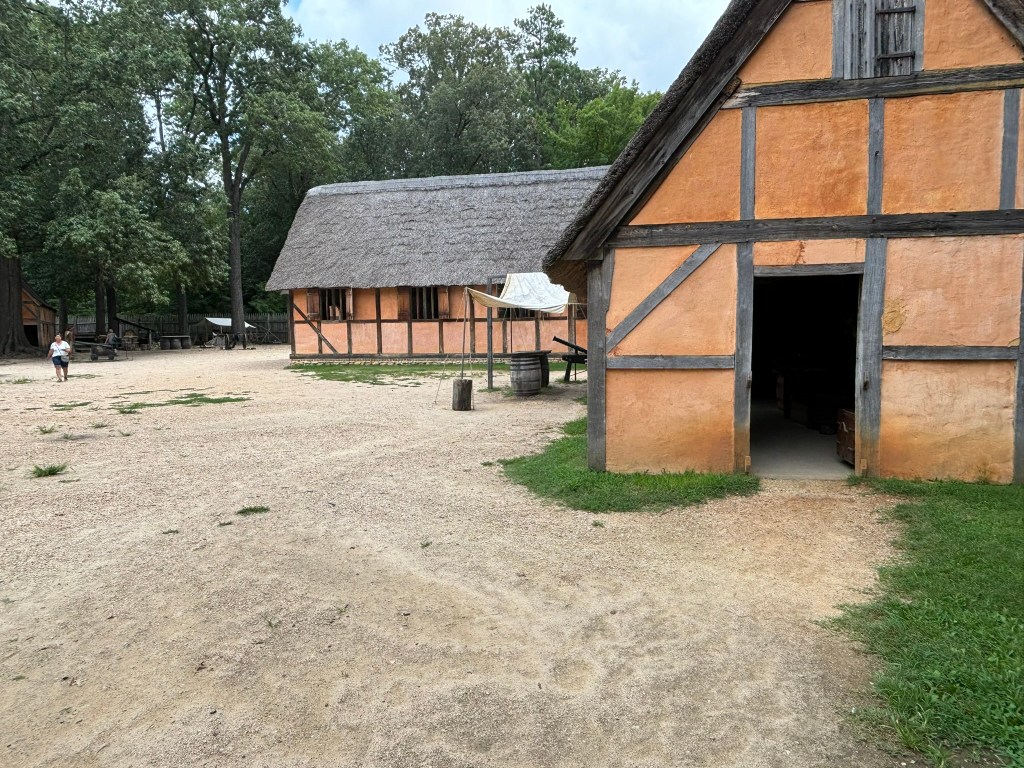
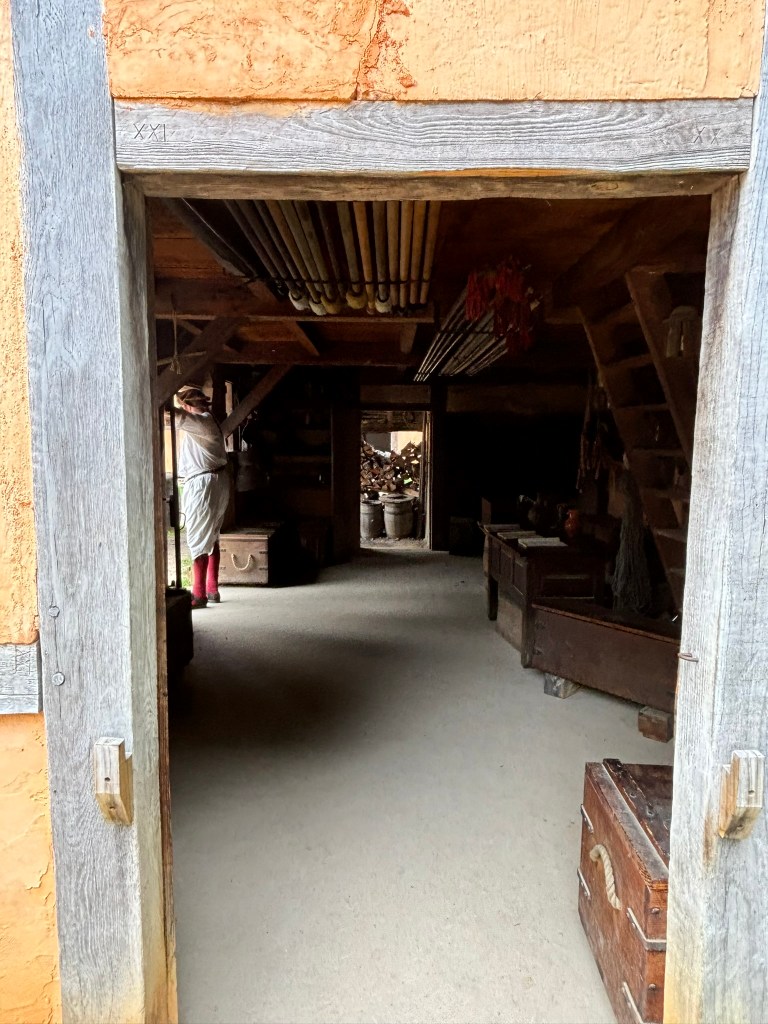
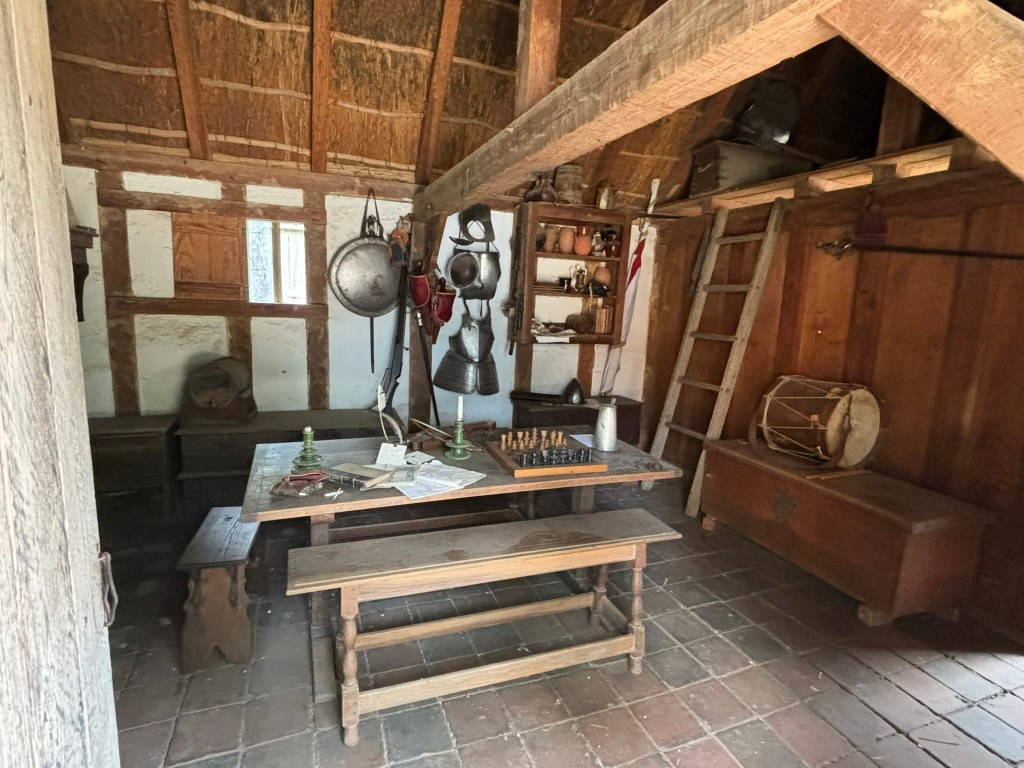
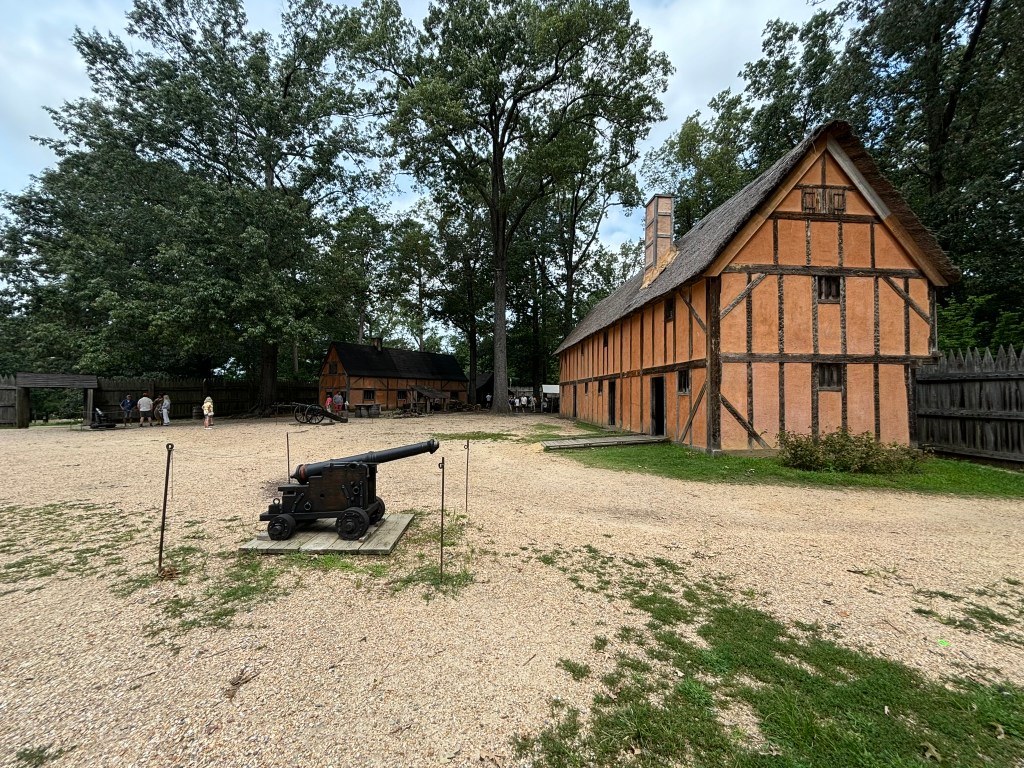
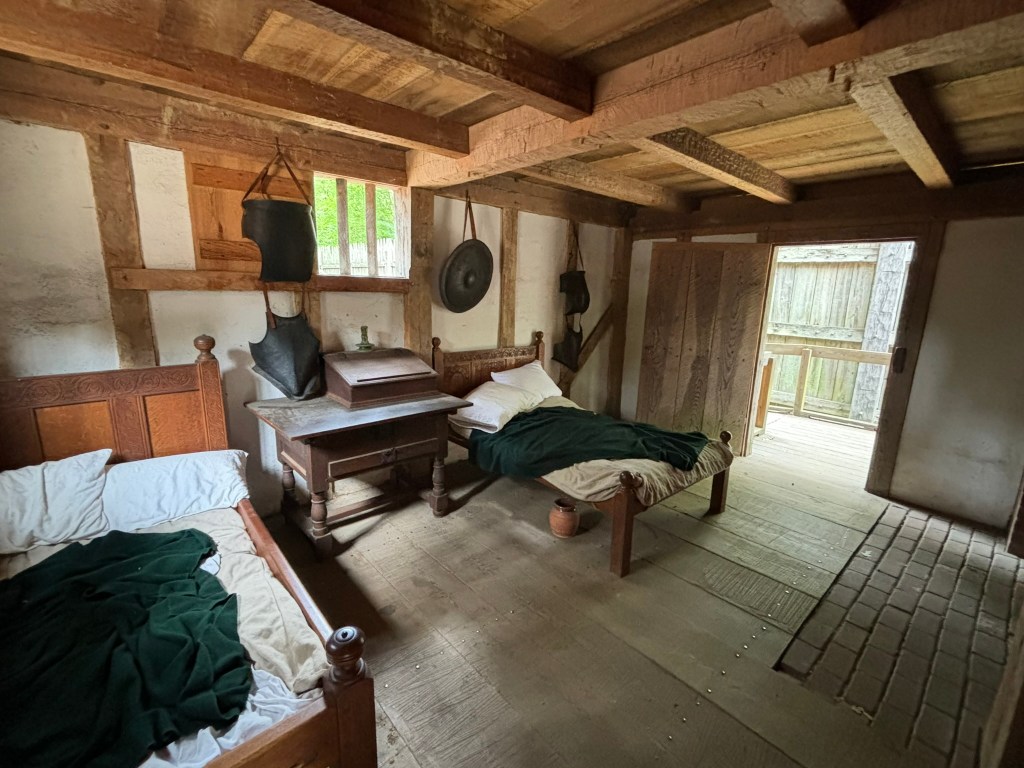
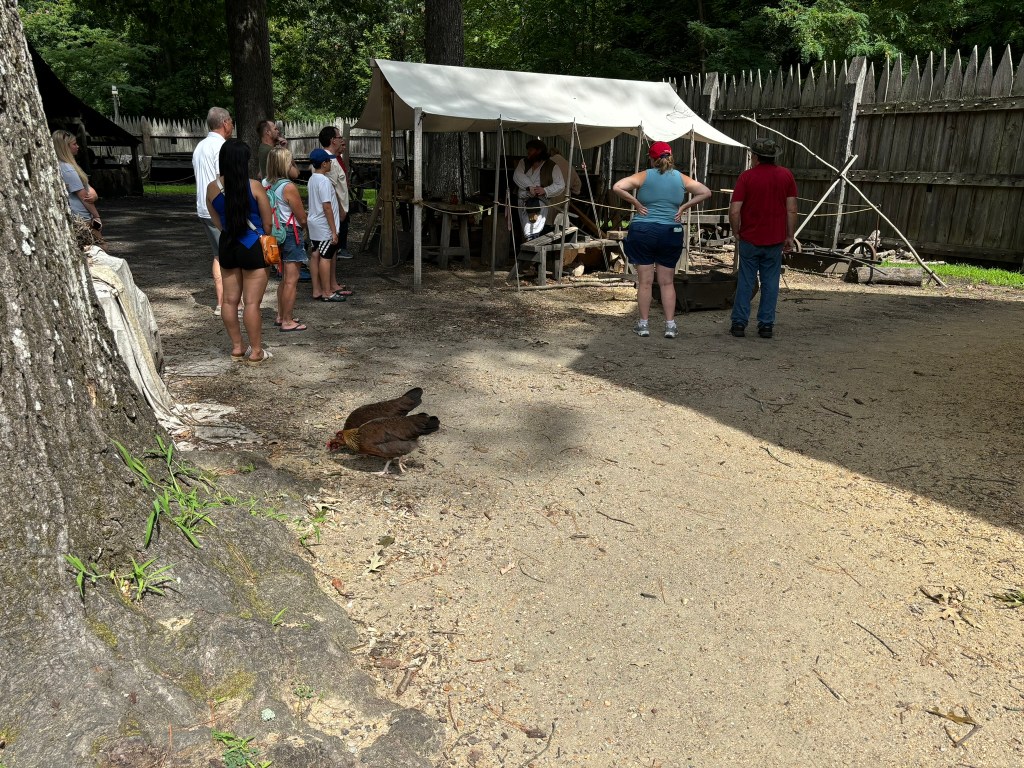
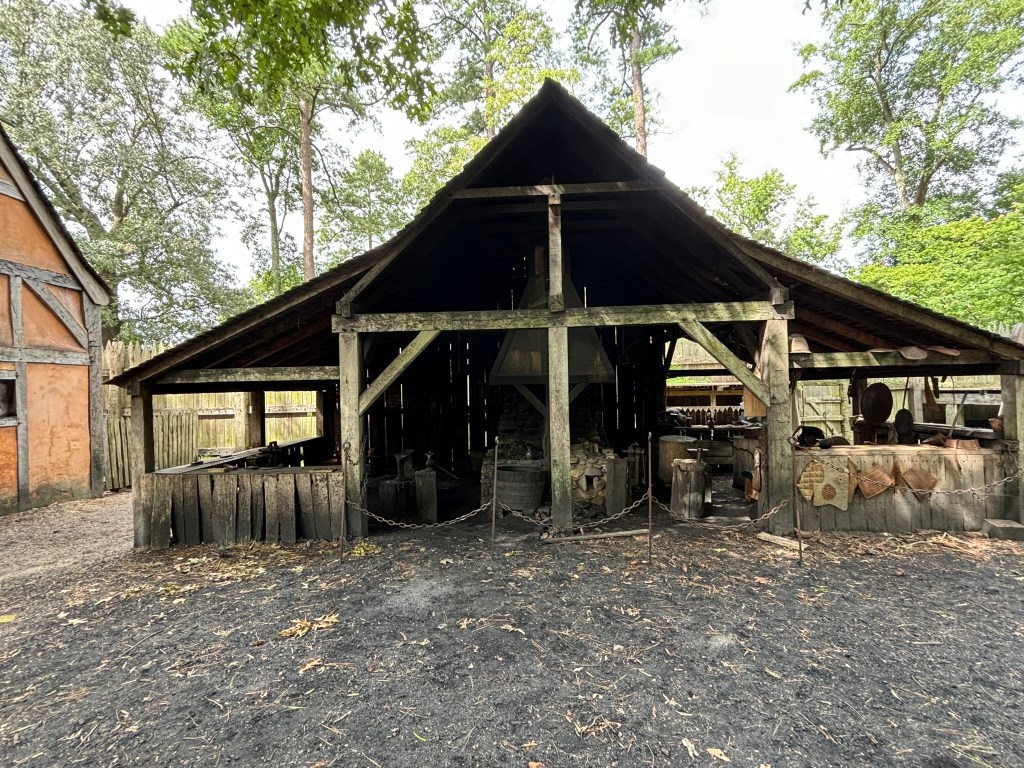
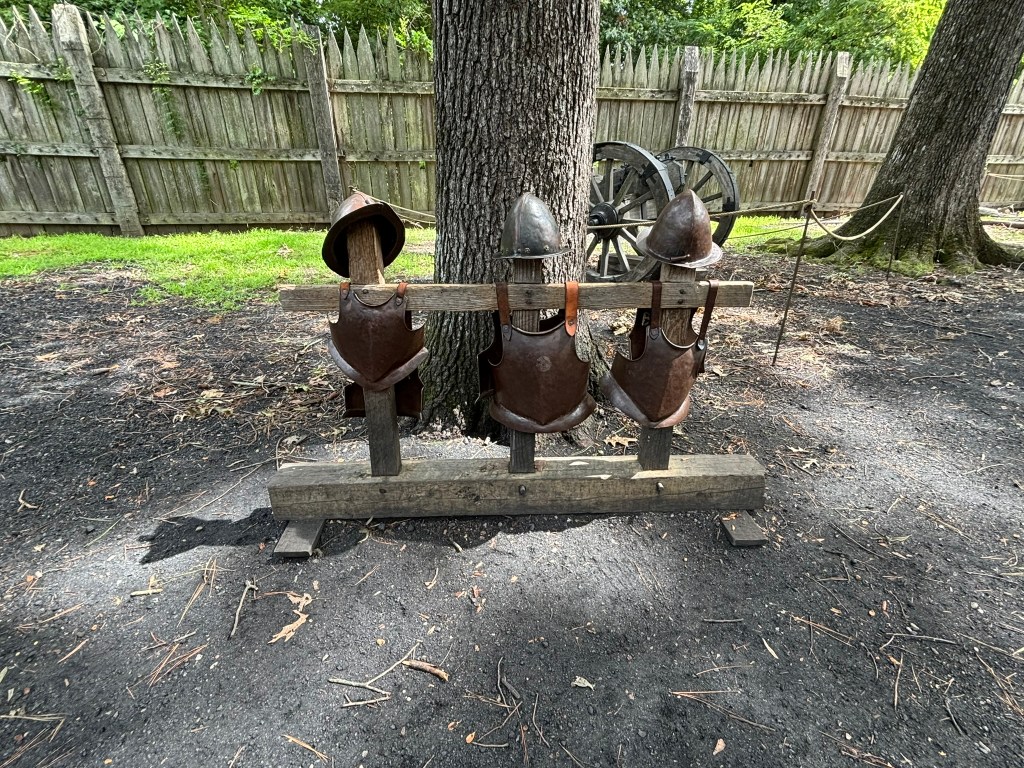
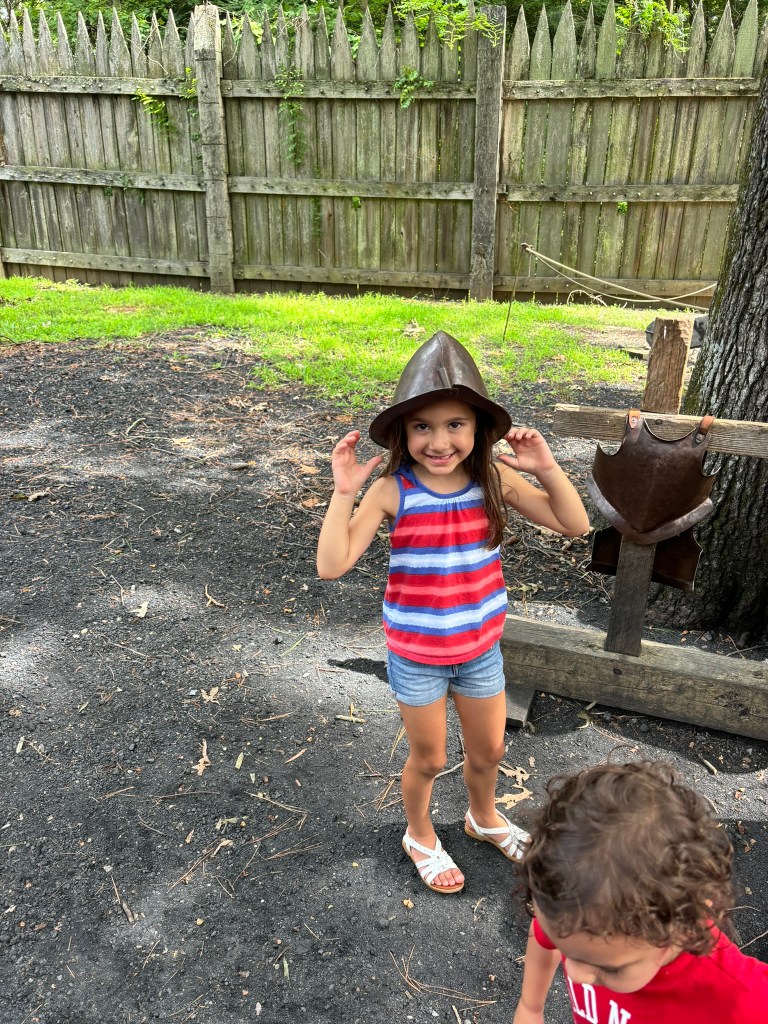
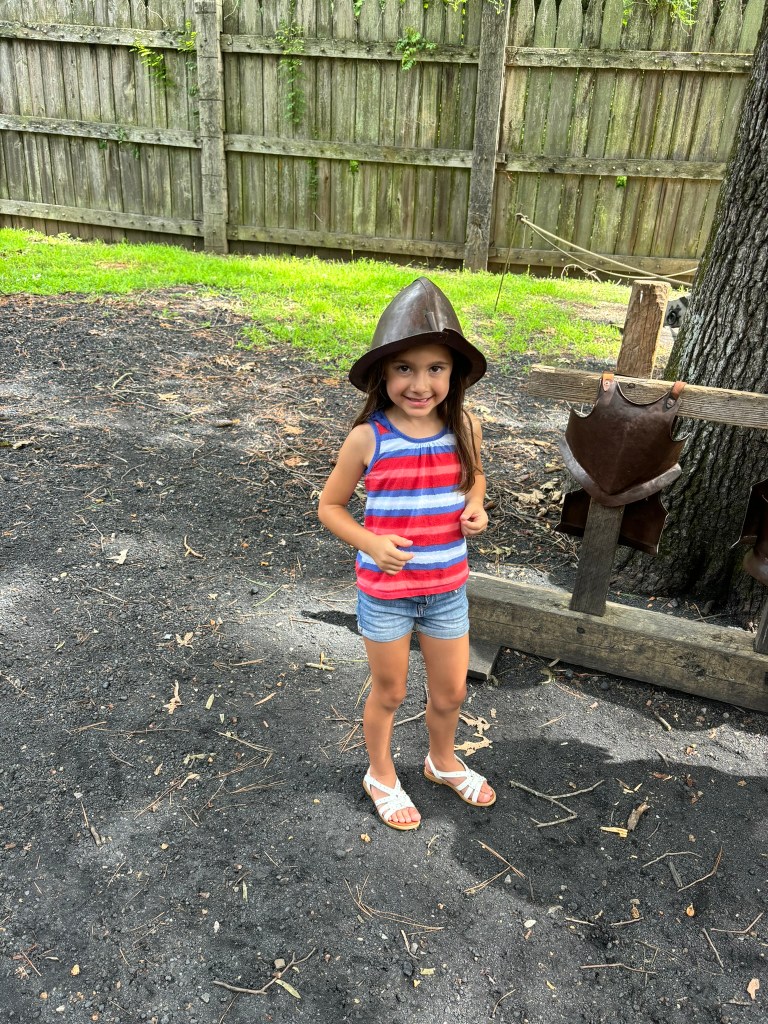
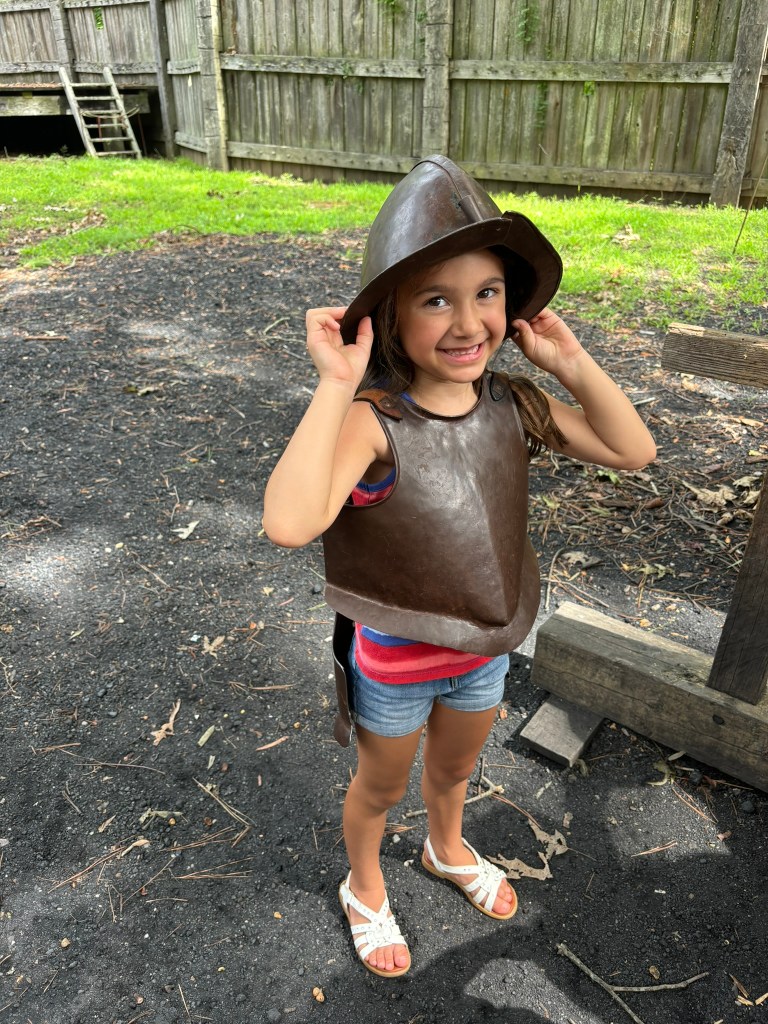
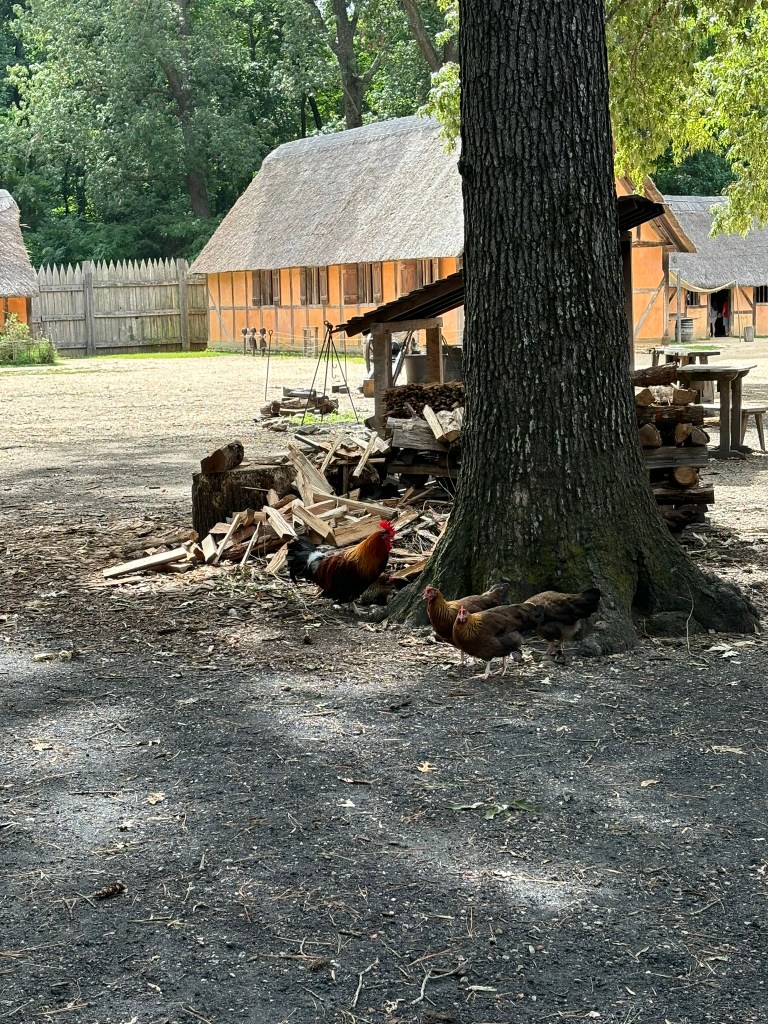
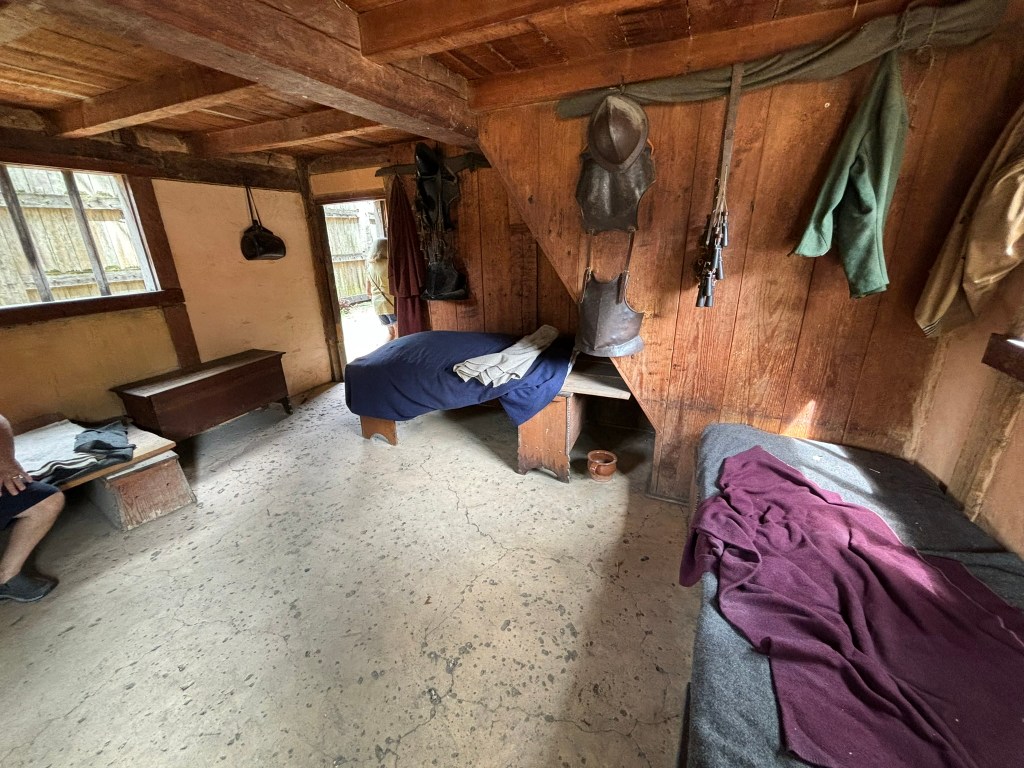
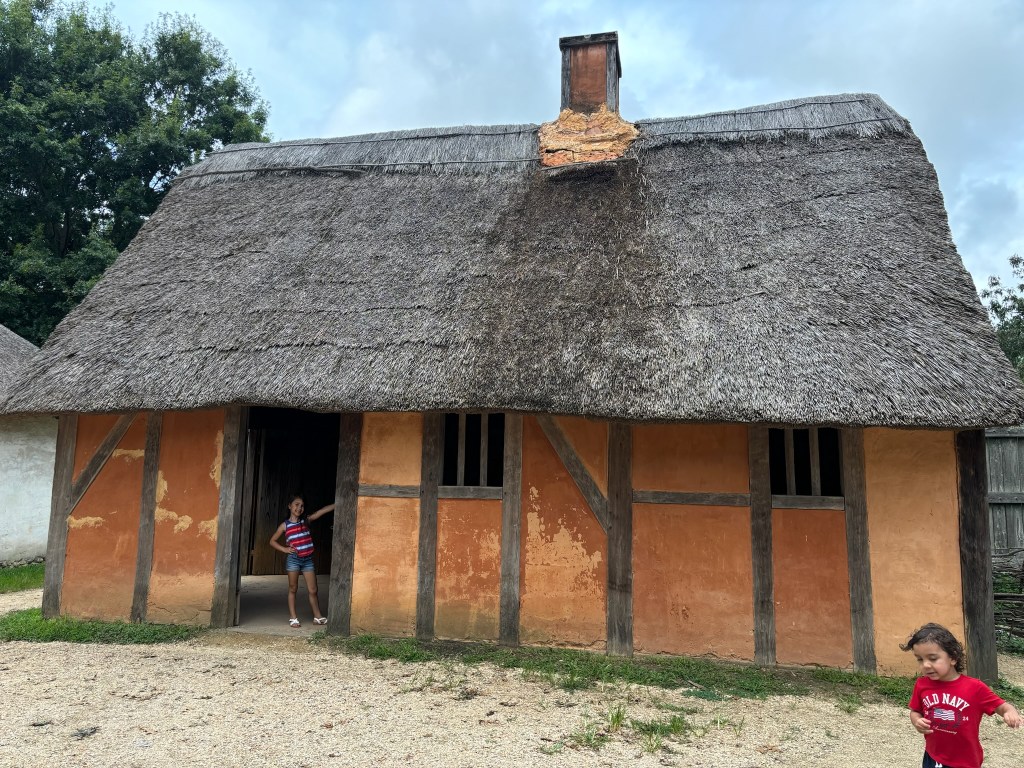
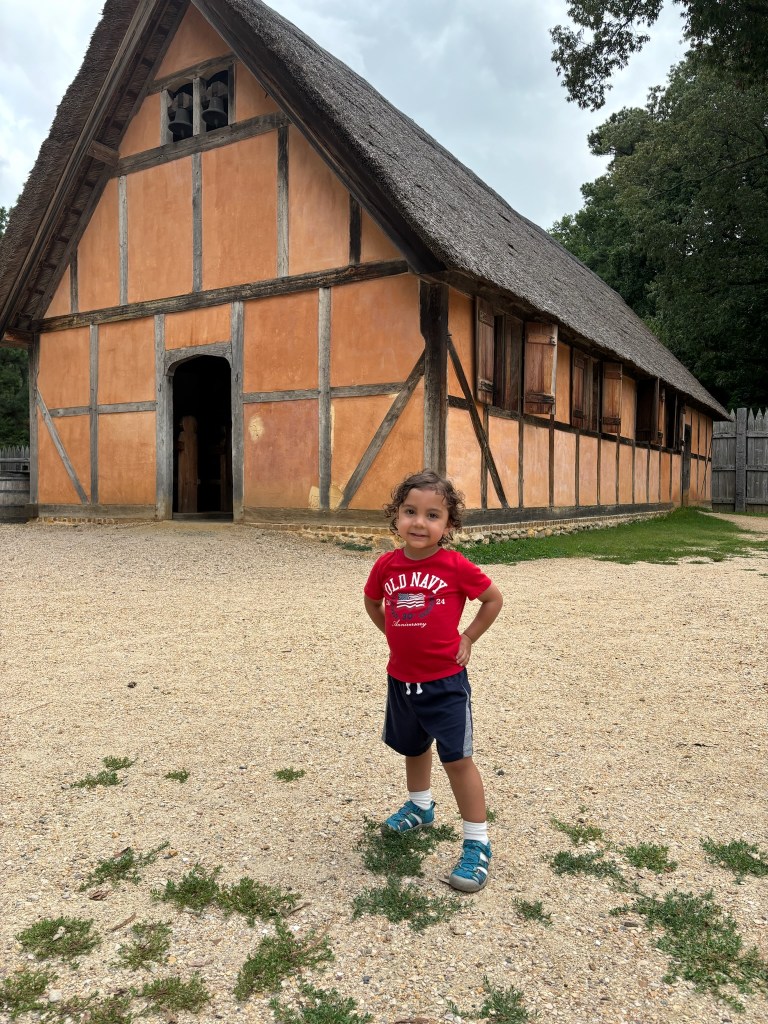
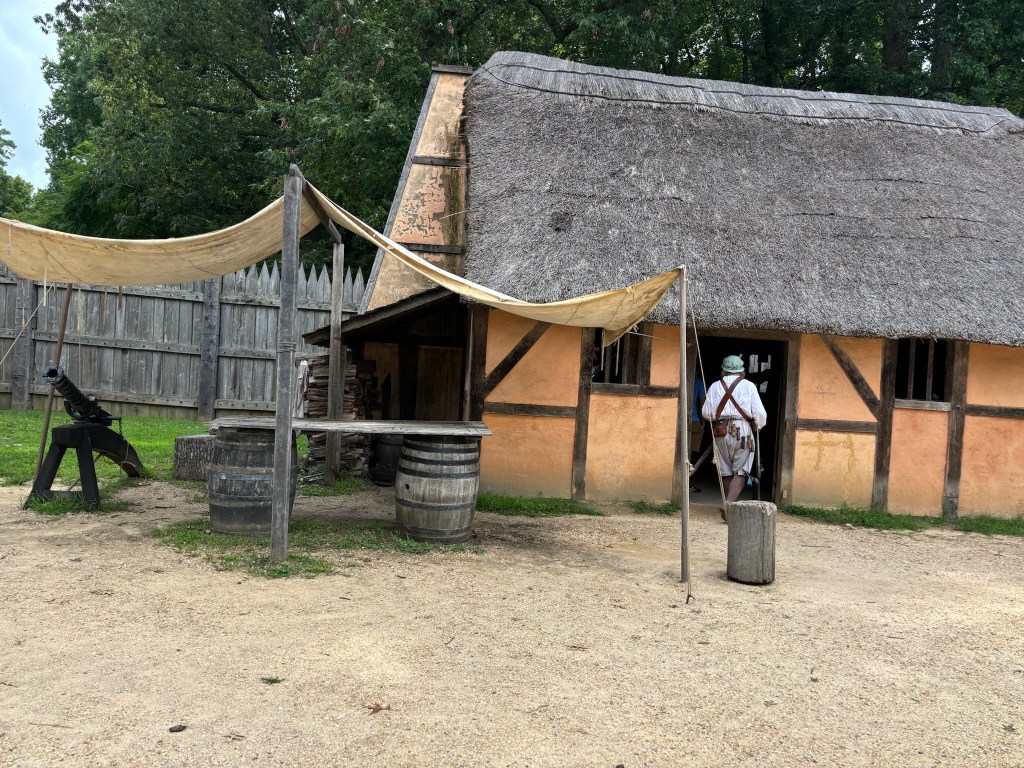
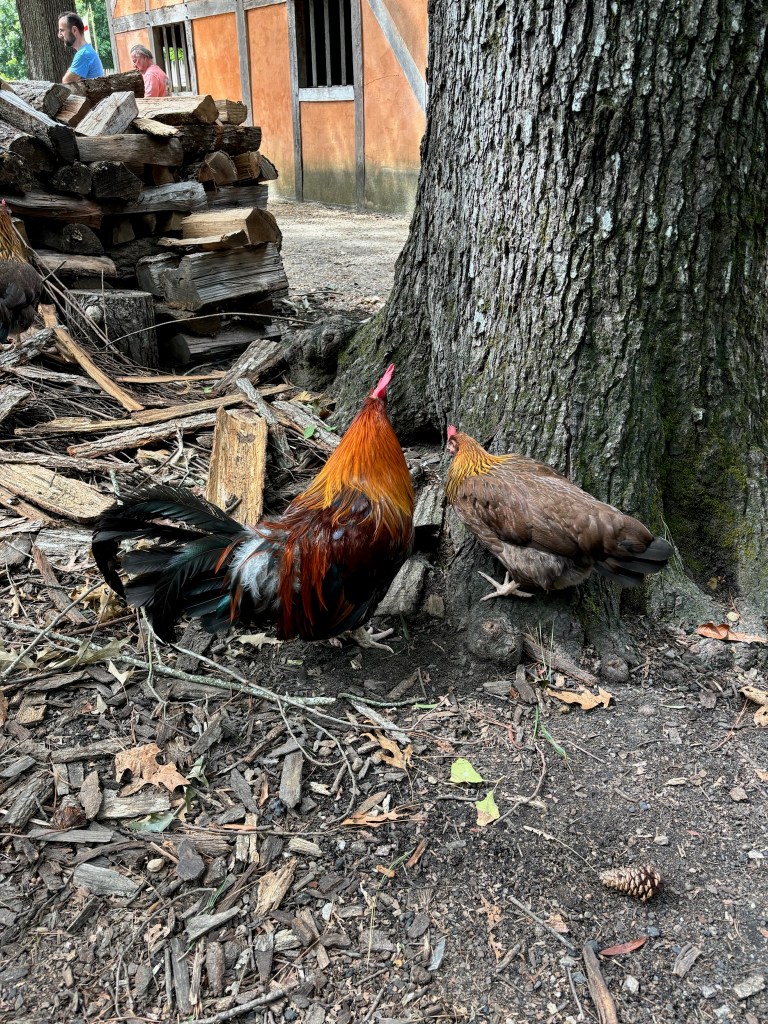
    We then made our way to the replica of the original James Fort, shaped in a Triangle.  One of the reenactors informed me that the original fort was likely much larger and had more buildings within, but the structures within the replica would have looked very much like the original.  We explored the numerous structures within James Fort, including living quarters, a church, an armory, and workstations.  There were even live chickens roaming around the fort.  Just outside the fort, cannon fire demonstrations are held every 30 mins.

    We had some time left before lunch to head back into the museum and take a look at the galleries once again.  We ate lunch at the cafe within the museum.  Lunch was included with the price of the tour.

    After lunch, we headed back onto the bus and headed to Yorktown, which I will discuss in a later blog post.

    Overview

    The Jamestown Settlement was a great, immersive experience highlighting the importance of the Jamestown settlement.  The museum highlighted the fact that three cultures came together in Virginia: English, Native and African.  Each culture brought their own unique blend which helped develop colonial culture in the New World.  As mentioned before, I thought that this tour would include Historic Jamestowne; the actual location of the original Jamestown Fort.  The original fort no longer exists, but the location includes a re-creation of an early church and an Archaearium, which houses over 2,000 artifacts from the Jamestown colony.  Perhaps I will have to make another trip on a future date.  Despite that, I would highly recommend going to Jamestown Settlement.  The museum does a great job taking you through the history of Jamestown and its significance to American history.  The living history experience allows you to step into the shoes of those who lived in 1607 and imagine what life would have been like for those in a Native village, those who had to remain on the ships for months at sea, and for those living in the James Fort. The tour was $85 per adult and $45 for my daughter (5) and free for my son (2). It was well worth it considering that this was an all day tour with lunch included. I would highly recommend this tour. You can buy tickets from Viator HERE.

    Follow my Instagram, Facebook, and X accounts for videos of our time in Jamestown.

    For more information about the Jamestown-Yorktown Foundation, visit HERE.

    Stay tuned for my next blog post which will discuss our visit to the Yorktown Battlefield and Museum in the afternoon.

    Check out similar blog posts below:

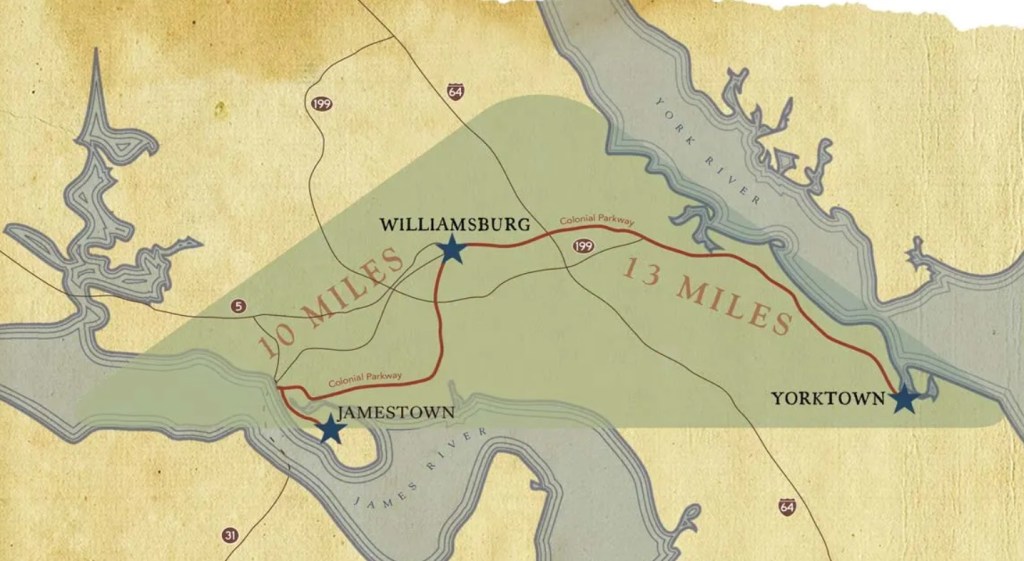
  • For our summer vacation this year, my family and I went to Williamsburg, Virginia.  Our itinerary was as follows: Sunday: Arrive, Monday: Colonial Williamsburg, Tuesday: A Viator guided tour of Jamestown and Yorktown, Wednesday: Busch Gardens, Thursday: Head to Virginia Beach and spend the night, Friday: Spend some more time in Virginia Beach, and then head home.  My next three blog posts will focus on the historical aspects of our trip.  Part 1 will be about Colonial Williamsburg.  Part 2 will be about Jamestown.  Part 3 will be about Yorktown.  These three locations are referred to as Virginia’s Historic Triangle, and are all just a short distance from one another.

    Arrival

    We arrived at our hotel, The Williamsburg Woodlands Hotel & Suites on Sunday late afternoon, and didn’t have time to do much other than go to the Visitor Center and eat dinner at Huzzah’s Eatery, which was located at our hotel.  We got the kids ready for bed as we would visiting Colonial Williamsburg the following morning.

    We woke up and ate the complimentary breakfast in the hotel and headed out to Colonial Williamsburg which is just about a 10-15 minute walk away from the hotel.  We purchased one-day passes for each adult to visit the historic sites and recieve tours of particular buildings. The tickets are normally $50 for adults but we recieved 25% off for staying at the Woodlands, and I also recieved a teacher discount. For two adult tickets, I paid about $75 and children are free under 6 years old.

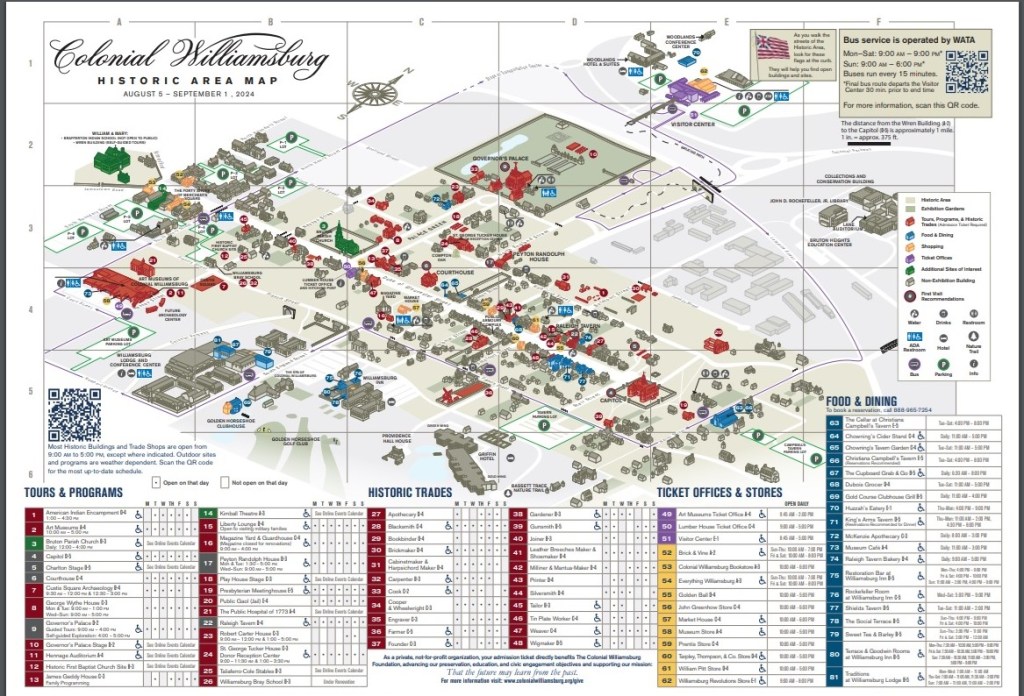
    The map below will be your lifeline if you go to Colonial Williamsburg. The map shows you each historical building in town to visit. On the other side of the map is a list of events taking place at their specific times. These events are updated by Colonial Williamsburg every couple of weeks.

    Significance

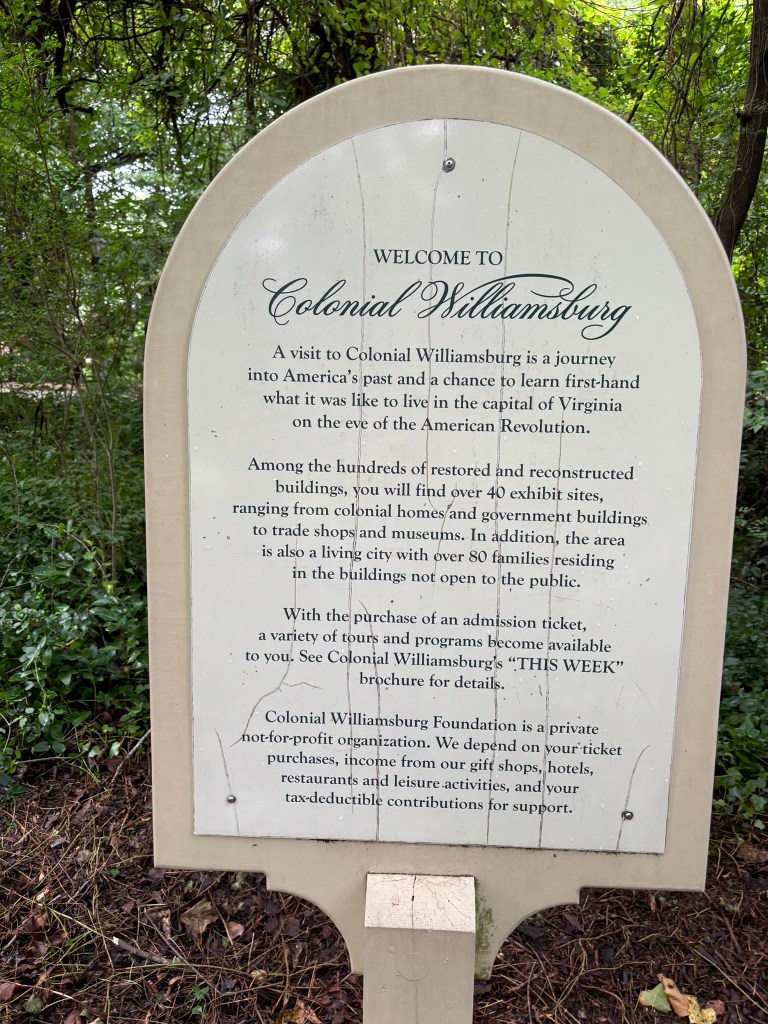
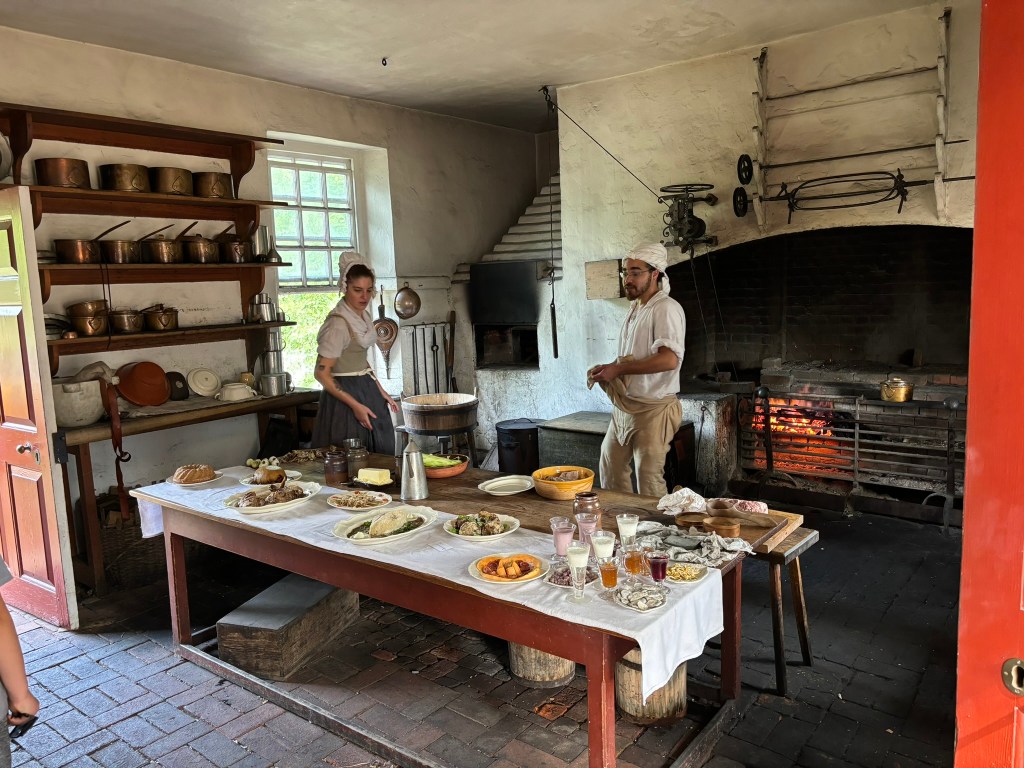
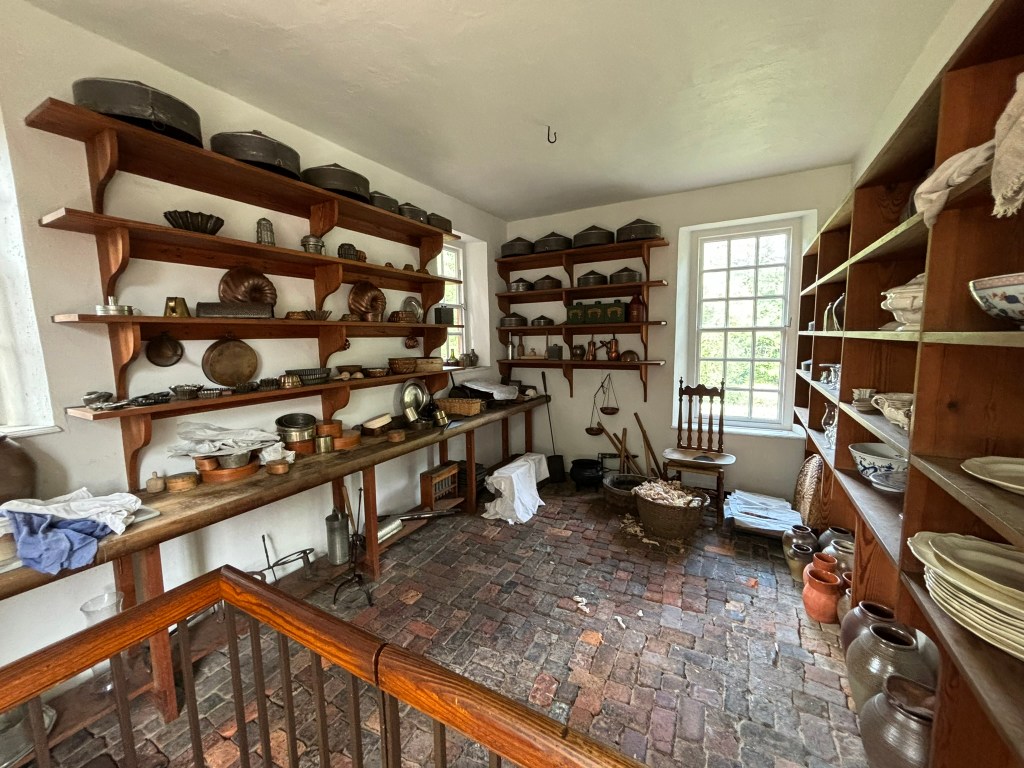
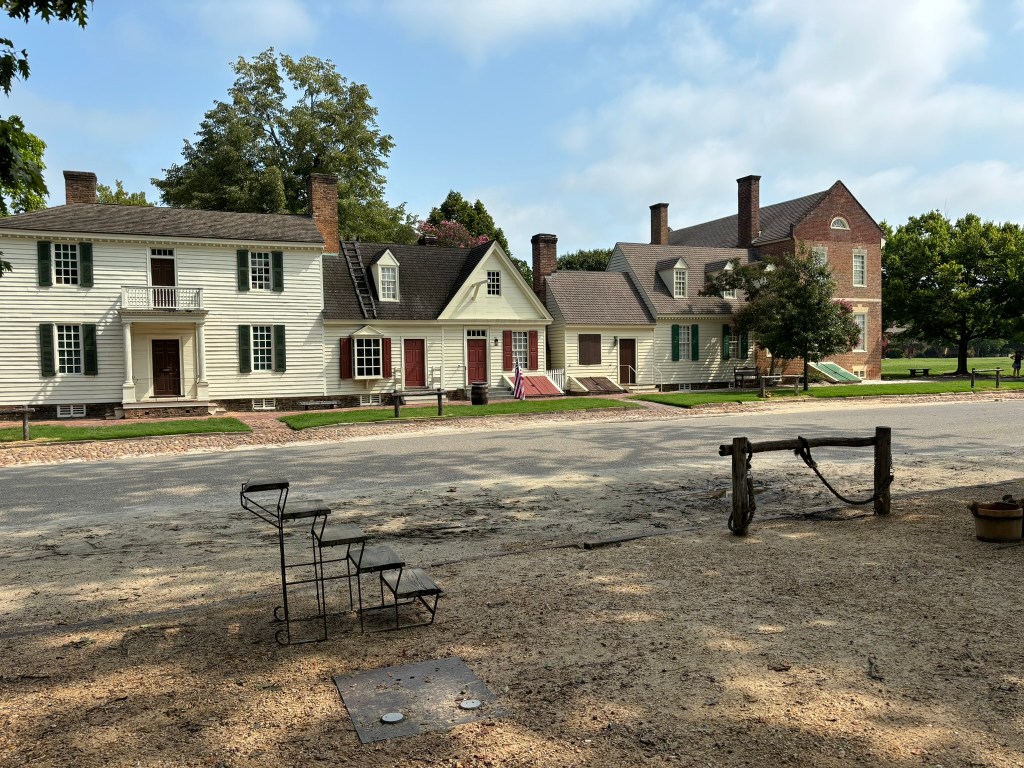
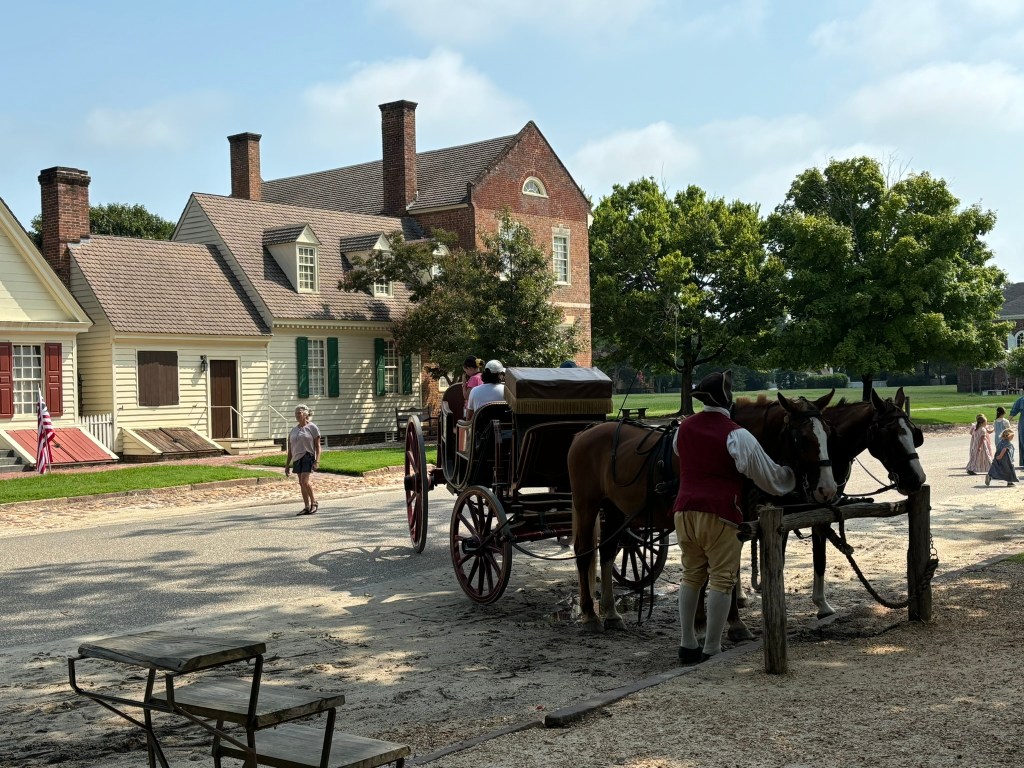
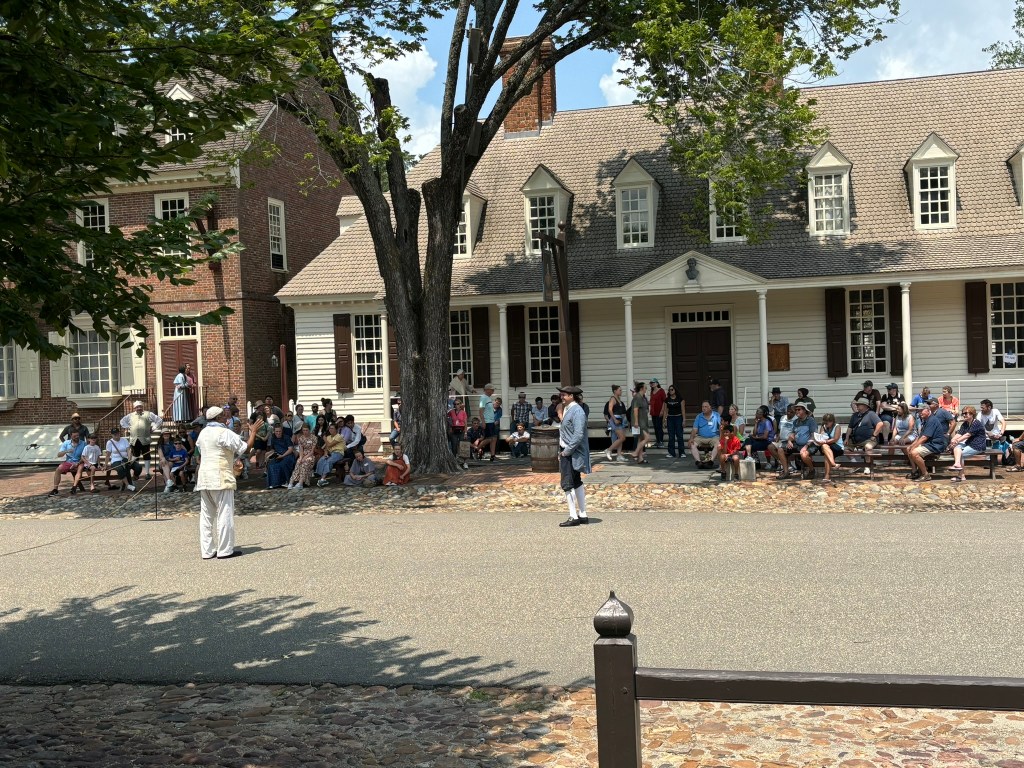
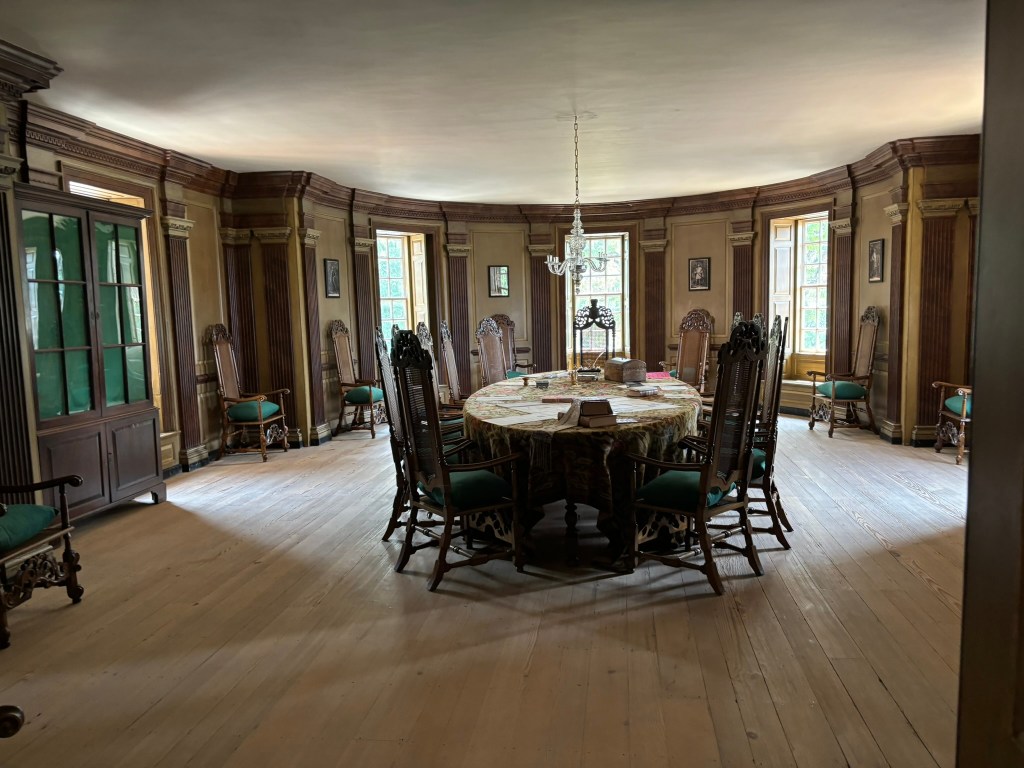
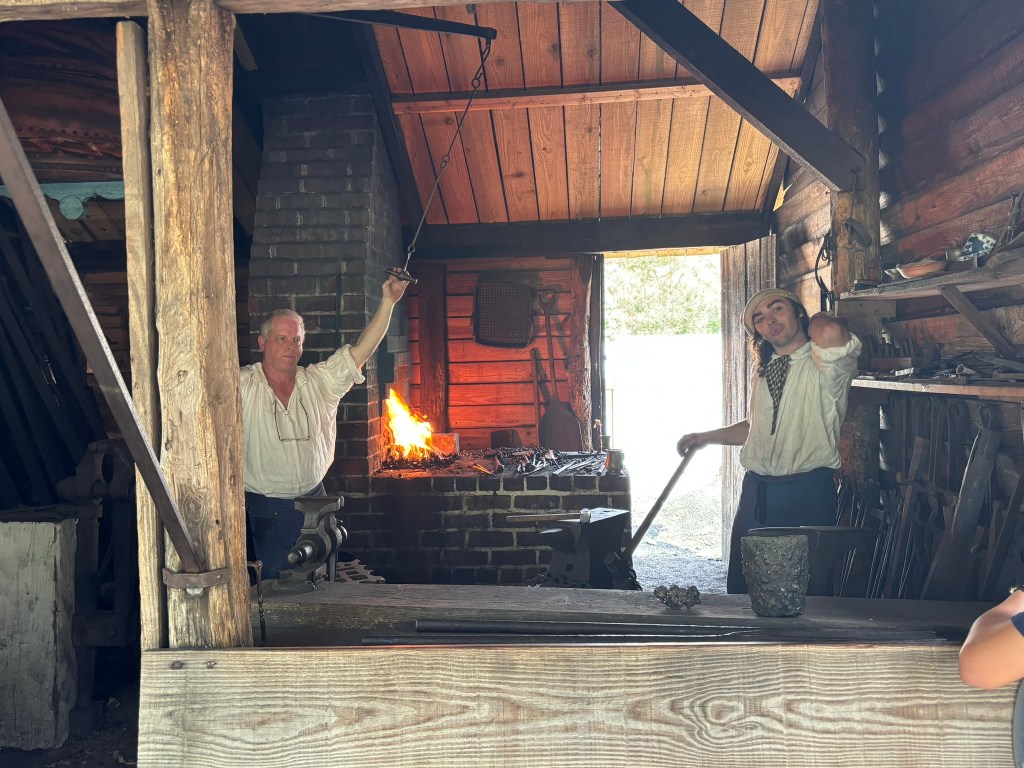
    Williamsburg is significant because in 1699, the capital of Virginia was moved from its original location in Jamestown, to Williamsburg.  Williamsburg remained the capital until 1779, when it was moved to Richmond.  Today, Williamsburg is an open-aire, living-history museum with restored and reconstructed buildings.  Reenactors talk, act and dress as if they were living in colonial times.  Different buildings have reenactors displaying an array of jobs and positions in colonial times, including an Apothecary, Blacksmith, Bookbinder, Brickmaker, Cabinetmaker, Harpsichord Maker, Carpenter, Cook, Cooper, Wheelright, Engraver, Farmer, Gardner, Gunsmith, Joiner, Leather Breeches Maker, Shoemaker, Milliner, Mantua-Maker, Printer, Silversmith, Tailor, Tin Plate Worker, Weaver and Wigmaker.  The reenactors bring you back in time to see what everyday people were doing in the colonies.  Besides the reenactors, there are many historic buildings such as the County Court House, as well as houses belonging to historic figures such as lifelong Williamsburg resident and Founding Father, Peyton Randolph.

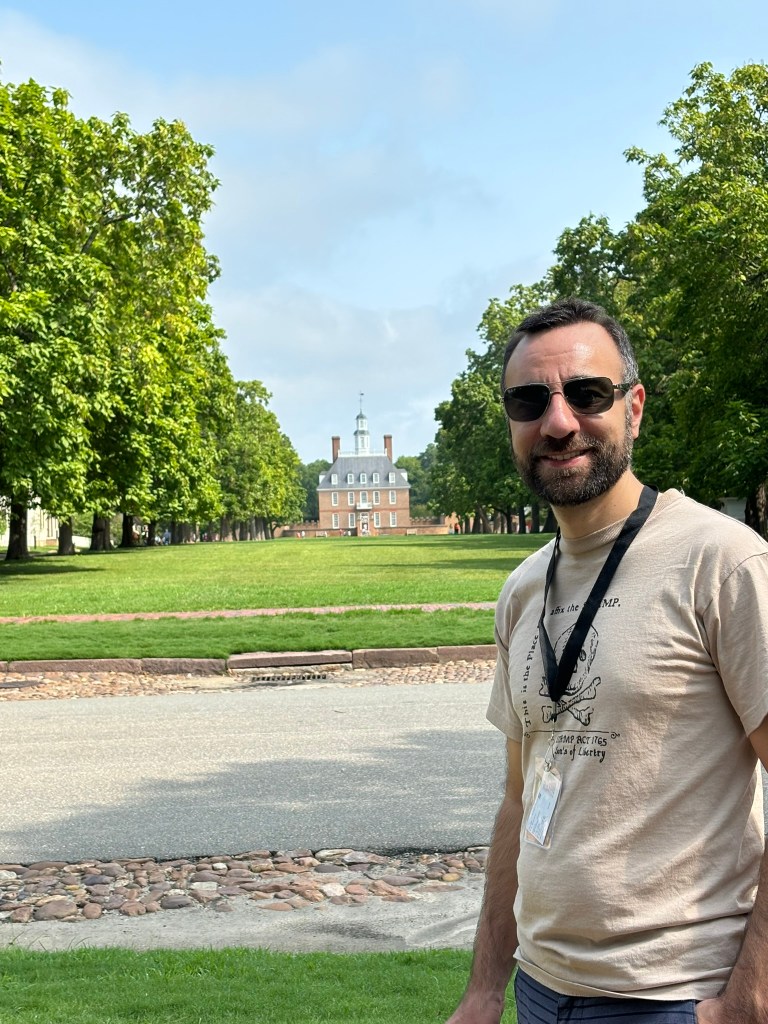
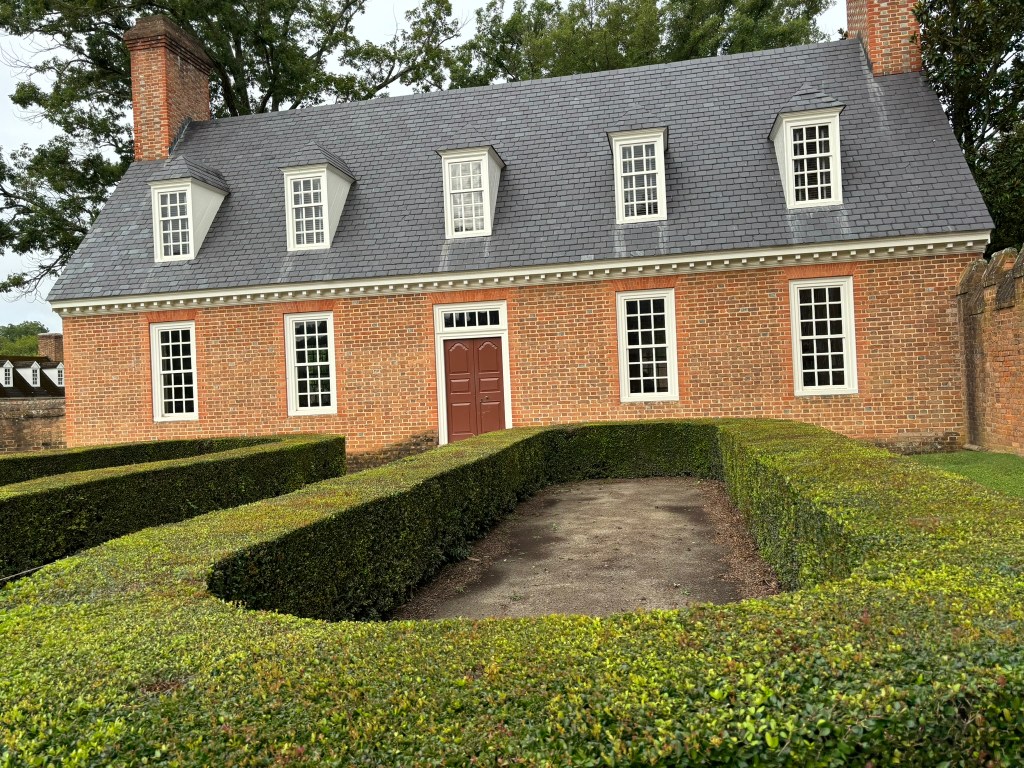
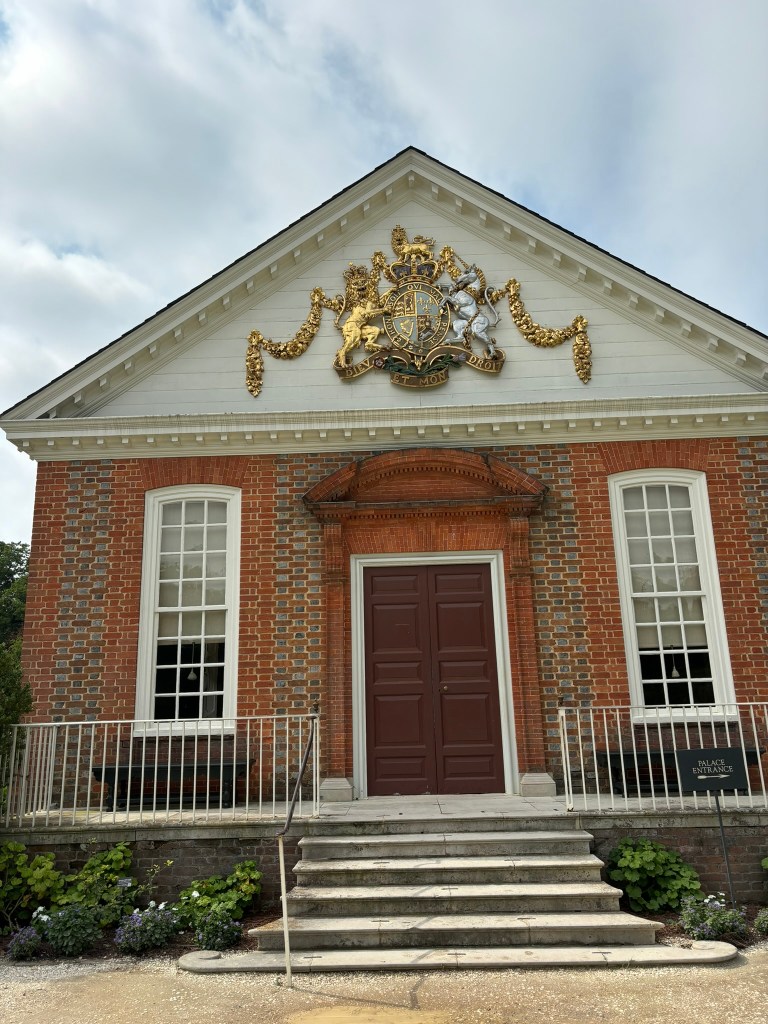
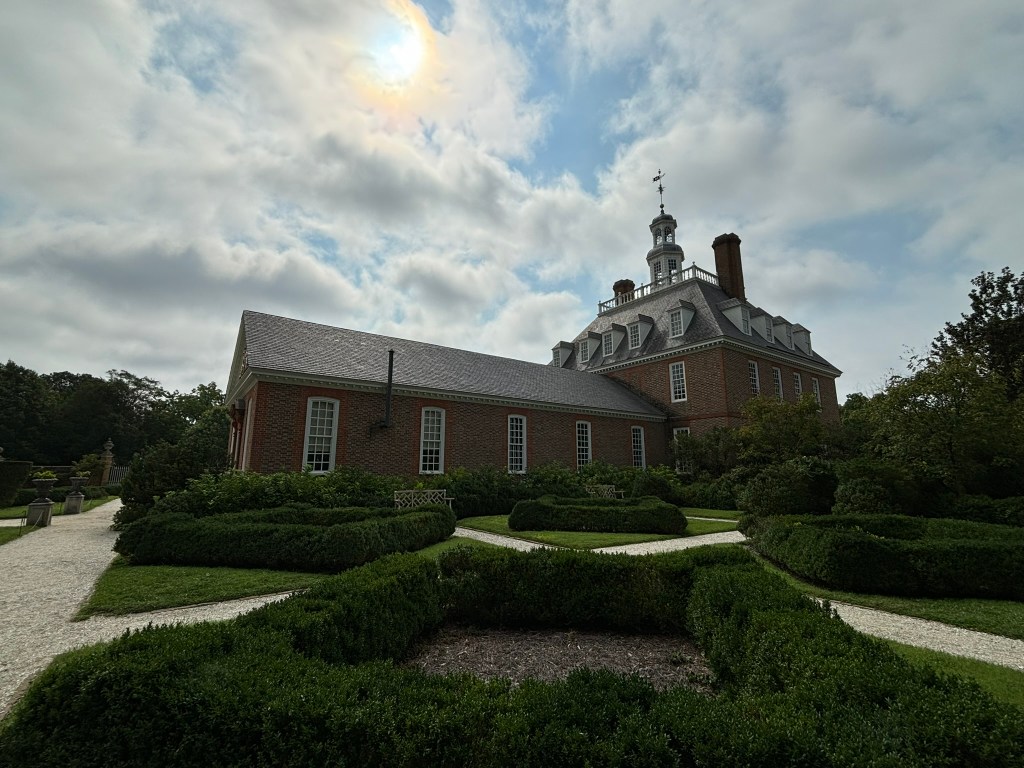
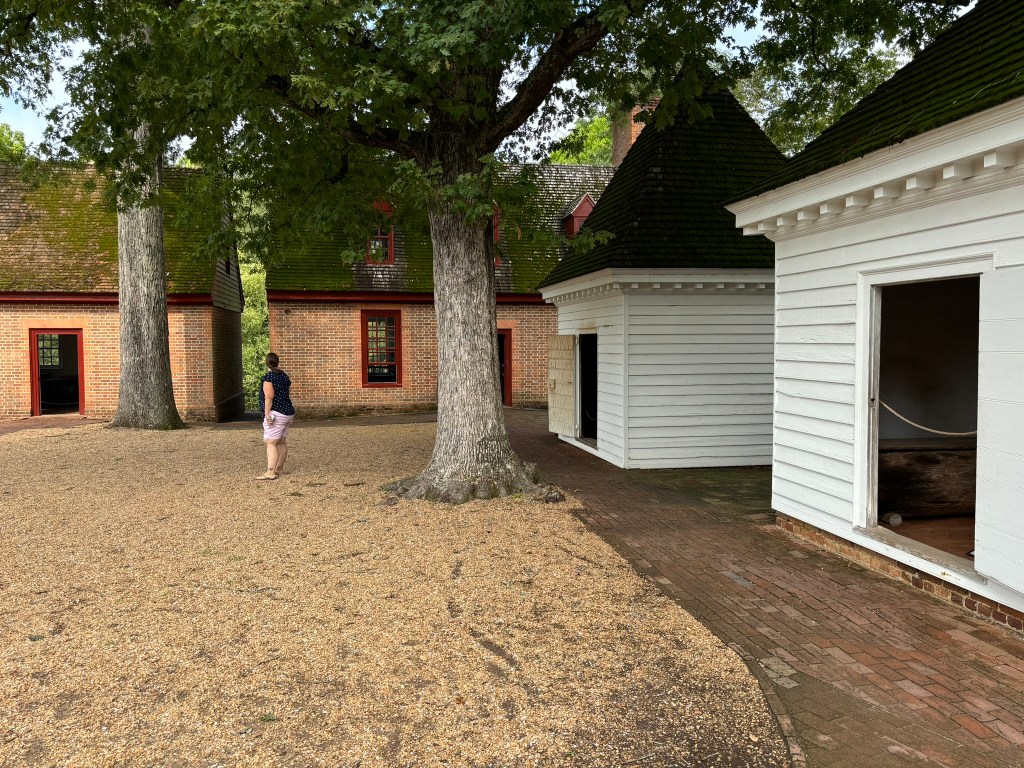
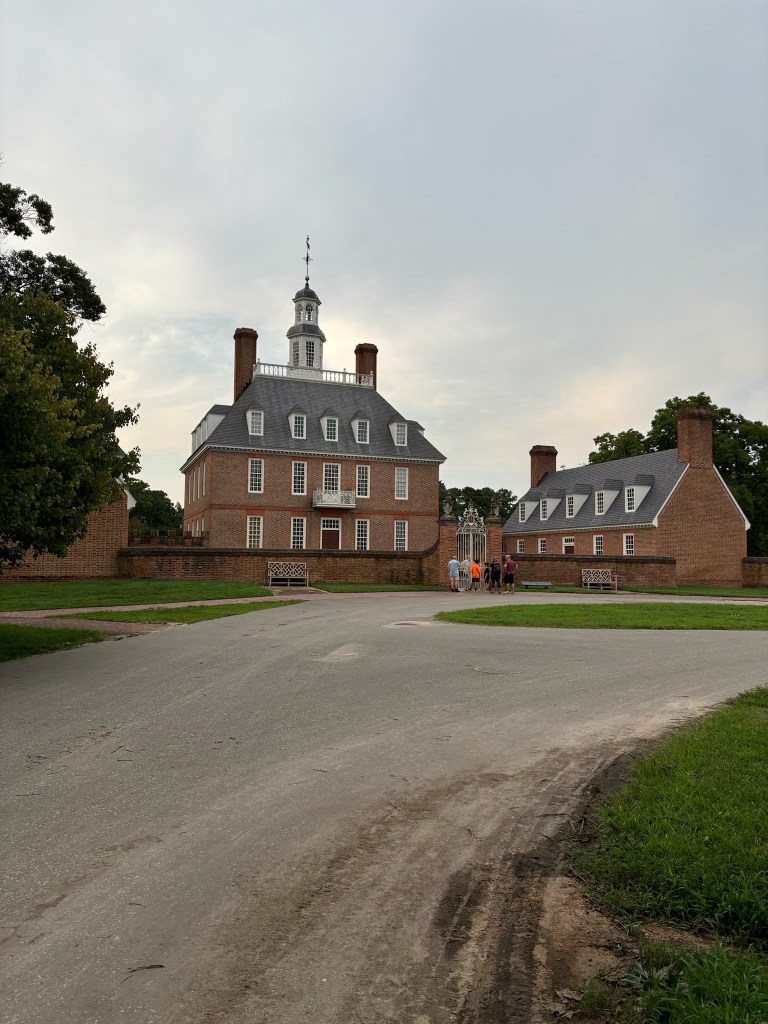
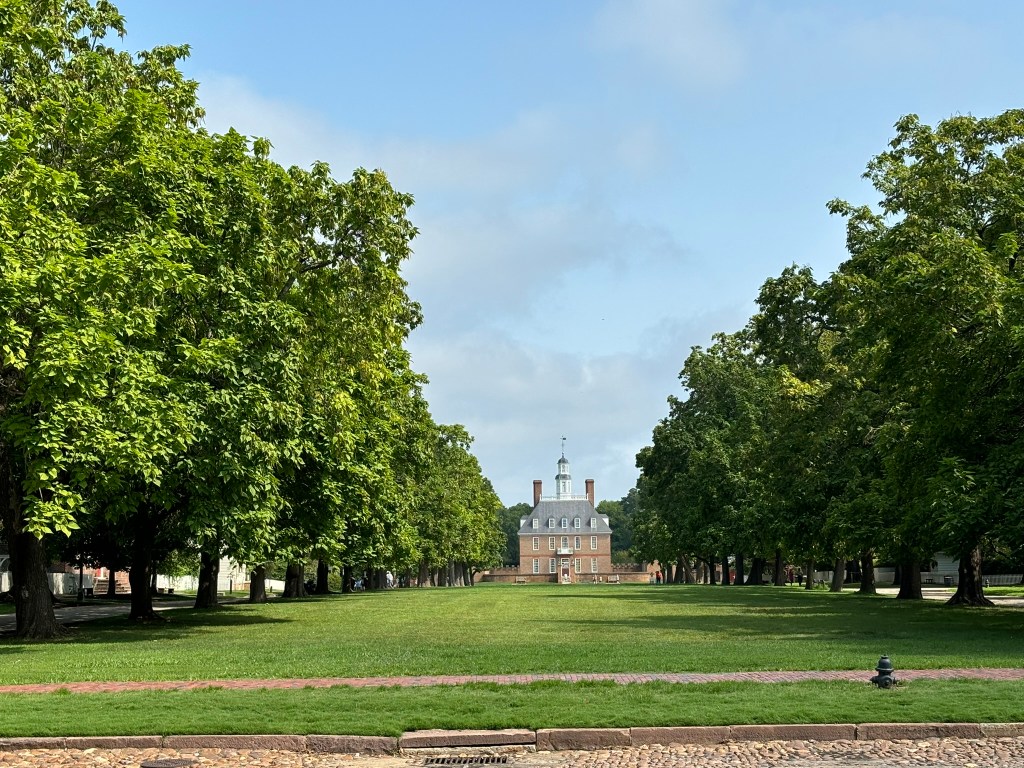
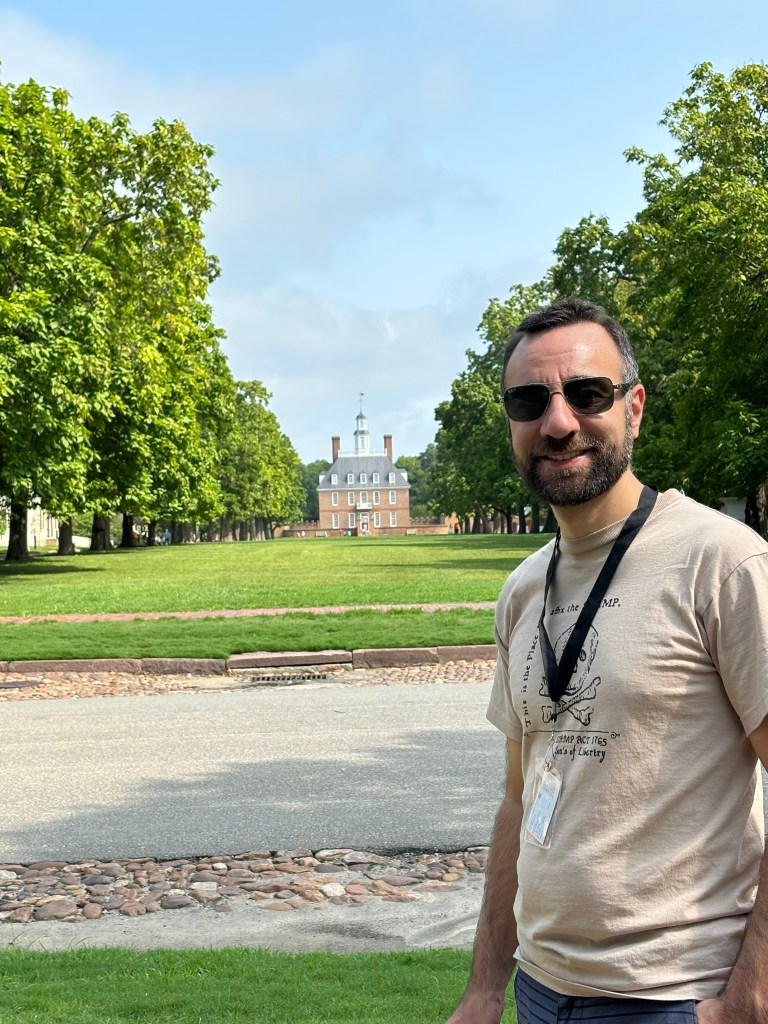
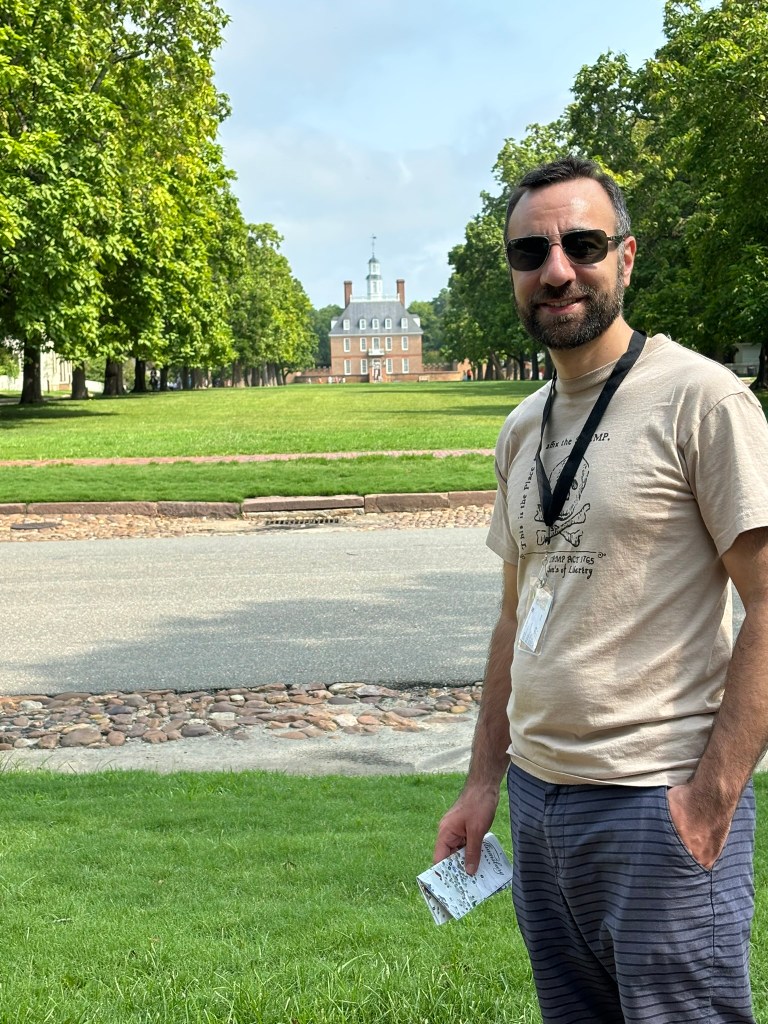
    The Governor’s Palace

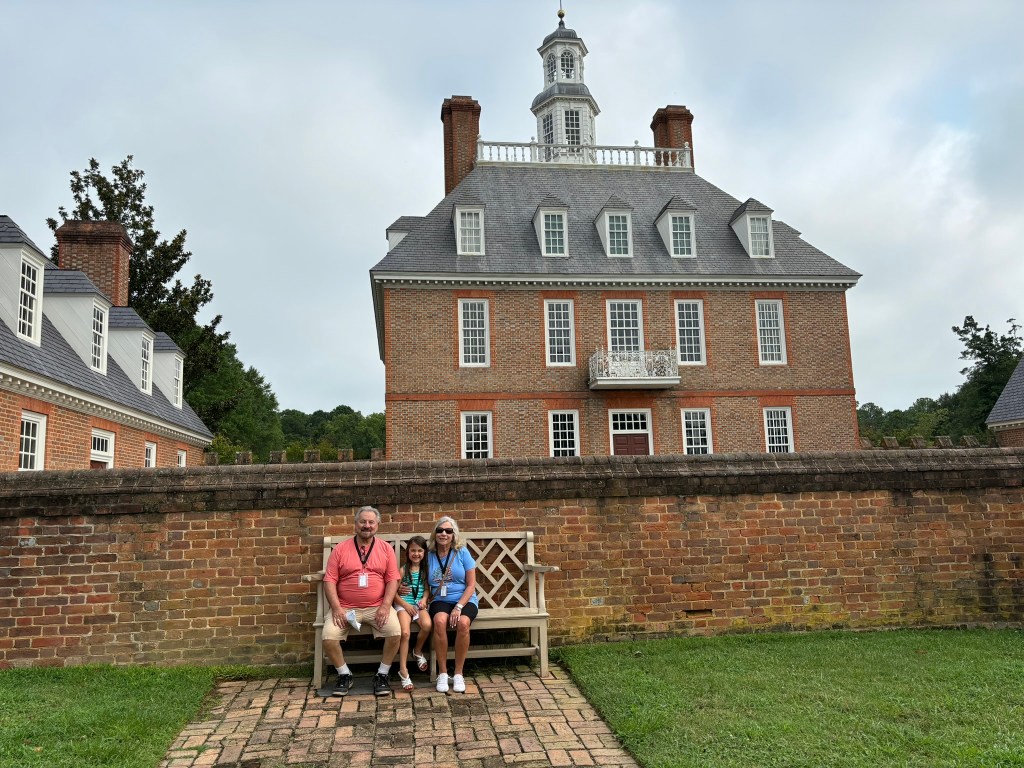
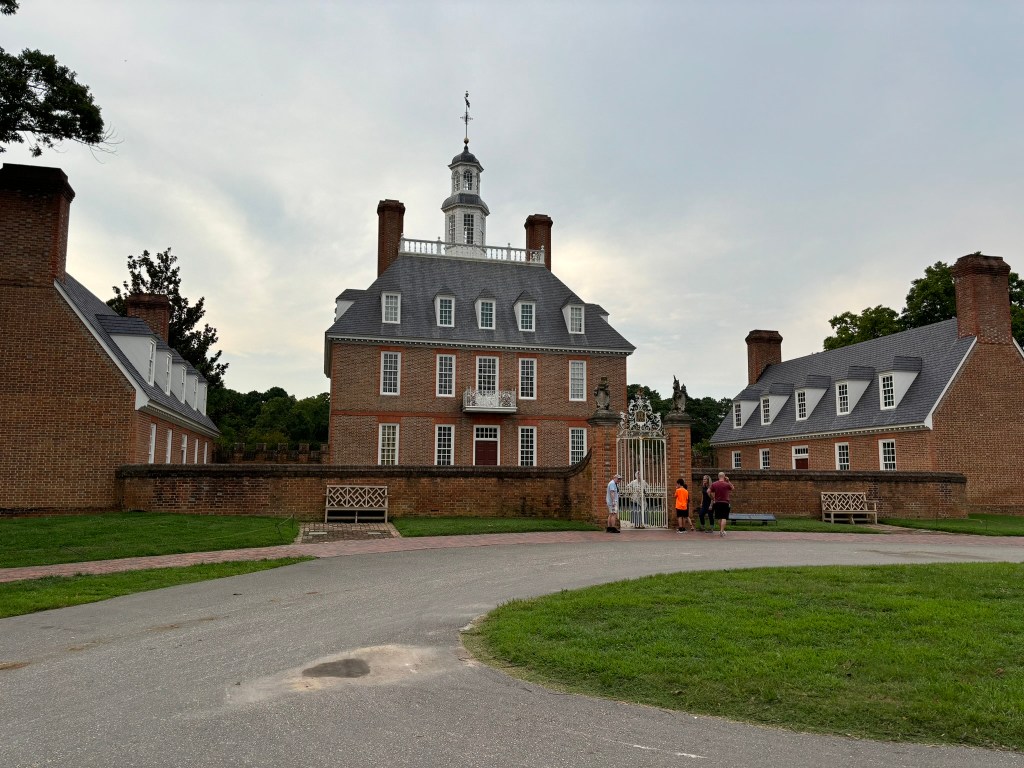
    When we arrived in Colonial Williamsburg we got lucky because we caught the very first 9AM tour of the Governor’s Palace which is one of the top attractions.  The Governor’s Palace that stands today was built in 1934 and was built as a replica of the building that was constructed in the early 1700s.  The building was the official residence of the royal governor of Virginia.  In total, seven governors occupied the residence before the capital was moved to Richmond.  On December 22, 1781, the main building was destroyed by a fire.  The reconstruction in the early 1900s was based on numerous surviving pieces of evidence, including archaeological evidence, architectural remnants that had fallen in during the fire, as well as Thomas Jefferson’s drawings and plans from when he sought to renovate the building.

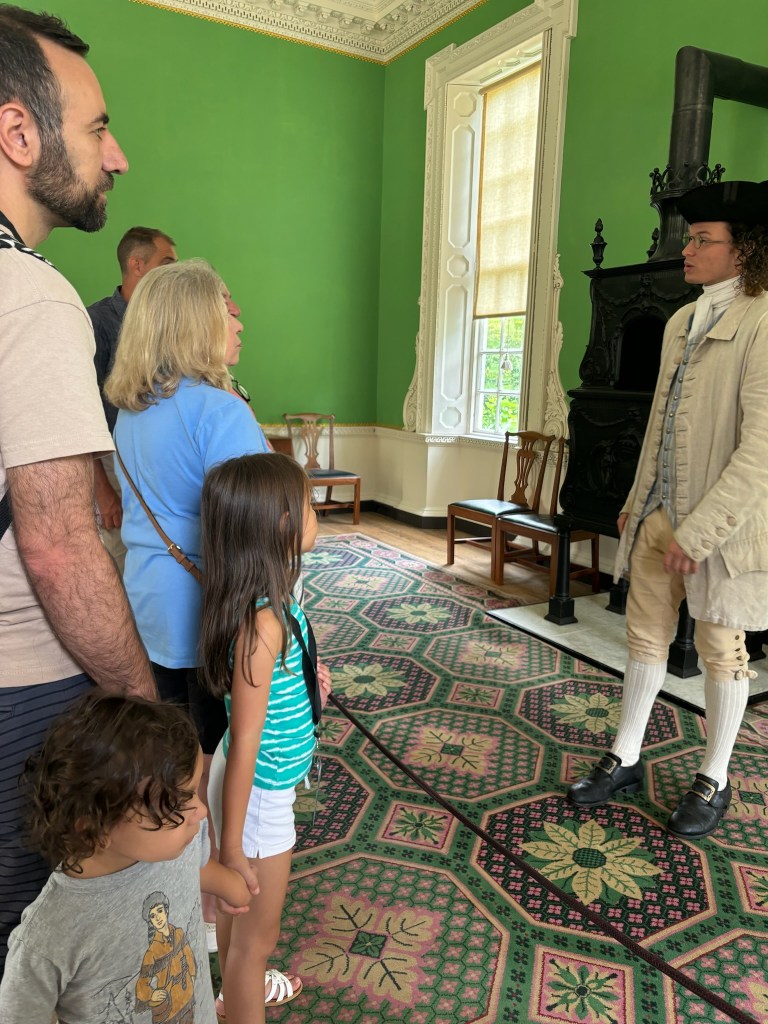
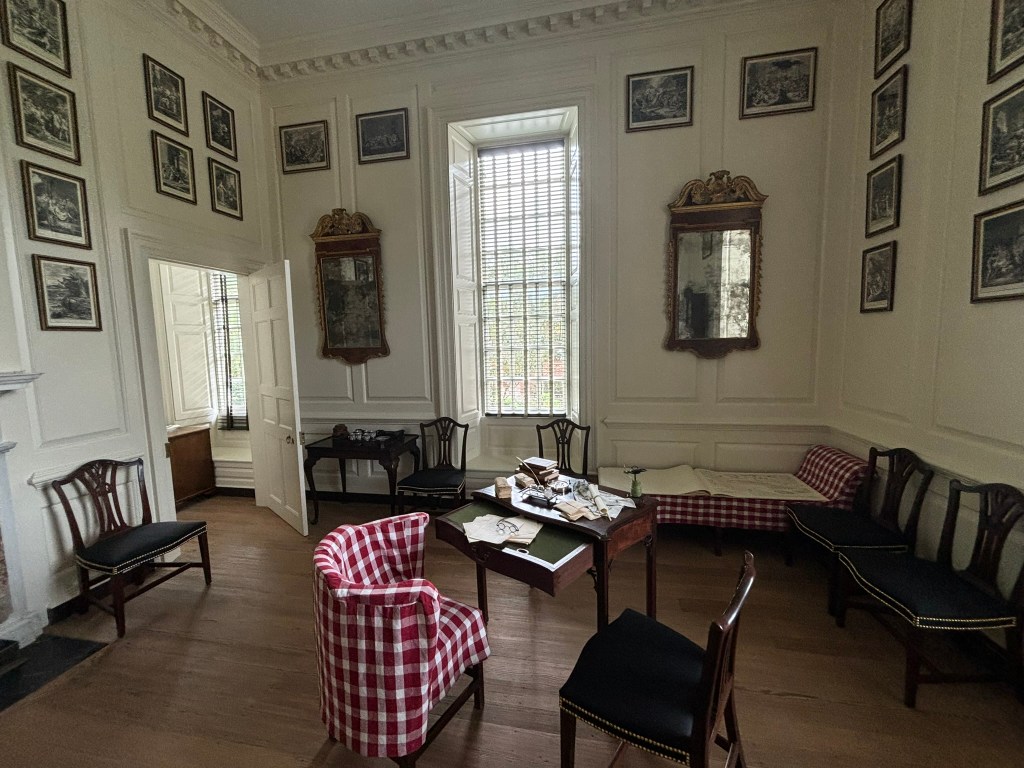
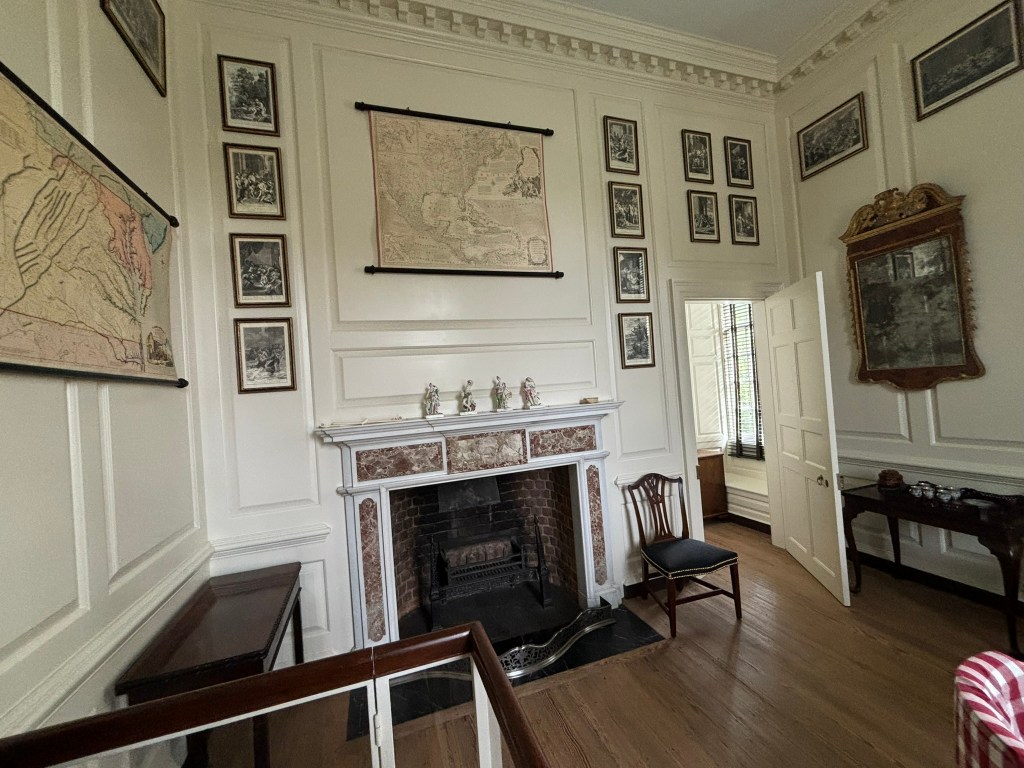
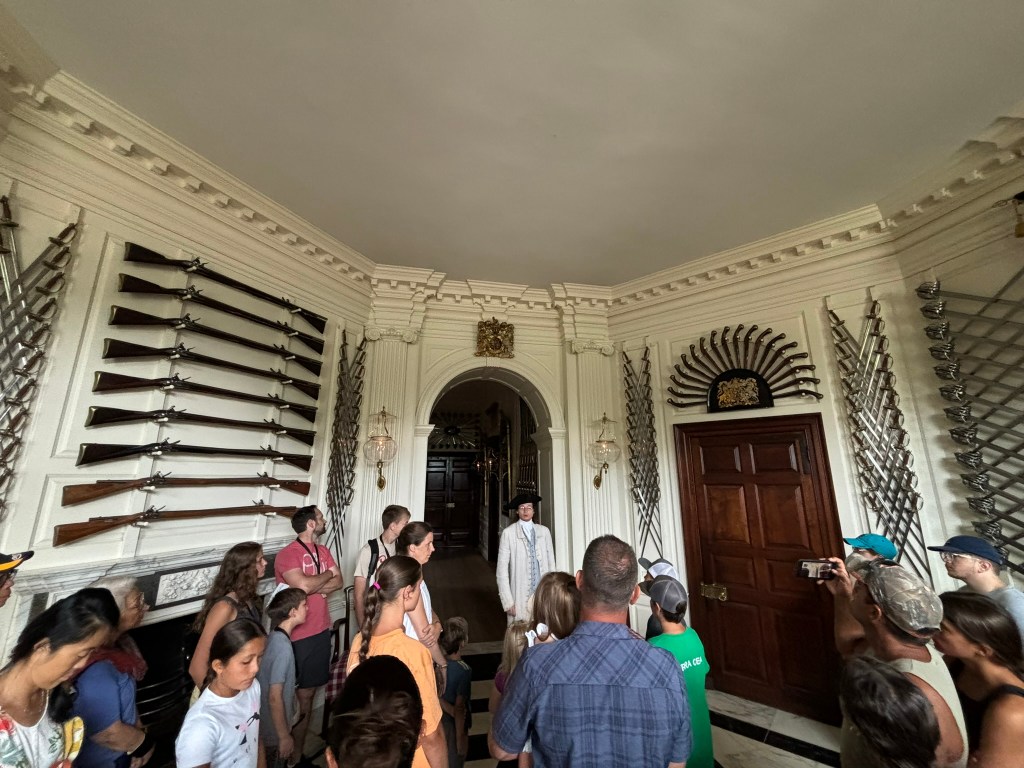
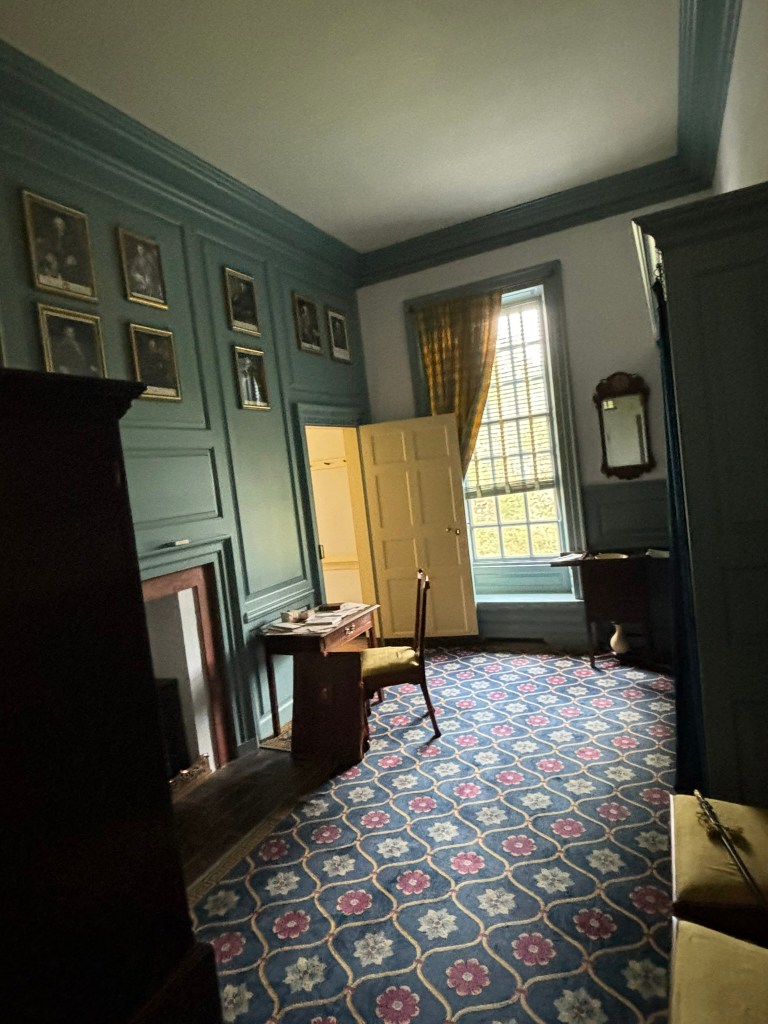
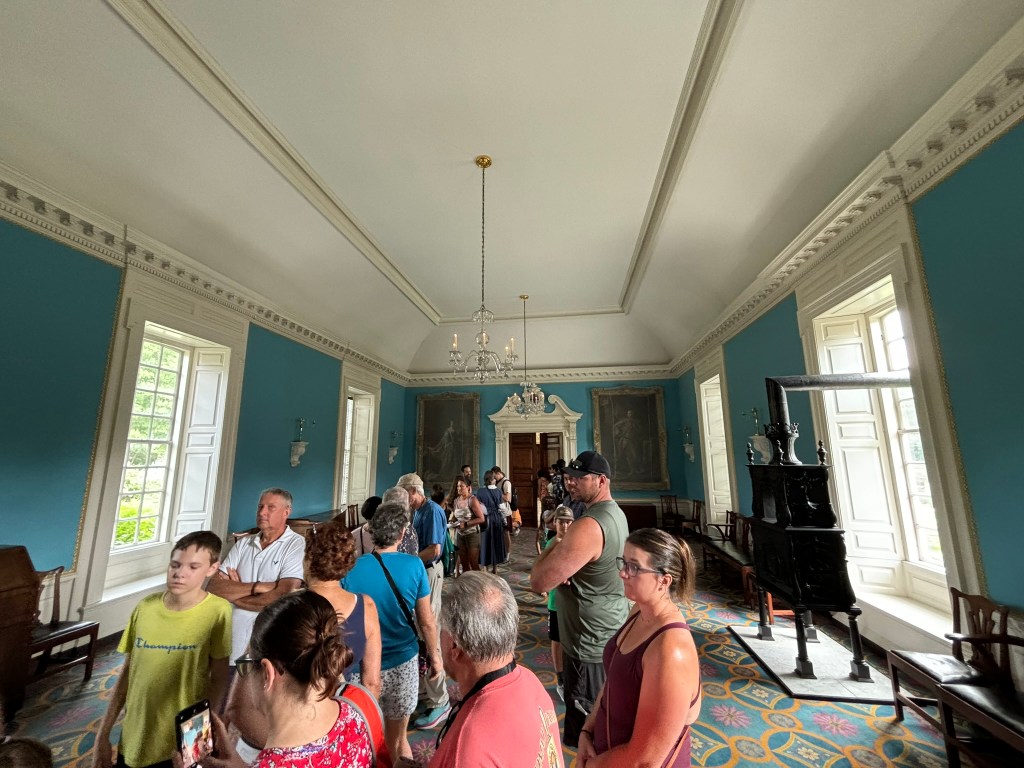
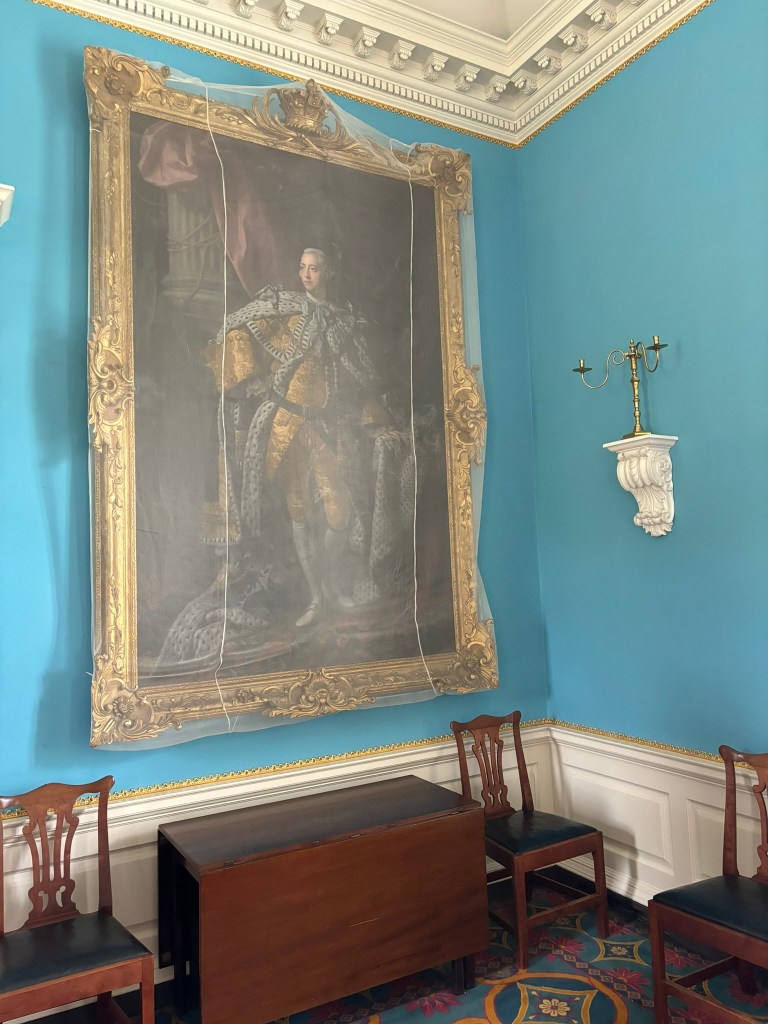
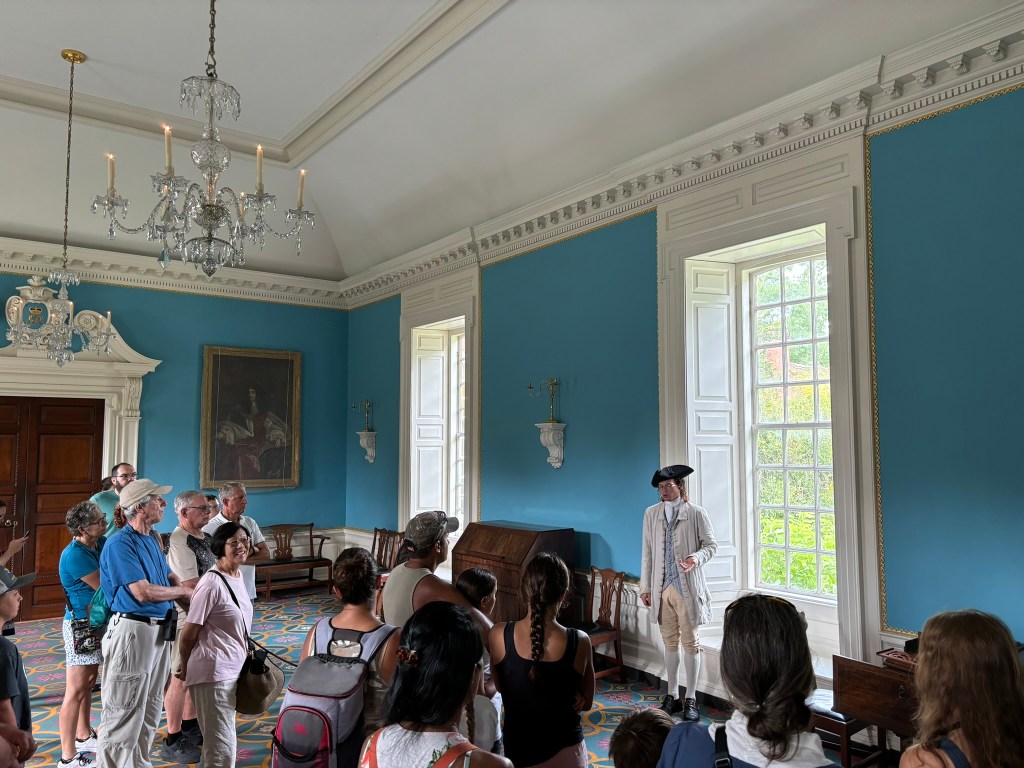
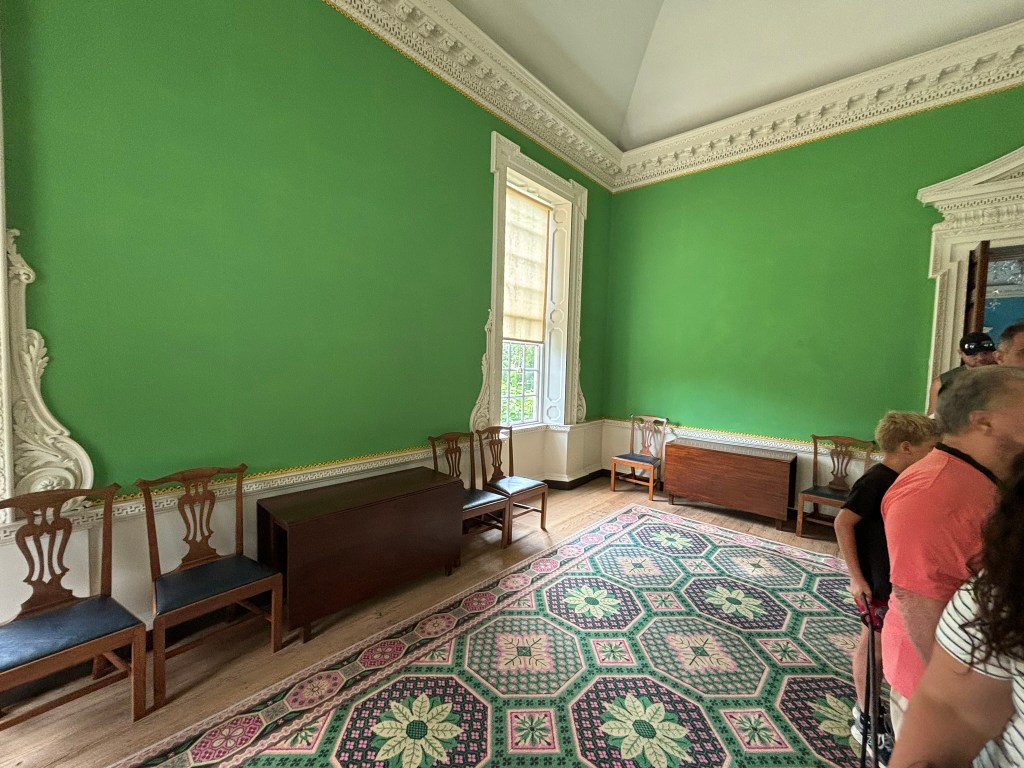
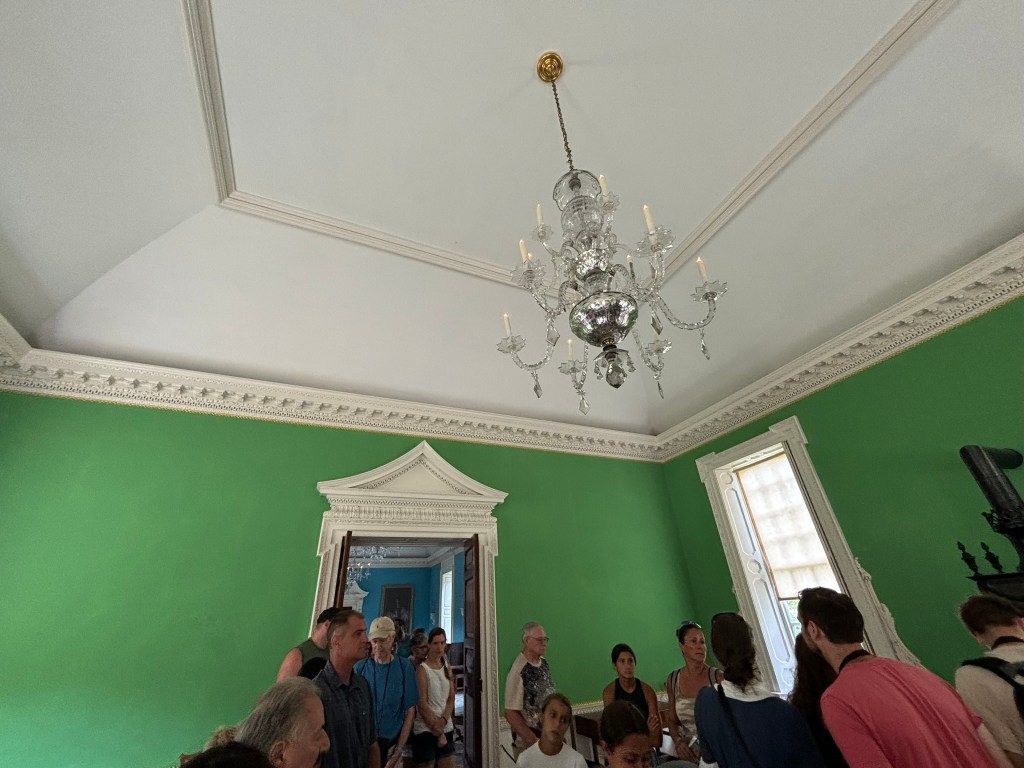
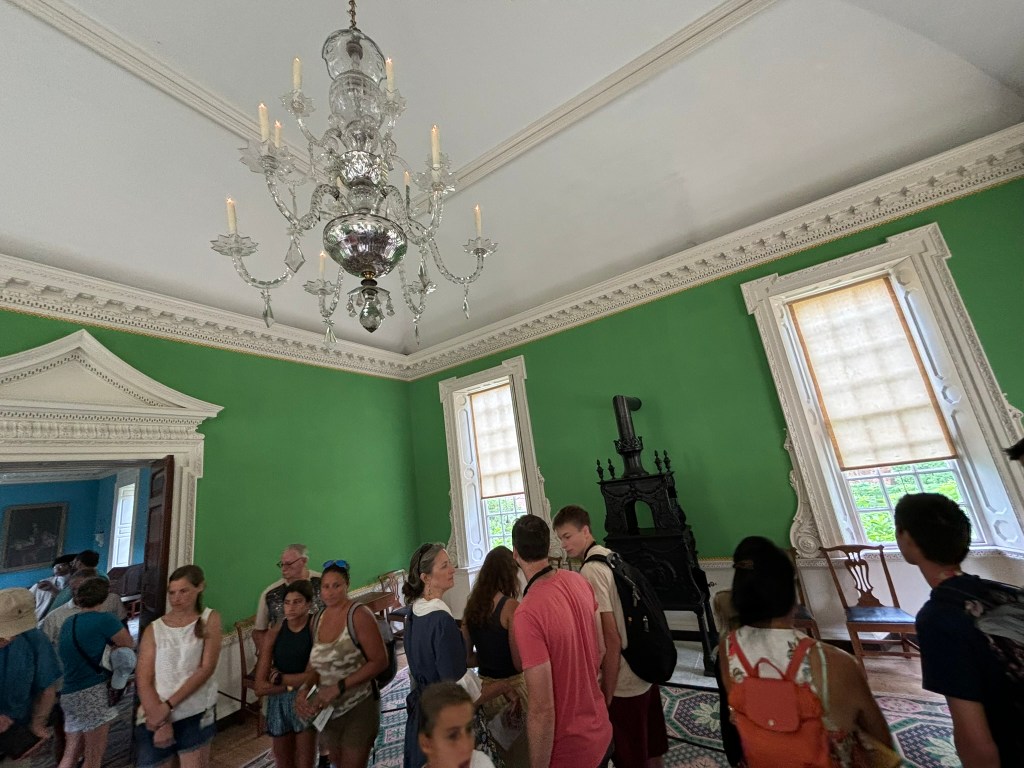
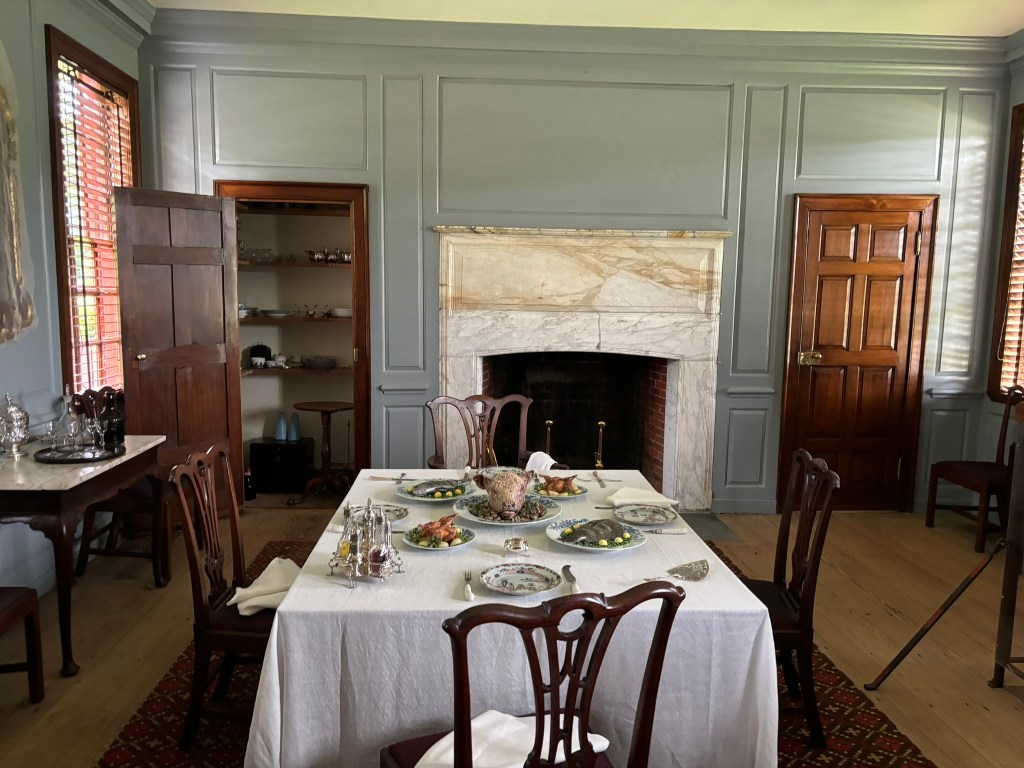
    The tour of the palace focused primarily on the last royal governor of Virginia, Lord Dunmore and his final days at the palace.  The entrance of the palace is decorated with hundreds of swords and firearms, perhaps to intimidate visitors. The tour guide did an excellent job taking the group into each of the rooms and thoroughly explaining the purpose of the rooms, as well as the history behind the building.  We learned that Lord Dunmore, in the days leading up to the American Revolution, was forced to flee the building, never to return.  The pictures below give you a sense of the opulence that was felt by the royal governors and any visitors that they allowed into the building.

    Strolling Through Colonial Williamsburg

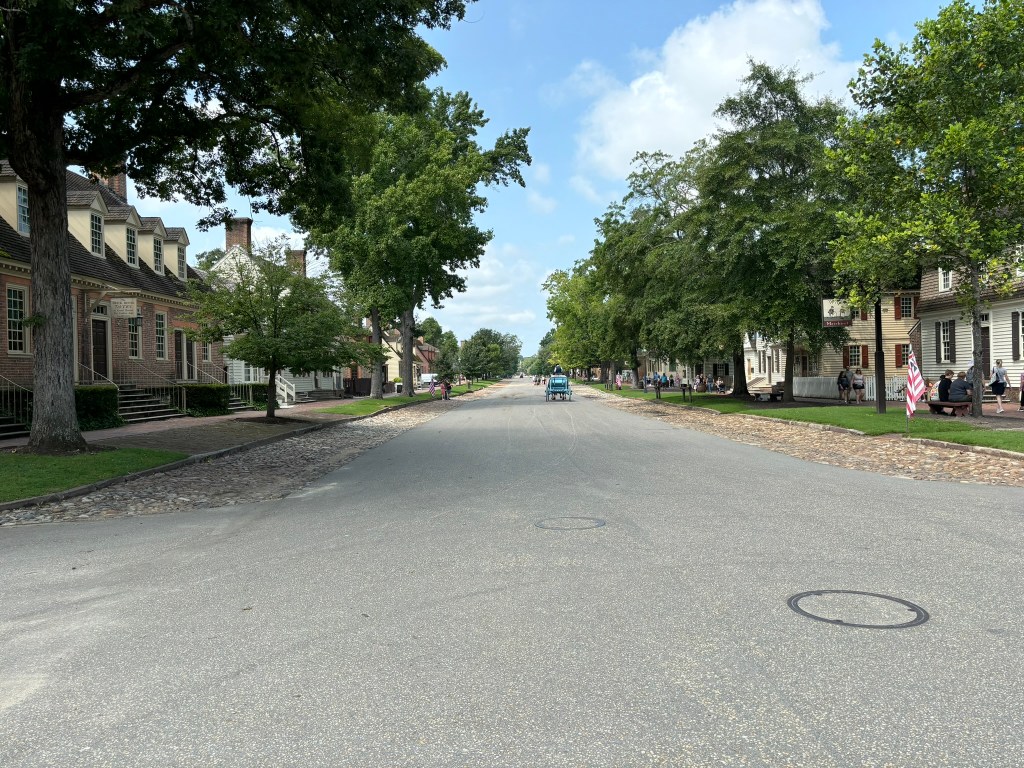
    After we left the Governor’s Palace we strolled south along the Palace Green, past the George Wythe House and onto Duke of Gloucester Street.  We headed east along the street, stopping in houses and shops along the way. 

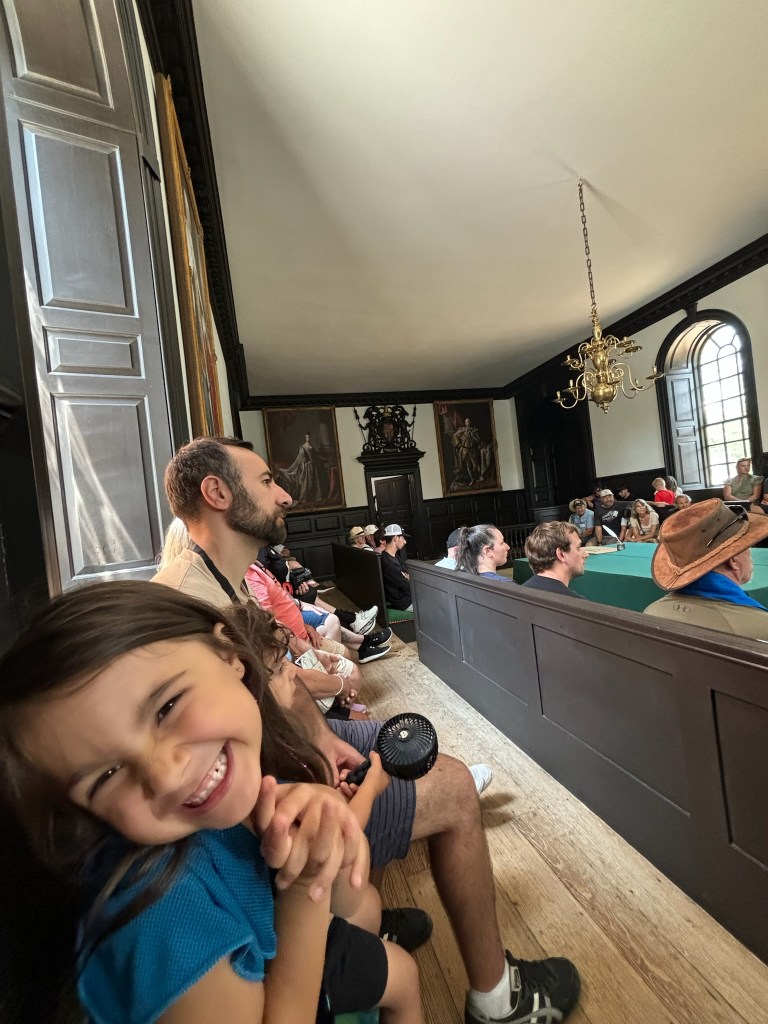
    County Courthouse

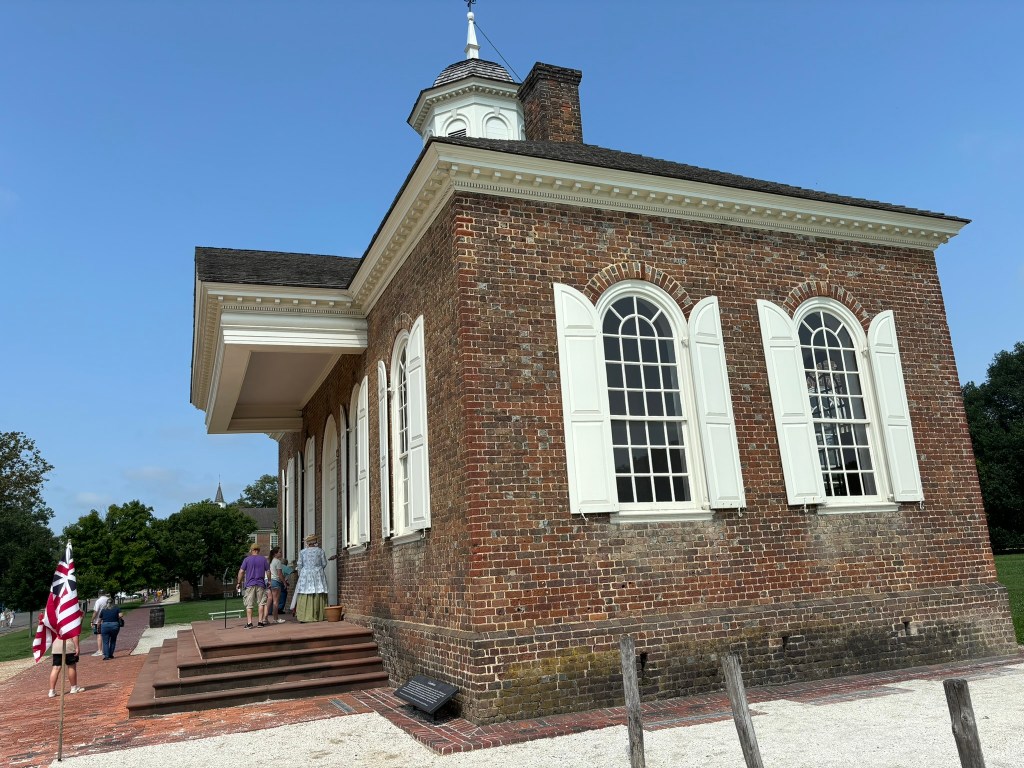
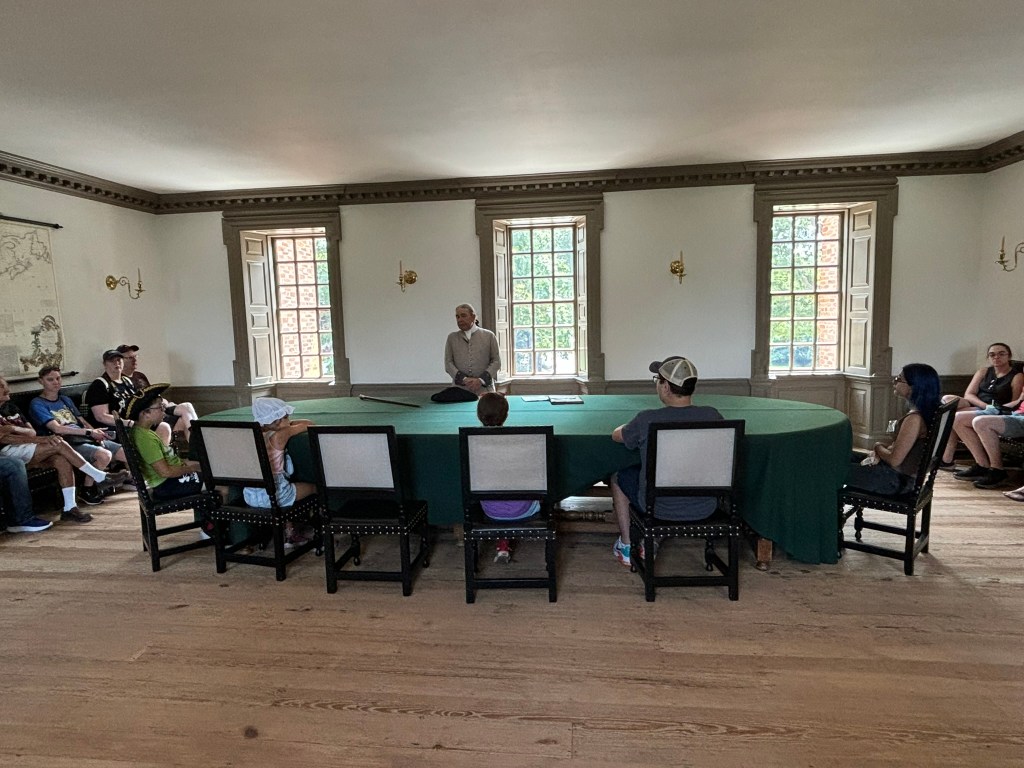
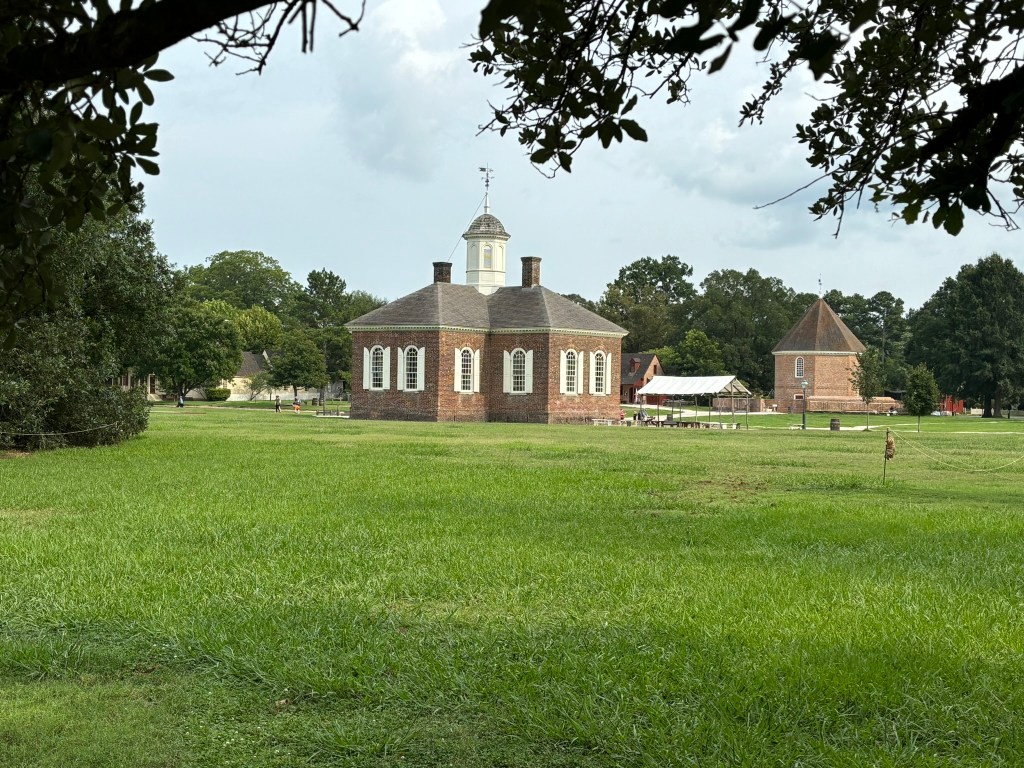
    We made a stop at the County Courthouse.  A program was scheduled for 11AM which we were interested in viewing. A mock trial was going to take place in the Court House and volunteers would take part in the court drama. However, when we found out that the case would take 40 mins, we decided to move on since we had limited time. We decided to keep moving down Duke of Gloucester Street.

    King’s Arms Tavern

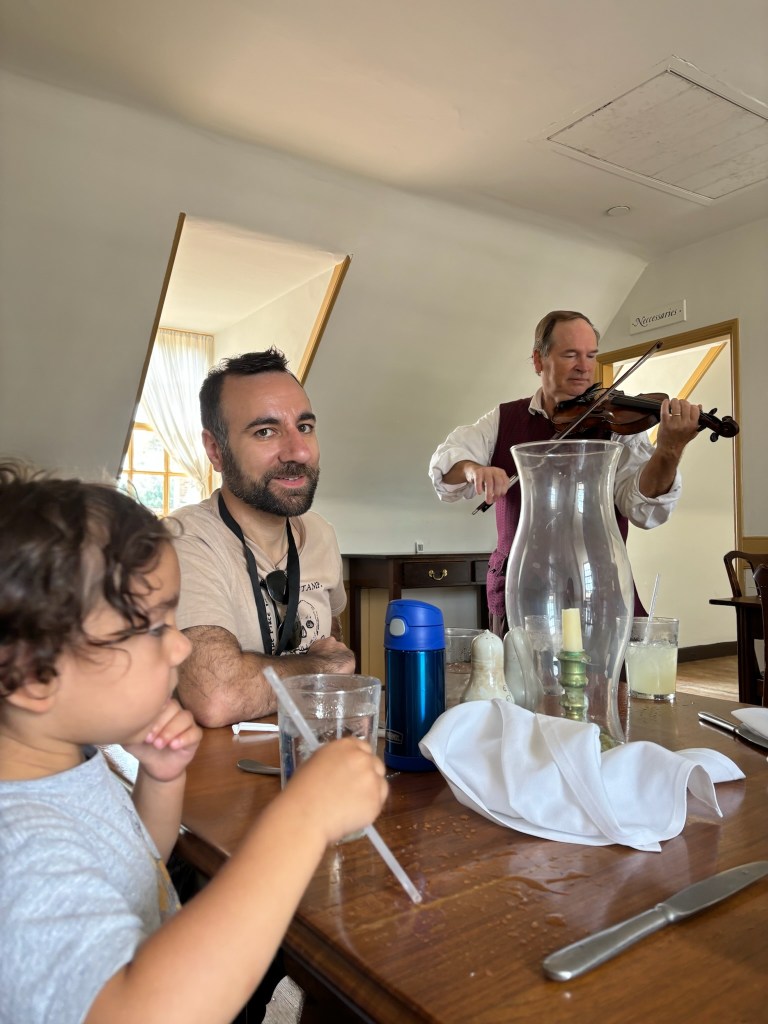
    After visiting more houses and shops, we stopped for lunch at King’s Arms Tavern which had really great, colonial style food.  We even got serenaded by a violin player!  

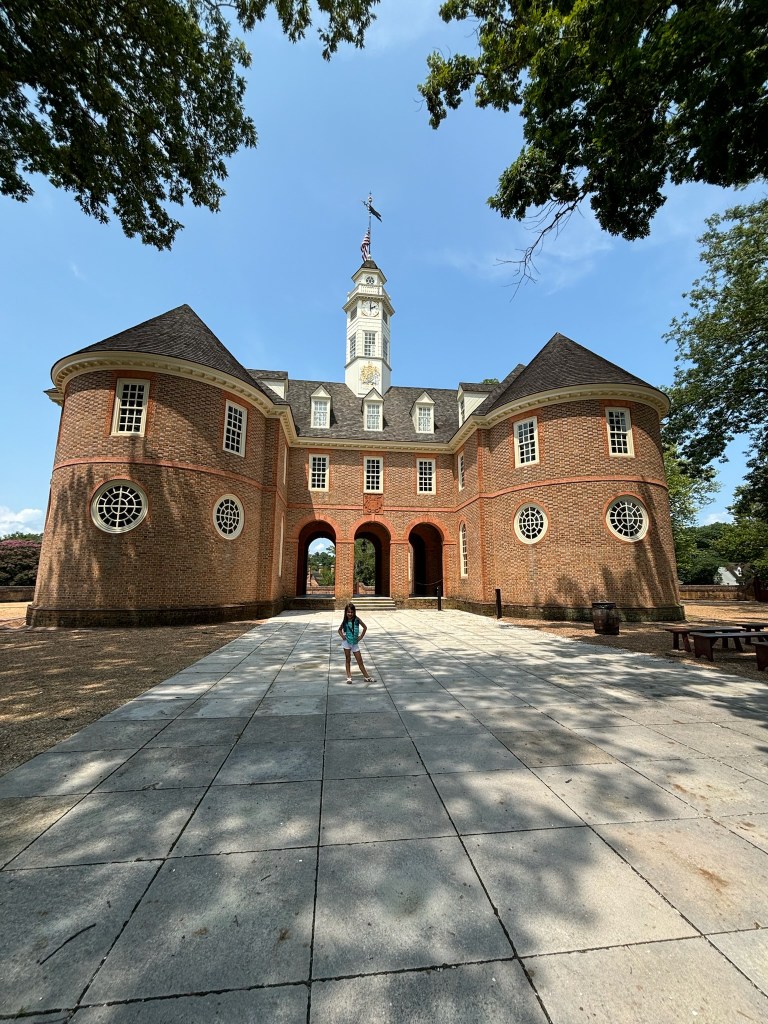
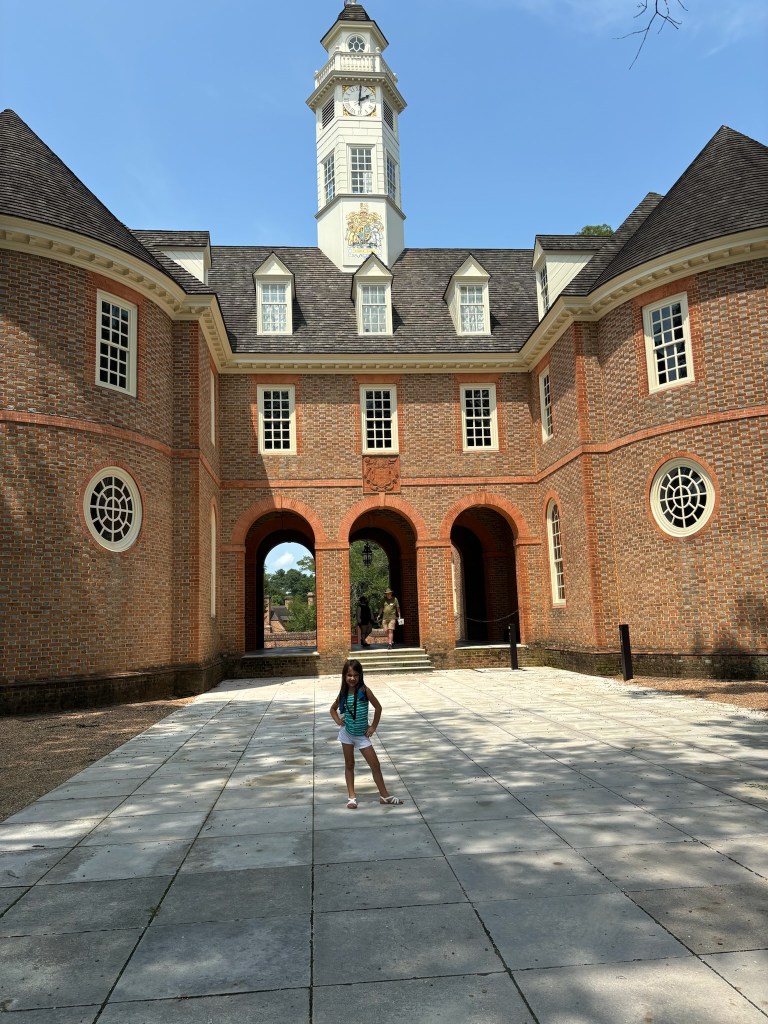
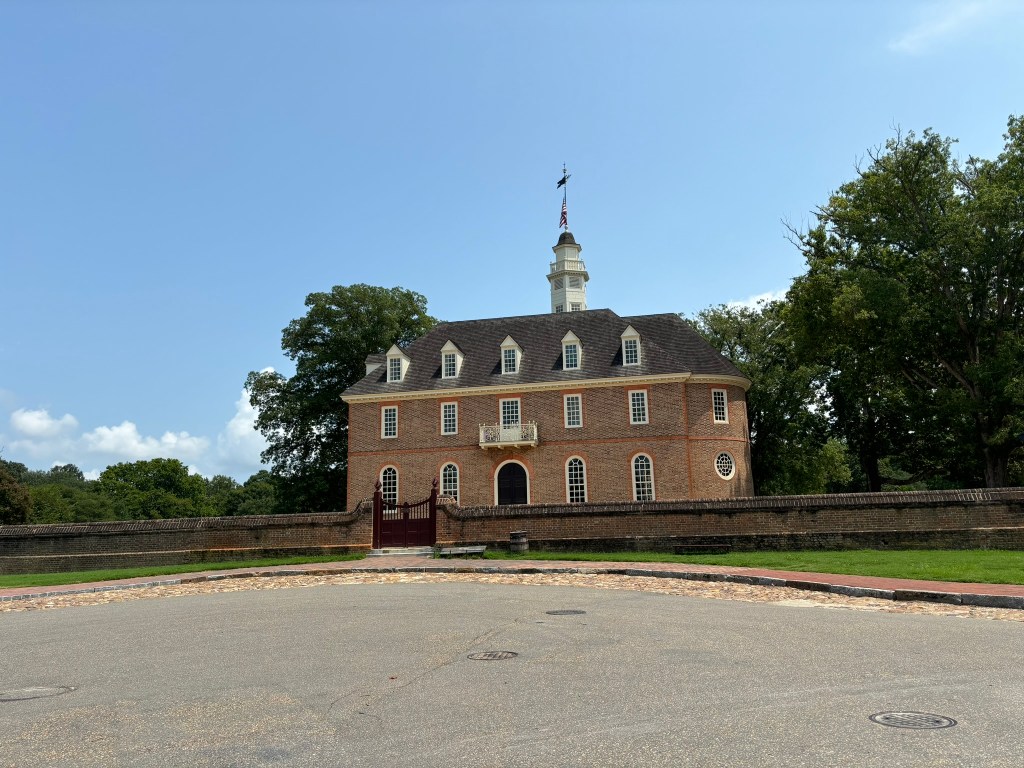
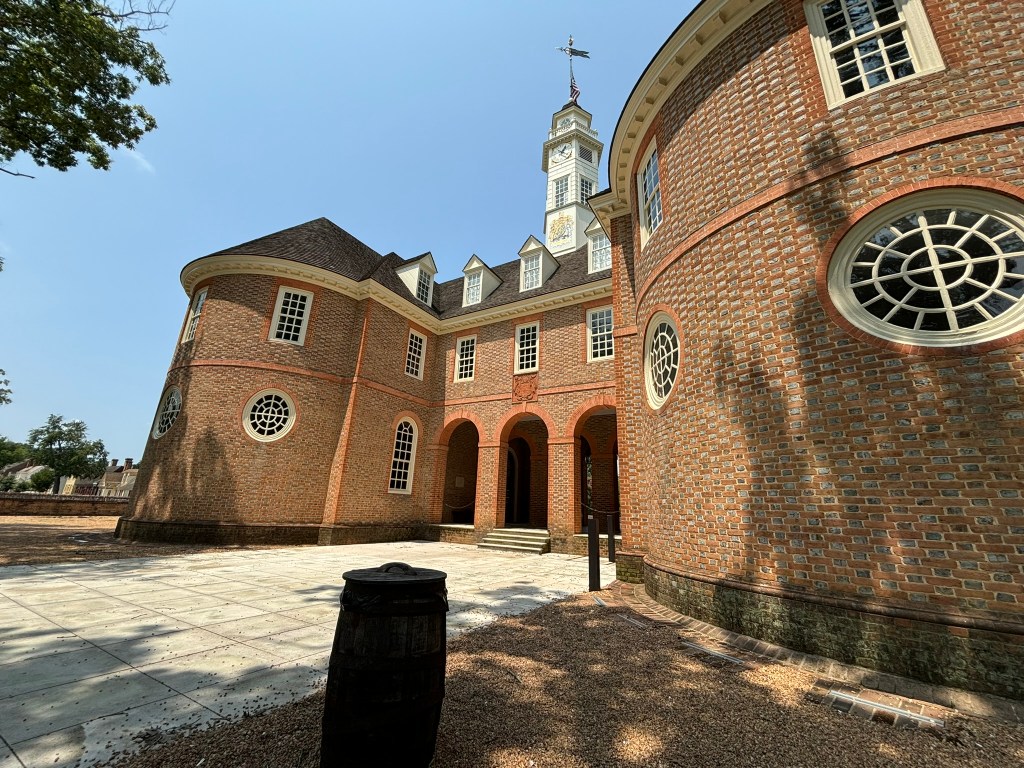
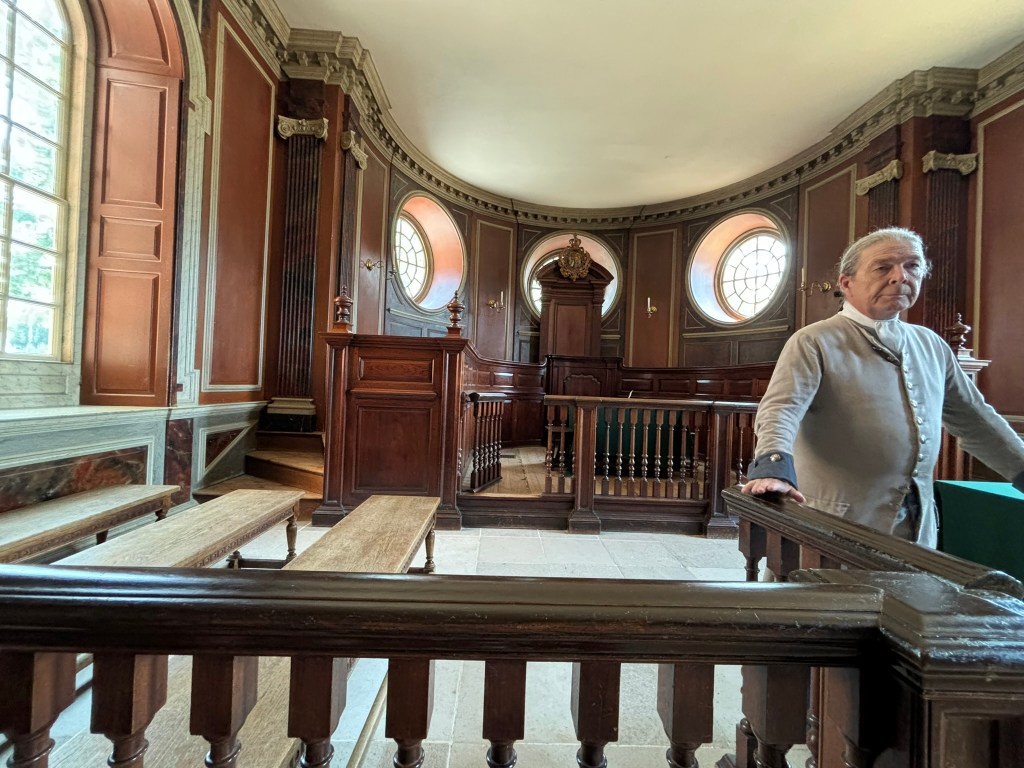
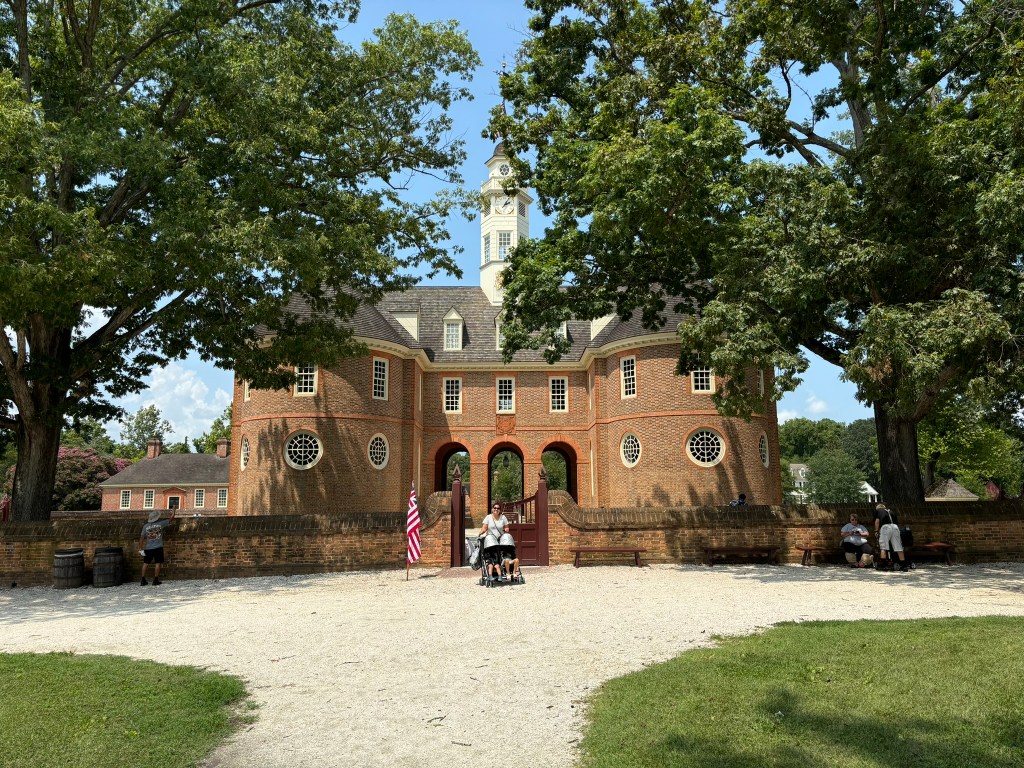
    The Capitol Building

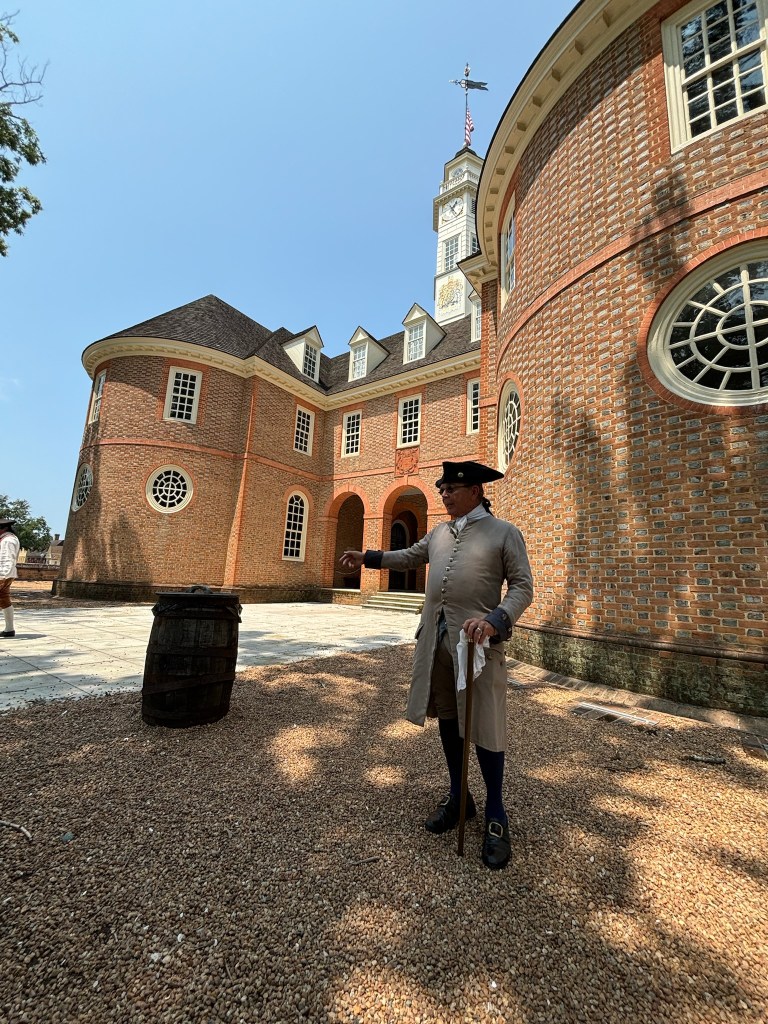
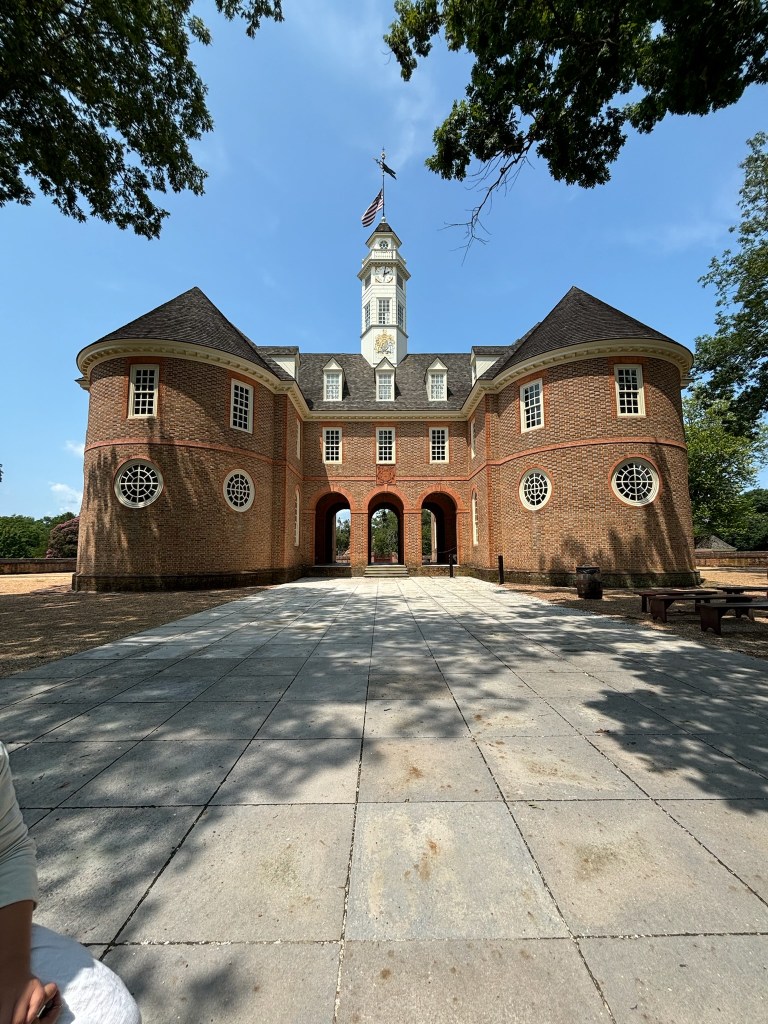
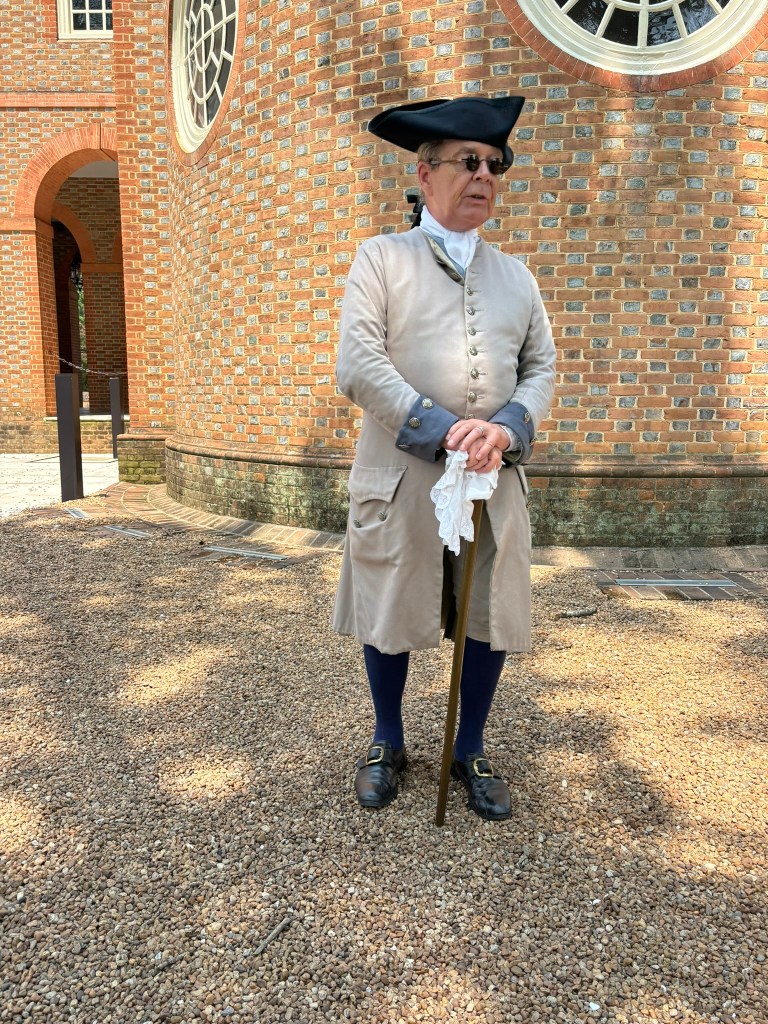
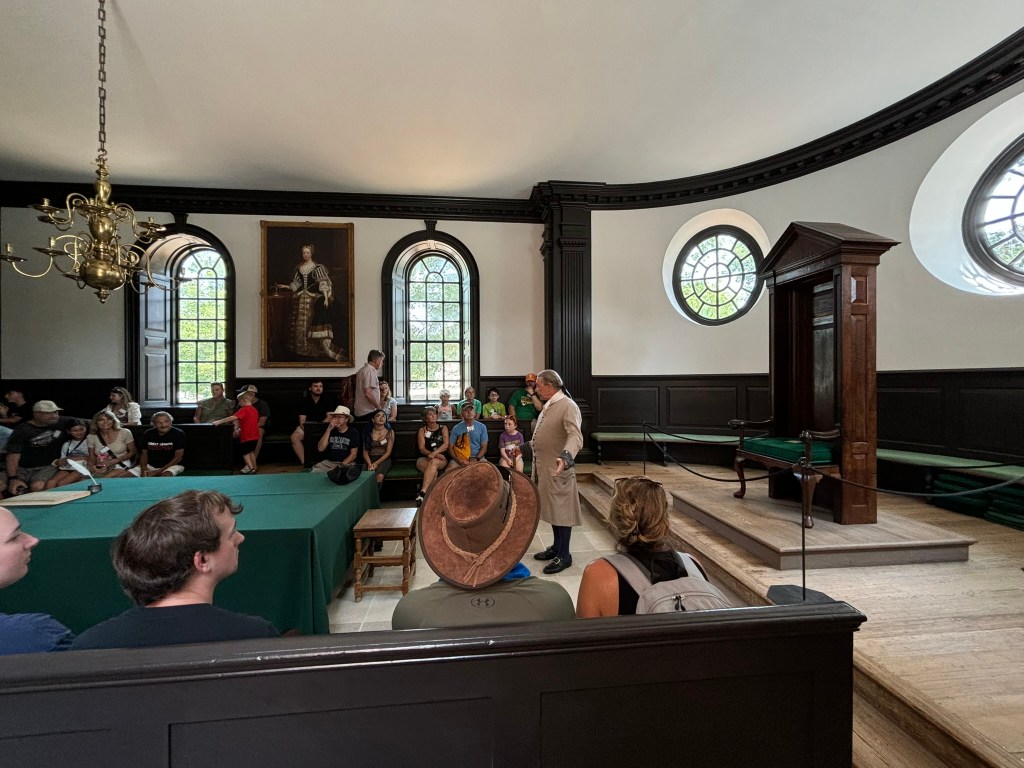
    After we ate, we continued heading east until we arrived at the Capitol Building.  Our tour guide at the Capitol was great.  He explained to us how the building was used by the House of Burgesses.  There were also court cases which were tried in the building as well.  He thoroughly explained to us how the government operated in the Colonial Virginia, and then the Commonwealth of Virginia after the colonies declared independence in 1776.  He explained to us that at the time, only wealthy landowners could vote which consisted of about 15% of the population.  He encouraged us, in this election year, to get out and vote.  

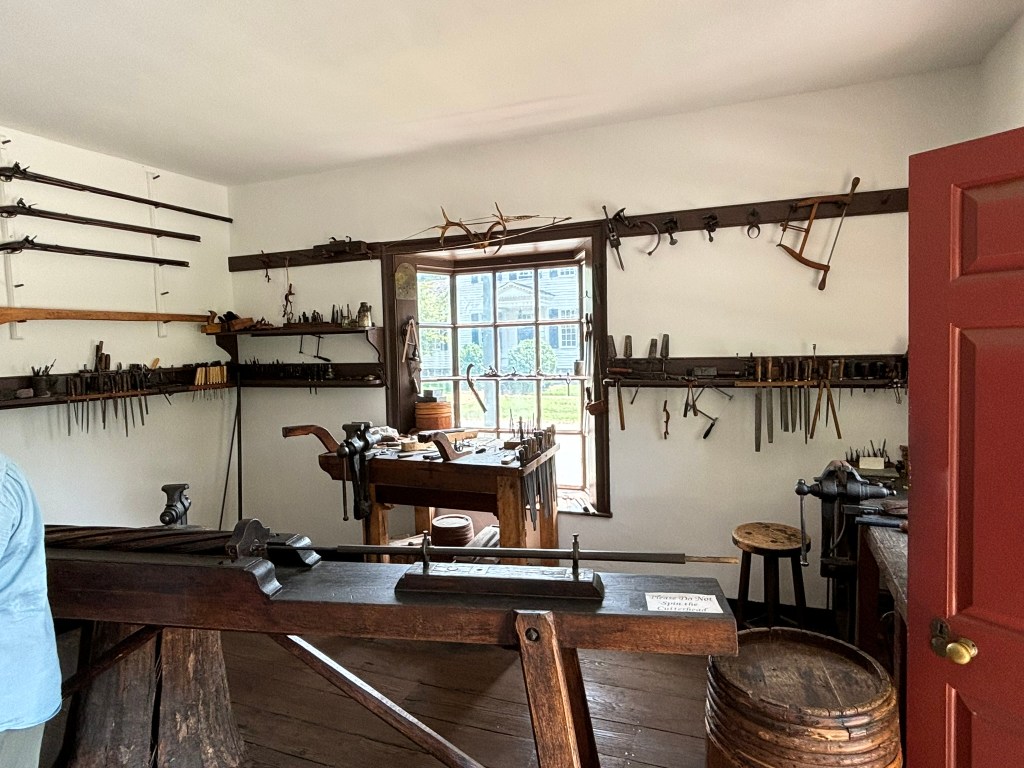
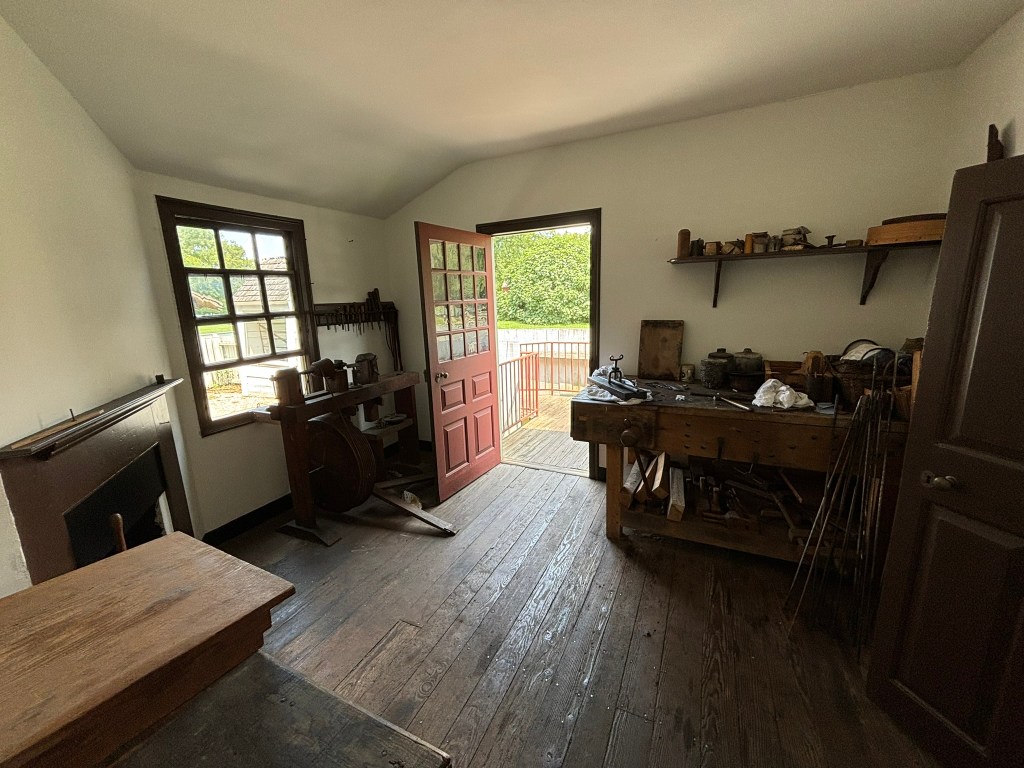
    Gunsmith

    After we left the Capitol Building, we made our way over to the Gunsmith building as reenactors not only explained, but demonstrated how muskets were created in colonial times.  

    Francis Street

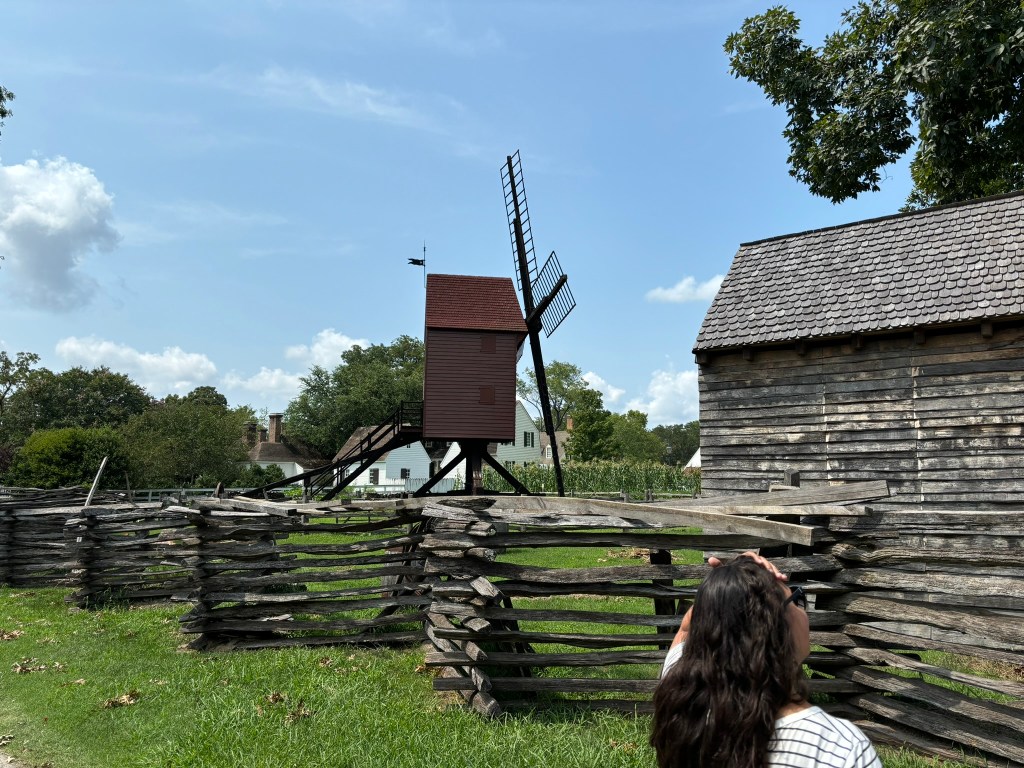
    My family and I headed back west on Francis Street, past the small farm and in the direction of the Art Museums of Colonial Williamsburg.  Along the way we witnessed a demonstration of reenactors teaching children how to march in a line, Continental Army style.  This was taking place at the Magazine House and Guard House. 

    Art Museums of Colonial Williamsburg

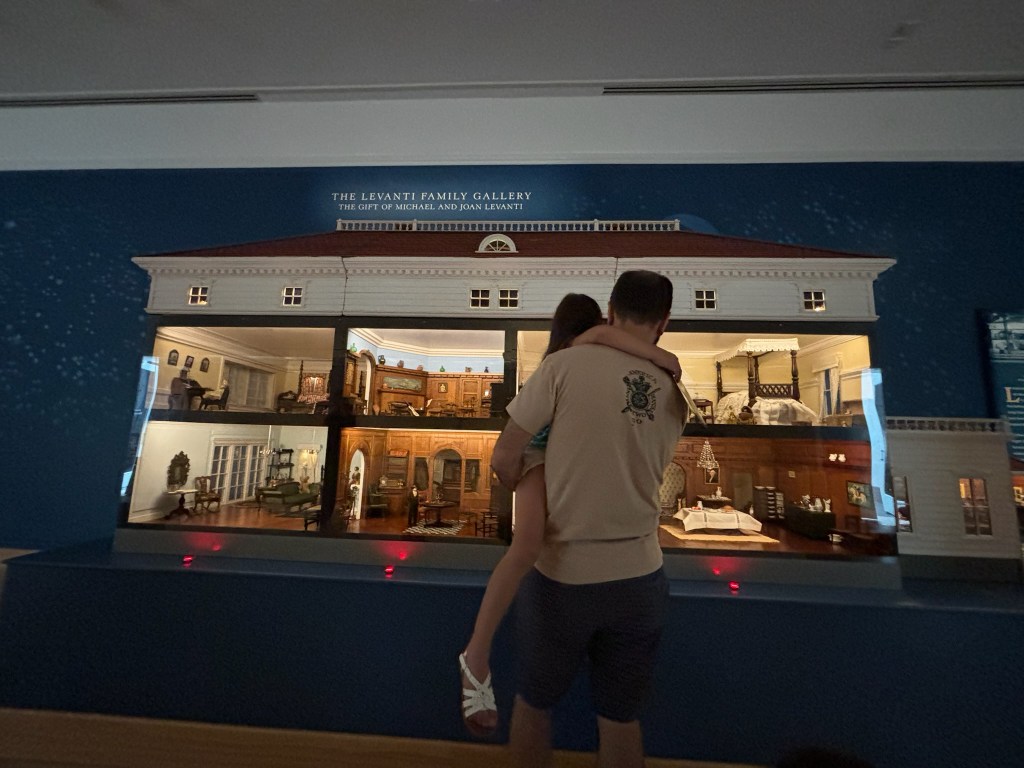
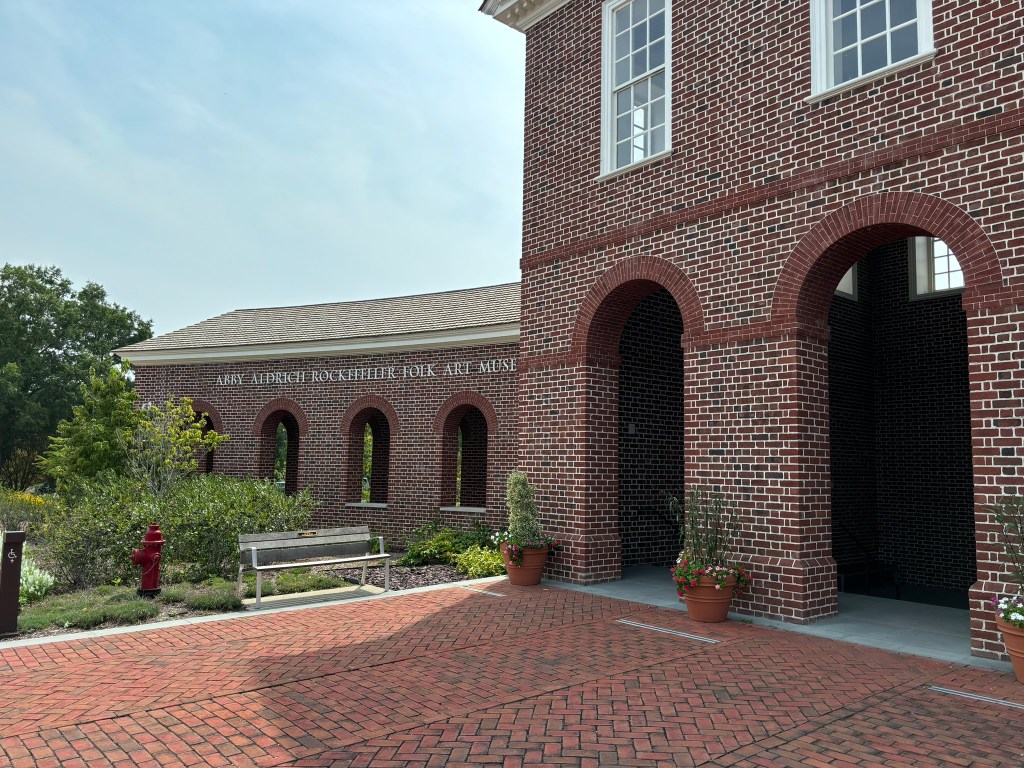
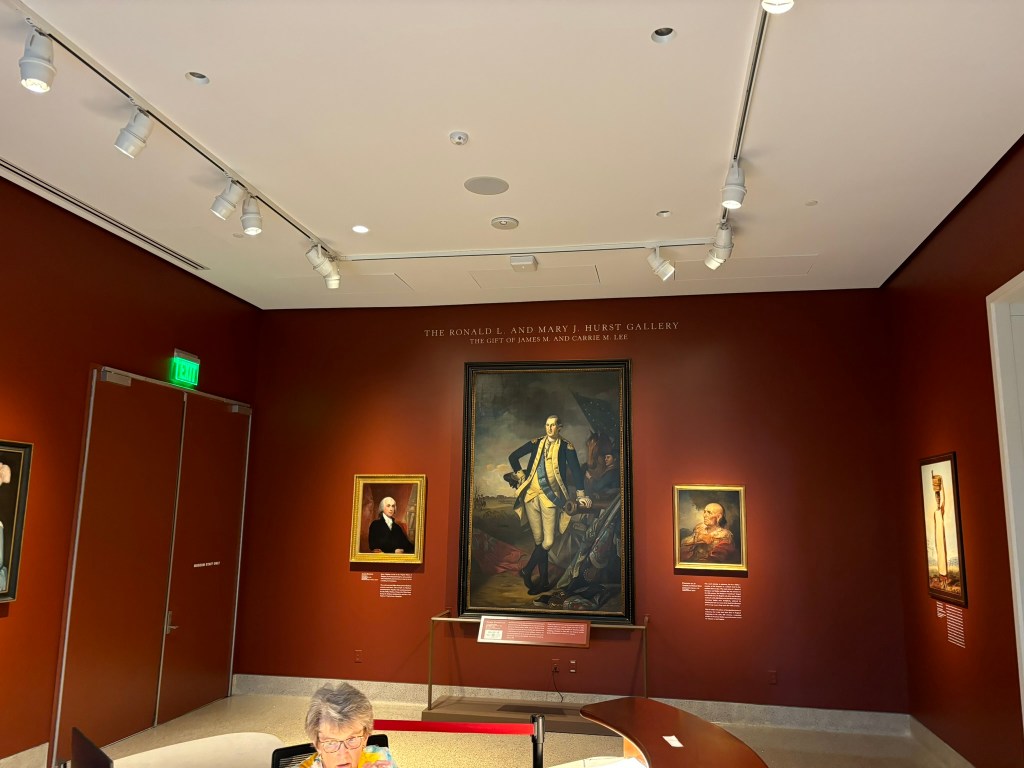
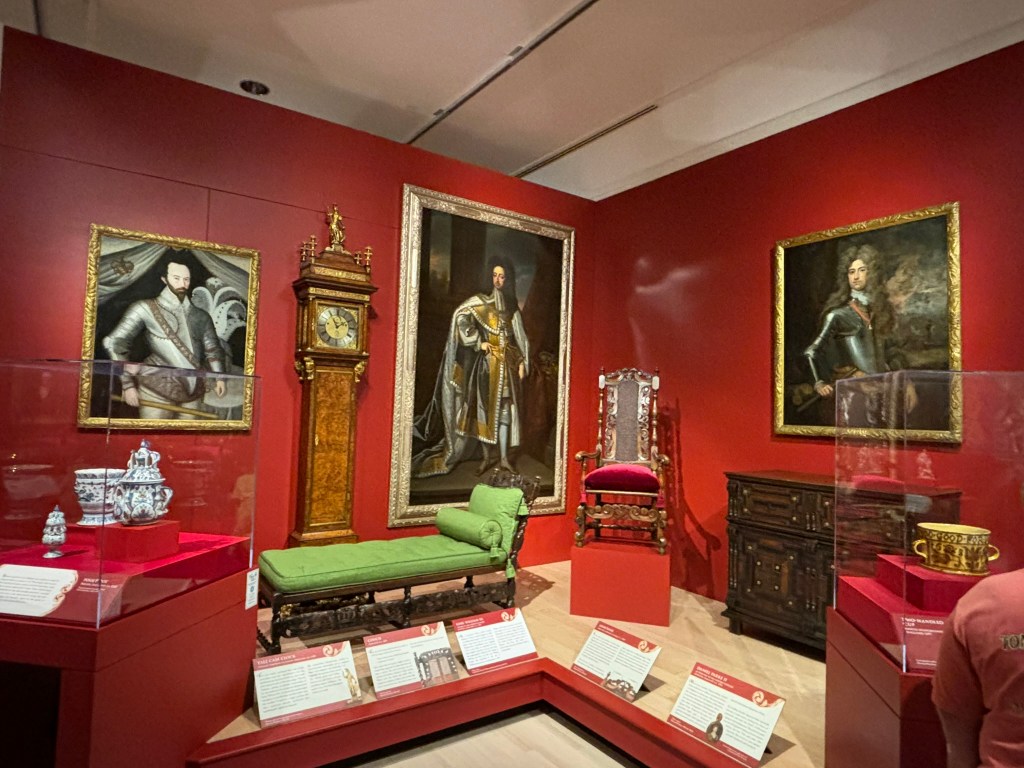
    We made the trek to the Art Museums of Colonial Williamsburg.  The museums had very diverse collections.  The museums consist of the DeWitt Wallace Decorative Arts Museum and the Abby Alrich Rockefeller Folk Art Museum.  There were expansive examples of both American and British antiques and decorative arts from the 17th- 19th centuries.

    Shops of Merchant Square

    After we left the museum, we headed to the Shops of Merchant Square and bought some T-shirts, and a Christmas ornament at the Christmas shop.

    Peyton Randolph House

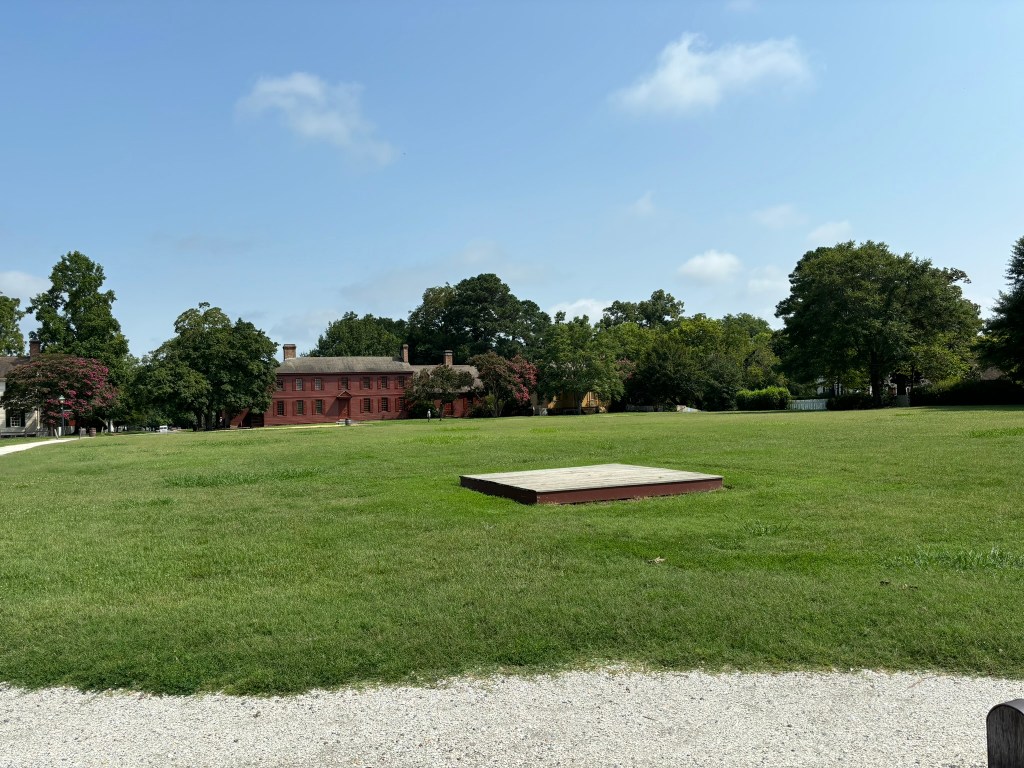
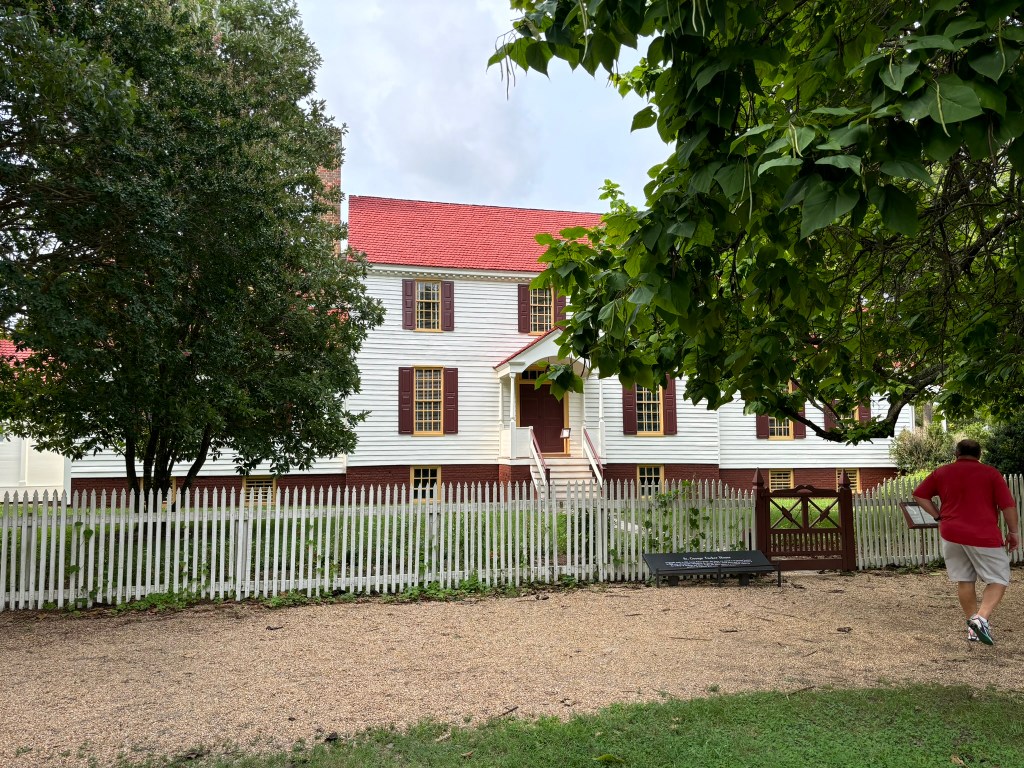
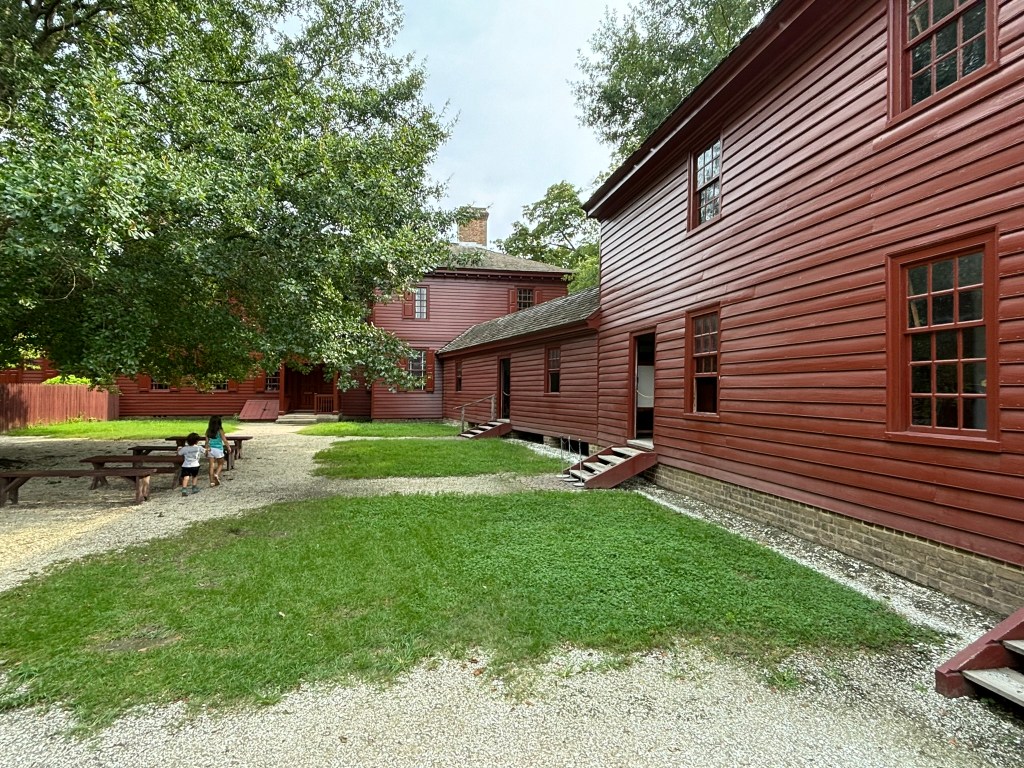
    At this point it was late afternoon.  We decided to visit one last street that we hadn’t visited just yet, which was Nicholson Street.  The main house that we toured at this time was the Peyton Randolph House, which is the dark red house in the photos below.  Randolph was a founding father and the first president of the Continental Congress.  He was instrumental in leading boycotts against British goods in the leadup to the American Revolution.  He was quite wealthy and owned over 100 slaves.  We were able to visit his home where he lived for most of his life.  Our tour guide was quite knowledgeable and informative about Randolph’s life and his home. 

    DoG Street Pub

    When the tour ended, it was time for dinner.  I would have liked to make our way further down Nicholson street, but we just didn’t have the time.  We ate dinner at the DoG Street Pub, which had a nice selection of beers on tap, and very good food.  When we were done eating, we trekked back to our hotel to rest our tired feet.

    Overview

    I really enjoyed Colonial Williamsburg.  Because of the architecture and the reenactors around town, you really felt like you were living in 1775.  The reenactors do a great job re-creating the many jobs and chores that the colonials were responsible for.  You got a sense of the hard-work and toil that went along with living in this era.  Each person had to be an expert at their craft.  But most people would have been small farmers.  And when they weren’t out farming they were doing household chores like making candles, making soap, sewing clothes, and creating everything that the household needed.  People back then didn’t have much.  They weren’t consumers of goods, and just had the basic necessities.   That was the case for most people. Seeing the Governor’s Palace, we did witness the large discrepancies between the social classes in Colonial America. While the majority of colonials were barely scraping by, a select few were living lavishly in structures such as the Governor’s Palace.

    Follow my Instagram, Facebook, and X accounts in the coming days for videos of my time in Colonial Williamsburg.

    For Part 2 of this blog post, I will discuss our tour of the Jamestown Settlement, followed by Part 3, which will focus on our tour of the Yorktown Battlefield and Museum.  Stay tuned!

    For more information about the Williamburg Woodlands Hotel and Suites, visit HERE.

    For more information about Colonial Williamsburg, visit their official website, HERE.

    Williamsburg, VA is along the Washington-Rochambeau Revolutionary Route- Check out their site HERE.

    Check out similar blog posts below!

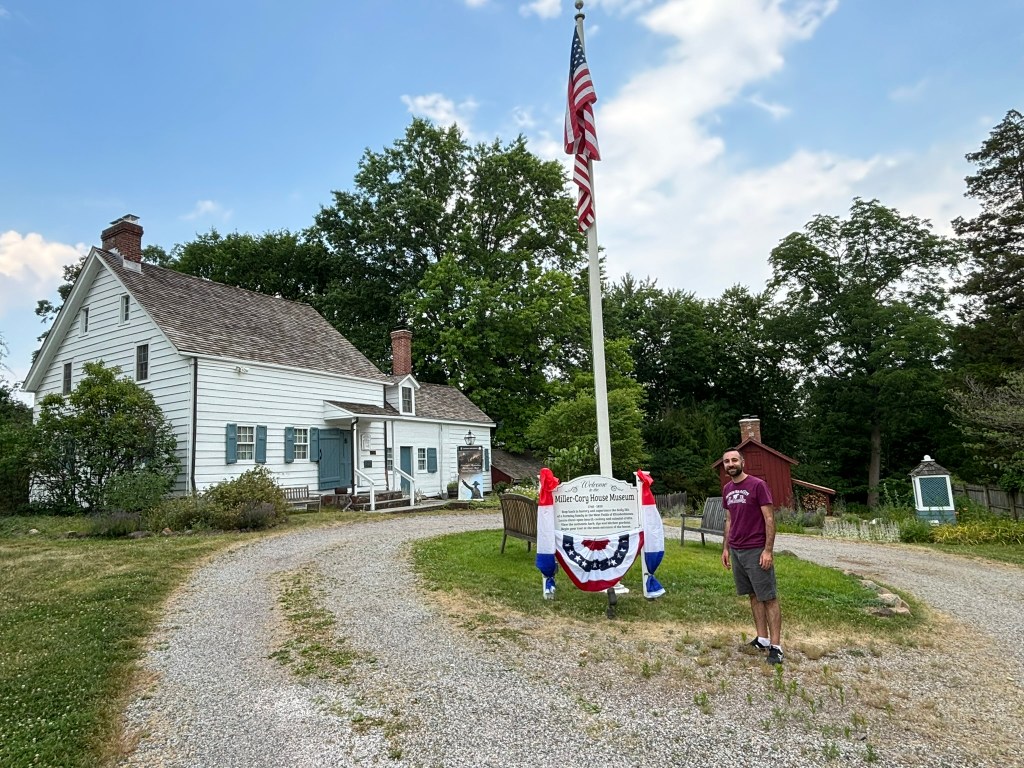
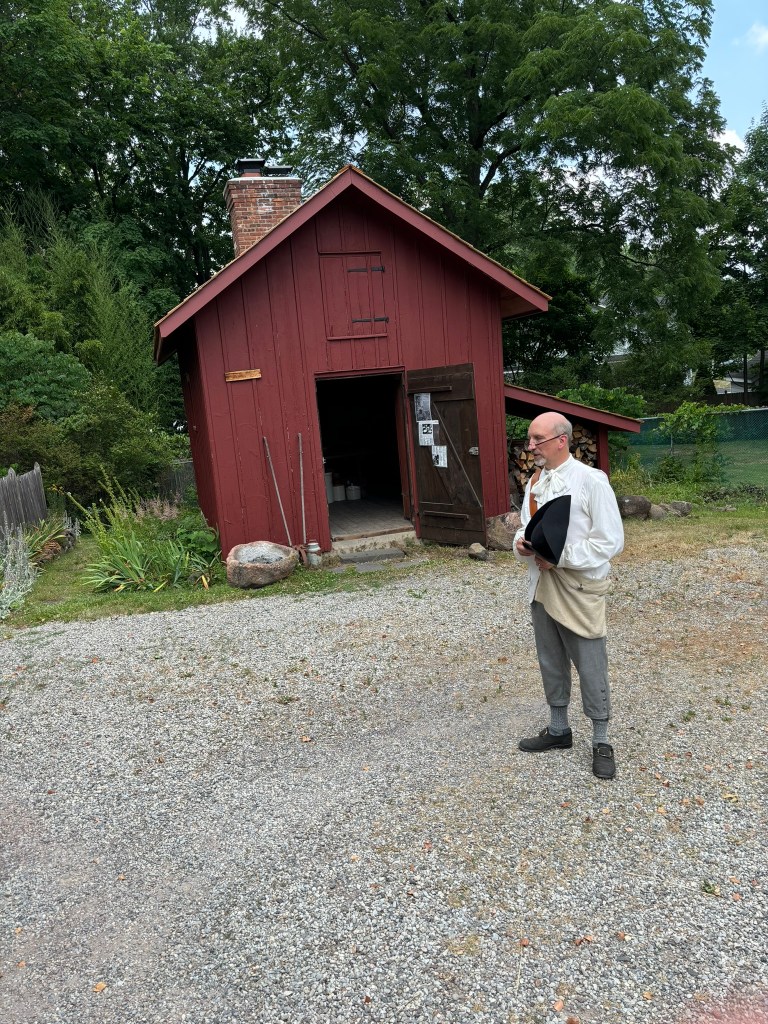
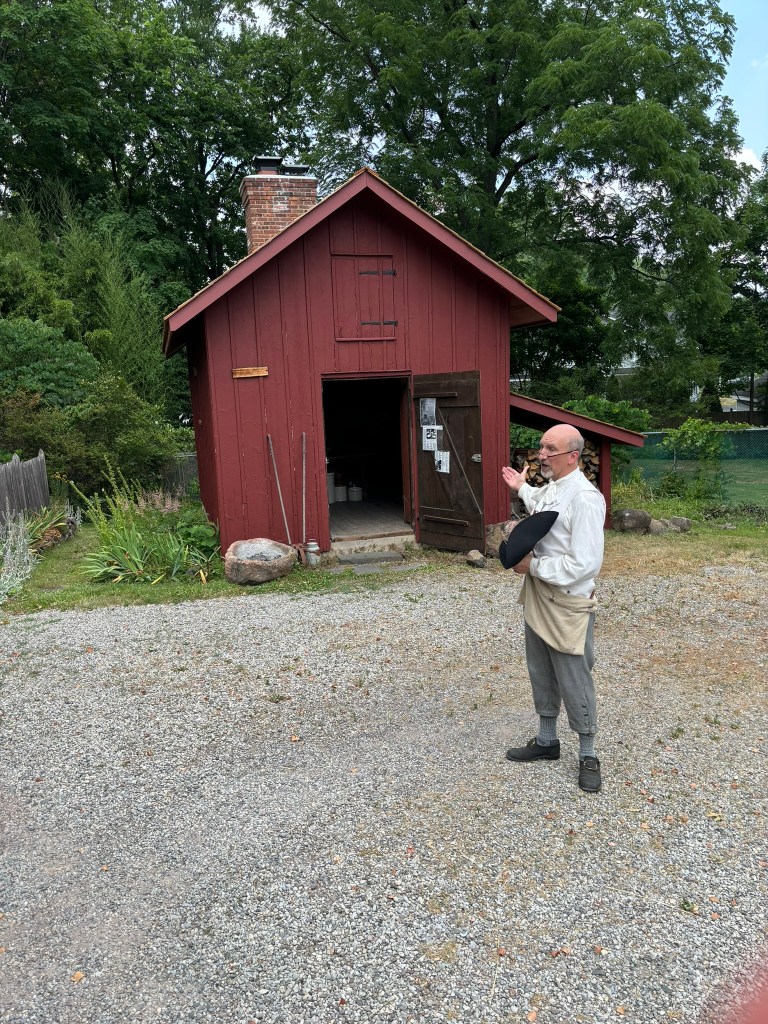
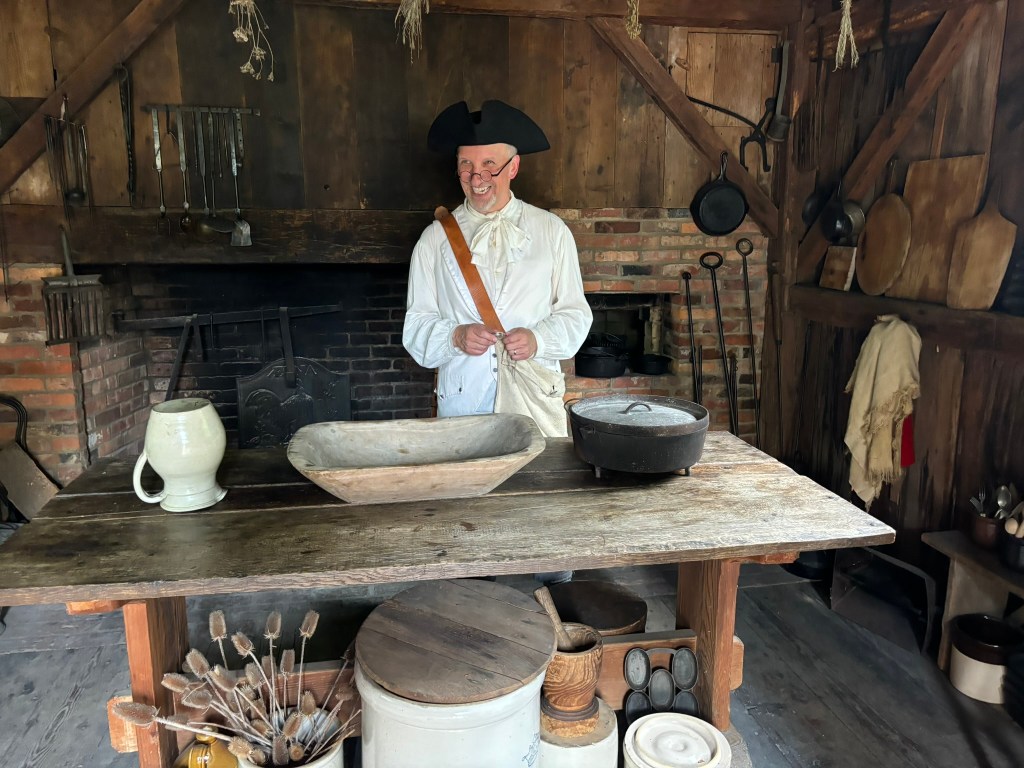
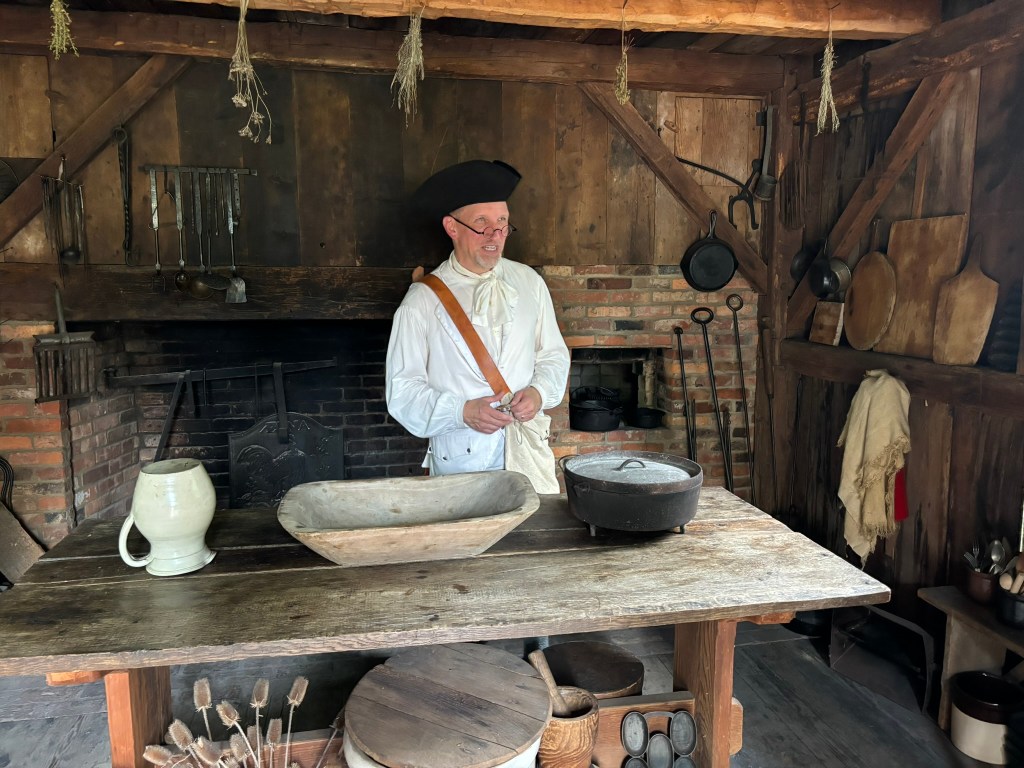
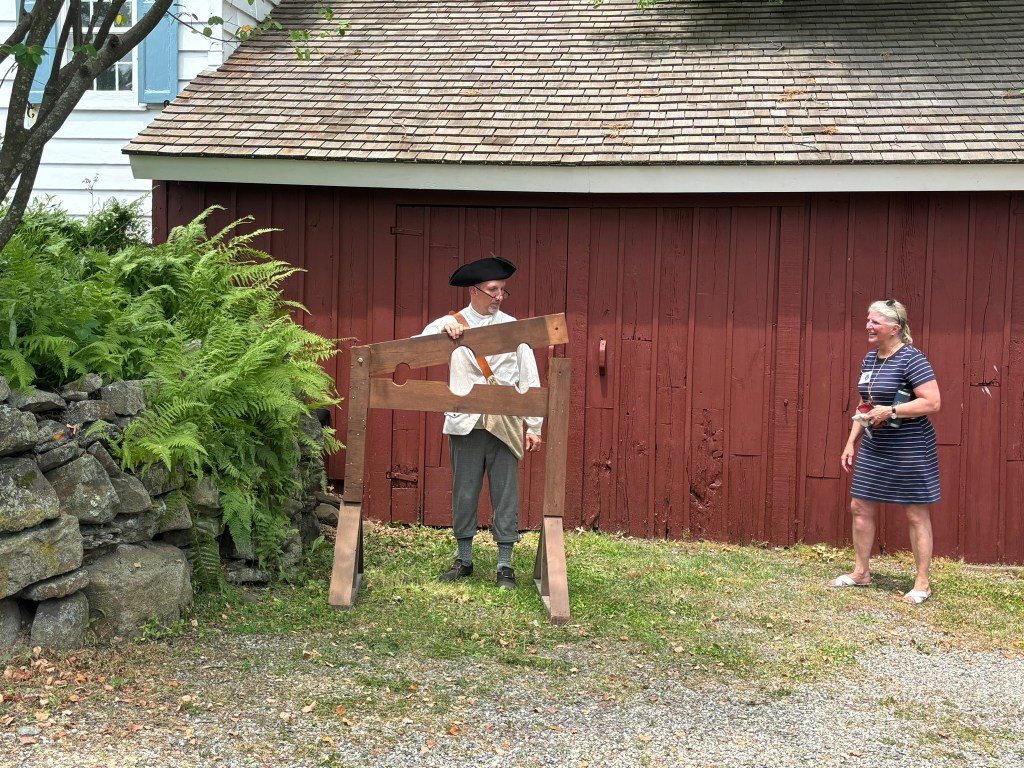
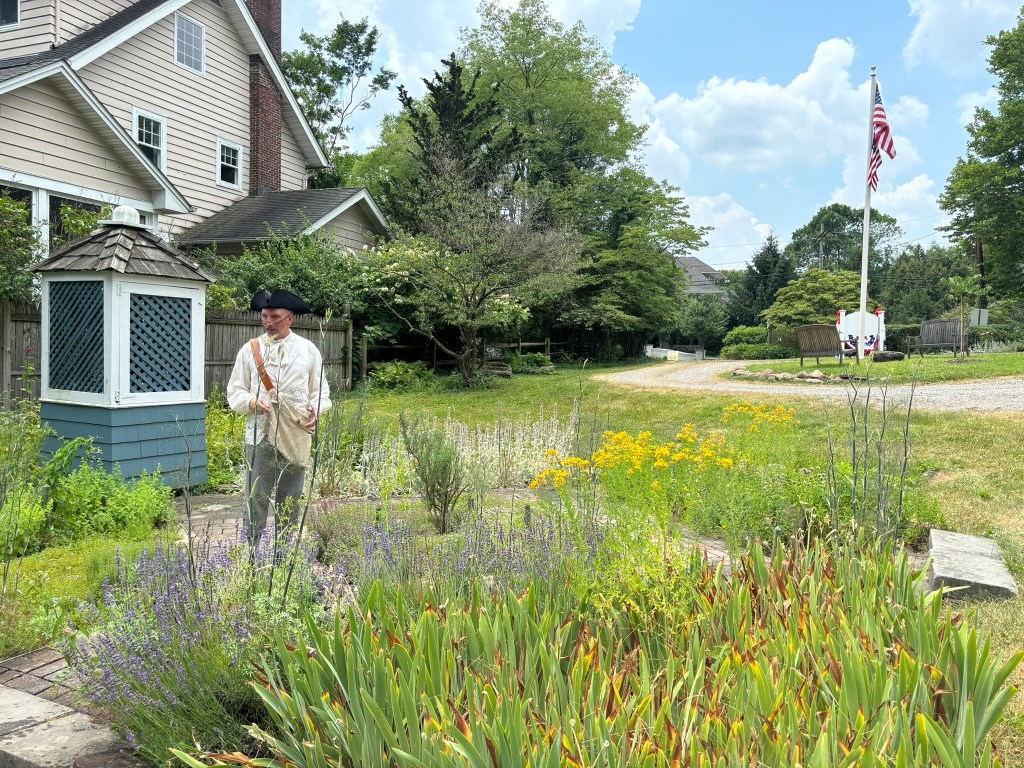
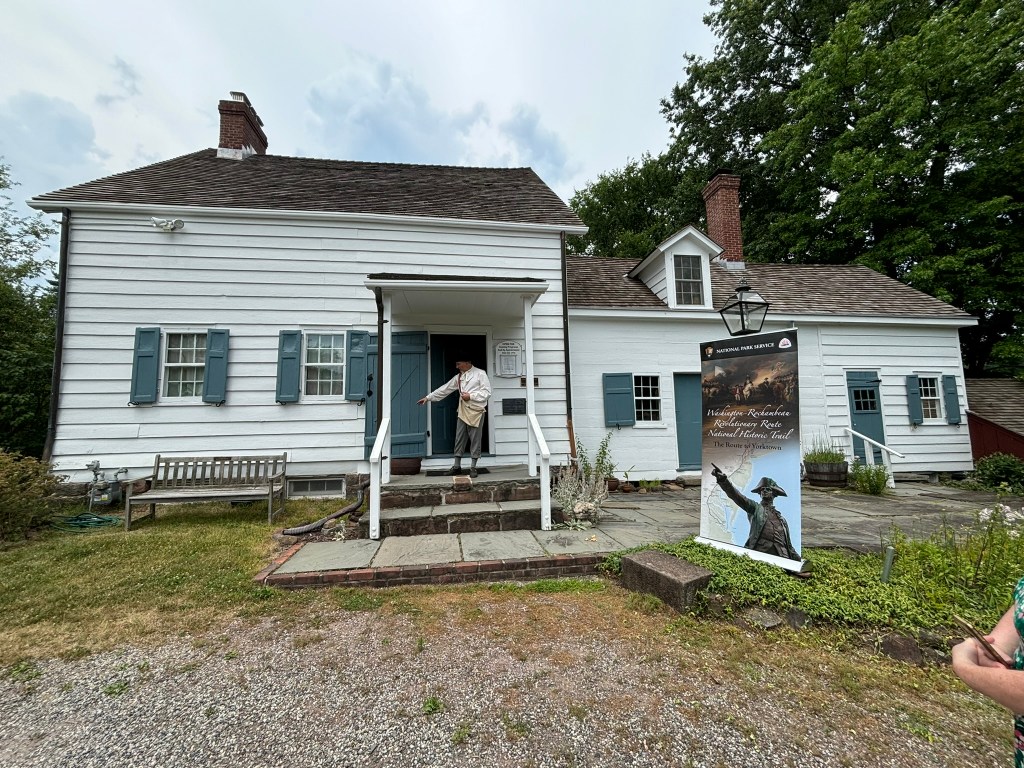
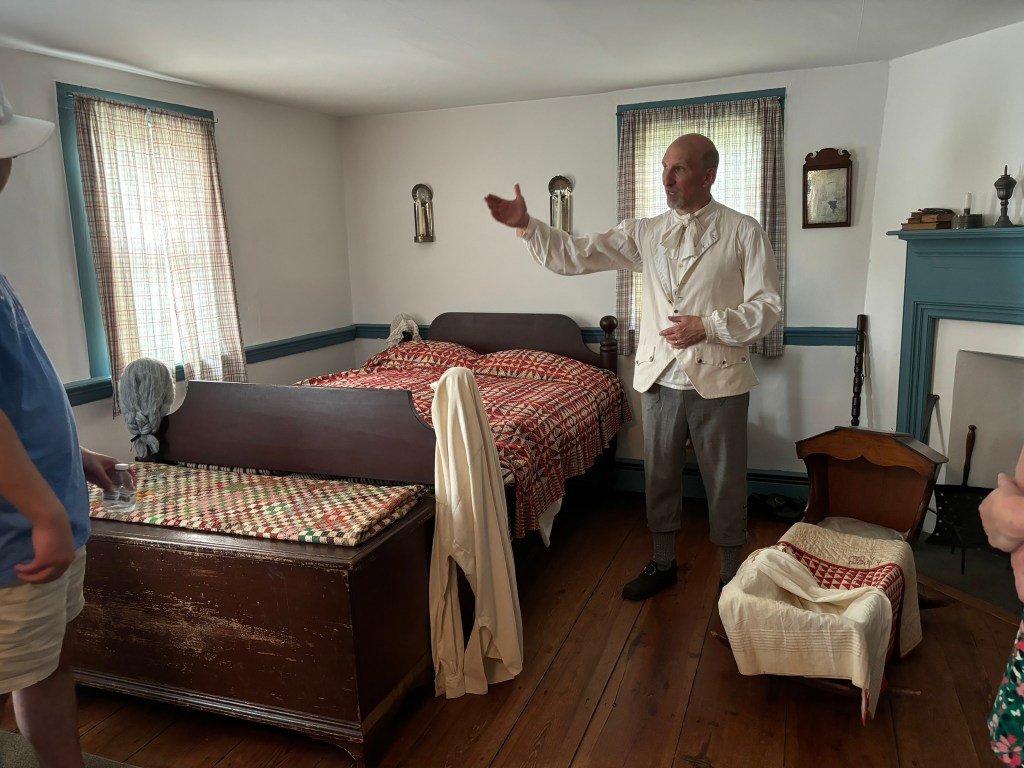
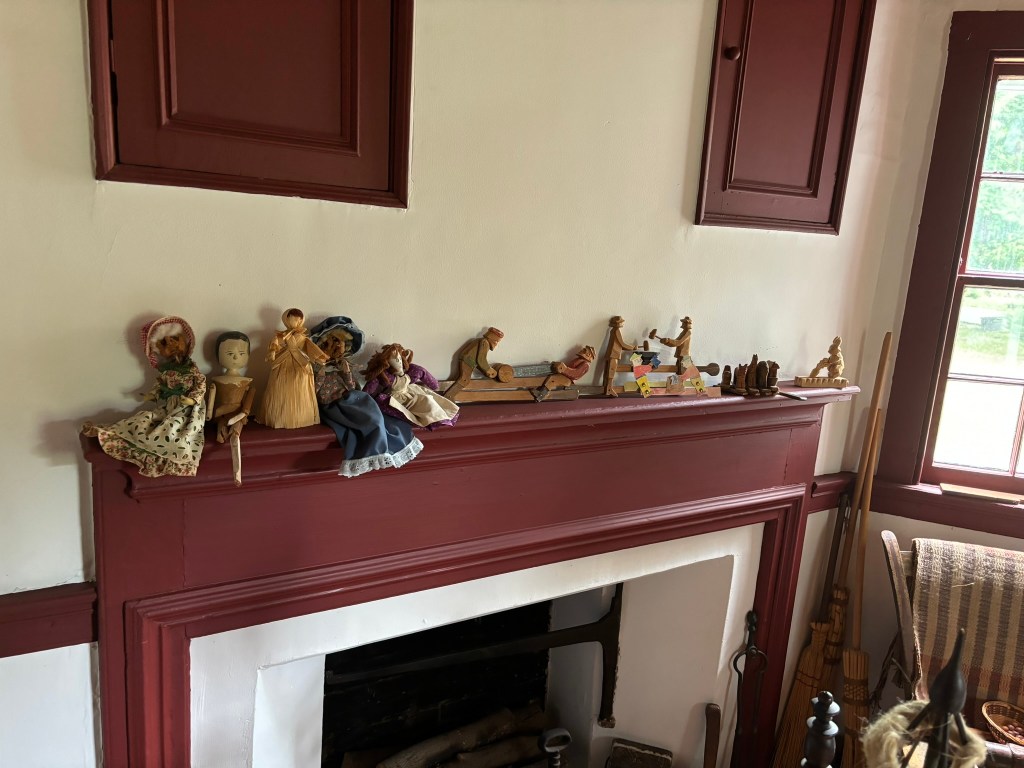
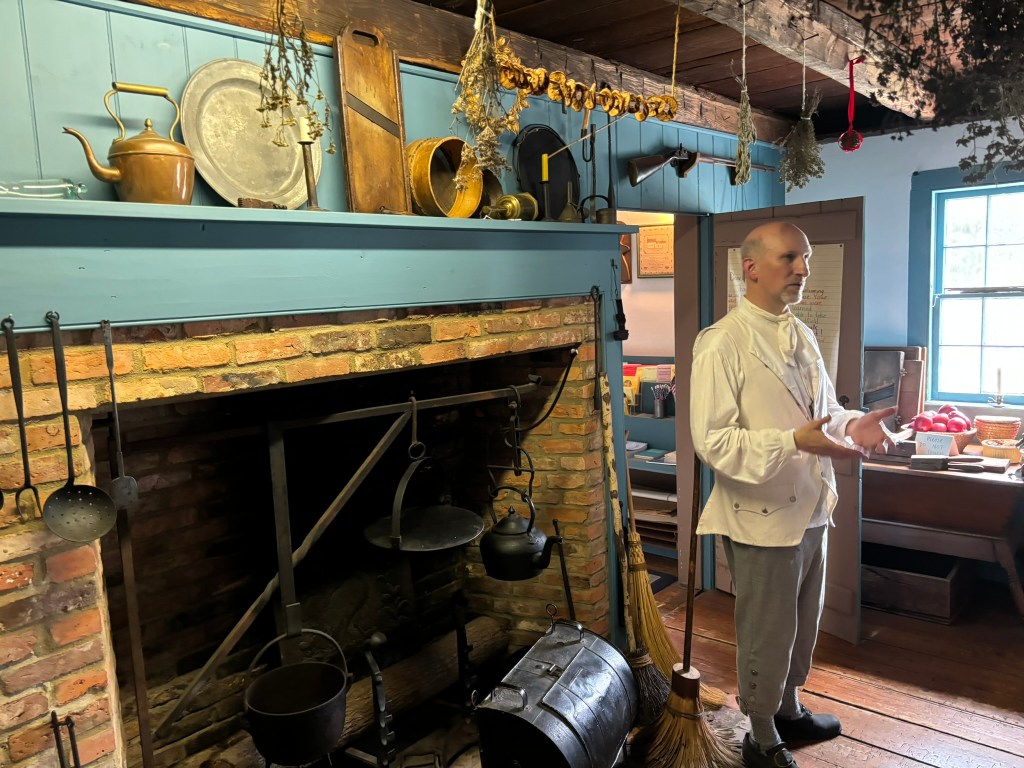
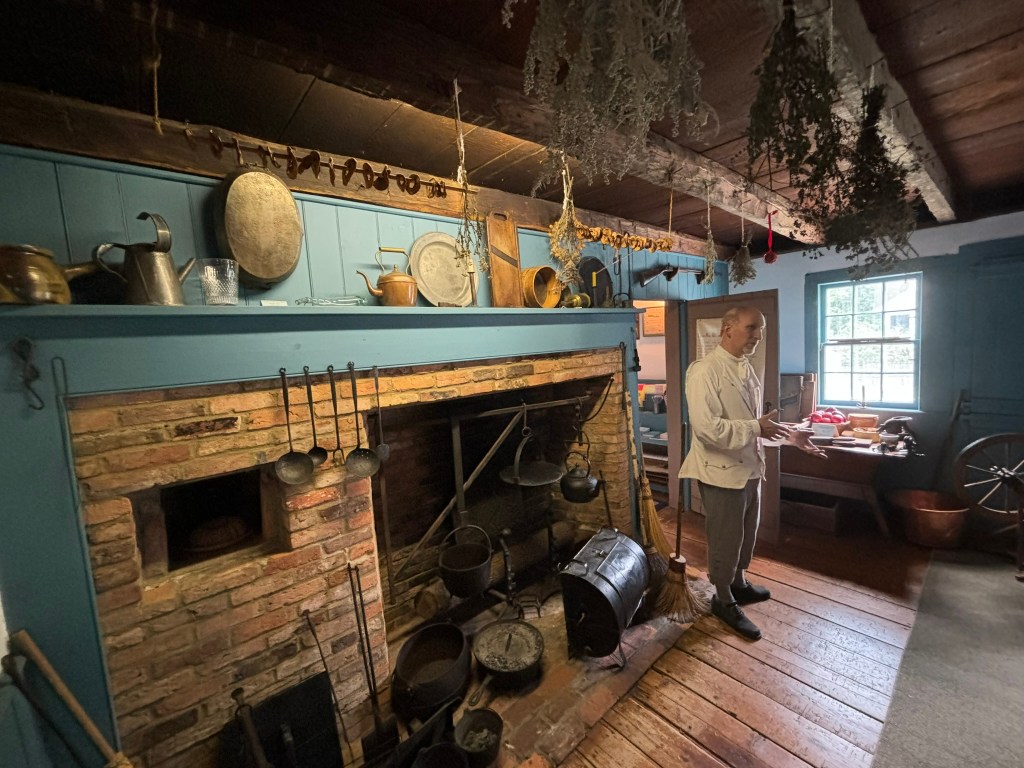
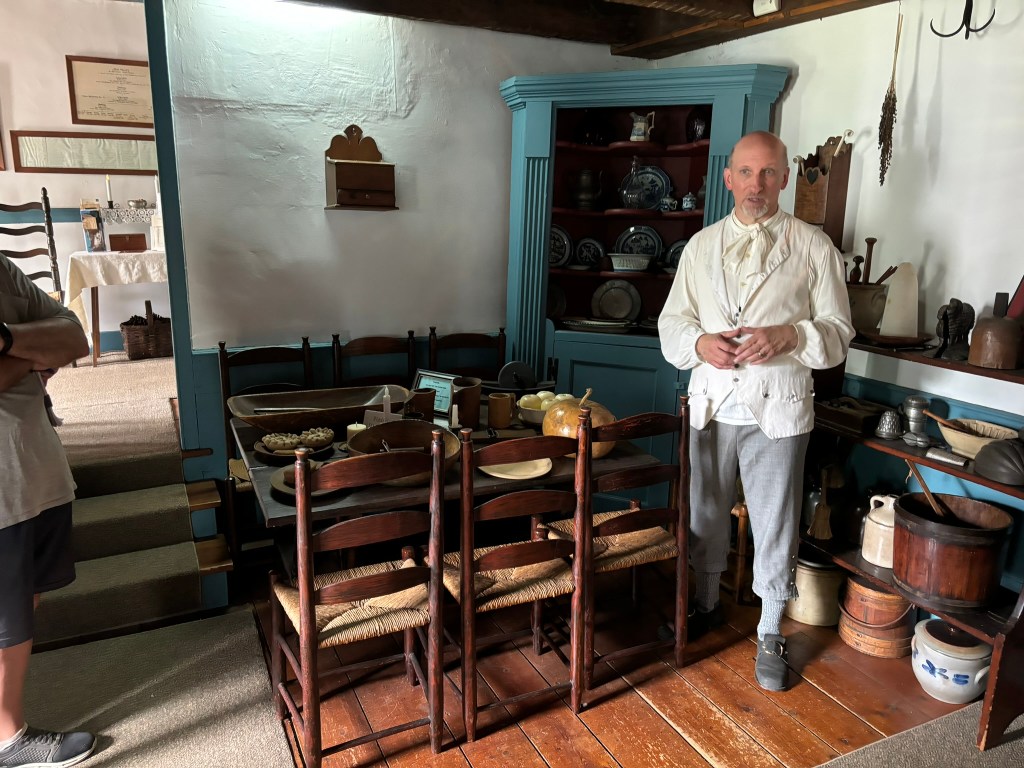
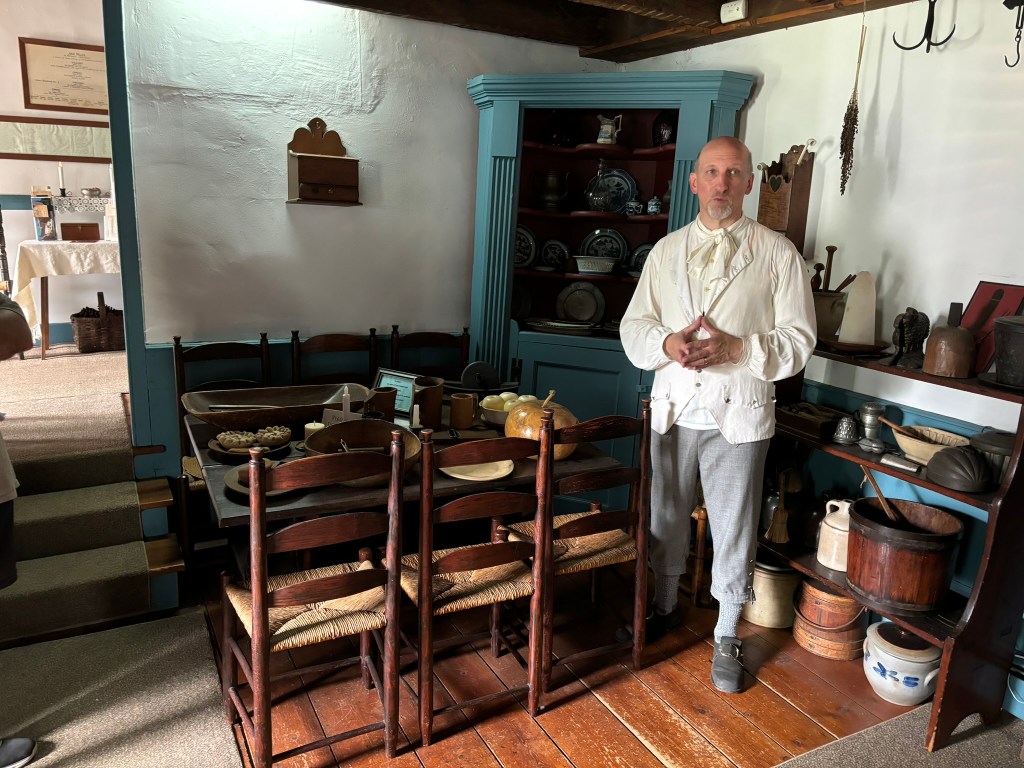
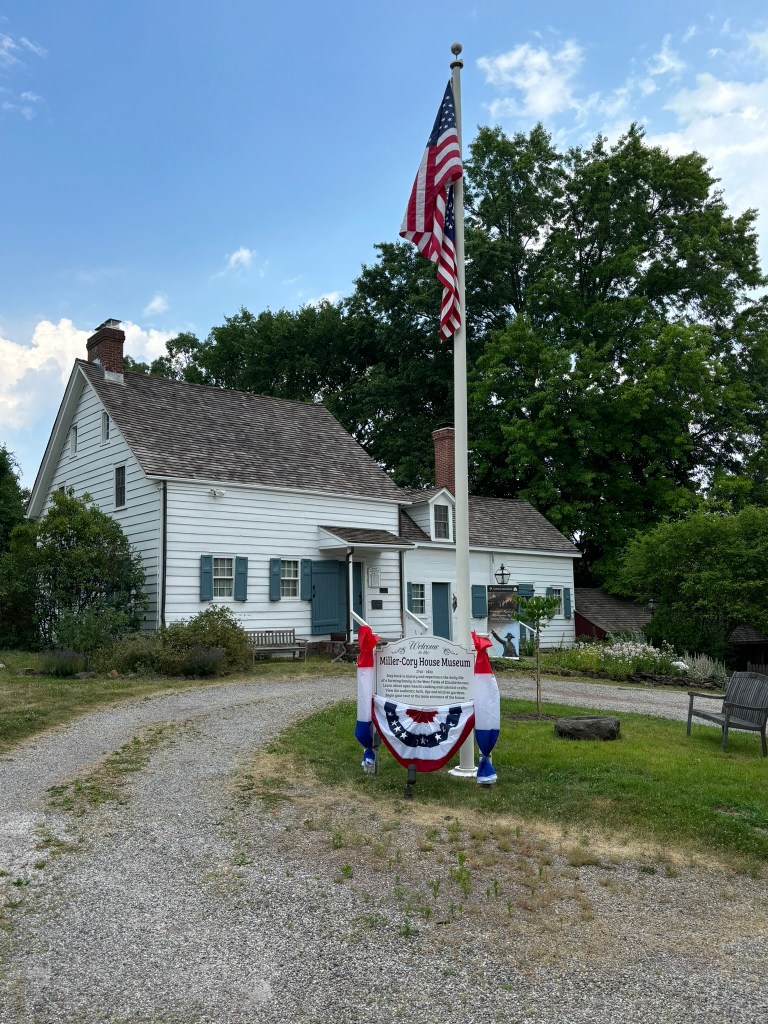
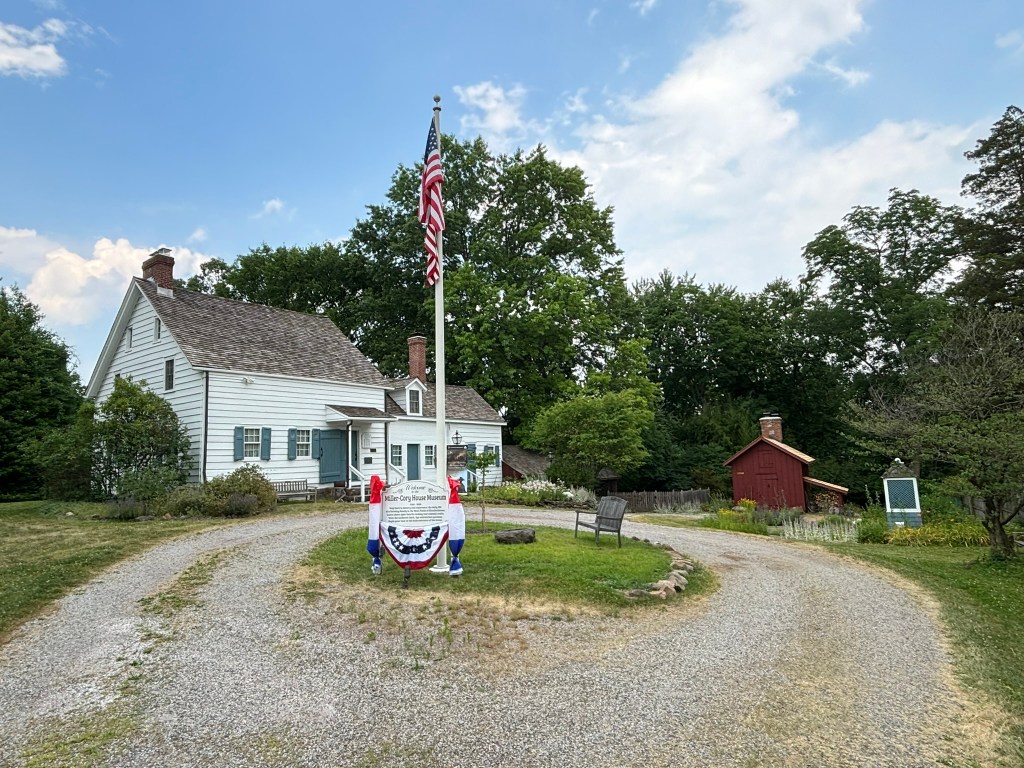
  • On June 22nd, the Washington-Rochambeau Revolutionary Route National Historic Site-NJ and the Miller-Cory House Museum presented the history of the Washington-Rochambeau Revolutionary Route National Historic Trail and a tour of the Miller-Cory House in Westfield, NJ.  The Miller-Cory house was a witness to the allied army march from Rhode Island to Yorktown, VA in 1781 prior to the climactic battle of the American Revolution at Yorktown in October.  Joining the tour of the Miller-Cory House was the New Jersey Society of the Children of the American Revolution State Board, and it was an honor to meet them at the tour, as well as sit in on their meeting at the house.

    Our tour guide was Robert Wendel, who is a fascinating local historian who is quite knowledgeable about the Miller-Cory House, the history of Westfield, the colonial era, and the American Revolution.  He has served as Curator and Vice President of the Westfield Historical Society, former Town Historian, and member of the Westfield Historic Preservation Commission.

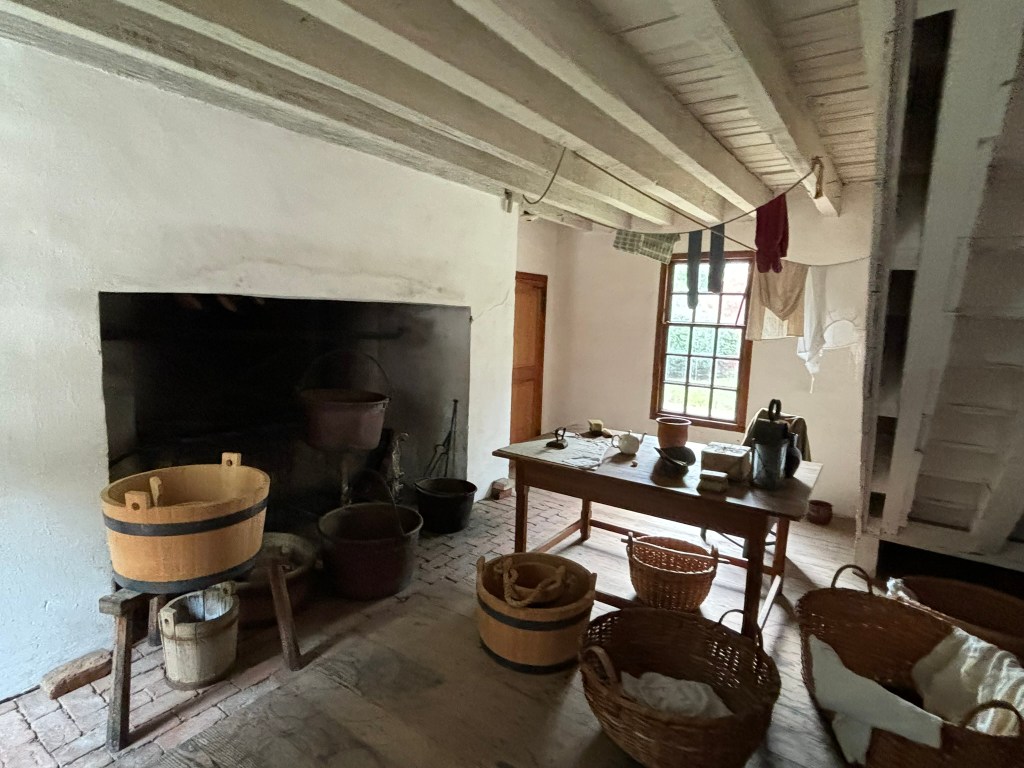
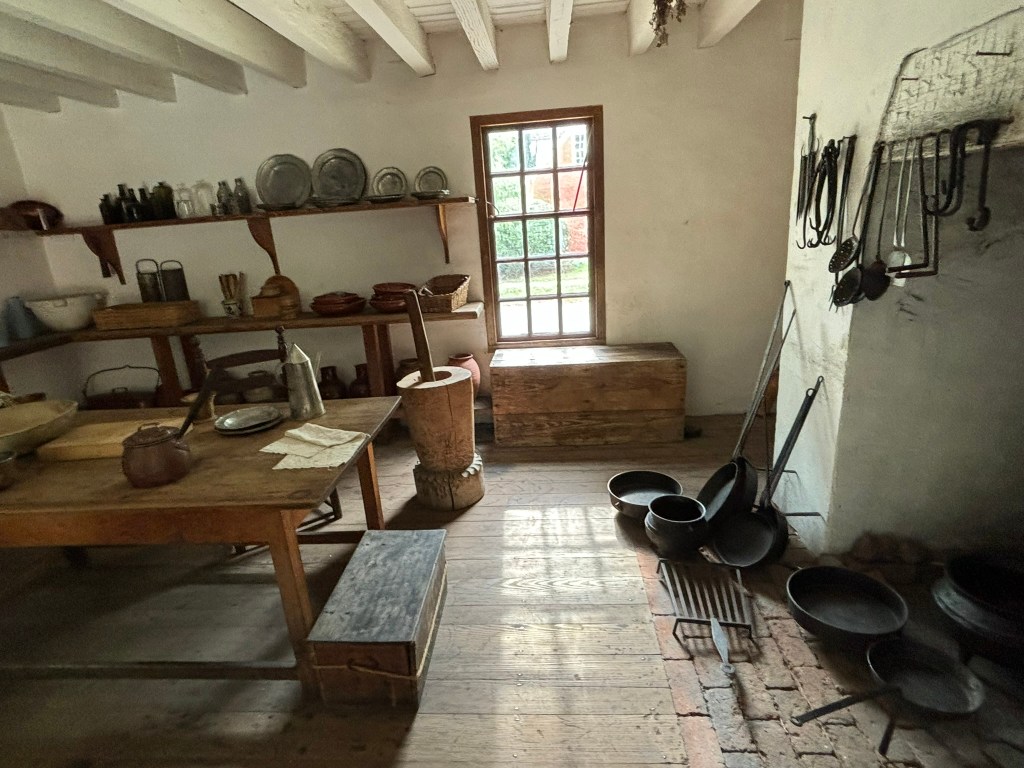
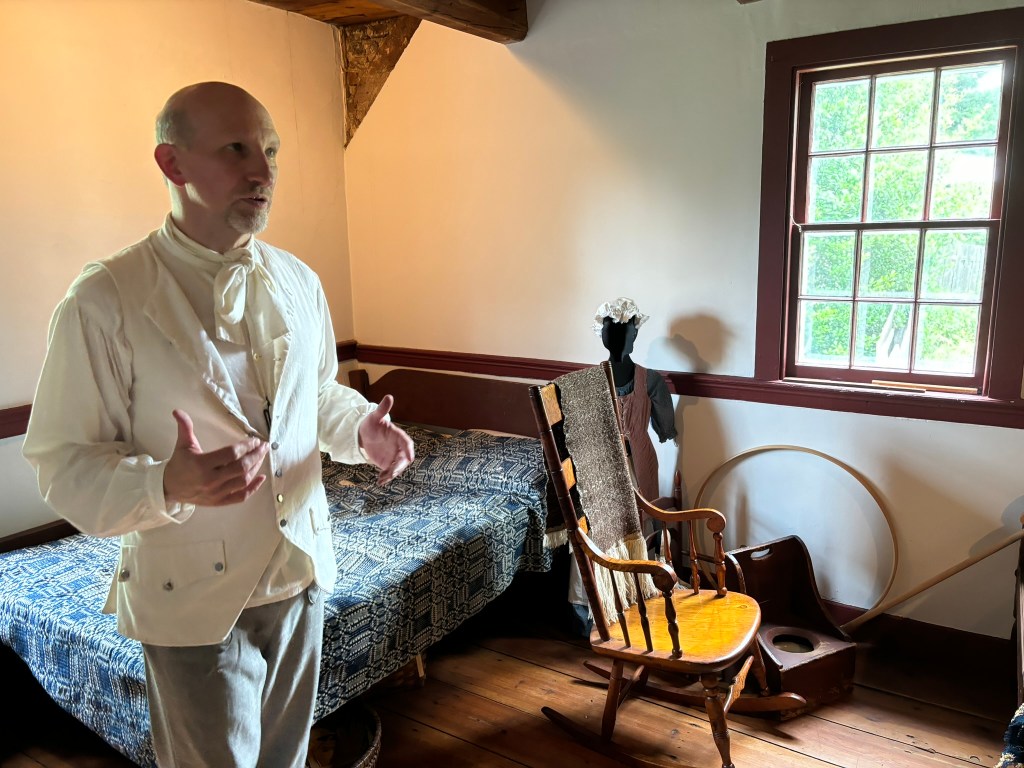
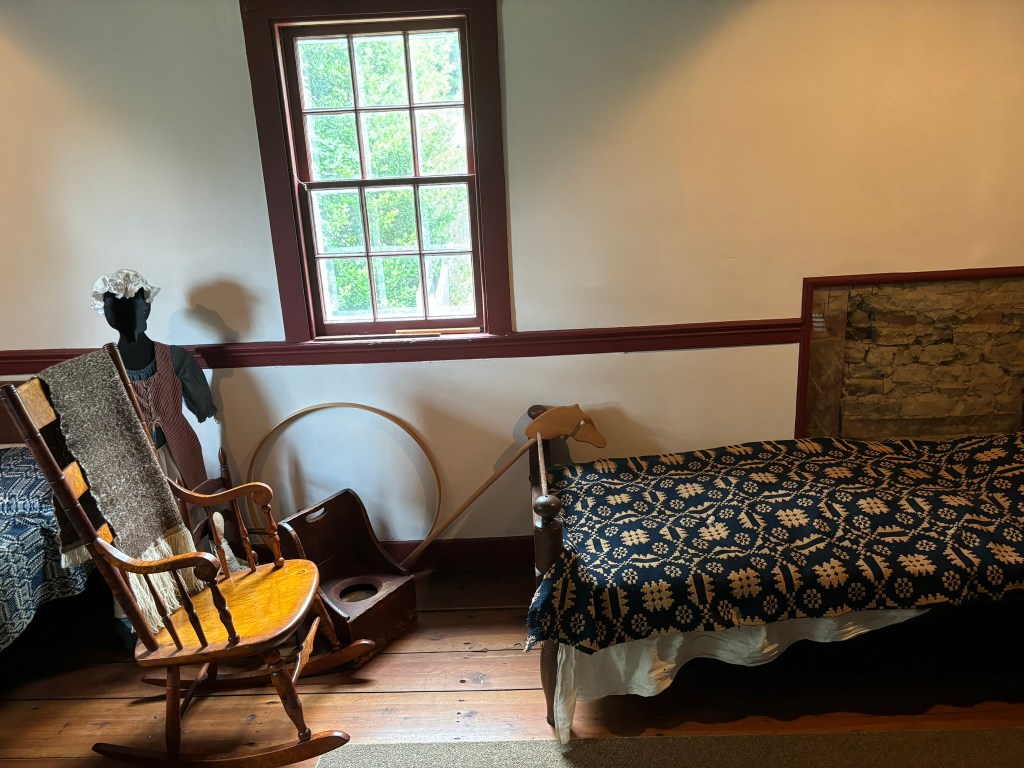
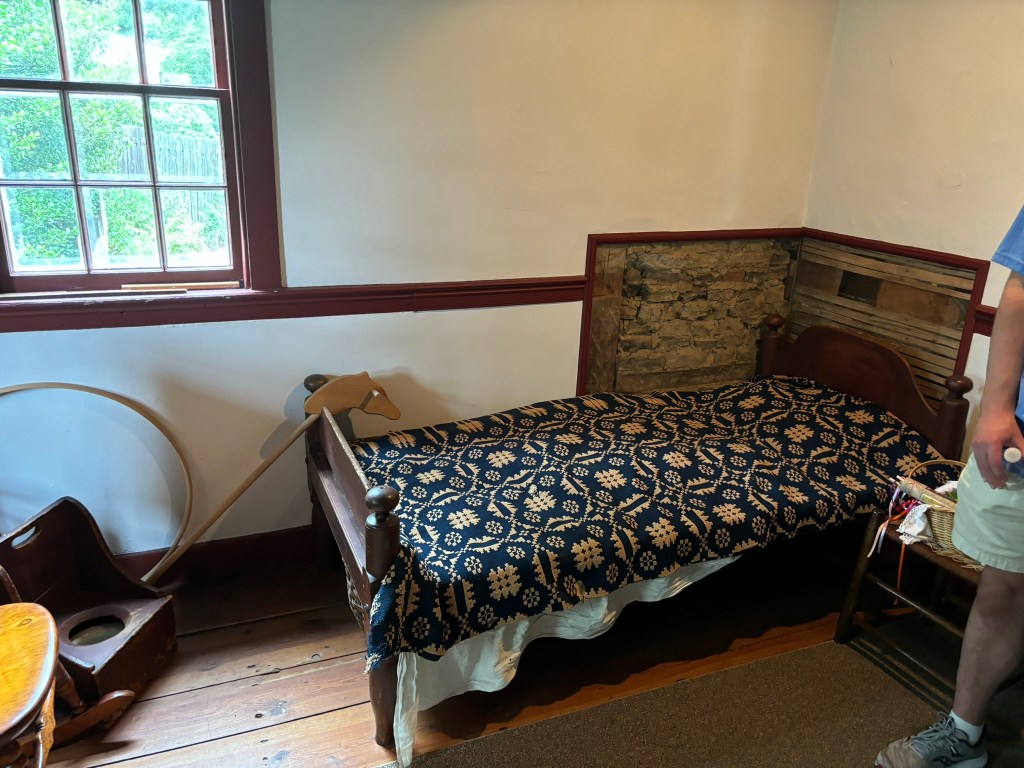
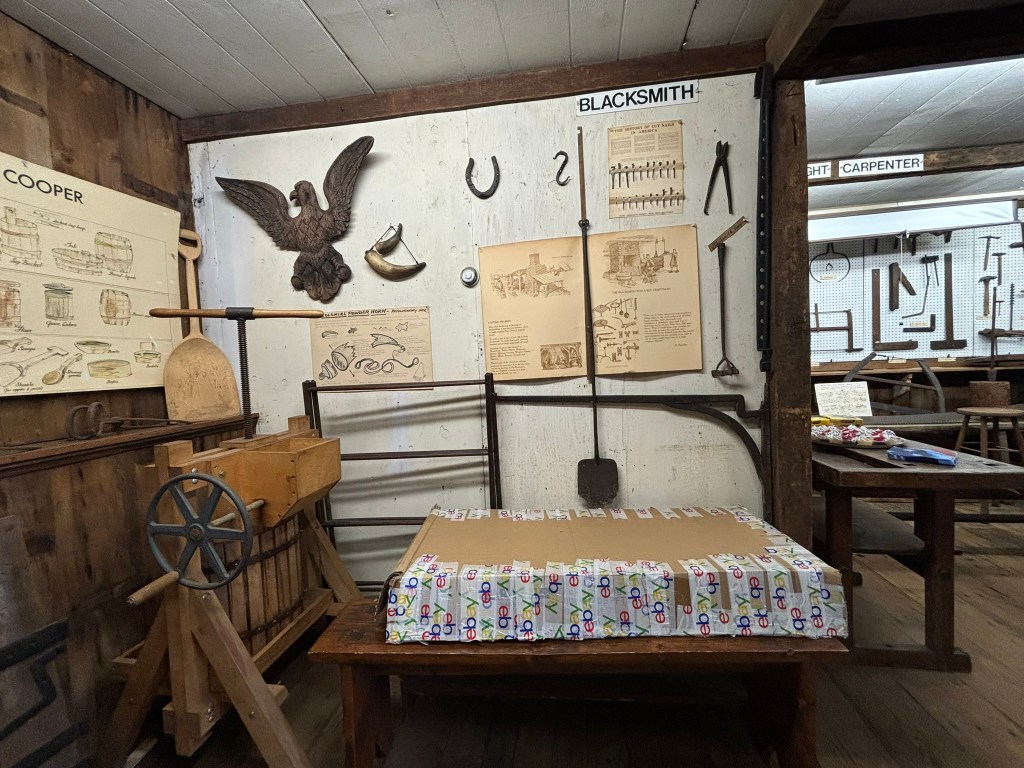
    Through Robert, I learned much about the Miller-Cory house, as well as the general area’s role before, during, and after the American Revolution.  In 1740, Samuel Miller built the farmhouse and lived there with his wife and children.  The property once sat on 110 acres of land.  What is now Mountain Ave. in Westfield, which passes by the front of the house, was a Lenni Lenape trail and route along the Washington-Rochambeau Revolutionary Route.  The House was sold to Joseph Cory in 1784 and remained in the Cory family until the 1900s.  In 1972, the Westfield Historical society raised funds in order to purchase and preserve the house.  Through preservation, the house was returned to its earliest, colonial form and was furnished with colonial era artifacts.  It currently serves as a living history museum.

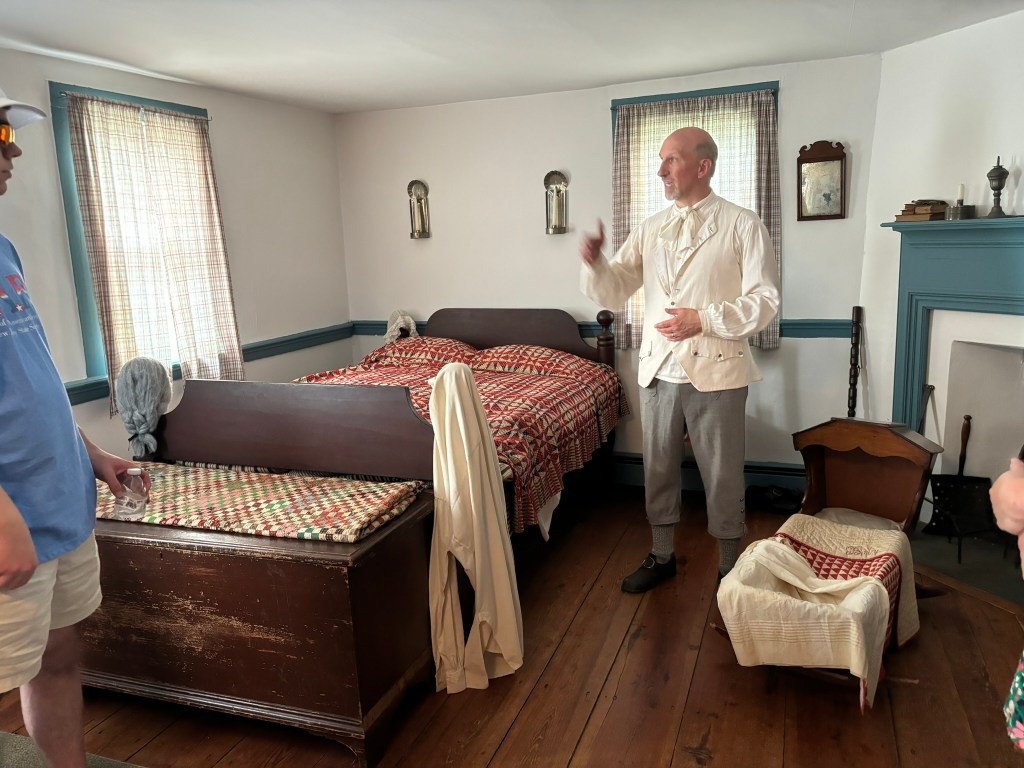
    Robert is an expert on the history of the house and was quite knowledgeable of colonial life in the region.  The area was once called the West Fields of Elizabeth Town.  The land in this region of New Jersey was to be settled and developed by British settlers in the name of King Charles II.  Robert took us on a tour of each room in the household, and described for us what life would have been like for those living there in the colonial period.  Touring the house was a reminder of the rich colonial history in New Jersey.

    As mentioned above, I was then able to meet leaders of the New Jersey Society of the Children of the American Revolution who were kind enough to let me sit in on one of their meetings.  I was able to have fascinating conversations with them about their organization and events that they have coming up.   Please check out their website here for ways to support and get involved in the organization—> https://sites.google.com/view/njcar/?pli=1

    Check out the Washington-Rochambeau Revolutionary Route site for events and ways to get involved.  Here is the national site—> https://w3r-us.org/

    Here is the New Jersey affiliate, of which I am a member—> https://www.w3r-nj.org/

    If you live in the area, I encourage you to visit the Miller-Cory house and check out events that they have throughout the year—-> https://millercoryhouse.com/

    You can also check out the Westfield Historical Society here—> https://www.westfieldhistoricalsociety.org/

    Check out my similar blog posts below:

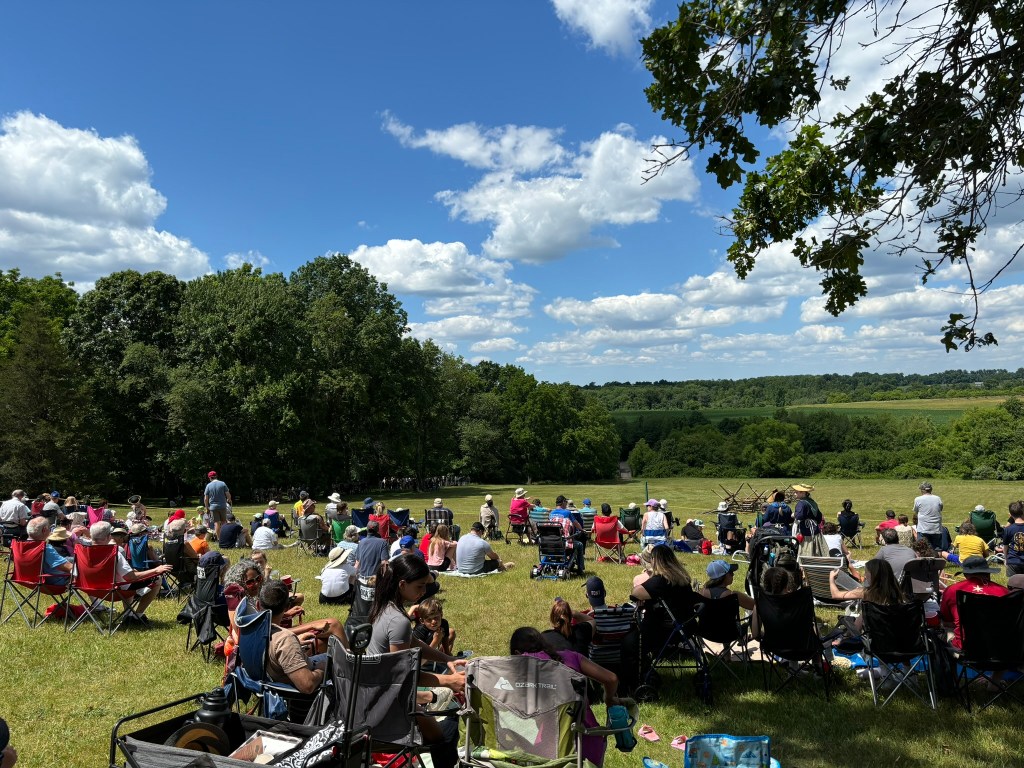
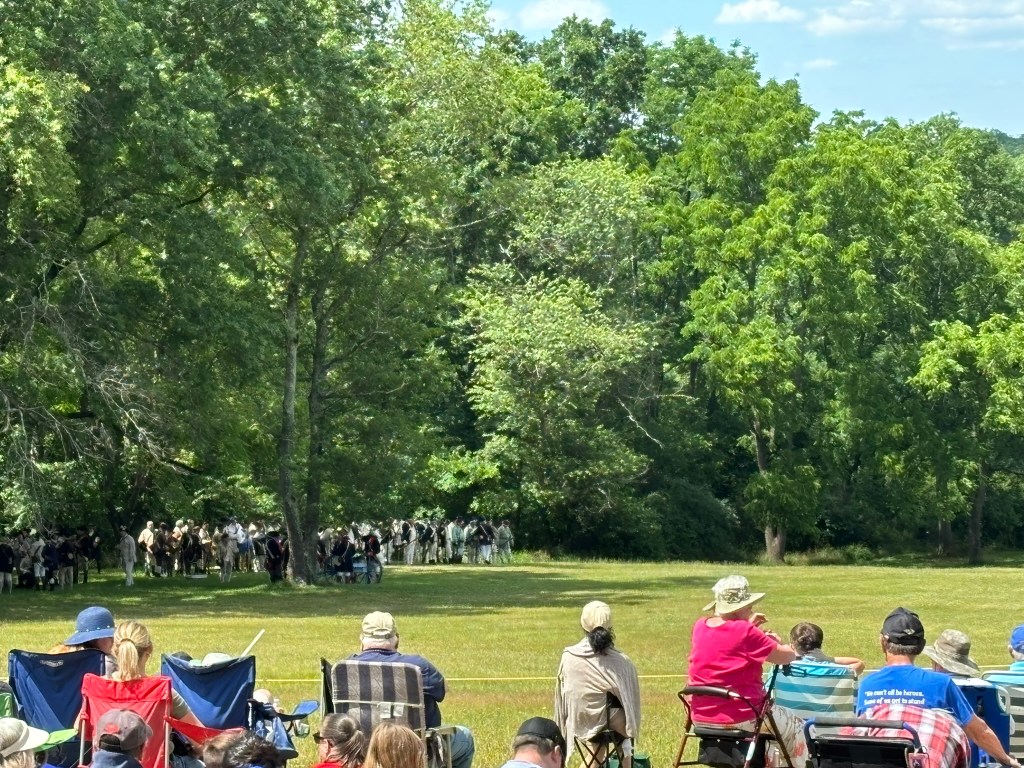
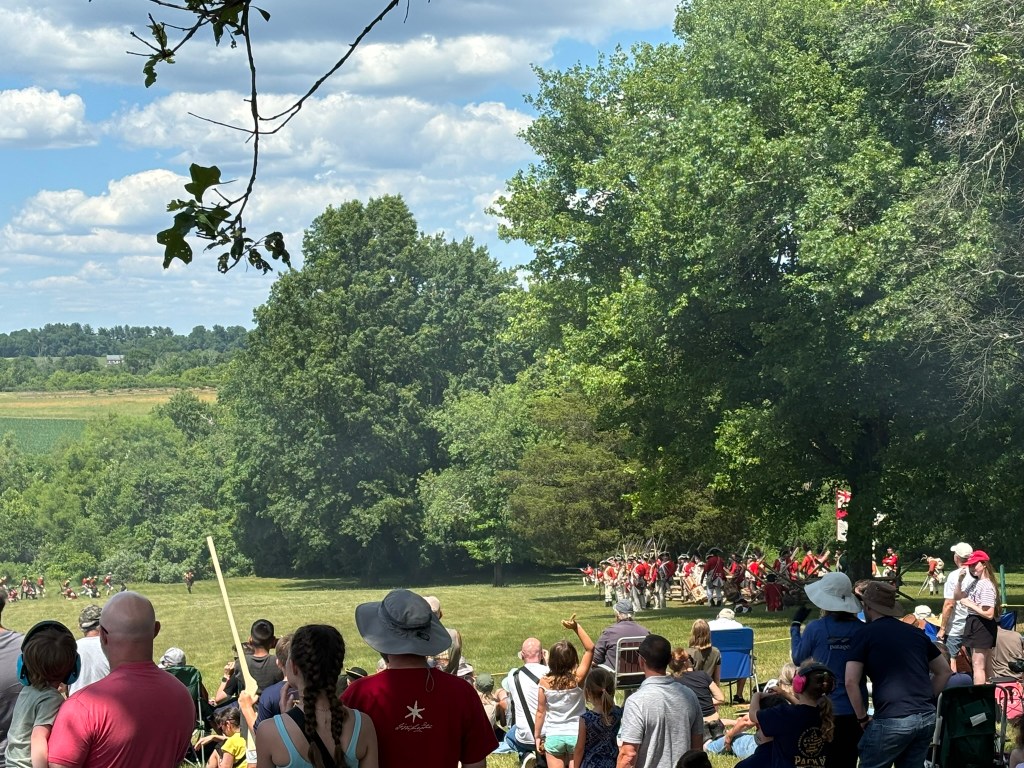
  • My family and I made it to the Annual Reenactment of the Battle of Monmouth on Saturday, June 15th.  The event takes place every year in June on a Saturday and Sunday to commemorate the June 28th, 1778 battle.  It was a great Father’s Day Weekend experience.  We were quite impressed with the event as this was our second time visiting the battlefield, but the first time attending this event.  Of the American Revolution events that I have been to, this event drew the largest crowd and attracted the most reenactors.

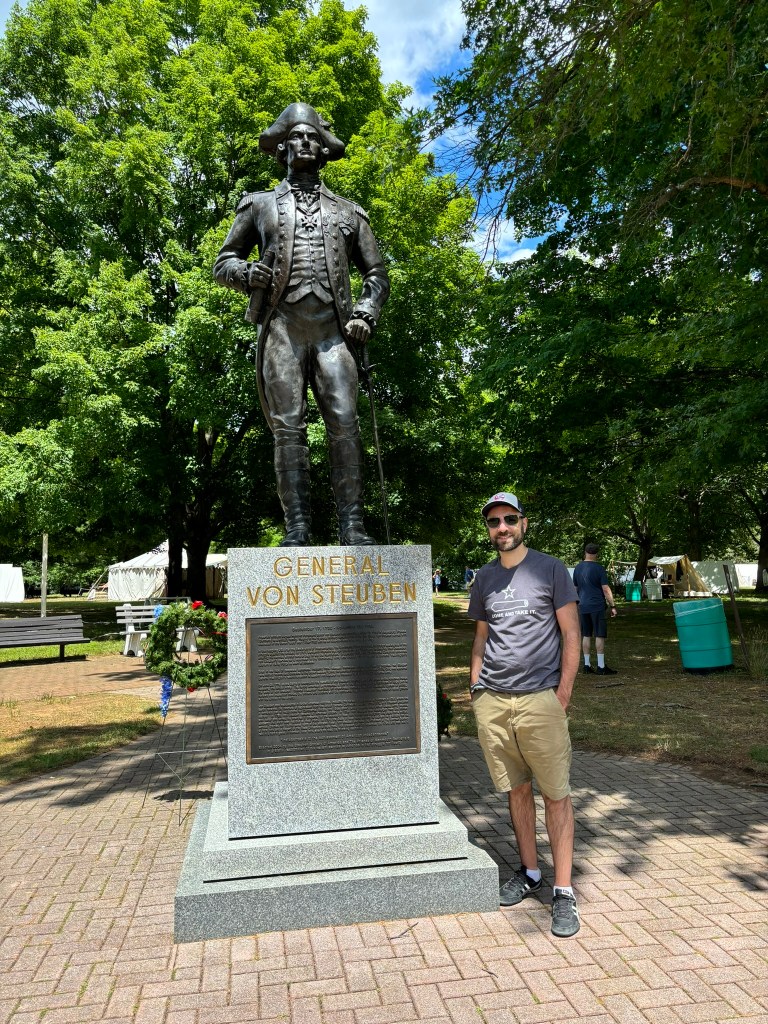
    While the Battle of Monmouth did not have much strategic benefit for the Continentals, it was a large battle in terms of manpower, and showed that the Patriot army could go toe to toe with the British.  The battle was the largest artillery duel of the war and the Continental Army, led by George Washington, had an opportunity to show their fighting tenacity after a long winter at Valley Forge.  At winter camp, the constant drilling from Friedrich Von Steuben, the Prussian drill master, made real soldiers of the Continentals.  The benefits of the rigorous drilling were shown on the Monmouth battlefield.  The battle is known for temperatures reaching 100 degrees.  The night following the battle, the British continued their retreat from Philadelphia to New York (as they had planned), and Washington used this retreat to claim victory for the Patriots.  The Battle of Monmouth is also known for the heroics of Molly Pitcher who is commemorated at the park.

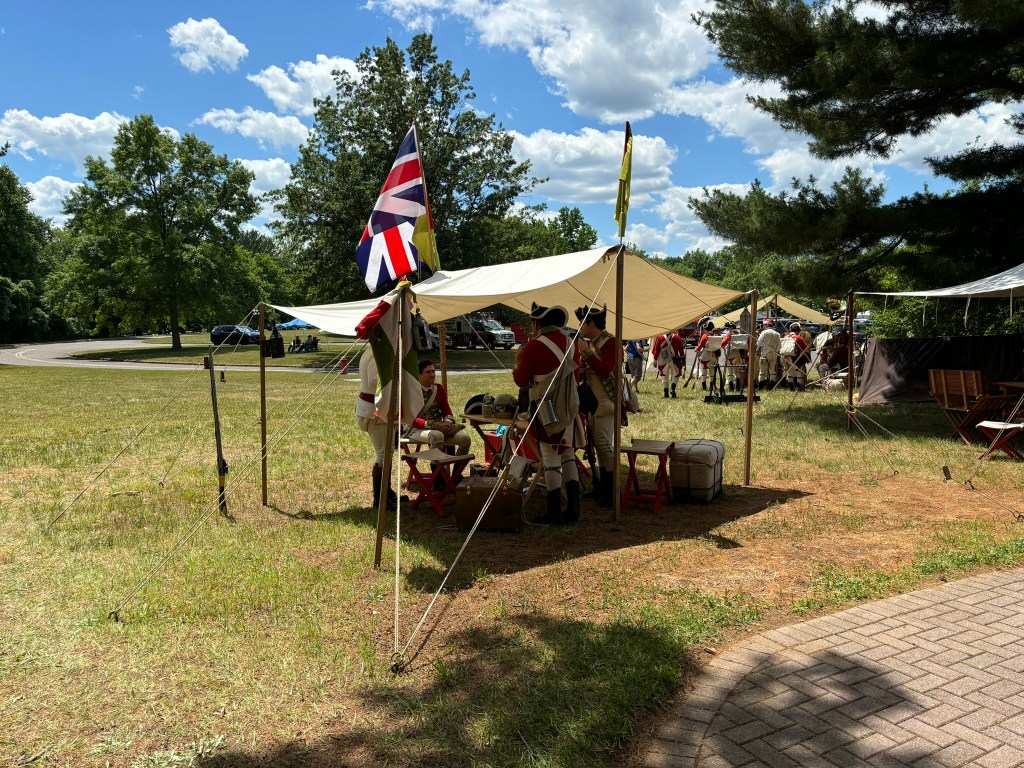
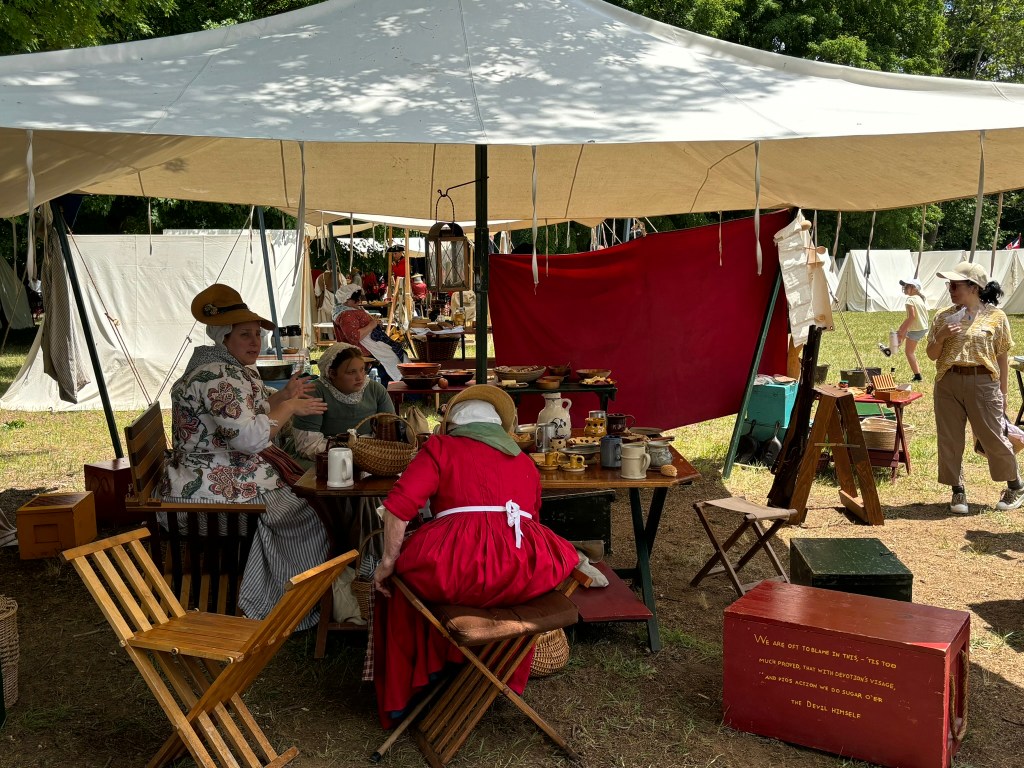
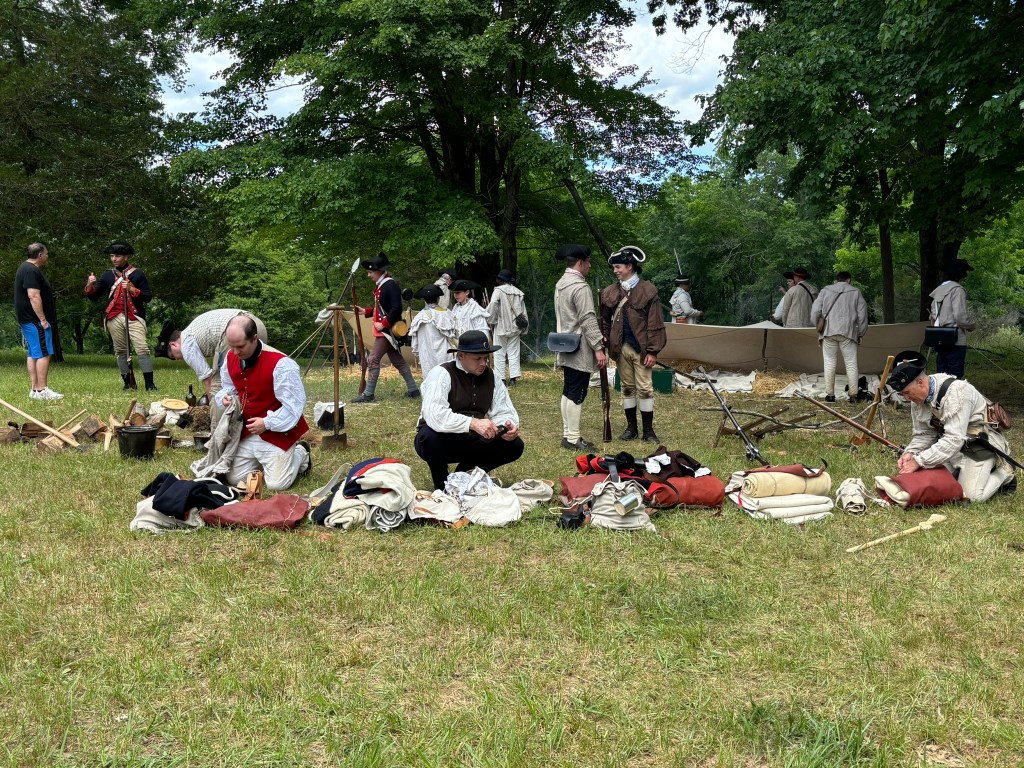
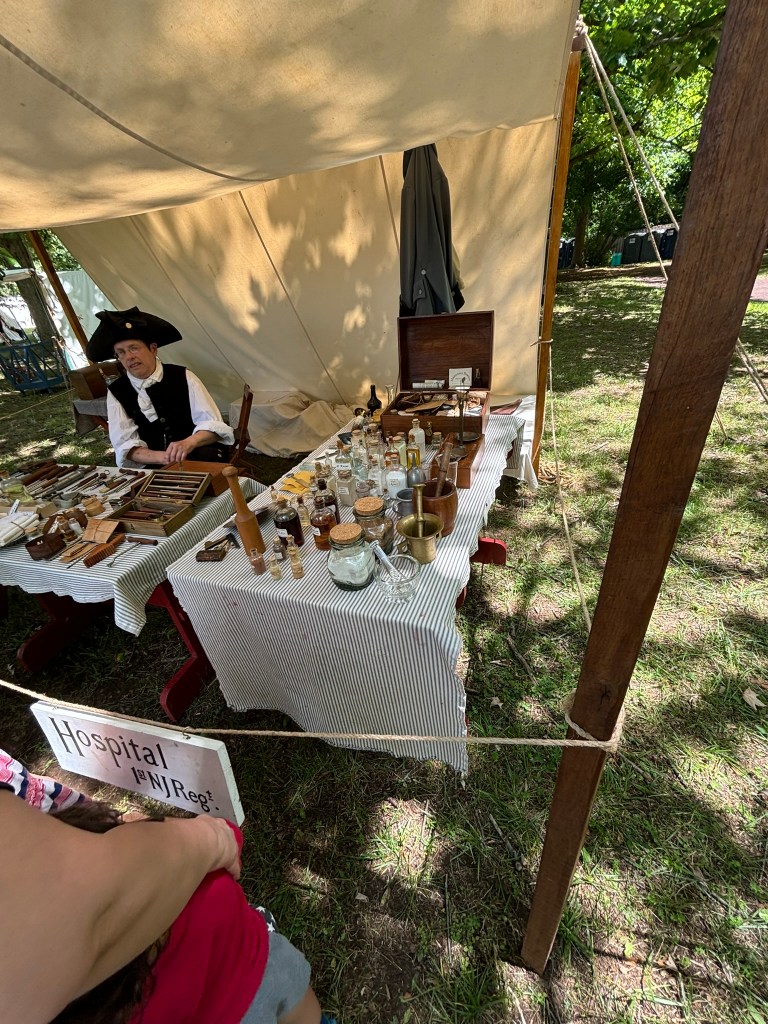
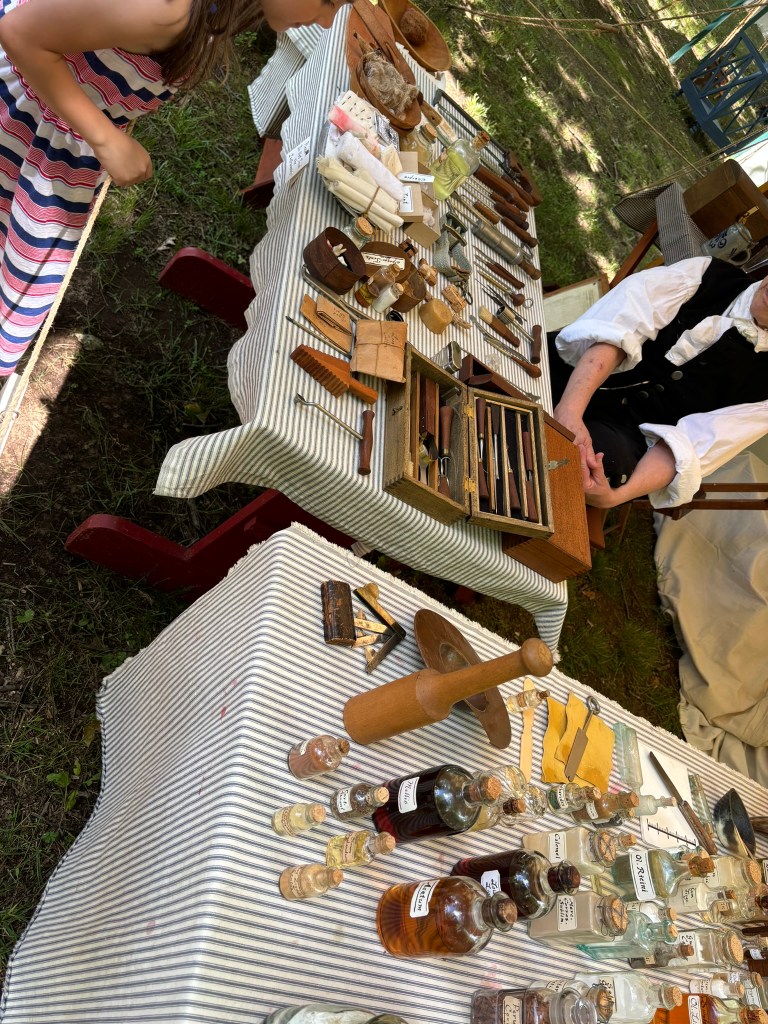
    When we arrived at the Monmouth Battlefield, we first noticed the many tents and vendors there from all around the area selling shirts, flags, crafts, antiques, and revolution memorabilia.  It is also worth noting that there are food trucks there, which we were unaware of (we grabbed lunch on the way there).  We made our way to the many camps and presentations from the reenactors.  Men, women, and children were all in camp preparing for battle, cooking meals, doing chores, and passing the time.  The reenactors were engaging and knowledgeable of 18th century life.  Other demonstrators included camp doctors and surveyors.  Fife and drums could be heard throughout the encampments.  I was impressed with how extensive the camps were as we stumbled upon Patriot, Loyalist, British, and Hessian camps.

    At 2:30pm, the reenactment of the Battle of Monmouth took place.  It was quite entertaining and I have never seen anything like that before.  It was fascinating to imagine what warfare was like in the late 18th century, and you felt like you were a spectator stepping back in time as the troops stood in a line and fired their muskets and cannons.  The battle raged for about 30 minutes.  After it was over, my family checked out encampments and made our way to the shops where we bought a couple t-shirts.

    I really enjoyed my time at the encampment and plan to visit on a more regular basis, especially if it falls on Father’s Day again.  The Monmouth battlefield also has an immersive museum that visitors need to see.  You can check out the link here about the reenactment.  I would highly recommend making it out to the event next year! The event was fun for all ages!

    Check out my instagram page for videos of the event–> https://www.instagram.com/beneventos_history_blog/

    Check related posts below:

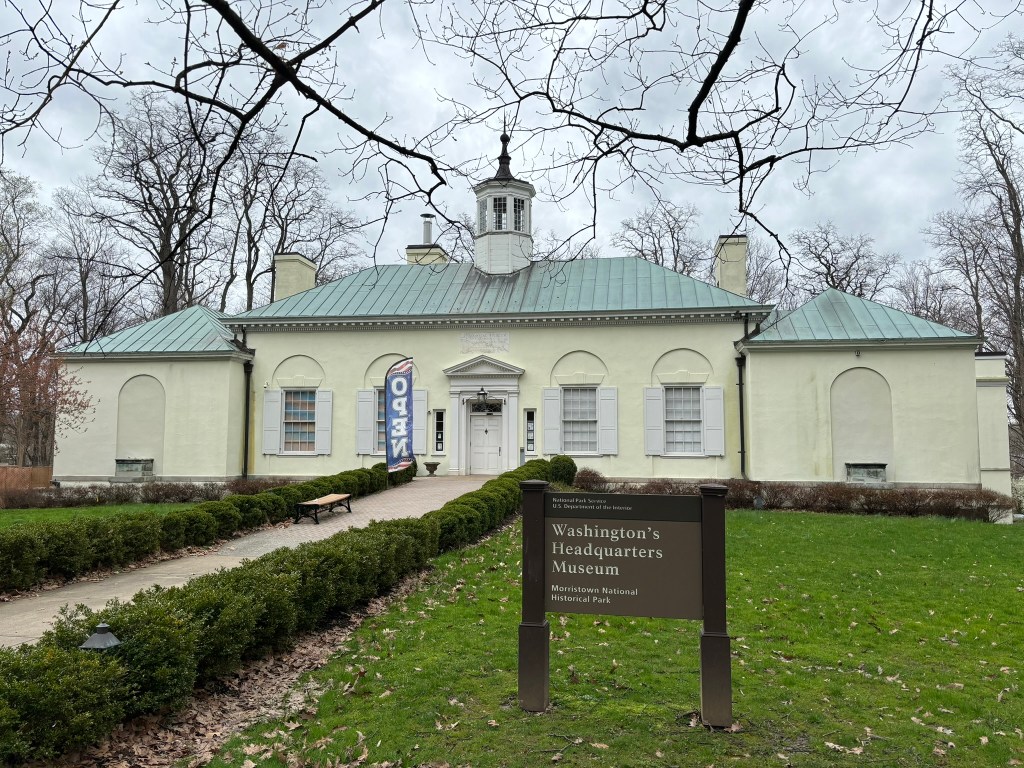
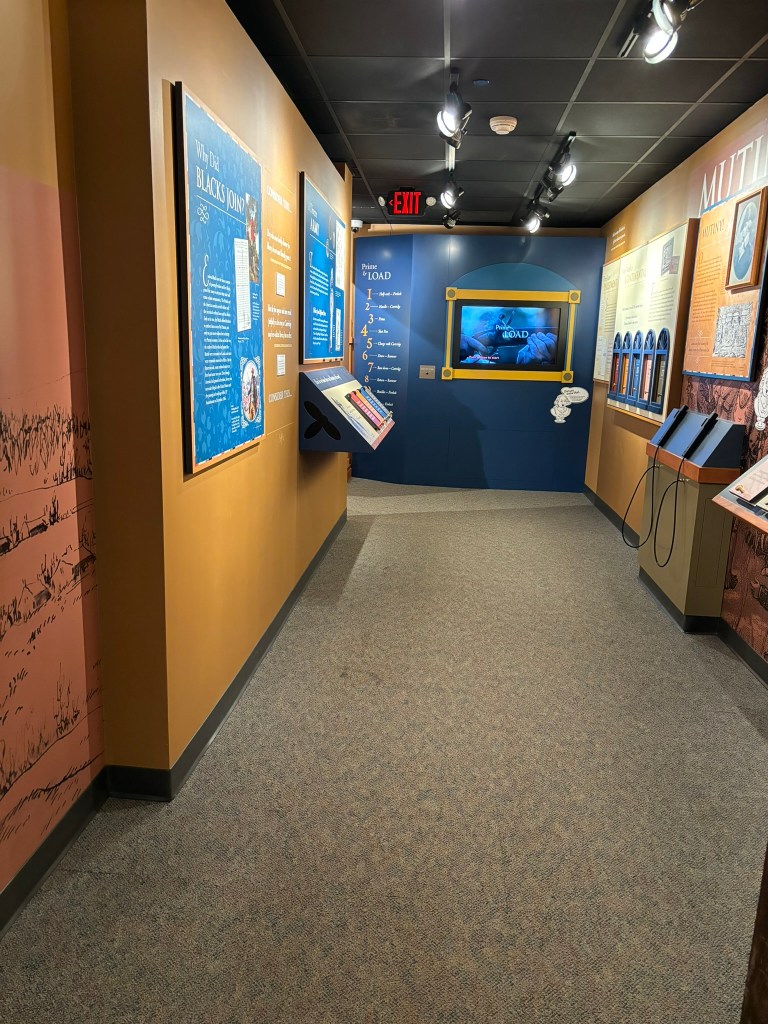
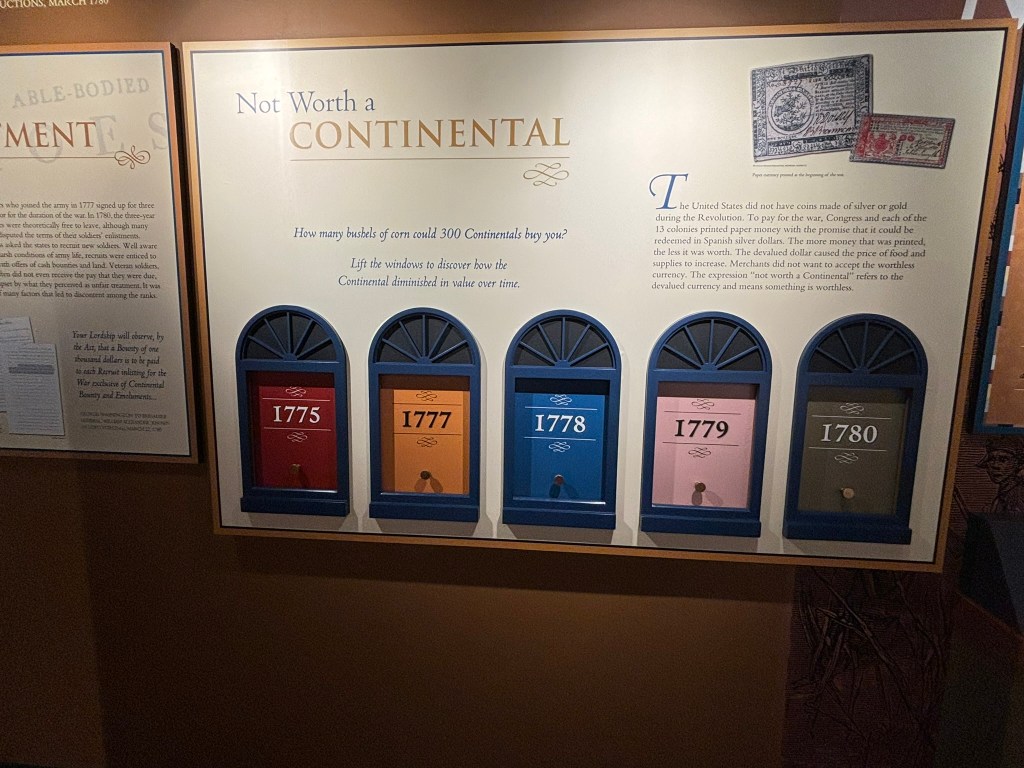
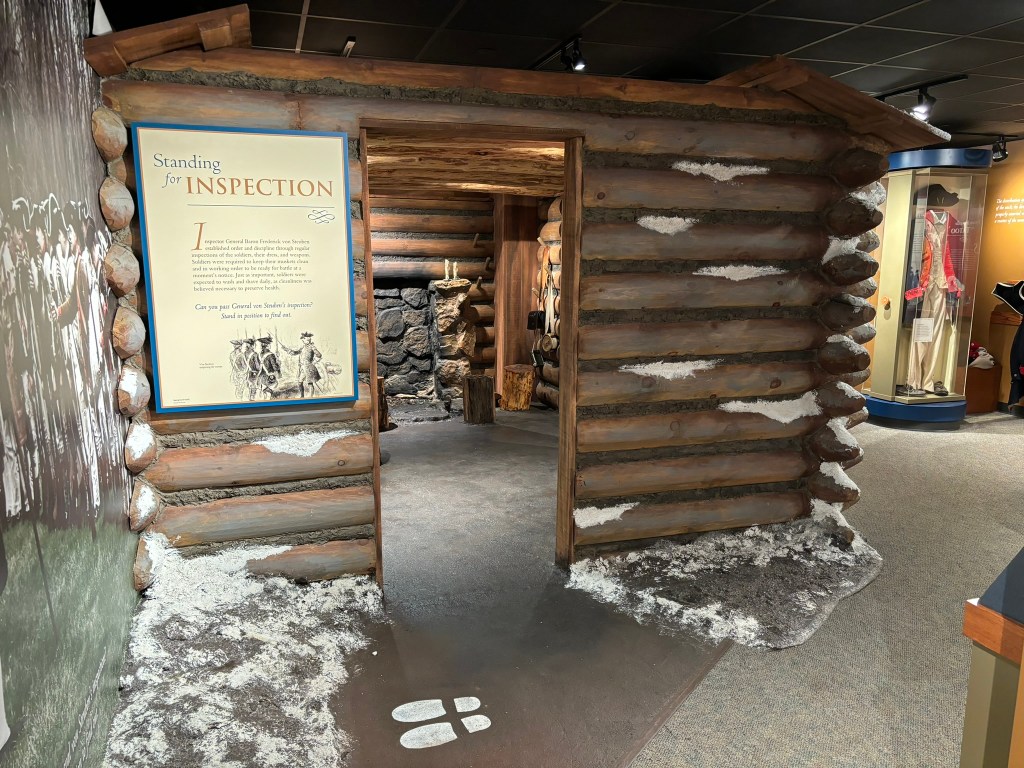
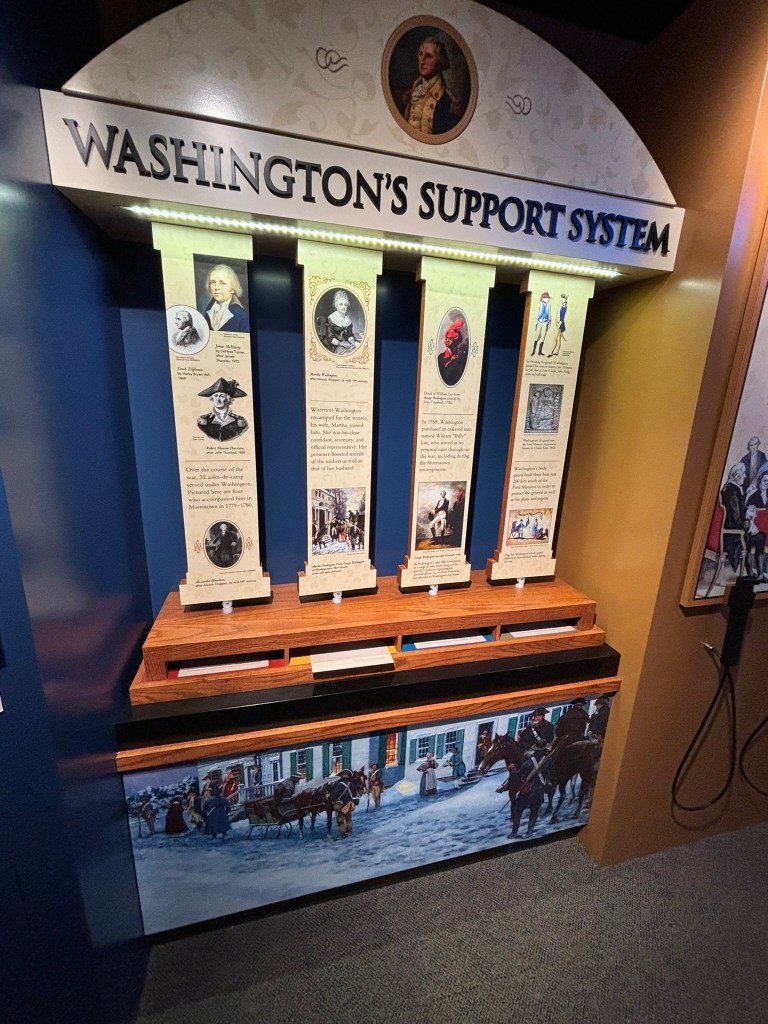
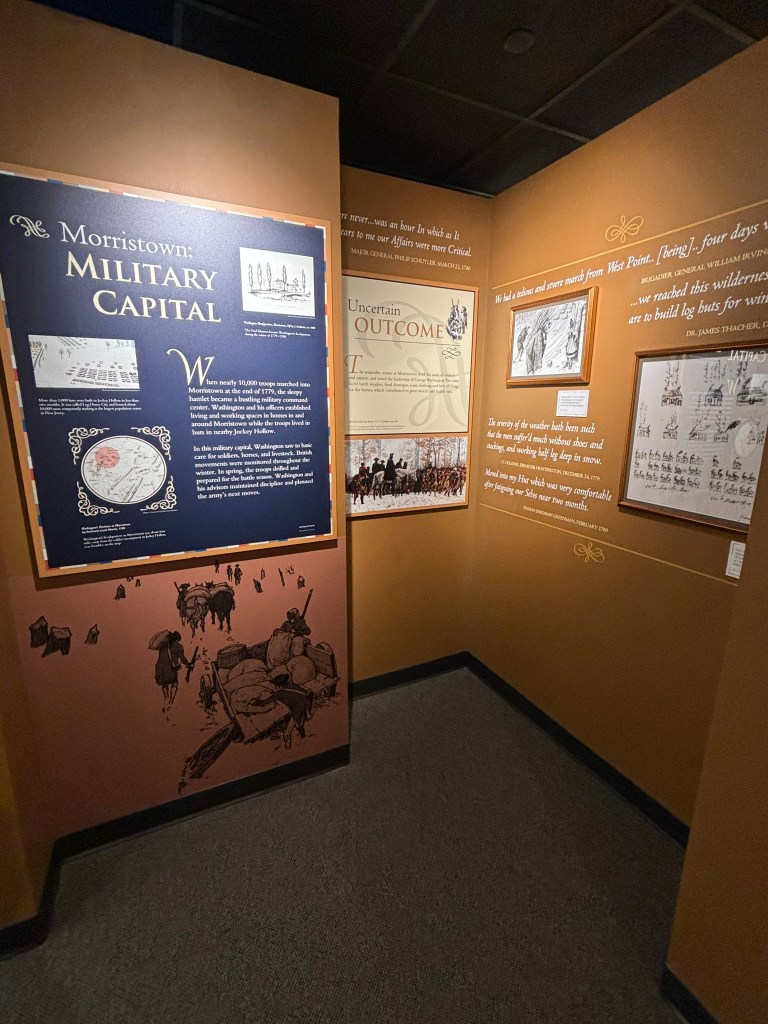
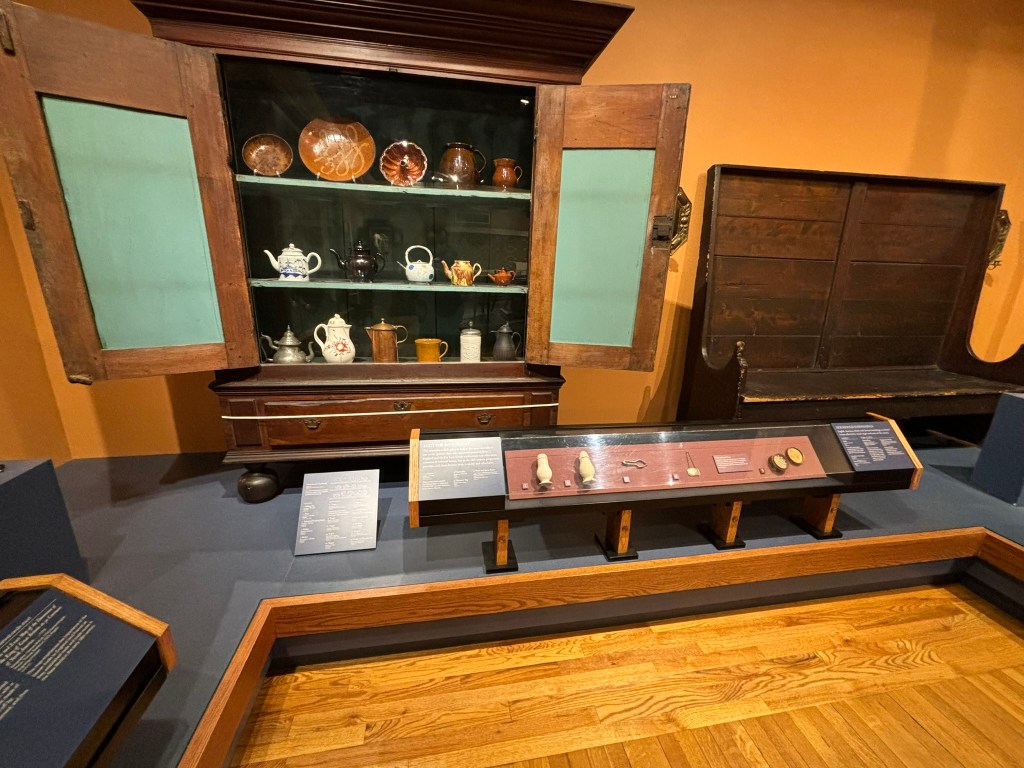
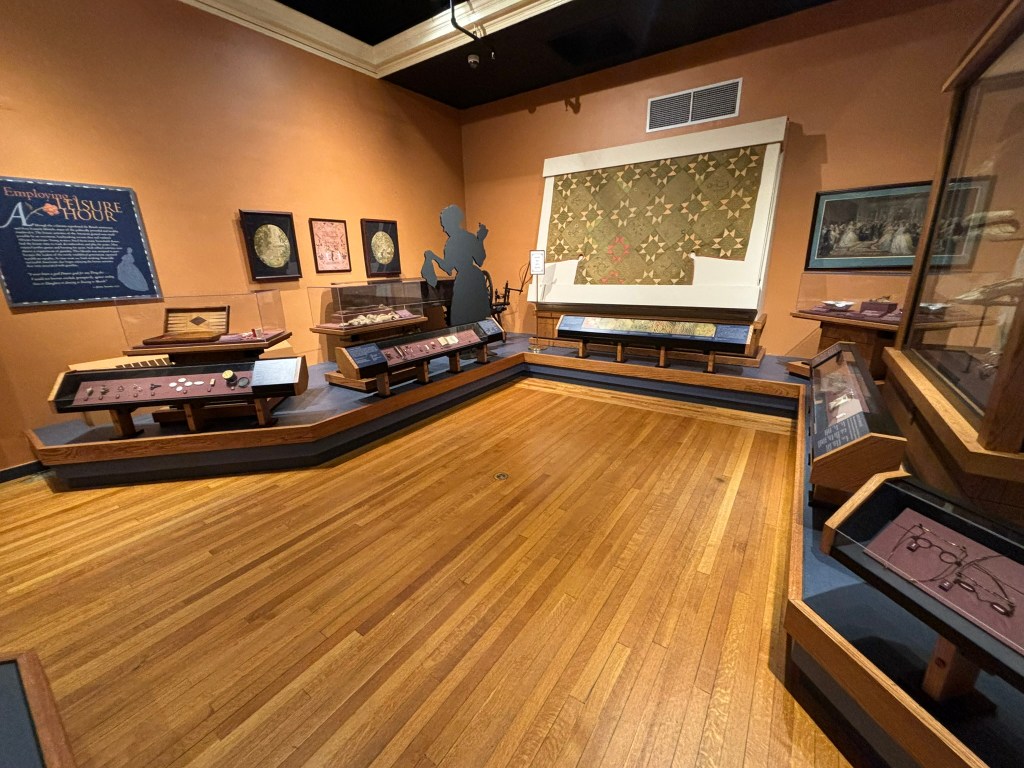
  • This past weekend, I had an opportunity to visit Washington’s Headquarters in Morristown. The site is significant as the location of Ford Mansion, Washington’s headquarters during the winter of 1779- 1780. The museum highlights the events of the American Revolution, with a specific focus on Washington’s role. At the musuem, there are interactive exhibits (which are also great for kids), informative signs, extensive artifacts and pamphlets dating back to the Revolution, as well as a gift shop. Anyone interested in the revolution needs to visit this site. When you get an opportunity, you can also tour Ford Mansion and see where Washington lived during crucial days of the war.

    Link for more info: https://www.nps.gov/thingstodo/visit-washingtons-headquarters-museum-in-morristown-nj.htm

    Below are photos of my visit:

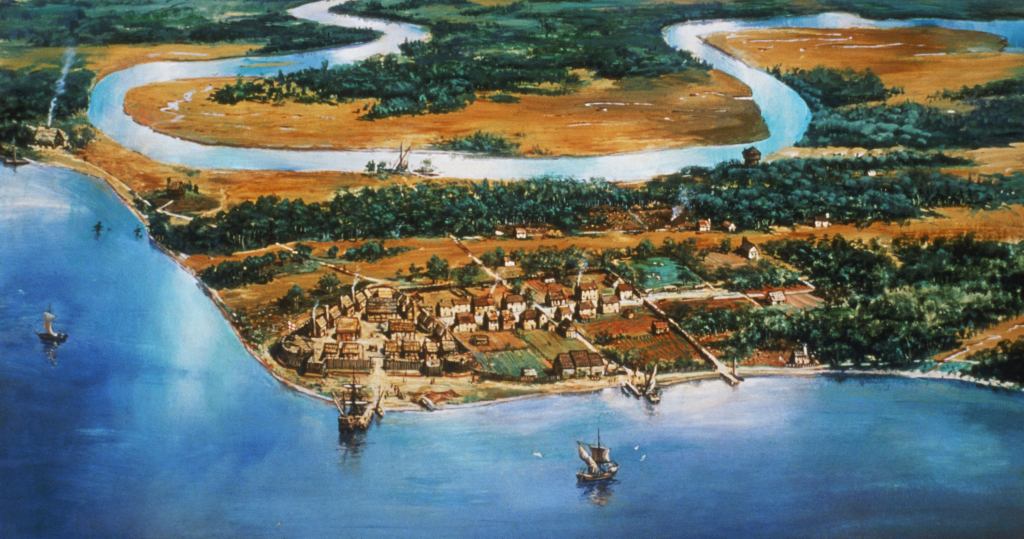
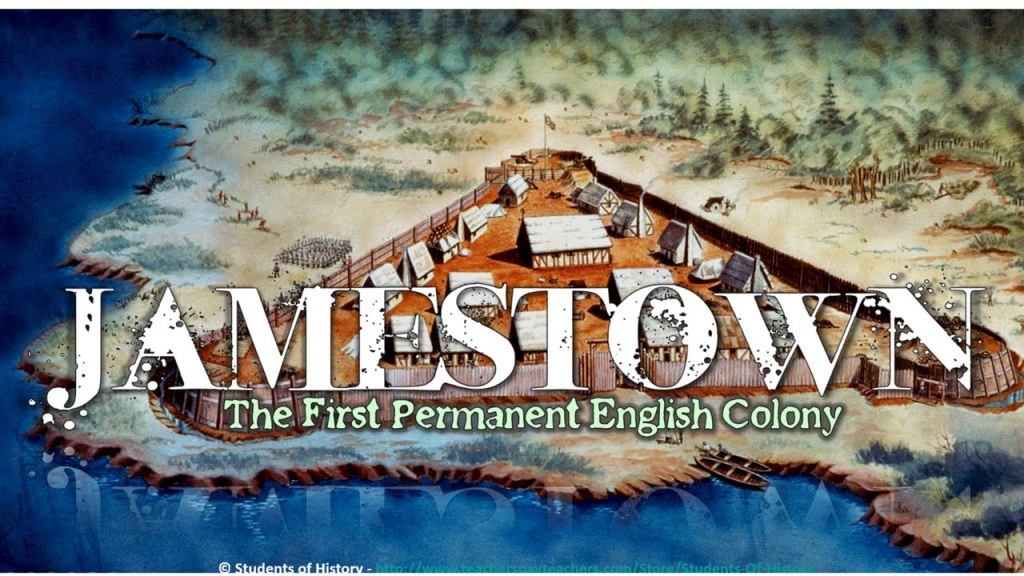
  • The Jamestown colony was founded in 1607 by the Virginia Company, a joint-stock company that received a royal charter from King James I.  Unlike previous failed colonies like Roanoke, Jamestown, against great odds, would go on to become the first permanent English colony in North America. From Jamestown, settlers would branch out beyond the early colony site.   The Jamestown site was located on a peninsula (now an island) in the James River, about 60 miles from the mouth of the Chesapeake Bay. Jamestown faced many challenges and hardships in its early years, such as famine, disease, conflict with Native Americans, and internal strife. Jamestown would survive and become the site of many important events and developments in American history, such as the first representative assembly, the first arrival of African slaves in 1619, and the cultivation of tobacco.

    The Founding of Jamestown

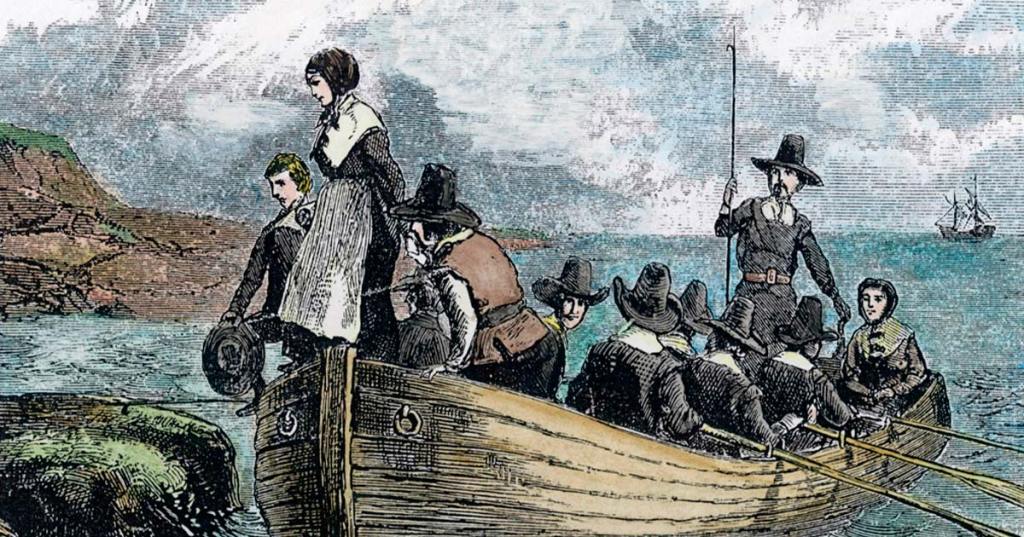
    The Virginia Company was formed in 1606 with the aim of establishing a profitable colony in North America. The company sent three ships, the Susan Constant, the Godspeed, and the Discovery, with 104 men and boys, to explore the coast of Virginia and find a suitable location for a settlement. The expedition was led by Captain Christopher Newport, who had the sealed instructions from the company that contained the names of seven members of the governing council. Among the colonists were gentlemen, craftsmen, laborers, and adventurers, as well as Captain John Smith, a former soldier and explorer who had been accused of mutiny during the voyage.

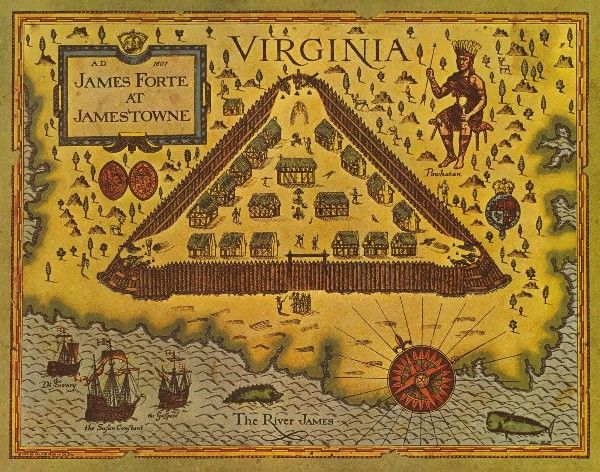
    The ships arrived at the Chesapeake Bay in April 1607 and sailed up the James River, named after the king. They chose a site for the settlement on May 13, 1607, and named it Jamestown. The site was a peninsula, which made it easy to defend from possible Spanish attacks, and had deep water ports for anchoring ships. However, the site also had many disadvantages, such as being marshy, mosquito-infested, and prone to droughts and floods. The site was also within the territory of the Powhatan Confederacy, a powerful alliance of about 30 Algonquian-speaking tribes led by Chief Powhatan, who controlled most of the coastal Virginia region.

    The colonists quickly built a triangular fort with a storehouse, a church, and several houses. They also planted crops and traded with the Native Americans for food and supplies. However, they soon faced many difficulties because most of the men were set on finding gold, and they did not grow enough crops.  This led to hard times exacerbated by food shortages, diseases, poor leadership, and conflicts with the Powhatan. John Smith held the colony together by forcing the colonists to farm.  Many of the colonists died in the first year, and the survivors were demoralized and desperate. In June 1607, Newport returned to England with two ships and 40 men, leaving behind 104 colonists. He brought back a load of sassafras, a plant that was believed to have medicinal properties, and a letter from Smith that exaggerated the prospects of the colony. Newport also promised to return with more supplies and settlers within six months.

    The Starving Time and the Arrival of Lord De La Warr

    John Smith was an adventurer who had fought in wars and had been captured by pirates.  Later in life, he claimed to have been saved by Pocahantas, the daughter of Chief Powhatan, after being captured by the chief in December 1607.  Smith claimed that Pocahantas had intervened to prevent him from being executed by her people, and that she had created peace between the English settlers and the Natives.  Many historians today doubt the accuracy of his stories, and suggest that he either misunderstood the incident or embellished it for fame or notoriety.

    As leader of the Jamestown colony in its early days, Smith imposed strict discipline and brought order to the colony.  He explored the Chesapeake Bay and Potomac River, and created maps and reports of the region.  He forced the colonists to build houses, clear land, plant crops and hunt for food.  He traded with the natives and established friendly relations with the tribes.

    Smith’s leadership helped the colony survive for about two years.  In October 1609, a stray spark ignited a gunpowder bag John Smith was wearing, while he was in a canoe.  Badly burned, Smith headed back to England for treatment, leaving Jamestown to fend for itself.  His departure marked the beginning of the worst period in the history of Jamestown, known as the “Starving Time” in which only 60 of the 600 new colonists survived.  The “Starving Time” lasted during the winter of 1609-1610 when the colony was besieged by the Powhatan, who cut off their food supply and killed anyone who ventured out of the fort.  The colonists resorted to eating roots, rats, snakes, boiled shoe leather, horses, dogs, cats, and even human corpses.

    The colony was on the verge of collapse, when a fleet of three ships arrived in June 1610, bringing 150 new settlers and supplies, as well as a new governor, Lord Thomas West, known as Lord De La Warr.  He was a veteran soldier and a nobleman, who had been appointed by the Virginia Company as the first permanent governor of Virginia. He brought with him a new charter, which granted more powers and privileges to the company, and a new policy of aggressive expansion and warfare against the Powhatan. De La Warr also arrived just in time to stop the remaining colonists from abandoning Jamestown and returning to England on the ships that had brought them. He ordered them to turn back and rebuild the colony, and vowed to make Jamestown a success.

    The Tobacco Boom

    One of the most significant developments in the history of Jamestown was the introduction and cultivation of tobacco, which became the main export and source of wealth for the colony. Tobacco was a native plant of the Americas, and was used by the Native Americans for ceremonial and medicinal purposes. The Europeans became addicted to tobacco after encountering it in the Caribbean and South America, and the demand for tobacco in Europe grew rapidly in the 17th century. The Virginia Company saw tobacco as a potential cash crop that could make the colony profitable and attract more settlers and investors.

    The first person to successfully grow tobacco in Virginia was John Rolfe, a colonist who had arrived in Jamestown in 1610. Rolfe experimented by cross breeding tobacco from Bermuda with a strain that local Native Americans had grown for years.  He also developed a curing process that improved the quality and flavor of the tobacco. Rolfe’s tobacco was well received in England, and he shipped the first commercial cargo of tobacco from Virginia in 1614. He also married Pocahontas, the daughter of Powhatan, in 1614, which created a temporary peace between the English and the Powhatan.

    The success of Rolfe’s tobacco sparked a tobacco boom in Virginia.  Soon, tobacco was referred to as “Brown Gold.”  Tobacco became the main currency and cash crop of Virginia, and attracted more settlers and investors.  The tobacco boom also saw the increase in labor by indentured servants, and later, slaves.

    The Legacy of Jamestown

    Jamestown laid down the foundations of long lasting institutions in English America.  A great paradox took place in the colony in 1619, which would change the course of history in North America.  The year 1619 witnessed the first representative government in English North America, as well as the first Africans arriving in English North America, a dichotomy of both freedom and bondage.

    The House of Burgesses allowed voters to elect representatives to create laws in the colony.  This groundbreaking experiment was the first representative assembly in North America, in which free, male, property-owners elected representatives.  However, in the same year, Africans first arrived in Virginia aboard a Dutch merchant ship called the White Lion.  At first, Jamestown colonists treated them as indentured servants, much in the same way as white indentured servants from England.  After a few years, most Africans received land and freedom.  However, over time, a racial caste was formed in which Africans became permanent slaves, a trend believed to have been developed by the 1640s.  Jamestown witnessed freedom in a representative body on one hand, and slavery and bondage on another.  The concept of freedom for some and bondage for others would be a primary and complicated debate within North America for centuries to come.

    Jamestown remained the capital of Virginia until 1699, when it was moved to Williamsburg. By then, Jamestown had expanded from its original fort to a town with several public buildings, such as a statehouse, a church and a courthouse. 

    Jamestown was gradually abandoned after its statehouse burned down in 1698. It became a ghost town until it was rediscovered in the late 19th century. In 1934, it was declared a National Historic Site by Congress. Today, it is part of the Colonial National Historical Park, which also includes Yorktown and Williamsburg. Visitors can see the remains of the original fort, as well as reconstructed buildings and exhibits that showcase the life and history of Jamestown.

    Sources:

    Encyclopædia Britannica, inc. (2023, October 25). Jamestown colony. Encyclopædia Britannica. https://www.britannica.com/place/Jamestown-Colony

    A&E Television Networks. (n.d.). Jamestown colony – facts, founding, Pocahontas. History.com. https://www.history.com/topics/colonial-america/jamestown

    Jarus, O. (2022, May 31). Jamestown Colony: Facts & History. LiveScience. https://www.livescience.com/38595-jamestown-history.html

    World History Edu. (2020, September 15). Jamestown Colony: England’s first, thriving settlement in the Americas. https://www.worldhistoryedu.com/jamestown-history-significance-facts/

    Historicjamestowne.org

    Yost, R. (2023, November 11). Jamestown colony facts and story. The History Junkie. https://thehistoryjunkie.com/jamestown-colony-facts/

  • The Lost Colony of Roanoke is one of the most notorious and oldest mysteries in American history. In 1585, settlers attempted to create the first permanent English colony in the New World, and they chose the island of Roanoke, off the coast of modern-day North Carolina. This 1585 settlement was the first attempt to settle Roanoke. This was not the “Lost Colony” that we know of today. In the first attempt, English settlers were led by Ralph Lane. The settlers arrived seeking gold and taking advantage of the natural resources that the New World had to offer. The Spanish had already spent several decades extracting wealth from the New World, and other European powers looked to explore and settle areas of the Americas as well. The first attempt at settling Roanoke failed. The settlers quickly faced very tough conditions and had hostile relations with the local Native Americans. They abandoned the colony in 1586 and headed back to England.

    In 1587, a second English expedition was sent, but this time the settlers planned to settle in the Cheseapeake region, not Roanoke. The expedition would be led by Governor John White. The captain of the ship, Simon Fernandes, took them to Roanoke instead of the intended destination of the Chesapeake Bay. This second attempt at a permanent colony at Roanoke would end up becoming known as “The Lost Colony.” The colonists quickly faced a lack of supplies, quarrels with the local Native Americans, and even a possible drought.

    The roughly 115 colonists pleaded with John White to head back to England and bring back more supplies. John White forced the colonists to put their request in writing. John White reluctantly agreed to head back to England for more supplies in 1587. However, while John White was in England, the Spanish Armada attacked England in 1588 and Queen Elizabeth required all English ships available to stay and defend England. Because of this conflict with Spain, John White did not make it back to Roanoke until 1590.

    When White returned to Roanoke, he found the colony completed deserted. White found the word “CROATOAN” carved onto a palisade of their fort, which White assumed meant that the colonists had travelled to Croatoan Island to the south. The colonists were to draw an iron cross if they had been under duress but there was no such symbol. There was no evidence of violence or a struggle, no dead bodies, nothing left behind that would give clues as to what happened to them. The boats that had been docked at Roanoke were gone.

    John White attempted to travel to Croatoan Island, but rough seas forced him off track and he decided to head back to England. Later attempts to find the colonists produced similar results. Sir Walter Raleigh later claimed to look for the colonists but also stated that rough seas prevented him from landing on the island of Croatoan.

    The fate of the colonists remains unknown to this day. Various theories have been proposed to explain their disappearance. The leading theory is that they did go to Croatoan Island, now called Hatteras island, and assimilated with the local Native tribes. One tribe in particular was known as the Croatan and perhaps the colonists decided to live among the Natives. Others believe that the colonists attempted to take thier boats back to England and got lost at sea. Others believe they travelled to the Chesapeake Bay, the original planned location for the colony. Other theories suggest that the colonists were killed or abducted by Native Americans. There are even theories that they could have been attacked or abducted by the Spanish.

    Efforts to solve the mystery have continued over the centuries, but no definitive answer has been found as there has been no concrete evidence left behind. Ongoing excavations continue at the site.

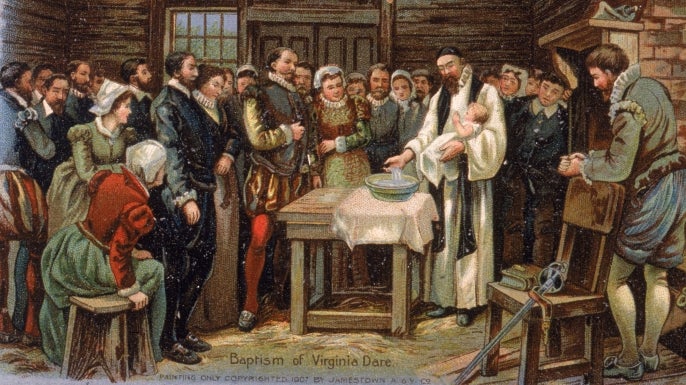
    The Lost Colony of Roanoke remains an intriguing and unsolved chapter in early American history. It serves as a reminder of the challenges faced by early European settlers in the New World and the mysteries that still captivate our imagination. The English settlers at Roanoke were the first English settlers in the New World. Virginia Dare, the first English baby born in the Americas, along with the other Roanoke settlers have been cast as foundational characters in American culture and folklore. Their sacrifices lived on with the English settlers that followed them at Jamestown, Virginia, just north of the Roanoke colony, settled in 1607.

    Related Posts:
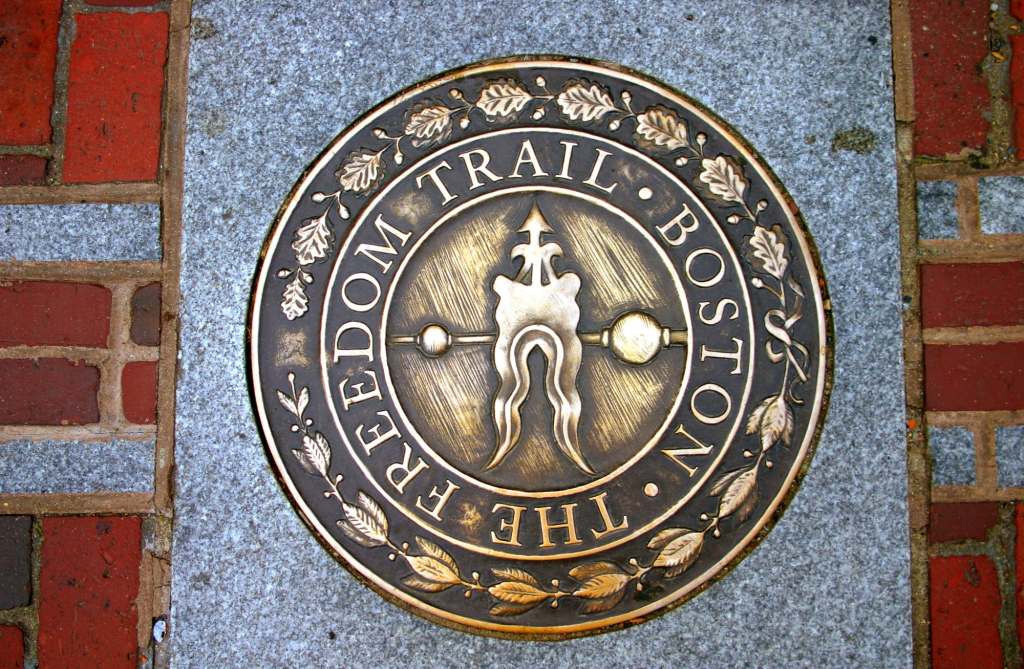
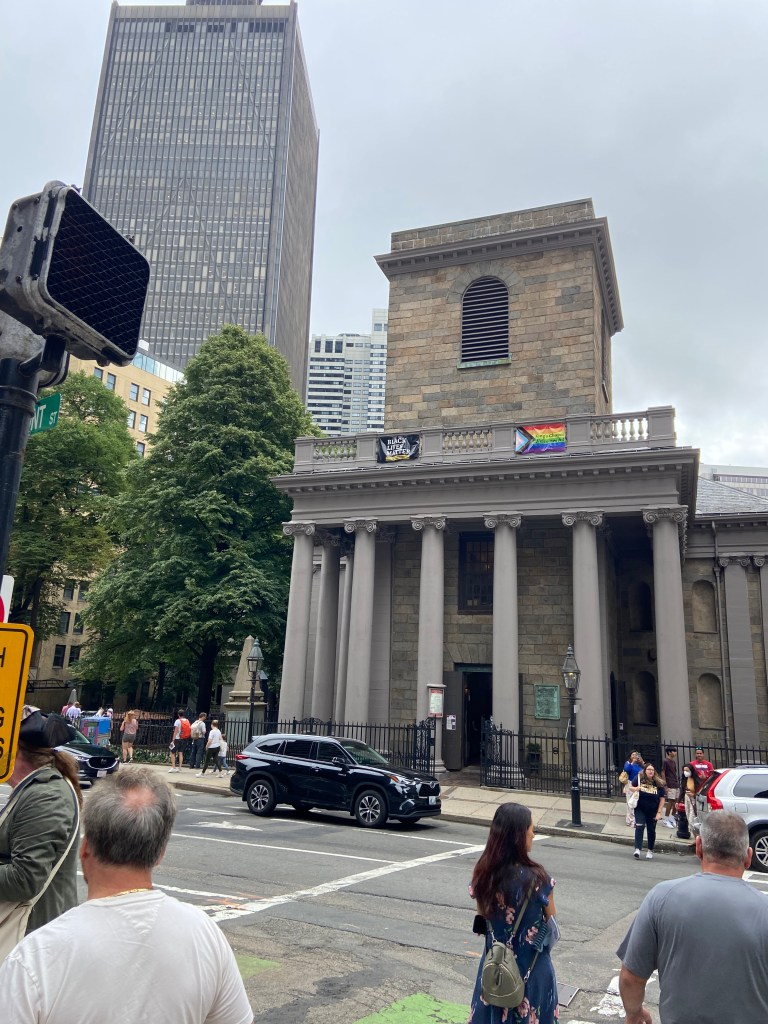
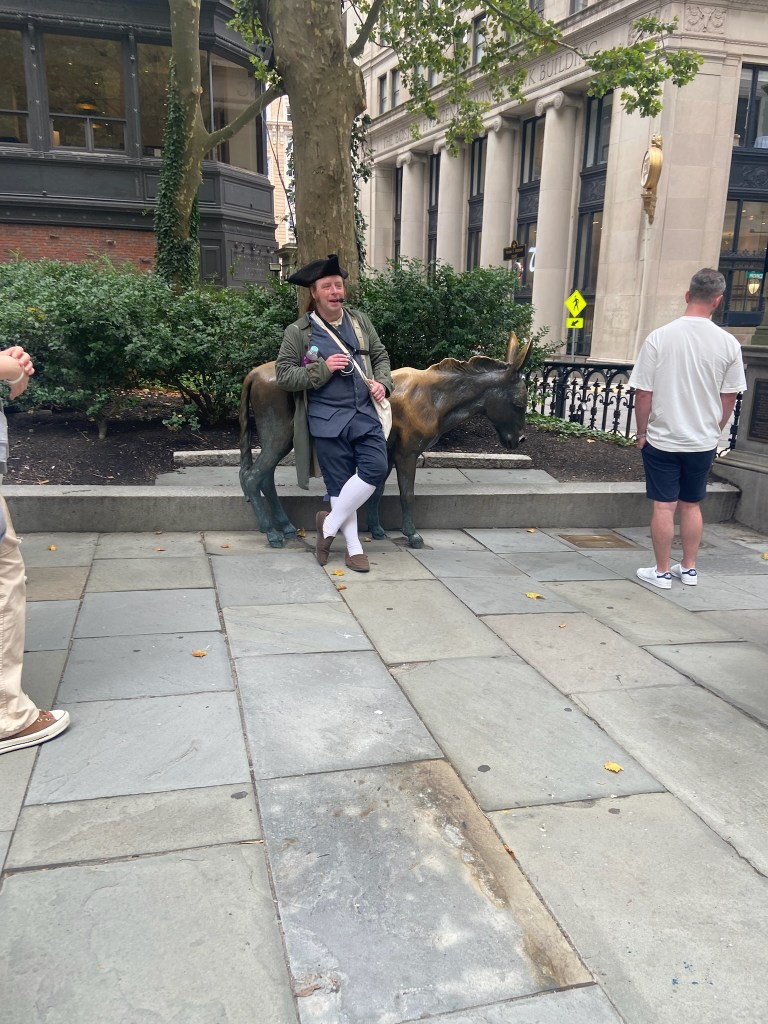
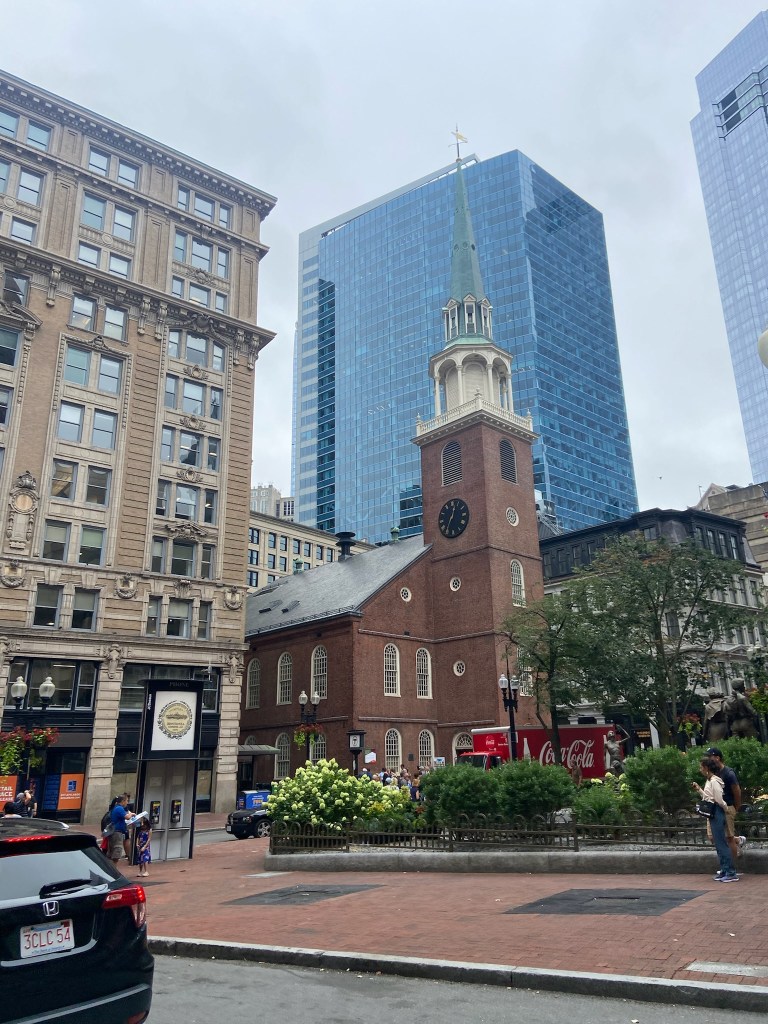
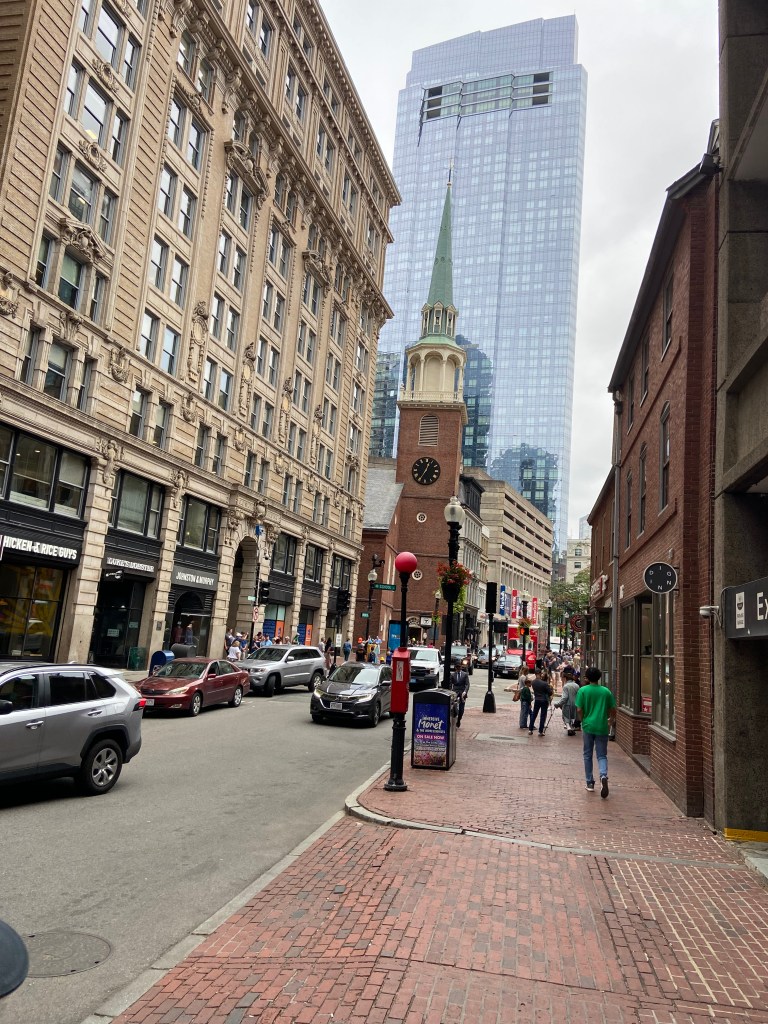
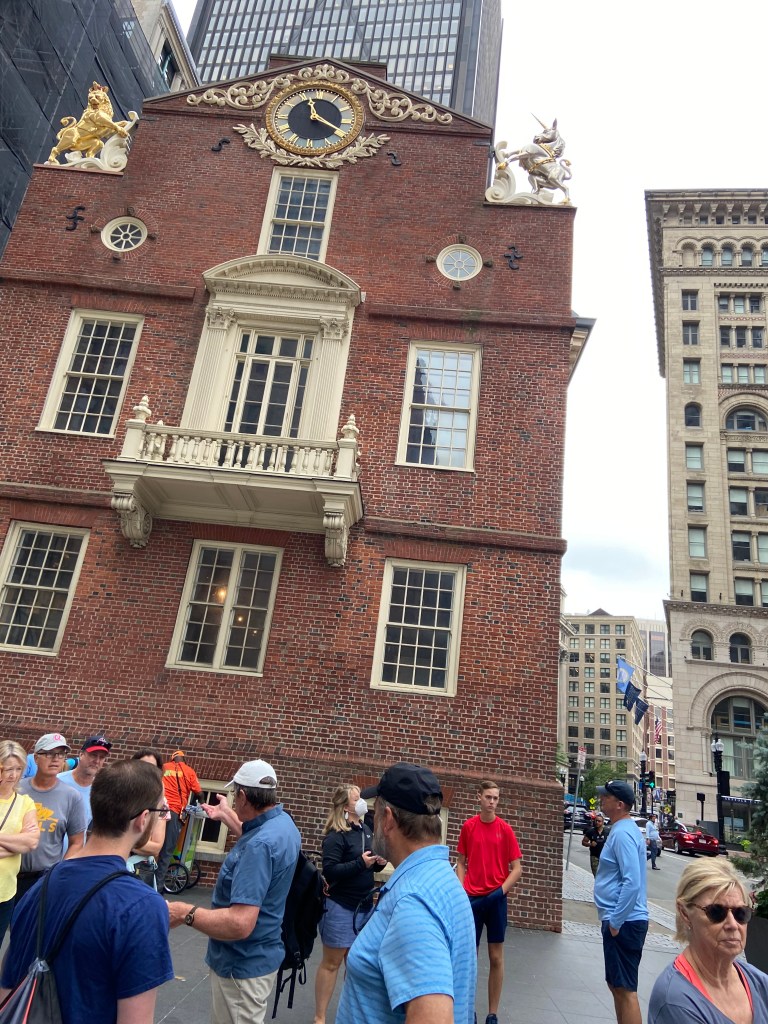
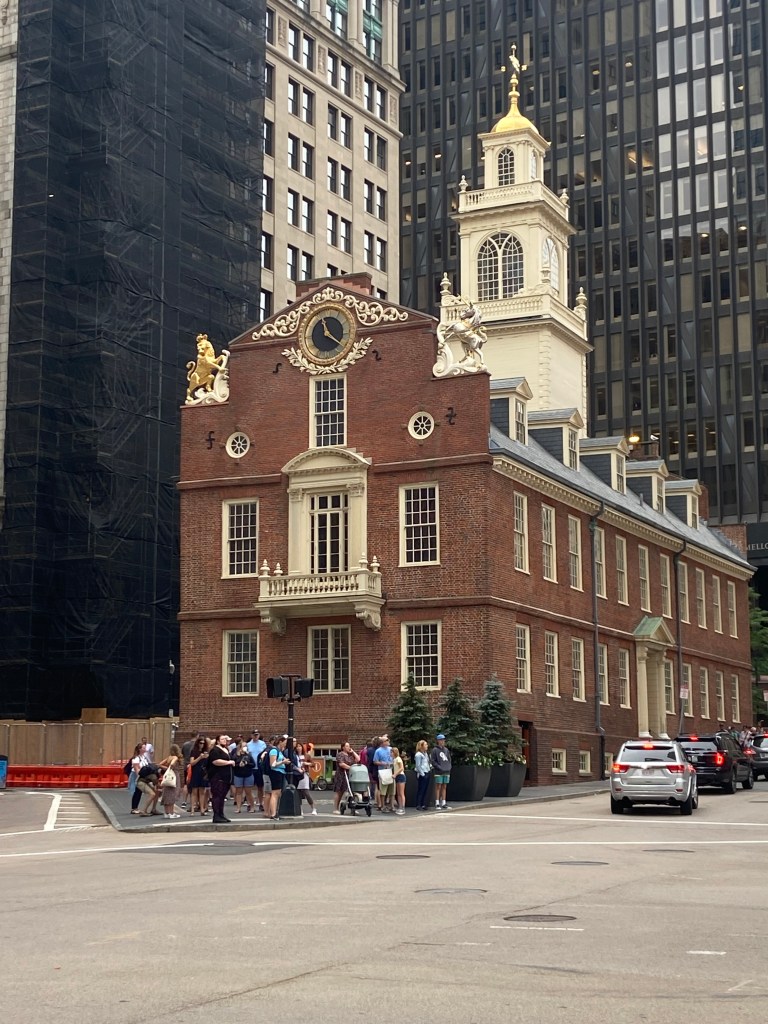
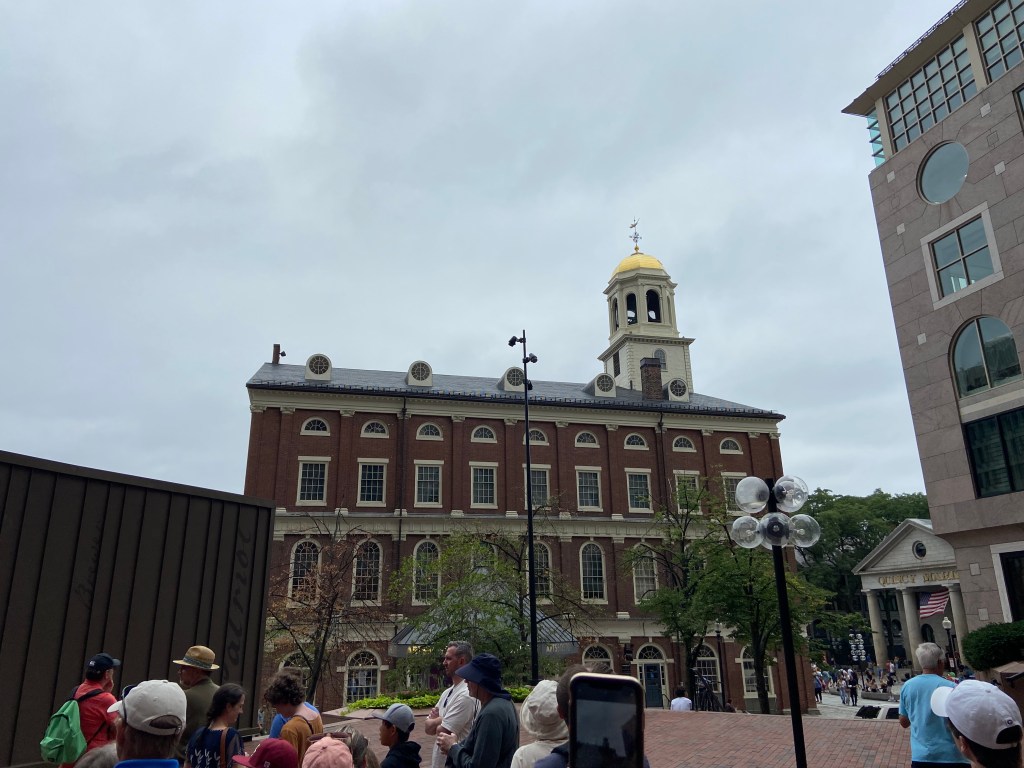
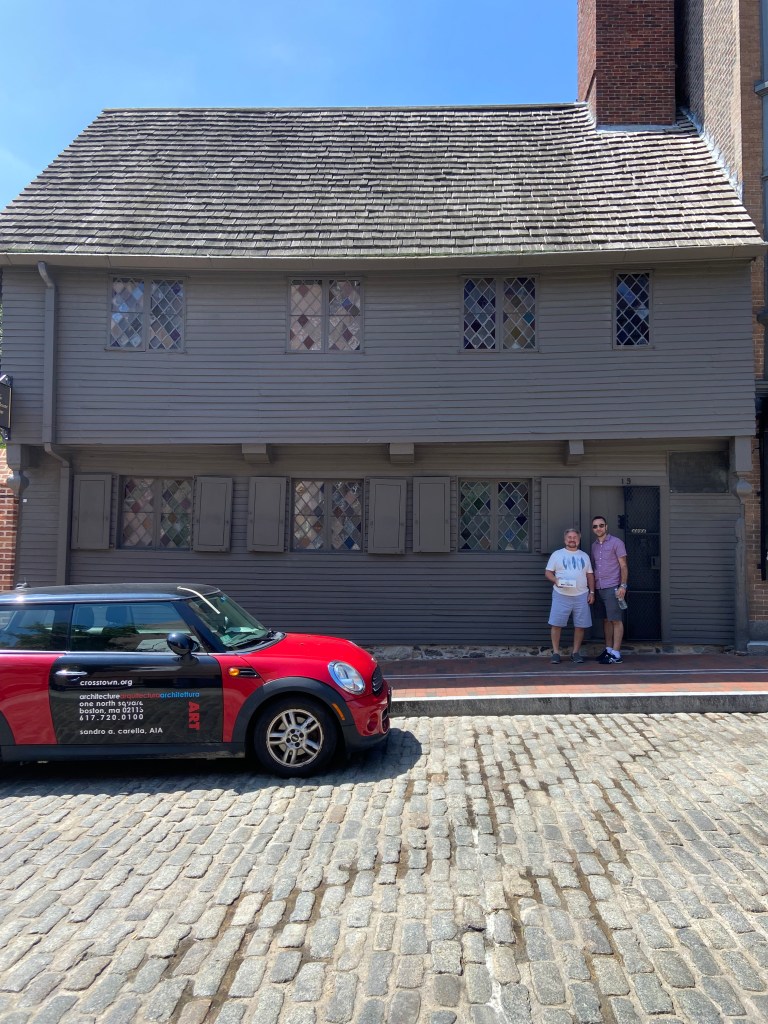
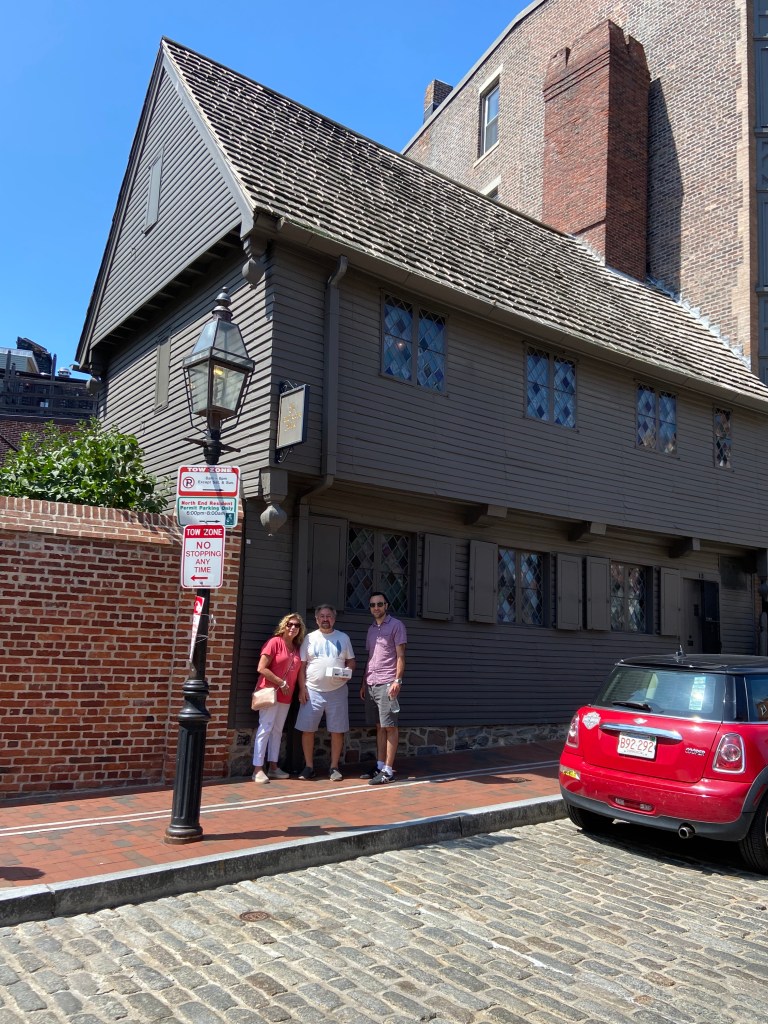
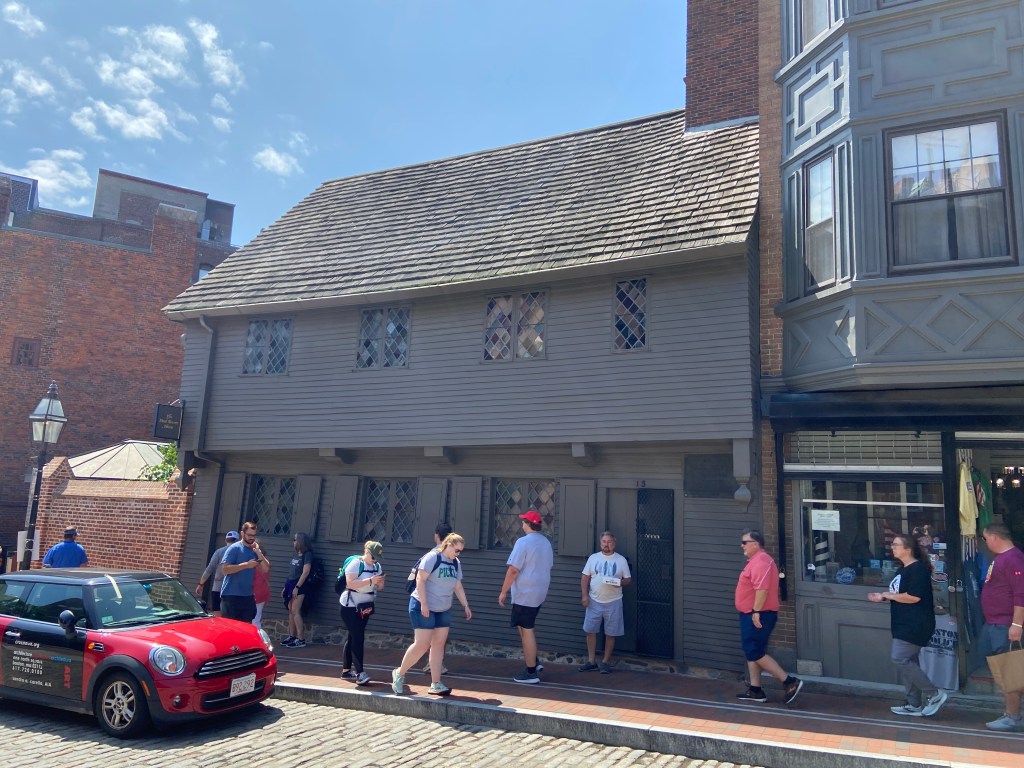
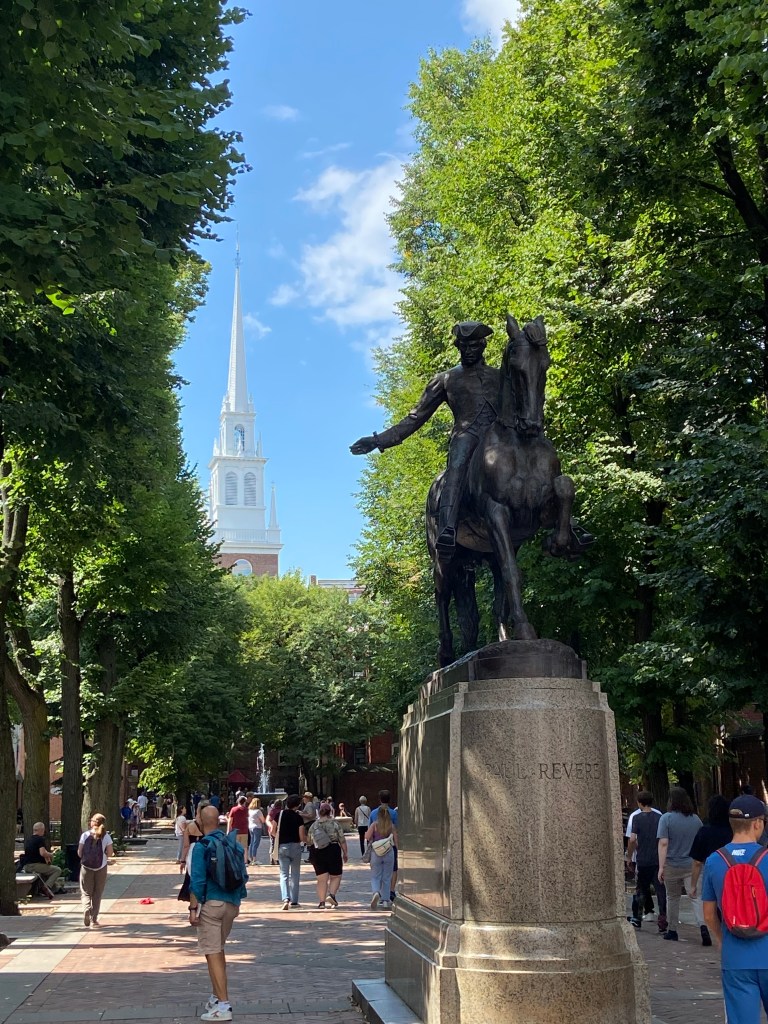
  • As a follow up to my three-part blog on the Massachusetts Bay Colony, this blog will focus on historic sites to visit in Boston, which was settled in 1630 and became the major city of the region. In 2020, I took a History course on Colonial America, and for one of the projects, I had to research colonial sites to visit in Jamestown, VA, Charleston, SC, and Boston, MA. In researching Boston sites, I primarily used the Freedom Trail website (https://www.thefreedomtrail.org). Then in August 2022, my family and I were able to travel to Boston for the first time, and see most of the sites on the Freedom Trail, and those that I had researched two years prior. Boston is the most historic city in the country, and one of the oldest. When considering the lead up to the American Revolution, most of the major events took place in the city of Boston, including the many protests against British acts such as the Stamp Act (1765) , the Townshend Acts (1767) and the Tea Act (1773). Boston witnessed the Boston Massacre (1770) and the Boston Tea Party (1773). It was the epicenter of agitations between the colonists and the British crown between 1765- 1775 leading to Lexington and Concord. Boston was always a city that I felt that I needed to visit and it was wonderful to finally get there last summer. The structures and landmarks that still stand are reminders of those events that led up to the conflict, and the people who fought for freedom.

    I highly suggest visiting Boston and going on the Freedom Trail with a tour guide. I particularly recommend you take your tour with Jeremiah Poope. He was extremely knowledgable and entertaining. In all of his anecdotes, he added engaging and sometimes comical tidbits. He truly made it a worthwhile experience for anyone with any level of interest and knowledge in history. We went on the “Walk Into History” Tour but there are other options as well. Below is a list of sites on the “Walk Into History” Tour. The tour ends at #11 Fanueil Hall, but Paul Revere’s House and the Old North Church are just a short walk away. Next to each site is a link to its page on the Freedom Trail website for more information about its history and significance. I’ve also included our personal photos from some of the sites.

    1. The Boston Common- https://www.thefreedomtrail.org/trail-sites/boston-common
    2. Massachusetts State House- https://www.thefreedomtrail.org/trail-sites/massachusetts-state-house
    3. Park Street Church- https://www.thefreedomtrail.org/trail-sites/park-street-church
    4. Granary Burying Ground- https://www.thefreedomtrail.org/trail-sites/granary-burying-ground

    5. King’s Chapel & King’s Chapel Burying Ground- https://www.thefreedomtrail.org/trail-sites/kings-chapel-kings-chapel-burying-ground

    6. Boston Latin School Site/ Ben Franklin Statue- https://www.thefreedomtrail.org/trail-sites/boston-latin-school-sitebenjamin-franklin-statue

    7. Old Corner Bookstore- https://www.thefreedomtrail.org/trail-sites/old-corner-bookstore

    8. Old South Meeting House- https://www.thefreedomtrail.org/trail-sites/old-south-meeting-house

    9. Old State House- https://www.thefreedomtrail.org/trail-sites/old-state-house

    10. Boston Massacre Site- https://www.thefreedomtrail.org/trail-sites/boston-massacre-site

    11. Faneuil Hall- https://www.thefreedomtrail.org/trail-sites/faneuil-hall

    12. Paul Revere’s House- https://www.thefreedomtrail.org/trail-sites/paul-revere-house

    13. Old North Church- https://www.thefreedomtrail.org/trail-sites/old-north-church

    Other sites to see that we didn’t have a chance to see this time included the USS Constitution and the Bunker Hill Monument. I’d also love to go to Fenway Park some day.

    Besides the Freedom Trail, we also went to the Boston Tea Party Ships & Museum and I would highly recommend getting tickets. You first enter the “Meeting House” where live reenactors plan the Boston Tea Party and rally you and the other visitors as the colonists. You then have an opportunity to go on board and explore an 18th century ship and then throw British Tea into the harbor. You also watch, on a theater screen (Minutemen Theater) the events of Lexington and Concord. They also had a great gift shop and tea room. Overall, we had a wonderful Boston trip considering that this was our first time. For the kids, we also went to the Boston Aquarium and the Children’s Museum which we all really enjoyed. We’re looking forward to going back!

    Related Posts: