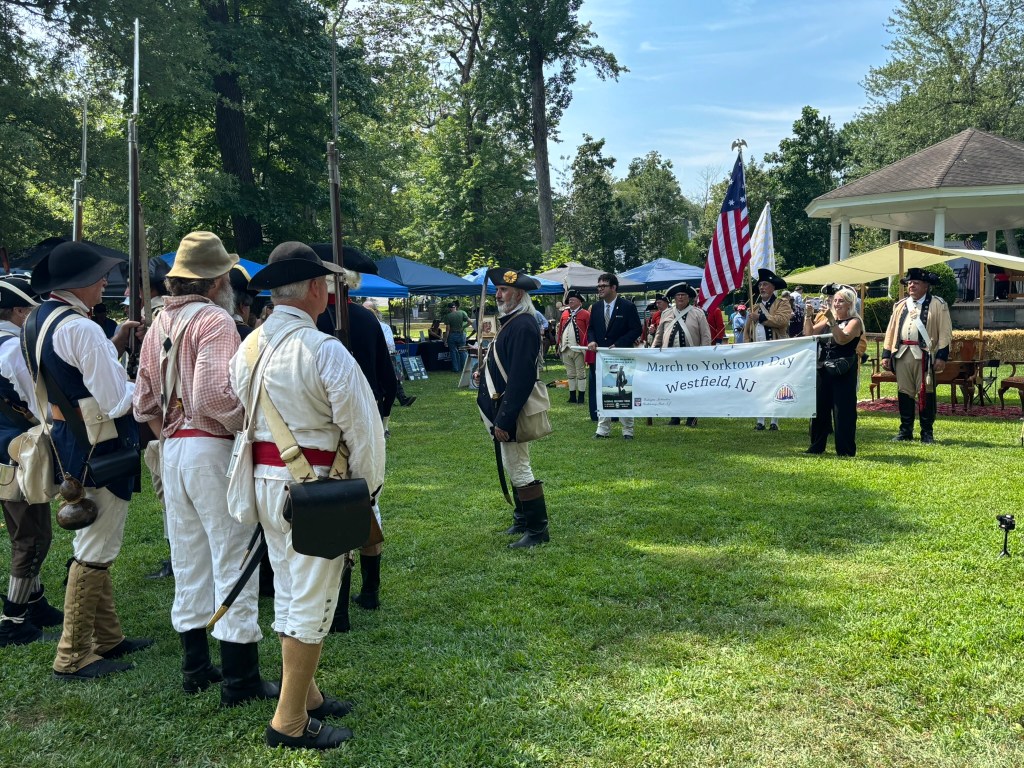
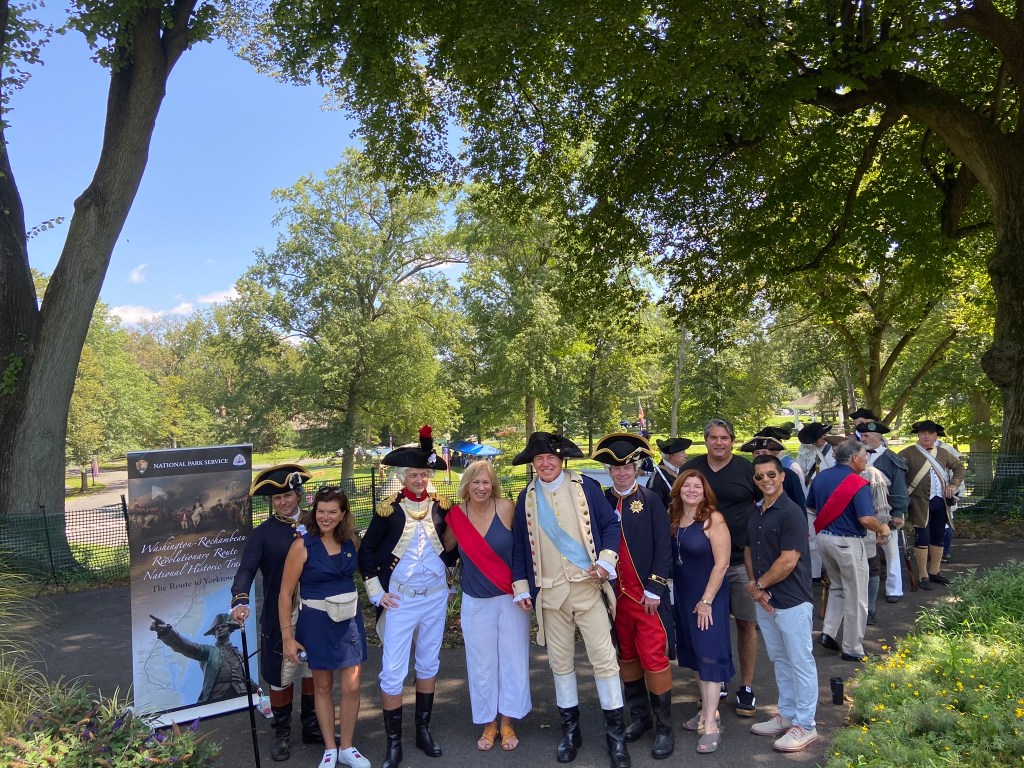
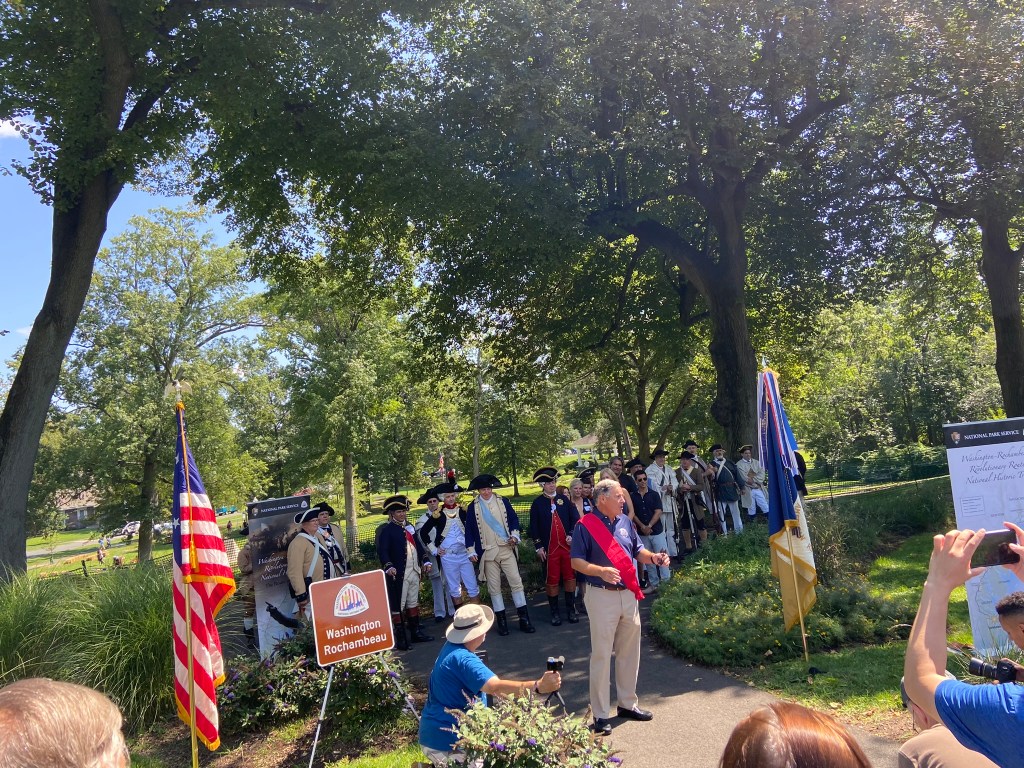
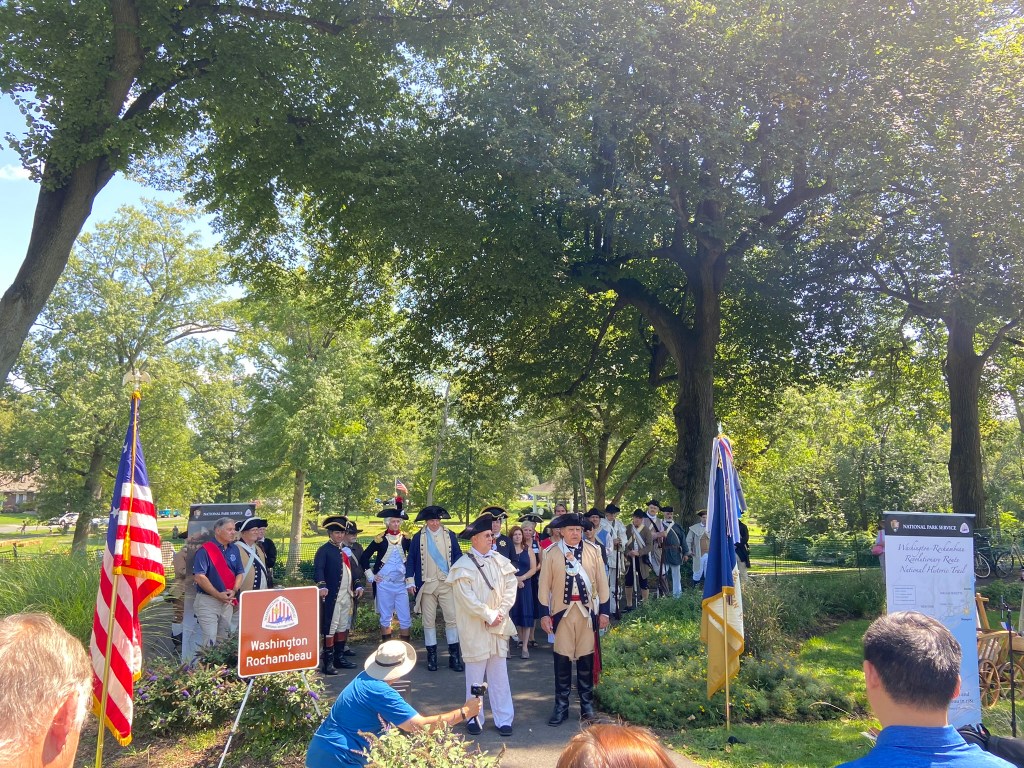
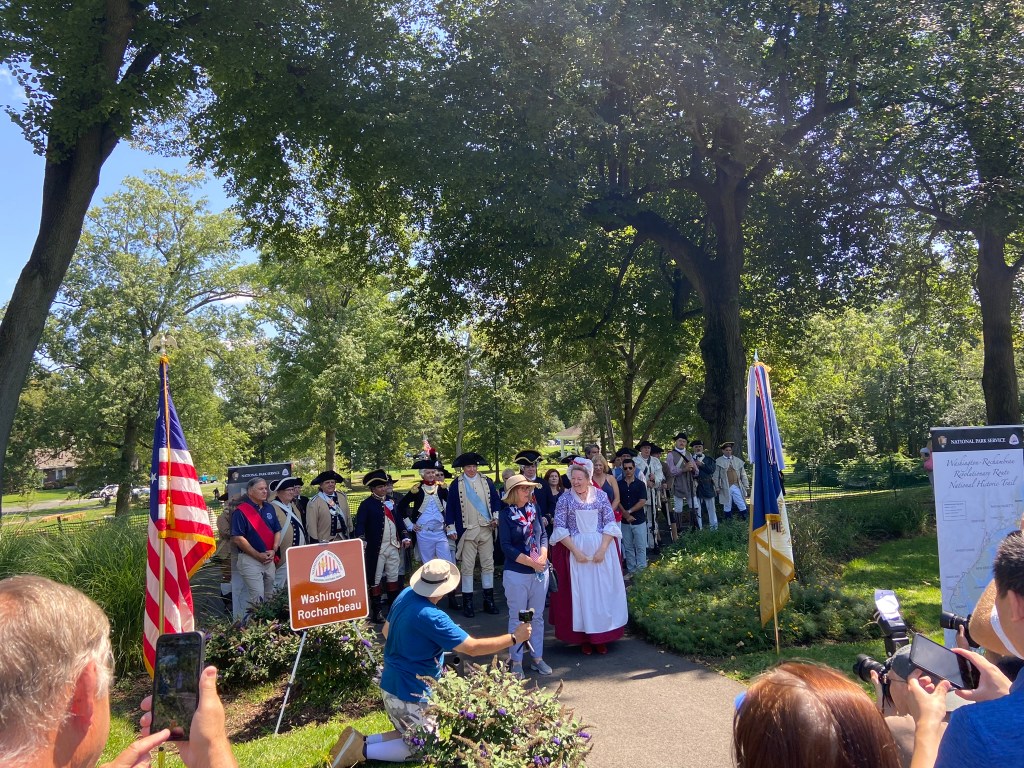
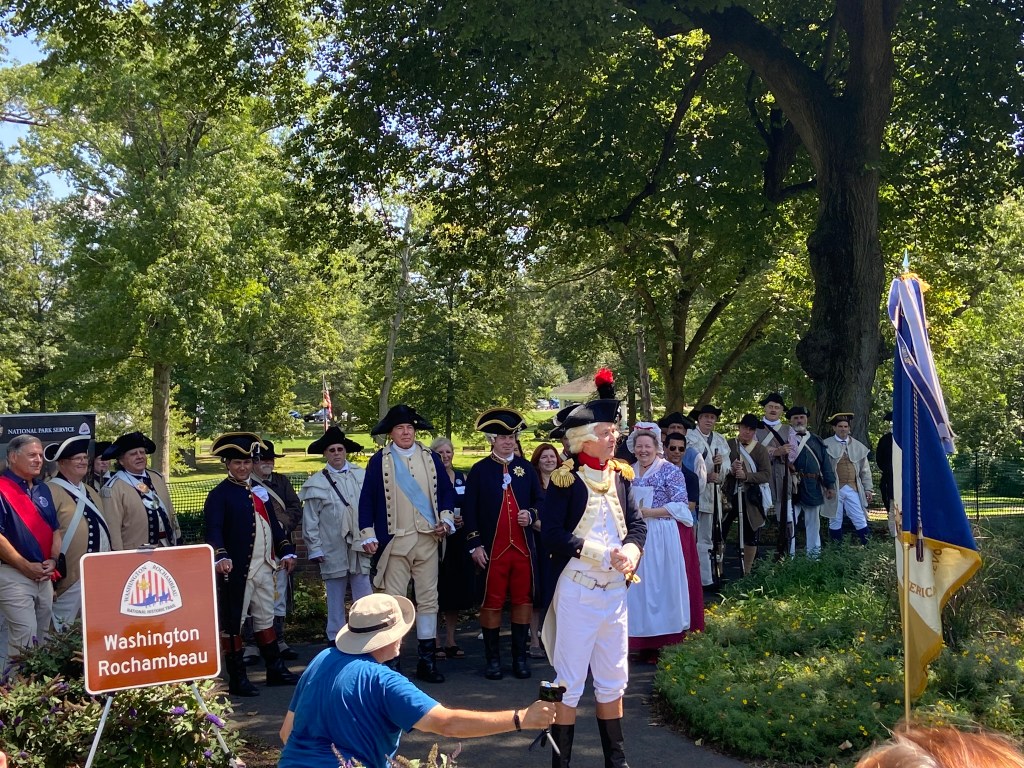
On August 17th, my family and I attended the Sixth Annual March to Yorktown Day in Westfield, NJ. The last time I went was in 2023 with my daughter, which you can read about HERE. This year’s 2025 event drew an impressive crowd and was well planned and organized by Julie Diddel, chair of the Washington-Rochambeau Revolutionary Route Association of New Jersey (W3R-NJ). The commemoration marks August 29, 1781, when General Benjamin Lincoln’s division of the Continental Army passed through Westfield on their march to Yorktown, Virginia. At the same time, the French Army under the Comte de Rochambeau took a route slightly west of the Continentals before both forces united near Princeton, NJ. The Washington-Rochambeau Revolutionary Route traces the path of the American and French armies from Newport, Rhode Island, to Yorktown, where their combined campaign led to the British surrender at the Siege of Yorktown in October 1781. Today, the route is preserved as part of the National Park Service. You can read more about the trail HERE.
Opening Ceremony
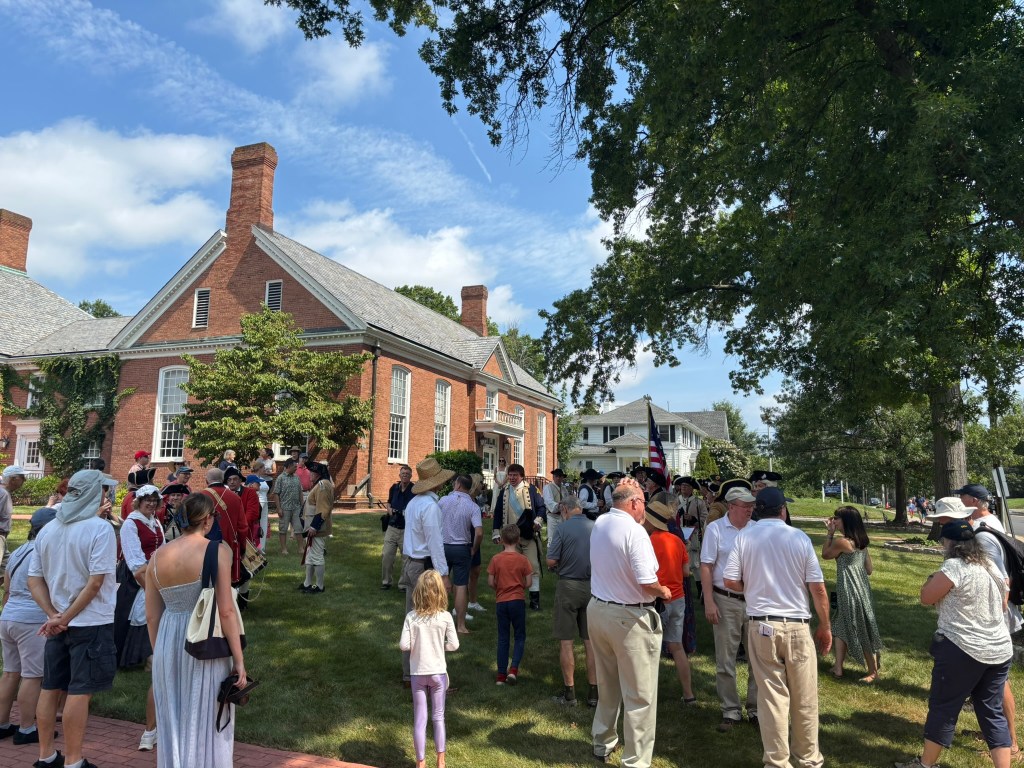
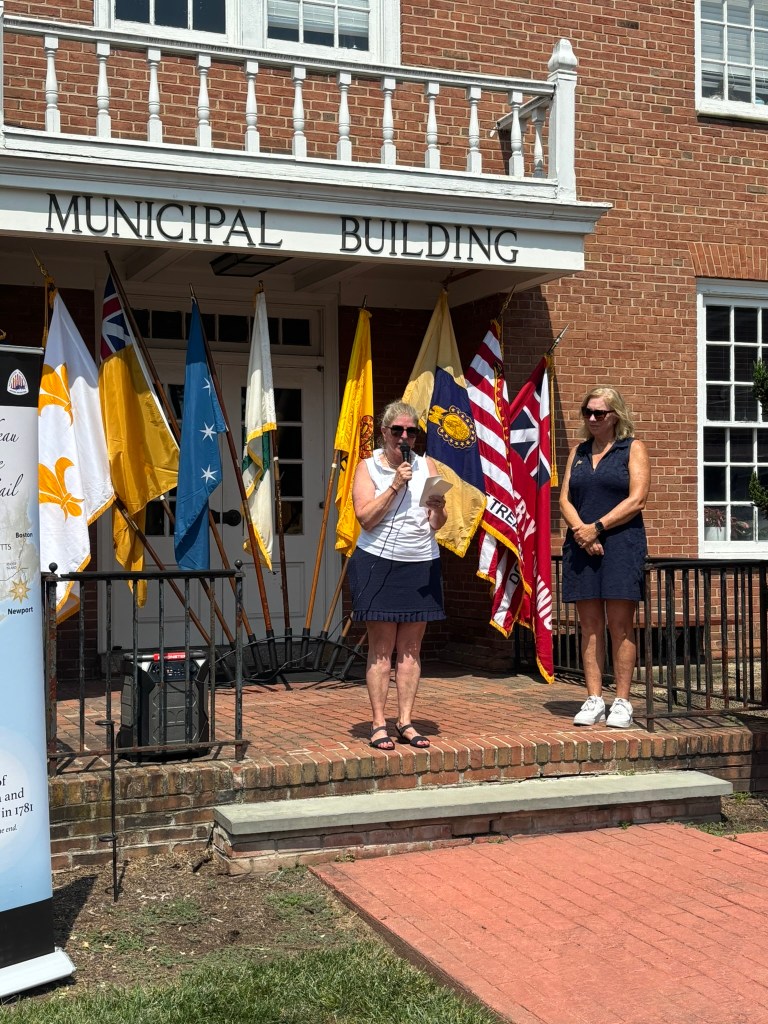
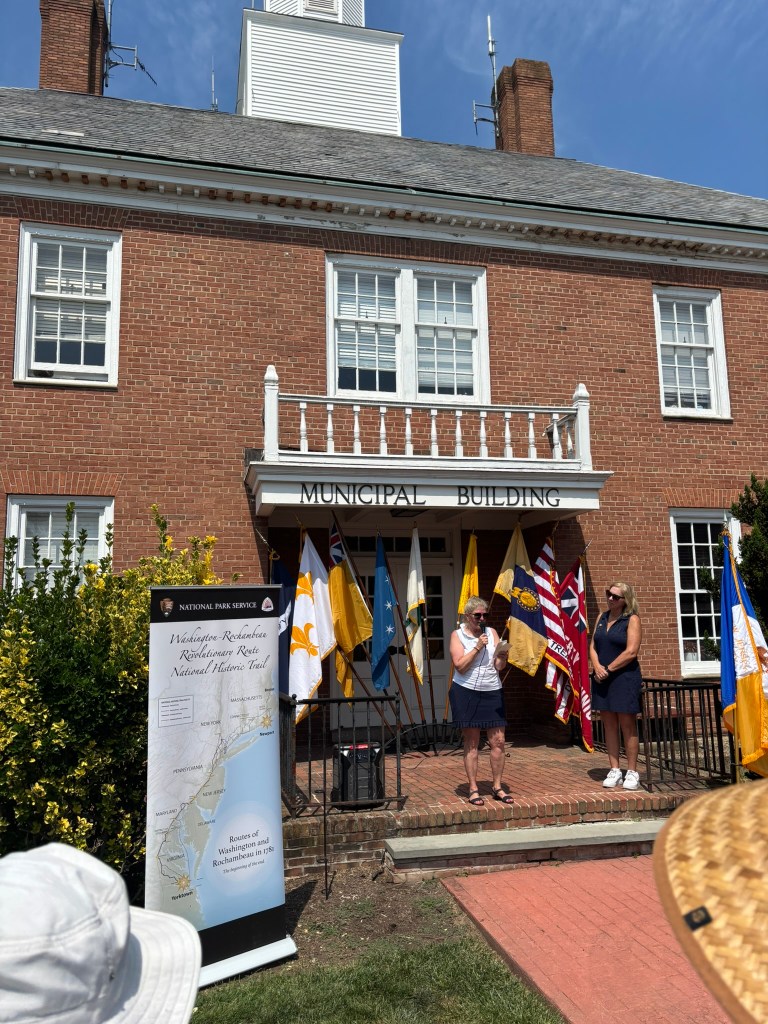
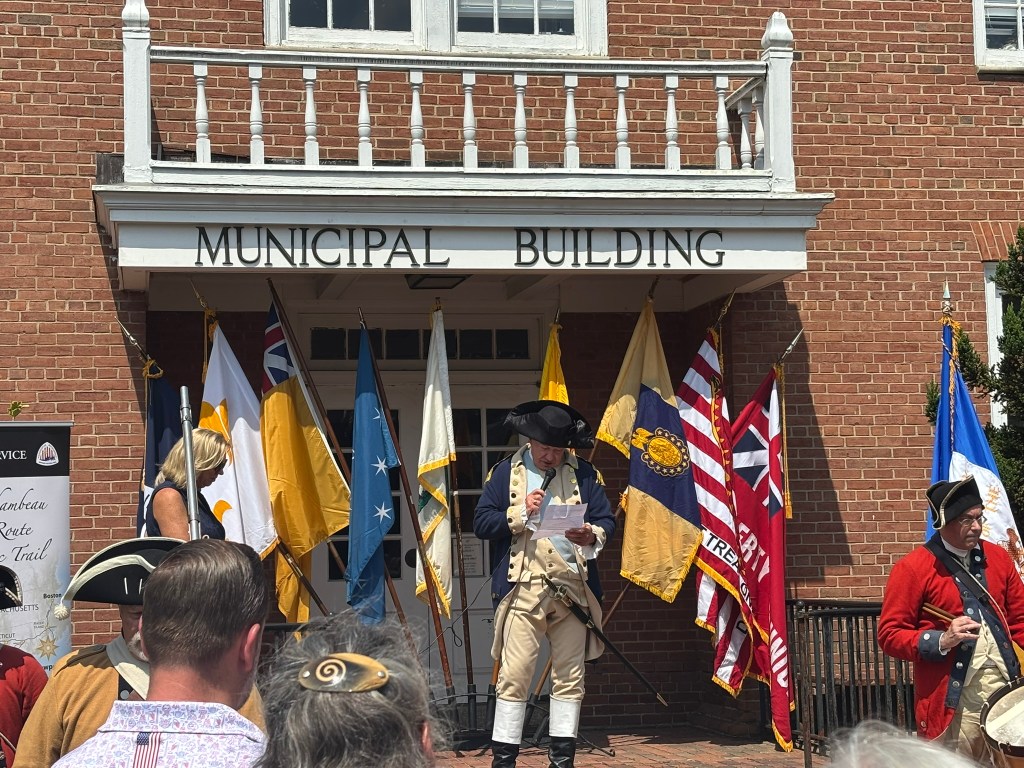
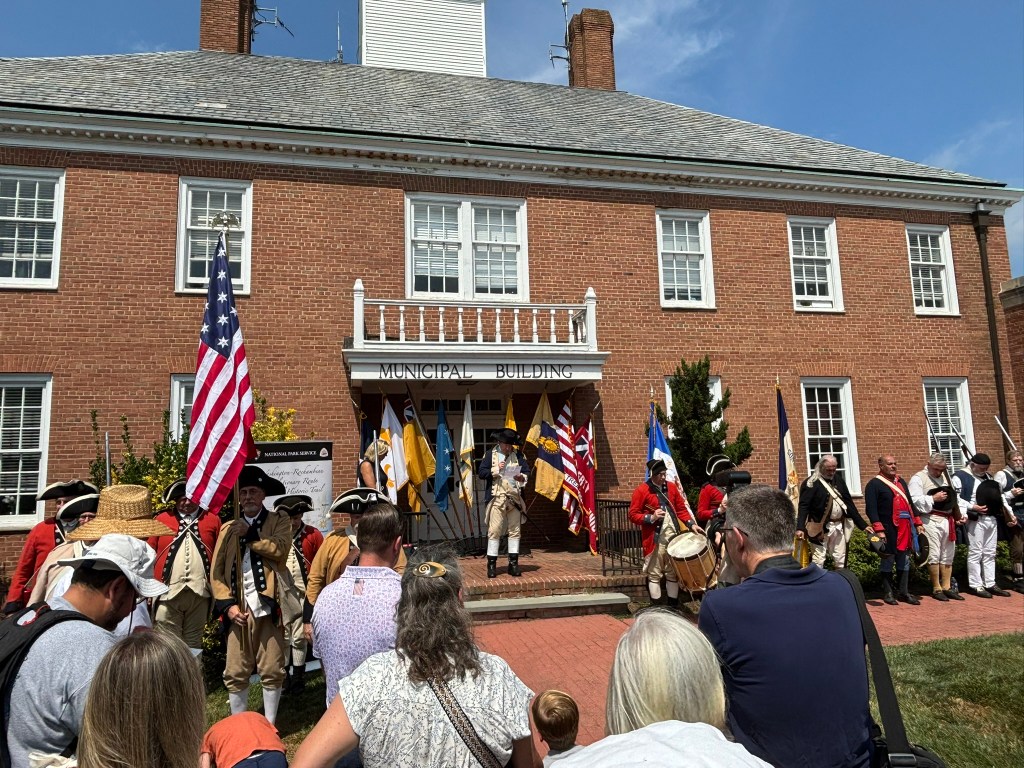
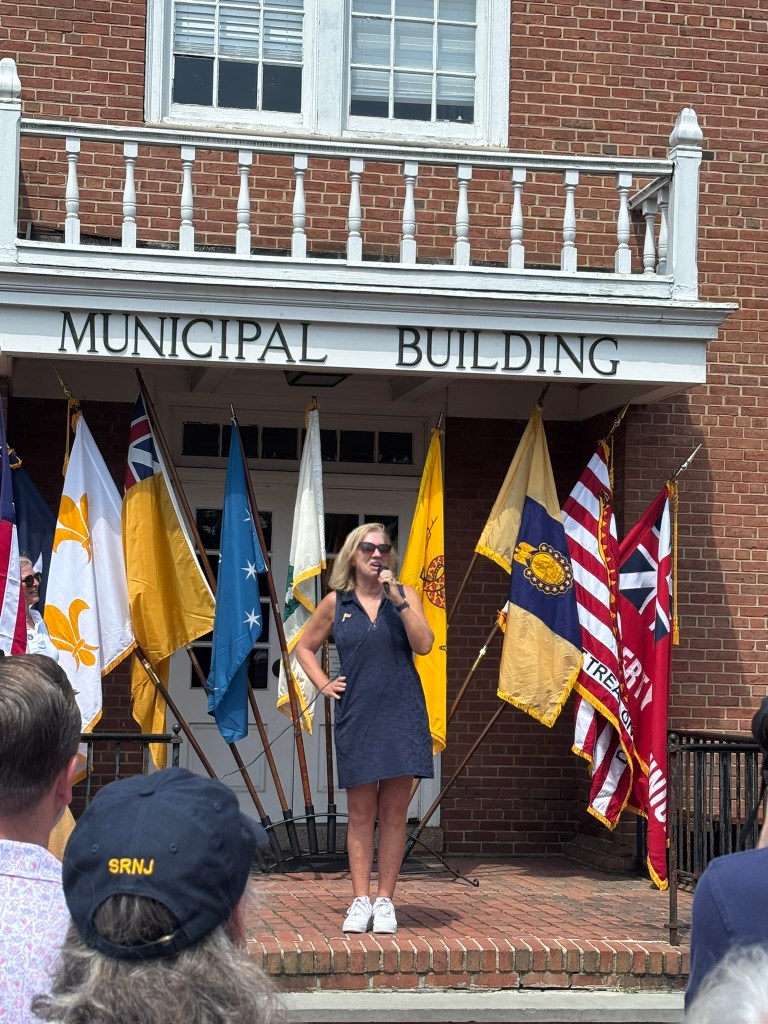
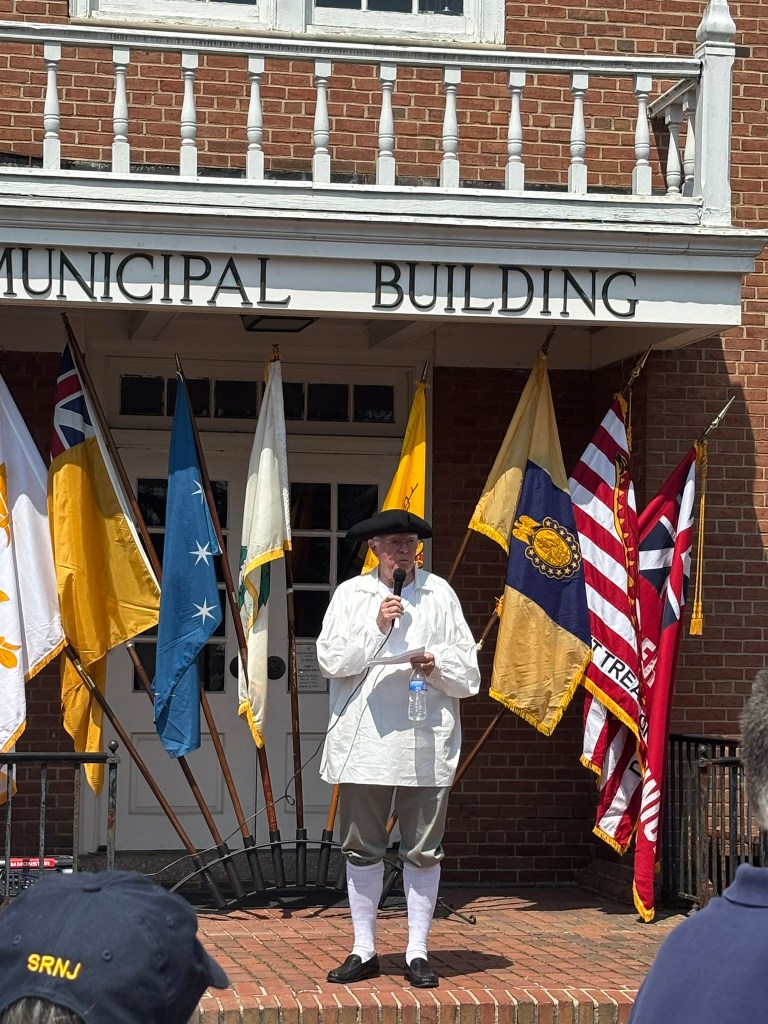
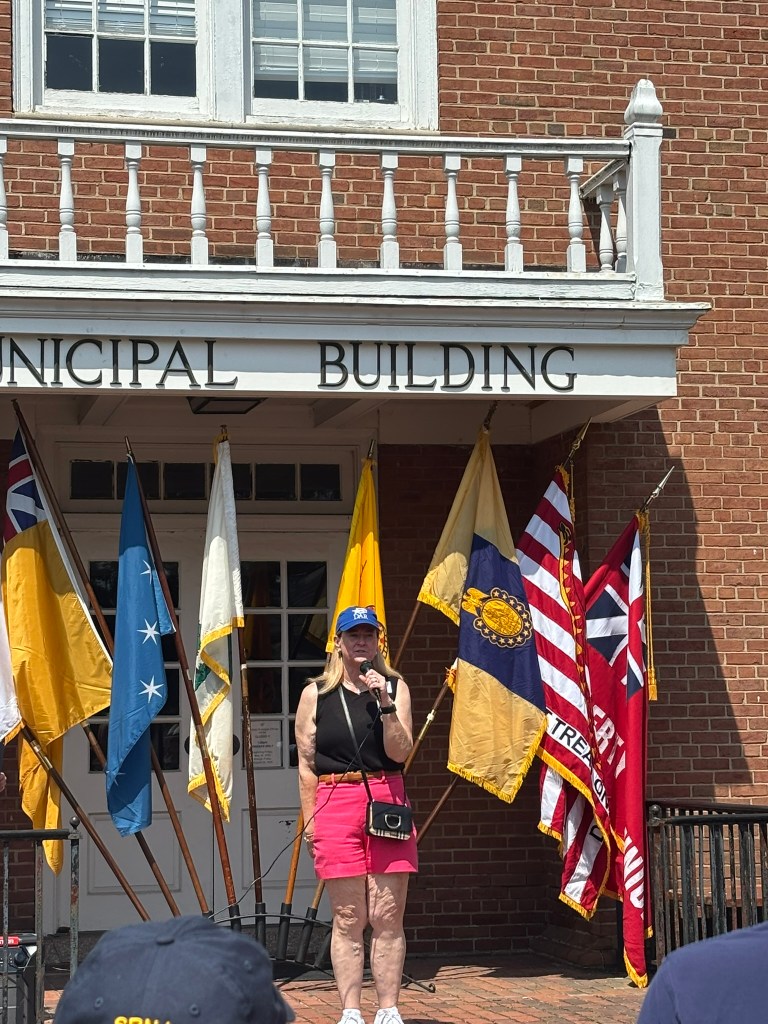
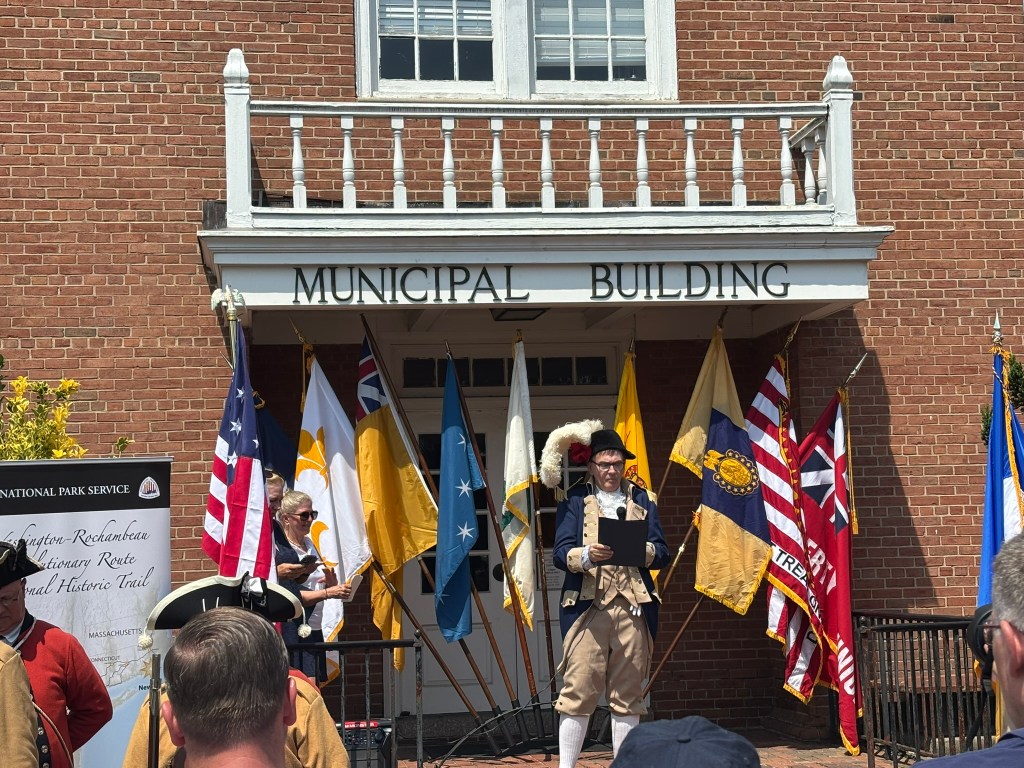
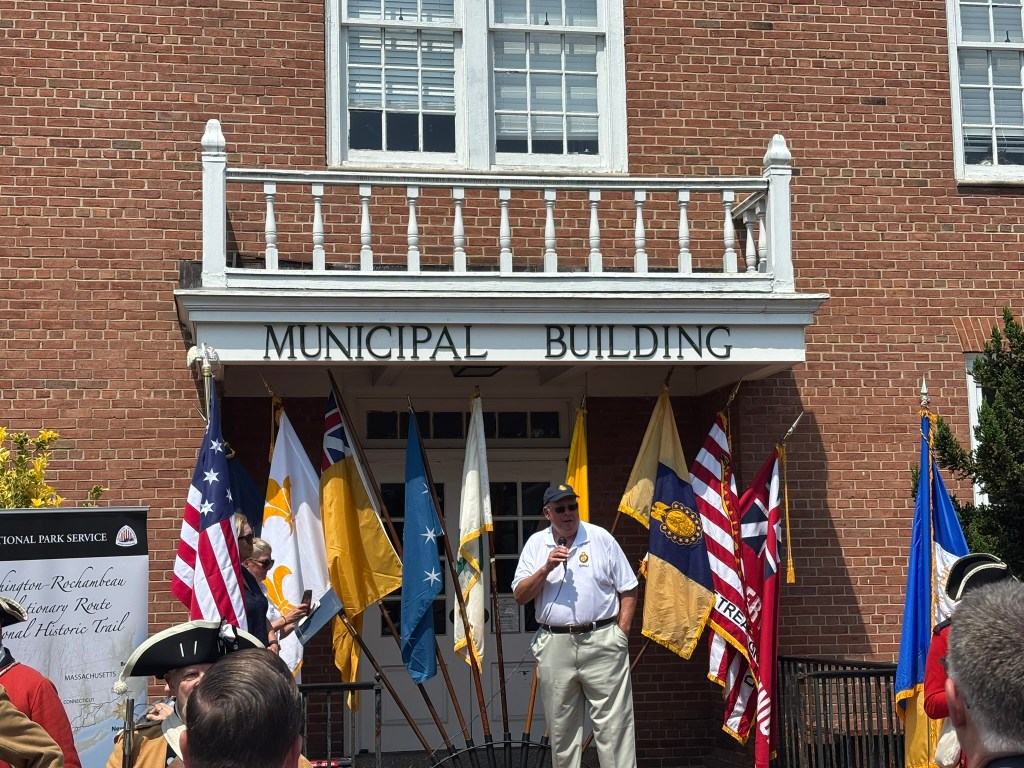
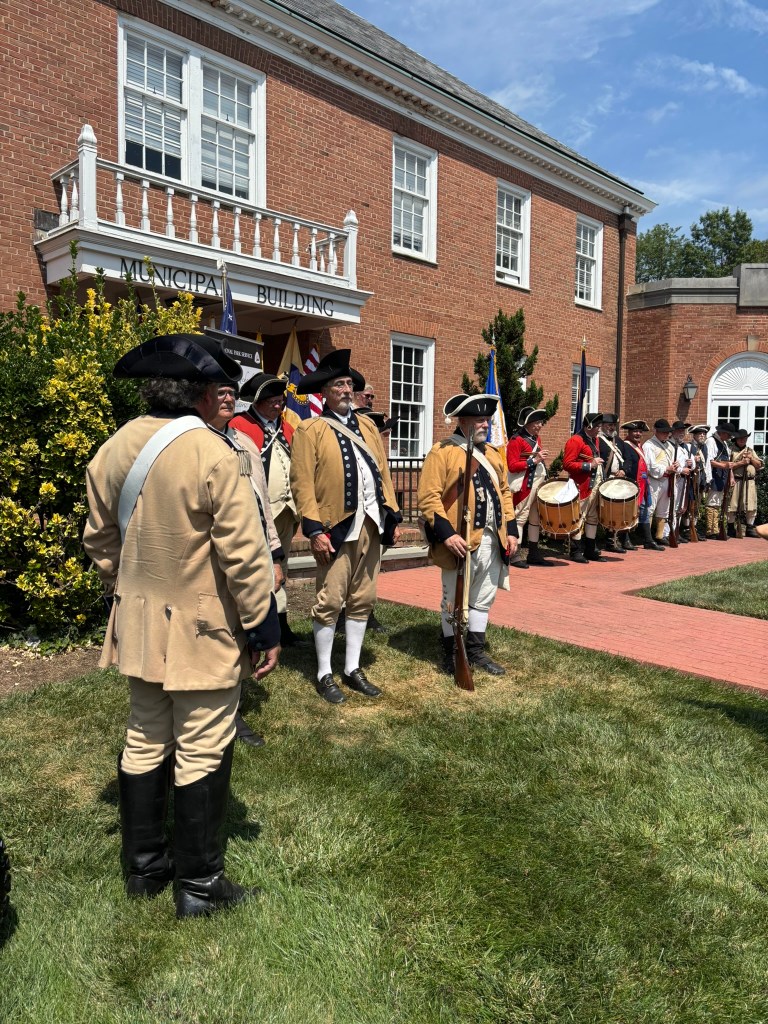
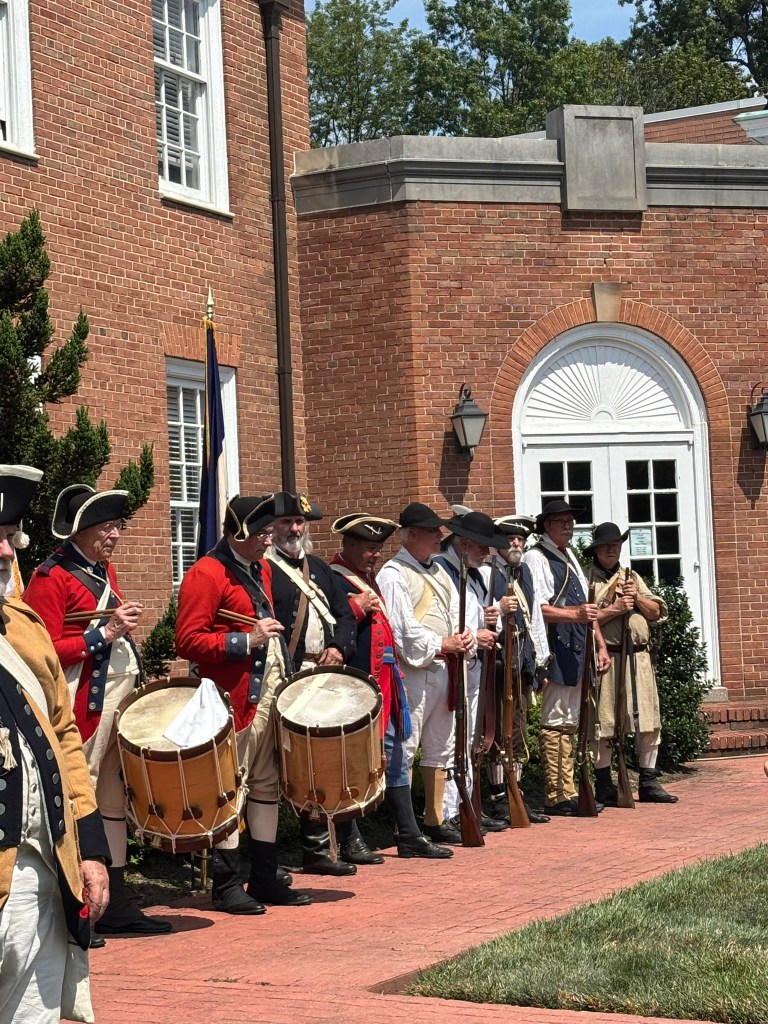
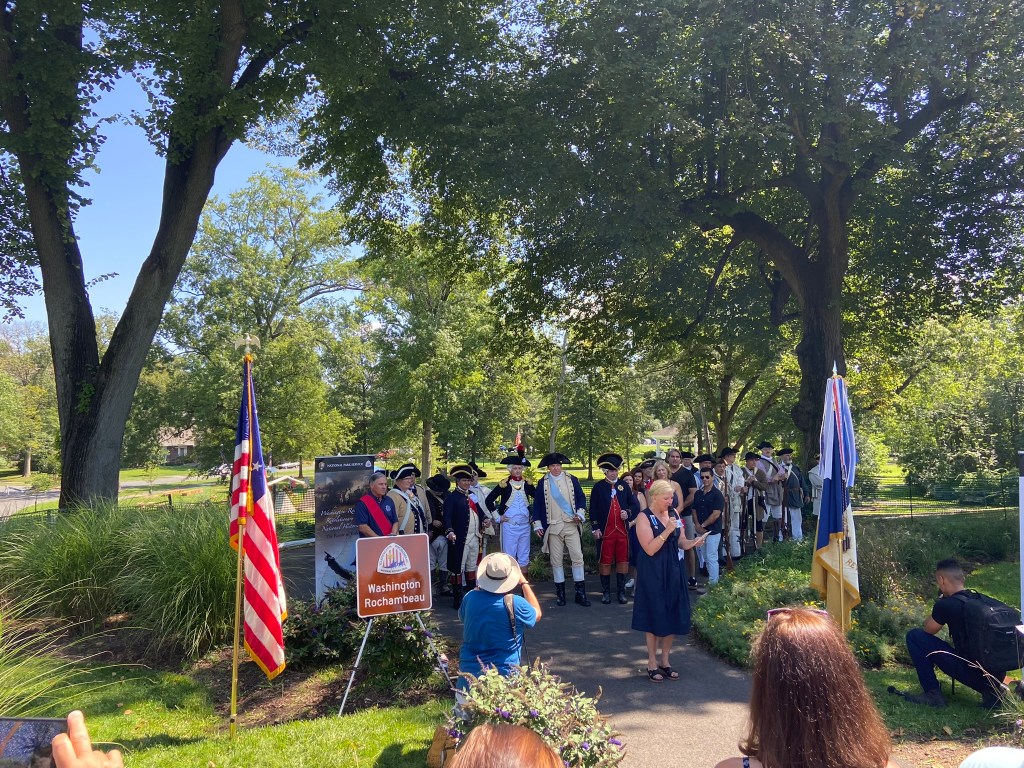
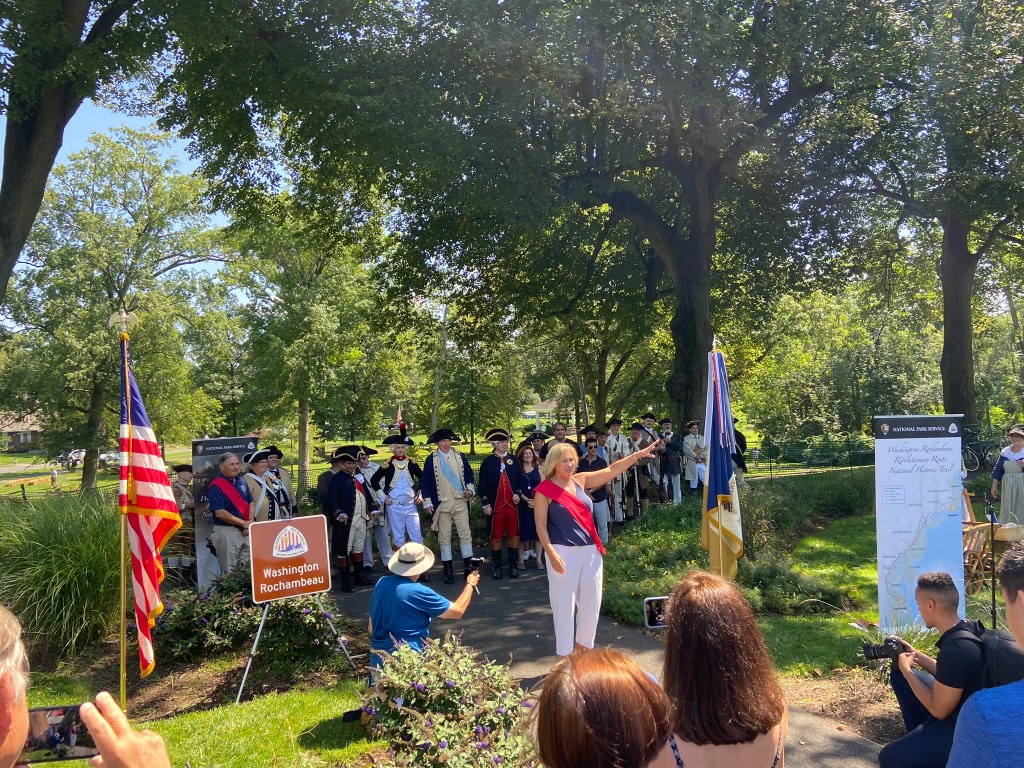
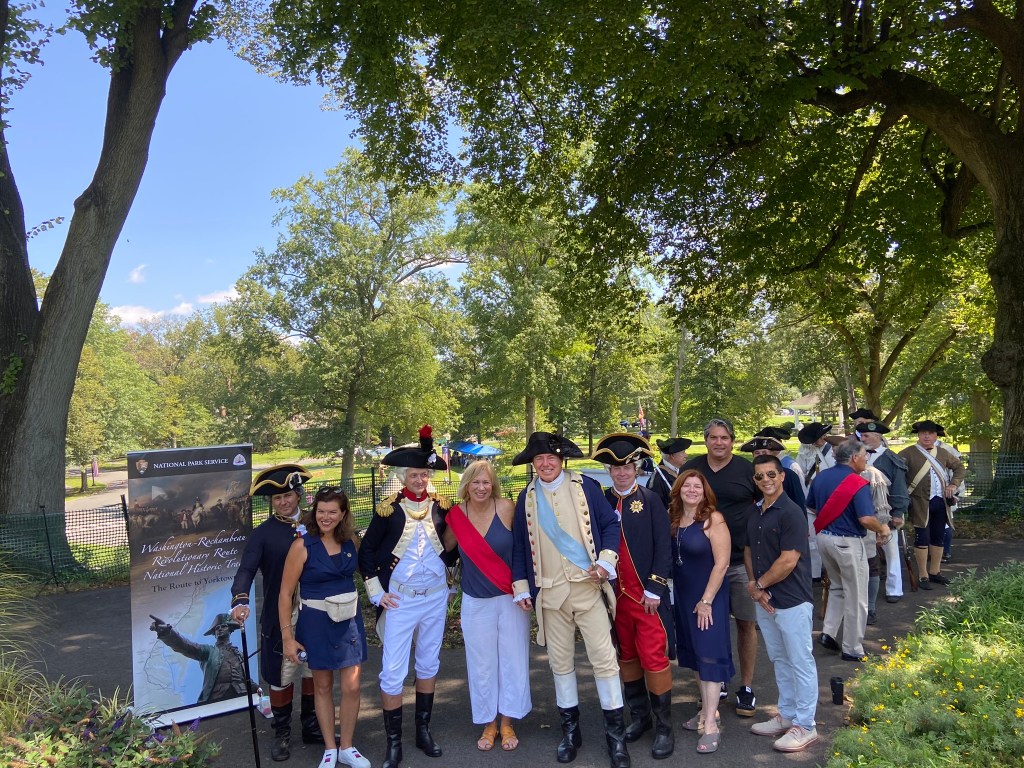
The program began at noon with an opening ceremony in front of Westfield Town Hall on East Broad Street. The first remarks, by Julie Diddel, chair of W3R-NJ, highlighted the significance of the Washington-Rochambeau Revolutionary Trail and Westfield’s role in the Revolution. She was followed by other speakers, including Westfield Mayor Shelley Brindle and leaders from local historical organizations. General George Washington, portrayed by reenactor Sam Davis, offered an opening prayer, and the New Jersey Fifes and Drums led the crowd in the Star-Spangled Banner.
Symbolic March
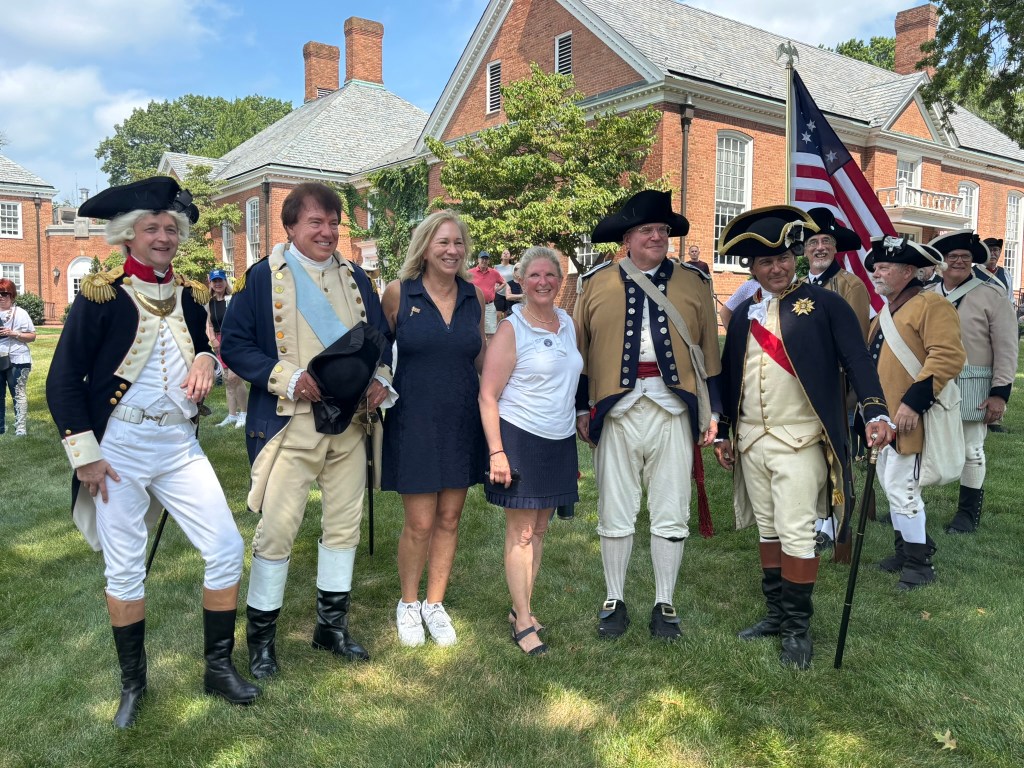
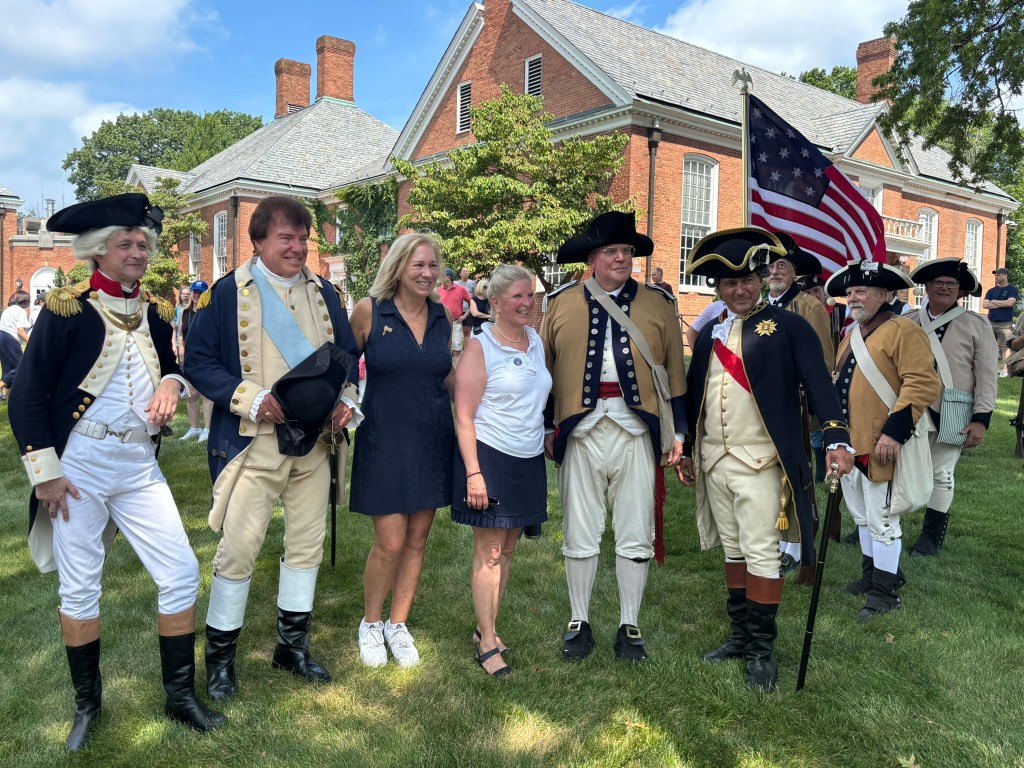
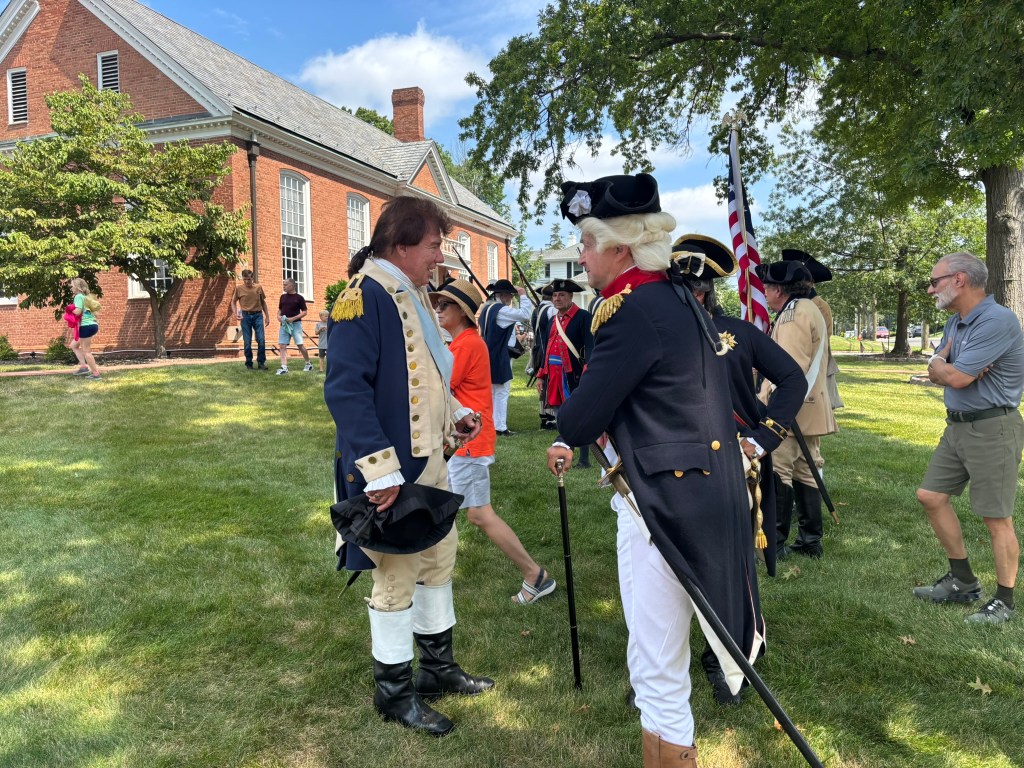
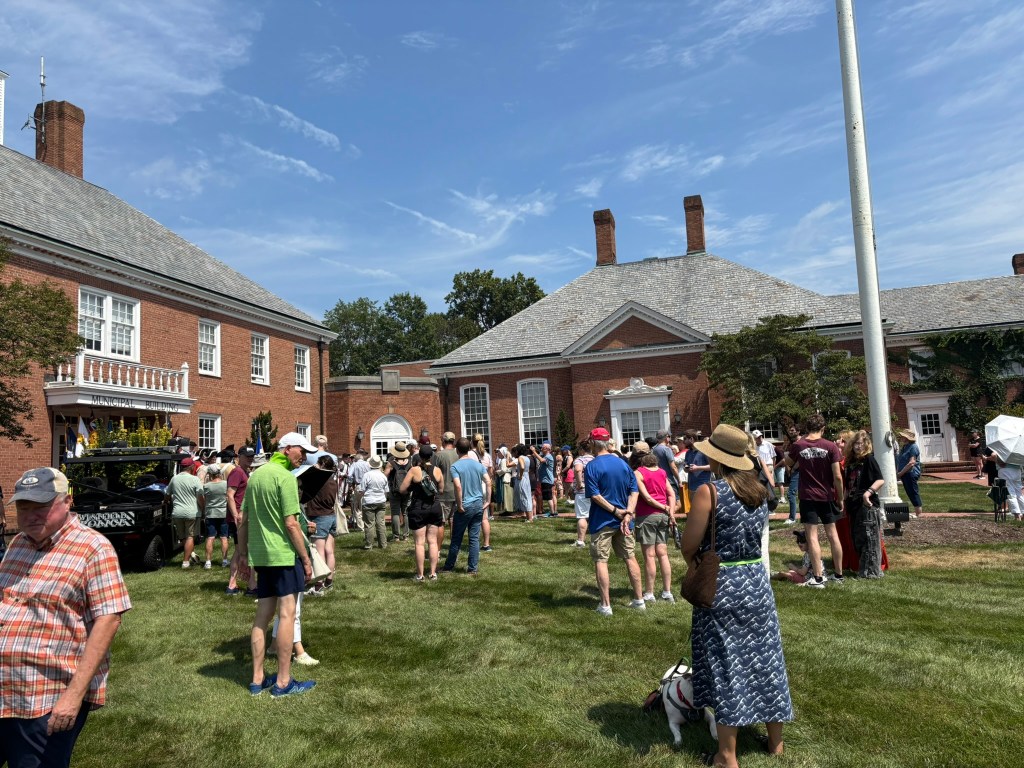
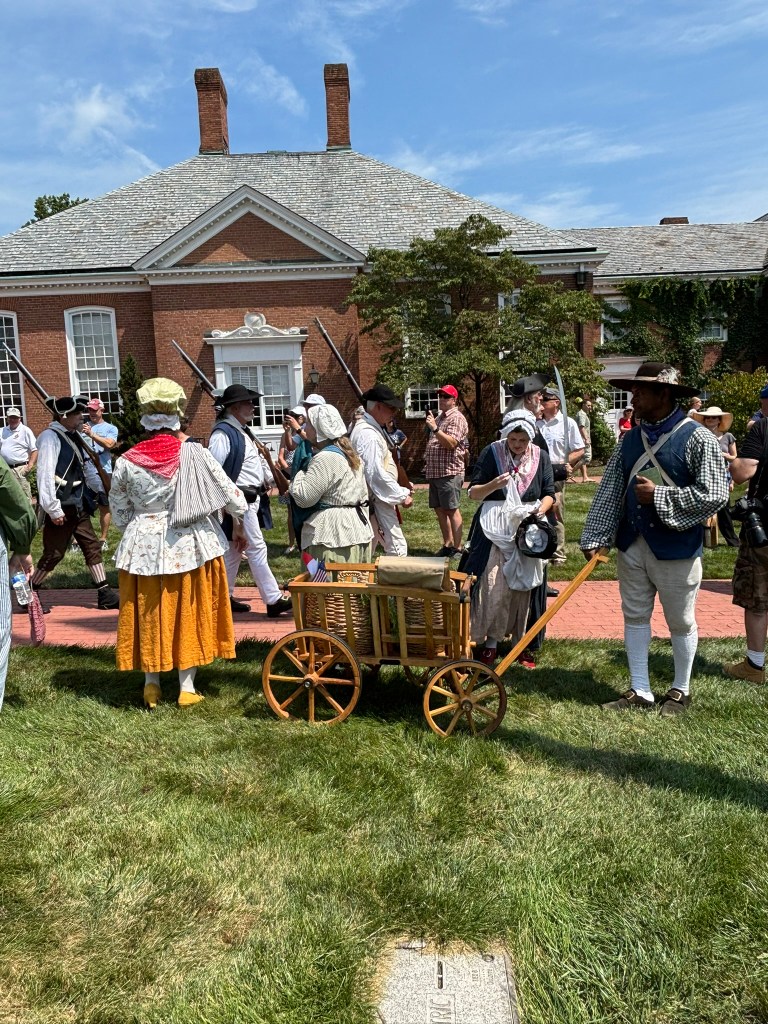
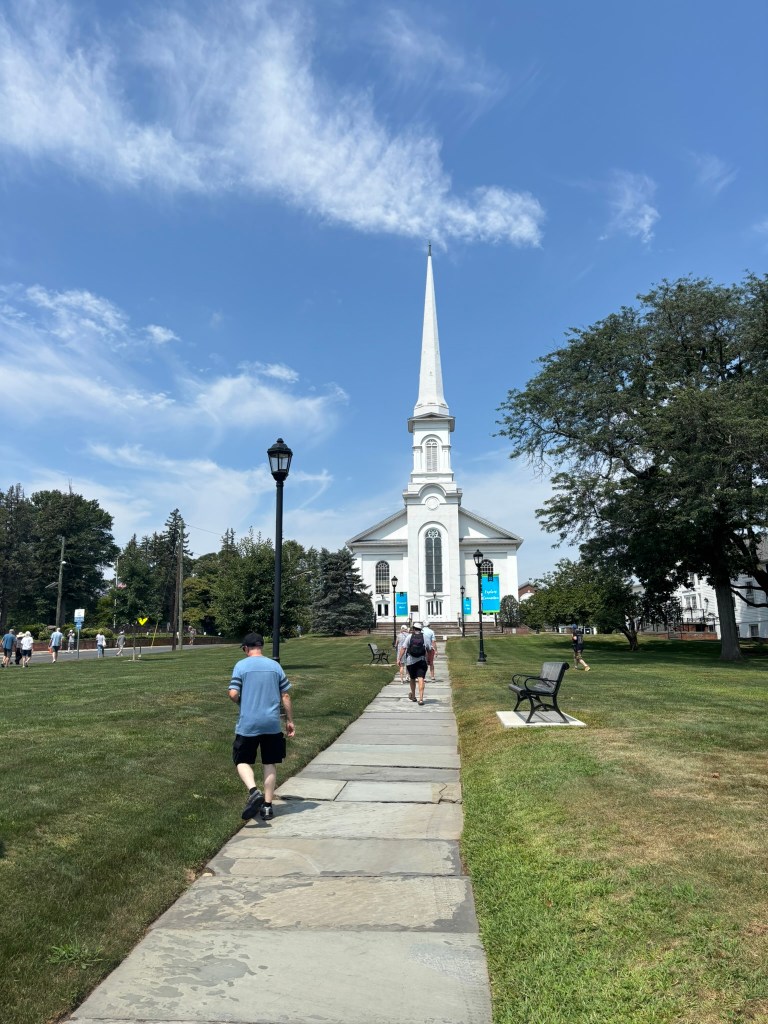
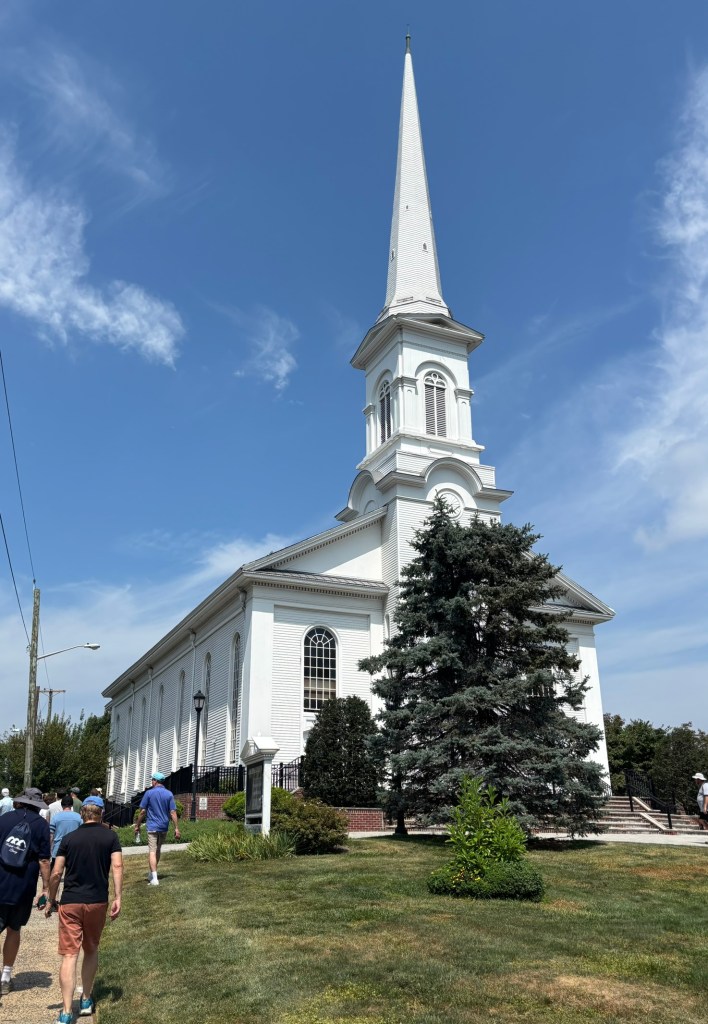
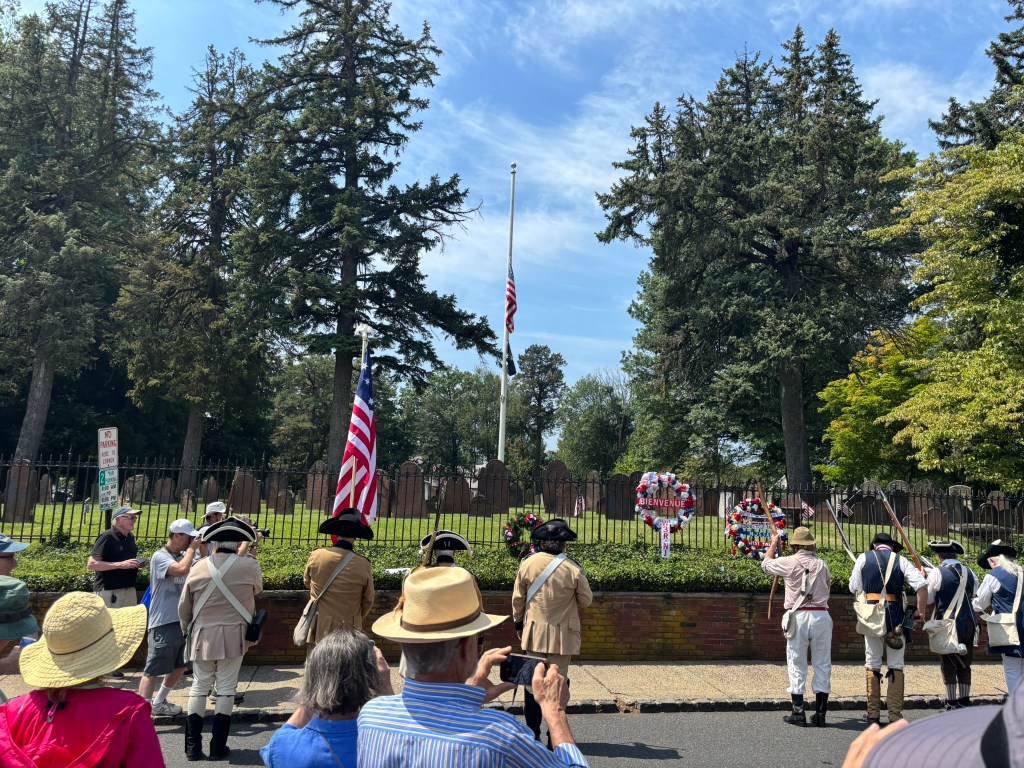
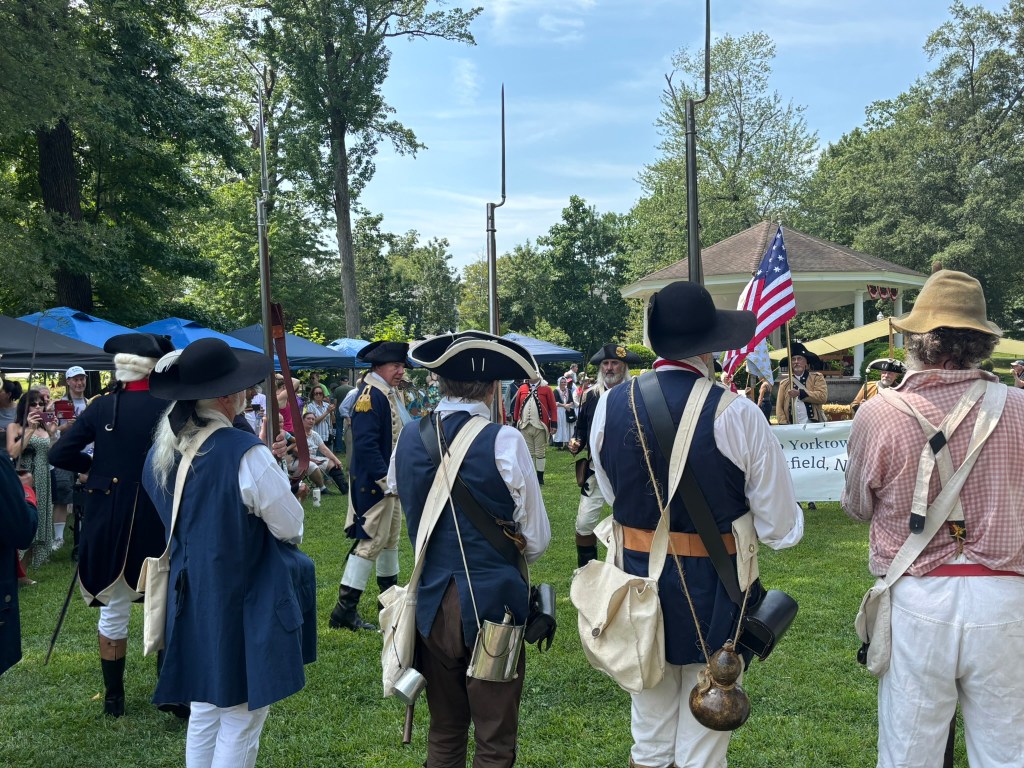
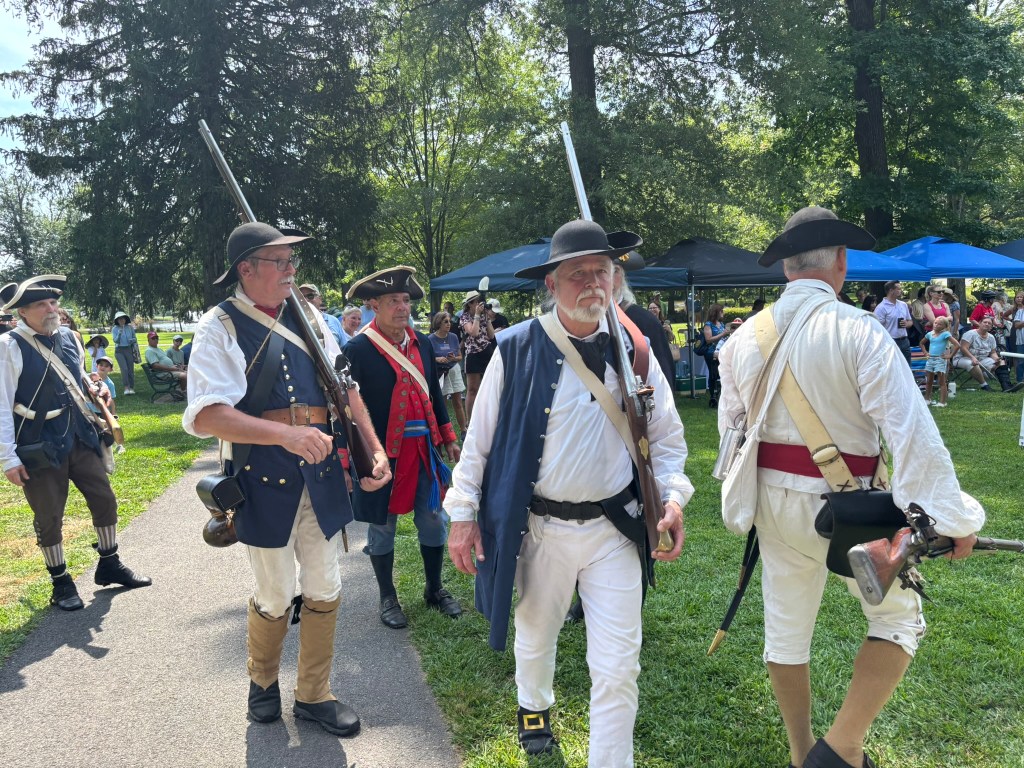
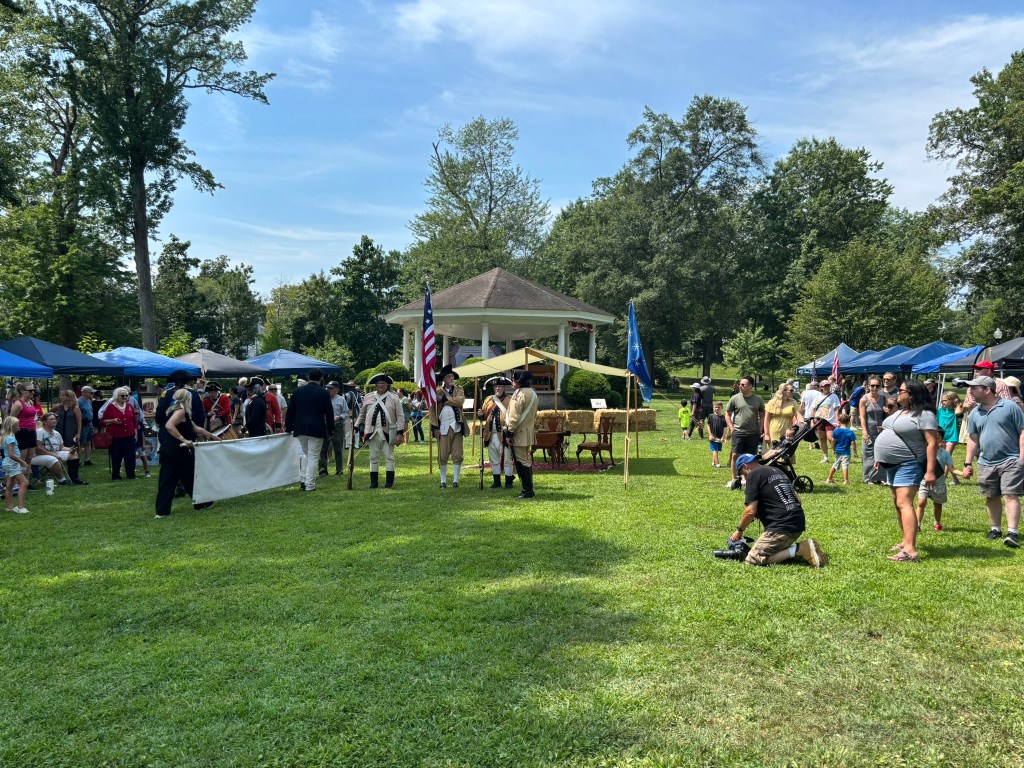
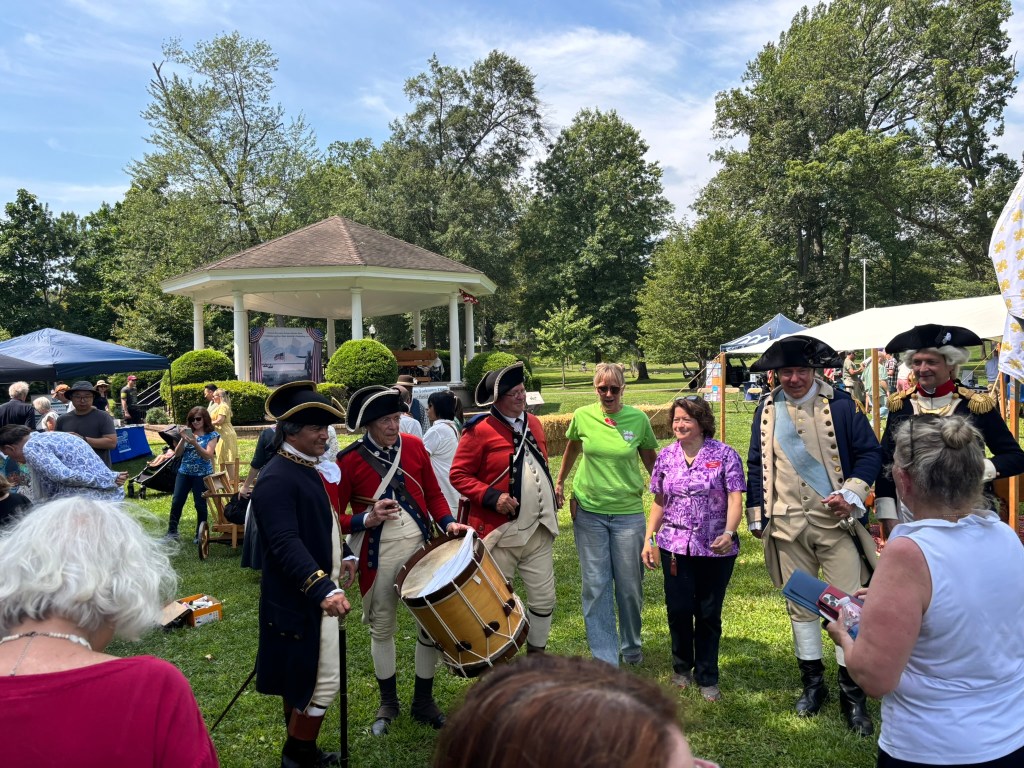
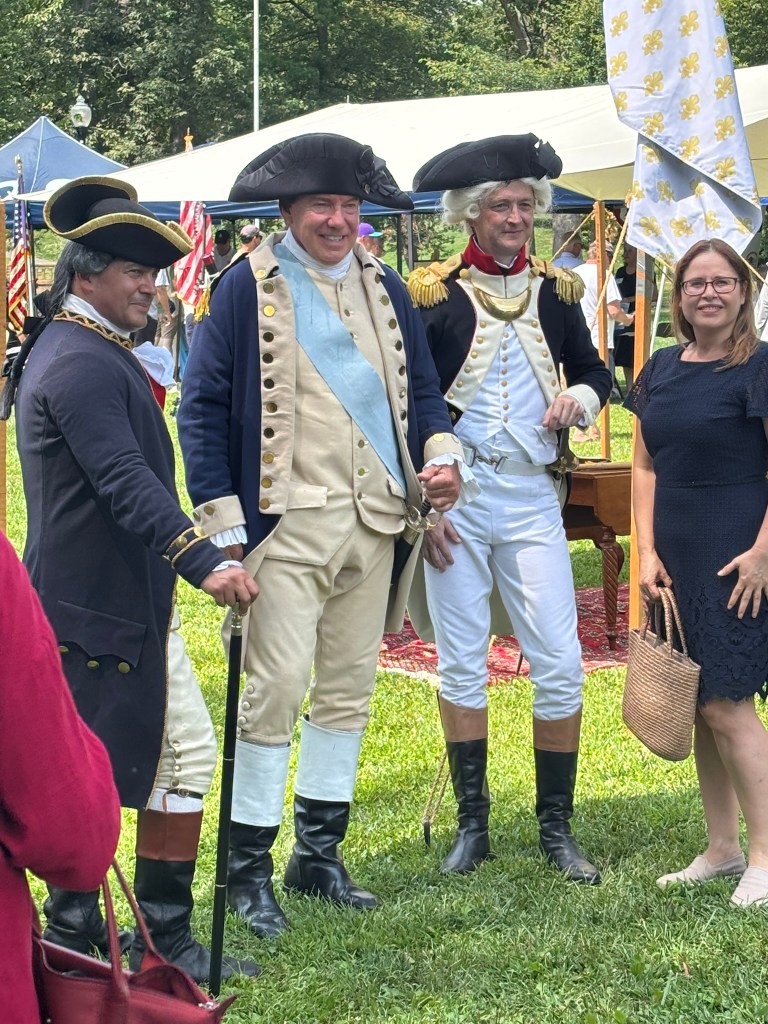
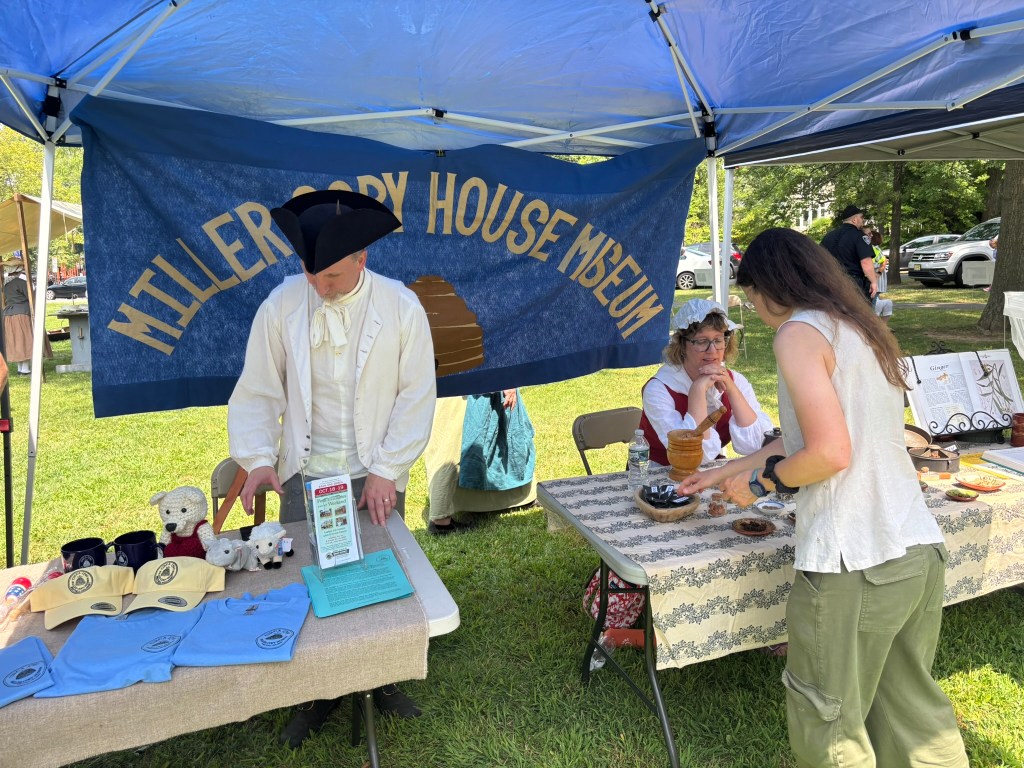
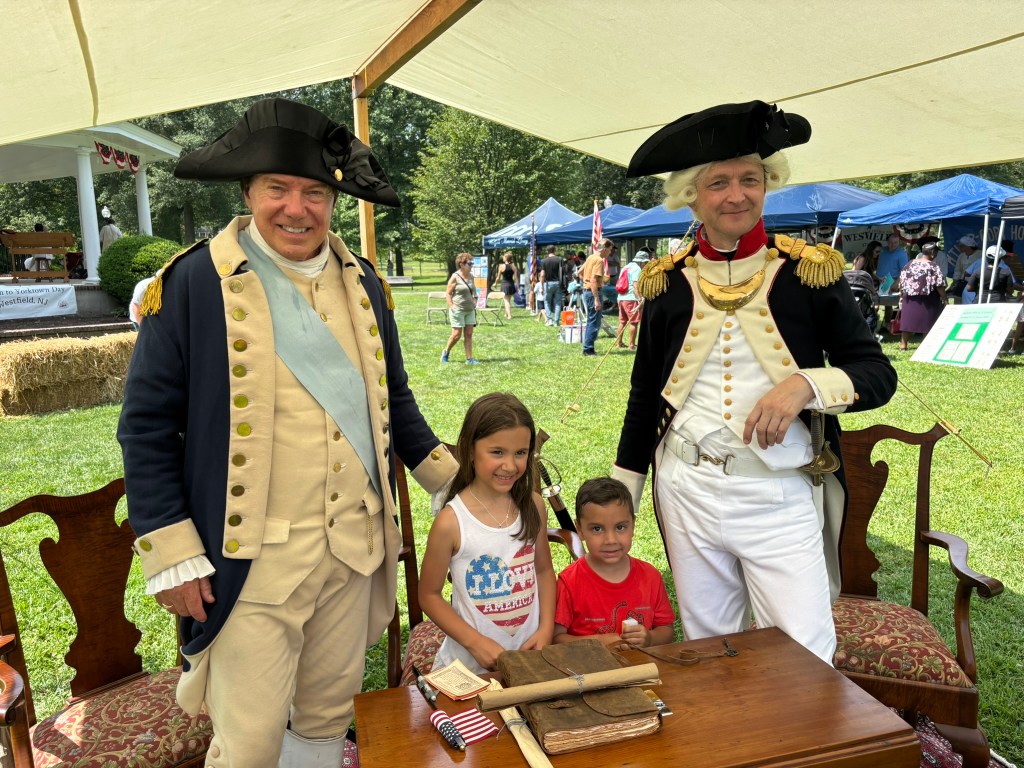
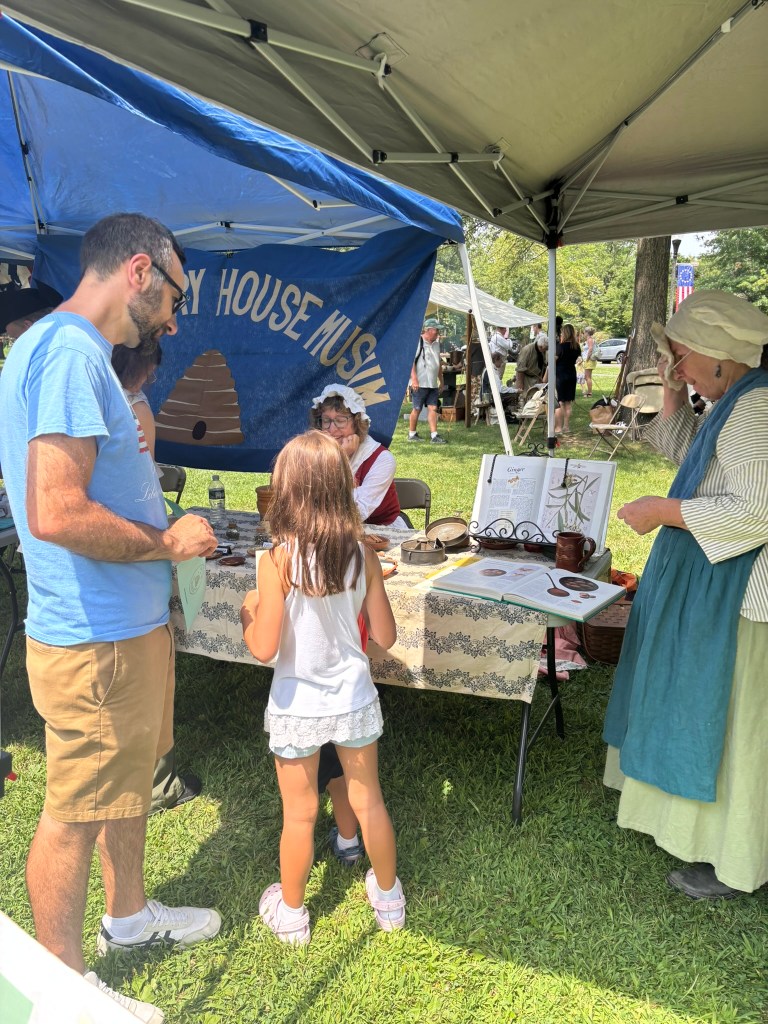
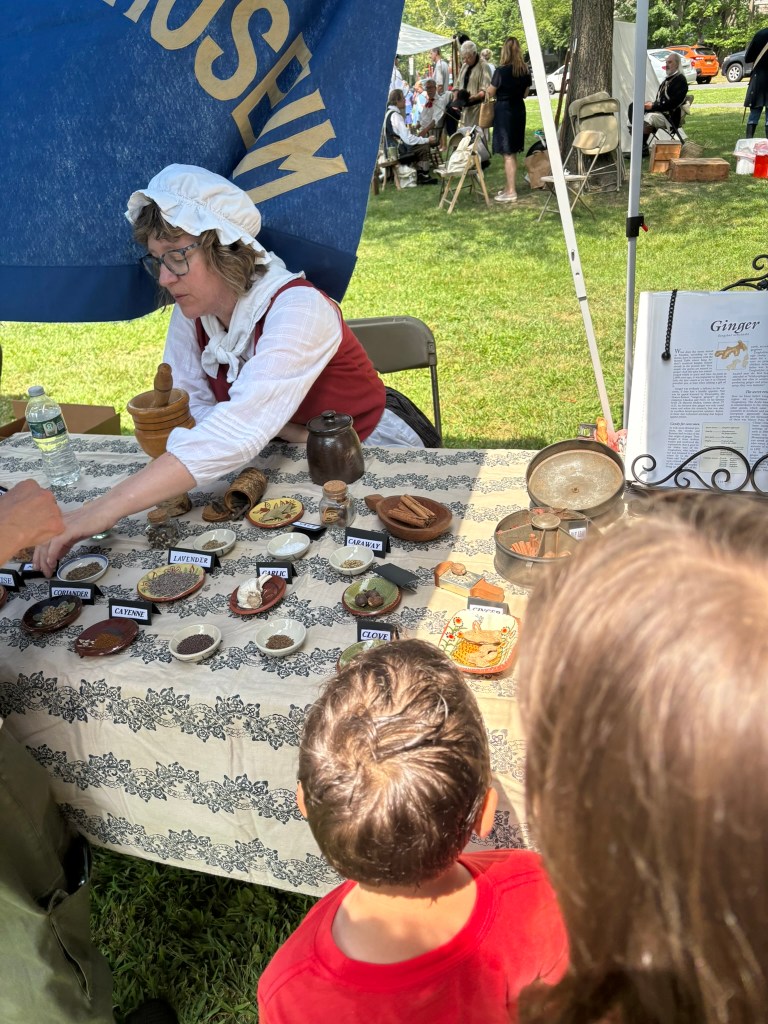
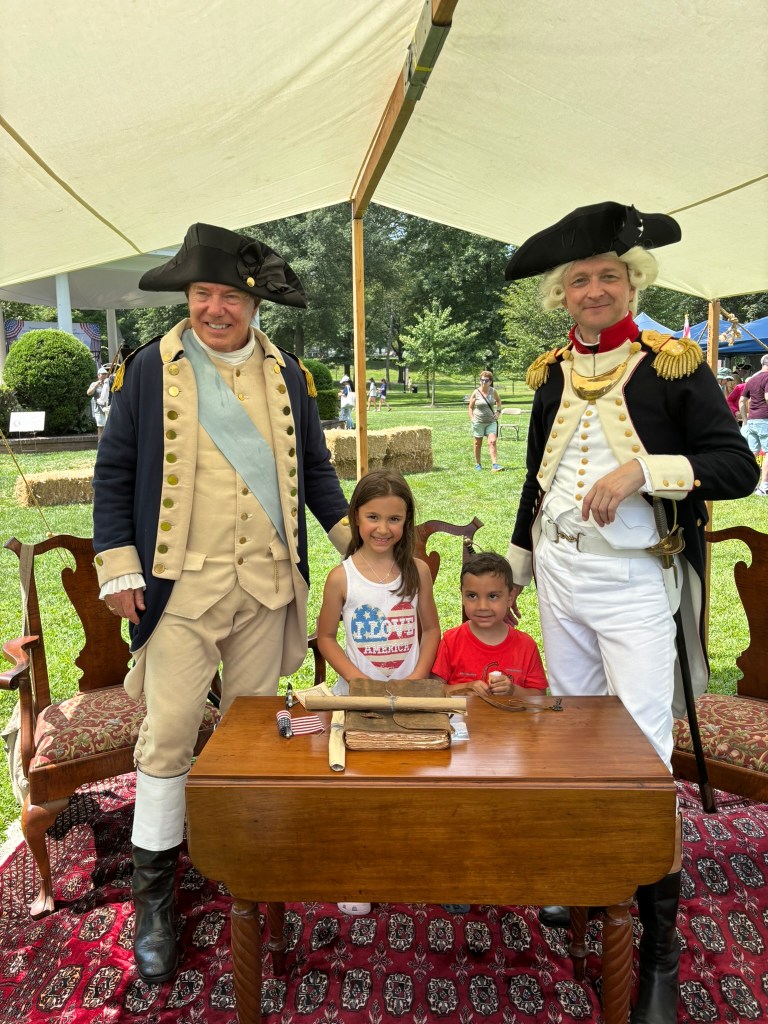
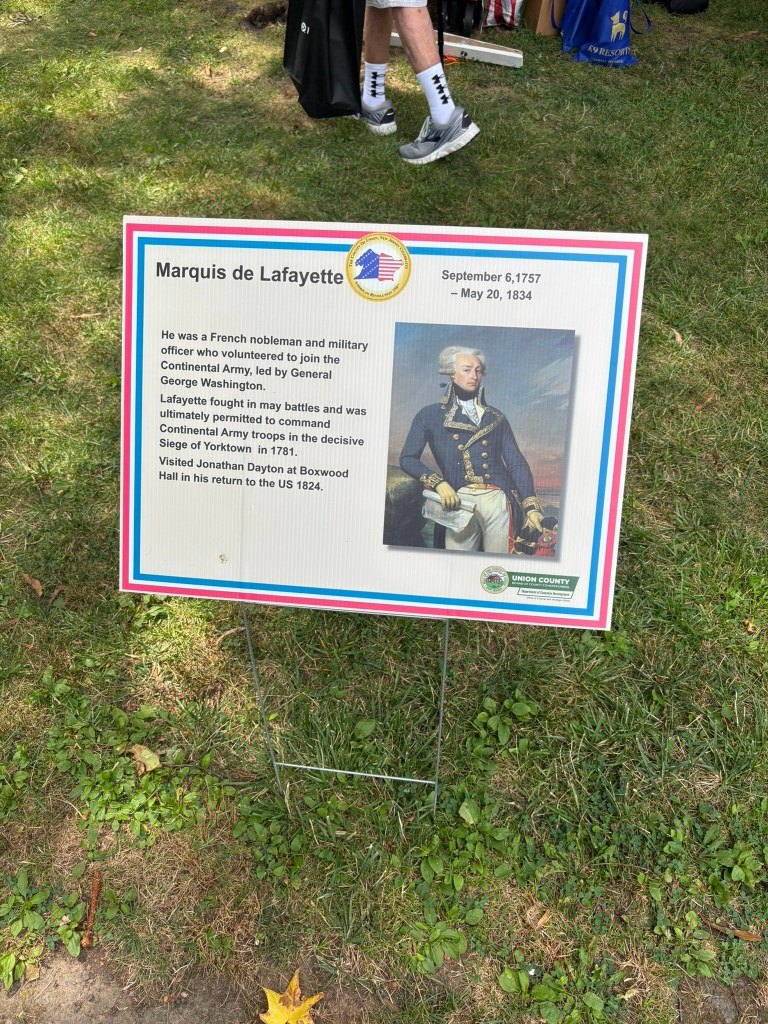
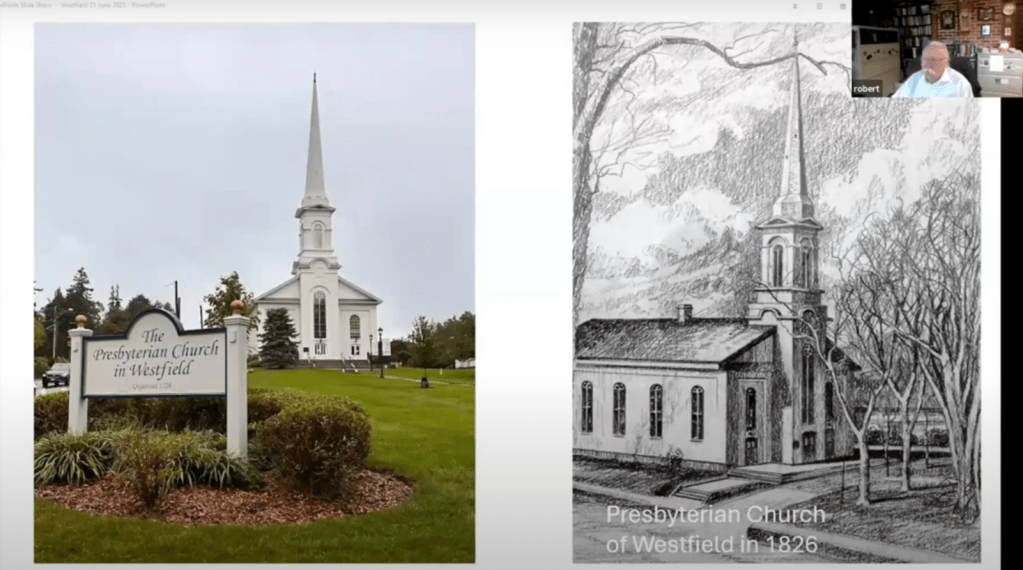
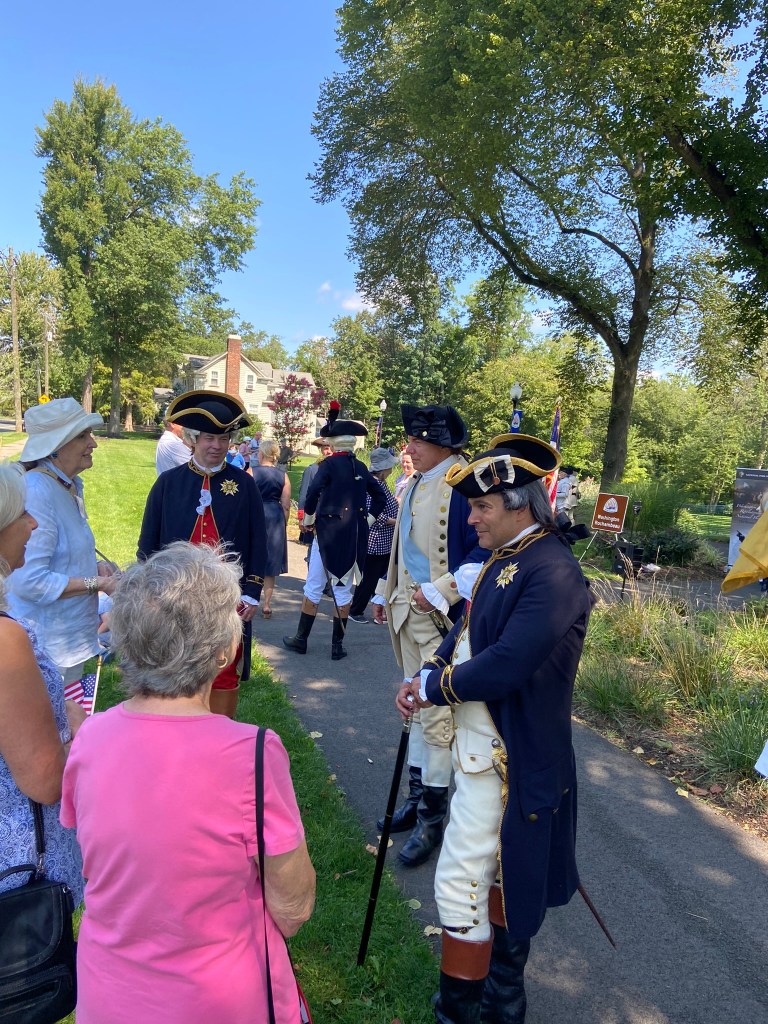
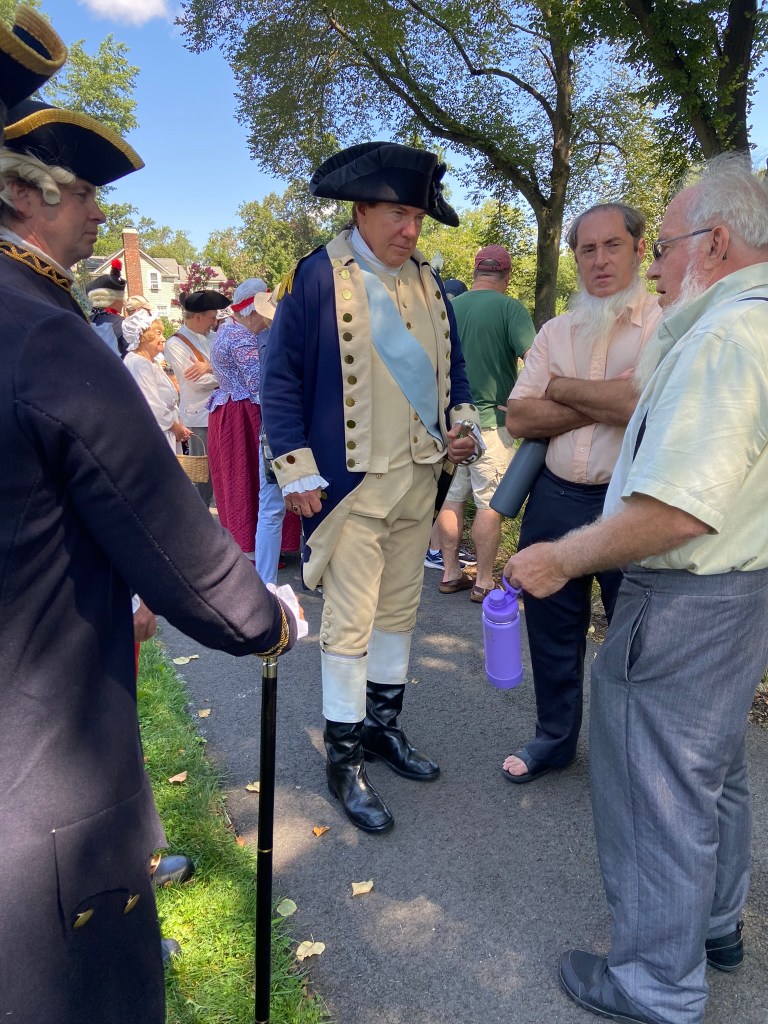
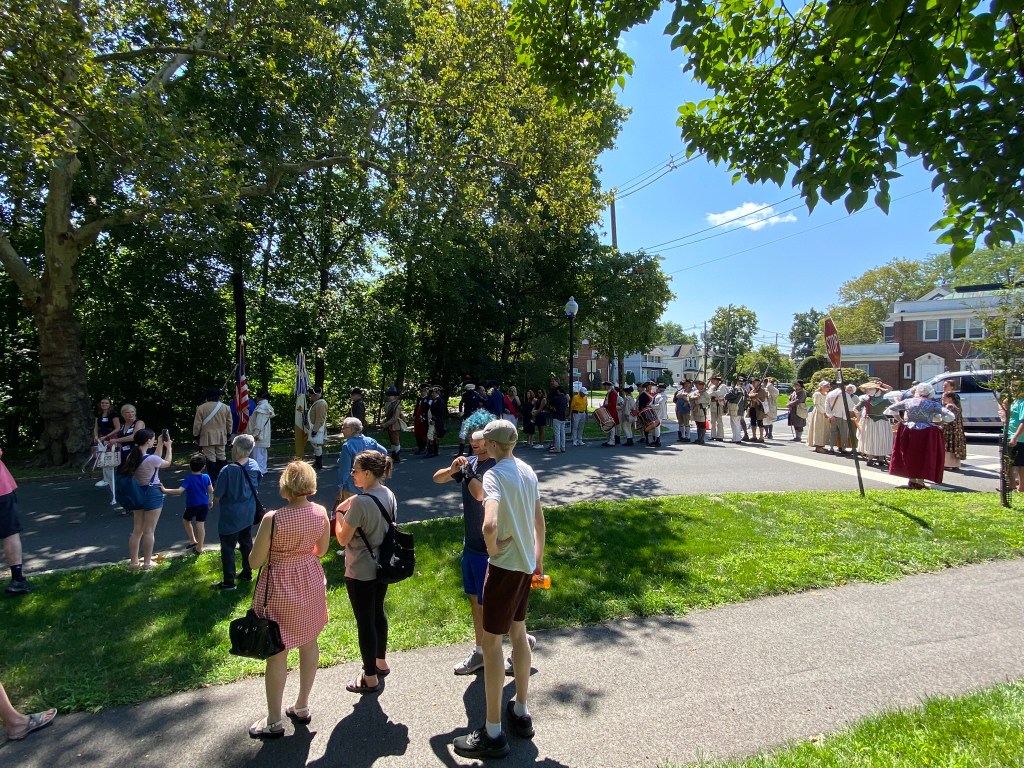
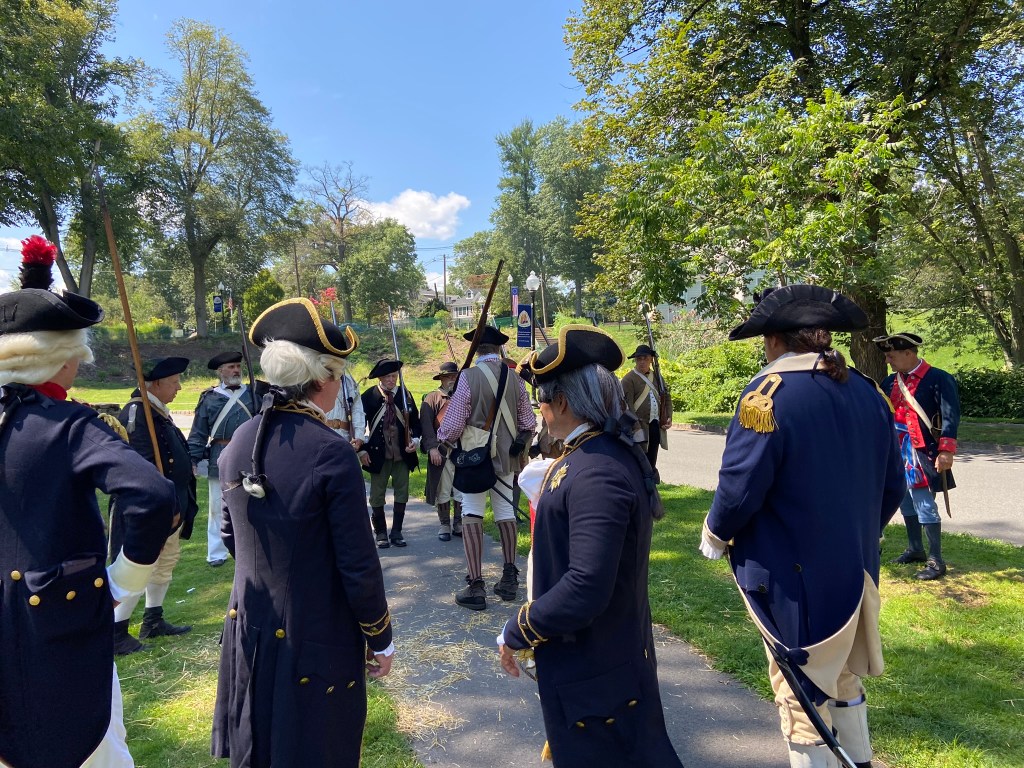
After the 20-minute opening ceremony, the crowd followed reenactors portraying George Washington, Comte de Rochambeau, and the Marquis de Lafayette—along with several Westfield officials—on a symbolic march down East Broad Street to Mountain Avenue. At the Presbyterian Church burial grounds, wreaths were placed in honor of the more than 70 Revolutionary War veterans, along with their families and other patriots, who are laid to rest there. From there, the procession continued into Mindowaskin Park. Joining the march were the New Jersey Sons of the American Revolution Color Guard, members of the Daughters of the American Revolution, the New Jersey Fifes and Drums, the Miller-Cory House Museum’s colonial living history interpreters, women camp followers, and the New Jersey Milita- Heard’s Brigade. Check out my Instagram and Facebook accounts for videos of the march.
Mindowaskin Park
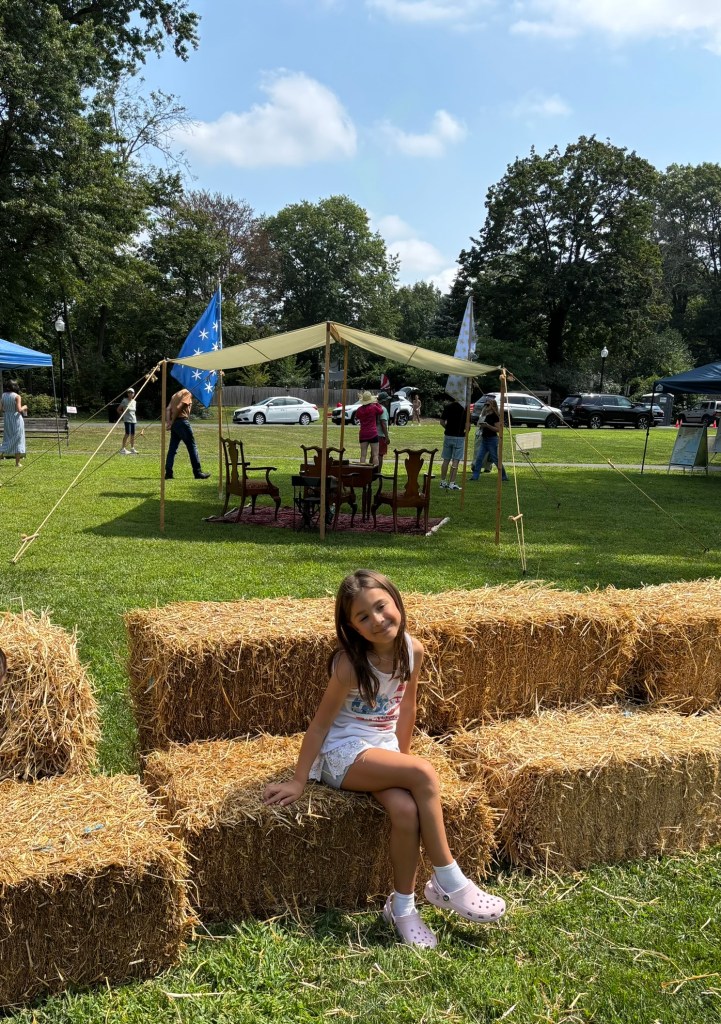
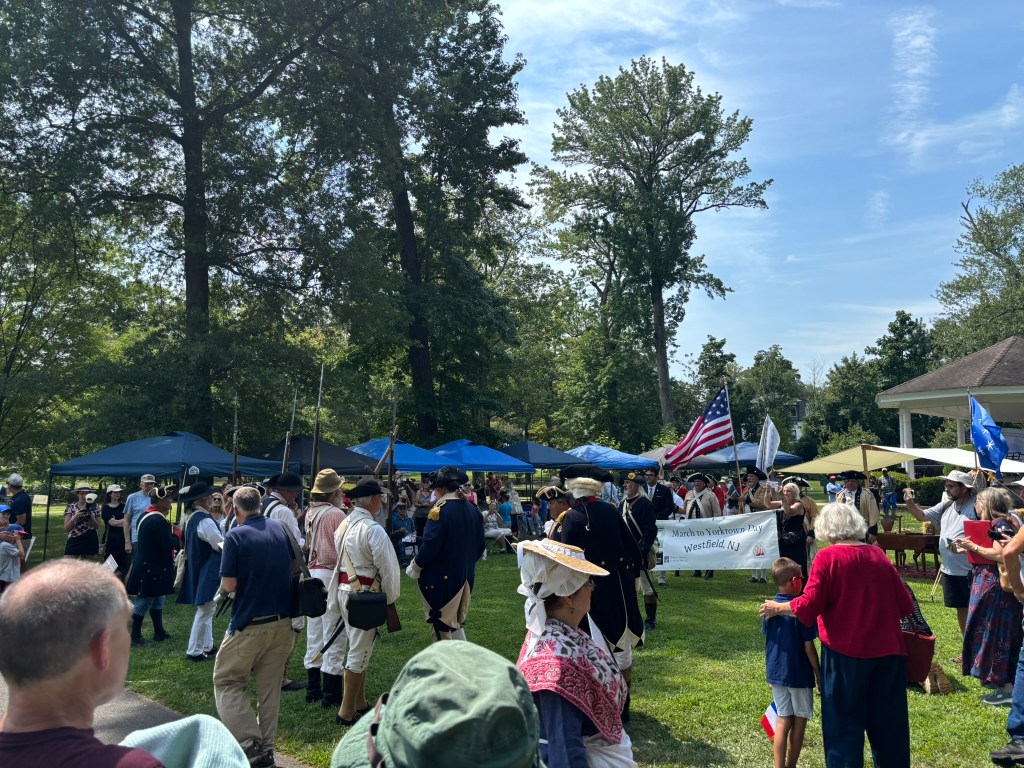
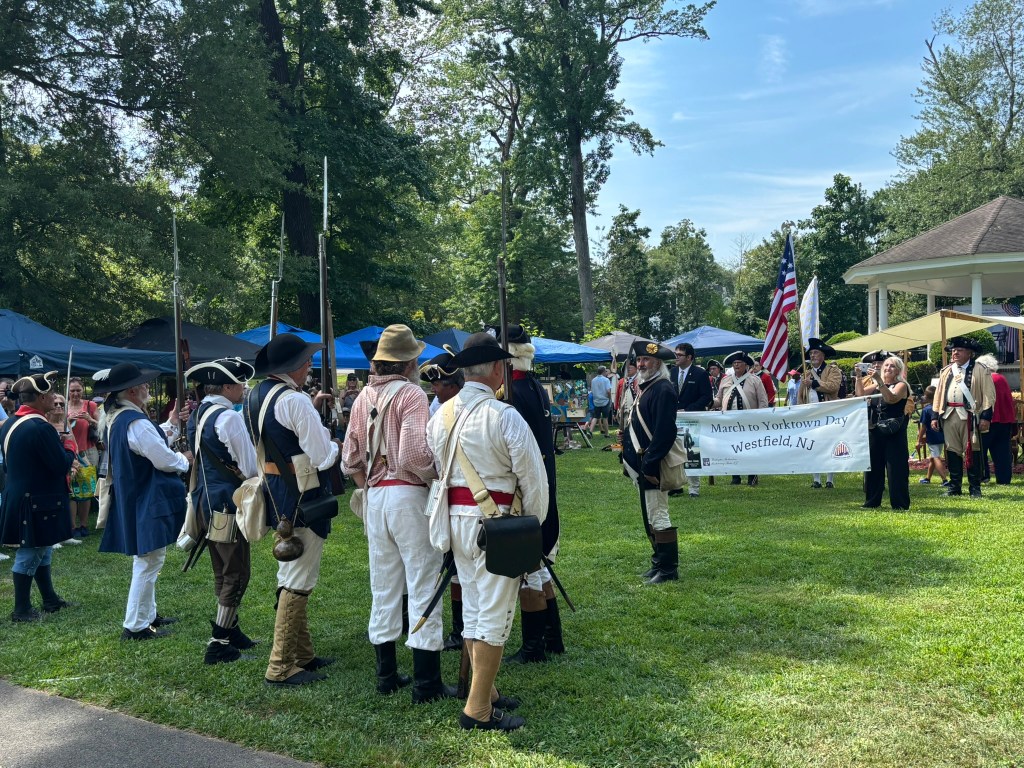
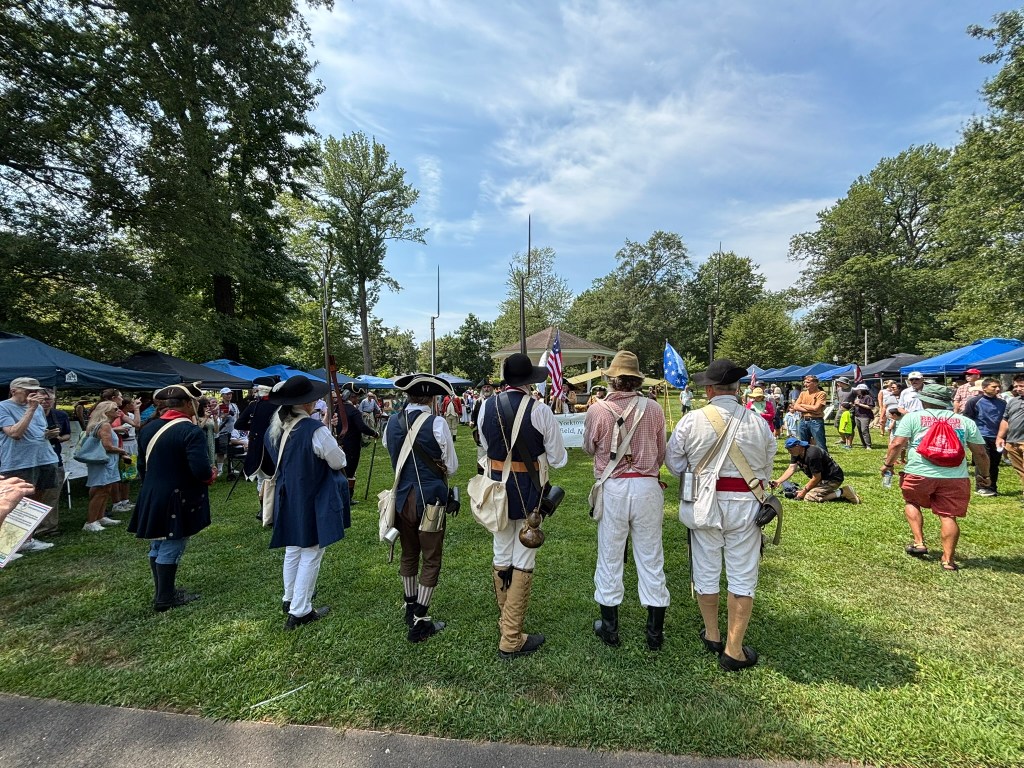
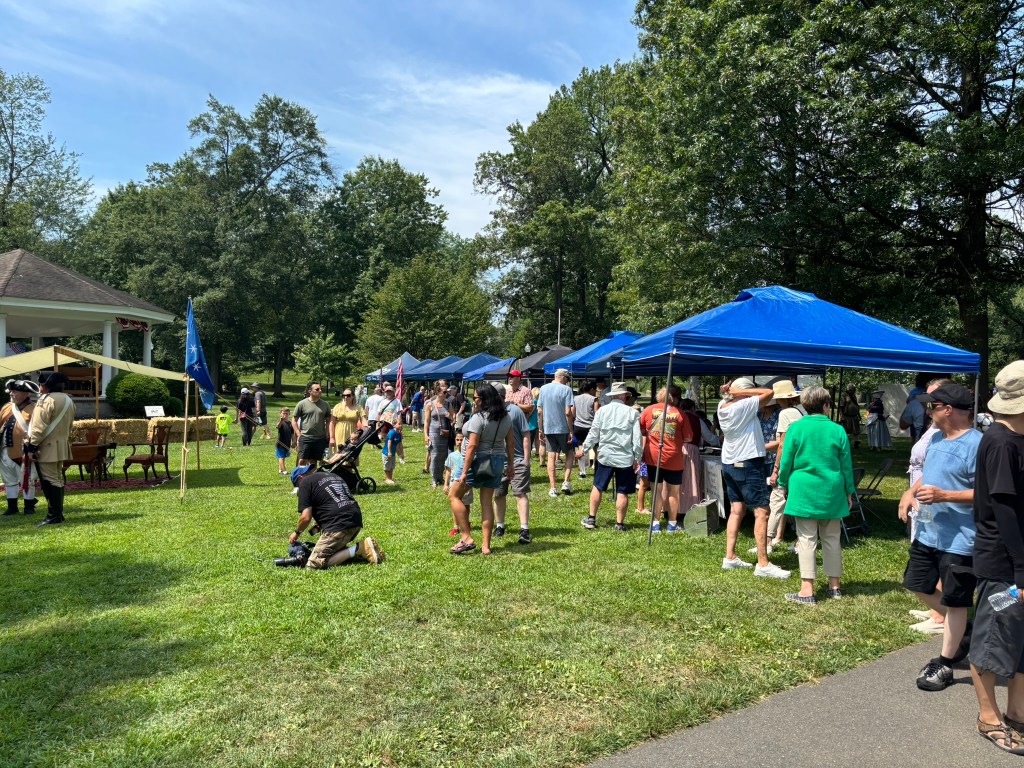
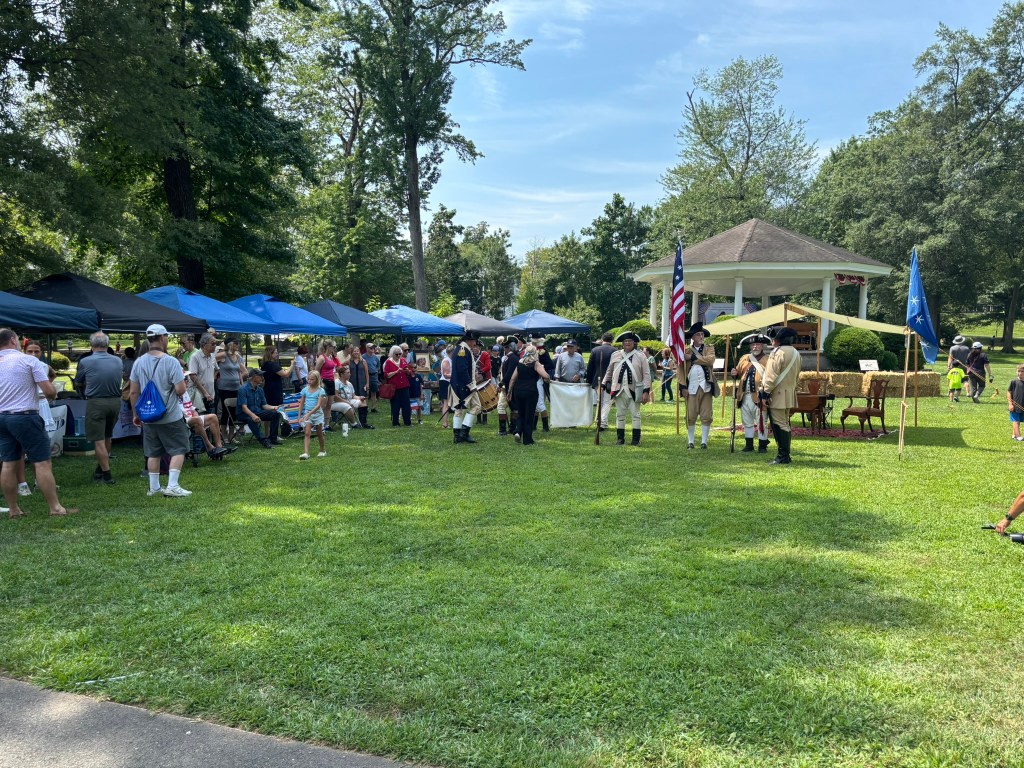
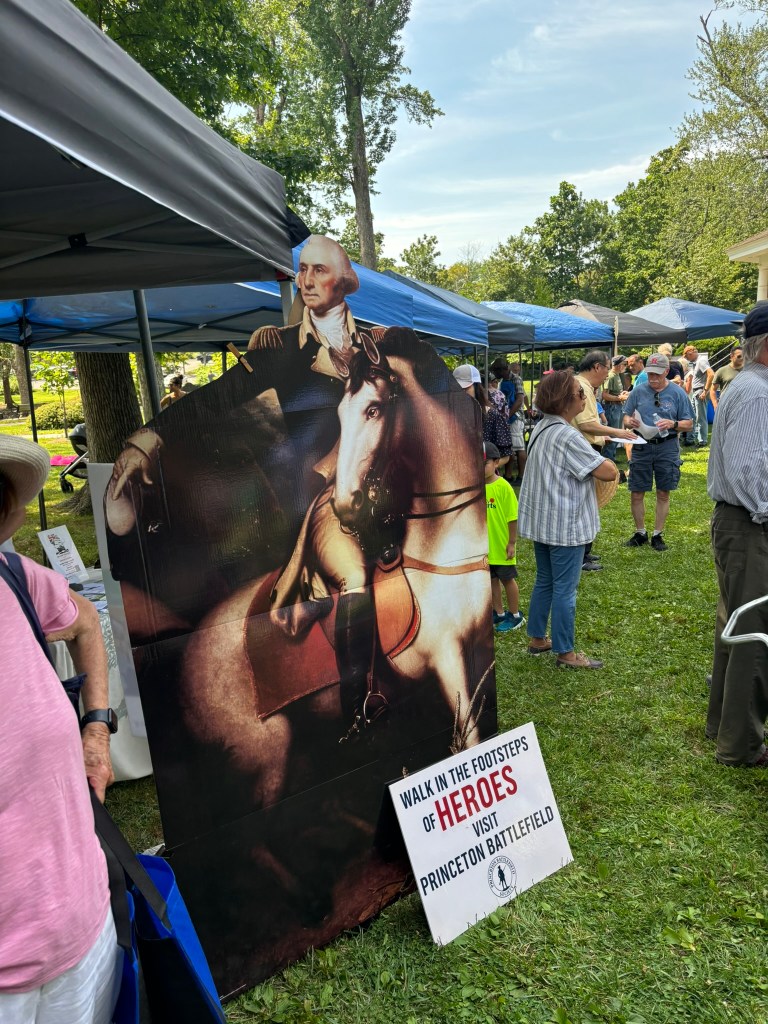
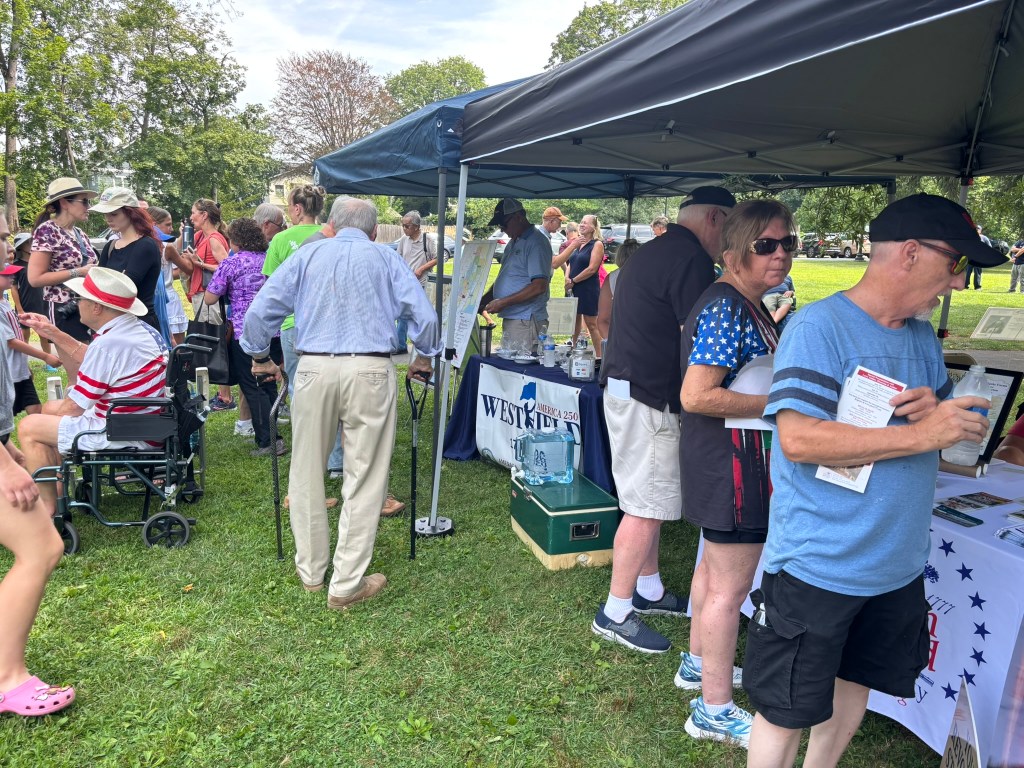
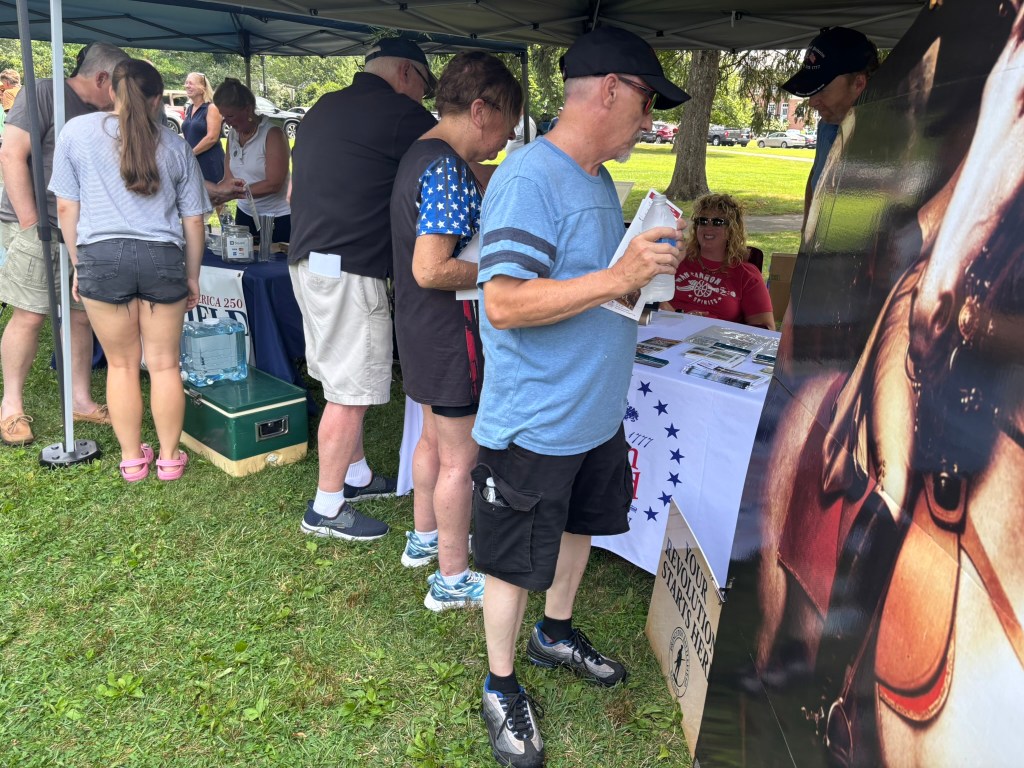
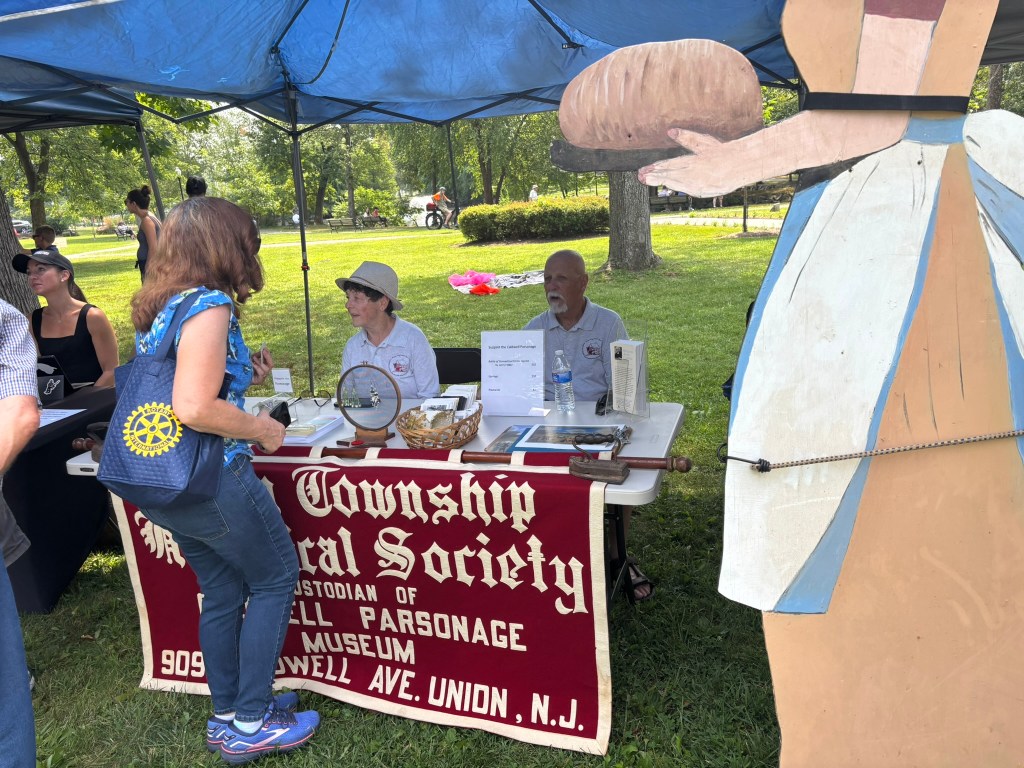
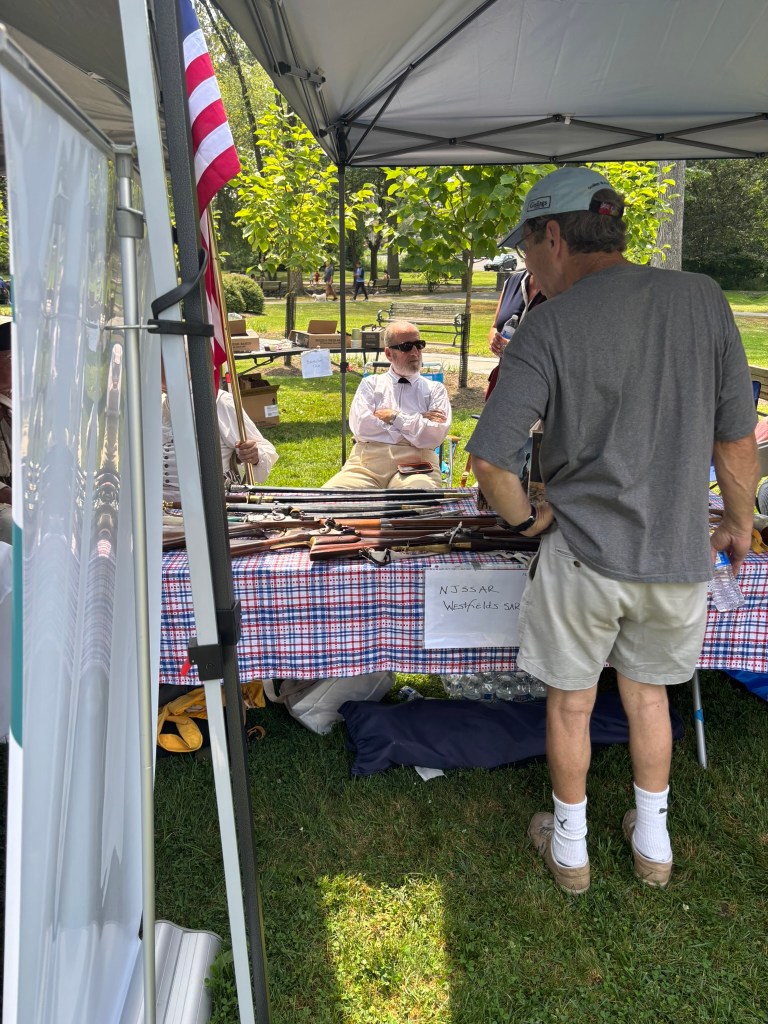
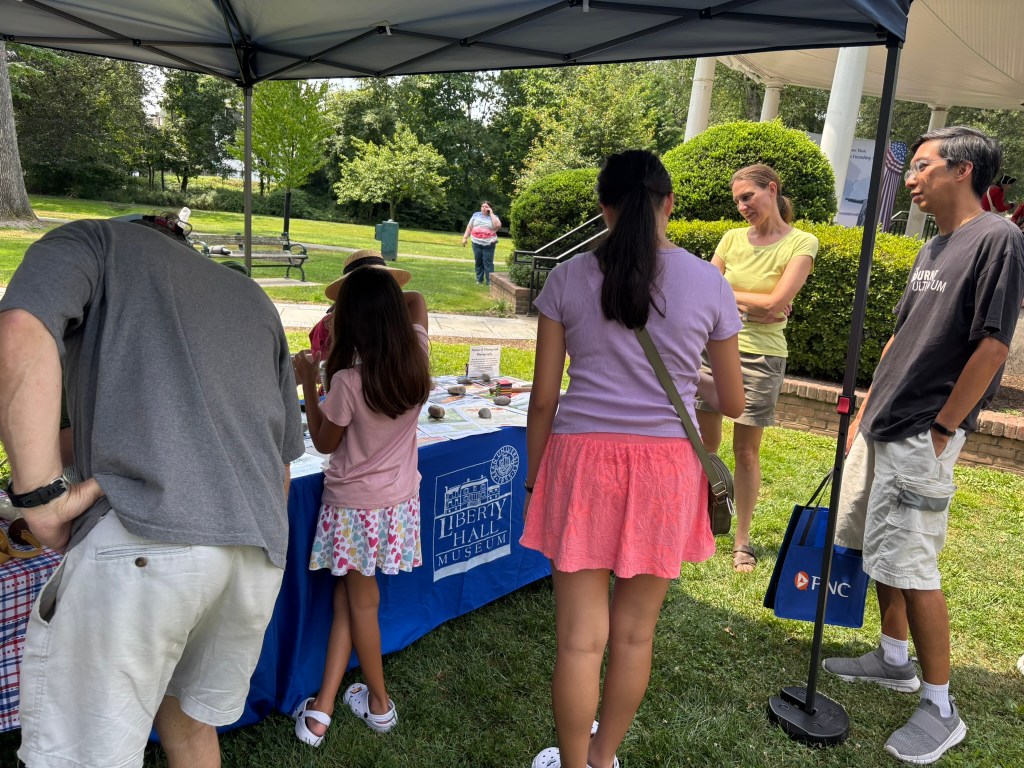
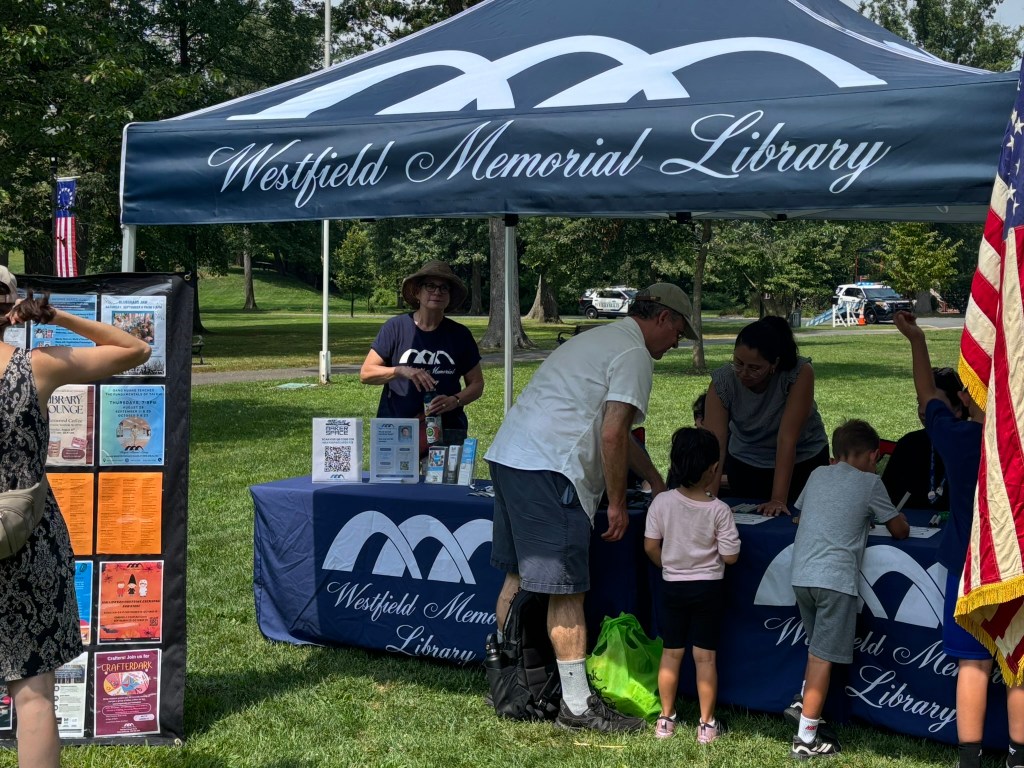
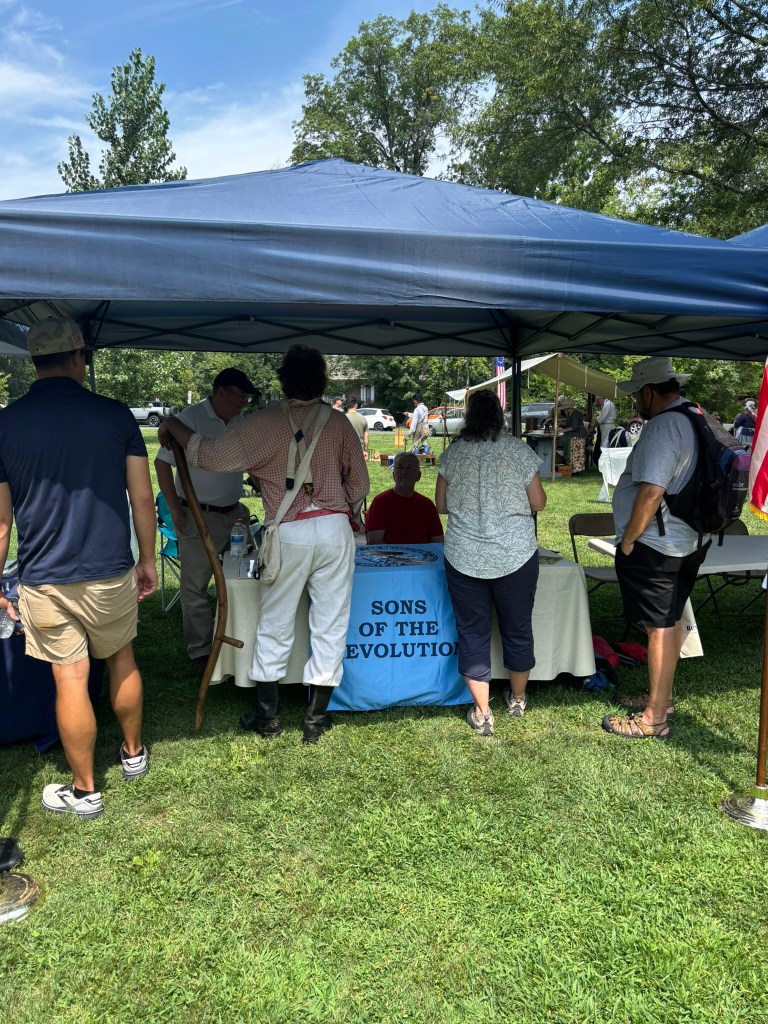
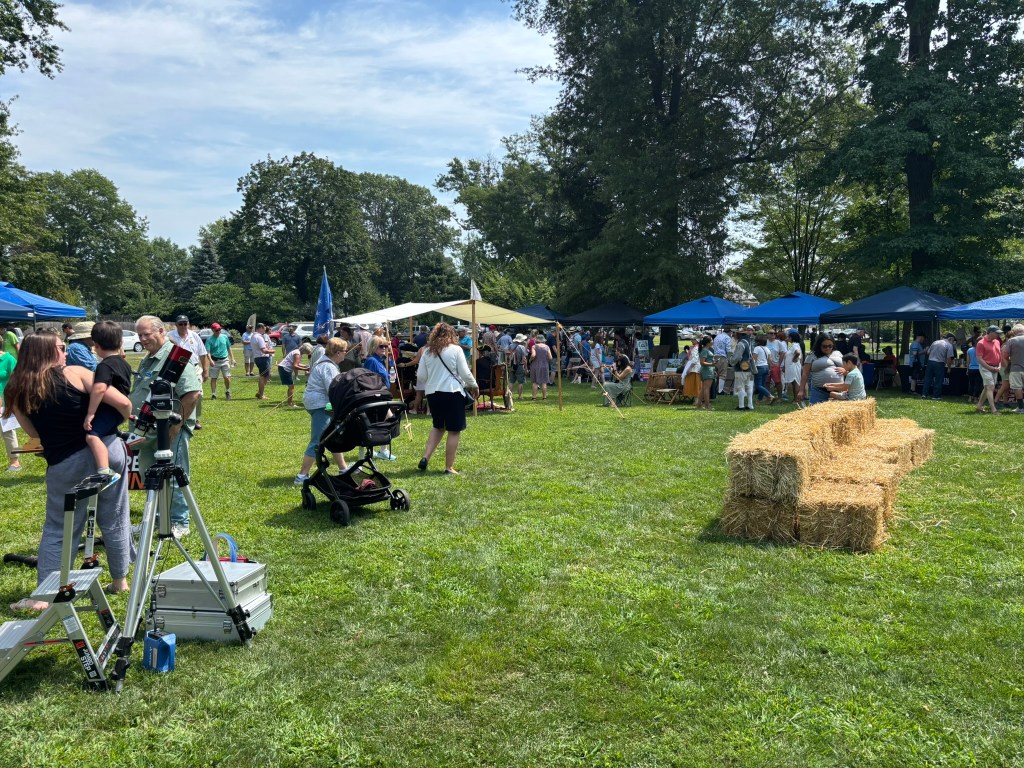
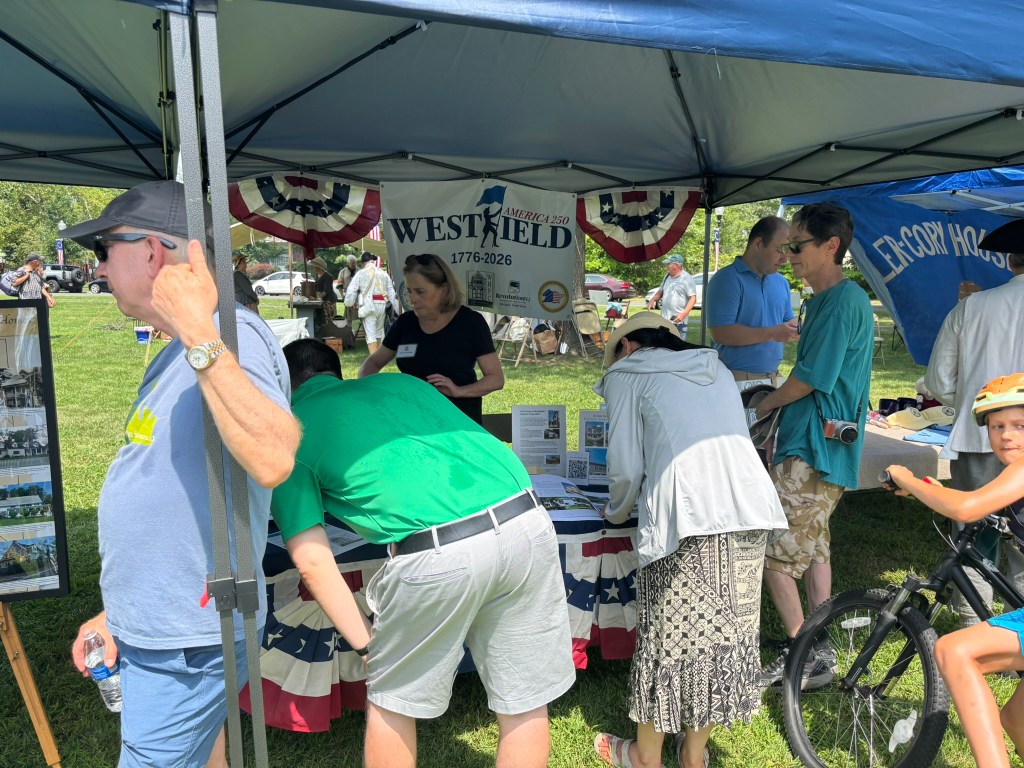
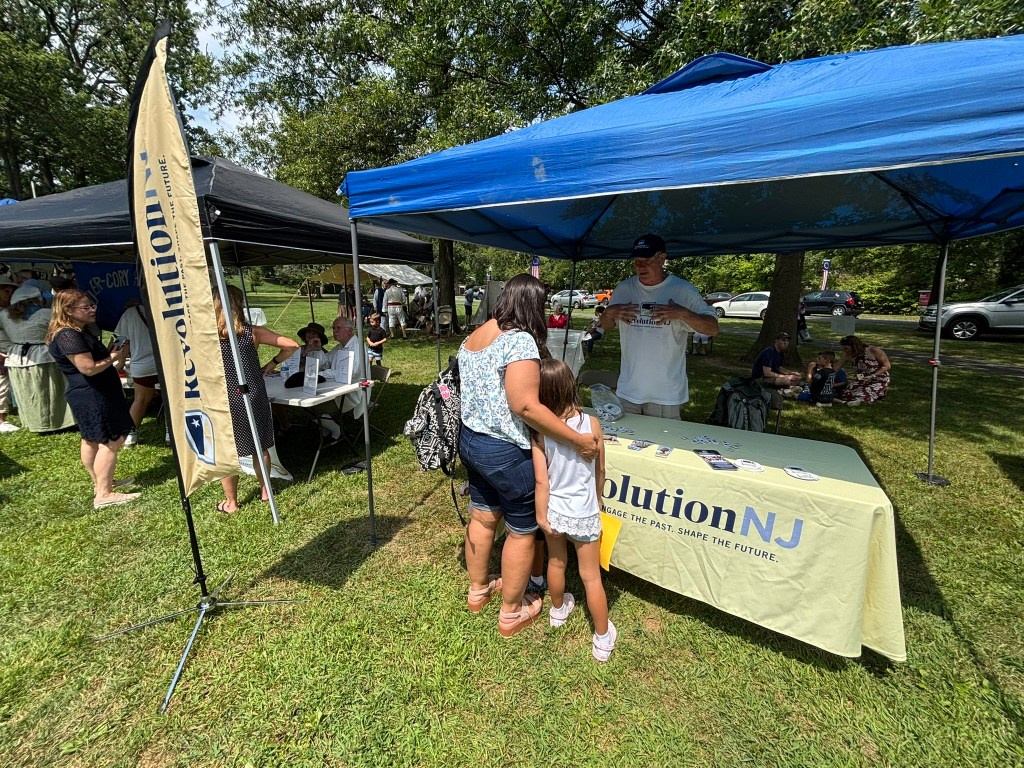
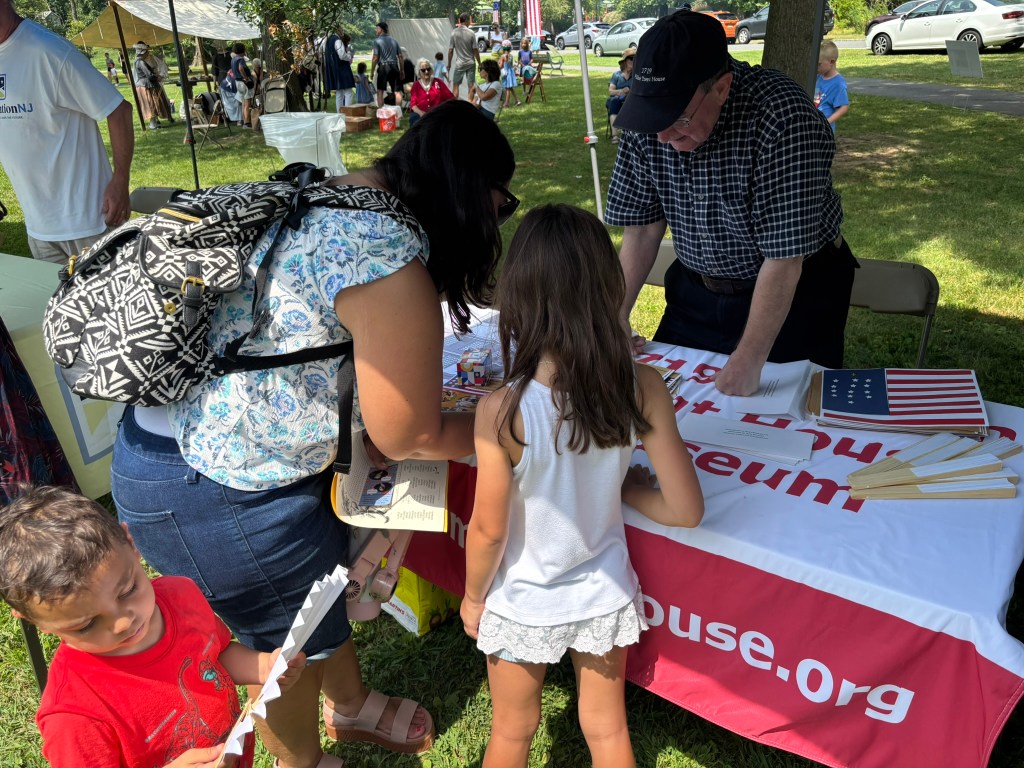
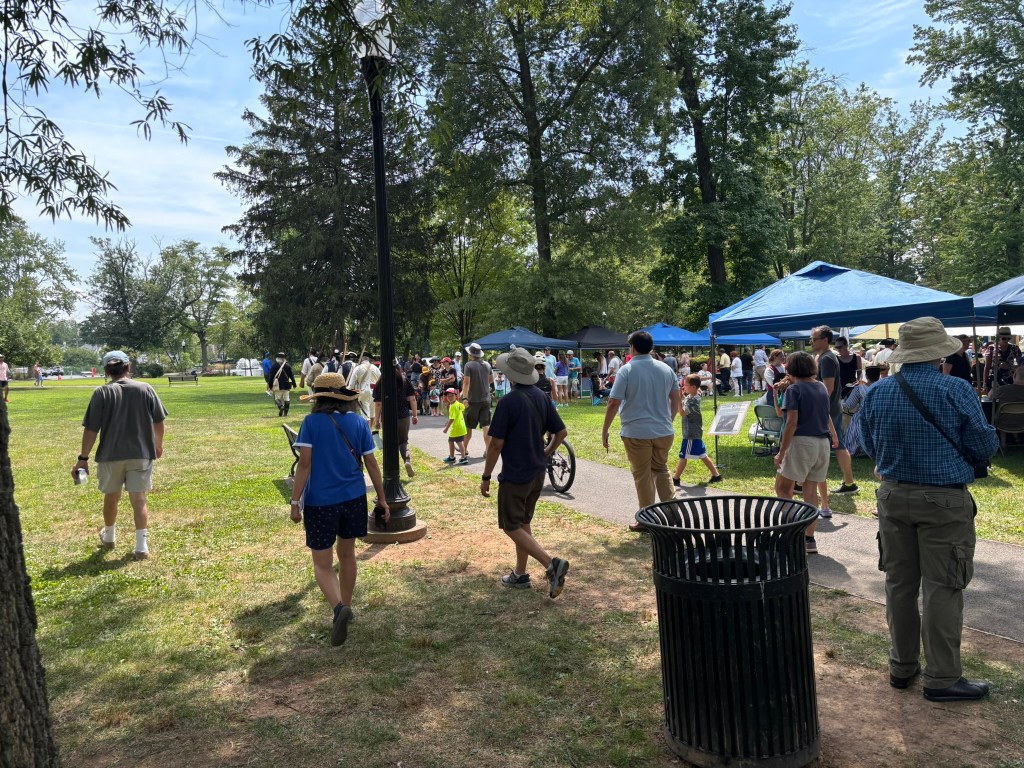
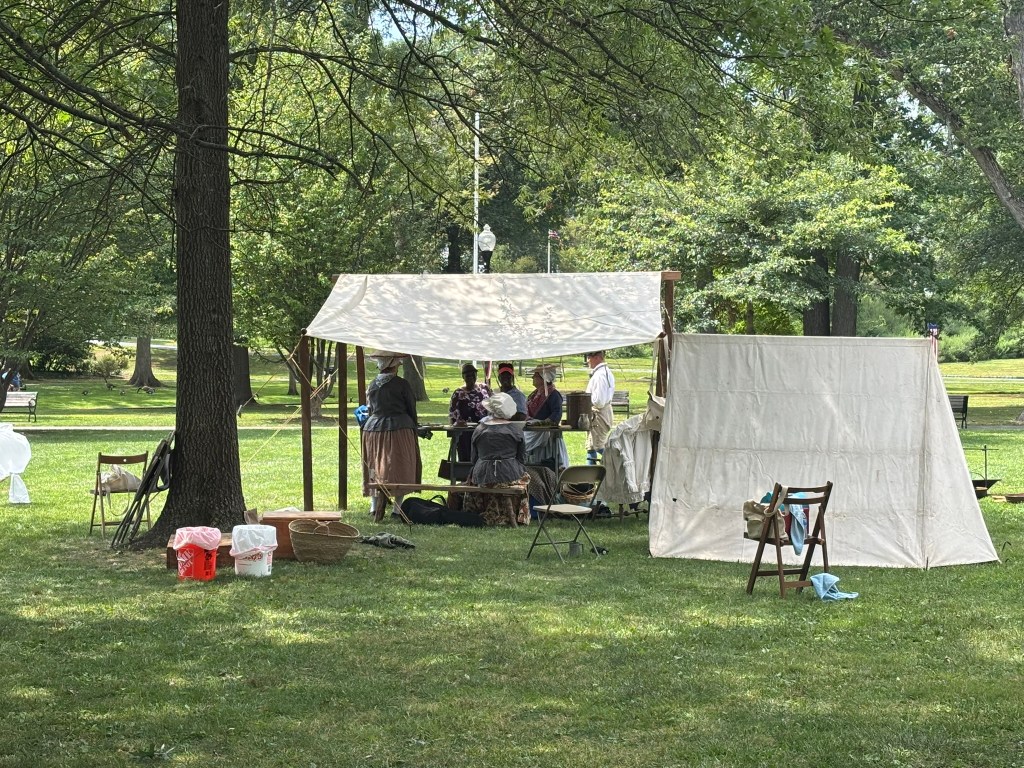
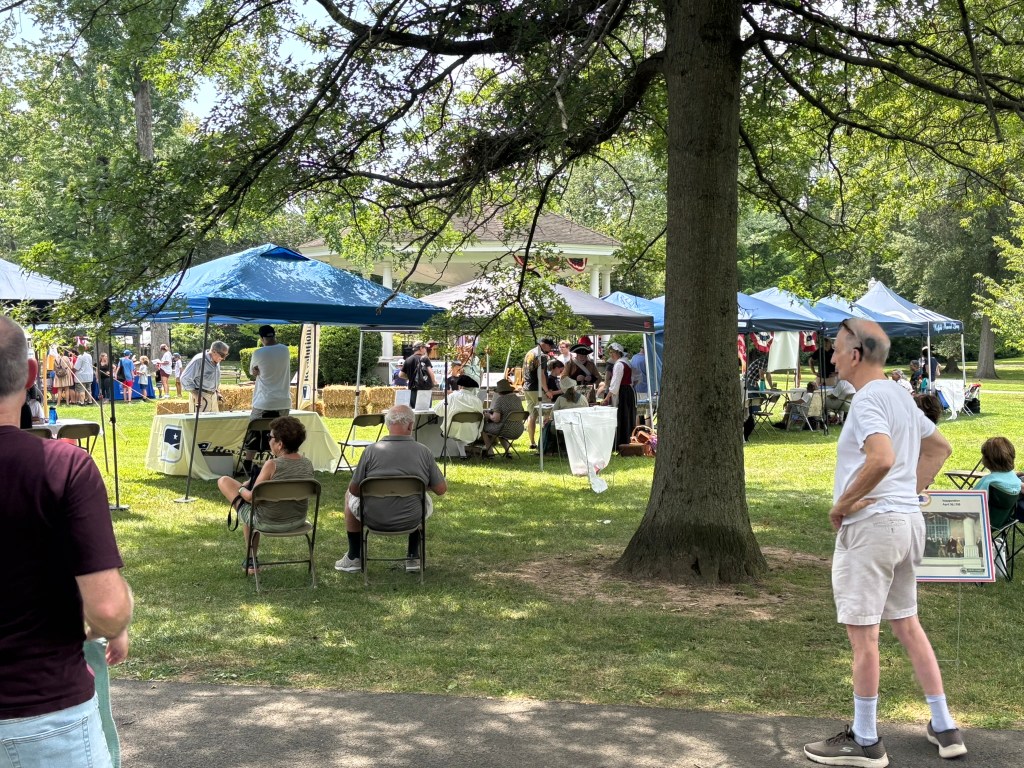
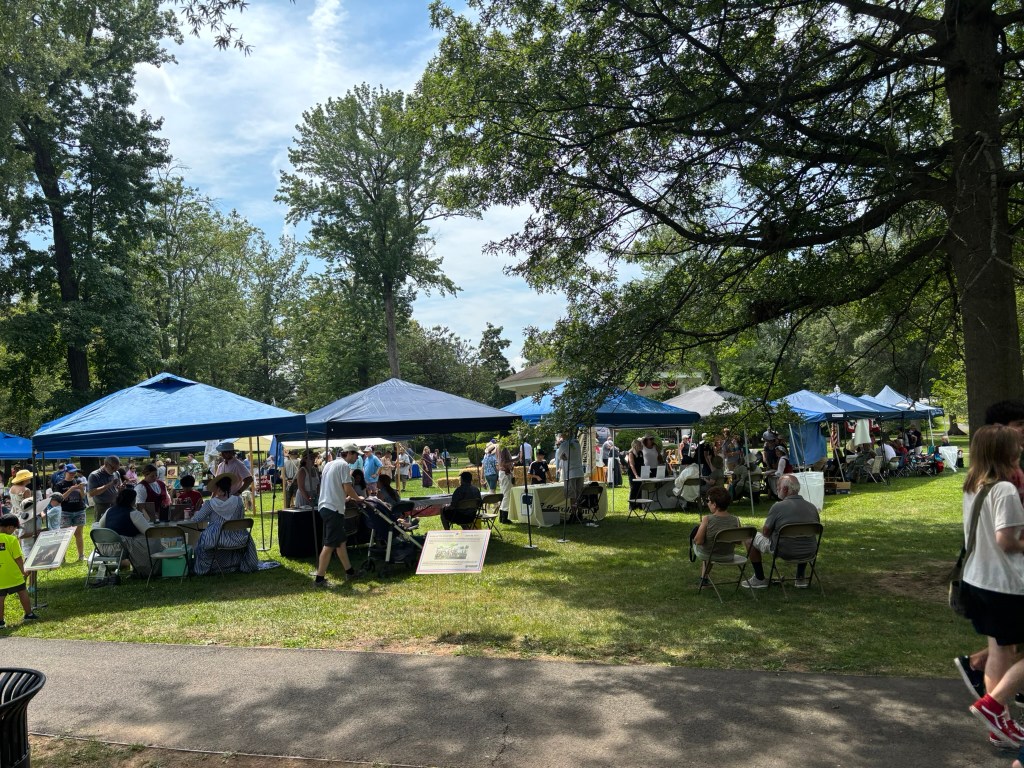
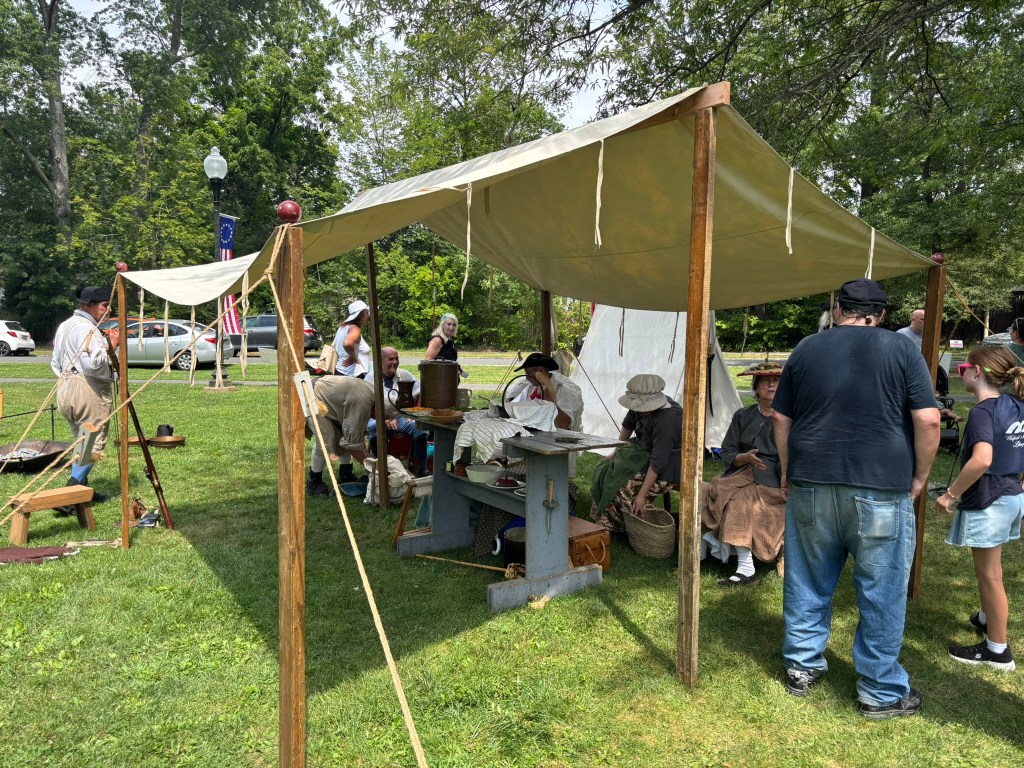
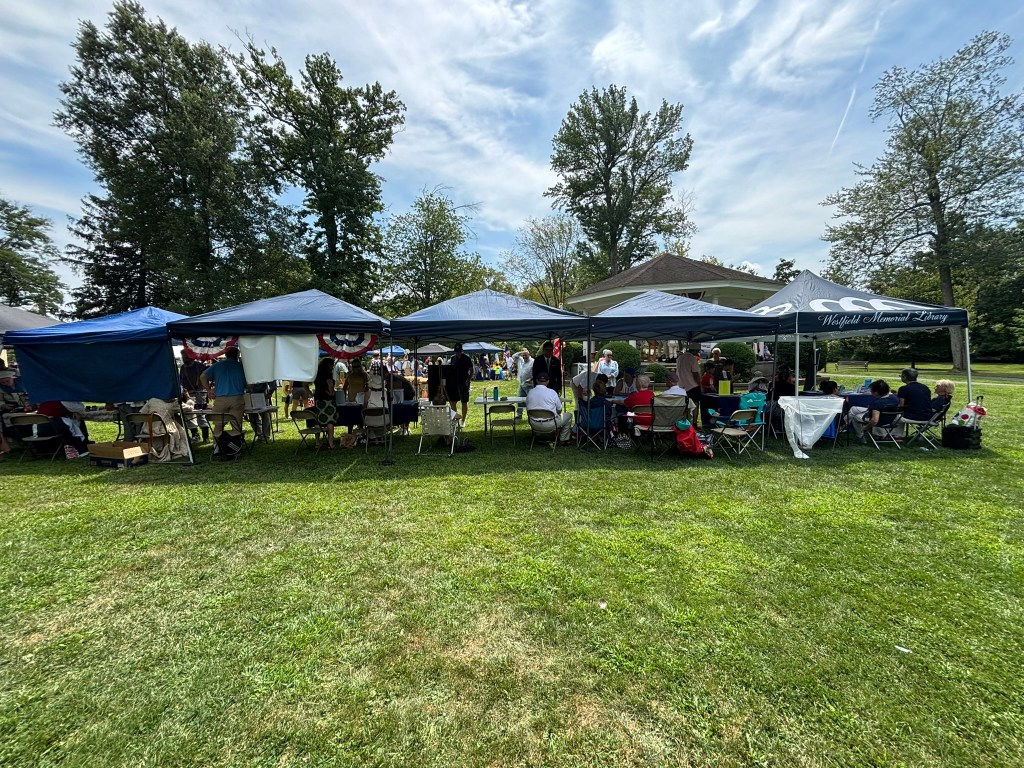
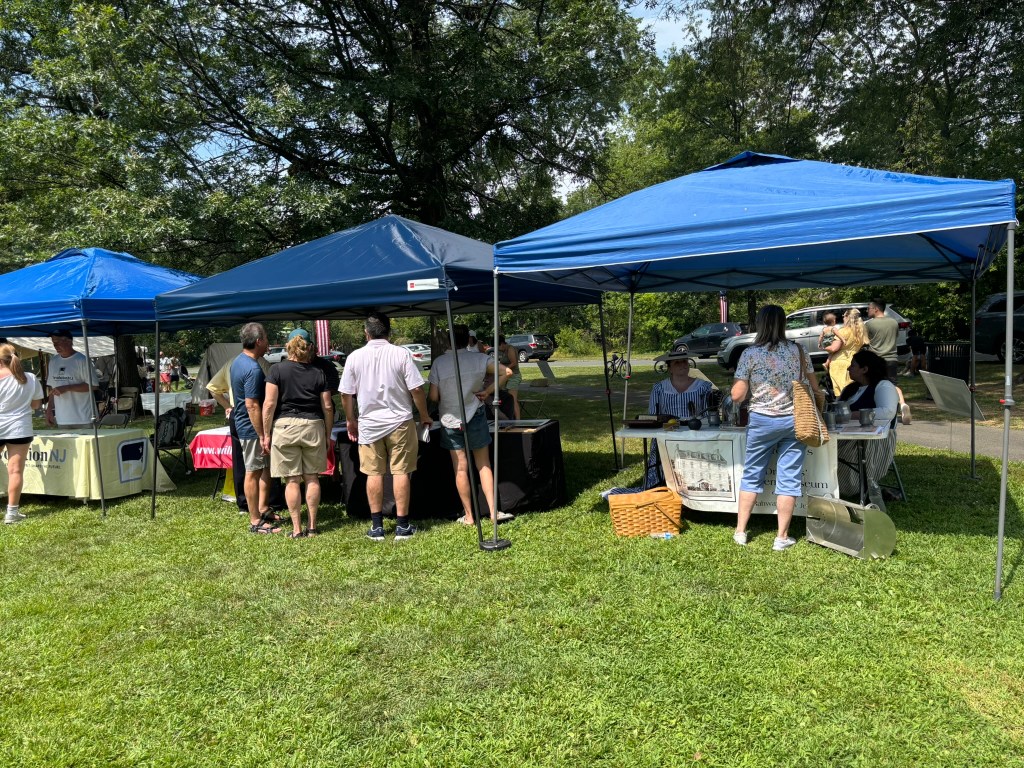
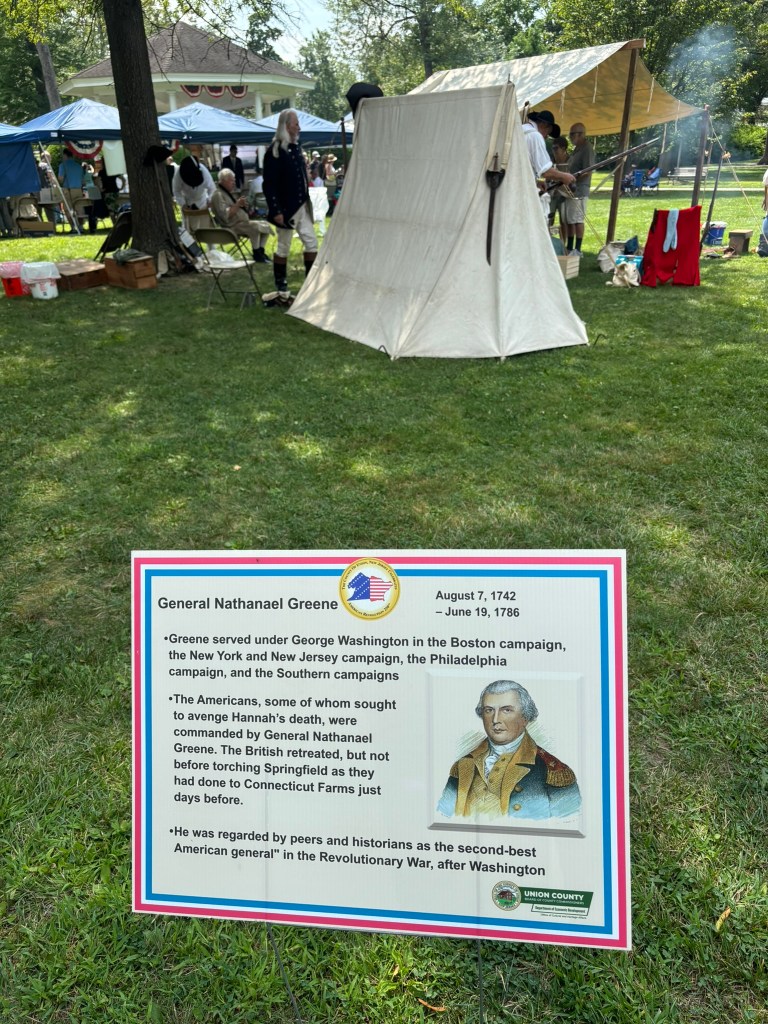
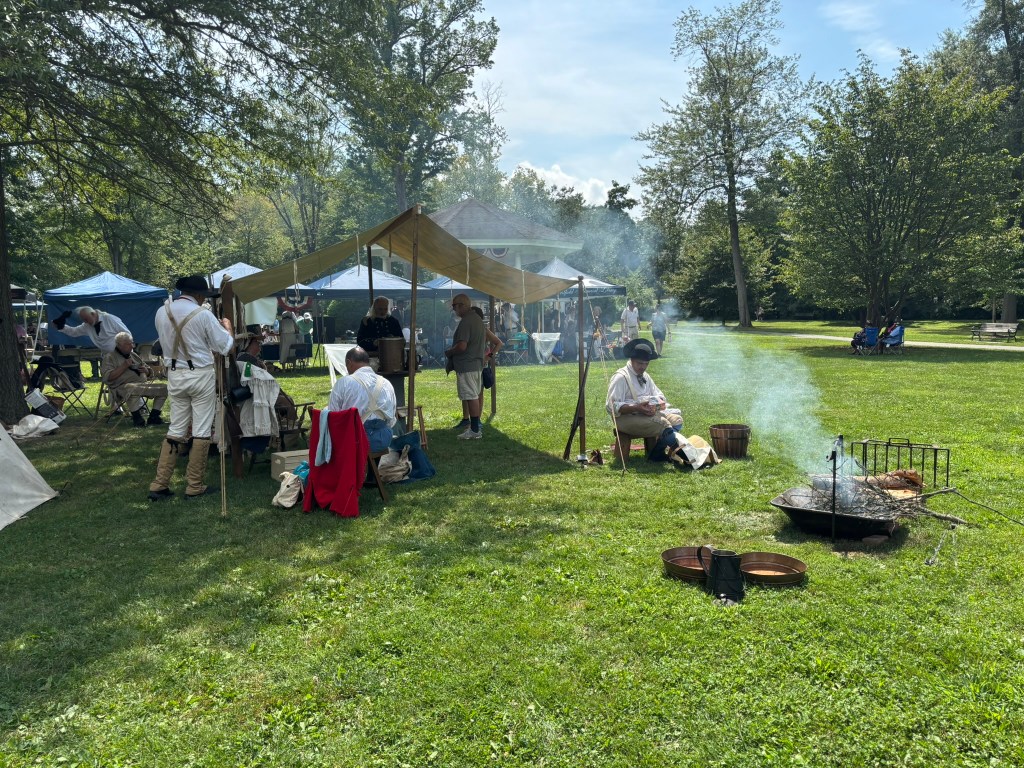
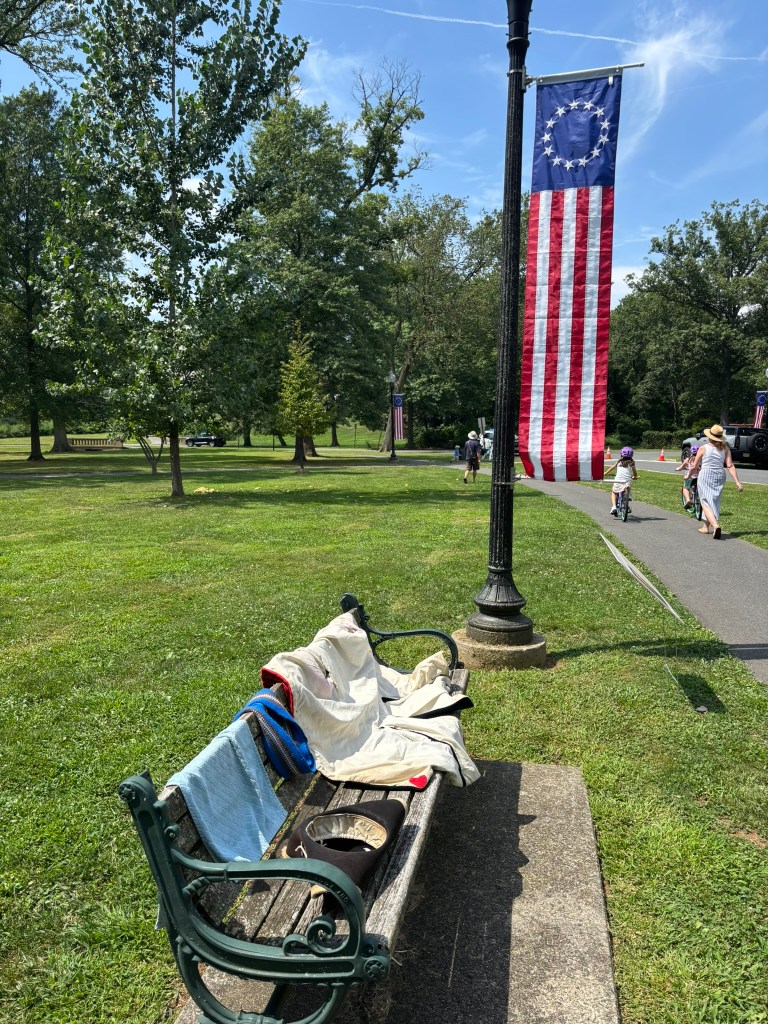
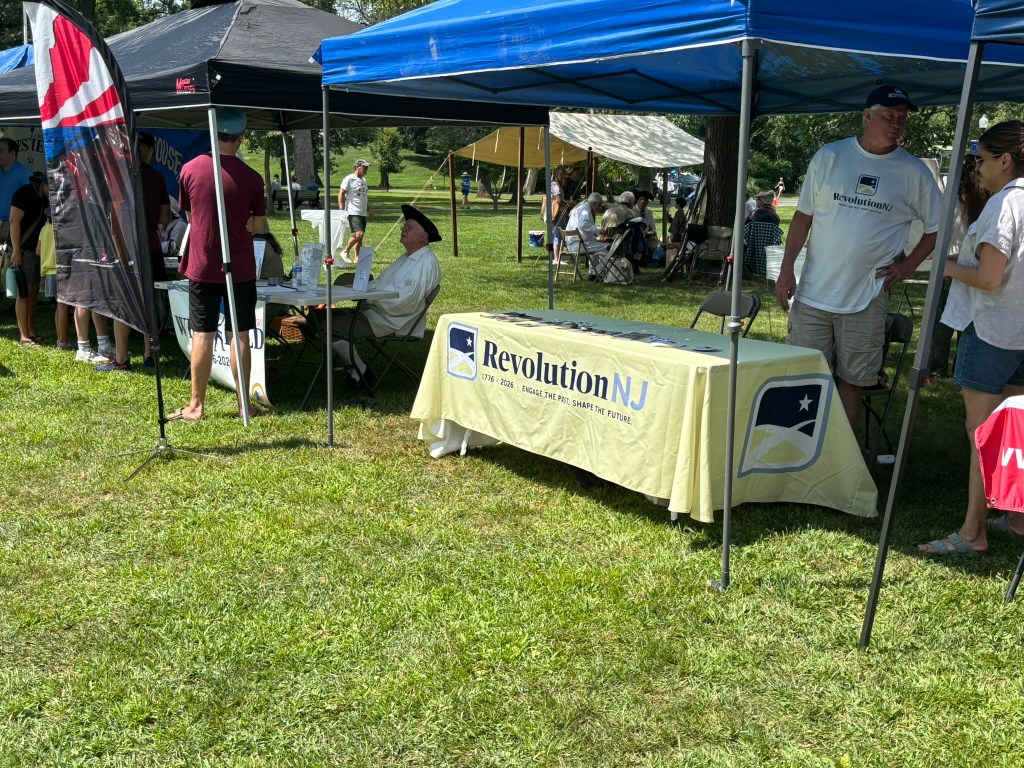
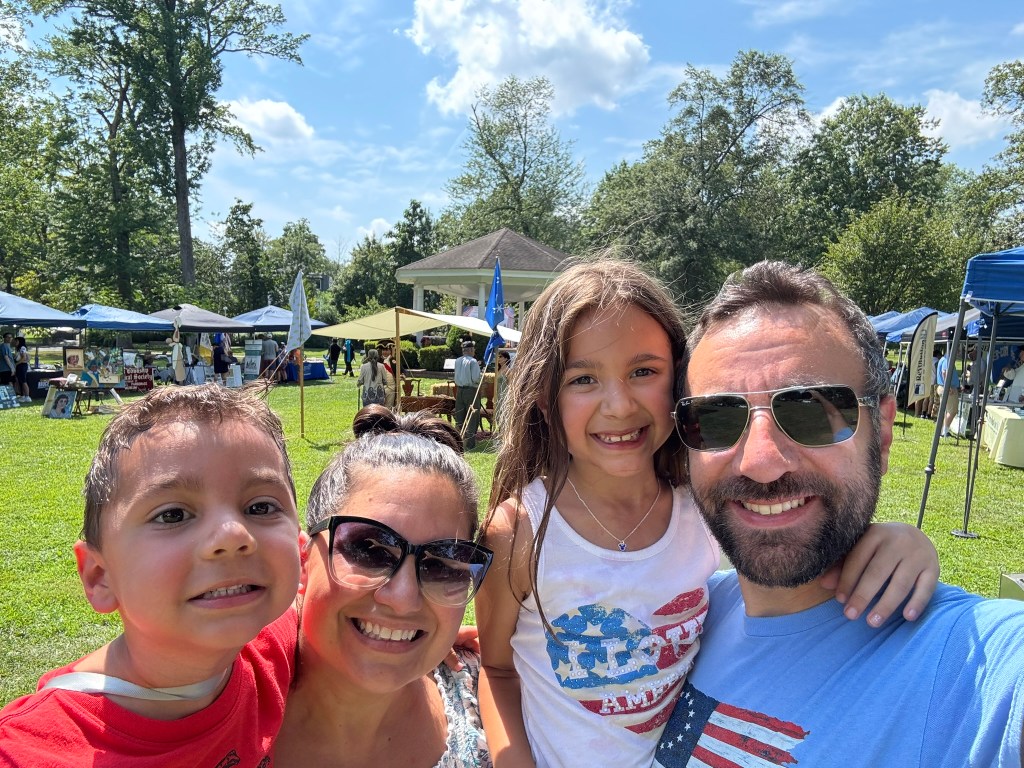
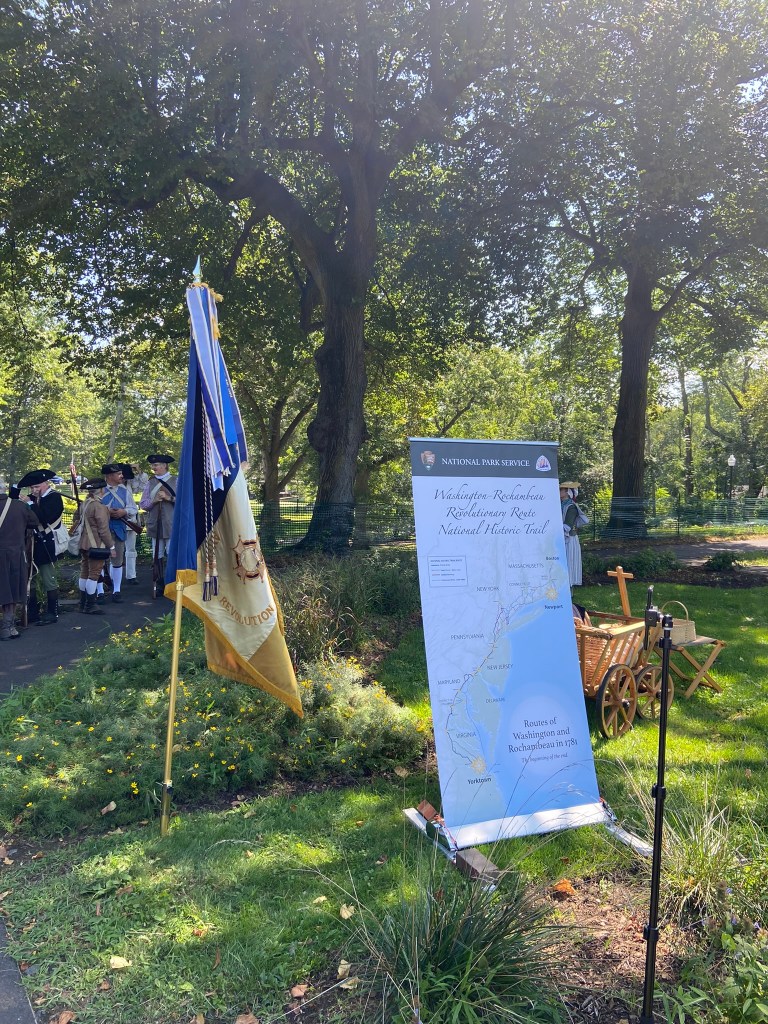
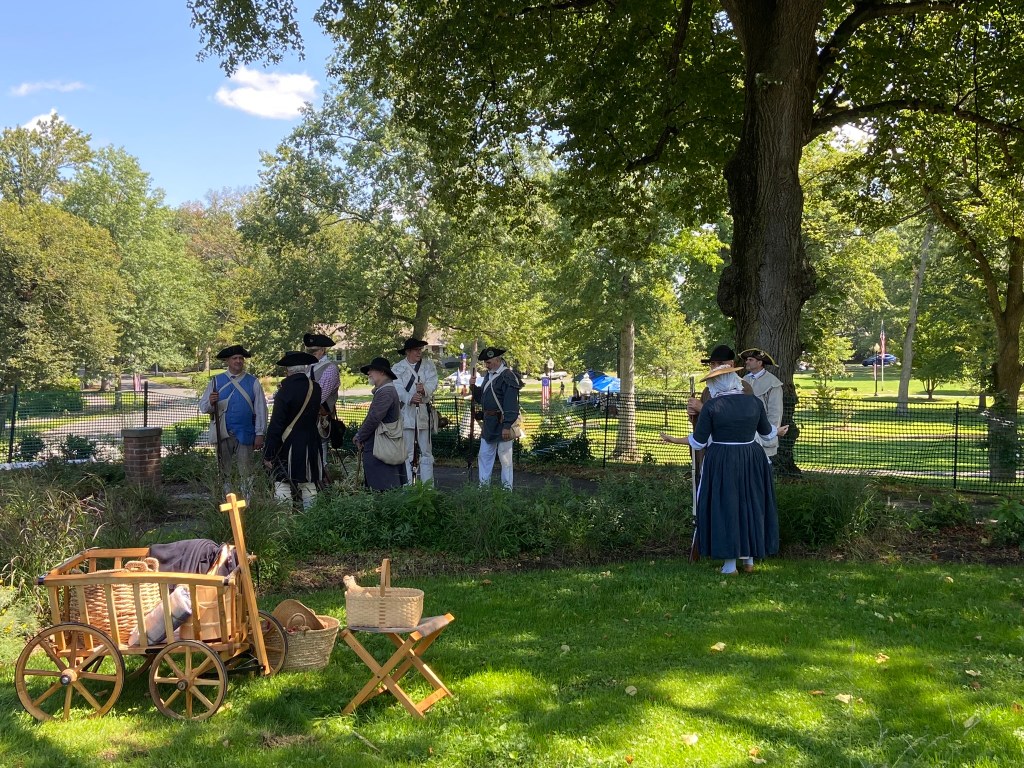
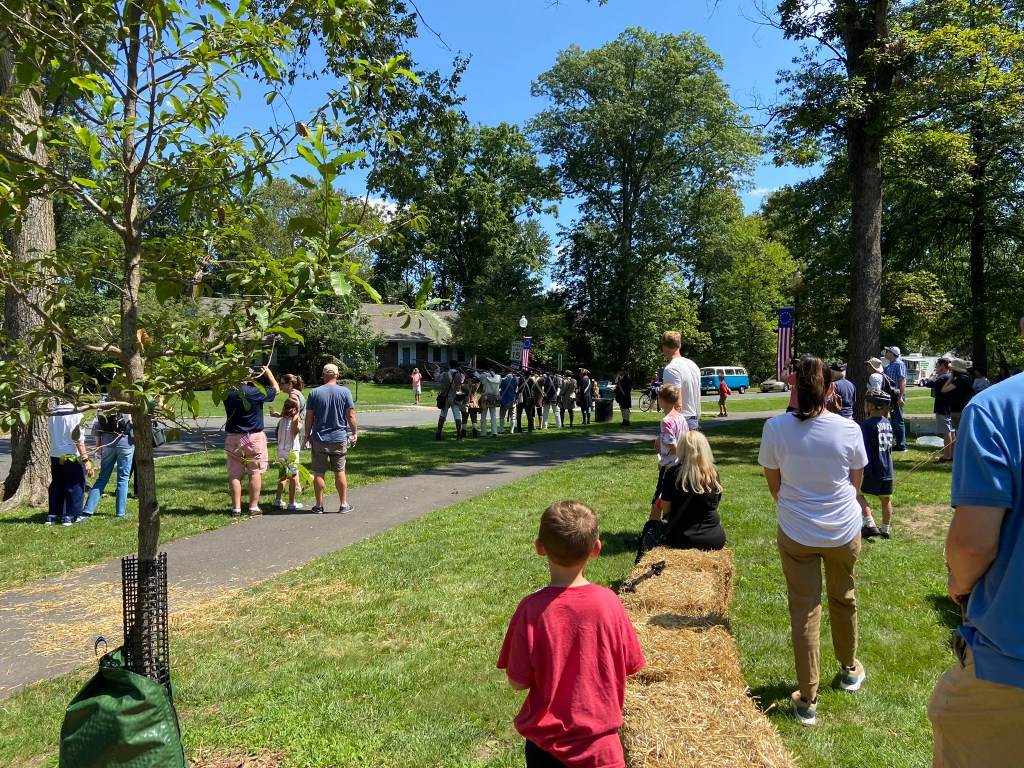
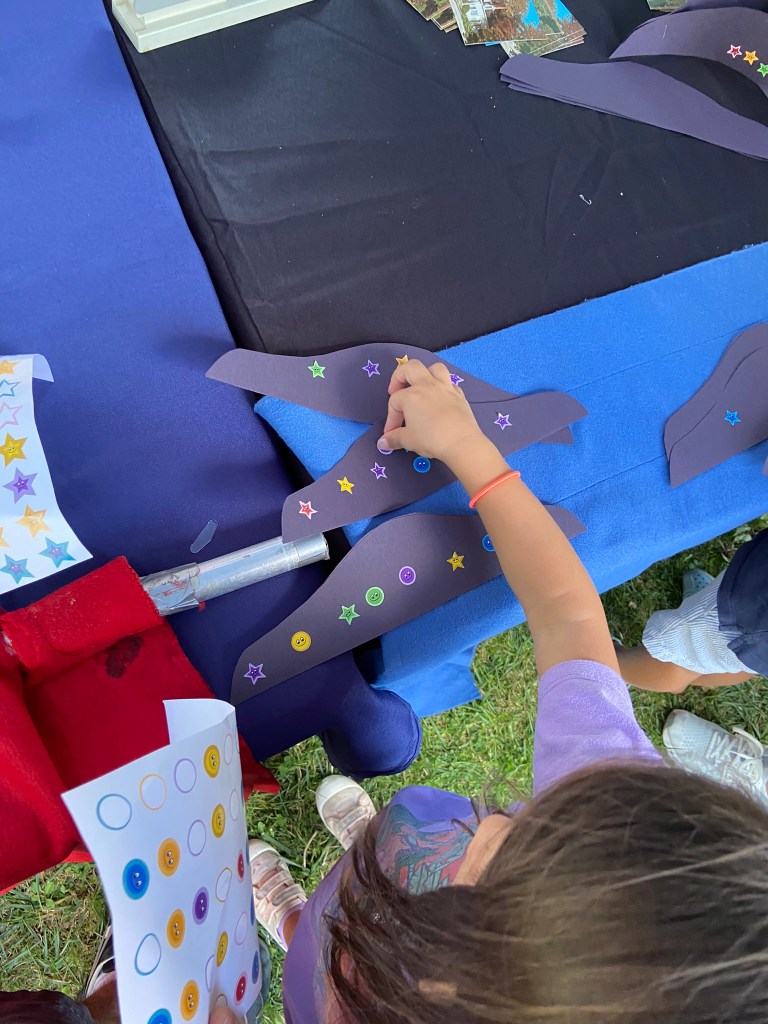
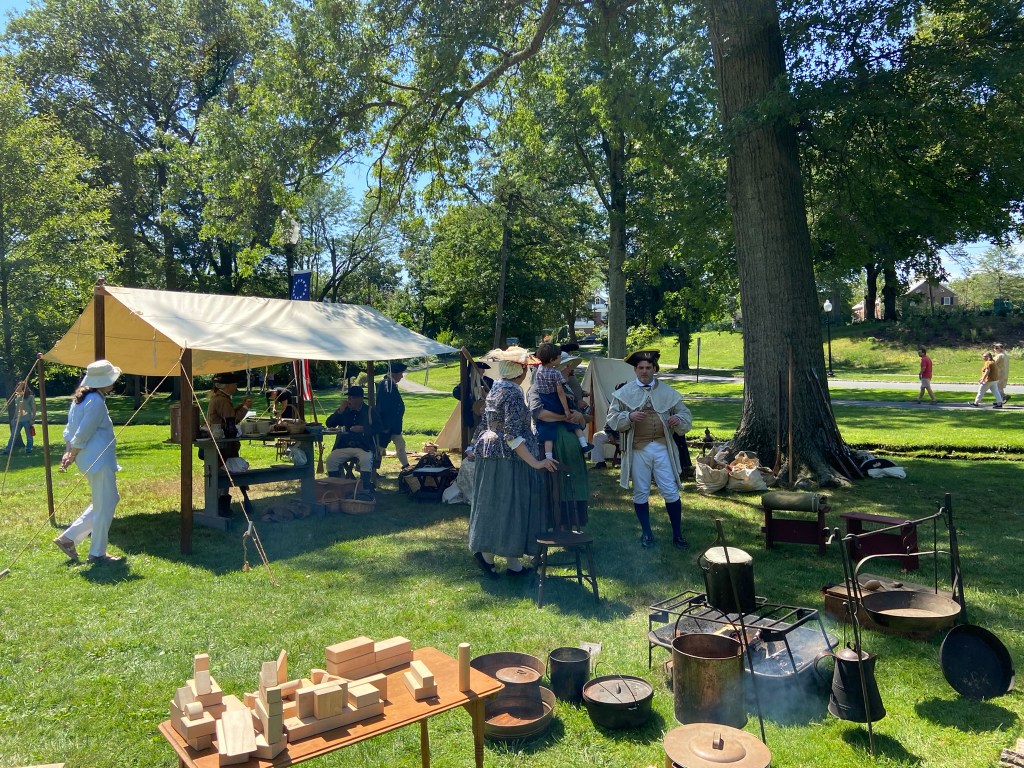
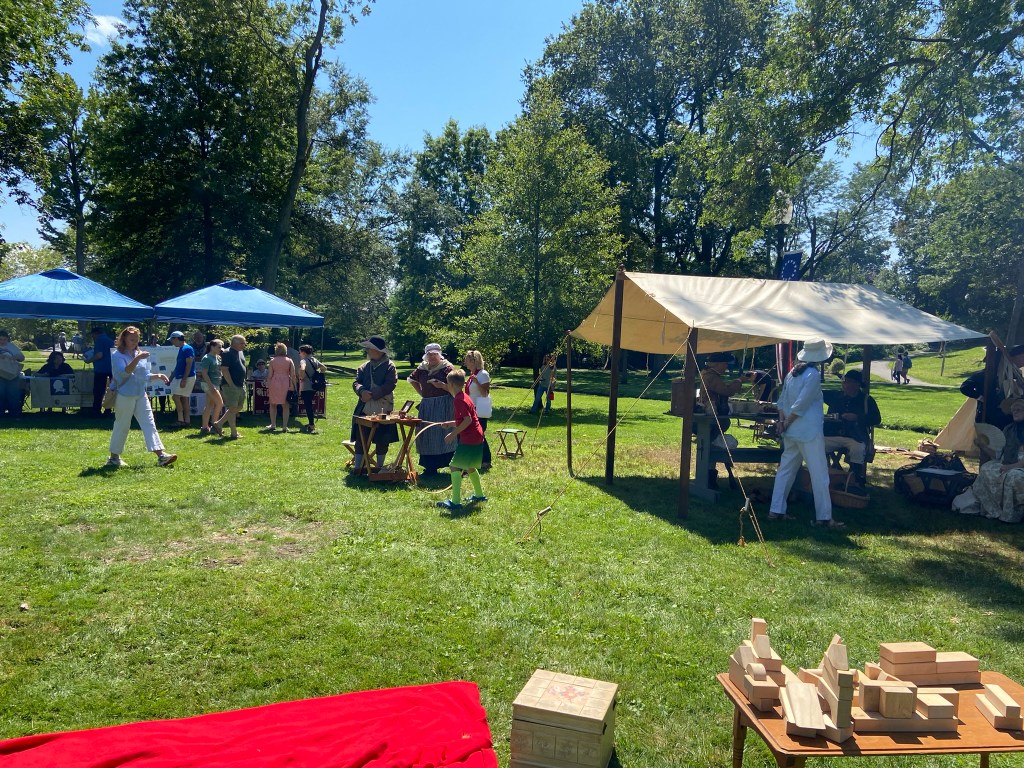
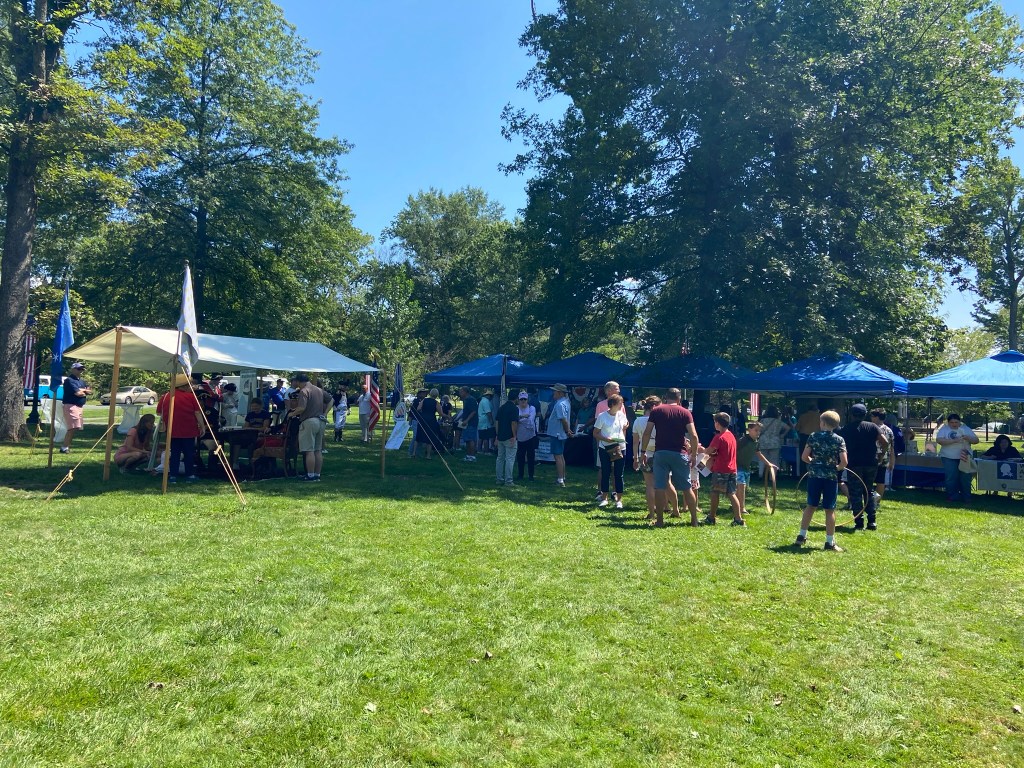
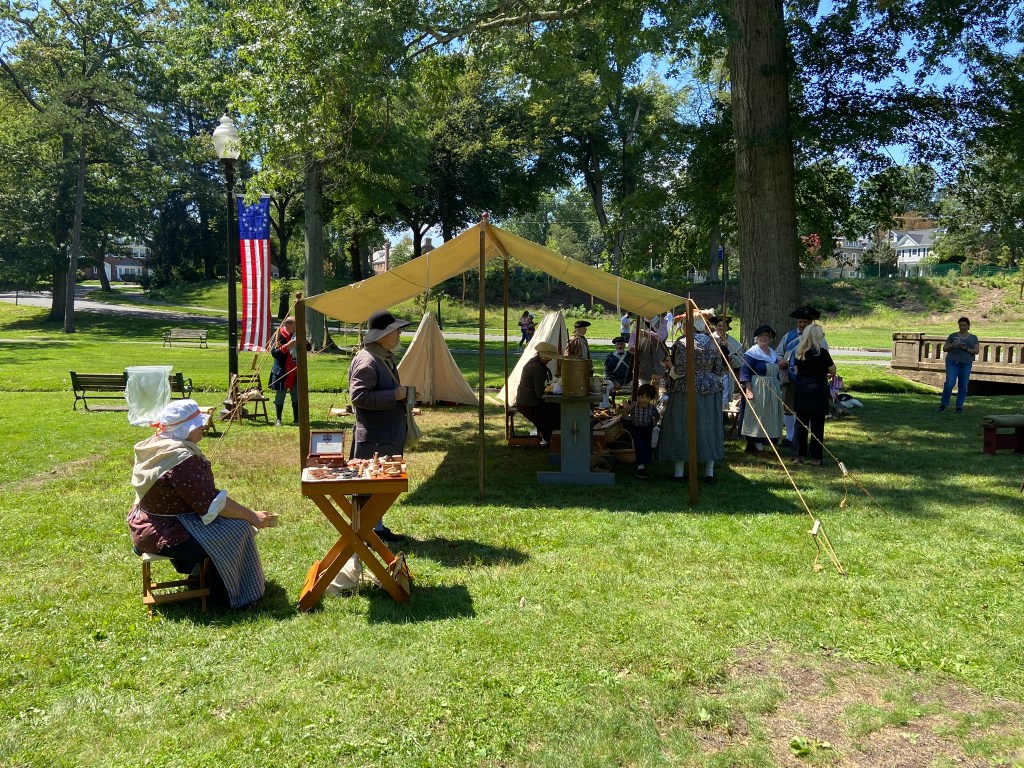
The grounds of Mindowaskin Park were transformed into a Revolutionary War encampment, complete with colonial-era games, open-fire cooking demonstrations, and regular drills, marches, and musket firing by soldiers in uniform.
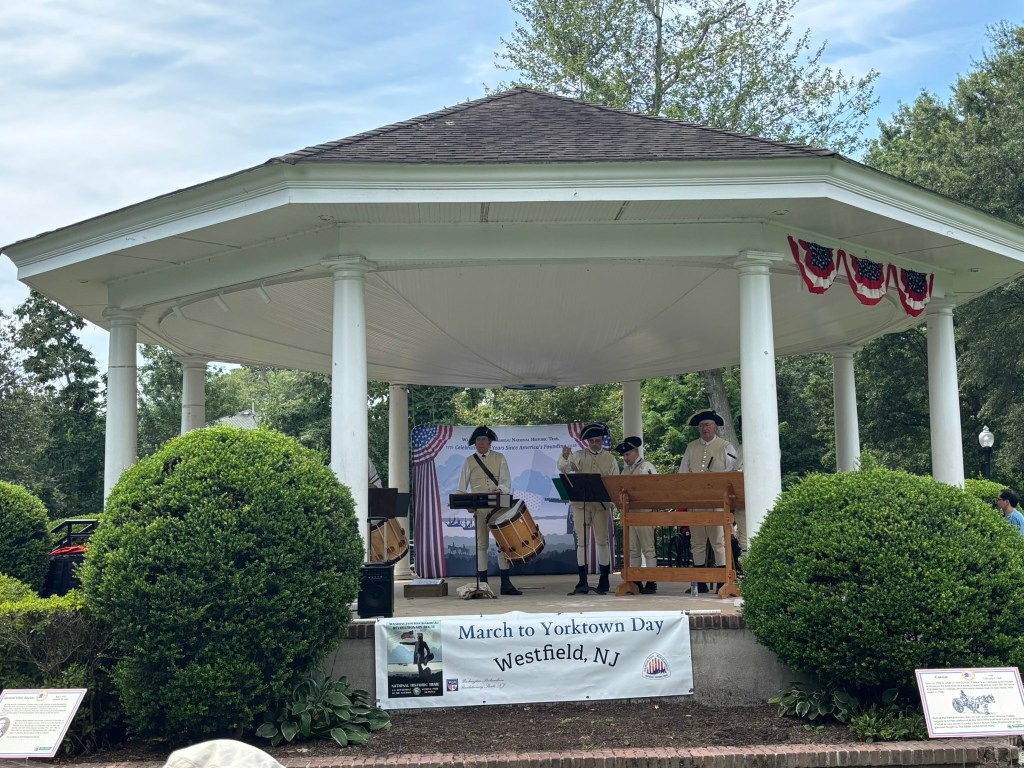
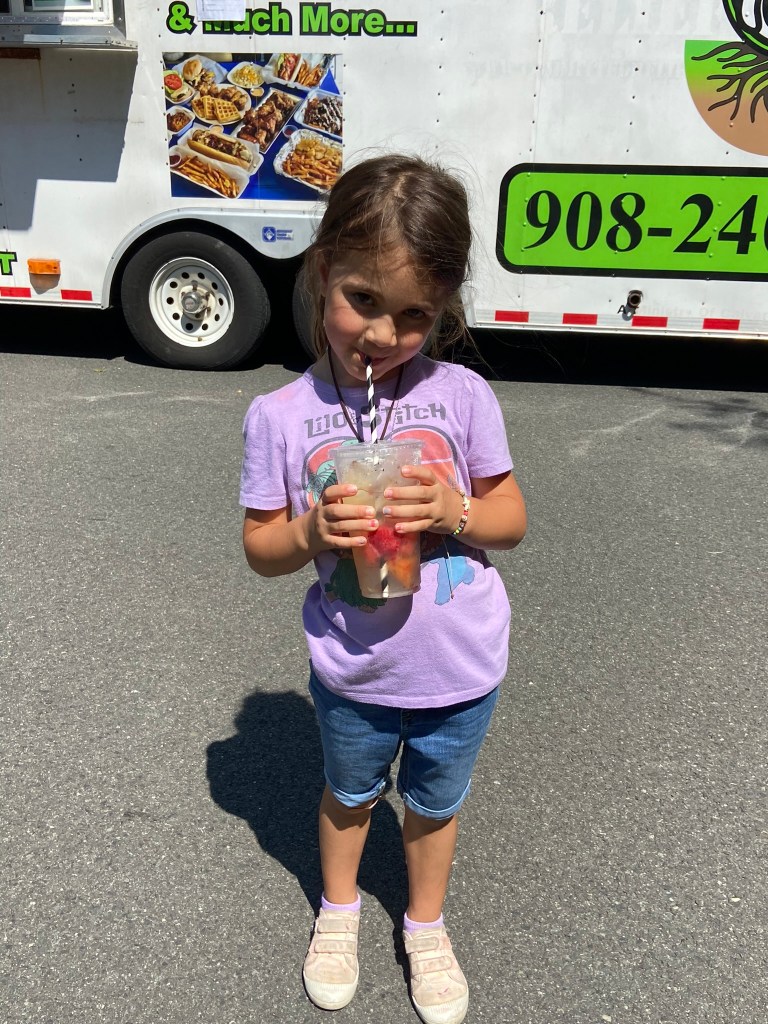
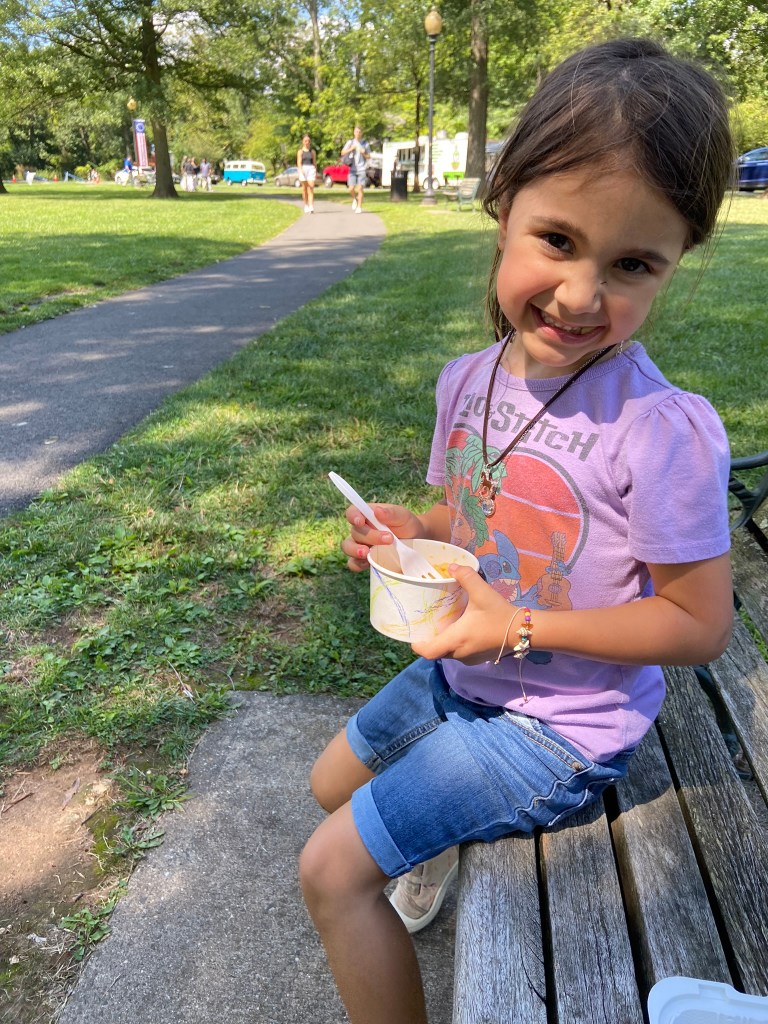
My family and I grabbed lunch from the food truck run by A Taco Affair, and it was delicious. The restaurant has locations in Westfield, Little Falls, and Denville, as well as Savannah, GA. After eating, we continued exploring the event—listening to the fifes and drums, watching musket demonstrations, and chatting with reenactors.
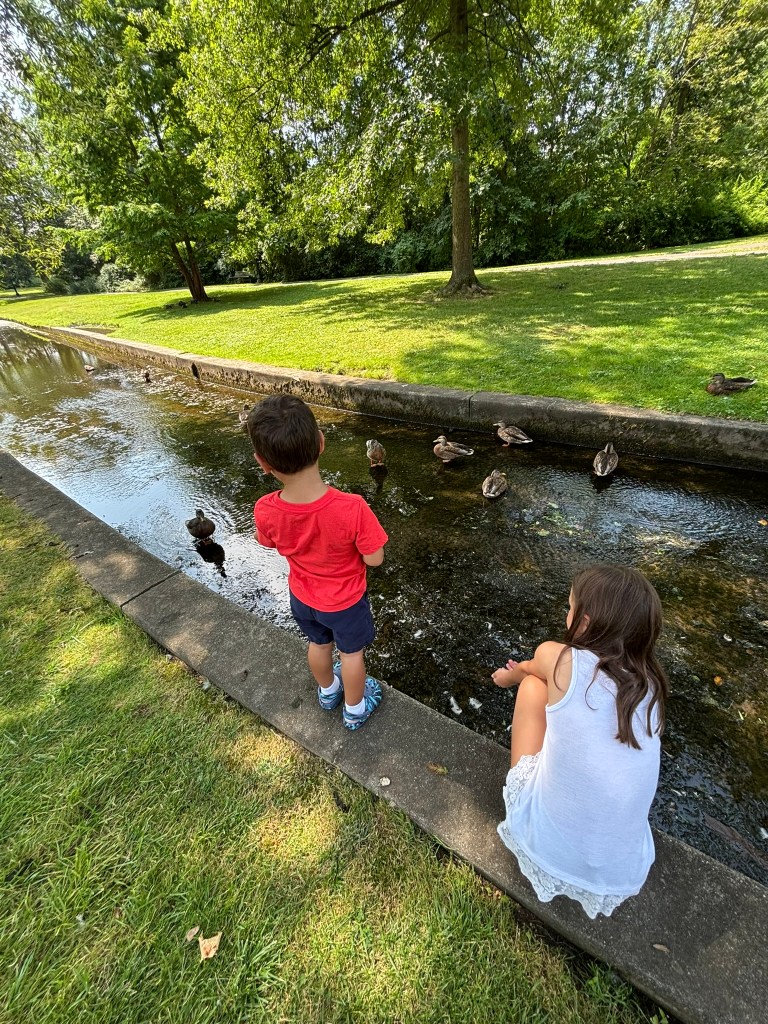
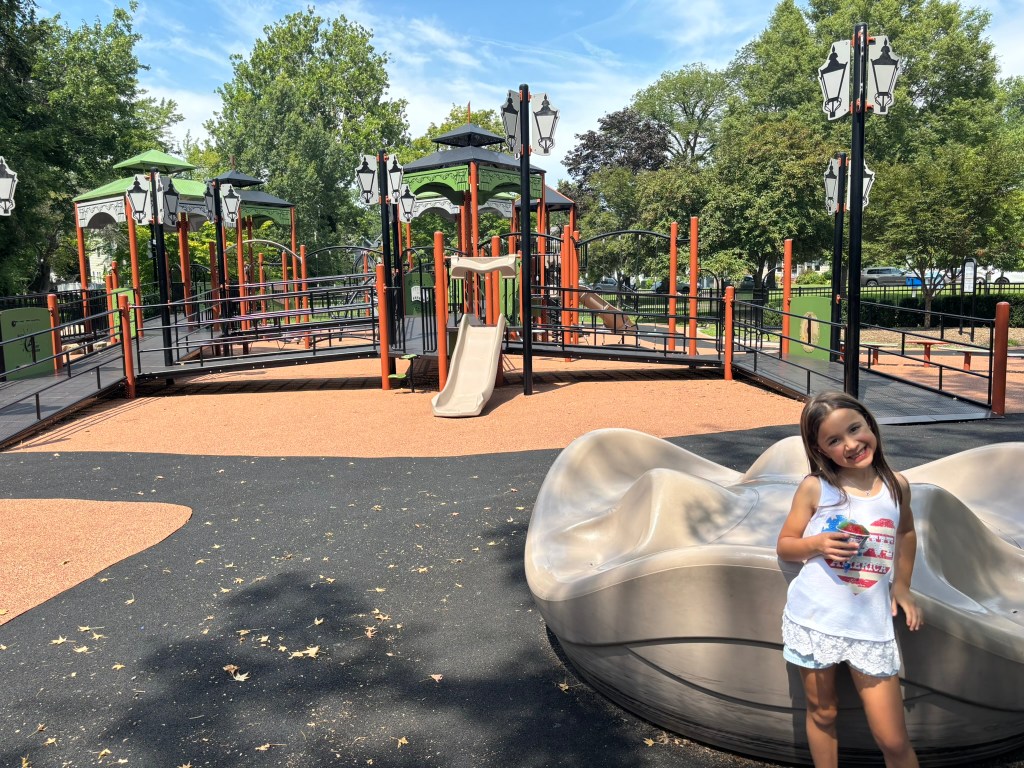
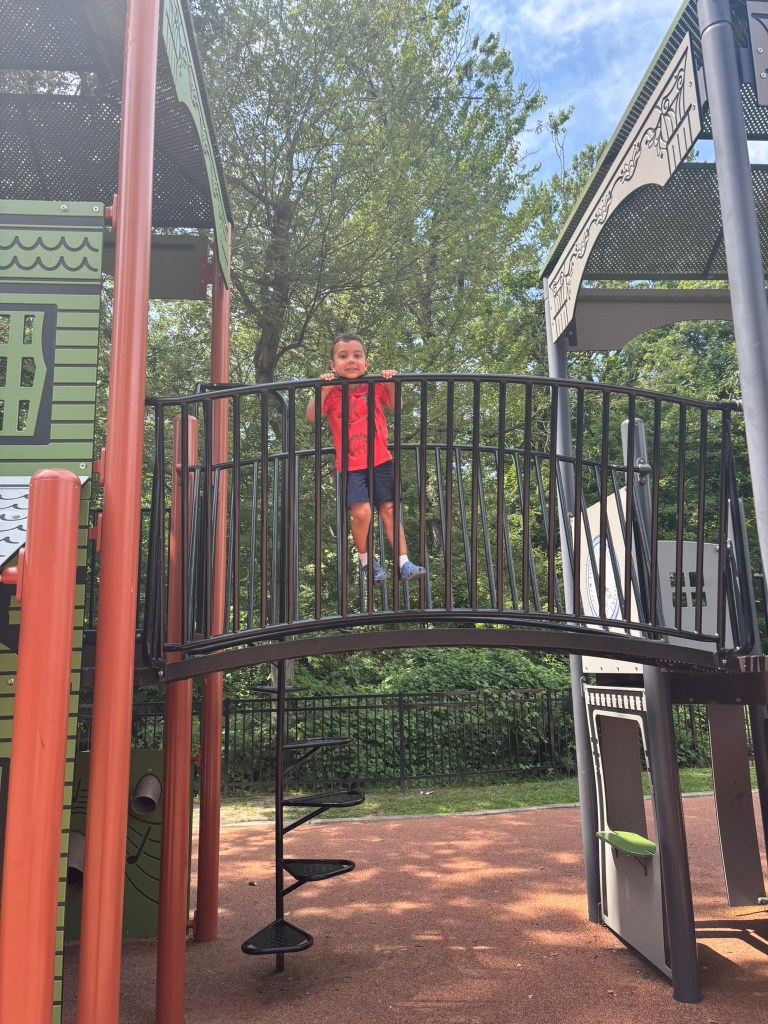
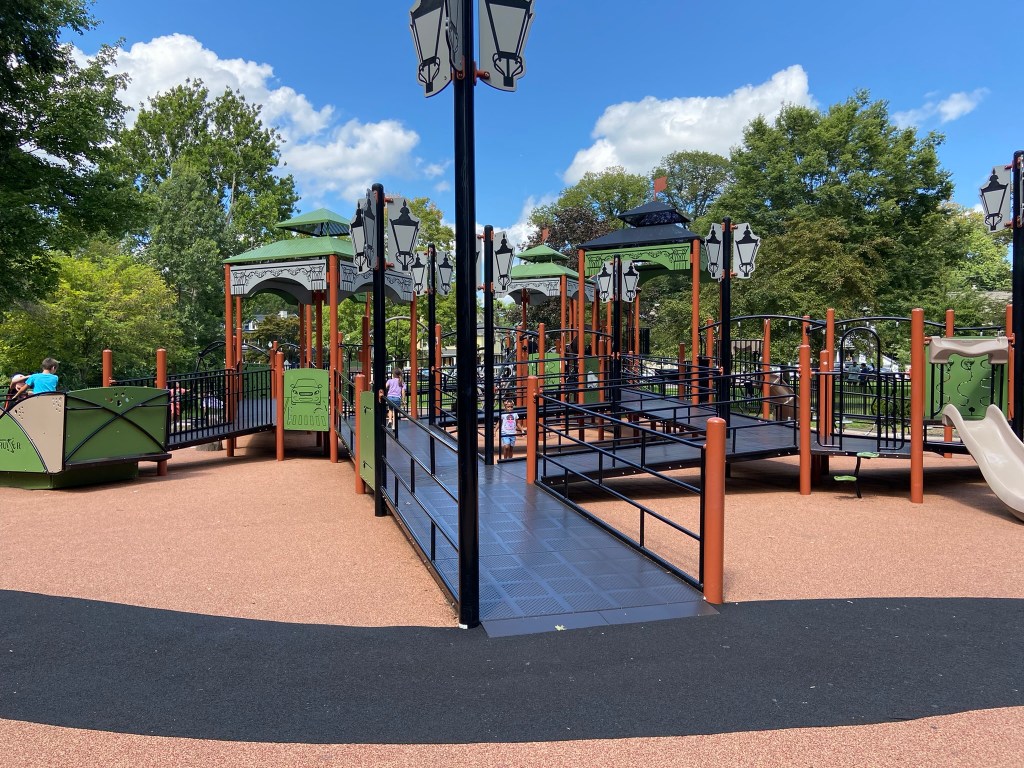
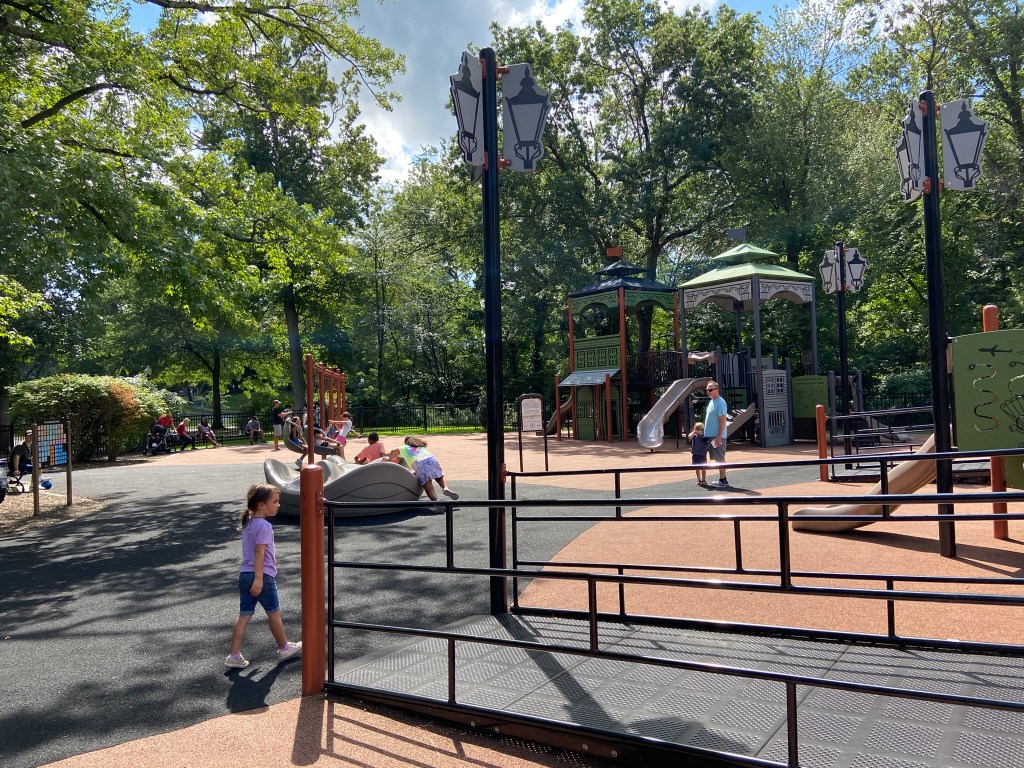
Mindowaskin Park also has a great playground that my kids enjoyed, and they capped off the afternoon with a treat from the ice cream truck on site.
Overall, we had a great time at March to Yorktown Day in Westfield. The event served as a great reminder of New Jersey’s rich Revolutionary War history and the key role the state played in America’s independence. The Washington-Rochambeau Revolutionary Route Association once again did an excellent job organizing the day and bringing the community together. This year’s program was even larger than the one my daughter and I attended two years ago, and it was great to see such a strong turnout. As we approach the 250th anniversary of our nation’s birth, make sure to check out events coming up in your local community.
Check out my Instagram and Facebook pages as I’ll be uploading videos of the event.
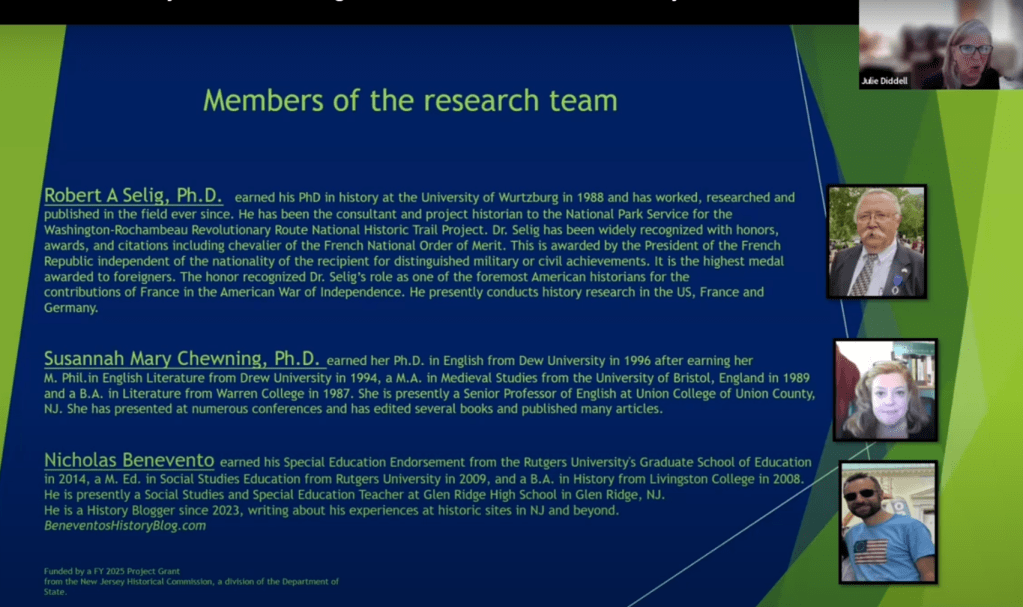
In a previous blog post entitled “The Inclusive History of the Washington-Rochambeau Revolutionary Trail Phase II – Westfield, NJ (Part 1)”, I shared an overview of an ongoing history research project conducted by the Westfield Historical Society, with support from the New Jersey Historical Commission. The research has been conducted by Dr. Susannah Chewning and Dr. Robert Selig, and it aims to uncover untold stories and to shed light on both free and enslaved inhabitants of the greater Westfields of Elizabethtown and their roles during the time of the American Revolution.
If you haven’t had a chance to read the first blog post from February 7th, 2025, I encourage you to check it out [HERE]. It offers valuable context about the project’s background, goals, and initial findings.
This blog post picks up where the previous one left off. Since February, the research has entered a new phase, bringing to light fresh insights and raising new questions that have continued to guide the direction of the work. In this update, I’ll share the latest progress, some of the challenges encountered, key discoveries made, and an overview of the final presentation which took place on June 21st, 2025.
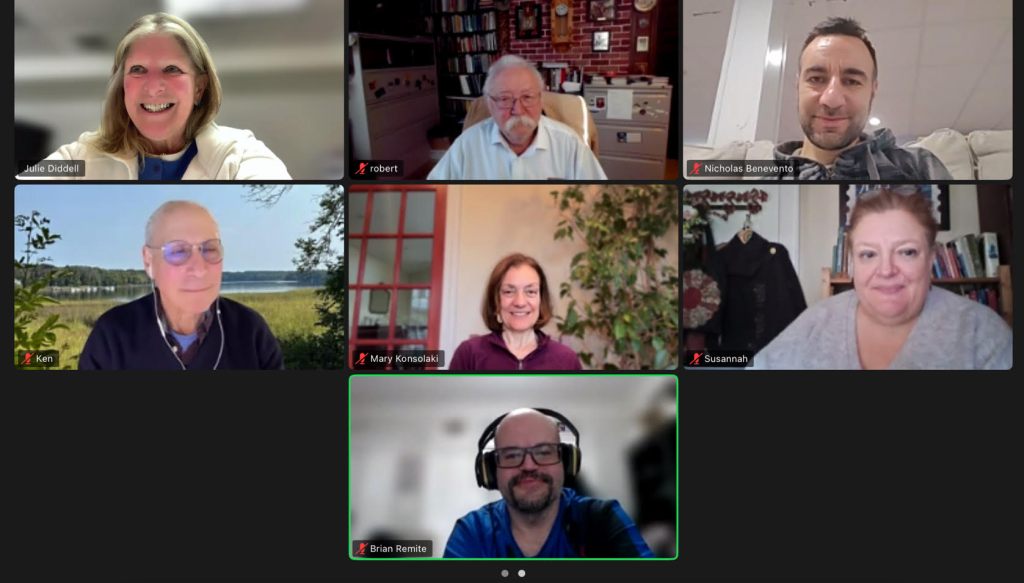
The researchers have been working closely with Julia Diddell, Chair of the Washington-Rochambeau Revolutionary Route- New Jersey, as well as Brian Remite, President of the Westfield Historical Society, to comb through enlightening resources. The team met in late March to discuss new findings, challenges along the way, and future goals. The team was also joined by Dr. Mary Konsolaki and Dr. Ken Mirsky, who both serve on the Grants Committee at the Westfield Historical Society.
The team reconvened in mid-May, with each researcher sharing their latest findings, describing any new obstacles, and discussing plans for the final presentation. During the meeting, Julia shared that the Westfield Historical Society is interested in using the research to develop a long-term outdoor exhibit in Westfield. She also noted that the Society is planning to collaborate with the Rutgers Department of Landscape Architecture to explore potential sites for the exhibit and may even conduct a survey this summer.
The information provided below provides the latest updates on the research and discoveries of Dr. Robert Selig and Dr. Susannah Chewning, covering their progress from April 2025 to the final outcomes of the research project, concluding with the presentation to the public. For an overview of their research topics and goals, please refer to the first blog post.
The Mood of the Local Inhabitants
Dr. Robert Selig, a distinguished historian with a PhD in History and extensive experience consulting with the National Park Service, has been conducting research on early Revolutionary War activities within Westfield and surrounding towns to gain a better understanding of the mood of the local inhabitants, leading up to the Revolution. Having written extensively on the Washington-Rochambeau National Historic Trail, Dr. Selig has brought invaluable expertise to the project, particularly in investigating the local impact of the national movement toward independence.
April 2025 Update
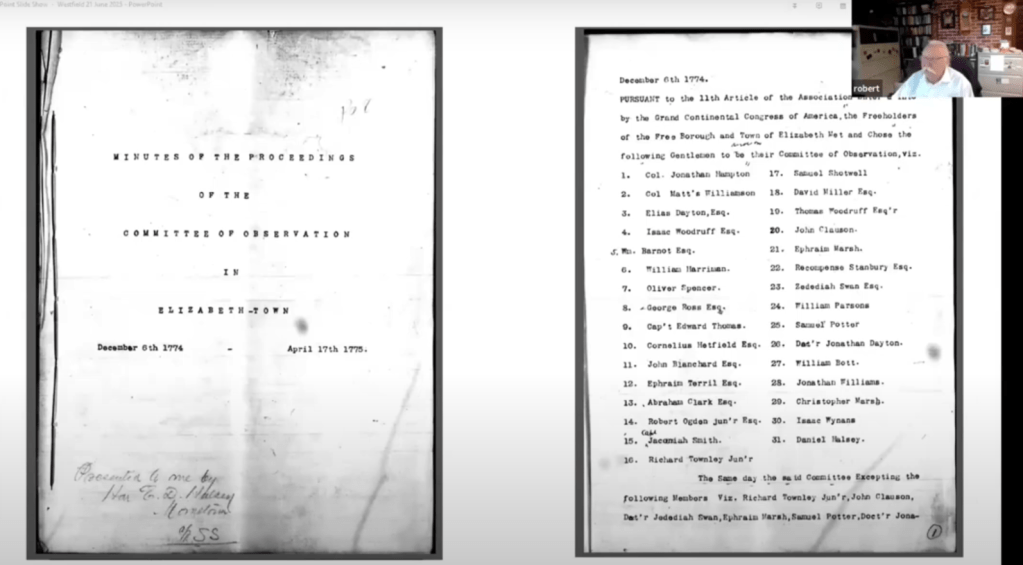
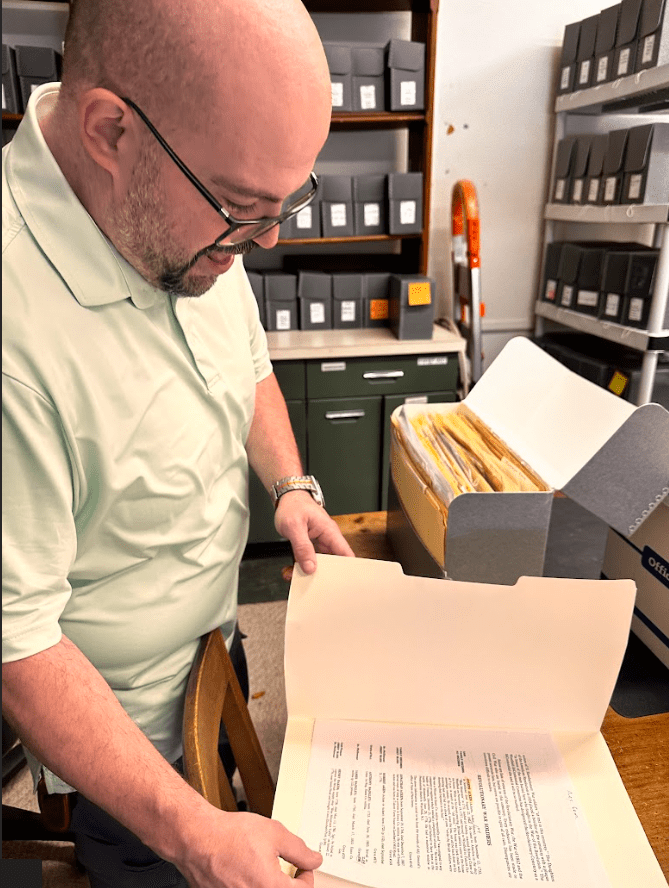
During our late March meeting, Dr. Selig provided updates on his research. He emphasized the importance of identifying individuals on a list from the New Jersey Committee of Correspondence, focusing on their economic status and roles within the community. Dr. Selig has accessed damage claims from the New Jersey State Archives, revealing that seven of the ten Westfield Committee members filed claims—though notably, Abraham Clark, a key regional leader and signer of the Declaration of Independence, did not. These claims provide valuable insights into the local inhabitants. Moving forward, he also intends to study New Jersey citizens who served in the war, particularly through pension applications from soldiers and members of the New Jersey militia, which could offer significant insight.
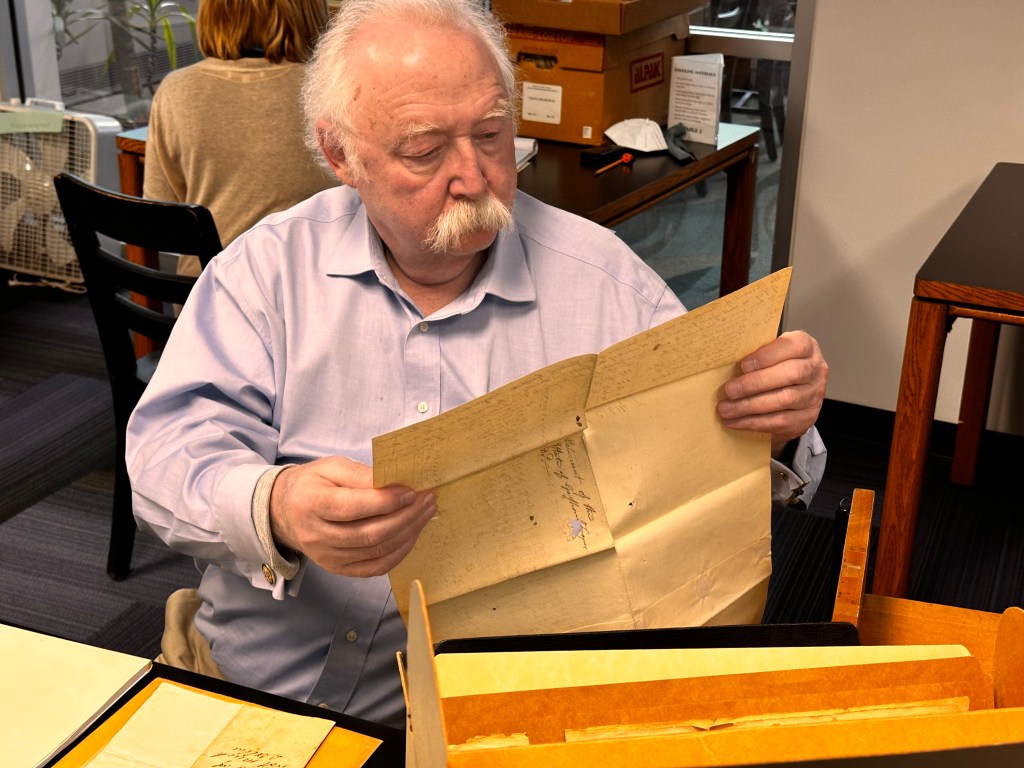
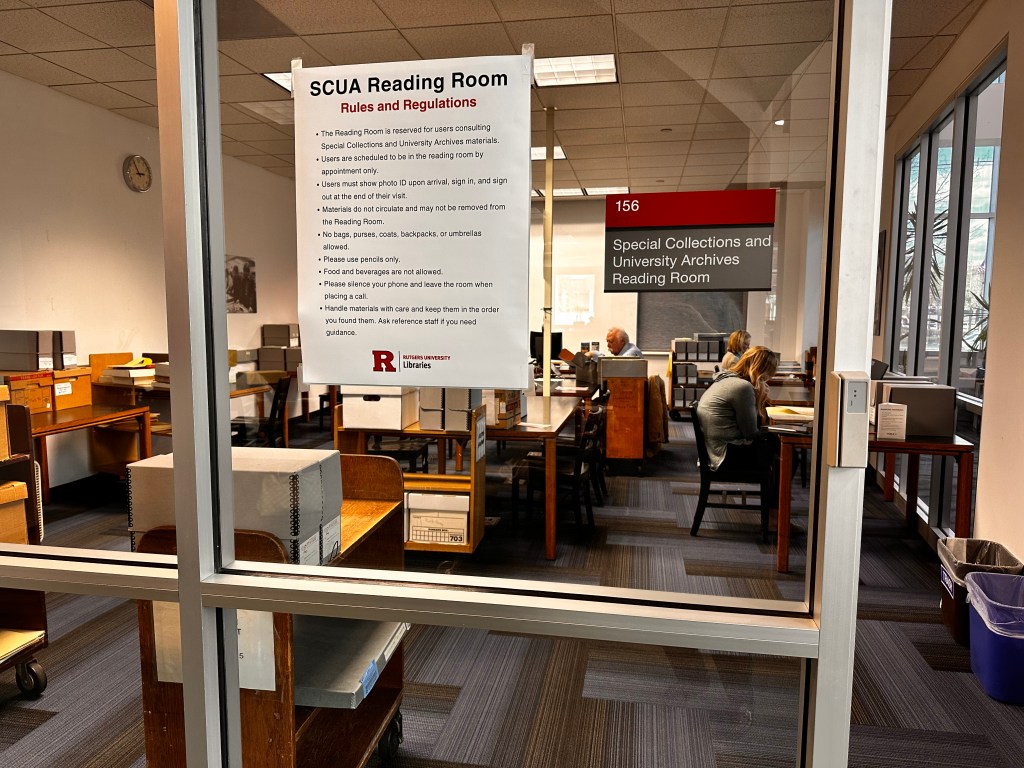
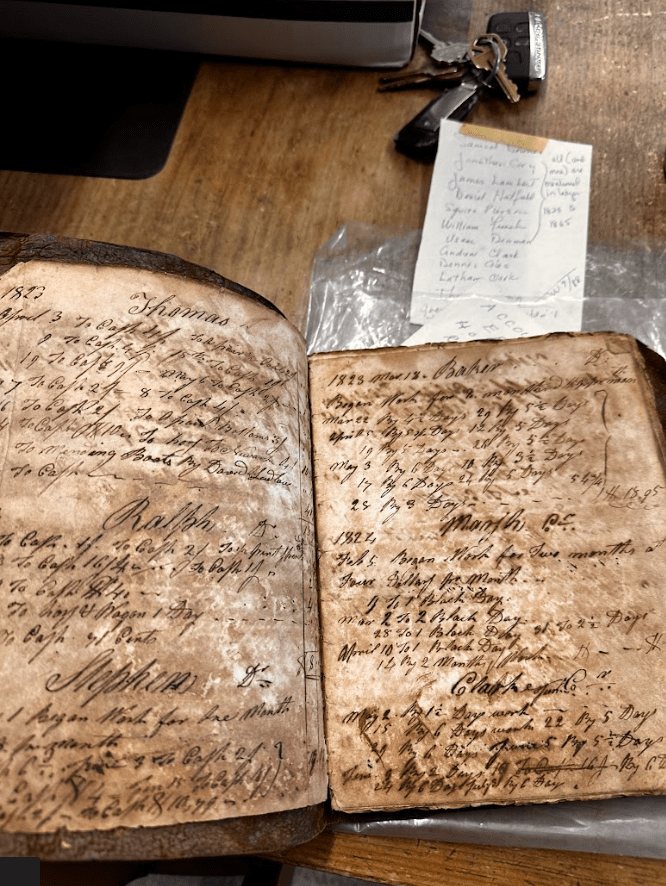
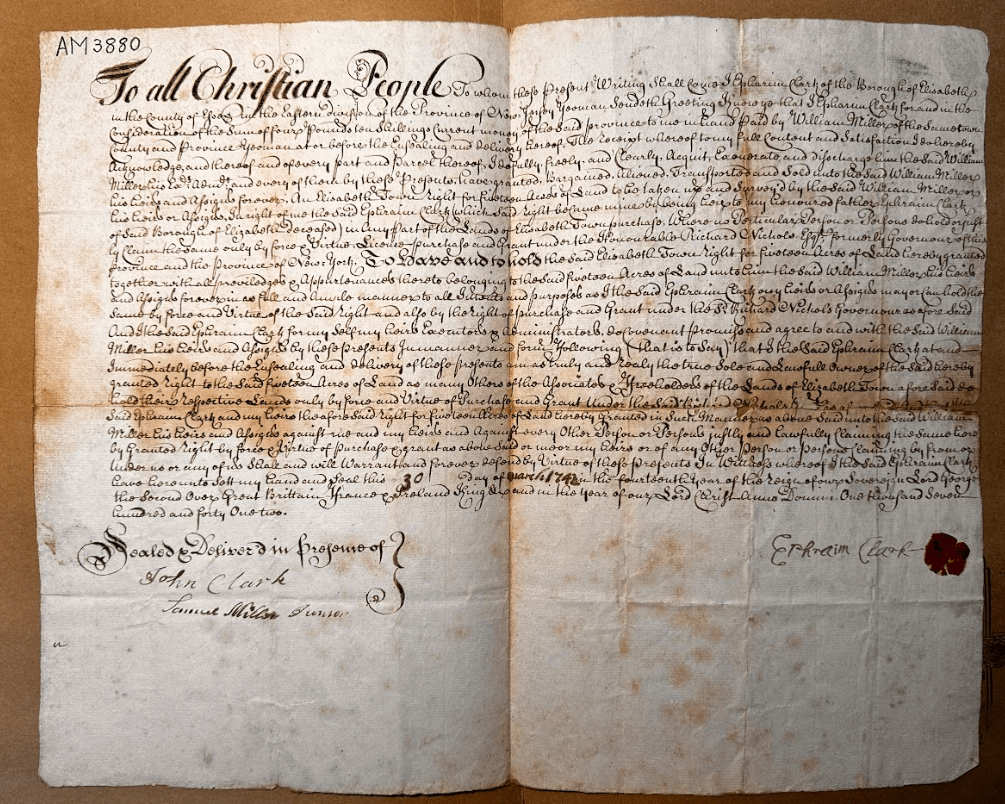
In early April, Dr. Selig had the opportunity to visit Rutgers University’s Special Collections Library to continue his research, and on his second day, he made a significant discovery—the Jedediah Swan Papers. Dr. Selig found some 500 documents, including letters, indentures, and other records, spanning nearly 75 years of Swan family history, from Amos Swan in the 1760s to Jedediah’s death in the 1820s. Many of the papers referenced Westfield as either the origin or destination. Jedediah Swan (1732–1812) is buried in Scotch Plains.
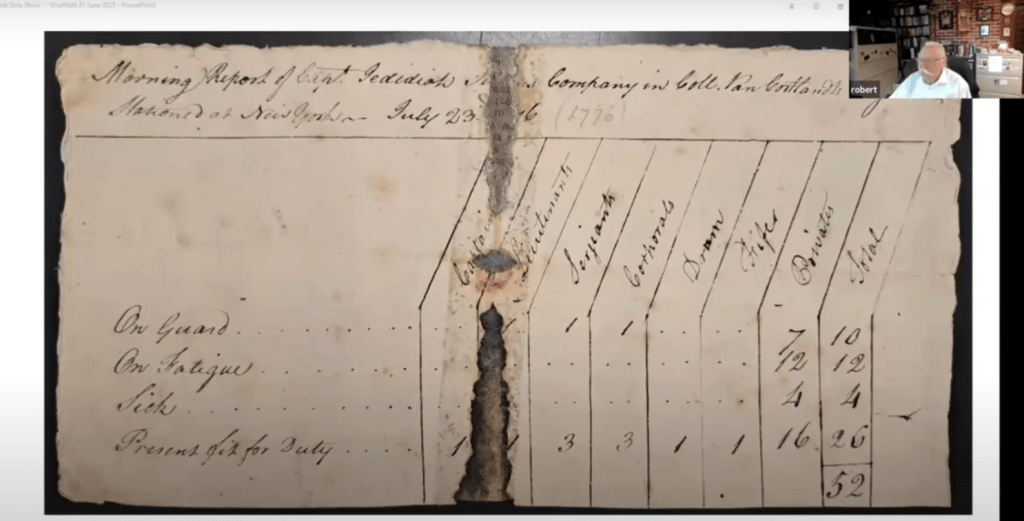
Jedediah Swan was an MD, Justice of the Peace, Overseer of the Poor, Committee of Correspondence member, Captain of the Second Regiment Essex County Militia, and held several other roles. Dr. Selig photographed about a dozen documents that will help the researchers reconstruct Swan’s influence in the community. Among the findings were an enlistment paper for a soldier in his company, a record committing a poor woman to the town’s care, a case involving an unwed mother and the man she accused of fathering her child, a note mentioning his enslaved individual, Dorceas, and a receipt for expensive beaver-fur hay. These findings help paint a picture of a man who was influential in the Revolutionary movement in the Westfields.
May 2025 Update
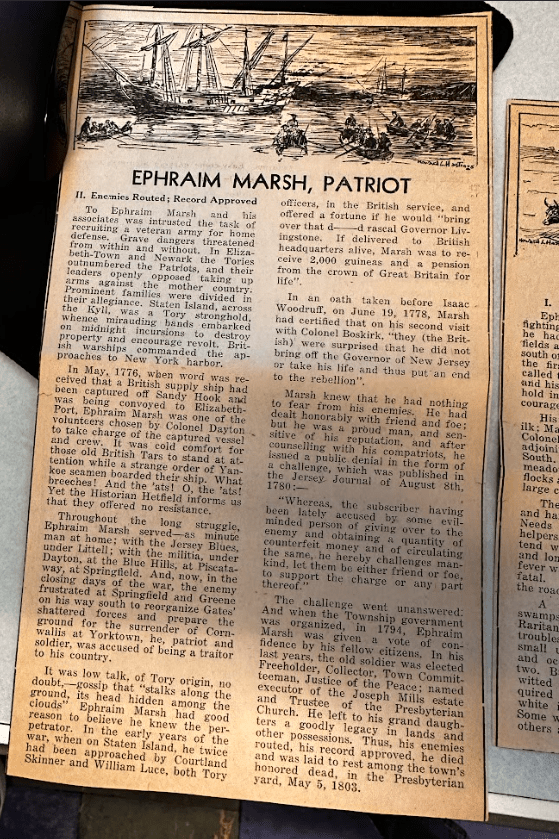
During our May meeting, Dr. Selig discussed the book War in the Countryside: The Battle and Plunder of the Short Hills, New Jersey, June, 1777. Vol. I by Frederic C. Detwiller, which includes references to Jedediah Swan and cites the “Marsh Papers,” housed at the Plainfield Historical Society. The team described their efforts to contact the Society and locate these papers, which may contain valuable information about Swan. This example highlights the researchers’ diligence and the many challenges they navigated—acting as historical detectives, following promising leads. It’s been truly impressive to watch the team support one another and collaborate so effectively.
Presentation Day- June 21st, 2025
On June 21st, the research team presented its findings to the public via a Zoom webinar, now available to watch on YouTube [HERE]. I highly encourage you to view the full presentation to get a comprehensive look at the project and its exciting discoveries.
The session began with remarks from Julia, Project Manager and Chair of the Washington-Rochambeau Revolutionary Route – New Jersey. She outlined the project’s goals, provided a historical overview of the Revolutionary War, described the Washington-Rochambeau Revolutionary Route, and discussed its lasting impact on the local community. Julia also introduced each member of the research team before transitioning to a pre-recorded video presentation by Dr. Selig.
In his presentation, Dr. Selig shared the objectives of his research, which focused specifically on Westfield, New Jersey. His goals included identifying residents who served on the Essex County Committee of Correspondence, documenting the sentiments of local inhabitants in the lead-up to the Revolution—particularly in the area then known as the West Fields of Elizabethtown—and analyzing pension applications and other historical documents from Westfield veterans of the War of Independence.
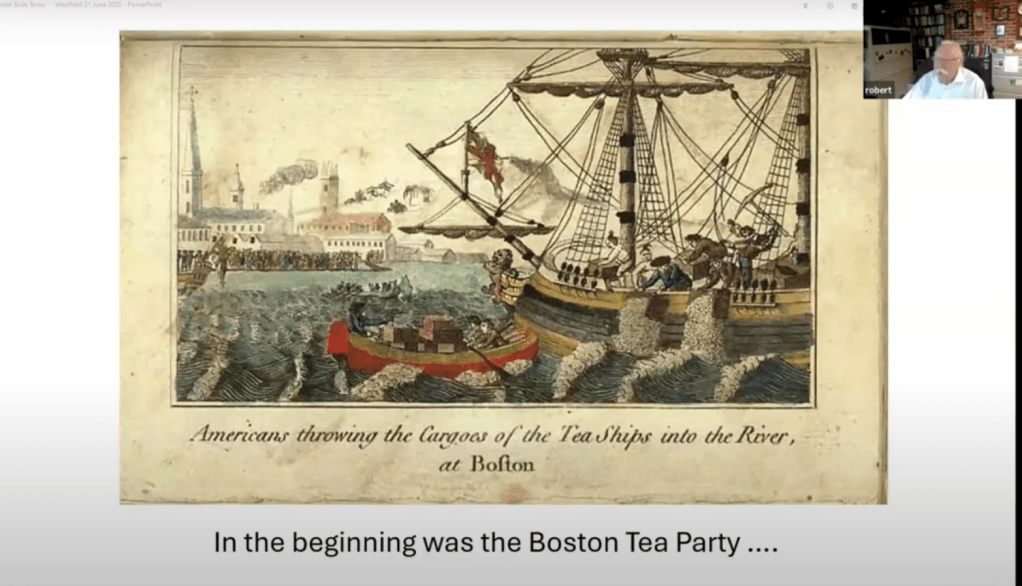
To set the historical context, Dr. Selig began with the Boston Tea Party of December 16, 1773. In response to this act of defiance, the British government passed the Intolerable Acts, aimed at punishing the colonies—especially Massachusetts. This prompted the Massachusetts Committee of Correspondence to call upon other colonies to join a boycott of British goods. For New Jersey, this marked the first major action taken by its own Committee of Correspondence in support of a united colonial resistance.
Dr. Selig described how meetings were held throughout New Jersey to coordinate responses to British policies. Delegates from various counties gathered in towns such as New Brunswick and Elizabeth. He identified several representatives from the Westfield area who attended these meetings—men who were part of the local elite and played influential roles in shaping public sentiment. Through primary source materials, Dr. Selig offered insight into who these leaders were, including damage claims they filed during the war.
A particularly notable figure discussed was Jedediah Swan. As mentioned above, Dr. Selig uncovered significant information about Swan during his research at Rutgers University, including original documents that shed light on his contributions during the Revolutionary era. Swan’s story illustrates the importance of individual actors in the broader historical narrative.
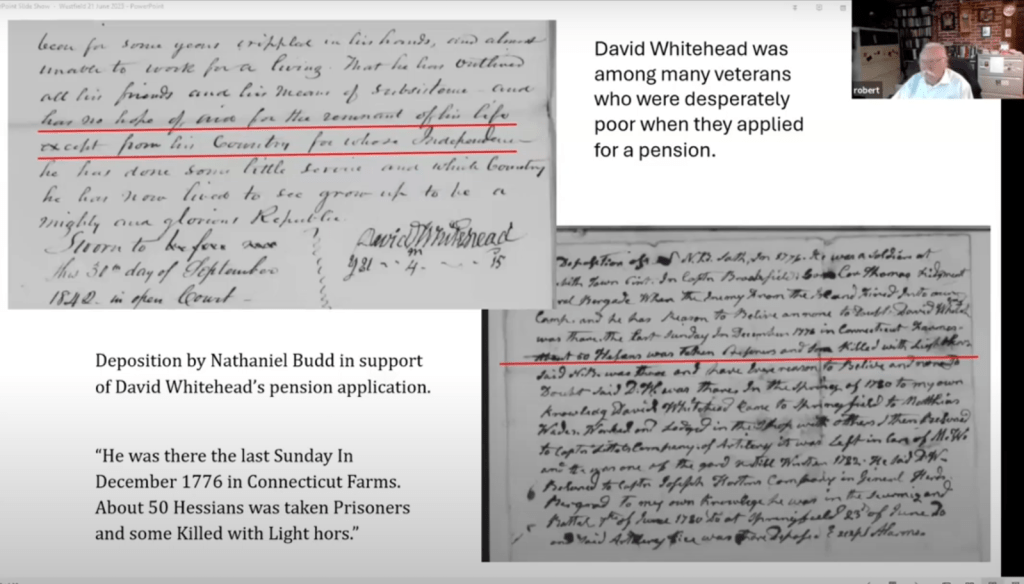
Dr. Selig also explored the wartime experiences of ordinary Westfield citizens through pension applications filed under the Federal Pension Act of 1832. He transcribed approximately 25 applications from Westfield veterans, noting that many more remain. These documents offer a rich look into both the war and its long-term effects on those who served. For example, one application recounted the capture of Hessian soldiers, while another revealed the desperate financial condition of veteran David Whitehead at the time of his filing. Some veterans described fleeing their homes during British raids. These accounts provide a deeply personal view of how the war affected individuals and families, both during and long after the conflict ended.
Another important highlight from Dr. Selig’s presentation was the Miller-Cory House, located in Westfield along the Washington-Rochambeau Revolutionary Route. The house was built by Clark Miller, who served in the Continental Army for two years and six months. He is buried in the cemetery of the Westfield Presbyterian Church, connecting a local landmark to national history in a profound way.
Dr. Selig concluded his presentation by summarizing his key themes, including the formation of the Committees of Correspondence and the development of local militias—both essential to understanding early American resistance efforts in the local community.
Dr. Selig’s presentation is a compelling and informative look at Westfield’s pivotal role in the Revolutionary War and a testament to the value of local history in understanding our nation’s past.
A Focus on African American History
Research has been conducted that has focused on the African American community in Westfield and the surrounding towns during the Revolutionary Period. Dr. Susannah Chewning, a Senior Professor of English at the College of Union with a diverse academic background in English Literature and Medieval Studies, has been leading this important aspect of the project. Dr. Chewning has been exploring local records, including manumission documents and birth certificates to trace the lives of African Americans in the region. She is working to compile a comprehensive database from her work.
April 2025 Update
During our late March meeting, Dr. Chewning referenced a pre-Revolutionary-era taxable inventory/ census document shared by Julia. She noted her plans to visit Princeton University to examine the full document, as it includes references to enslaved individuals. This information will help her identify who was living in the area at the time and expand her database of African American residents. She also pointed out that some of the enslaved individuals listed were recorded as tax-exempt.
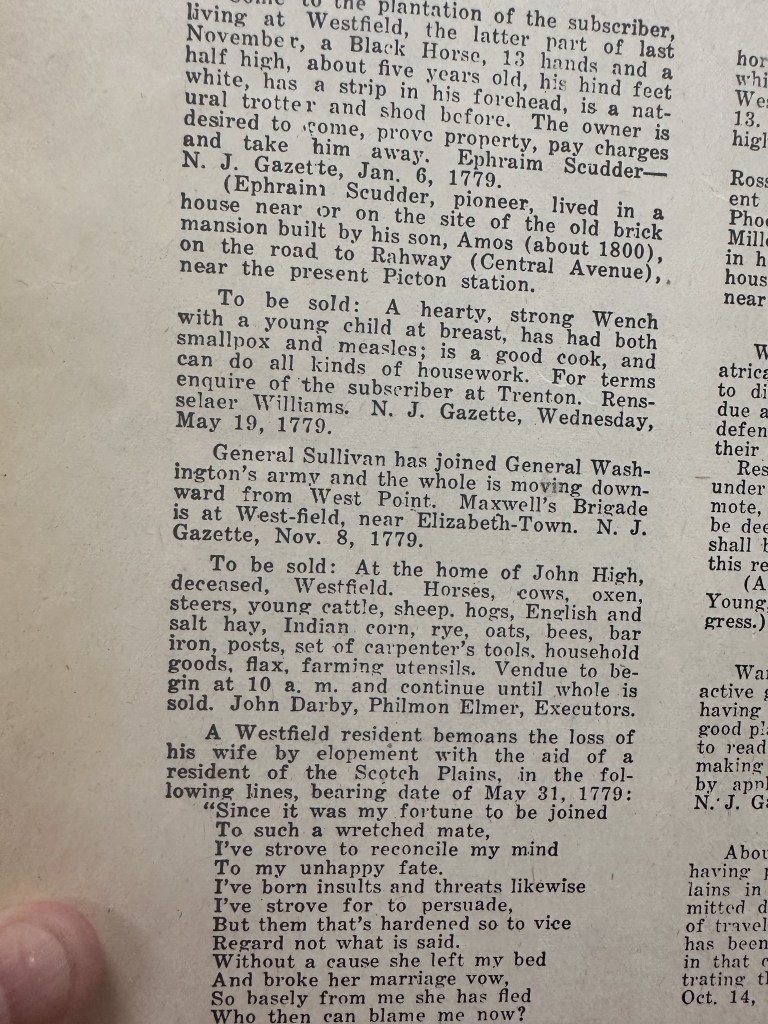
Dr. Chewning noted that when her research first began, she had identified 25 enslaved individuals who lived in Westfield between 1778 and 1781—most of them by name. That number has since grown to 69. Dr. Chewning also discussed a well-known, formerly enslaved woman named Jude, who is buried at Fairview Cemetery in Westfield. Dr. Chewning believes she has identified Jude’s parents, offering another valuable lead in tracing individuals who were alive during the March to Yorktown in 1781.
Dr. Chewning recently presented her research at her college and at the New Jersey College English Association Annual Conference, where it was well received. While at the conference, she attended a Digital Humanities Workshop sponsored by the New Jersey Humanities Consortium, which provided valuable insights for the development of her website (featured in the first blog post). Inspired by the workshop, Dr. Chewning is now exploring the idea of launching a podcast. She envisions using the platform to interview descendants of formerly enslaved individuals from the Westfields, as well as researchers and historians. Although still in the early planning stages, she is already brainstorming episode ideas. In addition, she connected with members of other New Jersey counties working on similar projects and is considering a long-term initiative to honor the African Americans who lived in the region during the Revolutionary era.
As part of her efforts to locate the burial sites of African Americans, Dr. Chewning noted that when Fairview Cemetery was established in 1868, many bodies were relocated from the Old Presbyterian Church burial ground. She plans to continue her research to determine who was moved and the reasons behind those relocations.
May 2025 Update
During our May meeting, Dr. Chewning shared her latest research efforts in preparation for the upcoming June 21st presentation. She mentioned her ongoing plans to visit Fairview Cemetery to investigate additional burial sites and uncover more information about African Americans buried there. She also spoke with Julia about plans to create a permanent public outdoor display that will showcase the researchers’ work.
Presentation Day- June 21st, 2025.
After Dr. Selig presented his findings, Dr. Chewning had the opportunity to share her own research with the public. She began by introducing herself and explaining how she became involved in the project.
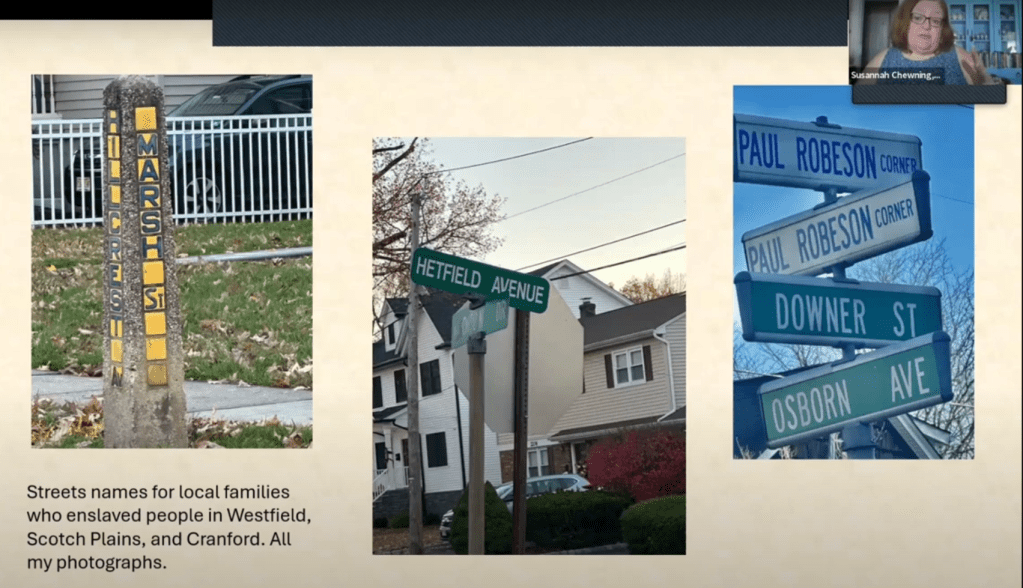
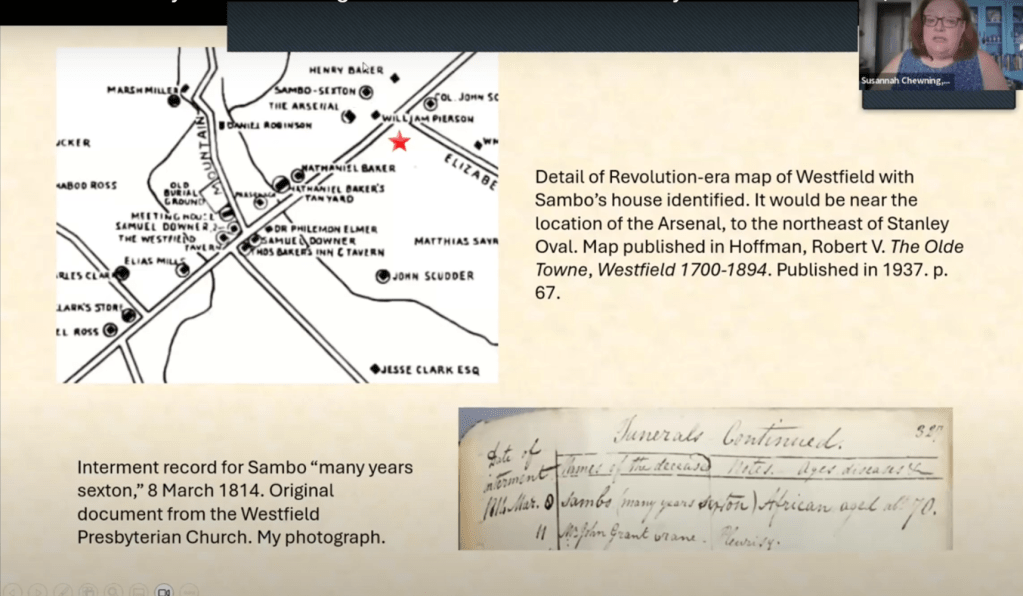
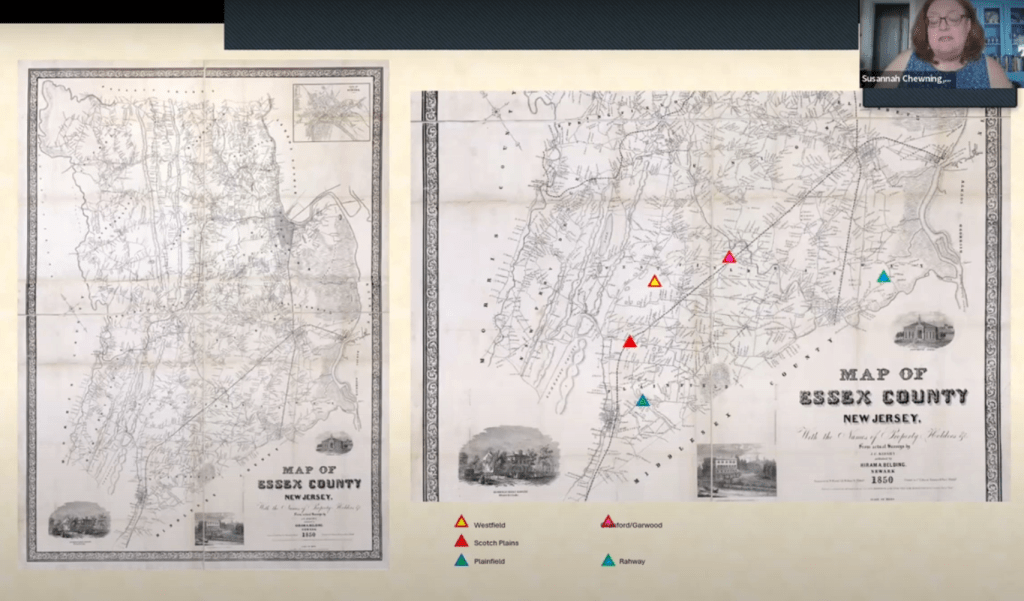
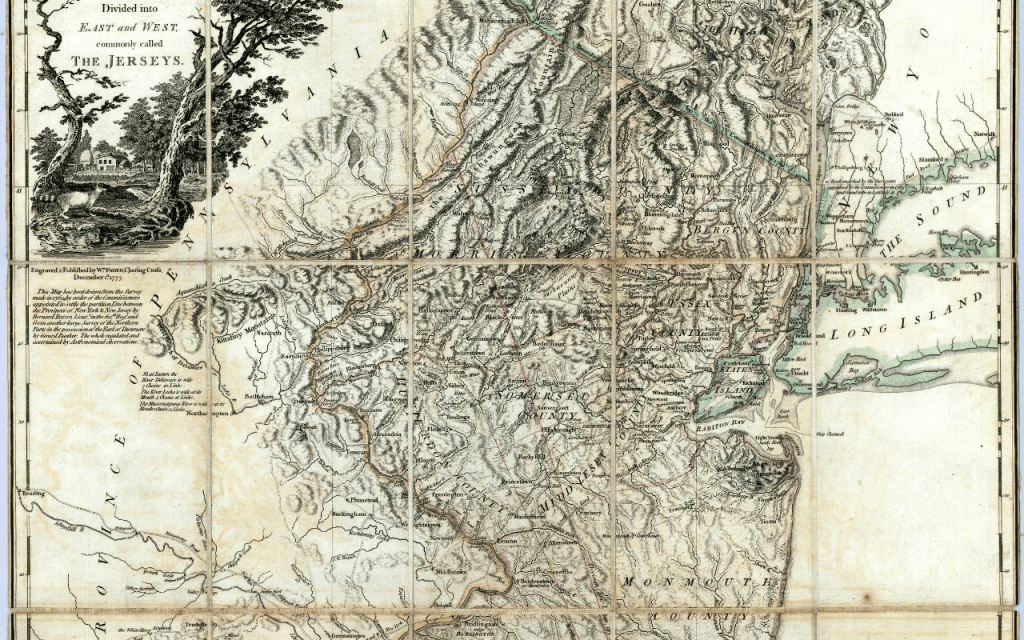
Dr. Chewning shared maps of what were historically known as the Westfields of Elizabethtown. She noted that many of the streets in present-day Westfield are named after influential early figures in the area. However, she also pointed out that many of these individuals were slave owners, a fact often overlooked in the local historical narrative.
Dr. Chewning then discussed the goals of her first grant-funded research project, conducted the previous year, before outlining the aims of the current project. These include building a comprehensive database documenting:
The names of African Americans who lived in the region
Burial locations of African Americans from the Revolutionary War era
Possible descendants of those identified
Her database will also include information such as burial and interment dates, grave locations, personal stories, manumission and birth certificates, original documents, transcriptions, and links to related historical materials.
Dr. Chewning reported that her list of African Americans in the region has continued to grow, currently up to 200 individuals spanning from 1704 to 1866—the year slavery was finally abolished in New Jersey.
During her presentation, Dr. Chewning highlighted several individuals from her research, offering biographical details such as where they lived and what is known about their lives. By doing so, she brings voice and humanity to people who were often silenced by the historical record.
She also emphasized the wide array of sources used to construct these stories, including:
Baptism, marriage, and death records from the Westfield Presbyterian Church
Local tax and census documents
Burial records from Fairview Cemetery
Archives from the New Jersey Historical Society
The New Jersey Slavery Records Database and Northeast Slavery Records Index
Inventories of damages caused by British and American forces in New Jersey
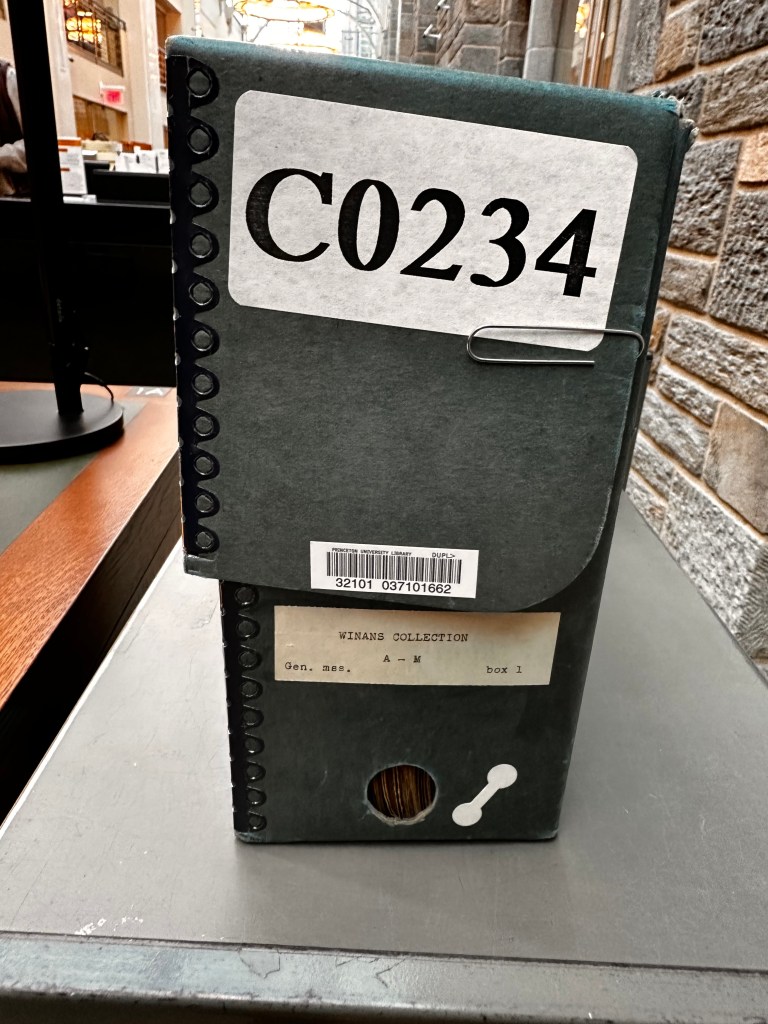
The Winans Collection at Princeton University
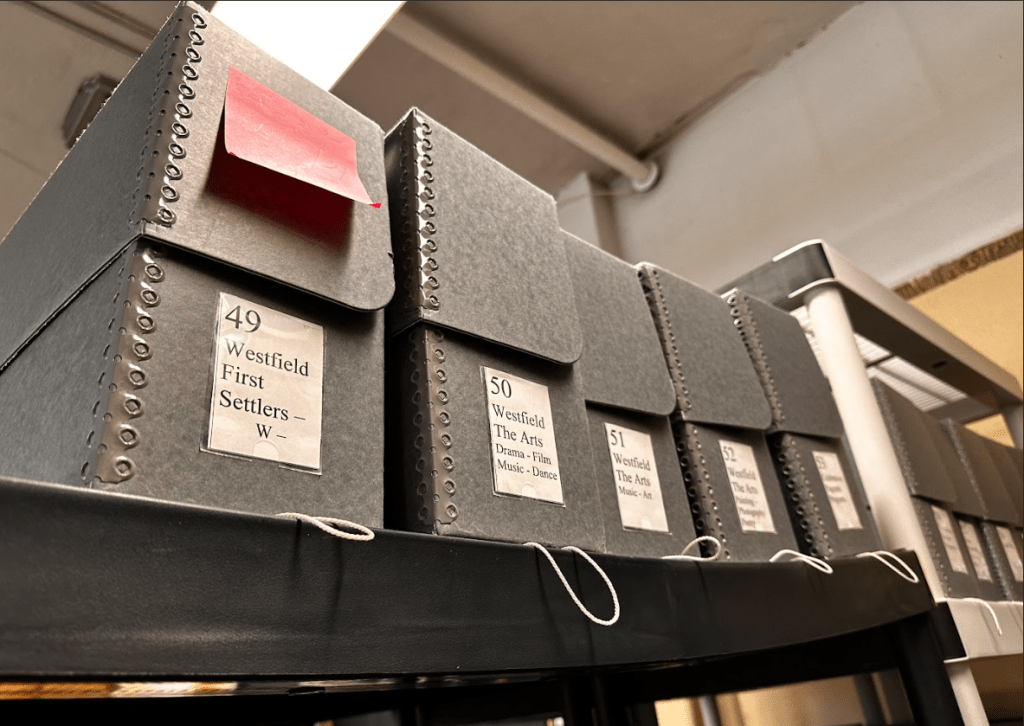
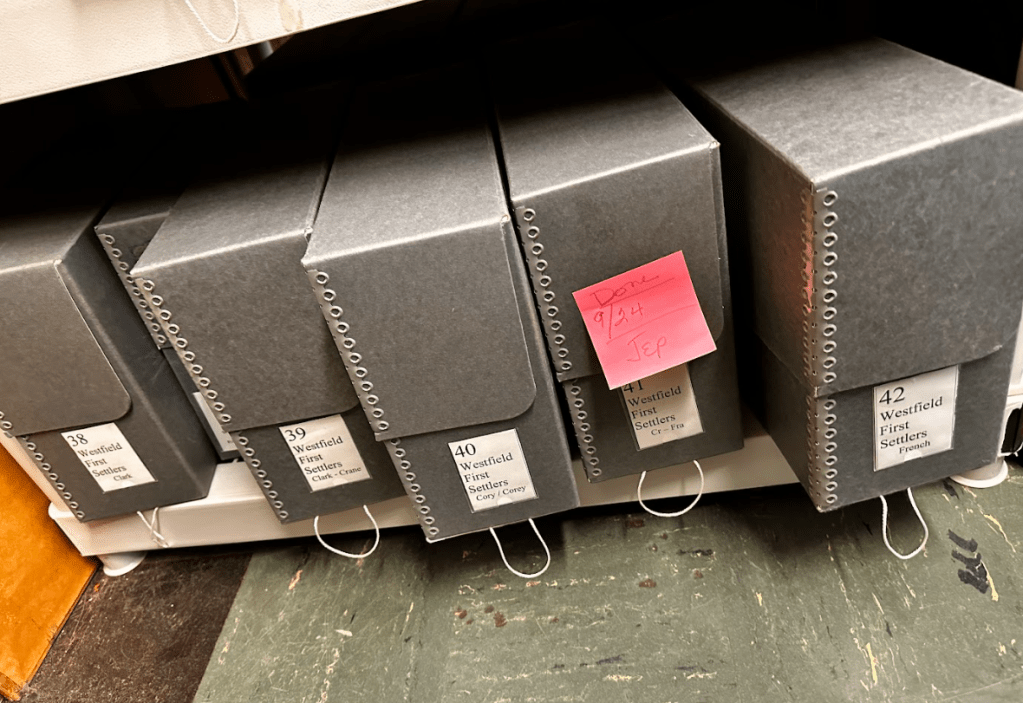
Archives of the Westfield Historical Society
Various books and local histories
Dr. Chewning also addressed the history of slavery in Westfield by naming prominent early residents known to have enslaved individuals. She has a list of about seventy enslaved people living in the West Fields at the time of the March to Yorktown in 1781. She presented a range of primary sources that help tell their stories, such as sale records, damage claims, baptismal and burial records, Revolutionary War-era maps, runaway slave advertisements, and manumission documents.
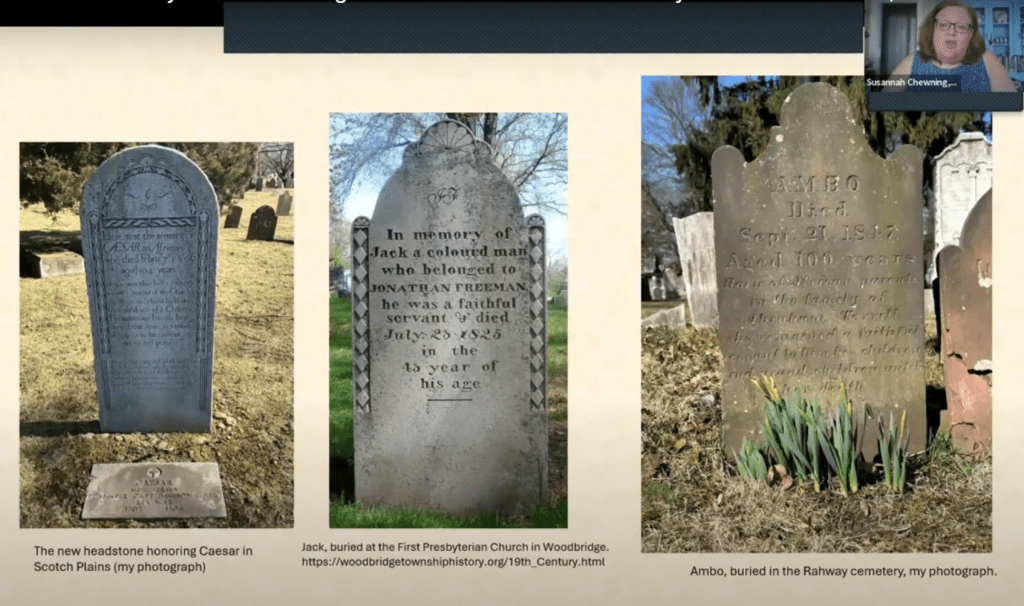
A key part of her ongoing work involves identifying burial sites of African Americans in the community. Dr. Chewning noted that enslaved individuals were known to be buried at the Old Burying Ground of the Westfield Presbyterian Church, the First Presbyterian Churches in Woodbridge and Elizabeth, as well as in family plots and home burials—many of which may have later been moved to Fairview Cemetery. She explained that further research is needed to match unnamed graves to individuals and that she is actively collaborating with Fairview Cemetery staff to advance this work.
Dr. Chewning shared photos of gravestones belonging to known African Americans in local cemeteries. She underscored that, to her knowledge, these are the only marked graves of enslaved individuals currently identified in Union County.
Dr. Chewning concluded her presentation by highlighting Wally Brown, a Westfield resident whose great-grandparents, Jack and Lembe Williams, are believed to be buried in the Old Burying Ground. Brown believes he knows the precise spot where they were laid to rest, though no marker currently exists. Dr. Chewning expressed her commitment to continuing this vital work.
My Presentation
Following Dr. Chewning’s presentation, I had the opportunity to discuss my blog with the audience. I shared how the blog started, the kinds of content it features, and how I became involved in the research project. It was a true honor not only to present my work, but to contribute to such a meaningful and collaborative effort. As mentioned earlier, you can watch the full presentation [HERE].
Building a Lasting Legacy
By shining a light on both prominent leaders and those whose names were nearly lost to history, this project reminds us of the power of local research to reshape our understanding of the past. As I discussed in Part 1, one of the aims of this research project is to create a lasting educational resource for the community. The team has been exploring and discussing the possibility of an enduring outdoor exhibit or monument that would allow the public to engage with this history in a meaningful way. The groundwork has been laid for this educational space that honors the notable figures who played an impactful role in Westfield and surrounding towns at the time of the American Revolution. Stay tuned to the Westfield Historical Society for updates on this future endeavor, and continue to check in with Benevento’s History Blog for future updates. Thanks for reading and supporting this project. Stay connected with the organizations listed below that have been involved with this project:
I am pleased to update readers on an exciting research project currently taking place in New Jersey. The Westfield Historical Society, with the support of the New Jersey Historical Commission, has embarked on a research project aimed at uncovering untold stories of people who lived in Westfield and surrounding towns during the Revolutionary War. The goal is to shed light on both free and enslaved inhabitants of the greater Westfields of Elizabethtown and their roles at the time of the Revolution.
The project, an initiative of Fiscal Year 2025, is seeking to dive deep into historical records from multiple sources including the Westfield Presbyterian Church, the New Jersey State Archives, the New Jersey Historical Society, and other repositories of information. An accomplished team of researchers is exploring local archives, birth certificates, manumission records, letters, family trees, and other vital documents to piece together the personal stories of these individuals and share their legacies with the community.
Ongoing research is focusing on the lives of African Americans who lived in the region during the time of the American Revolution. In addition, research is also focusing on the mood of the inhabitants of the region leading up to the Revolution, using evidence from letters exchanged amongst leaders of the area, particularly from committees of correspondence. The researchers, who will be highlighted below, are working closely with Julia Diddell, Chair of the Washington-Rochambeau Revolutionary Route- New Jersey, as well as Brian Remite, President of the Westfield Historical Society, to comb through enlightening resources.
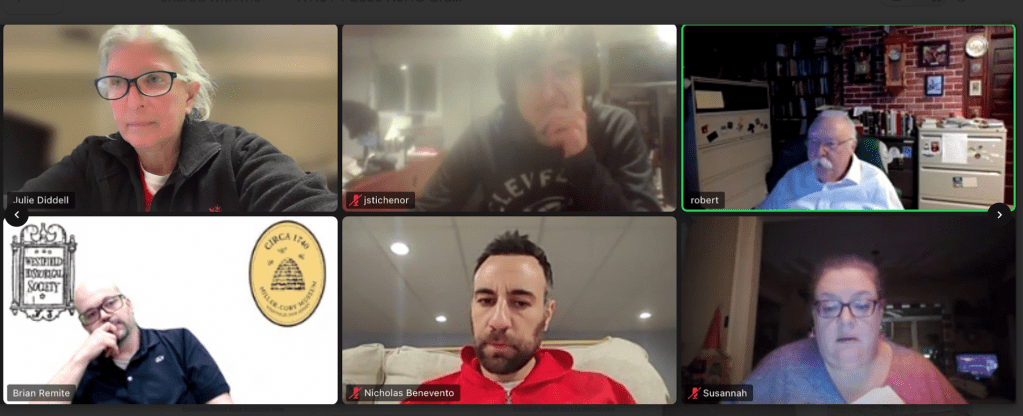
Julia Diddell led the research project team when we first met in mid-November 2024 to discuss the plan for the upcoming research project, highlighting goals and methods to conduct the research, as well as our long-term plan to present the research to the public.
Screenshot
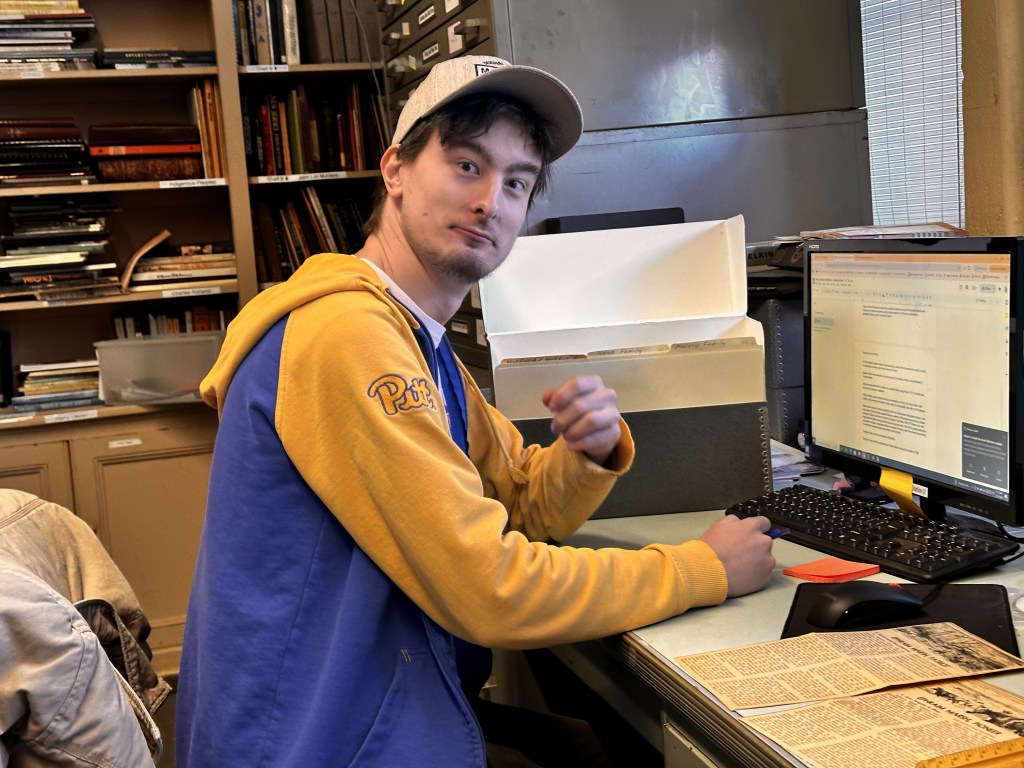
Another meeting of the team members, led by Julia, took place in late January with updates on new discoveries made, challenges along the way, and future goals. The team was also joined by James Tichemor, who has been doing extensive research at the Westfield Historical Society for this project.
The research project will culminate in a hybrid presentation in June 2025, where the researchers will shed light on their discoveries with the public. The information below provides an update on the progress being made.
A Focus On African American History
Research is currently being conducted that focuses on the African American community in Westfield and the surrounding towns during the Revolutionary Period. Dr. Susannah Chewning, a Senior Professor of English at the College of Union with a diverse academic background in English Literature and Medieval Studies, is leading this important aspect of the project. Dr. Chewning has been exploring local records, including manumission documents and birth certificates to trace the lives of African Americans in the region. She is working to compile a comprehensive database from her work.
An important part of the research involves investigating the burial sites of African Americans in Westfield. Many individuals, both free and enslaved, were laid to rest in the Old Presbyterian Church Burial Ground. While Dr. Chewning is confident that there are African Americans buried there, only one such grave is currently marked. Research is underway to uncover the other names of these individuals, some of whom were moved when the Fairview Cemetery was established in Westfield in 1868. Dr. Chewning is hoping to identify an African American named Sambo, who was the sexton of the Old Presbyterian Church Burial Grounds during the time of the Revolution. Dr. Chewning has also tracked down evidence of slave sales in the area and plans to find more evidence.
Findings So Far
With a growing list of 58 names of African Americans living during the March to Yorktown (1781), Dr. Chewning is dedicated to identifying where these individuals are laid to rest. Her broader research includes 180 (and counting) names of African Americans who lived in Westfield and the surrounding towns between 1702- 1866, the year that slavery finally ended in New Jersey. Dr. Chewning has discovered these individuals through records at the Presbyterian Church, slave sales, runaways, censuses, birth certificates, and manumission records. Recently, Dr. Chewning met with the director at Fairview Cemetery, who provided her with a document highlighting early burials which she has used for her research. Her work at Fairview Cemetery will continue throughout the spring.
In addition to Fairview, Dr. Chewning is continuing her efforts at the Old Burial Grounds where unmarked graves have led to continued efforts to identify those buried there with the support of church and town records. Dr. Chewning has interests in exploring other burial grounds as well, including the Scotch Plains Burial Grounds, where Westfield residents are known to be buried.
Dr. Chewning has compiled a list of families from Westfield who were documented as slaveowners during the time of the 1781 March to Yorktown. Through her research, she has identified not only the names of these families but, in many cases, the names of the individuals they enslaved. This list continues to expand as Dr. Chewning continues her research.
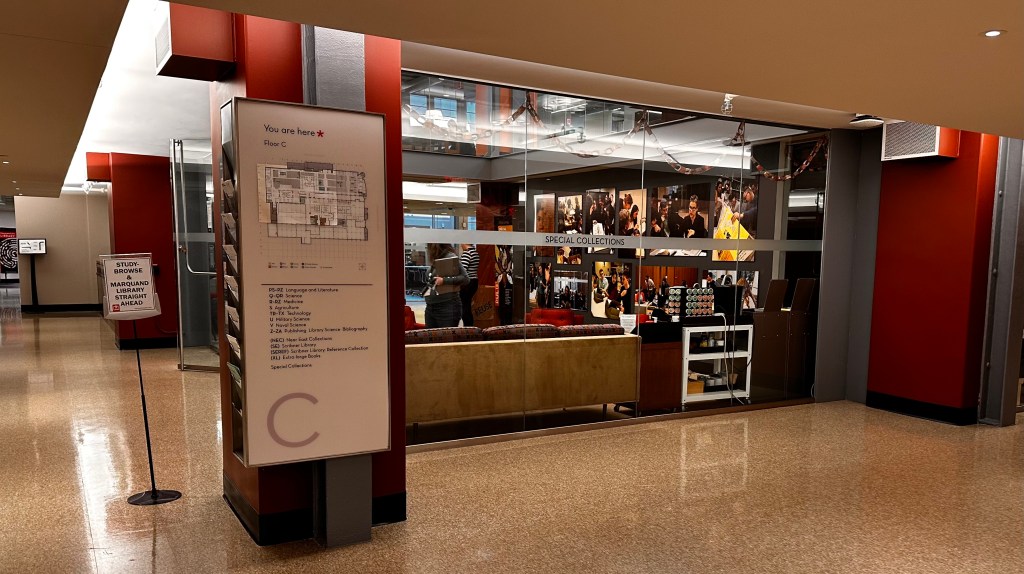
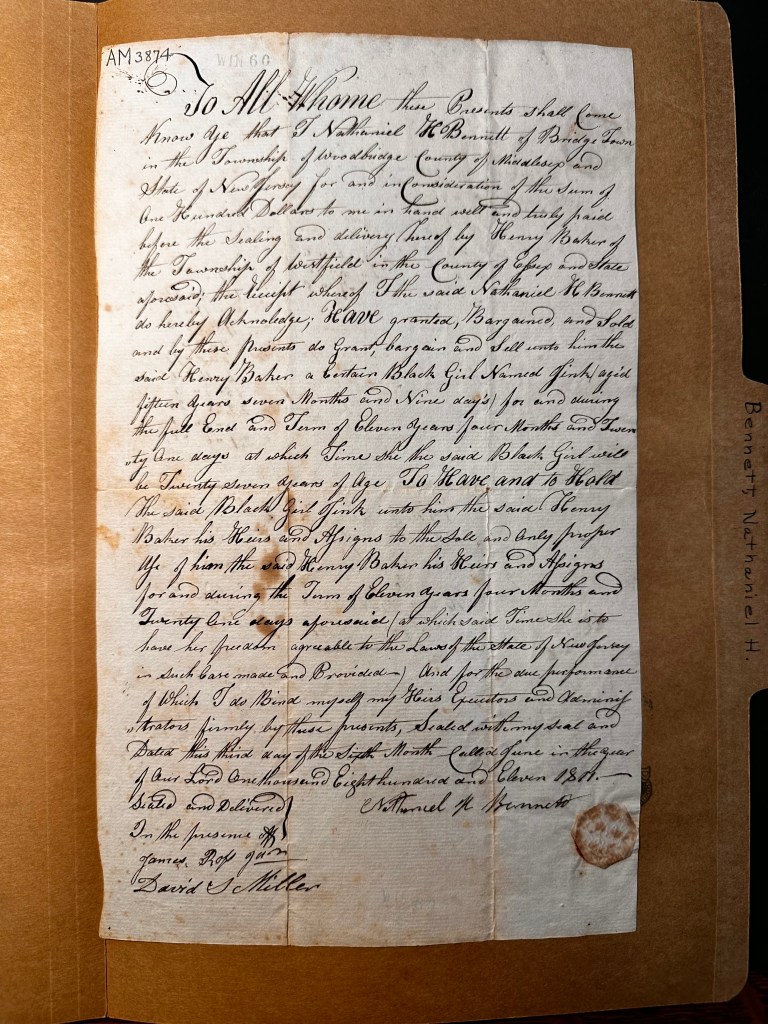
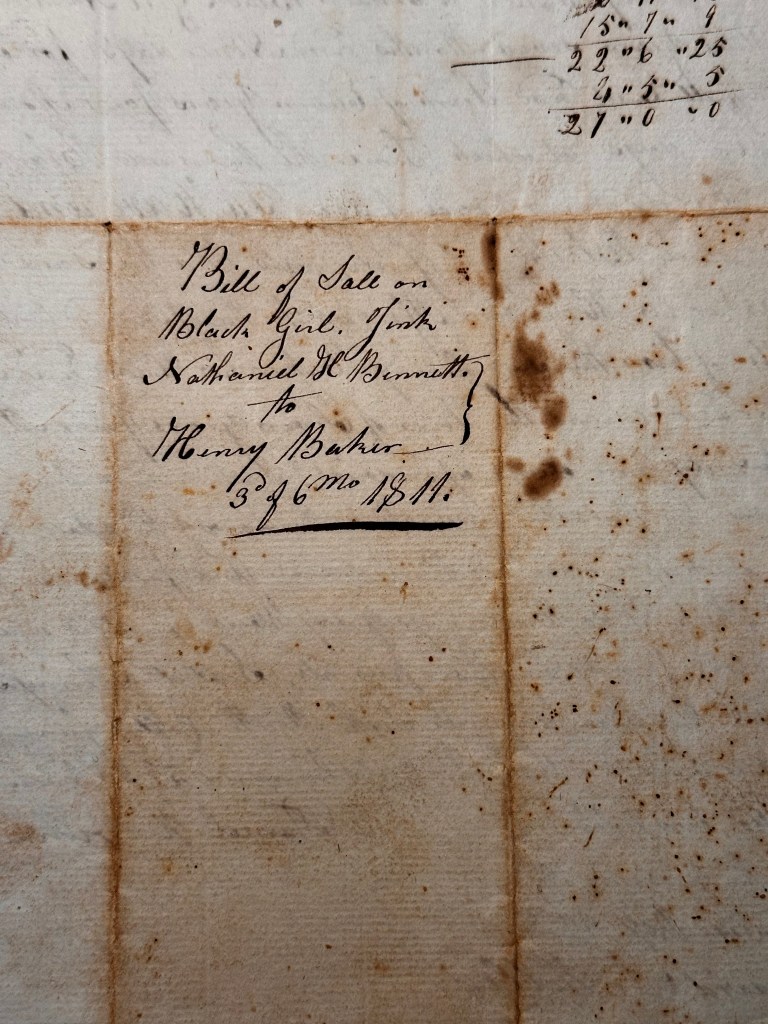
In mid-December, Julia Diddell visited the Special Collections Library at Princeton University to explore the Winans Collection. While sifting through a wealth of primary source materials, she discovered a bill of sale for a young enslaved girl named Jink. This discovery is a valuable addition to Dr. Chewning’s expanding database of enslaved individuals from Westfield, further enriching the ongoing research.
To further her research and make her findings accessible, Dr. Chewning is in the process of creating a website that will feature links to Rutgers and Princeton’s Slavery Projects, offering visitors the chance to explore valuable information and connect with various archives. Stay tuned for updates on the new site!
Brian Remite, President of the Westfield Historical Society
The Mood Of The Local Inhabitants
Dr. Robert Selig, a distinguished historian with a PhD in History and extensive experience consulting with the National Park Service, is conducting research on early Revolutionary War activities within Westfield and surrounding towns to gain a better understanding of the mood of the local inhabitants, leading up to the Revolution. Having written extensively on the Washington-Rochambeau National Historic Trail, Dr. Selig brings invaluable expertise to the project, particularly in investigating the local impact of the national movement toward independence.
Through his research, he is unearthing not only personal histories but also a broader understanding of the social and political climate of Westfield and surrounding towns in the years leading up to the American Revolution. One key area of focus is the activities of local committees of correspondence- groups that played an essential role in rallying support for independence through the colonies. The committees served as communication networks amongst the prominent leaders of the thirteen colonies. By gaining access to these correspondences, Dr. Selig is uncovering the ways that leaders in New Jersey played a pivotal role in the oncoming Revolution.
Findings So Far
Dr. Selig has been combing through a collection of letters exchanged between New Jersey’s local committees, offering a deeper understanding of the colony’s response to the brewing tensions with Britain. Communications to and from these committees involved notable figures such as George Washington and Benjamin Franklin.
In addition to the Committees of Correspondence, local colonists formed Committees of Public Safety and Committees of Observation. These groups played a pivotal role in the early days of the Revolution, serving as temporary governments and rallying support for the cause. They were responsible for monitoring British actions, enforcing boycotts of British goods, and keeping the colonists united in their resistance efforts.
For Dr. Selig’s research, the exchanges between these committees are invaluable primary sources that help highlight the mood in New Jersey leading up to the Revolution. They reveal not only the political dynamics of the time but also the local efforts to coordinate resistance, making these letters vital in understanding how New Jersey navigated the path toward independence.
An interesting observation from Dr. Selig’s research is that New Jersey was somewhat slower to embrace the revolutionary movement compared to other colonies, particularly in comparison to the early radicalization seen in places like Massachusetts. Dr. Selig explains that one key reason for this delay was the lack of a large city in New Jersey that could serve as a central political hub. Unlike cities like Boston, which were hotbeds of revolutionary sentiment, New Jersey’s smaller urban centers didn’t provide the same rallying points for activists and leaders. In addition, New Jersey had a popular royal governor who helped maintain a sense of stability.
Through his study of the Committees of Safety, Dr. Selig concludes that New Jersey’s initial concerns were more focused on economic issues than on spreading revolutionary ideology or politicizing the conflict. The colony’s focus on economic stability meant that it took a more cautious approach to the growing tensions with Britain, with many colonists more concerned about their livelihoods than the broader political shifts happening in other parts of the colonies.
Dr. Selig discovered a significant shift in New Jersey’s stance once the fighting broke out at Lexington and Concord in 1775, as neutrality became increasingly untenable. With battles erupting, colonists found themselves compelled to take sides as remaining on the sidelines was no longer an option.
For many, joining the militia and taking up arms became a clear political statement. By fighting in the militia, New Jersey residents were publicly aligning themselves with the cause of independence and supporting the Declaration of Independence. This shift marked a turning point in the colony’s involvement in the Revolution.
Dr. Selig’s research into New Jersey’s role in the American Revolution is ongoing. He is actively seeking more primary sources to deepen his understanding of the colony’s shift toward supporting the war effort. In particular, Dr. Selig is interested in diaries, letters, and other personal documents from both local leaders and everyday inhabitants of towns like Westfield. These materials, he believes, will provide crucial insights into the changing attitudes and the personal motivations that led people to join the war.
Dr. Selig is also eager to uncover other types of historical documents, such as pension applications, damage claims, and even tavern records. These records can offer a unique perspective on the war’s impact at the local level, shedding light on the economic and social effects of the conflict.
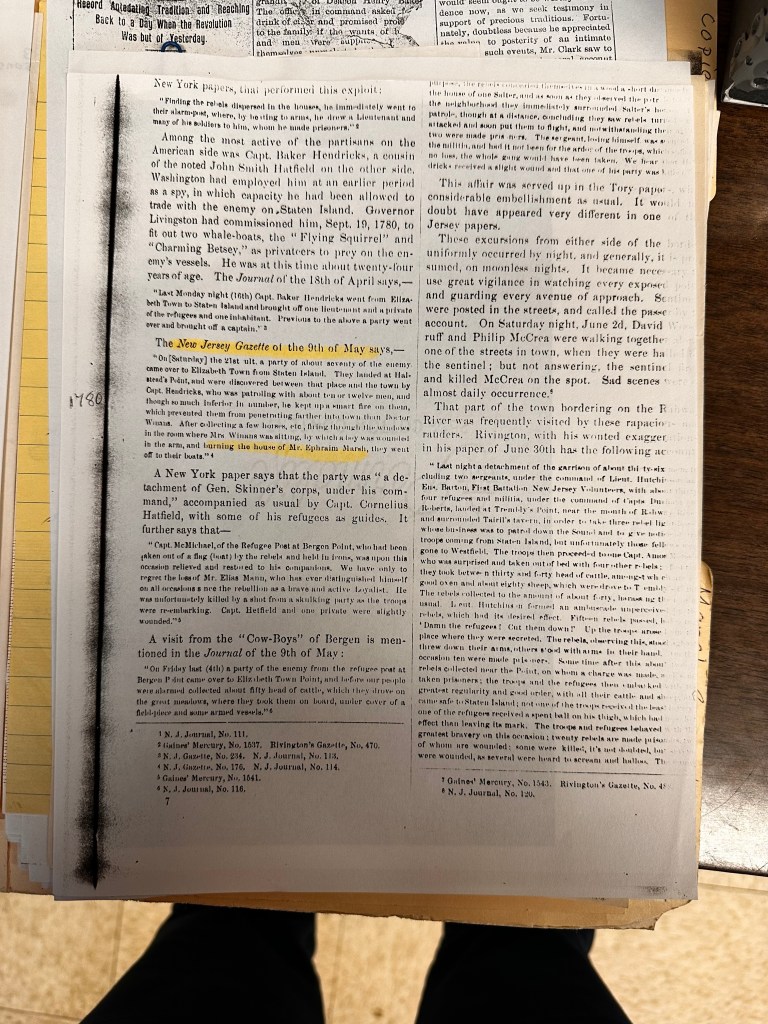
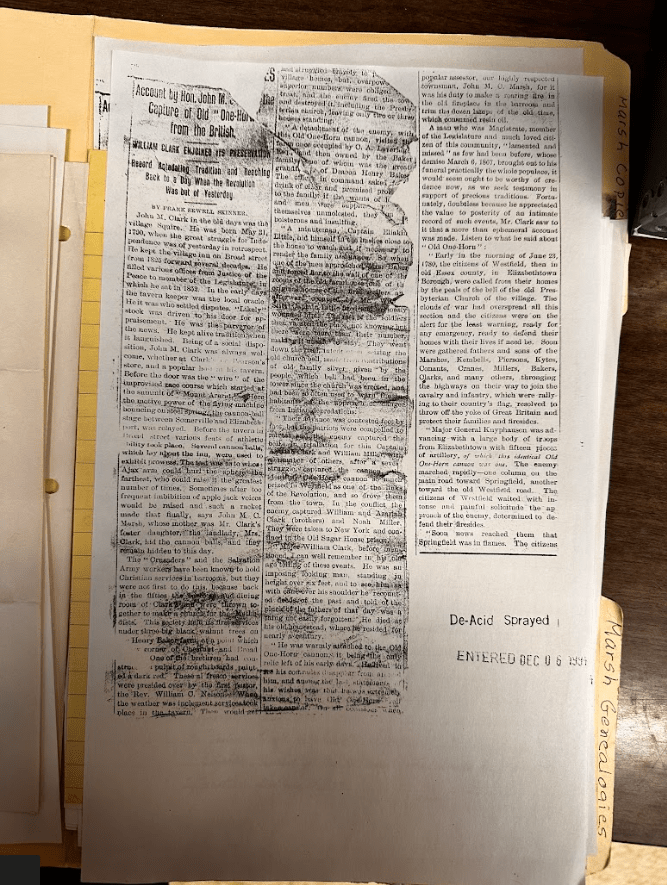
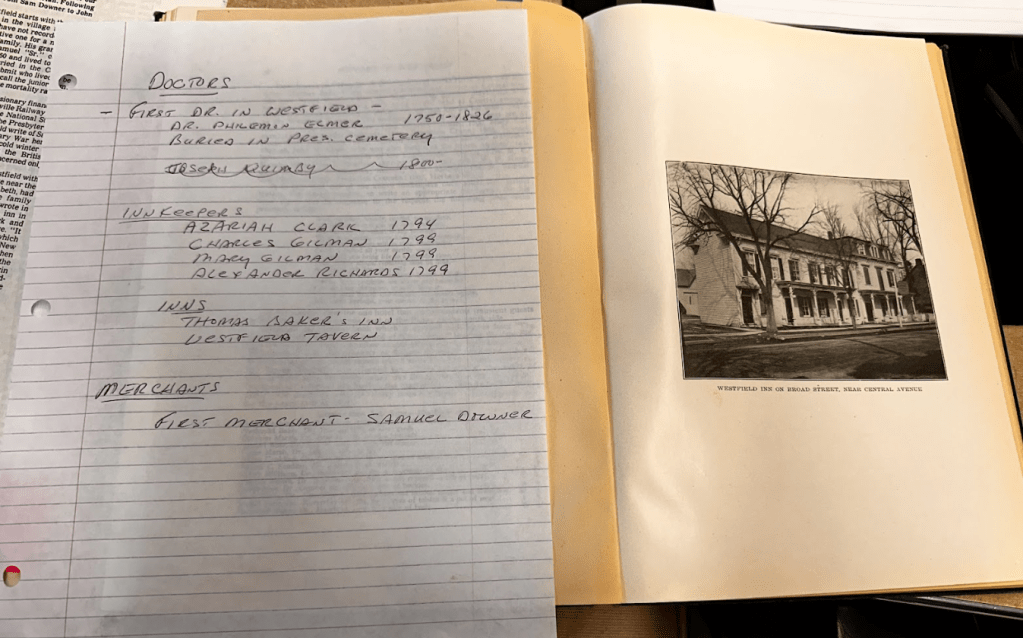
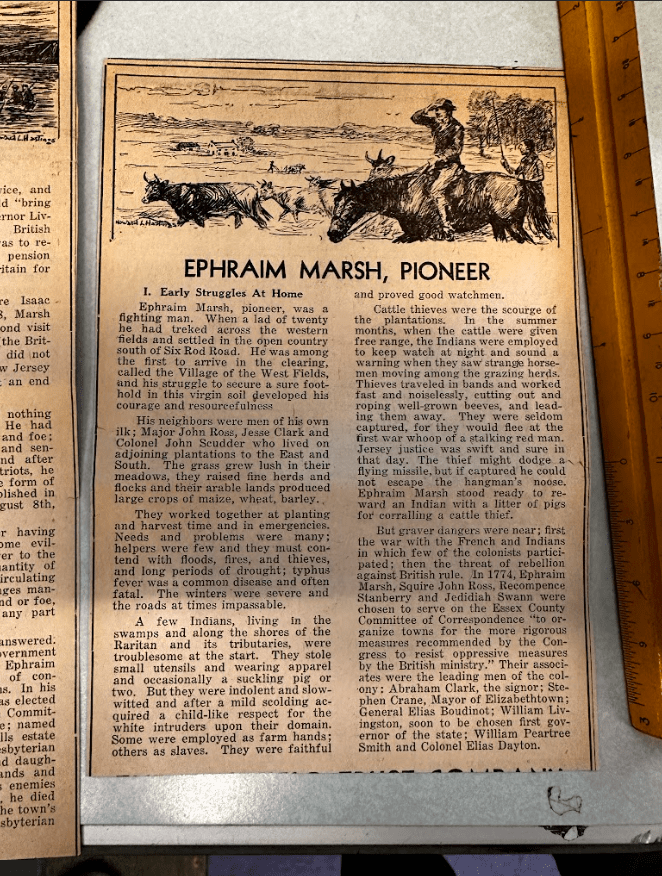
The researchers plan to collaborate in order to link their research efforts together. Beyond the primary documents already mentioned in this article, the research team is drawing from a variety of additional sources, including histories of Westfield, ledgers, lists of local doctors, innkeepers, and merchants, as well as records detailing key regional figures. They’re also studying militia payrolls from Essex County, personal letters, and the names of Revolutionary soldiers buried at the Westfield Presbyterian Church.
James Tichemor, Researcher
Building A Lasting Legacy
One of the aims of this research project is to create a lasting educational resource for the community. The team is exploring the possibility of an enduring outdoor exhibit or monument that would allow the public to engage with this history in a meaningful way. The groundwork is now being laid for this educational space that honors the notable figures who played an impactful role in Westfield and surrounding towns at the time of the American Revolution.
Stay tuned as the Westfield Historical Society continues this important work and opens the door to a richer, more inclusive understanding of our shared past. I will be posting another blog at the conclusion of this research project. As mentioned above, there will be a Hybrid Presentation in June by the research team where further findings will be revealed, providing the public with a deeper understanding of the people and events that have shaped this community for centuries. You will not want to miss this! Stay tuned and stay connected with the organizations listed below that are involved in this research:
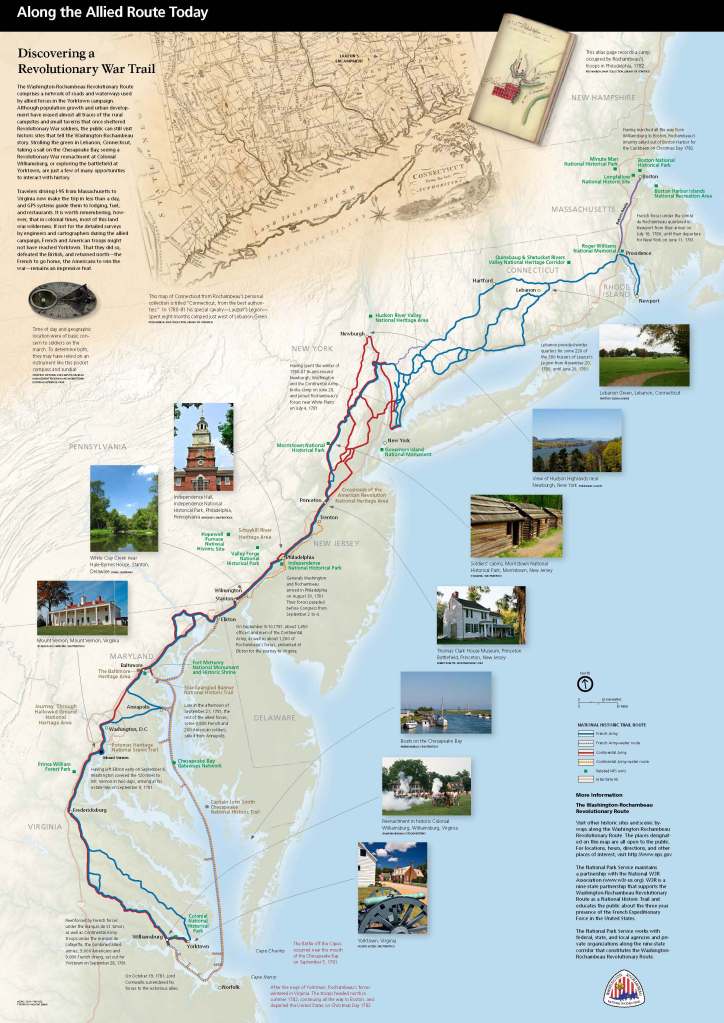
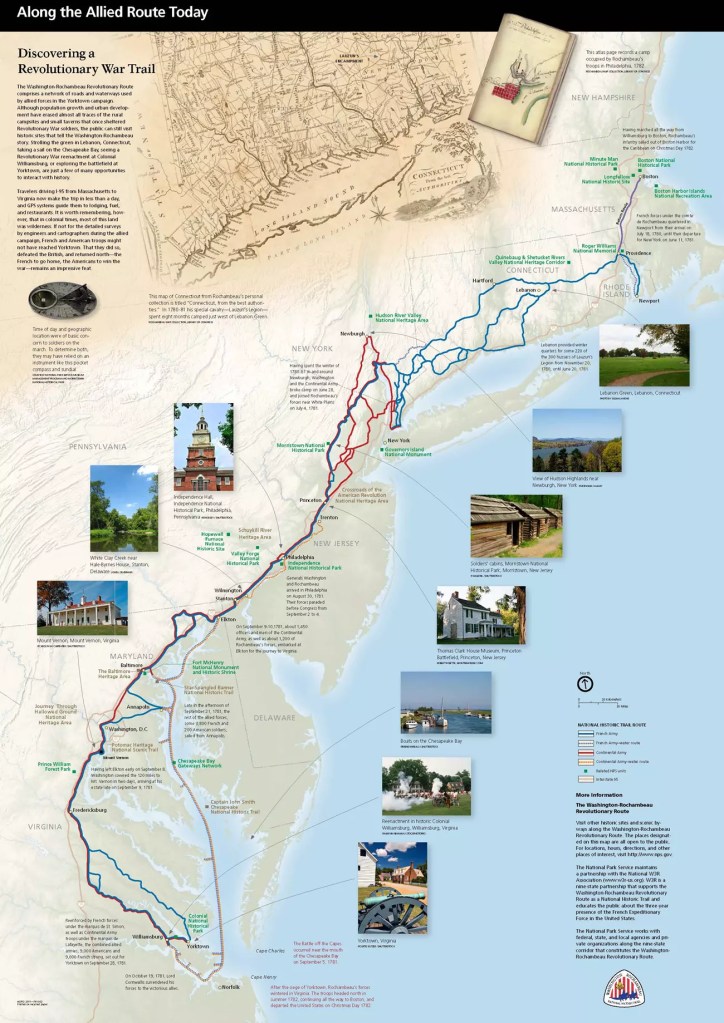
For this blog post, I am highlighting the Washington-Rochambeau Revolutionary Route. Many of the events/ trips that I have posted on this blog from New Jersey have been sites along the trail. It is fitting to post about the trail now because next week my family and I are heading on a trip to Williamsburg, Virginia, which is a site along the trail. We will be visiting the trail’s final destination: Yorktown, Virginia. I am a member of the Washington-Rochambeau Revolutionary Route in New Jersey Association which highlights the routes taken by the American and French forces within New Jersey. Of course, New Jersey was just one of several states that the American and French forces marched through. Other states include Massachusetts, Rhode Island, Connecticut, New York, Pennsylvania, Delaware, Washington DC, Maryland, and Virginia.
The entire trail is highlighted and commemorated by The National Washington-Rochambeau Revolutionary Route Association Inc. (W3R-US). On their website, W3R-US’s explains that their mission “is educating the public both about the Washington Rochambeau National Historic Trail, and the Trail’s context within the American Revolution as well as to collaborate with diverse trail communities and partners in stimulating economic development and a fuller, more inclusive realization of America’s founding ideals. W3R-US’s vision is that through a connected and conserved trail, W3R-US strengthens trail communities and expands the relevance of our shared American story today and for future generations.”
Overview Of The Trail
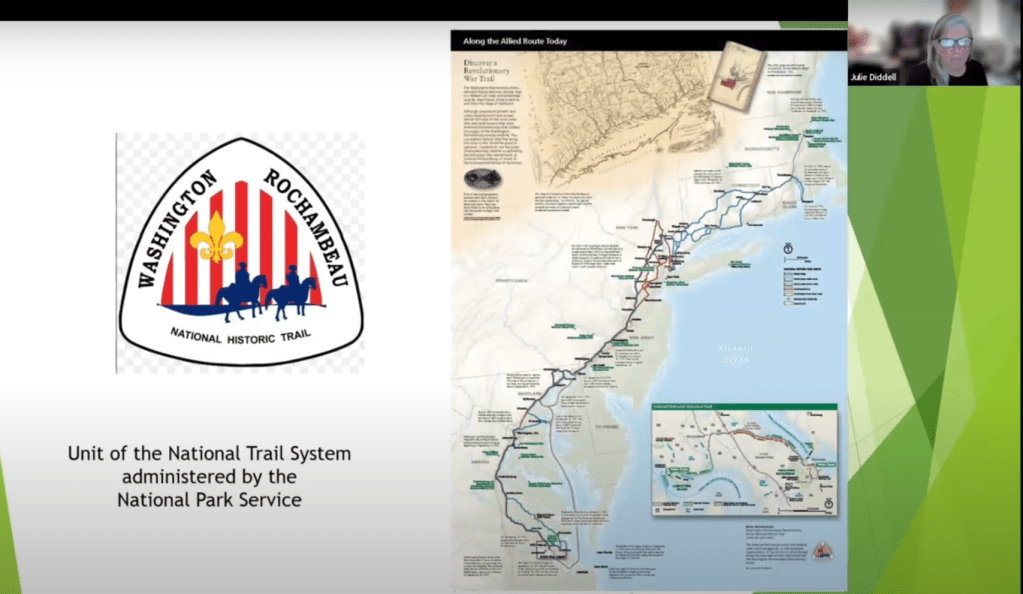
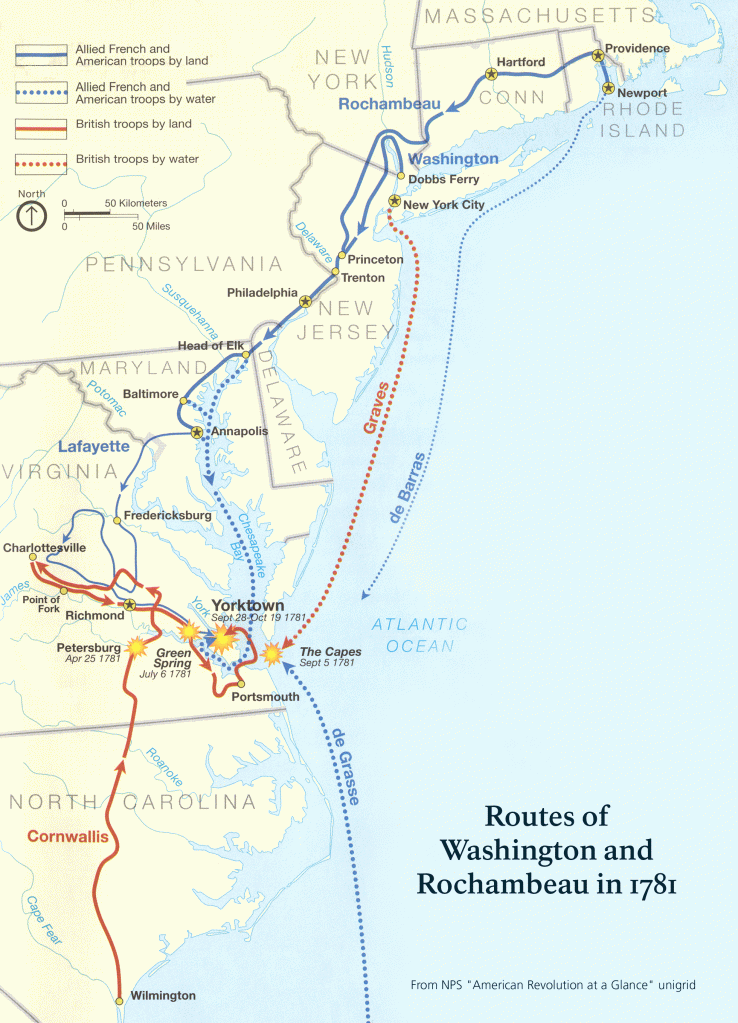
The Washington-Rochambeau Revolutionary Route highlights the 680-mile route that the Continental Army, led by George Washington, and the French forces, commanded by Jean-Baptiste de Rochambeau, took from Newport, Rhode Island, to Yorktown, Virginia. This 14-week journey culminated in the defeat of the British Army in The Siege of Yorktown in October 1781, which was the beginning of the end of the war, and the victory that the United States needed to secure their independence. The Washington-Rochambeau Trail is a unit of the National Park Service.
The march began in June 1781, when French forces departed from Rhode Island and met up with American forces at the Hudson River. The French and American forces marched south in August, through New Jersey, Pennsylvania, Delaware and Maryland. They arrived in Williamsburg, Virginia, in late September, just a few weeks after the French navy defeated the British in the Battle of the Chesapeake, effectively cutting off an escape route for the British encamped at Yorktown.
On September 22nd, 1781, the American and French armies joined forces with the Marquis de Lafayette in Virginia. After a three-week siege at Yorktown, British General, Lord Cornwallis surrendered his British army on October 19, 1781. This was the climactic victory of the war which led to peace talks between the United States and Great Britain. The Washington-Rochambeau Revolutionary Trail features interpretive signs and exhibits that highlight the joint effort of both the American and French forces to secure independence.
New Jersey
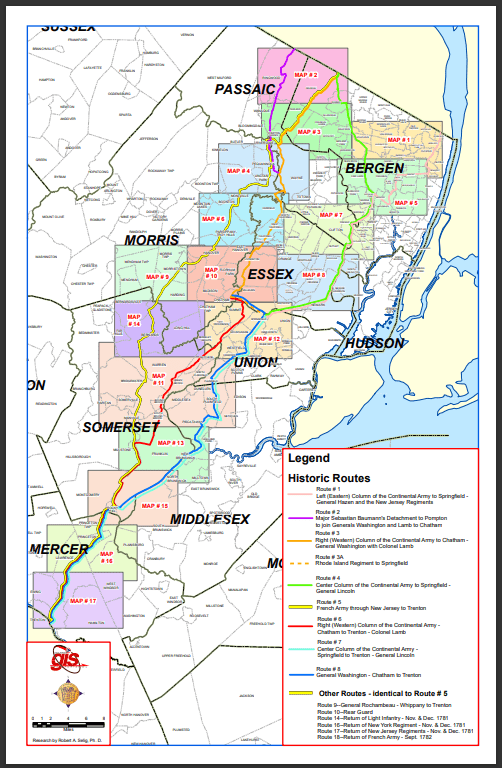
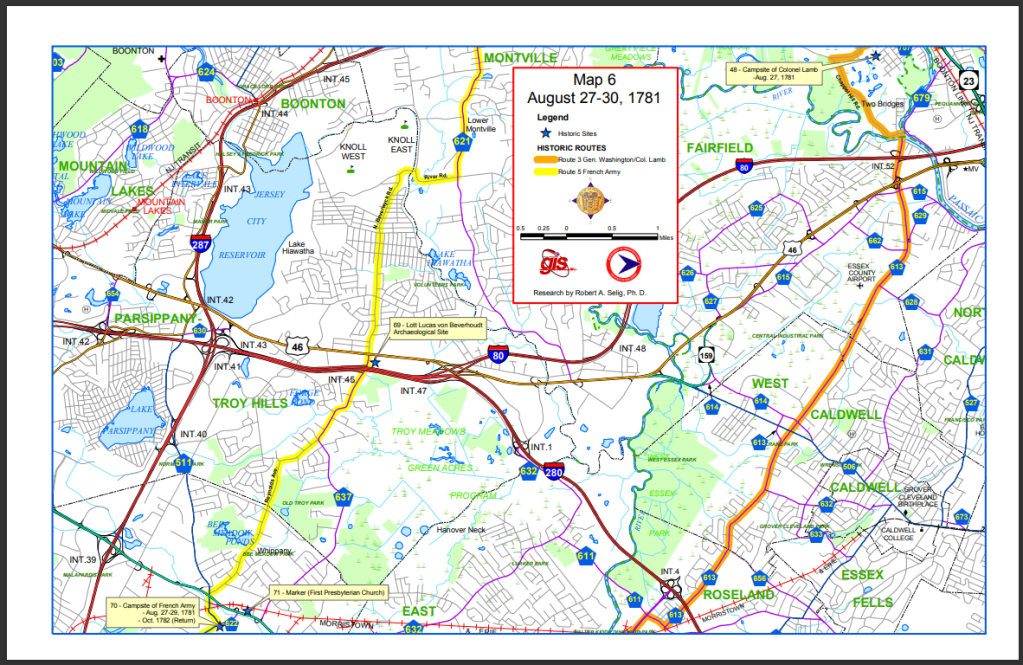
Being a New Jersey native, my experiences along the trail have been within my state, which has many historical connections to the American Revolution. Below are two maps; the first is a broader map of the routes within New Jersey, and the second map is zoomed into the region where I live. You’ll notice that there are many other maps that highlight the routes more locally. These extra maps are located HERE. I used the local map to find that the trail runs along a road that I personally drive on almost daily in Fairfield and West Caldwell, and is about 2 mins from my house. This particular trail is highlighted in orange and was the route taken by General Washington and the Continental Army. The more western route that the French took (highlighted in Yellow) is only about 10 mins west of my house as it cuts through towns like Montville and Lake Hiawatha.
Many New Jersey natives can explore the state map, and realize that this historical trail is quite local to where you live. When you consider the significance of the Siege of Yorktown, and the lengthy march that American and French soldiers had to take, you gain an appreciation for the sacrifices that these soldiers had to make to secure the freedoms that we take for granted today. And to think, they were marching right in your backyard!
Get Involved
For history lovers out there, I highly recommend visiting the websites of both the W3R-US, and the affiliate that is associated with your state. For New Jersey residents, you can visit here. The websites have many interactive features including virtual tours along the trail. Along the virtual New Jersey trail, you will learn much about houses that still stand along the trail and were witnesses to the soldiers who marched in 1781. As we get closer to the 250th anniversary of our independence, I recommend checking back into these sites for events, and ways to get involved. You should also consider becoming a member of the organization. You will not only enjoy the benefits of membership, but you will show your support for a great organization that is bringing the American Revolution alive for the public!
The following blog posts are from experiences and trips that I’ve had along the Washington-Rochambeau Revolutionary Trail thus far:
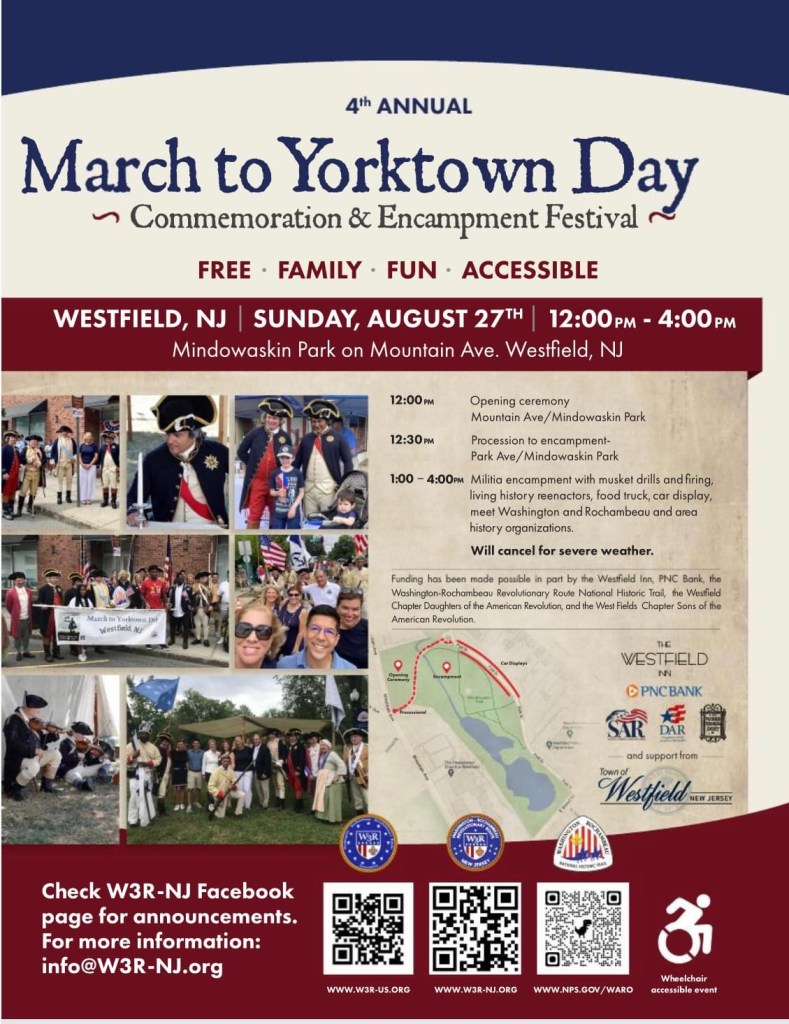
On August 27th, my daughter and I attended the 4th Annual March to Yorktown Day in Westfield, NJ. The event was run by the Washington-Rochambeau Revolutionary Route Association New Jersey (W3R-NJ) to commemorate the day (August 29th, 1781) that General Benjamin Lincoln’s line of the Continental Army, passed through Westfield, NJ on their way to Yorktown, Virginia. The French Army, led by the Comte de Rochambeau, took a route to the west of the Continental Army before the two armies met up outside Princeton, NJ. The Washington-Rochambeau Revolutionary Route highlights the route that the American and French armies took from Newport, Rhode Island, to Yorktown, Virginia, which culminated in the defeat of the British Army in The Siege of Yorktown in October 1781. The Washington-Rochambeau Trail is a unit of the National Park Service.
Map from the National Park Service
The event began with an opening ceremony at Mindowskin Park. Re-enactors included Washington, Rochambeau, General Chastellux, and the Marquis de Lafayatte. Speakers during the opening ceremony included Julie Diddel, W3R-NJ Chair, who explained the significance of the Washington-Rochambeau Historical Route, as well as Westfield’s role in the Revolution. She did a fantastic job organizing and running the event. Speakers also included Westfield mayor Shelley Brindle, State Senator Jon Bramnick, and others.
Following the opening ceremonies, the crowd marched into the center of Mindowskin Park, led by Washington and Rochambeau. The park took on the form of a Revolutionary Era militia encampment with colonial games, cooking demonstrations, and frequent marches, drills and musket firing from the soldiers.
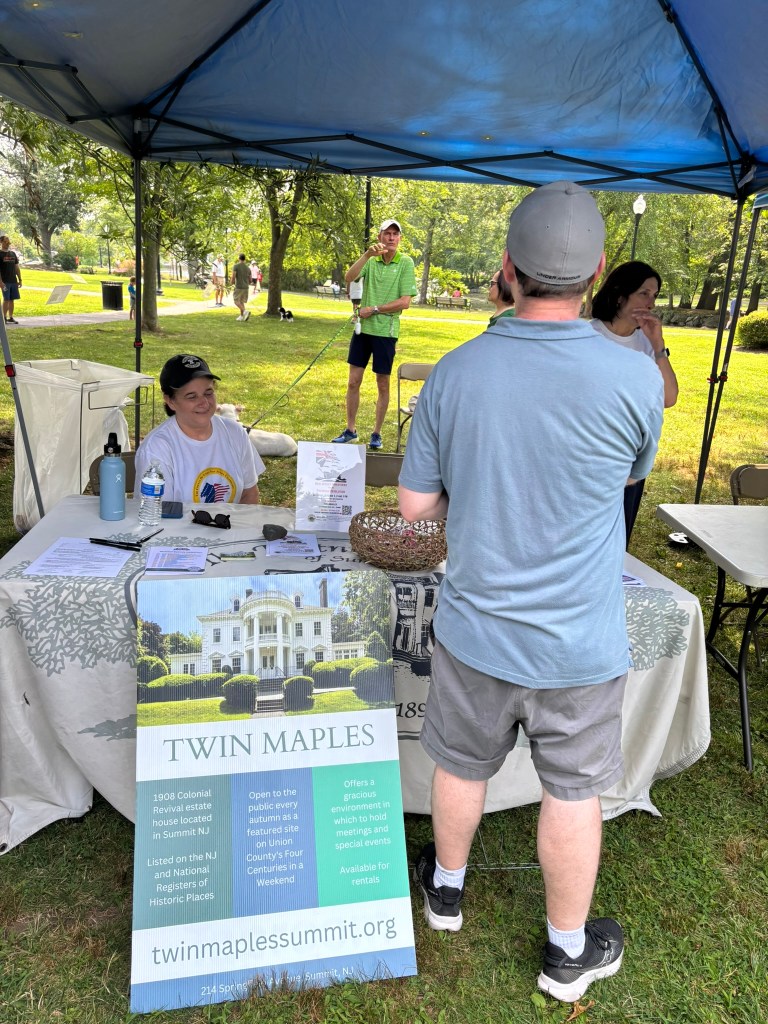
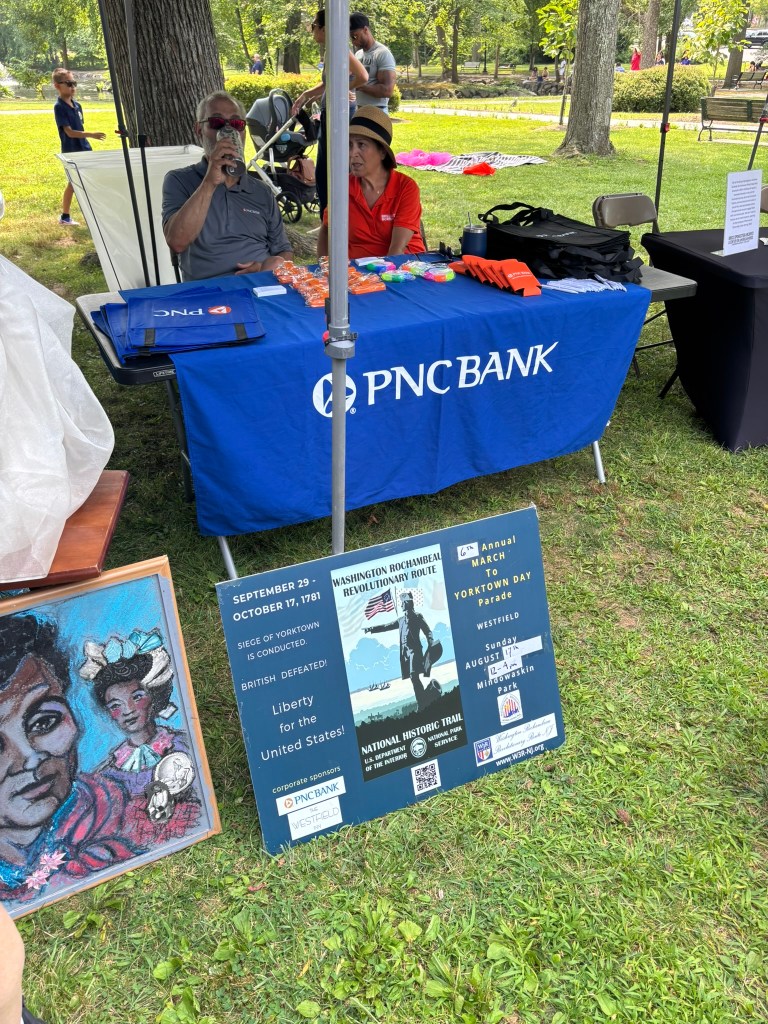
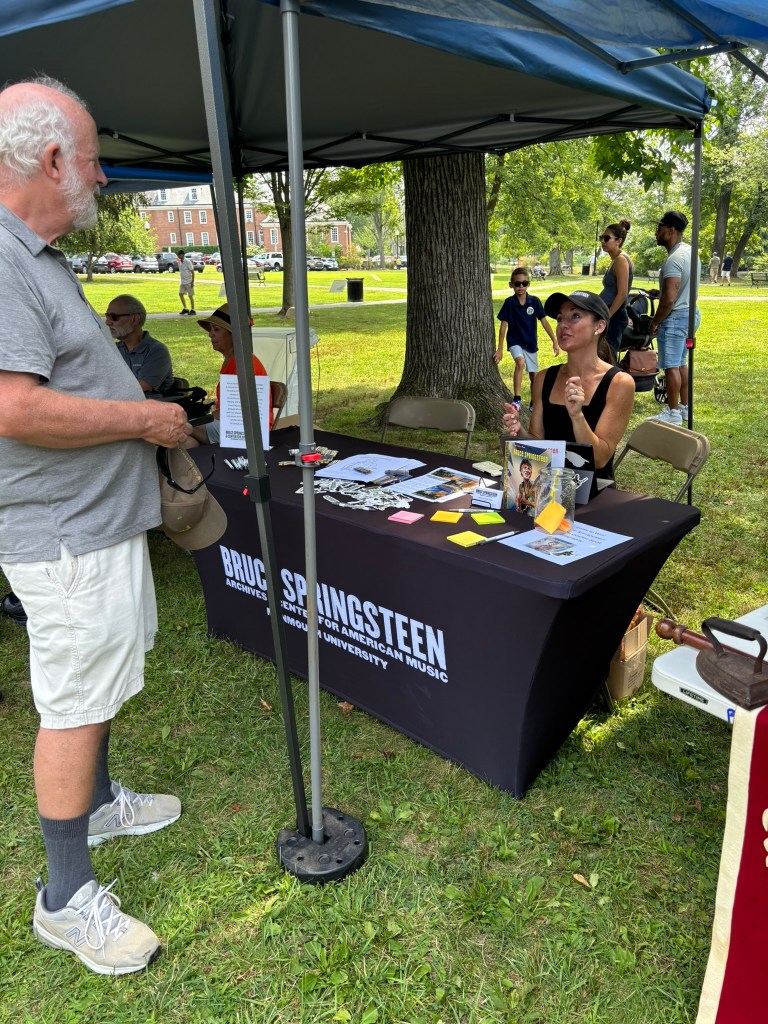
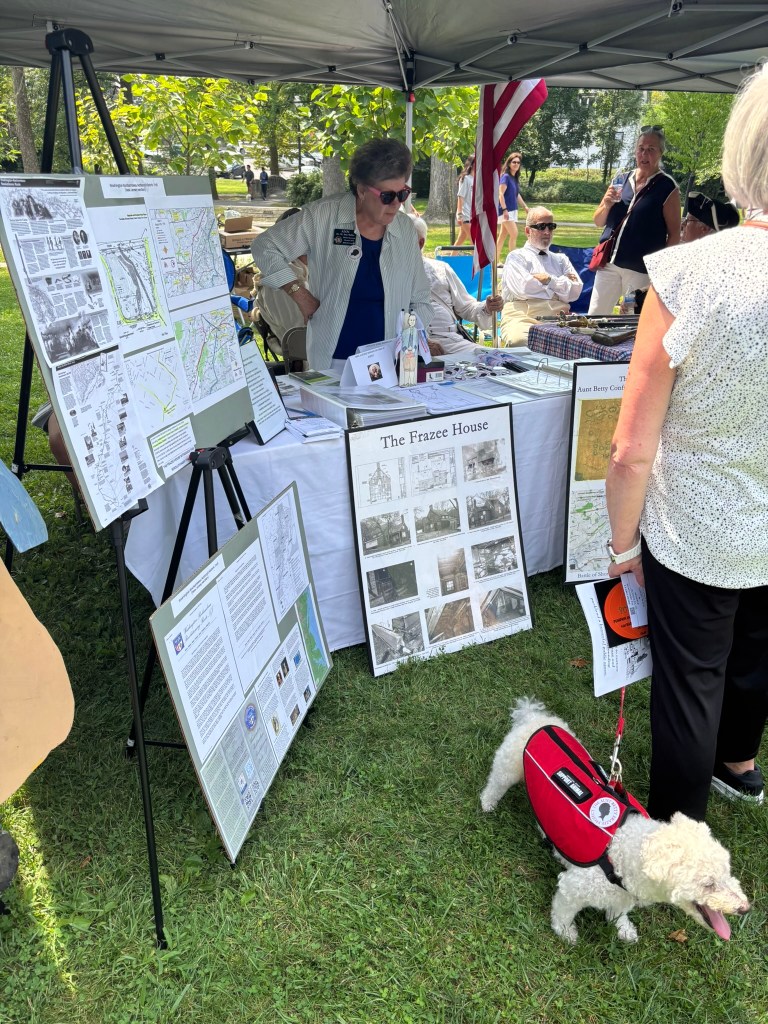
Local history organizations set up tents and provided information. Organizations included the Washington Association of New Jersey, the Chatham Historical Society, the Union Township Historical Society, the Princeton Battlefield Society, the Miller-Cory House Musuem, the Westfield Chapter of the Daughters of the American Revolution and others. Music was provided througout the event by fife and drums which took you back to the 18th century.
My daughter and I chatted with the re-enactors as well as members of the different historical groups there. We tried out colonial games and learned about colonial encampment cooking. There was a Family Flava food truck at the event so my daughter and I had lunch on a park bench. After we ate, we found out that Mindowskin Park has a beautiful playground that my daugher really enjoyed. I had to bribe her to leave with a stop at the ice cream truck.
My daughter and I had a wonderful time at the March to Yorktown Day in Westfield. The event was another reminder of the rich history in New Jersey and the strong ties that the state has to the American Revolution. The Washington-Rochambeau Revolutionary Route Association New Jersey did a great job providing an event that was fun and informative for all ages. I look forward to attending again next year!






































 Benevento's History Blog