Category: Virginia

  • My last two blog posts discussed portions of my family’s summer vacation to Williamsburg, VA.  The first blog post discussed our visit to Colonial Williamsburg.  My previous blog post discussed a tour of Jamestown Settlement, which was the first half of our second day.  This blog post will discuss our afternoon in Yorktown.  This Jamestown- Yorktown tour was booked with Viator.

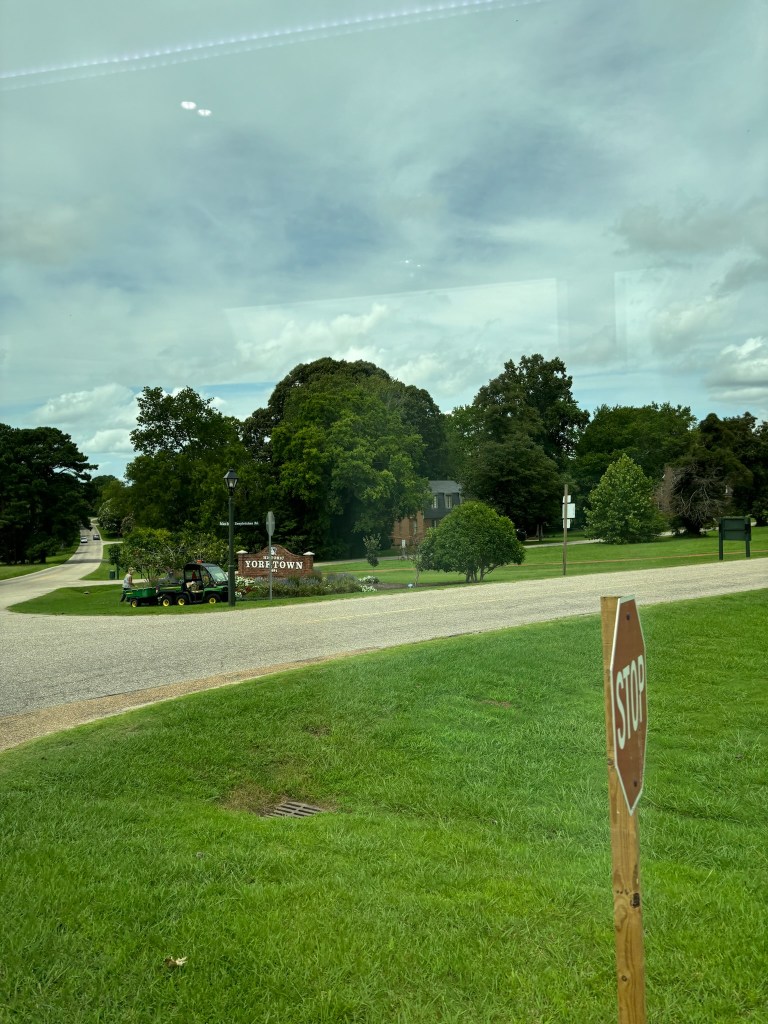
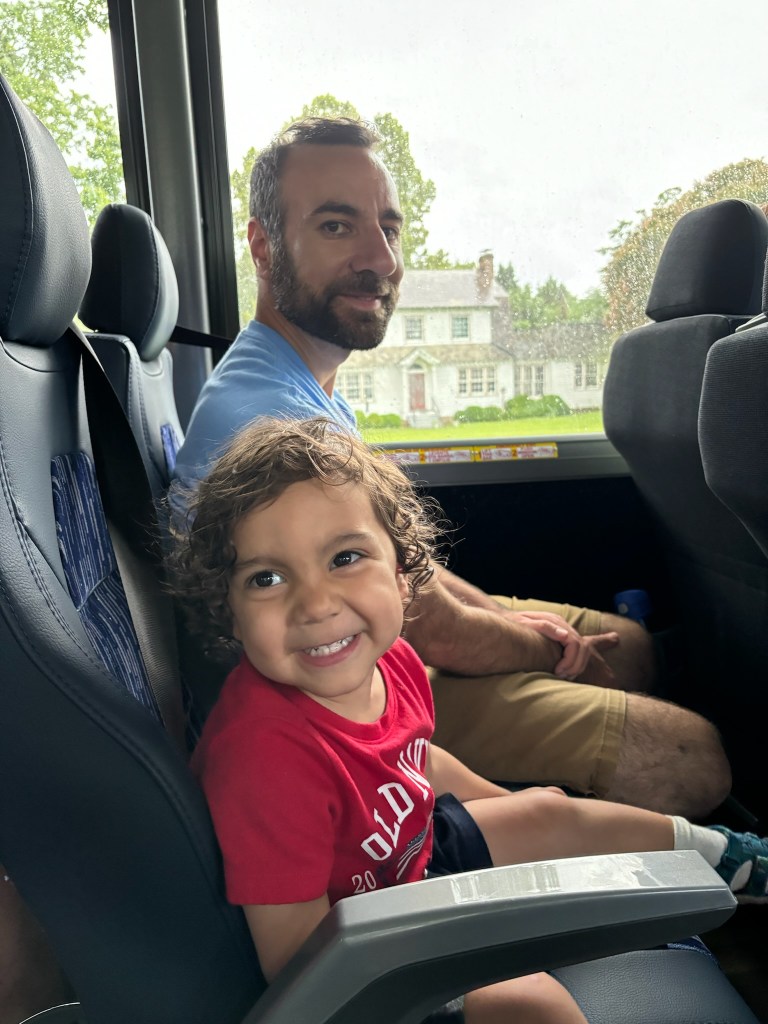
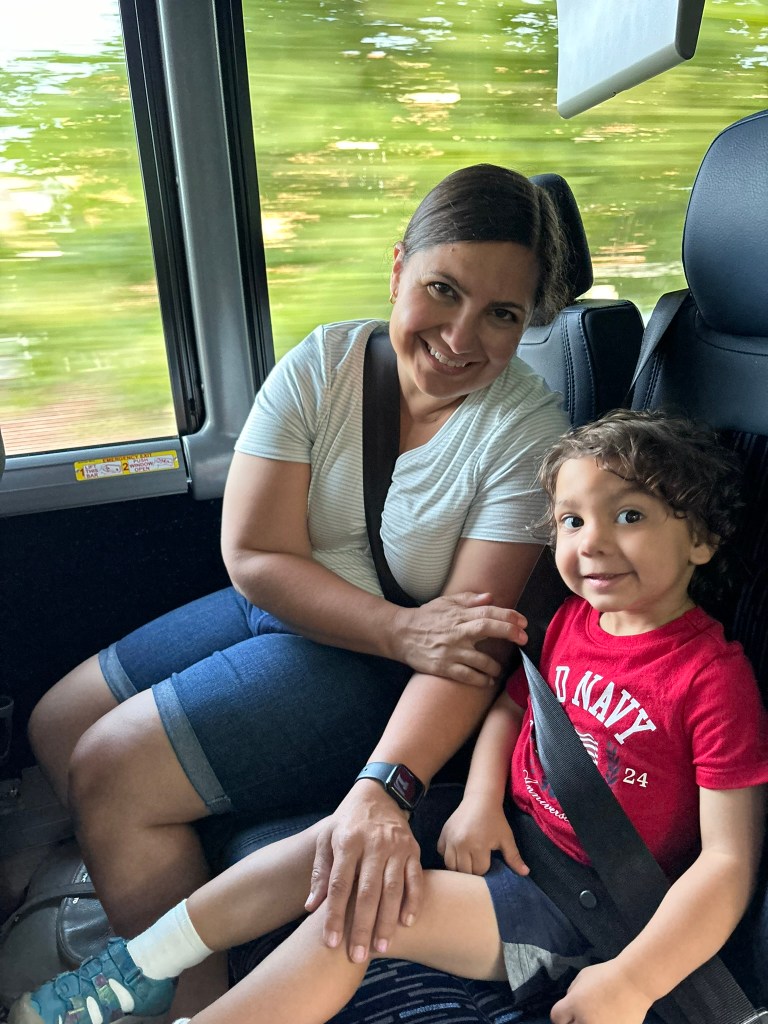
    After we ate lunch at the Jamestown Settlement, we got back on the bus and headed to the Yorktown Battlefield.  The drive between Jamestown and Yorktown was about 30 mins.  Along the route, our tour guide still discussed the impact of the Jamestown settlement, and then transitioned into the 1700s.  He explained the lead-up to the American Revolution and the outbreak of the war.

    Significance

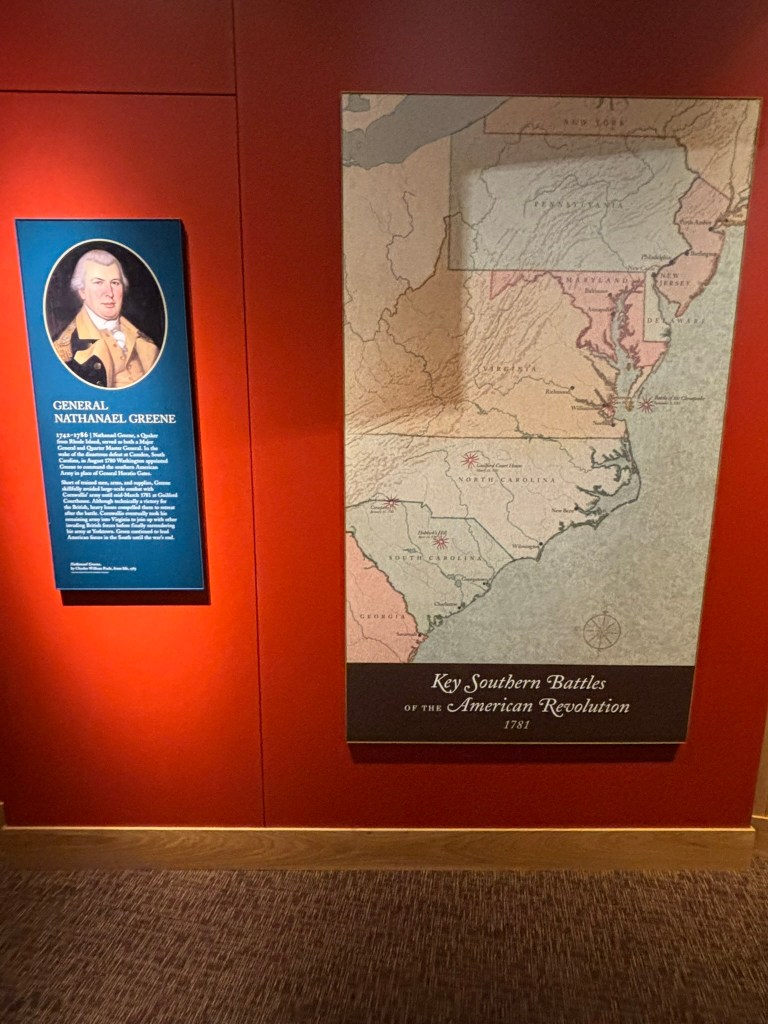
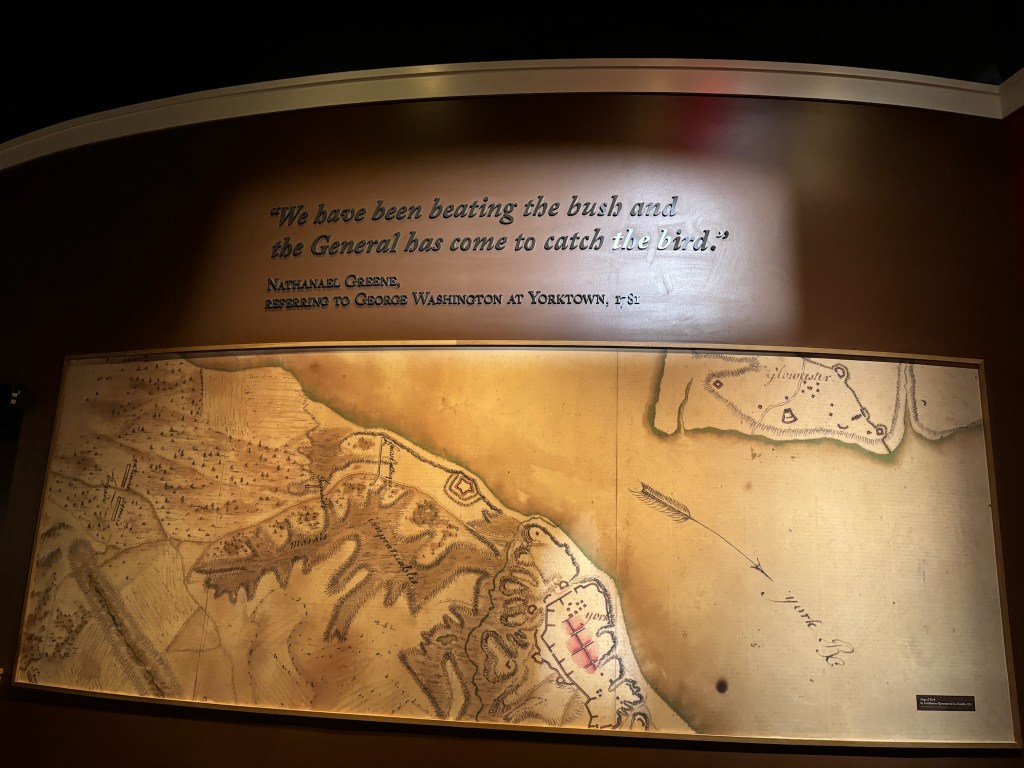
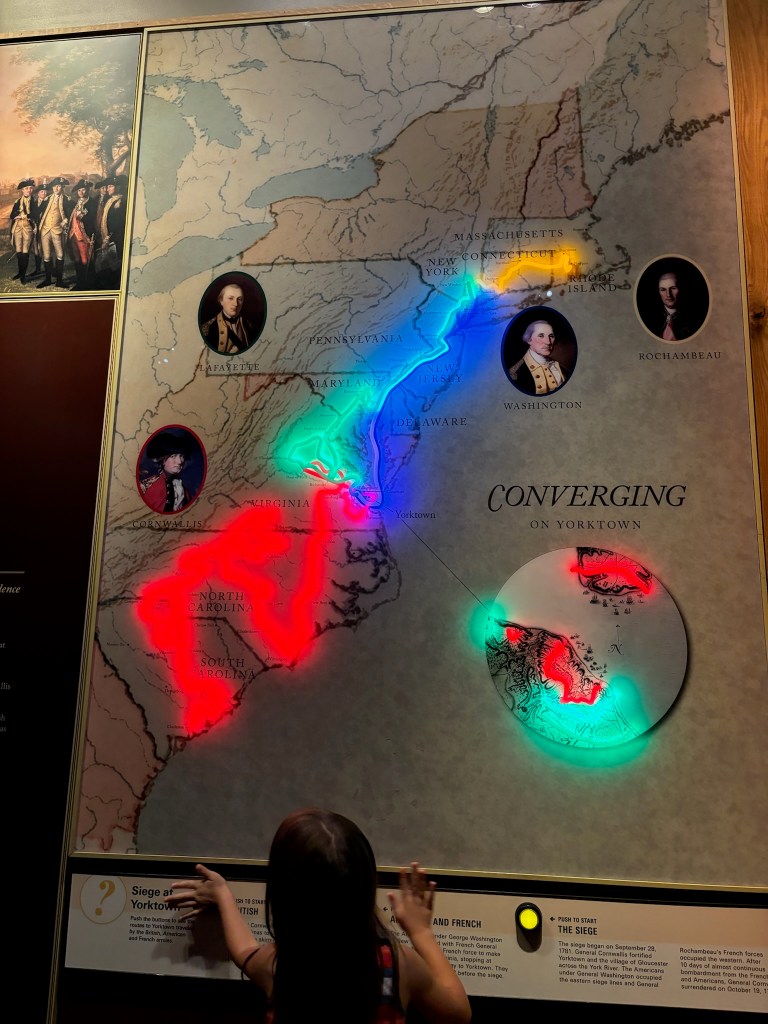
    Yorktown was arguably the most important battle of the American Revolution because it was the last, major climactic battle.  After six long years of war, and after a couple of grueling years of fighting in the south, British General Lord Cornwallis decided to take the war from the Carolinas to Virginia.  He decided to set up camp at Yorktown along the York River.  The combined French and American forces planned to surround the British at Yorktown and cut of their supply along the river.  As a result of the naval Battle of the Chesapeake on September 5th, 1781, the French were able to successfully gain control of the York River, cutting off a British escape route.  The French and American forces made their way from Rhode Island along the Washington-Rochambeau Revolutionary Route.  After a siege of about three weeks, Lord Cornwallis’s army was forced to surrender on October 19th, 1781.

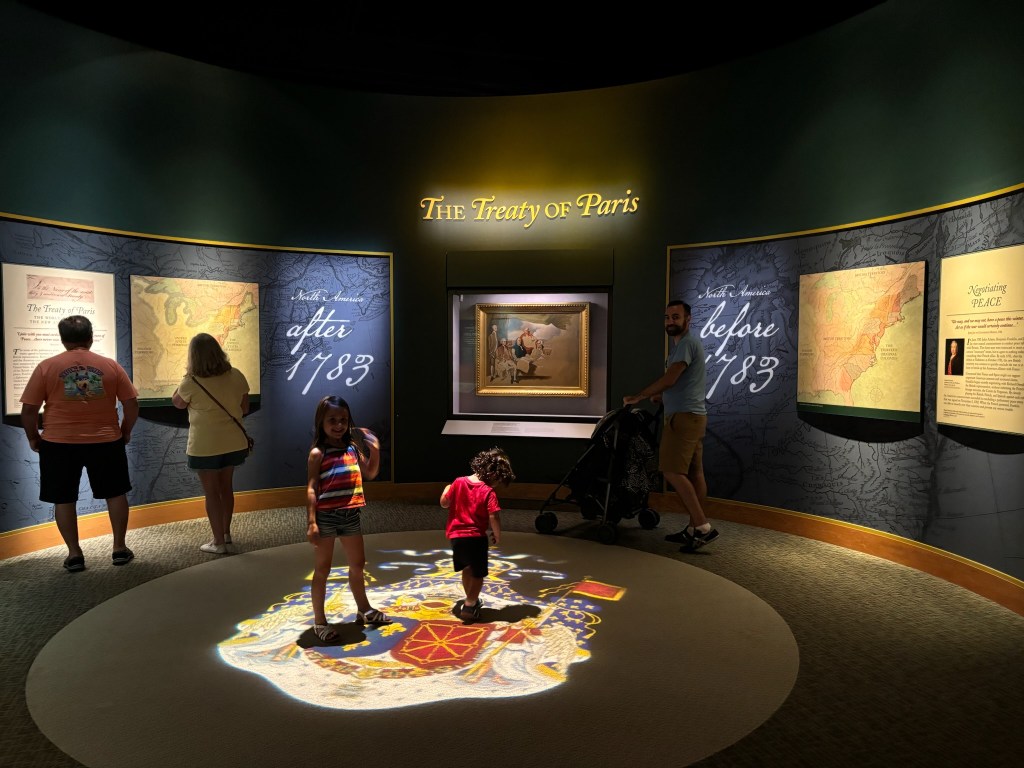
    While smaller battles and skirmishes did take place in the war after Yorktown, this surrender led to peace talks and was the last major battle of the war.  The Treaty of Paris would come in 1783, bringing about the official end to the war.

    Yorktown Battlefield

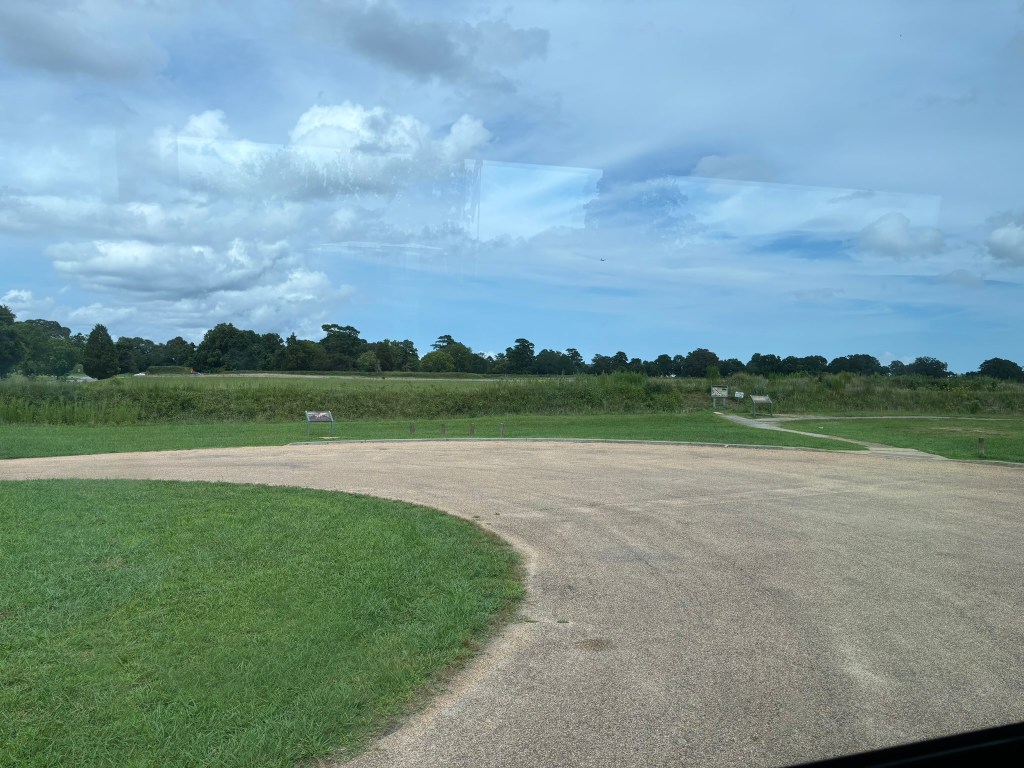
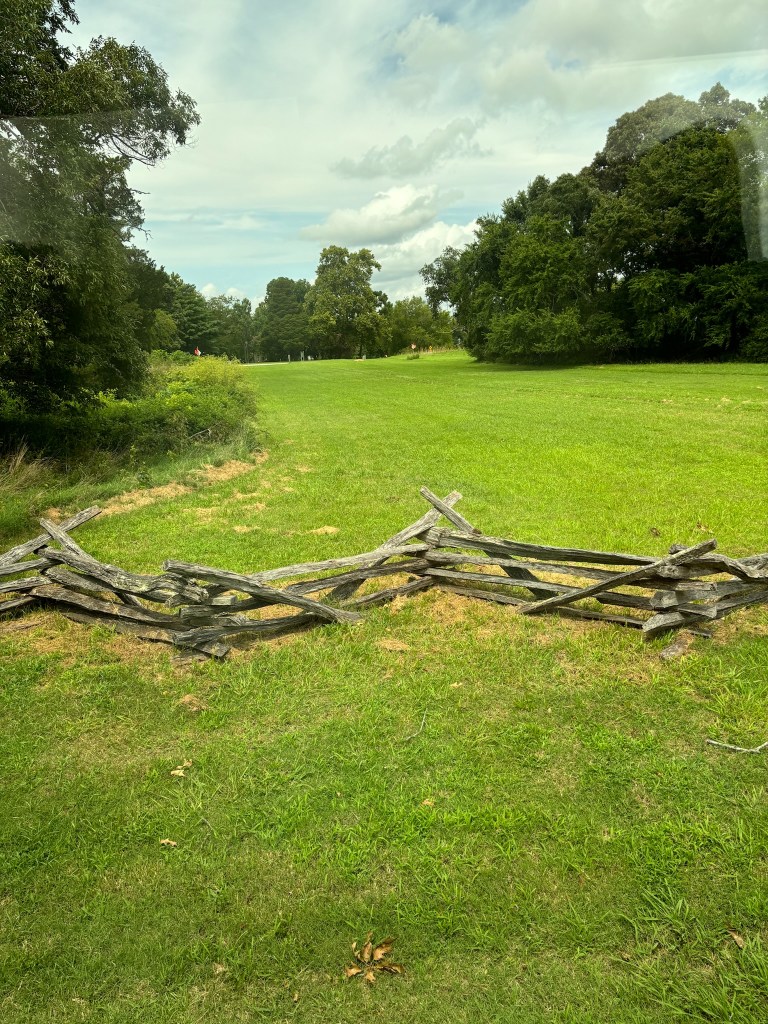
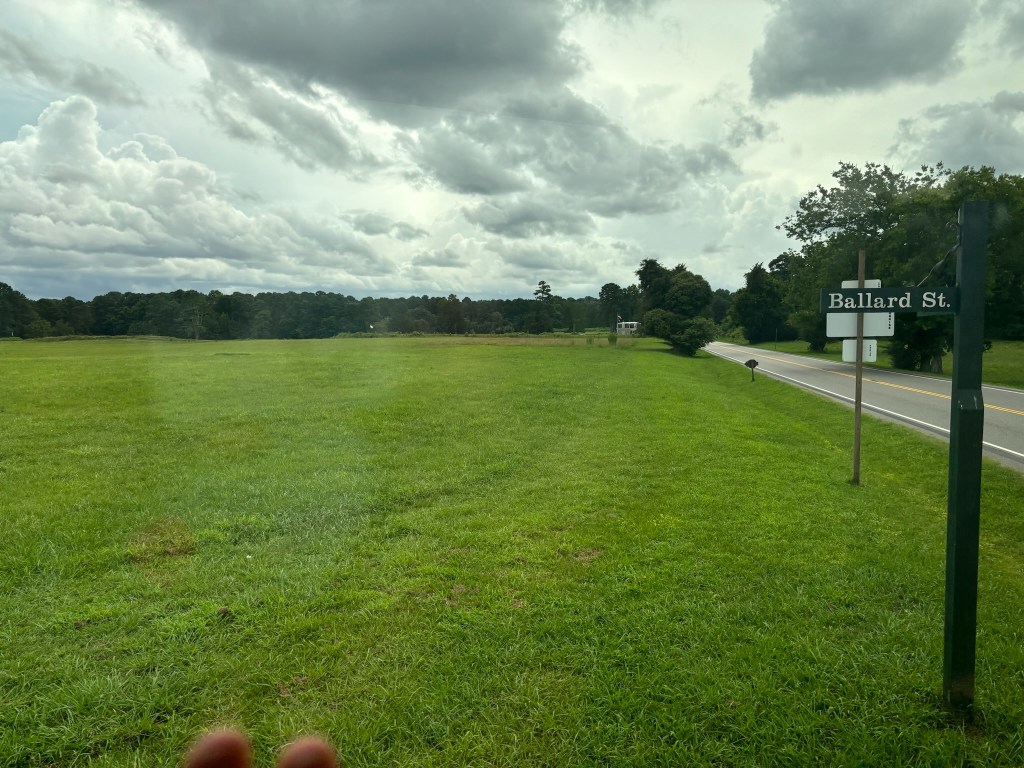
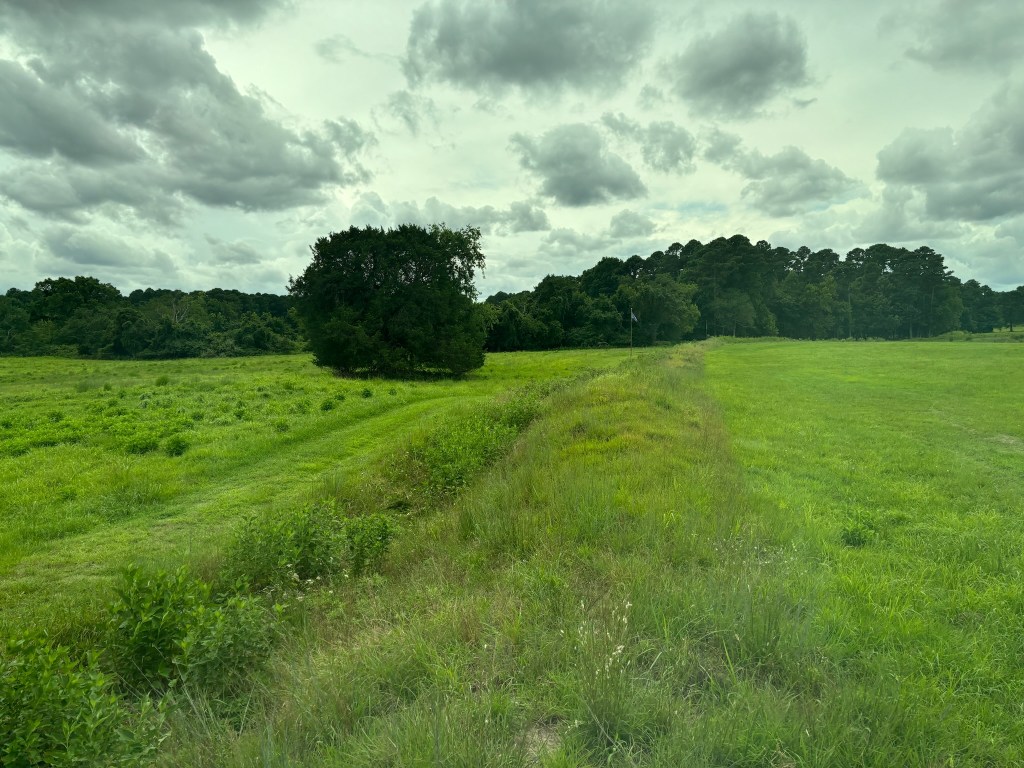
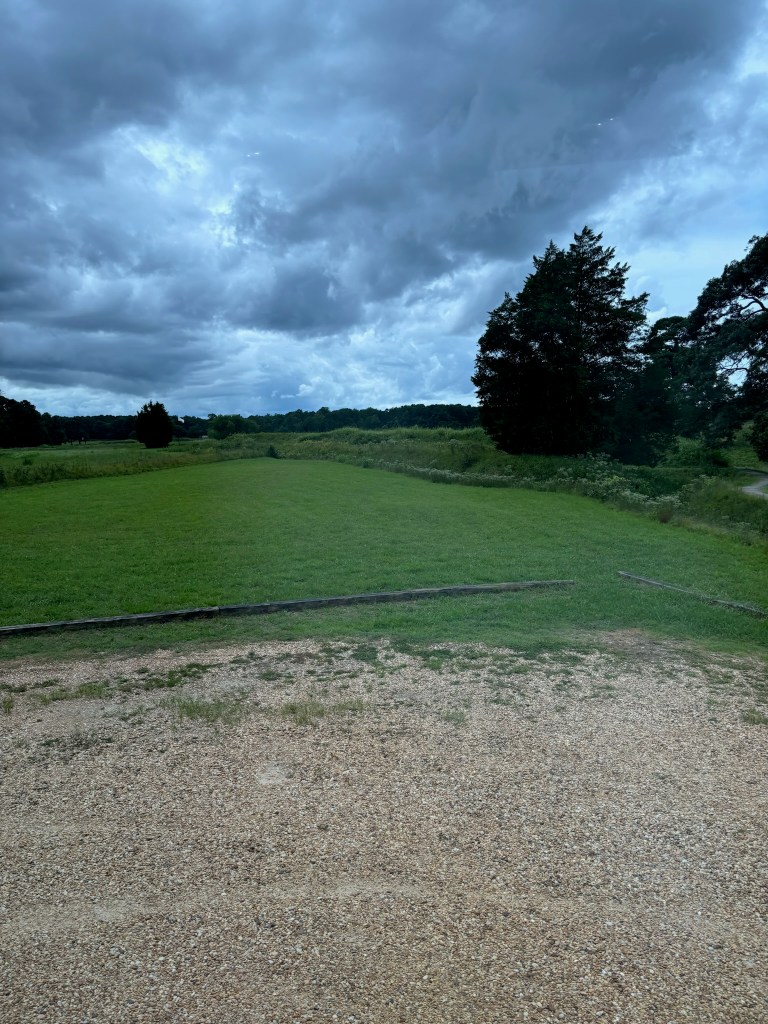
    When we arrived at Yorktown, we received a bus tour of the battlefield.  You could still see the remnants of the trenches that were built as the American and French forces were digging themselves closer and closer to the British stationed in town.  The American and French alliance bombarded the town constantly and cut off food and provisions from getting into town.  As we were moving throughout the battlefield, I used my Google Maps app to pinpoint exactly where we were in relation to town to get a sense of the exact locations of where the troops were moving on the battlefield. 
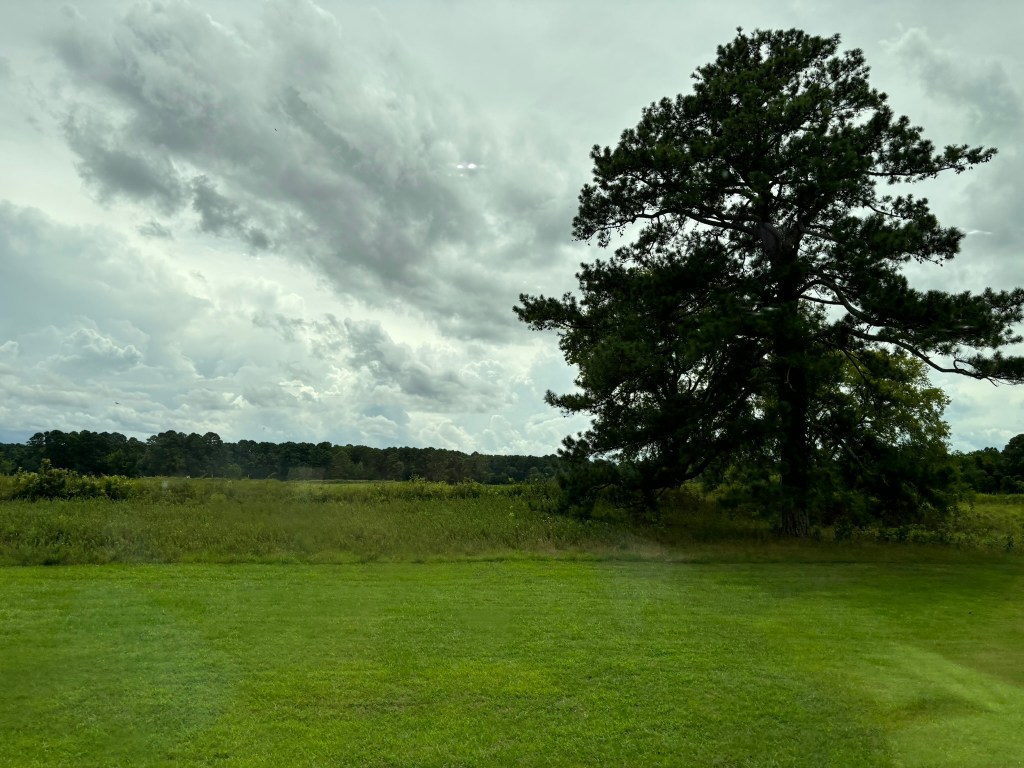
    Redoubts #9 and #10

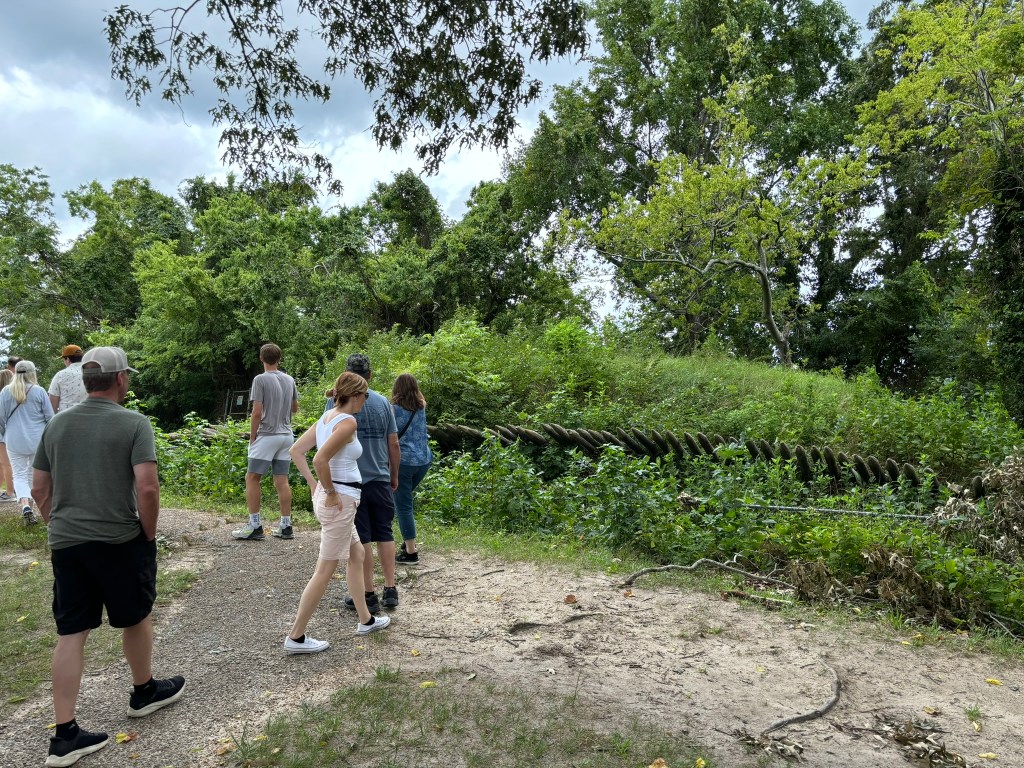
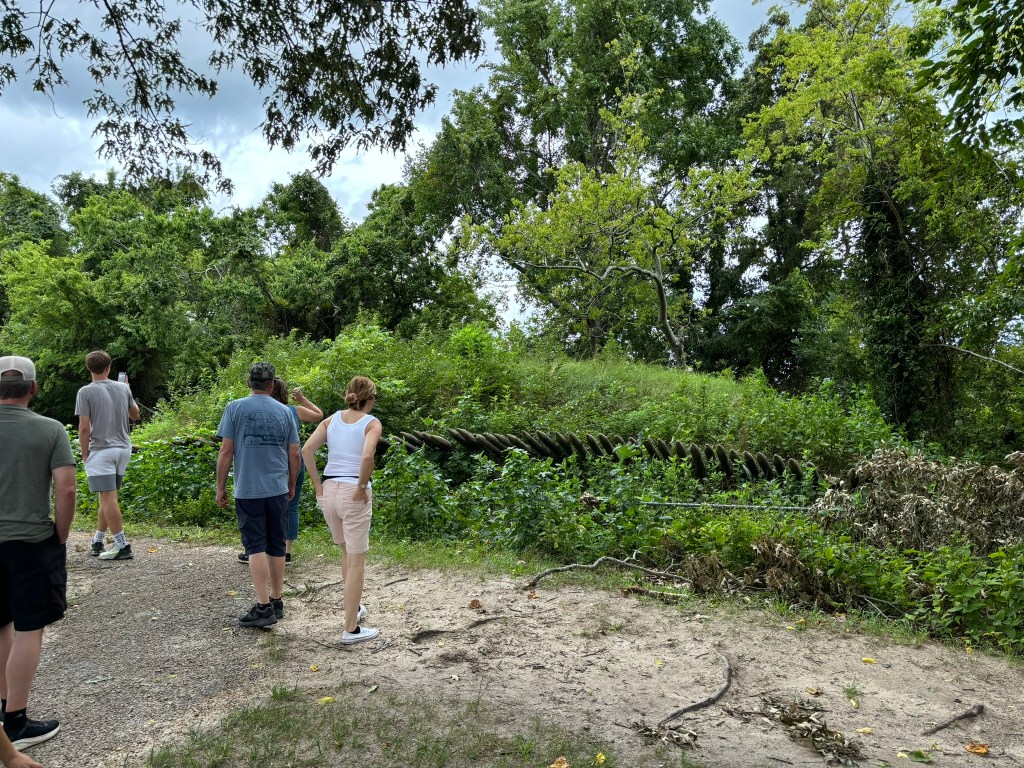
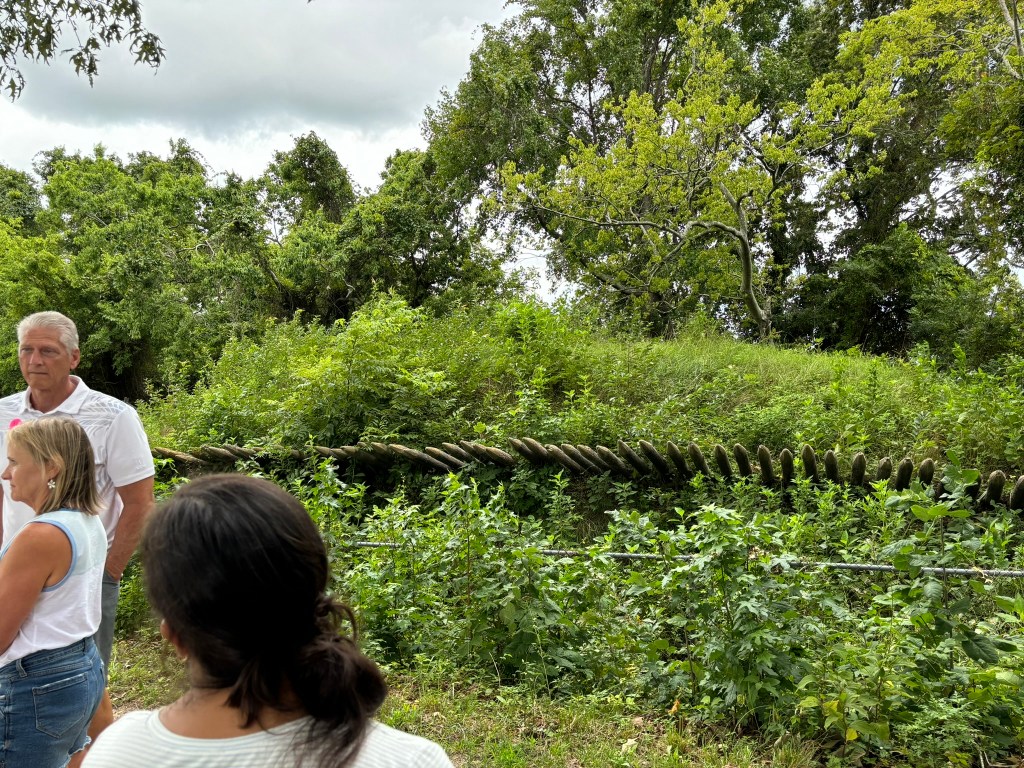
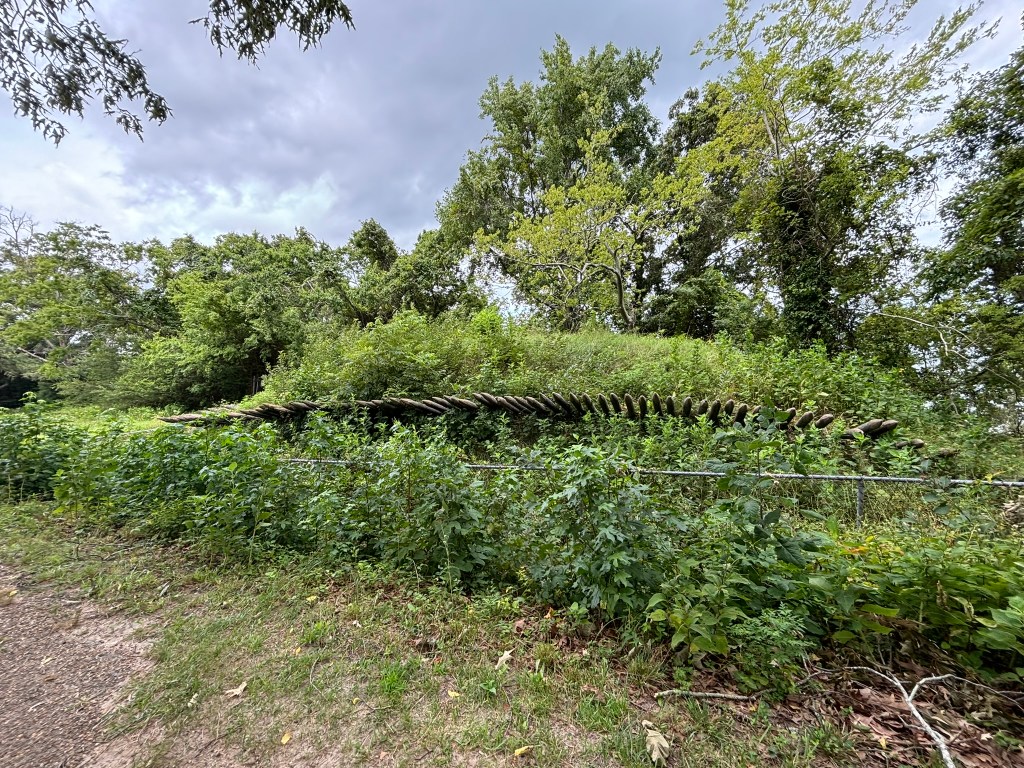
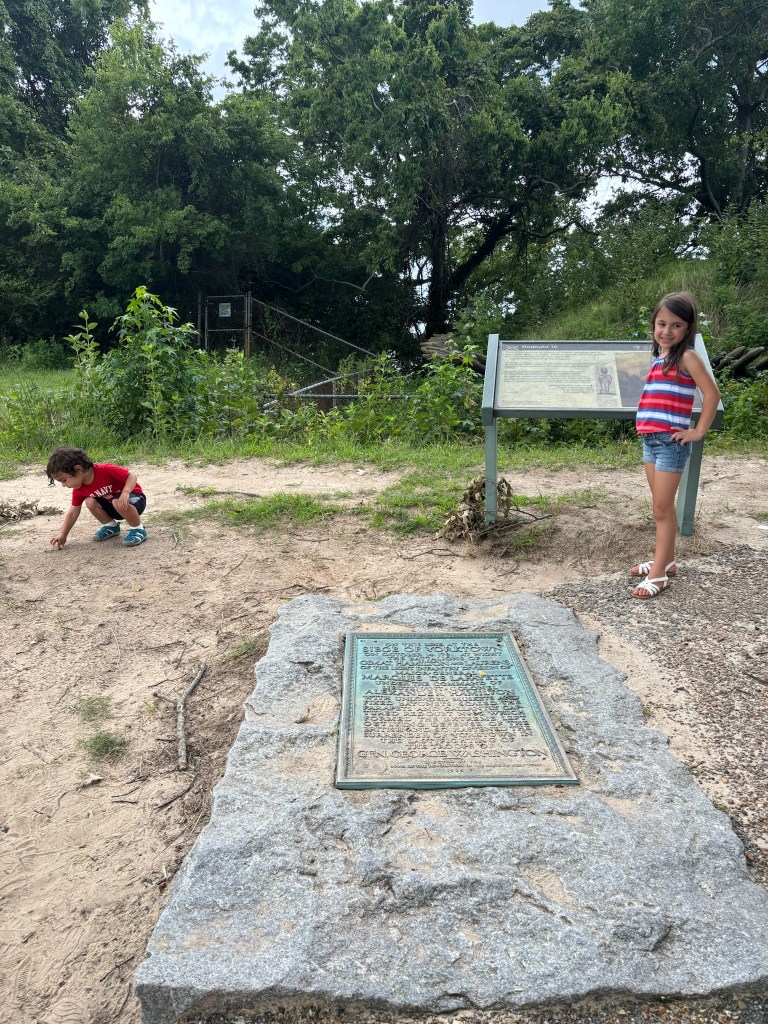
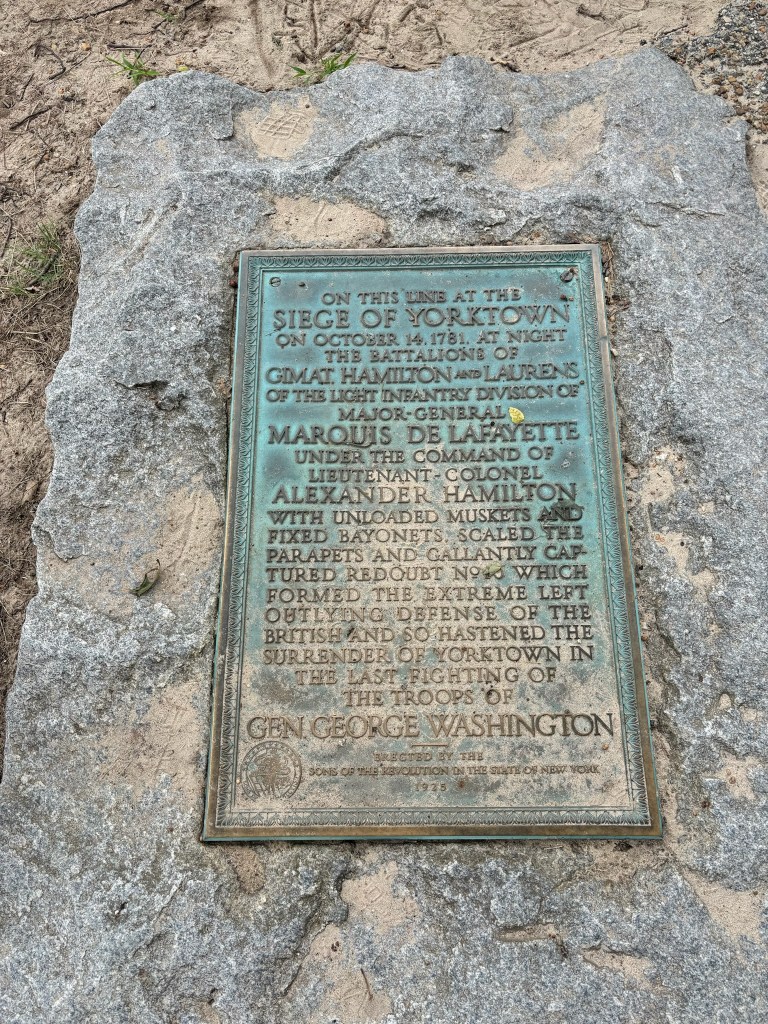
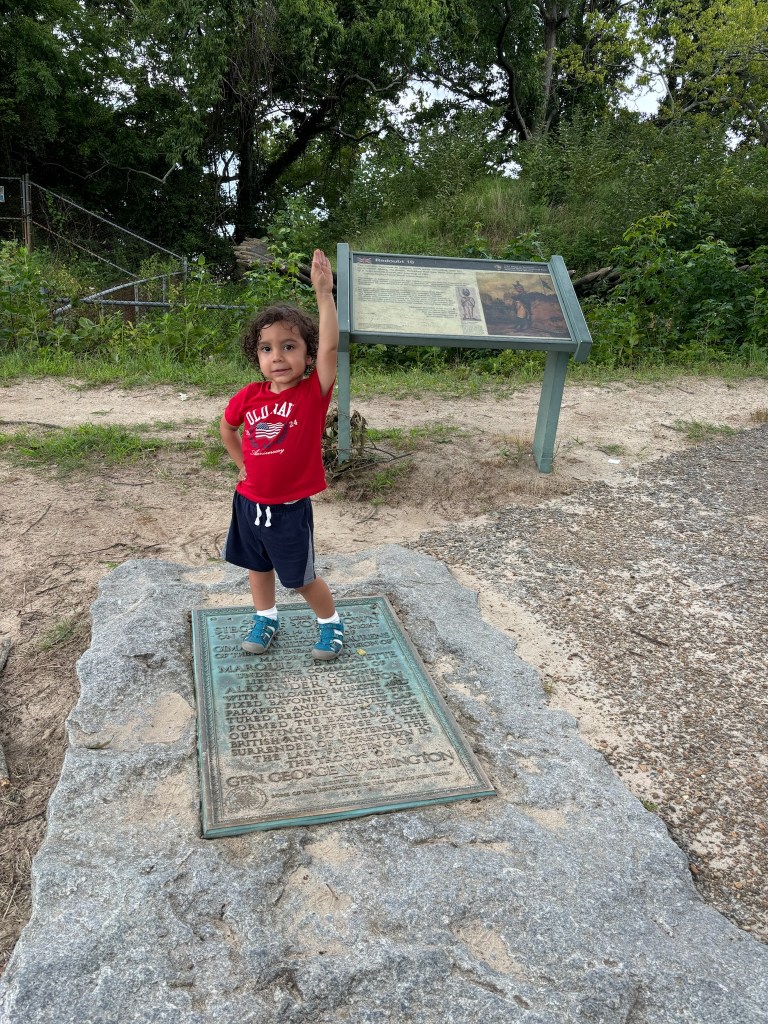
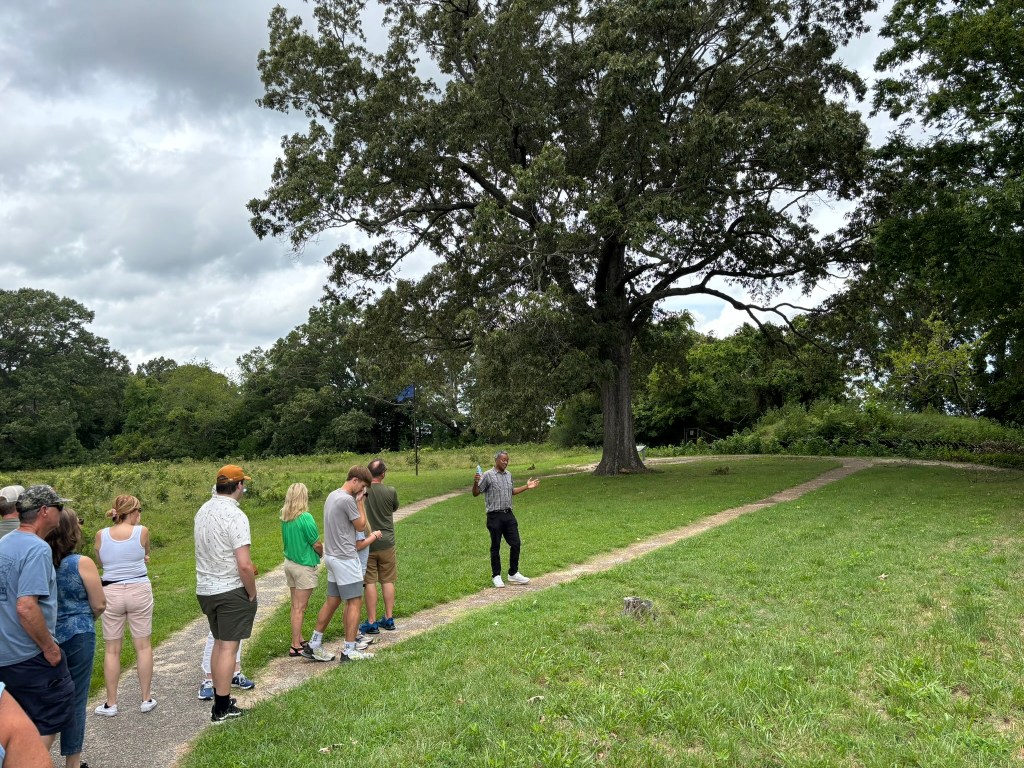
    The bus made its way to Redouts # 9 and #10.  These were two smaller fortifications just outside the British inner defenses, designed by the British to defend against French and American forces.  When we arrived at the redoubts, we got out of the bus to observe Redoubt #10.  Our tour guide explained the significance of the Redoubt.  By October 14th, the American and French trench lines were within 150 yards of these two Redoubts.  Washington devised a plan in which the French would attack Redoubt #9 and the Americans would attack Redoubt #10.  Alexander Hamilton was chosen to lead the offensive in the night against Redoubt #10.  The soldiers charged the redoubt with no ammo,  just bayonets drawn.  This was in order to keep the element of surprise.  The American soldiers stormed the redoubt, climbed the abatis, and successfully took Redoubt #10 in brutal hand-to-hand combat in just 10 minutes.  The French were also successful in taking Redout #9.  Truly a climactic moment of the siege, the British surrendered just 5 days later.
    The Moore House

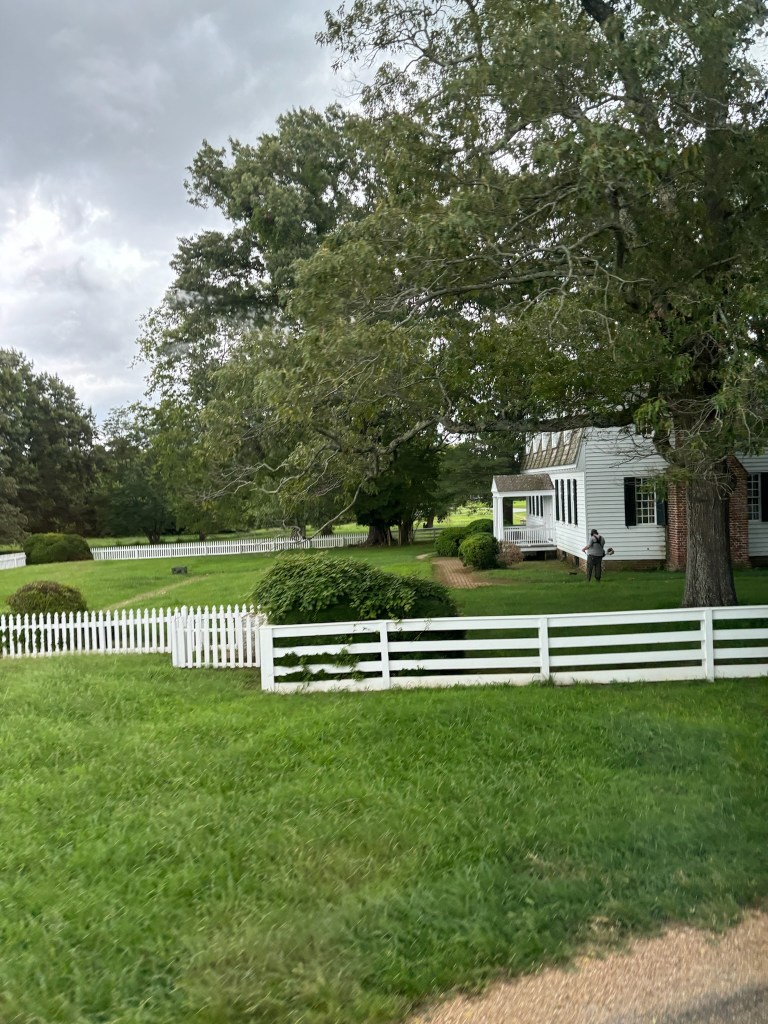
    After viewing the redouts, the tour bus then took us to and parked in front of the Moore House, the location where negotiations for surrender took place.  The tour guide did a nice job explaining the symbolic significance of the house.  It essentially was here, where victory in the American Revolution was secured, confirming American independence.

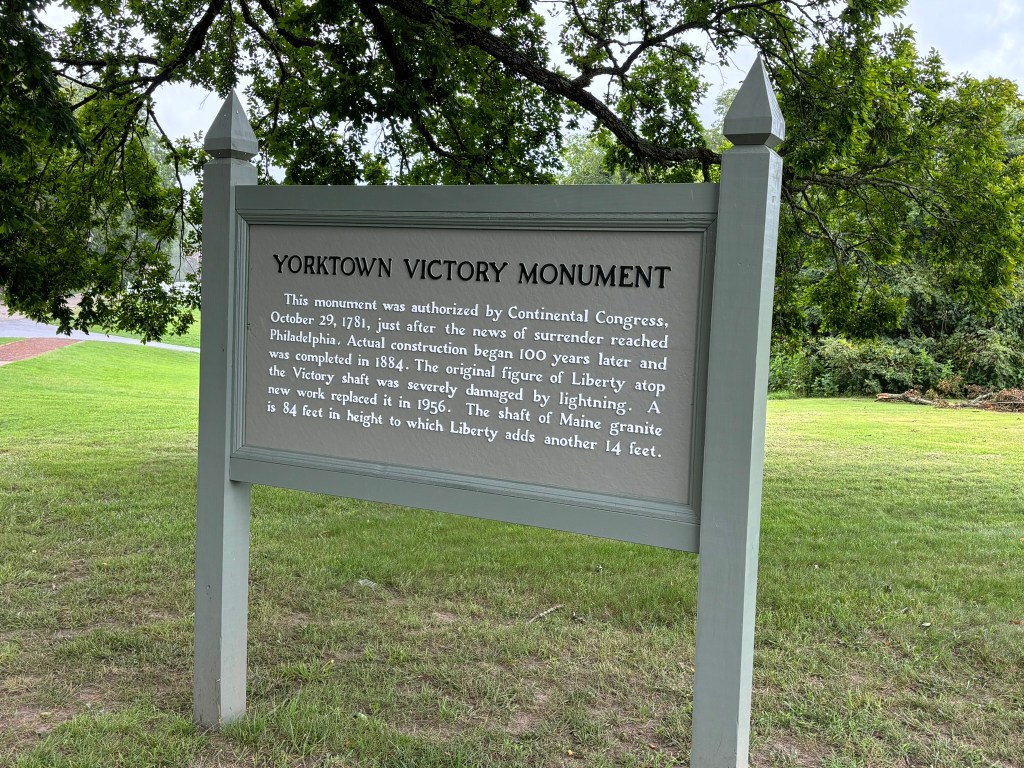
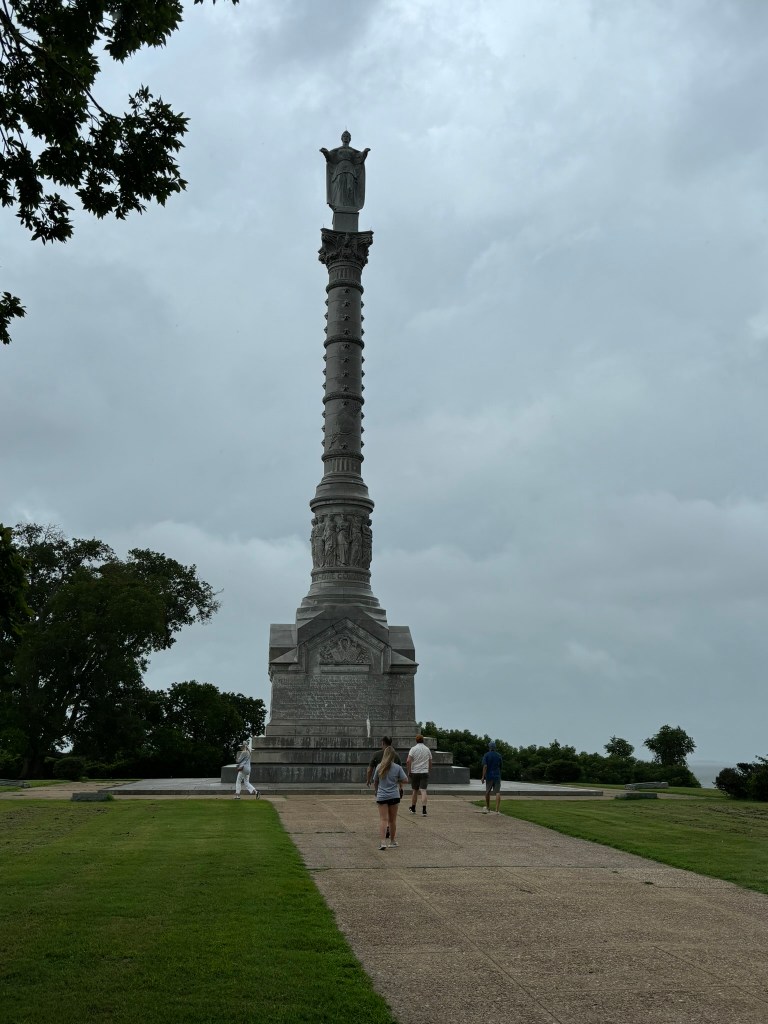
    Yorktown Victory Monument

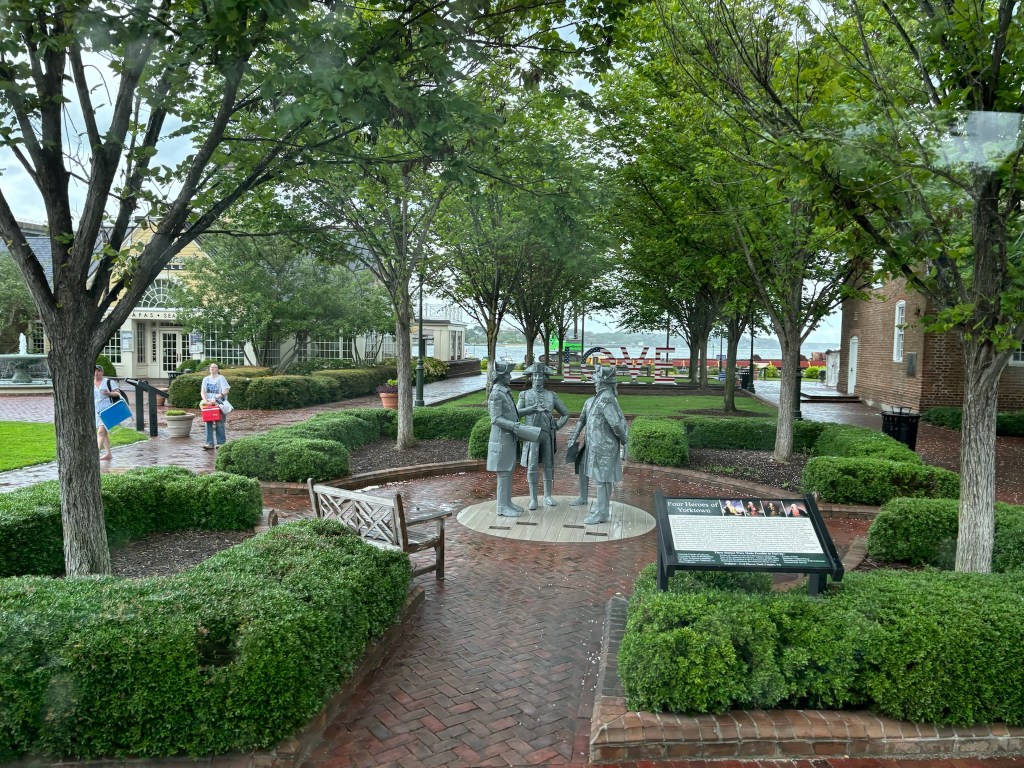
    The tour bus began riding towards town and stopped at the Yorktown Victory Monument, built to commemorate this great victory.
    American Revolution Museum at Yorktown

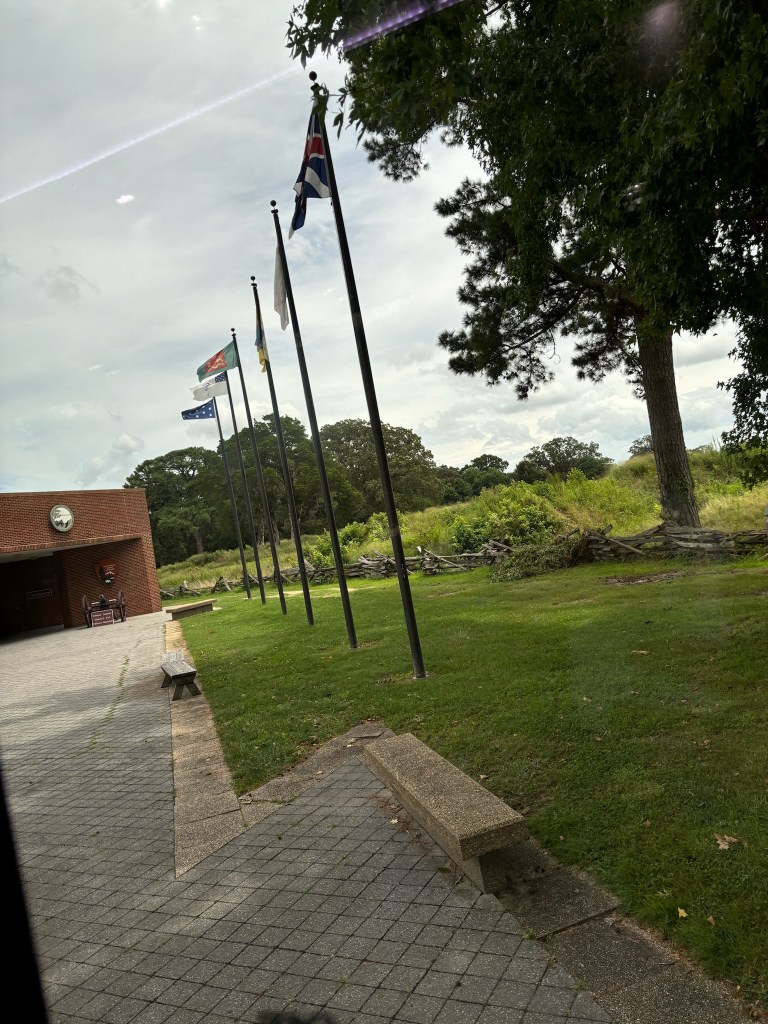
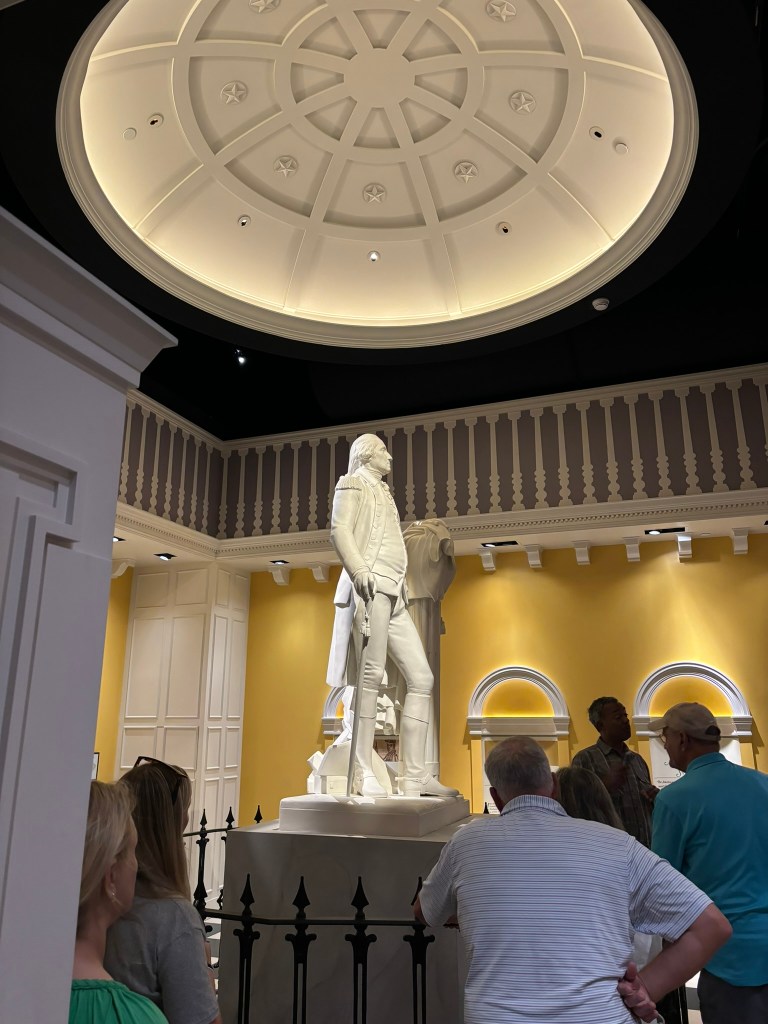
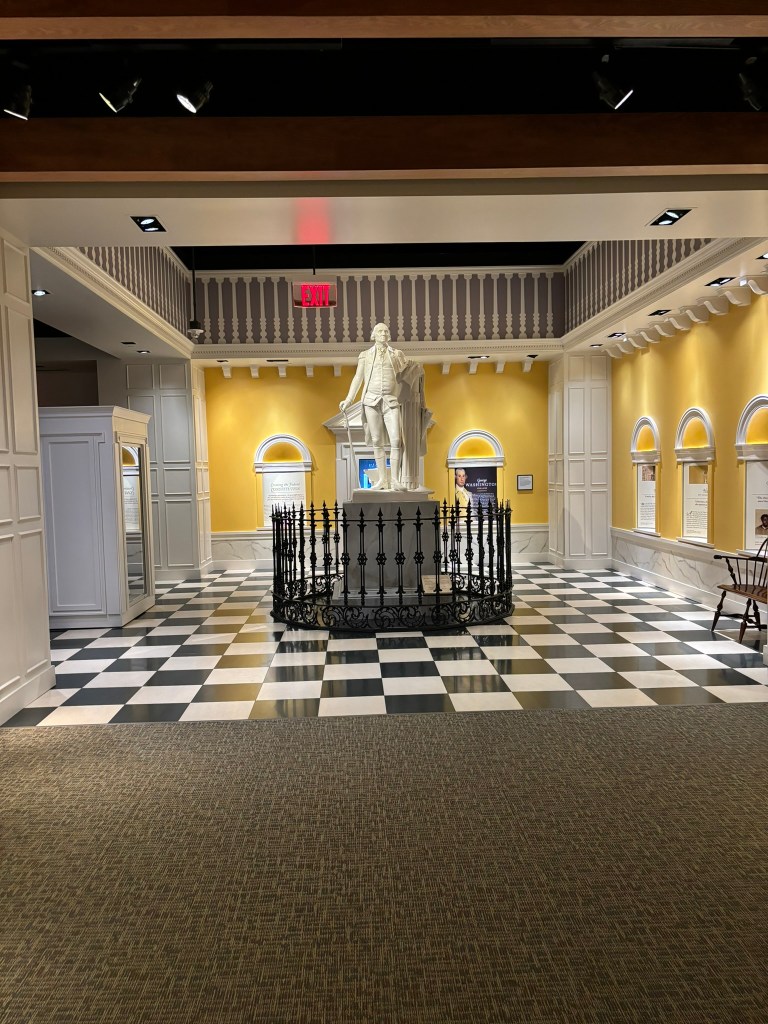
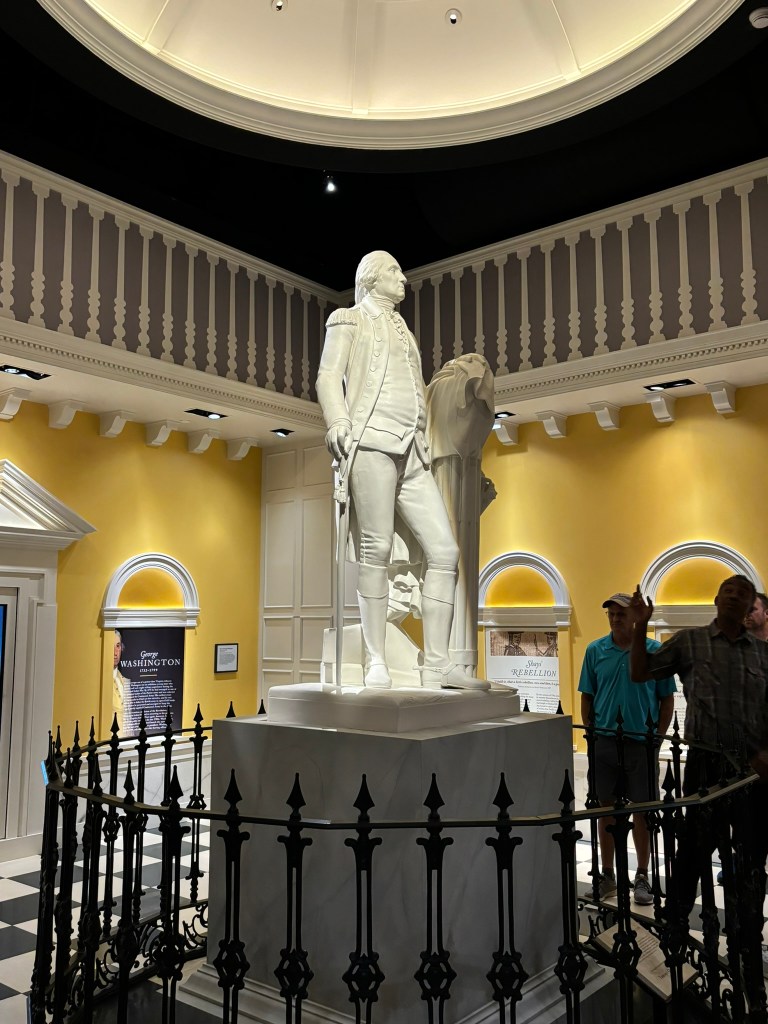
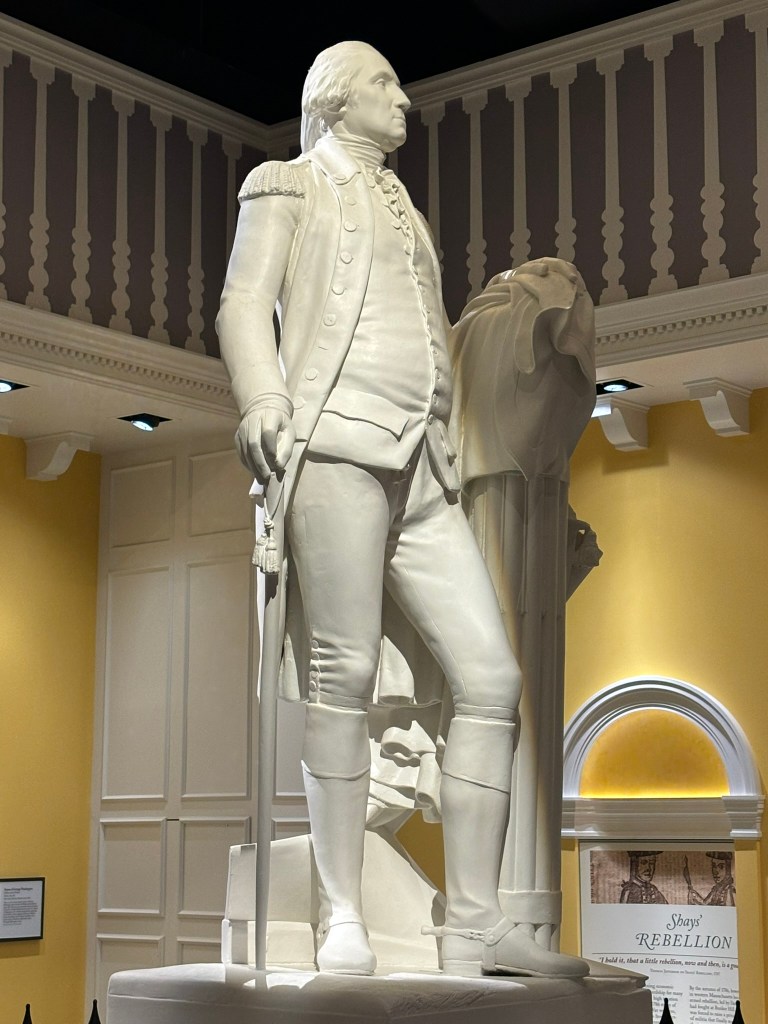
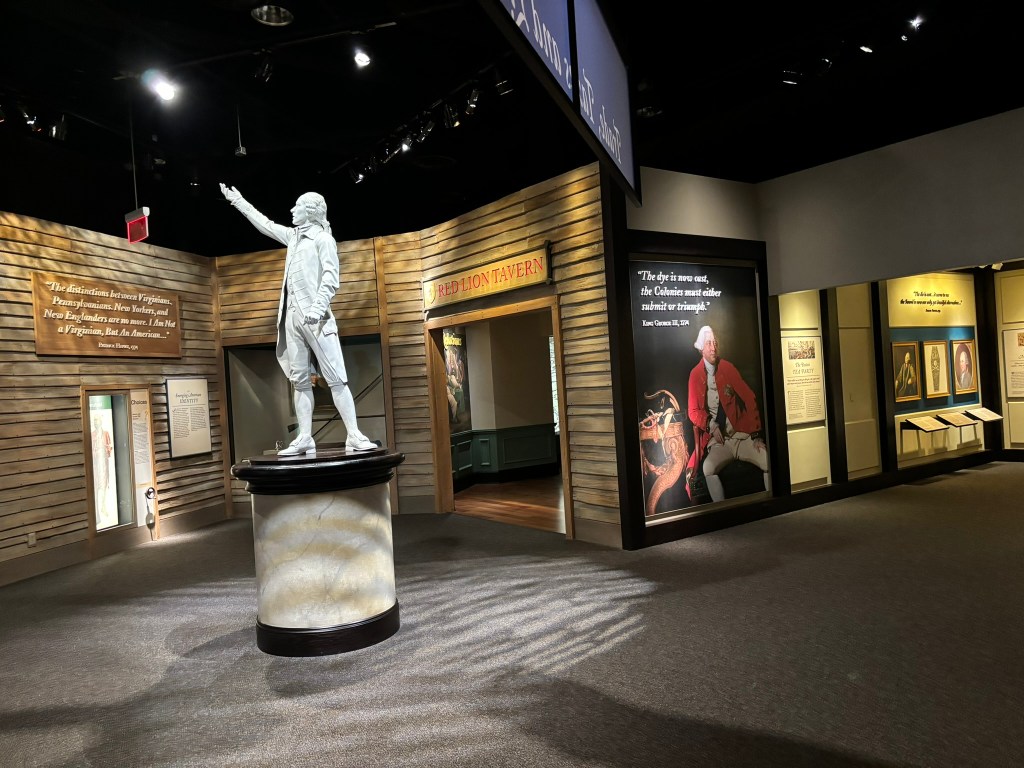
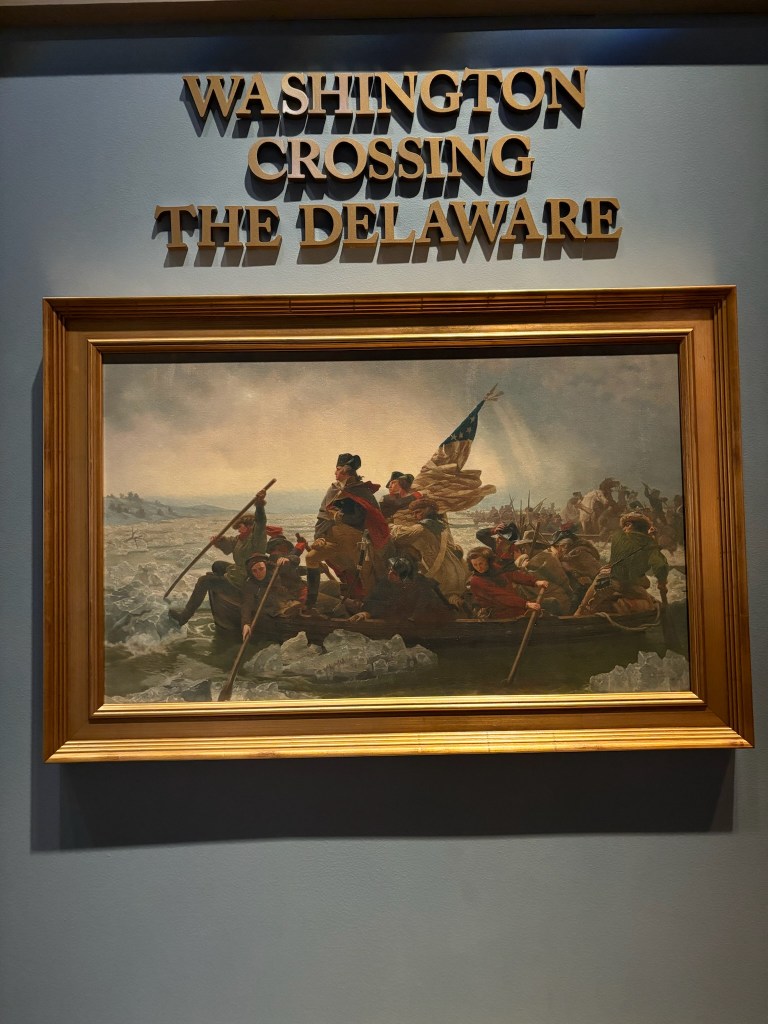
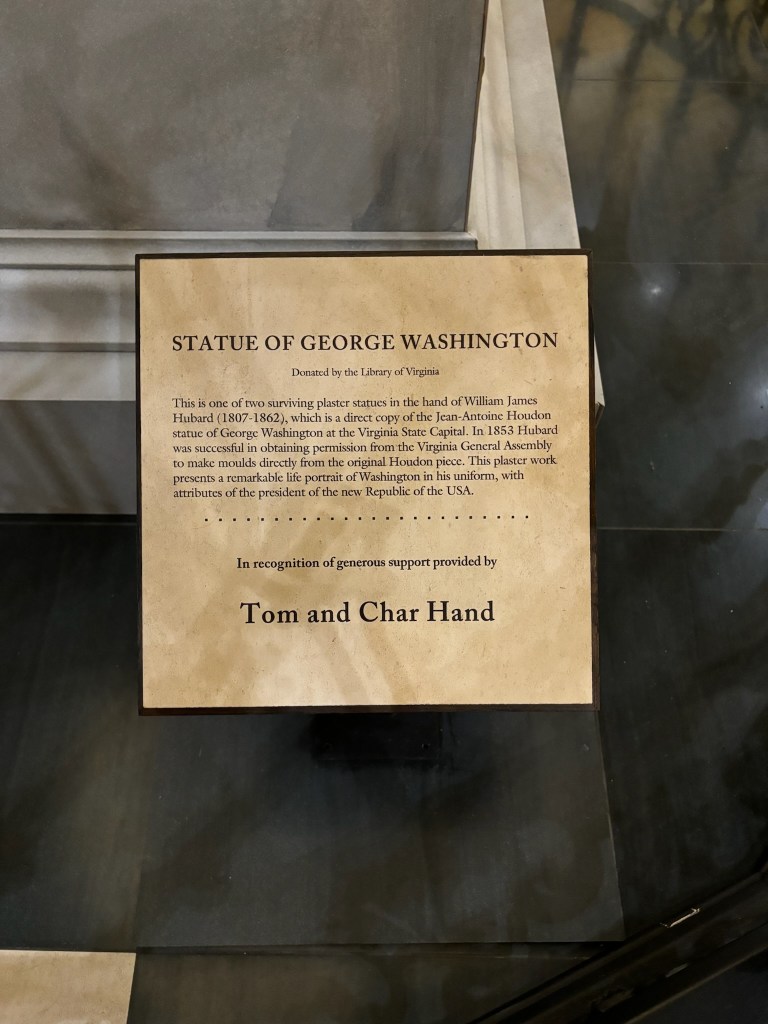
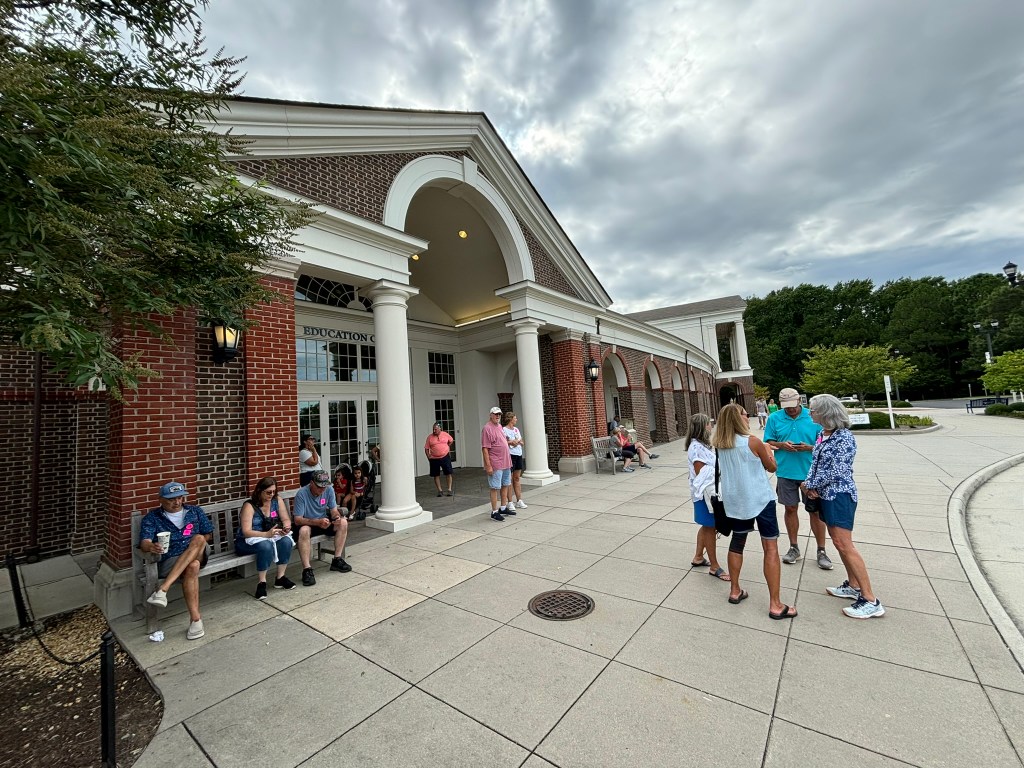
    We made our way through town and then over to the American Revolution Museum at Yorktown, which is run by the Jamestown-Yorktown Foundation, as mentioned in my previous blog post about the Jamestown Settlement.  Our tour guide first took us to a statue of George Washington, which formally was exhibited in the U.S. Capitol.  We discussed different examples of symbolism within the statue.

    We then went into a 4-D experiential theater and watched a 9 minute video called the “Siege of Yorktown.”  The screen in the theater surrounds the viewer.  The video not only depicts the battle, but explains its significance.  The theater fills with smoke at certain scenes and you really feel the wind and the thunder of cannon fire.  It was a tremendous 9 minute experience.

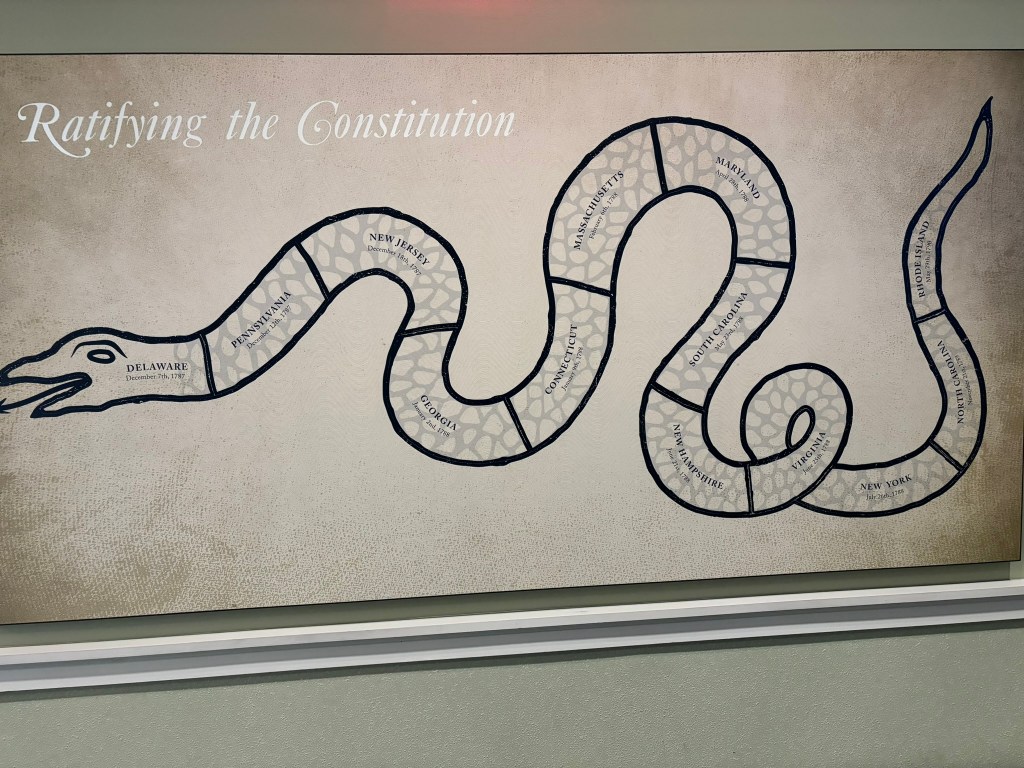
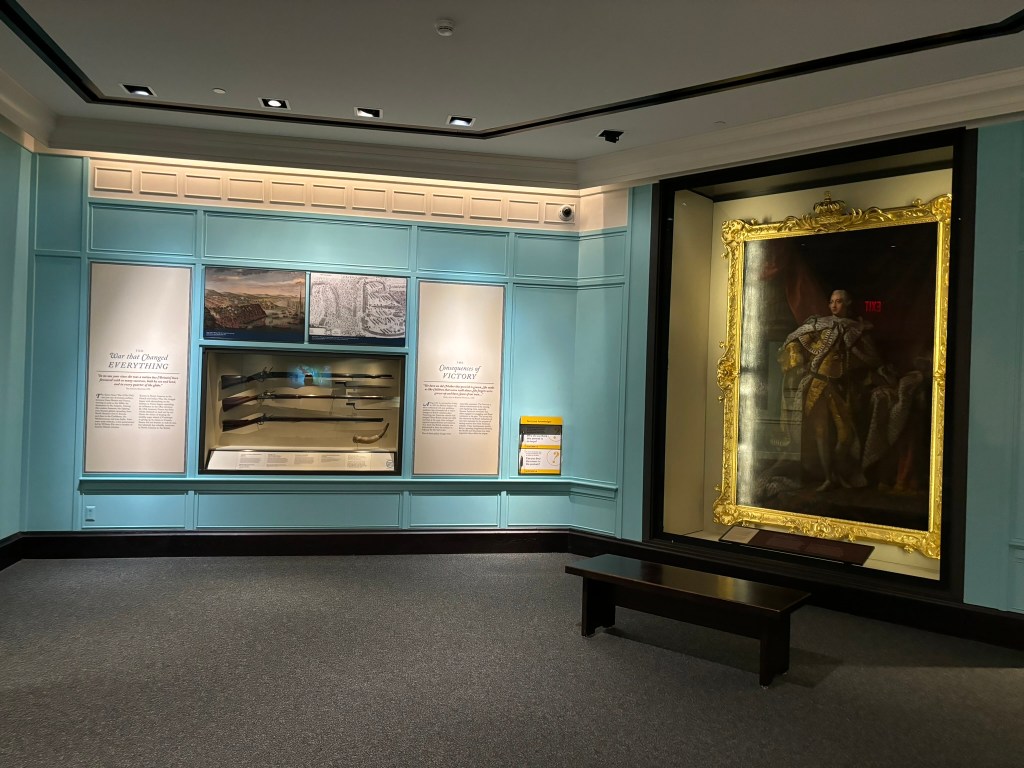
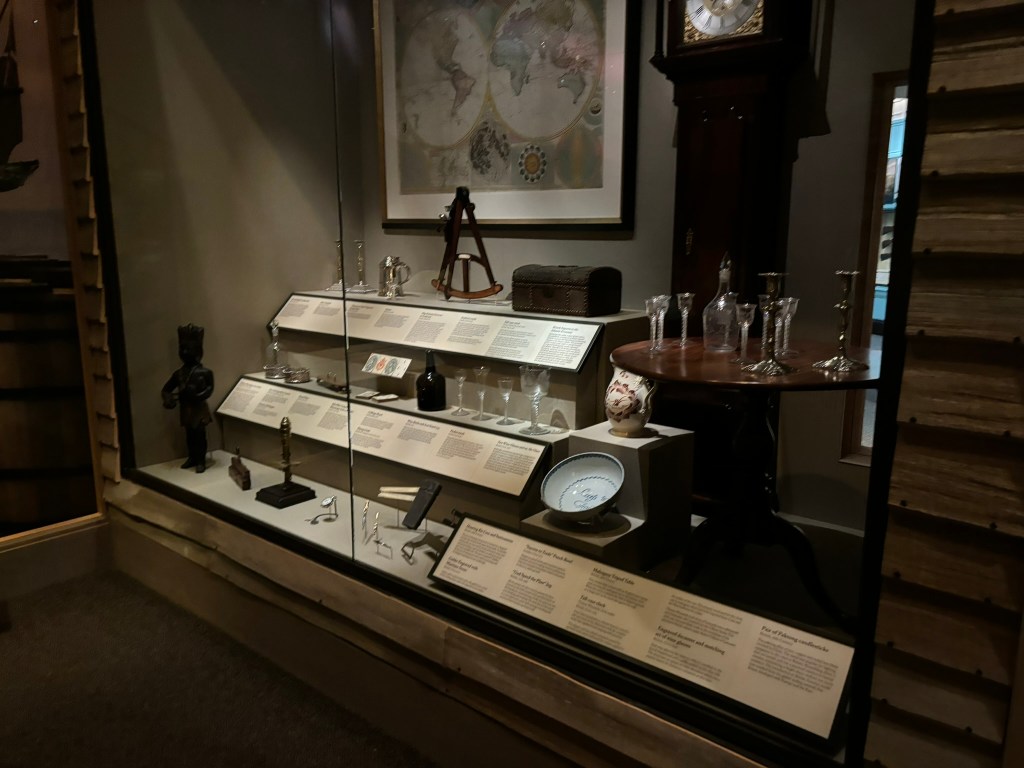
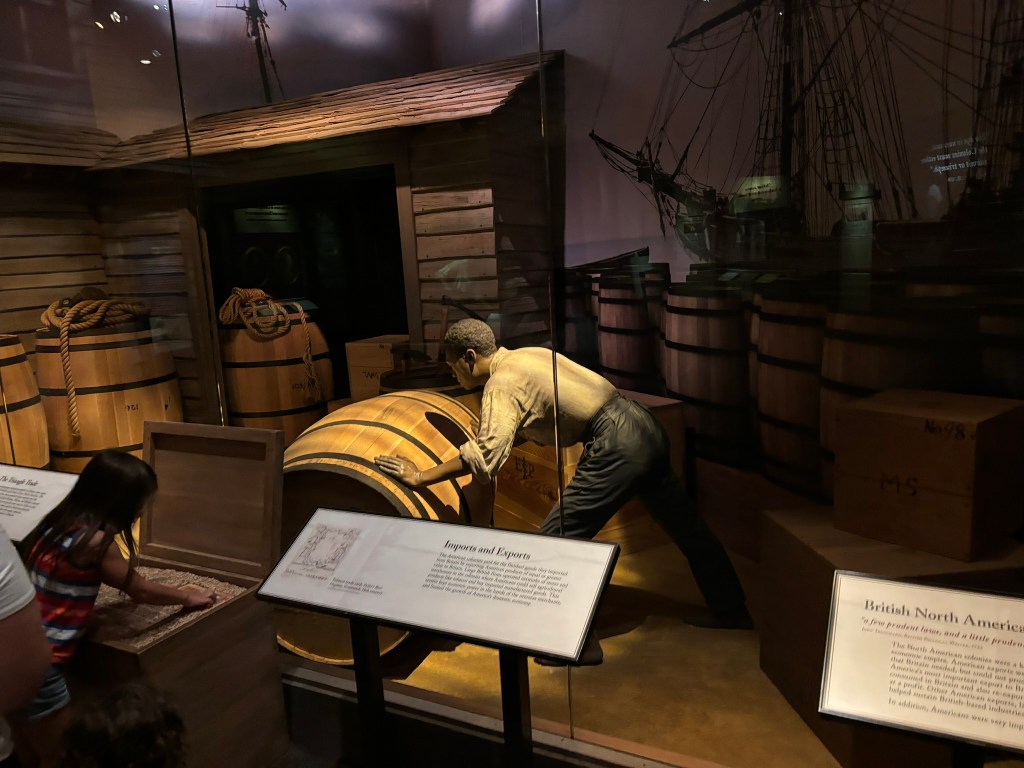
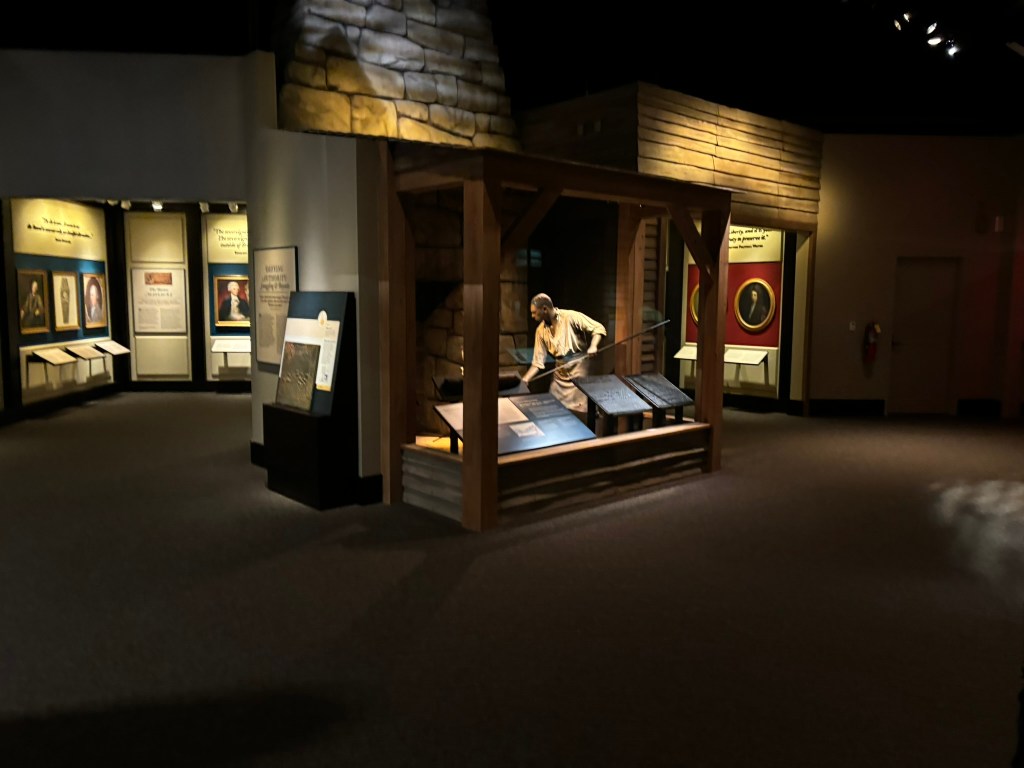
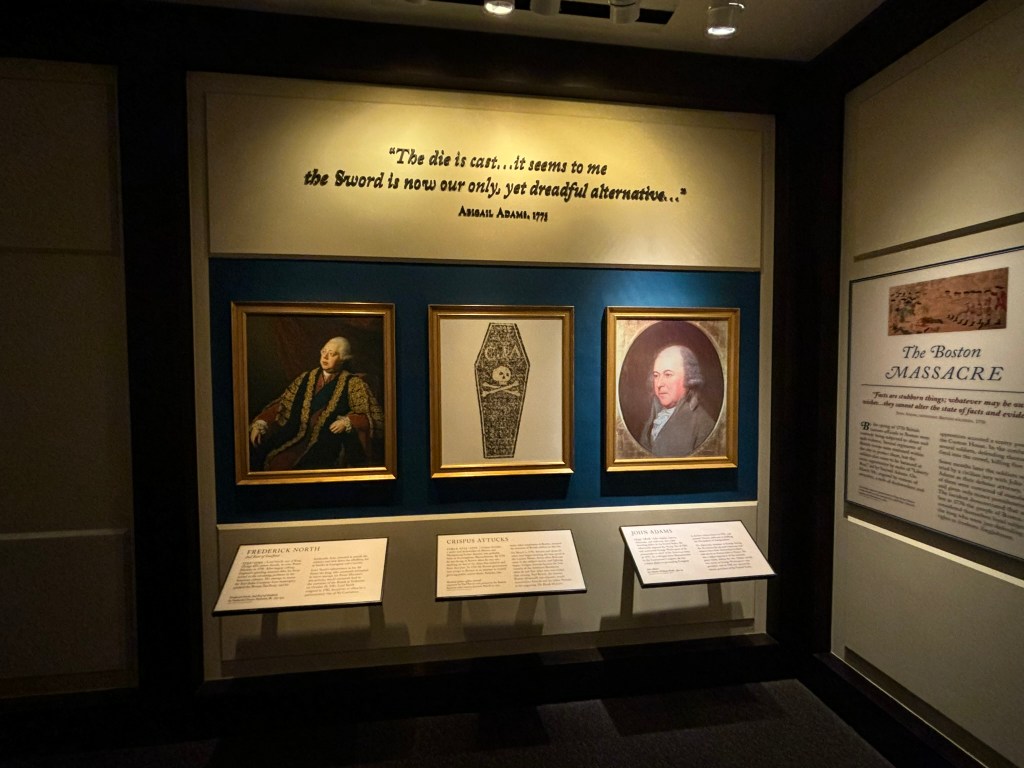
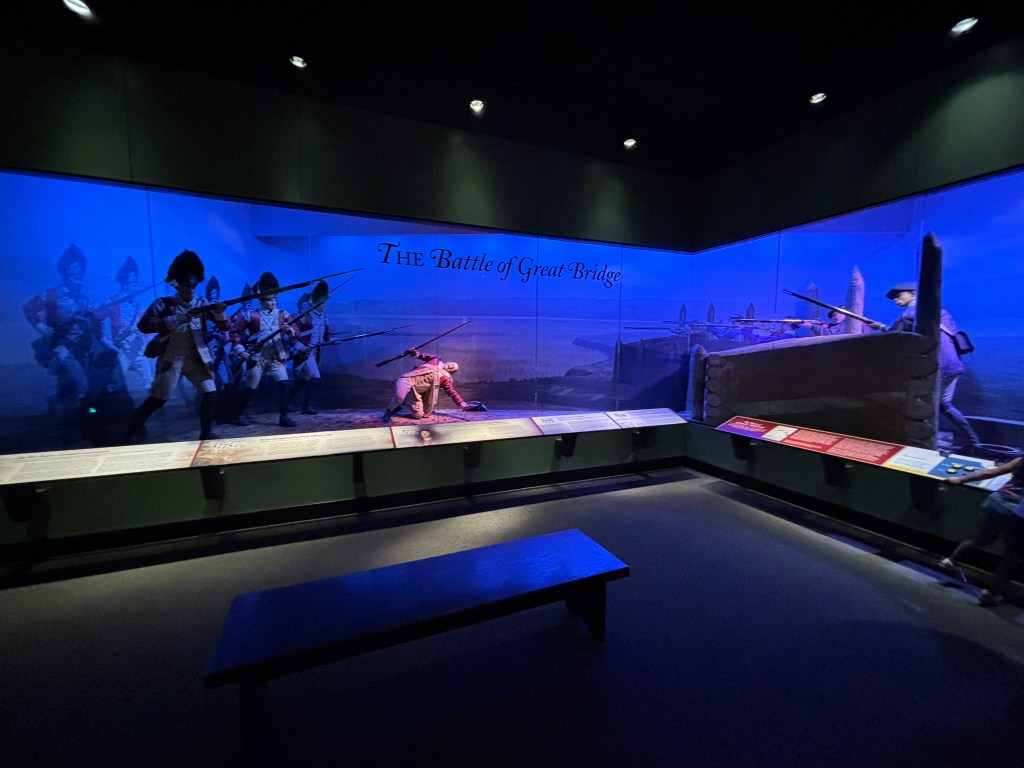
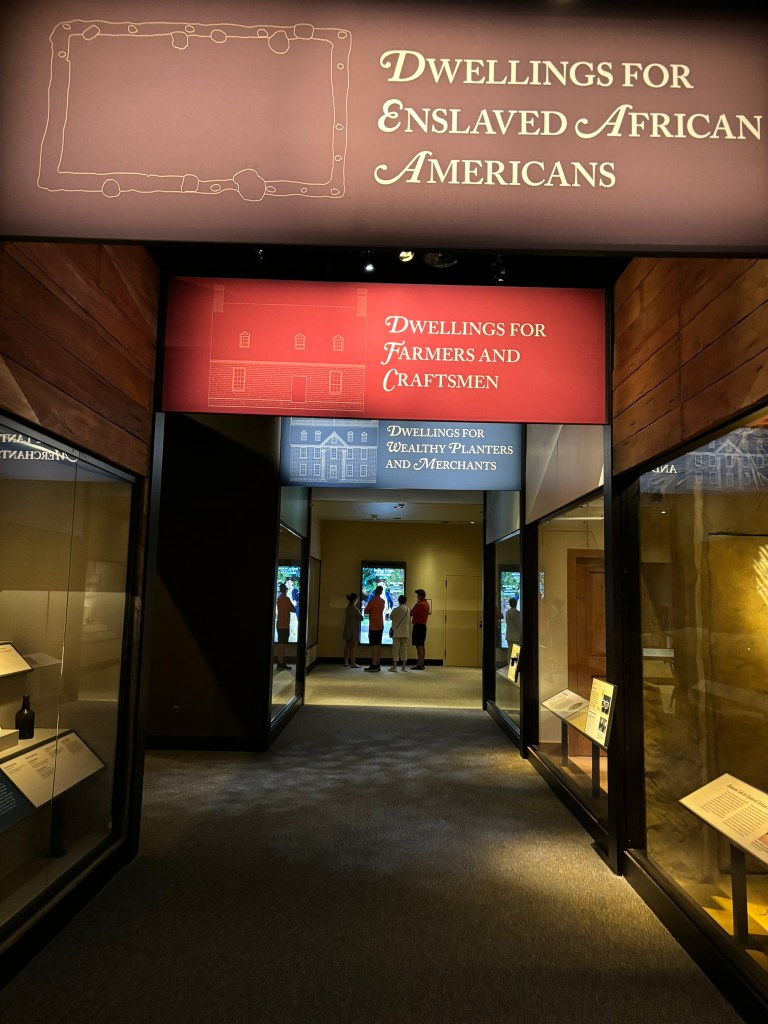
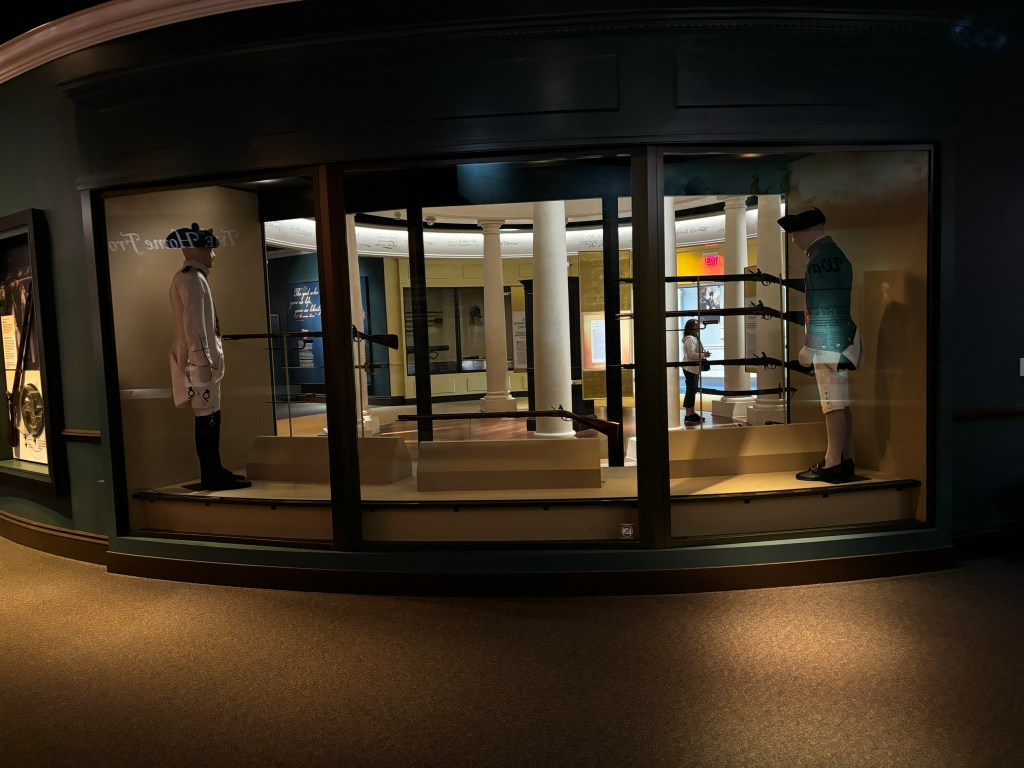
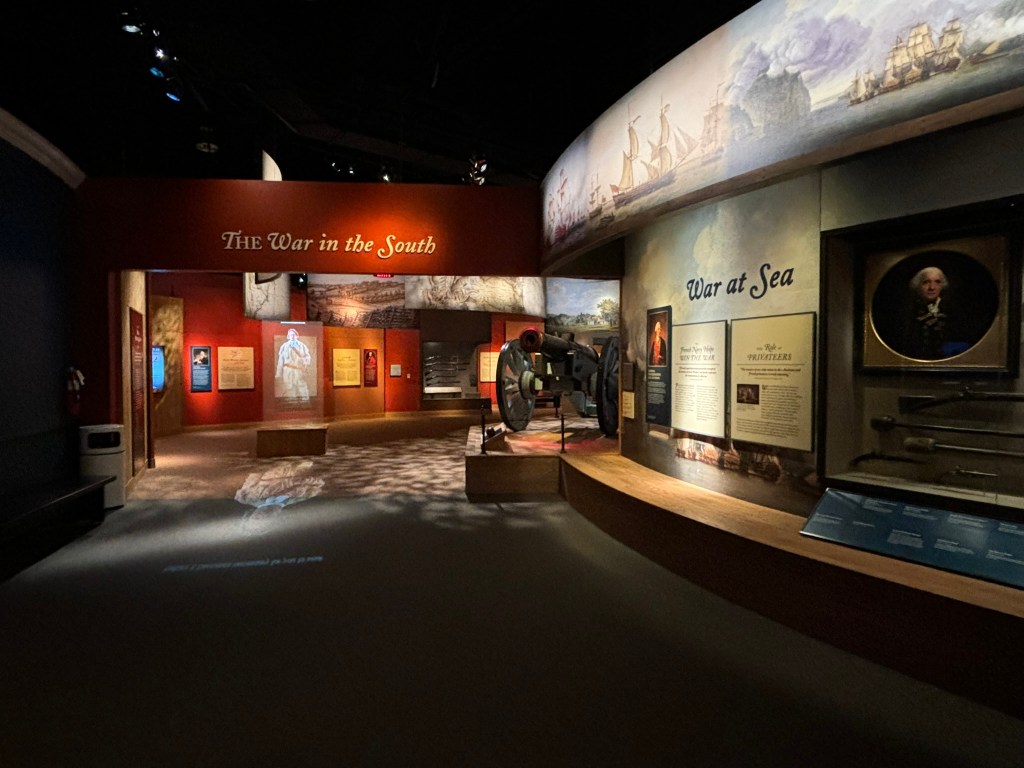
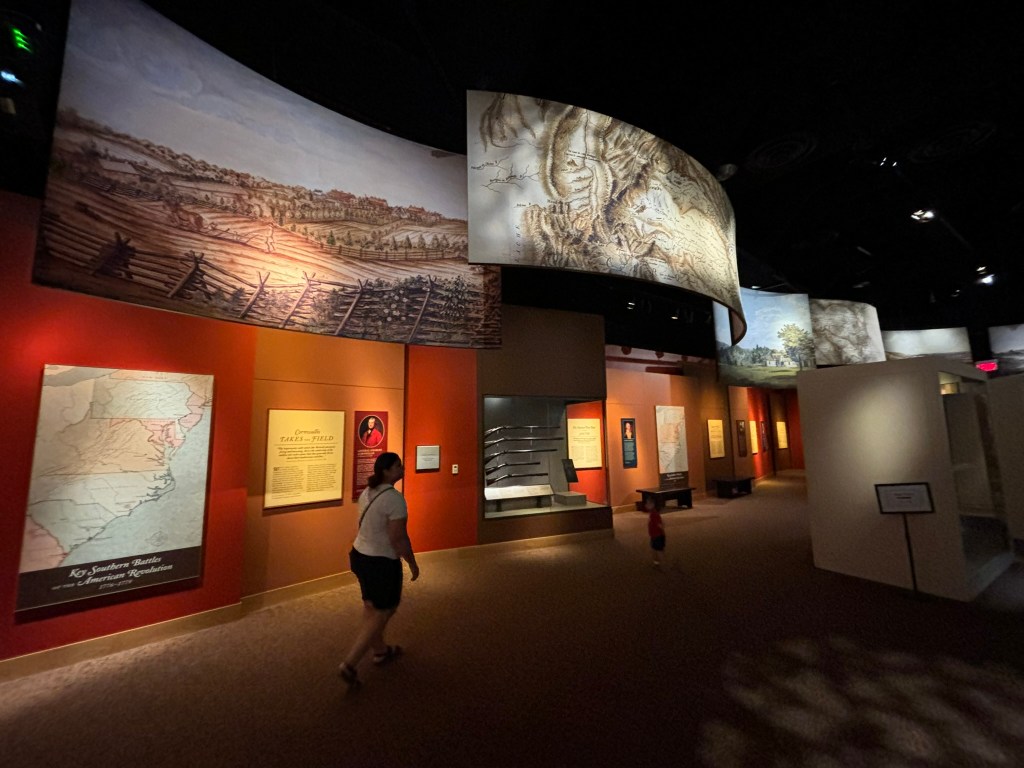
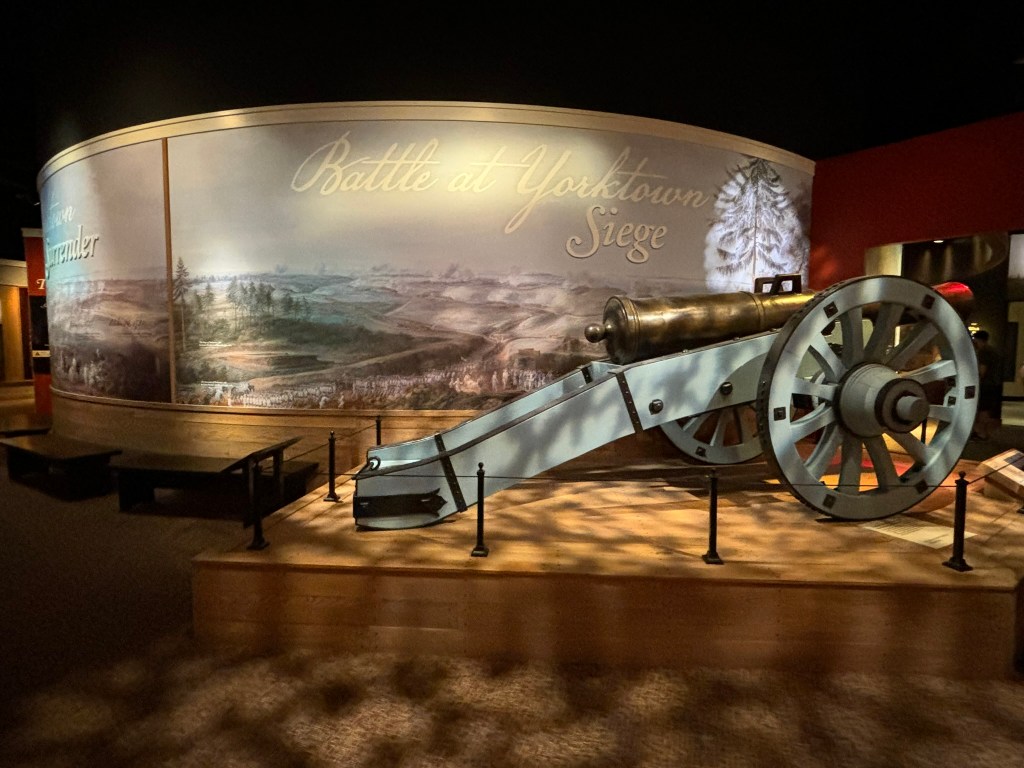
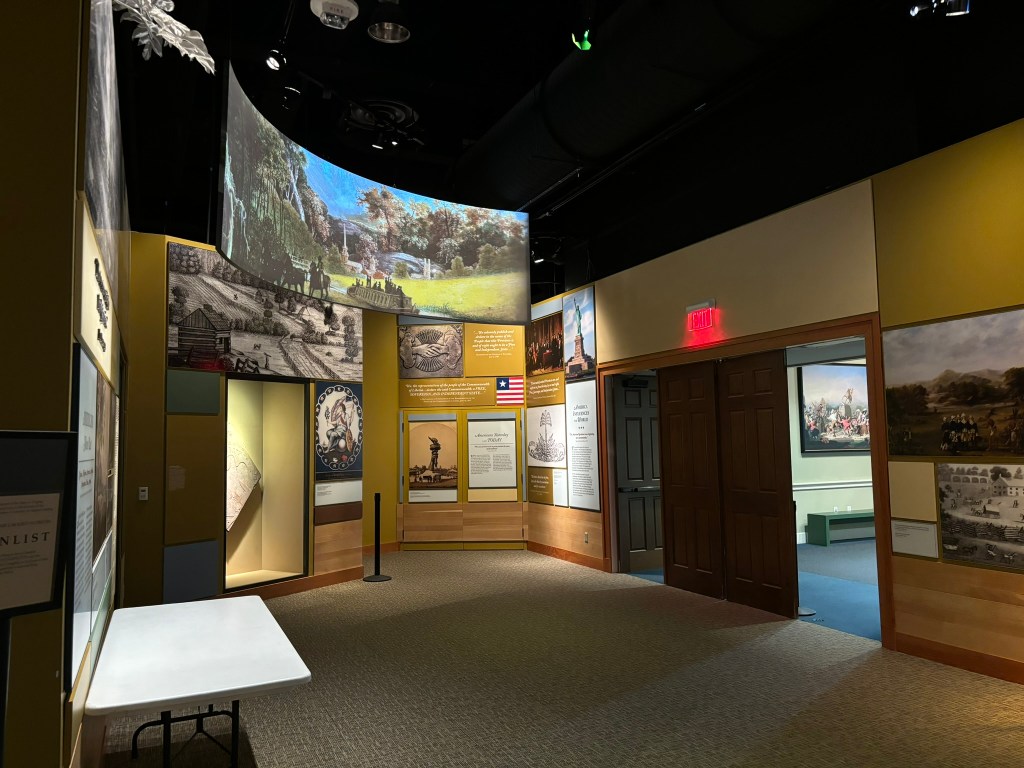
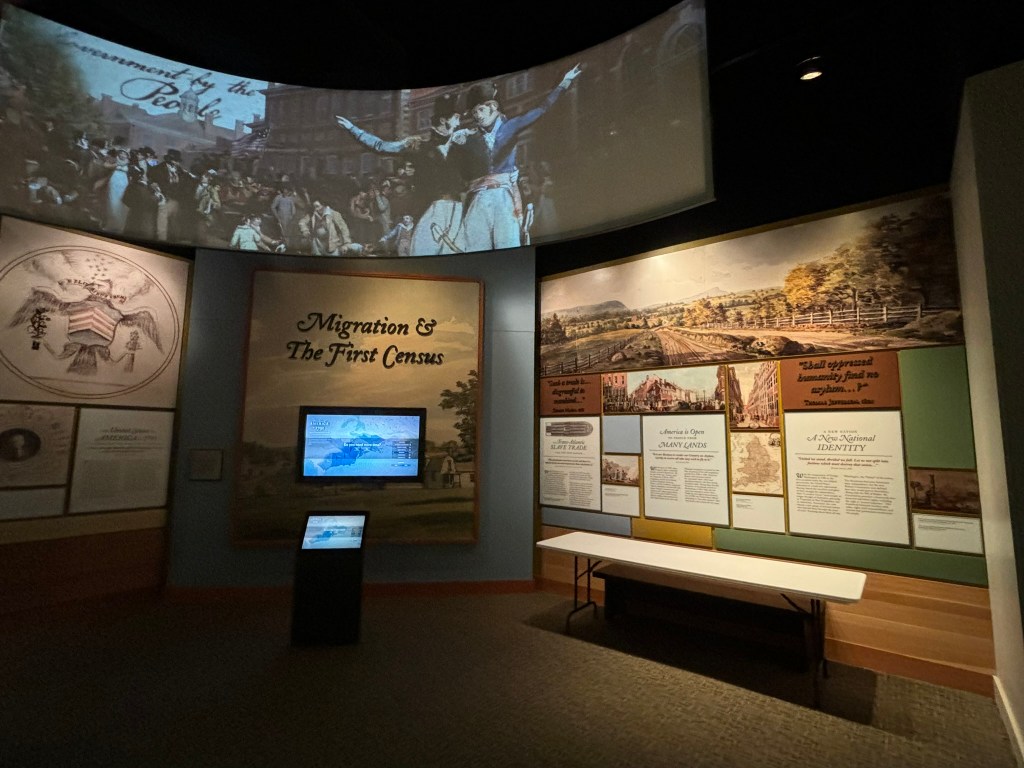
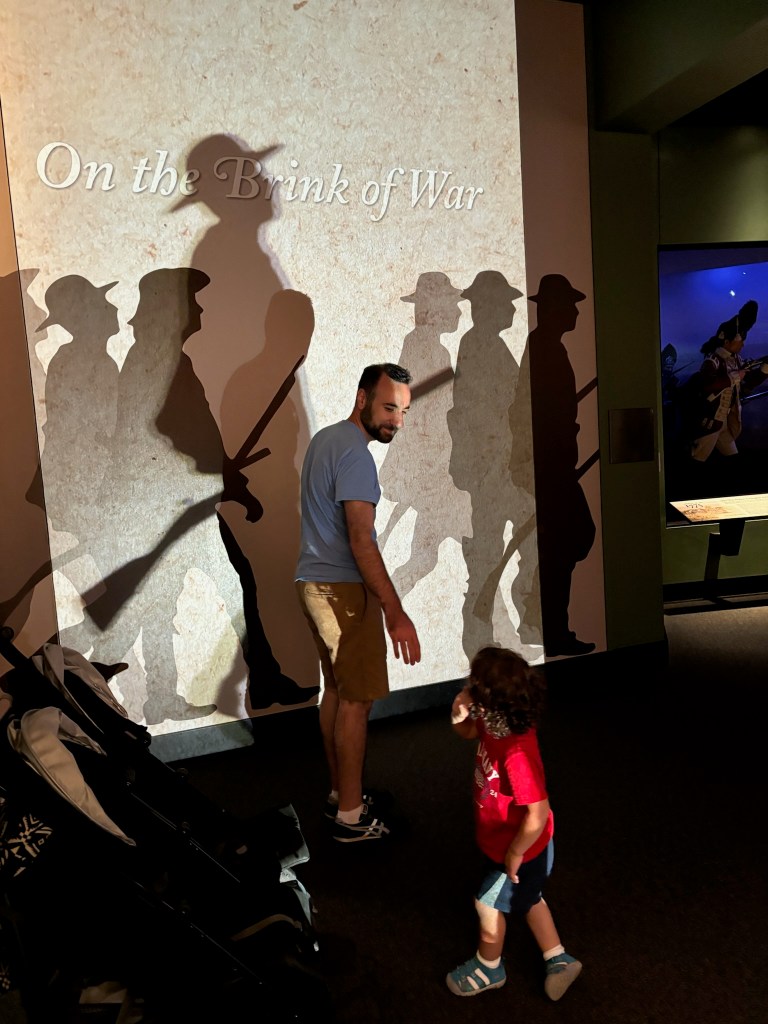
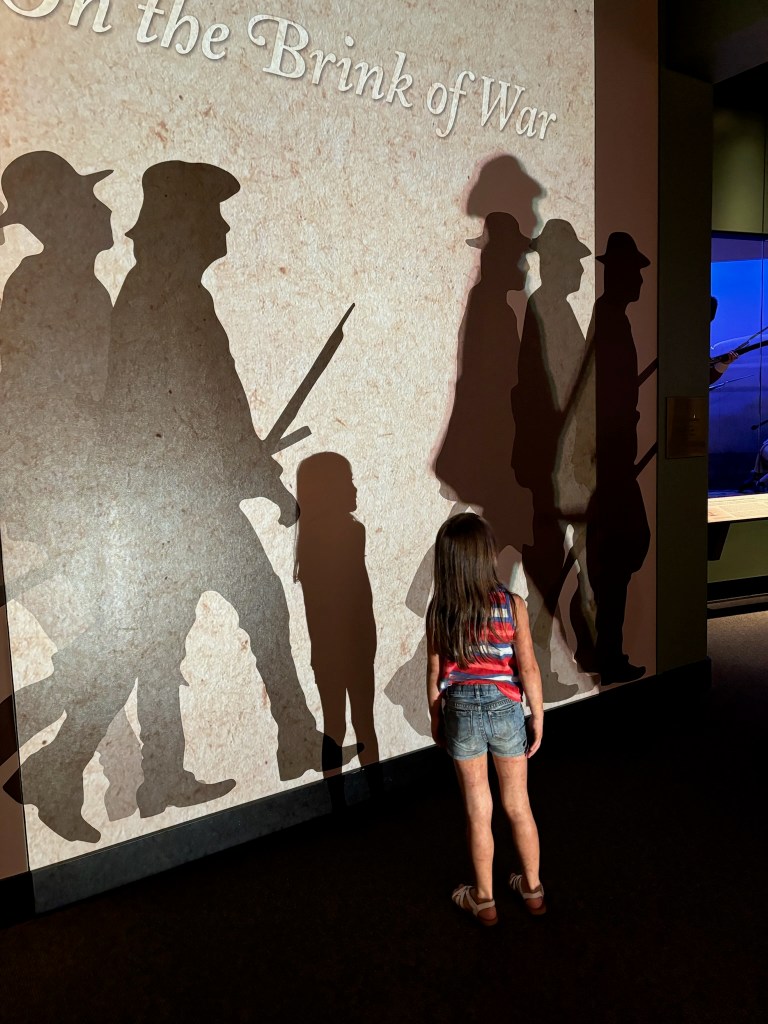
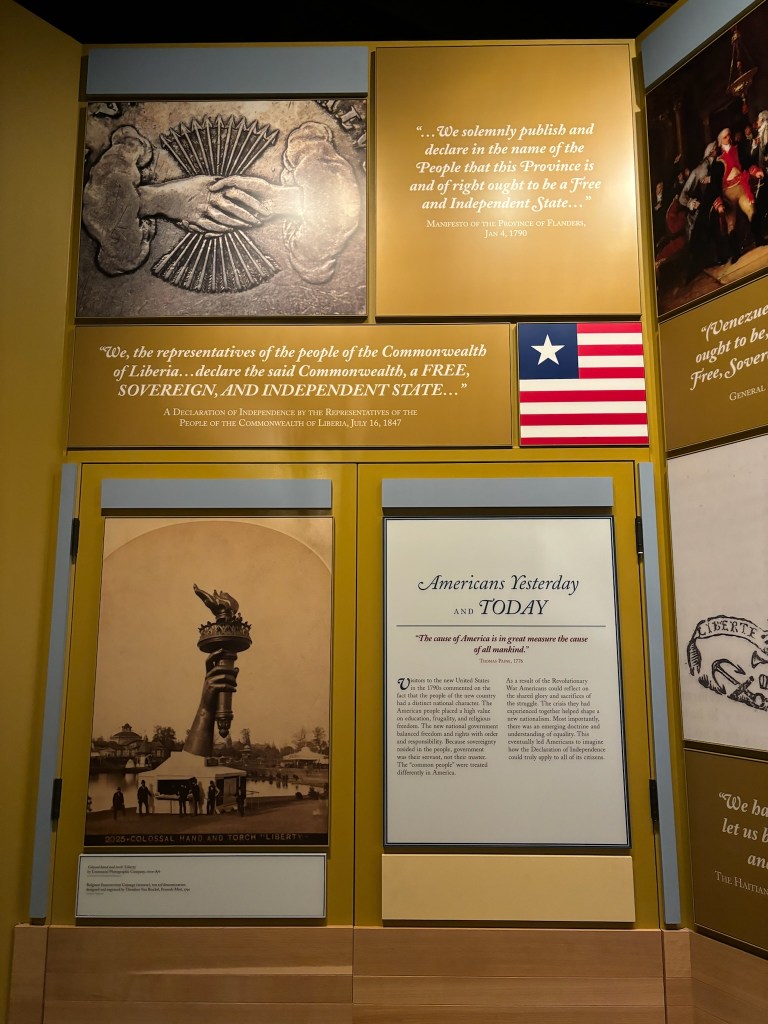
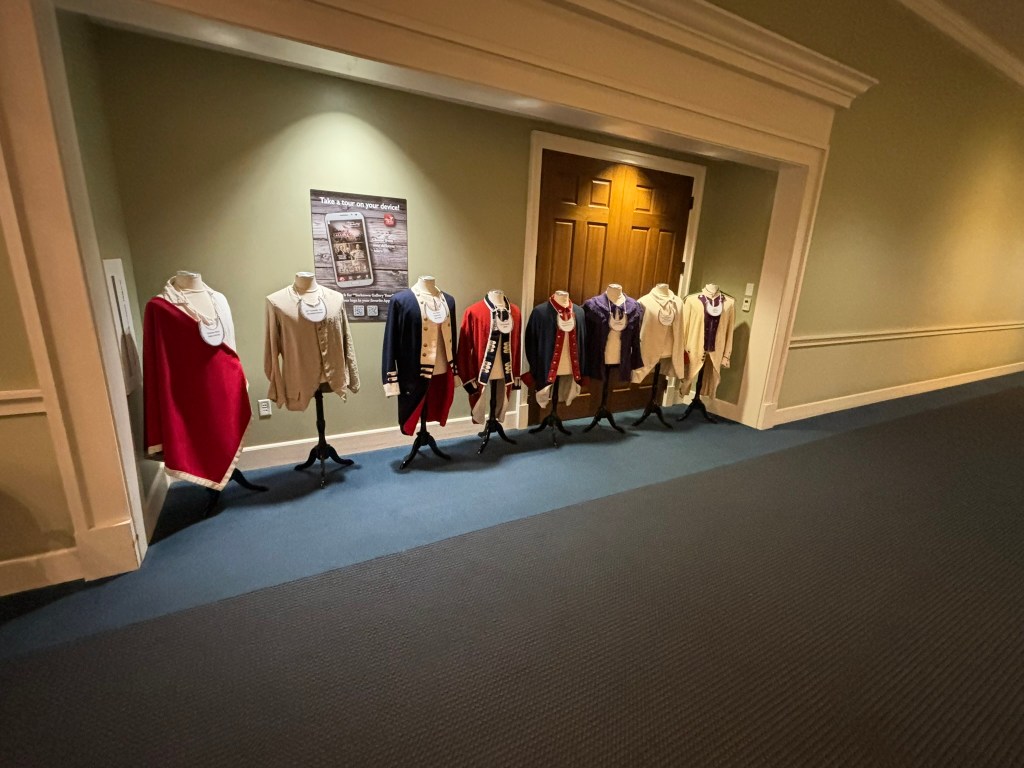
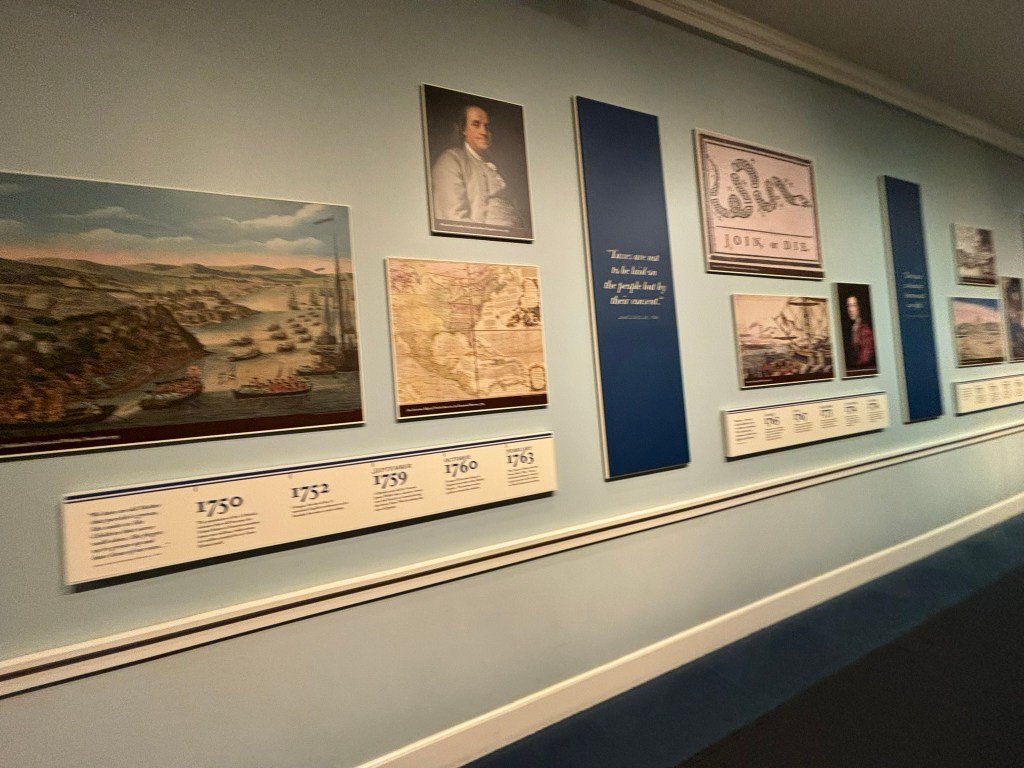
    At this point in our tour, we had time to travel through the museum at our own pace.  The museum takes you through the American Revolution chronologically, from the causes in the beginning of the museum, to the writing of the Constitution at the end.  They had a great array of different types of displays including artifacts, primary sources, videos, and pictures that allowed the viewer to be immersed in the conflict.  
    Living History

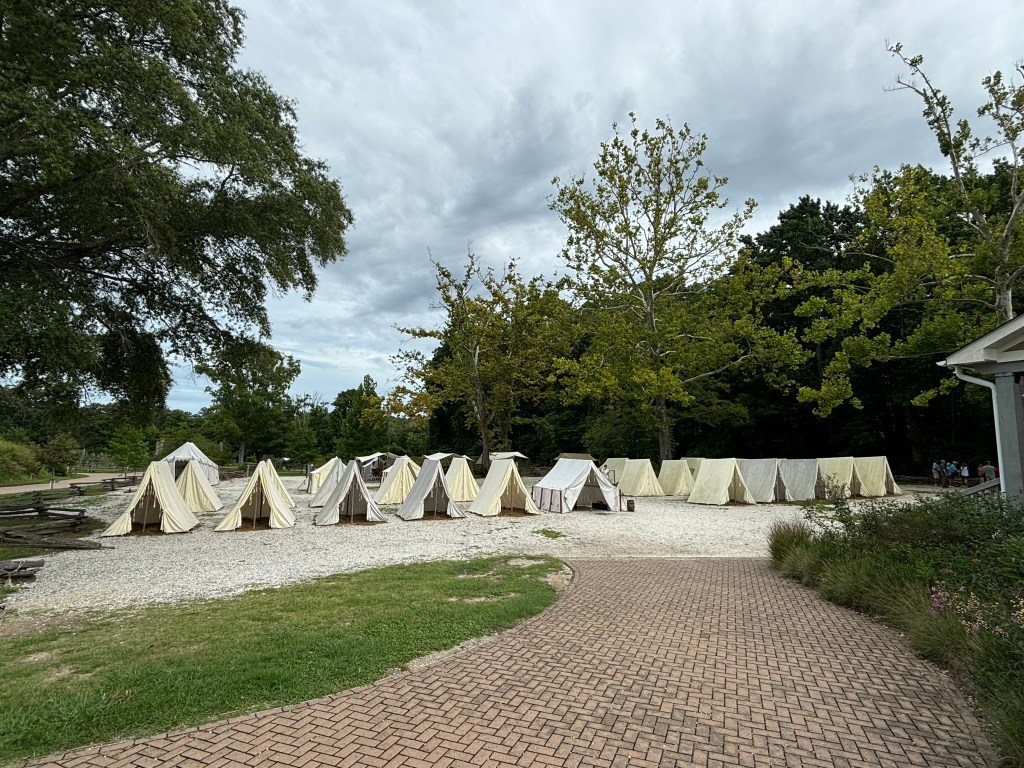
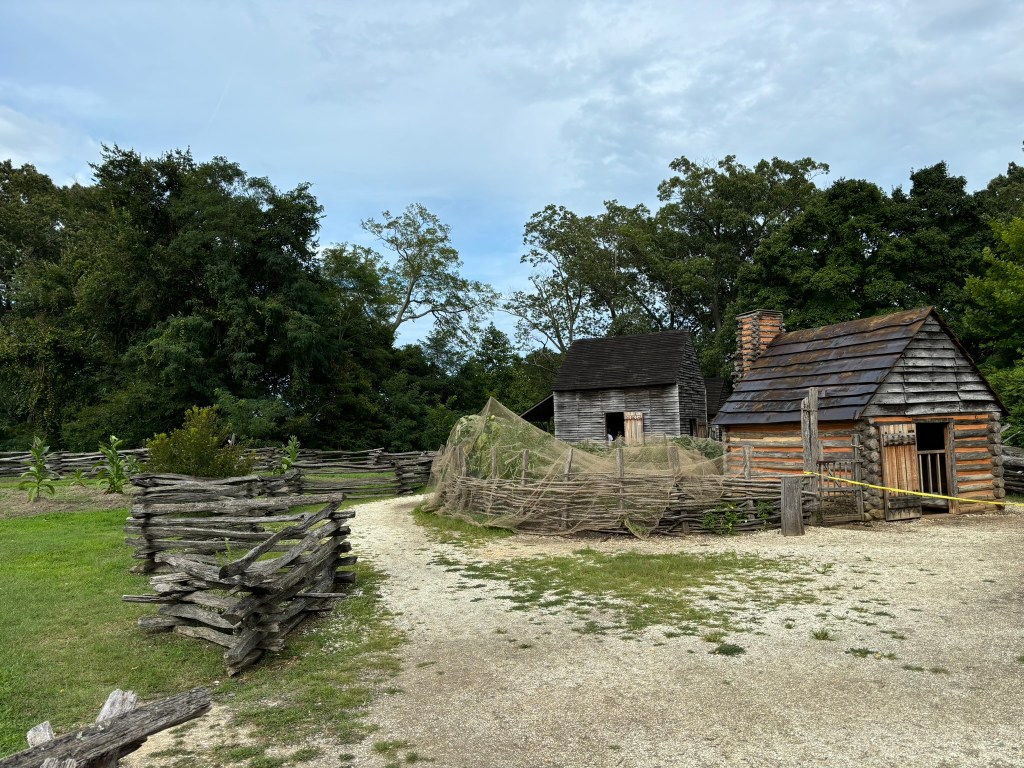
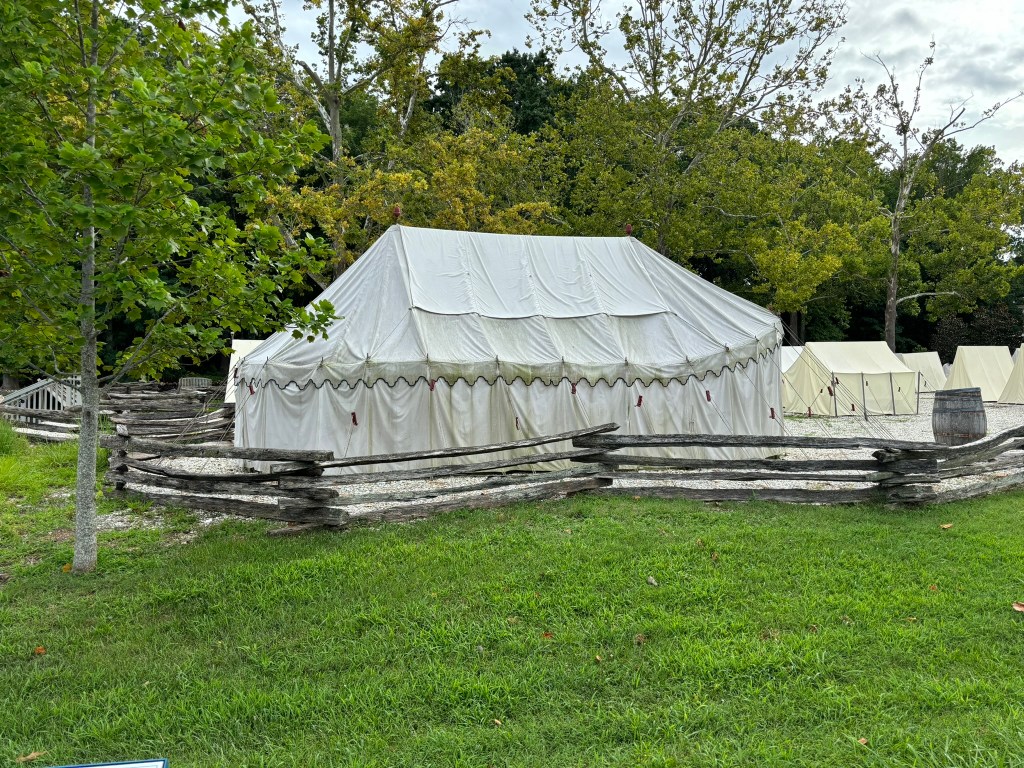
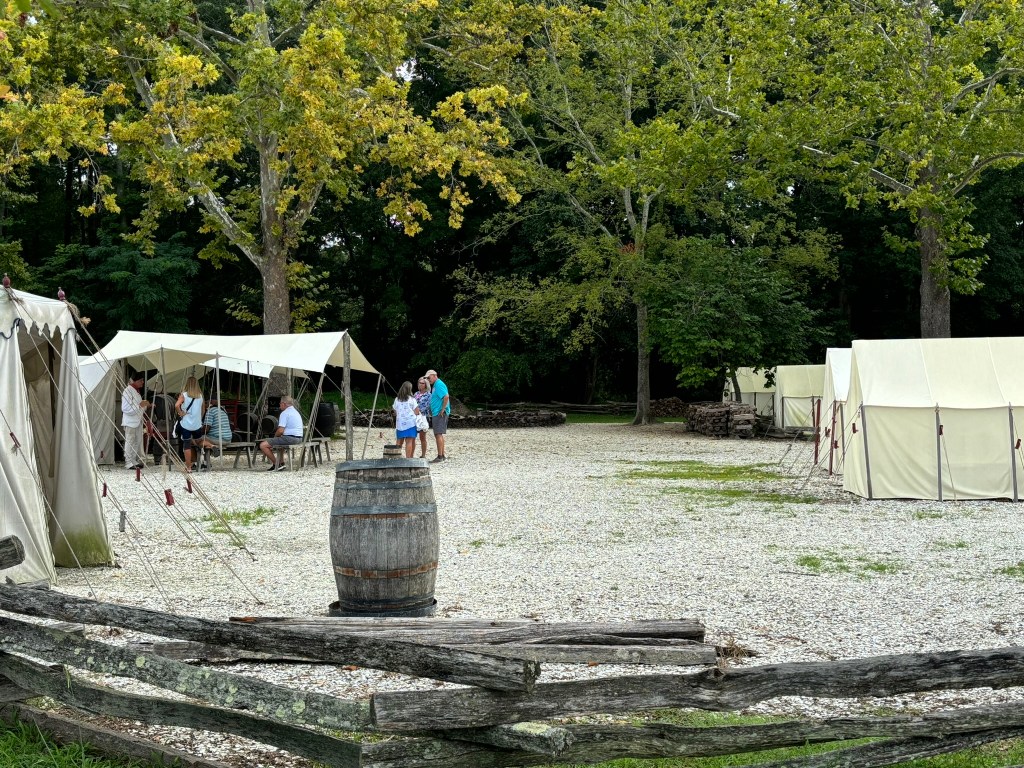
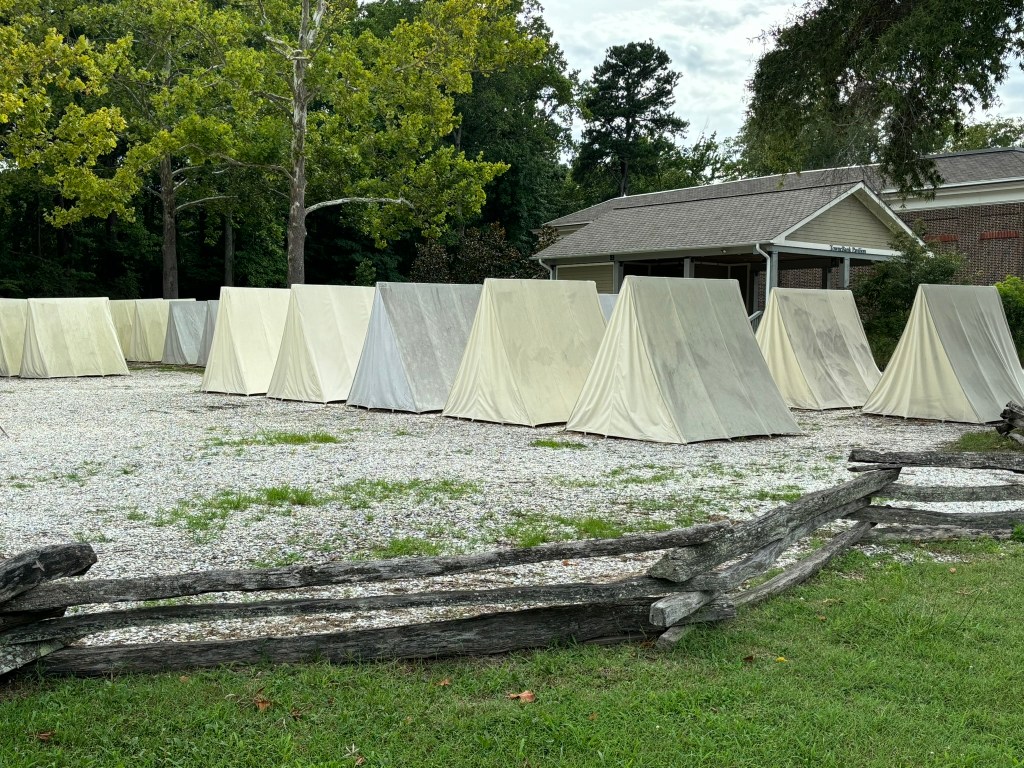
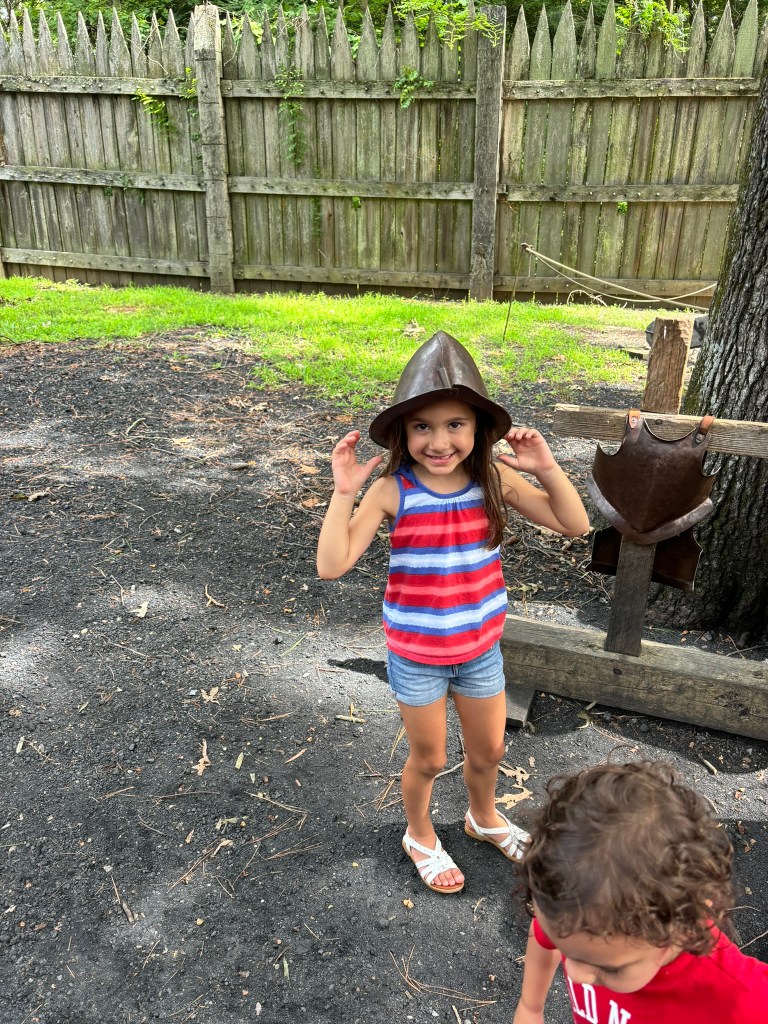
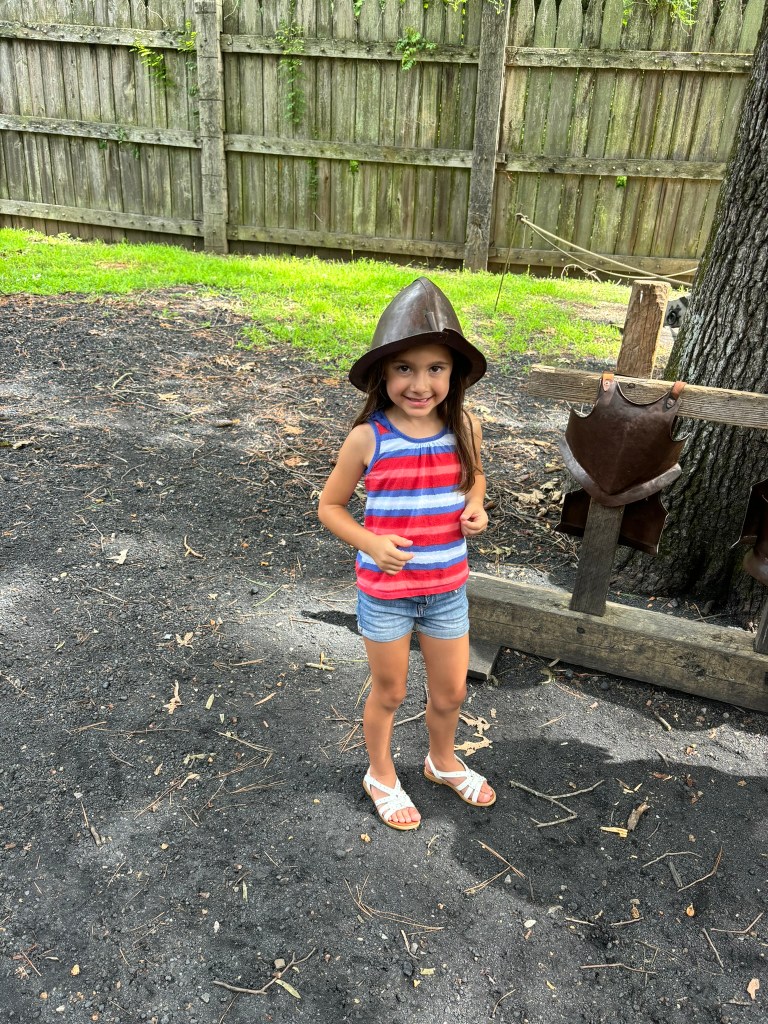
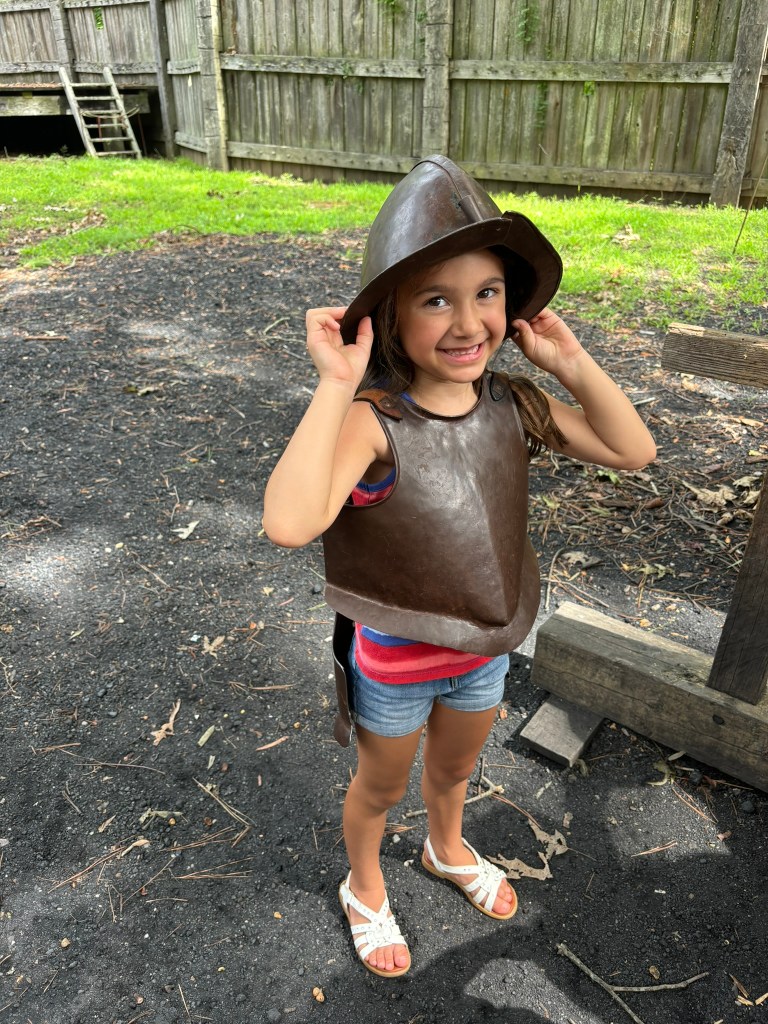
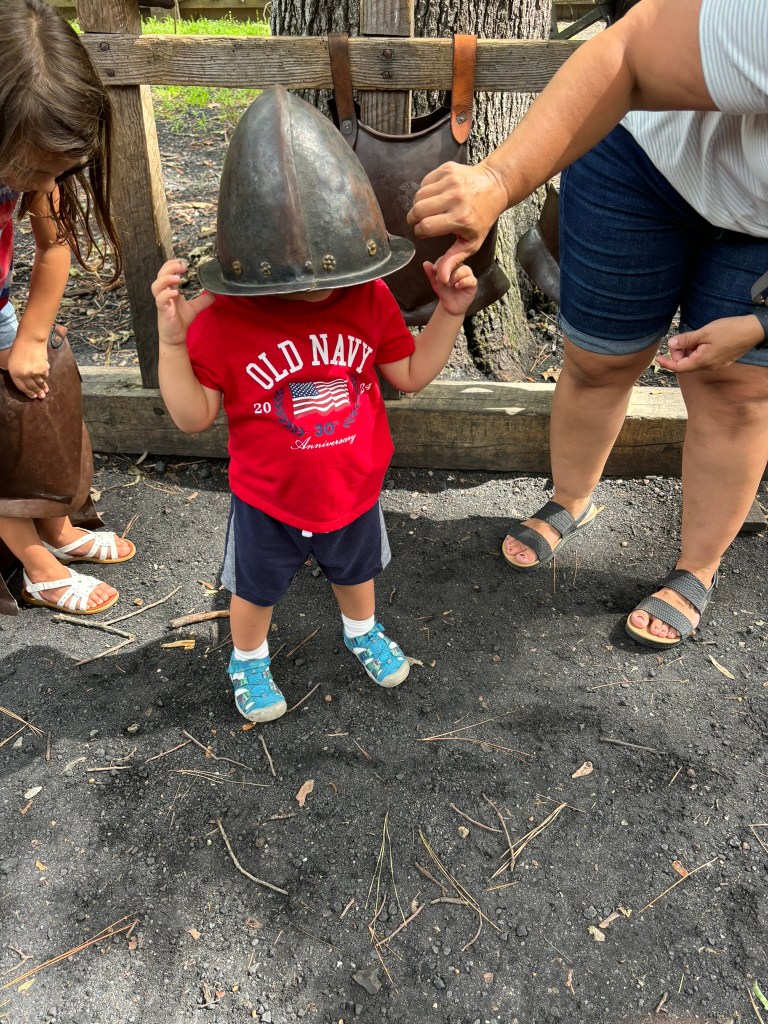
    After we made our way through the museum, my family went outside to the living-history portion of the museum.  Like we experienced in Colonial Williamsburg and Jamestown, the museum allowed us to go back in time and  experience first-hand, what life was like in the late 18th century.  First, there was a Continental Army encampment that we walked through.  

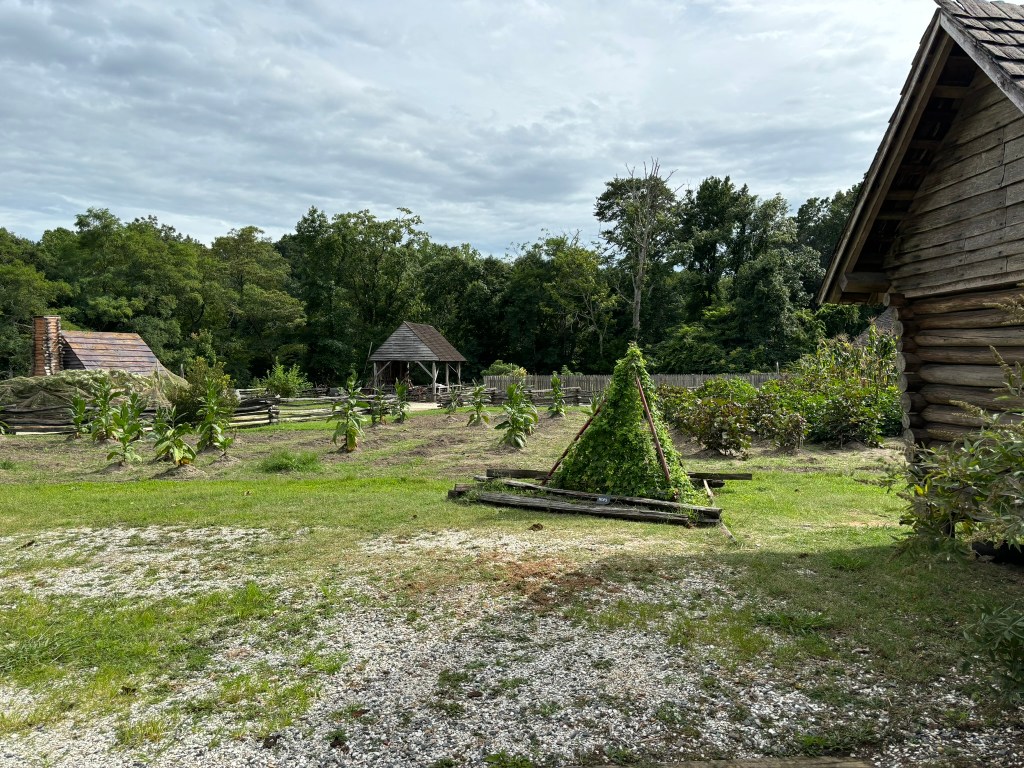
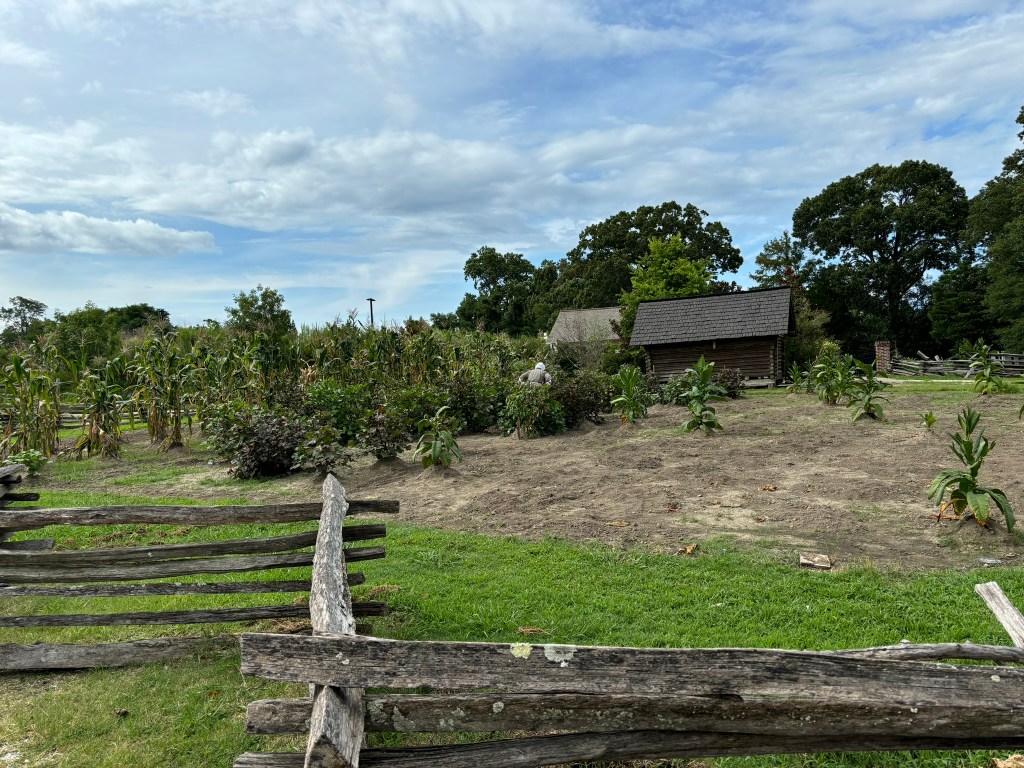
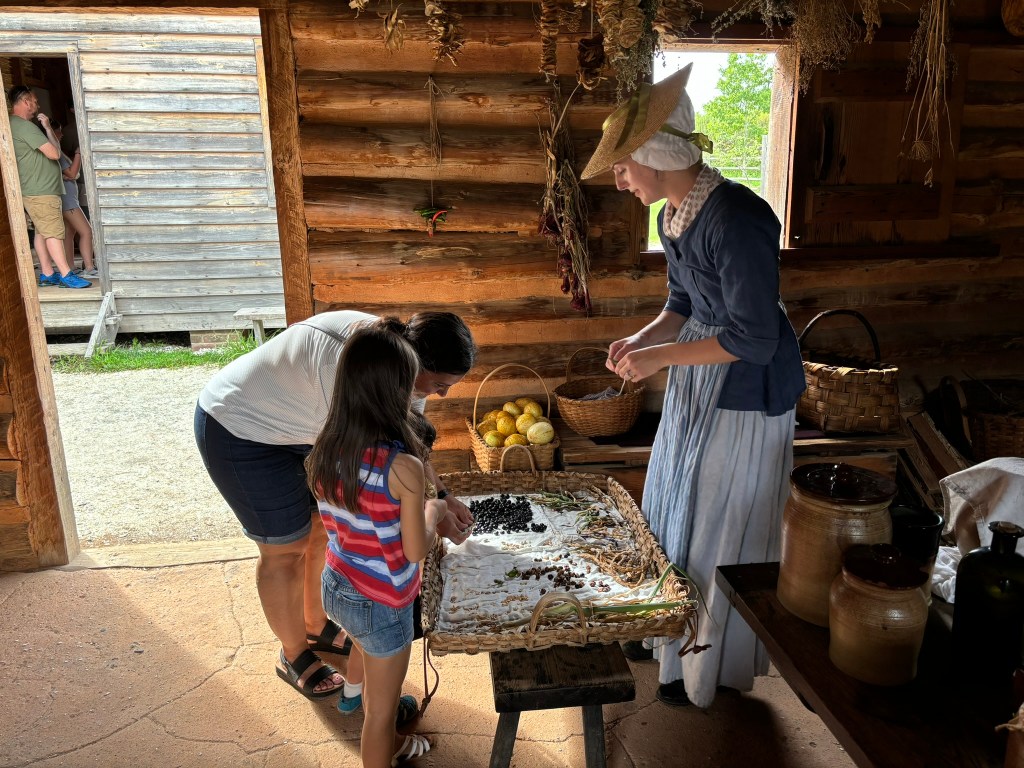
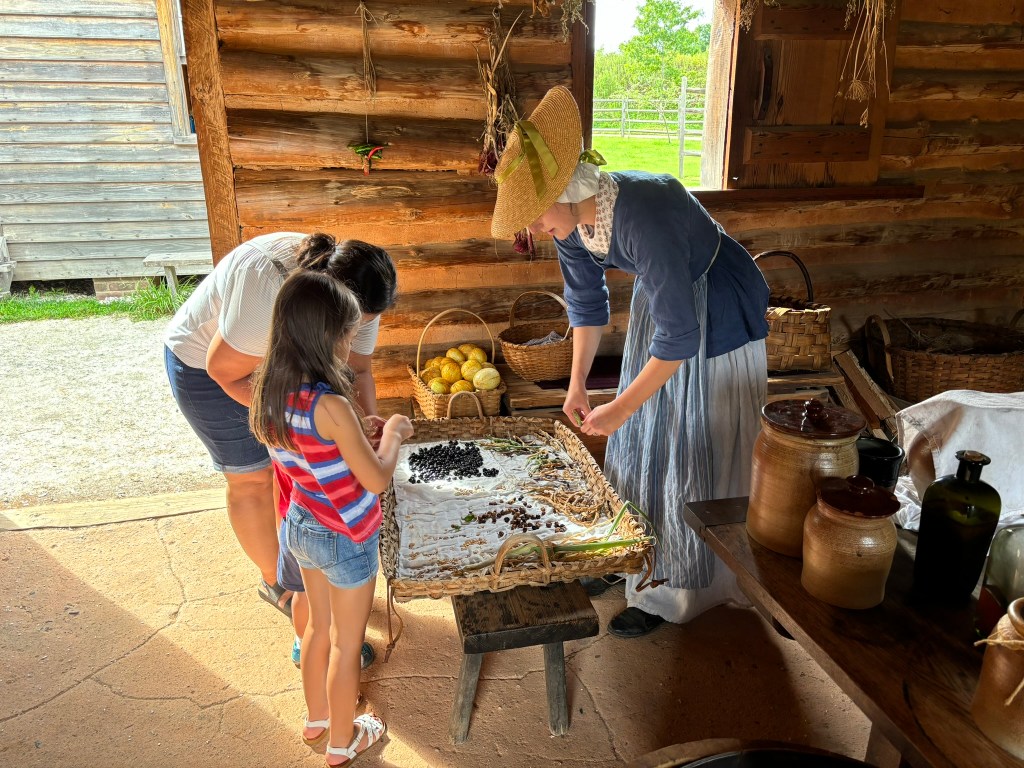
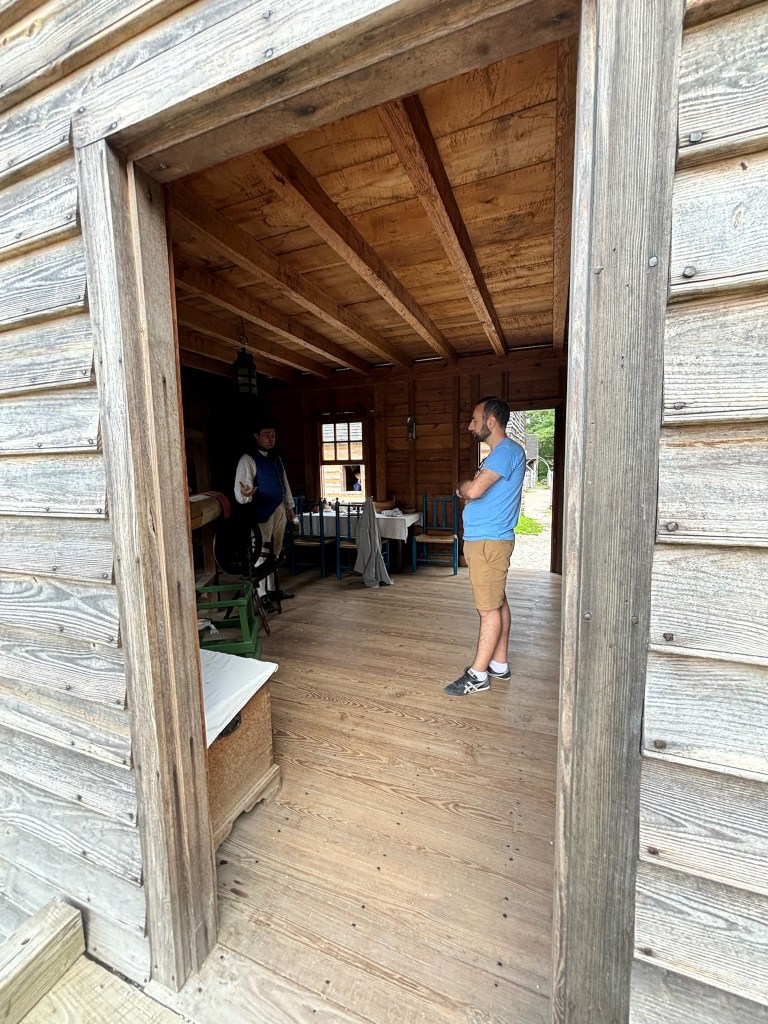
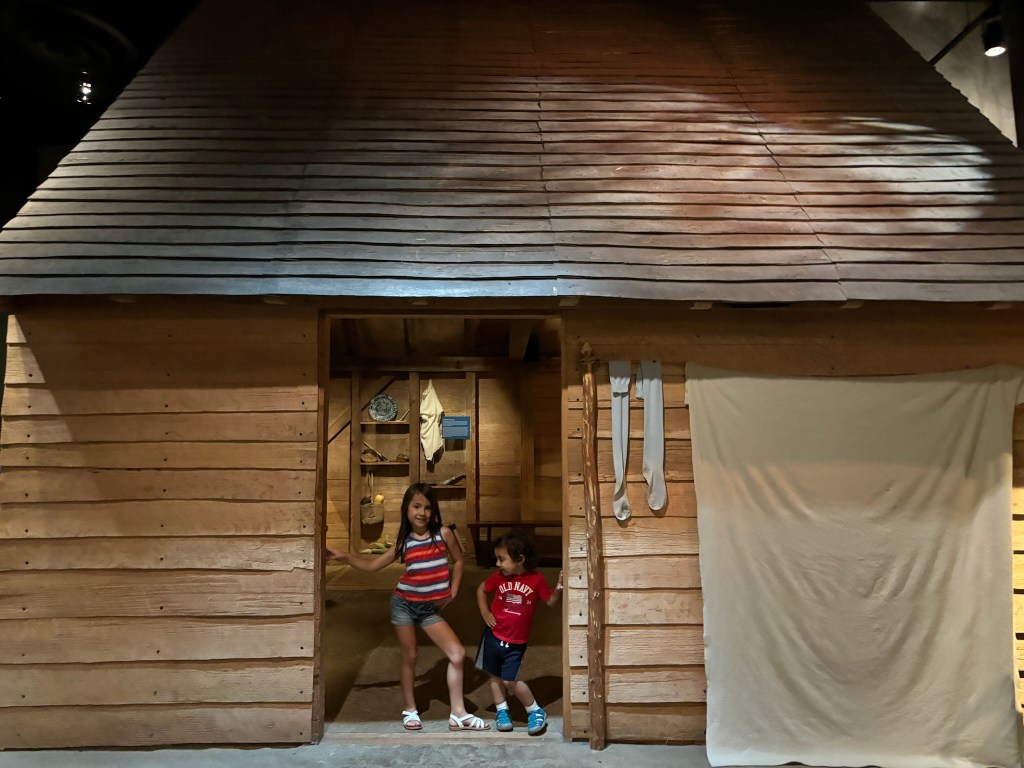
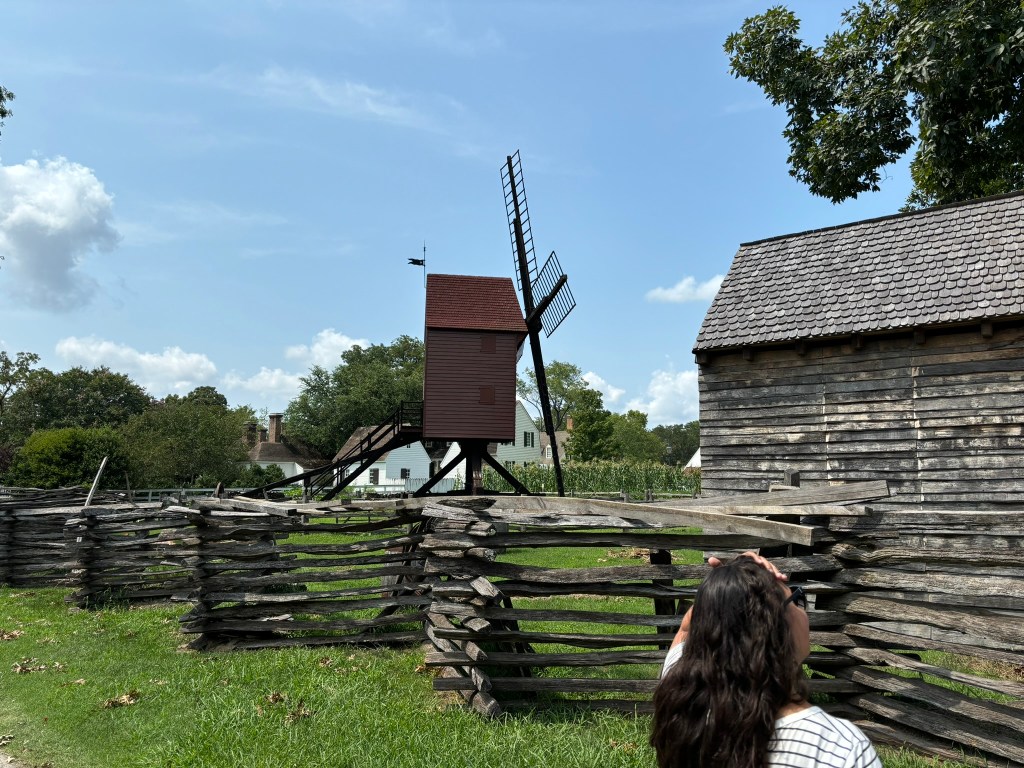
    We then moved onto a living-history farm, as well as other structures.  We went to a detached kitchen where my daughter separated peas from a pea pod, and we were taught how the colonials preserved food.  We also moved onto a structure that would serve as a living quarters for a middle-class family.  To supplement the family income, they weaved clothing from yarn using a loom.  My family and I then made our way back to the museum to meet our group and catch the bus back to Williamsburg.

    Overview

    Having described the Washington-Rochambeau Revolutionary Route in previous posts, it was great to see the final destination of that route: Yorktown.  I have also loved teaching about the Siege of Yorktown to my classes for so many years.  It adds a brand new perspective when you go to the actual location where a great battle took place.  I plan to bring my experiences into the classroom when I teach about Colonial America and the American Revolution again this fall.  Yorktown was such a significant victory because the war had dragged on for six years up until that point.  The Continental Army couldn’t afford to have it drag on much longer.  The Declaration of Independence would mean nothing without an American victory in the war, and Yorktown was the victory that secured independence.  Seeing the battlefield first-hand was a great experience, and I would highly recommend the museum as well.

    As mentioned in my previous post about Jamestown, I would also highly recommend this tour by Viator.  You are able to see Jamestown and Yorktown in the span of one day.  You could buy tickets to the tour HERE.

    Follow my Instagram, Facebook, and X accounts for videos of our time on our trip.

    Check out my previous blog posts about: Colonial Williamsburg and Jamestown.

    The Rest of Our Vacation

    I’d also like to add here that our trip did not stop after Jamestown and Yorktown.  On the third full day of our trip, we went to Busch Gardens, which was a really great day for the family.  We got a little bit of rain in the middle of the day but it cleared up after that.  I think because it was a dreary Wednesday, there were essentially no lines and the kids went right on every ride that they wanted.  We also went to a couple of shows and ate both lunch and dinner there.  We bought tickets that had food included which I would definitely recommend.  My 2 year old loved the Sesame Street Portion, but every section of the park had so many great rides for both kids.  It’s a park for all ages because besides the kiddy rides, there were also massive roller coasters that my teenage-self would have loved.

    On the fourth day of our trip, we went to Virginia Beach, which was also my wife’s birthday.  The ride from Williamsburg was about an hour. The weather was not great, threats of rain throughout the day, but not a washout.  We walked down on the beach and the kids played on a playground on the sand.  For my wife’s birthday, we ate at a great restaurant called Waterman’s Surfside Grille that I would highly recommend if you’re in the area.  Our hotel was right on the beach so it was nice to see the sun rise the next morning.  The next day, we ate breakfast and then made the 7 hour drive back to New Jersey.  We drove over the Chesapeake Bay Bridge-Tunnel for the first time! Overall, it was a great family vacation! I’d recommend this type of trip to people of all ages! Usually our trips include historical portions and fun for the kids. Williamsburg has something to offer for everyone!

    Check out Similar Blog Posts Below:

  • My previous blog post covered my family’s first day on our Williamsburg, VA vacation, which was a visit to Colonial Williamsburg.  On our second day, we booked a tour by Viator that took us to Jamestown in the morning, and Yorktown in the afternoon.  This blog post will focus on our time in Jamestown, which will be followed by another blog post which will focus on Yorktown.

    Viator Trip

    I found the Viator trip to Jamestown and Yorktown months in advance of our trip, and thought it a great opportunity to visit two places that I’ve wanted to see for years; two locations so significant to American history.  The tour had us meet at 8 AM at the Williamsburg General Store which was about a 7 minute drive from our hotel.  We boarded a large bus and made our way to Jamestown.  On route to Jamestown, our tour guide gave us some historical background leading up to the settlement of Jamestown 1607.  The bus ride to Jamestown was about 20 mins.

    I’ve previously written a blog post about the history of the Jamestown settlement, which you could read HERE.  Jamestown was the first permanent English colony.  The colonists barely survived the settlement in the first couple of years.  The settlement that started in Jamestown eventually branched out to become the Virginia colony.  To be able to visit Jamestown in person was a real treat. 

    However, I must include the fact that we visited the Jamestown Settlement, which is a museum about the settlement of Jamestown.  This museum is about a mile east of the original Jamestown fort site, which is called Historic Jamestowne.  If I had to be perfectly honest, I thought this tour would take us to Historic Jamestowne, but that was not the case.  So I was a little disappointed in that.  I’ll have to go back another time to see Historic Jamestowne, where archaeological work is taking place.  But visiting the Jamestown Settlement was not a disappointment and there was much to see and do there.

    Overlook

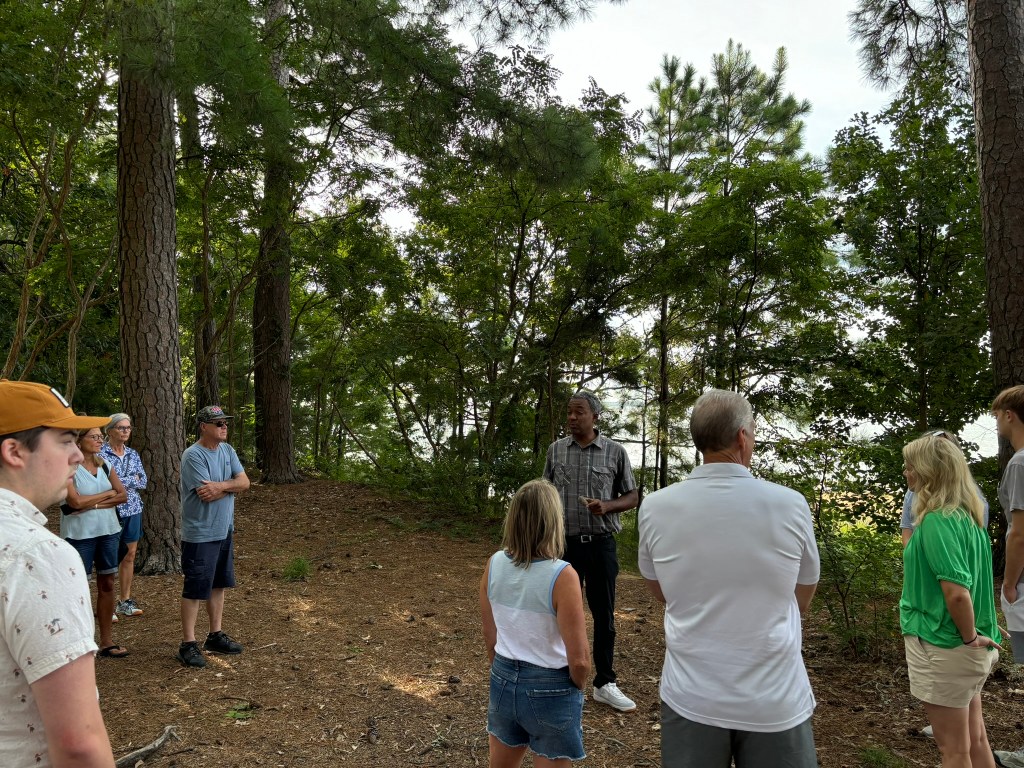
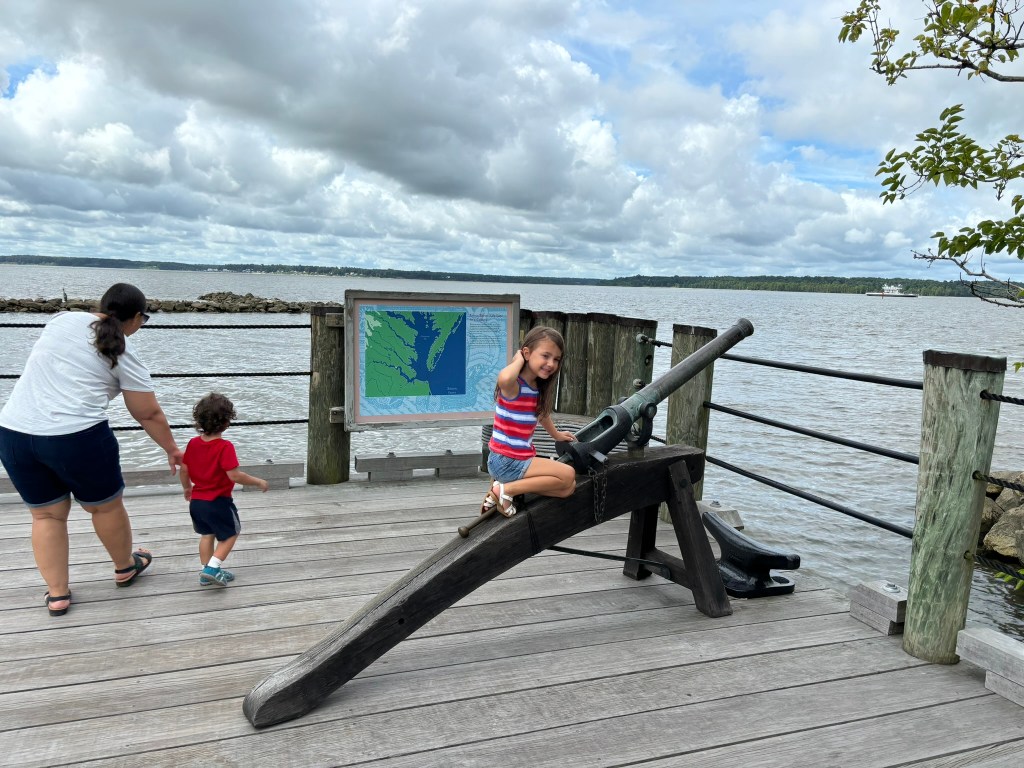
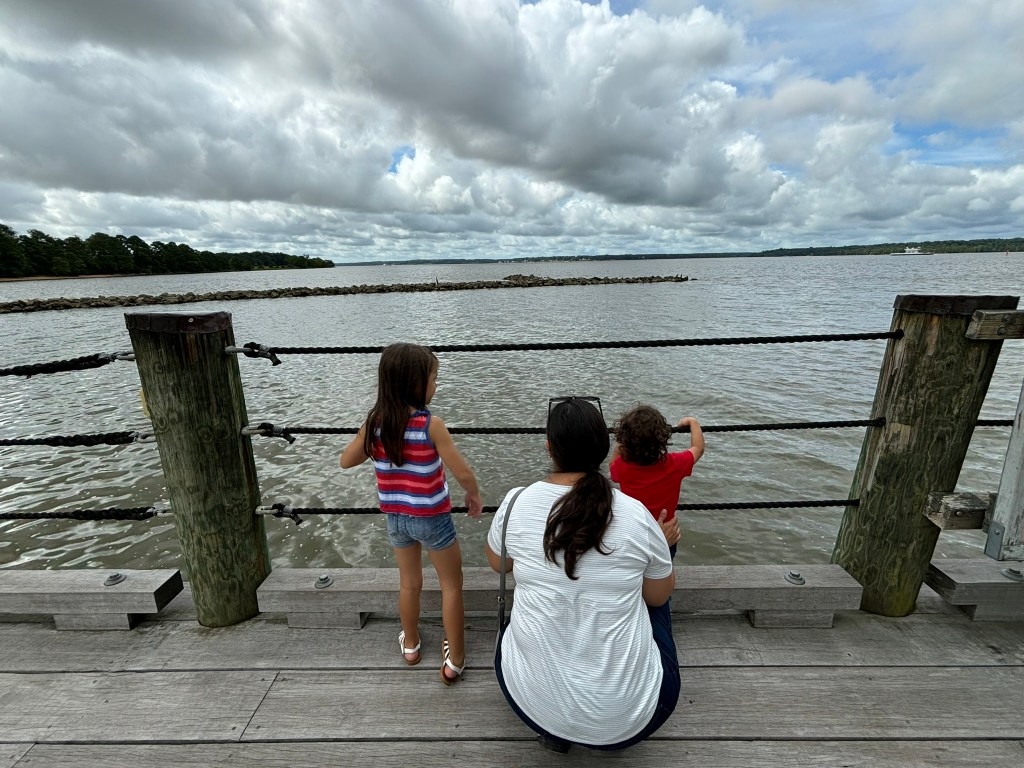
    Before arriving to the museum, our tour guide took us out of the bus to a spot along the James River called the “Overlook.” From our vantage point north of the river, we could see the spot that the English colonists orginally landed on their first voyage to Jamestown, which you could see in the photo below.

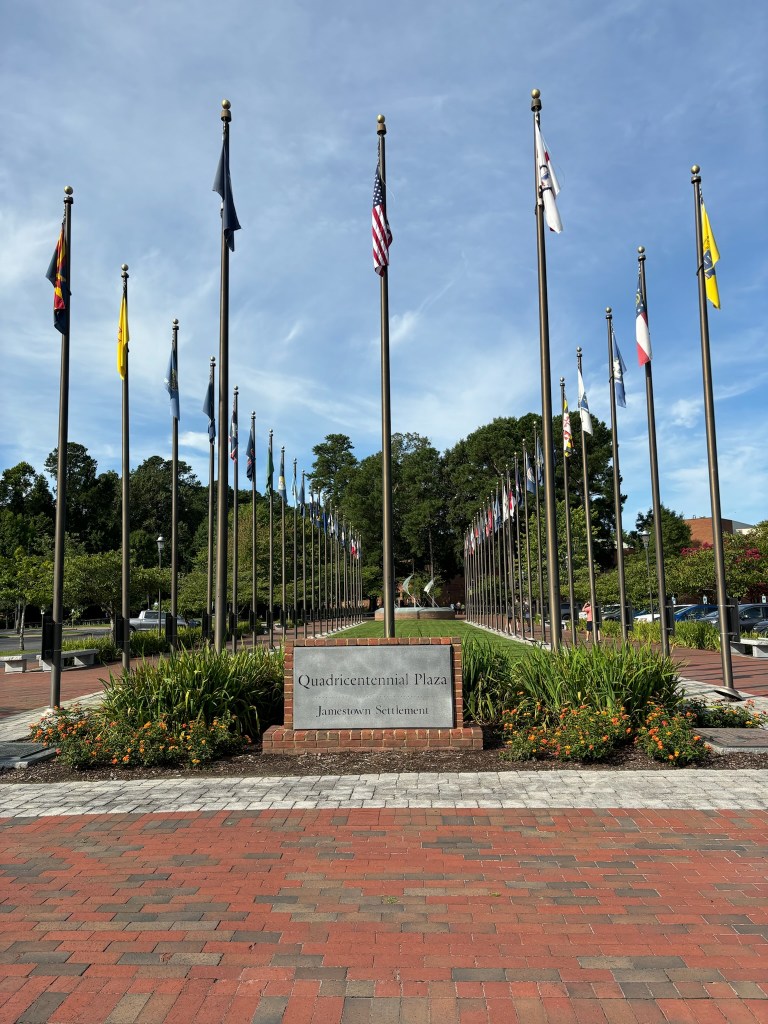
    Jamestown Settlement

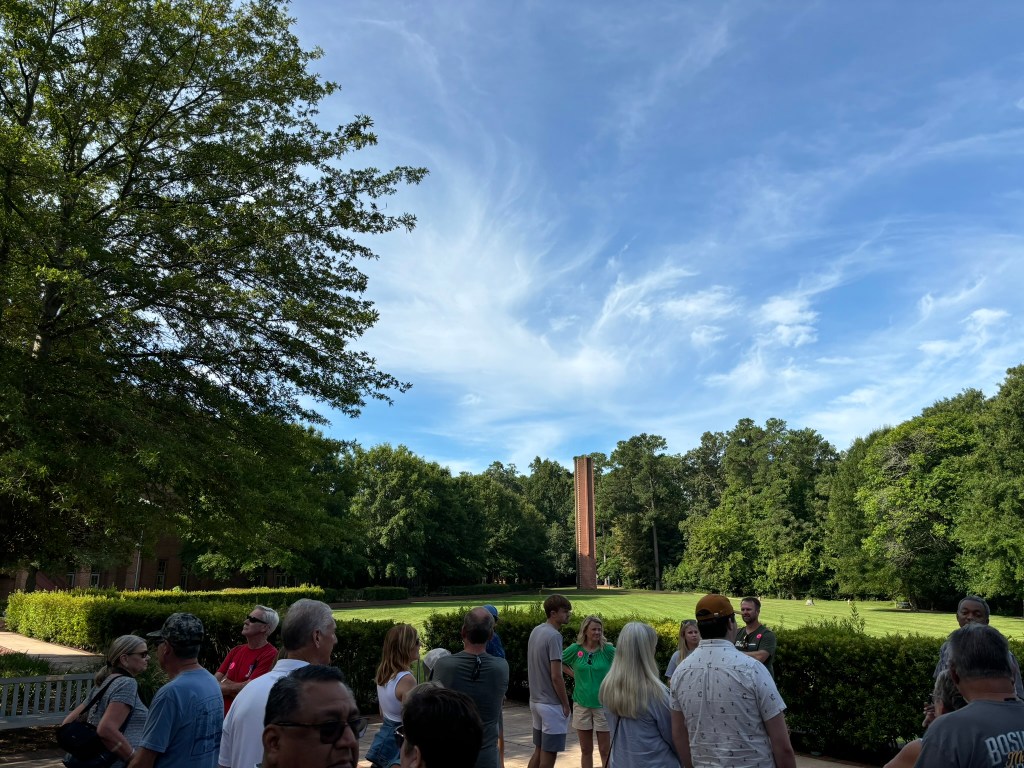
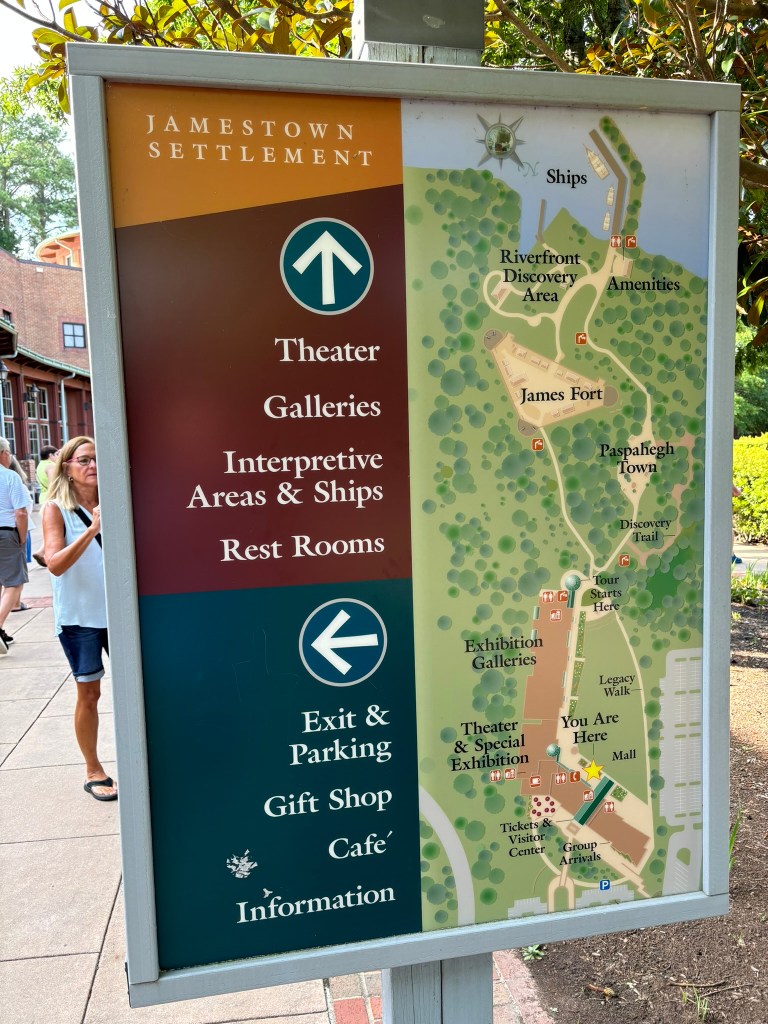
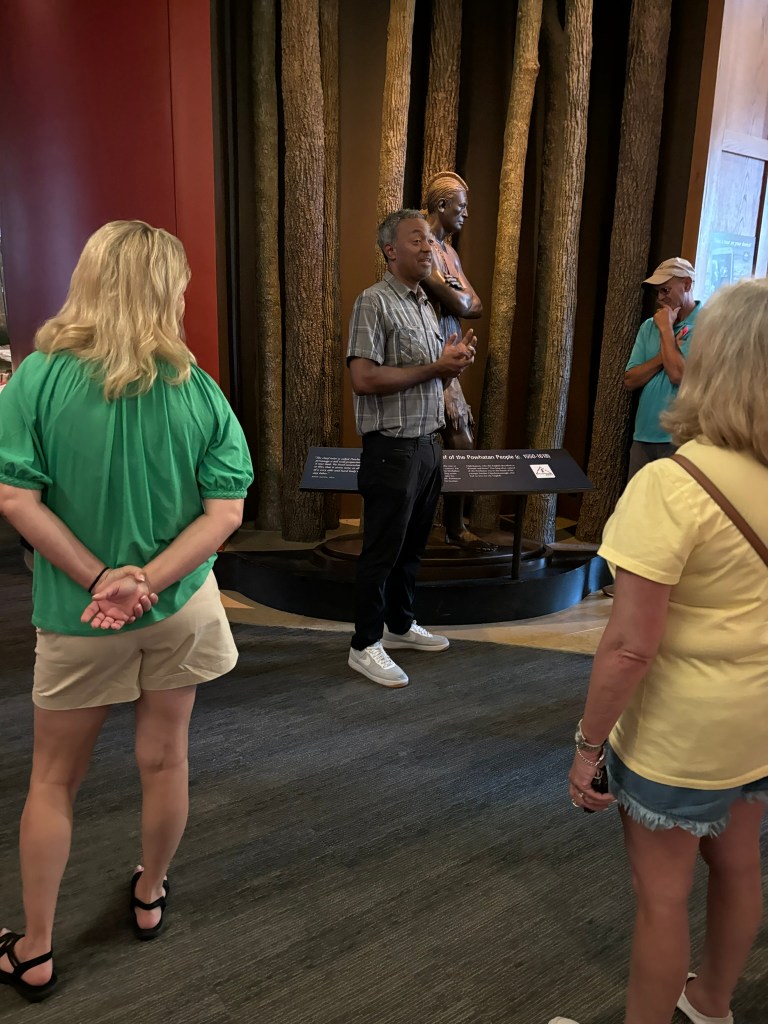
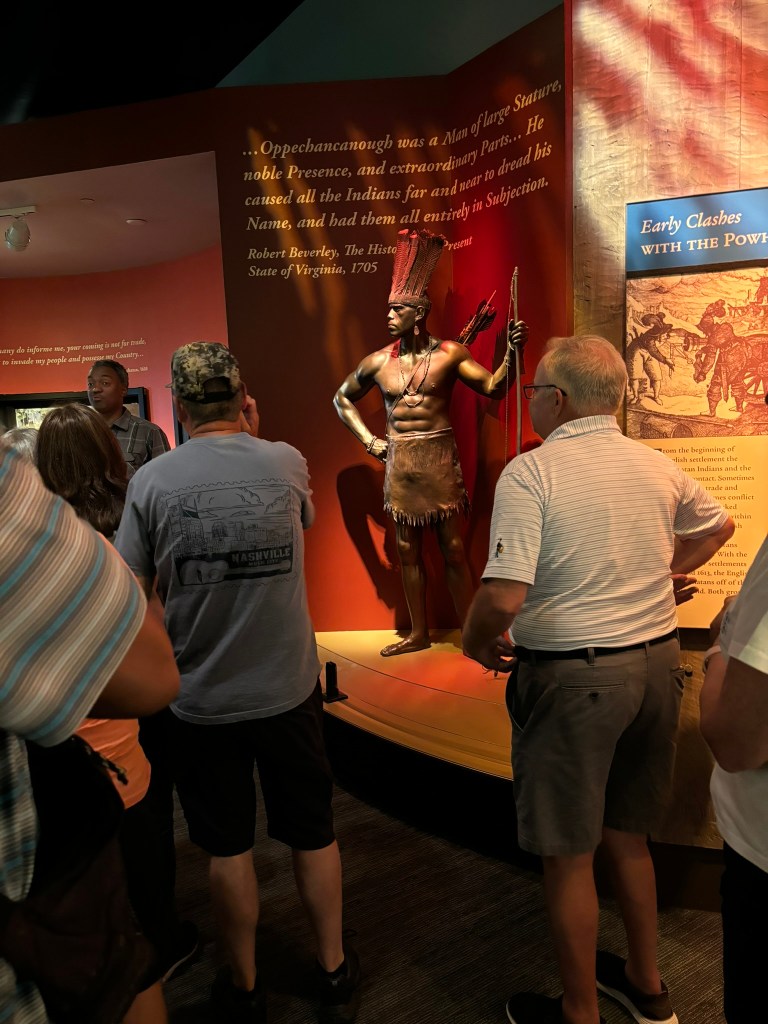
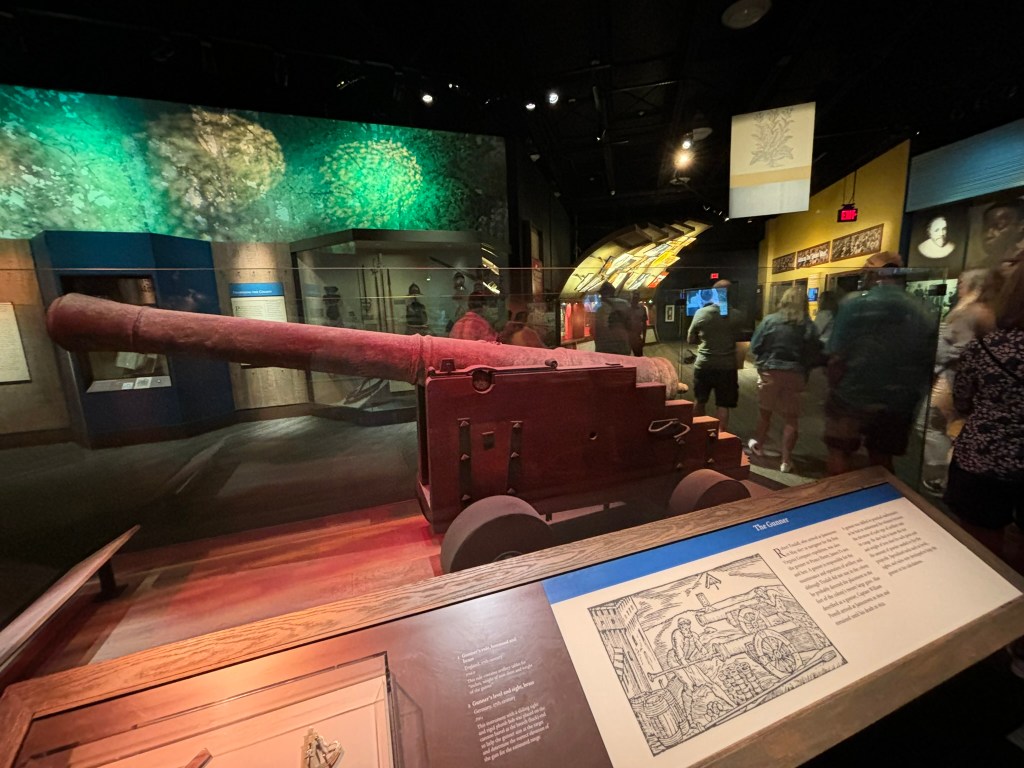
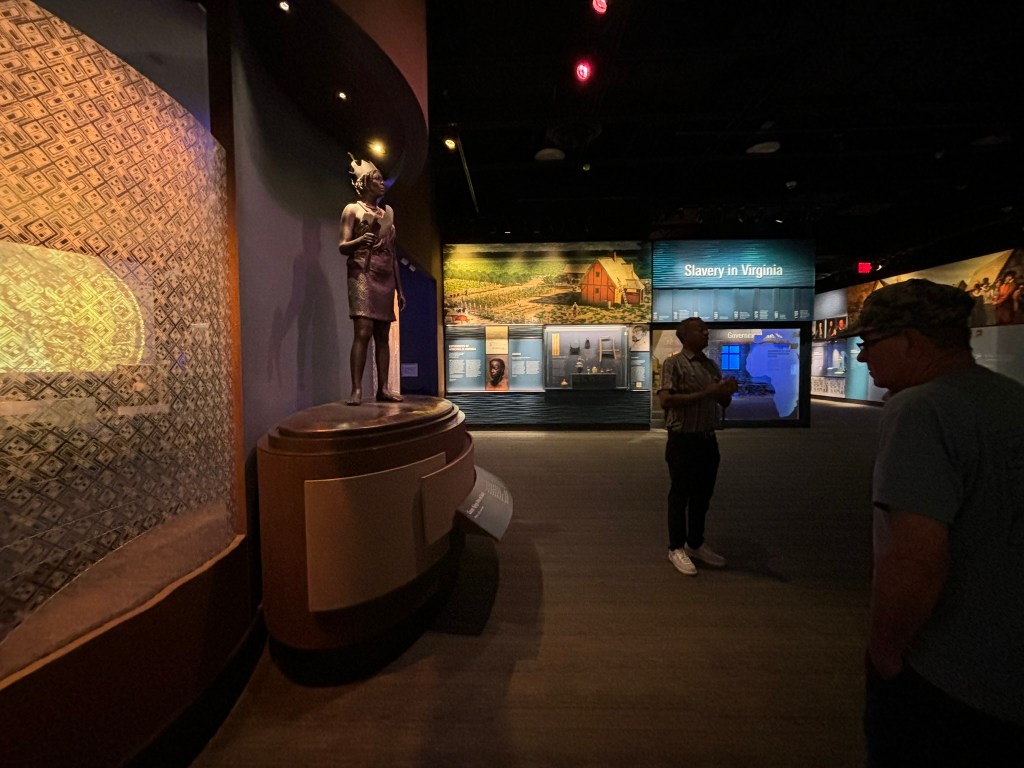
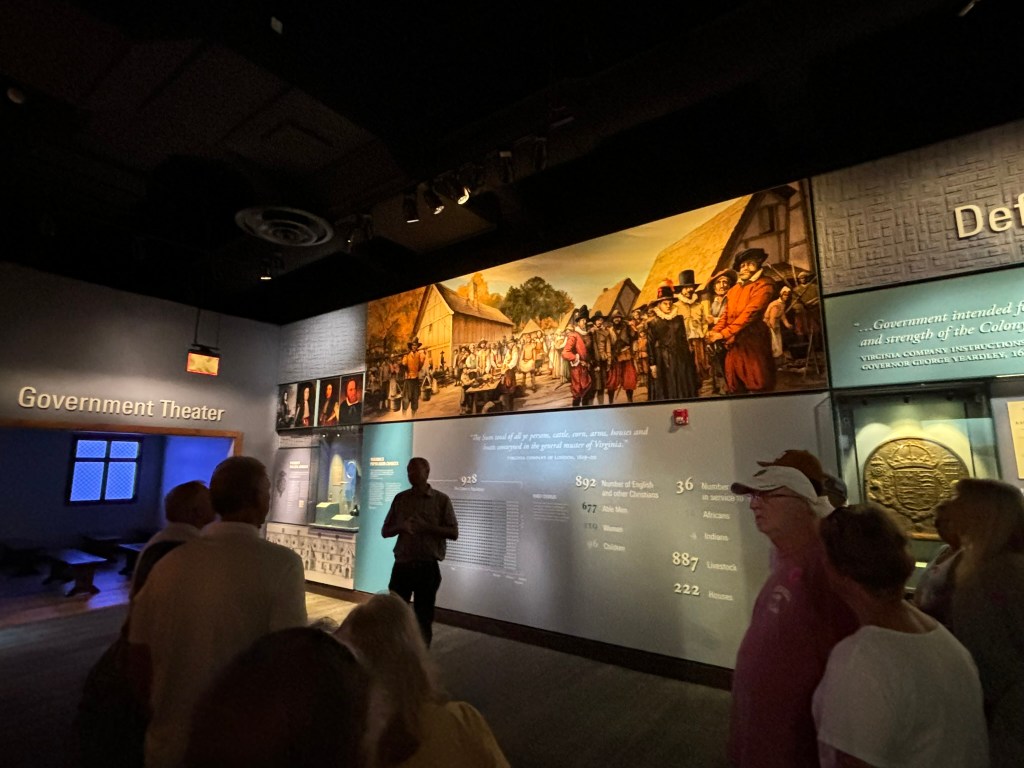
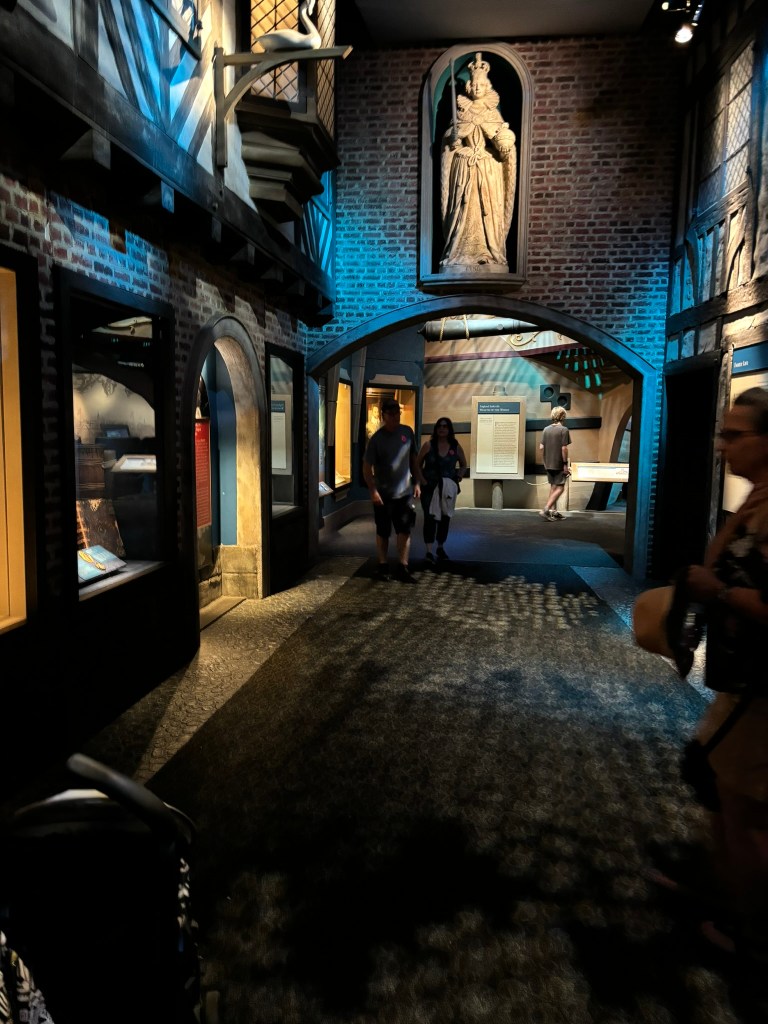
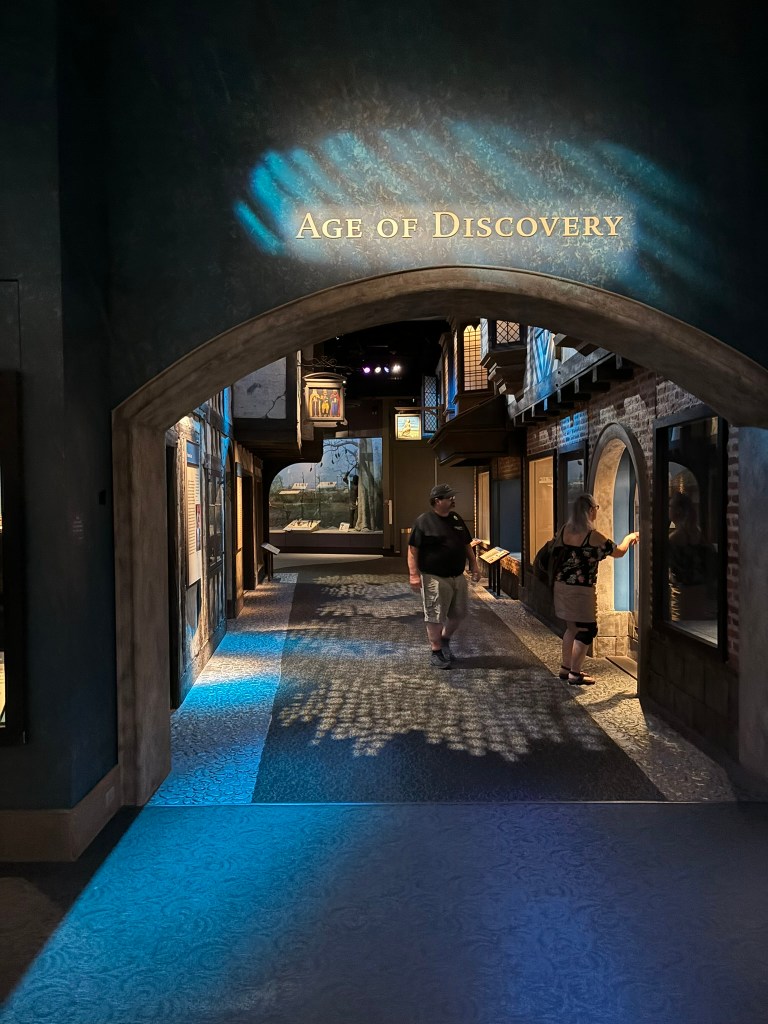
    We then made our way to The Jamestown Settlement, which is run by the The Jamestown-Yorktown Foundation.  The museum originally opened in 1957.  Our tour guide led us through the museum, highlighting and explaining significant figures and events from the colony.  The main hallway of the museum appears to be a large timeline dating from 1607, the founding of the settlement, to 1699, the year that the capital of the Virginia Colony was moved to Williamsburg.  As you move through the museum, you walk through the history of the Jamestown colony.

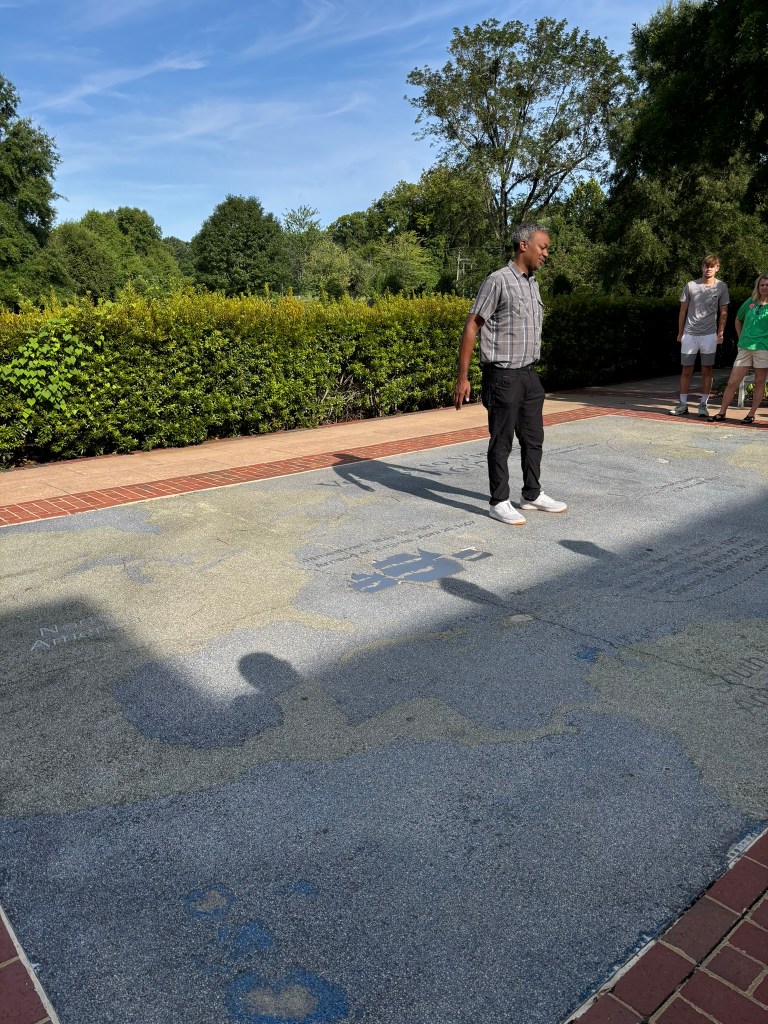
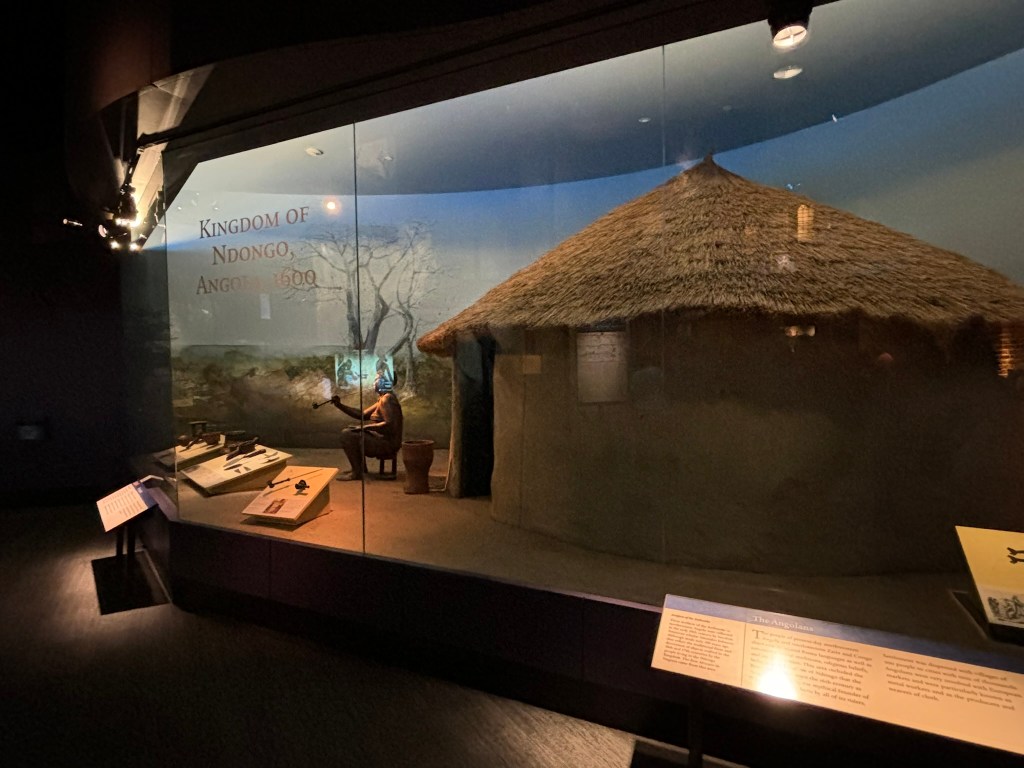
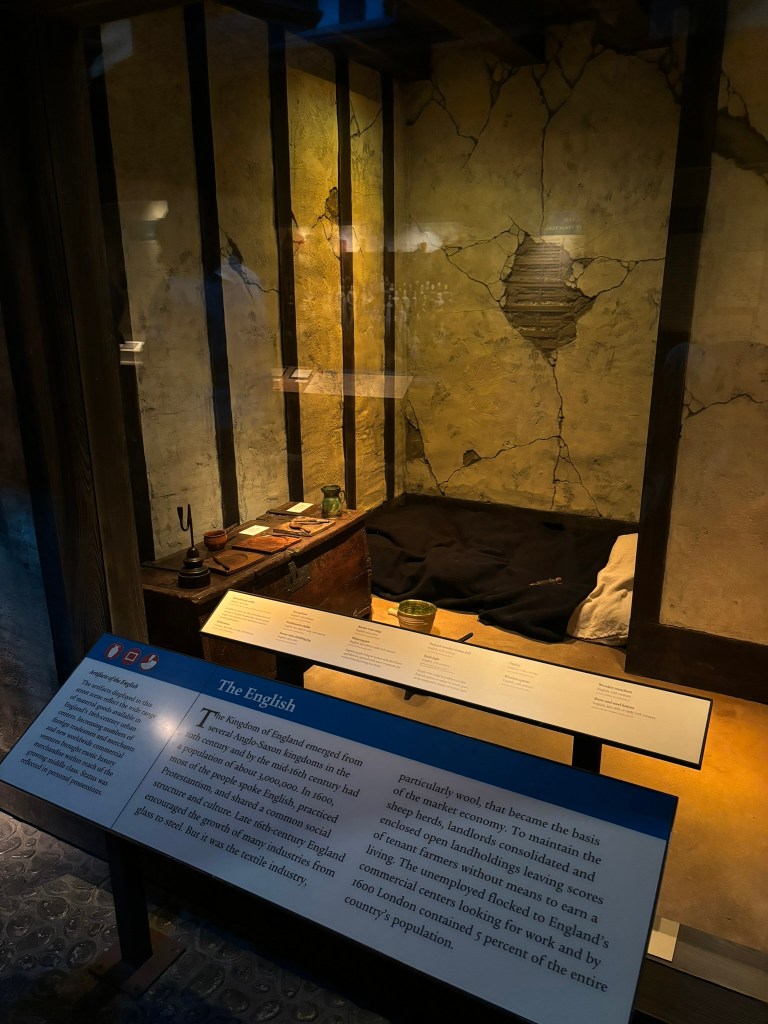
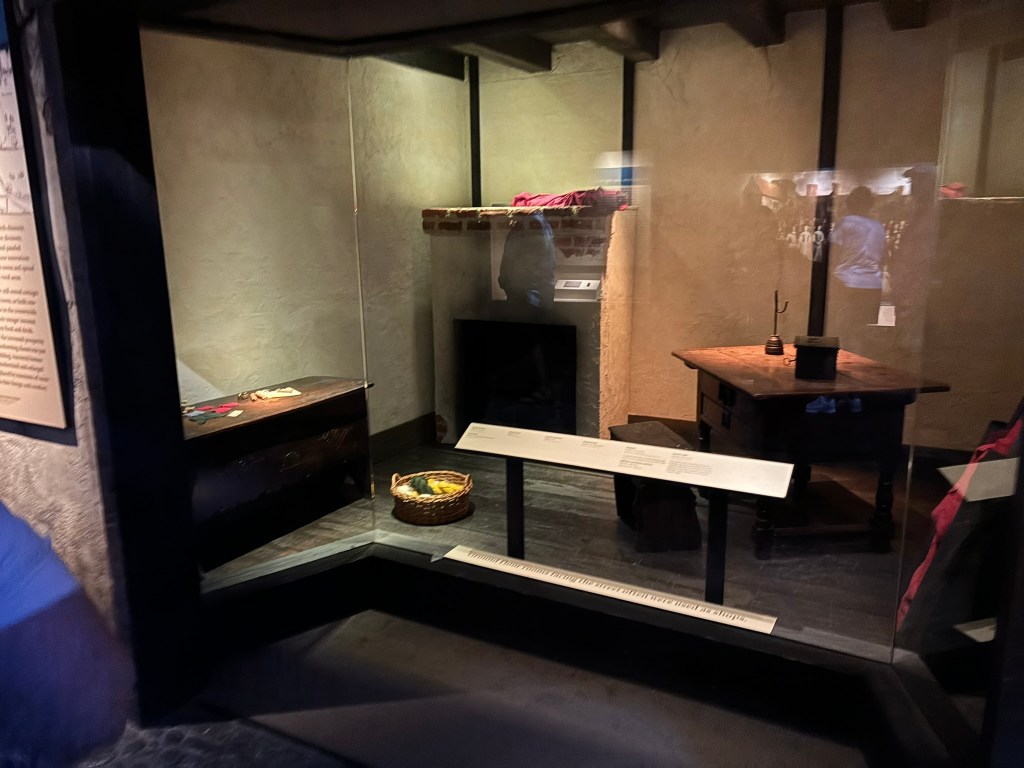
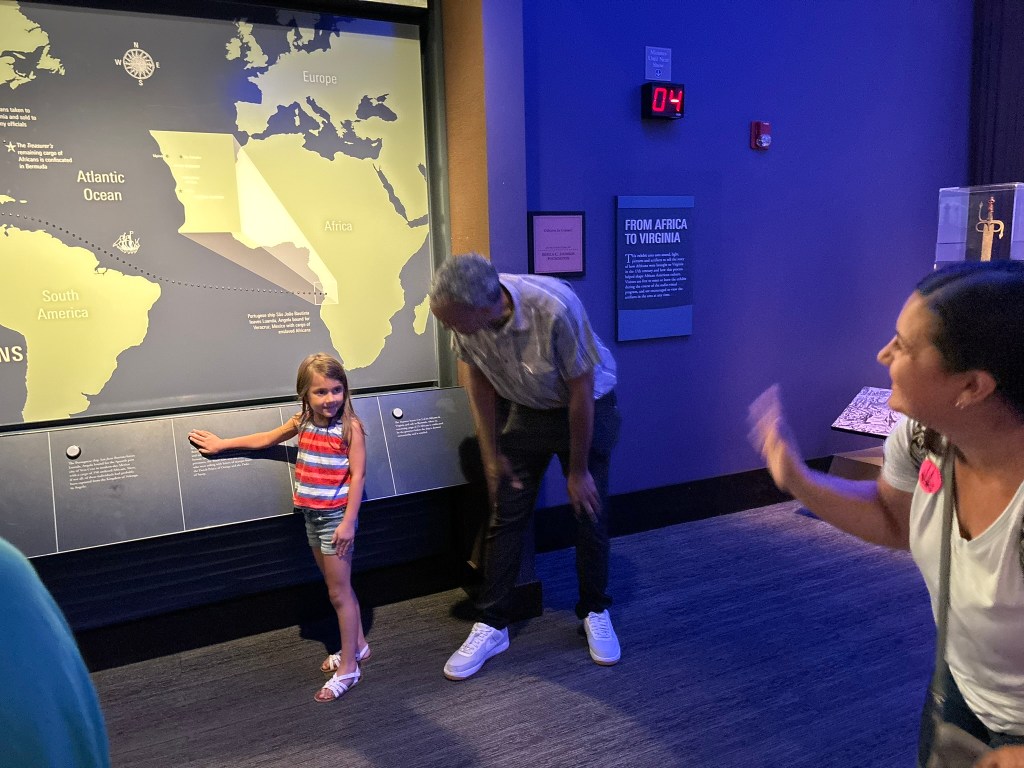
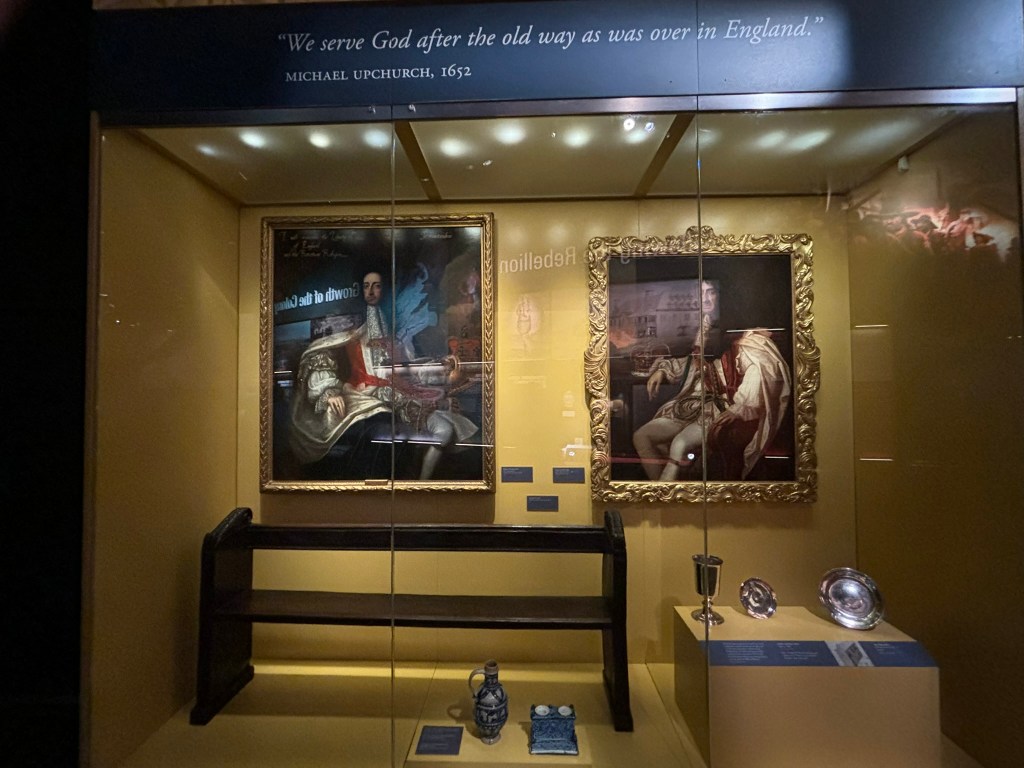
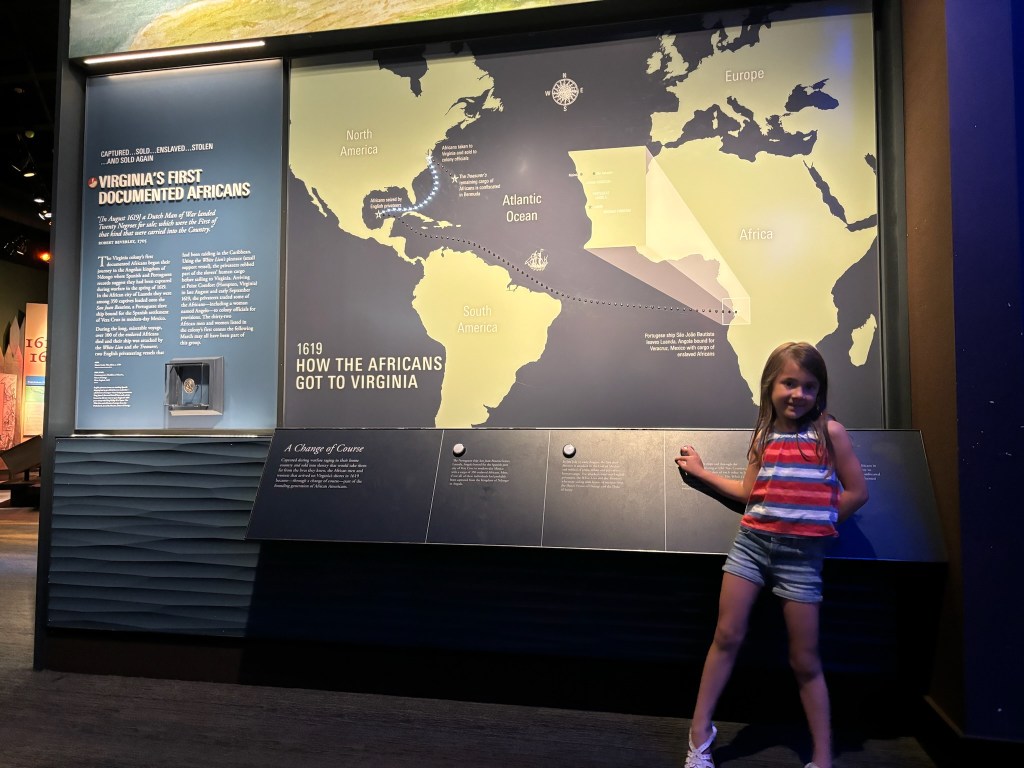
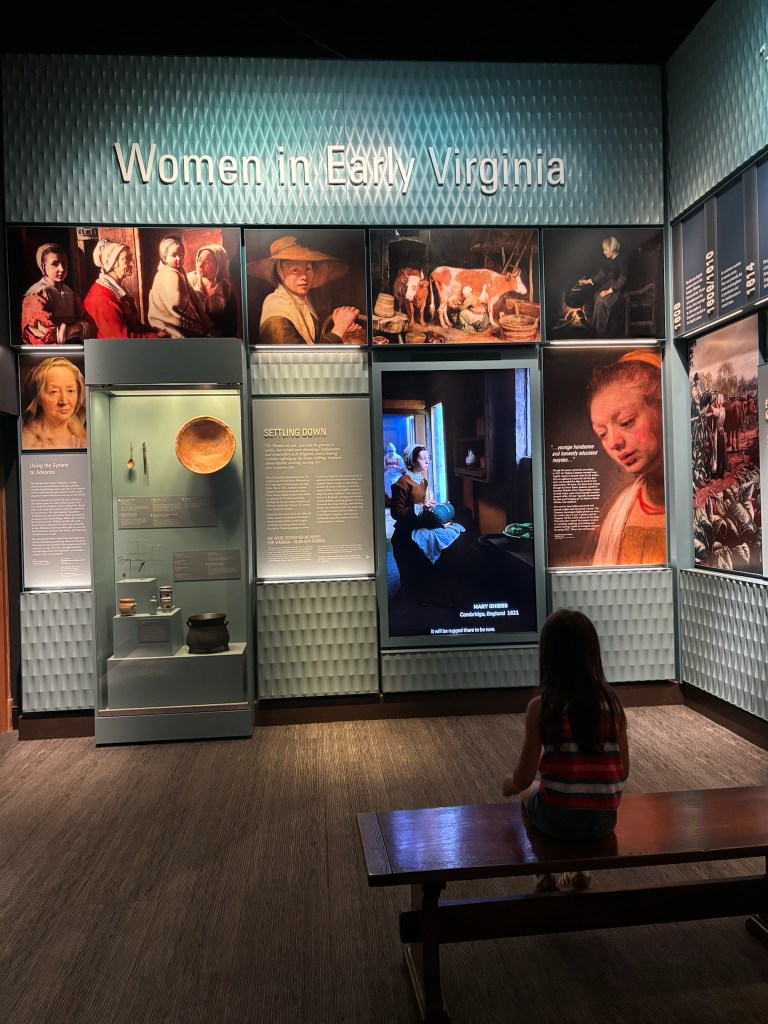
    The museum highlights what life was like before 1607 for the Natives living in the region, Africans in Angola, and the English back in Europe.  As you move through the museum, you learn about how the settlers barely survived in the first couple of years.  You learn about the importance of growing tobacco.  You learn about figures like Pocahantas, John Smith and John Rolfe.  You learn that in 1619, the first Africans were brought to the colony on a Dutch ship, which completely changed the dynamics and history of the colony.  The year 1619 was also significant because this was the first year that the House of Burgesses met.  The museum teaches about conflicts between the Natives and English settlers, as well as significant events like Bacon’s Rebellion in 1676.  The museum also highlights a map that shows the population changes taking place in Virginia.  As the English population was growing and settling along the rivers, the Native population was dwindling, primarily caused by disease and conflict.  Finally, the museum takes you to the year 1699, when Jamestown ceased to be the capital of Virginia.   Jamestown was susceptible to brackish water, mosquitoes, and the spread of malaria.  Williamsburg was on higher ground and easier to defend against invaders such as the French and Spanish.
    Paspahegh Village

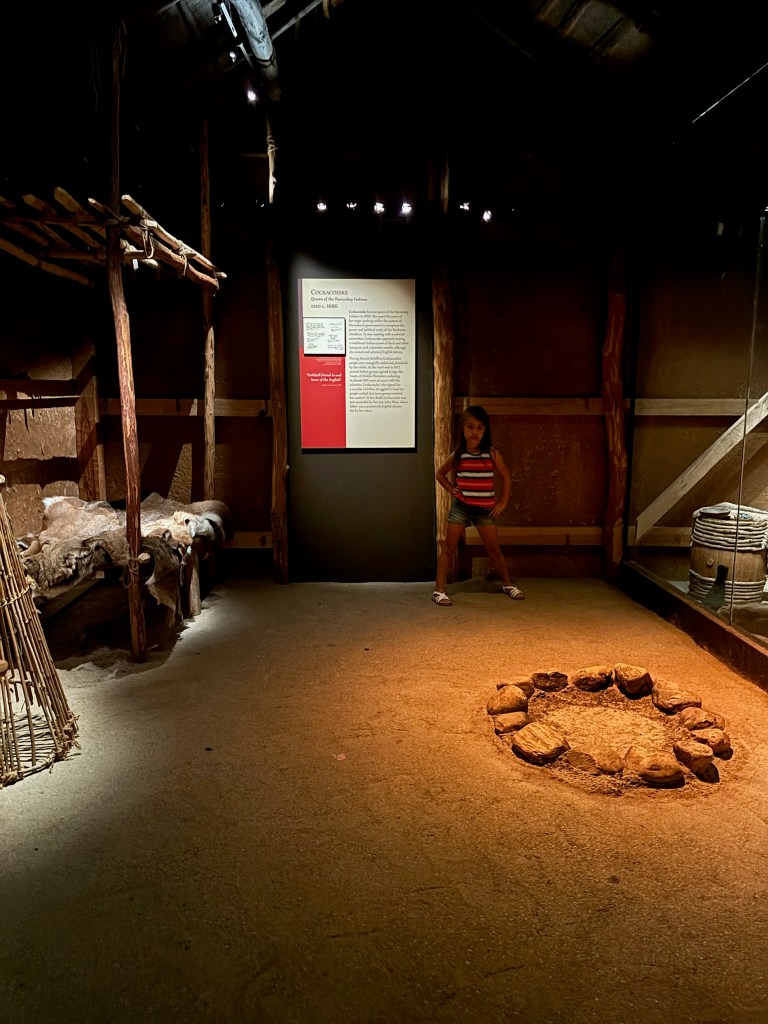
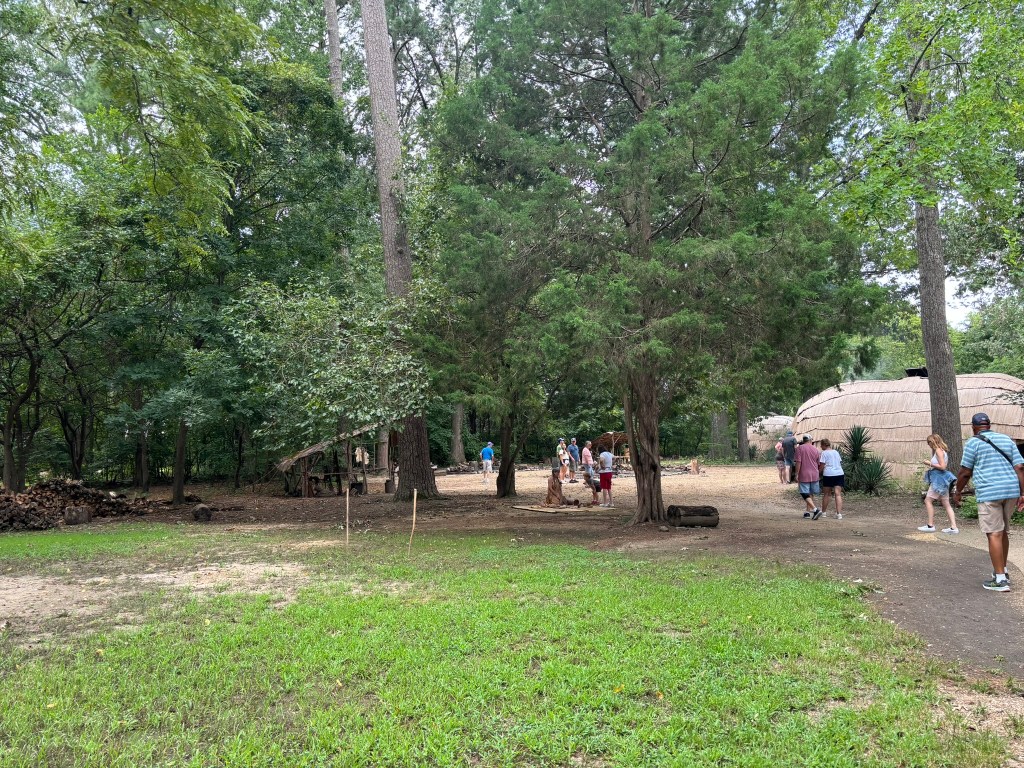
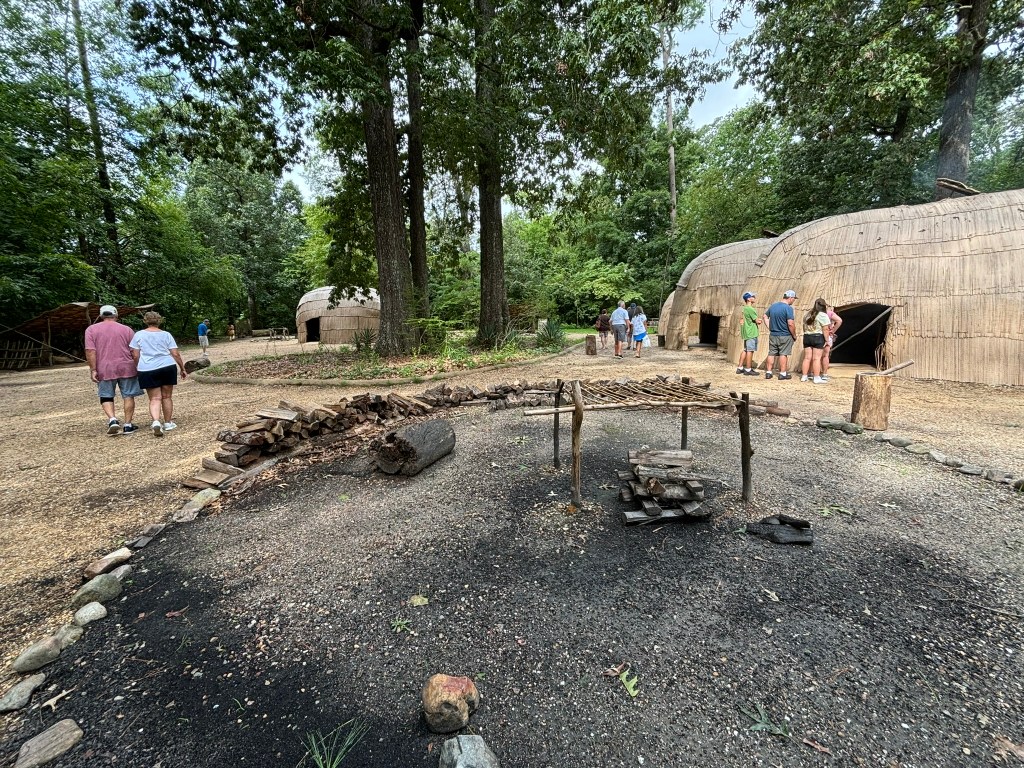
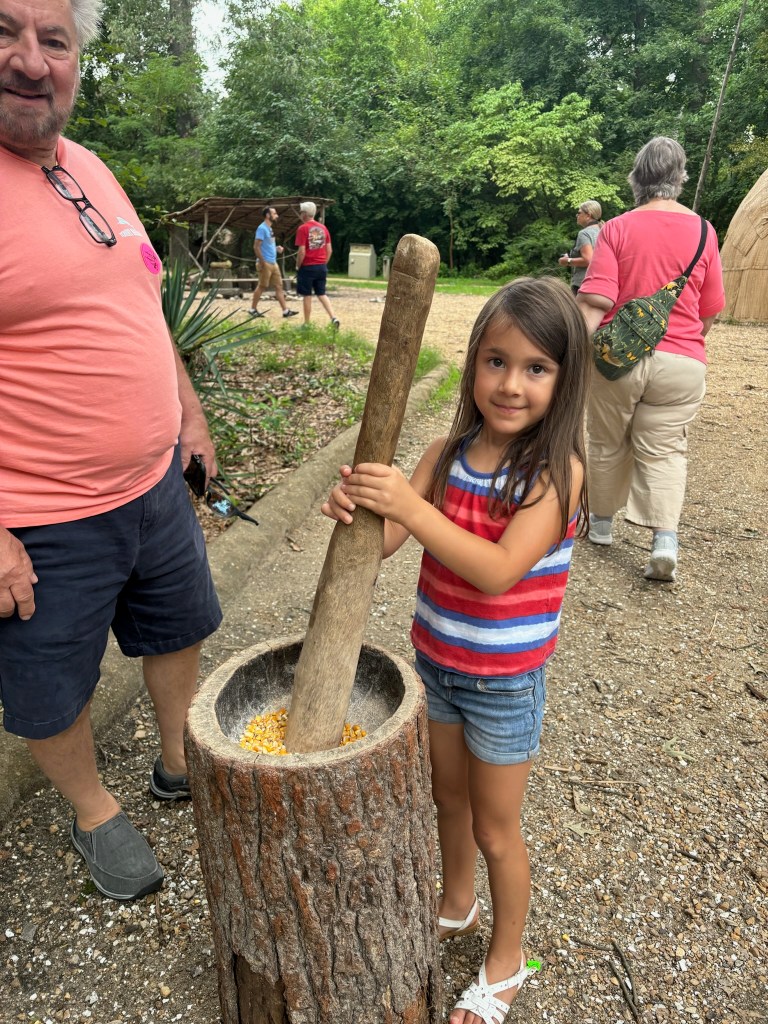
    After we were taken through the museum, we were given about an hour to roam around outside in the living history portions of the museum.  Our first stop was the Paspahegh village.  The Paspahegh tribe was a tributary of the great Powhatan chiefdom.  In the village, you could walk through their living quarters, learn how they made canoes from tree trunks, and practice making corn.  

    Ships

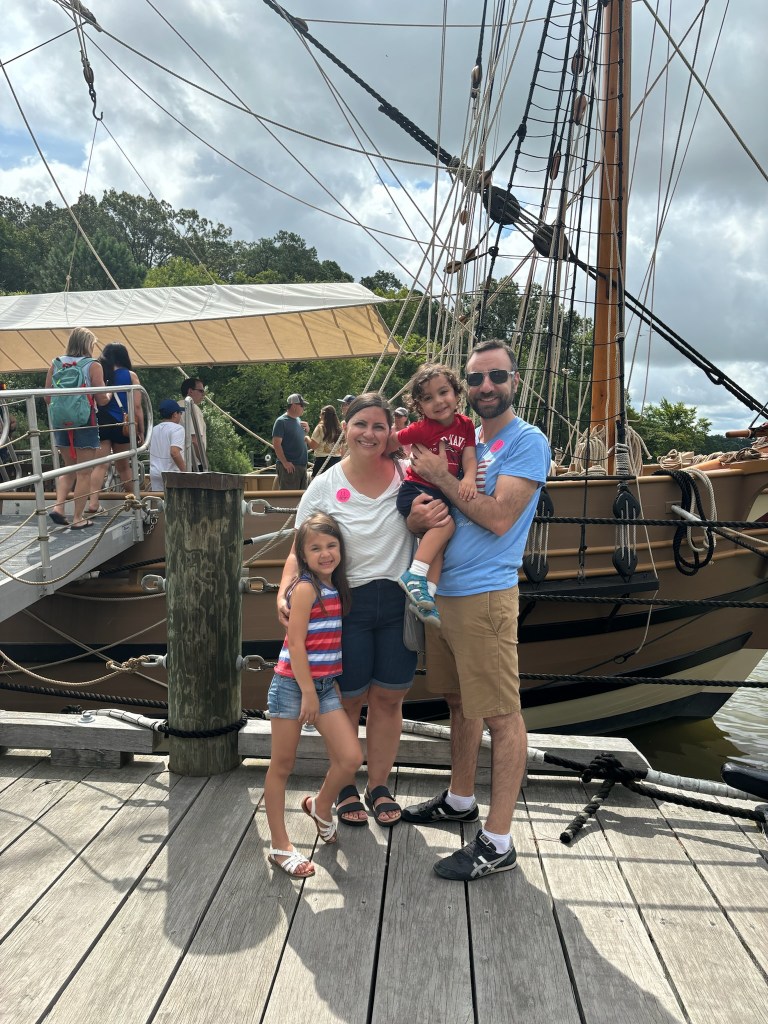
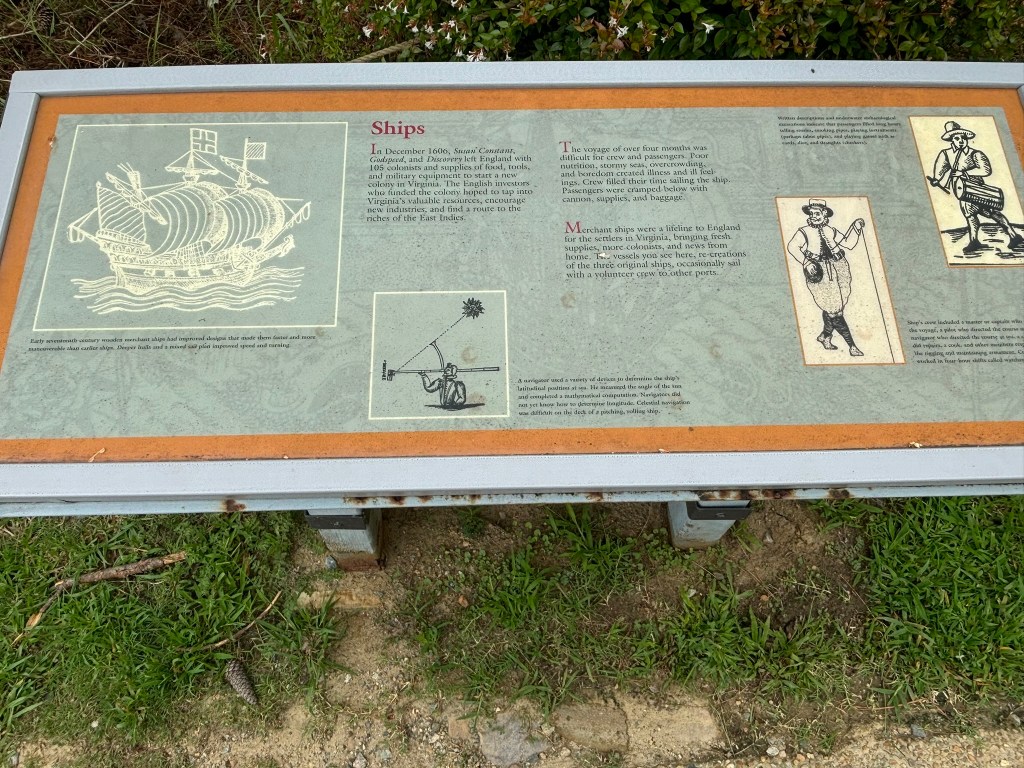
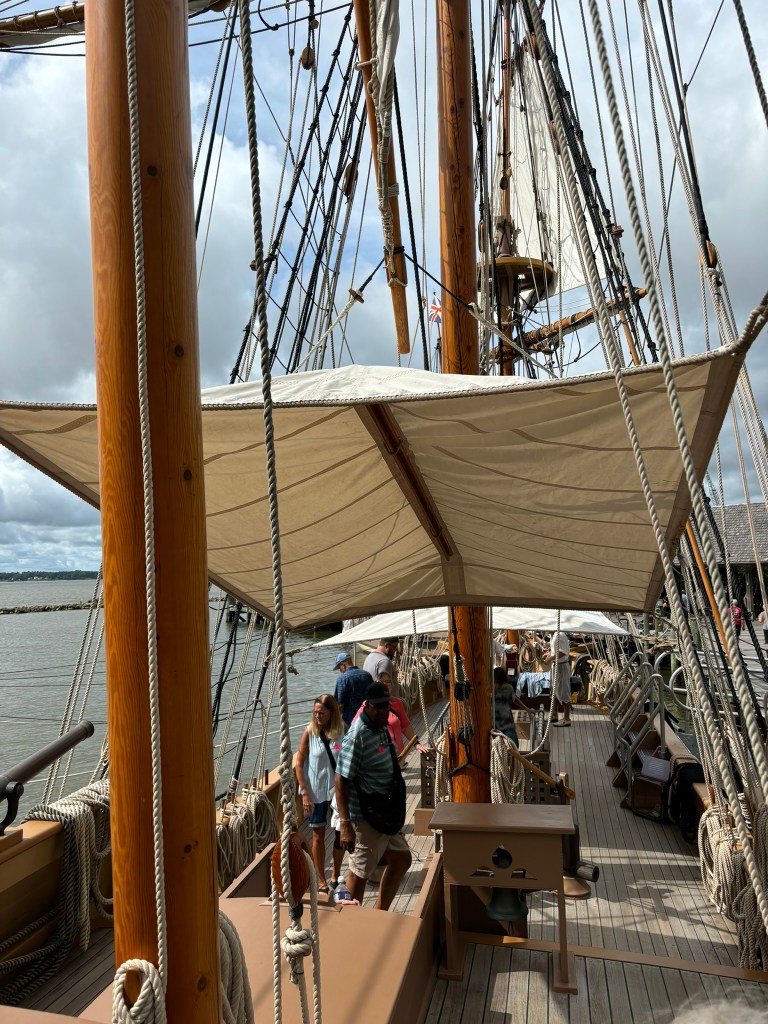
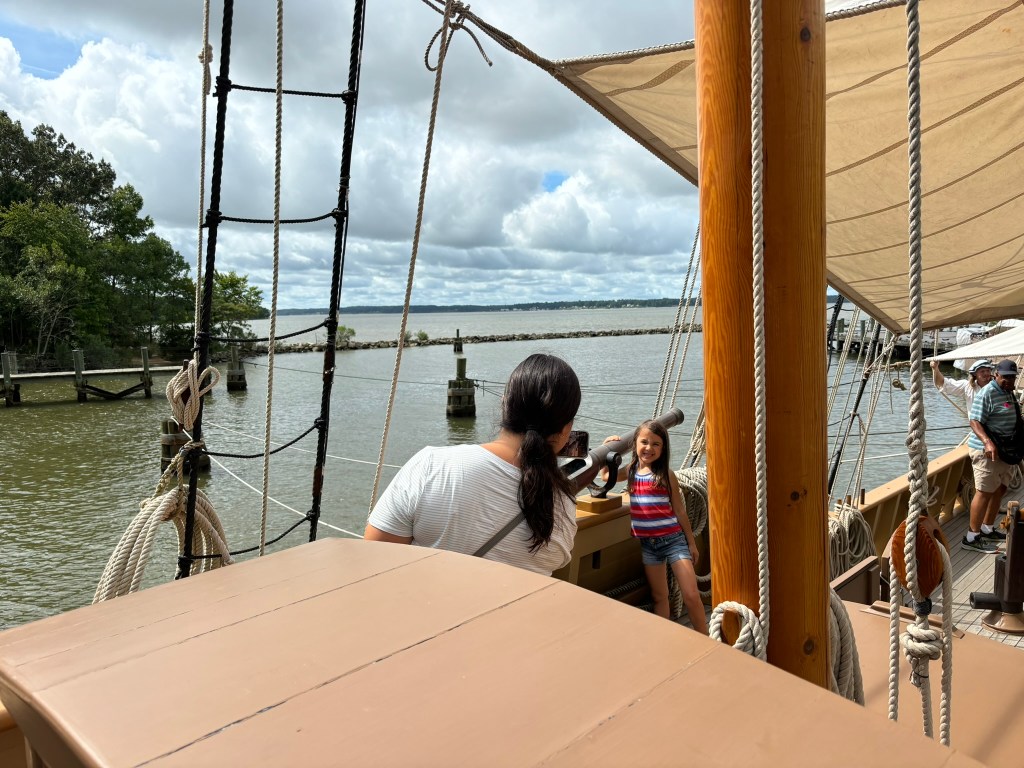
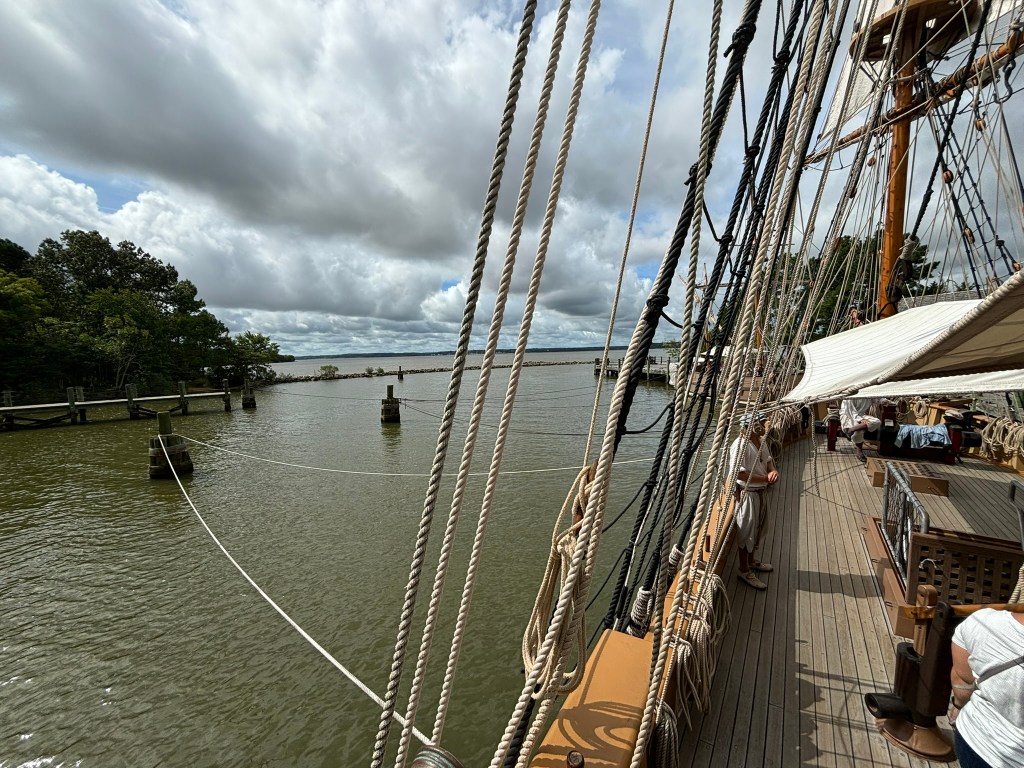
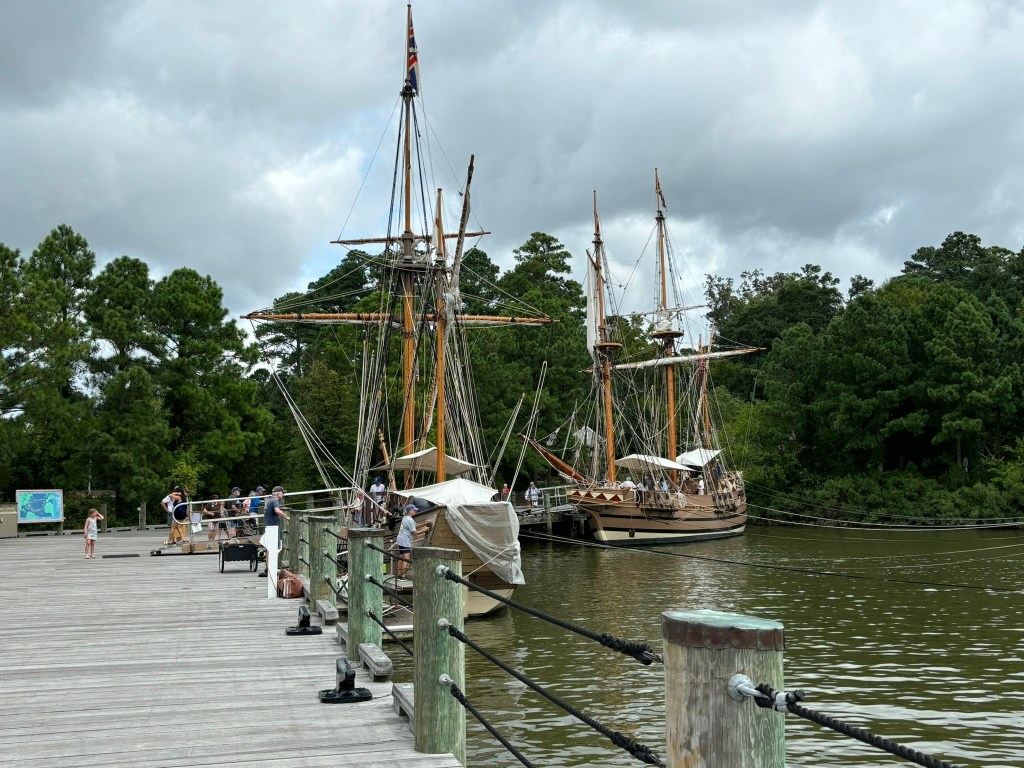
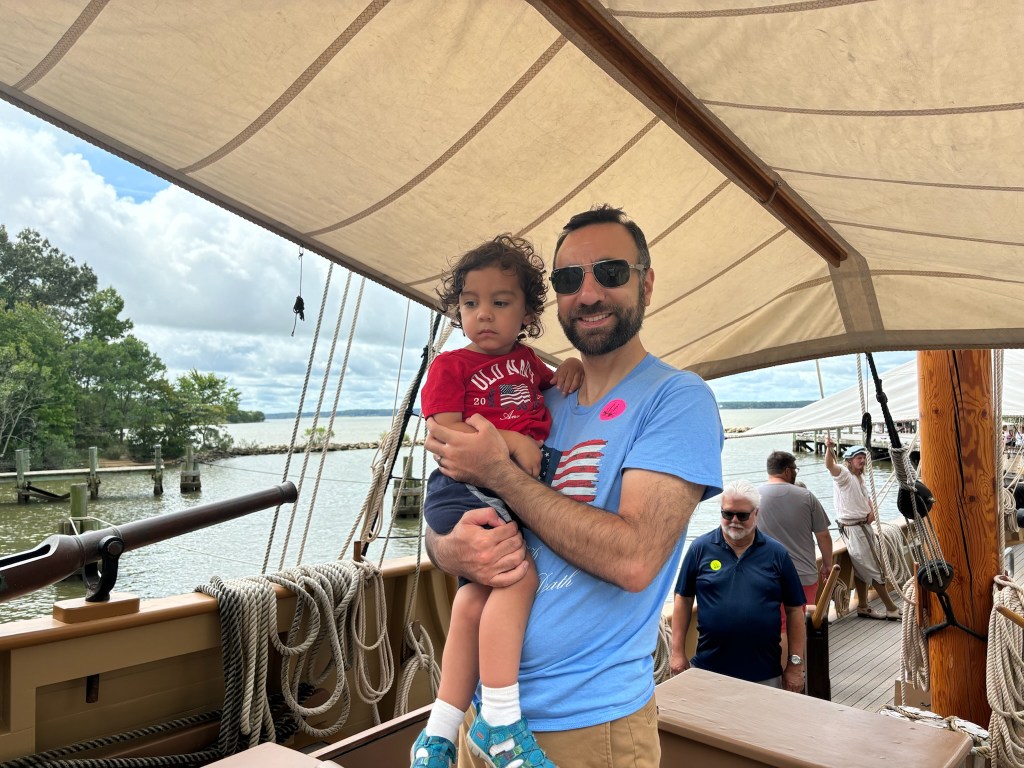
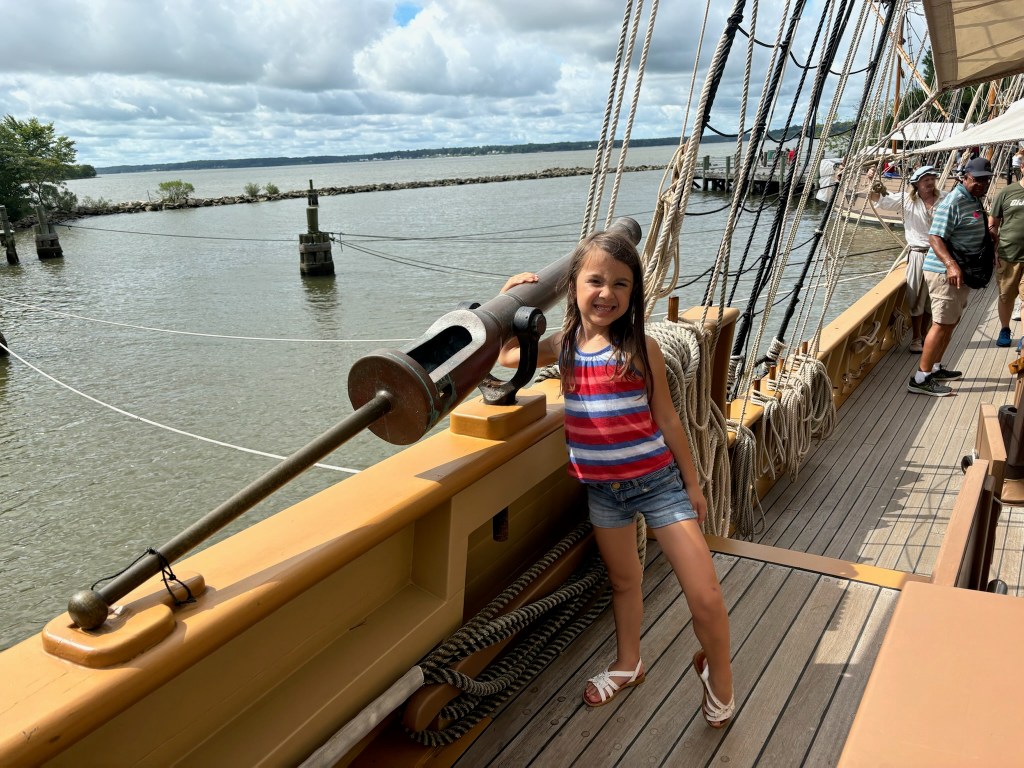
    After passing through the Paspahegh village, we made our way to ships docked along the coast.  The three ships that took the original voyage to Jamestown were called Susan Constant, Godspeed, and Discovery.  Two of the three replica ships were in dock on the day we were there.  We were able to go below deck and explore the two ships.

    James Fort

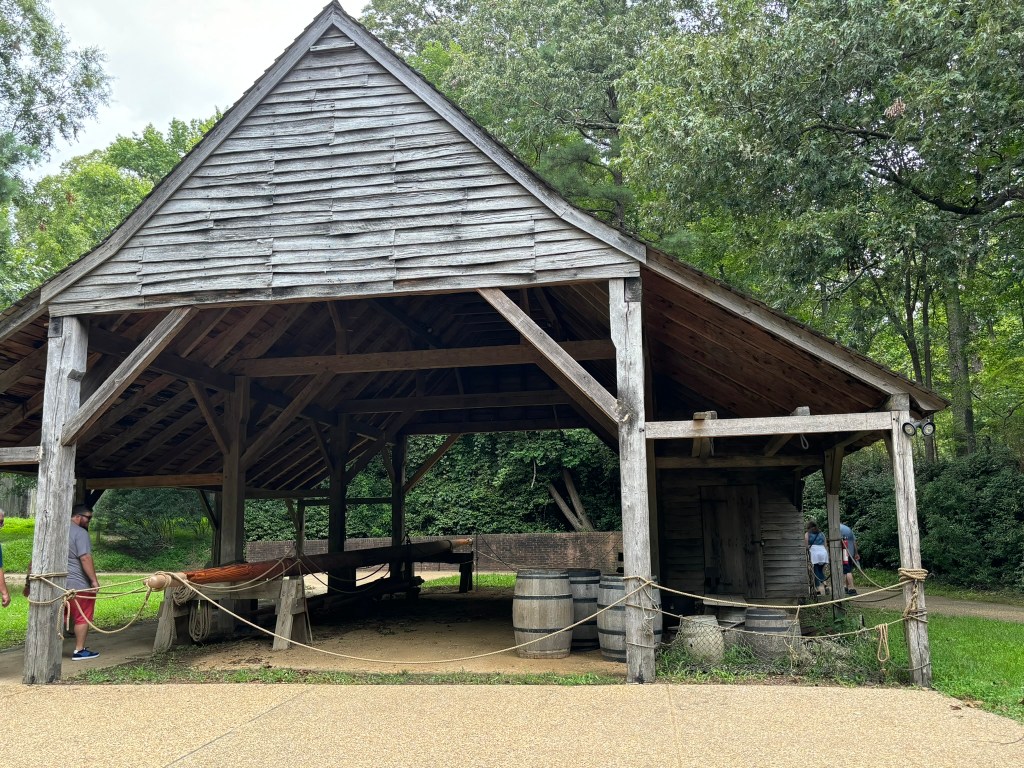
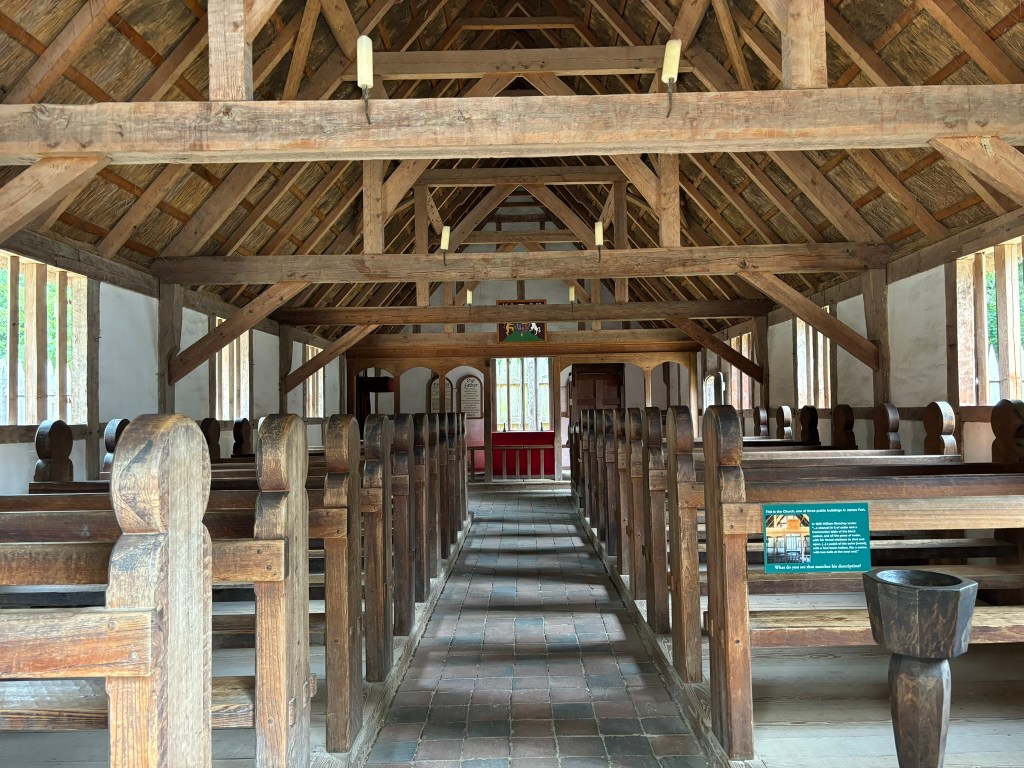
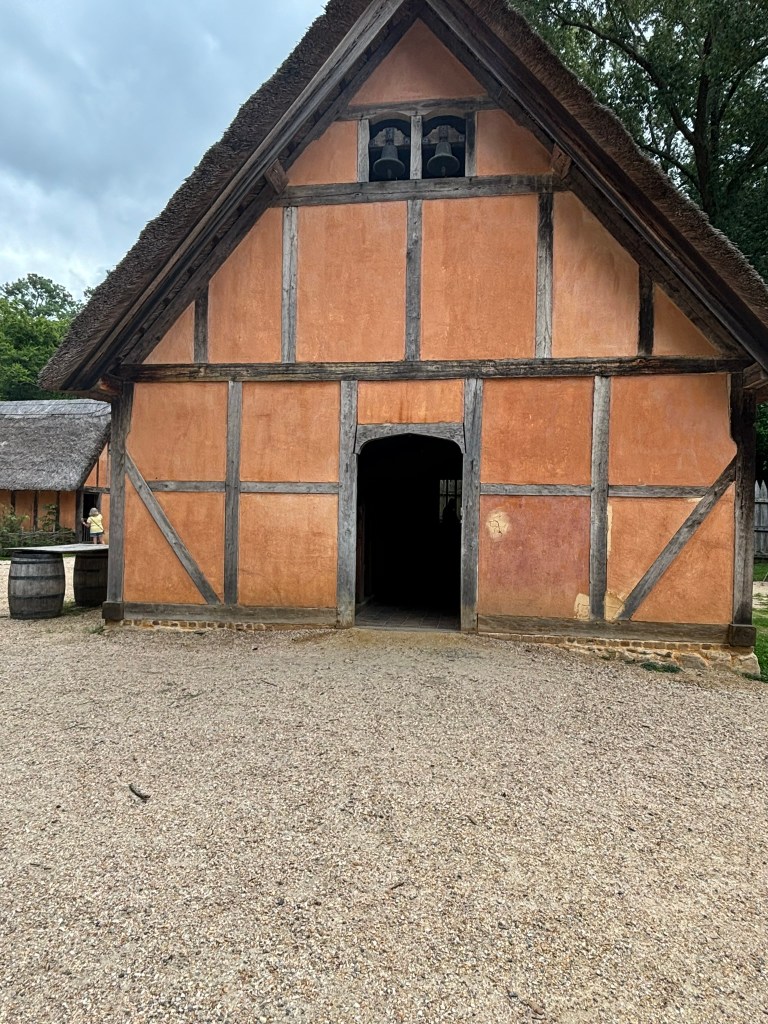
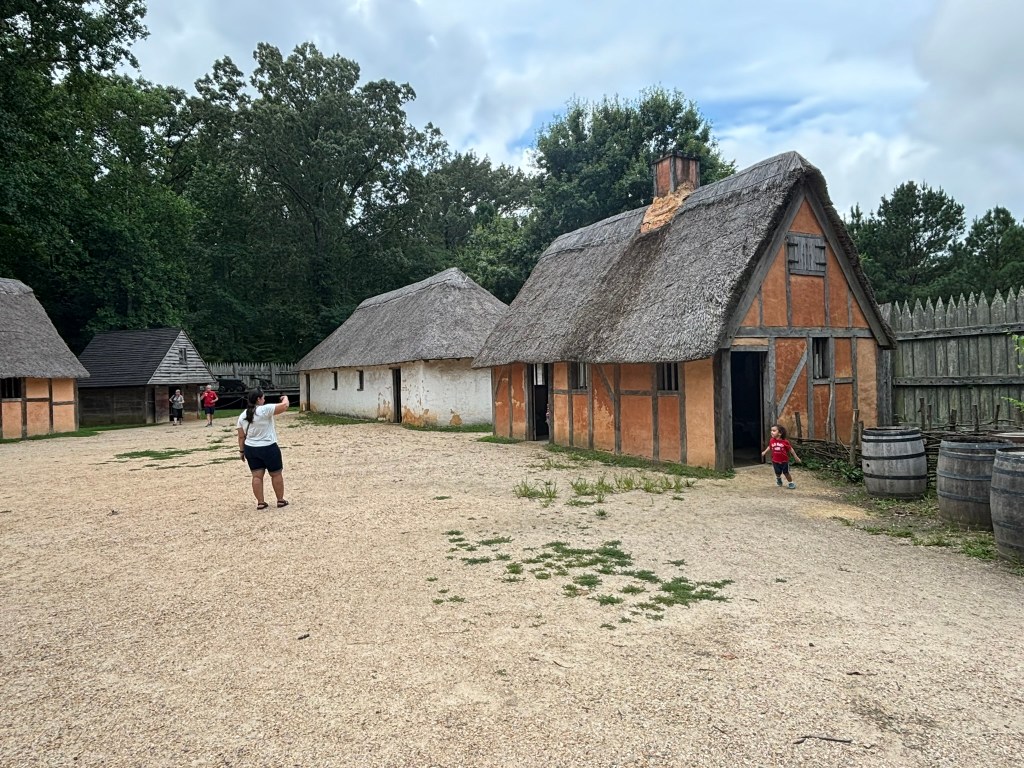
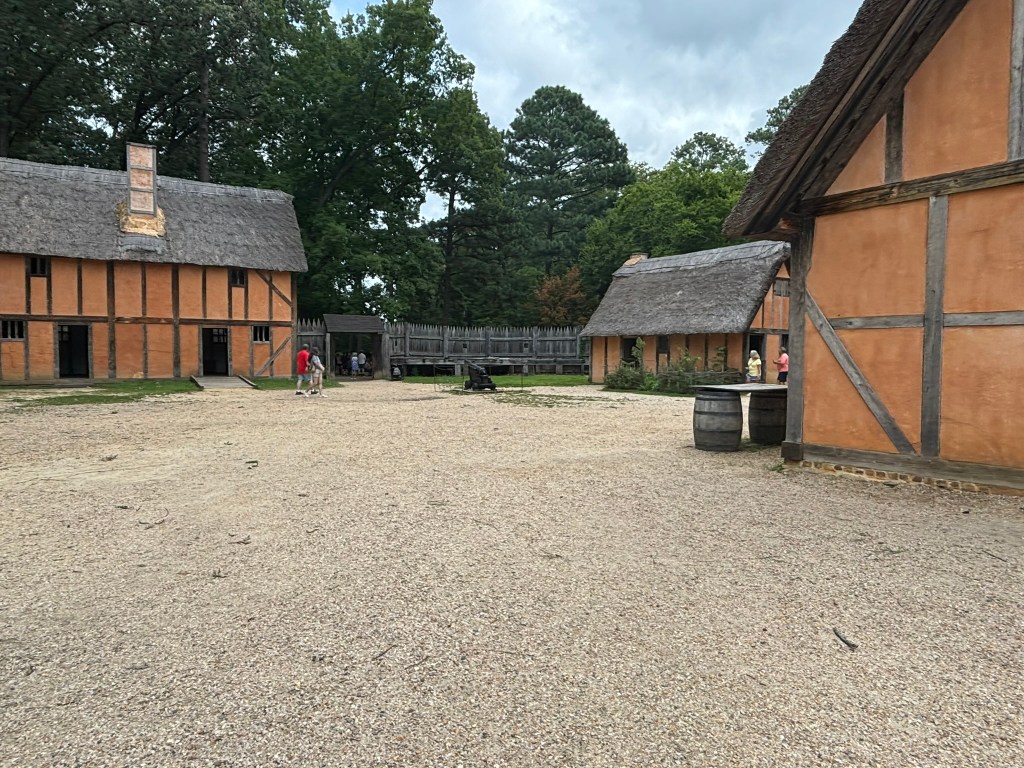
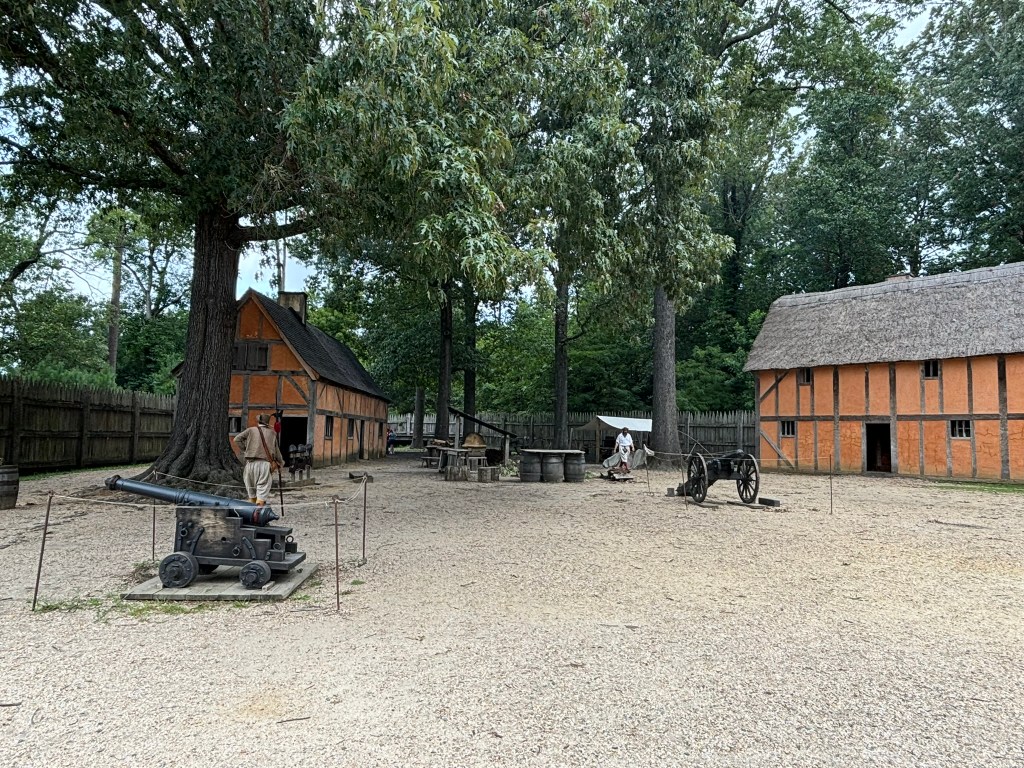
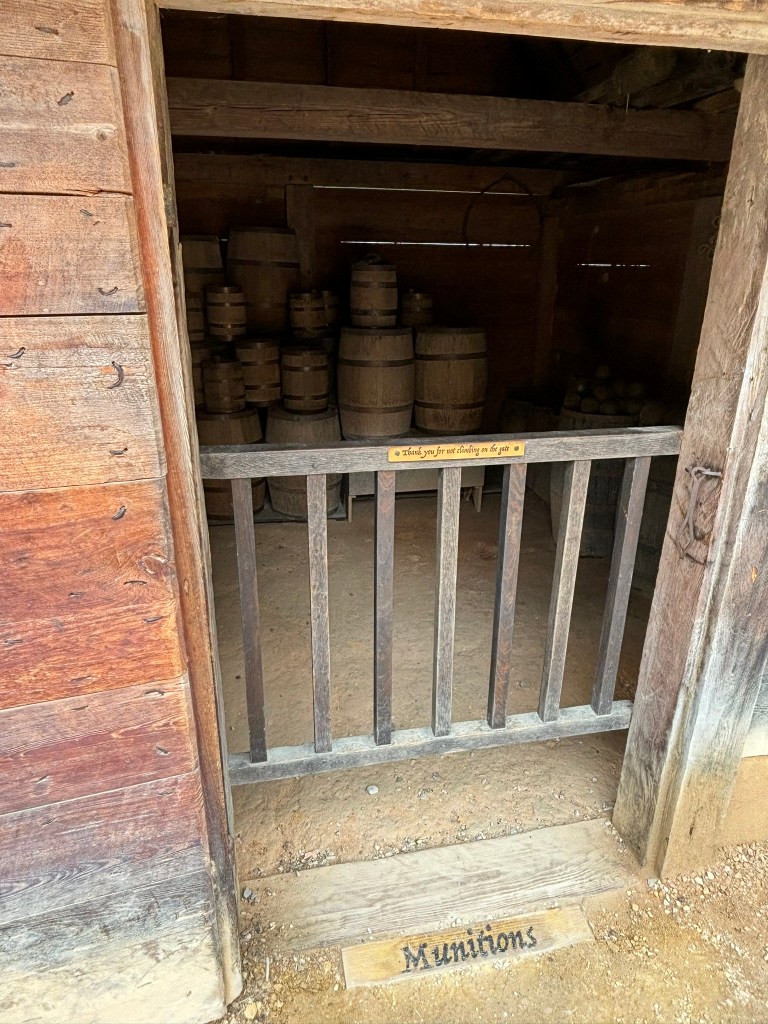
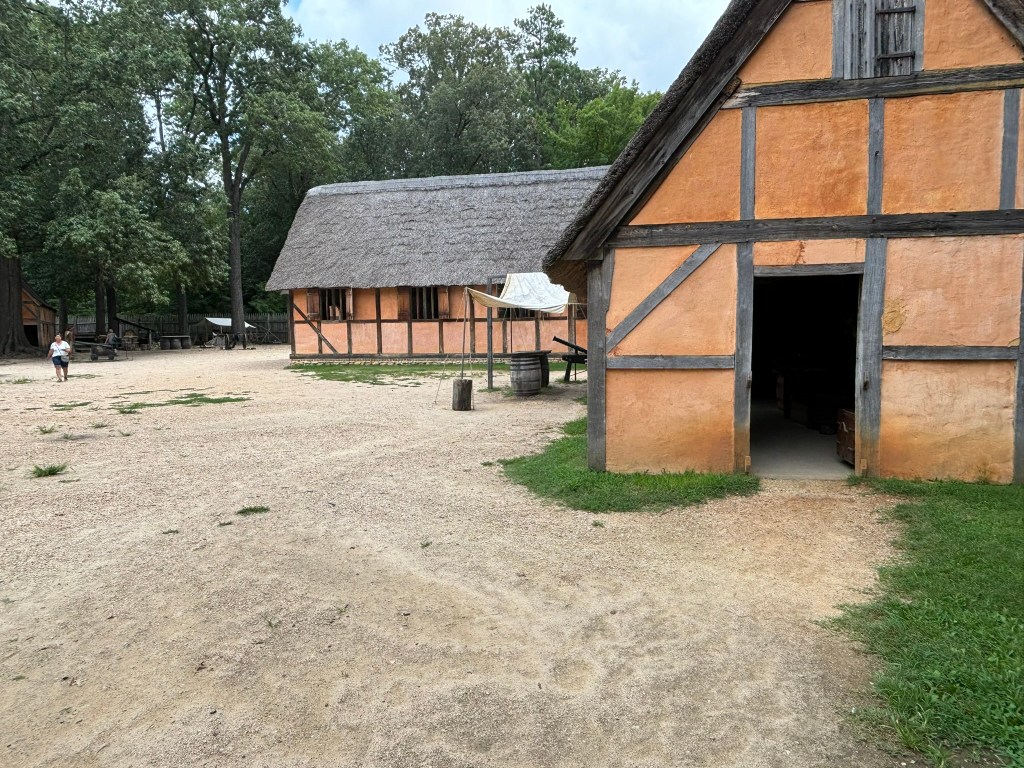
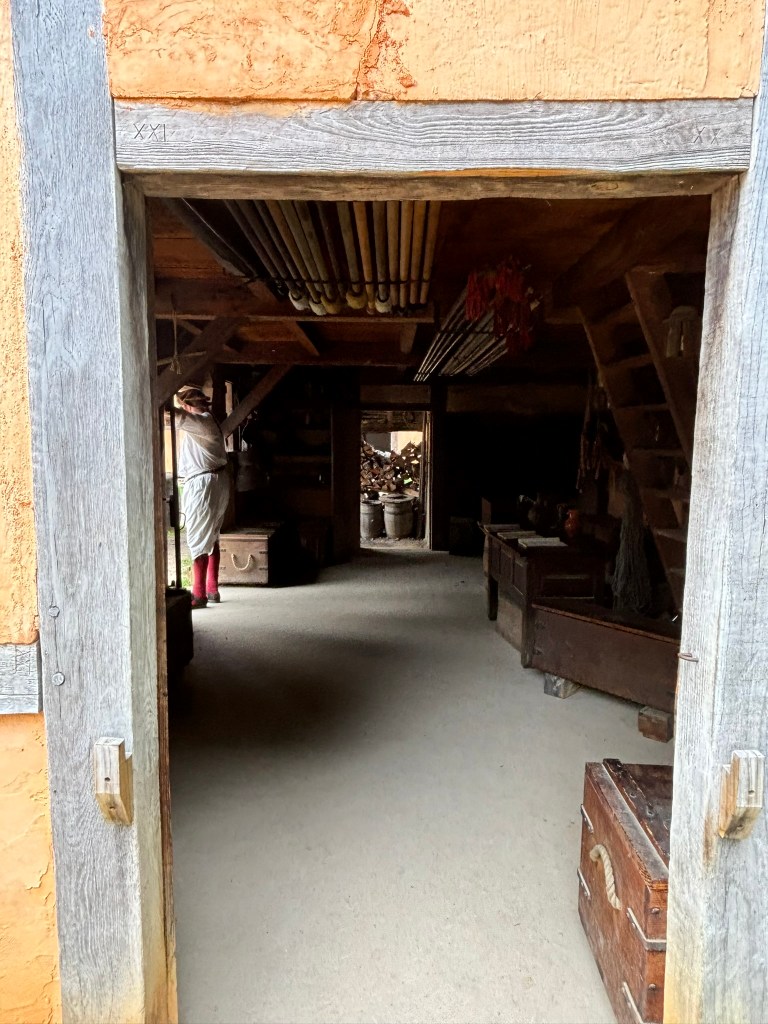
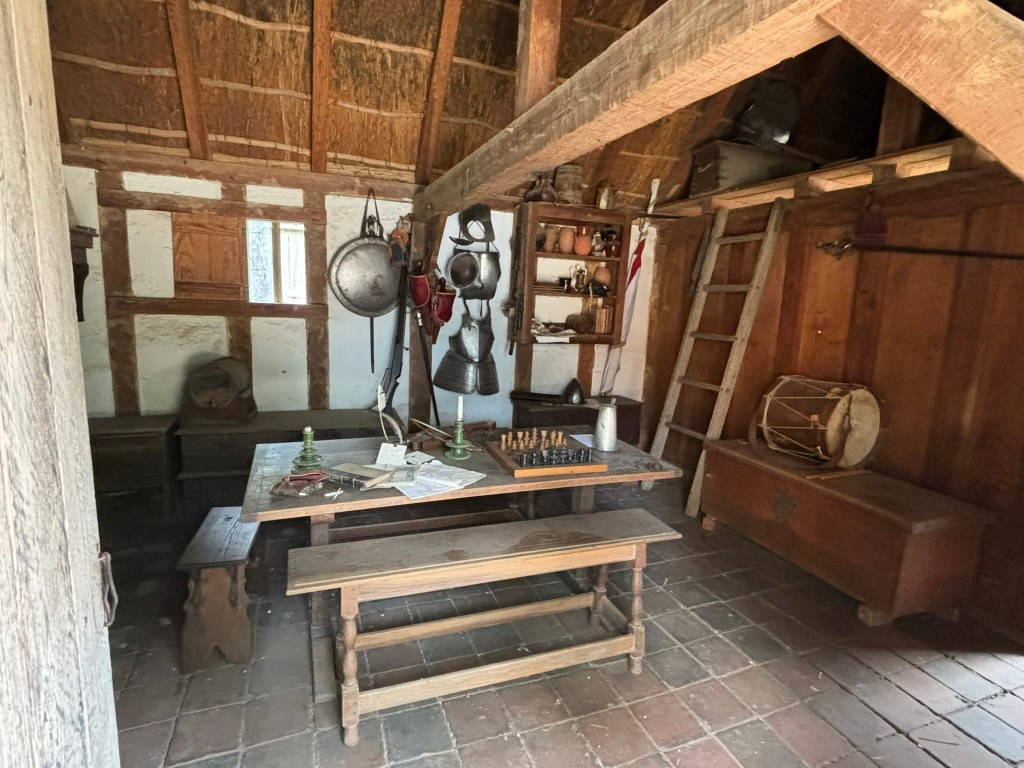
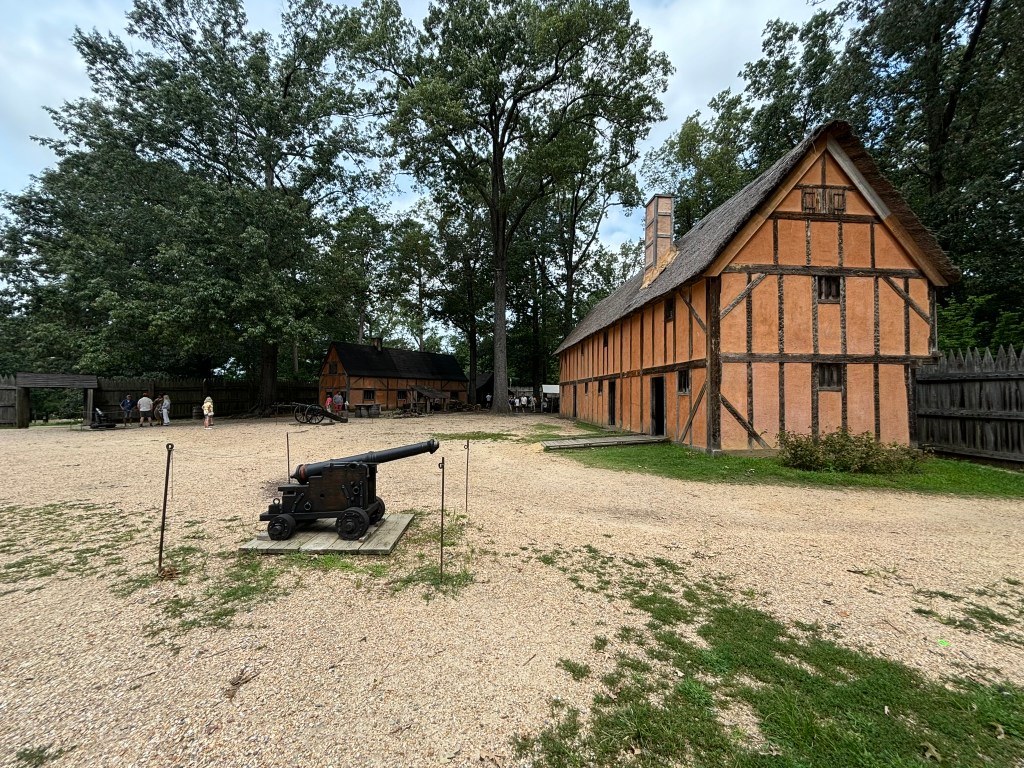
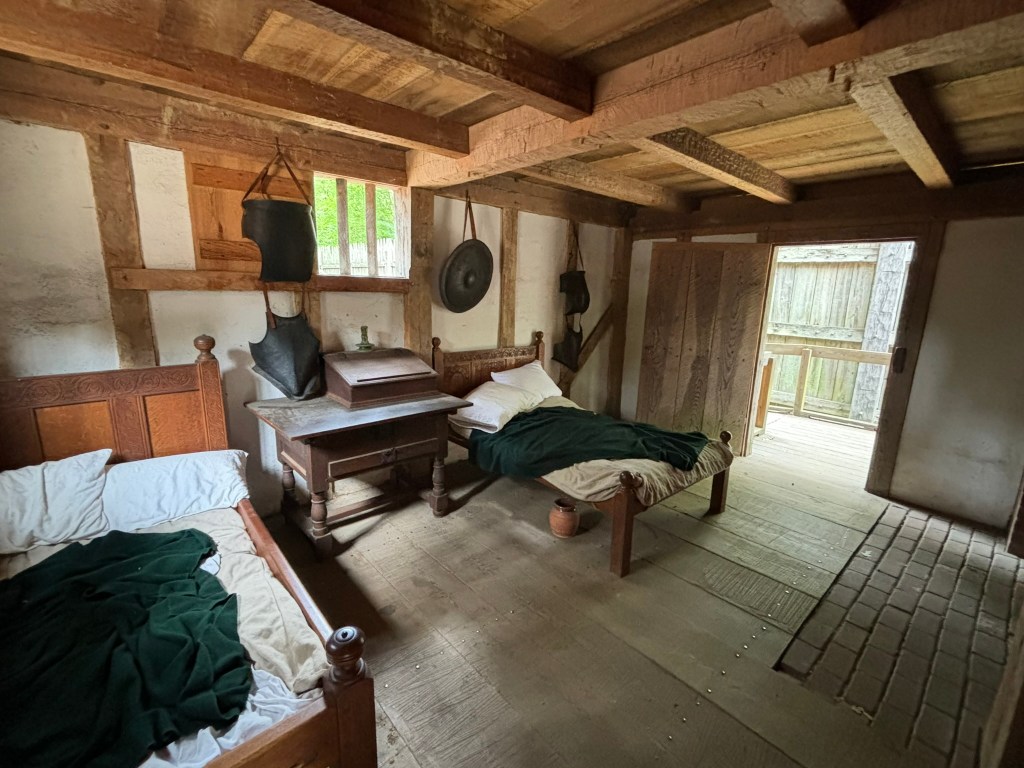
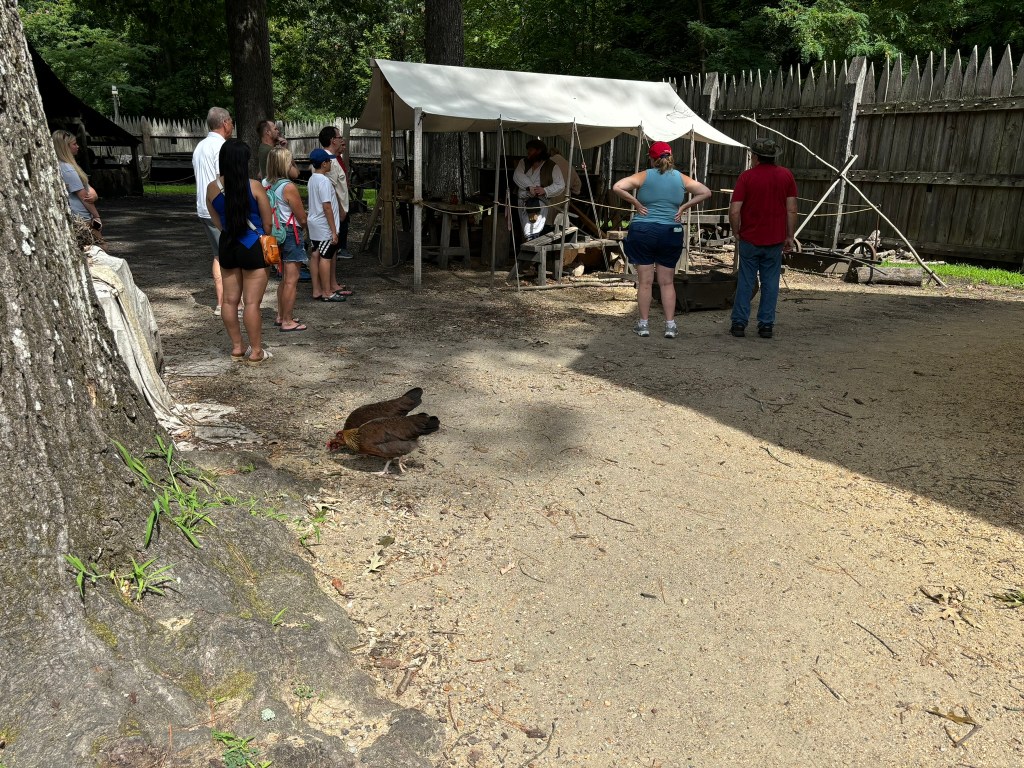
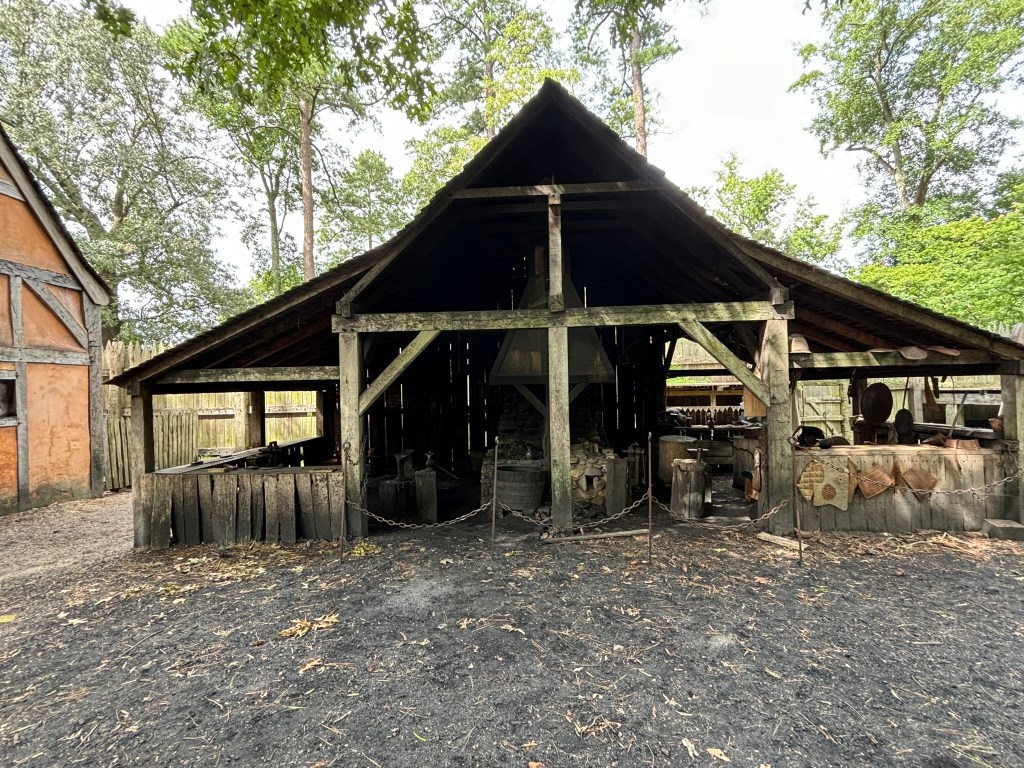
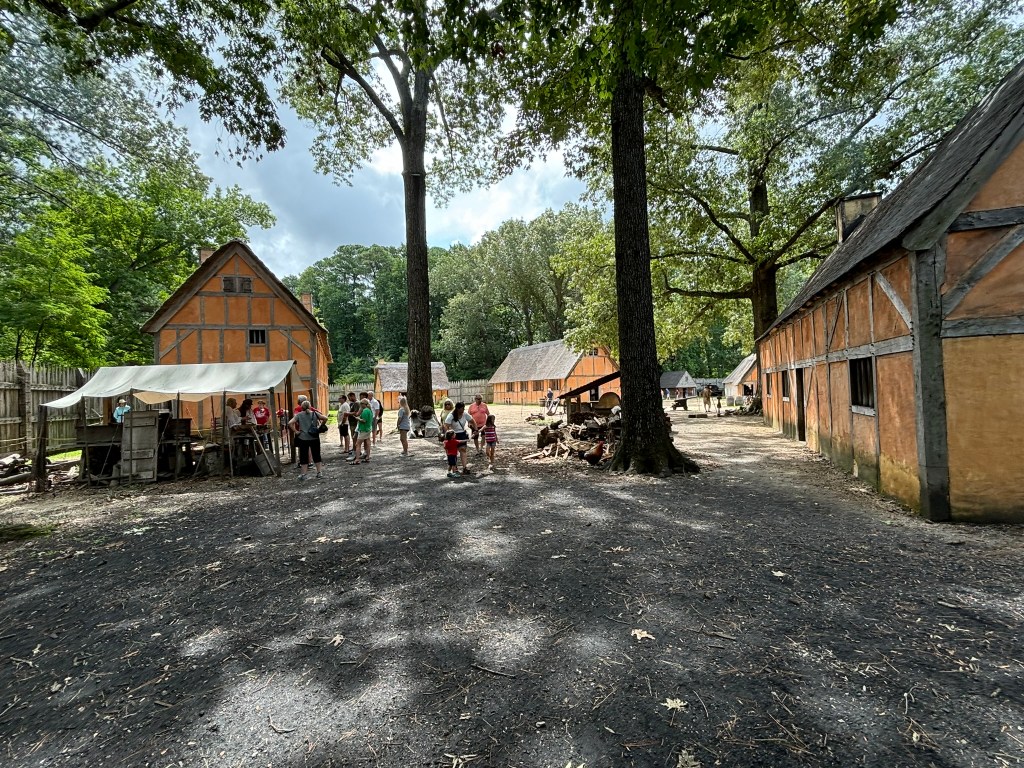
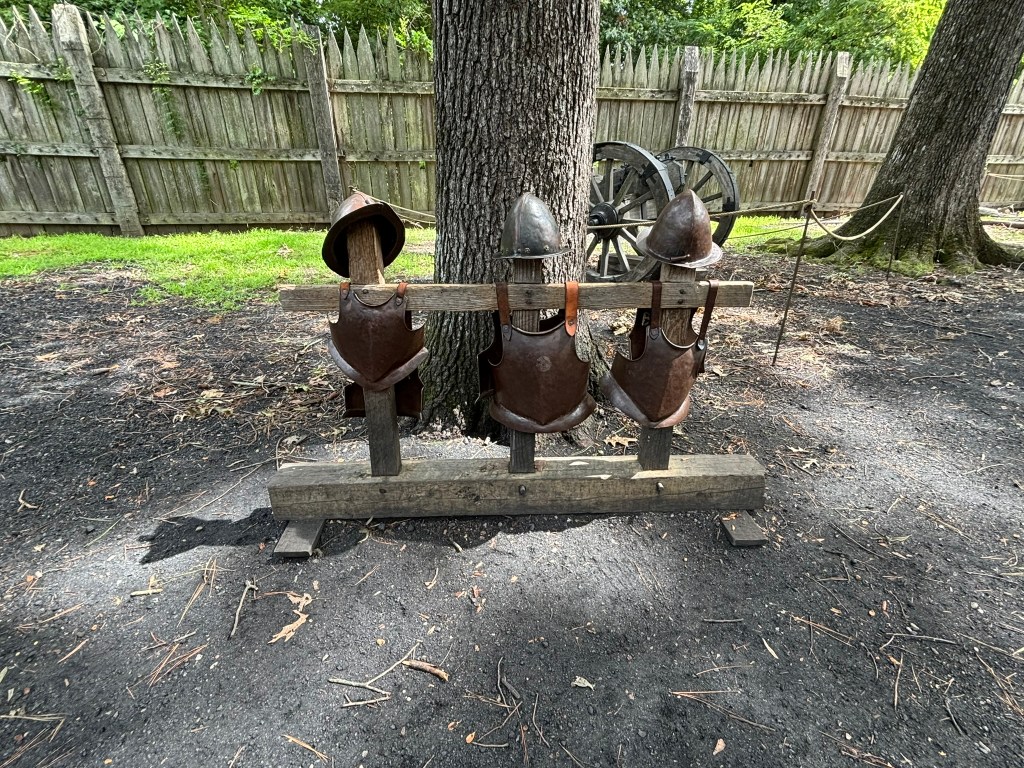
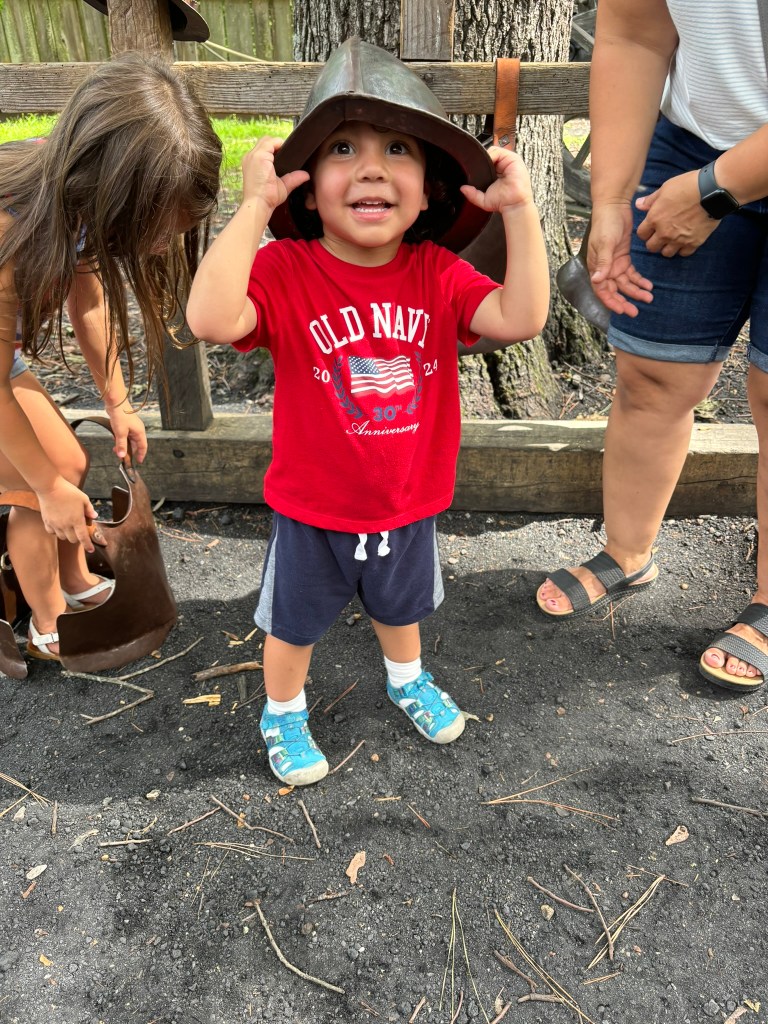
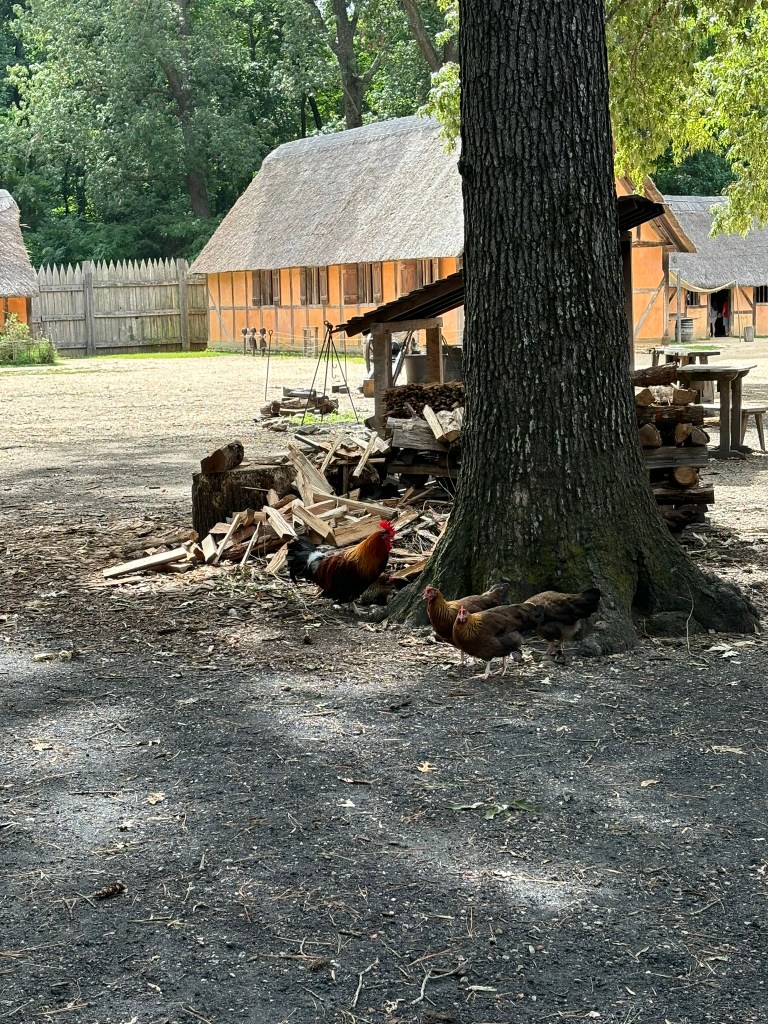
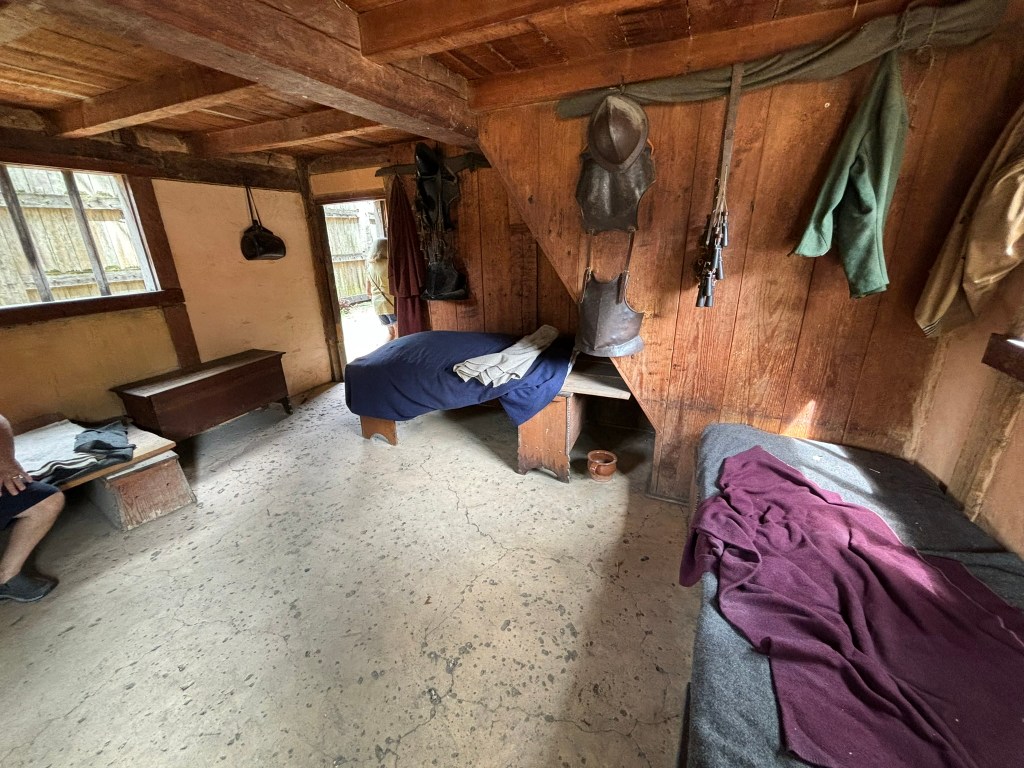
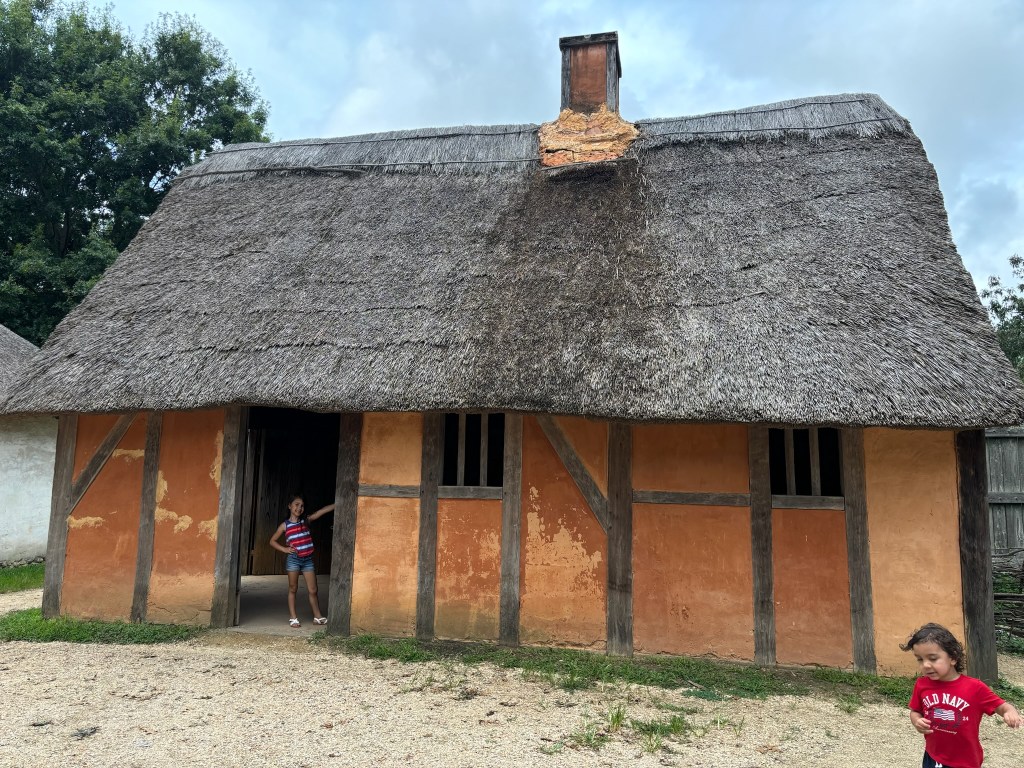
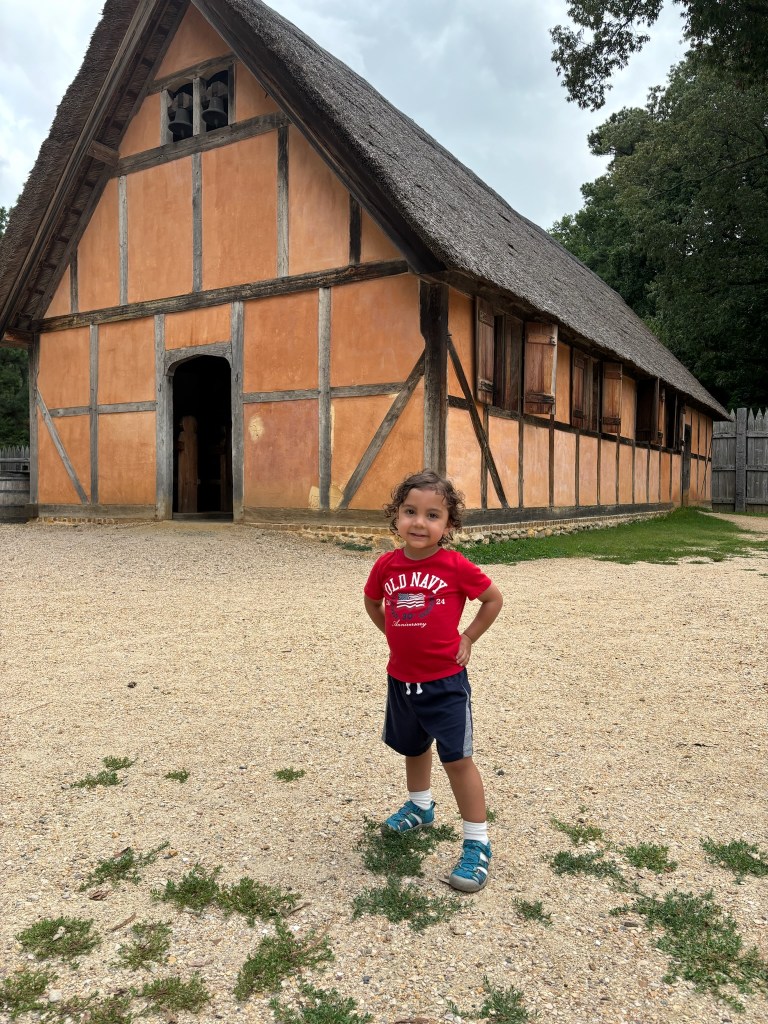
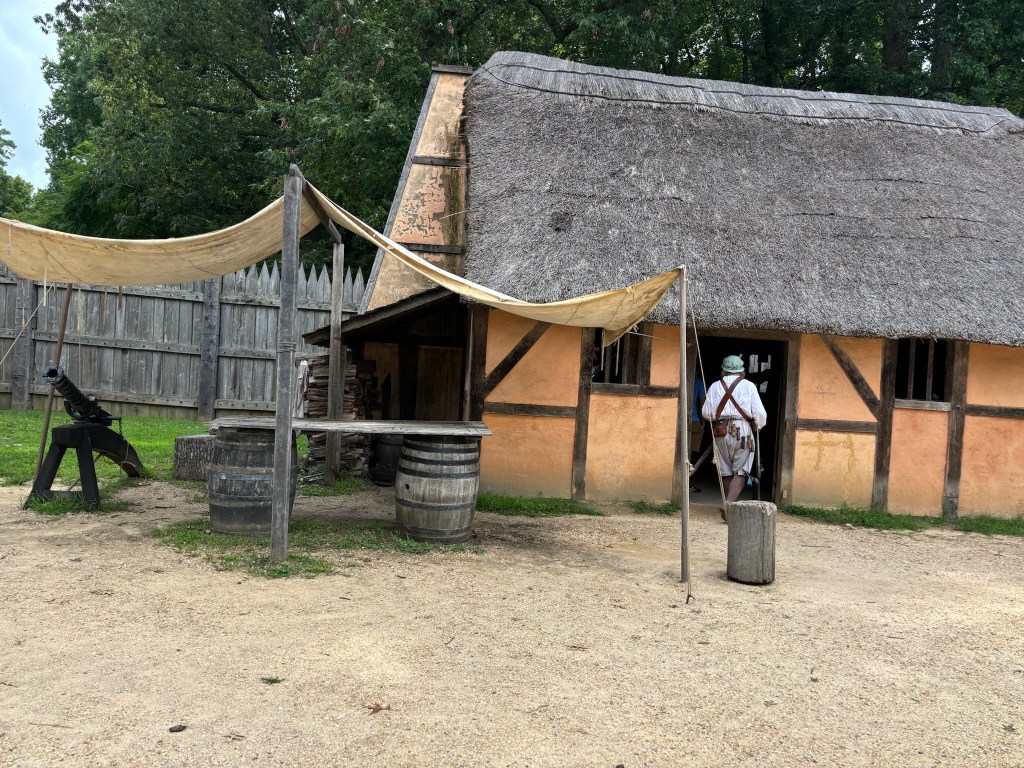
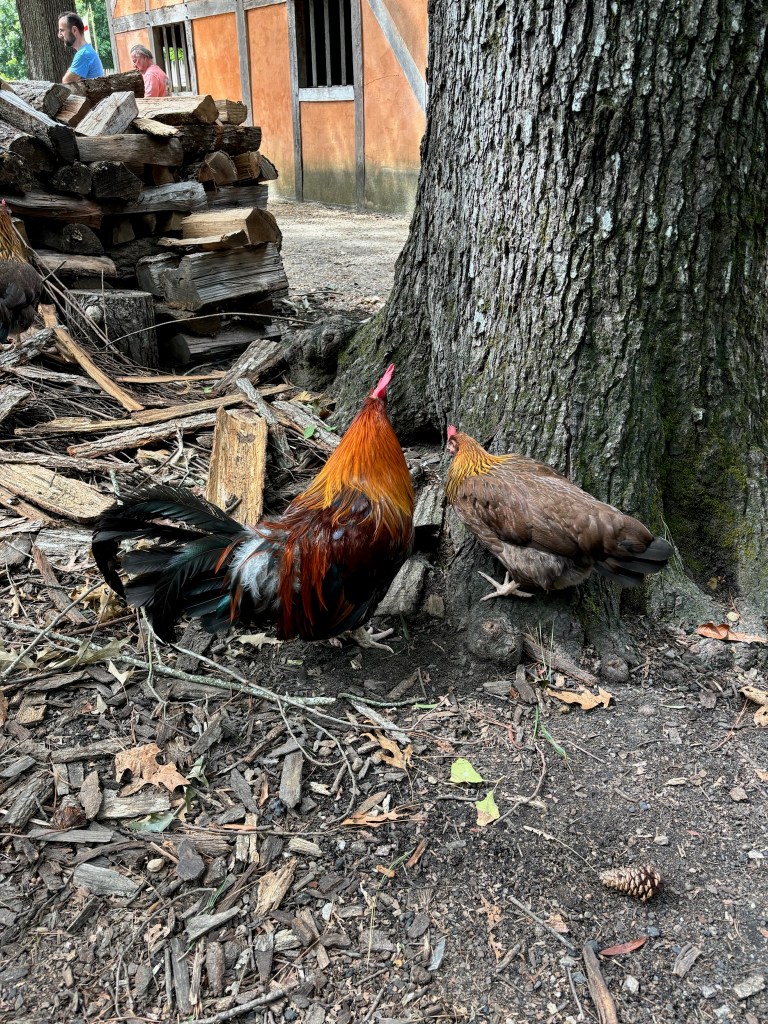
    We then made our way to the replica of the original James Fort, shaped in a Triangle.  One of the reenactors informed me that the original fort was likely much larger and had more buildings within, but the structures within the replica would have looked very much like the original.  We explored the numerous structures within James Fort, including living quarters, a church, an armory, and workstations.  There were even live chickens roaming around the fort.  Just outside the fort, cannon fire demonstrations are held every 30 mins.

    We had some time left before lunch to head back into the museum and take a look at the galleries once again.  We ate lunch at the cafe within the museum.  Lunch was included with the price of the tour.

    After lunch, we headed back onto the bus and headed to Yorktown, which I will discuss in a later blog post.

    Overview

    The Jamestown Settlement was a great, immersive experience highlighting the importance of the Jamestown settlement.  The museum highlighted the fact that three cultures came together in Virginia: English, Native and African.  Each culture brought their own unique blend which helped develop colonial culture in the New World.  As mentioned before, I thought that this tour would include Historic Jamestowne; the actual location of the original Jamestown Fort.  The original fort no longer exists, but the location includes a re-creation of an early church and an Archaearium, which houses over 2,000 artifacts from the Jamestown colony.  Perhaps I will have to make another trip on a future date.  Despite that, I would highly recommend going to Jamestown Settlement.  The museum does a great job taking you through the history of Jamestown and its significance to American history.  The living history experience allows you to step into the shoes of those who lived in 1607 and imagine what life would have been like for those in a Native village, those who had to remain on the ships for months at sea, and for those living in the James Fort. The tour was $85 per adult and $45 for my daughter (5) and free for my son (2). It was well worth it considering that this was an all day tour with lunch included. I would highly recommend this tour. You can buy tickets from Viator HERE.

    Follow my Instagram, Facebook, and X accounts for videos of our time in Jamestown.

    For more information about the Jamestown-Yorktown Foundation, visit HERE.

    Stay tuned for my next blog post which will discuss our visit to the Yorktown Battlefield and Museum in the afternoon.

    Check out similar blog posts below:

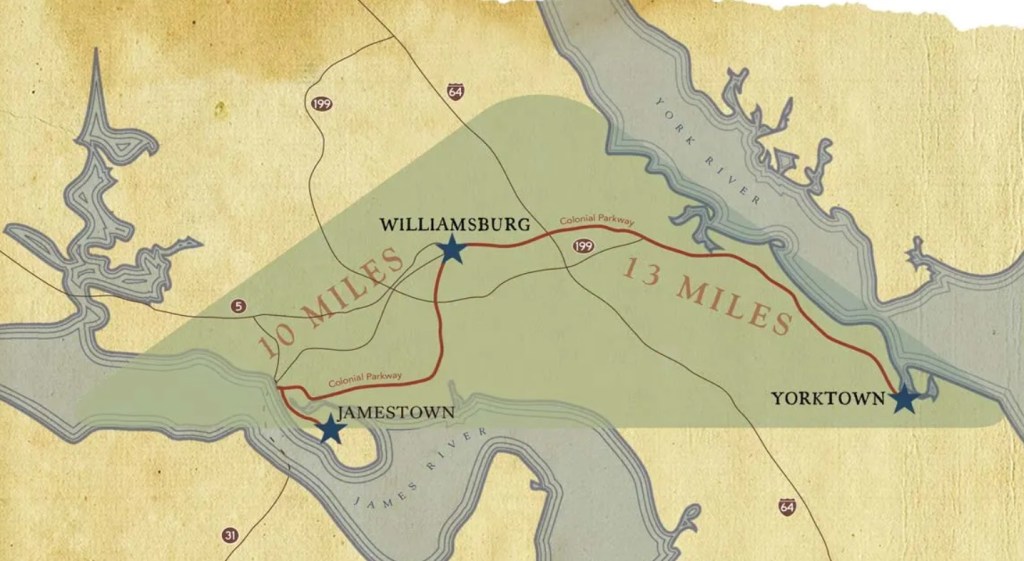
  • For our summer vacation this year, my family and I went to Williamsburg, Virginia.  Our itinerary was as follows: Sunday: Arrive, Monday: Colonial Williamsburg, Tuesday: A Viator guided tour of Jamestown and Yorktown, Wednesday: Busch Gardens, Thursday: Head to Virginia Beach and spend the night, Friday: Spend some more time in Virginia Beach, and then head home.  My next three blog posts will focus on the historical aspects of our trip.  Part 1 will be about Colonial Williamsburg.  Part 2 will be about Jamestown.  Part 3 will be about Yorktown.  These three locations are referred to as Virginia’s Historic Triangle, and are all just a short distance from one another.
    Arrival

    We arrived at our hotel, The Williamsburg Woodlands Hotel & Suites on Sunday late afternoon, and didn’t have time to do much other than go to the Visitor Center and eat dinner at Huzzah’s Eatery, which was located at our hotel.  We got the kids ready for bed as we would visiting Colonial Williamsburg the following morning.

    We woke up and ate the complimentary breakfast in the hotel and headed out to Colonial Williamsburg which is just about a 10-15 minute walk away from the hotel.  We purchased one-day passes for each adult to visit the historic sites and recieve tours of particular buildings. The tickets are normally $50 for adults but we recieved 25% off for staying at the Woodlands, and I also recieved a teacher discount. For two adult tickets, I paid about $75 and children are free under 6 years old.

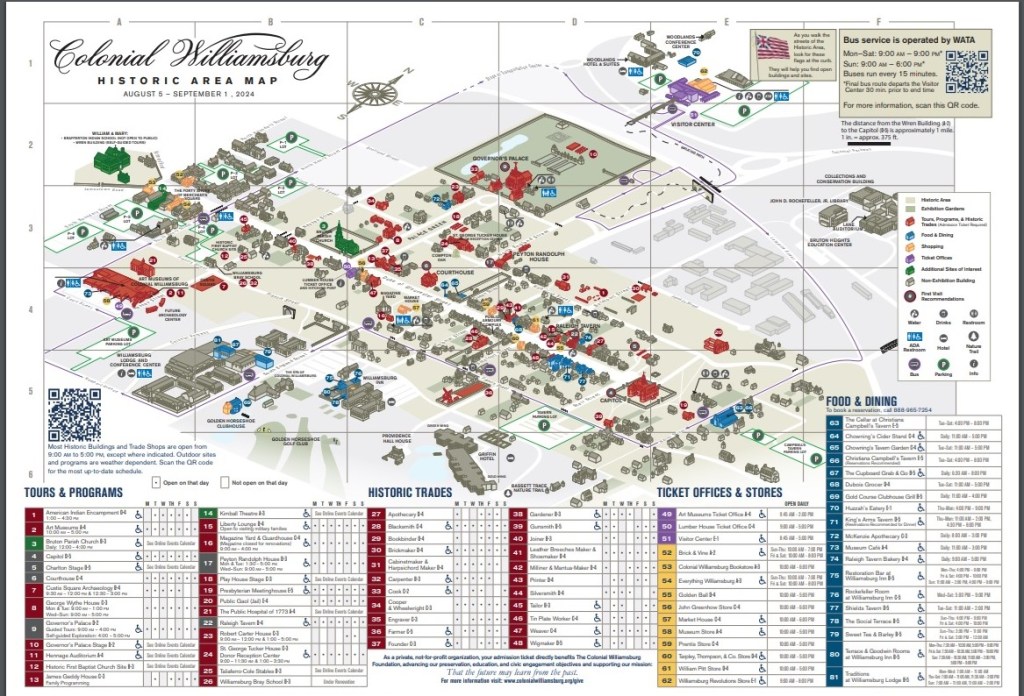
    The map below will be your lifeline if you go to Colonial Williamsburg. The map shows you each historical building in town to visit. On the other side of the map is a list of events taking place at their specific times. These events are updated by Colonial Williamsburg every couple of weeks.

    Significance

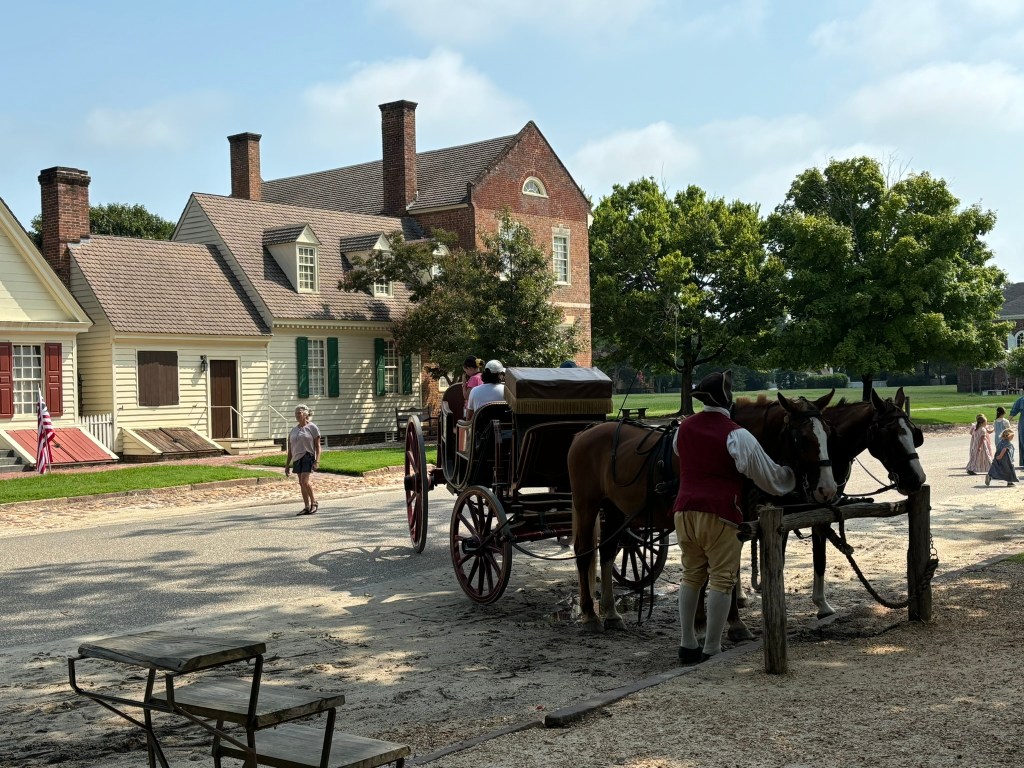
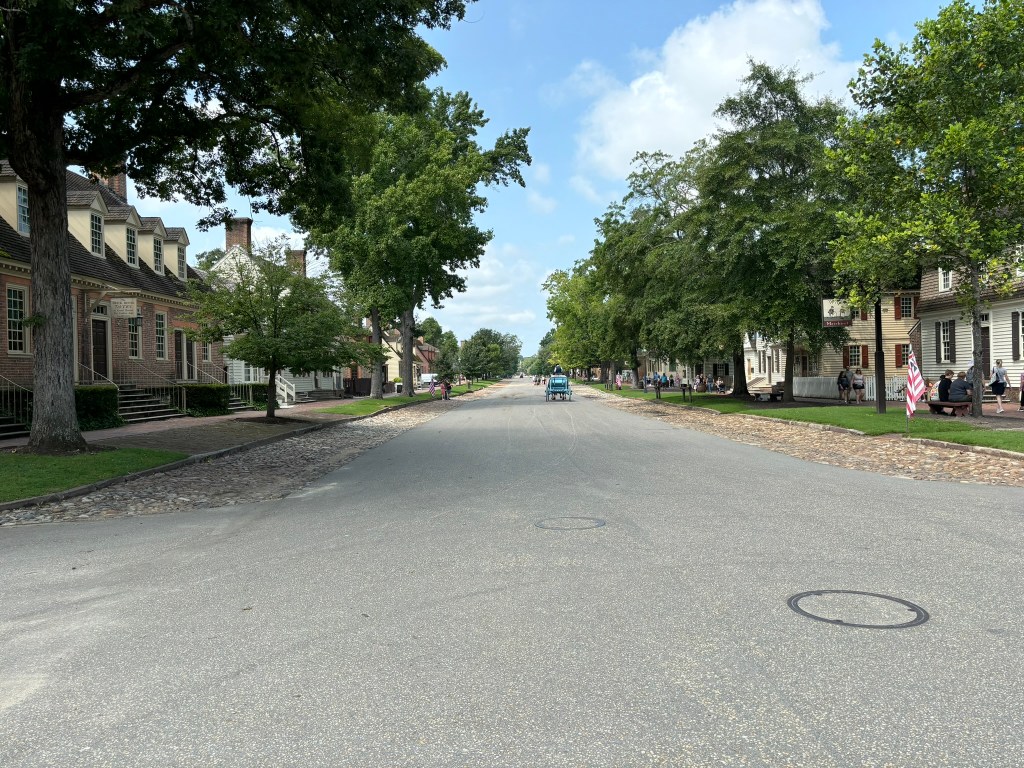
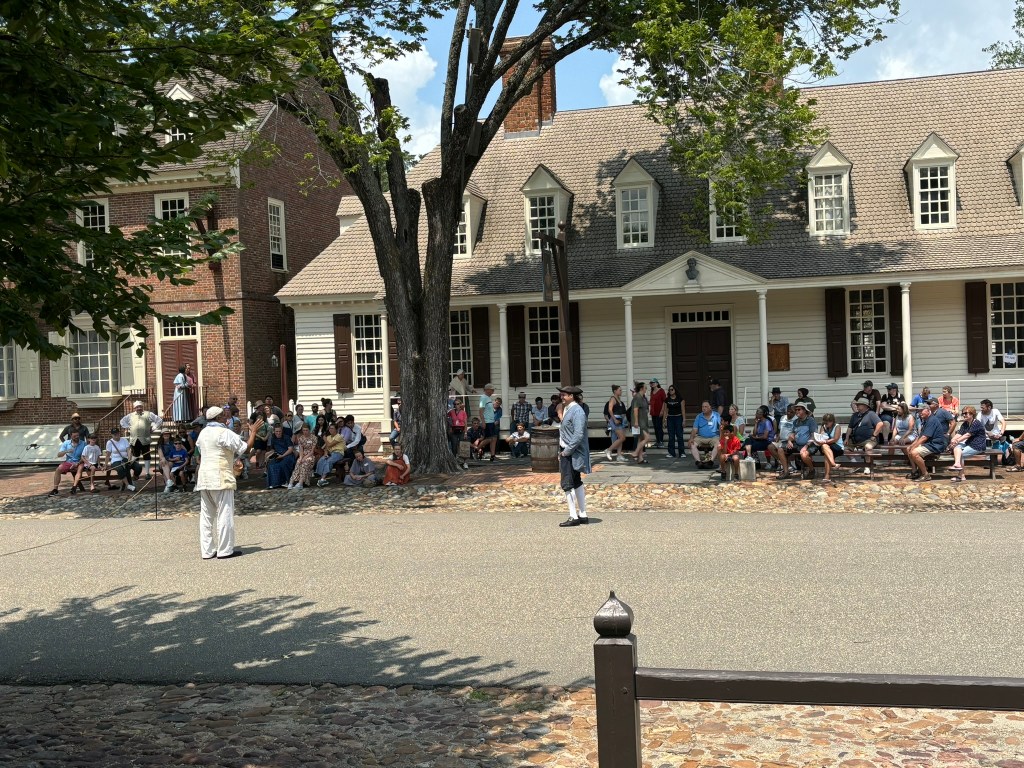
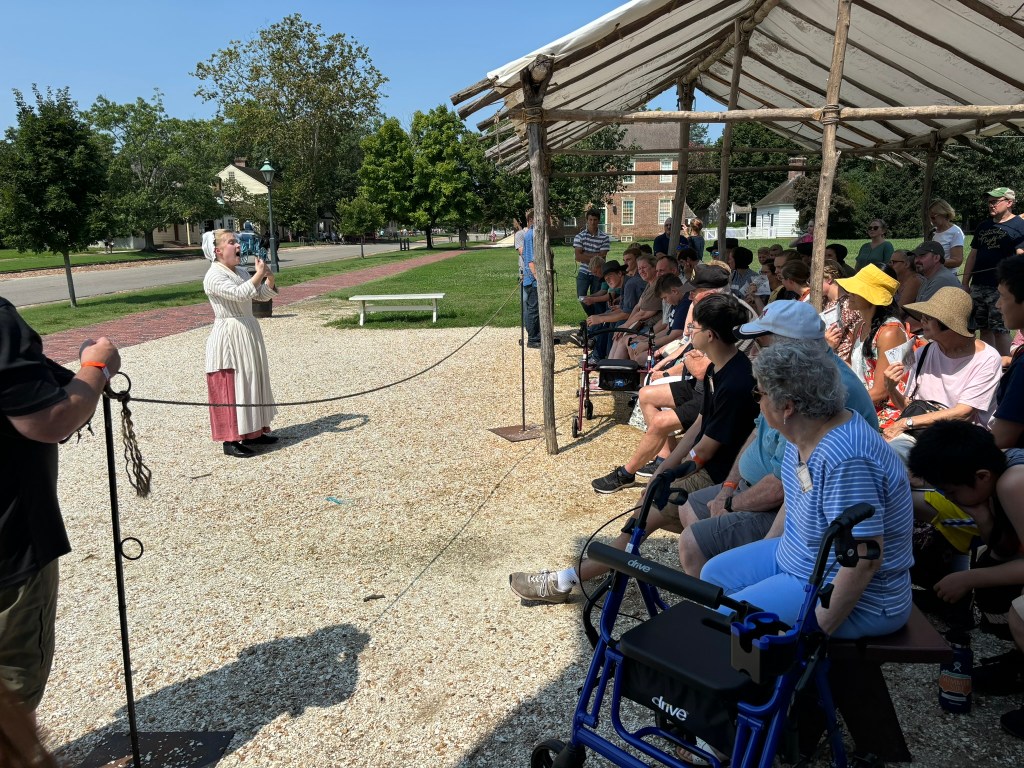
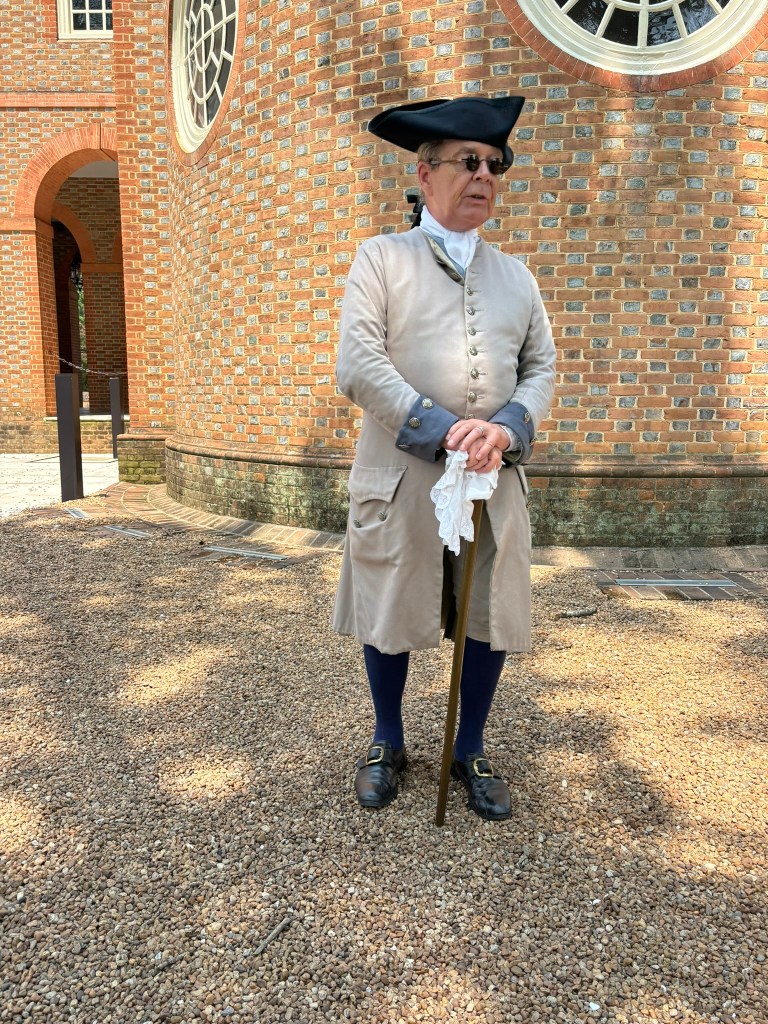
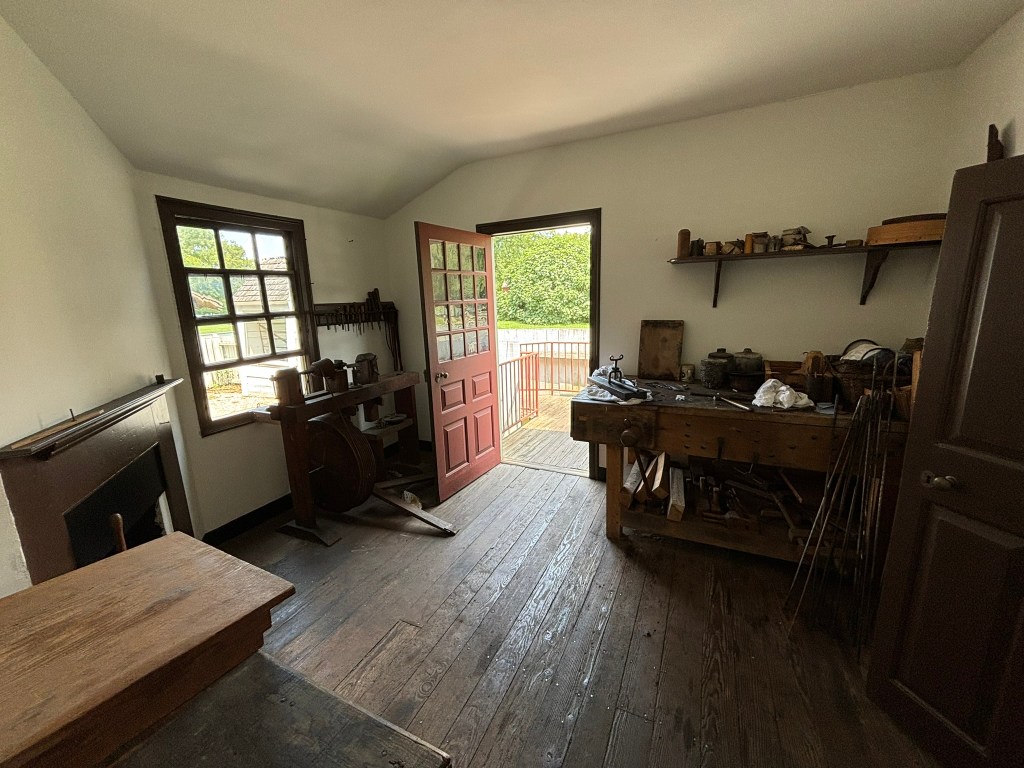
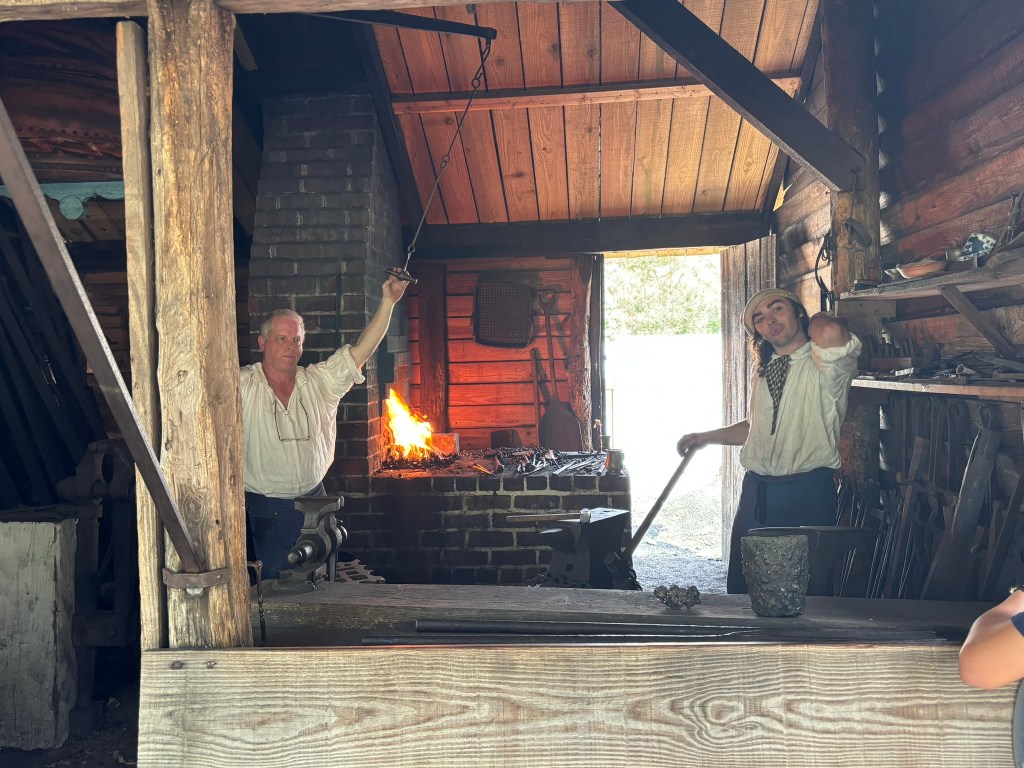
    Williamsburg is significant because in 1699, the capital of Virginia was moved from its original location in Jamestown, to Williamsburg.  Williamsburg remained the capital until 1779, when it was moved to Richmond.  Today, Williamsburg is an open-aire, living-history museum with restored and reconstructed buildings.  Reenactors talk, act and dress as if they were living in colonial times.  Different buildings have reenactors displaying an array of jobs and positions in colonial times, including an Apothecary, Blacksmith, Bookbinder, Brickmaker, Cabinetmaker, Harpsichord Maker, Carpenter, Cook, Cooper, Wheelright, Engraver, Farmer, Gardner, Gunsmith, Joiner, Leather Breeches Maker, Shoemaker, Milliner, Mantua-Maker, Printer, Silversmith, Tailor, Tin Plate Worker, Weaver and Wigmaker.  The reenactors bring you back in time to see what everyday people were doing in the colonies.  Besides the reenactors, there are many historic buildings such as the County Court House, as well as houses belonging to historic figures such as lifelong Williamsburg resident and Founding Father, Peyton Randolph.

    The Governor’s Palace

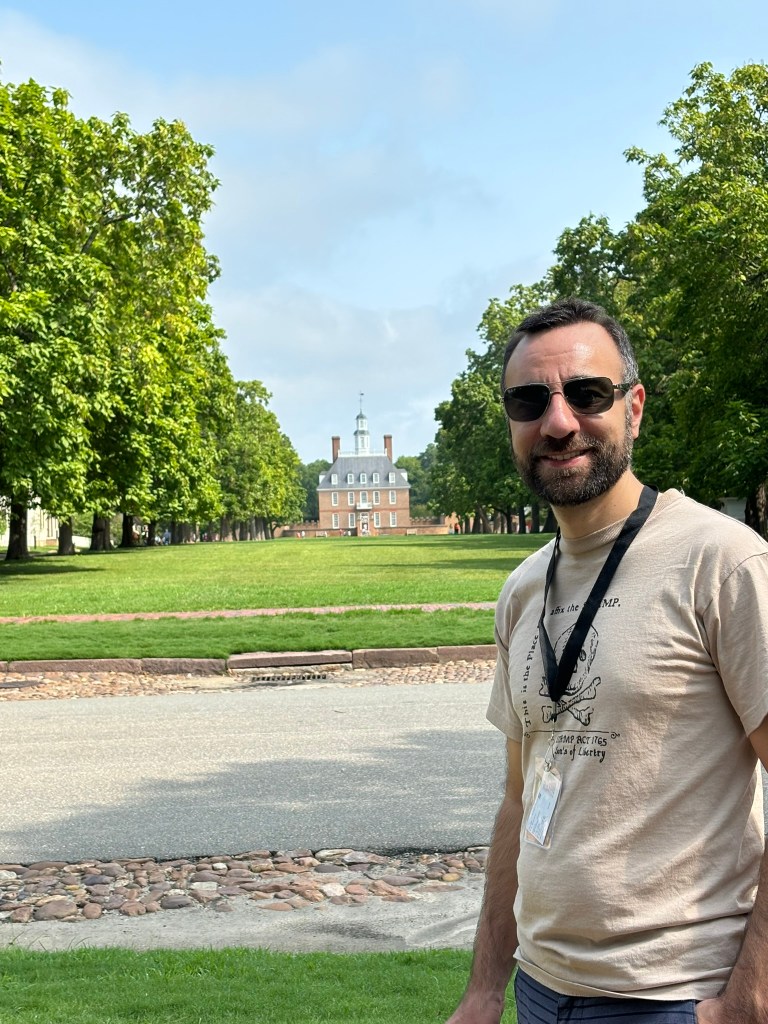
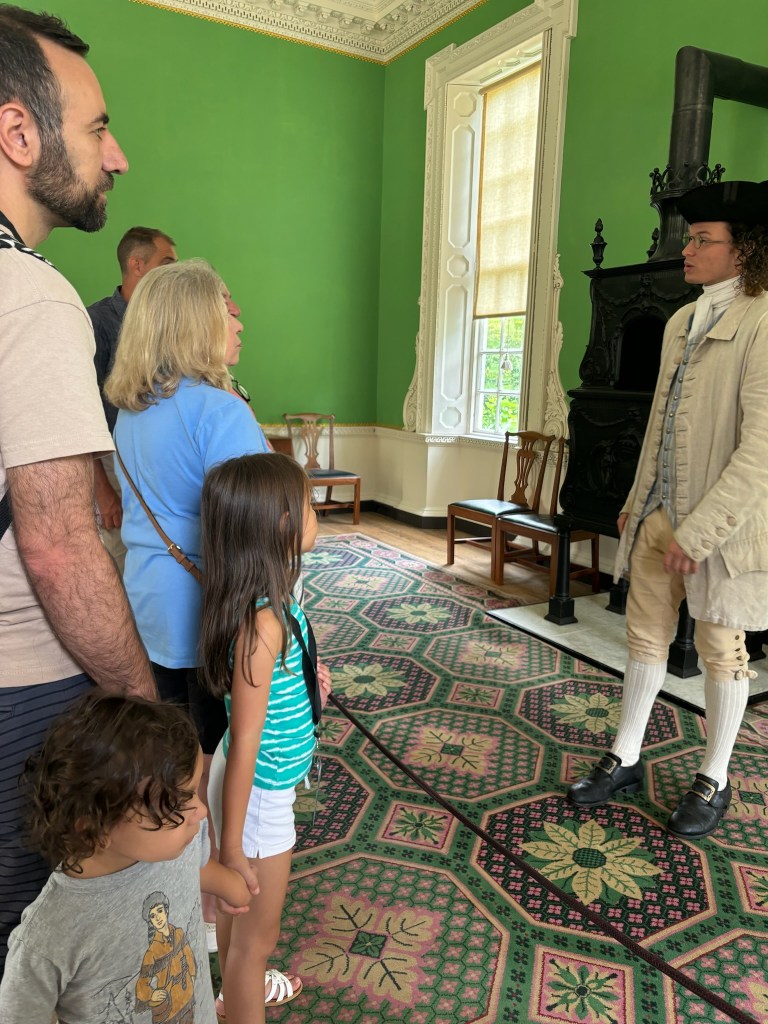
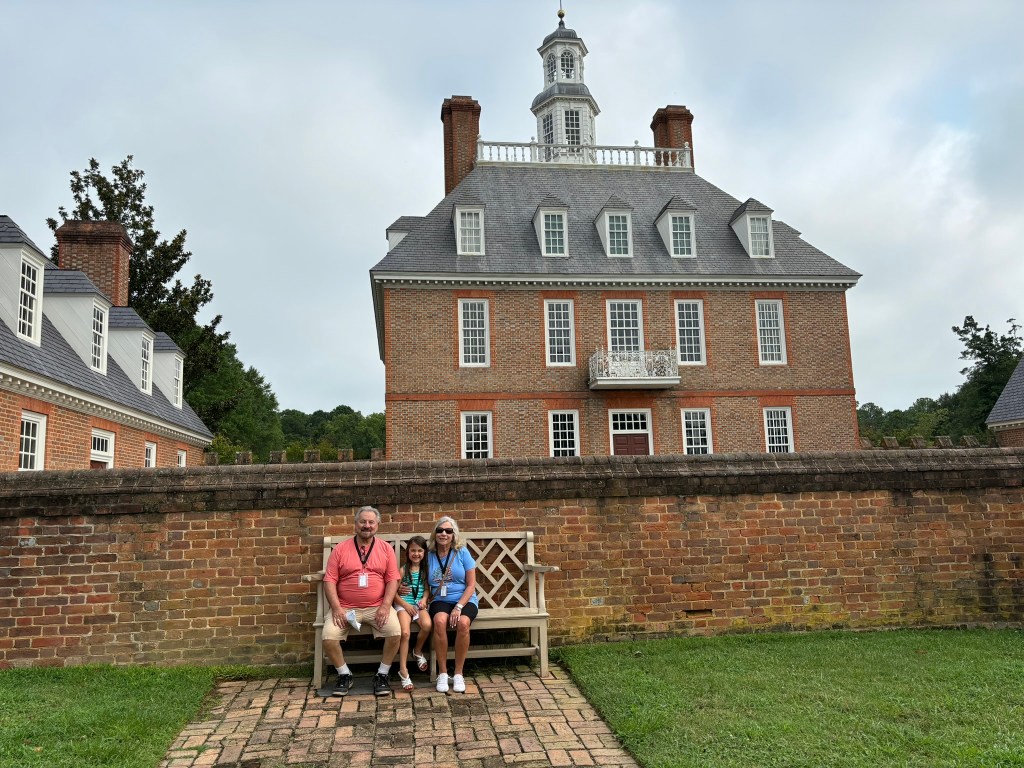
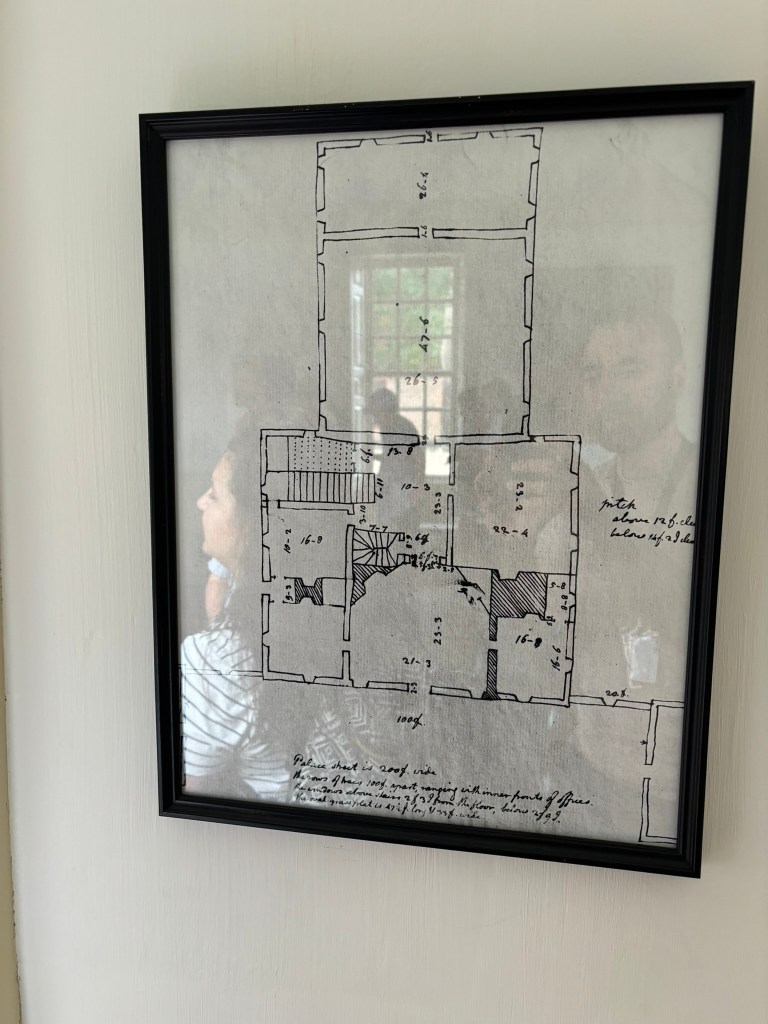
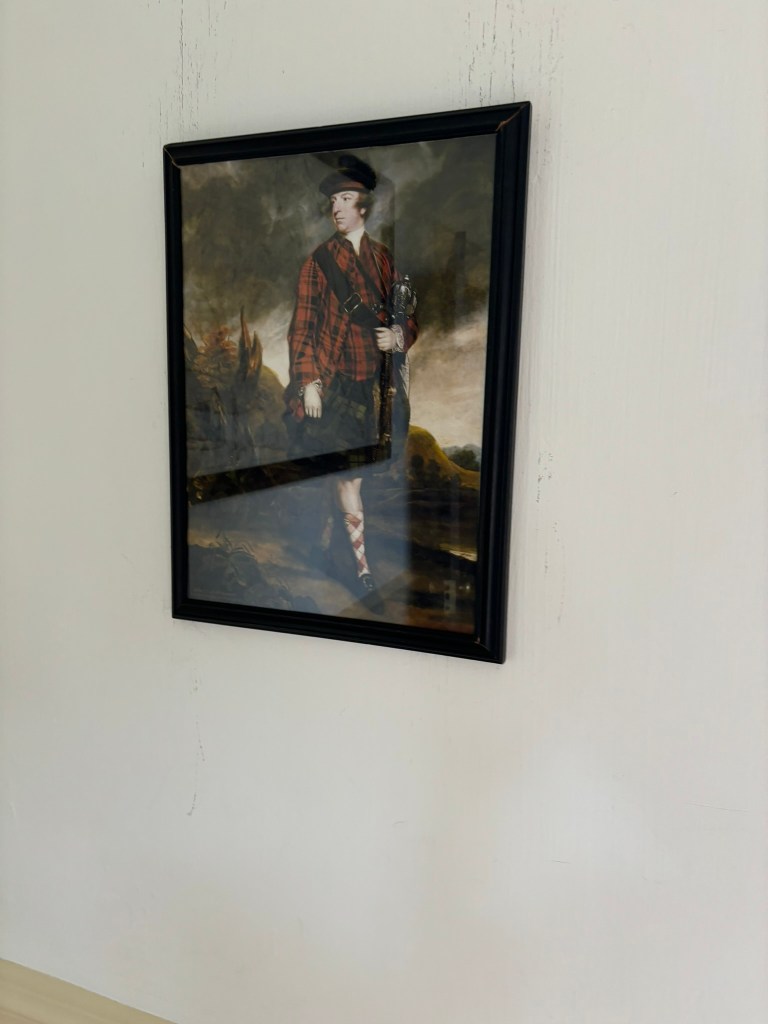
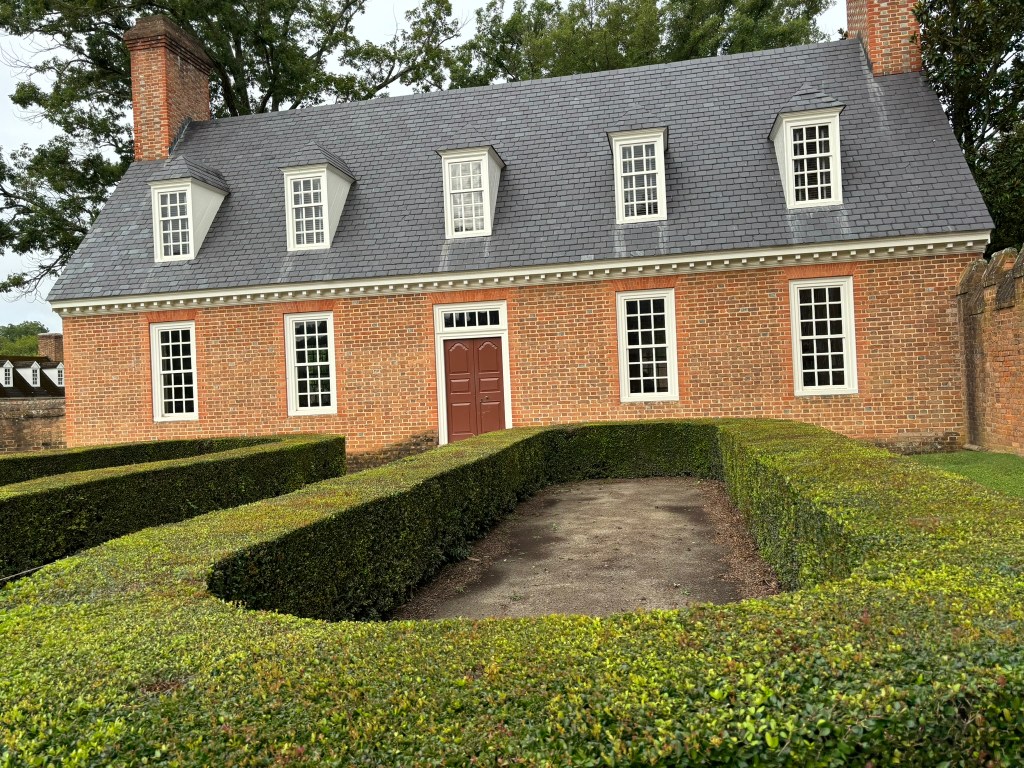
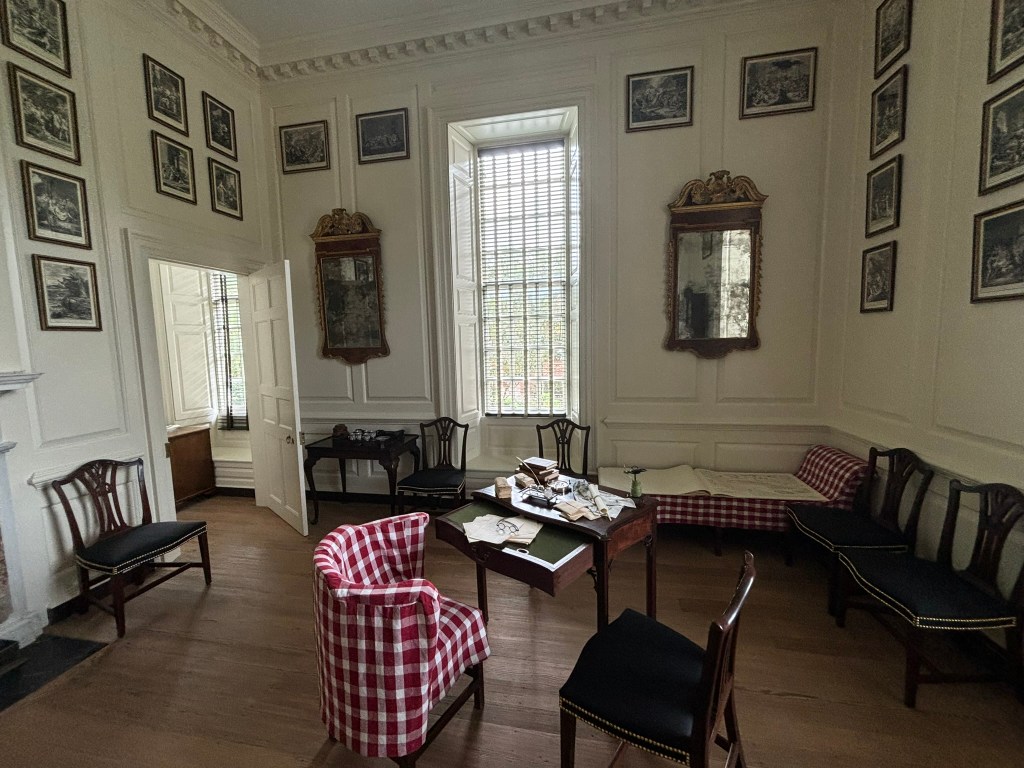
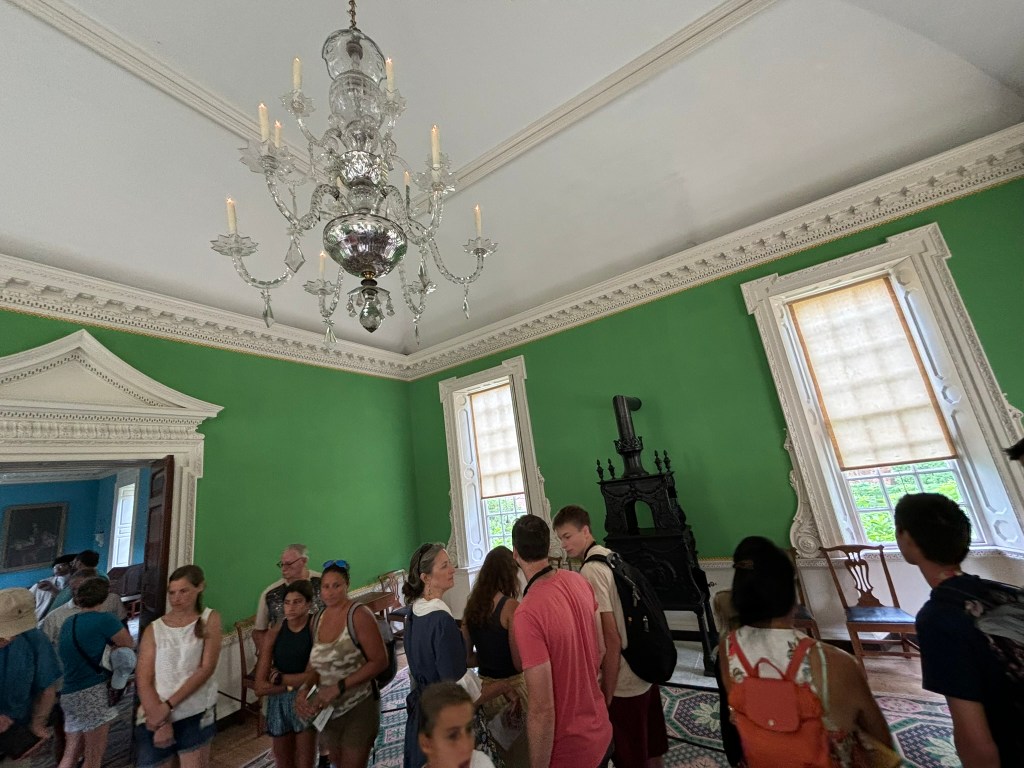
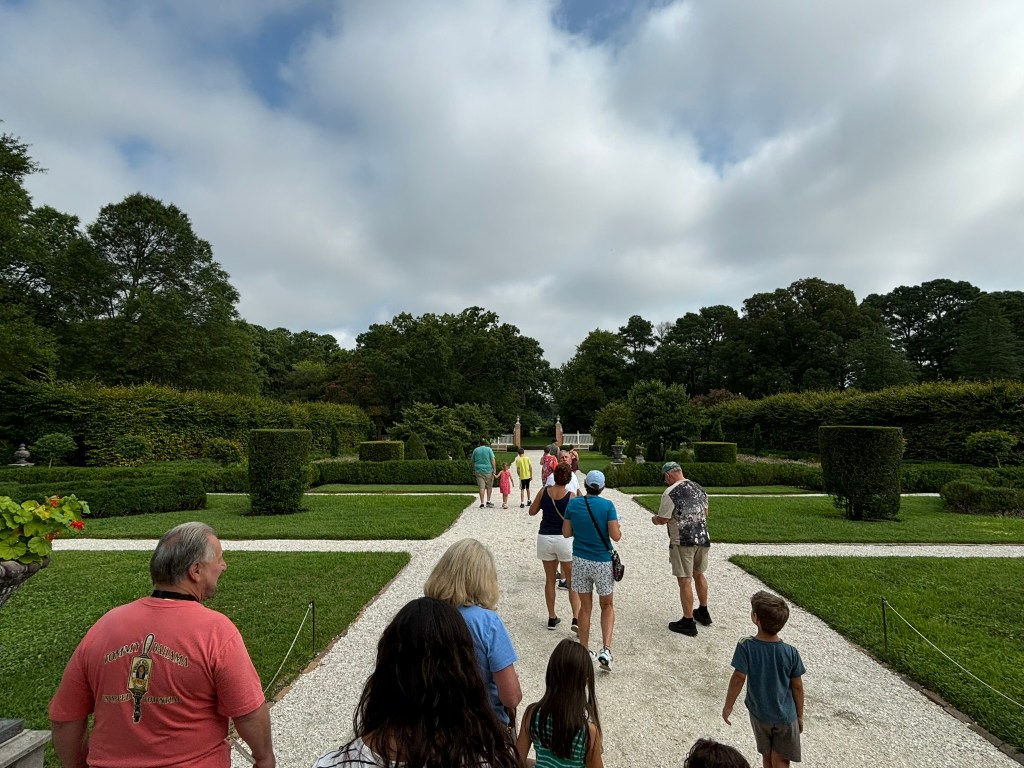
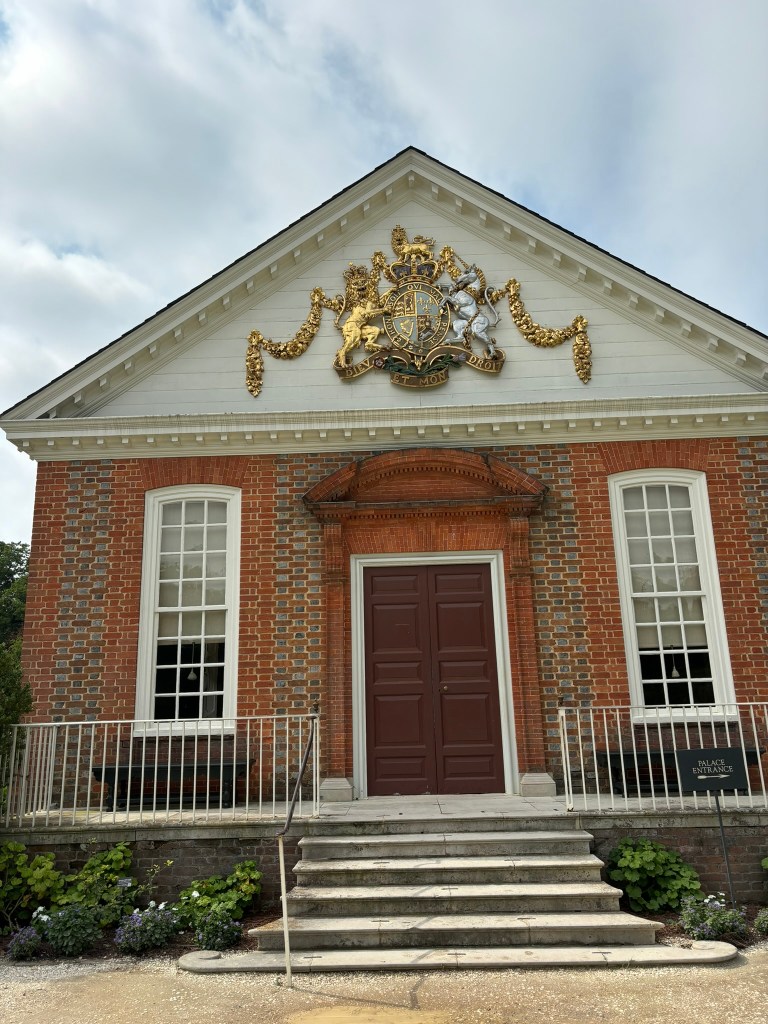
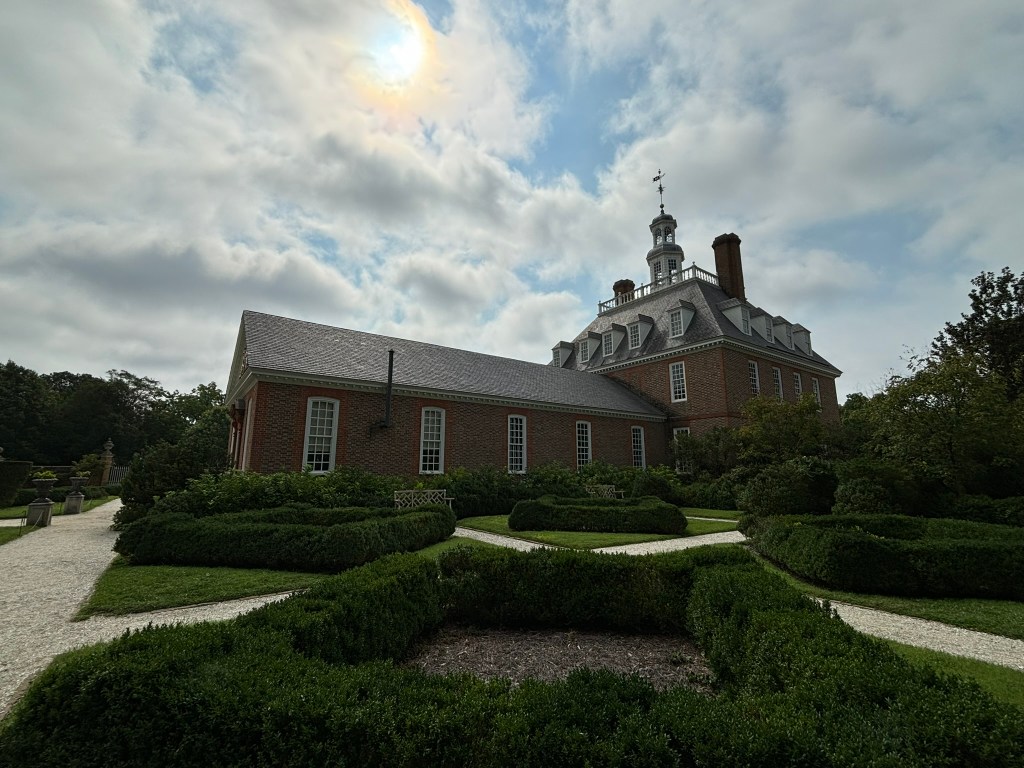
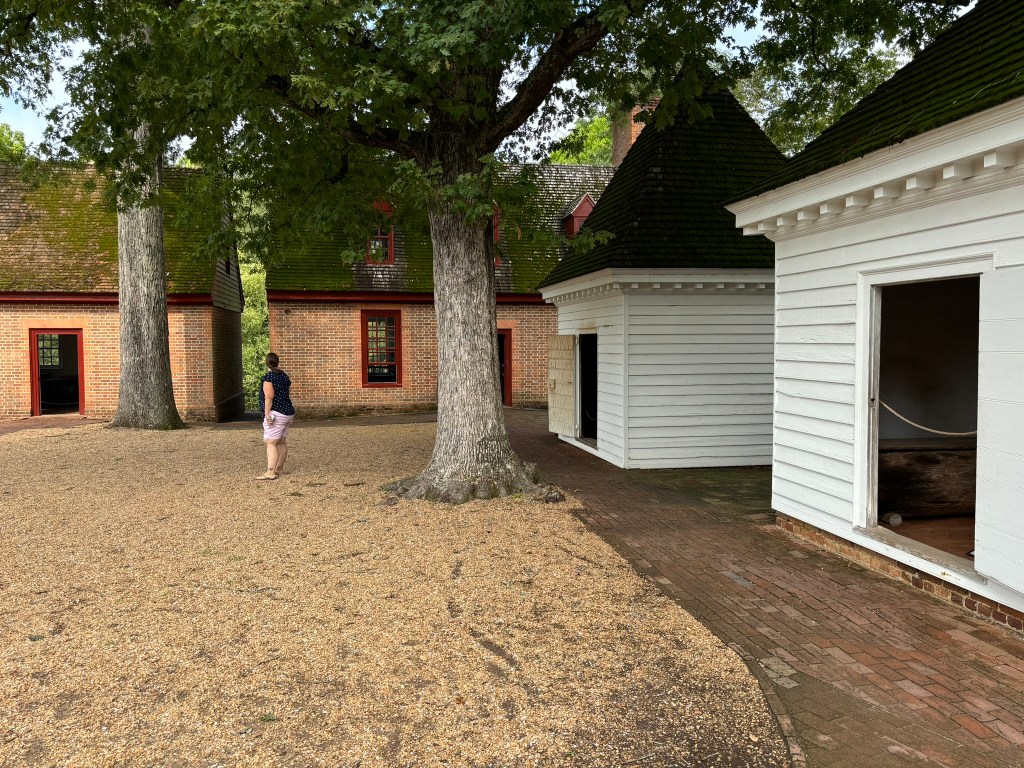
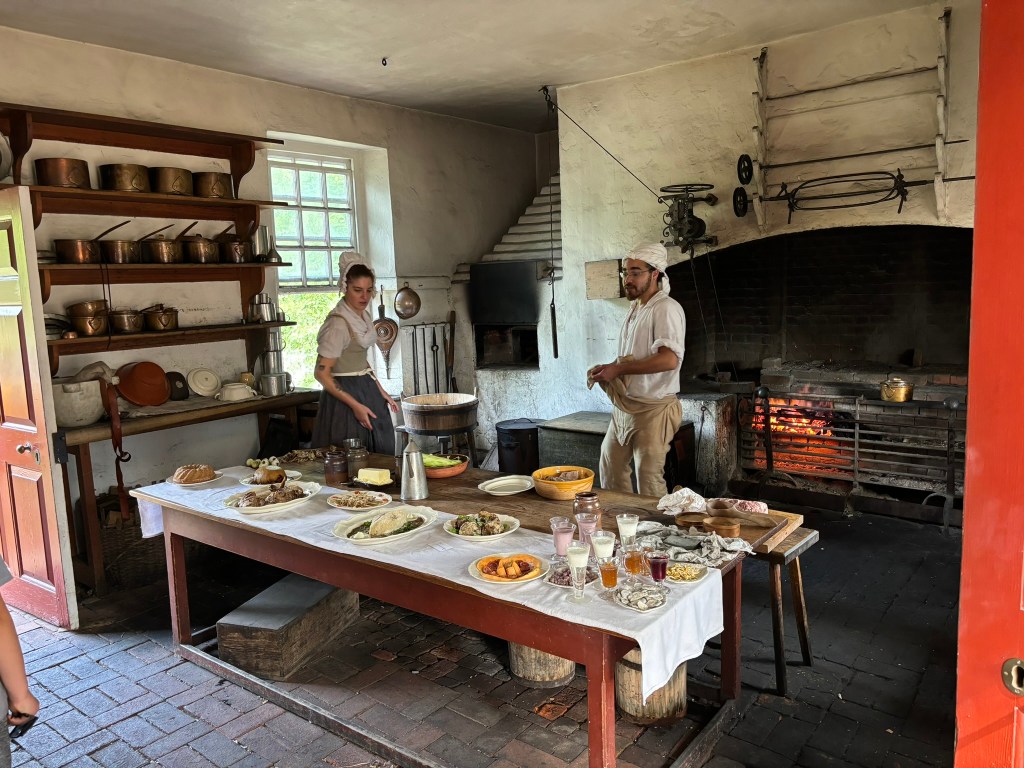
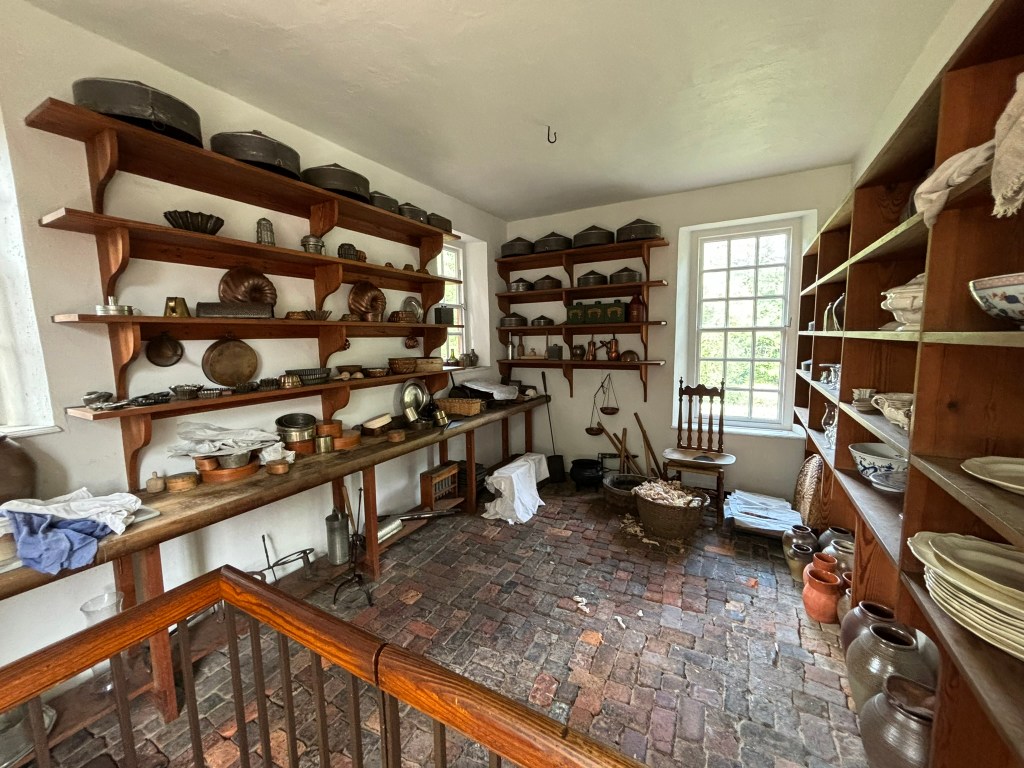
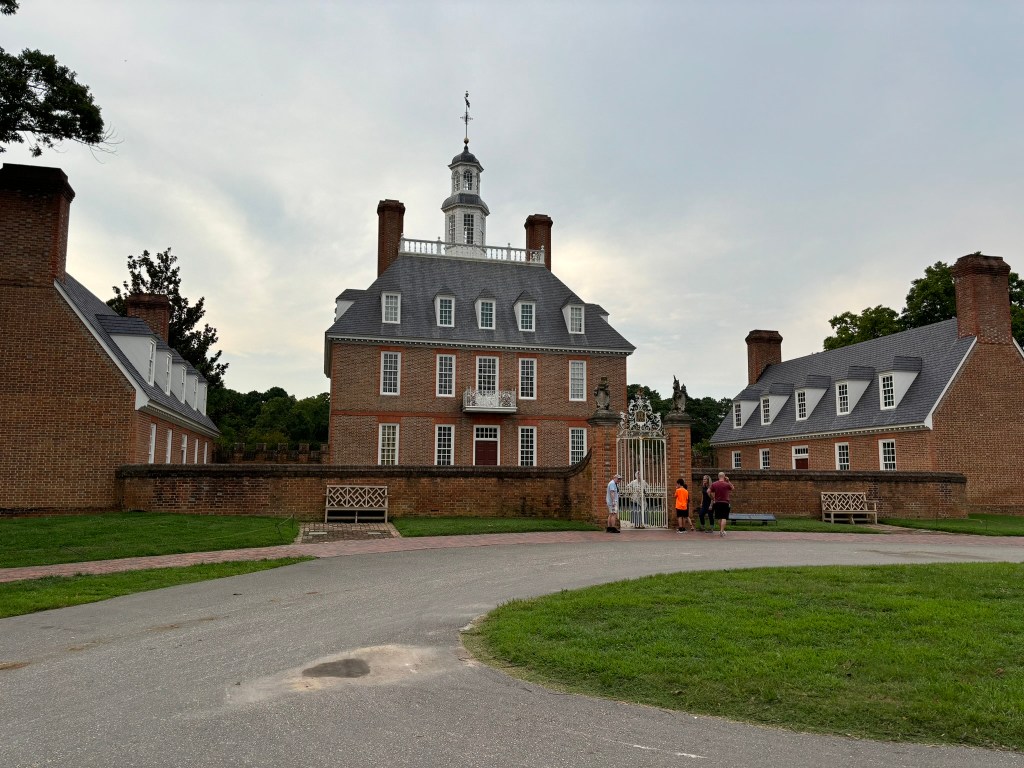
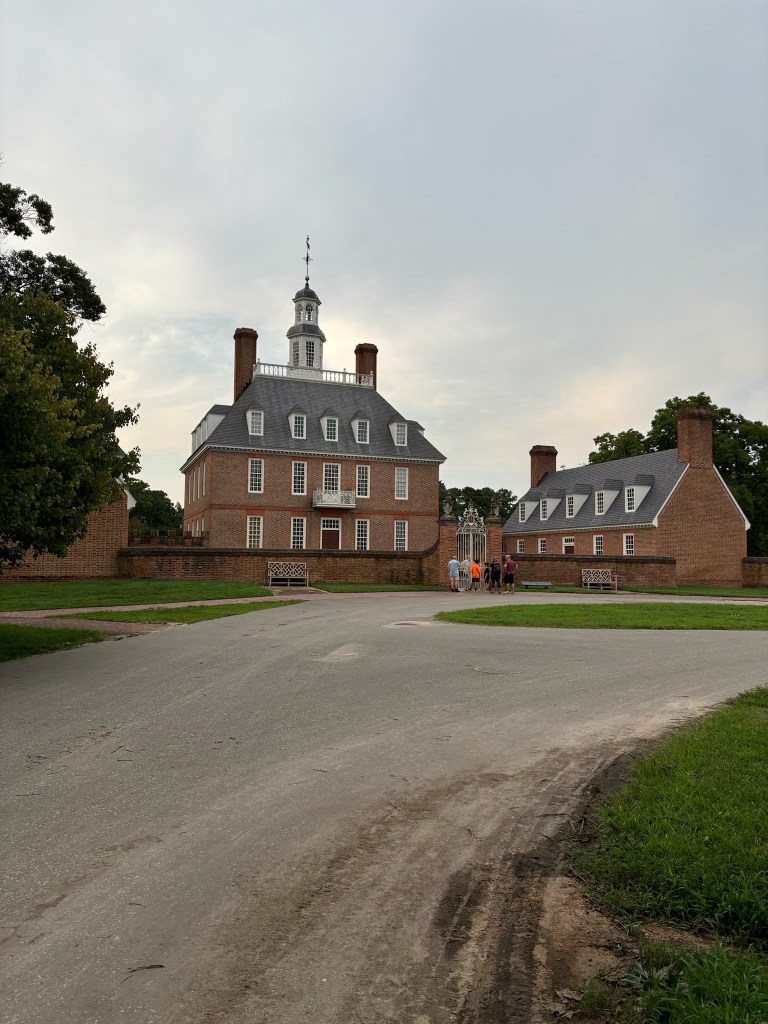
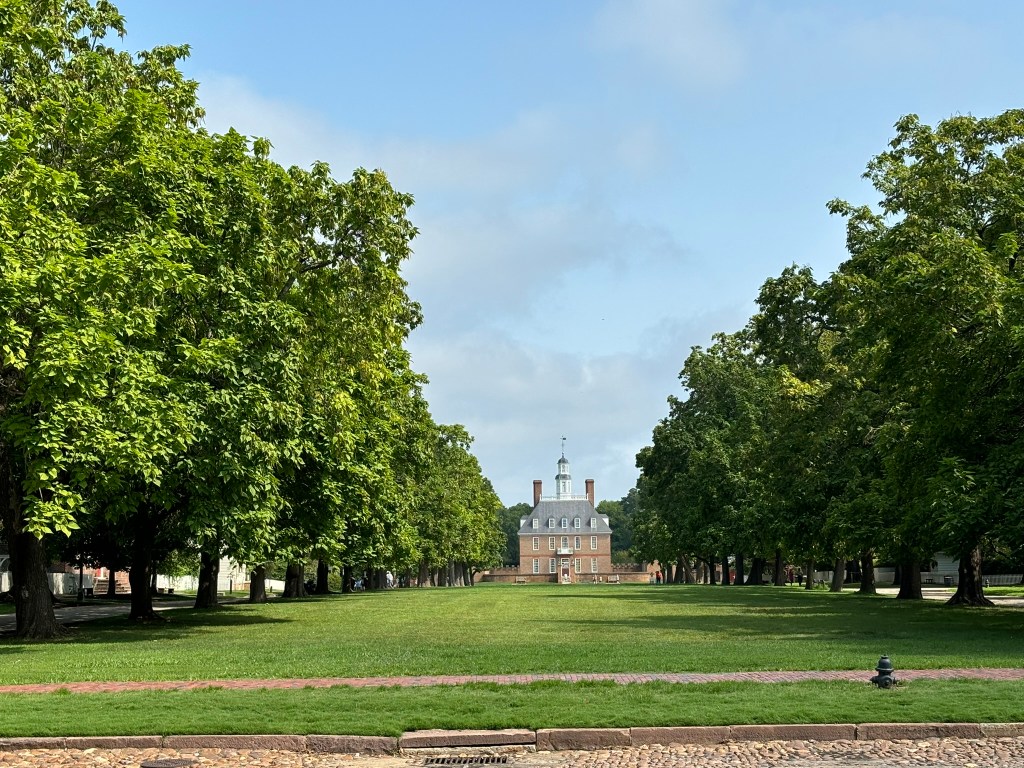
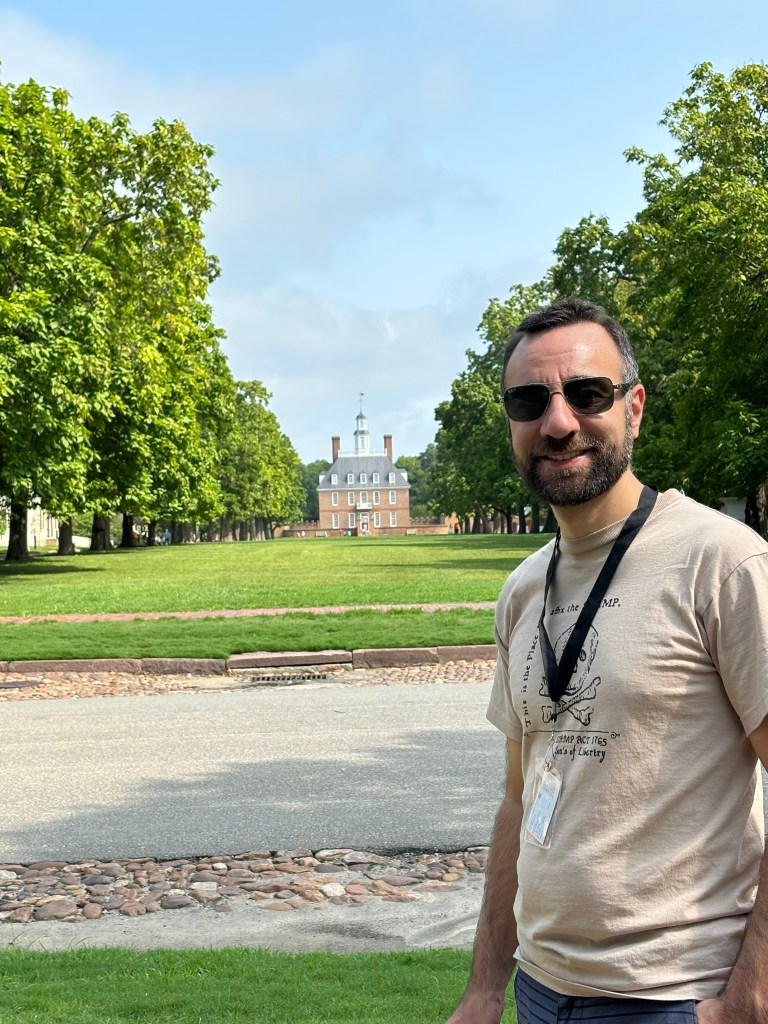
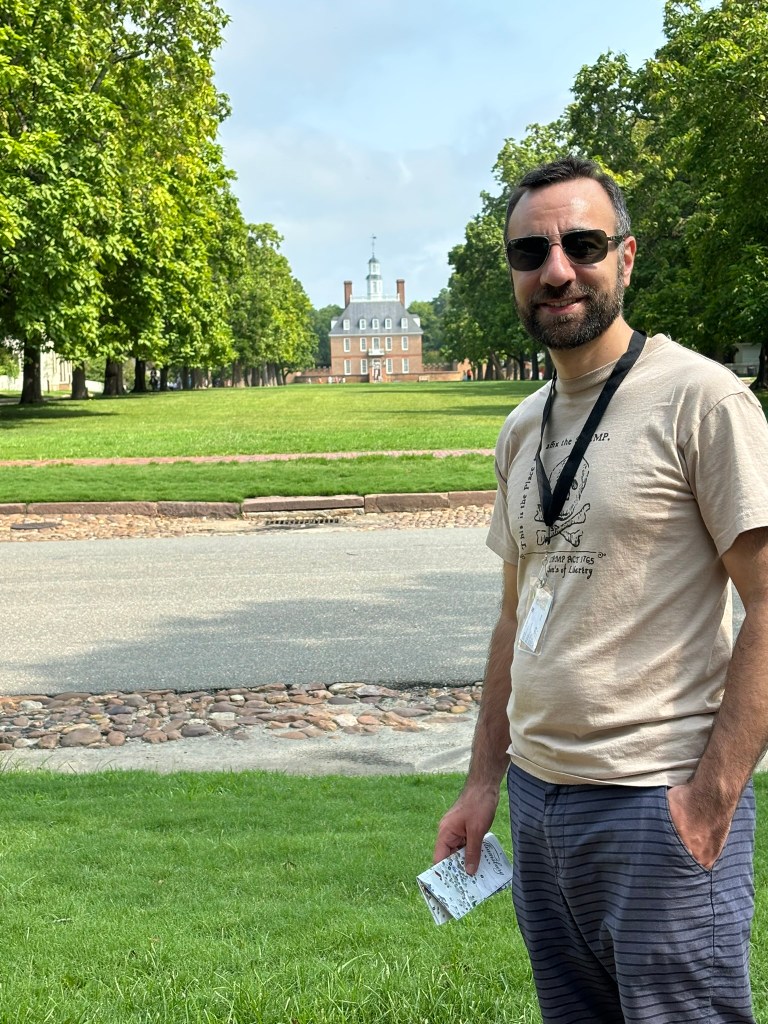
    When we arrived in Colonial Williamsburg we got lucky because we caught the very first 9AM tour of the Governor’s Palace which is one of the top attractions.  The Governor’s Palace that stands today was built in 1934 and was built as a replica of the building that was constructed in the early 1700s.  The building was the official residence of the royal governor of Virginia.  In total, seven governors occupied the residence before the capital was moved to Richmond.  On December 22, 1781, the main building was destroyed by a fire.  The reconstruction in the early 1900s was based on numerous surviving pieces of evidence, including archaeological evidence, architectural remnants that had fallen in during the fire, as well as Thomas Jefferson’s drawings and plans from when he sought to renovate the building.

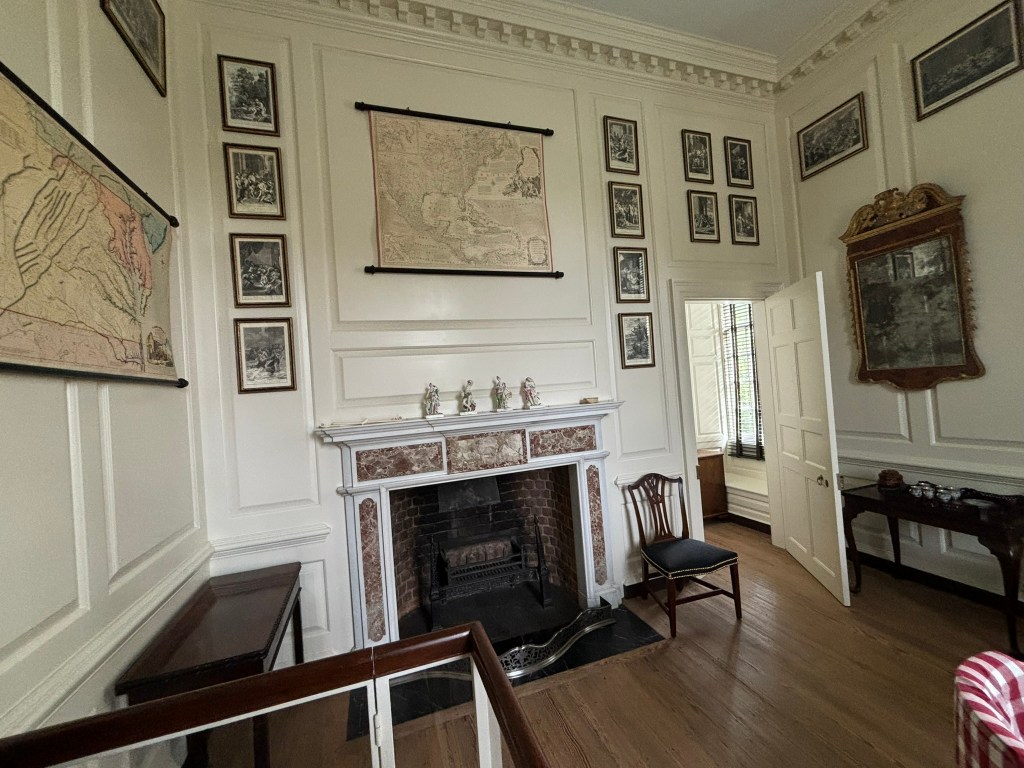
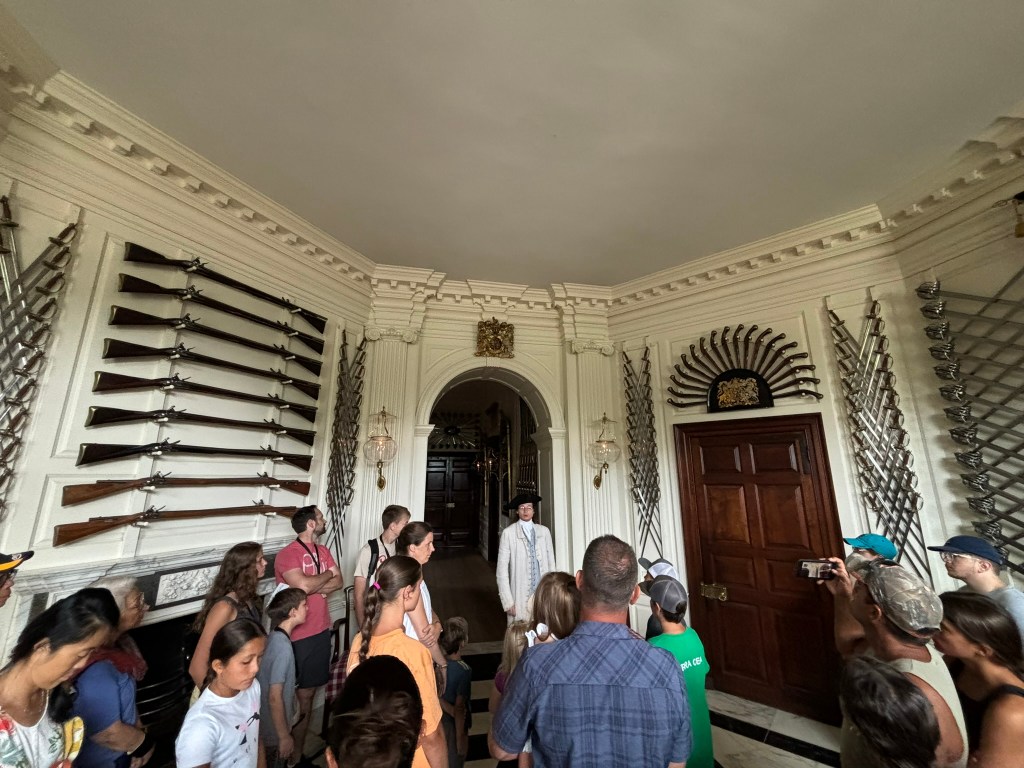
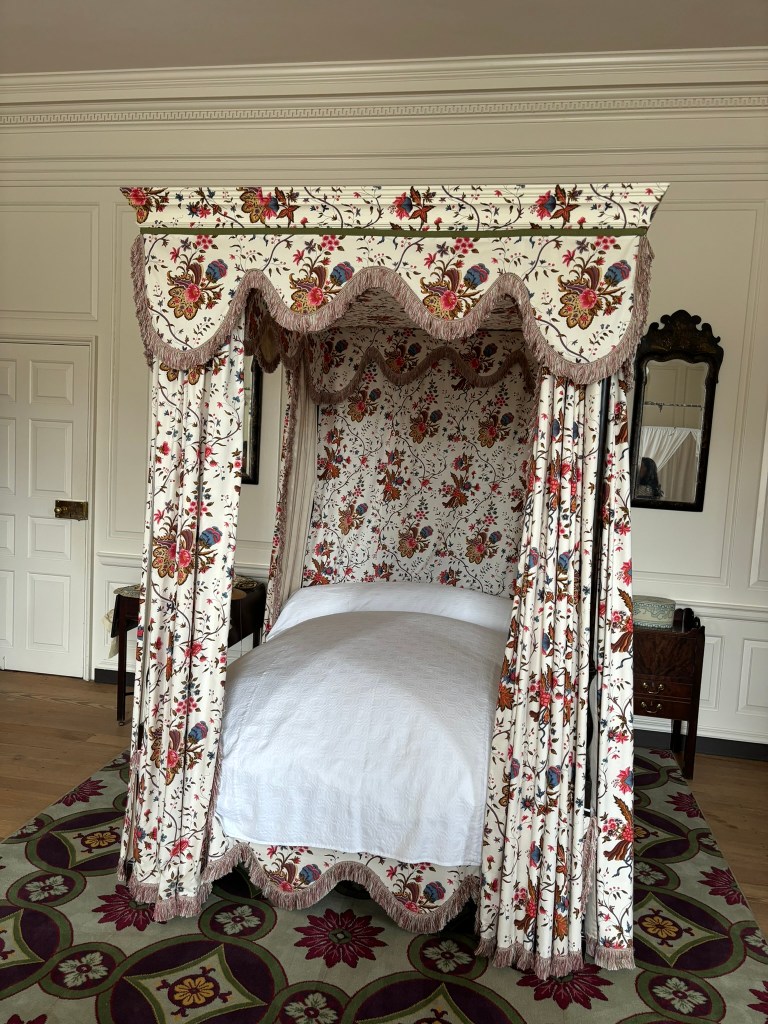
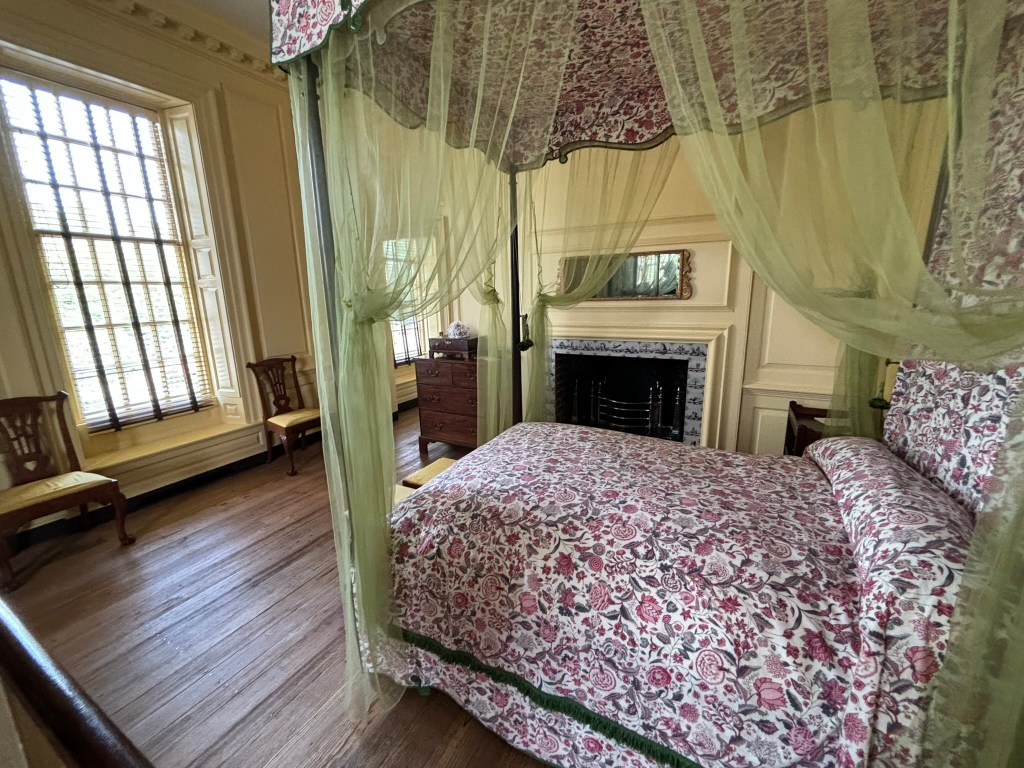
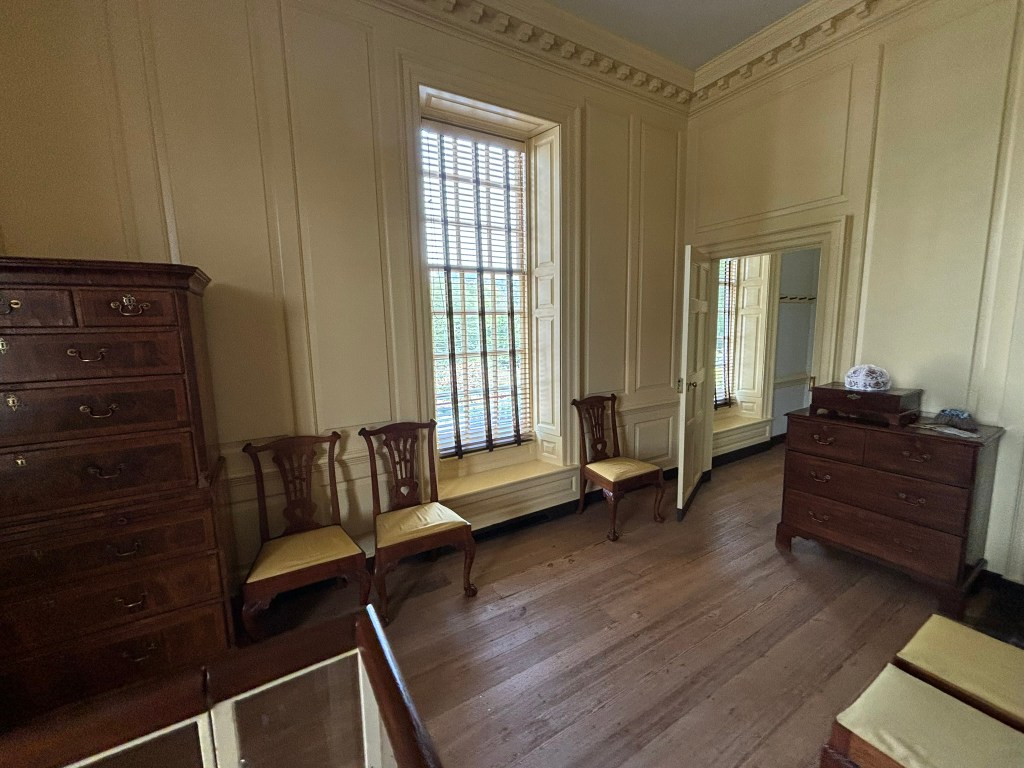
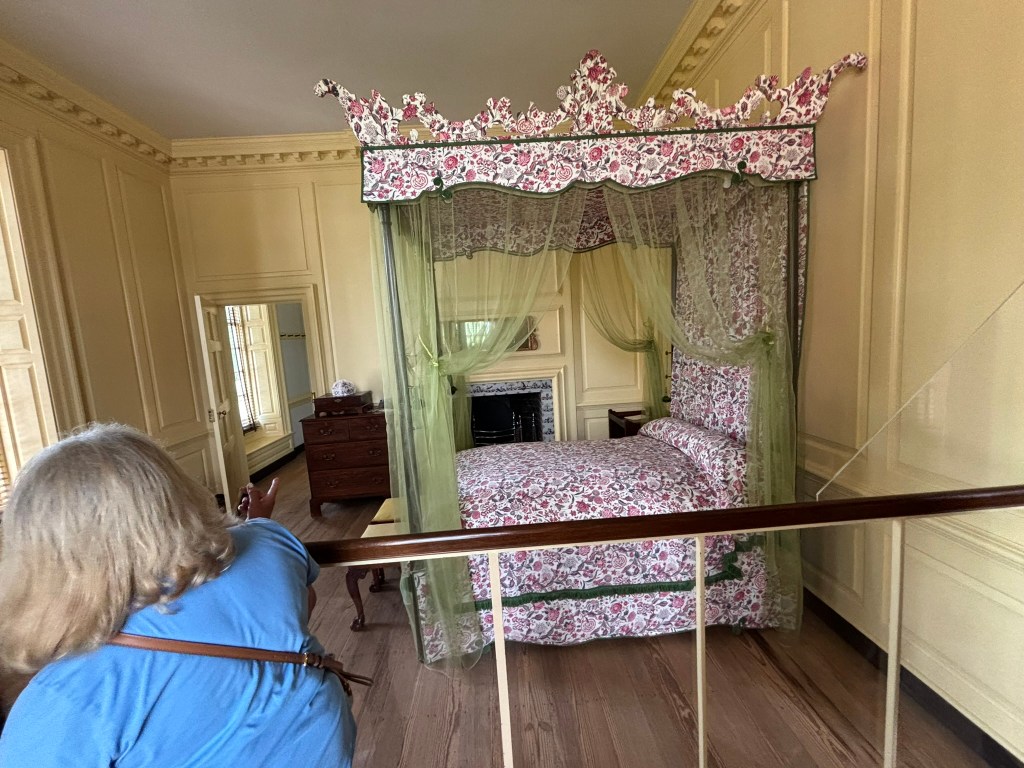
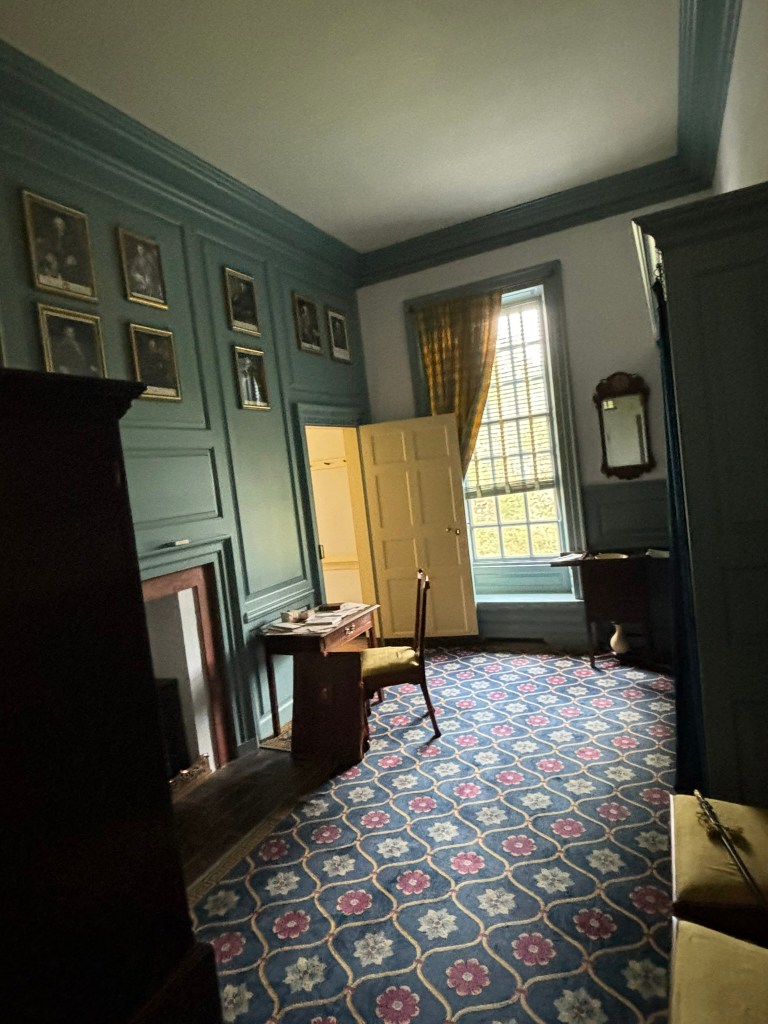
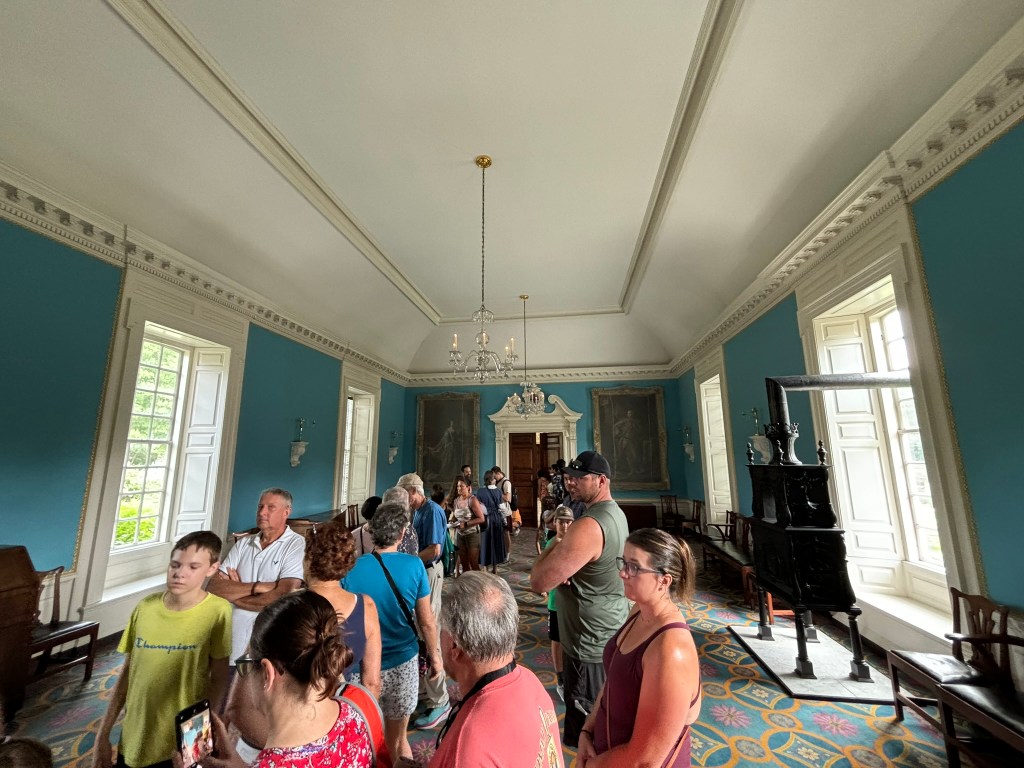
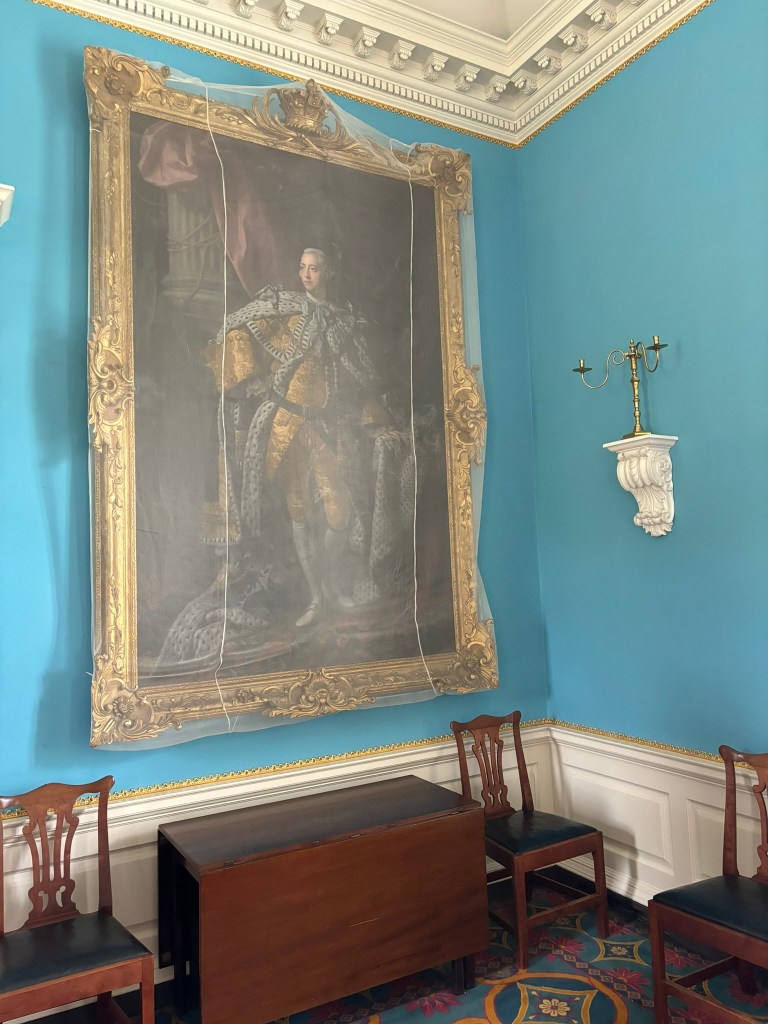
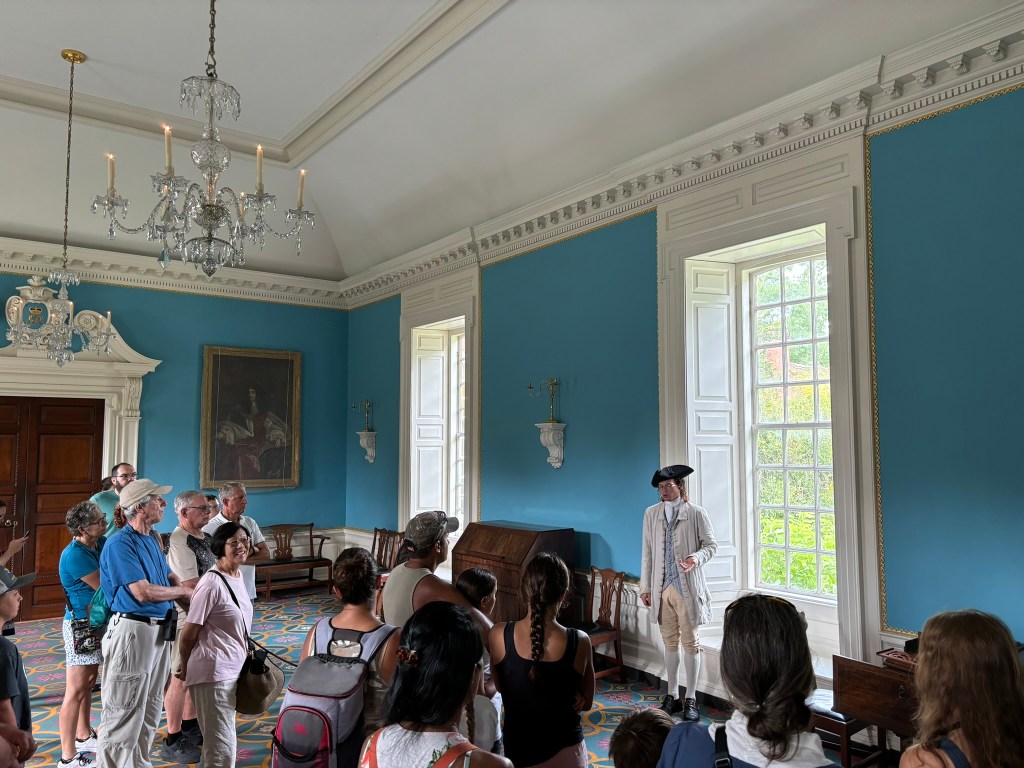
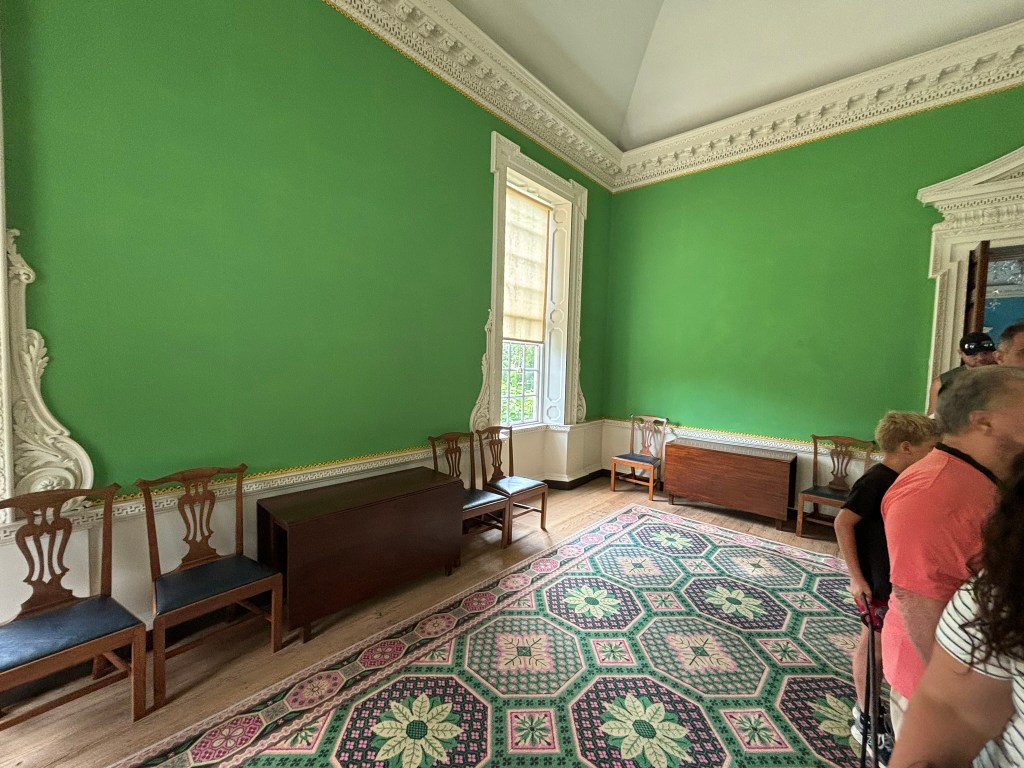
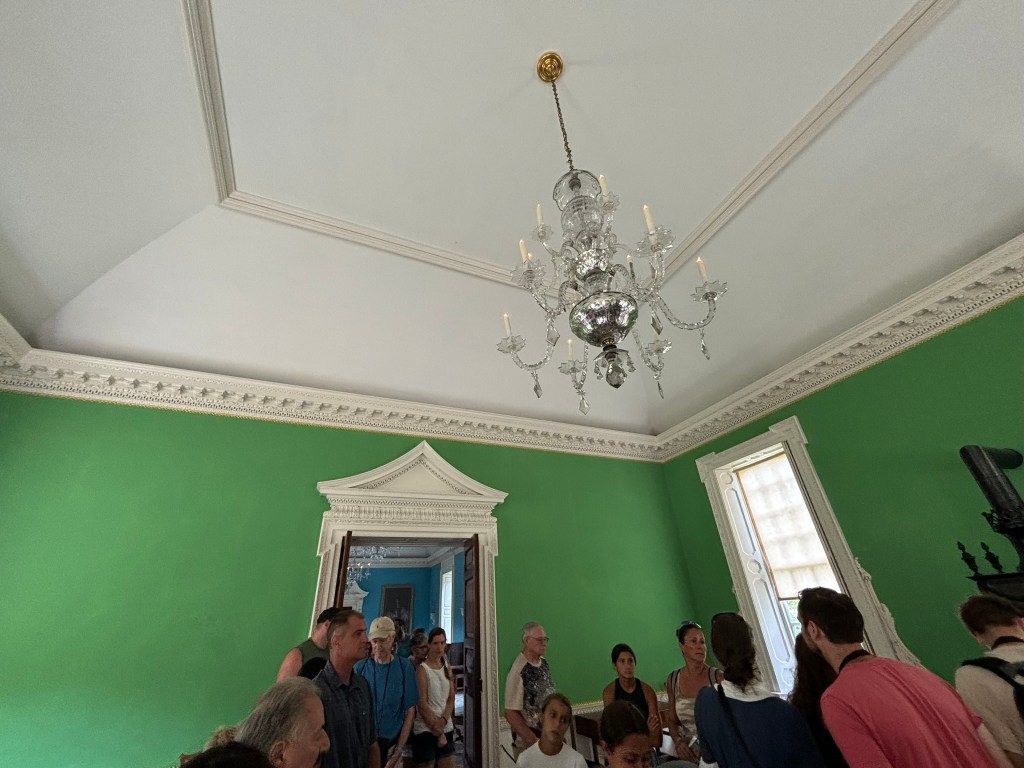
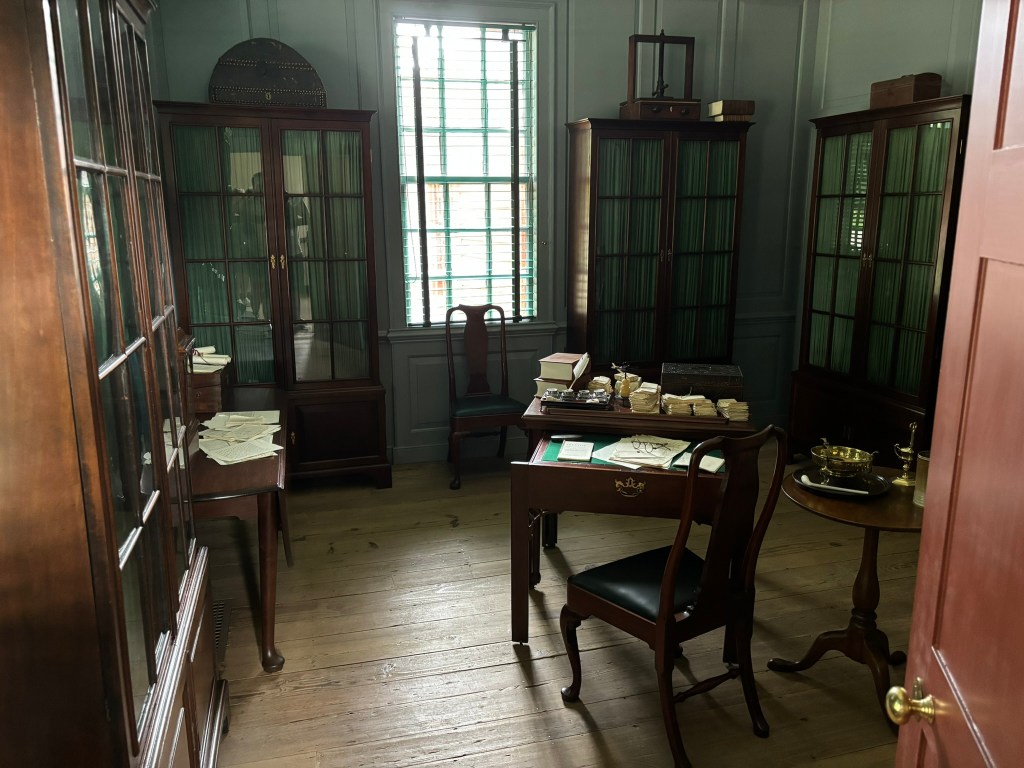
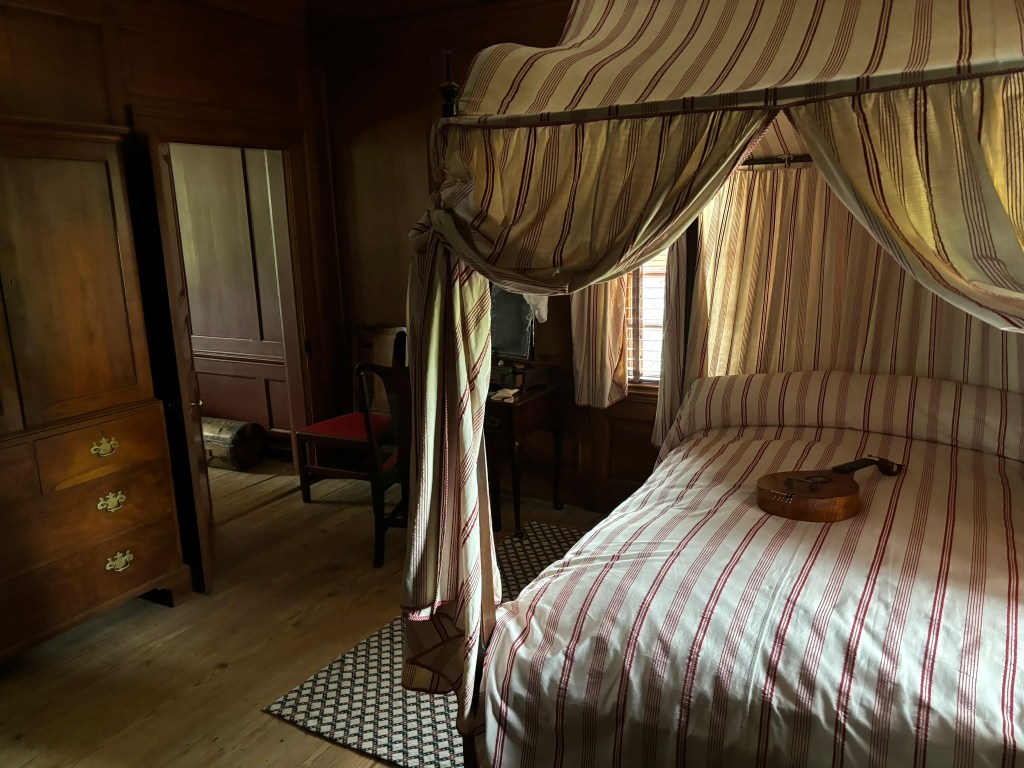
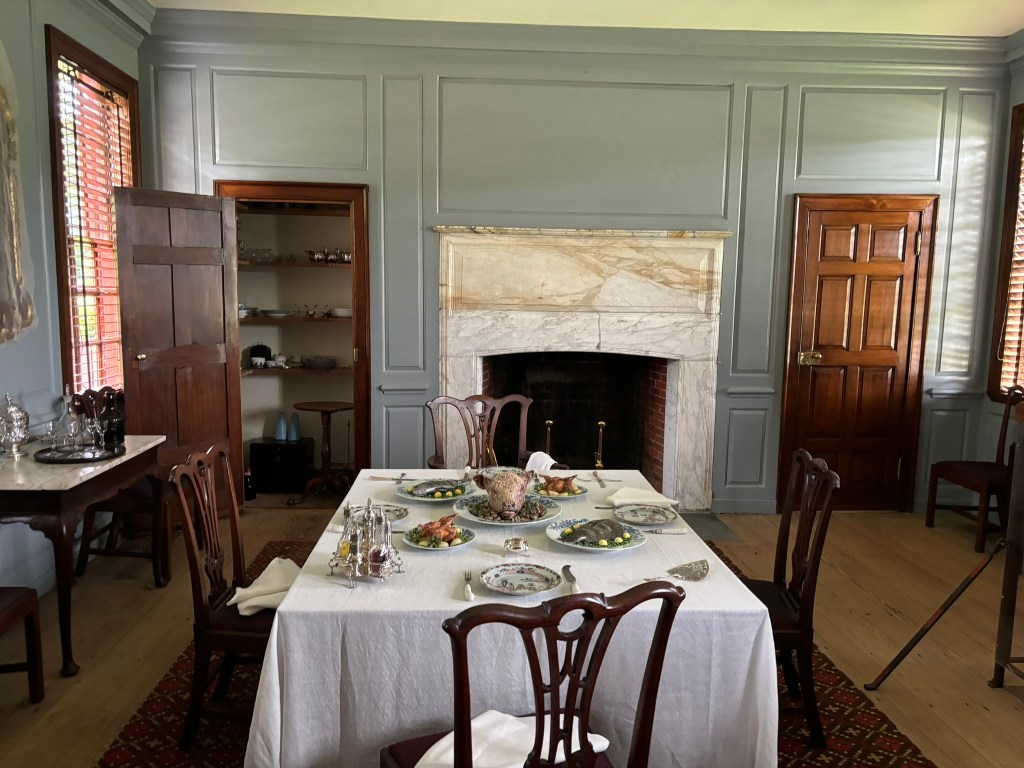
    The tour of the palace focused primarily on the last royal governor of Virginia, Lord Dunmore and his final days at the palace.  The entrance of the palace is decorated with hundreds of swords and firearms, perhaps to intimidate visitors. The tour guide did an excellent job taking the group into each of the rooms and thoroughly explaining the purpose of the rooms, as well as the history behind the building.  We learned that Lord Dunmore, in the days leading up to the American Revolution, was forced to flee the building, never to return.  The pictures below give you a sense of the opulence that was felt by the royal governors and any visitors that they allowed into the building.

    Strolling Through Colonial Williamsburg

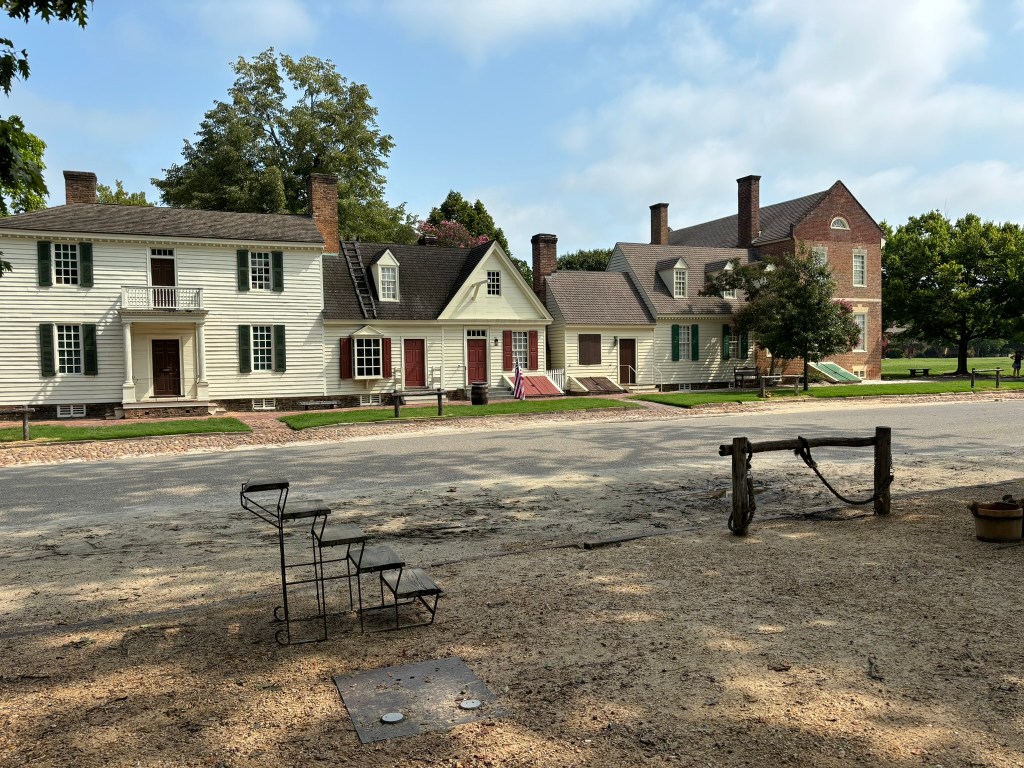
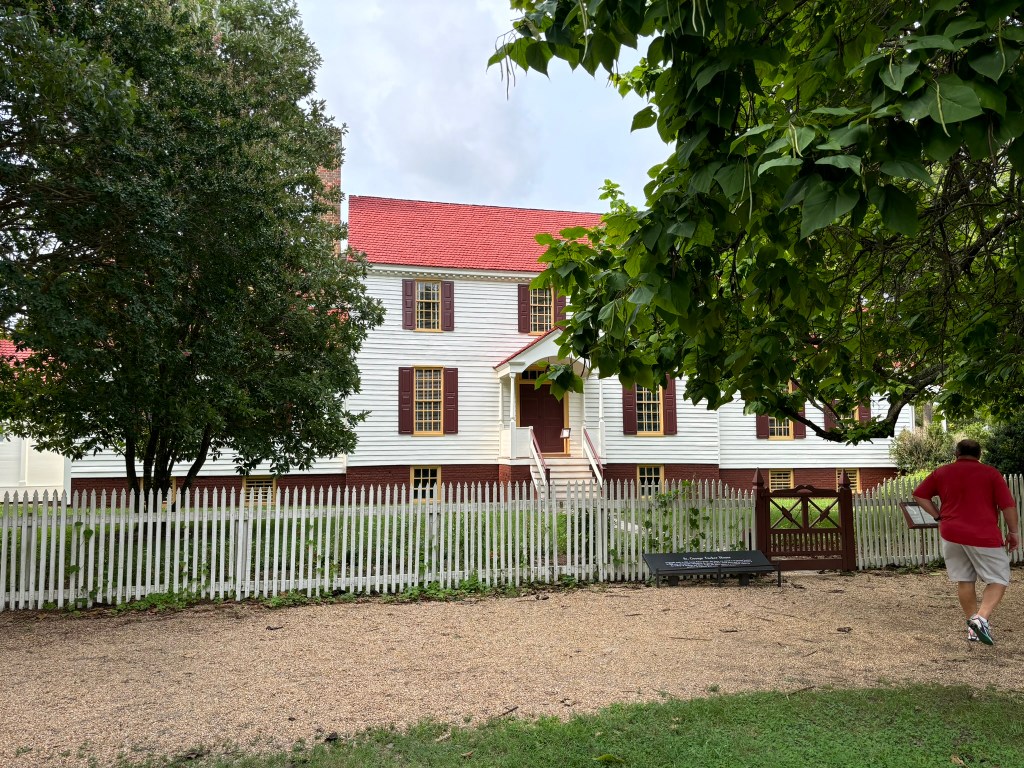
    After we left the Governor’s Palace we strolled south along the Palace Green, past the George Wythe House and onto Duke of Gloucester Street.  We headed east along the street, stopping in houses and shops along the way. 

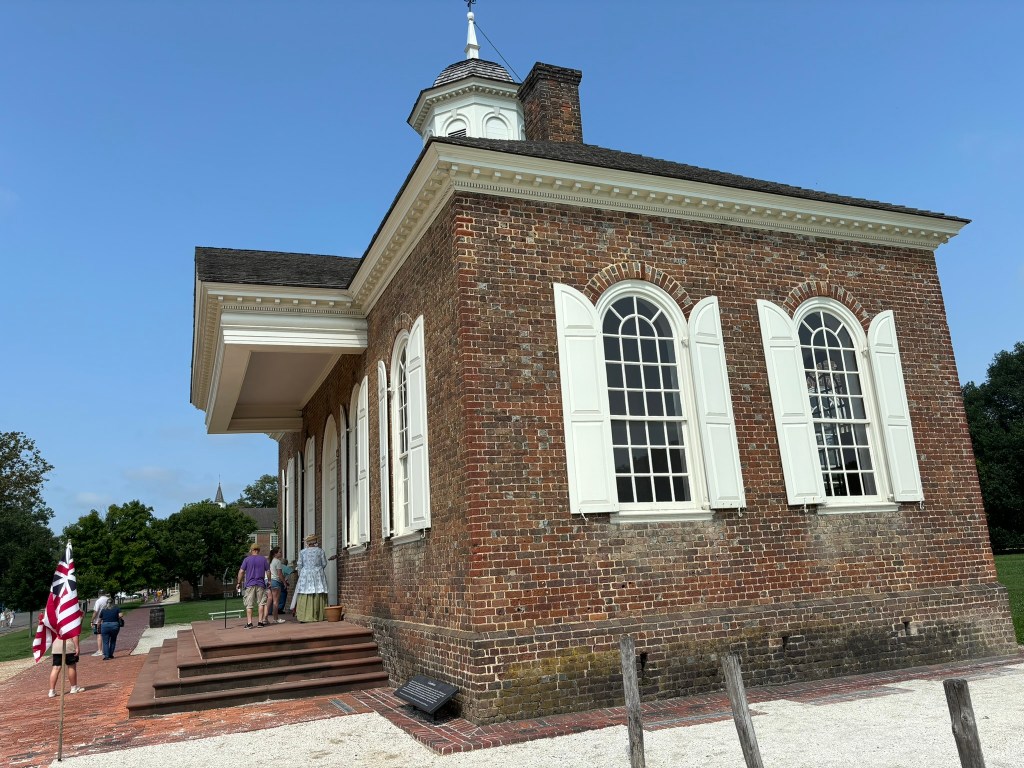
    County Courthouse

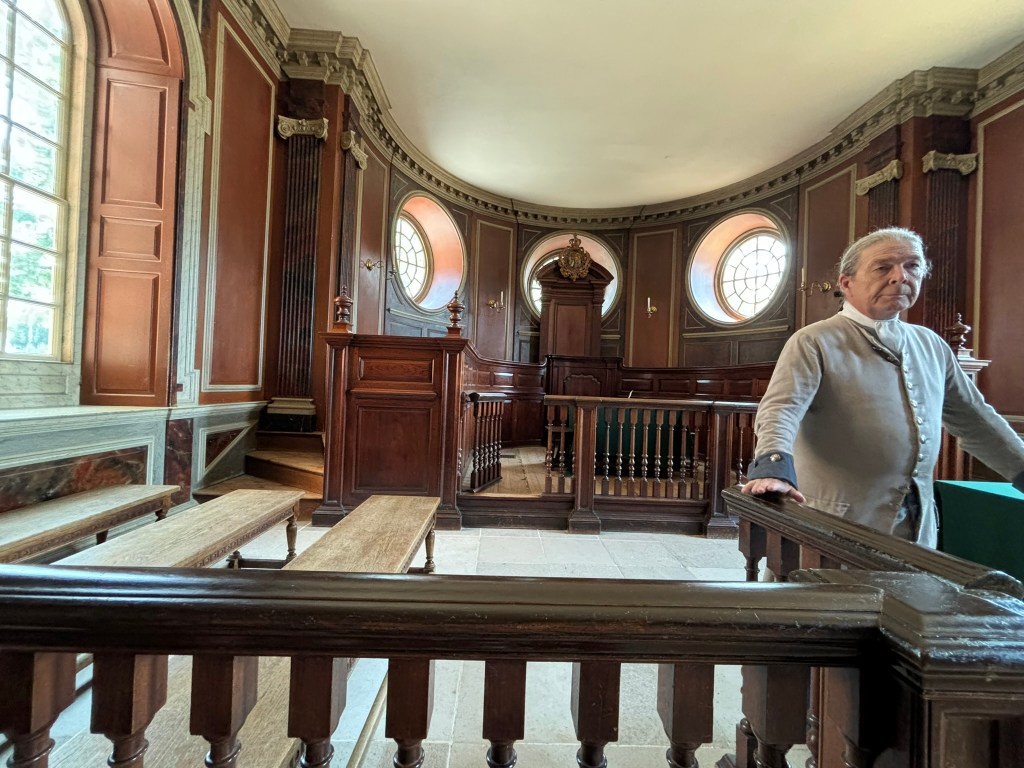
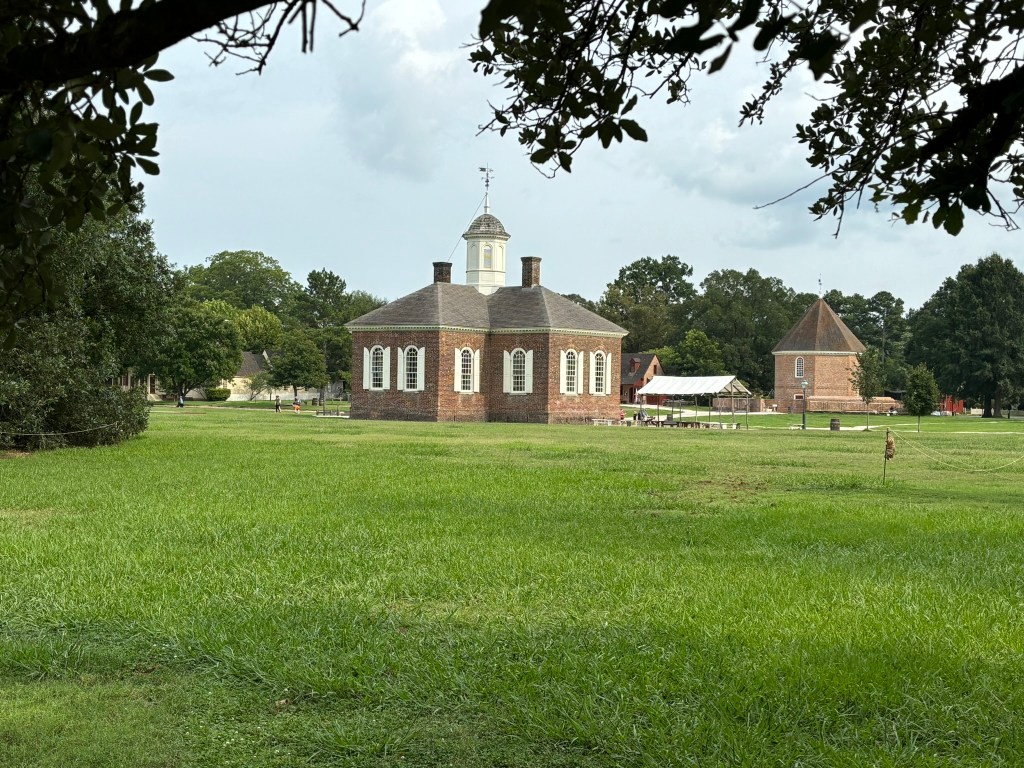
    We made a stop at the County Courthouse.  A program was scheduled for 11AM which we were interested in viewing. A mock trial was going to take place in the Court House and volunteers would take part in the court drama. However, when we found out that the case would take 40 mins, we decided to move on since we had limited time. We decided to keep moving down Duke of Gloucester Street.

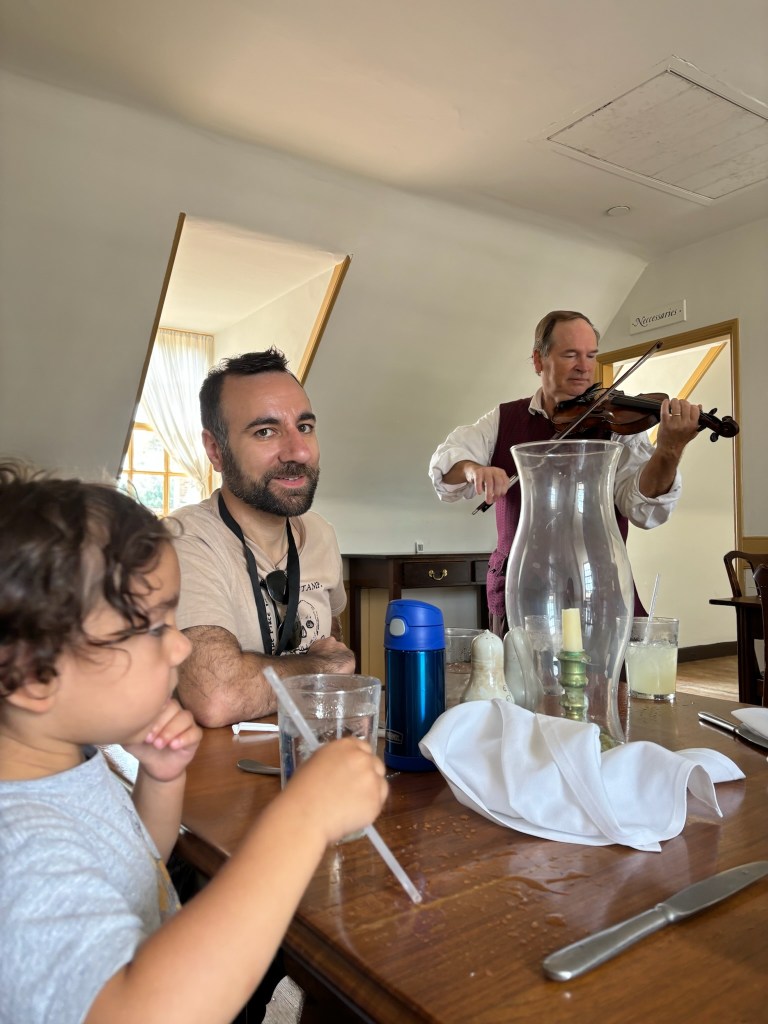
    King’s Arms Tavern

    After visiting more houses and shops, we stopped for lunch at King’s Arms Tavern which had really great, colonial style food.  We even got serenaded by a violin player!  

    The Capitol Building

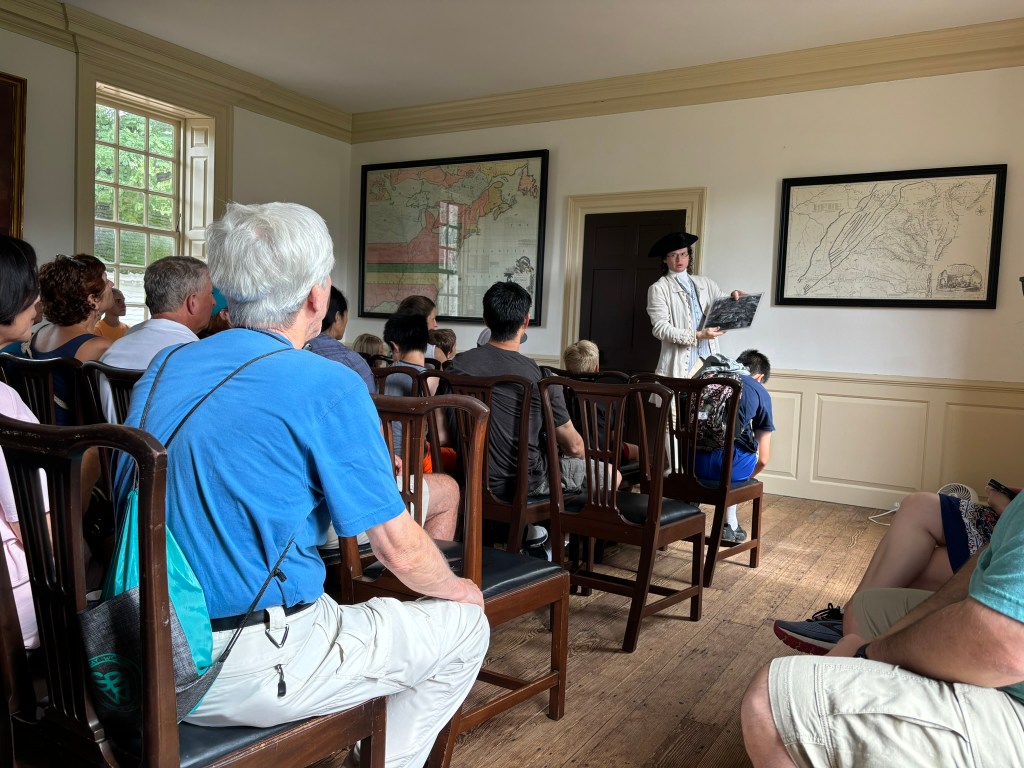
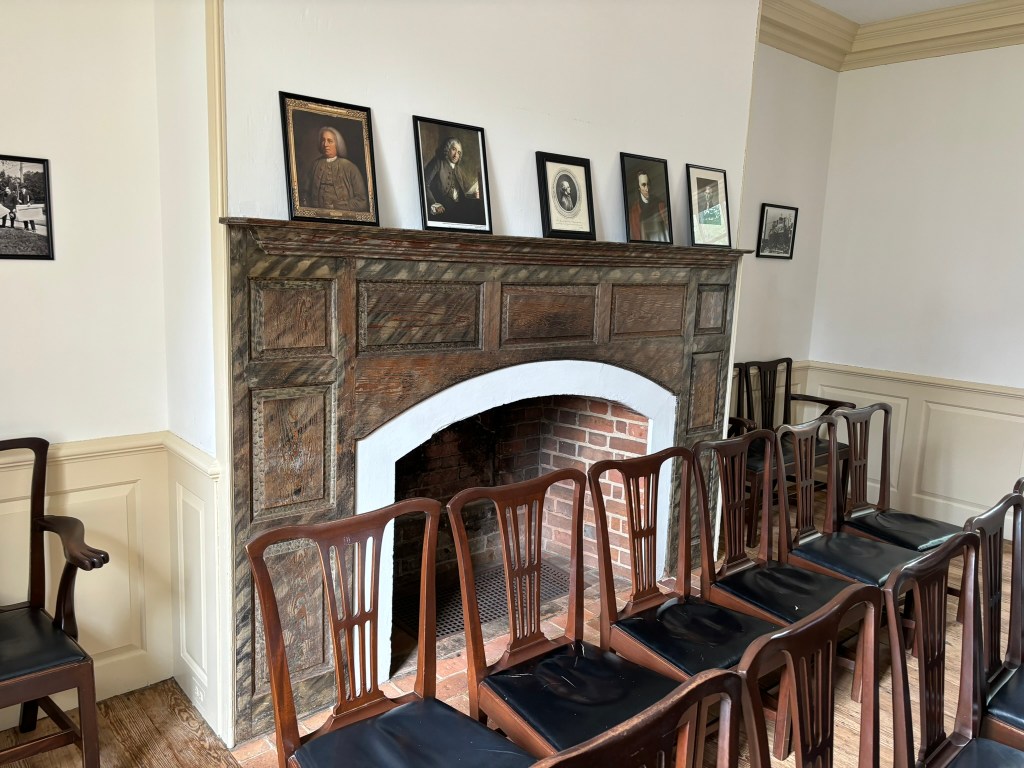
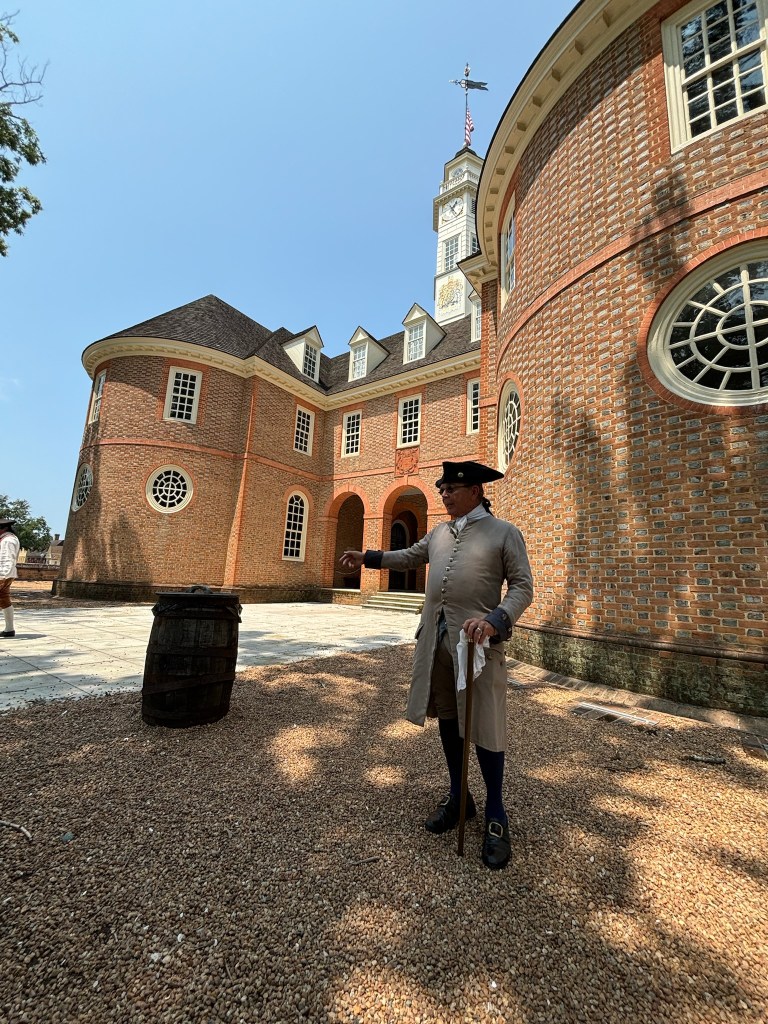
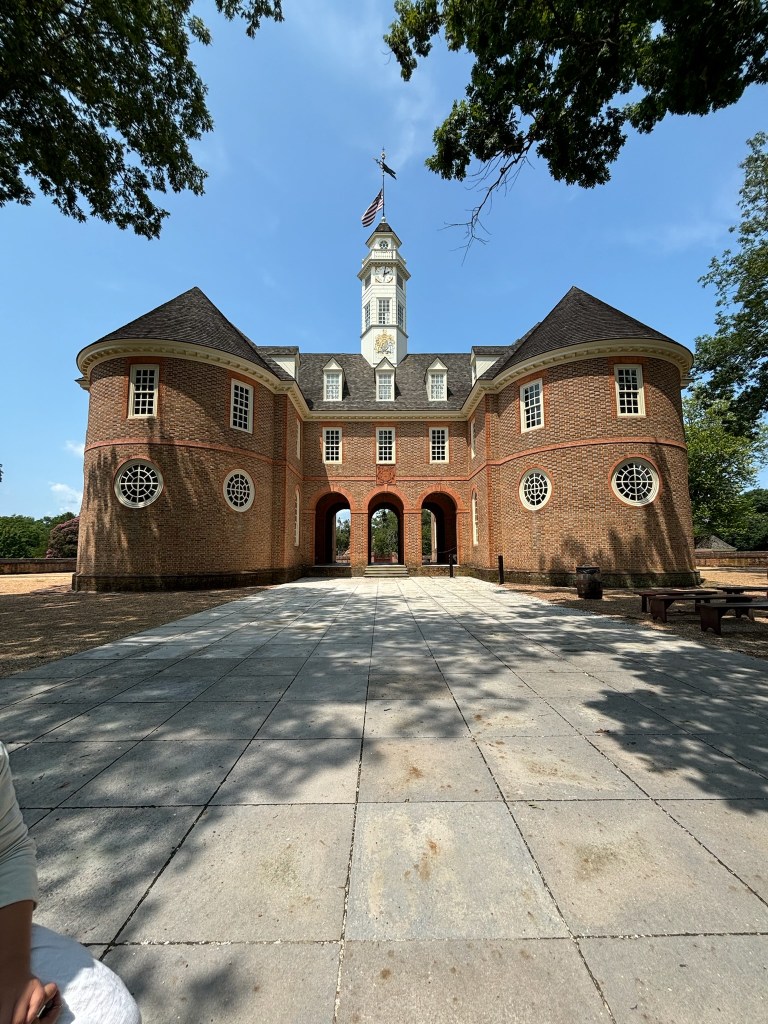
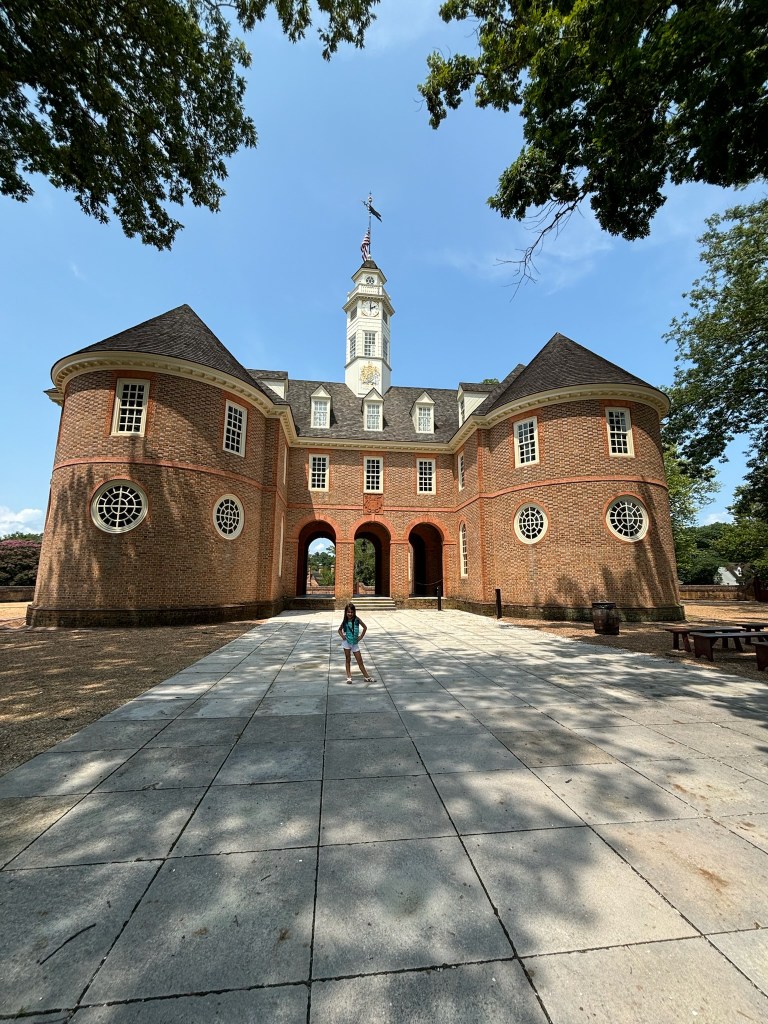
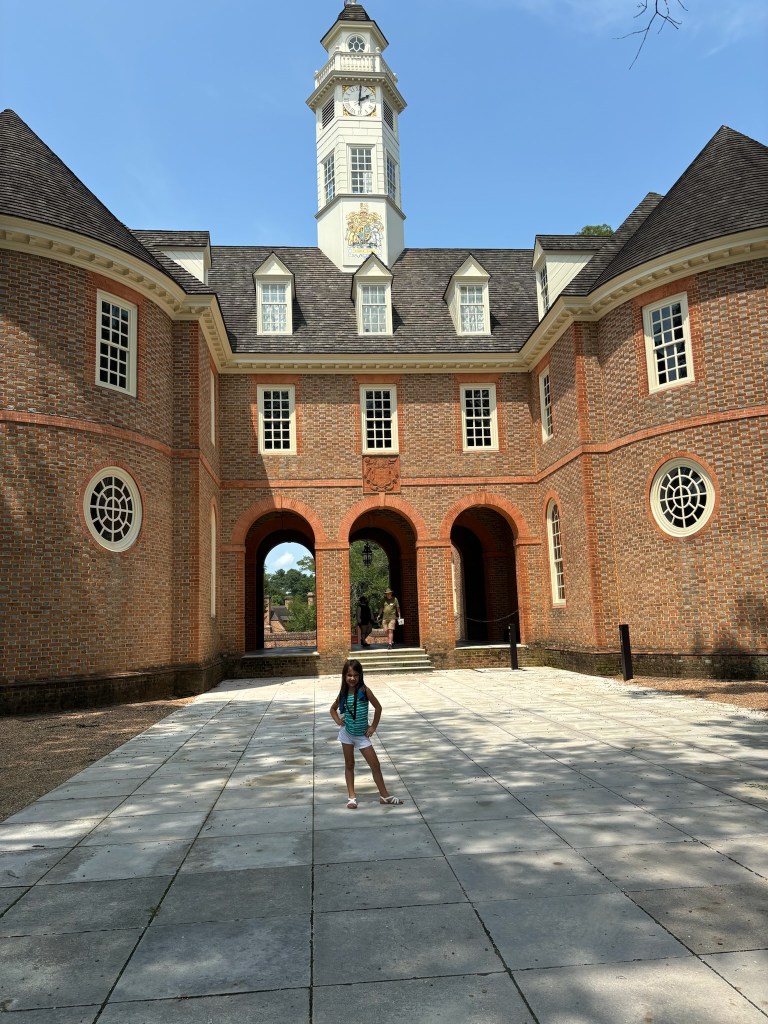
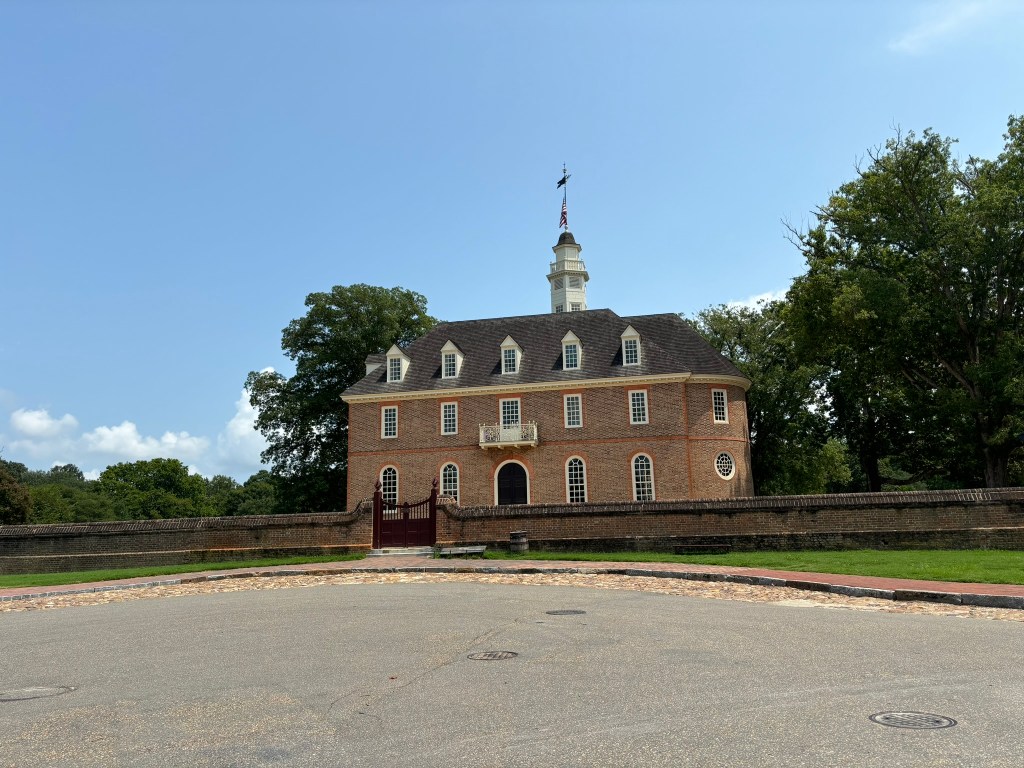
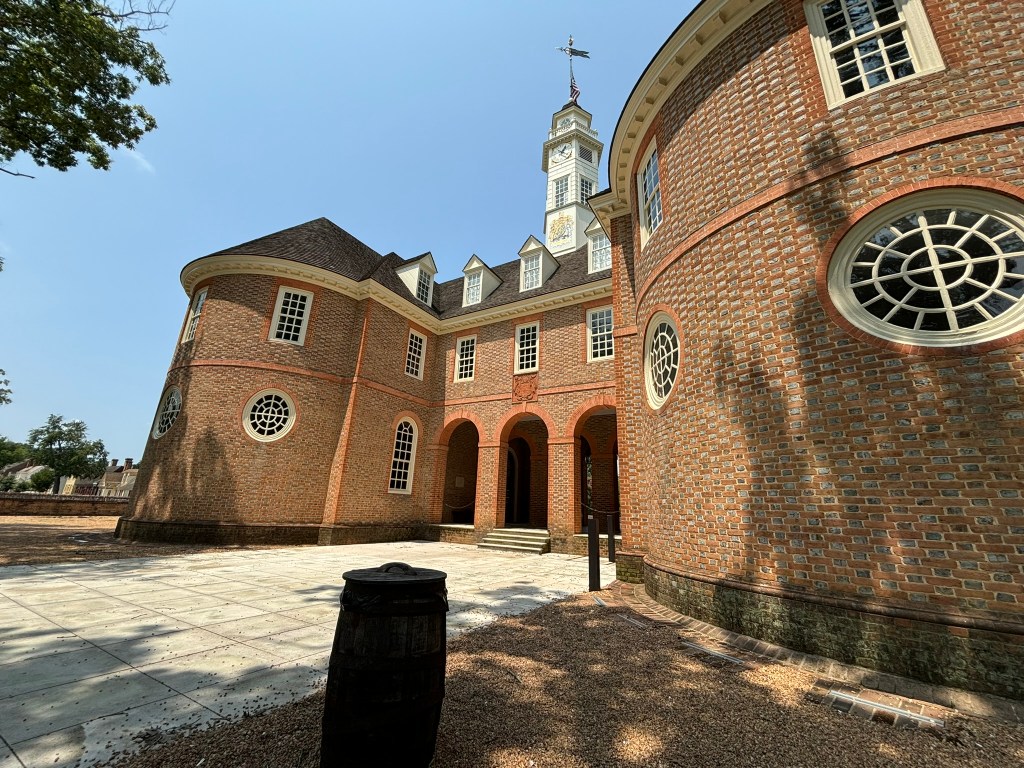
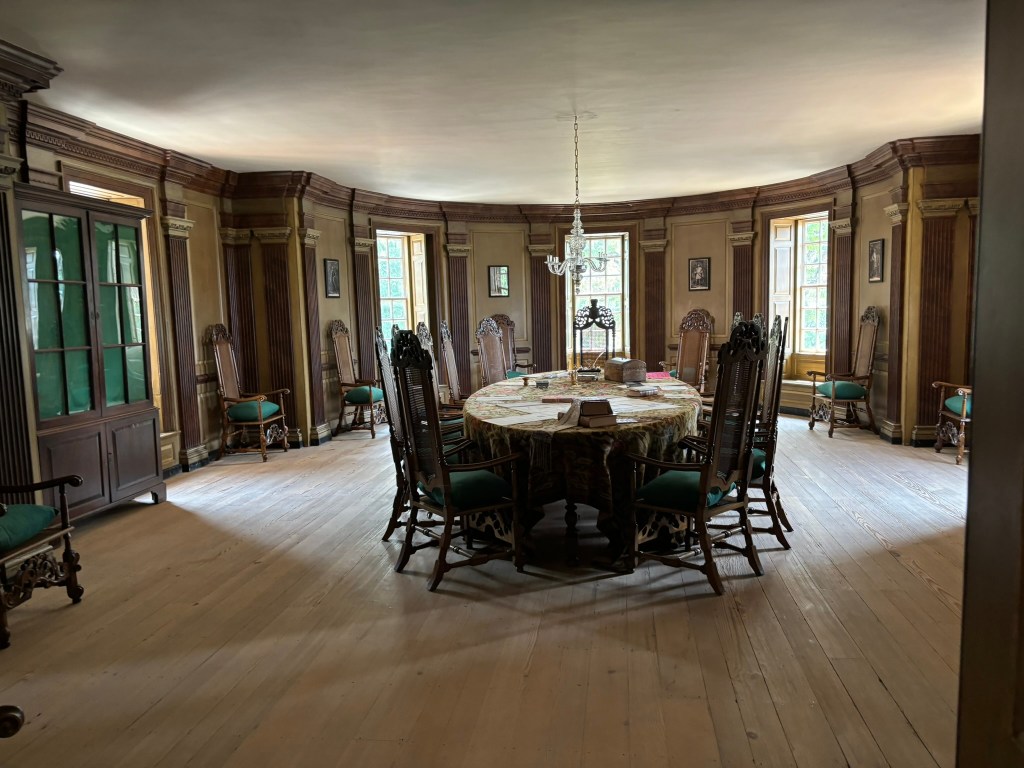
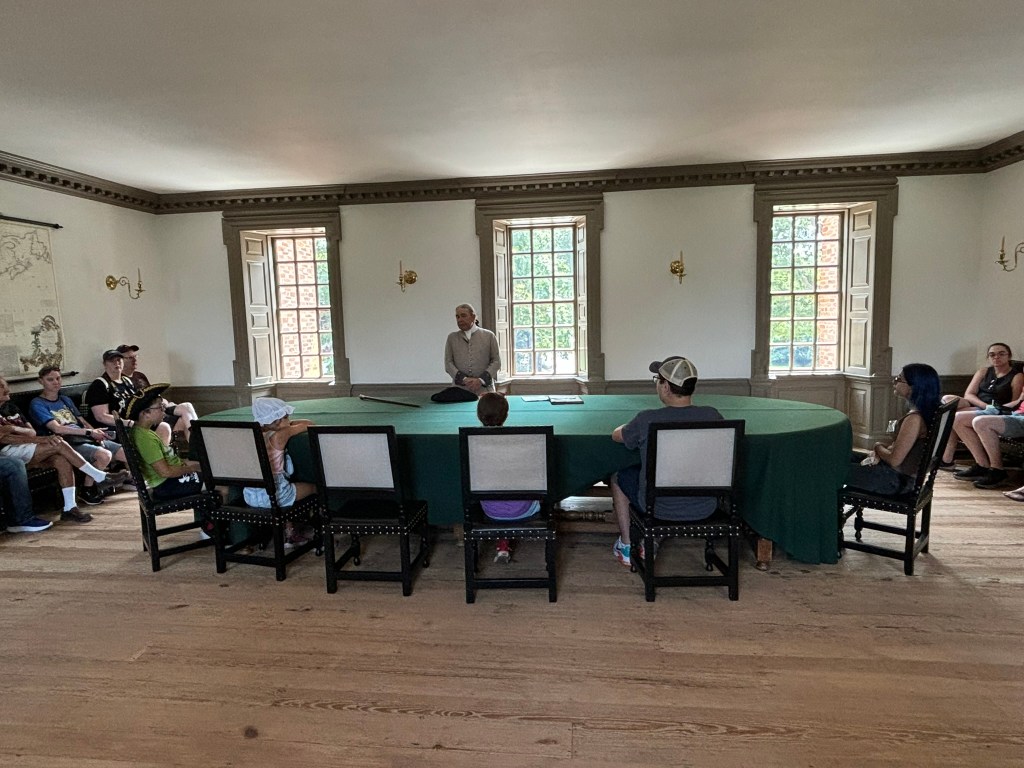
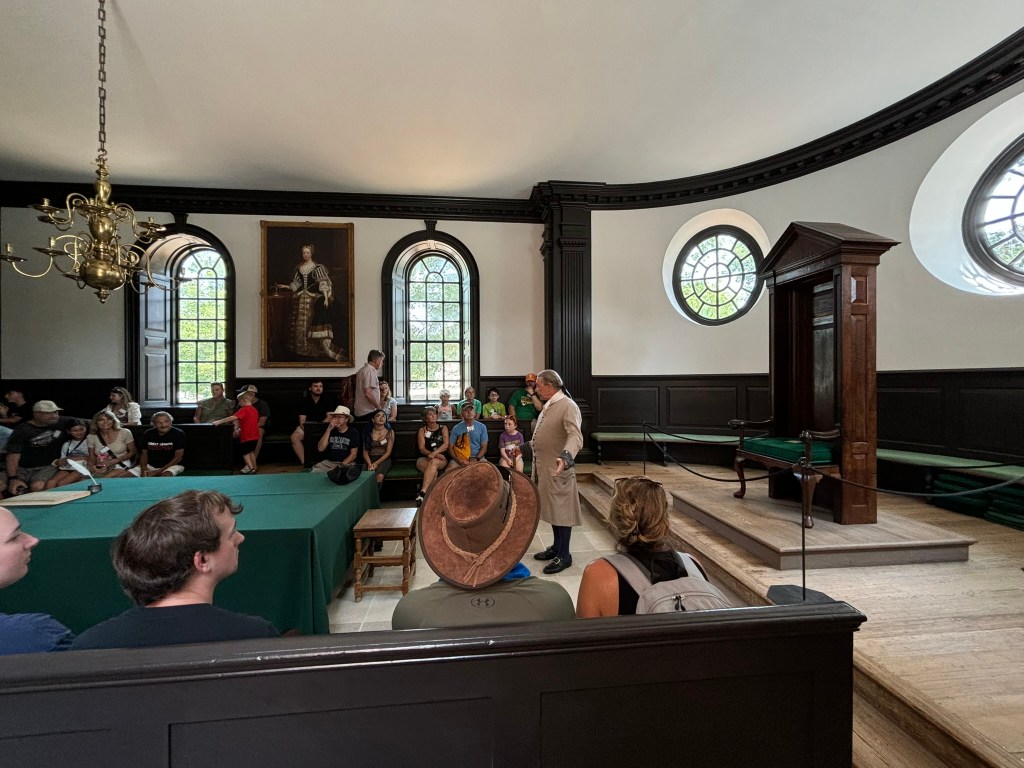
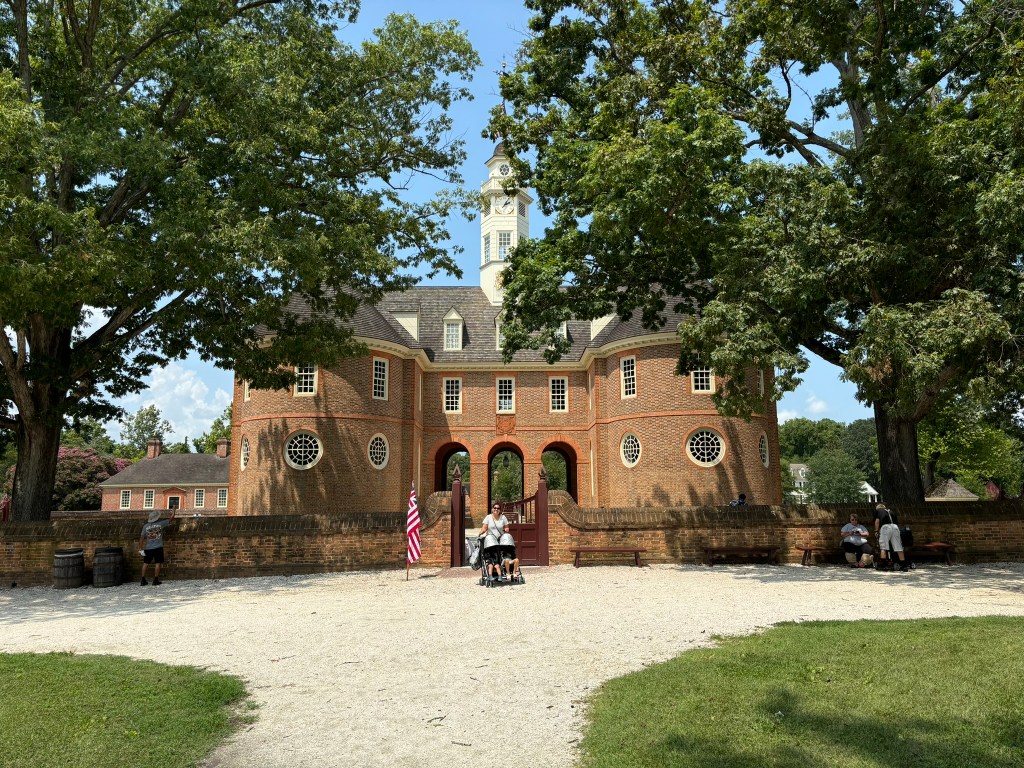
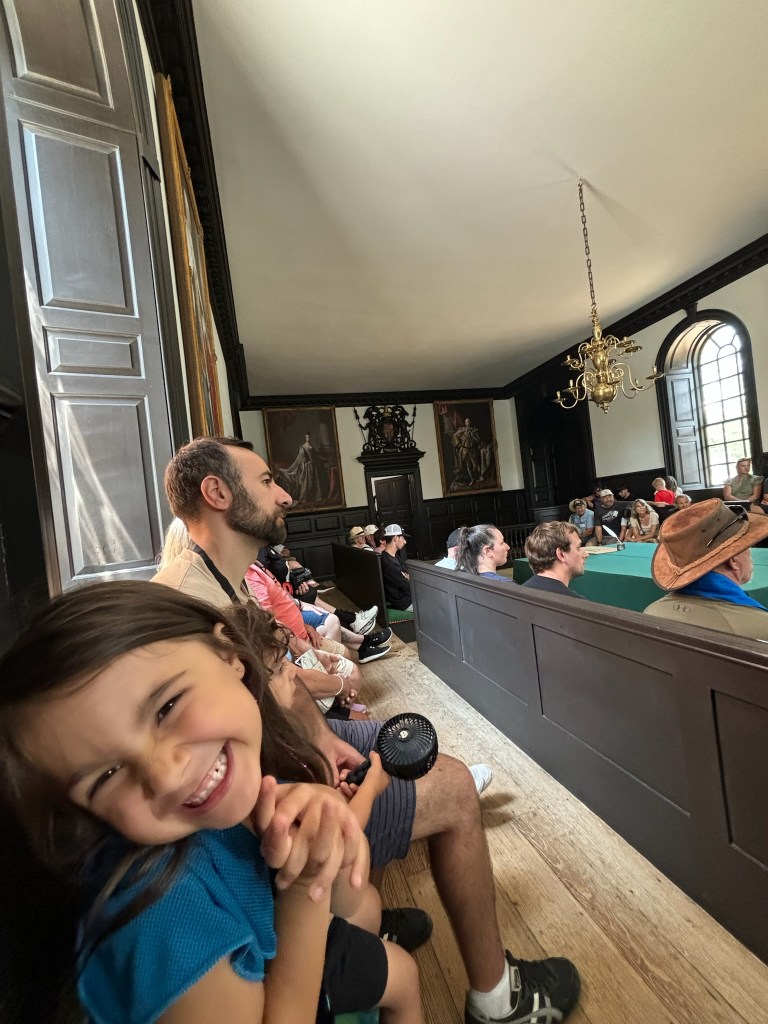
    After we ate, we continued heading east until we arrived at the Capitol Building.  Our tour guide at the Capitol was great.  He explained to us how the building was used by the House of Burgesses.  There were also court cases which were tried in the building as well.  He thoroughly explained to us how the government operated in the Colonial Virginia, and then the Commonwealth of Virginia after the colonies declared independence in 1776.  He explained to us that at the time, only wealthy landowners could vote which consisted of about 15% of the population.  He encouraged us, in this election year, to get out and vote.  

    Gunsmith

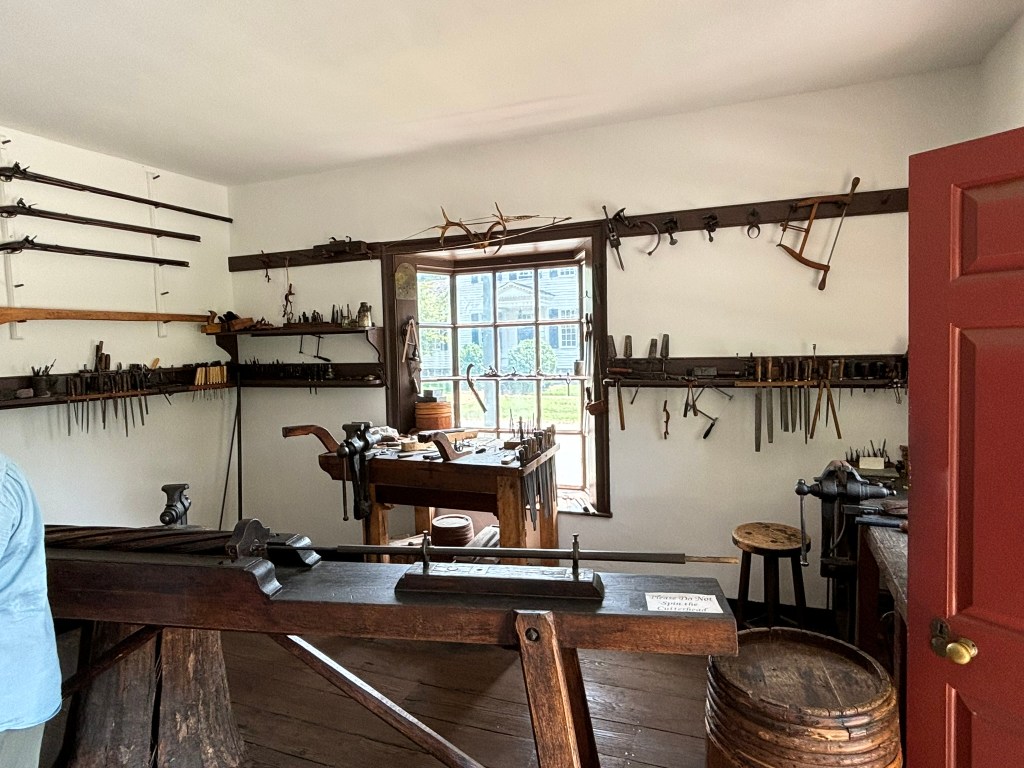
    After we left the Capitol Building, we made our way over to the Gunsmith building as reenactors not only explained, but demonstrated how muskets were created in colonial times.  

    Francis Street

    My family and I headed back west on Francis Street, past the small farm and in the direction of the Art Museums of Colonial Williamsburg.  Along the way we witnessed a demonstration of reenactors teaching children how to march in a line, Continental Army style.  This was taking place at the Magazine House and Guard House. 

    Art Museums of Colonial Williamsburg

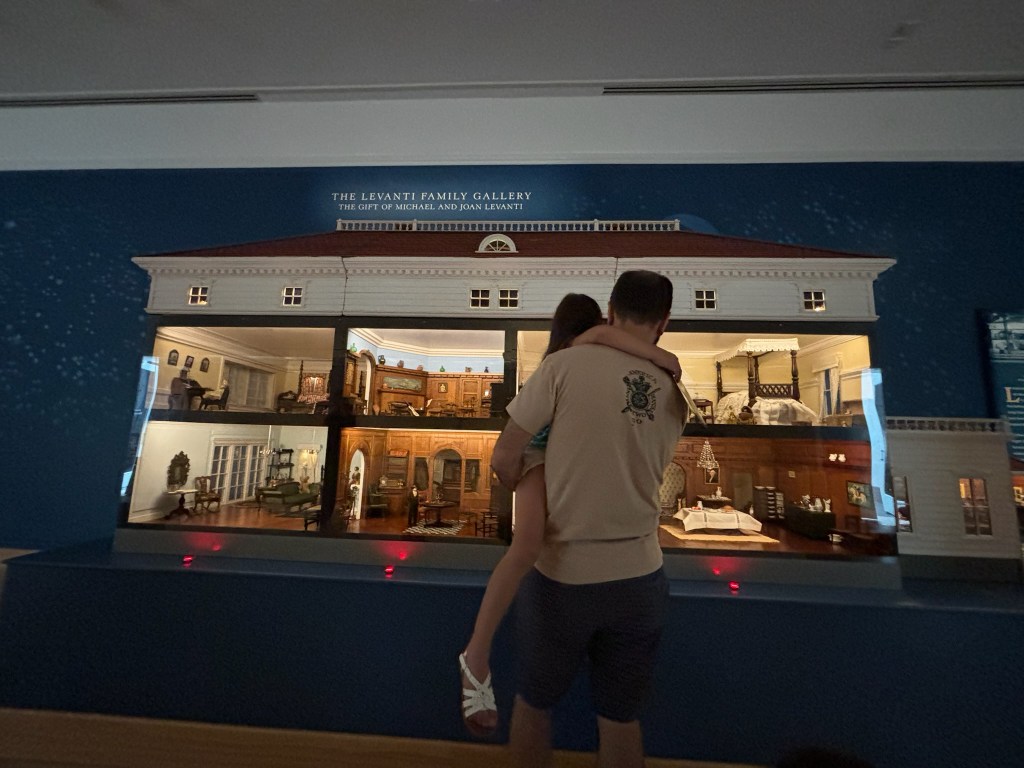
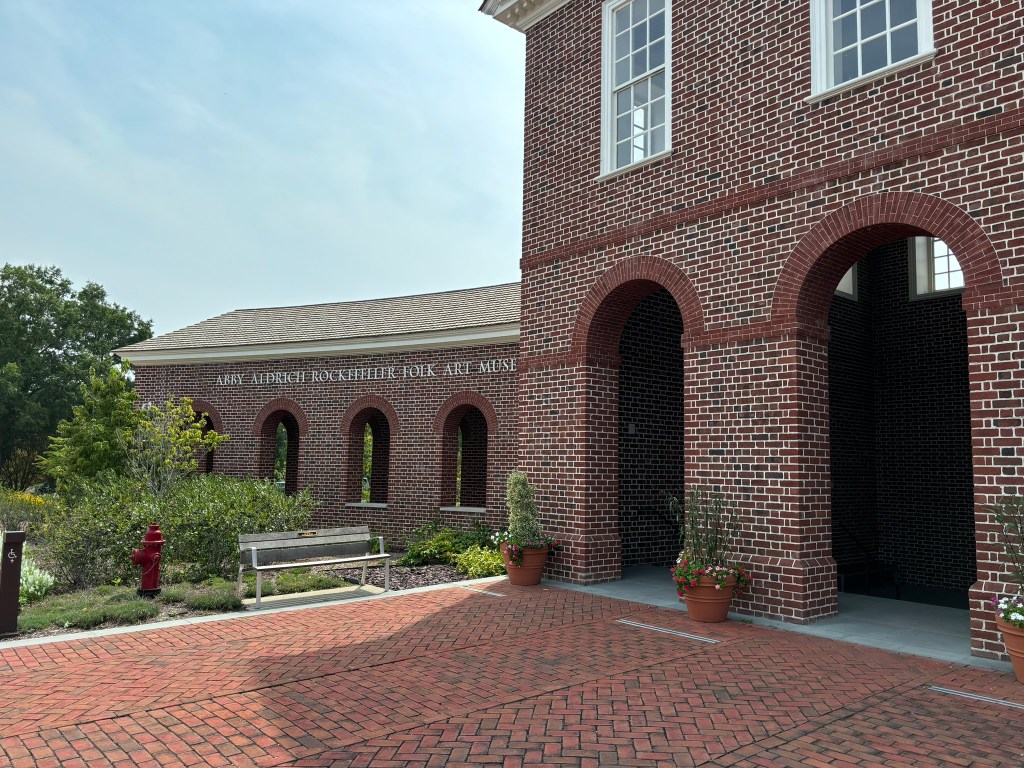
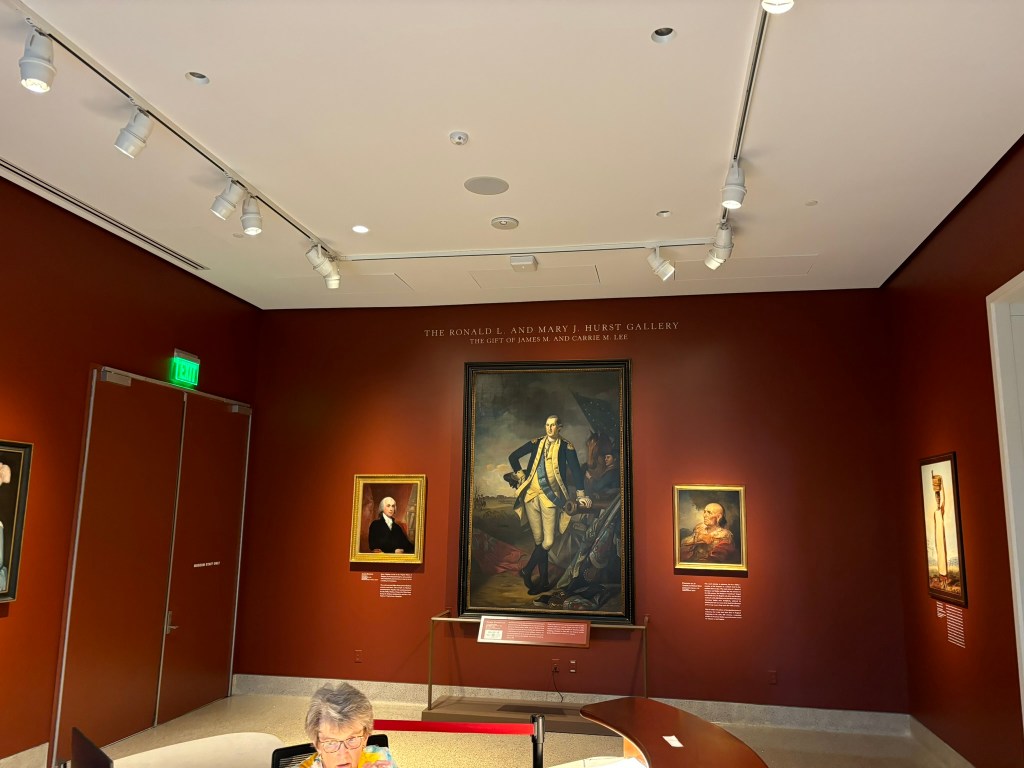
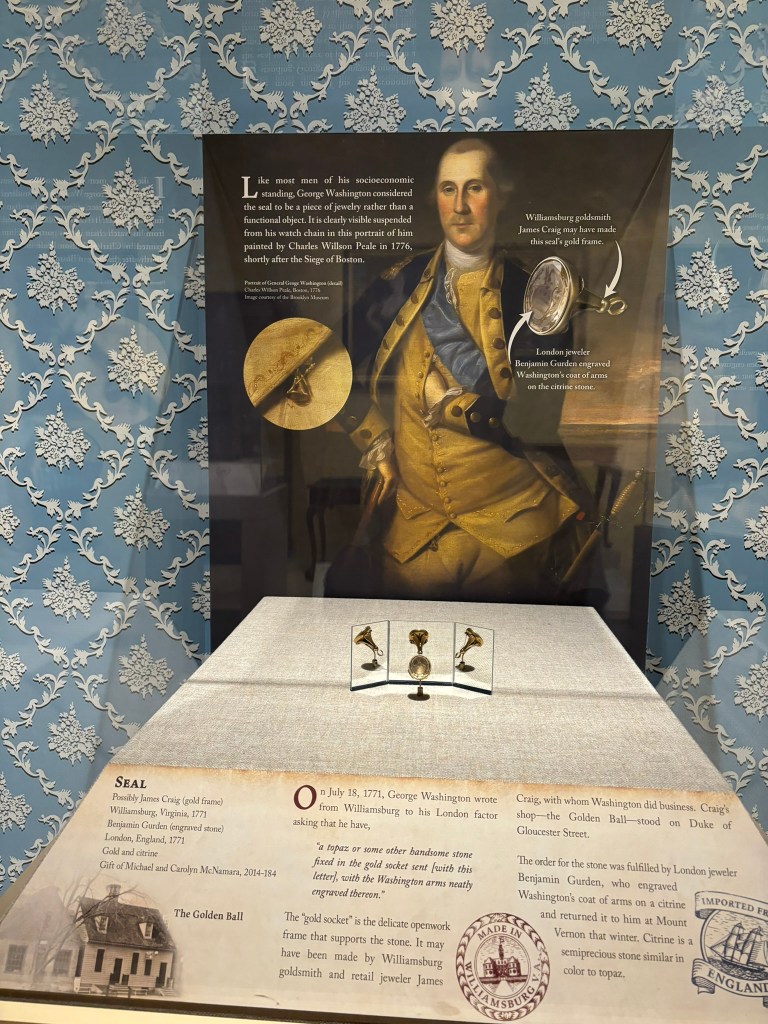
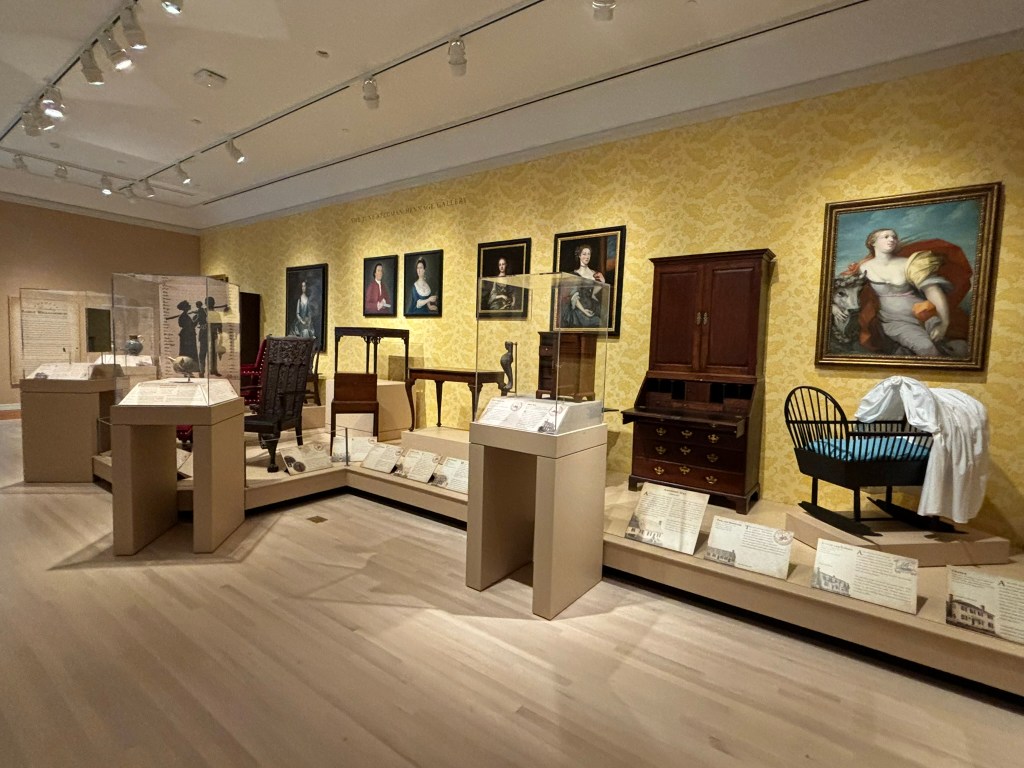
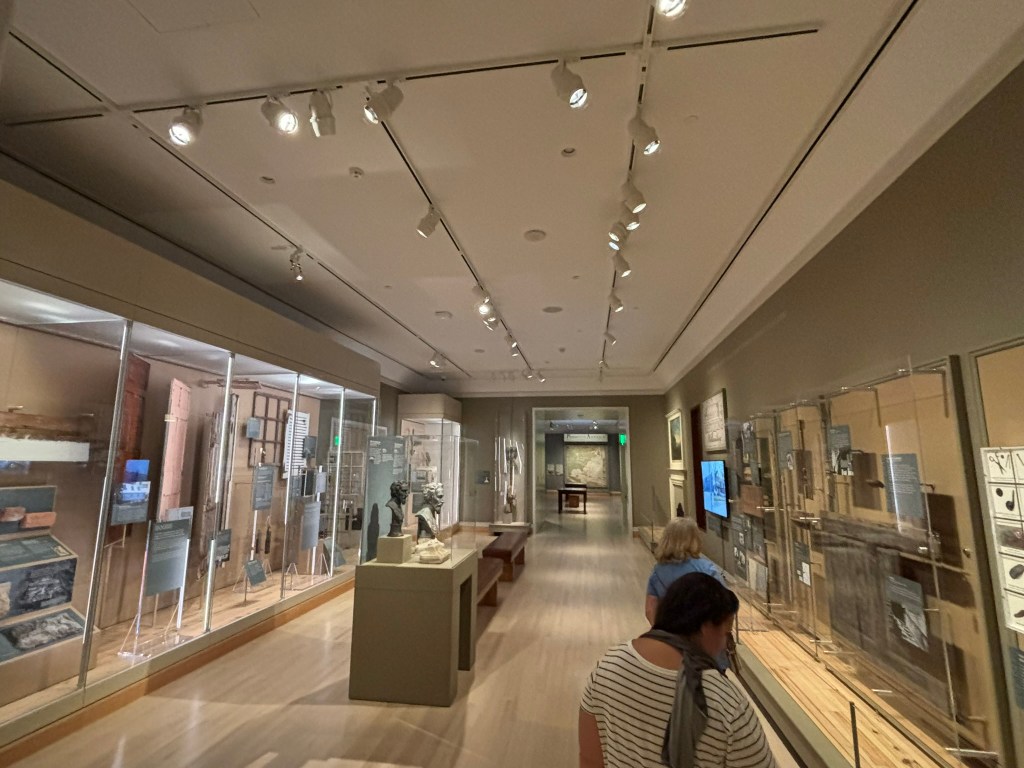
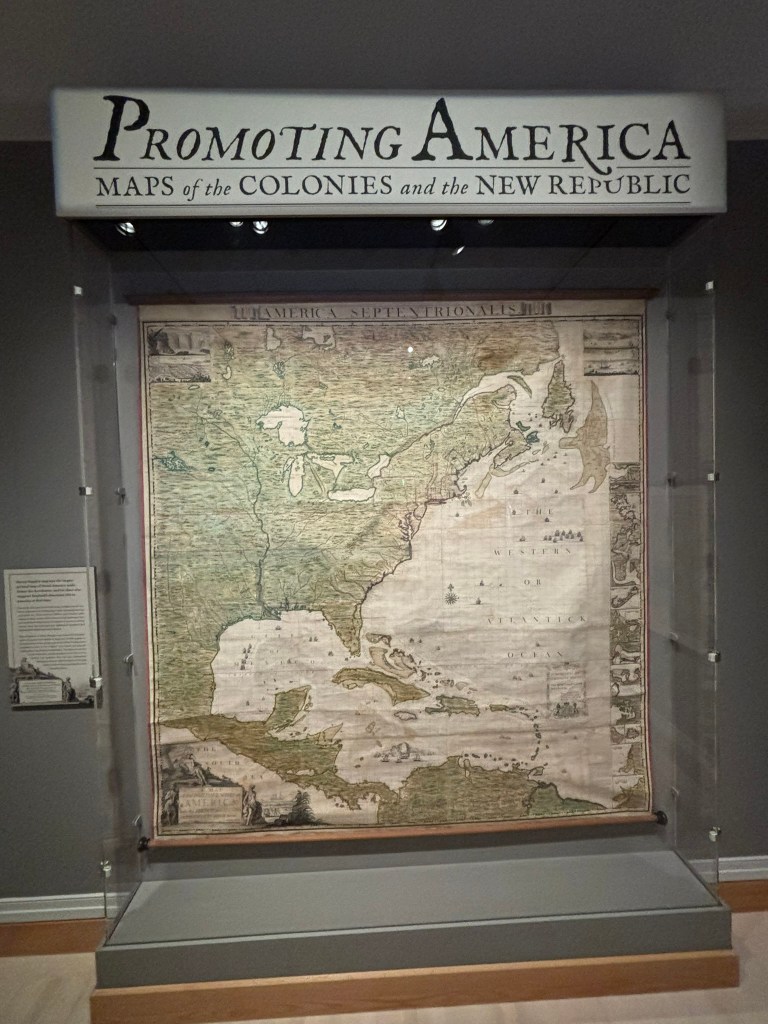
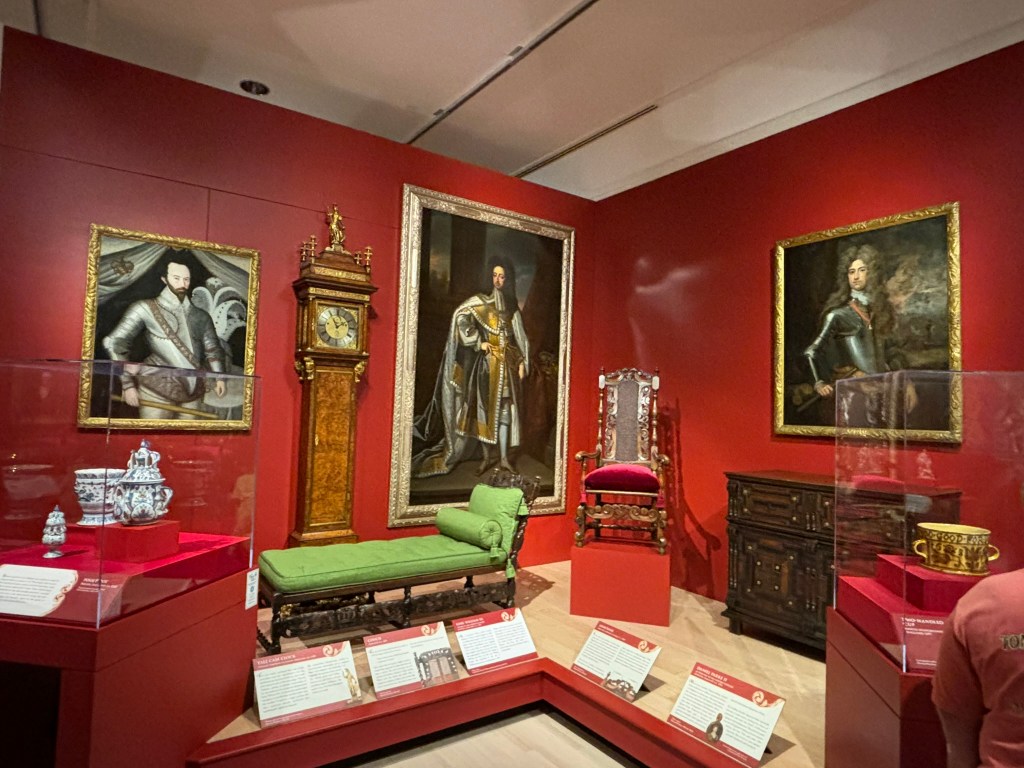
    We made the trek to the Art Museums of Colonial Williamsburg.  The museums had very diverse collections.  The museums consist of the DeWitt Wallace Decorative Arts Museum and the Abby Alrich Rockefeller Folk Art Museum.  There were expansive examples of both American and British antiques and decorative arts from the 17th- 19th centuries.

    Shops of Merchant Square

    After we left the museum, we headed to the Shops of Merchant Square and bought some T-shirts, and a Christmas ornament at the Christmas shop.

    Peyton Randolph House

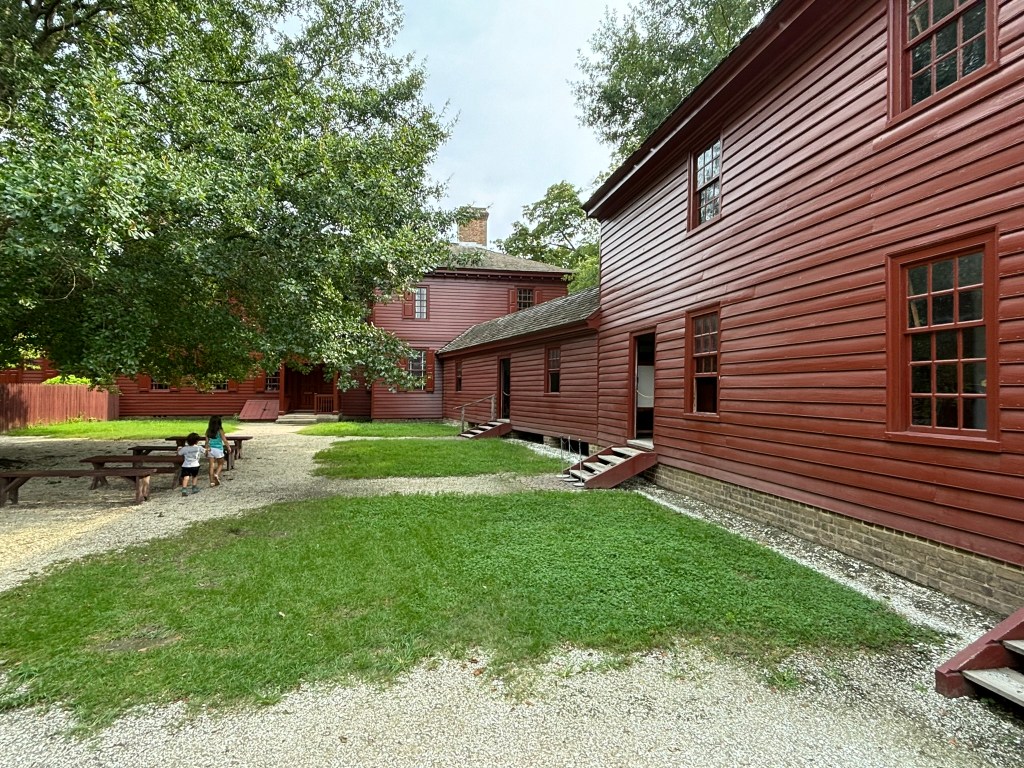
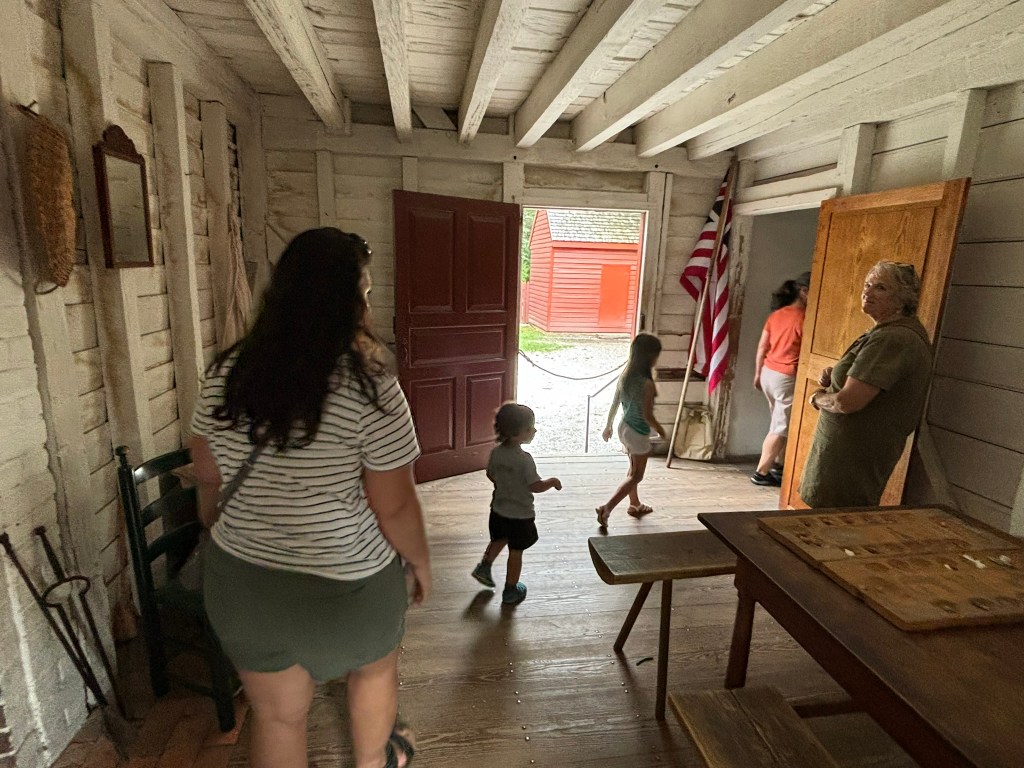
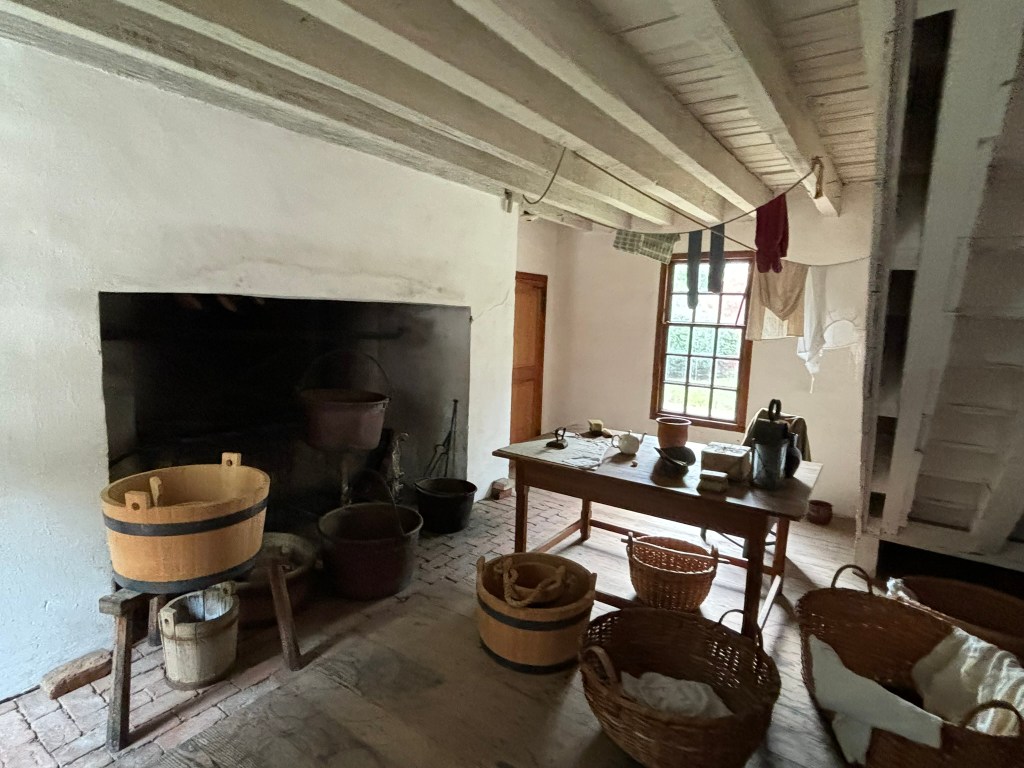
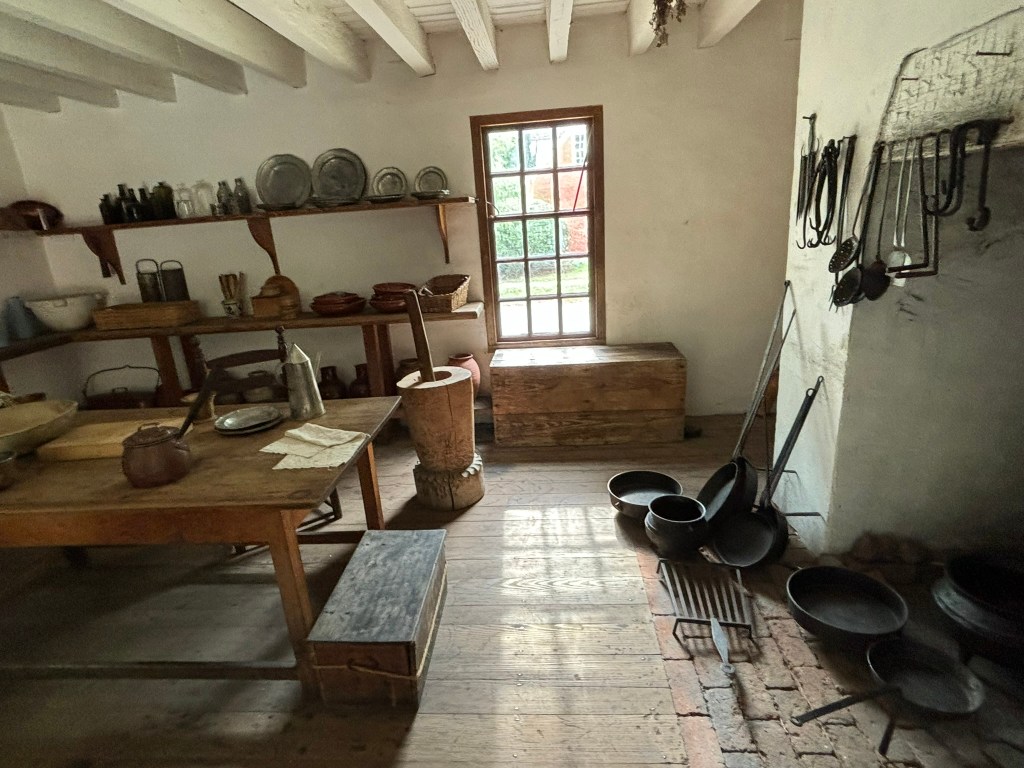
    At this point it was late afternoon.  We decided to visit one last street that we hadn’t visited just yet, which was Nicholson Street.  The main house that we toured at this time was the Peyton Randolph House, which is the dark red house in the photos below.  Randolph was a founding father and the first president of the Continental Congress.  He was instrumental in leading boycotts against British goods in the leadup to the American Revolution.  He was quite wealthy and owned over 100 slaves.  We were able to visit his home where he lived for most of his life.  Our tour guide was quite knowledgeable and informative about Randolph’s life and his home. 

    DoG Street Pub

    When the tour ended, it was time for dinner.  I would have liked to make our way further down Nicholson street, but we just didn’t have the time.  We ate dinner at the DoG Street Pub, which had a nice selection of beers on tap, and very good food.  When we were done eating, we trekked back to our hotel to rest our tired feet.

    Overview

    I really enjoyed Colonial Williamsburg.  Because of the architecture and the reenactors around town, you really felt like you were living in 1775.  The reenactors do a great job re-creating the many jobs and chores that the colonials were responsible for.  You got a sense of the hard-work and toil that went along with living in this era.  Each person had to be an expert at their craft.  But most people would have been small farmers.  And when they weren’t out farming they were doing household chores like making candles, making soap, sewing clothes, and creating everything that the household needed.  People back then didn’t have much.  They weren’t consumers of goods, and just had the basic necessities.   That was the case for most people. Seeing the Governor’s Palace, we did witness the large discrepancies between the social classes in Colonial America. While the majority of colonials were barely scraping by, a select few were living lavishly in structures such as the Governor’s Palace.

    Follow my Instagram, Facebook, and X accounts in the coming days for videos of my time in Colonial Williamsburg.

    For Part 2 of this blog post, I will discuss our tour of the Jamestown Settlement, followed by Part 3, which will focus on our tour of the Yorktown Battlefield and Museum.  Stay tuned!

    For more information about the Williamburg Woodlands Hotel and Suites, visit HERE.

    For more information about Colonial Williamsburg, visit their official website, HERE.

    Williamsburg, VA is along the Washington-Rochambeau Revolutionary Route- Check out their site HERE.

    Check out similar blog posts below!