In my previous post, I highlighted Union General, George B. McClellan. In my second of three blog posts, I will highlight Civil War General, Ulysses S. Grant. Below are six words that describe Grant as a general, and an explanation for each word. To close, I explain Grant’s impact on the Civil War.
Ulysses S. Grant
a. Courageous– Grant showed his tremendous courage throughout the war. At the Battle of Shiloh, his men got pushed back on the first day of the battle. Many other generals would have retreated. Grant would not. He prepared an attack for the next morning and was able to drive the Confederates away from the field. Grant continuously made courageous decisions. He was never willing to give up or retreat. He only wanted to press on.
b. Determined– Grant was always determined to complete his mission to the bitter end. At the Siege of Vicksburg, Grant attempted two frontal assaults. When those failed, Grant settled in for a long siege. Although he’d prefer a quick victory, he was always willing to try a Plan B in order to accomplish the goal. He stayed determined and had to be patient many times in the war. Grant became the most successful Union general because he was always willing to push forward. Eventually Vicksburg fell to the Union.
c. Tactician– Grant was a great military tactician. He was able to read the enemy’s positions, and call up an effective strategy. Whether that meant attacking the enemy head on, outflanking the enemy, or settling in for a siege, Grant had a knack for knowing what strategy would work best for the given circumstances. He used his reinforcements and reserve troops wisely.
d. Tough– When times became difficult for his Union army, Grant was always tough enough to keep fighting. Unfortunately for the Union, many generals did not have the same characteristics as Grant. During the Overland Campaign, Grant lost many men fighting against Lee’s army. However, Grant knew that the only way to win the war, was to completely destroy Lee’s army. While some in the newspapers and the public were calling Grant a “butcher,” Grant knew he had to be tough enough to keep fighting and win a war of attrition.
e. Calm– The only way to make tough decisions in the heat of the battle was to have the calm demeanor of Grant. He never wavered. He made clear-headed decisions in some of the most trying times. Grant was able to keep his composure and remained calm when he gave orders to his men.
f. Decisive– In the moment by moment developments of the battle, Grant was always clear and decisive with no hesitation. He made a decision and carried out the plan that best suited his circumstances. Some previous Union commanders were quite the opposite, were very indecisive about what their next move should be, or whether or not they should attack or use troops held in reserve. Grant, on the other hand, did not waste time considering his next move. He was quick to act and was always pressing the enemy.
In Grant, Lincoln found the right man to lead the Union army. Grant ultimately saved the Civil War. In the first half of the war, the only successes that the Union was having was in the Western Theater of the war, thanks to Grant. While the war effort was going poorly in the East, Grant won the Battle of Fort Henry and the Battle of Fort Donelson in 1862 in Tennessee. He then won a strategic, although deadly, Battle of Shiloh. Once Lincoln went through many generals in the East, he eventually knew that Grant was the only General who could save the War. Lincoln made Grant the head of armed forces, and he took command of the Union army against Lee’s army. Grant was the only general, up to that point, who was aggressive enough to do so. Although he had to throw many men into battle at a high human cost, he knew that the only way to win the war was to outlast Lee, and ultimately destroy Lee’s army. In the later phases of the war, Lincoln and Grant became very cordial. They agreed on the same strategies and they forged a bond which helped the war effort. Finally, at Appomattox Court House, Grant gave favorable terms of surrender to Lee, just as Lincoln had hoped.
In my next three blog posts I will highlight a Civil War Union General who Abraham Lincoln put his trust in to lead the Union army. I will focus on George B. McClellan, Ulysses S. Grant, and William T. Sherman. For each general, I will use six words to describe them as a general. I will then elaborate on the word chosen. To close, I will explain the general’s impact on the Civil War.
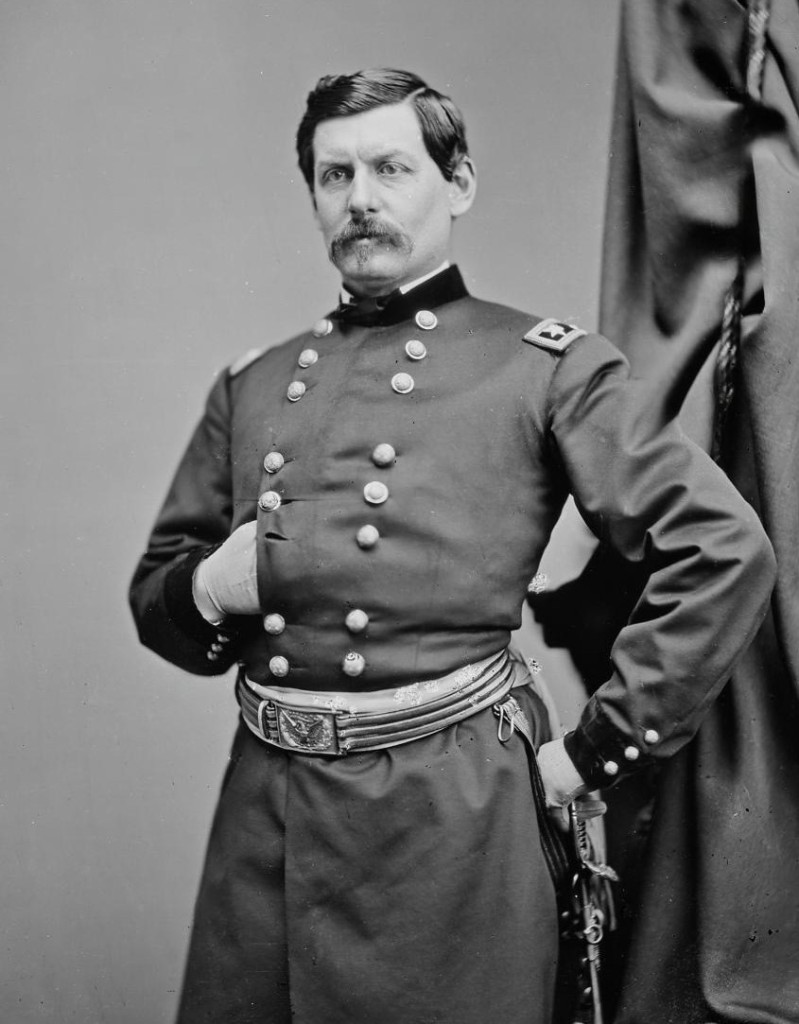
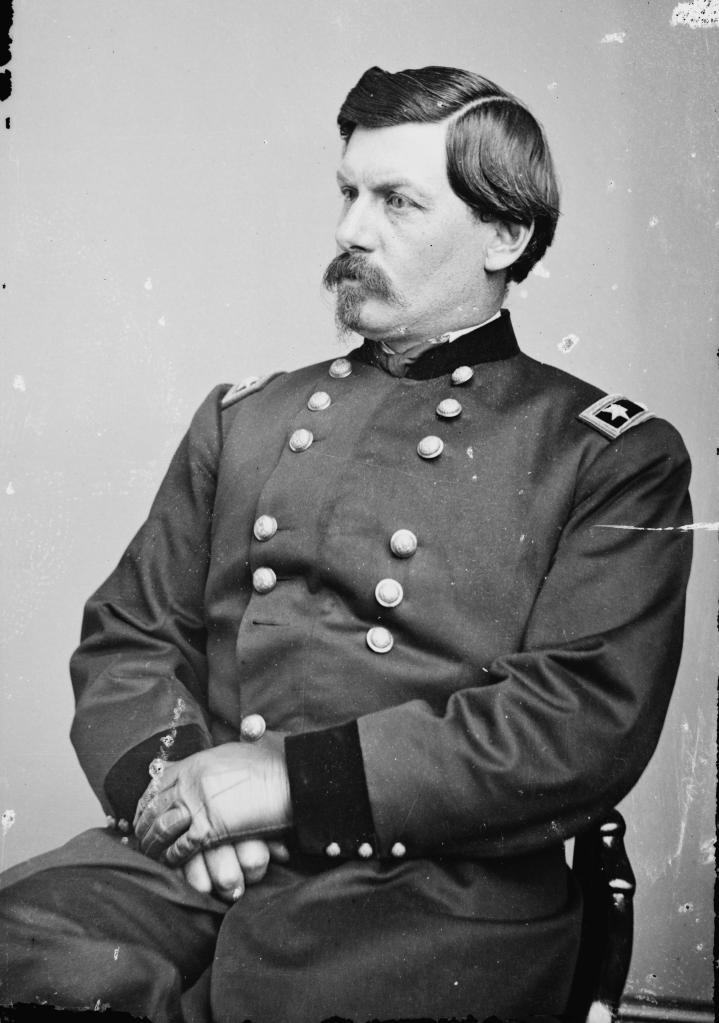
George B. McClellan
a. Administrator– McClellan was known for being a good administrator and his soldiers admired him. At the start of the war, he played an important role in raising an organized and well-trained army, which would become known as the Army of the Potomac.
b. Cautious– McClellan always believed that the Confederate army was larger than it was. He often believed that he needed more men and frequently asked for reinforcements, and therefore, he was overly cautious. At the start of the war he complained that he needed 270,000 soldiers when he had 120,000. McClellan worried too much about what the enemy might do. At Antietam, his subordinates urged him to send in reserve troops, but McClellan would only do so if it was absolutely necessary. McClellan missed opportunities to give a decisive blow to the enemy.
c. Hesitant– McClellan often believed that he was not given the proper resources to conduct a campaign. He complained of not enough men and not enough supplies. Because of this hesitance, his first campaign, the Peninsula Campaign, did not begin until March 1862, nearly a year after hostilities had begun. The newspapers, as well as Lincoln became very impatient with McClellan. Lincoln is quoted as saying that he would like to “borrow McClellan’s army if the general himself was not going to use it.”
d. Selfish– McClellan spoke negatively about Lincoln and other politicians in the Congress and the Cabinet, and even looked down on the President as someone with no military experience. He thought they were ignorant to the real needs of battle, while he, on the front lines, did not have the resources to attack. While everyone was pushing for McClellan to attack the Confederate army, McClellan didn’t listen. He seemed to care more about his own personal success than the success of the army, and he feared losing. After his failure to attack Lee’s retreating army at Antietam, McClellan believed that his actions during the battle were a “masterpiece of art.”
e. Paranoid– McClellan often believed that Lincoln and other politicians who were frustrated with him were talking behind his back, and trying to get him removed from his command. In a letter, he even called Lincoln, “nothing more than a well-meaning baboon…” His paranoia on the battlefield left him at a mental disadvantage. McClellan’s fear of failure hindered his ability to succeed militarily.
f. Indecisive– During the Seven Days’ Battles (June- July 1862), Robert E. Lee took over Confederate command and was much more aggressive than the previous Confederate General, Joseph E. Johnston. Lee so unnerved McClellan that he retreated back down the peninsula to the sea. McClellan again showed his indecisiveness at the Battle of Antietam. Although this was a Union victory, McClellan never ordered an attack during Lee’s retreat even though he greatly outnumbered Lee’s army. This infuriated Lincoln, and McClellan was fired in November, 1862.
George B. McClellan was a hindrance to Lincoln and the Union war effort. At the start of the war, Lincoln chose “The Young Napoleon” because McClellan had proven himself at West Point and the Mexican-American War to be an outstanding field commander. However, McClellan’s cautiousness led Lincoln and McClellan to be constantly at odds with one another, and they grew to distrust each other. This only created more stress for the Commander-In-Chief and the Northern newspapers. There were even rumors that McClellan was working for the Confederacy. While McClellan was at the head of the army, the Union Army of the Potomac faced set-back after set-back. The war in the Eastern Theater was going so poorly that Northerners were losing faith in the Union War effort. After Antietam, Lincoln removed McClellan from command and he would not lead a Union army again. He continued to be a hindrance to Lincoln by running as a Democrat in the 1864 Presidential Election. Although Lincoln was the victor, McClellan may have sought to make peace with Confederacy had he been elected President.
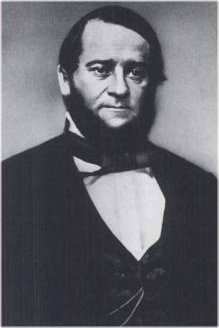
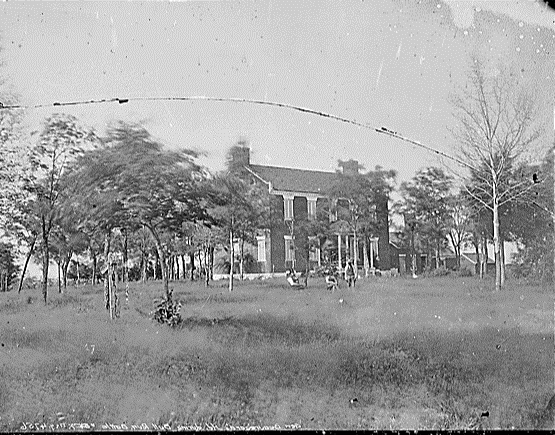
Wilmer McLean was a wholesale grocer who lived in Manassas, Virginia, and purchased his home and farm in 1854. When the Civil War started in 1861, an early goal of both armies was to capture the opposing capitals, Washington D.C. and Richmond, VA. Therefore, many battles took place in the vicinity of these cities. The first major battle that broke out on July 21st, 1861, was the Battle of Bull Run, known to the south as the Battle of Manassas. Unfortunately for Wilmer McLean, the battle took place on his farm, and his house served as the headquarters to Confederate Brigadier General P.G.T. Beauregard. During the battle, a canonball fell through the kitchen fireplace. After the battle, Beauregard wrote, “A comical effect of this artillery fight was the destruction of the dinner of myself and staff by a Federal shell that fell into the fire-place of my headquarters at the McLean House.” The Battle of Bull Run was a victory for the Confederacy when the Union army retreated from the battlefield.
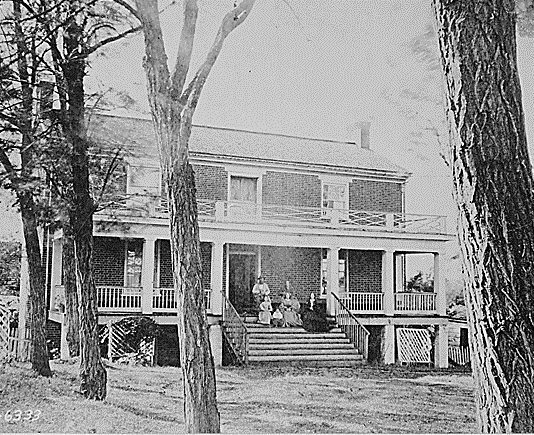
McLean’s home in Manassas
During the war, McLean served as a sugar supplier to the Confederate army. However, he feared that the war in his area of Virginia would impact his business, and he didn’t think it was safe for his family to stay in Manassas. (Considering that there was a Second Battle of Bull Run the following year, he was right). He decided to take his family about 120 miles southwest to a location he believed was safer: Appomattox Courthouse, Virginia.
McLean’s home in Appomattox, VA
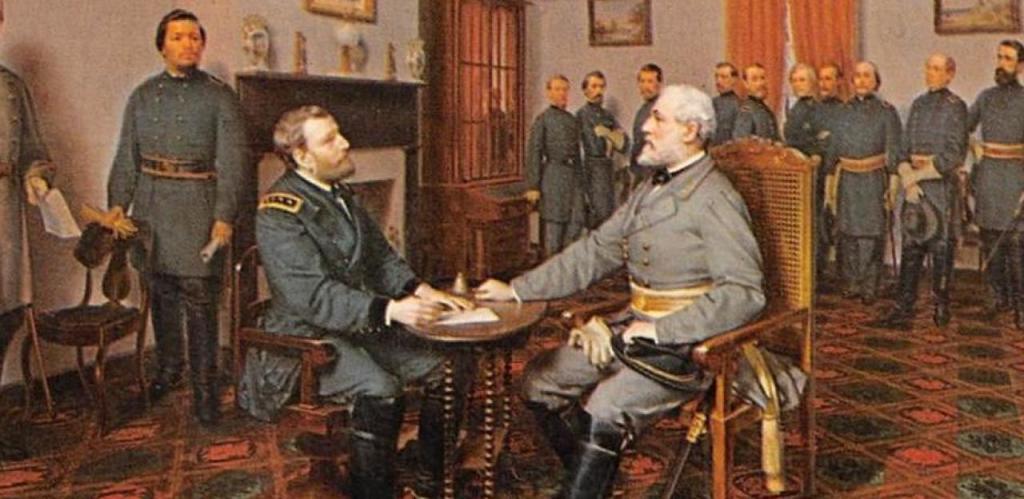
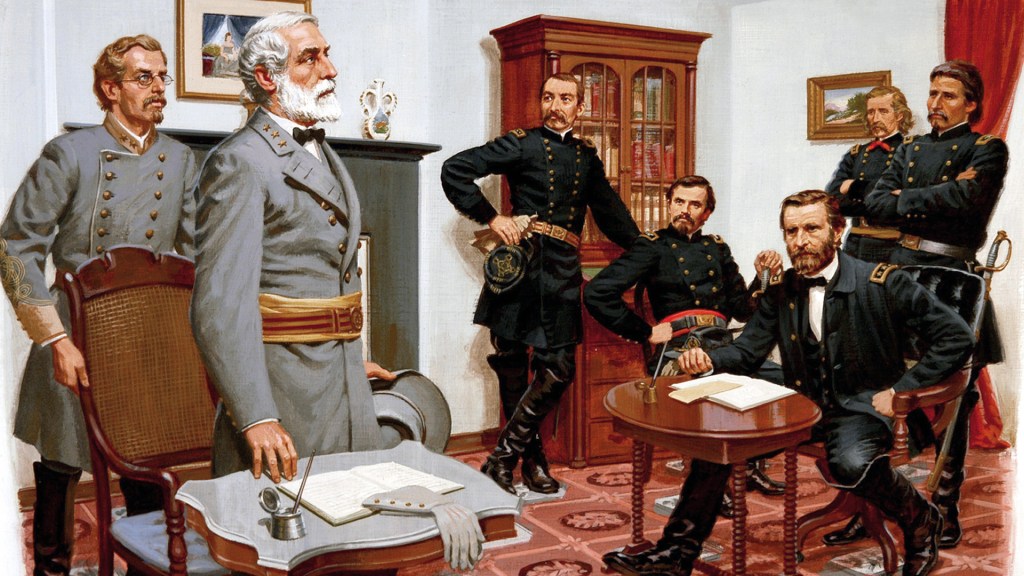
However, on April 9th, 1865, the war knocked on McLean’s door once again. The last major battle of the war between General Robert E. Lee’s Confederate army and General Ulysses S. Grant’s Union army took place in Appomattox Court House. Lee looked for a place to sign the terms of surrender with Grant, and McLean’s house was chosen. McLean had to reluctantly agree. Lee surrendered to Grant in McLean’s parlor. McLean is supposed to have said, “The war began in my backyard, and ended in my front parlor.” The image of Lee and Grant meeting in McLean’s parlor is one of the most iconic images of the Civil War. It marked the end of four years of brutal fighting between the North and South. After Lee signed the terms of surrender, troops began walking off with McLean’s furniture: tables, chairs, etc. as souveniers. They handed McLean money on the spot with no discussion of the furniture’s value. The table on which Grant drafted the document is now at the Smithsonian. This unlucky man had the Civil War come right into his home on two separate occasions, ironically the beginning and end of the war. He sold his home in Appomattox Court House in 1868 and moved back to Manassas. He later moved to Alexandria, VA. A full size recreation of McLean’s home in Appomattox is now part of the Appomattox Court House National Historical Park. (https://www.nps.gov/apco/index.htm)
One of my favorite thought exercises when reading and teaching history, is the ‘what if’. What if events had gone differently than they actually did? Many people think that history was a series of inevitable events that brought us to the present day. But that simply is not the case. One minor aspect of an event or battle could have gone differently and changed the course of history. The Americans winning the American Revolution or the Union winning the Civil War were not foregone conclusions at the start of the conflicts.
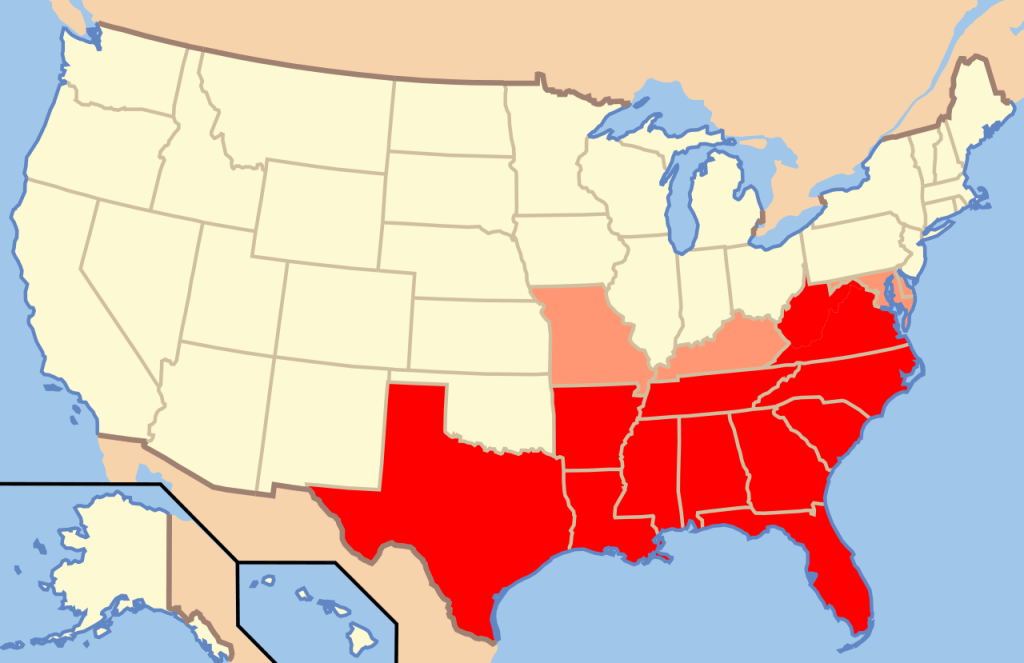
What if the Confederacy had won the Civil War? They definitely had an opportunity to do so, even though the Union was by far the favorite to win at the start of the conflict. The North had four times as many free citizens, produced 90% of the nation’s manufactured goods, had 70% of the nation’s railroads, and a greater food supply. If this war happened today, Vegas would be betting on the North at the start of the conflict. However, the South had some advantages too. They considered this a fight for their independence, a fight to defend their homeland, and a fight to defend and hold onto the institution of slavery. They had greater motivation to fight. Many of the best generals in the country were from the South.
There were two major moments in the war in which the Confederacy had an opportunity to strike a blow to the Union. The first instance came in the late summer of 1862. When command of the Confederate army fell to Robert E. Lee, he was able to win a string of impressive victories in the Seven Days Battles, and the Second Battle of Bull Run. Lee was confident enough to attempt to invade Northern soil. His goal was to win a major victory in the North, and turn Northerners against the war. He reasoned that if Northerners voted Peace Democrats into Congress, they would push to end the war, and the Confederacy would be independent.
The major battle that Lee hoped to win was the Battle of Antietam in Maryland. Though nearly a stalemate in number of casualties, the Confederacy was forced to retreat. Antietam was the deadliest one-day battle in American history with total casualties at 22,720.
The Confederacy’s second opportunity to strike a blow to the Union was the following summer of 1863. Once again Lee and the Confederates won a series of remarkable victories including at the Battle of Chancellorsville in May 1863. Despite this victory, the Confederates lost one of their best generals in Stonewall Jackson. Had Jackson been a part of the Battle of Gettysburg two months later, the course of the battle may have turned out differently. After Chancellorsville, Lee was feeling invincible and decided to invade the North once again. The ramifications of such a Confederate victory could not be understated. His goal once again was to make Northerners so sick of the war that they would turn against the war effort and push for peace. Lee decided to invade Pennsylvania. But like Antietam, the Battle of Gettysburg was a Union victory because the Confederates were forced to retreat from the battlefield. While both sides had staggering losses, the Confederacy was not able to replace their losses. Gettysburg was the deadliest battle of the war. The Union had 23,049 casualties, and the Confederacy had 28,063 casualties. The twin victories at both Gettyburg and Vicksburg, Mississippi, are considered a turning point in the war. Even though the war continued for almost two more years, the Confederacy could not fully recover and did not again attempt to invade the North.
But what if the Confederacy had won a decisive victory at Antietam or Gettysburg? While the Union had a larger army in both battles, it is quite possible that the Confederacy could have won either of these battles, especially with the confidence of Lee and his army. Lee had defeated larger Union armies time and time again. If the Confederates had won either battle, they could have continued marching North, possibly winning other battles on Northern soil. And like Lee had hoped, it is reasonable to believe that Northerners could have turned against the war. They might have considered it not worth it to keep fighting to keep the Southern states in the Union. While they probably would have been bitter about a loss, they may have decided that it would be better to let the Southern states become their own independent country.
Had the confederacy won the war, would other foreign countries have recongized the Confederate States of America as an independent and soverign nation? While some countries would, I think the major countries around the world would not have, at least at first. Countries like Great Britain and France had strongly opposed the institution of slavery by 1861. The Confederacy was hoping to gain recognition from these countries throughout the war, but they refused. I think they would have stuck to their instincts and not recognized a nation that was still relying on slave labor. I also think the United States would have intimidated these countries not to recognize the Confederacy. A major question though, is how long would they not recognize the Confederacy? Would they have continued to not recognize the Confederacy for years or decades? It seems possible that these countries would have had internal debates. Do they recongnize a country that maintains slavery even if the Confederacy itself is friendly and is willing to trade? I think major countries would continue to not recognize the Confederacy as a separate, soverign nation because they didn’t want to be allied with a country that practices slavery.
Would the United States and the Confederacy have gotten along? Simply, I don’t think so. There probably would be some debate in the U.S. government about how to approach and deal with the Confederate States of America. I suppose there would be some who would see the benefits of friendly trade relations with our neighbor to the South. However, I think the relationship between the U.S. and the C.S.A. would be tense in the long-term. I think most members of the U.S. government would not want to recognize the C.S.A. as an independent, soverign nation for the same reasons as other foreign nations, not wanting to be associated with the institution of slavery. They would feel animosity towards the country that fired the first shots of the Civil War. Because of these tensions, there’s a strong possibility that there would have been border conflicts out west as the two countries continued to expand. I think at some point there would be another armed conflict between the two countries. I’m not sure when that would happen but my guess would be by the end of the 19th century. If armed conflict did break out, the United States would have to decide if it was worth the effort to try to win back the South. This would depend on the size and might of the two opposing countries at that time. If the United States had progressed at a faster rate than the Confederacy (which is quite feasible) they may have taken the opportunity to try win back their former land. This conflict however would be close in size and scale to the first Civil War, which would have everyone second guessing.
When would slavery have ended? This is probably the most intruging question of them all. If the Confederate States of America remained an independent nation up until the present, when would they have outlawed slavery and what would have been their process? Throughout the nineteenth century, the agitations between pro-slavery Southerners and Northern abolitionists only continued to grow. Pro-slavery southerners began digging in and presenting a growing number of justifications for slavery. Had they won the Civil War, I believe that they would have latched onto these arguments and would have been emboldened by the victory. They may have argued that Divine Providence had been on the side of slavery. Therefore, I think it would have taken decades before they outlawed slavery. I think what would eventually do them in would be the global outcry against the Confederacy and their institutions. There would be an alliance of countries that would refuse to trade with them until they abolished slavery, and the sanctions against them would pile up. At that point the Confederacy’s economy would do so poorly that they would have no other choice than to give into the pressures of the global community. Even if they decided to outlaw slavery, I think they would go about it in a very long, drawn out process of gradual emancipation. This would mean that current slaves would remain slaves, but their children would be freed (Or some other kind of similar method). Southern slave holders would demand payment for their emancipated slaves. The process would take a generation or longer before slavery was fully outlawed. So while I don’t believe slavery would have lasted forever in the Confederacy, the question is how long would it have lasted. I think it would have taken until close to 1900 for them to take any action, and then perhaps another couple decades for slavery to be conpleted eradicated.
The last question I want to pose is: What would happen to the Northern states after the Civil War if the Confederacy had won? Would there be other states that attempted to secede if they disagreed with the federal government? While I don’t think this would happen, it is worth pondering. Whether or not states had a right to secede was a common debate in the 1800s, starting with founders like Jefferson and Madison. If Northern states witnessed the success of the Confederacy and their quest to leave the union, it is in the realm of possibility that other states would attempt to do the same. Luckily with the Northern victory, the debate on state secession was squashed, and we have not fractured into many small warring countries.
What do you think? What would have happened if the Confederacy had won the Civil War? Please comment on any of the thoughts above. I’m interested to hear other perspectives.