Category: Native Americans

  • My previous blog post covered my family’s first day on our Williamsburg, VA vacation, which was a visit to Colonial Williamsburg.  On our second day, we booked a tour by Viator that took us to Jamestown in the morning, and Yorktown in the afternoon.  This blog post will focus on our time in Jamestown, which will be followed by another blog post which will focus on Yorktown.

    Viator Trip

    I found the Viator trip to Jamestown and Yorktown months in advance of our trip, and thought it a great opportunity to visit two places that I’ve wanted to see for years; two locations so significant to American history.  The tour had us meet at 8 AM at the Williamsburg General Store which was about a 7 minute drive from our hotel.  We boarded a large bus and made our way to Jamestown.  On route to Jamestown, our tour guide gave us some historical background leading up to the settlement of Jamestown 1607.  The bus ride to Jamestown was about 20 mins.
    I’ve previously written a blog post about the history of the Jamestown settlement, which you could read HERE.  Jamestown was the first permanent English colony.  The colonists barely survived the settlement in the first couple of years.  The settlement that started in Jamestown eventually branched out to become the Virginia colony.  To be able to visit Jamestown in person was a real treat. 

    However, I must include the fact that we visited the Jamestown Settlement, which is a museum about the settlement of Jamestown.  This museum is about a mile east of the original Jamestown fort site, which is called Historic Jamestowne.  If I had to be perfectly honest, I thought this tour would take us to Historic Jamestowne, but that was not the case.  So I was a little disappointed in that.  I’ll have to go back another time to see Historic Jamestowne, where archaeological work is taking place.  But visiting the Jamestown Settlement was not a disappointment and there was much to see and do there.

    Overlook

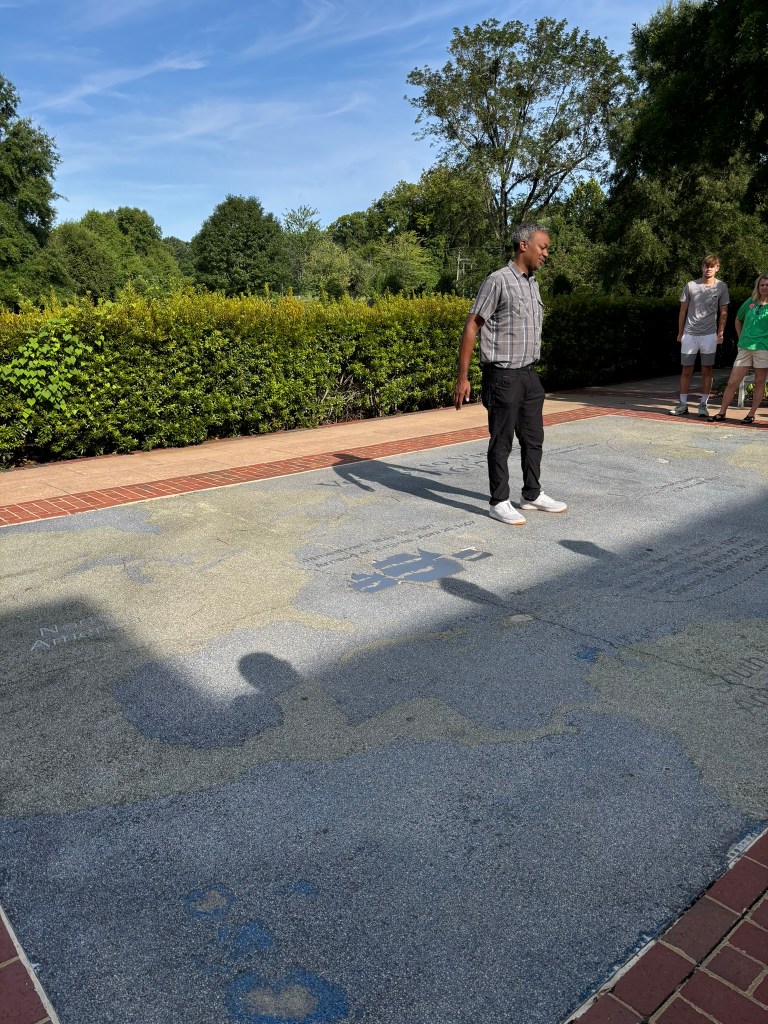
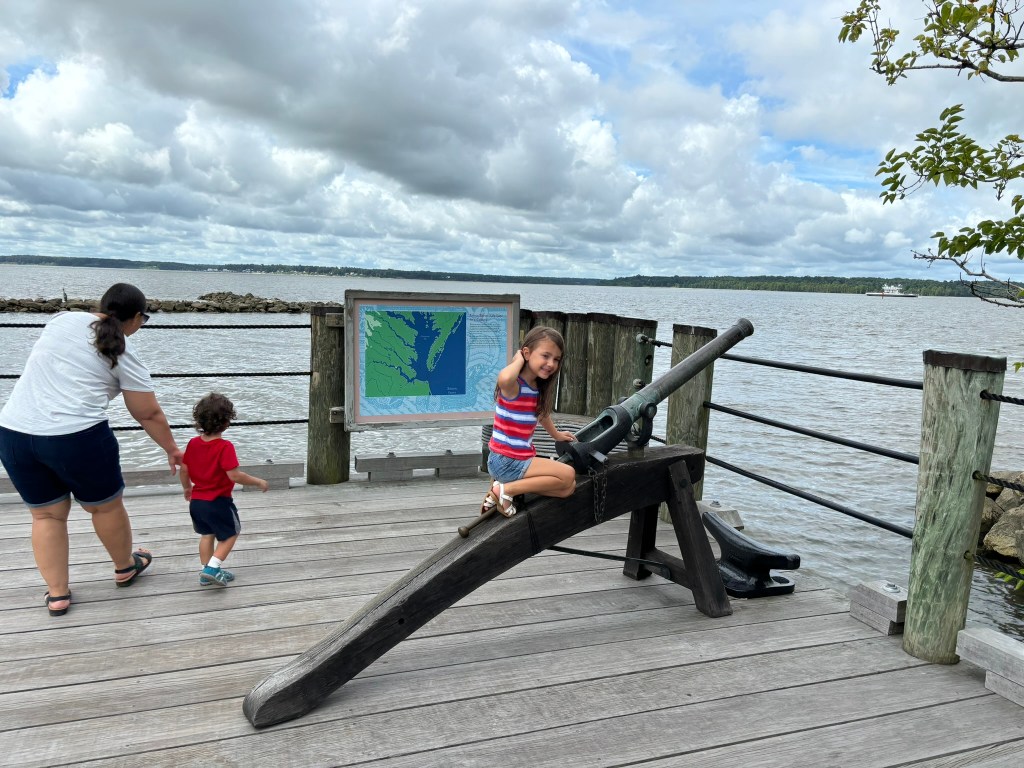
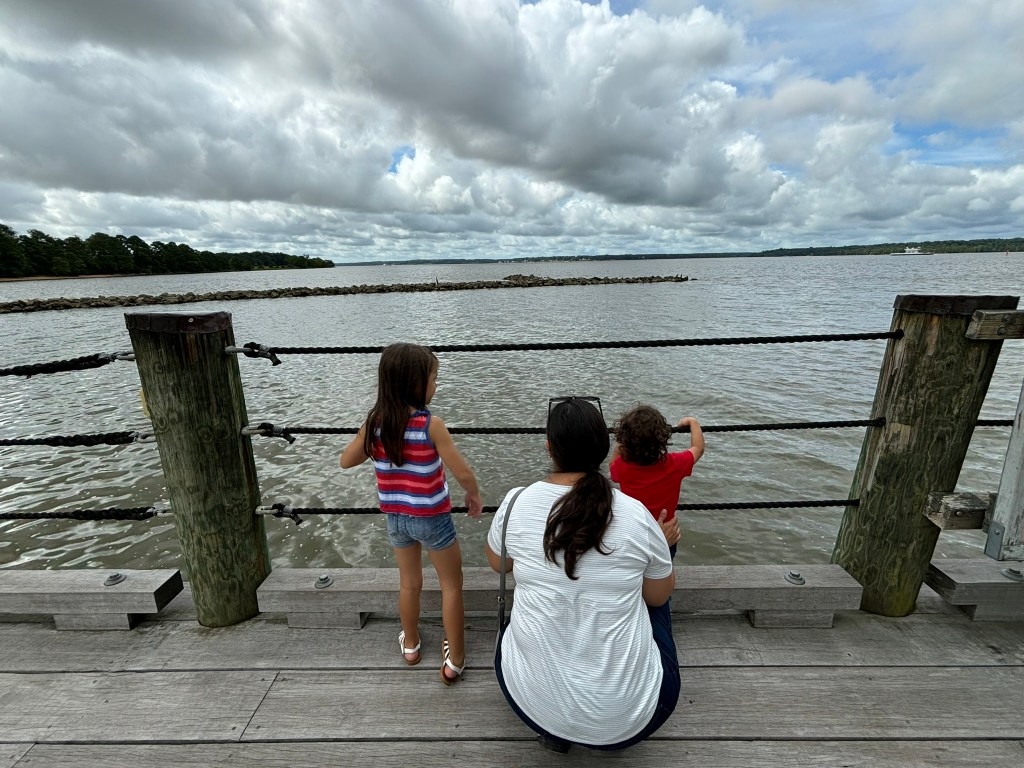
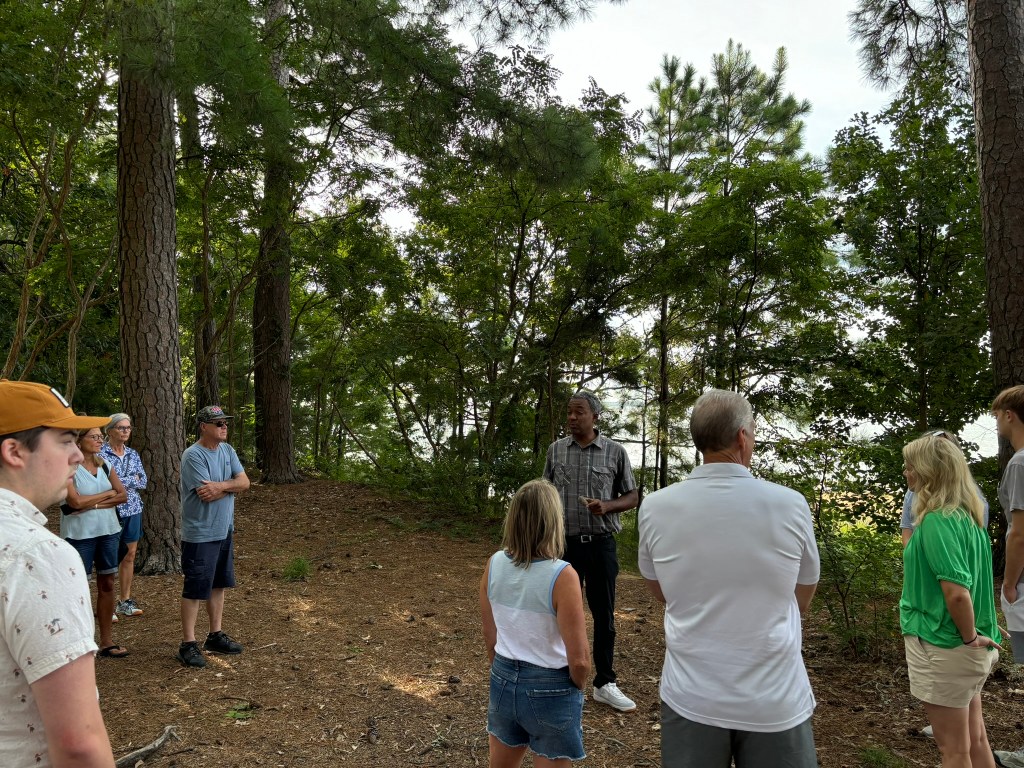
    Before arriving to the museum, our tour guide took us out of the bus to a spot along the James River called the “Overlook.” From our vantage point north of the river, we could see the spot that the English colonists orginally landed on their first voyage to Jamestown, which you could see in the photo below.

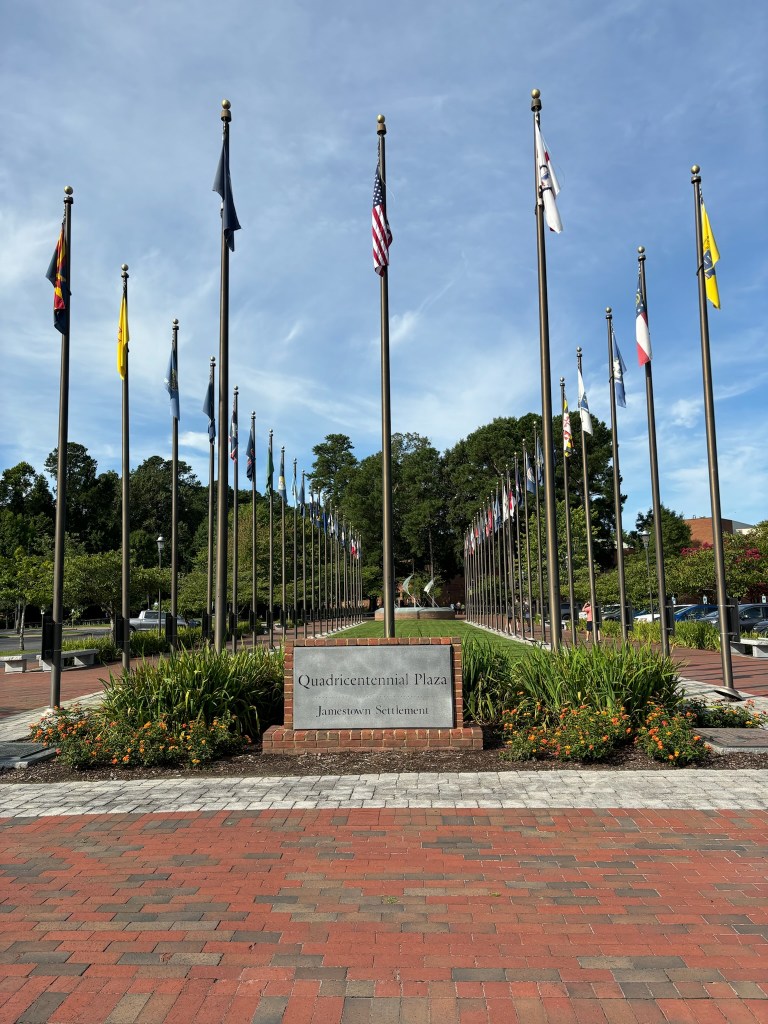
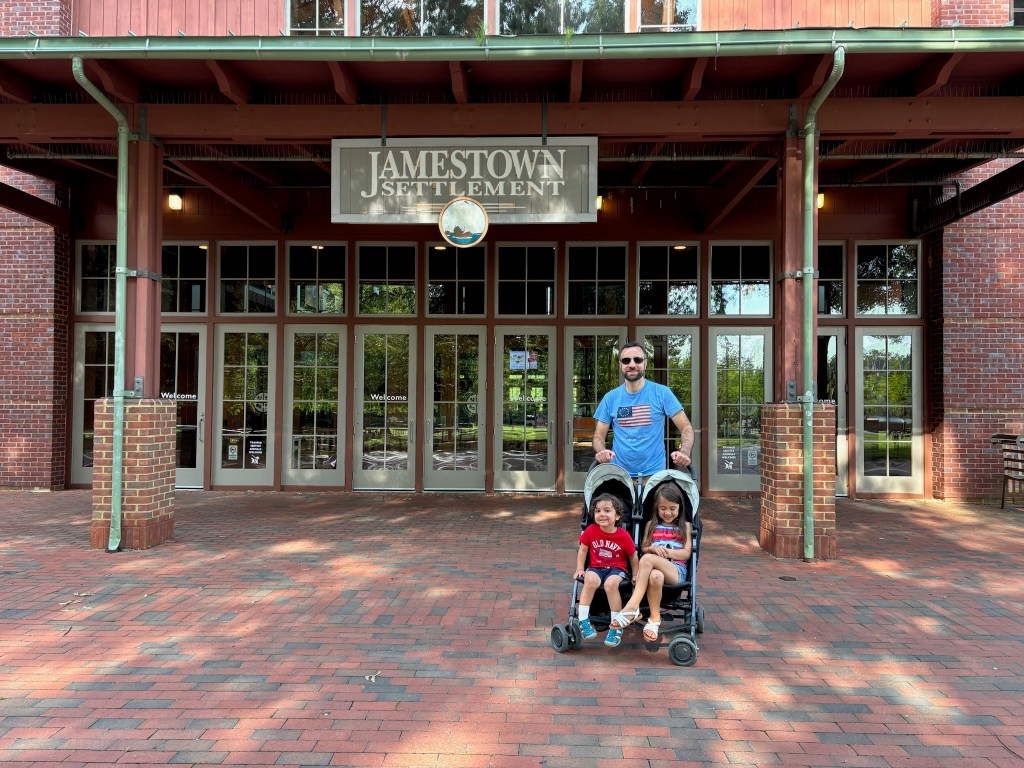
    Jamestown Settlement

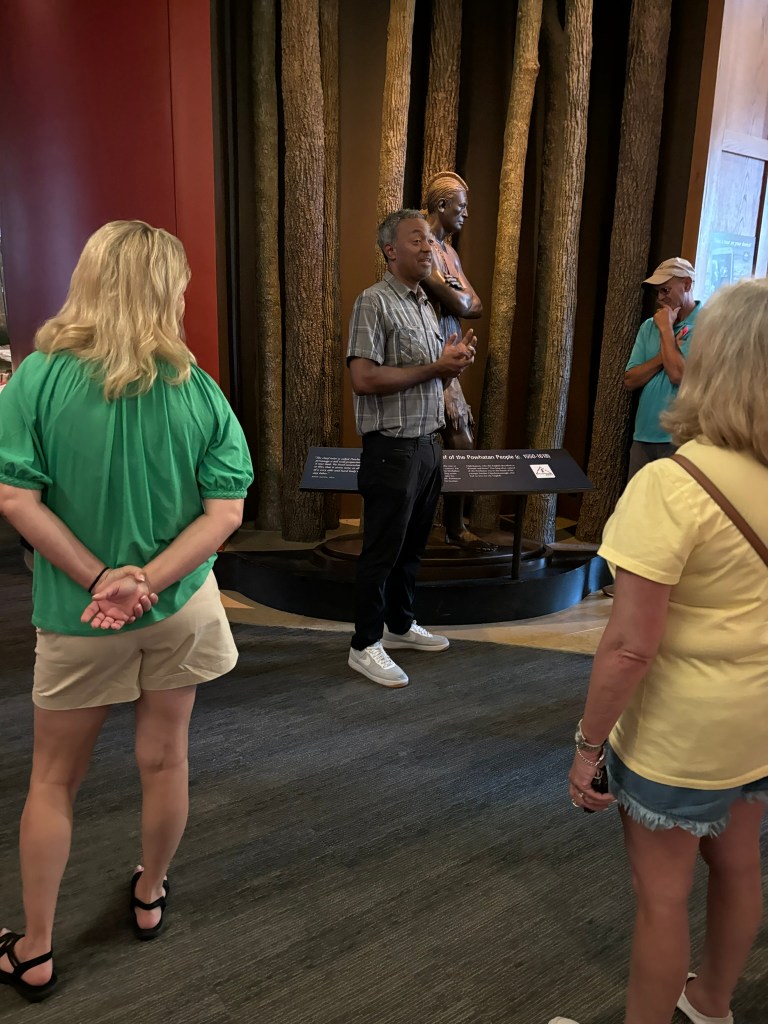
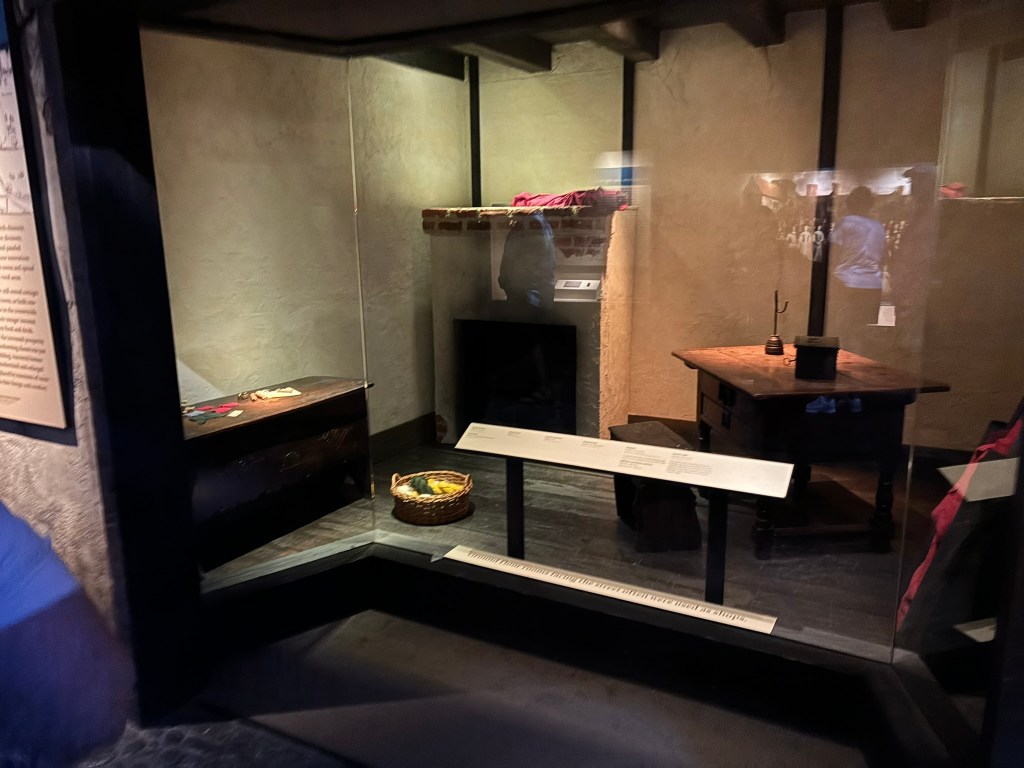
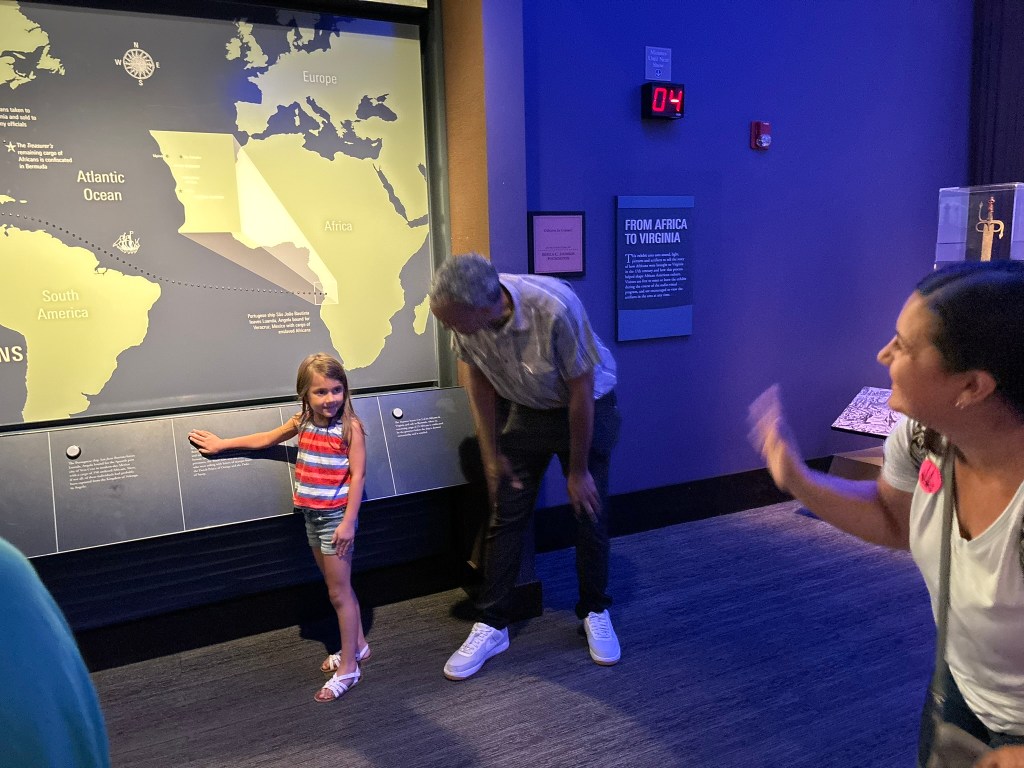
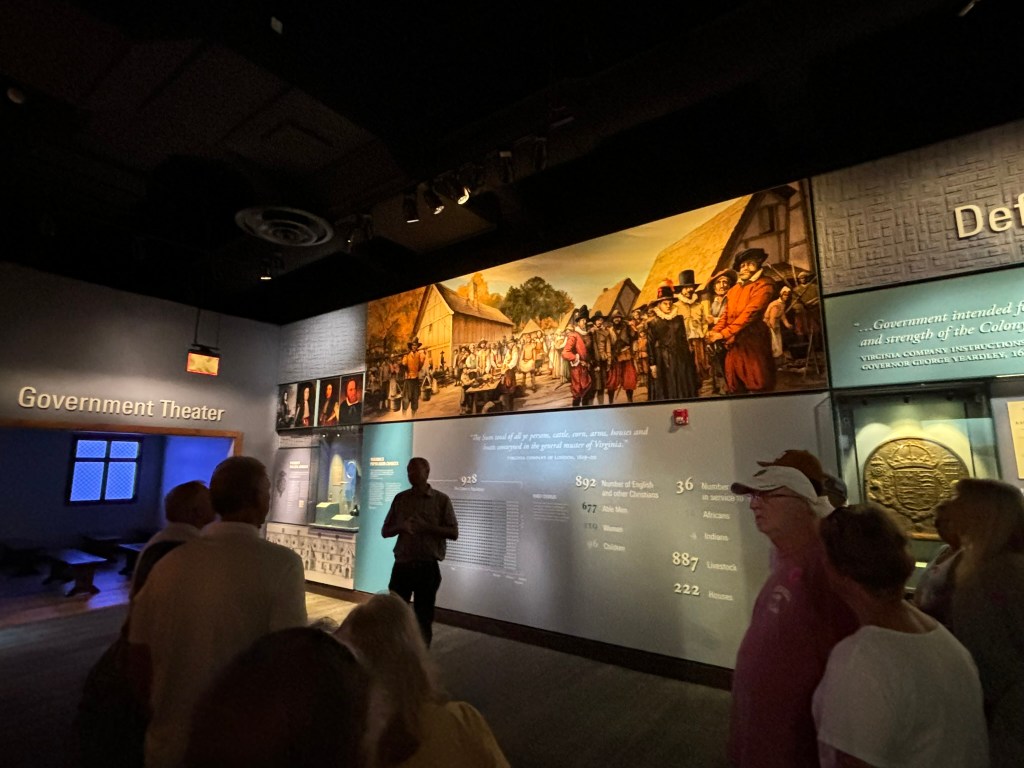
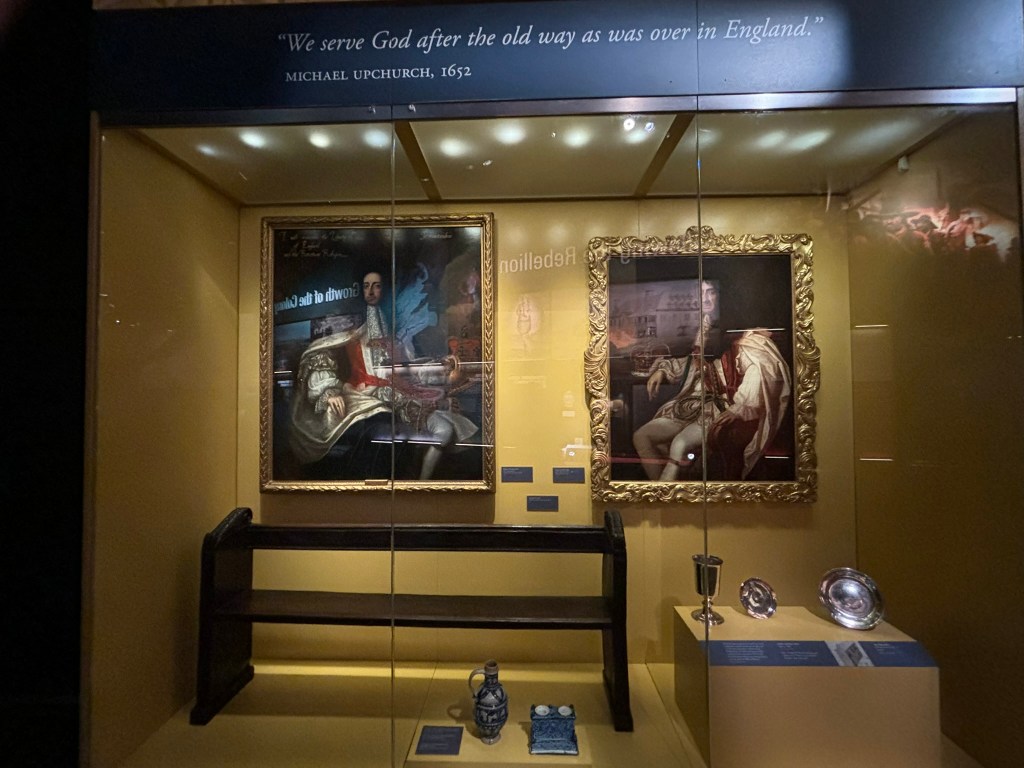
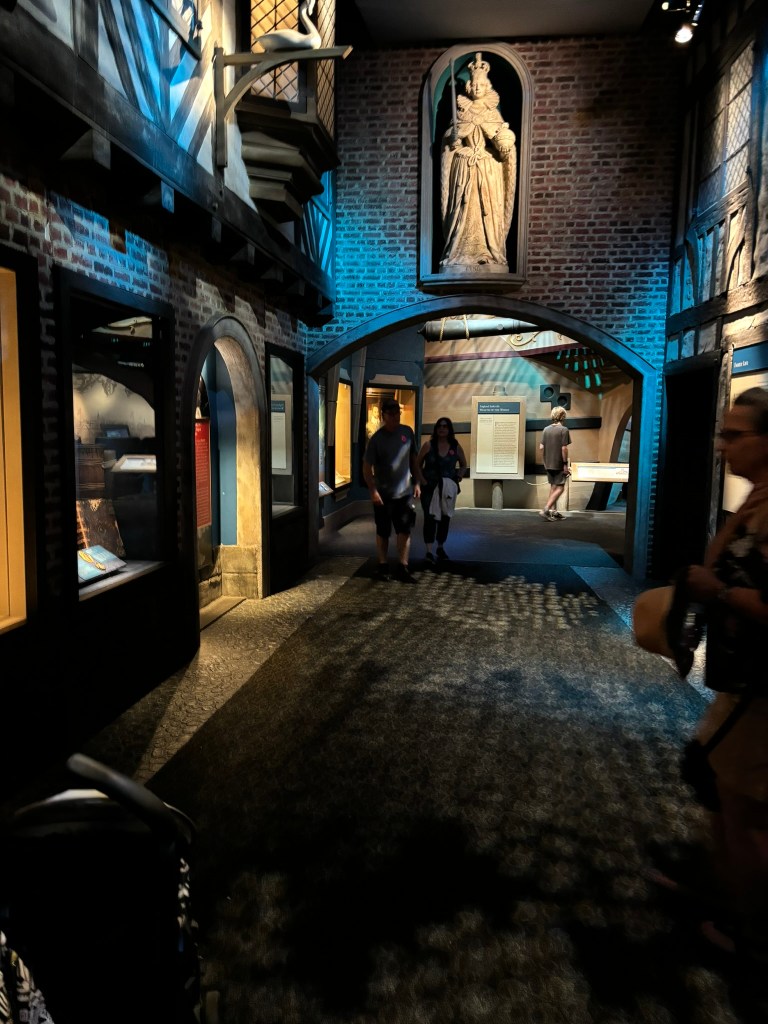
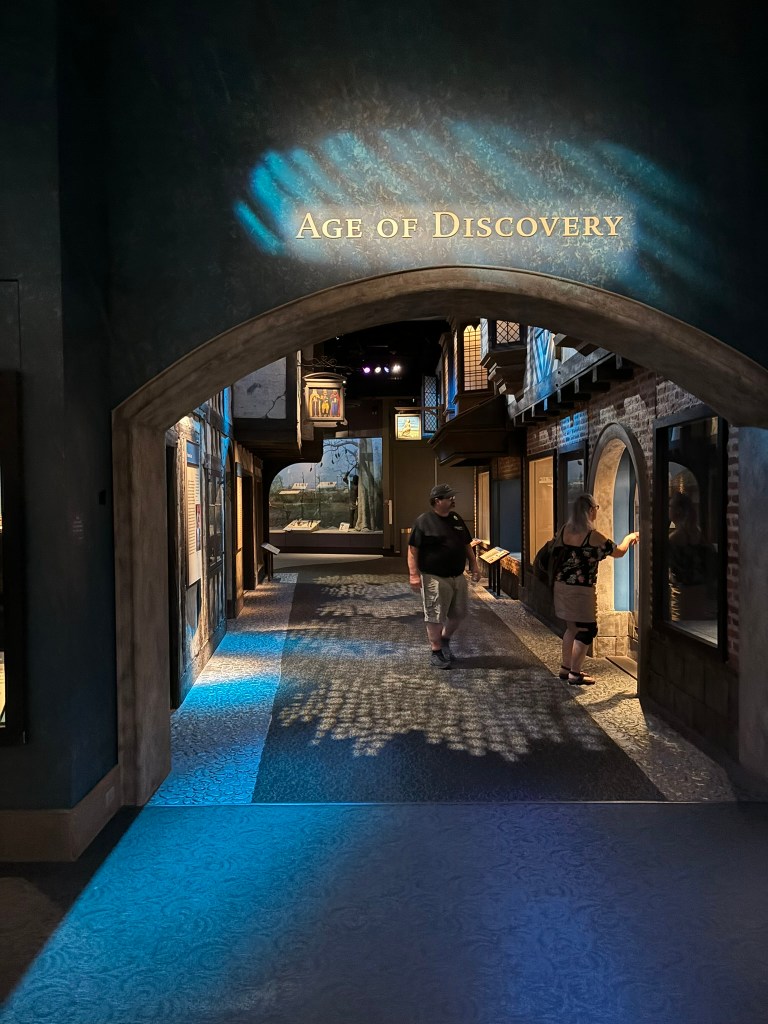
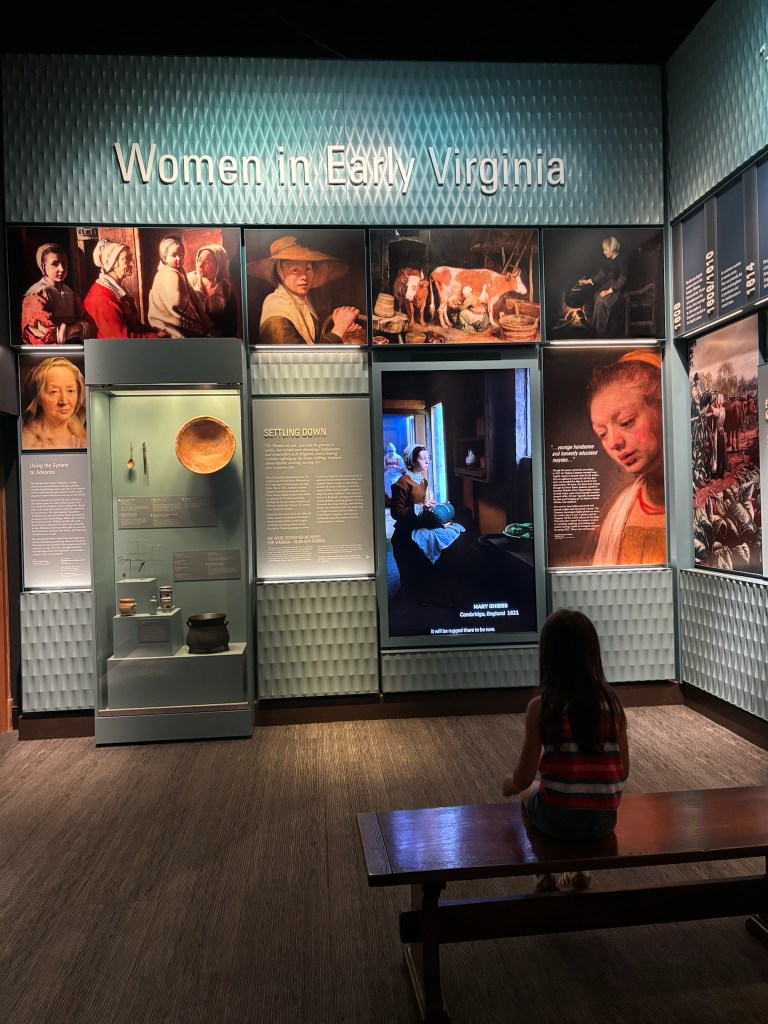
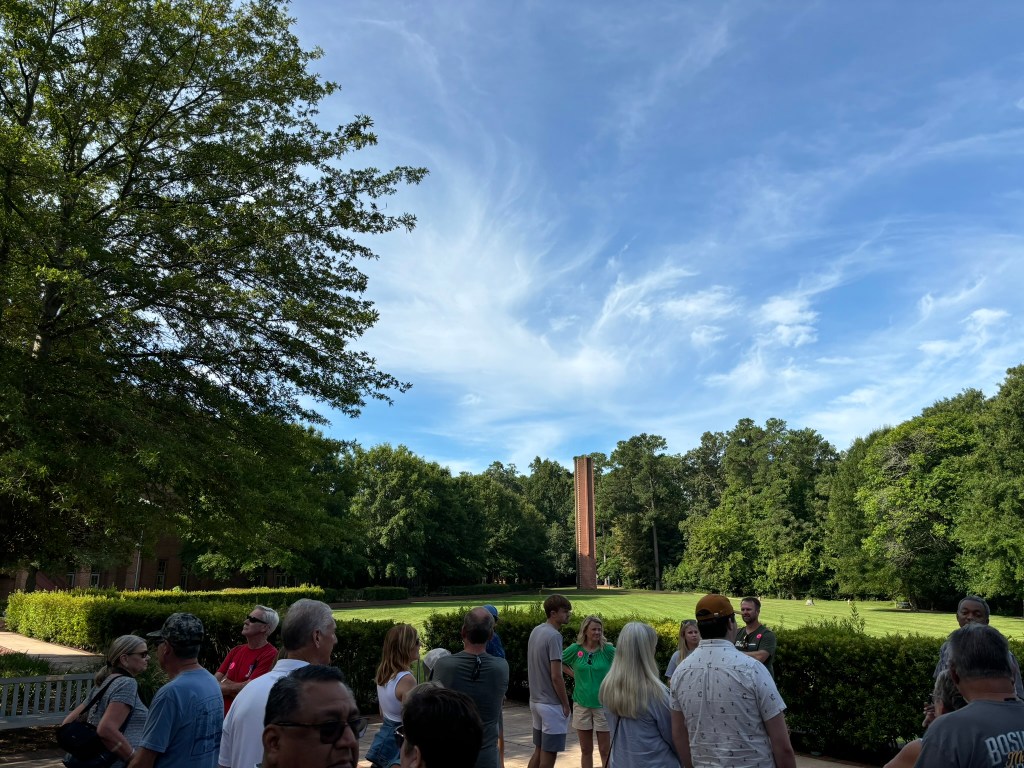
    We then made our way to The Jamestown Settlement, which is run by the The Jamestown-Yorktown Foundation.  The museum originally opened in 1957.  Our tour guide led us through the museum, highlighting and explaining significant figures and events from the colony.  The main hallway of the museum appears to be a large timeline dating from 1607, the founding of the settlement, to 1699, the year that the capital of the Virginia Colony was moved to Williamsburg.  As you move through the museum, you walk through the history of the Jamestown colony.

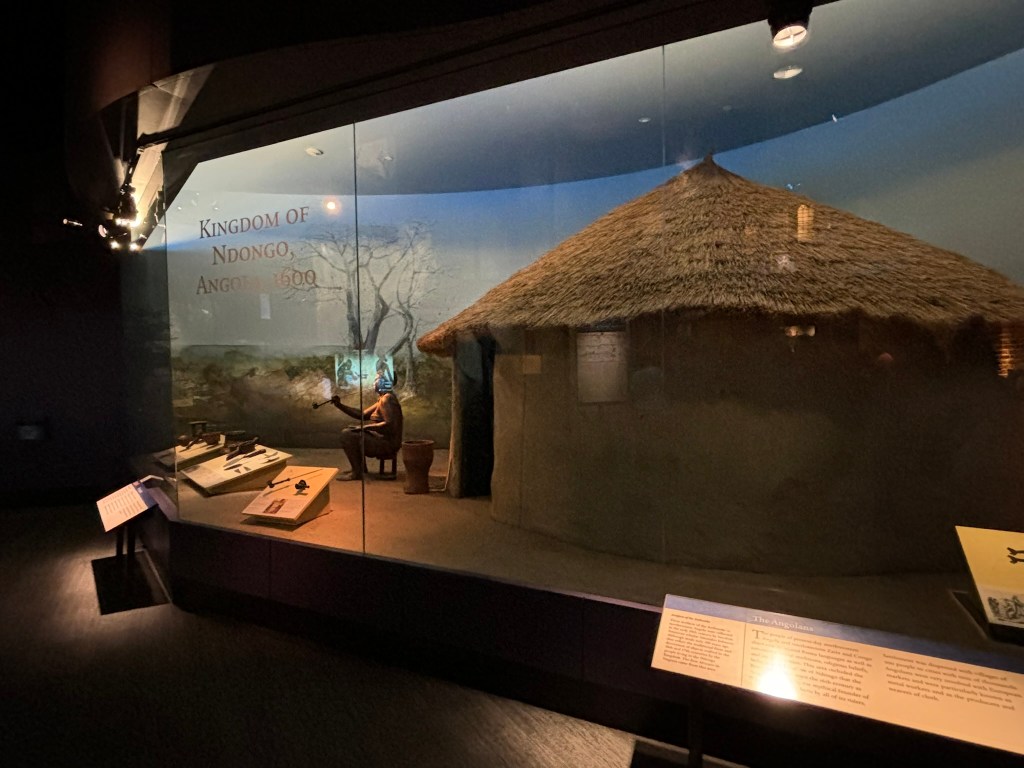
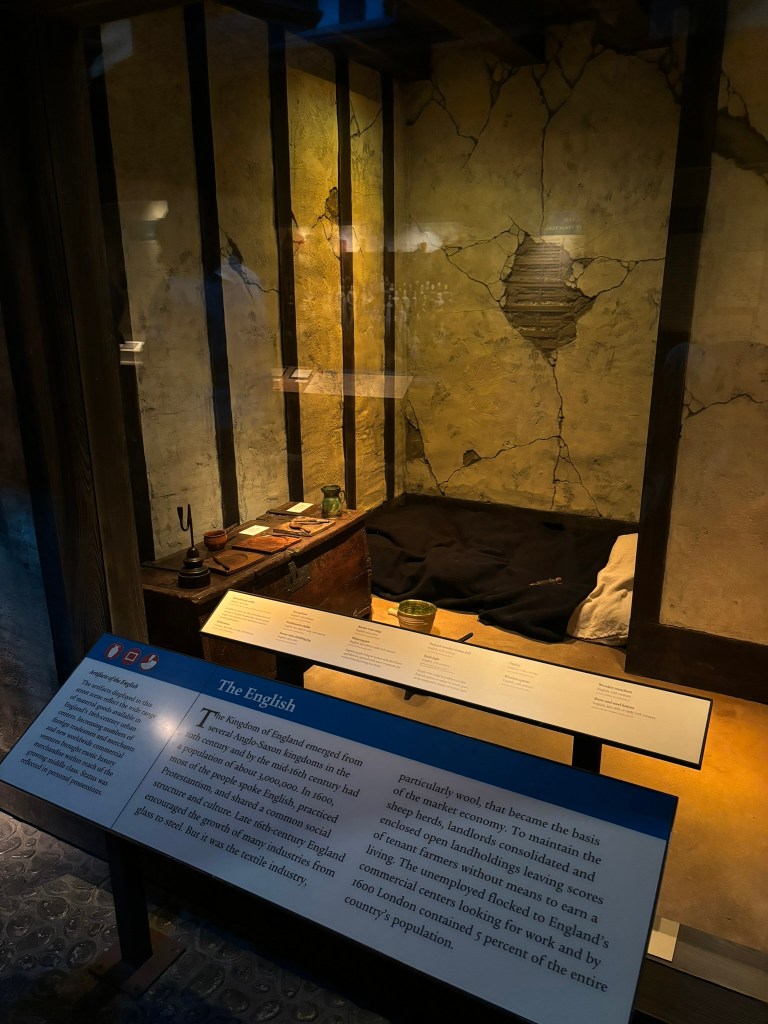
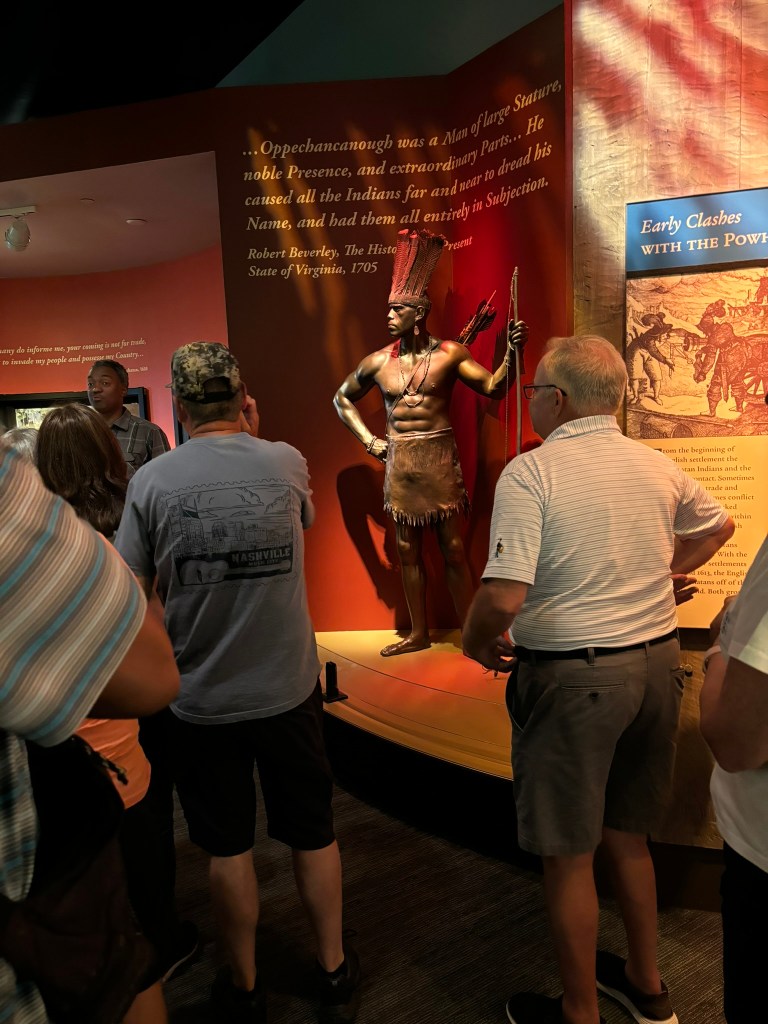
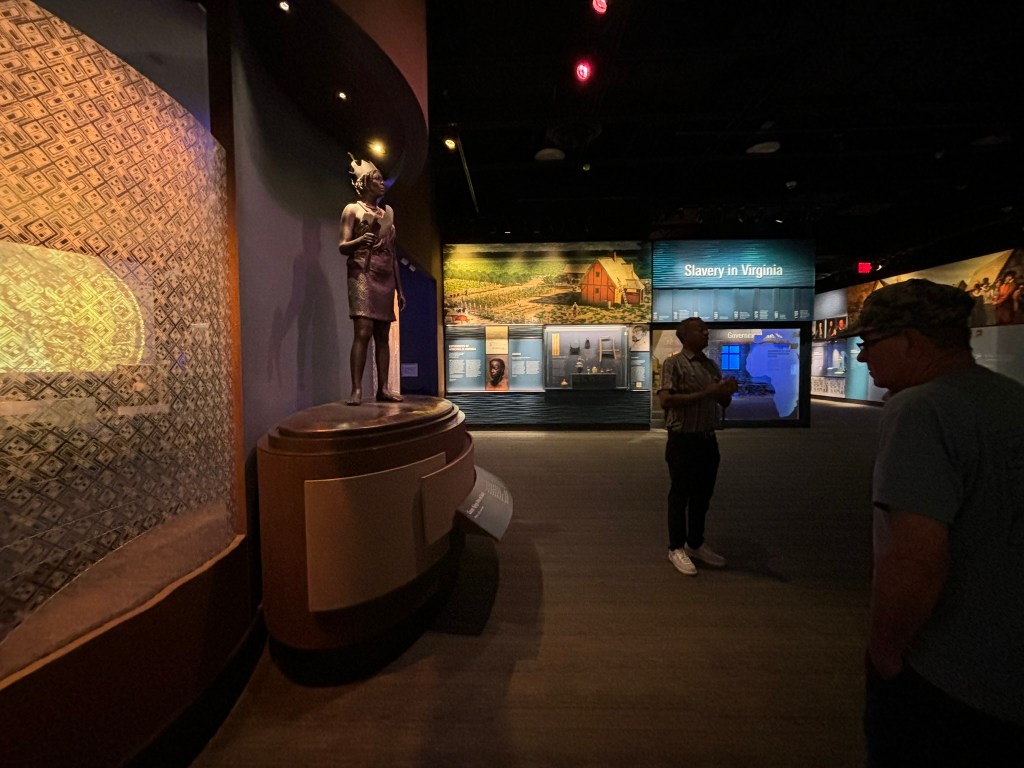
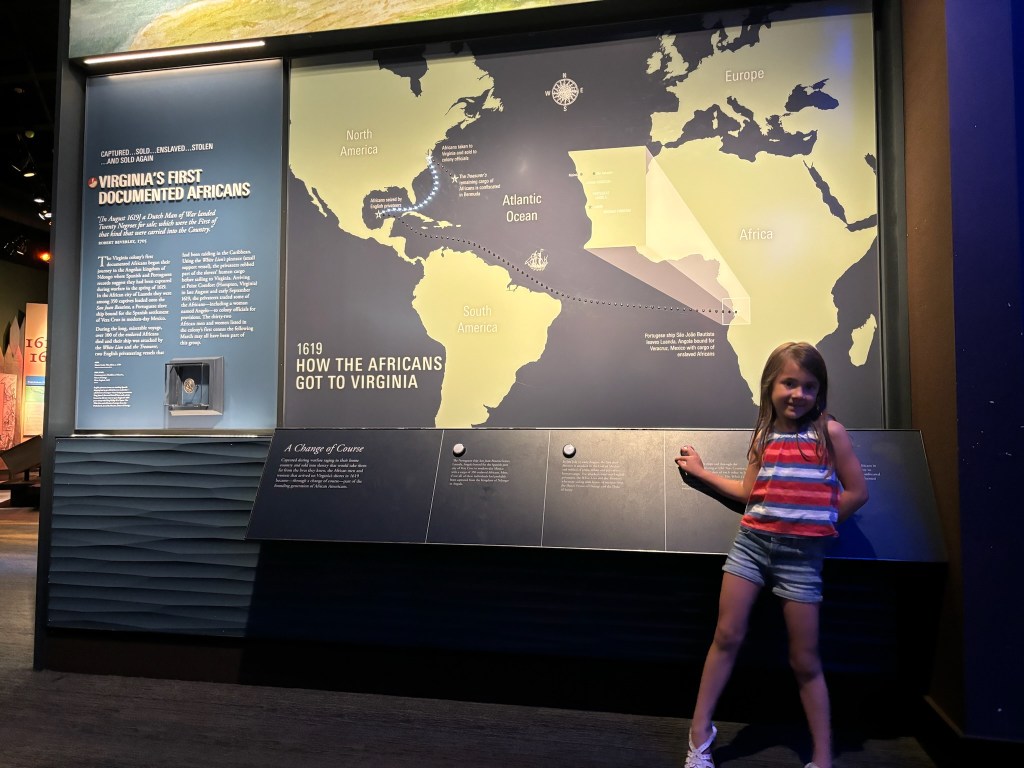
    The museum highlights what life was like before 1607 for the Natives living in the region, Africans in Angola, and the English back in Europe.  As you move through the museum, you learn about how the settlers barely survived in the first couple of years.  You learn about the importance of growing tobacco.  You learn about figures like Pocahantas, John Smith and John Rolfe.  You learn that in 1619, the first Africans were brought to the colony on a Dutch ship, which completely changed the dynamics and history of the colony.  The year 1619 was also significant because this was the first year that the House of Burgesses met.  The museum teaches about conflicts between the Natives and English settlers, as well as significant events like Bacon’s Rebellion in 1676.  The museum also highlights a map that shows the population changes taking place in Virginia.  As the English population was growing and settling along the rivers, the Native population was dwindling, primarily caused by disease and conflict.  Finally, the museum takes you to the year 1699, when Jamestown ceased to be the capital of Virginia.   Jamestown was susceptible to brackish water, mosquitoes, and the spread of malaria.  Williamsburg was on higher ground and easier to defend against invaders such as the French and Spanish.
    Paspahegh Village

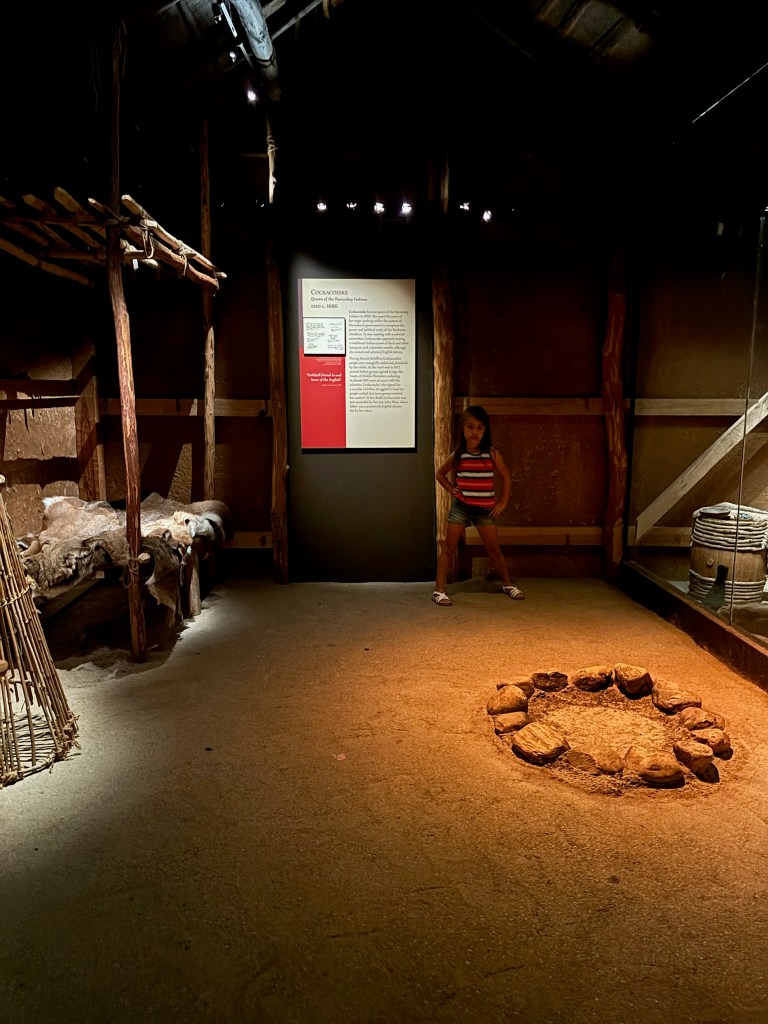
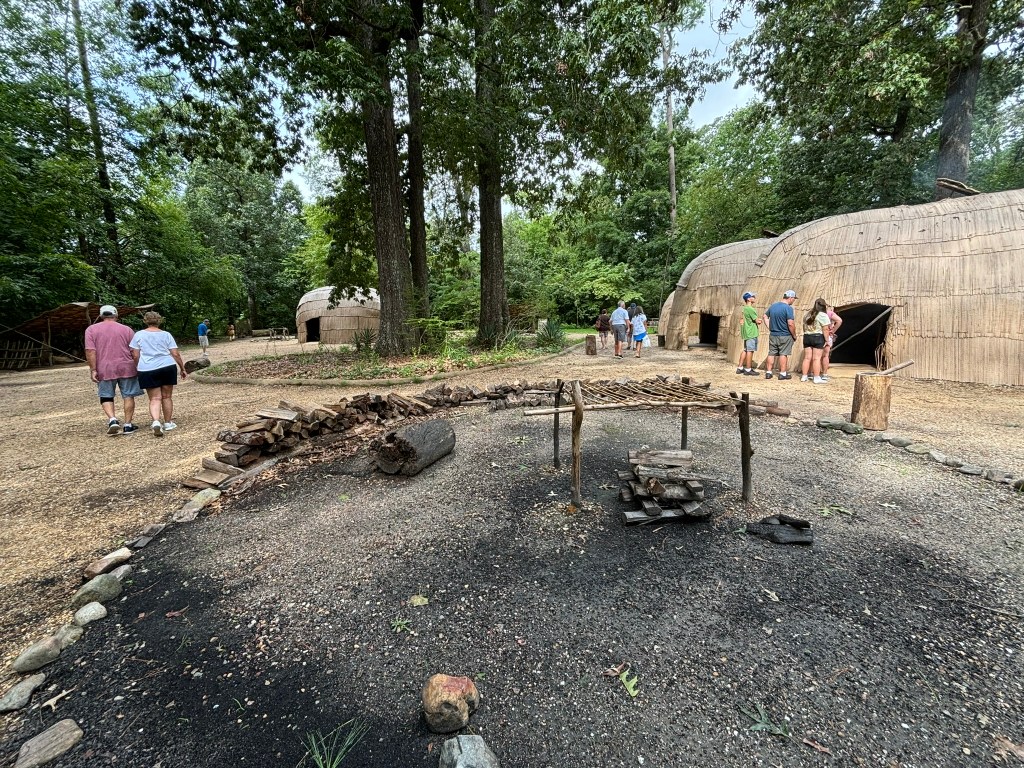
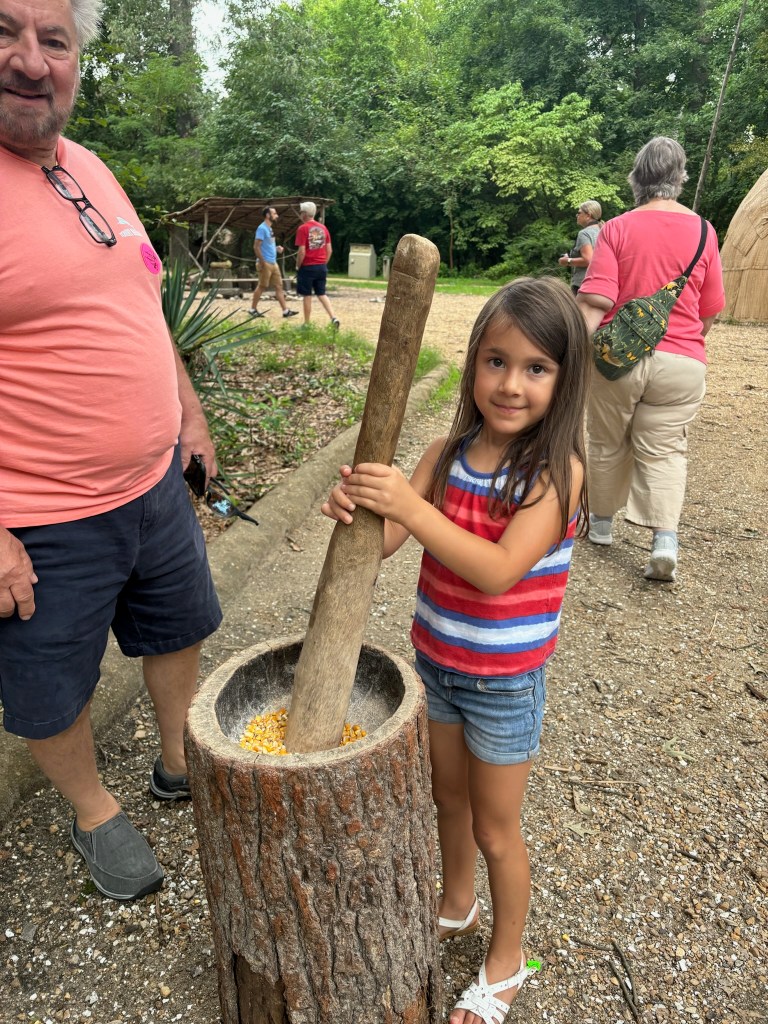
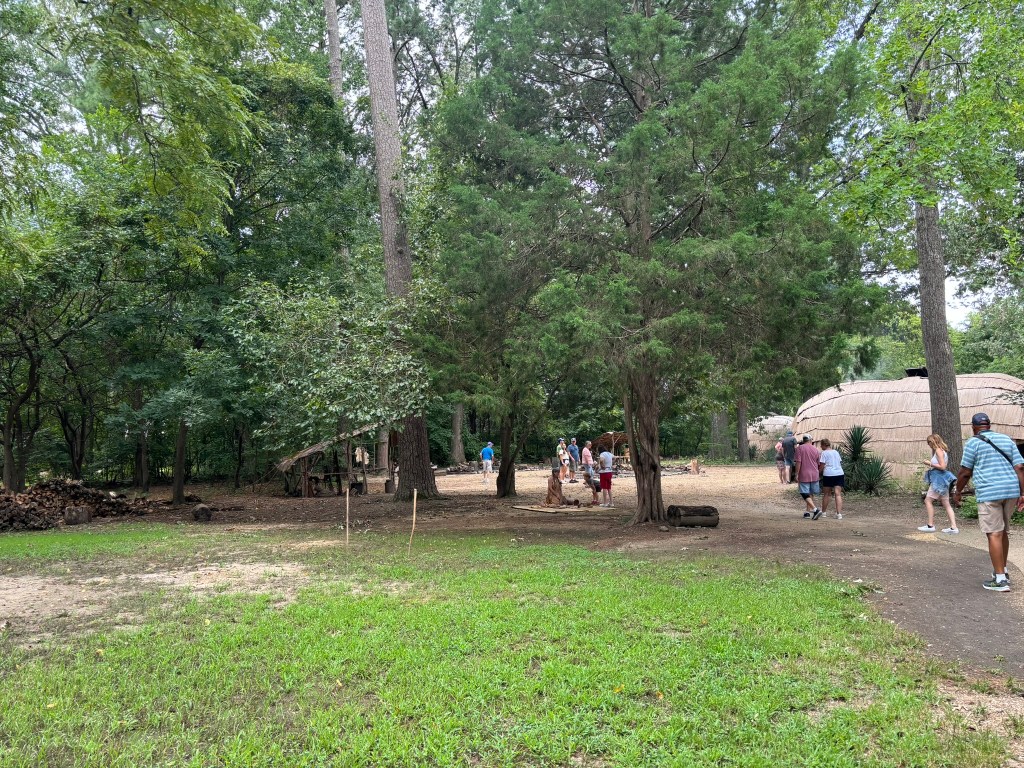
    After we were taken through the museum, we were given about an hour to roam around outside in the living history portions of the museum.  Our first stop was the Paspahegh village.  The Paspahegh tribe was a tributary of the great Powhatan chiefdom.  In the village, you could walk through their living quarters, learn how they made canoes from tree trunks, and practice making corn.  
    Ships

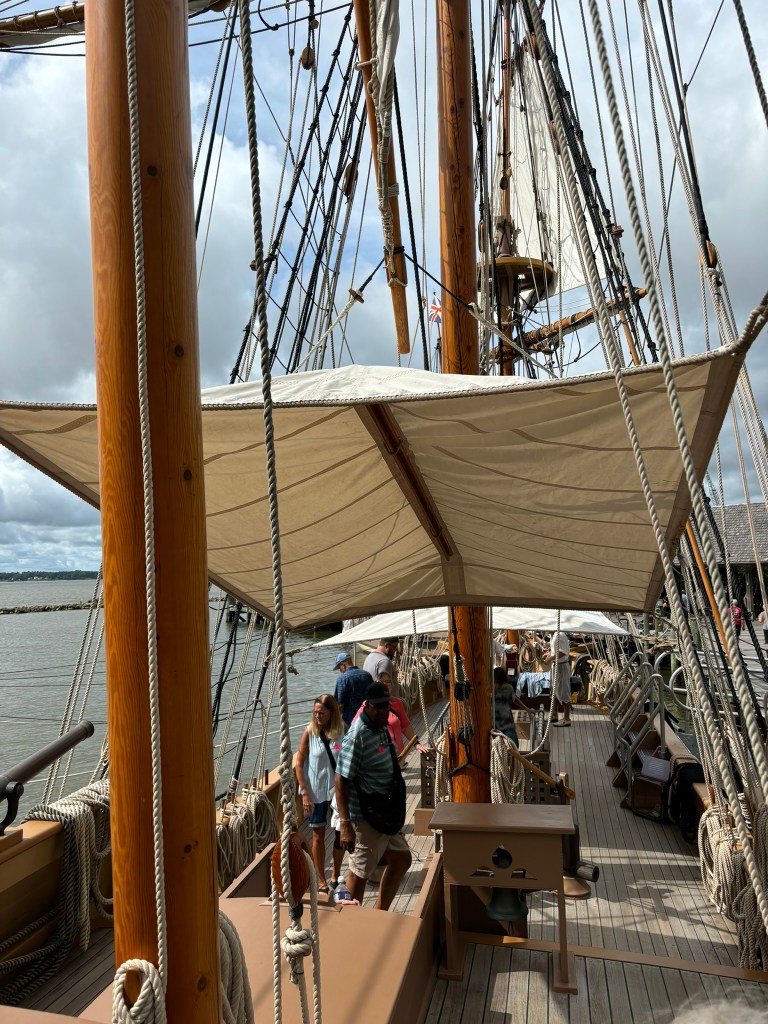
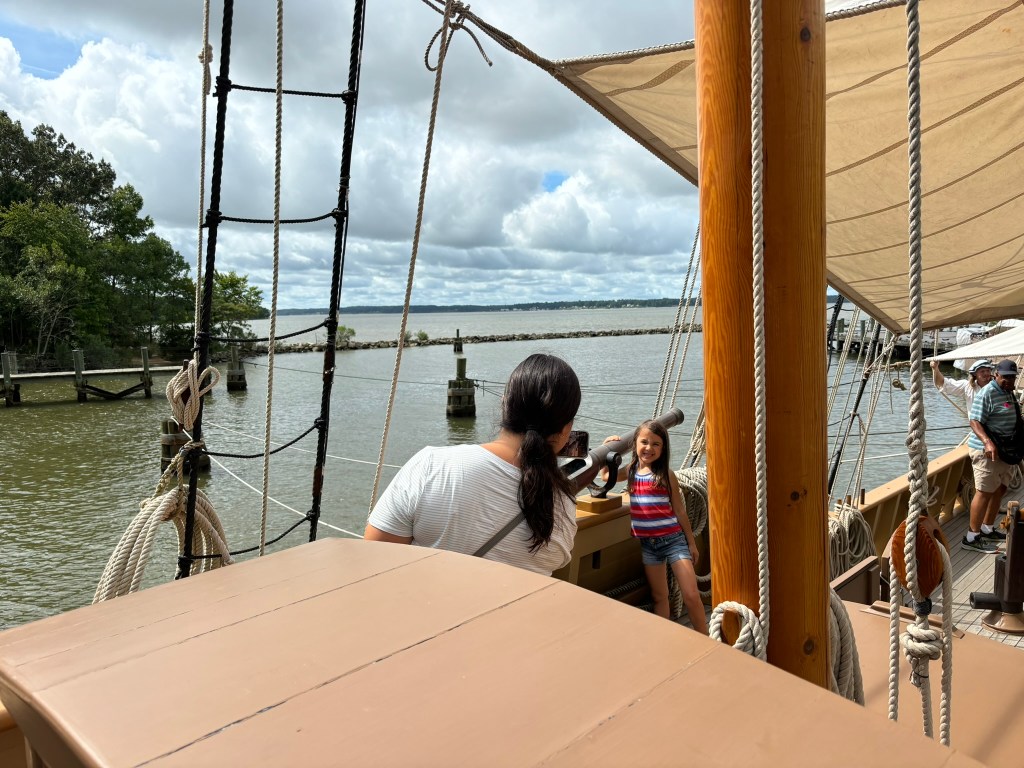
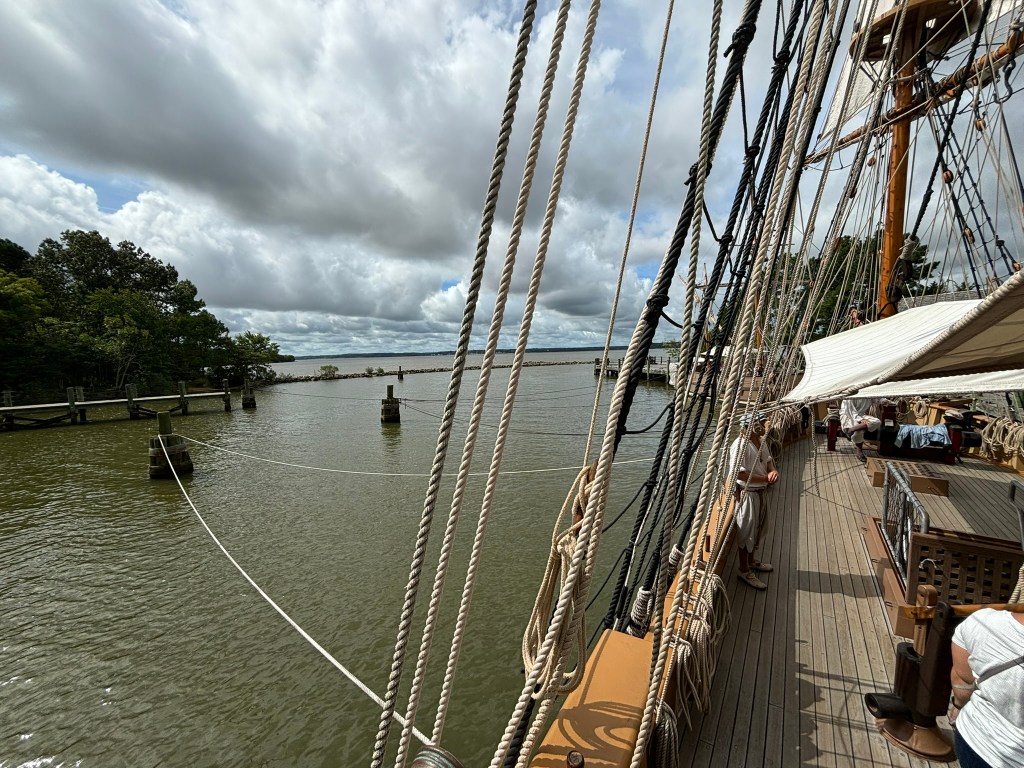
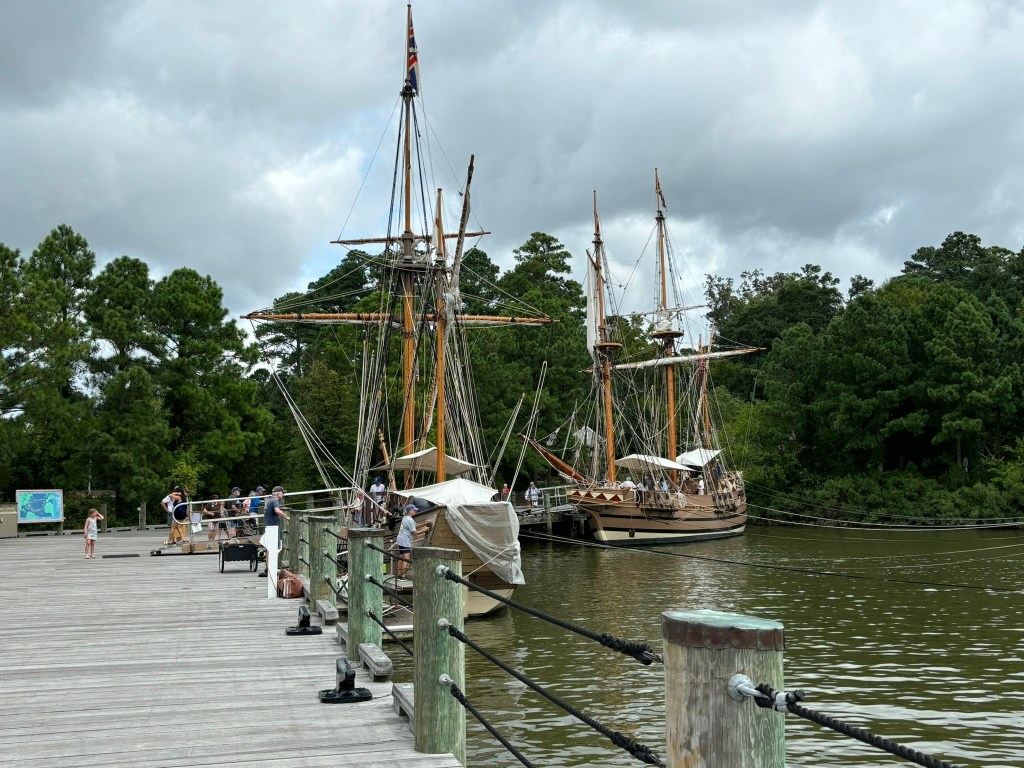
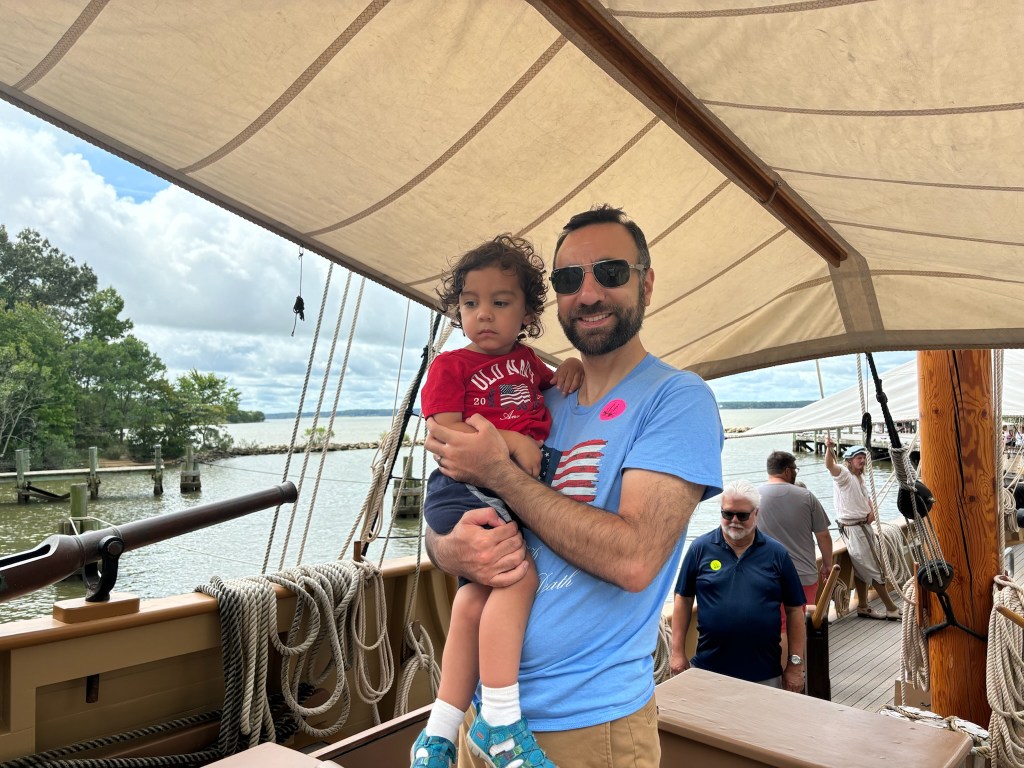
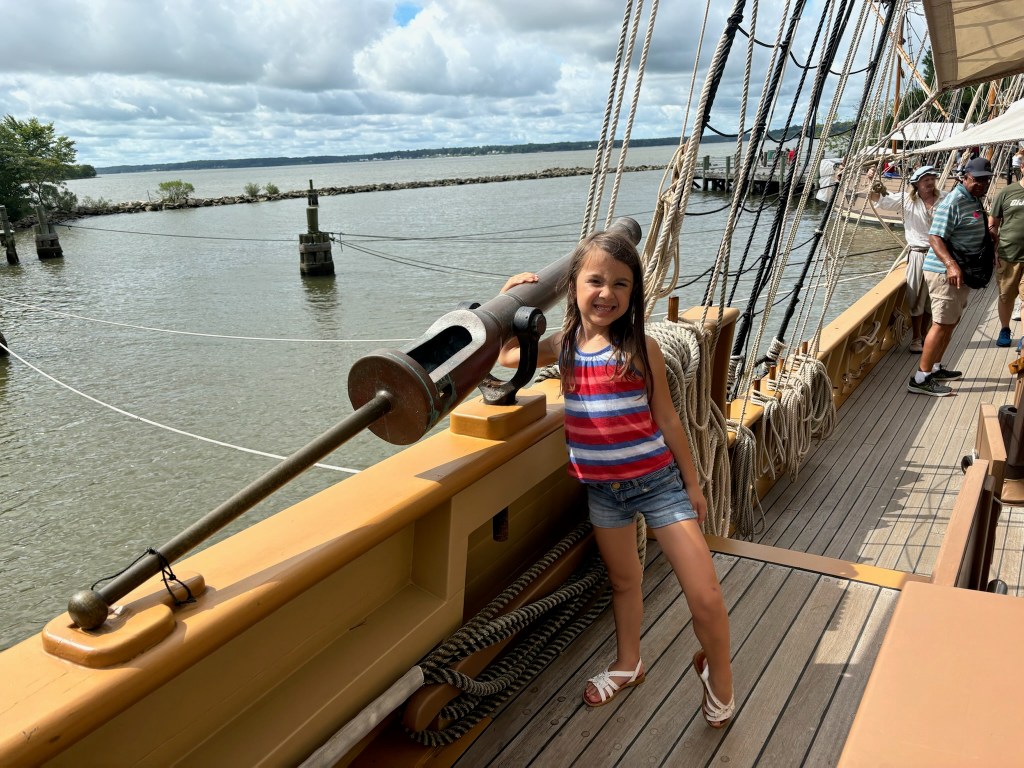
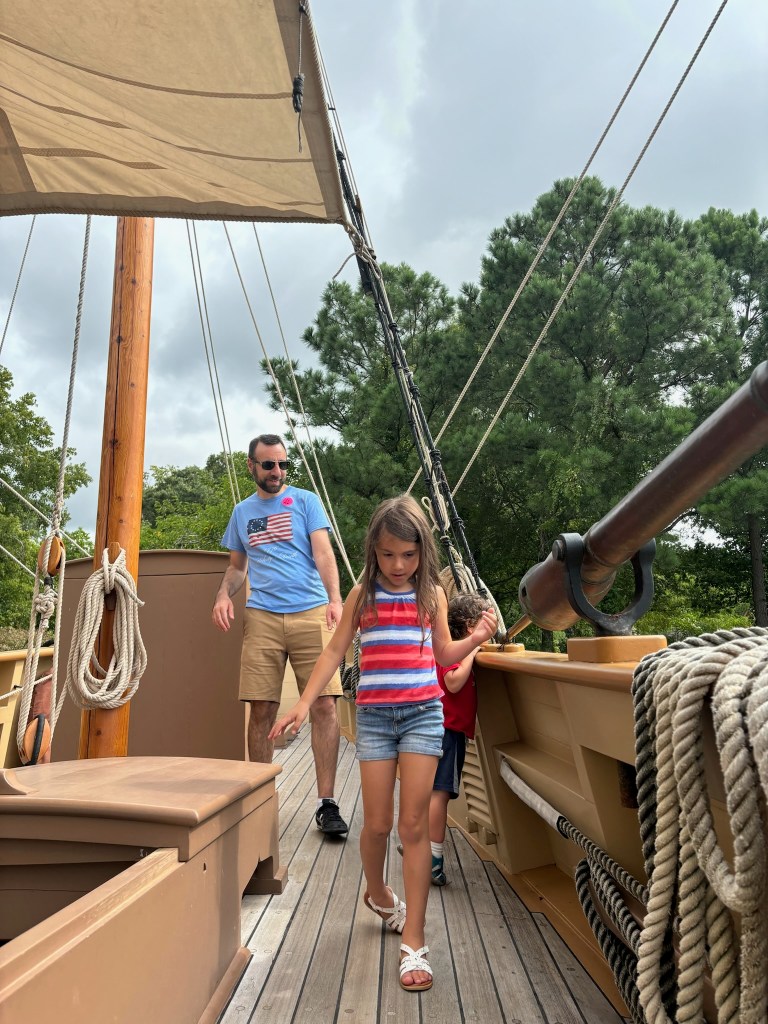
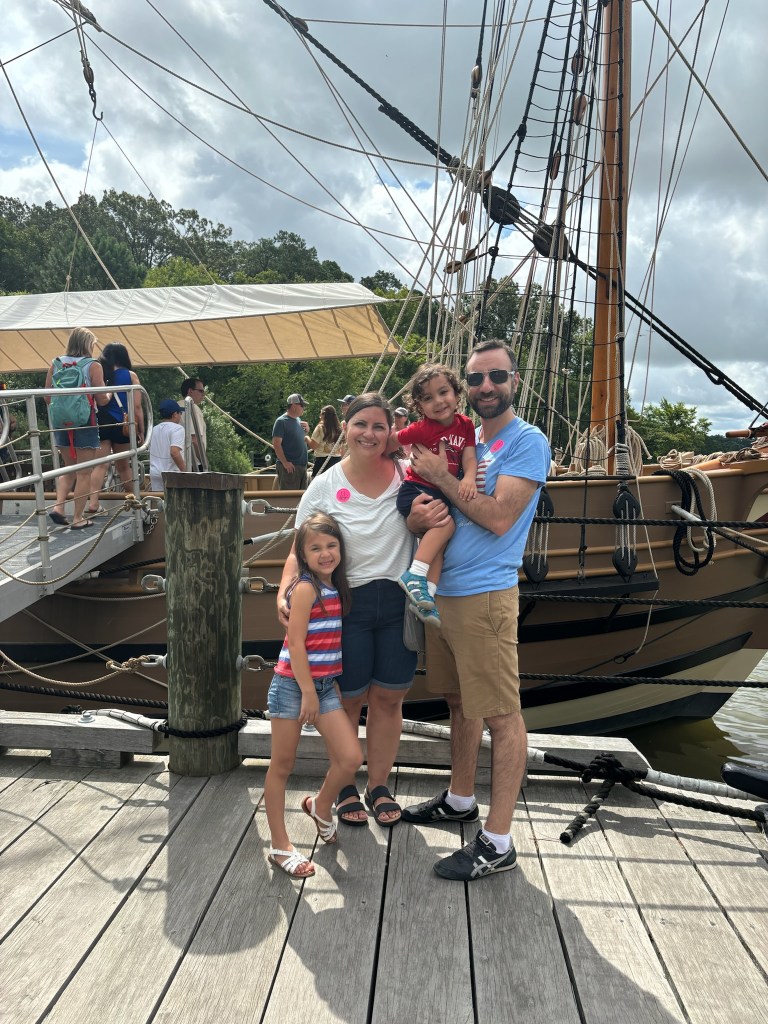
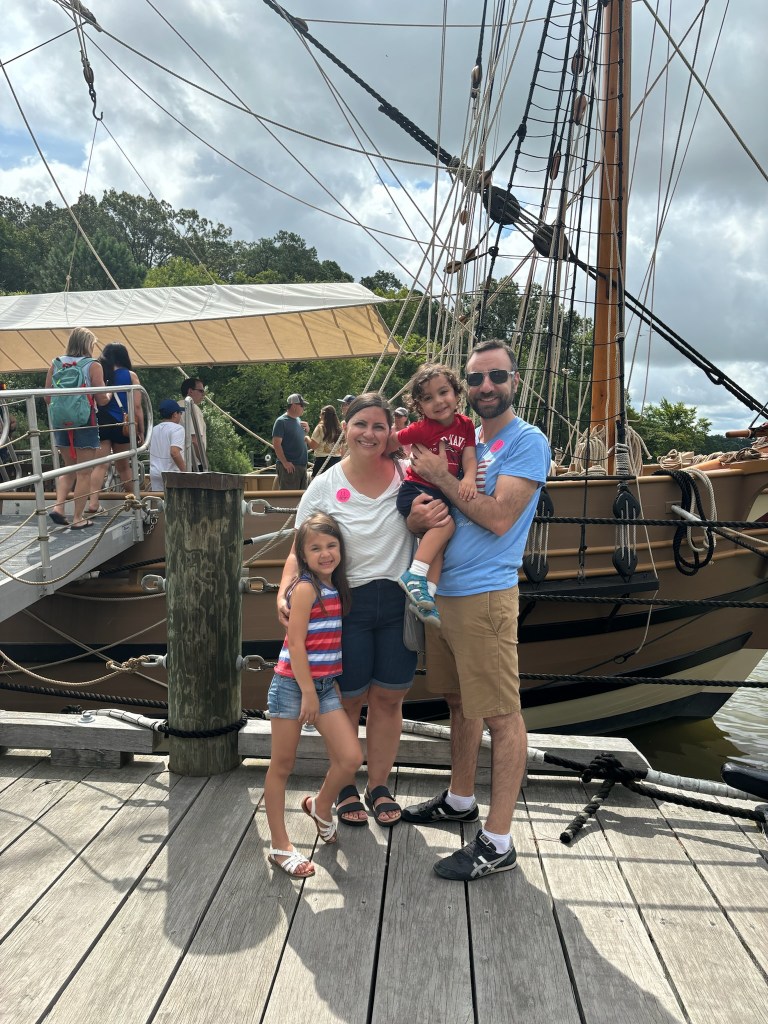
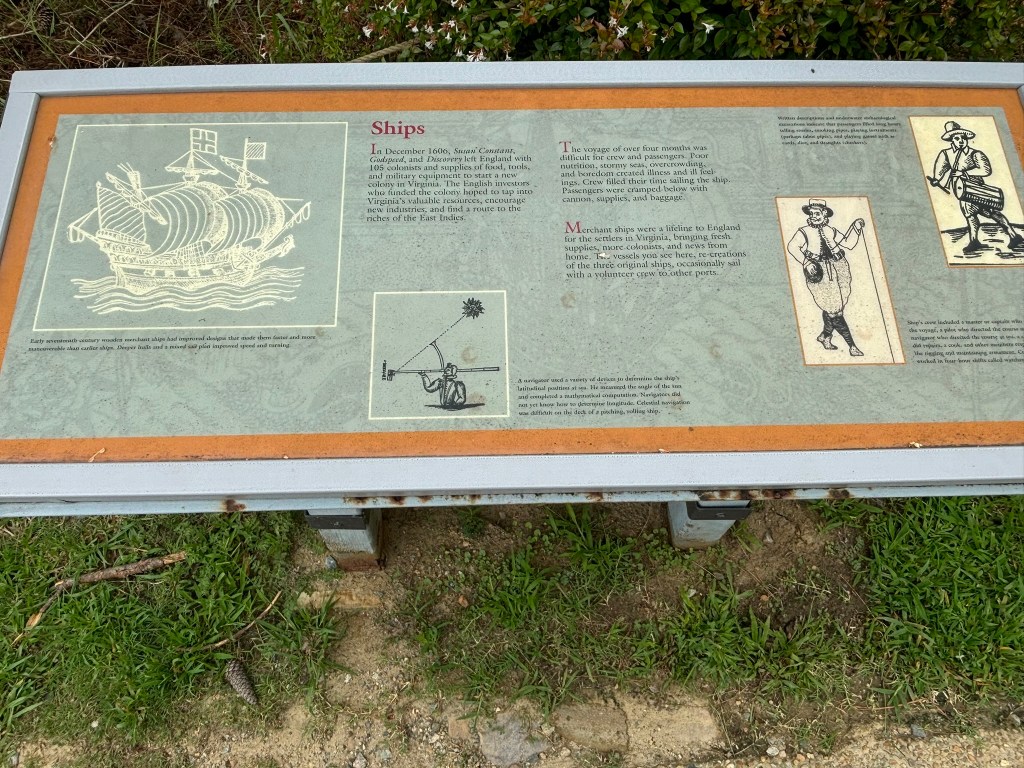
    After passing through the Paspahegh village, we made our way to ships docked along the coast.  The three ships that took the original voyage to Jamestown were called Susan Constant, Godspeed, and Discovery.  Two of the three replica ships were in dock on the day we were there.  We were able to go below deck and explore the two ships.
    James Fort

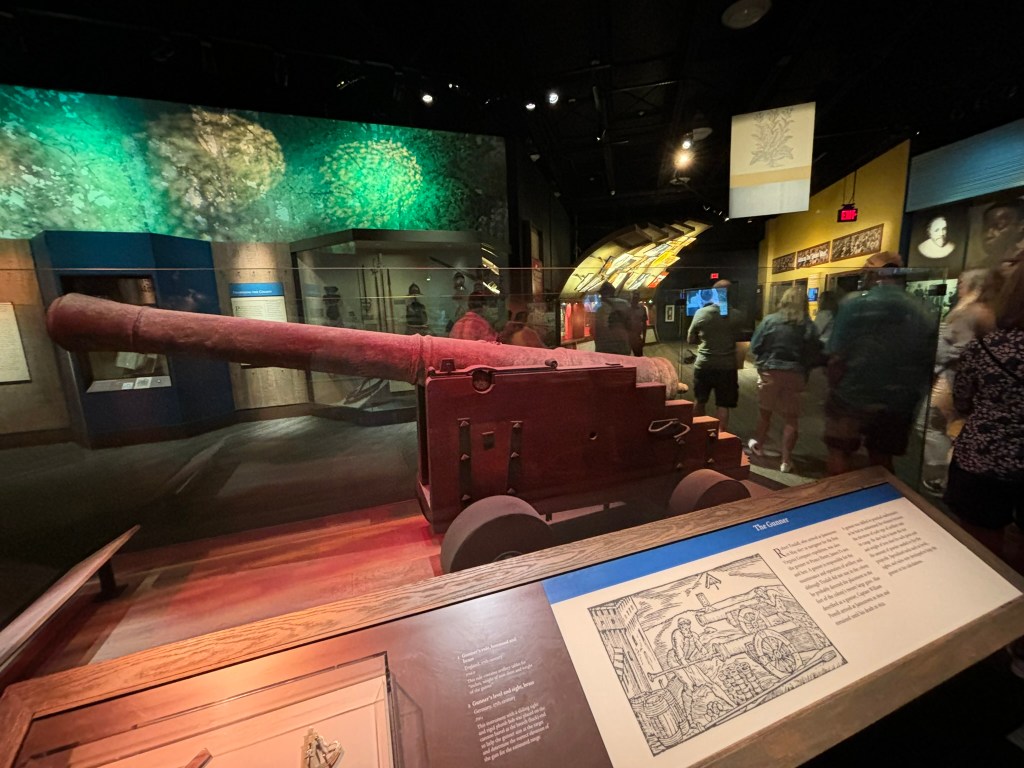
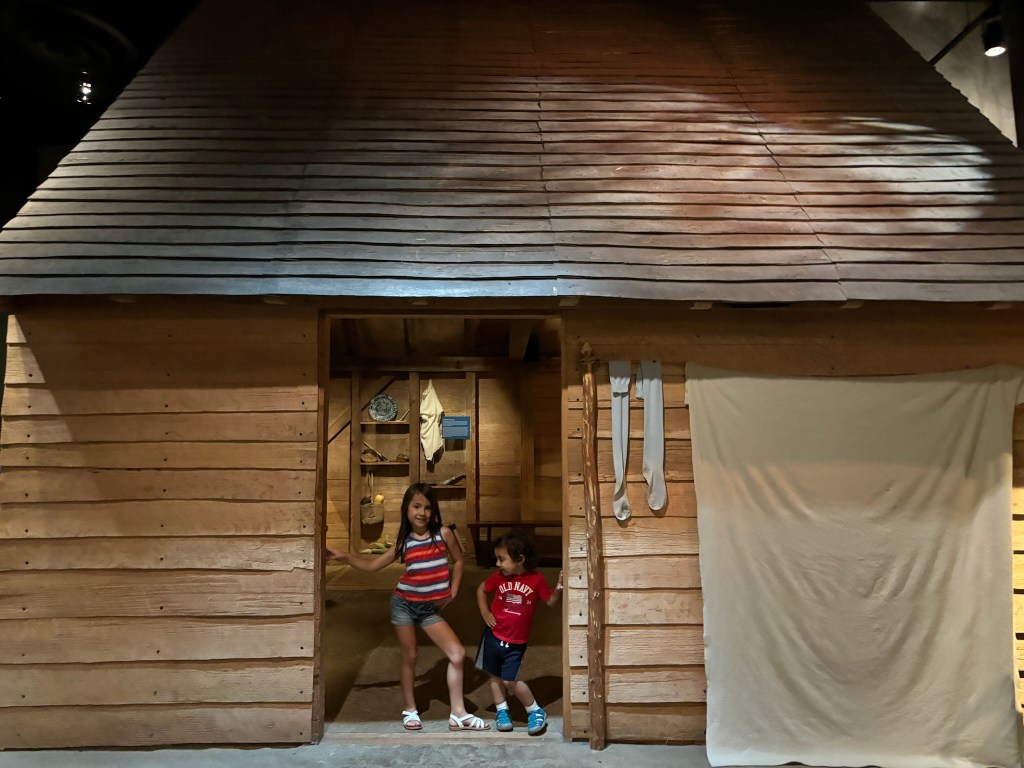
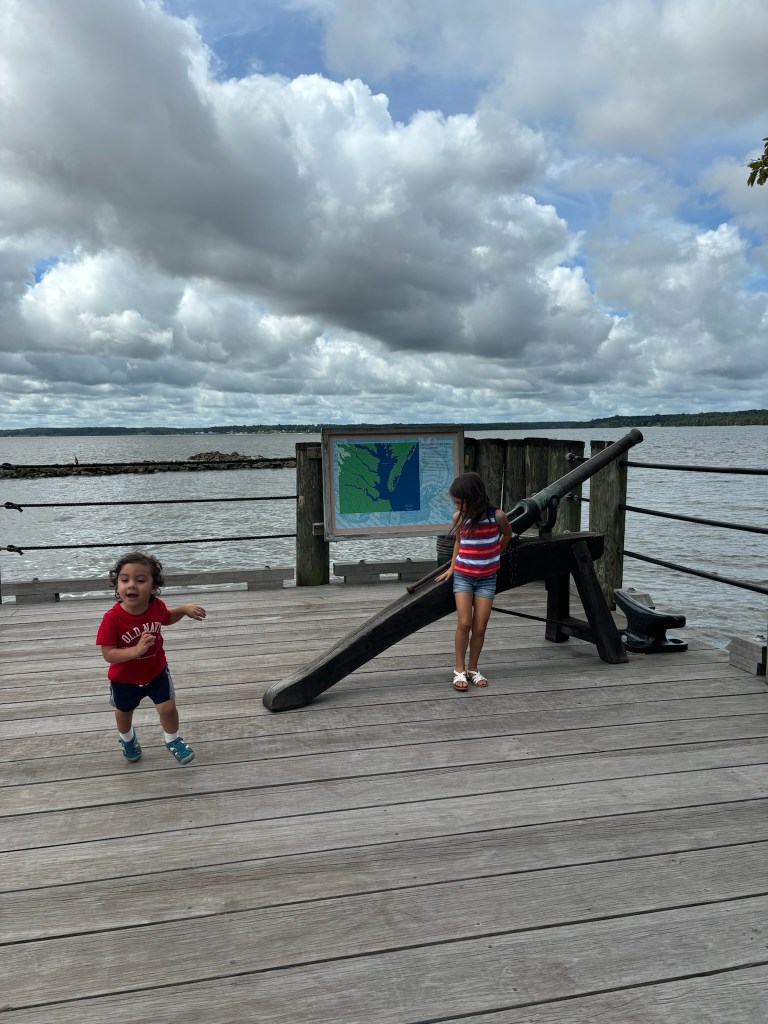
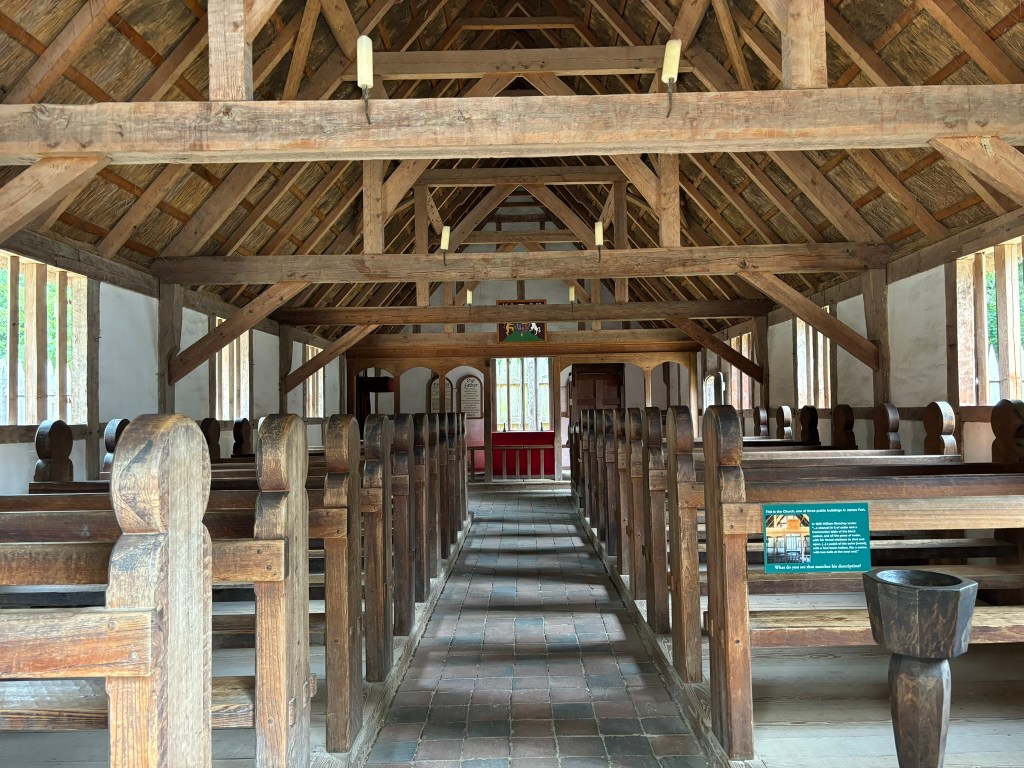
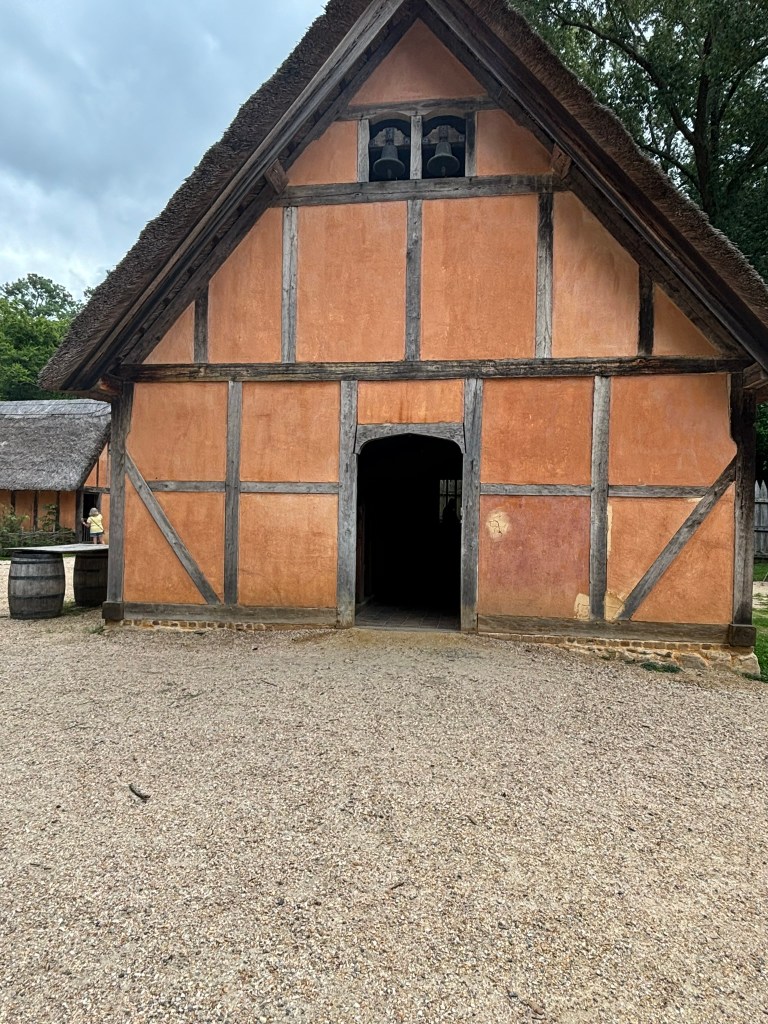
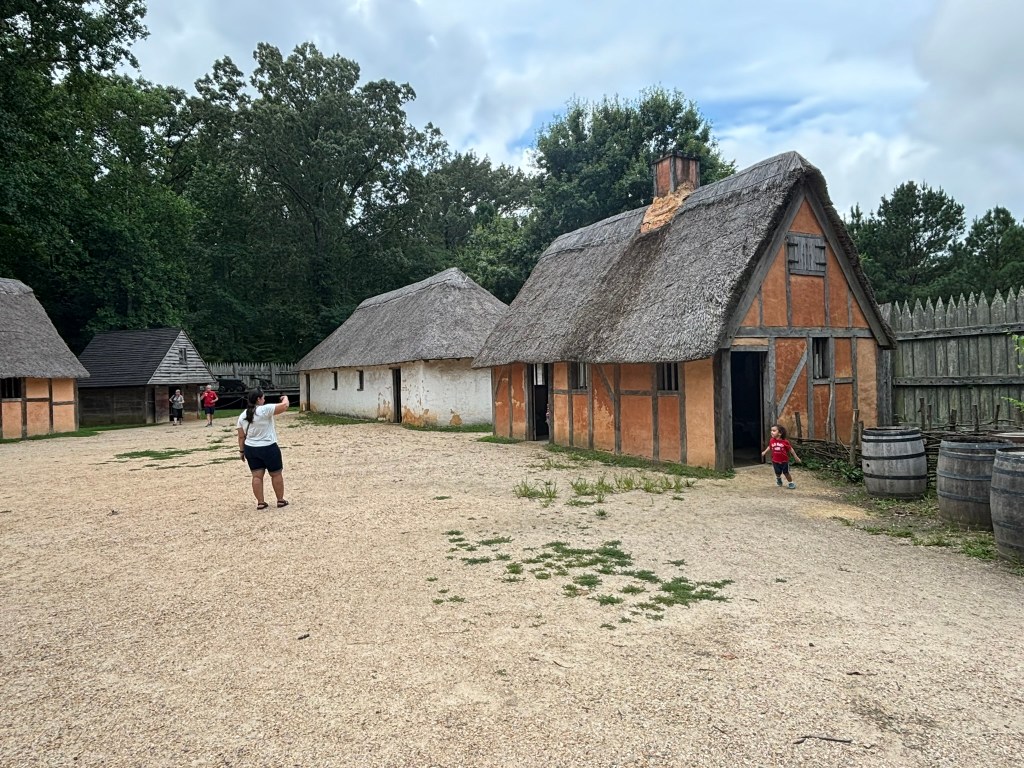
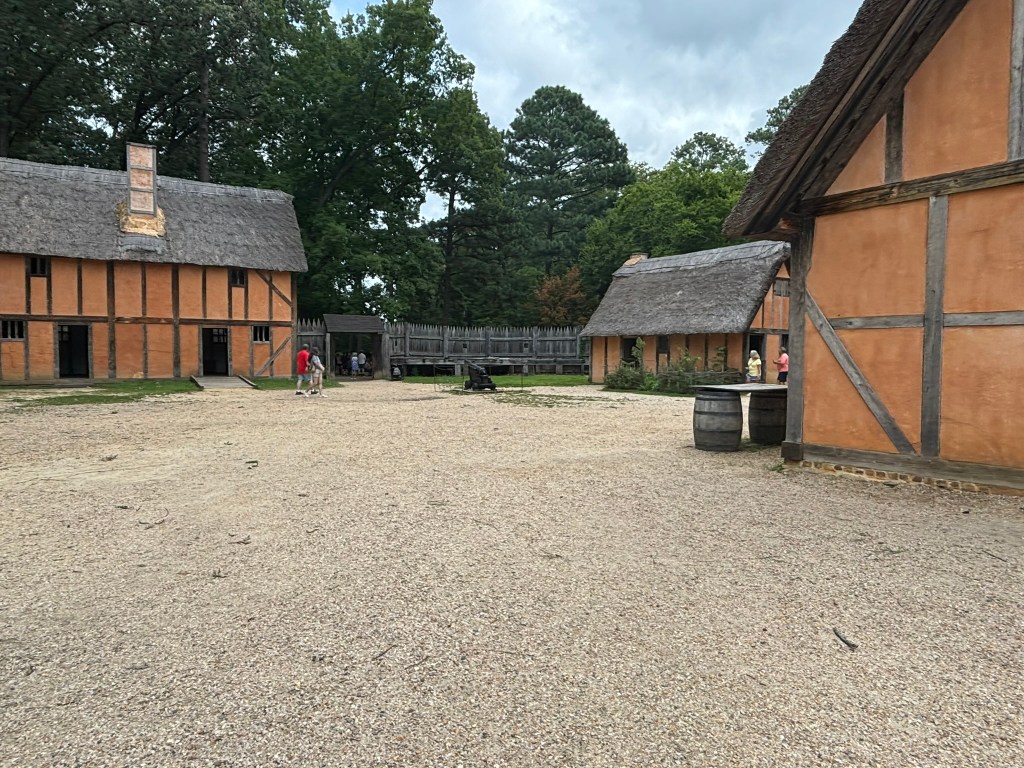
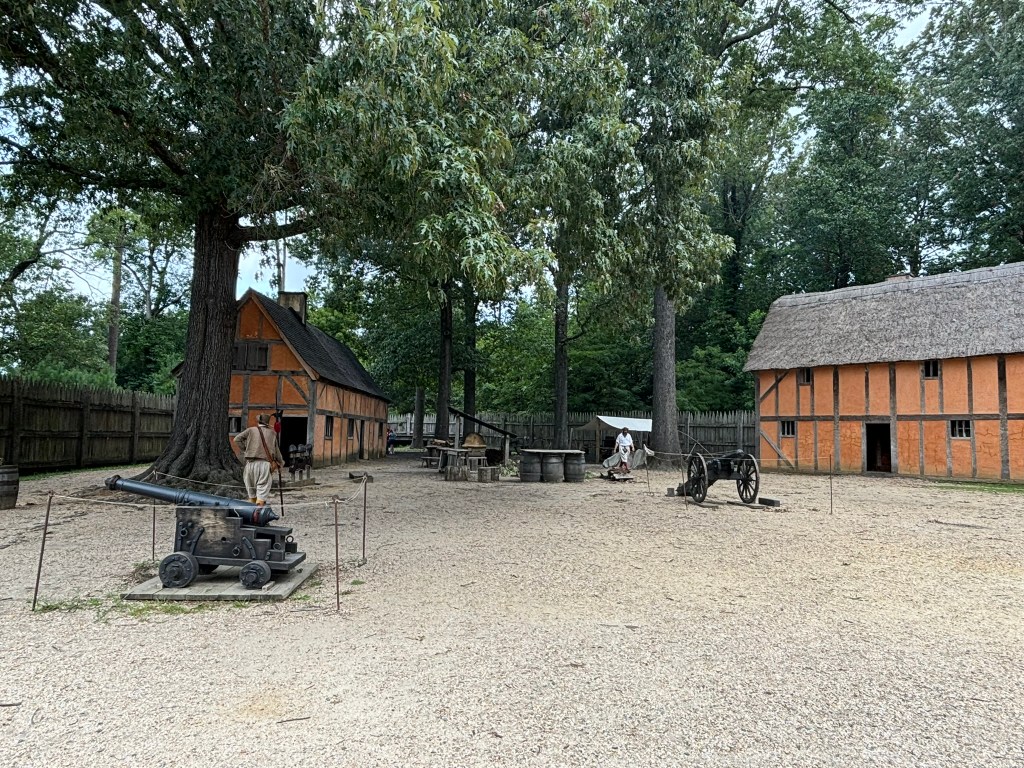
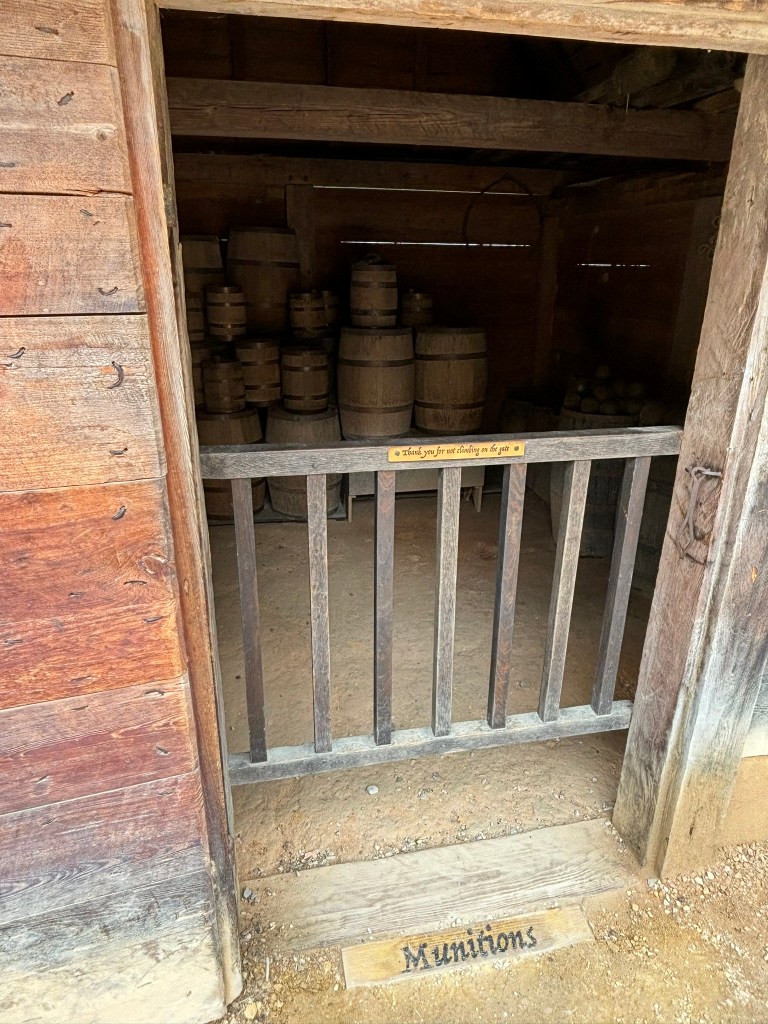
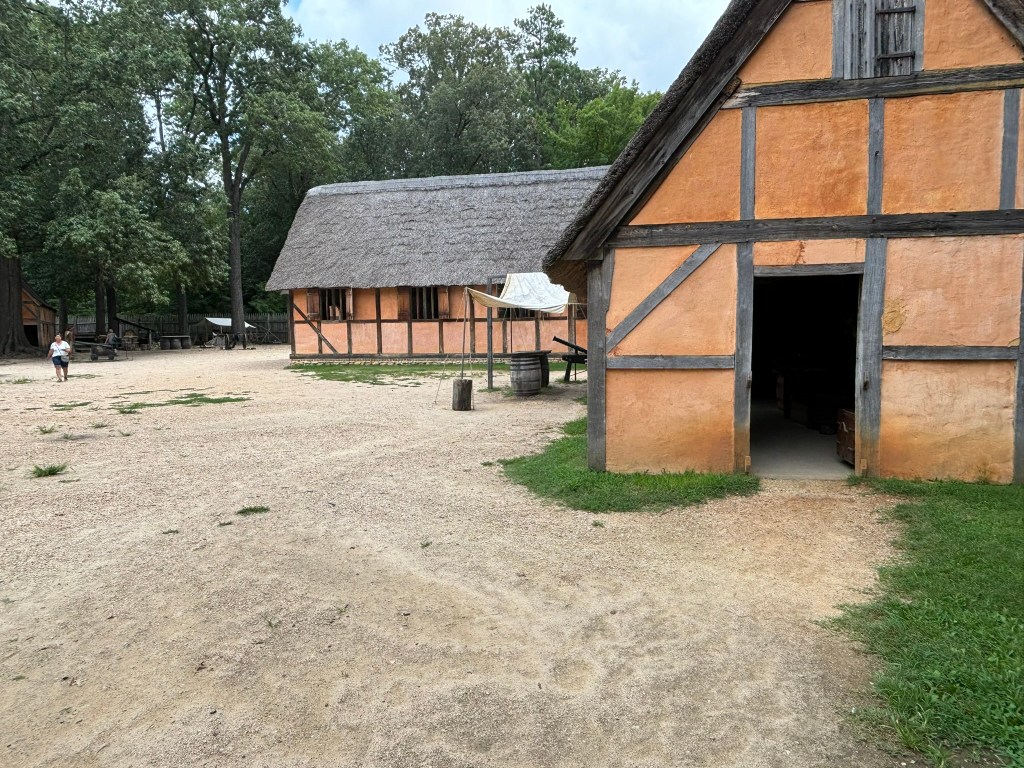
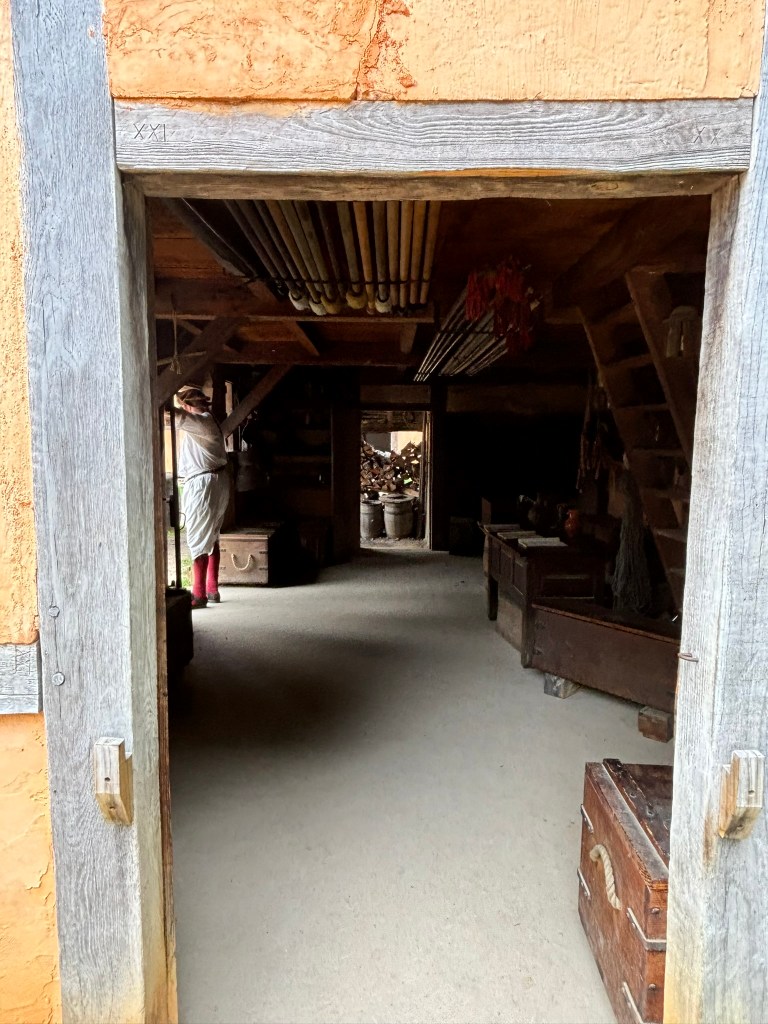
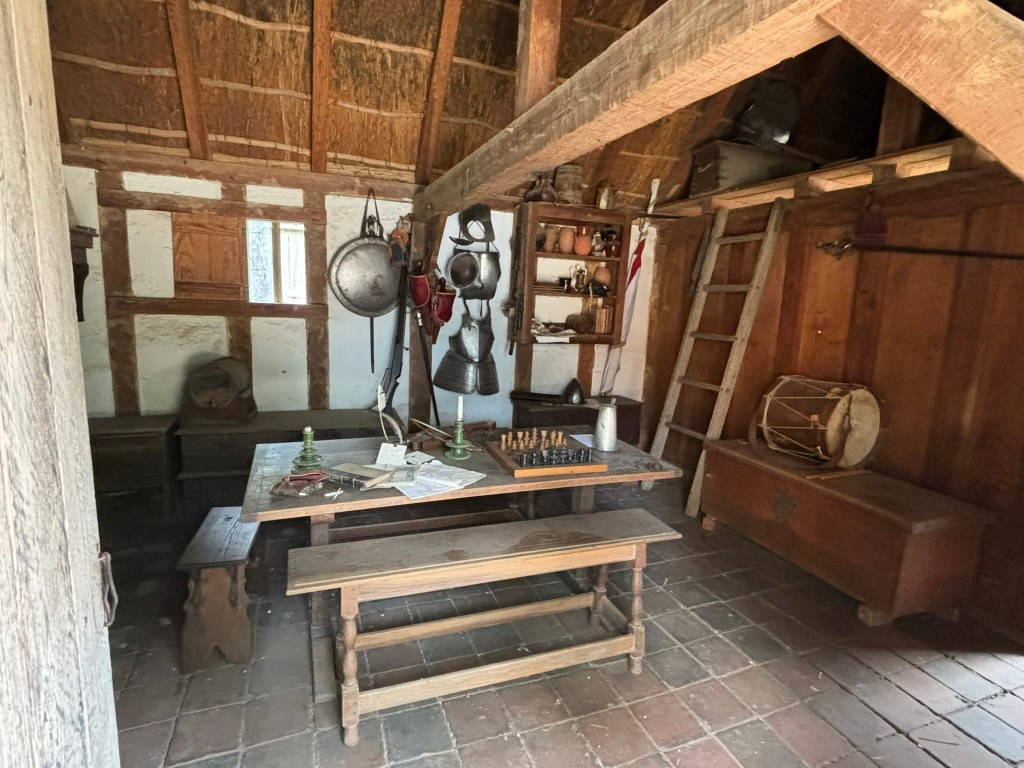
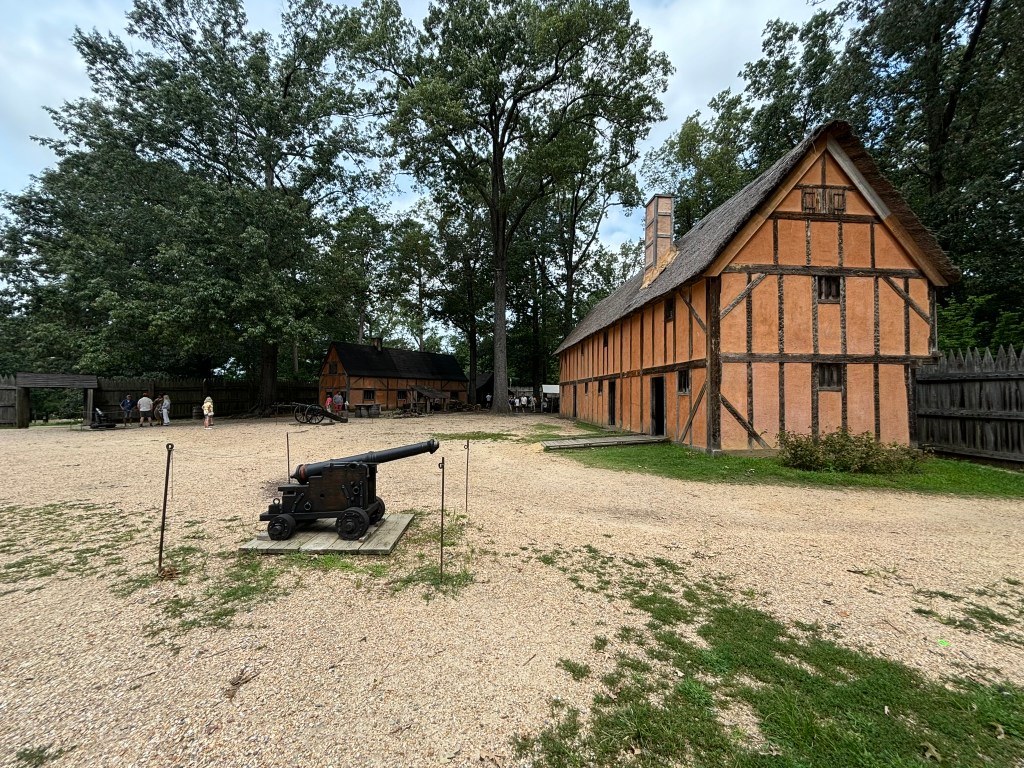
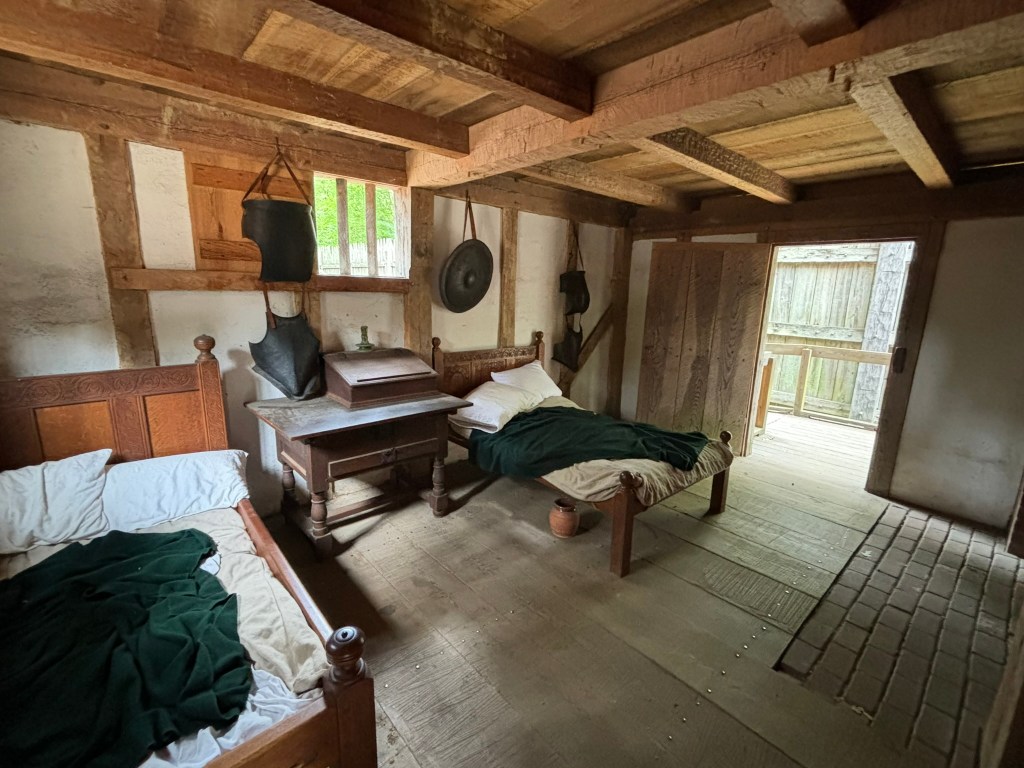
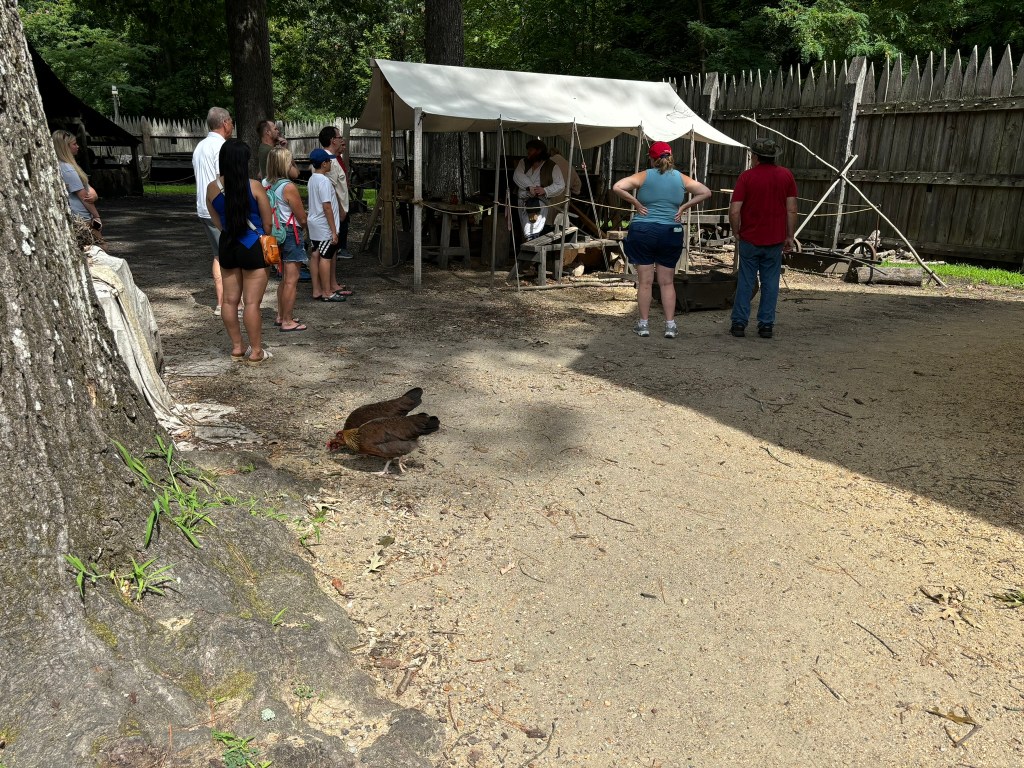
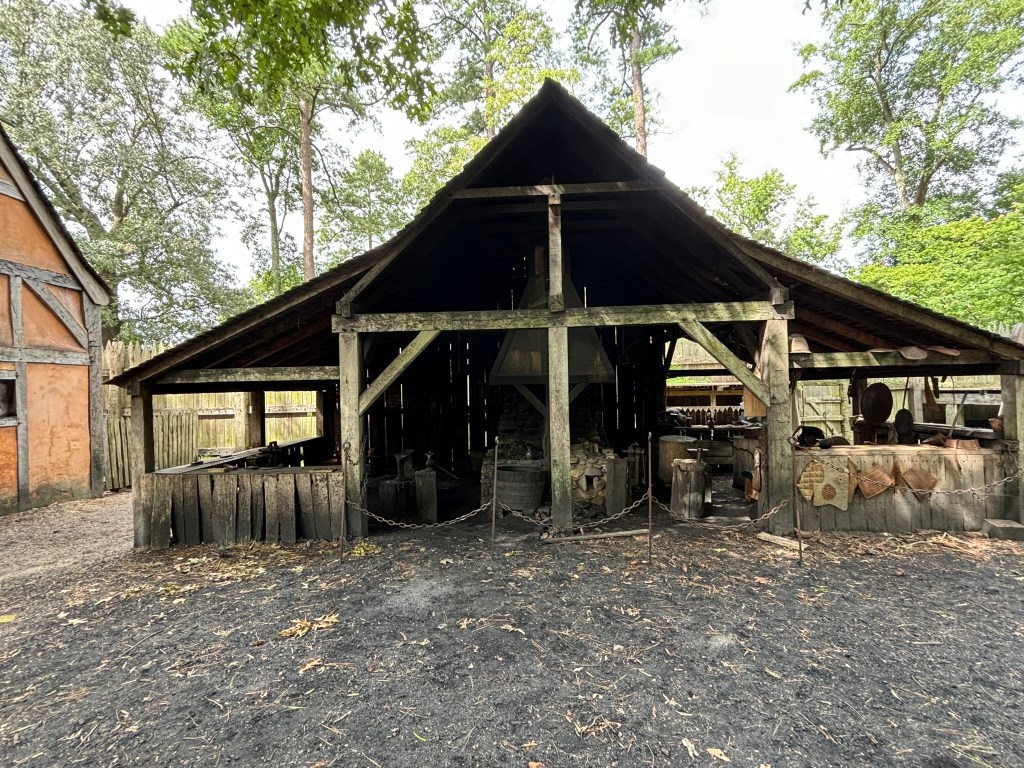
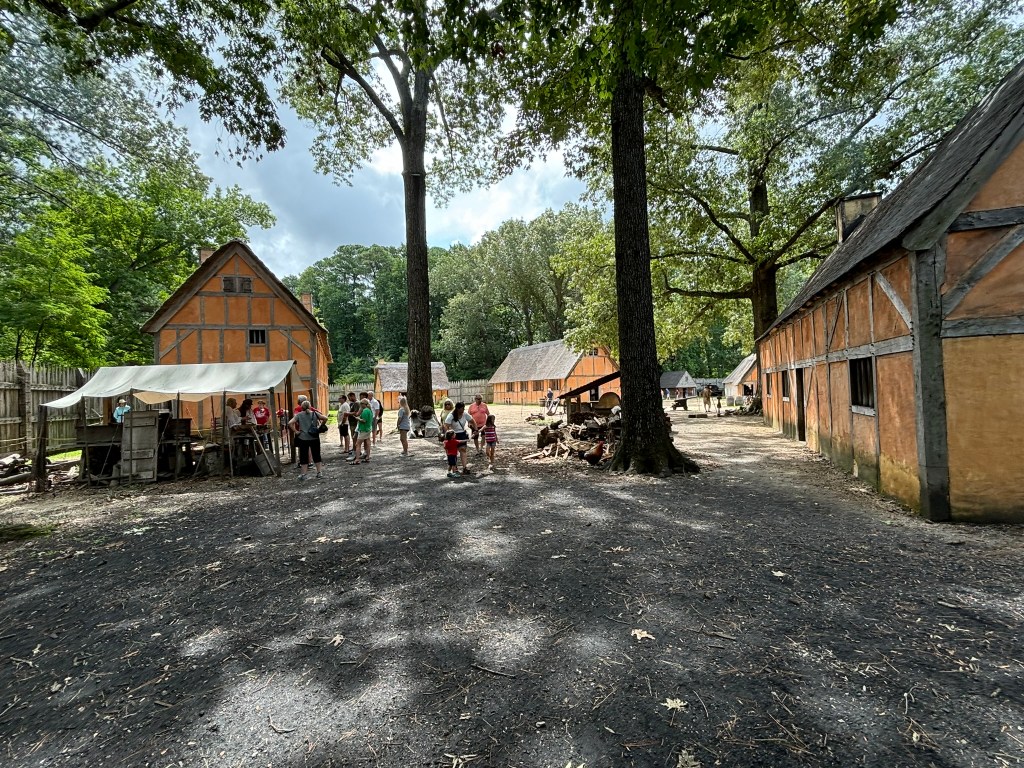
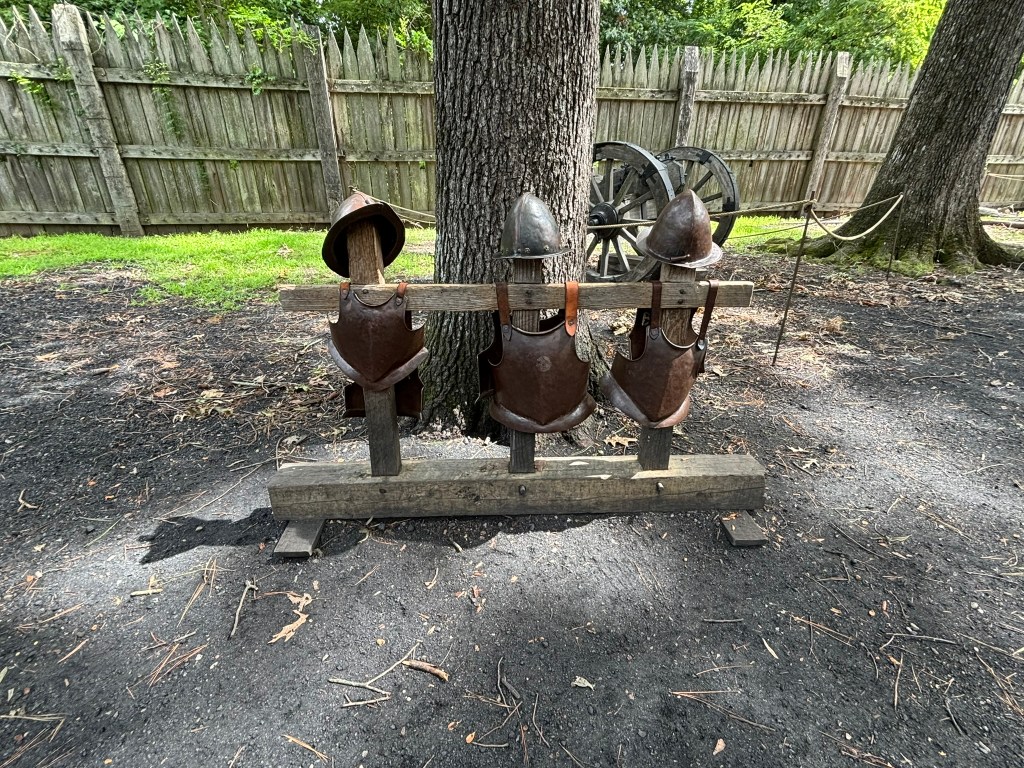
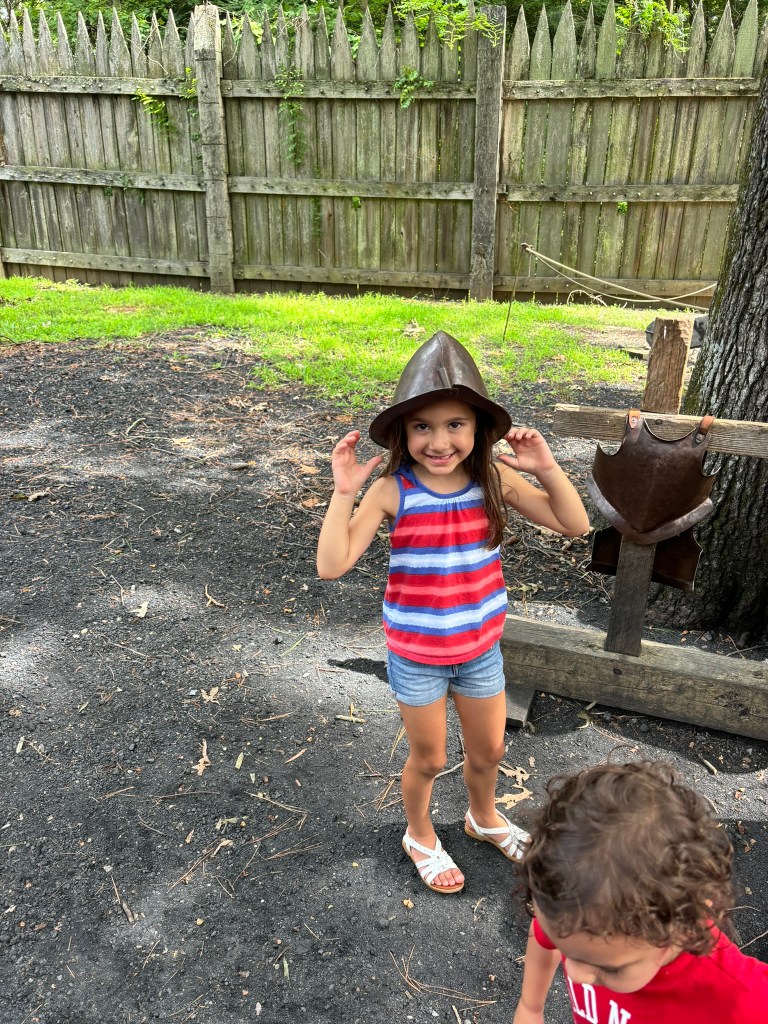
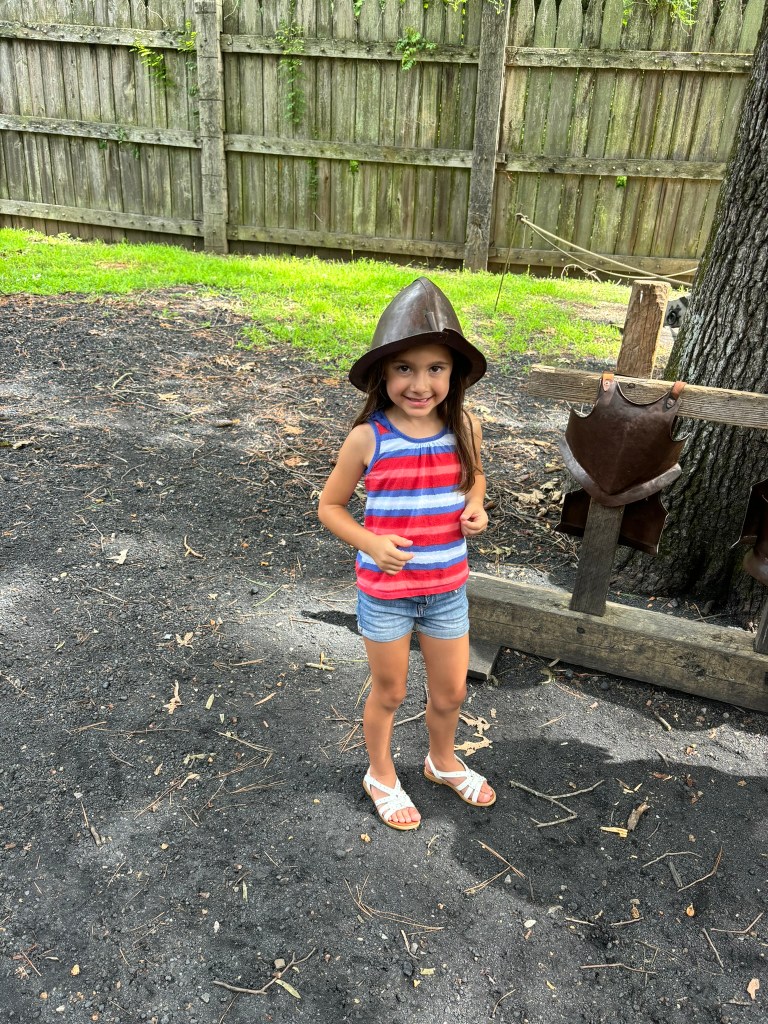
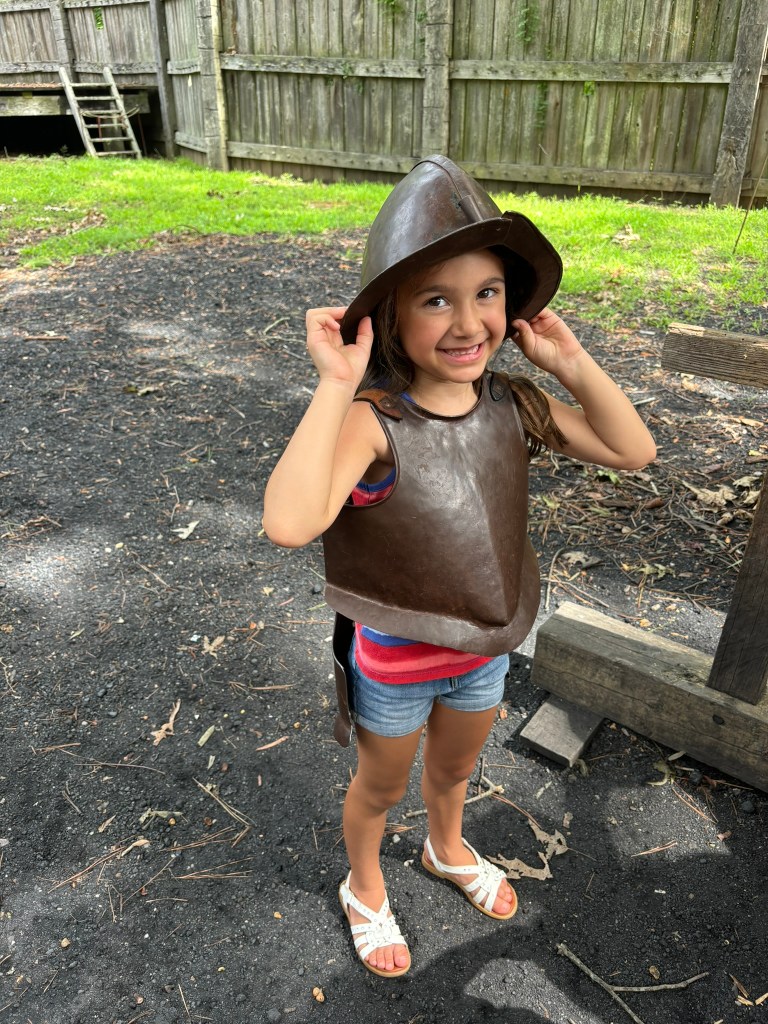
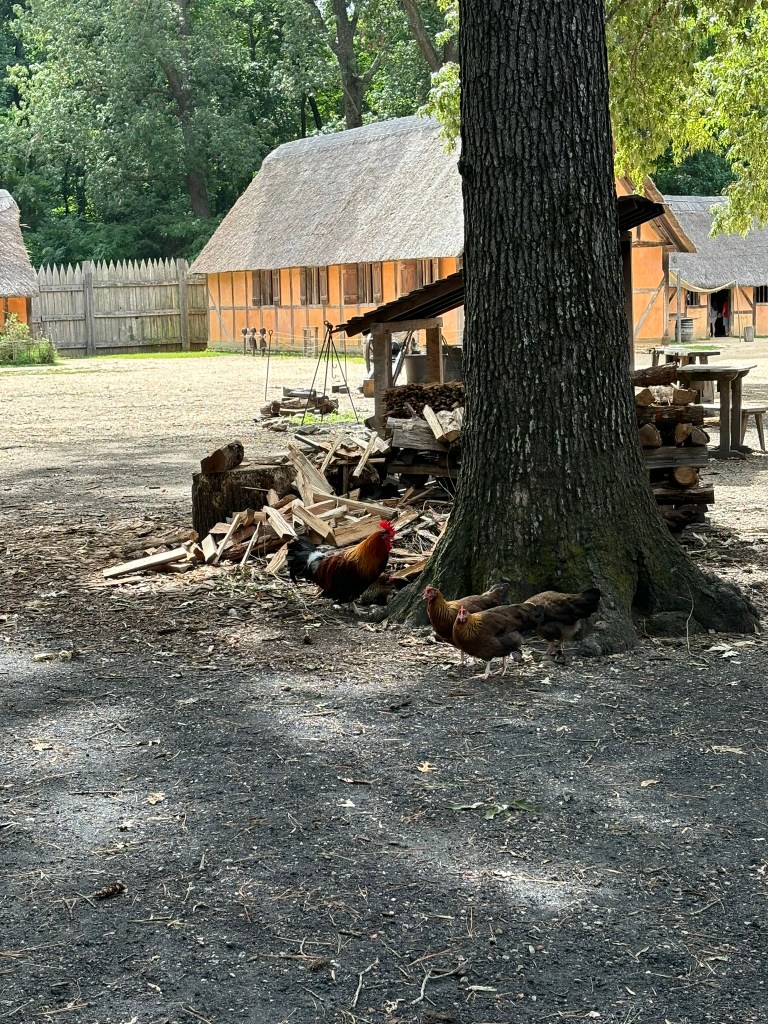
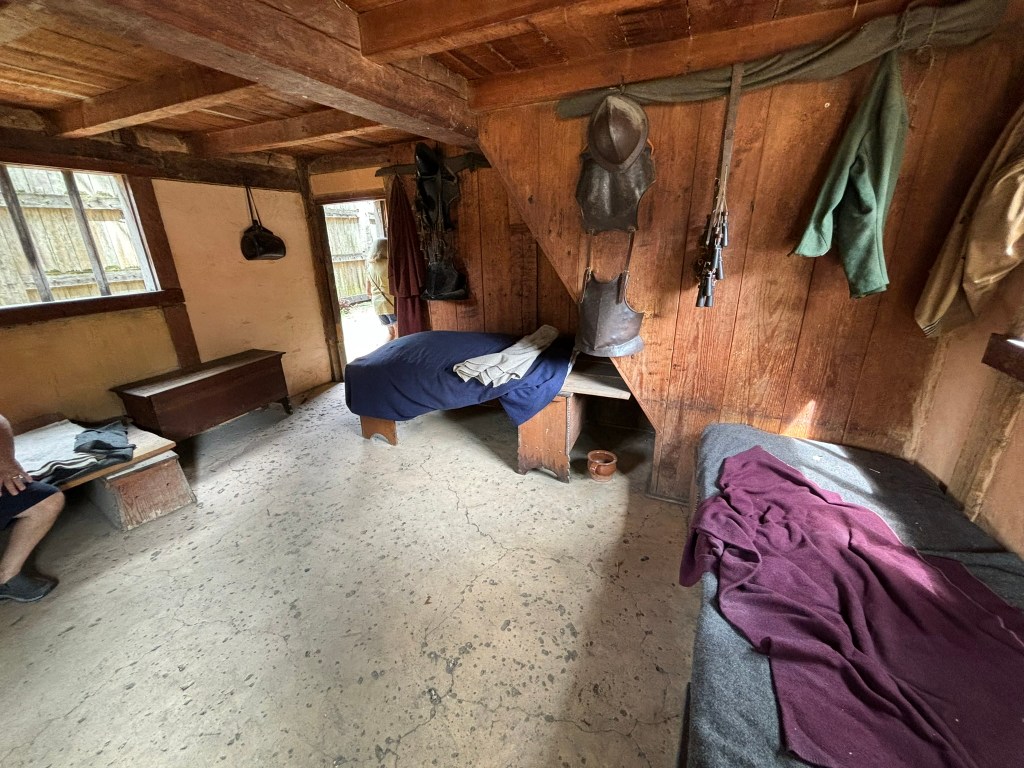
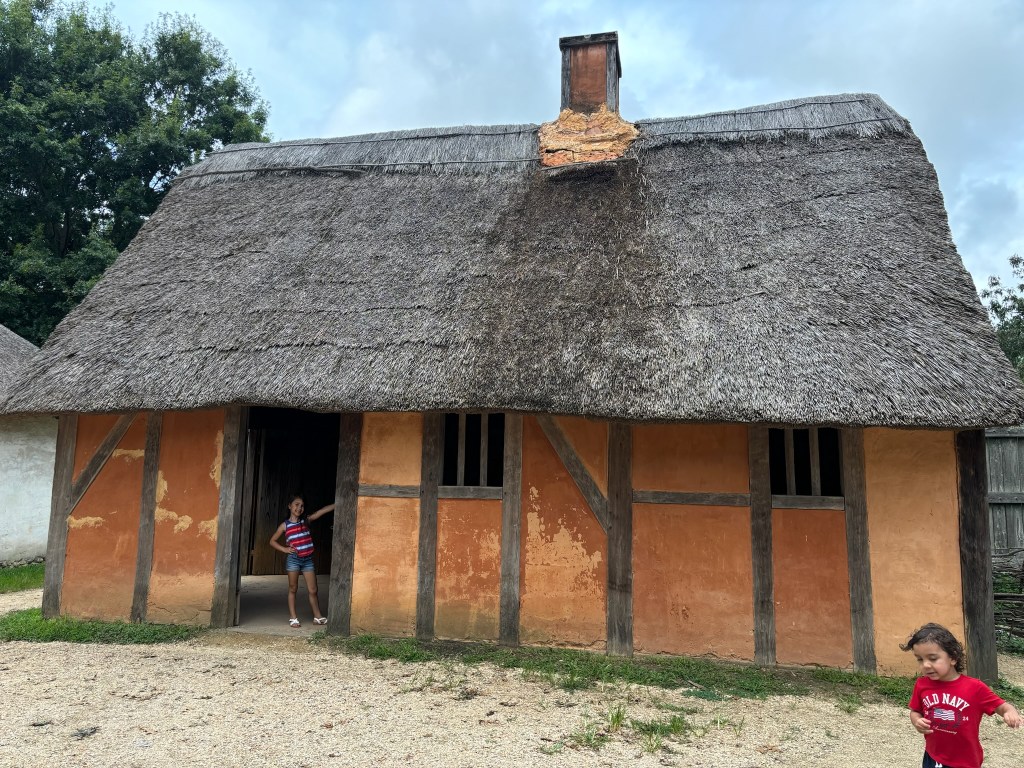
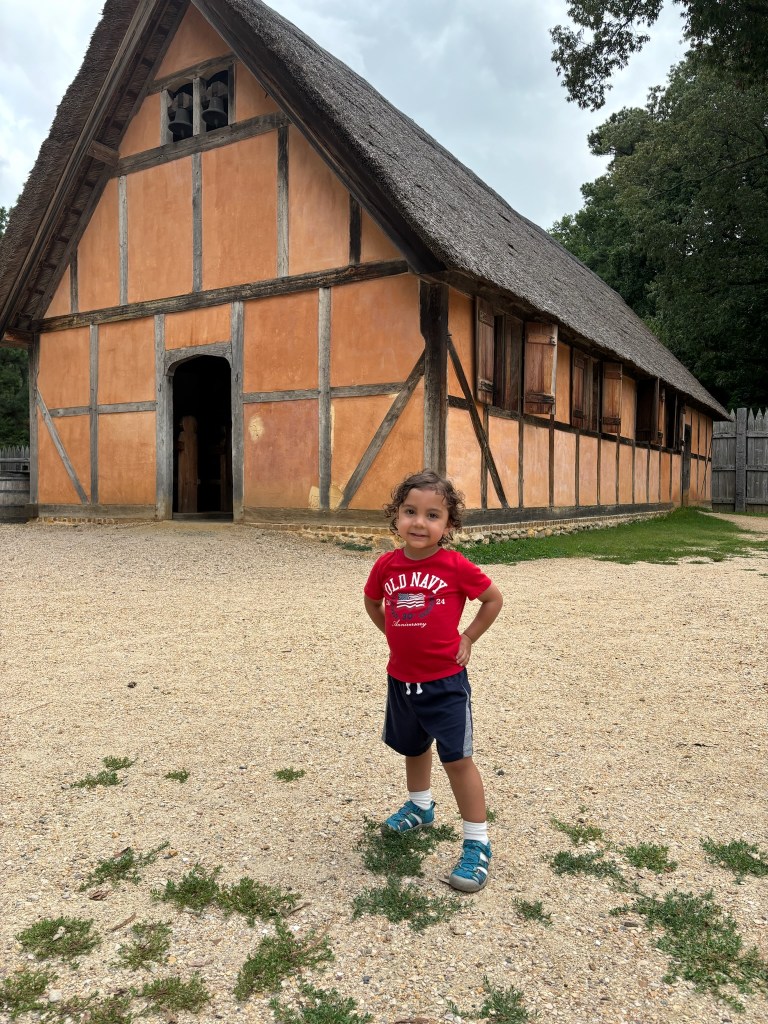
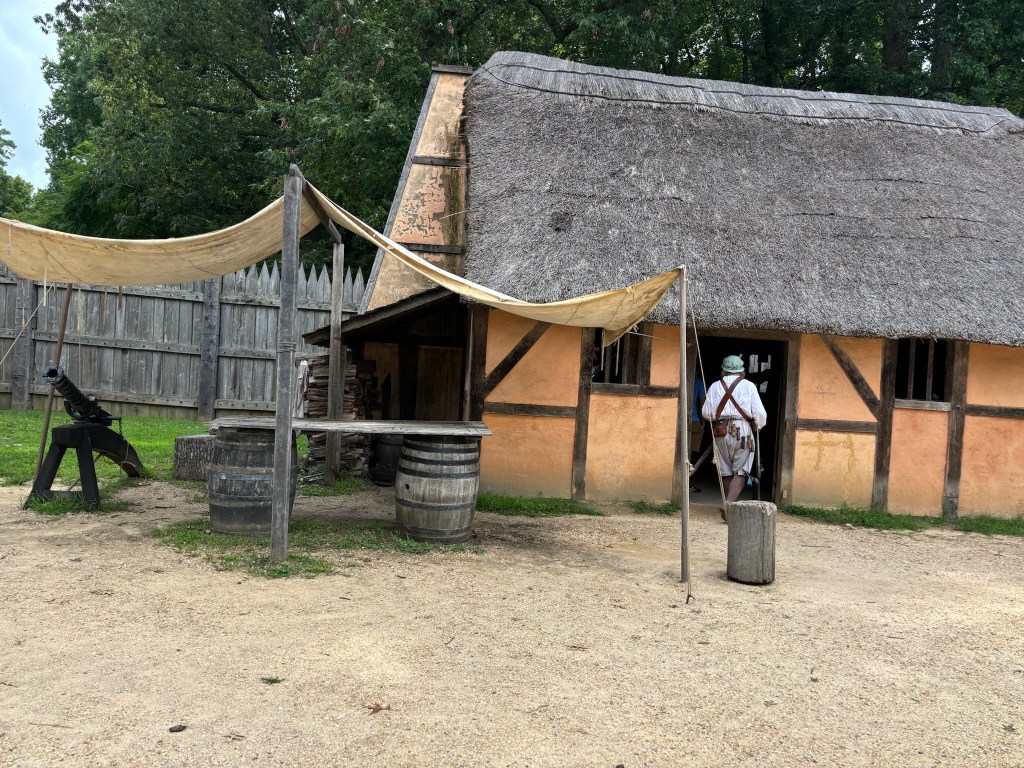
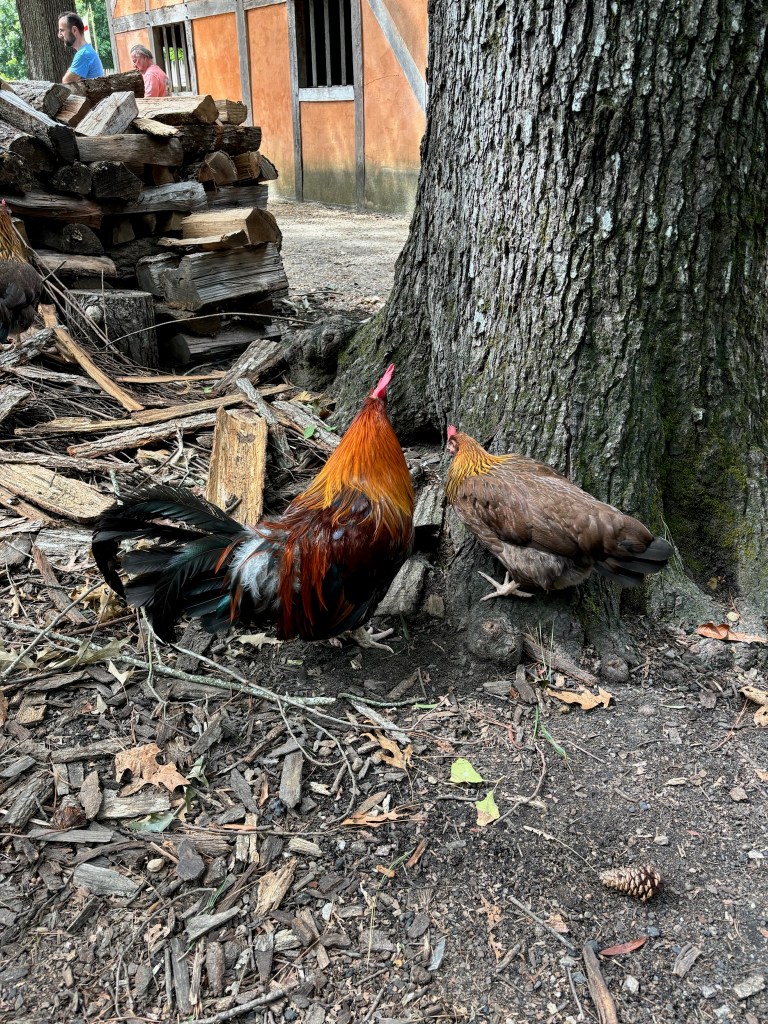
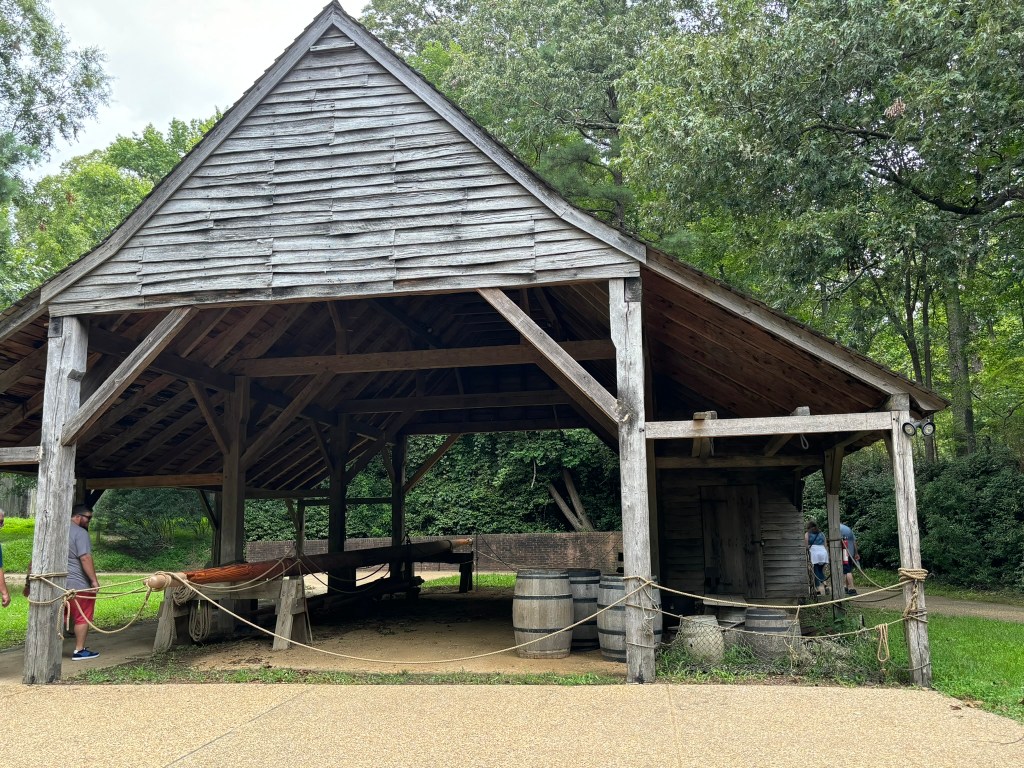
    We then made our way to the replica of the original James Fort, shaped in a Triangle.  One of the reenactors informed me that the original fort was likely much larger and had more buildings within, but the structures within the replica would have looked very much like the original.  We explored the numerous structures within James Fort, including living quarters, a church, an armory, and workstations.  There were even live chickens roaming around the fort.  Just outside the fort, cannon fire demonstrations are held every 30 mins.
    We had some time left before lunch to head back into the museum and take a look at the galleries once again.  We ate lunch at the cafe within the museum.  Lunch was included with the price of the tour.

    After lunch, we headed back onto the bus and headed to Yorktown, which I will discuss in a later blog post.

    Overview

    The Jamestown Settlement was a great, immersive experience highlighting the importance of the Jamestown settlement.  The museum highlighted the fact that three cultures came together in Virginia: English, Native and African.  Each culture brought their own unique blend which helped develop colonial culture in the New World.  As mentioned before, I thought that this tour would include Historic Jamestowne; the actual location of the original Jamestown Fort.  The original fort no longer exists, but the location includes a re-creation of an early church and an Archaearium, which houses over 2,000 artifacts from the Jamestown colony.  Perhaps I will have to make another trip on a future date.  Despite that, I would highly recommend going to Jamestown Settlement.  The museum does a great job taking you through the history of Jamestown and its significance to American history.  The living history experience allows you to step into the shoes of those who lived in 1607 and imagine what life would have been like for those in a Native village, those who had to remain on the ships for months at sea, and for those living in the James Fort. The tour was $85 per adult and $45 for my daughter (5) and free for my son (2). It was well worth it considering that this was an all day tour with lunch included. I would highly recommend this tour. You can buy tickets from Viator HERE.

    Follow my Instagram, Facebook, and X accounts for videos of our time in Jamestown.

    For more information about the Jamestown-Yorktown Foundation, visit HERE.

    Stay tuned for my next blog post which will discuss our visit to the Yorktown Battlefield and Museum in the afternoon.

    Check out similar blog posts below:
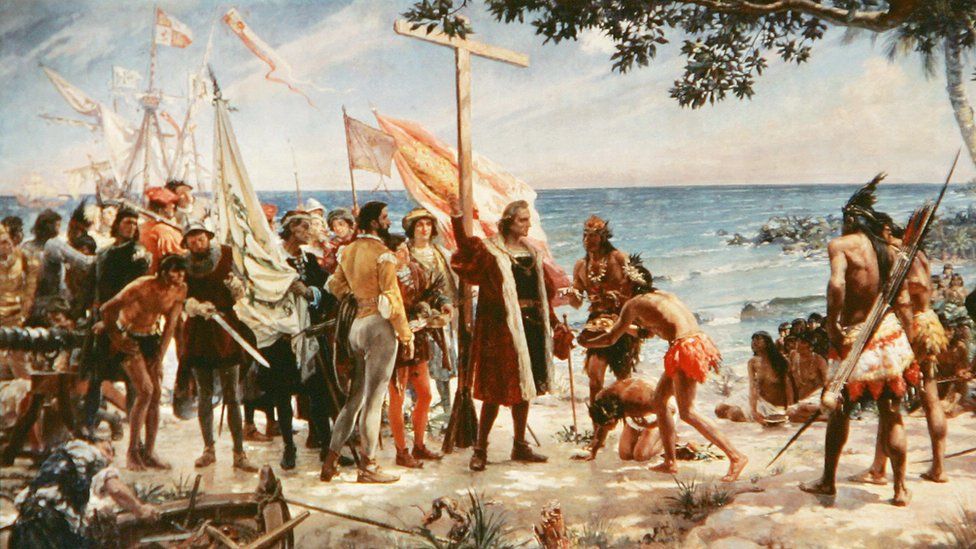
  • Today there is a wide range of views of Christopher Columbus as an individual. No matter what you think of him, there is no denying that his first voyage that landed in the Americas was one of the most significant events in human history. When other European explorers realized that Columbus had not landed in Asia, but in a “New World” a wave of Europeans came over to search for overnight wealth in gold, new opportunities in farming and mining, and to settle down and create a new life. This Age of Exploration was devastating to the Natives of the Americas who fell victim to the new diseases introduced by this new wave of settlers. The Natives had no immunity to the diseases and in some places up to 90% of the Natives died. In conflicts, the Europeans had superior weaponry and armor, which further devasted the Natives.
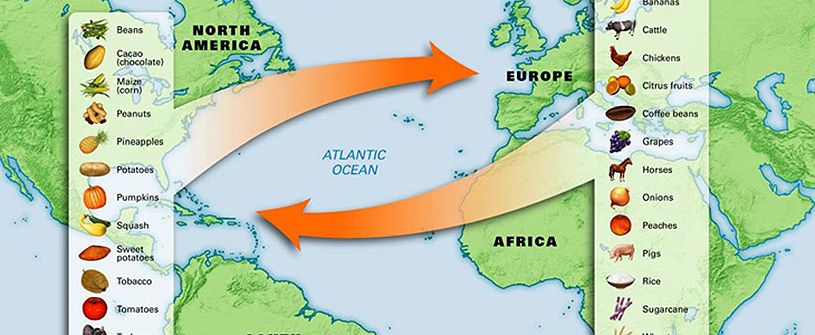
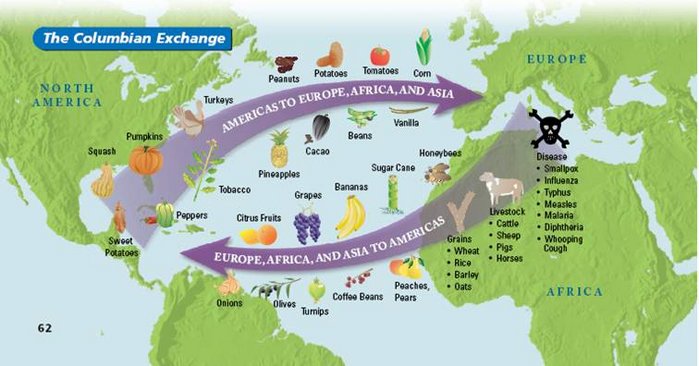
    When Columbus and his men came over, they brought with them plants and animals that had never been introduced to the Americas before, but would later become staples in the Americas. The Europeans also brought back with them plants and animals, which then spread to Africa and Asia. Many of these plants and animals would later become staples of the “Old World” (Europe, Africa and Asia). The Columbian Exchange is defined as the exchange of plants, animals, diseases and ideas between the Old World and the New World that began in 1492. This global exchange had a widespread and long-lasting impact on all parts of the world.

    From Europe to America: Animals

    When Europeans came to the New World, they brought with them domesticated livestock. Some examples include chickens, cattle, goats, pigs, sheep, and horses. These animals were introduced to the Americas for the first time. The Native Americans had very few domesticated animals, one being the llama of South America. We often see images and paintings of Native Americans riding on horseback. This would not have been the case before 1492. The horse revolutionized Native American life by allowing tribes to hunt buffalo far more effectively. Other animals provided meat, tallow, hides, transportation and hauling.

    From Europe to America: Crops

    Europeans brought over new crops that had never grown in the Americas before. Most were brought over intentionally, some unintentionally. Crops brought over and introduced to the Americas for the first time included wheat, oats, barley, rye, rice, coffee, tea, sugar cane, dandelions, onions, bananas, apples, oranges, and other citrus fruits. All of these crops would have a huge impact on the development of the Americas. Sugar quickly became the mainstay of Caribbean and Brazilian economies. Rice, cotton, and tobacco formed the basis of many slave societies including in the future United States. We think of coffee as being a staple of South America. This was not the case before 1492.

    From Europe to America: Disease

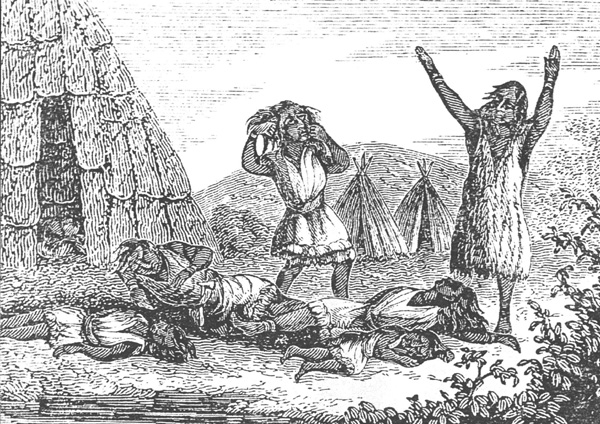
    Diseases unintentionally brought over from Europe to the Americas had a dramatic impact on the Native American population. In some cases, diseases spread faster in-land than actual people. Why did diseases flow from Europeans to the Natives and not vice-versa? Because of the fact that Native Americans had few domesticated animals, the Natives also had fewer communicable diseases that spread. The Old World and the New World were meeting for the first time. Therefore the Native Americans had no immunity to Old World diseases. People from Europe, Africa and Asia had built up immunity to the many diseases that spread in the Old World.

    Old World diseases that spread from the Europeans to the Natives included smallpox, measles, mumps, whooping cough, influenza, chicken pox, and typhus. Between 1492- 1650 its estimated that up to 90 percent of the Native Americans had died. The Native American population of Mexico went from about 25 million in 1518 to about 2 million in 1593. (Source: James et al., The Key to Understanding Global History, Jarrett Publishing) With entire villages dying from disease, new waves of European settlers found it much easier to take the land.

    From America Back to Europe: Animals

    The flow of animals in the Columbian Exchange had little impact on Europe because of the lack of domesticated animals already in the Americas. Two animals that did make it to the Old World was the turkey and the raccoon. Raccoons were fancied for their furs which led to a lucrative fur trade.

    From America Back to Europe: Crops

    Many crops which were indigenous to the Americas were brought back to Europe and then spread to Asia and Africa. Corn was brought back to Spain and quickly spread to other parts of the world. Other crops included squash, pumpkins, beans, sweet potatoes, tomatoes, chili peppers, peanuts, chocolate, potatoes and tobacco.

    The tomato was brought to Italy in the Columbian Exchange. At first, the tomato was only used for decoration. It would be well over a century before the tomato became a staple in Italian cuisine.

    The potato had an enormous impact on European society. The potato grew very well in different regions including in Ireland’s soil. Before Ireland’s potato famine, nearly half of the population relied exclusively on the potato for their diet, and the other half ate potatoes frequently (Brittanica).

    New foods became staples for people in the Old World. Diets improved tremendously because of this new exposure to nutritious and calorie-dense foods that they had never been exposed to before. New growing regions opened up for these new crops.

    From America Back to Europe: Disease

    The flow of diseases from the Americas to Europe was not significant. As mentioned above Native Americans did not work closely with domesticated animals like Europeans had. Therefore, they had less communicable diseases that originate in animals. One disease that is believed to have spread from Native Americans to Europeans was syphilis which was then taken back and spread to Europe.

    An Exchange of Ideas

    Besides the physical items like plants and animals, ideas were spread between the Old World and the New World. The Native Americans taught the Europeans local farming methods. Europeans also adopted devices such as the canoe, the hammock and the poncho. The Native Americans were introduced to metalworking, new techniques of shipbuilding, and new forms of weaponry, including firearms.

    Before the Columbian Exchange there were NO……

    Oranges in Florida

    Bananas in Ecuador

    Tomatoes in Italy

    Coffee in Columbia

    Pineapples in Hawaii

    Cattle in Texas

    Chili Peppers in India

    Cigarettes in France

    Choclate in Swizerland

    Potatoes in Ireland

    How Has the Columbian Exchange Impacted Your Life?

    We take for granted the many varieties of foods we are offered at the Supermarket. Think about what you eat on a daily basis. Where did those foods originate? Where did the ingredients originate? The Columbian Exchange set in motion a global network of trade that still has lasting impacts on our world today. Regions today are known for growing certain staples but in many instances, this would not have been the case before 1492.

    Related Posts:

  • In Parts 1 (Read Here) and 2 (Read Here) of my blog post about the Massachusetts Bay Colony, I addressed why the Puritans settled there, what the conditions were like, and what daily life was like in the colony. I also discussed the Salem Witch Trials and dissent within the colony. In the third and final part, I will discuss major conflicts that the colony had with the Native Americans, as well as the long-term impact of the colony.

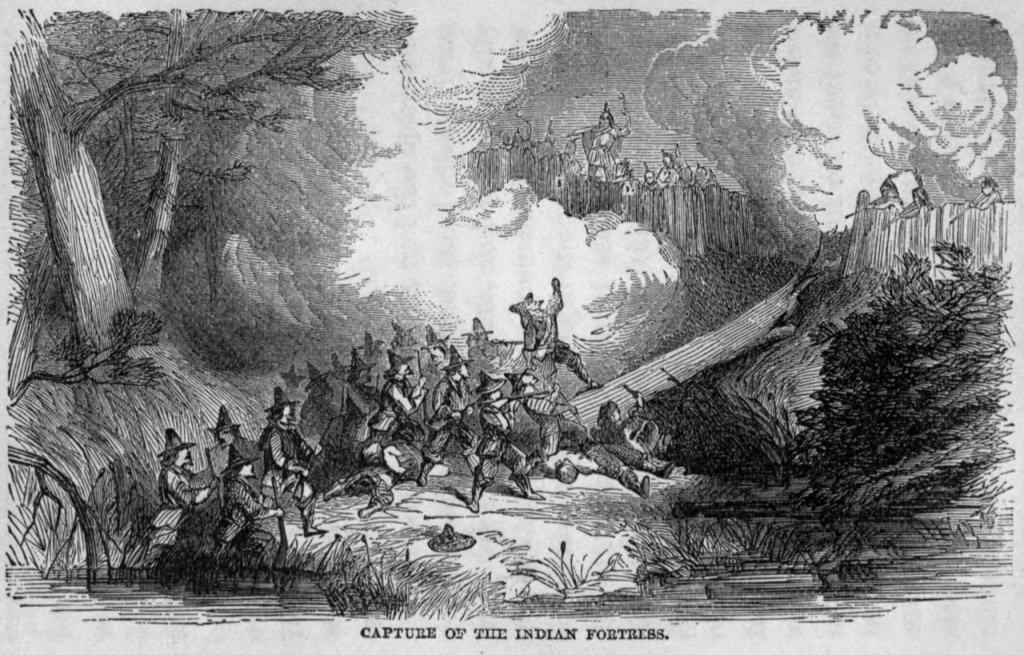
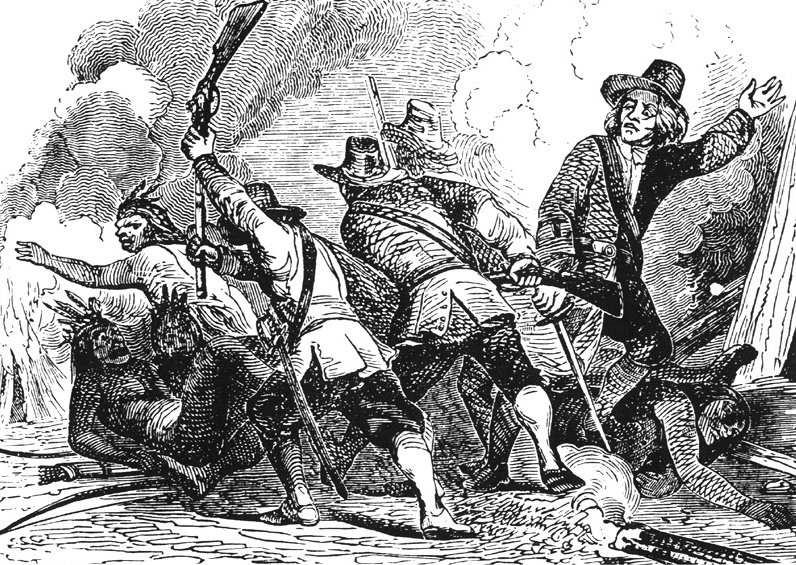
    In Massachusetts, as other American colonies, the English settlers changed the landscape of the colony with little regard for the Native American way of life. The English cleared forests for farms, and built fences, houses, barns and churches. They killed wild animals that preyed on their domesticated animals. (Taylor, p. 188) Most Puritans viewed the natives as heathens who needed to be converted. “The New English saw the Indians as their opposite- a pagan peoples who had surrendered to their worse instincts to live within the wild, instead of laboring hard to conquer and transcend nature.” (Taylor, p. 188) In the first years of the Massachusetts Bay Colony, the new settlers relied on trade with the local Native American groups such as the Narraganset, Massachusetts, Wampanoag, Nipmuck and Patuxet. (Taylor, p. 189) However, the first major conflict between the colonists and the Natives broke out in 1636 with the Pequot War. Allied with the Narragansett and Mohegan peoples, the English demanded a heavy tribute from the Pequot tribe and surrender of suspects accused of killing a trader. (Taylor, p. 195) The English and their Native allies surrounded a Pequot village, setting it ablaze and killing many Pequot Natives either in the flames or in flight. The Pequots were nearly destroyed and the survivors were forced to assimilate with other local tribes.

     In the 1640s, Puritan missionaries began the task of converting Native Americans to Christianity.  The Natives were expected to give up their customs and religious beliefs, and become assimilated into English culture.  Missionary John Eliot “warned the Indians that they were doomed if they remained in ‘so unfixed, confused, and ungoverned a life, uncivilized and unsubdued to labor and order.”  (Taylor, p. 197)  Natives who converted were called “Praying Indians” and they created new settlements called “praying towns.”  Christianity and an alliance with English settlers appealed to some Natives of the smaller and weaker tribes.  However, Praying Indians were in a difficult position, looked upon with a degree of suspicion from many English Puritans, as well as other Native Americans who held onto their traditional customs.  Traditional Natives viewed the Praying Indians as traders.

    A violent and bloody war called King Philip’s War broke out between the English of New England, and the Wampanoag Natives. Both sides fought alongside other Native allies. The name King Philip refers to the English nickname of Wampanoag chief, Metacom. The English were previously allies with Metacom’s father, Massasoit, but when Metacom became the head chief, he quietly prepared for a war that he believed was inevitable. (Taylor, p. 198) “In the spring of 1675 the Plymouth colonists provoked the confrontation by seizing, trying, and hanging three Wampanoag for murdering a praying town Indian who had served as a colonial informant.” (Taylor, p. 198) Violence exploded as brutal and bloody fighting took place for over a year. Food shortages, disease and a heavy casualty rate eventually weakened the Natives, and Metacom was killed in battle. Although an English victory, the colonists paid a heavy price. (McDougal, p. 54) The war is considered, per capita, the deadliest war in American history. “The figures are inexact, but out of a total New England population of 80,000, counting both Indians and English colonists, some 9,000 were killed—more than 10 percent.” (Lauterborn, historynet.com) The war ended widespread conflicts in New England, but the devastation had a lasting impact on both the English and Native populations. It would be years before Massachusetts and the other New England colonies could fully recover. (McDougal, p. 54)

    Lasting Legacy

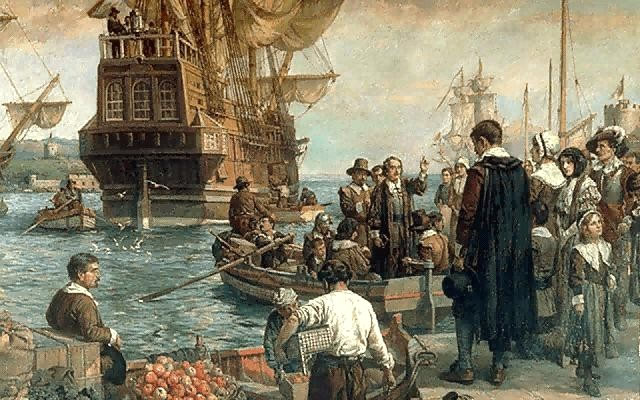
    The Puritans of the Massachusetts Bay Colony, along with their successes and failures, have left behind a lasting legacy on the modern-day United States. The Restoration of the English monarchy in 1660 “terminated and discredited the short-lived revolutionary regime led by English Puritans during the 1640s and 1650s. After the Restoration, English Puritans dwindled in number, prominence, and ambition.” (Taylor, p. 185) The Great Awakening (religious revival) of the 1730s and 1740s further challenged Puritan beliefs and customs, as new Protestant sects emerged such as the Methodists and Presbyterians. While the Puritans dwindled in number, their impact on American history cannot go understated. In the early days of the Massachusetts colony, only male, Puritan Church members could vote. However, this constituted 40% of adult males, which was a large electorate compared to Europe of the 1640s. (McDougal, p. 51) Distribution of land and wealth was more even among the populace compared to the Chesapeake colonies which had wealthy planters obtaining a majority of the wealth. (Taylor, p. 171) The foundations of democratic ideals were being laid in Massachusetts with Town Meetings, in which colonists could discuss and debate current issues in their local government. (Davidson, p. 98) Massachusetts and the other New England colonies were the first colonies in which entire families came to settle and start new lives, which set the stage for further colonization and settlement. The emphasis on literacy and religion led to the earliest universities such as Harvard to educate aspiring ministers. With all of its accomplishments, there were also the dark and negative sides of intolerance for dissenters and the hysteria of the Salem Witch Trials. Democratic ideals have grown since 1630 and lessons have been learned from the shortcomings of Massachusetts. Modern Americans can never take for granted the impact that these early settlers had on the United States. The risk that they took to sail across the Atlantic Ocean for a new and better life laid the foundations for the character, heritage, and strong-will of the American spirit. They planted the seeds of democracy and freedom that Americans hold dear. The ideas that they developed for their representative governments, inspired America’s founding fathers who wrote these ideas into the Constitution.

    Works Cited

    Taylor, Alan/ Foner Eric (EDT). American Colonies The Settling of North

    America. Penguin Group USA, 2002.

    Mcdougal, Holt. Americans, Grades 9-12 New Jersey: Mcdougal Littell the

    Americans. Holt Mcdougal, 2007.

    Davidson, James West., et al. The American Nation. Prentice Hall, 2000.

    Bremer, Francis, J., John Winthrop: America’s Forgotten Founding Father,

    Oxford University Press, 2005

    Lauterborn, David. “Blood and Betrayal: King Philip’s War.” HistoryNet,

    HistoryNet, 12 July 2015, 

    http://www.historynet.com/blood-and-betrayal-king-philips-war.htm.

    Related Posts: