Category: Ancient Rome

  • In my previous two posts, I focused on the influence of Ancient Rome on the United States in the areas of law and government, and culture. In this post I focus on the spread of Christianity within the Roman Empire and the influence of Christianity within the history of the United States. I also conclude my 3-part post on Ancient Rome’s influence on the United States.

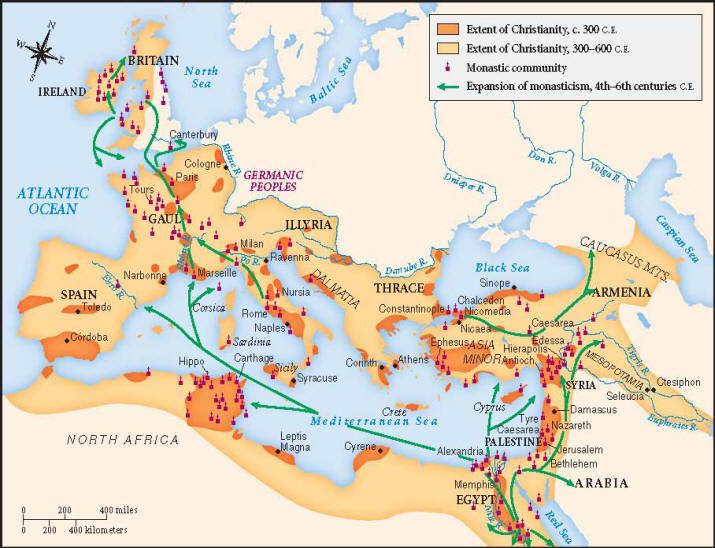
    For centuries, the Romans served many gods and goddesses, inspired by the Greek polytheistic religion. In the beginning of the Common Era, Christianity emerged from the teachings of Jesus of Nazareth, who lived during the height of the Roman Empire. Christianity first spread in the eastern part of the Roman Empire, and then to the west. Up until the 300’s AD, Christians in the empire were persecuted, beaten and killed. They were blamed for any problems emerging within the Empire. Despite this, the new religion continued to spread while Christians worshiped underground. By 313 AD, Emperor Constantine became a Christian and passed the Edict of Milan. He offered to citizens the promise of religious freedom. Constantine was baptized into the Christian faith shortly before his death. (Knox, ancient.eu) In 380 AD, Emperor Theodosius made Christianity the official religion of the Roman Empire and banned the old Pagan religions. After the fall of the empire, Christianity continued to spread throughout the world, and in the Middle Ages, had a stronghold on power and culture in the Western world. Kings allied with popes, and the Catholic Church became one of the only unifying powers in the challenging years of the Dark Ages. “Bishops and church leaders modelled their organization on the administration machinery of the old Empire.” (Tingay and Dadcock, p. 204) Christianity has had an enormous impact on the history and development of the United States. Many early American settlers such as the Pilgrims arrived from Europe for religious freedom. Christianity played a critical part in their daily lives. Many Christian denominations emerged, but with the core beliefs intact. Today, Christianity is the most practiced religion in the world and within the United States. “In Pew Research Center telephone surveys conducted in 2018 and 2019, 65% of American adults describe themselves as Christians when asked about their religion.” (pewforum.org) Christianity, a religion that began and first expanded in the Roman Empire, has shaped our society, culture, beliefs and institutions.

    In almost every aspect of Americans’ lives, traces of the Roman Empire can be seen. Ancient Rome was a fascinating and inspiring civilization. Even with the fall of the Empire, and the emergence into the Dark Ages, Roman influence lived on. It was revived by the Renaissance scholars, brought across the Atlantic Ocean with explorers and pioneers, and continues to be a strong influence on American government and culture. Our basic principles, morals, ethics, interests, and livelihoods, have been shaped by varying degrees by the advancements, achievements and ideas of the Romans. From American infrastructure, laws, founding documents, entertainment, art, religion, and education, it is quite clear; Ancient Rome is all around us.

    Works Cited

    Tingay, Graham, and John Badcock. These Were the Romans. Dufour Editions, 2008.

    Spielvogel, Jackson J. Discovering Our Past: a History of the World. McGraw-Hill Education, 2014.

    Knox, John S. “Christianity.” Ancient History Encyclopedia, Ancient History Encyclopedia, 22 Sept. 2016, http://www.ancient.eu/christianity/.

    “In U.S., Decline of Christianity Continues at Rapid Pace.” Pew Research Center’s Religion & Public Life Project, 9 June 2020, http://www.pewforum.org/2019/10/17/in-u-s-decline-of-christianity-continues-at-rapid-pace/.        

    Related Posts:
  • In my previous post, I focused on Ancient Rome’s influence on the United States in the area of law and government. In this post (Part 2), I focus on the legacy of Ancient Rome’s culture.

    Rome’s legacy can be seen in many aspects of our American culture. Many western countries, including the United States use the Latin alphabet, which has expanded from 22 to 26 letters. Italian, French, Spanish, Portuguese and Romanian- the Romance Languages- are derived from Latin, the language of the Romans. English contains thousands of Latin-based words. (Spielvogel, p. 357) Roman writers like Cicero, Virgil, Ovid, Livy, Seneca and Tacitus wrote effectively in the Greek literary categories of history, lyric poetry, oratory, epic, tragedy, comedy, and biography. (Tingay and Dadcock, p. 204- 205) “Without this classical literature, in both Greek and Latin, preserved by the Church in the West, and by scholars and libraries in the East, the history and civilization of later Europe would have been very different.” (Tingay and Dadcock, p. 205) Great Roman writers are still studied and admired today, and have influenced modern genres in literature, cinema and television.

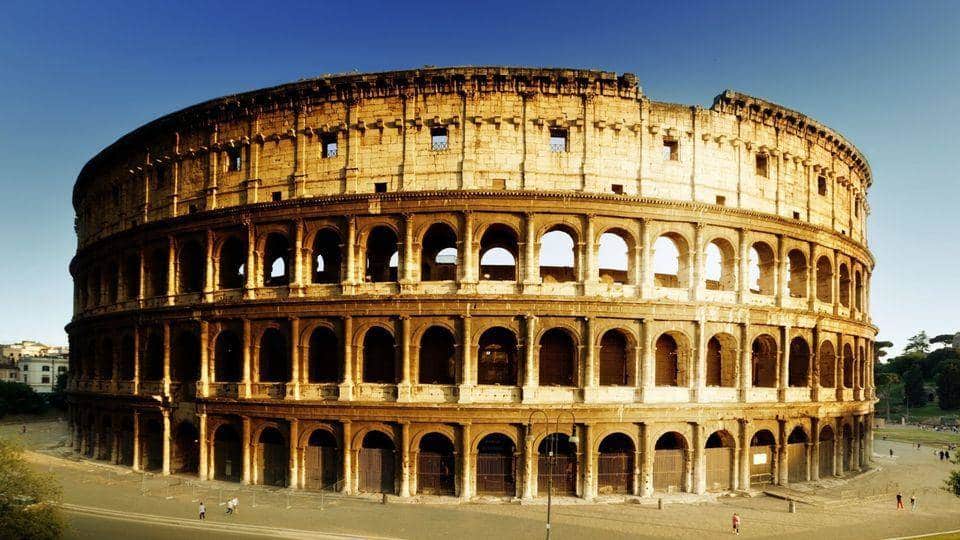
    Modern day American architecture and construction has been highly influenced by the Ancient Romans.  Many public and private buildings use domes and arches inspired by Roman architecture.   A visitor to Washington DC can see the dome of the Capitol building and the columns of the Supreme Court building, inspired by both Roman and Greek ideas.  Concrete, a Roman development, continues to be a major building material today.  (Spielvogel, p. 357)  The Romans built large public buildings, such as the Colosseum and the Pantheon, which still inspire and amaze tourists.   They built private palaces, bridges and aqueducts which displayed their genius and dominance.  Many modern cities, such as New York City, retain the traditional grid pattern in their streets much like a Roman city.   The infrastructure of a Roman city was quite remarkable for the times.  The Romans built extensive roads and plumbing systems.  Their ability to use heating systems in wealthy homes and baths shows the ingenuity of the Romans which has inspired later civilizations.  The Romans were expert surveyors, road builders, and water engineers.  (Tingay and Dadcock, p. 209)  The Colosseum, which sat between 50,000 and 80,000 spectators, is an ancient marvel.  A retractable roof protected the gladiators and spectators from the elements.  The Colosseum floor was likely flooded with water for mock naval battles.  There were also trap doors and elevators which brought beasts and gladiators to the floor of the stadium, from cells below.  Many of these feats of engineering would not be rivaled until recent history.  Americans have been inspired by these architectural feats and have built modern marvels such as stadiums, arenas, suspension bridges and skyscrapers.

     The Romans borrowed many aspects of art from the Greeks.  But Roman artists achieved real distinction and originality in their portrait statues and carvings.  Roman statues looked more realistic and detailed compared to Greek statues.  Triumphal arches and memorial columns were often imitated by later leaders.  (Tingay and Dadcock, p. 212)  Neoclassical paintings and architecture of the modern era drew their inspiration from Greek and Roman ideas.  There are many examples of American art and architecture that take on the neoclassical style such as Thomas Jefferson’s Monticello.

    Roman leisure and entertainment has impacted American culture.  The Colosseum was the model for later arenas that would serve the public as places for sport and entertainment.  While today, Americans don’t watch gladiators fight each other or animals to the death, Americans do get together to watch competition in sports such as baseball, basketball, or football.  The Circus Maximus sat about 100,000 spectators who watched chariot races, and cheered for their favorite racer, much like a current sports fan cheers for a favorite team or athlete.  While Americans go to plays or movies for entertainment, Romans attended dramas that were inspired by Greek tragedies and comedies.    Both Ancient Romans and modern Americans enjoy being entertained in large public settings.

    The Ancient Romans have impacted our education and understanding of the world. They made breakthroughs in Science, Medicine, History, and Literature that still impact our lives. During Roman times, Greek scientists made lasting discoveries. Archimedes discovered the fundamental laws of hydrostatics, mechanics and ratios. Aristarchus concluded that the earth was a sphere, spinning in space as it orbited the sun. Euclid’s textbooks on geometry are still widely used by students. Despite some inaccuracies, Ptolemy’s writings and maps summarized Roman knowledge of the earth’s surface, and remained in use until the Age of Discovery, fourteen centuries later. (Tingay and Dadcock, p. 209) Julius Caesar used the skills and knowledge of Alexandrian astronomers to devise a calendar which remains the basis of the one we use today. (Tingay and Dadcock, p. 209) July and August are named after Julius Caesar and Augustus. Galen, the court physician of Marcus Aurelius, wrote extensively on anatomy, physiology, pathology, and a wide range of medical subjects. His ideas would not be challenged until the sixteenth century. (Tingay and Dadcock, p. 211) Romans built hospitals and recognized the importance of sanitation. Their standard of hygiene went unmatched until the nineteenth century. (Tingay and Dadcock, p. 211) The field of history, while invented by the Greeks, was carried further by Roman historians like Livy and Tacitus. Much of what we know about Roman history, from its founding, to its fall, is because of the extensive writings of historians. Ancient Romans have had an enormous impact on the education that is highly valued in the United States.

    Works Cited

    Tingay, Graham, and John Badcock. These Were the Romans. Dufour Editions, 2008.

    Spielvogel, Jackson J. Discovering Our Past: a History of the World. McGraw-Hill Education, 2014.

    Knox, John S. “Christianity.” Ancient History Encyclopedia, Ancient History Encyclopedia, 22 Sept. 2016, http://www.ancient.eu/christianity/.

    “In U.S., Decline of Christianity Continues at Rapid Pace.” Pew Research Center’s Religion & Public Life Project, 9 June 2020, http://www.pewforum.org/2019/10/17/in-u-s-decline-of-christianity-continues-at-rapid-pace/.        

    Related Posts:
  • My next three blog posts will focus on Ancient Rome’s influence specifically on the present-day United States. Part 1 will focus on Law and Government. Part 2 will focus on Culture, and Part 3 will focus on the spread of Christianity. Ancient Rome’s influence is all around us.

    Ancient Rome has had a tremendous impact on Western Civilization and world history, right to the present day.  American political institutions and American culture owe much to Rome.  While Rome’s legacy can be felt all around the world, the impact that Rome has had on the United States can be found in many aspects of life.  The Romans were a practical people, whose innovations changed the world and allowed their empire to expand from Europe to the Middle East, and into North Africa.  At the peak of its power during the Pax Romana, the Roman Empire was generally peaceful and grew economically and culturally.  Trade routes developed, the empire gained more territory, and the cities in the empire were beautified with temples, government buildings, gardens, fountains and baths.  After the fall of the Western Roman Empire in 476 AD, the Roman legacy lived on.  The new German kingdoms adopted many aspects of Roman culture.  However, throughout the Middle Ages, some aspects of Roman brilliance were lost.   Influential Roman writers were forgotten, and great structures fell into decay.   Christianity, which began and expanded in the empire, continued to spread and gain power throughout the Middle Ages.  During the Renaissance, Roman and Greek manuscripts were rediscovered by Humanist scholars.  There was a new excitement to learn from ancient cultures, and Ancient Rome was again revered.  With the Renaissance, the legacy of Rome continued to spread, including to a new American nation, which would eventually create a Republic, highly influenced by the Roman Republic.   To this day, the United States has been widely impacted by Ancient Rome in government and law, culture, and the spread of Christianity.

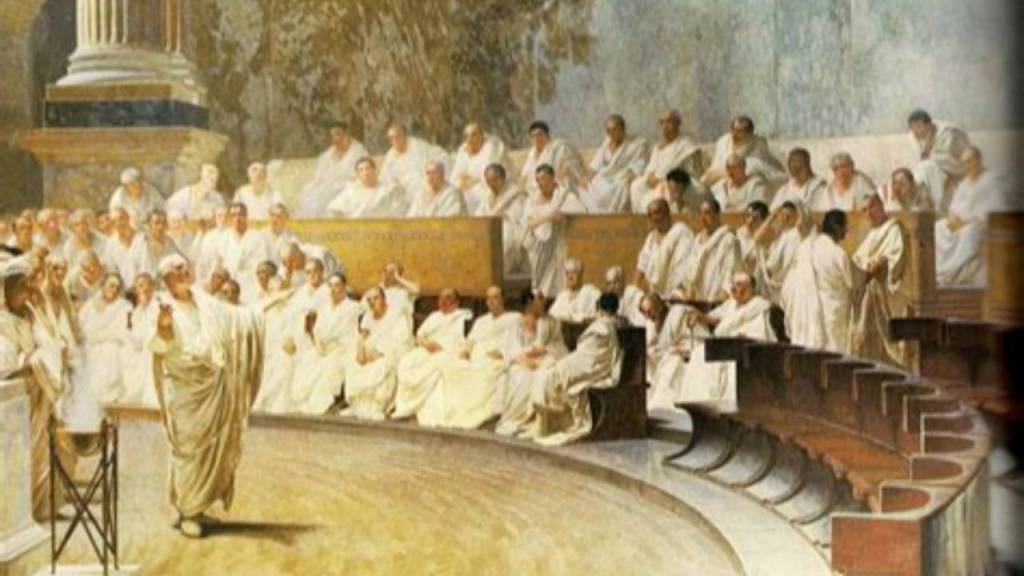
     Many beliefs about law and justice in the American legal system come directly from Roman ideas.  These beliefs that we hold dear include the idea that everyone is equal under the law, a person is innocent until proven guilty, and judges must decide cases fairly.  (Spielvogel, p. 356)  We take these concepts for granted but in ancient times, these were revolutionary ideas.  In other ancient cultures, people were treated differently under the law and faced arbitrary punishments, depending on social status.  While Rome was inspired by Greek democracy, the Romans developed their Republic with new ideas and innovations.  Legislative assemblies, representing the people, discussed and passed laws.  Citizens in the republic elected their leaders.  The most influential legislative body was the Roman Senate, and the United States Senate is considered the more prestigious house of Congress.  Romans expected the citizens to do their civic duty and vote, participate in government, and help to improve their communities, all of which are a part of our American values and beliefs.  (Spielvogel, p. 356)

    Roman law had been codified in the sixth century by Eastern Roman Emperor Justinian.  This code of laws inspired later leaders, including Charlemagne, Napoleon, and America’s founding fathers.  Roman ideas that no man shall be a judge in his own case, and a man should have the right to face his accusers, are the same ideas sketched into our Bill of Rights, written by James Madison in the 18th century.  Many of the most basic ideas and freedoms that are cherished by American citizens, were directly inspired by Roman ideas.  The American government’s symbol of the bald eagle was also passed down, as Roman emperors displayed the imperial eagle as a symbol of their power and authority. (Tingay and Dadcock, p. 206)  The American government’s structure and bureaucracy was inspired and influenced by the Romans.  While the Roman government had many magistrates with varying responsibilities, the American government has different cabinet secretaries running the executive departments.  While Rome had proconsuls who served as governors over the provinces, the United States has fifty states run by governors.  (Spielvogel, p. 329)  From the local to the federal level, the structure of our government closely resembles the Roman government.

    Works Cited

    Tingay, Graham, and John Badcock. These Were the Romans. Dufour Editions, 2008.

    Spielvogel, Jackson J. Discovering Our Past: a History of the World. McGraw-Hill Education, 2014.

    Knox, John S. “Christianity.” Ancient History Encyclopedia, Ancient History Encyclopedia, 22 Sept. 2016, http://www.ancient.eu/christianity/.

    “In U.S., Decline of Christianity Continues at Rapid Pace.” Pew Research Center’s Religion & Public Life Project, 9 June 2020, http://www.pewforum.org/2019/10/17/in-u-s-decline-of-christianity-continues-at-rapid-pace/.        

    Related Posts: