Month: July 2024

  • Introduction

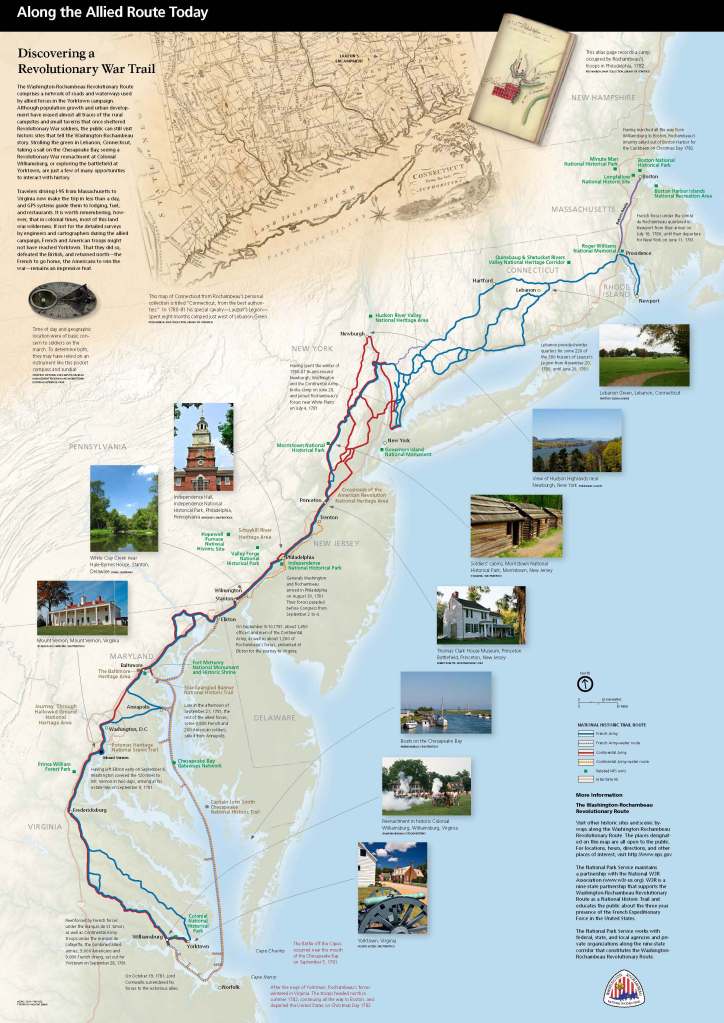
    For this blog post, I am highlighting the Washington-Rochambeau Revolutionary Route.  Many of the events/ trips that I have posted on this blog from New Jersey have been sites along the trail.  It is fitting to post about the trail now because next week my family and I are heading on a trip to Williamsburg, Virginia, which is a site along the trail.  We will be visiting the trail’s final destination: Yorktown, Virginia.  I am a member of the Washington-Rochambeau Revolutionary Route in New Jersey Association which highlights the routes taken by the American and French forces within New Jersey.  Of course, New Jersey was just one of several states that the American and French forces marched through.  Other states include Massachusetts, Rhode Island, Connecticut, New York, Pennsylvania, Delaware, Washington DC, Maryland, and Virginia.  

    The entire trail is highlighted and commemorated by The National Washington-Rochambeau Revolutionary Route Association Inc. (W3R-US).  On their website, W3R-US’s explains that their mission “is educating the public both about the Washington Rochambeau National Historic Trail, and the Trail’s context within the American Revolution as well as to collaborate with diverse trail communities and partners in stimulating economic development and a fuller, more inclusive realization of America’s founding ideals. W3R-US’s vision is that through a connected and conserved trail, W3R-US strengthens trail communities and expands the relevance of our shared American story today and for future generations.”  

    Overview Of The Trail

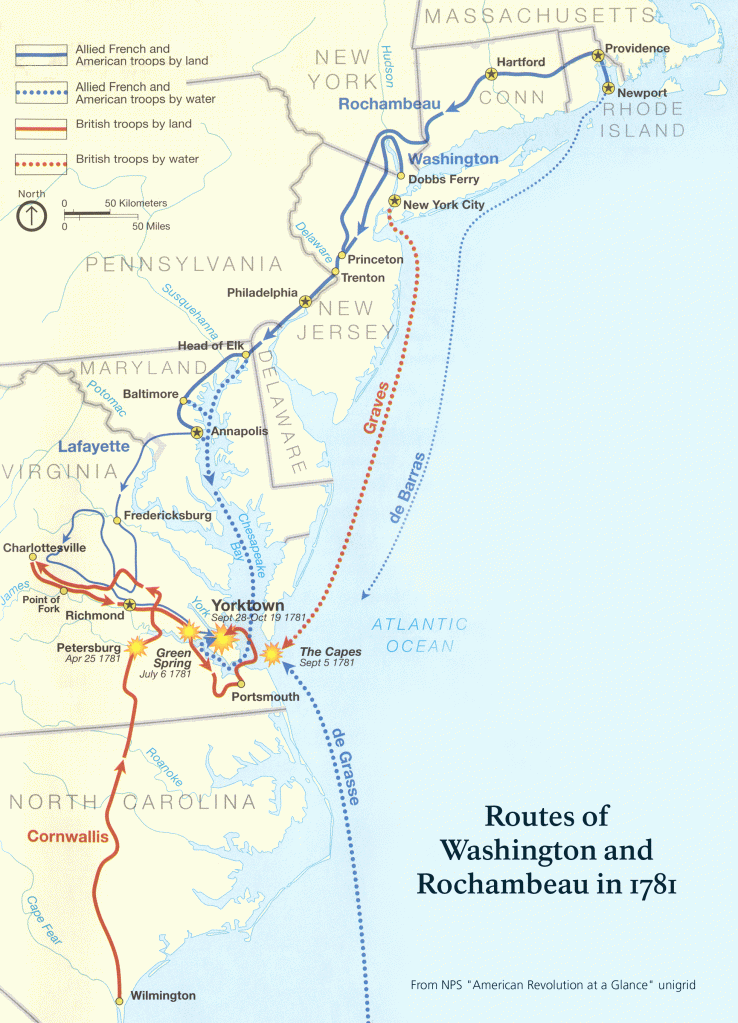
    The Washington-Rochambeau Revolutionary Route highlights the 680-mile route that the Continental Army, led by George Washington, and the French forces, commanded by Jean-Baptiste de Rochambeau, took from Newport, Rhode Island, to Yorktown, Virginia.  This 14-week journey culminated in the defeat of the British Army in The Siege of Yorktown in October 1781, which was the beginning of the end of the war, and the victory that the United States needed to secure their independence. The Washington-Rochambeau Trail is a unit of the National Park Service.

    The march began in June 1781, when French forces departed from Rhode Island and met up with American forces at the Hudson River.  The French and American forces marched south in August, through New Jersey, Pennsylvania, Delaware and Maryland.  They arrived in Williamsburg, Virginia, in late September, just a few weeks after the French navy defeated the British in the Battle of the Chesapeake, effectively cutting off an escape route for the British encamped at Yorktown. 

    On September 22nd, 1781, the American and French armies joined forces with the Marquis de Lafayette in Virginia.  After a three-week siege at Yorktown, British General, Lord Cornwallis surrendered his British army on October 19, 1781.  This was the climactic victory of the war which led to peace talks between the United States and Great Britain.  The Washington-Rochambeau Revolutionary Trail features interpretive signs and exhibits that highlight the joint effort of both the American and French forces to secure independence.

    New Jersey

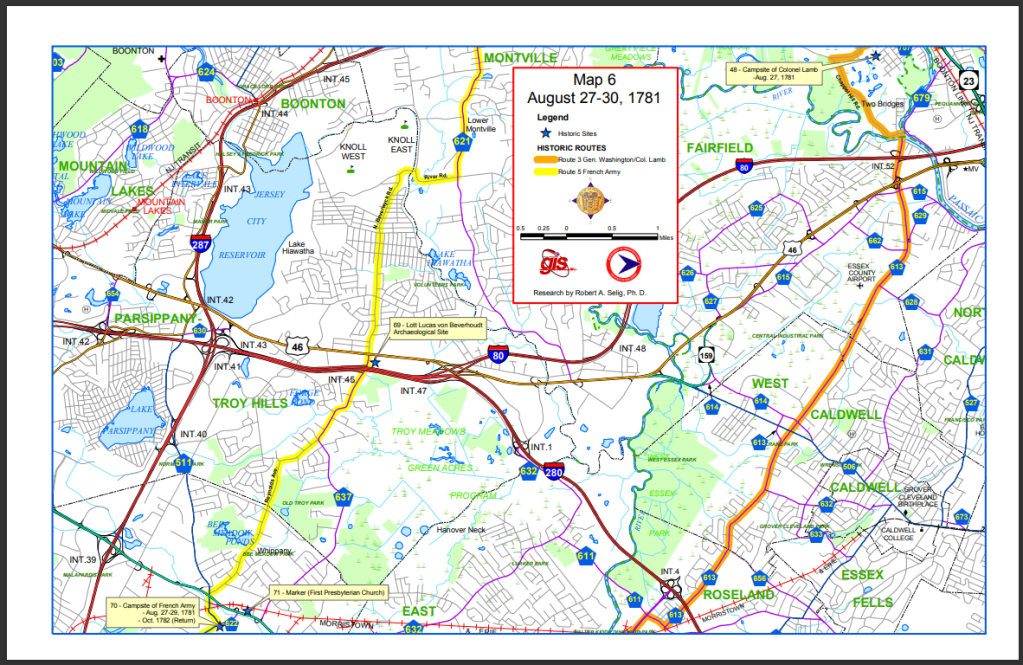
    Being a New Jersey native, my experiences along the trail have been within my state, which has many historical connections to the American Revolution.  Below are two maps; the first is a broader map of the routes within New Jersey, and the second map is zoomed into the region where I live. You’ll notice that there are many other maps that highlight the routes more locally. These extra maps are located HERE. I used the local map to find that the trail runs along a road that I personally drive on almost daily in Fairfield and West Caldwell, and is about 2 mins from my house.  This particular trail is highlighted in orange and was the route taken by General Washington and the Continental Army.  The more western route that the French took (highlighted in Yellow) is only about 10 mins west of my house as it cuts through towns like Montville and Lake Hiawatha. 
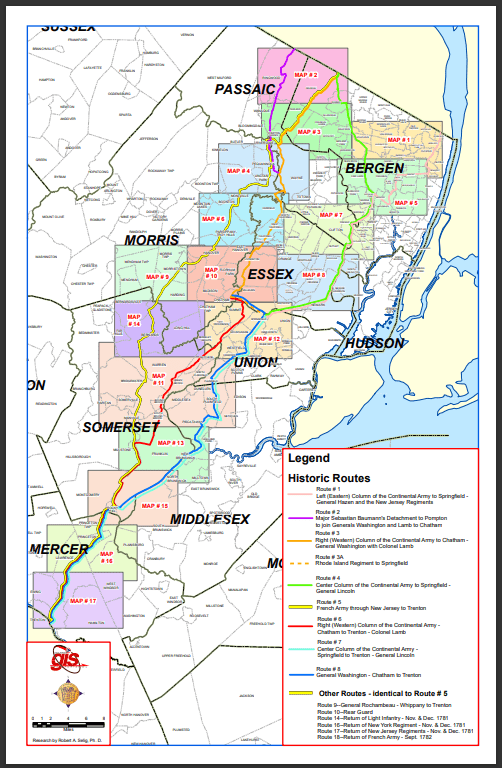
    Many New Jersey natives can explore the state map, and realize that this historical trail is quite local to where you live.  When you consider the significance of the Siege of Yorktown, and the lengthy march that American and French soldiers had to take, you gain an appreciation for the sacrifices that these soldiers had to make to secure the freedoms that we take for granted today.  And to think, they were marching right in your backyard!

    Get Involved

    For history lovers out there, I highly recommend visiting the websites of both the W3R-US, and the affiliate that is associated with your state.  For New Jersey residents, you can visit here.  The websites have many interactive features including virtual tours along the trail.  Along the virtual New Jersey trail, you will learn much about houses that still stand along the trail and were witnesses to the soldiers who marched in 1781.  As we get closer to the 250th anniversary of our independence, I recommend checking back into these sites for events, and ways to get involved.  You should also consider becoming a member of the organization.  You will not only enjoy the benefits of membership, but you will show your support for a great organization that is bringing the American Revolution alive for the public!  
    The following blog posts are from experiences and trips that I’ve had along the Washington-Rochambeau Revolutionary Trail thus far:

    Stay tuned for my future blog posts highlighting my family’s trip to Williamsburg, Jamestown, and Yorktown, Virginia!
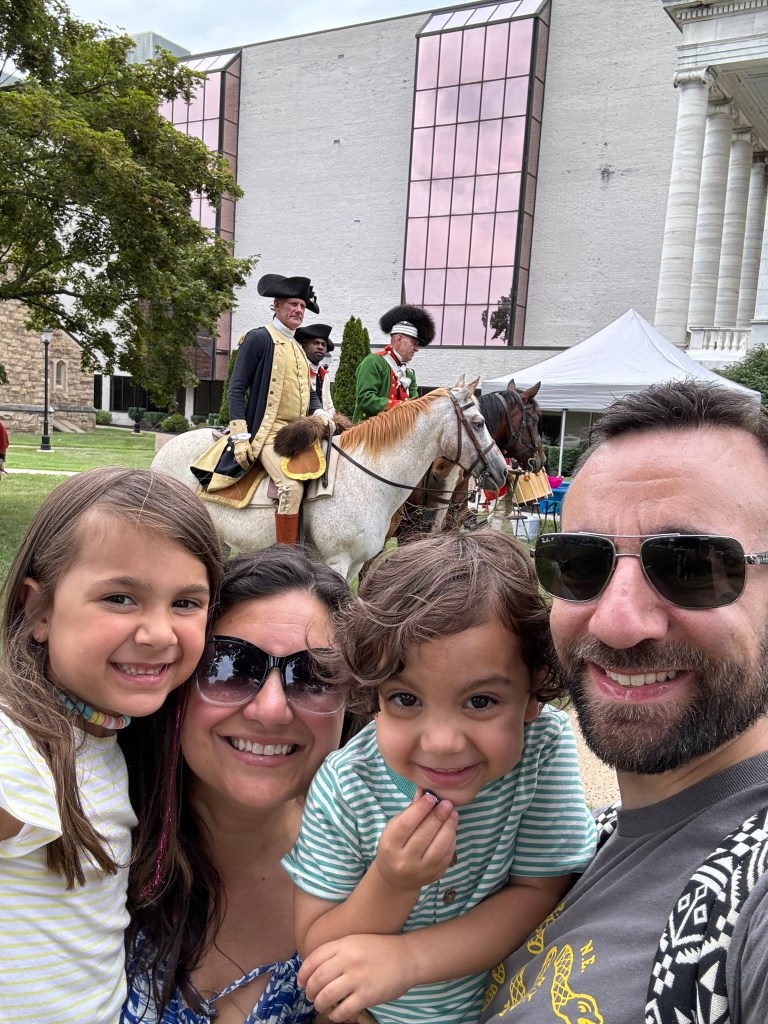
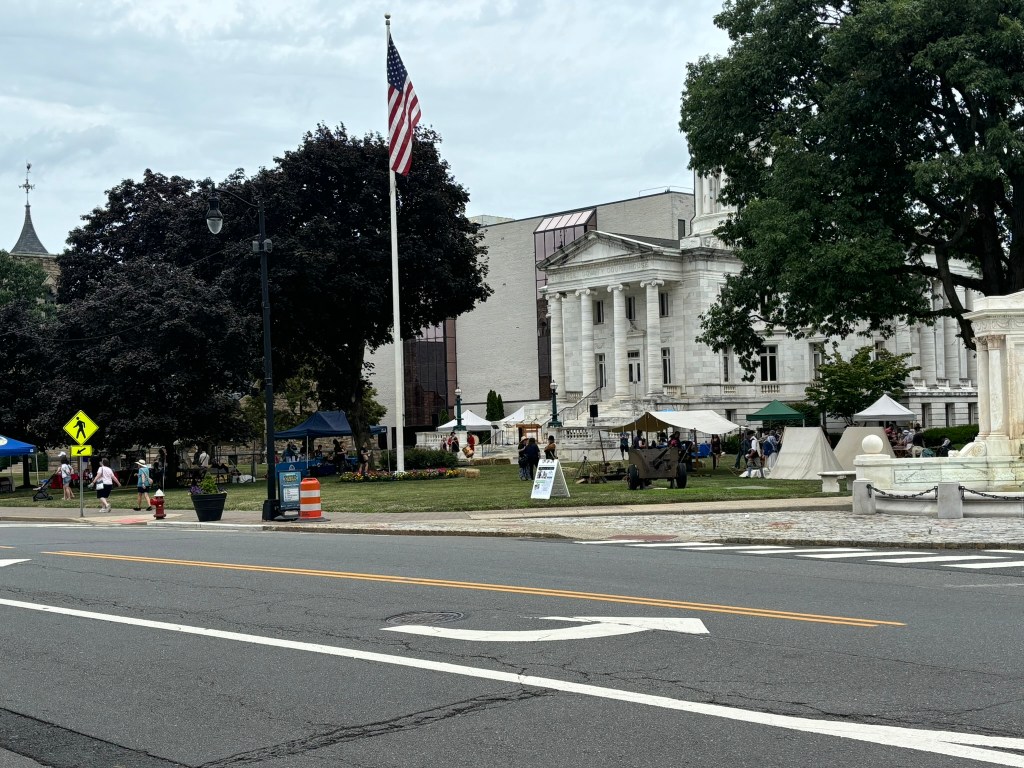
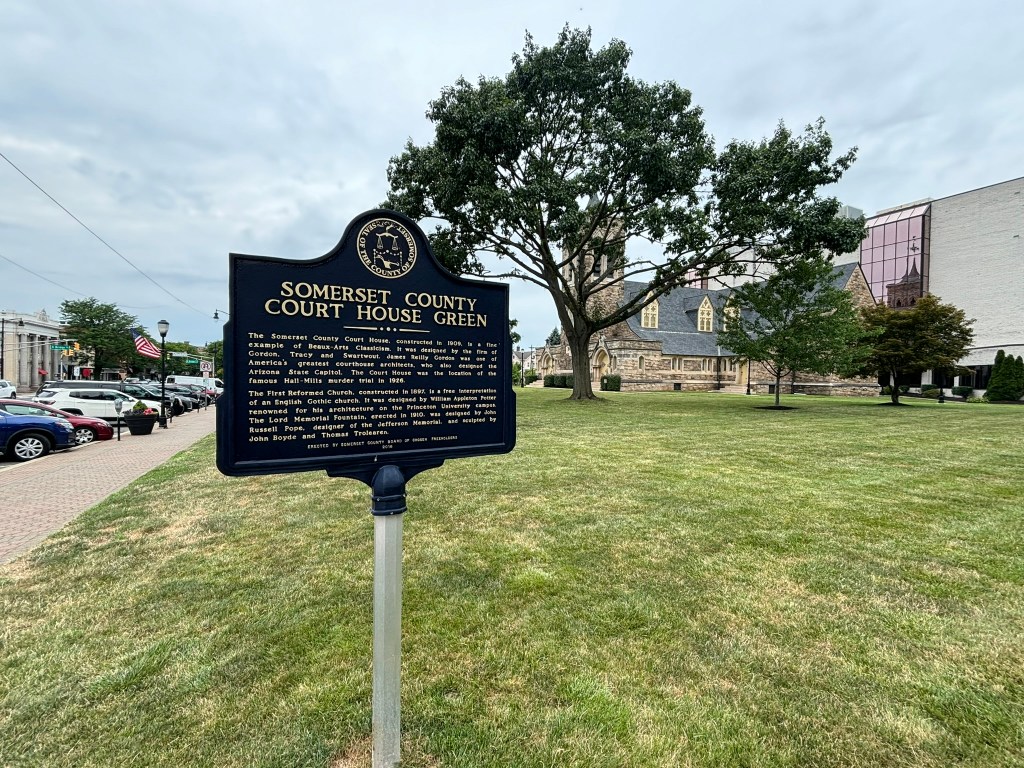
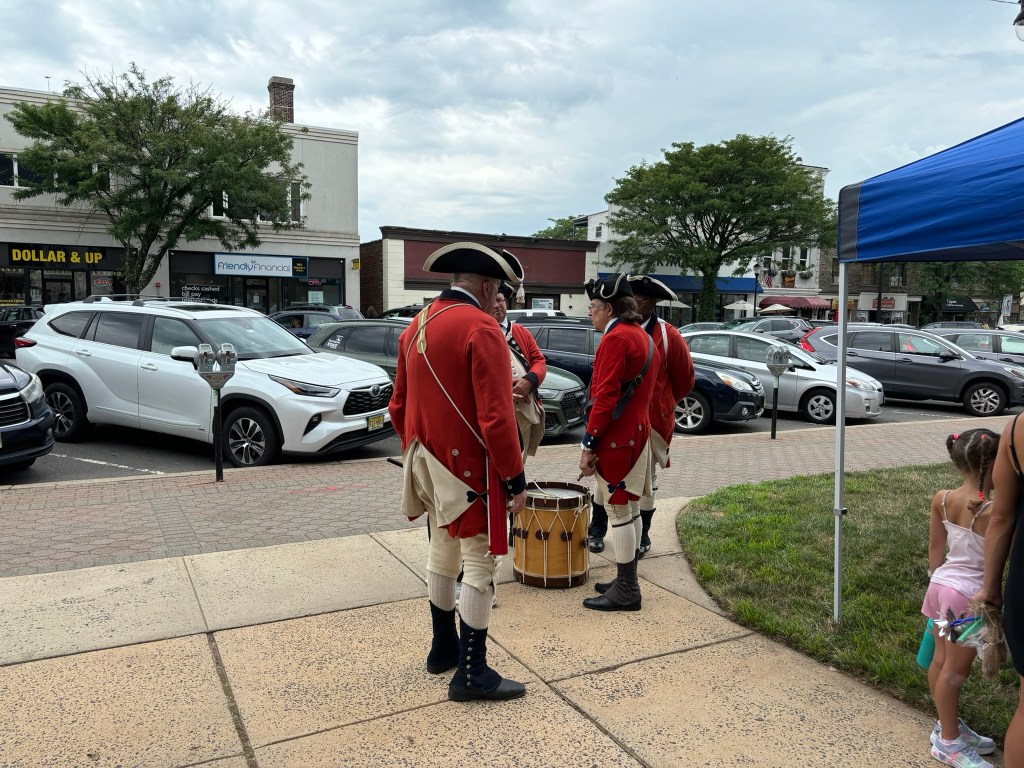
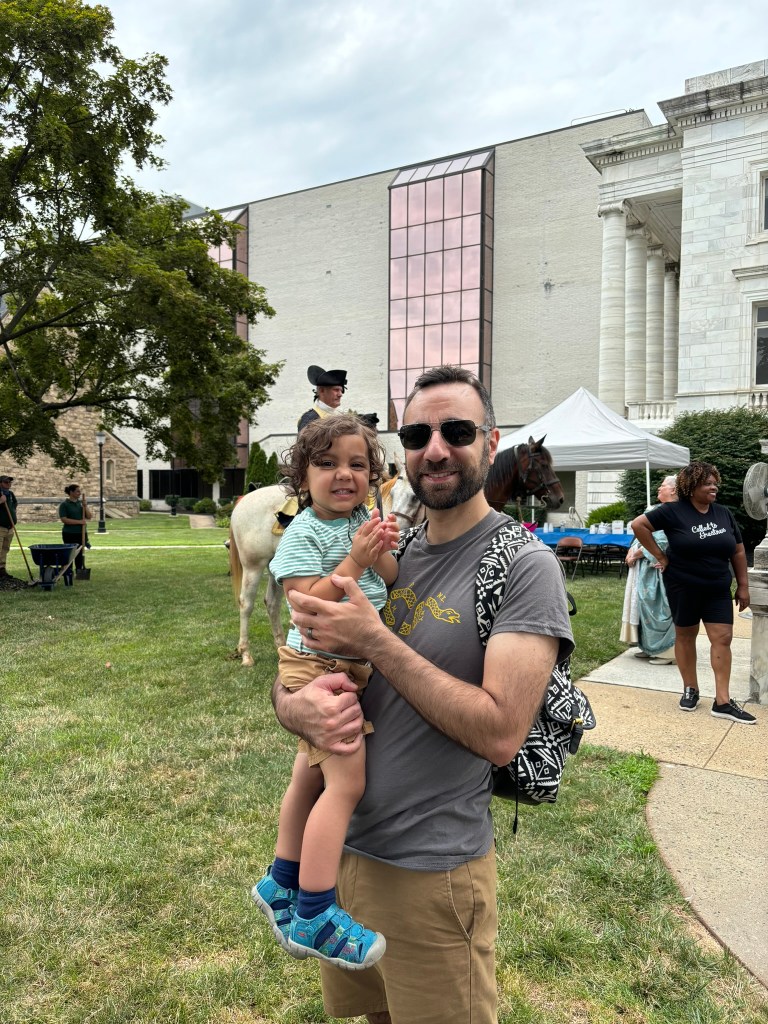
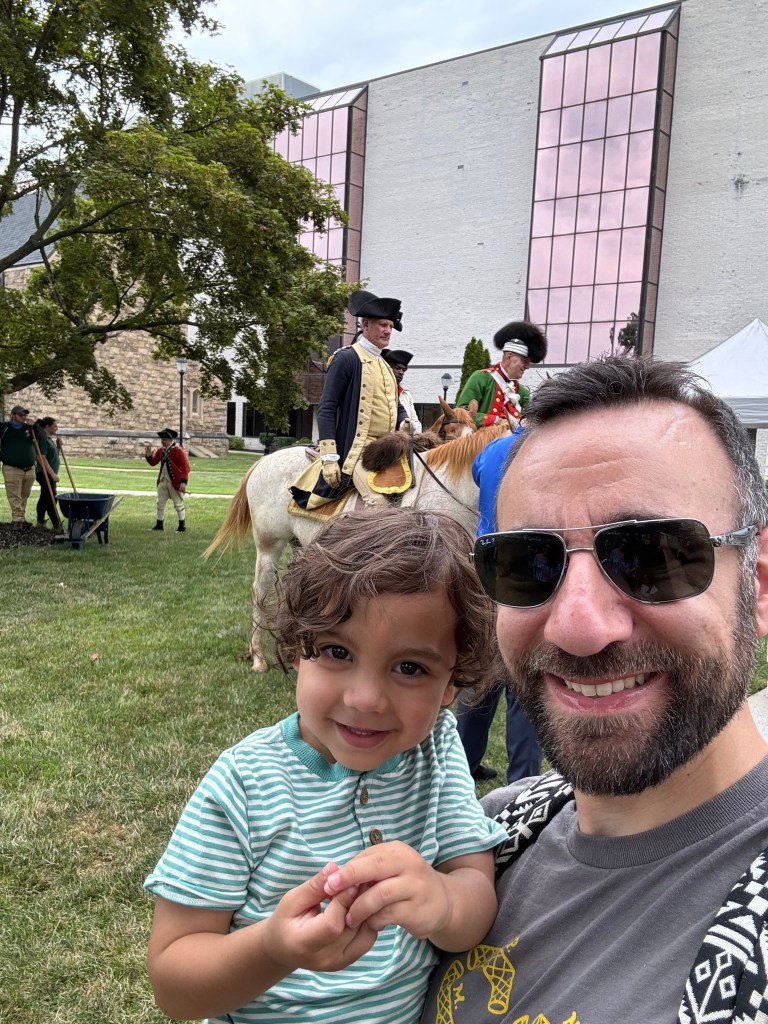
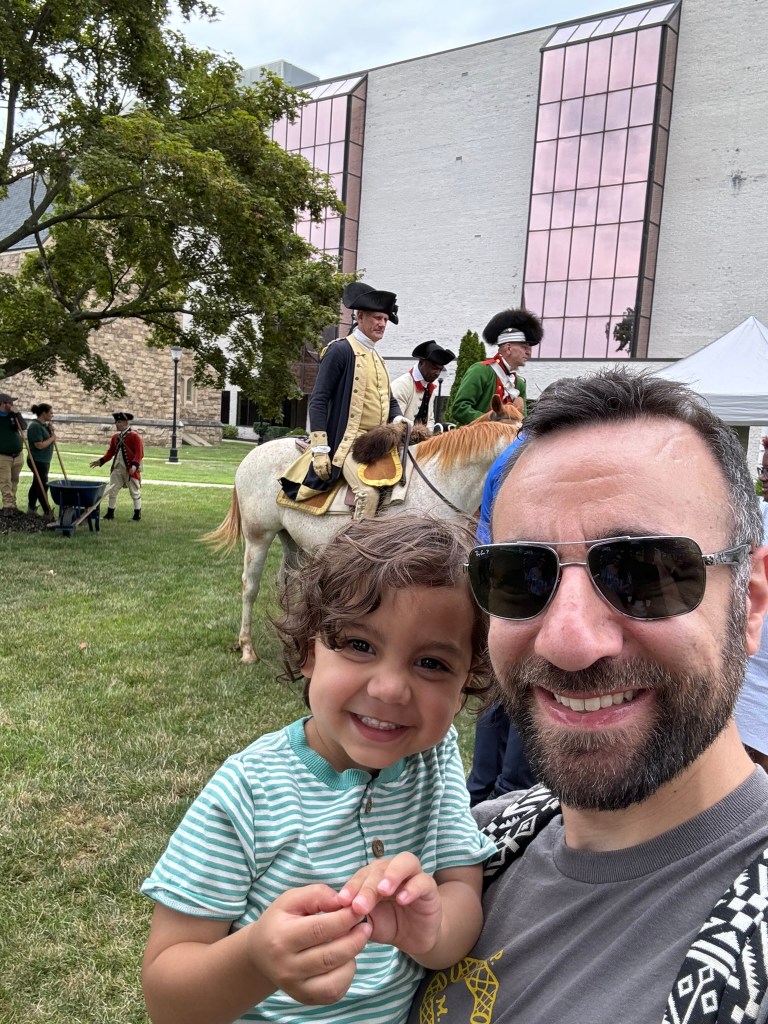
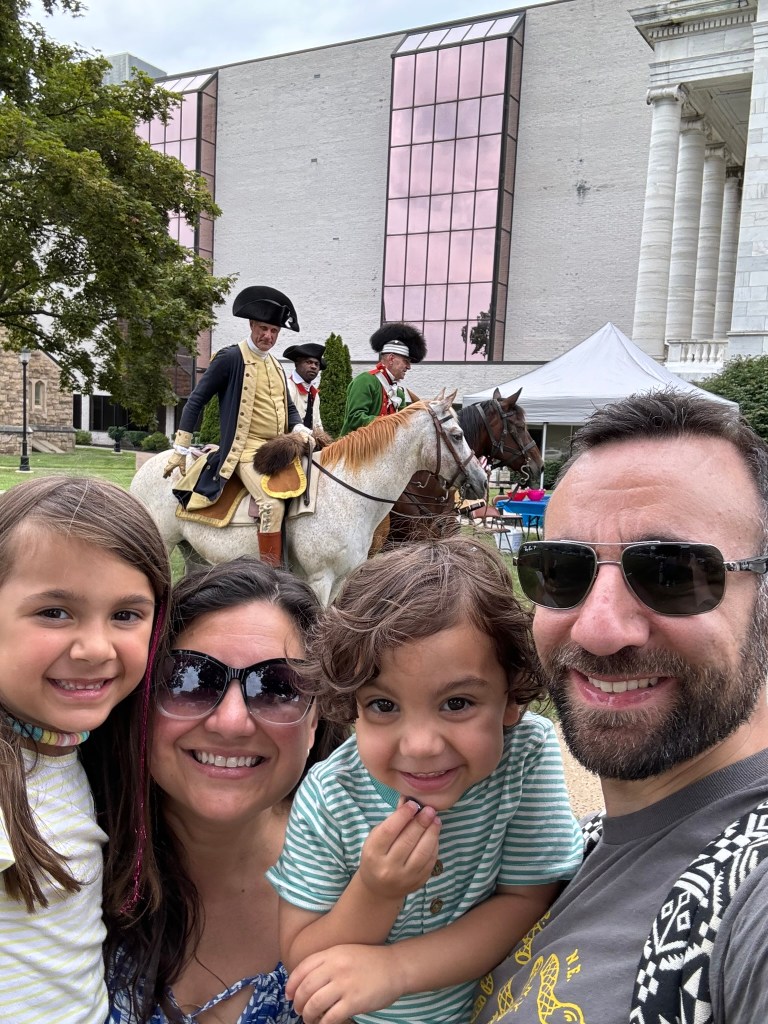
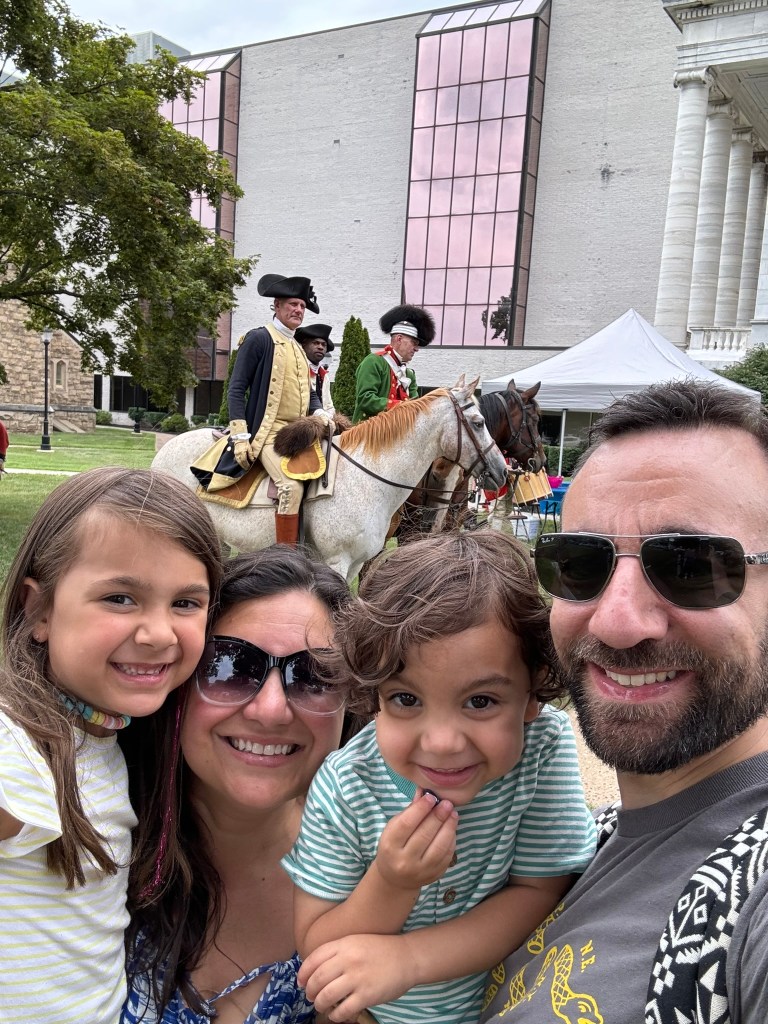
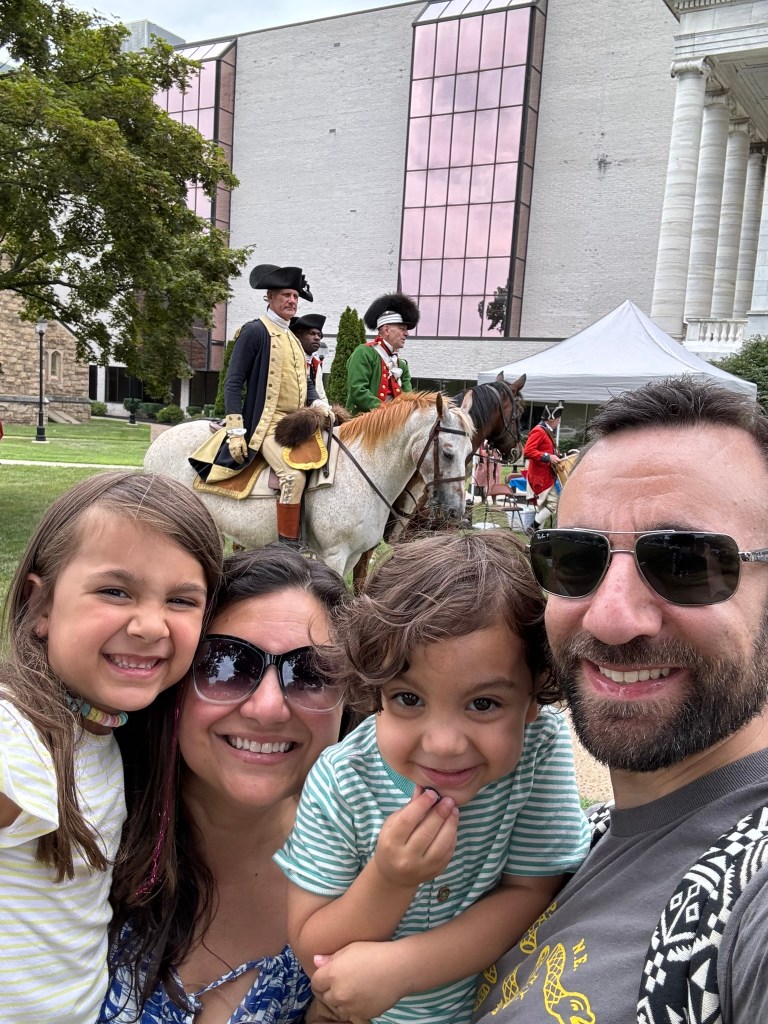
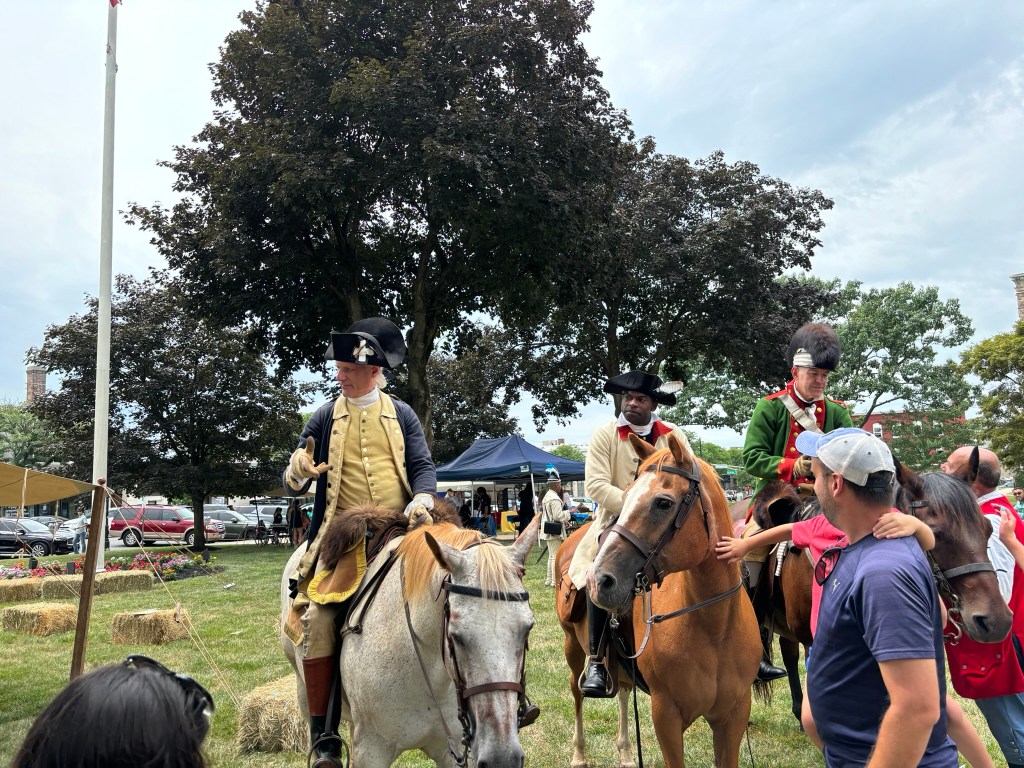
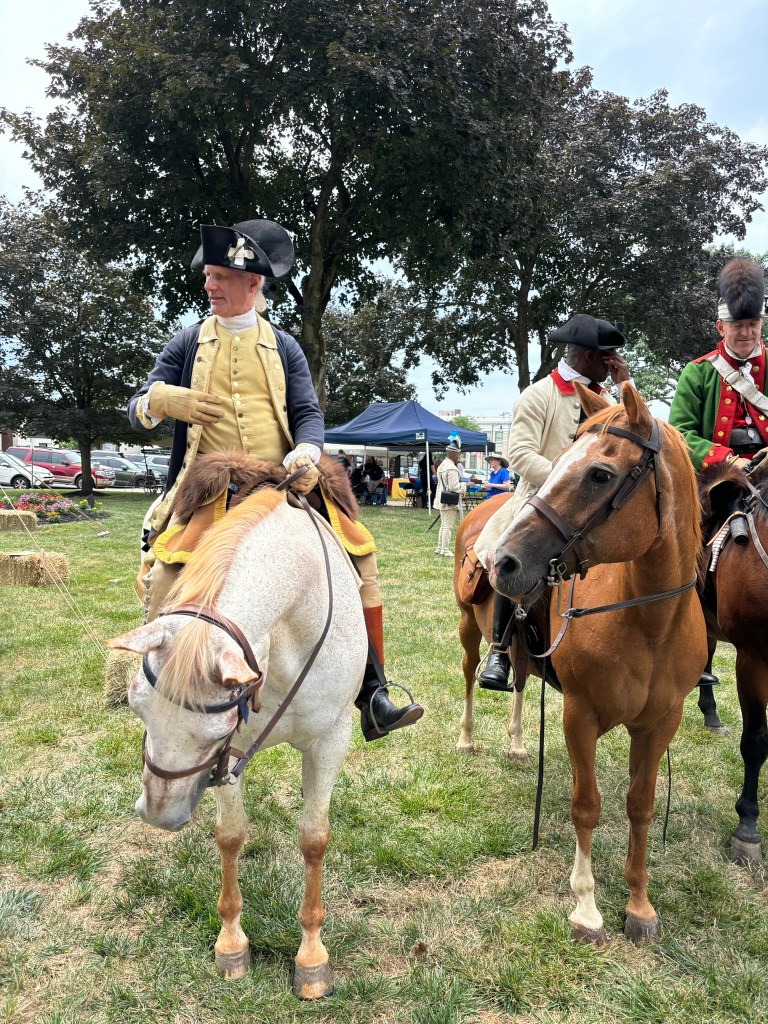
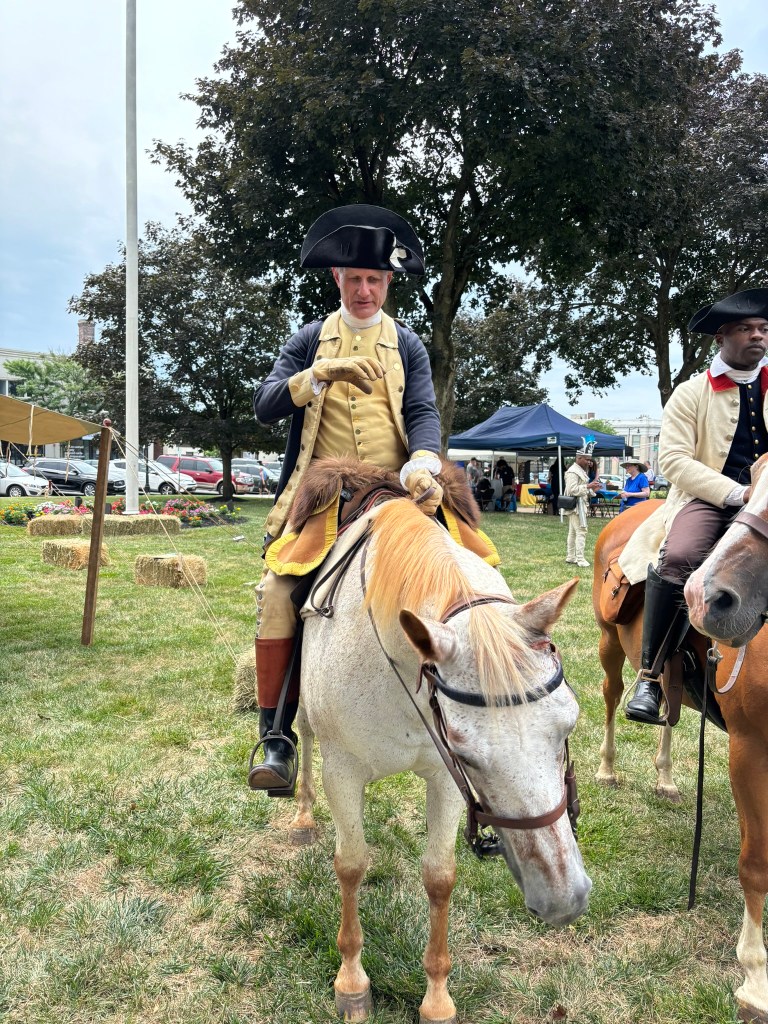
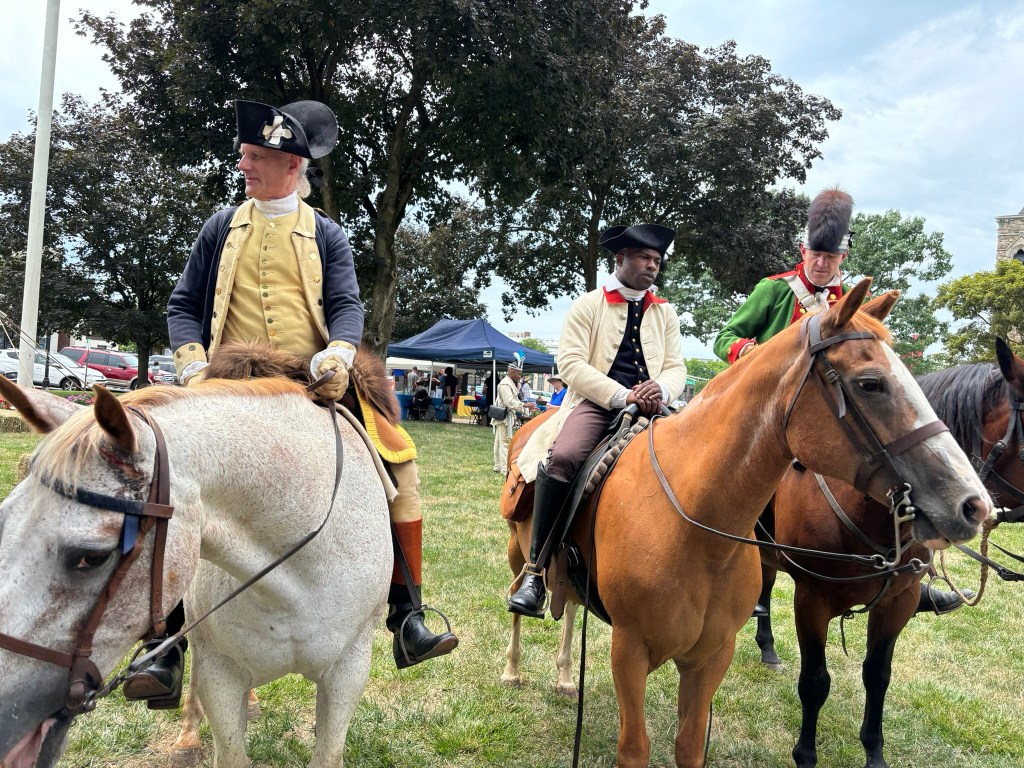
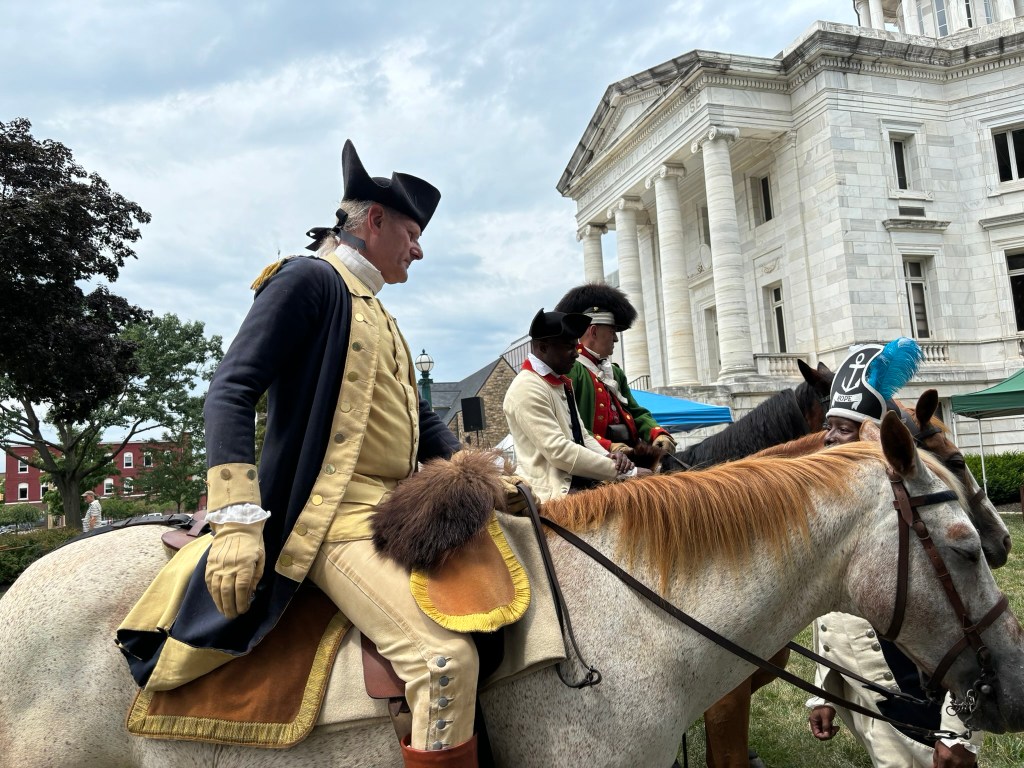
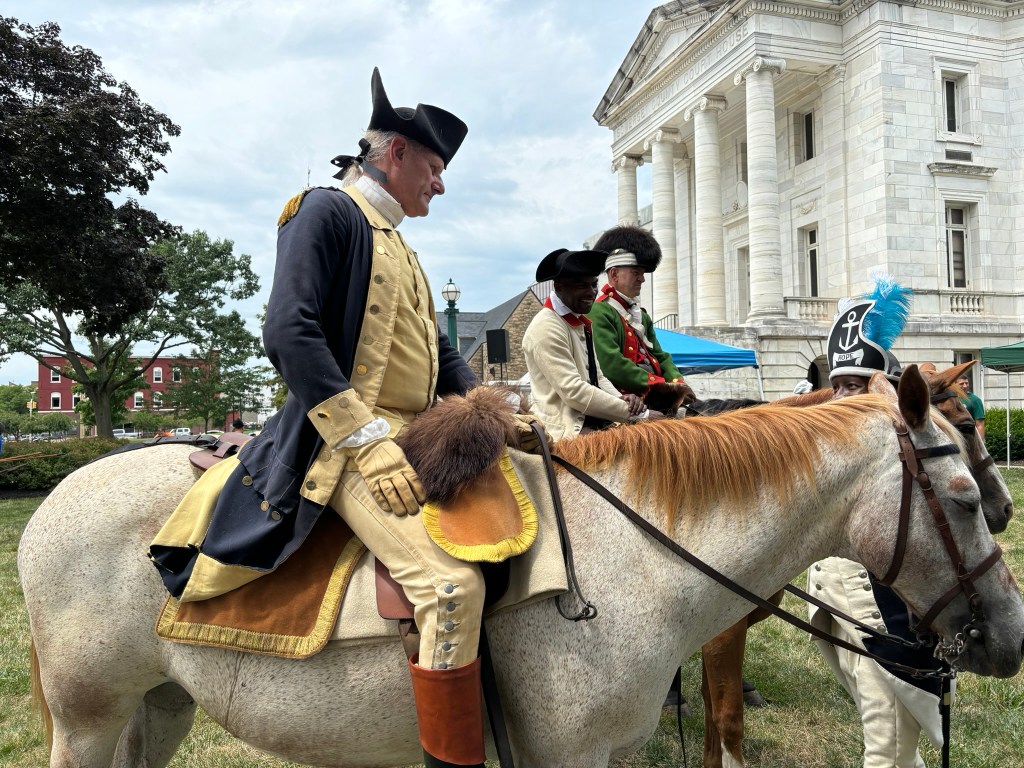
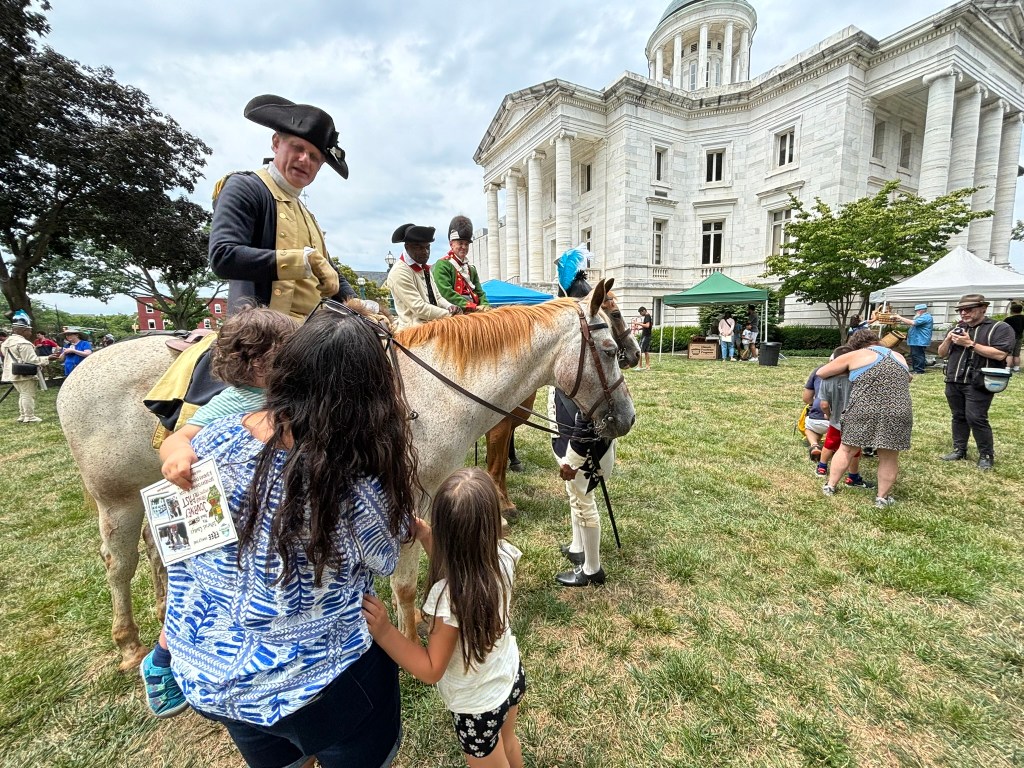
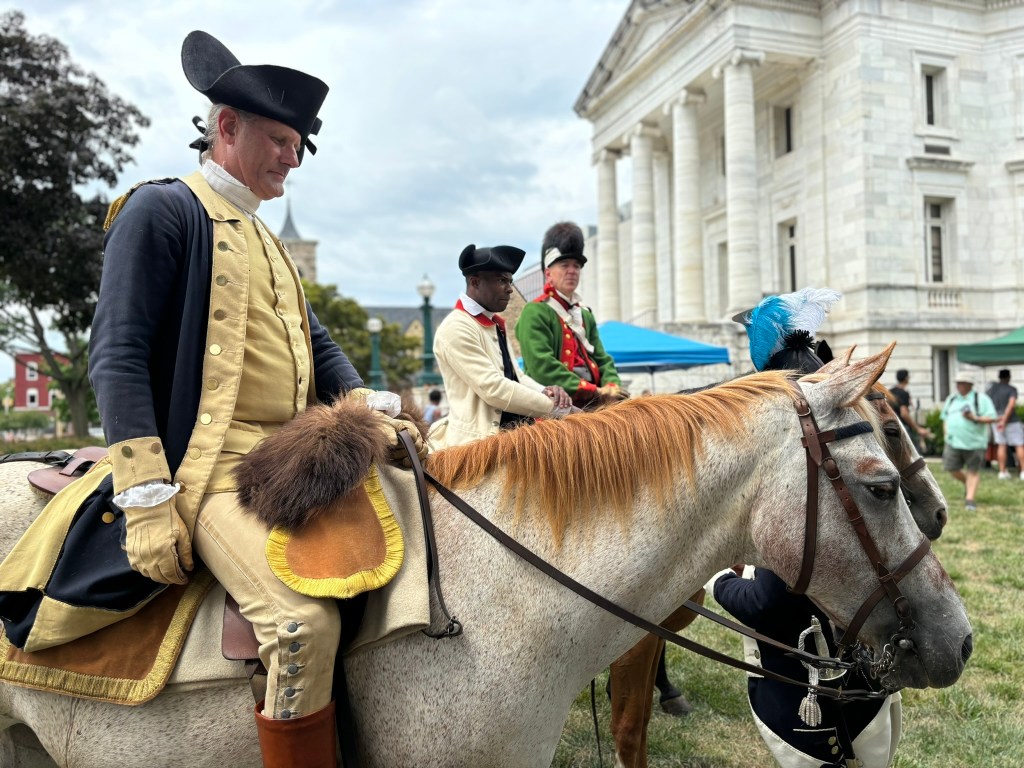
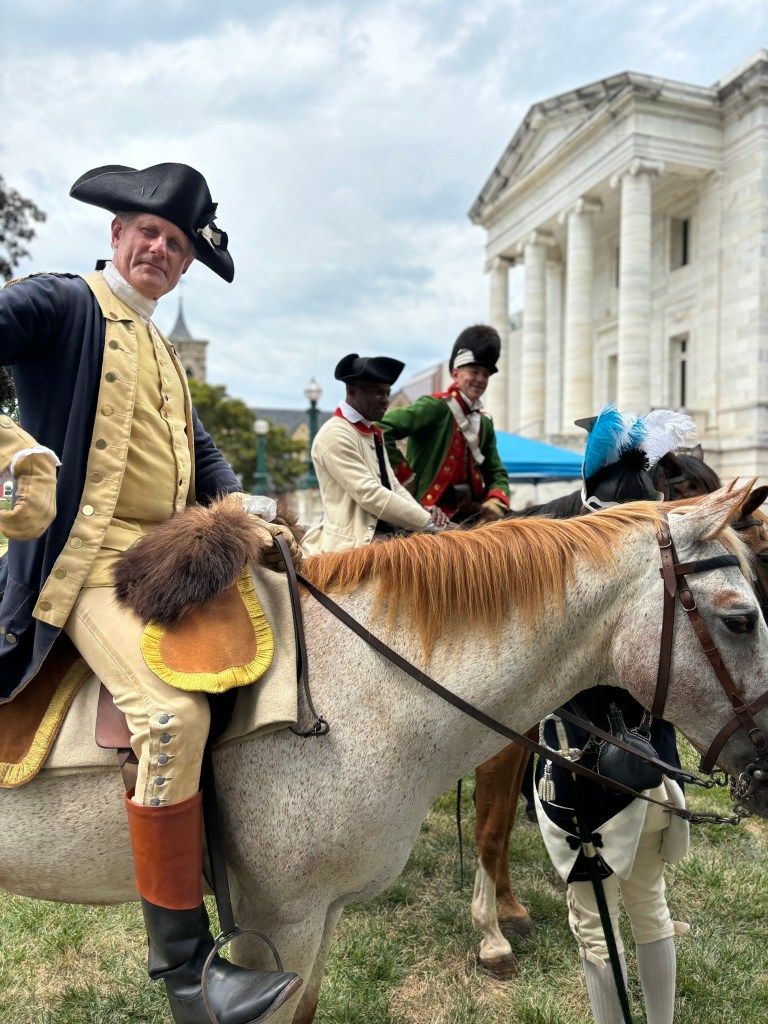
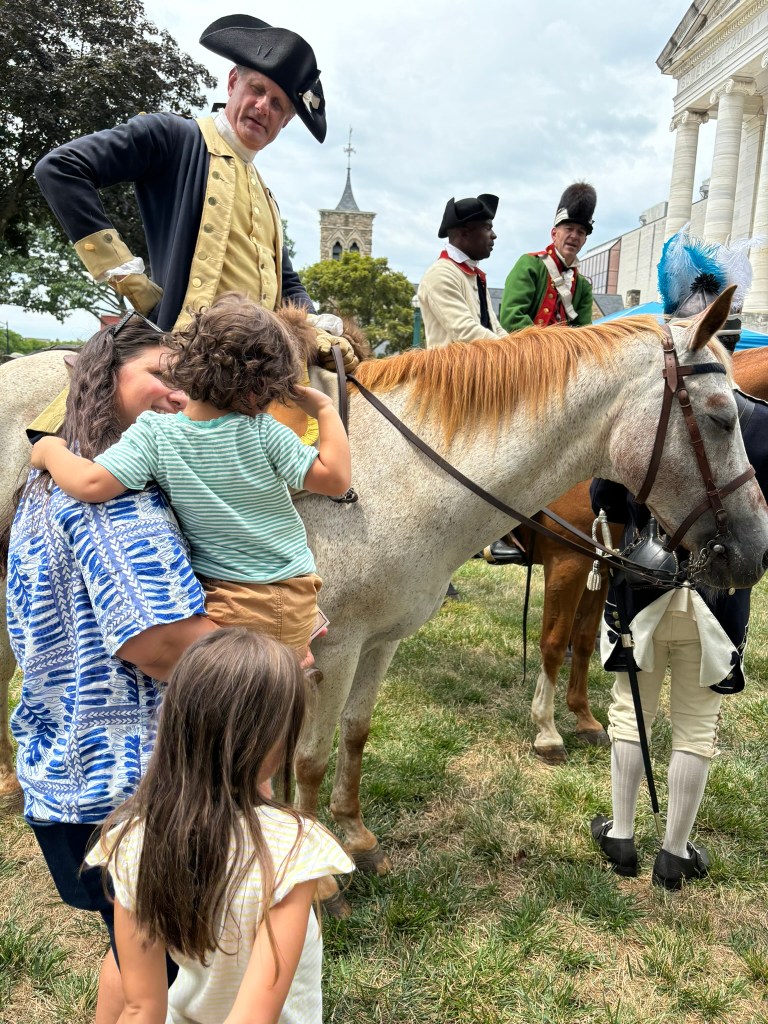
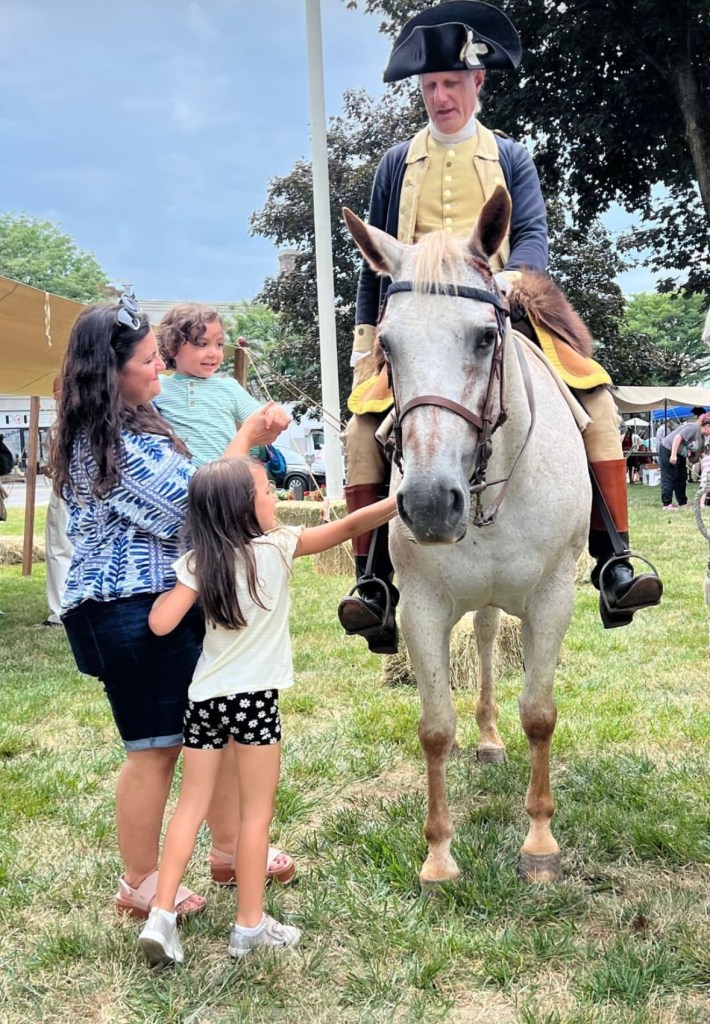
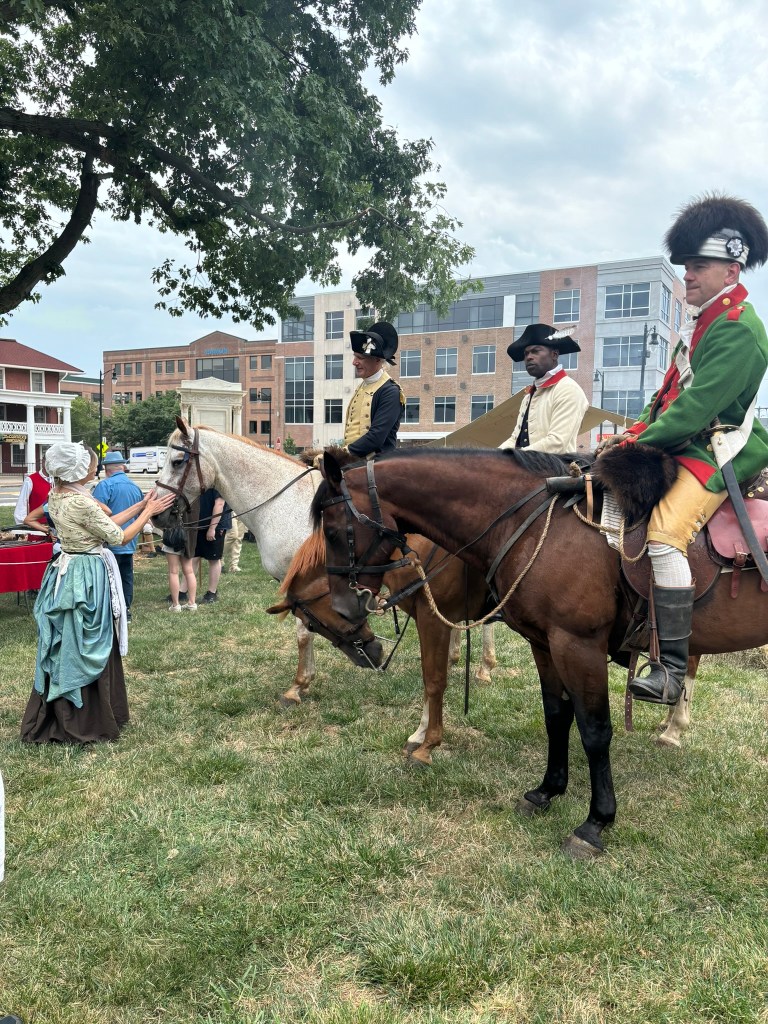
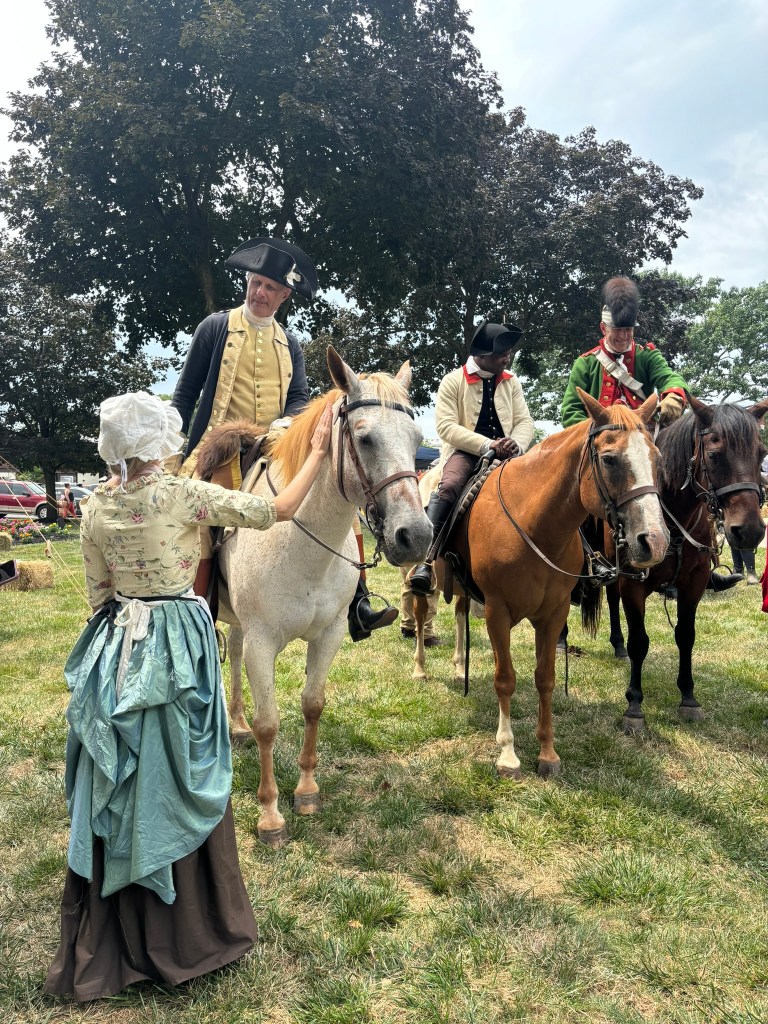
  • My family and I made it out to the “History On The Green” event in Somerville, NJ this past Saturday. The event featured a pop-up encampment site featuring George Washington and his valet, Billy Lee.  The event also featured the New Jersey regiment- Heard’s Brigade, the 1st Rhode Island Regiment, and the NJ Fifes and Drums.

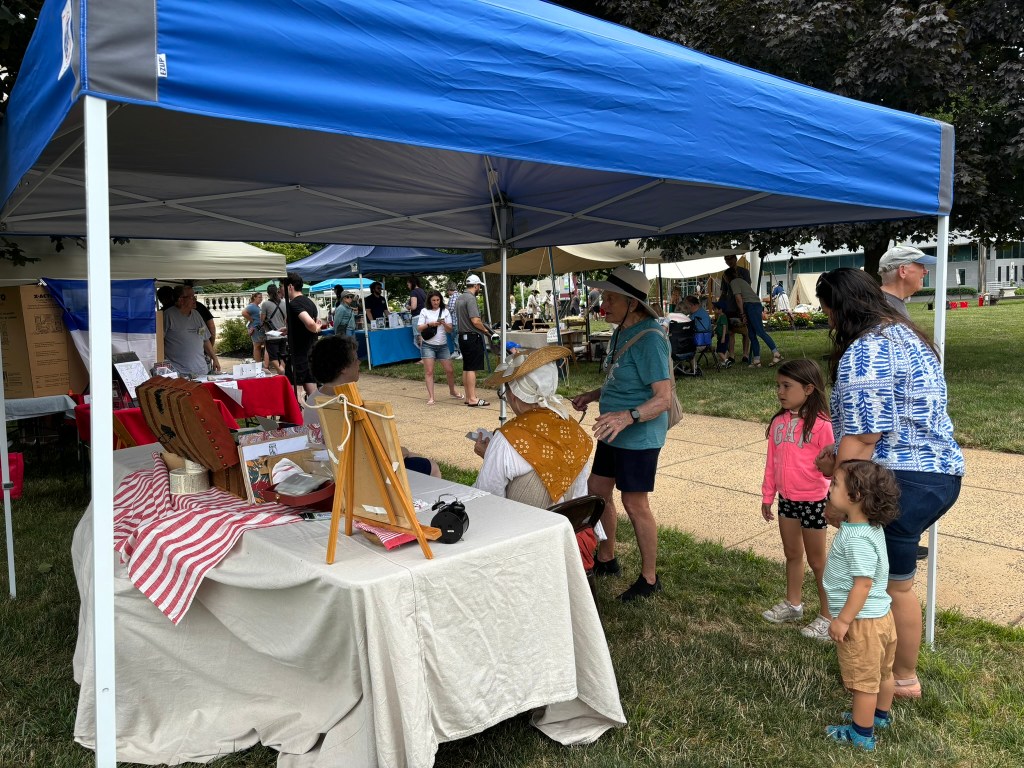
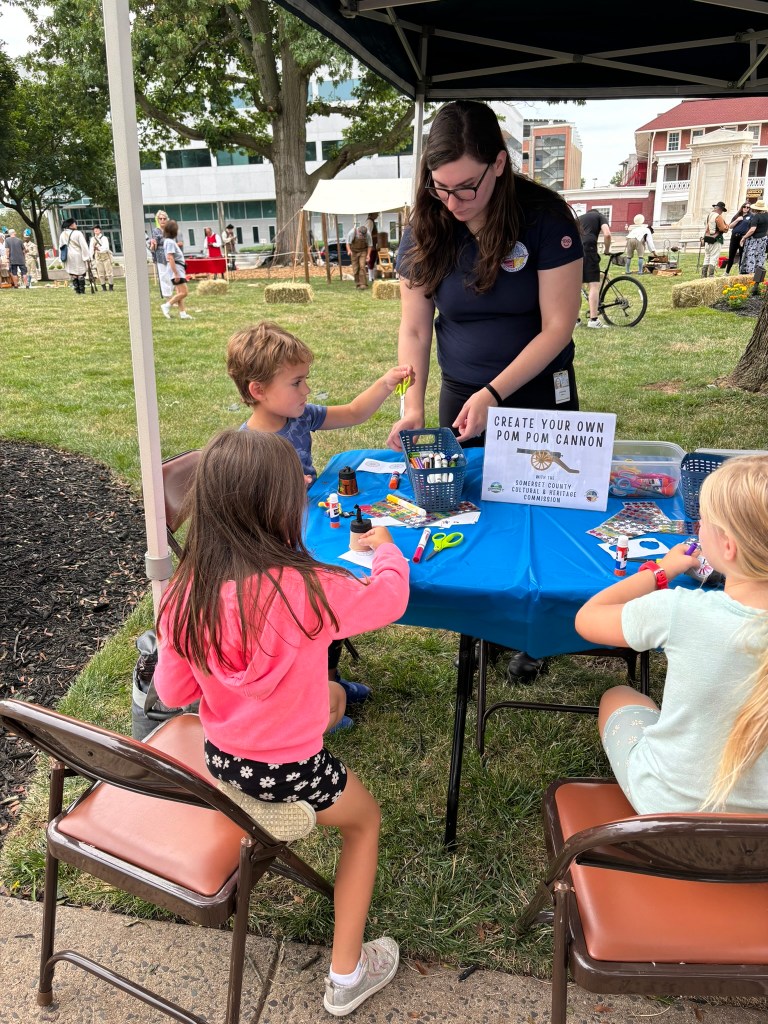
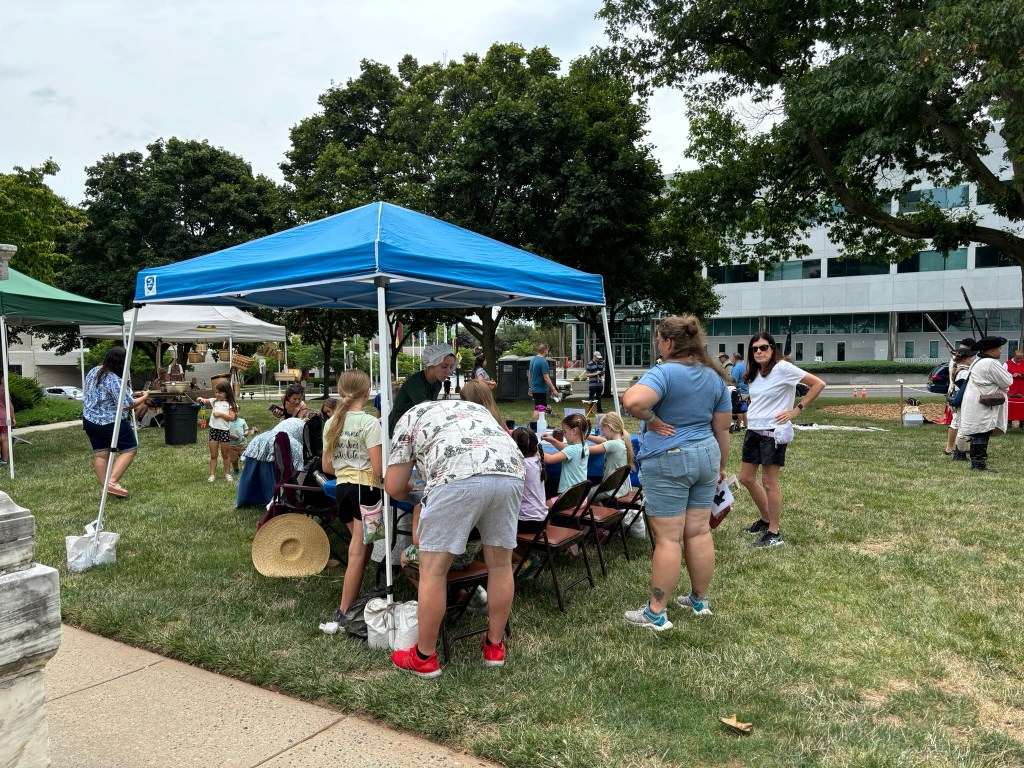
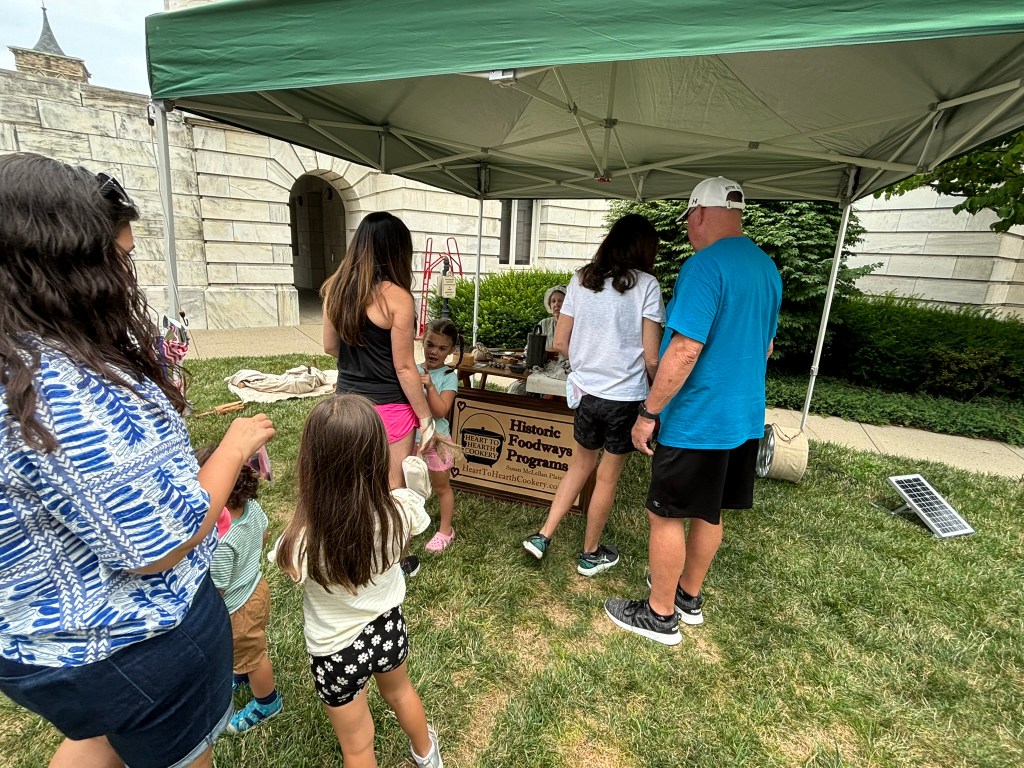
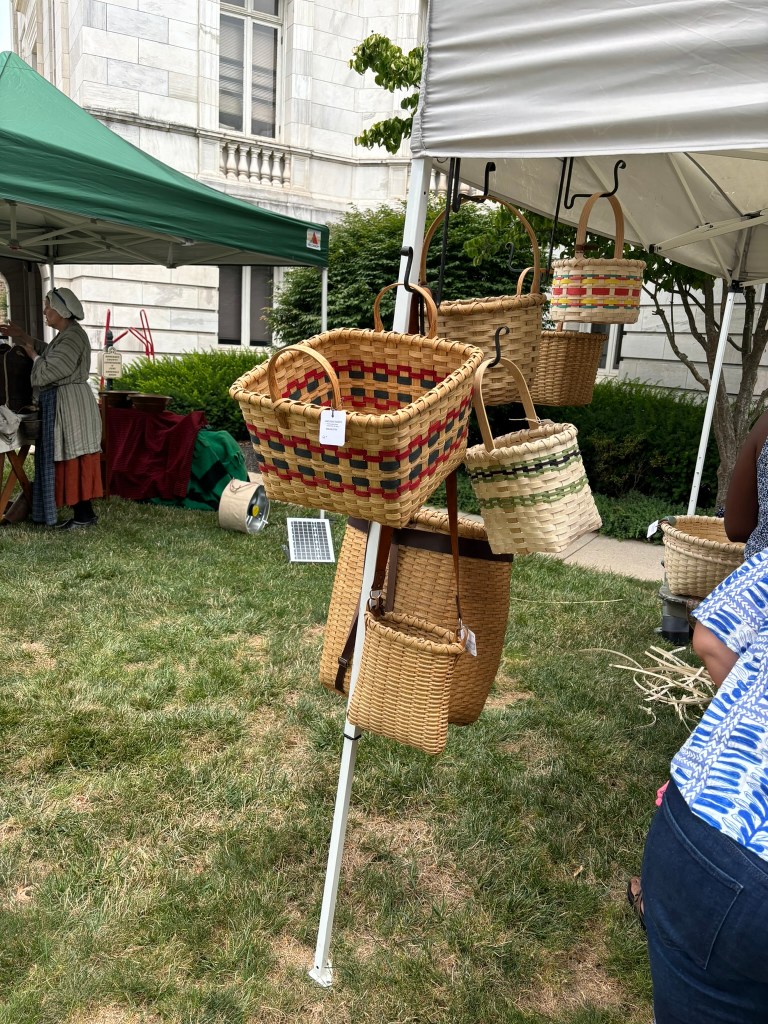
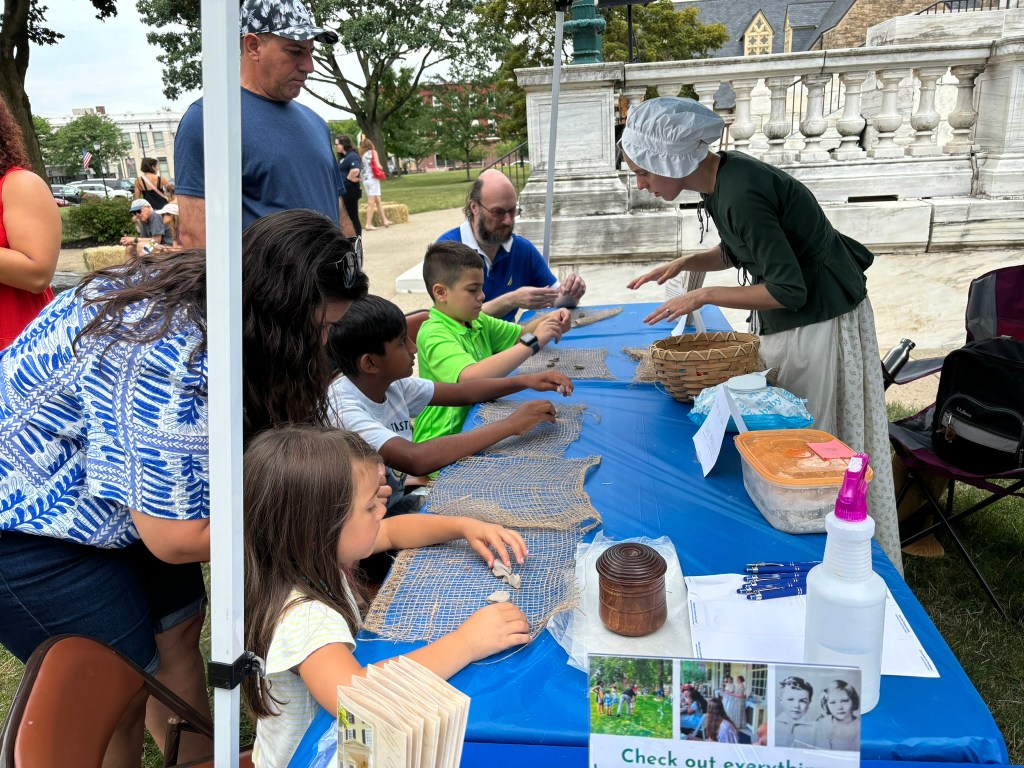
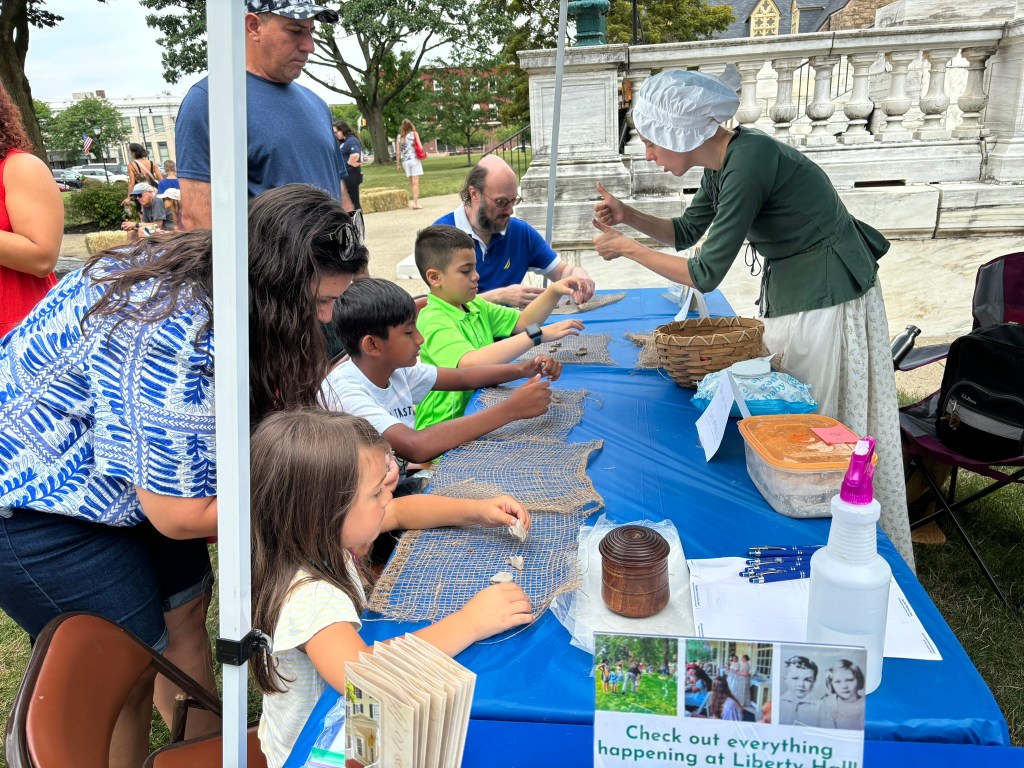
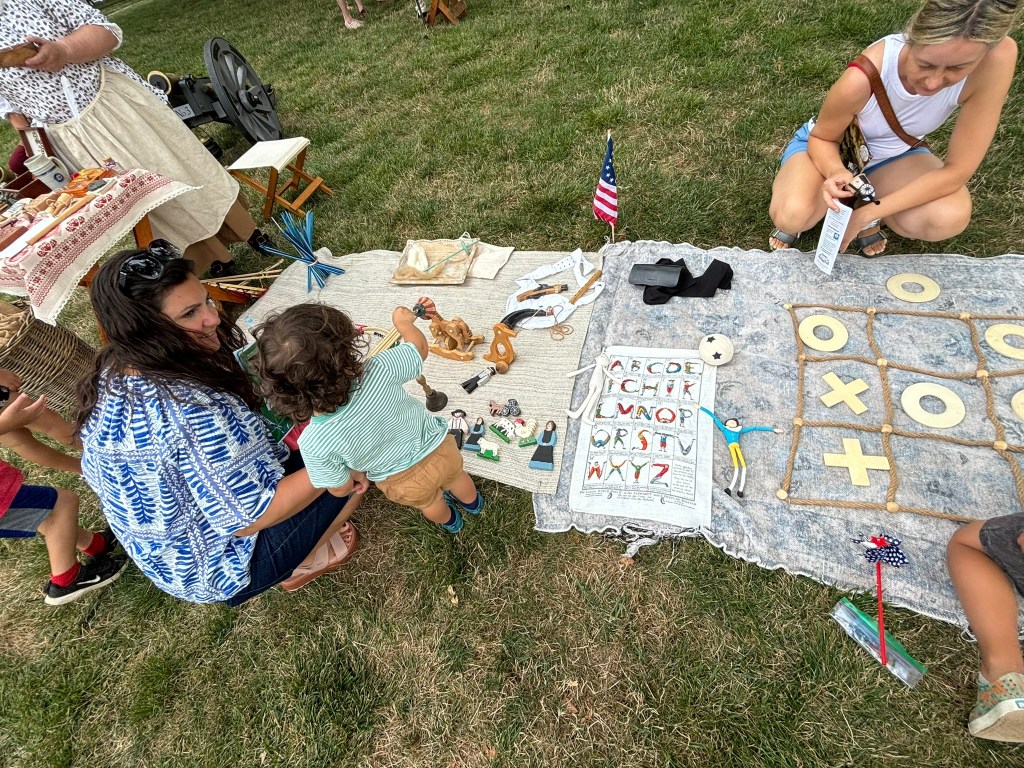
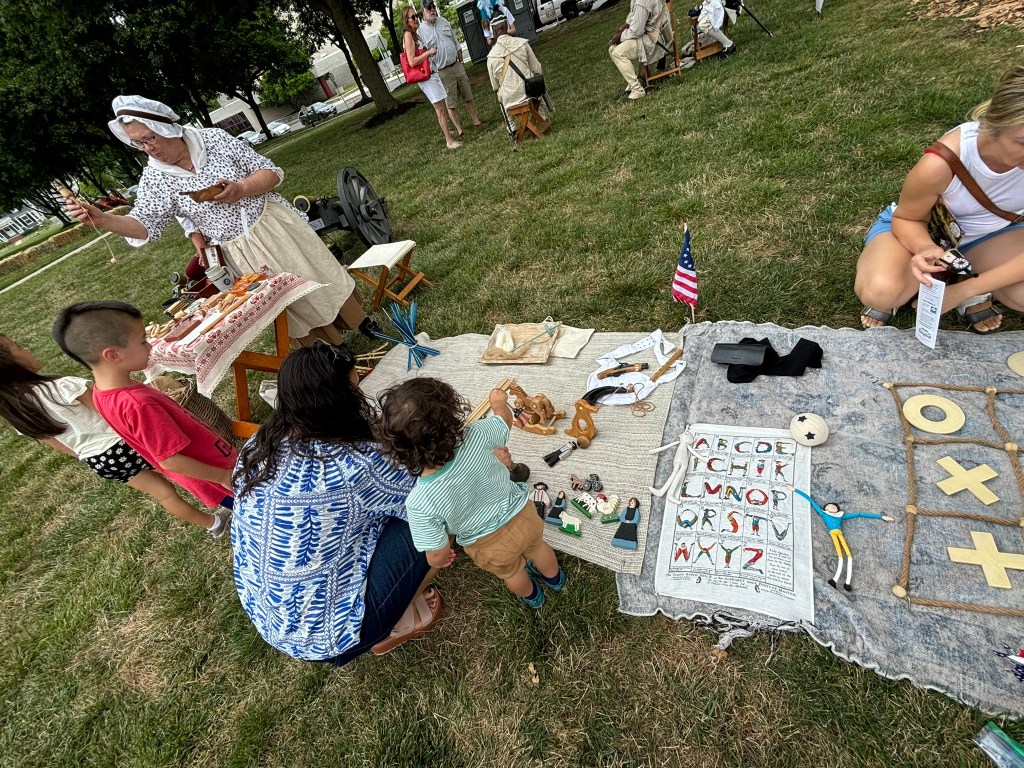
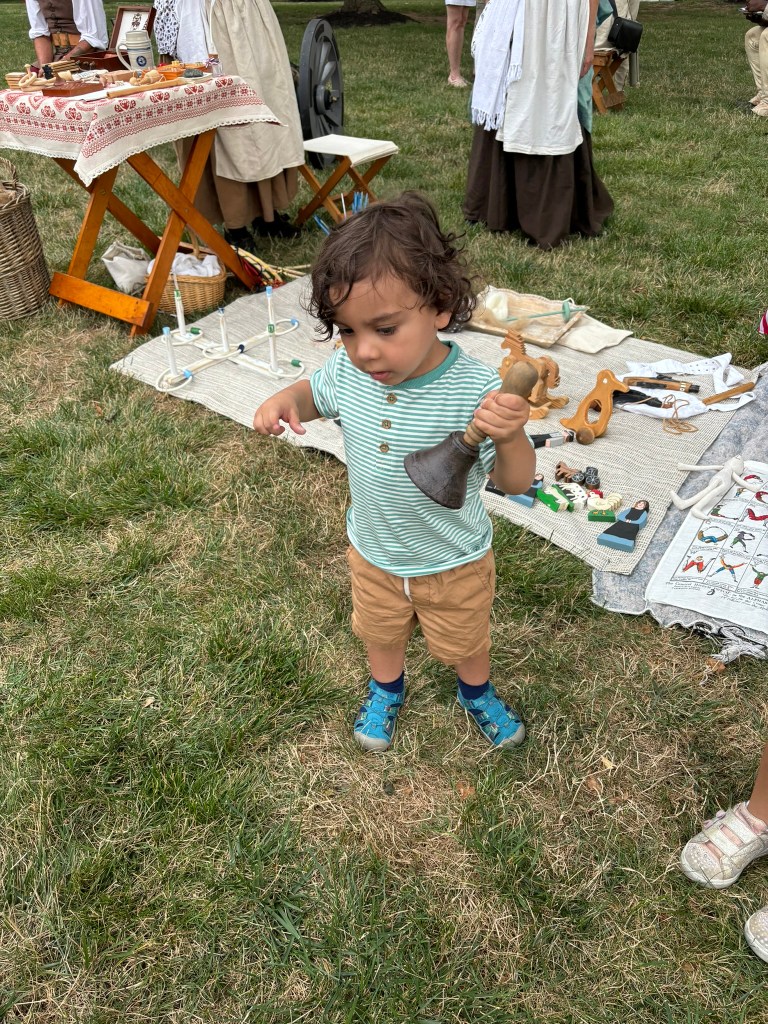
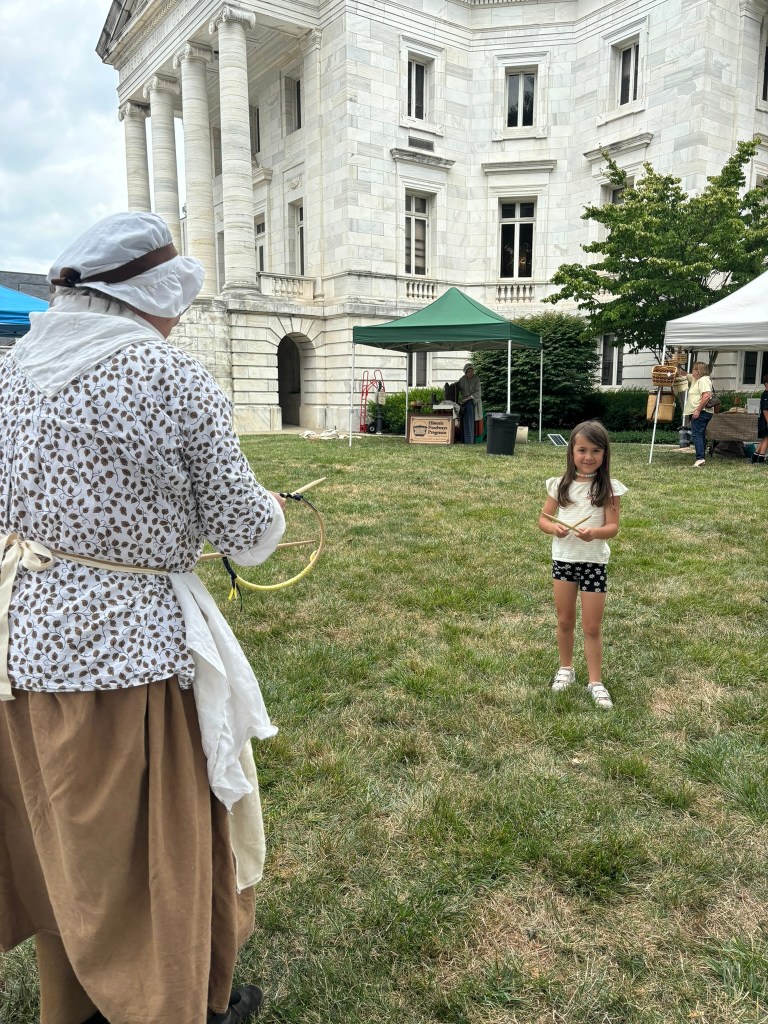
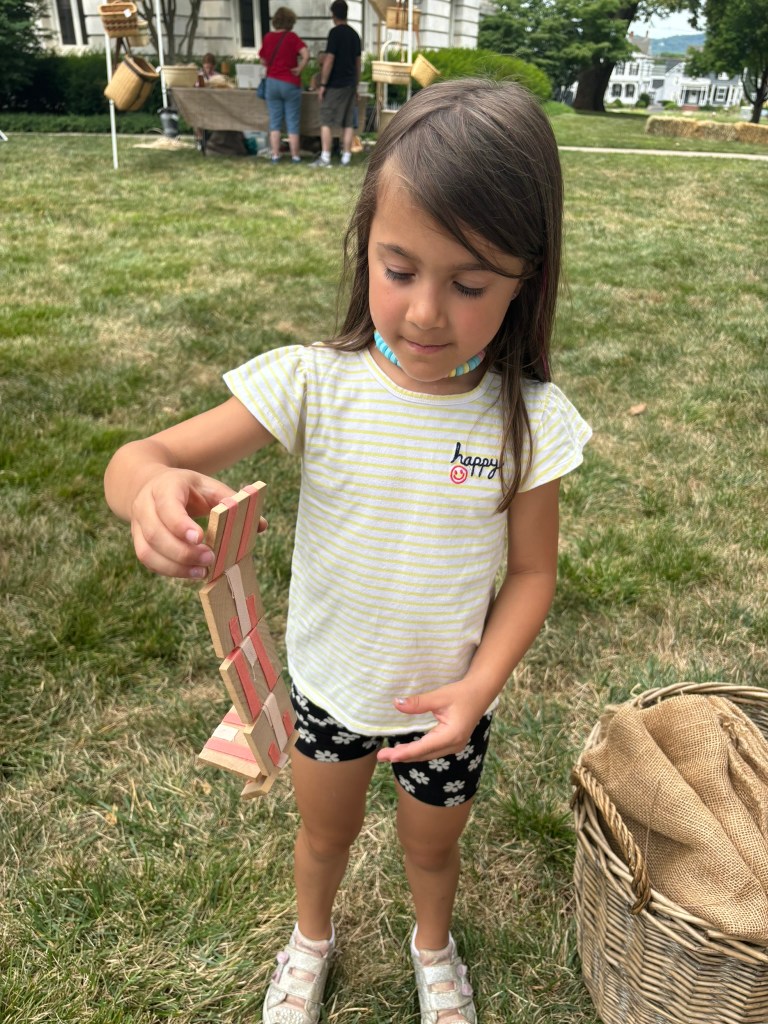
    We arrived to Somerville a little early to eat brunch across the street at Turf Surf and Earth which was quite convenient and really delicious.  We arrived to the event at about 11:30.  There were tables set up from a few historical organizations in the region including the Heritage Trail Association, the Somerset County Historical Society, and the Somerset County Cultural and Heritage Commission. Our kids had a great time as soon as we arrived because there were many activities set up for them.  My children did crafts with the Cultural and Heritage Commission, and they played colonial games with Liberty Hall Museum, including cup-and-ball.  They also made their own clay marbles.  We were instructed on how the colonials such as Washington and Jefferson would have made their own ice cream, which was demonstrated by Heart to Hearth Cookery.  The kids also saw a display of colonial basketweaving.  

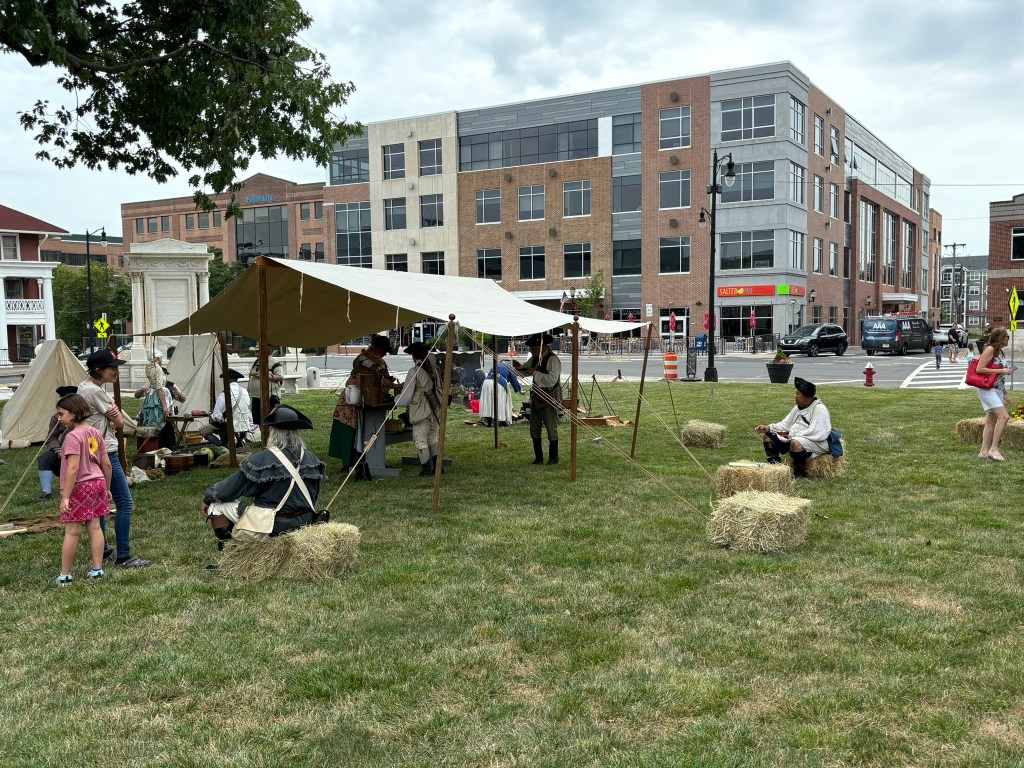
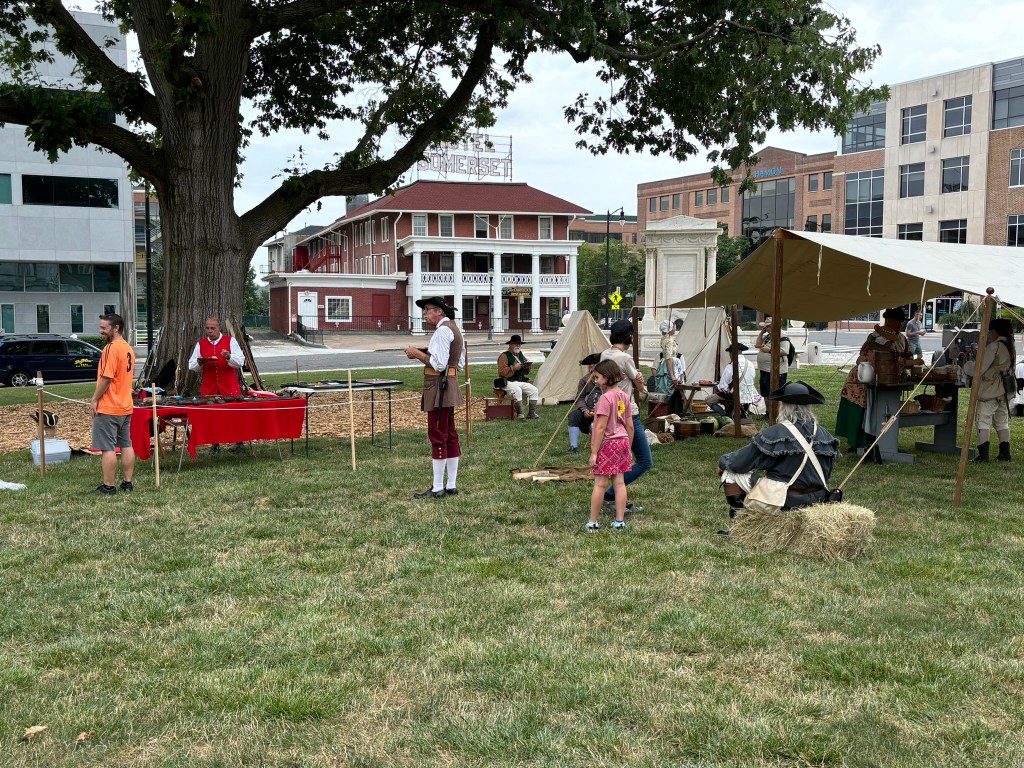
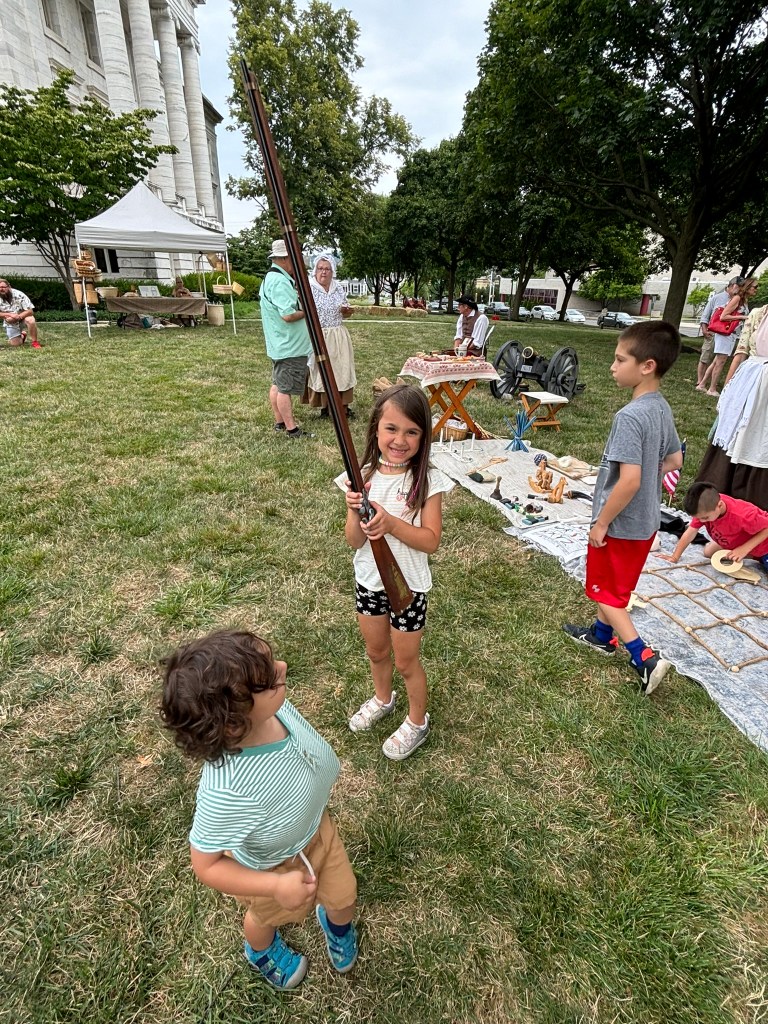
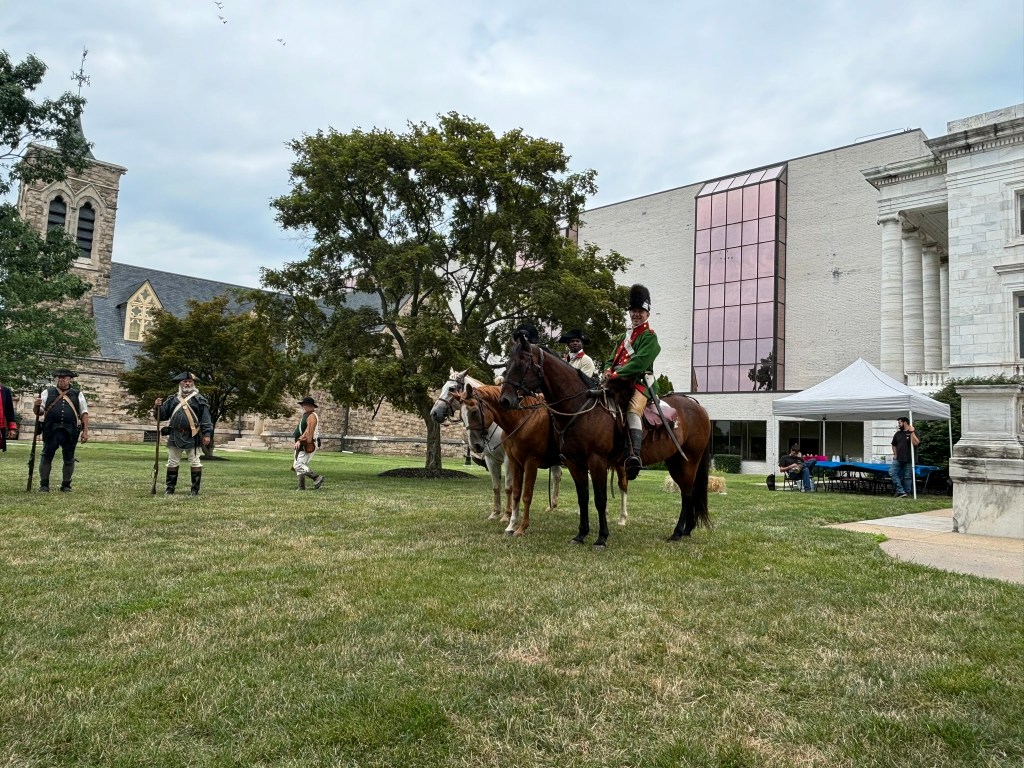
    We moved on to the colonial pop-up encampment with displays by reenactors of weaponry/ artifacts, which were from the Revolution era.  The reenactors took us back in time: cooking meals, doing chores, and preparing for battle.

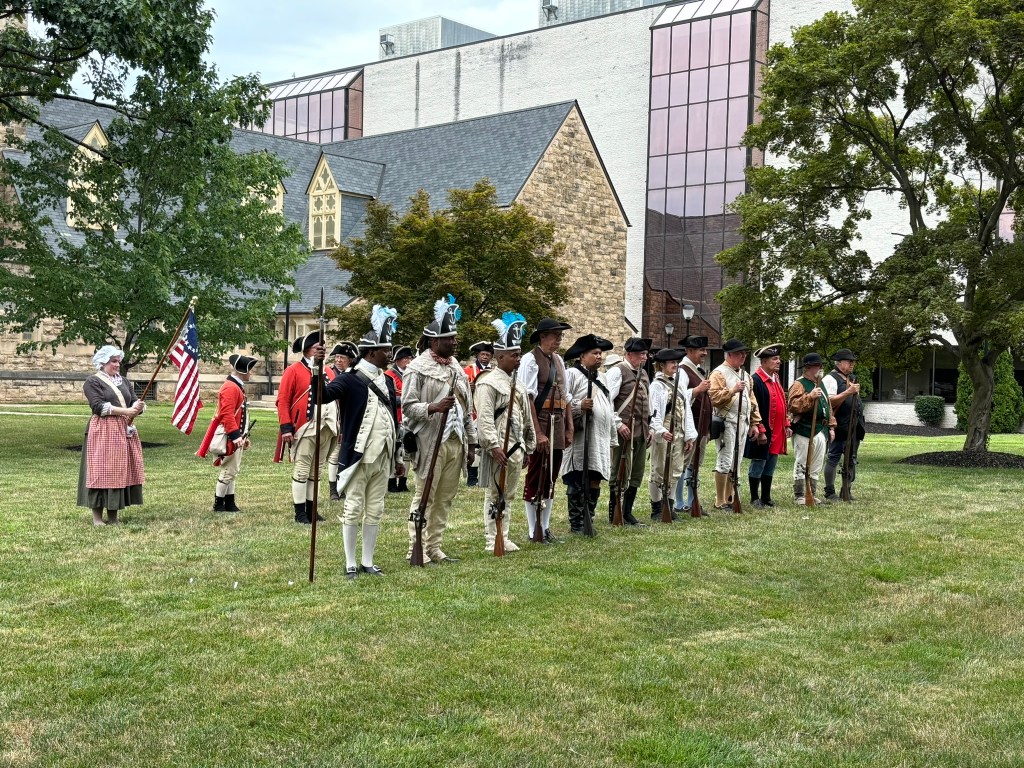
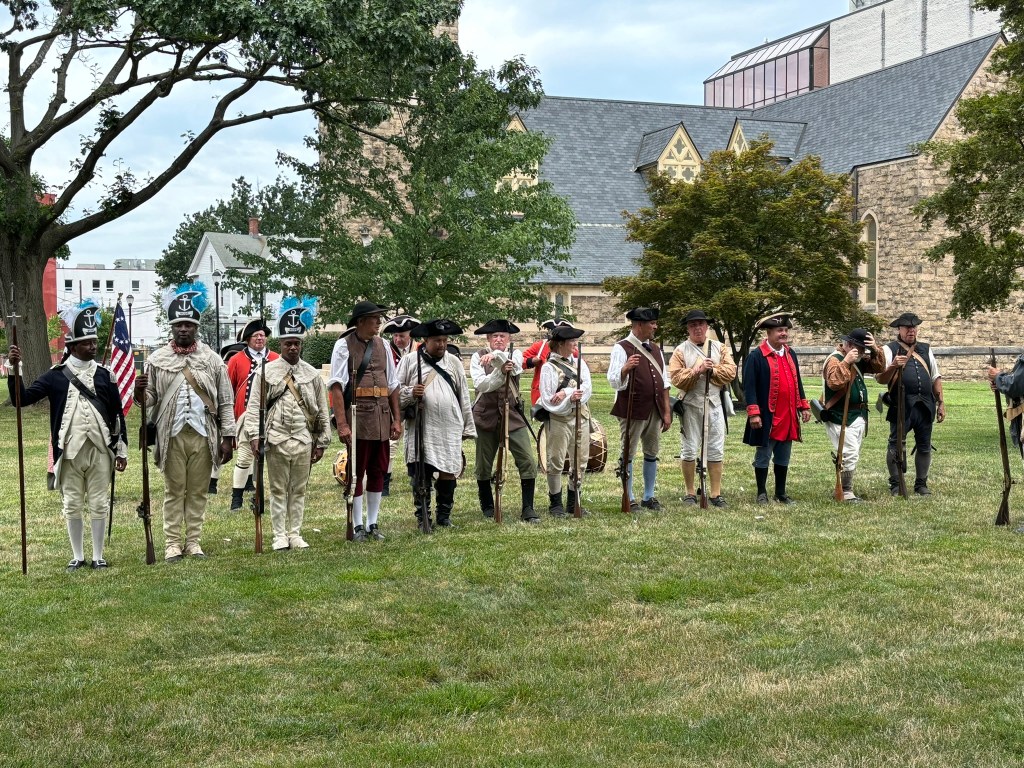
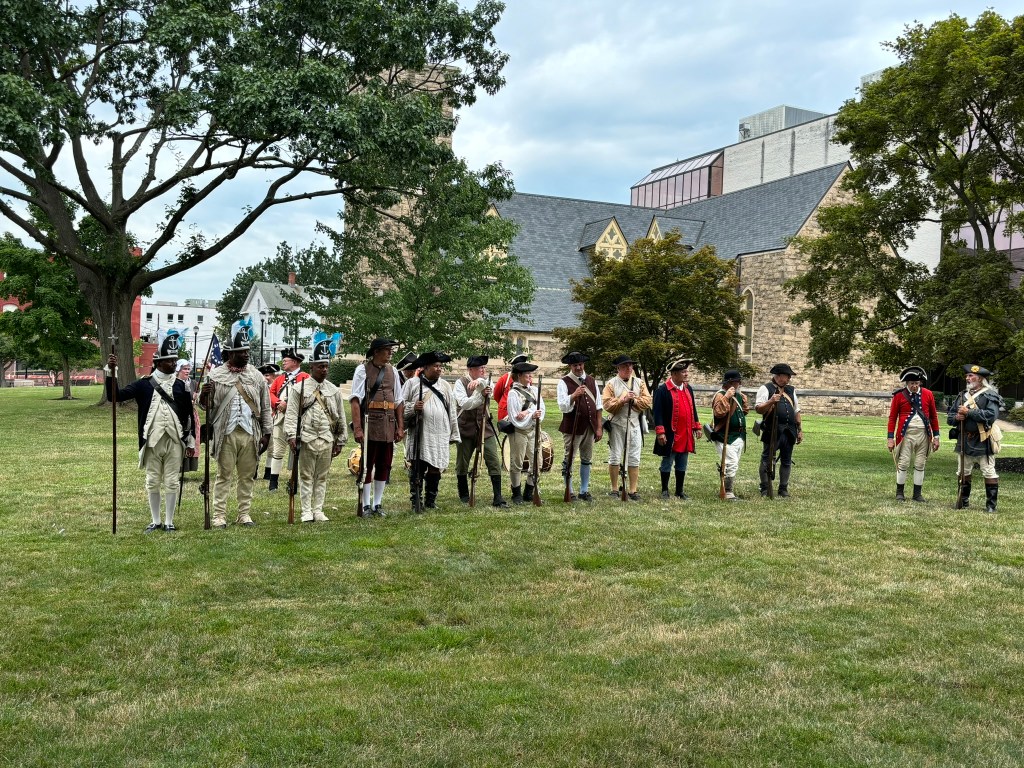
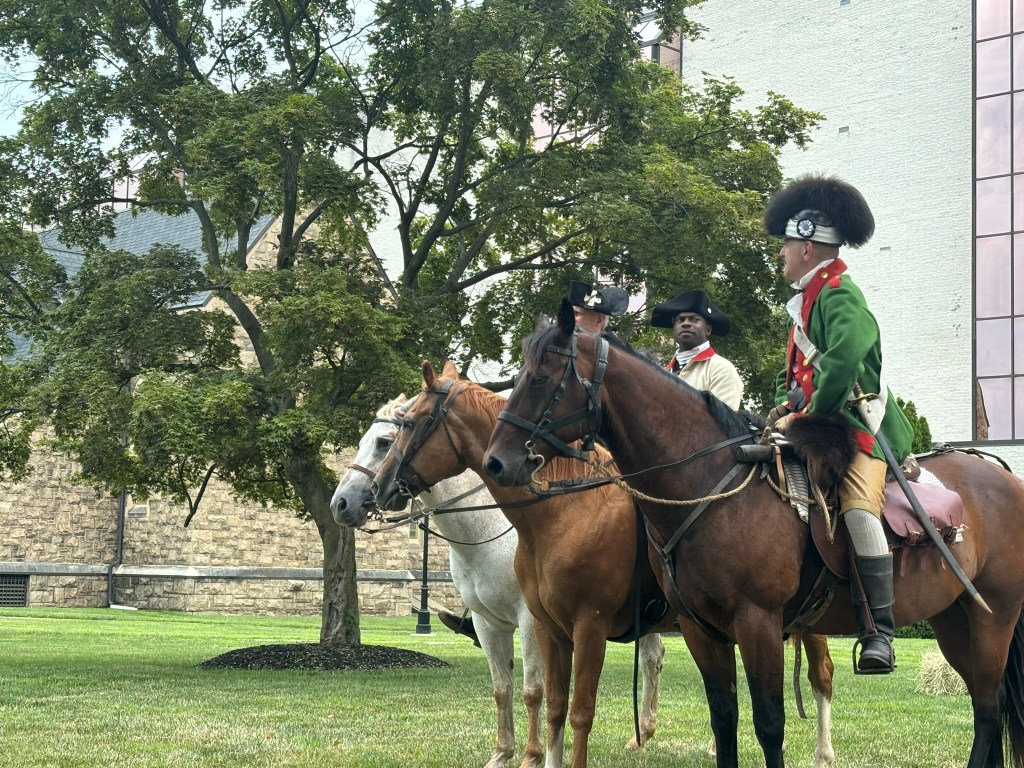
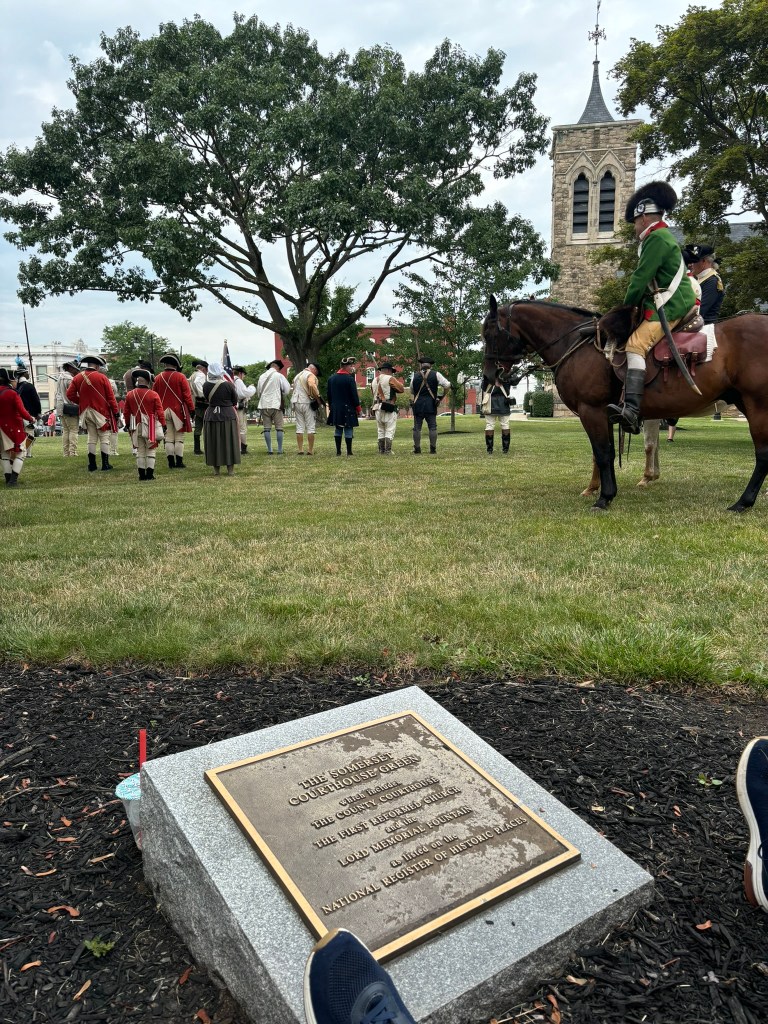
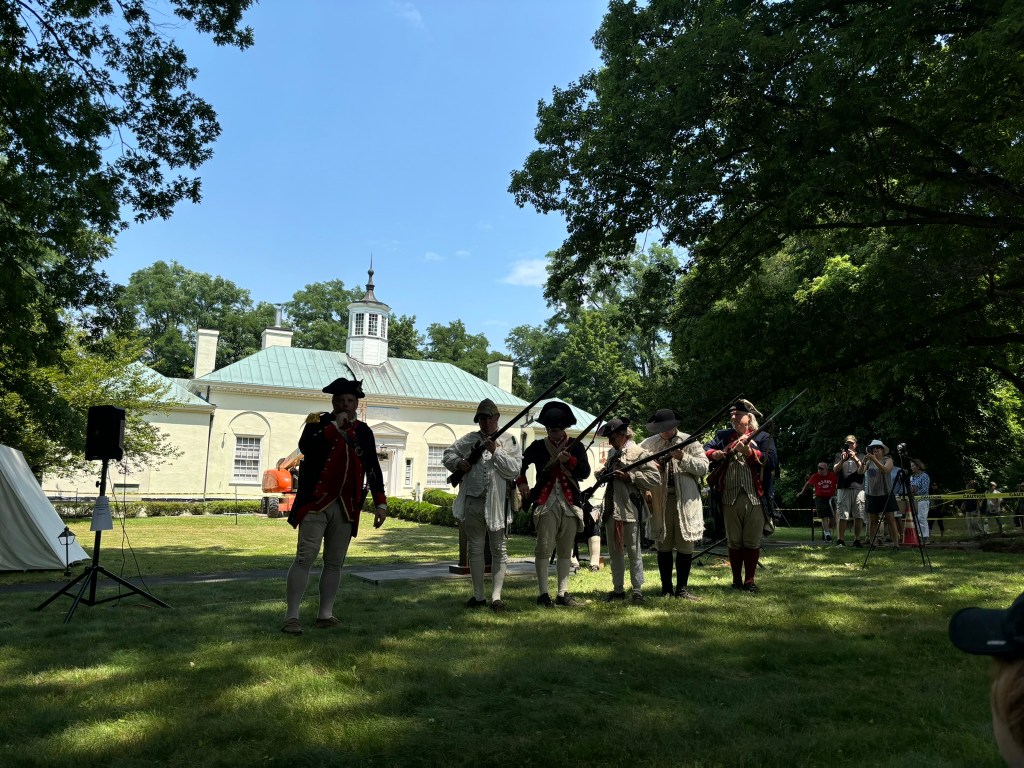
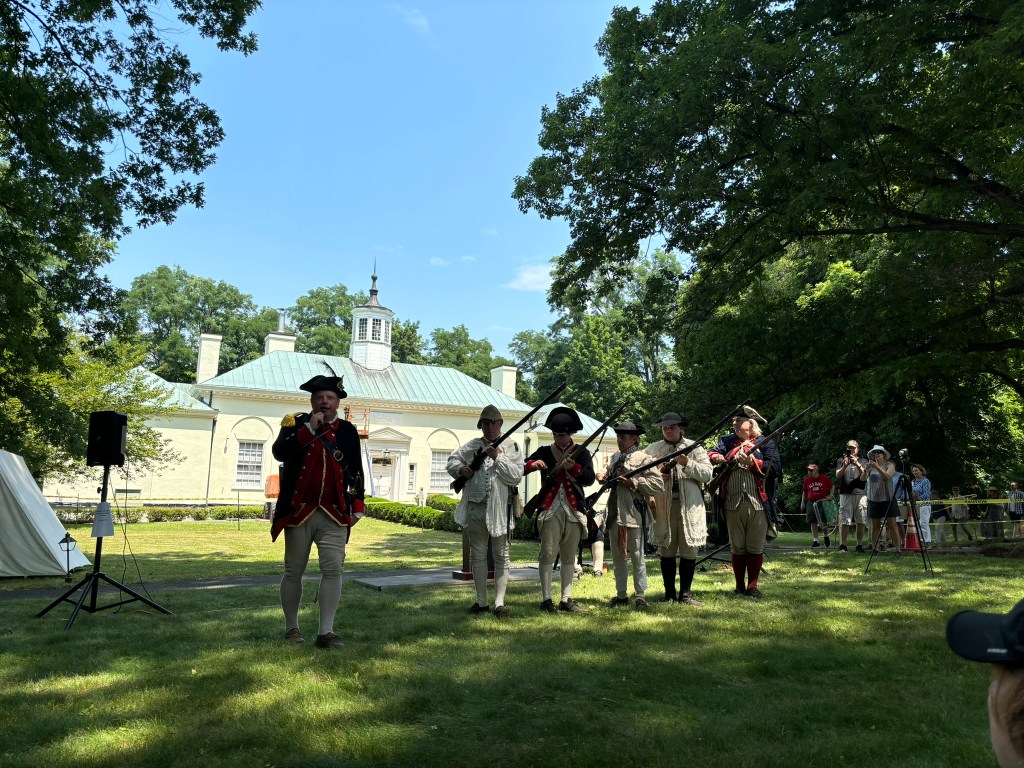
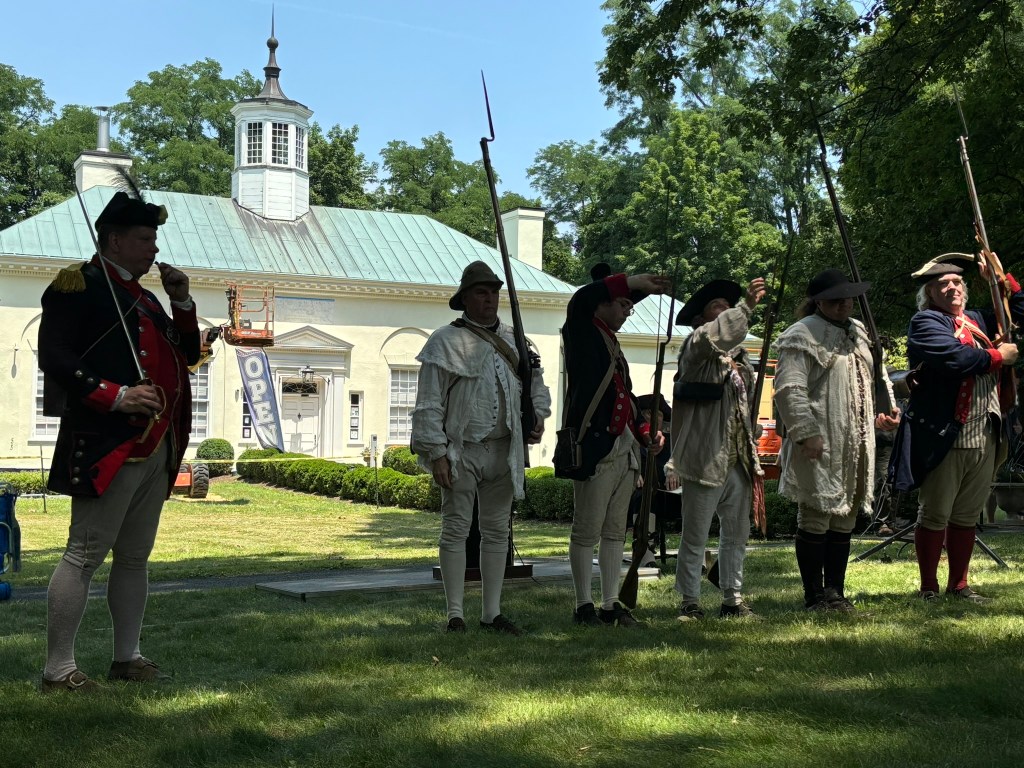
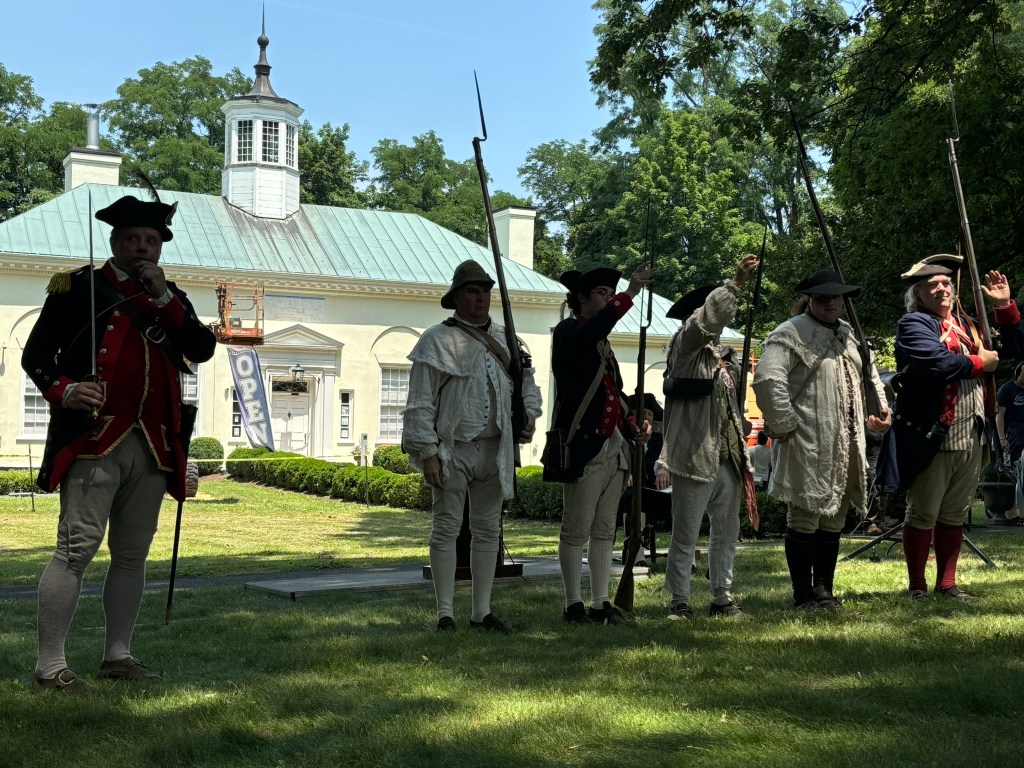
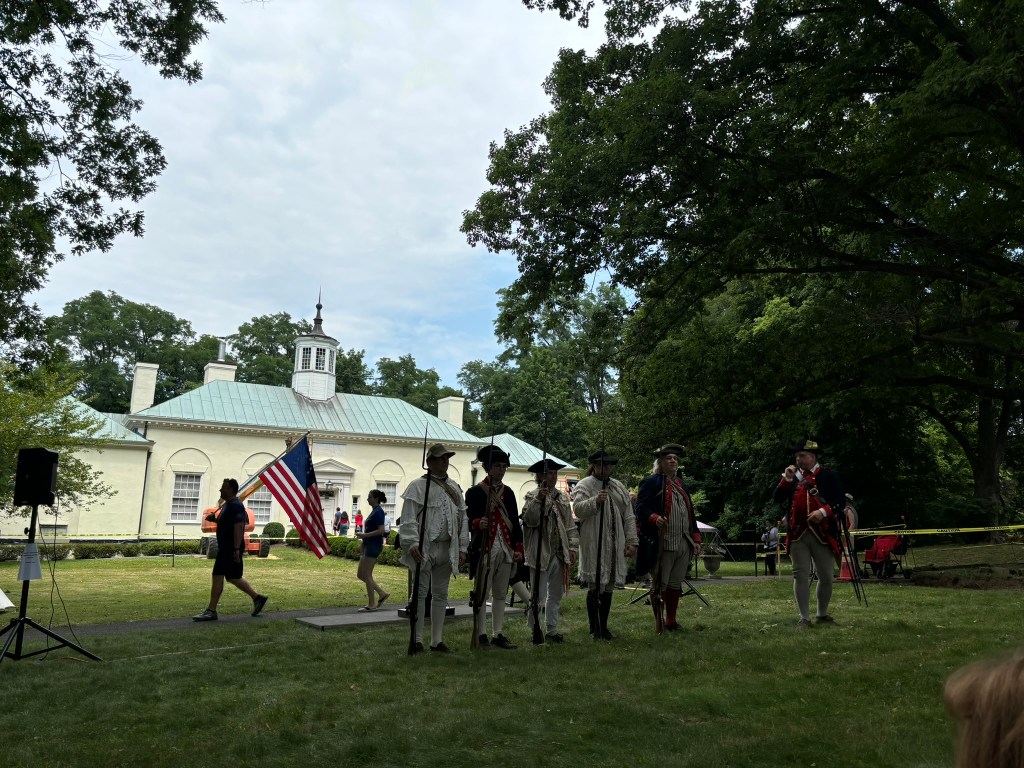
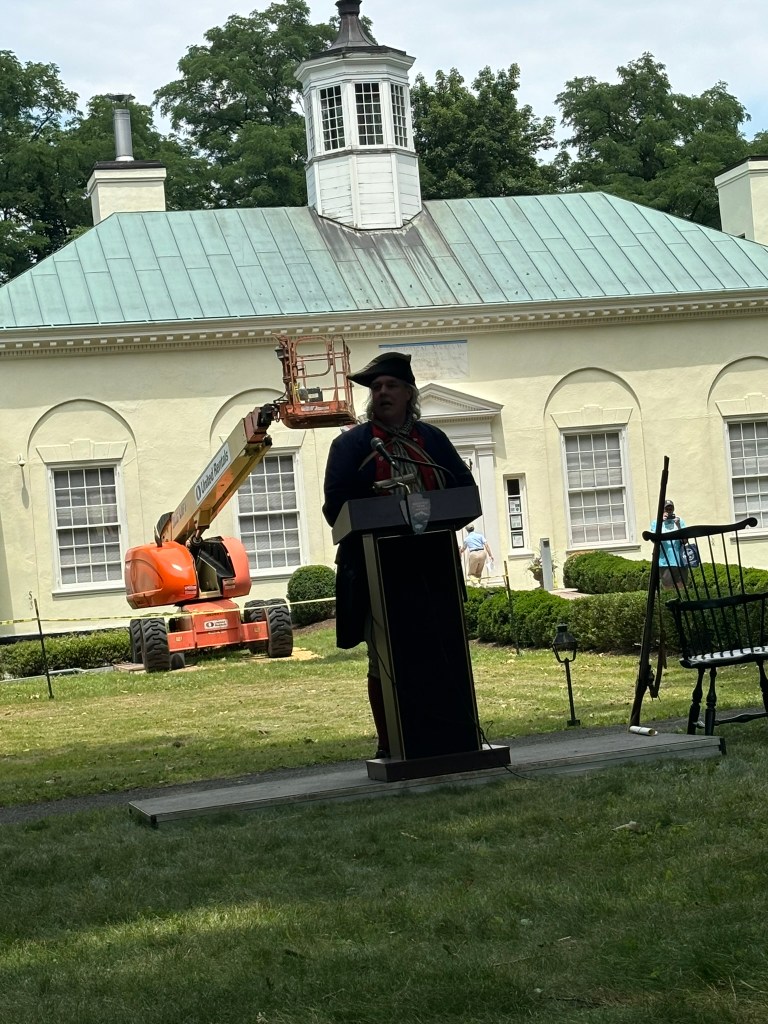
    At about 12pm, George Washington and his entourage made their way down Main Street to the Courthouse Green.  They were accompanied by members of New Jersey Fifes and Drums.  The members of the New Jersey Militia- Heard’s Brigade, as well as the First Rhode Island Regiment stood in line and received orders from their commander.  George Washington inspected the troops before they fired their muskets.

    At about 12:30, Somerset County Commissioner Director, Shanel Y. Robinson addressed the crowd, and discussed how Somerset County was preparing for the 250th Anniversary of Independence.

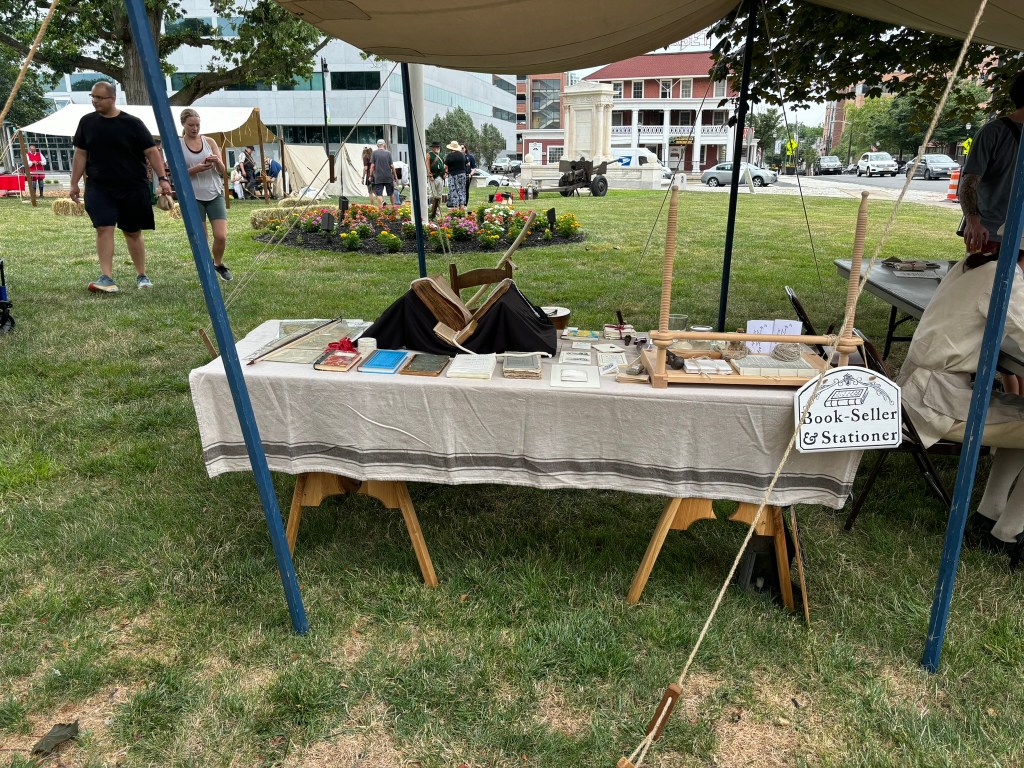
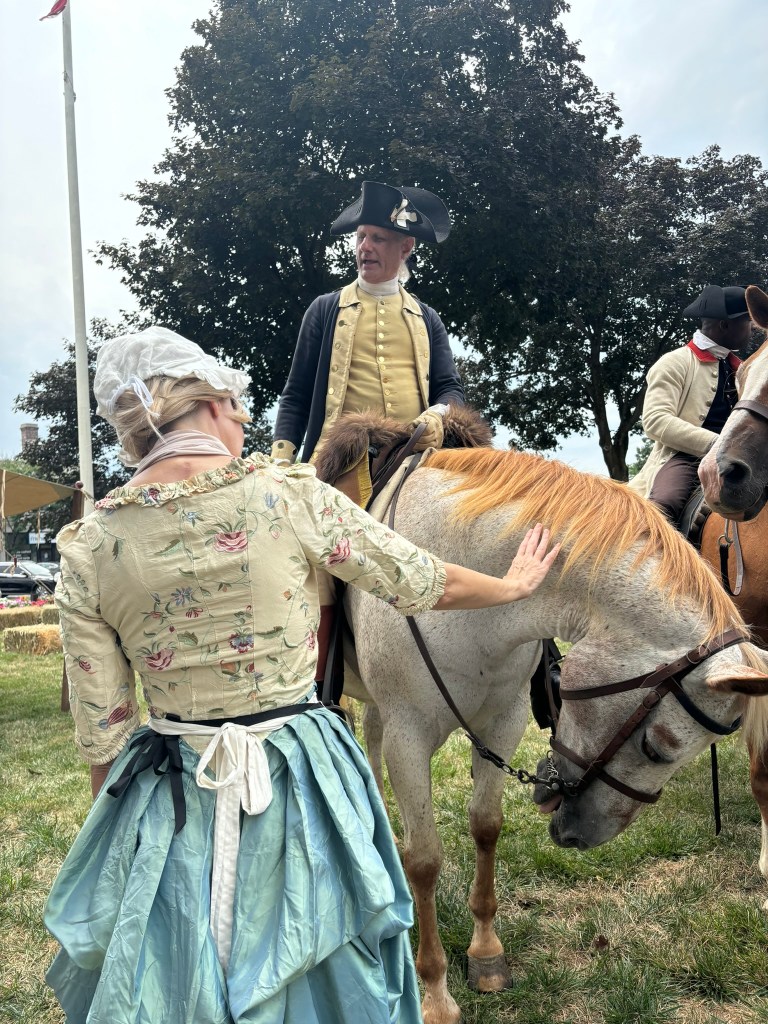
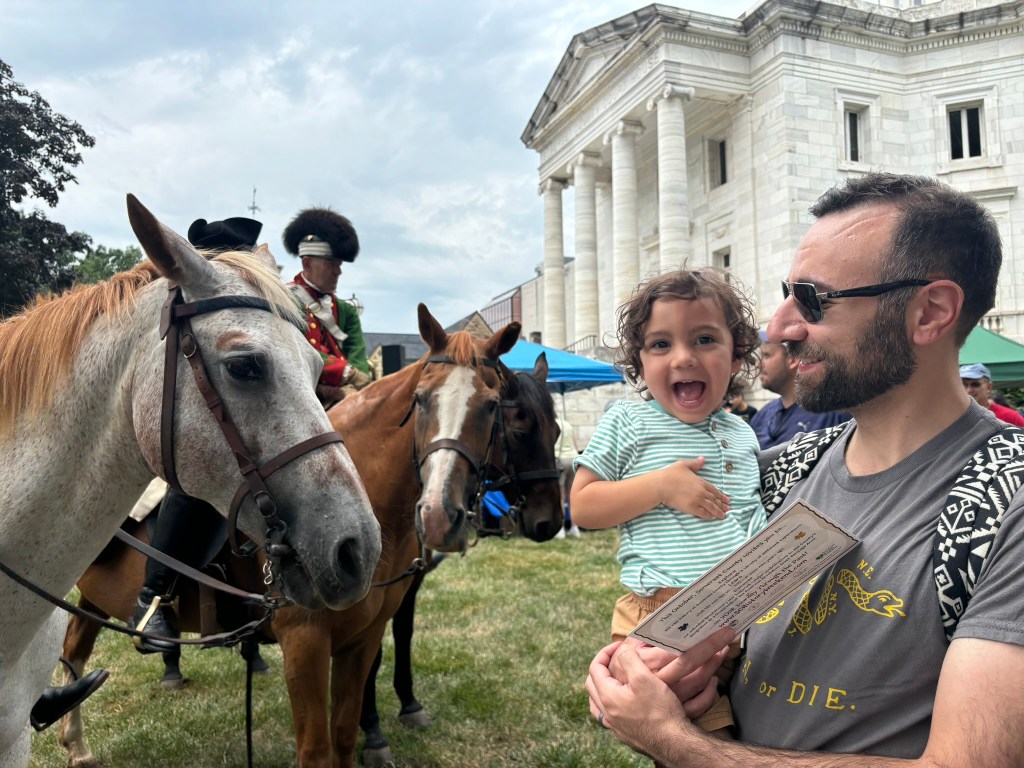
    My children took another round of the many colonial games.  They also took part in 18th century reading and writing, including writing with an 18th century ink and quill.  We made our way over to George Washington on top of his horse, Penny, which the kids were able to pet.

    We had a great day in Somerville.  This event was the most kid-friendly event that we’ve been to lately.  History On The Green was another reminder of the tremendous impact that New Jersey had on the American Revolution.  This region in Somerset County was home to the Middlebrook encampments throughout the war.  Many houses still stand in the area that served as headquarters to Continental generals including Washington, Nathanael Greene, Henry Knox, Lord Stirling, and Friedrich von Steuben.  I’m looking forward to going next year and also excited for what they have planned for 250!
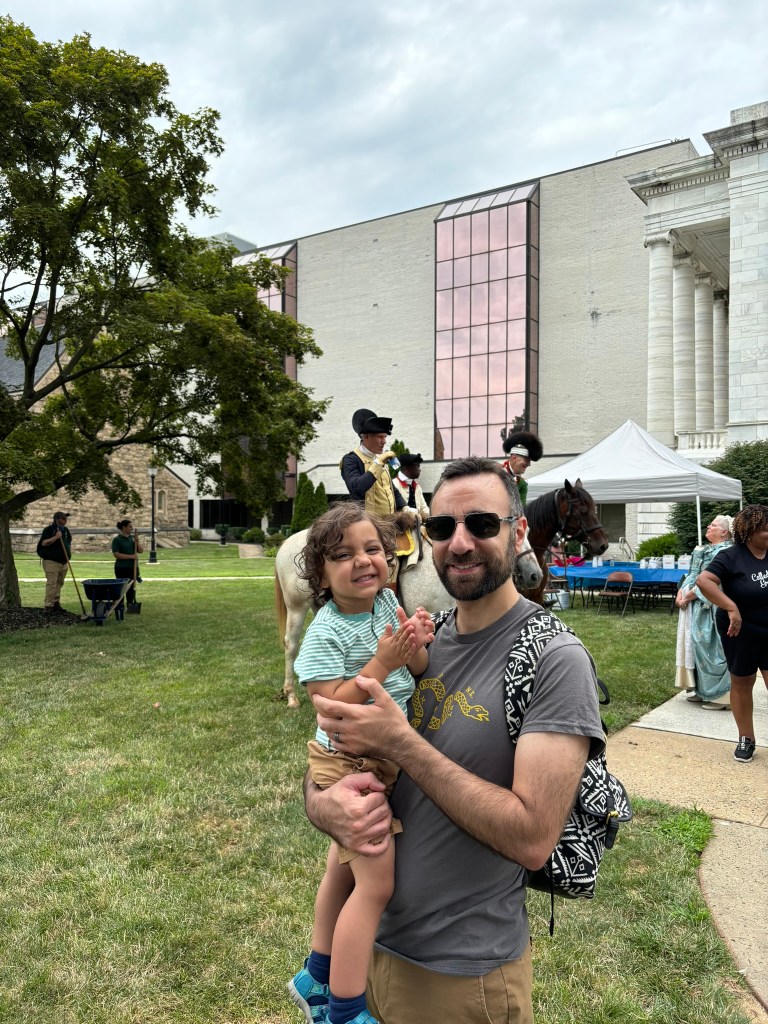
    Follow my Instagram, Facebook, and Twitter accounts for videos of the event.

    For more information on the organizations who were present at the event, check out the links below:

    Somerset County Cultural and Heritage Commission

    Somerset County Historical Society

    Heritage Trail Association

    New Jersey Militia- Heard’s Brigade

    1st Rhode Island Regiment

    NJ Fifes and Drums

    Liberty Hall Museum

    Heart to Hearth Cookery

    Check out related blog posts below:

  • The Line of Splendor: A Novel of Nathanael Greene and the American Revolution” is a historical novel written by Salina Baker.  In her novel, she brings to life a figure who deserves more fame and recognition for his pivotal role in the Revolution.  Nathanael Greene was a selfless general and leader who fought valiantly to defend his country and provide for his troops. He was a man who defied the odds and was placed in a position of power and leadership, a favorite of General George Washington.   He was a man willing to put everything on the line for the independence and freedom of the United States.  

    Baker’s book picks up with Nathanael Greene’s life early in the 1770s when Nathanael is about the age of thirty.  At this time, there were growing tensions in the American Colonies with Mother England.  Shortly before the war broke out, Nathanael married his wife Caty in 1774, and Baker does a masterful job weaving their relationship into the story of his time in the war.  

    Baker’s work is a fascinating depiction of Nathanael Greene and the American Revolution.  Readers of history often read facts and descriptions of events, which Baker provides.  But she also takes the reader into the thoughts and conversations of Nathanael Greene, as well as other key figures in his life.  Baker’s novel is a reminder to the reader that the generals and soldiers who fought in the Revolutionary War were not mythical figures who fought a war that would inevitably end in an American victory.  These were real men with real emotions carrying their insecurities and flaws, while experiencing the highs and many lows of the war.  Greene was central to many of the key battles early in the war, from the siege of Boston, to the debacle of New York, to the triumph of Washington’s crossing of the Delaware, to the trying times at Valley Forge.  Greene held a tremendous weight on his shoulders throughout the war, especially when he led the Southern Army late in the war during the Southern Campaign.   

    Historically, the Southern battles often receive less attention than the battles earlier in the war in the North.  But Baker paints a clear and detailed picture of the challenges of the Southern Campaign.  Nathanael had to lead his men while enduring extremely difficult conditions, including desertions, humid weather, mosquitoes, widespread diseases, and long, nearly constant marches.  Baker vividly describes the scenes of the war: camplife, the battlefield, the civil war between Patriots and Loyalists, the chases between the Continental Army and the British Army, the losses and victories, the difficult decisions that Greene had to make as General, the tensions and disagreements with the Continental Congress, and the ultimate triumph of the Revolutionary cause.  Greene fought tooth and nail for his troops, and was greatly admired amongst the men that he led.

    While conducting the war, Greene ached for his wife and small children, who he was unable to see through long stretches of time.  Besides depicting the emotions of Nathanael, the novel also describes the perspectives and feelings of his wife Caty, who had to constantly struggle with the reality of her husband being away at war, while trying to raise small children without a father.  Throughout her novel, Baker brings the reader through a plethora of emotions from joy and triumph, to tragedy and despair.  She takes you into Nathanael’s stressors such as his financial woes, and his doubts about his own ability to lead.  

    From reading the novel, it is quite clear that Baker has conducted substantial research on Nathanael Greene and the American Revolution.  She gives extensive detail on Nathanael’s life at home, within army camps, commanding battles, and his travels throughout the states.  She provides us with dialogue that fills in the gaps of historical records.  Baker used primary and secondary sources for her research, and she seamlessly incorporates many letters that Nathanel wrote and received, both from his family and from his leading generals.  Baker uses her first hand experiences and studies at landmarks of Greene’s life, including the battlefields that he fought on.  

    The novel was difficult to put down, written in a style that is easy to read.  The reader becomes emotionally attached to the main character as the novel progresses, and feels all of the human emotions that Nathanael felt throughout the war and its aftermath.  When the reader encounters the challenges that Nathanael had to deal with, they are left with an even greater respect for those who served in the military and fought for freedom.  Nathanael Greene and his troops made overwhelming sacrifices to fight for the United States.  Nathanael sacrificed his personal life, his financial life, and his family life to gain victory for a new nation.  The reader encounters his inner struggles with the decisions that he made.  

    I highly recommend this novel for any type of reader, especially those who have a love for historical figures or events.  It is a story that entertains, leaves you on the edge of your seat, and provides you with a new and broader perspective on an important historical leader.  Nathanael Greene was a central figure in one of the most important events in human history.  Salina Baker, in this tremendous novel, is shining a light on the legacy of this great man.  Purchase a copy of the book here—> Amazon

    Overall rating: 5/5 stars

    Check out related blog posts below:

  • My family and I made it out on the Fourth of July to Washington’s Headquarters in Morristown, NJ for the public reading of the Declaration of Independence. This was our first time attending this yearly event.

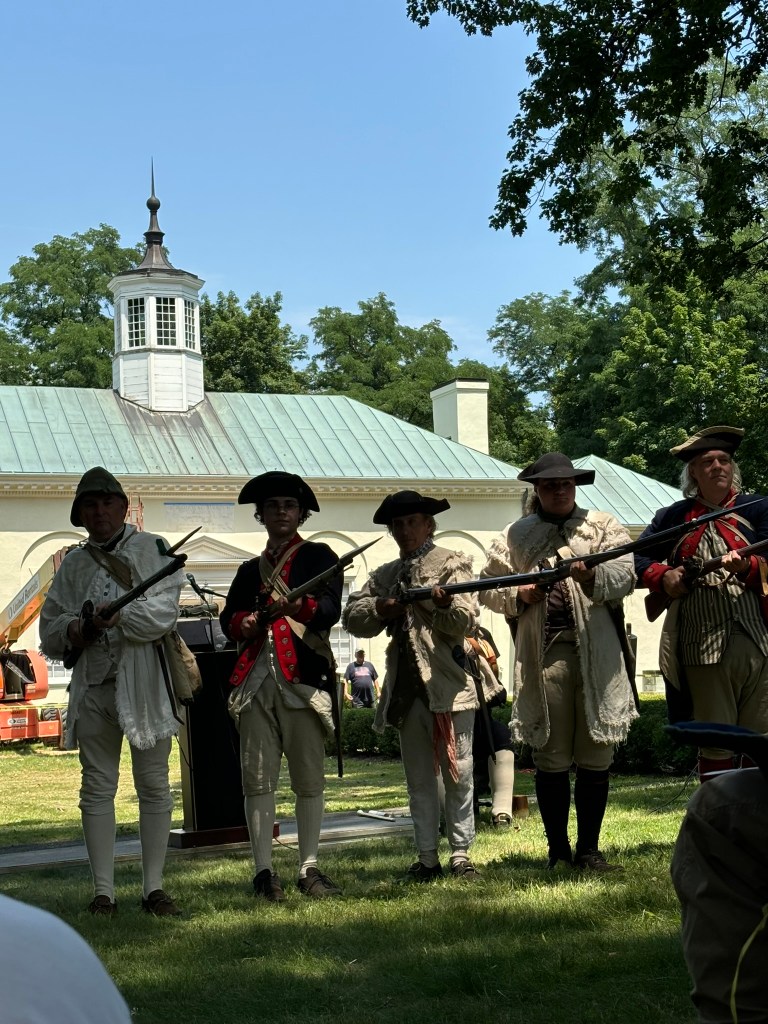
    The festivities began at 12pm with demonstrations by reenactors of the 2nd New Jersey regiment. The regiment did a fantastic job showing the crowd how to stand in a line, reload their muskets, and how to use the bayonet. They thoroughly explained the use of muskets in the Revolutionary War, as well as the uniforms and limited supplies of Continental soldiers.

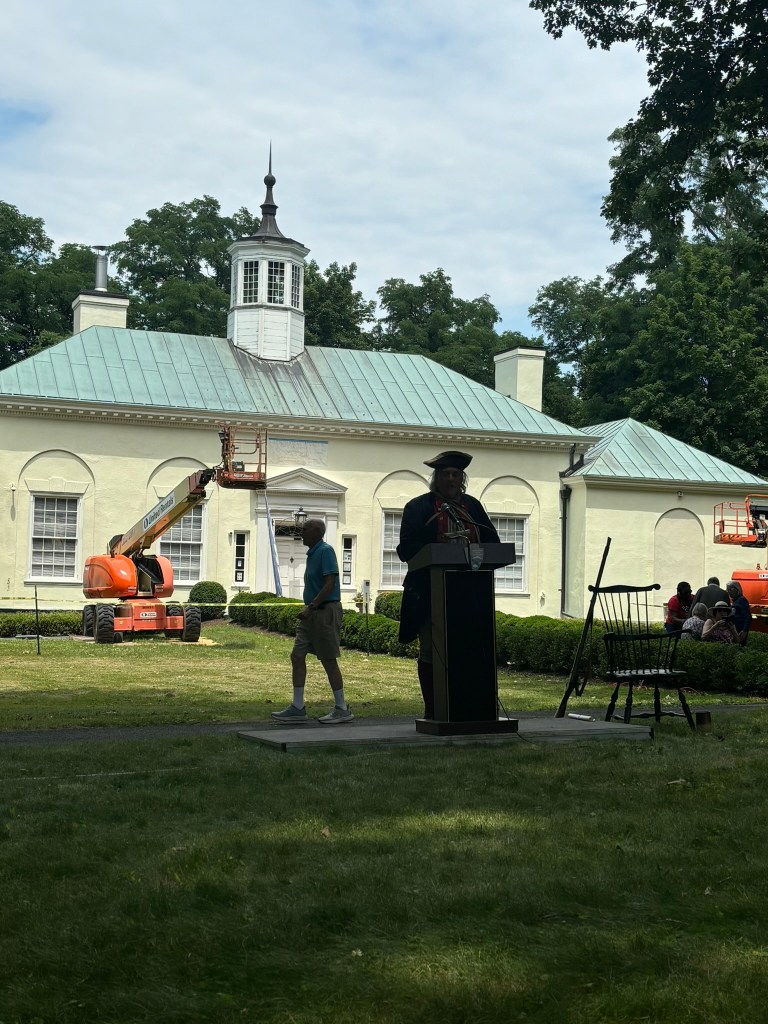
    The 2nd New Jersey regiment’s demonstrations lasted nearly to 1pm. At that point there were a few speakers including Thomas Ross, the Superintendent of Morristown National Historic Park. He described the rehabilitation projects taking place at the park, including to the Ford Mansion, as well as to the museum. These projects are in preparation of the 250th anniversary of the Revolution.

    Another speaker who addressed the crowd was Congresswoman Mikie Sherrill who represents New Jersey District 11. She described New Jersey’s importance to the Revolution and praised the efforts to preserve New Jersey’s history.

    At 1pm, Ranger Tom Winslow read the Declaration of Independence. The audience was encouraged to give shouts of “Huzzah!” when he read words/ phrases favorable to freedom and independence. The audience was encouraged to shout “Down with King George!” Or “Down with Tyranny!” when he read the many grievances listed against the king.

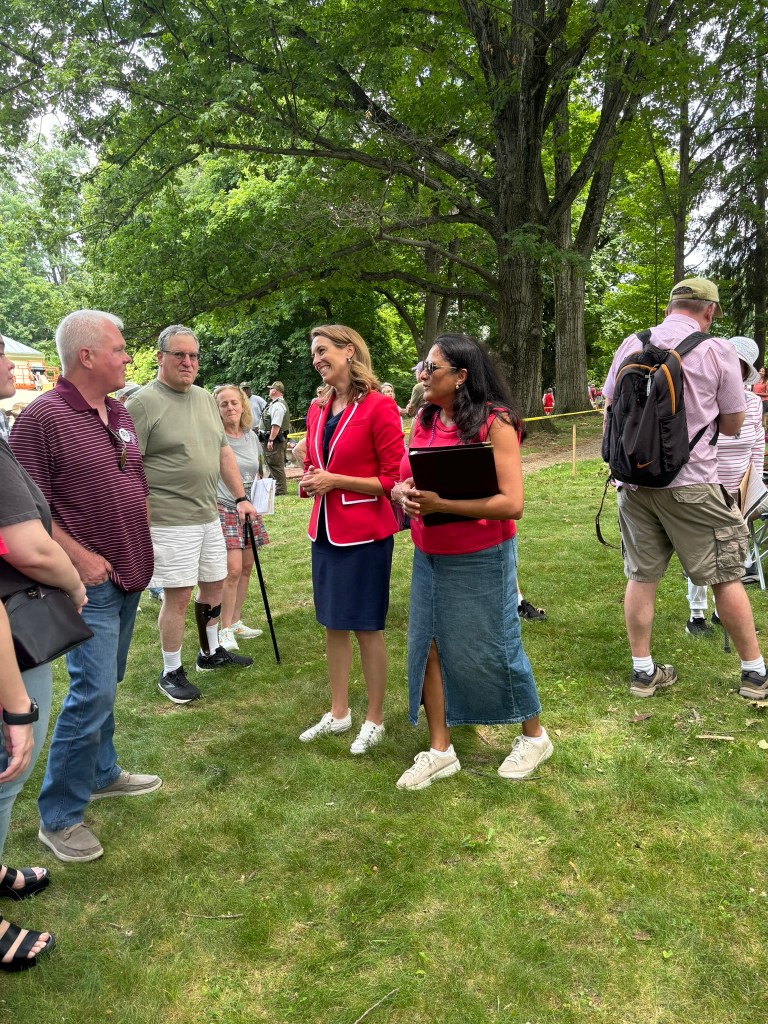
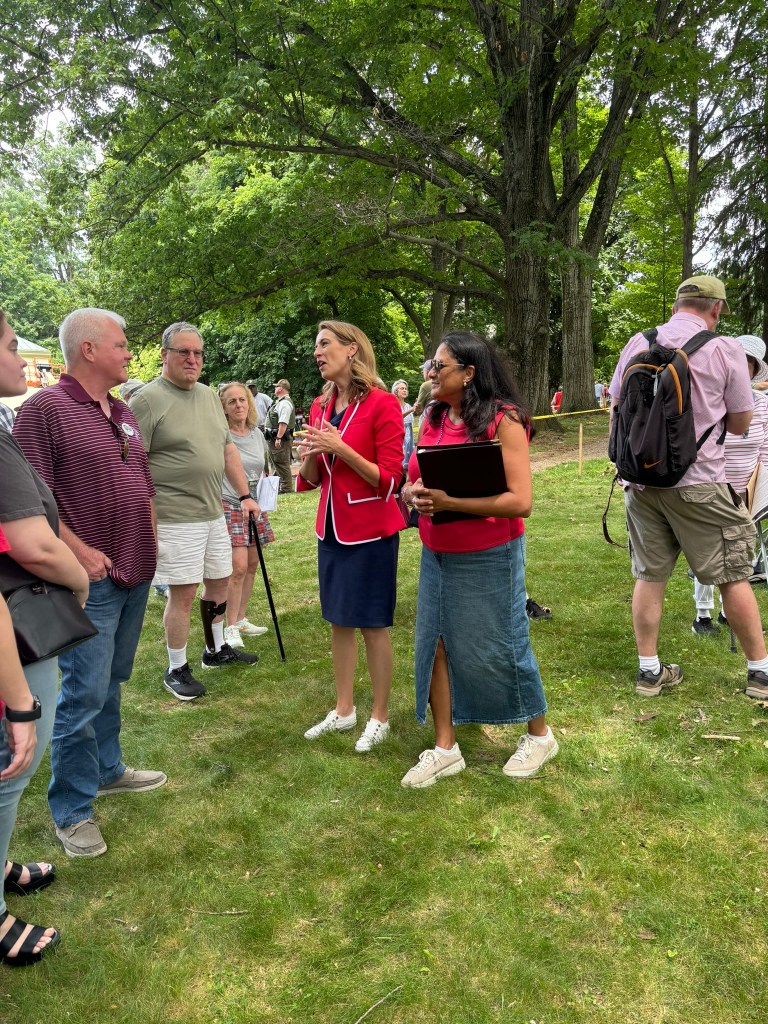
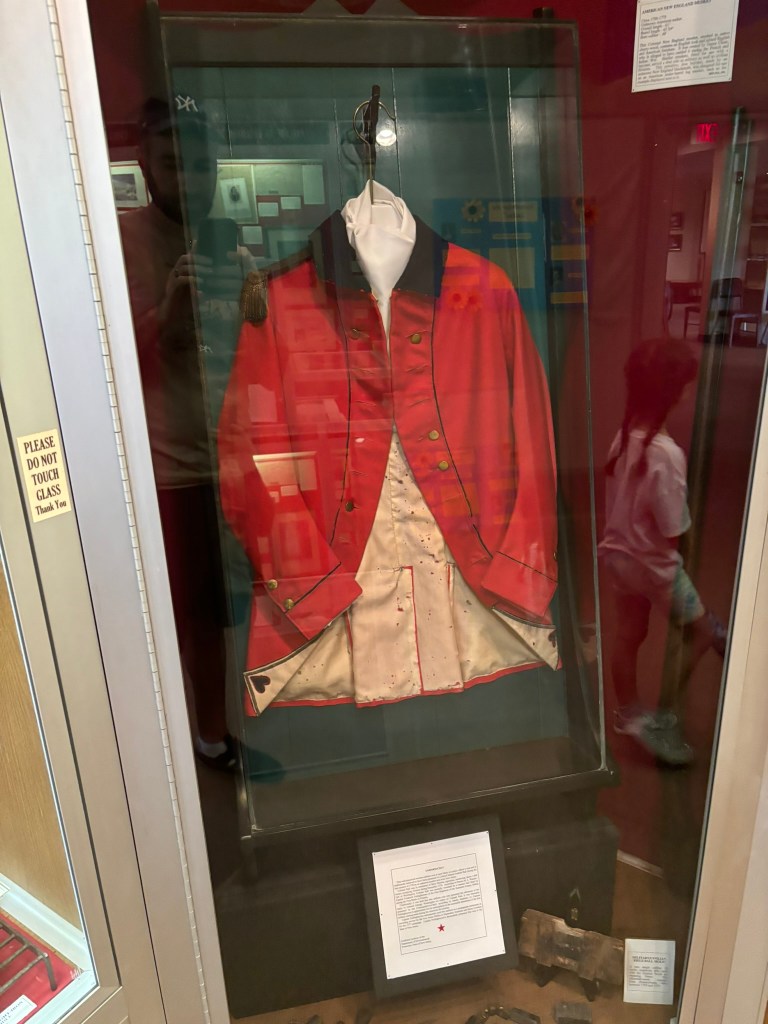
    Finally, the program concluded at about 1:30 and my family went in and visited the museum. Representative Mikie Sherrill met and spoke with visitors, while the reenactors also took photos. My family and I really enjoyed our patriotic Fourth of July in Morristown, and would love to come back again! Check out my social media sites in the coming days for videos of the event, including drills, discussions of the revolutionary soldiers, speakers, and the reading of the Declaration of Independence: Facebook, Instagram, Twitter
    Below are links to organzations who helped run the event or were in attendance.

    Morristown National Historic Park

    Washington Association of New Jersey

    Revolution NJ

    Friends of Jockey Hollow

    Check Out Similar Blog Posts Below!

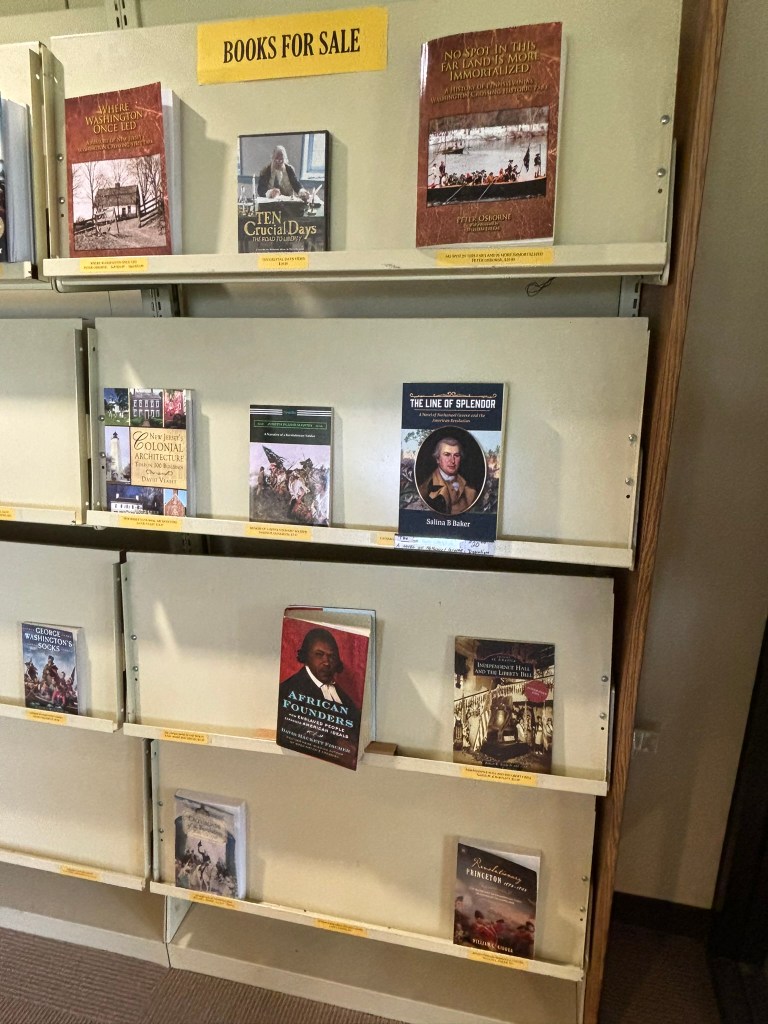
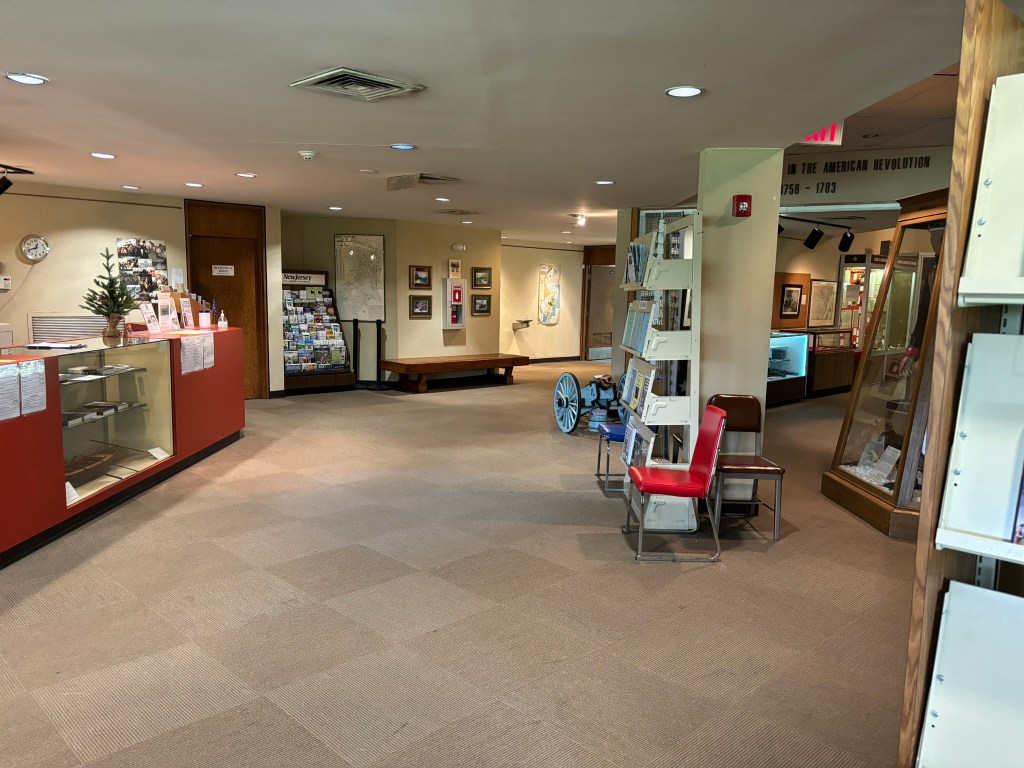
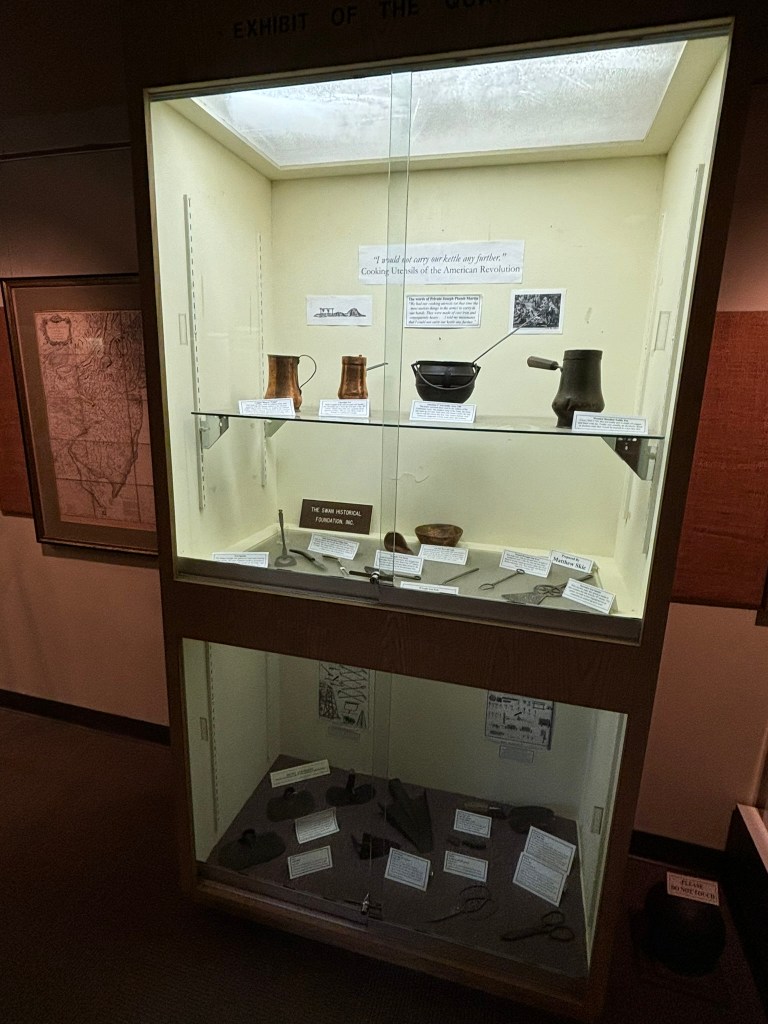
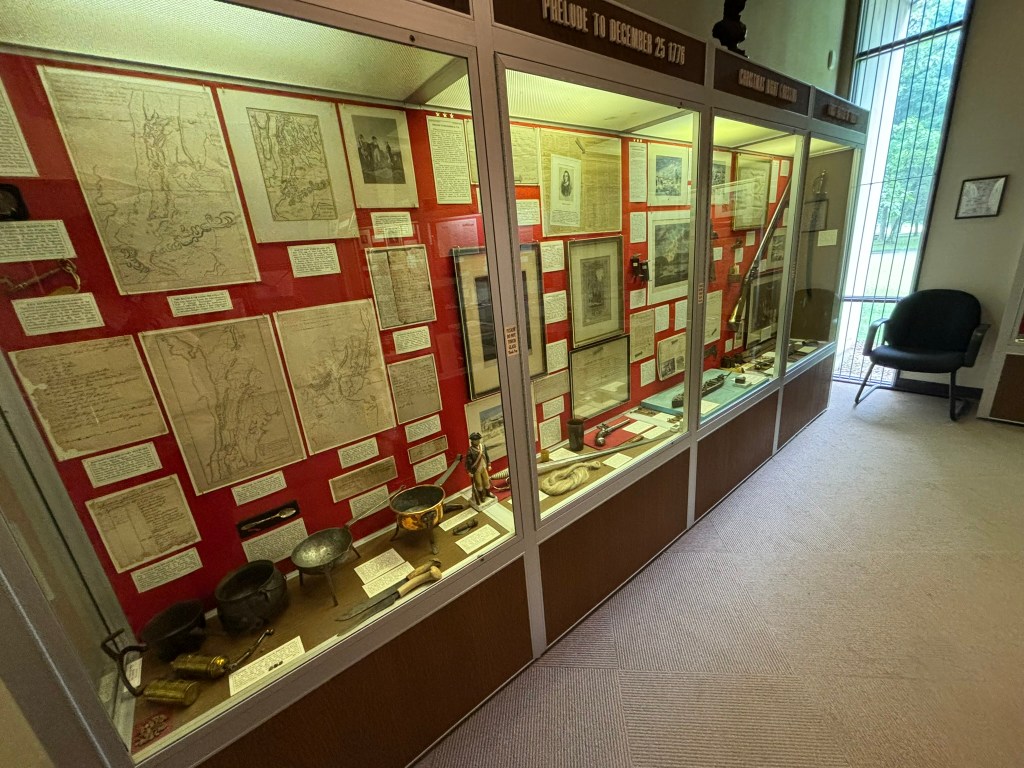
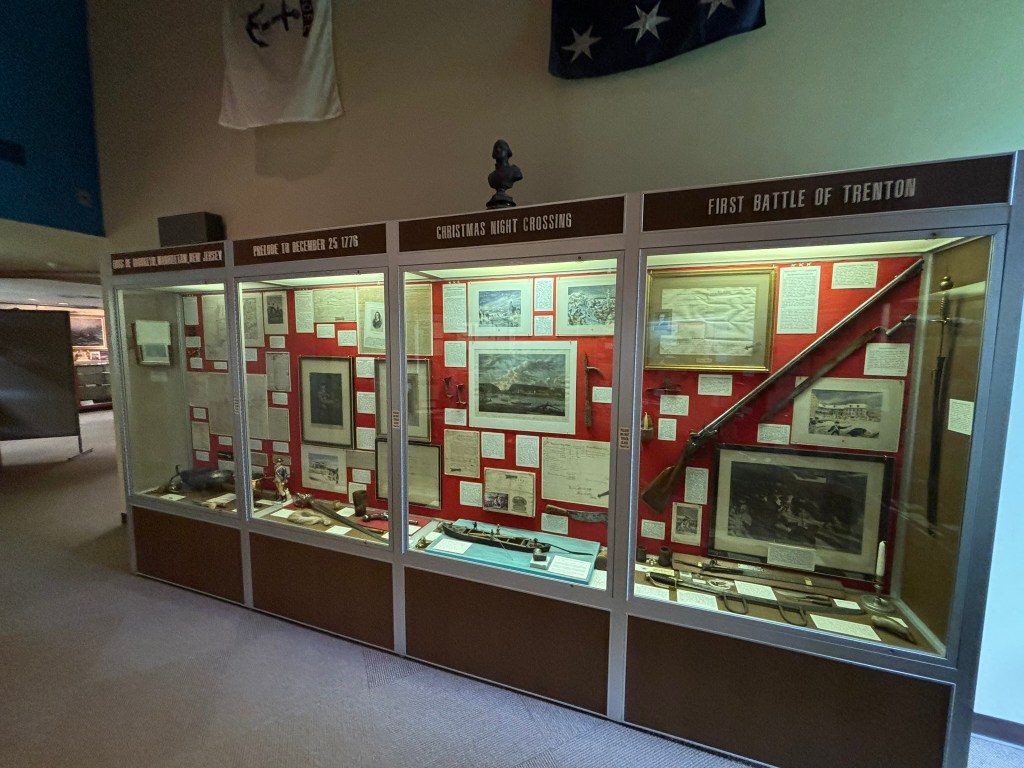
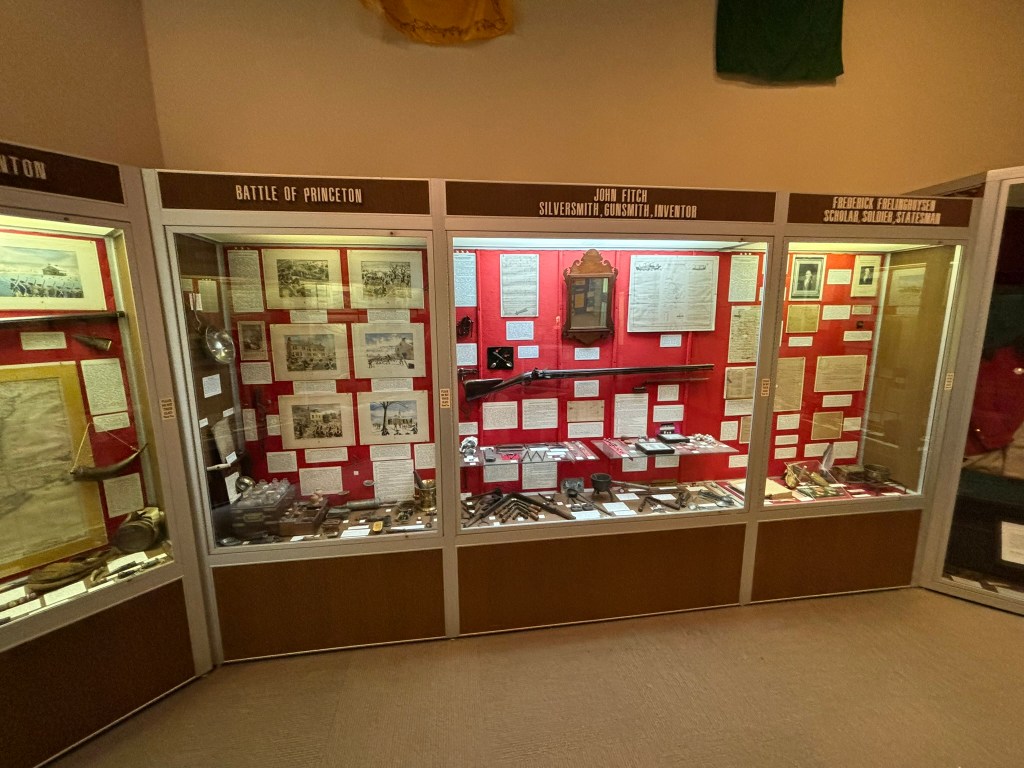
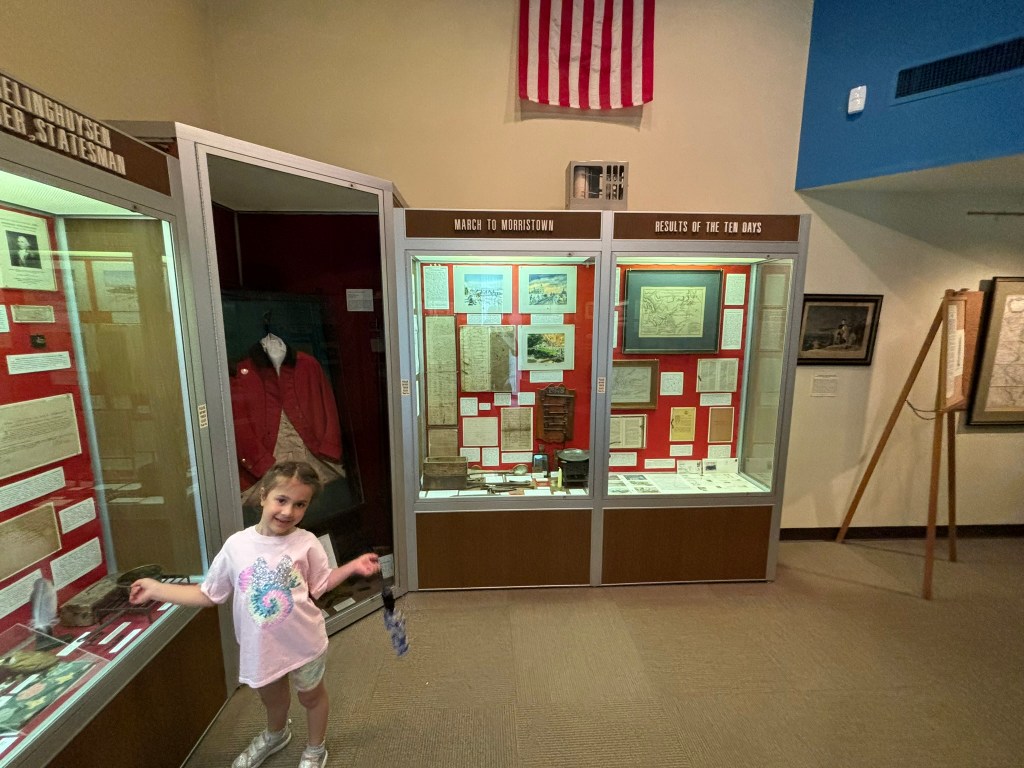
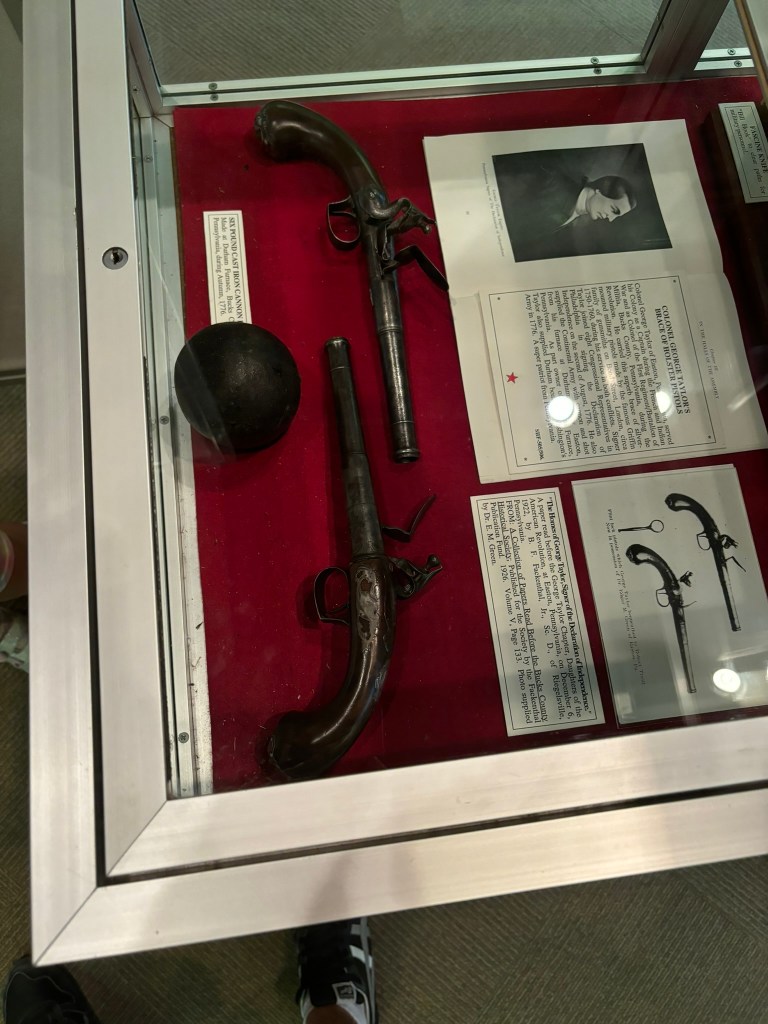
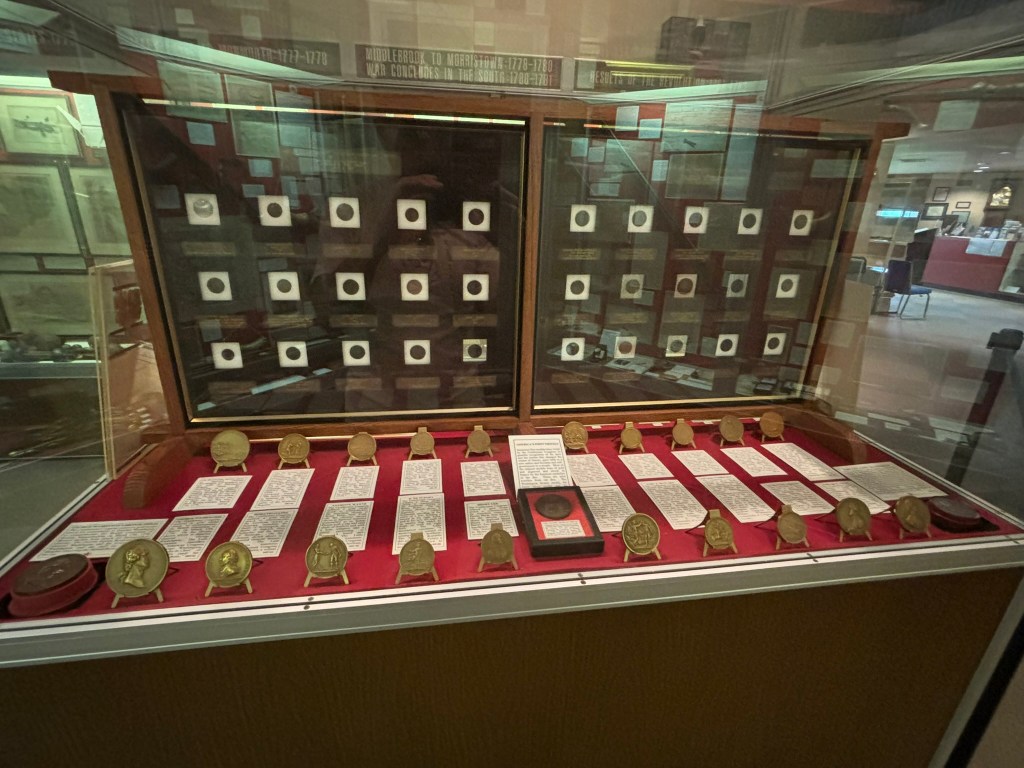
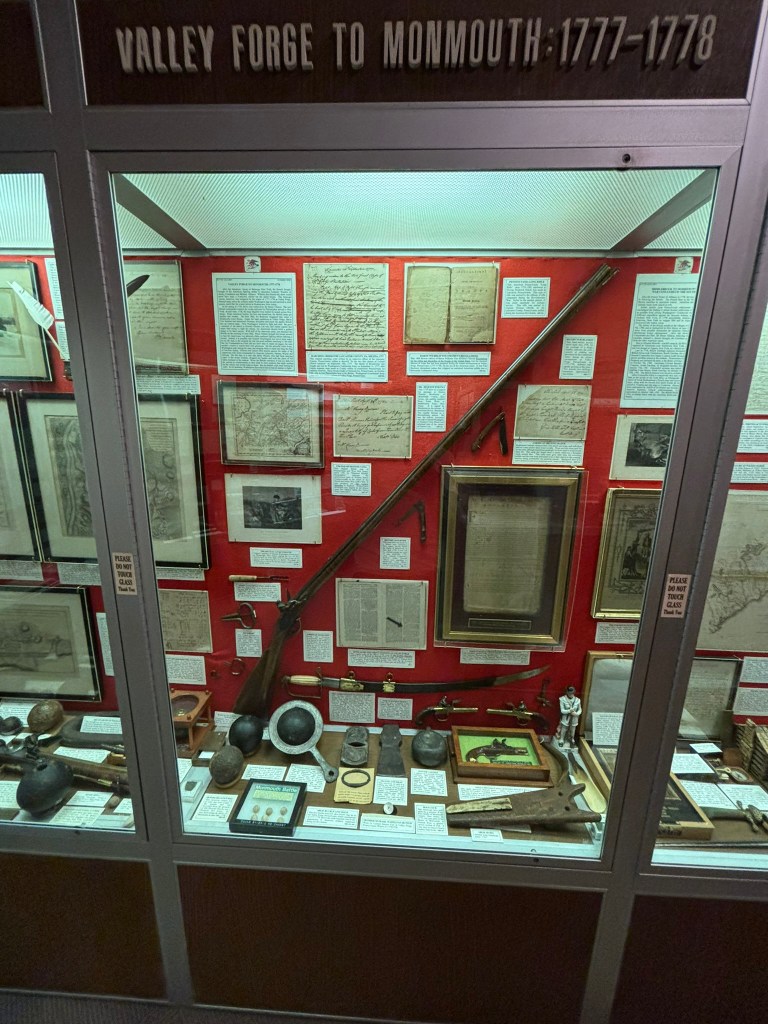
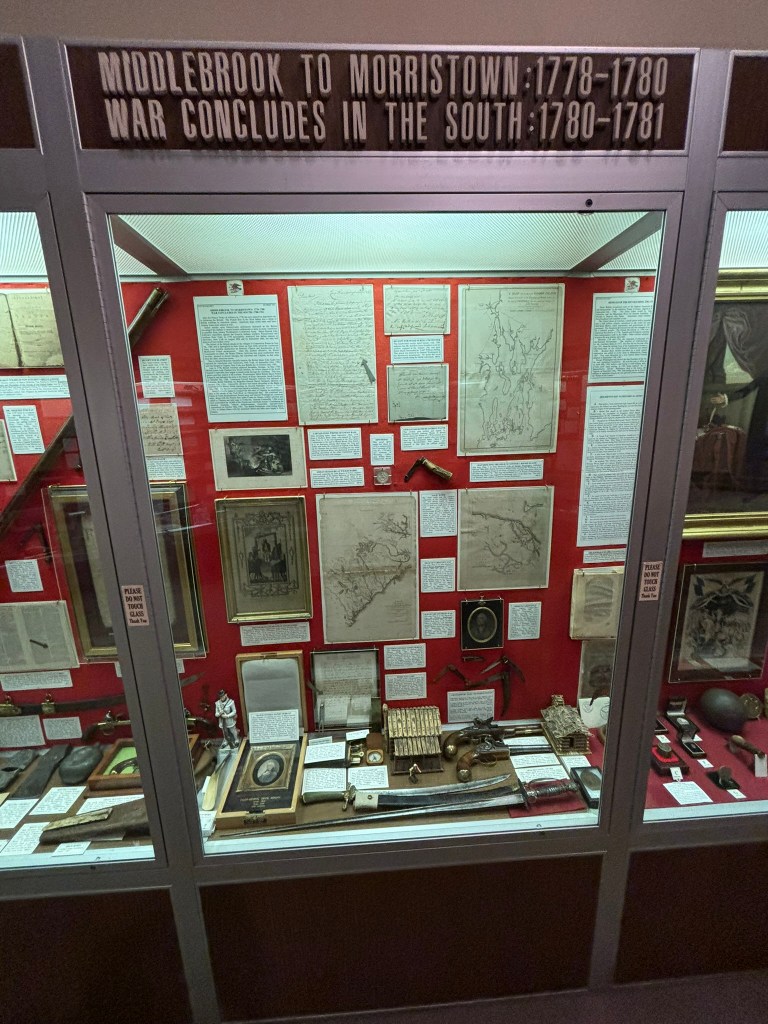
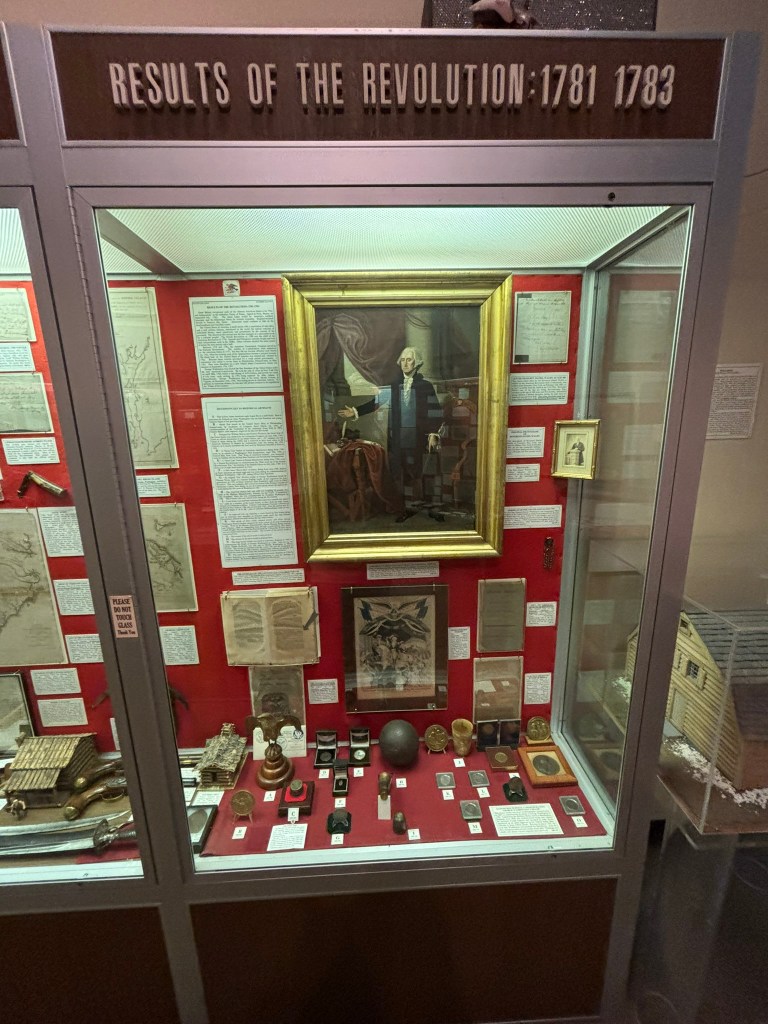
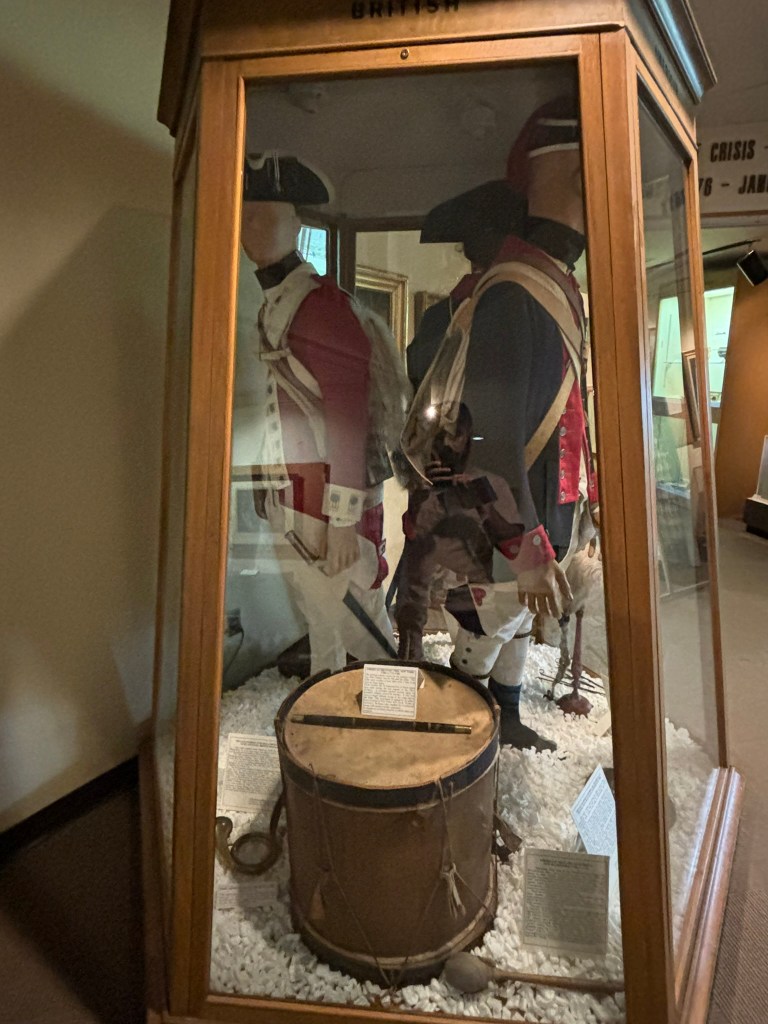
  • My family and I made it to Washington’s Crossing State Park on the New Jersey side of the Delaware River.  My wife and I had gotten free tickets for a tour of the park, which was conducted by the Washington Crossing Park Association.  We arrived at the park a little before our 1PM tour time, and we had an opportunity to explore the museum within the Visitor’s Center.  The museum had  a great collection of artifacts, including uniforms, weaponary, ammunition, coins, letters and other items related to the American Revolution. The Visitor Center also had books for sale.

    Background of Washington’s Crossing

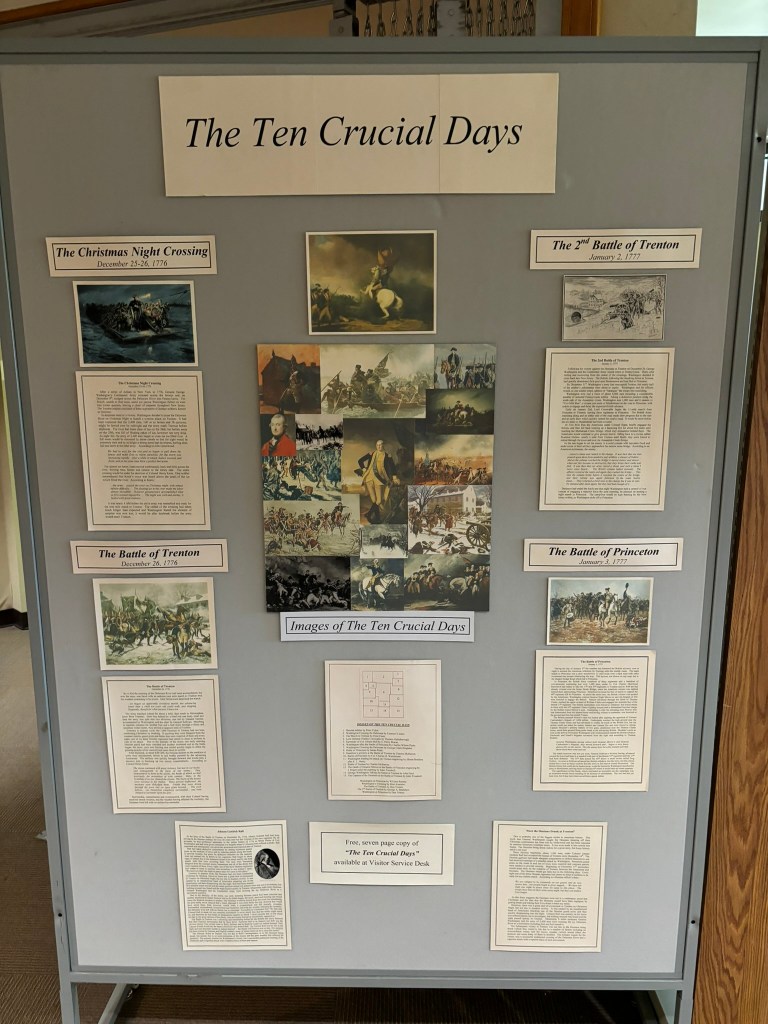
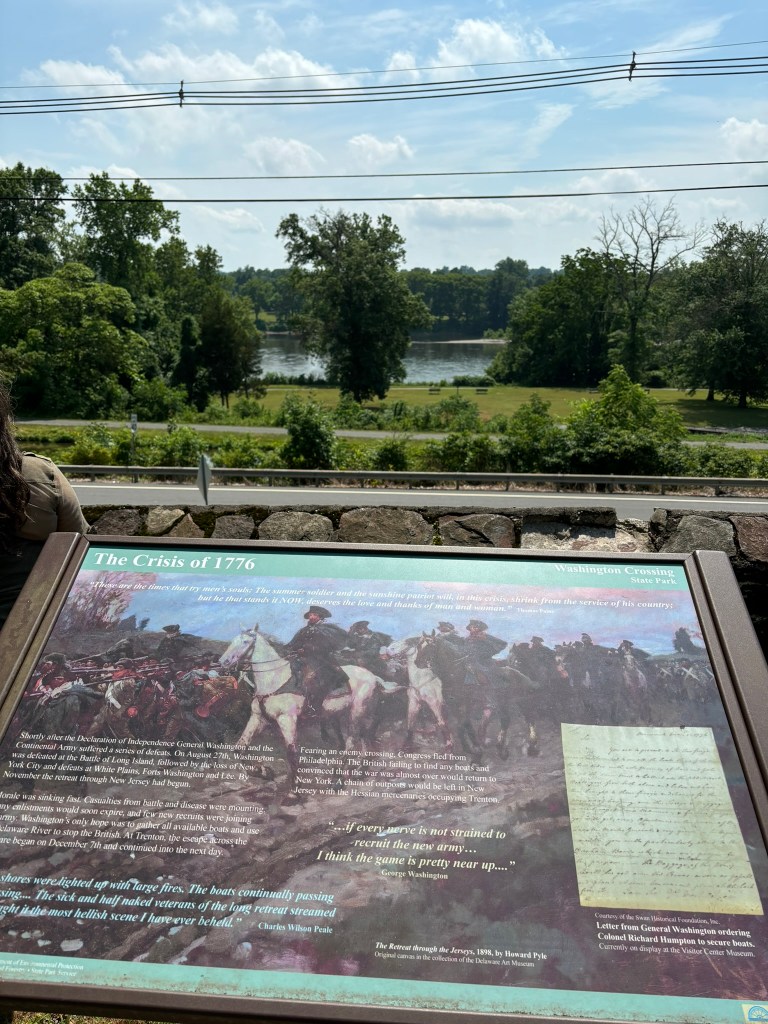
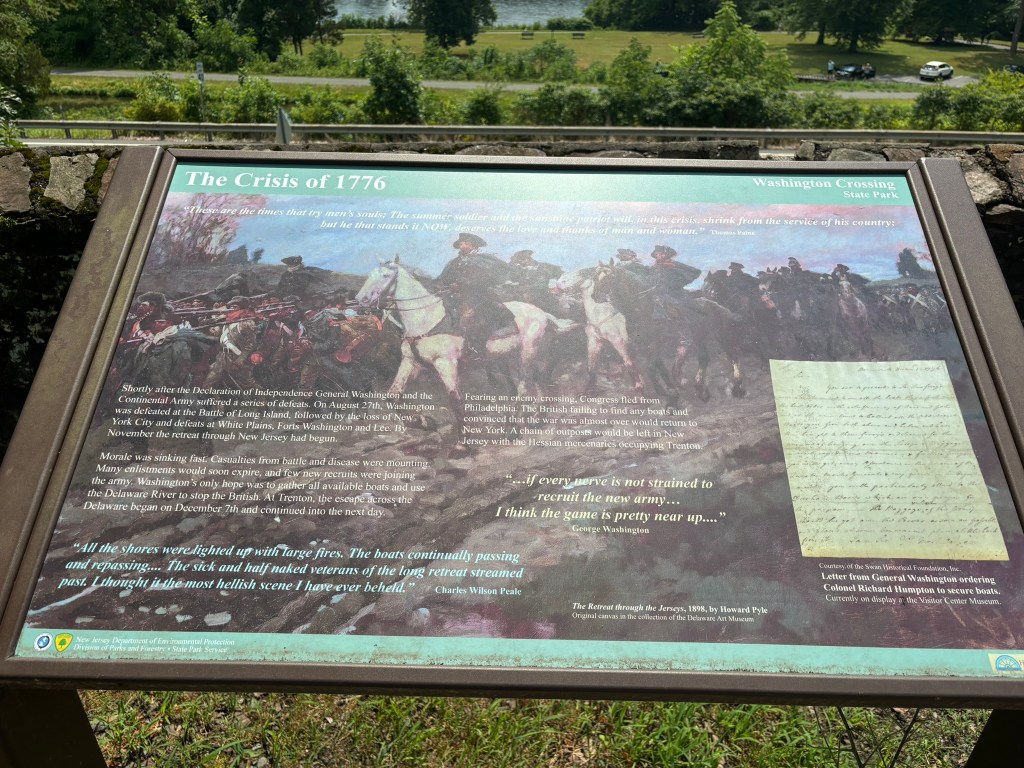
    The tour began with a video that was about 30 minutes long called “Ten Crucial Days: The Road to Liberty.”  The video’s primary focus was to tell the significance of Washington’s crossing.  The video also gave us the background leading up to the event.  The British army landed about 32,000 troops in New York harbor starting in August 1776, shortly after the United States declared independence.  The British then won a series of battles starting in Long Island, then Manhattan and up to White Plains.  The Continental Army retreated across New Jersey while being pursued by the British army.  Washington led his hungry, desperate, and dwindling army across the Delaware River and found safety in Pennsylvania by early December.

    The revolution seemed lost for the Continentals.  To add to Washington’s difficulties, many of his men’s enlistments were up at the end of the year.  He needed a major victory to boost the morale of the troops as well as the young nation.

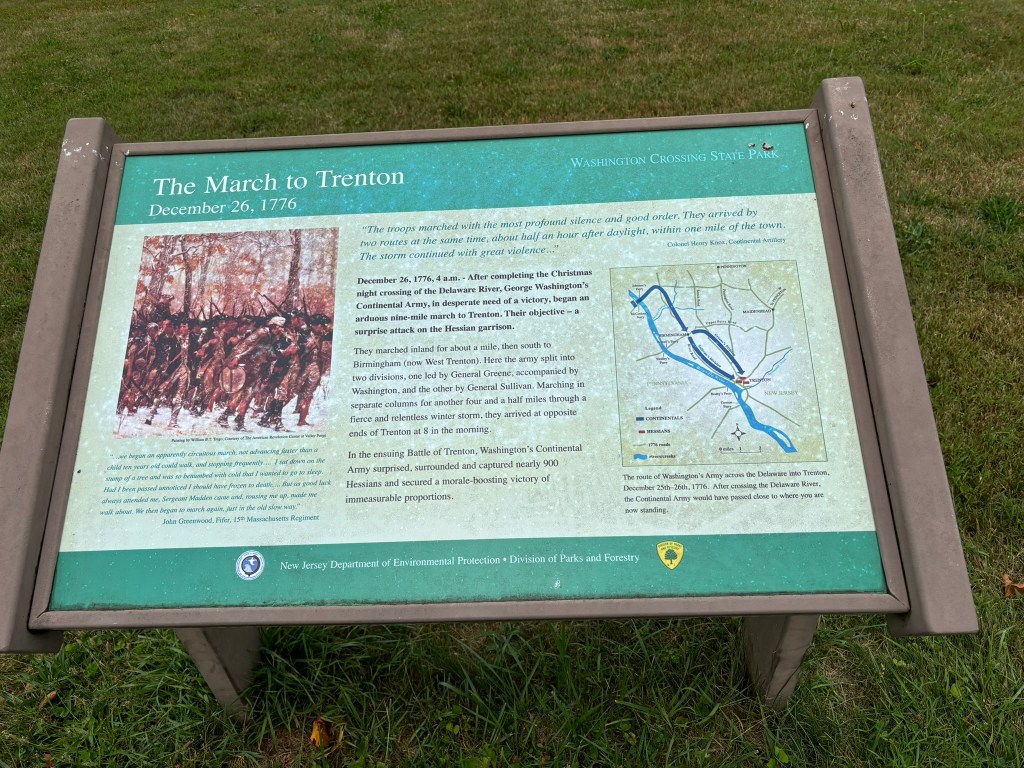
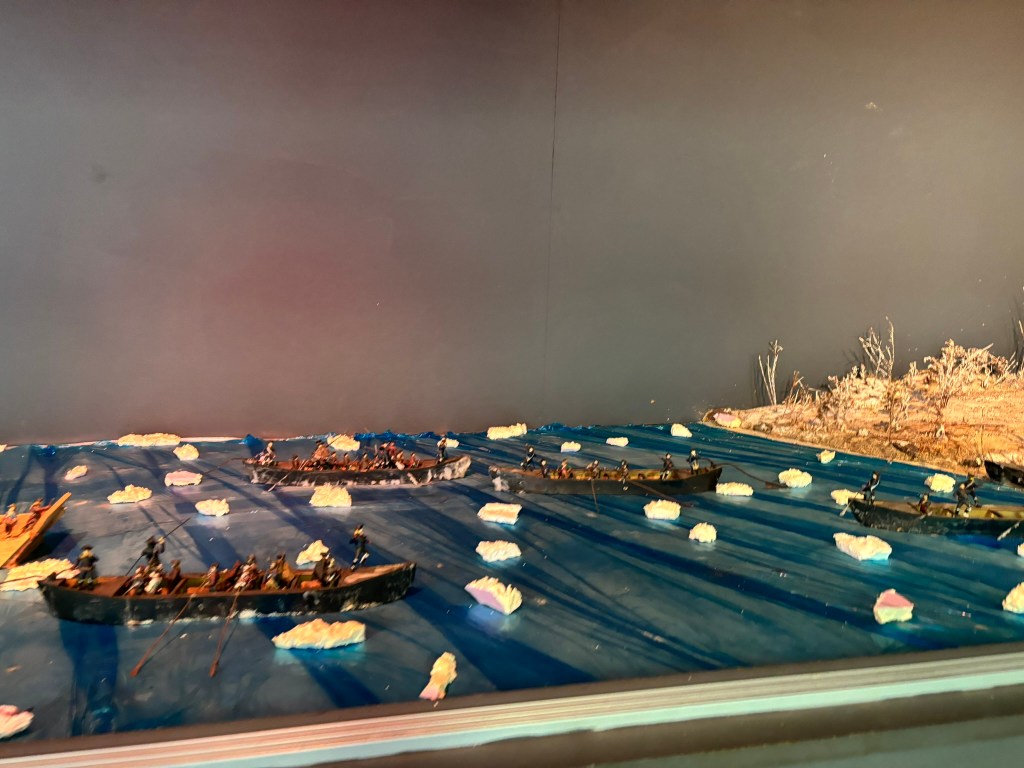
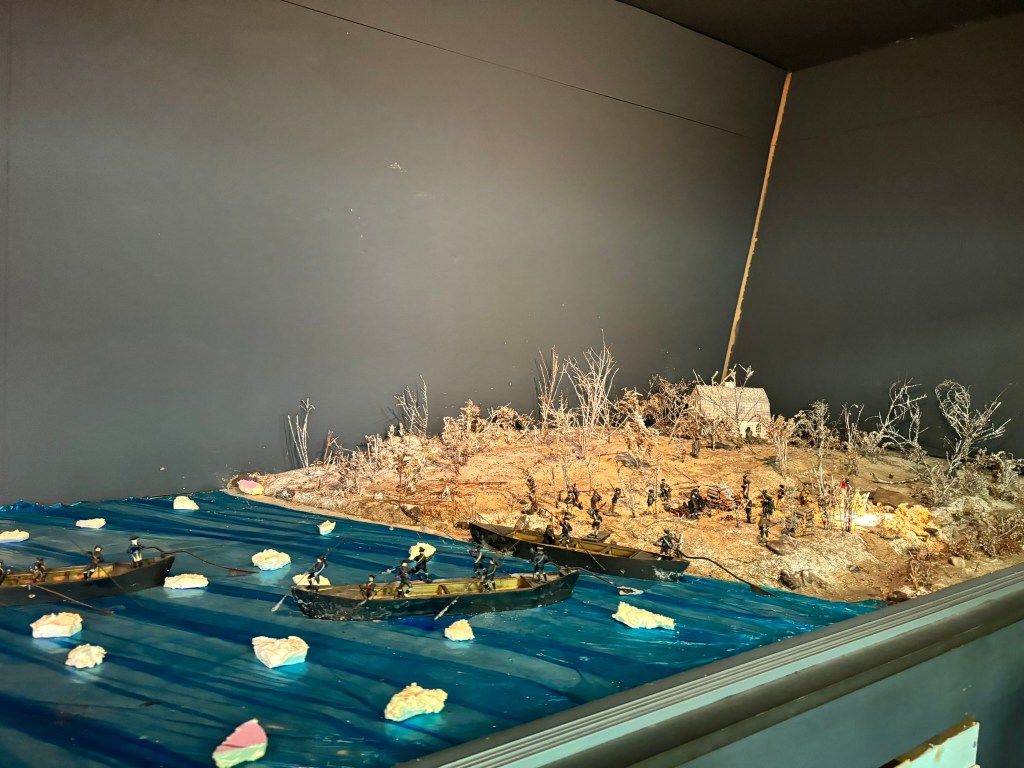
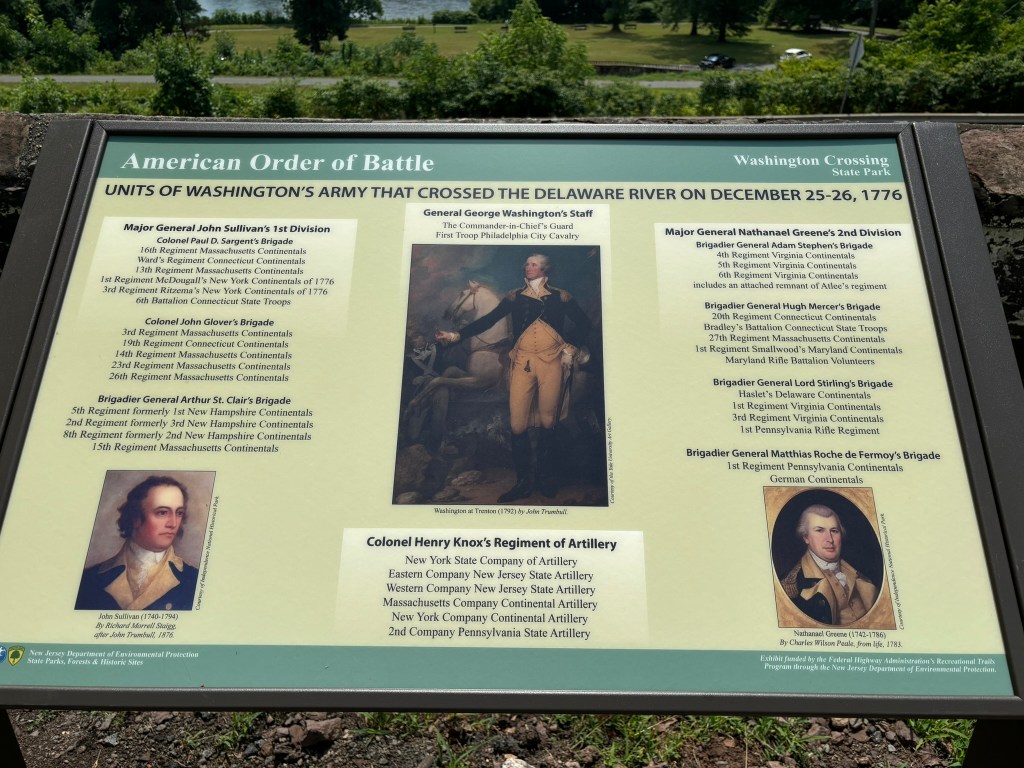
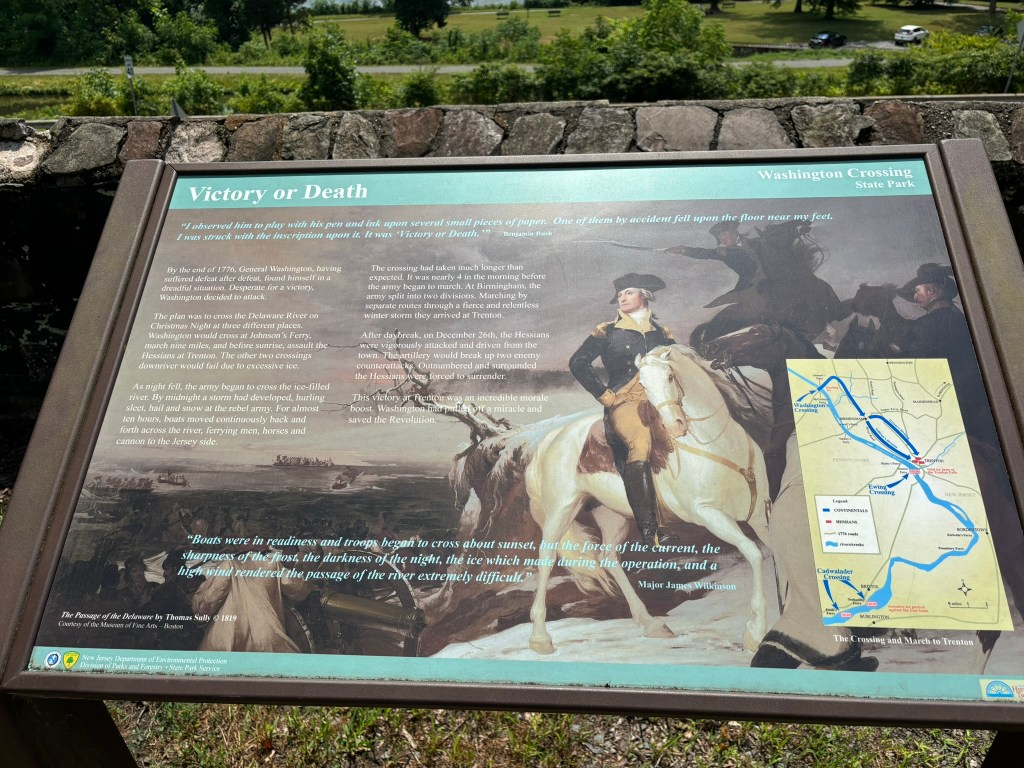
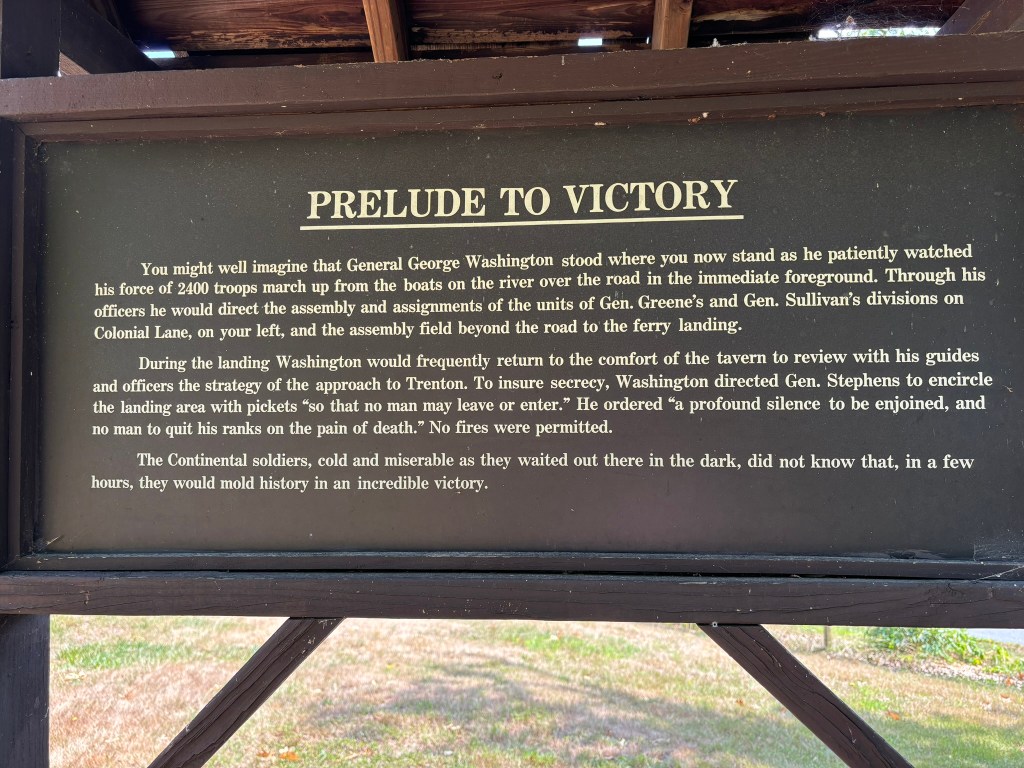
    In a quite daring move, Washington planned a surprise attack on the Hessian garrison stationed at Trenton.  On Christmas night, he would lead the Continental Army across the Delaware River including horses and artillery, and march nine miles south to Trenton.  Washington and the Continentals knew the significance of the element of surprise.  He wanted to attack Trenton before sunrise, but the crossing was running hours behind. Washington crossed the Delaware with 2,400 men, not as many as he had hoped because other regiments who were to cross south of Trenton never made it across.  After landing on the New Jersey side, Washington and his men finally began their march towards Trenton at 4AM.  The weather did not cooperate with the Continentals.  Along the march, they first faced light rain, then light snow, then blizzard like conditions.  At least two men died during the march.  

    About halfway to Trenton, the army broke into two groups. General Nathaneal Greene, accompanied with Washington, took one group, and General John Sullivan led a second group.  The two groups split off and would take two separate roads to Trenton.  This plan would result in the Continentals enveloping the enemy and attacking from two locations.  The Continental Army did not reach Trenton until 8AM which was after sunrise, although the morning fog helped conceal the oncoming troops. The battle ensued and lasted just about an hour and half. At its conclusion, the Hessians suffered 22 killed, 83 wounded and nearly 900 captured.  It was a resounding victory for the Continentals, and it was the victory that they so desperately needed.  

    Washington’s crossing was the beginning of what historians call “The Ten Crucial Days.”  After the victory at Trenton, the Continental Army went back across the Delaware River to Pennsylvania.  Just a couple days later, they again crossed back into New Jersey and encamped at Trenton and held off the British Army at the Second Battle of Trenton.  During the night of the second battle, Washington and the Continentals secretly marched around the British army and faced another British army at the Battle of Princeton on January 3rd, 1777.  This was another resounding victory for the Continentals who defeated British Regulars. The Ten Crucial Days breathed new life into the revolution.  The Continental Army would spend their winter encampment at Morristown, living to fight another day.

    Had it not been for Washington’s daring move to attack at Trenton, the Revolution may have been over.  Even the British believed that the Continentals had nothing left.  Had Washington’s attempt on Trenton failed, the rebels may have lost the war and would become British subjects once again, under the closer scrutiny of the crown.  But Washington’s stroke of genius gave the Continentals the hope to continue fighting.  The war would continue to drag on for years with victory for the Continentals not becoming official until the Treaty of Paris in 1783.  Even though it was early in the war, the Ten Crucial Days are arguably the ten most significant days in American and World history.

    The Tour

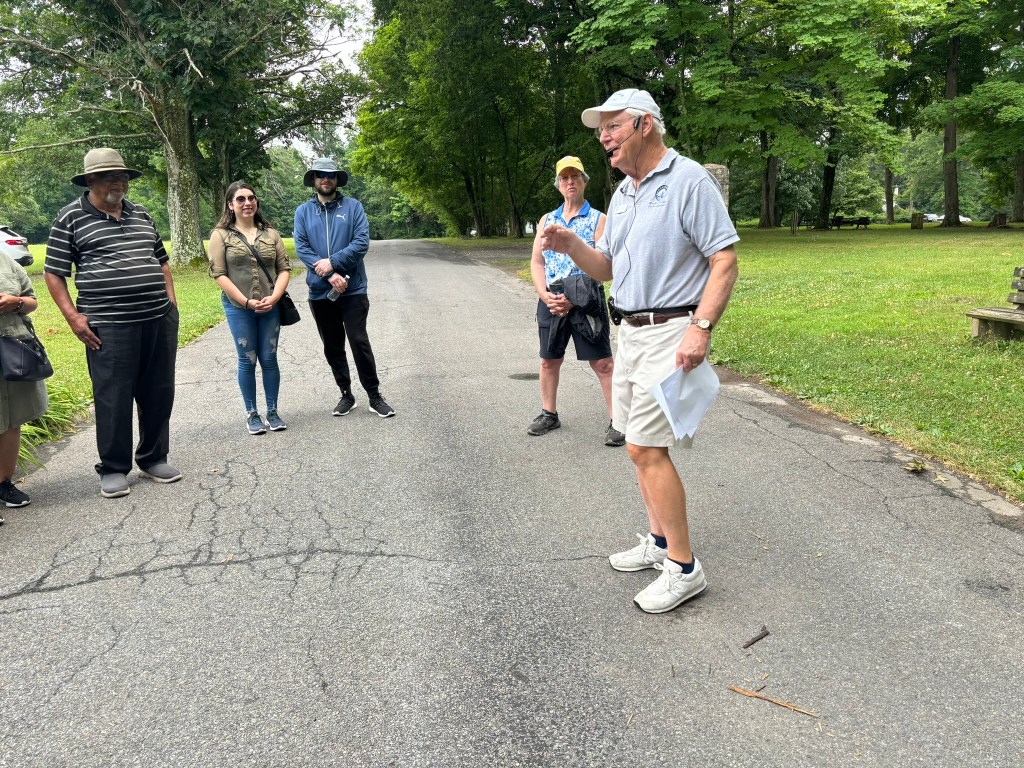
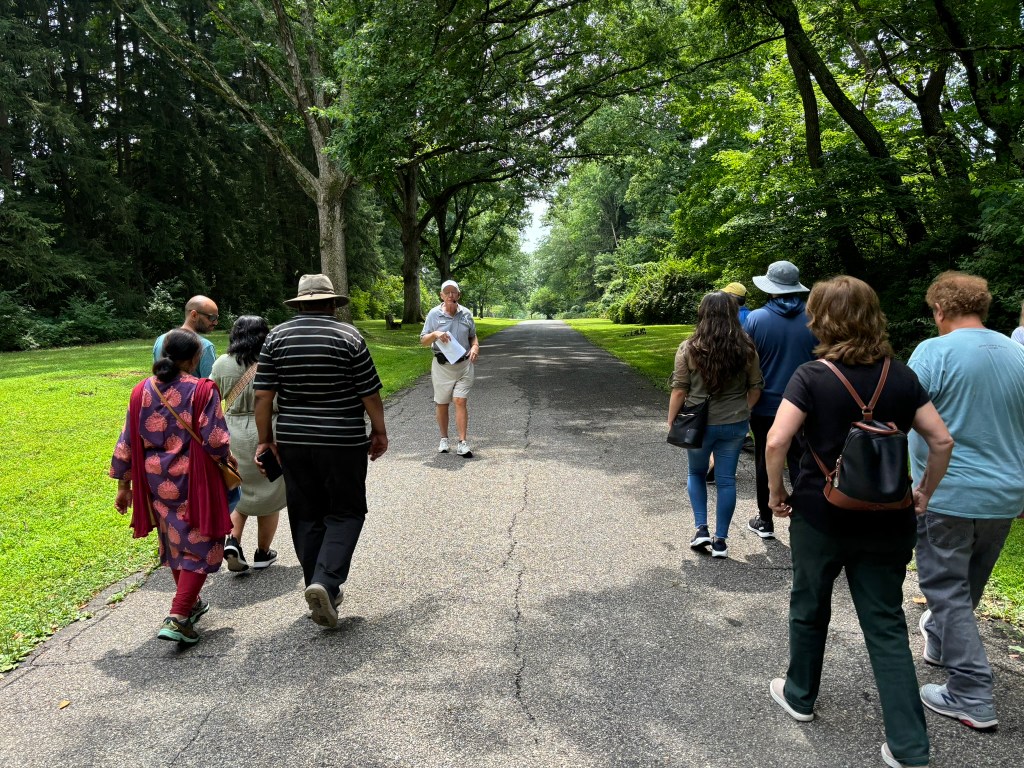
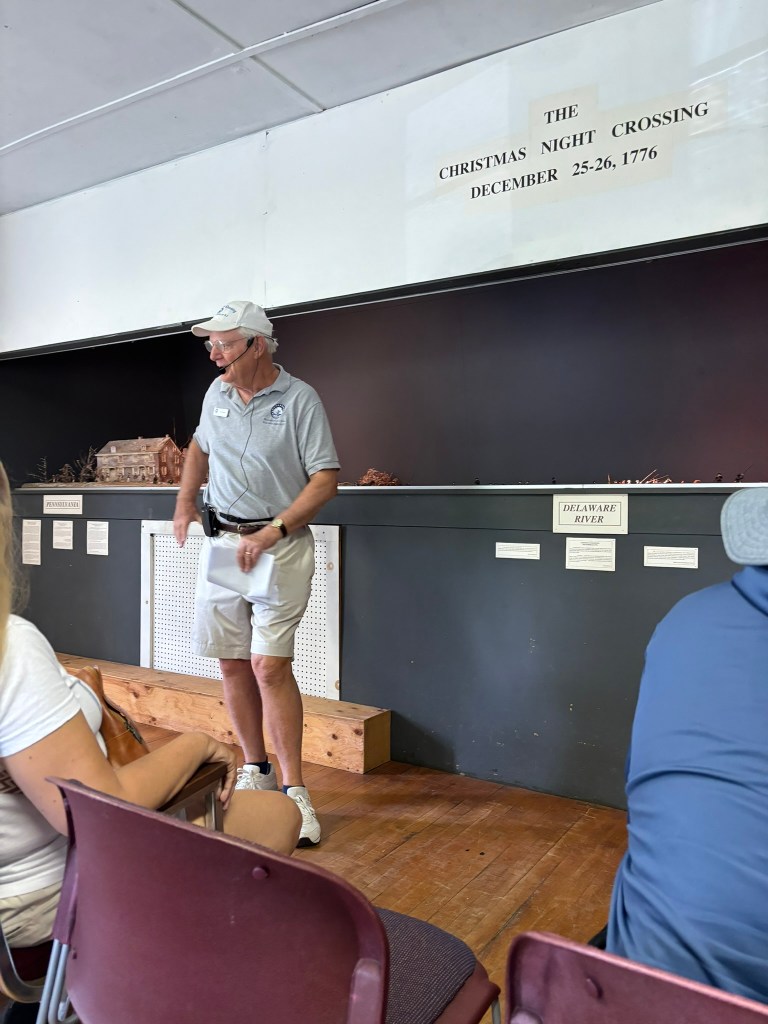
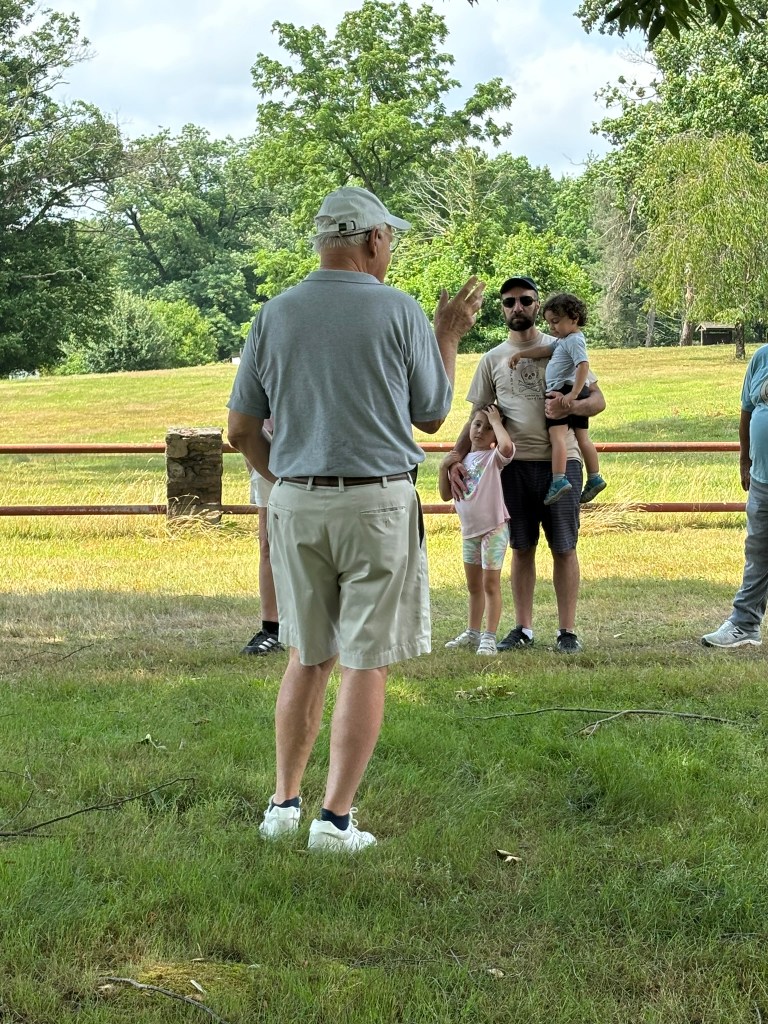
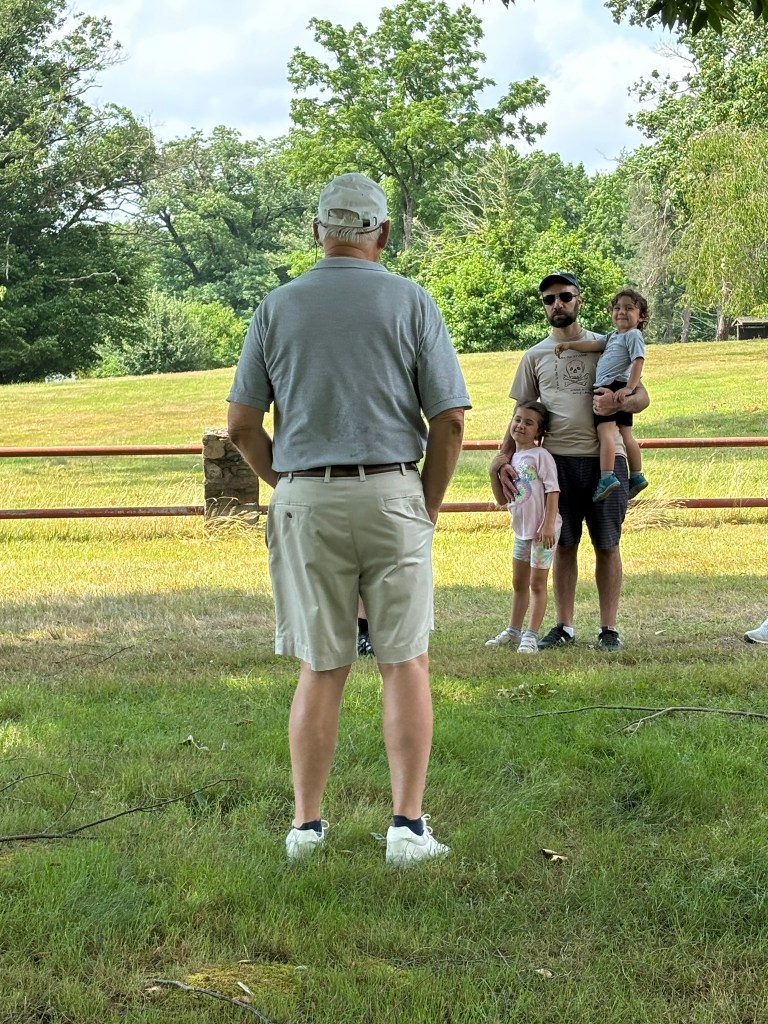
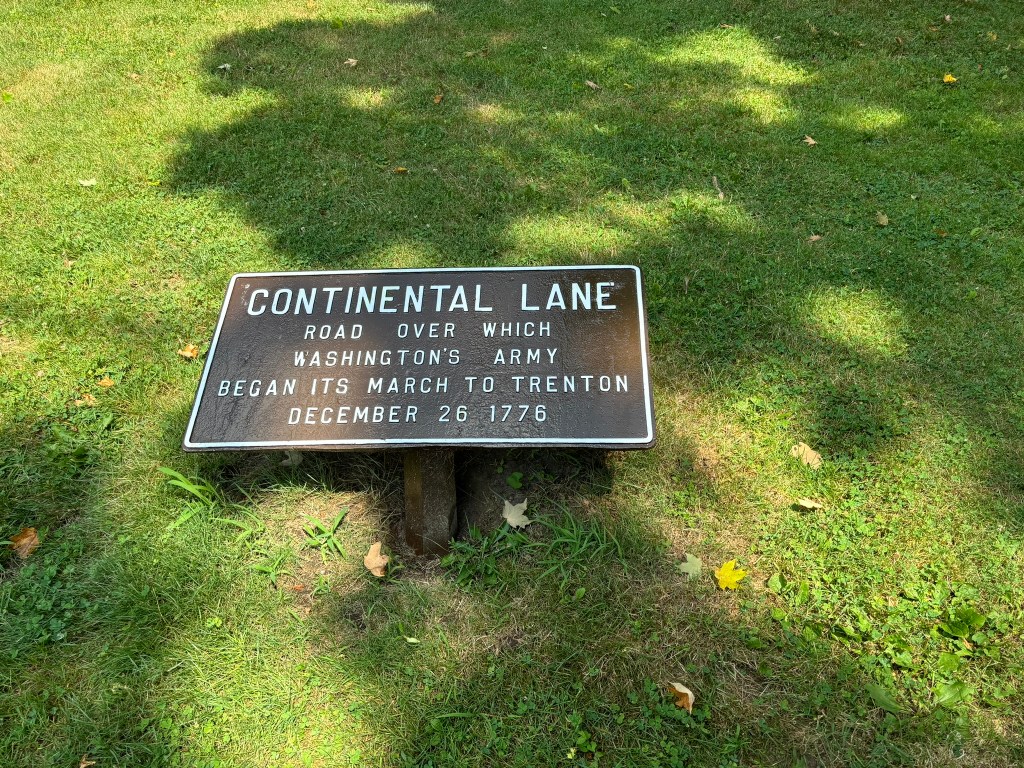
    After the video was over, our tour guide, Tim West, took us on a walk through the park, down Sullivan Lane to the entrance of Continental Lane in the direction towards the Delaware River.  He discussed the reasons why Washington chose this particular place to cross the river.  The Continental Army wanted to be in the vicinity of Philadelphia which was the new nation’s capital and arguably the most important city in the young country. 

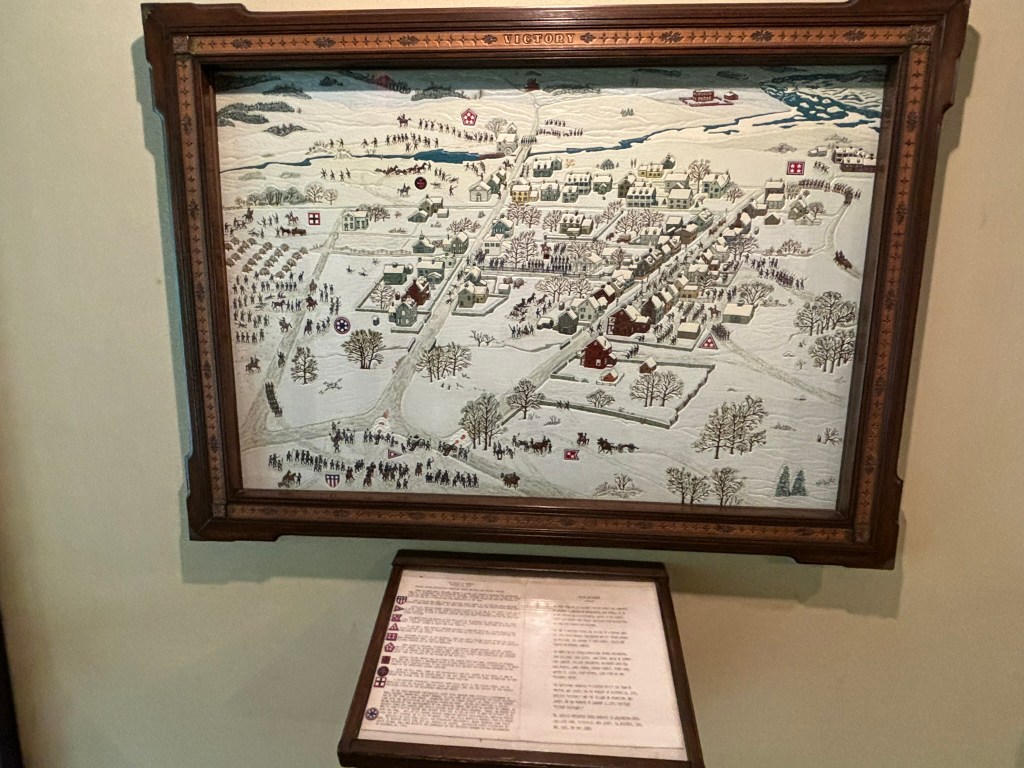
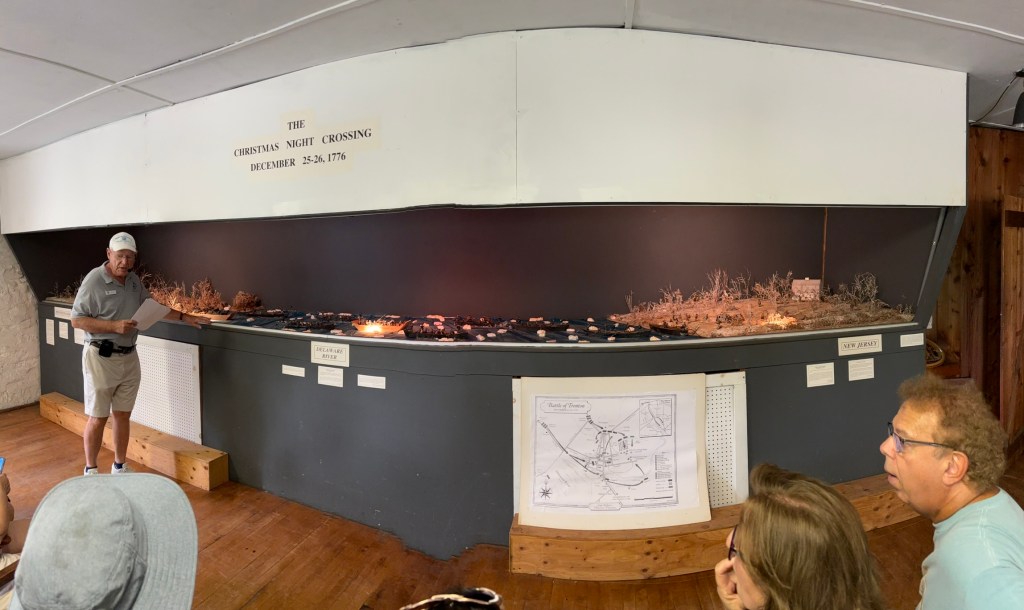
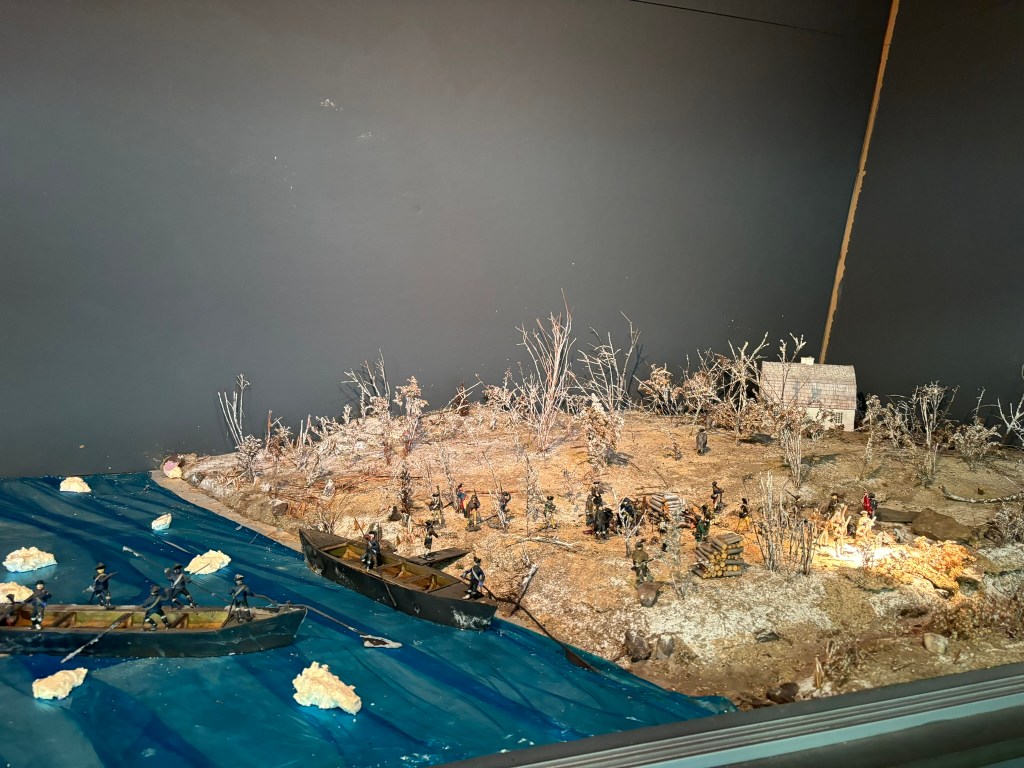
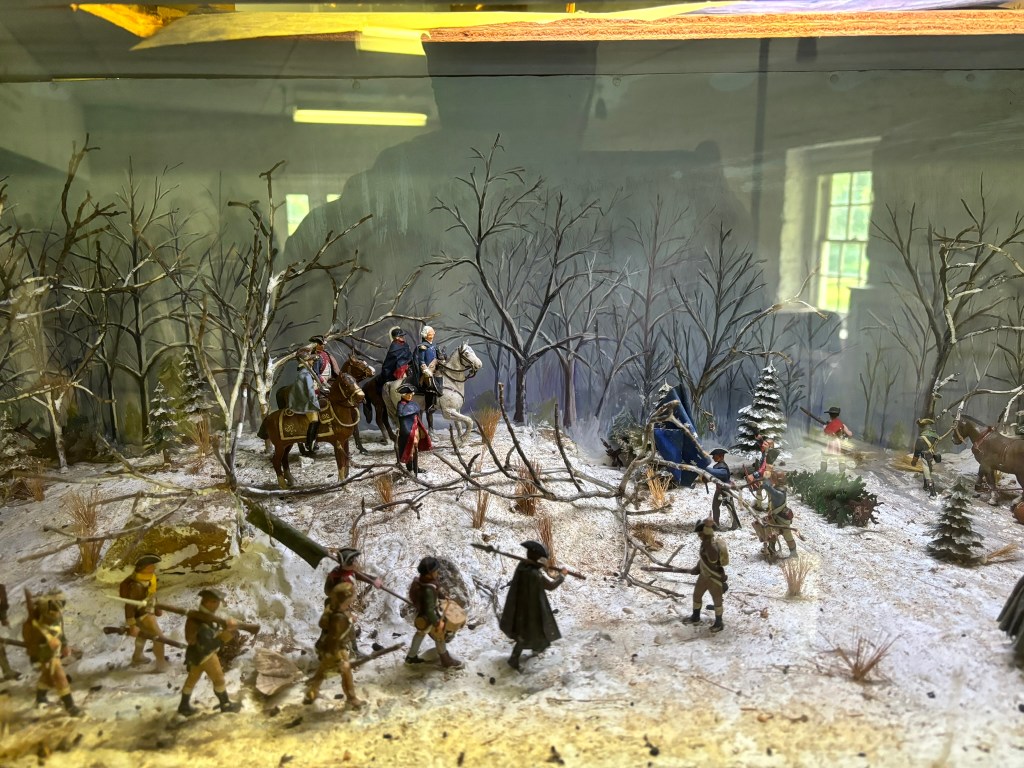
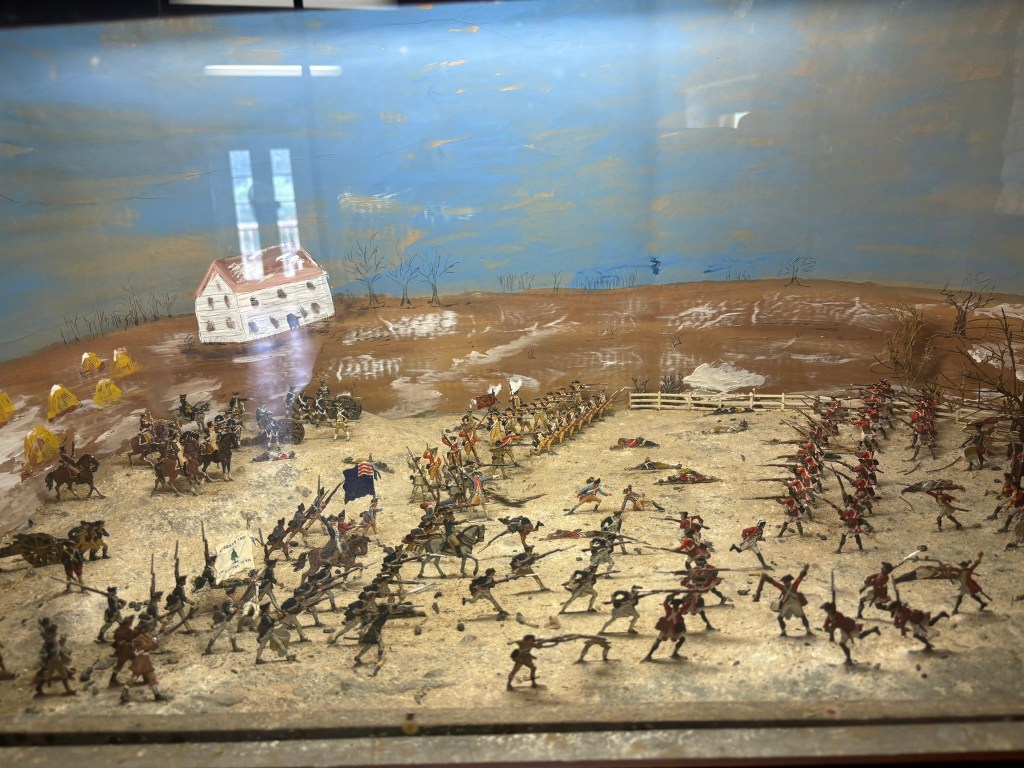
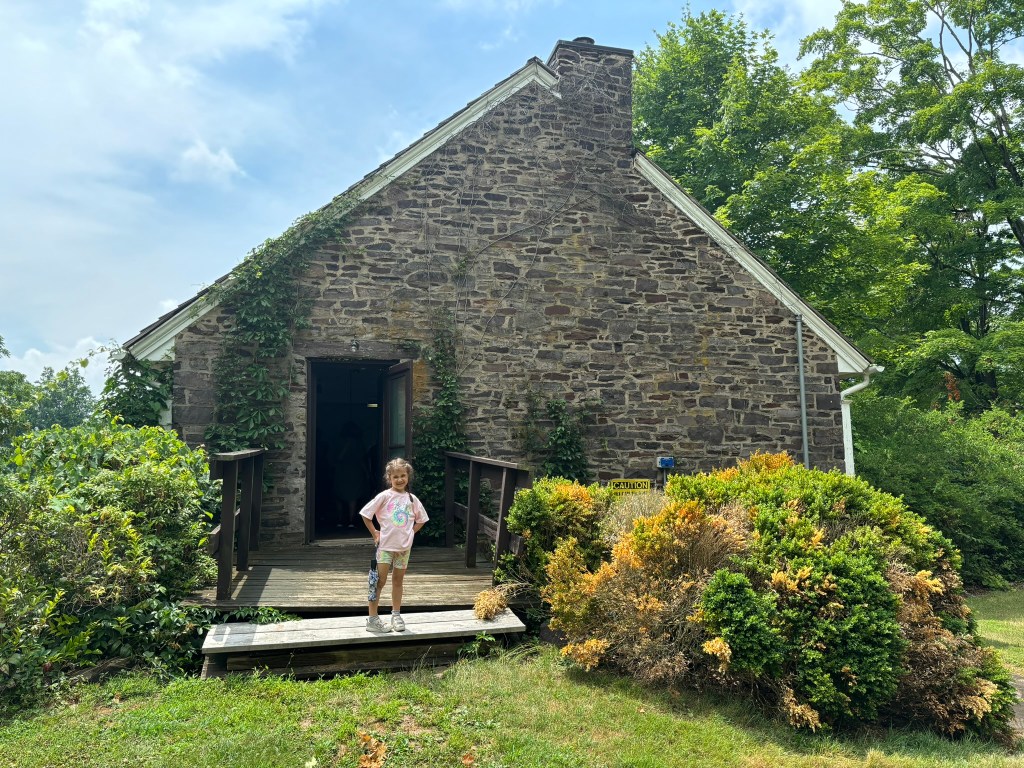
    We made our way to the Stone Barn, built in the 1780s, where Tim discussed the army’s march to Trenton, as well as the battle itself.  Inside the Stone Barn is a large map of Trenton as it looked in 1776.  There is also a fascinating diorama of the river crossing.

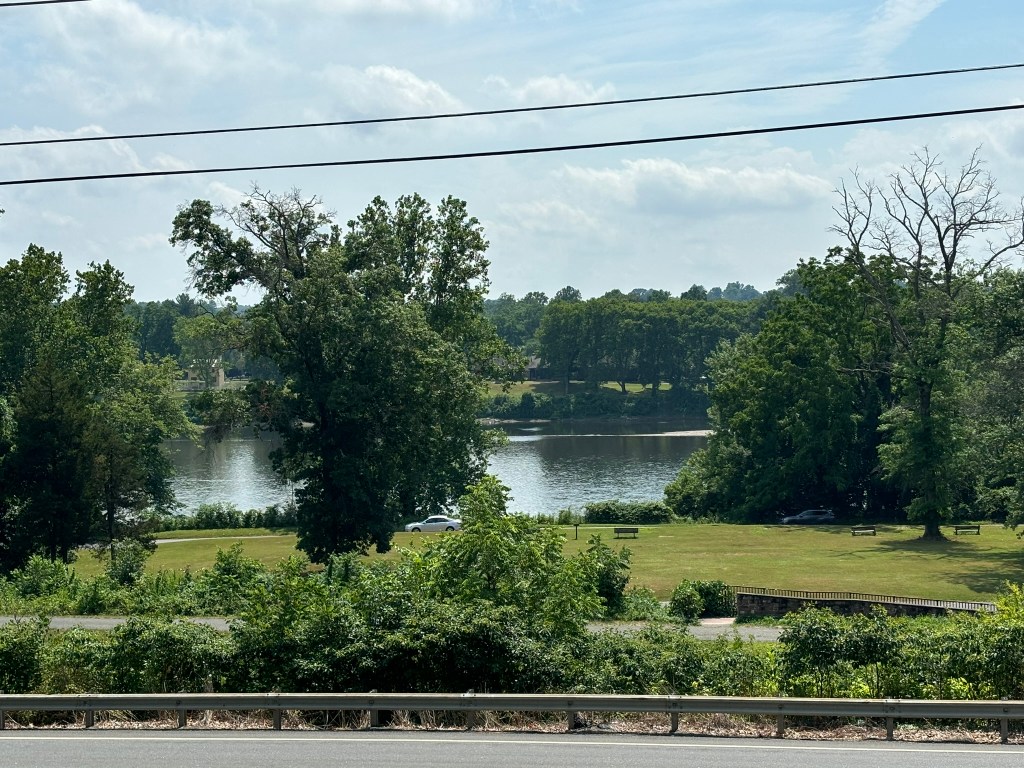
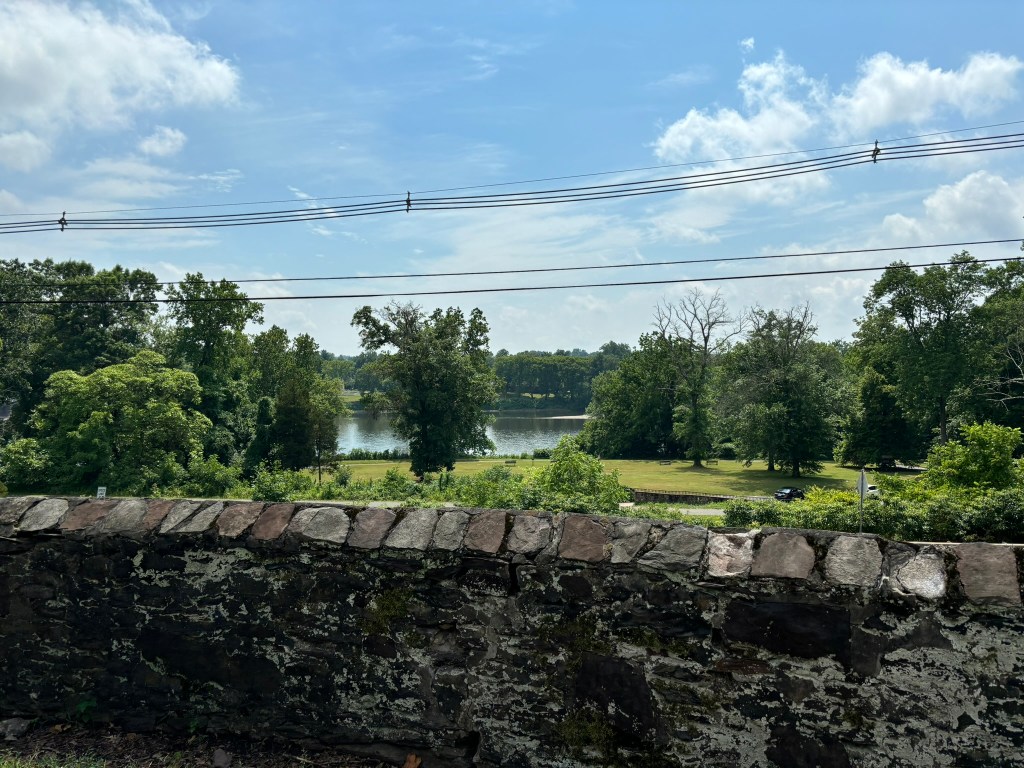
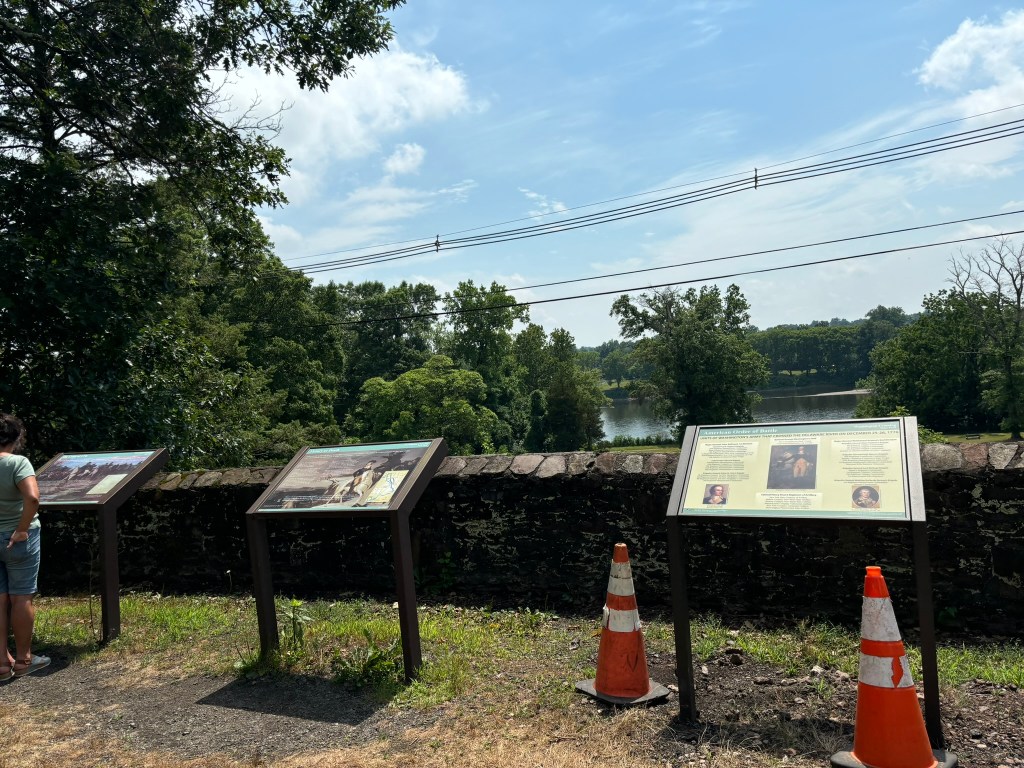
    Next, we ventured off to the Landing Overlook, where we could see the location where Washington and the Continental Army crossed the Delaware River.  It was quite amazing to see the exact location where such a significant historical event took place.

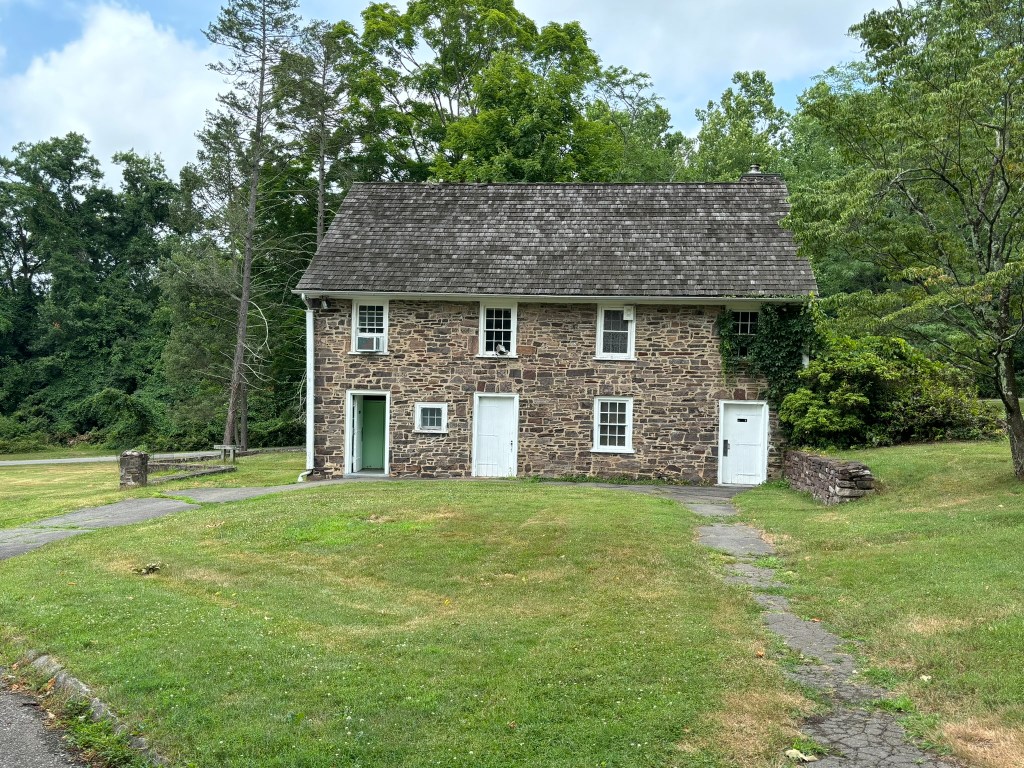
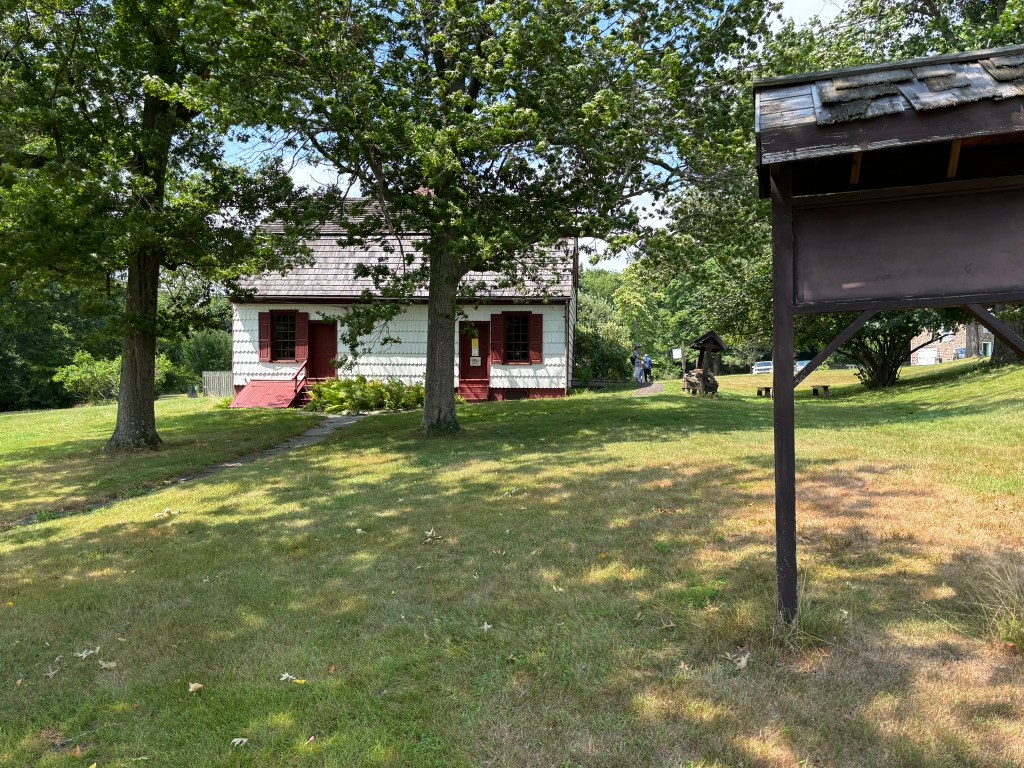
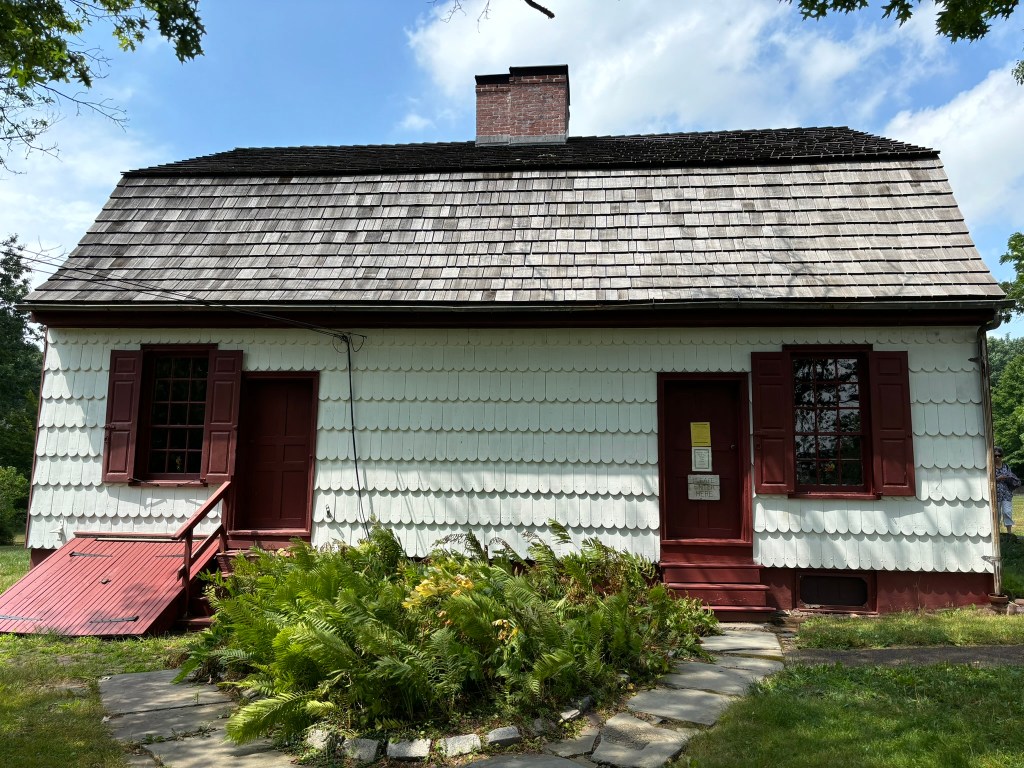
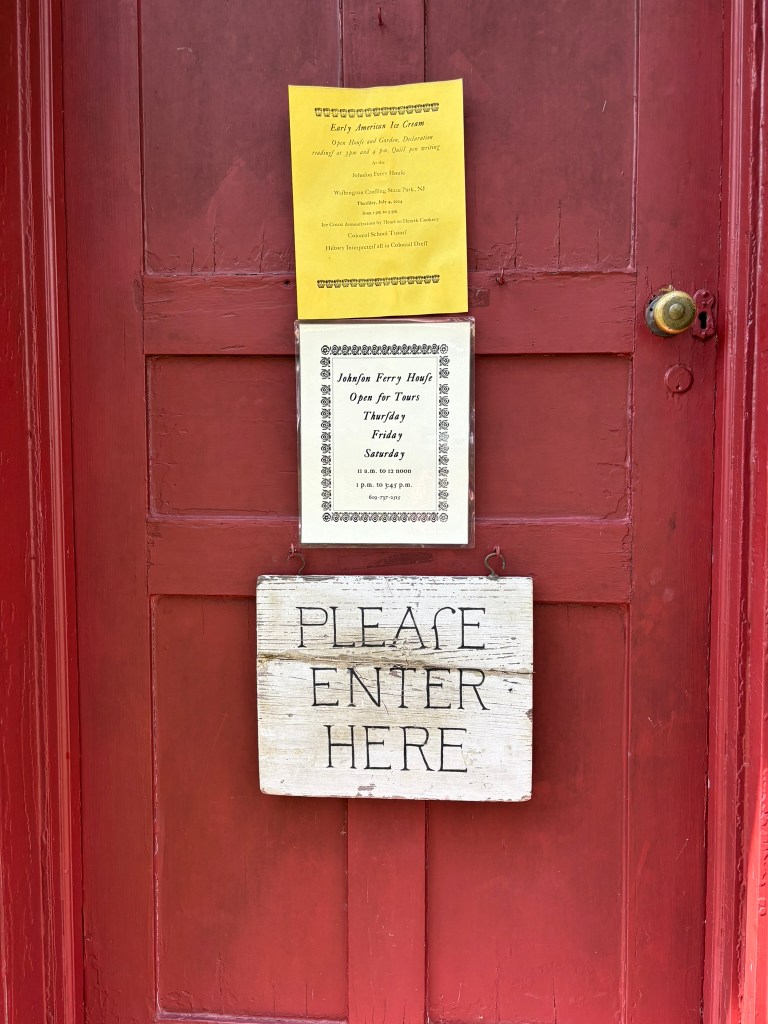
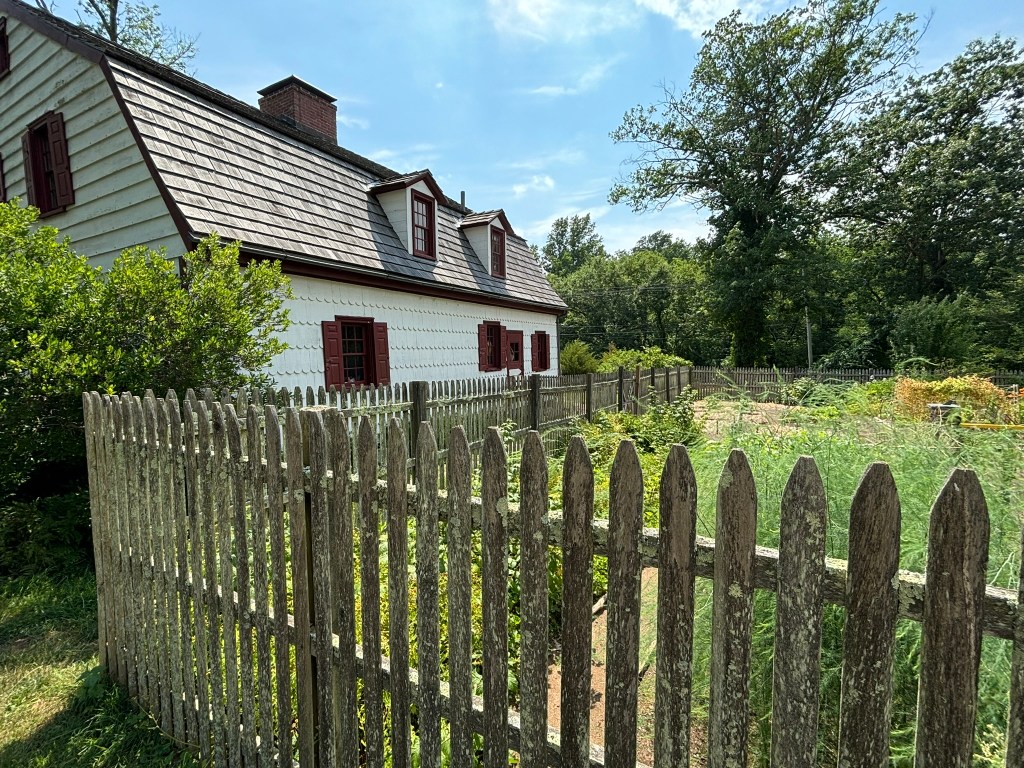
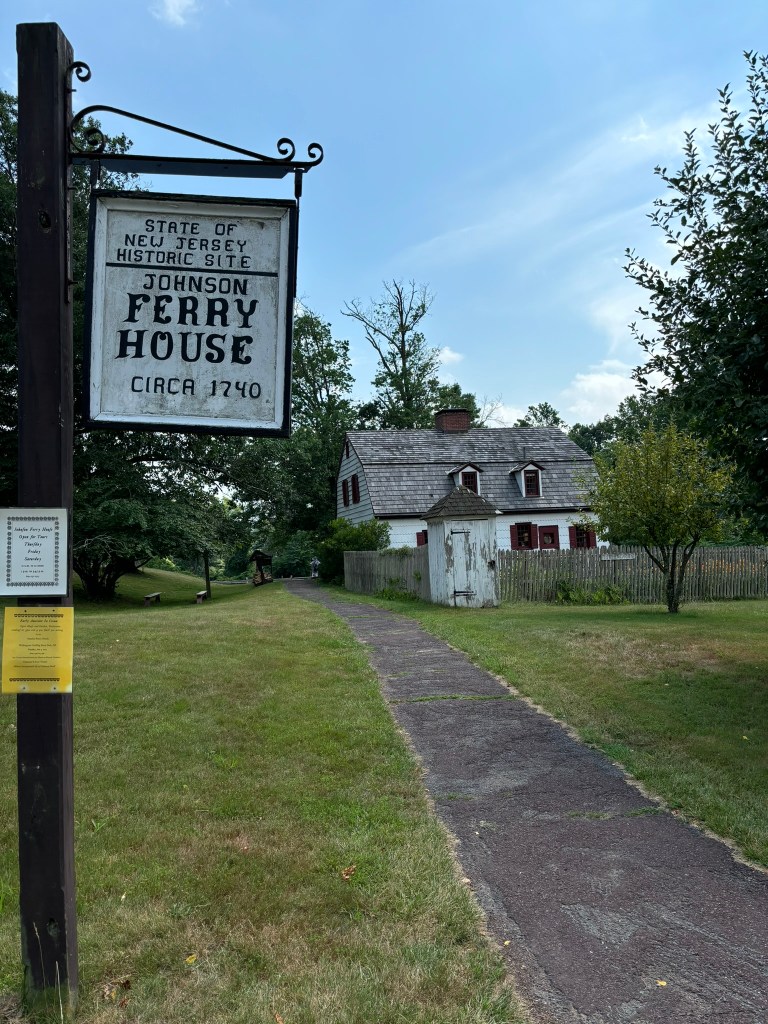
    I was able to venture over to the Johnson Ferry House which is very close to the crossing site.  The house was built in 1740 and was a witness to the crossing.  The house was owned by Garrett Ferry, who had a 490 acre colonial farm and ferry service across the Delaware.  It is believed that Washington and his officers used the house to plan out their attack on Trenton.  We unfortunately did not have an opportunity to go inside the Johnson Ferry House, but if you are visiting, make sure to check their hours of operations and tours.

    We were also told throughout the tour that a brand new visitor center and museum will be built starting early July to be completed in time for the 250th Anniversary.  I’m looking forward to checking out the new museum which will have amazing new and updated exhibits.  I also look forward to visiting the Pennsylvania side of the river crossing.  If anyone has any advice on what to see and do in the area, please comment and let me know!

    Check out my related blog posts below!