Month: September 2023

  • The Lost Colony of Roanoke is one of the most notorious and oldest mysteries in American history. In 1585, settlers attempted to create the first permanent English colony in the New World, and they chose the island of Roanoke, off the coast of modern-day North Carolina. This 1585 settlement was the first attempt to settle Roanoke. This was not the “Lost Colony” that we know of today. In the first attempt, English settlers were led by Ralph Lane. The settlers arrived seeking gold and taking advantage of the natural resources that the New World had to offer. The Spanish had already spent several decades extracting wealth from the New World, and other European powers looked to explore and settle areas of the Americas as well. The first attempt at settling Roanoke failed. The settlers quickly faced very tough conditions and had hostile relations with the local Native Americans. They abandoned the colony in 1586 and headed back to England.
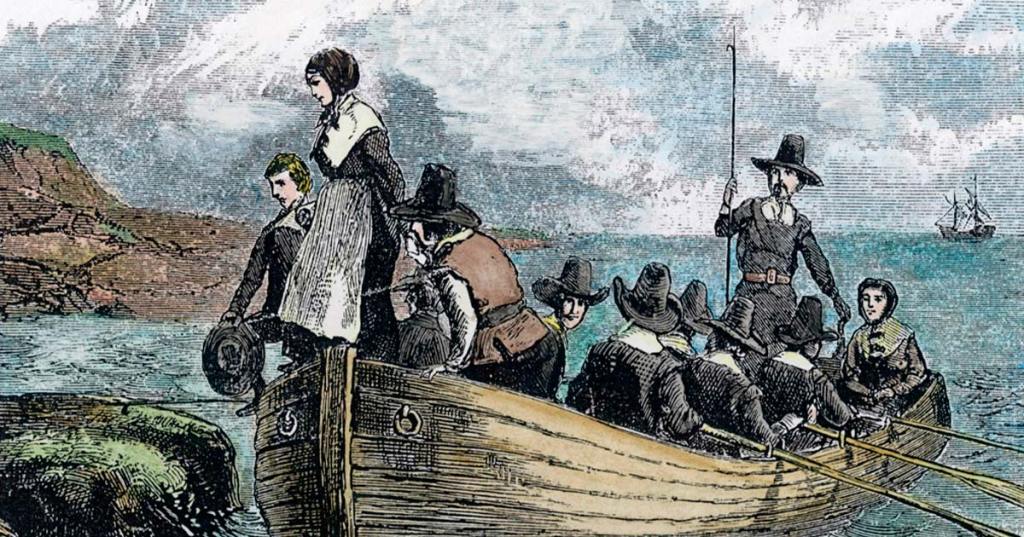
    In 1587, a second English expedition was sent, but this time the settlers planned to settle in the Cheseapeake region, not Roanoke. The expedition would be led by Governor John White. The captain of the ship, Simon Fernandes, took them to Roanoke instead of the intended destination of the Chesapeake Bay. This second attempt at a permanent colony at Roanoke would end up becoming known as “The Lost Colony.” The colonists quickly faced a lack of supplies, quarrels with the local Native Americans, and even a possible drought.

    The roughly 115 colonists pleaded with John White to head back to England and bring back more supplies. John White forced the colonists to put their request in writing. John White reluctantly agreed to head back to England for more supplies in 1587. However, while John White was in England, the Spanish Armada attacked England in 1588 and Queen Elizabeth required all English ships available to stay and defend England. Because of this conflict with Spain, John White did not make it back to Roanoke until 1590.

    When White returned to Roanoke, he found the colony completed deserted. White found the word “CROATOAN” carved onto a palisade of their fort, which White assumed meant that the colonists had travelled to Croatoan Island to the south. The colonists were to draw an iron cross if they had been under duress but there was no such symbol. There was no evidence of violence or a struggle, no dead bodies, nothing left behind that would give clues as to what happened to them. The boats that had been docked at Roanoke were gone.

    John White attempted to travel to Croatoan Island, but rough seas forced him off track and he decided to head back to England. Later attempts to find the colonists produced similar results. Sir Walter Raleigh later claimed to look for the colonists but also stated that rough seas prevented him from landing on the island of Croatoan.

    The fate of the colonists remains unknown to this day. Various theories have been proposed to explain their disappearance. The leading theory is that they did go to Croatoan Island, now called Hatteras island, and assimilated with the local Native tribes. One tribe in particular was known as the Croatan and perhaps the colonists decided to live among the Natives. Others believe that the colonists attempted to take thier boats back to England and got lost at sea. Others believe they travelled to the Chesapeake Bay, the original planned location for the colony. Other theories suggest that the colonists were killed or abducted by Native Americans. There are even theories that they could have been attacked or abducted by the Spanish.

    Efforts to solve the mystery have continued over the centuries, but no definitive answer has been found as there has been no concrete evidence left behind. Ongoing excavations continue at the site.

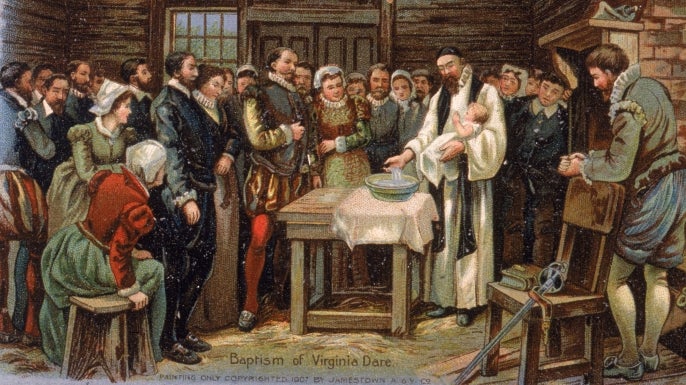
    The Lost Colony of Roanoke remains an intriguing and unsolved chapter in early American history. It serves as a reminder of the challenges faced by early European settlers in the New World and the mysteries that still captivate our imagination. The English settlers at Roanoke were the first English settlers in the New World. Virginia Dare, the first English baby born in the Americas, along with the other Roanoke settlers have been cast as foundational characters in American culture and folklore. Their sacrifices lived on with the English settlers that followed them at Jamestown, Virginia, just north of the Roanoke colony, settled in 1607.
    Related Posts:
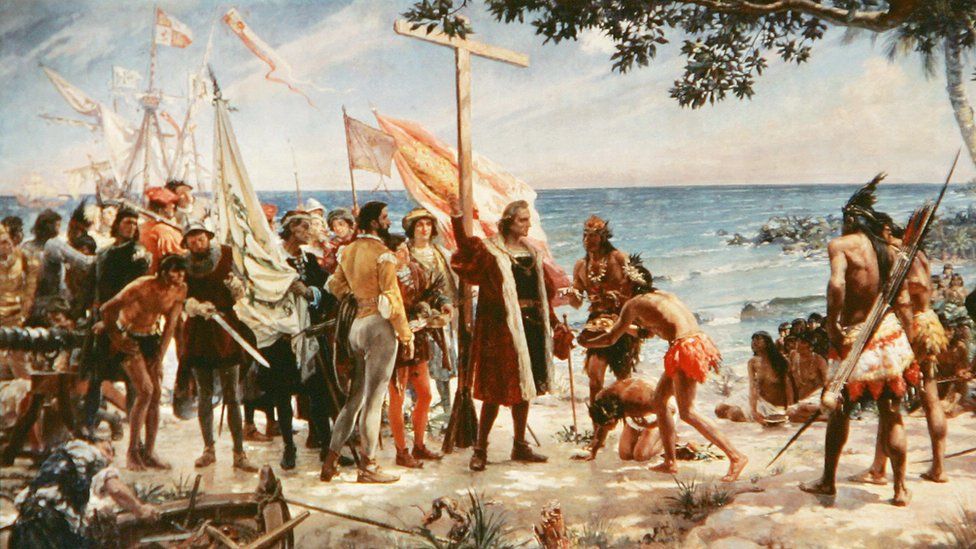
  • Today there is a wide range of views of Christopher Columbus as an individual. No matter what you think of him, there is no denying that his first voyage that landed in the Americas was one of the most significant events in human history. When other European explorers realized that Columbus had not landed in Asia, but in a “New World” a wave of Europeans came over to search for overnight wealth in gold, new opportunities in farming and mining, and to settle down and create a new life. This Age of Exploration was devastating to the Natives of the Americas who fell victim to the new diseases introduced by this new wave of settlers. The Natives had no immunity to the diseases and in some places up to 90% of the Natives died. In conflicts, the Europeans had superior weaponry and armor, which further devasted the Natives.
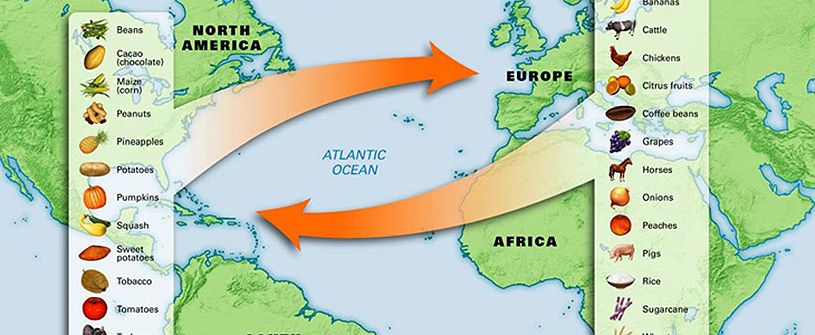
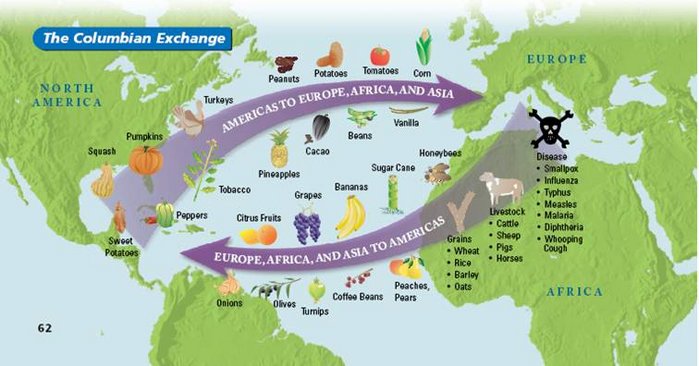
    When Columbus and his men came over, they brought with them plants and animals that had never been introduced to the Americas before, but would later become staples in the Americas. The Europeans also brought back with them plants and animals, which then spread to Africa and Asia. Many of these plants and animals would later become staples of the “Old World” (Europe, Africa and Asia). The Columbian Exchange is defined as the exchange of plants, animals, diseases and ideas between the Old World and the New World that began in 1492. This global exchange had a widespread and long-lasting impact on all parts of the world.

    From Europe to America: Animals

    When Europeans came to the New World, they brought with them domesticated livestock. Some examples include chickens, cattle, goats, pigs, sheep, and horses. These animals were introduced to the Americas for the first time. The Native Americans had very few domesticated animals, one being the llama of South America. We often see images and paintings of Native Americans riding on horseback. This would not have been the case before 1492. The horse revolutionized Native American life by allowing tribes to hunt buffalo far more effectively. Other animals provided meat, tallow, hides, transportation and hauling.

    From Europe to America: Crops

    Europeans brought over new crops that had never grown in the Americas before. Most were brought over intentionally, some unintentionally. Crops brought over and introduced to the Americas for the first time included wheat, oats, barley, rye, rice, coffee, tea, sugar cane, dandelions, onions, bananas, apples, oranges, and other citrus fruits. All of these crops would have a huge impact on the development of the Americas. Sugar quickly became the mainstay of Caribbean and Brazilian economies. Rice, cotton, and tobacco formed the basis of many slave societies including in the future United States. We think of coffee as being a staple of South America. This was not the case before 1492.

    From Europe to America: Disease

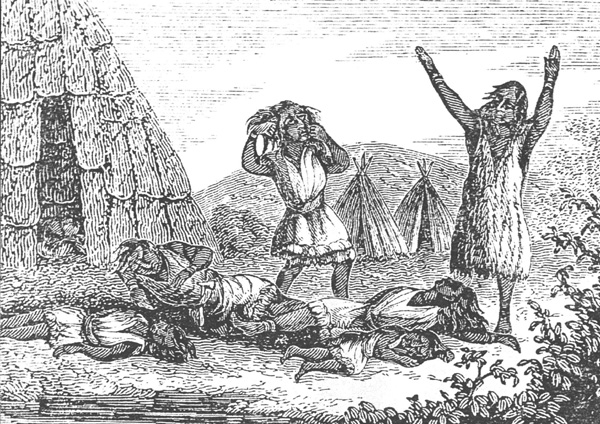
    Diseases unintentionally brought over from Europe to the Americas had a dramatic impact on the Native American population. In some cases, diseases spread faster in-land than actual people. Why did diseases flow from Europeans to the Natives and not vice-versa? Because of the fact that Native Americans had few domesticated animals, the Natives also had fewer communicable diseases that spread. The Old World and the New World were meeting for the first time. Therefore the Native Americans had no immunity to Old World diseases. People from Europe, Africa and Asia had built up immunity to the many diseases that spread in the Old World.

    Old World diseases that spread from the Europeans to the Natives included smallpox, measles, mumps, whooping cough, influenza, chicken pox, and typhus. Between 1492- 1650 its estimated that up to 90 percent of the Native Americans had died. The Native American population of Mexico went from about 25 million in 1518 to about 2 million in 1593. (Source: James et al., The Key to Understanding Global History, Jarrett Publishing) With entire villages dying from disease, new waves of European settlers found it much easier to take the land.

    From America Back to Europe: Animals

    The flow of animals in the Columbian Exchange had little impact on Europe because of the lack of domesticated animals already in the Americas. Two animals that did make it to the Old World was the turkey and the raccoon. Raccoons were fancied for their furs which led to a lucrative fur trade.

    From America Back to Europe: Crops

    Many crops which were indigenous to the Americas were brought back to Europe and then spread to Asia and Africa. Corn was brought back to Spain and quickly spread to other parts of the world. Other crops included squash, pumpkins, beans, sweet potatoes, tomatoes, chili peppers, peanuts, chocolate, potatoes and tobacco.

    The tomato was brought to Italy in the Columbian Exchange. At first, the tomato was only used for decoration. It would be well over a century before the tomato became a staple in Italian cuisine.

    The potato had an enormous impact on European society. The potato grew very well in different regions including in Ireland’s soil. Before Ireland’s potato famine, nearly half of the population relied exclusively on the potato for their diet, and the other half ate potatoes frequently (Brittanica).

    New foods became staples for people in the Old World. Diets improved tremendously because of this new exposure to nutritious and calorie-dense foods that they had never been exposed to before. New growing regions opened up for these new crops.

    From America Back to Europe: Disease

    The flow of diseases from the Americas to Europe was not significant. As mentioned above Native Americans did not work closely with domesticated animals like Europeans had. Therefore, they had less communicable diseases that originate in animals. One disease that is believed to have spread from Native Americans to Europeans was syphilis which was then taken back and spread to Europe.

    An Exchange of Ideas

    Besides the physical items like plants and animals, ideas were spread between the Old World and the New World. The Native Americans taught the Europeans local farming methods. Europeans also adopted devices such as the canoe, the hammock and the poncho. The Native Americans were introduced to metalworking, new techniques of shipbuilding, and new forms of weaponry, including firearms.

    Before the Columbian Exchange there were NO……

    Oranges in Florida

    Bananas in Ecuador

    Tomatoes in Italy

    Coffee in Columbia

    Pineapples in Hawaii

    Cattle in Texas

    Chili Peppers in India

    Cigarettes in France

    Choclate in Swizerland

    Potatoes in Ireland

    How Has the Columbian Exchange Impacted Your Life?

    We take for granted the many varieties of foods we are offered at the Supermarket. Think about what you eat on a daily basis. Where did those foods originate? Where did the ingredients originate? The Columbian Exchange set in motion a global network of trade that still has lasting impacts on our world today. Regions today are known for growing certain staples but in many instances, this would not have been the case before 1492.

    Related Posts:
  • As a teacher, I went back to school this past week.  My blog was started on my last day of school in June, and therefore, I had the summer to devote attention to it.  Now that I’m back at school, I will do my best to juggle the preparation for class and the writing of the blog.  As I move forward, it’s likely that topics and discussions in class will inspire the articles in this blog.  

    When you start a new year, you have new faces in the room, you start the curriculum over again, and we go over student skills that we’ll develop throughout the year. You begin the year asking the basic questions. One of which is:  Why study history?  I’ve had students throughout my career who are not interested in the subject at all.  I’ve had numerous students ask me why do we have to learn it.


    To me, history is the most essential subject in school because all students need to learn its life lessons.  I know that mathematicians, scientists, and others are indespensible to civilization.  They are the geniuses of society that invent and push technology and medical advancements forward.  But not everyone in school is going to be a mathematician or a scientist.  History and the Social Studies reach all students because they are members of our society and all will become voting citizens (Unless they move overseas of course).  Therefore, on a basic level, students need to understand Civics: how our government works, the roles of each branch of government, and their responsibilities and duties as a citizen.  They need to understand how these institutions came about and the struggles that people faced to fight for free elections. We need active and informed citizens. If citizens stopped taking part in the democratic process, then we no longer have a democratic process.  Citizens need an understanding of trends in history when choosing a politician, in order to figure out what has worked in the past.

    The Parthenon in Athens, Greece, the birthplace of democracy

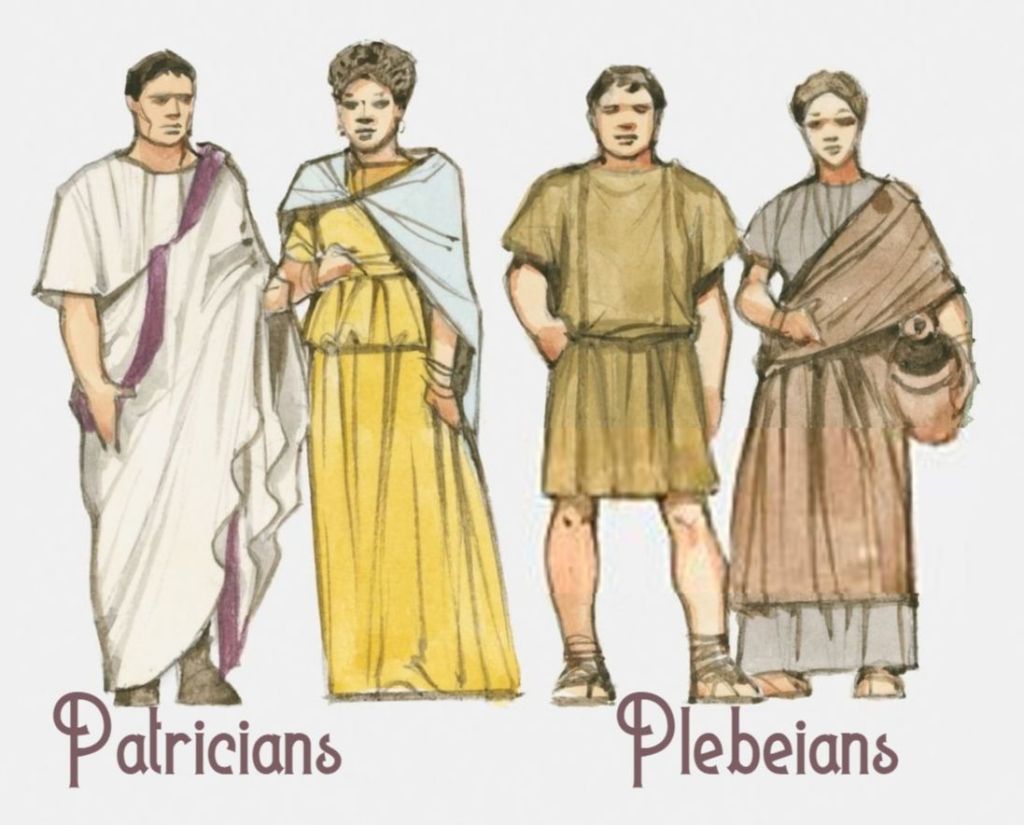
    It’s been said time and time again, that History repeats itself.  As someone who has taught Ancient World, Modern World, and US History, this is entirely true.  I can teach an event in one subject area that reminds me of an event in another subject area. For example, at one time I was teaching both Modern World History and Ancient World History.  One day I was teaching the Modern World History class that before the Industrial Revolution there was an Agricultural Revolution.  Large landowners improved farming methods and found more efficient ways to produce crops quicker and more effectively using better technology.  They began buying out the land of smaller poor farmers who were then forced to move to the cities (and would become the labor supply for the Industrial Revolution to happen).  The next class period I was teaching my Ancient World class about Ancient Rome.  I taught how the upper, aristocratic Patrician Class was buying out the land and property of the Plebeian class (The commoners).  This led to strikes and anger amongst the Plebeians.  There are many moments like this in my teaching experience, where content in one class sounds similar to content in another, even if the events are a thousand years apart. For this example, I also connect the content to today, how large corporations like Walmart, Amazon or Target have put small companies out of business.  My point is that these common themes in different historical eras happen all of the time.  I’ve seen common trends as well when teaching leaders, wars, and revolutions.  I am constantly making connections between different time periods and places.   Throughout history, human nature has not changed, and therefore, many of the social, political, and economic issues of, say,  Ancient Rome are the exact same issues today.  The circumstances have changed slightly, but the core issues are the same.  

    We must learn about all aspects of the past: the good, the bad and the ugly, so that we don’t repeat the same mistakes.  There are many aspects of America’s past that we should not be proud of, and the same applies to every country around the world.   We must not hide from history, we must not remove it, we must learn about it, and understand why it happened.  Every historical event has causes and effects.  We must analyze these historical events so that we make informed decisions later.  We should see the repetitive nature of historical events, and avoid the ones that had negative consequences.  Through modern lenses, we see that famous historical figures were imperfect human beings who in some ways, were selfish and looked out for their own self-interest.  We are all imperfect beings and will probably be judged by later generations as well. Imperfect human beings have been capable of some truly remarkable achievements.

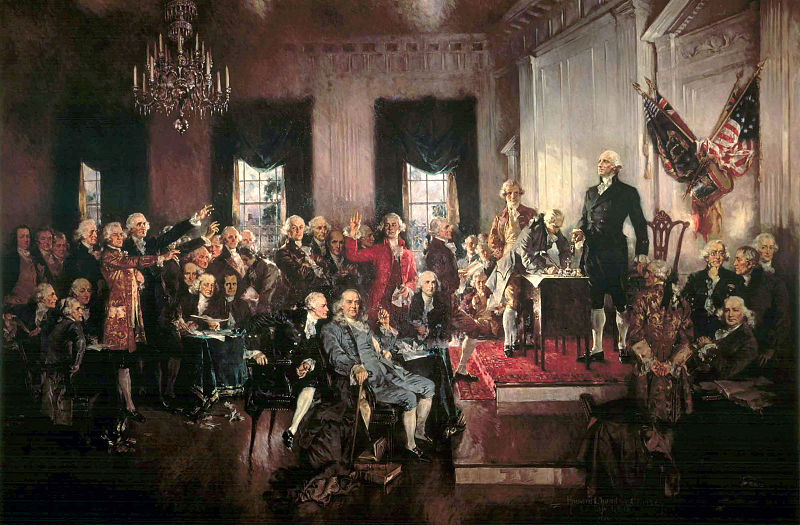
    The Signing of the Constitution

    Even though they were imperfect, there are plenty of inspiring historical figures to learn about.  I love learning about these figures and how they were able to accomplish all that they did.  Even evil historical figures that we should not emulate, are still at least interesting.  We just need to be aware that there are still individuals out there in the world who may want to rise to power for entirely selfish, self-serving reasons.  

    To me, it’s interesting to learn about different time periods, and my interests are vast, whether that’s Ancient Egypt, Ancient Greece, Ancient Rome, the Renaissance, the American Revolution, the Civil War, etc. etc..  I enjoy getting immersed in the different cultures of historical time periods, and putting myself in the shoes of those who lived during that time.  The culture can include the arts, the architecture, the music, or the styles of dress.  By highlighting the culture, history can be fun for students and anyone else.  History tells a non-fiction story.  The characters are real, the events are real (even if they’re debated) and the outcomes are long-lasting.  Everything in your world today was impacted by events and people of yesterday: the streets you drive on, the buildings you see, the business you work for, your daily routines, the holidays we celebrate, and every aspect of today’s culture.

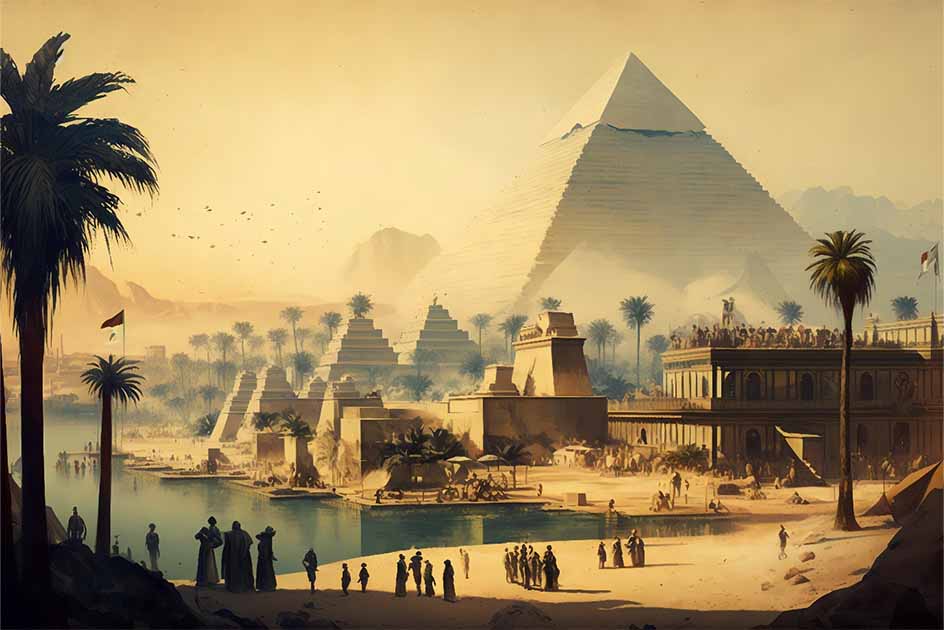
    Image depicting Ancient Egypt


    Why else study history?  History informs our personal decisions. History informs our politicians who make and enforce our laws.    History tells us important lessons about our economy.  Societies and groups of people have to go through hardship sometimes, and the silver lining of these tough times: the people who survive and later generations learn important lessons.  After the Great Depression, for example, the government tightened up laws dealing with our economy, the stock market, and banking.  Lessons have been learned from difficult times such as during warfare.   After the tyrannical rule in many European monarchies of the early modern period, violent revolutions overthrew their governments. All countries around the world have at some point experienced a violent revolution or civil war.   It’s an unfortunate fact that groups of people have to endure very tough times.  Later generations benefit from the sacrifices that were made by earlier generations.

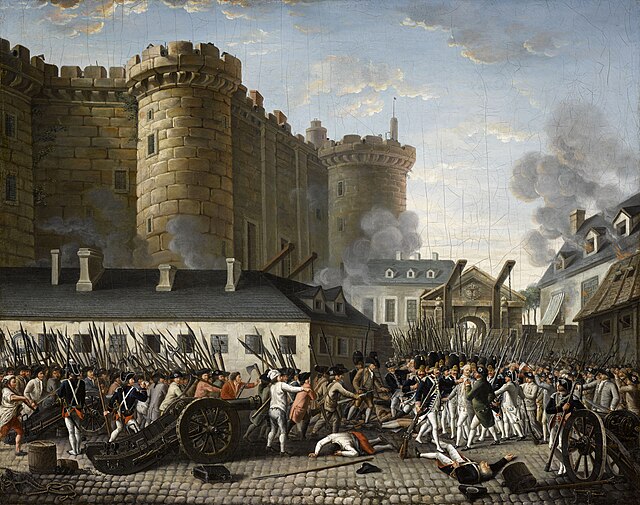
    The Storming of the Bastille marked the beginning of the French Revolution- 1789

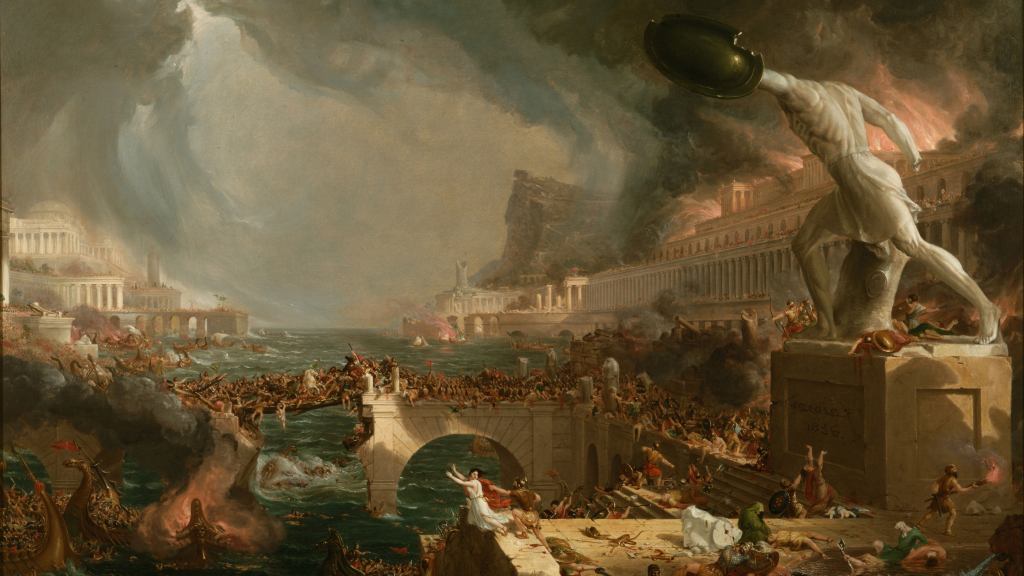
    History tells us how we have developed as a human race and it definitely has not always been in a straight, upward trajectory.  The fall of the glory of Ancient Rome led to a thousand years of difficult times in the Middle Ages in Europe.  Many people went from living in advanced Roman cities with plumbing and running water, to being spread out on Medieval manors, working for a lord, with no shot at upward mobility.  Throughout  the middle ages many cities decayed and became the ruins that revealed the glory of an earlier time.  Any previous great civilization that has crumbled should be studied.  The causes of their decline should serve as warnings for our own great civilization.  No civilization is invincible.  Any civilization can become susceptible to stagnation, decay or decline.

    The Fall of Rome.

    There is much to learn in history concerning dates, events, people, and social movements.  Trends come and go, but human nature always remains, and human nature is very complex.  Are humans naturally good, are they naturally bad, are they selfish, are they greedy, are they altruistic, are they loving, are they violent? Are they all of these characteristics at the same time?  These are all of the debates that are to be had when studying historical events: the good, the bad and the ugly.  History tells our story from the dawn of mankind, to the earliest civilizations, to the present day. How did we get here? Where are we going?
    So why study history?  There are endless reasons, and if you have thoughts on the matter, please mention them in the comments.

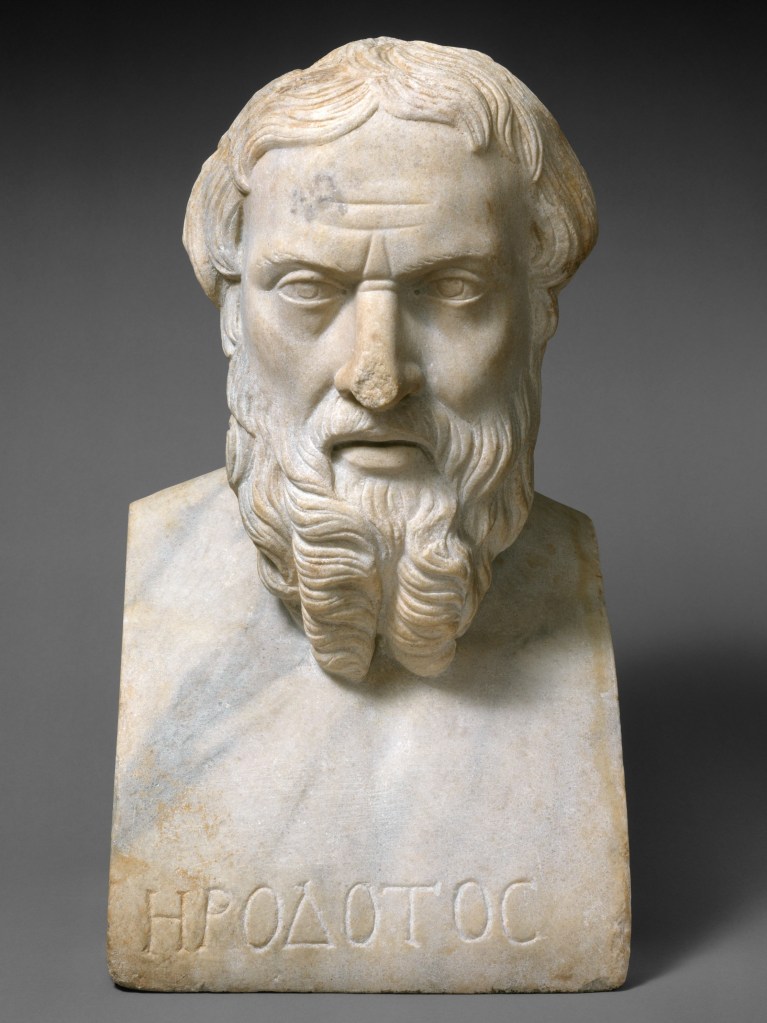
    Herodotus is considered the “Father Of History” and lived in Greek world in the 5th Century B.C.
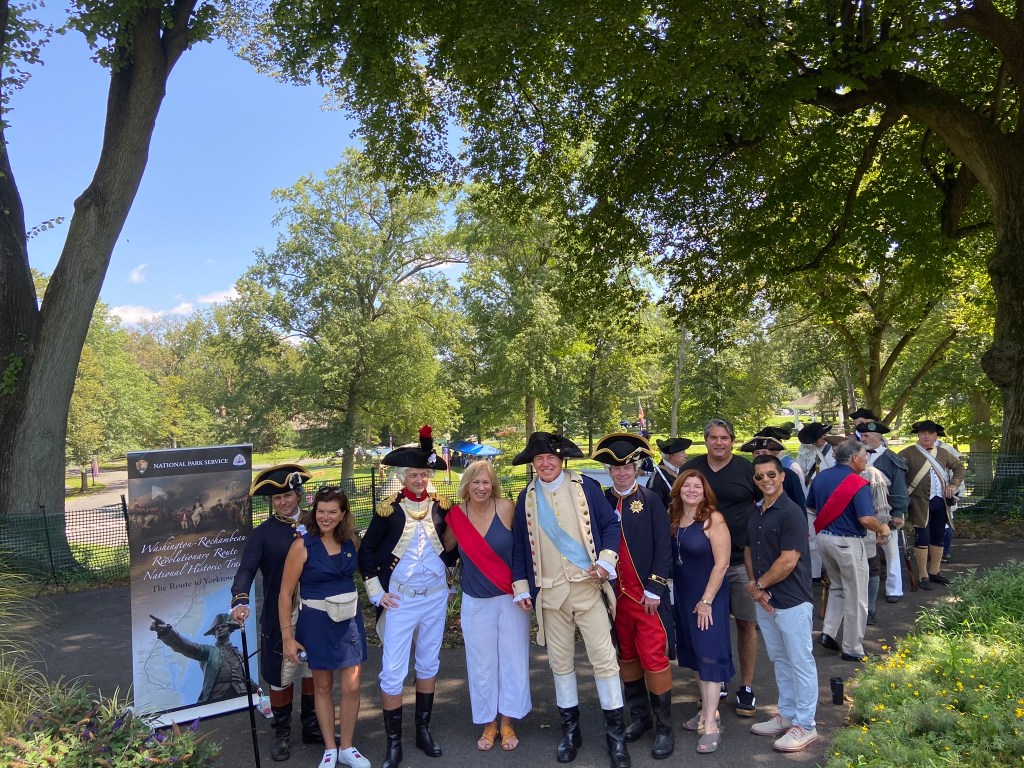
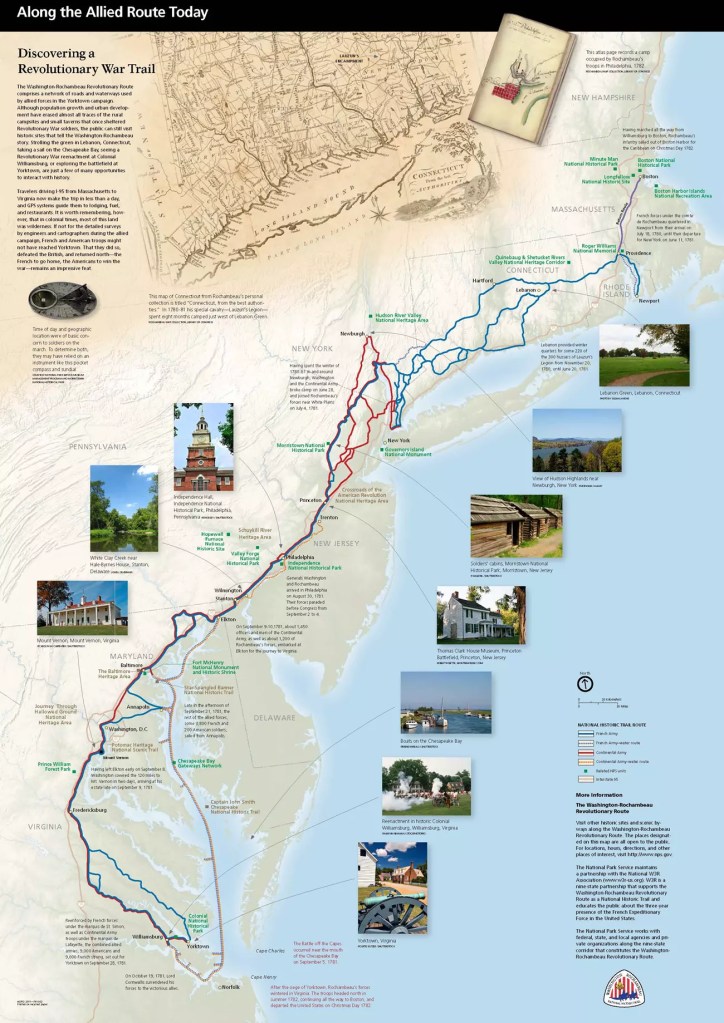
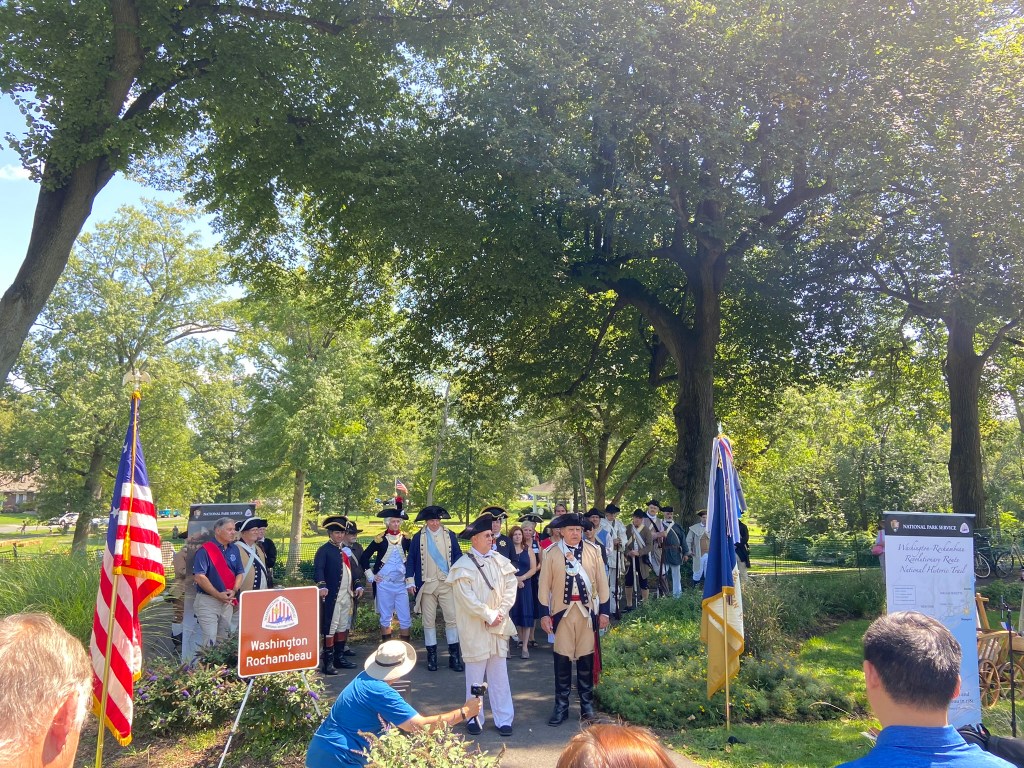
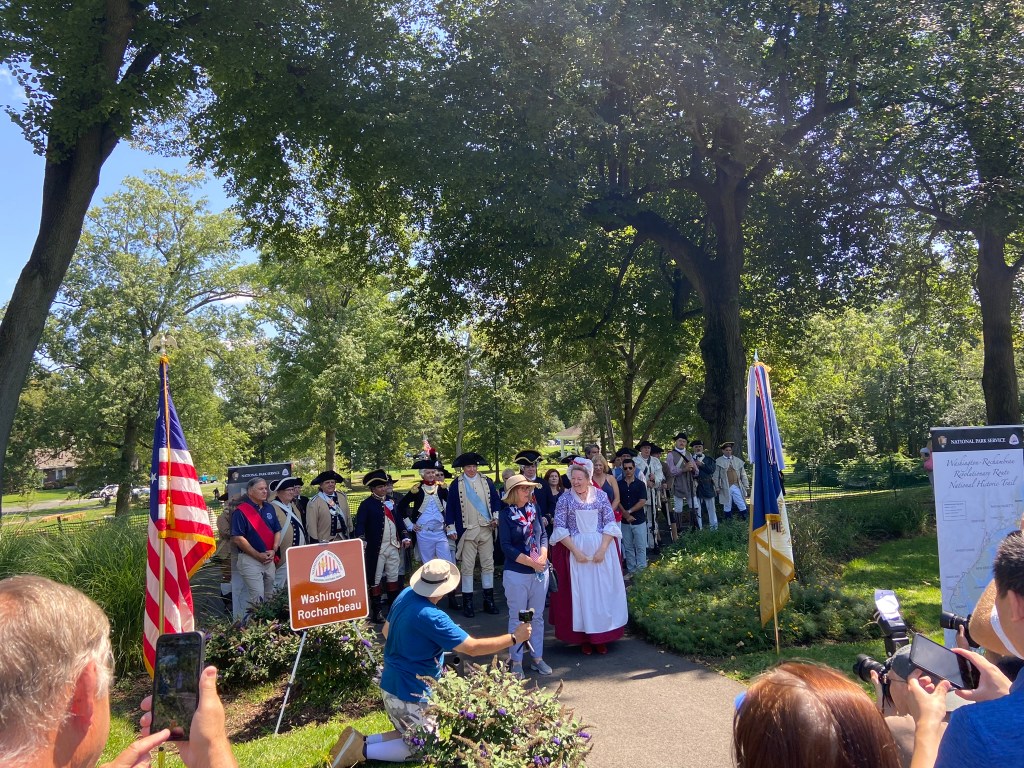
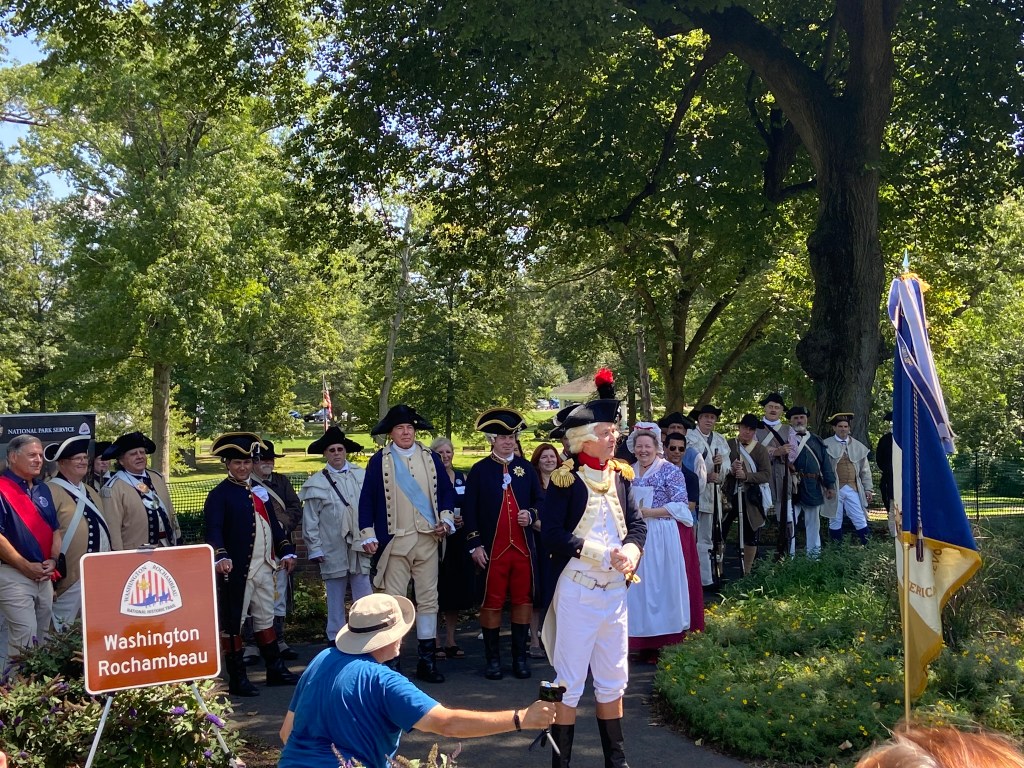
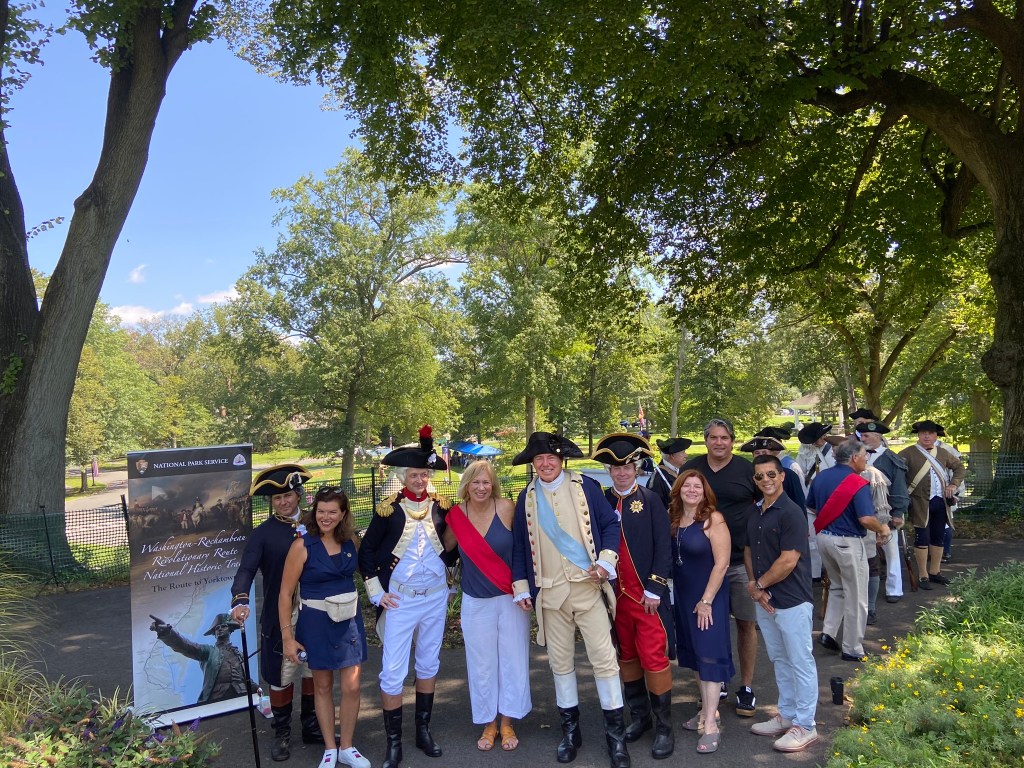
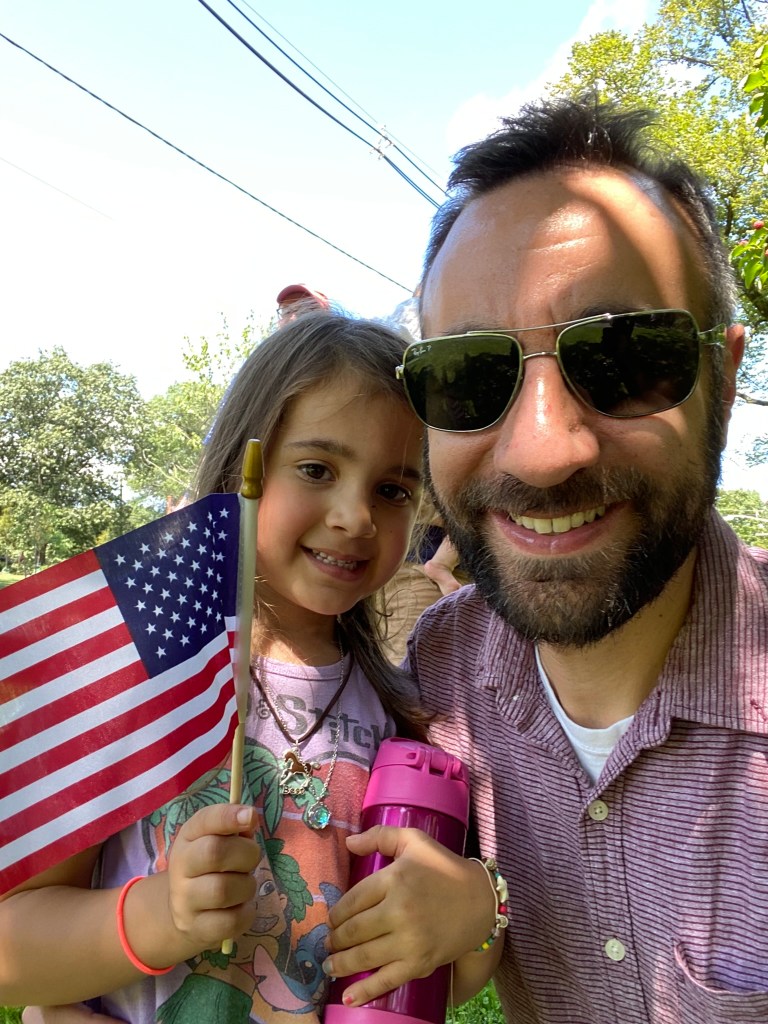
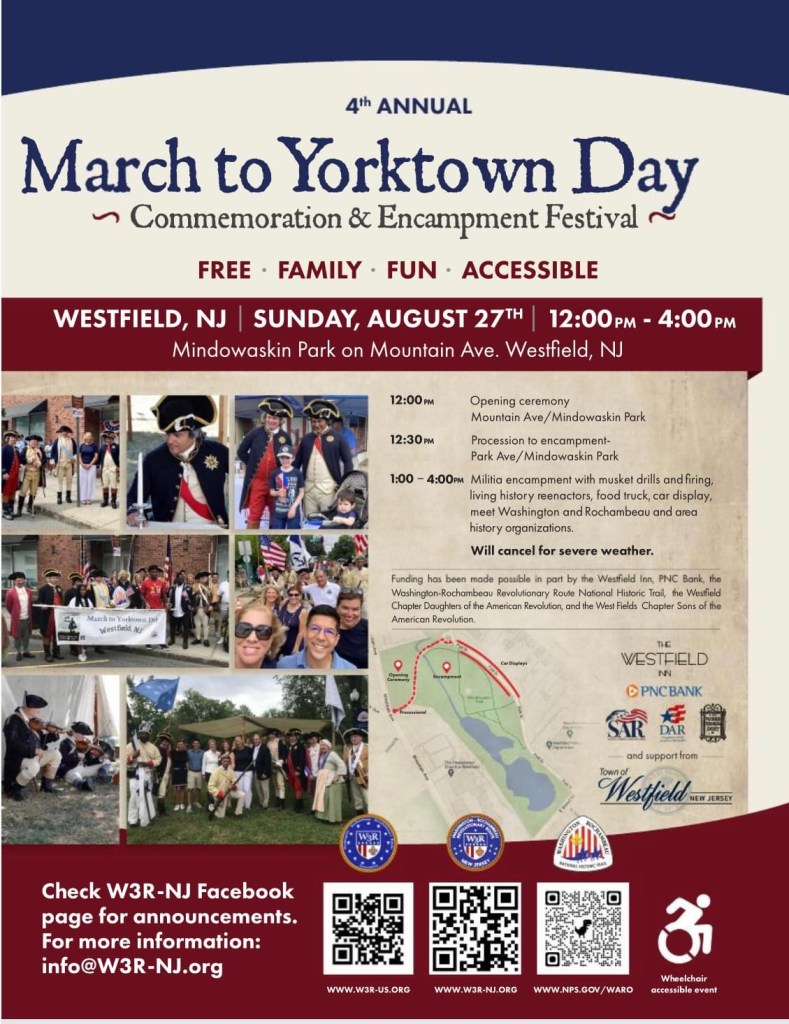
  • On August 27th, my daughter and I attended the 4th Annual March to Yorktown Day in Westfield, NJ. The event was run by the Washington-Rochambeau Revolutionary Route Association New Jersey (W3R-NJ) to commemorate the day (August 29th, 1781) that General Benjamin Lincoln’s line of the Continental Army, passed through Westfield, NJ on their way to Yorktown, Virginia. The French Army, led by the Comte de Rochambeau, took a route to the west of the Continental Army before the two armies met up outside Princeton, NJ. The Washington-Rochambeau Revolutionary Route highlights the route that the American and French armies took from Newport, Rhode Island, to Yorktown, Virginia, which culminated in the defeat of the British Army in The Siege of Yorktown in October 1781. The Washington-Rochambeau Trail is a unit of the National Park Service.

    Map from the National Park Service

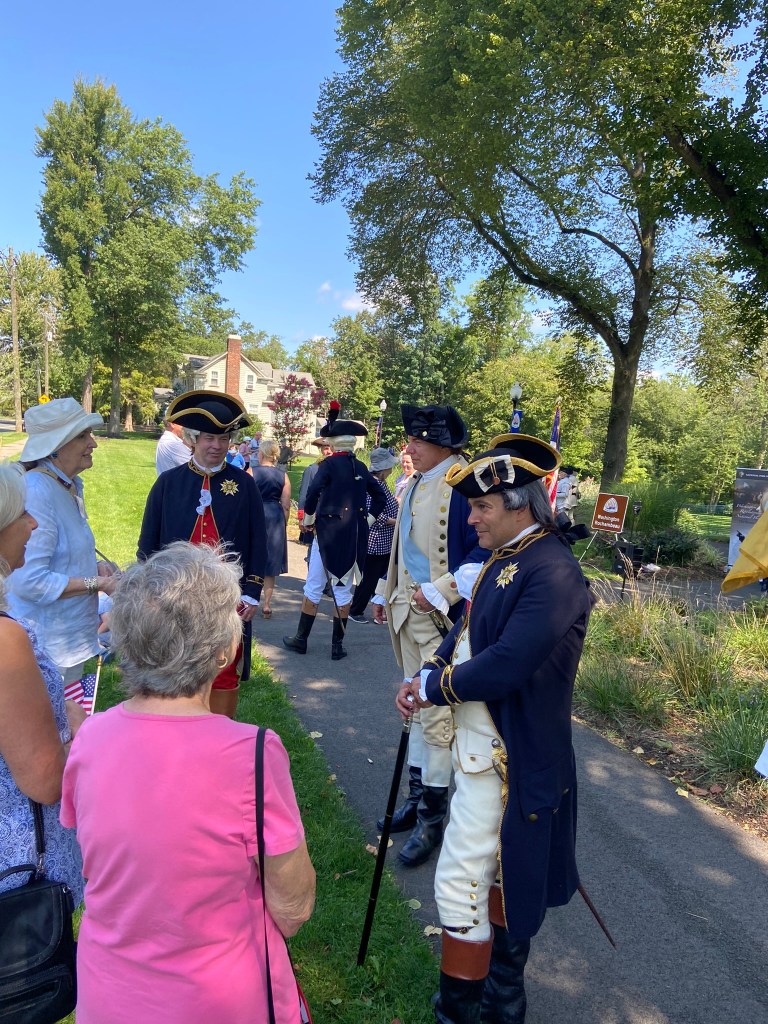
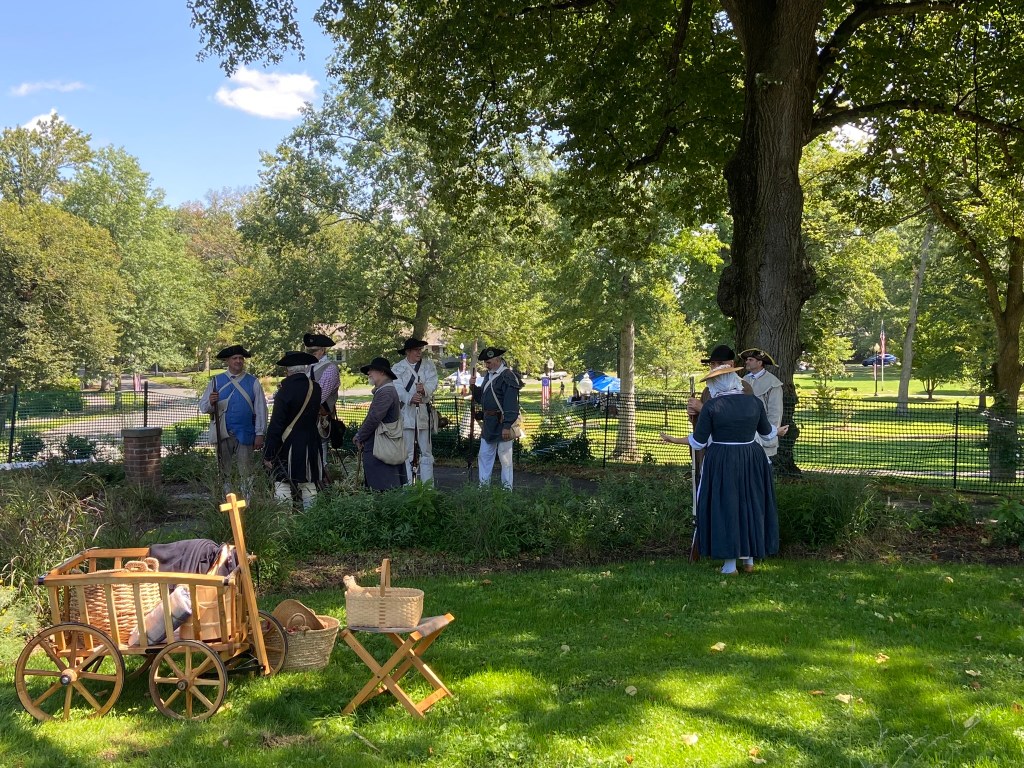
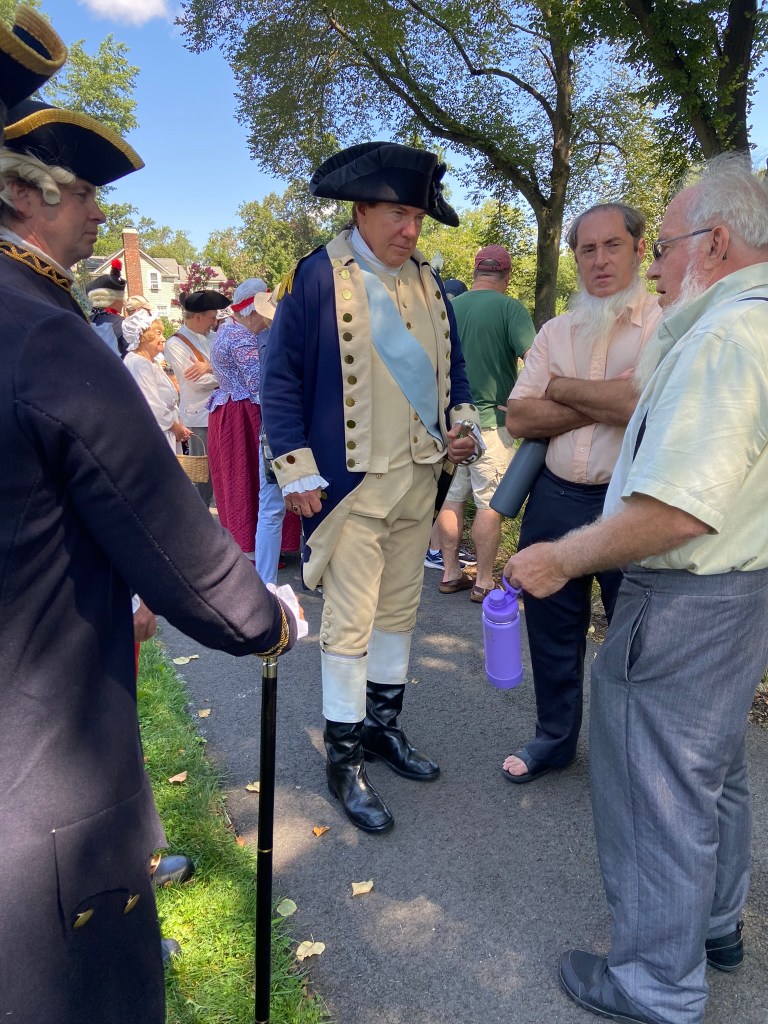
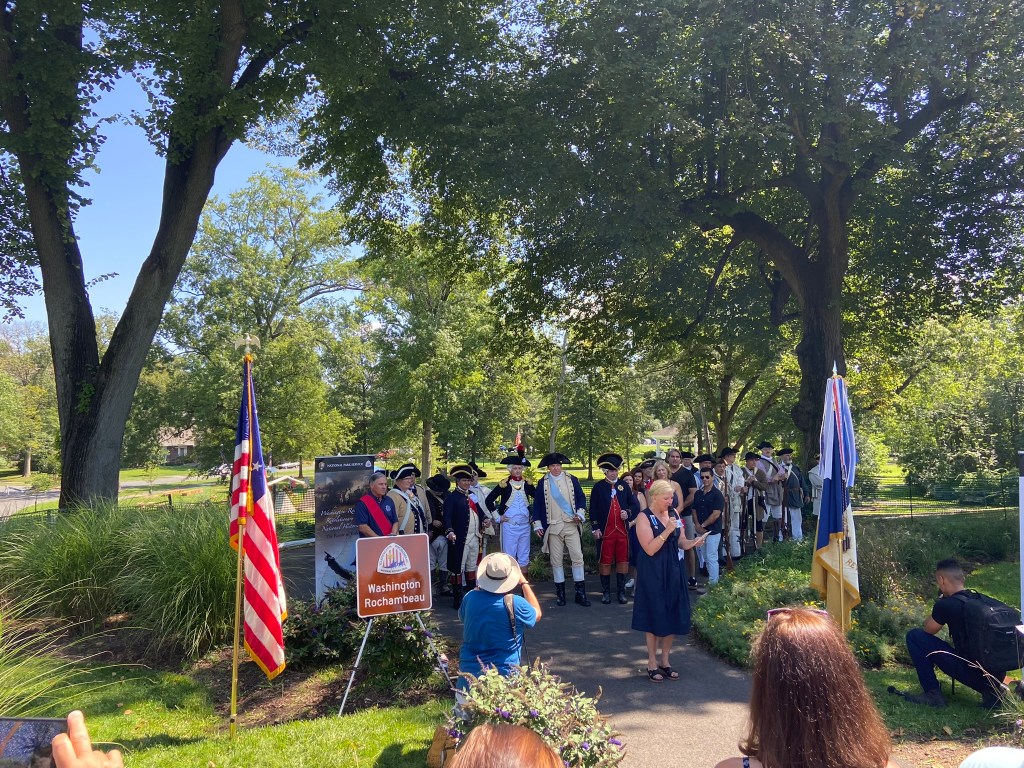
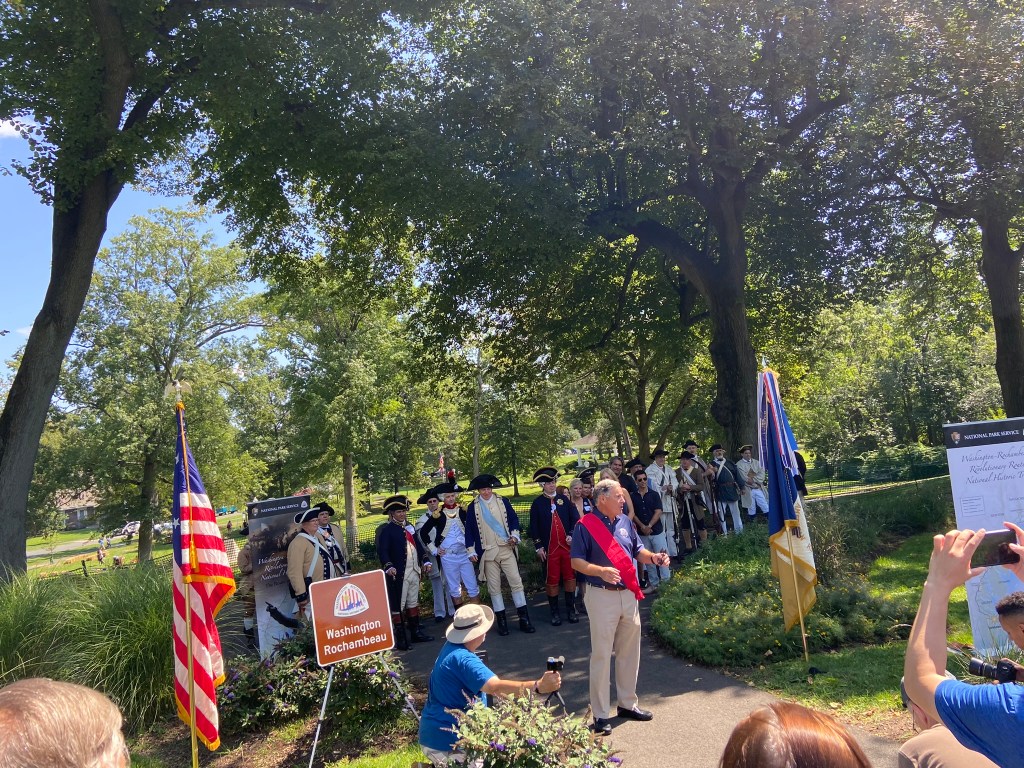
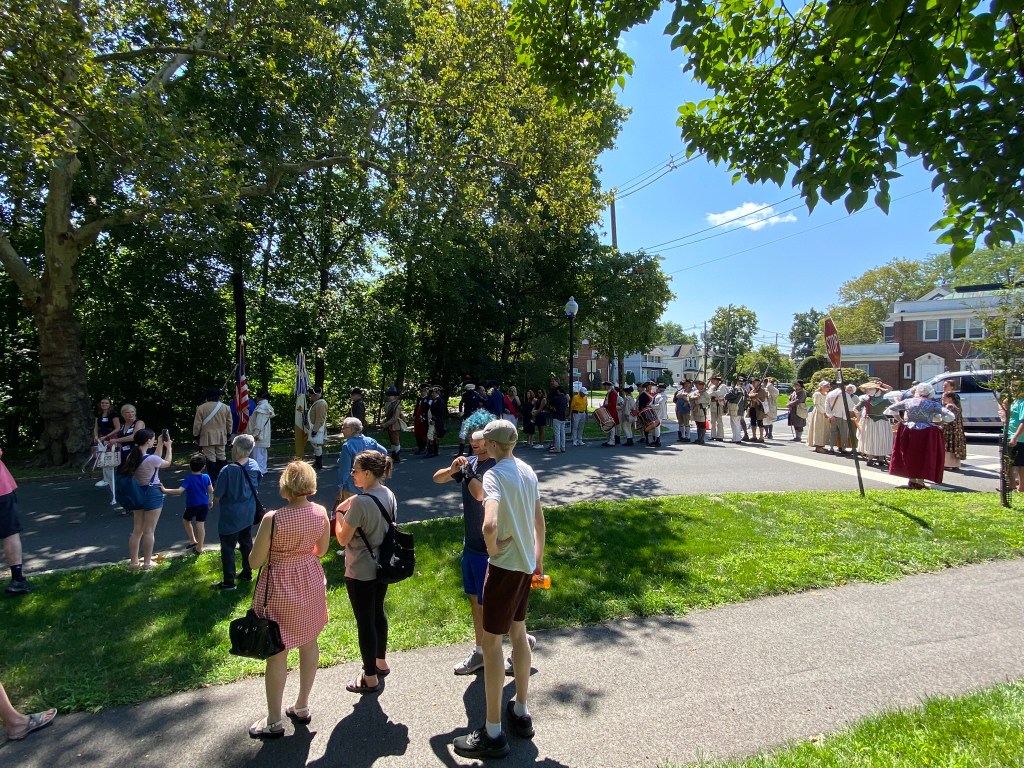
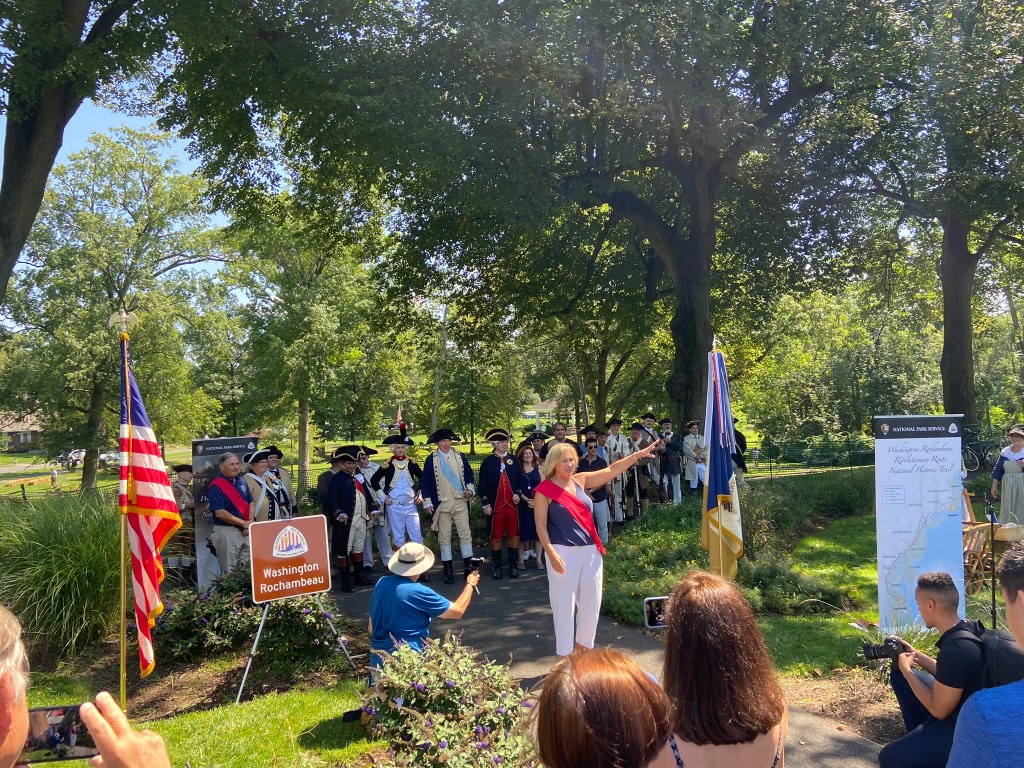
    The event began with an opening ceremony at Mindowskin Park. Re-enactors included Washington, Rochambeau, General Chastellux, and the Marquis de Lafayatte. Speakers during the opening ceremony included Julie Diddel, W3R-NJ Chair, who explained the significance of the Washington-Rochambeau Historical Route, as well as Westfield’s role in the Revolution. She did a fantastic job organizing and running the event. Speakers also included Westfield mayor Shelley Brindle, State Senator Jon Bramnick, and others.

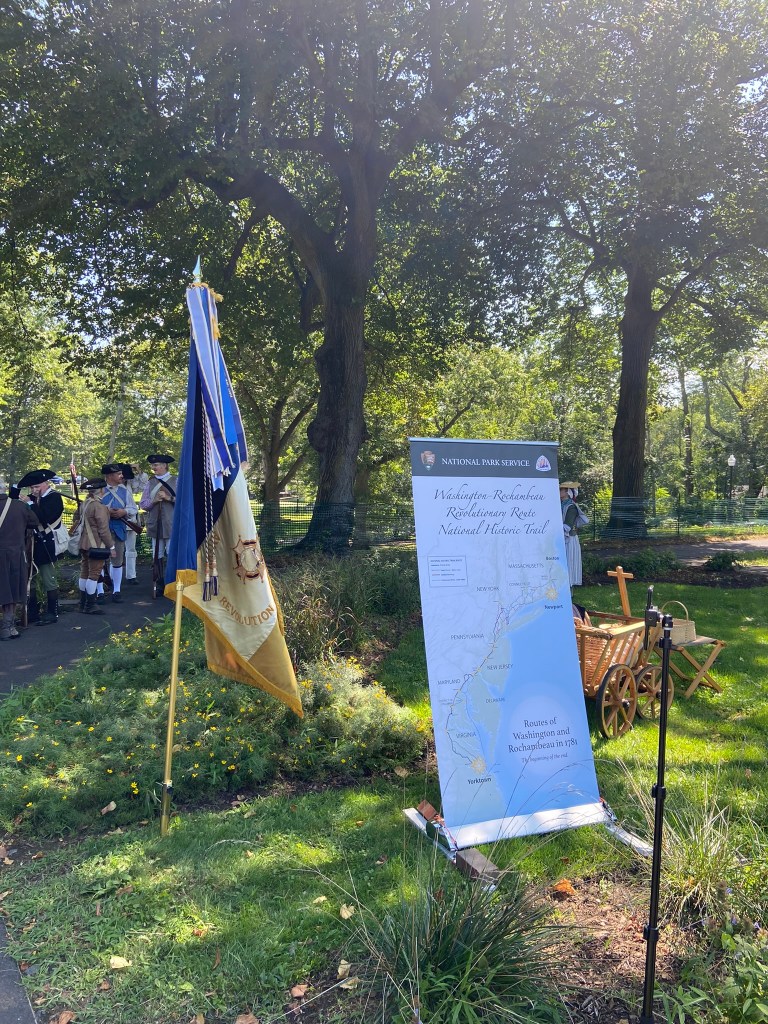
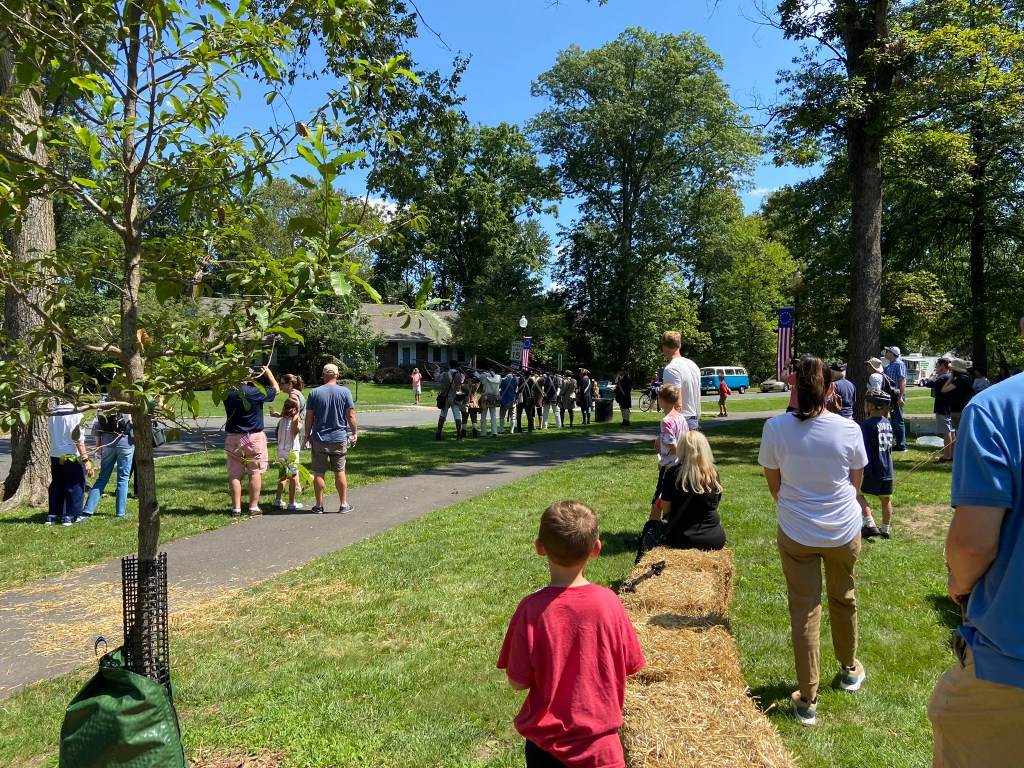
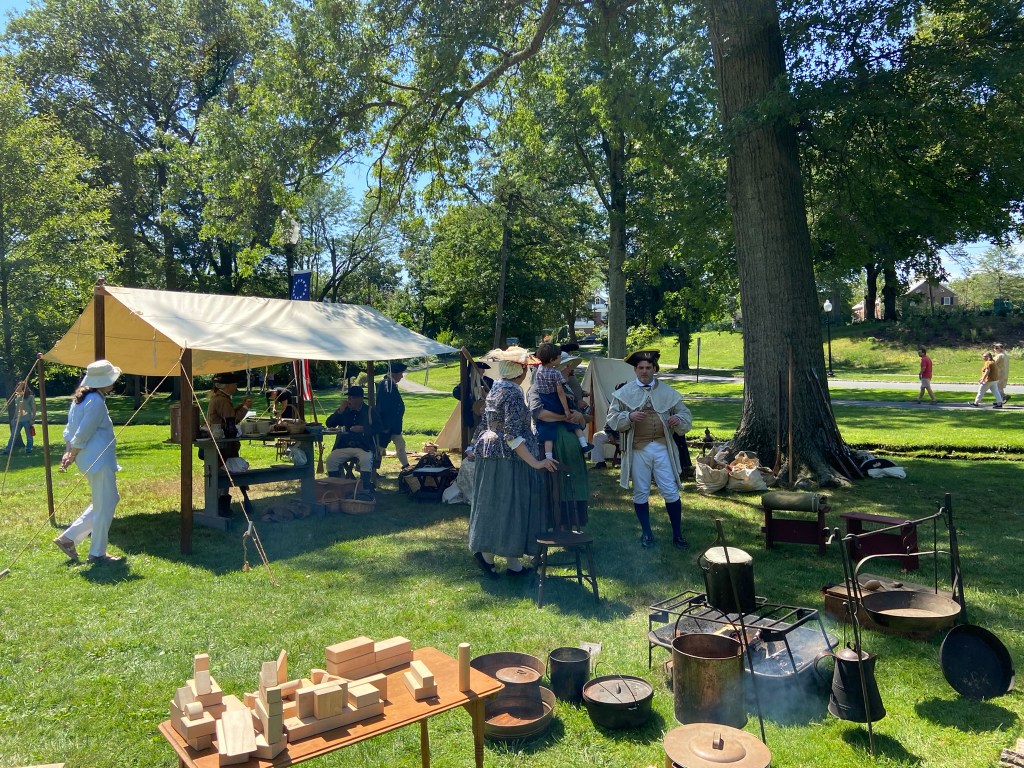
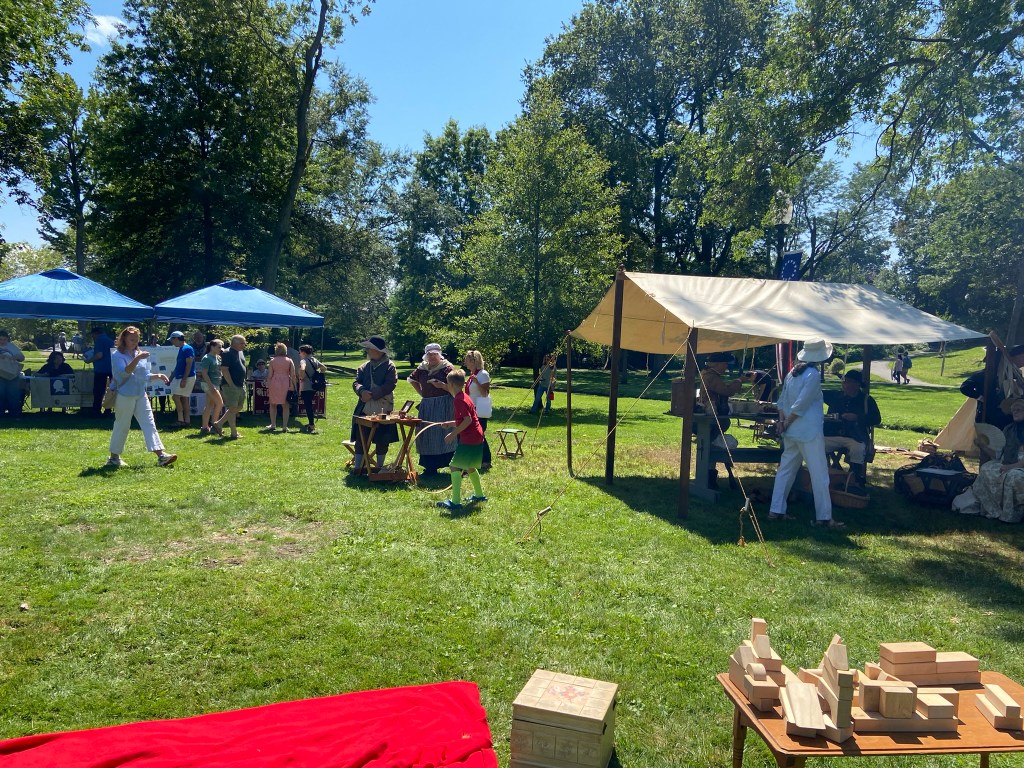
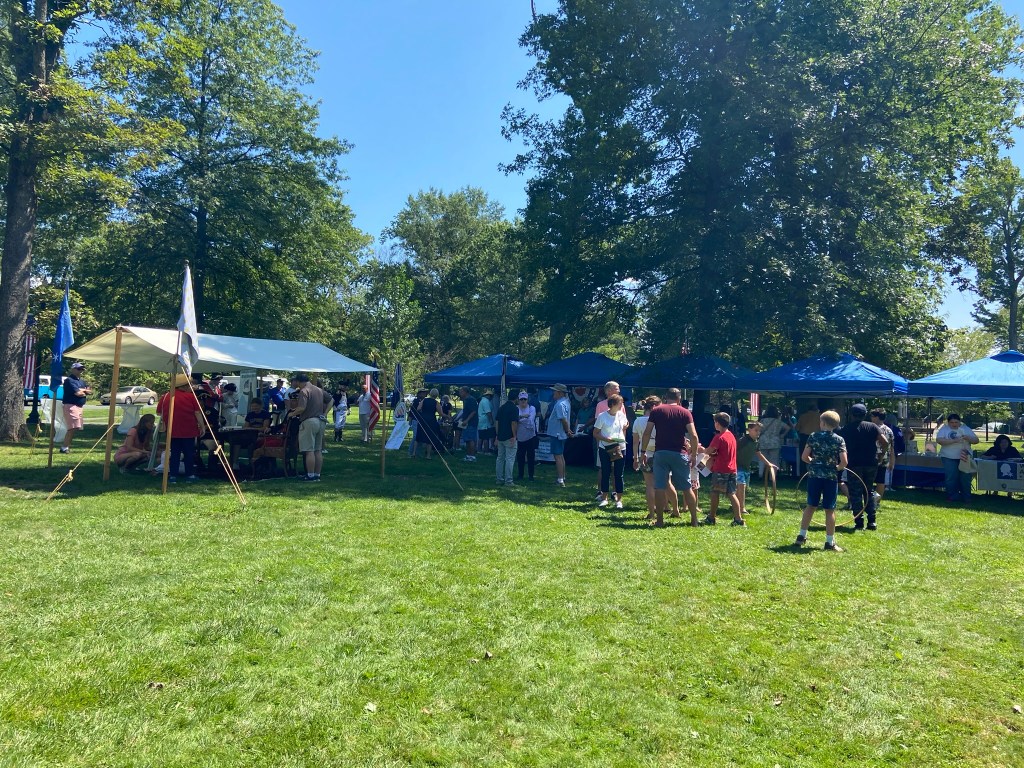
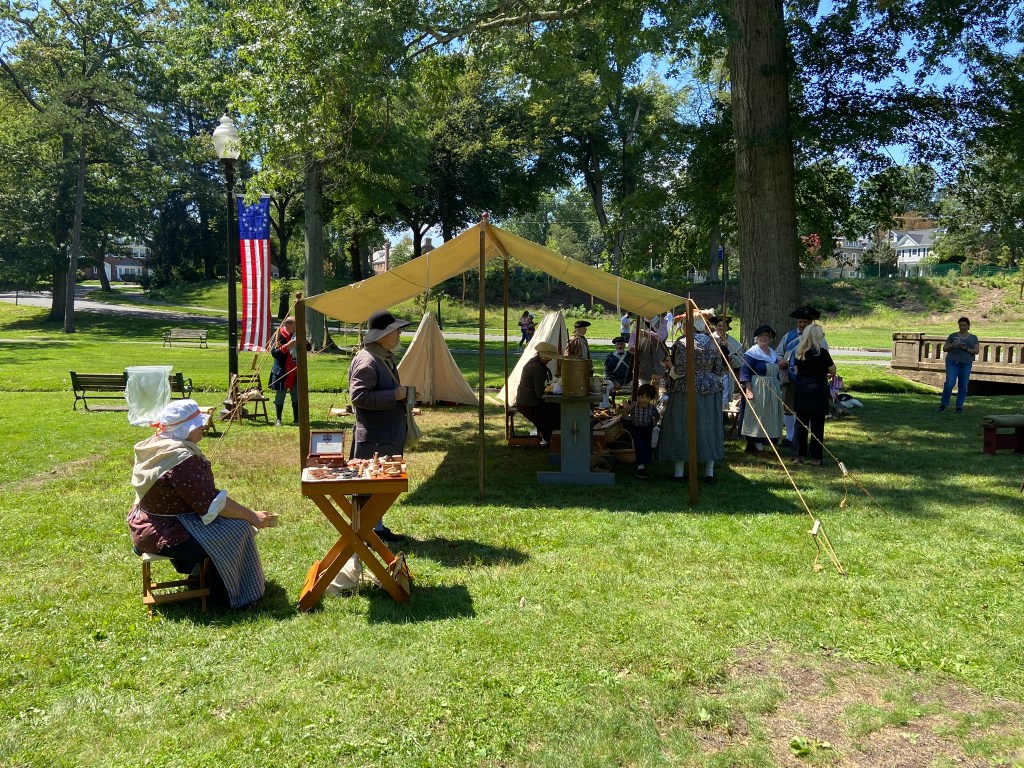
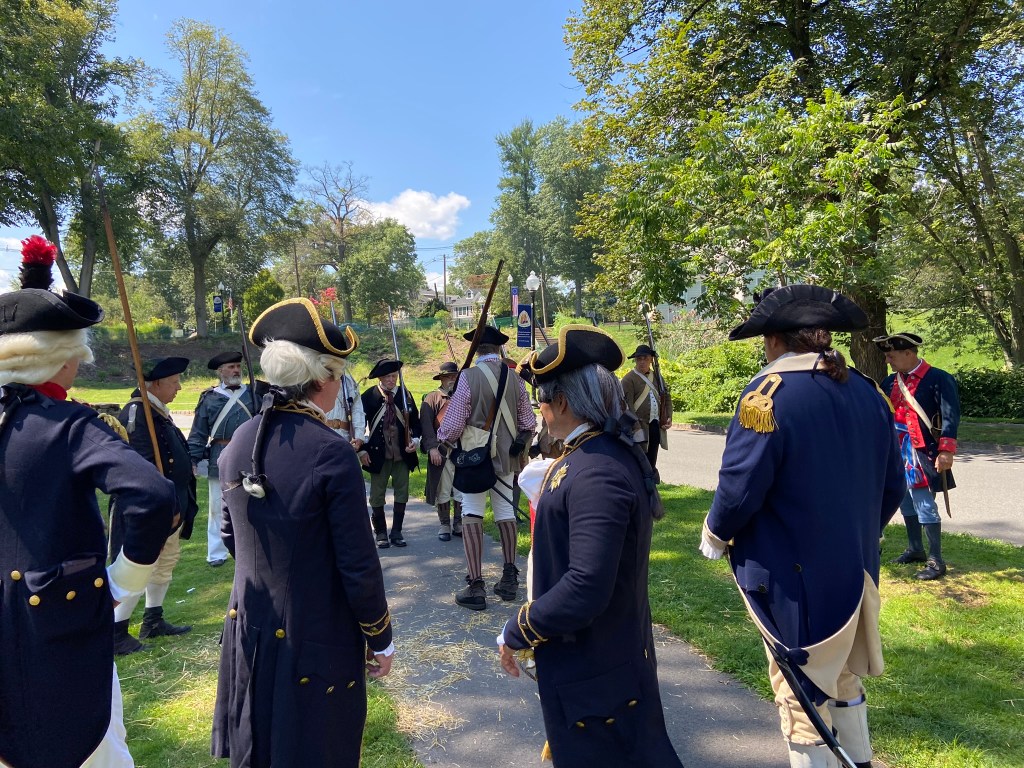
    Following the opening ceremonies, the crowd marched into the center of Mindowskin Park, led by Washington and Rochambeau. The park took on the form of a Revolutionary Era militia encampment with colonial games, cooking demonstrations, and frequent marches, drills and musket firing from the soldiers.

    Local history organizations set up tents and provided information. Organizations included the Washington Association of New Jersey, the Chatham Historical Society, the Union Township Historical Society, the Princeton Battlefield Society, the Miller-Cory House Musuem, the Westfield Chapter of the Daughters of the American Revolution and others. Music was provided througout the event by fife and drums which took you back to the 18th century.

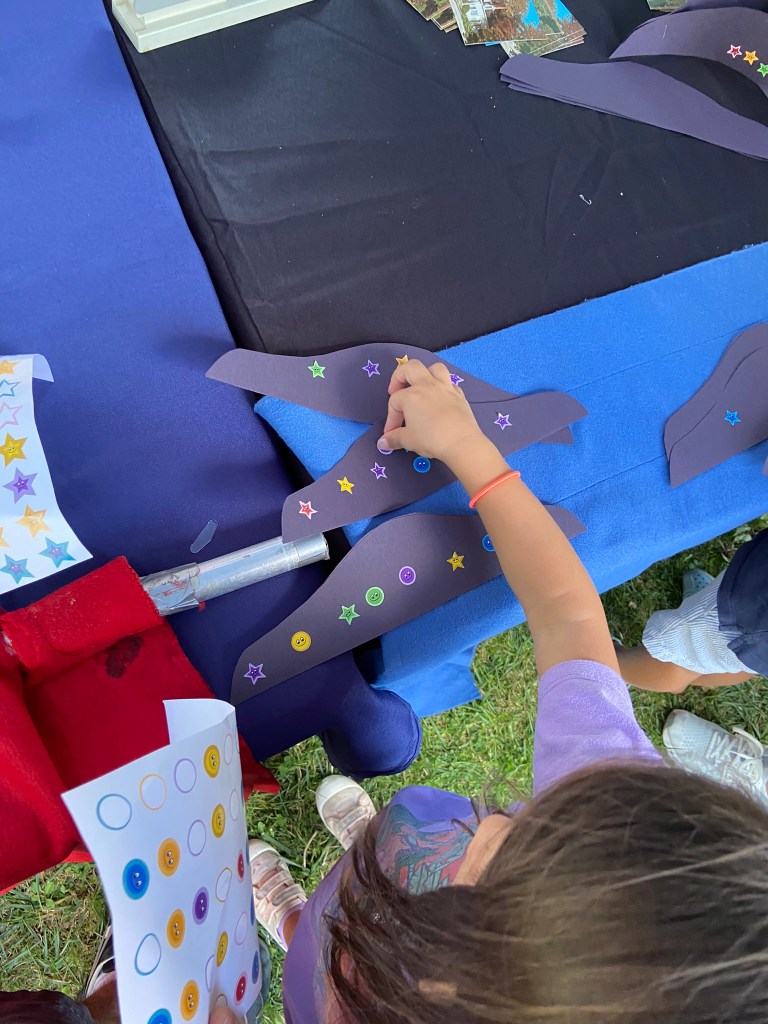
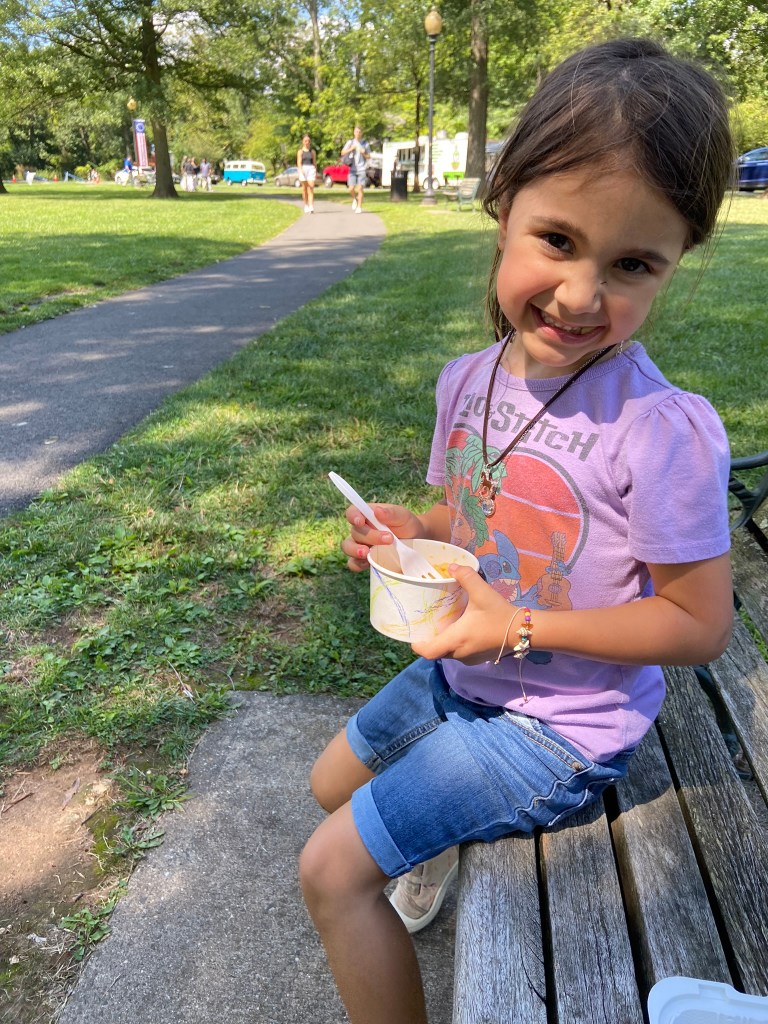
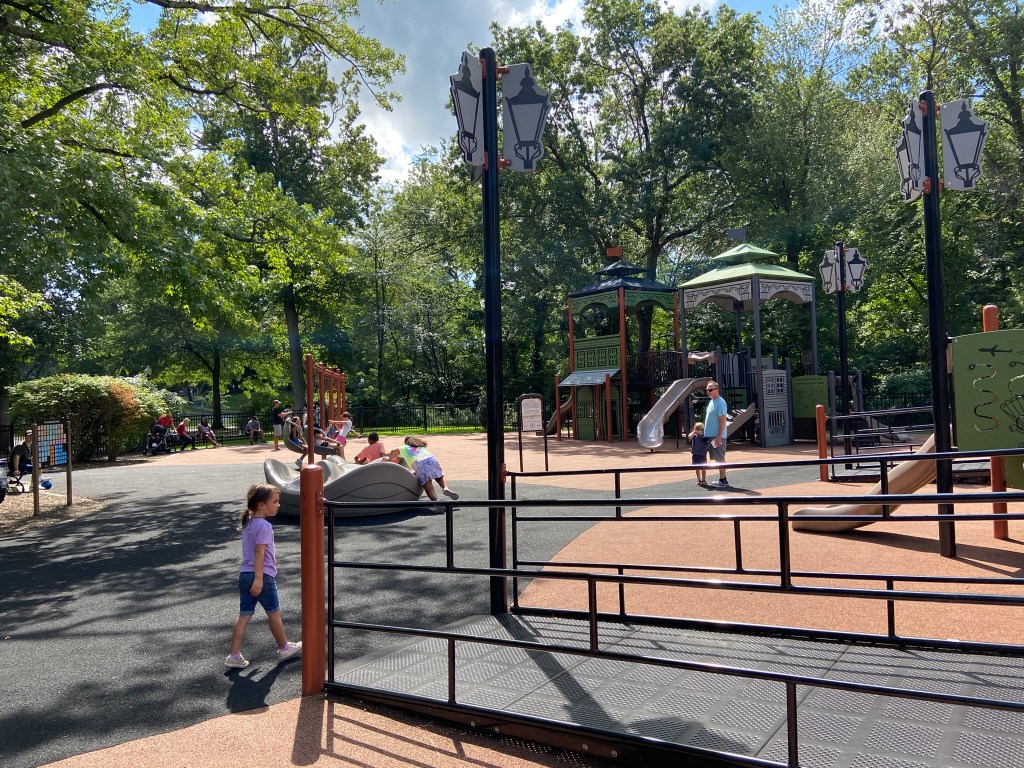
    My daughter and I chatted with the re-enactors as well as members of the different historical groups there. We tried out colonial games and learned about colonial encampment cooking. There was a Family Flava food truck at the event so my daughter and I had lunch on a park bench. After we ate, we found out that Mindowskin Park has a beautiful playground that my daugher really enjoyed. I had to bribe her to leave with a stop at the ice cream truck.

    My daughter and I had a wonderful time at the March to Yorktown Day in Westfield. The event was another reminder of the rich history in New Jersey and the strong ties that the state has to the American Revolution. The Washington-Rochambeau Revolutionary Route Association New Jersey did a great job providing an event that was fun and informative for all ages. I look forward to attending again next year!

    Related Posts: