
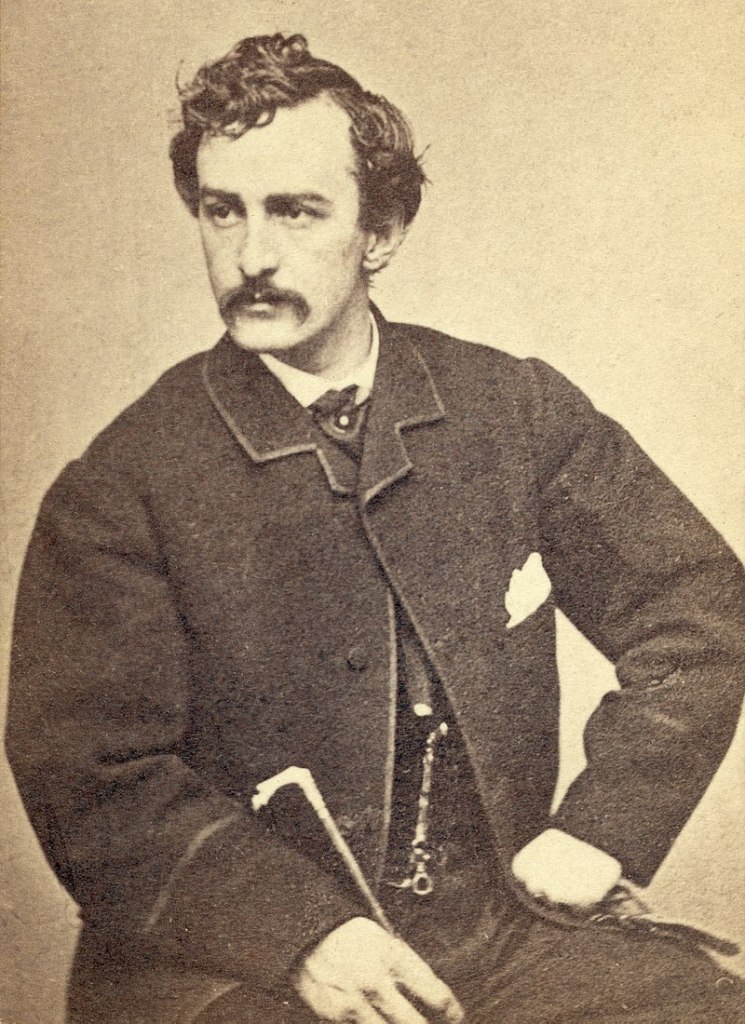
My next three blog posts will focus on the assassination of our sixteenth President, Abraham Lincoln on April 14, 1865. In Part 1, I’ll discuss the assassin, John Wilkes Booth. Later posts will focus on the assassination itself, as well as the aftermath.
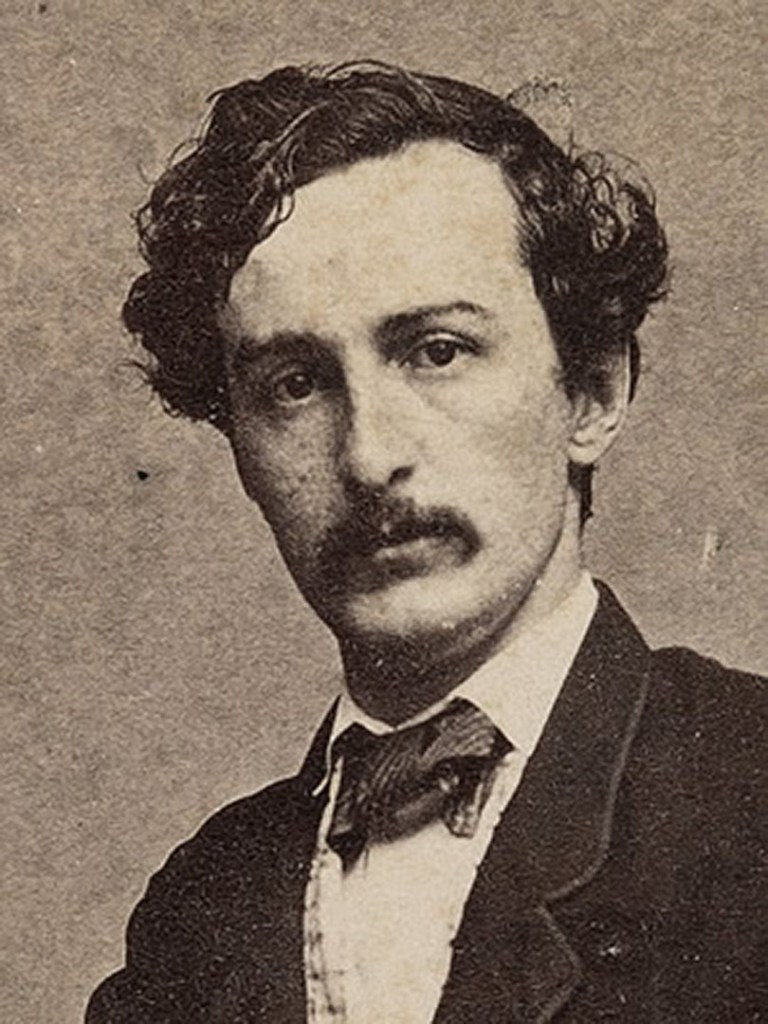
John Wilkes Booth was born in 1838 and raised on his family farm in Maryland. John, like his father Junius, was a famous, wealthy and adored actor. He performed in plays all along the East Coast, including at the Ford’s Theatre in Washington D.C. He was a Southern and Confederate sympathizer who grew to hate Abraham Lincoln. While John identified with the South and the Confederacy, his brother Edwin Booth, also a famous actor, identified with the North and the Union, causing division in the Booth family. John Wilkes Booth once wrote, “my soul, life and possessions are for the South.” (American Experience, PBS) John, like many Southerners, had a hatred for the Northern abolitionists, and the anti-slavery Republican Party. He justified his hatred by claiming that Abraham Lincoln was a tyrant who was responsible for destroying the South. He was only twenty-six years old on the day that he took Lincoln’s life. Booth sacrificed his greatness as an actor for a cause that he held dear. He viewed his action against Lincoln and his dramatic escape as his last great “performance.” (American Experience, PBS)
Booth, as an adult, spent most of his time in Richmond, Virginia. He viewed the South as an ideal, pure society. He did not view slavery as an evil and he even claimed it was God’s blessing. (American Experience, PBS) Booth believed that the Northerners were splitting the country apart, and he despised the anti-slavery movement. (American Experience, PBS) In 1859, Booth joined a local militia unit so he would be able to travel to witness the execution of John Brown, a radical abolitionist who attempted to start a slave uprising at Harpers Ferry, VA. (battlefields.org) The election of Republican candidate, Abraham Lincoln in November 1860, enraged millions of southern sympathizers, including Booth. After the election, Booth wrote a speech that he never had a chance to deliver, but gives us a window into his thoughts. Booth was disturbed by the division of the country and blamed Northern fanaticism. He argued that the South wanted justice and would wait no longer to achieve it. (American Experience, PBS)
Booth despised Lincoln for many of the reasons that other Southerners did. They viewed Lincoln as a man who wanted to end slavery and crush the Southern way of life. As a result of Lincoln’s election, southern states seceded from the Union to form the Confederacy, which Booth supported. During the Civil War, Lincoln instituted acts that were viewed as tyrannical from the Southern perspective, such as his suspension of a Writ of Habeas Corpus, shutting down newspapers, and censoring speech. (American Experience, PBS) Like Brutus who assassinated Julius Caesar, Booth believed that he needed to change the course of history and be lifted up to immortality. (American Experience, PBS)
After four long years of bloody war, Lincoln won his second election in 1864. Booth knew that Lincoln would prosecute the war to its end, and serve another four years in office. Southerners believed that Lincoln was going to use the war to destroy the south and eliminate their customs and culture. (American Experience, PBS) Booth and other co-conspirators worked underground for the Confederacy in Northern territory. The conspirators included John Surrat, George Atzerodt, David Herold, Lewis Powell, Samuel Arnold, and Michael O’Laughlen. Their goal was to “strike a blow at tyranny” and kidnap the President, hold him hostage in the Confederacy and use him for prisoner exchanges. (Guttridge and Neff, p. 53) On March 4, 1865 Lincoln gave his Second Inaugural Address. In the crowd was John Wilkes Booth, seething with anger. When Booth presented his plan to kidnap Lincoln from Ford’s Theatre, his co-conspirators believed that his plan was flawed. (American Experience, PBS) By the end of the Civil War, Booth felt that his world and everything he held dear had been crushed and humiliated. (American Experience, PBS) After the Confederate surrender at Appomattox Court House on April 9th, 1865, Booth began to think of a plan that was even more cruel, one that would punish the North…
Stay tuned for Part 2, in which I’ll discuss the assassination at Ford’s Theatre.
Works Cited
Guttridge, Leonard F., and Ray A. Neff. Dark Union: the Secret Web of the
Profiteers, Politicians, and Booth Conspirators That Led to Lincoln’s Death.
Wiley, 2003.
Mcdougal, Holt. Americans, Grades 9-12 New Jersey: Mcdougal Littell the
Americans. Holt Mcdougal, 2007.
“John Wilkes Booth.” American Battlefield Trust, 14 Apr. 2020,
http://www.battlefields.org/learn/biographies/john-wilkes-booth.
American Experience: The Assassination of Abraham Lincoln. Directed by
Barak Goodman, Public Broadcasting Service, 2009. Retrieved from
Youtube, https://www.youtube.com/watch?v=fZH-wJvl3-I
Related Posts:
 Benevento's History Blog