
In Parts 1 (Read Here) and 2 (Read Here) of my blog post about the Massachusetts Bay Colony, I addressed why the Puritans settled there, what the conditions were like, and what daily life was like in the colony. I also discussed the Salem Witch Trials and dissent within the colony. In the third and final part, I will discuss major conflicts that the colony had with the Native Americans, as well as the long-term impact of the colony.
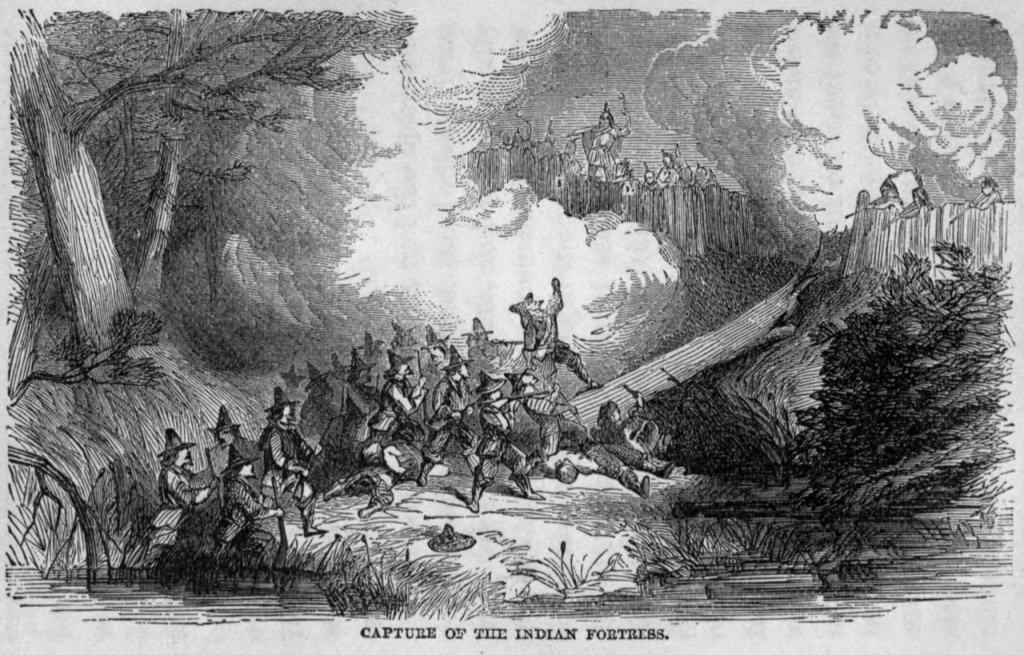
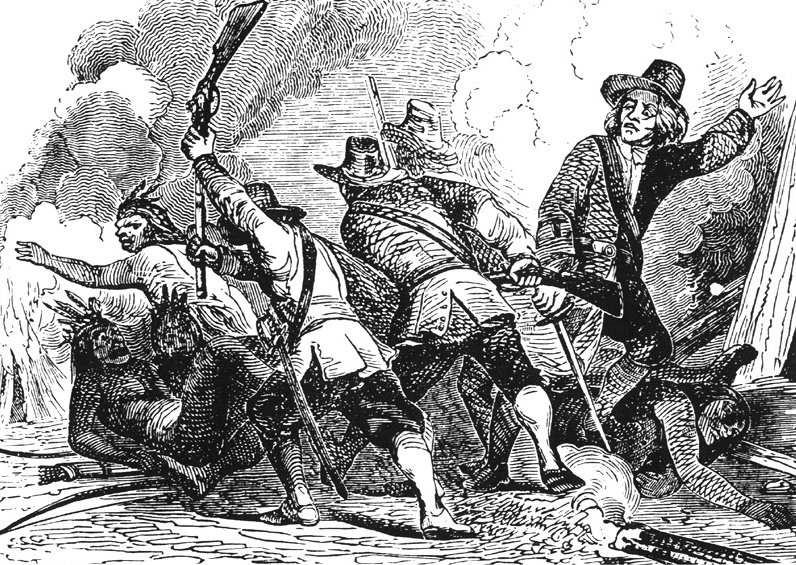
In Massachusetts, as other American colonies, the English settlers changed the landscape of the colony with little regard for the Native American way of life. The English cleared forests for farms, and built fences, houses, barns and churches. They killed wild animals that preyed on their domesticated animals. (Taylor, p. 188) Most Puritans viewed the natives as heathens who needed to be converted. “The New English saw the Indians as their opposite- a pagan peoples who had surrendered to their worse instincts to live within the wild, instead of laboring hard to conquer and transcend nature.” (Taylor, p. 188) In the first years of the Massachusetts Bay Colony, the new settlers relied on trade with the local Native American groups such as the Narraganset, Massachusetts, Wampanoag, Nipmuck and Patuxet. (Taylor, p. 189) However, the first major conflict between the colonists and the Natives broke out in 1636 with the Pequot War. Allied with the Narragansett and Mohegan peoples, the English demanded a heavy tribute from the Pequot tribe and surrender of suspects accused of killing a trader. (Taylor, p. 195) The English and their Native allies surrounded a Pequot village, setting it ablaze and killing many Pequot Natives either in the flames or in flight. The Pequots were nearly destroyed and the survivors were forced to assimilate with other local tribes.
In the 1640s, Puritan missionaries began the task of converting Native Americans to Christianity. The Natives were expected to give up their customs and religious beliefs, and become assimilated into English culture. Missionary John Eliot “warned the Indians that they were doomed if they remained in ‘so unfixed, confused, and ungoverned a life, uncivilized and unsubdued to labor and order.” (Taylor, p. 197) Natives who converted were called “Praying Indians” and they created new settlements called “praying towns.” Christianity and an alliance with English settlers appealed to some Natives of the smaller and weaker tribes. However, Praying Indians were in a difficult position, looked upon with a degree of suspicion from many English Puritans, as well as other Native Americans who held onto their traditional customs. Traditional Natives viewed the Praying Indians as traders.
A violent and bloody war called King Philip’s War broke out between the English of New England, and the Wampanoag Natives. Both sides fought alongside other Native allies. The name King Philip refers to the English nickname of Wampanoag chief, Metacom. The English were previously allies with Metacom’s father, Massasoit, but when Metacom became the head chief, he quietly prepared for a war that he believed was inevitable. (Taylor, p. 198) “In the spring of 1675 the Plymouth colonists provoked the confrontation by seizing, trying, and hanging three Wampanoag for murdering a praying town Indian who had served as a colonial informant.” (Taylor, p. 198) Violence exploded as brutal and bloody fighting took place for over a year. Food shortages, disease and a heavy casualty rate eventually weakened the Natives, and Metacom was killed in battle. Although an English victory, the colonists paid a heavy price. (McDougal, p. 54) The war is considered, per capita, the deadliest war in American history. “The figures are inexact, but out of a total New England population of 80,000, counting both Indians and English colonists, some 9,000 were killed—more than 10 percent.” (Lauterborn, historynet.com) The war ended widespread conflicts in New England, but the devastation had a lasting impact on both the English and Native populations. It would be years before Massachusetts and the other New England colonies could fully recover. (McDougal, p. 54)
Lasting Legacy
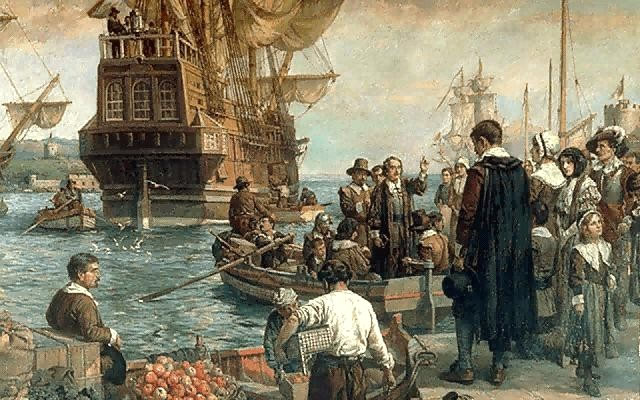
The Puritans of the Massachusetts Bay Colony, along with their successes and failures, have left behind a lasting legacy on the modern-day United States. The Restoration of the English monarchy in 1660 “terminated and discredited the short-lived revolutionary regime led by English Puritans during the 1640s and 1650s. After the Restoration, English Puritans dwindled in number, prominence, and ambition.” (Taylor, p. 185) The Great Awakening (religious revival) of the 1730s and 1740s further challenged Puritan beliefs and customs, as new Protestant sects emerged such as the Methodists and Presbyterians. While the Puritans dwindled in number, their impact on American history cannot go understated. In the early days of the Massachusetts colony, only male, Puritan Church members could vote. However, this constituted 40% of adult males, which was a large electorate compared to Europe of the 1640s. (McDougal, p. 51) Distribution of land and wealth was more even among the populace compared to the Chesapeake colonies which had wealthy planters obtaining a majority of the wealth. (Taylor, p. 171) The foundations of democratic ideals were being laid in Massachusetts with Town Meetings, in which colonists could discuss and debate current issues in their local government. (Davidson, p. 98) Massachusetts and the other New England colonies were the first colonies in which entire families came to settle and start new lives, which set the stage for further colonization and settlement. The emphasis on literacy and religion led to the earliest universities such as Harvard to educate aspiring ministers. With all of its accomplishments, there were also the dark and negative sides of intolerance for dissenters and the hysteria of the Salem Witch Trials. Democratic ideals have grown since 1630 and lessons have been learned from the shortcomings of Massachusetts. Modern Americans can never take for granted the impact that these early settlers had on the United States. The risk that they took to sail across the Atlantic Ocean for a new and better life laid the foundations for the character, heritage, and strong-will of the American spirit. They planted the seeds of democracy and freedom that Americans hold dear. The ideas that they developed for their representative governments, inspired America’s founding fathers who wrote these ideas into the Constitution.
Works Cited
Taylor, Alan/ Foner Eric (EDT). American Colonies The Settling of North
America. Penguin Group USA, 2002.
Mcdougal, Holt. Americans, Grades 9-12 New Jersey: Mcdougal Littell the
Americans. Holt Mcdougal, 2007.
Davidson, James West., et al. The American Nation. Prentice Hall, 2000.
Bremer, Francis, J., John Winthrop: America’s Forgotten Founding Father,
Oxford University Press, 2005
Lauterborn, David. “Blood and Betrayal: King Philip’s War.” HistoryNet,
HistoryNet, 12 July 2015,
http://www.historynet.com/blood-and-betrayal-king-philips-war.htm.
Related Posts:
 Benevento's History Blog