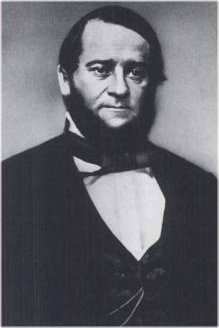
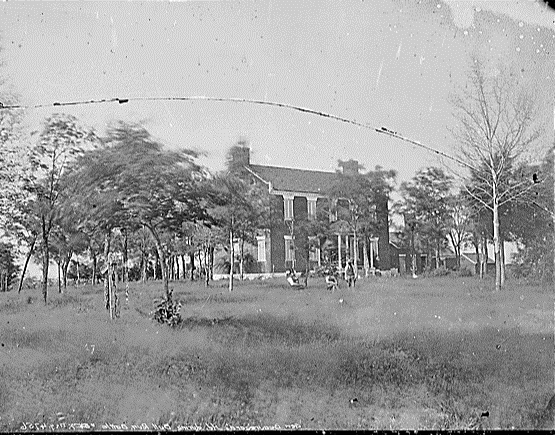
Wilmer McLean was a wholesale grocer who lived in Manassas, Virginia, and purchased his home and farm in 1854. When the Civil War started in 1861, an early goal of both armies was to capture the opposing capitals, Washington D.C. and Richmond, VA. Therefore, many battles took place in the vicinity of these cities. The first major battle that broke out on July 21st, 1861, was the Battle of Bull Run, known to the south as the Battle of Manassas. Unfortunately for Wilmer McLean, the battle took place on his farm, and his house served as the headquarters to Confederate Brigadier General P.G.T. Beauregard. During the battle, a canonball fell through the kitchen fireplace. After the battle, Beauregard wrote, “A comical effect of this artillery fight was the destruction of the dinner of myself and staff by a Federal shell that fell into the fire-place of my headquarters at the McLean House.” The Battle of Bull Run was a victory for the Confederacy when the Union army retreated from the battlefield.
McLean’s home in Manassas
During the war, McLean served as a sugar supplier to the Confederate army. However, he feared that the war in his area of Virginia would impact his business, and he didn’t think it was safe for his family to stay in Manassas. (Considering that there was a Second Battle of Bull Run the following year, he was right). He decided to take his family about 120 miles southwest to a location he believed was safer: Appomattox Courthouse, Virginia.
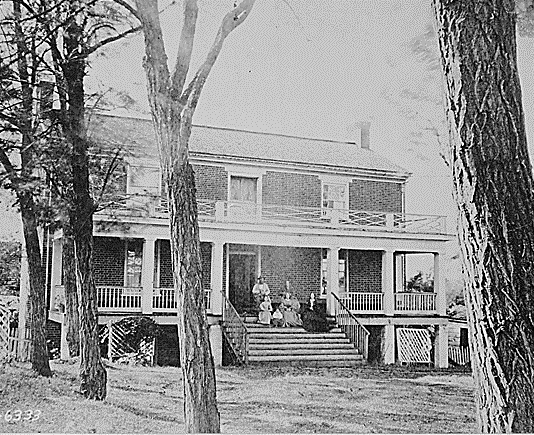
McLean’s home in Appomattox, VA
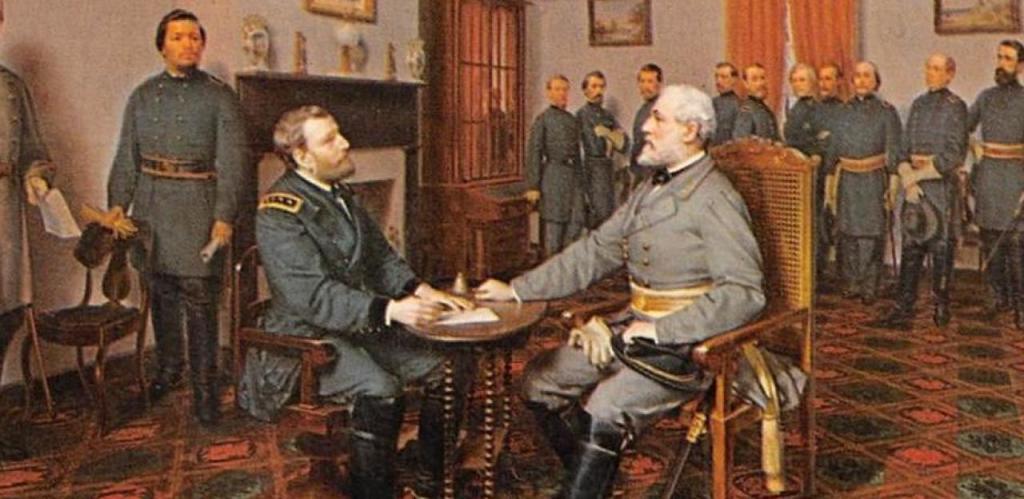
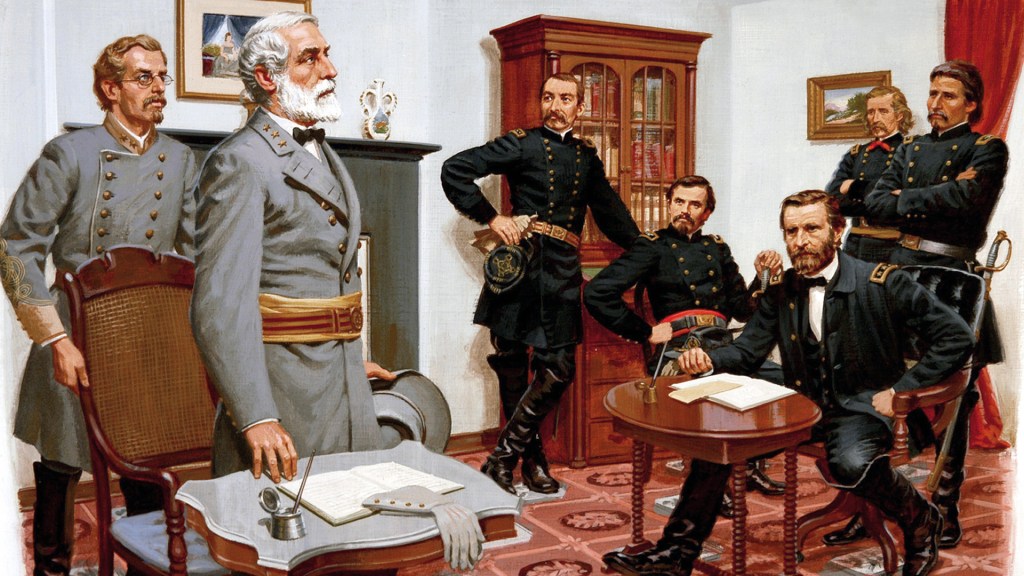
However, on April 9th, 1865, the war knocked on McLean’s door once again. The last major battle of the war between General Robert E. Lee’s Confederate army and General Ulysses S. Grant’s Union army took place in Appomattox Court House. Lee looked for a place to sign the terms of surrender with Grant, and McLean’s house was chosen. McLean had to reluctantly agree. Lee surrendered to Grant in McLean’s parlor. McLean is supposed to have said, “The war began in my backyard, and ended in my front parlor.” The image of Lee and Grant meeting in McLean’s parlor is one of the most iconic images of the Civil War. It marked the end of four years of brutal fighting between the North and South. After Lee signed the terms of surrender, troops began walking off with McLean’s furniture: tables, chairs, etc. as souveniers. They handed McLean money on the spot with no discussion of the furniture’s value. The table on which Grant drafted the document is now at the Smithsonian. This unlucky man had the Civil War come right into his home on two separate occasions, ironically the beginning and end of the war. He sold his home in Appomattox Court House in 1868 and moved back to Manassas. He later moved to Alexandria, VA. A full size recreation of McLean’s home in Appomattox is now part of the Appomattox Court House National Historical Park. (https://www.nps.gov/apco/index.htm)
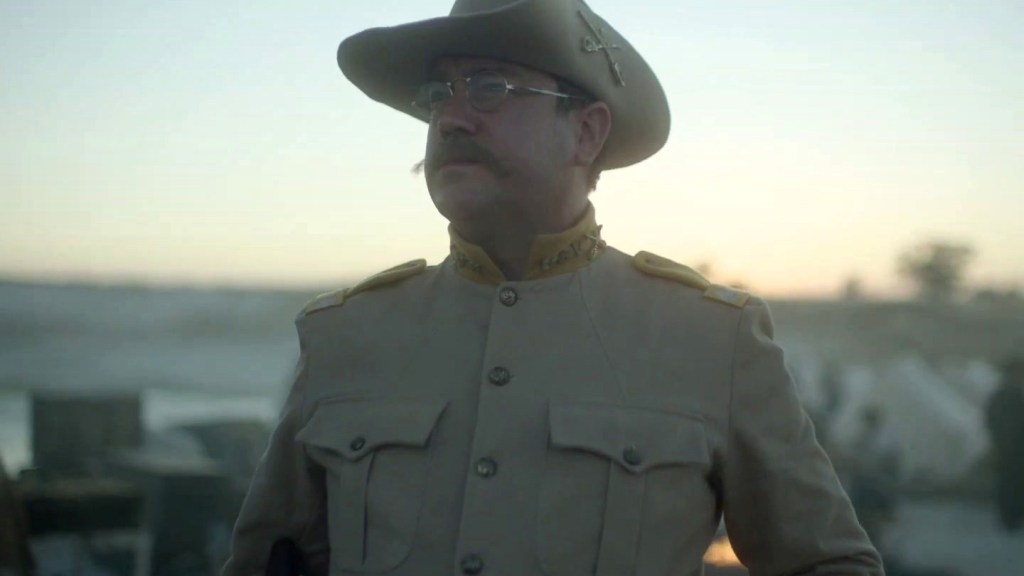
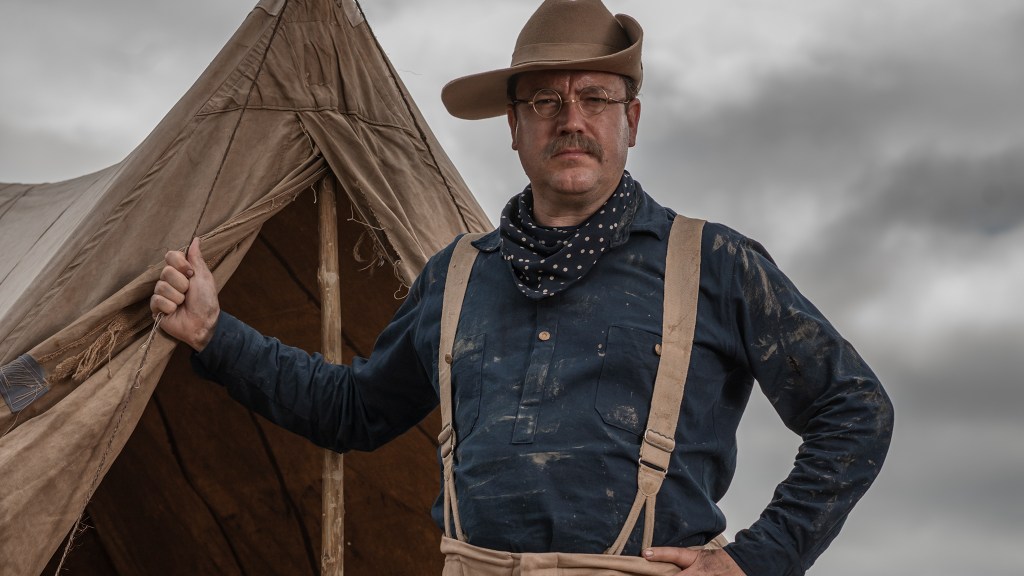
I just finished watching a great documentary minseries on the History Channel about Theodore Roosevelt. It was released in May 2022 and was the fourth documentary of its kind that has been released. I’ve seen Washington (2020), Grant (2020) and Lincoln (2022), and I enjoyed each of them. There is also a fifth documentary on Franklin Roosevelt that I plan to watch soon, which was just released this past May. Just like the previous three, the Teddy Roosevelt documentary was very well made. It is two episodes and each are 2.5 hours. Teddy Roosevelt is played by actor Rufus Jones, and I thought he did a very accurate portrayal of Teddy. The documentary cuts back and forth between well-known historians, discussing the life of Roosevelt, and then cuts to the events of his life as a drama. The documentary does a great job adding suspense to many of the key events of his life. You are often left with a cliffhanger right before a commerical break that makes you want to know what happens next. It does help that TR was such a fascinating and accomplished person.
There truly is no other person like Teddy Roosevelt. He was tough as nails and he accomplished so much throughout his life. As a child, he was sickly and he had frequent asthma attacks. His parents feared he would die young and often kept him inside. The fact that he went on to accomplish everything that he did is truly miraculous.
He attended Harvard and broke into politics at a young age. His father was a successful businessman and philanthropist, and so Teddy grew up with wealth and privilege. However, just as he was getting into politics, he had to deal with many tragic events in his life. Teddy lost his father when he was 19. At the age of 25, he lost his first wife just after childbirth and he also lost his mother on the same day. To deal with these tragedies, Teddy went out west in the Dakota Territory. He lived off the land in the Wild West for 2 years before heading back East. Teddy became a successful politician but always went against the grain and did what he thought was right. Many within his own Republican party believed he was too progressive. He re-married and had a large family. He served in the federal government in his 30s, working for the Civil Service Commission for six years.
Roosevelt later became the Commisioner of the NYC police department, and he cleaned up the corruption that was running rampant before his arrival. The Chief of Police was forced to resign and Teddy set up the first Police Academy. In 1898, President William McKinley appointed Roosevelt the job of assistant secretary of the Navy. Teddy wanted to build up the Navy and cement the United States’ position as a world power. He advocated for war against Spain at the start of the Spanish-American War, and personally led the Rough Riders in an assault on San Juan Hill in Cuba. Teddy had bullets wizzing past his head and was lucky to have survived.
After he served in the Spanish-American War, TR went on to become the governor of New York. Because of his push for reforms, many of the corrupt party bosses in the Republican Party did not support TR. Roosevelt always pushed for laws that would help the common man, and he was always trying to give every person an equal chance. Roosevelt governed with a sense of urgency and had to work hard to accomplish his goals.
When President McKinley ran in 1900 for re-election, Teddy Roosevelt was his running mate. McKinley won re-election but Teddy felt limited in his role as Vice-President. When McKinley was assassinated in 1901, TR became the youngest president in our nation’s history, at age 42.
It’s truly amazing what TR was able to accomplish in his time as President. He took on challenges that no prior President had taken on. He tried to crush monopolies and he took on the robber barons (J.P. Morgan, John D. Rockefeller, and others). He personally mediated between coal strikers and business owners, finally landing a deal after a long and painful strike. TR set up a commsion to investiage and regulate big business. He wanted to make sure these big businesses were playing by the rules. Teddy always used the media to his advantage. He got on their good side and knew how to twist a story or argument in his favor. He used the media to get the public on his side, and it worked.
TR wanted the United States to have an influence on a global scale. He oversaw the deal that allowed the United States to build the Panama Canal. He knew the canal would benefit the U.S. both militarily and economically, as it would cut down the time and costs needed to transport goods.
TR had such a successful first term, that he won the 1904 election in a landslide. He took on the Meatpacking Industry after it was revealed that the factories used for producing meat were absolutely disgusting and the meat used was putrid (first revealed in the novel, The Jungle). TR believed that it was his job to represent the public interest, and that was his motivation throughout his public career. TR is also known for his preservation of natural resources, and setting aside land for reserves. He saved 230 million acres of land which became public land/ national parks.
After his term, TR decided not to run in the 1908 election and chose William Howard Taft as his successor. Taft won the election, and TR believed that he would continue his agenda. However, Taft did not follow through on many of TR’s policies, and TR felt betrayed. There was a growing rift between the two men, who had previously been friends. TR decided to run in the 1912 election under the Progressive Party banner (also became known as the Bull Moose Party). However, Republicans split the votes between Taft and TR, handing the election to Democrat, Woodrow Wilson.
While TR was campaigning in October 1912, he was shot in the chest in an attempted assassination outside his hotel. His aides urged him to be rushed to the hospital, but since Teddy was not coughing up blood, he claimed he was fine. He was asked to be taken to his campaign speech, where he gave an 84 minute speech while bleeding from his chest. He started the speech by saying, “Ladies and gentlemen, I don’t know whether you fully understand that I have just been shot, but it takes more than that to kill a Bull Moose.”
The documentary goes into TR’s later life after his Presidency. After dealing with his loss in the 1912 election, he went on a wild trip in Brazil down an unexplored river, where he suffered from malaria and a serious leg wound. He recovered and made it back home, but in ill health. The documentary goes into his stance on WW1, and his sons who fought and were either wounded or killed in the war.
One of the reasons that I love history is because I believe that historical characters and events are just as, if not more entertaining than anything any fictional writer/ author could come up with. This documentary on TR is the perfect example of this. TR is a true American hero who accomplished so much and is such a fascinating character. He fought for the common man and wanted to give everyone a “Square Deal.” Even though he was born into wealth, he was extremely tough, wanted to defend his country, and was dedicated to helping the poor. He connected with the common man in a way that few if any presidents have and he was a celebrity in his day. He also campaigned and toured the country like no other previous president. Besides risking his life in the Spanish-American War, he also asked President Wilson for a commision to lead troops in WW1 but was turned down. He was in his late fifties by that time. TR had goals in mind that he wanted to accomplish, and he worked relentlessly to achieve them. He felt a moral obligation to do what was right, even when powerful forces were pushing against him. He was seen as very progressive for his time, espcially later in his career. He fought for land/pensions for returning soldiers, and wanted to give women the vote. Many of his ideas were accomplished later in history. He truly was a remarkable person and always needs to be ranked amongst the most successful and accomplished presidents. Make sure you watch this documentary. You either have to find it when the History Channel is playing it for free (Which I happened to do) or you can find it on different streaming services such as Amzon, Apple TV, History Vault, or Google Play.
I’ll end this post with a great quote from the man himself:
“It is not the critic who counts; not the man who points out how the strong man stumbles, or where the doer of deeds could have done them better. The credit belongs to the man who is actually in the arena, whose face is marred by dust and sweat and blood; who strives valiantly; who errs, who comes short again and again, because there is no effort without error and shortcoming; but who does actually strive to do the deeds; who knows great enthusiasms, the great devotions; who spends himself in a worthy cause; who at the best knows in the end the triumph of high achievement, and who at the worst, if he fails, at least fails while daring greatly, so that his place shall never be with those cold and timid souls who neither know victory nor defeat.”
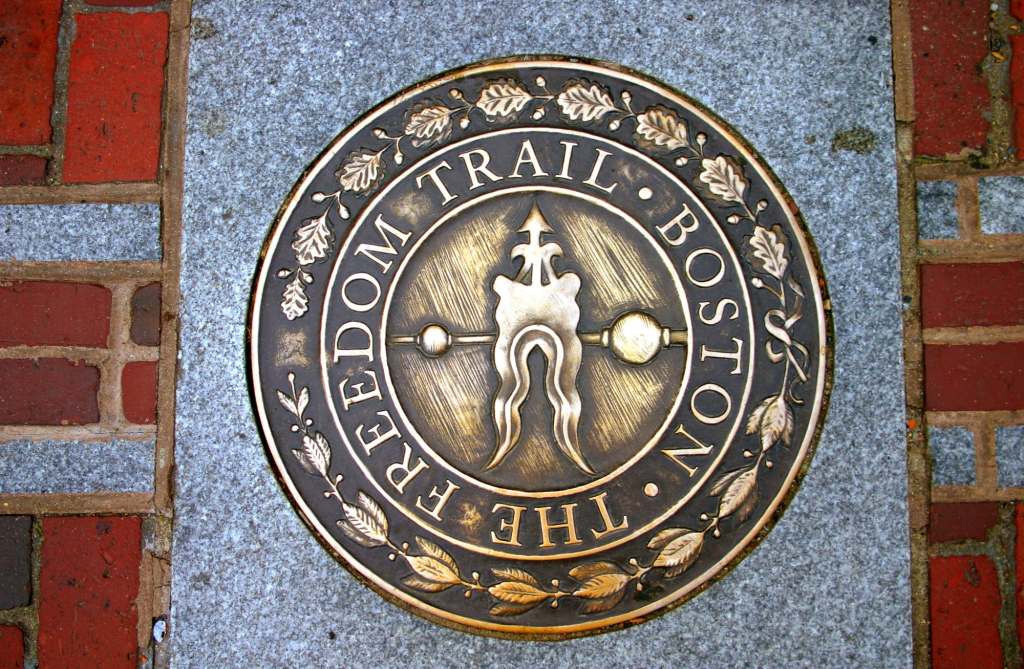
As a follow up to my three-part blog on the Massachusetts Bay Colony, this blog will focus on historic sites to visit in Boston, which was settled in 1630 and became the major city of the region. In 2020, I took a History course on Colonial America, and for one of the projects, I had to research colonial sites to visit in Jamestown, VA, Charleston, SC, and Boston, MA. In researching Boston sites, I primarily used the Freedom Trail website (https://www.thefreedomtrail.org). Then in August 2022, my family and I were able to travel to Boston for the first time, and see most of the sites on the Freedom Trail, and those that I had researched two years prior. Boston is the most historic city in the country, and one of the oldest. When considering the lead up to the American Revolution, most of the major events took place in the city of Boston, including the many protests against British acts such as the Stamp Act (1765) , the Townshend Acts (1767) and the Tea Act (1773). Boston witnessed the Boston Massacre (1770) and the Boston Tea Party (1773). It was the epicenter of agitations between the colonists and the British crown between 1765- 1775 leading to Lexington and Concord. Boston was always a city that I felt that I needed to visit and it was wonderful to finally get there last summer. The structures and landmarks that still stand are reminders of those events that led up to the conflict, and the people who fought for freedom.
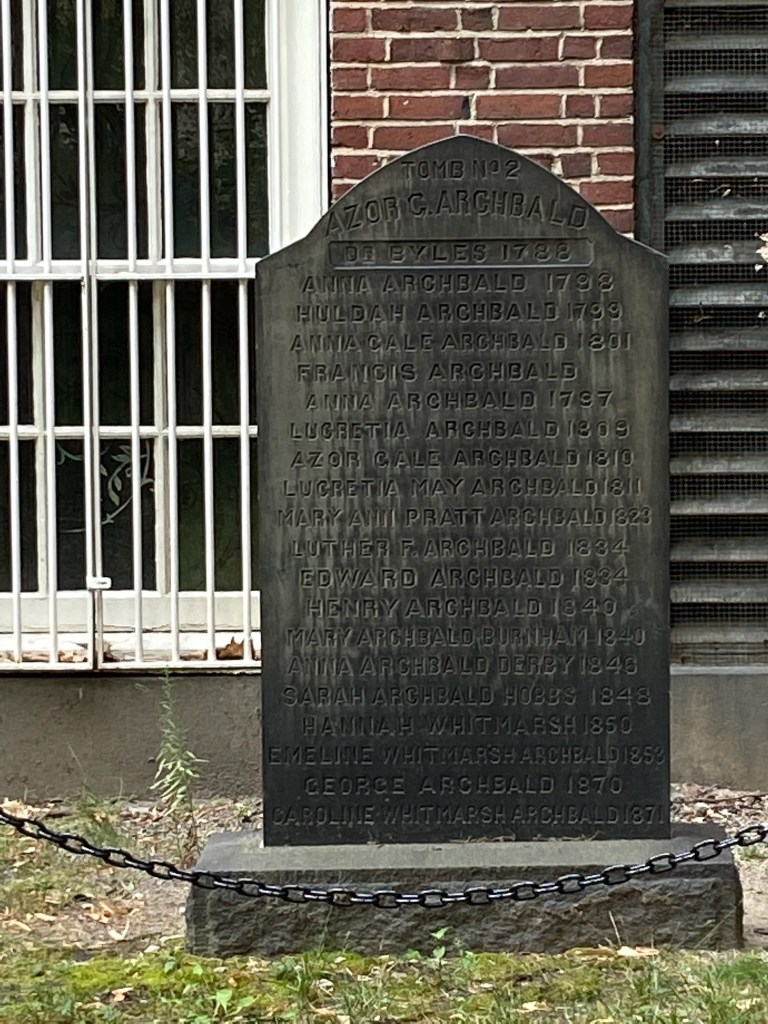
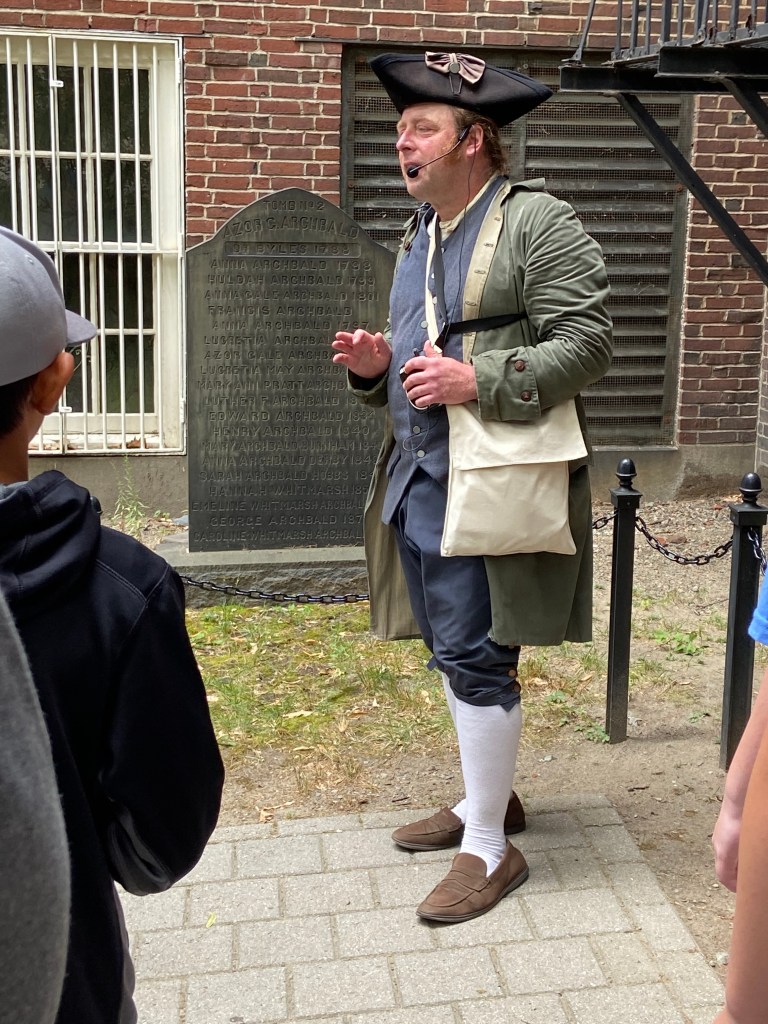
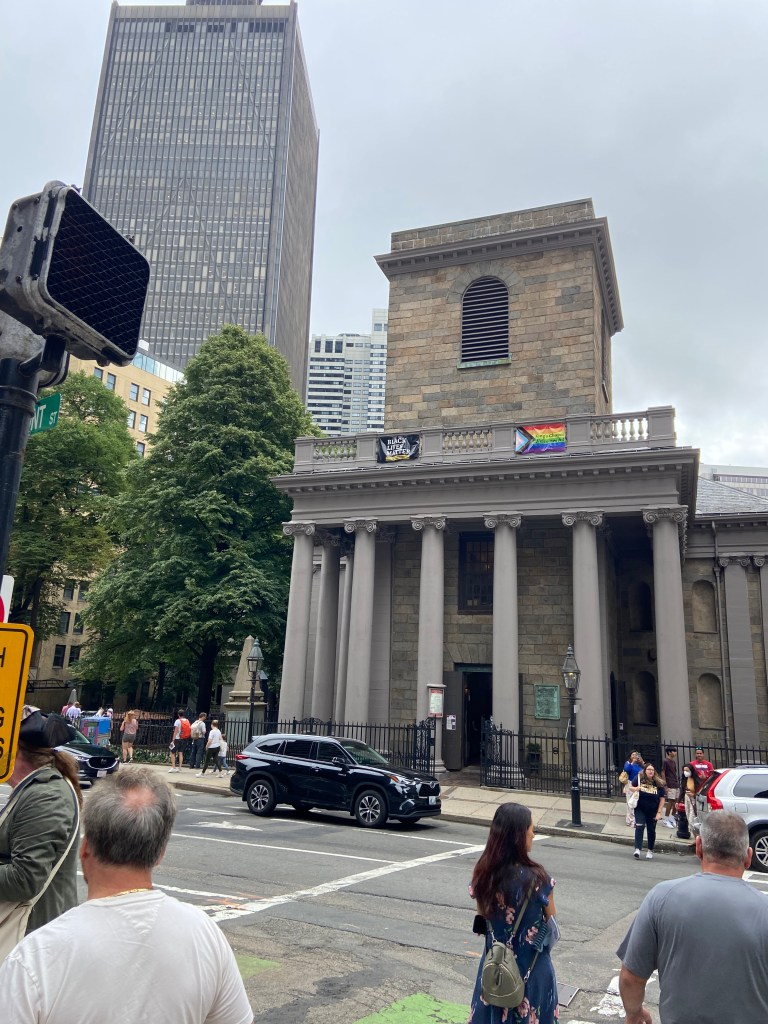
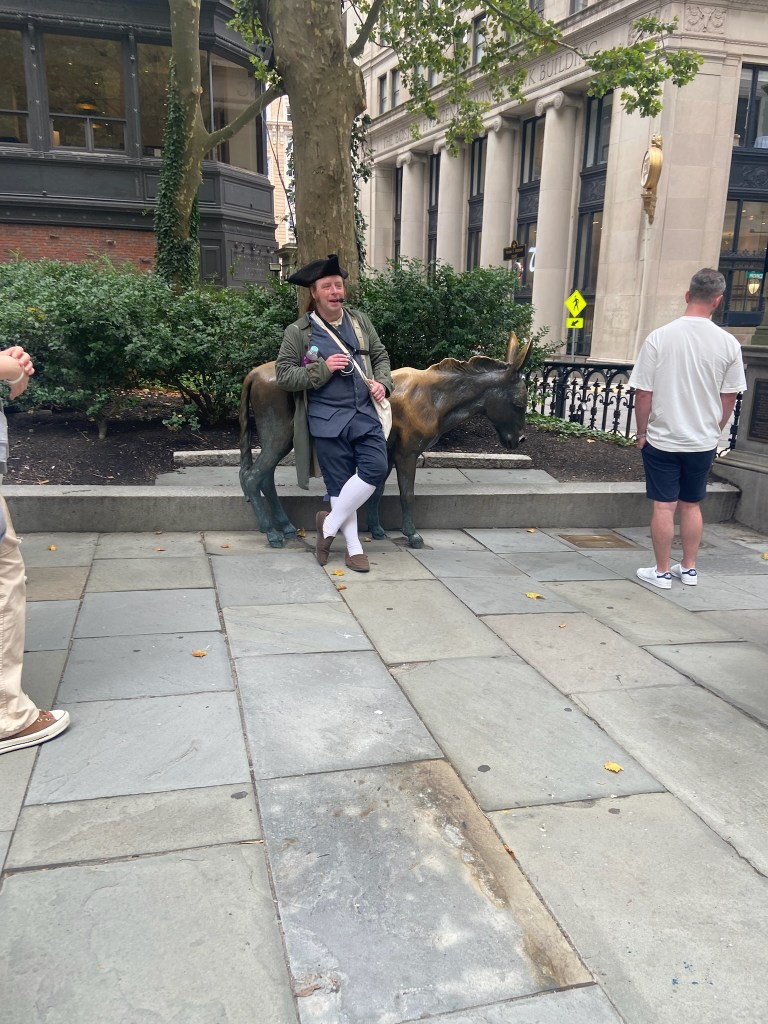
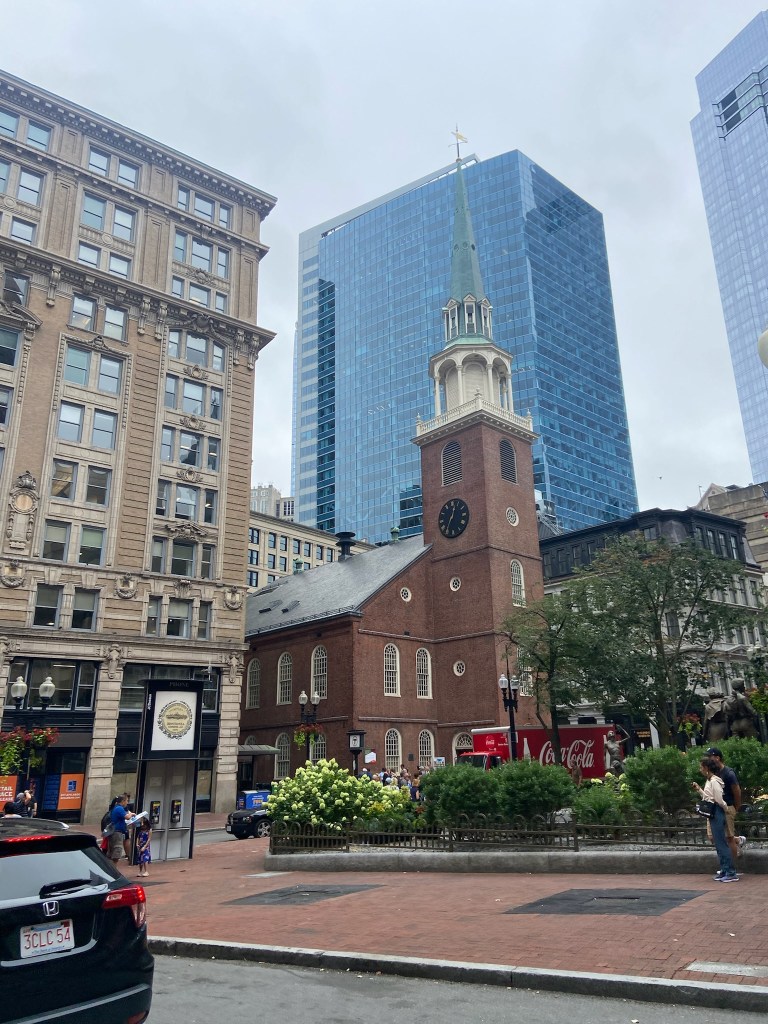
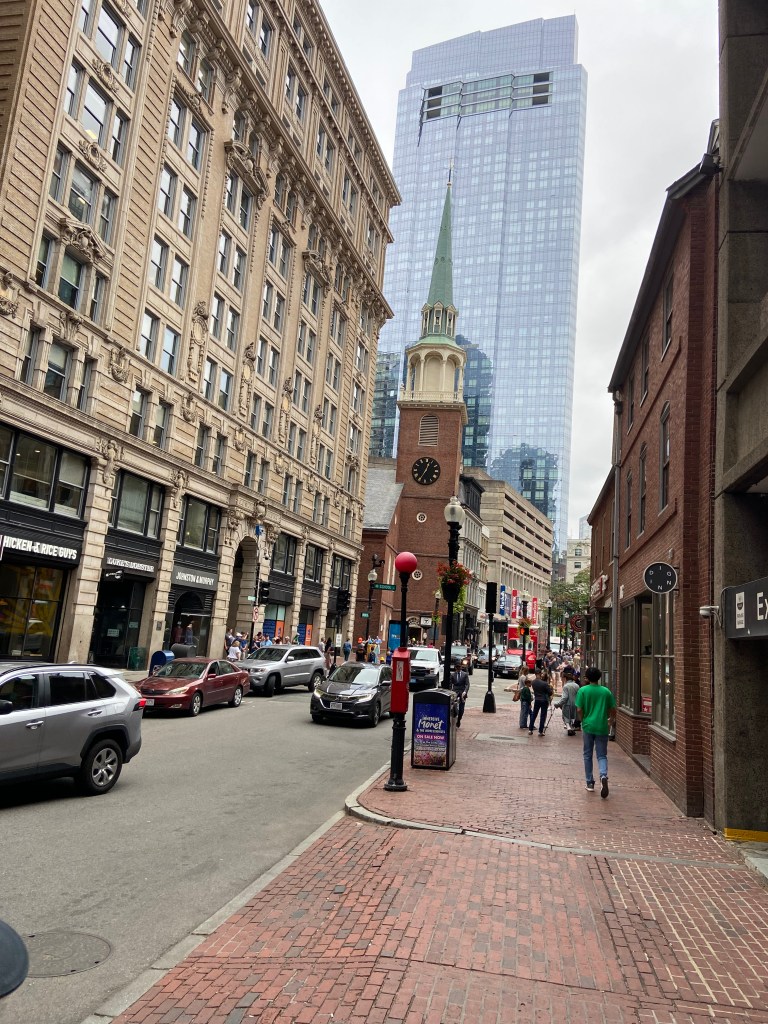
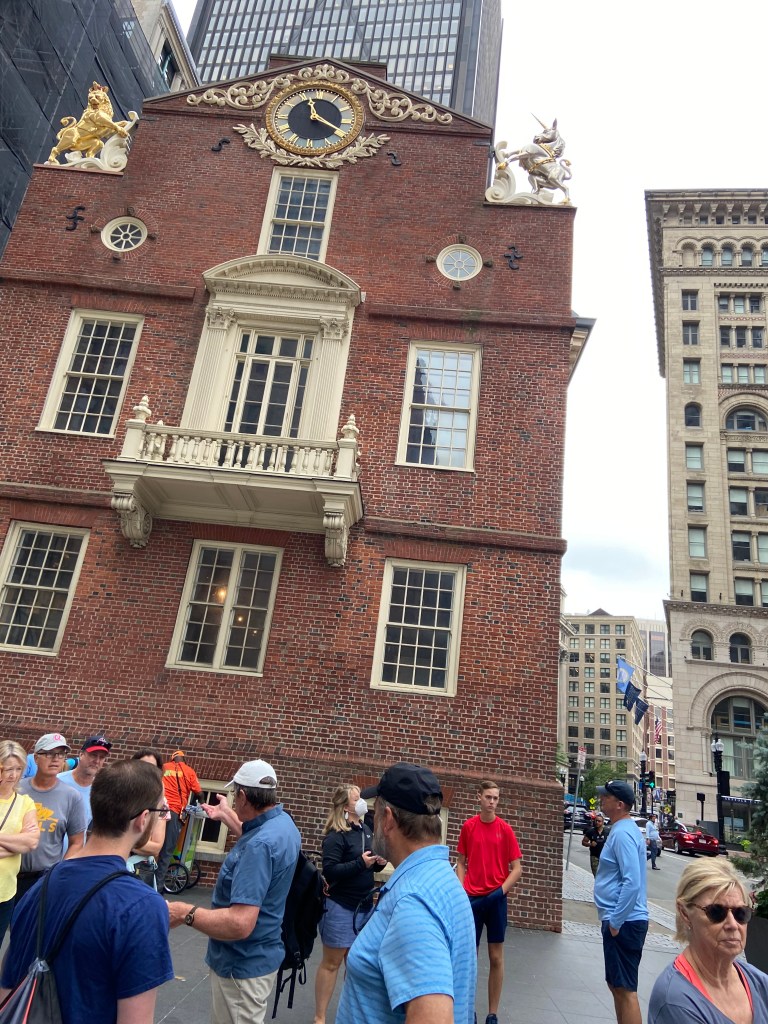
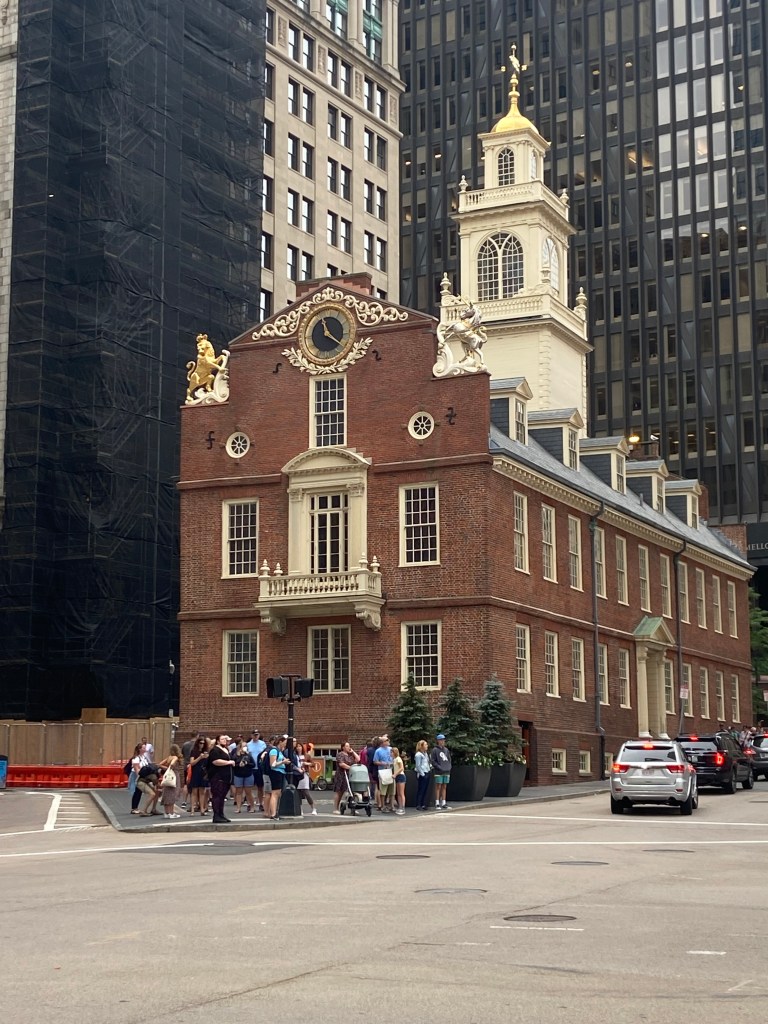
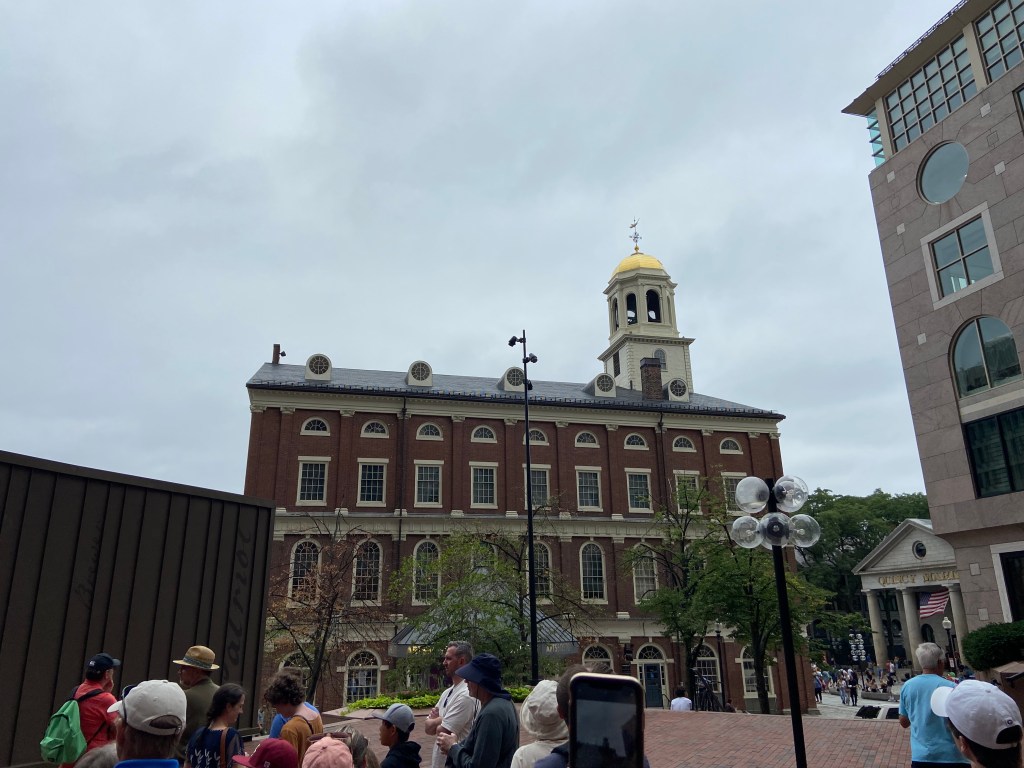
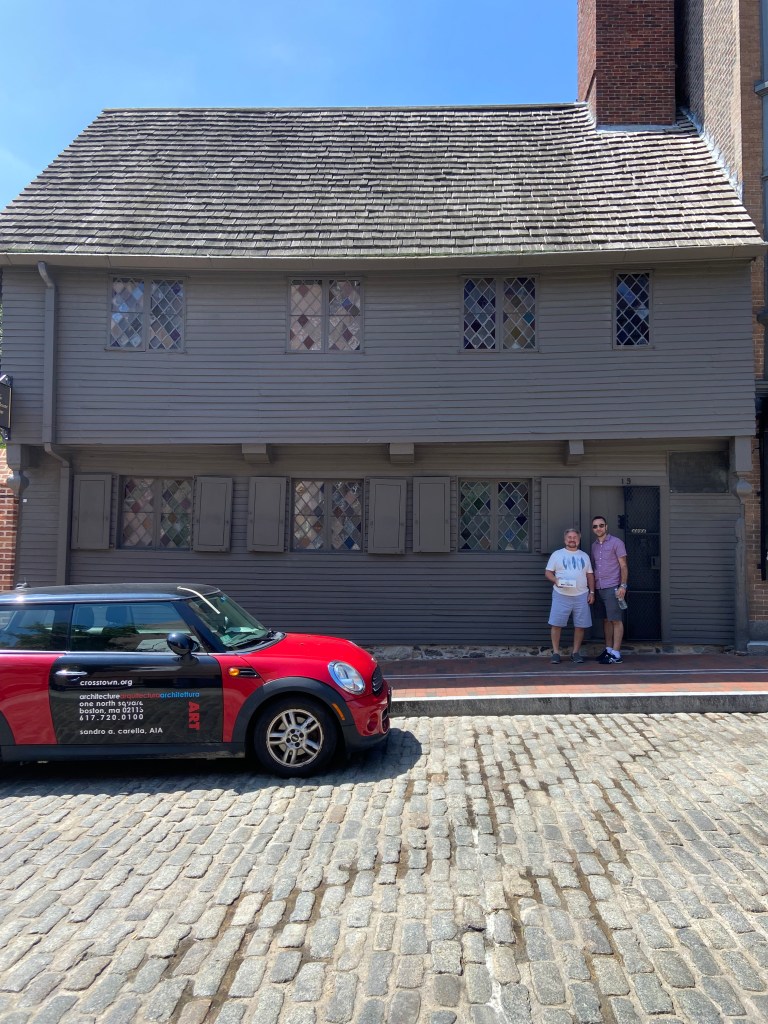
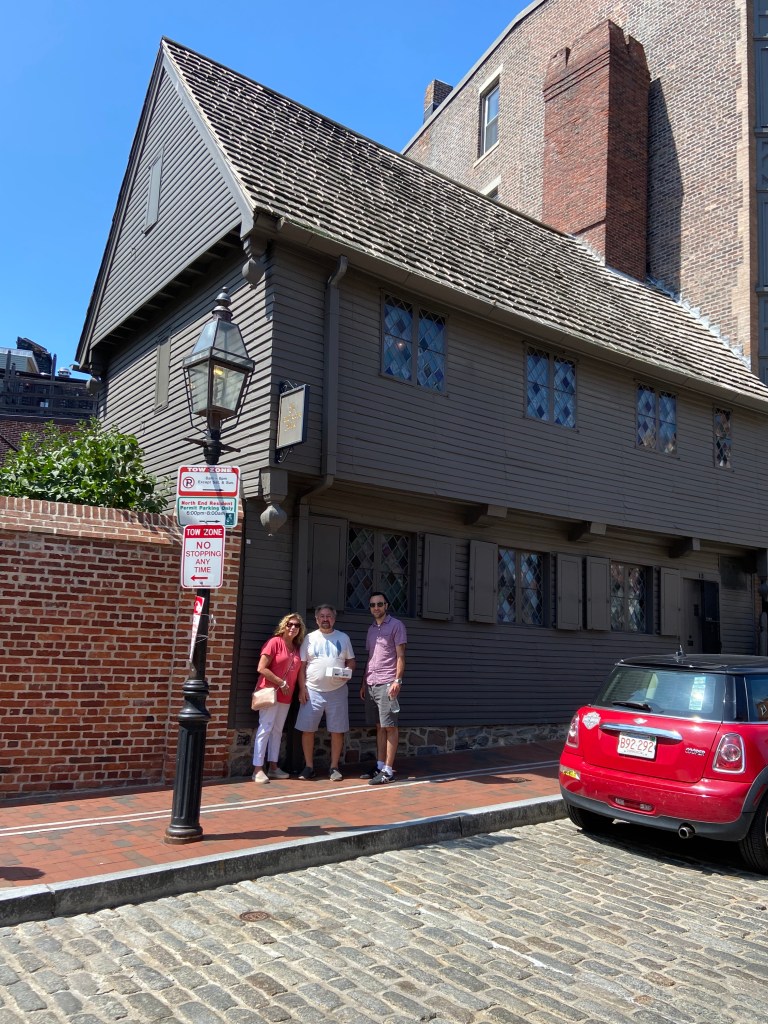
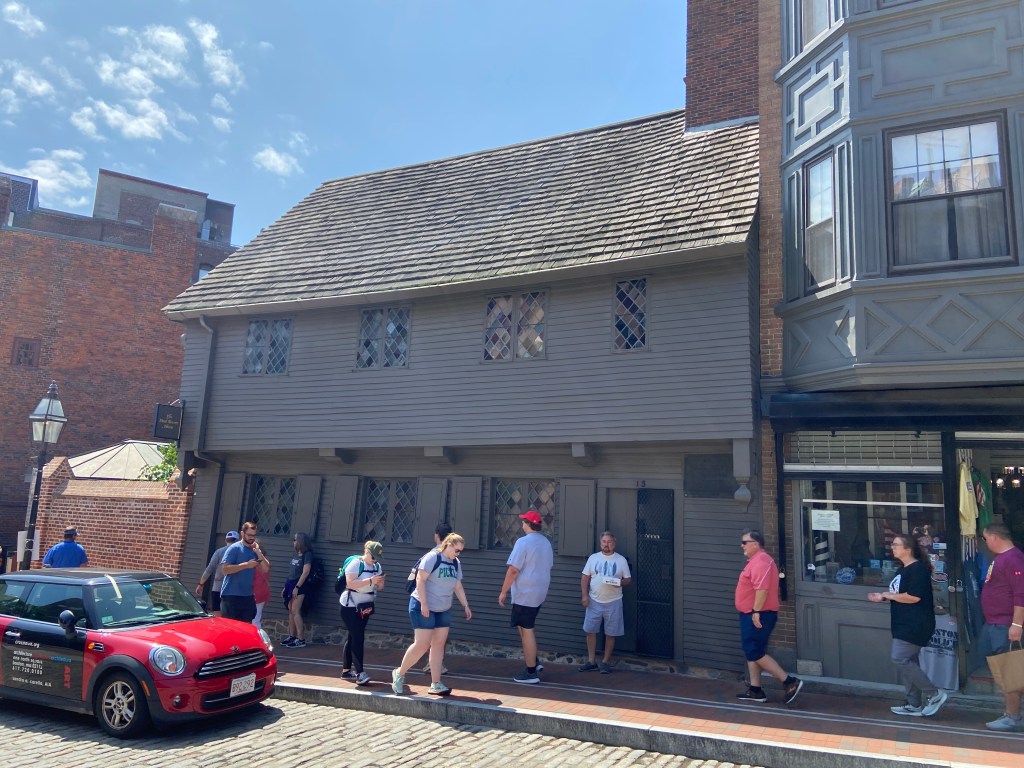
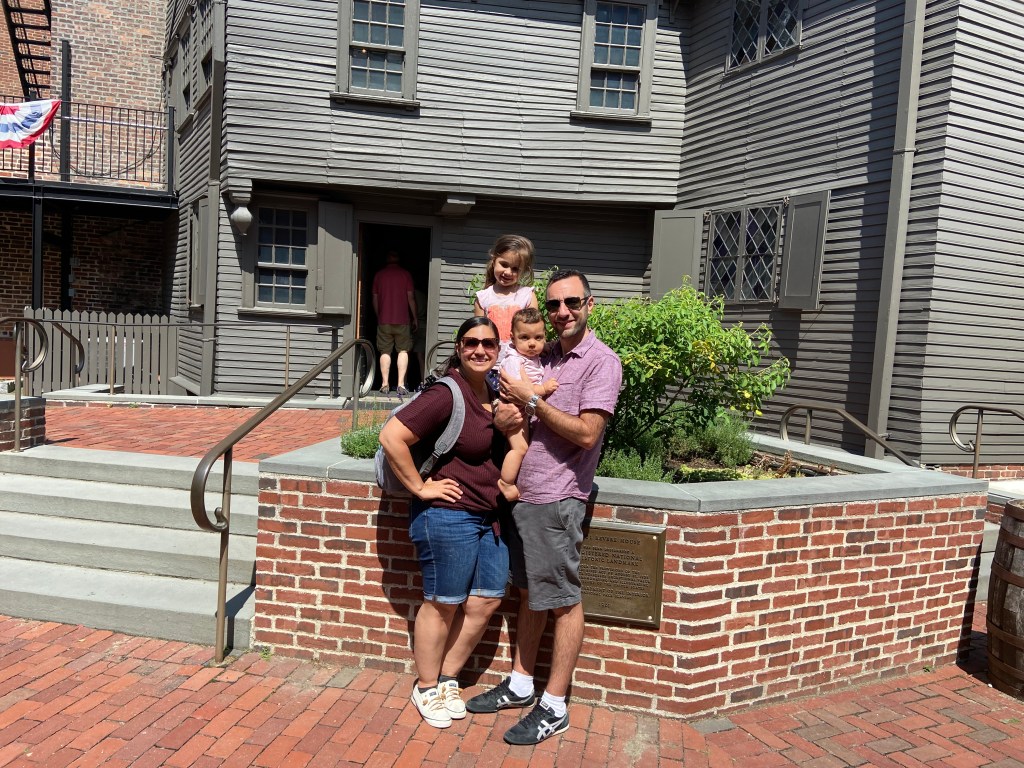
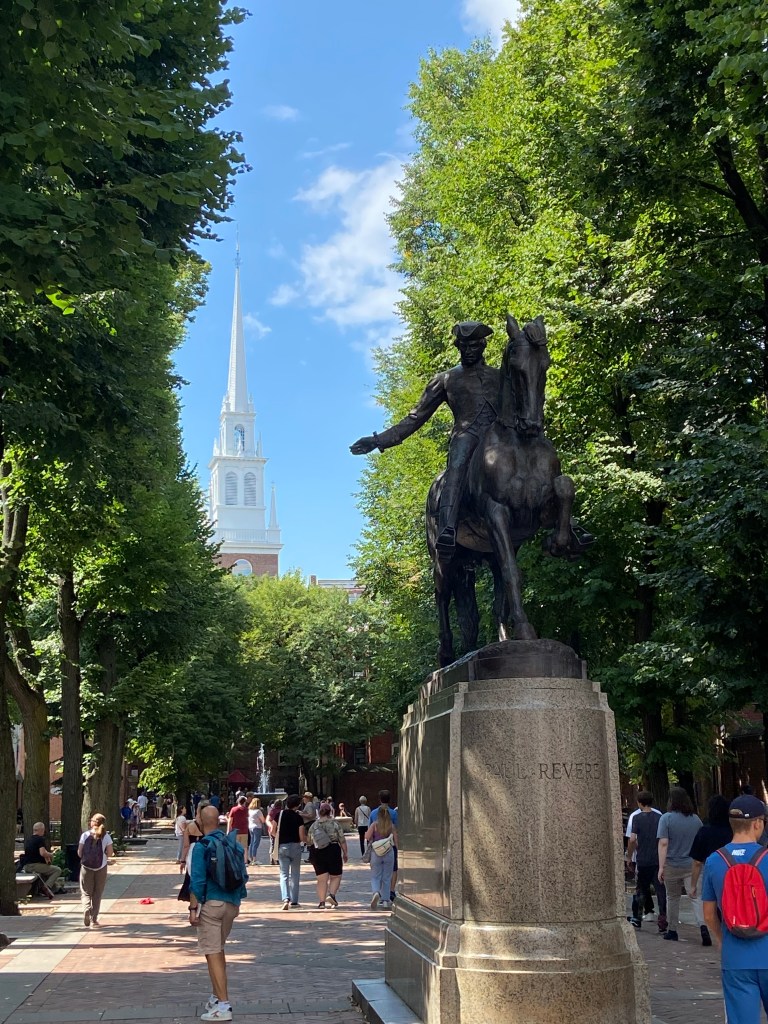
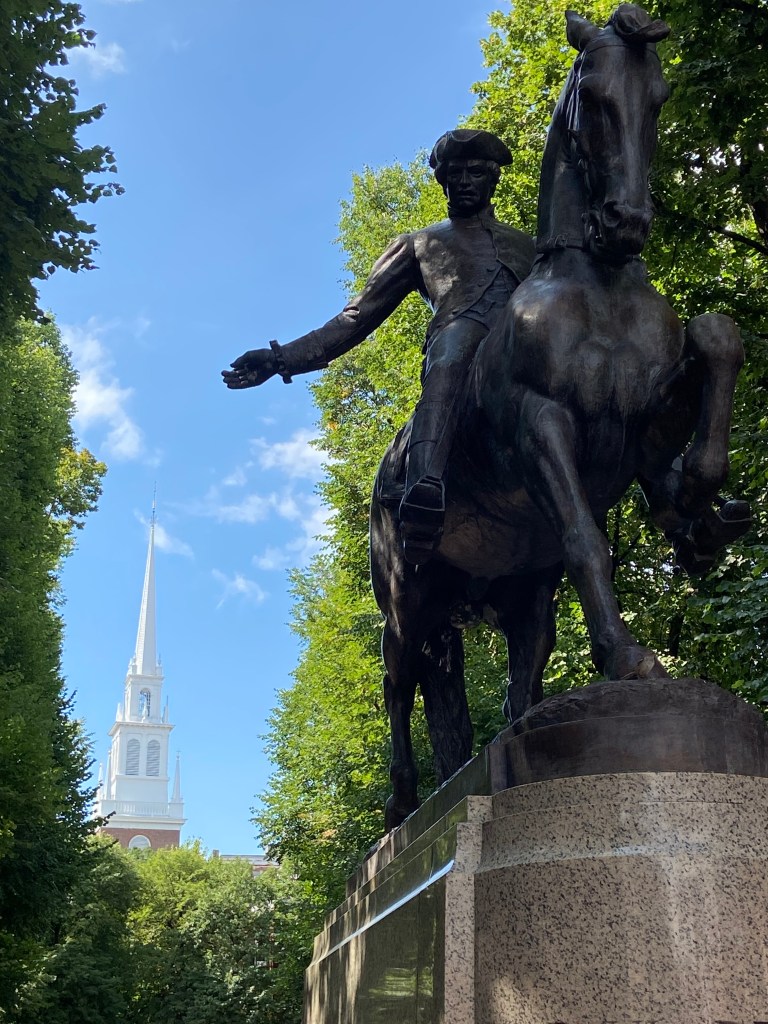
I highly suggest visiting Boston and going on the Freedom Trail with a tour guide. I particularly recommend you take your tour with Jeremiah Poope. He was extremely knowledgable and entertaining. In all of his anecdotes, he added engaging and sometimes comical tidbits. He truly made it a worthwhile experience for anyone with any level of interest and knowledge in history. We went on the “Walk Into History” Tour but there are other options as well. Below is a list of sites on the “Walk Into History” Tour. The tour ends at #11 Fanueil Hall, but Paul Revere’s House and the Old North Church are just a short walk away. Next to each site is a link to its page on the Freedom Trail website for more information about its history and significance. I’ve also included our personal photos from some of the sites.
Other sites to see that we didn’t have a chance to see this time included the USS Constitution and the Bunker Hill Monument. I’d also love to go to Fenway Park some day.
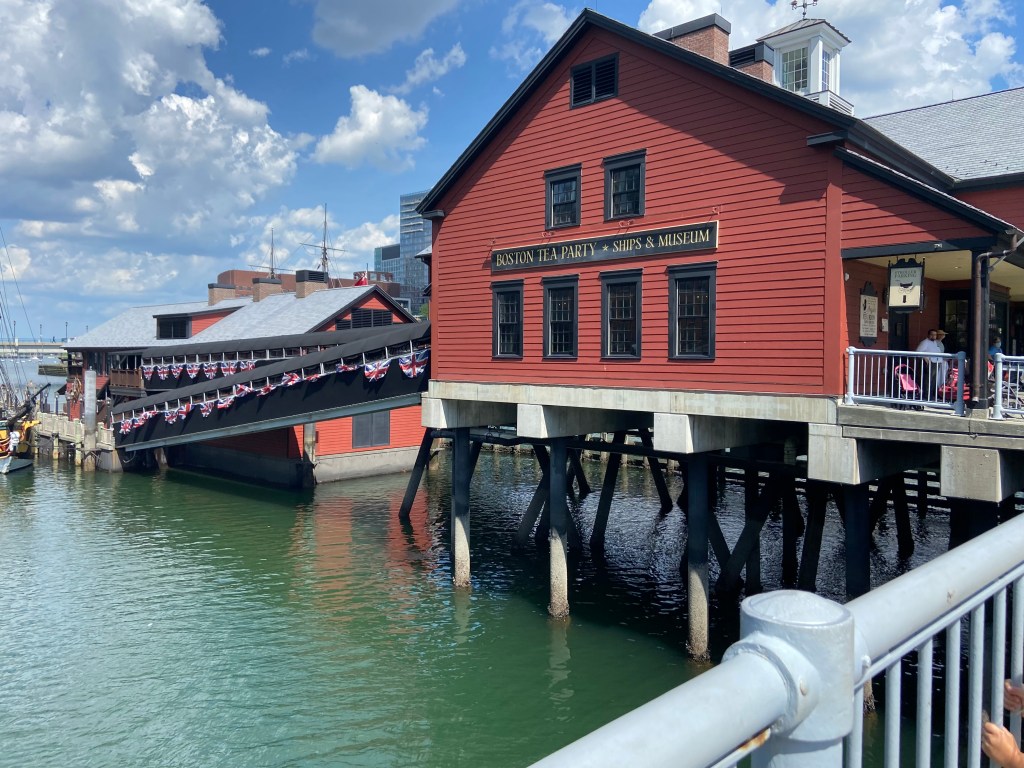
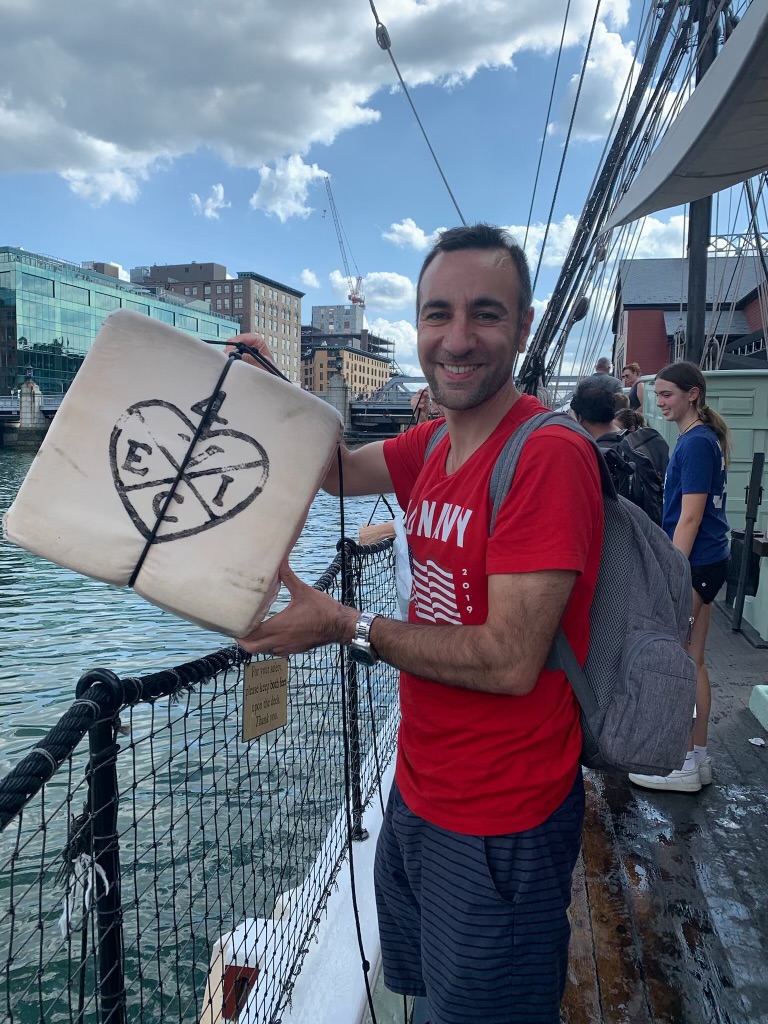
Besides the Freedom Trail, we also went to the Boston Tea Party Ships & Museum and I would highly recommend getting tickets. You first enter the “Meeting House” where live reenactors plan the Boston Tea Party and rally you and the other visitors as the colonists. You then have an opportunity to go on board and explore an 18th century ship and then throw British Tea into the harbor. You also watch, on a theater screen (Minutemen Theater) the events of Lexington and Concord. They also had a great gift shop and tea room. Overall, we had a wonderful Boston trip considering that this was our first time. For the kids, we also went to the Boston Aquarium and the Children’s Museum which we all really enjoyed. We’re looking forward to going back!
In Parts 1 (Read Here) and 2 (Read Here) of my blog post about the Massachusetts Bay Colony, I addressed why the Puritans settled there, what the conditions were like, and what daily life was like in the colony. I also discussed the Salem Witch Trials and dissent within the colony. In the third and final part, I will discuss major conflicts that the colony had with the Native Americans, as well as the long-term impact of the colony.
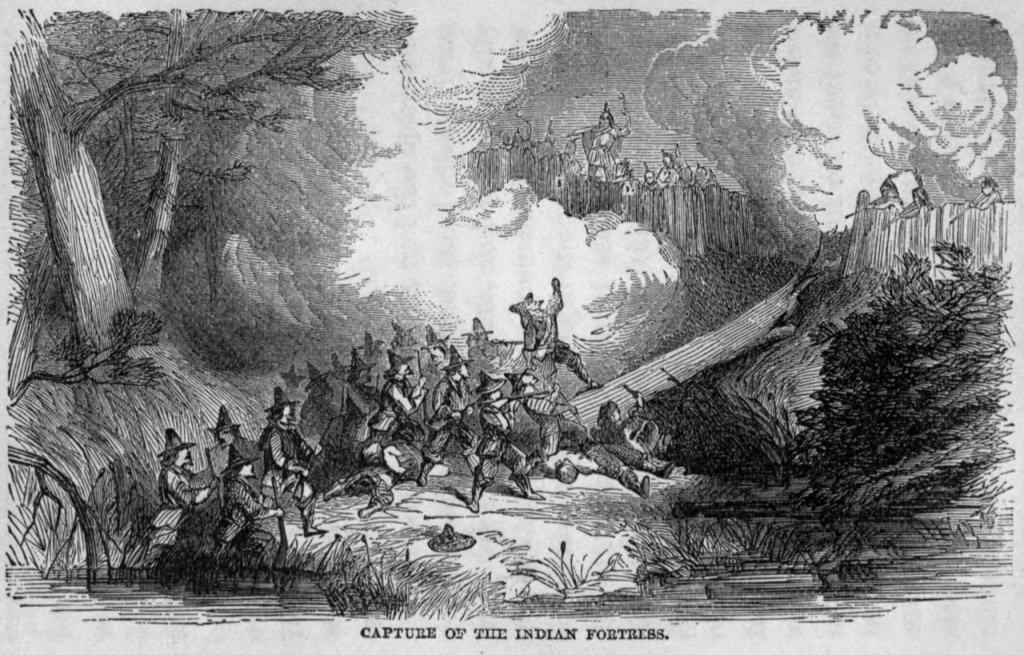
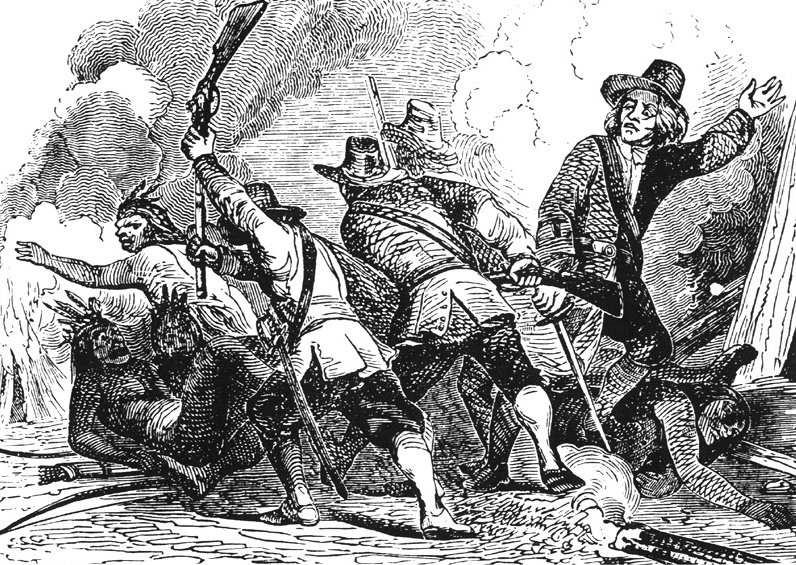
In Massachusetts, as other American colonies, the English settlers changed the landscape of the colony with little regard for the Native American way of life. The English cleared forests for farms, and built fences, houses, barns and churches. They killed wild animals that preyed on their domesticated animals. (Taylor, p. 188) Most Puritans viewed the natives as heathens who needed to be converted. “The New English saw the Indians as their opposite- a pagan peoples who had surrendered to their worse instincts to live within the wild, instead of laboring hard to conquer and transcend nature.” (Taylor, p. 188) In the first years of the Massachusetts Bay Colony, the new settlers relied on trade with the local Native American groups such as the Narraganset, Massachusetts, Wampanoag, Nipmuck and Patuxet. (Taylor, p. 189) However, the first major conflict between the colonists and the Natives broke out in 1636 with the Pequot War. Allied with the Narragansett and Mohegan peoples, the English demanded a heavy tribute from the Pequot tribe and surrender of suspects accused of killing a trader. (Taylor, p. 195) The English and their Native allies surrounded a Pequot village, setting it ablaze and killing many Pequot Natives either in the flames or in flight. The Pequots were nearly destroyed and the survivors were forced to assimilate with other local tribes.
In the 1640s, Puritan missionaries began the task of converting Native Americans to Christianity. The Natives were expected to give up their customs and religious beliefs, and become assimilated into English culture. Missionary John Eliot “warned the Indians that they were doomed if they remained in ‘so unfixed, confused, and ungoverned a life, uncivilized and unsubdued to labor and order.” (Taylor, p. 197) Natives who converted were called “Praying Indians” and they created new settlements called “praying towns.” Christianity and an alliance with English settlers appealed to some Natives of the smaller and weaker tribes. However, Praying Indians were in a difficult position, looked upon with a degree of suspicion from many English Puritans, as well as other Native Americans who held onto their traditional customs. Traditional Natives viewed the Praying Indians as traders.
A violent and bloody war called King Philip’s War broke out between the English of New England, and the Wampanoag Natives. Both sides fought alongside other Native allies. The name King Philip refers to the English nickname of Wampanoag chief, Metacom. The English were previously allies with Metacom’s father, Massasoit, but when Metacom became the head chief, he quietly prepared for a war that he believed was inevitable. (Taylor, p. 198) “In the spring of 1675 the Plymouth colonists provoked the confrontation by seizing, trying, and hanging three Wampanoag for murdering a praying town Indian who had served as a colonial informant.” (Taylor, p. 198) Violence exploded as brutal and bloody fighting took place for over a year. Food shortages, disease and a heavy casualty rate eventually weakened the Natives, and Metacom was killed in battle. Although an English victory, the colonists paid a heavy price. (McDougal, p. 54) The war is considered, per capita, the deadliest war in American history. “The figures are inexact, but out of a total New England population of 80,000, counting both Indians and English colonists, some 9,000 were killed—more than 10 percent.” (Lauterborn, historynet.com) The war ended widespread conflicts in New England, but the devastation had a lasting impact on both the English and Native populations. It would be years before Massachusetts and the other New England colonies could fully recover. (McDougal, p. 54)
Lasting Legacy
The Puritans of the Massachusetts Bay Colony, along with their successes and failures, have left behind a lasting legacy on the modern-day United States. The Restoration of the English monarchy in 1660 “terminated and discredited the short-lived revolutionary regime led by English Puritans during the 1640s and 1650s. After the Restoration, English Puritans dwindled in number, prominence, and ambition.” (Taylor, p. 185) The Great Awakening (religious revival) of the 1730s and 1740s further challenged Puritan beliefs and customs, as new Protestant sects emerged such as the Methodists and Presbyterians. While the Puritans dwindled in number, their impact on American history cannot go understated. In the early days of the Massachusetts colony, only male, Puritan Church members could vote. However, this constituted 40% of adult males, which was a large electorate compared to Europe of the 1640s. (McDougal, p. 51) Distribution of land and wealth was more even among the populace compared to the Chesapeake colonies which had wealthy planters obtaining a majority of the wealth. (Taylor, p. 171) The foundations of democratic ideals were being laid in Massachusetts with Town Meetings, in which colonists could discuss and debate current issues in their local government. (Davidson, p. 98) Massachusetts and the other New England colonies were the first colonies in which entire families came to settle and start new lives, which set the stage for further colonization and settlement. The emphasis on literacy and religion led to the earliest universities such as Harvard to educate aspiring ministers. With all of its accomplishments, there were also the dark and negative sides of intolerance for dissenters and the hysteria of the Salem Witch Trials. Democratic ideals have grown since 1630 and lessons have been learned from the shortcomings of Massachusetts. Modern Americans can never take for granted the impact that these early settlers had on the United States. The risk that they took to sail across the Atlantic Ocean for a new and better life laid the foundations for the character, heritage, and strong-will of the American spirit. They planted the seeds of democracy and freedom that Americans hold dear. The ideas that they developed for their representative governments, inspired America’s founding fathers who wrote these ideas into the Constitution.
Works Cited
Taylor, Alan/ Foner Eric (EDT). American Colonies The Settling of North
America. Penguin Group USA, 2002.
Mcdougal, Holt. Americans, Grades 9-12 New Jersey: Mcdougal Littell the
Americans. Holt Mcdougal, 2007.
Davidson, James West., et al. The American Nation. Prentice Hall, 2000.
Bremer, Francis, J., John Winthrop: America’s Forgotten Founding Father,
Oxford University Press, 2005
Lauterborn, David. “Blood and Betrayal: King Philip’s War.” HistoryNet,
In Part 1 (Read Here) of my blog post on the Massachusetts Bay Colony, I addressed why the Puritans settled there, what the conditions were like, and what daily life was like for the settlers. In Part 2, I discuss the Salem Witch Trials and Dissent within the colony.
As a result of strict adherence to the Puritan religious practices, laws in Massachusetts were also strict. Many crimes carried the death penalty, including witchcraft. (Davidson, p. 99) Drunkenness, swearing, theft and idleness were against the law, and the courts would decide the punishment. (Davidson, p. 99) Throughout New England, some colonists could be accused of crimes on faulty evidence. “In 1642 the New Haven authorities suspected George Spencer of bestiality when a sow bore a piglet that carried his resemblance. He confessed and they hanged both Spencer and the unfortunate sow.” (Taylor, p. 181) The religious fanaticism of Massachusetts led to one of the most bizarre and well-known episodes in American history, the Salem Witch Trials.
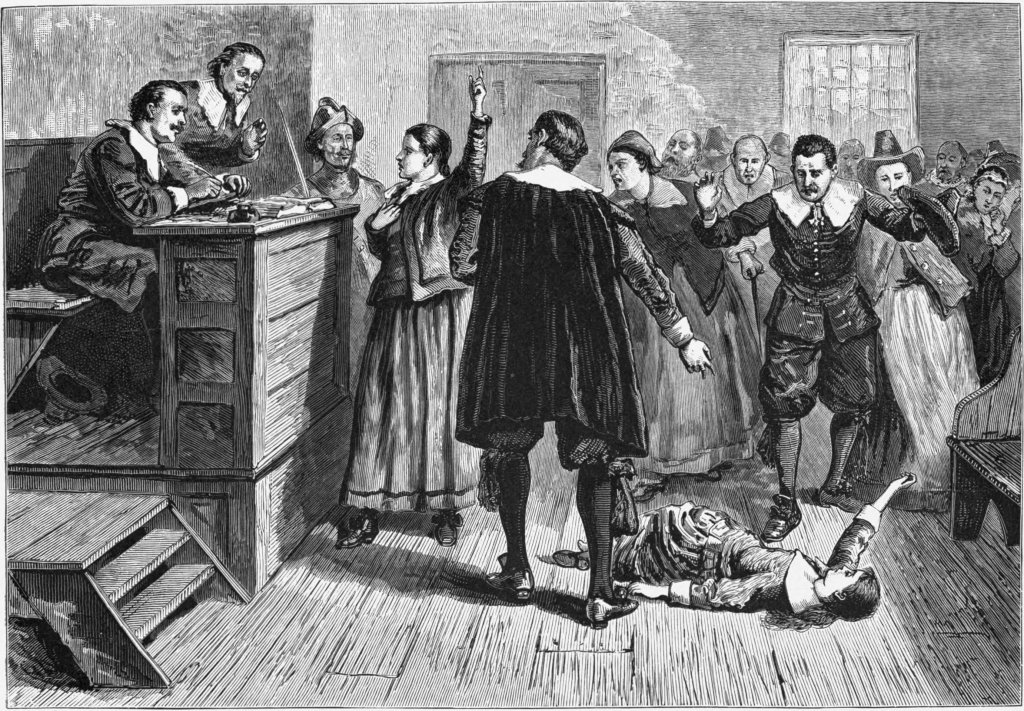
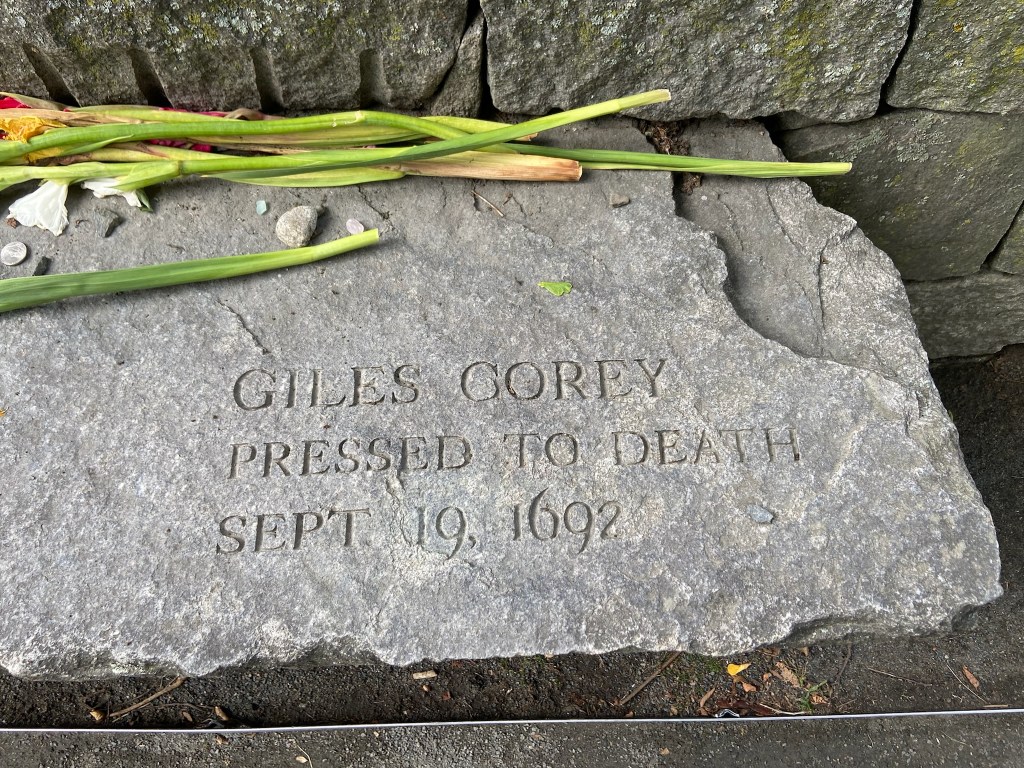
In 1692, two girls, ages 9 and 11, and related to the village minister, began to act strange; convulsing, screaming and uttering strange sounds. They blamed their condition on the witchcraft practiced by a slave woman named Tituba. From there, the accusations spread. Most of those who were first accused were society’s outcasts and those who didn’t follow all of the Puritan norms. They could be poor beggars or single women considered too independent. When the girls accused others of witchcraft, the situation grew out of control, and those who were accused tried to save themselves by naming other “witches”. The accusations continued until the girls accused such prominent citizens as the governor’s wife. (McDougal, p. 82) The causes of these events have been debated by historians and have highlighted both the religious zeal, as well as the social and economic divisions in Salem. Many of the accusers were from Salem Village which had small farms. Many of the accused were from Salem Town, a port town where its merchants and traders were becoming wealthier. Therefore it appears that the accusations reflected the grudges held between members of differing social classes within Salem. During the trials, the court allowed Spectral Evidence. Witnesses could claim that the spirit of the accused witch visited and tormented them in their dreams. This was seen as legimiate evidence by the court and could be used to condemn the accused. The witch trials displayed the religious enthusiasm of a people who believed that both God and Satan were amongst them and that Satan would use individuals to terrorize others. As a result, nineteen people were hanged and another, Giles Corey, was crushed to death with stones. Four or five accused witches died in jail, and about 150 more were imprisoned. (McDougal, p. 82) Finally, after about a year of witch hunts, the trials finally came to end when people began to conclude that the trials and accusations had gotten out of control. While this was a horrifying and tragic event, Americans learned many lessons from what transpired in Salem, such as the right to a fair trial, innocent until proven guilty, the importance of the separation of church and state, and religious freedom. Witch hunts were not new in 1692. Witch trials had occured in Europe for centuries. They were exceptionally prevalaent during The Thirty Years War (1618- 1648), a war fought mostly in modern-day Germany between Protestants and Catholics.
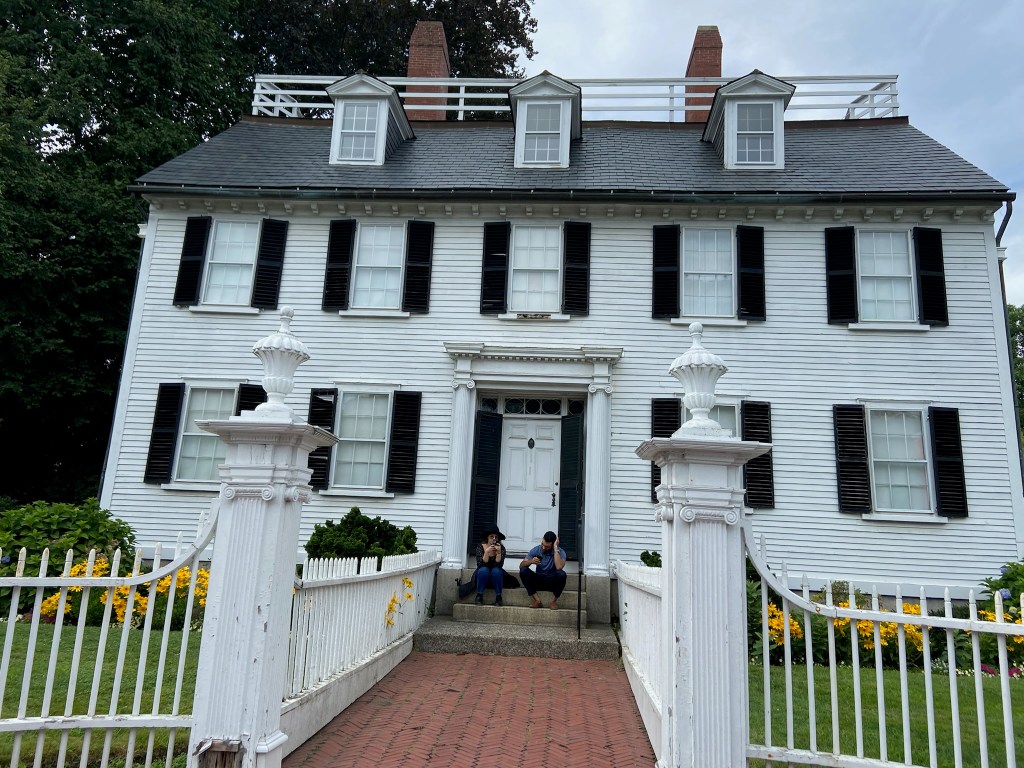
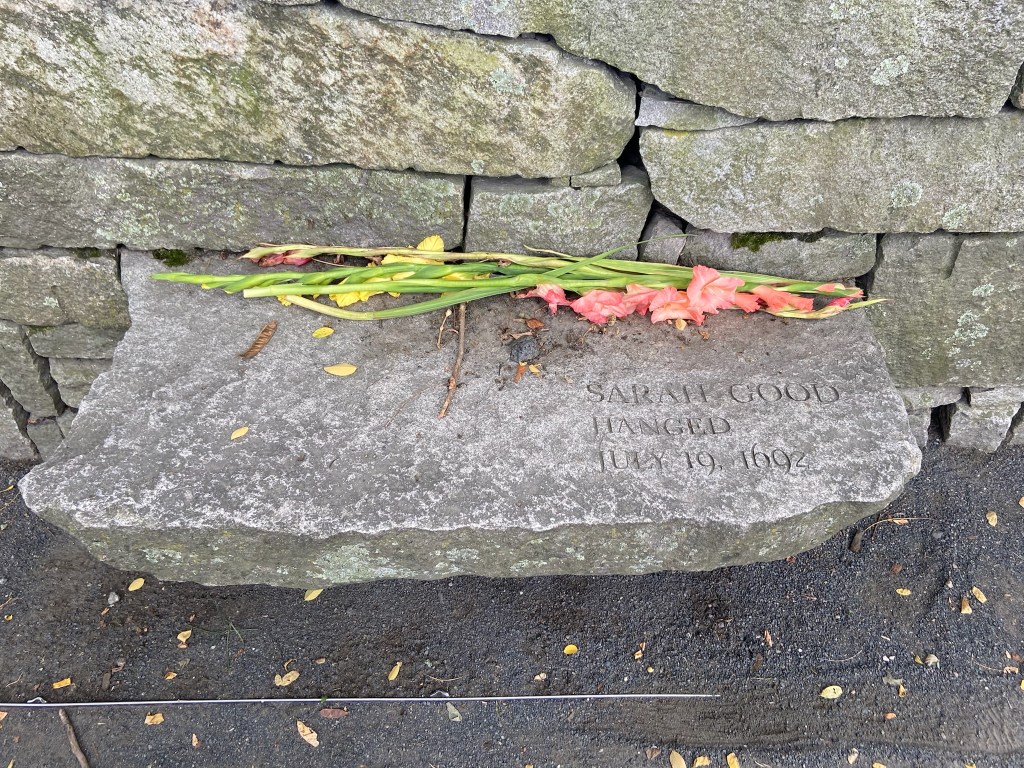
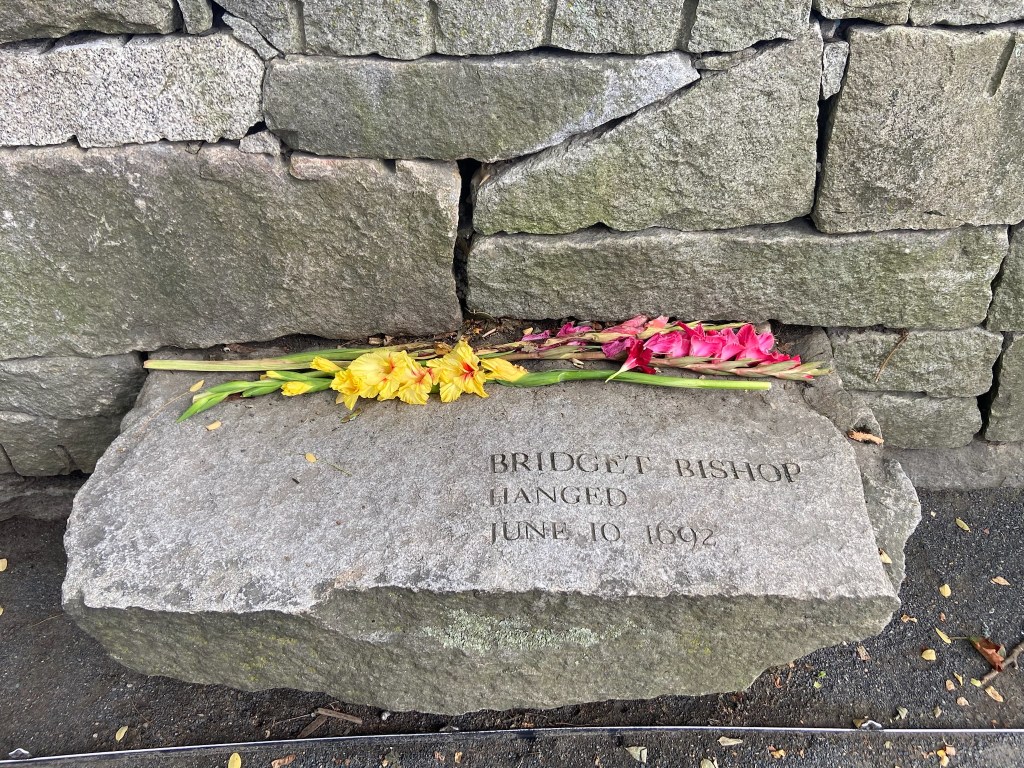
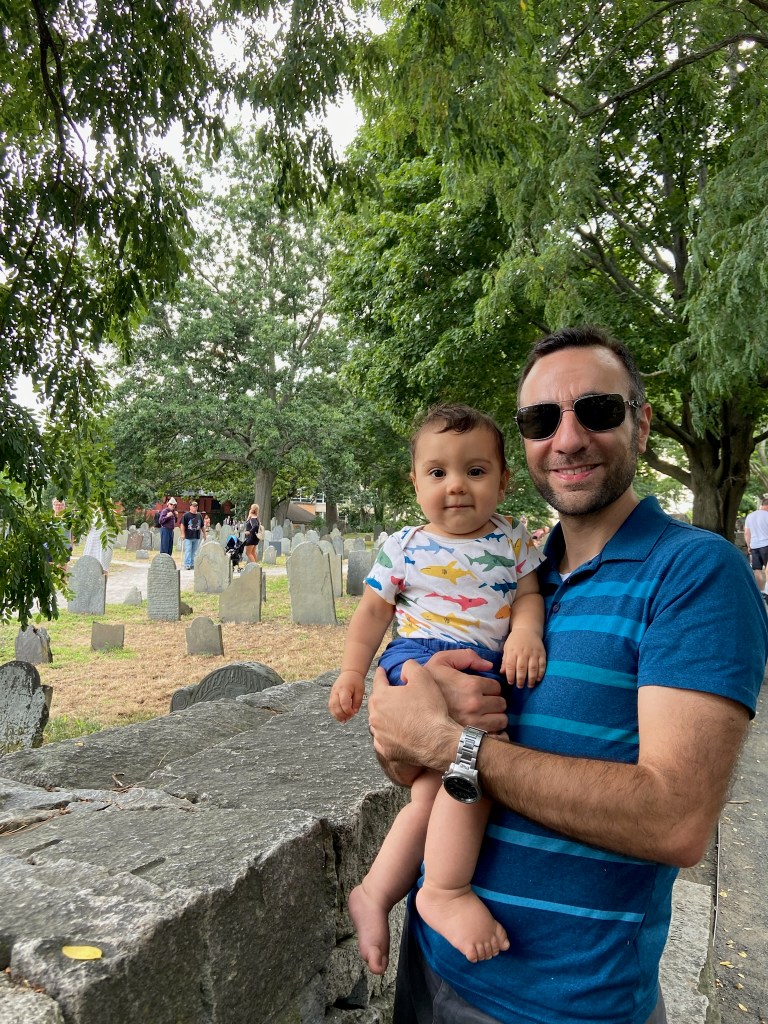
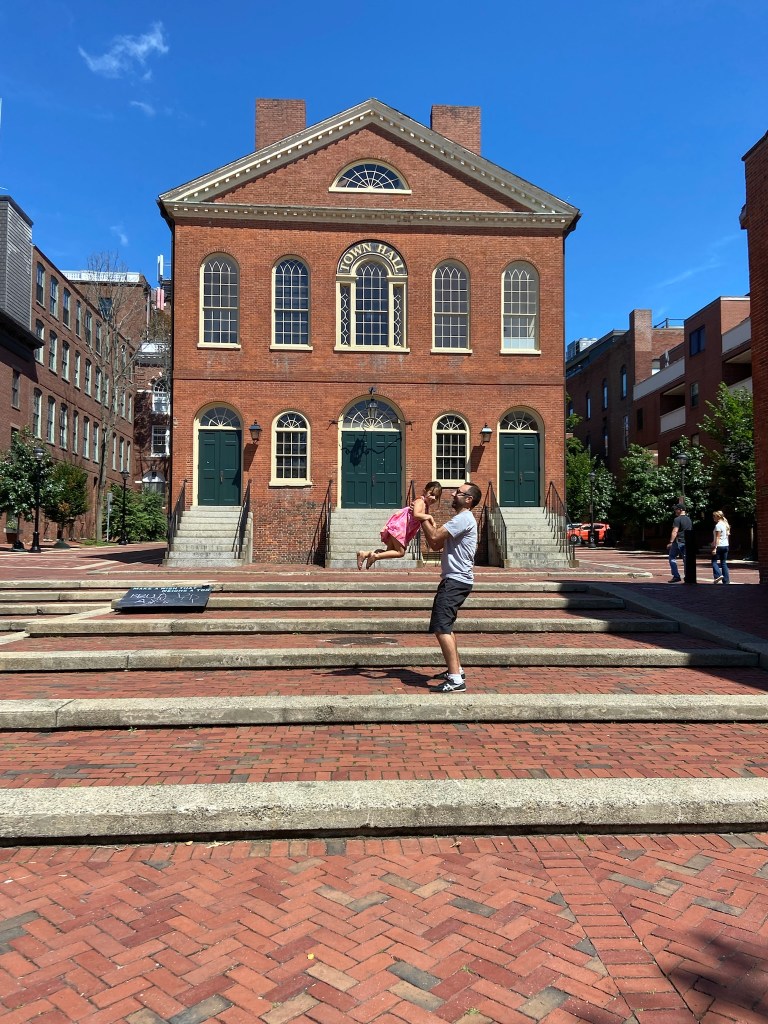
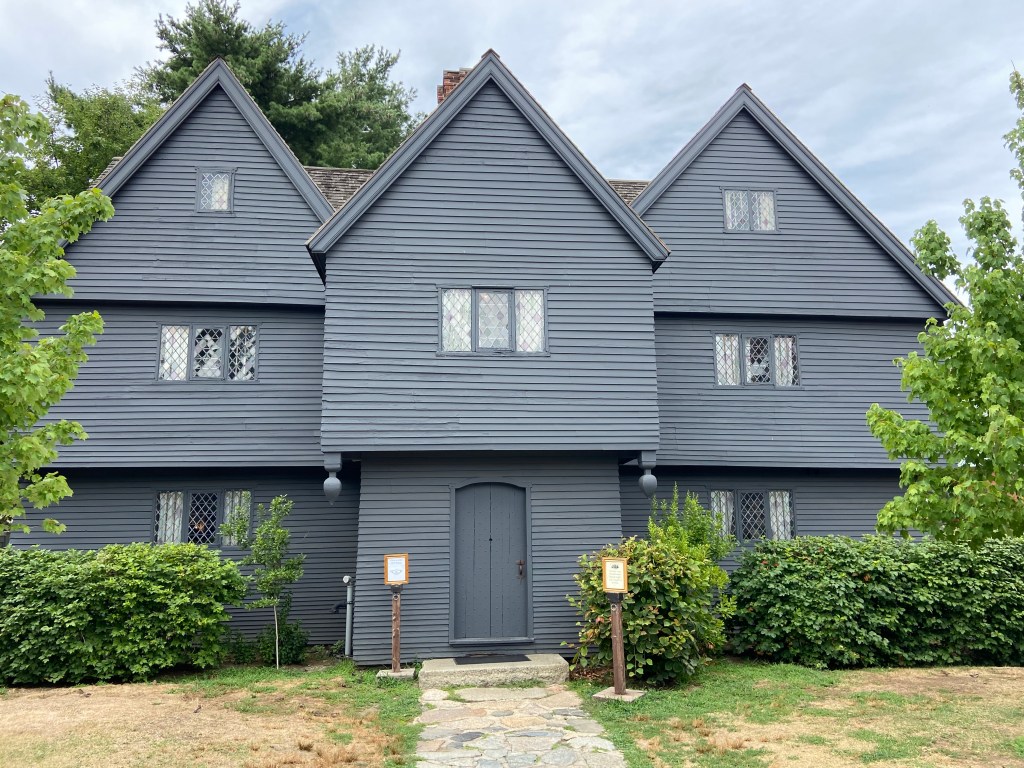
I’ve always loved teaching about the Salem Witch Trials because I am always amazed by the hysteria that struck Salem. To me, the events of the Salem Witch Trials show the damage that can be done when people lose a sense of reality and are completely overcome with madness like the settlers of Salem. I’m intrigued by the different characters of the Salem Witch Trials story, as well as the different motivations that people had to accuse others of witchcraft. In 2022 my family and I were able to visit Salem. A couple of the sites that we saw there included the Salem Witch House (which is the only structure still standing with direct ties to the trials), the Salem Witch Trials Memorial, and the Old Town Hall, shown in the pictures below.
The Witch HouseHouse seen in the movie “Hocus Pocus”Salem Witch Trials MemorialSalem Witch Trial MemorialOld Town HallThe Witch House
Disagreeing with the Puritans
Early in the history of the Massachusetts Bay Colony, a few influential individuals felt that the Puritan-led government had too much power. Those who spoke out against the colony’s leaders or their religious practices could be arrested or banished from the colony. The Puritans were “dismayed by people who publicly promoted an alternative form of Protestantism.” (Taylor, p. 181) In 1636, Roger Williams was a Puritan preacher who held two controversial views: English settlers had no right to claim land unless they paid the Native Americans, and government officials had no right to punish settlers for their religious beliefs. (McDougal, p. 52) Williams’s belief in religious toleration angered the General Court, and he was to be arrested and returned to England. However, Williams fled Massachusetts and headed south to the Narragansett Bay, where he purchased land from the Natives and set up a new colony, called Providence, later the capital of the Rhode Island colony. There, Roger Williams guaranteed a separation of church and state, and religious freedom. (McDougal, p. 52)
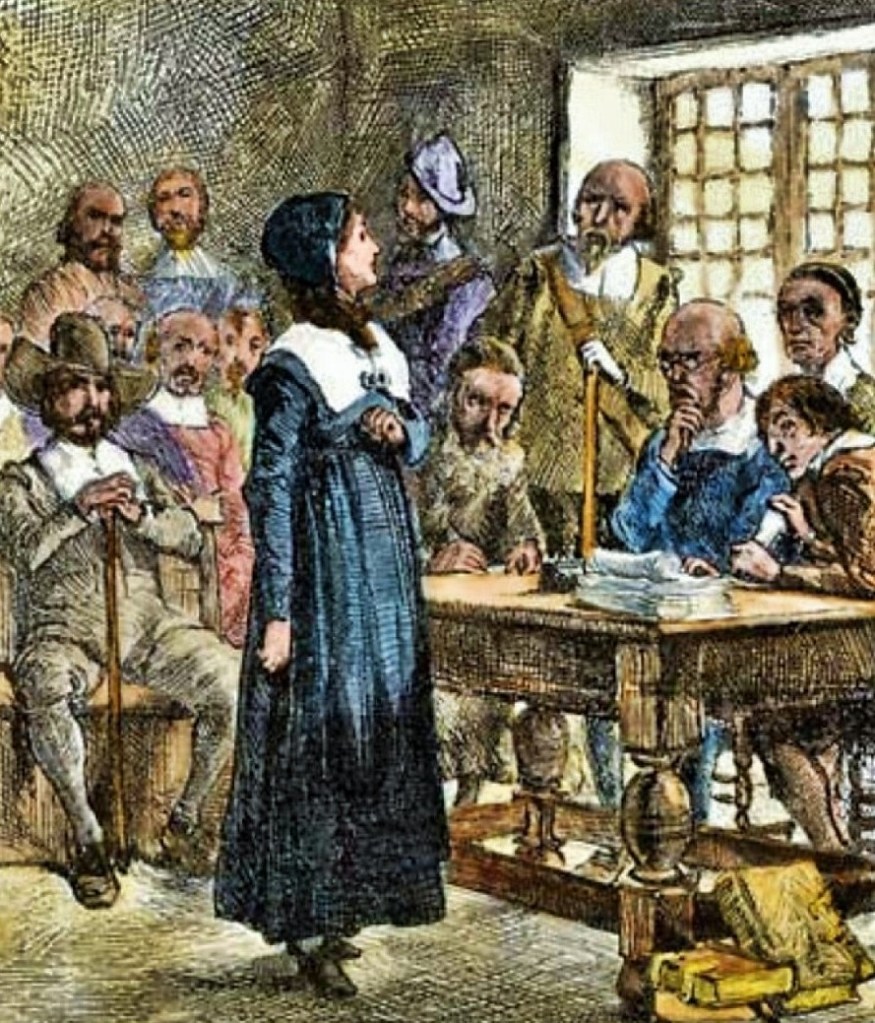
Another dissenter was Anne Hutchinson who became a threat to the Puritan Church when she began having meetings at her house, expressing her own religious views and even criticizing Sunday sermons. According to Puritan belief, women did not have a right to explain God’s law, and she was put on trial. In 1638, she was banished from the colony and headed to Rhode Island. (McDougal, p. 52) Another Puritan minister, Thomas Hooker also believed that the government had too much power. He led about 100 settlers out of Massachusetts Bay and headed west. They built a town on the Connecticut River and called it Hartford. In the Connecticut Colony, all men who were property owners could vote, including those who were not members of the church. They limited the power of the Governor, and extended the idea of representative government. (Davidson, p. 96)
In Part 3 (Read Here), I will address conflicts that Massachusetts Bay settlers had with Native Americans, including a devastating war called King Philip’s War. I will also discuss the legacy of the Massachusetts Bay Colony.
Anne Hutchinson on Trial
Works Cited
Taylor, Alan/ Foner Eric (EDT). American Colonies The Settling of North
America. Penguin Group USA, 2002.
Mcdougal, Holt. Americans, Grades 9-12 New Jersey: Mcdougal Littell the
Americans. Holt Mcdougal, 2007.
Davidson, James West., et al. The American Nation. Prentice Hall, 2000.
Bremer, Francis, J., John Winthrop: America’s Forgotten Founding Father,
Oxford University Press, 2005
Lauterborn, David. “Blood and Betrayal: King Philip’s War.” HistoryNet,
I am always intrigued to read and learn about the Puritans and the Massachusetts Bay Colony. I find the Puritans to be one of the most fascinating groups of people to study. On one hand, they disagreed with the strict practices and intolerance of the Church of England (The Anglican Church). And so they came to America for “religious freedom” but were very strict and intolerant towards other branches of Christianity themselves. Their religious fanaticism is evident in the events of the Salem Witch Trials. On the positive side, the Puritans’ ideas of representative government helped lay the foundations of the institutions that we still hold dear. From the Massachusetts Bay Colony, settlers branched out to settle the rest of New England. Like the Jamestown settlement of 1607, the Plymouth and larger Massachusetts settlements are truly remarkable stories. The odds of these first colonies surviving did not look promising at the start and the early settlers had to overcome extreme hardships. The early colonists found a way to survive and create the first permanent English settlements in North America. In my three-part blog post I address the following questions relating to the Massachusetts Bay Colony: Why did they settle there, what were the conditions like, and how did the colony become sustainable? I take a look at a typical day in the Massachusetts Bay Colony. I also discuss the significant historical events of the Salem Witch Trials and King Philip’s War. Finally, I discuss the long-term legacy of the Massachusetts Bay Colony.
Why did they settle there?
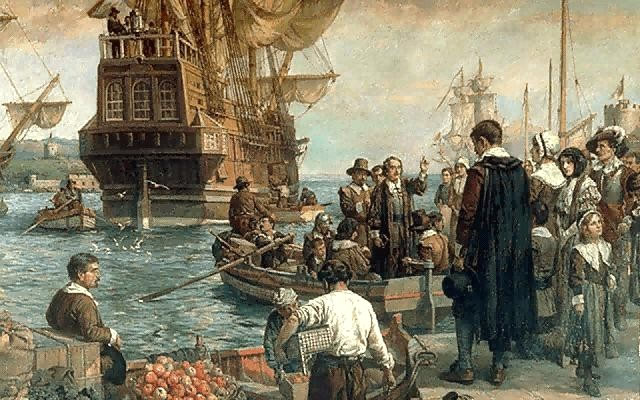
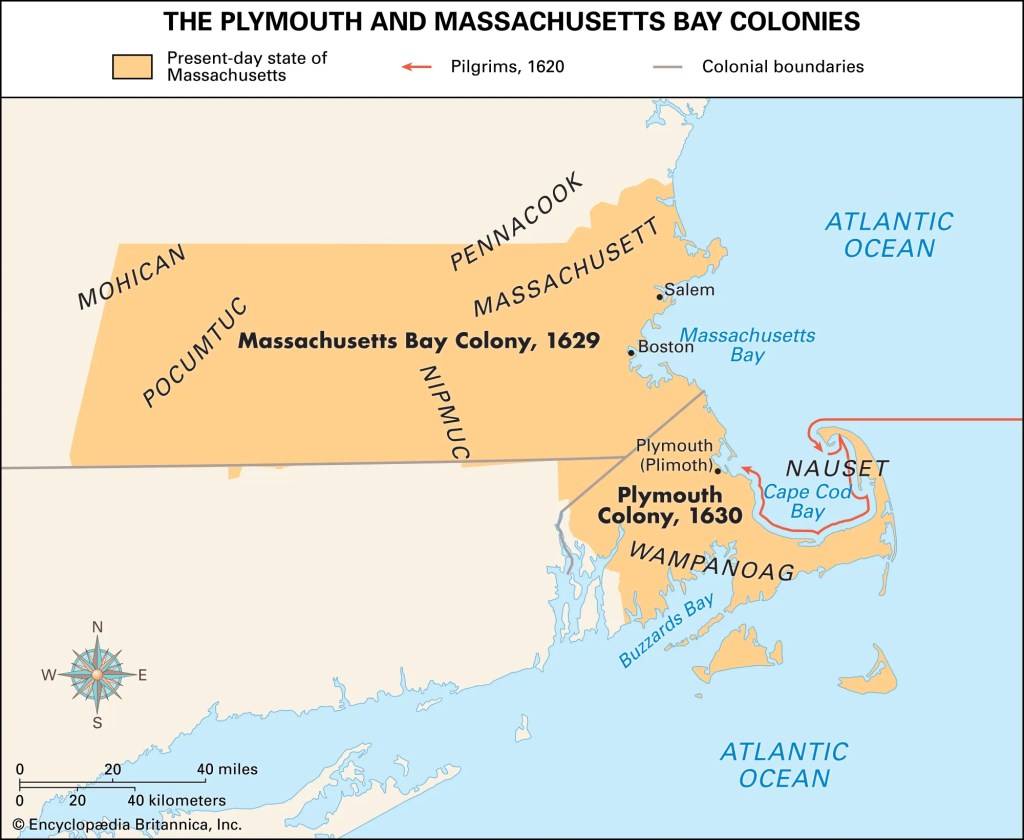
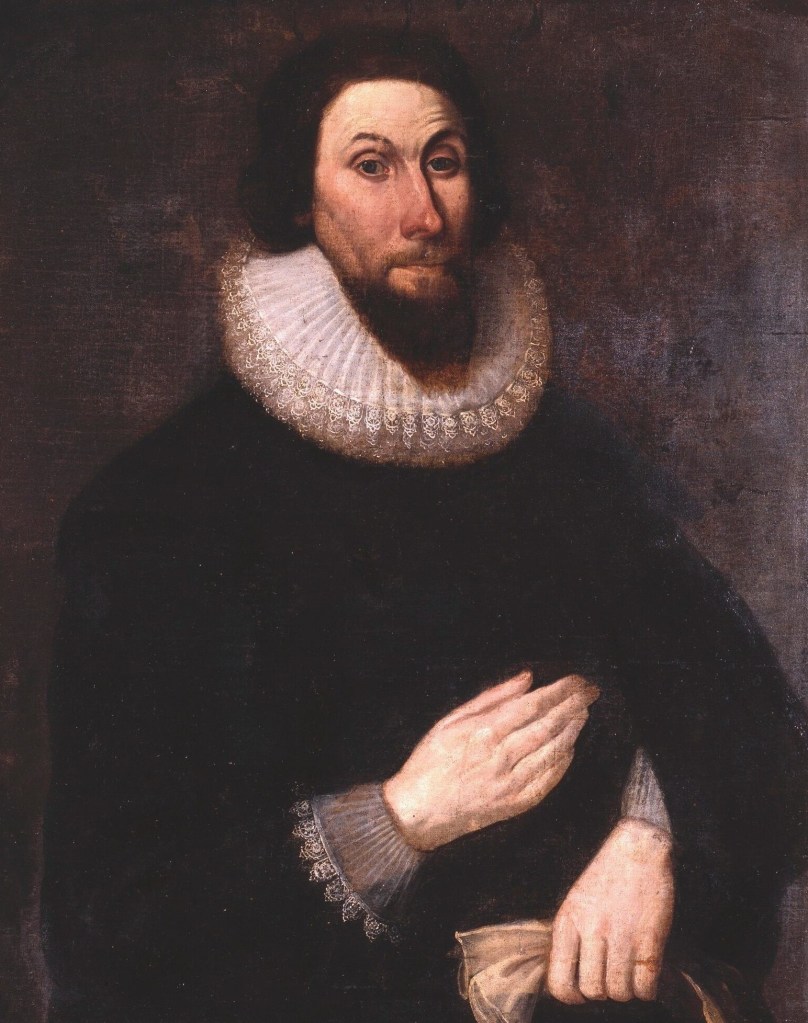
The Massachusetts Bay Colony was founded in 1630 by a group of Puritans from England. Its founding had its history in the religious disagreements of the English Reformation. English Puritans wanted to “purify” the Anglican Church from within, ridding the religious practices that resembled Catholicism. Separatists didn’t think this was possible, and instead, chose to create their own congregations. While facing persecution, the Separatists, or “Pilgrims” sought freedom in the New World, where they could practice their religion as they pleased. Ten years before the Massachusetts Bay Colony got underway, a previous colony called the Plymouth Colony was settled on the coast of Massachusetts in 1620 for the same reasons of religious freedom and new economic opportunities. En route to Plymouth, 41 settlers signed the Mayflower Compact, an agreement for the colonists to govern themselves, a beacon for early representative government. The early Pilgrims faced a difficult first winter and nearly half of the colonists died. (Davidson, p. 89) The survival of the Plymouth colonists laid the foundations for the later Massachusetts Bay Colony. As an early leader of the Massachusetts Bay Colony, John Winthrop, citing scripture, claimed that the new colony would be a “City upon a Hill.” (Bremer, p. 171) The strong religious convictions of the early Puritans impacted all aspects of colonial life in New England. Eventually, the Plymouth Colony was absorbed into the Massachusetts Bay Colony.
John Winthrop
What were the initial conditions at first landing?
The colonists at the Massachusetts Bay Colony faced an unfavorable climate in New England. “A northern and hilly land of dense forests, sharp slopes, stony soils, and a short growing season, New England demanded hard labor to make a farm and offered little prospect of getting rich.” (Taylor, p. 159) Unlike the settlers of Virginia, who benefitted from long growing seasons and fertile soil, the Massachusetts Bay Colony had to deal with more challenging conditions, and they made the most of the resources available to them. While the Virginia colony was founded mostly by men searching for gold and wealth, the settlers of the Massachusetts Bay Colony consisted of entire families, looking to begin a new life in North America. In the first year of the colony’s settlement, seventeen ships arrived with about 1,000 English men, women and children, who were mostly Puritan. (McDougal, p. 50) The emigration of Puritans to Massachusetts starting in 1630 is referred to as the “Great Migration.” (Taylor, p. 165) The migration was greater in size and more thorough in planning than all previous expeditions to North America. The port town of Boston became the capital. (McDougal, p. 50) Throughout the 1630s and 1640s, the Puritans began to spread out from the coastal towns, and eventually founded new colonies such as Connecticut and Rhode Island. By 1660, 20,000 of the region’s 33,000 inhabitants resided in Massachusetts. (Taylor, p. 166)
How did the colony become sustainable?
Massachusetts was sustainable because of the Puritan work ethic as “the religious and the economic were interdependent in the lives of people who saw piety and property as mutually reinforcing.” (Taylor, p. 166) While New England demanded more labor and produced smaller profits, it also permitted longer and healthier lives in comparison to the Chesapeake colonies. This was caused by faster-flowing rivers and streams which reduced diseases such as malaria or dysentery. (Taylor, p. 170) By 1700, New England’s colonial population was the healthiest, most populous and the most democratic in terms of the distribution of property. Because of the shorter growing season and rocky soil, Massachusetts colonists could not grow the cash crops of the South. Instead, Massachusetts raised small crops such as wheat, rye, maize, beans, potatoes, pumpkins, squash, and other garden plants, but these crops were mostly for the family. (p. Taylor, p. 171) The Massachusetts colonists also raised livestock such as pigs, sheep, cattle, oxen, and horses. (p. Taylor, p. 171) They hunted wild turkey and dear and fished for shellfish, oysters, and lobsters. (Davidson, p. 99) The colonists hunted whales for products such as oil and ivory. (Davidson, p. 99) New England had extensive forests and the wood was used for shipbuilding. During the 1640s, Massachusetts and the rest of the New England region developed a complex and profitable network of commerce due to excess agricultural products, the fishing industry, and shipbuilding. (Taylor, p. 175) Massachusetts played a major role in these sectors of the English economy.
What Was a Typical Day for the Colonists?
The challenging environment of Massachusetts had an impact on the daily lives of the settlers. “It took a family to cope with the diverse and constant demands of building and maintaining a farm in New England.” (Taylor, p. 172) There were fixed roles for men and women. Men cleared trees, constructed the infrastructure necessary to run the farm, tended to the livestock, harvested the hay and cultivated the grain crops. (Taylor, p. 172) The women maintained the home and garden, cared for what was often a large family, made clothing and soap, and prepared and preserved food. (Taylor, p. 172) Similar to England, Massachusetts was a patriarchal society. Men were considered heads of the household and had more extensive rights in the colony. Women could not vote or hold public office. However, Puritanism viewed women as spiritual equals to men and after 1650, women outnumbered men as full church members. (Taylor, p. 174) “Women played a leading role in the oral circulation of news and opinion that determined the standing of men, as well as fellow women, in the community…” (Taylor, p. 174) Women could appear as plaintiffs, defendants, and witnesses in New England courts, and appear to have had more influence in their society in comparison to the Chesapeake colonies. (Taylor, p. 174) Family life was very important in the Puritan culture. The average family had 7 or 8 kids. (Davidson, p. 98) From a young age, children were expected to help with the family farm or trade. Children were also encouraged to read the Bible and follow the ways of the Puritan teachings.
Religion was at the center of life in the Massachusetts Bay Colony. There was no separation of church and state in the early colonial period of Massachusetts. Influential Puritan religious leaders held important government posts in the General Court, in which male church members elected representatives to an assembly. (Davidson, p. 95) While the Puritans left England to practice their religion freely, they did not plan to extend religious freedom to other groups such as Anglicans, Quakers, or Catholics. “More than the colonists in any other region, the orthodox New English maintained that they had a divine mission to create a model society in America: a Bible Commonwealth dedicated to the proper worship of God and to the rules of a godly society.” (Taylor, p. 178) The Puritans believed that they had been a chosen people by God, and all circumstances, whether good or bad, were direct consequences of their level of piousness and holiness. They viewed outsiders with suspicion and sought to keep non-Puritans out of government. (Davidson, p. 95) With a strong emphasis on reading the Bible, the Massachusetts colonists established the first press in English America at Cambridge in 1640. (Taylor, p. 179) Book ownership was higher in New England than anywhere else in the world. The high literacy rates of New England would impact the pre-Revolutionary period when tracts like Thomas Paine’s Common Sense circulated the populace.
The Puritans’ religious fanaticism and devotion to the spirtual world led directly to the events of the Salem Witch Trials, and the lack of religious freedom led to dissent within the colony. These topics will be discussed in Part 2… (Read Here)
Works Cited
Taylor, Alan/ Foner Eric (EDT). American Colonies The Settling of North
America. Penguin Group USA, 2002.
Mcdougal, Holt. Americans, Grades 9-12 New Jersey: Mcdougal Littell the
Americans. Holt Mcdougal, 2007.
Davidson, James West., et al. The American Nation. Prentice Hall, 2000.
Bremer, Francis, J., John Winthrop: America’s Forgotten Founding Father,
Oxford University Press, 2005
Lauterborn, David. “Blood and Betrayal: King Philip’s War.” HistoryNet,
HistoryNet, 12 July 2015, www.historynet.com/blood-and-betrayal-king-
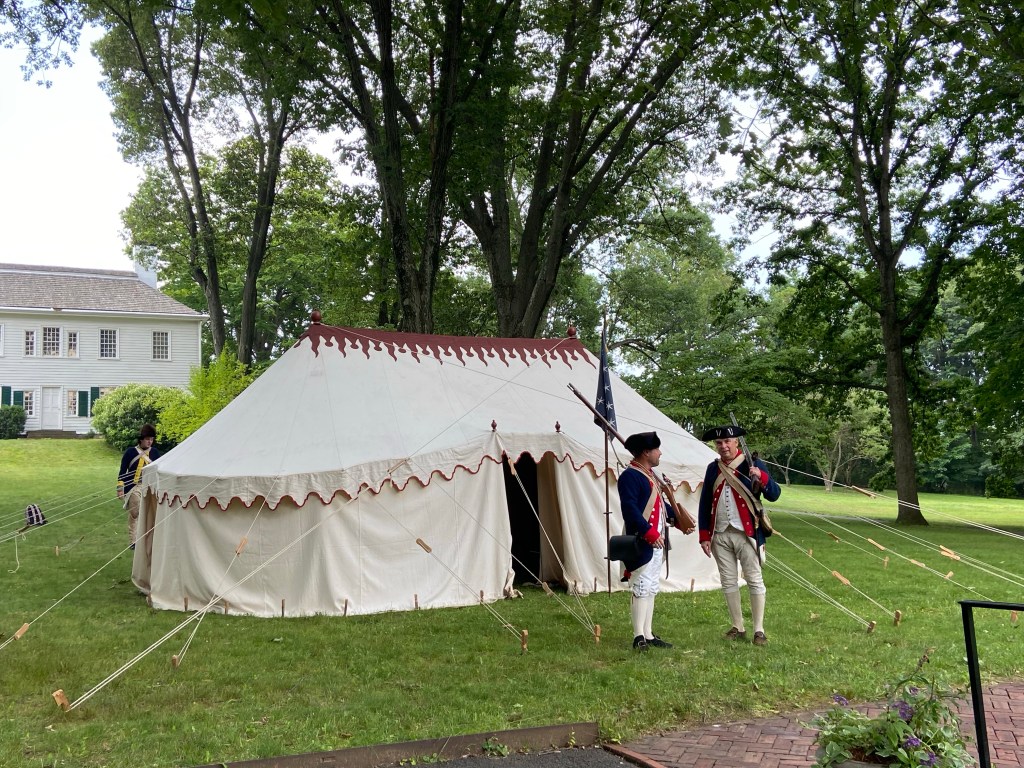
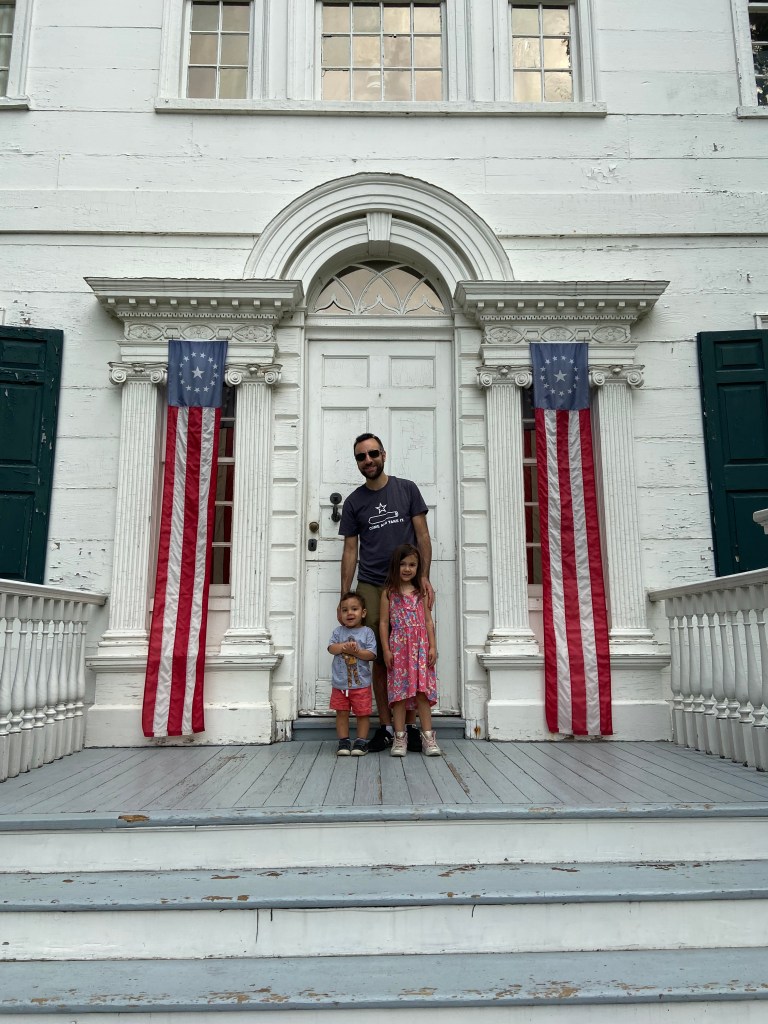
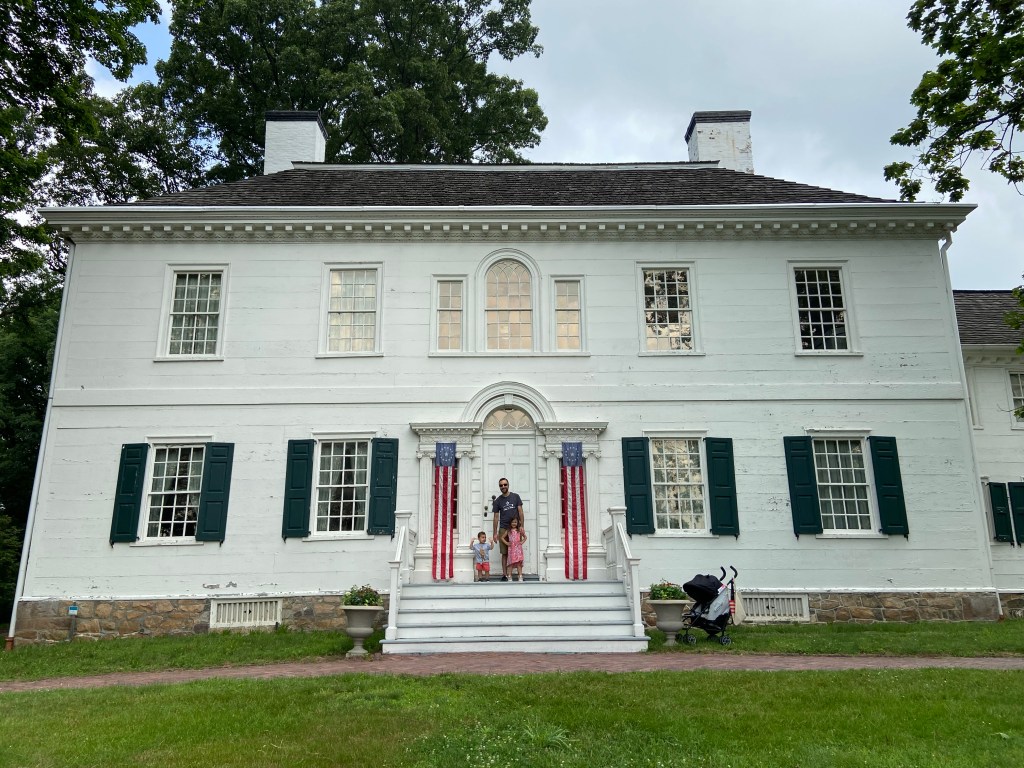
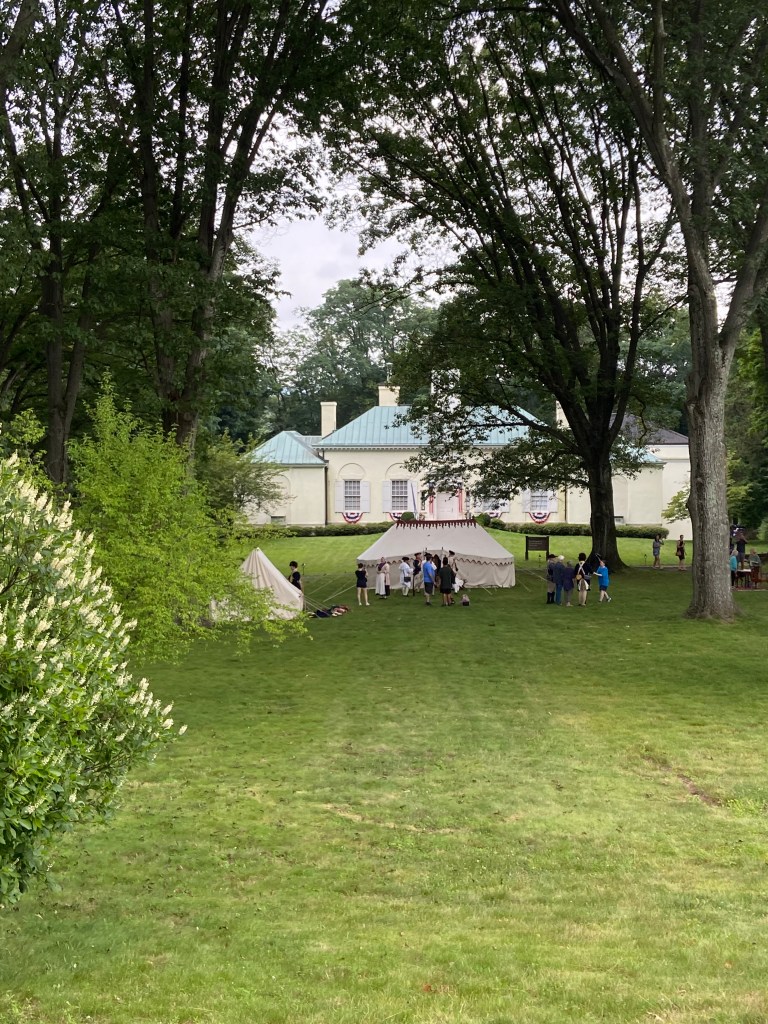
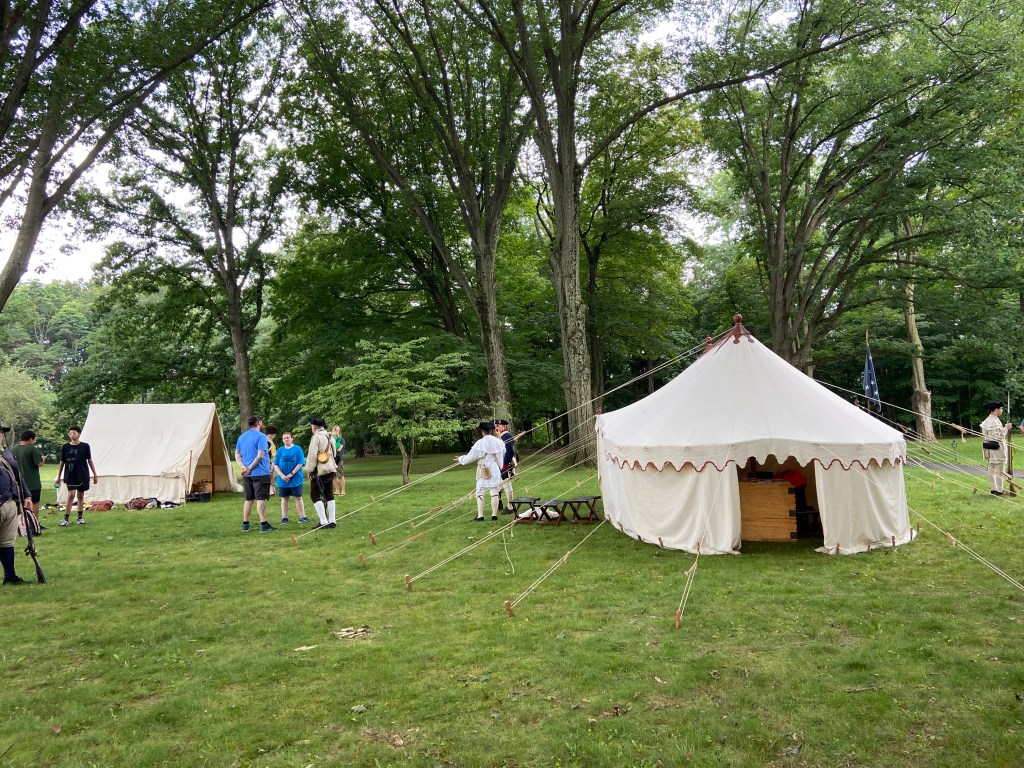
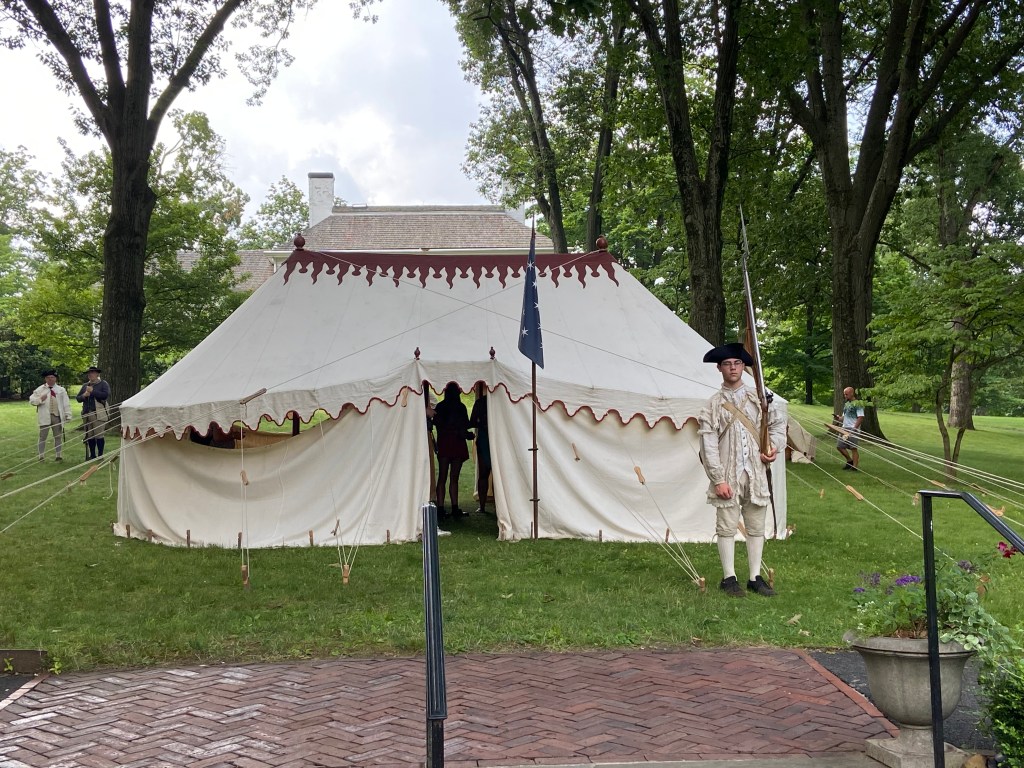
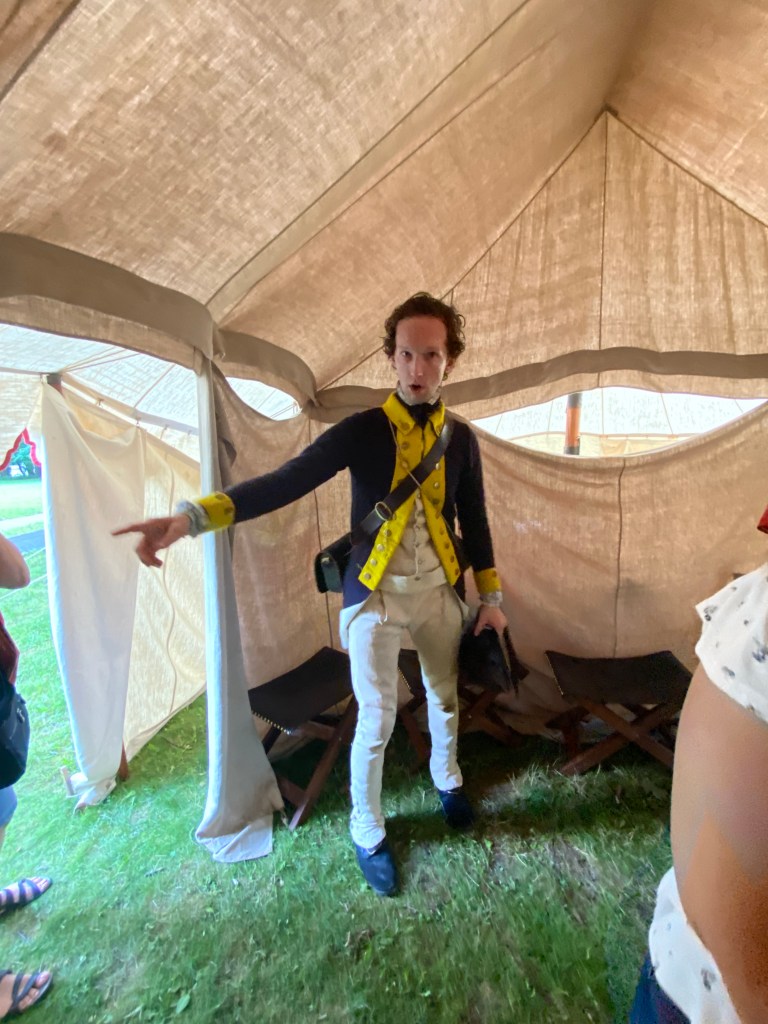
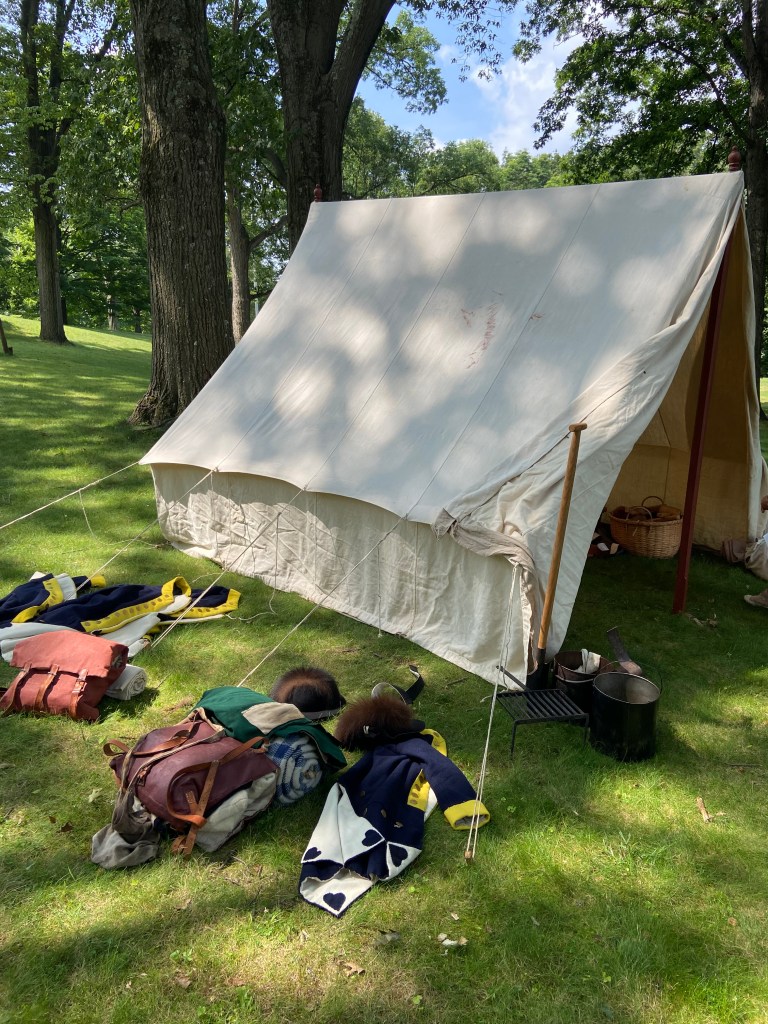
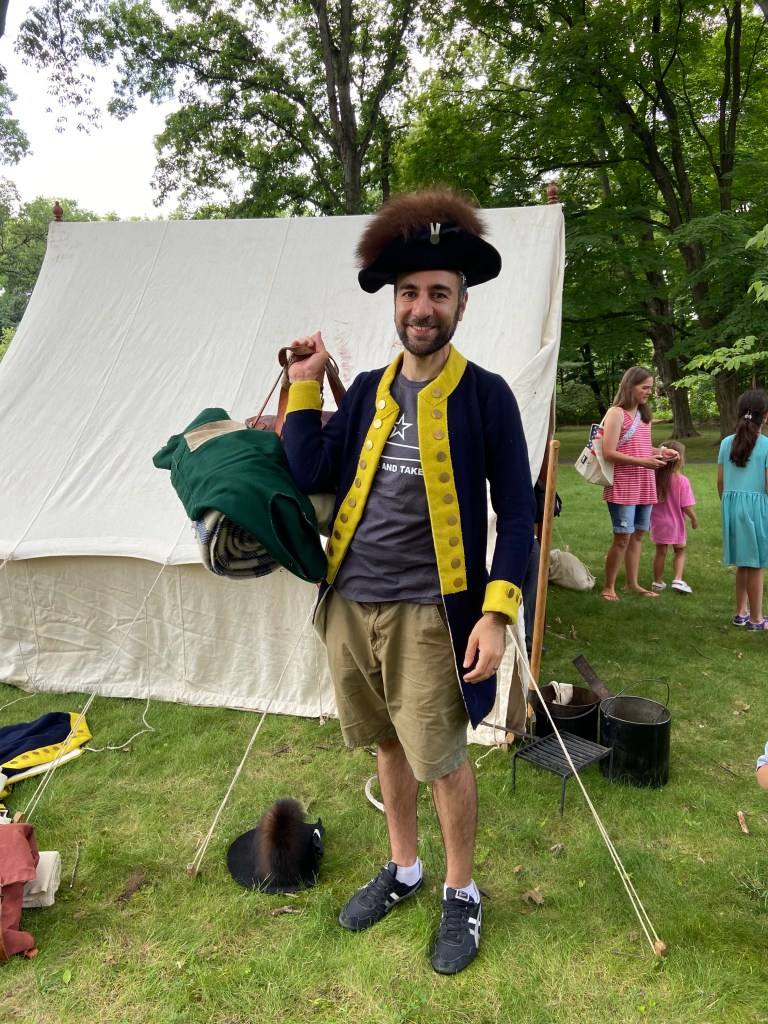
This past weekend I took the family to Washington’s Headquarters in Morristown, NJ. Throughout the week they hosted an event entitled “Red, White and You: Celebrating Independence Week at Washington’s Headquarters!” During the weekend they hosted the Museum of the American Revolution’s “First Oval Office Project,” which includes a full-scale replica of George Washington’s sleeping and operational tents that served as his mobile command and sleeping quarters while on campaign during the American Revolution. The tent and day’s programming was sponsored by the Washington Association of New Jersey.
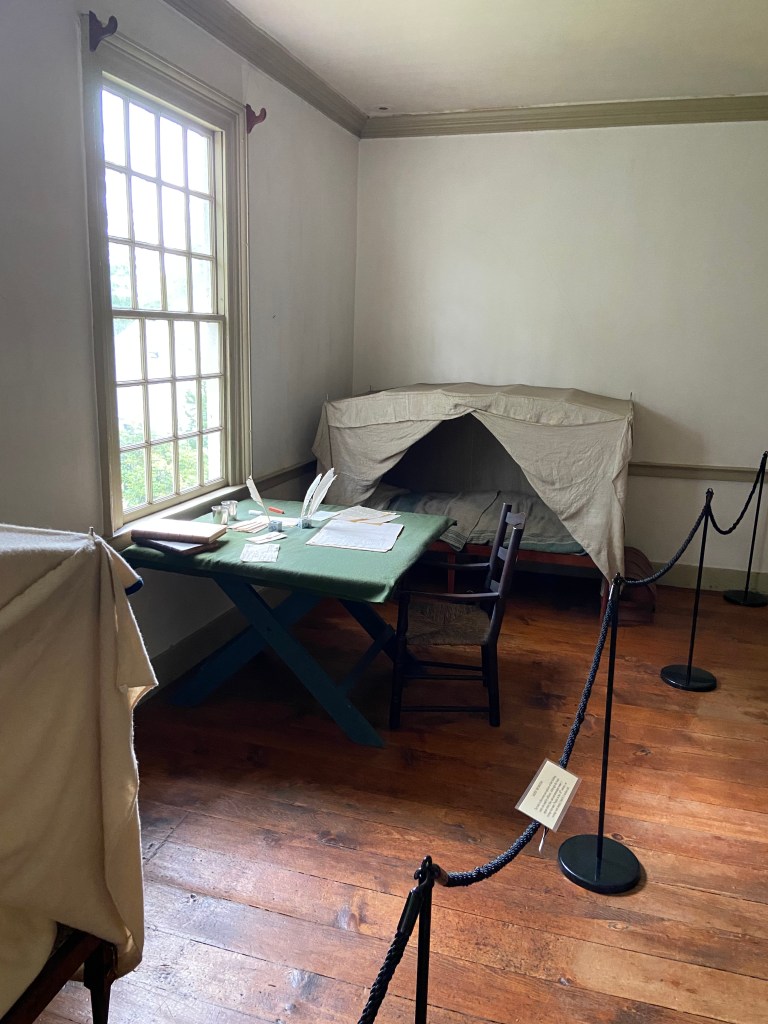
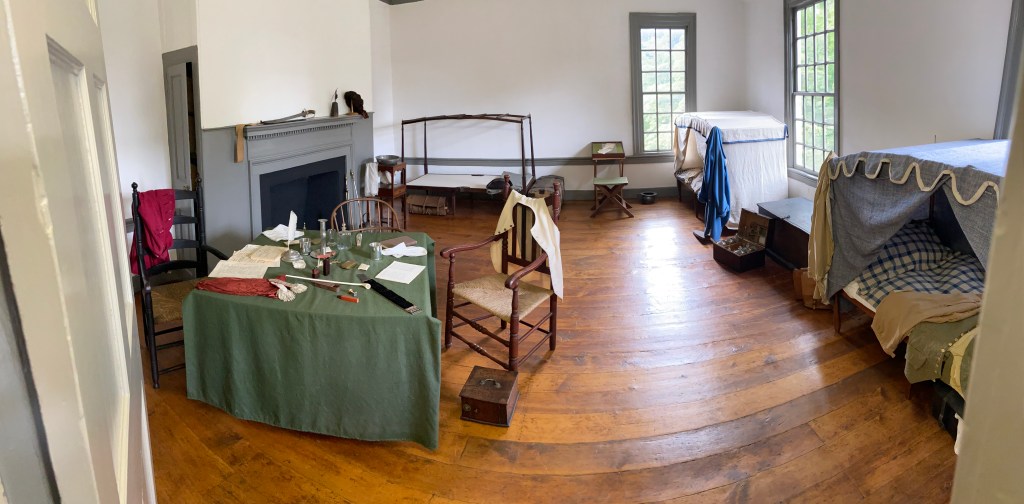
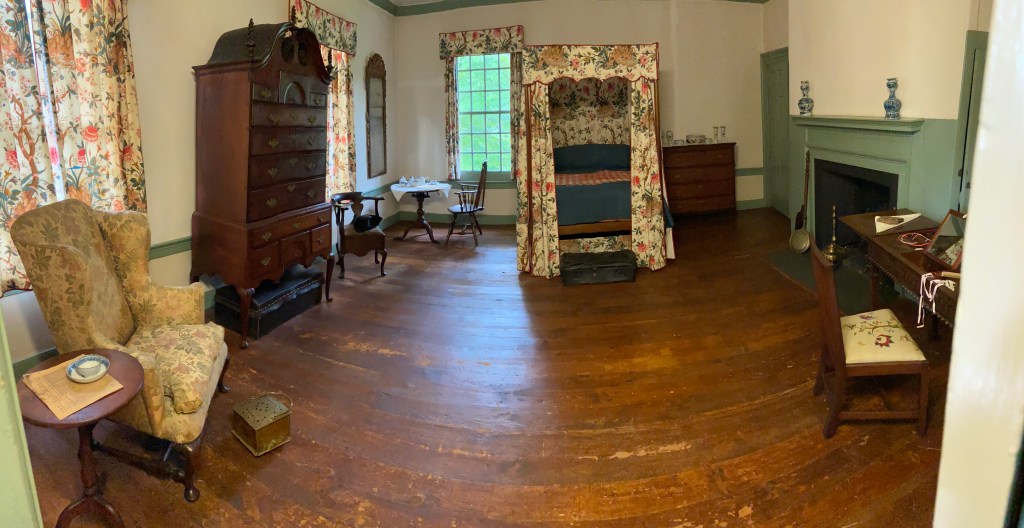
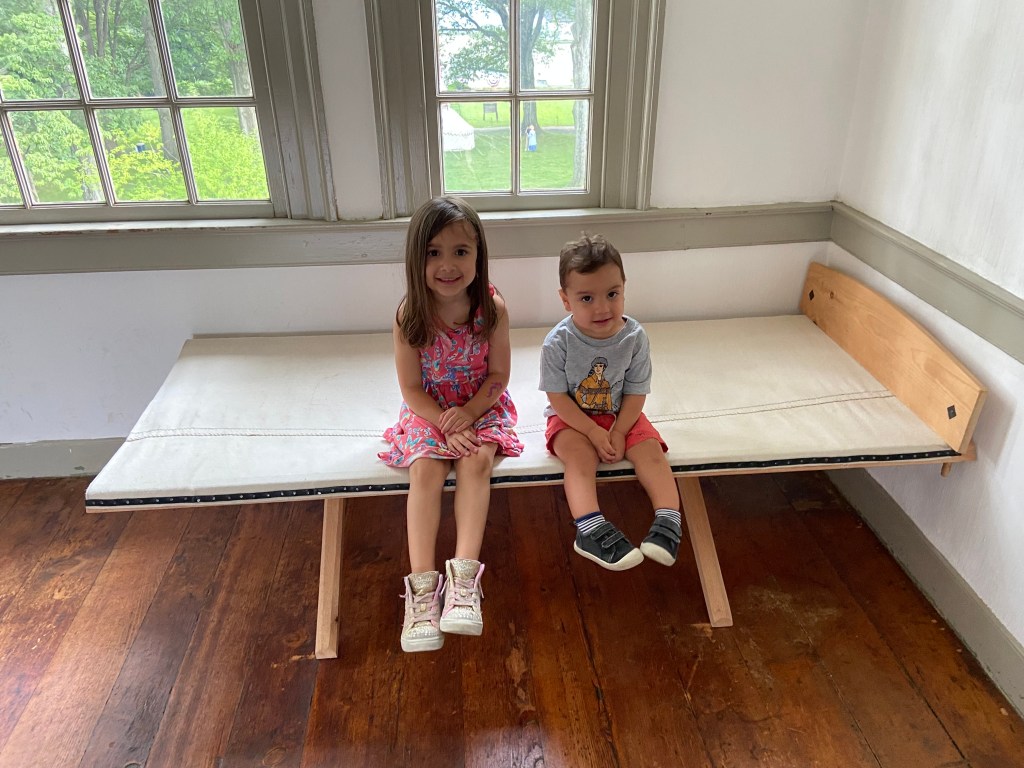
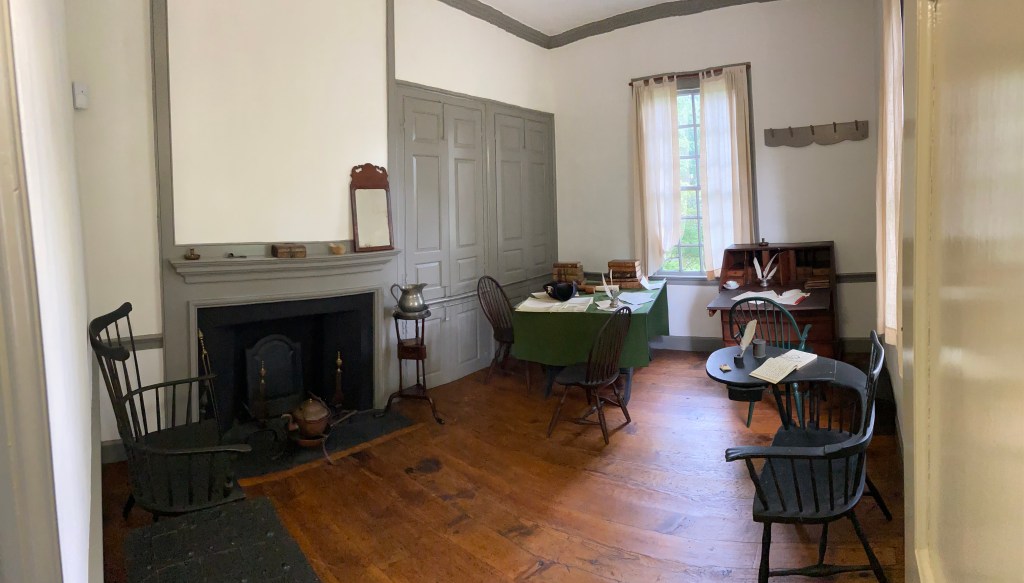
While I had been to Washington’s Headquarters Museum many times for the galleries and book talks, I had not had an opportunity to tour the Ford Mansion. The mansion was open to the public for the weekend events. Since the family and I arrived to Washington’s Headquarters fairly early, we decided to tour the mansion first, and then visit Washington’s War Tent. The guides stationed throughout the mansion were extremely helpful in answering all of our questions about the mansion and Washington’s stay there.
Ford Mansion
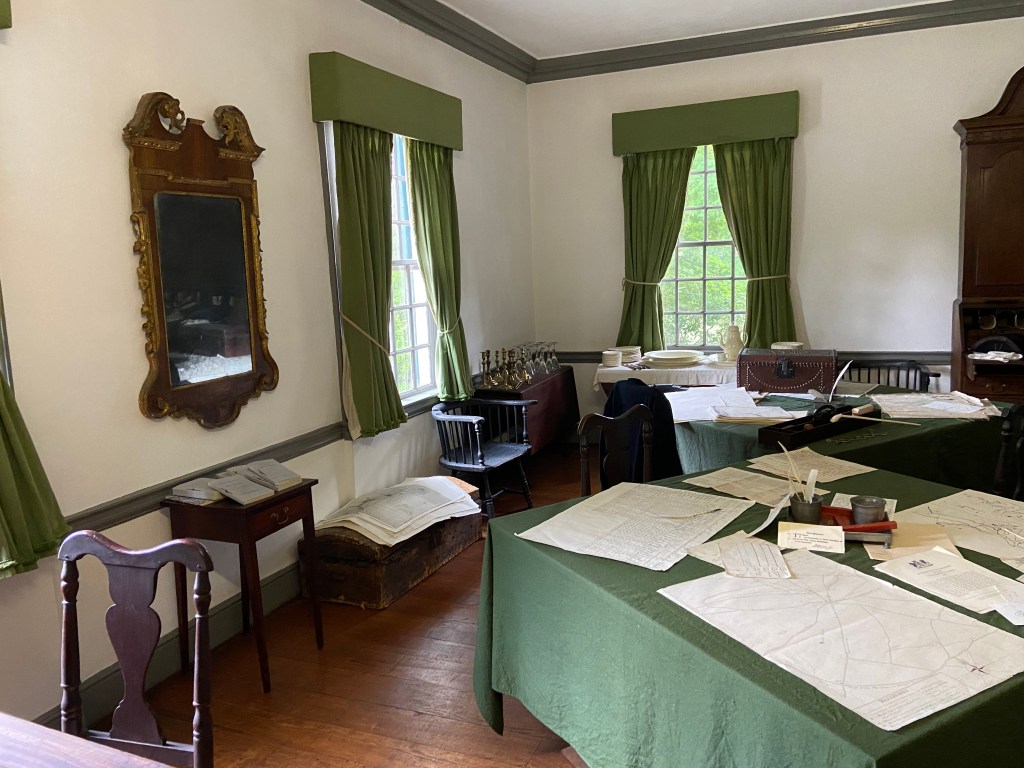
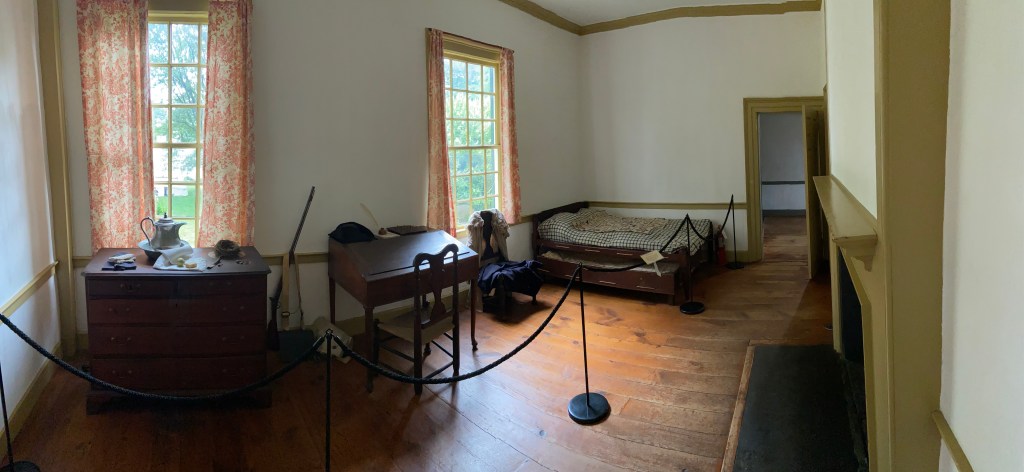
The Ford Mansion was the home of Jacob Ford, Jr, an iron manufacturer and his family. Ford served as a colonel in the Morris County Militia during the Revolution. However, Ford died in January 1777 of pneumonia, and his wife Theodosia was left to raise their four children. Theodosia allowed George Washington to use the mansion as his headquarters in the winter of 1779-1780. With the American capital in Philadelphia and the British capital in Manhattan, the location of Morristown allowed Washington to keep a close eye on the British, while sending letters to the Continental Congress. Washington also liked Morristown’s “defensible terrain, important communication routes, and access to critical resources.” He arrived in Dec. 1779 and stayed until June 1780. The winter of ‘79-’80 was exceptionally brutal. While Washington was quartered at the Ford Mansion, the army built a small village of huts at Jockey Hollow about 5 miles away. Along with George came his wife Martha, five aides-de-camp, including Alexander Hamilton, eighteen servants, and a number of visiting dignitaries and guards. Theodosia and the children stayed in rooms on the first floor while Washington and his entourage occupied rooms on the top floor. While staying at the Ford Mansion, the Commander in Chief of the Continental Army was busy running the affairs of the war, including making sure his army was supplied with their necessities, and frequently writing correspondence with his commanders. After Washington’s six month stay, the Ford family continued to live in the house until the 1870s. Today, the house is furnished to reflect how it would have appeared in Washington’s day.
Washington’s War Tent
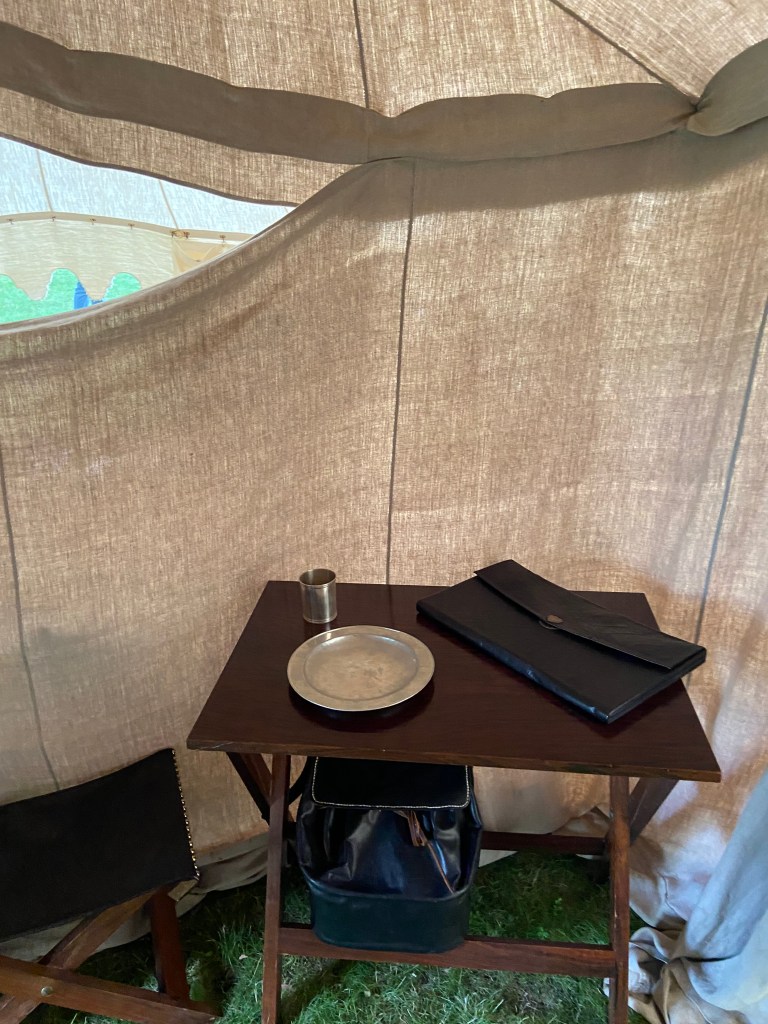
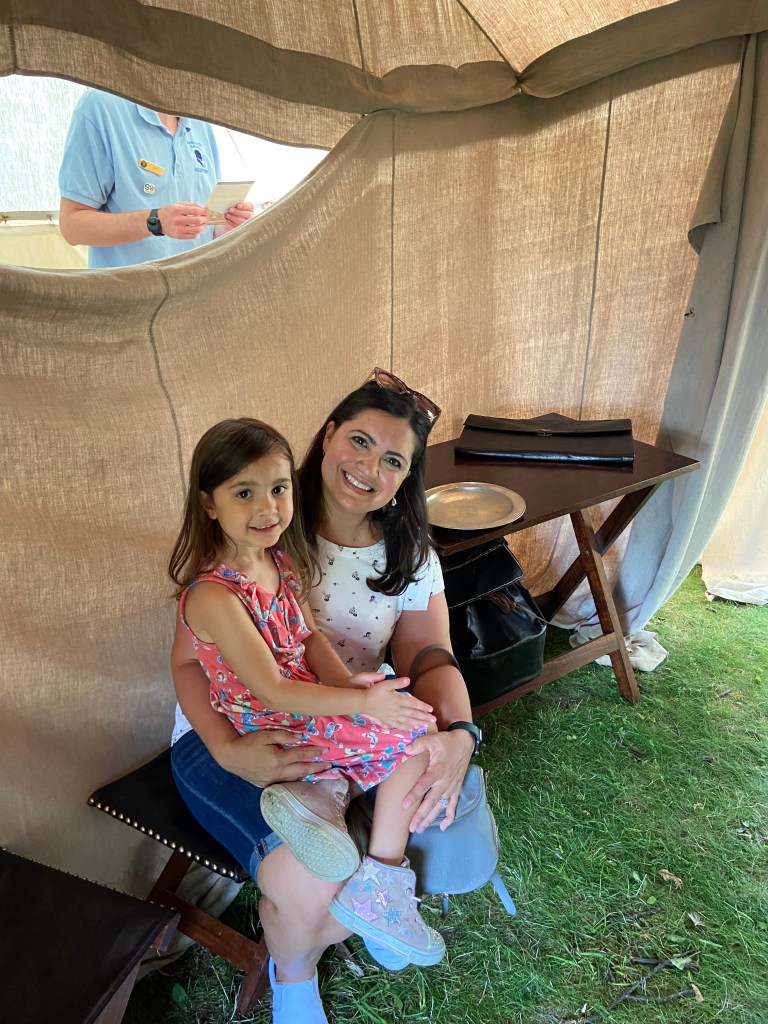
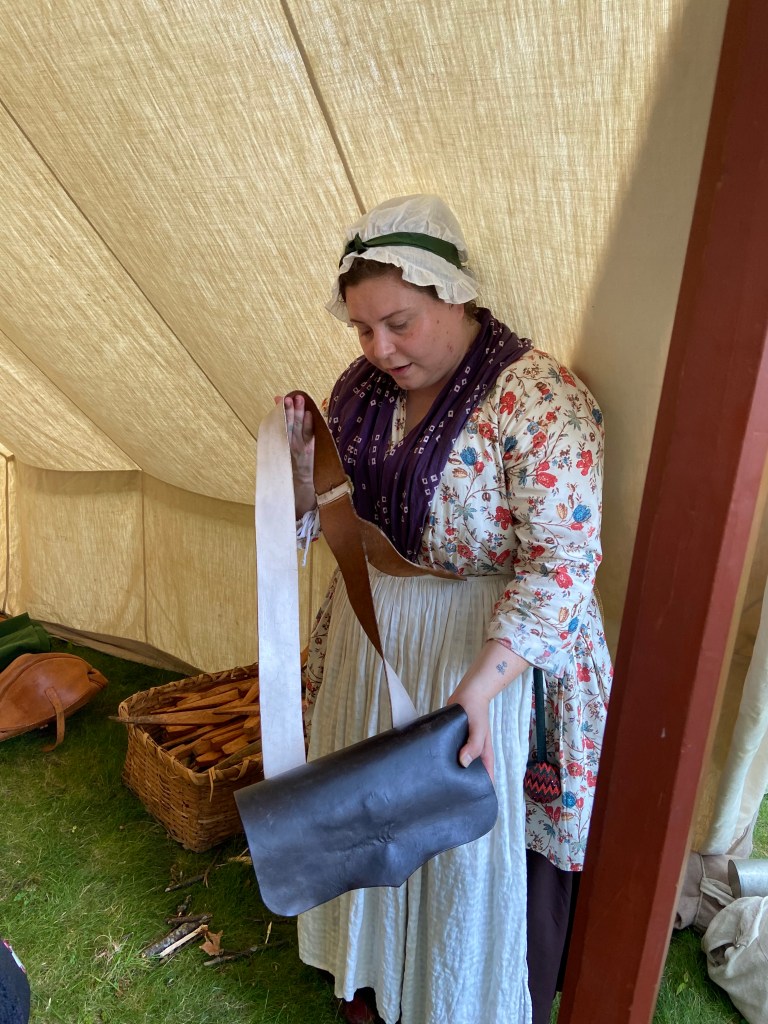
Washington’s War Tent displayed at Morristown this past weekend was a replica of the real one which was preserved after Washington’s life and is now located at the Museum of the American Revolution in Philadelphia. The tent remained with the descendants of Martha Washington’s family until it was sold to the museum collection’s founder, Reverend W. Herbert Burk in 1909. While you can view the original at the museum, you cannot go inside it. The replica was created in order to allow visitors to see what it was like inside Washington’s quarters while he was out on campaign with his army. Washington and his aides used the tent to conduct business, write correspondence and also for sleeping. Personally, going inside the tent was a reminder of the conditions that Washington and his aides had to deal with (it was exceptionally humid this weekend). It showed that Washington, even with his stature, had to brave the elements much like his soldiers did while he was out on campaign. This setting was much different than the comfort he would have had while staying at the Ford Mansion.
Rochambeau & Washington
There were many reenactors (from the Museum of the American Revolution) at the event and they were extremely informative. They were experts on their topic and you could tell that they loved talking about the tent and the Revolution. One demonstrator was an expert on women in the American Revolution and spoke in detail about Deborah Sampson who had dressed up like a man so that she could fight in the war. Another demonstrator discussed how surveyors during Washington’s time would have measured the land using very simple tools such as chains, stakes and a compass. While my family and I had to leave to go eat lunch, there were more speakers and demonstrations happening in the afternoon that we unfortunately missed. The collaboration of the Museum of the American Revolution (https://www.amrevmuseum.org), the Washington Association of New Jersey (https://wanj.org), and the Morristown National Historical Park (https://www.nps.gov/morr/index.htm) all did a fantastic job hosting a fun, informative and engaging experience. The First Oval Office Project has further events coming up in Rhode Island and New York. Check out upcoming events here: https://www.amrevmuseum.org/learn-and-explore/first-oval-office-project/first-oval-office-project-programs-and-events
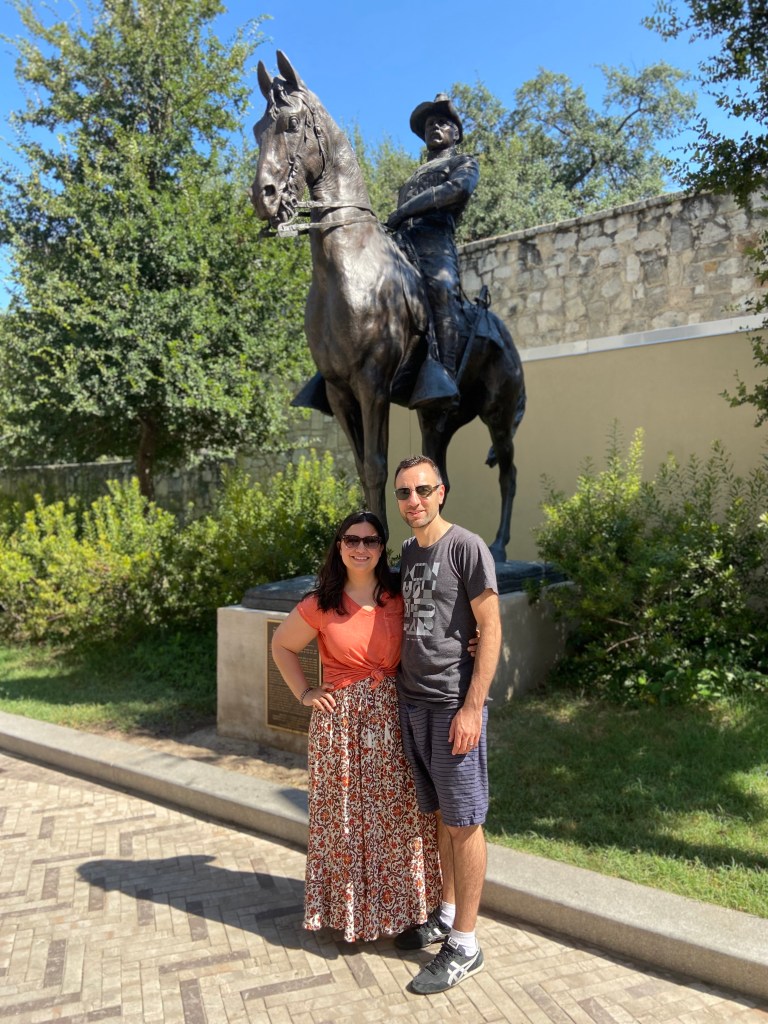
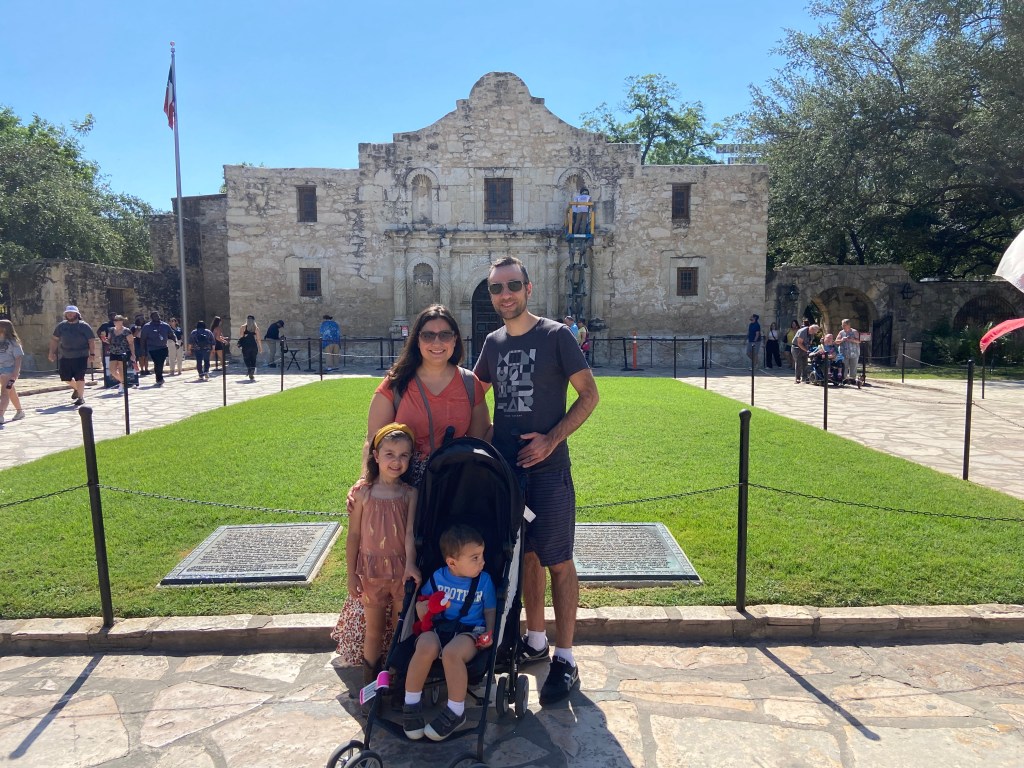
Last week, my family and I were able to spend 6 days in San Antonio, Texas. We were visiting family who were kind enough to let us stay at their house. While most of the week was spent making sure the kids were entertained (four kids, ages 9 months to 4 years old), visiting the Alamo was a must for me as I had never been there before. Luckily, they live pretty close to the site. I’ve taught the Texas Revolution and the Battle of the Alamo for many years so seeing the site in person was a real treat. And yes, the kids had a good time as well.
Background of the Alamo
The Alamo site complex was much larger than just the Alamo church that we think of today. It was originally built as a Spanish mission in the 18th century while the Spanish Empire controlled the region. Several Roman Catholic missions were established in East Texas in 1716. Originally, the site was called Mision Santonio de Valero, and structures were added to the complex in the years that followed. The mission was a base of operations to convert and educate Native Americans. Throughout the 18th century, the Mision San Antonio de Valero grew in size and importance.
However, by 1793, the Spanish crown had begun to secularize the site, and it lost its religious importance. The buildings were neglected until 1801, when a Spanish military unit was sent to strengthen forces in San Antonio. The old mission was occupied and repaired by the army.
Spain faced serious problems abroad and at home in the early 1800s. Napoleon Bonaparte had invaded Spain and placed his brother on the Spanish throne in 1808. This led to growing instability in the Spanish Empire. Tensions also grew in the New World, and Mexicans began to revolt against the Spanish crown in 1810. Soon, the Alamo frequently changed hands between Spanish and Mexican forces. Mexico finally won its independence from Spain in 1821.
Shortly after, Americans began moving into Texas (part of Mexican territory) and at first they were welcomed. The new Mexican government was looking to boost its economy by selling land to these new Anglo-American settlers. Americans were willing to move into Texas for the opportunity at cheap farmland.
However, tensions began to emerge between the Texans and the Mexican government. First, there were clear cultural differences. While the Mexicans spoke Spanish and practiced the Roman Catholic religion, the new Texan settlers spoke English and were mostly Protestant. While Mexico had already outlawed slavery, many of the new Texan settlers brought slaves with them.
There were also tensions in other Mexican provinces. President Antonio Lopez de Santa Anna tried to strengthen the central government that he controlled and weaken local governments. Many throughout Mexico saw this power grab as a step towards dictatorship. Tensions and uprisings emerged throughout the country. Particularly in Texas, there was much anger and resentment against the Mexican government. Violence erupted in Texas in late 1835, beginning the Texas Revolution.
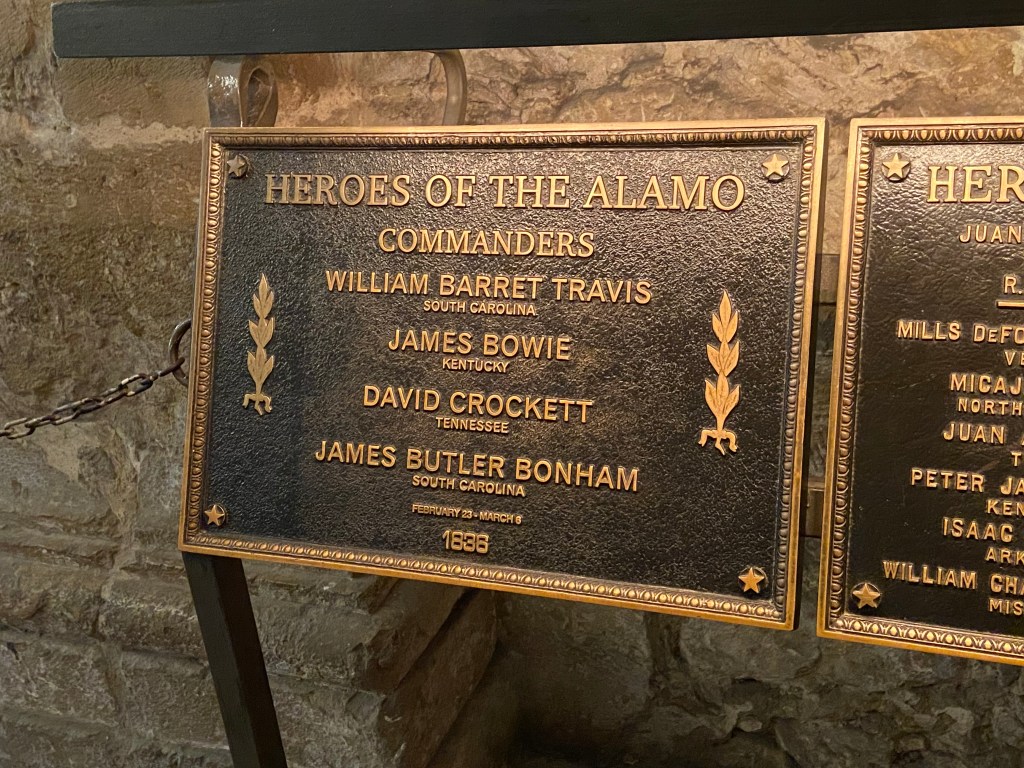
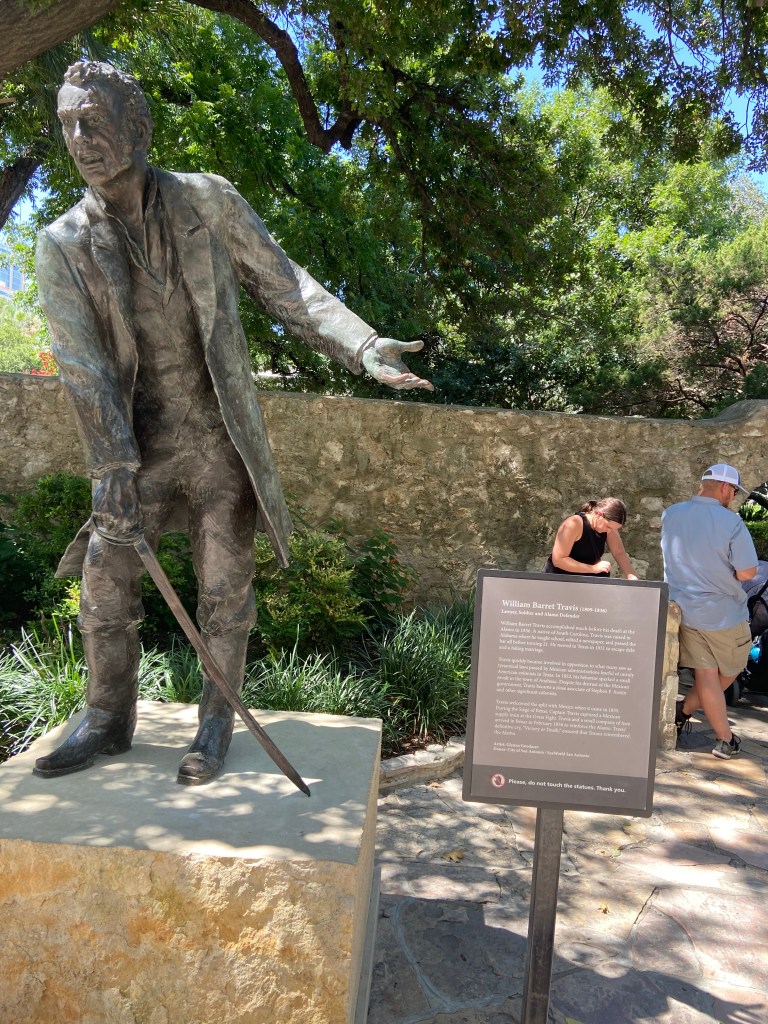
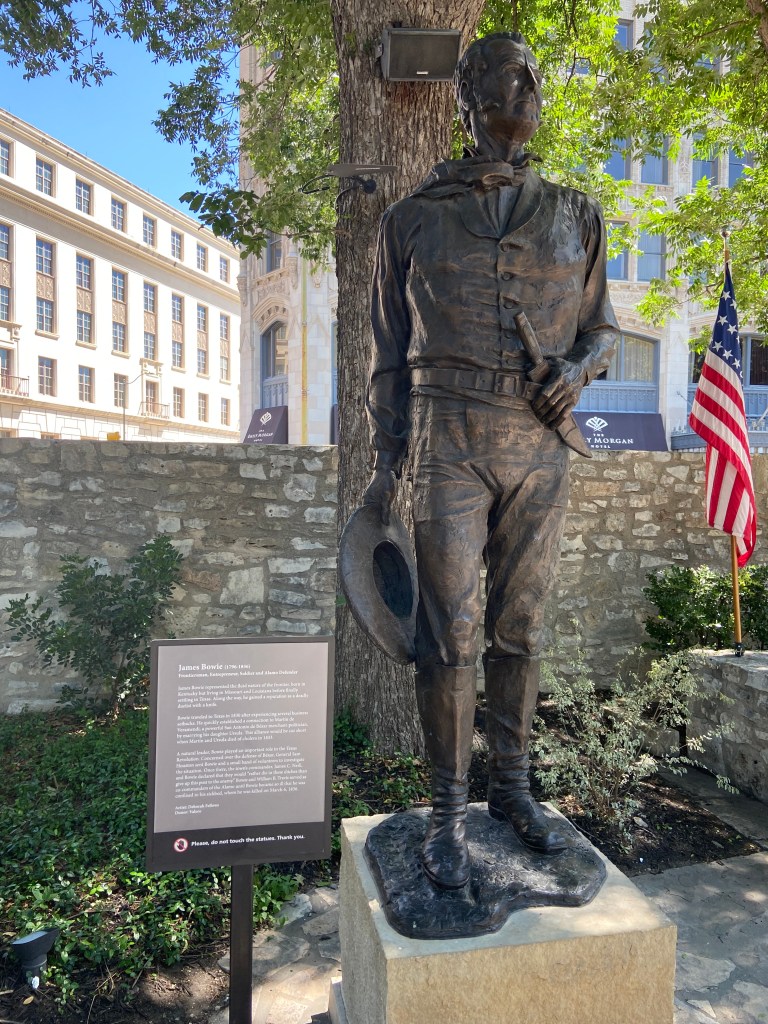
In December 1835, Texans were able to gain control of San Antonio and the Alamo complex. However, in early 1836, Santa Anna was determined to squash the rebellion and take back San Antonio. He marched to the city at the head of a 4,000-member army, setting the stage for the historic battle that the Alamo is most known for. Santa Anna laid seige to the garrison stationed at the Alamo, a force of just 187 Texans. After a siege of thirteen days, the Mexican forces scaled the walls of the Alamo and attacked the defenders on March 6th, 1836. While few people in the Alamo complex were able to escape the attack, those brave 187 soldiers defended the Alamo with their lives, including the famous, almost mythical names of Davy Crockett, William Travis, and Jim Bowie. They would rather have died for freedom than surrender the Alamo to a tyranical government and leader. Their bravery resulted in one of the most iconic last stands in history. Between 400-600 Mexican soldiers were killed in the battle.
While the Mexican army was able to regain the Alamo at that time, their success was short lived. By the end of April, the Texans won an overwhelming victory at the Battle of San Jacinto with “Remember the Alamo!” as their rallying cry. Texas was able to win its independence from Mexico and become a republic. Just about ten years later, Texas was annexed by the United States as the 28th state on December 29, 1845.
Visit to the Alamo
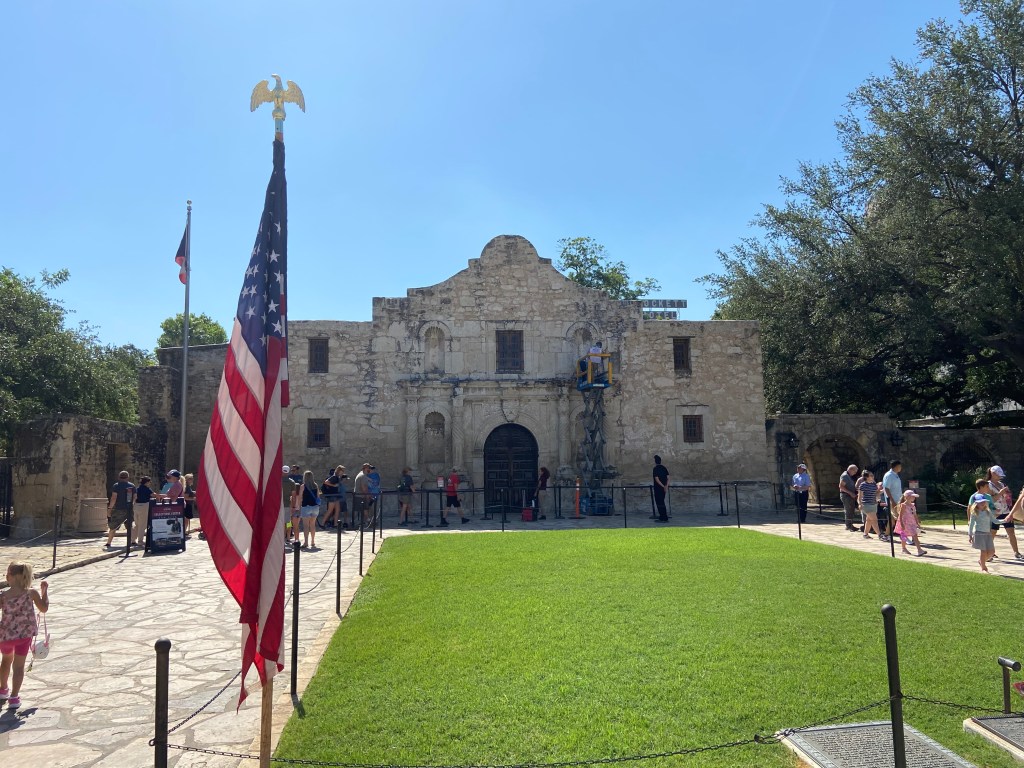
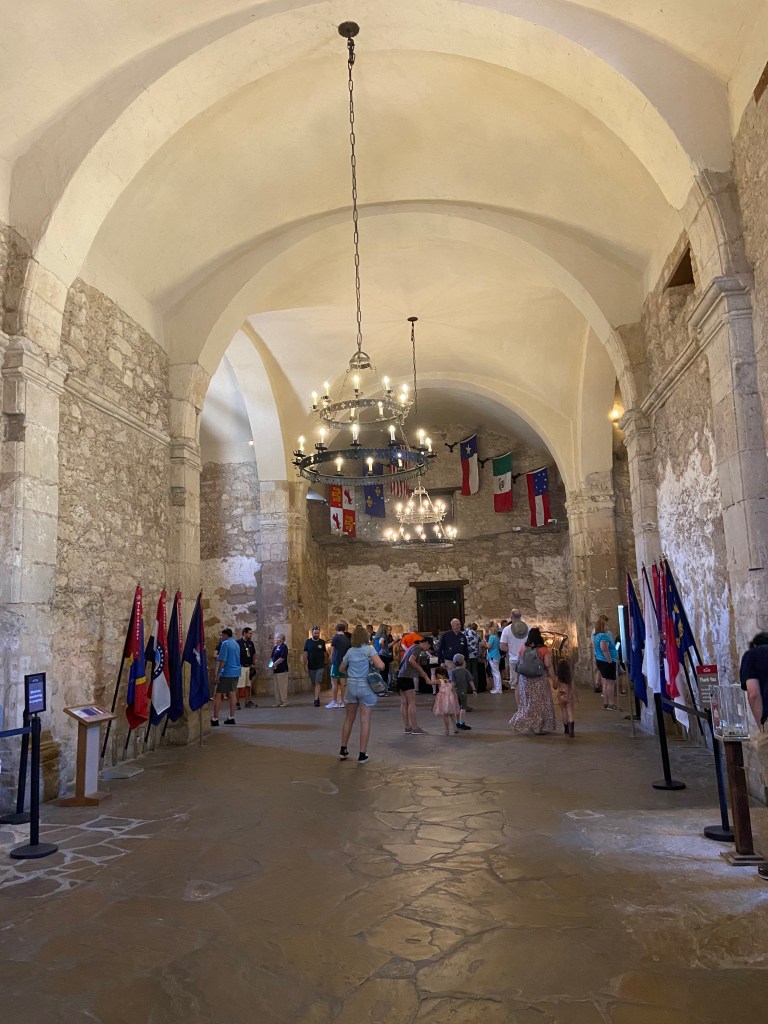
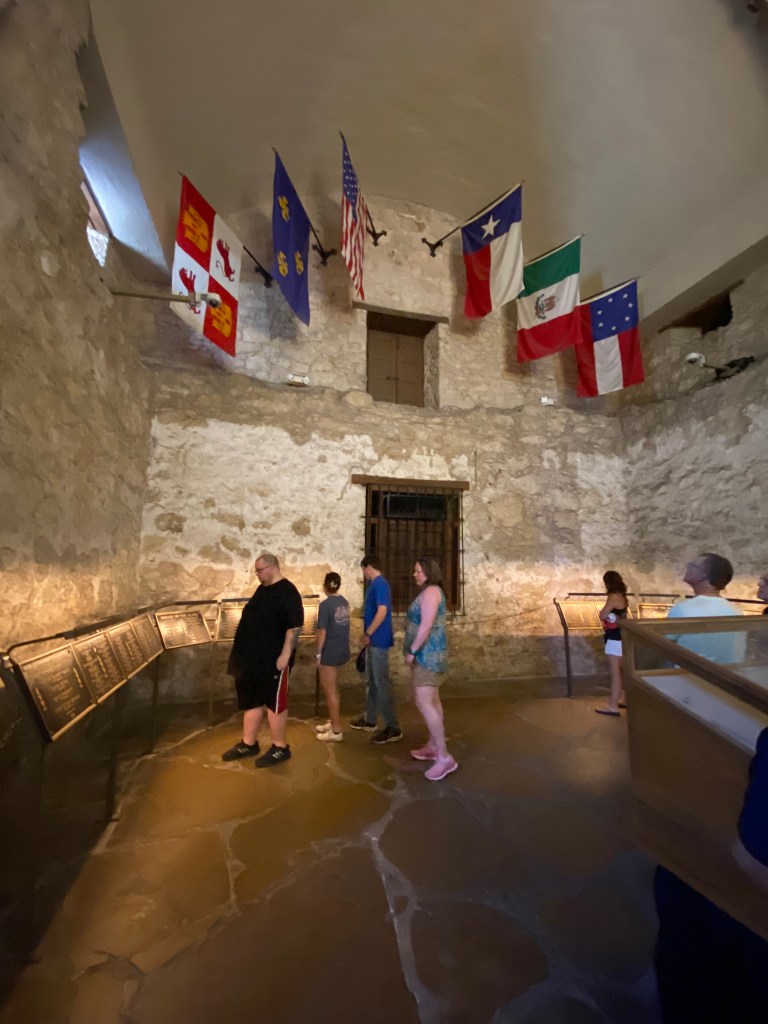
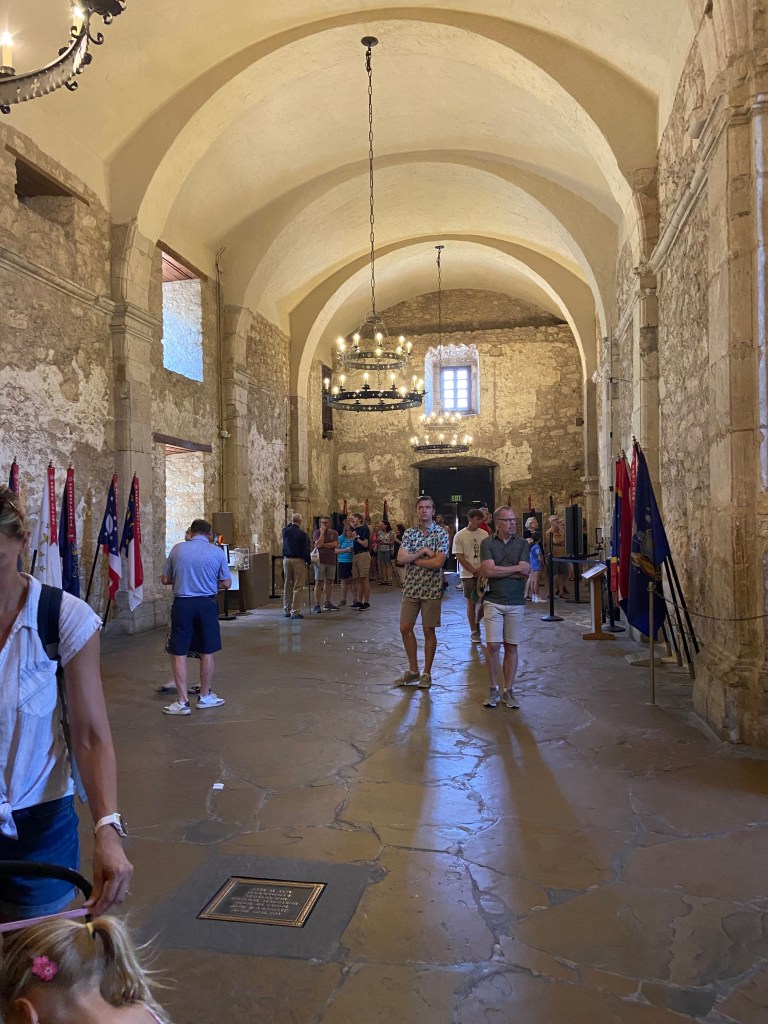
Before going to the Alamo I had heard very little about what there is to see at the site besides the main structure of the Alamo church. While I am normally someone who enjoys a guided tour, the $45 for adults and $35 for children seemed like a bit much. With small children involved, it didn’t seem worth it. (Children who may or may not be as fascinated in the details of the Alamo as me). If someone reading this has been on the tour, please let me know your experience. Instead of doing the tour, we entered the Alamo church for free, and planned to explore the collections at the Alamo Exhibit in the Ralston Family Collections Center, which was $12 for an adult. When we entered the Alamo church, we found people working in the Alamo who will answer any and all of your questions, and explain the history of the Alamo. I was quite content with this considering that we weren’t going on the tour. The workers are extremely knowledgeable of all of the minute details of the structure and it’s long history. Being inside of the Alamo church was fascinating considering its historic significance and its symbolic importance.
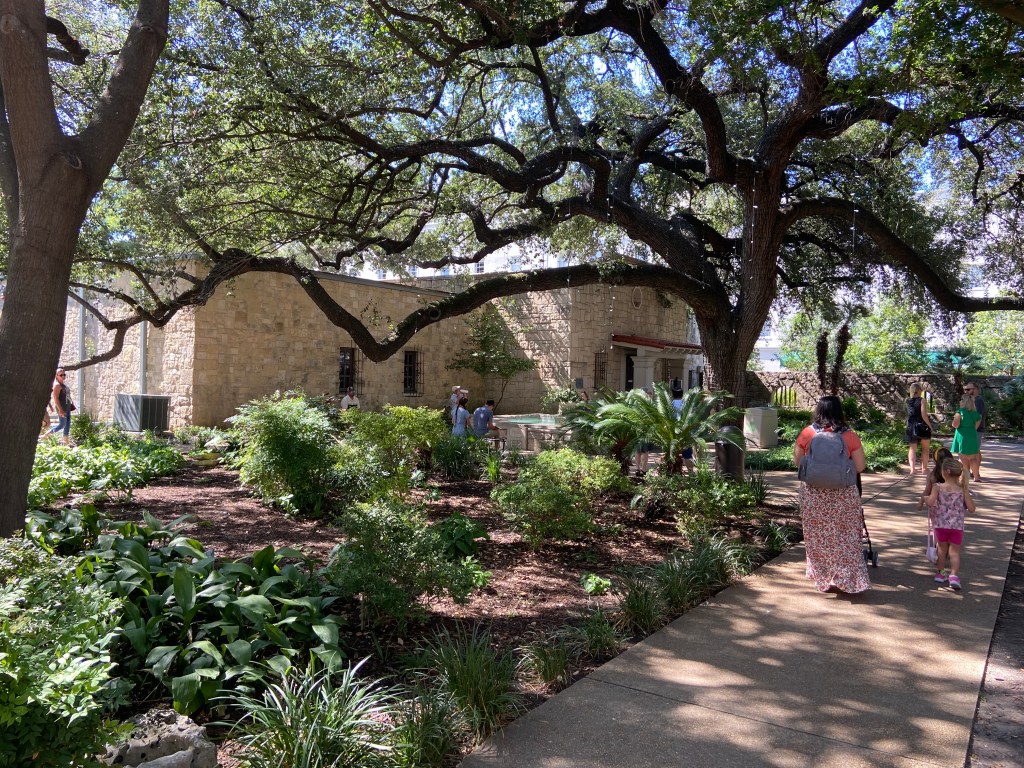
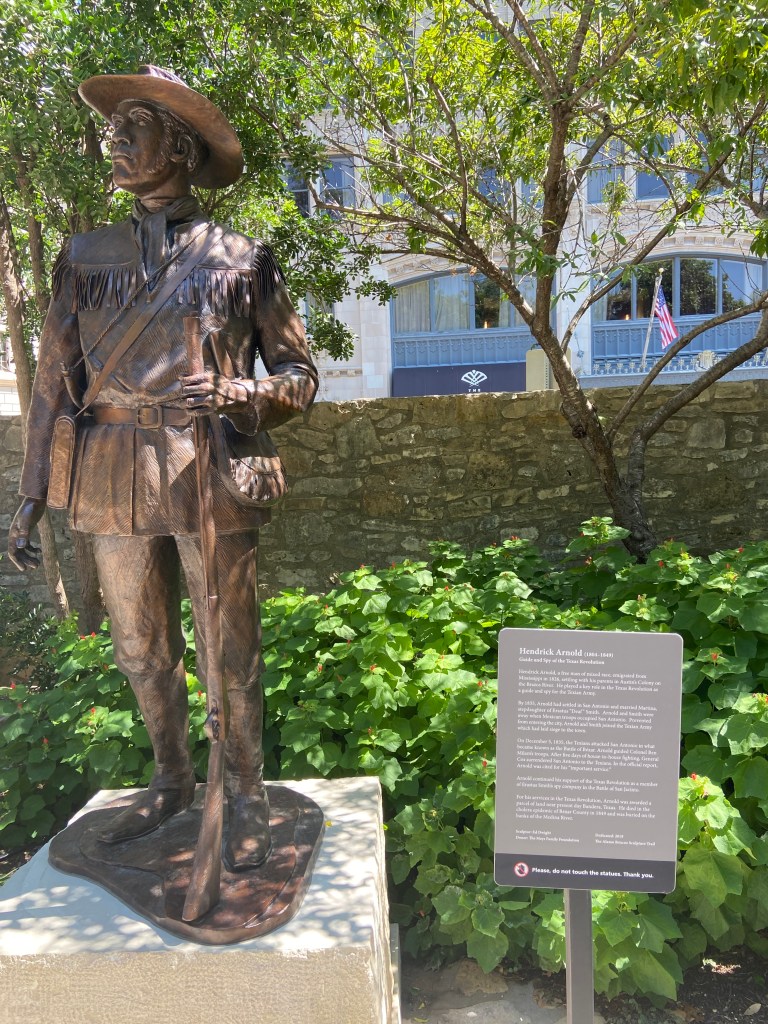
After we walked through the Alamo church, we took the kids into the Gift Shop and bought a few items. We walked the grounds of the Alamo where there are monuments and statues honoring those who fought and died at the Alamo. Stationed throughout the complex are informational signs/ plaques/ timelines that provide you ample information about the history of the Alamo and its importance.
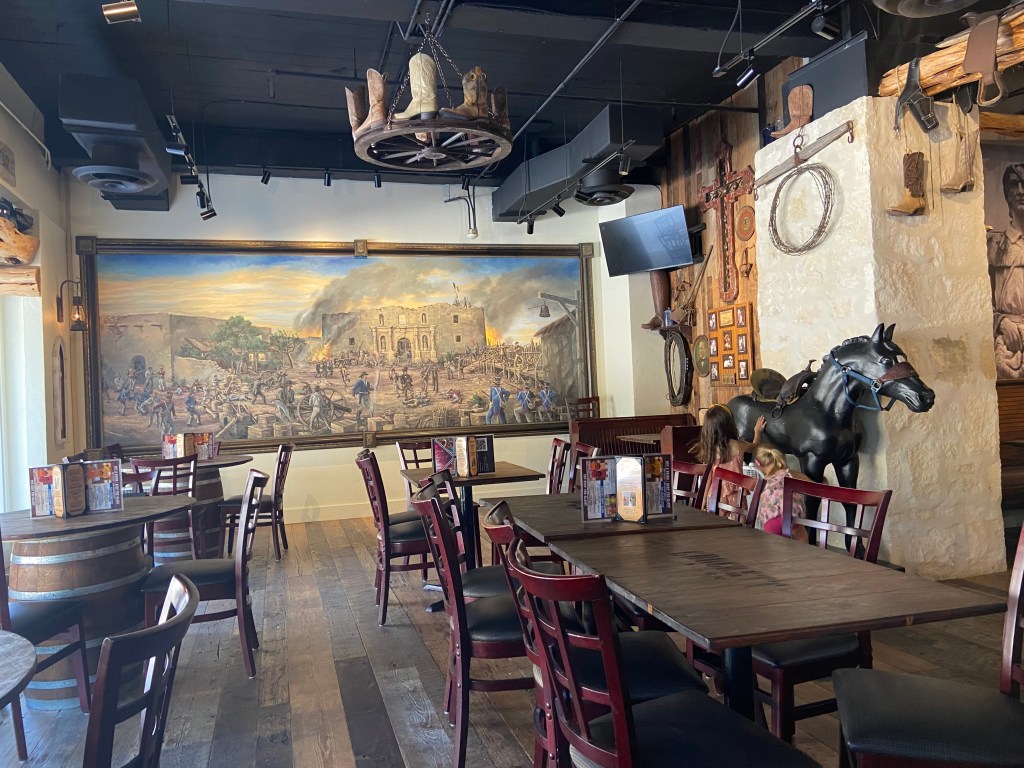
Before we would visit the collections, it was time for lunch (have to keep the kids happy and fed, and take a break from the Texas heat). Luckily right across the street from the Alamo is Crockett Tavern. Getting there before noon, we beat the lunchtime rush. The food was great, and the atmosphere was the perfect Texas/ Alamo vibe. (Crocket Tavern).
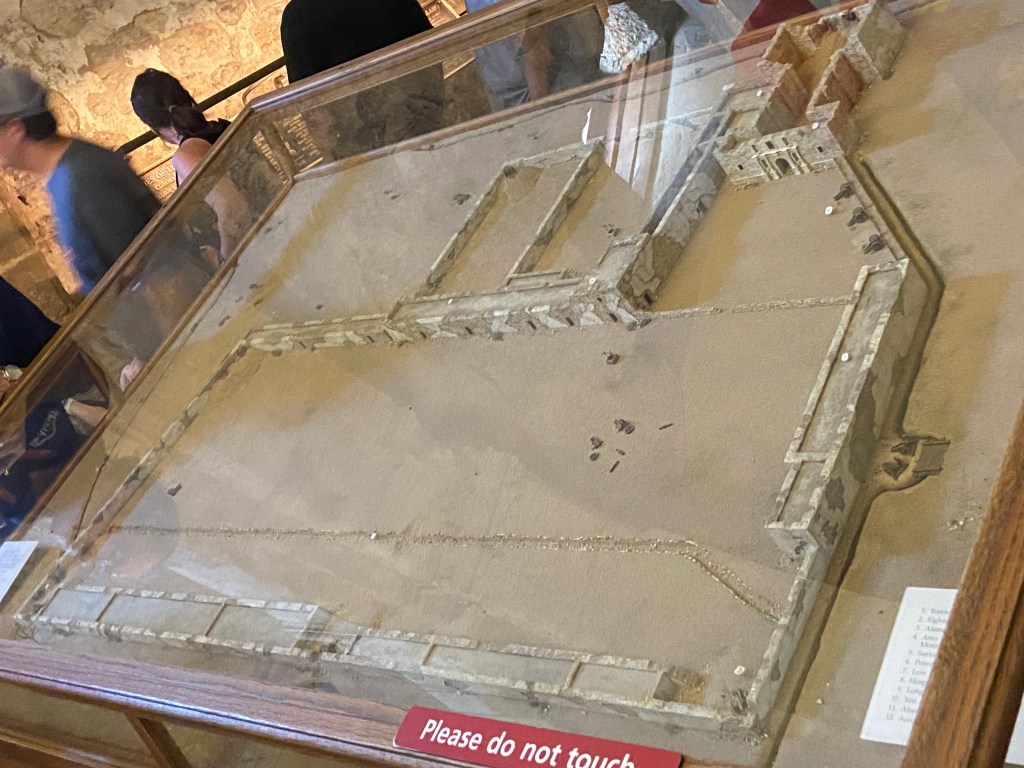
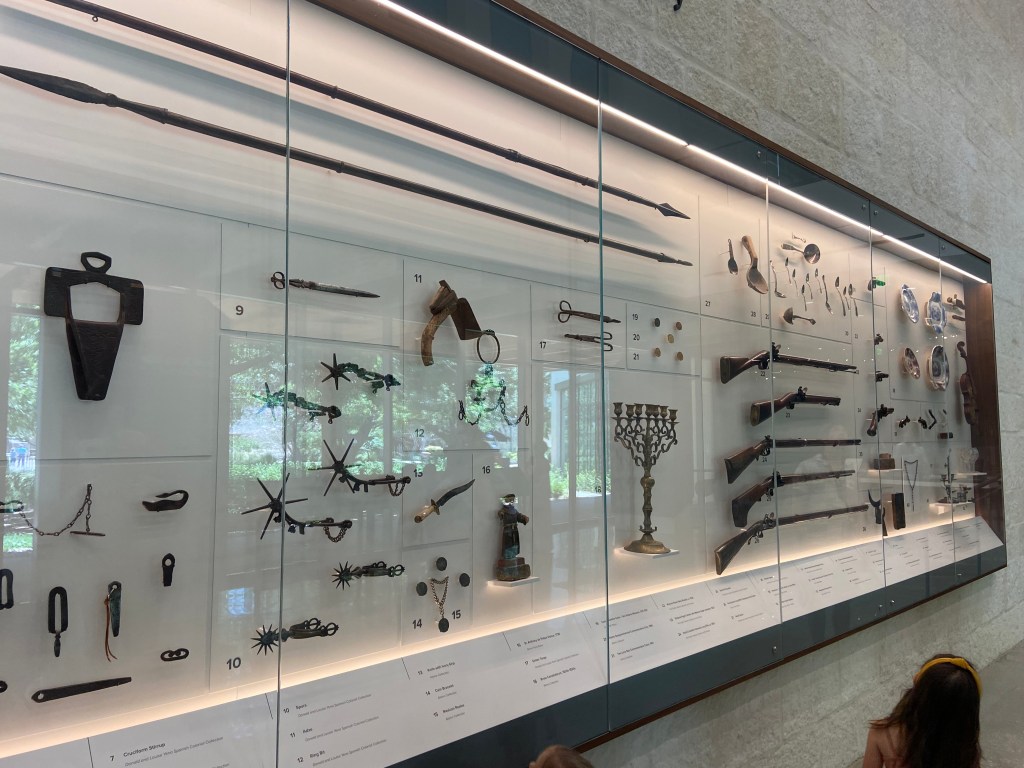
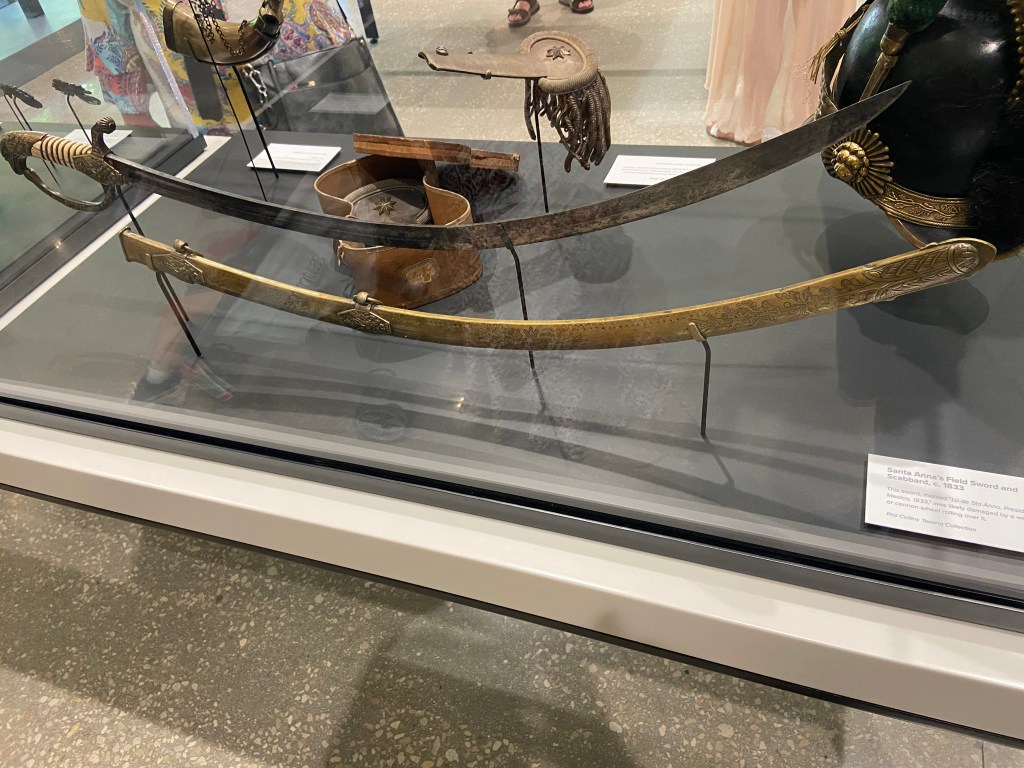
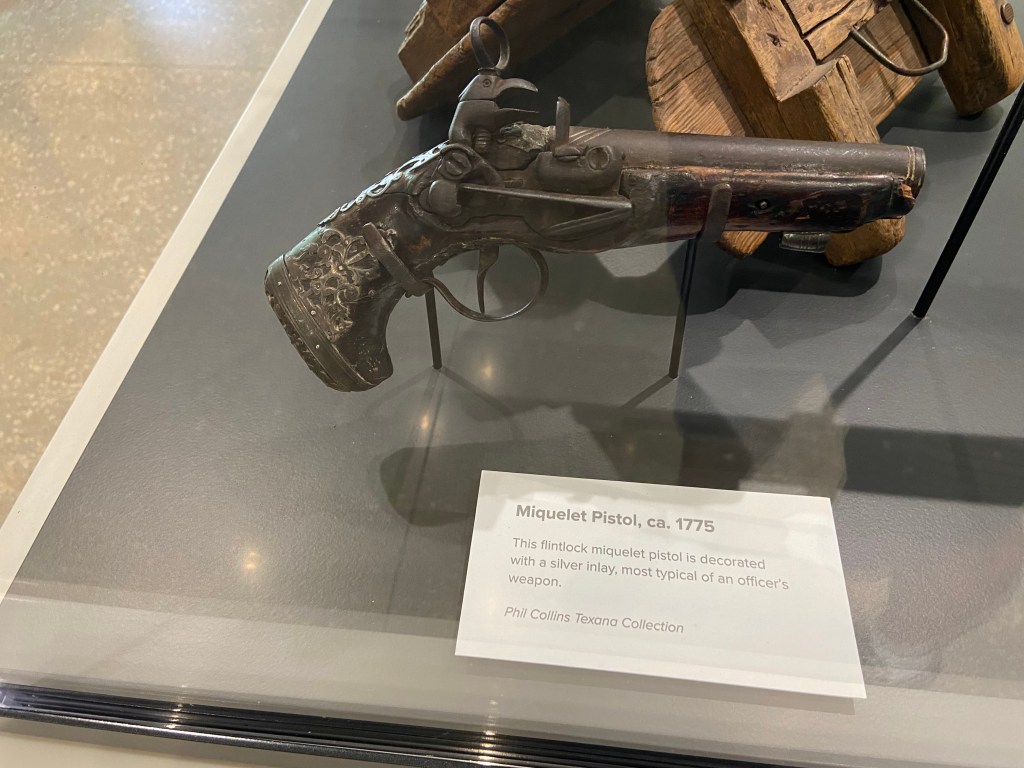
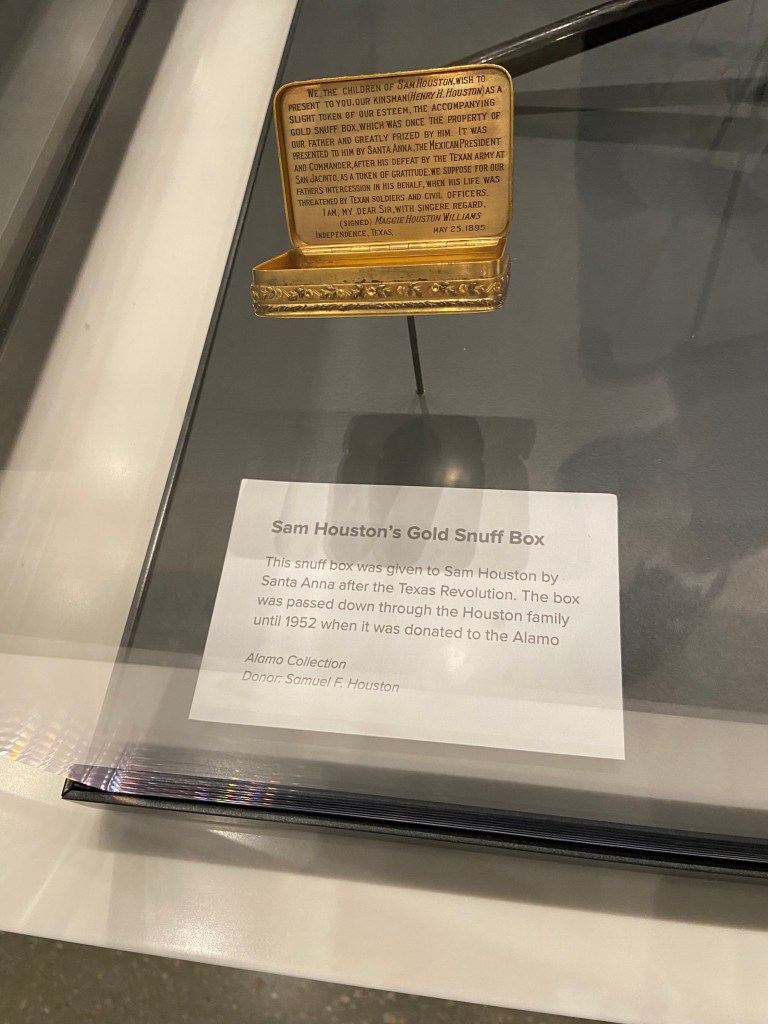
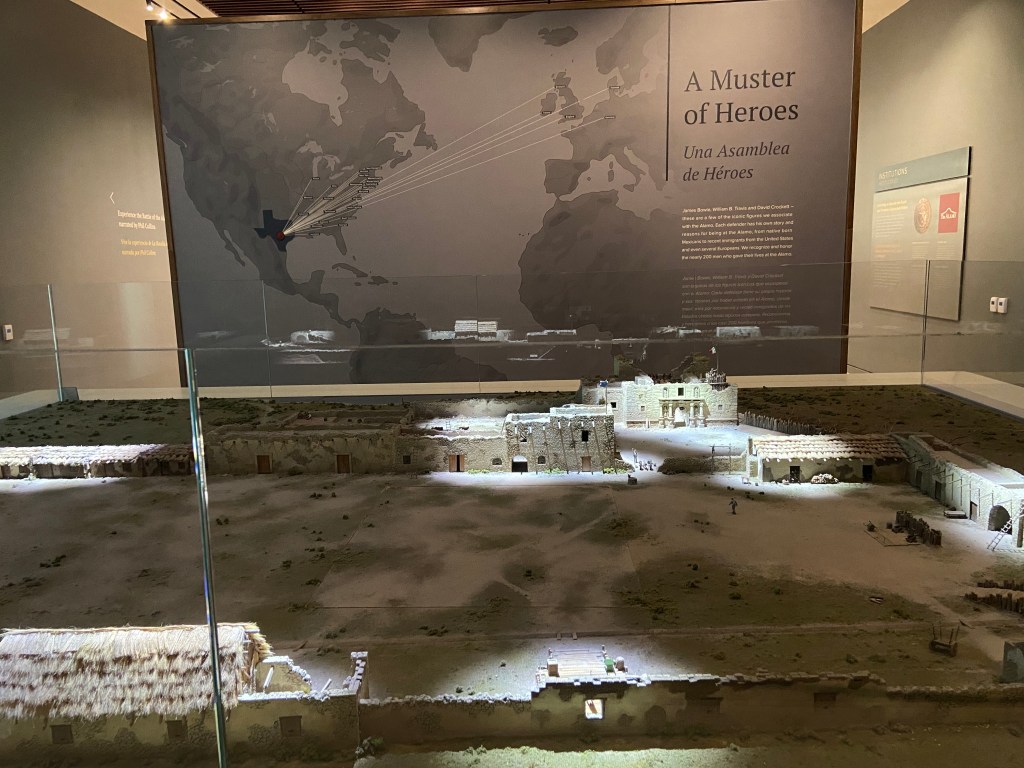
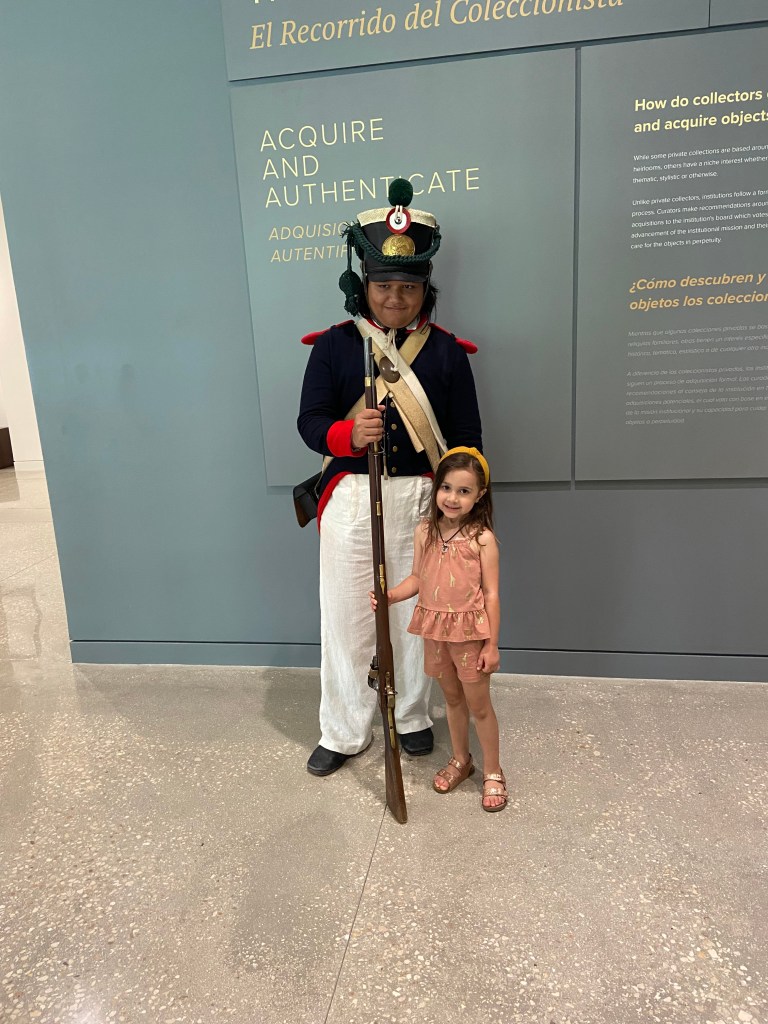
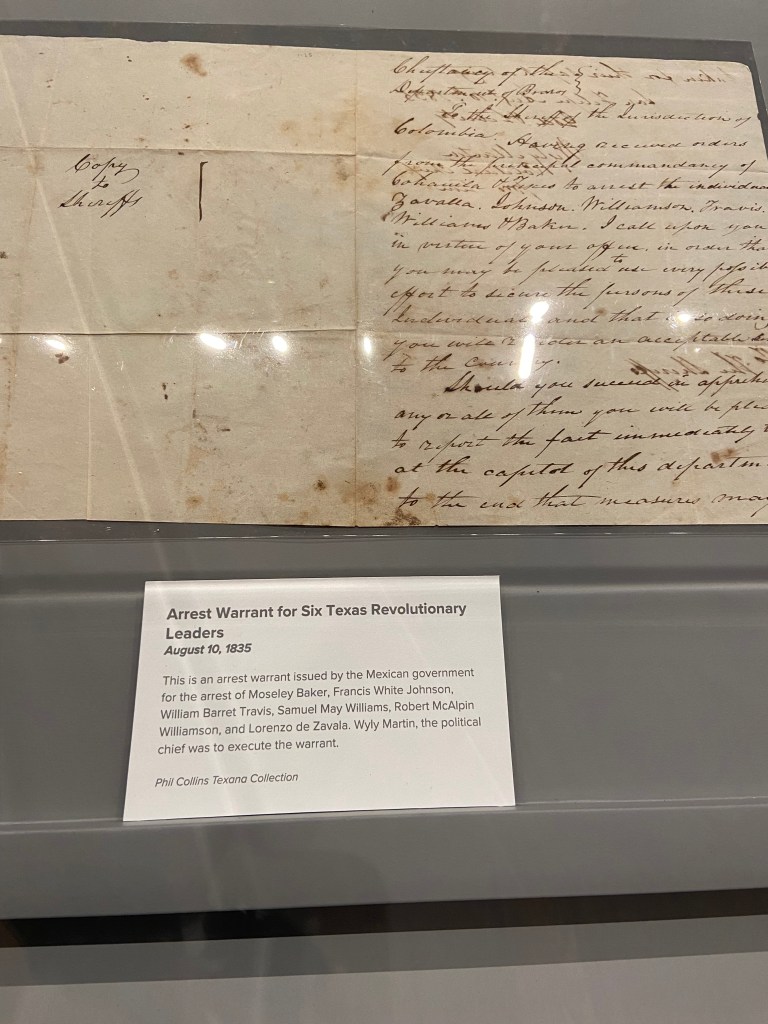
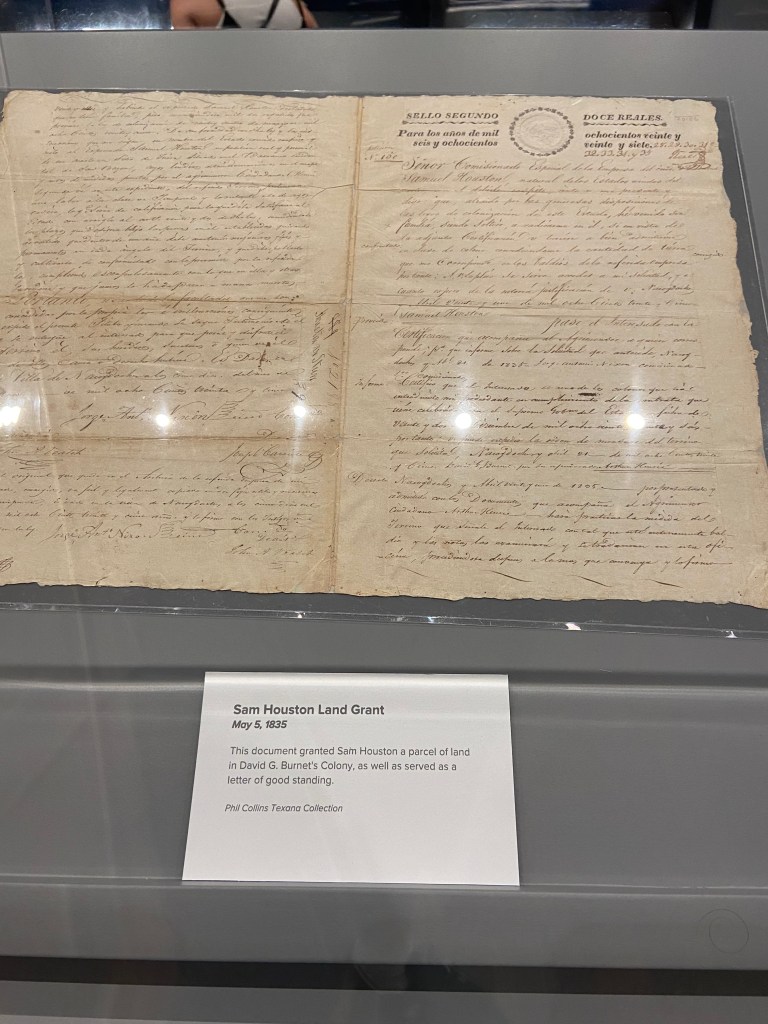
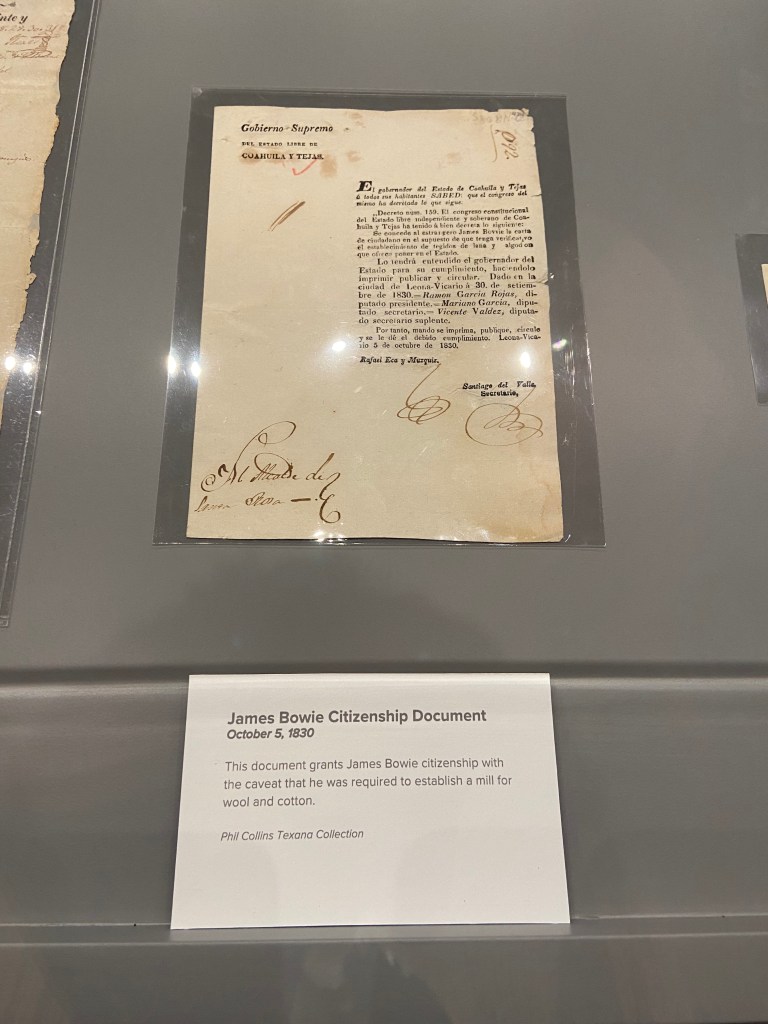
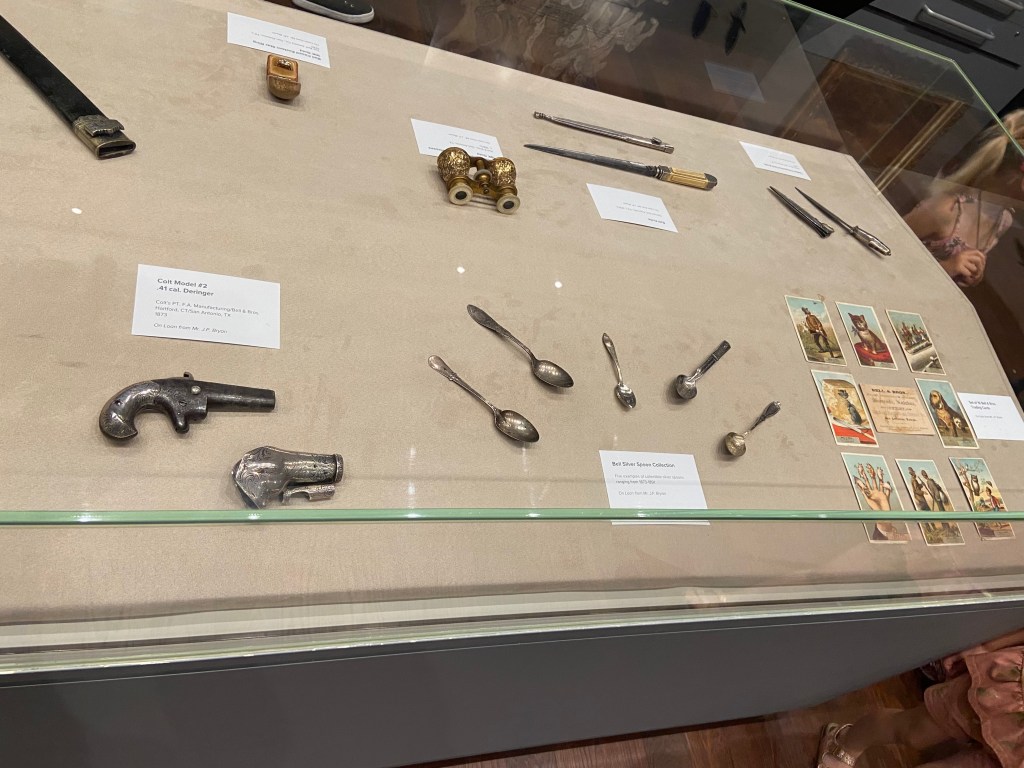
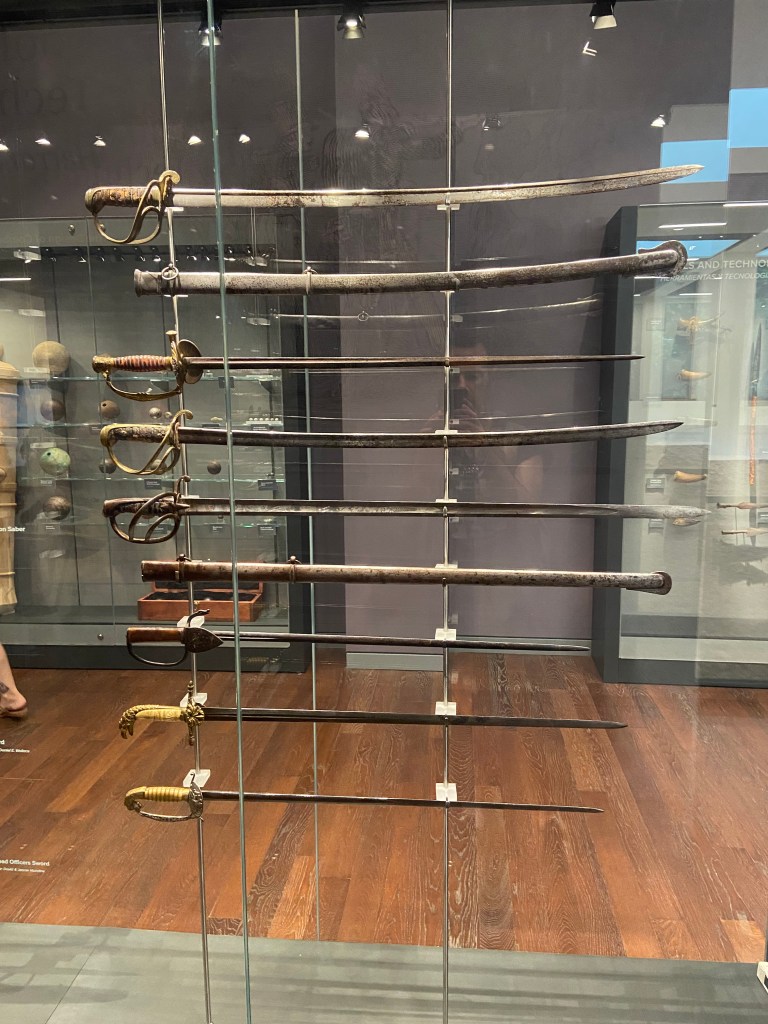
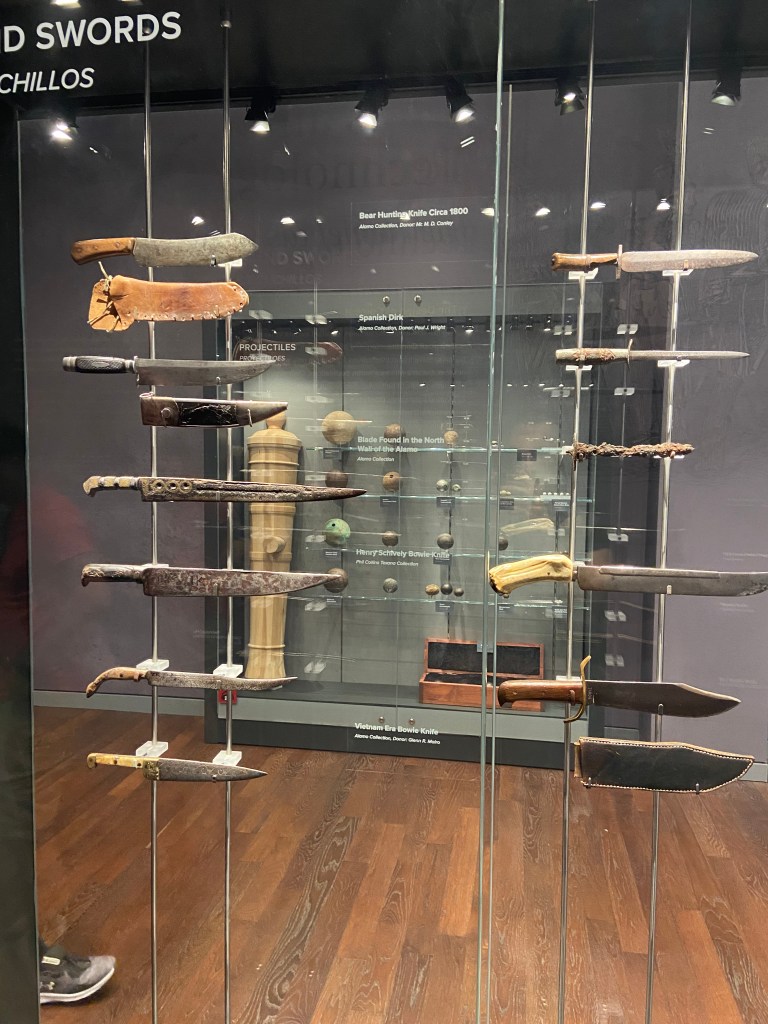
After the kids were fed we headed back to the Alamo complex to visit the collections at the Alamo Exhibit in the Ralston Family Collections Center. The collections did not disappoint for the $12/ adult tickets. Our kids were young enough to be free. The exhibit displayed weapons and artifacts with strong ties to the Texas Revolution and the Alamo. Before I visited Texas, I never knew the connection between Phil Collins and the Alamo. Long story short, Collins developed a strong liking to the Alamo story and collected many artifacts. Later, he donated these artifacts back to the Alamo. Therefore, many of the artifacts in the collections are part of the Phil Collins collection. There is also an impressive diorama of the Alamo complex as it appeared in 1836, with Phil Collins narrating events of the battle.
After touring the collections, we were satisfied with our experience at the Alamo. The Alamo is a must see if you are ever in the San Antonio area. It’s wonderful for someone like me who loves history, but it was also kid-friendly as well. There is plenty for them to see in the Alamo Exhibit and they too can be impressed by some of the artifacts on display. The Alamo continues to live on as a symbol of sacrifice, of patriotism, and is truly a shrine that represents Texas liberty. We cannot forget the sacrifice of the men who fought and died there for the sake of freedom. For more information on visiting the Alamo, see thealamo.org














 Benevento's History Blog